Category Archives: world war two in the pacific

Background on the Pacific Part Two: Guadalcanal the Marines take the Offensive

This is the second “backgrounder” that I am posting to help my readers not acquainted with the War in the Pacific who desire to whet their whistle so to speak get an introduction to this war. While the series appears to be very well done it cannot provide the broad overview and references needed if a person really wants to know more. I believe that those who appreciate the story of the Marines portrayed in the series can help pass this on to others by learning more themselves about the subject.  I hope that this will encourage you  my readers never to forget the Marines depicted in “The Pacific.”

Decision

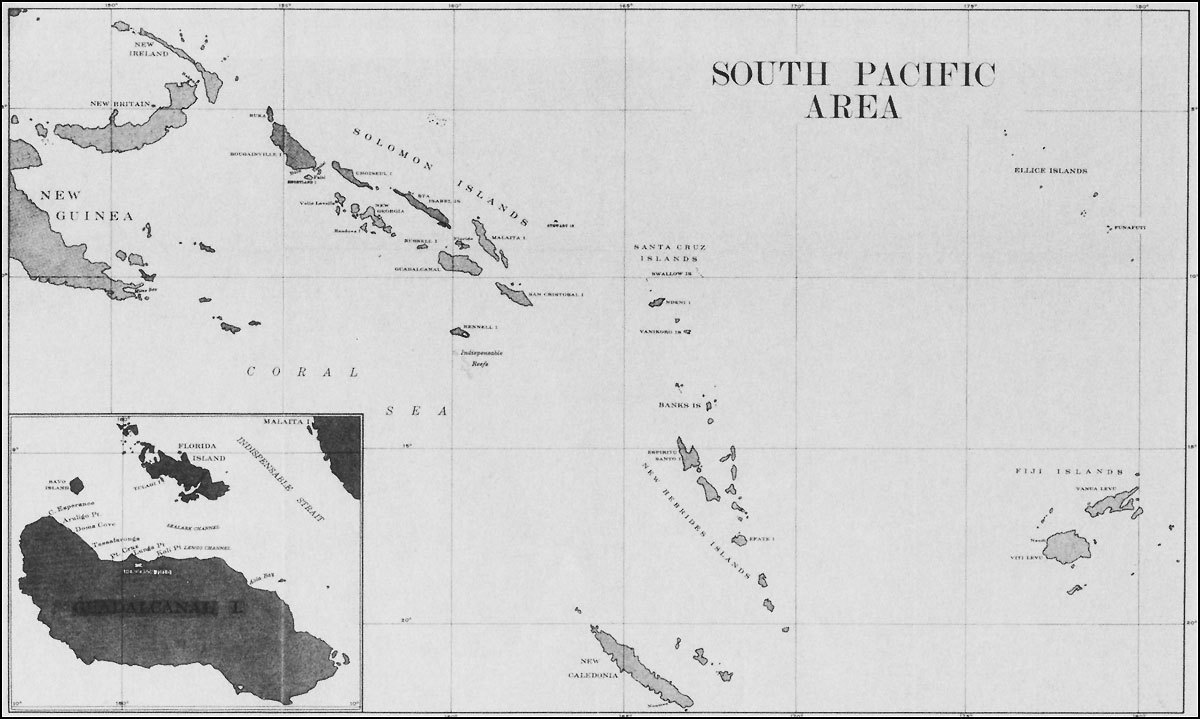
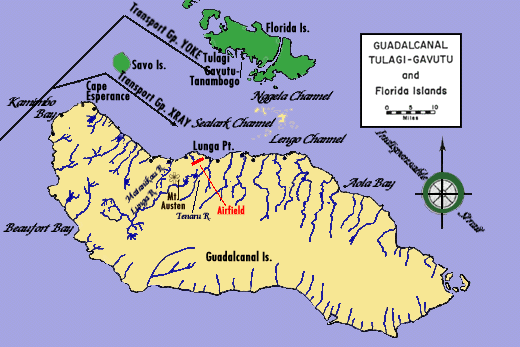
Guadalcanal came to American attention in early 1942 as a result of the Japanese South Pacific advance, which “threatened the Allied line of communications with Australia.”[1] Admiral King believed that “the Japanese must not be permitted to consolidate the formidable prizes” that they were then in the course of gathering.”[2] General MacArthur and Admiral Nimitz both wanted to “exploit the Midway victory by a speedy change-over from the defensive to the counter offensive.”[3] MacArthur wanted to strike Rabaul directly using Navy carriers. The Navy, not wanting to give up control of its carriers proposed a strategy of working up through the Solomon Islands, under Navy control.[4] The debate was at times acrimonious.  Eventually King and General Marshall worked out a compromise that divided the campaign between the Navy and MacArthur,[5] the Navy in charge of taking Guadalcanal and Tulagi.[6] OPERATION WATCHTOWER was approved in a Joint Chief’s of Staff directive on July 2nd 1942.[7]

Partners Rear Admiral Richmond K. Turner and Major General Alexander Vandegrift

The Japanese had not initially placed a high priority on the Solomons, “as they did not expect a counteroffensive in the Pacific for months.”[8] However, after Coral Sea and Midway, they authorized operation “SN” to “strengthen the outer perimeter of Japan’s advance by constructing airfields at key strategic points….”[9] The Japanese sent a contingent of troops, which arrived on June 8th[10] to build an airfield on Guadalcanal, in addition to the seaplane base on Tulagi, as part of a strategy to take the offensive in the South Pacific with an attack on Port Moresby in mid-August.[11]

Coastwatchers

Japanese commanders were impatient for the airstrip to be completed, yet work began at a leisurely pace, with the Japanese unaware that every move was being “watched and reported to Allied headquarters in Australia,” by coast-watchers.[12] As the Japanese on Guadalcanal dithered the Americans rushed their preparations for the invasion[13] nicknamed “SHOESTRING” by American officers.

The Landings and Initial Actions through the Ilu (Tenaru) River

Marines coming ashore at Guadalcanal

Preparations, though rushed enabled the 1st Marine Division under General Vandegrift to embark on transports for Guadalcanal, despite not being combat loaded and having been assured that they “need not expect a combat mission before 1943.”[14] The invasion force under the overall command of Admiral Fletcher and Admiral Richmond “Kelly” Turner set sail on July 25th and cloaked by heavy rain and clouds[15] remained undetected by the Japanese until they arrived in the waters off Guadalcanal, achieving complete surprise.[16] The invasion force landed on both Tulagi and Guadalcanal.  On Tulagi, 1st Raider Battalion under Colonel Edson and 2nd Battalion 5th Marines quickly drove off the 350 Japanese defenders of the 3rd Kure Special Naval Landing Force,[17] and in three days eliminated the Japanese garrison which resisted to the death, with only 23 prisoners.[18] On nearby Gavutu-Tanambogo 1st Parachute Battalion subdued the Japanese personnel operating the seaplane base, though not without difficulty, the naval bombardment was ineffective[19] and the Parachutists suffered heavy casualties[20] and forcing the commitment of the 1st and 3rd Battalions, 2nd Marines.[21] Across the sound the main force of 1st Marine Division went ashore near Lunga Point with 5 infantry battalions.  The Marines rapidly ran into difficulty, not due to the Japanese garrison, which melted into the jungle,[22] but to a lack of maps, the thick jungle and kuni grass, their own “deplorable physical condition” from being shut up in the holds of the transports for two weeks and overburdened with full packs and extra ammunition.[23]

Japanese “Betty” Bombers attacking US Transports

While the Marines advanced inland, supplies built up on the landing beaches due to the limited number of cargo handlers.  Additionally, the Japanese launched a number of heavy air raids which caused minimal damage to the destroyer Mugford on the 7th but were more successful on the 8th damaging a transport badly enough that it had to be abandoned.

Marine M3 Stuart Light Tank and Crew at Guadalcanal

The Marines on Guadalcanal, comprised of the 1st and 5th Marine Regiments consolidated a bridgehead around the captured airfield on the 8th, but the next day found that their situation had changed dramatically.  The Japanese Navy had attacked and mauled the covering force, sinking four cruisers and damaging one at the Battle of Savo Island.[24] The destruction of the covering force and Admiral Fletcher’s withdraw of the carriers forced the transports to depart on the 9th, still bearing much equipment, supplies and nearly 1800 men of the 2nd Marines.[25] Vandegrift was left with only 5 infantry and 3 artillery battalions, and the 3rd Defense battalion on the island as well as some tanks, engineers and Navy “Seabees.”[26] When the Navy left Vandegrift went over to the defensive and organized a line from the Ilu river on the east to Lunga point and the airfield to a point about 1000 yards past Kukum.[27] Defenses were prepared to defend against potential Japanese amphibious attacks.  1st Marines held the eastern perimeter and 5th Marines (-) the west. One battalion with tanks and half-tracks was reserve.  The line was thin and not continuous, thus Vandegrift could only watch and wait for the Japanese strike and move “part of his mobile reserve to meet it when it came.”[28] On the 12th a prisoner reported that Japanese near Matanikau were willing to surrender and LtCol Goettge the G-2 led a 25 man patrol to investigate.  The patrol was ambushed and decimated with only three survivors.[29] The Japanese landed the advance party of the 5th Special Naval Landing Force in broad daylight on the 16th, and Vandegrift decided to bring 2/5, and the Raider and Parachute battalions from Tulagi as soon as he had ships to do it.[30] On the 20th the airfield was opened and a squadron each of Marine Fighters and Dive Bombers landed on Guadalcanal.[31]
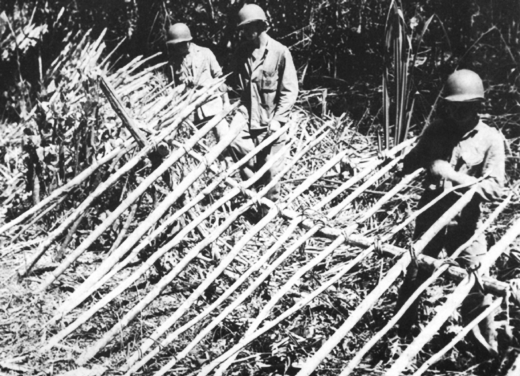
Makeshift Obstacles: With no barbed wire the Marines used the ingenuity

General Hyakutake of the 17th Army was allotted 6,000 men of the Special Naval Landing Force, and the Kawaguchi and Ichiki detachments to re-take Guadalcanal.   17th Army also had the Sendai 2nd and the 38th Divisions, tank and artillery units, but they were scattered from Manchuria, to Borneo and Guam.[32] Hyakutake was ordered to use only the Ichiki detachment, a move which some at Imperial GHQ vigorously opposed.[33] Kawaguchi, recognized Guadalcanal’s importance and told a reporter that “the island would be a focal point in the struggle for the Pacific.”[34] On the 18th Colonel Ichiki landed with half of his unit, 915 men, 25 miles east of the Marines.  Overconfident, he disobeyed orders to wait for the rest of his troops, left 125 men behind to guard his bridgehead and set off to attack.[35]

Colonel Ichiki whose elite 5th Special Naval Landing Force was annihilated at the Tenaru River

Ichiki’s force attacked shortly after 0100 on the 21st.  He thought that he had achieved surprise[36], but, opposing him was 2nd Battalion 1st Marines under LtCol. Al Pollock.  Warned by patrols that encountered the oncoming Japanese, and by Sergeant Major Vouza,[37] the Marines were on alert, well dug in, though lacking barbed wire, of which a single strand was emplaced across their front.  The Japanese ran into the barbed wire and were mowed down as they attempted to cross the sandspit against G/2/1 and a weapons platoon. About 0300 artillery joined the action, catching the Japanese bunched together near the sandspit inflicting heavy casualties.[38] Around 0500 Ichiki made another attempt, sending a company through the surf, which was engulfed in machine gun and artillery fire.[39] At daylight the Marines counter attacked. Colonel Cates ordered Lt.Col. Cresswell’s 1st Battalion 1st Marines, to envelop the Japanese along the beach.  Pollock’s Marines ranged mortars and small arms fire on Japanese survivors to their front, picking them off “like a record day at Quantico”

Dead Japanese of the Ichiki Detachment at the Tenaru

[40] Marine aircraft made their first appearance, strafing the Japanese survivors.  A light tank platoon crossed the Ilu and began to mop up the Japanese with 1/1 at 1530.  At 1630 Ichiki burned his regimental colors and committed suicide.  The Battle of the Ilu was over, the Japanese suffering at least 777 dead,[41] 15, 13 of whom were wounded were captured, only a Lt. Sakakibara and one soldier escaped to join those at the landing site.[42] The Marines suffered 35 dead and 74 wounded.[43] Ichiki made critical mistakes; he failed to reconnoiter, made a frontal attack against a dug in enemy and repeated it, with disastrous results.[44] Hyakutake informed Tokyo: “The attack of the Ichiki detachment was not entirely successful.”[45] The Americans were shocked at the Japanese fight to the death, and Griffith would note: “from this morning until the last days on Okinawa, the fought a ‘no quarter’ war. They asked none for themselves. They gave none to the Japanese.”[46]

Bloody Ridge

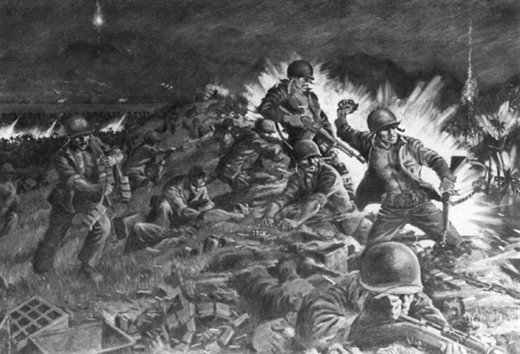
Artists depiction of Sgt Mitchell Paige assaulting attacking Japanese units at Bloody Ridge

A round of minor engagements was fought in late August and early September as each side sent reinforcements.  Kawaguchi’s brigade landed between August 29th and September 4th, but many troops were lost due to air attacks on the destroyers, transports and barges.  Kawaguchi received the remainder of Ichiki’s force, bringing his force to 6200 men. He refused Hyakutake’s offer of an additional infantry battalion, believing intelligence that only 2000 Marines remained on Guadalcanal.[47] In fact Vandegrift had already moved the Raiders, Parachutists from Tulagi to Guadalcanal.  Most of Kawaguchi’s force was east of the Marines; elements of 4th Regiment under Colonel Oka were on the Matanikau.[48] Vandegrift used the Raiders to attack Kawaguchi’s rear areas, capturing Tasimboko and killing 27 Japanese, destroying many of his troop’s supplies and foodstuffs.[49] Kawaguchi was infuriated by the attack and 17th Army prepared to send troops from the Sendai 2nd Division to the island.

Vandegrift and Key Marine Leaders

The Raiders and Parachutists took positions on a ridge south of Henderson field on their return from the raid against Kawaguchi’s rear.  Vandegrift placed his “Amtrackers” to the west of the ridge with 1st Pioneer Battalion.[50] Colonel deValle’s artillery was emplaced to give close support and observers attached to Edson’s battalion.  The artillery was registered on pre-plotted points.[51] Edson’s force had little time to prepared defenses and due to the ridge and jungle prevented him from having “anything like a continuous line.”[52] First Marines held the line from Edson’s left to the sea along the Ilu.  Unlike Ichiki, Kawaguchi avoided an attack on the strong 1st Marines position, and headed across the jungle to attack the airfield from the south with the 124th Infantry Regiment.  Due to the difficult approach his battalions had a hard time reaching their start positions, two of the three reached the assembly areas two and three hours after the start time.  When they did attack they lost their way, became scattered and intermingled; and Kawaguchi his battalion commanders lost all control.[53] The attack on the 12th was frustrating to Kawaguchi who later wrote “In all my life I have never felt so helpless.”[54] The attack was so ineffective that Edson thought the Japanese were “testing” him.[55]

Marine Artillery on Guadalcanal

Kawaguchi regrouped as did Edson, who pulled back his line 200 yards to a stronger point on the ridge, reorganizing the line and command and control.[56] This improved fields of fire for his automatic weapons.[57] 2nd Battalion 5th Marines, the only reserve was moved south of the airfield so it could relieve Edson on the 14th.[58] As darkness fell, the Japanese attacked. I/124 attacked the ridge and the area to the west.  Marines withdrew up the ridge under heavy pressure supported by artillery, which dropped fires almost on top of the Raider positions.[59] During the withdraw the Parachutists became confused and continued to withdraw, and only stopped when Edson’s operations officer, Major Bailey stepped in and halted it.

Artists depiction of the Battle of Bloody Ridge

Artillery pounded I/124 and halted its attack even as companies of the reserve, 2nd battalion 4th Regiment attacked forcing the Raiders back to a knoll, the last defensive position before Henderson Field.[60] Edson exhorted the Marines who threw the Japanese back, and parachutists under Captain Torgerson counterattacked. Two more attacks were repulsed with assistance from 2/5 which had moved up in support.[61] The third Japanese battalion did not get into action[62] and Colonel Oka in the west made a weak attack that was handily defeated. The Japanese lost over 1200 men in their attack on the ridge.[63] The demoralized Japanese retreated west to join Oka’s men, taking a week and costing even more casualties.[64] Short on food, Oka pushed the survivors west and so he could defend the river line.[65]On the 18th Vandegrift was reinforced with 4700 men of the 7th Marines along with trucks, heavy equipment and supplies.[66] Edson was promoted to command 5th Marines.[67]

Matanikau Battles and the Fight for Henderson Field

Marine F4F Wildcat on Henderson Field

The Japanese now decided to send the Sendai and 38th divisions and heavy artillery to the island. Hyakutake went to the island to direct the campaign. The decision resulted in the suspension of 17th Army’s offensive against Port Moresby.[68] Admiral Yamamoto committed the fleet to cover the operations[69] setting up a major air, land and sea confrontation with the Americans.  However before these forces could reach the island Vandegrift launched a series of attacks against Oka’s force on the Matanikau using the Raiders, and elements of 5th and 7th Marines.[70] The first attacks took place 24-27 September.  The Matanikau position was important to future Japanese operations as their artillerymen stressed that they could not effectively shell the airfield unless guns were emplaced across the river.[71] The Raiders attacked at the log bridge[72] supported by C/1/7 and were repulsed by Oka’s 12th Company with heavy casualties.[73] Puller’s attack by 2/5 and parts of 1/7 at the mouth of the river was rebuffed by 9th Company.  An amphibious assault by three companies of 1/7 was ordered by Edson who mistakenly believed that his Marines had crossed the river.[74] The force isolated by Oka’s II/124 and 12th Company, its commander killed and the Marines had to be rescued by Navy units.[75]
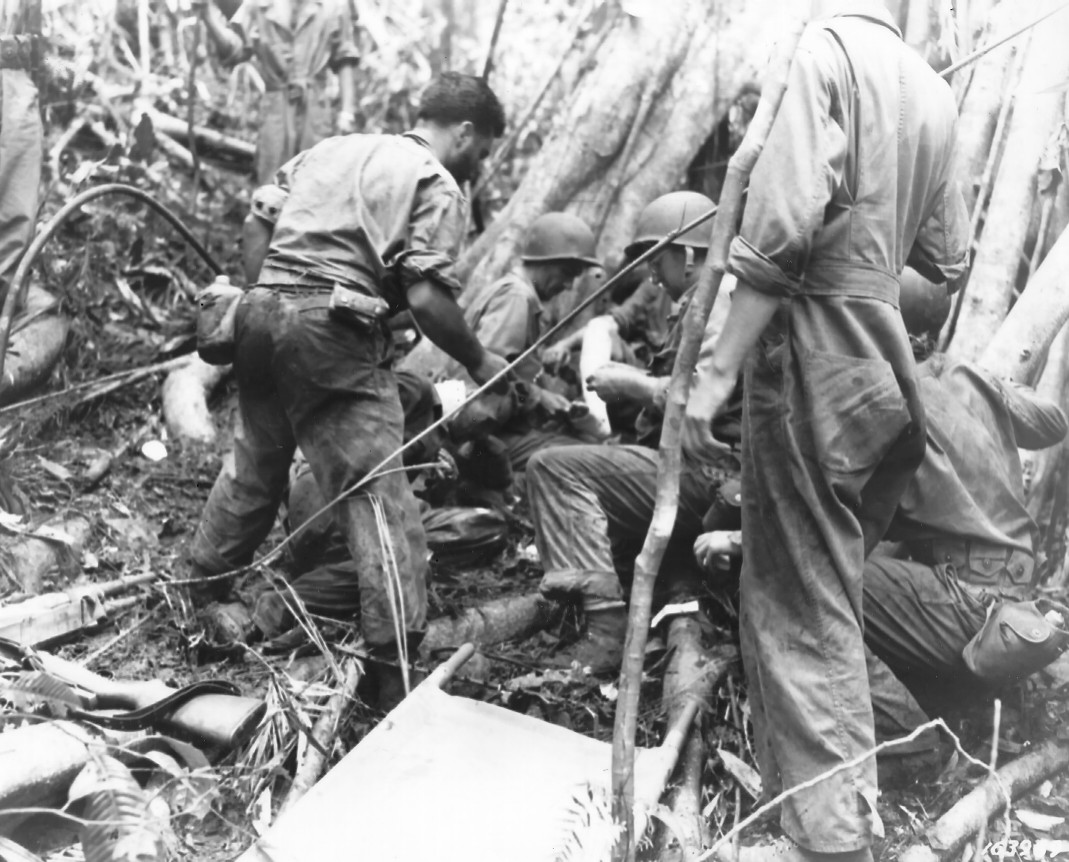
Navy Corpsmen preparing to evacuate a wounded Marines (above) and the 1st Marine Divsion Field  Hospital

A second attack by the Marines on the Japanese, now reinforced by 4th Infantry Regiment on 6-9 October dealt them a crushing blow.  An attack by 2/5 and 3/5 along the coast met heavy Japanese resistance and General Nasu decided to push across the river. While this was taking place, 7th Marines and the Whaling Group[76] outflanked the Japanese on the river and pushed to the coast.  The Marines mauled the 4th Infantry, a Japanese report noting at least 690 casualties.[77] The action had decisive impacts on the next phase of Japanese operations.

General Hyakutake Commander of the Japanese 17th Army defending Guadalcanal

7th Marines and the 164th Regiment of the Americal Division arrived allowing Vandegrift to mount a full perimeter defense while Admiral Halsey replaced Ghormley as COMSOPAC.[78] Arriving on 10 October with the Sendai Division and 17th Army Artillery, Hyakutake, was notified that “American artillery had ‘massacred” the Fourth Infantry Regiment”[79] and found Ichiki and Kawaguchi’s units in an emaciated condition, the total effectives of the 6 battalions numbering less than a full strength battalion.[80] He radioed Rabaul “SITUATION ON GUADALCANAL IS MUCH MORE SERIOUS THAN ESTIMATED, and asked for more reinforcements and supplies at once.”[81] The Navy turned back a Japanese bombardment group on the 12th, but battleships and cruisers blasted Henderson Field on the 13th, 14th and 15th, destroying many aircraft.[82]
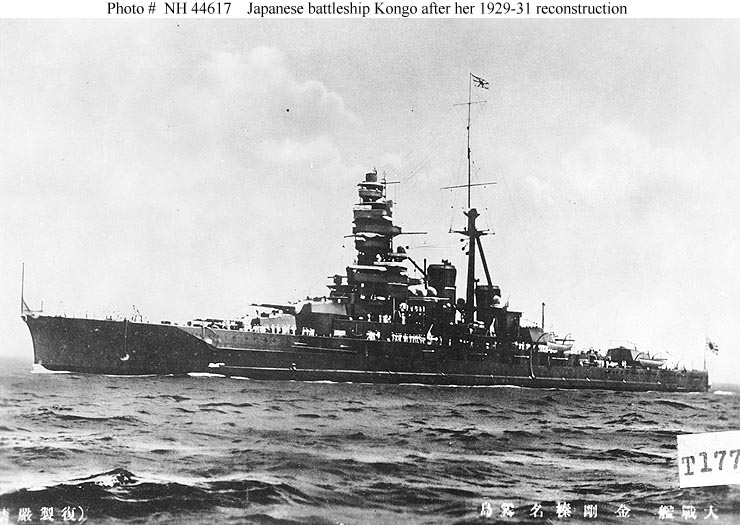
The 14″ guns of the Japanese Battleship Kongo and her sister Haruna pounded Henderson Field

Hyakutake received reinforcements including tanks and an infantry-artillery group and prepared to attack.  General Sumiyoshi[83] was to make a diversionary attack along the coast with Army artillery and 5 infantry battalions.  The Sendai Division under General Maruyama[84] with 9 infantry battalions moved inland along a route “the Maruyama road,”[85] to make the main effort to attack the airfield from the south.  Sumiyoshi divided his artillery to support the bombardment of Henderson Field and support his infantry attacks, but was short ammunition.[86] The Marines had fortified the eastern side of the Matanikau and Sumiyoshi probed the Marines with infantry and tanks and artillery fire on the 20th and 21st, giving the Marines their first taste of concentrated artillery.[87] Sumiyoshi’s demonstration on the coast was effective, and Maruyama’s division remained undetected throughout its advance avoiding Marine and native patrols.[88]
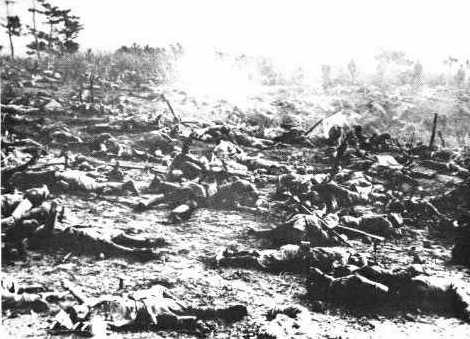
Japanese dead after the failed attack on Henderson Field

The attack began on the 23rd with Sumiyoshi attacking on the Matanikau; but he did not get the word that the attack for that night had been postponed until the 24th since Kawaguchi’s units had not gotten to assembly areas on the right of Sendai division.[89] His tanks advanced at 1800 and all but one were destroyed by deValle’s artillery as soon as they moved across the sandspit. The supporting infantry withdrew, and most never went forward as they were hit hard in assembly areas by Marine artillery losing over 600 men.[90] The action succeeded in the Marines shifting 2/7 and 3/7 north leaving Puller’s 1/7 alone on “Bloody Ridge.”[91] Fortunately for the Marines these Japanese forces were detected by Scout-Sniper’s[92] and Puller dug in his battalion deeper and set out a platoon in an outpost 1500 meters south of his position.[93]

Chesty Puller

On the 24th Maruyama’s Sendai troops attacked the ridge.  He divided his force into two wings each of three infantry battalions commanded by General Nasu on the left and Colonel Shoji[94] on the right, three battalions served as a reserve. He advanced at 1900 but a storm turned the jungle into a vast mud bog exhausting the Japanese.  Shoji’s wing advanced tangential to the Marine line and only one battalion made contact with Puller’s battalion.[95] Nasu’s troops hit Puller’s who realized that he was facing a major attack; he fed platoons from 3rd Battalion 164th Infantry, a National Guard unit into his lines and requested reinforcements.[96] The Marines and Guardsmen beat back all but one attack, that of LtCol. Furimiya of III/29 who got into the Marine perimeter and held out 48 hours, colors flying, leading Hyakutake to believe that they had captured the airfield.[97] The Japanese were driven off 9th Company of the 29th Regiment was wiped out primarily by the efforts of Sgt. John Basilone’s machine gun section.[98]

Wrecked Aircraft on Henderson Field

The next day was known as “Dugout Sunday”[99] and that night the Japanese renewed the attack.   This was better coordinated, but the Marines, reinforced by 3/164 and 3/2, and backed by artillery, devastated the Sendai division.  Nasu and the commander of 16th Infantry were killed with at least 2000 of their soldiers.[100] Colonel Oka attacked 2/7 and was driven off with heavy casualties. Marine Sgt. Mitchell Paige won the Medal of Honor for single handedly manning his platoon’s machine guns after his troops became casualties, going gun to gun.[101] The attacks were crushed leaving more than 3000 dead or dying Japanese on the battlefield.[102]

On the Offensive
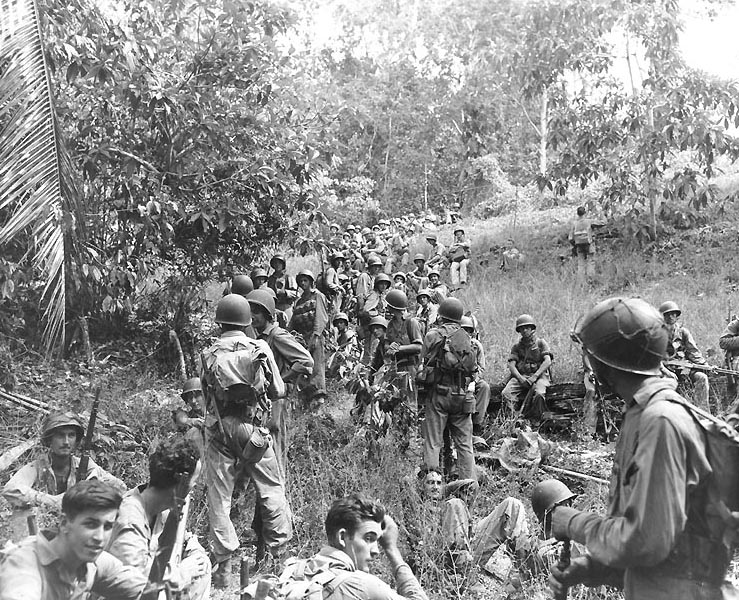
Marines pause during advance

As the Japanese struggled out of jungle to the coast the Marines began preparations to attack as each side brought in reinforcements, the Americans receiving the 8th Marine Regiment and 2nd Raider Battalion of 2nd Marine Division, as well as the 2nd Marines who had been on Tulagi and more of the Americal Division.[103] On November 1st and  5th Marines attacked across the Matanikau and by the 4th had eliminated a Japanese pocket on Point Cruz.[104] To the east 1/7 and 2/7 along with 2/164 and 3/164 attacked Col. Shoji’s force and fresh troops sent to relieve him near Koli Point. The battle lasted until the 9th when Shoji broke through the American cordon with 3000 men pursued by 2nd Raider Battalion. Shoji eventually made it back to 17th Army with 700-800 soldiers, most unfit for combat after battling the Raiders and the jungle.[105] The Japanese attempted to reinforce the island during the Naval Battle of Guadalcanal from 13-15 November.  Out of 11,000 troops of 38th Division on 11 transports only 2000 got ashore after 7 of the 11 were sunk enroute by Henderson Field aircraft and the surviving ships beached.[106]
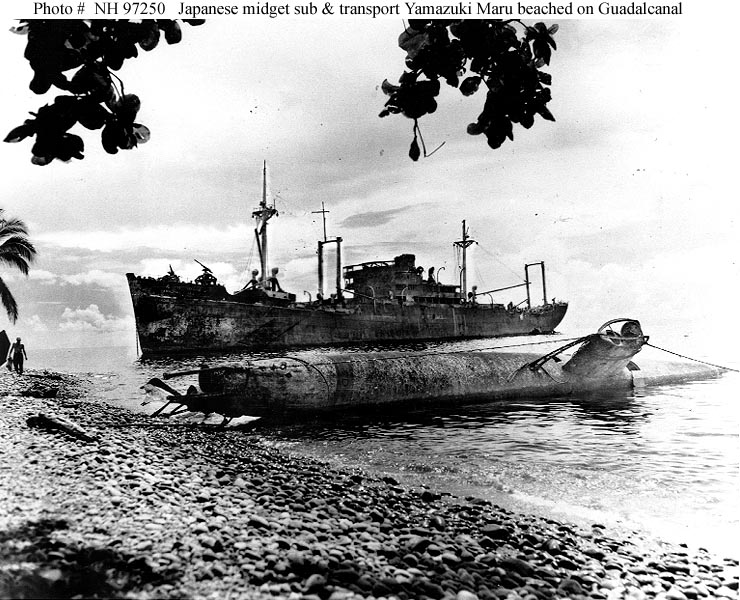
The Americans received the rest of 2nd Marine and Americal Divisions and parts of 25th Division and Vandegrift decided to attack, his command now being a de-facto Corps.[107] Though they still numbered 30,000 the Japanese were incapable of offensive operations but still full of fight.[108]On 18 November the 8th Marines and the Army and elements of the 164th and 182nd regiments attacked on the Matanikau. They met heavy resistance from Col. Sakai’s 16th Infantry and in a 6 day battle and lost 134 dead with minimal gains.[109] The new arrivals allowed 1st Marine Division to be withdrawn[110] as it was no longer combat effective.[111] On 9 December Vandegrift[112] turned over command to General Alexander Patch of the Americal Division.

Advancing across a improvised pontoon bridge

Patch used early December to conduct aggressive patrolling[113] and decided to clear the Japanese from Mt Austen, which they had nicknamed “Gifu” and in a 22 day battle the 132nd Infantry eliminated the 38th Infantry Group.[114] With the 25th, Americal and 2nd Marine Division Patch now headed XIV Army Corps.[115] Although the Americans were unaware the Japanese had decided to withdraw from Guadalcanal on 31 December, after a heated debate.[116]

Major General Vandegrift, Colonel Edson, 2nd Lt Mitchell Paige and Sgt John Basilone all awardees of the Medal of Honor

The final offensive began on 10 January.  Patch hoped to clear out the Japanese by April.[117] The 2nd Marine Division attacked along the coast while General Lawton Collins led his 25th Division in a flanking movement heavily supported by artillery and air. 6th Marine Regiment relieved 2nd Marines flanking the Japanese enveloped the majority of the 4th and 16th Regiments.[118] The Japanese began withdrawing on the 17th moving west shielded by the Yano battalion.[119] Collins troops finally reduced and eliminated the Japanese on the Gifu by the 23rd.[120] “The annihilation of Japanese detachments from regimental size down” characterized operations over the final phase of the command.[121] A characteristic of American operations now included the use of heavy massed artillery including time on target or “TOT” missions.[122] On the 22nd the Japanese began to extricate their troops via the Tokyo Express at Cape Esperance.[123] On 1 February Patch landed 2/132 at Verahue on the southwest tip of the island and the 25th and Americal Divisions continued their push to the west against the rearguards of 17th Army.  On the 8th of February the last survivors were withdrawn[124] in a move described by the Chief of Staff 17th Army as a “minor miracle.”[125] The Japanese were shocked that the Americans “press them hard” and turn the withdraw “into a bloody rout.”[126] Still expecting a fight Patch’s troops found nothing on Cape Esperance but abandoned boats and supplies.[127]

Japanese Prisoners

The Guadalcanal campaign had ended with the loss of nearly 30,000 Japanese. Japan lost the psychological advantage it had possessed from the beginning of the war.[128] It was an action that was an offensive won with defensive actions. The Americans seized a strategic point that the Japanese could not afford to lose and then fought a defensive battle of attrition to grind the Japanese down.  The American Marines and Soldiers showed themselves to be the equals of the Japanese in one of the most demanding campaigns of the war. Kawaguchi would comment to a reporter in Manila; “We lost the battle. And Japan lost the war.”[129]

Appendix: Leaders On Guadalcanal

Major General Alexander A. Vandegrift: (1887-1973) Commander of 1st Marine Division on Guadalcanal.  He served in the Corps 40 years and retired in 1949 as Commandant of the Marine Corps.  After Guadalcanal he commanded 1st Marine Amphibious Corps at Empress Augusta Bay.  He was a key player in the congressional debates regarding the Marine Corps in 1946 when President Truman supported by the Army pushed to eliminate the Marine Corps as a ground combat force.  He was awarded the Medal of Honor for his service at Guadalcanal.  USS Vandegrift FFG-48 was named after him.  That ship made the first visit of a US warship to Vietnam since the Vietnam War in 2003.

Major General Alexander Patch: (1889-1945) Commander of XIV Army Corps at Guadalcanal.  He assumed command of forces on island from Vandegrift on 9 December 1942.  General Marshall ordered him to Europe in 1943 to take command of 7th Army from General Patton.  He commanded 7th Army in the south France and the Rhone campaign of 1944, leading that army across the Rhine in 1945.  He was to take command of 4th Army in the United States but died of Pneumonia.  He was considered a very good commander in both the Pacific and Europe.  Patch Barracks in Stuttgart Germany is named after him.

Major General Lawton Collins: (1896-1987) “Lightning Joe” Collins commanded 25th Infantry Division (Tropical Lightening) at Guadalcanal.  He commanded VII Corps and distinguished himself in France and was instrumental in Operation COBRA and the breakout from Normandy.  He was considered by many to be one of the outstanding Corps commanders in the Second World War. During Korea he was Army Chief of Staff and later served with NATO and as a special representative to Vietnam.

Lieutenant Colonel Lewis B. “Chesty” Puller: (1898-1971) “Chesty Puller commanded 1st Battalion 7th Marines at Guadalcanal and was instrumental in the fight for Henderson Field against the Sendai Division.   His early career was marked by much time in Haiti and Nicaragua where he was awarded his first and second Navy Crosses. He served with the “China Marines” (the 4th Marines) He was wounded on Guadalcanal and later served as Executive Officer 1st Marine Regiment and commanded that Regiment at Peleliu.  In Korea he again commanded 1st Marines at the epic Battle of the Chosin Reservoir. He was promoted to Brigadier General and served as Assistant Division Commander for that Division.  He was promoted to Major General and Lieutenant General prior to his retirement in 1955.  He is considered one of the most iconic and beloved Marines who have ever lived earning 5 Navy Crosses and numerous other awards for valor in combat include the Bronze and Silver Stars and Distinguished Service Medal and the Purple Heart.  The USS Puller (FFG-23) a Perry Class Frigate was named after him.  His uniforms and many of his medals and citations were displayed at the former Marine Corps Barracks, Naval Weapons Station Yorktown until 2006 when they were transferred to the custody of the Marine Corps Museum following the death of his wife Virginia who insisted that they be displayed in Yorktown.

General Harukichi Hyakutake: (1888-1947) Commanded 17th Army on New Guinea and Guadalcanal.  He was an infantry officer who studied crypto analysis and served with the Kwantung Army in Manchuria before the war and following Guadalcanal he remained in command of Japanese Troops in the Solomons.  He returned to Japan at the end of the war and died in 1947.

Major General Kiyotake Kawaguchi: (1892-1961) Commanded 35th Infantry Brigade on Guadalcanal and was senior officer until the arrival of General Hyakutake and the Sendai Division.  Led the unsuccessful battle at “Bloody Ridge” and was relieved of his command just prior to the October attack on Henderson Field.  Was one of the few Japanese officers who expressed an early understanding of the importance of Guadalcanal to the overall war effort.  Following his evacuation from Guadalcanal and return to Japan he was transferred to the reserve. Convicted of war crimes in 1946 for actions committed in the Philippines in 1941-42  he was released in 1953 and died in 1961.

Notes


[1] Spector, Ronald H. Eagle Against the Sun: The American War With Japan, The Free Press, New York, NY p.185

[2] Morison, Samuel Elliott, The Two Ocean War: A Short History of the United States Navy in the Second World War, Little, Brown and Company, Boston and Toronto, 1963. p.164

[3] Liddle-Hart, B.H. History of the Second World War G.P. Putnam’s Son’s. New York, NY 1970. 356

[4] Ibid. Spector. p.185

[5] Ibid. Spector comments that “MacArthur declared that the navy’s obstinacy was part of a long time plot to bring about ‘the complete absorption of the national defense function to the Navy, the Army being regulated to merely base, training, garrisoning, and supply purposes.’” (p.185)

[6] Toland, John. The Rising Sun: The Decline and Fall of the Japanese Empire 1936-1945, Random House Publishers, New York, 1970. p.346

[7] Ibid. Morison. p.165

[8] Ibid. p.350

[9] Frank, Richard B. Guadalcanal: The Definitive Account of the Landmark Battle, Penguin Books, New York, NY 1990. p.30

[10] Ibid. p.31

[11] Ibid. Morison. p.166

[12] Griffith, Samuel B II. The Battle for Guadalcanal originally published by Lippincott, New York, 1963, University of Illinois Press, Champaign IL, 2000. p.19

[13] Costello, John. The Pacific War 1941-1945, Quill Publishers, New York, NY. 1981. p.320.

[14] Ibid. Spector. p.186

[15] Ibid. Frank. p.60

[16] Ibid. Spector. p.191

[17] Ibid. Frank. p.72

[18] Ibid. Costello. p.323

[19] Ibid. Griffith. p.49

[20] Ibid. Frank. p.72. 1st Raider Battalion took 22% casualties and 1st Parachute Battalion 50-60%.

[21] Ibid. Frank. p.74.  Frank notes that of the 536 Japanese defenders that only about 50, a platoon from the 3rd Kure Naval Landing force were trained for ground combat.

[22] Ibid.

[23] Ibid. Griffith. p.45

[24] Savo Island was the worst defeat suffered by the US Navy.  In a short engagement the heavy cruisers Astoria, Quincy and Vincennes and the RAN Canberra were sunk and the Chicago badly damaged, leaving the covering force but one heavy cruiser and some AA Cruisers and Destroyers to cover the transports. Over 1000 sailors lost their lives.

[25] Ibid. Frank. p.125

[26] Costello notes the presence of the Seabees, but neither Franks nor Griffith mentions them by name.  The discrepancy appears to be the date of their arrival on the island. Morrison notes that 387 men of the 6th Seabee Battalion landed on September 1st with 2 bulldozers and other equipment and that they then took over the improvement of Henderson Field. Morison, Samuel Elliott. The Struggle for Guadalcanal: August 1942-February 1943, Volume V of History of United States Naval Operations in World War II, Copyright 1949, Samuel Elliott Morison, Castel, Books New York, NY 2001, published in arrangement with Little Brown and Company. p.76

[27] Ibid. Griffith.  p.68

[28] McMillan, George. The Old Breed: A History of the First Marine Division in WWII, The Infantry Journal Incorporated, Washington DC. 1949. p.50

[29] Ibid. Frank. p130, Griffith. p.70. McMillan pp.52-56.  This incident is still shrouded in mystery as no Japanese records survive to record the outcome of the incident. According to McMillan, when Goettge went out he believed he was also on a humanitarian mission and took the assistant division surgeon and a language officer.  The Goettge Field House at Camp LeJeune NC is named in his honor.

[30] Ibid. Griffith. p.74

[31] Ibid. McMillan. pp.56-57

[32] Ibid.. p.59

[33] Ibid. Griffith. pp.79-80 some believed the commitment of small numbers inadequate to the task would repeat the defeats suffered at the hands of the Russians and in China.  Ichiki himself was given poor intelligence stating that there were only about 2000 Americans on the Island and that they suffered from low morale and were trying to flee Guadalcanal to Tulagi. (p.81)

[34] Ibid. Toland. p.364

[35] Ibid. p.365

[36] Ibid. p.366

[37] Ibid. McMillan. p.61. Vouza, a native constable had actually been captured and interrogated by the Japanese, who bayoneted him and left him for dead.

[38] Ibid. pp.61-62

[39] Ibid. Griffith. p.84

[40] Ibid. p.86

[41] Ibid. Frank. p.156. Richard Tregaskis in Guadalcanal Diary reports that he heard there were 871 Japanese dead in the battle area.   Tregaskis, Richard, Guadalcanal Diary, Originally published by Random House, 1943. Modern Library Paperback edition, Random House Publishers, NY 2000, with an introduction by Mark Bowden.  p.130

[42] Ibid. Toland. p.367  Griffith reports that a Captain Tamioka survived. (p.87)

[43] Various accounts give slightly different figures for the Marine casualties. This number is taken from McMillan.

[44] Ibid. Griffith. pp.87-88.  Griffith comments: “there was something more fundamental involved here than action taken on the basis of poor information, a reckless and stupid colonel, dedicated soldiers, and a disparity in weapons. This was ‘face.’ Once committed to the sword, Ichiki must conquer or die. This was the code of the Samurai, ‘The Way of the Warrior’: Bushido. (p.88)

[45] Ibid. McMillan. p.64

[46] Ibid. Griffith. p.88

[47] Ibid. Frank. p.218. Toland reports that he received intelligence that 5000 Marines were on the island but he believed that he could be victorious. (p.378)

[48] Ibid. Toland. p.376. Oka’s force was particularly hard hit by the air attacks during transit, losing 650 out of 1000 men, and his survivors had little food and ammunition and were not in good condition to attack.

[49] Ibid. Frank. pp.221-222. They also brought back documents, Kawaguchi’s dress uniforms and beer.

[50] Vandegrift rusted in the understanding that every Marine is a rifleman.

[51] Ibid. Griffith. p.115

[52] Ibid. Frank. p.229

[53] Ibid. p.231

[54] Ibid. p.232

[55] Ibid. Griffith. p.117

[56] Ibid. Frank. p.235 He still lacked the manpower to form a continuous line.

[57] Ibid. Griffith. p.117

[58] Ibid. Frank. p.235

[59] Ibid. Griffith. p.119

[60] Ibid. Frank. p.239

[61] Ibid. p.240

[62] This was III/124 under Colonel Wanatabe, suffering from old war wounds he failed to get his unit into the fight and Kawaguchi told him to commit Hari-Kari. (Griffith .121)

[63] Ibid. Griffith. p.121. The Marines lost 263 men of which 49 were killed and 10 missing. The Parachute battalion which began the campaign with 397 men had only 86 ambulatory after “Bloody Ridge” and were withdrawn. (Frank. p.241)

[64] Ibid. Costello. p.346  Frank also notes that another of Kawaguchi’s battalions, the Kuma battalion and his artillery fared even worse while trying to move to the west, becoming lost in the jungle for three weeks, losing all their weapons and becoming severely malnourished. (Frank. p.246)

[65] Ibid. Griffith. p.125

[66] Ibid. Toland. p.385 The Japanese began to call the island Starvation Island.

[67] Edson and Bailey both were awarded the Congressional Medal of Honor for their actions on the ridge. (McMillan p.81)

[68] Ibid. Griffith. pp.126-127

[69] Ibid. Spector. p.199 and Costello. p.348

[70] Ibid. Frank. p.269.

[71] Ibid.

[72] Ibid. Griffith. p.135. Griffith refers to this as the “Jap bridge.” I use Frank’s the name given by Frank.

[73] Ibid. Frank. p.272

[74] Ibid. Toland.p.390

[75] Ibid. Frank p.273-274.  Frank analyzes: “In a retrospective assessment, the Marines found that the operation had an improvised purposeless flavor. It had been initiated without meaningful intelligence on the enemy situation or the terrain, and the attack was characterized by the commitment of battalions along unreconnoitered axes, beyond mutual support range, and without coordination of movements or of air and artillery support.” (p.274)Griffith comments: “Here Edson, as always supremely confident, had dispersed his force haphazardly to assault an enemy well armed, well concealed, and at each pointing superior strength. Second Matanikau hammered home to Vandegrift that a commander who allows himself or a subordinate, to drift aimlessly into any action will pay the price. (Griffith p.137)

[76] Ibid. Griffith. p.283. The Whaling Group consisted of 3rd Bn 6th Marines and the Scout Sniper detachment.

[77] Ibid. 289.  The Division history of 1st Marine Division reported over 900 Japanese killed. (McMillan p.96)

[78] Ibid. McMillan. p.99

[79] Ibid. Griffith. p.148

[80] Ibid. p.338

[81] Ibid. Toland. p.392

[82] Ibid. Griffith. p.157. By the 15th the Marines only had 27 aircraft left, but by the evening a Navy fighter squadron had reinforced them.

[83] Artillery commander 17th Army.

[84] Ibid. Toland. p.393. Maruyama noted before the division departed from Japan that Guadalcanal was the “Decisive battle between Japan and the United States, a battle in which the fate of the Japanese Empire will be decided.”

[85] Ibid.p.340 Toland notes how this “road” had been hacked out of the jungle in the proceeding month. (Toland. p.393)

[86] Ibid. p.342.  The 15 150mm guns targeted the airfield and the remaining 17, 75mm and 100mm guns and howitzers targeted the infantry.

[87] Ibid. Griffith. p.165-166

[88] Ibid. Frank. p.348

[89] Ibid. Griffith. pp.166-167. Sumiyoshi was not at fault as he had fallen into a coma brought on by Malaria.  Kawaguchi was relieved by Hyatutake for this failure.

[90] Ibid. p.167

[91] Ibid. McMillan. p.105

[92] Ibid. Toland. p.401. Frank notes that even this discovery did not alert the Marine command to the Japanese presence south of the ridge and he credit’s Puller’s lack of complacency.

[93] Ibid. Frank. p.352

[94] Ibid. Frank. Shoji had relieved Kawaguchi.

[95] Ibid. Frank. pp.352-353

[96] Ibid.. p.355-356

[97] Ibid. p.356.  Furimiya would eventually commit suicide when he had lost the rest of his troops.  His diary, found by the Americans made a note that “we must not overlook firepower.” (p.366)  Griffith notes the officer as Ishimiya and notes that only 9 men were with him. (p.169)

[98] Ibid. p.356. Basilone won the Congressional Medal of Honor.

[99] The day was marked by a fierce air-sea battle between American aircraft and a Japanese naval task force sent to shell Henderson Field and supporting fighters.  A number of Japanese ships were damaged and the light cruiser Yura sunk. See Morison. History of Naval Operations in WWII vol V. pp.197-198

[100] Ibid. Frank. pp.364-365

[101] Ibid. pp.363-364.  I met Paige in 2000 at Camp LeJeune.  This icon of the Corps remained an outspoken Marine until the day that he died.

[102] Ibid. Toland. p.404

[103] Ibid. Liddle-Hart. p.361

[104] Ibid. Griffith. p.184

[105] Ibid. Frank. pp.421-424.

[106] Ibid. Morison. History of Naval Operations. p.182. Frank backs this number and Liddle-Hart gives 4000.

[107] Ibid. McMillan. p.135

[108] Ibid. Griffith. p.212-213

[109] Ibid. Frank. pp.495-497.

[110] The 1st Marine Division lost 621 KIA, 1,517 WIA and 5601 Malaria cases. Its Marines earned 5 Congressional Medals of Honor, 113 Navy Crosses and 4 Distinguished Service Medals. (McMillan pp.138-139)

[111] Ibid. Griffith. p.216

[112] Vandegrift would become Commandant of the Marine Corps in 1944.

[113] Johnston, Richard W. Follow Me! The Story of the Second Marine Division in World War II, Copyright 1948 by the 2nd Marine Division Historical Board and published by Random House, New York, NY. 1948.  p.69

[114] Ibid. Frank. pp.528-534.

[115] Ibid. Johnston. p.72

[116] Ibid. Toland. pp. 421-426.  Generals Sato and Tanaka engaged in a fist-fight ended by Tojo and the Emperor himself probed the High Command about the defeat and personal approved the Japanese withdraw.

[117] Ibid. Spector. p.213

[118] Ibid. Frank. p.557

[119] Ibid. p.560

[120] Ibid. p.566

[121] Ibid. p.567

[122] Bergerud, Eric. Touched With Fire: The Land War in the South Pacific,  Penguin Books, New York, NY 1996. p.192

[123] Ibid. p.570

[124] Ibid. p.595 Depending on the source the Japanese withdrew anywhere from 10,000 to 13,000 troops from the island.

[125] Ibid. Griffith. p.244

[126] Ibid.

[127] Ibid. Morison. History of Naval Operations, p.371.

[128] Murray, Williamson and Millett, Allan R. For the Common Defense: Fighting the Second World War, The Belknap Press or Harvard University Press, Cambridge, MA 2000. p.215

[129] Ibid. Toland. p.431

Bibliography

Bergerud, Eric. Touched With Fire: The Land War in the South Pacific,  Penguin Books, New York, NY 1996

Costello, John. The Pacific War 1941-1945, Quill Publishers, New York, NY. 1981

Frank, Richard B. Guadalcanal: The Definitive Account of the Landmark Battle, Penguin Books, New York, NY 1990

Griffith, Samuel B II. The Battle for Guadalcanal originally published by Lippincott, New York, 1963, University of Illinois Press, Champaign IL, 2000

Johnston, Richard W. Follow Me! The Story of the Second Marine Division in World War II, Copyright 1948 by the 2nd Marine Division Historical Board and published by Random House, New York, NY. 1948

Liddle-Hart, B.H. History of the Second World War G.P. Putnam’s Son’s. New York, NY 1970

McMillan, George. The Old Breed: A History of the First Marine Division in WWII, The Infantry Journal Incorporated, Washington DC. 1949

Morison, Samuel Elliott, The Two Ocean War: A Short History of the United States Navy in the Second World War, Little, Brown and Company, Boston and Toronto, 1963

Murray, Williamson and Millett, Allan R. For the Common Defense: Fighting the Second World War, The Belknap Press or Harvard University Press, Cambridge, MA 2000

Spector, Ronald H. Eagle Against the Sun: The American War With Japan, The Free Press, New York, NY

Toland, John. The Rising Sun: The Decline and Fall of the Japanese Empire 1936-1945, Random House Publishers, New York, 1970

Tregaskis, Richard, Guadalcanal Diary, Originally published by Random House, 1943. Modern Library Paperback edition, Random House Publishers, NY 2000, with an introduction by Mark Bowden
1 Comment

Filed under History, Military, world war two in the pacific

Background to “The Pacific” Part One: The Guadalcanal Campaign and the Beginning of Joint Operations

The Battle of Bloody Ridge

Note: This is the first of a series that I will post on the campaign in the Pacific.  Some are older articles that I wrote for my Masters Degree program and others will be new material dealing with specific topics in this long neglected campaign.  I was watching the second episode this evening and found it quite powerful…so much that I was in tears as the Marines of 1st Marine Division and John Basilone came aboard the troop transport and went to the Mess Deck.  I have served with the Marines for around six years including with Marine advisers in Iraq and been the Chaplain for the USS HUE CITY which is named after the Battle of Hue City.  I love the Marines and this series has touched me already.  I hope everyone watches it on HBO.

The Guadalcanal Campaign and the Beginning of Joint Operations

Marines on Guadalcanal

The Guadalcanal campaign was the first experiment by the United States of conducting a “joint” campaign in modern warfare involving Naval and Naval Air, Ground combat units, Army air assets and amphibious operations. The campaign involved numerous land, sea and air battles. It was under the command of Admiral Nimitz as CINCPACFLT and included commanders for ground, air and sea forces engaged.  For brevity and simplicity sake I will discuss the campaign and sea even though they are interconnected with the sea and air campaigns directly affecting the outcome of the land campaign.

Designated OPERATION WATCHTOWER and aptly called OPERATION SHOESTRING the campaign was launched on short notice, approved on 2 July the commanders of the operation first learned of it on 7 July. Utilizing the 1st Marine Division, which would later be reinforced by the Americal Division, landed on Guadalcanal and the neighboring island of Tulagi on 7 August.  The Marines took Tulagi after a brief but bloody fight and the few Japanese troops on Guadalcanal fled inland allowing the Marines to seize the airfield.  Unfortunately, the commander of the supporting US carrier task force, Admiral Frank Fletcher fearing danger to his carriers and withdrew following the landings. The forces in direct support were surprised by a Japanese cruiser force under Admiral Mikawa losing 3 American and 1 Australian heavy cruiser in one of the worst American naval defeats in history at the Battle of Savo Island. The next morning the transports, many still full of supplies left the Marines.  Admiral Fletcher’s action, which left the Marines without air cover and carrier support gave the Marines a new term, still in use today, for being left high and dry: “to be Fletchered.”

Japanese dead of the Ichiki Detachment after the Battle of the Tenaru (Ilu) River

The Land Battles: The Japanese quickly responded sending in Naval Landing forces which went in light without all their troops or equipment. The Ichiki detachment was wiped out in the battle of the Tenaru (Ilu) river on 20 August.  The Kawaguchi detachment of 3,500 men landed in two groups, again short of men, material and equipment landed in the closing days of August and attempted to seize the now operational “Henderson” field on September 13 to 14th after one of its supporting units had been destroyed by the 1st Raider Battalion in a small amphibious assault.  Kawaguchi’s attack was disjointed and his units dispersed.  He was defeated in detail by the Marines in the Battle of “Edson’s ridge” or “Bloody Ridge.”

Chesty Puller

The Marines attacked and destroyed another Japanese force at the Mataniko river on 9 October.  The Marines were further reinforced by the 7th Marine Regiment while Kawaguchi was reinforced by the HQ of 17th Army under General Hyakutake who brought the 2nd Division onto the Island under the command of General Maruyama.  Kawaguchi would then be relieved and sent home following disagreements with Maruyama and his chief of staff prior to the next major Japanese attack which took place 23-25 October along the same ridgeline that Kawaguchi had assaulted. Though the Japanese now had 15,000 troops with good artillery support, the attacks were fierce but uncoordinated. Defended by 7th Marines under Chesty Puller as well as troops from the recently arrived Americal, the Marines again effectively destroyed the attacking Japanese force.

Sergeant John Basilone USMC with Medal of Honor

Despite additional reinforcements of the 38th Division, the Japanese, due to severe food, supply and ammunition shortages would not make any more major attempts to take the airfield.  The Americans would shift to the offensive with the Army XIV Corps composed of the 25th Division, Americal Division and Second Marine Division under Major General Lawton J “Lightening Joe” Collins commanding in December.

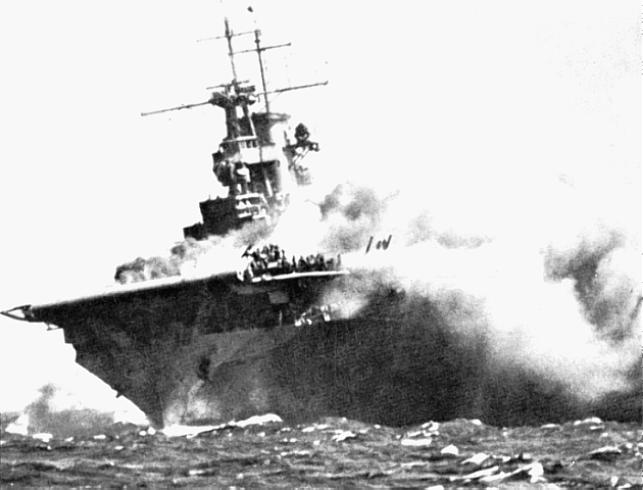
The US Navy paid a heavy price for the victory at Guadalcanal. Here the USS Wasp sinks after being hit by Japanese torpedoes

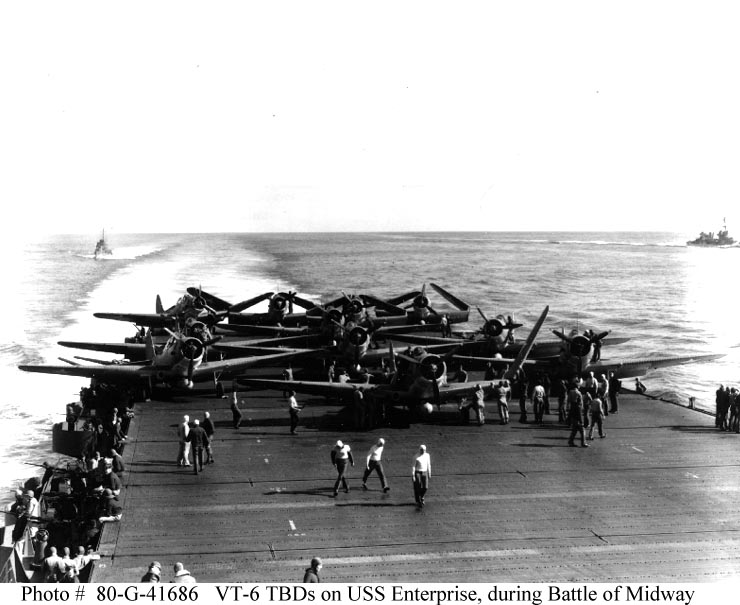
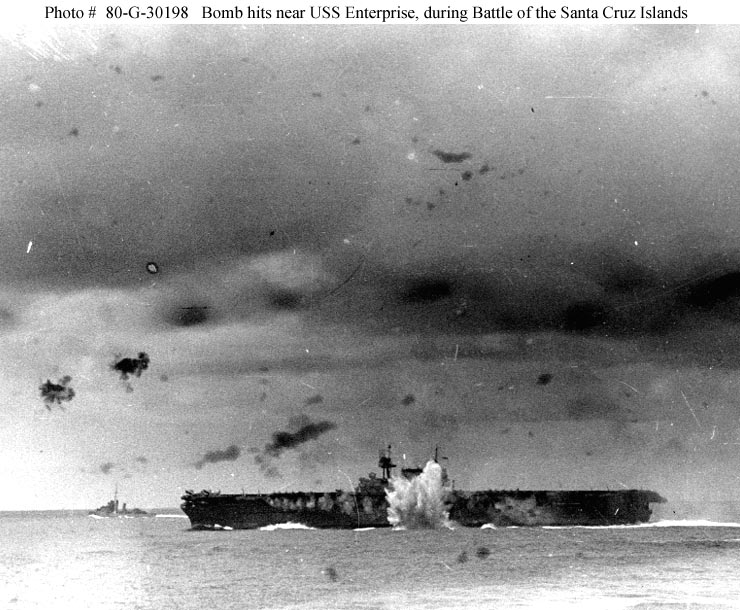
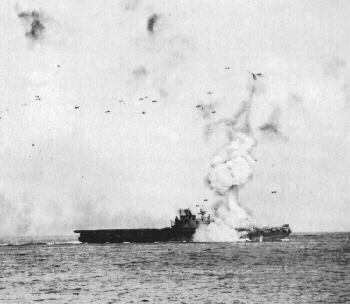
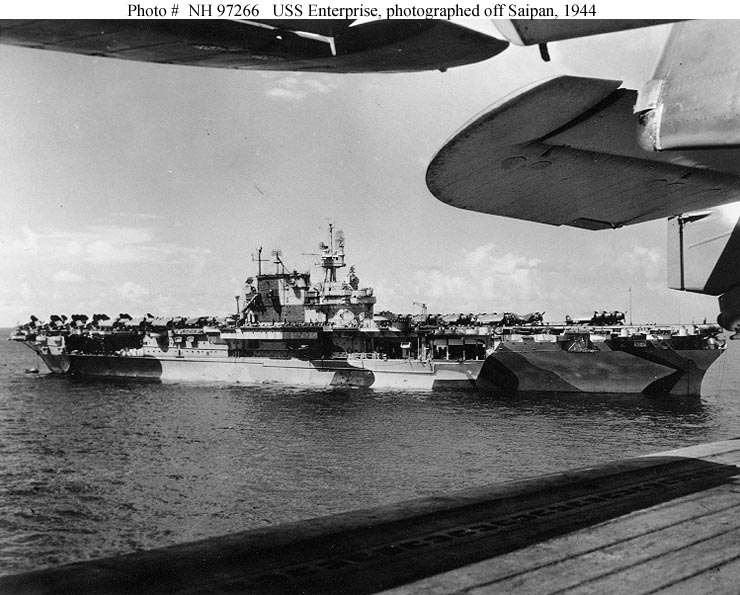
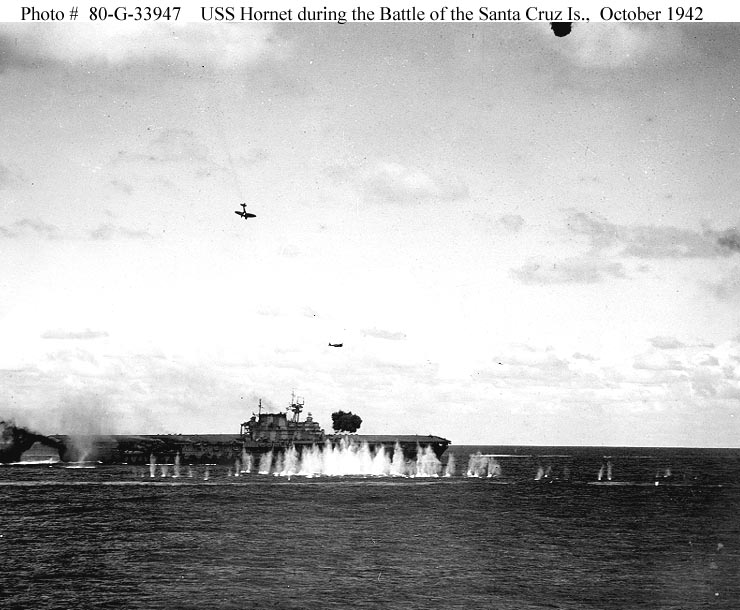
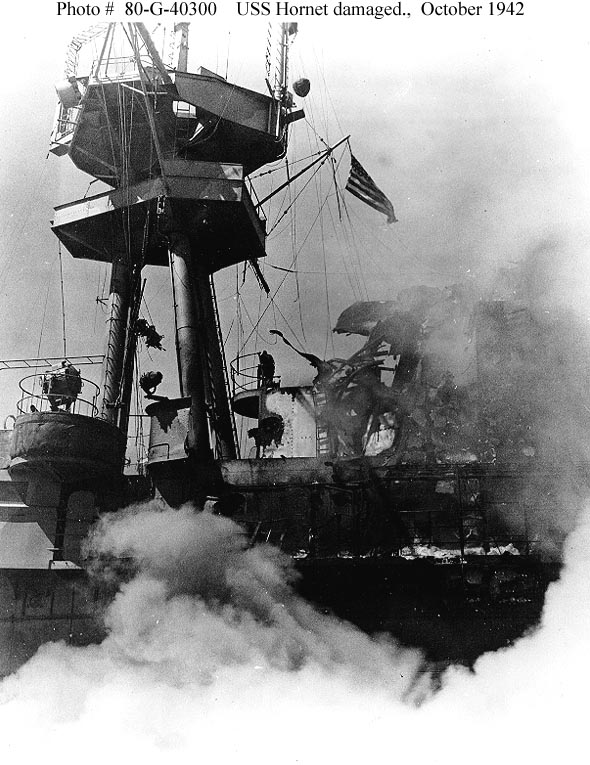
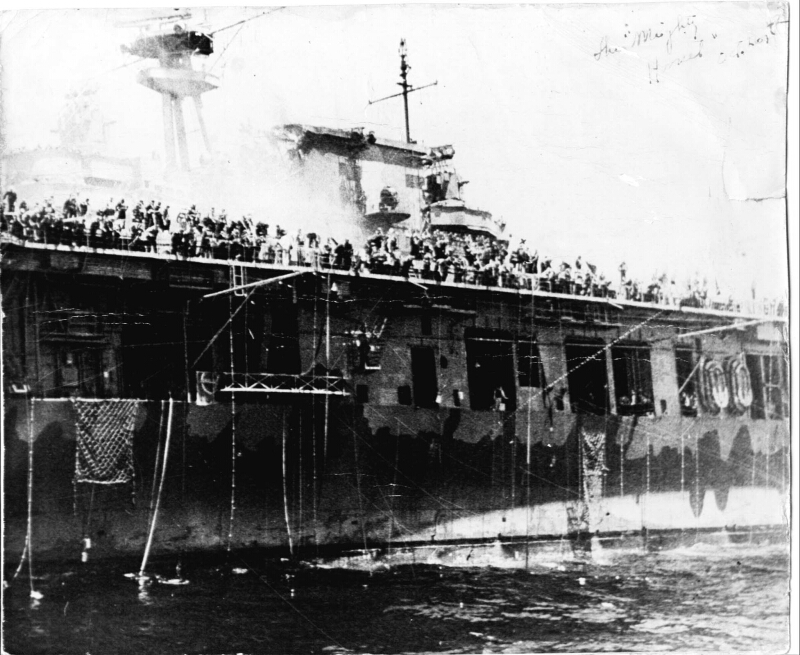
The Sea Battles: The sea campaign in the waters surrounding Guadalcanal would be marked by some of the bloodiest sea battles in the history of the US Navy.  So many ships from both navies would be sunk offshore that the waters would become known as “Ironbottom Sound.” Following the previously mentioned “Battle of Savo Island” the Americans lost the carrier Saratoga to torpedo damage and the Wasp was sunk while escorting a convoy. In the Battle of Eastern Solomon’s of 24 August the Americans have the Enterprise knocked out of action for 2 months and while sinking a Japanese light carrier and inflicting heavy aircraft losses on the Japanese. The Americans surprised a Japanese force on 11 October off Cape Esperance sinking a heavy cruiser and destroyer and heavily damaging a second heavy cruiser. The Japanese effort, now directed by Yamamoto brought battleships to support operations around Guadalcanal, including bombardments of the airfield on 13-14October in support of Maruyama. The attacks damaged but did not close Henderson field which was able to continue air support to the Marines and soldiers.  On 26 October a carrier engagement would be fought, the Battle of Santa Cruz Islands would be a tactical Japanese victory sinking the Hornet and damaging Enterprise, while losing no ships. Two Japanese carriers were damaged but they lost a large number of pilots and aircrews who could not be readily replaced. They also not succeed in their amphibious efforts to retake the island or Henderson field, gaining the Americans badly needed time.  On 13 November the Japanese attempted to repeat the bombardment of Henderson field but would be stopped from doing so by a task force under Admiral Daniel Callaghan.  The First Naval Battle of Guadalcanal cost the Japanese the battleship Hiei and two destroyers, additionally many of the transports bringing Japanese reinforcements would be sunk by aircraft from Henderson field and Enterprise.  The Americans lost 2 cruisers and 4 destroyers sunk and every other ship save the destroyer Fletcher damaged. Admiral Callaghan and Admiral Norman Scott, the victor of Cape Esperance were both killed.  The following night the Japanese would lose the battleship Kirishima to the USS Washington task group under the command of Admiral Willis Lee.  Further Japanese naval activity would be limited to attempts to reinforce the island with destroyers; during one of these operations on 29 November they would clash with a force of American cruisers and destroyers at Cape Tassafaronga, sinking 1 cruiser and badly damaging three more at the cost of one destroyer, but was unable to complete his supply run.  Though the Americans lost more total warships, the Japanese could not replace what they lost.

USAAF B-17E over the Solomons

Air Operations: The air operations would be decisive to the effort, land based aircraft of the Japanese played a key role in destroying some US shipping and sinking warships in waters off Guadalcanal however they could not maintain air superiority over the island which was maintained and increased by the Americans as Henderson field’s capacity grew and additional Army, navy and Marine aircraft were stationed there.  Naval air was extremely important in the sea battles around the island.

Beached and destroyed Japanese transport ship at Guadalcanal

Japanese Reaction: The Japanese reaction was one of dismay; they could not fulfill their promise to the emperor to retake the island.  They had lost many ships and aircraft as well as ground troops. From this time on the Japanese would go over to a strategic defensive in the Pacific.  Japanese losses were devastating as they could not be made up.

Importance for the Americans: This was important in a number of ways. For the navy it showed that they could defeat Japanese surface ships in night engagements and gave the navy great experience as it moved forward in the South and Central Pacific. American carrier air crews had become experienced and gained superiority over the Japanese.  On the ground the myth of the Japanese “superman” was destroyed, yet American commanders also began to appreciate the skill, endurance and tenacity of the Japanese soldier in future operations.

Importance for Joint Operations: The campaign also was a triumph for the Americans in the fact that they were able to overcome inter-service rivalries undertake a difficult operation against a stronger opponent far from major fleet logistics and support basis.  To be sure this was Joint Operations in its infancy and until the arrival of significant Army forces on the island to relieve the Marines was for the most part a Navy, Marine Corps and Army Air Corps operation.  When Major General Lawton “Lightning Joe” Collins assumed command of the island from Marine Major General Alexander Vandergrift it became a true-inter service operation and the beginning of Joint Operations.

12 Comments

Filed under History, world war two in the pacific

Forerunners of the Next Generation: The New Mexico Class, USS New Mexico, USS Idaho and USS Mississippi

New Mexico BB-40 in 1930 before moderization

The Battleships of the Nevada and Pennsylvania classes had established American ship design as second to none in 1916.  At the same time the US Navy was planning advances in engineering systems that would change naval engineering forever.

Idaho  BB-42 in 1931 after modernization

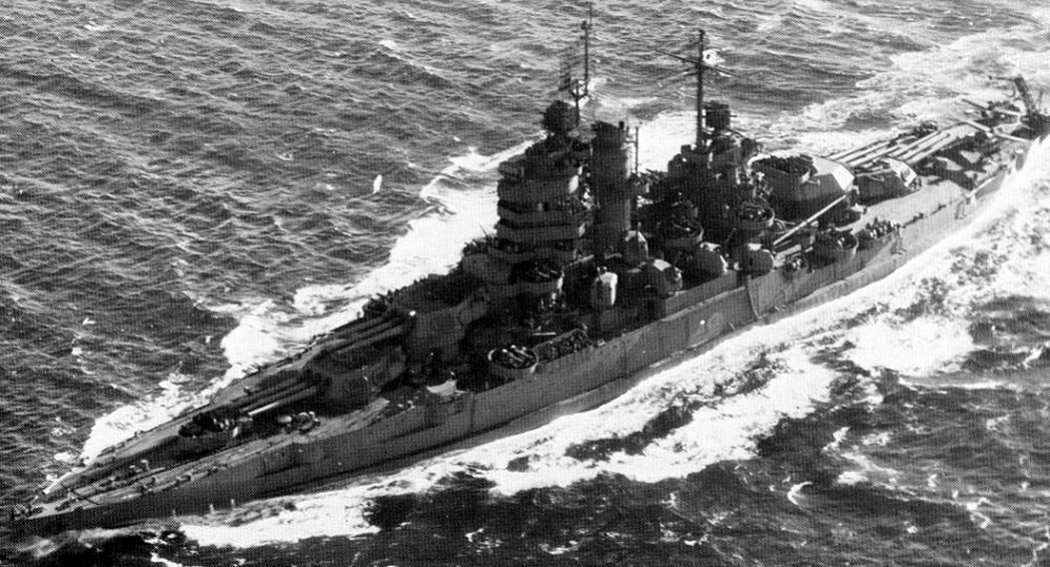
The ships of the New Mexico class were improvements on the preceding Nevada and Pennsylvania class half sisters.  Their hull was lengthened and beam increased. Additionally the new class was given a clipper bow to improve sea keeping capabilities.  While they maintained the same main battery layout of four turrets mounting three 14” guns each, however the guns were a higher caliber 14”/50 models that would also be mounted on the California class.  The New Mexico was also the test bed for a new power plant which featured General Electric geared turbines with electric drive which would be standard on succeeding classes of battleships as well as carriers, cruisers and destroyers.  The Mississippi and Idaho retained the older geared turbine design. The practical effect was that the New Mexico required less horsepower to attain the same speeds as the earlier design turbines.

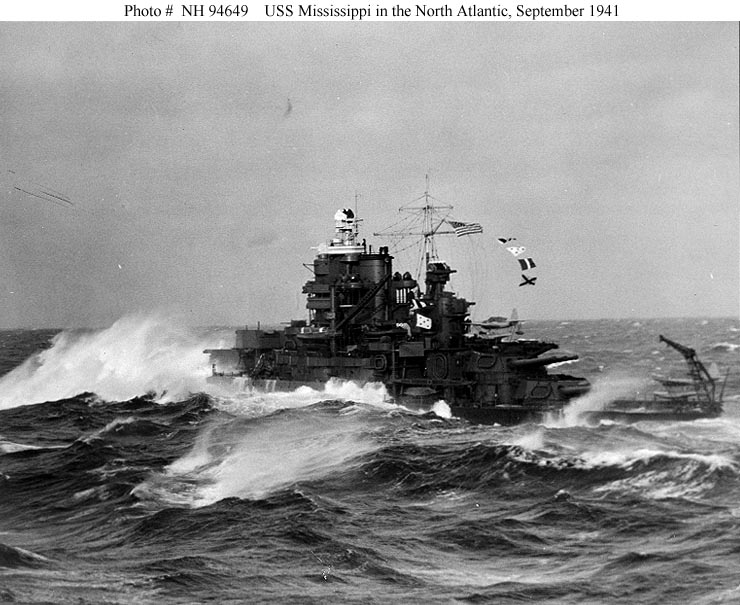
USS Mississippi BB-41 in the North Atlantic September 1941

Displacing 32,000 tons the ships were slightly larger than their predecessors.  New Mexico was launched on 23 April 1917 and commissioned on May 18th 1918.  Her sisters Mississippi and Idaho were actually launched and commissioned sooner being launched on January 25th 1917 and commissioned on December 18th 1917.  None of the ships saw action in the First World War and in 1919 the three would become the nucleus of the newly formed Pacific Fleet. They would serve in the Pacific but conduct exercises with the Atlantic Fleet in the Pacific as well as the Atlantic and Caribbean.  All three were modernized in the early 1930s receiving improvements in armor protection, anti-torpedo blisters, a modernized bridge structure to replace their cage masts, improvements to machinery and their secondary armament.

The Three Sister Moored Together, Late 1943

They would return to the Pacific but with the outbreak of war in Europe the three ships were transferred to the Atlantic Fleet where they took part in the Neutrality Patrol. When Pearl Harbor was attacked the three sisters went back to the Pacific where they spent much of 1942 escorting convoys and being prepared to repel any Japanese assault on the US Mainland.  In April 1943 they took part in the Aleutian campaign and the assaults on Attu and Kiska.  They would then sail to the Central Pacific where the provided support to the invasions of the Gilberts, Marshalls and Marianas islands by protecting the transports and providing naval gunfire support to Marines ashore.

Idaho in her final 1945 configuration. Note the 5″/38 DP Guns in single enclosed mounts used by US Fletcher Class DDs. The Idaho was the only Battleship to have this type of 5″ mount

The three would again operate together during the invasion of the Philippines where the Mississippi served with other battleships of the 7th Fleet’s battle line under Rear Admiral Jesse Oldenforf at the Battle of Surigo Strait where they annihilated a Japanese force including the battleships Fuso and Yamisharo.   Both Mississippi and New Mexico were damaged by Kamikaze hits in Philippine waters, the New Mexico taking a hit on her bridge which killed her Captain and 27 crewmembers.  Both would require repairs and both would miss the invasion of Iwo Jima which Idaho took part in.  The three joined forces again at Okinawa where they provided fire support to Marines and Soldiers ashore.  They would serve until the end of the war in the Pacific and take part in Operation Magic Carpet to return military personnel from the Pacific to the United States.

Idaho at Okinawa

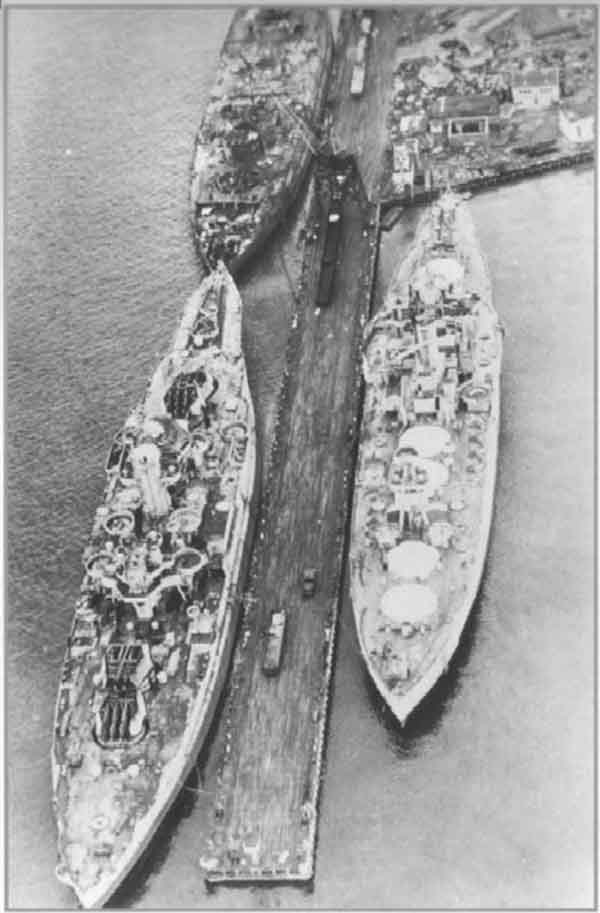
Following the war the New Mexico and Idaho were decommissioned and sold for scrap in 1948.  Mississippi however was converted into a gunnery training ship and reclassified as AG-128.

Idaho (lower left) New Mexico (top left) and Wyoming being scrapped at Newark NJ 1948

In this capacity she served as a test bed for new weapons including the Terrier guided missile systems which would be mounted on the first generation of US Navy Guided Missile Cruisers.   She was decommissioned in 1956 and sold for scrap after an abortive attempt by the state of Mississippi to acquire her as a memorial ship.

USS Mississippi AG-128 firing Terrier Missiles

The ships provided valuable service during the Second World War and the technical innovations in propulsion and protection would become standard in subsequent classes of US Navy battleships.  Additionally the post war service of the Mississippi helped propel the Navy into the missile era helping to build a foundation that is in evidence today in the Ticonderoga Class Guided Missile Cruisers and Arleigh Burke class Guided Missile Destroyers and their Aegis air defense and ballistic missile defense systems.  The ships of the New Mexico class and their stalwart crews should not be forgotten.

7 Comments

Filed under History, Military, Navy Ships, world war two in the pacific

The Oldest Ladies…Battleships USS Arkansas, New York and Texas

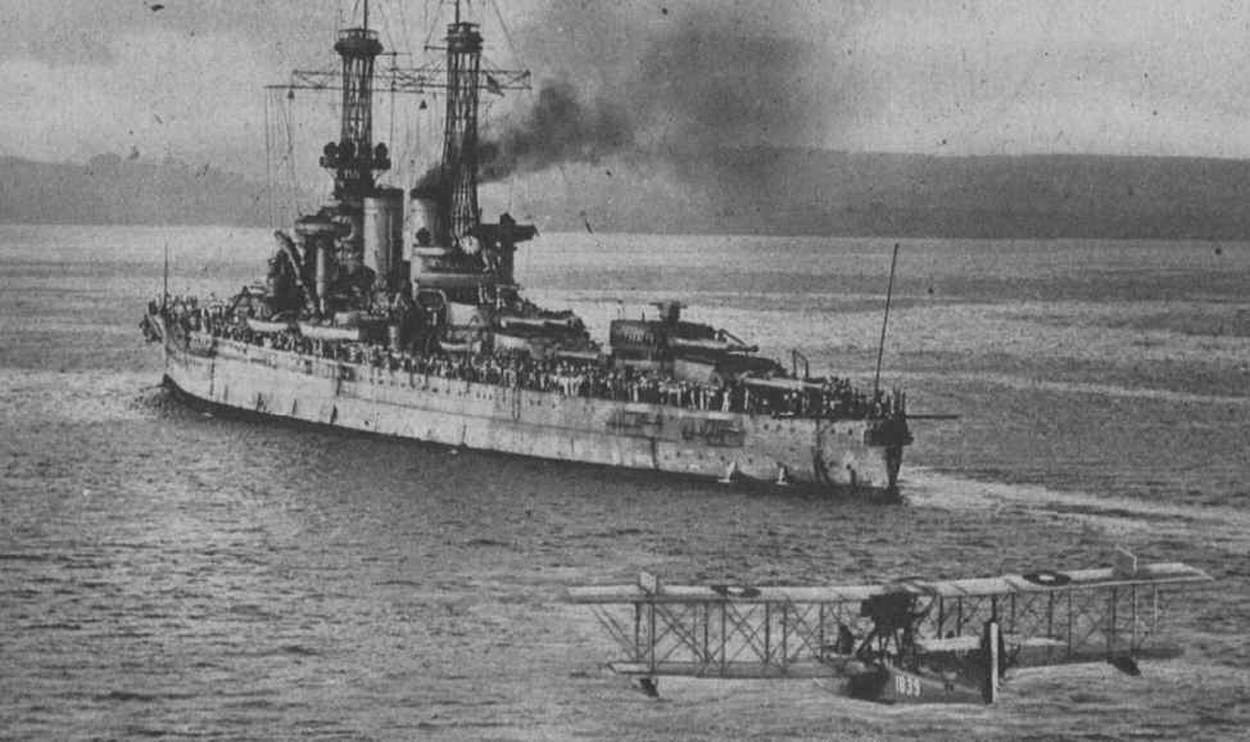
USS Arkansas 1919

Note: This is the second of my series on US Battleships of World War Two. The First was the essay The Battleships of Pearl Harbor and I will follow this with essays on the New Mexico class, the North Carolina class, the South Dakota class and the Iowa Class. I have published other series on US Aircraft Carriers, the Treaty Cruisers, the Alaska Class Battle Cruisers and the German Battle Bruisers Scharnhorst and Gneisenau.

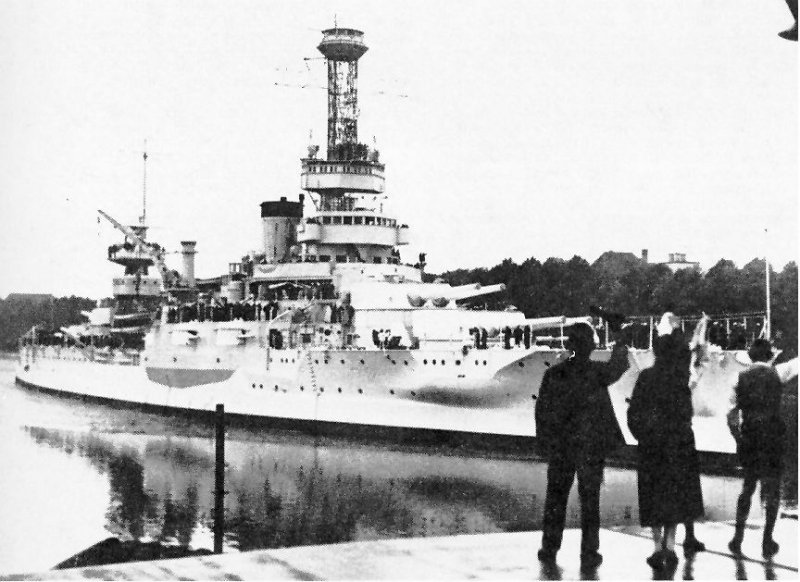
Arkansas Passing through the Kiel Canal on Midshipman Training Cruise June 6th 1937

When the United States entered the Second World War the average age of its battleship fleet was over years, an age that if the new North Carolina and Washington were omitted would have been well over 23 years old.  Two former battleships, the Utah and Wyoming had been demilitarized and were serving as gunnery training ships. The oldest of these ships, the Arkansas, the second ship of the Wyoming class was commissioned well before the First World War and was typical of ships built in that era comparable to the Italian battleships Conti de Cavour, Giulio Caesar.  The Two ships of the New York Class were improved Wyoming’s with a heavier main battery and better protection and were comparable to the Japanese Fuso class and British Royal Sovereign class ships.

Arkansas 1944

The oldest and also the smallest battleship in service in 1941 was the USS Arkansas. Displacing 26,000 tons and sporting a main battery of twelve 12”/50 guns in twin turrets she was launched on 14 January 1911 and commissioned on 17 September 1912 she first saw service in the Mexican crisis of 1914 and served with the British Home Fleet following the entry of the United States into the war. Between the wars Arkansas severed in both the Atlantic and Pacific and was modernized in 1925 receiving oil fired boilers to replace her coal fired plant. During the inter-war years she was engaged as were most battleships of the era in training exercises, midshipman and Naval Reserve cruises, goodwill visits and in the case of Arkansas work with the Fleet Marine force as it began to develop its amphibious doctrine.

Operation Crossroad, Baker Test note Arkansas standing on end on right side of blast

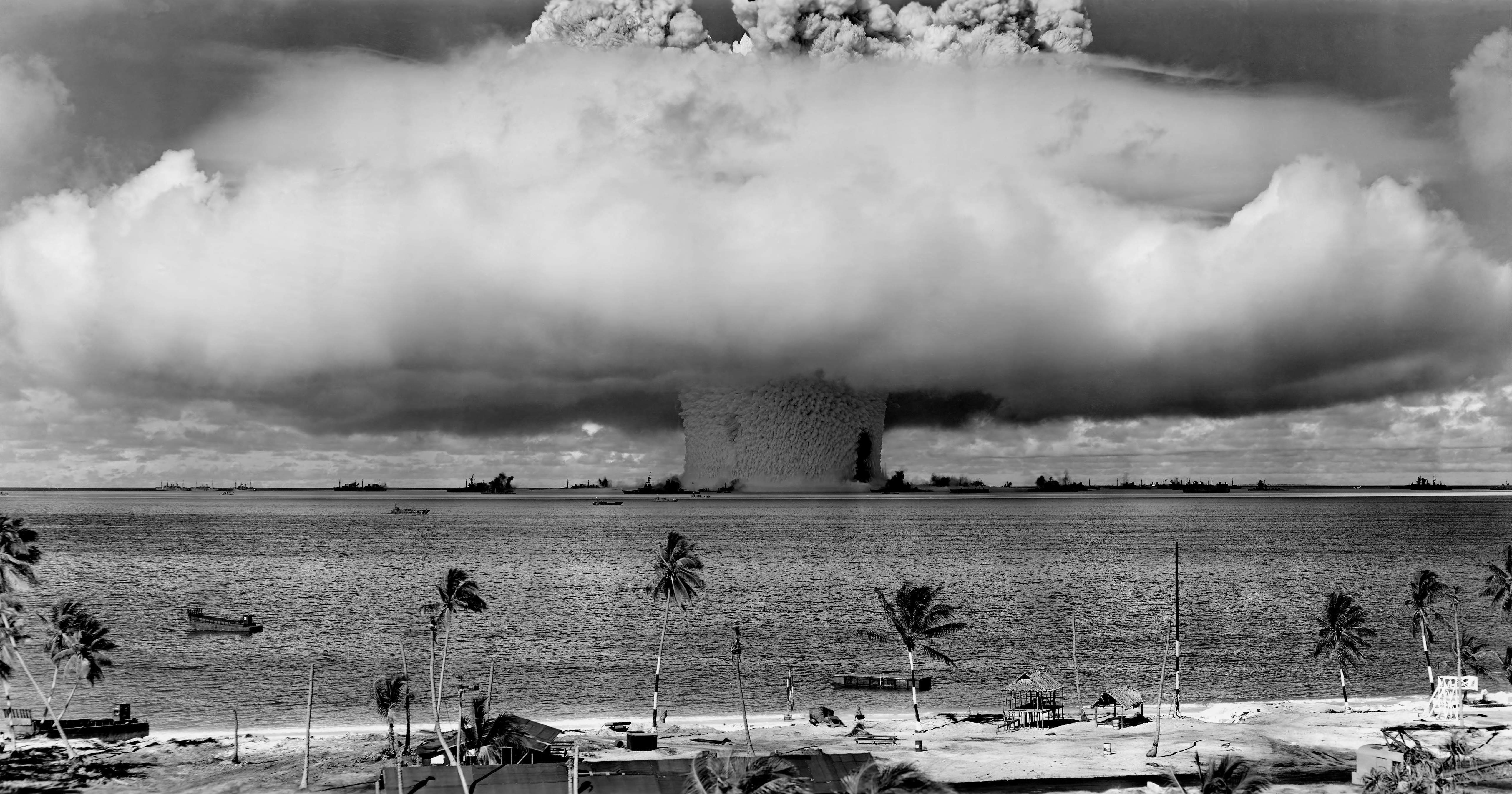
When war came to Europe in 1939 Arkansas was serving with the Atlantic Fleet and conducted training operations and neutrality patrols.  In April 1941 she escorted the first convoy of Marines to Iceland and following that sailed to Argentia Newfoundland where President Franklin D. Roosevelt was meeting with British Prime Minister Winston Churchill concluding the Atlantic Charter.  Following Pearl Harbor she would primarily serve as a convoy escort and midshipman training vessel until June 6th 1944 where she provided naval gunfire support at Omaha Beach and subsequent support to land operations in Normandy. In August she took part in the invasion of southern France, Operation Anvil before returning the US for repairs and modifications before sailing to the Pacific.  The elderly ship then took part in the battles for Iwo Jima and Okinawa again providing naval gunfire support to Marines and soldiers ashore. She also was introduced to the Kamikaze at Okinawa.   When the war ended she carried returning troops home in “Operation Magic Carpet” and in 1946 she was earmarked for her last mission, Operation Crossroads, the first of the Bikini atomic bomb tests where she was sunk during test Baker on July 25th 1946.   She was anchored very close to the underwater blast and was violently sucked up into the blast where she can be seen standing on end it the picture below.

New York 1932 leading the Battle Line

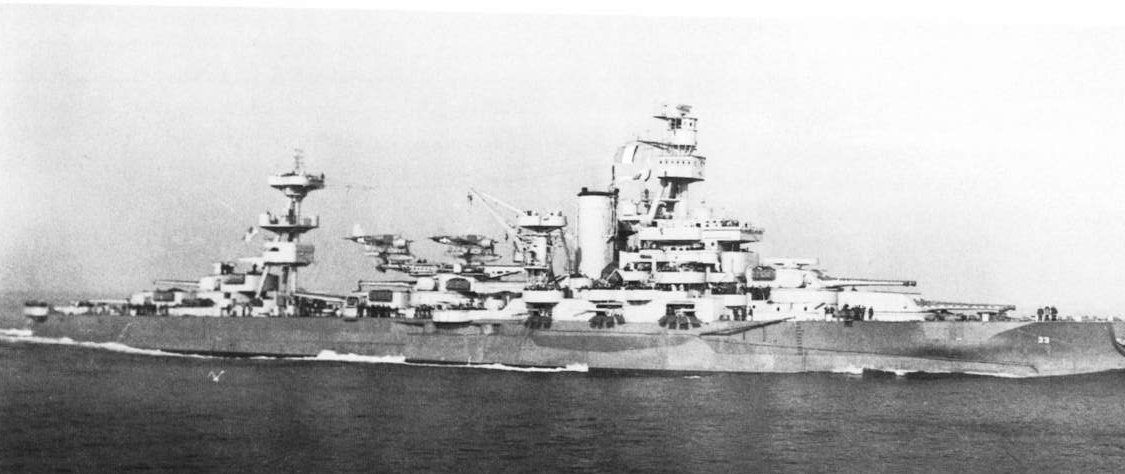
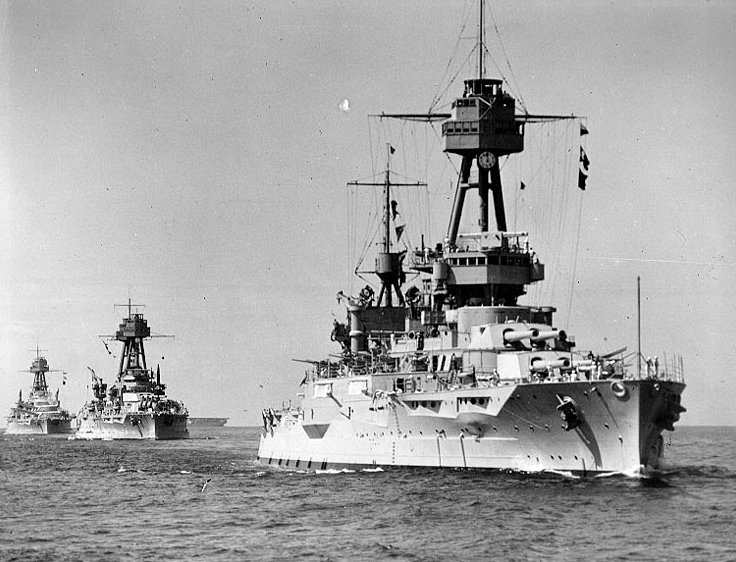
The New York and her sister Texas were the first US Navy battleships armed with 14” guns.  The ships displaced 27,000 tons and mounted ten 14”/45 guns in twin turrets. Launched 30 October 1912 and commissioned April 15th 1914 the New York deployed with the Atlantic battle ship squadrons to Mexico during the crisis at Vera Cruz.  Like Arkansas she joined the American battleship squadron serving with the British Home Fleet in 1917 and served in convoy escort and deterrence missions until the end of the war.  Between the wars New York undertook various training missions and modernizations and was the sole US ship at the 1937 Grand Naval Review for the coronation of King George VI of England.

New York in 1944 departing for the Pacific

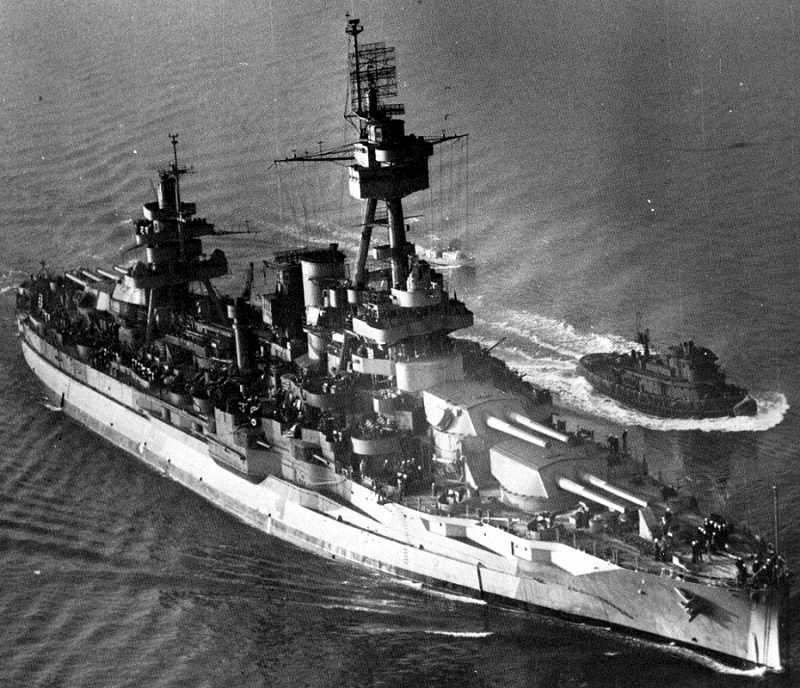
As war drew near New York remained engaged in training missions and took part in neutrality patrols and convoy escort missions in the Atlantic.  Following the outbreak of hostilities she would continue these missions and take part in Operation Torch, the invasion of North Africa in November 1942. She continued the vital convoy escort mission until she was withdrawn for service as a gunnery training ship for sailors being assigned to battleships and destroyer escorts.  In November 1944 she was sent to the Pacific where in February 1945 she provided naval gunfire support to the Marines at Iwo Jima. During pre-invasion bombardment she fired more rounds that any of the ships present.

New York at Iwo Jima

Her next action came at Okinawa where she provided 76 straight days of support to Marines and soldiers ashore while fending off kamikaze attacks and taking one minor hit.  She had her guns replaced at Pearl Harbor in preparation for the planned invasion of Japan.  After the cessation of hostilities New York took part in Operation Magic Carpet and took part in Fleet Week in New York.

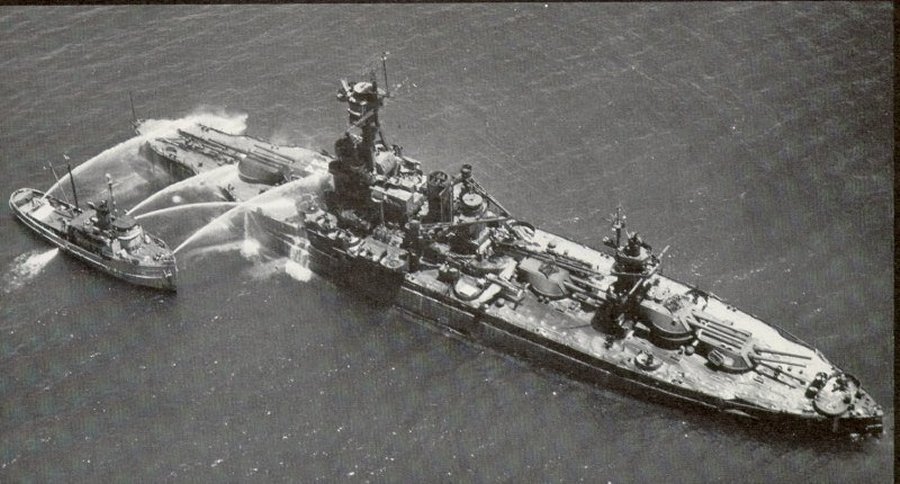
New York receiving anti-radiation wash down after Baker. She has survived the blast in good condition

New York was then assigned to be a target ship in Operation Crossroads where she survived both Test Able and Test Baker.  Towed back to Pearl Harbor for extensive study she was finally expended as a target on July 8th 1948 by the Navy 40 miles off Oahu taking the punishment of a number of ships before sinking after 8 hours under fire.

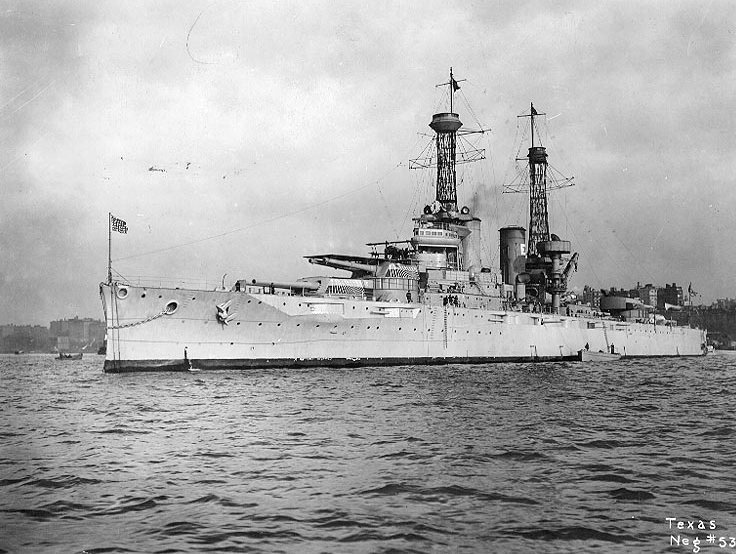
Texas in 1919 note the Battle “E” on her funnel

The Texas was launched on May 18th 1912 and commissioned on March 12th 1914 and within two months was in action with the Atlantic Fleet off Mexico without the benefit of the normal shakedown cruise.

During World War One Texas joined Battleship Division 9 serving alongside the British Home Fleet at Scapa Flow.  In this capacity she took part in convoy escort missions and operations in the North Sea including one where the Home Fleet nearly met the German High Seas Fleet in action.

Texas firing her main battery 1927 after her modernization

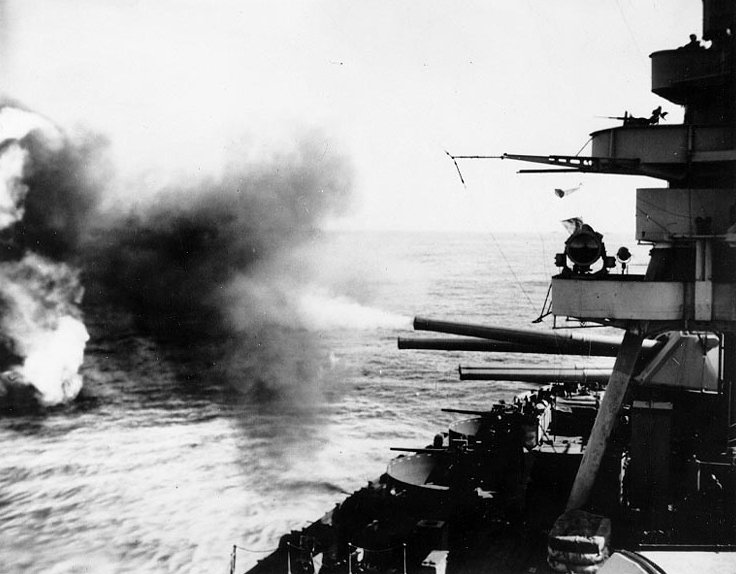
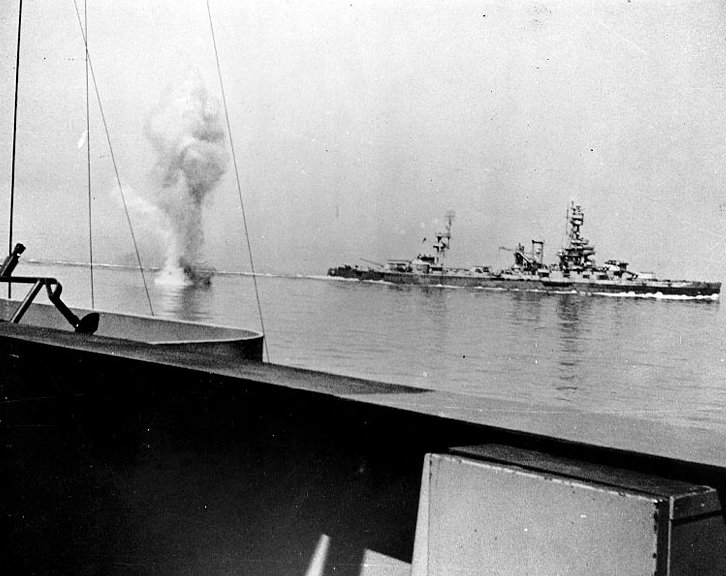
Between the wars Texas served on both the Atlantic and Pacific Fleets and received a major overhaul in 1925.  Like other ships she engaged in training exercises, midshipman and Naval Reserve training cruises and operations with the Fleet Marine Force.  With the outbreak of hostilities in Europe Texas joined the neutrality patrol.  When the US entered the war Texas served as a convoy escort and participated in Operation Torch.  Her convoy escort duties remained unchanged until she took part in Operation Overlord, the invasion of France and provided gunfire support to Rangers at Point du Hoc and soldiers on Omaha Beach. Closing to within 3000 yards of the beach Texas guns provided direct support to troops on the beach and interdiction fire on German troop concentrations further inland. She continued this following D-Day and while engaged in a duel with heavy German guns near Cherbourg was struck by two 280mm (11.2 inch) shells, one of which struck her on the navigation bridge killing the helmsman and wounding nearly everyone else.   She then sailed into the Mediterranean where she again supported troops ashore lending her weight to the invasion of south France. With that mission completed Texas returned to New York for repairs and to have her main battery guns replaced.

Texas under German Fire off Cherbourg

Reassigned to the Pacific Texas would support the invasion of Iwo Jima and Okinawa where she would remain in action for almost two months.  She finished the war in the Philippines and like so many other ships took part in Operation Magic Carpet. She arrived at Norfolk on February 13th 1946 to prepare for inactivation, but unlike so many other ships was spared the ignominious fate of the scrap yard or that of the New York and Arkansas. She was towed to Texas to serve as a permanent memorial at the San Jacinto battlefield and decommissioned there on April 21st 1948.  She was dry-docked and received a major overhaul in from 1988-90 which restored her to her 1945 appearance and in which major structural repairs were made. Continual restoration is conducted on the ship and there are plans for another major overhaul.  She is the last surviving “Dreadnaught” battleship in the world, a singular example of the great ships that once dominated the seas.

Texas at San Jacinto, the last of the Dreadnaughts

Though obsolete the Arkansas, New York and Texas rendered commendable service throughout the war and took part in some of the key invasions of the war. Their guns inflicted considerable damage on Vichy French, German and Japanese forces in Europe, North Africa and the Pacific.  New York and Arkansas trained thousands of sailors for service aboard other ships.  They performed admirably and their availability to do the less glamorous missions of naval gunfire support, convoy escort and training sailors for the fleet enabled other ships to be available for other missions.  They and the proud Sailors and Marines who served aboard them should never be forgotten.

19 Comments

Filed under History, Military, Navy Ships, US Navy, world war two in europe, world war two in the pacific

The Caine Mutiny: A Lesson in Leadership

“Now you’re learning, Willie. You don’t support your captain because you like him; you support because he’s got the job or you’re no good!” Jose Ferrer as Lieutenant Barney Greenwald

I write this after seeing a number of officers do some really dumb things in my 28 year career in the manner in which they supported their commanders or chain of command in trying times.  While none of these incidents could be described as mutiny they were certainly acts which undermined the chain of command, endangered the mission and had they occurred in a combat zone or in emergent conditions could have gotten soldiers or sailors killed.  The Caine Mutiny is a classic on leadership either in book or movie form.  I prefer the book but I am captivated by the performances of Humphrey Bogart and Jose Ferrer. In this essay I go through the movie and book and illustrate my point with quotations from it.

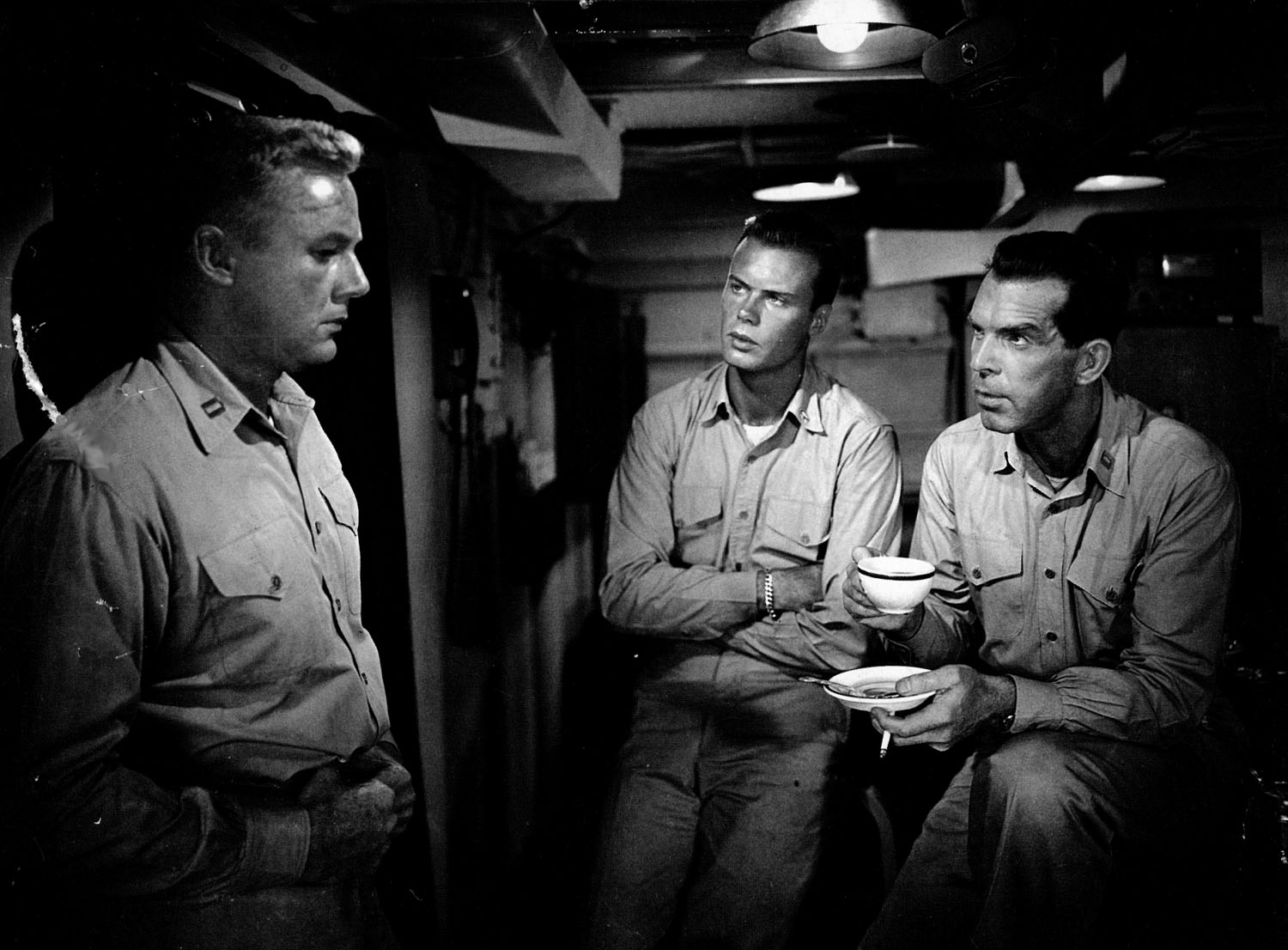
There has never been a mutiny on a United States Navy ship yet the book and later the movie The Caine Mutiny by Herman Wouk is one of the most poignant books on leadership in existence. The book gained popular success and was made into a movie in 1954 starring Humphrey Bogart, Van Johnson and Fred MacMurray, Jose Ferrer and Robert Francis.

The story centers around the officers or the wardroom of the USS Caine, an elderly Destroyer Minesweeper which had been in continuous combat in the South Pacific.  In the book she is a First World War One 1250 ton Wickes or Clemson class four piper.  In the movie she is played by the USS Thompson DD-627/DMS-38 a 2500 ton Gleaves class destroyer converted into a Destroyer Minesweeper since by the time the movie was made no “four pipers” were left in existence.  It took the film’s producers many months to convince the Navy to endorse the film because of the subject matter with the Navy only relenting when the producers agreed to place a disclaimer at the beginning of the film that there has never been a mutiny aboard a US Navy ship.

In the book and film the ship has returned to Pearl Harbor and in the process picked up a couple of newly assigned Ensigns fresh out of Officer Candidate School, what back in World War II were known as “90 Day Wonders.”  The young and impressionable Ensign Willis Seward Keith a Princeton grad and scion of old money and political contacts is one of those officers and while the story focuses on “Willie” Keith the true drama comes with the assignment of a new Commanding Officer, Lieutenant Commander Phillip Francis Queeg, a career officer and Naval Academy graduate.  The Executive officer, Lieutenant Steve Maryk, another OCS officer from humble means is played by Van Johnson while Fred MacMurray plays the ship’s communications officer, Lieutenant Tom Keefer another reservist and a writer by trade who remarks early in the story: “There is no escape from the Caine, save death. We’re all doing penance, sentenced to an outcast ship, manned by outcasts, and named after the greatest outcast of them all.”


Keith is disappointed in his new assignment and his mother and uncle try to pull strings to have him assigned to an Admiral’s staff.  The initial commanding officer, Lieutenant Commander DeVriess questions the new officer on his feelings about being assigned to the Caine:

http://www.youtube.com/watch?v=WTt5iVP8-GM

DeVriess: Disappointed they assigned you to a minesweeper, Keith?
Keith: Well, sir, to be honest, yes, sir.
DeVriess: You saw yourself on a carrier, or a battleship, no doubt.
Keith: Yes, sir, I had hoped…
DeVriess: Well, I only “hope” that you’re good enough for the Caine.
Keith: I shall try to be worthy of this assignment, sir.
DeVriess: She’s not a battleship or a carrier; the Caine is a beaten-up tub. After 18 months of combat it takes 24 hours a day just to keep her in one piece.

Queeg on his arrival insists on strict military discipline on a ship that has little outward appearance of such qualities. He remarks to his officers: “Aboard my ship, excellent performance is standard, standard performance is sub-standard, and sub-standard performance is not permitted to exist – that, I warn you.” Keefer a malcontent with a cynical attitude about the Navy takes an immediate dislike of Queeg and goes out of his way to poison the wardroom against the new Captain and is aided by various quirky and even neurotic actions of the new commander.  In the next few months he creates an air of disrespect, distrust toward Queeg even to plant questions about Queeg’s sanity and emotional stability among his fellow officers, including the Executive Officer who begins a “medical log” on the Captain.  One remark when pushing the Executive Officer demonstrates how far he was willing to go in trying to plant the idea that the Captain is mentally ill: “Will you look at the man? He’s a Freudian delight; he crawls with clues!”


http://www.youtube.com/watch?v=TiGVMshkwrY&feature=PlayList&p=6E5FDB52D2DC4238&index=6

After a number of incidents Queeg attempts to reconcile with his officers who reject him but his words are true: “As I always say, a command is a lonely job. It isn’t easy to make decisions. Sometimes the captain of a ship needs help. And by help, I mean constructive loyalty. What I’m trying to say is, uh, a ship is like a family. We all have our ideas of right and wrong but we have to pitch in for the good of the family. If there was only some way we could help each other.”

http://www.youtube.com/watch?v=vtqf0CCVUek

When the ship is caught in the great typhoon, sometimes known as “Halsey’s typhoon” which in actuality caused the loss of three destroyers and heavy damage to numerous ships, Queeg freezes on the bridge in a dispute with his officers over the action that needs to be taken.  Queeg wants to maintain the fleet course and speed while the bridge watch including the Executive Officer and Ensign Keith want him to steer an opposite course.  In the exchange Queeg apparently frozen by fear insists on following fleet course and when Queeg freezes relieve him under Article 184 of Naval Regulations.  The ship survives the storm and upon the ship’s return to San Francisco a Court Martial is convened charging Maryk and Keith with mutiny.

In the trial they are defended by Lieutenant Barney Greenwald, a lawyer in civilian life and Naval Aviator on convalescent leave. While the prosecution breaks Maryk and makes Keith look foolish Keefer aids the prosecution’s case to keep his reputation untarnished and after pushing his shipmates into mutiny leaves them to hang.  Greenwald then gets to work.  He pushes the psychiatrist who certified Queeg as sane and fit for duty hard planting doubts about the diagnosis:

“Doctor. You have testified that the following symptoms exist in Lieutenant-Commander Queeg’s behavior. Rigidity of personality, feelings of persecution, unreasonable suspicion, a mania for perfection, and a neurotic certainty that he is always in the right. Doctor isn’t there one psychiatric term for this illness?”

He then causes Queeg to have a breakdown on the witness stand.  The scene is dramatic as Queeg begins to fall apart:

http://www.youtube.com/watch?v=9esAr7gLapE&feature=PlayList&p=6E5FDB52D2DC4238&index=12

“They were all disloyal. I tried to run the ship properly by the book, but they fought me at every turn. If the crew wanted to walk around with their shirttails hanging out, that’s all right, let them! Take the towline – defective equipment, no more, no less. But they encouraged the crew to go around, scoffing at me and spreading wild rumors about steaming in circles and then ‘Old Yellowstain.’ I was to blame for Lieutenant Maryk’s incompetence and poor seamanship. Lieutenant Maryk was the perfect officer, but not Captain Queeg. Ah, but the strawberries! That’s, that’s where I had them. They laughed at me and made jokes, but I proved beyond the shadow of a doubt, and with, with geometric logic, that, that a duplicate key to the wardroom icebox did exist. And I would have produced that key if they hadn’t pulled the Caine out of action. I, I know now they were only trying to protect some fellow officer. (He pauses – looks at all the questioning faces that stare back at him, and realizes that he has been ranting and raving.) Naturally, I can only cover these things from memory…”

The scene ends with everyone knowing that Maryk and Keith will be acquitted. Greenwald’s clients are exonerated but the story does not end there.  While the officers celebrate the acquittal a drunken Greenwald arrives announces that he feels guilty for “torpedoing Queeg” and excoriates the wardroom and brutally identifies Kiefer as the “author of the Caine mutiny” and makes very pointed comments that any officer would be wise to heed.

http://www.youtube.com/watch?v=EKeISsYKROI

Greenwald: When I was studying law, and Mr. Keefer here was writing his stories, and you, Willie, were tearing up the playing fields of dear old Princeton, who was standing guard over this fat, dumb, happy country of ours, eh? Not us. Oh, no! We knew you couldn’t make any money in the service. So who did the dirty work for us? Queeg did! And a lot of other guys, tough, sharp guys who didn’t crack up like Queeg.
Keith: But no matter what, Captain Queeg endangered the ship and the lives of the men.
Greenwald: He didn’t endanger anybody’s life! You did! All of you! You’re a fine bunch of officers.

Greenwald: Tell me, Steve, after the Yellowstain business, Queeg came to you guys for help and you turned him down, didn’t you?
Maryk: Yes, we did.
Greenwald: You didn’t approve of his conduct as an officer. He wasn’t worthy of your loyalty. So you turned on him. You ragged him. You made up songs about him. If you’d given Queeg the loyalty he needed, do you suppose the whole issue would have come up in the typhoon?

Greenwald: And now we come to the man who should have stood trial. The Caine’s favorite author. The Shakespeare whose testimony nearly sunk us all. Tell ’em, Keefer.
Keefer: No, you go ahead. You’re telling it better.
Greenwald: You ought to read his testimony. He never even HEARD of Captain Queeg!
Maryk: Let’s forget it, Barney.
Greenwald: Queeg was sick, he couldn’t help himself. But you, you’re real healthy. Only you didn’t have one-tenth the guts that he had.
Keefer: Except I never fooled myself, Mr. Greenwald.
Greenwald: I wanna drink a toast to you, Mr. Keefer. From the beginning you hated the Navy. And then you thought up this whole idea and you managed to keep your skirts nice and starched and clean, even in the court martial. Steve Maryk will always be remembered as a mutineer. But you, you’ll publish your novel, you’ll make a million bucks, you’ll marry a big movie star, and for the rest of your life you’ll live with your conscience, if you have any. Here’s to the real author of the Caine mutiny. Here’s to you, Mr. Keefer.
[Splashes wine in Keefer’s face]
Greenwald: If you wanna do anything about it, I’ll be outside. I’m a lot drunker than you are – so it’ll be a fair fight.

The movie ends with Keefer alone as his fellow officer leave the party and Keith receiving orders to a new destroyer commanded by Captain DeVriess.  However the book has another ending.  In it Keefer becomes the commanding officer of the Caine and Keith the XO. The ship is hit by a Kamikaze and Keefer loses his nerve and in a truly cowardly fashion abandons the ship and his crew leaving Keith to save the Caine which he does.

As a leader it is important to support the commanding officer, especially if he or she is going through a difficult time.  While this does not mean that subordinates should ignore illegal actions of a commander as the XO of a ship did recently resulting in his and the CO’s relief for cause, but officers from any service do not have the luxury of subverting their commander or chain of command based on any personal like, dislike or any ideological, political or religious agenda.  A prime example of the latter was former Chaplain Gordon Klingenschmitt who waged a vicious campaign against every Commanding Officer that he worked for and the Navy in order to push his own political-religious views on his sailors and in the media.  There are certainly other examples but no to belabor the point I will end here.

Peace,

Padre Steve+

6 Comments

Filed under History, leadership, world war two in the pacific

They Held the Line: The USS Yorktown CV-5, USS Enterprise CV-6 and USS Hornet CV-8, Part Three the Enterprise

Enterprise CV-6 circa 1940

This is the last of a three part series about the USS Yorktown Class Aircraft Carriers. It is the story of the USS Enterprise CV-6, the legendary “Big E” and possibly the most celebrated American warship of the Second World War.

The USS Enterprise CV-6, the second ship of the Yorktown class was ordered by the Navy on 3 August 1933 as authorized under the National Industrial Recovery Act of 16 June 1933.  She was laid down just under a year later and launched on 3 October 1936 at Newport News Shipbuilding and Drydock Company, Newport News Virginia.  She was commissioned on May 12th 1938 to begin one of the most celebrated careers of any US Navy ship in history.  Displacing 25,500 tons full load Enterprise like her sister ships were designed for fast carrier operation working in conjunction with other carriers not tied to the battle line.  With good protection and speed the Enterprise incorporated the lessons learned in the preceding carriers.

Pre-War photo of Enterprise

After her shakedown cruise she operated in the Atlantic and Caribbean until April 1939 when she was transferred to the Pacific Fleet and based a Pearl Harbor. As the flagship of Task Force 16 under Rear Admiral Bill “Bull” Halsey Enterprise conducted training operations and shuttled aircraft to various US island bases in the Central Pacific one such mission to Wake Island which had her out of Pearl Harbor when the Japanese attacked on December 7th 1941.  Following the attack Enterprise and Task Force 16 would cover the Hawaiian Islands and then be used to conduct raids against Japanese bases in the Marshalls and protect convoys bound for Samoa.

Rare photo of the Enterprise at Midway

In April she escorted the newly arrived USS Hornet CV-8 to conduct the famed “Doolittle Raid” on Tokyo.  Five days after returning to Pearl Harbor Enterprise was dispatched to the Coral Sea but could not arrive before that historic carrier battle.  She returned to Pearl Harbor on May 26th and with Halsey sick departed two days later as flagship of TF-16 under the command of Rear Admiral Raymond A Spruance in company with Hornet, 6 cruisers and 10 destroyers with orders “to hold Midway and inflict maximum damage on the enemy by strong attrition tactics.”

TBD Devastator landign on Enterprise May 1942

They would be joined 2 days later by the hastily repaired USS Yorktown flagship of Rear Admiral Frank “Jack” Fletcher and TF-17 escorted by 2 cruisers and 6 destroyers.  Fletcher the senior officer assumed tactical command of this comparatively small force which represented the bulk of US naval power in the Pacific.

This tiny force would face 4 fleet (CV) and 2 light fleet (CVL) carriers, 7 battleships, 10 heavy (CA) and 2 light (CL) cruisers and 42 destroyers.  Additionally the Japanese had an additional 2 carriers, 4 battleships, 3heavy cruisers 4 light cruisers and 23 destroyers involved in some way the simultaneous invasion of the Aleutian Islands which could be called into the fight if Admiral Yamamoto desired.

SBD Dauntless Dive Bombers over Enterprise

The Battle of Midway was an epic of warfare and Enterprise and her Air Group 6 would play a pivotal role. Torpedo Six under LCDR Max Leslie in its obsolete, underpowered and under armored TBD Devastators was chopped to pieces as they attempted torpedo attacks on the First Carrier Strike Force of Admiral Nagumo losing 10 of 14 aircraft.  As the gallant air crews of Torpedo Six along with Yorktown’s Torpedo 3 and Hornet’s ill-fated Torpedo Eight made their attacks Bombing Six under the command of CDR Wade McCloskie and Scouting Six under the command of  LT Dick Best attacked and mortally wounded the Japanese Flagship Akagi and the Soryu.  Later in the day aircraft from Enterprise would help sink the Hiryu and the following day helped mortally wound the Heavy Cruiser Mikuma. The Enterprise was not damaged by the Japanese at Midway.

Flight Operations on Enterprise

Following the Miracle at Midway the Enterprise took part in the Guadalcanal campaign participating in the invasion as well as the Battles of Santa Cruz and the Eastern Solomons.  In each of these actions she was seriously damaged but her air group was instrumental in the campaign at sea and ashore.   Following the sinking of the Wasp, Hornet and damage to Saratoga Enterprise was the only US carrier in action in the fall of 1942.

Enterprise under attack at the Battle of Santa Cruz Islands

Bomb Explosion on Enterprise at the Battle of Eastern Solomons

In November she took part in the Naval Battle of Guadalcanal where her aircraft helped to finish off the Japanese battleship Hiei and participated in the sinking of 16 Japanese ships including transports which carried troops, equipment and supplies to the Japanese defenders of Guadalcanal. After another 6 months of action in the Solomons supporting the US advance Enterprise returned first to Pearl Harbor at which time she was awarded the Presidential Unit Citation by Admiral Chester Nimitz, the first carrier awarded the citation in the Second World War and then to Bremerton for a badly needed overhaul.

Emterprise struck by Kamikaze

Enterprise was back in action by November 1943 and participated in the US offensives in the Gilberts, Marshalls and the Marianas taking part in numerous raids, support to Marines ashore and in the Battle of the Philippine Sea, the Marianas Turkey Shoot.  After a month long refit at Pearl Harbor she participated in the attacks on the Volcano, Bonin and Palau including strikes on Yap and Ulithi followed by the fast carrier raids on Japanese facilities on Okinawa, Formosa and the Philippines which culminated in her participation in the Battle of Leyte Gulf, the largest naval battle in history.  Her aircraft would participate in strikes on each of the Japanese surface forces hitting battleships, cruisers and other Imperial Navy units in the epic naval battle.

Enterprise made a short return trip to Pearl Harbor in December 1944 where she embarked an air group trained in night operations. Rejoining the fleet she took part in sweeps against Japanese bases, ships and facilities in Indochina, the Philippines, Formosa and Okinawa prior to the invasion of Iwo Jima.

Enterprise at Saipan

During this operation her aircraft worked night and day to provide air strikes and air defense to the fleet.  She then joined the raids against Honshu, Kyushu and the Inland Sea where her aircraft provided night strikes against Japanese targets ashore as well as air defense to fleet units. She was damaged by a Japanese bomb on the 18th of March and on 11 April damaged by Kamikazes off Okinawa and again on 5 May prior to her last wound of the war on 14 May when a Kamikaze struck forward elevator necessitating repairs at Bremerton.

Kamikaze Damage or forward elevator

Returning to the fleet to late for the final actions of the war Enterprise took part in Operation Magic Carpet returning US troops to the United States at the end of hostilities.  She was decommissioned on February 17th 1947.  While she was in reserve the Enterprise was redesignated first as an Attack Aircraft Carrier (CVA), and then as Anti-submarine Carrier (CVS).

Enterprise Fleet Week New York 1945

As the super-carrier entered the scene and the Essex and Midway Classes were modernized to accommodate jet aircraft the Enterprise was determined to be in excess of Navy needs.  Despite attempts by some to save her as a Naval Museum the money could not be raised, even with the support of the dying Fleet Admiral Bill Halsey.  Enterprise which Secretary of the Navy Forrestal said was “the one vessel that most nearly symbolizes the history of the Navy in this war” was sold for scrap on 1 July 1958 and scrapped at Kearney New Jersey from September 1958 to March 1960.  Like so many ships which serve their country so well she was casually disposed of by a nation which had forgotten its past.

Enterprise alongside new CVA 1958

Enterprise on the way to the breakers

Enterprise was the only ship to receive both the Presidential and Naval Unit Citations for her service in World War Two and she was awarded the Asiatic-Pacific Campaign Medal with 20 battle stars.  Her place in the carrier force would be taken by a new Enterprise, CVN-65, the First Nuclear carrier which after nearly 50 years of service is still in commission. The Enterprise is so significant that her legacy continues in Hollywood Science fiction in the various Star Trek series as the Federation Starship Enterprise NCC-1701, 1701-A, 1701-B, 1701-D and 1701-E, so much so that NASA named the first experimental Space Shuttle Enterprise.

Never Forgotten USS Enterprise NCC-1701-B

2 Comments

Filed under History, Navy Ships, world war two in the pacific

The Alaska Class Battle Cruisers: The Last of the Line

Line drawing of Alaska in 1945

The three ships of the Alaska Class though classed as “Large Cruisers” by the US Navy were actually the last Battle Cruisers designed, built and put into operation by any Navy.  Designed as a counter to the German Scharnhorst and Gneisenau which in 1939 and 1940 had created havoc in the Atlantic raiding convoys and sinking the Royal Navy Aircraft Carrier Courageous, the ships were 809 feet long and 91 feet wide, displaced 27,000 tons, mounted 9 12” guns mounted in three turrets and were capable of 33 knots.  The ships mounted a large anti-aircraft battery of 12 5” 38 Dual Purpose guns, 56 40mm cannon and 34 20mm light anti-aircraft guns.

The Scharnhorst: She and the Gneisenau were the threat that the Alaska’s were designed to counter

Alaska was laid down in December 1941 shortly after Pearl Harbor, launched 15 August 1943 and commissioned on 17 June 1944. Her sister ship, Guam was launched on 12 November 1943 and commissioned 17 September 1944.  The final ship of the class to be built the Hawaii was launched after the war in November 1945 with her construction halted when she was 84% complete in 1947. Three planned ships, the Philippines, Puerto Rico and Samoa were never laid down.

Aerial View of USS Alaska

While fast and large with more than adequate firepower the purpose that they created for no longer existed by the time that they were commissioned.  The German Scharnhorst had been sunk by a 12 ship British task force led by the HMS Duke of York on December 26th 1943 after mounting an attack on a Murmansk convoy at the Battle of North Cape.  Her sister Gneisenau had been heavily damaged in the “channel dash” and bombing in Kiel and while being refitted had the work discontinued after the sinking of the Scharnhorst.

The USS Guam in 1945

With their natural opponents no longer a factor in the war the Alaska and Guam were sent to the Pacific where they spent their time escorting fast carrier task forces, conducting naval gunfire support missions off Okinawa and conducting sweeps in Japanese waters as part of the initial blockade of Japan.  Following the war Alaska and Guam were active in Operation Magic Carpet the return of US servicemen from the Far East to the United States. Alaska and Guam decommissioned in February 1947 remaining in reserve until stricken from the Naval List and Alaska was scrapped in 1960 with Guam being scrapped in 1961 each having spent slightly over two years each in active service.   The fate of Hawaii would be debated including plans to complete her as the first guided missile cruiser (CG) and later Command Cruiser (CC).  Neither plan for Hawaii’s conversion and completion came to fruition and she was sold for scrap in 1959.

Incomplete and undervalued the Hawaii being towed to the breakers in 1959

The era of the Battle Cruiser which began with the launching of the HMS Invincible in 1907 and culminated in with launching of the HMS Hood ended with the Alaska Class. In a way it was an ignominious ending with practically unused ships being broken up when they would have been ideally suited for conversion to new missions.

In light of the need for a combination of substantial naval gunfire support on a platform large enough to support the latest air defense and, theater air defense and independent operations with substantial protection it seems to me that a new class of Battle Cruisers, in effect a new Alaska Class would be in order.  tried and true 8″, 12″ or 16″ guns Nuclear powered with the latest in Aegis missile defense systems and their own air group  they would be the most v versatile platform that the Navy has had in decades.

Peace

Steve+

26 Comments

Filed under History, Military, Navy Ships, world war two in europe, world war two in the pacific

They Held the Line: The USS Yorktown CV-5, USS Enterprise CV-6 and USS Hornet CV-8, Part Two the Hornet

USS Hornet CV-8 Building at Newport News VA

This is part two of a three part series about the USS Yorktown Class Aircraft Carriers. Part one serves as an introduction as well as the story of the lead ship of the Class, the USS Yorktown CV-5.  Part One about the Yorktown is located here: https://padresteve.wordpress.com/2009/12/27/they-held-the-line-the-uss-yorktown-cv-5-uss-enterprise-cv-6-and-uss-hornet-cv-8-part-one/

Hornet as Completed off Hampton Roads shortly after Her Commissioning

The USS Hornet CV-8 was the third ship of the Yorktown Class and is sometimes referred to as her own one ship Hornet Class.  Laid down on 25 September1939 under the Naval Expansion act of May 17th 1938, Hornet was part of the pre-war naval build up authorized by President and Congress.  The previous Yorktown design was used to speed construction.  Hornet was slightly modified from her sisters Yorktown and Enterprise being 15 feet longer, 5 feet wider in the beam and displacing about 1000 tons more than her near sisters.  Her anti-aircraft armament was also slightly improved.  As with her near sisters Hornet had good protection except that her underwater protection was weak.  However, as would be born out in combat Hornet like her sisters would prove to be extraordinarily tough.

Hornet in Rough Seas Preparing to Launch the Doolittle Raid

Hornet was launched on 14 December 1940 and commissioned 25 October 1941 with Naval Aviation pioneer Captain Marc A Mitscher Commanding. Hornet conducted her initial training and air group qualifications while operating out of Norfolk.  On February 2nd two Army Air Corps B-25 Medium Bombers were loaded aboard.  As Hornet put to sea the bombers were launched to the astonishment of the crew. Hornet departed Norfolk for the Pacific where she embarked 16 B-25s under the command of Colonel Jimmy Doolittle.  Hornet’s own air group was stowed in the hanger bay.  On April 2nd Hornet departed from San Francisco for a rendezvous with Admiral Halsey’s Task Force 16 and her sister ship Enterprise.  As the ship departed Mitscher informed the crew of their mission.  Hornet would launch Colonel Doolittle’s aircraft against the heart of the Imperial Japanese Empire, Tokyo.

Hornet Launching B-25

The plan was for the task force to sail to 400 miles from Japan and launch the bombers. Enterprise was to provide air cover for the task force while Hornet’s air group was inaccessible while the bombers remained aboard.  On the morning of 18 April the task force was spotted by a Japanese patrol boat.  The craft was quickly dispatched by the heavy cruiser USS Nashville but not before the craft had reported the presence of the task force.  Though the task force was still 600 some miles from Japan Halsey ordered that Doolittle’s aircraft be launched against Tokyo.  The attack while militarily insignificant came as a major surprise to the Japanese who anticipating a raid by naval aircraft believed that any attack could not take place until the following day.  Even more significantly the attack stunned the Japanese military establishment, especially the Navy. The attack would provoke Admiral Yamamoto to attack Midway in order to draw out the American carriers and destroy them.

Hornet Arrives at Pearl Harbor Before Midway

Hornet along with Task Force 16 sailed back to Pearl Harbor arriving a week later and the mission would remain secret for over a year.  The task force steamed to assist the Yorktown and Lexington at the Battle of Coral Sea but that battle was over before they could arrive.  The task force returned to Pearl Harbor on the 26th of May and sail on the 28th for Midway.  Hornet’s air group was plagued with bad luck.  Torpedo Squadron 8, or Torpedo 8 commanded by LCDR John Waldron found and attacked the Japanese task force losing all aircraft and all pilots save one.  6 new TBF Avengers from her air group operating from Midway met with heavy losses in their attack against the Japanese.  Only one pilot from Torpedo 8 with Waldron’s group survived, Ensign George Gay.  Hornet’s dive bombers followed bad reports of the location of the Japanese carriers and took no part in the action.  Many would have to ditch in the ocean as they ran out of fuel.  Hornet’s air group would help sink the Japanese Heavy Cruiser Mikuma and heavily damaged Mogami on the 6th.  The Battle of Midway was one of the major turning points of the war.  The Japanese had lost six carriers which had attacked Pearl Harbor along with their aircraft and many of their highly trained pilots and flight crews. Coupled with their losses at Coral Sea the Japanese suffered losses that they could ill afford and could not easily replace.

Following Midway Hornet had new radar installed and trained out of Pearl Harbor until order to the Southwest Pacific to take part in the struggle for Guadalcanal.  By the time she arrived she was the only operational American carrier in the Pacific. Enterprise had suffered bomb damage at the Battle of Easter Solomons on August 24th; Saratoga was damaged by a submarine torpedo on August 31st and the Wasp was sunk by a submarine on September 15th.  In the space of 3 weeks the United States Navy had lost 3/4ths of its operational carriers in the waters off of Guadalcanal. Hornet now faced the Japanese alone, providing much of the badly needed air support for the Marines fighting ashore.

Hornet Under Attack: Note “Val” Dive Bomber about to crash ship

The Enterprise rejoined Hornet following hasty repairs off the New Hebrides Islands on October 24th.  On the 26th they joined battle with a Japanese task force of 4 carriers centered on the veterans Shokaku and Zuikaku. The Hornet’s aircraft attacked and seriously damaged Shokaku even as Japanese torpedo planes and dive bombers launched a well coordinated attack against Hornet. Hornet was hit by three bombs, two torpedoes and had two Vals dive into her with their bombs.  On fire and without power her damage control parties fought to regain control of the ship and extinguish the fires that blazed aboard her.

Hornet’s Damaged Island and Main Mast

Assisted by the heavy cruiser Northampton which took her in tow her crew brought the fires under control and were close to restoring power when another Japanese strike group found her and put another torpedo into her.  With this hit Hornet’s list increase and she was abandoned even as she was hit by another bomb.  With Japanese ships in the area it was decided to scuttle the ship. Escorting destroyers hit her with 9 torpedoes and over 400 rounds of 5” shells.  As Hornet blazed in the night her escorts withdrew and Japanese forces after attempting to take her under tow put four of their 24” “Long Lance” torpedoes into the doomed ship at long last sinking her.

Hornet Being Abandoned by Her Crew

In her last fight Hornet’s aircraft along with those of Enterprise mauled the air groups of Shokaku and Zuikaku again inflicting irreplaceable losses among their experienced air crews.  In the battle Hornet was hit by 4 bombs, two aircraft, 16 torpedoes and over 400 rounds of 5” shells, more hits than were sustained by any other US carrier in a single action during the war.  She was stuck from the Navy list on 13 January 1943 and her gallant Torpedo 8 was awarded the Navy Presidential Unit Citation “for extraordinary heroism and distinguished service beyond the call of duty” in the Battle of Midway.  Her name was given to the Essex Class carrier CV-12. The new Hornet served throughout the war and served well into the Cold War.  She now rests as a Museum ship at Alameda California.

The USS Hornet Association website is here:  http://www.usshornetassn.com/

The Museum site is here: http://www.uss-hornet.org/

If you liked this article you might want to also read the following articles on this site:

The Battleships of Pearl Harbor

The Transitional Carriers: USS Ranger CV-4 and USS Wasp CV-7

The First Aircraft Carriers Part One: The First American Flattops- Langley, Lexington and Saratoga

The Treaty Cruisers: A Warship Review

5 Comments

Filed under History, Military, Navy Ships, world war two in the pacific

“Revisionist” History and the Rape of Nanking 1937

Japanese Soldiers at Work in Nanking

The historical controversy regarding the “rape” of Nanking in 1937 by the Japanese Army is hotly debated.[1] The massacres occurred in the initial occupation of the city and the two months following in mid December 1937.  The initial reaction to the actions of the Japanese was reported by western journalists and even a German Nazi Party member by the name of John Rabe who assisted in protecting Chinese during the massacre and reported it on his return to Germany.The action shocked many in the west and helped cement the image of the Japanese being a brutal race in the west.

Massacre Victims at Nanking

The controversy’s visibility has been raised since the 1997 publication of Iris Chang’s The Rape of Nanking. However, with few exceptions the incident had received little attention by Western historians until Chang’s book was published. The reason for this was  that  China was a sideshow for for the United States and Britain throughout much of the war. When Chiang Kai Shek’s Nationalists were overthrown by the Communists in 1948 the incident disappeared from view in the United States.   The  United States government  reacted to the overthrow of Chaing by helping to rebuild Japan and rehabilitate the Japanese while opposing the Chinese Communists.  In fact it was only “after the Cold War was the Rape of Nanking Openly discussed.”[2]

Bodies of Children Killed by the Japanese at Nanking

Chang’s book was instrumental as it brought new attention to the actions of the Japanese Army in the slaughter of Prisoners of War and civilians following the occupation of the city.  Even as Chang’s work was published “revisionist” works began to appear in the 1980s which have either denied the atrocities, sought to minimize numbers killed by Japanese Forces or rationalized the them began to appear in Japan.  The revisionists were led by Masaaki Tanaka who had served as an aide to General Matsui Iwane the commander of Japanese forces at Nanking.  Tanaka denied the atrocities outright calling them “fabrications” casting doubt upon numbers in the trial as “propaganda.” He eventually joined in a lawsuit against the Japanese Ministry of Education to remove the words “aggression” and “Nanjing massacre” from textbooks, a lawsuit which was dismissed but was influential to other revisionists and Japanese nationalist politicians and publishers.[3]

Japanese Officer Preparing to Execute Man in Hospital

Most early accounts of the occupation and war crimes have used a number of 200,000 to 300,000 victims based upon the numbers provided during the War Crimes Trials of 1946.[4] Unlike the numbers of victims of the Nazi Holocaust the numbers are less accurate.  Authors who maintain the massacres such as Chang and others such as Japanese military historian Mashario Yamamoto who admits Japanese wrongdoing and excess but challenges the numbers use the same statistical sources to make their arguments.  Chang not only affirms the original numbers but extrapolates that even more may have been killed as a result of the disposal of bodies in the Yangtze River rather than in mass graves away from the city as well as the failure of survivors to report family member deaths to the Chinese authorities.[5] She also notes contemporary Chinese scholars who suggest even higher numbers.

Prince Asaka, Granduncle of Emperor Hirohito Commanded Troops at Nanking

Herbert Bix discusses Japanese knowledge of the atrocities in detail up and down the chain of command including Prince Asaka, granduncle of Emperor Hirohito who commanded troops in Nanking, the military and Foreign Office, and likely even Hirohito himself.[6]

German National and Nazi Party Member John Rabe Protected Chinese at Nanking and Reported His Experience to the German Government.  He is known as “The Good Man of Nanking”

The publication of German citizen and witness to the massacres John Rabe’s diaries in 2000, The Good Man of Nanking, provided an additional first hand account by a westerner who had the unique perspective of being from Japan’s ally Nazi Germany.  His accounts buttress the arguments of those like Chang who seek to inform the world about the size and scope of Japanese atrocities in Nanking.

A Field of Skulls at Nanking

Yamamoto who is a military historian by trade and is viewed as a “centrist” in the debate, places the massacres in the context of Japanese military operations beginning with the fall of Shanghai up to the capture of Nanking. Yamamoto criticizes those who deny the massacres but settles on a far lower number of deaths, questioning the numbers used at the War Crimes Trials. He blames some on the Chinese Army[7] and explains many others away in the context of operations to eliminate resistance by Chinese soldiers and police who had remained in the city in civilian clothes. He  claims that  “the Japanese military leadership decided to launch the campaign to hunt down Chinese soldiers in the suburban areas because a substantial number of Chinese soldiers were still hiding in such areas and posing a constant threat to the Japanese.”[8] David Barrett in his review of the Yamamoto’s work notes that Yamamoto believes that “there were numerous atrocities, but no massacre….”[9] Yoshihisa Tak Mastusaka notes that while a centrist Yamamoto’s work’s “emphasis on precedents in the history of warfare reflects an underlying apologist tone that informs much of the book.”[10] Revisionist work also criticizes the trials surrounding Nanking and other Japanese atrocities.  An example of such a work is Tim Maga’s Judgment at Tokyo: The Japanese War Crimes Trials which is critiqued by historian Richard Minear as “having a weak grasp of legal issues” and “factual errors too numerous to list.”[11] Such is a recurrent theme in revisionist scholarship, the attempt to mitigate or minimize the scale of the atrocities, to cast doubt upon sources and motivations of their proponents or sources, to use questionable sources themselves or to attribute them to out of control soldiers, the fog of war and minimize command knowledge as does Yamamoto. Politics is often a key motivating factor behind revisionist work.

Iris Chang Would Later Commit Suicide

Chang would never be the same after researching and writing the Rape of Nanking. Traumatized by what she had learned and burdened by the weight of what she had taken on she killed herself on November 9th 2004.

Iconic Photo of Japanese Acts in China: A Wounded Child at Shanghai Station

“Revisionist” history will almost certainly remain with us, so long as people study the past.  However one has to be careful in labeling a divergent view of a historical subject as necessarily revisionist.  There are occasions when new evidence arises and a “new” or “revisionist” work may actually disprove previous conclusions regarding historic events or persons.  This might occur when what we know about a subject comes from a single or limited number of sources who themselves were limited in what they had available for research and new evidence comes to light. At the same time where numerous sources from diverse points of view attest to the genuineness of an event, the revisionist’s theses should be themselves scrutinized based on evidence presented as well as their political, ideological or racial motivations.  While one does not want to silence voices of opposition to prevailing beliefs one has to be careful in examining their claims, especially when they arise in the context of political or ideological conflicts.


[1] Bix, Herbert P. Hirohito and the Making of Modern Japan, Harper Collins Publishers, New York, NY 2000. pp.333-334. Bix does a good job explaining the number of victims of the incident drawing on Chinese and Japanese sources.

[2] Kreuter, Gretchen. The Forgotten Holocaust in The Bulletin of Atomic Scientists, March-April 1998 p.66

[3] Fogel, Joshua A. The Nanjing Massacre in History and Historiography, University of California Press, Berkley CA 2000, pp.87-89

[4] Toland, John. The Rising Sun: The Rise and Fall of the Japanese Empire 1936-45. Random House, New York, NY 1970 pp. 50-51. Toland in his brief discussion of the massacres notes both the civilian casualty figures and figures for male citizens of military age who were slaughtered.  Toland also notes the large numbers of women raped by Japanese soldiers.

[5] Chang, Iris. The Rape of Nanking: The Forgotten Holocaust of World War II Penguin Books, New York, NY 1997 pp.102-103. Chang has been criticized by some historians in a number of ways including that she was not a historian, that she compares the atrocities to the Nazi Holocaust and her emotional attachment to the subject which may have been a contributing factor in her 2004 suicide.

[6] Bix. p.336

[7] Yamamoto, Masahiro. The Rape of Nanking: Anatomy of an Atrocity. Praeger Publishers an imprint of the Greenwood Group, Westport, CT 2000. http://site.ebrary.com/lib/apus/docDetail.action?docID=10018001&p00=nanking  p.83

[8] Ibid. p.92.

[9] Barrett, David P.  Review of The Rape of Nanking: Anatomy of an Atrocity by Masashiro Yamamoto Canadian Journal of History/Annales canadiennes d’Histoire XXXVIII, April/Avril 2003 p.170

[10] Mastusaka, Yoshihisa Tak.  Review of The Rape of Nanking: Anatomy of an Atrocity by Masashiro Yamamoto American Historical Review, April 2002 p.525

[11] Minear, Richard. Review of Judgment at Tokyo: The Japanese War Crimes Trials by Tim Mata  American Historical Review. April 2002 p.526

49 Comments

Filed under History, Military, world war two in the pacific

War Without Mercy: Race, Religion, Ideology and Total War

Dower, John W. War without Mercy: Race and Power in the Pacific War.” Pantheon Books, a Division of Random House, New York, NY 1986.

The study of war cannot simply be confined to the study of battles, weapons and leaders. While all of these are important one must as Clausewitz understood examine the human element of policy, ideology and the motivations of nations as they wage war. Clausewitz understood that war could not be reduced to formulas and templates but involved what he called the “remarkable trinity” which he described in on war as (1) primordial violence, hatred, and enmity; (2) the play of chance and probability; and (3) war’s element of subordination to rational policy. Clausewitz connects this with the people being connected to the primordial forces of war, the military with the non-rational elements of friction, chance and probability and the government.

The Clausewitzian understanding of war is rooted in the Enlightenment and classic German Liberalism, born out of his experience in the Napoleonic Wars, which forever changed the face of warfare.  From the defeat of Prussia and its liberation from Napoleonic rule under Scharnhorst and Gneisenau Clausewitz developed the understanding that war was more than simply tactics and weapons.  Thus when we examine war today we deprive ourselves of properly understanding the dynamic of war if we fail to appreciate the human factor which is frequently not rational.  Such is especially the case when one fights an enemy who wages war on religious, racial or ideological grounds as is the case in the current war against Al Qaida and other extremist Moslem groups. Such groups would like to turn this war into such a conflict as do certain figures in the American political milieu who repeatedly label all of Islam as the enemy.  In such a climate it is imperative to look at history to show us the results of such primal passions.

It is in such conflict as we are engaged in today it is good to look at previous wars from the human experiential component and not simply military operations.  If one wants to look at how inflamed passion driven by racial prejudice and hatred took war to a level of barbarity and totality that defy our comprehension we only need to look back to the Pacific war between Japan and the United States.  In another post I dealt with the how racial ideology influenced Nazi Germany’s conduct of the war against Poland and the Soviet Union.  https://padresteve.wordpress.com/2009/09/14/the-ideological-war-how-hitlers-racial-theories-influenced-german-operations-in-poland-and-russia/

To do this I will look at John Dower’s “War Without Mercy.” In this book Dower examines World War Two in the Pacific from the cultural and ideological viewpoints of the opposing sides.  He looks at the war as a race war, which he says “remains one of the great neglected subjects of World War Two.”[i] Dower examines race hated and its influence on both the Japanese and the Allies, particularly in the way that each side viewed one another and conducted the war.  He examines the nature of racial prejudice and hate in each society, including its religious, psychological, ideological, scientific and mythological components.  He also examines the use of media and propaganda, and how racial attitudes not only influenced national and individual attitudes, but also the military and intelligence operations of both sides.  This book is not about military campaigns, thus it is much more like “In the Name of War” by Jill Lepore[ii] than any history of the Pacific war.

Dower uses sources such as songs, movies, cartoons and various writings of the times to demonstrate the totality of the war.  Dower admits many of these are difficult to handle and “not respectable sources in some academic sources.”[iii] Despite this he puts together a work that is sometimes chilling, especially when one looks at the current war that our country is engaged in. He also endeavors to explain how after a war where “extraordinarily fierce and Manichean”[iv] race hate predominated, it could “have dissipated so easily”[v] after the war was over.

Dower divides his work into three major sections.  The first which examines how the aspect of race effected the fighting of the war, the second, the war through Western eyes and the third the war through Japanese eyes.  The first section begins with how racial attitudes in Western and Japanese societies helped fuel the war and compares similar attitudes and concepts in Western and Japanese thought, including how “prejudice and racial stereotypes frequently distorted both Japanese and Allied evaluations of the enemy’s intentions and capabilities.”[vi] He looks at the language of the conflict; at how war words and race words came together “in a manner which did not reflect the savagery of the war, but truly contributed to it….”[vii] the result being “an obsession with extermination on both sides.”[viii] He comes back to this theme throughout the book comparing the two sides and occasionally contrasting these attitudes with corresponding attitudes of the Allies to their German and Italian foes in Europe.[ix]

In the first chapter Dower examines the role played by the propaganda used by both sides.  In particular he expalins how the “Know Your Enemy: Japan” movies commissioned by the War Department and directed by Frank Capra, and the Japanese works “Read this and the War is Won” and “The Way of the Subject” helped shape the view of each side. Propaganda developed the idea of the war in terms of good versus evil and the mortal threat posed to their respective cultures by the enemy.

From this he looks at the visceral emotions that the war engendered and how those emotions spilled over into the conduct of the war especially in regard to its ferocity and the war crimes that were spawned by the unbridled hatred of both sides.  He notes the targeted terror bombings of civilians by both sides and how those actions were portrayed as “barbaric” by the other side when they were the victim.[x] He notes the viciousness of the war and how for the Americans the war brought forth “emotions forgotten since our most savage Indian wars.”[xi] He contrasts this with European war in particular how the Japanese and their actions were portrayed in Western media, and how similar actions by the Germans, such as the Holocaust, were ignored by Western media until the war was over.[xii] He traces some of this to the understanding of the psychological effects of the defeats and humiliations of the Allies at the hands of the Japanese, and the corresponding brutality toward Allied prisoners by the Japanese as compared to that of the Germans.[xiii] He uses this section to also examine the prevailing attitudes of the Japanese toward the Allies as being weak and “psychologically incapable of recovery” from blows such as the Pearl Harbor attack, and the Allied view of the Japanese as “treacherous.”[xiv]

Dower’s second major section describes the attitudes and actions of the Americans and British toward their Japanese enemy.  He looks at the view that the Japanese were less than human and often portrayed as apes or other primates such as monkeys.  To do this he examines cartoons and illustrations in popular magazines and military publications, and includes those cartoons in the book.   The sheer vulgarity of these cartoons is easily contrasted with those promoted and published by Nazis such as Julius Streicher in Der Stürmer, something often overlooked or ignored in other histories.[xv] The early Western views of Japan as sub-human continued throughout the war, while at the same time, especially after the rapid series of Allied defeats and Japanese victories they were viewed as almost “super-human.”  Paradoxically some allied leaders turned the Japanese from “the one time “little man” into a Goliath.”[xvi] They were now “tough, disciplined and well equipped.”[xvii] Ambassador Joseph Grew, reported on his return from Japan, that the Japanese were; “”sturdy,” “Spartan,” “clever and dangerous,” and that “his will to conquer was “utterly ruthless, utterly cruel and utterly blind to the values that make up our civilization….””[xviii] The juxtaposition of such conflicting attitudes is curious, although understandable, especially in light of other Western wars against Asians or Arabs.[xix]

Dower then examines how some Americans and British explained the Japanese “National Character,” their approach to war, and actions during the war from Freudian psychiatry as well as Anthropology and other social and behavioral sciences.   Beginning with the widespread Allied understanding that the Japanese were “dressed-up primitives-or “savages” in modern garb…”[xx] he notes that these interpretations of the Japanese national character stemmed from “child-rearing practices and early childhood experiences,”[xxi] including toilet training and Freudian interpretations that saw an arrested psychic development at the “infantile (anal or genital) stage of development.”[xxii] Dower deduces that it was not hard to see how “Japanese overseas aggression became explicable in terms of penis envy or a castration complex….”[xxiii] The views were widespread and emphasized  that the “Japanese were collectively unstable.”[xxiv] Dower notes that the “very notion of “national character”-was the application to whole nations and cultures of an analytical language that had been developed through personal case studies…”[xxv] which he is rightly critical in suggesting that this premise “was itself questionable.”[xxvi] In addition to this was the understanding of Margaret Mead and others of the Japanese as “adolescents” and “bullies,”[xxvii] and notes that from “the diagnosis of the Japanese as problem children and juvenile delinquents, it was but a small step to see them as emotionally maladjusted adolescents and, finally as a deranged race in general.”[xxviii] Dower cites numerous other “experts” of the time and their interpretations of the Japanese national character, but the overwhelming message is that the application of these theories, regardless of their validity had a major impact on the Allied war against Japan.

He follows this chapter with one with much importance in explaining the similarities in how Americans and Westerners in general viewed the Japanese in relationship to other races that they had dealt with including Blacks, Chinese, Filipinos, and American Indians.  Common themes include the views of each as primitives, children and madmen and the view of the Japanese as part of the “Yellow Peril.”  Of particular note is his analysis of the work of Homer Lea’s 1909 book The Valor of Ignorance and the vision of Japanese supermen which enjoyed a revival after Pearl Harbor.[xxix] Dower examines depictions of Asians in general in the Fu Manchu and Charlie Chan series of films and other racial aspects hearkening back to the “specter of Genghis Khan and the prospect that the white races “may be liquidated.”[xxx] He notes how Japanese propagandists attempted to use Allied prejudice to influence the Chinese and other Asians against the Allies[xxxi] and American blacks against whites,[xxxii] while attempting to maintain their own racial superiority which is the subject of the next section.

The chapters dealing with the Japanese view of themselves and their opponents tie together neatly.  These deal with the Japanese view of themselves as the leading race in Asia and the world.  Dower talks about symbols and the understanding of racial purity that motivated the Japanese from the 1800s to the rejection of Japan’s request for a declaration of “racial equity” at the League of Nations.[xxxiii] He notes the “propagation of an elaborate mythohistory in Japan and the time spent “wrestling with the question of what it really meant to be “Japanese” and how the “Yamato race” was unique among races….”[xxxiv] He notes the relationship of Shinto with whiteness and purity and connotations of how the Japanese indulged in “Caucasianization” of themselves vis-à-vis other Asians during World War Two,”[xxxv] and their emphasis on a Japanese racial worldview.[xxxvi] He also tackles the way in which the Japanese wrestled with evolution and its relationship to other racial theories contrasting books such as A History of Changing Theories about the Japanese Race and Evolution of Life with Cardinal Principles of the National Polity published by the Thought Bureau of the Ministry of Education in1937.  These declared that the Japanese were “intrinsically different from the so-called citizens of Occidental countries.”[xxxvii] He also deals with the Kyoto school and the Taiwa concept.[xxxviii] In Chapter Nine Dower looks at how the Japanese viewed themselves and outsiders, in particular the characterization of Westerners as nanbanjin or  barbarians and how this eventually train of thought carried through the war led to the “Anglo-American foe emerged full blown as the demonic other.”[xxxix] Dowers final chapter deals with how quickly the race hatred dissipated and genuine goodwill that developed between the Japanese and Americans after the war.[xl]

This book holds a unique place in the literature of the Pacific war.  It is not a comfortable book, it is challenging. No other deals with these matters in any systemic way.  If there is a weakness in Dower is that he does not, like Lepore in “In the Name of War” deal with the attitudes of soldiers and those who actually fought the war.  His examples are good and go a long way in explaining the savagery with which the war was conducted, but could have been enhanced with reflections and accounts of those who fought the war and survived as well as the writings of those who did not, and the way those attitudes were reflected in different services, times and theaters during the war, including adjustments that commanders made during the war.[xli] His description of how Japanese “reluctance to surrender had meshed horrifically with Allied disinterest …in contemplating anything short of Japan’s “thoroughgoing defeat.”[xlii]

The lessons of the book are also contemporary in light of the cultural and religious differences between the West and its Moslem opponents in the current war. Possibly even more so than the war between the United States and Japan which was fought by nation states that still were signatories to international conventions, not nation states against terrorists unbound by any Western code or law or indigenous forces engaged in revolutionary war against the west such as the Taliban.[xliii] The temptation is for both sides to demonize one’s opponent while exalting one’s own way of life through official propaganda and popular media, with a result of increased viciousness and inhumanity in pursuit of ultimate victory.   In today’s world with the exponential rise in the radicalization of whole people groups and the availability of weapons of mass destruction, it is possibility that the war could develop into one that is a racial as well as religious and ideological war that would make the War in the Pacific look like a schoolyard brawl.

Bibliography

Alexander, Joseph H. Utmost Savagery: The Three Days of Tarawa. Ivy Books, Published by Ballantine Books, New York, NY 1995

Dower, John W. War without Mercy: Race and Power in the Pacific War.” Pantheon Books, A Division  of Random House, New York, NY 1986.

Leckie, Robert. Okinawa. Penguin Books USA, New York NY, 1996

Lepore, Jill  The Name of War Vintage Books a Division of Random House, New York, NY 1998

Tregaskis, Richard Guadalcanal Diary Random House, New York NY 1943, Modern Library Edition, 2000.


[i] Dower, John W. War without Mercy: Race and Power in the Pacific War.” Pantheon Books, A Division  of Random House, New York, NY 1986. p.4

[ii] Lepore, Jill  The Name of War Vintage Books a Division of Random House, New York, NY 1998.  Lepore’s book deals with King Phillip’s War and how that war shaped the future of American war and how it shaped the views of Indians and the English Colonists and their later American descendants both in the language used to describe it, the histories written of it and the viciousness of the war.

[iii] Ibid. p.x

[iv] Ibid. p.ix

[v] Ibid. p.x

[vi] Ibid. p.11

[vii] Ibid.

[viii] Ibid.   Also see Alexander, Joseph H. Utmost Savagery: The Three Days of Tarawa. Ivy Books, Published by Ballantine Books, New York, NY 1995 Alexander notes an incident that shows a practical application of the Japanese views and the ruthlessness inflicted on their enemies, in this case prisoners in response to an American bombing raid. In 1942 the commander of the Japanese Garrison of Makin Island ordered 22 prisoners beheaded after one cheered following a bombing raid. (p.32)

[ix] An interesting point which Dower does not mention but is interesting for this study is how the Germans referred to the British and Americans as “Die gegener” (opponents) and the Soviets as “Die Feinde” (the enemy), the implication being that one die gegener was a common foe, much like an opposing team in a sport, and the other a mortal enemy, the implication of Feinde being evil, or demonic.

[x] In particular he makes note of the Japanese actions during the “Rape of Nanking,” and the 1945 sack of Manila, as well as the fire bombing of Japanese cities by the US Army Air Corps in 1945.

[xi] Ibid. Dower. p.33

[xii] Ibid. p.35

[xiii] Ibid.  This is important in the fact that the Allies tended not to make much of German brutality to the Jews, Russians and other Eastern Europeans.

[xiv] Ibid. p.36.

[xv] Dower does not make this implicit comparison, but having seen both and studied the Nazi propaganda directed toward the Jews, Russians and other Slavic peoples considered to be Untermenschen (sub-humans) by the Nazis the similarities are striking.

[xvi] Ibid. pp.112-113.

[xvii] Ibid. p.113

[xviii] Ibid.

[xix] In the 2006 Israeli invasion of Lebanon, Israeli soldiers who previously showed no respect to any Arab fighter described their Hezbollah opponents as “soldiers and warriors.”  Similar attitudes were voiced by American soldiers in Vietnam when they fought NVA regulars.

[xx] Ibid. p.123

[xxi] Ibid.

[xxii] Ibid.

[xxiii] Ibid.

[xxiv] Ibid. p.124

[xxv] Ibid.

[xxvi] Ibid.

[xxvii] Ibid. p.129

[xxviii] Ibid. p.143

[xxix] Ibid. P.157.  Lea is interesting because he predicts a decline in the stature of the British Empire and softness of both the Americans and British as peoples.  Also see John Costello in The Pacific War 1941-1945 Quill Books, New York, NY 1982 pp.31-32 notes Lea’s concerns and how they drove the American Pacific strategy until the outbreak of World War Two.

[xxx] Ibid. p.161

[xxxi] Ibid. p.169

[xxxii] Ibid. pp.174-180.  This is an interesting section.  One of the most interesting topics being the reaction of the NAACP’s Walter White’s book A Rising Wind published which “suggested a sense of kinship with other colored-and also oppressed-peoples of the world….he senses that the struggle of the Negro in the United States is part and parcel of the struggle against imperialism and exploitation in India, China, Burma….” (p.177-178)

[xxxiii] Ibid. p.204

[xxxiv] Ibid. p.205

[xxxv] Ibid. p.209  This is interesting when one compares the Japanese emphasis on “Pan-Asianism” and the inherent contradiction between the two.

[xxxvi] Ibid. p.211  Dower notes that the article Establishing a Japanese Racial Worldview in the monthly Bungei Shunju “clarified the Japanese character, whose basic traits were brightness, strength and uprightness.  These qualities made the Japanese “the most superior race in the world.”

[xxxvii] Ibid. p.221

[xxxviii] Ibid. p.227 This was the theory of Zen Buddhism’s Suzuki Daisetsu (D.T. Suzuki) in his teaching of the struggle for the Great Harmony “Taiwa” which attempted to identify “an intuitive sense of harmony and oneness that he declared to be characteristic of Oriental thought.”

[xxxix] Ibid. p.247.  Descriptions of the Allies as Barbarians, Gangsters and Demons permeated Japanese propaganda.

[xl] Ibid. Dower makes a number of observations relating to how the Japanese were able to use their own self concept to adapt to their defeat.  He also notes that the Japanese were able to transfer their self concept to a peaceful orientation.

[xli] See Leckie, Robert. Okinawa. Penguin Books USA, New York NY, 1996 p.35.  Leckie quotes General Ushijima “You cannot regard the enemy as on par with you,” he told his men. “You must realize that material power usually overcomes spiritual power in the present war. The enemy is clearly our superior in machines. Do not depend on your spirits overcoming this enemy. Devise combat method [sic] based on mathematical precision-then think about displaying your spiritual power.”  Leckie comments: “Ushijima’s order was perhaps the most honest issued by a Japanese commander during the war. It was Bushido revised, turned upside down and inside out-but the revision had been made too late.”

[xlii] Ibid. Dower. p.37

[xliii] See Tregaskis, Richard Guadalcanal Diary Random House, New York NY 1943, Modern Library Edition, 2000. p.95.  Tregaskis notes when commenting on Japanese POWs on Guadalcanal “We stared at them and they stared back at us. There was no doubt what we or they would have liked to do at that moment-if we had not remembered our code of civilization or if they had not been unarmed.”

2 Comments

Filed under History, iraq,afghanistan, world war two in the pacific