Tag Archives: abraham lincoln

Reflecting on the High Water Mark of the Confederacy and the Importance of Our Union

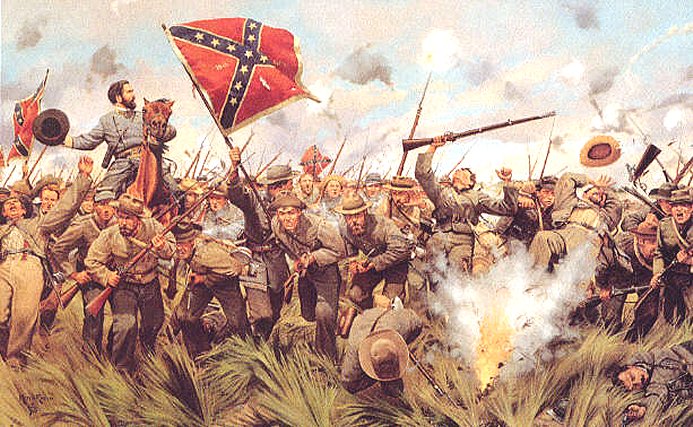
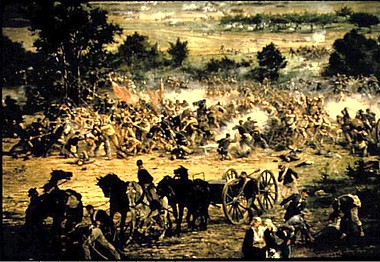
Yesterday was the 148th Anniversary of Pickett’s Charge at the Battle of Gettysburg. There is a spot near the Copse of Trees along Cemetery Ridge which is referred to as the “High Water Mark of the Confederacy.” It is the spot close to where Confederate Brigadier General Lo Armistead fell mortally wounded as the decimated remains of his command were overwhelmed by Union forces shortly after they breached the Union line. It is a place immortalized in history, literature and film. It is the place that marked the beginning of the end for the great evil of slavery in America.

My ancestors lived in Cabell County which in 1861 was part of Virginia. They were slave holders along the Mud River, a tributary of the Ohio River just to the north of what is now Huntington West Virginia. When war came to the country the family patriarch James Dundas and my great, great grandfather joined the 8th Virginia Cavalry Regiment in which he served the bulk of the war as a Lieutenant.  When it ended he refused to sign the loyalty oath to the Union and had his lands, which are now some of the most valuable in that part of West Virginia confiscated and sold by the Federal Government.  He was a believer in the “Lost Cause” that romantic and confused idea about the rightness of the South in its war against what they called “Northern aggression.”

Because he served I am eligible for membership in the Sons of the Confederacy. However it is something that I cannot do.  There are some that do this as a means to honor their relatives that served in the war and I do not make light of their devotion to their family, but there are some that take that devotion to places that I cannot go.  As much as I admire the valor and personal integrity of many military men who served the Confederacy I cannot for a moment think that their “cause” was just.

It has been said that the North won the war but that the South won the history.  I think this is true. Many people now days like to reduce the reasons for the war to the South protecting its rights.  Sometimes the argument is “states rights” or “economic freedom” and those that make these arguments romanticize the valor shown by Confederate soldiers on the battlefield but conveniently ignore or obscure the evil of the Southern economic system. The “rights” and the “economic freedom” were based upon the enslavement and exploitation of the Black man to maintain an archaic economy based on agriculture, particularly the export of King Cotton.  Arguments which try to place the blame on the North, especially arguments that attempt to turn the Northern States into economic predators’ intent on suppressing the economic rights of Southerners only serve to show the bankruptcy of the idea itself. The fact that the “economic and political freedom” of Southerners was founded on the enslavement of a whole race of people matters not because the “cause” is greater.

The fact is that the longer the South relied solely on its agriculture which was supported by the institution of slavery it deprived itself of the means of economic progress, the same progress that propelled the North to prosperity. The south lagged in all industrial areas as well as transportation infrastructure. The majority of non-slave owning whites lived at the poverty line and only enjoyed some elevated social status because the slaves ranked beneath them on the sociological and economic hierarchy.  The South depended on cheap imports from England, which then was still considered an enemy of the country. When tariffs to protect newly establish American industries were enacted in 1828 South Carolina attempted to nullify the Federal law even raising troops and threatened a revolt in 1832.

The Southern economic system was immoral and antiquated. It enslaved blacks and it impoverished most rural Southerners, with the exception of those that owned the land and the slaves. It was a hateful, backward and loathsome system which even the southern churches attempted to justify from Scripture.  Southern Baptists, Methodists and Presbyterians would all break away from their parent denominations regarding slavery.

This does not mean that I think that the average Confederate soldier or officers were dishonorable men. Many officers who had served in the United States Army hated the breakup of the Union but served the South because it was the land that they were from. It was the home of their families and part of who they were.  To judge them as wanting 150 years later when we have almost no connection to family or home in a post industrial world is to impose the standards of a world that they did not know upon them. For those that gave up everything to serve one can feel a measure of sympathy.  So many died and so much of the South was destroyed in the defense of that “cause” one has to wonder just why the political and religious leaders of the South were willing to maintain such an inadequate and evil economic system one that hurt poor Southern whites nearly as much as it did blacks.

The war devastated the South and the radicals that ran “Reconstruction” ensured that Southerners suffered terrible degradation and that Southern blacks would have even more obstacles raised against them by the now very angry and revengeful whites.  It would take another 80-100 years to end segregation and secure voting rights for blacks. Thus I have no desire to become part of an organization that even gives the appearance of supporting the “cause” even if doing so would allow me to “honor” an ancestor who raised his hand against the country that I serve.

I was raised on the West Coast but have lived in the South much of my adult life due to military assignments. I have served in National Guard units that trace their lineage to Confederate regiments in Texas and Virginia. Despite my Confederate connections both familial and by service I can find little of the romance and idealism that some find in the Confederacy and the “Lost Cause.” I see the Civil War for what it was, a tragedy of the highest order brought about by the need of some to enslave others to maintain their economic system.

Today there are many that use the flags of the Confederacy outside of their historic context. They are often used as a symbol of either racial hatred or of defiance to the Federal Government by white Supremacist or anti-government organizations.  Many that use them openly advocate for the overthrow of the Federal Government.  The calls for such “revolt” can be found all over the country even in the halls of Congress much as they were in the 1830s, 40s and 50s. Some of this is based in libertarian economic philosophy which labels the government as the enemy of business, some based social policies which are against their religious beliefs and some sadly to say based in an almost xenophobic racial hatred.  The scary thing as that the divisions in the country are probably as great as or greater than they were in the 1850s as the country lurched inexorably to Civil War with neither side willing to do anything that might lessen their political or economic power even if it means the ruin of the country.

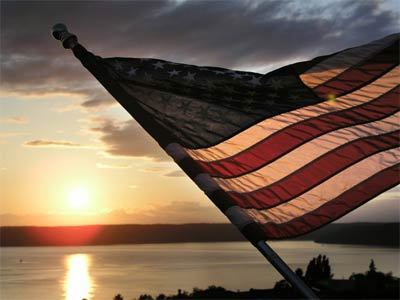
In recent weeks I have seen the symbols of the Confederacy, particularly the Battle Flag displayed in manners that can only be seen as symbols of defiance.  Tomorrow is July 4th and it seems to me that the flag that should be most prominently displayed is not a Confederate banner, nor even the Gadsen flag, a flag from the Revolutionary War which is used as a rallying symbol for many in the Tea Party movement but the Stars and Stripes.  Somehow I find the flag flown in rebellion to the country that I serve displayed in such an arrogant manner

For many of these people it is the Federal Government which is the enemy. Now I know that our system of government has its flaws. Likewise I cannot agree more about the corruption of many in political office, regardless of their political allegiance.  While it is true that the Federal Government has taken upon itself many powers some never envisioned by those that crafted the Constitution, it has done so because leaders of both political parties have consented to it and even worked to strengthen the Federal Government with the consent of the American people that elect them again and again.

Despite this much of this has been accomplished by the Federal Government has been for the good for the country and people no matter what the critics say. Many of the things that we enjoy today are the result of the work of the Federal Government and not business as much as those that deify big corporations want to believe. There are the National Parks, laws against child labor and for safe workplaces brought about by Teddy Roosevelt, the infrastructure built in the 1930s and 1940s by the Franklin Roosevelt administration. The Roosevelt administration also brought about Social Security and banking regulations to protect Americans from corporations and banks that violated the public trust. The Eisenhower administration began the Interstate Highway system which is the backbone of our transportation system.  Likewise the Space Program and yes even the military have led the way in technological, scientific and medical innovation including that thing that we all take for granted today the Internet.

Today quite a few people are calling for revolt or secession if they do not get what they want be it socially, politically or economically. For years politicians on both sides have fought to minimize such talk and enact compromises with the usual discontent that comes with compromise.  Unfortunately many of those compromises have had the effect of widening the political divide much as the various compromises on the road to the Civil War.  Jefferson said of the Missouri Compromise of 1824: “but this momentous question, like a fire bell in the night, awakened and filled me with terror. I considered it at once as the knell of the Union. It is hushed indeed for the moment, but this is a reprieve only, not a final sentence. A geographical line, coinciding with a marked principle, moral and political, once conceived and held up to the angry passions of men, will never be obliterated; and every new irritation will mark it deeper and deeper.”

We have allowed the issues of our time to become a fire of unbridled angry passion where those with almost no historical understanding and whose history is often based on myth stake claims and promote ideas that will destroy this Union if they continue. Unfortunately we have not yet reached the high water mark of this movement yet and I fear like Jefferson that the hatred and division will only grow worse as both radical on the right and left prepare for conflict.

Tomorrow we celebrate the 235th anniversary of our Declaration of Independence.  It is a remarkable occasion. It is the anniversary that free people as well as those oppressed around the world look to as a beacon of liberty. It has been paid for time and time again, especially during that cruel Civil War which killed more American soldiers than any other war that we have fought.

A few months after Gettysburg Abraham Lincoln a man much reviled by those that have romanticized the Cause and who is demonized by many “conservative” politicians and pundits today as a “tyrant” made these brief remarks at the site of the battle:

Four score and seven years ago our fathers brought forth on this continent, a new nation, conceived in Liberty, and dedicated to the proposition that all men are created equal.

Now we are engaged in a great civil war, testing whether that nation, or any nation so conceived and so dedicated, can long endure. We are met on a great battlefield of that war. We have come to dedicate a portion of that field, as a final resting place for those who here gave their lives that that nation might live. It is altogether fitting and proper that we should do this.

But, in a larger sense, we cannot dedicate—we cannot consecrate—we cannot hallow—this ground. The brave men, living and dead, who struggled here, have consecrated it, far above our poor power to add or detract. The world will little note, nor long remember what we say here, but it can never forget what they did here. It is for us the living, rather, to be dedicated here to the unfinished work which they who fought here have thus far so nobly advanced. It is rather for us to be here dedicated to the great task remaining before us—that from these honored dead we take increased devotion to that cause for which they gave the last full measure of devotion—that we here highly resolve that these dead shall not have died in vain—that this nation, under God, shall have a new birth of freedom— and that government of the people, by the people, for the people, shall not perish from the earth.

Today with so many radicals on both the political right and political left doing all that they can to plunge us into yet another civil war we should remember Lincoln’s word and rededicate ourselves to this Union, this remarkable Union.  Tony Blair the former Prime Minster of Great Britain remarked today:

“It may be strange for a former British Prime Minister to offer thoughts on America when the country will be celebrating its independence from Britain. But the circumstances of independence are part of what makes America the great and proud nation it is today. And what gives nobility to the American character.

That nobility isn’t about being nicer, better or more successful than anyone else. It is a feeling about the country. It is a devotion to the American ideal that at a certain point transcends class, race, religion or upbringing. That ideal is about values, freedom, the rule of law, democracy. It is also about the way you achieve: on merit, by your own efforts and hard work.

But it is most of all that in striving for and protecting that ideal, you as an individual take second place to the interests of the nation as a whole. This is what makes the country determined to overcome its challenges. It is what makes its soldiers give their lives in sacrifice. It is what brings every variety of American, from the lowest to the highest, to their feet when “The Star-Spangled Banner” is played.

Of course the ideal is not always met – that is obvious. But it is always striven for.

The next years will test the American character. The world is changing. New powers are emerging. But America should have confidence. This changing world does not diminish the need for that American ideal. It only reaffirms it.”

I think that the Prime Minister got it right.

Peace

Padre Steve+
3 Comments

Filed under History, philosophy, Political Commentary, Religion

The Unfinished Work of Memorial Day

“It is for us the living, rather, to be dedicated here to the unfinished work which they who fought here have thus far so nobly advanced…” Abraham Lincoln, from the Gettysburg Address

“Heroism is latent in every human soul – However humble or unknown, they (the veterans) have renounced what are accounted pleasures and cheerfully undertaken all the self-denials – privations, toils, dangers, sufferings, sicknesses, mutilations, life-” Major General Joshua Lawrence Chamberlain

Sometimes it is best to remember that people that lived long before us have profound things to say about subjects that we often address in rather cheap and banal ways.  It is easy to do this; in fact many people, especially ideologues and pundits simply quote the great men and women of history simply to buttress what they want to say in much the same manner that preachers from all sides of the theological spectrum will comb the Bible or the Church Fathers to find support for often decidedly un-Christian ideas.  Of course unscrupulous preachers of other religions do the same with their sacred texts so it tends be a universal problem.

Of course we should know better than to do this but all of us do it to one degree or another.  Even worse are those that will misquote people either to bolster their arguments or to tear down the person that they quote.  It should not be that way on Memorial Day. The sacrifices of those that gave “the last full measure” in defense of their homeland, principles and those that they loved are too great to trivialize by using the sacrifices of the fallen to promote themselves as they prepare to launch political campaigns as was recently done by a prominent politician at an annual event which honors veterans in Washington DC.

I think that Abraham Lincoln eulogized the fallen better than almost anyone in the history of our nation when he traveled to Gettysburg and gave a refreshingly short speech for a politician.  Lincoln considered the speech a failure but history shows it to be one of the most remarkable ever made by any American public figure.

“Four score and seven years ago our fathers brought forth on this continent, a new nation, conceived in Liberty, and dedicated to the proposition that all men are created equal.

Now we are engaged in a great civil war, testing whether that nation, or any nation so conceived and so dedicated, can long endure. We are met on a great battlefield of that war. We have come to dedicate a portion of that field, as a final resting place for those who here gave their lives that that nation might live. It is altogether fitting and proper that we should do this.

But, in a larger sense, we cannot dedicate—we cannot consecrate—we cannot hallow—this ground. The brave men, living and dead, who struggled here, have consecrated it, far above our poor power to add or detract. The world will little note, nor long remember what we say here, but it can never forget what they did here. It is for us the living, rather, to be dedicated here to the unfinished work which they who fought here have thus far so nobly advanced. It is rather for us to be here dedicated to the great task remaining before us—that from these honored dead we take increased devotion to that cause for which they gave the last full measure of devotion—that we here highly resolve that these dead shall not have died in vain—that this nation, under God, shall have a new birth of freedom— and that government of the people, by the people, for the people, shall not perish from the earth.”

Supreme Court Justice Oliver Wendell Holmes gave a speech in 1884 twenty years after his service in the 20th Massachusetts Regiment in the Civil War. A veteran of Antietam and other major engagements he made these remarks in a speech so powerful that it was a key factor in Theodore Roosevelt’s decision to nominate him for the Court.

“Every year–in the full tide of spring, at the height of the symphony of flowers and love and life–there comes a pause, and through the silence we hear the lonely pipe of death. Year after year lovers wandering under the apple trees and through the clover and deep grass are surprised with sudden tears as they see black veiled figures stealing through the morning to a soldier’s grave. Year after year the comrades of the dead follow, with public honor, procession and commemorative flags and funeral march–honor and grief from us who stand almost alone, and have seen the best and noblest of our generation pass away…

But grief is not the end of all. I seem to hear the funeral march become a paean. I see beyond the forest the moving banners of a hidden column. Our dead brothers still live for us, and bid us think of life, not death–of life to which in their youth they lent the passion and joy of the spring. As I listen, the great chorus of life and joy begins again, and amid the awful orchestra of seen and unseen powers and destinies of good and evil our trumpets sound once more a note of daring, hope, and will.”   

In his inaugural address President John F. Kennedy a combat veteran of the Solomons Campaign provided a message which though not directly related to Memorial Day certain echoed the themes of the sacrifices of our fallen but also call us to the highest ideals of our nation. As a Naval Officer in command of PT 109 his boat was rammed and sunk by a Japanese destroyer after which his leadership and courage was a deciding factor in the survival of most of his crew. Kennedy was a child of privilege but he volunteered for the arduous duty of service on the tiny PT Boats.  The speech is considered one of the premier speeches by an American President.

“In your hands, my fellow citizens, more than mine, will rest the final success or failure of our course. Since this country was founded, each generation of Americans has been summoned to give testimony to its national loyalty. The graves of young Americans who answered the call to service surround the globe.

Now the trumpet summons us again — not as a call to bear arms, though arms we need — not as a call to battle, though embattled we are — but a call to bear the burden of a long twilight struggle, year in and year out, “rejoicing in hope; patient in tribulation,”² a struggle against the common enemies of man: tyranny, poverty, disease, and war itself….

In the long history of the world, only a few generations have been granted the role of defending freedom in its hour of maximum danger. I do not shrink from this responsibility — I welcome it. I do not believe that any of us would exchange places with any other people or any other generation. The energy, the faith, the devotion which we bring to this endeavor will light our country and all who serve it. And the glow from that fire can truly light the world.

And so, my fellow Americans, ask not what your country can do for you; ask what you can do for your country.

My fellow citizens of the world, ask not what America will do for you, but what together we can do for the freedom of man.

Finally, whether you are citizens of America or citizens of the world, ask of us here the same high standards of strength and sacrifice which we ask of you. With a good conscience our only sure reward, with history the final judge of our deeds, let us go forth to lead the land we love, asking His blessing and His help, but knowing that here on earth God’s work must truly be our own.”   

In 1984 President Ronald Reagan visited Omaha Beach in Normandy, the site of the bloodiest of the D-Day landings on June 6th 1944.  Reagan was a master of rhetoric and understood the importance of his visit to this hallowed site at the apex of the Cold War.  At that time it was unimaginable to most people that the Soviet Union would be no more barely 5 years hence and Reagan used the speech to link the sacrifices of those who fought and died at Normandy to those that served in his day. While his focus was on the sacrifice of America and its British, Canadian and French allies that landed on the beaches of Normandy he recognized the sacrifices of the Soviet Union which lost 20 million soldiers and civilians in the war against the Nazis. Reagan said of those who went ashore in Normandy:

“The men of Normandy had faith that what they were doing was right, faith that they fought for all humanity, faith that a just God would grant them mercy on this beachhead or on the next. It was the deep knowledge — and pray God we have not lost it — that there is a profound, moral difference between the use of force for liberation and the use of force for conquest. You were here to liberate, not to conquer, and so you and those others did not doubt your cause. And you were right not to doubt.

You all knew that some things are worth dying for. One’s country is worth dying for, and democracy is worth dying for, because it’s the most deeply honorable form of government ever devised by man. All of you loved liberty. All of you were willing to fight tyranny, and you knew the people of your countries were behind you….The men of Normandy had faith that what they were doing was right, faith that they fought for all humanity, faith that a just God would grant them mercy on this beachhead or on the next. It was the deep knowledge — and pray God we have not lost it — that there is a profound, moral difference between the use of force for liberation and the use of force for conquest. You were here to liberate, not to conquer, and so you and those others did not doubt your cause. And you were right not to doubt.

You all knew that some things are worth dying for. One’s country is worth dying for, and democracy is worth dying for, because it’s the most deeply honorable form of government ever devised by man. All of you loved liberty. All of you were willing to fight tyranny, and you knew the people of your countries were behind you.”   

Today President Barak Obama made these remarks to conclude his speech following the solemn duty that all Presidents have in laying a wreath at the Tomb of the Unknowns at Arlington National Cemetery.  Obama who is vilified by his most extreme opponents, as was Reagan for that matter ended his speech with these comments in which he eloquently expressed what the nation must do for its military, veterans and those killed in action or missing as well as the highest example of the brotherhood that those of us who have served in harm’s way feel for our fellow Soldiers, Marines, Sailors, Airmen and Coast Guardsmen:

“Our nation owes a debt to its fallen heroes that we can never fully repay. But we can honor their sacrifice, and we must. We must honor it in our own lives by holding their memories close to our hearts, and heeding the example they set. And we must honor it as a nation by keeping our sacred trust with all who wear America’s uniform, and the families who love them; by never giving up the search for those who’ve gone missing under our country’s flag or are held as prisoners of war; by serving our patriots as well as they serve us — from the moment they enter the military, to the moment they leave it, to the moment they are laid to rest.

That is how we can honor the sacrifice of those we’ve lost. That is our obligation to America’s guardians — guardians like Travis Manion. The son of a Marine, Travis aspired to follow in his father’s footsteps and was accepted by the USS [sic] Naval Academy. His roommate at the Academy was Brendan Looney, a star athlete and born leader from a military family, just like Travis. The two quickly became best friends — like brothers, Brendan said.

After graduation, they deployed — Travis to Iraq, and Brendan to Korea. On April 29, 2007, while fighting to rescue his fellow Marines from danger, Travis was killed by a sniper. Brendan did what he had to do — he kept going. He poured himself into his SEAL training, and dedicated it to the friend that he missed. He married the woman he loved. And, his tour in Korea behind him, he deployed to Afghanistan. On September 21st of last year, Brendan gave his own life, along with eight others, in a helicopter crash.

Heartbroken, yet filled with pride, the Manions and the Looneys knew only one way to honor their sons’ friendship — they moved Travis from his cemetery in Pennsylvania and buried them side by side here at Arlington. “Warriors for freedom,” reads the epitaph written by Travis’s father, “brothers forever.”

The friendship between 1st Lieutenant Travis Manion and Lieutenant Brendan Looney reflects the meaning of Memorial Day. Brotherhood. Sacrifice. Love of country. And it is my fervent prayer that we may honor the memory of the fallen by living out those ideals every day of our lives, in the military and beyond. May God bless the souls of the venerable warriors we’ve lost, and the country for which they died.”

Sometimes our fallen are eulogized by the less notable and sometimes oft vilified people. One of these men was Robert Ingersoll, a politician, orator and lecturer as well as an agnostic in a time when that was not a popular belief.  Ingersoll was the son of a Congregationalist minister who often preached for revivalist Charles Finney.  Ingersoll was also a veteran of the Civil War where he raised and commanded the 11th Illinois Cavalry Regiment which fought at Shiloh.  remarked:

“These heroes are dead. They died for liberty – they died for us. They are at rest. They sleep in the land they made free, under the flag they rendered stainless, under the solemn pines, the sad hemlocks, the tearful willows, and the embracing vines. They sleep beneath the shadows of the clouds, careless alike of sunshine or of storm, each in the windowless Place of Rest. Earth may run red with other wars – they are at peace. In the midst of battle, in the roar of conflict, they found the serenity of death. I have one sentiment for soldiers living and dead: cheers for the living; tears for the dead.”  

As we conclude this Memorial Day weekend let us remember those who have given the last full measure of duty for our nation, those who have served those that continue to serve and the friends and loved ones who cherish the lives and memories of each one.  Let us remember as a nation, as fellow citizens and never let our own agendas, ambitions or even our baser instincts sully their memory. May we choose the higher calling of service to our country and each other as Americans, the ideals of which are woven in the lives and sacrifices of those that we honor today and as Lincoln said to finish “the great task remaining before us—that from these honored dead we take increased devotion to that cause for which they gave the last full measure of devotion—that we here highly resolve that these dead shall not have died in vain—that this nation, under God, shall have a new birth of freedom— and that government of the people, by the people, for the people, shall not perish from the earth.”

Peace

Padre Steve+

2 Comments

Filed under faith, History, Military, Political Commentary

No I will Not Grow Up: Some thoughts on my 51st Birthday

“It takes a long time to grow young.” Pablo Picasso

“I want to thank you for making this day necessary” Yogi Berra

Today is yet another anniversary of being forcibly evicted from my mother’s womb where I had taken a three week extension on my nine month lease. Ever since that time I have not acted my age….well maybe that’s not quite correct.  I think it is better said that I am aware of my age and pretend to act my age when the occasion requires that I do but deep inside I am still an incorrigible adolescent.  My brother who is six years my junior was 40 years old by the time that he turned eight.  He was always the serious one and when Judy and I took him on a toilet paper raid during my junior year in college he was scandalized.  Now that we adults he is still the serious one, I only get serious when I write about a serious subject or I’m in trouble.

Now when I was young in body as well as spirit I always was amazed and saddened to see people grow old. I don’t mean growing old in body because no one can get around that, but I mean growing old in spirit and losing their youth and joy in life.  It was sad for me to see people who really were not that old dressing and acting like they were older than their years. It made me want to never grow up, I didn’t want to be that way and as the people that know me can attest I am yet to grow up.  I still find the humor and irony in so many things and have to keep my humor in check sometimes in things like Board of Directors meetings and stuff like that; I do have a sense of decorum as misplaced as it often is.

I remember my paternal grandmother, “Granny” who when I was 5 years old and she was not much older than I am now was talking about how it wouldn’t be long until she was dead and gone. When she was 85 I pissed her off to ask if she was moving when she said it one too many times.  I think I got a call from my mom and dad about that one because Granny really got pissed.  I had an algebra teacher in junior high school named Mr. Nichley.  He looked really old then and dressed it and acted it. That was in 1974.  He just died a couple years back and was in his mid 80s, which meant that he was just in his 40s back then, he was a man too old before his time.  I saw so many people who lived their lives in that way that I rebelled against the thought of it.

Since I was born back in 1960 I can say that I was part of the 60s and that my views on life do not always square with my rather serious friends.  I really think that a lot of our political and ideological divisions in this country are because far too many people take everything too seriously. I know that we have a lot of serious issues that need serious answers but we have lost any sense of humor, levity and irony to face them well. Sometimes when I am around a lot of overly serious people I hear James Earl Jones telling Kevin Costner in Field of Dreams “Out! Back to the sixties! Back! There’s no place for you here in the future! Get back while you still can!”

We’ll I can’t go back to the 60’s but I can stay young.  I have resumed collecting baseball cards, still occasionally build model ships, tanks and aircraft, and try to stay active and I hope I can get on our hospital’s baseball team, if not this year maybe next. I do not own a suit. I have a few sports jackets (why they call them that I’ll never know because I have yet to see anyone playing baseball or football in one) and a few pairs of nice pants to go with my clerical shirts but only wear them when the occasion absolutely demands. For years Judy has tried and failed to get me to dress more upscale but I’d rather wear my wide array of baseball jerseys, fleeces and warm up jackets.  I try not to wear long pants after baseball season begins and until after the final game of the World Series unless absolutely necessary.  I always dreamed of being in the military as a kid and I am still in the military coming up on 29 years of total service despite being about as serious as Hawkeye Pierce and studious as Von Molkte the Elder. As Will Rogers said “Do the best you can, and don’t take life too serious.”

Tommy Lasorda said “I love doubleheaders. That way I get to keep my uniform on longer” well I have gotten to keep my uniform on a lot longer than most of the people that I have served with and still enjoy staying in the game. Life is good even when its not.

For me learning is part of staying young, I think that when we stop learning we start dying. This means that I will probably take up another advanced academic degree, not so much to increase my job opportunities after the Navy but because it keeps me young and engaged. The other part of remaining you is to know, love and believe in what you are doing in life.  In fact Will Rogers said that such was the secret of success. I think that so many people lose their joy because they have forgotten that little truth and that is another reason why we are in such a mess.

I try to stay fit and my doctors tell me that my blood pressure, cholesterol and other important measurements of health are those of people a lot younger than me.  My blood pressure is consistently about 105 over 70, not bad at all.

Finally I really believe that part of staying young is to live life to the fullest because we don’t know when we will breathe our last breath. Life is too short not to live it fully and at the tender age of 51 I want to get every bit out of life that I can in all aspects of life to include my faith as Francis of Assisi said “It is not fitting, when one is in God’s service, to have a gloomy face or a chilling look.”  After all who can stand to be around gloomy, judgmental and overly serious Christians or for that matter those kinds of people in any religion?  In my chosen vocation of being a Priest and Navy Chaplain I decided to be true to who I am long ago. I won’t be something that I am not. When I was on the USS Hue City one of my sailors, Tommy Byrne nicknamed me “the Anti-Chaps” simply because I did not fit the mold of what most people expected, I think it was when I bought him and some of our shipmates a couple of pitchers of beer at a bar when on liberty.

Life is to be lived and Abe Lincoln said it so well put it “the end, it’s not the years in your life that count. It’s the life in your years.”

I am grateful for my life and am blessed that neither Judy nor my little dog Molly look or act their ages either. I have many friends and today have been so blessed to hear from so many of them through the medium of Facebook.

I want to thank you all of my friends for being a part of my life. May you and your live long and prosper.

Peace and Blessings

Padre Steve+

6 Comments

Filed under christian life, faith, Loose thoughts and musings, philosophy, purely humorous

A Meditation for the First Sunday of Lent: Be Anxious for Nothing

“Deliver us, Lord, from every evil, and grant us peace in our day. In your mercy keep us free from sin and protect us from all anxiety as we wait in joyful hope for the coming of our Savior, Jesus Christ” From the Mass

It seems that no matter where we turn today that there is a sense of terrible foreboding as events at home and around the world create a great sense of anxiety.  Of course people in every time have gone through such times and Abraham Lincoln once remarked “We live in the midst of alarms; anxiety beclouds the future; we expect some new disaster with each newspaper we read.” Of course in our media age we are reminded by the late journalist Eric Sevareid of a truth about America “The biggest big business in America is not steel, automobiles, or television. It is the manufacture, refinement and distribution of anxiety.” Since Sevareid died before the onslaught of our information overload age which is driven by insatiable need to have information now and is fed by our media conglomerates as well as individuals empowered by technology that puts raw information at their fingertips which is then spread by the same individuals that thrive on creating more anxiety.

I have to admit that with the cacophony of bad news which has enveloped us in the past number of years which seems to have increased in intensity over the past few months and days that people are anxious about tomorrow.  I can feel this anxiety in many of those around me and at times myself. It is easy to feel this way.  Since Iraq I feel anxiety much more than I once did and I have to fight it in order not to cycle down into depression or outright fear. Such is life with PTSD.

We have been bombarded by terrible news in Japan, a building tragedy in Libya as Muammar Gaddafi takes revenge on those that dared to challenge his rule, distressing economic news, paralysis in all levels of government and a rising hatred of each other by the political right and left in the United States.

This has the feel of the 1920s and 1930s as world economic crises, a massive earthquake in Japan, and the collapse of existing orders and great political division and radicalism. Of course that era included so many events similar to our times and those events coalesced in the rise of dictatorships and finally in a World War. While events do not need to play out in that way it just appears that they might, if not in a World War a series of devastating regional wars.

We live in a world where we are confronted by evil men who through force and violence commit atrocities against others while others impoverish nations while enriching themselves bringing untold suffering on many, a world where men and women who allegedly speak for God commit acts against God’s people that would make the inquisitors tremble.

Yet it is in this world that Christians are told not to be anxious. As Jesus so aptly put it “can any of you by worrying add a single hour to your span of life?” In our present time many are very worried about their material security and their possessions. In a materialistic age where the economy has been battered and seems to be teetering on the brink we find that the material and financial security that we have built for ourselves is fleeting. Dietrich Bonhoeffer who lived in similar times noted “Earthly possessions dazzle our eyes and delude us into thinking that they can provide security and freedom from anxiety. Yet all the time they are the very source of anxiety.”

In Lent we are reminded of our mortality but also God’s love, grace and mercy. In fact we are reminded that we are “a new creation” and have been “set free from the law of sin and death.” We are reminded that God also cares about the world which “in hope that the creation itself will be set free from its bondage to decay and will obtain the freedom of the glory of the children of God.” Bonhoeffer put this love for God of his people and creation well:

“God loves human beings. God loves the world. Not an ideal human, but human beings as they are; not an ideal world, but the real world. What we find repulsive in their opposition to God, what we shrink back from with pain and hostility, namely, real human beings, the real world, this is for God the ground of unfathomable love.”

During the seven weeks of Lent I am trying to focus more on being less anxious in order that I can be free of worry and maintain a clear and present hope for today and the future even as the cacophony of chaos builds around the world. I hope that during this Lent I will understand this prayer of the Apostle Paul for the Church at Philippi:

“Do not worry about anything, but in everything by prayer and supplication with thanksgiving let your requests be made known to God.  And the peace of God, which surpasses all understanding, will guard your hearts and your minds in Christ Jesus.” (Phil 4:6-7 NRSV)

Peace

Padre Steve+


4 Comments

Filed under christian life, film, Pastoral Care, philosophy, Religion

A Tangled Web of Friends

“I will speak ill of no man, and speak all the good I know of everybody.”
– Benjamin Franklin

“Grief can take care of itself, but to get the full value of a joy you must have somebody to divide it with.”
~ Mark Twain

Fear makes strangers of people who would be friends.
-Shirley MacLaine

We are not enemies, but friends.  We must not be enemies.  Though passion may have strained, it must not break our bonds of affection.  The mystic cords of memory will swell when again touched as surely they will be by the better angels of our nature.  ~Abraham Lincoln

It is interesting when you have traveled a fair amount and lived in quite a few places you get to know a lot of people from across the social, political, racial and religious spectrum.  In fact my friends are among the most diverse collection of people that anyone that I know.  I was looking on my Facebook.com page recently after a post and noted the diversity of my friends. What was interesting was that they often are very passionate about their particular point of view be it religious, social or political.  After a recent post I realized that in some cases it would not be a good thing to have some of them in the same room as each other as there might be bloodshed.

“To know someone here or there
with whom you can feel
there is understanding
in spite of distances or
thoughts expressed
That can make life a garden.”
~ Goethe

Friendship… is not something you learn in school.But if you haven’t learned the meaning of friendship, you really haven’t learned anything.
Muhammad Ali

One doesn’t know, till one is a bit at odds with the world, how much one’s friends who believe in one rather generously, mean to one.  ~D.H. Lawrence

The interesting thing is that somehow the lives of this very diverse group of friends somehow intersect mine.  I guess that is part of the life of a moderate.  Now I’m sure in their hearts that some on the Left think that I’m a fundamentalist right fascist with militarist tendencies who is too concerned with the concerns of those on the political right, to which I will admit the militarist tendencies. Some on the right think that I am a leftist, agnostic socialist with militarist tendencies who is far too concerned with the concerns of those on the political left, to which I will admit my militaristic tendencies. However in the case of all my absolute concern with the rights of people on all sides of the political, social and religious spectrum that is the United States of America overrides about everything. While I may have strong opinions on various issues or may not have an opinion whatsoever depending on the issue I do not believe that political, religious or social views should keep me from being friends with anyone. There are some who will disagree with that and a decent number of people that have ended relationships with me over issues that I think are extraneous to friendship but what the hell these is no accounting for taste.  At the same time I have been an ass at times and blown away relationships that should have been cultivated, but there is no accounting for my bad form.

Am I not destroying my enemies when I make friends of them?”
~ Abraham Lincoln

I don’t need a friend who changes when I change and who nods when I nod; my shadow does that much better.
-Plutarch

A true friend is one who thinks you are a good egg even if you are half-cracked. ~Author Unknown

Despite all of this somehow I stand in the intersection of all of these wonderful people who are my friends going back to childhood.   I guess one thing I’ve learned, often the hard way, is that you can have friendships and care about people even when you have disagreements with them, even serious disagreements because respect and love are more important than necessarily having to agree.  Thus in an era of polarization I believe that as Americans that we need to find ways to get along.  Thus when those on the left suggested leaving the country or persuading the military to lead a coup when George Bush was President and those on the right who advocate the same about President Obama I wonder what the hell they all are thinking.  Now I know that many of my friends are extremely passionate about what they believe regardless of the viewpoint and that those views are very important to them I know that somehow we must find a way to as Rodney King once said “to get along.”  Maybe it is my inner Anglican speaking but somehow I think that we need to find an American Via Media or middle way.

“There is no hope of joy except in human relations.”
~ Antoine de Sainte-Exupery

In everyone’s life, at some time, our inner fire goes out. It is then burst into flame by an encounter with another human being. We should all be thankful for those people who rekindle the inner spirit.
Albert Schweitzer

Friendship is unnecessary, like philosophy, like art…. It has no survival value; rather it is one of those things that give value to survival ~C.S. Lewis

My friends include political conservatives and liberals, Republicans, Democrats, Libertarians and Independents.  They include Christians from across the spectrum, Catholic and Protestant, Orthodox and Evangelical, Social Gospel and Fundamental, Charismatic and anti-Charismatic, Latter Day Saints, Seventh Day Adventists, Oneness Pentecostals, Particular Baptists, Calvinists, Wesleyans, Premillenial Dispensationalists and Amillenialists.  Likewise they include Jews, Moslems, Buddhists, Hindus, Pagans and Wiccans and I think even a few believers in the Klingon God Kahless. Also represented are heterosexuals and homosexuals, anti-homosexual activist and pro-homosexual activists, pro-lifers and pro-choicers, militarists and pacifists, capitalists, socialists, environmentalists, industrialists; progressives, traditionalists, white, black, Asian and Hispanic, people from Europe, Africa, the Middle East, Korea, Japan and China, India, and Central America, Mississippi and Manhattan, California and Carolina, Dallas and Detroit.   Doctors, lawyers, priests, rabbis and imams; Protestant ministers, labor leaders, teachers, preachers, pundits, poets, politicians, professors and prosecutors; nurses, doctors, scientists; actors, musicians and artists; bureaucrats, technocrats, kleptocrats; geeks, freaks, sailors, jailers, whalers, runners, gunners, fighters, riders, sky divers, scuba divers, truck drivers; guitar players, ball players, naysayers; free thinkers, beer drinkers,  thrill seekers and Methodists.  I have to admit that I stole the Methodist line from Harvey Korman in Blazing Saddles.

“There is nothing worth the wear of winning, but laughter and the love of friends.”
~ Hillaire Belloc

It is one of the blessings of old friends that you can afford to be stupid with them.
Ralph Waldo Emerson

There is nothing on this earth more to be prized than true friendship.
Saint Thomas Aquinas

In all of this, each one of this diverse  including you all in your own way are my friend, some closer than others, but friends none the less. We have shared good times and bad, encouraged each other prayed for each other, laughed together, cried together and even shared some good beer with each other.   We’ve agreed and disagreed, and agreed to disagree.  Yet we are all friends and each of you has added something to my life.  I think Jesus said it well, when he said, “I no longer call you strangers but friends.”

Peace

Padre Steve+

Leave a comment

Filed under philosophy

The American Civil War and the Origins of Modern Warfare

Hagerman, Edward. The American Civil War and the Origins of Modern Warfare. Midland Book Editions, Indiana University Press. Bloomington IN. 1992

Pickett’s Charge Displayed the Futility of Napoleonic Tactics Against Modern Weaponry

Edward Hagerman postulates in The American Civil War and the Origins of Modern Warfare that the American Civil War is the first modern war. He examines developments in tactics, logistics and the concept of total war and looks specifically how tactical and strategic thought impacted the war.  Specifically Hagerman examines how Henri Jomini’s interpretation of Napoleonic warfare and the theories of Dennis Hart Mahan and Henry Halleck which were the prevalent military thought in America were challenged by advances in weaponry and the vastness of the American continent.  He surveys how the Union and Confederate armies learned the value and application of field fortifications and the limitations of artillery in the offense.  Even more importantly Hagerman argues how logistics influenced campaigning on the American continent as opposed to earlier European wars. Likewise he examines how the 20th Century concept of total war found its first application in the campaigns of General Sherman and how Robert E. Lee’s use of defensive maneuver and fortifications in positional warfare heralded a new era in warfare.

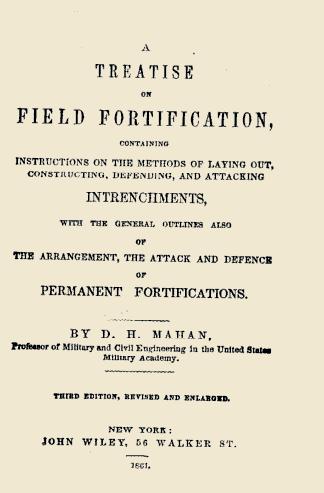
Dennis Hart Mahan’s Book: The First American Book on Military Theory

Hagerman examines how these factors influence and affected the Union and Confederate armies.  His initial focus is the tactical conundrum posed by the advances weaponry particularly the rifled musket to the Napoleonic tactics that both armies began the war. Napoleonic tactics were developed at a time when the maximum effective range of muskets was barely 100 meters and how despite the increase in range and accuracy that came with the rifled musket how tactical formations and tactics were slow to change.

Hagerman spends the first part of his book examining how the ante-bellum US Army leadership was influenced by the theories of Henri Jomini. He discusses the challenge to Jominian orthodoxy by Dennis Hart Mahan, who modified “the current orthodoxy by rejecting its central tenants-primarily offensive assault tactics.”[i] He examines the tension in American military thought between the conservative Jominian thinking which predominated much of the Army, noting that within the army “Mahan’s decrees failed to win universal applause.”[ii] However, Mahan influenced many future leaders of both the Union and Confederate armies in his “Napoleon Club” a military round table at West Point.[iii] Hagerman notes that Mahan’s greatest contributions were his development of the active defense and emphasis on victory through maneuver. Unlike Jomini, who thought maneuver as risky with the purpose of the “defeat of the enemy’s army,” Mahan emphasized “maneuver to occupy the enemy’s territory or strategic points.”[iv] In the book Hagerman wrestles with disjointed developments in infantry, artillery and cavalry tactics of the ante-bellum Army which and surmises that “Military thinking, and even more strategic organization, remained essentially within the Napoleonic tradition filtered through an eighteenth-century world view….” He asserts that “A broader vision was necessary to pose an alternative to the mechanistic program.”[v]

The 2nd Michigan Regiment: Most Civil War Units on both sides were State Regiments

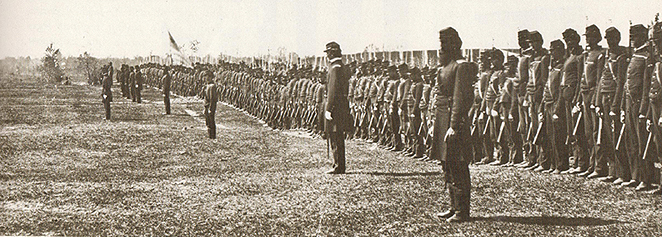
Hagerman then discusses wartime developments in strategy, tactics and organization as they developed in both the Eastern and Western theaters.  He focuses on the themes of organization, logistics, communications, weaponry, field fortifications and maneuver. In each chapter he weaves these themes to show how they affected campaigns or were modified during the war based on experience.  He deals with leadership, but mostly in the context of how leaders responded to challenges posed in these arenas.  Of particular interest to him are the early efforts of successive commanders of the Army of the Potomac including McClellan, Burnside and Hooker to deal with these problems as well as the responses of Grant, Sherman and Rosecrans in the West to the same issues.

Hagerman’s discussion of army organization focuses on how each army developed sociologically as well as professionally prior to and during the war. He examines the ways that commanders educated at West Point initially dealt with large armies made up of militia units and volunteers and how these armies would be changed by the war.  He includes in the discussion i the institution of the draft in both the North and South.  His discussion of how McClellan successful fought the break-up of the Regular Army keeping it separate from the militia units organized by the States was important to development of the Army. He notes their importance and points out the problems of the militia units raised by the various states particularly in the early part of the war.

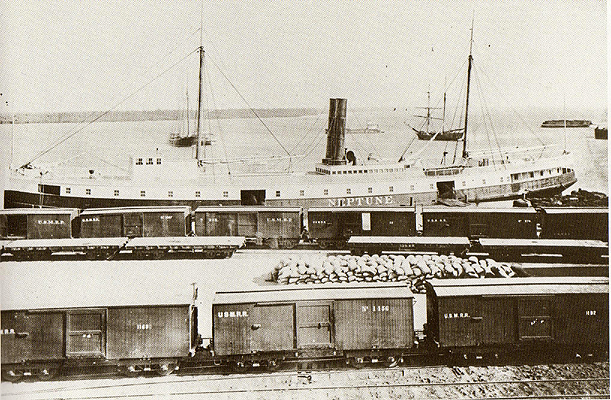
The Integration of Sea and Land Logistics Systems in the Civil War Revolutionized the Way that Modern War is Supplied

More significant to Hagerman’s narrative is his emphasis on logistics, and how each Army responded to the challenges of supplying their armies in the field.  Hagerman examines how the ante-bellum Army developed its logistic doctrine from the Napoleonic examples and how that doctrine had to be modified in light of the American reality of a less developed continent with far greater distances involved.

Hagerman’s discussion of logistics is quite detailed.  He examines topics such as the number of wagons per regiment and how army commanders, modified that number at various points during the war based on their situation. He discusses the development of the “flying column” as a response to the dependency on wagons and basic load of food and ammunition carried by each soldier in order to increase strategic maneuverability.  He details the forage requirements for people and animals in each theater of operations and how each army responded to requirement of living off the land for much of their forage requirements and their relative successes and failures in supplying their soldiers in this fashion.

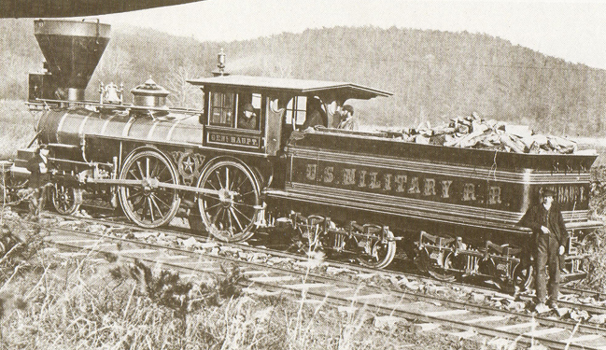
Railways Meant the Ability to Move Troops and Supplies Great Distances very Quickly

Hagenman discusses the use of railroads and the use of naval forces to both assist the ground forces and to move supplies and troops.  In each of these areas he provides a detailed examination of the effect of logistical considerations on each army.  He notes that of all the areas of development that the Army of the Potomac was successful at putting logistic theory into practice. By late 1863 the Army of the Potomac demonstrated “the close integration of operational planning and that of the general in chief and supply bureaus. In this one area, the development of a mature and modern staff was evident.”[vi]

Hagerman’s discussion of the development of communications in both armies focuses on the fact that the size of the armies and the distances involved on the battlefield made command and control difficult.  As such each army experimented with signals organizations that used tradition visual signals and couriers but began to rely on the telegraph for rapid communications.  He deals with the conflict in the North between the Signal Corps and the Military Telegraph Service.  He discusses the use of wire telegraph equipment and the new Beardslee wireless telegraphs by the Signal Corps and how the Army eventually favored the traditional wire bound networks operated by the Military Telegraph.  Though the Army rejected the Beardslee equipment some commanders requested it for their operations.[vii] As they became more dependent on such communications armies feared that their signals could be compromised through wire tapping and made efforts to encode transmissions.

Signal Corps Soldiers and Wire Communications

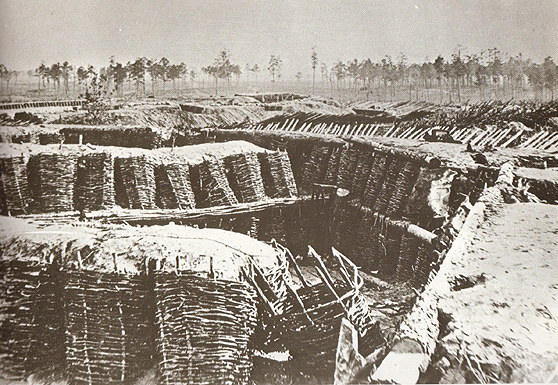
Hagerman’s discusses the evolution of the Union and Confederate armies use of field fortifications including their use in offensive campaigns.  He discusses their use by McClellan on the Peninsula in 1861 and Lee’s sporadic use of them[viii] until 1864 beginning in the Wilderness campaign and culminating in the defense and siege of Petersburg.  Hagerman’s thesis is that the developments in field works and firepower gave the advantage to the defense when armies made the frontal attacks which were at the heart of Jominian theory.  He notes how various commanders including Grant failed at Shiloh and Lee at Antietam failed to dig in, but how both the Union and Confederate armies learned to dig hasty field works as a matter of course.[ix]

Both sides also learned to use maneuver in combination with positional warfare to force the enemy to battle. Hagerman examines the campaigns in the West of Grant, Sherman and Rosecrans, particularly Stone’s River, the Vicksburg Campaign, and the campaign in middle Tennessee.[x] The last two chapters mention these issues in the context of the 1864-65 campaign around Richmond and Sherman’s campaigns in Georgia and the Carolinas.  Of particular note is how Sherman’s forces routinely entrenched on the offensive[xi] and how Confederate forces under Joseph Johnston employed entrenchments on the defensive. Hagerman notes how Confederate Cavalry “perhaps best displayed the growing intensity of trench warfare” noting General Joe Wheeler’s use of them at the close of the war.[xii]

Massive Siege Mortar outside Petersburg

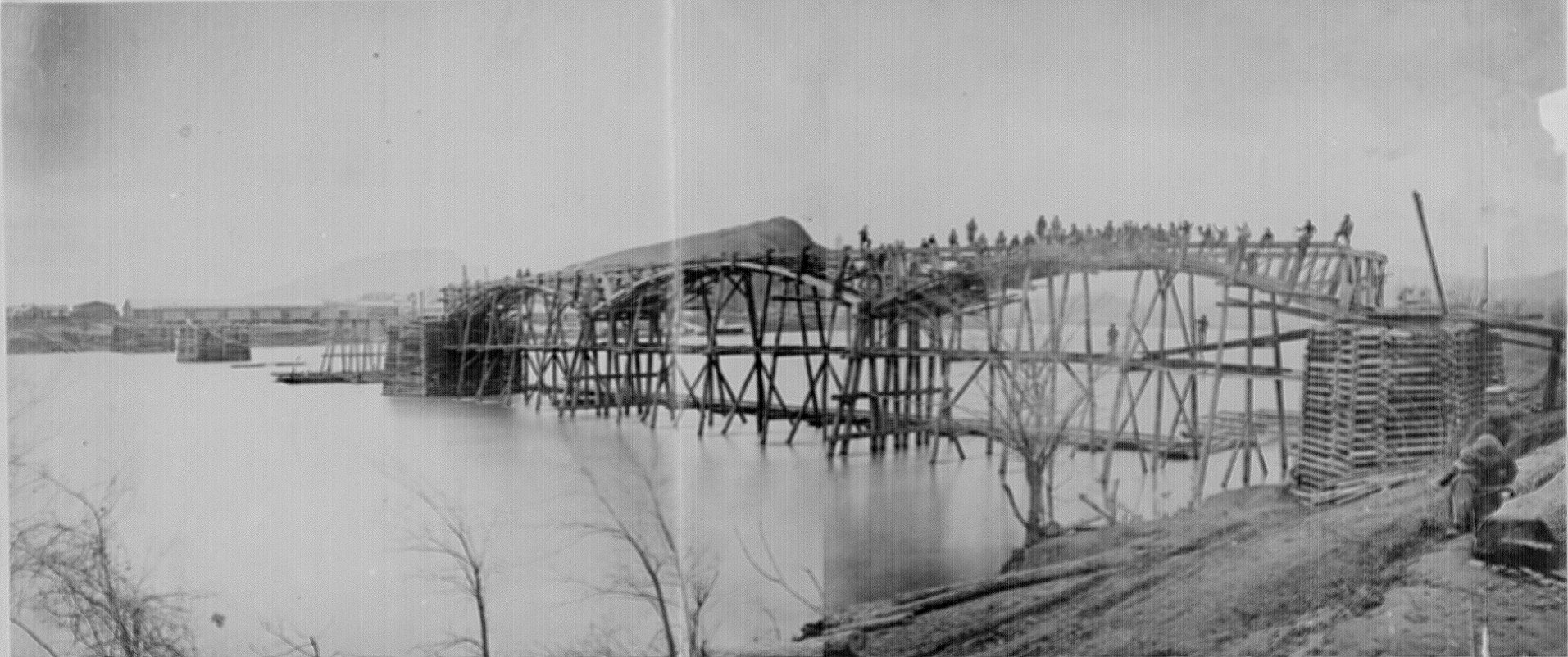
A sidebar to Hagerman’s discussion of fortification is his examination of the Corps of Engineers.  He discusses the development of Engineering or Pioneer units from nothing in 1861 to organized units by the middle of the war.  He examines the problems of the Engineering Corps in adjusting to the war. He notes its dispersion among the line and its civil duties as impediments to responding to the needs of war and both the hesitancy and resistance to creating engineering units by Congress, despite the pleas of McClellan and Lincoln.[xiii] He then looks at the institutional irony of the how newly organized engineer units had few West Point trained Corps of Engineers officers, but were primarily staffed and commanded by officers detailed from the line. The effect was a “decline in the antebellum definition of professionalism embodied in the Corps of Engineers.”[xiv]

Engineering Units were Built from Scratch and Accomplished Many Feats

Petersburg Fortifications a Harbinger of World War One

Hagerman’s last two chapters focus on the developments in the strategies of attrition and exhaustion in relation to positional and maneuver warfare.  He examines how this was by Grant in Virginia and Sherman in Georgia and the Carolinas.  He discusses the “ascendancy of positional warfare” which allowed Lee to hold out and force Grant into winter quarters at Petersburg.[xv] This demonstrated that “an army fighting on interior lines, even under nearly overwhelming conditions of deprivation and against vastly superior numbers, could sustain a prolonged existence by use of field fortification and defensive maneuver.”[xvi] Sherman’s campaign demonstrated how an army could exploit “diversion, dispersion, and surprise to successfully pursue a modern total-war strategy of exhaustion against the enemy’s resources, communications and will.”[xvii]

Sherman’s March to the Sea

Hagerman’s book is particularly strong in the discussion of tactical developments and logistics and how those were developed over the course of the war.  It is strong because it allows the serious student to trace the developments in each of the areas he examines to future wars fought by the US Army.  Russell Weigley picks up the effect of what Hagerman describes in his books The American Way of War discussing both Grant’s strategy of annihilation and its costs, and in Sherman’s campaign against Johnston and attack upon Southern resources.[xviii] His discussion of tactics reflects that of J.F.C. Fuller notes that “the tactics of this war were not discovered through reflection, but through trial and error.”[xix] The events described by Hagerman, especially the campaigns of Grant and Sherman influence modern strategy including that of the Marine Corps which discusses maneuver and attrition warfare continuum in MCDP 1 Warfighting.[xx] Hagerman’s work is best at helping tie the elements of war often ignored by other Civil War historians into a coherent whole that allows the reader to see the logical development of each of these elements in modern war.

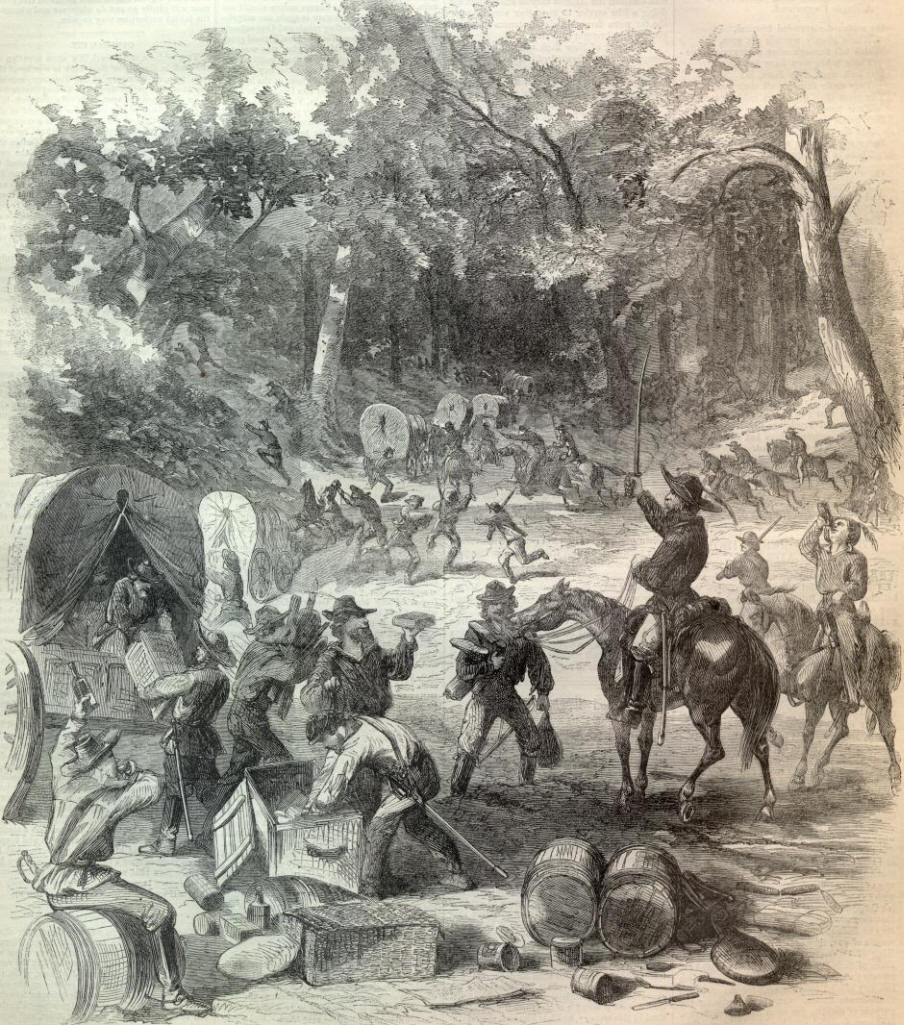
Irregular Formations Such as Mosby’s Raiders Would Create Problems Behind Union Lines

Hagerman’s value to the literature is that he fills a void among many Civil War writers who often focus simply on the battles and campaigns and not arcane but important subjects such as transportation, logistics, communications and fortifications.  Hagerman makes an astute observation on how change comes to military organizations at the end of his discussion of the Corps of Engineers and the Army following the war.  He notes “that change in war requires time for digestion before lessons are converted-if they are converted-into theory and doctrine.” [xxi] In the light of the Pershing’s strategy in the First World War One, which revisited some of the worst mistakes of the Civil War one wonders if those lessons were ever fully digested by the Army. Such an observation can be made about our present war.  We need to ask if the lessons of previous insurgencies in conquered areas have been digested, even going back to the lessons of the Union Army operating in the hostile lands of the conquered Confederacy.[xxii] Likewise how an Army adjusts to developments in weaponry, technology and tactics are fair game when one analyzes past campaigns in relation to current wars.  Thus when we look at Hagerman it is important to use his work to understand the timeless aspects of military history, theory, doctrinal development, logistics, communications and experiential learning in war that are with us even today.


[i] Hagerman, Edward. The American Civil War and the Origins of Modern Warfare. Midland Book Editions, Indiana University Press. Bloomington IN. 1992. p.9

[ii] Ibid. p.13.

[iii] Hagerman also notes the contributions of Henry Halleck and his Elements of Military Art and Science published in 1846 (p.14) and his influence on many American Officers.  Weigley in his essay in Peter Paret’s Makers of Modern Strategy would disagree with Hagerman who notes that in Halleck’s own words that his work was a “compendium of contemporary ideas, with no attempt at originality.” (p.14) Weigley taking exception gives credit to Halleck for “his efforts to deal in his own book with particularly American military issues.” Paret, Peter editor. Makers of Modern Strategy: For Machiavelli to the Nuclear Age Princeton University Press, Princeton NJ 1986 p.416.

[iv] Ibid.

[v] Ibid. p.27.

[vi] Ibid. p.79.

[vii] Ibid. p.87.

[viii] The most notable use of them between the Peninsula campaign and the Wilderness was at Fredericksburg by Longstreet’s Corps. Many wonder why Lee failed to entrench at Antietam.

[ix] Fuller, J.F.C. Grant and Lee: A Study in Personality and Generalship, Indiana University Press, Bloomington IN 1957.  Fuller comments “Thus over a year of bitter fighting was necessary to open the eyes of both sides to the fact that the trench was a by product of the rifle bullet, and like so many by-products, as valuable as the product itself.” (p.269) He calls it “astonishing that Lee, an engineering officer, made no use of entrenchments at the battle of Antietam.” (pp.269-270)

[x] Ibid. pp. 198-219.

[xi] Ibid. p.295.  Hagerman comments how Sherman’s troops outside Atlanta began to entrench both the front and rear of their positions.

[xii] Ibid. p.297-298.

[xiii] Ibid. p.238.

[xiv] Ibid.

[xv] Ibid. p.272

[xvi] Ibid. p.274.

[xvii] Ibid. p.293.  B.H. Liddell-Hart in comparing the campaigns of Grant and Sherman makes an important note that Sherman’s strategy is more “suited to the psychology of a democracy…” and “ he who pays the piper calls the tune, and that strategists might be better paid in kind if they attuned their strategy, so far as rightly possible, to the popular ear.” Liddell-Hart, B.H. Strategy Faber and Faber Ltd, London 1954 and 1967, Signet Edition, The New American Library, New York 1974 p.132

[xviii] Weigley, Russell F. The American Way of War: A History of United States Military History and Policy University of Indiana Press, Bloomington IN, 1973. pp.145-146.

[xix] Ibid. Fuller. P.269  A similar comment might be made of most wars including the current Iraq war.

[xx] ___________. MCDP-1 Warfighting. United States Marine Corps, Washington D.C. 1997. pp. 36-39

[xxi] Ibid. Hagerman. P.239

[xxii] Ibid. Fuller. Fuller’s comments on the situation of the Northern Soldier are eerily similar to our current conflict in Iraq : “Consequently, minor tactics were definitely against the Northern soldier, because his major tactics demanded the offensive; for without the offensive the South could not be brought to heel.  It was the problem which had faced the French in LaVendee and in the Peninsula of Spain, which faced Napoleon in Russia, and the British in South Africa during the Boer War of 1899-1902. Not only was the Northern soldier, through force of circumstances, compelled to fight in the enemy’s country, but he was compelled to devastate it as well as conquer it, in order to protect himself against the bands of irregular troops which were here, there and everywhere.” pp.247-248

Bibliography

Fuller, J.F.C. Grant and Lee: A Study in Personality and Generalship, Indiana University Press, Bloomington IN 1957

Hagerman, Edward. The American Civil War and the Origins of Modern Warfare. Midland Book Editions, Indiana University Press. Bloomington IN. 1992

Liddell-Hart, B.H. Strategy Faber and Faber Ltd, London 1954 and 1967, Signet Edition, The New American Library, New York 1974

Paret, Peter editor. Makers of Modern Strategy: For Machiavelli to the Nuclear Age Princeton University Press, Princeton NJ 1986

Weigley, Russell F. The American Way of War: A History of United States Military History and Policy University of Indiana Press, Bloomington IN, 1973

___________. MCDP-1 Warfighting. United States Marine Corps, Washington D.C. 1997

1 Comment

Filed under History, Military

A Weird Day, a Great Team and Some Fractured History

Today was one of those weird days for me, very busy, pretty good work and good intellectual stimulation n an ethics committee meeting.  I’m also still pretty tired from the past few weeks, not feeling bad but I know that I need to pace myself while we are short staffed in our department this summer.  It is a good thing that I have the boss that I have as he is making sure that I am okay on a pretty regular basis.  He knows that I will push myself hard until I hit the wall, which I did about a week and a half ago.  The thing is it is not just me that is feeling the strain. All of us on our staff have been pushed hard caring for folks during the recent deaths of two military staff members, regular work on our wards, administrative tasks as well as the extra load imposed by being short staffed.  But this is what we do as chaplains.  The good thing is that we are doing our best not just to look after our flock, but to look after each other.  We have a great team which I am proud to be a part.

Thus today my mind was a raging torrent, flooded with rivulets of thought cascading into a waterfall of creative alternatives.  In fact it was awash in so much that I should have written them down.  The mind is like a sieve sometimes.  Since it is late I am going to stick with a few observations from this day in history which seems to still have significance today June 17th.

On this day in 1579 Sir Francis Drake sailed his ship the Golden Hind into San Francisco Bay.  Immediately he was picketed by anti-imperialist and environmentalist protesters who had come down from Haight Ashbury in their Birkenstocks.  Ignoring them Drake’s crew hit on women and some men in Golden Gate Park, had lunch at Fisherman’s Wharf and took in a Giants game.  At least that’s what they wanted to do, but they were 400 years or so too early.  Instead they sat around wondering why it was so cold in the middle of summer as they repaired their ships, had the chaplain celebrate Eucharist and then claimed everything in sight for England calling it New Albion.  The Spanish realtors in the area took umbrage to this and never recognized the claim.

On this day in 1775 was fought the battle of Bunker Hill or more appropriately Breed’s Hill.  The American soldiers defending the hill gave a good account of themselves against the British who were trying to drive them off of the hill.  An American commander on the front line uttered the cry which did not become in military history “Don’t fire until you can smell the Redcoat bastards.”  The insensitivity of the comment regarding the Colonial’s British Cousins body odor, which wafted over the battlefield, offended some of in the snior commanders who had a hard time smelling the gunpowder over their own body odor.  When the Pentagon heard about it the offending officer was sent to Ft Polk Louisiana and the utterance was officially changed to “Don’t fire until you see the whites of their eyes.”  After the clash the surviving unwounded opponents gathered at Sam Adams pub where they consumed vast amounts of his original Boston Lager beer as they played darts and argued the merits of English versus American Football.  Some went to the Yankees Red Sox game at Fenway later in the evening.

On this day in 1815 Commodore Stephen Decatur commanding a Task force from the 6th Feet conquered the Algerian frigate Mashouda in an action that finally helped bring an end to the Barbary Wars and drove the Barbary Pirates from the Mediterranean.  Within 48 hours of defeating the Mashouda he was in Algiers harbor exacting peace on the Dey of Algiers.  This ended the period of where  Barabry Pirates excercised domain over the Mediterranean. Getting with British sailors on liberty in town with which they had recently been at war, the Americans and Brits spent the evenings at Murphy’s Irish pub drinking Guinness and Kilkenney with Irish and other expats while watching Arsenal play Bayern München on pay per view.

On this day in 1856 Republican Party opened its 1st national convention in Philadelphia.  Immediately Randall Terry demanded equal time to speakers demanding the end of slavery while Ron Paul was ignored.  Others lobbied for the Flat Tax until they discovered that there was not yet an income tax.  Up and coming Illinois legislator Abraham Lincoln gave the keynote address recommending a bigger Federal role in solving disputes between states while Newt Gingrich presented a “Contract with the Union” to deal with the various tensions.  Fox News covered the event

On this day in 1916 US troops under General John Pershing marched into Mexico to bring Pancho Villa and others into custody.  The expedition was not successful as many troops were inflicted with Montazuma’s revenge while KBR failed to get the porta-poties in place in a timely manner.  The Easern European sub-contractor walked out and KBR replaced them with men from the Indian Subcontinent area who had each paid $4000 to an agent for the job and recived $300 a month working 16 hour days 6 days a week.  However the campaign  did give US troops experience operating in harsh climates which would serve them well when stationed in Texas over the next century.  General Phil Sheridan had once said of Texas that “If I owned Hell and Texas I would live in Hell and rent out Texas.”

On this day in 1938 after conducting military operations against the Chinese for over 5 years the Japanese declared war on China.  Chinese leaders Chaing Kai Shek and Mao Tse Tung issued a joint statement agreeing to work together and declaring “It’s about damned time they admitted that they are at war with us.”

On this day in 1940 the French after having their asses handed to them by the Germans yet again asked for surrender terms.  General Charles DeGaulle immediately departed for England to continue the war against both the Germans and his fellow Frenchmen.   Upon his arrival DeGaulle immediately complained about the bad food, plain women and miserable weather.  He was embraced by Winston Churchill who got him drunk, left him passed out in a brothel and blamed the Vichy government for it. Churchill wrote afterward, “that man is a pain in the ass.”  DeGaulle always doubted Churchill’s version of events every time he looked at the tatoo of a German tank on his ass.

On this day in 1944 Iceland declared independence from Denmark.  No one noticed until 1953.

Most importantly on this day in 1960 Ted Williams hit his 500th home run. and today the Nationals beat the Yankees and the Orioles beat the Mets.

Peace, Steve+

Leave a comment

Filed under Baseball, beer, History, Loose thoughts and musings

Gordon Klingenschmitt and his Followers- The Klingenfraud and the Klingenban

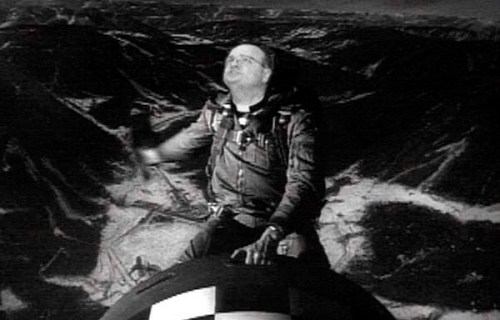
Gordon rides the bomb copyGordon Klingenschmitt in all his glory: Ride ’em Cowboy!

Note:  Please know that I am not attacking historic, Evangelical Christianity, nor Christians, Evangelical or otherwise who live their faith proclaiming the Gospel in this post.  Nor am I attacking anyone’s right to deeply held political beliefs.  This post focuses on Gordon Klingenschmitt and others like him who make their living by lying about others using character assassination, the promotion of sedition, secession and pray for the deaths of their political opponents.  Peaceful, law abiding protest and dissent are indispensable in our country.  Likewise the New Testament teaching of Jesus to “Love your enemies and pray for those who persecute you” is antithetical to what Klingenschmitt and the Klingenban are now doing. Unfortunately this bright but unstable man promotes himself in the crassest manner. Though he says what he is doing is for Jesus, it is readily apparent that he is not proclaiming Jesus but himself.    His lies and distortions have become legendary, yet he is a media darling of the Uber-Right.  So please, if you are a conservative Christian, Protestant or Catholic who lives a life upholding the Gospel, love your neighbor, living peaceably with others this does not apply to you. It applies to those who have been so consumed by hatred for the political and religious left that rules of good behavior, respectful dialogue and public decency have been abandoned.  They have been defined by and are now more faithful to extreme right wing political ideology than the Christian faith.  For literary purposes I will refer to them by naming them after their most prominent figure:  Former Chaplain disgraced Naval Officer, convicted criminal professional malcontent and protester Gordon J. Klingenschmitt.  His followers are the Klingenban.

“One-Minute Prayer: Let us pray. Almighty God, today we pray imprecatory prayers from Psalm 109 against the enemies of religious liberty, including Barry Lynn and Mikey Weinstein, who issued press releases this week attacking me personally. God, do not remain silent, for wicked men surround us and tell lies about us. We bless them, but they curse us. Therefore find them guilty, not me. Let their days be few, and replace them with Godly people. Plunder their fields, and seize their assets. Cut off their descendants, and remember their sins, in Jesus’ name. Amen.”  The Prayer of Gordon Klingenschmitt

But I say unto you, Love your enemies, bless them that curse you, do good to them that hate you, and pray for them which despitefully use you, and persecute you;” Matthew 5:44  Jesus Christ

Let every person be subject to the governing authorities. For there is no authority except from God, and those that exist have been instituted by God. Therefore he who resists the authorities resists what God has appointed, and those who resist will incur judgment.  Romans 13:1-2

There are two types of religious Fundamentalists who exist in every religion including Atheism and Secularism, which can for some have an almost religious quality.  There are those who while having and proclaiming their beliefs treat their opponents with respect, love and care.  These folks live their faith, treat others as they would want to be treated, understand that others, even if they believe them to be wrong and maybe even “Hell-bound” still have a right to their beliefs and equal treatment under the law.  In fact many of our nation’s most respected figures have been just these kinds of people.  They have helped make the United States a place where anyone can live peacefully and have the chance to better their lives while contributing to the general welfare of the nation.  They do not seek or desire that the Government take the side of any religious group.  In fact the religious liberty provision in the Bill of Rights was the result of Virginia Baptists who were being discriminated against by the Anglican Church which at the time was the State Church in Virginia.  These Baptists went to James Madison and presented their case and Madison included this in the Bill of Rights.  This was an extremely important event in the life of our Nation.  People forget that almost all of the original 13 colonies, save Rhode Island and Pennsylvania had established “State Churches.”  Eventually these all were disestablished, the last being the Congregational Church in Massachusetts in the 1830s. The second type is the radical Fundamentalist.  As I said these exist in every religion, even those religions which acknowledge no God. In recent times the focus has been on Moslem Extremists such as Al Qaida, the Taliban, Hamas, Hezbollah, the Islamic Jihad, radical Iranian Ayatollahs and other radical Moslem groups.  Likewise there are extremes in Judaism, Hinduism and other religions.  Some atheists and secularists too have had their moments of insanity.

Italy Afghanistan Commander KilledMullah Omar: Klingenschmitt’s Kindred Spirit

The common thread that runs through all of these groups is that they want to be in control of the government wherever they are and enforce their interpretation of their beliefs on others.  They are bullies of the faith.  What they cannot convince you to agree with you on they will push the state to do.  If the state is unwilling then be it through democratic process or hostile takeover they attempt to control the state and by doing so inflict their tyranny on others.  Europe had a long history of this. It has occurred elsewhere in the world.  In 1979 it was on full display when the Ayatollah Khomeini and his followers helped topple the Shah of Iran and then forced more secular reformers out of the government imposing their version of Islamic law.  While not to the same degree we have seen similar things happen in the United States both before and after our founding.  The Plymouth Bay Colony, which we are taught was founded on the principle of religious freedom, was just that.  It was founded so that these colonists could be free from the Church of England and be the State Church.  They were so heavy handed with dissenters that Roger Williams escaped, swimming the Narragansett to found the colony of Rhode Island. This became the first colony to guarantee religious freedom.  Secularists in Revolutionary France conducted routine religious purges.  Radical Hindus in India routinely target Christians and Moslems as well as Hindus of lower castes.   All of this was or is done with the active cooperation or tacit approval of the state.  If given the chance to actually influence policy Klingenfraud and his ilk would impose draconian measures on anyone who disagrees with them.

Yet, Klingenschmitt and the Klingenban exemplify this some of the most radical and compromised people who claim the name “Christian.”  Klingenschmitt’s prayer while unusually bold faced is not an uncommon belief among this radical fringe.  Numerous preachers re-interpret Romans 13: 1-7 180 degrees from what Paul and the early Church believed.  They seem to forget that Paul lived his life in the Roman Empire, which for Christians who were called atheists because they refused to call Caesar “Lord” were persecuted and killed.  Paul included.  Yet at no time do we see Paul telling Christians to take up the sword or to rebel against the Empire.  They died not for political power but for their faith which they refused to compromise.  The early church was known for their peaceful response to their tormentors. The Epistle to Diognetus writes of the Christians’ response to the hatred they received stating that Christians: “…love those who hate them.”  Tertullian in the Apology writes of Christian loyalty stating that Christians “…call upon God for the safety of the Emperor…” and that believers should know from Scripture “…that a superfluity of benevolence is enjoined on us, even so far as to pray God for our enemies and to entreat blessings for our persecutors.”  Such responses are far from those of the Klingenban.

In opposition to the early Church the Klingenban seek political power and the negation of those that oppose them.  Thus we see Klingenschmitt’s excoriation and prayer for the death of Michael Weinstein and Barry Lynn.  Additionally we see the calls for Christians to be prepared to use violence to resist the state.  Such attitudes in effect baptize behaviors that are not merely un-Christian but anti-Christian.  Praying for the death of people because they insult or demean you is not a Christian attitude.  It flies in the face of Jesus’ words on the Cross:  “Father forgive them for they know not what they do.”  It is as self seeking as those who came to this continent seeking religious liberty only for themselves and those willing to submit to them.

Klingenschmitt in practice actively question the faith of those who disagreed with him during his Navy career.  I know of a Priest in a conservative Anglican church who while in seminary elected to go to the Norfolk Chapel to discuss the Navy Chaplaincy with a Navy Chaplain.  He met with Klingenschmitt who instead of discussing what it was to be a Chaplain insinuated that the man was “unsaved.”  Accordining to crew members who served with him on the USS Anzio he accosted those who were not his definition of Christian. He harrassed sailors when they returned to the ship from liberty. Instead of looking out for the mulitude of religious needs and protecting the religious liberty of his sailors, Klingenschmitt used his time in the Navy to advance his own agenda.   Chaplains are mandated to protect the First Ammendment rights of men and women who away from home and away from thier religious tradition. They are also called to care for those with no religious beliefs.  In both cases the requirement is to protect the religious rights of our sailors, not to advance our own agenda.  We actually sign a statement when we come in the Navy that we will do this.  His commanding officer gave him every chance and gave him more personal time that most commanding officers would ever give to a Chaplain, hoping to help him.  For his efforts Klingenschmitt ensured that his commanding officer’s name was smeared in the right-wing media machine.  He did the same to the Commanding Officer of the Naval Station Norfolk.  Klingenschmitt spread such demented lies about this man that he was shunned by his church and pastor because they elected to believe the right wing media machine.  It shows that if you repeat a lie often enough that people will believe it.  Klingenschmitt is a bully and he was rightfully court-martialed after he refused non-judicial punishment for failing to obey a legal order not to wear his uniform at a political event, something that no-one in the military is allowed to do.  He made life hell for us who served honorably and rather then submit to authority he avoided combat by bad mouthing his country, the Navy and his corps.  He took your tax dollars and for months avoided providing ministry to any sailor or Marine.  This was solely a result of his actions.  While hundreds of Evangelical Christian Chaplains deployed to Iraq and Afghanistan and served honorably in combat, Klingenschmitt made up story after story to keep himself in the news. He even still refers to mhimself as “Chaplain” because the group which re-ordained him after being defrocked has endoresed him as “Chaplain to America.”  His website shows him in uniform protesting outside of the White House at the end of his hunger strike in 2006.

Klingenschmitt now markets himself as a victim of persecution, when in fact he brought everything on himself.  In his last days as an officer, no longer a chaplain as his own Church had stripped him of both his ordination and endorsement to serve as a chaplain while waiting discharge.  In spite of this one of his political allies in the Republican Party got Klingenschmitt invited to pray in uniform at the 2006 Conservative Political Action Committee (CPAC) Presidential Banquet at which the Vice President was scheduled to speak.  I saw the notice online and promptly complained to the committee the day before the event about this as a Chaplain telling them that it “insulted all who served honorably.” I also let the Norfolk Naval Station Chaplain know what was going on.  A call from the Commanding Officer of the base to the Chief of Naval Operations persuaded this political group not to let him attend the dinner or pray.  Instead Klingenschmitt waited until the banquet was over and facing an nearly empty auditorium in his Service Dress Blue uniform prayed “in Jesus Name.”  His photo at the podium was published in an article the next day on World Net Daily.  The article obfuscated the fact that the conference had ended when he did this and the headline made it look like he had prayed there with CPACs blessing.  Since then he has made his living in the margin of the far right speaking to churches and far right political groups and protesting wherever he can to keep some measure of media attention on him.

homelss jobless cluelessThe Gordon Klingenschmitt Tour 2007

He, his allies and followers are no different than the Taliban except that they wear suits and not robes.  Their agenda is eerily similar and should they ever gain control of this country they would bring in the worst type of persecution.  Thankfully I think there is little chance of this, but they will still do everything they can to incite trouble and even violence.  Klingenschmitt has prayed for the death of those opposing him, a group ran an advertisement in a Pennsylvania newspaper that said they wanted President Obama to meet the fate of Lincoln, Garfield, McKinley and Kennedy.  Klingenschmitt’s allies actively twist and obfuscate the truth in order to advance their cause at the expense of those who oppose them.  Klingenschmitt’s willing accomplice in the media Joseph Farah openly encourages military members to disobey orders because he does not feel that the President is eligible for the office.  Unfortunately he is doing this in war, and if it were not for the tolerance of the Administration would be tried for sedition.  This is something that Abraham Lincoln had no problem doing in the Civil War.  Farah is opening promoting sedition in time of war, this is a crime.  Conservatives were outrages when members of the Left did such things during the Vietnam war and the current war.   Klingenschmitt, Farah and those like them will not only bring harm to others, but they will continue to discredit the Christian faith by everything they do.  If they were not serious it would e funny.  Klingenschmitt and the Klingenban are dangerous to all who believe in liberty and for the principles on which the United States was founded.

Finally, I know that there are many honest people who have been taken in by Klingenschmitt and his media spin machine.  I encourage you to read for yourselves more about this man from sources other than his website and his allies who parrot what he says. Please know that I was a conservative Republican and worked for Gerald Ford’s campaign before I could vote.  I harbor no animus to conservatives who oppose the Democratic Administration and Congress.  The fact is that principled and respectful conservative opposition is needed, just as principled and respectful liberal Democratic opposition was needed when Republicans controlled the Presidency and Congress.  Klingenschmitt and the Klingenban’s actions are neither principled nor respectful.  Unfortunately they will attempt to destroy the country to save it.  God help us all.

Peace, Steve+

5 Comments

Filed under Loose thoughts and musings