Tag Archives: adolf hitler

Vast and Heinous Crimes: Ordinary Men & War Crimes

babi yar

Friends of Padre Steve’s World,

As part of my academic work at the Staff College I teach military ethics as related to the Just War Theory. In the class on jus post bellum or justice after war I deal with the implication of participating in war crimes. It is a serious subject and in the class I attempt to make my students, all relatively senior officers from the United States and allied nations as uncomfortable as possible. I use a number of examples from the major war crimes trials at Nuremberg as well as the Generals Trial. I had an exceptionally good class over the past several weeks and that caused me to go back and do some revisions to a number articles that I have written in the past. I have published a version of this before but I have made some additions and expect that like my work on Gettysburg that this work too will be an ongoing project.

As I went through previous notes and research I felt a tenseness and revulsion for the actions of those that ordered, committed or condoned these crimes, men who were like me professional officers. I realize how easily it is for normal, rational, and even basically decent people to succumb to either participating in or turning a blind eye to crimes against others, even on a massive scale, in fact the bigger they are they seem easier to dismiss, because the victims cease be human, and simply a statistic. Sadly, Josef Stalin probably got human nature right when he said “The death of one man is a tragedy. The death of millions is a statistic.” That comment causes great revulsion in my soul, but I have to admit it seems to be the way that many people deal with such great crimes.

September 29th 2015 was the 74th anniversary of the Babi Yar massacre. It was committed by members of the SS Einsatzgruppen C near Kiev shortly after the German Army captured that city. 33,771 Jews were exterminated by the members of Sonderkommando 4b of Einsatzgruppen C as well as Police battalions. About 10,000 others, mainly Communist Officials and Gypsies were rounded up and killed in the same operation. The victims were stripped of all of their belongings taken to a ravine and shot. It was the second largest killing action by the various Einsatzgruppen in the war. It was committed by men who either believed that the people that they were killing were sub-human, or did not have the courage to stand up and say no.

These issues are still with us. Hannah Arendt made the comment that “The sad truth is that most evil is done by people who never make up their minds to be good or evil.”

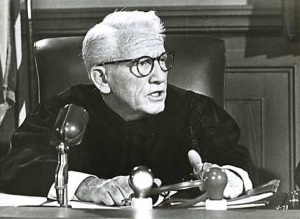
These are uncomfortable subjects. We like to say that the Nazis were different than us or others. To some extent this is true, but the real truth is that most of the Christian Western European countries, and I include the United States have also committed gross crimes against humanity against peoples that we believed were less than human and not afforded human rights or protections. In the movie Judgement at Nuremberg Spencer Tracy makes a comment that should send chills through any of us. He spoke concerning one of the judges on trial, “Janning, to be sure, is a tragic figure. We believe he loathed the evil he did. But compassion for the present torture of his soul must not beget forgetfulness of the torture and the death of millions by the Government of which he was a part. Janning’s record and his fate illuminate the most shattering truth that has emerged from this trial: If he and all of the other defendants had been degraded perverts, if all of the leaders of the Third Reich had been sadistic monsters and maniacs, then these events would have no more moral significance than an earthquake, or any other natural catastrophe. But this trial has shown that under a national crisis, ordinary – even able and extraordinary – men can delude themselves into the commission of crimes so vast and heinous that they beggar the imagination….”

Babi Yar is just one example of how civilized people can get can commit great atrocities in the name of ideology and race, and it does not stand alone. The tragic fact is that it really doesn’t take much to condition people to go commit such crimes; just teach people from childhood that people of certain races or religions are less than human. Then subjugate them to incessant propaganda and then turn them loose using the pretext that they are killing terrorists or insurgents. In the coming days I am posting in small sections an article that I wrote that deals with the ideological as well as military reasons that brought about Babi Yar and so many other atrocities committed by the Nazis during the campaigns in Poland and the Soviet Union.

What happened at Babi Yar is just one example of how civilized people can get can commit great atrocities in the name of ideology and race, and it does not stand alone. The tragic fact is that it really doesn’t take much to condition people to go commit such crimes; just teach people from childhood that people of certain races or religions are less than human. Then subjugate them to incessant propaganda and then turn them loose using the pretext that they are killing terrorists or insurgents.

The article deals with the ideological as well as military reasons that brought about Babi Yar and so many other atrocities committed by the Nazis during the campaigns in Poland and the Soviet Union.

To be continued….

Peace

Padre Steve+

6 Comments

Filed under crime, film, History, Political Commentary, world war two in europe

Mass Movements, Devils & Tipping Points

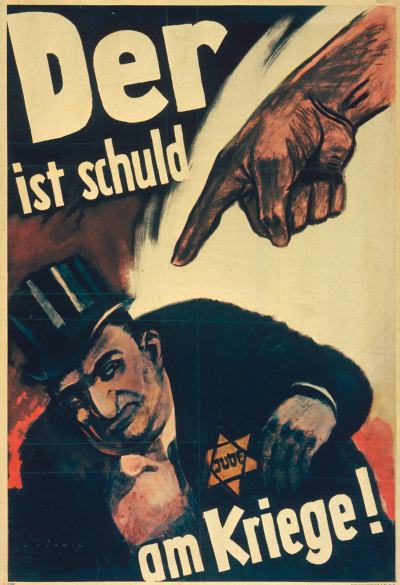
anti-jewish poster

The Nazis made the Jews their “Devil”

Friends of Padre Steve’s World,

The great American philosopher, Eric Hoffer once wrote, “Hatred is the most accessible and comprehensive of all the unifying agents. Mass movements can rise and spread without belief in a god, but never without a belief in a devil.”

Hatred is an amazing emotion. I the day and a half that I have been home from Europe I have been almost overwhelmed by the amount of hatred being posted on social media, blogs, and by supposedly Christian preachers, politicians and pundits. Of course if you want find a politician, pundit and preacher all wrapped into one person look no further than Baptist preacher, conservative media pundit, and former Arkansas Governor Mike Huckabee, but I digress…

It is funny when you even mildly disconnect from this climate for even a week, just how overwhelming returning to this can be, and how easy it would be to respond in kind, because unlike love, hatred is easy to conjure up. It is kind of like what you need to build a fire; fuel, oxygen and heat. To generate hatred on a massive scale all you need is a disaffected populace, a convenient target, and an agent to ignite the mixture.

Shrewd politicians, preachers, and pundits do this well. They demonize the target group or population and then let the hatred of their disaffected followers flow. The leaders need that disaffected and angry base in order to rise to power; such was how Hitler, Stalin, and so many other despots gained power. They took advantage of a climate of fear, and found others to blame. For Hitler it was the Jews; while for Stalin it was various groups like the Ukrainians, or the Poles who were the devil to be feared and destroyed. Timothy Snyder in his book Bloodlands: Europe Between Hitler and Stalin wrote:

“Dead human beings provided retrospective arguments for the rectitude of policy. Hitler and Stalin thus shared a certain politics of tyranny: they brought about catastrophes, blamed the enemy of their choice, and then used the death of millions to make the case that their policies were necessary or desirable. Each of them had a transformative utopia, a group to be blamed when its realization proved impossible, and then a policy of mass murder that could be proclaimed as a kind of ersatz victory.”

Snyder is quite correct, demonizing a people and making them some kind of “other”, “they”, or “them”, is a wonderful way to blame a group of people for the ills of society. It is also a good way to deflect the blame for the corporate failures of societies and governments onto a convenient scapegoat; and to blame others for the personal failures and petty jealousies of the people doing the demonizing. It also allows people to abandon ethics and the simple notion of the Golden Rule an engage in genocide.

Mass movements and their leaders; of which the contemporary “Christian Right” is one, love to use this technique; especially when using it against those of other races or religions. The technique is not at all new, it has been used from antiquity but has become much more dangerous in the modern era with the spread of instant communications technology. History shows us all too clearly how it has happened and how easily it can happen again. Witch hunts, slavery and Jim Crow, the extermination of the Native Americans which inspired Hitler in his campaign of genocide and the Holocaust; the Soviet gulags and ethnic cleansings, the Rape of Nanking, the Chinese Communist “Cultural Revolution” the Rwandan genocide, Srebrenica, the Turkish genocide of the Armenians, and the current crimes against humanity of the so called Islamic State. Sadly, the list can go on and on.

All of these events simply required the elements of a disaffected population, a devil or scapegoat to blame, and a leader or leaders to ignite the volatile mixture; fuel, oxygen and heat. Hoffer was quite correct that “Mass movements can rise and spread without belief in a god, but never without a belief in a devil.” The really successful leaders of such movements understand this. For Hitler it was the Jews and other untermenschen; for American Southerners after the Civil it was the Blacks and their white supporters. For the American “Know Nothings” of the 1840s and 1850s it was immigrants, especially Irish and Germans who were Catholic; for Stalin it was non-Russian ethnic minorities. For the leaders of the Islamic State, it is Jews, Shi’ite Moslems, less than “faithful” Sunnis, Christians and well for that matter anyone who does not line up one hundred percent with them on every issue. The examples are so plentiful to support this fact that it is almost overwhelming.

The problem is that when any society, or government begins to label or stigmatize a race, religion, ethnicity, sexual preference, or political ideology, and then in the process demonize those people to the point that they become less than human we have reached a tipping point. We reach the point where we are just one crisis away from all of those crimes against humanity that we believe that we are no longer capable of doing. But sadly, we human beings are not nearly as evolved as we think and I think that the tipping point in the United States may be far closer than we could ever imagine.

Those that follow my writings on this site know how much I love the various Star Trek television series and movies. There is an episode (The Siege of AR-558) of Star Trek Deep Space Nine where the Ferengi bartender Quark, makes a truly astute observation during a battle for survival at an isolated outpost:

“Let me tell you something about Hew-mons, Nephew. They’re a wonderful, friendly people, as long as their bellies are full and their holosuites are working. But take away their creature comforts, deprive them of food, sleep, sonic showers, put their lives in jeopardy over an extended period of time and those same friendly, intelligent, wonderful people… will become as nasty and as violent as the most bloodthirsty Klingon. You don’t believe me? Look at those faces. Look in their eyes.”

I really do not think that we are too far from some tipping point where the politicians, pundits and preachers; especially those of the political right and the media whores who are more concerned about market share than truth, decide that their “devils” must be exterminated. Of course when they will do they will claim a higher moral, religious, or racial, purpose; or perhaps use the language of Manifest Destiny, the Lost Cause, or the Stab in the Back or some other historical myth that suffices to justify their actions.

In the Star Trek the Next Generation episode entitled The Drumhead Captain Picard has to warn his security officer, Lt Worf about the dangers of rampant paranoia. Worf starts: “Sir, the Federation does have enemies. We must seek them out.”
 

Picard pauses and then notes:

“Oh, yes. That’s how it starts. But the road from legitimate suspicion to rampant paranoia is very much shorter than we think. Something is wrong here, Mister Worf. I don’t like what we have become.”

To claim Picard’s words for myself after being somewhat off the grid in Europe the past week and having come home to the fusillade of hatred being spewed forth, I have to admit that I don’t like what we have become either.

Peace

Padre Steve+

3 Comments

Filed under ethics, faith, History, Political Commentary, Religion

Brilliant Soldiers & Evil Causes: Hans-Ulrich Rudel

Friends of Padre Steve’s World

I have been writing about the need to be as transparent and honest about history as possible. I have resorted to calling that un-sanitized history. I will be coming back to that in relation to the American Civil War in the not too distant future but tonight I am going to delve into a different era, an era where the acts of valiant and courageous military men are separated from the cases that they fought for and sometimes believed in.

HansUlrichRudel

Colonel Hans-Ulrich Rudel was undoubtedly the greatest ground attack pilot that ever lived. His record is unsurpassed by any combat pilot flying ground attack missions. According to official Luftwaffe records he flew 2350 combat missions beginning in June 1941 and  May 8th 1945.

Rudel was born in Rosenheim Bavaria in 1916. As a young man he joined the Luftwaffe as an officer cadet not long after Hitler took power in Germany. Like many young men and women of his era Rudel was an ardent Nazi. Despite that and his unrepentant admiration for Adolf Hitler and Hitler’s ideology, his combat achievements are unmatched by any ground attack pilot before or since. That ids one of the things that makes him, and others like him so difficult to evaluate for any honest historian.

Rudel’s early career as an aviator was inauspicious. He was not regarded well as a pilot and spent the Polish campaign as an observer.  He did not take part in a combat role during the campaign in the west, the Battle of Britain or Crete between May of 1940 and May of 1941. He was assigned to Sturzkampfgeschwader 2 (StG 2) “Immelmann” at the beginning of Operation Barbarossa, the German invasion of the Soviet Union.  He finally saw combat in June 1941 in the Soviet Union and thereafter was almost always in combat.

a76b1a78b54f96fc159903950317bccc

Flying various models of the Ju-87 Stuka Rudel was one of two pilots credited with sinking the Soviet Battleship Marat at Kronstadt harbor near Leningrad (Petersburg) on September 23rd 1941. During the war he was never shot down by an opposing aircraft but was shot down by anti-aircraft artillery or forced to land 32 times. He destroyed over 2000 targets including 519 tanks, hundreds of other vehicles and artillery pieces, he previously mentioned Battleship Marat, several other ships, 70 anding craft, bridges, armored trains and 9 aircraft in air to air combat. His accomplishments during the latter part of the war are remarkable because of the Soviet dominance of the airspace on the Eastern Front. Losses among ground attack pilots flying the obsolete Stukas were high and the fact that he flew multiple missions on a daily basis for several years is a record unsurpassed in modern warfare.

Hans Ulrich Rudel was the most highly decorated officer in the Luftwaffe, holding the highest decoration awarded to anyone other than Herman Goering. Among the holders of the Knight’s Cross with Oak Leaves, Swords and Diamonds,Rudel was the only one awarded the Gold Oak Leaves.

Rudel was critically wounded by the explosion of a 40mm anti-aircraft shell during a mission on February 8th 1945 and his life was saved by the quick action of his observer. His right leg was amputated below the knee and despite the severity and painfulness of his wound he returned to combat against the advancing Soviets on March 25th 1945. His war ended on May 8th 1945 when he led the remnants of his squadron to surrender to the Americans at an occupied airfield in Kitzingen Germany.

He spent 10 months in American captivity after his surrender and after his release moved to Argentina where he became a friend of the Argentinean dictator Juan Peron. He returned to Germany in the 1950s and became active in right wing nationalist politics. While he was a successful businessman his still openly National Socialist political views kept him marginalized in the newly established West German Bundeswehr.

However, with the threat of a Soviet armored assault across the German plain during the Cold War Rudel was tapped to assist the U.S. Air Force in the development of the A-10 Thunderbolt ground attack aircraft. Despite its ungainly appearance the A-10, known by its nickname “Warthog” has proven to be one of the most successful combat aircraft produced by the United States. His writings on tactics were required reading for pilots involved with the aircraft’s development by the A-10’s lead designer Pierre Sprey.

warthog2

Rudel was a remarkable pilot and combat flyer. His valor and combat accomplishments are unquestioned but his undying attachment to Nazi ideology following the war caused a scandal that claimed the careers of two Bundeswehr Luftwaffe Generals including World War Two fighter ace Walter Krupinski (197 kills). He died in 1982 still admired by British and American combat pilots including the legendary British ace Douglas Bader. However, many of those men did not know Rudel’s political activities or associations during or after the war. As a Luftwaffe pilot Rudel did not engage in the atrocities committed by the SS or Wehrmacht, nor was he ever tried as a war criminal.

In retrospect it is important to understand that Rudel’s political views were shaped by the times in which he lived and the radicalism that swept Germany during the 1920s and 1930s. Likewise it is also important to note that unlike many other officers who grew up during the same period, including fellow Luftwaffe aces Johannes Steinhoff and Adolf Galland, Rudel never recanted his Nazi views.  In the early 1950s he published a tract that condemned German officers who did not wholeheartedly support Adolf Hitler during the war. He also recommended attacking the Soviet Union in the 1950s in order to reacquire Lebensraum, the very doctrine which drove the Nazi invasion of Poland, Eastern Europe and the Soviet Union during the war.

I think it is important to be able to recognize military accomplishments but also to recognize that even valiant soldiers can serve evil governments. Even worse, some of them give their unrequited support to the evil ideology of those regimes. Thus Rudel is not alone. He stands with other Nazi, Communist, Fascist and others soldiers of totalitarianism whose valor and deeds are tainted by evil and the crimes of the regimes that they supported.

Rudel’s mixed legacy, like many from the Nazi era as well as from other nations should serve as a reminder to any soldier, sailor or airman, including Americans. That warning; to always be careful to ensure that honest patriotism does not become corrupted by the ideology of those that appeal to fear, hate and revenge as the source of their power is just as relevant now as it was when the young Hans Ulrich Rudel joined the Luftwaffe and enlisted in the cause of Adolf Hitler.

Peace

Padre Steve+

1 Comment

Filed under aircraft, History, leadership, Military, nazi germany, world war two in europe

Busting National Myths

In light of the many historical myths and conspiracy theories being floated by pseudo “historians” like the infamous David Barton it is always appropriate to look at examples of the power of those myths in the lives of nations and their influence on citizens. Some myths can be positive and inspiring, but others can lead to conspiracy theories, false accusations and the demonization of others for the purpose of inciting hatred against political, social or religious opponents. They also can be used to perpetuate false beliefs about other countries that influence policy decisions, including the decision to go to war that ultimately doom those that believe them.

A good example of this is the Stab in the Back myth that began after the armistice that ended the First World War, as well as the false beliefs held by Hitler and other Nazi leaders about the United States.

There are many times in history where leaders of nations and peoples embrace myths about their history even when historical, biographical and archeological evidence points to an entirely different record.

Myths are powerful in the way that they inspire and motivate people. They can provide a cultural continuity as a people celebrates the key events and people that shaped their past, even if they are not entirely true.  At the same time myths can be dangerous when they cause leaders and people to make bad choices and actually become destructive. Such was the case in Germany following the First World War.

After the war the certain parts of the German political right posited that the German Army was not defeated by the Allied powers, but was betrayed by the German people, especially those of the political left. But such was not the case the German Army was on the verge of collapse.

Like all myths there was an element of truth in the “stab in the back” myth. It is true that there were revolts against the Monarchy of Kaiser Wilhelm II, including the mutiny  of the German High Seas Fleet, as well as Army units stationed in Germany. However, in truth, the crisis had been brought about by General Ludendorff who until the last month of the war refused to tell the truth about the gravity of Germany’s position to those in the German government.

So when everything came crashing down in late October and early November 1918, the debacle came as a surprise to most Germans.

The myth arose because the truth had not been told by Ludendorff who was arguably the most powerful figure in Germany from 1916-1918.  In the crisis which Ludendorff suffered what could be called an emotional collapse and  was relieved of his duty. His successor, General Wilhelm Groener presented the facts to the Kaiser and insisted that the Kaiser Wilhelm abdicate his throne.

The Republic that was proclaimed on the 9th of November was saddled with the defeat and endured revolution, civil war and threats from the extreme left and right.  When it signed the Treaty of Versailles it accepted the sole responsibility of Germany for the war and its damages because to not sign was to have the Allies resume the war against Germany.

The treaty required the Germany to dismantle its military, cede territory that had not been lost in battle, and pay massive reparations to the Allies. The  legend of the “stab in the back” gained widespread acceptance in Germany during the chaotic years of the Weimar Republic.

Hitler always believed that the defeat of Germany in the First World War was due to the efforts of internal enemies of the German Reich on the home front and not due to battlefield losses or the entry of the United States.  He made the “stab in the back” a staple of his attacks on the Republic. This was expressed in his writings, speeches and actions.

The internal enemies of Germany for Hitler included the Jews, as well as the Socialists and Communists who he believed were at the heart of the collapse on the home front.  Gerhard Weinberg believes that the effect of this misguided belief on Hitler’s actions has “generally been ignored” by historians. (Germany, Hitler and World War II p. 196)

Hitler believed that those people and groups that perpetrated the “stab in the back” were “beguiled by the by the promises of President Wilson” (World in the Balance p.92) in his 14 Points.

Thus for Hitler, the Americans were in part responsible for undermining the German home front, something that he would not allow to happen again.  In fact Hitler characterization of Wilson’s effect on the German people in speaking about South Tyrol.  It is representative of his belief about not only the loss of that region but the war: “South Tyrol was lost by those who, from within Germany, caused attrition at the front, and by the contamination of German thinking with the sham declarations of Woodrow Wilson.” (Hitler’s Second Book p.221)

While others will note Hitler’s lack of respect for the potential power of the United States, no other author that I am familiar with links Hitler’s actions and the reaction of the German political, military and diplomatic elites to the entry of the United States into the war to the underlying belief in the “stab in the back.”   Likewise Hitler had little regard for the military abilities or potential of the United States. Albert Speer notes that Hitler believed “the Americans had not played a very prominent role in the war of 1914-1918,” and that “they would certainly not withstand a great trial by fire, for their fighting qualities were low.” (Inside the Third Reich: Memoirs by Albert Speer p.121)

Hitler not only dismissed the capabilities of the Americans but also emphasized the distance that they were from Germany and saw no reason to fear the United States when “he anticipated major victories on the Eastern Front.” (Germany Hitler and World War II p.92)   Hitler’s attitude was reflected by the majority of the military high command and high Nazi officials. Ribbentrop believed that the Americans would be unable to wage war if it broke out “as they would never get their armies across the Atlantic.” (History of the German General Staff, Walter Goerlitz, p.408).  General Walter Warlimont notes the “ecstasy of rejoicing” found at Hitler’s headquarters after Pearl Harbor and the fact that the he and Jodl at OKW caught by surprise by Hitler’s declaration of war. (Inside Hitler’s Headquarters 1939-1945 pp.207-209) Kenneth Macksey noted Warlimont’s comments about Hitler’s beliefs; that Hitler “tended to dismiss American fighting qualities and industrial capability,” and that Hitler “regarded anyone who tried to show him such information [about growing American strength] as defeatist.” (Why the Germans Lose at War, Kenneth Macksey, p.153.)

Others like Field Marshal Erwin Rommel wrote about the disregard of senior Nazis toward American capabilities in weaponry.  Quoting Goering who when Rommel discussed 40mm anti-aircraft guns on aircraft that were devastating his armored forces Goering replied “That’s impossible. The Americans only know how to make razor blades.” (The Rommel Papers edited by B.H. Liddell-Hart p.295)

Rommel was one of the few German commanders who recognized the folly of Hitler’s declaration of war on the United States noting that “By declaring war on America, we had brought the entire American industrial potential into the service of Allied war production. We in Africa knew all about the quality of its achievements.” (The Rommel Papers p.296)

When one also takes into account the general disrespect of the German military for the fighting qualities of American soldiers though often with good reason (see Russell Weigley’s books Eisenhower’s Lieutenants and The American Way of War) one sees how the myth impacted German thought.  This is evidenced by the disparaging comments of the pre-war German military attaché to the United States; General Boeticher, on the American military, national character and capability. (See World in the Balance pp. 61-62)

The overall negative view held by many Germans in regard to the military and industrial power and potential of the United States reinforced other parts of the myth.

Such false beliefs served to bolster belief in the stab-in-the back theory as certainly the Americans could not have played any important role in the German defeat save Wilson’s alleged demoralization of the German population.  This was true not only of Hitler, but by most of his retinue and the military, diplomatic and industrial leadership of the Reich. Hitler’s ultimate belief shaped by the stab-in-the back and reinforced by his racial views which held the United States to be an inferior mongrel people. This led him to disregard the impact that the United States could have in the war and ultimately influenced his decision to declare war on the United States, a decision that would be a key factor in the ultimate defeat of Germany.

Myth can have positive value, but myth which becomes toxic can and often does lead to tragic consequences. All societies have some degree of myth in relationship to their history including the United States.  The myths are not all the same, various subgroups within the society create their own myth surrounding historic events.

The danger is that those myths can supplant reason in the minds of political, military, media and religious figures and lead those people into taking actions that work to their own detriment or even destruction.

It is the duty of historians, philosophers and others in the society to ensure that myth does not override reality to the point that it moves policy both domestic and foreign in a manner that is ultimately detrimental to the nation.

The lesson of history demonstrated by myths surrounding the German defeat and role of the United States in that defeat shows just how myth can drive a nation to irrational, evil and ultimately tragic actions not only for that nation and its people, but for the world. Sadly in the case of the United States, a portion of the political Right,  mostly found in the conservative Christian elements of the Tea Party movement are spreading their own version of the “stab in the back.” They blame Democrats, liberals, atheists, racial and religious minority groups, educators, labor unions and a host of others for the calamities that those that they have supported: the big banks and financial instructions that collapsed the economy in 2008, the politicians of the Republican Party who took the country into an unwise, unjust and illegal war in Iraq that not only cost many American lives and treasure but brought on the crisis that has led to the advance and power of the Islamic State, and the list can go on and on, and includes social issues, race, education, and even religion. But ignoring the responsibility of those they support,mother create myth, and cast blame on everyone but themselves.

That myth that they preach has become a staple of our political crisis. It is little differnt in tenor and intent of those who promoted the stab in the back myth during the Weimar Republic.

Peace,

Padre Steve+

Leave a comment

Filed under History, News and current events, Political Commentary

Auschwitz at 70: Never Again

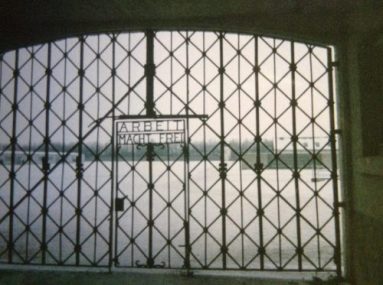
arbeitmachtfrei

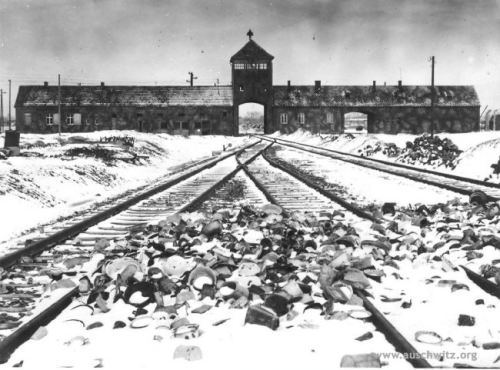
Seventy years ago on January 27th 1945 the Soviet Red Army liberated the Auschwitz Concentration Camp, the centerpiece of the Nazi Death Camp machine. Though it did not end the Nazi genocide against the Jews it was only a matter of time before the horror would end.
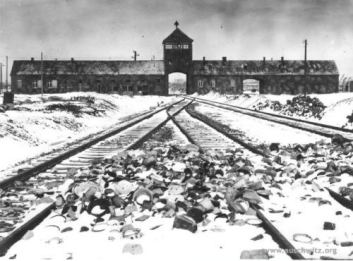
brama_birkenau-2

Auschwitz 

It is a day that we should never forget. The horrors perpetrated by the Nazi regime, all in the name of “race purity” and the extermination of the Jews and others deemed by the Nazis to be “sub-human” or untermenschen is something that is hard for most to imagine.
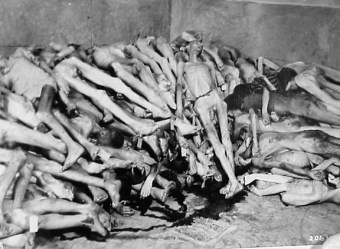
dachaumorgue1945

I am a Christian, gentile and historian. I have lived in Germany, read, speak and write German and have many friends in that country, including members of the German military, retired and active duty.  My study and association with Holocaust survivors goes back to my college days at California State University Northridge when as an undergraduate history major I spent much of my time studying Germany from the first unification and the Kaiser Reich, the First World War, Versailles, Weimar and the Hitler Regime. My professor, Dr. Helmut Heussler, whose family left Germany in the late 1920s, served in the U.S. Army in World War II and was an interrogator at Nuremberg. I took a number of classes from Dr. Heussler, including Hitler’s Germany and the Holocaust. In the latter I had the chance to meet Holocaust survivor Mel Mermelstein, who was later played by Leonard Nimoy in the TV movie Never Forget. 

Since then I have continued to study, read and even visit the sites of former concentration camps including Dachau and Bergen-Belsen. One day, God willing I will get to Auschwitz.

The Nazis had begun their persecution of the Jews shortly after Hitler took power in 1933. Later in the year the Enabling Act gave Hitler and his henchmen the legal means to begin their persecution of the Jews and others. These were followed by the Nuremberg Laws and other laws that targeted the Jews. Persecution increased throughout the 1930s, and sadly most countries refused to accommodate increased Jewish immigration.
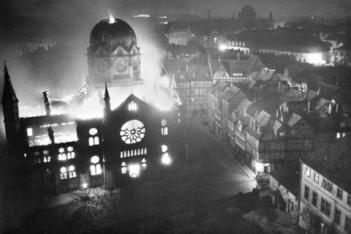
1938_progrome1_synag_696724g

Kristallnacht

Nazi persecution became more pronounced during Kristallnacht, or the Night of Broken Glass, when on 9-10 November 1938, a series of orchestrated attacks on Jewish businesses, Synagogues, institutions and individuals. On that night close to 200 synagogues, 7000 Jewish businesses and 29 major department stores were destroyed or damaged. Over 30,000 Jews, mostly en were arrested and sent to concentration camps, 91 people were killed outright, and several thousand died in the aftermath.

The order to executed the Kristallnacht progrom from SS Gruppenfuhrer Heydrich is chilling in its bureaucratic attention to detail:

TO ALL REGIONAL AND SUB-REGIONAL GESTAPO OFFICES 1:20AM, November 8, 1938

SUBJECT: MEASURES AGAINST THE JEWS THIS NIGHT

That only such measures were to be taken that would not endanger German lives or property  Businesses and residences of Jews may be damaged but not looted. Particular care is to be paid in business sections and surrounding streets. Non-Jewish businesses are to be protected from damage under all circumstances. Police are to seize all archives from synagogues and offices of community organizations, this refers to material of historical significance. Archives are to be handed over to the SS. As soon as possible, officials are to arrest as many Jews especially wealthy ones – in all districts as can be accommodated in existing cells. For the time being, only healthy male Jews of not too advanced age are to be arrested.

Reinhard Heydrich, SS Gruppenführer

The Jews were made to bear the costs of the assault on them and their institutions. Hermann Goering, in charge of the German economic program was not in favor, though he and his contacts in the German banking industry, major corporations and businesses took full advantage of the situation to “Aryanize” Jewish businesses, stripping Jews of businesses that had been in their families for generations.
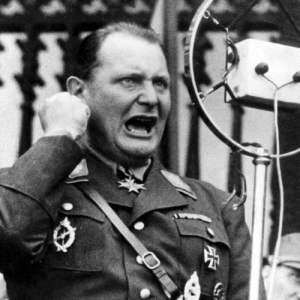
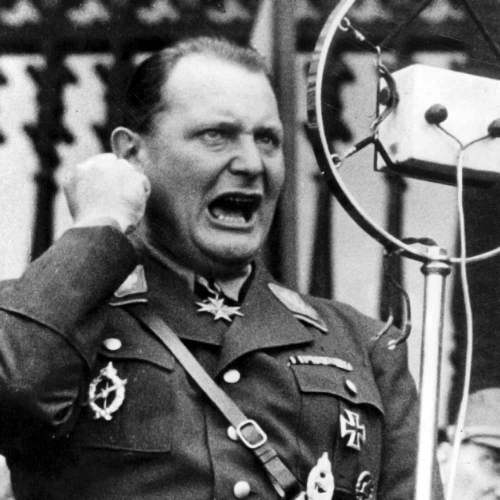
goering-1935-a1

Goering

After the war began the persecution became worse and in July 1941, not long after the German invasion of the Soviet Union, Hitler ordered that the the “Endlosung” or Final Solution of the “Jewish problem” begin. Georing entrusted the task to SS Gruppenfuhrer  Reinhard Heydrich. His order read:

Berlin, July 31st 1941

To: Gruppenfuhrer Heydrich

Supplementing the task assigned to you by the decree of January 24th 1939, to solver the Jewish problem by means of evacuation and emigration in the best possible way by according to present conditions, I hereby charge you to carry out preparations as regards organizational, financial, and material matters for a total solution (Gesamtlosung) of the Jewish question in all the territories of Europe under German occupation.

Where the competency of other organizations touches on this matter, the organizations are to collaborate.

I charge you further to submit to me as soon as possible a general plan of the administrative material and financial measures necessary for the carrying out the desired final solution (Endlosung) of the Jewish question.”

Goering

When Goering wrote Heydrich, the head of the Reichssiecherhiethauptampt (RSHA) in July 1941 it seemed that Nazi victory in Europe was all but assured. Goering’s words were businesslike. Early measures to rid Germany and the annexed Austria ha been reasonably successful of their Jews through emigration and evacuation. However with the occupation of most of Europe following the Nazi military success and the looming occupation and subjugation of the Soviet Union the process of giving the Jews a chance to emigrate to lands outside Nazi control had come to an end. In fact the Nazis occupied the countries that may Jews had found refuge. The Nazi leadership decided that its race war against the Jews needed to forge ahead.
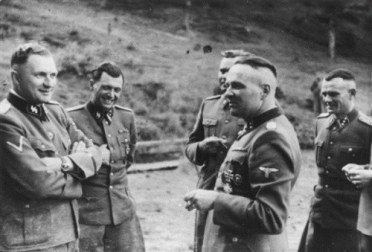
hossandstaff

Rudolph Höss and his Officers 

Within weeks SS commanders at various concentration camps were devising means to exterminate Jews more efficiently. It was a matter of pride and efficiency for them. As Rudolph Höss the Commandant of Auschwitz said at Nuremberg “the camp commandant at Treblinka told me that he had liquidated 80,000 in the course of one half year. He was principally concerned with liquidating all the Jews from the Warsaw Ghetto. He used monoxide gas, and I did not think that his methods were very efficient. So when I set up the extermination building at Auschwitz, I used Zyclon B….” Hoess estimated that some 2.5 million people were exterminated at Auschwitz at rates as high as 10,000 a day.

In the Soviet Union four Einsatzgruppen followed each of the German Army Groups and systematically began to massacre the Jews of every city and village which German soldiers captured. Over a million and a half Soviet Jews were killed by the Einsatzgruppen, Ordungspolizei battalions, Army Security Divisions and locally recruited units.

Reinhard Heydrich

Heydrich

Less than six months after he received the directive from Goering, on January 20th 1942 Heydrich summoned representatives from various Reich agencies were called for what turned out to be a brief, two hour meeting which decided the fate of the Jews. The meeting was held at an estate located in the suburbs of Berlin, called Wansee. Organized by Heydrich’s deputy Adolph Eichmann, involved Heydrich, Eichmann and 13 mid level representatives from various economic, governmental, justice and police entities.

eichmann

Adolf Eichamnn

At the conference Heydrich established his authority through Goering’s directive to overcome the bureaucratic and personal attempts of various attendees to take control of the Final Solution process. Despite objections from some attendees who favored sterilization and the use of Jews in the war armaments industries, Heydrich made it clear that the Final Solution would be a campaign of extermination. He was quite clear:

“Approximately 11 million Jews will be involved…in large single sex labor columns, Jews fit to work will work their way eastward constructing roads. Doubtless the large majority will be eliminated through natural causes. Any final remnant that survives will doubtlessly consist of the most resistant elements. They will have to be dealt with appropriately, because otherwise by natural selection, they would form the germ cell of a new Jewish revival.”

himmlervisit

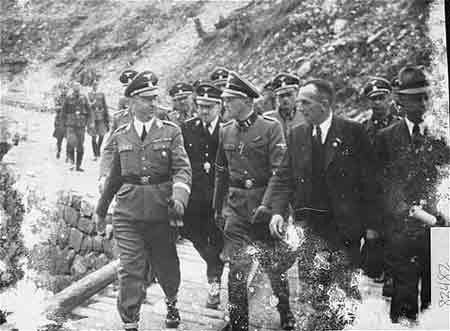
Himmler and Staff visiting a Camp

Himmler talked to the SS Leaders responsible for the mass killings:

“I also want to mention a very difficult subject before you here, completely openly. It should be discussed among us, and yet, nevertheless, we will never speak about it in public…I am talking about the “Jewish evacuation” the extermination of the Jewish people.”

It is One of the things that is easily said. “The Jewish people is being exterminated,” every Party member will tell you, “perfectly clear, it’s part of our plans, we’re eliminating the Jews, exterminating them, ha!, a small matter.”

But then along they all come, all the decent upright Germans and each has his decent Jew. They all say: the others are all swine, but here is a first class Jew. And none of them has seen it, has endured it. Most of you will know what it means when 100 bodies lie together, or when there are 500 or 1000. And to have seen this through, and –with the exception of human weaknesses– to have remained decent, has made us hard and is a page of glory never mentioned and never to be mentioned….”

Whether the words are those of Goering, Heydrich, Höss or Himmler, there is a certain businesslike banality to them. But these men, and many others like them orchestrated a campaign of genocide and race hatred unmatched in history. Yes, there have been other genocides, the Turks killing the Armenians during the First World War and the Hutu and Tutsi slaughter in Rwanda but neither they or the politically motivated campaigns of mass slaughter conducted by the Soviets, the Chinese Communists and the Khamer Rouge killing fields can match the systematized extermination campaign waged by the Nazis against the Jews.
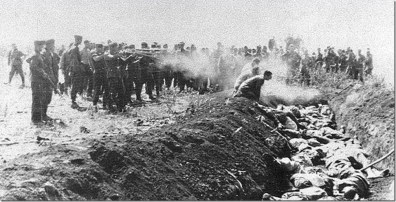
einsatzgruppen-nazi-death-squads-ww2-german-brutal-002_thumb

Einsatzgruppen in Action

The truly terrifying thing about the Nazi perpetrators of the Holocaust to me is that most of the men at Wansee, men that commanded the Concentration camps and the Einsatzgruppen were very ordinary men who simply believed that they were doing their jobs. Very few could be described as psychopathic killers by nature. They were lawyers, doctors, career police officials, businessmen, and bureaucrats who carried out an extermination campaign that killed by their own numbers between 5.5 and 6 million Jews, not to mention others deemed to be subhuman including the handicapped, the mentally ill, homosexuals, and other non-Jewish minorities like the Gypsies not to mention the wide variety of those considered political enemies. But it was the Jews that bore the most tragic fate.
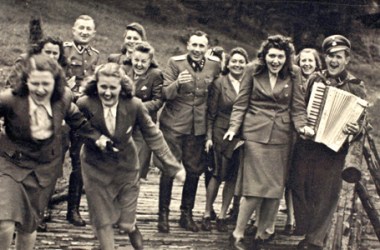
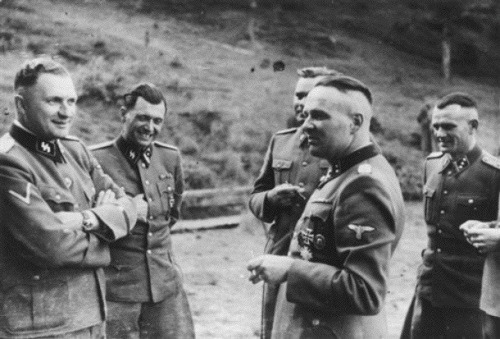
1-album-s-d-auschwitz-un-documentaire-en-avant-premiere-sur-telerama-frm67515

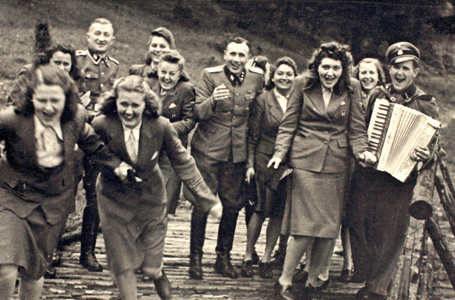
Fun Times for Auschwitz Staff

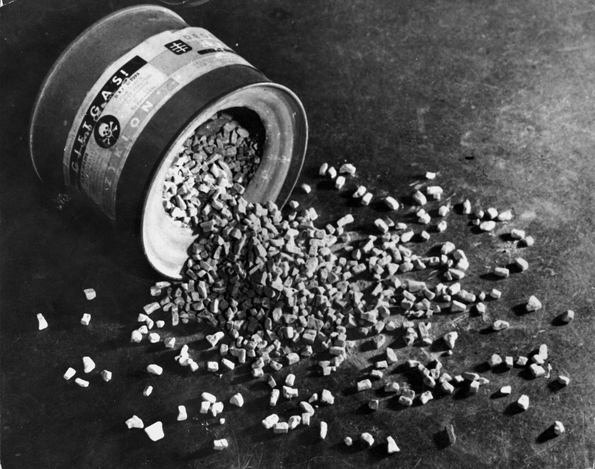
Auschwitz began as a work camp, notoriously harsh in its treatment of its prisoners but a work camp, picked because of its proximity to rail lines and isolation. By the summer of 1941 it was the largest camp in the Concentration Camp system. Within months the process of turning Auschwitz into a factory of mass murder began, quite accidentally when members of the camp staff discovered that a chemical used for the delousing of barracks known as Zyklon-B also worked on large animals, and therefore people.  It was tested on Russian and Polish POWs in September 1941.
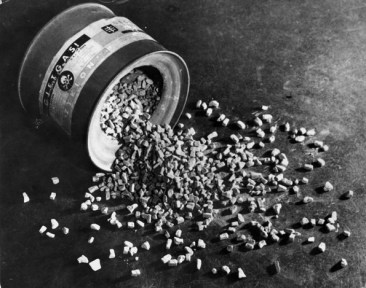
15779481208918941402

Zyklon-B

As the Nazi desire for efficient extermination grew and early death factories showed their limitations and the “experiments” at Auschwitz resulted in it being selected as a death camp. The camp was expanded and its first gas chamber, the former camp morgue began its operations in February 1942. Other more massive chambers were built, chambers that could hold up to 2000 victims per cycle. By the time the operation was shut down in the weeks leading up to the camp’s liberation Rudolf Höss the Commandant of Auschwitz estimated that 2.5 million people, mostly Jews were exterminated in it. Höss boasted d that his camp could exterminate 10,000 people in a 24 hour period. Other estimates are lower, but still in the millions.

The transcript of Höss’s affidavit at Nuremberg is chilling if nothing else for its unemotional businesslike tenor.

RUDOLF FRANZ FERDINAND HÖSS, being first duly sworn, depose and say as follows:

“I am forty­six years old, and have been a member of the NSDAPI since 1922; a member of the SS since 1934; a member of the Waffen­SS since 1939. I was a member from 1 December 1934 of the SS Guard Unit, the so­called Deathshead Formation (Totenkopf Verband).

I have been constantly associated with the administration of concentration camps since 1934, serving at Dachau until 1938; then as Adjutant in Sachsenhausen from 1938 – 5/1/1940, when I was appointed Kommandant of Auschwitz. I commanded Auschwitz until 12/1/1943 and estimate that at least 2.5 million victims were executed and exterminated there by gassing and burning, and at least another half million succumbed to starvation and disease making a total dead of about 3 million. This figure represents about 70-80% of all persons sent to Auschwitz as prisoners, the remainder having been selected and used for slave labor in the concentration camp industries; included among the executed and burned were approximately 20,000 Russian prisoners of war (previously screened out of prisoner-of-war cages by the Gestapo) who were delivered at Auschwitz in Wehrmacht transports operated by regular Wehrmacht officers and men. The remainder of the total number of victims included about 100,000 German Jews, and great numbers of citizens, mostly Jewish, from Holland, France, Belgium, Poland, Hungary, Czechoslovakia, Greece, or other countries. We executed about 400,000 Hungarian Jews alone at Auschwitz in the summer of 1944.

until 12/1/1943 and know by reason of my continued duties in the Inspectorate of Concentration Camps, WVHA, that these mass executions continued as stated above. All mass executions by gassing took place under the direct order, supervision, and responsibility of RSHA. I received all orders for carrying out these mass executions directly from RSHA.

The ‘Final Solution’ of the Jewish question meant the complete extermination of all Jews in Europe. I was ordered to establish extermination facilities at Auschwitz in 6/1941. At that time, there were already in the General Government three other extermination camps: Belzek, Treblinka and Wolzek. These camps were under the Einsatzkommando of the Security Police and SD. I visited Treblinka to find out how they carried out their exterminations. The camp commandant at Treblinka told me that he had liquidated 80,000 in the course of one-half year. He was principally concerned with liquidating all the Jews from the Warsaw Ghetto. He used monoxide gas, and I did not think that his methods were very efficient. So when I set up the extermination building at Auschwitz, I used Zyklon B, which was a crystallized prussic acid which we dropped into the death chamber from a small opening. It took from 3-15 minutes to kill the people in the death chamber, depending upon climatic conditions. We knew when the people were dead because their screaming stopped. We usually waited about one-half hour before we opened the doors and removed the bodies. After the bodies were removed our special Kommandos took off the rings and extracted the gold from the teeth of the corpses.

Another improvement we made over Treblinka was that we built our gas chamber to accommodate 2000 people at one time whereas at Treblinka their 10 gas chambers only accommodated 200 people each. The way we selected our victims was as follows: We had two SS doctors on duty at Auschwitz to examine the incoming transports of prisoners. The prisoners would be marched by one of the doctors who would make spot decisions as they walked by. Those who were fit for work were sent into the camp. Others were sent immediately to the extermination plants. Children of tender years were invariably exterminated since by reason of their youth they were unable to work. Still another improvement we made over Treblinka was that at Treblinka the victims almost always knew that they were to be exterminated and at Auschwitz we endeavored to fool the victims into thinking that they were to go through a delousing process. Of course, frequently they realized our true intentions and we sometimes had riots and difficulties due to that fact. Very frequently women would hide their children under the clothes, but of course when we found them we would send the children in to be exterminated. We were required to carry out these exterminations in secrecy but of course the foul and nauseating stench from the continuous burning of bodies permeated the entire area and all of the people living in the surrounding communities knew that exterminations were going on at Auschwitz.

We received from time to time special prisoners from the local Gestapo office. The SS doctors killed such prisoners by injections of benzine. Doctors had orders to write ordinary death certificates and could put down any reason at all for the cause of death.

From time to time we conducted medical experiments on women inmates, including sterilization and experiments relating to cancer. Most of the people who died under these experiments had been already condemned to death by the Gestapo.

I understand English as it is written above. The above statements are true; this declaration is made by me voluntarily and without compulsion; after reading over the statement I have signed and executed the same at Nuremberg, Germany, on the 4/5/1946. – Rudolf Höss.”
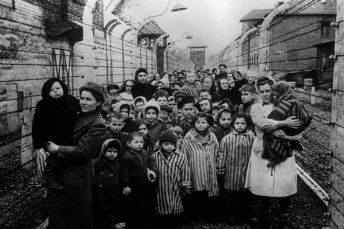
Survivors of Auschwitz

Liberation, the Children

Höss, and other functionaries such Adolf Eichmann, who coordinated the massive effort to exterminate the Jews of Europe following the Wansee Conference of January 20th 1942 approached their jobs dispassionately. This was a common attitude among the civil service, military and police officials that oversaw the Holocaust. They simply did their jobs and followed the law.

Hannah Arendt wrote of Eichmann:

“The trouble with Eichmann was precisely that so many were like him, and that the many were neither perverted nor sadistic, that they were, and still are, terribly and terrifyingly normal. From the viewpoint of our legal institutions and of our moral standards of judgment, this normality was much more terrifying than all the atrocities put together.”

This was what made the Holocaust committed against the Jews of Europe by Nazi Germany a phenomenon different than other genocides. Many of the perpetrators were not driven by centuries old hate as in the Balkans, tribal blood lust as occurred in Rwanda, or the products of Soviet Communism or Communist Chines Maoist regimes.
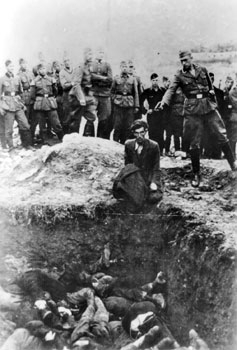
einsatzgruppen_killing_large

Einsatzgruppen 

It was the racial ideology of the Nazis which deemed the Jews and other non-Aryans to be sub-human. That ideology undergirded the German treatment of the Jews, and the conduct of the war, especially in the East. But the execution of the plan required the bureaucratic, administrative, technical and legal skills brought to the table by ordinary men. Men who sought promotion, advancement and economic security for their families. Individually many would have never killed, but in their positions they ran the rail network, the factories, the banking and finance industries and supported the war effort, most not thinking much about the evil that they abetted or if they did finding a way, be it social, scientific, religious, patriotic, legal or simply in the name of efficiency.

That is what makes the evil committed by them so terrifying. It is the product of “normal” people in an advanced Western nation. Make no bones about it, their actions were evil. They aided and abetted the genocide of the Jews, the disabled, other “sub-human” races, particularly Slavs, as well as those that they deemed less than suitable.
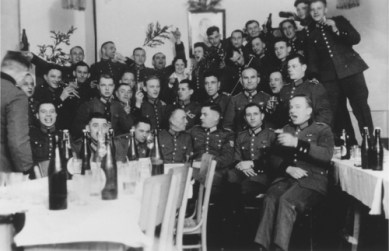
polbat101christmas1a

Ordinary Men of Reserve Police Battalion 101

I think that the most chilling thing about the Holocaust was that the greatest atrocities were committed by ordinary men, sometimes well educated, decent family men. These were men who simply executed orders and often went home at night. Hannah Arendt wrote that “The sad truth is that most evil is done by people who never make up their minds to be good or evil.” She was right, there was an ordinariness to the evil perpetrated by the Nazis.
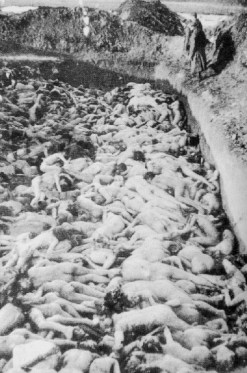
einsatzgruppen5

It is important that we do not forget the Holocaust. It is also important to recognize that the instruments of that horror were on the whole “ordinary” men who as they saw it were simply doing their job. It is something that everyone needs to remember.

Primo Levi wrote:

“Monsters exist, but they are too few in number to be truly dangerous. More dangerous are the common men, the functionaries ready to believe and to act without asking questions.” 

That is the real problem with atrocities committed by human beings.
IMG_2182.JPG

In the classic film Judgment at Nuremberg Spencer Tracy reads the verdict at the end of the Judges Trial. His words are timeless:

“Janning, to be sure, is a tragic figure. We believe he loathed the evil he did. But compassion for the present torture of his soul must not beget forgetfulness of the torture and the death of millions by the Government of which he was a part. Janning’s record and his fate illuminate the most shattering truth that has emerged from this trial: If he and all of the other defendants had been degraded perverts, if all of the leaders of the Third Reich had been sadistic monsters and maniacs, then these events would have no more moral significance than an earthquake, or any other natural catastrophe.

But this trial has shown that under a national crisis, ordinary – even able and extraordinary – men can delude themselves into the commission of crimes so vast and heinous that they beggar the imagination. No one who has sat through the trial can ever forget them: men sterilized because of political belief; a mockery made of friendship and faith; the murder of children. How easily it can happen. There are those in our own country too who today speak of the “protection of country” – of ‘survival’. A decision must be made in the life of every nation at the very moment when the grasp of the enemy is at its throat. Then, it seems that the only way to survive is to use the means of the enemy, to rest survival upon what is expedient – to look the other way. Well, the answer to that is ‘survival as what’? A country isn’t a rock. It’s not an extension of one’s self. It’s what it stands for. It’s what it stands for when standing for something is the most difficult! Before the people of the world, let it now be noted that here, in our decision, this is what we stand for: justice, truth, and the value of a single human being.”

489px-mass_grave_3_at_bergen-belsen_concentration_camp11

bergenbelsen1a

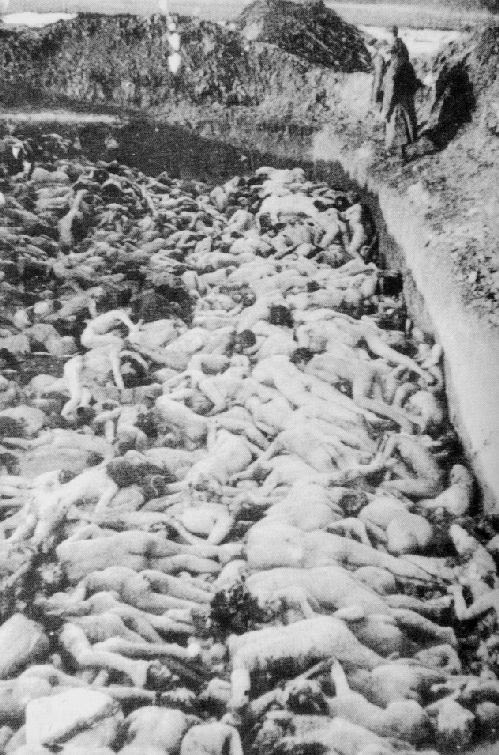
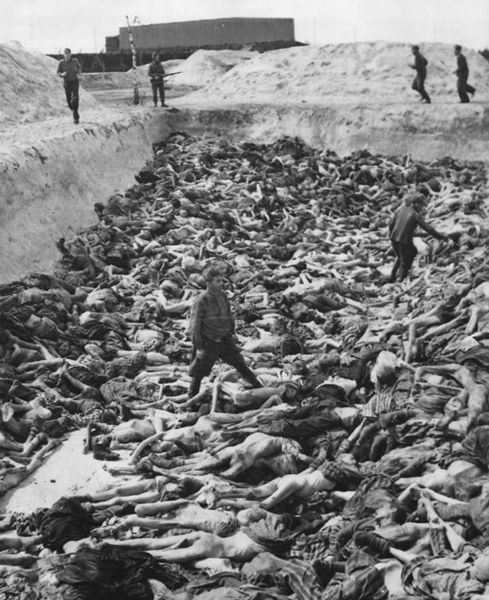
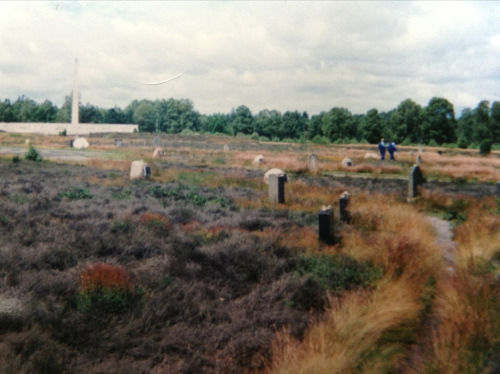
Never Again: Bergen Belsen then and now

So many of the perpetrators saw nothing wrong in what they were doing. They believed that their victims were less than human and like so many people even today, they had no empathy. Gustave Gilbert, an American Army Psychologist at the major War Criminal Trials at Nuremberg said it so well: “Evil is the absence of empathy.”

Peace

Padre Steve+

Leave a comment

Filed under History, nazi germany, world war two in europe

Der Schicksaltag: An Execution, an Abdication, a Beer Hall Putsch, Kristallnacht, and the Fall of the Wall

Hitler-Putsch, M¸nchen, Marienplatz

Schicksaltag: The Fateful Day and the Beer Hall Putsch November 9th 1923

There are some days in history that are crammed full world changing events, and sometimes those events occur, for good or bad and sometimes good and bad in different countries. In the United States July 4th is not only Independence Day, but eighty-seven years later marked the surrender of Vicksburg and the retreat of Robert E. Lee’s army from Gettysburg. Likewise it was the day that the Louisiana Purchase was announced in 1803 and that in 1826 the Thomas Jefferson and John Adams died. In Russia however it was on July 4th 1918 that Czar Nicholas and his family were killed by the Bolsheviks.

Since 1918 November 9th has been a day in German history that has impacted both Germany and the world in many ways. In a sense it is almost hard to believe that so much occurred on that day. It is known by many as Der Schicksaltag (the fateful day).

robert-blum-03


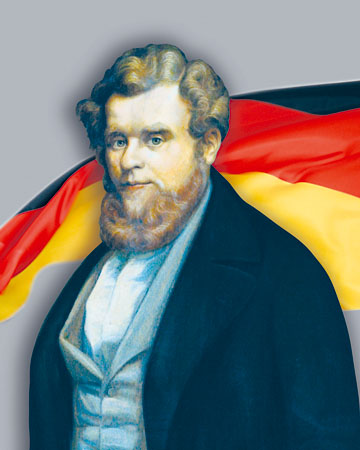
Robert Blum

In 1848 a member of the Frankfurt Parliament, Robert Blum was arrested and executed executed for traveling to Vienna to support the 1848 democracy uprising there. A liberal, humanist and democrat Blum advocated German unification without Prussian dominance, protested Prussian oppression of Poles, stood against anti-Semitism and for the rights of Catholics in heavily Protestant German kingdoms. Blum’s dream remained unfulfilled for over a century after his death.

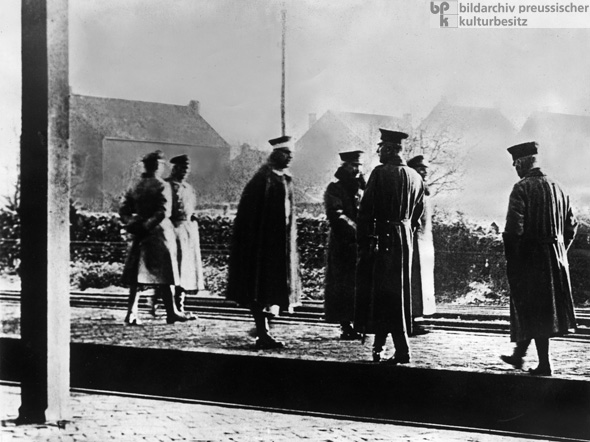
Wilhelm II. (4.v.l.) geht am Tag der Unterzeichnung seiner Abdankung über die Grenze in das holländische Exil


Kaiser Wilhelm II Cross the Dutch Border Following his Abdication

It was a gloomy day at the military headquarters of Kaiser Wilhelm II on November 9th 1918 when General Wilhelm Groener looked his sovereign in the eye and told Kaiser Wilhelm that the war was lost, and that he no longer had the support of the Army. The Kaiser, reeling from battlefield defeats and the mutiny of the High Seas Fleet was stunned, and Field Marshal Paul von Hindenburg, who had for all practical intents directed the war effort meekly nodded his concurrence with Groener. The Kaiser abdicated the throne and departed in his private train to the Netherlands the next day.

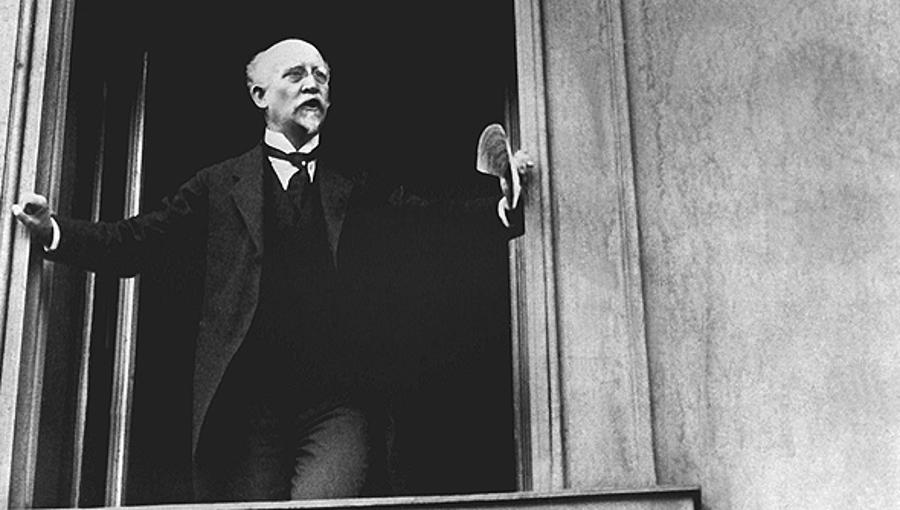
ausrufung-der-republik-in-berlin-preview-image_900x510


Phillip Scheidemann Proclaims the Republic 

In Berlin Majority Socialist parliament member Philip Scheidemann proclaimed the Republic, in part to prevent a Soviet takeover, which became known as the Weimar Republic. However, the promise of democracy was soured by a continued allied blockade, a humiliating peace treaty, loss of territory, and occupation of the industrial areas of the Ruhr and Saar by France and Belgium, heavy reparations, and war guilt; compounded by civil war between various right and left wing factions and major economic problems including massive hyper-inflation doomed the young republic.

Beer Hall Putsch


Beer Hall Putsch

Five years later an Austrian in Munich who had fought and been wounded fighting for Germany in the First World War gathered with his political sympathizes and para-military street thugs and attempted a putsch. The man was Adolf Hitler, the head of the small and radical National Socialist Deutches Arbeiter Partei, or National Socialist German Workers Party, which he hoped that his putsch would result in a popular uprising against the German government in Berlin. The putsch was a failure and ended in bloodshed at the Feldherrnhalle on Munich’s Odeonsplatz.

Hitler was wounded, convicted of treason and jailed for nine months at the Landesberg prison where he wrote his book Mein Kampf and continued to recruit others to his cause. Under ten years later Hitler was appointed Chancellor by President Hindenburg. He quickly banned political opposition and began his persecution of Jews and others that he believed to be sub human and on Hindenburg’s death in 1934 merged the office of Chancellor and President become the leader of Nazi Germany.

In November 1938 Hitler’s and his henchmen were looking for a reason to openly begin persecuting the Jews, something that they had already been doing since the seizure of power. One of the chief reasons for this was to seize the property and financial resources of German Jews, which coincided with the expulsion of Polish Jews from Germany. A reason was furnished when a young Polish man, Herschel Grynszpan, whose parents were expelled from Germany on November 3rd went to the German embassy in Paris and shot and mortally wounded Ernst von Rath, a young diplomat, who reportedly had some anti-Nazi sentiments.

kristallnacht1


The murder was what Josef Goebbels needed and on the night of November 9th Nazi storm troopers ransacked Jewish businesses, homes and synagogues causing hundreds of millions of Reichsmarks in damage, destroying over 200 synagogues and 7000 businesses. About 100 Jews were killed during the rampage, which went unchecked by police. Another 2000-3000 subsequently died either by suicide or in concentration camps. About 30,000 Jewish men were incarcerated. To add to the insult to injury Jews were charged for the damage done to their property and insurance payments that should have gone to them were collected by the state. The night became known as Kristallnacht, the night of broken glass and marked a major turn in the open Nazi persecution of Jews in Germany, which would extend throughout Europe and end in the Final Solution and the systematic murder of nearly six million Jews. World War Two ended with the total defeat of Germany and the Nazi regime.

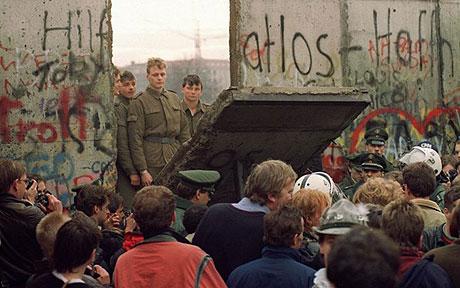
berlin_wall_02


Occupied by the allied powers Germany was split in two, the East under the domination of the Soviet Union which became the German Democratic Republic, and the West which supported by the United States and Britain became the Federal Republic of Germany. The divided country became the focal point of what became the Cold War, the fortified border became infamous as the Iron Curtain. The divided Berlin was blockaded by the Soviets in 1948 and the subsequent airlift kept West Berlin Free. However in August 1961 as the Cold War escalated the leaders of East Germany erected a fence which became the Berlin Wall, a wall which was effectively a means to imprison the population. It seemed to be a fixture that would never come down.

berlin-wall_1412605c

But in the 1980s the Cold War began to thaw, the economically strapped Soviet Union was bogged down in a costly war in Afghanistan, and a struggle against a Polish democratic movement; Premier Gorbachev sought to relieve the situation with a policy of openness. It backfired, throughout Eastern Europe, pro-democracy and pro-freedom groups began to protest the status quo, and as borders were opened hundreds of thousands of Eastern Europeans including thousands of East Germans went west through Hungary and Czechoslovakia. East Germans began to gather at the wall and on November 9th 1989 a tottering East German government decided to open border crossing points, but on hearing the news hundreds of thousands of people gathered at the six crossings demanding to be let through, finally, ignoring orders, Stasi Lieutenant Colonel Harald Jäger who commanded the Bornholmer Strasse crossing opened the gates. The wall had fallen and 339 days later East Germany was dissolved and Germany reunited.

The new Germany is the economic heart of the European Union and has become a champion of human rights and social progress. It has now been twenty five years since the Wall fell, seventy-six years since Kristallnacht, eighty-nine years since the Beer Hall Putsch and ninety-six years since the abdication of Kaiser Wilhelm II. These are all important events, and our challenge as citizens of the world is never to forget just how important and fateful each was, and why November 9th is indeed the “fateful day.”

Peace,

Padre Steve+

2 Comments

Filed under History

Oktoberfest Pilgrimage Live Blog: A Visit to Beer Land

IMG_0488.JPG

“Beer is proof that God loves us and wants us to be happy.” Benjamin Franklin

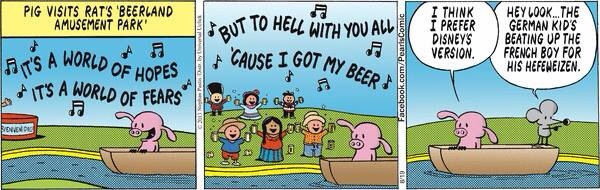
One of my favorite comic strips is Stephan Pastis’ Pearls Before Swine. A few months ago one of the main characters appropriately named Rat, since he is a rat, decides to open his own amusement park called Beer Land. The series of strips is amazingly brilliant, especially to true beer drinkers. I think the strip from that series that I most enjoyed was this one, because of the way Pastis linked a ride at the strip to the syrupy Disney ride It’s a Small World.

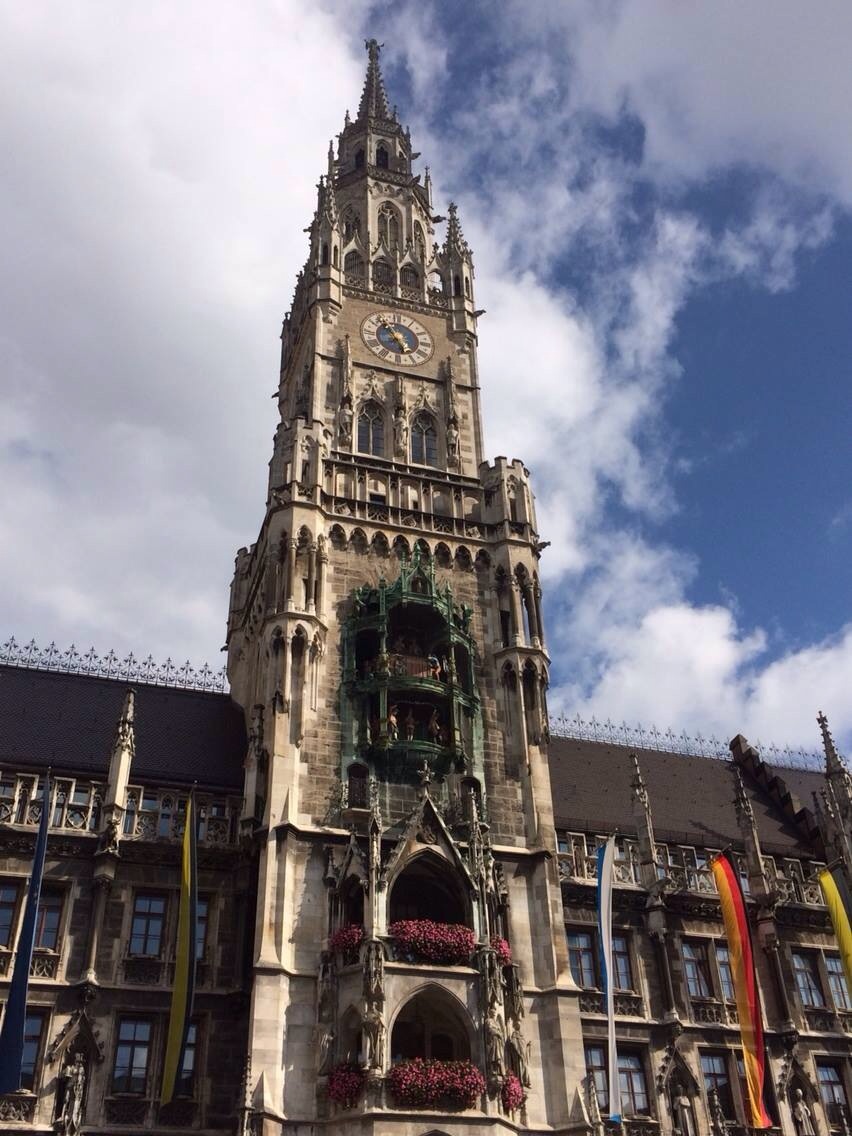
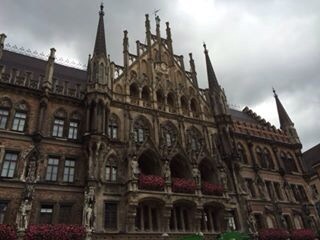
Today we did a bit of a road trip and took the U-Bahn from Munich to a small town on the outskirts of the city called Erding, for a visit and tour of the Erdinger Weisbier brewery, the largest brewer of wheat beers in the world. Before heading to Erding we had taken a short visit to the historic Marianplatz where we were able to see the famous Glockenspiel at the old city hall, or Rathaus.

IMG_0489-0.JPG

Now Judy has incurred a couple of injuries to her knee, ankle, and a couple of years ago had to her Achilles’ tendon repaired. As such sometimes a lot of walking causes her a lot, I mean a lot of pain. We tried to go out some yesterday but after a few minutes at Marianplatz but she was in such pain so we went back to our hotel until later in the evening when we went to dinner with our friends.

This morning she was in less pain but she knew if she didn’t get some European style crutches that she would not do well and possible be confined to the hotel for must of our remaining time here. For those that don’t know, European or as they are referred to in the United States Canadian crutches are far superior to the type most of us know and loath so much. They provide the user much more mobility and less pain to the armpits and shoulders because you do not swing from them.

So while she hung out with our friends I googled where to find the crutches in Munich. The word for crutches is krucken and they are sold at stores that specialize in equipment for those recovering from injuries as well as those with various physical disabilities called a Saniatshaus. The closest of these was about two miles away, so with google maps to guide me I set off. I walk pretty fast so it didn’t take that long to get there and when I did after the normal greetings with the lady at the counter I asked for a pair of crutches, which she showed me and allowed me to even pick the color. They cost about 34 Euros, which isn’t too bad, and for that quality I would have payed more in the U.S, had I gotten them at home. I made my way back by hailing a taxi to save time. Had a nice conversation about Munich, beer and the Oktoberfest with the driver and he delivered me back just city meters from where Judy and some of our friends had gathered. Since we were waiting on some of the rest of our group we had a beer at an outdoor cafe across from the Rathause where we saw the Glockenspiel do its thing when the clock stuck eleven.

Once all of us were gathered we boarded the U-Bahn to Erding a trip of about 45 minutes. Once in Erding we caught a city bus to the Erdinger brewery. We got our tickets for the tours and bought a couple of items in the gift shop and then went on the tour. The tour took about an hour and a half and was amazing.

I was impressed with how well a large brewery can make great beer using only the natural ingredients of hops, barley or wheat malt and water. There are no added sugars, food colorings known to be carcinogenic, Bisphenal A (BPA); cheap filler grains such as rice and corn as well as high fructose corn syrup, dextrose, and mono sodium glutamate, and even propylene glycol (a component of anti-freeze) are found in many mass produced American beers. This is because of the observance of the strict Bavarian or German beer purity law the Reinheitsgebot which stipulates what are acceptable ingredients in beer. Frankly the difference in taste is amazing as well as the effects, especially the morning after. But I digress….

As I mentioned the tour was informative and enjoyable. At the end of the tour, which cost 12 Euros per person we were provided freshly baked Bavarian pretzels, two large Bavarian Weiswurst, which are a mildly spiced and finely textured pork sausage and three half liter glasses of whichever of the eight styles of Weisbier that Erdinger brews.

10670000_10152772414817059_3414239591729879256_n

It truly was a visit to Beer Land and I am sorry to say that at each stage of the tour I kept thinking about that comic, but no, I didn’t see the German kid beat up the French kid for his Hefeweizen.

So Since this a religious pilgrimage, I will close with a quote from one of my favorite rebellious theologians, the eminent Doctor Martin Luther:

“Whoever drinks beer, he is quick to sleep; whoever sleeps long does not sin; whoever does not sin enters heaven! Thus let us drink beer!”

Have a great day.

Peace

Padre Steve+
Leave a comment

Filed under beer, civil rights, faith, History, nazi germany, Religion, travel

Oktoberfest Live Blog: Munich Musings; History and Bier

IMG_2051.JPG

I have spent a total of about four years of my life in Germany. I enjoy the country and the people and I love traveling here because for me it is relaxing. When I have a car I enjoy driving on the Autobahn, and I find the mass transportation more than effective and convenient but a great way to travel.

As a historian who for many years specialized in the study of the latter years of the Kaiser Reich, the German revolution and civil war, the Weimar Republic and the Nazi period visiting here always intellectually stimulating. Munich is a very interesting and sometimes contradictory city, rich in culture, music, art, literature and scientific-technological achievements. Likewise it has always been a more cosmopolitan center of a very conservative state, especially religiously conservative as Bavaria is the heart of Catholic Germany. Thus there has always been a tension in the city, between the local more religious conservatives and business leaders and the more secular and progressive inhabitants, and the immigrants from Eastern Europe, especially more traditional and conservative Orthodox Jews.

This tension continues today with the large numbers of foreigners that live and work in the city. Many are Turkish guest workers and their descendants that have been in Germany almost half a century. But many are new immigrants from the Middle East and Africa, some who have embraced German life in a secular state, but many who have not and stand out in the crowd. In particular I think of the number of Moslems who retain their traditional dress and ways, which in many ways is reminiscent of the Eastern European Orthodox Jews, who likewise stood out as they attempted to maintain their cultural and religious identity.

Munich is the capital city of Bavarian, or as it is known here, Bayern. It was ruled for centuries by the Wittelsbach dynasty, which included “Mad King Louis” who built the amazing Neuschwanstein and Linderhof castles. That dynasty, with the rest of the German royalty was overthrown at the end of the a First World War. It was replaced for about three months by what was known as the Bavarian Soviet led by Kurt Eisner, an “independent socialist.” Eisner could not hold power and resigned in February 1919 and on the way to his resignation he was assassinated by a right wing extremist who held the views of the racist Thule Society. Eisner was replaced by a Majority Socialist leader who could not form a government and then by an Independent Socialist and Communist government. This government was both inept and brutal, it took hostages from the elite of the city as well as conservative reactionaries and had them executed. This brought a response from Berlin which sent a force of 30,000 Weimar Government employed Freikorps troops, including many Bavarians from rural areas, under the command of Ritter Von Epp to crush the Munich Soviet. After hard fighting against the Communist troops Epp’s men crushed the opposition and executed hundreds of the Communists and Independent Socialist fighter and leaders.

The city was still rife with revolutionary and reactionary elements and in 1919 a new political party was established. This party became the National Socialist Workers Party of Germany, or the NSDAP. Adolf Hitler joined the party and quickly became its head. He along with General Erich Ludendorff led a coup, or “putsch” against the government on the 8th and 9th of November 1923. The putsch originated at the NDSAP headquarters and Hitler led about 2000 armed members of the party to the Burgerbrau Keller beer hall where the Gustav Von Kahr, who had been appointed with dictatorial powers due to the unrest, was making a speech.

IMG_0483.JPG

Hitler took Kahr and other members of the government hostage and declared a revolution and enjoined those present to “join in this grave eleventh hour for our German Fatherland.” While many present were turned by his speech, the revolt did not gain momentum and in desperation Hitler ordered a march to overthrow the government. At Odeonsplatz at the bridge over the Isar River near the Feldherrenhalle his group of nearly 2000 followers including future Nazi Leaders Hermann Goering and Rudolf Hess were confronted by about 100 Bavarian police, and defeated. Hitler was arrested and tried, spent nine months in prison during which he wrote Mein Kampf. The Burgerbraukeller and the Feldherrenhalle became Nazi shrines which after Hitler’s takeover became places where Hitler would return yearly to mark his failed putsch.

All of these events took place in a small area of the Munich city center. Sadly most people who come to Munich are aware of the events that occurred here, and many fail to realize how easily a city know for so many cultural and scientific achievements can become the locus of evil for a man like Adolf Hitler.

While I love Munich my love is tempered by how many events which still affect us today occurred here just eight to ninety years ago. To use a German expression, that amount of in the sense of history is merely an “augenblick” or “blink of an eye”. It is hard to believe that so much has happen here, and just how few people understand just how easily such events can happen again.

When I look at my own country I see parallels between the more extreme elements of the Tea Party movement, White Supremacists and others with some of those that followed Hitler to the Burgerbraukeller. The hatred that they express towards liberals, racial minorities, immigrants and Moslems is so similar to the words of those precursors to the Nazi party rule in Germany that it is frightening. Comforting myths are substituted for history. Race, ideology and xenophobic nationalism, often clothed in the language of tradition “Christian” beliefs are used to demonize those who are different. Sadly too I see some of my fellow progressives inflamed with such a hatred of conservatives that they can not see the dangers inherent in such polarization. As a historian, I find the parallels disturbing.

But despite that we are here to have fun, and that I am. After all, I choose to believe in the power of acceptance, tolerance and inclusiveness. Those are found in the words that are imprinted on the modern German Army belt buckles and in the German National anthem “eingekeit, recut und freiheit” or “unity, Justice and freedom.” Those words are also implicit in our own Declaration of Independence which states that “all men are created equal. Thus for me, not believe that good can overcome evil is central to who I am.

IMG_2059.JPG

And from Munich, I am your friend,

Peace

Padre Steve

Leave a comment

Filed under History, philosophy, Political Commentary

The Stab in the Back: The Destructive Power of Myth in the Life of a Nation

stab-in-the-back

In light of the many historical myths and conspiracy theories being floated by pseudo “historians” like the infamous David Barton it is always appropriate to look at examples of the power of those myths in the lives of nations and their influence on citizens. Some myths can be positive and inspiring, but others can lead to conspiracy theories, false accusations and the demonization of others for the purpose of inciting hatred against political, social or religious opponents. They also can be used to perpetuate false beliefs about other countries that influence policy decisions, including the decision to go to war that ultimately doom those that believe them. A good example of this is the Stab in the Back myth that began after the armistice that ended the First World War, as well as the false beliefs held by Hitler and other Nazi leaders about the United States.

There are many times in history where leaders of nations and peoples embrace myths about their history even when historical, biographical and archeological evidence points to an entirely different record.  Myths are powerful in the way that they inspire and motivate people. They can provide a cultural continuity as a people celebrates the key events and people that shaped their past, even if they are not entirely true.  At the same time myths can be dangerous when they cause leaders and people to make bad choices and actually become destructive. Such was the case in Germany following the First World War.

After the war the belief that the German Army was not defeated but was betrayed by the German people, especially those of the political left.  Like all myths there was an element of truth in the “stab in the back” myth, there were revolts against the Monarchy of Kaiser Wilhelm II and even mutiny on elements of the German High Seas Fleet and Army units stationed in Germany. However the crisis had been brought about by General Ludendorff who until the last month of the war refused to tell the truth about the gravity of Germany’s position to those in the German government.

So when everything came crashing down in late October and early November 1918 the debacle came as a surprise to most Germans.  The myth arose because the truth had not been told by Ludendorff who was arguably the most powerful figure in Germany from 1916-1918.  In the looming crisis which included Ludendorff’s collapse and relief, General Wilhelm Groener presented the facts to the Kaiser and insisted on his abdication.  The Republic that was proclaimed on the 9th of November was saddled with the defeat and endured revolution, civil war and threats from the extreme left and right.  When it signed the Treaty of Versailles it accepted the sole responsibility of Germany for the war and its damages. Ordered to dismantle its military, cede territory that had not been lost in battle and pay massive reparations the legend of the “stab in the back” gained widespread acceptance in Germany.

Hitler always believed that the defeat of Germany in the First World War was due to the efforts of internal enemies of the German Reich on the home front and not due to battlefield losses or the entry of the United States.  This was a fundamental belief for him and was expressed in his writings, speeches and actions.  The internal enemies of Germany for Hitler included the Jews, as well as the Socialists and Communists who he believed were at the heart of the collapse on the home front.  Gerhard Weinberg believes that the effect of this misguided belief on Hitler’s actions has “generally been ignored” by historians. (Germany, Hitler and World War II p. 196)

Hitler believed that those people and groups that perpetrated the “stab in the back” were “beguiled by the by the promises of President Wilson” (World in the Balance p.92) in his 14 Points.  Thus for him Americans were in part responsible for undermining the German home front, something that he would not allow to happen again.  In fact Hitler characterization of Wilson’s effect on the German people in speaking about South Tyrol.  It is representative of his belief about not only the loss of that region but the war: “South Tyrol was lost by those who, from within Germany, caused attrition at the front, and by the contamination of German thinking with the sham declarations of Woodrow Wilson.” (Hitler’s Second Book p.221)

While others will note Hitler’s lack of respect for the potential power of the United States, no other author that I am familiar with links Hitler’s actions and the reaction of the German political, military and diplomatic elites to the entry of the United States into the war to the underlying belief in the “stab in the back.”   Likewise Hitler had little regard for the military abilities or potential of the United States. Albert Speer notes that Hitler believed “the Americans had not played a very prominent role in the war of 1914-1918,” and that “they would certainly not withstand a great trial by fire, for their fighting qualities were low.” (Inside the Third Reich: Memoirs by Albert Speer p.121)

Hitler not only dismissed the capabilities of the Americans but also emphasized the distance that they were from Germany and saw no reason to fear the United States when “he anticipated major victories on the Eastern Front.” (Germany Hitler and World War II p.92)   Hitler’s attitude was reflected by the majority of the military high command and high Nazi officials. Ribbentrop believed that the Americans would be unable to wage war if it broke out “as they would never get their armies across the Atlantic.” (History of the German General Staff, Walter Goerlitz, p.408).  General Walter Warlimont notes the “ecstasy of rejoicing” found at Hitler’s headquarters after Pearl Harbor and the fact that the he and Jodl at OKW caught by surprise by Hitler’s declaration of war. (Inside Hitler’s Headquarters 1939-1945 pp.207-209) Kenneth Macksey notes Warlimont’s comments about Hitler’s beliefs; that Hitler “tended to dismiss American fighting qualities and industrial capability,” and that Hitler “regarded anyone who tried to show him such information [about growing American strength] as defeatist.” (Why the Germans Lose at War, Kenneth Macksey, p.153.)

Others like Field Marshal Erwin Rommel record the disregard of senior Nazis toward American capabilities in weaponry.  Quoting Goering who when Rommel discussed 40mm anti-aircraft guns on aircraft that were devastating his armored forces Goering replied “That’s impossible. The Americans only know how to make razor blades.” (The Rommel Papers edited by B.H. Liddell-Hart p.295) Rommel was one of the few German commanders who recognized the folly of Hitler’s declaration of war on the United States noting that “By declaring war on America, we had brought the entire American industrial potential into the service of Allied war production. We in Africa knew all about the quality of its achievements.” (The Rommel Papers p.296)

When one also takes into account the general disrespect of the German military for the fighting qualities of American soldiers though often with good reason (see Russell Weigley’s books Eisenhower’s Lieutenants and The American Way of War) one sees how the myth impacted German thought.  This is evidenced by the disparaging comments of the pre-war German military attaché to the United States; General Boeticher, on the American military, national character and capability. (See World in the Balance pp. 61-62)

The overall negative view held by many Germans in regard to the military and industrial power and potential of the United States reinforced other parts of the myth. Such false beliefs served to bolster belief in the stab-in-the back theory as certainly the Americans could not have played any important role in the German defeat save Wilson’s alleged demoralization of the German population.  This was true not only of Hitler, but by most of his retinue and the military, diplomatic and industrial leadership of the Reich. Hitler’s ultimate belief shaped by the stab-in-the back and reinforced by his racial views which held the United States to be an inferior mongrel people. This led him to disregard the impact that the United States could have in the war and ultimately influenced his decision to declare war on the United States, a decision that would be a key factor in the ultimate defeat of Germany.

Myth can have positive value, but myth which becomes toxic can and often does lead to tragic consequences. All societies have some degree of myth in relationship to their history including the United States.  The myths are not all the same, various subgroups within the society create their own myth surrounding historic events. The danger is that those myths can supplant reason in the minds of political, military, media and religious figures and lead those people into taking actions that work to their own detriment or even destruction.

It is the duty of historians, philosophers and others in the society to ensure that myth does not override reality to the point that it moves policy both domestic and foreign in a manner that is ultimately detrimental to the nation.  The lesson of history demonstrated by myths surrounding the German defeat and role of the United States in that defeat shows just how myth can drive a nation to irrational, evil and ultimately tragic actions not only for that nation and its people, but for the world.

Peace,

Padre Steve+
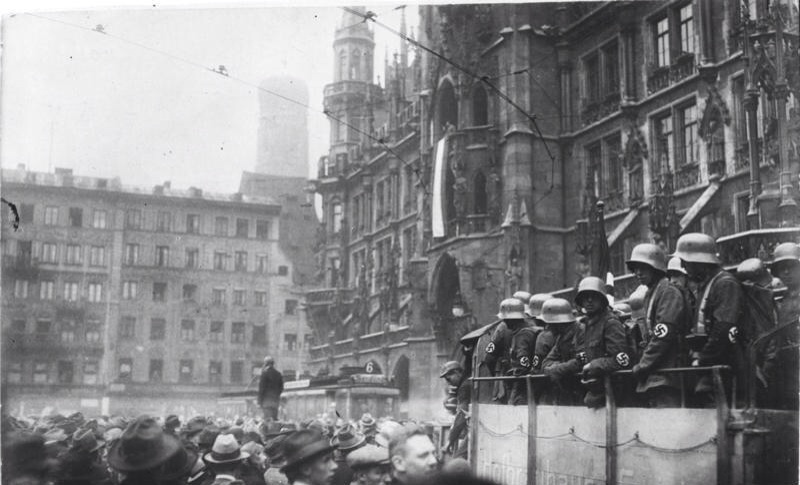
1 Comment

Filed under History, nazi germany, philosophy

D-Day at 70 Years and Forever: Courage, Sacrifice and Reconciliation…

d-day-opener1Omaha Beach

“We are on this Earth for only a moment in time.  And fewer of us have parents and grandparents to tell us about what the veterans of D-Day did here 70 years ago.  As I was landing on Marine One, I told my staff, I don’t think there’s a time where I miss my grandfather more, where I’d be more happy to have him here, than this day.  So we have to tell their stories for them.  We have to do our best to uphold in our own lives the values that they were prepared to die for.  We have to honor those who carry forward that legacy, recognizing that people cannot live in freedom unless free people are prepared to die for it.” President Barack Obama at the 70th Anniversary of the D-Day Landings, June 6th 2014

Seventy years ago the liberation of France began on the beaches of Normandy.  Soldiers from 6 Allied Infantry and 3 Airborne Divisions supported by an Armada of over 5000 ships and landing craft and several thousand aircraft braved weather, heavy seas and in places fierce German resistance to gain the foothold on beaches named Omaha, Utah, Gold, Sword and Juno.  Over the next seven weeks the Allied soldiers advanced yard by yard through the hedgerows and villages of Normandy against ferocious German resistance before they were able to break out of the lodgement area and begin the drive across France.

dday371

The fighting was bloody, most American, British and Canadian infantry battalions and regiments suffered nearly 100% casualty rates in Normandy.  Replacements were fed in at a cyclic rate to make up the losses even as fresh divisions flowed ashore, but the losses were terrible.  By the time the landings took place, the British having been at war for nearly five years were bled out.  They had little left to replace their losses.  From Normandy on the British were losing combat power at a rate that they could not make up.

For the Americans there was another problem.  The US High command decided to limit the Army to 90 Divisions.  Many of these were committed to the Pacific and Mediterranean theaters.   Likewise, American Infantry units were generally made up of the lowest caliber of recruits, led often by the poorest officers, the best went to either the Air Corps or technical branches of the Army.

Now this is not to criticize veterans, but it is a factor in the campaign.  Most US Infantry Divisions with the exceptions of those previously blooded in North Africa and Sicily often performed badly in action.  Some, after being manhandled by the Germans had their leadership replaced and became excellent combat units.  However, every new division that arrived in France after D-Day always got the worst of their initial engagement against German forces.

While performance suffered there was another problem for the Americans.  With the limitation in number of divisions, they stopped building infantry divisions, upon whom the bulk of the campaign depended. Thus they had little in the way of trained infantry replacements to make up heavy losses in Normandy.  By late 1944 during the Battle of the Bulge the American infantry crisis was so bad that 30,000 Air Corps candidates were trained as infantry and soldiers support units such as Ant-Aircraft battalions were used to bolster infantry units.

tiger2falaise16hh1

Had the Germans been able to hold out and had they not been bled white by the Red Army on the Easter Front, had they not lost the nearly their entire Army Group Center in the Red Army offensive of 1944 it is conceivable that the British and American offensive in the West would have ground to a halt for lank of infantry in 1945.  In spite of this there was no lack of individual courage among the troops engaged; the courage and sacrifice of all who fought there should not be forgotten.

caen_ruins1The Ruins of Caen

The human toll among the combatants both Allied and German, as well as the local populace was especially traumatic.  While the American, Canadian and British people are keen to remember the sacrifices made by our soldiers we often forget the toll among the French civilian population of Normandy as well as the German soldiers, mostly conscripts, sacrificed by the Nazi regime.  Normandy suffered more than any part of France during the liberation.  In the months leading up to D-Day Allied Air Forces unleashed hell on Normandy to attempt to lessen potential German resistance.  The Allied Naval bombardment added to the carnage ashore and once the campaign began the combined fires of both Allied and German forces devastated the region.  Whole cites such as Caen were destroyed by Allied Air forces and an estimated 30,000 French civilians were killed during the Normandy campaign, 3000 on D-Day alone.  I think it can be said that the blood of the civilians of Normandy was shed for the freedom of all of France.

Normandie, Fallschirmjäger mit MG 42

The campaign in Normandy was one of the most viciously contested in western military history.  German forces, especially Paratroops of the 2nd, 3rd, 5th and 6th Fallschirmjager Divisions, German Army Panzer Divisions such as the 2nd, 21st, 116th and Panzer Lehr and those of the Waffen-SS, especially the 1st, 2nd and 12th SS Panzer Divisions held the line against ever increasing Allied forces.  As they sacrificed themselves Hitler refused to commit more forces to Normandy and insisted that his Army contest every meter of ground.  He forbade his commanders to withdraw to more defensible positions along the Seine.

Hitler’s decisions actually shortened the campaign.  Whatever the crimes of the Hitler Regime and Nazism, which were among the most heinous in history, one can never question the valor, courage and sacrifice of ordinary German soldiers.  For those Americans who lump all Germans who fought in World War II with the evil of the Nazi regime, please do not forget this fact:  There are those today, even in this country that make the same charge against Americans who have fought in Iraq and those at home and abroad who have labeled the US as an aggressor nation.  When you judge others, know that the same standard will be applied to you someday. It is as Justice Robert Jackson who served as the Chief Prosecutor at the Nuremberg War Crimes Tribunal wrote:

“If certain acts of violation of treaties are crimes, they are crimes whether the United States does them or whether Germany does them, and we are not prepared to lay down a rule of criminal conduct against others which we would not be willing to have invoked against us.”

Normandy was a near run thing for the Allies.  First the weather almost delayed it by 2 to 4 weeks.  Had that happened the Germans might have been even better prepared to meet the invasion.  Likewise, the Red Army’s devastating offensive which annihilated Army Group Center in June kept the Germans from transferring additional forces from the Russian Front to Normandy.  On D-Day itself there were a number of times where Lady Luck, or maybe the Deity Herself, saved the Allies from disaster.

Any person who has seen Saving Private Ryan, The Longest Day or Band of Brothers knows a little bit about how close Overlord came to failure.  Allied Airborne units were dispersed throughout the region after they drooped.  Many units were not fully operational for more than a day as they sought to organize themselves and gather their troops.  At Omaha Beach the Americans had not counted on the presence of the first rate German 352nd Infantry Division.  This division, despite being pounded by naval and air forces almost cause General Bradley to withdraw from Omaha.  At Utah the soldiers of the 4th Infantry division escaped a similar mauling by landing on the wrong beach.  Had they landed at the planned beaches they would have ran into the same kind of resistance from well dug in German forces.  At Gold Juno and Sword British forces benefited from confusion in the German command which kept the 21st Panzer Division from descending on the British forces and quite possibly splitting the British zones.

The Allies benefited from the absence of Field Marshall Erwin Rommel, Commander of Army Group B who because of the ad weather assumed no invasion was possible and traveled to German to celebrate his wife’s birthday.  Finally, and perhaps most important they benefited by Hitler’s refusal to immediately commit forces, including his Panzer reserve to defeat the invasion at the beachhead.

For those who fought in Normandy and those civilians who lived through it the memories are still vivid. Many suffer the effects of PTSD, grief and other wounds, physical, emotional and spiritual.  When one is exposed to the danger and destruction of war, the smell of death, the sight of burned out cities, vehicles and the suffering of the wounded and dying, it makes for a lifetime of often painful memories.

For some of the German, British and American veterans, the struggle in Normandy has given way to long lasting friendships.  Many of those who fought against the Allied onslaught became fast friends after the war. Those who fought against each other were soon allies as part of NATO and soldiers of nations which were once bitter enemies serve together in harm’s way in Afghanistan.  The generation that fought at Normandy is rapidly passing away, their numbers ever dwindling they remain a witness to courage, sacrifice and reconciliation.

In the end it is reconciliation and healing that matters. Some scars of war never pass away; some memories are far too painful to release.  Yet we strive to reconcile.  In 2002 while deployed at sea for Operation Enduring Freedom I was an advisor to a boarding team from my ship.  It was our job to make sure that impounded ships which were breaking the UN embargo on Iraq were not in danger of sinking, and that their crews had food, water and medical care.  Since many of these ships remained at anchor for 2-4 weeks in the heat of the Arabian Gulf, this was important.

The delays imposed by UN rules sometimes meant that the sailors of these ships grew resentful.  It was my job to spend time with the Master’s of these ships to keep things calm and work out any issues that arose.  On one of these ships I met an Iraqi merchant skipper.  The man was well traveled, educated in the U.K. in the 1960s and in his career a frequent visitor to the US. In 1990 he was the senior captain of the Kuwaiti shipping line.  Then Saddam Hussein invaded Kuwait.  As a result of this when Kuwait was liberated he lost his job.  His nation was an international pariah.  Since his life was the sea he took up the only job possible to support his family, what he knew best, captaining ships.  He was most apologetic for the trouble that he and others like him caused us.  We shared much during those visits.   One of his daughters was in medical school and other children in university.  He longed for the day when Iraq would be free.  On our last talk before his ship was released he remarked to me “I hope one day we will meet again.  Maybe someday like the American, British and German soldiers after the war, we can meet in a pub, share a drink and be friends.” 

dinner-w-bg-sabah1Me with Iraqi General Sabah in his Quarters in Ramadi 2007

I too pray for that, especially after my tour in Al Anbar five years after I encountered that Iraqi Merchant Captain.  Maybe someday we will. I thought of him almost every day that I was in Iraq. I only hope that he and his family have survived the war, the continuing violence in Iraq and are doing well. There is hardly a day that goes by that I do not think of this man or the Iraqis that I had the honor of serving alongside in Al Anbar in 2007 and 2008.

President Obama remarked in Normandy last week about the veterans of the 9-11 Generation of service members, of which I and so many others like me are part:

“And this generation — this 9/11 Generation of service members — they, too, felt something.  They answered some call; they said “I will go.”  They, too, chose to serve a cause that’s greater than self — many even after they knew they’d be sent into harm’s way.  And for more than a decade, they have endured tour after tour.”

God bless all those who fought at Normandy and give your peace to all who have served since then. Be with our troops as they serve in Afghanistan. Heal the wounds of war and bring your peace to the nations. Amen

Peace, Steve+
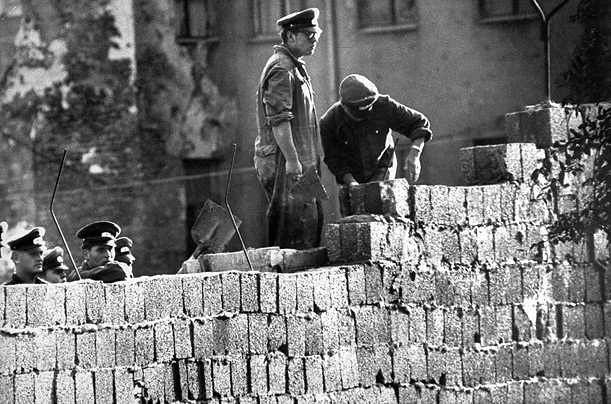
1 Comment

Filed under History, iraq,afghanistan, Military, News and current events, world war two in europe