Tag Archives: army of the potomac

A Spirit of Unbelief: Confederates Before Gettysburg

Lieutenant General A. P. Hill

Friends of Padre Steve’s World,

I’m hoping to take a few days off from writing about current events and spend a few days reposting some of my writings about the Battle of Gettysburg.

Peace,

Padre Steve+

When Robert E. Lee learned of the Army of the Potomac’s presence north of the Potomac River he ordered his widely dispersed army concentrate near Cashtown and Gettysburg. It was a complicated movement that involved at least five major operations: the shift of the bulk of Ewell’s Second Corps from its planned attack on Harrisburg, the redirection of Early’s division east from its position on the Susquehanna to the west, the movement of Hill’s Third Corps from the area around Cashtown to a position east of Gettysburg, Longstreet’s First Corps north to Chambersburg and Cashtown and the cavalry brigades of Beverly Robertson, Grumble Jones and John Imboden which were to join the army in Pennsylvania. The movement “would take at least two days – the 29th and the 30th of June – and perhaps more…the complete its concentration, especially since the rains had “made the roads very muddy,” forcing “the infantry” to march off the roads….” [1]

Lieutenant General A.P. Hill’s Third Corps that was nearest of Lee’s major units to Cashtown and Gettysburg. Major General Harry Heth’s division led the corps and arrived at Cashtown on June 29th. His division was followed by that of Major General Dorsey Pender which arrived on the 30th. Hill ordered his last division under the command of Major General Richard Anderson to remain behind at “Fayetteville until July 1, when he would join the rest at Cashtown.” [2]

Cashtown was important as a road junction and because it “was situated at one of the few gaps in the Pennsylvania Mountains” and because one of the roads emanating from it “snaked eight miles to another community called Gettysburg.” [3] However the order to concentrate the army at Cashtown presented its own problems. First was the matter of forage. There was not enough room for all the units ordered to Cashtown to have adequate areas to forage, as:

“each division would (by the standard required of nineteenth-century armies) require a circle twelve and a half miles around its encampments to forage (for water, firewood, and feed for men and horses); one single regiment could denuded an acre of woodland just for firewood every three days.” [4]

Likewise, because of the limited road network, Cashtown was becoming a choke point which as his units closed in slowed their movement and created massive traffic problems and confusion. Hill ordered Heth’s division to take the lead and advance to Cashtown on the 29th. The units of Hill’s corps had to endure heavy rains on the 29th which slowed their march and Heth halted at Cashtown knowing that the army would concentrate there while Pender’s division moved into the area his division had vacated.

Early in the morning of June 30th Harry Heth decided to undertake a foraging expedition to Gettysburg to “search the town for army supplies (shoes especially), and to return the same day.” [5] It was the first in a series of miscalculations that brought Lee’s army into a general engagement that Lee wished to avoid and it is hard to comprehend in light of Lee’s orders not to precipitate a fight.

However, the expedition had taken a toll on the soldiers, especially in terms of shoes, clothes and equipment. The “long march over the hard macadam roads of the North had played havoc with the scraggly foot coverings of Lee’s men.” [6] After muster on the morning of June 30th Heth ordered Johnston Pettigrew’s “brigade to Gettysburg in search of supplies, especially badly needed shoes, which were badly needed by his the men of his division.” Heth, for a reason he never elaborated on decided that there must be shoes in Gettysburg. Perhaps he did not know that the town had been picked clean by John Gordon’s brigade of Jubal Early’s division just a few days before, but for whatever reason he believed this to be the case.

Hill’s Third Corps had been formed as part of the reorganization of the army following Stonewall Jackson’s death after the Battle of Chancellorsville. Hill had a stellar reputation as a division commander; his “Light Division” had distinguished itself on numerous occasions, especially at Antietam where its timely arrival after a hard forced march from Harper’s Ferry helped save Lee’s army late in the battle. At Chancellorsville Hill briefly succeeded Jackson until he too was wounded.

Hill was recommended for promotion to Lieutenant General and command of the new Third Corps by Lee on May 24th 1863. He was promoted over the heads of both Harvey Hill and Lafayette McLaws. The move displeased Longstreet who considered Lafayette McLaws “better qualified for the job.” Likewise there were others who felt that the command should have gone to Harvey Hill, now commanding the Department of North Carolina who’s “record was as good as that of Stonewall Jackson…but, not being a Virginian, he was not so well advertised.” [7]

Ambrose Powell Hill was slightly built and high strung. “Intense about everything” Hill was “one of the army’s intense disbelievers in slavery.” [8] Hill was an 1847 graduate of West Point and briefly served in Mexico but saw no combat. He spent some time in the Seminole wars but due to frequent bouts of ill-health he spent much of his career in garrison duty along the East Coast. Since he was prone to sickness he was assigned to the office of Coastal Survey, a Navy command from 1855 through 1861. Despite pleas from his superiors and his own opposition to secession and slavery, Hill resigned his commission just before Virginia’s secession.

At the outbreak of the war he “received his commission as colonel, and soon trained one of Johnston’s best regiments in the Valley.” [9] He commanded a brigade under Longstreet on the Peninsula and was promoted to Major General and command of the Light Division in May 1862, leading it with distinction, especially at Antietam where his march from Harper’s Ferry and timely arrival on the afternoon of September 17th saved the army of Northern Virginia from utter and complete destruction. He was plagued by health problems which had even delayed his graduation from West Point, health issues that would arise on the first day at Gettysburg.

Hill’s Third Corps was emblematic of the “makeshift nature of the reorganization of the whole army.” [10] It was composed of three divisions. His best and most experienced division was that of the recently promoted and hard fighting Major General Dorsey Pender. Pender’s division was built around four excellent brigades from Hill’s old “Light Division” one of which Pender had commanded before his promotion. Hill had strongly recommended Pender’s promotion during the reorganization, a proposal which was accepted by Lee. Pender, though a fierce fighter and excellent leader, found command of a division to be a heavy burden. He was “an intelligent, reflective man, deeply religious and guided by a strong sense of duty….” [11]

Hill’s second experienced division was that of Major General Richard Anderson. This division had been transferred from Longstreet’s First Corps during the reorganization. Longstreet resented losing the division to Hill, with who he had previously run afoul and this was yet another issue which failed to endear Hill to Longstreet. [12]

The unassuming Anderson had distinguished himself as a brigade and division commander in Longstreet’s corps, but in “an army of prima donnas, he was a self-effacing man, neither seeking praise for himself nor winning support by bestowing it on others.” [13] At Chancellorsville Anderson fought admirably and Lee wrote that Anderson was “distinguished for the promptness, courage and skill with which he and his division executed every order.” [14] With four seasoned brigades under excellent commanders it was a good addition to the corps, although the transition from Longstreet’s stolid and cautious style of command to Hill’s impetuous style introduced “another incalculable of the reshuffled army.” [15]

Major General Harry Heth’s division was the final infantry division assigned to Third Corps. The division was new and had was cobbled together from two brigades of Hill’s old Light Division and “the two new brigades that Jefferson Davis had forced on an already disrupted army organization.” [16] The organization of this division as well as its leadership would be problematic in the days to come, especially on June 30th and July 1st 1863. The hasty and makeshift organization under leaders who had not served together, many of who were new to command, as well as units which had not fought together spelled trouble.

Harry Heth, like Dorsey Pender was also newly promoted to his grade and the action at Gettysburg would be his first test in division command. Heth was a native Virginian. He came from a family that well connected both socially and politically. He had a social charm had “many friends and bound new acquaintances to him” readily. [17] Heth was a cousin of George Pickett. He was a West Point graduate and classmate of Hill. At West Point Heth had an undistinguished academic career and graduated last in the class of 1847. His career in the ante-bellum army was typical of many officers, he served “credibly in an 1855 fight with Sioux Indians” but his real claim to fame was in authoring the army’s marksmanship manual which was published in 1858. [18]

Major General Harry Heth

Heth’s career with the Confederate army serving in western Virginia was undistinguished but he was a protégé of Robert E. Lee who recommended him as a brigade commander to Jackson before Chancellorsville. Tradition states that of all his generals that Heth was the only one “whom Lee called by his first name.” [19] A.P. Hill when writing Lee about the choice of a successor for the Light Division noted that Heth was “a most excellent officer and gallant soldier” but in the coming campaign “my division under him, will not be half as effective as under Pender.” [20] Douglas Southall Freeman noted that Heth was “doomed to be one of those good soldiers…who consistently have bad luck.” [21]

Heth’s division was composed of two depleted brigades from the Light Division which had taken heavy casualties at Chancellorsville. One brigade, commanded by the hard fighting former regular army officer Brigadier General James Archer. Archer was from Maryland and a graduate of Princeton University who had given up a law practice to join the army. Described as a “little gamecock” who “had no sense of fear” [22] Archer had saved the Confederate line at Fredericksburg leading a desperate counterattack at Prospect Hill. The brigade was composed of four veteran regiments, but was now down to barely 1200 soldiers in the ranks by the time it arrived at Cashtown. However, the brigade which was recruited from Alabama and Tennessee was “well led and had a fine combat reputation.”

But the second brigade was more problematic. This was the Virginia brigade under the command of “the plodding, uninspiring Colonel John Brockenbrough.” [23] Brockenbrough was an “1850 of the Virginia Military Institute and a farmer,” who had “entered the Confederate service as Colonel of the 40th (Virginia) in May 1861.” [24] The brigade had once been considered one of the best in the army had deteriorated in quality following the wounding of its first commander Brigadier General Charles Field. Heth took command of it at Chancellorsville where both he and the brigade performed well. The brigade had taken very heavy casualties and now was reduced to under 1000 effectives. When Heth was promoted the lack of qualified officers left it under the command of its senior colonel, John Brockenbrough.[25] Lee did not consider Brockenbrough “suited for promotion” but “could be counted on to keep together a command sadly reduced in numbers.” [26]

Heth’s  third brigade came from Mississippi and North Carolina and was commanded by the “stuffy and ambitious” [27] Brigadier General Joe Davis.  Davis’s uncle was President Jefferson Davis. Davis served on his uncle’s staff for months during the early part of the war but had no combat experience, never leading as much as a company. [28] One author noted that Davis’s promotion to Brigadier General was  “as unadulterated an instance of nepotism as the record of the Confederacy offers.” [29] Davis’s subordinate commanders were no better; one of them, William Magruder was so incompetent that J.E.B. Stuart suggested that “he have his commission revoked.” In Magruder’s outfit only one of the nine field grade officers in his brigade had military training, and that was because he was a graduate of the Naval Academy, hardly fitting for service in the infantry. [30] This brigade was also a makeshift operation with two veteran regiments including the 11th Mississippi which had “gone through blood and fire together on the Peninsula through Antietam.” [31] After Antietam, these units were then paired with two new regiments and a new politically connected commander and sent to the backwater of North Carolina where they saw no action. The veteran regiments “mistrusted not only their commander, but the reliability of its yet untested units.” [32]

Brigadier General Johnston Pettigrew

Heth’s largest brigade was new to the army. Commanded by the North Carolina academic Brigadier General Johnston Pettigrew it had no combat experience. Pettigrew himself was considered a strong leader. He had been badly wounded at Seven Pines and thinking his wound mortal “he refused to permit his men to leave the ranks to carry him to the rear.” [33] He was captured but later paroled and returned to the army to command a brigade later in the year.

Hill was under the impression that Meade’s army was still miles away, having just come from meeting Lee who assured him that “the enemy are still at Middleburg,” (Maryland) “and have not yet struck their tents.” [34] With that assurance Heth decided to use June 30th to send Pettigrew’s brigade on the foraging expedition to Gettysburg. An officer present noted that Heth instructed Pettigrew “to go to Gettysburg with three of his regiments present…and a number of wagons for the purpose of collecting commissary and quartermaster stores for the use of the army.[35]

However Heth did instruct Pettigrew in no uncertain terms not to “precipitate a fight” should he encounter “organized troops” of the Army of the Potomac. [36] Heth was specific in his report that “It was told to Pettigrew that he might find in the town in possession of a home guard,…but if, contrary to expectations, he should find any organized troops capable of making resistance., or any part of the Army of the Potomac, he should not attack it.” [37]

That in mind anyone with the slightest experience in handling troops has to ask the question as to why Heth would employ “so many men on a long, tiring march, especially as without a cavalry escort he took the risk of sending them into a trap” when his “objects hardly justified” using such a large force. [38] Edwin Coddington is particularly critical of Heth in this regard.

Likewise it has to be asked why the next day in light of Lee’s standing orders not to provoke an engagement that Hill would send two divisions, two thirds of his corps on what was supposedly reconnaissance mission. Some have said that Hill would have had to move to Gettysburg on July 1st anyway due to forage needs of the army, [39] but this is not indicated in any of Hill or Heth’s reports.

As his troops neared Gettysburg Pettigrew observed the Federal cavalry of Buford’s 1st Cavalry Division as they neared the town. He received another report “indicating that drumming could be heard in the distance – which might mean infantry nearby, since generally cavalry generally used only bugles.” [40] He then prudently and in accordance with his orders not to precipitate a fight “elected to withdraw rather than risk battle with a foe of unknown size and composition.” [41] His troops began their retrograde at 11 a.m. leaving Buford’s cavalry to occupy the town at ridges. One Confederate wrote “in coming in contact with the enemy, had quite a little brush, but being under orders not to bring a general engagement fell back, followed by the enemy.” [42]

Upon returning Pettigrew told Hill and Heth that “he was sure that the force occupying Gettysburg was a part of the Army of the Potomac” but Hill and Heth discounted Pettigrew’s report. [43] “Heth did not think highly of such wariness” and “Hill agreed with Heth” [44] Hill believed that nothing was in Gettysburg “except possibly a cavalry vedette.” [45] Hill was not persuaded by Pettigrew or Pettigrew’s aide Lieutenant Louis Young who had previously served under both Hill and Pender. Young reported that the “troops that he saw were veterans rather than Home Guards.” [46] Hill reiterated to both that he did not believe “that any portion of the Army of the Potomac was up” but then according to Young Hill “expressed the hope that it was, as this was the place he wanted it to be.” [47] 

Part of the issue was related to the fact that Pettigrew, though highly intelligent, and who had been an observer of wars in Europe was not a professional soldier. Likewise, since had was new to the Army of the Northern Virginia he was an unknown to both Hill and Heth. As such they dismissed his report. In their casual dismissal of Pettigrew’s report, the West Point Graduates Hill and Heth may have manifested an often typical “distain for citizen soldiers…a professional questioning a talented amateur’s observations” [48]

Pettigrew was “aghast at Hill’s nonchalant attitude” [49] while Young was dismayed and later recalled that “a spirit of unbelief” seemed to cloud the thinking of Hill and Heth. [50] In later years Young wrote that the “blindness in part seems to have come over our commanders, who slow to believe in the presence of an organized army of the enemy, thought that there must be a mistake in the report taken back by General Pettigrew.” [51]

Since neither man believed Pettigrew’s report, Heth asked Hill “whether Hill would have any objection to taking his division to Gettysburg again to get those shoes.” Hill replied “none in the world.” [52] It was to be a fateful decision, a decision that brought about a series of events which in turn led to the greatest battle even fought on the American continent.

Lee’s biographer and apologist Douglas Southall Freeman wrote “On those four words fate hung” [53] and in “that incautious spirit, Hill launched Harry Heth’s division down the Chambersburg Pike and into battle at Gettysburg.” [54]

Notes

[1] Guelzo, Allen C. Gettysburg: The Last Invasion Vintage Books a Division of Random House, New York 2013 p.128

[2] Coddington, Edwin B. The Gettysburg Campaign, A Study in Command A Touchstone Book, Simon and Shuster New York 1968 p.194

[3] Robertson, James I. Jr. General A.P. Hill: The Story of a Confederate Warrior Random House, New York 1987

[4] Ibid. Guelzo, Gettysburg: The Last Invasion p.128

[5] Ibid. Coddington, The Gettysburg Campaign, A Study in Command p. 263

[6] Ibid. Robertson A.P. Hill p.205

[7] Foote, Shelby, The Civil War, A Narrative. Volume Two Fredericksburg to Meridian Random House, New York 1963 p.453

[8] Ibid. Dowdy, Lee and His Men at Gettysburg: The Death of a Nation p.79

[9] Ibid. Freeman Lee’s Lieutenant’s a Study in Command p.109

[10] Ibid. Dowdy, Lee and His Men at Gettysburg: The Death of a Nation p.88

[11] Ibid. Dowdy, Lee and His Men at Gettysburg: The Death of a Nation p.85

[12] Ibid. Dowdy, Lee and His Men at Gettysburg: The Death of a Nation p.86

[13] Ibid. Dowdy, Lee and His Men at Gettysburg: The Death of a Nation p.86

[14] Ibid. Freeman Lee’s Lieutenant’s a Study in Command p.512

[15] Ibid. Dowdy, Lee and His Men at Gettysburg: The Death of a Nation p.86

[16] Ibid. Dowdy, Lee and His Men at Gettysburg: The Death of a Nation p.87

[17] Ibid. Freeman Lee’s Lieutenant’s a Study in Command p.527

[18] Krick, Robert K. Three Confederate Disasters on Oak Ridge: Failures of Brigade Leadership on the First Day of Gettysburg in The First Day at Gettysburg edited by Gallagher, Gary W. Kent State University Press, Kent Ohio 1992 p.96

[19] Ibid. Krick. Three Confederate Disasters on Oak Ridge p.96

[20] Ibid. Freeman Lee’s Lieutenant’s a Study in Command p.527

[21] Ibid. Freeman Lee’s Lieutenant’s a Study in Command p.46

[22] Ibid. Guelzo, Gettysburg: The Last Invasion p.134

[23] Sears, Stephen W. Gettysburg. Houghton Mifflin Co. Boston and New York 2003 p.55

[24] Pfanz Harry W. Gettysburg: The First Day University of North Carolina Press, Chapel Hill and London 2001 p.118

[25] Ibid. Dowdy, Lee and His Men at Gettysburg: The Death of a Nation p.87

[26] Ibid. Freeman Lee’s Lieutenant’s a Study in Command p.529

[27] Ibid. Guelzo, Gettysburg: The Last Invasion p.133

[28] Ibid. Freeman Lee’s Lieutenant’s a Study in Command p.533

[29] Ibid. Krick. Three Confederate Disasters on Oak Ridge p.99

[30] Ibid. Krick. Three Confederate Disasters on Oak Ridge p.101

[31] Ibid. Guelzo, Gettysburg: The Last Invasion p.134

[32] Ibid. Guelzo, Gettysburg: The Last Invasion p.134

[33] Ibid. Freeman Lee’s Lieutenant’s a Study in Command p.136

[34] Ibid. Guelzo, Gettysburg: The Last Invasion p.131

[35] Trudeau, Noah Andre. Gettysburg: A Testing of Courage, Harper Collins Publishers, New York 2002 p.128

[36] Ibid. Sears Gettysburg p.136

[37] Ibid. Trudeau Gettysburg: A Testing of Courage, p.129

[38] Ibid. Coddington, The Gettysburg Campaign, A Study in Command p. 263

[39] Ibid. Guelzo. Gettysburg: The Last Invasion p.131 This argument does have merit based on the considerations Guelzo lists but neither Hill, Heth or Lee make any mention of that need in their post battle reports.

[40] Ibid. Trudeau Gettysburg: A Testing of Courage, p.130

[41] Gallagher, Gary. Confederate Corps Leadership on the First Day at Gettysburg: A.P. Hill and Richard S. Ewell in a Difficult Debut in The First Day at Gettysburg edited by Gallagher, Gary W. Kent State University Press, Kent Ohio 1992 p.42

[42] Ibid. Trudeau Gettysburg: A Testing of Courage, p.135

[43] Ibid. Coddington, The Gettysburg Campaign, A Study in Command pp. 263-264

[44] Foote, Shelby, The Civil War, A Narrative. Volume Two Fredericksburg to Meridian Random House, New York 1963 p.465

[45] Ibid. Pfanz Gettysburg: The First Day p.27

[46] Ibid. Gallagher, Gary. Confederate Corps Leadership on the First Day at Gettysburg p.42

[47] Ibid. Pfanz. Gettysburg: The First Day p.27

[48] Ibid. Gallagher, Gary. Confederate Corps Leadership on the First Day at Gettysburg p.42

[49] Ibid. Guelzo. Gettysburg: The Last Invasion p.131

[50] Ibid. Coddington, The Gettysburg Campaign, A Study in Command p. 264

[51] Ibid Pfanz Gettysburg: The First Day p.27

[52] Ibid. Coddington, The Gettysburg Campaign, A Study in Command p. 264

[53] Ibid. Freeman Lee’s Lieutenant’s a Study in Command p. 563

[54] Ibid. Krick. Three Confederate Disasters on Oak Ridge p.94

5 Comments

Filed under civil war, Gettysburg, History, leadership, Military, us army

Tragic Heroes: Gouverneur Warren Part Four

Friends of Padre Steve’s World,

Going back to the leadership series and the fourth installment of my work dealing with Union Major General Gouverneur Warren.

Peace,

Padre Steve+

warren-and-staff

Warren With his Staff

Corps Command in Virginia and the Evidence of Combat Stress

Warren was promoted to be the acting commander of II Corps after Gettysburg as Hancock had been wounded and then was appointed to command V Corps.  He served well as a Corps commander, although his often “quick and sulphurous temper which he displayed in the Virginia campaign of 1864 worked against Warren by making him unnecessary enemies and dismaying his friends.” [1] Warren was so short tempered during the campaign, probably, due to the result of the strain of it that Colonel Charles Wainwright complained that Warren “had a screw loose and is not quite accountable for all his freaks.”  [2] In high command Warren’s “fellow officers respected his ability as an engineer, but disliked his arrogance and insolence. Warren’s temper was legendary, and when his anger boiled over he sputtered out profanities that, said one colleague, “made my hair stand on end.” [3] To be fair to Warren that last outburst followed the disaster inflicted by Grant on the army at Cold Harbor, when Grant threw it up against strongly entrenched Confederate troops with great loss. Warren who could not abide meaningless slaughter found it reprehensible.

The interesting thing about all the accounts of Warren’s temper being so violent is that they do not begin until after he is in Corps command, and he gives no hint of such anger and rage in his letters until after his experiences on the Peninsula, Second Manassas, Antietam, Fredericksburg and finally Gettysburg. During the Army of the Potomac’s inaction during the fall of 1863 it became clear that the war was taking a toll on Warren. Alcohol became a problem, so much that once after drinking a whisky punch with his staff he was “falling down drunk” and had to be told of his actions the following night by one of his staff members. [4]

His letters to Emily display a sense of depression and sometimes even despair. He wrote Emily:

“I repine a great deal. I begin to feel myself giving out in spirit. I need so to rest where I could be contented. So long now my life has been one continued worry or excitement that I am losing my elasticity and I am getting almost afraid for I am apprehensive that I cannot uphold my position…. Every day shows me more and more how this war is severing my old affiliations and making me lonely…here I sit all alone in this great camp (for so I feel) and the memory of my dear friends comes over me and I am morbidly depressed. Indeed I feel I am a very small man that I can endure no more, for I am well and not a prisoner…and have been honored more than I deserve. I have not the heart of a good soldier.” [5]

Since so many people that knew Warren after Gettysburg describe the fearsome and nearly volcanic nature of his temper we can accept that as a fact. Likewise his arrogant, insolent and even haughty attitude towards those that he believed himself to be intellectually superior is evident even during his early career as are his recurrent struggles with depression which only grew worse throughout the war and in following years.

Dr. Judith Herman, an associate Professor of Psychiatry at Harvard Medical School wrote:

“Traumatic events call into question basic human relationships. They breach the basic attachments of family, friendship, love and community. They shatter the construction of the self that is formed and sustained in relation to others. They undermine the belief systems that give meaning to human experience. They violate the victim’s faith in a natural or divine order and cast the victim into a state of existential crisis.” [6]

But it is only after the continued trauma that Warren experienced at Malvern Hill, Second Manassas, Antietam and Fredericksburg that we see the evidence of Warren’s anger, bitterness and rage becoming a major factor in his life and relationships. If we are to take into account the findings of modern science, medicine and psychiatry in relationship to the descriptions provided by Warren and those that knew him, we have to at least give serious consideration to the real possibility that Warren’s issues were caused by his experience of war and some type of resultant combat stress injury. This could include PTSD, Moral Injury, or possibly even changes brought about by a traumatic brain or concussive injury.

Jonathan Shay, a psychologist with many years of experience in dealing with veterans afflicted with PTSD wrote that “The social conditions that cause complex PTSD – persistent betrayal and rupture of community in mortal stakes situations of captivity – destroy thumos, destroy normal narcissism and undo character.” [7]

Dave Grossman writes about how such events can become what we now call “Character disorders”:

Character disorders include obsessional traits in which the soldier becomes fixated on certain actions or things; paranoid trends accompanied by irascibility, depression, anxiety, often taking on the tone of threats to his safety; schizoid trends leading to hypersensitivity and isolation; epileptoid character reactions accompanied by periodic rages…..What has happened to the soldier is an altering of his fundamental personality.” [8]

Shay writes about what happens to character when it is damaged by war, and the spectrum of clinical manifestations of an injury to character seen in many combat veterans. Among the manifestation that Shay describes, a good number which are present in what we know about Warren. These include: Demoralization, self-loathing, a sense of worthlessness, pervasive “raw” vulnerability and feeling conspicuous, social withdraw irritability, rage at small slights, disappointments and lapses, coercive attempts to establish power dominance. [9]

Warren’s repeated writings about his isolation; depression and despair to Emily are powerful. He writes Emily in words that he shares with no one else. In those letters he conveys the depth of his injury, an injury that has shaken his faith in himself, his leaders and brought about an existential crisis. It is an injury that with a man like Ulysses S. Grant in command that he could not voice to anyone in the army for fear of what we would now call the stigma of PTSD that is experienced by so many combat veterans. Instead it comes out in a drive to ensure that his soldiers are not sacrificed in senseless battles, a sense of his own unworthiness, and a sense that he has been shunted aside, even betrayed by those commanding the army, including his former friend Meade as well as Grant. His letter to Emily that he wrote in 1866 describes the effects of PTSD and Moral Injury almost perfectly:

“I wish I did not dream that much. They make me sometimes dread to go to sleep. Scenes from the war, are so constantly recalled, with bitter feelings I wish to never experience again. Lies, vanity, treachery, and carnage.” [10]

Notes

[1] Ibid. Jordan Happiness is Not My Companion: The Life of G.K. Warren p.315

[2] Huntington, Tom Searching for George Gordon Meade: the Forgotten Victor of Gettysburg Stackpole Books Mechanicsburg PA 2013 p.305

[3] Ibid. LaFantasie Twilight at Little Round Top p.73

[4] Ibid. Jordan Happiness is Not My Companion: The Life of G.K. Warren p.104

[5] Ibid. Jordan Happiness is Not My Companion: The Life of G.K. Warren p.106

[6] Herman, Judith Trauma and Recovery: The Aftermath of Violence – From Domestic Abuse to Political Terror Basic Books, a member of Perseus Books Group. New York 1992 and 1997 p.51

[7] Shay, Jonathan Odysseus in America: Combat Trauma and the Trials of Homecoming Scribner, New York and London 2002 p.160

[8] Grossman, Dave On Killing Back Bay Books Little, Brown and Company New York, Boston and London 1995 and 1996 p.48 An epileptoid personality pattern is one that includes irritability, selfishness, aggressiveness and being uncooperative. All of these are demonstrated in the changes that Warren exhibits between 1862 and 1865

[9] Ibid. Shay Odysseus in America pp.160-161

[10] Ibid. Jordan Happiness is Not My Companion: the Life of G.K Warren p.249

Leave a comment

Filed under civil war, History, leadership, mental health, Military, PTSD

The Road to Gettysburg: Meade Takes Command

general-george-meade

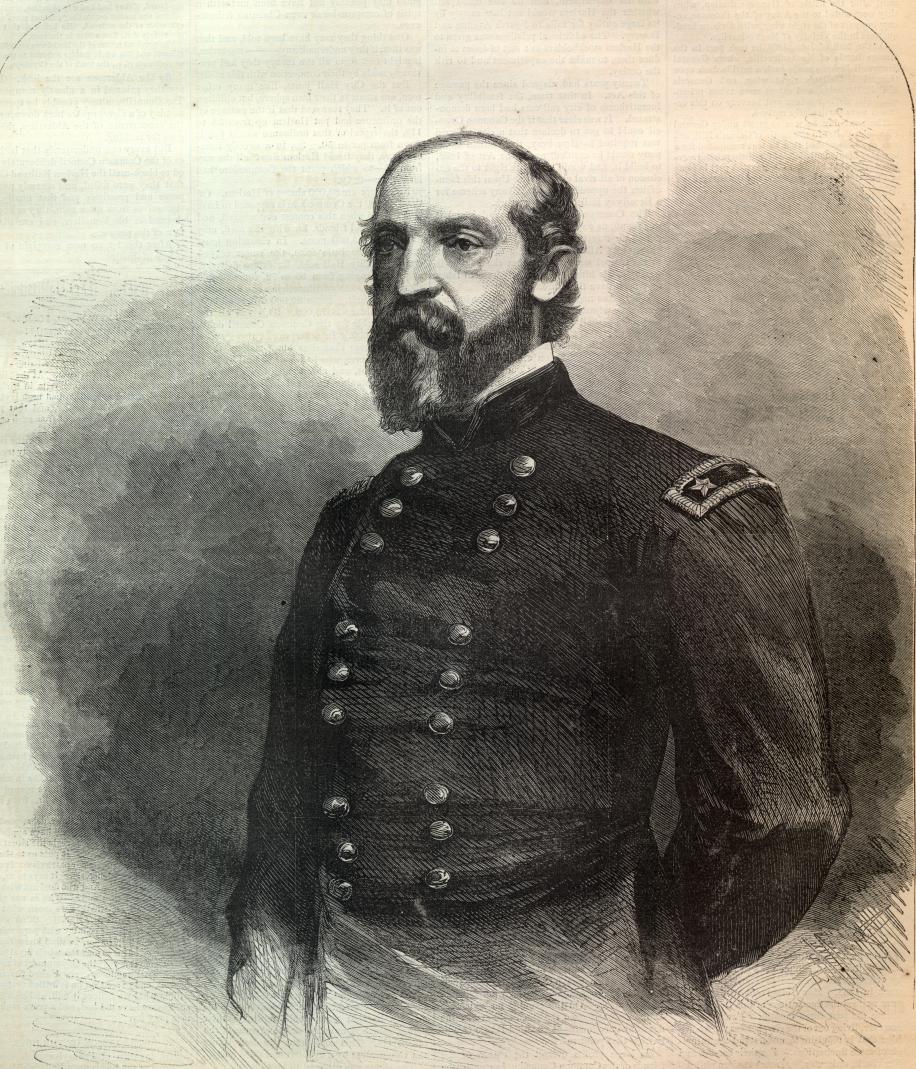
Major General George Gordon Meade

Friends of Padre Steve’s World

For those that have followed my writing for some time you know that I teach military history and ethics at the Joint Forces Staff College. One of the great joys that I have is leading the Gettysburg Staff Ride, which is an optional event for students that want to participate. When I took the position here I took some of my older writings on Gettysburg and put them into a student study guide and text. That was two years ago. Then the text was about 70 pages long. It is now about 870 pages long and eventually I hope to get it published. When and if that happens I expect it to become two, and possibly three books.

This is the second of a series of articles that I will be posting potions of a chapter that I have rewritten about the surprises that various commanders experienced on June 28th 1863. The lessons for today are that war, any war, is the realm of chance, as such, surprises always happen. It is said that no plan survives first contact with the enemy, but some plans don’t survive that long. As you read this don’t just look at the events, but look at the people, and their reaction to the surprises that they encountered, for that is where we come to understand history.

So even if you are not a Civil War buff, or even a history buff, take the time to look at the people, their actions, and the things that made them who they were, and influenced what they did. History is about people.

So please enjoy,

Peace

Padre Steve+

About the time that Lee was confidently discussing the campaign with Isaac Trimble Major General George Meade, commander of V Corps the night of June 27th George Meade was simply one of seven Corps Commanders in the Army of the Potomac, but before the night was over he would be its commander on the eve of the most decisive battle of the war in the east.

George Gordon Meade was the son of an American merchant who served as the naval agent for the U.S. government in that country until 1817. Meade was born in Cadiz on December 31st 1815 and grew up in Pennsylvania and Maryland. His father had been ruined financially in Spain when supporting the Spanish government by loaning it over $375,000 in the Peninsular War against Napoleon. Meade’s father remained in Spain to try to recover his lost fortune he sent his wife and children back to the United States where the family lived on the margins of poverty. The money should have been reimbursed to him under the terms of the Treaty of Florida “which obligated the American government to assume any Spanish obligations to American citizens.” However “the U.S. government discovered loopholes that it allowed it to dodge all responsibility to an increasingly bitter and disappointed Richard Meade.” [1] It was a crushing blow to the elder Meade.

Meade’s father returned to the U.S. and the family moved from Philadelphia to Washington D.C. were Richard Meade, “worn down physically and mentally by his struggles” [2] died in 1828 when George was just 12 years old and attending “a boarding-school at Mount Airy, a few miles from Philadelphia, known as the American Classical and Military Lyceum.” [3] It was here that Meade got his first taste of military discipline as the school was modeled after West Point and in addition to their studies the students participated in military drill.

At the Lyceum, Meade was known for being “an amiable boy, full of life, but rather disposed to avoid the rough-and-tumble frolics of youths his age; quick at his lessons, and popular with both teachers and scholars.” [4] The family ran out of money to keep him at the school and he returned to Baltimore where he was enrolled in the Mount Hope School in Baltimore as his mother sought to gain him an appointment at West Point. At Mount Hope he studied Latin, English composition and mathematics. A certificate from the headmaster of the school obtained by his mother discussed Meade’s academic acumen.

“The knowledge he has gained…is far greater than is usually acquired by young men of his age in a single year. He possesses an uncommon quickness of perception and is, therefore, capable of acquiring knowledge with great rapidity….” [5]

Meade entered West Point in 1831 when he was just sixteen years old after being nominated by Andrew Jackson. The financial condition of his family was mostly responsible for this as “West Point was the one place where the young Meade could obtain a free college education.” [6] At West Point Meade did not excel in his studies and due to “his lack of attention to details of dress and equipment and apparent disinterest in drill, demerits began to pile up in his third year.” [7] While he graduated in the top half of his class his performance in some subjects such as military engineering gave no indication of how he would excel later in life. He graduated nineteenth of fifty-six in the class of 1835.

Unlike many classes which were crowded with men destined for greatness, there were few notables in this class. Other than Meade there was Lincoln’s Postmaster General Montgomery Blair, Brigadier General Herman Haupt, who directed the transportation system of the Union army in the East during the war and John Pemberton, who as a Confederate general would surrender Vicksburg to Grant as Meade was defeating Lee.

Meade was commissioned as a Brevet Second Lieutenant and assigned to the artillery. He spent most of that year in Florida where he was sick and assigned less demanding duties. He resigned his commission after serving his one year obligation and entered civilian life as a topographic engineer. Such was not an unusual occurrence in the tiny army of that era, as “over the previous two years more than a hundred West Point graduates had left the army.[8]

He found civilian employment with the Bureau of Topographical Engineers and over the next five years took part in surveying the Texas-Louisiana boundary line, followed by an assignment on the Mississippi River Delta. He finally worked on the survey of the Canadian-United States boundary, an area of perpetual dispute from the time of American independence.

It was during his time of civilian work with the Bureau that he met and married his wife Margaret Sergeant Wise, the daughter of Congressman John Sergeant, who had been the running mate of Henry Clay in the 1832 presidential election. The young woman was well educated and “developed a wide range of cultural interests including facility in four languages and proficiency at the piano.” [9] They had had seven children together, three sons and four daughters and through much of his career was forced to raise the children alone. Despite this, the marriage appeared to be happy and would last until his death in 1872.

In 1842 Congress passed a measure which limited topographic survey to officers of the Topographic Engineer Corps. For Meade this was a godsend, for with the assistance of Margaret’s brother-in-law Congressman Henry A. Wise of Virginia Meade was reappointed as a Second Lieutenant in the Topographic Engineers on May 19th 1842. He had lost nearly six years of seniority, but “he had fairly earned his rank of Second Lieutenant of Topographic Engineers.” [10] His first assignments included surveying the Aroostook River in Maine and the design and construction of a lighthouse for Brandywine Shoals, Delaware.

In 1845 with a war with Mexico looming due to the annexation of Texas, Lieutenant Meade reported to the headquarters of General Zachary Taylor in Corpus Christi. Here he conducted surveys of the Nueces River and other inland waterways. Meade accompanied Taylor to the disputed border area around between the Nueces and the Rio Grande where some of the first actions of the war took place in 1846. During the war he served in Mexico “principally with Taylor’s army, where he won a brevet for gallantry at Monterrey.” [11] During his time in Texas and Mexico Meade became disgusted with the political machinations that surrounded the war and in a letter home he wrote “the mighty engine of influence, that curse of our country, which forces party politics into everything.” [12]

Meade was transferred to the army of Winfield Scott where he was no longer the senior Topographic Engineer but the junior. He chafed at his inactivity with Scott and complained about it. Major Turnbull, the senior Topographic Engineer told Scott that Meade was “Meade was unexpectedly with the army and that he had quite enough officers without him.” [13] In light of this Scott sent Meade back, where he returned to building lighthouses missing the bulk of the campaign. That assignment was cut short in 1849 when Meade was ordered to Florida “amid an outbreak of violence by the Seminoles.” [14] In Florida he survey a line of forts and upon completion returned to lighthouse work at Brandywine Shoals and then in Key Largo.

When the Army established the Lighthouse Board, Meade was appointed t the Seventh District where he continued his work in Florida. Among the lighthouses that he built was the Sand Key lighthouse at Key West which stands to this day. Meade was still just a First Lieutenant but he was rising in terms of the work that he was doing and was “promoted to superintendent of the Seventh Lighthouse District.” [15] He took over the Fourth District as well when its superintendent was transferred to the West Coast. In this work Meade prospered. The most impressive monument to Meade’s work is the 163 foot tall Barnegat Bay Light in New Jersey. Meade was justifiably proud of his accomplishments and after the war noted that “I have always thought my services in the construction of lighthouses, and subsequently on the Lake Survey were of considerable importance.” [16]

In 1856 Meade was promoted to Captain and given charge over the vast Great Lakes survey. In Meade’s words he work involved:

“the delineation of the shores, and bottom of the lakes, bringing to light the hidden dangers; obtaining the evidence and capacity and depth of water in all the harbors and rivers and consequently the most practical mode of improving them; furnishing the evidence of the wants of navigation in reference to lighthouses, beacons and buoys and the proper sites for same.” [17]

Meade had to lobby Congress for funding and expanded the number of officers and personnel involved until by 1860 he had ten teams, some working on land and some aboard ships with a budget which he expanded from $25,000 to $75,000 in three years. It was a remarkable job, but then Meade had matured as an officer and as a leader.

Meade was still involved with this mission when Fort Sumter was attacked. To the consternation of local leaders in Detroit, he and his officers refused to be part of a mass meeting where the locals were insisting the Federal officers publically renew their oaths. This decision was part of Meade’s innate conservatism. Meade felt that doing so without the order of the War Department was not within his prevue.

Meade was not a firebrand, conservative and logical thought that the best course would for both sides to step back and catch their breath. He was “dismayed at the arrogance of the fire-eaters, to whom Southern secession seemed like a simple riot which would be suppressed by the mere appearance of Federal troops.” [18] The decision angered Senator Zach Chandler who had organized the event and Chandler would remain an opponent of Meade throughout the war.

He had never been a political officer and was determined to avoid becoming one, he wrote “as a soldier, holding a commission, it has always been my judgement that duty required that I should disregard all political questions, and obey orders.” [19] Thus he avoided some of the more overtly political displays in Michigan but wrote:

“I have ever held it to be my duty…to uphold and maintain the Constitution and resist the disruption of this Government. With this opinion I hold the other side responsible for this existing condition of affairs.” [20]

He was viewed with suspicion by Radical Republicans as “another politically unreliable McClellan Democrat” and William Lloyd Garrison’s The Liberator noted that his look “reveals a character that never yet efficiently and consistently served a liberal cause.” [21]

He immediately volunteered for field duty, but it his request was not answered due to resistance in the Corps of Topographic Engineers. It was not until after the debacle at Bull Run when he would be appointed a Brigadier General of Volunteers, even as he was preparing to resign his commission to take command of a Michigan Regiment.

Meade was appointed to command a brigade of the Pennsylvania Reserves and saw much action at the head of his brigade on the Peninsula, serving alongside his friend John Reynolds who commanded another brigade in the division. Meade exhibited a coolness under fire that earned the respect of his soldiers and officers. His fearless nature had “resulted in his being wounded twice by bullets almost simultaneously at the Battle of Glendale on the Peninsula” [22] and incurring other wounds and close calls at South Mountain, Antietam and Fredericksburg.

In September 1862 he was promoted to command the division and after Fredericksburg he was promoted to command Fifth Corps. His promotions “from brigade commander in the Pennsylvania Reserve Division to corps command had been earned on battlefields.” [23] Serving in almost all of the army’s campaigns in the East Meade “gained increasing distinction as a highly competent and skillful officer. At Fredericksburg his division was the only unit to achieve any kind of success in a battle that otherwise was known as the worst fiasco in the history of the Army of the Potomac.” [24]

Like many of the commanders at Gettysburg Meade’s personality, temperament and character were complex, leading to people who met him or served with him to different conclusions. He possessed little flair for the dramatic or the theatrical. He was quietly religious and modest and “he usually kept aloof and made no effort to make himself popular” especially with reporters and “they exacted a toll for this treatment, and as a result Meade’s reputation suffered from a poor press.” [25]

He did not fit the stereotype of a commanding general of an army, he possessed none of McClellan’s style, Hooker’s dash or Reynold’s handsomeness. Some of his critics in the ranks referred to him as “a damned old goggle-eyed snapping turtle” while others called him “Old Four Eye” based on the glasses that he wore.[26] Meade handled such comments well for he had few delusions about himself, he remarked to an officer “I know they call me a damned old snapping turtle.” [27] As for his physical appearance a reporter noted that Meade “is colorless, being of a ghostly pale,” and “his nose of the antique bend.” [28] Another noted that he looked more like “a learned pundit than a soldier” [29] while his attire did not help, an aide noted “as for clothes, General Meade was nowhere.” Another officer remarked, “it would be rather hard to make him look well dressed.” [30]

Meade was sharp minded and quick tempered, “irritable and touchy in camp, possessed of a famous temper and imperfect means of controlling it.” [31] His temper was rooted in his sense of perfectionism and truthfulness. Theodore Lyman wrote that “I never saw a man in my life who was so characterized by straightforward truthfulness as he is.” [32] But Meade’s often volcanic temper and abject truthfulness were that of a logical man who could not abide “stupidity, negligence or laziness.” [33] Lyman observed “I don’t know any thin old gentleman, with a hooked nose and cold blue eye, who, when he is wrathy, exercises less of Christian charity than my well-beloved Chief!” [34]

Unlike some leaders whose temper led them to make unwise decisions with the lives of their troops, “in matters involving the safety of the army or the lives of thousands of men he exercised self-control and showed great moral courage in his decisions.” [35] At the same time he was a man who if after an angry outburst was full of regret, and as introspective as he was had “a cordial desire, if he had been wrong to make amends.” [36]

He was a man who in the war did not lose his humanity either towards the soldiers that he commanded or the victims of war. He was moved to acts of compassion when he saw suffering women and children whose lives had been upended by war. During the campaign of 1864 Meade:

“happened upon a poorly dressed woman fringed by several crying children – a family which the cavalry had robbed – he pulled out a five-dollar bill and also saw that food was provided for the day’s neediest. “The soft-hearted General…though of his own small children,” Colonel Lyman reflected. “He is a tender hearted man.” [37]

It was this complex man, a modest, conservative perfectionist, prone to volcanic eruptions of temper, but possessing of a strong sense of honesty even in regard to himself, who in the early morning hours of June 28th 1863 would have the fate of the Union thrust upon his shoulders.

“I Bring You Trouble” Meade Takes Command

As Trimble left and Lee settled in for the night, Meade, Commander of V Corps, was at his new headquarters located at Robert McGill’s farm outside of Frederick. Meade was asleep in his tent, was unaware that Colonel James A. Hardie, Halleck’s Assistant Adjutant General, was on a train from Washington with orders that would change the course of the war. Hardie arrived in Fredericksburg after midnight and instead of remaining for the night rented a carriage and made his way directly to Meade’s headquarters, bearing in his hand “General Orders 194…relieving General Hooker as commander of the Army of the Potomac and appointing General Meade in his place.” [38]

Meade, though he desired the appointment as commander of the Army did not expect it. Meade, a career soldier “possessed ambition but had never allowed it to consume him as Joseph Hooker had.” [39] Meade believed that if Hooker was relieved of command that John Reynolds of First Corps or another would receive it. Meade was outranked by his fellow Corps commanders Reynolds and John Sedgwick of VI Corps, and he felt that Reynolds was the ideal man to command the army.

Meade wrote to his wife the reasons he believed that he would not get command a few days before: “because I have no friends, political or others, who press or advance my claims or pretentions.” [40] The latter was not because Meade did not have friends, but because unlike Hooker, Sickles and so many others he stayed out of the various political cabals in the army and their constant intrigues. Meade, though on bad terms with Hooker was not one of the Generals who conspired against Hooker in the weeks following Chancellorsville. He told Governor Andrew Curtain of Pennsylvania that “I should be very sorry to see him removed, unless a decidedly better man is substituted.” [41]

On June 25th Meade had written his wife Margaret, who was uneasy with the rumors that her husband might be named head of the army. Earlier in the month when it was rumored that he might be offered command she “reacted to the news with vigor and urgency: “Do not accept it!” She was convinced that it would ruin his career.” [42] Reiterating his belief that he did not have the necessary political connections, and that there were others at least as competent or more to lead the army, he wrote:

“For these reasons I have never indulged in any dreams of ambition, contented to await events, and do my duty in the sphere it pleases God to place me in…and I really think that it would be well for you to take the same philosophical view; but do you know, I think your ambition is being roused and that you are beginning to be bitten with the dazzling prospect of having for a husband a commanding general of an army. How is this?” [43]

At 3:00 A.M. Hardie arrived. “Led to Meade’s tent, Hardie greeted the suddenly awakened general by saying he brought “trouble.” [44] Meade wrote his wife:

“At 3:00 A.M. I was roused from my sleep by an officer from Washington entering my tent…and after waking me up, saying he had come to give me trouble. At first I thought that it was to either relieve or arrest me, and promptly replied to him, that my conscience was clear, void of offense towards any man; I was prepared for his bad news. He then handed me a communication to read: which I found was an order relieving Hooker from the command and assigning me to it.” [45]

Meade was “given a brief order from Lincoln assigning him the high command, and a detailed message outlining his course. The army was to cover Washington and Baltimore; Harpers Ferry and its garrison would come under Meade’s own jurisdiction, etc.” and Halleck noted that “the transfer was being made at a critical time.” [46]

Meade agitatedly stated his objections to Hardie, again reiterating his belief that Reynolds should command the army but Hardie explained that the decision had been made and that Meade had no choice but to obey his orders or resign. Hardie provided Meade a letter from Halleck which said “Considering the circumstances…no one ever received a more important command; and I cannot doubt that you will firmly justify the confidence that the Government has reposed in you.” [47]

The order gave Meade command of the troops at Harper’s Ferry which had been denied to Hooker just days before. It also gave him freedom of command. It read: “You will not be hampered by any minute instructions from these headquarters” and “you are free to act as you deem proper under the circumstances as they arise.” [48] Likewise Meade was authorized to take command General Couch’s forces along the Susquehanna. A further power given to Meade which had not been given to previous commanders of the Army of the Potomac was the authority to relieve from command and dismiss officers from the army, or appoint to command officers regardless of seniority as he saw fit. It was a power that during the tumult of battle that he would use well in the coming days.

Meade went by horseback with Hardie and his son Captain George Meade to Hooker’s headquarters at Prospect Hall.

The previous night Hooker, who after hearing nothing after Halleck’s terse response to his request to be relieved “had convinced himself that the ensuing silence meant that he had beaten Halleck.” [49] But now, Hooker, aware that Hardie was in the camp, correctly assumed that he was through as the commander of the Army of the Potomac. Hooker greeted his visitors in his full dress uniform and with “much effort he tried to hide his feelings and by extreme courtesy to relieve the situation of embarrassment.” [50]

Meade had not seen Hooker in two weeks and had no idea how scattered the army was. When Hooker and Dan Butterfield his Chief of Staff briefed Meade, and Meade learned of the army’s disposition he “unguardedly expressed himself.” Hooker “retorted with feeling.[51] There was also disagreement on what the two generals believed Lee’s intentions were regarding crossing the Susquehanna. Hooker insisted that since Lee had no bridging equipment that he would not cross the river or threaten Harrisburg. Instead Hooker believed that Lee would proceed down the right bank of the river towards Baltimore and Washington. Meade disagreed that “the enemy would not attempt to cross at low water. In point of fact, Lee had already issued orders to move,” [52] while Dick Ewell was already preparing for a river crossing and assault on the weakly held Pennsylvania Capital.

Despite the uncomfortableness of the situation Hooker and Meade were able to successfully pass command of the army and Hooker issued General Order 66 in which “he praised his successor and asked the army to extend the hearty support it had given him. He added:

“Impressed with the ability that my usefulness as the commander of the Army of the Potomac is impaired I part from it; yet not without the deepest emotion.

The sorrow of parting with comrades of so many battles is relieved by the conviction that the courage and devotion of this army will never cease to fail.” [53]

Meade’s words in his General Order 67 are indicative of his feelings on assuming command of the army:

“By direction of the President of the United States, I hereby assume command of the Army of the Potomac…. As a soldier obeying this order- an order totally unexpected and unsolicited- I have no promises to make.”

‘The country looks to this army to relieve it from the devastation and disgrace of a foreign invasion. Whatever fatigues and sacrifices we may be called to undergo, let us have in view, constantly the magnitude of the interests involved, and let each man determine to do his duty, leaving to an all-controlling Providence the decision of the contest.

“It is with great diffidence that I relieve in the command of this army an eminent and accomplished soldier, whose name must appear conspicuous in the history of its achievements; but I rely on the hearty support of my companions in arms to assist me in the discharge of the duties of the important trust which has been confided to me.” [54]

That afternoon Meade sent a note to Halleck telling him he had received “the order placing me in command of this army” and that “as a soldier, I obey it.” [55] When Lincoln saw the letter which also outlined Meade’s initial plans to give battle, he was overheard to say “I tell you I think a lot of that fine fellow Meade.” [56]

Reynolds was among the first corps commanders to pay his respects to Meade, and Meade “grabbed him by the arm and earnestly told him he wished Reynolds had received the assignment. Reynolds replied that Meade was the right choice and that he would do whatever was necessary to support him.” [57] John Gibbon greeted Meade’s appointment “with a sigh of relief” and Reynold’s artillery commander wrote “For my part, I think that we have got the best man of the two, much as I think of Reynolds….” [58]

Meade had good reason to wish that Reynolds or another had been appointed and certainly welcomed his friend Reynolds’ support. Meade knew that he was not Lincoln’s first choice for the job, partly because of being associated with George McClellan, as well as his own political ties as a Democrat, and the opposition of leading Republicans to his appointment to any command. He had run afoul of the Northern abolitionist “fire eaters” in Detroit when Fort Sumter was fired on, and was distrustful of politicians and politically inclined soldiers.

The new commander of the army was fully aware ware of the fate of other officers who had a similar political bent. One of these officers, Fitz-John Porter, his predecessor at V Corps, was “court-martialed, cashiered and disgraced” [59] after being falsely accused of “disobedience of orders during the Second Battle of Bull Run” [60] by John Pope who had brought about that disaster.

With that in mind Meade understood the political danger that his appointment entailed:

“If he was successful in protecting Washington and Baltimore or if he somehow defeated Lee and drove the Confederates back across the Potomac, he would receive precious little credit from the Lincoln administration; if he failed, even for the most plainly military reasons, he expected to be pilloried without mercy as a halfheart and traitor.” [61]

The appointment of Meade was met with relief by most of his fellow Corps commanders. He was respected by them, despite having “a cold, even irascible, edge to him, particularly when occupied with army business. He was demanding of himself and of aids and subordinates,” [62] but what mattered to them was that Meade “was a thorough soldier, and a “mighty clear headed man”, with “extraordinary courage.” [63] A future staff officer noted that Meade “will pitch himself in a moment, if he thinks he has done wrong; and woe to those, no matter who they are, who do not do right.” [64]

He was viewed as a truthful, honest and caring commander who after a blow- up would do what he could to reconcile. He was passionate about the lives of his troops and whenever possible avoided battles that he believed their sacrifice would be in vain. He knew his trade, paid close attention to detail and knew and understood his troops and commanders. He had earned respect throughout his career and during the battles on the Peninsula, Antietam, Fredericksburg and Chancellorsville proved that he was an excellent leader and commander of troops.

All that being said Meade was virtually “an unknown quantity outside of his corps.” [65] Many in the rank and file wondered about the change of commanders in the middle of the campaign, “What’s Meade ever done?” was a common response among the men- those outside his corps at least- when they heard that he was their new commander. The general himself had few delusions on this score. “I know they call me a damned old snapping turtle….” [66] These soldiers had seen good and bad commanders and seen how Washington had dealt with each one, but by now “their training in the school of hard knocks under fumbling leaders had toughened the soldiers to a flinty self-reliance that left many indifferent to the identity of their commander. [67] On the eve of battle they had a new commanding general and “they were almost within rifleshot of a supremely aggressive enemy…whatever happened during the next week, the one certainty was now that the soldiers themselves would run this next battle. The most that could be expected of Meade was that he would make no ruinous mistakes.” [68] It not only was an army with a new leader, but in its soul, the Army of the Potomac was a different army than Lee had ever faced.

Meade had an immense task to accomplish. When he went to bed on the night of the 27th as commander of V Corps he was unaware of the locations of the bulk of the Federal Army and knew that Lee was already deep in Pennsylvania. Now, Meade was determined to bring Lee to battle, but was cautious as he did not want to take a chance of his forces being split up and defeated in detail, which in fact was what Lee hoped to do to the Army of the Potomac.

With his assumption of command Meade had to make some organizational changes. Against the advice of some Meade kept General Daniel Butterfield as his Chief of Staff despite his personal aversion for him and for Butterfield’s close association with Hooker and his political cabal. He appointed Major General George Sykes to command his old V Corps and wired Halleck with an “unheard of request: to promote in one jump three brilliant young officers from the rank of captain to that of brigadier general. They were Elon J. Farnsworth of the 8th Illinois Cavalry, George A Custer of the 5th United States Cavalry and Wesley Merritt of the 2nd United States Cavalry.” [69] Each was appointed to command brigades in Pleasanton’s Cavalry Corps which was being reorganized that day.

Meade had another great advantage over Lee in in his access to information and intelligence. Colonel George Sharpe of the Bureau of Military Information had provided him with the information that “the enemy force does not exceed 80,000 men and 275 guns,” as well as “a remarkably accurate outline of Lee’s movements.” [70] The information allowed Meade to begin his pursuit of Lee in earnest the following morning.

One thing that Meade understood was that if he was to defeat Lee he had to concentrate his combat power, he could not allow Lee’s forces to engage elements of the army and defeat them in detail. All too often Federal forces had not concentrated or taken advantage of their superiority in men and artillery. Meade wired Halleck that he would “move toward the Susquehanna keeping Baltimore and Washington well covered, and if the enemy is checked in his attempt to cross the Susquehanna or if he turns toward Baltimore, to give him battle.” [71] Meade wrote discussed his intent, noting, “my object being at all hazards to compel him to loose his hold on the Susquehanna and to meet me in battle at some point. It was my firm determination…to give battle wherever and as soon as I could possibly find the enemy.” [72]

Wisely, Meade also prepared a fallback position along Pipe Creek on the Pennsylvania-Maryland border. Knowing that it was possible that a corps could become isolated and face superior forces Meade gave his Corps commanders permission to withdraw back to the Pipe Creek line if they felt threatened by a larger Confederate force.

With his orders given and preparations underway, Meade’s Army of the Potomac began to march north on the morning of June 29th into Pennsylvania where it was fated to do battle with its old nemesis, the Army of Northern Virginia.

Notes

[1] Huntington, Tom Searching for George Gordon Meade: The Forgotten Victor of Gettysburg Stackpole Books, Mechanicsburg PA 2013 p.12

[2] Ibid. Huntington Searching for George Gordon Meade p.12

[3] Meade, George edited by George Gordon Meade The Life and Letters of George Gordon Meade, Major General United States Army Volume I Big Byte Books Amazon Kindle Edition 2014 originally published 1913 location 185 of 7307

[4] Ibid. Huntington Searching for George Gordon Meade p.12

[5] Cleaves, Freeman Meade of Gettysburg University of Oklahoma Press, Norman and London 1960 p.10

[6] Sears, Stephen W. Gettysburg. Houghton Mifflin Co. Boston and New York 2003 p.85

[7] Ibid. Cleaves Meade of Gettysburg p.11

[8] Ibid. Huntington Searching for George Gordon Meade p.13

[9] Wilson Robert and Clair, Carl They Also Served: Wives of Civil War Generals Xlibris Corporation 2006 p.27

[10] Ibid. Cleaves Meade of Gettysburg p.18

[11] Pfanz Harry W. Gettysburg: The First Day University of North Carolina Press, Chapel Hill and London 2001 p.43

[12] Ibid. Huntington Searching for George Gordon Meade p.29

[13] Ibid. Cleaves Meade of Gettysburg p.43

[14] Ibid. Huntington Searching for George Gordon Meade p.31

[15] Ibid. Cleaves Meade of Gettysburg p.49

[16] Ibid. Huntington Searching for George Gordon Meade p.32

[17] Ibid. Cleaves Meade of Gettysburg p.50

[18] Ibid. Catton The Army of the Potomac: Glory Roadp.257

[19] Ibid. Huntington Searching for George Gordon Meade p.39

[20] Ibid. Cleaves Meade of Gettysburg p.52

[21] Ibid. Guelzo Gettysburg: The Last Invasion p.88

[22] Tagg, Larry The Generals of Gettysburg: The Leaders of America’s Greatest Battle Da Capo Press Cambridge MA 1998 Amazon Kindle Edition p.2

[23] Ibid. Wert A Glorious Army p.267

[24] Ibid. Coddington The Gettysburg Campaign pp.213-214

[25] Ibid. Coddington The Gettysburg Campaign p.213

[26] Ibid. Guelzo Gettysburg: The Last Invasion p.87

[27] Ibid. Foote The Civil War, A Narrative. Volume Two p.454

[28] Wert, Jeffry D. The Sword of Lincoln: The Army of the Potomac Simon and Schuster, New York and London 2005 p.268

[29] Ibid. Foote The Civil War, A Narrative. Volume Two p.454

[30] Ibid. Wert The Sword of Lincoln p.268

[31] Ibid. Catton The Army of the Potomac: Glory Roadp.257

[32] Ibid. Coddington The Gettysburg Campaign p.211

[33] Ibid. Coddington The Gettysburg Campaign p.211

[34] Ibid Sears. Gettysburg. Pp.125-126

[35] Ibid. Coddington The Gettysburg Campaign p.211

[36] Ibid. Coddington The Gettysburg Campaign p.212

[37] Ibid. Cleaves Meade of Gettysburg p.247

[38] Ibid Sears. Gettysburg. p.123

[39] Ibid. Wert The Sword of Lincoln p.267

[40] Ibid. Foote The Civil War, A Narrative. Volume Two p.446

[41] Ibid. Huntington Searching for George Gordon Meade p.145

[42] Ibid. Wilson and Clair They Also Served p.28

[43] Ibid. Huntington Searching for George Gordon Meade p.147

[44] Ibid. Wert The Sword of Lincoln p.266

[45] Trudeau, Noah Andre. Gettysburg, A Testing of Courage Harper Collins, New York, 2003. p.102

[46] Ibid. Cleaves Meade of Gettysburg p.125

[47] Ibid. Huntington Searching for George Gordon Meade p.148

[48] Ibid. Foote The Civil War, A Narrative. Volume Two p.451

[49] Ibid. Guelzo Gettysburg: The Last Invasion p.89

[50] Hebert, Walter H. Fighting Joe Hooker University of Nebraska Press, Lincoln and London 1999. Originally published by Bobbs-Merrill, New York 1944 p. 246

[51] Ibid. Huntington Searching for George Gordon Meade p.149

[52] Ibid. Cleaves Meade of Gettysburg p.125

[53] Ibid. Hebert Fighting Joe Hooker p.246

[54] Ibid. Huntington Searching for George Gordon Meade p.150

[55] Ibid. Guelzo Gettysburg: The Last Invasion p.89

[56] Ibid. Cleaves Meade of Gettysburg p.126

[57] Ibid. Huntington Searching for George Gordon Meade p.149

[58] Ibid. Huntington Searching for George Gordon Meade p.150

[59] Ibid. Guelzo Gettysburg: The Last Invasion p.90

[60] Ibid. Wert The Sword of Lincoln p.185

[61] Ibid. Guelzo Gettysburg: The Last Invasion p.90

[62] Ibid. Wert The Sword of Lincoln p.267

[63] Ibid. Wert The Sword of Lincoln p.268

[64] Ibid. Wert The Sword of Lincoln p.267

[65] McPherson, James. The Battle Cry of Freedom: The Civil War Era Oxford University Press, Oxford and New York 1988 p.652

[66] Ibid. Foote The Civil War, A Narrative. Volume Two p.454

[67] Ibid. McPherson The Battle Cry of Freedom p.652

[68] Ibid. Catton The Army of the Potomac p.259

[69] Ibid. Coddington p.220

[70] Ibid. Trudeau Gettysburg, A Testing of Courage p.106

[71] Ibid. Coddington The Gettysburg Campaign, A Study in Command pp. 219-220

[72] Ibid. Trudeau Gettysburg, A Testing of Courage p.112

1 Comment

Filed under civil war, Gettysburg, History, leadership, Military

The First Modern War – Introduction

Friends of Padre Steve’s World

Those who are habitual readers here know that I teach military history and ethics. One of the things that I lead is a Staff Ride at Gettysburg for which I am in the process of writing a text which will probably when I am done will be two, maybe even three books. The text is massive and I have been done a lot of editing, revising and even expanding it as I come to realize just how limited my previous vision was for producing it.

I have been writing about the pursuit of truth for several months, and one of those truths is that war cannot be separated from its contexts and that military power alone does not win wars or establish a just and equitable peace. That is one of the problems with many who write popular military history, they are so focused on the battles, campaigns, tactics and technology that they focus so much on the military aspects, that the miss the other contexts that are so important.

A few days ago I released a section of this same chapter dealing with women in the Civil War. Today is the introduction to that chapter, appropriately titled “The First Modern War.” It deals with the political, social-cultural, economic, technological, military strategic, geographical, and historical contexts of the war and introduces us to the importance of capable and competent civilian leadership as was exhibited by Lincoln and his advisers; and that how that knowing understanding the contexts keeps leaders from seeking short-cuts from the snake oil salesmen who promise a “silver bullet” with which all war can be won.

I’ll be releasing the second section of this chapter dealing with the importance of civilian leadership either tomorrow or Wednesday because I need to get my opinion piece that deals with the Duggaring of the Religious Right.

So, have a wonderful evening.

Peace

Padre Steve+

Hancock doncemeteryhilljuly1_zps512a40fa

The American Civil War was the first modern war. It was a watershed event in an era, which introduced changes in new types of weapons, more lethal versions of older weapons, tactics, army organization, logistics, intelligence and communications. Though the war did not change the essential nature of war, which Clausewitz says is “is an act of violence to compel our opponent to fulfill our will” [1] it expanded the parameters of war and re-introduced the concept of “total war” to the world and “because its aim was all embracing, the war was to be absolute in character.” [2] In a sense it was a true revolution in military affairs.

The Civil War was truly a revolution in military affairs. The war changed the character of war, as it had been known for centuries, since the Peace of Westphalia and the end of the Thirty Years War. In the American Civil War, the character of war changed from a limited war waged between opposing armies to a total war, waged between two people who shared much in common but were divided by an ideology which encompassed politics, economics, society, law, and even religion.

The war was revolutionary in other ways, and brought about a host of social, philosophical, economic, and political changes which continue to impact the lives of people in the United States and around the world even today. Some of these, especially those regarding the abolition of slavery and emancipation, as well as the beginnings of the Women’s Rights movement have had a ripple effect in matters of political and social equality for other previously disenfranchised groups of citizens. As one author noted “The Civil War uprooted institutions, transformed our politics, influenced social relationships of half a continent, and wrought changes that echo down the generations.” [3]

In a sense, when Abraham Lincoln proclaimed “a new birth of freedom” in his Gettysburg address it served as a watershed moment in American history because it brought to the forefront the understanding of Jefferson and the other signers of the Declaration of Independence that all men are created equal.

Thus it is important to study the Gettysburg campaign in the context of the Civil War because the campaign of 1863 in the east cannot be divorced from what was happening in the west at Vicksburg, nor the Union blockade, nor the diplomatic, economic and informational aspects of the war. Likewise the Gettysburg campaign cannot be separated from its relationship to the broader understanding of the nature and character of war. To do this one must examine the connection between them and policies made by political leaders; to include the relationship of political to military leaders, diplomats, the leaders of business and industry and not to be forgotten, the press and the people. Likewise we must understand the various contexts of war, to include the social, political, ideological and even the religious components of war, how they impacted Civil War leaders and why civilian policy makers and military leaders must understand them today.

While the essential nature of war remains constant, wars and the manner in which they are fought have changed in their character throughout history, and this distinction matters not only for military professionals, but also policy makers. The changing character of war was something that military leaders as well as policy makers struggled with during the American Civil War much as today’s military leaders and policy makers seek to understand the character of warfare today. British military theorist Colin Gray writes “Since the character of every war is unique in the details of its contexts (political, social-cultural, economic, technological, military strategic, geographical, and historical), the policymaker most probably will struggle of the warfare that is unleashed.” [4] That was not just an issue for Abraham Lincoln and Jefferson Davis, both of whom struggled with the nature of the war which had been unleashed, but it is one for our present political leaders, who as civilian politicians are “likely to be challenged by a deficient grasp of both the nature of war as well as its contemporary context-specific character.” [5]

In addition to being the first modern war, or maybe I should say, the first war of the Industrial Age, the Civil War became a “total war.” It was the product of both the massive number of technological advances which both preceded and occurred during it, in which the philosophical nature of the Industrial Revolution came to the fore. Likewise, the enmity of the two sides for one another which had been fostered by a half century of relentless and violent propaganda which ushered from the mouths of politicians, the press and even from the pulpit, even to the point of outright armed conflict and murder in “Bleeding Kansas” during the 1850s.

As a total war it became a war that was as close to Clausewitz’s understanding of absolute war in its in character waged on the American continent, and it prefigured the great ideological wars of the twentieth century, as J.F.C. Fuller noted “for the first time in modern history the aim of war became not only the destruction of the enemy’s armed forces, but also of their foundations- his entire political, social and economic order.” [6] It was the first war where at least some of the commanders, especially Ulysses S. Grant and William Tecumseh Sherman were men of the Industrial Age, in their thought and in the way that they waged war, in strategy, tactics even more importantly, psychologically. Fuller wrote:

“Spiritually and morally they belonged to the age of the Industrial Revolution. Their guiding principle was that of the machine which was fashioning them, namely, efficiency. And as efficiency is governed by a single end- that every means is justified- no moral or spiritual conceptions of traditional behavior must stand in its way.” [7]

Both men realized in early 1864 that “the South was indeed a nation in arms and that the common European practice of having standing armies engaged each other in set-piece battles to determine the outcome of a war was not enough to win this struggle.” [8] Though neither man was a student of Clausewitz, their method of waging war was in agreement with the Prussian who wrote that “the fighting forces must be destroyed; that is, they must be put in such a position that they can no longer carry on the fight” but also that “the animosity and the reciprocal effects of hostile elements, cannot be considered to have ended so long as the enemy’s will has not been broken.” [9]

William Tecumseh Sherman told the mayor of Atlanta after ordering the civilian population expelled that “we are not only fighting hostile armies, but a hostile people, and must make the old and young, the rich and poor, feel the hard hand of war.” [10] Sherman was one of the first American military leaders to understand that a civil war could not be waged according to the limited war doctrines most American officers had been taught. He not only “carried on war against the enemy’s resources more extensively and systematically than anyone else had done, but he developed also a deliberate strategy of terror directed against the enemy’s minds.” [11] While some might find this troubling, the fact remains that it was Sherman’s Southern sweep of all that lay before him that broke the back of the Confederacy.

Abraham Lincoln came to embrace the eternal nature of war as well as the change in the character of the war over time. Lincoln had gone to war for the preservation of the Union, something that for him was almost spiritual in nature, as is evidenced by the language he used in both of his inaugural addresses and the Gettysburg Address. Instead of a war to re-unite the Union with the Emancipation Proclamation the war became a war for the liberation of enslaved African Americans, After January 1st 1863 when the Emancipation Proclamation went into effect, Lincoln “told an official of the Interior Department, “the character of the war will be changed. It will be one of subjugation…The [old] South is to be destroyed and replaced by new propositions and ideas.” [12] That too was a modern understanding of war.

Of course, the revolution in military affairs that characterized the Civil War took time, but it was the political and military leaders of the North who better adapted themselves and their nation to the kind of war that was being fought. “Lincoln’s remarkable abilities gave him a wide edge over Davis as a war leader, while in Grant and Sherman the North acquired commanders with a concept of total war and the determination to make it succeed.” [13]

At the beginning of the war the leaders and populace of both sides still held a romantic idea of war. The belief that the war would be over in a few months and that would be settled by a few decisive battles was held by most, including many military officers on both sides. There were some naysayers like the venerable and rather corpulent General Winfield Scott, but politicians and the press mocked Scott and those who even suggested that the war would be long, hard, and bloody. Of course those who predicted a short, easy, and relatively bloodless war who were proven wrong, and the war became the bloodiest war ever waged by Americans, and it was against other Americans.

The Civil War became an archetype of the wars of the twentieth century, and I believe will be so for the twenty-first century as well because of the emphasis on competing ideologies often buttressed with near fanatical religious extremism. The American Civil War evolved into a clash between peoples with radically different ideologies, which extended beyond the province of purely military action. The war “was preceded by years of violent propaganda, which long before the war had obliterated all sense of moderation, and awakened in the contending parties the primitive spirit of tribal fanaticism.” [14]

Those who conducted the American Civil War added new dimensions to war, and the technology they embraced increased war’s lethality in ways that they did not anticipate. For the first time since the 30 Years’ War, this war on the American continent saw opponents intentionally target the property, homes and businesses of the opposing civilian populations as part of their military campaign. The Civil War was a precursor to the wars that followed, especially the First World War that it prefigured in so many ways.

British general and military theorist J.F.C. Fuller encapsulated the massive amount of change brought about by the Civil War quite well in his book A Military History of the Modern World:

The war fought by Grant and Lee, Sherman and Johnston, and others closely resembled the First of the World Wars. No other war, not even the Russo-Japanese War of 1904-1905, offers so exact a parallel. It was a war of rifle bullets and trenches, of slashings, abattis, and even of wire entanglements- an obstacle the Confederates called “a devilish contrivance which none but a Yankee could devise” because at Drewry’s Bluff they had been trapped in them and slaughtered like partridges.” It was a war of astonishing in its modernity, with wooden wire-bound mortars hand and winged grenades, rockets, and many forms of booby traps. Magazine rifles and Requa’s machine guns were introduced and balloons were used by both sides although the confederates did not think much of them. Explosive bullets are mentioned and also a flame projector, and in June, 1864, General Pendleton asked the chief ordnance officer at Richmond whether he could supply him with “stink-shells” which would give off “offensive gases” and cause “suffocating effect.” The answer he got was “stink-shells, none on hand; don’t keep them; will make them if ordered.” Nor did modernity end there; armoured ships, armoured trains, land mines and torpedoes were used. A submarine was built by Horace H. Hundley at Mobile….” [15]

However, like all in nearly all wars, the many lessons of the American Civil War were forgotten, or even worse, completely dismissed by military professionals in the United States as well as in Europe. Thus 50 years later during First World War, the governments Britain, France, Imperial Germany, Austria-Hungary and Imperial Russia wasted vast amounts of manpower and destroyed the flower of a generation because they did not heed the lessons of the Civil War. For that matter neither did General John Pershing, commander of the American Expeditionary Force who three and a half years after those countries destroyed the flower of their nation’s manhood and repeated all of their mistakes with the lives of American soldiers. Fuller noted:

“Had the nations of Europe studied the lessons of the Civil War and taken them to heart they could not in 1914-1918 have perpetuated the enormous tactical blunders of which that war bears record.” [16]

The lessons of the war are still relevant today. Despite vast advances in weaponry, technology and the distances with which force can be applied by opponents, war remains an act of violence to compel an enemy to fulfill our will. War according to Clausewitz is “more than a chameleon that slightly adapts its characteristics to the given case.” [17] but it is always characterized by the violence of its elements, the province of chance and its subordination to the political objective and as such forces political and military leaders as well as policy makers to wrestle with “the practical challenge of somehow mastering the challenge of strategy in an actual historical context.” [18]

Colin Gray in his book Fighting Talk emphasizes that the “contexts of war are all important.” Gray makes a case for seven essential contexts that must be understood by policy makers and military leaders regarding war, which if ignored or misunderstood “can have strong negative consequences.” [19] Gray enunciates seven contexts of war that policy makers as well as military professionals ignore at the own peril: There is the political context, the social context, the cultural context, the economic context; the military-strategic context, the geographic context and the historical context. Gray notes these seven contexts “define all the essential characteristics of a particular armed conflict.” [20]

Gray discusses the importance of this. Noting that strategists are “ever on the look out for shortcuts” [21] and because they are pragmatic, wanting simple and well defined solutions they tend not to want to deal with complexities that muddy the water, that those who decide on strategy are “eternally at hazard to the siren call of the technological solution, the cultural fix, the promise of historical understanding and so forth.” [22] He notes that there are always those trying to sell strategists catalogs, which promise “products that answer the strategist’s questions” turning “the base metal of confusion of information into the pure gold of comprehension.” [23] But such easy answers are often little more than snake oil. The virtue of seeing war through all of these contexts “obliges strategists to examine holistically, in the round,” [24] that the “recognition of war’s multiple contexts helps immunize the strategist against getting captured by such fantasies.” [25]

The study of the Civil War can be helpful to political leaders, military strategists, joint planners and commanders because it so wonderfully shows just how important understanding the context of wars is. Likewise it gives us an American context where we can see the interplay of how Clausewitz’s “paradoxical trinity- composed of primordial violence, hatred, and enmity, which are to be regarded as a blind natural force; of the play of chance and the element of subordination, as an instrument of policy, which makes it subject to reason alone.” [26]

This is especially important, because we live during an era of great technological, social, geopolitical and philosophical change, just as did the leaders of the United States and the Rebel Confederates States did in the ante-bellum and the war years. The importance of this cannot be underestimated, for in this era of change, like in every era, some leaders and commanders were either resistant to, or failed to understand the changes being forced upon them in their conduct of war by the industrialization of war and its attendant technology.

Examples of this are found in the actions of so many leaders and commanders in the Civil War. Like the American political and military leaders who in Iraq “were ignorant of how to conduct themselves in a military and social-cultural context of irregular warfare” [27] many of the officers who fought the Civil War completely ignorant of what they were facing. Educated in Napoleonic the principles of Henri Jomini, officers who only knew limited war in Mexico and irregular warfare against Indians were faced with fighting a total war on a continental scale. The war witnessed a host of new technologies and “many officers found themselves wholly unprepared for what they faced, in effect, compelled to purchase learning with lives.” [28]

However, unlike many political leaders, Abraham Lincoln came to understand the radical and revolutionary nature of the war and had to find military leaders who understood the same. In frustration Lincoln rebuked those who urged limited war saying “The government cannot much longer play a game in which it stakes all, and its enemies stake nothing. Those enemies must understand that they cannot experiment for ten years trying to destroy the government, then if the fail still come back into the Union unhurt.” [29]

Eventually Lincoln found Ulysses Grant and his lieutenants William Tecumseh Sherman and Philip Sheridan. These me not only understood the military aspects of the contexts of the war, but embraced them and applied them with ruthless skill and vigor that stunned the leaders and the people of the South. When John Bell Hood wrote Sherman a letter in which he condemned the Union commander for the destruction of Atlanta, and the forced evacuation of its inhabitants, even invoking God’s judgment Sherman would have nothing of it. Sherman wrote back that “Hood’s appeal to a “just God” was “sacrilegious,” Sherman insisted, for it was the South which had “plunged a nation into war, dark and cruel war, who dared and badgered us to battle.” Having created the war, the South would now experience it.” [30]

Strategists and planners must develop a philosophical foundation that they must seek to understand the contexts of war matters now more than ever. By looking at the Gettysburg campaign in context we can begin to draw lessons that we can apply today. Not that our situation is the same as the leaders who led the Union and Confederacy in the Civil War, but exploring these issues is vital to us understanding the contexts of the wars that we fight today and the world in which we live.

Notes

[1] Clausewitz, Carl von. On War Indexed edition, edited and translated by Michael Howard and Peter Paret, Princeton University Press, Princeton NJ 1976 p.75

[2] Fuller, J.F.C. The Conduct of War 1789-1961 Da Capo Press, New York 1992. Originally published by Rutgers University Press, New Brunswick N.J p.99

[3] Lowry, Thomas P. The Stories the Soldiers Wouldn’t Tell: Sex in the Civil War Stackpole Books, Mechanicsburg PA 1994 p.176

[4] Gray, Colin S. Fighting Talk: Forty Maxims on War, Peace, and Strategy Potomac Book, Dulles VA 2009 p.36

[5] Ibid. Gray Fighting Talk p.36

[6] Fuller, J.F.C. A Military History of the Modern World, Volume Three: From the Seven Days Battle, 1862, to the Battle of Leyte Gulf, 1944 Minerva Press 1956 p.88

[7] Ibid. Fuller A Military History of the Modern World, Volume Three p.88

[8] Flood, Charles Bracelen, Grant and Sherman: The Friendship that Won the War, Harper Perennial, New York 2005 p.238

[9] Ibid. Clausewitz p.90

[10] McPherson, James. The Battle Cry of Freedom: The Civil War Era Oxford University Press, Oxford and New York 1988 p.809

[11] Weigley, Russell F. The American Way of War: A History of United States Military History and Policy University of Indiana Press, Bloomington IN, 1973 p.149

[12] Ibid. McPherson The Battle Cry of Freedom p.558

[13] Ibid. McPherson The Battle Cry of Freedom p.857

[14] Ibid. Fuller The Conduct of War 1789-1961 p.99

[15] Ibid. Fuller A Military History of the Modern World, Volume Three p.89

[16] Ibid. Fuller A Military History of the Modern World, Volume Three p.89

[17] Ibid. Clausewitz On War p.89

[18] Ibid. Gray Fighting Talk p.38

[19] Ibid. Gray Fighting Talk p.5

[20] Ibid. Gray Fighting Talk p.3

[21] Ibid. Gray Fighting Talk p.5

[22] Ibid. Gray Fighting Talk pp. 5-6

[23] Ibid. Gray Fighting Talk p.5

[24] Ibid. Gray Fighting Talk p.5

[25] Ibid. Gray Fighting Talk p.5

[26] Ibid. Clausewitz On War p.89

[27] Ibid. Gray Fighting Talk pp.38-39

[28] Sinnreich, Richard Hart Awkward Partners: military history and American military education in The Past as Prologue: The Importance of History to the Military Profession edited by Williamson Murray and Richard Hart Sinnreich Cambridge University Press, Cambridge and New York 2006 p.56

[29] McPherson, James M. Drawn With the Sword: Reflections on the American Civil War Oxford University Press, Oxford and New York 1996 p.80

[30] Fellman, Michael. Lincoln and Sherman in Lincoln’s Generals edited by Gabor S. Boritt University of Nebraska Press, Lincoln NE 1994 p.153

4 Comments

Filed under civil war, History, Military

Obedience to the Powers that Be: John Reynolds

220px-GenJFRenyolds

Friends of Padre Steve’s World

I am continuing to periodically intersperse and publish short articles about various commanders at Gettysburg on the site. These all are drawn from my student text and may become a book in their own right.  The reason is I am going to do this is because I have found that readers are often more drawn to the lives of people than they are events. As I have noted before that people matter, even deeply flawed people, and we can learn from them.

This article deals with Major General John Fulton Reynolds who in large part is responsible for bringing about the Battle of Gettysburg and whose actions on that field in the opening hours of the engagement helped decide the course of the Civil War. This segment does not include the details of that battle, those are reserved for the rest of this chapter which I am currently revising for the student text.

I have come to admire Reynold’s more and more and I hope that in this brief treatment of his life and career leading to Gettysburg that you will be inspired by his single dovotion to the Union and the humanity compassion that he treated the victims of war.

Peace

Padre Steve+

There is much written about the supposed superiority of Robert E. Lee and the generals of the Army of Northern Virginia over those of the Army of the Potomac. Their eventual defeat is often blamed on the Union’s superior manpower and attrition with scant recognition of times where the Union commanders, particularly at Gettysburg out-generaled them. Not only did Harry Heth have the misfortune of battling John Buford and John Reynolds, but division, brigade and regimental leaders who performed their duties magnificently. Despite being greatly outnumbered by the Confederates these men and their soldiers turned back the initial Confederate assaults and shattering Confederate infantry formations.

Likewise if chance plays a role in war, the Army of the Potomac had good fortune smiling upon it that fateful morning of July 1st 1863. Part of that good fortune was having Major General John Fulton Reynolds, one of the finest commanders on either side during the Civil War directing its operations. During the engagement Reynolds, his subordinates and his successor in command Abner Doubleday dealt with the unforeseen elements of this engagement far better than any Confederate General on the battlefield that morning. Reynolds exemplified the indispensable qualities described by Clausewitz regarding commanders who must deal with the role of chance and the unforeseen elements that so often cloud the battlefield:

“first, an intellect that, even in the darkest hour, retains the glimmerings of the inner light which leads to truth; and second, the courage to follow this faint inner light wherever it may lead.” [1]

John Reynolds was a native Pennsylvanian, born in Lancaster to descendants of Irish Protestants. His maternal grandfather, Samuel Moore fought as a Captain in the Continental Line during the American Revolution. Reynold’s father, was a lawyer and moved to Lancaster where he “owned and published the Journal.” The elder Reynolds had served two terms in the Pennsylvania legislature and in the early 1830s was a political ally and friend of Senator and later President James Buchannan for whom “he was attending to local business affairs” in Lancaster. [2] Buchannan helped one of Reynold’s brother William gain an appointment to the Naval Academy and in 1837 obtained the appointment to West Point.

The young Pennsylvanian graduated from West Point in 1841, twenty-sixth in a class of fifty-two and was commissioned as a Brevet Second Lieutenant in the artillery. Among his classmates were the future Union generals Israel Richardson, Don Carlos Buell and Horatio Wright and Confederate generals Richard Garnett and J.M. Jones. Graduating in the class ahead of him was a man who would become a lifelong friend, William Tecumseh Sherman. He graduated at a time of military cutbacks, the Army was about to be reduced from 12,000 to 9,000 the following year. Chances for promotion were so bad, especially from First Lieutenant to Captain, “so unlikely that in a single year 117 officers resigned.” [3] Many of these officers would find their way back to the army but even so, army life did not promise much.

Despite this Reynolds found army life to his liking. He served in Florida during the Seminole War, as well as in Mexico “where he was cited for bravery at Monterey and Buena Vista.” [4] During the campaign in Mexico he served with the army commanded by General Zachary Taylor and in the artillery battery commanded by the future Confederate general, Captain Braxton Bragg. He acquitted himself well and also had compassion for the Mexican soldiers that he fought against. Visiting Mexican wounded who had been left with “little medical care and less food” he gave them money to help with their needs. At Buena Vista a number of senior officers wrote official citations praising the artillery and Reynolds by name. General John Wool wrote

“Without our artillery,” he said, “we could not have maintained our position a single hour,” and also: “…a section of artillery, admirably served by Lieutenant Reynolds, 3rd Arty, played an important part in checking and dispersing the enemy in the rear of our left. They retired before him whenever he approached them.” [5]

Those actions brought him fame and two brevet promotions for bravery, [6] to Captain at Monterrey and Major at Buena Vista. However, Reynolds saw little value in them if the army’s promotion system was not fixed. He wrote his brother Jim “The system is a complete humbug and until it changes I believe it is to be rather more of a distinction to be passed over than to be breveted…that is, amongst us who know facts.” [7]

Reynold’s skill as an artilleryman would be used to great effect on the morning of July 1st 1863 on McPherson’s Ridge at Gettysburg. Following the war he remained in the army predominantly with the artillery. He served in field and coastal batteries and like John Buford had “participated in the Utah Expedition.” [8] The Utah expedition is little known and nearly forgotten incidents in United States history which involved the territory of Utah, and it left a bitter taste in the mouths of many of the officers and soldiers who served in it, including John Reynolds.

The Territory of Utah had been created after the Compromise of 1850 and President Millard Fillmore named Mormon leader Brigham Young as Governor. The Mormons settled Utah after having been driven out of Illinois and Missouri as a result of their religious beliefs which included polygamy and well as the political concept Theodemocracy, which had been formulated by Mormon founder Joseph Smith Jr. Theodemocracy was a concept which is a blend of theocracy and republican principles. Though it largely died out after the replacement of Young as Governor it has many similarities with theology, political ideology and goals of the leaders of the current Christian Dominion concepts of the leaders of what is called The New Apostolic Reformation which has gained much power among the leadership of the current Republican Party.

In Illinois Smith had “founded an autonomous community, with its own militia, where Smith was eventually called “King of the Kingdom of God.” [9] Smith believed that it was a necessary step until a true theocracy could be established. Smith had taught his ruling Council of Fifty, which included a few non-Mormons “that in the initial stages of the millennium the council would participate in concert with men of differing religious and political persuasions” and the earth would still have a pluralism of governments and religions in the early part of those thousand years…” [10] Tensions between Smith, the Mormon community and surrounding communities grew and “eventually, an unruly mob lynched the prophet and one of his followers.” [11]

Two years after the territory was formed Young “declared that Smith had a vision, until then kept secret, reinstituting polygamy.” [12] To be fair, Young did not require this of his followers, but the introduction produced a furor among many Americans. The situation with Utah was complicated further by the actions of Congress which in throwing out the Missouri Compromise that Utah and New Mexico “when admitted as a State or States…shall be received into the Union, with or without slavery, as their constitution may prescribe at the time of their admission.” [13]

The combination of a growing theocracy, the introduction of polygamy and the possibility of slavery brought many tensions. The 1856 convention of the new Republican Party condemned “the twin relics of barbarism” – slavery and polygamy.” Midwesterners who joined that part remembered their clashes with the Mormons and “few voters were sympathetic to the Mormons” [14] or their growing power in the Utah Territory. In 1857 this tension led to President James Buchannan to appoint a non-Mormon Governor for the territory which led to conflict between Young’s government and its militias and the United States. Young considered U.S. Troops to be those of a “foreign power” and prepared for war “insisting as strongly on the independence of his people from Washington as the capital insisted on its jurisdiction over the territory.” [15]

Like many officers and Americans in general, Reynolds had negative views of the Latter Day Saints. Some were gained in his introduction to the territory, where he found that as a “gentile” he was treated as an outsider by the Mormon community. His initial bad disposition was only deepened through his interactions with Governor Brigham Young. The most important of these to Reynolds was an attempt to bring to justice the Indians who had massacred a party of army engineers under the command of Captain Gunnison the previous summer. Reynolds for that the Mormon led government, particularly Governor Young had convicted the Indians of manslaughter and sentenced them to prison for manslaughter. This act angered Reynolds. He wrote his sisters:

“They have been since tried by the Mormons and found guilty of manslaughter, tho’ the proof was positive and clear. But their jury was counseled by Brigham Young as to their verdict and perjured themselves. May God have mercy upon them, they would hang two Indians for killing two Mormon boys last summer when there was scarcely any proof at all, but when a Gentile is murdered it is only manslaughter!! I cannot write the truth about these people here – but will sometime later.” [16]

After Utah Reynolds served in Kansas and briefly in the Pacific Northwest. During that time he developed a dislike for radical abolitionists who he believed were responsible for much of the division of the country.

But with tensions growing in 1860 Reynolds was appointed as Commandant of the Corps of Cadets at West Point. During the interregnum of the election of Abraham Lincoln and his inauguration he “hoped for a moderate course that might avoid war.” [17] However, the Confederate seizure of U.S. facilities and siege of Fort Sumter and the tensions building between Southerners and Northerners at the Academy weighed on Reynolds and soon brought about a break with his family’s longtime political ally and benefactor President James Buchannan. Though normally not outspoken about his political beliefs on thing was sure, he valued the Union and as with the Mormons opposed those who sought to undermine it. He wrote his sister Ellie about his feelings for the President at his administration:

“What will history say of us, our Government, and Mr. B’s Administration makes one wish to disown him….”I have said but little, except among ourselves here, on the present difficulties that surround the Government but a more disgraceful plot, on the part of our friend B’s cabinet and the leading politicians of the South, to break up our Government, without cause, has never blackened the pages of history in any nation’s record.” [18]

However, Reynolds’s harshest and most bitter words were reserved for Jefferson Davis who he had served with in Mexico:

“…Who would have believed that when I came here last September and found Mr. Jeff Davis laboring with a Committee of Congress and civilians to re-organize the Academy; our national school! Whose sons, never until the seeds sown by his parricidal hand had filled it with the poisonous weed of secession, had known any other allegiance than the one to the whole country, or worshipped any other flag, than that which has moved our own youthful hopes and aspirations and under which we marched so proudly in our boyish days – who! I dare say, would have believed, that he was brooding over his systematic plans for disorganizing the whole country. The depth of his treachery has not been plumbed yet, but it will be.” [19]

Reynolds served at the Academy until June of 1861 when it graduated its final class before the war began. Departing West Point he was initially appointed as Lieutenant Colonel of the 14th U.S. Infantry regiment. [20] He would have preferred the artillery but wrote that he “could not refuse this promotion offered me under any circumstances, much less at this time, when the Government has a right to my services in any capacity.” [21] How much different was Reynolds than another politically moderate and illustrious soldier, Robert E. Lee, who barely a month after accepting a promotion to full Colonel in the Regular Army resigned his commission to serve his state of Virginia and the Confederacy rather than lead an army “in an invasion of the Southern States” whatever Virginia decided.” [22]

Before Reynolds could take command of the 14th United States, he was promoted to Brigadier General. He commanded a brigade of Pennsylvania volunteers during the Peninsula Campaign and was captured on June 28th after leading his troops successful at Gaines Mill, as McClellan began his withdraw from the gates of Richmond. He spent six weeks in Confederate captivity but was released in a general prisoner exchange on August 15th 1862. [23] Despite being captured Reynolds’s performance during the Seven Days was praised by friend and foe alike and even his Confederate enemies in the city of Fredericksburg petitioned Richmond to release Reynolds who they said:

“when inasmuch as we were prisoners in the hands of General Reynolds we received from him a treatment distinguished by a marked and considerable respect for our opinions and feelings, it becomes us to use our feeble influence in invoking for him, now a prisoner of our Government as kind and as considerate as was extended by him to us. We would therefore hope that he might be placed on parole…” [24]

In doing so they returned to the Army of the Potomac the man who would help decide the fate of the Confederacy barely ten months later.

Reynolds returned to command a division at Second Bull Run where his division held firm as much of the army retreated. Reynolds missed the battle of Antietam as he was called to “the fruitless and frustrating task of trying to organize Pennsylvania’s militia” [25] by Governor Curtin. He returned to the Army of the Potomac and again commanded First Corps at Fredericksburg and again at Chancellorsville.

Reynolds was reportedly offered command of the Army of the Potomac by Lincoln in early June of 1863 but declined it. He went to the White House when he heard that he was under consideration for the post and ensured that he would not get the job by stating the his conditions for taking it. However, he did “urge the president to appoint Meade in Hooker’s place.” [26] He told his artillery chief Colonel Wainwright that he “refused it because he would have been under the same constraints as Burnside and Hooker.” [27] Colonel Wainwright believed that it was in large part due to “Reynolds’s recommendation that General Meade received his appointment.” [28]

The Army of the Potomac’s senior leadership had been the source of much political consternation during 1862 and 1863 for Abraham Lincoln. It was split among Lincoln’s supporters and detractors, Radical Republican abolitionists and moderate Democrats. To complicate matters some of senior leaders of the Army of the Potomac including McClellan, Hooker and Sickles had their own, scarcely hidden aspirations for the presidency.

However, Reynolds was of a different character than the politically connected and conniving commanders who used their position in the army to advance their career. Reynolds was a moderate Pennsylvania Democrat and prior to the war had been no supporter of Lincoln, once comparing him to a “baboon.” That opinion being noted, Reynolds did not allow his political beliefs and opinions to influence the manner in which he upheld his oath to the nation in time of civil war. Lincoln was President and was attempting to hold the Union together against forces that Reynolds found decidedly treacherous. It was a tribute to Reynold’s personal manner of keeping politics out of his command, which allowed him, a moderate Democrat to successfully command a corps whose divisions “were commanded by some of the Army’s most fervent abolitionists – Abner Doubleday, James S. Wadsworth, and John Cleveland Robinson.” [29]

Reynolds was “a serious unbending professional, who unlike McClellan, actually lived by the principle of “obedience to the powers that be.” [30] The Pennsylvanian was “universally respected” in the army “for his high character and sterling generalship” [31] it was noted that unlike others who so quickly interjected themselves into the political turmoil which had embroiled the nation that Reynolds had a policy of holding back. He stood “stoutly aloof from all personal or partisan quarrels, and keeping guardedly free from any of the heart-burnings and jealousies that did so much to cripple the usefulness and endanger the reputation of many gallant officers.” [32]

Oliver Howard noted that unlike many commanders that Reynolds was a commander “who had a steady hand in governing, were generous to a fault, quick to recognize merit, trusted you and sought to gain your confidence, and, as one would anticipate, were the foremost in battle.” [33] George McClellan noted that Reynolds was “remarkably brave and intelligent, an honest, true gentleman.” [34] In his autobiography Howard wrote about Reynolds:

“From soldiers, cadets, and officers, junior and senior, he always secured reverence for his serious character, respect for his ability, care for his uniform discipline, admiration for his fearlessness, and love for his unfailing generosity.” [35]

On the night of June 30th Reynolds was awash in reports, some of them conflicting and even though he was without Meade’s course of action for the next day “concluded that Lee’s army was close by and in force.” [36] He spent the night at his headquarters “studying the military situation with Howard and keeping in touch with army headquarters.” [37] Howard noted Reynolds anxiety and “received the impression that Reynolds was depressed.” [38] After Howard’s departure Reynolds took the opportunity to get a few hours of fitful sleep before arising again at 4 a.m. on July 1st.

When morning came, Reynolds was awakened by his aide Major William Riddle with Meade’s order to “advance the First and Eleventh Corps to Gettysburg.” [39] Reynolds studied the order and though he expected no battle that morning, expecting “only moving up to be in supporting distance to Buford” [40] took the prudent and reasonable precautions that his Confederate opponents A.P. Hill and Harry Heth refused to take as they prepared to move on Gettysburg.

His troops were in fine spirits that morning even though it had been busy. After a breakfast of hardtack, pork and coffee the troops moved out. An officer of the Iron Brigade noted that the soldiers of that brigade were “all in the highest spirits” while Lieutenant Colonel Rufus Dawes of the “placed the fifes and drums at the head of the Sixth Wisconsin and ordered the colors unfurled” as the proud veterans marched forward into the sound of the raging battle to the tune of “The Campbell’s are Coming.” [41]

Though Reynolds was not expecting a fight he organized his march in a manner that ensured if one did happen that he was fully prepared. The precautionary measures that he took were those that any prudent commander having knowledge that strong enemy forces were nearby would take. Reynolds certainly took to heart the words of Napoleon who said “A General should say to himself many times a day: If the hostile army were to make its appearance in front, on my right, or on my left, what should I do?” [42]

This was a question that A.P. Hill and Harry Heth seemed not to consider on that warm and muggy July morning when Heth was committing Lee’s army to battle on his own authority. Reynolds was also about to commit the Army of the Potomac to battle, but unlike Heth who had no authority to do so, Reynolds “had at least been delegated the authority for making such a decision.” [43] While Meade was unaware of what was transpiring in the hills beyond Gettysburg he implicitly trusted the judgement of Reynolds, and he been with the advanced elements of Reynold’s wing Meade too “probably would have endorsed any decision he made.” [44]

Reynolds placed himself with the lead division, that of Wadsworth, and “had directed Doubleday to bring up the other divisions and guns of the First Corps and had ordered Howard’s Eleventh Corps up from Emmitsburg.” [45] Reynold’s also understood the urgency of the situation and “wanted all the fighting troops to be up front, so he instructed Howard not to intermingle his supply wagons with his infantry. Similar instructions had been given to Abner Doubleday; to ensure that the First Corps wagons would wait until the Eleventh Corps foot soldiers had passed.” [46]

Instead operating in the normal fashion of rotating units on the march, Reynolds opted to save time. Since the First Division under the command of James Wadsworth was further advanced than other I Corps divisions, Reynolds instructed it to move first with Cutler’s brigade in the lead followed by the Iron Brigade under Colonel Solomon Meredith. In doing so he countermanded the order of the acting corps commander Doubleday who had ordered that division to allow the other divisions of First Corps to pass his before advancing. Reynolds told Wadsworth that Doubleday’s order “was a mistake and that I should move on directly.” [47]

He went forward with Wadsworth’s division and gave Doubleday his orders for the coming engagement. Doubleday later recalled that when Reynolds arrived to discuss the situation that Reynolds:

“read to me the various dispatches he had received from Meade and Buford, and told me that he should go at once forward with the leading division – that of Wadsworth – to aid the cavalry. He then instructed me to draw in my pickets, assemble the artillery and the remainder of the corps and join him as soon as possible. Having given me these orders, he rode off at the head of the column, and I never saw him again.” [48]

Reynolds ordered Howard’s XI Corps to follow and according to Doubleday directed an aid of Howard to have Howard “bring his corps forward at once and form them on Cemetery Hill as a reserve.” [49] While some writers that he directed Oliver Howard to prepare Cemetery Hill as a fallback position [50] there is more evidence that points to Howard selecting the that commanding hill himself. [51]

Likewise Reynolds ordered Sickles’ III Corps to come up from Emmitsburg where that corps had bivouacked the previous night. [52] Sickles had heard the guns in the distance that morning and sent his senior aide, Major Henry Tremain to find Reynolds. Reynolds told Tremain “Tell General Sickles I think he had better come up” but the order left Sickles in a quandary. He recalled “he spend an anxious hour deciding what to do” [53] for he had “been ordered by Meade to hold his position at Emmitsburg” [54] and Sickles sent another rider to Reynolds and awaited the response of his wing commander instead of immediately advancing to battle on 1 July and it would not be until after 3 P.M. that he would send his lead division to Gettysburg.

Reynolds’ intention according to Doubleday was “to fight the enemy as soon as I could meet him.” [55] Reynolds rode forward with some of his staff into the town as the infantry of I Corps and XI Corps moved advanced. In the town they were met by “a fleeing, badly frightened civilian, who gasped out the news that the cavalry was in a fight.” [56] When he came to the Lutheran Seminary he came across Buford. It was a defining moment of the Civil War, a moment that shaped the battle to come. It has been recounted many times and immortalized on screen in the movie Gettysburg, a time “when the entire battle would come down to a matter of minutes getting one place to another.” [57]

As the rough and tumble Kentuckian, Buford, and Reynolds, the dashing Pennsylvanian, discussed the situation they had to know that odd that they were facing. With close to 32,000 rebels from the four divisions of Hill’s and Ewell’s corps closing in from the west and the north with only about 18,000 men of First Corps, Eleventh Corps and Buford’s cavalry division the odds did not favor them, but unlike other battles that the army of the Potomac faced, this time the army and its commanders were determined not to lose and not to retreat.

Reynolds and Buford committed their eighteen thousand men against Lee’s thirty-two thousand in a meeting engagement that develop into a battle that would decide the outcome of Lee’s invasion. Likewise it was a battle for the very existence of the Union. Abner Doubleday noted the incontestable and eternal significance of the encounter to which Buford and Reynolds were committing the Army of the Potomac:

“The two armies about to contest on the perilous ridges of Gettysburg the possession of the Northern States, and the ultimate triumph of freedom or slavery….” [58]

Notes

[1] Ibid. Clausewitz On War p.102

[2] Nichols, Edward J. Toward Gettysburg: A Biography of John Fulton Reynolds Pennsylvania State University Press, Philadelphia 1958. Reprinted by Old Soldier Books, Gaithersburg MD 1987 p.4

[3] Ibid. Nichols Toward Gettysburg p.13

[4] Tagg, Larry The Generals of Gettysburg: The Leaders of America’s Greatest Battle Da Capo Press Cambridge MA 1998 Amazon Kindle Edition p.10

[5] Ibid. Nichols Toward Gettysburg pp.43-44

[6] Pfanz Harry W. Gettysburg: The First Day University of North Carolina Press, Chapel Hill and London 2001pp.47-48

[7] Ibid. Nichols Toward Gettysburg p.46

[8] Ibid. Pfanz Gettysburg: The First Day p.48

[9] Gonzalez, Justo L. The History of Christianity Volume 2: The Reformation to the Present Day Harper and Row Publishers San Francisco 1985 p.259

[10] Ehat, Andrew” It Seems Like Heaven Began on Earth”: Joseph Smith and the Constitution of the Kingdom of God in BYU Studies Vol 20. No 3 1980) retrieved from https://ojs.lib.byu.edu/spc/index.php/BYUStudies/article/view/5144/4794 20 May 2015 p.258

[11] Ibid. Gonzales p.259

[12] Ibid. Gonzales p.259

[13] Potter, David M. The Impending Crisis: America before the Civil War 1848-1861 completed and edited by Don E. Fehrenbacher Harper Collins Publishers, New York 1976 p.158

[14] Goldfield, David. America Aflame: How the Civil War Created a Nation Bloomsbury Press, New York 2011 p.122

[15] Ibid. Nichols Toward Gettysburg p.58

[16] Ibid. Nichols Toward Gettysburg p.58

[17] Ibid. Nichols Toward Gettysburg p.73

[18] Ibid. Nichols Toward Gettysburg p.73

[19] Ibid. Nichols Toward Gettysburg p.73

[20] Ibid. Pfanz Gettysburg: The First Day p.48

[21] Ibid. Nichols Toward Gettysburg p.75

[22] Korda, Michael. Clouds of Glory: The Life and Legend of Robert E. Lee Harper Collins Publishers, New York 2014 p.228


[23] Foote, Shelby, The Civil War, A Narrative. Volume One Fort Sumter to Perryville Random House, New York 1958 p.493

[24] Ibid. Nichols Toward Gettysburg p.100

[25] Ibid. Pfanz Gettysburg: The First Day p.48

[26] Sears, Stephen W. Controversies and Commanders Mariner Books, Houghton-Mifflin Company, Boston and New York 1999 p.162

[27] Sears, Stephen W. Gettysburg. Houghton Mifflin Co. Boston and New York 2003 pp. 40-42

[28] Nevins. Allan editor. A Diary of Battle: The Personal Journals of Colonel Charles Wainwright 1861-1865 with an introduction by Stephen W. Sears Da Capo Press, New York 1998 p.229

[29] Guelzo, Allen C. Gettysburg: The Last Invasion Vintage Books a Division of Random House, New York 2013 p.30

[30] Ibid. Guelzo Gettysburg: The Last Invasion pp.29-30

[31] Ibid. Sears, Gettysburg. p. 34

[32] Ibid. Guelzo, Gettysburg: The Last Invasion p.30

[33] Howard, Oliver O. Autobiography of Oliver Otis Howard, Major General, U.S. Army Volume 1 The Baker and Taylor Company, New York 1907 Made available by the Internet Achieve through Amazon Kindle location 5908 of 9221

[34] Wert, Jeffry D. The Sword of Lincoln: The Army of the Potomac Simon and Schuster, New York and London 2005 p.101

[35] Ibid. Howard Autobiography of Oliver Otis Howard location 5908 of 9221

[36] Ibid. Pfanz Gettysburg: The First Day p.48

[37] Ibid. Coddington The Gettysburg Campaign: A Study in Command p.261

[38] Ibid. Pfanz Gettysburg: The First Day p.48

[39] Ibid. Coddington The Gettysburg Campaign: A Study in Command, p.261

[40] Ibid. Sears, Gettysburg. p. 158

[41] Nolan, Alan T. The Iron Brigade: A Military History Indiana University Press, Bloomington IN, 1961 and 1994 pp.233-234

[42] Napoleon Bonaparte, Military Maxims of Napoleon in Roots of Strategy: The Five Greatest Military Classics of All Time edited by Phillips, Thomas R Stackpole Books Mechanicsburg PA 1985 p.410

[43] Ibid. Sears, Gettysburg. p. 165

[44] Ibid. Pfanz Gettysburg: The First Day p.49

[45] Ibid. Nolan The Iron Brigade p.233

[46] Trudeau, Noah Andre. Gettysburg: A Testing of Courage, Harper Collins Publishers, New York 2002 p.159

[47] Ibid. Trudeau, Gettysburg: A Testing of Courage p.156

[48] Doubleday, Abner Chancellorsville and Gettysburg: Campaigns of the Civil War VI Charles Scribner’s Sons, Bew York 1882 pp.70-71

[49] Ibid. Doubleday Chancellorsville and Gettysburg p.71

[50] Ibid. Pfanz Gettysburg: The First Day p.76

[51] Green, A. Wilson. From Chancellorsville to Gettysburg: O. O. Howard and Eleventh Corps Leadership in The First Day at Gettysburg edited by Gallagher, Gary W. Kent State University Press, Kent Ohio 1992 p. 70

[52] Ibid. Sears, Gettysburg. p. 158

[53] Keneally, Thomas American Scoundrel: The Life of the Notorious Civil war General Dan Sickles Anchor Books, a Division of Random House, New York 2003 p.275

[54] Swanberg, W.A. Sickles the Incredible Copyright by the author 1958 and 1984 Stan Clark Military Books, Gettysburg PA 1991 p.202

[55] Ibid. Trudeau, Gettysburg: A Testing of Courage p.156

[56] Ibid. Sears, Gettysburg. p. 165

[57] Ibid. Guelzo, Gettysburg: The Last Invasion p.142

[58] Ibid. Doubleday Chancellorsville and Gettysburg p.68


Leave a comment

Filed under civil war, History, leadership, Military

“We Are All Americans” Surrender at Appomattox

appomattox surrender

One hundred and fifty years ago on the 9th and 10th of April 1865, four men, Ulysses S Grant, Robert E. Lee, Joshua Lawrence Chamberlain and Ely Parker, taught succeeding generations the value of mutual respect and reconciliation. They would do so after a bitter and bloody war that had cost the lives of over 600,000 Americans which had left hundreds of thousands others maimed, shattered or without a place to live, and seen vast swaths of the country ravaged by war and its attendant plagues.

The men were all very different, Lee was a Southern aristocrat and career army officer, Grant, the officer of humble means who had struggled with alcoholism and failed in his civilian life before returning to the army when war began. Chamberlain, was the professor of rhetoric and natural and revealed religion, the hero of Little Round Top, who helped exemplify the importance of citizen soldiers in peace and war. Finally there was Parker, a full-blooded Seneca Indian; a professional engineer, a man who was barred from being an attorney because as a Native American he was never considered a citizen. Although he had been rejected from serving in the army for the same reason, his friend Grant had obtained him a commission and kept him on his staff.

On the morning of the 9th Confederate General Robert E. Lee replied to an entreaty of Lieutenant General Ulysses S. Grant requesting that he and his Army of Northern Virginia be allowed to surrender. Lee wrote to Grant:

HEADQUARTERS ARMY OF NORTHERN VIRGINIA, APRIL 9, 1865

Lieut. Gen. U.S. GRANT:

I received your note of this morning on the picket-line, whither I had come to meet you and ascertain definitely what terms were embraced in your proposal of yesterday with reference to the surrender of this army. I now ask an interview in accordance with the offer contained in your letter of yesterday for that purpose.

R.E. LEE, General.

The once mighty Army of Northern Virginia which had won so many victories was now a haggard but proud force of about 15,000 soldiers. For Lee to continue the war now would mean that they face hopeless odds against a vastly superior enemy. Grant recognized this and wrote Lee:

I am equally anxious for peace with yourself, and the whole North entertains the same feeling. The terms upon which peace can be had are well understood. By the South laying down their arms they will hasten that most desirable event, save thousands of human lives, and hundreds of millions of property not yet destroyed. Seriously hoping that all our difficulties may be set-tied without the loss of another life, I subscribe myself, &c.,

Since the high water mark at Gettysburg, Lee’s army had been on the defensive. His ill-fated offensive into Pennsylvania being one of the two climactic events that sealed the doom of the Confederacy. The other was Grant’s victory at Vicksburg which fell to him a day after Pickett’s Charge.

The bloody defensive struggle lasted through 1864 as Grant bled the Confederates dry during the Overland Campaign, leading to the long siege of Petersburg. Likewise the armies of William Tecumseh Sherman had cut a swath through the Deep South and were moving toward Virginia from the Carolinas.

With each battle following Gettysburg the Army of Northern Virginia became weaker and finally after the nine month long siege of Petersburg ended with a Union victory there was little else to do. On the morning of April 9th a final attempt to break through the Union lines by John Gordon’s division was turned back by vastly superior Union forces.

grant 1

Lieutenant General Ulysses S. Grant, United States Army

On April 7th Grant wrote a letter to Lee which began the process of ending the war in Virginia. He wrote:

General R. E. LEE:

The result of the last week must convince you of the hopelessness of further resistance on the part of the Army of Northern Virginia in this struggle. I feel that it is so, and regard it as my duty to shift from myself the responsibility of any further effusion of blood, by asking of you the surrender of that portion of the C. S. Army known as the Army of Northern Virginia.

U.S. GRANT, Lieutenant-General

Lee was hesitant to surrender knowing Grant’s reputation for insisting on unconditional surrender, terms that Lee could not accept. He replied to Grant:

HEADQUARTERS ARMY OF NORTHERN VIRGINIA, APRIL 7, 1865 Lieut. Gen. U.S. GRANT:

I have received your note of this date. Though not entertaining the opinion you express on the hopelessness of further resistance on the part of the Army of Northern Virginia, I reciprocate your desire to avoid useless effusion of blood, and therefore, before considering your proposition, ask the terms you will offer on condition of its surrender.

R.E. LEE, General.

The correspondence continued over the next day even as the Confederates hoped to fight their way out of the trap that they were in. But now Robert E. Lee, who had through his efforts extended the war for at least six months knew that he could no longer continue. Even so some of his younger subordinates wanted to continue the fight. When his artillery chief Porter Alexander recommended that the Army be released, “take to the woods and report to their state governors” Lee replied:

“We have simply now to face the fact that the Confederacy has failed. And as Christian men, Gen. Alexander, you & I have no right to think for one moment of our personal feelings or affairs. We must consider only the effect which our action will have upon the country at large.”

Lee continued:

“Already [the country] is demoralized by the four years of war. If I took your advice, the men would be without rations and under no control of their officers. They would be compelled to rob and steal in order to live…. We would bring on a state of affairs it would take the country years to recover from… You young fellows might go bushwhacking, but the only dignified course for me would be to go to General Grant and surrender myself and take the consequences of my acts.”

Alexander was so humbled at Lee’s reply he later wrote “I was so ashamed of having proposed such a foolish and wild cat scheme that I felt like begging him to forget he had ever heard it.” When Alexander saw the gracious terms of the surrender he was particularly impressed with how non-vindictive the terms were, especially in terms of parole and amnesty for the surrendered soldiers.

Abraham Lincoln had already set the tone for the surrender in his Second Inaugural Address given just over a month before the surrender of Lee’s army. Lincoln closed that speech with these words of reconciliation:

“With malice toward none, with charity for all, with firmness in the right as God gives us to see the right, let us strive on to finish the work we are in, to bind up the nation’s wounds, to care for him who shall have borne the battle and for his widow and his orphan, to do all which may achieve and cherish a just and lasting peace among ourselves and with all nations.”

Lee1

General Robert E. Lee, CSA

Lee met Grant at the house of Wilmer McLean, who had moved to Appomattox in 1861 after his home near Manassas had been used as a Confederate headquarters and was damaged by artillery fire. Lee was dressed in his finest uniform complete with sash, while Grant was dressed in a mud splattered uniform and overcoat only distinguished from his soldiers by the three stars on his should boards. Grant’s dress uniforms were far to the rear in the baggage trains and Grant was afraid that his slovenly appearance would insult Lee, but it did not. It was a friendly meeting, before getting down to business the two reminisced about the Mexican War.

Grant provided his vanquished foe very generous surrender terms:

“In accordance with the substance of my letter to you of the 8th inst., I propose to receive the surrender of the Army of N. Va. on the following terms, to wit: Rolls of all the officers and men to be made in duplicate. One copy to be given to an officer designated by me, the other to be retained by such officer or officers as you may designate. The officers to give their individual paroles not to take up arms against the Government of the United States until properly exchanged, and each company or regimental commander sign a like parole for the men of their commands. The arms, artillery and public property to be parked and stacked, and turned over to the officer appointed by me to receive them. This will not embrace the side-arms of the officers, nor their private horses or baggage. This done, each officer and man will be allowed to return to their homes, not to be disturbed by United States authority so long as they observe their paroles and the laws in force where they may reside.”

When Lee left the building Federal troops began cheering but Grant ordered them to stop. Grant felt a sense of melancholy and wrote “I felt…sad and depressed, at the downfall of a foe who had fought so long and valiantly, and had suffered so much for a cause, though that cause was, I believe, one of the worst for which a people has fought.” He later noted: “The Confederates were now our countrymen, and we did not want to exult over their downfall.”

In the hours before and after the signing of the surrender documents old friends and classmates, separated by four long years of war gathered on the porch or around the house. Grant and others were gracious to their now defeated friends and the bitterness of war began to melt away. Some Union officers offered money to help their Confederate friends get through the coming months. It was an emotional reunion, especially for the former West Point classmates gathered there:

“It had never been in their hearts to hate the classmates they were fighting. Their lives and affections for one another had been indelibly framed and inextricably intertwined in their academy days. No adversity, war, killing, or political estrangement could undo that. Now, meeting together when the guns were quiet, they yearned to know that they would never hear their thunder or be ordered to take up arms against one another again.”

Grant also sent 25,000 rations to the starving Confederate army waiting to surrender. The gesture meant much to the defeated Confederate soldiers who had had little to eat ever since the retreat began.

The surrender itself was accomplished with a recognition that soldiers who have given the full measure of devotion can know when confronting a defeated enemy. Major General Joshua Lawrence Chamberlain, the heroic victor of Little Round Top was directed by Grant to receive the final surrender of the defeated Confederate infantry on the morning of April 12th.

It was a rainy and gloomy morning as the beaten Confederates marched to the surrender grounds. As the initial units under the command of John Gordon passed him, Chamberlain was moved with emotion he ordered his soldiers to salute the defeated enemy for whose cause he had no sympathy, Chamberlain honored the defeated Rebel army by bringing his division to present arms.

chamberlian gordon appomattox

John Gordon, who was “riding with heavy spirit and downcast face,” looked up, surveyed the scene, wheeled about on his horse, and “with profound salutation returned the gesture by lowering his saber to the toe of his boot. The Georgian then ordered each following brigade to carry arms as they passed third brigade, “honor answering honor.”

joshua_chamberlain_-_brady-handy

Major General Joshua Lawrence Chamberlain, U.S. Army

Chamberlain was not just a soldier, but before the war had been Professor of Natural and Revealed Religions at Bowdoin College, and a student of theology before the war. He could not help to see the significance of the occasion. He understood that he would be criticized by some for offering the salute. However, Chamberlain, unlike some, understood the value of reconciliation. Chamberlain was a staunch abolitionist and Unionist who had nearly died on more than one occasion fighting the defeated Confederate Army, and he understood that no true peace could transpire unless the enemies became reconciled to one another.

He noted that his chief reason for doing so:

“The momentous meaning of this occasion impressed me deeply. I resolved to mark it by some token of recognition, which could be no other than a salute of arms. Well aware of the responsibility assumed, and of the criticisms that would follow, as the sequel proved, nothing of that kind could move me in the least. The act could be defended, if needful, by the suggestion that such a salute was not to the cause for which the flag of the Confederacy stood, but to its going down before the flag of the Union. My main reason, however, was one for which I sought no authority nor asked forgiveness. Before us in proud humiliation stood the embodiment of manhood: men whom neither toils and sufferings, nor the fact of death, nor disaster, nor hopelessness could bend from their resolve; standing before us now, thin, worn, and famished, but erect, and with eyes looking level into ours, waking memories that bound us together as no other bond;—was not such manhood to be welcomed back into a Union so tested and assured? Instructions had been given; and when the head of each division column comes opposite our group, our bugle sounds the signal and instantly our whole line from right to left, regiment by regiment in succession, gives the soldier’s salutation, from the “order arms” to the old “carry”—the marching salute. Gordon at the head of the column, riding with heavy spirit and downcast face, catches the sound of shifting arms, looks up, and, taking the meaning, wheels superbly, making with himself and his horse one uplifted figure, with profound salutation as he drops the point of his sword to the boot toe; then facing to his own command, gives word for his successive brigades to pass us with the same position of the manual,—honor answering honor. On our part not a sound of trumpet more, nor roll of drum; not a cheer, nor word nor whisper of vain-glorying, nor motion of man standing again at the order, but an awed stillness rather, and breath-holding, as if it were the passing of the dead!”

The next day Robert E Lee addressed his soldiers for the last time. Lee’s final order to his loyal troops was published the day after the surrender. It was a gracious letter of thanks to men that had served their beloved commander well in the course of the three years since he assumed command of them outside Richmond in 1862.

General Order
No. 9

After four years of arduous service marked by unsurpassed courage and fortitude, the Army of Northern Virginia has been compelled to yield to overwhelming numbers and resources.

I need not tell the survivors of so many hard fought battles, who have remained steadfast to the last, that I have consented to the result from no distrust of them.

But feeling that valour and devotion could accomplish nothing that could compensate for the loss that must have attended the continuance of the contest, I have determined to avoid the useless sacrifice of those whose past services have endeared them to their countrymen.

By the terms of the agreement, officers and men can return to their homes and remain until exchanged. You will take with you the satisfaction that proceeds from the consciousness of duty faithfully performed, and I earnestly pray that a merciful God will extend to you his blessing and protection.

With an unceasing admiration of your constancy and devotion to your Country, and a grateful remembrance of your kind and generous consideration for myself, I bid you an affectionate farewell. — R. E. Lee, General

The surrender was the beginning of the end. Other Confederate forces continued to resist for several weeks, but with the surrender of the Army of Northern Virginia led by the man that nearly all Southerners saw as the embodiment of their nation the war was effectively over.

Lee had fought hard and after the war was still under the charge of treason, but he understood the significance of defeat and the necessity of moving forward as one nation. In August 1865 Lee wrote to the trustees of Washington College of which he was now President:

“I think it is the duty of every citizen, in the present condition of the Country, to do all in his power to aid the restoration of peace and harmony… It is particularly incumbent upon those charged with the instruction of the young to set them an example of submission to authority.

It is a lesson that all of us in our terribly divided land need to learn regardless of or political affiliation or ideology. After he had signed the surrender document, Lee learned that Grant’s Aide-de-Camp Colonel Ely Parker, was a full-blooded Seneca Indian. He stared at Parker’s dark features and said: “It is good to have one real American here.”

eparker05-966-g

Brigadier General Ely Parker, United States Army

Parker, a man whose people had known the brutality of the white man, a man who was not considered a citizen and would never gain the right to vote, replied, “Sir, we are all Americans.” That afternoon Parker would receive a commission as a Brevet Brigadier General of Volunteers, making him the first Native American to hold that rank in the United States Army. He would later be made a Brigadier General in the Regular Army.

I don’t know what Lee thought of that. His reaction is not recorded and he never wrote about it after the war, but it might have been in some way led to Lee’s letter to the trustees of Washington College. I think with our land so divided, ands that is time again that we learn the lessons so evidenced in the actions and words of Ely Parker, Ulysses Grant, Robert E. Lee and Joshua Chamberlain, for we are all Americans.

Sadly, I think that there is a portion of the population who will not heed these words and will continue to agitate for policies and laws similar to those that led to the Civil War, and which those the could not reconcile defeat instituted again during the Post-Reconstruction and Jim Crow eras.

But I still maintain hope that in spite of everything, that we can overcome.

Peace

Padre Steve+


1 Comment

Filed under civil war, History, leadership, Military, Political Commentary

Fighting Joe Hooker: Part One


Friends of Padre Steve’s World

Another biographic vignette from my Gettysburg text, the first part of a section dealing with Major General Joseph Hooker who almost commanded the Army of the Potomac at Gettysburg. This section of the text deals with Hooker and his command of the Army leading up to the Battle of Chancellorsville. I find him to be one of the most complex and intriguing commanders of the Civil War. He was vain, profane and ambitious, as well as a gifted administrator who actually cared about the welfare of his soldiers. At the same time as a division and corps commander he was outstanding. As the commander of the army he was singularly unsuccessful in battle, but what he had done in the months between his appointment and the disaster at Chancellorsville he turned the Army of the Potomac around. The improvements that he made to the army were very important when it won the Battle of Gettysburg under the command of George Gordon Meade. What Hooker’s legacy shows me is that some men have different talents. Had Hooker been successful at Chancellorsville he would be hailed and what he did before the battle to care for his troops and improve the army would be used as examples of how one should lead. Since he lost and eventually was relieved by Lincoln days before Gettysburg, what he did to make the Army of the Potomac a fighting machine is largely forgotten.

Peace

Padre Steve+

hooker

“Fighting Joe” Hooker had been in command of the Army of the Potomac about five months, assuming command from Burnside, who Lincoln had relieved following the crushing defeat at Fredericksburg, and after that general had demanded the wholesale firing of ten generals from the army of the Potomac, including Hooker. Hooker was a graduate of West Point, class of 1837 and veteran of the Mexican War. During that war he was brevetted three times for bravery acting as Chief of Staff to General Pillow and his division, and as well as the commander of a mixed infantry-cavalry regiment known as the Voltiguers. He received his third brevet of the war to Lieutenant Colonel at Chapultepec. General Winfield Scott “mentioned him prominently in his report on the capture of Mexico, and Pillow testified that he was distinguished by his extraordinary activity, energy and gallantry.” [1]

However, by 1863 he was not well regarded by some of his peers and one very important superior, Major General Halleck, who he had run afoul of in California. “While on Garrison duty in California in the 1850s, he cultivated “bad habits and excesses”- too much liquor, and too many women. He left the army, failed at business, and amassed gambling debts and legal problems.” [2] Hooker, like many contemporaries, finding advancement slow and pay bad resigned from the army in February 1853, and engaged in a series of less than successful business operations in Northern California, and also became active in California politics. However in 1858 Hooker was the recipient of a political plum, and “was appointed Superintendent of Military Roads in Oregon” and in 1859 was appointed a Colonel in the California State Militia. [3]

When war came Hooker managed to obtain an appointment as a Brigadier General of volunteers over the objections of General Winfield Scott from McClellan. Hooker was a “capable commander and brave soldier” [4] and became an excellent brigade commander. He combined strict training and discipline with care and concern for his troops. He “made himself accessible to officers and men who had complaints to air or favors to ask. He also took care that his brigade received its rightful share of rations, clothing and other supplies. He early struck upon the right balance of discipline and paternalism which marks those generals who gain the good will of their men.” [5]

But Hooker had a dark side, his unchecked ego and boundless ambition which were unconstrained by ethical considerations or loyalty to superiors and peers. He worked shamelessly against previous army commanders, including George McClellan, to whom he owed his appointment as a Brigadier General in the Regular Army.

In appearance, Hooker was “a strikingly handsome man” with “erect soldierly bearing…” but he was also “arrogant and stubborn, more than willing to work behind the scenes to advance himself, and reputed to have a headquarters that Charles Francis Adams Jr. described as “a combination barroom and brothel.” [6] The commander of XII Corps, Henry Slocum had “no faith whatever in Hooke’s ability as a military man, in his integrity or honor,” [7] a sentiment echoed by many other officers. However, George Meade was more circumspect, and wrote to his wife “He is a very good soldier, capital general for an army corps, but I am not prepared to say as to his abilities for carrying out a campaign and commanding a large army. I should fear his judgment and prudence…” [8]

Hooker genuinely believed in his abilities and much of the “criticism which he so freely bestowed on his superiors came simply because his professional competence was outraged by the blunders that he had to witness[9] on battlefields such as Second Manassas, Antietam and Fredericksburg. But his enemies, and “there would be a host of them- regarded him as “thoroughly unprincipled.” Hooker was driven by an “all consuming” ambition and undoubted self-confidence…. War intoxicated hi m and offered salvation for a troubled life. As a gambler he liked the odds.” [10]

During the war Hooker was what we would call now “media savvy.” He used the press of his day to shamelessly promote his image and “deliberately played up to the press to swell his image as a stern, remorseless campaigner, and he reveled in the nickname the newspapers happily bestowed on him, “Fighting Joe.” [11] However, he would later express his “deep regret that it was ever applied to him. “People will think that I am a highwayman or bandit,” he said; when in fact he was one of the most kindly and tender-hearted of men.” [12]

But Hooker was not just disrespectful of his military superiors, but also those in the Lincoln administration, including Abraham Lincoln himself. Hooker told reporters after Fredericksburg that Lincoln “was an imbecile for keeping Burnside on but also in his own right, and that the administration itself “was all played out.” What the country needed was a dictator….” [13] Hooker was an intriguer for sure but unlike many generals who did so anonymously. Hooker was quite open and public going before the “Joint Committee on the Conduct of the War investigating Fredericksburg” [14] where he not only provided damning testimony against Burnside, but against potential rivals, and after Fredericksburg the press clamored for Hooker to be named commander. One paper wrote:

We have in the Army of the Potomac, however, a General of the heroic stamp. A general who feels the enthusiasm of a soldier and who loves battle from an innate instinct for his business. The cry is universal, Hooker to the command.” [15]

After the failure at Fredericksburg Burnside had to contend with a “General’s Revolt” within the army. Numerous senior officers were involved, some speaking to the media, others to the high command in Washington and still others to influential congressmen, among these was Hooker.

After the infamous “mud march” Ambrose Burnside, now tired of Hooker and his other subordinates machinations drew up General Order Number 8 in which he planned to relieve seven generals, “two of his three Grand Division chiefs (along with the third Grand Division’s chief of staff), one corps commander, two division commanders, and one brigade commander.” [16] At the insistence of personal friends and staff who pointed out that only Lincoln had that authority, Burnside requested a meeting with the President during which he showed the order to Lincoln and also his letter of resignation if Lincoln refused to back him against his generals. The order stated in part:

“General Joseph Hooker…having been found guilty of unjust and unnecessary criticisms of the actions of his superior officers, and of the authorities, and having, by the general tone of his conversations, endeavored to create distrust in the minds of officers who have associated with him, by having, by omissions and otherwise, made reports and statements that were calculated to create incorrect impressions, and habitually speaking in disparaging terms of other officers, is hereby dismissed from the service of the United States as a man unfit to hold an important commission, during a crisis like the present…” [17]

Burnside was fed up with Hooker and since he did not have the authority to dismiss senior officers from the service he took the matter to Lincoln. Meeting the President at the White House Burnside “confronted Lincoln with this order and his own resignation, either the dissident generals had to go, he said, or he would. Lincoln agreed- and accepted Burnside’s resignation.” [18]

Much to Burnside’s dismay, Lincoln appointed Hooker, Burnside’s nemesis, to command the Army of the Potomac and sent Burnside west to command a corps. As far as the other conspirators of the Generals Revolt, none gained profit of honor from their machinations, and most, with the exception of Hooker ended the war in obscurity or out of the army.

Hooker Appointed to Command

Lincoln knew Hooker’s unsavory side, but the President “considered him an aggressive, hard fighting general…and hoped that Hooker could infuse that spirit into the army,” [19] which now was at its nadir. When Lincoln appointed Hooker to the command of the Army of the Potomac, he gave his new army commander a letter that is unique in American military history. In the letter, Lincoln lectured Hooker as to his conduct while under the command of Burnside, “and just how much he disapproved of the unbounded ambition Hooker had displayed in Undercutting Burnside.” [20] In the letter and during his meeting with Hooker Lincoln laid out his expectations, as well as concerns that he had for him in his new command:

“you may have taken counsel of your ambition, and thwarted him as much as you could, in which you did a great wrong to the country.” Continuing: “I have heard, in such a way as to believe it, of your recently saying that both the Army and the government needed a Dictator. Of course it was not for this, but in spite of it, that I have given you command. Only those generals who gain successes, can set up dictators. What I ask now is military success, and I will risk dictatorship.” [21] However, Lincoln pledged his support to Hooker saying “The government will support you to the utmost of its ability” but warned “I much fear the spirit which you have aided to infuse into the army, of criticizing their commander and withholding confidence in him, will now turn upon you. I shall assist you as far as I can to put it down. Neither you, nor Napoleon, if he were alive again, could get any good out of an army while such a spirit prevails in it.” [22]

Never before or since has an officer been given such responsibility by a President who recognized the man’s qualities, in this case a fighting spirit, as well as his personal vices and shortcomings in character. In fact, the letter can be viewed as “a model for a leader dealing with a flawed, willful, but energetic and useful subordinate.” [23] Lincoln finished the latter to Hooker with the admonition “And now, beware of rashness. Beware of rashness, but with energy and sleepless vigilance go forward and give us victories.” [24] Hooker believed the last comment was due to the way he was portrayed in the press, the “Fighting Joe Hooker” moniker had stuck.

The letter “engendered neither resentment nor misunderstanding” [25] and Hooker’s reaction to the letter was an interesting commentary to say the least. He recalled a few days later that, when he read it, he “informed him personally of the great value I placed on the letter notwithstanding his erroneous views of myself, and that sometime I intended to have it framed and posted in some conspicuous place for the benefit of those who might come after men.” [26] He read it to a number of others and told a journalist “It is a beautiful letter…and, although I think he was harder on me than I deserved, I will say that I love the man who wrote it.” [27] Hooker was certainly sincere in this as he not only preserved it but ensured that it was published after the war was over.

The Positive Contributions of Hooker to the Army of the Potomac

Despite the misgivings of the President and many of his peers, Hooker began a turnaround in the army that changed it for the better. At the beginning of his tenure he inspired confidence among his troops. He reorganized the Cavalry Corps and instituted many other reforms. Hooker discarded Burnside’s failed “Grand Division” organization and returned to the corps system. He was aided by experienced Corps commanders who had earned their promotions in combat and not due to political patronage, even the political animal Dan Sickles of III Corps had shown his abilities as a leader and commander, gone were the last remnants of McClellan’s regime.

Despite the many positives gained during the reorganization, Hooker made one significant mistake during the reorganization which hurt him at Chancellorsville, this was in regard to the artillery. Before that battle decided to “strip General Hunt of command of the artillery and restrict him to purely administrative duties…he had restored Hunt to command the night of May 3 after the Confederates had driven him out of Chancellorsville.” This act ensured that “The advantages traditionally possessed by the Union artillery in the quality of its material and cannon disappeared in this battle through Hooker’s inept handling of his forces.” [28]

When Hooker took command many of the men in the army were “disheartened, homesick, in poor health and without confidence in their officers. Thousands died in their quarters from lack of proper care or medicines for which there was no excuse.” [29] Hooker became immensely popular with the men as he conducted reforms which improved their lives. “He took immediate steps to cashier corrupt quartermasters, improve food, clean up the camps and hospitals, grant furloughs, and instill unit pride by creating insignia badges for each corps…Sickness declined, desertions dropped, and a grant of amnesty brought back many AWOLs back into the ranks.” [30] Additionally “paydays were reestablished and new clothing issued…. Boards of inspection searched out and dismissed incompetent officers.[31] Soldiers sang a ditty about him:

“Joe Hooker is our leader, he takes his whisky strong-” [32]

The most important thing that Hooker did was inspire his troops, both to them and for the cause of the nation was the way he saw that the troops were cared for, no previous Union commander had made troop welfare a priority. Hooker’s “sober, unimaginative, routine work of eternally checking up on rations, clothing, hospitals, living quarters, and other little details which in the long run make all the difference.” [33]

But nothing impacted morale more that his order that “soft bread would henceforth be issued to the troops four times a week. Fresh potatoes and onions were to be issued twice a week, and desiccated vegetables once a week.” [34] The most singularly important accomplishment of Joe Hooker as commander of the army was to demonstrate that he actually cared for his soldiers. It was radically different than Burnside, and even an improvement over the days of McClellan. Such actions made a huge difference in army morale. One officer wrote home “His ‘soft bread’ order reaches us in a tender spot….” [35] Regimental commanders were ordered to ensure that “regular company cooks went to work, and if there were no company cooks they were instructed to create some, so that the soldier could get some decent meals in place of the intestine-destroying stuff he cooked for himself.” [36] Hooker announced “My men shall eat before I am fed, and before my officers are fed” and he clearly meant it.” [37] Hooker’s actions to supply his troops with better food and living conditions as well as his attitude that the welfare of his troops came above his own and his officers was a remarkable example of leadership by example. These very concrete actions of Hooker “did more than anything else to enhance his popularity.” [38] One veteran recalled:

“From the commissary came less whisky for the officers and better rations, including vegetables for the men. Hospitals were renovated, new ones built, drunken surgeons discharged, sanitary supplies furnished, and the sick no longer had to suffer and die without proper care and attention. Officers and men who from incompetence or disability could be of no further use to the service were allowed to resign or were discharged, and those who were playing sick in the hospitals were sent to their regiments for duty.” [39]

Additionally Hooker reformed training in the army. He knew that bored soldiers were their own worst enemy, and instituted a stringent training regimen that paid dividends on the battlefield. “From morning to night the drill fields rumbled with the tramp of many feet. Officers went to school evenings and the next day went out to maneuver companies, regiments, brigades, and divisions in the tactics just studied.” [40] Fitzhugh Lee noted of Hooker that “it must be admitted his preliminary steps toward reorganization and the promotion of the battle power of his army were well taken.” [41] Not only did Hooker mandate such training he frequently showed up and observed the training as well as spent time visiting isolated pickets along the Rappahannock.

Hooker ridded himself of the last vestiges of McClellan’s reliance on the Pinkerton detective agency, and for his uncoordinated use of spies, cavalry and balloons while no “coordinated bureau compiled this information.” [42] Hooker consolidated intelligence operations and created a new staff office in the army, the “Bureau of Military Intelligence, led by Colonel George Sharpe” who “built a network of spies, who soon supplied Hooker with accurate information on Lee’s numerical strength and the unit composition of the Confederate army.” [43] Additionally Hooker helped quash key sources of information relied on by Lee, the local residents along the Rappahannock and Union newspapers. In regard to the former he restricted the movement of civilians along his lines, and cleared out Confederate partisans. As far as the newspapers he “found it expedient to ask Stanton to take action against certain Northern newspapers which were publishing revealing information about the army and offsetting his efforts to retain some secrecy.” [44]

Hooker also reorganized and systematized the Medical Department of the army, and “placed it under the supervision of the competent medical director Dr. Jonathan Letterman.” [45] Under Letterman’s direction and Hooker’s supervision “new hospitals were built and old ones renovated,” [46] this attention to the health of his soldiers paid dividends. Within weeks, “sick rolls had been reduced, and by April, scurvy had virtually disappeared. A veteran contended that Hooker “is a good man to feed an army for we have lived in the best since he took command that we ever did since we have been in the army.” [47]

Hooker worked to combat the vast number of desertions which were plaguing the Army of the Potomac which when he took command were averaging an estimated 200 per day. Tens of thousands of soldiers, some 85,000 according to Hooker’s estimate were absent from the army when he took command. In addition to his work to improve living conditions and the lives of his soldiers in camp Hooker revitalized the office of the Inspector General and used it aggressively to monitor conditions in the camps. One of Hooker’s first initiatives was to systematize “the granting if leaves of absences…..In those regiments lacking discipline, inspection reports were used as a basis for canceling leaves and furloughs, while leaves were increased for those units earning high commendations.” [48]

It was a remarkable turnaround which even impressed his soldiers, his critics, and enemies and his enemies alike. Darius Couch of Second Corps, who later resigned and became Hooker’s arch-enemy, wrote that Hooker had, “by adopting vigorous measures stopped the almost wholesale desertions, and infused new life and discipline into the army.” [49]

The actions of Hooker in the three months between his assumption of command and Chancellorsville were some of the most important of any Federal commander during the war. One senior officer who was not fond of Hooker noted “The Army of the Potomac never spent three months to better advantage.” [50]

The Crisis in Command: Hooker, Lincoln, and Halleck

Hooker had gone into the Battle of Chancellorsville with high hopes and great confidence, but the disaster at Chancellorsville Hooker was not the same. During that battle it was as if he was two persons, the first supremely confident and competent and the second lost and out of his league. During the campaign Hooker had: “planned his campaign like a master and carried out the first half with great skill, and then when the pinch came he simply folded up. There had been no courage in him, no life, no spark; during most of the battle the army had to all intents and purposes had no commander at all.” [51]

The defeat had a lasting effect on Hooker, the connection with his soldiers which he prized was broken. The general who had “once been so popular, was no longer well received in the camps – “there was something in the air of the men which said: ‘We have no further use for you.’” [52] In the immediate aftermath of the battle “Hooker had been deeply depressed… he told Meade that he “almost wished that he had never been born.” [53] However, it was a visit from Lincoln which helped revive him as “Lincoln let it be known that he blamed no one for the defeat.” [54] Henry Halleck who accompanied Lincoln told the President afterward that “Hooker was so dispirited that he offered to reign his command. Not surprisingly, Halleck thought Lincoln should accept the resignation, but the President disagreed. He wanted to give Hooker another chance to show his mettle.” [55]

After Lincoln’s visit he did begin to recover some his self-confidence. Hooker, a slave to his vanity who had little capacity for reflection and blamed various corps commanders including Oliver Howard, John Sedgwick and cavalry commander George Stoneman for the defeat. Unlike the unpopular Ambrose Burnside who after Fredericksburg, had “taken responsibility for the defeat on his shoulders,” [56] Hooker refused to take any responsibility for it. Years later, Hooker when asked about the defeat, “knew a rare moment of humility and remarked, “Well, to tell the truth, I just lost confidence in Joe Hooker.” [57]

Notes

[1] Hebert, Walter H. Fighting Joe Hooker University of Nebraska Press, Lincoln and London 1999. Originally published by Bobbs-Merrill, New York 1944 p.33

[2] Ibid. Wert The Sword of Lincoln p.74

[3] Ibid. Hebert Fighting Joe Hooker p.42

[4] Jordan, David M. Winfield Scott Hancock: A Soldier’s Life Indian University Press, Bloomington and Indianapolis 1988 p.67

[5] Ibid. Hebert Fighting Joe Hooker p.53

[6] Marszalek, John F. Commander of All of Lincoln’s Armies: A Life of General Henry W. Halleck The Belknap Press of Harvard University Press, Cambridge MA and London 2004 p.165

[7] Ibid. Guelzo Fateful Lightening p.331

[8] Huntington, Tom Searching for George Gordon Meade: The Forgotten Victor of Gettysburg Stackpole Books, Mechanicsburg PA 2013 p.127

[9] Catton, Bruce The Army of the Potomac: Glory Road Doubleday and Company, Garden City New York, 1952 p.7

[10] Ibid. Wert The Sword of Lincoln pp.74-75

[11] Ibid. Guelzo Fateful Lightening p.331

[12] Bates, Samuel P. Hooker’s Comments on Chancellorsville in Battles and Leaders of the Civil War Volume III, The Tide Shifts. Edited by Robert Underwood Johnson and Clarence Clough Buel Castle, Secaucus NJ p.217

[13] Ibid. Foote The Civil War, A Narrative. Volume Two p.136

[14] Sears, Stephen W. Controversies and Commanders Mariner Books, Houghton-Mifflin Company, Boston and New York 1999 p.150

[15] Ibid. Hebert Fighting Joe Hooker p.165

[16] Ibid. Sears Controversies and Commanders p.154

[17] Ibid. Hebert Fighting Joe Hooker p.165

[18] McPherson, James M. Tried by War: Abraham Lincoln as Commander in Chief Penguin Books, New York and London 2008 p.162

[19] Ibid. McPherson Tried by War p.162

[20] Ibid. Sears Controversies and Commanders p.157

[21] Ibid. Wert The Sword of Lincoln p.219

[22] Ibid. Foote The Civil War, A Narrative. Volume Two pp.132-133

[23] Cohen, Elliot A. Supreme Command: Soldiers, Statesman and Leadership in Wartime The Free Press, New York 2002 p.20

[24] Ibid. Foote The Civil War, A Narrative. Volume Two p.133

[25] Ibid. Cohen Supreme Command p.20

[26] Sears, Stephen W. Chancellorsville Houghton Mifflin Co. Boston and New York 1996 p.62

[27] Godwin, Doris Kearns Team of Rivals: The Political Genius of Abraham Lincoln Simon and Shuster, New York and London 2005 p.514

[28] Ibid. Coddington The Gettysburg Campaign p.31

[29] Ibid. Hebert Fighting Joe Hooker p.179

[30] McPherson, James. The Battle Cry of Freedom: The Civil War Era Oxford University Press, Oxford and New York 1988 p.133

[31] Ibid. Sears. Chancellorsville p.73

[32] Ibid. Catton Glory Road p.141

[33] Ibid. Catton Glory Road pp.141-142

[34] Ibid. Sears Chancellorsville p.73

[35] Ibid. Sears Chancellorsville p.73

[36] Ibid. Catton Glory Road p.143

[37] Ibid. Sears Chancellorsville p.73

[38] Ibid. Hebert Fighting Joe Hooker p.179

[39] Ibid. Catton Glory Road p.143

[40] Ibid. Catton Glory Road p.145

[41] Girardi, Robert I. The Civil War Generals: Comrades, Peers, Rivals in Their Own Words Zenith Press, MBI Publishing, Minneapolis MN 2013 p.89

[42] Ibid. Hebert Fighting Joe Hooker p.180

[43] Ibid. Wert The Sword of Lincoln p.229

[44] Ibid. Hebert Fighting Joe Hooker p.181

[45] Ibid. Wert The Sword of Lincoln p.225

[46] Ibid. Hebert Fighting Joe Hooker p.179

[47] Ibid. Wert The Sword of Lincoln pp.225-226

[48] Ibid. Hebert Fighting Joe Hooker p.179

[49] Ibid. Sears Controversies and Commanders p.157

[50] Ibid. Hebert Fighting Joe Hooker p.184

[51] Ibid. Catton Glory Road p.210

[52] Cleaves, Freeman Meade of Gettysburg University of Oklahoma Press, Norman and London 1960 p.114

[53] McPherson, James M. Tried by War: Abraham Lincoln as Commander in Chief Penguin Books, New York and London 2008 p.177

[54] Ibid. Marszalek, Commander of All of Lincoln’s Armies p.171

[55] Ibid. Marszalek, Commander of All of Lincoln’s Armies p.171

[56] Ibid. Sears Controversies and Commanders p.158

[57] Ibid. Catton Glory Road p.211

2 Comments

Filed under civil war, Gettysburg, History, leadership, Military

Vanity Seeking a Legacy: JEB Stuart at Gettysburg

Friends of Padre Steve’s World

Back to my work on the Gettysburg text. I have done a lot of edits and work on this chapter. There is a little bit more to do including an edit from my wife Judy before it goes into the text and I start working on the edits for the next chapter. 

Anyway, yet another crazy weather day in Hampton Roads. Yesterday 73 degrees, today rain with sleet and snow later with temperatures tomorrow barely above freezing. I can’t wait for real spring, and by the way I’m issuing a Fat Wahhh on the Groundhog. Not a Fatwah, but a Fat Wahhh, because I’m short stocky and whining. 

Peace

Padre Steve+

While the embattled Hooker slowly pursued Lee with the Army of the Potomac another drama of major significance was unfolding. The developing drama was of Robert E. Lee’s own making and it was beginning to engulf his army’s operations as leave him blind to the intents and movements of the Federal Army, and it is related to the concept of Commander’s Intent.

The concept “Commander’s Intent” is actually quite old and something that even not using today’s terminology that the commanders of the Civil War, especially those educated at West Point would have understood.

While the older understanding enunciated by Frederick the Great, Napoleon, Jomini, Clausewitz and Dennis Hart Mahan would be couched in different language the concept itself was similar. The modern understanding of the concept is found in numerous doctrinal publications of the U.S. Military and the most concise definition in found in Joint Publication 3-0:

“A clear and concise expression of the purpose of the operation and the desired military end state that supports mission command, provides focus to the staff, and helps subordinate and supporting commanders act to achieve the commander’s desired results without further orders, even when the operation does not unfold as planned” [1]

The drama engulfing Lee’s headquarters was the first of a number of operational mistakes committed by Lee, and dealt with his singular inability to get his commanders to understand his intent. The necessity of subordinate commanders understanding the intent of their superior is essential to the success of any military operation. During the Gettysburg campaign, Robert E. Lee failed miserably at this.

The first instance of this lack of clarity and vagueness in regard to Lee’s orders to his subordinates involved Major General J.E.B. Stuart, who commanded Lee’s cavalry division and the results of this would help doom Lee’s campaign in Pennsylvania.

Lee and Stuart

To understand how this happened we need to start with the character of J.E.B. Stuart and his relationship with Robert E. Lee. Without understanding these men it is impossible for us to understand how such a disastrous series of events and miscommunications could occur in an army which was so used to victory.

Before Brandy Station J.E.B. Stuart was at pinnacle of his fame and celebrity. Only thirty-two years old Stuart had gained an amount of fame, and the romantic aura of a chivalrous, bold and daring commander, something akin the gallant knights of an early era. One of his biographers, Burke Davis, whose work about Stuart is at times closer to hagiography than to history called Stuart “The Last Cavalier.” 

If People magazine had been published in 1863, Stuart would have certainly made the cover.

One of Stuart’s officers wrote after the war “There were few men produced by the war whose character was so mixed with gold and dross as Stuart… He could be “brave as his sword,” but “frivolous to the point of ridicule.” [2] Though faithfully married he was a flirt who women swooned over when they met him. “He possessed a zest for life and a flamboyance of style that made him the embodiment of a knight errant, a cavalier warrior from an evocative past.” [3] This is not to say that Stuart was not a gifted offer, leader or commander. Even before the war he was regarded as “a young officer of great promise, a natural horseman with a reputation for dash and bravery gained in countless clashes with Indians throughout the West, and for steady competence in the pro- and antislavery warfare of Kansas.” [4]

In the early part of the war he proved to be a dependable cavalry officer who supplied Stonewall Jackson, James Longstreet, Joseph Johnston and Robert E. Lee with reliable information regarding the composition, movements and intention of their opponents, and who in battle usually bested his Federal opponents.

However, it was his ride around McClellan during the Seven Days that established Stuart as a Confederate hero.

There had been little good news for Confederates during the previous months, but “there was an air of romantic adventure to Stuart’s exploit which touched every Southerner who read it.” [5] Newspapers published accounts which lauded Stuart’s exploit. The Richmond Examiner called it “one of the most brilliant affairs of the war, bold in its inception and the most brilliant in its execution.” [6] A correspondent from the Charleston Mercury wrote “It is a question of whether the annals of warfare furnish so daring a deed.” [7] The result of the ride was fame for Stuart and a new respect for the Confederate cavalry within the Army of Northern Virginia. “Stuart had become the hero of his troopers and one of the idols of the public.” [8]

The fact that Stuart succeeded in large part due to the inability of the Federal Cavalry commander, General Phillip St. George Cooke, Stuart’s father-in-law, to grasp what was happening or respond in an effectual manner did not dim the luster of the accomplishment. One of Stuart’s officers wrote that the newspapers “were filled with accounts of the expedition, none accurate, and most of them marvelous.” [9] The success and adulation that Stuart received in the Confederate press only cemented in Stuart’s mind that such raids would garner him fame and advance his career.

Stuart was not only adept at using the media to advance himself, but he also used his relationships and cultivated those in power to get ahead. He was a friend of the Lee’s before the war, and Robert E. Lee treated Stuart as if he were a son. He had the good fortune to staying with the Lee’s at Arlington and be at the War Department when John Brown seized Harper’s Ferry, where he had won Lee’s admiration. When Joseph Johnston commanded the army Stuart ingratiated himself to him and used flattery to gain favor saying “Johnston is in capacity head and shoulders above every general in the Southern Confederacy.” [10] At the same time he wrote about Lee’s lack of success in Western Virginia “With profound personal regard for General Lee, he has disappointed me as a General.” [11]

When Johnston was wounded Lee was appointed to command the army and Stuart quickly reconnected with Lee and following the success of his ride around McClellan’s army became Lee’s favorite cavalryman. Following the Seven Days battles when the Cavalry was expanded Lee nominated Stuart to command the division and ensured his promotion to Major General. Stuart responded in kind by recommending Lee’s nephew, Fitzhugh Lee to command a brigade in the division. As the division grew Stuart, knowing Lee’s preference for Virginians in the senior ranks of army leadership appointed “Virginians to command four of his division’s five brigades.” [12] These included Fitzhugh Lee as well as Lee’s son Rooney.

Following the Battle of Antietam Stuart made another spectacular ride around McClellan in Maryland and Pennsylvania, an escapade which helped Lincoln in his decision to relieve that ineffective army commander. Apart from the effect on Northern morale the raid accomplished little of military value, including not achieving its primary objective, the destruction of the B & O railway bridge across the Conococheague River. Porter Alexander wrote that “the raid risked a great deal in proportion to the results it accomplished. It might have easily happened easily happened that the whole command might have been captured.” [13]

At Chancellorsville, after Jackson was mortally wounded and A.P. Hill wounded he took command of Second Corps, and led it well enough that some thought that after Jackson’s death that he should be appointed to command the corps.

Despite his brilliance on the battlefield, Stuart had little capacity for self-reflection and was terribly insecure. “Like many people who rise rapidly from obscurity to prominence, Stuart was insecure in his success.” [14]  During a second raid at the end of the Seven Days his actions helped ensure the escape of the Federal Army, something that fellow commanders and staff officers noticed and which he would not admit. In this action, as well as others, Stuart was “known to take risks with his own life and the lives of his men, sometimes during ill-conceived operations of debatable strategic value.” [15]

Likewise Stuart regarded the Battle of Brandy Station as “the greatest triumph I ever had.” [16] Stuart could not understand how the media or fellow officers could see things differently than him. Brandy Station should have given Stuart ample evidence to reevaluate his performance, but he could not. Instead of working to improve his performance, he insisted “that a poor performance had been just perfect. He seemed more concerned with image than substance because he confused the two.” [17]

A Cavalier Seeks to Redeem His Legacy

After the surprise at Brandy Station Stuart, was unhappy. His pride had been wounded by all of the criticism heaped on him by the Confederate press and well as by politicians and officers of the Army of Northern Virginia. Stuart now found out what many others who have who sought the media spotlight; that the press can rapidly turn from being a friend and promoter, to being strident critic. He expressed his anger to his wife Flora in a number of letters. In one saying “The newspapers are false in every statement except as to the victory….The papers ought to apologize.” [18]

The temptation here would to assume that all that motivated Stuart was the desire to redeem himself, to make up for what happened at Brandy Station. This is at least partially true. However, there was something bigger, and that was Stuart’s need that the myth that he had created around himself, the persona he had taken on, was unsullied. Since the war began he had known nothing but success and celebrity. His unbridled success had not taught him how to deal with failure.

One of more recent biographers, Emory Thomas wrote that Stuart “feared failure perhaps more than anything else in life and certainly more than death. He dealt with failure not by dealing with it, by denying it.” [19] As such his actions are much more than seeking to make up for defeat, but an attempt to build a legacy.

The attacks in the newspapers which had previously fawned over his exploits certainly wounded Stuart. But not all papers had completely lost faith in Stuart, nor doubted that he would redeem himself against the hated Yankee cavalry. The Richmond Whig “concluded an editorial defense of the Beau Sabreur, “We shall be surprised if the gallant Stuart does not, before many days, make the enemy repent sorely the temerity that led them to undertake as bold and insulting feat [as the advance on Brandy]. [20]

The troopers of Stuart’s division screened the right flank of the army as it moved north. The mission of his brigades was to defend the gaps in the Blue Ridge, and to keep Pleasanton’s cavalry from interdicting the march, or discovering the location of Lee’s infantry corps. In this effort Stuart was successful, but not happy.

Between June 17th and June 21st Stuart’s troopers fought a series of engagements at Ashby’s Gap, Middleburg and Upperville. While Stuart’s troopers had held off Pleasanton the “running combats were taking a toll on the Southern mounted arm, however. Stuart had already suffered several hundred casualties defending gaps and passes.” [21] The Confederates also noted the improvements in the Federal cavalry during these battles. Captain William Blackford, who served as an engineer on Stuart’s staff noted:

“the improvement of enemy cavalry was enormous, mainly in the heavy fire from long range carbines, and horse artillery that was a match for Stuart’s own These cavalrymen fought as if they had been taken from infantry regiments, for they knew how to fight with horses left behind.” [22]

Unlike the rest of the army which was now marching into Pennsylvania and Maryland, Stuart’s Cavalry Division had little cause to rejoice. They had been surprised at Brandy Station and Stuart had been humiliated in the Southern press. “Stuart read, raged, and doubtlessly resolved that the Whig’s prediction should be fulfilled. First must come opportunity.” [23]

It would take nearly two weeks before Stuart got his chance as the Federal cavalry under Pleasanton gave him no opportunity to redeem himself during the clashes along the Blue Ridge.

While Pleasanton’s troopers never broke through Stuart’s screen, they had pressed him hard and this had a major effect on Stuart’s division, which was “really fought out during those two weeks from June 9 until the misty morning of June 22….Not only had Stuart’s cavalry been pressed on the defensive as never before, but also they had not been able to gain a spot of information about the enemy.” [24]

In effect, these actions had not only screened Lee’s army from Hooker, but what went unnoticed by Confederate commanders was that “this succession of fights screened the Army of the Potomac as well” leaving Stuart “somewhat in the dark as to the location and intent of the Federal infantry.” [25] This would have exceptionally dire consequences for Lee as Stuart was no longer supplying him with the thing he needed most, information on the location and intentions of the Army of the Potomac.

On the other hand the Federal cavalry, through its interrogations of prisoners and conversations with civilians had now learned that the “main body of the rebel infantry is in the Shenandoah Valley.” [26] Additionally at Ashby’s Gap, some of John Buford’s troopers had gotten past the Confederates and “peering into the valley beyond, they gazed upon a Confederate infantry encampment – tangible evidence at last of Lee’s progress toward Maryland and Pennsylvania.” [27]

Pleasanton’s troopers, under able commanders like John Buford had proved that the days of “easy Confederate cavalry triumphs were gone,” [28] and Stuart “smarting over the cuts to his ego, refused to read the portents.” [29]

The emotional state of Stuart in the wake of Brandy station had much to do with this condition, but where others, including his media critics could see the improvements in the Federal Cavalry arm, Stuart seemed to live with a fair amount of denial regarding the capabilities of his foe. Stuart still not believe that the Union Cavalry arm had reached a point in the war where they could take on his troopers and be successful, despite the mounting evidence.

Stuart had been fighting defensively the entire campaign beginning with the surprise at Brandy Station, but desperately wanted to go on the offensive. As his troops battled Pleasanton’s aggressive and well led troopers at Aldie, Middleburg and Upperville, Stuart formulated a plan to go on the offensive himself, which he submitted to Lee. Stuart reasoned now that “all the infantry were west of the Blue Ridge…that it would be possible to leave one or two brigades of cavalry to defend the gaps and with the remaining three to descend on the enemy and harass Hooker in any advance into Pennsylvania.” [30]

Conditional, Contradictory and Vague: Lee’s Order to Stuart

On the morning of the 22nd of June Stuart noticed that the Federal cavalry which had engaged him at Upperville the previous day was no longer present. This led Stuart to propose an operation to Lee. It was an operation that Stuart hoped would restore his glory, for he had to protect his legend at any cost, and he was extremely sensitive about what people thought, wrote and said about him. “he had cultivated his public image and in turn the poems, songs, and praise seemed to confirm his vision of himself. How could the newspapers and gossips be son wrong?” [31] As such when he found an opportunity he took it. In his after action report he said:


“I submitted to the commanding general the plan of leaving a brigade or so in my present front, passing through Hopewell or some other gap in the Bull Run Mountains, attain the enemy’s rear, passing between his main body and Washington, and cross into Md., joining our army north of the Potomac. The commanding general wrote authorizing this move, if I thought it practicable….” [32]

Lee’s reply via the order that Stuart received from Lee was the first of a series of vague, poorly written and contradictory orders by Lee that were to plague the campaign. It was an order that gave Stuart exactly what needed to embark on an expedition to regain his luster.

The order “offered his cavalry commander wide latitude to select his route in accord with circumstances.” [33] Lee’s order left “the decision to Stuart” [34] as to how he would execute it. It was also an order that gave Stuart the idea “that something better than the drudgery of a march along our flank might be open to him, and that one of General Stuart’s activity and gallantry should not be expected to fail to seek it.” [35]

It was an order that Stuart seized upon to regain his reputation.

Unlike Lee’s two new infantry corps commanders, Ewell and Hill, Stuart was very familiar with Robert E. Lee’s method of command, and Lee had “so much faith in Stuart’s judgment and ability to make the right moves that after indicating his wishes he gave him considerable latitude in carrying them out. His orders were more suggestions than commands….” [36] However well that may have worked for Lee in the past with Jackson and Stuart, at this time it failed Lee.

Lee’s orders to Stuart were conditional in nature, in other words they were operative as long as the conditions allowed. Since they were conditional orders, Lee needed to clearly address “the conditions upon which they are based.” [37] This Lee did not do and it was a critical oversight. His order to Stuart read:


“I judge the efforts of the enemy yesterday were to arrest our progress and ascertain our whereabouts. Perhaps he is satisfied. Do you know where he is and what he is doing? I fear he will steal a march on us and get across the Potomac before we are aware. If you find that he is moving northward and that two brigades can guard the Blue Ridge and take care of your rear, you can move with the other three into Maryland and take position on General Ewell’s right, place yourself in communication with him, guard his flank, keep him informed of the enemy’s movements and collect all the supplies you can….” [38]

Longstreet, who Stuart was cooperating with on the northward march, added his own comments to Lee’s instruction which even further clouded the order:
General Lee has enclosed this letter for you, to be forwarded to you, provided you can be spared from my front, and provided I think that you can move across the Potomac without disclosing our plans. He speaks of your leaving via the Hopewell Gap and passing by the rear of the enemy. If you can get through by that route I think that you will be less likely to indicate what our plans are than if you should be passing to our rear. I forward the letter of instructions with these suggestions. Please advise me of the condition of affairs before you leave, and order General Hampton, whom I suppose will leave here in command, to report to me at Millwood, either by letter or in person, as may be most agreeable to him.” [39] 

Stung by the criticism of his conduct of the Battle of Brandy Station in the Southern press and frustrated by Pleasanton’s constant thrusts Stuart, “who always interpreted cavalry orders to their outer limits” [40] did just that and interpreted them in a manner that appealed to his need to redeem his now tarnished reputation. Stuart believed that he would repeat his triumph of the previous year when he rode around the Army of the Potomac.

For Stuart this was a chance to regain the limelight and add to his luster. Stuart “summed up his interpretation of his orders when he said later: …it was deemed practicable to move entirely in the enemy’s rear, intercepting his communications with his base (Washington), and, inflicting damage upon his rear, to rejoin the army in Pennsylvania in time to participate in its actual conflicts.” [41]

Stuart was already planning his offensive which he believed would restore his glory. Days before Stuart had sent Major John Mosby with a small detachment of troopers to reconnoiter behind the Union lines. Mosby reported the location of all the infantry corps of the Army of the Potomac. Mosby reported to Stuart on June 23rd that the Federal corps of the Army of the Potomac were stationary and “were so widely separated…that a column of cavalry could easily get between them.” [42]

Mosby’s report painted a glowing picture of how an operation using the Hopewell Gap could create havoc in the Federal rear and cause panic in Washington as he could “severe communications between Hooker and Pleasanton, destroy a “large portion” of Hooker’s transportation, and take some of the pressure off Lee by creating a diversion for the Union cavalry.” [43]

The purported inactivity of the Federal army reported by Mosby was exactly the news Stuart wanted to hear, and he asked Lee for permission to plunge into the Federal rear. In his after action report Stuart wrote:

“I submitted to the commanding general the plan of leaving a brigade or so in my present front, and passing through Hopewell, or some other gap in Bull Run Mountain, attaining the enemy’s rear, and passing between his main body and Washington, to cross into Maryland and joining our army north of the Potomac.” [44]

Lee concurred and noted that “Upon the suggestion of the former officer (General Stuart) that he could damage the enemy and delay his passage of the river by getting to his rear, he was authorized to do so.” [45]

In his after action report of the campaign Lee wrote:


“General Stuart was left to guard the passes of the mountains and observe the movements of the enemy, whom he was instructed to impede and harass as much as possible, should he attempt to cross the Potomac. In that event, General Stuart was directed to move into Maryland, crossing the Potomac east or west of the Blue Ridge, as, in his judgment, should be best, and take position on the right of our column as it advanced.” [46]

That night, during a heavy rainstorm Stuart’s chief of staff Major McClellan received Lee’s reply, written by Colonel Charles Marshall, to his superior’s request which he immediately delivered to Stuart. It is this final order which forms the basis of the great controversy of Stuart’s actions during the campaign. Lee’s order stated:
“If General Hooker’s army remains inactive, you can leave two brigades to watch him, and withdraw with three others, but should he not appear to be moving northward, I think you had better withdraw this side of the mountains tomorrow night, cross as Shepherdstown next day, and move over to Frederickstown.

You will, however, be able to judge whether you can pass around their army without hindrance, doing them all the damage you can, and cross the river east of the mountains. In either case, after crossing the river, you must move on and feel the right of Ewell’s troops, collecting information, provisions, etc.” [47]

The order continued with a further paragraph which Stuart seems not to have fully conveyed to the commanders of the brigades being left behind to screen the army:


“Give instructions to the commander of the brigades left behind, to watch the flank and rear of the army, and (in the evidence of the enemy leaving their front) retire from the mountains west of the Shenandoah, leaving sufficient pickets to guard the passes, and bringing everything clear along the Valley, closing upon the rear of the army.” [48]

Finally, Marshall provided an additional admonishment to Stuart “I think the sooner you cross into Maryland, after to-morrow, the better.” [49] However, the orders or suggestions that Lee and Longstreet gave Stuart “are so badly worded that it is difficult to make sense of them.” [50] In them, Stuart was directed maintain contact with Ewell, screen the Blue Ridge gaps, collect information, “raiding around the rear of Hooker’s forces” [51] damaging the enemy, and collecting supplies.

Lee should have “established that Stuart’s most important task was to guard Ewell’s right and report on the direction of Hooker’s advance once Lee crossed the Potomac.” [52]

This he did not do.

Lee’s lack of clarity and vagueness allowed to Stuart interpret the order in the manner that benefited his need to redeem his reputation. The order could easily be interpreted as getting Stuart and his men into Pennsylvania as quickly as possible to guard Ewell’s flank and discern the intentions of the enemy, which in hindsight and according to his aids appears to have been Lee’s intent. But as written, they could easily ben interpreted as permission to conduct a raid to “roam in the enemy’s rear for an unpredictable period of time, raising havoc with his communications, supplies, and isolated commands” and then “seek out Ewell’s corps and use it as a place of refuge from an aroused enemy.” [53]

Porter Alexander was quite critical of Lee’s decision and wrote after the war:
“In view of the issues at stake, and of the fact that he had been deprived of two promised brigades (Corse’s and Jenkins’s), it was unwise even to contemplate sending three brigades of cavalry on such distant service. When one compares the small beneficial results of raids, even when successful, with the risks here involved, it is hard to understand how Lee could have given his consent.” [54]

Stuart, as he was want to do, used “the freedom that he had long enjoyed in implementing Lee’s orders” [55] to carry out his plan. Now smarting from the Brandy Station criticism, Stuart “interpreted them as a sanction for another White House raid….” [56] While it is certain that Lee meant to give Stuart permission for a “joyride around the entire Army of the Potomac or even just the three Federal corps which formed the westernmost wing of Hooker’s pell-mell rush to the Potomac” [57] he had given his knight errant just enough permission to do exactly that, exactly what he wanted to do in the first place.

Had Lee’s orders been clear there is no doubt that Stuart would have obeyed,

The fact is that different standards apply to each of those courses of action, and thus, the orders must be clear. Without such clarity it becomes easy for subordinates to interpret them in a far different way from which they were intended by the issuing commander, with far reaching effects. By giving Stuart the latitude to go around the Federal army Lee had undercut his own preference that Stuart cross into Maryland via Shepherdstown and Frederick on June 24th. Lee had provided Stuart an opportunity for something that “Longstreet half-apologetically called “something better than the drudgery of a march around our flank.” [58] It was a critical mistake, which was then further compounded by Stuart and the movement of the Army of the Potomac.

Porter Alexander compared Stuart’s Ride to Joe Hooker’s use of his cavalry corps at Chancellorsville noting: “I think that Joe Hooker’s defeat was due to the absence of his cavalry on just such a useless raid as this. We ought to have recognized Hooker’s error & avoided repeating it….We took unnecessary risk, which was bad war, & the only bad war too, I think, in all our tactics.” [59] However, in retrospect it does not appear that Lee, Longstreet or Stuart recognized the problems this risk would entail, or just how much it resembled Hooker’s use of his cavalry corps at Chancellorsville.


Historians have long wondered why Lee was not more explicit in his orders to Stuart and why Stuart conducted an operation that left Lee blind and had no obvious advantages, except to allow Stuart to recover his tarnished reputation. Stephen Sears noted in his book Gettysburg that: “The very concept of Stuart’s expedition was fueled by overconfidence and misjudgment at the highest command level.” [60]

In a sense the decision harkens back to the hubris of Lee and others about the superiority of his army, and Lee’s well known distain for the Federal army’s leadership and soldiers. This hubris is even more profound when one considers the fact that as early as June 23rd Lee knew “that the Federals were laying a pontoon bridge at Edward’s Ferry, indicative of a crossing.” [61]

Stuart’s Ride

“Stuart had decided to do what he wanted to do – a march between Hooker’s army and Washington and mix raiding with riding en route to Ewell in Pennsylvania.” [62] In organizing his movement, Stuart decided to take his three best brigades with him, and leave the brigades of “Grumble” Jones and Beverly Robertson to defend gaps and screen the rear of the army. The choice was unfortunate; Jones was considered the “best outpost officer in his command,” [63] but Robertson, though known to be unpredictable was placed in command because he was “senior to the dependable Jones.” [64] The choice ridded Stuart of Robertson, who he did not trust in battle and Jones “whose antipathy for Stuart at least equaled Stuart’s for him.” [65] Stuart instructed Robertson to “observe and harass the Federals as long as they remained in Virginia.” [66]

On the surface to Stuart it appeared the right choice, Robertson “showed neither the initiative or enterprise of a cavalry officer in the Army of Northern Virginia, Robertson could only be used for routine work, such as guarding the mountain passes.” [67]

The intent was that Robertson would screen the army and follow it into Maryland, in fact Stuart gave Robertson “explicit instructions” [68] to do so, but Stuart’s order also contained a statement which Robertson used to justify his actions years later. Stuart instructed Robertson, who could be expected to obey orders:
“After the enemy has moved beyond your reach, leave sufficient pickets in the mountains and withdraw to the west side of the Shenandoah and place a strong and reliable picket to watch the enemy at Harper’s Ferry….

As long as the enemy remains in your front, in force, unless directed otherwise ordered by General R.E. Lee, Lieutenant-General Longstreet, or myself, hold the gaps with a line of pickets reaching across the Shenandoah by Charlestown to the Potomac.

Avail yourselves of every means in your power to increase the efficiency of your command and keep it up to the highest number possible. Particular attention will be paid to the shoeing of horses, and to marching off the turnpikes….” [69]

Robertson, interpreted the order that he was to go to the western side of the Shenandoah and avoid using the turnpikes, which he noted “the only road by which the orders (which particularly specified the avoidance of “turnpikes” on the difficulty and delay of shoeing horses) could be complied with, carried my command to Martinsburg….” [70]

Thus, “the two brigades would remain fixed, as if planted there, in an inanition of command which immobilized the men for whom Lee in Pennsylvania was anxiously watching.” [71] Longstreet had requested the industrious and dependable Hampton to command the remaining cavalry, but Stuart disregarded his counsel and took Hampton with him, after all, he was J.E.B. Stuart, the finest cavalryman on the American continent.

Stuart set off with his three best brigades, those of Wade Hampton, Fitzhugh Lee, and Rooney Lee. Since Lee had been wounded at Brandy Station, his brigade was now under the command of Colonel John R. Chambliss, another former West Pointer retired from the old army. Almost immediately after setting off Stuart and his brigades encountered a situation that should have immediately stopped movement to the Federal rear and instead move west of the Blue Ridge.

Moving through Glasscock’s Gap they “bumped unexpectedly into “an immense wagon train,” which happened to be the tail end of Winfield Hancock’s 2nd Corps, blocking the road in exactly the fashion Lee had described as a hindrance.” [72] In light of his encounter with the Army of the Potomac, it “was now clearly impossible for Stuart to follow the route originally intended.” [73] Stuart was now faced with a critical choice, either withdraw and follow the army, or attempt to continue his raid.

Instead of going back when he had the chance Stuart elected to continue with his “plan to go around the Federal army. It was a crucial decision, for he still could have turned back without losing any more time.” [74] Stuart consulted with “no ranking subordinate or staff member” [75] as he made his decision. On June 25th Stuart’s brigades had to spend a day grazing their horses since they had brought no grain with him, which delayed their advance north and east. This placed him a day behind schedule. Though he made better time on the 26th, advancing twenty-five miles he had to again stop to graze his horses at the Occoquan River. It had “taken forty-eight hours to march thirty-five miles.” [76]

The Price of 125 Wagons

Stuart continued on past the outskirts of Washington on June 27th and was again delayed when attempting to cross the Potomac at Rowser’s Ford by the “water level two feet higher than normal.” [77] He then encountered a large Federal wagon train not far from Washington capturing over 100 wagons and 600 mules. Stuart reveled in that feat and boasted that “he had taken more than one hundred and twenty-five best United States model wagons and splendid teams and gay caparisons,” containing “foodstuffs, oats, hay…bacon, ham, crackers and bread” but his progress was slowed by his enormous wagon train of captured supplies…” [78] He and briefly wondered “whether it might be worth “our entering Washington City” [79] before determining that the effort might be too costly because of the fortifications and proliferation of artillery.

At Fairfax Courthouse Stuart sent a message to Lee, which was never received by Lee, but which did arrive in Richmond on July 1st. It was a dispatch that was late, and even factually incorrect for the bulk of the Army of the Potomac was in Maryland advancing toward Lee in Pennsylvania. His report stated:

“General: – I took possession of Fairfax C.H. this morning at nine o’clock, together with large quantity of stores. The bulk of Hooker’s army has gone toward Lee’sburg, except the garrison at Alexandria and Washington, which has retreated to its fortifications.” [80]

On June 28th, Stuart received word that Hooker and the Army of the Potomac was across the Potomac. It was a major surprise to him, and by now Stuart “knew nothing of Lee’s position,[81] and instead of abandoning the wagon train, he sacrificed the speed and mobility that he needed to support Lee in order to keep it. Douglas Southall Freeman wrote that the “wagon train was Jeb Stuart’s stumbling block.” [82]

Of course it was Lee’s order for Stuart to collect all the supplies that he could justified Stuart’s course of action. Now, Stuart “far from guarding Ewell’s right, he was now moving away from Ewell, with no idea where Hooker’s army might be and no communication with Lee, who frequently inquiring of his aides, “Can you tell me where General Stuart is?” [83] But “ignorant of his chief’s distress, Jeb was not concerned, apparently, over the encumbrance of his wagon train.” [84] Stuart’s chief of staff Henry McClellan wrote after the war that “the capture of the train of wagons was a misfortune. The time occupied in securing it was insignificant; but the delay caused to the subsequent march was serious at a time when minutes counted almost as hours.” [85]

On the wrong side of the federal army, encumbered by the captured wagon train, “Stuart would have to make a half circle of more than fifty miles around Gettysburg before arriving there about noon on the second day of battle with most of his troopers, his artillery, and his wagon train lumbering far behind him.” [86]

On June 30th his men were engaged by Judson Kilpatrick’s Federal near cavalry division near Hanover, and “his men never fought more poorly…and General Stuart and his staff were nearly captured.” [87] As Stuart’s brigades slowly advanced  through Northern Virginia and Maryland the strain was becoming evident. The units had “covered more than one hundred miles since leaving Salem. Horses broke down and were abandoned, with their riders scouring the countryside for replacements. With each successive mile, the problem worsened.” [88]

As Stuart and his men plodded their way around the Army of the Potomac, encumbered by their booty they had to constantly fight off the Federal cavalry units of Judson Kilpatrick who had been dispatched to follow and harass him.

By now, Robert E. Lee was becoming more anxious by the hour. He had no contact with Stuart for nearly five days and he knew little about the locations or intentions of the enemy army. On the 27th at Chambersburg Lee was disquieted and asked various staff members “Can you tell me where General Stuart is?” Have you any news of the enemy’s movements?” [89]

On the morning of July 1st with his army now engaged in battle, “Stuart was practically lost, and had to guess which direction he should go to find Lee’s army.” [90] Lee enquired of Major Campbell Brown of Ewell’s Second Corps staff if Ewell “had heard anything” from Stuart. Brown, who had come to deliver a message from Ewell to Lee noted that Lee’s question was asked “with a particular searching almost quelous impatience.” [91] Lee told Brown that “Gen’l Stuart had not complied with his instructions” but instead had “gone off clear around” the Federal army, because “I see by a (Balto or N.Y.?) paper that he is near Washington.” [92] As Brown left he thought that Lee was “really uneasy & irritated by Stuart’s conduct & had no objection to his [Brown’s] hearing it.” [93]


Return of the Knight Errant

By the time Stuart’s troopers arrived in Gettysburg, “the expedition had occupied eight days, and had traversed in that time about 250 miles.” [94] Meanwhile, Lee had been exceedingly impatient. Stuart’s once proud outfit was “exhausted and too late to be of any service.” [95] The three brigades involved had lost very few men in combat, according to Porter Alexander only eighty-nine men were killed or wounded, [96] however “hundreds, if not thousands, of Stuart’s men had abandoned ranks during the ride, had their mounts break down, or were physically unable to perform their duties.” [97]

Stuart’s arrival at Gettysburg was not a moment of triumph by any means, but was a humiliating experience. Instead of reporting to his commander with information that Lee needed, it was Lee who informed him of the position of his own army and the Army of the Potomac. Lee’s words to his much beloved subordinate were painful. He asked him “General Stuart, where have you been?” [98] Stuart seemed to wilt at his mentor’s words, and attempted to put the best face forward, and told Lee “I have brought you 125 wagons and their teams, General.” This did not mollify Lee, who replied “Yes, General, but they are an impediment to me now.” [99]

Stuart’s raid was disastrous for Lee. He was blind and had no idea where the Federal army was until told by Longstreet’s scout Harrison on June 28th. One historian noted that the ride was “an act of folly- ill-planned, badly conducted, and (until the very end) executed with an almost total disregard for anything for any interest other than the self-promotion of J.E.B. Stuart.” [100] A staff member at Stuart’s headquarters wrote after the war:

“Raiding was Stuart’s hobby…and one which he rode with never failing persistence….What a glorious opportunity was now offered for the indulgence of his love!…What a tempting prize lay within his reach….Here was an undertaking which…would eclipse in brilliance and real importance any exploit of the war.” [101]

Stuart’s actions were heavily criticized by many in the army. Moxey Sorrell who served on Longstreet’s staff described the raid “a useless, showy parade almost under the guns of the Washington forts, and his horse, laurel wreathed, bore the gay rider on amid songs and stories.” [102] Likewise, Lee’s Chief of Staff Colonel Charles Marshall “urged the commanding general to court-martial Stuart” [103]

Lee was gracious to the extreme in his discussion of Stuart’s actions in his after action report. He made but one inference to Staurt without naming him’ but it was damning: “The movements of the army preceding the battle of Gettysburg had been much embarrassed by the absence of the cavalry.” [104] Walter Taylor of Lee’s staff wrote that the report was a “simple statement of facts: a striking illustration of his tendency to always suppress all consideration of self and spare the reputations and feelings of others.” [105]

In his after action report, which was by far the longest of any confederate commander, Stuart admitted to no mistakes. In it he showed a “self-righteous attitude” and showed a “tendency to complain of the failure of others.” [106] and in a manner blamed Lee and the remaining cavalry commanders for the loss, insisting that “he had left Lee with plenty of cavalry and remarked that “properly handled, such a command should have done everything requisite….” [107] There is some truth in this, but at the same time it is a foil which Stuart used to deflect criticism from himself. He blamed Jubal Early and his infantry for not finding him in Pennsylvania, when such responsibility by the doctrine of the day lay with the cavalry and not the infantry and Hill and Longstreet for not conforming their advance to his timetable.

Edward Coddington described Stuart’s report as “a strange document, more of an apology than a report, in which he tried to prove the virtues of his adventure.” [108] It was unfortunate and when Wade Hampton saw the report he wrote to Thomas Munford “Lately I saw for the first time Stuart’s report of the Gettysburg campaign and I never read a more erroneous – to call it no harsher name – one than it was.” [109]

Basically, in Stuart’s fantasy world, the world where his reputation mattered more than truth “Had Lee “properly handled” the cavalry Stuart left with him; had Early’s infantry found the cavalry column; had Hill and Longstreet acted in accord with Stuart’s after the fact assumptions – then all would have been well.” [110]

But despite Stuart’s hearty exaggerations in his after action report and the claims of his post war apologists, John Mosby and Henry McClellan, the raid had little effect on the army of the Potomac. The losses of wagons were rapidly made up by the massive Union war industry, of his prisoners, the majority of who he had to parole, close to half were teamsters and not trained combat soldiers. Though he had destroyed some rail lines, he never severed the ones that Meade used between his army and Washington D.C.

In sum, Stuart’s  gambit to redeem his reputation and build upon his legacywas a major part of Lee’s failure at Gettysburg. It certainly not the only one, Lee, Hill, Ewell, Longstreet and even Jefferson Davis made terrible decisions that contributed to the defeat. But that being said, in terms of the scope of the single decision of a commander which impacted  the campaign, this one is perhaps the only one which is indefensible by any standard of interpretation.

To this point a number of issues important to those involved in planning campaigns became clear: Deception, commander’s intent and unity of command. Lee successfully used deception to prevent the Federals from discerning his purposes. That was counteracted by his lack of clarity in communicating his intent to Stuart, and Stuart’s, Stuart’s own vague orders to Robertson, and the careless disregard by Stuart of any other consideration but his own reputation and vanity.

Notes

[1] ___________. Joint Publication 3-0 Joint Operations Chairman of the Joint Chiefs of Staff, Washington DC August 2011


[2] Guelzo, Allen C. Gettysburg: The Last Invasion Vintage Books a Division of Random House, New York 2013 p.53

[3] Wert, Jeffry D. General James Longstreet The Confederacy’s Most Controversial Soldier, A Touchstone Book, Simon and Schuster, New York and London 1993 p.85

[4] Korda, Michael.

Clouds of Glory: The Life and Legend of Robert E. Lee Harper Collins Publishers, New York 2014 p.xxv


[5] Sears, Stephen W. To the Gates of Richmond: The Peninsula Campaign Houghton Mifflin Company, Boston and New York, 1992 p.173


[6] Wert, Jeffry D. A Glorious Army: Robert E. Lee’s Triumph 1862-1863 Simon and Schuster, New York and London 2011 p.26
[7] Ibid. Sears. To the Gates of Richmond p.173


[8] Freeman, Douglas Southall, Lee’s Lieutenant’s a Study in Command, One volume abridgement by Stephen W Sears, Scribner, New York 1998 p.158


[9] Ibid. Sears. To the Gates of Richmond p.173


[10] Ibid. Guelzo, Gettysburg: The Last Invasion p.53
[11] Davis, Burke J.E.B. Stuart: The Last Cavalier Random House, New York 1957 p.94


[12] Ibid. Guelzo, Gettysburg: The Last Invasion p.53


[13] Alexander, Edward Porter Military Memoirs of a Confederate: A Critical Narrative 1907 republished 2013 by Pickle Partners Publishing, Amazon Kindle Edition location 5633


[14] Thomas, Emory M. Bold Dragoon: The Life of J.E.B. Stuart University of Oklahoma Press, Norman OK 1986 and 1999 p.232


[15] Longacre, Edward G. Gentleman and Soldier: The Extraordinary Life of General Wade Hampton Rutledge Hill Press, Nashville TN 2003 p.82


[16] Ibid. Wert Cavalryman of the Lost Cause p.252


[17] Ibid. Thomas, Emory M. Bold Dragoon p.231
[18] Ibid. Wert Cavalryman of the Lost Cause p.252


[19] Ibid. Thomas Bold Dragoon p.256


[20] Ibid. Freeman Lee’s Lieutenant’s p.552


[21] Petruzzi, J. David and Stanley, Steven The Gettysburg Campaign in Numbers and Losses: Synopses, Orders of Battle, Strengths, Casualties and Maps, June 9 – July 1, 1863 Savas Beatie LLC, El Dorado Hills CA 2012 p.41
[22] Ibid. Davis, Burke J.E.B. Stuart: The Last Cavalier pp.319-320
[23] Ibid. Freeman Lee’s Lieutenant’s p.552


[24] Dowdy, Clifford. Lee and His Men at Gettysburg: The Death of a Nation Skyhorse Publishing, New York 1986, originally published as Death of a Nation Knopf, New York 1958 p.57
[25] Catton, Bruce The Army of the Potomac: Glory Road Doubleday and Company, Garden City New York, 1952 p.253


[26] Ibid. Wert A Glorious Army p.224


[27] Longacre, Edward G. John Buford: A Military Biography Da Capo Press, Perseus Book Group, Cambridge MA p.175


[28] Ibid. Freeman Lee’s Lieutenant’s p.553


[29] Ibid. Dowdy Lee and His Men at Gettysburg p.57
[30] Ibid. Freeman Lee’s Lieutenants p.553


[31] Ibid. Thomas Bold Dragoon p.233


[32] Ibid. Alexander Military Memoirs of a Confederate location 7210


[33] Ibid. Thomas Bold Dragoon p.240


[34] Fuller, J.F.C. Grant and Lee: A Study in Personality and Generalship, Indiana University Press, Bloomington IN 1957 p.195
[35]   McClellan, Henry Brainerd The Life and Campaigns of Major General J.E.B. Stuart Commander of the Cavalry of the Army of Northern Virginia 1885. Digital edition copyright 2011 Strait Gate Publications, Charlotte NC Location 6131
[36] Coddington, Edwin B. The Gettysburg Campaign: A Study in Command, A Touchstone Book, Simon and Schuster New York, 1968 p.108


[37] Ibid. Coddington The Gettysburg Campaign p.108


[38] Ibid. Davis J.E.B. Stuart: The Last Cavalier p.321


[39] Oates, William C. and Haskell, Frank A. Gettysburg: The Confederate and Union Views of the Most Decisive Battle of the War in One Volume Bantam Books edition, New York 1992, originally published in 1905 p.61
[40] Pryor, Elizabeth Brown. Reading the Man: A Portrait of Robert E. Lee Through His Private Letters Penguin Books, New York and London 2007 p.332


[41] Ibid. Freeman Lee’s Lieutenants p.555


[42] Ibid. Coddington The Gettysburg Campaign p.109


[43] Ibid. Coddington The Gettysburg Campaign p.109


[44] Ibid. McClellan The Life and Campaigns of Major General J.E.B. Stuart Location 6087


[45] Ibid. McClellan The Life and Campaigns of Major General J.E.B. Stuart location 6106


[46] Lee, Robert E. Reports of Robert E Lee, C.S. Army, Commanding Army of Northern Virginia Campaign Report Dated January 20th 1864. Amazon Kindle Edition location 285


[47] Ibid. Davis J.E.B. Stuart: The Last Cavalier p.324


[48] Ibid. Wert Cavalryman of the Lost Cause p.259


[49] Ibid. Wert Cavalryman of the Lost Cause p.259


[50] Fuller, J.F.C. Decisive Battles of the U.S.A. 1776-1918 University of Nebraska Press, Lincoln 2007 copyright 1942 The Royal Society for the Prevention of Cruelty to Animals p.226


[51] Ibid Korda Clouds of Glory p.540


[52] Ibid. Korda Clouds of Glory p.540


[53] Ibid. Coddington The Gettysburg Campaign p.110


[54] Ibid. Alexander Military Memoirs of a Confederate location7223 of 12968


[55] Taylor, John M. Duty Faithfully Performed: Robert E Lee and His Critics Brassey’s, Dulles VA 1999 p.136


[56] Ibid. Fuller Decisive Battles of the U.S.A.p.226. Note: The White House Raid was Stuart’s ride around McClellan’s army during the Seven Days.


[57] Ibid. Guelzo, Gettysburg: The Last Invasion p.96
[58] Ibid. Guelzo, Gettysburg: The Last Invasion p.96
[59] Alexander, Edward Porter. Fighting for the Confederacy: The Personal Recollections of General Edward Porter Alexander edited by Gary Gallagher University of North Carolina Press, Chapel Hill 1989 p.228


[60] Sears, Stephen W. Gettysburg, Mariner Books, Houghton Mifflin Company, Boston and New York, 2003 p.106
[61] Ibid. Wert A Glorious Army p.226


[62] Ibid. Thomas Bold Dragoon p.241


[63] Ibid. Davis J.E.B. Stuart: The Last Cavalier p.324


[64] Ibid. Dowdy Lee and His Men at Gettysburg p.63
[65] Ibid. Dowdy Lee and His Men at Gettysburg p.63
[66] Ibid. Thomas Bold Dragoon p.241
[67] Ibid. Coddington The Gettysburg Campaign p.112


[68] Ibid. Coddington The Gettysburg Campaign p.112


[69] Robertson, Beverly The Confederate Cavalry in the Gettysburg Campaign in Battles and Leaders of the Civil War Volume III, The Tide Shifts. Edited by Robert Underwood Johnson and Clarence Clough Buel Castle, Secaucus NJ p.253


[70] Ibid, Robertson The Confederate Cavalry in the Gettysburg Campaign p.253


[71] Ibid. Dowdy Lee and His Men at Gettysburg p.63
[72] Ibid. Guelzo Gettysburg: The Last Invasion p.96


[73] Ibid. Wert Cavalryman of the Lost Cause p.265


[74] Ibid. Coddington The Gettysburg Campaign p.112


[75] Ibid. Wert Cavalryman of the Lost Cause p.266


[76] Ibid. Davis J.E.B. Stuart: The Last Cavalier p.325


[77] Ibid. Coddington The Gettysburg Campaign p.112


[78] Ibid Korda Clouds of Glory p.541


[79] Ibid. Guelzo Gettysburg: The Last Invasion p.98
[80] Ibid. Wert Cavalryman of the Lost Cause p.272


[81] Ibid. Davis J.E.B. Stuart: The Last Cavalier p.325


[82] Ibid. Freeman Lee’s Lieutenants p.558


[83] Ibid Korda Clouds of Glory p.541


[84] Ibid. Freeman Lee’s Lieutenants p.558


[85] Ibid. McClellan The Life and Campaigns of Major General J.E.B. Stuart location 6267 of 12283


[86] Ibid Korda Clouds of Glory p.541


[87] Ibid. Dowdy Lee and His Men at Gettysburg p.73
[88] Ibid. Wert Cavalryman of the Lost Cause p.272


[89] Ibid. Wert Cavalryman of the Lost Cause p.273


[90] Ibid. Alexander Military Memoirs of a Confederate location7248 of 12968


[91] Ibid. Wert Cavalryman of the Lost Cause p.281


[92] Ibid. Coddington The Gettysburg Campaign p.98
[93] Ibid. Wert Cavalryman of the Lost Cause p.281


[94] Ibid. Alexander Military Memoirs of a Confederate location7223 of 12968


[95] Ibid. Fuller Decisive Battles of the U.S.A. 1776-1918 p.227


[96] Ibid. Alexander Military Memoirs of a Confederate location 7261 of 12968


[97] Ibid. Wert Cavalryman of the Lost Cause p.285


[98] Ibid. Davis J.E.B. Stuart: The Last Cavalier p.334


[99] Ibid. Davis J.E.B. Stuart: The Last Cavalier p.334


[100] Ibid. Guelzo Gettysburg: The Last Invasion p.98
[101] Ibid. Wert Cavalryman of the Lost Cause p.268


[102] Sorrell, Moxey G. Recollections of a Confederate Staff Officer [Illustrated Edition] originally published 1905, Pickle Partners Publishing 2013, Amazon Kindle version location 2585 of 5692


[103] Ibid. Thomas Bold Dragoon p.252
[104] Lee, Robert E. Reports of Robert E Lee, C.S. Army, Commanding Army of Northern Virginia Campaign Report Dated January 20th 1864. Amazon Kindle Edition, location 624 of 743


[105] Taylor, Walter. General Lee: His campaigns in Virginia 1861-1865 With Personal Reminiscences University of Nebraska Press, Lincoln Nebraska and London, 1994 previously published 1906 p.185


[106] Ibid. Coddington The Gettysburg Campaign p.202


[107] Ibid. Thomas Bold Dragoon p.254


[108] Ibid. Coddington The Gettysburg Campaign p.202


[109] Ibid. Thomas Bold Dragoon p.253


[110] Ibid. Thomas Bold Dragoon p.255

Leave a comment

Filed under civil war, Gettysburg, History, Military

Volunteers for Freedom: Strong Vincent and Joshua Chamberlain at Gettysburg

dont give an inch

Colonel Strong Vincent directing the Defense of Little Round Top

Friends of Padre Steve’s World,

This is an excerpt from one of the chapters of my Gettysburg text. It deals with two men, volunteer “Citizen Soldiers” whose actions that day were instrumental in the Union victory at Gettysburg. But their story, despite being one of great courage and exceptional leadership is a story of tragedy and sacrifice, which in the case of Chamberlain went long after the battle. Their struggles also affected their families, leaving one wife a widow, and the other marriage one that was tumultuous and very similar to those of many combat veterans who return from war forever changed.

Peace

Padre Steve+

July 2nd 1863 was to be a pivotal day in the history of the United States, a day of valor, courage and carnage. A day where nearly 20,000 Americans were killed, wounded or missing. It was a day where the fate of the Union and the Confederacy were in the balance. On the afternoon of that day, two volunteers rose to the challenge.

Yes, there were many more heroes on Little Round Top that day, but these two men, along with Gouverneur Warren were instrumental in securing the Union victory. They were unlikely heroes, neither was a professional soldier, but both took to soldiering and leading soldiers as if it were second nature. They were men who along with others “who stepped out of themselves for a moment and turned a corner at some inexpressibly right instant.” 1

Colonel Strong Vincent was a 26 year old Harvard graduate and lawyer from Erie Pennsylvania. He was born in Waterford and attended school in Erie. Growing up he worked in his father’s iron foundry, where the work helped make him a man of great physical strength. He studied at Trinity College in Hartford Connecticut and transferred to Harvard from which he graduated in 1859. However, he was not an outstanding student and “earned admonishments on his record for missing chapel and smoking in Harvard Yard.” 2

When war came and the call went out for volunteers, Vincent enlisted in a 30 Day regiment, the Wayne Guards as a private and then was appointed as a 1st Lieutenant and Adjutant of the regiment because of his academic and administrative acumen. He married his wife Elizabeth the same day. Vincent like many young northerners believed in the cause of the Union undivided, and he wrote his wife shortly after after the regiment went to war on the Peninsula:

“Surely the right will prevail. If I live we will rejoice in our country’s success. If I fall, remember you have given your husband to the most righteous cause that ever widowed a woman.” 3

vincent


Colonel Strong Vincent

When the Wayne Guards were disbanded at the end of their enlistment, Vincent helped to raise the 83rd Pennsylvania and was commissioned as a Lieutenant Colonel in it on September 14th 1861. The young officer learned his trade well and was considered a “strict disciplinarian and master of drill.” 4 That being said one enlisted man remarked that “no officer in the army was more thoughtful and considerate of the health and comfort of his men.” 5 He assumed command of the regiment when the commander was killed during the Seven Days in June of 1862 where he learned lessons that he would help impart to his fellow officers as well as subordinates, including Chamberlain. At Fredericksburg any doubters about the young officer’s courage and leadership ability were converted where they observed his poise “with sword in hand” he “stood erect in full view of the enemy’s artillery, and though the shot fell fast on all sides, he never wavered or once changed his position.” 6

By the time of the Battle of Gettysburg, the 26 year old Vincent was the youngest brigade commander in the army. He was noted for his intelligence, leadership, military acumen and maturity. One friend wrote “As a general thing his companions were older than himself;….Among his associates were men of the highest rank. He could adapt himself to all,- could talk with the politician on questions of history, with a general officer on military evolutions, or with a sporting man on the relative merits of horses,-and all respected his opinion.” 7

His promotion was well earned, following a bout with a combination of Malaria and Typhoid, the “Chickahominy Fever” which almost killed him, Vincent took command of the regiment after its commander was killed at Gaines Mill. He commanded the regiment at Fredericksburg and was promoted to command the 3rd Brigade after the Battle of Chancellorsville following the resignation of its commander, Colonel T.W.B. Stockton on May 18th 1863.

Vincent was offered the chance to serve as the Judge Advocate General of the Army of the Potomac by Joseph Hooker in the spring of 1863 after spending three months on court-martial duty. But Vincent refused the offer in so that he might remain in the fight commanding troops. 8  He told his friends “I enlisted to fight.” 9

Vincent, like Chamberlain who admired him greatly had “become a kind of model of the citizen soldier.” 10 As a result of his experience in battle and the tenacity of the Confederate army he became an advocate of the tactics that William Tecumseh Sherman would later employ during his march to the sea in 1864. He wrote his wife before Chancellorsville:

“We must fight them more vindictively, or we shall be foiled at every step.  We must desolate the country as we pass through it, and not leave a trace of a doubtful friend or foe behind us; make them believe that we are in earnest, terribly in earnest; that to break this band in twain is monstrous and impossible; that the life of every man, yea, of every weak woman or child in the entire South, is of no value whatever compared with the integrity of the Union.” 11

Unlike most other brigade commanders, Vincent was still a Colonel, and he, like many others would in his place hoping for a General’s star. He remarked that his move to save Sickles’ command “will either bring me my stars, or finish my career as a soldier.” 12 On July first, Vincent, a native Pennsylvanian came to Hanover and learning that battle had been joined, ordered “the pipes and drums of the 83rd Pennsylvania to play his brigade through the town and ordered the regiments to uncover their flags again….” 13 As the brigade marched through the town Vincent “reverently bared his head” and announced to his adjutant, “What death more glorious can any man desire than to die on the soil of old Pennsylvania fighting for that flag?” 14

Vincent was known for his personal courage and a soldier of the 83rd Pennsylvania observed “Vincent had a particular penchant for being in the lead….Whenever or wherever his brigade might be in a position to get ahead…, he was sure to be ahead.” 15 That courage and acumen to be in the right place at the right time was in evidence when he led his brigade into battle on July second.

On July 2nd Barnes’ division of V Corps, which Vincent’s brigade was a part was being deployed to the threat posed by the Confederate attack of McLaws’ division on the Peach Orchard and the Wheat Field to reinforce Sickles’ III Corps. While that division marched toward the Peach Orchard, Vincent’s 3rd Brigade was the trail unit. When Gouverneur Warren’s aide, Lieutenant Randall Mackenzie 16 came toward the unit in search of Barnes he came across Vincent and his brigade near the George Weikert house on Cemetery Ridge awaiting further orders. 17

Vincent intercepted him and demanded what his orders were. Upon being told that Sykes’ orders to Barnes were to “send one of his brigades to occupy that hill yonder,” 18 Vincent, defied normal protocol assuming that Barnes was drunk 19 and told Mackenzie “I will take responsibility of taking my brigade there.” 20 Vincent immediately went into action and ordered Colonel James Rice of the 44th New York “to bring the brigade to the hill as quickly as possible,” and then turned on his horse and galloped off toward Little Round Top.” 21

It was a fortunate thing for the Union that he did. His quick action to get his brigade, clear orders to his subordinate commanders and skilled analysis of the ground were a decisive factor in the Union forces holding Little Round Top. After ordering Colonel Rice to lead the brigade up to the hill, he and his aide went forward to scout positions accompanied by the brigade standards. Rice brought the brigade forward at the double quick “across the field to the road leading up the north shoulder of the hill” with Chamberlain’s 20th Maine in the lead. 22

Vincent and his orderly made a reconnaissance of the south and east slope of the hill which adjoined a small valley and a rocky outcrop called Devil’s Den, which was occupied by the 124th New York and which was the end of Sickles’ line. Near the summit of the southern aspect of the hill, they came under Confederate artillery fire and told his aid “They are firing at the flag, go behind the rocks with it.” 23

Vincent dismounted, leaving is sword secured on his horse, carrying only his riding crop. He continued and “with the skill and precision of a professional had reconnoitered and decided how to best place his slim brigade of 1350 muskets.” 24 He chose a position along a spur of the hill, which now bears his name, running from the northwest to the southeast to place his regiments where they could intercept the Confederate troops of Hood’s division which he could see advancing toward the hill.

What Vincent saw when he arrived was a scene of disaster. Confederate troops had overwhelmed the 124th New York and were moving on Little Round Top, “Devil’s Den was a smoking crater,” and the ravine which separated Devil’s Den from Little Round Top “was a whirling maelstrom.” 25 Seeing the threat Vincent began to deploy his brigade but also sent at messenger back to Barnes telling him “Go tell General Barnes to send reinforcements at once, the enemy are coming against us with an overwhelming force” 26

The 16th Michigan, the smallest regiment with barely 150 soldiers in line 27 was placed on the right of the brigade. As it moved forward, its adjutant, Rufus W. Jacklin’s horse was hit by a canon ball which decapitated that unfortunate animal and left it “a mass of quivering flesh.” 28 The Confederate artillery fell among the advancing Union troops and splintered trees, causing some concern among the soldiers. The 20th Maine’s Chaplain, Luther French, saw the “beheading of Jacklin’s horse and and ran to Captain Atherton W. Clark, commanding the 20th’s Company E, babbling about what he had seen. Clark interrupted French abruptly and shouted: “For Christ sake Chaplain, if you have any business attend to it.” 29

That section of the line was located on massive boulders that placed it high above the valley below, making it nearly impregnable to frontal attack. On the summit Vincent deployed the 83rd Pennsylvania and 44th New York to their left at the request of Rice who told him “In every battle that we have engaged the Eighty-third and Forty-fourth have fought side by side. I wish that it might be so today.” 30 The story is probably apocryphal but the regiments remained side by side with the 16th Michigan on the right and the 20th Maine on the left. The two  regiments  were deployed below the crest among the large number of boulders; the 83rd was about two-thirds of the way down the way down the slope where it joined the right of the 44th, whose line angled back up the slope to the southeast. A historian of the 83rd Pennsylvania noted that “Each rock”… “was a fortress behind which the soldier[s] instantly took shelter.” 31 The soldiers were determined to do their duty as they now were fighting on home ground.

Vincent deployed the 20th Maine on his extreme left of his line, and in fact the extreme end of the Union line. Vincent knew that if this flank was turned and Chamberlain overrun that it would imperil the entire Union position. Vincent came up to Chamberlain who remembered that Vincent said “in an awed, faraway voice. “I place you here….This is the left of the Union line. You understand. You are to hold this ground at all costs.” 32 Chamberlain acknowledged his understanding of the order and since the regiment lacked field grade officers, Chamberlain “assigned Captain Atherton Clark of company E to command the right wing, and acting Major Ellis Spear the left.” 33

While Colonel Joshua Chamberlain’s story is much more well known than his brigade commander, Strong Vincent, he was another one of the citizen soldiers whose performance and leadership on Little Round Top saved the Union line that hot July evening. Chamberlain was a graduate of Bowdoin College and Bangor Theological Seminary. Fluent in nine languages other than English he remained at Bowdoin as Professor of Rhetoric before seeking an appointment in a newly raised Maine Regiment without consulting either the college or his wife Fannie. He actually deceived the college by requesting a “scholarly sabbatical when in fact he had applied to the governor of Maine in the new 20th Maine Infantry in the late summer of 1862.” 34

The letter that Chamberlain wrote to Governor Israel Washburn details Chamberlain’s desire to serve:

“For seven years past I have been Professor in Bowdoin College. I have always been interested in military matters, and what I do not know in that line I know how to learn.

Having been lately elected to a new department here, I am expecting to have leave, at the approaching Commencement, to spend a year or more in Europe, in the service of the College. I am entirely unwilling, however, to accept this offer, if my Country needs my service or example here.

Your Excellency presides over the Educational as well as the military affairs of our State, and, I am well aware, appreciates the importance of sustaining our Institutions of Learning. You will therefore be able to decide where my influence is most needed.

But, I fear, this war, so costly of blood and treasure, will not cease until the men of the North are willing to leave good positions, and sacrifice the dearest personal interests, to rescue our Country from Desolation, and defend the National Existence against treachery at home and jeopardy abroad. This war must be ended, with a swift and strong hand; and every man ought to come forward and ask to be placed at his proper post.

Nearly a hundred of those who have been my pupils, are now officers in our army; but there are many more all over our State, who, I believe, would respond with enthusiasm, if summoned by me, and who would bring forward men enough to fill up a Regiment at once. I can not free myself from my obligations here until the first week in August, but I do not want to be the last in the field, if it can possibly be helped.” 35

Chamberlain’s pre-war experiences gave no indication that he would emerge as a military hero. His father had named him after Captain James Lawrence, the commanding officer of the frigate  USS Chesapeake in the War of 1812 who uttered the famous words “Don’t give up the ship” as he lay mortally wounded. His mother added the name Joshua as his first name in the town’s books. His father hoped that the young Chamberlain who pursue a military career, his mother wished that he pursue the ministry. He did become a minister but had no desire to become a pastor, and instead took up his academic career at Bowdoin and his tumultuous marriage to his wife Fannie, a musician and the child of a minister. “During most of his life, Chamberlain struggled with bouts of deep depression and melancholy. But not during the war years. It was as if the war and soldiering had made a new man out of him.” 36

Chamberlain was offered command of the 20th Maine but asked the governor that be appointed as a Lieutenant Colonel, which he was in August 1862. He fought with the regiment at Fredericksburg and was named commander of the when Colonel Adelbert Ames, his commander was promoted to brigade command in Oliver Howard’s XI Corps following the debacle at Chancellorsville.

chamberlain


Colonel Joshua Lawrence Chamberlain (while serving as a Brigadier General)

Like Vincent, Chamberlain was also a quick student and rapidly adapted to being a soldier, officer and commander of troops in combat. On the march up to Gettysburg Chamberlain was ordered to take a number of veterans of the 2nd Maine, who had signed three year, rather than two year enlistment contracts and were angry at remaining in the army when the regiment was mustered out. The soldiers were bitter but Chamberlain treated them graciously and “almost all of them agreed to take up their muskets again the the service of the 20th Maine.” 37

On receiving his orders Chamberlain deployed his small regiment halfway down the southern slope facing the small valley between Little Round Top and Big Round Top. By the time he arrived at Gettysburg had become “a great infantry officer, and among his valuable qualities was where an attack would come….” 38

chamberlain lrt

Since Chamberlain’s account is so important I will forgo a discussion of his tactics and instead quote the sections of his after action report that explains his actions. Chamberlain wrote:

“On reaching the field at about 4 p.m. July 2d, Col. Vincent commanding the Brigade, placing me on the left of the Brigade and consequently on the extreme left of our entire line of battle, instructed me that the enemy were expected shortly to make a desperate attempt to turn our left flank, and that the position assigned to me must be held at every hazard.

I established my line on the crest of a small spur of a rocky and wooded hill, and sent out at once a company of skirmishers on my left to guard against surprise on that unprotected flank.

These dispositions were scarcely made when the attack commenced, and the right of the Regt. found itself at once hotly engaged. Almost at the same moment, from a high rock which gave me a full view of the enemy, I perceived a heavy force in rear of their principal line, moving rapidly but stealthily toward our left, with the intention, as I judged, of gaining our rear unperceived. Without betraying our peril to any but one or two officers, I had the right wing move by the left flank, taking intervals of a pace or two, according to the shelter afforded by rocks or trees, extending so as to cover the whole front then engaged; and at the same time moved the left wing to the left and rear, making a large angle at the color, which was now brought to the front where our left had first rested.

This hazardous maneuvre was so admirably executed by my men that our fire was not materially slackened in front, and the enemy gained no advantage there, while the left wing in the meantime had formed a solid and steady line in a direction to meet the expected assault. We were not a moment too soon; for the enemy having gained their desired point of attack came to a front, and rushed forward with an impetuosity which showed their sanguine expectations.

Their astonishment however was evident, when emerging from their cover, they met instead of an unsuspecting flank, a firm and ready front. A strong fire opened at once from both sides, and with great effect, the enemy still advancing until they came within ten pacesof our line, where our steady and telling volleys brought them to a stand. From that moment began a struggle fierce and bloody beyond any that I have witnessed, and which lasted in all its fury, a full hour. The two lines met, and broke and mingled in the shock. At times I saw around me more of the enemy than of my own men. The edge of conflict swayed to and fro -now one and now the other party holding the contested ground. Three times our line was forced back, but only to rally and repulse the enemy. As often as the enemy’s line was broken and routed, a new line was unmasked, which advanced with fresh vigor. Our “sixty rounds” were rapidly reduced; I sent several messengers to the rear for ammunition, and also for reinforcements. In the mean time we seized the opportunity of a momentary lull to gather ammunition and more serviceable arms, from the dead and dying on the field. With these we met the enemy’s last and fiercest assault. Their own rifles and their own bullets were turned against them. In the midst of this struggle, our ammunition utterly failed. The enemy were close upon us with a fresh line, pouring on us a terrible fire. Half the left wing already lay on the field. Although I had brought two companies from the right to its support, it was now scarcely more than a skirmish line. The heroic energy of my officers could avail no more. Our gallant line withered and shrunk before the fire it could not repel. It was too evident that we could maintain the defensive no longer. As a last desperate resort, I ordered a charge. The word “fix bayonets” flew from man to man. The click of the steel seemed to give new zeal to all. The men dashed forward with a shout. The two wings came into one line again, and extending to the left, and at the same time wheeling to the right, the whole Regiment described nearly a half circle, the left passing over the space of half a mile, while the right kept within the support of the 83d Penna. thus leaving no chance of escape to the enemy except to climb the steep side of the mountain or to pass by the whole front of the 83d Penna. The enemy’s first line scarcely tried to run-they stood amazed, threw down their loaded arms and surrendered in whole companies. Those in their rear had more time and gave us more trouble. My skirmishing company threw itself upon the enemy’s flank behind a stone wall, and their effective fire added to the enemy’s confusion. In this charge we captured three hundred and sixty eight prisoners, many of them officers, and took three hundred stand of arms. The prisoners were from four different regiments, and admitted that they had attacked with a Brigade.” 39

Colonel William Oates of the 15th Alabama gave Chamberlain and his regiment the credit for stopping his attack. Oates wrote: “There have never been harder fighters than the Twentieth Maine and their gallant Colonel. His skill and persistency and the great bravery of his men saved Little Round Top and the Army of the Potomac from defeat.” 40

As with any firsthand account, aspects of Chamberlain’s accounts are contested by others at the scene. Oates notes that he ordered the retreat and that there were not as many prisoners taken, one of Chamberlain’s company commanders disputes the account of the order of the bayonet charge however the fact is that Chamberlain who was outnumbered nearly two to one by the, 4th 15th and 47th Alabama regiments “offset this superiority with strength of position, iron determination and better tactics.” 41 Also a factor was the fatigue of the Confederates, these regiments and their parent unit, Law’s brigade of Hood’s division had conducted a grueling 28 mile march to get to the battlefield and were exhausted and dehydrated by the time that they arrived, something that their commander, Colonel Oates believed “contributed largely to our failure at Little Round Top.” 42

Vincent was mortally wounded while leading the defense of the hill. As the men of Robertson’s Texas brigade rushed the hill and threatened to crack “the stout 16th Michigan defense….” 43 Vincent rushed to bolster the defenders. He was standing on a large boulder with a riding crop as the men of the 16th Michigan were beginning to waiver. Fully exposed to enemy fire he attempted to drive the retreating men back into the fight. Brandishing the riding which he cried out “Don’t yield an inch now men or all is lost,” 44 and moments later was struck by a “minie ball which passed through his left groin and lodged in his left thigh. He fell to the ground and as he was being carried from the field, “This is the fourth or fifth time they have shot at me…and they have hit me at last.” 45 He was taken to a field hospital where he suffered for five days and died on July 7th. Meade recommended Vincent for posthumous promotion to Brigadier General, but the request was lost. Ten weeks after his death his wife gave birth to a baby girl. The baby would not live a year and was buried next to him.

Colonel Rice who led the 44th New York up the hill and took command of the brigade on Vincent’s death memorialized his fallen commander in his general order to the brigade on July 12th:

“The colonel commanding hereby announces to the brigade the death of Brig. Gen. Strong Vincent. He died near Gettysburg, Pa., July 7, 1863, from the effects of a wound received on the 2d instant, and within sight of that field which his bravery had so greatly assisted to win. A day hallowed with all the glory of success is thus sombered by the sorrow of our loss. Wreaths of victory give way to chaplets of mourning, hearts exultant to feelings of grief. A soldier, a scholar, a friend, has fallen. For his country, struggling for its life, he willingly gave his own. Grateful for his services, the State which proudly claims him as her own will give him an honored grave and a costly monument, but he ever will remain buried in our hearts, and our love for his memory will outlast the stone which shall bear the inscription of his bravery, his virtues, and his patriotism.

While we deplore his death, and remember with sorrow our loss, let us emulate the example of his fidelity and patriotism, feeling that e lives but in vain who lives not for his God and his country.

After the battle, as the army looked to replace the casualties in the ranks of senior leadership and “when Colonel Rice, in charge of 3rd Brigade after Vincent fell, was promoted to brigadier general and given another command” the new division commander Major General Charles Griffin, “insisted on having Chamberlain, for the 3rd Brigade.” 46 Chamberlain survived the war to great acclaim being wounded three times, being promoted to Major General and awarded the Medal of Honor. He received the surrender of the Army of Northern Virginia at Appomattox on April 9th 1865 and ordered his men to present arms in honor of their defeated foe as those haggard soldiers passed his division. After the war like most citizen soldiers, he returned to civilian life, serving as a four term Governor of Maine and President of Bowdoin College. He became a champion of national reconciliation admired by friend and former foe alike.

Chamberlain’s accolades were certainly earned but others on that hill have been all too often overlooked by most people. This list includes Gouverneur Warren who was humiliated by Phillip Sheridan at Five Forks, Strong Vincent who died on the Hill and Paddy O’Rorke, the commander of the 140th New York of Weed’s Brigade on Vincent’s right who was mortally wounded that day. Despite this, after the end war, Joshua Chamberlain, the hero of Little Round Top who was well acquainted with the carnage of war suffered immensely. His wounds never fully healed and he was forced to wear what would be considered an early form of a catheter and bag. Chamberlain struggled to climb out of “an emotional abyss” in the years after the war. Part was caused by his wounds which included wounds to his sexual organs, shattering his sexuality and caused his marriage to deteriorate.

fannychamberlain1


Joshua and Fannie Chamberlain (Dale Gallon Painting) 

He wrote to Fannie in 1867 about the “widening gulf between them, one created at least in part by his physical limitations: “There is not much left in me to love. I feel that all too well.” 47 Chamberlain’s inability to readjust to civilian life following the war and Fanny’s inability to understand what he had gone through during it, caused great troubles in their marriage. By 1868 the issues were so deep that Fannie was accusing Joshua of domestic abuse a charge which he contested even offering her a divorce which were very similar to what many combat veterans and their families experience today. After he received news of the allegations Chamberlain wrote to her:

“If it is true (as Mr. Johnson seems to think there is a chance of its being) that you are preparing for an action against me, you need not give yourself all this trouble. I should think we had skill enough to adjust the terms of a separation without the wretchedness to all our family which these low people to whom it would seem that you confide your grievances + plans will certainly bring about.

You never take my advice, I am aware.

But if you do not stop this at once it will end in hell.” 48

The marriage endured a separation which lasted until 1871 when they reconciled, and it did survive, for nearly forty more years. Fannie died in 1905 and Chamberlain , who despite all of their conflicts loved her, wrote after her death:

“You in my soul I see, faithful watcher, by my cot-side long days and nights together, through the delirium of mortal anguish – steadfast, calm, and sweet as eternal love. We pass now quickly from each other’s sight, but I know full well that where beyond these passing scenes you shall be, there will be heaven!”

Chamberlain died on February 24th 1914 of complications from complications of the ghastly wound that he received at Petersburg in 1864. Sadly, their marriage is typical of many relationships where a spouse returns home from war, something that we need to remember when we encounter those changed by war and the struggles of their families.

Notes

1 Guelzo, Allen C. Gettysburg: The Last Invasion Vintage Books a Division of Random House, New York 2013 p.462

2 LaFantasie, Glenn W. Twilight at Little Round Top: July 2, 1863 The Tide Turns at Gettysburg Vintage Books, a Division of Random House, New York 2005 p.105

3 ________. Erie County Historical Society http://www.eriecountyhistory.org/wp-content/uploads/2008/10/strongvincent.pdf retrieved 9 June 2014

4 Golay, Michael. To Gettysburg and Beyond: The Parallel Lives of Joshua Lawrence Chamberlain and Edward Porter Alexander Crown Publishers Inc. New York 1994 p.129

5 Nevins, James H. and Styple, William B. What death More Glorious: A Biography of General Strong Vincent Belle Grove Publishing Company, Kearney NJ 1997 p.29

6 Ibid Guelzo, Gettysburg: The Last Invasion p.262

7 Ibid. Nevins, James H. and Styple, William B. What death More Glorious p.548 Leonardi, Ron Strong Vincent at Gettysburg Barringer-Erie Times News retrieved June 9th 2014 from http://history.goerie.com/2013/06/30/strong-vincent-at-gettysburg/

9 Ibid. Nevins, James H. and Styple, William B. What death More Glorious p.55

10 Wallace, Willard. The Soul of the Lion: A Biography of Joshua L. Chamberlain Stan Clark Military Books, Gettysburg PA 1960 p.91

11 Ibid. Nevins, James H. and Styple, William B. What death More Glorious p.57

12 Ibid. Guelzo, Gettysburg: The Last Invasion p.264

13 Pfanz, Harry F. Gettysburg: The Second Day. University of North Carolina Press, Chapel Hill 1987 p.51

14 Ibid. Guelzo Gettysburg: The Last Invasion Vintage p.159

15 Tredeau, Noah Andre. Gettysburg: A Testing of Courage, Harper Collins Publishers, New York 2002 p.305

16 Some such as Guelzo believe this may have been Captain William Jay of Sykes staff.

17 Ibid. Tredeau, Gettysburg: A Testing of Courage p.327

18 Ibid. Guelzo Gettysburg: The Last Invasion Vintage p.262 19 Ibid. Guelzo Gettysburg: The Last Invasion Vintage p.262

20 Ibid. Tredeau, Gettysburg: A Testing of Courage p.32721 Ibid. LeFantasie Twilight at Little Round Top p.108

22 Coddington, Edwin B. The Gettysburg Campaign: A Study in Command, A Touchstone Book, Simon and Schuster New York, 1968 p.389

23 Ibid. LaFantasie Twilight at Little Round Top p.109

24 Ibid. Coddington The Gettysburg Campaign p.390

25 Ibid. Guelzo Gettysburg: The Last Invasion Vintage p.270

26 Ibid. Nevins, James H. and Styple, William B. What death More Glorious p.75

27 Sears, Stephen W. Gettysburg. Houghton Mifflin Co. Boston and New York 2003 p.292

28 Ibid. LaFantasie Twilight at Little Round Top p.109

29 Ibid. LaFantasie Twilight at Little Round Top p.109

30 Ibid. Pfanz, Gettysburg: The Second Day. p.213

31 Ibid. LaFantasie Twilight at Little Round Top p.111

32 Ibid. Golay To Gettysburg and Beyond p.157

33 Ibid. LaFantasie Twilight at Little Round Top p.111

34 Ibid. LaFantasie Twilight at Little Round Top pp.44-45

35 Chamberlain, Joshua Lawrence Letter From Joshua L. Chamberlain to Governor [Israel] Washburn, Brunswick, July 14, 1862 retrieved from Bowdoin College, Joshua Lawrence Chamberlain Documents http://learn.bowdoin.edu/joshua-lawrence-chamberlain/documents/1862-07-14.html 8 November 2014

36 Ibid. LaFantasie Twilight at Little Round Top p.45

37 Ibid. LaFantasie Twilight at Little Round Top p.45

38 Ibid. Wallace The Soul of the Lion p.94

39 Chamberlain, Joshua Lawrence. Official Narrative of Joshua Chamberlain of July 6th 1863, Maine Military Historical Society, Inc., Augusta, Maine, copyright 1989 U.S. Army Combat Studies Institute Reprint, retrieved from http://usacac.army.mil/cac2/cgsc/carl/download/csipubs/chamberlain.pdf June 15th 2014

40 Oates, Willam C. and Haskell, Frank A. Gettysburg Bantam Books edition, New York 1992, originally published in 1905 p.98

41 Ibid. Coddington The Gettysburg Campaign: A Study in Command p.393

42 Ibid. Oates and Haskell Gettysburg p.87

43 Ibid. Wallace The Soul of the Lion p.95

44 Ibid. Guelzo Gettysburg: The Last Invasion Vintage p.272

45 Ibid. Tredeau, Gettysburg: A Testing of Courage p.361

46 Ibid. Wallace The Soul of the Lion p.115

47 Longacre, Edward Joshua Chamberlain: The Soldier and the Man Combined Publishing Conshohocken PA 1999 p.259

48 Chamberlain, Joshua L. Letter Joshua L. Chamberlain to “Dear Fanny” [Fanny Chamberlain], Augusta, November 20, 1868 retrieved from Bowdoin College, Joshua Lawrence Chamberlain Documents http://learn.bowdoin.edu/joshua-lawrence-chamberlain/documents/1868-11-20.html 8 November 2014


2 Comments

Filed under civil war, History, leadership, Loose thoughts and musings, marriage and relationships, mental health, Military

They Answered Every Expectation: Black Regiments in the Civil War

41_090_lg

Friends of Padre Steve’s World,

The following is a newly added except to the first chapter of my Gettysburg Text. It is part of the chapter the “First Modern War” which I recently updated on this site. In order not to simply repost a massive article I have only posted the new material.

Peace

Padre Steve+

The war brought about another change to warfare in America. This was a societal and political and a political change that has shaped American military history, culture and life ever since. The Emancipation Proclamation gave African Americans, both Freedmen and recently freed slaves the opportunity to serve in the Union Army. The change of policy instituted by Lincoln was revolutionary as well as controversial and it had strategic implications for the war effort. There were many doubters in the north whose attitudes towards African Americans were not much different than Southerners, especially among the Copperheads.

8thUSCT_Olustee

Prior to the Emancipation some Union commanders in occupied Confederate territory “had unofficially recruited black soldiers in Kansas and in occupied portions of South Carolina and Louisiana in 1862. But the administration had not sanctioned these activities.” [1] But as the war continued on, consuming vast numbers of lives the attitude of Lincoln and the administration began to change.

Lincoln and the closest members of his cabinet were beginning to understand that the “North could not win the war without mobilizing all of its resources and striking against Southern resources used to sustain the Confederate war effort.” [2]

Lincoln’s Secretary of War, Edwin Stanton; who was a passionate believer in the justice of emancipation “Instantly grasped the military value of the proclamation. Having spent more time than any of his colleagues contemplating the logistical problems facing the army, he understood the tremendous advantage to be gained if the massive workforce of slaves could be transferred from the Confederacy to the Union.” [3]

emancipation

Lincoln emphasized the “military necessity” of emancipation and “justified the step as a “fit and necessary war measure for suppressing the rebellion.” [4] The process of emancipation now became not only a moral crusade, but now became a key part of national strategy. Lincoln wrote to his future Vice President, Andrew Johnson, then the military governor of occupied Tennessee that “The colored population is the great available and yet unavailed of, force for restoration of the Union.” [5] The idea of simply mollifying the border states was dropped and policy changed that of “depriving the Confederacy of slave labor. Mobilizing that manpower for the Union- as soldiers as well as laborers- was a natural corollary.” [6] Reflecting President Lincoln’s and Stanton’s argument for the military necessity of emancipation, General Henry Halleck wrote to Ulysses Grant that:

“the character of the war has very much changed within the past year. There is now no possibility of reconciliation with the rebels… We must conquer the rebels or be conquered by them….Every slave withdrawn from the enemy is the equivalent of a white man put hors de combat.” [7]

Grant concurred with the decision. Grant wrote to in a letter to Lincoln after the assault on Battery Wagner “by arming the negro we have added a powerful ally. They will make good soldiers and taking them from the enemy weakens him in the same proportion as it strengthens us.” [8] Lincoln wrote after the Emancipation Proclamation that “the emancipation policy, and the use of colored troops, constitute the heaviest blow yet dealt to the rebellion.” [9] The change was a watershed in both American history as well as the future of the U.S. Military services.

Emancipation allowed for the formation of regiments of United States Colored Troops (USCT), mustered directly into Federal service, which in numbers soon dwarfed the few state raised Black Regiments. However, it was the the inspiration provided by those first state raised regiments as well as the violence directed against Blacks in the draft riots helped to provoke “many northerners into a backlash against the consequences of violent racism.” [10] The valor of the state regiments, as well as the USCT units that managed to get into action was remarkable, especially in regard to the amount of discrimination levied at them by some northerners, and the very real threat of death that they faced of captured by Confederates.

In May of 1863 Major General Nathaniel Banks dared to send the First and Third Regiments of “Louisiana Native Home Guard regiments on a series of attacks on Confederate positions at Port Hudson, Louisiana” [11] where they received their baptism of fire. They suffered heavy losses and “of the 1080 men in the ranks, 271 were hit, or one out of every four.” [12] Banks said of them in his after action report: “They answered every expectation…In many respects their conduct was heroic…The severe test to which they were subjected, and the determined manner in which they encountered the enemy, leave upon my mind no doubt of their ultimate success.” [13]

negro-regiment-54th-ma

But the most famous African American volunteer regiment was the 54th Massachusetts, commanded by Colonel Robert Gould Shaw, the “North’s showcase black regiment.” [14] Raised in Boston and officered by many men who were the sons of Boston’s blue blood abolitionist elite, the regiment was authorized in March 1863. Since there was still opposition to the formation of units made up of African Americans, Massachusetts Governor John Andrew authorized the formation of the 54th under the command of white officers, a practice that with few exceptions, became standard in the U.S. military until President Truman desegregated the armed forces in 1948. Governor Andrew was determined to ensure that the officers of the 54th were men of “firm antislavery principles…superior to a vulgar contempt for color.” [15]

220px-WilliamCarney

Sergeant William H Carney of the 54th Massachusetts

The 54th saw action first in early June and at Gould’s urging sent into battle against the Confederate positions at Fort Wagner on July 18th 1863. Leading the attack the 54th lost nearly half its men, “including Colonel Shaw with a bullet through his heart. Black soldiers gained Wagner’s parapet and held it for an hour before falling back.” [16] Though they tried to hold on they were pushed back after a stubborn fight to secure a breach in the fort’s defenses. “Sergeant William H Carney staggered back from the fort with wounds in his chest and right arm, but with the regiment’s Stars and Stripes securely in his grasp. “The old flag never touched the ground, boys,” Carney gasped as he collapsed at the first field hospital he could find.” [17] For his actions at Fort Wagner Carney became the first African American awarded the Medal of Honor.

The_Storming_of_Ft_Wagner-lithograph_by_Kurz_and_Allison_1890a

Shaw was buried with his men by the Confederates and when Union commanders asked for the return of his body were told “We have buried him with his niggers,” Shaw’s father quelled a northern effort to recover his son’s body with these words: We hold that a soldier’s most appropriate burial-place is on the field where he has fallen.” [18] As with so many frontal attacks on prepared positions throughout the war, valor alone could not overcome a well dug in enemy. “Negro troops proved that they could stop bullets and shell fragments as good as white men, but that was about all.” [19]

Despite the setback, the regiment went on to further actions where it continued to distinguish itself. The Northern press, particularly abolitionists papers brought about a change in the way that many Americans in the North, civilians as well as soldiers, saw blacks. The Atlantic Monthly noted “Through the cannon smoke of that dark night, the manhood of the colored race shines before many eyes that would not see.” [20]

Douglass.JPG

Frederick Douglass, who had two sons serving in the 54th Massachusetts, understood the importance of African Americans taking up arms against those that had enslaved them in order to win their freedom:

“Once let a black man get upon his person the brass letters U.S… let him get an eagle on his button, and a musket on his shoulder and bullets in his pockets, and there is no power on earth which can deny he has won the right to citizenship in the United States.” [21]

HD_NgroWarFL640116p264cz.preview

At the Battle of Milliken’s Bend, Louisiana a training camp where two regiments of newly recruited blacks were camped was attacked by a Confederate brigade attempting to provide relief to the Vicksburg garrison was repulsed by raw, ill-armed and untrained black troops:

“Untrained and armed with old muskets, most of the black troops nevertheless fought desperately. With the aid of two gunboats they finally drove off the enemy. For raw troops, wrote Grant, the freedmen “behaved well.” Assistant Secretary of War Dana, still with Grant’s army, spoke with more enthusiasm. “The bravery of the blacks,” he declared, “completely revolutionized the sentiment in the army with regard to the employment of negro troops. I heard prominent officers who had formerly in private had sneered at the idea of negroes fighting express after that as heartily in favor of it.” [22]

HD_4USCinfantryDetail.preview

Soldiers of the 4th USCT Regiment 

By the end of the war 179,000 African American Soldiers, commanded by 7,000 white officers served in the Union armies. While most were confined to rear area duties or working with logistics and transportation. The policies to regulate USCT regiments to supporting tasks in non-combat roles “frustrated many African American soldiers who wanted a chance to prove themselves in battle.” [23] Many of the soldiers and their white officers argued to be let into the fight as they felt that “only by proving themselves in combat could blacks overcome stereotypes of inferiority and prove their “manhood.” [24] Even so in many places in the army the USCT and state regiments made up of blacks were scorned:

“A young officer who left his place in a white regiment to become colonel of a colored regiment was frankly told by a staff officer that “we don’t want any nigger soldiers in the Army of the Potomac,” and his general took him aside to say: “I’m sorry to have you leave my command, and am still more sorry that you are going to serve with Negroes. I think that it is a disgrace to the army to make soldiers of them.” The general added that he felt this way because he was sure that colored soldiers just would not fight.” [25]

The general of course was wrong. In the engagements they USCT units were allowed to fight, they did so with varying success most often attributable to the direction of their senior officers. When given the chance they almost always fought well, even when badly commanded, this was true even when they were thrown into hopeless situations as when Ferrero’s Division, comprised of colored troops were thrown into the Battle of the Crater at Petersburg when “that battle lost beyond all recall.” [26] They advanced in good order singing as they went, while their commander, General Ferrero took cover in a dugout and started drinking; but the Confederate defenders had been reinforced and “Unsupported, subjected to a galling fire from batteries on the flanks, and from infantry fire in front and partly on the flank,” a witness write, “they broke up in disorder and fell back into the crater.” [27] Pressed into to carnage of the crater with white troops from the three divisions already savaged by the fighting had taken cover, the “black troops fought with desperation, uncertain of their fate if captured.” [28] In the battle the division lost 1327 of just under 4000 men. [29]

When captured by Confederates, black soldiers and their white officers received no quarter from many Confederate opponents. General Edmund Kirby Smith who held overall command of Confederate forces west of the Mississippi instructed General Richard Taylor to simply execute black soldiers and their white officers: “I hope…that your subordinates who may have been in command of capturing parties may have recognized the propriety of giving no quarter to armed negroes and their officers. In this way we may be relieved from a disagreeable dilemma.” [30] This was not only a local policy, but echoed at the highest levels of the Confederate government. In 1862 the Confederate government issued an order that threatened white officers commanding blacks: “any commissioned officer employed in the drilling, organizing or instructing slaves with their view to armed service in this war…as outlaws” would be “held in close confinement for execution as a felon.” [31]

On April 12th 1864 at Fort Pillow, troops under the command of General Nathan Bedford Forrest massacred the bulk of over 231 Union most of them black as they tried to surrender. While it is fairly clear that Forrest did not order the massacre and even attempted to stop it, that he had lost control of his troops, who with the fury of men possessed by hatred of a lesser race slaughtered the Union troops as they either tried to surrender or flee; but he was not displeased with the result. Ulysses Grant wrote that:

“These troops fought bravely, but were overpowered I will leave Forrest in his dispatches to tell what he did with them.

“The river was dyed,” he says, “with the blood of the slaughtered for up to 200 years. The approximate loss was upward of five hundred killed; but few of the officers escaped. My loss was about twenty killed. It is hoped that these facts will demonstrate to the Northern people that negro soldiers cannot cope with Southerners.” Subsequently Forrest made a report in which he left out the part that shocks humanity to read.” [32]

”The bulk of the killing was directed at the black soldiers of the 6th U.S. Colored Heavy Artillery which composed over a third of the garrison. “Of the 262 Negro members of the garrison, only 58- just over 20 percent- were marched away as prisoners; while of the 295 whites, 168- just under sixty percent were taken.” [33] A white survivor of the 13th West Tennessee Cavalry, a Union unit at the fort wrote: “We all threw down our arms and gave tokens of surrender, asking for quarter…but no quarter was given….I saw 4 white men and at least 25 negroes shot while begging for mercy….These were all soldiers. There were also 2 negro women and 3 little children standing within 25 steps of me, when a rebel stepped up to the and said, “Yes, God damn you, you thought you were free, did you?” and shot them all. They all fell but one child, when he knocked it in the head with the breech of his gun.” [34]A Confederate Sergeant wrote home a week after the massacre: “the poor deluded negroes would run up to our men, fall upon their knees and with uplifted hands scream for mercy, but were ordered to their feet and shot down.” [35]

African American soldiers proved themselves during the war and their efforts paved the way for Lincoln and others to begin considering the full equality of blacks as citizens. If they could fight and die for the country, how could they be denied the right to votes, be elected to office, serve on juries or go to public schools? Under political pressure to end the war during the stalemate before Petersburg and Atlanta in the summer of 1864 Lincoln reacted angrily to Copperheads as well as wavering Republicans on the issue of emancipation:

“But no human power can subdue this rebellion without using the Emancipation lever as I have done.” More than 100,000 black soldiers were fighting for the Union and their efforts were crucial to northern victory. They would not continue fighting if they thought the North intended to betray them….If they stake their lives for us they must be prompted by the strongest motive…the promise of freedom. And the promise being made, must be kept…There have been men who proposed to me to return to slavery the black warriors. “I should be damned in time & in eternity for so doing. The world shall know that I will keep my faith to friends & enemies, come what will.” [36]

Despite this, even in the North during and after the war, blacks, including former soldiers would be discriminated against sometimes by the white men that they served alongside. Those rights would be fought for another century and what began in 1863 with the brave service and sacrifice of these African American soldiers began a process of increased civil rights that is still going on today. It would not be until after the war that some blacks were commissioned as officers in the Army. When Governor John Andrew, the man who had raised the 54th Massachusetts attempted to:

“issue a state commission to Sergeant Stephen Swails of the 54th…the Bureau of Colored Troops obstinately refused to issue Swails a discharge from his sergeant’s rank, and Swails promotion was held up until after the end of the war. “How can we hope for success to our arms or God’s blessing,” raged the white colonel of the 54th, Edward Hallowell, “while we as a people are so blind to justice?” [37]

8512218

Lieutenant Stephen Swails 

In the South, politicians and many senior Confederate Officers fought against any allowance for blacks to serve, for they knew if they allowed this, that slavery itself must be swept away. Despite this a few such as General Patrick Cleburne, an Irish immigrant, a non-slave owner who commanded a division in the Army of Tennessee demonstrated the capacity for forward thinking in terms of race, blacks serving as soldiers and emancipation.

fig25

Major General Patrick Cleburne 

Cleburne, known as “the Stonewall Jackson of the West” was a bold fighter who put together a comprehensive plan. He noted that the Confederacy was losing the war because it did not have soldiers, that it did not have supplies or resources and most significantly that “slavery, from being one of our chief sources of strength at the beginning of the war, has now become in a military point of view, one of our chief sources of weakness.” [38] Cleburne recommended that “we immediately commence training a large reserve of the most courageous of our slaves, and further that we guarantee freedom within a reasonable time to every slave in the South who shall remain to the confederacy in this war.” [39]

His proposal was radical. He was asking more from his fellow Southerners than they could risk. He was “asking them to surrender the cornerstone of white racism to preserve their nation” [40] and he presented it in stark terms that few could stomach “As between the loss of independence and the loss of slavery, we can assume that every patriot will freely give up the latter- give up the Negro slave rather than be a slave himself.” [41]

In January 1864 General W.H.T Walker obtained a copy of Cleburne’s proposal and sent it to Davis. Walker opposed it and expressed his outrage over it, rather than being a military matter it was now a political matter and Davis intervened to quash the proposal. “Convinced that the “propagation of such opinions” would cause “discouragements, distraction, and dissention” in the army, Jefferson Davis ordered the Generals to stop discussing the matter…The only consequence of Cleburne’s action seemed to be the denial of promotion to this ablest of the army’s division commanders, who was killed ten months later at the Battle of Franklin.” [42] In fact Cleburne was “passed over for command of an army corps and promotion to lieutenant general” three times in the next eight months, and in “each care less distinguished, less controversial men received the honors.” [43] All copies of Cleburne’s proposal were destroyed by the order of Davis.

Cleburne was not the only military man to advocate the formation of Negro units or even emancipation. Robert E. Lee was one of the chief proponents of this. Lee said after the war that he had told Davis “often and early in the war that the slaves should be emancipated, that it was the only way to remove a weakness at home and to get sympathy abroad, and divide our enemies, but Davis would not hear of it.” [44]

Ten months later Davis raised the issue of arming slaves as he now believed that military necessity left him little choice. He was opposed by some of his closest political allies including Howell Cobb who warned “The day that you make soldiers of them is the beginning of the end of the revolution. If slaves will make good soldiers our whole theory of slavery is wrong.” [45] Lee wrote to a member of Virginia’s legislature “we must decide whether slavery shall be extinguished by our enemies and the slaves used against us, or use them ourselves at the risk of the effects which may be produced on our social institutions…” and he pointed out that “any act for the enrolling of slaves as soldiers must contain a “well digested plan of gradual and general emancipation”: the slaves could not be expected to fight well if their service was not rewarded with freedom.” [46]

The debate began in earnest in the fall of 1864 and revealed a sharp divide in the Confederacy between those who supported the measure and those against it. Cabinet members such as Judah Benjamin and a few governors “generally supported arming the slaves.” [47] They were opposed by the powerful governors of Georgia and North Carolina, Joe Brown and Zebulon Vance as well as the president-pro tem of the Confederate Senate R.M.T. Hunter, who forcibly opposed the measure. Led by Governor “Extra Billy” Smith Virginia’s General Assembly voted “to permit the arming of slaves but included no provision for emancipation, either before or after military service.” [48]

Finally in March of 1865 the Confederate Congress passed by one vote a watered down measure to allow for the recruitment of slaves. It stipulated that “the recruits must all be volunteers” [49] and those who volunteered must also have “the approbation of his master by a written instrument conferring, as far as he may, the rights of a freed man.” [50] While this in itself was a radical proposition for a nation which had went to war to maintain slavery, the fact was that the slave’s service and freedom were granted not by the government, but by his owner, and even at this stage of the war, few owners were willing to part with their property. It was understood by many that giving freedom to a few was a means of saving the “particular institution.” The Richmond Sentinel noted during the November debate: “If the emancipation of a part is the means of saving the rest, this partial emancipation is eminently a pro-slavery measure.” [51] Thus the law made “no mention of emancipation as a reward of military service” [52] and in deference to “state’s rights, the bill did not mandate freedom for slave soldiers.” [53]

But even the watered down measure was opposed by diehards. Robert Kean, who headed the Bureau of War and should have understood the stark reality of the Confederacy’s strategic situation, note in his diary, that the law:

“was passed by a panic in the Congress and the Virginia Legislature, under all the pressure the President indirectly, and General Lee directly, could bring to bear. My own judgment of the whole thing is that it is a colossal blunder, a dislocation of the foundations of society from which no practical results will be reaped by us.” [54]

It was Lee’s prestige alone that allowed the measure to pass, but even that caused some to question Lee’s patriotism. The Richmond Examiner dared to express a doubt whether Lee was “a ‘good Southerner’: that is, whether he is thoroughly satisfied of the justice and beneficence of negro slavery.” [55] Robert Toombs of Georgia stated that “the worst calamity that could befall us would be to gain our independence by the valor of our slaves” [56] and a Mississippi congressman stated that “Victory itself would be robbed of its glory if shared with slaves.” [57] On March 23rd 1865 the War Office issued General Order Number 14, which authorized the call up and recruitment of slaves to the Confederate cause and on March 25th two companies were formed for drill in Richmond’s Capitol Square and as they did so to the sounds of fifes and drums, “Small boys jeered and threw rocks” [58] at them. None of those few volunteers would see action as within a week the Confederate government had fled Richmond.

But some would see that history was moving, and attitudes were beginning to change. It took time, and the process is still ongoing. As imperfect as emancipation was and though discrimination and racism remained, African Americans had reached “levels that none had ever dreamed possible before the war.” [59] In April 1865 as Jefferson Davis and his government fled Richmond, with Davis proclaiming “again and again we shall return, until the baffled and exhausted enemy shall abandon in despair his endless and impossible task of making slaves of a people resolved to be free.” [60]

richmond

Entering Richmond 

The irony in Davis’s empty vow was stunning, with a week Lee had surrendered and in a month Davis himself would be in a Federal prison. The Federal troops who led the army into Richmond came from General Godfrey Weitzel’s Twenty-fifth Corps, of Ord’s Army of the James. The Every black regiment in the Army of the James was consolidated in Weitzel’s Corps, along with Ferrero’s former division which had suffered so badly at the Battle of the Crater. “Two years earlier in New Orleans, Weitzel had protested that he did not believe in colored troops and did not want to command them, and now he sat at the gates of Richmond in command of many thousands of them, and when the citadel fell he would lead them in and share with them the glory of occupying the Rebel capital.” [61] were regiments of black “cavalrymen and infantrymen. Many were former slaves; their presence showed their resolve to be free.” [62]

Some of those early African American soldiers went on to distinguish themselves on the prairie as the immortal Buffalo Soldiers. Other blacks would fight in Cuba and the Philippines during the Spanish American War. In the First World War, despite there being some instances of racial harmony, blacks, including officers faced discrimination and met with violent acts. “Refusals to arrest white soldiers who physically assaulted black soldiers accompanied by the tendency to rescind unpopular racial orders and to discourage black officers from demanding salutes from white soldiers” [63] was common.

The all black 94th Division fought in combat under French command in World War one when it was denied the chance to fight as part of the American Army, which mainly regulated black units to rear echelon duties, something that was the standard practice again in the Second World War. Even after President Truman desegregated the armed forces in 1948 African Americans, as well as other racial minorities, women and gays have faced very real discrimination. The military continues to make great strides, and while overt racist acts and other types of discrimination are outlawed, racism still remains a part of American life.

pride_over_prejudice-reeves-b-of-nashville

USCT Guarding Confederate Prisoners after Battle of Nashville

But things have changed, and that in large part is due to the unselfish sacrifice in the face of hatred and discrimination of the men of the USCT and the State Black Regiments like the 54th Massachusetts and the Louisiana Home Guards who blazed a way to freedom for so many. A white soldier who served with the 49th Massachusetts wrote “all honor to our negro soldiers. They deserve citizenship. They will secure it! There would be much suffering in what he termed “the transition state” but a “nation is not born without pangs.” [64]

Those birth pangs helped to bring about a new birth of freedom for the United States.

Notes

[1] McPherson, James M. Tried by War: Abraham Lincoln as Commander in Chief Penguin Books, New York and London 2008

[2] McPherson, James M. Drawn With the Sword: Reflections on the American Civil War Oxford University Press, Oxford and New York 1996 p.101

[3] Godwin, Doris Kearns Team of Rivals: The Political Genius of Abraham Lincoln Simon and Shuster, New York and London 2005

[4] Egnal, Marc Clash of Extremes: The Economic Origins of the Civil War Hill and Wang a division of Farrar, Straus and Giroux New York 2009 p.318

[5] Ibid. McPherson Tried by War p.159

[6] Ibid. McPherson Drawn With the Sword p.159

[7] McPherson, James M. Abraham Lincoln and the Second American Revolution Oxford University Press, New York and Oxford 1991 p.35

[8] Ibid. Guelzo Fateful Lighteningp.381

[9] Ibid. McPherson Abraham Lincoln and the Second American Revolution p.35

[10] Ibid. McPherson. The Battle Cry of Freedom p.686

[11] Ibid. Guelzo Fateful Lightening p.379

[12] Ibid. Foote , The Civil War, A Narrative. Volume Two p.398

[13] Ibid. Guelzo Fateful Lightening p.379

[14] Ibid. McPherson. The Battle Cry of Freedom p.686

[15] Ibid. McPherson Drawn With the Sword p.101

[16] Ibid. McPherson. The Battle Cry of Freedom p.686

[17] Ibid. Guelzo Fateful Lightening pp. 380-381

[18] Ibid. McPherson. The Battle Cry of Freedom pp.686-687

[19] Ibid. Foote , The Civil War, A Narrative. Volume Two p.697

[20] Ibid. McPherson. The Battle Cry of Freedom p.686

[21] Ibid. Guelzo Fateful Lightening p. 381

[22] Ibid. McPherson. The Battle Cry of Freedom p.634

[23] Gallagher, Gary W. The Union War Harvard University Press, Cambridge MA and London 2011

[24] Ibid. McPherson Drawn With the Sword p.89

[25] Catton, Bruce. A Stillness at Appomattox Doubleday and Company Garden City, New York 1953 p.227

[26] Ibid. Catton A Stillness at Appomattox p.249

[27] Foote, Shelby, The Civil War, A Narrative. Volume Three Red River to Appomattox Random House, New York 1974 p.537

[28] Wert, Jeffry D. The Sword of Lincoln: The Army of the Potomac Simon and Schuster, New York and London 2005 pp.384-385

[29] Ibid. Foote The Civil War, A Narrative. Volume Three p.537

[30] Ibid. Guelzo Fateful Lightening p. 377

[31] Ibid. Guelzo Fateful Lightening p. 377

[32] Grant, Ulysses S. Preparing for the Campaigns of ’64 in Battles and Leaders of the Civil War Volume IV, Retreat With Honor Edited by Robert Underwood Johnson and Clarence Clough Buel Castle, Secaucus NJ pp.107-108

[33] Ibid. Foote The Civil War, A Narrative. Volume Three p.111

[34] Ibid. Guelzo Fateful Lightening p. 378

[35] Ibid. Foote The Civil War, A Narrative. Volume Three p.112

[36] Ibid. McPherson Abraham Lincoln and the Second American Revolution p.89

[37] Ibid. Guelzo Fateful Lightening p. 376

[38] Ibid. Thomas, The Confederate Nation p.262

[39] Ibid. Thomas, The Confederate Nation p.262

[40] Ibid. Guelzo Fateful Lightening p. 370

[41] Ibid. Thomas, The Confederate Nation p.262

[42] Ibid. McPherson. The Battle Cry of Freedom p.833

[43] Ibid. Thomas, The Confederate Nation p.262

[44] Ibid. Gallagher The Confederate War p.47.

[45] Ibid. Guelzo Fateful Lightening p. 370

[46] Korda, Michael. Clouds of Glory: The Life and Legend of Robert E. Lee Harper Collins Publishers, New York 2014 p.643

[47] Ibid. Thomas, The Confederate Nation p.293

[48] Ibid. Foote. The Civil War, A Narrative. Volume Three pp.754-755

[49] Ibid. Foote. The Civil War, A Narrative. Volume Three p. 755

[50] Ibid. Thomas, The Confederate Nation p.296

[51] Ibid. McPherson. The Battle Cry of Freedom p.836

[52] Ibid. Foote. The Civil War, A Narrative. Volume Three p.755

[53] Ibid. McPherson. The Battle Cry of Freedom p.837

[54] Ibid. Foote. The Civil War, A Narrative. Volume Three p.860

[55] Ibid. McPherson. The Battle Cry of Freedom p.837

[56] Ibid. Foote. The Civil War, A Narrative. Volume Three p.860

[57] Ibid. McPherson. The Battle Cry of Freedom p.835

[58] Ibid. Foote. The Civil War, A Narrative. Volume Three p.860

[59] Ibid. Guelzo Fateful Lightening p. 386

[60] Levine, Bruce Half Slave and Half Free: The Roots of the Civil War Revised Edition, Hill and Wang, a division of Farrar, Strauss and Giroux, New York 1992 and 1995 p.241

[61] Catton, Bruce Grant Takes Command Little, Brown and Company Boston, Toronto and London 1968 p.411

[62] Ibid. Levine Half Slave and Half Free pp.241-242

[63] Keene, Jennifer D. Doughboys, the Great War, and the Remaking of America The Johns Hopkins University Press, Baltimore and London 2001 p.88

[64] Ibid Gallagher The Union War p.113

5 Comments

Filed under civil rights, civil war, History, Military