Tag Archives: carl von clausewitz

Mine Eyes Have Seen The Glory: Religion, Ideology & the Civil War Part 1

Friends of Padre Steve’s World

This is part one of a very long chapter in my Gettysburg Staff Ride Text. The chapter is different because instead of simply studying the battle my students also get some very detailed history about the ideological components of war that helped make the American Civil War not only a definitive event in our history; but a war of utmost brutality in which religion drove people and leaders on both sides to advocate not just defeating their opponent, but exterminating them.

But the study of this religious and ideological war is timeless, for it helps us to understand the ideology of current rivals and opponents, some of whom we are in engaged in battle and others who we spar with by other means, nations, tribes and peoples whose world view, and response to the United States and the West, is dictated by their religion. 

Yet for those more interested in current American political and social issues the period is very instructive, for the religious, ideological and political arguments used by Evangelical Christians in the ante-bellum period, as well as many of the attitudes displayed by Christians in the North and the South are still on display in our current political and social debates. 

I will be posting the next two parts over the next two days. 

Peace

Padre Steve+
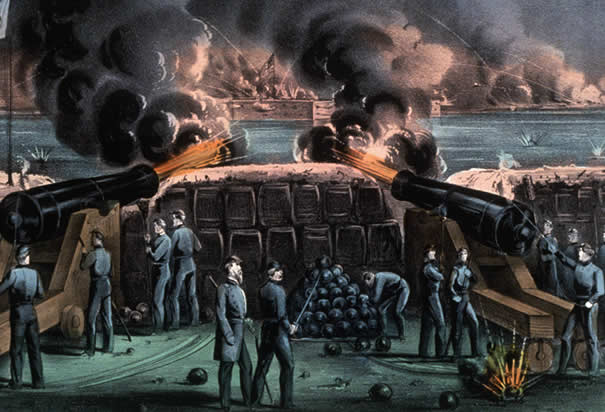
illustration-fort-sumter

“At length on 12th April, the tension could no longer bear the strain. Contrary to instructions, in the morning twilight, and when none could see clearly what the historic day portended, the Confederates in Charleston bombarded Fort Sumter, and the thunder of their guns announced that the argument of a generation should be decided by the ordeal of war. A war, not between two antagonistic political parties, but a struggle to the death between two societies, each championing a different civilization…” 1

War cannot be separated from Ideology, Politics or Religion One can never separate war and the means by which it is fought from its political ends. According to Clausewitz war is an extension or continuation of politics. Of course Clausewitz understood the term politics or policy in the light of the concept of a “World View” or to use the German term Weltungschauung. The term is not limited to doctrine or party politics, but it encompasses the world view of a people or culture. The world view is oft used by the political, media and religious leadership of countries and can be quite instrumental in the decision by a people to go to war; who they war against, their reasons for going to war, the means by which they fight the war, and the end state that they envision. This concept includes racial, religious, cultural, economic and social dimensions of a world view.

One of the problems that modern Americans and Western Europeans have is that we tend to look at the world, particularly in terms of politics and policy, be it foreign or domestic, through a prism from which we cannot see the forest for the trees. We look at individual components of issues such as economic factors, military capabilities, existing political systems, diplomatic considerations and the way societies get information in isolation from each other. We dissect them, we analyze them, and we do a very good job in examining and evaluating each individual component; but we often do this without understanding the world view and ideological factors that link how a particular people, nation or party understand these components of policy.

Likewise policy makers tend to take any information they receive and interpret it through their own world view. This is true even if they have no idea what their world-view is or how they came to it. Most often a world view is absorbed over years. Barbara Tuchman wrote that “When information is relayed to policy-makers, they respond in terms of what is already inside their heads and consequently make policy less to fit the facts than to fit the notions and intentions formed out of the mental baggage that has accumulated in their minds since childhood.” 2

Policy makers often fail to see just how interconnected the most primal elements of the human experience are to the world view of others as well as their own.

Because of this many policy makers, be they military or civilian do not understand how critical the understanding of world view to designing effective polices. Likewise many fail to see how the world view of others influences their application of economic, political, diplomatic and military power as well as the use and dissemination of information in their nation or culture. This is true no matter which religion or sect is involved, even if a people or nation is decidedly secular, and at least outwardly non-religious.

Perhaps this is because we do not want to admit that our Western culture itself is very much a product of primal religious beliefs which informed politics, philosophy, ethics, law, economics, views of race, and even the arts for nearly two millennia. Perhaps it is because we are justifiably appalled and maybe even embarrassed at the excesses and brutality of our ancestors in using religion to incite the faithful to war; to use race and religion justification to subjugate or exterminate peoples that they found to be less than human; or to punish and conquer heretics.

The United States Military made a belated attempt to address ideology, culture and religion in terms of counter-insurgency doctrine when it published the U.S. Army/Marine Counterinsurgency Manual. The discussion of these issues is limited to two pages that specifically deal with various extreme Moslem groups that use that religion as a pillar of their ideology, strategy and operations. But the analysis in the counterinsurgency manual of is limited because its focus is very general and focused at a tactical level.

Likewise the analysis of world view, ideology and religion in the counterinsurgency manual is done in a manner of “us versus them” and though it encourages leaders to attempt to understand the cultural differences there is little in it to help leaders to understand who to do this. Commendably the manual discusses how terrorist and insurgent groups use ideology, frequently based on religion to create a narrative. The narrative often involves a significant amount of myth presented as history, such as how Al Qaida and ISIL using the Caliphate as a religious and political ideal to strive to achieve, because for many Moslems “produces a positive image of the golden age of Islamic civilization.” 3 However, we frequently cannot see how Americans have used, and in some cases continue to the Puritan understanding of a city set on a hill which undergirded Manifest Destiny, the extermination of Native Americans, the War with Mexico, the romanticism of the ante-bellum South and later the Lost Cause.

Policy makers and military leaders must realize that if they want to understand how culture and religious ideology drive others to conquer, subjugate and terrorize in the name of God, they first have to understand how our ancestors did the same thing. It is only when they do that that they can understand that this behavior and use of ideology for such ends is much more universal and easier to understand.

If one wants to see how the use of this compulsion to conquer in the name of God in American by a national leader one needs to go no farther than to examine the process whereby President McKinley, himself a veteran of the Civil War, decided to annex the Philippine in 1898 following the defeat of the Spanish. That war against the Filipinos that we had helped liberate from Spanish rule saw some of the most bloodthirsty tactics employed in fighting the Filipino insurgents, who merely wanted independence. It was a stain on our national honor which of which Mark Twain wrote: “There must be two Americas: one that sets the captive free, and one that takes a once-captive’s new freedom away from him, and picks a quarrel with him with nothing to found it on; then kills him to get his land. . .


A Doubtlessly sincere McKinley sought counsel from God about whether he should annex the the Philippines or not.

“He went down on his knees, according to his own account, and “prayed to Almighty God for light and guidance.” He was accordingly guided to conclude “that there was nothing left to do for us but to take them all, and to educate the Filipinos. And uplift and civilize and Christianize them, by God’s grace to do the very best we could by them, as our fellowmen for whom Christ died.” 4

On the positive side the counterinsurgency manual does mention how “Ideology provides a prism, including a vocabulary and analytical categories, through which followers perceive their situation.” 5 But again it does so at a micro-level and the lessons of it are not applied at the higher levels of strategic thinking and policy.

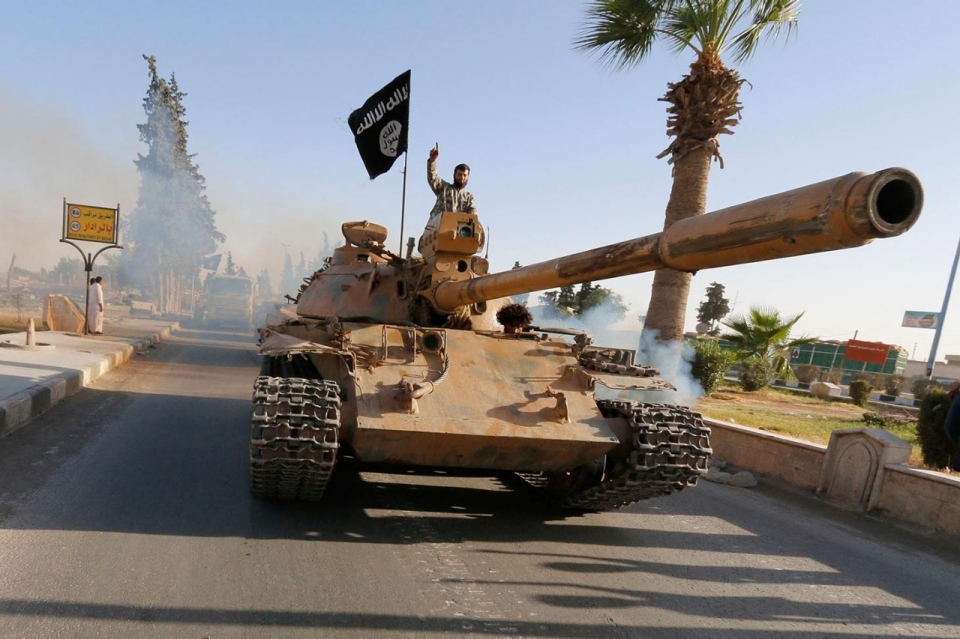
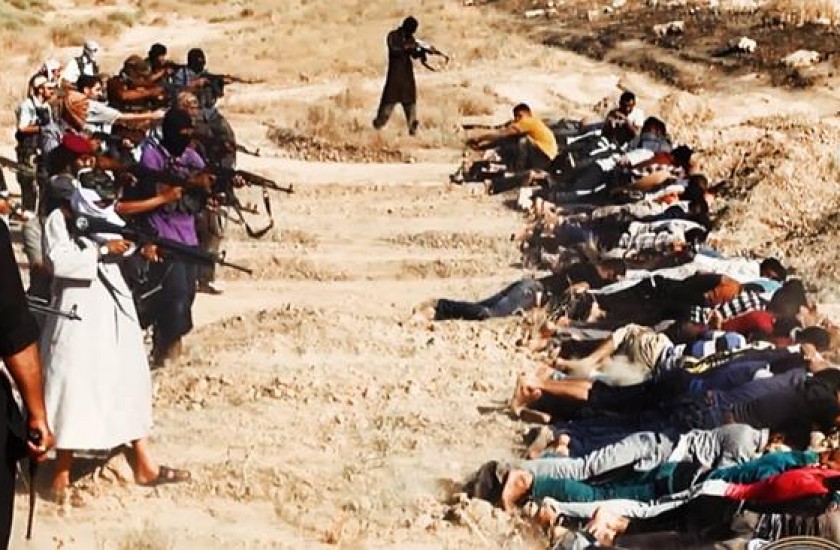
Thus when faced with cultures for which religion provides the adhesive which binds each of these elements, such as the Islamic State or ISIL we attempt to deal with each element separately, as if they have no connection to each other. But that is where we err, for even if the religious cause or belief has little grounding in fact, science or logic, and may be the result of a cultures attempting to seize upon mythology to build a new reality, it is, in the words of Reggie Jackson the “straw that stirs the drink” and to ignore or minimize it is to doom our efforts to combat its proponents.

Perhaps that is because we do not like to look at ourselves and our own history in the mirror. Perhaps it is because we are uncomfortable with the fact that the face that we see in the mirror is face too similar to those we oppose who are perfectly willing to commit genocide in the name of their God, than we want to admit. Whether this is because we are now predominantly secularist in the way that we do life, or because we are embarrassed by the religiously motivated actions of our forefathers, the result is strikingly and tragically similar.

Clausewitz was a product of classic German Liberalism. He understood the effects of the moral and spiritual concerns inherent in policy, and it flows from his pen, as where he wrote “that the aim of policy is to unify and reconcile all aspects of internal administration as well as of spiritual values, and whatever else the moral philosopher may care to add.” 6 Clausewitz understood that when the motivation behind politics becomes more extreme and powerful; when the politics becomes more than a simple disagreement about isolated policy issues; when the ideology that lays behind the politics, especially ideology rooted in religion evokes primal hatred between peoples, war can come close to reaching the abstract concept of absolute or total war.

Clausewitz wrote:

“The more powerful and inspiring the motives for war, the more they affect the belligerent nations and the fiercer the tensions that precede the outbreak, the closer will war approach its abstract concept, the more important will be the destruction of the enemy, the more closely will the military and the political objects of war coincide, and the more military and less political will war appear to be….” 7

The American Civil War was the first modern war based on the advancement of technology and the changing character of war. But it was also a modern war which reached back to the most primal urges of the people involved, including the primal expressions of religious justification for their actions that both sides accepted as normal.

The American Civil War was caused by the clash of radically different ideologies, ideologies which championed two very different views of civilization, government, economics and the rights of people. However, these different world views were based based upon a common religious understanding:

“whatever their differences over such matters as slavery and political preaching, both sides read their Bibles in remarkably similar ways Ministers had long seen the American republic as a new Israel, and Confederate preachers viewed the southern nation in roughly the same light. The relentless, often careless application of biblical typologies to national problems, the ransacking of scripture for parallels between ancient and modern events produced a nationalistic theology at once bizarre, inspiring and dangerous. Favorite scripture passages offered meaning and hope to a people in the darkest hours and, at the same time, justified remorseless bloodshed.” 8

This understanding manifested itself in each side’s appeal to their Puritan ancestor’s concept of a “city set on a hill,” a mantle that each side claimed to be the legitimate heir. Though they seem radically different, they are actually two sides of the same religious-ideological coin.

The American Civil War was a religious and ideological war. “Like the total wars of the twentieth century, it was preceded by years of violent propaganda, which long before the war had obliterated all sense of moderation, and had awakened in the contending parties the primitive spirit of tribal fanaticism.” 9 It was preceded by the fracturing of political parties and alliances which had worked for compromise in the previous decades to preserve the Union even at the cost of maintaining slavery.

Far from being irrational as some have posited, the actions and behavior of politicians in both the North and the South was completely rational based on their conflicting ideologies and views of their opponents. The “South’s fears of territorial and economic strangulation and the North’s fears of a “slave power” conspiracy are anything but irrational, and only someone who refuses to think through the evidence available to Americans in the 1850s would find either of them at all illogical.” 10

Understanding How Religiously Based Ideology influences Policy, Politics and War Samuel Huntington wrote:

“Blood, language, religion, way of life were what the Greeks had in common and what distinguished them from the Persians and other non-Greeks. Of all the objective elements which define civilizations, however, the most important is usually religion, as the Athenians emphasized. To a very large degree, the major civilizations in human history have been closely identified with the world’s great religions; and who share ethnicity and language but differ in religion may slaughter each other…” 11

The very realistic fears of both sides brought about clash of extremes in politics which defied efforts at compromise and was already resulting in violent and bloody conflicts between ideologues in Kansas, Missouri and Kentucky years before the firing on Fort Sumter. For both sides their views became a moral cause that in the minds of many became an article of their religious faith, and “Religious faith itself became a key part of the war’s unfolding story for countless Americans….” 12 British theorist and military historian J.F.C. Fuller wrote of the religious undergirding of the war:

“As a moral issue, the dispute acquired a religious significance, state rights becoming wrapped up in a politico-mysticism, which defying definition, could be argued for ever without any hope of a final conclusion being reached.” 13

That is why it impossible to simply examine the military campaigns and battles of the Civil War in isolation from the politics, polices, the competing philosophies and the underlying theology which were the worldview that undergirded the arguments of both sides. Those competing philosophies and world views, undergirded by a pervasive nationalistic understanding of religion not only helped to cause on the war but made the war a total war.

Some might wonder where this fits in a text that is about a specific campaign and battle in a war, but for those entrusted with planning national defense and conducting military campaign the understanding of why wars are fought, in particular the ideological causes of war matter in ways that military planners, commanders and even elected political leadership often overlook. Colin Gray notes: “Wars are not free floating events, sufficient unto themselves as objects for study and understanding. Instead, they are entirely the product of their contexts.” 14

Studying the context of the American Civil War is very important in understanding not just it, but also civil wars in other nations which are currently raging. The study of these contexts brings an American or Western historical perspective to those wars, not so much in trying to place a western template over non-western conflicts; but a human perspective from our own past from which we can gain insight into how the people, even people who share a common language, religion and history, can war against each other in the most brutal of fashions. Again I refer to Colin Gray who noted “Policy and strategy will be influenced by the cultural preferences bequeathed by a community’s interpretation of its history as well as by its geopolitical-geostrategic context.” 15

For American and other Western political and military policy makers this is particularly important in Iraq where so many Americans have fought, and in the related civil war in Syria which has brought about the emergence of the Islamic State of Iraq and the Levant.

Likewise in our Western tradition we can see how radical ideology, based on race was central to Hitler’s conduct of war, especially in the East during the Second World War. Hitler’s ideology permeated German military campaigns and administration of the areas conquered by his armies. No branch of the German military, police or civil administration in occupied Poland or Russia was exempt guiltless in the crimes committed by the Nazi regime. It is a chilling warning of the consequences awaiting any nation that allows it to become caught up in hate-filled political, racial or even religious ideologies which dehumanizes opponents and of the tragedy that awaits them and the world. In Germany the internal and external checks that govern the moral behavior of the nation and individuals failed. Caught up in the Nazi system, the Germans, especially the police and military abandoned the norms of international law, morality and decency, banally committing crimes which still reverberate today and which are seen in the ethnic cleansing actions in the former Yugoslavia and other European nations.

Thus the study of the American Civil War, from the cultural, economic, social and religious differences which divided the nation helps us in understanding war. But even more importantly we have to understand the ideological clash between Abolitionists in the North, and Southern proponents of slavery. Both the ideologies of the Abolitionists who believed that African Americans were created by God and had the same rights as whites, as well as the Southern arguments that blacks were inferior and slavery was a positive good, were buttressed by profoundly religious arguments related directly to a divergence in values. It was in this “conflict of values, rather than a conflict of interests or a conflict of cultures, lay at the root of the sectional schism.” 16

Understanding this component of our own nation’s history helps us to understand how those same factors influence the politics, policies, the primal passions and hatreds of people in other parts of the world. Thus they are helpful for us to understand when we as a nation involve ourselves in the affairs of other peoples whose conflicts are rooted in religiously motivated ideology and differences in values, such as in the current Sunni-Shia conflict raging in various guises throughout the Middle East where culture, ideology and economic motivations of the groups involved cannot be separated. We may want to neatly separate economic, strategic, military and geopolitical factors from religious or ideological factors assuming that each exists in some sort of hermetically sealed environment. But to think this is a fallacy of the greatest magnitude. As we have learned too late in the century in our Middle East muddling, it is impossible to separate geopolitical, strategic, military and economic issues from ideological issues rooted in distinctly religious world views, world views that dictate a nation, people or culture’s understanding of the world.

David M. Potter summed up this understanding of the connection between the ideological, cultural and economic aspects and how the issue of slavery connected all three realms in the American Civil War:

“These three explanations – cultural, economic and ideological – have long been the standard formulas for explaining the sectional conflict. Each has been defended as though it were necessarily incompatible with the other two. But culture, economic interest, and values may all reflect the same fundamental forces at work in a society, in which case each will appear as an aspect of the other. Diversity of culture may produce both diversity of interests and diversity of values. Further, the differences between a slaveholding and a nonslaveholding society would be reflected in all three aspects. Slavery represented an inescapable ethical question which precipitated a sharp conflict of values.” 17
o-SLAVERY-facebook


The Impact of Slavery on the Growing Divide between North and South

The political ends of the Civil War came out of the growing cultural, economic, ideological and religious differences between the North and South that had been widening since the 1830s. However, slavery was the one issue which helped produce this conflict in values and it was “basic to the cultural divergence of the North and South, because it was inextricably fused into the key elements of southern life – the staple crop of the plantation system, the social and political ascendency of the planter class, the authoritarian system of social control.” 18 Without slavery and the southern commitment to an economy based on slave labor, the southern economy would have most likely undergone a similar transformation as what happened in the North; thus the economic divergence between North and South would “been less clear cut, and would have not met in such head-on collision.” 19 But slavery was much more than an economic policy for Southerners; it was a key component of their religious, racial and philosophic world view.

The issue of slavery even divided the ante-Bellum United States on what the words freedom and liberty meant, the dispute can be seen in the writings of many before the war, with each side emphasizing their particular understanding of these concepts. Many Southerners, including poor whites saw slavery as the guarantee of their economic freedom. John C. Calhoun said to the Senate in 1848 that “With us, the two great divisions of society are not the rich and poor, but white and black; and all of the former, the poor as well as the rich, belong to the upper class, and are respected and treated as equals.” 20

But it was Abraham Lincoln who cut to the heart of the matter when he noted that “We all declare for liberty” but:

“in using the same word we do not all mean the same thing. With some the word liberty may mean for each man to do as he pleases with himself and the product of his labor; while with others the same word may mean for some men to do as they please with other men and the product of other men’s labor.” 21

The growing economic disparity between the Slave and Free states became more about the expansion of slavery in federal territories as disunion and war approached; for a number of often competing reasons. These differences were amplified by the issue of slavery led to the substitution of stereotypes of each other and had the “effect of changing men’s attitudes toward the disagreements which are always certain to arise in politics: ordinary, resolvable disputes were converted into questions of principle, involving rigid, unnegotiable dogma.” 22 The editor of the Charleston Mercury noted in 1858 that “on the subject of slavery…the North and the South…are not only two peoples, but they are rival, hostile peoples.” 23

This was driven both by the South’s insistence on both maintaining slavery where it was already legal and expanding it into new territories which was set against the vocal abolitionist movement. They were also fighting an even more powerful enemy, Northern industrialists who were not so idealistic, and much more concerned with “economic policy designed to secure Northern domination of Western lands than the initial step in a broad plan to end slavery.” 24 This completion between the regions not only affected politics, it affected religion and culture In the South it produced a growing culture of victimhood which is manifest in the words of Robert Toombs who authored Georgia’s declaration of causes for secession:

“For twenty years past, the Abolitionists and their allies in the Northern states, have been engaged in constant efforts to subvert our institutions, and to excite insurrection and servile war among us…” whose “avowed purpose is to subject our society, subject us, not only to the loss of our property but the destruction of ourselves, our wives and our children, and the dissolution of our homes, our altars, and our firesides.” 25

As the differences grew and tensions rose the South became ever more closed off from the North. “More than other Americans, Southerners developed a sectional identity outside the national mainstream. The Southern life style tended to contradict the national norm in ways that life styles of other sections did not.” 26

The complex relationship of Southern society where the “Southern bodies social, economic, intellectual, and political were decidedly commingled” 27 and politics of the South came more to embrace the need for slavery and its importance, even to poor whites in the South who it did not benefit and actually harmed economically: “the system of subordination reached out still further to require a certain kind of society, one in which certain questions were not publically discussed. It must give blacks no hope of cultivating dissention among the whites. It must commit non slaveholders to the unquestioning support of racial subordination….In short, the South became increasingly a closed society, distrustful of isms from outside and unsympathetic to dissenters. Such were the pervasive consequences of giving top priority to the maintenance of a system of racial subordination.” 28
4.0.4


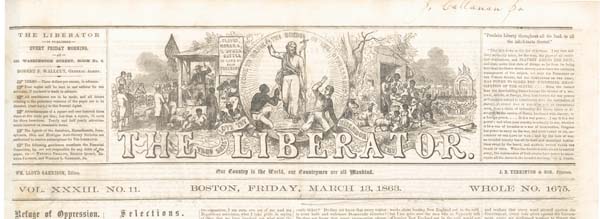
Southern planters declared war on all critics of their “particular institution” beginning in the 1820s. As Northern abolitionists like William Lloyd Garrison and his newspaper The Liberator grew in its distribution and began to appear in the South various elected officials throughout the South “suppressed antislavery books, newspapers, lectures, and sermons and strove generally to deny critics of bondage access to any public forum.” 29

In response to the proliferation of abolitionist literature in the South, John C. Calhoun proposed that Congress pass a law to prosecute “any postmaster who would “knowingly receive or put into the mail any pamphlet, newspaper, handbill, or any printed, written, or pictorial representation touching the subject of slavery.” 30 Calhoun was not alone as other members of Congress as well as state legislatures worked to restrict the import of what they considered subversive and dangerous literature.

Beginning in 1836 the House of Representatives passed a “gag rule” for its members which “banned all petitions, memorials, resolutions, propositions, or papers related in any way or to any extent whatever to the subject of slavery.” 31 This was challenged by former President John Quincy Adams in 1842 as well as by others so that in 1844 the House voted to rescind it. However Southern politicians “began to spout demands that the federal government and the Northern states issue assurances that the abolitionists would never be allowed to tamper with what John Calhoun had described as the South’s “peculiar domestic institution.” 32 The issue of slavery more than any other “transformed political action from a process of accommodation to a mode of combat.” 33

Around the same time as the gag rule was played out in Congress the Supreme Court had ruled that the Federal government alone “had jurisdiction where escaped slaves were concerned” which resulted in several states enacting “personal liberty laws” to “forbid their own elected officials from those pursuing fugitives.” Southern politicians at the federal and state levels reacted strongly to these moves which they believed to be an assault on their institutions and their rights to their human property. Virginia legislators protested that these laws were a “disgusting and revolting exhibition of faithless and unconstitutional legislation.” 34

The issue of slavery shaped political debate and “structured and polarized many random, unoriented points of conflict on which sectional interest diverged.” 35 As the divide grew leaders and people in both the North and the South began to react to the most distorted images of each other imaginable- “the North to an image of a southern world of lascivious and sadistic slave drivers; the South to the image of a northern world of cunning Yankee traders and radical abolitionists plotting slave insurrections.” 36

Edmund-Ruffin

The Slaveholder Ideology Personified: Edmund Ruffin

Among the people most enraged by Northern opposition to slavery was Edmund Ruffin. Ruffin was a very successful farm paper editor, plantation owner and ardent old line secessionist from Virginia. In 1860 the then 67 year old Ruffin helped change the world forever when, according to popular legend he pulled the lanyard which fired the first shot at Fort Sumter. While he was there and probably was given the honor of firing the first shot from his battery; other guns from other emplacements may have fired first. 37

Ruffin was a radical ideologue, he had been passionately arguing for secession and Southern independence for fifteen years. Ruffin “perceived the planter civilization of the South in peril; the source of the peril was “Yankee” and union with “Yankees.” Thus he preached revolution, Ruffin was a rebel with a cause, a secular prophet…” 38 He was a type of man who understood reality far better than some of the more moderate oligarchs that populated the Southern political and social elite. While in the years leading up to the war these men, including John Calhoun attempted to secure the continued existence and spread of slavery within the Union through the Congress and the courts, as early as 1850, Ruffin recognized that in order for slavery to survive the slaveholding South would have to secede from the Union. Ruffin and other radical secessionists believed that there could be no compromise with the north. In 1850 he and James Hammond attempted to use a meeting in Nashville to “secure Cooperative State Secession” and wrote to Hammond, against those who sought to use the meeting to preserve the Union, “If the Convention does not open the way to dissolution…I hope it shall never meet.” 39 He believed that in order to maintain the institution of slavery the slave holding states that those states had to be independent from the North.

Ruffin’s views were not unique to him, the formed the basis of how most slave owners and supporters felt about slavery’s economic benefits, Ruffin wrote:

“Still, even this worst and least profitable kind of slavery (the subjection of equals and men of the same race with their masters) served as the foundation and the essential first cause of all the civilization and refinement, and improvement of arts and learning, that distinguished the oldest nations. Except where the special Providence and care of God may have interposed to guard a particular family and its descendants, there was nothing but the existence of slavery to prevent any race or society in a state of nature from sinking into the rudest barbarism. And no people could ever have been raised from that low condition without the aid and operation of slavery, either by some individuals of the community being enslaved, by conquest and subjugation, in some form, to a foreign and more enlightened people.”40
a2a9c088d75423b7f457b194d7c9ea9a

Slavery and National Expansion: The Compromise of 1850

The Ante-Bellum South was an agrarian society which depended on the free labor provided by slaves and in a socio-political sense it was an oligarchy that offered no freedom to slaves, openly discriminated against free blacks and provided little hope of social or economic advancement for poor and middle class whites, but it was maintained because in many cases the Southern Yeoman farmer “feared the fall from independent producer to dependent proletarian, a status he equated with enslavement.” 41 But northerners often driven by religious understandings of human rights founded in the concept of a higher law over a period of a few decades abolished slavery in the years after the United States had gained independence.

However, the South had tied its economy and society to the institution of slavery, and was not content to see it remain just in the original states of the Old South.

The expansion of slavery was essential to its continued maintenance in the states where it was already legal. “Because of the need to maintain a balance in the Senate, check unruly slaves, and cultivate fertile soils, many planters and small plantation owners- particularly those living in the southern districts of the cotton states- asserted that their survival depended on new territory.” 42 In those decades “a huge involuntary migration took place. Between 800,000 and 1 million slaves were moved westward….” 43

slavescars

The need for slaves caused prices to soar. In some older states like Virginia where fewer slaves were required the exportation of slaves became a major industry:

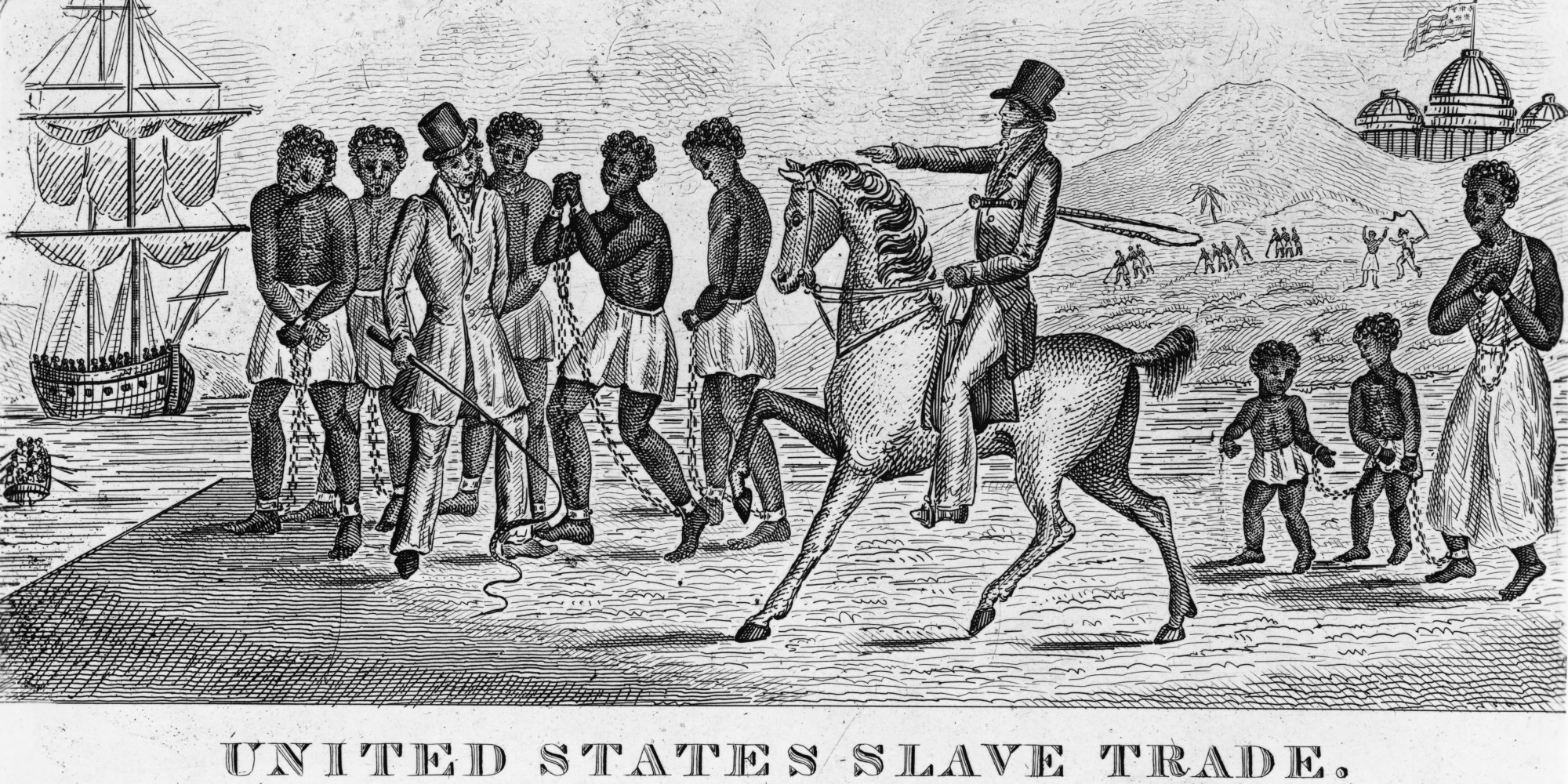
“male slaves were marched in coffles of forty or fifty, handcuffed to each other in pairs, with a long chain through the handcuffs passing down the column to keep it together, closely guarded by mounted slave traders followed by an equal number of female slaves and their children. Most of them were taken to Wheeling, Virginia, the “busiest slave port” in the United States, and from there they were transported by steamboat to New Orleans, Natchez, and Memphis.” 44

In the years the before the war, the North embraced the Industrial Revolution leading to advances which gave it a marked economic advantage over the South in which through its “commitment to the use of slave labor inhibited economic diversification and industrialization and strengthened the tyranny of King Cotton.” 45 The population of the North also expanded at a clip that far outpaced the South as European immigrants swelled the population.

The divide was not helped by the various compromises worked out between northern and southern legislators. After the Missouri Compromise Thomas Jefferson wrote:

“but this momentous question, like a fire bell in the night, awakened and filled me with terror. I considered it at once as the knell of the Union. It is hushed indeed for the moment, but this is a reprieve only, not a final sentence. A geographical line, coinciding with a marked principle, moral and political, once conceived and held up to the angry passions of men, will never be obliterated; and every new irritation will mark it deeper and deeper.” 46

The trigger for the increase in tensions was the war with Mexico in which the United States annexed nearly half of Mexico.

The new territories were viewed by those who advocated the expansion of slavery as fresh and fertile ground for its spread. Ulysses S Grant, who served in the war, noted the effects of the war with Mexico in his memoirs:

“In taking military possession of Texas after annexation, the army of occupation, under General [Zachary] Taylor, was directed to occupy the disputed territory.  The army did not stop at the Nueces and offer to negotiate for a settlement of the boundary question, but went beyond, apparently in order to force Mexico to initiate war….To us it was an empire and of incalculable value; but it might have been obtained by other means.  The Southern rebellion was largely the outgrowth of the Mexican war.”47

Robert Toombs of Georgia was an advocate for the expansion of slavery into the lands conquered during the war. Toombs warned his colleagues in Congress “in the presence of the living God, that if you by your legislation you seek to drive us from the territories of California and New Mexico, purchased by the common blood and treasure of the whole people…thereby attempting to fix a national degradation upon half the states of this Confederacy, I am for disunion.” 48

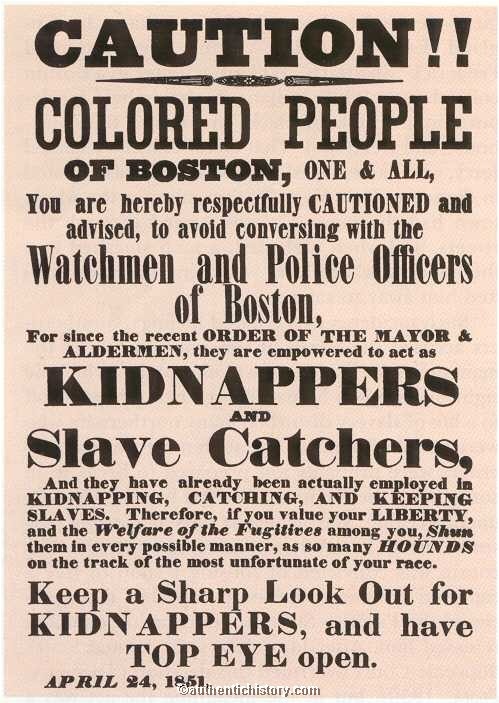
The tensions in the aftermath of the war with Mexico escalated over the issue of slavery in the newly conquered territories brought heated calls by some southerners for secession and disunion. To preserve the Union, Henry Clay and Daniel Webster, supported by the new President Millard Fillmore were able to pass the compromise of 1850 solved a number of issues related to the admission of California to the Union and boundary disputes involving Texas and the new territories. But among the bills that were contained in it was the Fugitive Slave Law, or The Fugitive Slave Act of 1850. The act was the devise of Henry Clay which was meant to sweeten the deal for southerners. The law would “give slaveholders broader powers to stop the flow of runaway slaves northward to the free states, and offered a final resolution denying that Congress had any authority to regulate the interstate slave trade.” 49 which for all practical purposes nationalized the institution of slavery, even in Free states by forcing all citizens to assist law enforcement in apprehending fugitive slaves and voided state laws in Massachusetts, Vermont, Ohio, Connecticut, Pennsylvania and Rhode Island which barred state officials from aiding in the capture, arrest or imprisonment of fugitive slaves. “Congress’s law had nationalized slavery. No black person was safe on American soil. The old division of free state/slave state had vanished….” 50

fugitive-slave-act-1850-granger-1

That law required all Federal law enforcement officials, even in non-slave states to arrest fugitive slaves and anyone who assisted them, and threatened law enforcement officials with punishment if they failed to enforce the law. The law stipulated that should “any marshal or deputy marshal refuse to receive such warrant, or other process, when tendered, or to use all proper means diligently to execute the same, he shall, on conviction thereof, be fined in the sum of one thousand dollars.” 51

Likewise the act compelled citizens in Free states to “aid and assist in the prompt and efficient execution of this law, whenever their services may be required….” 52 Penalties were harsh and financial incentives for compliance attractive.

“Anyone caught providing food and shelter to an escaped slave, assuming northern whites could discern who was a runaway, would be subject to a fine of one thousand dollars and six months in prison. The law also suspended habeas corpus and the right to trial by jury for captured blacks. Judges received a hundred dollars for every slave returned to his or her owner, providing a monetary incentive for jurists to rule in favor of slave catchers.” 53

The law gave no protection for even black freedmen. No proof or evidence other than the sworn statement of the owner that a black was or had been his property was required to return any black to slavery. Frederick Douglass said:

“By an act of the American Congress…slavery has been nationalized in its most horrible and revolting form. By that act, Mason & Dixon’s line has been obliterated;…and the power to hold, hunt, and sell men, women, and children remains no longer a mere state institution, but is now an institution of the whole United States.” 54

On his deathbed Henry Clay praised the act, which he wrote “The new fugitive slave law, I believe, kept the South in the Union in ‘fifty and ‘fifty-one. Not only does it deny fugitives trial by jury and the right to testify; it also imposes a fine and imprisonment upon any citizen found guilty of preventing a fugitive’s arrest…” Likewise Clay depreciated the opposition noting “Yes, since the passage of the compromise, the abolitionists and free coloreds of the North have howled in protest and viciously assailed me, and twice in Boston there has been a failure to execute the law, which shocks and astounds me…. But such people belong to the lunatic fringe. The vast majority of Americans, North and South, support our handiwork, the great compromise that pulled the nation back from the brink.” 55

To be continued tomorrow….

Notes 

1 Fuller, J.F.C. The Conduct of War 1789-1961 Da Capo Press, New York 1992. Originally published by Rutgers University Press, New Brunswick N.J p.98

2 Tuchman, Barbara W. Practicing History Alfred A. Knopf, New Your 1981 p.289

3 ___________ U.S. Army/ Marine Counterinsurgency Field Manual FM 3-24 MCWP 3-33.5 15 December 2006 with and forward by General David A Petreus and General James Amos, Konecky and Konecky, Old Saybrook CT 2007 p.26

4 Ibid. Tuchman Practicing History p.289

5 Ibid. U.S. Army/ Marine Counterinsurgency Field Manual p.27

6 Clausewitz, Carl von On War Indexed edition, edited and translated by Michael Howard and Peter Paret, Princeton University Press, Princeton NJ 1976 p.606

7 Ibid. Clausewitz On War pp.87-88

8 Rable, George C. God’s Almost Chosen Peoples: A Religious History of the American Civil War University of North Carolina Press, Chapel Hill 2010 p.4

9 Ibid. Fuller The Conduct of War 1789-1961 p.99

10 Guelzo Allen C. Fateful Lightening: A New History of the Civil War Era and Reconstruction Oxford University Press, Oxford and New York 2012 p.95

11 Huntington, Samuel P. The Clash of Civilizations and the Remaking of the World Order Touchstone Books, New York 1997 p.42

12 Ibid. Rable God’s Almost Chosen Peoples p.5

13 Fuller, J.F.C. Decisive Battles of the U.S.A. 1776-1918 University of Nebraska Press, Lincoln 2007 copyright 1942 The Royal Society for the Prevention of Cruelty to Animals p.174

14 Gray, Colin S. Fighting Talk: Forty Maxims on War, Peace, and Strategy Potomac Books, Dulles VA 2009 p.3

15 Ibid. Gray Fighting Talk p.25

16 Potter, David M. The Impending Crisis: America before the Civil War 1848-1861 completed and edited by Don E. Fehrenbacher Harper Collins Publishers, New York 1976 p.41

17 Ibid. Potter The Impending Crisis p.41

18 Ibid. Potter The Impending Crisis p.42

19 Ibid. Potter The Impending Crisis p.42

20 McPherson, James M. Drawn With the Sword: Reflections on the American Civil War Oxford University Press, Oxford and New York 1996 p.50

21 Levine, Bruce Half Slave and Half Free: The Roots of the Civil War Revised Edition, Hill and Wang, a division of Farrar, Strauss and Giroux, New York 1992 and 1995 p.122

22 Ibid. Potter The Impending Crisis p.43

23 Ibid. McPherson Drawn With the Sword p.16

24 Egnal, Marc Clash of Extremes: The Economic Origins of the Civil War Hill and Wang a division of Farrar, Straus and Giroux New York 2009 p.6

25 Dew, Charles B. Apostles of Disunion: Southern Secession Commissioners and the Causes of the Civil War University Press of Virginia, Charlottesville and London 2001 p.12

26 Thomas, Emory The Confederate Nation 1861-1865 Harper Perennial, New York and London 1979 p.5

27 Ibid. Thomas The Confederate Nation p.5

28 Ibid. Potter The Impending Crisis pp.457-458

29 Ibid. Levine Half Slave and Half Free p.166

30 Ibid. Guelzo Fateful Lightening pp.50-51

31 Ibid. Levine Half Slave and Half Free pp.169-170

32 Ibid. Guelzo Fateful Lightening pp.51-52

33 Ibid. Potter The Impending Crisis p.43

34 Ibid. Levine Half Slave and Half Free pp.169-170

35 Ibid. Potter The Impending Crisis p.43

36 Ibid. Potter The Impending Crisis p.43

37 Catton, Bruce The Coming Fury Phoenix Press, London 1961 pp.314-315

38 Ibid. Thomas The Confederate Nation p.1

39 Freehling, William W. The Road to Disunion Volume One: Secessionists at Bay Oxford University Press, Oxford and New York 1990 p.481

40 Ruffin, Edmund The Political Economy of Slavery in McKitrick, Eric L. ed. Slavery Defended: The Views of the Old South. Englewood Cliffs, NJ: Prentice Hall/Spectrum Books, 1963.Retrieved from http://www.pbs.org/wgbh/americanexperience/features/primary-resources/lincolns-political-economy/ 24 March 2014

41 Ibid. McPherson Drawn With the Sword p.50

42 Ibid. Egnal Clash of Extremes pp.125-126

43 Korda, Michael. Clouds of Glory: The Life and Legend of Robert E. Lee Harper Collins Publishers, New York 2014 p.203

44 Ibid. Korda Clouds of Glory: The Life and Legend of Robert E. Lee p.203

45 Ibid. Potter The Impending Crisis p.42

46 Jefferson, Thomas Letter to John Holmes dated April 22nd 1824 retrieved from http://www.loc.gov/exhibits/jefferson/159.html 24 March 2014

47 U.S. Grant, Personal Memoirs of U.S. Grant New York 1885 pp.243-245

48 Ibid. Guelzo Fateful Lightening pp.62-63

49 Ibid. Guelzo Fateful Lightening p.68

50 Goldfield, David America Aflame: How the Civil War Created a Nation Bloomsbury Press, New York, London New Delhi and Sidney 2011 p.71

51 ______________Fugitive Slave of Act 1850 retrieved from the Avalon Project, Yale School of Law http://avalon.law.yale.edu/19th_century/fugitive.asp 11 December 2014

52 Ibid. Fugitive Slave Act of 1850

53 Ibid. Goldfield America Aflame p.71

54 Ibid. Goldfield America Aflame p.72

55 Ibid. Oates The Approaching Fury p.94

3 Comments

Filed under civil rights, civil war, faith, History, laws and legislation, Religion

The Price of Immortality – Pickett’s Charge

Friends of Padre Steve’s World

Here is the latest chapter revision of my Gettysburg text. It is long but again a complex subject that does with more than just the battle. It deals with the complexity of people, relationships and motivations that transform history into myth and turn myth into history. I do hope that you enjoy, as I said it is a bit long but I think well worth the read.

Peace,

Padre Steve+

picketts charge

Danger is part of the friction of war. Without an accurate conception of danger we cannot understand war. That is why I have dealt with it here.Carl Von Clausewitz [1]

When commanders send their troops into battle to execute the plans of their staff, they cannot forget that as Clausewitz noted that War is the province of danger and that:

In the dreadful presence of suffering and danger, emotion can easily overwhelm intellectual conviction, and in the psychological fog it is so hard to form clear and complete insights that changes in view become more understandable and excusable.No degree of calm can provide enough protection: new impressions are too powerful, too vivid, and always assault the emotions as well as the intellect.[2]

To re-engage our understanding of this issue is important, especially in the application of Mission Command where as General Martin Dempsey noted that Understanding equips decision makers at all levels with the insight and foresight to make effective decisions, to manage the associated risks, and to consider second and subsequent order effects. [3] The current and recent wars fought by the United States and its NATO and coalition allies have shielded many military professionals from this aspect of war, but it is still present and we should not ignore it. As noted in the 2006 edition of the Armed Forces Officer:

The same technology that yields unparalleled success on the battlefield can also detach the warrior from the traditional ethos of the profession by insulating him or her from many of the human realities of war. [4]

The nature of the warrior leader is driven by the requirements of combat [5]and courage, both courage in the face of the danger, and the courage to accept responsibility [6] are of paramount importance. In an era where the numbers of soldiers that actually experience combat or served in true combat conditions where the element of danger is ever present is shrinking, we can at least gain part of that understanding through the study of history, campaigns and battles and by actually walking the battlefields, and considering the effects of terrain, weather, exhaustion and the imagining danger faced in confronting an enemy on the field of battle. As such the Battle of Gettysburg and the climactic event of Picketts Charge on July 3rd is a good place to reimagine the element of danger from the point of view of the soldiers, but also the commanders involved in the action.

It is also a place that we can look to find the end of dreams, the shattering of legacies, the emergence of myth as history, and the terrible effects ill-conceived of plans gone awry.

Major General George Pickett and his division waited in Spangler’s Woods and in the swale behind Seminary Ridge and looked across the valley the separated them from the Federal positions on Cemetery Ridge. The troops for the most part were eager to fight and had not seen difficult action for about a year while their comrades in the Army of Northern Virginia had marched to glory. The division had been held in reserve and not seen action at Fredericksburg and they had missed the great victory at Chancellorsville entirely having been detached with Longstreet’s corps on the Suffolk excursion. Now these troops waited anxiously for their orders in the sultry summer heat which caused them to perspire and to drink from the canteens that they filled that morning.

The men varied in what they thought of the battle that they knew that was approaching. Some in Richard Garnett’s brigade were in splendid spirits and confident of sweeping everything before them;never was there anything like the same enthusiasm entering battle. [7] Others were not so confident. In Armistead’s brigade Lieutenant James F. Crocker of the 9th Virginia who had been wounded at Malvern Hill surveyed the ridge before them and told a number of officers that the attack was going to be another Malvern Hill, another costly day to Virginia and Virginians, [8] while a Colonel in Pickett’s division noted that when the men were told of the attack that they went being unusually merry and hilarious that they on a sudden had become as still and thoughtful as Quakers at a love feast. [9] Their commander, George Pickett received the plan of attack from James Longstreet who later noted that Pickett seemed to appreciate the severity of the contest he was about to enterbut was quite hopeful of success. [10]

A member of Pickett’s staff noted years later that It is said, that the condemned, in going to execution, the moments fly.To the good soldier, about to go into action, I am sure the moments linger. Let us not dare say, that with him, either individually, or collectively, is that mythical love of fighting, poetical but fabulous; but rather, that it is the nervous anxiety to solve the great issue as speedily as possible, without stopping to count the cost. [11]

Porter Alexander’s artillery began its bombardment at 1:07 p.m. As it did the Union artillery commenced a deliberate counter-fire, in which the Confederate infantry behind Seminary Ridge began to take a beating. Unlike the Confederate barrage which had mainly sailed over the Union troops on Cemetery Ridge causing few causalities, a large proportion” of the Union long shots landed squarely in the ranks of the gray soldiers drawn up to await the order to advance. [12] Estimates vary but the waiting Confederates lost between 300-500 killed and wounded, the most affected was Kemper’s brigade of Pickett’s division which lost about 250 men, or 15% of its strength. [13] Other units lost significant numbers, with those inflicted on Pettigrew’s brigades further depleting their already sparse numbers.

The Union counter fire had an effect on many of the Confederates including Pickett. Alexander found Pickett in a very positive and excited frame of mind. [14] There are conflicting opinions of Pickett’s state of mind, supporters tending to believe the best about him and his conduct on the battlefield, while detractors, both his contemporaries and current historians allege that he was afraid and quite possibly minimizing his exposer to enemy fire due to his obsession with Sallie. Edwin Longacre wrote: While not himself under fire, Pickett appears not to have taken the barrage too calmly. Aware that Longstreet had asked Alexander recommend the most opportune time for our attack based on the enemys response to his cannonade, Pickett at least twice sent couriers to as the colonel if they should go in. [15]

Like in any historical account the truth probably lies in the middle of the extreme viewpoints and while we think that we know much about the greatest charge in the history of the United States, we are hindered by the lack of written accounts by most of the senior Confederate officers who took part in Pickett’s Charge. This complicates the task of attempting to separate the true from the false and the truth from a judgment or verdict rendered by a less than impartial judge. Lee, Hill and Longstreet treated the charge as just one episode in long campaign reports, and modern readers, like some of the participants, can wonder how much of any of the three generals really saw once the firing started. [16]

Since no reports of the Confederate division commanders are available, Pickett’s was suppressed because of how critical it was toward other commanders. Pettigrew and Pender were dead, Trimble was wounded and in a Federal prison and Harry Heth, Pickett’s cousin limited his report to the action of July 1st 1863. Likewise only two of the nine brigade commanders filed reports and none of them were from Pickett’s division, so it is hard to get a complete and accurate view from official sources. Longstreet discussed Pickett’s report and said that it was not so strong against the attack as mine before the attack was made but his was made in writing and of official record. [17] Pickett was reportedly furious at being force to destroy his report and refused to submit an edited report. So what we are left with on the Confederate side are the reports of two corps commanders and an army commander who were far away from the scene of the action, after action reports of regiments, many of which had lost their commander’s and most of their senior officers, and the recollections from men with axes to grind and or reputations to defend; some Longstreet, some Pickett, some Pettigrew.

The assault force was composed of Pickett’s fresh division from First Corps, Harry Heth’s battered division now under Johnston Pettigrew which had already taken close to 40% casualties and two brigades of Pender’s division now commanded by Isaac Trimble. These two brigades, Lane’s which was fresh but Scales brigade, now under command of Colonel William Lowrence had suffered greatly on July 1st; its “casualty rate was 63% and it had lost its commander and no fewer than fifty-five field and company grade officers. [18] And now, these battered the units began to take casualties from well directed Federal fire. George Stewart wrote: In most armies, such a battered unit would have been sent to the rear for reorganization, but here it was being selected for a climactic attack! [19]

The Confederate losses mounted at an alarming rate. The psychological impact of artillery casualties was great, for the big guns not only killed but mangled bodies, tore them apart, or disintegrated them. [20] A survivor wrote his wife days later: If the crash of worlds and all things combustible had been coming in collision with each other, it could not have surpassed it seemingly. To me it was like the Magazine of Vengeanceblown up. [21] A soldier of Kemper’s brigade recalled that The atmosphere was rent and broken by the rust and crash of projectilesThe sun, but a few minutes before so brilliant, was now darkened. Through this smoky darkness came the missiles of deaththe scene beggars descriptionMany a fellow thought his time had comeGreat big, stout hearted men prayed, loudly too. [22] Colonel Joseph Mayo of the 3rd Virginia regiment was heavily hit, one of its survivors wrote when the line rose up to chargeit appeared that as many were left dead and wounded as got up. [23]

On the opposite ridge Union forces were experiencing the same kind of intense artillery fire. But these effects were minimized due to the prevalent overshooting of the Confederate artillery as well as the poor quality of ammunition. This resulted in few infantry casualties with the worst damage being taken by a few batteries of artillery at the angle. Soldiers behind the lines took the worst beating, but the routing of these non-combatants was of no military significance, [24] This did create some problems for the Federals as Meade was forced to abandon their headquarters and the Artillery Reserve was forced to relocate a little over a half mile to the rear.[25] The effects of this on operations were minimal as Brigadier General Robert Tyler commanding the Artillery Reserve posted couriers at the abandoned position, should Hunt want to get in touch with him. [26]

Despite the fusillade Meade maintained his humor and as some members of his staff tried to find cover on the far side of the little farmhouse quipped:

Gentlemen, are you trying to find a safe place?…You remind me of the man who drove the oxen team which took ammunition for the heavy guns to the field at Palo Alto. Finding himself in range, he tipped up his cart and hid behind it. Just then General Taylor came along and shouted You damned fool, dont you know you are no safer there than anywhere else?The driver responded, I dont suppose I am general, but it kind of feels so. [27]

A bombardment of this magnitude had never been seen on the American continent, but despite its apparent awesome power, the Confederate artillery barrage had little actual effect on the charge. The Prussian observer traveling with Lee’s headquarters dismissed the barrage as a Pulververschwindung,”…a waste of powder. [28] The Federal infantry remained in place behind the stone wall on Cemetery Ridge ready to meet the assault. Henry Hunt replaced his damaged artillery batteries on Cemetery Ridge. But even more importantly Lieutenant Colonel Freeman McGilvery’s massive battery was lying undetected where it could deliver devastating enfilade fire as the Confederate infantry neared their objective. Likewise, Rittenhouse’s batteries on Little Round Top and Osborne’s on Cemetery Hill were unaffected by the Confederate bombardment were poised to wreak destruction on the men of the three Confederate divisions.

Unlike the Federal Army which had its large pool of artillery battalions in the Artillery Reserve with which to replace batteries that had taken casualties or were running low on ammunition, Porter Alexander had no fresh batteries or ammunition: soon the drivers of the caissons found that the heavy fire had exhausted their supply of shot and shell, and the had to go even farther to get it from the reserve train. As a result some of the guns remained mute and their gunners stood helpless during the cannonade and charge, for Alexander had no batteries in reserve to replace them. [29]

There were two reasons for this. First was that Lee had reorganized the artillery before Chancellorsville. He eliminated the artillery reserve and assigned all artillery battalions and batteries directly to the three infantry corps. This meant that Alexander could only draw upon the battalions assigned to First Corps and had no operational control over the batteries of Ewell’s Second Corps or Hill’s Third Corps.

The second was due to the meddling of Brigadier General William Pendleton, Lee’s senior artilleryman who as a staff officer had no command authority over any of the guns in the army. Pendleton relocated the artillery trains of First Corps further to the rear without informing Alexander or Longstreet. Likewise, Pendleton also ordered the eight guns of the Richardson’s artillery away without notifying anyone. These were guns that Alexander was counting on to provide direct support to the attack by advancing them to provide close support to the infantry.

At about 2:20 p.m. Alexander, knowing that he was running short of ammunition sent a note to Picket and Pettigrew advising them:

General: If you are to advance at all, you must come at once or we will not be able to support you as we ought. But the enemys fire has not slackened and there are still 18 guns firing from the cemetery.[30]

About twenty minutes later Alexander saw some of the Federal guns along Cemetery Ridge begin to limber up and depart. He also noticed a considerable drop off in Federal fire. He interpreted this to mean that his guns had broken the Federal resistance, and at 2:40 Alexander sent word to Pickett For Gods sake come quick or my ammunition will not let me support you. [31]

However, what Alexander did not realize was that what was happening on Cemetery Ridge had little to do with his bombardment but instead was directed by Henry Hunt. Hunt ordered batteries low on ammunition or that had sustained damage to withdraw and was replacing them with fresh batteries that Alexander could not see, although he assumed that such might be the case, he noted that the withdraw of batteries was new, for the Federals had never done anything of that sort before, & I did not believe that they were doing it now. [32] He had also decided to conserve ammunition by ordering an immediate cessation and preparation for the assault to follow. [33]

Alexander’s message reached Pickett and Pickett immediately rode off to confer with Longstreet. Pickett gave the message to Longstreet who read it “and said nothing. Pickett said, “General, shall I advance!Longstreet, knowing it had to be, but unwilling to give the word, turned his face away. Pickett saluted and said I am going to move forward, sirgalloped off to his division and immediately put it in motion. [34] Sadly Pickett had no inkling that his corps commander was immovably opposed to the charge [35] and Pickett, caught up in the moment with the excitement of leading his Division into battle did not notice his friend’s mood.

A few minutes later Longstreet rode to find Alexander. Meeting him at 2:45 and Alexander informed him of the shortage of ammunition. The news was surprising to Longstreet as neither he nor Lee had checked on the supply of ammunition during the morning. [36] the news took him aback enough that he seemed momentarily stunned [37] by it. Longstreet told Alexander: Stop Pickett immediately and replenish your ammunition. [38] But Alexander now had to give Longstreet even worse news telling him I explained that it would take too long, and the enemy would recover from the effect of our fire was then having, and too that we had, moreover, very little to replenish it with. [39] Longstreet continued to ride with Alexander and again eyed the Federal positions on Cemetery Ridge with his binoculars. As he looked at the Federal position he slowly spoke and said I dont want to make this attack,pausing between sentences as if thinking aloud. I believe it will fail- I do not know how it can succeed- I would not make it even now, but Gen. Lee has ordered it and expects it. [40] Alexander, who as a battalion commander now in charge of First Corps artillery was very uncomfortable, he later wrote:

I had the feeling that he was on the verge of stopping the charge, & that with even slight encouragement he would do it. But that very feeling kept me from saying a word, or either assent I would not willingly take any responsibility in so grave a matter & I had almost a morbid fear of causing any loss of time. So I stood by, & looked on, in silence almost embarrassing. [41]

While Longstreet was still speaking Pickett’s division swept out of the woods to begin the assault, Alexander knew that the battle was lost if we stopped. Ammunition was too low to try anything else, for we had been fighting for three days. There was a chance, and it was not my part to interfere.[42]

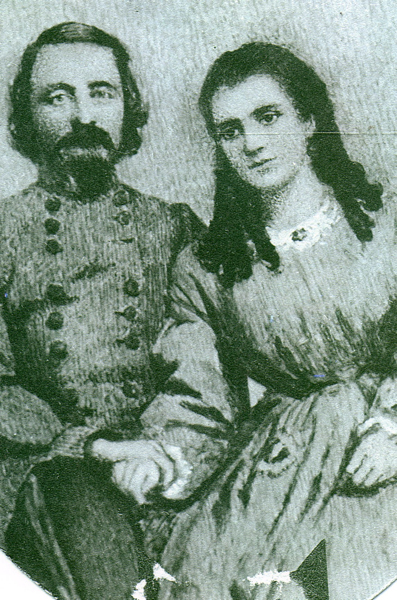
Despite this Pickett and many of his soldiers were confident of success, and: “no officer reflected the mens confidence better than George Pickett. There was no fatalism in him. Believing that his hour of destiny had come and expecting to take fortune at its flood, he rode down the slope like a knight in a tournament. [43] Pickett was an unforgettable man at first sight [44] Pickett wore a dark mustache drooping and curled at the ends, a thin goatee, and hair worn long and curled in ringlets. His hair was brown, and in the morning sunlight it reflected auburn hints. George Pickett stood slender and graceful at the middle height, and carried himself with an air. Dandified in dress, he was the most romantic looking of all Confederates, the physical image of that gallantry implicit in the Souths self concept. [45]

George Pickett was born to wealth and privilege in a Neo-feudal society [46] and came from an old and distinguished Virginia family with a long military heritage dating to the Revolution and the War of 1812. He attended the Richmond Academy until he was sixteen and had to withdraw due to the financial losses his parents had suffered during the panic of 1837.

 Pickett

Major General George Pickett C.S.A.

This led to the young Pickett being sent to live with and study law under his mother’s older brother, the future President, Andrew Johnston in Quincy Illinois. The family’s continued financial distress led them to get George to consider the free education provided by West Point. His mother asked Johnston to assist and Johnston set about obtaining an appointment for his nephew. As befit an up-and-coming politician, his quest was short and successful. His Springfield acquaintances included a United States Congressman who happened to be a fellow Southerner and brother Whig, Kentucky native John T. Stuart. [47] There is a long running myth that connects Pickett’s appointment to West Point to Abraham Lincoln, but it is fiction, fabricated by Pickett’s widow Sallie long after her husband and Lincoln’s death. [48]

Pickett entered West Point in 1842 where he was described by a fellow cadet thought a jolly good fellow with fine natural gifts sadly neglected [49] through his tendency to demonstrate in word and deed that henhouse neither to authority nor submit to what’re considered the Academys narrow, arbitrary, unrealistic, harshly punitive, and inconsistently applied code of conduct [50] became a loyal patron of Benny Havens tavern where he was stealing away regularly now to life his glass in good fellowship…” [51]

Pickett’s academic performance, as well as his record of disciplinary infractions at West Point was exceptionally undistinguished. He racked up vast amounts of demerits for everything from being late to class, chapel and drill, uniform violations and pranks on the drill field where he mocked those who observed proper drill and ceremonies. Pickett graduated last in the class of 1846, something that his vast amount of demerits contributed.

His widow Sallie wrote after his death that he accumulated them so long as he could afford the black marks and punishments they entailed. He curbed his harmful behavior, however, when he found himself approaching the magic number of 200 demerits per year that constituted grounds for dismissal. [52] Pickett finally graduated only five behavioral demerits short of expulsion. [53] The graduating class included George McClellan, A.P. Hill, Thomas, later “Stonewall” Jackson as well as a number of other cadets, most of whom who went on to distinguished military and other careers. At West Point Pickett was considered to be the class clown by many of his classmates was the most popular and prominent young man in the class. [54] Among the many friends that he made was an upperclassman named Ulysses S. Grant and their friendship would span decades and would survive the fire of a war that placed them at swords point. [55]

articulocanvas_clip_image085

Lieutenant Pickett at Chapultepec

Pickett was commissioned into the infantry and served alongside James Longstreet in the Mexican War where fought valiantly in a number of battles, including Contreras, Churubusco, El Molino Del Rey [56] during the Mexican War. Pickett distinguished himself at Chapultepec where he had been the first American to scale the ramparts of Chapultepec, where he planted the flag before the admiring gaze of his friend Longstreet. [57] During that assault Longstreet was wounded and Pickett had snatched the colors and planted them on the castle heights for all to see and cheer. [58] For his actions he received a brevet promotion to First Lieutenant.

Following the war Pickett married but was widowed less than two years later when his wife Sally Minge Pickett died during childbirth along with their infant son in 1852 The loss was devastating to the young officer, he went into a deep depression caused by grief and considered leaving the army. He was persuaded by friends, peers and understanding commanding officers to remain.

While on leave following Sally’s death he was at Fort Monroe, laying under an umbrella at Point Comfort when a child approached him and took pity on him. The child was the nine year old La Salle “Sallie” Corbell and she broke through his emotional defenses by persistently, as only a child can do asking what the source of his grief was. Pickett told the child that his heart had been broken by a sorrow almost too great to bear. When the child asked how ones heart could break, he replied that God broke it when he took from him his loved ones and left him so lonely. [59] While Pickett may not had thought much of the meeting, he did give the little girl a ring and a golden hear bearing his wife’s name. He likely expected never to see her again but though she was a child she was a willful and determined one. She knew her own mind and heart, both told her that one day she would marry George Pickett. [60]

Pickett returned to Texas to serve with the 8th Infantry and was promoted to Captain and ordered to take command of the newly raised Company “D” 9th Infantry at Fort Monroe. Transferred to the Pacific Northwest he married Widowed after that war he served in the Pacific Northwest where he took a Native American wife who bore him a son, however she did not survive childbirth and when she died in early 1858 Pickett was again widowed. In 1859 Captain Pickett faced down British troops from the Hudson Bay Company in an incident now known at the Pig War which at its heart was a dispute about whether the British or the Americans own San Juan Island. The dispute, which brought the two nations to the brink of war, was settled without bloodshed, save for the unfortunate pig, and Pickett became a minor celebrity in the United States and anathema to the British.

When Virginia seceded from the Union, Pickett like many other southern officers was conflicted in his feelings and loyalties and hoped to the last that he would have to take up arms against neither state nor country. [61] Pickett resigned his commission on June 25th 1861. He wrote to Sallie with who he now maintained a frequent correspondence about his decision and decidedly mixed feelings as he:

Always strenuously opposed disunion…” But While I love my neighbor, i.e., my country, I love my household, i.e., my state, more, and I could not be an infidel and lift my sword against my own kith and kin, even though I do believethat the measure of American greatness can be achieved only under one flag. [62]

Pickett returned to Virginia by a circuitous route where he was commissioned as a Captain in the new Confederate army on September 14th and two weeks later was promoted to Colonel and assigned to command forces along the Rappahannock. Though he had as yet seen no combat serving in the Confederate army Pickett was promoted to a brigadier General and assigned to command a Virginia brigade belonging to Longstreet’s division.

Pickett led his brigade well on the peninsula and at Williamsburg was instrumental in routing an advancing Federal force, and at Seven Pines had helped repel a dire threat to the Confederate position. At Gaines Mill Pickett was wounded in the shoulder during the assault put out of action and placed on convalescent leave to recover from his wounds. During his convalescence he fell in love with an old acquaintance; La Salle Corbell, who as a young girl had cheered him after the loss of his wife now a beautiful young woman nursed him back to health and started a chain reaction that would nearly engulf the Confederate officer. [63]

Pickett was promoted to Major General in October 1862 and was assigned command of the division formerly commanded by David R. Jones, which was assigned to Longstreet’s First Corps. The division was sent to peripheral areas and took no part in the battles of late 1862 or Chancellorsville serving instead in the Tidewater with Longstreet’s corps. The corps took part in a series of operations against Union forces in the Hampton Roads area and Pickett’s division bested a Federal force at Suffolk on April 24th 1863, though it was hardly a true test of his ability to command the division in combat. During this time Pickett spent much time visiting La Salle, much to the concern of some of his officers and Longstreet’s staff, and by the time the corps left the area the two were engaged to be married.

When the Division returned to the Army of Northern Virginia after Chancellorsville it was among the forces considered by Jefferson Davis to be sent west for the relief of Vicksburg. Since that operation never materialized the division was assigned to accompany First Corps with the army during the upcoming Pennsylvania campaign. However, much to the consternation of Lee, Longstreet and Pickett two of its brigades were detached by the order of Jefferson Davis to protect Richmond from any Federal incursion.

During the advance into Pennsylvania the division, now composed of the brigades of James Kemper, Lewis Armistead and Richard Garnett was the trail division in Longstreet’s corps and often, in the absence of cavalry assigned to guard the corps and army trains. Due to its late release from these duties at Chambersburg, Pickett’s Division did not arrive at Gettysburg until late afternoon on July 2nd. Lee decided that they would not be needed that day and Longstreet placed that the division in bivouac at Marsh Creek for the night, sending word by messenger to tell Pickett I will have work for him tomorrow. [64]

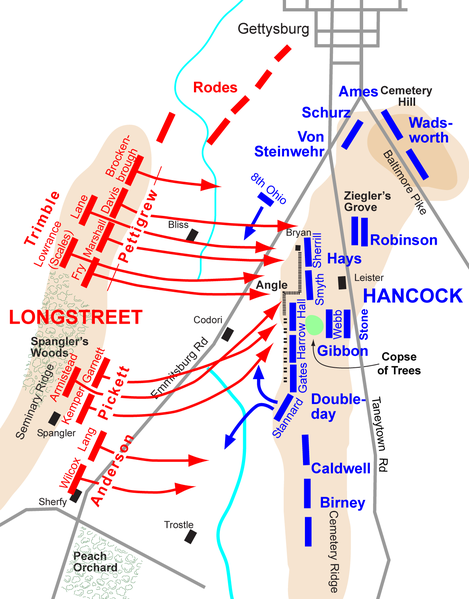
Pickett spent the night with his soldiers and woke them about 3 a.m. After a quick breakfast Pickett moved the division to Seminary Ridge marshaling his troops in Spangler’s Woods where there was a modicum of protection from Federal fires and observation. However, despite these advantages it placed his division about 1000 yards from the extreme right of Pettigrew’s division with which he would have to coordinate his attack that fateful day.

Pickett scribbled a final note to Sallie as his troops prepared to attack. Oh, may God in his mercy help me as He never has helped me beforeremember always that I love you with all my heart and soul That now and forever I am yours. [65]

When Pickett’s division as well as those of Pettigrew and Trimble swept out of the wood to begin the attack the last chance to stop the attack ended. As Pickett’s brigades moved out, Pickett galloped up, as debonair as if he had been riding through the streets of the Richmond under the eye of his affianced [66] and every soldier within hearing was stirred by Picketts appeal [67] as he shouted Remember Old Virginia! or to Garnett’s men Up, men, and to your posts! Dont forget today that you are from Old Virginia! [68] But when Garnett asked if there were any final instructions Pickett was told I advise you to make the best kind of time in crossing the valley; its a hell of an ugly looking place over yonder. [69]

Armistead called out to his soldiers, Men, remember who you are fighting for! Your homes, your firesides, and your sweethearts! Follow Me! [70]Armistead’s example had a major impact on his brigade, men were inspired, as one later wrote They saw his determination, and they were resolved to follow their heroic leader until the enemys bullets stopped them. [71] about 500 yards to Pickett’s left Pettigrew exhorted his men for the honor of the good old North State, forward.[72]

Pickett’s division showed the full length of its long gray ranks and shining bayonets, as grand as a sight as ever a man looked on.[73] The sight was impressive on both sides of the line, a Confederate Captain recalling the glittering forest of bayonetsthe two half mile wide formations bearing down in superb alignment. [74] The sight of the amassed Confederates moving forward even impressed the Federals. Colonel Philippe Regis de Trobriand, a veteran of many battles in Europe and the United States recalled it was a splendid sight, [75] and another recalled that the Confederate line gave their line an appearance of being irresistible. [76]

469px-Picketts-Charge

But the Federals were confident. Having withstood the Confederates for two days and having survived the artillery bombardment the Union men eagerly awaited the advancing Confederates. Directly facing the Confederate advance in the center of the Union line was the division of Pickett’s West Point Classmate and North Carolina native who remained with the Union, John Gibbon. The cry went out Here they come! Here they come! Here comes the infantry! [77] To the left of Gibbon Alexander Hays called to his men Now boys look outnow you will see some fun! [78]

The Confederates faced difficulties as they advanced, and not just from the Union artillery which now was already taking a terrible toll on the advancing Confederates. Stuck by the massed enfilade fire coming from Cemetery Hill and Little Round Top continued their steady grim advance. Carl Schurz from his vantage point on Cemetery Hill recalled:

Through our field-glasses we could distinctly see the gaps torn in their ranks, the grass dotted with dark spots- their dead and wounded.But the brave rebels promptly filled the gaps from behind or by closing up on their colors, and unasked and unhesitatingly they continued with their onward march.[79]

Pettigrew’s division was met by fire which enveloped them obliquely from Osborne’s thirty-nine guns emplaced on Cemetery Hill. On their left flank a small Federal regiment, the 8th Ohio lay in wait unnoticed by the advancing Confederates. Seeing an opportunity the regiment’s commander Lieutenant Colonel Franklin Sawyer deployed his 160 men in a single line, took aim at Brockenbrough’s Virginia brigade some two hundred yards ahead of the Emmitsburg Road, and opened a devastating fire. Above the boiling clouds the Union men could see a ghastly debris of guns, knapsacks, blanket rolls, severed human heads, and arms and legs and parts of bodies tossed into the air by the impact of the shot. [80] So sudden and unexpected was this that the Confederates panicked and fled in confusion… to the rear where they created more chaos in Trimble’s advancing lines as one observed they Came tearing through our ranks, which caused many men to break. [81] The effect on Confederate morale was very important, for the Army of Northern Virginia was not used to seeing a brigade, even a small one, go streaming off to the rear, with all its flags.Even Picketts men sensed that something disastrous had happened on the left. [82]

In one fell swoop Pettigrew was minus four regiments. Brockenbrough was singularly ineffective in leading his men, he was a nonentity who did not know how to control his recalcitrant rank and file; nor did he have the presence to impress his subordinate officers and encourage them to do his bidding. [83] The disaster that had overtaken Brockenbrough’s brigade now threatened another important component of Lee’s plan- protecting the left flank of the assaulting force. As Brockenbrough’s brigade collapse the vital protection of the left flank collapsed with it.

Pettigrew’s division continued its advance after Brockenbrough’s brigade collapsed, but the Confederate left was already beginning to crumble. Sawyer changed front, putting his men behind a fence, and the regiment began firing into the Confederate flank. [84]with Davis’s brigade now taking the brunt of the storm of artillery shells from Osborne’s guns. This brigade had suffered terribly at the railroad cut on July 1st, especially in terms of field and company grade officers was virtually leaderless, and the inexperienced Joe Davis was helpless to control them. [85] To escape the devastating fire Davis ordered his brigade to advance at the double quick which brought them across the Emmitsburg Road ahead of the rest of the division, where they were confronted by enfilade canister fire from Woodruff’s battery to its left, as well as several regiments of Federal infantry and from the 12th New Jersey directly in their front. A New Jersey soldier recalled We opened on them and they fell like grain before the reaper, which nearly annihilated them. [86] Davis noted that the enemy’s fire commanded our front and left with fatal effect. [87] Davis saw that further continuing was hopeless and ordered his decimated brigade to retire to the position originally held. [88]

Pettigrew’s remain two brigades continued grimly on to the Emmitsburg Road, now completely devoid of support on their left flank. Under converging fire from Hay’s Federal troops the remaining troops of Pettigrew’s command were slaughtered. Hay’s recalled As soon as the enemy got within range we poured into them and the cannon opened with grape and canister [, and] we mowed them down in heaps.[89] The combination of shot, shell, canister and massed musket fire simply erased the North Carolinians ranks. [90]Pettigrew was wounded, Colonel Charles Marshall was killed fifty yards from the stone wall and only remnants of companies and regiments remained unscathed. Soon the assault of Pettigrew’s division was broken:

Suddenly Pettigrews men passed the limit of human endurance and the lines broke apart and the hillside covered with men running for cover, and the Federal gunners burned the ground with shell and canister. On the field, among the dead and wounded, prostrate men could be seen holding up handkerchiefs in sign of surrender. [91]

Trimble’s two brigades fared no better. Scales brigade, now under the command of Colonel W. Lee Lowrence never crossed the Emmitsburg Road but instead took position along it to fire at the enemy on the hill. The soldiers from North Carolina who two days before had marched without flinching into the maw of Wainwrights cannon on Seminary Ridge could not repeat the performance. [92] Trimble was severely wounded in the leg and sent a message to Lane to take command of the division. The order written in the third person added a compliment to his troops: He also directs me to say that if the troops he had the honor to command today for the first time couldnt take that position, all hell cant take it. [93] Lane attempted to rally the troops for one last charge when one of his regimental commanders exploded telling him My God, General, do you intend rushing your men into such a place unsupported, when the troops on the right are falling back? [94] Lane looked at the broken remains of Pettigrew’s division retiring from the field and ordered a retreat. Seeing the broken remnants of the command retreating, an aide asked Trimble if the troops should be rallied. Trimble nearly faint from loss of blood replied: No Charley the best these brave fellows can do is to get out of this,so let them get out of this, its all over. [95] The great charge was now over on the Confederate left.

The concentrated Federal fire was just as effective and deadly on the Confederate right. Kemper’s brigade, on the right of Pickett’s advance was mauled by the artillery of Rittenhouse on Little Round Top, which tracked their victims with cruel precision of marksmen in a monstrous shooting galleryand the overs landed their shots on Garnetts ranks with fearful effect.[96]

As the Confederates advanced Pickett was forced to attempt to shift his division to the left to cover the gap between his and Pettigrew’s division. The move involved a forty-five degree oblique and the fences, which had been discounted by Lee as an obstacle which along the Emmitsburg Road virtually stopped all forward movement as men climbed over them or crowed through the few openings. [97] Pickett’s division’s oblique movements to join with Pettigrew’s had presented the flank of his division to McGilvery’s massed battery. The movement itself had been masterful, the execution of it under heavy fire impressive; however it meant the slaughter of his men who were without support on their right flank.

Pickett himself was doing his best to direct the movements of his Division. Placing himself just behind his Division he “kept his staff busy carrying messages to various generals and performing other duties on the field. At different times he sent his aides back to Confederate lines to inform Longstreet of his need for reinforcements, or to direct Wilcox when to advance his troops, or to ask Major James Dearing for artillery support.” [98] While some of Pickett’s detractors attempt to accuse him of cowardice, including inventing fables about him drinking behind the lines, the facts do not substantiate the accusations. Likewise, Pickett’s position about one hundred yards behind his advancing troops was optimal for command and control purposes.

Though he did not have operational control of Pettigrew’s division, “when he saw it beginning to falter, he ordered Captains E.R. Baird and W. Stuart Symington to help rally them. Then Pickett himself galloped to the left in an effort to steady the men.” [99]

As Pickett’s division advanced into the Plum Run Valley they were met by the artillery of Freeman McGilvery, who wrote that the execution of the fire must have been terrible, as it was over a level plain, and the effect was plain to be seen. In a few minutes, instead of a well-ordered line of battle, there were broken and confused masses, and fugitives fleeing in every direction. [100]

Kemper’s brigade which had the furthest to go and the most complicated maneuvering to do under the massed artillery fire suffered more damage. The swale created by Plum Run was a “natural bowling alley for the projectiles fired by Rittenhouse and McGilvery” [101] was now flanked by Federal infantry as it passed the Condori farm. The Federal troops were those of the Vermont brigade commanded by Brigadier General George Stannard. These troops were nine month volunteers recruited in the fall of 1862 and due to muster our in a few days. They were new to combat, but one of the largest brigades in the army and 13th Vermont had performed with veteran like precision the day before [102] leading Hancock to use them to assault the Confederate right. The Vermonters were positioned to pour fire into the Confederate flank, adding to the carnage created by the artillery, and the 13th and 16th Vermont pivoted ninety degrees to the right and fired a succession of volleys at pistol range on the right of Picketts flank. [103]

Kemper had not expected this, assuming that the Brigades of Wilcox and Perry would be providing support on the flank. As he asked a wounded officer of Garnett’s brigade if his wound was serious, the officer replied that he soon expected to be a prisoner and asked Kemper Dont you see those flanking columns the enemy are throwing on our right to sweep the field? [104] Kemper was stunned but ordered his troops to rush federal guns, but they were torn to pieces first by the artillery and then by the successive musketry of three and a half brigades of Yankee infantry. [105] Kemper was fearfully wounded in the groin and no longer capable of command. His brigade was decimated and parts of two regiments had to refuse their line to protect the flank, and those that continued to advance had hardly any strength left with which to succeed, the Confederate left was no for all intents and purposes out of the fight.

Now that fight was left in the hands of Armistead and Garnett’s brigades, and at this moment in the battle, the survivors of those units approached the stone wall and the angle where they outnumbered the Federal defenders, one regiment of which, the 71st Pennsylvania had bolted to the rear.

This left the decimated remains of Lieutenant Alonzo Cushing’s battery of artillery alone to face the advancing Confederates. Cushing who had already received multiple wounds in his should and groin and was desperately wounded. A number of his guns had been disabled and his battery had taken significant numbers of casualties during the Confederate bombardment. Cushing was another of the young West Point graduates who directed batteries at key points during the battle who was not only a skilled artilleryman, but a gifted leader and a warrior who won the respect of his men. One corporal said that Cushing was the best fighting man I ever saw while another recollected He was so cool and calm as I ever saw him, talking to the boys between shots with the glass constantly to his eyes, watching the effect of our shots. [106]

He received permission from the commander of the Philadelphia Brigade, Alexander Webb, among whose regiments his battery was sited to advance his guns to the wall. Though he was already desperately wounded in the shoulder and the groin, Cushing remained with his gunners. When a subordinate suggested that he go to the rear he replied I will stay right here and fight it out or die in the attempt. [107]

When Webb came to his battery and told Cushing that he believed that the Confederate infantry was about to assault their position Cushing replied I had better run my guns right up to the stone fence and bring all my canister alongside each piece. [108] From the stone fence the young officer directed the fire of his remaining guns. His gunners rammed in more loads of double canister when the Confederates were less than seventy yards away. [109] When the Garnett and Armistead’s survivors were just a hundred yards away from the wall, Cushing ordered triple canister. He was hit a third time, this time in his mouth killing him instantly.[110] The surviving gunners, now commanded by a sergeant fought hand to hand against the Confederates as they were overrun.

The survivors of Garnett’s brigade, led by their courageous but injured commander, who rode fully exposed to Federal fire on his horse, crossed the Emmitsburg Road and pushed forward overwhelming the few Federals remaining at the wall. They reached the outer area of the angle which had been abandoned by the 71st Pennsylvaniaand some of his men stood on the stones yelling triumphantly at their foes. [111] Armistead, sword raised with his hat still on it, climbed over the wall shouting to his men Come on boys! Give them the cold steel”…and holding his saber high, still with the black hat balanced on its tip for a guidon, he stepped over the wall yelling as he did so: Follow me! [112]

Armistead and his remaining soldiers, about one hundred in total, waded into the wreckage of Cushing’s battery and some began to attempt to turn the guns on the Federals. For a few moments there was a sense of supreme exultation as the rebels swarmed over the fence, forced back two Federal companies, and swallowed up a third. Armistead was the first to reach Cushings two guns, placing a hand on one of them and yelling, The day is ours men, come turn this artillery upon them. [113]

However, the triumph of Armistead and his band was short lived; the 72nd Pennsylvania was rushed into the gap by the brigade commander Brigadier General Alexander Webb. The climax of the battle was now at hand and the next few minutes would tell the story, and what that story would be would all depend on whether these blue-coated soldiers really meant it. Right here there were more Confederates than Federals, and every man was firing in a wild, feverish haste, with smoke settling down thicker and thicker. [114] The 69th Pennsylvania, an Irish regiment under Colonel Dennis O’Kane stood fast and their fire slaughtered many Confederates. Other Federal regiments poured into the fight, famous veteran regiments the 19th and 20th Massachusetts, the 7th Michigan and the remnants of the 1st Minnesota who had helped stop the final Confederate assault on July 2nd at such fearful cost.

Dick Garnett, still leading his troops muffled in his dark overcoat, cheered his troops, waving a black hat with a silver cord [115] when he was shot down, his frightened horse running alone off the battlefield, a symbol of the disaster which had befallen Pickett’s division. Armistead reached Cushing’s guns where he was hit by several bullets and collapsed mortally wounded. Armistead had been the driving force behind the last effort, there was no one else on hand to take the initiative. Almost as quickly as it had come crashing in, the Rebel tide inside the outer angle ebbed back to the wall. [116]

For a time the Confederate survivors engaged Webb’s men in a battle at the wall itself in a stubborn contest. A Federal regimental commander wrote The opposing lines were standing as if rooted, dealing death into each other. [117] The Federals launched a local counterattack and many Confederates elected to surrender rather than face the prospect of retiring across the battlefield that was still swept by Federal fire.

Webb had performed brilliantly in repulsing the final Confederate charge andgained for himself an undying reputation. Faced with defeat, he accepted the challenge and held his men together through great personal exertion and a willingness to risk his life. [118] For his efforts he was belatedly awarded the Medal of Honor.

Webb, like John Buford on July 1st, Strong Vincent, Freeman McGilvery and George Sears Greene on July 2nd, was instrumental in the Union victory. Hancock said of Webb In every battle and on every important field there is one spot to which every army [officer] would wish to be assigned- the spot upon which centers the fortunes of the field. There was but one such spot at Gettysburg and it fell to the lot of Genl Webb to have it and to hold it and for holding it he must receive the credit due him. [119]

The survivors of Pickett, Pettigrew and Trimble’s shattered divisions began to retreat, Lee did not yet understand that his great assault had been defeated, but Longstreet, who was in a position to observe the horror was. He was approached by Lieutenant Colonel Arthur Fremantle, a British observer from the Coldstream Guards. Fremantle did not realize that the attack had been repulsed, having just seen one of Longstreet’s regiments advancing through the woods in good orderand unwisely bubbled I would not have missed this for anything.[120] Longstreet replied with a sarcastic laugh The devil you wouldntbarked Longstreet. I would have liked to have missed this very much; weve attacked and been repulsed. Look there. [121]

Fremantle looked out and for the first time I then had a view of the open space between the two positions, and saw it covered with Confederates slowly and sulkily returning towards us in small broken parties, under a heavy fire of artillery. [122] Henry Owen of the 18th Virginia wrote that the retreating men without distinction of rank, officers and privates side by side, pushed, poured and rushed in a continuous stream, throwing away guns, blankets, and haversacks as they hurried on in confusion to the rear. [123]

It was a vision of utter defeat. The Pickett, who had seen his division destroyed and had been unable to get it additional support was distraught. An aide noted that Pickett was greatly affected and to some extent unnerved [124] by the defeat. He found Longstreet and poured out his heart in terrible agony: General, I am ruined; my division is gone- it is destroyed. [125] Lee had come up by now and attempted to comfort Pickett grasping his hand and telling him: General, your men have done all that they could do, the fault is entirely my own and instructed him that he should place his division in the rear of this hill, and be ready to repel the advance of the enemy should they follow up their advantage. [126] The anguished Pickett replied, General Lee, I have no division now. Armistead is down, Garnett is down and Kemper is mortally wounded. [127] Lee missed the point of Picketts anguish completely and attempted to console Pickett again and told the distraught General, General Pickettyou and your men have covered themselves in glory. [128]

Pickett, the romantic true believer in the cause refused to be consoled and told Lee not all the glory in the world, General Lee, can atone for the widows and orphans this day has made. [129] While Longstreet and Lee maintained their composure, Pickett felt an overpowering sense of helplessness as he observed the high tide from Emmitsburg Road and the subsequent retreat of his shattered division. It was too much for the mercurial romantic to absorb. [130] But Pickett was not alone, Cadmus Wilcox told Lee as he returned from the assault that he came into Pennsylvania with one of the finest brigades in the Army of Northern Virginia and now all my people are gone. [131]

When others attempted to stop the flight of his men Pickett countermanded them and ordered his survivors to return to the site where they had bivouacked the previous night. A soldier from the 18th Virginia who saw the retreat noted that at Willoughby Run:

The fugitives, without distinction of rank, officers and privates side by side pushed, poured and rushed in a continuous stream, throwing away guns, blankets, and haversacks as they hurried in confusion toward the rear. Before long there was another attempt to restore order, but again Pickett intervened. Don’t stop any of my men! he cried. Tell them to come to the camp we occupied last night. As he said this he was weeping bitterly, and then he rode on alone toward the rear. [132]

When the survivors finally assembled the next morning they numbered less than 1000 out of the approximately 5000 troops who Pickett led into the attack remained. Four out of every five of Picketts men had been either killed, wounded, or captured. Two of his three brigadiers were gone, probably dead, the third perhaps mortally wounded. Every one of his regimental commanders had been killed, wounded or captured. [133]

During the retreat Pickett and his remaining soldiers would be assigned to the task of being the Provost Guard for the army, escorting Federal prisoners back during the long retreat back to Virginia. For them, it was a humiliating experience.

Pickett was never the same after the charge of July 3rd 1863. Pickett’s after action report which complained about the lack of support his division received was suppressed and destroyed by Lee who wrote Pickett You and your men have crowned yourselves in glory But we have an enemy to fight, and must carefully, at this critical moment, guard against dissections which the reflections in your report will create. [134]

general-george-pickett-and-lasalle-corbell-picketss-circa-1865-img542

George and La Salle “Sallie” Pickett circa 1865

Pickett married La Salle “Sallie” Corbell in September of 1863, and the marriage would last until his death in 1875. Sallie, impoverished by the death of “her soldier” took up writing as well as speaking tours in both the South and the North. Sallie was a stalwart defender of her husband, who she said had the keenest sense of justice, most sensitive consciousness of right, and the highest moral courage but also opposing hatred, sectionalism and strife. [135] Though much of her work was panned by historians and shunned by established magazines and periodicals; her writing were published by newer popular magazines. Her book The Heart of a Soldier, as Revealed in the Intimate Letters of General George Pickett, C.S.A. was for the most part fabrications authored by her, but she found a niche in newer popular magazines and journals, including Cosmopolitan for which she authored a ten part serial of the Pickett family story on the fiftieth anniversary of the battle. Sallie Pickett’s:

idealized portrait of her husband made him a Confederate hero. He never reached the status of Robert E. Lee or Stonewall Jackson, but his association with the famed but futile charge at Gettysburg helped. Virginia veterans and newspapers began romanticizing Picketts all-Virginia divisions role soon after the battle; it was almost by association that George too would share in this idolization…” [136]

Pickett retained command of his division which was reconstituted after Gettysburg and shipped off to North Carolina where he and it performed adequately but without marked distinction. It performed well in the defensive battles around Richmond and Petersburg. The end came at the battle at Five Forks where Pickett’s grossly under strength division was deployed on the far right of the Confederate line was overwhelmed by a massive assault by Sheridan’s cavalry and the Fifth Corps which destroyed it as a fighting formation. Pickett, who had successfully repulsed an attack by Sheridan the previous day did not expect an attack and was away from his division at a Shad bake with Rooney Lee when the attack came. No cowardice was involved; Pickett simply misjudged the situation by assuming that no attack was imminent, yet it left a bad taste in everyones mouth. [137] Two days later Pickett and two other generals, including Richard Anderson were relieved of their duties and dismissed by Lee. However Pickett remained with his division until the end and at Appomattox Lee was heard to remark in what some believed was a disparaging manner Is that man still with this army? [138]

George Pickett attempted to rebuild his life after the war and the task was not easy for though he applied for amnesty his case was complicated by an incident where he had ordered the execution of about twenty-two former North Carolina militiamen who had defected to the Union and been captured by the Confederates. Federal authorities thought about charging him with war crimes which resulted in Pickett fleeing to Canada. It took the intervention of Pickett’s faithful friend Ulysses S. Grant to have the charges dismissed and for Pickett to be granted amnesty by President Johnson in 1868. Grant admitted that the punishment was harsh, but wrote in his friend’s defense:

But it was in time of war and when the enemy no doubt it necessary to retain, by some power, the services of every man within their reach. Gen. Pickett I know personally to be an honorable man but in this case his judgement [sic] prompted him to do what can not well be sustained though I do not see how good, either to the friends of the deceased or by fixing an example for the future, can be secured by his trial now. [139]

Even so his life was difficult, health difficulties plagued him and employment was scarce, even for a man of Pickett’s stature in Virginia. He refused employment which would take him away from Sallie and his children and finally took a job as an insurance agent in Richmond. It was a job which he felt demeaning, which required that he attempt to sell insurance policies to destitute and out of work Confederate veterans and their families. Sallie wrote that he could not come to terms with a profession that made its profits through what one colleague called gall, gall, old man, gall and grub. [140] Distinctly unhappy the dejected old soldier told her Id sooner face a canon,than to take out a policy with me. [141]

In 1870 he was convinced by John Singleton Mosby to visit Lee when the latter was visiting Richmond as Lee was making a final tour of battlefields and other sites. For Pickett the visit only reinforced his resentment that he felt for Lee, who he felt blamed him for the defeat at Five Forks and had ostracized him. The meeting occurred in Lees room at the Ballard Hotel was icy and lasted only two or three minutes. [142]

Mosby realized quickly that the meeting was not going well and Sensing the unpleasantness of the meeting, Mosby got up in a few moments and Pickett followed him. Once outside the room, Pickett broke out bitterly against that old man who, he said, had my division massacred at Gettysburg. [143] Mosby attempted to assuage his friend’s feelings but Pickett was not mollified by Mosbys rejoinder that it made you immortal. [144]

George Pickett was a romantic as well as a true believer in the cause of the Confederacy. Pickett was vain, and at times self-serving, he certainly as Porter Alexander noted was a better brigade commander than division commander, a position that he desired but never excelled. His temperament at times got the better of him and he was not the equal of many of his fellow division commanders in the Army of Northern Virginia.

That being said it would be hard to prove the charges of cowardice or incompetence that some leveled at him for allegedly not being forward enough during the great charge. The fact that he retained command after the battle indicates that Lee did not believe that he had acted with cowardice, or that Lee questioned the manner in which he led the assault.

Likewise, it is unlikely that such any such action on Pickett’s part to charge further into the maelstrom would have done little more than add yet another name to the list of Confederate general officers killed or wounded at Gettysburg. The question of how Pickett survived without a scratch, when his three brigadiers and all of his field officers but one went down. This could be done by the brief explanation that his escape was miraculous. [145] Edwin Coddington wrote that it would have been better for his reputation if had been called to give his life or if the attack had been known for what it was, Longstreets Second Assault. [146]

Bitter and discouraged at the end of his life he uttered his last words to Sallie’s uncle who had also served in the Army of Northern Virginia Well, Colonel, the enemy is too strong for me againmy ammunition is all out He closed his eyes, and settled back as if at peace for the first time in his life. Sallie never left his side; two hours after his death they gently pried her hands from his. [147]

Pickett’s charge was over, except for the blame, the stories and the legends, especially in the South. The failure of this disastrous tactical assault that bears Pickett’s name placed the final nail in Lee’s operational plan to take the war to the North and defeat the Federal army on its own territory. Lees plan was almost Burnside-like in its simplicity, and it produced a Fredericksburg with the roles reversed. [148] James McPherson made the very succinct observation that Picketts charge represented the Confederate war effort in microcosm: matchless valor, apparent initial success, and ultimate disaster. [149]

That tactical and operational failure had strategic implications for the Confederacy; it ensured the loss of Vicksburg and forced Lee to assume the defensive in the east. Lee and his men would go on to further laurels. But they never again possessed the power and reputation that they carried into Pennsylvania those palmy midsummer days of 1863. [150] The repulse ended the campaign that Lee had hoped would secure the independence of the Confederacy. The Battle of Gettysburg was and it was much more than a military defeat, but a political one as well, for with it went the slightest hope remaining of foreign intervention. As J.F.C. Fuller wrote It began as a political move and it had ended in a political fiasco.[151]

Notes

[1] Clausewitz, Carl von. On War Indexed edition, edited and translated by Michael Howard and Peter Paret, Princeton University Press, Princeton NJ 1976 p.114

[2] Ibid. Clausewitz On War p.108

[3] Dempsey, Martin Mission Command White Paper 3 April 2012 p.5 retrieved ( July 2014 from http://www.dtic.mil/doctrine/concepts/white_papers/cjcs_wp_missioncommand.pdf

[4] ___________. The Armed forces Officer U.S. Department of Defense Publication, Washington DC. January 2006 p.18

[5] Ibid. The Armed Forces Officer p.18

[6] Ibid. Clausewitz On War p.101

[7] Stewart, George R. Pickett’s Charge: A Micro-History of the Final Attack at Gettysburg, July 3rd 1863 Houghton Mifflin Company Boston 1959 p.94

[8] Hess, Earl J. Pickett’s Charge: The Last Attack at Gettysburg University of North Carolina Press, Chapel Hill and London 2001 p. 55

[9] Ibid. Stewart Pickett’s Charge: A Micro-History p.94
[10] Wert, Jeffery D. Gettysburg Day Three A Touchstone Book, New York 2001 p.110

[11] Foote, Shelby, The Civil War, A Narrative. Volume Two Fredericksburg to Meridian Random House, New York 1963 p.548

[12] Ibid. Foote The Civil War, A Narrative. Volume Two p.548

[13] Gottfried, Bradley The Artillery of Gettysburg Cumberland House Publishing, Nashville TN 2008 p.206

[14] Ibid. Gottfried The Artillery of Gettysburg p.193

[15] Longacre, Edward G. Pickett: Leader of the Charge White Mane Publishing Company, Shippensburg PA 1995 p.121

[16] Reardon, Carol The Convergence of History and Myth in the Southern Past: Pickett’s Charge in The Third Day at Gettysburg and Beyond edited by Gallagher, Gary W. University of North Carolina Press, Chapel Hill and London 1994 p.83

[17] Ibid. Wert Gettysburg Day Three p.297

[18] Sears, Stephen W. Gettysburg. Houghton Mifflin Co. Boston and New York 2003 p.387

[19] Ibid. Stewart Picketts Charge: A Micro-History p.39

[20] Ibid. Hess Picketts Charge p.153

[21] Ibid. Wert Gettysburg Day Three p.181

[22] Dowdy, Clifford. Lee and His Men at Gettysburg: The Death of a Nation Skyhorse Publishing, New York 1986, originally published as Death of a Nation Knopf, New York 1958 p.294

[23] Ibid. Wert Gettysburg Day Three p.179

[24] Ibid. Stewart Picketts Charge p.132

[25] Coddington, Edwin B. The Gettysburg Campaign: A Study in Command, A Touchstone Book, Simon and Schuster New York, 1968 p.496

[26] Ibid. Coddington The Gettysburg Campaign p.496

[27] Huntington, Tom Searching for George Gordon Meade: The Forgotten Victor of Gettysburg Stackpole Books, Mechanicsburg PA 2013 p.171

[28] Ibid. Hess Picketts Charge p.163

[29] Ibid. Coddington The Gettysburg Campaign p.499

[30] Trudeau, Noah Andre. Gettysburg: A Testing of Courage, Harper Collins Publishers, New York 2002 p.459

[31] Ibid. Coddington The Gettysburg Campaign p.500

[32] Alexander, Edward Porter Fighting for the Confederacy: The Personal Recollections of General Edward Porter Alexander edited by Gallagher, Gary The University of North Carolina Press, Chapel Hill and London 1989 p.258

[33] Hunt, Henry The Third Day at Gettysburg in Battles and Leaders of the Civil War edited by Bradford, Neil Meridian Press, New York 1989 p.374

[34] Alexander, Edwin Porter. The Great Charge and the Artillery Fighting at Gettysburg, in Battles and Leaders of the Civil War edited by Bradford, Neil Meridian Press, New York 1989 p.364

[35] Ibid. Dowdy Lee and His Men at Gettysburg p.297

[36] Wert, Jeffry D. General James Longstreet: The Confederacy’s Most Controversial Soldier A Touchstone Book, Simon and Schuster, New York and London 1993 p.291

[37] Ibid. Coddington The Gettysburg Campaign p.501

[38] Ibid. Alexander The Great Charge and the Artillery Fighting at Gettysburg p.365

[39] Ibid. Alexander The Great Charge and the Artillery Fighting at Gettysburg p.365

[40] Ibid. Trudeau. Gettysburg: A Testing of Courage pp.474-475

[41] Ibid. Alexander The Great Charge and the Artillery Fighting at Gettysburg p.365

[42] Ibid. Alexander Fighting for the Confederacy p.261

[43] Ibid. Dowdy Lee and His Men at Gettysburg p.313

[44] Ibid. Wert Gettysburg Day Three p.109

[45] Ibid. Dowdy, Lee and His Men at Gettysburg p.264

[46] Ibid. Longacre Pickett p.4

[47] Ibid. Longacre Pickett p.6

[48] See Longacre Pickett pp.6-7. The myth was quite successful and it endures in some accounts of Pickett’s life and in a number of military histories including Larry Tagg’s The Generals of Gettysburg

[49] Waugh, John C. The Class of 1846 from West Point to Appomattox: Stonewall Jackson, George McClellan and their Brothers A Ballantine Book, New York 1994 pp.38-39

[50] Ibid. Longacre Pickett p.7

[51] Ibid. Waugh The Class of 1846 from West Point to Appomattox p.39

[52] Ibid. Longacre Pickett p.12

[53] Guelzo, Allen C. Gettysburg: The Last Invasion Vintage Books a Division of Random House, New York 2013 p.378

[54] Ibid. Guelzo Gettysburg: The Last Invasion p.378

[55] Ibid. Longacre Pickett p.20

[56] Ibid. Hess Picketts Charge p.37

[57] Ibid. Dowdy Lee and His Men at Gettysburg p.264

[58] Ibid. Waugh The Class of 1846 p.457

[59] Ibid. Longacre Pickett p.32

[60] Ibid. Longacre Pickett p.33

[61] Ibid. Longacre Pickett pp.50-51

[62] Ibid. Longacre Pickett p.51

[63] Ibid. Hess Pickett’s Charge p.38

[64] Ibid. Hess Pickett’s Charge p.47

[65] Ibid. Dowdy Lee and his Men at Gettysburg p.296

[66] Freeman, Douglas Southall, Lee an abridgment by Richard Harwell, Touchstone Books, New York 1997 p.338

[67] Freeman, Douglas Southall Lee’s Lieutenants: A Study in Command abridged in one volume by Stephen Sears, Scribner Books, Simon and Schuster, New York 1998 p.594

[68] Ibid. Guelzo, Gettysburg: The Last Invasion p.408

[69] Ibid. Hess Picketts Charge p.166

[70] Ibid. Hess Picketts Charge p.167

[71] Ibid. Hess Picketts Charge p.167

[72] Ibid. Trudeau. Gettysburg: A Testing of Courage p.483

[73] Ibid. Alexander The Great Charge and the Artillery Fighting at Gettysburg p.365

[74] Ibid. Foote The Civil War, A Narrative. Volume Two p.553

[75] Ibid. Guelzo Gettysburg: The Last Invasion p.407

[76] Ibid. Hess Picketts Charge p.193

[77] Ibid. Hess Picketts Charge p.193

[78] Ibid. Guelzo Gettysburg: The Last Invasion p.411

[79] Ibid. Sears Gettysburg p.422

[80] Catton, Bruce The Army of the Potomac: Glory Road Doubleday and Company, Garden City New York, 1952 p.318

[81] Ibid. Sears Gettysburg p.423

[82] Ibid. Stewart Pickett’s Charge: A Micro-History of the Final Attack at Gettysburg pp.193-194

[83] Ibid. Hess Pickett’s Charge p.187

[84] Ibid. Stewart Pickett’s Charge: A Micro-History of the Final Attack at Gettysburg p.193

[85] Ibid. Dowdy Lee and His Men at Gettysburg p.311

[86] Ibid. Trudeau. Gettysburg: A Testing of Courage p.494

[87] Ibid. Sears Gettysburg p.425

[88] Ibid. Trudeau. Gettysburg: A Testing of Courage p.494

[89] Ibid. Trudeau. Gettysburg: A Testing of Courage p.502

[90] Ibid. Wert Gettysburg Day Three p.216

[91] Ibid. Catton The Army of the Potomac: Glory Road p.318

[92] Ibid. Trudeau. Gettysburg: A Testing of Courage p.504

[93] Ibid. Stewart Pickett’s Charge: A Micro-History of the Final Attack at Gettysburg pp.238-239

[94] Ibid. Trudeau. Gettysburg: A Testing of Courage p.504

[95] Ibid. Guelzo Gettysburg: The Last Invasion p.425

[96] Ibid. Foote The Civil War, A Narrative. Volume Two p.555

[97] Ibid. Coddington The Gettysburg Campaign p.503

[98] Ibid. Coddington The Gettysburg Campaign p.505

[99] Ibid. Coddington The Gettysburg Campaign p.505

[100] Ibid. Gottfried The Artillery of Gettysburg p.217

[101] Ibid. Hess Pickett’s Charge p.220

[102] Ibid. Coddington The Gettysburg Campaign p.515

[103] Ibid. Coddington The Gettysburg Campaign p.515

[104] Ibid. Trudeau. Gettysburg: A Testing of Courage p.502

[105] Ibid. Sears Gettysburg p.448

[106] Ibid. Gottfried The Artillery of Gettysburg p.200

[107] Ibid. Gottfried The Artillery of Gettysburg p.221

[108] Ibid. Gottfried The Artillery of Gettysburg p.208

[109] Ibid. Wert Gettysburg Day Three p.211

[110] Ibid. Gottfried The Artillery of Gettysburg p.221

[111] Ibid. Trudeau. Gettysburg: A Testing of Courage p.505

[112] Ibid. Foote The Civil War, A Narrative. Volume Two p.562

[113] Ibid. Hess Pickett’s Charge p.262

[114] Ibid. Catton The Army of the Potomac: Glory Road p.319

[115] Ibid. Dowdy Lee and His Men at Gettysburg p.317

[116] Ibid. Trudeau Gettysburg p.508

[117] Ibid. Sears Gettysburg p.451

[118] Ibid. Coddington The Gettysburg Campaign p.528

[119] Ibid. Coddington The Gettysburg Campaign p.528

[120] Fremantle, Arthur Three Months in the Southern States, April- June 1863 William Blackwood and Sons, Edinburgh and London 1863 Amazon Kindle edition p.285

[121] Ibid. Wert General James Longstreet The Confederacy’s Most Controversial Soldier p.292

[122] Ibid. Fremantle Three Months in the Southern States p.287

[123] Ibid. Sears Gettysburg p.456

[124] Ibid. Hess Pickett’s Charge p.326

[125] Ibid. Guelzo Gettysburg: The Last Invasion p.428

[126] Ibid. Guelzo Gettysburg: The Last Invasion p.428

[127] Ibid. Hess Pickett’s Charge p.326

[128] Ibid Guelzo Gettysburg: The Last Invasion p.428

[129] ibid. Guelzo Gettysburg: The Last Invasion pp.428-429

[130] Ibid. Hess Pickett’s Charge p.325

[131] Ibid. Guelzo Gettysburg: The Last Invasion p.429

[132] Ibid. Sears Gettysburg p.456

[133] Ibid. Waugh The Class of 1846 p.489

[134] Ibid. Hess Pickett’s Charge p.354

[135] Ibid. Reardon The Convergence of History and Myth in the Southern Past: Pickett’s Charge p.76

[136] Gordon, Lesley J. “Let the People See the Old Life as it Was” La Salle Corbell Pickett and the Myth of the Lost Cause in The Myth of the Lost Cause and Civil War History edited by Gallagher, Gary W. and Nolan, Alan T. Indiana University Press, Bloomington and Indianapolis 2000 p.170

[137] Ibid. Hess Pickett’s Charge p.375

[138] Ibid. Hess Pickett’s Charge p.375

[139] Ibid. Longacre Pickett p.175

[140] Ibid. Longacre Pickett p.178

[141] Ibid. Longacre Pickett p.178

[142] Ibid. Hess Pickett’s Charge p.377

[143] Ibid. Freeman Lee p.569

[144] Ibid. Waugh The Class of 1846 p.529

[145] Ibid. Stewart Pickett’s Charge: A Micro-History p.287

[146] Ibid. Coddington The Gettysburg Campaign p.528

[147] Ibid. Longacre Pickett p.180

[148] Millet, Allan R. and Maslowski, Peter, For the Common Defense: A Military History of the United States The Free Press a Division of Macmillan Inc. New York, 1984 p.206

[149] McPherson, James The Battle Cry of Freedom: The Civil War Era Oxford University Press, Oxford and New York 1988 p.662

[150] Ibid. McPherson The Battle Cry of Freedom p.665

[151] Fuller, J.F.C. Grant and Lee: A Study in Personality and Generalship, Indiana University Press, Bloomington IN 1957 pp.200-201

Leave a comment

Filed under civil war, History, leadership, Military

Hell is Where they will Reside: The Expanding War Against ISIL

image.adapt.960.high

“This war differs from other wars, in this particular: We are not fighting armies but a hostile people, and must make old and young, rich and poor, feel the hard hand of war.” William Tecumseh Sherman

Note: Please know, I have been to war, I have seen its devastation and heartache and I came back changed from the experience. I hate it. I served in Iraq with the Iraqis in support of our advisors to them. For me the war is personal, I left a huge part of my soul in that unfortunate nation. 


That being said, despite being a progressive who hates war, I am also a realist. I am not one that finds any romance or glory in war, but I know that sometimes it becomes unavoidable. In the past few months I have written about the nature of war, the kind of war we are now engaged in with ISIL and some of the ethical and moral compromises that could easily be made in such a war.

Likewise I realize that we as Americans must take responsibility for the mess that the Bush administrated created in Iraq. We cannot hope to have any peace with justice, nor succeed in the current war against the Islamic State, unless we are honest about the lies that were told to get us into Iraq, and the horrible policy decisions after we succeeded in toppling Saddam Hussein that brought about the collapse of order, the insurgency and the Iraqi Civil War that brought Al Qaeda into Iraq, a country that they had not previously been welcome. 

Thus what I write here is a continuation of those thoughts and I encourage you to look at those articles which can be found at the following links on this page: 

Iraq, ISIS and Al Qaeda: Sowing the Wind…

Iraq 2014: A Disaster Long in the Making

9-11-2014 War Without End…

The Islamic State and the New, Old Nature of War

War is Cruelty, and You Cannot Refine it… The War Against ISIL

Prepare for a Long and Brutal Ideological War Against the Islamic State

Can you Live With It? The Moral Costs of the War Against the Islamic State

Iraq and the Middle East 2013: Lessons from T. E. Lawrence

ISIL: A Generational Problem in Which the Enemy Gets a Vote

Inshallah Iraq (إن شاء الله) Maybe Someday things will be Better

isis3-840x550

The American war against the Islamic State is entering a more sustained mode. Air strikes are occurring daily, thousands of advisors have arrived, backed by Army aviation assets to protect American interests at Baghdad International Airport and the U.S. Embassy complex, and the Chairman of the Joint Chiefs of Staff has again alluded to the possibly of American ground troops engaging ISIL at the side of Iraqi troops.

Whether most of want to admit it or not, and the latter is more descriptive of the vast bulk of Americans, we are at war.  It is a war which we have been fighting  for over thirteen years now. President Obama had hoped that our involvement in Iraq was at and end that that the Iraqis could handle their own affairs. But the hope was misplaced, and now this war has been extended indefinitely by the actions of the Islamic State and the announced intentions of President Obama to fight it. It will become much worse than people want to believe that it will, regardless of whether it is a long or a short war, and even a “short” war will likely extend into the next Presidential administration.

us-fa-18-meask

Americans have grown up for the past twenty years with hi-tech wars that with a few exceptions of terrorism inflicted on American civilians have been waged by a comparatively small professional military; a military that at any given time over the last 20 years has comprised less than one percent of the American population. As such war is a spectator sport for most Americans, we watch it on television, or on You Tube videos on the internet, but it is a distant thing, happening to others that doesn’t touch us too deeply because most of us think that we have no skin in the game. In fact people that bet on baseball have more skin in the game than most Americans do in the current war, but that will probably change.

ISIS-MAP

Since I have written much about that military at its sacrifices in the war that began on September 11th 2001 I am not going to belabor that today. Instead I am going to go back to the nature of war, even wars that may be fought in self-defense and with just cause. It was General William Tecumseh Sherman who wrote:

“You cannot qualify war in harsher terms than I will. War is cruelty, and you cannot refine it; and those who brought war into our country deserve all the curses and maledictions a people can pour out…”

Chris Hedges wrote: “Violence is a disease, a disease that corrupts all who use it regardless of the cause,” and as Clausewitz noted of war’s nature, that it is: “a paradoxical trinity-composed of primordial violence, hatred and enmity…”

We try to use language to soften war; to make it more palatable, but to do so is an Orwellian charade that is deceptive and destructive to the soul. Dave Grossman, the army infantry officer who has spent his post military life writing about the psychology of war and killing wrote:

“Even the language of men at war is the full denial of the enormity of what they have done. Most solders do not “kill,” instead the enemy was knocked over, wasted, greased, taken out, and mopped up. The enemy is hosed, zapped, probed, and fired on. The enemy’s humanity is denied, and he becomes a strange beast called a Jap, Reb, Yank, dink, slant, or slope. Even the weapons of war receive benign names- Puff the Magic Dragon, Walleye, TOW, Fat Boy, Thin Man- and the killing weapon of the individual soldier becomes a piece or a hog, and a bullet becomes a round.”

Likewise Thucydides wrote:

“Words had to change their ordinary meaning and to take that which was now given them. Reckless audacity came to be considered the courage of a loyal supporter; prudent hesitation, specious cowardice; moderation was held to be a cloak for unmanliness; ability to see all sides of a question incapacity to act on any….”

Such language gives those who have never been to war but cannot live without it to bring it on, but as Sherman noted: “It is only those who have neither fired a shot nor heard the shrieks and groans of the wounded who cry aloud for blood, more vengeance, more desolation. War is hell.”

President Obama in his address to the nation, and the world on the eve of September 11th talked of a war against the Islamic State, using far more diplomatic, restrained and less warlike language than did Vice President Biden who said:

“As a nation we are united and when people harm Americans we don’t retreat, we don’t forget. We take care of those who are grieving and when that’s finished, they should know we will follow them to the gates of hell until they are brought to justice because hell is where they will reside. Hell is where they will reside.”

I commend the President for his humanity and desire to fight the Islamic State with a matter of restraint, and though our efforts have been limited to air strikes and reengaging with the Iraqi military to retrain it for the fight, it does appear that at least in Iraq the policy is showing signs of working. ISIL troops are having a hard time moving about the battlefield and their more conventional units are taking a beating from the air, while Iraqi and Kurdish forces are slowly beginning to have more success, the Iraqi military having just relieved the beleaguered garrison of the massive Baiji oil refinery complex.

Iraqarmybaiji

This in a sense is part of ISIL’s conundrum, they desire to conquer territory and subjugate people. To do that they need to be able to use conventional military tactics and equipment, not simply using terrorist strikes and the element of surprise to overwhelm unsuspecting or demoralized Iraqi security forces. It is possible that they are now overextend and have reached what Clausewitz termed their “culminating point.” We will have to see if that is the case, and only time will tell.

air strike footage

U.S. Air Strike on ISIL Position 

However, American restraint, particularly with a hawkish, newly elected Republican Congress, of whom many new members are highly militant Christians who will have no compunction in killing Moslems, be they good Moslems or terrorist thugs like ISIL or Al Qaeda; will last as long as the Islamic State is unable or unwilling to strike at American civilians in the American homeland, American interests in a country that is not in the war zone, or an American ship or military installation at home or abroad.

But once that happens, and it will eventually happen, the recent attacks in Canada serving as a foretaste of what will happen here, the pretense of restraint will drop, and what Vice Biden President said will become our goal, even if we do not officially say it. But once those restraints are passed, the war will get really messy. Ethicist and philosopher Michael Walzer wrote in his book Just and Unjust Wars:

“We don’t call war hell because it is fought without restraint. It is more nearly right to say that, when certain restraints are passed, the hellishness of war drives us to break with every remaining restraint in order to win. Here is the ultimate tyranny: those who resist aggression are forced to imitate, and perhaps even to exceed, the brutality of the aggressor.”

The problem with this war is that it has lasted so long already, if we consider American involvement in Iraq as going back to 2003. Long wars such as these are detrimental to the nations and peoples that fight them, as Sun Tzu wrote: “There is no instance of a nation benefitting from prolonged warfare.”

As such the longer we drag this war against the Islamic State and other similar groups out, the longer the war continues, the crueler it will become, the more damage it will do to our civil liberties, our economy, and even more importantly to the spirit of our nation. One can only look at the Patriot Act and related measures undertaken in the name of national security after 9-11-2001 and recall the words of President John F. Kennedy who said in respect to the epidemic of loyalty oaths and restrictions on civil liberties enacted in the 1950s:

“We have also seen a sharpening and refinement of abusive power. The legislative investigation, designed and often exercised for the achievement of high ends, has too frequently been used by the Nation and the States as a means for effecting the disgrace and degradation of private persons. Unscrupulous demagogues have used the power to investigate as tyrants of an earlier day used the bill of attainder.

The architects of fear have converted a wholesome law against conspiracy into an instrument for making association a crime. Pretending to fear government they have asked government to outlaw private protest. They glorify “togetherness” when it is theirs, and call it conspiracy when it is that of others.”

Thus the place that we now find ourselves is not good. On one hand by using restraint the war goes on and on, war without end, but if we embrace Sherman’s realism and admit that “War is cruelty. There’s no use trying to reform it. The crueler it is, the sooner it will be over” is that we will imitate or exceed the brutality of the Islamic State. Either way, we lose something of ourselves. But as Abraham Lincoln said “There’s no honorable way to kill, no gentle way to destroy. There is nothing good in war. Except its ending.”

The young Union hero of Little Round Top at the Battle of Gettysburg, Colonel Strong Vincent wrote his wife about how he believed the Union had to defeat the Confederacy. His words were much like Sherman’s and in dealing with ISIL I would hope that the American, Iraqi and coalition forces will take them to heart in combating ISIL: Vincent wrote:

“We must fight them more vindictively, or we shall be foiled at every step.  We must desolate the country as we pass through it, and not leave a trace of a doubtful friend or foe behind us; make them believe that we are in earnest, terribly in earnest…” 

d41be44594

Lawrence with Bedouin after capturing Aqaba 

That is an uncomfortable thought and philosophy, it goes against the grain, it seems terribly brutal; but it is the only philosophy of war that the leaders and jihadists of the Islamic State understand. We may not yet understand it, but I think that in time we and the Iraqis will. However, the lead cannot be taken by us or even if we are “successful” in defeating ISIL, another group will be back and doing the same things; just as ISIL filled the vacuum left by the collapse of Al Qaeda Iraq in 2008.

IRAQ_-_1115_-_Stato_islamico

Iraqi Soldiers after retaking Baiji

That is a danger that T.E. Lawrence advised his fellow British officers serving with the Bedouin during the Arab Revolt in 1917 and 1918. It is advice that we need to remember as we assist the Iraqis and Kurds in their fight. That is why this must be an Iraqi and Kurdish fight. When and if the Iraqis and Kurds embrace this philosophy of total war against ISIL, if they are willing to fight ISIL vindictively and desolate every ISIL stronghold, will they bring peace to their country. We can aid them in thee fight, but we cannot win this for them. Lawrence wrote:

“Do not try to do too much with your own hands. Better the Arabs do it tolerably than that you do it perfectly. It is their war, and you are to help them, not to win it for them. Actually, also, under the very odd conditions of Arabia, your practical work will not be as good as, perhaps, you think it is.”

bettertimes

The Author with Bedouin on Syrian Border December 2007

My hope is that somehow, when this is war is done that there will be peace and reconciliation. I would like to see this in my lifetime, but it may take another generation or two that we will finally be able to establish peace by making those who are our enemies our friends. I hope for such a day, because I know that Chris Hedges is all too correct about the corrupting and devastating effect of violence on all that rely on it to achieve their goals and Sun Tzu’s wisdom in noting that prolonged warfare benefits anyone. As Major General Smedley Butler wrote:

“What is the cost of war? what is the bill? This bill renders a horrible accounting. Newly placed gravestones. Mangled bodies. Shattered minds. Broken hearts and homes. Economic instability. Depression and all of its attendant miseries. Back -breaking taxation for generations and generations.”

If you ask me I do not think that we or the people of Iraq can keep adding to that bill.

Peace

Padre Steve+

1 Comment

Filed under ethics, History, iraq,afghanistan, Military, News and current events

Prepare for a Long and Brutal Ideological War Against the Islamic State

“This war differs from other wars, in this particular: We are not fighting armies but a hostile people, and must make old and young, rich and poor, feel the hard hand of war.” William Tecumseh Sherman

Note: Please know, I have been to war, I have seen its devastation and heartache and I came back changed from the experience. I hate it. That being said, despite being a progressive who hates war, I am also a realist. I am not one that finds any romance or glory in war, but I know that sometimes it becomes unavoidable. In the past few articles I have written about the nature of war, the kind of war we are now engaged in with ISIL and some of the ethical and moral compromises that could easily be made in such a war. Thus what I write here is a continuation of those thoughts and I encourage you to look at those articles. 

President Obama came into office as a President determined to end the wars that the United States was engaged in and usher in an era of peace. That did not happen. The genie of war and chaos that was unleashed when President Bush stopped pursuing Al Qaeda and attacked Saddam Hussein’s Iraq refused to go back into its bottle. The new and more violent terrorist groups spawned from the loins of Al Qaeda in Iraq are now the dogs of war that have been unleashed on the region, threatening all of the peoples there.

This menace to the people of the region as well as to the West, known as the Islamic State of Iraq and the Levant is different than Al Qaeda.  It is a terrorist group to be sure, but it is also an embryonic state which is conquering territory, subduing people, butchering its enemies and murdering innocents in cold blood. They boast in their atrocities and believe what they are doing is blessed by their God. They have grown up and been nurtured by a culture of victimhood which they believe that past or present oppression justifies their actions. Eric Hoffer wrote something that is quite poignant if we are to understand the mindset of ISIL:

“It is doubtful if the oppressed ever fight for freedom. They fight for pride and power — power to oppress others. The oppressed want above all to imitate their oppressors; they want to retaliate.”

The leaders and fighters of ISIL are people of the 12th Century living in the 21st Century. Prisoners of their doctrine they are incapable of negotiation, seeing it as only weakness and a way to impose their will on those unable to, or unwilling to resist them. Hoffer described their mindset well in his book  The True Believer:

“A doctrine insulates the devout not only against the realities around them but also against their own selves. The fanatical believer is not conscious of his envy, malice, pettiness and dishonesty. There is a wall of words between his consciousness and his real self.”

Thus this war will be something different, something that we in the West do not want to comprehend. We want any war to be neat, fast and comparatively bloodless, but this will not be the case in the war against ISIL. Such wars may be possible against traditional nation states with weak militaries. But to believe that it can be with ISIL is wrong headed and dangerous because it ignores the nature of that group. Carl Von Clausewitz noted that:

“Kind-hearted people might of course think there was some ingenious way to disarm or defeat the enemy without too much bloodshed, and might imagine this is the true goal of the art of war. Pleasant as it sounds, it is a fallacy that must be exposed: war is such a dangerous business that the mistakes which come from kindness are the very worst.”

Ultimately, despite the fact that I almost always counsel that war should be avoided and peaceful solutions found to resolve conflict, there are times that wars must be fought. If ISIL was a true nation-state with a conventional understanding of diplomacy and the relationship between nations it would be conceivable that the United Nations or perhaps the Arab League could help broker a deal. But ISIL is neither your father’s terrorist organization, nor a real nation-state. It is a hybrid which is not driven by realpolitik but rather a fanatical religious belief in their cause.  This allows them to dispense with diplomatic niceties and allows them no compromise with those they believe are the enemies of their God; including other Moslems.

Their war has been raging for some time in both Syria and Iraq. What they are doing is further destroying the mosaic of peoples who are part of the Arab heritage in both countries. The atrocities committed by ISIL against Shi’ite Moslems, secular Sunnis, Yidazi and Christians have been displayed around the world. Mass executions, beheadings and the destruction of historic sites which are important parts of the Christian, Moslem and Jewish heritage are only part of their crimes.

Some of those images inflamed people in the West, but it was the images of American and British hostages being beheaded amid dire threats to kill others and bring vengeance on the Western Infidels that finally got our attention.  The only condition for peace given by ISIL to those it considers the enemy is “convert or die.”  Whether we like it or not, war is now unavoidable. President Obama, the “peace President,” and some of his peers in Western Europe have reluctantly decided to fight ISIL and are now gaining international support for their efforts, even in the Arab world.

Some politicians and pundits seem to think that this will be easy, simply destroy ISIL where they stand. But that belief is illusory. ISIL and its sympathizers may seem to be concentrated in Iraq and Syria, which is enough of a problem for us, but their supporters, financial supporters and sympathizers are world wide. Interestingly Pope Francis noted that:“Even today, after the second failure of another world war, perhaps one can speak of a third war, one fought piecemeal, with crimes, massacres, destruction….”

That being said there is a warning that all must remember about this war. It is at its heart ideological, and it will be long and brutal and very importantly, the Islamic State believes that it can and will win it.

Winston Churchill said:

“Never, never, never believe any war will be smooth and easy, or that anyone who embarks on the strange voyage can measure the tides and hurricanes he will encounter. The statesman who yields to war fever must realize that once the signal is given, he is no longer the master of policy but the slave of unforeseeable and uncontrollable events…. Always remember, however sure you are that you could easily win, that there would not be a war if the other man did not think he also had a chance.”

Thus in this war we cannot waver, and we must believe in our ideals of freedom, justice, equality and the value of a single human life. We must do this even though our practice of them often makes a mockery of them. But they are still ideals that are worth fighting for, because without them we lose something of our already flawed humanity. Carl Clausewitz recognized this and wrote:

“If the mind is to emerge unscathed from this relentless struggle with the unforeseen, two qualities are indispensable: first, an intellect that, even in the darkest hour, retains some glimmerings of the inner light which leads to truth; and second, the courage to follow this faint light wherever it may lead.”

It was said by Barbara Tuchman that “War is the unfolding of miscalculations.” For over a century the leaders of the West as well as Arab leaders throughout the region have miscalculated far too many times, and what is going on now is the tragic and bloody result of all of those miscalculations. The suffering and the human cost will be great.

Pray my friends for peace, but remember reality, peace is not possible when the kind of religious extremism that motivates ISIL is the driving force. That kind of ideology cannot be negotiated with, it has to be defeated.

It has been a long time since we in the West have had to wage that kind of war and it will come at some cost to our psyche and it will take some getting used to, if you can ever get used to the evil, the carnage, the suffering and the devastation that is the essence of war. As William Tecumseh Sherman said “War is Hell.”

Peace

Padre Steve+

5 Comments

Filed under ethics, Foreign Policy, History, history, middle east, Military, Religion, War on Terrorism

War is Cruelty, and You Cannot Refine it… The War Against ISIL

Iraq-unrest

The war that we are in, and please let’s call it that, which we have been in for over thirteen years now; and which has been extended indefinitely by the actions of the Islamic State and the announced intentions of President Obama to fight it will become much worse than people want to believe regardless of whether it is a long or a short war.

Americans have grown up for the past twenty years with hi-tech wars that with a few exceptions of terrorism inflicted on American civilians have been waged by a comparatively small professional military; a military that at any given time over the last 20 years has comprised less than one percent of the American population. As such war is a spectator sport for most Americans, we watch it on television, or on You Tube videos on the internet, but it is a distant thing, happening to others that doesn’t touch us too deeply because most of us think that we have no skin in the game. In fact people that bet on baseball have more skin in the game than most Americans do in the current war, but that will probably change.

Since I have written much about that military at its sacrifices in the war that began on September 11th 2001 I am not going to belabor that today. Instead I am going to go back to the nature of war, even wars that may be fought in self-defense and with just cause. It was General William Tecumseh Sherman who wrote:

“You cannot qualify war in harsher terms than I will. War is cruelty, and you cannot refine it; and those who brought war into our country deserve all the curses and maledictions a people can pour out…

Chris Hedges wrote: “Violence is a disease, a disease that corrupts all who use it regardless of the cause,” and as Clausewitz noted of war’s nature, that it is: “a paradoxical trinity-composed of primordial violence, hatred and enmity…”

We try to use language to soften war; to make it more palatable, but to do so is an Orwellian charade that is deceptive and destructive to the soul. Dave Grossman, the army infantry officer who has spent his post military life writing about the psychology of war and killing wrote:

“Even the language of men at war is the full denial of the enormity of what they have done. Most solders do not “kill,” instead the enemy was knocked over, wasted, greased, taken out, and mopped up. The enemy is hosed, zapped, probed, and fired on. The enemy’s humanity is denied, and he becomes a strange beast called a Jap, Reb, Yank, dink, slant, or slope. Even the weapons of war receive benign names- Puff the Magic Dragon, Walleye, TOW, Fat Boy, Thin Man- and the killing weapon of the individual soldier becomes a piece or a hog, and a bullet becomes a round.”

Likewise Thucydides wrote:

“Words had to change their ordinary meaning and to take that which was now given them. Reckless audacity came to be considered the courage of a loyal supporter; prudent hesitation, specious cowardice; moderation was held to be a cloak for unmanliness; ability to see all sides of a question incapacity to act on any….”

Such language gives those who have never been to war but cannot live without it to bring it on, but as Sherman noted: “It is only those who have neither fired a shot nor heard the shrieks and groans of the wounded who cry aloud for blood, more vengeance, more desolation. War is hell.”

President Obama in his address to the nation, and the world on the eve of September 11th talked of a war against the Islamic State, using far more diplomatic, restrained and less warlike language than did Vice President Biden who said:

“As a nation we are united and when people harm Americans we don’t retreat, we don’t forget. We take care of those who are grieving and when that’s finished, they should know we will follow them to the gates of hell until they are brought to justice because hell is where they will reside. Hell is where they will reside.”

I commend the President for his humanity and desire to fight the Islamic State with a matter of restraint. That restraint will last so long as the Islamic State is unable or unwilling to strike at American civilians in the American homeland, or in a country that is not in the war zone, or an American ship or military installation at home or abroad. But once that happens, and it will the pretense of restraint will drop and what the Vice President said will become our goal, even if we do not officially say it. But once those restraints are passed, the war will get really messy. Michael Walzer wrote in his book Just and Unjust Wars:

“We don’t call war hell because it is fought without restraint. It is more nearly right to say that, when certain restraints are passed, the hellishness of war drives us to break with every remaining restraint in order to win. Here is the ultimate tyranny: those who resist aggression are forced to imitate, and perhaps even to exceed, the brutality of the aggressor.”

The problem with this war is that it has lasted so long already, and such long wars are detrimental to the nations and peoples that fight them, as Sun Tzu wrote: “There is no instance of a nation benefitting from prolonged warfare,” as such the longer we drag this war against the Islamic State and other similar groups out, the longer the war continues, the crueler it will become and the more damage it will do to our civil liberties, our economy and even more importantly to the spirit of our nation. One can only look at the Patriot Act and related measures undertaken in the name of national security after 9-11-2001 and recall the words of President John F Kennedy who said in respect to the epidemic of loyalty oaths and restrictions on civil liberties enacted in the 1950s:

“We have also seen a sharpening and refinement of abusive power. The legislative investigation, designed and often exercised for the achievement of high ends, has too frequently been used by the Nation and the States as a means for effecting the disgrace and degradation of private persons. Unscrupulous demagogues have used the power to investigate as tyrants of an earlier day used the bill of attainder.

The architects of fear have converted a wholesome law against conspiracy into an instrument for making association a crime. Pretending to fear government they have asked government to outlaw private protest. They glorify “togetherness” when it is theirs, and call it conspiracy when it is that of others.”

Thus the place that we now find ourselves is not good. On one hand by using restraint the war goes on and on, war without end, and if we embrace Sherman’s realism and admit that “War is cruelty. There’s no use trying to reform it. The crueler it is, the sooner it will be over” is that we will imitate or exceed the brutality of the Islamic State. Either way, we lose something of ourselves. But as Abraham Lincoln said “There’s no honorable way to kill, no gentle way to destroy. There is nothing good in war. Except its ending.”

My hope is that somehow, when this is war is done, maybe in our time or in another generation or two, that we will be able to establish peace by making our enemies our friends.

Peace

Padre Steve+

3 Comments

Filed under History, iraq,afghanistan, middle east, Military, national security, News and current events, Political Commentary, War on Terrorism

“A Glittering Forrest of Bayonets” Pickett’s Charge

picketss-charge

“Danger is part of the friction of war. Without an accurate conception of danger we cannot understand war. That is why I have dealt with it here.” Carl Von Clausewitz [1]

When commanders send their troops into battle to execute the plans of their staff, they cannot forget that as Clausewitz noted that War is the province of danger and that:

“In the dreadful presence of suffering and danger, emotion can easily overwhelm intellectual conviction, and in the psychological fog it is so hard to form clear and complete insights that changes in view become more understandable and excusable….No degree of calm can provide enough protection: new impressions are too powerful, too vivid, and always assault the emotions as well as the intellect.” [2]

To re-engage our understanding of this issue is important, especially in the application of Mission Command where as General Martin Dempsey noted that “Understanding equips decision makers at all levels with the insight and foresight to make effective decisions, to manage the associated risks, and to consider second and subsequent order effects.” [3] The current and recent wars fought by the United States and its NATO and coalition allies have shielded many military professionals from this aspect of war, but it is still present and we should not ignore it. As noted in the 2006 edition of the Armed Forces Officer:

“The same technology that yields unparalleled success on the battlefield can also detach the warrior from the traditional ethos of the profession by insulating him or her from many of the human realities of war.” [4]

“The nature of the warrior leader is driven by the requirements of combat” [5]and courage, both “courage in the face of the danger, and the courage to accept responsibility” [6] are of paramount importance. In an era where the numbers of soldiers that actually experience combat or served in true combat conditions where the element of danger is ever present is shrinking, we can at least gain part of that understanding through the study of history, campaigns and battles and by actually walking the battlefields, and considering the effects of terrain, weather, exhaustion and the imagining danger faced in confronting an enemy on the field of battle. As such the Battle of Gettysburg and the climactic event of Pickett’s Charge on July 3rd is a good place to reimagine the element of danger.

Porter Alexander’s artillery had begun it’s bombardment at 1:07 p.m. and as it did and the Union artillery commenced a deliberate counter-fire the Confederate infantry behind Seminary Ridge began to take a beating. Unlike the Confederate barrage which had mainly sailed over the Union troops on Cemetery Ridge causing few causalities, “a large proportion” of the Union “long shots landed squarely in the ranks of the gray soldiers drawn up to await the order to advance.” [7] Estimates vary but the waiting Confederates lost between 300-500 killed and wounded, the most affected was Kemper’s brigade of Pickett’s division which lost about 250 men, or 15% of its strength. [8] Other units lost significant numbers, with those inflicted on Pettigrew’s brigades further depleting their already sparse numbers.

Composed of Pickett’s fresh division from First Corps, Heth’s battered division now under Pettigrew which had already taken close to 40% casualties. Of the two brigades of Pender’s division now commanded by Trimble, Lane’s which was fresh but Scales brigade, now under command of Colonel William Lowrence had suffered greatly on July 1st; its “casualty rate was 63% and it had lost its commander and no fewer than fifty-five field and company grade officers.” [9] And now, these battered the units began to take casualties from well directed Federal fire. George Stewart wrote: “In most armies, such a battered unit would have been sent to the rear for reorganization, but here it was being selected for a climactic attack!” [10]

“The Confederate losses mounted at an alarming rate. The psychological impact of artillery casualties was great, for the big guns not only killed but mangled bodies, tore them apart, or disintegrated them.” [11] A survivor wrote his wife days later: “If the crash of worlds and all things combustible had been coming in collision with each other, it could not have surpassed it seemingly. To me it was like the “Magazine of Vengeance” blown up.” [12] A soldier of Kemper’s brigade recalled “The atmosphere was rent and broken by the rust and crash of projectiles…The sun, but a few minutes before so brilliant, was now darkened. Through this smoky darkness came the missiles of death…the scene beggars description…Many a fellow thought his time had come…Great big, stout hearted men prayed, loudly too….” [13] Colonel Joseph Mayo of the 3rd Virginia regiment was heavily hit, one of its survivors wrote “when the line rose up to charge…it appeared that as many were left dead and wounded as got up.” [14]

On the opposite ridge Union forces were experiencing the same kind of intense artillery fire. But these effects were minimized due to the prevalent overshooting of the Confederate artillery as well as the poor quality of ammunition. This resulted in few infantry casualties with the worst damage being taken by a few batteries of artillery at the angle. Soldiers behind the lines took the worst beating, but “the routing of these non-combatants was of no military significance,” [15] This did create some problems for the Federals as Meade was forced to abandon their headquarters and the Artillery Reserve was forced to relocate “a little over a half mile to the rear.” [16] The effects of this on operations were minimal as Brigadier General Robert Tyler commanding the Artillery Reserve “posted couriers at the abandoned position, should Hunt want to get in touch with him.” [17]

Despite the fusillade Meade maintained his humor and as some members of his staff tried to find cover on the far side of the little farmhouse quipped:

“Gentlemen, are you trying to find a safe place?…You remind me of the man who drove the oxen team which took ammunition for the heavy guns to the field at Palo Alto. Finding himself in range, he tipped up his cart and hid behind it. Just then General Taylor came along and shouted “You damned fool, don’t you know you are no safer there than anywhere else?” The driver responded, “I don’t suppose I am general, but it kind of feels so.” [18]

Despite the unparalleled bombardment, the likes which not had been seen on the American continent, the Confederate artillery had little actual effect on the charge. The Prussian observer travelling with Lee’s headquarters “dismissed the barrage as a Pulververschwindung,”…a waste of powder. [19] The Federal infantry remained in place and ready to meet the assault, Hunt replaced his damaged batteries and even more importantly Lieutenant Colonel Freeman McGilvery’s massive battery was lying undetected where it could deliver devastating enfilade fire as were Rittenhouse’s batteries on Little Round Top and Osborne’s on Cemetery Hill. These guns, unaffected by the Confederate bombardment were poised to wreak destruction on the men of the three Confederate divisions.

Unlike the Federal Army which had its large pool of artillery battalions in the Artillery Reserve with which to replace batteries that had taken casualties or were running low on ammunition, and “soon the drivers of the caissons found that the heavy fire had exhausted their supply of shot and shell, and the had to go even farther to get it from the reserve train. As a result some of the guns remained mute and their gunners stood helpless during the cannonade and charge, for Alexander had no batteries in reserve to replace them.” [20] The reason for this was that the Confederates had reorganized their artillery before Chancellorsville with all batteries assigned directly to the three infantry corps leaving the army without a reserve, and because Brigadier General William Pendleton had relocated the artillery trains further to the rear without informing Alexander or Longstreet. He had also ordered the eight guns of the Richardson’s artillery away without notifying anyone, guns which Alexander was counting on to support the attack. At about 2:20 p.m. Alexander, knowing that he was running short of ammunition sent a note to Picket and Pettigrew advising them:

“General: If you are to advance at all, you must come at once or we will not be able to support you as we ought. But the enemy’s fire has not slackened and there are still 18 guns firing from the cemetery.” [21]

469px-Picketts-Charge

About twenty minutes later Alexander saw some of the guns along Cemetery Ridge begin to limber up and depart, and noticed a considerable drop off in Federal fire. Now confident that his guns had broken the Federal resistance, at 2:40 sent word to Pickett “For God’s sake come quick or my ammunition will not let me support you.” [22] However, what Alexander did not realize was that to conserve ammunition for the Confederate infantry charge Henry Hunt had ordered those batteries to withdraw and was replacing them with fresh batteries and had ordered an “immediate cessation and preparation for the assault to follow.” [23]

The message reached Pickett and Pickett immediately rode off to confer with Longstreet. Pickett gave the message to Longstreet who read it “and said nothing. Pickett said, “General, shall I advance!” Longstreet, knowing it had to be, but unwilling to give the word, turned his face away. Pickett saluted and said “I am going to move forward, sir” galloped off to his division and immediately put it in motion.” [24]

A few minutes later Longstreet rode to find Alexander. Meeting him at 2:45 and Alexander informed him of the shortage of ammunition, which upset him enough that he “seemed momentarily stunned” [25] by this news Longstreet told Alexander, “Stop Pickett immediately and replenish your ammunition.” [26] But Alexander now had to give Longstreet even worse news telling him “I explained that it would take too long, and the enemy would recover from the effect of our fire was then having, and too that we had, moreover, very little to replenish it with.” [27] Longstreet continued to ride with Alexander and again eyed the Federal positions on Cemetery Ridge with his binoculars and said I don’t want to make this attack,” pausing between sentences as if thinking aloud. “I believe it will fail- I do not know how it can succeed- I would not make it even now, but Gen. Lee has ordered it and expects it.” [28] Alexander, who as a battalion commander now in charge of First Corps artillery was uncomfortable, he later wrote:

“I had the feeling that he was on the verge of stopping the charge, & that with even slight encouragement he would do it. But that very feeling kept me from saying a word, or either assent I would not willingly take any responsibility in so grave a matter & I had almost a morbid fear of causing any loss of time. So I stood by, & looked on, in silence almost embarrassing.” [29]

While Longstreet was still speaking Pickett’s division swept out of the woods to begin the assault, Alexander knew that “the battle was lost if we stopped. Ammunition was too low to try anything else, for we had been fighting for three days. There was a chance, and it was not my part to interfere.” [30]

Despite this Pickett and many of his soldiers were confident of success, and “no officer reflected the men’s confidence better than George Pickett. There was no fatalism in him. Believing that his hour of destiny had come and expecting to take fortune at its flood, he rode down the slop like a knight in a tournament.” [31] Pickett was “an unforgettable man at first sight” [32] Pickett was exceptionally undistinguished in the West Point class of 1846, graduating last in the class, but “fought valiantly in a number of battles” [33] during the Mexican War alongside James Longstreet. Like many he officers he resigned his commission in 1861 and received a colonelcy in the new Confederate army. During the Seven Days battles he commanded a brigade, which was now commanded by Richard Garnett and was wounded at Gaines Mill. Promoted to Major General in the summer of 1862 Pickett received command of the division formerly commanded by David R. Jones. The division was sent to peripheral areas and took no part in the battles of late 1862 or Chancellorsville. Reduced from its five brigade strength due to the insistence of Jefferson Davis to leave forces to protect Richmond the division was built around the brigades of James Kemper, Lewis Armistead and Richard Garnett.

When Pickett’s division as well as those of Pettigrew and Trimble swept out of the wood to begin the attack the last chance to stop it ended. As Pickett’s brigades moved out he encouraged them shouting “Remember Old Virginia!” or to Garnett’s men “Up, men, and to your posts! Don’t forget today that you are from Old Virginia!” [34] But when Garnett asked if there were any final instructions Pickett was told “I advise you to make the best kind of time in crossing the valley; it’s a hell of an ugly looking place over yonder.” [35] Armistead called out to his soldiers, “Men, remember who you are fighting for! Your homes, your firesides, and your sweethearts! Follow Me!” [36]Armistead’s example had a major impact on his brigade, men were inspired, as one later wrote “They saw his determination, and they were resolved to follow their heroic leader until the enemy’s bullets stopped them.” [37] about 500 yards to Pickett’s left Pettigrew exhorted his men “for the honor of the good old North State, forward.” [38]

Pickett’s division “showed the full length of its long gray ranks and shining bayonets, as grand as a sight as ever a man looked on.” [39] The sight was impressive on both sides of the line, a Confederate Captain recalling the “glittering forest of bayonets” the two half mile wide formations bearing down “in superb alignment.” [40] even impressing the Federals. Colonel Philippe Regis de Trobriand, a veteran of many battles in Europe and the United States recalled “it was a splendid sight,” [41] and another recalled that the Confederate line ‘gave their line an appearance of being irresistible.” [42]

But the Federals were confident. Having withstood the Confederates for two days and having survived the artillery bombardment the Union men eagerly awaited the advancing Confederates. Directly facing the Confederate advance in the center of the Union line was the division of John Gibbon. The cry went out “Here they come! Here they come! Here comes the infantry!” [43] To the left of Gibbon Alexander Hays called to his men “Now boys look out…now you will see some fun!” [44]

The Confederates faced difficulties as they advanced, and not just from the Union artillery which now was already taking a terrible toll on the advancing Confederates. Stuck by the massed enfilade fire coming from Cemetery Hill and Little Round Top continued their steady grim advance. Carl Schurz from his vantage point on Cemetery Hill recalled:

“Through our field-glasses we could distinctly see the gaps torn in their ranks, the grass dotted with dark spots- their dead and wounded….But the brave rebels promptly filled the gaps from behind or by closing up on their colors, and unasked and unhesitatingly they continued with their onward march.” [45]

Pettigrew’s division was met by fire which enveloped them obliquely from Osborne’s 39 guns on Cemetery Hill. On the left flank a small regiment, the 8th Ohio lay in wait. Seeing an opportunity the commander Lieutenant Colonel Franklin Sawyer deployed his 160 men in a single line, took aim at Brockenbrough’s Virginia brigade some two hundred yards ahead of the Emmitsburg Road, and opened a devastating fire. “Above the boiling clouds the Union men could see a ghastly debris of guns, knapsacks, blanket rolls, severed human heads, and arms and legs and parts of bodies tossed into the air by the impact of the shot.” [46] So sudden and unexpected was this that the Confederates panicked and “fled in confusion…” to the rear where they created more chaos in Trimble’s advancing lines as one observed they “Came tearing through our ranks, which caused many men to break.” [47] The effect on Confederate morale was very important, for “the Army of Northern Virginia was not used to seeing a brigade, even a small one, go streaming off to the rear, with all its flags….Even Pickett’s men sensed that something disastrous had happened on the left….” [48]

In one fell swoop Pettigrew was minus four regiments. Brockenbrough was singularly ineffective in leading his men, he “was a nonentity who did not know how to control his recalcitrant rank and file; nor did he have the presence to impress his subordinate officers and encourage them to do his bidding.” [49] The disaster that had overtaken Brockenbrough’s brigade now threated “another important component of Lee’s plan-the protection so necessary for the left flank of the advancing line had collapsed.

Pettigrew’s division continued its advance after Brockenbrough’s brigade collapsed, but the Confederate left was already beginning to crumble. “Sawyer changed front, putting his men behind a fence, and the regiment began firing into the Confederate flank.” [50] with Davis’s brigade now taking the brunt of the storm of artillery shells from Osborne’s guns. This brigade had suffered terribly at the railroad cut on July 1st, especially in terms of field and company grade officers was virtually leaderless, and “the inexperienced Joe Davis was helpless to control them.” [51] To escape the devastating fire Davis ordered his brigade to advance at the double quick which brought them across the Emmitsburg Road ahead of the rest of the division, where they were confronted by enfilade canister fire from Woodruff’s battery to its left, as well as several regiments of Federal infantry and from the 12th New Jersey directly in their front. A New Jersey soldier recalled “We opened on them and they fell like grain before the reaper, which nearly annihilated them.” [52] Davis noted that the enemy’s fire “commanded our front and left with fatal effect.” [53] Davis saw that further continuing was hopeless and ordered his decimated brigade “to retire to the position originally held.” [54]

Pettigrew’s remain two brigades continued grimly on to the Emmitsburg Road, now completely devoid of support on their left flank. Under converging fire from Hay’s Federal troops the remaining troops of Pettigrew’s command were slaughtered. Hay’s recalled “As soon as the enemy got within range we poured into them and the cannon opened with grape and canister [, and] we mowed them down in heaps.” [55] The combination of shot, shell, canister and massed musket fire “simply erased the North Carolinian’s ranks.” [56] Pettigrew was wounded, Colonel Charles Marshall killed 50 yards from the stone wall and “only remnants of companies and regiments remained unscathed.” [57] Soon the assault of Pettigrew’s division was broken:

“Suddenly Pettigrew’s men passed the limit of human endurance and the lines broke apart and the hillside covered with men running for cover, and the Federal gunners burned the ground with shell and canister. On the field, among the dead and wounded, prostrate men could be seen holding up handkerchiefs in sign of surrender.” [58]

Trimble’s two brigades fared no better. Scales brigade, now under the command of Colonel W. Lee Lowrence “never crossed the Emmitsburg Road but instead took position along it to fire at the enemy on the hill. The soldiers from North Carolina who two days before had marched without flinching into the maw of Wainwright’s cannon on Seminary Ridge could not repeat the performance.” [59] Trimble was severely wounded in the leg and sent a message to Lane to take command of the division. The order written in the third person added a compliment to his troops: “He also directs me to say that if the troops he had the honor to command today for the first time couldn’t take that position, all hell can’t take it.” [60] Lane attempted to rally the troops for one last charge when one of his regimental commanders exploded telling him “My God, General, do you intend rushing your men into such a place unsupported, when the troops on the right are falling back?” [61] Lane looked at the broken remains of Pettigrew’s division retiring from the field and ordered a retreat. Seeing the broken remnants of the command retreating, an aide asked Trimble if the troops should be rallied. Trimble nearly faint from loss of blood replied: “No Charley the best these brave fellows can do is to get out of this,” so “let them get out of this, it’s all over.” [62] The charge was over on the Confederate left.

The concentrated Federal fire was just as effective and deadly on the Confederate right. Kemper’s brigade, on the right of Pickett’s advance was mauled by the artillery of Rittenhouse on Little Round Top, which “tracked their victims with cruel precision of marksmen in a monstrous shooting gallery” and the overs “landed their shots on Garnett’s ranks “with fearful effect.” [63]

As the Confederates advanced Pickett was forced to attempt to shift his division to the left to cover the gap between his and Pettigrew’s division. The move involved a forty-five degree oblique and the fences, which had been discounted by Lee as an obstacle which along the Emmitsburg Road “virtually stopped all forward movement as men climbed over them or crowed through the few openings.” [64] Pickett’s division’s oblique movements to join with Pettigrew’s had presented the flank of his division to McGilvery’s massed battery. The movement itself had been masterful, the execution of it under heavy fire impressive; however it meant the slaughter of his men who were without support on their right flank.

As Pickett’s division advanced into the Plum Run Valley they were met by the artillery of Freeman McGilvery, who wrote that the “execution of the fire must have been terrible, as it was over a level plain, and the effect was plain to be seen. In a few minutes, instead of a well-ordered line of battle, there were broken and confused masses, and fugitives fleeing in every direction.” [65]

Kemper’s brigade which had the furthest to go and the most complicated maneuvering to do under the massed artillery fire suffered more damage. The swale created by Plum Run was a “natural bowling alley for the projectiles fired by Rittenhouse and McGilvery.” [66] was now flanked by Federal infantry as it passed the Condori farm. The Federal troops were those of the Vermont brigade commanded by Brigadier General George Stannard. These troops were nine month volunteers recruited in the fall of 1862 and due to muster our in a few days. They were new to combat, but one of the largest brigades in the army and 13th Vermont “had performed with veteran like precision the day before” [67] leading Hancock to use them to assault the Confederate right. The Vermonters were positioned to pour fire into the Confederate flank, adding to the carnage created by the artillery, and the 13th and 16th Vermont “pivoted ninety degrees to the right and fired a succession of volleys at pistol range on the right of Pickett’s flank.” [68]

Kemper had not expected this, assuming that the Brigades of Wilcox and Perry would be providing support on the flank. As he asked a wounded officer of Garnett’s brigade if his wound was serious, the officer replied that he soon expected to be a prisoner and asked Kemper “Don’t you see those flanking columns the enemy are throwing on our right to sweep the field?” [69] Kemper was stunned but ordered his troops to rush federal guns, but “they were torn to pieces first by the artillery and then by the successive musketry of three and a half brigades of Yankee infantry.” [70] Kemper was fearfully wounded in the groin, no longer capable of command. His brigade was decimated and parts of two regiments had to refuse their line to protect the flank, and those that continued to advance had hardly any strength left with which to succeed, the Confederate left was no for all intents and purposes out of the fight.

Now that fight was left in the hands of Armistead and Garnett’s brigades, and at this moment in the battle, the survivors of those units approached the stone wall and the angle where they outnumbered the Federal defenders, one regiment of which, the 71st Pennsylvania had bolted to the rear.

The survivors of Garnett’s brigade, led by their courageous but injured commander, riding fully exposed to Federal fire on his horse crossed the Emmitsburg Road and pushed forward overwhelming the few Federals remaining at the wall. They reached the outer area of the angle “which had been abandoned by the 71st Pennsylvania” and some of his men “stood on the stones yelling triumphantly at their foes.” [71] Armistead, leap over the wall shouting to his men “Come on boys! Give them the cold steel”…and holding his saber high, still with the black hat balanced on its tip for a guidon, he stepped over the wall yelling as he did so: “Follow me!” [72]

However, their triumph was short lived; the 72nd Pennsylvania was rushed into the gap by the brigade commander Brigadier General Alexander Webb. The climax of the battle was now at hand and “the next few minutes would tell the story, and what that story would be would all depend on whether these blue-coated soldiers really meant it…. Right here there were more Confederates than Federals, and every man was firing in a wild, feverish haste, with smoke settling down thicker and thicker.” [73] The 69th Pennsylvania, an Irish regiment under Colonel Dennis O’Kane stood fast and their fire slaughtered many Confederates. Other Federal regiments poured into the fight, famous veteran regiments the 19th and 20th Massachusetts, the 7th Michigan and the remnants of the 1st Minnesota who had helped stop the final Confederate assault on July 2nd at such fearful cost.

Dick Garnett, still leading his troops “muffled in his dark overcoat, cheered his troops, waving a black hat with a silver cord” [74] when he was shot down, his frightened horse running alone off the battlefield, a symbol of the disaster which had befallen Pickett’s division. Armistead reached Cushing’s guns where he was hit by several bullets and collapsed mortally wounded. “Armistead had been the driving force behind the last effort, there was no one else on hand to take the initiative. Almost as quickly as it had come crashing in, the Rebel tide inside the outer angle ebbed back to the wall.” [75]

For a time the Confederate survivors engaged Webb’s men in a battle at the wall itself in a stubborn contest. A Federal regimental commander wrote “The opposing lines were standing as if rooted, dealing death into each other.” [76] The Federals launched a local counterattack and many Confederates elected to surrender rather than face the prospect of retiring across the battlefield that was still swept by Federal fire.

Webb had performed brilliantly in repulsing the final Confederate charge and “gained for himself an undying reputation. Faced with defeat, he accepted the challenge and held his men together through great personal exertion and a willingness to risk his life.” [77] For his efforts he was belatedly awarded the Medal of Honor.

Webb, like John Buford on July 1st, Strong Vincent, Freeman McGilvery and George Sears Greene on July 2nd, was instrumental in the Union victory. Hancock said of Webb “In every battle and on every important field there is one spot to which every army [officer] would wish to be assigned- the spot upon which centers the fortunes of the field. There was but one such spot at Gettysburg and it fell to the lot of Gen’l Webb to have it and to hold it and for holding it he must receive the credit due him.” [78]

The survivors of Pickett, Pettigrew and Trimble’s shattered divisions began to retreat, Lee did not yet understand that his great assault had been defeated, but Longstreet, who was in a position to observe the horror was. He was approached by Lieutenant Colonel Arthur Fremantle, a British observer from the Coldstream Guards. Fremantle did not realize that the attack had been repulsed, having just seen one of Longstreet’s regiments “advancing through the woods in good order” and unwisely bubbled “I would not have missed this for anything.” [79] Longstreet replied with a sarcastic laugh “The devil you wouldn’t” barked Longstreet. “I would have liked to have missed this very much; we’ve attacked and been repulsed. Look there.” [80] Fremantle looked out and “for the first time I then had a view of the open space between the two positions, and saw it covered with Confederates slowly and sulkily returning towards us in small broken parties, under a heavy fire of artillery.” [81] Henry Owen of the 18th Virginia wrote that the retreating men “without distinction of rank, officers and privates side by side, pushed, poured and rushed in a continuous stream, throwing away guns, blankets, and haversacks as they hurried on in confusion to the rear.” [82]

It was a vision of utter defeat. Pickett, who had seen his division destroyed and had been unable to get it additional support was distraught. An aide noted that Pickett was “greatly affected and to some extent unnerved” [83] by the defeat. “He found Longstreet and poured out his heart in “terrible agony”: “General, I am ruined; my division is gone- it is destroyed.” [84] Lee had come up by now and attempted to comfort Pickett grasping his hand and telling him: “General, your men have done all that they could do, the fault is entirely my own” and instructed him that he “should place his division in the rear of this hill, and be ready to repel the advance of the enemy should they follow up their advantage.” [85] The anguished Pickett replied, “General Lee, I have no division now. Armistead is down, Garnett is down and Kemper is mortally wounded.” [86]

picketts charge1

Pickett’s charge was over, and with it the campaign that Lee had hoped would secure the independence of the Confederacy was effectively over, and the Battle of Gettysburg lost. “Lee’s plan was almost Burnside-like in its simplicity, and it produced a Fredericksburg with the roles reversed.” [87]

It was more than a military defeat, but a political one as well for with it went the slightest hope remaining of foreign intervention. As J.F.C. Fuller wrote “It began as a political move and it had ended in a political fiasco.” [88]


[1] Clausewitz, Carl von. On War Indexed edition, edited and translated by Michael Howard and Peter Paret, Princeton University Press, Princeton NJ 1976 p.114

[2] Ibid. Clausewitz On War p.108

[3] Dempsey, Martin Mission Command White Paper 3 April 2012 p.5 retrieved ( July 2014 from http://www.dtic.mil/doctrine/concepts/white_papers/cjcs_wp_missioncommand.pdf

[4] ___________. The Armed forces OfficerU.S. Department of Defense Publication, Washington DC. January 2006 p.18

[5] Ibid. The Armed Forces Officer p.18

[6] Ibid. Clausewitz On War p.101

[7] Foote, Shelby, The Civil War, A Narrative. Volume Two Fredericksburg to Meridian Random House, New York 1963 p.548

[8] Gottfried, Bradley The Artillery of Gettysburg Cumberland House Publishing, Nashville TN 2008 p.

[9] Sears, Stephen W. Gettysburg. Houghton Mifflin Co. Boston and New York 2003 p.387

[10] Stewart, George R. Pickett’s Charge: A Micro-History of the Final Attack at Gettysburg, July 3rd 1863Houghton Mifflin Company Boston 1959

[11] Hess, Earl J. Picketts Charge: The Last Attack at Gettysburg University of North Carolina Press, Chapel Hill and London 2001 p.153

[12]Wert, Jeffery D. Gettysburg Day Three A Touchstone Book, New York 2001 p.181

[13] Dowdy, Clifford. Lee and His Men at Gettysburg: The Death of a Nation Skyhorse Publishing, New York 1986, originally published as Death of a Nation Knopf, New York 1958 p.294

[14] Ibid. Wert Gettysburg Day Three p.179

[15] Ibid. Stewart Pickett’s Charge p.132

[16] Coddington, Edwin B. The Gettysburg Campaign: A Study in Command, A Touchstone Book, Simon and Schuster New York, 1968 p.496

[17] Ibid. Coddington The Gettysburg Campaign p.496

[18] Huntington, Tom Searching for George Gordon Meade: The Forgotten Victor of GettysburgStackpole Books, Mechanicsburg PA 2013 p.171

[19] Ibid. Hess Pickett’s Charge p.163

[20] Ibid. Coddington The Gettysburg Campaign p.499

[21] Trudeau, Noah Andre. Gettysburg: A Testing of Courage, Harper Collins Publishers, New York 2002 p.459

[22] Ibid. Coddington The Gettysburg Campaign p.500

[23] Hunt, Henry The Third Day at Gettysburg in Battles and Leaders of the Civil Waredited by Bradford, Neil Meridian Press, New York 1989 p.374

[24] Alexander, Edwin Porter. The Great Charge and the Artillery Fighting at Gettysburg, in Battles and Leaders of the Civil Waredited by Bradford, Neil Meridian Press, New York 1989 p.364

[25] Ibid. Coddington The Gettysburg Campaign p.501

[26] Ibid. Alexander The Great Charge and the Artillery Fighting at Gettysburg p.365

[27] Ibid. Alexander The Great Charge and the Artillery Fighting at Gettysburg p.365

[28] Ibid. Trudeau. Gettysburg: A Testing of Courage pp.474-475

[29] Ibid. Alexander The Great Charge and the Artillery Fighting at Gettysburg p.365

[30] Alexander, Edward Porter. Fighting for the Confederacy: The Personal Recollections of General Edward Porter Alexander edited by Gary Gallagher University of North Carolina Press, Chapel Hill 1989 p.261

[31] Ibid. Dowdy Lee and His Men at Gettysburg p.313

[32] Ibid. Wert Gettysburg Day Three p.109

[33] Ibid. Hess Pickett’s Charge p.37

[34] Guelzo, Allen C. Gettysburg: The Last InvasionVintage Books a Division of Random House, New York 2013 p.408

[35] Ibid. Hess Pickett’s Charge p.166

[36] Ibid. Hess Pickett’s Charge p.167

[37] Ibid. Hess Pickett’s Charge p.167

[38] Ibid. Trudeau. Gettysburg: A Testing of Courage p.483

[39] Ibid. Alexander The Great Charge and the Artillery Fighting at Gettysburg p.365

[40] Ibid. Foote The Civil War, A Narrative. Volume Two p.553

[41] Ibid. Guelzo Gettysburg: The Last Invasion p.407

[42] Ibid. Hess Pickett’s Charge p.193

[43] Ibid. Hess Pickett’s Charge p.193

[44] Ibid. Guelzo Gettysburg: The Last Invasion p.411

[45] Ibid. Sears Gettysburg p.422

[46] Catton, Bruce The Army of the Potomac: Glory Road Doubleday and Company, Garden City New York, 1952 p.318

[47] Ibid. Sears Gettysburg p.423

[48] Ibid. Stewart Pickett’s Charge: A Micro-History of the Final Attack at Gettysburg pp.193-194

[49] Ibid. Hess Pickett’s Charge p.187

[50] Ibid. Stewart Pickett’s Charge: A Micro-History of the Final Attack at Gettysburg p.193

[51] Ibid. Dowdy Lee and His Men at Gettysburg p.311

[52] Ibid. Trudeau. Gettysburg: A Testing of Courage p.494

[53] Ibid. Sears Gettysburg p.425

[54] Ibid. Trudeau. Gettysburg: A Testing of Courage p.494

[55] Ibid. Trudeau. Gettysburg: A Testing of Courage p.502

[56] Ibid. Wert Gettysburg Day Three p.216

[57] Ibid. Wert Gettysburg Day Three p.218

[58] Ibid. Catton The Army of the Potomac: Glory Road p.318

[59] Ibid. Trudeau. Gettysburg: A Testing of Courage p.504

[60] Ibid. Stewart Pickett’s Charge: A Micro-History of the Final Attack at Gettysburg pp.238-239

[61] Ibid. Trudeau. Gettysburg: A Testing of Courage p.504

[62] Ibid. Guelzo Gettysburg: The Last Invasion p.425

[63] Ibid. Foote The Civil War, A Narrative. Volume Two p.555

[64] Ibid. Coddington The Gettysburg Campaign p.503

[65] Ibid. Gottfried The Artillery of Gettysburg p.217

[66] Ibid. Hess Pickett’s Charge p.220

[67] Ibid. Coddington The Gettysburg Campaign p.515

[68] Ibid. Coddington The Gettysburg Campaign p.515

[69] Ibid. Trudeau. Gettysburg: A Testing of Courage p.502

[70] Ibid. Sears Gettysburg p.448

[71] Ibid. Trudeau. Gettysburg: A Testing of Courage p.505

[72] Ibid. Foote The Civil War, A Narrative. Volume Two p.562

[73] Ibid. Catton The Army of the Potomac: Glory Road p.319

[74] Ibid. Dowdy Lee and His Men at Gettysburg p.317

[75] Ibid. Trudeau Gettysburg p.508

[76] Ibid. Sears Gettysburg p.451

[77] Ibid. Coddington The Gettysburg Campaign p.528

[78] Ibid. Coddington The Gettysburg Campaign p.528

[79] Fremantle, Arthur Three Months in the Southern States, April- June 1863 William Blackwood and Sons, Edinburgh and London 1863 Amazon Kindle edition p.285

[80] Wert, Jeffry D. General James Longstreet The Confederacy’s Most Controversial Soldier, A Touchstone Book, Simon and Schuster, New York and London 1993 p.292

[81] Ibid. Fremantle Three Months in the Southern States p.287

[82] Ibid. Sears Gettysburg p.456

[83] bid. Hess Pickett’s Charge p.326

[84] Ibid. Guelzo Gettysburg: The Last Invasion p.428

[85] Ibid. Guelzo Gettysburg: The Last Invasion p.428

[86] Ibid. Hess Pickett’s Charge p.326

[87] Millet, Allan R. and Maslowski, Peter, For the Common Defense: A Military History of the United States The Free Press a Division of Macmillan Inc. New York, 1984 p.206

[88] Fuller, J.F.C. Grant and Lee: A Study in Personality and Generalship, Indiana University Press, Bloomington IN 1957 pp.200-201


Leave a comment

Filed under civil war, History, leadership, Military

Thoughts on the Iranian “Deal”

Iran nuclear talks

Yesterday negotiators from the United States, Britain, France, Germany, Russia and China finished hammering out a tentative deal with Iran regarding that nation’s nuclear program.

There are a lot of opinions about the deal, some positive, some definitely negative and quite a few like mine a wait and see attitude. Now I am hopeful that the deal is a positive first step in assuring that Iran does not build a nuclear weapon. In fact I pray that it does.

iran-nuclear-facilities

The fact is that we have to try, even if some allies for their own reasons disagree. The Israelis are understandably concerned, especially since the last President of Iran, most of the Mullahs that actually run that country and the Revolutionary Guard have expressed their belief that Israel should not exist. Thus for the Israelis this can be seen as an existential matter. If Iran were to get operational nuclear weapons and use them against Israel that state would suffer greatly. Likewise the Saudis are distrustful of the Iranians, but for different reasons. For the Saudis this is the great conflict between Sunni Islam and Shia Islam, a conflict that appears to be gaining steam in Syria, Iraq, Bahrain and Lebanon. It is  conflict that has the potential to be the Islamic equivalent of the Thirty Years war, that great bloodletting between Catholic and Protestant Europe. Iran and the Saudis are the leaders of the respective factions of Islam, they are mortal enemies.

iran_AP111222017357_620x350

We have to be cognizant of both the Israeli and Saudi concerns. They are legitimate and because they are allies we must take them into account. That being said the most important security needs to be addressed by the United States are those of the United States. Sometimes those are not always the same of allies, even allies like Israel and Saudi Arabia. That is something that has to be weighed in this case.

iran-nuclear-program

The cold fact of the matter is that for many years we in the United States have become accustomed to resorting to military force first and neglecting the other aspects of national and international power that could be brought to bear to in achieving our national security and foreign policy goals. Those other aspects include economic power, information and diplomacy which unfortunately have been neglected. Presidents and our Congress have, even in spite of the misgivings of military leaders pursued the military option first.

After the attacks of September 11th 2001 the Bush Administration with the authorization of Congress pursued an almost single minded military solution to those attacks. That response was not only against the Al Qaeda terrorists but against their Afghan Taliban hosts and Saddam Hussein’s Iraq.

07rdv-saddam-statue-iraq-anniversary-tmagArticle

Those campaigns have worn our military down. The resources spent in those countries, the lives lost, the money spent and the wear and tear on equipment have harmed our national security. But even above that in terms of strategy we eliminated the one natural enemy of Iran which helped hold them in check. We invaded Iraq and left it in a condition that it could no longer be the western bulwark against Iran. We turned down Iranian offers of help after September 11th and in doing so lost opportunities which might have led us and Iran down a different path. Instead President Bush declared Iran and Iraq both parts of an “Axis of Evil.”

IRAN-DEFENCE-MISSILES

It was a declaration that the Iranians rightly understood as a declaration of war. Legally it may not have been, but the stated strategy enunciated by men like John Bolton and those we call the “Neocons” inside the Bush Administration and in associated think tanks could only be understood by the Iranians in that light. That end state envisioned by Bolton then and even now was regime change in not only Iraq, but also Iran. We have to ask ourselves this question: If another nation did this to us, how would we respond? I dare say that we, like the Iranians would dig in our heels and seek to develop military capacities that could defeat them, or if not defeat them make their “success” so costly that our enemies would not press us.

pirhayati20130312213337917

Now because of those choices we are faced with a situation where Iran is estimated to be reasonably close to developing a nuclear weapon capacity. It is something that if it happens will result in a nuclear arms race in the Middle East. The Israelis already have that capability and the Saudis are reportedly pursuing that capability. Thus it cannot be allowed to happen.

f15s-9216-92sqd-rsaf

That being said there are ways to ensure that does not happen. One advocated by those opposed to the deal is a hard line approach including pre-emptive military strikes against Iran, which not only would bring about a regional war but at best delay Iran a few years in procuring nuclear weapons.

The other is the course that has been pursued by the Obama Administration over the course of the past few years. That is the use of economic sanctions and diplomacy. As I said at the beginning this has not been our default policy over the past 12 years. But it is necessary. We are not in a good position to add yet another war, a war with world wide security and economic implications to our plate.

The fact is that due to the wars of the past 12 years as well as budget cuts including the sequestration cuts we are not in a good position to wage another war. We are stretched thin. Readiness thanks to sequestration is declining. The Chief of Staff of the Army stated that only two combat brigades are immediately deployable for combat operations. Could we launch another military campaign? Yes we could. But war, if we believe Clausewitz war is an extension of politics and policy. But we have to ask if would it achieve our overall policy goals? That I am not sure.  Clausewitz wrote: “No one starts a war–or rather, no one in his sense ought to do so–without first being clear in his mind what he intends to achieve by the war and how he intends to conduct it.”

In fact even if we delivered punishing strikes to Iran the costs could be great, and not just the economic costs.  Our campaign would have to be an air campaign to destroy hardened targets many of which we do not know the exact locations. Our record in such air campaigns is mixed. We spent over 70 days pounding Serbia with little to show for it in actual damage to their military. Likewise Iran is not Iraq, our targets will not be exposed in the open desert. Additionally Iranian A2/D2 (Anti-Access/Area Denial) capabilities pose great risks for US and Allied Warships as well as bases in the Arabian Gulf. If an Iranian Kilo Class submarine were to sink an American Aircraft Carrier it would not be a tactical setback, it would be a major loss of American strategic capability not just in the Middle East but world wide.

revolutionary-guards-and-khamenei

Likewise as I mentioned before we took out the one natural opponent of Iran when we overthrew Saddam Hussein. In doing so we destroyed every bit of infrastructure, military power and civil government structures that any new Iraqi government would need to maintain any sense of a balance of power in the Arabian Gulf.

All that being said do I trust the Iranians? I cannot say that I do. I am a realist. I enlisted in 1981 in large part because of the Iranian takeover of the American Embassy and the hostage crisis. They remain a dictatorial regime which persecutes religious minorities including Christians. They restrict their people from open access to the internet and persecute political opponents. The Revolutionary Guards Corps, the most powerful organization in Iran has actively worked to destabilize other countries in the region. Their influence is great especially in regards to Lebanon’s Hezbollah which has launched missile campaigns against Israel and been active on the side of Syria dictator Bashir Assad in that country’s brutal civil war.

However the path of diplomacy must be given a reasonable chance to succeed. In the early 1970s President Nixon started a process of detente with the Soviet Union and Communist China. It was not embraced by hawks. President Ford, Carter and Reagan continued those policies to one degree or another with the final result being the fall of the Berlin Wall, collapse of the Warsaw Pact and overthrow of Communism.

This deal is a start. It is not perfect at all. I see issues in it. but it is based on the politics and art of the possible. It has the potential to be a game changer in a region wracked by war and revolution, a region led for the most part by despots in which terrorists often operate freely. I don’t know if it will work, but I hope it does.

Peace

Padre Steve+

Leave a comment

Filed under Foreign Policy, History, iraq,afghanistan, middle east, Military, News and current events

The Real Conflict: Ethics and American Values Versus Realpolitik

Syria03_GQ_07Dec12_getty_b_642x390

“A country that demands moral perfection in its foreign policy will achieve neither perfection nor security” Henry Kissinger

There are a times in a nation’s life that its leaders are confronted with situations that present conflicts between a nation’s values and realpolitik.

The fact is that there are “tribes” in foreign policy and national security debates. Some are the idealists, others pragmatists and some realists. There are gradients between the levels and sometimes depending on the situation an idealist might gravitate toward pragmatism or even realpolitik and visa versa. Sometimes it is a matter of politics, sometimes ideology and sometimes even  and no leader of no political is immune from these tensions.

The situation in Syria is one of those times where the conflicting agendas of the different foreign policy tribes conflict and where no matter what happens in Syria the conflicts between the tribes will remain and perhaps even grow more pronounced. The fact is that I often can find myself on several sides of the same argument. It might be the PTSD “Mad Cow” is causing these conflicts but it could also be that there are good arguments to be made on all sides of the argument. What is ultimately the right course or the wrong course is actually hard to say.

If we argue for the idealist position, which would argue that American values of stopping human rights violations and the use of chemical weapons, something prohibited under the Hague convention and the more recent Chemical Weapons Convention of 1992 against the realpolitik of what are the actual National Security interests of the United States, the vital interests which involve the survival of the nation itself, major interests which could impact national security or tertiary interests which might have some importance but do not threaten the survival of the nation, even of they are terrible crimes against humanity.

Whether one likes it or not these are legitimate ethical and policy conflicts. On one hand there is the position that the United States has taken following World War Two and the Nuremberg trials as well as its participation in the International Criminal Courts has a moral obligation to confront the use of chemical weapons even if other nations or international bodies stand aside. On the other hand the argument that what happens in Syria is not in the vital interests of the United States and that the United States should not take military action to stop the use of those weapons. The fact is that those that advocate military action in Syria be they politicians, pundits, preachers or profiteers need to remember the words of Carl Von Clausewitz that “No one starts a war – or rather, no one in his senses ought to do so – without first being clear in his mind what he intends to achieve by that war and how he intends to conduct it.” I really don’t think that we have thought this through as a nation.

Of course these two positions are not exclusive. There are also ranges of action which span the full spectrum of action between the either or situation that most Americans seem to find themselves caught between. The fact is that the National Security Strategy of the United States is not based on military might alone, no matter how much it has been used as the first choice by American leaders. The reality is that military force is only one element, and perhaps the weakest element of the elements of national security police known as the “DIME.” That is the Diplomatic, the Informational, the Military and the Economic power of the nation. What we seem to have forgotten is that the other elements of the DIME other than the gut level military response have value and are perhaps even more important.

I think that a large part of this conundrum is found in the reflexive use of military force as the preferred means of action since the attacks of September 11th 2001. On that day the United States was attacked by the terrorist attacks of Al Qaeda militants and while the victims of those attacks were overwhelmingly American the citizens of over 60 other nations we killed in the attacks.

Those attacks demonstrated the vulnerabilities of this nation. When one looks at our actual national security policy it is clear that those vulnerabilities are not always fixed by military action in other countries. In fact they sometimes can become even more glaring as resources required for Homeland Defense and economic recovery are spent on military operations of dubious strategic value and which at times undermine efforts to build trust with other nations, build coalitions based on shared values and to undercut the efforts of extremists using diplomacy, information and economic power.

What we have to answer now is how we address a situation in Syria that is both a violation of international law but which military force alone cannot solve. Of course there is a conflict between our ideals and what are vital national security concerns. I would suggest that the real threat of military action can be a part of the answer if it helps the United States and the world make the case through diplomacy, information and economic pressure not only to stop the slaughter but to hold those responsible for it accountable in International Criminal Courts for the commission of war crimes. At the same time the reality is that the United States and the world cannot allow an Al Qaeda dominated organization such as the Al Nursa Front gain control of Syria.

The fact is that despite how clear cut we want things to be as Americans that much of what happens in the world takes place in a world of more than 50 shades of gray. Unfortunately American conservatives and liberals alike prefer to see foreign policy in the “either or” world of using pure military force or doing nothing, neither of which of themselves are the answer. The full continuum of national and international power must be brought to bear in these kind of situations, recognizing that not everyone shares our values or has the same strategic interests.

It may not be comfortable for anyone but it is reality. How we navigate it is key, maintaining our values while ensuring that our nation survives. If military action is decided on one has to remember what Clausewitz said: “The political object is the goal, war is the means of reaching it, and the means can never be considered in isolation from their purposes.”

To make a decision without understanding this or as we did in Iraq ignoring it is to risk disaster. Such are the stakes. I personally would rather see more negotiation in the hopes that the Syrian chemical and biological weapons are secured and those responsible for using them, be they Assad, his government or even the rebels attempting to frame the Syrians and deceive the United States against the Syrian people are brought to justice.

This is a messy business and not for the faint of heart. Lives of thousands of people in Syria, the region and potentially around the world are at stake and a military strike that fails to accomplish the political object would be worse than none at all.

Peace

Padre Steve+

4 Comments

Filed under Foreign Policy, History, middle east, Military, national security, News and current events

The Inconvenient Truth About Iraq and Benghazi

benghazi_attack_us_politics_2012_09_12

“The first duty of every Starfleet officer is to the truth, whether it’s scientific truth or historical truth or personal truth! It is the guiding principle on which Starfleet is based. And if you can’t find it within yourself to stand up and tell the truth about what happened, you don’t deserve to wear that uniform!” Captain Jean Luc Picard to Wesley Crusher Star Trek the Next Generation “The First Duty” 

I was talking with a conservative friend the other day and he ended up bring up the subject of Benghazi and the tragic loss of Ambassador Chris Stevens and 3 other State Department personnel at the consulate last September 11th. He was talking about the scandal of this and the political impact that he hoped it would have on Hillary Clinton in 2016.

450_shock_and_awe

I was actually shocked that he said this so for once I decided to actually say something and mention the 4486 official US military deaths in Iraq. My friend who I really do like and respect commented that they were “the result of what happened in war.”

It stunned me when he said that because he is a military brat, but then I realized that he had bought the lie about Iraq and was so solidly partisan that he could not see the moral, ethical and even legal discrepancy in what he was saying. For me the question was far less about whatever impact it might have on Hillary’s campaign should she decide to run but about the truth.

g-cvr-090217-dover-coffins-3a.grid-6x2

When I confronted him about it I was stunned by how easily he dismissed all of the dead and wounded and other casualties of Iraq but was so insistent on some kind of conspiracy to cover up Benghazi. But this is how so many people think today thanks to the constant bombardment of ignorance on Fox News and other partisan outlets. It is not about the truth, it is about the nastiest kind of politics.

Barracks_bombing_2

I too am upset about Benghazi, but likewise I am upset about the 241 Marines, Sailors and Soldiers killed at Beirut in October 1983 when the Reagan Administration ignored warnings about putting US troops into Lebanon while taking sizes in that county’s civil war. I am upset about the nearly 3000 killed on 9-11-2001. I am upset about dozens of other terrorist attacks that occurred under both Republican and Democratic administrations in which DOD, the State Department and other agencies made mistakes that cost lives.

Some attacks could have been prevented and others probably not. However they were terrorist attacks committed by our enemies, not an illegal undeclared war of preemptive choice conducted by a United States administration against the will and recommendations of many of our closest allies. That is the inconvenient truth.

What has happened over the past decade is that many on the political right cannot admit that they were wrong about Iraq. This despite the fact that President Bush, Karl Rove and almost every senior member of the the Bush administration have admitted that the reasons that they took us into war with Iraq were wrong. There were no weapons of mass destruction, the nuclear program was a shambles and Iraq was not working with Al Qaida, which like most secular military dictatorships in the Middle East loathed. That is the inconvenient truth.

The fact that so many people on the political right go into a nearly toxic lather about four people lost in Benghazi while shucking off the deaths of nearly 5000 Americans who died in a war that was not only a mistake but violated the very laws that we helped establish at Nuremberg infuriates me. This is no longer about national security to them, it is about politics. This is not about ethics for those that led us into Iraq have none. It is not about justice for if there was justice those who made the decision to attack Iraq would be tried for war crimes.

295_26912097058_4309_n

I served in Iraq and was fortunate that I served with our advisors and the Iraqis in Al Anbar during the time of the Anbar Awakening. I saw a different war than many people observed and for that I am glad because it busted my illusions about what we did in Iraq forever. I needed that. I may have come back thoroughly goofed up with PTSD and at times I am sure certifiably crazy, but I needed it to see the truth.

The fact is that unlike Benghazi the war in Iraq has crippled this country. Nearly 5000 dead, 30,000 wounded and trillions of dollars of national treasure dumped into the abyss. Hundreds of thousands of Iraqis were killed, wounded or driven into exile, many who greeted us as liberators.  Of course that was before the Bush Administration put the kleptocrats of the Chalabi group rape and pillage the country.

Likewise it was after the Coalition Provisional Authority under Paul Bremer, a man who had never in his career served in the Middle East threw out ever carefully orchestrated plan of DOD and CENTCOM for a peaceful transition in the country thus bringing misery to Iraq and triggering the anti US-Coalition insurgency and Iraqi Civil War. The great military theorist Carl Von Clausewitz said: “No one starts a war–or rather, no one in his senses ought to do so–without first being clear in his mind what he intends to achieve by that war and how he intends to conduct it.” The fact is that the Bush Administration was not only not clear, but they were inept and lawless in invading Iraq.

Additionally the invasion cost the United States the goodwill and trust of many allies and friends. No one will ever see us in the same light again. Instead of being a liberating power and “light to the nations” we are seen in much of the world as a rogue, lawless and imperialist state. Otto Von Bismarck put it so well when he said “preventive war is like committing suicide out of fear of death.”

I don’t know about you but I am sure that is not the vision of our founders. I was told on my first day in the Army back in 1981 that “there are attaboys and aww shits and it takes 2000 attaboys to make up for one aww shit.” The Bush Administration’s lawless invasion of Iraq and incredibly inept occupation was a disaster for the United States, Iraq and most of the region, except maybe for Al Qaida and Iran. By the way let us not forget the crippling effects of the Iraq invasion on the campaign in Afghanistan which allowed both the Taliban and Al Qaida time to regroup, consolidate and regain the advantage in that God forsaken land.To the 4486 we can add a couple of thousand more deaths in Afghanistan thanks to the decision to invade Iraq. That is the inconvenient truth.

For people to ignore a war that defies American and International Law as well as common sense which cost us and the world so much while making cheap political points by exploiting the deaths of four men is a disgrace. Had the men who started the invasion of Iraq been tried for by Justice Robert Jackson at Nuremberg they would have been convicted as war criminals and sent to the gallows. That is the inconvenient truth.

Justice Jackson said at those trials:

“If certain acts of violation of treaties are crimes, they are crimes whether the United States does them or whether Germany does them, and we are not prepared to lay down a rule of criminal conduct against others which we would not be willing to have invoked against us.” Justice Robert Jackson International Conference on Military Trials, London, 1945, Dept. of State Pub.No. 3080 (1949), p.330.

My closing thought is that those that want to make political hay out of Benghazi need to take a serious look at Iraq. What’s fair is fair. 4486 dead and over 30,000 wounded not counting another 100,000 or so with PTSD or TBI versus 4 dead and no wounded. I don’t make light of any of the deaths of Americans serving this country at any time or in any place.  I would not dishonor their memory by playing politics with their deaths. But the truth is indeed terribly inconvenient and those who do this must be called out regardless of their political orientation.

If there were mistakes or cover ups by Obama administration officials regarding Benghazi, so be it let them be investigated fairly an impartially not with an eye to political advantage and those that partake of this cup must be willing to drink of the cup of crimes committed by the Bush Administration in Iraq. The same is true when Democrats do the same to Republicans.

Truth matters too much to be sacrificed on the altar of politics even while those doing it ignore far greater crimes of far more epic dimensions committed by members of their political party.

Truth is terribly inconvenient and even when painful should never be sacrificed on the altar of political advantage by partisans of any party.

Peace

Padre Steve+

3 Comments

Filed under ethics, History, iraq,afghanistan, middle east, Military, national security

When Will We Ever Learn? Looking at 12 Years of Unending War

peloponnesian-war

War is the province of chance. in no other sphere of human activity must such a margin be left for this intruder. it increases the uncertainty of every circumstance and deranges the course of events.- Karl von Clausewitz

We are coming up on the beginning of the 13th year of our current wars. Wars that when they began were believed to be easy and uncomplicated and since they were being waged against enemies that were “backward” and not hi-tech. Thus we were promised that they would be short in duration, low in cost and casualties. We elected the war option as the quick and easy way to win, neglecting the words of the venerable Chinese strategist Sun Tzu who said “To fight and conquer in all your battles is not supreme excellence; supreme excellence consists in breaking the enemy’s resistance without fighting.”

images-54

In 2001 and early 2002 the Bush Administration pursued the Al Qaeda terrorists to Afghanistan, toppling the unpopular Taliban regime but failing to kill or capture Bin Laden. But by 2002 those in that Administration sought to widen the scope of the war. An “Axis of Evil” comprised of Iraq, Iran and North Korea was identified, even though none of those nations had links to Al Qaeda, and two of which, Iran and Iraq were hostile to Al Qaeda, each for their own reasons, Saddam Hussein because he only embraced Islam when it suited his strategic purposes and Iran because the Shia there were and are mortal enemies with the ultra-Fundamentalist Sunni Wahhabi Islam of Al Qaeda.

al-qaeda

The undeclared war against Al Qaeda became the Global War on Terrorism. It was an amorphous term that allowed the government to play fast and loose with facts even as it by fully “legal” means restricted the rights and invaded the privacy of American citizens through the Patriot Act and expansion of the FISA laws and a massive expansion of electronic surveillance against our enemies, against our allies, even long tern NATO allies and our own citizens.

All of these ideas seemed like good ideas at the time. The United States had been hit by the most well planned, executed and devastating terrorist attack ever conducted and it had been done by those who many believed incapable of doing it. We forgot however the words of Clausewitz that war is the provence of chance.

But then our leaders, regardless of political party over the past 50 years since our entry into Vietnam have been pretty inept at understanding history and understanding the consequences of their actions. The Greek historian Thucydides understood this, he saw what happened to Athens when it allowed itself to become enmeshed in the Peloponnesian War, a war that it entered as the premier economic and military power of its time and ended in disaster. He wrote:

“Think, too, of the great part that is played by the unpredictable in war: think of it now, before you are actually committed to war. The longer a war lasts, the more things tend to depend on accidents. Neither you nor we can see into them: we have to abide their outcome in the dark. And when people are entering upon a war they do things the wrong way round. Action comes first, and it is only when they have already suffered that they begin to think.” 

It seems strange now after so long of war that our openness, freedoms and liberties were not destroyed by the actions of Al Qaeda but by our own government in the Patriot Act a title so Orwellian that it defies logic. The sad fact is that the Patriot Act was only the beginning and the actions and legislative accomplishments those that seek to broaden the war and broaden the powers of the government to restrict freedom, speech and privacy of otherwise law abiding citizens has only increased.

As I listen to the words of some legislators, or both parties I might add I am frightened because for many it seems that the only answer they have to national security issues is the hammer of military force, force that over the years of this war has been eroded and which due to their legislative negligence in the Sequester will only further erode. They seem to forget, or maybe they never learned what is taught to military officers at Command and Staff College that national power is based on the DIME, the diplomatic, intelligence, military and economic power of a nation and not on military power alone.

Our legislators, the talking heads of the media and their political allies of various “think tanks” act as though their decisions have no consequences. Thucydides noted the same in his time:

“Some legislators only wish to vengeance against a particular enemy. Others only look out for themselves. They devote very little time on the consideration of any public issue. They think that no harm will come from their neglect. They act as if it is always the business of somebody else to look after this or that. When this selfish notion is entertained by all, the commonwealth slowly begins to decay.”

Those who think this way frequently praise those that they send to fight their wars. They pound their chests in praise of “the brave soldiers” but as far as the soldier is concerned they care not, thus when through their own political negligence hard budgetary choices need to be made neither the troops or the actual security of the nation matters, only the profits of their financial contributors, those who profit from war and suffering matter.

Two time Medal of Honor winner and Marine Corps Major General Smedley Butler wrote in 1932: “What is the cost of war? what is the bill? This bill renders a horrible accounting. Newly placed gravestones. Mangled bodies. Shattered minds. Broken hearts and homes. Economic instability. Depression and all of its attendant miseries. Back -breaking taxation for generations and generations. For a great many years as a soldier I had a suspicion that war was a racket; not only until I retired to civilian life did I fully realize it….”

Unfortunately despite the hopes of some in the Obama administration and in the country this undeclared “war on terrorism” will not end. It has taken on a life of its own and neither political party will end it. It like Athen’s misadventure in the Peloponnesian War, and so many other nations that ventured into “unending” wars that span generations will be our undoing if we are not take action now to figure out a way to extricate ourselves from it while still keeping our people safe. Somehow I think that our former freedoms, our liberties, transparency and openness are not weaknesses but strengths which at one time were embraced by us and many around the world who loved them and hoped to bring them to fruition in their own countries.

afghanistan_war

I think bout it now. Many of the 18 year old men and women enlisting in the Army, Marine Corps, Air Force and Navy today knowing that they could end up at war were only 5-7 years old on September 11th 2001. That a war should last this long is not only unwise and destructive to liberty but criminal in the fact that we should have known better. Thomas Jefferson wrote to President James Monroe advising him to stay clear of European conflicts saying: “They are nations of eternal war. All their energies are expended in the destruction of the labor, property, and lives of their people.” James Madison wrote to Jefferson in 1798 “The loss of liberty at home is to be charged to the provisions against danger, real or imagined, from abroad.” 

These are dangerous times, the fact is that more war is beckoning and there are those anxious for their own reasons, power, profit or even religion seek to continue and expand the. They care not a whit about those that fight them, those that die in them nor the ultimate costs in blood, treasure and freedom and home. The ends justify their means. Hannah Arendt said: “Although tyranny…may successfully rule over foreign peoples, it can stay in power only if it destroys first of all the national institutions of its own people.”

Peace

Padre Steve+

Leave a comment

Filed under History, iraq,afghanistan, national security, News and current events