Tag Archives: dietrich bonhoeffer

Feet of Clay: The Common Flaw of the Best and Brightest

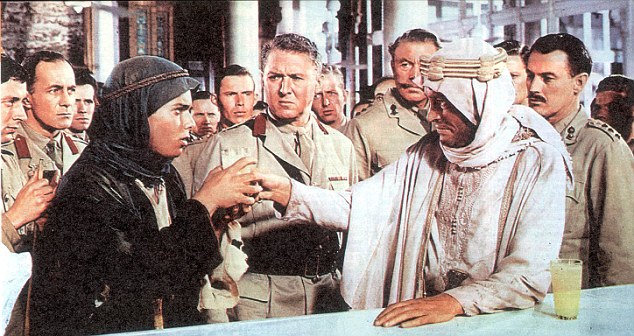
Charlene and Michel de Carvalho

General Allenby: [leafing through Lawrence’s dossier] “Undisciplined… unpunctual… untidy. Knowledge of music… knowledge of literature… knowledge of… knowledge of… you’re an interesting man there’s no doubt about it.” 

Character is a terrible thing to judge. Mostly because those doing the judging also suffer from flaws in their own character.  Yet somehow the temptation is for us to stand as judge, jury and character executioner on those that we find wanting. As a culture we like tearing down those that we at one time built up. It is a rather perverse proclivity that we have as human beings, especially if we can find some kind of religious justification for it.

I think that is part of the complexity of the human condition. As a historian I find that the most exalted heroes, men and women of often great courage both moral and physical, intellect, creativity, humanity and even compassion have feet of clay.

I find that I am attracted to those characters who find themselves off the beaten track. Visionaries often at odds with their superiors, institutions, and sometimes their faith and traditions. Men and women who discovered in themselves visions for what might be and pursued those visions, sometimes at the costs of their families, friends, and in quite a few cases their lives.

Throughout my studies I have been attracted to men as diverse as Peter the Apostle, Martin Luther, T.E. Lawrence, Dietrich Bonhoeffer, Erwin Rommel, Admiral Horatio Nelson, Abraham Lincoln, John F Kennedy, Dwight D Eisenhower, Franklin Roosevelt, Dr Martin Luther King Jr, Jackie Robinson, Teresa of Avila, Nelson Mandela, Vaclav Havel and Emir Feisal Hussein of the Arab Revolt. All had flaws. Some involved fits of temper and violence, others sexual escapades, mistresses, affairs, greed avarice, and maybe some that stretched law and morality in their quest to achieve their goals. But all are considered great men and women.

Feet of clay. Who doesn’t have them? But them I think that I would rather have feet of clay than a heart of stone, an an unchallenged mind, or a lack of courage to do the right thing even if it does not directly benefit me.

Tonight I watched for the first time straight through the cinema classic Lawrence of Arabia. Peter O’Toole plays Lawrence in a most remarkable manner, showing his brilliance, courage, diplomatic ability and understanding of the Arabs with whom he served.

There are many people, leaders and others that we encounter in life or that we study. Even the best of the best are flawed and there is no such thing as a Saint who never sinned. But we love destroying them and their memory when to our “surprise” when we find that their hagiographers built them into an idol.

I am a great believer in redemption and the weight of the whole of a person’s life. Thus I try to put the flaws as they are called in perspective and their impact both positive and negative in history. Studying in this way gives me a greater perspective on what it is to be human and to place my own clay feet in appropriate perspective.

It was an interesting film to watch.

However, speaking of feet of clay I will probably be writing about the Baseball Writers who vote for the inductees for the Hall of Fame. Today for the first time in nearly 4 decades no players were selected for induction, mostly due to the steroid era. But that is a subject for another night.

Peace

Padre Steve+

1 Comment

Filed under faith, film, History

Advent and Life: God Loves the Real World

2004weihnachtsbrief

O come, thou Dayspring, come and cheer
our spirits by thine advent here;
disperse the gloomy clouds of night,
and death’s dark shadows put to flight.

(From O Come O Come Emmanuel) 

Today is the fist Sunday of what we in the liturgical Christian world know as the season of Advent.

Advent is the beginning of the liturgical year, in a sense the opening day of a new season of faith, as much as the Opening Day is in Baseball. It is a season of new beginnings, of hope looking forward and looking back. It is a season of intense realism. It is a season where the people of God look forward to their deliverance even as they remember the time when God entered into humanity.  It was not simply entering the human condition as a divine and powerful being inflicting his will upon people but deciding to become subject to the same conditions know by humanity. As Paul the Apostle, wrote about him: “though he was in the form of God, did not regard equality with God as something to be exploited,  but emptied himself, taking the form of a slave, being born in human likeness. And being found in human form, he humbled himself and became obedient to the point of death– even death on a cross.” (Philippians 2:5b-8) 

In the incarnation Jesus Christ shows his love and solidarity with people, humanity, the creation, reality. Dietrich Bonhoeffer wrote:

“God loves human beings. God loves the world. Not an ideal human, but human beings as they are; not an ideal world, but the real world. What we find repulsive in their opposition to God, what we shrink back from with pain and hostility, namely, real human beings, the real world, this is for God the ground of unfathomable love.” 

That simple fact is why Christ came.

He didn’t come to found a government. He did not come to exemplify “Christian” virtues or to condemn people that religious people condemned as sinners.

The meaning of the incarnation, and the hope of the season of Advent is that God loves people, even those that some that presume to be his spokesmen and women despise.

In the next few week there will be much written and said about Jesus. Much of it will not actually deal with Jesus or the people that he came to save but instead about the worldly power and influence of those who seek the profits of being “prophets.” Some of them will talk fervently about the “war on Christmas” as if somehow God and Christ are so small that they need government sponsored displays in the public square in order to be real, relevant or or for that matter important. What a small God they must have.

Somehow the message of Advent, the coming of Jesus is contradictory to the message of the for profit prophets. Certainly the early Christians had no government backing of any kind. They simply lived the life and showed God’s love to their neighbors, often at the cost of their lives and paradoxically the message was not crushed, but spread and overcame an empire. It was only when they became co-executors of government power that the message of reconciliation became a bludgeon to be used against those who did not agree with the theology of the clerics beholden to the Empire.

The Christ of the Season of Advent, the one who came and who promises to come again is not captive to the capricious message of the for profit prophets and their political and media allies. I would dare say that God is much bigger than them or those that they believe will somehow end the Christian faith as we know it. But then maybe the Christian faith “as we know it” is more a reflection of us and our need for temporal physical power over others than it is of Jesus.

All I know is that the simplicity of the message that “for God so loved the world that he gave his only begotten Son” is more powerful than any political-religious alliance. Likewise the two things that Jesus said to do in order to “inherit the Kingdom of God” were to “Love God with all your heart and love our neighbors as ourselves,” and similarly the words of the old Testament minor prophet Micah, who asked “what does the Lord require of thee? To love show justice, to love mercy and to walk humbly with thy God.” But then there is not much money or political power in that is there?

But despite the inconvenience of a direct temporal profit or power which is so central to most churches, I do think that the message that God loves the real world is worth repeating. In fact I think that because the message of God’s great love for those deemed “repulsive” is so distasteful to the “for profit prophets” of our time that it is not only worth repeating, but actually believing.

It is a good reason for me to during this season of Advent to look forward to our celebration of the mystery of the Incarnation, the coming of the God who “emptied himself” and took “the form of a slave” in order to save his people.

Peace

Padre Steve+

2 Comments

Filed under christian life, faith, Pastoral Care, Religion

A Post Election Meditation: God Loves the Real World

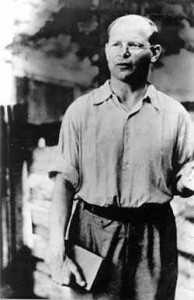
Dietrich Bonhoeffer: God Loves the Real World…

The election of 2012 is now pretty much in the rear-view mirror and for my new readers I am re-posting an older article that pretty much says how I view the world as a Priest and Navy Chaplain. I think that it may help people that don’t know me, or only know me from a few articles dealing with the election, especially the role of churches and church leaders in the election get a little bit of insight into who I am before the race to 2016 begins.

I think in the wake of such a divisive election it is imperative that people who call themselves “Christian” begin to re-look at the Gospel and our relationship to those that we see as different than us. Dietrich Bonhoeffer, the great German pastor, theologian and martyr grew up in a world where a large part of the church had surrendered any sense of Christian witness in favor of political partisanship, with many supporting the incipient Nazi movement and many becoming willing helpers of some of the worst crimes recorded in human history. In doing so they lost most of a generation to war and following that saw the exodus of many young people from the church, a decline that the church in Germany has never recovered or reversed.

Bonhoeffer was killed a few days before the liberation of the Flossenburg concentration camp where he was held. Bonhoeffer understood something that many of his generation to understand and that many American Christians likewise fail to get. It is a little something that goes to the heart of the Gospel, not the trumped up and politicized message of preachers more interested in their temporal power than people.

Bonhoeffer wrote:

“God loves human beings. God loves the world. Not an ideal human, but human beings as they are; not an ideal world, but the real world. What we find repulsive in their opposition to God, what we shrink back from with pain and hostility, namely, real human beings, the real world, this is for God the ground of unfathomable love.”

I think one of the greatest joys that I have as a Priest is when people tell me that they like me because I am “real.”  It’s not so much that they think I am a great preacher, which I am not or that I have all the answers especially because my answer to many questions that I am asked is “I don’t know.”  In fact what those that like me say what they like about me is that I am approachable and care enough to give them the time of day and listen to them.

My psychological and spiritual collapse following my tour in Iraq caused me to see why who live in the real world appreciate pastors, Priests or Rabbis that are real.  There were very few people, especially ministers that in the years following my return that I felt that cared about me enough to share what I was going through with them.  In fact I found that many were not interested or simply did not want to deal with a “bruised reed.”  I think that when a minister, Priest or Rabbi expresses doubt or is in crisis be it a long term physical illness that will not be healed, a deep depression that causes them despair or a spiritual crisis that causes them to question their faith that the tendency among most ministers is to run away as if they were radioactive or that it was catching.

In fact I have heard this for years as friends or pastors that I met in their crisis expressed the pain of being ostracized by other ministers or their denominations or local churches.  Likewise I have also all too often seen churches and pastors ignore or ostracize people simply because they are not easily “fixed” or those that are considered “problems” because they ask uncomfortable questions or point out inconsistency or injustice in the church.  Then there are the times where the Church mistreats, abuses and uses people without any real care for them as people treating them as numbers or even more crass “tithing units.” Finally there are the times that the Church covers up the crimes of its ministers against the weak including sexual abuse and pedophilia and when found out blames the victims or protect the criminals from the justice of the state using Canon Law to subvert the justice system.  Such actions are not unique to the Roman Catholic Church that most often stands accused but can be found in almost any church or denomination.

I think a lot of this is simply that many of us clergy types become so invested in “defending” what we believe that we forget that the call of Jesus is to care for those that are the least, the lost and the lonely. Without getting preachy it seems to me that Jesus preferred to be with such people and often castigated the clergy of his day for doing exactly what we do.  The whole “woe to you Scribes and Pharisees…” passage should send chills up any minister’s spine because we are often no different than them.

Likewise when we refuse serve people that come to us because of denominational differences or because they are not Christians or someone of our faith tradition and then refuse to help them find someone that can we do a disservice to them and to God.  Since have served nearly my entire time in ministry in some form of the chaplaincy I deal with this often. I represent a small religious tradition which is Catholic but not Roman and very ecumenical, thus I am in a distinct minority.  I know man who serves as a Priest in a small communion that has many similar beliefs to my former church who told me that he loved being his denomination because when he was a Chaplain “he did not have to worship with Protestants or give them communion.” On the other hand a friend that is a Roman Catholic priest was removed from ministry by a bishop known as an “enforcer.” Unlike the criminals that many bishops shuffle around this priest was removed for his ecumenical stance as co-pastor of a mixed Catholic and Episcopal parish. And Christians act puzzled when confronted with a mass exodus of young people from the church.

One of the men that serve as a model for me is the late German Redemptorist Priest Bernard Häring. Häring was drafted as a medic by the German Wehrmacht at the beginning of the Second World War and taken out of the parish.  In his service as a medic he never forgot that he was a priest and performed his duties as a priest to non-Catholics in his units even celebrating the Eucharist with them.  He also took the time to serve and care for civilians, Poles, Ukrainians, Russians and French in the areas that he served.  One story that he told was when he told his Protestant Soldiers that their official pastor would be coming for service that they told him “There really is no reason to make any changes for us because you are ‘one of us.’” (Bernard Häring “Priesthood Imperiled: A Critical Examination of Ministry in the Catholic Church” Triumph Books Ligouri, MO 1996 p.9)  Häring was transparent about exactly what he was, a Roman Catholic Priest whether he dealt with Protestant or Orthodox Christians and because he was “one of us” they accepted him and made him their pastor even without becoming Catholic themselves. A Polish parish that he served as a prisoner of war sought to make him their pastor following the war despite him being a member of the Army that brutally subjugated their country.  After the war he continued with that same spirit and I have sought to emulate that spirit in my Priestly ministry.

I definitely am not perfect but I try to listen and care for those in my charge regardless of their faith or lack thereof.  I just hope that in my imperfect attempts to care that people see that God loves them. My trust is in the simple message that “in Christ God was reconciling the world to himself, not counting their trespasses against them, and entrusting the message of reconciliation to us.”

As Bonhoeffer said “God loves the real world.”

Peace

Padre Steve+

1 Comment

Filed under faith, History, Political Commentary

Christian Radicalism and the Hatred of Creation

“God loves human beings. God loves the world. Not an ideal human, but human beings as they are; not an ideal world, but the real world. What we find repulsive in their opposition to God, what we shrink back from with pain and hostility, namely, real human beings, the real world, this is for God the ground of unfathomable love.” — Dietrich Bonhoeffer

This article is actually a re-posting of an article that I wrote almost two years ago. I find that in light of some of the themes brought up by the most “radical” Christians who have sold their souls to a political party and candidate that just a few months ago that they at best felt was a religious cultist in order to regain political power that it is high time to talk about the roots of this radical and frankly un-Christian and for that matter un-American view of faith and politics. So without more commentary here is the rest of the article:

Dietrich Bonhoeffer grew up in an era of world war, the collapse of Empires and social order, economic collapse, revolutions and the rise of the greatest evils that the world has ever seen. Bonhoeffer recognized evil in the world and the dangers of radicalism. He was a child when the First World War ended and the Kaiser abdicated and Germany went through a violent civil war, the humiliation of the Treaty of Versailles, economic calamity, Communist and Fascist coup attempts which finally led to the Nazi takeover by legal means. When the Nazis came to power Bonhoeffer was a young pastor.  He was one of the first to recognize the evil of the Nazi state and Nazism as well as its hold over Christians from all denominations.

We live in somewhat similar times. These are unsettled and great evil exists, evil which seeks to destroy the world in order to make it in its own image.  Some of these are godless, materialist and secular while others are rooted in the Great Religions as well as others in mysticism and individualistic spirituality all of which see the world and for that matter humanity, especially those that are not like them as the enemy. We are well acquainted with the extremism associated with Islamic terrorism as well as that of others with more politically based ideologies which have committed murder on a massive scale and wherever they rule oppress their own people, however Christians are not immune to radicalism usually radicalism in what they see as a godly response to the evils of their time. Bonhoeffer saw the danger of Christians who become radicalized in relationship to how such radicalization stands in antithesis to the Gospel which in restoring fallen humanity to relationship with Christ commands that those that have been reconciled to him has now “given us the ministry of reconciliation; that is, in Christ God was reconciling the world to himself, not counting their trespasses against them, and entrusting the message of reconciliation to us. So we are ambassadors for Christ, since God is making his appeal through us; we entreat you on behalf of Christ, be reconciled to God. For our sake he made him to be sin who knew no sin, so that in him we might become the righteousness of God.”  2nd Corinthians 5:18b-21

Bonhoeffer penned this from inside a Nazi prison awaiting his execution.

“Radicalism always springs from a conscious or unconscious hatred of what is established. Christian radicalism, no matter whether it consists in withdrawing from the world or in improving the world, arises from the hatred of creation. The radical cannot forgive God his creation. He has fallen out with the created world, the Ivan Karamazov, who at the same time makes the figure of the radical Jesus in the image of the Grand Inquisitor. When evil becomes powerful in the world, it infects the Christian, too, with the poison of radicalism. It is Christ’s gift to the Christian that he should be reconciled with the world as it is, but now this reconciliation is accounted to be a betrayal and denial of Christ. It is replaced by bitterness, suspicion and contempt for men and the world. In place of the love that believes all and hopes all, in the place of the love which loves the world in its very wickedness with the love of God (John 3:16), there is now the pharisaical denial of love to evil, and the restriction of love to the closed circle of the devout. Instead of the open Church of Jesus Christ which serves the world till the end, there is now some allegedly primitive Christian ideal of a Church, which in its turn confuses the ideal of the living Jesus Christ with the realization of a Christian ideal. Thus a world which is evil succeeds in making the Christians become evil too. It is the same germ that disintegrates the world and that makes the Christians become radical. In both cases it is hatred towards the world, no matter whether the haters are the ungodly or the godly. On both sides it is a refusal of faith in the creation. But devils are not cast out through Beelzebub.” (Letters and Papers from Prison p.386)

This Christian radicalism has become a very real part of the American religious-political landscape and it has managed to poison a generation through the Dominionism. The man who can be called the founder of this movement which has become one of the loudest voices in American Evangelicalism, the Charismatic and Pentecostal movement and other Christian groups spanning the denominational spectrum is R.J. Rushdoonny.  Rushdoony’s version of the Christian faith is an Old Testament militancy based upon Israel’s conquest of the Land of Promise. Some examples of Rushdoony’s theological argument which is echoed by many American Christian conservatives are found here:

Israel was attacked by Amalek. According to Deuteronomy 25:17, Amalek “feared not God.” Amalek’s attack on Israel, according to the “Midrashic lore,” was an obscene defiance of God and a contempt for God. Where men attack God’s people, there we often have a covert or overt attack on God. Unable to strike directly at God, they strike at God’s people. There is thus continual warfare between Amalek and Israel, between God’s people and God’s enemies. The outcome must be the blotting out of God’s enemies…. the covenant people must wage war against the enemies of God, because this war is unto death. The deliberate, refined, and obscene violence of the anti-God forces permits no quarter… this warfare must continue until the Amalekites of the world are blotted out, until God’s law-order prevails and His justice reigns.” R.J. Rushdoony, The Institutes of Biblical Law (Nutley, NJ: Craig Press, 1973), p. 318.

Rushdoony’s son in law Gary North is now the primary ideological and theological spokesman for the Dominionist movement. He is very popular and influential in many conservative and political circles and with the Tea Party movement. North makes the following comment in relation to the Christian’s relationship and attitude when dealing with the world.

“It occurs to me: Was Moses arrogant and unbiblical when he instructed the Israelites to kill every Canaanite in the land (Deut. 7:2; 20:16-17)? Was he an “elitist” or (horror of horrors) a racist? No; he was a God-fearing man who sought to obey God, who commanded them to kill them all. It sounds like a “superior attitude” to me. Of course, Christians have been given no comparable military command in New Testament times, but I am trying to deal with the attitude of superiority–a superiority based on our possession of the law of God. That attitude is something Christians must have when dealing with all pagans. God has given us the tools of dominion.” Gary North, The Sinai Strategy: Economics and the Ten Commandments (Tyler, TX: Institute for Christian Economics, 1986), p. 214n

This militancy has gained popular support since the 2008 and 2010 elections and is reflective of the bitter and angry undercurrent which pervades many Christian political activists many of whom are very comfortable with using violence against those that they believe are their enemies. A similar tenor is found in some of their opponents on the Left who speak of bloodshed.

However such words and actions often mirror those of their proclaimed enemies the radicals of which use similar words of violence and justification of brute force to achieve their goals. Those who do not agree with such theology or ideology be that from those in the Dominionist movement or the more radical leftists are as much of an enemy as anyone else. Neither side will stop until they conquer and destroy every bastion of the other. The war between the “godless and the godly” to quote Bonhoeffer is actual a war against the creation and humanity that God through Christ seeks to redeem.

Bonhoeffer made a very poignant observation:

“There is a truth which is of Satan. Its essence is that under the semblance of truth it denies everything that is real. It lives upon the hatred of the real and the world which is created and loved by God. It pretends to be executing the judgment of God upon the fall of the real. God’s truth judges created things out of love. And Satan’s truth judges them out of envy and hatred. God’s truth has become flesh in the world and is alive in the real, but Satan’s truth is the death of all reality.” Bonhoeffer Ethics p. 366

As I look around and see the great conflict in our country with two sides determined to win at any cost and demonize any contrary opinion and fear for what will overtake us as the Satanic truth proclaimed from all sides of the political and religious spectrum consumes the land. In the midst of such discourse which is trending toward physical violence as the extremes battle for power the Church and Christians are commanded to demonstrate the love of God to all people no matter how vile their outbursts or prejudice. As Paul wrote to the Corinthians “God has entrusted the ministry of reconciliation to us.” It is this reconciliation of the real Incarnate Jesus Christ that must be made present in the midst of the current darkness. Christian radicalism is as poisonous as godless radicalism and it has no answers. It is time to cast it aside.

Peace

Padre Steve+

2 Comments

Filed under christian life, faith, News and current events, Political Commentary, Religion

Talking Without Listening or Understanding: American Christianity 2012

“Christians, especially ministers, so often think they must always contribute something when they are in the company of others, that this is the one service they have to render. They forget that listening can be a greater service than speaking.” Dietrich Bonhoeffer

I think that “Christian” television, radio and entertainment is perhaps the among the most destructive forces in our society. In them a complete insulated subculture of demigods living in their own self made cloud-coo-coo land of make believe attempt to give answers for society’s ills, protect the faithful from the evil of non-Christian thought and for that matter of non-Christian people and to influence politics in ways that Jesus would never countenance.

I know this. I actually worked for a ministry of one of the current leading “Pastors” of the Christian political right back in the 1990s. The mindset inside the television and radio ministries of Evangelical Christianity is almost as insular, make believe, paranoid and power hungry as was the Papal Curia in 1517. Actually for someone who is a historian with a pretty in depth knowledge of the Reformation, particularly that of Martin Luther in Germany it is a frightening thing to see.

It seems today that preachers, in particular those in high profile mega-churches and ministries want to say something about everything under the sun and then throw in a “In Jesus Name” here and there to make their opinion sound Christian. Now that is not a problem limited to big name evangelists or even Evangelical Christianity. It exists in mainline churches, the Catholic Church and even other religions, can I get a Fatwah on that?

But because the leaders of the multi-billion corporate empires of the modern Evangelical movement have a vested interest in keeping the money flowing into their tax exempt institutions they must be relevant. Thus even if they no nothing about a subject they must write books and preach sermons on what God thinks of well you name the topic, everything from economics to foreign policy and even who God says you should vote for or against certainly not for the black guy in the White House, but I digress.

While beating their gums into a fervor and frothing at the mouth at evils real and imagined to keep their followers money coming they to use the Old Testament example of Esau “sell their birthright for a cup of soup.”

Bonhoeffer saw preachers of his era do the same thing and he was a critic of them with good reason. In their fear and hatred of the change that occurred when Imperial Germany went under and “Jews and Bolsheviks” threatened their position they ended up helping to create a climate where Hitler not only came to power but had the open support of many Christians and the tacit approval of the vast majority of German Christians of all denominations.

In the midst of crisis and uncertainty they gin up fear against “the non-Christian other.” The big problem for the German Christians of the 1920s and 1930s as well as our current crop of American church leaders is that they stopped listening and instead decided that they had the answers to all of society’s problems. In Germany after the Nazis were crushed by the Allies the Churches suffered major losses of credibility. Young people who had experienced the war, or who grew up in the desolation of post-war Europe left the churches in droves because of the terrible witness of supposedly Christian leaders and churches.

I would dare say that the vast majority of Evangelical leaders have simply stopped listening to anyone that would disagree with them. The evidence is manifold in our current political crisis in the United States where Christian leaders often are the most base and vile of all political pundits and politicians.

It is no wonder that the fastest growing religious preference in the country is called “the Nones.” In other words those with no-religious preference who have dissociated themselves from any Christian church. It is not because they have a problem with God or Jesus per say, it is because of the pompous asses that only care about them for the market share. Chuck Colson once noted that the Pastor of a large mega-Church told him that he was “paid to keep them coming in the door” not to preach any real truth, but to keep the empire afloat. Believe me the mega-churches and media empires of Evangelicalism require vast amounts of money just to keep their mortgages, air time and pastors well paid.

Moral lapses and corruption in these empires is rampant. Time after time the leaders of these “ministries” are exposed as money grubbing hypocrites who lash out at whatever group that they need in order to create straw men to keep their ministries alive.

Basically the leaders of Evangelicalism have stopped listening and even worse stopped caring about people. The empires must be maintained by “tithing units” as the son of a Bishop once called parishioners. It is the ultimate devaluing of people that Jesus died to save. Think about it. People only matter for the capital that they contribute to maintain the institution. I cannot think of anything more blasphemous and it will be the cause of the fall of contemporary American Evangelical Christianity.

Peace

Padre Steve+

2 Comments

Filed under christian life, faith, Pastoral Care, philosophy, Political Commentary, Religion

Be Careful of What you Vote Against: A Warning from History

“I hated the growing atheistic movement, which was fostered and promoted by the Social Democrats and the Communists. Their hostility toward the Church made me pin my hopes on Hitler for a while. I am paying for that mistake now; and not me alone, but thousands of other persons like me.” Martin Niemöller

Martin Niemöller

Martin Niemöller was a war hero.  He had served on U-Boats during the First World War and commanded a U-Boat in 1918 sinking a number of ships.  After the war he resigned his commission in the Navy in opposition to the Weimar Republic and briefly was a commander in a local Freikorps unit. His book Vom U-Boot zur Kanzel (From U-boat to Pulpit) traced his journey from the Navy to the pastorate. He became a Pastor and as a Christian opposed what he believed to be the evils of Godless Communism and Socialism.  This placed him in the very conservative camp in the years of the Weimar Republic and he rose in the ranks of the United Evangelical Church of the Old Prussian Union.  Active in conservative politics, Niemöller initially support the appointment of Adolf Hitler as Chancellor.

However, he quickly soured on Hitler due to his insistence on the state taking precedence over the Church.  Niemöller was typical of many Germans of his era and harbored ant-Semitic sentiments that he only completely abandoned his anti-Semitic views until after he was imprisoned.  He would spend 8 years as a prisoner of the Nazis a period hat he said changed him including his views about Jews, Communists and Socialists.  Niemöller was one of the founding members of the Pfarrernotbund (Pastor’s Emergency Federation) and later the Confessing Church. He was tried and imprisoned in concentration camps due to his now outspoken criticism of the Hitler regime.

Herman Maas

Herman Maas was another Evangelical Pastor.  Unlike Niemöller, Maas was a active participant in the ecumenical movement, built bridges to the Jewish community and defended the rights of Jews as German citizens.  He received a fair amount of criticism for his attendance of Reichspräsident Friedrich Ebert’s funeral.  Ebert was both a Socialist and avowed atheist.  Maas too was active in the Pfarrernotbund and the Confessing church, and unlike Niemöller maintained his opposition to anti-Semitism and the Nazi policies against the Jews. He would help draft the Barmen declaration.  He too would be imprisoned and survive the war.  Maas was the first non-Jewish German to be officially invited to the newly formed state of Israelin 1950. In July 1964 Yad Vashem recognized the Maas as one of the Righteous Among the Nations.

Dietrich Bonhoeffer

Dietrich Bonhoeffer a young Pastor and theologian would also step up to oppose the Nazis and offer support for the Jews.  He helped draft the Bethel Confession which among other things rejected “every attempt to establish a visible theocracy on earth by the church as a infraction in the order of secular authority. This makes the gospel into a law. The church cannot protect or sustain life on earth. This remains the office of secular authority.”  He also helped draft the Barmen declaration which opposed and condemned Nazi Christianity.  Bonhoeffer would eventually along with members of his family take an active role in the anti-Nazi resistance as a double agent for Admiral Canaris’ Abwehr.  For this he would be executed after his final sermon in the concentration camp at Flossenburg just a month prior to the end of the war. Bonhoeffer wrote “If you board the wrong train, it is no use running along the corridor in the other direction.” 

Another opponent of the Nazis in the Confessing Church was Swiss-German theologian Karl Barth.  Barth went into exile as a Swiss citizen but remained active in the criticism of the Nazi regime.

Bernard Lichtenberg

Catholic Bishop Galen of Münster and others including Father Rupert Meyer in Munich who opposed Hitler in the early 1920s would also oppose the Nazi policies toward the Church and the Jews.  Some like Meyer would end up in concentrations camps with some like Canon Bernard Lichtenberg of Berlin dying at the hands of the Nazis.

Rupert Meyer

All these men took risks to defend the Jews who were religious minority group that had been traditionally discriminated against in Germany.  They opposed the Nazi policies which were widely supported by much of the German populace making them unpopular in their own churches as among the traditionally conservative supporters of the Evangelical and Catholic Churches.  The Jews were not simply discriminated against as a racial or religious group but also identified with the political left, especially the Social Democrats, Independent Socialists, Communists and the Spartacists.

Since the Independent Socialists, Communists and Spartacists were all involved in attempts to create a Soviet state during the early tumultuous years of Weimar and been involved in many acts of violence against traditional German institutions and the state, they were viewed by Hitler and others as part of the Bolshevik-Jewish threat to Germany.  A sentiment harbored by many non-Nazi conservatives and Christians.

Karl Liebnicht and Rosa Luxembourg were among the high profile leaders of this movement in Germany and both were Jewish.  The fact that many in the leadership of the Bolshevik movement in theSoviet Union were Jewish added fuel to the fire that the Nazis stoked in Germany.  Hitler and the Nazis played on the historic, but muted prejudice against German Jews who in many cases were more secular and German than religious and had assimilated well in Germany.  Hitler’s rhetoric as well as that of other Nazis and Nazi publications helped identify the Jews as part of the “Stab in the back” myth that was commonly used by the German right to explain the defeat in the First World War.  Thus they were painted as a political and social threat to Germany.

Nazi Political and Religious Opponents in Concentration Camps

When Hitler took power persecution of the Jews began in earnest.  Jews were along with Communists, Trade Unions and Socialists enemies of the state.  They were banned from the military, civil service and other government employment, professional associations and forced to wear a gold Star of David on their clothing.  Their property was seized, many were abused by SA men acting as deputized auxiliary police and many times their businesses, Synagogues and homes were vandalized, burned or seized by the state.  Many would be forced to flee in order not to be sent to ghettos and concentration camps.  Even those leaving only escaped with the minimum of their possessions as the Nazi regime extorted anything of value from them as they left Germany.  This was all done because Hitler and those like him portrayed the Jews as not only an inferior race, but enemies of the state and the German people.

Hitler portrayed himself and his movement as defenders of Christianity. He was not the first or last to do so but his speech of February 1st 1933, the day after he was appointed Chancellor by President Hindenburg made it abundantly clear that he was bent on securing the support of Christians to solidify his grip on power: “The National Government will regard it as its first and foremost duty to revive in the nation the spirit of unity and co-operation. It will preserve and defend those basic principles on which our nation has been built. It regards Christianity as the foundation of our national morality, and the family as the basis of national life. . . .”

The Sturmabteilung (SA) at Church

Churches became sponsors of Nazi meetings, the Swastika banner hung in the sanctuaries of churches throughout the Reich and Bishops, Priests and Pastors joined Nazi organizations and gave the Nazi salute. They had sold their soul to Hitler and the Nazis out of fear of the Communists, Socialists, Jews and Slavs.

Eric Hoffer noted that “It is when power is wedded to chronic fear that it becomes formidable.” Hitler and his enablers spread fear and took advantage of it to bring those fearful of the left to his support.

Hitler leaving a Church

Today we face a similar phenomena in conservative circles in the United States.  This time it is not the Jews but Moslems, Gays, immigrants and racial minorities who are the targets of the xenophobic rage by many influential members of the “conservative” media including Rush Limbaugh, Sean Hannity and numerous others.  Their popularity in voicing support for “Christian morale values” such as being against abortion has ingratiated them with conservative Christians.  It is so bad that that many “conservative” Christians cannot differentiate between their vitriolic and un-Christian rage against Moslems, Gays and Lesbians, trade unionists, Democrats or anyone else portrayed by the big media talkers and the Gospel.

It is if they have become an appendage to Republican or “conservative” politicians rather than a Christian church.  It is not uncommon to see Christians on the web or on the call in talk radio programs identify lock stock and barrel with Limbaugh and others identifying the crass materialism and social Darwinism of “pure” Capitalism and the anti-Christian policy of pre-emptive war.   That may seem harsh, but many of these people in the “Conservative Bible project” seek to re-translate the Bible into their own political, social and economic policies even seeking to change or minimize any Scripture that might be equated with the “Social Gospel.”  Unfortunately many Christians and others have jumped in on the anti-Moslem and anti-immigrant crusades and anti-Gay launched by those on the far right.

There are those on the far right that advocate eliminating all Moslems from the military, government, security intelligence and police forces and even universities. Similar threats are made against non-European immigrants, legal and illegal alike especially those from Mexico or Latin America.  I have a friend; a Navy Officer who served a year in Iraq that was confronted by a member of the “Minutemen” in Texas to show his Green Card and threatened simply because he is Mexican.  Others especially conservative Christians suggest criminalizing homosexuality, jailing homosexuals or putting them in concentration camps, deporting them or even punishing gays with the death penalty.

This is so similar to the Nuremberg Laws and the Aryan Paragraph issued by the Nazis that it is scary.  Likewise the threats to American Moslems or Gays of placing them “behind razor wire” as we did to American Japanese citizens in World War II are chilling.  I wonder how Christians would react if an atheist or someone on the political left suggested all conservative Christians or members of pro-Life groups be imprisoned for the actions of Christians or pro-Life movement members like Scott Roeder or Eric Rudolph who killed to stop abortion or Fred Phelps and his Westboro Baptist Church?

This new found militancy has swept up the “Christian right” and others since 9-11 and has reached proportions that I could never have imagined. After my tour in Iraq I realized that much of what these people were saying was not Christian at all and when taken to their logical conclusion would be a police state in which anyone who opposed them would be persecuted.  I question the motivations of the leaders of the movement but believe that most of the Christian conservatives have been caught up in the anger and the emotion of the times versus being true believers in what these men say.  That being said, you don’t have to be a true believer to be a willing accomplice in actions that first are not Christian and second trample on the Constitutional rights of American citizens.

I could keep citing examples but if someone can show me where this is condoned in the Gospels I would like to know.  The fact is that Christians are to place God first and defend the rights of others, even non-believers.  This is found not only in Scripture but runs through the Christian tradition across the denominational spectrum.

The persecution of American Moslems, minorities, Gays and others is dangerous, not just for those minorities but ultimately for Christians who endorse and advocate against those groups.  American and English law is based on legal precedence.  Once something has been determined to be legal, or constitutional it is considered by the law to be settled law.  This is a point made by Chief Justice Roberts regarding Roe v. Wade at his confirmation hearings.  If Christians want to use the law against Moslems or for that matter any other minority be it religious or political they tread on very dangerous ground.  Not only do they make a mockery of the Gospel command to love our neighbors, care for the foreigners among us and to be a witness to non-Christians support policies or laws that if enacted could and very well would be used against them by their opponents.

During the Republican Presidential primaries major leaders of the Evangelical movement and churches did all that they could to paint Mitt Romney as a religious cultist because he is Mormon. When Romney secured the nomination those same people started backtracking and committing their support to him because they believe that President Obama is an enemy of the country. They don’t like Romney, they are just against Obama. Romney will remember what they called him and their tepid support. If he becomes President he will not be beholden to them and will govern as he desires. Laws and Executive orders that give expanded power to the Executive Branch will not be overturned and if Evangelicals decide that they don’t like what he is doing and act toward him as they have President Obama they could find themselves on the outside and abandoned by the man that they supported.

Law is all about precedent and if such laws were enacted and upheld by the courts they would be settled law that could be used against anyone.   What these dear brothers and sisters fail to realize is that such laws can be turned against them if the state should ever decided based on the statements of actions of some that the Christian community is a threat to state security of the public welfare.  With the actions of some radical Christians who have committed murder and violence against political, social and religious opponents it would not be hard for the government to label whole churches as enemies of the state.  The law is a two edged sword and those who want to use it to have the state enforce their religious, social, ideological or political beliefs on others need to remember what comes around goes around.

The Confessing church understood this and many were imprisoned, exiled or killed for this belief.  The founding fathers of this country understood this too, that is why there is the Constitutional protection of Religion in the First Amendment.  This was put in because Virginia Baptists who had been persecuted by Anglicans lobbied James Madison for the amendment in the Bill of Rights threatening to withdraw their support for his candidacy if he did not.  Niemöller would discover the depths of his earlier folly in prison telling one interviewer after the war:

“I find myself wondering about that too. I wonder about it as much as I regret it. Still, it is true that Hitler betrayed me. I had an audience with him, as a representative of the Protestant Church, shortly before he became Chancellor, in 1932. Hitler promised me on his word of honor, to protect the Church, and not to issue any anti-Church laws. He also agreed not to allow pogroms against the Jews, assuring me as follows: ‘There will be restrictions against the Jews, but there will be no ghettos, no pogroms, in Germany. I really believed given the widespread anti-Semitism in Germany, at that time—that Jews should avoid aspiring to Government positions or seats in the Reichstag. There were many Jews, especially among the Zionists, who took a similar stand. Hitler’s assurance satisfied me at the time. On the other hand, I hated the growing atheistic movement, which was fostered and promoted by the Social Democrats and the Communists. Their hostility toward the Church made me pin my hopes on Hitler for a while. I am paying for that mistake now; and not me alone, but thousands of other persons like me.”

It is easy for well meaning people Niemöller to be bought with promises of support by politicians and media types who speak the words they want to hear in difficult times.  So today I suggest the formation of an ecumenical Pastor’s Emergency League which will not be bought by the empty and godless promises of hate mongers on the right or the left.  Such a group of men and women spanning the breadth of the Christian tradition and others that see the danger of extremism of all types is becoming necessary.  Such a step is becoming necessary due to the militancy of the Christian right as well as the militancy of atheist groups who lobby against all public religious expression by any religion.  Such a League would respect the various creeds and statements of faith of each member’s denomination.  The movement of the right has set a dangerous course fraught with perils that they do not comprehend.

We have entered a dangerous phase of American history.  These movements have the potential not only to oppress law-abiding and patriotic Americans of all faiths and to crush the religious freedoms of all in this county. Suggesting that American citizens, including those who serve the county in the military or government of entire religious, ethnic, political, religious affiliation or sexual preference be jailed, banned from office or fired is totalitarian and dare I say Nazi like.

Niemöller would say it well in this poem:

First they came for the communists, and I did not speak out—because I was not a communist;
Then they came for the socialists, and I did not speak out—because I was not a socialist;
Then they came for the trade unionists, and I did not speak out—because I was not a trade unionist;
Then they came for the Jews, and I did not speak out—because I was not a Jew;
Then they came for me—and there was no one left to speak out for me.

Peace,

Padre Steve+

8 Comments

Filed under History, Loose thoughts and musings, nazi germany, News and current events, Political Commentary, pro-life anti-abortion, Religion

Fear and Hate in the Name of Jesus…Man I Need a Baseball Game

“It makes no sense, Hate .

It’s just fear. All it is.

Fear something different.

Something’s gonna get taken from you,

Stolen from you.

Find yourself lost.”

Buck O’Neil

I have been feeling rather morose the past few weeks. I haven’t slept well. Flashbacks, nightmares and anxiety from PTSD, mostly leftover from Iraq invade at the most unwelcome times. New anxieties unfold as I see friends heading to Afghanistan and see the wounded back at home. Even more appear as I see the situation in the Middle East developing to the point where someone or some nation miscalculates and takes us into an even more catastrophic war. Then there is the incessant political, religious and dare I say racial hatred that has become so manifest in my own country.

The past few weeks have been difficult. The suicide of one of my sailors affected me more than I thought it would. Likewise I looked into the eyes of a sailor accused of cold blooded execution style murder and realized that he felt no remorse.

My sense of foreboding is increased when I see those that should know better, leaders of churches and ministries not only echoing the worst of the peddlers of hate but outdo them by adding Jesus as their trump card.  It doesn’t seem to matter what the subject is these “Christian” leaders seem to have little else to do but incite hatred that benefits their political power and influence.

One of the most incendiary of these leaders is Randall Terry who said “Let a wave of intolerance wash over you. I want you to let a wave of hatred wash over you. Yes, hate is good…” I know the man. He believes what he says and he serves as a model to many leaders that have followed in his footsteps. These leaders are some of the most influential religious-political leaders in the nations and dehumanize those that they hate and portray them to be an existential threat to the United States and the “Christian” faith. Gays, Moslems, immigrants, women, “liberals” are not only labeled as their political “enemies” but the enemies of God. It makes it easier to hate and dehumanize people when you can proclaim that they are God’s enemies.

It seems to make a mockery of the Gospel and the words of Saint Paul That “in Christ God was reconciling the world to himself, not counting their trespasses against them, and entrusting the message of reconciliation to us” or the words of Saint Peter: “Do not repay evil for evil or abuse for abuse; but, on the contrary, repay with a blessing.” It seems to make a mockery of the great love of God to allow Jesus to be sacrificed for the sins of the world.

I despair for the state of the Church when I see prominent leaders spew the most vile hate and “baptize” it in the name of Jesus. Unfortunately that seems to be the new normal in today’s world. Who needs the Afghan Taliban when we have religious leaders acting the same way here?

I have a hard time hating people, even those with whom that I vehemently disagree. Maybe it is because I have seen too much suffering to want to inflict hate and suffering on anyone.  Hate as Buck O’Neil said is simply fear. Fear of something different. Those that indulge in it and even revel in it demonstrate that they are not at all confident in their message.  Love conquers fear and does not need to demonize or dehumanize those that oppose it. The German Pastor and Martyr Dietrich Bonhoeffer said:

“God loves human beings. God loves the world. Not an ideal human, but human beings as they are; not an ideal world, but the real world. What we find repulsive in their opposition to God, what we shrink back from with pain and hostility, namely, real human beings, the real world, this is for God the ground of unfathomable love.”

When I feel as I have over the past few weeks there is one thing that helps me and that is baseball. Tonight I am going to a Morehead City Marlin’s baseball game. The Marlin’s are a team of the independent Coastal Plains League, which is for college players and gives them a chance to play ball in the summer.  I can’t watch politics tonight. I need something peaceful. Buck O’Neil, the great Negor League player, manager and major league coach and scout while visiting Washington DC to testify in the congressional steroids hearings looked up at a television where partisan debates were occurring, stopped and said:

“If Willie Mays was up there

People would stop making laws.

They would stop running.

They would stop arguing about

Big things

Little things.

No Democrat or Republican,

No black or white

No North or South.

Everybody just stop,

Watch the TV,

Watch Willie Mays make that catch.

That’s baseball man.”

Tonight is a time for me to reconnect with baseball in person and in the process regain some perspective, remember that love is stronger than hate and that nothing bad accrues from baseball.

Peace

Padre Steve+

1 Comment

Filed under Baseball, christian life, faith, Political Commentary, PTSD

The Totality of Easter

“Easter is rightly understood only if the burden and strain of Good Friday are not forgotten.”  Hans Kung

The disciples of Jesus had abandoned him. It was a Roman Centurion that recognized at Jesus’ death It took a distant disciple, a man named Joseph of Arimathea to take responsibility for the body of Jesus as his close disciples fled the scene of his arrest, trial and crucifixion. It was women who first discovered his body missing and women who Jesus first revealed himself.

The disciples were traumatized. They had spent three years with Jesus and his death on Good Friday had to be shattering. They had lost their leader, teacher and friend. They were not exactly believing in the resurrection that first Easter and they met the initial reports with doubt. That is why Easter and the resurrection can only be rightly understood if we really appreciate the depths of despair felt by the disciples on that terrible Friday.

I think that is hard for most of us in the United States and Western Europe to comprehend. We are the product of 2000 years of Christendom.  We are the products of Imperial and triumphalist Christianity. Our understanding of persecution is minimal for the most part and we cannot comprehend the totality of the loss experienced by the disciples until we endure our own Good Friday experience of suffering, pain, loss and abandonment or as it is correctly understood as being Godforsaken.

Yet the disciples came to believe and proclaimed a message that put them at risk among their own people. That message would shake the world within a few generations. But the disciples really had no idea just how much things would change in such a short period of time. I’m sure that they could not imagine the Church being used as an instrument of partisan politics or for that matter dominating the politics of the Ancient Rome or the modern United States.  I’m sure that they could not imagine being political sycophants who gladly support those that oppress their brothers and sisters in less desirable nations or neighborhoods.

They understood the Gospel from the point of view of the downtrodden and powerless. The did not run multi-million dollar corporations or attempt to influence the affairs of the leaders of nations. That didn’t happen until after the persecution was over after Constantine.

The simplicity of the message of Jesus who so wonderfully summed up the Law into two commandments, love God and love your neighbor seems to be a quaint idea to our Western Imperial Church.  The message proclaimed by Jesus when he opened his public ministry (Luke 4:18-19) “The Spirit of the Lord is upon me, because he has anointed me to bring good news to the poor. He has sent me to proclaim release to the captives and recovery of sight to the blind, to let the oppressed go free, to proclaim the year of the Lord’s favor.”  seems hopelessly out of date for the Imperial Church, its pampered leaders and their rich and powerful benefactors.  It seems lost in the milieu of the cult of “Christian” celebrity, riches and political power which surrounds us.

German Pastor and Martyr Dietrich Bonhoeffer who saw the Church of his day fall into the cult of Hitler worship said:

“Christianity stands or falls with its revolutionary protest against violence, arbitrariness and pride of power and with its plea for the weak. Christians are doing too little to make these points clear rather than too much. Christendom adjusts itself far too easily to the worship of power. Christians should give more offense, shock the world far more, than they are doing now. Christian should take a stronger stand in favor of the weak rather than considering first the possible right of the strong.”

You see the message of Easter is not understood without Good Friday or the hopelessness experienced by the disciples that day, nor is it understood apart from the words and teaching of Jesus himself.

The Lord is Risen…

Peace

Padre Steve+

Leave a comment

Filed under christian life, faith, Religion

Holy Week and the Outcasts

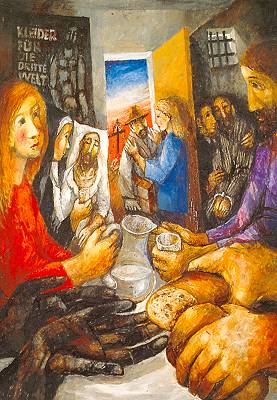
Sieger Köder
“Barmherzigkeit”

“Let us not underestimate how hard it is to be compassionate. Compassion is hard because it requires the inner disposition to go with others to place where they are weak, vulnerable, lonely, and broken. But this is not our spontaneous response to suffering. What we desire most is to do away with suffering by fleeing from it or finding a quick cure for it.” Henri Nouwen

Holy Week is here and on my way home from work and a visit with my shrink I was doing some thinking about Christians that have suffered a crisis in faith or loss of faith. I meet them all the time and read their stories on blogs, books and social media.  Of course I run across more now because I have gone through such a crisis and have written about it and through that had my story publicized. As a result I am contacted by people who have suffered trauma, especially related to PTSD as well as those that care for such people.

For many of the people Holy Week and Easter can be particularly painful. Having known plenty of these people I can say that this phenomena is one of the more tragic aspects of the season.  People who at one time felt the presence of God in their life only sense emptiness and aloneness which sometimes becomes a feeling of hopelessness where even death appears more comforting than life in the present.

I say this because people suffering through this often go unnoticed or are ignored in church. Their loss could be that of a spouse or child, the loss of something else significant or the experience of trauma that devastates them but no matter the cause of the suffering many people discover that they are now outcasts in the place where they should be cared about more than anywhere else.

Likewise there are many pastors and priests who are either unaware of them, uncomfortable around them or irritated by them because they don’t respond like “normal” people do to the message of Easter.  I have found from my own experience returning from Iraq that Easter despite the message of resurrection and hope often triggers a despair of life itself when one no longer senses the presence of God and feels alone against the world, especially in church.

Years ago I believed that if someone was in the midst of a crisis in faith if they read the Bible more, prayed more and made sure that they were in church that things would work out.  I believed then that somehow with a bit of counseling, the right concept of God and involvement in church activities that God would “heal” them.  Call me a heretic but that line of thinking is nice for people experiencing a minor bump in their life but absolutely stupid advice for people who are severely traumatized or clinically depressed and suicidal who no longer perceive the presence of God in their lives.  For those abused by parents or clergy this is I think an even deeper wound one in which the very concept and understanding of God becomes skewed in the minds and hearts of the victims.

I cannot condemn those who have lost their faith or are wavering in their faith due to trauma, abuse or other psychological reason. The numbers of people have been victimized by family, teachers, clergy other authority figures or physical trauma related to accidents, near death experiences or combat is mind numbing. They are all over the place and many go unnoticed in the church.

Sometimes the damage wrought on people makes it nearly impossible for them to comprehend a God who both cares about them and who is safe to approach.  My experience came from Iraq and the trauma of my return and were absolutely frightening so much so that I left a Christmas Eve Mass in 2008 and walked through the dark wondering if God even existed.  My isolation from Christian community and sense of despair during that time showed me that such a loss of faith is not to be trifled with or papered over with the pretty wallpaper or neat sets of “principles” drawn up in the ivory theological towers by theologians and “pastors” who refuse to deal with the reality of the consequences of a fallen world and their impact on real people.

Those that I have talked to and read about who have suffered a crisis or loss of faith almost always mention to me is that that feel cut off and even abandoned by God.  It is not simply depression that they are dealing with but despair of life itself when death or just going to sleep is preferable to living. This overwhelming despair impacts almost all of life.  It is if they never are able to leave the “God forsakenness” of Good Friday and cannot climb out of the tomb.   For some the pain is so much that suicide becomes an option and the belief that their family, friends and loved ones would be better off without them. I have seen this too many times to count.

It is hard to reach out to people in this situation.  I have to admit in my case that it was only people who chose to remain with me and walk with me through the ordeal in spite of my frequent crashes, depression, anger and even rage that helped get me through the worst of this.  However I’m sure that my condition burned some people out.  There were some that would not walk with me as I first began to go down this road and the sad thing is that many were ministers and fellow chaplains.  In some ways I don’t blame them.  However it is telling that the first person that asked me about my spiritual life “or how I was with the Big Guy” was my first therapist.

The topic of a loss of faith or the reality of feeling God forsaken is had to deal with but is something that we need to face especially during Holy Week. The Cross necessitates this, Jesus was considered “God-Forsaken” and that is what is so perplexing about Good Friday.

Yet scripture plainly teaches that we are to “bear one another’s burdens, and in this way you will fulfill the law of Christ.”  As Dietrich Bonhoeffer said  We must learn to regard people less in light of what they do or omit to do, and more in the light of what they suffer.”  It is our willingness to be with people in their suffering that is one of the true marks of the Christian.  Being with someone in triumph is far easier than with those who suffer the absence of God.  It is presence and love not sermons that people who have lost their faith need as Bonhoeffer so eloquently said “Where God tears great gaps we should not try to fill them with human words.”

I do pray that as we walk with Jesus this Holy Week that we will not forget those who despair of live and feel as if they are “God-forsaken.”

Peace

Padre Steve+

2 Comments

Filed under christian life, faith, Pastoral Care, PTSD, Religion

The Paradox of the Passion: Reflections on Palm or Passion Sunday

I celebrated a quiet Palm Sunday liturgy this morning.  As I read the scriptures, especially the Passion Narrative of Mark the Evangelist I was moved in a way that I have not been for some time and found that my time of prayer following the readings and the recitation of the Creed was perhaps more impassioned on account of all the suffering and injustice that I see in the world.  As such I wondered what to write and thought about the story of Longinus the Centurion who was according to tradition the Centurion at the foot of the Cross of the day of the crucifixion.  I went back through a number of articles that I wrote last year about what I imagined a soldier and officer of his time might imagine in such a situation and I will repost those articles on Good Friday, Holy Saturday and Easter. However today I decided to go back into my archives and repost with a few modification a more theological reflection on this Sunday which marks the beginning of Holy Week for Christians around the world. 

“Although we praise our common Lord for all kinds of reasons, we praise and glorify him above all for the cross. Paul passes over everything else that Christ did for our advantage and consolation and dwells incessantly on the cross. The proof of God’s love for us, he says, is that Christ died for us while we were yet sinners. Then in the following sentence he gives us the highest ground for hope: If, when we were alienated from God, we were reconciled to him by the death of his Son, how much more, now that we are reconciled, shall we be saved by his life!” John Chrysostom (AD 347-407)

“God speaking to Luther: “Discipleship is not limited to what you can comprehend—it must transcend all comprehension. … Not to know where you are going is the true knowledge. My comprehension transcends yours. Thus Abraham went forth from His father… not knowing whither he went. … Behold, that is the way of the cross. You cannot find it yourself, so you must let me lead you as though you were a blind man. Wherefore it is not you, no man… but I myself, who instruct you by my Word and Spirit in the way you should go. Not the work which you choose, not the suffering you devise, but the road which is clean contrary to all you choose or contrive or desire—that is the road you must take. To that I call you and in that you must be my disciple.” Dietrich Bonhoeffer the Cost of Discipleship

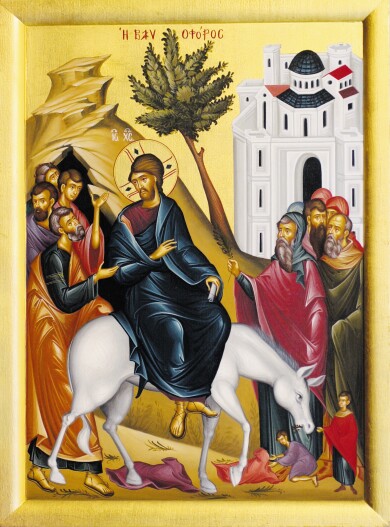
Palm or Passion Sunday always is a day that invokes mixed emotions in me. It is the last Sunday of the Lenten Season and in modern times has become a juxtaposition of two events, the Triumphant Entry of Jesus into Jerusalem where he according to all four Gospels was greeted by crowds of people who lined the street with palms as Jesus riding on a donkey processed from Bethany and Bethphage where he had been staying with Lazarus into Jerusalem and the narrative of the Passion.  As such it is a roller coaster ride in our experience of walking with Jesus in the most difficult times.

This particular occasion is the Sunday where the disciples of Jesus are confronted with the reality that our earthy expectations of him do not meet the reality of his condensation to walk among us fully Divine yet fully Human but one too well acquainted with suffering, rejection and shame.  He shatters our expectations that he will bless any particular political or social ideology that we allow to take pre-eminence over him, even those that invoke his name. Thus our liturgy brings us to this strange day where in a sense we are confronted with celebrating the entrance of the King and in the next breath cursing him and betraying him to those who torture and crucify him.

In the Roman Catholic and Anglican liturgy the observance is divided between the Liturgy of the Palms which takes place outside the Church Nave either outside the church building or in the Narthex in cold or inclement weather.  After an opening collect and reading of the Gospel passage from one of the synoptic Gospels, which one depends on which of the three year liturgical readings that the church is in. Following the reading of the Gospel the congregation led by choir, acolytes and clergy process into the church reciting the words of Psalm 118: 18-29 or singing a hymn such as “All Glory Laud and Honor.”  Once the congregation is in the church the Liturgy of the Word continues and when the Passion Gospel is read and specific roles may be assigned to members of the congregation, while the congregation remains seated through the first part of the Passion the congregation stands at the verse where “Golgotha” is mentioned and remains standing.

The liturgy takes the congregation on an emotional and spiritual roller coaster.  As the congregation begins outside the following is read:

When Jesus had come near Bethphage and Bethany, at the place called the Mount of Olives, he sent two of the disciples, saying, “Go into the village ahead of you, and as you enter it you will find tied there a colt that has never been ridden. Untie it and bring it here. If anyone asks you, ‘Why are you untying it?’ just say this, ‘The Lord needs it.’” So those who were sent departed and found it as he had told them. As they were untying the colt, its owners asked them, “Why are you untying the colt?” They said, “The Lord needs it.” Then they brought it to Jesus; and after throwing their cloaks on the colt, they set Jesus on it. As he rode along, people kept spreading their cloaks on the road. As he was now approaching the path down from the Mount of Olives, the whole multitude of the disciples began to praise God joyfully with a loud voice for all the deeds of power that they had seen, saying,

“Blessed is the king who comes in the name of the Lord!

Peace in heaven, and glory in the highest heaven!”

Some of the Pharisees in the crowd said to him, “Teacher, order your disciples to stop.” He answered, “I tell you, if these were silent, the stones would shout out.” Luke 19:29-40

It is hard when you read this passage and be caught in the reenactment of this procession not to feel the excitement that must have accompanied that procession.  It has the feeling of a victory parade but this road ends in a manner that those present, those seeking an earthly king and Messiah who would drive our the Roman oppressor and restore the kingdom to Israel would not expect with some of them perhaps playing a role in the drama that would take place later in the week.  I particularly like the hymn “All Glory Laud and Honor.”

All glory, laud and honor,
To Thee, Redeemer, King,
To Whom the lips of children
Made sweet hosannas ring.

Thou art the King of Israel,
Thou David’s royal Son,
Who in the Lord’s Name comest,
The King and Blessèd One.
Refrain

The company of angels
Are praising Thee on High,
And mortal men and all things
Created make reply.
Refrain

The people of the Hebrews
With palms before Thee went;
Our prayer and praise and anthems
Before Thee we present.
Refrain

To Thee, before Thy passion,
They sang their hymns of praise;
To Thee, now high exalted,
Our melody we raise.
Refrain

Thou didst accept their praises;
Accept the prayers we bring,
Who in all good delightest,
Thou good and gracious King.

During the Liturgy of the Word one of the following is read, either Isaiah 45:21-25 or Isaiah 52:13-53:12, the second being the Song of the Suffering Servant.  The Psalm is Psalm 22 where the Psalmist foretells Jesus’ anguished cry from the Cross; “My God, my God, why have you forsaken me? and are so far from my cry and from the words of my distress?”And then we have the New Testament reading Philippians 2: 5-11, the hymn to Christ is read:

Let the same mind be in you that was in Christ Jesus, who, though he was in the form of God, did not regard equality with God as something to be exploited, but emptied himself, taking the form of a slave, being born in human likeness. And being found in human form, he humbled himself and became obedient to the point of death– even death on a cross. Therefore God also highly exalted him and gave him the name that is above every name, so that at the name of Jesus every knee should bend, in heaven and on earth and under the earth, and every tongue should confess that Jesus Christ is Lord, to the glory of God the Father.”
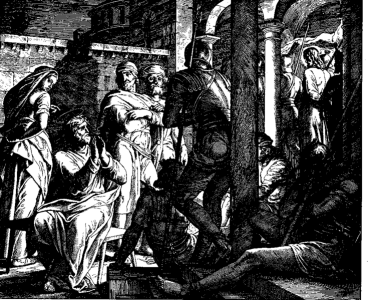
This year the Passion Narrative is that of Mark (14:1-15:47) but I find the passage in Luke 22:39-71 and 23:1-49 (50-56) to be more dramatic.  The three parts of Luke’s narrative that stand out in this narrative for me are Peter’s denial of Jesus, the interaction of Jesus with those crucified with him and that of the Centurion:

“Then they seized him and led him away, bringing him into the high priest’s house. But Peter was following at a distance. When they had kindled a fire in the middle of the courtyard and sat down together, Peter sat among them. Then a servant-girl, seeing him in the firelight, stared at him and said, “This man also was with him.” But he denied it, saying, “Woman, I do not know him.” A little later someone else, on seeing him, said, “You also are one of them.” But Peter said, “Man, I am not!” Then about an hour later still another kept insisting, “Surely this man also was with him; for he is a Galilean.” But Peter said, “Man, I do not know what you are talking about!” At that moment, while he was still speaking, the cock crowed. The Lord turned and looked at Peter. Then Peter remembered the word of the Lord, how he had said to him, “Before the cock crows today, you will deny me three times.” And he went out and wept bitterly.”

Peter’s denial is in large part because he has had his illusions about Jesus shattered and the fact that he had not understood the message up to that point.  As Bonhoeffer says “Jesus is a rejected Messiah. His rejection robs the passion of its halo of glory. It must be a passion without honor. Suffering and rejection sum up the whole cross of Jesus. To die on the cross means to die despised and rejected of men. Suffering and rejection are laid upon Jesus as a divine necessity, and every attempt to prevent it is the work of the devil, especially when it comes from his own disciples; for it is in fact an attempt to prevent Christ from being Christ.”

Likewise Jesus interaction with the condemned thieves that were crucified with him:

“One of the criminals who were hanged there kept deriding him and saying, “Are you not the Messiah? Save yourself and us!” But the other rebuked him, saying, “Do you not fear God, since you are under the same sentence of condemnation? And we indeed have been condemned justly, for we are getting what we deserve for our deeds, but this man has done nothing wrong.” Then he said, “Jesus, remember me when you come into your kingdom.” He replied, “Truly I tell you, today you will be with me in Paradise.”

Mark (15:25-32) records that interaction in this manner:

“It was nine o’clock in the morning when they crucified him. The inscription of the charge against him read, “The King of the Jews.” And with him they crucified two bandits, one on his right and one on his left. Those who passed by derided him, shaking their heads and saying, “Aha! You who would destroy the temple and build it in three days, save yourself, and come down from the cross!” In the same way the chief priests, along with the scribes, were also mocking him among themselves and saying, “He saved others; he cannot save himself. Let the Messiah, the King of Israel, come down from the cross now, so that we may see and believe.” Those who were crucified with him also taunted him.”

The final passage from this narrative that strikes me is the moment of Jesus’ death on the Cross:

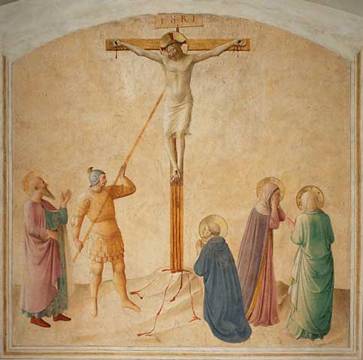
“It was now about noon, and darkness came over the whole land until three in the afternoon, while the sun’s light failed; and the curtain of the temple was torn in two. Then Jesus, crying with a loud voice, said, “Father, into your hands I commend my spirit.” Having said this, he breathed his last. When the centurion saw what had taken place, he praised God and said, “Certainly this man was innocent.” And when all the crowds who had gathered there for this spectacle saw what had taken place, they returned home, beating their breasts. But all his acquaintances, including the women who had followed him from Galilee, stood at a distance, watching these things.”

Mark records that event in Mark 15: 33-39. In Mark’s account the reaction of the Centurion (15:39) to the death of Jesus is even more salient than the account of Luke.

“When it was noon, darkness came over the whole land until three in the afternoon. At three o’clock Jesus cried out with a loud voice, “Eloi, Eloi, lema sabachthani?” which means, “My God, my God, why have you forsaken me?” When some of the bystanders heard it, they said, “Listen, he is calling for Elijah.” And someone ran, filled a sponge with sour wine, put it on a stick, and gave it to him to drink, saying, “Wait, let us see whether Elijah will come to take him down.” Then Jesus gave a loud cry and breathed his last. And the curtain of the temple was torn in two, from top to bottom. Now when the centurion, who stood facing him, saw that in this way he breathed his last, he said, “Truly this man was God’s Son!”

The darkness of this is event is perplexing to those who want to find God in some place where he is untouched by human suffering to them the Cross is folly for what kind of God would submit himself to such ignominy but as Martin Luther wrote “He who does not know Christ does not know God hidden in suffering. Therefore, he prefers works to suffering, glory to the cross, strength to weakness, wisdom to folly. For they hate the cross and suffering and love works and the glory of works. Thus they call the good of the cross, evil and the evil of a deed, good. God can only be found in suffering and the cross.” It is in the contradiction of this week that we come to know God, not a God who seeks not the righteous or the powerful, those who seek the power of an earthy kingdom backed by an ideology of power which tramples the weak, but rather those who will simply walk in the footsteps of Jesus the Christ who rules by serving the least, the lost and the lonely.

The liturgy of this day be from any of the Passion narratives takes us to the heart of the Gospel as we led by the writers through the triumph of the entrance into Jerusalem, to the betrayal of Jesus by Judas, the abandonment of him by the disciples and the denial of Peter.  As the writers lead us through his trial, conviction, scourging and trek to Golgotha we see the gamut of human emotions and reactions to Jesus and we know that we can be there as well in any of the characters simply because we are human and capable of compassion or betrayal.  As Jesus is on the Cross it is not the religious or upstanding that remain with him.  He is left with his mother, the other Mary and John the beloved.  He is shown compassion by a thief and recognized as the Son of God by the Roman Centurion, a gentile serving an empire oppressing the people of Israel and whose governor had pronounced the sentence of death upon him.  In this liturgy we have been taken from the heights of exhilaration in the triumphant entry to the depths of despair felt by his disciples that Friday afternoon. It is in this time that we realize how right Dietrich Bonhoeffer is when he writes “God loves human beings. God loves the world. Not an ideal human, but human beings as they are; not an ideal world, but the real world. What we find repulsive in their opposition to God, what we shrink back from with pain and hostility, namely, real human beings, the real world, this is for God the ground of unfathomable love.”

It is the Centurion for which I have the greatest affinity in this story. He is a soldier and in the words of so many soldiers who have obey orders carried out the sentence upon Christ by crucifying him and then as the life ebbs out of Christ’s crucified body exclaims “surely this was a good man” or in other accounts “surely this was the Son of God.” That is the cry of a man who knows that he has executed an unjust sentence, the reaction of a true penitent, the reaction of a man who comes to realize even before many of Jesus’ closest followers understood.  According to tradition the Centurion was named Longinus who left the service of the Imperial Legion, was baptized by the Apostles and was martyred under the orders of Pontius Pilate by soldiers of the unit that he had once commanded.

It is important for the Church not to lose this identification.  The Church is not to become enmeshed and co-opted by those who attempt to use the Gospel to promote ideologies foreign to it as is the temptation in times of crisis.  As Jürgen Moltmann notes:

“In Christianity the cross is the test of everything which deserves to be called Christian… The Christian life of theologians, churches and human beings is faced more than ever today with a double crisis: the crisis of relevance and the crisis of identity. These two crises are complementary. The more theology and the church attempt to become relevant to the problems of the present day, the more deeply they are drawn into the crisis of their own Christian identity….Christian identity can be understood only as an act of identification with the crucified Christ, to the extent to which one has accepted that in him God has identified himself with the godless and those abandoned by God, to whom one belongs oneself.” The Crucified God [pgs. 7, 19]

Nor is our task is not to attempt to invent “crosses” for ourselves in acts of pseudo-martyrdom but simply to be faithful in loving Jesus and our neighbor as Bonhoeffer noted “Must the Christian go around looking for a cross to bear, seeking to suffer? Opportunities for bearing crosses will occur along life’s way and all that is required is the willingness to act when the time comes. The needs of the neighbor, especially those of the weak and downtrodden, the victimized and the persecuted, the ill and the lonely, will become abundantly evident.” The mark of the Christian is not to blindly give his life for a cause or be consumed by the false “messiah’s” promoted by politicians, pundits and even preachers captivated by the lust for power and glory.

As we walk through the mystery of Holy Week together let us renew our faith in the Crucified One and not be conformed to those things that seek to turn us from the way of discipleship and the way of the Cross.

Peace

Padre Steve+

Leave a comment

Filed under christian life, film, Religion