Tag Archives: jefferson davis

Gettysburg: The Connection between Policy, Strategy, and Operational Art

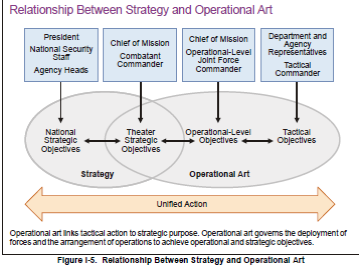
fig-1-5-jp-03a

Friends of Padre Steve’s World

As I have been working to revise my materials form my next Gettysburg Staff Ride I did some revisions to my text that I use with my students. The footnotes did not show up so Monday I will repost the text of this article with them. The article is important even for non-military types who care about the country and are involved in politics or policy, because it shows the linkage between the advantages that a nation with a strong strong and effective central government has over one which adopts what we would call today a Libertarian form of government. In fact I would call the effort of the Confederacy in the Civil War “The Failed Libertarian War.” But that is possibly a subject for an article or maybe even a book, but I digress…

So anyway here is the latest,

Peace

Padre Steve+

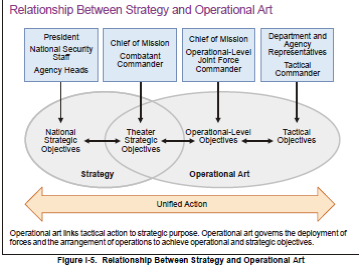
Today we look at the Gettysburg Campaign in terms of how we understand the connection between strategy and operational art. In doing so we have to place it in the context that Lee’s campaign has in relationship to the Confederate command relationships and where it fits in the continuum of unified action as we understand it today.

To do so we have to make the connection between national strategic objectives, theater objectives, operational objective and tactical objectives. We have to explore command and control structures, staff organization and the understand the effect of the Diplomatic, Informational, Economic and Military elements of national power that impact a nation’s ability to wage war.

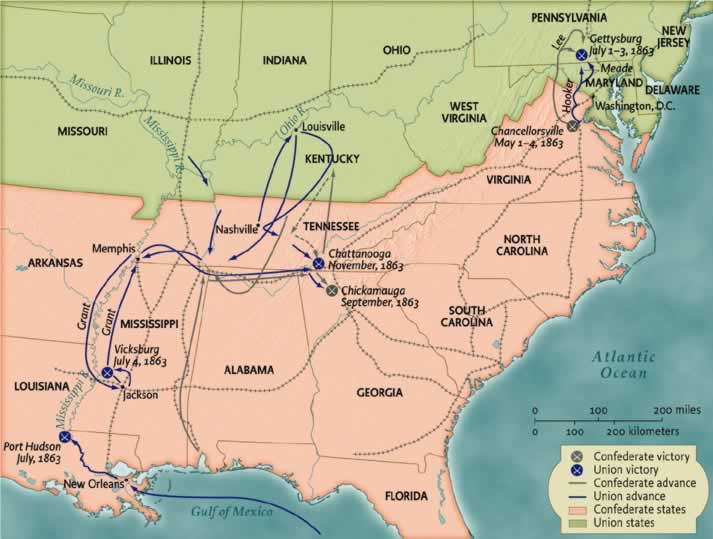
The summer campaign of 1863 in the Civil War gives us the opportunity to do this as we explore the Gettysburg campaign in relation to Vicksburg and the overall strategic situation that both sides faced. This includes the elements that we now associate with the DIME.

While Confederate army units and their commanders generally excelled on the tactical level, and their soldiers endured hardship well, this would not be enough to secure victory. They displayed amazing individual initiative on the battlefield and they won many victories against superior forces, especially in the early part of the war. Even during the final year of the war, Lee’s forces fought skillfully and helped prolong the war. But neither the Confederate government nor the various army commanders were able to translate battlefield success to operational, theater specific or national strategic objectives.

The Confederacy had a twofold problem in its organization for war and how it conducted the war. First it had no organization at the strategic level to direct the war, and it never developed one to coordinate its military, military, diplomatic or economic policies. While Southern strategists understood that they needed to “wear down the ability of the North to wage war” they were consistently hobbled by its own internal political divisions which served to undermine efforts to coordinate the effort to defend the Confederacy. These divisions focused on the opposition of the states’ rights proponents to the central government in Richmond.

The overarching national strategic objective of the Confederacy was to attain independence. The Confederates could not hope to conquer the Union and because of that their “strategic problem was to resist conquest” and to do so they would have to “tire the Federals out, and force them to abandon the war.” Jefferson Davis seems to have understood this early in the war, but political considerations and the temperament of most Southerners and their political leaders frustrated his attempts. Generals like Lee and Joseph E. Johnston “were of the opinion that the more remote frontiers should be abandoned, and that the scattered forces of the Confederacy be concentrated, political reasons overruled their judgment.”

Southern politicians, especially the governors and congressmen demanded that troops “defend every portion of the Confederacy from penetration by “Lincoln’s abolition hordes.” Likewise, most Southerners believed that they “could whip any number of Yankees” and as early as 1861 the Confederate press was advocating an offensive strategy as the Richmond Examiner declared “The idea of waiting for blows rather than inflicting them, is altogether unsuited to the genius of our people….The aggressive policy is the truly defensive one. A column pushed forward into Ohio or Pennsylvania is worth more to us, as a defensive measure, than a whole tier of seacoast batteries from Norfolk to the Rio Grande.”

This combination of wanting to defend everything, which defied Frederick the Great’s classic dictum that “he who defends everything defends nothing” and the persistent employment of the offensive even when it “drained the Confederacy’s manpower and weakened its long term prospects for independence” were key strategic factors in its defeat.

The South did get an earlier start to in mobilizing for war then the Union. Even before the “Confederate Congress authorized an army of 100,000 volunteers for twelve months” on March 6th 1861 the governors of the eleven Confederate States raised units to fight any Federal armies which dared to force them back into the Union. This involved dusting off the old militias which had been allowed to decay in the period between the Mexican War and 1860. Most of these units in the South as well as the North were volunteer companies in which the discipline, equipment and training varied to a significant degree. Most had little in the way of real military training and “many of them spent more time drinking than drilling.” The early Confederate mobilization outstripped the availability of arms and equipment forcing many volunteers to be sent home.

Other than the stated desire for independence and their common hatred of the “Yankee,” there was little in the way of unity within the Confederate States, “the incurable jealousy of the States, especially those not immediately affected by the war, established a dry rot within the Confederacy.” Within the Confederacy, each state viewed itself as an independent nation only loosely bound to the other states and some legislatures enacted laws which actively opposed the central government in Richmond.

The various Confederate states controlled the use of their units and often resisted any effort at centralization of effort. Some kept their best units at home, while others dispatched units to Confederate armies such as Lee’s Army of Northern Virginia. Initially most states limited enlistment periods to one year despite the opposition of Robert E. Lee who helped Jefferson Davis pass the Conscription Act of 1862, a measure that was “heavily watered down by those politicians whose first concern was states’ rights and by those who felt that it would undermine patriotism.” That measure, even in its watered down form was distinctly unpopular, especially with the following declaration of martial law in parts of the Confederacy.

Both measures were brought by realists who understood that for the Confederacy to survive the war effort had to become a total war, with “the whole population and the whole production…put on a war footing.” Such measures provoke more attacks and opposition by their opponents who advocated states’ rights even if it worked against the overall interests of the Confederacy. By the time of Gettysburg if not sooner, “Confederate society began to unravel. The yeomanry and poor white people resented conscription, the tax-in-kind impressment, and other governmental measures than the wealthy. Planters sought to safeguard their property and status to the detriment of national goals.”

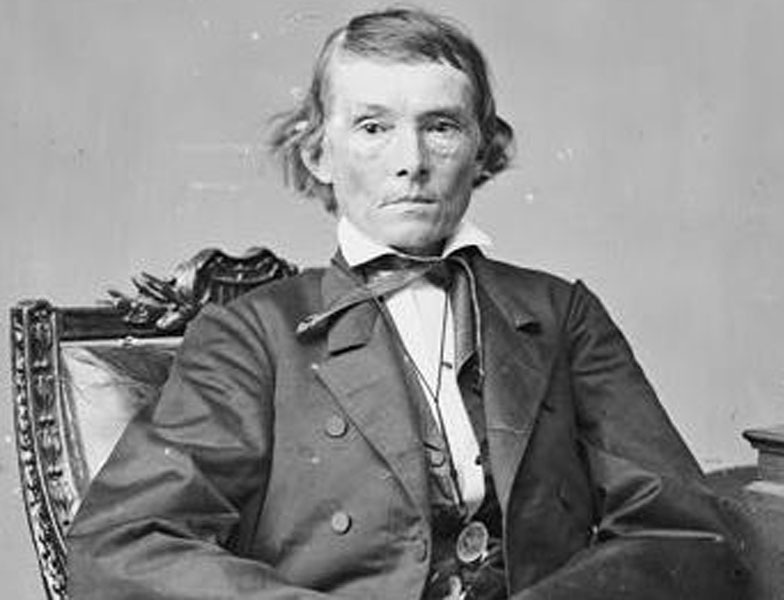
This included how state governments responded to the military needs of the Confederacy. Some governors hoarded weapons seized from Federal armories, “retaining these weapons to arm regiments that they kept at home… defend state boarders and guard against potential slave uprisings.” When in response to threats within the Confederacy Jefferson Davis suspended the writ of habeas corpus it resulted in a firestorm of opposition from the states. “Mississippi and Georgia passed flaming resolutions against the act; Louisiana presently did so, too, and North Carolina soon had a law on its books nullifying the action of the central government.” Alexander Stephens, the Confederate Vice President noted that there was “no such thing as a citizen of the United States, but the citizen of a State, and that “the object of quitting the Union, was not to destroy, but to save the principles of the Constitution.”

Likewise as economic conditions worsened and inflation soared in late 1861 the Confederate Congress “in its allotments to the War Department refused to face up to the costs of running the war…it forced the department to scramble in an atmosphere of uncertainty for allotments on a short-run basis.” There was much distrust of any attempt to organize a true central government with any actual authority or power in Richmond. Jefferson Davis may have been President but his country was hamstrung by its own internal divisions, including the often vocal opposition of Stephens for whom states’ rights remained a paramount issue. Stephens, in a statement that defied the understanding that military victory had to be achieved for independence to be won said during the habeas corpus debate “Away with the idea of getting independence first, and looking to liberty afterward.” This, like so many other aspects of the Confederate war effort showed the radical disconnection between legislators, policy makers and the Army and defied any understanding of the importance of government and the unity of effort in pursuing war aims. .

The Confederacy lacked a clear defined command structure to coordinate its war efforts. At the beginning of the war this was true of the Union as well, however, by the Union was much more adept at responding to the needs of the war, this included its military operations, diplomatic efforts and economy. Out of necessity it established a War Department as well as a Department of the Navy in February 1861 and Jefferson Davis, the new President who had served in Mexico and as Secretary of War prior to secession “helped speed southern mobilization in 1861.” However helpful this was initially Davis, who micromanaged Confederate war efforts “eventually led to conflict with some army officers.”
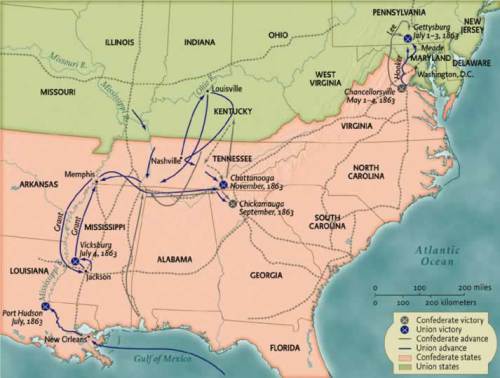
american14_5a

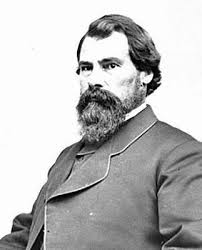
Jefferson Davis was an able man to be sure, but he “totally misunderstood the nature of the war.” Davis was a man given to suspicion and had major personality conflicts with all of his senior commanders save Robert E. Lee. These included Joseph Johnston who he loathed and P.T.G. Beauregard, both of whom he quarreled with on matters of strategy. These conflicts did impact operations, just as did the refusal of various states to support operations or campaigns apart from ones that impacted their state directly.

While Jefferson Davis and his Secretary of War theoretically exercised direction of the war no formal mechanism existed to coordinate the needs of the various military departments or armies. In 1863 Davis, Lee and the Secretary of War, James Seddon were acting as an “informal board which had a say in all major questions of Confederate strategy. Seddon, who had definite ideas of his own about military affairs, was usually but not always a party to Davis’ discussions with Lee…but Davis usually dominated them…. In contrast to the Northern command organization, the South had no general in chief. If anyone fulfilled his functions, it was the President.” It was not until February of 1865 that Lee was named as General in Chief of all armies, and by then the war had been lost.

While Jefferson Davis and his Secretary of War theoretically exercised direction of the war no formal mechanism existed to coordinate the needs of the various military departments or armies. In 1863 Davis, Lee and the Secretary of War, James Seddon were acting as an “informal board which had a say in all major questions of Confederate strategy. Seddon, who had definite ideas of his own about military affairs, was usually but not always a party to Davis’ discussions with Lee…but Davis usually dominated them…. In contrast to the Northern command organization, the South had no general in chief. If anyone fulfilled his functions, it was the President.” It was not until February of 1865 that Lee was named as General in Chief of all armies, and by then the war had been lost.

In effect each Confederate army and military department operated independently, often competing with each other for the troops, supplies and materials needed to fight. They also had to contend with recalcitrant state governments, each loathe to sacrifice anything that might compromise their own independence. Attempts by the authorities in Richmond to centralize some measure of authority were met with resistance by the states. Thus states’ rights were “not only the cause of the war, but also the cause of the Confederate downfall.”

In a country as vast as the Confederacy that lacked the industry, transportation infrastructure, population and economic power of the North this was a hindrance that could not be overcome by the soldierly abilities of its armies alone. An example of the Confederate problem was that “neither the army nor the government exercised any control of the railroads.” The Confederate Subsistence Department, which in theory was responsible for ensuring the supply of food, stores and the logistical needs necessary to maintain armies in the field could not plan with confidence. “Tied to the railroads, unable to build up a reserve; frequently uncertain whether or not their troops were going to be fed from one day to the next, field commanders understandably experienced a general loss of confidence in the Subsistence Department….” Even though the subsistence and even the survival of the army was dependent on the use of railroads, the railroad owners “responded by an assertion of their individual rights. They failed to cooperate….and Government shipments were accorded low priority. In May of 1863 the Confederate Congress finally granted the government broad authority over the railroads, but “Davis hesitated to wield the power. “ It would not be until early 1865 that the Confederacy would “finally take control of the railroads.”

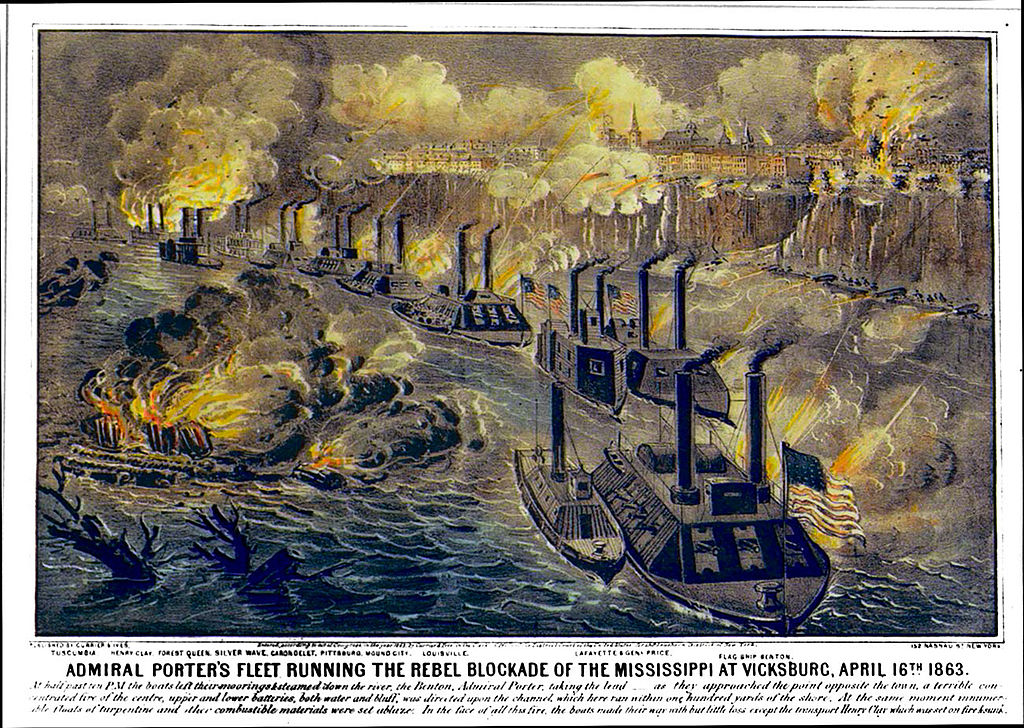
All of these factors had a direct effect on the campaign of 1863. In the west, Confederate commanders were very much left to fend for themselves and to add to their misery failed even to coordinate their activities to meet the threat of Grant and his naval commander, Admiral David Dixon Porter. In the East, Lee having established a close relationship with Jefferson Davis as his military advisor during the first year of the war exercised a disproportionate influence on the overall strategy of the Confederacy because of his relationship with Davis. However, Lee was hesitant to use his influence to supply his army, even when it was suffering. Even though he willingly shared in the plight of his solders, Lee refused “to exert his authority to obtain supplies….” As the army prepared to invade Pennsylvania, “the paltry rationing imposed by Richmond was made worse by a tenuous supply line….”

Lee in theory was simply one of a number of army or department commanders, yet he was responsible for the decision to invade the Union in June of 1863. This decision impacted the entire war effort. The Confederate cabinet “could reject Lee’s proposal as readily as that of any other department commander, Bragg, or Pemberton or Beauregard, for example, each of whom was zealous to protect the interests of the region for which he was responsible…” But this was Lee, “the first soldier of the Confederacy- the first soldier of the world…” Lee’s plan was approved by the cabinet by a vote of five to one. The lone dissenter was Postmaster General John H. Reagan who “believed a fatal mistake had been made…”

Lee in theory was simply one of a number of army or department commanders, yet he was responsible for the decision to invade the Union in June of 1863. This decision impacted the entire war effort. The Confederate cabinet “could reject Lee’s proposal as readily as that of any other department commander, Bragg, or Pemberton or Beauregard, for example, each of whom was zealous to protect the interests of the region for which he was responsible…” But this was Lee, “the first soldier of the Confederacy- the first soldier of the world…” Lee’s plan was approved by the cabinet by a vote of five to one. The lone dissenter was Postmaster General John H. Reagan who “believed a fatal mistake had been made…”

Seddon desired to turn the tide at Vicksburg and proposed sending Longstreet’s Corps to reinforce Johnston to relieve the embattled city and maintain the front on the Mississippi. However, Lee believed that any attempt “to turn the Tide at Vicksburg…put Lee’s army in Virginia at unacceptable risk.”

The lack of any sense of unity in the Confederate hierarchy and lack of a grand strategy was disastrous. The lack of agreement on a grand strategy and the inability of the Confederate States Government and the various state governments to cooperate at any level culminated in the summer of 1863 with the loss of Vicksburg and the failure of Lee’s invasion of Pennsylvania. The Confederate failure in this demonstrates the absolute need for unity of effort and even more a whole of government and whole of nation approach to war.

This can be contrasted with the Union, which though it was slow to understand the nature of the war did have people who, through trial and error developed a cohesive strategy that led to success at the operational level and the tactical level. The genus in Union strategy came from Lieutenant General Winfield Scott who “appreciated the relationship between economic factors and attack.” Scott’s strategic plan was to establish a blockade and form two major armies, “one to move down the Mississippi and cut off the western half of the Confederacy from its eastern half, while the other threatened Richmond and pinned down the main Confederate forces in Virginia.” It was a plan for total war called Anaconda which was mocked in both the Northern and Southern press and it would become the blueprint of Federal success at the war progressed. Scott was the first to recognize that the war would not be short and his plan was the first to “recognize the North’s tremendous advantage in numbers and material, and it was the first to emphasize the importance of the Mississippi Valley in an over-all view of the war.”

Abraham Lincoln had little in the way of military acumen and frequently, until Grant took control of the armies interfered with his senior commanders, often with good reason. However, Lincoln was committed to winning the war and willing to take whatever steps necessary to do so. Fuller describes him as “none other than a dictator” by bypassing Congress and on his own authority declaring a blockade of Southern ports, calling for 75,000 volunteers and suspending habeas corpus.

Likewise Lincoln as well as Congress understood the value and necessity of the railroads and in January 1862 “Congress authorized to take possession of any railroads and place them under military control when the public safety warranted it.” Lincoln formed the Department of Military Railroads the following month and appointed Daniel C McCallum as its director. In May President Lincoln formally took possession of all railroads, but “saw to it that cooperative lines received government aid.”

George McClellan, who Lincoln appointed as commander of the Army of the Potomac in 1862, whatever his many faults as a field commander “possessed a strategic design for winning the war,” understood the necessity of unity of command and successfully built an effective army. Now his design was different than that of Scott, for he desired to “crush the rebels in one campaign” by an overland march to Richmond. While this was unrealistic because of McClellan’s constant overestimation of his enemy and inability to risk a fight when on the Peninsula and at the gates of Richmond, the Union might have at least had a chance should he have defeated the major Confederate forces deployed to defend that city. While that would have been unlikely to win the war in a single stroke it would have been a significant reversal for the Confederacy in 1862.

Logistics was one of the deciding factors of e war, both the Confederate weakness and Union ability to adapt society and government needs to wartime conditions. As a general principle Union leaders, government and business alike understood the changing nature of modern war. This stood in stark contrast to the inefficient and graft ridden Confederate agencies where even those who wanted more effective means to wage war were hindered by politicians, land owners and businessmen who insisted on their rights over the needs of the nation. The Union developed an efficient and well managed War Department where the importance of logistics inter-bureau cooperation became a paramount concern.

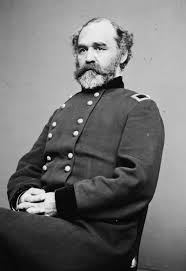
Union industry “geared up up for war production on a scale that would make the Union army the best fed, most lavishly supplied army that have ever existed.” The Quartermaster’s Department under the direction of Quartermaster General Montgomery Meigs was particularly efficient in supplying the needs of a military fighting on exterior lines in multiple theaters of operation. Unlike the Confederate Subsistence Bureau the Federal Quartermaster Bureau supplied almost everything the army could need: “uniforms, overcoats shoes, knapsacks, haversacks, canteens, mess gear, blankets, tents, camp equipage, barracks, horses, mules, forage, harnesses, horseshoes, and portable blacksmith shops, supply wagons, ships when the army could be supplied by water, coal and wood to fuel them, and supply depots for storage and distribution.” The ill-equipped Confederates could only look on with awe, in fact during his absence from Lee J.E.B. Stuart was ecstatic over the capture of “one hundred and twenty five of the best United States model wagons and splendid teams….” likewise one of the reasons that A.P. Hill allowed Harry Heth to send his division the Gettysburg was to find shoes that the Confederate Subsistence Department could not provide for them. Thus one of the reasons for the Battle of Gettysburg is directly linked to the failed logistics system of the Confederacy.

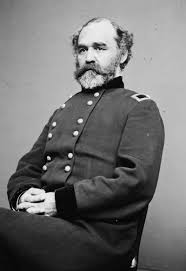
Early in the war the Union logistics effort was beset by some of the same problems that plagued the Confederacy throughout the war. Graft and corruption ran rife until 1862 when “Congress established investigative committees to uncover fraud and passed laws regulating the letting of contracts.” Meigs overhauled the bureau. At the beginning of the war it had only one department, for clothing. He modernized this and added eight new departments, which dealt with “specialized logistical functions such as forage and fuel, barracks and hospitals and wagon transportation.” During the war Meigs managed nearly half the direct costs of the Union war effort,” over 1.5 billion dollars in spending. He has been called by James McPherson as “the unsung hero of northern victory.”
meigs1

The Unsung Union Hero: General Montgomery Meigs 

This had a profound effect on operations. When the Union forces by necessity had to operate in enemy territory they were well supplied whereas whenever Confederate Forces conducted operations in the North or even in supposedly friendly Border States they were forced to subsist off the land. This meant that Confederate operations in the north were no more than what we would call raids, even the large invasions launched by Lee in 1862 and 1863, both which ended in defeat and near disaster.

Because of their poor logistic capabilities Confederate forces had no staying power to keep and hold any ground that they took in enemy territory. This can be contrasted with the Union which when it sent its forces south meant them to stay.

Lee could not fathom this and because he believed that no Federal Army could stand a summer in the Deep South and that Grant would be forced to withdraw. The use of railroads to supply its far flung forces operating in the south as well as its use of maritime transportation along the coast and on inland waterways ensured that Northern armies could always be supplied or if threatened could be withdrawn by ship.

Some senior Union officers also understood the importance of logistics. Henry Halleck was the first true American military theorist. He published the first American work on strategy, Elements of Military Art and Science in 1846. While his is often given short shrift because he was not an effective field commander and had an acerbic personality which rubbed people the wrong way, Halleck was one of the most important individuals in organizing the eventual Union victory. This included matters of strategy, picking effective subordinate commanders and understanding the logistical foundations of strategy.

Weigley wrote of Halleck:

“He sponsored and encouraged the operations of Brigadier General Ulysses. S. Grant and Flag Officer Andrew H. Foote that captured Forts Henry and Donaldson in February 1862 and thereby opened up the Tennessee and Cumberland Rivers for Union penetration deep into the state of Tennessee and toward the strategically important Memphis and Charleston Railroad. Halleck’s insights into the logistical foundations of strategy proved consistently accurate. Throughout the war, he maintained a shrewd eye for logistically viable lines of operation for the Union forces, and he increasingly recognized that one of the most effective weapons of offensive strategy, in an age when battle meant exposure to rifled firepower, was not to aim directly at the enemy armies but at their logistical base.”

Halleck was also instrumental in helping to oust Hooker just before Gettysburg and raise Meade to command the Army of the Potomac. When Lincoln brought Grant east to become General in Chief Halleck took on the new position of Chief of Staff. This was a task that he fulfilled admirably, allowing Grant to remain in the field and ensuring clear communication between Lincoln and Grant as well as relieving “Grant of the burden of personally corresponding with his department commanders.”

By establishing what we now understand as the beginning of a modern command and staff organizational structure the Union was far more able to link its national, theater and operational level objectives with its tactical objectives, even when some of its commanders were not as good as Confederates and blundered into defeats. Above the army, at the administration level Stanton, the Federal Secretary of war organized a War Board and “composed of department heads and chaired by Major General Ethan Allen Hitchcock…as an embryonic American-style general staff.”

In the end during the summer of 1863 it was the Union which was better able to link the ends, ways and means of the strategic direction of the war. This is something that Davis and Lee were unable to do as they struggled with political division, a lack of cooperation from the states, and the lack of any true grand strategy.

Lee’s strategy of the offensive was wrong and compounded the problems faced by the Confederacy. The losses that his army suffered were irreplaceable, not just in terms of overall numbers of soldiers but in terms of his mid-level leaders, his battalion, regiment and brigade commanders who suffered grievous losses and were even more critical to the leadership of his army.

Lee recognized the terrible effects of his officer casualties in a letter to General John Bell Hood on May 21st: “There never were such men in an Army before. But there is the difficulty- proper commanders- where can they be obtained?” His actions at Gettysburg only added to his crisis in keeping his army supplied with competent commanders, as so many were left dead, wounded or captured during the campaign.

Even had Lee won the battle of Gettysburg his casualties in Union territory would have been prohibitive. He would have spent most of his ammunition, incurred serious losses in personnel and horses, and been burdened by not having to care for his wounded and still been deep in Union territory away from his nearest logistics hub. Had Lee won at Gettysburg “his ammunition would have been nearly exhausted in victory, while Federal logistics would have improved as the Army of the Potomac fell back toward the eastern cities.” This would have forced him to withdraw from Pennsylvania even had he been victorious.

It is true that a victory on northern soil might have emboldened the peace party in the North, but even then that could not have an effect on the desired effect on the Lincoln Administration until the election of 1864, still 16 months away. Likewise, in July 1863 such a victory would probably not have triggered foreign recognition or assistance on the part of France or England. “Skilful northern diplomacy prevented an internal conflict from becoming an international war.” Jefferson Davis held on to his fantasy until August 1863, when even he was forced to deal with reality was a vain hope indeed and ended his diplomatic efforts to bring England into the war.

England would not intervene for many reasons and the Confederate government did not fully appreciate the situation of the countries that they hoped would intervene on their behalf:

“its dependence on northern foodstuffs, access to new cotton supplies, turmoil in Europe, fear of what might happen to Canada and to British commerce in a war with the Union, and an unwillingness to side with slavery. The British government also wanted to establish precedents by respecting the blockade, a weapon that it often used.”

Confederate politicians were hindered by a very narrow, parochial view of the world, had little understanding of modern industry, economics and the type of diplomacy employed by Europeans both to strengthen their nations, but also to maintain a balance of power.

As we look at the Gettysburg and Vicksburg campaigns in the summer of 1863 these are important things to consider. The relationship between national strategic objectives, theater objectives, operational objectives and tactical success cannot be minimized. Success on the battlefield alone is almost always insufficient to win a war unless those wins serve a higher operational and strategic purpose, and the costs of battles and campaigns have to be weighed in relation to the strategic benefits that derive from them.

In the end the total failure of the two campaigns destroyed any real hope of Confederate military victory. At Vicksburg the Confederacy lost all of Pemberton’s army, 33,000 men and Lee suffered over 28,000 casualties from an army which had begun the campaign with about 80,000 troops. The losses were irreplaceable.

This essay is certainly not an exhaustive look at the subject, but if we do not consider these factors we cannot really understand the bigger picture of the situation that the two sides faced and how they dealt with them. While the weapons and tactics employed by the sides are obsolete the thought processes and strategic considerations are timeless.
Leave a comment

Filed under civil war, History, leadership, Military, national security

“A Spirit of Unbelief”: A.P. Hill, Harry Heth and the Prelude to the Battle of Gettysburg

Hill.28135413_stdLieutenant General A.P. Hill

Note: One of the most important things to understand about the Battle of Gettysburg or for that matter any battle or campaign is leadership as well as organizational structure and climate of command. The study of A.P. Hill’s Third Corps is important to understanding how the battle unfolds and what happens at Gettysburg particularly on July 1st. In our understanding “Successful mission command demands that subordinate leaders at all echelons exercise disciplined initiative, acting aggressively and independently to accomplish the mission. Essential to mission command is the thorough knowledge and understanding of the commander’s intent at every level of command.”

While the leaders at Gettysburg on both sides would be unaware of our present definition they certainly would have been acquainted with the maxims of Napoleon, who many studied under Dennis Hart Mahan at the West Point. Napoleon noted: “What are the conditions that make for the superiority of an army? Its internal organization, military habits in officers and men, the confidence of each in themselves; that is to say, bravery, patience, and all that is contained in the idea of moral means.”

Likewise in a maxim that has direct application to the Confederate campaign in Pennsylvania Napoleon noted “To operate upon lines remote from each other and without communications between them, is a fault which ordinarily occasions a second. The detached column has orders only for the first day. Its operations for the second day depend on what has happened to the main body. Thus according to circumstances, the column wastes its time in waiting for orders or it acts at random….” [1]

I have spent more time in this chapter developing the issues of organization, leadership, climate of command and relationships between leaders because of their importance to the campaign. From these students should be able to draw lessons that would be applicable to leadership, organization and campaigning at the operational level of war.

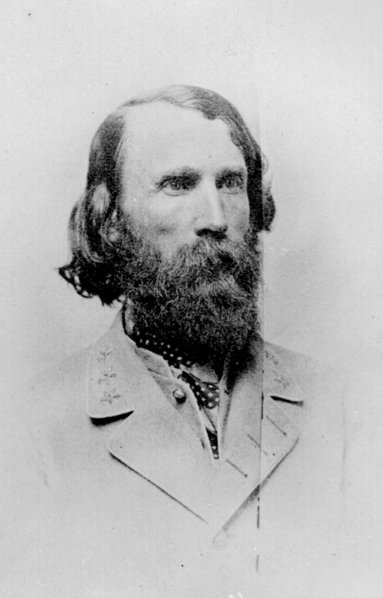
As the Army of Northern Virginia began to concentrate near Cashtown after the reports that the Army of the Potomac was in Maryland it was Lieutenant General A.P. Hill’s Third Corps that was nearest to Gettysburg. Major General Harry Heth’s division led the corps and arrived on June 29th followed by Major General Dorsey Pender’s division on the 30th. Hill ordered his last division under the command of Major General Richard Anderson to remain behind and join the corps on July 1st. [2]

On the 30th Harry Heth sent Johnston Pettigrew’s Brigade to Gettysburg to “search the town for army supplies (shoes especially), and to return the same day.” [3] It was the first in a series of miscalculations that brought Lee’s army into a general engagement that he wished to avoid.

The Confederate Third Corps commanded by Lieutenant General Ambrose Powell (A.P.) Hill had been formed as part of the reorganization of the army following Stonewall Jackson’s death after the Battle of Chancellorsville. Hill had a stellar reputation as a division commander; his “Light Division” had distinguished itself on numerous occasions, especially at Antietam where its timely arrival after a hard forced march from Harper’s Ferry helped save Lee’s army late in the battle. At Chancellorsville Hill briefly succeeded Jackson until he too was wounded.

But that being said Hill was no stranger to controversy, beginning with a clash with James Longstreet during the Seven Days battles in which time Longstreet placed Hill under arrest and Hill challenged Longstreet to a duel. Lee quickly reassigned Hill to Jackson’s command as Jackson was operating in a semi-independent assignment. [4] Hill was in an intractable controversy with Stonewall Jackson for nearly a year until Jackson succumbed to his wounds. Jackson at one point during the invasion of Maryland prior to Antietam had Hill placed under arrest for the number of stragglers that he observed in Hill’s hard marching division as well as other errors that Jackson believed Hill had made. The dispute continued and the animosity deepened between the two men and in January 1863 Hill asked Lee for a trial by courts-martial on charges preferred against him by Jackson. Lee refused this and wrote to Hill: “Upon examining the charges in question, I am of the opinion that the interests of the service do not require that they be tried, and therefore, returned them to General Jackson with an indorsement to that effect….” [5] Just before Chancellorsville Jackson wrote to Lee “I respectfully request that Genl. Hill be relieved of duty in my Corps.” This time Lee simply ignored the request and though the two generals remained at loggerheads they also remained at their commands at Chancellorsville. [6]

Hill was recommended for promotion to Lieutenant General and command of the new Third Corps by Lee on May 24th and was promoted over the heads of Harvey Hill and Lafayette McLaws. The move displeased Longstreet who considered McLaws “better qualified for the job” and but who felt that the command should have gone to Harvey Hill whose “record was as good as that of Stonewall Jackson…but, not being a Virginian, he was not so well advertised.” [7]

Hill was slightly built and high strung. “Intense about everything” Hill was “one of the army’s intense disbelievers in slavery.” [8] Hill was an 1847 graduate of West Point and briefly served in Mexico but saw no combat. He spent some time in the Seminole wars and in garrison duty along the East Coast, spending 1855-1860 in the Coastal Survey and resigned his commission before Virginia’s secession. At the outbreak of the war he “received his commission as colonel, and soon trained one of Johnston’s best regiments in the Valley.” [9] He commanded a brigade under Longstreet on the Peninsula and was promoted to Major General and command of a division in May 1862. He was plagued by health problems which had even delayed his graduation from West Point, health issues that would arise on the first day at Gettysburg.

Hill’s Third Corps was emblematic of the “makeshift nature of the reorganization of the whole army.” [10] It was composed of three divisions; the most experienced being that of the recently promoted and hard fighting Major General Dorsey Pender. Pender’s division, was built around four excellent brigades from Hill’s old “Light Division” one of which Pender had commanded before his promotion. Hill strongly recommended Pender’s promotion which was accepted by Lee. Pender found the command to be a heavy burden. He was “an intelligent, reflective man, deeply religious and guided by a strong sense of duty….” [11]

Hill’s second experienced division was that of Major General Richard Anderson, transferred from Longstreet’s First Corps, something else which failed to endear Hill to Longstreet. [12] The unassuming Anderson had distinguished himself as a brigade and division commander in Longstreet’s corps, but in “an army of prima donnas, he was a self-effacing man, neither seeking praise for himself nor winning support by bestowing it on others.” [13] At Chancellorsville he fought admirably and Lee wrote that Anderson was “distinguished for the promptness, courage and skill with which he and his division executed every order.” [14] With four seasoned brigades under excellent commanders it was a good addition to the corps, although the transition from Longstreet’s stolid and cautious style of command to Hill’s impetuous style introduced “another incalculable of the reshuffled army.” [15]

heth

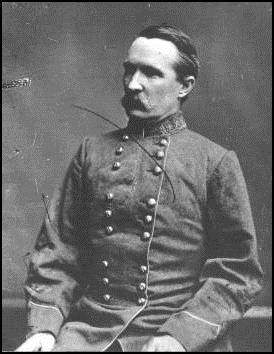
Major General Harry Heth

Major General Harry Heth’s division was the final infantry division assigned to the corps. This division was recently formed from two brigades of Hill’s old Light Division and “the two new brigades that Jefferson Davis had forced on an already disrupted army organization.” [16] The organization of this division as well as its leadership would be problematic in the days to come, especially on June 30th and July 1st 1863.

Heth like Pender was also newly promoted to his grade and the action at Gettysburg would be his first test in division command. Heth was a native Virginian, well connected politically who through his social charm had “many friends and bound new acquaintances to him” readily. [17] Heth was a West Point graduate who had an undistinguished academic career graduating last in the class of 1847. His career in the ante-bellum army was typical of many officers, he served “credibly in an 1855 fight with Sioux Indians” but his real claim to fame was in authoring the army’s marksmanship manual which was published in 1858. [18]

Heth’s career with the Confederate army serving in western Virginia was undistinguished but he was a protégé of Robert E. Lee who recommended him as a brigade commander to Jackson before Chancellorsville. Tradition states that of all his generals that Heth was the only one “whom Lee called by his first name.” [19] A.P. Hill when writing Lee about the choice of a successor for the Light Division noted that Heth was “a most excellent officer and gallant soldier” but in the coming campaign “my division under him, will not be half as effective as under Pender.” [20] Douglas Southall Freeman noted that Heth was “doomed to be one of those good soldiers…who consistently have bad luck.” [21]

Heth’s division was composed of two depleted brigades from the Light Division which had taken heavy casualties at Chancellorsville. The brigade commanded by James Archer from Alabama and Mississippi was “well led and had a fine combat reputation.” But the second brigade was more problematic. A Virginia brigade it had once been considered one of the best in the army had deteriorated in quality following the wounding of its first commander Brigadier General Charles Field. Heth took command of it at Chancellorsville and both he and the brigade performed well, but when Heth was promoted the lack of qualified officers left it under the command of its senior colonel, John Brockenbrough. [22] His third brigade came from Mississippi and North Carolina and was commanded by Brigadier General Joe Davis whose uncle was President Jefferson Davis. Davis had served on his uncle’s staff for months and had no combat experience. [23] One author noted that Davis’s promotion to Brigadier General “as unadulterated an instance of nepotism as the record of the Confederacy offers.” [24] His subordinate commanders were no better, one William Magruder was so bad that J.E.B. Stuart suggested that “he have his commission revoked” and only one of the nine field grade officers in his brigade had military training, and that from the Naval Academy. [25]

pettigrew

Brigadier General Johnston Pettigrew

Heth’s largest brigade was new to the army. Commanded by the North Carolina academic Johnston Pettigrew it had no combat experience though Pettigrew was considered a strong leader, badly wounded at Seven Pines and thinking his wound mortal “he refused to permit his men to leave the ranks to carry him to the rear” [26] and was captured but later paroled and returned to the army later in the year.

Hill was under the impression that Meade’s army was still miles away, having just come from meeting Lee who assured him that “the enemy are still at Middleburg,” (Maryland) “and have not yet struck their tents.” [27] With that assurance Heth decided to use June 30th to send Pettigrew’s brigade on the foraging expedition to Gettysburg. An officer present noted that Heth instructed Pettigrew “to go to Gettysburg with three of his regiments present…and a number of wagons for the purpose of collecting commissary and quartermaster stores for the use of the army.” [28]

However Heth did instruct Pettigrew in no uncertain terms not to “precipitate a fight” should he encounter “organized troops” of the Army of the Potomac. [29] Heth was specific in his report that “It was told to Pettigrew that he might find in the town in possession of a home guard,…but if, contrary to expectations, he should find any organized troops capable of making resistance., or any part of the Army of the Potomac, he should not attack it.” [30]

That in mind one has to ask the question as to why Heth would employ “so many men on a long, tiring march, especially as without a cavalry escort he took the risk of sending them into a trap” when his “objects hardly justified” using such a large force. [31] Likewise it has to be asked why the next day in light of Lee’s standing orders not to provoke an engagement that Hill would send two divisions, two thirds of his corps on a reconnaissance mission. Some have said that Hill would have had to move to Gettysburg on July 1st anyway due to forage needs of the army, [32] but this is not indicated in any of Hill or Heth’s reports.

As his troops neared Gettysburg Pettigrew observed the Federal cavalry of Buford’s 1st Cavalry Division as they neared the town. He received another report “indicating that drumming could be heard in the distance – which might mean infantry nearby, since generally cavalry generally used only bugles.” [33] He then prudently and in accordance with his orders not to precipitate a fight “elected to withdraw rather than risk battle with a foe of unknown size and composition.” [34] His troops began their retrograde at 11 a.m. leaving Buford’s cavalry to occupy the town at ridges. On Confederate wrote “in coming in contact with the enemy, had quite a little brush, but being under orders not to bring a general engagement fell back, followed by the enemy.” [35]

Upon returning Pettigrew told Hill and Heth that “he was sure that the force occupying Gettysburg was a part of the Army of the Potomac” but Hill and Heth discounted Pettigrew’s report. [36] “Heth did not think highly of such wariness” and “Hill agreed with Heth” [37] Hill believed that nothing was in Gettysburg “except possibly a cavalry vidette.” [38] Hill was not persuaded by Pettigrew or Pettigrew’s aide Lieutenant Louis Young who had previously served under Hill and Pender who reported that the “troops that he saw were veterans rather than Home Guards.” [39] Hill reiterated that he did not believe “that any portion of the Army of the Potomac was up” but then according to Young Hill “expressed the hope that it was, as this was the place he wanted it to be.” [40] The West Point Graduates Hill and Heth may have manifested an often typical “distain for citizen soldiers…a professional questioning a talented amateur’s observations” [41] If so it was a distain that would cost the Confederacy dearly in the days to come.

Pettigrew was “aghast at Hill’s nonchalant attitude” [42] and Young was dismayed and later recalled that “a spirit of unbelief” seemed to cloud their thinking. [43] In later years he wrote “blindness in part seems to have come over our commanders, who slow to believe in the presence of an organized army of the enemy, thought that there must be a mistake in the report taken back by General Pettigrew.” [44]

Heth then asked Hill since neither believed Pettigrew’s report “whether Hill would have any objection to taking his division to Gettysburg again to get those shoes. Hill replied “none in the world.” [45] Douglas Southall Freeman wrote “On those four words fate hung” [46] and then, in “that incautious spirit, Hill launched Harry Heth’s division down the Chambersburg Pike and into battle at Gettysburg.” [47]

Notes

[1] Napoleon Bonaparte, Military Maxims of Napoleon in Roots of Strategy: The Five Greatest Military Classics of All Time edited by Phillips, Thomas R Stackpole Books Mechanicsburg PA 1985 p.410

[2] Coddinton, Edwin B. The Gettysburg Campaign, A Study in Command A Touchstone Book, Simon and Shuster New York 1968 p.194

[3] Ibid. Coddinton, The Gettysburg Campaign, A Study in Command p. 263

[4] Dowdy, Clifford. Lee and His Men at Gettysburg: The Death of a Nation Skyhorse Publishing, New York 1986, originally published as Death of a NationKnopf, New York 1958 p.81

[5] Freeman, Douglas Southall, Lee’s Lieutenant’s a Study in Command, One volume abridgement by Stephen W Sears, Scribner, New York 1998 p.460

[6] Sears, Stephen W. Chancellorsville A Mariner Book, Houghton and Mifflin Company, Boston and New York 1996 p.51

[7] Foote, Shelby, The Civil War, A Narrative. Volume Two Fredericksburg to Meridian Random House, New York 1963 p.453

[8] Ibid. Dowdy, Lee and His Men at Gettysburg: The Death of a Nation p.79

[9] Ibid. Freeman Lee’s Lieutenant’s a Study in Command p.109

[10] Ibid. Dowdy, Lee and His Men at Gettysburg: The Death of a Nation p.88

[11] Ibid. Dowdy, Lee and His Men at Gettysburg: The Death of a Nation p.85

[12] Ibid. Dowdy, Lee and His Men at Gettysburg: The Death of a Nation p.86

[13] Ibid. Dowdy, Lee and His Men at Gettysburg: The Death of a Nation p.86

[14] Ibid. Freeman Lee’s Lieutenant’s a Study in Command p.512

[15] Ibid. Dowdy, Lee and His Men at Gettysburg: The Death of a Nation p.86

[16] Ibid. Dowdy, Lee and His Men at Gettysburg: The Death of a Nation p.87

[17] Ibid. Freeman Lee’s Lieutenant’s a Study in Command p.527

[18] Krick, Robert K. Three Confederate Disasters on Oak Ridge: Failures of Brigade Leadership on the First Day of Gettysburg in The First Day at Gettysburg edited by Gallagher, Gary W. Kent State University Press, Kent Ohio 1992 p.96

[19] Ibid. Krick. Three Confederate Disasters on Oak Ridge p.96

[20] Ibid. Freeman Lee’s Lieutenant’s a Study in Command p.527

[21] Ibid. Freeman Lee’s Lieutenant’s a Study in Command p.46

[22] Ibid. Dowdy, Lee and His Men at Gettysburg: The Death of a Nation p.87

[23] Ibid. Freeman Lee’s Lieutenant’s a Study in Command p.533

[24] Ibid. Krick. Three Confederate Disasters on Oak Ridge p.99

[25] Ibid. Krick. Three Confederate Disasters on Oak Ridge p.101

[26] Ibid. Freeman Lee’s Lieutenant’s a Study in Command p.136

[27] Guelzo, Allen C. Gettysburg: The Last Invasion Vintage Books a Division of Random House, New York 2013 p.131

[28] Tredeau, Noah Andre. Gettysburg: A Testing of Courage, Harper Collins Publishers, New York 2002 p.128

[29] Sears, Stephen W. Gettysburg. Houghton Mifflin Co. Boston and New York 2003 p.136

[30] Ibid. Tredeau Gettysburg: A Testing of Courage, p.129

[31] Ibid. Coddinton,. The Gettysburg Campaign, A Study in Command p. 263

[32] Ibid. Guelzo. Gettysburg: The Last Invasion p.131 This argument does have merit based on the considerations Guelzo lists but neither Hill, Heth or Lee make any mention of that need in their post battle reports.

[33] Ibid. Tredeau Gettysburg: A Testing of Courage, p.130

[34] Gallagher, Gary. Confederate Corps Leadership on the First Day at Gettysburg: A.P. Hill and Richard S. Ewell in a Difficult Debut in The First Day at Gettysburg edited by Gallagher, Gary W. Kent State University Press, Kent Ohio 1992 p.42

[35] Ibid. Tredeau Gettysburg: A Testing of Courage, p.135

[36] Ibid. Coddinton, The Gettysburg Campaign, A Study in Command pp. 263-264

[37] Foote, Shelby, The Civil War, A Narrative. Volume Two Fredericksburg to Meridian Random House, New York 1963 p.465

[38] Pfanz Harry W. Gettysburg: The First Day University of North Carolina Press, Chapel Hill and London 2001 p.27

[39] Ibid. Gallagher, Gary. Confederate Corps Leadership on the First Day at Gettysburg p.42

[40] Ibid. Pfanz. Gettysburg: The First Day p.27

[41] Ibid. Gallagher, Gary. Confederate Corps Leadership on the First Day at Gettysburg p.42

[42] Ibid. Guelzo. Gettysburg: The Last Invasion p.131

[43] Ibid. Coddinton, The Gettysburg Campaign, A Study in Command p. 264

[44] Ibid Pfanz Gettysburg: The First Day p.27

[45] Ibid. Coddinton, The Gettysburg Campaign, A Study in Command p. 264

[46] Ibid. Freeman Lee’s Lieutenant’s a Study in Command p. 563

[47] Ibid. Krick. Three Confederate Disasters on Oak Ridge p.94

1 Comment

Filed under civil war, History, leadership, Military

Schadenfreude: Who Doesn’t Love the Exposure of Unrepentant Racists?

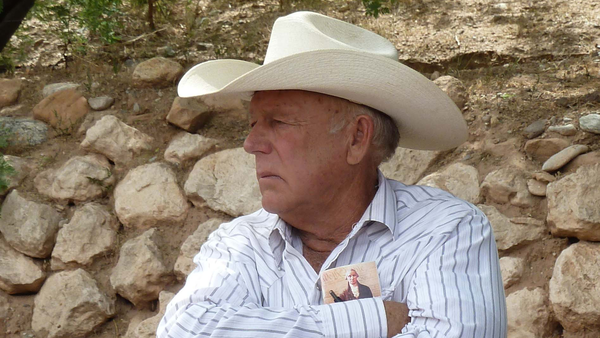
la-ed-rancher-cliven-bundy-grazing-federal-lan-001

Note to readers: It has been a while since I waded into the morass that is American politics of 2014 but I need to get my two cents in for what it is worth. My long time readers know my background, my newer readers may not. If you are a new reader take a look on my civil rights section to see what I believe about racist attitudes and actions. 

I am amazed. Freeloading rancher and welfare prince Cliven Bundy flat out demonstrated that he is an unrepentant racist who would have just loved the Ante-Bellum days before the Civil War when “good blacks” were happy as clams to be slaves. Now Bundy who managed to call together every form of anti-government, anti-Federal Government and just plain wacko racist militia type to his side in his fight to avoid paying over a million dollars in back taxes shows his real hand.

Not that he hadn’t before. Heck, even Glenn Beck was a voice of sanity compared to Sean Hannity in the build up to this fiasco, but Bundy’s own words showed that he is for all practical purposes an unrepentant racist, secessionist freeloader who only cares about himself. The 68 year old “rancher” who for use of lands that he does not own and is making money on made incredibly stupid comments that not only showed his racism, but also his historical ignorance.

Bundy’s comments were so full of irony. Bundy has been making money by grazing his cattle for free on land that he does not own and not paid taxes and fees initially approved by the Reagan administration. So in one of his daily “news conferences” he went on the attack to condemn poor blacks on various forms of Federal assistance. It was the Pot calling the Kettle “Black,” or maybe better calling the Kettle “Negro.”

It was a wondrous thing to behold as all sorts of right wing politicians, pundits and preachers had to back track from their support of Bundy. Frankly I loved it. To me Bundy is no hero, no patriot or anything of the sort. He is a wealthy man who has lied his way to fame in order to embarrass that “Negro” in the White House.

Lies lies and lies….Bundy claimed that his family has been grazing his cattle on the land since before the Federal Government owned it, actually since the late 1800s. Funny thing is that according to court and real estate records Bundy’s family didn’t even purchase the land where there ranch is until 1948. Those nasty legal documents always get in the way of lies… but I digress…

You see Bundy is no hero, he is no patriot. In fact he is little different from Edmund Ruffin, the secessionist leader who fired the first shot at Fort Sumter back in 1861 or Alexander Stephens the Vice President of the Confederate States of America who said in his “Cornerstone Speech” of 1861:

“Our new government is founded upon exactly the opposite idea; its foundations are laid, its corner- stone rests upon the great truth, that the negro is not equal to the white man; that slavery — subordination to the superior race — is his natural and normal condition….”

Based on what Bundy has said I have no doubt that he would wholeheartedly agree with Stephens. The people supporting Bundy include “true believers” like the heavily armed militiamen protecting him who long for bloodshed in order to create martyrs for their cause and their media allies. The militia types are quite interesting because many are either blatantly racist or affiliated in some way with White Separatist, Neo Nazi or Neo Confederate groups all itching for a bloody battle with the Federal Government that it is scary to comprehend.

Likewise there are others who have been deceived by the constant fear mongering of men like Sean Hannity into thinking the Federal Government they have a say in electing is their enemy who fell for Bundy’s outrageous lies hook line and sinker. Thus when men like Bundy reveal in excruciating and painful detail just who they really are I like it.

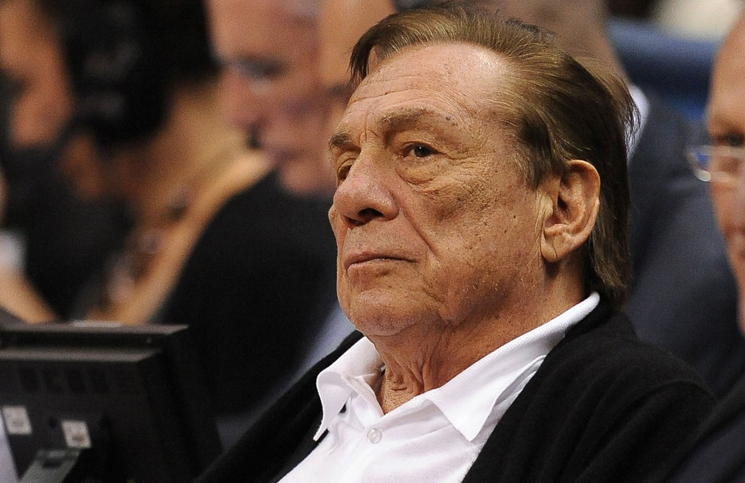
Donald-Sterling

Then there is the owner of the Los Angeles Clippers Basketball team who makes big money off of the efforts of some really outstanding African-American basketball players. The owner, Donald Sterling told his girlfriend that he doesn’t want her hanging out with blacks or having her picture taken with them, including men like Magic Johnson. I don’t have to mention but will that Sterling had to pay a lot of money to settle previous discrimination complaints and lawsuits, all of which had substantial racial overtones.

I like it because there is a cottage industry of right wing myth makers who like to say that there is no such thing as racism, that it it is a thing of the past or even that it is a product of liberals, liberalism or even the Civil Rights movement. When guys like Bundy or Sterling betray their lies it gives me a certain sense of schadenfreude. When I see college dropout Sean Hannity have to run for cover and condemn men like Bundy that he has helped to build up it really makes me happy.

The fact is that many Americans love the myth that racism no longer exists and that what is left is simply a fabrication of the “liberal media.” If that was true why would there need to be such concerted efforts to roll back civil rights and voting rights to disenfranchise African Americans, Hispanics and poor whites? Why would there be such a concerted media campaign to demonize minorities, women, the poor and yes even Moslems and gays?

If there wasn’t a big streak of racism, sexism, and other prejudice and discrimination still why would the pundits, politicians and preachers be working to hard to disprove it? Why would a political-media and even religious cottage industry be working overtime with lobbyists who support the most wealth people in the country in their quest to disenfranchise the bulk of Americans, even those who are their unwitting foot soldiers?

The fact is and I hate to admit it, but many attitudes haven’t changed that much since the days of Edmund Ruffin and Alexander Stephens, they have just become more suave and savvy. But every once in a while idiots like Bundy and Sterling show up and remind us that this is still all too real and that my friends as distasteful as it is, is a good thing. We like our racism and other prejudices hidden and unspoken so they don’t embarrass us.

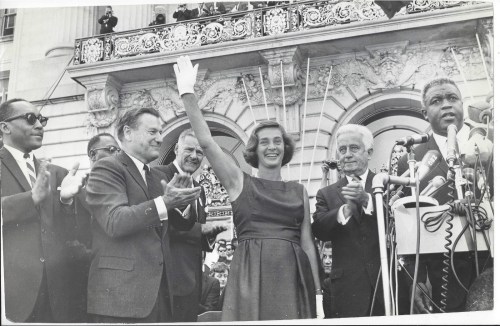
kgrhqfqefgdotlsbqojfqwe0w60_57

Baseball hero Jackie Robinson was a Republican. But in 1964 he found that the party of Lincoln was no more. After the 1964 Republican Convention where he supported Nelson Rockefeller he wrote:

“I wasn’t altogether caught of guard by the victory of the reactionary forces in the Republican party, but I was appalled by the tactics they used to stifle their liberal opposition.  I was a special delegate to the convention through an arrangement made by the Rockefeller office. That convention was one of the most unforgettable and frightening experiences of my life. The hatred I saw was unique to me because it was hatred directed against a white man.  It embodied a revulsion for all he stood for, including his enlightened attitude toward black people.

A new breed of Republicans had taken over the GOP.  As I watched this steamroller operation in San Francisco, I had a better understanding of how it must have felt to be a Jew in Hitler’s Germany….”

Robinson was right even though most people didn’t realize it at the time. The Republican Party of today is not the party of Lincoln, it is the party of Jefferson Davis and Alexander Stephens. As distasteful as the Bundy affair has been and will unfortunately continue to be, it does allow us as individuals and a society to look in the mirror and reevaluate who we are as Americans.

Personally I would rather stand with Jackie Robinson than men like Bundy, Sterling or Hannity.

Anyway, that’s all for tonight. Another Gettysburg article tomorrow unless I get derailed.

Peace

Padre Steve+

1 Comment

Filed under civil rights, History, News and current events, Political Commentary

The American Ideological War: The American Civil War…The Continuation of Politics by Other Means

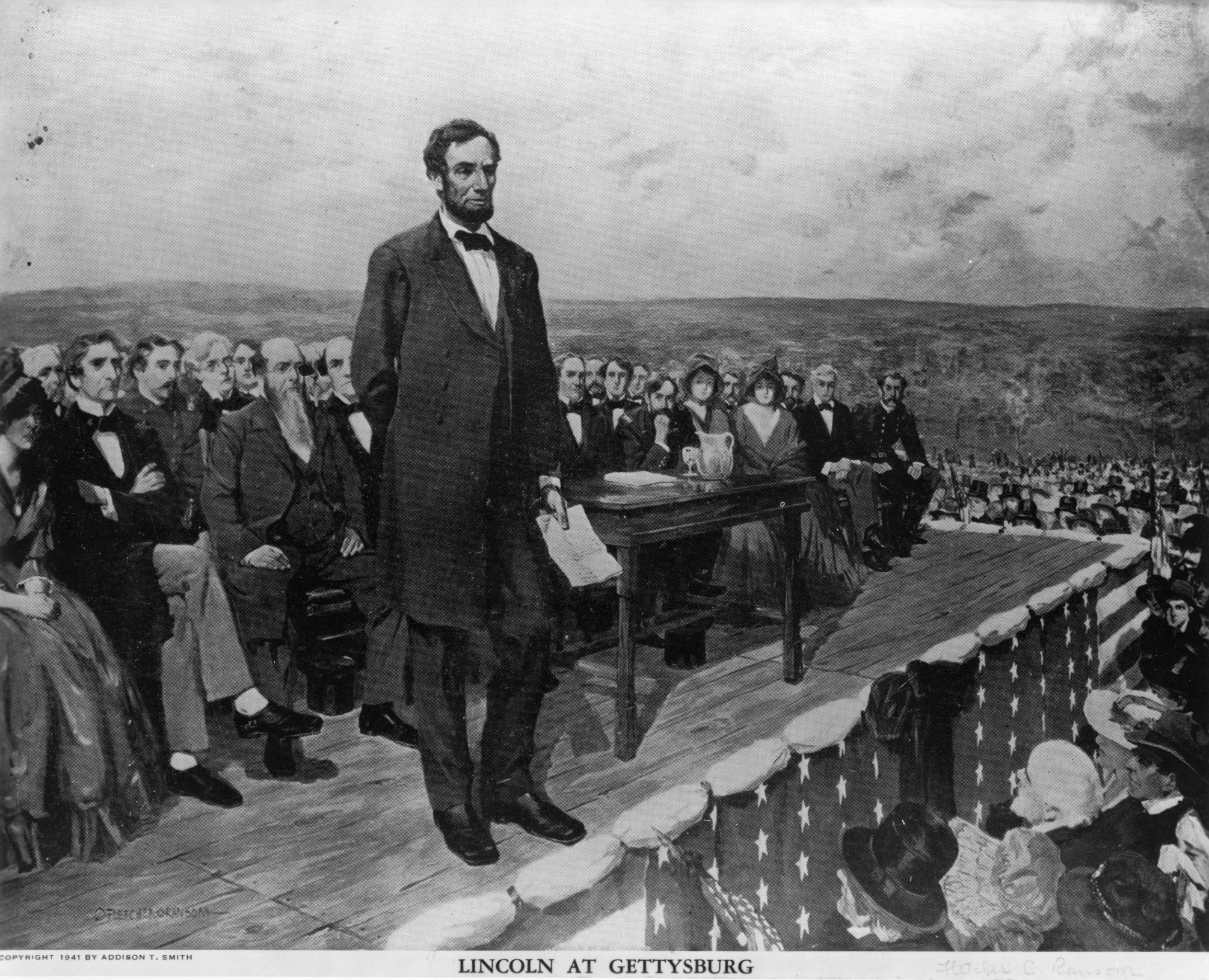
Gettysburg Address

Note to my friends at Padre Steve’s World. I am again preparing materials for my next teaching trip to Gettysburg. While some will deal with purely military and leadership aspects, the political and social context of the war has to be examined. The false assertions that the war was not about slavery have to be met head on since there has been a cottage industry which has denied that slavery was the matter of “States Rights” that the Confederacy went to war not only to preserve but to expand.

One can never separate war and the means by which it is fought from its political ends. War according to Clausewitz is an extension or continuation of politics. The American Civil War was not only the first modern war based on the advancement of technology and the changing nature of war, but also in terms of it being the first modern war caused by the clash of radically different ideologies, ideologies which championed two very different views of civilization. British theorist and military historian J.F.C. Fuller wrote of it:

“At length on 12th April, the tension could no longer bear the strain. Contrary to instructions, in the morning twilight, and when none could see clearly what the historic day portended, the Confederates in Charleston bombarded Fort Sumter, and the thunder of their guns announced that the argument of a generation should be decided by the ordeal of war. A war, not between two antagonistic political parties, but a struggle to the death between two societies, each championing a different civilization…”1

That is why it impossible to simply examine the military campaigns and battles of the Civil War in isolation from the politics, polices and even the philosophy and theology which brought it about.

The world was changed when Edmund Ruffin a 67 year old farm paper editor, plantation owner and ardent old line secessionist from Virginia pulled the lanyard which fired the first shot at Fort Sumter. Ruffin was a radical ideologue. He was a type of man who understood reality far better than some of the more moderate oligarchs that populated the Southern political and social elite. While in the years leading up to the war these men attempted to secure the continued existence and spread of slavery within the Union. Ruffin was not such a man. He and other radical secessionists believed that there could be no compromise with the north. He believed that in order to maintain the institution of slavery the slave holding states that those states had to be independent from the North.

ruffinEdmund Ruffin

Ruffin’s views were not unique to him, the formed the basis of how most slave owners and supporters felt about slavery’s economic benefits, Ruffin wrote:

“Still, even this worst and least profitable kind of slavery (the subjection of equals and men of the same race with their masters) served as the foundation and the essential first cause of all the civilization and refinement, and improvement of arts and learning, that distinguished the oldest nations. Except where the special Providence and care of God may have interposed to guard a particular family and its descendants, there was nothing but the existence of slavery to prevent any race or society in a state of nature from sinking into the rudest barbarism. And no people could ever have been raised from that low condition without the aid and operation of slavery, either by some individuals of the community being enslaved, by conquest and subjugation, in some form, to a foreign and more enlightened people.”2

The South of the time was an agrarian society which depended on the free labor provided by slaves. The Northern states had abolished slavery in the years since the United States had gained independence and over the intervening years the North had embraced the Industrial Revolution leading to advances which gave it a marked economic advantage over the South. The population of the North also expanded at a clip that far outpaced the South as European immigrants swelled the population.

The divided was not helped by the various compromises worked out between northern and souther legislators. After the Missouri Compromise Thomas Jefferson wrote:

“but this momentous question, like a fire bell in the night, awakened and filled me with terror. I considered it at once as the knell of the Union. It is hushed indeed for the moment, but this is a reprieve only, not a final sentence. A geographical line, coinciding with a marked principle, moral and political, once conceived and held up to the angry passions of men, will never be obliterated; and every new irritation will mark it deeper and deeper.”3

The trigger for the increase in tensions was the war with Mexico in which the United States annexed nearly half of Mexico. The new territories were viewed by those who advocated the expansion of slavery as fresh and fertile ground for its spread. Ulysses S Grant noted the effects of the war with Mexico in his memoirs:

“In taking military possession of Texas after annexation, the army of occupation, under General [Zachary] Taylor, was directed to occupy the disputed territory.  The army did not stop at the Nueces and offer to negotiate for a settlement of the boundary question, but went beyond, apparently in order to force Mexico to initiate war….To us it was an empire and of incalculable value; but it might have been obtained by other means.  The Southern rebellion was largely the outgrowth of the Mexican war.”4

uncletoms

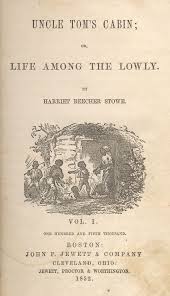
In the North a strident abolitionist movement took root. This movement aimed to not only stop the spread of slavery but to abolish it. Given a boost by the huge popularity of Harriett Beecher Stowe’s 1852 novel Uncle Tom’s Cabinthe abolitionist movement gained steam and power. The leaders fought against acts like the Fugitive Slave Act and the Dred Scott decision and with the formation of the Republican Party found a formidable political voice.

As the 1850s wore on the divisions over slavery became deeper and voices of moderation retreated. The trigger for the for the worsening of the division was the political battle regarding the expansion of slavery, even the status of free blacks in the north who were previously slaves, over whom their owners asserted their ownership. In 1856 the Supreme Court, dominated by southern Democrats ruled in favor of southern views in the Dred Scott decision one pillar of which gave slavery the right to expand by denying to Congress the power to prohibit slavery in Federal territories.

This ignited a firestorm in the north where Republicans now led by Abraham Lincoln decried the decision and southerners basked in their judicial victory. Northerners quite rightly feared that an activist court would rule to deny their states the right to forbid slavery. As early as 1854 Lincoln posed the idea that the Declaration of Independence was “the standard maxim of free society …constantly spreading and deepening its influence,” ultimately applicable “to peoples of all colors everywhere.”5

But after the Dred Scott decision Lincoln warned that the Declaration was being cheapened and diluted “to aid in making the bondage of the Negro universal and eternal….All the powers of the earth seem rapidly combining against him. Mammon is after him; ambition follows, and philosophy follows, and the theology of the day is fast joining the cry. They have him in his prison house;…One after another they have closed the heavy doors upon him…and they stand musing as to what invention, in all the dominions of mind and matter, can be produced the impossibility of his escape more complete than it is.” 6

jeffdavisJefferson Davis

In response to the decision the advocates of the expansion of slavery not only insisted on its westward expansion in Federal territories but to Panama, Nicaragua and Cuba as well. In 1857 Jefferson Davis further provoked northern ire when he insisted that “African Slavery as it exists in the United States is a moral, a social, and a political blessing.”7 Taking advantage of the judicial ruling Davis and his supporters in Congress began to bring about legislation not just to ensure that Congress could not “exclude slavery” but to protect it in all places and all times. They sought a statute that would explicitly guarantee “that slave owners and their property would be unmolested in all Federal territories.” This was commonly known in the south as the doctrine of positive protection, designed to “prevent a free-soil majority in a territory from taking hostile action against a slave holding minority in their midst.”8

Previously a man of moderation Lincoln laid out his views in the starkest terms in his House Divided speech given on June 16th 1858. Lincoln understood, possibly with more clarity than others of his time that the divide over slavery was deep and that the country could not continue to exists while two separate systems contended with one another. He was to the point and laid our in clear terms what few had ever said before and which even some in his own Republican Party did not want to say because they felt it was too divisive:

“If we could first know where we are and whither we are tending, we could better judge what to do and how to do it. We are now far into the fifth year since a policy was initiated with the avowed object and confident promise of putting an end to slavery agitation. Under the operation of that policy, that agitation has not only not ceased but has constantly augmented. In my opinion, it will not cease until a crisis shall have been reached and passed. “A house divided against itself cannot stand.” I believe this government cannot endure, permanently, half slave and half free. I do not expect the Union to be dissolved; I do not expect the house to fall; but I do expect it will cease to be divided. It will become all one thing, or all the other. Either the opponents of slavery will arrest the further spread of it and place it where the public mind shall rest in the belief that it is in the course of ultimate extinction, or its advocates will push it forward till it shall become alike lawful in all the states, old as well as new, North as well as South.”9

The crisis continued to fester and when Lincoln was elected to the Presidency in November 1860 with no southern states voting Republican the long festering volcano erupted. It did not take long before southern states began to secede from the Union. South Carolina was first, followed by Mississippi, Florida, Alabama, Georgia, Louisiana and Texas. Many of the declarations of causes for secession made it clear that slavery was the root cause. The declaration of South Carolina is typical of these and is instructive of the basic root cause of the war:

“all the States north of that line have united in the election of a man to the high office of President of the United States, whose opinions and purposes are hostile to slavery. He is to be entrusted with the administration of the common Government, because he has declared that that “Government cannot endure permanently half slave, half free,” and that the public mind must rest in the belief that slavery is in the course of ultimate extinction.”10

Throughout the war slavery loomed large. In his First Inaugural Address Lincoln noted: “One section of our country believes slavery is right and ought to be extended, while the other believes it is wrong and ought not to be extended. This is the only substantial dispute.”11 Of course he was right, and his southern opponents agreed.

Alexander-StephensAlexander Stephens

Alexander Stephens the Vice President of the Confederacy noted in his Cornerstone Speech of March 21st 1861 that: “Our new government is founded upon exactly the opposite idea; its foundations are laid, its corner- stone rests upon the great truth, that the negro is not equal to the white man; that slavery — subordination to the superior race — is his natural and normal condition. [Applause.] This, our new government, is the first, in the history of the world, based upon this great physical, philosophical, and moral truth.”12

After the bloody battle of Antietam Lincoln published the emancipation proclamation in which he proclaimed the emancipation of slaves located in the rebel states. Likewise in his Second Inaugural Address he discussed slavery as being the cause of the war:

“One-eighth of the whole population were colored slaves, not distributed generally over the Union, but localized in the southern part of it. These slaves constituted a peculiar and powerful interest. All knew that this interest was somehow the cause of the war. To strengthen, perpetuate, and extend this interest was the object for which the insurgents would rend the Union even by war, while the Government claimed no right to do more than to restrict the territorial enlargement of it. Neither party expected for the war the magnitude or the duration which it has already attained. Neither anticipated that the cause of the conflict might cease with or even before the conflict itself should cease. Each looked for an easier triumph, and a result less fundamental and astounding. Both read the same Bible and pray to the same God, and each invokes His aid against the other. It may seem strange that any men should dare to ask a just God’s assistance in wringing their bread from the sweat of other men’s faces, but let us judge not, that we be not judged. The prayers of both could not be answered. That of neither has been answered fully. The Almighty has His own purposes. “Woe unto the world because of offenses; for it must needs be that offenses come, but woe to that man by whom the offense cometh.” If we shall suppose that American slavery is one of those offenses which, in the providence of God, must needs come, but which, having continued through His appointed time, He now wills to remove, and that He gives to both North and South this terrible war as the woe due to those by whom the offense came, shall we discern therein any departure from those divine attributes which the believers in a living God always ascribe to Him? Fondly do we hope, fervently do we pray, that this mighty scourge of war may speedily pass away. Yet, if God wills that it continue until all the wealth piled by the bondsman’s two hundred and fifty years of unrequited toil shall be sunk, and until every drop of blood drawn with the lash shall be paid by another drawn with the sword, as was said three thousand years ago, so still it must be said “the judgments of the Lord are true and righteous altogether.”13

CW-GettysburgDeadDied for an Ideal Confederate Dead at Gettysburg

When Edmund Ruffin pulled the lanyard of the cannon that fired the first shot at Fort Sumter it marked the end of an era and despite Ruffin, Stephens and Davis’ plans gave birth to what Lincoln would describe as “a new birth of freedom.”
When the war ended with the Confederacy defeated and the south in ruins Ruffin still could not abide the result. In a careful crafted suicide note he sent to his son the bitter and hate filled old man wrote on June 14th 1865: “… And now with my latest writing and utterance, and with what will be near my last breath, I here repeat and would willingly proclaim my unmitigated hatred to Yankee rule — to all political, social and business connections with Yankees, and the perfidious, malignant and vile Yankee race.”

Ruffin outlived Lincoln who was killed by the assassin John Wilkes Boothe on April 14th 1864. However the difference between the two men was marked. In his Second Inaugural Address Lincoln spoke in a different manner. He concluded that address with these thoughts:

“With malice toward none, with charity for all, with firmness in the right as God gives us to see the right, let us strive on to finish the work we are in, to bind up the nation’s wounds, to care for him who shall have borne the battle and for his widow and his orphan, to do all which may achieve and cherish a just and lasting peace among ourselves and with all nations.”14

With that I wish you peace,

Padre Steve+

1 Fuller, J.F.C. The Conduct of War 1789-1961 Da Capo Press, New York 1992. Originally published by Rutgers University Press, New Brunswick N.J. 1961 p.98

2 Ruffin, Edmund The Political Economy of Slavery in McKitrick, Eric L.. ed. Slavery Defended: The Views of the Old South. Englewood Cliffs, NJ: Prentice Hall/Spectrum Books, 1963.Retrieved from http://www.pbs.org/wgbh/americanexperience/features/primary-resources/lincolns-political-economy/ 24 March 2014 

3 Jefferson, Thomas Letter to John Holmes dated April 22nd 1824 retrieved from www.loc.gov/exhibits/jefferson/159.html

4 U.S. Grant, Personal Memoirs of U.S. Grant New York 1885 pp.23-245

5 Catton, William and Bruce, Two Roads to Sumter: Abraham Lincoln, Jefferson Davis and the March to Civil War McGraw Hill Book Company New York 1963, Phoenix Press edition London p.139

6 Ibid.

7 Ibid. p.142

8 Ibid.

9 Lincoln, Abraham A House Divided given at the Illinois Republican Convention, June 16th 1858, retrieved from www.pbs.org/wgbh/ala/part4/4h2934.html

10 Declaration of the Immediate Causes Which Induce and Justify the Secession of South Carolina from the Federal Union. Retrieved from The Avalon Project, Yale School of Law http://avalon.law.yale.edu/19th_century/csa_scarsec.asp

11 Lincoln, Abraham First Inaugural Address March 4th 1861 retrieved from www.bartleby.com/124/pres31.html

12 Cleveland, Henry Alexander H. Stevens, in Public and Private: With Letters and Speeches, before, during and since the War, Philadelphia 1886 pp.717-729 retrieved from http://civilwarcauses.org/corner.htm

13 Lincoln, Abraham Second Inaugural Address March 4th 1865 retrieved from www.bartleby.com/124/pres32.html

14 Ibid.

Leave a comment

Filed under civil war, History, Military, Political Commentary

Gettysburg, Vicksburg and the Campaign of 1863: The Relationship between Strategy and Operational Art

american14_5

Today we look at the Gettysburg Campaign in terms of how we understand the connection between strategy and operational art. In doing so we have to place it in the context that Lees campaign has in relationship to the Confederate command relationships and where it fits in the continuum of unified action as we understand it today.

To do so we have to make the connection between national strategic objectives, theater objectives, operational objective and tactical objectives. We have to explore command and control structures, staff organization and the understand the effect of the Diplomatic, Informational, Economic and Military elements of national power that impact a nations ability to wage war.

fig 1-5 jp-03

The summer campaign of 1863 in the Civil War gives us the opportunity to do this as we explore the Gettysburg campaign in relation to Vicksburg and the overall strategic situation that both sides faced.

The Confederacy had a twofold problem in its organization for war and how it conducted the war. First it had no organization at the strategic level to direct the war and it never developed a grand strategy from which its national strategic objectives could be translated for action at the theater, operational and tactical levels of warfare.

The overarching national strategic objective of the Confederacy was to attain independence. To such ends the governors of the 11 Confederate States raised units to fight any Federal armies which dared to force them back into the Union. The various states controlled the use of their units. Some kept their best units at home, while others dispatched units to Confederate armies such as Lees Army of Northern Virginia. After that there was not much thought given to how to fight the war.

Other than the stated desire for independence and their common hatred of the Yankee,there was little in the way of unity within the Confederate States. Each state viewed itself as an independent nation only loosely bound to the other states. There was much distrust of any attempt to organize a true central government with any actual authority or power in Richmond. Jefferson Davis may have been President but his country was hamstrung by its own internal divisions.

The Confederacy lacked a clear defined command structure to coordinate war efforts. This included its military operations, diplomatic efforts and economy. Jefferson Davis, an able man to be sure was a man given to suspicion and had major personality conflicts with all of his senior commanders save Robert E. Lee. These conflicts did impact operations, just as did the refusal of various states to support operations or campaigns apart from ones that impacted their state directly.

While Jefferson Davis and his Secretary of War theoretically exercised direction of the war no formal mechanism existed to coordinate the needs of the various military departments or armies. In effect each army operated independently often competing with each other for the troops, supplies and materials needed to fight, as well as having to contend with recalcitrant state governments, each loathe to sacrifice anything that might compromise their own independence. Attempts by the authorities in Richmond to centralize some measure of authority were met with resistance by the states. Thus statesrights were not only the cause of the war, but also the cause of the Confederate downfall.[i]

In a country as vast as the Confederacy that lacked the industry, transportation infrastructure, population and economic power of the North this was a hindrance that could not be overcome by the soldierly abilities of its armies alone.

VicksburgBlockade

This had a direct effect on the campaign of 1863. In the west, Confederate commanders were very much left to fend for themselves and to add to their misery failed even to coordinate their activities to meet the threat of Grant and his naval commander, Admiral David Dixon Porter. In the East, Lee having established a close relationship with Jefferson Davis as his military advisor during the first year of the war exercised a disproportionate influence on the overall strategy of the Confederacy.

Lee in theory was simply one of a number of army or department commanders, yet he was responsible for a decision that impacted the entire war effort. The Confederate cabinet could reject Lees proposal as readily as that of any other department commander, Bragg, or Pemberton or Beauregard, for example, each of whom was zealous to protect the interests of the region for which he was responsible…” But this was Lee, the first soldier of the Confederacy- the first soldier of the world…”[i] Lees plan was approved by the cabinet by a vote of five to one. The lone dissenter was Postmaster General John H. Reagan who believed a fatal mistake had been made…”[ii]

reagan

The Lone Dissenter, Postmaster General John H Reagan

Lees decision to launch an invasion of the north in hopes of a quick victory to secure independence had numerous adverse effects on the broader needs of the Confederacy at a time when the Confederacy had little room for a misstep. Lee was a remarkable commander at the operational level but his military thinking process was very much Napoleonic. To succeed Lees design required a climactic Napoleonic battle,[iii] to defeat Union armies and this was something that his new opponent Meade would not allow.

The lack of any sense of unity in the Confederate hierarchy was disastrous. The lack of agreement on a grand strategy and the inability of the Confederate States Government and the various state governments to cooperate at any level culminated in the summer of 1863 with the loss of Vicksburg and the failure of Lees invasion of Pennsylvania.

Confederate army units and their commanders generally excelled on the tactical level, and their soldiers endured hardship well. They displayed amazing individual initiative on the battlefield and they won many victories against superior forces, especially in the early part of the war. But neither the Confederate government nor the various army commanders were able to translate battlefield success to operational, theater specific or national strategic objectives.

This can be contrasted with the Union, which though it was slow to understand the nature of the war did have people who, through trial and error developed a cohesive strategy that led to success at the operational level and the tactical level. George McClellan, whatever his faults as a field commander possessed a strategic design for winning the war,[iv] the necessity of unity of command and successfully built an effective army.

meigs

General Montgomery Meigs, the Logistician

The Union understood the changing nature of modern war and in stark contrast to the inefficient and graft ridden Confederate agencies developed an efficient and well managed War Department where the importance of logistics interbureau cooperation became a paramount concern. The Quartermasters Department under the direction of Quartermaster General Montgomery Meigs was particularly efficient in supplying the needs of a military fighting on exterior lines in multiple theaters of operation.

This had a profound effect on operations. When the Union forces by necessity had to operate in enemy territory they were well supplied whereas whenever Confederate Forces conducted operations in the North or even in friendly Border States they were forced to subsist off the land. This meant that Confederate operations in the north were no more than raids, even the large invasions launched by Lee. They had no staying power to keep and hold any ground that they took in enemy territory. This can be contrasted with the Union which when it sent its forces south meant them to stay. Lee could not fathom this and because he believed that no Federal Army could stand a summer in the Deep South and that Grant would be forced to withdraw. The use of railroads to supply its far flung forces operating in the south as well as its use of maritime transportation along the coast and on inland waterways ensured that its armies could always be supplied.

Henry Halleck was the first true American military theorist who published Elements of Military Art and Science in 1846. While his is often given short shrift because he was not an effective field commander, and had an acerbic personality which rubbed people the wrong way was one of the most important individuals in organizing the eventual Union victory. This included matters of strategy, picking effective subordinate commanders and understanding the logistical foundations of strategy.

Weigley wrote of Halleck:

He sponsored and encouraged the operations of Brigadier General Ulysses. S. Grant and Flag Officer Andrew H. Foote that captured Forts Henry and Donaldson in February 1862 and  thereby opened up the Tennessee and Cumberland Rivers for Union penetration deep into the state of Tennessee and toward the strategically important Memphis and Charleston Railroad. Hallecks insights into the logistical foundations of strategy proved consistently accurate. Throughout the war, he maintained a shrewd eye for logistically viable lines of operation for the Union forces, and he increasingly recognized that one of the most effective weapons of offensive strategy, in an age when battle meant exposure to rifled firepower, was not to aim directly at the enemy armies but at their logistical base.[i]

Halleck was also instrumental in helping to oust Hooker, raise Meade to command the Army of the Potomac. When Lincoln brought Grant east to become General in Chief Halleck took on the new position of Chief of Staff. This was a task that he fulfilled admirably, allowing Grant to remain in the field and ensuring clear communication between Lincoln and Grant as well as relieving Grant of the burden of personally corresponding with his department commanders.[ii]

By establishing what we now understand as the beginning of a modern command and staff organizational structure the Union was far more able to link its national, theater and operational level objectives with its tactical objectives, even when some of its commanders were not as good as Confederates and blundered into defeats.

In the end during the summer of 1863 it was the Union which was better able to link the ends, ways and means of the strategic direction of the war. This is something that Davis and Lee were unable to do as they struggled with political division, a lack of cooperation from the states, and the lack of any true grand strategy.

Lee’s strategy of the offensive was wrong and compounded the problems faced by the Confederacy. The losses that his army suffered were irreplaceable, not just in terms of overall numbers of soldiers but in terms of his mid-level leaders, his battalion, regiment and brigade commanders who suffered grievous losses and were even more critical to the leadership of his army.

Lee recognized the terrible effects of his officer casualties in a letter to General John Bell Hood on May 21st: There never were such men in an Army before. But there is the difficulty- proper commanders- where can they be obtained?[iii] His actions at Gettysburg only added to his crisis in keeping his army supplied with competent commanders, as so many were left dead, wounded or captured during the campaign.

Even had Lee won the battle of Gettysburg his casualties in Union territory would have been prohibitive. He would have spent most of his ammunition, incurred serious losses in personnel and horses, and been burdened by not having to care for his wounded and still been deep in Union territory away from his nearest logistics hub. Had Lee won at Gettysburg his ammunition would have been nearly exhausted in victory, while Federal logistics would have improved as the Army of the Potomac fell back toward the eastern cities.[iv] This would have forced him to withdraw from Pennsylvania even had he been victorious.

It is true that a victory on northern soil might have emboldened the peace party in the North, but even then that could not have an effect on the desired effect on the Lincoln Administration until the election of 1864, still 16 months away. Likewise, in July 1863 such a victory would probably not have triggered foreign recognition or assistance on the part of France or England. Skilful northern diplomacy prevented an internal conflict from becoming an international war.[v] Jefferson Davis held on to his fantasy until August 1863, when even he was forced to deal with reality was a vain hope indeed and ended his diplomatic efforts to bring England into the war.

England would not intervene for many reasons and the Confederate government did not fully appreciate the situation of the countries that they hoped would intervene on their behalf:

its dependence on northern foodstuffs, access to new cotton supplies, turmoil in Europe, fear of what might happen to Canada and to British commerce in a war with the Union, and an unwillingness to side with slavery. The British government also wanted to establish precedents by respecting the blockade, a weapon that it often used.[vi]

Confederate politicians were hindered by a very narrow, parochial view of the world, had little understanding of modern industry, economics and the type of diplomacy employed by Europeans both to strengthen their nations, but also to maintain a balance of power.

As we look at the Gettysburg and Vicksburg campaigns in the summer of 1863 these are important things to consider. The relationship between national strategic objectives, theater objectives, operational objectives and tactical success cannot be minimized. Success on the battlefield alone is almost always insufficient to win a war unless those wins serve a higher operational and strategic purpose, and the costs of battles and campaigns have to be weighed in relation to the strategic benefits that derive from them.

gettysburg retreat

Retreat from Gettysburg

In the end the total failure of the two campaigns destroyed any real hope of Confederate military victory. At Vicksburg the Confederacy lost all of Pembertons army, 33,000 men and Lee suffered over 28,000 casualties from an army which had begun the campaign with about 80,000 troops.

This essay is certainly not an exhaustive look at the subject, but if we do not consider them we cannot really understand the bigger picture of the situation that the two sides faced and how they dealt with them. While the weapons and tactics employed by the sides are obsolete the thought processes and strategic considerations are timeless.
While I will be writing more about the specifics of the battle in the coming days including leadership issues, tactical considerations and even the relationships and friendships between commanders on both sides that transcended the war.

Notes


[i] Ibid. p.429-430

[ii] Millet, Allan R. and Maslowski, Peter, For the Common Defense: A Military History of the United States The Free Press a Division of Macmillan Inc. New York, 1984 p. 221

[iii] Sears, Stephen W Gettsyburg Houghton Mifflin Company Boston and New York, 2004 p.51

[iv] Ibid. Weigley, Russell. The American Way of War p.116

[v] Ibid. Millet and Maslowski p.220

[vi] Ibid.


[i] Foote, Shelby, The Civil War, A Narrative. Volume Two Fredericksburg to Meridian Random House, New York 1963 pp.432-433

[ii] Ibid. p.433

[iii] Weigley, Russell. The American Way of War Indiana University Press, Bloomington Indiana 1974, p.115

[iv] Weigley, Russell F. American Strategy from Its Beginnings through the First World War. In Makers of Modern Strategy, from Machiavelli to the Nuclear Age edited by Paret, Peter, Princeton University Press, Princeton New Jersey 1986. P.429


[i] Fuller, J.F.C Grant and Lee: A Study in Personality and Generalship Indiana University Press, Bloomington Indiana, 1957 p.35

Leave a comment

Filed under civil war, History, leadership, Military

The Gettysburg Campaign: Lee Decides to Go on the Offensive

993scr_3a12918e0189d2e

I am preparing to lead a Staff Ride of our students to Gettysburg in early March. As part of my preparation I am doing a lot of study to refresh myself on both the campaign and the battle, not only as an operational study, but at the strategic level. This short essay deals with Lee’s decision to invade the North following his victory at Chancellorsville. I will follow it up with other articles the next talking about the Northern strategy at both the strategic and operational levels.

In early May 1863 General Robert E. Lee, commanding the Army of Northern Virginia realized that the Confederacy was in desperate straits. Despite numerous victories against heavy odds, Lee knew that time was running out. Though he had beaten the Army of the Potomac under General Joseph Hooker at Chancellorsville, he had not destroyed it and that Army, along with a smaller force commanded by General Dix in Hampton Roads still threatened Richmond.

The strategic situation was bad, even if many Confederate politicians realized it or cared in the post Chancellorsville euphoria. In the west the strategic river city of Vicksburg Mississippi was threatened by the Army of Union General Ulysses S Grant, and Naval forces under the command of Admiral David Farragut. If Vicksburg fell the Union would control the entire Mississippi and cut the Confederacy in two. Union forces also maintained a strong presence in the areas of the Virginia Tidewater and the coastal areas of the Carolinas, while in Tennessee a Union Army was stalemated, but still threatening Chattanooga, the gateway to the Deep South. The blockade of the United States Navy had crippled the already tenuous economy of the Confederacy.

Some Confederate leaders realized the danger presented by Grant in the West. Secretary of War James Seddon recognized the danger in the Winter of 1862-1863 both suggested to Lee that he detach significant units to relieve the pressure in the west and blunt Grant’s advance. Lee would have nothing of it, he argued that the war would be won in the East. It was his view that if Virginia was lost, so was the Confederacy, and was concerned that whatever units left behind should he dispatch troops from his Army west, would be unable to defend Richmond.

On May 14th Lee travelled by train to Richmond to meet with President Jefferson Davis and War Secretary James Seddon. At the meeting Lee argued for an offensive campaign in the east, to take the war to Pennsylvania. Lee had two goals three major goals, two which were directly related to the immediate military situation and one which went to the broader strategic situation. Unfortunately no notes from that conference are known to survive.

Lee had long believed that an offensive into the North was necessary, even before Chancellorsville. Lee did not believe that reinforcing the Confederate Armies in the West would provide any real relief, instead he believed that his Army, flush with victory needed to be reinforced and allowed to advance into Pennsylvania. Lee’s Chief of Staff Colonel Charles Marshall crafted a series of courses of action designed to present the invasion option as the only feasible alternative. Although both Seddon and Davis had reservations about the plan they agreed to it, unfortunately for all of them they never really settled the important goals of the campaign.

Lee believed that his offensive would relieve Grant’s pressure on Pemberton’s Army at Vicksburg. Likewise Lee believed that if he was successful in battle and defeated the Army of the Potomac in Pennsylvania that it could give the peace party in the North to bring pressure on the Lincoln Administration to end the war.  He also believed that if he could spend a summer campaign season in the North, living off of Union foodstuffs and shipping booty back to the Confederacy that it would give farmers in Northern Virginia a season to harvest crops unimpeded by major military operations.

However, the meeting evidently did not have all the results that Lee desired. Davis refused Lee reinforcements from the coastal Carolinas, and insisted on units being left to cover Richmond in case General Dix advanced on Richmond from Hampton Roads. Much of this was due to political pressure as well as the personal animus that existed between General D. H. Hill in the Carolinas towards Lee.

Likewise Lee’s decision revealed an unresolved issue in Confederate Grand Strategy. Many in the Confederacy realized that the only hope for success was to fight a defensive campaign that made Union victory so expensive that eventually Lincoln’s government would fall or be forced to negotiate.

However, Lee was convinced that ultimate victory could only be achieved by decisively defeating and destroying Federal military might. His letters are full of references to crush, defeat or destroy Union forces opposing him. His strategy of the offensive was demonstrated on numerous occasions in 1862 and early 1863, however it was unfeasible and counterproductive to Southern strategy. His offensive operations cost his Army dearly in the one commodity that the South could not replace, nor keep pace with its Northern adversary, his men.

When Lee fought defensive actions on ground of his choosing, like a Fredericksburg he was not only successful but husbanded his strength. However, when he went on the offensive in almost every case he lost between 15 and 22 percent of his strength, and the percentage of soldiers that he lost was always more than his Federal counterparts, even when his army inflicted greater aggregate casualties on his opponents. Lee recognized this as was evident in his correspondence but it did not deter his strategy of the offensive until after his defeat at Gettysburg.

The course of action was decided upon, but one has to ask if Lee’s decision was wise decision at a strategic point level, not simply the operational or tactical level where many Civil War students are comfortable. General Longstreet’s artillery commander, Colonel Porter Alexander described the appropriate strategy of the South well, he wrote:

“When the South entered upon war with a power so immensely her superior in men & money, & all the wealth of modern resources in machinery and the transportation appliances by land & sea, she could entertain but one single hope of final success. That was, that the desperation of her resistance would finally exact from her adversary such a price in blood & treasure as to exhaust the enthusiasm of its population for the objects of the war. We could not hope to conquer her. Our one chance was to wear her out.”  (Edward Porter Alexander, Fighting for the Confederacy: The Personal Recollections of General Edward Porter Alexander, ed. Gary W. Gallagher, University of North Carolina Press, Chapel Hill NC, 1989 p.415 

What Alexander describes is the same type of strategy successfully employed by Washington and his more able officers during the American Revolution, Wellington’s campaign on the Iberian Peninsula against Napoleon’s armies, and that of General Giap against the French and Americans in Vietnam. It was not a strategy that completely avoided offensive actions, but saved them for the right moment when victory could be obtained.

It is my belief that Lee erred in invading the North for the simple fact that the risks far outweighed the possible benefits. It was a long shot and Lee was a gambler, audacious possibly to a fault. His decision to go North also exhibited a certain amount of hubris as he did not believe that his army could be beaten, even when it was outnumbered.  Likewise he took the offensive in spite of the fact that many of his commanders were untested at the levels of command that they exercised. He had lost his right arm, General Stonewall Jackson, who died following being wounded at Gettysburg.

He knew from his previous battles the heavy casualties that even a victory over the Army of the Potomac would entail deep in Northern territory and the effect that a costly victory would have on his operations, but he still took the risk. That was short sighted and diametrically opposed to the strategy that the South needed to pursue in order to gain its independence. Of course some will disagree, but I am comfortable in my assertion that it was a mistake that greatly affected the Confederacy’s only real means of securing its independence, the breaking of the will of the Union by making victory so costly that it would not be worth the cost.

Peace

Padre Steve+

Leave a comment

Filed under civil war, History, leadership, Military