Tag Archives: joseph hooker

Tragic Heroes of Little Round Top

Friends of Padre Steve’s World

As I mentioned I am going to be publishIng some of my revised sections of my Gettysburg text this week. I am focusing some of the men who fought at Little Round Top on July 2nd 1863, as well as their families.

I hope that you find this thought provoking when you consider the sacrifice made by these Union men who were either killed or wounded in order to both maintain the Union and to set others free, as well as the cost born by their families. 

Peace

Padre Steve+
chamberlain lrt

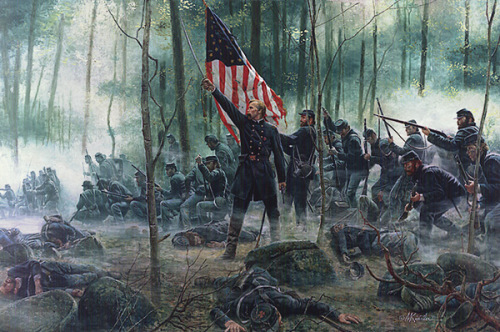
Iconic yet Incomplete: Chamberlain at Little Round Top (Mort Kunstler)

July 2nd 1863 was to be a pivotal day in the history of the United States, a day of valor, courage and carnage; a day where nearly 20,000 Americans were killed, wounded or missing fighting fellow Americans. It was a day where the fate of the Union and the Confederacy were in the balance. On the afternoon of that day, three volunteers rose to the challenge.

However, when we tell the story of Gettysburg or for that matter any other battle we often neglect the human costs endured by the soldiers as well as their families off the battlefield. In fact, what we know of the heroes of these battles is of their battlefield heroism as well other military or governmental service. The pictures we have of them are often the polished versions of their heroics, sometimes bordering on hagiography, criticism, if any is leveled at all, is confined to battlefield decisions or campaign plans. We mythologize them, we turn them into idols, icons and somehow, even as important and inspiring as the myths may be, we ignore their basic humanity. When we do this we often miss the more important things about their lives; those things that make them much more real, much more human, much more like us.

Sadly, the unvarnished accounts of then lives of heroes often only show up in biographies, and are seldom mentioned in the more popular accounts of battles. But the pain and suffering that these men and their families endured during and after war is sadly neglected, much to the detriment of those who idolize them.

Yes, there were many more heroes on Little Round Top that day; far too many to be covered in depth in any one work. However, these three Colonels, Strong Vincent, Joshua Lawrence Chamberlain and Patrick “Paddy” O’Rorke along with Brigadier General Gouverneur Warren were instrumental in securing the Union victory. They were all unlikely heroes. Of these men only O’Rorke was a professional soldier, albeit a very young one, but all took to soldiering and leading soldiers as if it were second nature. They were men who along with others “who stepped out of themselves for a moment and turned a corner at some inexpressibly right instant.” [1]
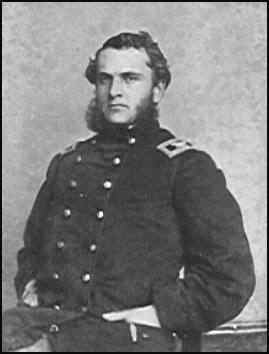
vincent

Colonel Strong Vincent

Colonel Strong Vincent was a 26 year old Harvard graduate and lawyer from Erie Pennsylvania. He was born in Waterford and attended school in Erie. Growing up, he worked in his father’s iron foundry, where the work helped make him a man of great physical strength. He studied at Trinity College in Hartford Connecticut and transferred to Harvard. There are various explanations for why he left Trinity, but the most interesting and probably the most credible is that during his sophomore year which was recorded by Trinity alumnus Charles F. Johnson who wrote that:

“He went calling on Miss Elizabeth Carter, a teacher at Miss Porter’s school in Farmington, ten miles west of Hartford. At some point a guard or watchman voiced a comment that impinged the lady’s virtue, and, as Johnson so aptly phrases it, Vincent “responded to the affront with the same gallantry and vigor that he was to display in the Civil War.” McCook’s account indicated that the man was repeatedly pummeled, which effectively rendered him unconscious.” [2]

Long after the war Dr. Edward Gallaudet, the president of Trinity responded to an enquiry of the circumstances leading to Vincent’s early departure from Trinity. Gallaudet responded to the request in a terse manner:

“Replying to yours of yesterday, I must say that I do not think it would be wise to make public the story I told of Strong Vincent’s escapade at Farmington & its consequences. Certainly not in the lifetime of Mrs. Vincent.” [3]

Evidently the incident resulted in Vincent leaving Trinity and the next year he entered Harvard. Vincent graduated from Harvard in 1859, ranking 51st in a class of 92. However, he was not an outstanding student and “earned admonishments on his record for missing chapel and smoking in Harvard Yard.” [4]

Returning home he studied law with a prominent lawyer and within two years had passed the bar, and he was well respected in the community. When war came and the call went out for volunteers, Vincent enlisted in a 30 Day regiment, the Wayne Guards as a private and then was appointed as a 1st Lieutenant and Adjutant of the regiment because of his academic and administrative acumen.

He married Elizabeth, the same woman whose virtue he had defended at Trinity that day. Vincent like many young northerners believed in the cause of the Union undivided, and he wrote his wife shortly after the regiment went to war on the Peninsula:

“Surely the right will prevail. If I live we will rejoice in our country’s success. If I fall, remember you have given your husband to the most righteous cause that ever widowed a woman.” [5]

When the Wayne Guards were disbanded at the end of their enlistment, Vincent helped to raise the 83rd Pennsylvania and was commissioned as a Lieutenant Colonel in it on September 14th 1861. The young officer learned his trade well and was considered a “strict disciplinarian and master of drill.” [6] That being said one enlisted man remarked that “no officer in the army was more thoughtful and considerate of the health and comfort of his men.” [7] Vincent assumed command of the regiment when the commander was killed during the Seven Days in June of 1862 where he learned lessons that he would help impart to his fellow officers as well as subordinates, including Chamberlain. At Fredericksburg any doubters about the young officer’s courage and leadership ability were converted where they observed his poise “with sword in hand” he “stood erect in full view of the enemy’s artillery, and though the shot fell fast on all sides, he never wavered or once changed his position.” [8]

By the time of the Battle of Gettysburg, the 26 year old Vincent was the youngest brigade commander in the army. He was noted for his intelligence, leadership, military acumen and maturity. One friend wrote “As a general thing his companions were older than himself….Among his associates were men of the highest rank. He could adapt himself to all, could talk with the politician on questions of history, with a general officer on military evolutions, or with a sporting man on the relative merits of horses,-and all respected his opinion.” [9]

His promotion was well earned, following a bout with a combination of Malaria and Typhoid, the “Chickahominy Fever” which almost killed him; Vincent took command of the regiment after its commander was killed at Gaines Mill. He commanded the regiment at Fredericksburg and was promoted to command the 3rd Brigade after the Battle of Chancellorsville following the resignation of its commander, Colonel T.W.B. Stockton on May 18th 1863.

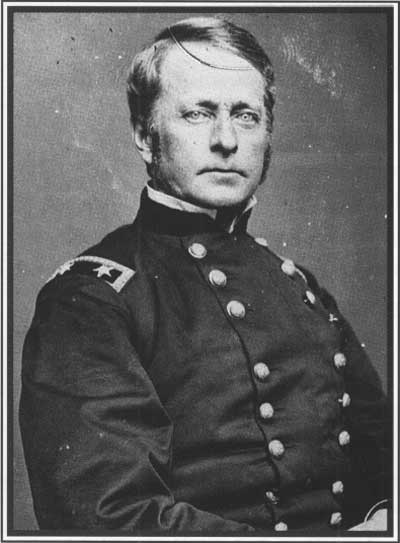
Vincent was offered the chance to serve as the Judge Advocate General of the Army of the Potomac by Joseph Hooker in the spring of 1863 after spending three months on court-martial duty. But Vincent refused the offer in so that he might remain in the fight commanding troops. [10] He told his friends “I enlisted to fight.” [11]

Vincent, like Chamberlain who admired him greatly had “become a kind of model of the citizen soldier.” [12] As a result of his experience in battle and the tenacity of the Confederate army he became an advocate of the tactics that William Tecumseh Sherman would later employ during his march to the sea in 1864. He wrote his wife before Chancellorsville:

“We must fight them more vindictively, or we shall be foiled at every step.  We must desolate the country as we pass through it, and not leave a trace of a doubtful friend or foe behind us; make them believe that we are in earnest, terribly in earnest; that to break this band in twain is monstrous and impossible; that the life of every man, yea, of every weak woman or child in the entire South, is of no value whatever compared with the integrity of the Union.” [13]

Unlike most other brigade commanders, Vincent was still a Colonel, and he, like many others would in his place hoping for a General’s star. He remarked that his move to save Sickles’ command “will either bring me my stars, or finish my career as a soldier.” [14] On July first, Vincent, a native Pennsylvanian came to Hanover and learning that battle had been joined, ordered “the pipes and drums of the 83rd Pennsylvania to play his brigade through the town and ordered the regiments to uncover their flags again….” [15] As the brigade marched through the town, Vincent “reverently bared his head” and announced to his adjutant, “What death more glorious can any man desire than to die on the soil of old Pennsylvania fighting for that flag?” [16]

Vincent was known for his personal courage and a soldier of the 83rd Pennsylvania observed: “Vincent had a particular penchant for being in the lead….Whenever or wherever his brigade might be in a position to get ahead…, he was sure to be ahead.” [17] That courage and acumen to be in the right place at the right time was in evidence when he led his brigade into battle on that fateful July second.

On July 2nd Barnes’ division of V Corps, which Vincent’s brigade was a part was being deployed to the threat posed by the Confederate attack of McLaws’ division on the Peach Orchard and the Wheat Field to reinforce Sickles’ III Corps. While that division marched toward the Peach Orchard, Vincent’s 3rd Brigade was the trail unit. When Gouverneur Warren’s aide, Lieutenant Randall Mackenzie [18] came toward the unit in search of Barnes, he came across Vincent and his brigade near the George Weikert house on Cemetery Ridge awaiting further orders. [19]

Vincent intercepted him and demanded what his orders were. Upon being told that Sykes’ orders to Barnes were to “send one of his brigades to occupy that hill yonder,” [20] Vincent defied normal protocol assuming that Barnes had hit the bottle and was drunk [21] and told Mackenzie “I will take responsibility of taking my brigade there.” [22] Vincent immediately went into action and ordered Colonel James Rice, his friend and the commander of the 44th New York “to bring the brigade to the hill as quickly as possible,” and then turned on his horse and galloped off toward Little Round Top.” [23]

It was a fortunate thing for the Union that he did. His quick action to get his brigade, clear orders to his subordinate commanders and skilled analysis of the ground were a decisive factor in the Union forces holding Little Round Top. After ordering Colonel Rice to lead the brigade up to the hill, he and his aide went forward to scout positions accompanied by the brigade standards. Rice brought the brigade forward at the double quick “across the field to the road leading up the north shoulder of the hill” with Chamberlain’s 20th Maine in the lead. [24]

Vincent and his orderly made a reconnaissance of the south and east slope of the hill which adjoined a small valley and a rocky outcrop called Devil’s Den, which was occupied by the 124th New York and which was the end of Sickles’ line. Near the summit of the southern aspect of the hill, they came under Confederate artillery fire and told his orderly “They are firing at the flag, go behind the rocks with it.” [25]

Vincent dismounted, leaving his sword secured on his horse, carrying only his riding crop. He continued and “with the skill and precision of a professional had reconnoitered and decided how to best place his slim brigade of 1350 muskets.” [26] He chose a position along a spur of the hill, which now bears his name, running from the northwest to the southeast to place his regiments where they could intercept the Confederate troops of Hood’s division which he could see advancing toward the hill.

What Vincent saw when he arrived was a scene of disaster. Confederate troops had overwhelmed the 124th New York and were moving on Little Round Top, “Devil’s Den was a smoking crater,” and the ravine which separated Devil’s Den from Little Round Top “was a whirling maelstrom.” [27] Seeing the threat Vincent began to deploy his brigade but also sent at messenger back to Barnes telling him “Go tell General Barnes to send reinforcements at once, the enemy are coming against us with an overwhelming force” [28]

The 16th Michigan, the smallest regiment in his brigade with barely 150 soldiers in line [29] was placed on the right flank of the brigade. As it moved forward, its adjutant, Rufus W. Jacklin’s horse was hit by a cannon ball which decapitated that unfortunate animal and left it “a mass of quivering flesh.” [30] A fierce Confederate artillery barrage fell among the advancing Union troops and splintered trees, causing some concern among the soldiers. The 20th Maine’s Chaplain, Luther French, saw the “beheading of Jacklin’s horse and ran to Captain Atherton W. Clark, commanding the 20th’s Company E, babbling about what he had seen. Clark interrupted French abruptly and shouted: “For Christ sake Chaplain, if you have any business attend to it.” [31]

That section of the line was located on massive boulders that placed it high above the valley below, making it nearly impregnable to frontal attack. On the summit Vincent deployed the 83rd Pennsylvania and 44th New York to their left at the request of Rice who told him “In every battle that we have engaged the Eighty-third and Forty-fourth have fought side by side. I wish that it might be so today.” [32] The story is probably apocryphal but the regiments remained side by side with the 16th Michigan on the right and the 20th Maine on the left. The two regiments were deployed below the crest among the large number of boulders; the 83rd was about two-thirds of the way down the way down the slope where it joined the right of the 44th, whose line angled back up the slope to the southeast. A historian of the 83rd Pennsylvania noted that “Each rock”… “was a fortress behind which the soldier[s] instantly took shelter.” [33] The soldiers were determined to do their duty as they now were fighting on home ground.

Vincent deployed the 20th Maine on his extreme left of his line, and in fact the extreme end of the Union line. Vincent knew that if this flank was turned and Chamberlain overrun that it would imperil the entire Union position. Vincent came up to Chamberlain who remembered that Vincent said “in an awed, faraway voice: “I place you here….This is the left of the Union line. You understand. You are to hold this ground at all costs.” [34] Chamberlain acknowledged his understanding of the order and since the regiment lacked field grade officers, Chamberlain “assigned Captain Atherton Clark of company E to command the right wing, and acting Major Ellis Spear the left.” [35]
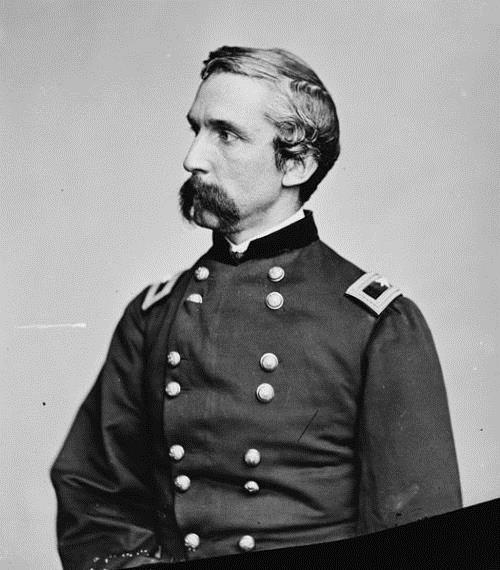
chamberlain

Colonel Joshua Chamberlain following his Promotion to Brigadier General

While Colonel Joshua Chamberlain’s story is much better known than his brigade commander, Strong Vincent, he was another of the citizen soldiers whose performance and leadership on Little Round Top saved the Union line that hot July evening. Chamberlain was a graduate of Bowdoin College and Bangor Theological Seminary. Fluent in nine languages other than English, he remained at Bowdoin as Professor of Rhetoric and was deeply unhappy at missing the war even as his students left and were commissioned as officers in newly raised regiments.

In June of 1862 Chamberlain wrote to Governor Israel Washburn requesting an appointment in a newly raised Maine Regiment without consulting either the college or his wife Fannie, who was “shocked, hurt, and alarmed by the decision he had made without consulting her…She remonstrated, she raised her voice, and quite possibly wept over the injustice he had done to both by this unilateral act that threatened to send their world careening in all directions.” [36]

As far as Bowdoin went, Chamberlain actually deceived the college by requesting a “scholarly sabbatical when in fact he had applied to the governor of Maine in the new 20th Maine Infantry in the late summer of 1862.” [37] When the faculty of Bowdoin found out of Chamberlain’s action many of them “were livid over what they considered his duplicity, and some shunned him during the brief period that he remained in Brunswick before reporting to training camp. [38]

The letter that Chamberlain wrote to Governor Israel Washburn details Chamberlain’s desire to serve and in some ways shows his considerable political skill in presenting his case to join the army:

“For seven years past I have been Professor in Bowdoin College. I have always been interested in military matters, and what I do not know in that line I know how to learn.

Having been lately elected to a new department here, I am expecting to have leave, at the approaching Commencement, to spend a year or more in Europe, in the service of the College. I am entirely unwilling, however, to accept this offer, if my Country needs my service or example here.

Your Excellency presides over the Educational as well as the military affairs of our State, and, I am well aware, appreciates the importance of sustaining our Institutions of Learning. You will therefore be able to decide where my influence is most needed.

But, I fear, this war, so costly of blood and treasure, will not cease until the men of the North are willing to leave good positions, and sacrifice the dearest personal interests, to rescue our Country from Desolation, and defend the National Existence against treachery at home and jeopardy abroad. This war must be ended, with a swift and strong hand; and every man ought to come forward and ask to be placed at his proper post.

Nearly a hundred of those who have been my pupils, are now officers in our army; but there are many more all over our State, who, I believe, would respond with enthusiasm, if summoned by me, and who would bring forward men enough to fill up a Regiment at once. I can not free myself from my obligations here until the first week in August, but I do not want to be the last in the field, if it can possibly be helped.” [39]

Chamberlain’s pre-war experiences gave no indication that he would emerge as a military hero. His father, a veteran of the War of 1812 had named him after Captain James Lawrence, the commanding officer of the frigate USS Chesapeake in the War of 1812 who uttered the famous words “Don’t give up the ship” as he lay mortally wounded when that ship was defeated by the HMS Shannon off Boston Harbor in 1813. However, Chamberlain’s mother added the name Joshua as his first name in the town’s books. While his father hoped that the young Chamberlain would pursue a military career, his mother earnestly desired that he would pursue a ministerial career. Chamberlain did become a licensed minister but had no desire to become a pastor, and was never ordained. This was reinforced by Fannie, who though the daughter of a minister was “too much a free thinker” and “did not share the devotion her father and Chamberlain held for organized religion.” [40]

Chamberlain debated attending West Point after graduation, a path that his classmate Oliver O. Howard took. Instead he attended Bangor Theological Seminary and following graduation took up his academic career at Bowdoin. It was during this time that he met, fell in love with, pursued, courted and finally married Frances Caroline Adams, who played the organ at the local Congregational Church that he attended. Known by most as “Fannie,” she was the adopted daughter of the eminent Congregationalist minister, Dr. George Adams who served as pastor. Fannie had a strong independent streak and was as an accomplished musician and artist.

The couple was an interesting match. Chamberlain was impressed by Fannie’s “artistic gifts. Fannie had talent not only in music but in poetry and, especially; art…” [41] but he ignored potential areas of conflict that would create difficulties throughout their marriage. However, Fannie was beset by numerous fears, as well as a desire not to be dominated by any man. Chamberlain pursued her with abandon but for a time she resisted, until her widowed father married a woman not much older than herself. She desired to pursue the study of music and went away to New York to do so, but in 1852 she decided that she was in love with him. “Yet she harbored doubts about her ability to return his feelings for her measure for measure.” [42]

Fannie suffered from depression and a constant worry about her eyesight which began failing her and an early age. It was a malady that eventually left her completely blind by then turn of the century. Compounding her struggles was that fact that her new husband struggled with his own doubts and depression, a depression that only seamed to lift during the war years.

“During most of his life, Chamberlain struggled with bouts of deep depression and melancholy. But not during the war years. It was as if the war and soldiering had made a new man out of him.” [43]

Chamberlain was offered command of the 20th Maine but asked Governor Washburn that he was appointed as a Lieutenant Colonel, which he was in August 1862. He fought with the regiment at Fredericksburg and was named commander of it when Colonel Adelbert Ames, his commander was transferred to preform staff duties prior to obtaining a brigade command in Oliver Howard’s XI Corps following the debacle at Chancellorsville.

Chamberlain at his heart, through his association with abolitionists and other prior to the war was a staunch Unionist. Before going into the army he wrote:

“We have this war upon is & we want to stop it. It has cost us already too much precious blood. It has carried stagnation, starvation & grief in to too many villages of our fair land – brought death to too many noble hearts that we could ill afford to lose. But the only way to stop this war, is first to show that we are strongest…I feel that we are fighting for our country – for our flag- not as so many Stars and Stripes, but as the emblem of a good & powerful nation – fighting to settle the question whether we are a nation or a basket of chips. Whether we shall leave our children the country we have inherited – or leave them without a country – without a name – without a citizenship among the great nations of the earth – take the chief city of the rebels. They will have no respect for us unless we whip them & and I say it in all earnestness….” [44]

Like Vincent, Chamberlain was also a quick student or military science and rapidly adapted to being a soldier, officer and commander of troops in combat. He spent as much time studying the art of war under the supervision of Colonel Ames including Henri Jomini’s Art of War which he wrote to Fannie “The Col. & I are going to read it. He to instruct me, as he is kindly doing everything now.” [45] He excelled at his studies under Ames, but since most of the manuals that he studied were based on Napoleonic tactics and had not incorporated the changes brought about by the rifled musket, Chamberlain like so many others would have to learn the lesson of war the hard way.

Chamberlain was with the regiment at Antietam, but it saw no action. He was in the thick of the fighting at Fredericksburg and Burnside’s subsequent “Mud March” which were both disastrous for the army.

He took command of the regiment in late April after Ames left on detached duty before assuming a brigade command. As the new commander of the regiment, Chamberlain and the 20th Maine missed the Battle of Chancellorsville as the regiment had been quarantined due to an epidemic of smallpox, which they had probably received from “poorly prepared serum with which the regiment was vaccinated” [46] in April.

From the regiment’s quarantined location Chamberlain and his men could hear the sound of battle. One of his soldiers wrote “We could hear the firing plain but there we lay in glorious idleness without being able to lift a finger or fire a gun.” [47] In frustration Chamberlain rode to Major General Joseph Hooker’s headquarters and asked Hooker’s Chief of Staff Dan Butterfield for the chance to enter the fight. Refused the chance Chamberlain told Butterfield “If we couldn’t do anything else we would give the rebels the smallpox!” [48] The regiment spent the battle guarding a telegraph line must to Chamberlain and his soldier’s disgust.

On the march up to Gettysburg, Chamberlain was ordered to take a number of veterans of the 2nd Maine who had signed three year, rather than two year enlistment contracts and were angry at remaining in the army when the regiment was mustered out. The men were angry and Chamberlain was given permission by Meade to fire on them “if they refused to do duty. The new colonel realized he had a crisis on his hands.” [49] The soldiers were bitter but Chamberlain treated them graciously and “almost all of them agreed to take up their muskets again the service of the 20th Maine.” [50] Chamberlain later remarked of how these men “we’re afterward among my best men, worthy of the proud fame of the 2nd, and the hard earned laurels of the 20th.” [51]

On receiving his orders from Vincent, Chamberlain deployed his small regiment halfway down the southern slope facing the small valley between Little Round Top and Big Round Top. By the time he arrived at Gettysburg he had become “a great infantry officer, and among his valuable qualities was [understanding] where an attack would come….” [52]

Since Chamberlain’s account is so important I will forgo a discussion of his tactics and instead quote the sections of his after action report that explains his actions. Chamberlain wrote:

“On reaching the field at about 4 p.m. July 2d, Col. Vincent commanding the Brigade, placing me on the left of the Brigade and consequently on the extreme left of our entire line of battle, instructed me that the enemy were expected shortly to make a desperate attempt to turn our left flank, and that the position assigned to me must be held at every hazard.

I established my line on the crest of a small spur of a rocky and wooded hill, and sent out at once a company of skirmishers on my left to guard against surprise on that unprotected flank.

These dispositions were scarcely made when the attack commenced, and the right of the Regt. found itself at once hotly engaged. Almost at the same moment, from a high rock which gave me a full view of the enemy, I perceived a heavy force in rear of their principal line, moving rapidly but stealthily toward our left, with the intention, as I judged, of gaining our rear unperceived. Without betraying our peril to any but one or two officers, I had the right wing move by the left flank, taking intervals of a pace or two, according to the shelter afforded by rocks or trees, extending so as to cover the whole front then engaged; and at the same time moved the left wing to the left and rear, making a large angle at the color, which was now brought to the front where our left had first rested.

This hazardous maneuvre [sic] was so admirably executed by my men that our fire was not materially slackened in front, and the enemy gained no advantage there, while the left wing in the meantime had formed a solid and steady line in a direction to meet the expected assault. We were not a moment too soon; for the enemy having gained their desired point of attack came to a front, and rushed forward with an impetuosity which showed their sanguine expectations.

Their astonishment however was evident, when emerging from their cover, they met instead of an unsuspecting flank, a firm and ready front. A strong fire opened at once from both sides, and with great effect, the enemy still advancing until they came within ten paces of our line, where our steady and telling volleys brought them to a stand. From that moment began a struggle fierce and bloody beyond any that I have witnessed, and which lasted in all its fury, a full hour. The two lines met, and broke and mingled in the shock. At times I saw around me more of the enemy than of my own men. The edge of conflict swayed to and fro -now one and now the other party holding the contested ground. Three times our line was forced back, but only to rally and repulse the enemy. As often as the enemy’s line was broken and routed, a new line was unmasked, which advanced with fresh vigor. Our “sixty rounds” were rapidly reduced; I sent several messengers to the rear for ammunition, and also for reinforcements. In the mean time we seized the opportunity of a momentary lull to gather ammunition and more serviceable arms, from the dead and dying on the field. With these we met the enemy’s last and fiercest assault. Their own rifles and their own bullets were turned against them. In the midst of this struggle, our ammunition utterly failed. The enemy were close upon us with a fresh line, pouring on us a terrible fire. Half the left wing already lay on the field. Although I had brought two companies from the right to its support, it was now scarcely more than a skirmish line. The heroic energy of my officers could avail no more. Our gallant line withered and shrunk before the fire it could not repel. It was too evident that we could maintain the defensive no longer. As a last desperate resort, I ordered a charge. The word “fix bayonets” flew from man to man. The click of the steel seemed to give new zeal to all. The men dashed forward with a shout. The two wings came into one line again, and extending to the left, and at the same time wheeling to the right, the whole Regiment described nearly a half circle, the left passing over the space of half a mile, while the right kept within the support of the 83d Penna. thus leaving no chance of escape to the enemy except to climb the steep side of the mountain or to pass by the whole front of the 83d Penna. The enemy’s first line scarcely tried to run-they stood amazed, threw down their loaded arms and surrendered in whole companies. Those in their rear had more time and gave us more trouble. My skirmishing company threw itself upon the enemy’s flank behind a stone wall, and their effective fire added to the enemy’s confusion. In this charge we captured three hundred and sixty eight prisoners, many of them officers, and took three hundred stand of arms. The prisoners were from four different regiments, and admitted that they had attacked with a Brigade.” [53]

Colonel William Oates of the 15th Alabama gave Chamberlain and his regiment the credit for stopping his attack. Oates wrote: “There have never been harder fighters than the Twentieth Maine and their gallant Colonel. His skill and persistency and the great bravery of his men saved Little Round Top and the Army of the Potomac from defeat.” [54]

As with any firsthand account, aspects of Chamberlain’s accounts are contested by others at the scene. But in another way Chamberlain’s accounts of battle have to be carefully examined, because they often reflect his romanticism, because he was not always a realist. Unlike Major Ellis Spear who played such an important role on the hill that day, a realist who “saw things plainly and remembered them clearly, in stark, unadorned hues. Joshua Chamberlain was a romanticist; even when describing the horrors of bloodbath his prose could be colorful, lyrical, even poetic.” [55]

Oates wrote that he ordered the retreat and that there were not as many prisoners taken. One of Chamberlain’s company commanders disputes the account of the order of the bayonet charge, however the fact is that Chamberlain, who was outnumbered nearly two to one by the 4th 15th and 47th Alabama regiments “offset this superiority with strength of position, iron determination and better tactics.” [56]Also a factor was the fatigue of the Confederates, these regiments and their parent unit, Law’s brigade of Hood’s division, which had conducted a grueling 28 mile march to get to the battlefield and were exhausted and dehydrated by the time that they arrived, something that their commander, Colonel Oates believed “contributed largely to our failure at Little Round Top.” [57]

Vincent was mortally wounded while leading the defense of the hill. As the men of Robertson’s Texas brigade rushed the hill and threatened to crack “the stout 16th Michigan defense…” [58] Vincent rushed to bolster the defenders. He was standing on a large boulder with a riding crop as the men of the 16th Michigan were beginning to waiver. Fully exposed to enemy fire he attempted to drive the retreating men back into the fight. Brandishing the riding which he cried out: “Don’t yield an inch now men or all is lost,” [59] and moments later was struck by a “minié ball which passed through his left groin and lodged in his left thigh. He fell to the ground and as he was being carried from the field, “This is the fourth or fifth time they have shot at me…and they have hit me at last.” [60]

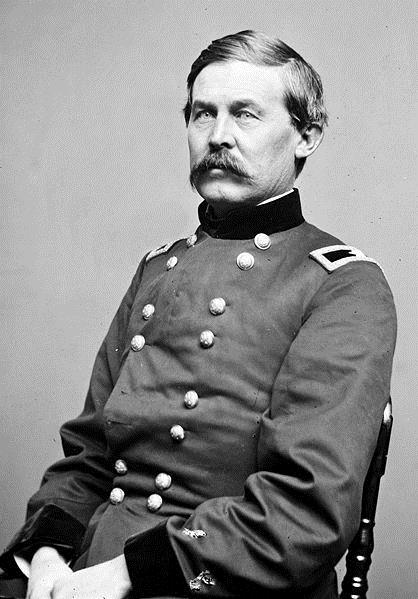
o'rorke

Colonel Patrick “Paddy” O’Rorke

To Vincent’s right another hero emerged, Colonel Patrick “Paddy” O’Rorke; the young 27 year old Colonel of the 140th New York. O’Rorke was born in County Cavan, Ireland in 1836. His family immigrated to the United States, settling in Rochester, New York during the great wave of Irish immigration between 1838 and 1844. There the young O’Rorke worked hard to overcome the societal prejudices against Irish Catholics. After he completed his secondary education, he worked as a marble cutter before obtaining an appointment to West Point in 1857. He was the only foreign born member of his class at the academy from which he graduated first in his class in 1861. “Aggressive and bold, there was also something that implied gentility and tenderness…Beneath the mettle of a young professional soldier was a romantic heart that could croon a ballad before wielding the sword.” [61] O’Rorke married his childhood, schoolmate, fellow parishioner and childhood sweetheart, Clarissa Wadsworth Bishop, in the summer of 1862 and shortly thereafter accepted a commission as colonel of the 140th New York Infantry.

At Gettysburg, O’Rorke was with Weed’s brigade when Gouverneur Warren found him as he attempted to get any available troops to the summit of Little Round Top. When Warren found O’Rorke, who had been one of his students at West Point, he ordered him to follow him up the hill, saying “Paddy…give me a regiment.” [62] When O’Rorke said that Weed expected him to be following him, Warren took the responsibility telling O’Rorke “Bring them up on the double quick, and don’t stop for aligning. I’ll take responsibility.” [63] O’Rorke followed with his gallant regiment with the rest of the brigade under Weed following behind them.

The 140th New York’s entrance onto the summit of Little Round Top must have been dramatic. Dressed in new Zouave uniforms that they had been issued in early June “the men were “jaunty but tattered” in baggy blue trousers, red jackets, and fezzes.” [64] O’Rorke’s New Yorkers entered the battle to the right of the Vincent’s 16th Michigan, which was being swarmed by the 4th and 5th Texas and 4th Alabama, who thought that victory was at hand. O’Rorke did not even take time to form his men for battle but drew his sword and yelled :“Down this way boys!” [65] His troops responded magnificently slamming into the surprised Texans and Alabamians and “at once the Confederate assault began to dissolve” [66]

O’Rorke’s troops smashed into the surging Rebel ranks, stopping the Confederate assault in its tracks and taking over two-hundred prisoners. As O’Rorke “valiantly led his men into battle, surging down the hill toward the shelf of rock so recently vacated by the right wing of the 16th Michigan, he paused for a moment to cheer his men on and wave them forward. When he did, he was struck in the neck by an enemy bullet….O’Rorke, killed instantly slumped to the ground.” [67] But his regiment “had the initiative now. More and more men piled into a sloppy line, firing as fast as they could reload. Their dramatic appearance breathed renewed life into the other Union regiments on the hill, which now picked up their firing rates.” [68] The gallant young Irish colonel was dead, but he and his regiment had saved Vincent’s right flank. The regiment had suffered fearfully, “with 183 men killed or wounded, but they had managed to throw back the Texans. The adjutant of the 140th estimated that they came within sixty seconds of losing the top of the hill.” [69] O’Rorke’s soldiers were enraged by the death of their beloved colonel and picked out the Confederate who had killed him. One of the soldiers wrote “that was Johnny’s last shot, for a number of Companies A and G fired instantly.” It was said that this particular Johnny was hit, by actual count, seventeen times.” [70] Now led by company commanders the 140th stayed in the fight and solidified and extended the Federal line in conjunction with the rest of Weed’s brigade to their right.

The actions of Chamberlain’s, Vincent’s, and O’Rorke’s soldiers shattered Hood’s division. “Casualties among the Alabamians, Texans, and Georgians approached or exceeded 2,000. In the Texas Brigade commander Robertson had been wounded, three regimental commanders had fallen killed or wounded, and nearly all of the field officers lay on the ground.” [71]

The badly wounded Strong Vincent was taken to a field hospital at the Weikert farm where he lingered for five days before succumbing to his wounds. In the yard lay the body of Paddy O’Rorke whose regiment had saved his brigade’s right flank. Vincent knew that he was dying and he requested that a message be sent to Elizabeth for her to come to Gettysburg. It did not reach her in time. Though he suffered severe pain he bravely tried not to show it. Eventually he became so weak that he could no longer speak. “On July 7, a telegram from President Lincoln, commissioning Vincent a brigadier general, was read to him, but he could not acknowledge whether he understood that the president had promoted him for bravery in the line of duty.” [72] He died later that day and his body was transported home to Erie for burial. Ten weeks after his death his wife gave birth to a baby girl. The baby would not live a year and was buried next to him.

Colonel Rice, who led the 44th New York up the hill and took command of the brigade on Vincent’s death, memorialized his fallen commander in his general order to the brigade on July 12th:

“The colonel commanding hereby announces to the brigade the death of Brig. Gen. Strong Vincent. He died near Gettysburg, Pa., July 7, 1863, from the effects of a wound received on the 2d instant, and within sight of that field which his bravery had so greatly assisted to win. A day hallowed with all the glory of success is thus sombered by the sorrow of our loss. Wreaths of victory give way to chaplets of mourning, hearts exultant to feelings of grief. A soldier, a scholar, a friend, has fallen. For his country, struggling for its life, he willingly gave his own. Grateful for his services, the State which proudly claims him as her own will give him an honored grave and a costly monument, but he ever will remain buried in our hearts, and our love for his memory will outlast the stone which shall bear the inscription of his bravery, his virtues, and his patriotism.

While we deplore his death, and remember with sorrow our loss, let us emulate the example of his fidelity and patriotism, feeling that he lives but in vain who lives not for his God and his country. “[73]

Vincent’s wife Elizabeth never married again and was taken in by the Vincent family. Vincent’s younger brother became an Episcopal Priest and Bishop and later provided a home for her. She became a tireless worker in the church working with charitable work for young women and children. This led to an interest in sacred art and she wrote two books: Mary, the Mother of Jesus and The Madonna in Legend and in Art. She also translated Delitzch’s Behold the Man and A Day in Capernaum from the German. [74] Elizabeth Vincent passed away in April 1914 and was buried beside her husband and daughter.

After the battle, as the army looked to replace the casualties in the ranks of senior leadership and “when Colonel Rice, in charge of 3rd Brigade after Vincent fell, was promoted to brigadier general and given another command” the new division commander Major General Charles Griffin, “insisted on having Chamberlain, for the 3rd Brigade.” [75]

Chamberlain survived the war to great acclaim being wounded three times, once during the siege of Petersburg the wound was so severe that his survival was in doubt and General Ulysses S. Grant promoted him on the spot. It was the only promotion that Grant gave on the field of battle. Grant wrote:

“He had been several times recommended for a brigadier-generalcy for gallant and meritorious conduct. On this occasion, however, I promoted him on the spot, and forwarded a copy of my order to the War Department, asking that my act might be confirmed without any delay. This was done, and at last a gallant and meritorious officer received partial justice at the hands of his government, which he had served so faithfully and so well.” [76]

He recovered from the wound, and was promoted to Major General commanding a division and awarded the Medal of Honor. He received the surrender of John Gordon’s division of the Army of Northern Virginia at Appomattox on April 9th 1865. When he did he ordered his men to present arms in honor of their defeated foe as those haggard soldiers passed his division. It was an act that helped spur a spirit of reconciliation in many of his former Confederate opponents.

Chamberlain’s accolades were certainly earned but others on that hill have been all too often overlooked by most people. This list includes Gouverneur Warren who was humiliated by Phillip Sheridan at Five Forks, Strong Vincent who died on of wounds suffered on Little Round Top and Paddy O’Rorke, the commander of the 140th New York of Weed’s Brigade on Vincent’s right who was mortally wounded that day.

After the war like most citizen soldiers, Chamberlain returned to civilian life, and a marriage that was in crisis in which neither Joshua nor Fannie seemed able to communicate well enough to mend. The troubled couple “celebrated their tenth wedding anniversary on December 7, 1865. He gave her a double banded gold-and-diamond bracelet from Tiffany’s, an extravagant gift that only temporarily relieved the stresses at work just below the surface of their bland marriage. Wartime separation had perhaps damaged it more than Chamberlain knew.” [77]

When he came home Chamberlain was unsettled. Fannie quite obviously hoped that his return would reunite them and bring about “peaceful hours and the sweet communion of uninterrupted days with the husband that had miraculously survived the slaughter” [78] and who had returned home, but it was not to be. Army life had given him a sense of purpose and meaning that he struggled to find in the civilian world. He was haunted by a prediction made by one of his professors. A prediction that “he would return from war “shattered” & “good for nothing,” [79] Chamberlain began to search for something to give his life meaning. He began to write a history of V Corps and give speeches around the northeast, and “these engagements buoyed his spirit, helping him submerge his tribulations and uncertainties in a warm sea of shared experience. [80] In his travels he remained apart from Fannie, who remained with the children, seldom including her in those efforts. She expressed her heart in a letter in early 1866:

“I have no idea when you will go back to Philadelphia, why dont you let me know about things dear?….I think I will be going towards home soon, but I want to hear from you. What are you doing dear? are you writing for your book? and how was it with your lecture in Brunswick- was it the one at Gettysburg? I look at your picture when ever I am in my room, and I am lonely for you. After all, every thing that is beautiful must be enjoyed with one you love, or it is nothing to you. Dear, dear Lawrence write me one of the old letters…hoping to hear from you soon…I am as in the old times gone bye Your Fannie.” [81]

In those events he poured out his heart in ways that seemed impossible for him to do with Fannie. He accounted those wives, parents, sons and daughters at home who had lost those that they loved, not only to death:

“…the worn and wasted and wounded may recover a measure of their strength, or blessed by your cherishing care live neither useless nor unhappy….A lost limb is not like a brother, an empty sleeve is not like an empty home, a scarred breast is not like a broken heart. No, the world may smile again and repair its losses, but who shall give you back again a father? What husband can replace the chosen of your youth? Who shall restore a son? Where will you find a lover like the high hearted boy you shall see no more?” [82]

Chamberlain set his sights on politics, goal that he saw as important in championing the rights of soldiers and their well treatment by a society, but a life that again interrupted his marriage to Fannie and brought frequent separation. Instead of the one term that Fannie expected, Chamberlain ended up serving four consecutive one year terms as Governor of Maine, and was considered for other political offices. Fannie’s “protracted absence from the capital bespoke her attitude toward his political ambitions.” [83]absence from the capital. Eventually Chamberlain returned home and. “For twelve years following his last term as governor, he served as president of Bowdoin College, his alma mater. [84]

He became a champion of national reconciliation admired by friend and former foe alike, but he returned with bitterness towards some in the Union who he did not believe cared for his comrades or their families, especially those who had lost loved ones in the war. While saluting those who had served in the Christian and Sanitary Commissions during the war, praising veterans, soldiers and their families he noted that they were different than:

Those who can see no good in the soldier of the Union who took upon his breast the blow struck at the Nation’s and only look to our antagonists for examples of heroism- those over magnanimous Christians, who are so anxious to love their enemies that they are willing to hate their friends….I have no patience with the prejudice or the perversity that will not accord justice to the men who have fought and fallen on behalf of us all, but must go round by the way of Fort Pillow, Andersonville and Belle Isle to find a chivalry worthy of praise.” [85]

Chamberlain’s post-war life, save for the times that he was able to revisit the scenes of glory and be with his former comrades was marred by deep personal and professional struggles and much suffering. He struggled with the adjustment to civilian life, which for him was profoundly difficult. He “returned to Bowdoin and the college life which he had sworn he would not again endure. Three years of hard campaigning however, had made a career of college teaching seem less undesirable, while his physical condition made a permanent army career impossible.” [86] The adjustment was more than even he could anticipate, and the return to the sleepy college town and monotony of teaching left much to be desired.

fannychamberlain1

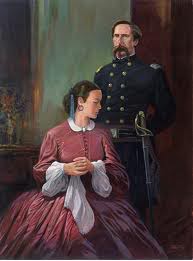
Joshua and Fannie Chamberlain (Dale Gallon)

These are not uncommon situations for combat veterans to experience, and Joshua Chamberlain, the hero of Little Round Top who was well acquainted with the carnage of war, suffered immensely. His wounds never fully healed and he was forced to wear what would be considered an early form of a catheter and bag. In 1868 he was awarded a pension of thirty dollars a month for his Petersburg wound which was described as “Bladder very painful and irritable; whole lower part of abdomen tender and sensitive; large urinal fistula at base of penis; suffers constant pain in both hips.” [87] Chamberlain struggled to climb out of “an emotional abyss” in the years after the war. Part was caused by his wounds which included wounds to his sexual organs, shattering his sexuality and caused his marriage to deteriorate.

He wrote to Fannie in 1867 about the “widening gulf between them, one created at least in part by his physical limitations: “There is not much left in me to love. I feel that all too well.” [88] Chamberlain’s inability to readjust to civilian life following the war, and Fanny’s inability to understand what he had gone through during it caused great troubles in their marriage. Chamberlain “felt like hell a lot of the time, morose in mood and racked with pain.” [89] His wounds would require more surgeries, and in “April 1883 he was forced to have extensive surgery on his war wounds, and through the rest of the decade and well into the next he was severely ill on several occasions and close to death once.” [90]

By 1868 the issues were so deep that Fannie threatened him with divorce and was accusing Joshua of domestic abuse, not in court, but among her friends and in town; a charge which he contested. It is unknown if the abuse actually occurred and given Chamberlain’s poor physical condition it is unlikely that he could have done what she claimed, it is actually much more likely, based on her correspondence as well as Fannie’s:

“chronic depression, her sense of being neglected of not abandoned, and her status as an unappreciated appendage to her husband’s celebrated public career caused her to retaliate in a manner calculated to get her husband’s attention while visiting on him some of the misery she had long endured.” [91]

The bitterness in their relationship at the time was shown in his offer to her of a divorce; a condition very similar to what many combat veterans and their families experience today. After he received news of the allegations that Fannie was spreading among their friends around town, Chamberlain wrote to her:

“If it is true (as Mr. Johnson seems to think there is a chance of its being) that you are preparing for an action against me, you need not give yourself all this trouble. I should think we had skill enough to adjust the terms of a separation without the wretchedness to all our family which these low people to whom it would seem that you confide your grievances & plans will certainly bring about.

You never take my advice, I am aware.

But if you do not stop this at once it will end in hell.” [92]

His words certainly seem harsh, especially in our time where divorce, be it contested or uncontested does not have the same social stigma it did then. Willard Wallace writes that the letter “reflects bewilderment, anger, even reproof, but not recrimination; and implicit throughout is an acute concern for Fanny, who did not seem to realize the implications of legal action. The lot of a divorcee in that era in a conservative part of the country was not likely to be a happy one.” [93]This could well be the case, but we do not know for sure his intent. We can say that it speaks to the mutual distress, anger and pain that both Joshua and Fannie were suffering at the time.

The marriage endured a separation which lasted until 1871 when his final term of office expired they reconciled, and the marriage did survive, for nearly forty more years. “Whatever differences may have once occasionally existed between Chamberlain and Fanny, the two had been very close for many years.” [94] The reconciliation could have been for any number of reasons, from simple political expedience, in that he had been rejected by his party to be appointed as Senator, and the realization that “that politics, unlike war, could never stir his soul.” [95] Perhaps he finally recognized just how badly he had hurt her over all the years of his neglect of her needs. But it is just as likely that deep in his heart he really did love her despite his chronic inability for so many years to demonstrate it in a way she could feel. Fannie died in 1905 and Chamberlain, who despite all of their conflicts loved her and grieved her, a grief “tinged with remorse and perhaps also with guilt.” [96] The anguished widower wrote after her death:

“You in my soul I see, faithful watcher, by my cot-side long days and nights together, through the delirium of mortal anguish – steadfast, calm, and sweet as eternal love. We pass now quickly from each other’s sight, but I know full well that where beyond these passing scenes you shall be, there will be heaven!”

Chamberlain made a final trip to Gettysburg in May of 1913. He felt well enough to give a tour to a delegation of federal judges. “One evening, an hour or so before sunset, he trudged, alone, up the overgrown slope of Little Round Top and sat down among the crags. Now in his Gothic imagination, the ghosts of the Little Round Top dead rose up around him….he lingered up the hillside, an old man lost in the sepia world of memory.” [97] He was alone.

Chamberlain died on a bitterly cold day, February 24th 1914 of complications from complications of the ghastly wound that he received at Petersburg in 1864. The Confederate minié ball that had struck him at the Rives’ Salient finally claimed his life just four months shy of 50 years since the Confederate marksman found his target.

Sadly, the story of the marriage of Joshua and Fannie Chamberlain is all too typical of many military marriages and relationships where a spouse returns home changed by their experience of war and struggles to readjust to civilian life. This is something that we need to remember when we encounter those changed by war and the struggles of soldiers as well as their families; for if we have learned nothing from our recent wars it is that the wounds of war extend far beyond the battlefield, often scarring veterans and their families for decades after the last shot of the war has been fired.

The Battle for Little Round Top which is so legendary in our collective history and myth was in the end something more than a decisive engagement in a decisive battle. It was something greater and larger than that, it is the terribly heart wrenching story of ordinary, yet heroic men like Vincent, Chamberlain and O’Rorke and their families who on that day were changed forever. As Chamberlain, ever the romantic, spoke about that day when dedicating the Maine Monument in 1888; about the men who fought that day and what they accomplished:

“In great deeds, something abides. On great fields, something stays. Forms change and pass; bodies disappear; but spirits linger, to consecrate ground for the vision-place of souls… generations that know us not and that we know not of, heart-drawn to see where and by whom great things were suffered and done for them, shall come to this deathless field, to ponder and dream; and lo! the shadow of a mighty presence shall wrap them in its bosom, and the power of the vision pass into their souls.” [98]

Notes

[1] Guelzo, Allen C. Gettysburg: The Last Invasion Vintage Books a Division of Random House, New York 2013 p.462

[2] Nevins, James H. And Styple What Death More Glorious: A Biography of General Strong Vincent Belle Grove Publishing Co, Kearny N.J. 1997 p.16

[3] Ibid. Nevins What Death More Glorious p.17

[4] Ibid. LaFantasie, Glenn W. Twilight at Little Round Top: p.105

[5] ________. Erie County Historical Society http://www.eriecountyhistory.org/wp-content/uploads/2008/10/strongvincent.pdf retrieved 9 June 2014

[6] Golay, Michael. To Gettysburg and Beyond: The Parallel Lives of Joshua Lawrence Chamberlain and Edward Porter Alexander Crown Publishers Inc. New York 1994 p.129

[7] Nevins, James H. and Styple, William B. What Death More Glorious: A Biography of General Strong Vincent Belle Grove Publishing Company, Kearney NJ 1997 p.29

[8] Ibid Guelzo, Gettysburg: The Last Invasion p.262

[9] Ibid. Nevins, What Death More Glorious p.54

[10] Leonardi, Ron Strong Vincent at Gettysburg in the Barringer-Erie Times News retrieved June 9th 2014 from http://history.goerie.com/2013/06/30/strong-vincent-at-gettysburg/

[11] Ibid. Nevins What Death More Glorious p.55

[12] Wallace, Willard. The Soul of the Lion: A Biography of Joshua L. Chamberlain Stan Clark Military Books, Gettysburg PA 1960 p.91

[13] Ibid. Nevins What Death More Glorious p.57

[14] Ibid. Guelzo, Gettysburg: The Last Invasion p.264

[15] Pfanz, Harry F. Gettysburg: The Second Day. University of North Carolina Press, Chapel Hill 1987 p.51

[16] Ibid. Guelzo Gettysburg: The Last Invasion Vintage p.159

[17] Trudeau, Noah Andre. Gettysburg: A Testing of Courage, Harper Collins Publishers, New York 2002 p.305

[18] Some such as Guelzo believe this may have been Captain William Jay of Sykes staff

[19] Ibid. Trudeau, Gettysburg: A Testing of Courage p.327

[20] Ibid. Guelzo Gettysburg: The Last Invasion Vintage p.262

[21] Ibid. Guelzo Gettysburg: The Last Invasion Vintage p.262

[22] Ibid. Trudeau, Gettysburg: A Testing of Courage p.327

[23] Ibid. LaFantasie Twilight at Little Round Top p.108

[24] Coddington, Edwin B. The Gettysburg Campaign: A Study in Command, A Touchstone Book, Simon and Schuster New York, 1968 p.389

[25] Ibid. LaFantasie Twilight at Little Round Top p.109

[26] Ibid. Coddington The Gettysburg Campaign p.390

[27] Ibid. Guelzo Gettysburg: The Last Invasion Vintage p.270

[28] Ibid. Nevins What Death More Glorious p.75

[29] Sears, Stephen W. Gettysburg. Houghton Mifflin Co. Boston and New York 2003 p.292

[30] Ibid. LaFantasie Twilight at Little Round Top p.109

[31] Ibid. LaFantasie Twilight at Little Round Top p.109

[32] Ibid. Pfanz, Gettysburg: The Second Day. p.213

[33] Ibid. LaFantasie Twilight at Little Round Top p.111

[34] Ibid. Golay, To Gettysburg and Beyond p.157

[35] Ibid. LaFantasie Twilight at Little Round Top p.111

[36] Ibid. Longacre Joshua Chamberlain p.52

[37] Ibid. LaFantasie Twilight at Little Round Top pp.44-45

[38] ibid. Longacre Joshua Chamberlain p.52

[39] Chamberlain, Joshua Lawrence Letter From Joshua L. Chamberlain to Governor [Israel] Washburn, Brunswick, July 14, 1862 retrieved from Bowdoin College, Joshua Lawrence Chamberlain Documents http://learn.bowdoin.edu/joshua-lawrence-chamberlain/documents/1862-07-14.html 8 November 2014

[40] Longacre, Edward Joshua Chamberlain: The Soldier and the Man Combined Publishing Conshohocken PA 1999 p.39

[41] Ibid. Longacre, Edward Joshua Chamberlain: The Soldier and the Man p.28

[42] Ibid. Longacre Joshua Chamberlain: The Soldier and the Man p.30

[43] Ibid. LaFantasie Twilight at Little Round Top p.45

[44] Smith, Diane Monroe Fanny and Joshua: The Enigmatic Lives of France’s Caroline Adams and Joshua Lawrence Chamberlain Thomas Publications, Gettysburg PA 1999 p.120

[45] Ibid. Longacre Joshua Chamberlain p.80

[46] Ibid. Wallace The Soul of the Lion p.66

[47] Ibid. Golay, To Gettysburg and Beyond p.132

[48] Ibid. Wallace The Soul of the Lion p.66

[49] Ibid. Longacre Joshua Chamberlain p.116

[50] Ibid. LaFantasie Twilight at Little Round Top p.45

[51] Ibid. Longacre Joshua Chamberlain p.117

[52] Ibid. Wallace The Soul of the Lion p.94

[53] Chamberlain, Joshua Lawrence. Official Narrative of Joshua Chamberlain of July 6th 1863, Maine Military Historical Society, Inc., Augusta, Maine, copyright 1989 U.S. Army Combat Studies Institute Reprint, retrieved from http://usacac.army.mil/cac2/cgsc/carl/download/csipubs/chamberlain.pdf June 15th 2014

[54] Oates, William C. and Haskell, Frank A. Gettysburg Bantam Books edition, New York 1992, originally published in 1905 p.98

[55] Ibid. Longacre Joshua Chamberlain p.94

[56] Ibid. Coddington The Gettysburg Campaign: A Study in Command p.393

[57] Ibid. Oates and Haskell Gettysburg p.87

[58] Ibid. Wallace The Soul of the Lion p.95

[59] Ibid. Guelzo Gettysburg: The Last Invasion Vintage p.272

[60] Ibid. Trudeau, Gettysburg: A Testing of Courage p.361

[61] LaFantasie, Glenn W. Twilight at Little Round Top: July 2, 1863 The Tide Turns at Gettysburg Vintage Books, a Division of Random House, New York 2005 pp.61-62

[62] Ibid. Jordan Happiness is Not My Companion: The Life of G.K. Warren p.93

[63] Ibid. Foote The Civil War, A Narrative. Volume Two Fredericksburg to Meridian p.504

[64] Ibid. Pfanz Gettysburg: The Second Day p.228

[65] Ibid. Pfanz Gettysburg: The Second Day p.228

[66] Ibid. LaFantasie Twilight at Little Round Top p.153

[67] Ibid. LaFantasie Twilight at Little Round Top p.154

[68] Ibid. Trudeau, Gettysburg: A Testing of Courage p.327

[69] Ibid. Jordan Happiness is Not My Companion: The Life of G.K. Warren p.93

[70] Ibid. Sears Gettysburg p.294

[71] Wert, Jeffry D. A Glorious Army: Robert E. Lee’s Triumph 1862-1863 Simon and Schuster, New York and London 2011 p.260

[72] Ibid. LaFantasie Twilight at Little Round Top p.207

[73] Ibid. Nevins What Death More Glorious p.86

[74] Ibid. Nevins What Death More Glorious pp.87-88

[75] Ibid. Wallace The Soul of the Lion p.115

[76] Ibid. Wallace The Soul of the Lion pp.134-135

[77] Ibid. Golay, To Gettysburg and Beyond p.282

[78] Ibid. Smith Fanny and Joshua p.182

[79] Ibid. Smith, Fanny and Joshua p.180

[80] Ibid. Longacre Joshua Chamberlain p.260

[81] Ibid. Smith, Fanny and Joshua pp.178-179

[82] Ibid. Smith, Fanny and Joshua p.181

[83] Ibid. Longacre Joshua Chamberlain p.

[84] Ibid. LaFantasie Twilight at Little Round Top p.245

[85] Ibid. Smith, Fanny and Joshua p.180 It is interesting to note that Chamberlain’s commentary is directed at Northerners who were even just a few years after the war were glorifying Confederate leader’s exploits. Chamberlain instead directs the attention of his audience, and those covering the speech to the atrocities committed at the Fort Pillow massacre of 1864 and to the hellish conditions at the Andersonville and Belle Isle prisoner of war camps run by the Confederacy.

[86] Ibid. Wallace The Soul of the Lion p.203

[87] Ibid. Golay, To Gettysburg and Beyond p.289

[88] Ibid. Longacre Joshua Chamberlain: The Soldier and the Man p.259

[89] Ibid. Golay, To Gettysburg and Beyond p.288

[90] Ibid. Longacre Joshua Chamberlain: The Soldier and the Man p.285

[91] Ibid. Longacre Joshua Chamberlain: The Soldier and the Man p.268

[92] Chamberlain, Joshua L. Letter Joshua L. Chamberlain to “Dear Fanny” [Fanny Chamberlain], Augusta, November 20, 1868 retrieved from Bowdoin College, Joshua Lawrence Chamberlain Documents http://learn.bowdoin.edu/joshua-lawrence-chamberlain/documents/1868-11-20.html 8 November 2014

[93] Ibid. Wallace The Soul of the Lion p.227

[94] Ibid. Wallace The Soul of the Lion p.297

[95] Ibid. Golay To Gettysburg and Beyond p.290

[96] Ibid. Longacre Joshua Chamberlain: The Soldier and the Man p.290

[97] Ibid. Golay To Gettysburg and Beyond PPP.342-343

[98] Chamberlain, Joshua Lawrence. Chamberlain’s Address at the dedication of the Maine Monuments at Gettysburg, October 3rd 1888 retrieved from http://www.joshualawrencechamberlain.com/maineatgettysburg.php 4 June 2014

1 Comment

Filed under civil war, History, leadership, marriage and relationships, Military

The First Modern War – Introduction

Friends of Padre Steve’s World

Those who are habitual readers here know that I teach military history and ethics. One of the things that I lead is a Staff Ride at Gettysburg for which I am in the process of writing a text which will probably when I am done will be two, maybe even three books. The text is massive and I have been done a lot of editing, revising and even expanding it as I come to realize just how limited my previous vision was for producing it.

I have been writing about the pursuit of truth for several months, and one of those truths is that war cannot be separated from its contexts and that military power alone does not win wars or establish a just and equitable peace. That is one of the problems with many who write popular military history, they are so focused on the battles, campaigns, tactics and technology that they focus so much on the military aspects, that the miss the other contexts that are so important.

A few days ago I released a section of this same chapter dealing with women in the Civil War. Today is the introduction to that chapter, appropriately titled “The First Modern War.” It deals with the political, social-cultural, economic, technological, military strategic, geographical, and historical contexts of the war and introduces us to the importance of capable and competent civilian leadership as was exhibited by Lincoln and his advisers; and that how that knowing understanding the contexts keeps leaders from seeking short-cuts from the snake oil salesmen who promise a “silver bullet” with which all war can be won.

I’ll be releasing the second section of this chapter dealing with the importance of civilian leadership either tomorrow or Wednesday because I need to get my opinion piece that deals with the Duggaring of the Religious Right.

So, have a wonderful evening.

Peace

Padre Steve+

Hancock doncemeteryhilljuly1_zps512a40fa

The American Civil War was the first modern war. It was a watershed event in an era, which introduced changes in new types of weapons, more lethal versions of older weapons, tactics, army organization, logistics, intelligence and communications. Though the war did not change the essential nature of war, which Clausewitz says is “is an act of violence to compel our opponent to fulfill our will” [1] it expanded the parameters of war and re-introduced the concept of “total war” to the world and “because its aim was all embracing, the war was to be absolute in character.” [2] In a sense it was a true revolution in military affairs.

The Civil War was truly a revolution in military affairs. The war changed the character of war, as it had been known for centuries, since the Peace of Westphalia and the end of the Thirty Years War. In the American Civil War, the character of war changed from a limited war waged between opposing armies to a total war, waged between two people who shared much in common but were divided by an ideology which encompassed politics, economics, society, law, and even religion.

The war was revolutionary in other ways, and brought about a host of social, philosophical, economic, and political changes which continue to impact the lives of people in the United States and around the world even today. Some of these, especially those regarding the abolition of slavery and emancipation, as well as the beginnings of the Women’s Rights movement have had a ripple effect in matters of political and social equality for other previously disenfranchised groups of citizens. As one author noted “The Civil War uprooted institutions, transformed our politics, influenced social relationships of half a continent, and wrought changes that echo down the generations.” [3]

In a sense, when Abraham Lincoln proclaimed “a new birth of freedom” in his Gettysburg address it served as a watershed moment in American history because it brought to the forefront the understanding of Jefferson and the other signers of the Declaration of Independence that all men are created equal.

Thus it is important to study the Gettysburg campaign in the context of the Civil War because the campaign of 1863 in the east cannot be divorced from what was happening in the west at Vicksburg, nor the Union blockade, nor the diplomatic, economic and informational aspects of the war. Likewise the Gettysburg campaign cannot be separated from its relationship to the broader understanding of the nature and character of war. To do this one must examine the connection between them and policies made by political leaders; to include the relationship of political to military leaders, diplomats, the leaders of business and industry and not to be forgotten, the press and the people. Likewise we must understand the various contexts of war, to include the social, political, ideological and even the religious components of war, how they impacted Civil War leaders and why civilian policy makers and military leaders must understand them today.

While the essential nature of war remains constant, wars and the manner in which they are fought have changed in their character throughout history, and this distinction matters not only for military professionals, but also policy makers. The changing character of war was something that military leaders as well as policy makers struggled with during the American Civil War much as today’s military leaders and policy makers seek to understand the character of warfare today. British military theorist Colin Gray writes “Since the character of every war is unique in the details of its contexts (political, social-cultural, economic, technological, military strategic, geographical, and historical), the policymaker most probably will struggle of the warfare that is unleashed.” [4] That was not just an issue for Abraham Lincoln and Jefferson Davis, both of whom struggled with the nature of the war which had been unleashed, but it is one for our present political leaders, who as civilian politicians are “likely to be challenged by a deficient grasp of both the nature of war as well as its contemporary context-specific character.” [5]

In addition to being the first modern war, or maybe I should say, the first war of the Industrial Age, the Civil War became a “total war.” It was the product of both the massive number of technological advances which both preceded and occurred during it, in which the philosophical nature of the Industrial Revolution came to the fore. Likewise, the enmity of the two sides for one another which had been fostered by a half century of relentless and violent propaganda which ushered from the mouths of politicians, the press and even from the pulpit, even to the point of outright armed conflict and murder in “Bleeding Kansas” during the 1850s.

As a total war it became a war that was as close to Clausewitz’s understanding of absolute war in its in character waged on the American continent, and it prefigured the great ideological wars of the twentieth century, as J.F.C. Fuller noted “for the first time in modern history the aim of war became not only the destruction of the enemy’s armed forces, but also of their foundations- his entire political, social and economic order.” [6] It was the first war where at least some of the commanders, especially Ulysses S. Grant and William Tecumseh Sherman were men of the Industrial Age, in their thought and in the way that they waged war, in strategy, tactics even more importantly, psychologically. Fuller wrote:

“Spiritually and morally they belonged to the age of the Industrial Revolution. Their guiding principle was that of the machine which was fashioning them, namely, efficiency. And as efficiency is governed by a single end- that every means is justified- no moral or spiritual conceptions of traditional behavior must stand in its way.” [7]

Both men realized in early 1864 that “the South was indeed a nation in arms and that the common European practice of having standing armies engaged each other in set-piece battles to determine the outcome of a war was not enough to win this struggle.” [8] Though neither man was a student of Clausewitz, their method of waging war was in agreement with the Prussian who wrote that “the fighting forces must be destroyed; that is, they must be put in such a position that they can no longer carry on the fight” but also that “the animosity and the reciprocal effects of hostile elements, cannot be considered to have ended so long as the enemy’s will has not been broken.” [9]

William Tecumseh Sherman told the mayor of Atlanta after ordering the civilian population expelled that “we are not only fighting hostile armies, but a hostile people, and must make the old and young, the rich and poor, feel the hard hand of war.” [10] Sherman was one of the first American military leaders to understand that a civil war could not be waged according to the limited war doctrines most American officers had been taught. He not only “carried on war against the enemy’s resources more extensively and systematically than anyone else had done, but he developed also a deliberate strategy of terror directed against the enemy’s minds.” [11] While some might find this troubling, the fact remains that it was Sherman’s Southern sweep of all that lay before him that broke the back of the Confederacy.

Abraham Lincoln came to embrace the eternal nature of war as well as the change in the character of the war over time. Lincoln had gone to war for the preservation of the Union, something that for him was almost spiritual in nature, as is evidenced by the language he used in both of his inaugural addresses and the Gettysburg Address. Instead of a war to re-unite the Union with the Emancipation Proclamation the war became a war for the liberation of enslaved African Americans, After January 1st 1863 when the Emancipation Proclamation went into effect, Lincoln “told an official of the Interior Department, “the character of the war will be changed. It will be one of subjugation…The [old] South is to be destroyed and replaced by new propositions and ideas.” [12] That too was a modern understanding of war.

Of course, the revolution in military affairs that characterized the Civil War took time, but it was the political and military leaders of the North who better adapted themselves and their nation to the kind of war that was being fought. “Lincoln’s remarkable abilities gave him a wide edge over Davis as a war leader, while in Grant and Sherman the North acquired commanders with a concept of total war and the determination to make it succeed.” [13]

At the beginning of the war the leaders and populace of both sides still held a romantic idea of war. The belief that the war would be over in a few months and that would be settled by a few decisive battles was held by most, including many military officers on both sides. There were some naysayers like the venerable and rather corpulent General Winfield Scott, but politicians and the press mocked Scott and those who even suggested that the war would be long, hard, and bloody. Of course those who predicted a short, easy, and relatively bloodless war who were proven wrong, and the war became the bloodiest war ever waged by Americans, and it was against other Americans.

The Civil War became an archetype of the wars of the twentieth century, and I believe will be so for the twenty-first century as well because of the emphasis on competing ideologies often buttressed with near fanatical religious extremism. The American Civil War evolved into a clash between peoples with radically different ideologies, which extended beyond the province of purely military action. The war “was preceded by years of violent propaganda, which long before the war had obliterated all sense of moderation, and awakened in the contending parties the primitive spirit of tribal fanaticism.” [14]

Those who conducted the American Civil War added new dimensions to war, and the technology they embraced increased war’s lethality in ways that they did not anticipate. For the first time since the 30 Years’ War, this war on the American continent saw opponents intentionally target the property, homes and businesses of the opposing civilian populations as part of their military campaign. The Civil War was a precursor to the wars that followed, especially the First World War that it prefigured in so many ways.

British general and military theorist J.F.C. Fuller encapsulated the massive amount of change brought about by the Civil War quite well in his book A Military History of the Modern World:

The war fought by Grant and Lee, Sherman and Johnston, and others closely resembled the First of the World Wars. No other war, not even the Russo-Japanese War of 1904-1905, offers so exact a parallel. It was a war of rifle bullets and trenches, of slashings, abattis, and even of wire entanglements- an obstacle the Confederates called “a devilish contrivance which none but a Yankee could devise” because at Drewry’s Bluff they had been trapped in them and slaughtered like partridges.” It was a war of astonishing in its modernity, with wooden wire-bound mortars hand and winged grenades, rockets, and many forms of booby traps. Magazine rifles and Requa’s machine guns were introduced and balloons were used by both sides although the confederates did not think much of them. Explosive bullets are mentioned and also a flame projector, and in June, 1864, General Pendleton asked the chief ordnance officer at Richmond whether he could supply him with “stink-shells” which would give off “offensive gases” and cause “suffocating effect.” The answer he got was “stink-shells, none on hand; don’t keep them; will make them if ordered.” Nor did modernity end there; armoured ships, armoured trains, land mines and torpedoes were used. A submarine was built by Horace H. Hundley at Mobile….” [15]

However, like all in nearly all wars, the many lessons of the American Civil War were forgotten, or even worse, completely dismissed by military professionals in the United States as well as in Europe. Thus 50 years later during First World War, the governments Britain, France, Imperial Germany, Austria-Hungary and Imperial Russia wasted vast amounts of manpower and destroyed the flower of a generation because they did not heed the lessons of the Civil War. For that matter neither did General John Pershing, commander of the American Expeditionary Force who three and a half years after those countries destroyed the flower of their nation’s manhood and repeated all of their mistakes with the lives of American soldiers. Fuller noted:

“Had the nations of Europe studied the lessons of the Civil War and taken them to heart they could not in 1914-1918 have perpetuated the enormous tactical blunders of which that war bears record.” [16]

The lessons of the war are still relevant today. Despite vast advances in weaponry, technology and the distances with which force can be applied by opponents, war remains an act of violence to compel an enemy to fulfill our will. War according to Clausewitz is “more than a chameleon that slightly adapts its characteristics to the given case.” [17] but it is always characterized by the violence of its elements, the province of chance and its subordination to the political objective and as such forces political and military leaders as well as policy makers to wrestle with “the practical challenge of somehow mastering the challenge of strategy in an actual historical context.” [18]

Colin Gray in his book Fighting Talk emphasizes that the “contexts of war are all important.” Gray makes a case for seven essential contexts that must be understood by policy makers and military leaders regarding war, which if ignored or misunderstood “can have strong negative consequences.” [19] Gray enunciates seven contexts of war that policy makers as well as military professionals ignore at the own peril: There is the political context, the social context, the cultural context, the economic context; the military-strategic context, the geographic context and the historical context. Gray notes these seven contexts “define all the essential characteristics of a particular armed conflict.” [20]

Gray discusses the importance of this. Noting that strategists are “ever on the look out for shortcuts” [21] and because they are pragmatic, wanting simple and well defined solutions they tend not to want to deal with complexities that muddy the water, that those who decide on strategy are “eternally at hazard to the siren call of the technological solution, the cultural fix, the promise of historical understanding and so forth.” [22] He notes that there are always those trying to sell strategists catalogs, which promise “products that answer the strategist’s questions” turning “the base metal of confusion of information into the pure gold of comprehension.” [23] But such easy answers are often little more than snake oil. The virtue of seeing war through all of these contexts “obliges strategists to examine holistically, in the round,” [24] that the “recognition of war’s multiple contexts helps immunize the strategist against getting captured by such fantasies.” [25]

The study of the Civil War can be helpful to political leaders, military strategists, joint planners and commanders because it so wonderfully shows just how important understanding the context of wars is. Likewise it gives us an American context where we can see the interplay of how Clausewitz’s “paradoxical trinity- composed of primordial violence, hatred, and enmity, which are to be regarded as a blind natural force; of the play of chance and the element of subordination, as an instrument of policy, which makes it subject to reason alone.” [26]

This is especially important, because we live during an era of great technological, social, geopolitical and philosophical change, just as did the leaders of the United States and the Rebel Confederates States did in the ante-bellum and the war years. The importance of this cannot be underestimated, for in this era of change, like in every era, some leaders and commanders were either resistant to, or failed to understand the changes being forced upon them in their conduct of war by the industrialization of war and its attendant technology.

Examples of this are found in the actions of so many leaders and commanders in the Civil War. Like the American political and military leaders who in Iraq “were ignorant of how to conduct themselves in a military and social-cultural context of irregular warfare” [27] many of the officers who fought the Civil War completely ignorant of what they were facing. Educated in Napoleonic the principles of Henri Jomini, officers who only knew limited war in Mexico and irregular warfare against Indians were faced with fighting a total war on a continental scale. The war witnessed a host of new technologies and “many officers found themselves wholly unprepared for what they faced, in effect, compelled to purchase learning with lives.” [28]

However, unlike many political leaders, Abraham Lincoln came to understand the radical and revolutionary nature of the war and had to find military leaders who understood the same. In frustration Lincoln rebuked those who urged limited war saying “The government cannot much longer play a game in which it stakes all, and its enemies stake nothing. Those enemies must understand that they cannot experiment for ten years trying to destroy the government, then if the fail still come back into the Union unhurt.” [29]

Eventually Lincoln found Ulysses Grant and his lieutenants William Tecumseh Sherman and Philip Sheridan. These me not only understood the military aspects of the contexts of the war, but embraced them and applied them with ruthless skill and vigor that stunned the leaders and the people of the South. When John Bell Hood wrote Sherman a letter in which he condemned the Union commander for the destruction of Atlanta, and the forced evacuation of its inhabitants, even invoking God’s judgment Sherman would have nothing of it. Sherman wrote back that “Hood’s appeal to a “just God” was “sacrilegious,” Sherman insisted, for it was the South which had “plunged a nation into war, dark and cruel war, who dared and badgered us to battle.” Having created the war, the South would now experience it.” [30]

Strategists and planners must develop a philosophical foundation that they must seek to understand the contexts of war matters now more than ever. By looking at the Gettysburg campaign in context we can begin to draw lessons that we can apply today. Not that our situation is the same as the leaders who led the Union and Confederacy in the Civil War, but exploring these issues is vital to us understanding the contexts of the wars that we fight today and the world in which we live.

Notes

[1] Clausewitz, Carl von. On War Indexed edition, edited and translated by Michael Howard and Peter Paret, Princeton University Press, Princeton NJ 1976 p.75

[2] Fuller, J.F.C. The Conduct of War 1789-1961 Da Capo Press, New York 1992. Originally published by Rutgers University Press, New Brunswick N.J p.99

[3] Lowry, Thomas P. The Stories the Soldiers Wouldn’t Tell: Sex in the Civil War Stackpole Books, Mechanicsburg PA 1994 p.176

[4] Gray, Colin S. Fighting Talk: Forty Maxims on War, Peace, and Strategy Potomac Book, Dulles VA 2009 p.36

[5] Ibid. Gray Fighting Talk p.36

[6] Fuller, J.F.C. A Military History of the Modern World, Volume Three: From the Seven Days Battle, 1862, to the Battle of Leyte Gulf, 1944 Minerva Press 1956 p.88

[7] Ibid. Fuller A Military History of the Modern World, Volume Three p.88

[8] Flood, Charles Bracelen, Grant and Sherman: The Friendship that Won the War, Harper Perennial, New York 2005 p.238

[9] Ibid. Clausewitz p.90

[10] McPherson, James. The Battle Cry of Freedom: The Civil War Era Oxford University Press, Oxford and New York 1988 p.809

[11] Weigley, Russell F. The American Way of War: A History of United States Military History and Policy University of Indiana Press, Bloomington IN, 1973 p.149

[12] Ibid. McPherson The Battle Cry of Freedom p.558

[13] Ibid. McPherson The Battle Cry of Freedom p.857

[14] Ibid. Fuller The Conduct of War 1789-1961 p.99

[15] Ibid. Fuller A Military History of the Modern World, Volume Three p.89

[16] Ibid. Fuller A Military History of the Modern World, Volume Three p.89

[17] Ibid. Clausewitz On War p.89

[18] Ibid. Gray Fighting Talk p.38

[19] Ibid. Gray Fighting Talk p.5

[20] Ibid. Gray Fighting Talk p.3

[21] Ibid. Gray Fighting Talk p.5

[22] Ibid. Gray Fighting Talk pp. 5-6

[23] Ibid. Gray Fighting Talk p.5

[24] Ibid. Gray Fighting Talk p.5

[25] Ibid. Gray Fighting Talk p.5

[26] Ibid. Clausewitz On War p.89

[27] Ibid. Gray Fighting Talk pp.38-39

[28] Sinnreich, Richard Hart Awkward Partners: military history and American military education in The Past as Prologue: The Importance of History to the Military Profession edited by Williamson Murray and Richard Hart Sinnreich Cambridge University Press, Cambridge and New York 2006 p.56

[29] McPherson, James M. Drawn With the Sword: Reflections on the American Civil War Oxford University Press, Oxford and New York 1996 p.80

[30] Fellman, Michael. Lincoln and Sherman in Lincoln’s Generals edited by Gabor S. Boritt University of Nebraska Press, Lincoln NE 1994 p.153

4 Comments

Filed under civil war, History, Military

The Best Cavalry General We Had: John Buford


Friends of Padre Steve’s World

I am at Gettysburg this weekend leading my students on our spring “staff ride.” Since the morning begins with the delaying action fought by General John Buford’s Union cavalry I have included one of my short biographic articles about the leaders who fought at Gettysburg, this one about an amazing patriot and military leader who when push came to shove remained loyal to the Union, and whose military abilities as a modern leader were unmatched in his day. 

I hope you enjoy this little piece about a most amazing man. 

Peace

Padre Steve+

buford

“He was decidedly the best cavalry general we had, and was acknowledged as such in the army, though being no friend to newspaper reporters…In many respects he resembled Reynolds, being rough in the exterior, never looking after his own comfort, untiring on the march and in the supervision of all the militia in his command, quiet and unassuming in his manners.” Colonel Charles Wainwright on Buford (Diary of Battle, p.309)

John Buford was born in Kentucky and came from a family with a long military history of military service, including family members who had fought in the Revolutionary War and War of 1812. In fact according to some the family military pedigree reaches back to England’s War of the Roses.

Buford’s family was well off with a spacious plantation near Versailles on which labored forty-five slaves, and his father also established a stage line which carried “passengers and freight between Frankfort and Lexington.” His father divested himself of his property, selling his home, business and slaves and moved to Stephenson Illinois in 1838. [1] The young Buford developed an interest in military life which was enlivened by his half-brother Napoleon Bonaparte Buford who graduated from West Point in 1827, and his brother would be influential in helping John into West Point, which he entered in 1844.

Buford graduated with the class of 1848 which included the distinguished Union artilleryman John Tidball, and the future Confederate brigadier generals “Grumble Jones and “Maryland” Steuart. Among his best friends was Ambrose Burnside of the class of 1847. He did well academically but his conduct marks kept him from graduating in the top quarter of his class.

Upon graduation he was commissioned as a Brevet Second Lieutenant of Dragoons, however too late to serve in Mexico. Instead he was initially assigned to the First United States Dragoons but less than six months after joining was transferred to the Second Dragoons when he was promoted to full Second Lieutenant.

Instead of going to Mexico Buford “spent most of the 1850s tracking and fighting Indians on the Plains.” [2] During this period, the young dragoon served on the Great Plains against the Sioux, where he distinguished himself at the Battle of Ash Creek and on peacekeeping duty in the bitterly divided State of Kansas and in the Utah War of 1858.

His assignments alternated between field and staff assignments and he gained a great deal of tactical and administrative expertise that would serve him well. This was especially true in the realm of the tactics that he would employ so well at Gettysburg and on other battlefields against Confederate infantry and cavalry during the Civil War. Buford took note of the prevailing tactics of the day which still stressed a rigid adherence to outdated Napoleonic tactics which stressed mounted charges and “little cooperation with units of other arms or in the taking and holding of disputed ground.” [3] While he appreciated the shock value of mounted charges against disorganized troops he had no prejudice against “fighting dismounted when the circumstances of the case called for or seemed to justify it.” [4] Buford’s pre-war experience turned him into a modern soldier who appreciated and employed the rapid advances in weaponry, including the repeating rifle with tremendous effect.

Despite moving to Illinois Buford’s family still held Southern sympathies; his father was a Democrat who had opposed Abraham Lincoln. Buford himself was a political moderate and though he had some sympathy for slave owners:

“he despised lawlessness in any form – especially that directed against federal institutions, which he saw as the bulwark of democracy…..He especially abhorred the outspoken belief of some pro-slavery men that the federal government was their sworn enemy.” [5]

After the election of Abraham Lincoln, the officers of Buford’s regiment split on slavery. His regimental commander, Colonel Philip St. George Cooke, a Virginian and the father-in-law of J.E.B. Stewart announced that he would remain loyal to the Union, others like Beverly Robertson who would command a brigade of cavalry during the Gettysburg campaign resigned their commissions.

For many officers, both those who remained loyal to the Union and those who joined the Confederate cause the decision was often difficult, and many anguished over their decisions as they weighed their allegiance to the Union against their loyalty to home and family. Buford was not one of them.

Since Buford’s family had longstanding ties to Kentucky, the pro-secession governor of Kentucky, Beriah Magoffin offered Buford a commission in that states’ militia. At the time Kentucky was still an “undeclared border slave state” and Buford loyal to his oath refused the governor’s offer. He wrote a brief letter to Magoffin and told his comrades that “I sent him word that I was a Captain in the United States Army and I intend to remain one.” [6] Around the same time the new provisional government of the Confederacy “offered Buford a general officer’s commission, which reached him by mail at Fort Crittenden.” [7] According to Buford’s biographer Edward Longacre “a well-known anecdote has him wadding up the letter while angrily announcing that whatever future had in store he would “live and die under the flag of the Union.” [8]

However Buford’s family’s southern ties, and lack of political support from the few remaining loyal Kentucky legislators initially kept him from field command. Instead he received a promotion to Colonel and an assignment to the Inspector General’s Office, although it was not the field assignment that he desired it was of critical importance to the army in those early days of the war as the Union gathered its strength for the war. Buford was assigned to mustering in, and training the new regiments being organized for war. Traveling about the country he evaluated each unit in regard to “unit dress, deportment and discipline, the quality and quantity of weapons, ammunition, equipment, quarters, animals and transportation; the general health of the unit and medical facilities available to it; and the training progress of officers and men.” [9] Buford was a hard and devastatingly honest trainer and evaluator of the new regiments. He was especially so in dealing with commanding officers as well as field and company officers. Additionally he was a stickler regarding supply officers, those he found to be incompetent or less than honest were cashiered.

Buford performed these duties well but desired command. Eventually he got the chance when the politically well-connected but ill-fated Major General John Pope who “could unreservedly vouch for his loyalty wrangled for him command of a brigade of cavalry.” [10] After Pope’s disastrous defeat at Second Bull Run in August 1862 Buford was wounded in the desperate fighting at Second Manassas and returned to staff duties until January 1863 when he was again given a brigade. However, unlike many of the officers who served under Pope, Buford’s reputation as a leader of cavalry and field commander was increased during that campaign.

Buford was given the titular title of “Chief of Cavalry of the Army of the Potomac” by George McClellan, a title which sounded impressive but involved no command during the Antietam campaign. Following that frustrating task he continued in the same position under his old West Point friend Ambrose Burnside during the Fredericksburg campaign. Buford lost confidence in his old friend and was likely “shocked by his friend’s deadly ineptitude, his dogged insistence on turning defeat into nightmare.” [11]

When Burnside was relieved and Fighting Joe Hooker appointed to command the army, Buford’s star began to rise. While he was passed over by Hooker for command of the newly organized First Cavalry division in favor of Alfred Pleasanton who was eleven days his senior, he received command of the elite Reserve Brigade composed of mostly Regular Army cavalry regiments. When Major General George Stoneman was relieved of command following the Chancellorsville campaign, Pleasanton was again promoted over Buford.

In later years Hooker recognized that Buford “would have been a better man for the position of chief” [12] but in retrospect Buford’s pass over was good fortune for the Army of the Potomac on June 30th and July 1st 1863. Despite being passed over for the Cavalry Corps command, Buford, a consummate professional never faltered or became bitter. Despite the Pleasanton’s interference and “lax intelligence-gathering” [13]   During the Gettysburg campaign he led his brigade well at Brandy Station as it battled J.E.B. Stuart’s troopers, after which he was recommended for promotion and given command of the First Cavalry division of the Cavalry Corps. [14]

Following Brandy Station Buford led his troopers aggressively as they battled Stuart’s troopers along the Blue Ridge at the battles of Aldie, Philmont, Middleburg and Upperville. It was at Upperville while fighting a hard action Confederate Brigadier general “Grumble Jones’s brigade that Buford’s troopers provided Hooker with the first visual evidence that Lee’s infantry was moving north into Maryland and Pennsylvania.

burford reynolds monuments

When Hooker was relieved on the night of June 27th and 28th George Meade gave Buford the chance at semi-independent command without Pleasanton looking over his shoulder. Meade appreciated Pleasanton’s administrative and organizational expertise and took him out of direct field command. Meade had his Cavalry Corps commander “pitch his tent next to his own on almost every leg of the trip to Pennsylvania and rarely let him out of sight or earshot.” [15]

One of Meade’s staff officers, Theodore Lyman gave this description of Buford:

“He is one of the best of the officers…and is a singular looking party. Figurez-vous a compactly built man of middle height, with a tawny mustache and a little, triangular gray eye, whose expression is determined, not to say sinister. His ancient corduroys are tucked into a pair of ordinary cowhide boots, his blue blouse is ornamented with holes; from which one pocket thereof peeps a huge pipe, while the other is fat with a tobacco pouch. Notwithstanding this get-up he is a very soldierly looking man. Hype is of a good natured disposition, but is not to be trifled with.” [16]

When he was ordered to screen the army as it moved into Pennsylvania, Buford was confident about his troopers and their ability and he and his men performed their duties admirably. On June 29th Buford’s men skirmished with two of Harry Heth’s regiments near the town of Fairfield, which Buford promptly reported to Meade and John Reynolds after ascertaining their size and composition.

The Battle of Gettysburg would be the zenith of Buford’s career. His masterful delaying action against Harry Heth’s division on July 1st 1863 enabled John Reynold’s wing of the army to arrive in time to keep the Confederates from taking the town and all of the high ground which would have doomed any union assault against them. Following Gettysburg Buford continued to command his cavalry leading his division in a number of engagements. In early November the worn out cavalryman who had been in so many actions over the past year came down with Typhoid. In hopes that he would recover he was told that he would be appointed to command all the cavalry in the West, however his health continued to decline. He was officially promoted to Major General of Volunteers by President Lincoln, over the objection of Secretary of War Stanton who disliked deathbed promotions. “Upon learning of the honor. Buford is supposed to have whispered, “I wish I could have lived now.” [17] He died later that evening, the last words warning his officers “patrol the roads and halt fugitives at the front.” [18]

John Pope wrote of Buford:

“Buford’s coolness, his fine judgment, and his splendid courage were well known of all men who had to do with him… His quiet dignity, covering a fiery spirit and a military sagacity as far reaching as it was accurate made him…one of the best and most trusted officers in the service.” [19]

Sam Elliot as Buford

Buford was buried at West Point and he is immortalized in the monument dedicated to him on McPherson’s Ridge at Gettysburg where he with binoculars in hand looks defiantly west in the direction of the advancing Confederates. The monument is surrounded by the gun tubes of four Union 3” Rifles, three of which were part of Lieutenant John Calef’s Battery which he directed on the fateful morning of July 1st 1863. He was portrayed masterfully portrayed by Sam Elliott in the movie Gettysburg.

Notes

[1] Longacre, Edward G. John Buford: A Military Biography Da Capo Press, Perseus Book Group, Cambridge MA p.17

[2] Ibid. Guelzo. Gettysburg: The Last Invasion p.121

[3] Ibid. Longacre John Buford p.36

[4] Ibid. Longacre John Buford p.36

[5] Ibid. Longacre John Buford p.54

[6] Ibid. Guelzo. Gettysburg: The Last Invasion p.121

[7] Ibid. Longacre John Buford p.70

[8] Ibid. Longacre John Buford p.70

[9] Ibid. Longacre John Buford p.78

[10] Ibid. Guelzo. Gettysburg: The Last Invasion p.121

[11] Ibid. Longacre John Buford p.122

[12] Ibid. Coddington The Gettysburg Campaign, A Study in Command p.44

[13] Ibid. Longacre John Buford p.173

[14] Ibid. Coddington The Gettysburg Campaign, A Study in Command p.64

[15] Longacre, Edward G. The Cavalry at Gettysburg: A Tactical Study of Mounted Operations during the Civil War’s Pivotal Campaign, 9 June-14 July 1863 University of Nebraska Press, Lincoln and London 1986 p.168

[16] Girardi, Robert I. The Civil War Generals: Comrades, Peers, Rivals in Their Own Words Zenith Press, MBI Publishing, Minneapolis MN 2013 p.38

[17] Ibid. Longacre John Buford p.245

[18] Ibid. Longacre John Buford p.246

[19] Ibid. Girardi The Civil War General p.38


1 Comment

Filed under civil war, Gettysburg, History, leadership, Military

Gettysburg: The Opening Engagement

Friends of Padre Steve’s World

The latest major chapter revision to my Gettysburg text, this one about the opening of the battle and two men, Confederate Major General Harry Heth and Union Major General John Buford whose actions that morning set in motion the greatest battle ever fought on the American Continent.

Peace

Padre Steve+

burford june 30th

The principles found in Chairman of the Joint Chief of Staff’s “Desired Leader Attributes” are something that we can learn about from both practical experience and history. The study of commanders and leaders throughout the Gettysburg campaign provide historical examples of commanders and other leaders that the best and the worst examples of some of those concepts. One of these is the ability to “anticipate and adapt to surprise and uncertainty.” The meeting engagement on the morning of July 1st 1863 between Harry Heth’s division of A.P. Hill’s corps and John Buford’s First Cavalry Division shows a very clear example of a commander, Heth, not anticipating or adapting to surprise and uncertainty. Heth was surprised by the presence of experienced Federal cavalry on his front and the uncertainty of not knowing what lay just beyond McPherson and Seminary Ridge.

Despite the warnings of Brigadier General Johnston Pettigrew, Major General Harry Heth and his corps commander Lieutenant General A.P. Hill decided that they would advance into Gettysburg. Hill and Heth dismissed Pettigrew’s warnings out of hand. Pettigrew should have been listened to, he was “was one of those natural leaders of a privileged background who, without military ambitions, had been advanced on the application of native intelligence and contagious courage.” [1] To help state his case Pettigrew brought Captain Louis G. Young of his staff, who had served under Hill and was a professional soldier “with the hope that his testimony as to Union numbers might be more convincing.” [2] Young “insisted that the troops he saw were veterans rather than Home Guards,” [3] but Hill refused to believe telling Young and Pettigrew “I still cannot believe that any portion of the Army of the Potomac is up,” he declared. Then he added: “I hope that it is, for this is the place I want it to be.” [4] Hill told Heth and Pettigrew that “I am just from General Lee, and the information he has from his scouts corroborates what I have received from mine – that is, the enemy is still at Middleburg and have not yet struck their tents.” [5]

How Hill could make such a statement neither knowing the ground nor the location and strength of the Federal troops to his front is stunning. How Hill’s “scouts” could miss the massive force heading their way is beyond belief and indicates that Hill wanted to believe what he wanted to believe and disregarded any evidence to the contrary, especially that which came from a subordinate that he did not know who was not a professional soldier. Hill’s attitude also demonstrates the profound lack of respect given to the Army of the Potomac by Hill and many other Confederate commanders.

Hill sent a message to Lee, as well as Ewell of Second Corps telling them that “I intended to advance the next morning and discover what was in my front.” [6] He also sent word of the discovery of cavalry to Lee’s headquarters, but his warning apparently gave Lee little cause for concern as Lee believed that “Meade’s army was still some distance to the south.” [7] Likewise, Hill sent a courier to Richard Anderson instructing him to bring up his division on July 1st and instructed Heth that “Pender’s division also would be ordered through Cashtown as a reserve to be available if Heth ran into serious trouble.” [8]

During the night the actions of A.P. Hill show a commander who confused and uncertain. The confidence that he and Heth showed in rejecting Pettigrew and Young’s reports of Federal troops in Gettysburg had left “most, if not all the commanding officers in Hill’s corps…unprepared for what happened.” [9] Lieutenant Lewis Young wrote “I doubt if any of the commanders of brigades, except General Pettigrew, believed that we were marching to battle, a weakness on their part which rendered them unprepared for what was about to happen.” [10]

A major part of Hill’s uncertainly can be laid on his and his subordinate commander’s lack of experience at their current level of command. “Pettigrew new to the army, Heth to division command, and Hill to corps command.” [11] One could not ask for such an untested chain-of-command as the army advanced blindly forward not knowing what lay before it. James Longstreet said “The army…moved forward, as a man might walk over strange ground with his eyes shut.” [12]

Lieutenant Colonel Porter Alexander noted that on the night of June 30th that he visited Lee’s headquarters and found conversation to be “unusually careless & jolly. Certainly there was no premonition that the next morning was to open a great battle of the campaign.” [13] The attitude that all exhibited according to Alexander was “when all our corps were together what could successfully attack us? So naturally we were all in good spirits.” [14] The Confederates believed that they were invincible. Walter Taylor of Lee’s staff admitted “An overweening confidence possessed us all.” [15] Clifford Dowdey wrote:

“Considering their unprecedented assignment to act, in the absence of cavalry, as reconnaissance troops in a country they had never seen, the men were unrealistically relaxed – from the privates of the 1st South Carolina, the oldest unit in point of organization, to the corps commander.” [16]

The British observer, Lieutenant Colonel Arthur Fremantle wrote in his diary: “The universal feeling in the army was one of profound contempt for an enemy whom they had beaten so consistently, and under so many disadvantages.” [17] That contempt would cost Lee’s army dearly in the coming battle.

Harry Heth arose on the morning of July 1st 1863 and formed his division for its march to Gettysburg. He had been ordered by Hill to “be ready to march at 5:00 A.M; and by an unusual directive from the corps commander, each man who wanted an issue of whisky at that early hour was to receive one.” [18] Heth should have spent the night making detailed plans for his advance but since neither he, nor any other senior officer in Hill’s corps “anticipated real action in the immediate area, Harry Heth kept uppermost in his mind the quartermaster aspects of the invasion,” [19] thus his overriding concern to get the shoes that supposedly were there in abundance, rather than “all the little details involved in an operation as tricky as a reconnaissance in force.” [20] The lack of attention to detail became evident the first thing that morning and that brought about an inauspicious start to a very bad day for Heth and his division. His troops were up early with the sunrise but somehow orders had not gotten to them to begin the advance at 5 a.m. and as a result “there was haste to the early morning’s preparations that caught some off guard” even regimental commanders. [21]

Several critics have made this point, among them Major John Mosby, the Confederate cavalry leader and guerrilla fighter who wrote: “Hill and Heth in their reports, to save themselves from censure, call the first day’s action a reconnaissance; this is all an afterthought….They wanted to conceal their responsibility for the defeat.” [22] A more contemporary writer, Jennings Wise, noted that Hill’s orders “were specific not to bring on an action, but his thirst for battle was unquenchable, and…he rushed on, and…took the control of the situation out of the hands of his commander-in-chief.” [23]

Years later Heth made an unsubstantiated claim that “A courier came from Gen. Lee, with a dispatch ordering me to get those shoes even if I encountered some resistance.” [24] That appears unlikely as Mosby noted that no one ordered Hill to advance and Lee “would never have sanctioned it.” [25] The ever judicious Porter Alexander who had been in Lee’s headquarters the night of June 30th wrote that: “Hill’s movement to Gettysburg was made on his own accord, and with knowledge that he would find the enemy’s cavalry in possession.” [26]

The advance to contact was marred by Heth’s inexperience compounded by the illness of A.P. Hill which caused Hill to be absent at the critical point where contact was made with the Federal forces. Hill “awakened feeling very ill, too sick to mount his horse…although no diagnosis was made, he was probably suffering from overstrained nerves.” [27] While it is possible that Hill’s “malady could have been upset stomach, diarrhea, simple exhaustion or a flair up of the old prostate problem” [28] his history of illness at critical times throughout the war lends credence to the possibility that whatever he was suffering could have been brought about by his emotional state. The result was that Hill’s “disability made it impossible for him to assume personal responsibility on July 1, 1863.” [29]

Hill gave Heth the responsibility to lead the advance, not based on experience or command ability, but because his division was closest to Gettysburg. However, during the night Hill decided to augment Heth’s division by ordering Dorsey Pender’s division to support Heth, and thus committed two thirds of his corps to what was supposedly a reconnaissance mission to find shoes. Since a reconnaissance is normally conducted by small elements of one’s force, the fact that Hill committed his two divisions present to such a mission demonstrated his “own confusion and uncertainty” [30] regarding the nature of what he might face and to his own understanding of the mission that he was assigning Heth. Whatever Hill’s intentions “he ordered Pender to support Heth while he awaited Anderson in Cashtown.” [31]

Disregarding the only solid intelligence he had, Hill put the majority of his corps into a “reconnaissance” which he would not be able to lead, instead turning over command to Heth. Hill gave Heth strict instructions not to bring on an engagement. The admonition was clear: “Do not bring on an engagement.” [32]

Likewise it is distinctly possible that Heth, despite orders to the contrary “may have had more on his mind than shoes and information when he made his advance towards Gettysburg.” [33] This is the allegation of Confederate cavalryman John Singleton Mosby who: “charged Hill with planning a “foray” and calling it a “reconnaissance.” Both Hill and Heth, Mosby asserted “evidently expected to bag a few thousand Yankees, return to Cashtown, and present them to General Lee that evening. But…”they bit off more than they could chew.” [34] Mosby’s claim does lend some explanation as to why Hill committed such a large force to his “reconnaissance” however, since Hill was killed in the closing days of the war and because Mosby was a partisan of J.E.B. Stuart. Mosby’s claim, even if true cannot be verified. But the fact remains that Hill’s force “was too large for a reconnaissance mission…and too large of force to back away from any Yankee challenge.” [35]The result was that Hill’s large force “if opposed, might well commit Lee’s army to battle on a field that Lee had not seen and before his army was assembled.” [36]

Hill’s absence left Heth, an inexperienced division commander “without any sage counsel” [37] and Heth began to commit a series of costly errors. Hill’s instructions to Heth to aggressively execute the mission but at the same time to avoid a major action put his subordinate in a hard place that even more experienced commanders might have struggled to find the appropriate balance. However, Heth was not at the level of experience or battlefield savvy.

Heth stated after the war that he understood from Hill that his mission was a job that normally would be assigned to cavalry and the restraints that he was employ: “to ascertain what force was at Gettysburg, and if he found infantry opposed to him, to report the fact immediately, without forcing an engagement.” [38] However, when the action began Heth did not heed those instructions.

Heth advanced without the caution of a commander who had been told that enemy forces were likely opposing him. Even though Heth disbelieved the reports made by Pettigrew the previous day, some amount of judicious caution on his part should have been indicated. Instead, for reasons unknown Heth had his men advance as if it was a routine movement. “Rather than placing his strongest brigades in the lead, Heth simply determined order of march based on where the troops had bivouacked along the road the previous night.” [39]

Heth “pushed out his four brigades in routine deployment for contact. In taking elementary precautions, Heth gave no indication of sensing an impending clash of any consequence.” [40] He placed Archer’s veteran but depleted brigade and Davis’s newly organized and inexperienced brigade in the lead of the advance. They were accompanied by the division’s artillery battalion commanded by Major William Pegram. Behind the lead units came the brigades of Pettigrew and Brockenbrough.

It was a curious order of march, for it left Johnston’s Pettigrew’s brigade behind both Archer and Davis’s brigades despite the fact that it was closer to Gettysburg than any other brigade. Likewise it was the only unit in the division that had recent eyes on contact with the enemy and knew the ground and what was ahead of them. It is hard to understand why Heth did this but one can speculate that it might have been because of Pettigrew’s insistence of the type of Federal forces in their front the previous day which caused Heth to do this.

The attitude of the soldiers was good, but most of the soldiers and their leaders “assumed that this morning’s movement was simply one more part in the army’s overall concentration of forces” [41] and the troops many expected to meet were those of Ewell or Stuart, Colonel John Brockenbrough told the commander of the 55th Virginia that “we might meet some of Ewell’s command or Stuart’s. [42] No one, with the possible exception of Johnston Pettigrew seemed to believe that experienced Federal troops lay before them, and Pettigrew had been ignored. This “spirit of unbelief” seemed to cloud the thinking of most, if not all of the commanding officers in Hill’s corps and left them unprepared for what happened.” [43]

Heth’s infantry brigades were deployed alongside the road and were led by several lines of skirmishers while the artillery battalion rumbled down the road between the infantry brigades, few expected any battle. Gunners from Pegram’s four-gun Fredericksburg battery leading his battalion’s advance recalled “We moved forward leisurely smoking and chatting as we rode along, not dreaming of the proximity of the enemy.” [44] Heth should have better anticipated the situation based on Pettigrew’s reports of the previous day and should have prepared his troops to expect combat. He demonstrated why one author called him “an intellectual lightweight.” [45] After the war when Heth told an officer from the Army of the Potomac “I did not know any of your people were north of the Potomac.” [46]

While Archer was highly experienced and had the advantage of commanding experienced veteran troops during this advance he was not well. Though he led his troops into combat “on that morning he was suffering from some debilitating ailment.” [47] The other commander leading the Confederate advance was the inexperienced Joseph Davis. Davis’s inexperience caused him to put the new and untested 42nd Mississippi and 55th North Carolina in the van of his advance and left his veteran regiments the 2nd and 11th Mississippi in the rear guarding army stores. [48] It was an unfortunate choice, the 11th Mississippi was seasoned and had “fought with distinction” [49] as part of the Army of Northern Virginia over the previous year.

The advance of the brigades of Archer and Davis was uneventful until they reached Marsh Creek they encountered the cavalry vedettes or pickets of the 8th Illinois Cavalry of John Buford’s First Cavalry Division posted on the high ground just east of the creek. [50] Despite the fact that Pettigrew had repeatedly warned Heth and Hill about the presence of Union cavalry, the discovery of these forces was unanticipated by the Confederates leading the column. Early in the morning Pettigrew attempted to warn Archer of the topography of the area and the presence of Union troops. Lieutenant Young recorded that Pettigrew “told General Archer of a ridge some distance west of Gettysburg on which he would probably find the enemy, as this position was favorable for defense.” [51] Pettigrew also warned Archer of “a certain road which the Yankees might use to hit his flank, and the dangers of McPherson’s Ridge. Archer listened, believed not, marched on unprepared…” [52]

Enter John Buford

If Heth was inexperienced and knew little of the Federal forces arrayed before him and what forces were moving towards Gettysburg, his opponent Brigadier General John Buford was his opposite in nearly every respect. Buford was born in Kentucky and like Heth, came from a family with a long military history of military service, including family members who had fought in the Revolutionary War and War of 1812. His family was well off with a spacious plantation near Versailles on which labored forty-five slaves, and his father also established a stage line which carried “passengers and freight between Frankfort and Lexington.” His father divested himself of his property, selling his home, business and presumably his slaves and moved to Stephenson Illinois in 1838. [53] The young Buford developed an interest in military life which was enlivened by his half-brother Napoleon Bonaparte Buford who graduated from West Point in 1827, and his brother would be influential in helping John into West Point, which he entered in 1844.

Buford graduated with the class of 1848 which included the distinguished Union artilleryman John Tidball, and the future Confederate brigadier generals William “Grumble” Jones, with whose troops he would do battle during the Gettysburg campaign and George “Maryland” Steuart. Among Buford’s best friends was Ambrose Burnside of the class of 1847. He did well academically but his conduct marks kept him from graduating in the top quarter of his class.

Upon graduation he was commissioned as a Brevet Second Lieutenant of Dragoons, however this came too late to serve in Mexico. Instead he was initially assigned to the First United States Dragoons but less than six months after joining was transferred to the Second Dragoons when he was promoted to full Second Lieutenant.

Instead of going to Mexico Buford “spent most of the 1850s tracking and fighting Indians on the Plains.” [54] During this period, the young dragoon served on the Great Plains against the Sioux, where he distinguished himself at the Battle of Ash Creek and on peacekeeping duty in the bitterly divided State of Kansas and in the Utah War of 1858.

His assignments alternated between field and staff assignments and he gained a great deal of tactical and administrative expertise that would serve him well. This was especially true in the realm of the tactics that he would employ so well at Gettysburg and on other battlefields against Confederate infantry and cavalry during the Civil War. Buford took note of the prevailing tactics of the day which still stressed a rigid adherence to outdated Napoleonic tactics which stressed mounted charges and “little cooperation with units of other arms or in the taking and holding of disputed ground.” [55] While he appreciated the shock value of mounted charges against disorganized troops he had no prejudice against “fighting dismounted when the circumstances of the case called for or seemed to justify it.” [56] Buford’s pre-war experience turned him into a modern soldier who appreciated and employed the rapid advances in weaponry, including the breech loading carbine and repeating rifle with tremendous effect.

Despite moving to Illinois Buford’s family still held Southern sympathies; his father was a Democrat who had opposed Abraham Lincoln. Buford himself was a political moderate and though he had some sympathy for slave owners:

“he despised lawlessness in any form – especially that directed against federal institutions, which he saw as the bulwark of democracy…..He especially abhorred the outspoken belief of some pro-slavery men that the federal government was their sworn enemy.” [57]

After the election of Abraham Lincoln, the officers of Buford’s regiment split on slavery. His regimental commander, Colonel Philip St. George Cooke, a Virginian and the father-in-law of J.E.B. Stuart announced that he would remain loyal to the Union, others like Beverly Robertson who would command a brigade of cavalry during the Gettysburg campaign resigned their commissions.

For many officers, both those who remained loyal to the Union and those who joined the Confederate cause the decision was often difficult, and many anguished over their decisions as they weighed their allegiance to the Union against their loyalty to home and family. Buford was not one of them.

Since Buford’s family had longstanding ties to Kentucky, the pro-secession governor of Kentucky, Beriah Magoffin offered Buford a commission in that states’ militia. At the time Kentucky was still an “undeclared border slave state” and Buford loyal to his oath refused the governor’s offer. He wrote a brief letter to Magoffin and told his comrades that “I sent him word that I was a Captain in the United States Army and I intend to remain one.” [58] Around the same time the new provisional government of the Confederacy “offered Buford a general officer’s commission, which reached him by mail at Fort Crittenden.” [59] According to Buford’s biographer Edward Longacre “a well-known anecdote has him wadding up the letter while angrily announcing that whatever future had in store he would “live and die under the flag of the Union.” [60]

However Buford’s family’s southern ties, and lack of political support from the few remaining loyal Kentucky legislators initially kept him from field command. Instead he received a promotion to Colonel and an assignment to the Inspector General’s Office, although it was not the field assignment that he desired it was of critical importance to the army in those early days of the war as the Union gathered its strength for the war. Buford was assigned to mustering in, and training the new regiments being organized for war. Traveling about the country he evaluated each unit in regard to “unit dress, deportment and discipline, the quality and quantity of weapons, ammunition, equipment, quarters, animals and transportation; the general health of the unit and medical facilities available to it; and the training progress of officers and men.” [61] Buford was a hard and devastatingly honest trainer and evaluator of the new regiments. He was especially so in dealing with commanding officers as well as field and company officers. Additionally he was a stickler regarding supply officers, those he found to be incompetent or less than honest were cashiered.

Buford performed these duties well but desired command. Eventually he got the chance when the politically well-connected but ill-fated Major General John Pope who “could unreservedly vouch for his loyalty wrangled for him command of a brigade of cavalry.” [62] After Pope’s disastrous defeat at Second Bull Run in August 1862 Buford was wounded in the desperate fighting at Second Manassas and returned to staff duties until January 1863 when he was again given a brigade. However, unlike many of the officers who served under Pope, Buford’s reputation as a leader of cavalry and field commander was increased during that campaign.

Buford was given the titular title of “Chief of Cavalry of the Army of the Potomac” by George McClellan, a title which sounded impressive but involved no command during the Antietam campaign. Following that frustrating task he continued in the same position under his old West Point friend Ambrose Burnside during the Fredericksburg campaign. Buford lost confidence in his old friend and was likely “shocked by his friend’s deadly ineptitude, his dogged insistence on turning defeat into nightmare.” [63]

When Burnside was relieved and Fighting Joe Hooker appointed to command the army, Buford’s star began to rise. While he was passed over by Hooker for command of the newly organized First Cavalry division in favor of Alfred Pleasanton who was eleven days his senior, he received command of the elite Reserve Brigade composed of mostly Regular Army cavalry regiments. When Major General George Stoneman was relieved of command following the Chancellorsville campaign, Pleasanton was again promoted over Buford.

In later years Hooker recognized that Buford “would have been a better man for the position of chief” [64] but in retrospect Buford’s pass over was good fortune for the Army of the Potomac on June 30th and July 1st 1863. Despite being passed over for the Cavalry Corps command, Buford, a consummate professional never faltered or became bitter. Despite the Pleasanton’s interference and “lax intelligence-gathering” [65]   During the Gettysburg campaign he led his brigade well at Brandy Station as it battled J.E.B. Stuart’s troopers, after which he was recommended for promotion and given command of the First Cavalry division of the Cavalry Corps. [66]

Following Brandy Station Buford led his troopers aggressively as they battled Stuart’s troopers along the Blue Ridge at the battles of Aldie, Philmont, Middleburg and Upperville. It was at Upperville while fighting a hard action Confederate Brigadier general “Grumble” Jones’s brigade that Buford’s troopers provided Hooker with the first visual evidence that Lee’s infantry was moving north into Maryland and Pennsylvania.

When Hooker was relieved on the night of June 27th and 28th George Meade gave Buford the chance at semi-independent command without Pleasanton looking over his shoulder. Meade appreciated Pleasanton’s administrative and organizational expertise and took him out of direct field command. Meade had his Cavalry Corps commander “pitch his tent next to his own on almost every leg of the trip to Pennsylvania and rarely let him out of sight or earshot.” [67]

The result was that when ordered to screen the army as it moved into Pennsylvania Buford was confident of his troopers and their ability and he and his men performed their duties admirably. On June 29th Buford’s men skirmished with two of Harry Heth’s regiments near the town of Fairfield, which Buford promptly reported to Meade and John Reynolds after ascertaining their size and composition. The following morning Buford and his troopers arrived in Gettysburg and were greeted by the townspeople who “thronged the streets, waving, shouting, and singing patriotic songs as Buford’s advance pushed through.” [68] Marching through the town they took up positions on the ridges west of the town. As they moved west the advance elements of Buford’s brigade discovered the presence of Johnston Pettigrew’s North Carolina brigade which promptly withdrew when it discovered that it was facing regular Federal cavalry.

Despite the welcome of the townsfolk, Buford’s troopers were tired from the weeks of incessant marching and combat. Their horses needed fodder, which was barely adequate, and most needed to be reshod, but because Early’s division had “seized nearly every shoe and nail”…”he had neither materials nor facilities for reshoeing them.” [69] Despite their fatigue Buford’s men had one distinctive advantage over the Confederates that they would face, this was in their weaponry. With few exceptions the Union cavalry at Gettysburg went into battle with “the finest equipment and arms obtainable. The troopers in almost every regiment carried breech-loading carbines (usually Sharp’s singe shot) hitched to their belts; they also carried revolvers (usually Colt army) and cavalry sabers.” [70] Though outnumbered their weapons gave them an edge in maintaining a heavy fire against the Confederate infantry which was armed with a variety of muzzle-loaded rifled muskets.

Based on all the intelligence available to him, that of George Sharpe’s Bureau of Military Information and that of his own scouts Buford “gathered that the whole of Hill’s Corps was “massed back of Cashtown” to the west, but there was also clear indication that Ewell’s Corps was “coming over the mountains from Carlisle,” to the north.” [71] Buford sent that news to Reynolds and to Meade by way of Pleasanton by mounted courier the evening of June 30th. The report caused Reynolds to realize the importance of Gettysburg and he immediately sent orders for Buford “to hold onto it to the last.” If Buford could buy enough time, he might get his infantry into line “before the enemy could seize the point.” [72]

Since Buford suspected that Ewell’s troops might also arrive he posted forces a few miles to the north of Gettysburg to provide warning and to delay them if needed, however since Buford determined that “Hill represented the more immediate threat, Buford resolved to concentrate most of his strength west of the town along MacPherson’s Ridge.” [73]

 buford

Brigadier General John Buford U.S.A.

On the night of June 30th Buford prepared for battle. Unlike Hill and Heth he understood exactly what he was facing. He met with “reliable men” most likely from the Bureau of Military Intelligence operated by David McConaughy as to the composition of Lee’s forces. [74] Buford knew his business; he took the time to reconnoiter the ridges west of Gettysburg and posted videttes as far was as Marsh Creek. He deployed one brigade under Colonel Thomas Devin to the north and west of the town, Colonel William Gamble’s brigade was deployed to the west, its main line being on McPherson’s Ridge.

As he deployed his forces Buford formulated his plan. Riding with his brigade commanders and staff “Buford, puffing away on his pipe, peering through field glass, studied the road network and lay of the land. He calculated distance to physical landmarks and tried to determine how long it would take those Confederates massing behind South Mountain to come within carbine range.” [75] Buford’s composure and confidence inspired his troopers as well as local civilians who observed him as he surveyed the ground on which the greatest battle ever waged on American soil would be fought.

Considering that he had fewer than three-thousand troopers available at Gettysburg because the Reserve Brigade was still further south guarding the army’s trains, and that he was facing a foe many times larger, it was a bold plan. Buford seems to have convinced himself that “he could pull off something never achieved in this war: a defense in depth by dismounted cavalry against a force of foot soldiers with full artillery support.” [76] As such the crafty Buford planned “a defense in depth, fighting his men dismounted, using the series of ridgelines west of Gettysburg to hamper and delay the Rebel infantry he was certain would come “booming along” the Chambersburg Pike in the morning.” [77]

Noting that the ground was favorable to defense and giving battle Buford sent messages to Reynolds as to the situation. He warned Reynolds that “A.P. Hill’s corps is massed just back of Cashtown, about 9 miles from this place.” He also noted the location of Confederate pickets “only four miles west of Gettysburg.” [78] Devin’s troops also identified elements of Ewell’s corps north of the town. Buford had accurately informed his superiors of what was before him, information that they needed for the day of battle.

Buford set up his headquarters at the Eagle Hotel in Gettysburg where he spent the night and according to his signals officer was “anxious, more so than I ever saw him” [79] Buford discussed the tactical situation with Colonel Devin, commanding the brigade on Herr’s and McPherson’s Ridge. Devin did not yet believe that the Confederates would move on Gettysburg in the morning. Devin thought if there were any threats that “he could handle anything that could come up in the next 24 hours.” [80] Buford rejected Devin’s argument and told him bluntly “No you won’t…. They will attack you in the morning and they will come booming – skirmishers three deep. You will have to fight like the devil to hold your own.” [81]

In preparation for the Confederate advance Buford deployed about seven hundred of his men in videttes, or pickets several miles in advance of the main force of his division. These videttes stretched from the Blackhorse Tavern south and west of Gettysburg, across the Mummasburg and Carlisle Roads, ending east of town on the York Pike. The center of this line was along the Chambersburg or Cashtown Pike along Marsh Creek about five miles west of Gettysburg. These videttes were critical in ascertaining the direction and composition of any advancing Confederate forces.

Reynolds immediately saw the importance of the position elected to fight. He “ordered Buford to hold onto it to the last” believing that if Buford could “buy enough time, he might get his infantry into line “before the enemy should seize the point.” [82] Buford knew that against the odds he would face that he would only be able to hold for a few hours at best and since by “refusing to flee from Lee’s path, by committing himself to fight in an advanced position however favorable, he risked not only his division’s annihilation but the disarranging of Meade’s plans” [83] to fight a defensive battle along the Pipe Creek line. Buford and Reynold’s bold decisions on that last night of June 1863 committed the Army of the Potomac to battle Lee’s hearty veterans at Gettysburg.

gburg delaying action

Buford’s Delaying Action July 1st

For Buford’s troopers the night and morning of June 30th and July 1st 1863 was spent in grim anticipation that they would meet a good portion of Lee’s army in battle. “It was a jumpy night, and the lowering clouds “poured down a drenching rain” [84] even as Buford’s advanced videttes observed the camp fires of the advanced Confederate outposts left by Pettigrew on the 30th   of June.

As the over-confident and lackadaisical Confederates advanced in the pre-dawn early morning mist they had a hard time determining what lay ahead of them and they “halted as they got to the swampy land fringing Marsh Creek, beyond which the ground angled up into a single swell to a ridge line.” [85] Pegram’s artillerists surveyed the ground to their front and noted mounted troops, but the limited visibility made it impossible to identify them, some even thought that they might belong to Longstreet’s corps, however Pegram knowing Longstreet’s corps was well the west, stopped his advance and unlimbered is guns. This caused the commander of Archer’s lead brigade, Colonel Birkett D. Fry of the 13th Alabama to ask Pegram what was going on and why he had stopped his advance. Upon seeing the artillery readying for action Fry “rode back to the color bearer and ordered him to uncase the colors.” [86] This was the first indication that the enemy was near and Fry quickly ordered his regiment to establish a skirmish line.

With the sun coming up the Union troops saw the now uncased colors of the Confederate battle flags to their front. Lieutenant Marcellus Jones of the 8th Illinois, commanding one of the detachments along Marsh Creek, expecting such rode to one of his advanced posts. He took a carbine from one of his sergeants and said “Hold on George, give me the honor of opening this ball” and at about 7:30 a.m. Jones fired the first shot of the battle of Gettysburg. [87]

Heth had wanted to advance in column as long as possible “but the Yankee cavalry’s stiff resistance had ended that hope.” [88] Heth rode forward and ordered Archer and Davis’s troops to advance skirmishers with the support of Pegram’s artillery. This slowed the Confederate advance considerable and Heth wrote in his after action report that “it became evident that there were infantry, cavalry and artillery in and around the town.” [89] At this point, Heth should have stopped and sought guidance on what to do next, however, instead of “feeling out the enemy” as directed by Hill, Heth “ordered Archer and Davis “to move forward and occupy the town.” [90] A chaplain in Brockenbrough’s brigade reported that one of Heth’s aide’s came up and reported “General Heth is ordered to move on Gettysburg, and fight or not as he wishes.” The chaplain heard one of the officers near him say “We must fight them; no division general will turn back with such orders.” [91]

Heth obviously expected small detachments of cavalry to give way at the sight of massed infantry, but Buford and his men had other plans. Instead of withdrawing the small cavalry detachments dismounted and used trees, bushes and fence lines for cover and poured forth a rapid fire with their Sharps carbines. This forced Heth’s skirmishers to advance slowly and deliberately, and forced the main body of his advanced brigades to deploy into battle formation supported by Pegram’s artillery.

About 8:00 A.M. Colonel Gamble who commanded the Buford’s First Brigade to which the videttes belonged “received a report that a strong enemy force was driving in his pickets.” [92] Gamble promptly reported this to Buford who in turn directed Gamble to deploy his “1,600 troopers to form a battle line on Herr’s Ridge a mile west of the seminary” [93] from which Buford was now directing his division. Likewise Buford ordered Devin’s Second Brigade to take up positions north of the Pike. He likewise order Lieutenant John Calef who commanded Battery “A” Second United States Horse Artillery to deploy his six three inch rifles along the ridge. However, instead of deploying them in an orthodox manner Buford ordered Calef to “spread his pieces wide apart to deceive the enemy into thinking his battery was actually two artillery units.” [94]

Everything that Buford did served to further confuse Heth, who now because of the heavy volume of fire his troops were receiving and his inability to see the horses of the dismounted cavalry believed that he was facing Federal infantry and artillery for Buford’s troopers “surely acted like infantry.” [95] Captain Amasa Dana of Company E. of the 8th Illinois “ordered his men to “throw up their carbine sights and [we] gave the enemy the benefit of long range practice [;] the firing was rapids from our carbines, and at the distance induced the enemy to the belief of four times our number actually present….” [96]

Instead of driving the cavalry out by force of numbers the Confederates had to advance deliberately to drive out the Union troopers, forcing Archer’s men to “undertake the time-consuming task of fixing the enemy in place, and then working parties around its flanks or any other chinks they could find.” [97] As they did this the veteran Union troopers withdrew and formed again, each time forcing the Confederates to slow their advance on Gettysburg.

Buford’s defense in depth was unlike anything that the Confederates had experienced at the hands of the Army of the Potomac. At each position Gable’s troopers continued to hold and his “carbineers continued to blast away as fast as they could reload, Calef’s shells thundering over their heads to burst in the fields beyond.” [98] That defense gave Buford an extra two hours and at 9:00 he directed his brigades to fall back to the next line of defense that of McPherson’s Ridge, where Buford’s troopers established another line.

Seeing the enemy before him Harry Heth committed yet another error. He was not going to let the Federal force stop him from reaching Gettysburg. On Herr’s Ridge he made a fateful decision. He spend over half an hour, from 9:00 until just past 9:30 deploying Archer’s Brigade in line of battle “and extending its left flank with the next brigade in line, that of Brigadier General Joseph R. Davis.” [99] Once that was accomplished Heth ordered Archer and Davis’s brigades forward toward Buford’s troops. It was a deadly mistake for Heth had no idea that the advance elements of John Reynold’s First Corps were rapidly moving to support Buford and that his troops were about to experience a fight like which they had never seen or expected. Despite this the Confederates pushed on and were threatening to force Buford’s troops from McPherson’s Ridge and “victory seemed to be at hand, but as the 13th Alabama climbed from the Willoughby Run ravine into a field south of McPherson Wood’s its men saw a Union line of battle a hundred yards to the front.” [100] John Reynold’s First Corps led by the famous Iron Brigade of Abner Doubleday’s First Division had arrived on the field.

The fight that Harry Heth and A.P. Hill had been directed not to precipitate was now on. Heth’s inexperience was more than matched by the cunning and brilliant Buford, whose troopers had fought a masterful delaying action, one which prefigured the later use of cavalry and eventually armored cavalry and motorized reconnaissance in later wars. Buford’s masterful defense along Marsh Creek, and Herr’s and McPherson’s Ridge enabled Reynolds’s infantry to come up before the Confederates could seize the key high ground to the west of Gettysburg.

Notes

[1] Dowdy, Clifford. Lee and His Men at Gettysburg: The Death of a Nation Skyhorse Publishing, New York 1986, originally published as Death of a Nation Knopf, New York 1958 p.78

[2] Robertson, James I. Jr. General A.P. Hill: The Story of a Confederate Warrior Random House, New York 1987 p.206

[3] Gallagher, Gary. Confederate Corps Leadership on the First Day at Gettysburg: A.P. Hill and Richard S. Ewell in a Difficult Debut in The First Day at Gettysburg edited by Gallagher, Gary W. Kent State University Press, Kent Ohio 1992 p.44

[4] Ibid Robertson General A.P. Hill p.206

[5] Sears, Stephen W. Gettysburg. Houghton Mifflin Co. Boston and New York 2003 p. 137

[6] Ibid. Gallagher Confederate Corps Leadership on the First Day at Gettysburg p.44

[7] Ibid Robertson General A.P. Hill p.206

[8] Ibid. Dowdy. Lee and His Men at Gettysburg p.92

[9] Coddington, Edwin B. The Gettysburg Campaign, A Study in Command A Touchstone Book, Simon and Shuster New York 1968 p.264

[10] Pfanz Harry W. Gettysburg: The First Day University of North Carolina Press, Chapel Hill and London 2001 p.51

[11] Ibid. Dowdy. Lee and His Men at Gettysburg p.79

[12] Pryor, Elizabeth Brown. Reading the Man: A Portrait of Robert E. Lee Through His Private Letters Penguin Books, New York and London 2007 p.352

[13] Ibid. Coddington The Gettysburg Campaign, A Study in Command p.264

[14] Alexander, Edward Porter. Fighting for the Confederacy: The Personal Recollections of General Edward Porter Alexander edited by Gary Gallagher University of North Carolina Press, Chapel Hill 1989 p.230

[15] Wert, Jeffry D. A Glorious Army: Robert E. Lee’s Triumph 1862-1863 Simon and Schuster, New York and London 2011 p.234

[16] Ibid. Dowdy. Lee and His Men at Gettysburg p.90

[17] Ibid. Wert A Glorious Army p.234

[18] Ibid Robertson General A.P. Hill pp.206-207

[19] Ibid. Dowdy. Lee and His Men at Gettysburg p.91

[20] Trudeau, Noah Andre. Gettysburg: A Testing of Courage, Harper Collins Publishers, New York 2002 p.147

[21] Ibid. Trudeau Gettysburg: A Testing of Courage p.153

[22] Ibid. Gallagher Confederate Corps Leadership on the First Day at Gettysburg p.32

[23] Ibid. Gallagher Confederate Corps Leadership on the First Day at Gettysburg p.32

[24] Ibid. Trudeau Gettysburg: A Testing of Courage, p.153

[25] Ibid. Gallagher Confederate Corps Leadership on the First Day at Gettysburg p.32

[26] Alexander, Edward Porter Military Memoirs of a Confederate: A Critical Narrative 1907 republished 2013 by Pickle Partners Publishing, Amazon Kindle Edition location 7342 of 12968

[27] Dowdy. Lee and His Men at Gettysburg: The Death of a Nation pp.91-92

[28] Ibid Robertson General A.P. Hill p.206

[29] Ibid. Dowdy. Lee and His Men at Gettysburg p.92

[30] Ibid. Trudeau Gettysburg: A Testing of Courage, p.153

[31] Ibid. Gallagher Confederate Corps Leadership on the First Day at Gettysburg p.44

[32] Ibid. Trudeau Gettysburg: A Testing of Courage, p.153

[33] Ibid. Coddington The Gettysburg Campaign, A Study in Command p.274

[34] Ibid. Coddington The Gettysburg Campaign, A Study in Command p.274

[35] Ibid. Sears Gettysburg p. 161

[36] Ibid. Pfanz Gettysburg: The First Day p.52

[37] Ibid. Trudeau Gettysburg: A Testing of Courage, p.153

[38] Guelzo, Allen C. Gettysburg: The Last Invasion Vintage Books a Division of Random House, New York 2013 p.131

[39] Ibid Robertson General A.P. Hill p.207

[40] Ibid. Dowdy. Lee and His Men at Gettysburg p.93

[41] Ibid. Guelzo. Gettysburg: The Last Invasion p.135

[42] Ibid. Guelzo. Gettysburg: The Last Invasion p.134

[43] Ibid. Coddington The Gettysburg Campaign, A Study in Command p.264

[44] Ibid. Sears Gettysburg p. 162

[45] Ibid. Guelzo. Gettysburg: The Last Invasion p.134

[46] Ibid. Sears Gettysburg p. 162

[47] Ibid. Dowdy. Lee and His Men at Gettysburg p.93

[48] Ibid. Trudeau Gettysburg: A Testing of Courage, p.156

[49] Ibid. Dowdy. Lee and His Men at Gettysburg p.93

[50] Pfanz. Gettysburg: The First Day p.53

[51] Ibid. Trudeau Gettysburg: A Testing of Courage, p.158

[52] Ibid. Coddington The Gettysburg Campaign, A Study in Command p.264

[53] Longacre, Edward G. John Buford: A Military Biography Da Capo Press, Perseus Book Group, Cambridge MA p.17

[54] Ibid. Guelzo. Gettysburg: The Last Invasion p.121

[55] Ibid. Longacre John Buford p.36

[56] Ibid. Longacre John Buford p.36

[57] Ibid. Longacre John Buford p.54

[58] Ibid. Guelzo. Gettysburg: The Last Invasion p.121

[59] Ibid. Longacre John Buford p.70

[60] Ibid. Longacre John Buford p.70

[61] Ibid. Longacre John Buford p.78

[62] Ibid. Guelzo. Gettysburg: The Last Invasion p.121

[63] Ibid. Longacre John Buford p.122

[64] Ibid. Coddington The Gettysburg Campaign, A Study in Command p.44

[65] Ibid. Longacre John Buford p.173

[66] Ibid. Coddington The Gettysburg Campaign, A Study in Command p.64

[67] Longacre, Edward G. The Cavalry at Gettysburg: A Tactical Study of Mounted Operations during the Civil War’s Pivotal Campaign, 9 June-14 July 1863 University of Nebraska Press, Lincoln and London 1986 p.168

[68] Ibid. Longacre John Buford p.181

[69] Ibid. Guelzo. Gettysburg: The Last Invasion p.133

[70] Ibid. Coddington The Gettysburg Campaign, A Study in Command p.258

[71] Ibid. Trudeau Gettysburg: A Testing of Courage, p.142

[72] Ibid. Guelzo. Gettysburg: The Last Invasion pp.122-123

[73] Ibid. Trudeau Gettysburg: A Testing of Courage, pp.142-143

[74] Ibid. Trudeau Gettysburg: A Testing of Courage, p.141

[75] Ibid. Longacre John Buford p.184

[76] Ibid. Longacre The Cavalry at Gettysburg p.185

[77] Ibid. Sears Gettysburg p. 157

[78] Ibid. Guelzo. Gettysburg: The Last Invasion p.122

[79] Ibid. Sears Gettysburg p. 157

[80] Catton, Bruce The Army of the Potomac: Glory Road Doubleday and Company, Garden City New York, 1952 p.266

[81] Ibid. Guelzo. Gettysburg: The Last Invasion p.123

[82] Ibid. Guelzo. Gettysburg: The Last Invasion pp.122-123

[83] Ibid. Longacre The Cavalry at Gettysburg p.185

[84] Ibid. Guelzo. Gettysburg: The Last Invasion p.132

[85] Ibid. Trudeau Gettysburg: A Testing of Courage, p.158

[86] Ibid. Trudeau Gettysburg: A Testing of Courage, pp.158-159

[87] Pfanz. Gettysburg: The First Day p.53

[88] Ibid. Sears Gettysburg p. 163

[89] Luvaas, Jay and Nelson Harold W editors. The U.S. Army War College Guide to the Battle of Gettysburg South Mountain Press, Carlisle PA 1986 p.7

[90] Ibid. Sears Gettysburg p. 165

[91] Ibid. Trudeau Gettysburg: A Testing of Courage, p.163

[92] Ibid. Coddington The Gettysburg Campaign, A Study in Command p.266

[93] Ibid. Coddington The Gettysburg Campaign, A Study in Command p.266

[94] Ibid. Longacre John Buford p.191

[95] Ibid. Sears Gettysburg p. 164

[96] Ibid. Trudeau Gettysburg: A Testing of Courage, p.162

[97] Ibid. Trudeau Gettysburg: A Testing of Courage, p.162

[98] Ibid. Longacre The Cavalry at Gettysburg p.187

[99] Ibid. Longacre John Buford p.191

[100] Ibid. Pfanz. Gettysburg: The First Day p.68

2 Comments

Filed under civil war, Gettysburg, History, leadership, Military

I Enlisted to Fight: Colonel Strong Vincent

vincent

Colonel String Vincent

Friends of Padre Steve’s World

I am continuing to periodically intersperse and publish short articles about various commanders at Gettysburg on the site. These all are drawn from my student text and may become a book in their own right.  The reason is I am going to do this is because I have found that readers are often more drawn to the lives of people than they are events. As I have noted before that people matter, even deeply flawed people, and we can learn from them.

Today’s article is about the youngest brigade commander in the Army of the Potomac, Colonel Strong Vincent a twenty-six year old Harvard graduate and citizen soldier. His story is fascinating as well as well as a reminder of the tragic losses brought about by war. His actions  and decisions on July 2nd 1863 were instrumental in the Union holding Little Round Top and turning back the Confederate Tide.

Peace

Padre Steve+

Colonel Strong Vincent was a 26 year old Harvard graduate and lawyer from Erie Pennsylvania. He was born in Waterford and attended school in Erie. Growing up, he worked in his father’s iron foundry, where the work helped make him a man of great physical strength. He studied at Trinity College in Hartford Connecticut and transferred to Harvard. There are various explanations for why he left Trinity, but the most interesting and probably the most credible is that during his sophomore year which was recorded by Trinity alumnus Charles F. Johnson who wrote that:

“He went calling on Miss Elizabeth Carter, a teacher at Miss Porter’s school in Farmington, ten miles west of Hartford. At some point a guard or watchman voiced a comment that impinged the lady’s virtue, and, as Johnson so aptly phrases it, Vincent “responded to the affront with the same gallantry and vigor that he was to display in the Civil War.” McCook’s account indicated that the man was repeatedly pummeled, which effectively rendered him unconscious.” [1]

Long after the war Dr. Edward Gallaudet, the president of Trinity responded to an enquiry of the circumstances leading to Vincent’s early departure from Trinity. Gallaudet responded to the request in a terse manner:

“Replying to yours of yesterday, I must say that I do not think it would be wise to make public the story I told of Strong Vincent’s escapade at Farmington & its consequences. Certainly not in the lifetime of Mrs. Vincent.” [2]

Evidently the incident resulted in Vincent leaving Trinity and the next year he entered Harvard. Vincent graduated from Harvard in 1859, ranking 51st in a class of 92. However, he was not an outstanding student and “earned admonishments on his record for missing chapel and smoking in Harvard Yard.” [3]

Returning home he studied law with a prominent lawyer and within two years had passed the bar, and he was well respected in the community. When war came and the call went out for volunteers, Vincent enlisted in a 30 Day regiment, the Wayne Guards as a private and then was appointed as a 1st Lieutenant and Adjutant of the regiment because of his academic and administrative acumen.

He married Elizabeth, the same woman whose virtue he had defended at Trinity that day. Vincent like many young northerners believed in the cause of the Union undivided, and he wrote his wife shortly after the regiment went to war on the Peninsula:

“Surely the right will prevail. If I live we will rejoice in our country’s success. If I fall, remember you have given your husband to the most righteous cause that ever widowed a woman.” [4]

When the Wayne Guards were disbanded at the end of their enlistment, Vincent helped to raise the 83rd Pennsylvania and was commissioned as a Lieutenant Colonel in it on September 14th 1861. The young officer learned his trade well and was considered a “strict disciplinarian and master of drill.” [5] That being said one enlisted man remarked that “no officer in the army was more thoughtful and considerate of the health and comfort of his men.” [6] Vincent assumed command of the regiment when the commander was killed during the Seven Days in June of 1862 where he learned lessons that he would help impart to his fellow officers as well as subordinates, including Chamberlain. At Fredericksburg any doubters about the young officer’s courage and leadership ability were converted where they observed his poise “with sword in hand” he “stood erect in full view of the enemy’s artillery, and though the shot fell fast on all sides, he never wavered or once changed his position.” [7]

By the time of the Battle of Gettysburg, the 26 year old Vincent was the youngest brigade commander in the army. He was noted for his intelligence, leadership, military acumen and maturity. One friend wrote “As a general thing his companions were older than himself….Among his associates were men of the highest rank. He could adapt himself to all, could talk with the politician on questions of history, with a general officer on military evolutions, or with a sporting man on the relative merits of horses,-and all respected his opinion.” [8]

His promotion was well earned, following a bout with a combination of Malaria and Typhoid, the “Chickahominy Fever” which almost killed him; Vincent took command of the regiment after its commander was killed at Gaines Mill. He commanded the regiment at Fredericksburg and was promoted to command the 3rd Brigade after the Battle of Chancellorsville following the resignation of its commander, Colonel T.W.B. Stockton on May 18th 1863.

Vincent was offered the chance to serve as the Judge Advocate General of the Army of the Potomac by Joseph Hooker in the spring of 1863 after spending three months on court-martial duty. But Vincent refused the offer in so that he might remain in the fight commanding troops. [9] He told his friends “I enlisted to fight.” [10]

Vincent, like Chamberlain who admired him greatly had “become a kind of model of the citizen soldier.” [11] As a result of his experience in battle and the tenacity of the Confederate army he became an advocate of the tactics that William Tecumseh Sherman would later employ during his march to the sea in 1864. He wrote his wife before Chancellorsville:

“We must fight them more vindictively, or we shall be foiled at every step.  We must desolate the country as we pass through it, and not leave a trace of a doubtful friend or foe behind us; make them believe that we are in earnest, terribly in earnest; that to break this band in twain is monstrous and impossible; that the life of every man, yea, of every weak woman or child in the entire South, is of no value whatever compared with the integrity of the Union.” [12]

Unlike most other brigade commanders, Vincent was still a Colonel, and he, like many others would in his place hoping for a General’s star. He remarked that his move to save Sickles’ command “will either bring me my stars, or finish my career as a soldier.” [13] On July first, Vincent, a native Pennsylvanian came to Hanover and learning that battle had been joined, ordered “the pipes and drums of the 83rd Pennsylvania to play his brigade through the town and ordered the regiments to uncover their flags again….” [14] As the brigade marched through the town, Vincent “reverently bared his head” and announced to his adjutant, “What death more glorious can any man desire than to die on the soil of old Pennsylvania fighting for that flag?” [15]

Vincent was known for his personal courage and a soldier of the 83rd Pennsylvania observed: “Vincent had a particular penchant for being in the lead….Whenever or wherever his brigade might be in a position to get ahead…, he was sure to be ahead.” [16] That courage and acumen to be in the right place at the right time was in evidence when he led his brigade into battle on that fateful July second.

On July 2nd Barnes’ division of V Corps, which Vincent’s brigade was a part was being deployed to the threat posed by the Confederate attack of McLaws’ division on the Peach Orchard and the Wheat Field to reinforce Sickles’ III Corps. While that division marched toward the Peach Orchard, Vincent’s 3rd Brigade was the trail unit. When Gouverneur Warren’s aide, Lieutenant Randall Mackenzie [17] came toward the unit in search of Barnes, he came across Vincent and his brigade near the George Weikert house on Cemetery Ridge awaiting further orders. [18]

Vincent intercepted him and demanded what his orders were. Upon being told that Sykes’ orders to Barnes were to “send one of his brigades to occupy that hill yonder,” [19] Vincent defied normal protocol assuming that Barnes had hit the bottle and was drunk [20] and told Mackenzie “I will take responsibility of taking my brigade there.” [21] Vincent immediately went into action and ordered Colonel James Rice, his friend and the commander of the 44th New York “to bring the brigade to the hill as quickly as possible,” and then turned on his horse and galloped off toward Little Round Top.” [22]

It was a fortunate thing for the Union that he did. His quick action to get his brigade, clear orders to his subordinate commanders and skilled analysis of the ground were a decisive factor in the Union forces holding Little Round Top. After ordering Colonel Rice to lead the brigade up to the hill, he and his aide went forward to scout positions accompanied by the brigade standards. Rice brought the brigade forward at the double quick “across the field to the road leading up the north shoulder of the hill” with Chamberlain’s 20th Maine in the lead. [23]

Vincent and his orderly made a reconnaissance of the south and east slope of the hill which adjoined a small valley and a rocky outcrop called Devil’s Den, which was occupied by the 124th New York and which was the end of Sickles’ line. Near the summit of the southern aspect of the hill, they came under Confederate artillery fire and told his orderly “They are firing at the flag, go behind the rocks with it.” [24]

Vincent dismounted, leaving his sword secured on his horse, carrying only his riding crop. He continued and “with the skill and precision of a professional had reconnoitered and decided how to best place his slim brigade of 1350 muskets.” [25] He chose a position along a spur of the hill, which now bears his name, running from the northwest to the southeast to place his regiments where they could intercept the Confederate troops of Hood’s division which he could see advancing toward the hill.

What Vincent saw when he arrived was a scene of disaster. Confederate troops had overwhelmed the 124th New York and were moving on Little Round Top, “Devil’s Den was a smoking crater,” and the ravine which separated Devil’s Den from Little Round Top “was a whirling maelstrom.” [26] Seeing the threat Vincent began to deploy his brigade but also sent at messenger back to Barnes telling him “Go tell General Barnes to send reinforcements at once, the enemy are coming against us with an overwhelming force” [27]

The 16th Michigan, the smallest regiment in his brigade with barely 150 soldiers in line [28] was placed on the right flank of the brigade. As it moved forward, its adjutant, Rufus W. Jacklin’s horse was hit by a cannon ball which decapitated that unfortunate animal and left it “a mass of quivering flesh.” [29] A fierce Confederate artillery barrage fell among the advancing Union troops and splintered trees, causing some concern among the soldiers. The 20th Maine’s Chaplain, Luther French, saw the “beheading of Jacklin’s horse and ran to Captain Atherton W. Clark, commanding the 20th’s Company E, babbling about what he had seen. Clark interrupted French abruptly and shouted: “For Christ sake Chaplain, if you have any business attend to it.” [30]

That section of the line was located on massive boulders that placed it high above the valley below, making it nearly impregnable to frontal attack. On the summit Vincent deployed the 83rd Pennsylvania and 44th New York to their left at the request of Rice who told him “In every battle that we have engaged the Eighty-third and Forty-fourth have fought side by side. I wish that it might be so today.” [31] The story is probably apocryphal but the regiments remained side by side with the 16th Michigan on the right and the 20th Maine on the left. The two regiments were deployed below the crest among the large number of boulders; the 83rd was about two-thirds of the way down the way down the slope where it joined the right of the 44th, whose line angled back up the slope to the southeast. A historian of the 83rd Pennsylvania noted that “Each rock”… “was a fortress behind which the soldier[s] instantly took shelter.” [32] The soldiers were determined to do their duty as they now were fighting on home ground.

Vincent deployed the 20th Maine on his extreme left of his line, and in fact the extreme end of the Union line. Vincent knew that if this flank was turned and Chamberlain overrun that it would imperil the entire Union position. Vincent came up to Chamberlain who remembered that Vincent said “in an awed, faraway voice: “I place you here….This is the left of the Union line. You understand. You are to hold this ground at all costs.” [33]

Vincent was wounded while leading the defense of the hill. As the men of Robertson’s Texas brigade rushed the hill and threatened to crack “the stout 16th Michigan defense…” [34] Vincent rushed to bolster the defenders. He was standing on a large boulder with a riding crop as the men of the 16th Michigan were beginning to waiver. Fully exposed to enemy fire he attempted to drive the retreating men back into the fight. Brandishing the riding which he cried out: “Don’t yield an inch now men or all is lost,” [35] and moments later was struck by a “minié ball which passed through his left groin and lodged in his left thigh. He fell to the ground and as he was being carried from the field, “This is the fourth or fifth time they have shot at me…and they have hit me at last.” [36]

Mortally wounded, Vincent was taken to a field hospital at the Weikert farm where he lingered for five days before succumbing to his wounds. In the yard lay the body of Paddy O’Rorke whose regiment had saved his brigade’s right flank. Vincent knew that he was dying and he requested that a message be sent to Elizabeth for her to come to Gettysburg. It did not reach her in time. Though he suffered severe pain he bravely tried not to show it. Eventually he became so weak that he could no longer speak. “On July 7, a telegram from President Lincoln, commissioning Vincent a brigadier general, was read to him, but he could not acknowledge whether he understood that the president had promoted him for bravery in the line of duty.” [37] He died later that day and his body was transported home to Erie for burial. Ten weeks after his death his wife gave birth to a baby girl. The baby would not live a year and was buried next to him.

Colonel Rice, who led the 44th New York up the hill and took command of the brigade on Vincent’s death, memorialized his fallen commander in his general order to the brigade on July 12th:

“The colonel commanding hereby announces to the brigade the death of Brig. Gen. Strong Vincent. He died near Gettysburg, Pa., July 7, 1863, from the effects of a wound received on the 2d instant, and within sight of that field which his bravery had so greatly assisted to win. A day hallowed with all the glory of success is thus sombered by the sorrow of our loss. Wreaths of victory give way to chaplets of mourning, hearts exultant to feelings of grief. A soldier, a scholar, a friend, has fallen. For his country, struggling for its life, he willingly gave his own. Grateful for his services, the State which proudly claims him as her own will give him an honored grave and a costly monument, but he ever will remain buried in our hearts, and our love for his memory will outlast the stone which shall bear the inscription of his bravery, his virtues, and his patriotism.

While we deplore his death, and remember with sorrow our loss, let us emulate the example of his fidelity and patriotism, feeling that he lives but in vain who lives not for his God and his country. “[38]

Vincent’s wife Elizabeth never married again and was taken in by the Vincent family. Vincent’s younger brother became an Episcopal Priest and Bishop and later provided a home for her. She became a tireless worker in the church working with charitable work for young women and children. This led to an interest in sacred art and she wrote two books: Mary, the Mother of Jesus and The Madonna in Legend and in Art. She also translated Delitzch’s Behold the Man and A Day in Capernaum from the German. [39] Elizabeth Vincent passed away in April 1914 and was buried beside her husband and daughter.

[1] Nevins, James H. And Styple What Death More Glorious: A Biography of General Strong Vincent Belle Grove Publishing Co, Kearny N.J. 1997 p.16

[2] Ibid. Nevins What Death More Glorious p.17

[3] Ibid. LaFantasie, Glenn W. Twilight at Little Round Top: p.105

[4] ________. Erie County Historical Society http://www.eriecountyhistory.org/wp-content/uploads/2008/10/strongvincent.pdf retrieved 9 June 2014

[5] Golay, Michael. To Gettysburg and Beyond: The Parallel Lives of Joshua Lawrence Chamberlain and Edward Porter Alexander Crown Publishers Inc. New York 1994 p.129

[6] Nevins, James H. and Styple, William B. What Death More Glorious: A Biography of General Strong Vincent Belle Grove Publishing Company, Kearney NJ 1997 p.29

[7] Ibid Guelzo, Gettysburg: The Last Invasion p.262

[8] Ibid.Nevins, What Death More Glorious p.54

[9] Leonardi, Ron Strong Vincent at Gettysburg in the Barringer-Erie Times News retrieved June 9th 2014 from http://history.goerie.com/2013/06/30/strong-vincent-at-gettysburg/

[10] Ibid. Nevins What Death More Glorious p.55

[11] Wallace, Willard. The Soul of the Lion: A Biography of Joshua L. Chamberlain Stan Clark Military Books, Gettysburg PA 1960 p.91

[12] Ibid. Nevins What Death More Glorious p.57

[13] Ibid. Guelzo, Gettysburg: The Last Invasion p.264

[14] Pfanz, Harry F. Gettysburg: The Second Day. University of North Carolina Press, Chapel Hill 1987 p.51

[15] Ibid. Guelzo Gettysburg: The Last Invasion Vintage p.159

[16] Trudeau, Noah Andre. Gettysburg: A Testing of Courage, Harper Collins Publishers, New York 2002 p.305

[17] Some such as Guelzo believe this may have been Captain William Jay of Sykes staff

[18] Ibid. Trudeau, Gettysburg: A Testing of Courage p.327

[19] Ibid. Guelzo Gettysburg: The Last Invasion Vintage p.262

[20] Ibid. Guelzo Gettysburg: The Last Invasion Vintage p.262

[21] Ibid. Trudeau, Gettysburg: A Testing of Courage p.327

[22] Ibid. LaFantasie Twilight at Little Round Top p.108

[23] Coddington, Edwin B. The Gettysburg Campaign: A Study in Command, A Touchstone Book, Simon and Schuster New York, 1968 p.389

[24] Ibid. LaFantasie Twilight at Little Round Top p.109

[25] Ibid. Coddington The Gettysburg Campaign p.390

[26] Ibid. Guelzo Gettysburg: The Last Invasion Vintage p.270

[27] Ibid. Nevins What Death More Glorious p.75

[28] Sears, Stephen W. Gettysburg. Houghton Mifflin Co. Boston and New York 2003 p.292

[29] Ibid. LaFantasie Twilight at Little Round Top p.109

[30] Ibid. LaFantasie Twilight at Little Round Top p.109

[31] Ibid. Pfanz, Gettysburg: The Second Day. p.213

[32] Ibid. LaFantasie Twilight at Little Round Top p.111

[33] Ibid. Golay, To Gettysburg and Beyond p.157

[34] Ibid. Wallace The Soul of the Lion p.95

[35] Ibid. Guelzo Gettysburg: The Last Invasion Vintage p.272

[36] Ibid. Trudeau, Gettysburg: A Testing of Courage p.361

[37] Ibid. LaFantasie Twilight at Little Round Top p.207

[38] Ibid. Nevins What Death More Glorious p.86

[39] Ibid. Nevins What Death More Glorious pp.87-88

Leave a comment

Filed under civil war, Gettysburg, History, leadership, Military

Joshua Chamberlain: Myth & Reality 

Friends of Padre Steve’s World

I am going to periodically interspersing and publishing short articles about various commanders at Gettysburg  on the site. These all come from my student text and the reason is I am going to do this is because I have found that readers are often more drawn to the lives of people than they are events. As I have noted before that people matter, even flawed people, and we can learn from them.

Today’s vignette is about Major General (then Colonel) Joshua Lawrence Chamberlain who commanded the legendary 20th Maine at Little Round Top on July 2nd 1863. Chamberlain is one of the most fascinating characters of the Civil War, a volunteer soldier, a scholar and professor he would have been considered an unlikely hero. He was a man of peace who took up the sword and when the war was done promoted reconciliation. He was also a greatly flawed husband who suffered from his wounds, seen and unseen after the war. This is one part of his story that most people know nothing about which maybe even more than his exploits on the battlefield connects with those who come home from war today.  

Peace

Padre Steve+

chamberlain

Colonel Joshua Chamberlain

While Colonel Joshua Chamberlain’s story is much better known than his brigade commander, Strong Vincent, Chamberlain was another one of the citizen soldiers whose performance and leadership on Little Round Top saved the Union line that hot July evening. Chamberlain was a graduate of Bowdoin College and Bangor Theological Seminary. Fluent in nine languages other than English he remained at Bowdoin as Professor of Rhetoric, and was deeply unhappy at missing the war even as his students left and were commissioned as officers in newly raised regiments.

In June of 1862 Chamberlain wrote to Governor Israel Washburn requesting an appointment in a newly raised Maine Regiment without consulting either the college or his wife Fannie, who was “shocked, hurt, and alarmed by the decision he had made without consulting her…She remonstrated, she raised her voice, and quite possibly wept over the injustice he had done to both by this unilateral act that threatened to send their world careening in all directions.” [36]

As far as Bowdoin went, Chamberlain actually deceived the college by requesting a “scholarly sabbatical when in fact he had applied to the governor of Maine in the new 20th Maine Infantry in the late summer of 1862.” [37] When the faculty of Bowdoin found out of Chamberlain’s action many of them “were livid over what they considered his duplicity, and some shunned him during the brief period that he remained in Brunswick before reporting to training camp. [38]

The letter that Chamberlain wrote to Governor Israel Washburn details Chamberlain’s desire to serve and in some ways shows his considerable political skill in presenting his case to join the army:

“For seven years past I have been Professor in Bowdoin College. I have always been interested in military matters, and what I do not know in that line I know how to learn.

Having been lately elected to a new department here, I am expecting to have leave, at the approaching Commencement, to spend a year or more in Europe, in the service of the College. I am entirely unwilling, however, to accept this offer, if my Country needs my service or example here.

Your Excellency presides over the Educational as well as the military affairs of our State, and, I am well aware, appreciates the importance of sustaining our Institutions of Learning. You will therefore be able to decide where my influence is most needed.

But, I fear, this war, so costly of blood and treasure, will not cease until the men of the North are willing to leave good positions, and sacrifice the dearest personal interests, to rescue our Country from Desolation, and defend the National Existence against treachery at home and jeopardy abroad. This war must be ended, with a swift and strong hand; and every man ought to come forward and ask to be placed at his proper post.

Nearly a hundred of those who have been my pupils, are now officers in our army; but there are many more all over our State, who, I believe, would respond with enthusiasm, if summoned by me, and who would bring forward men enough to fill up a Regiment at once. I can not free myself from my obligations here until the first week in August, but I do not want to be the last in the field, if it can possibly be helped.” [39]

Chamberlain’s pre-war experiences gave no indication that he would emerge as a military hero. His father, a veteran of the War of 1812 had named him after Captain James Lawrence, the commanding officer of the frigate USS Chesapeake in the War of 1812 who uttered the famous words “Don’t give up the ship” as he lay mortally wounded when that ship was defeated by the HMS Shannon off Boston Harbor in 1813. However, Chamberlain’s mother added the name Joshua as his first name in the town’s books. While his father hoped that the young Chamberlain would pursue a military career, his mother earnestly desired that he would pursue a ministerial career. Chamberlain did become a licensed minister but had no desire to become a pastor, and was never ordained. This was reinforced by Fannie who though the daughter of a minister was “too much a free thinker” and “did not share the devotion her father and Chamberlain held for organized religion.” [40]

Chamberlain debated attending West Point after graduation, a path that his classmate Oliver O. Howard took. Instead he attended Bangor Theological Seminary and following graduation took up his academic career at Bowdoin. It was during this time that he met, fell in love with, pursued, courted and finally married Frances Caroline Adams, who played the organ at the local Congregational Church that he attended. Known by most as “Fannie,” she was the adopted daughter of the eminent Congregationalist minister, Dr. George Adams who served as pastor. Fannie had a strong independent streak and was as an accomplished musician and artist.

The couple was an interesting match. Chamberlain was impressed by Fannie’s “artistic gifts. Fannie had talent not only in music but in poetry and, especially; art…” [41] but he ignored potential areas of conflict that would create difficulties throughout their marriage. However, Fannie was beset by numerous fears, as well as a desire not to be dominated by any man. Chamberlain pursued her with abandon but for a time she resisted, until her widowed father married a woman not much older than herself. She desired to pursue the study of music and went away to New York to do so, but in 1852 she decided that she was in love with him. “Yet she harbored doubts about her ability to return his feelings for her measure for measure.” [42]

Fannie suffered from depression and a constant worry about her eyesight which began failing her and an early age. It was a malady that eventually left her completely blind by then turn of the century. Compounding her struggles was the fact that her new husband struggled with his own doubts and depression, a depression that only seamed to lift during the war years.

“During most of his life, Chamberlain struggled with bouts of deep depression and melancholy. But not during the war years. It was as if the war and soldiering had made a new man out of him.” [43]

Chamberlain was offered command of the 20th Maine but asked Governor Washburn that he was appointed as a Lieutenant Colonel, which he was in August 1862. He fought with the regiment at Fredericksburg and was named commander of it when Colonel Adelbert Ames, his commander was transferred to perform staff duties prior to obtaining a brigade command in Oliver Howard’s XI Corps following the debacle at Chancellorsville.

Chamberlain was through his association with abolitionists and others prior to the war was a staunch Unionist. Before going into the army he wrote:

“We have this war upon is & we want to stop it. It has cost us already too much precious blood. It has carried stagnation, starvation & grief in to too many villages of our fair land – brought death to too many noble hearts that we could ill afford to lose. But the only way to stop this war, is first to show that we are strongest…I feel that we are fighting for our country – for our flag- not as so many Stars and Stripes, but as the emblem of a good & powerful nation – fighting to settle the question whether we are a nation or a basket of chips. Whether we shall leave our children the country we have inherited – or leave them without a country – without a name – without a citizenship among the great nations of the earth – take the chief city of the rebels. They will have no respect for us unless we whip them & and I say it in all earnestness….” [44]

Like Vincent, Chamberlain was also a quick student or military science and rapidly adapted to being a soldier, officer and commander of troops in combat. He spent as much time studying the art of war under the supervision of Colonel Ames including Henri Jomini’s Art of War which he wrote to Fannie “The Col. & I are going to read it. He to instruct me, as he is kindly doing everything now.” [45] He excelled at his studies under Ames, but since most of the manuals that he studied were based on Napoleonic tactics and had not incorporated the changes brought about by the rifled musket, Chamberlain like so many others would have to learn the lesson of war the hard way.

Chamberlain was with the regiment at Antietam, but it saw no action. He was in the thick of the fighting at Fredericksburg and Burnside’s subsequent “Mud March” which were both disastrous for the army.

He took command of the regiment in late April after Ames left on detached duty before assuming a brigade command. As the new commander of the regiment, Chamberlain and the 20th Maine missed the Battle of Chancellorsville as the regiment had been quarantined due to an epidemic of smallpox, which they had probably received from “poorly prepared serum with which the regiment was vaccinated” [46] in April.

From the regiment’s quarantined location Chamberlain and his men could hear the sound of battle. One of his soldiers wrote “We could hear the firing plain but there we lay in glorious idleness without being able to lift a finger or fire a gun.” [47] In frustration Chamberlain rode to Major General Joseph Hooker’s headquarters and asked Hooker’s Chief of Staff Dan Butterfield for the chance to enter the fight. Refused the chance Chamberlain told Butterfield “If we couldn’t do anything else we would give the rebels the smallpox!” [48] The regiment spent the battle guarding a telegraph line must to Chamberlain and his soldier’s disgust.

On the march up to Gettysburg Chamberlain was ordered to take a number of veterans of the 2nd Maine, who had signed three year, rather than two year enlistment contracts and were angry at remaining in the army when the regiment was mustered out. The men were angry and Chamberlain was given permission by Meade to fire on them “if they refused to do duty. The new colonel realized he had a crisis on his hands.” [49] The soldiers were bitter but Chamberlain treated them graciously and “almost all of them agreed to take up their muskets again the service of the 20th Maine.” [50] Chamberlain later remarked of how these men “we’re afterward among my best men, worthy of the proud fame of the 2nd, and the hard earned laurels of the 20th.” [51]

On receiving his orders from Vincent, Chamberlain deployed his small regiment halfway down the southern slope facing the small valley between Little Round Top and Big Round Top. By the time he arrived at Gettysburg had become “a great infantry officer, and among his valuable qualities was [understanding] where an attack would come….” [52]

Since Chamberlain’s account is so important I will forgo a discussion of his tactics and instead quote the sections of his after action report that explains his actions. Chamberlain wrote:

“On reaching the field at about 4 p.m. July 2d, Col. Vincent commanding the Brigade, placing me on the left of the Brigade and consequently on the extreme left of our entire line of battle, instructed me that the enemy were expected shortly to make a desperate attempt to turn our left flank, and that the position assigned to me must be held at every hazard.

I established my line on the crest of a small spur of a rocky and wooded hill, and sent out at once a company of skirmishers on my left to guard against surprise on that unprotected flank.

These dispositions were scarcely made when the attack commenced, and the right of the Regt. found itself at once hotly engaged. Almost at the same moment, from a high rock which gave me a full view of the enemy, I perceived a heavy force in rear of their principal line, moving rapidly but stealthily toward our left, with the intention, as I judged, of gaining our rear unperceived. Without betraying our peril to any but one or two officers, I had the right wing move by the left flank, taking intervals of a pace or two, according to the shelter afforded by rocks or trees, extending so as to cover the whole front then engaged; and at the same time moved the left wing to the left and rear, making a large angle at the color, which was now brought to the front where our left had first rested.

This hazardous maneuvre was so admirably executed by my men that our fire was not materially slackened in front, and the enemy gained no advantage there, while the left wing in the meantime had formed a solid and steady line in a direction to meet the expected assault. We were not a moment too soon; for the enemy having gained their desired point of attack came to a front, and rushed forward with an impetuosity which showed their sanguine expectations.

Their astonishment however was evident, when emerging from their cover, they met instead of an unsuspecting flank, a firm and ready front. A strong fire opened at once from both sides, and with great effect, the enemy still advancing until they came within ten paces of our line, where our steady and telling volleys brought them to a stand. From that moment began a struggle fierce and bloody beyond any that I have witnessed, and which lasted in all its fury, a full hour. The two lines met, and broke and mingled in the shock. At times I saw around me more of the enemy than of my own men. The edge of conflict swayed to and fro -now one and now the other party holding the contested ground. Three times our line was forced back, but only to rally and repulse the enemy. As often as the enemy’s line was broken and routed, a new line was unmasked, which advanced with fresh vigor. Our “sixty rounds” were rapidly reduced; I sent several messengers to the rear for ammunition, and also for reinforcements. In the mean time we seized the opportunity of a momentary lull to gather ammunition and more serviceable arms, from the dead and dying on the field. With these we met the enemy’s last and fiercest assault. Their own rifles and their own bullets were turned against them. In the midst of this struggle, our ammunition utterly failed. The enemy were close upon us with a fresh line, pouring on us a terrible fire. Half the left wing already lay on the field. Although I had brought two companies from the right to its support, it was now scarcely more than a skirmish line. The heroic energy of my officers could avail no more. Our gallant line withered and shrunk before the fire it could not repel. It was too evident that we could maintain the defensive no longer. As a last desperate resort, I ordered a charge. The word “fix bayonets” flew from man to man. The click of the steel seemed to give new zeal to all. The men dashed forward with a shout. The two wings came into one line again, and extending to the left, and at the same time wheeling to the right, the whole Regiment described nearly a half circle, the left passing over the space of half a mile, while the right kept within the support of the 83d Penna. thus leaving no chance of escape to the enemy except to climb the steep side of the mountain or to pass by the whole front of the 83d Penna. The enemy’s first line scarcely tried to run-they stood amazed, threw down their loaded arms and surrendered in whole companies. Those in their rear had more time and gave us more trouble. My skirmishing company threw itself upon the enemy’s flank behind a stone wall, and their effective fire added to the enemy’s confusion. In this charge we captured three hundred and sixty eight prisoners, many of them officers, and took three hundred stand of arms. The prisoners were from four different regiments, and admitted that they had attacked with a Brigade.” [53]

Colonel William Oates of the 15th Alabama gave Chamberlain and his regiment the credit for stopping his attack. Oates wrote: “There have never been harder fighters than the Twentieth Maine and their gallant Colonel. His skill and persistency and the great bravery of his men saved Little Round Top and the Army of the Potomac from defeat.” [54]

As with any firsthand account, aspects of Chamberlain’s accounts are contested by others at the scene. But in another way Chamberlain’s accounts of battle have to be carefully examined, because they often reflect his romanticism, he was not always a realist. Unlike Major Ellis Spear who played such an important role on the hill that day, who was a realist who “saw things plainly and remembered them clearly, in stark, unadorned hues. Joshua Chamberlain was a romanticist; even when describing the horrors of bloodbath his prose could be colorful, lyrical, even poetic.” [55]

Oates wrote that he ordered the retreat and that there were not as many prisoners taken, one of Chamberlain’s company commanders disputes the account of the order of the bayonet charge however the fact is that Chamberlain who was outnumbered nearly two to one by the, 4th 15th and 47th Alabama regiments “offset this superiority with strength of position, iron determination and better tactics.” [56]Also a factor was the fatigue of the Confederates, these regiments and their parent unit, Law’s brigade of Hood’s division had conducted a grueling 28 mile march to get to the battlefield and were exhausted and dehydrated by the time that they arrived, something that their commander, Colonel Oates believed “contributed largely to our failure at Little Round Top.” [57]

Chamberlain survived the war to great acclaim being wounded three times, once during the siege of Petersburg the wound was so severe that his survival was in doubt and General Ulysses S. Grant promoted him on the spot. It was the only promotion that Grant gave on the field of battle. Grant wrote:

“He had been several times recommended for a brigadier-generalcy for gallant and meritorious conduct. On this occasion, however, I promoted him on the spot, and forwarded a copy of my order to the War Department, asking that my act might be confirmed without any delay. This was done, and at last a gallant and meritorious officer received partial justice at the hands of his government, which he had served so faithfully and so well.” [76]

gl-pr-105

Chamberlain at Appomattox

He recovered from the wound, and was promoted to Major General commanding a division and awarded the Medal of Honor. He received the surrender of John Gordon’s division of the Army of Northern Virginia at Appomattox on April 9th 1865. When he did he ordered his men to present arms in honor of their defeated foe as those haggard soldiers passed his division. It was an act that helped spur a spirit of reconciliation in many of his former Confederate opponents. Gordon remarked:

“You astonish us by your honorable and generous conduct. I fear we should not have done the same by you had the case been reversed.” Another commented “I went into that cause and I meant it. We had our choice of weapons and of ground, and we have lost. Now” pointing at the Stars and Stripes “that is my flag, and I will prove myself as worthy as any of you ”

Chamberlain’s accolades were certainly earned but others on that hill have been all too often overlooked by most people. This list includes Gouverneur Warren who was humiliated by Phillip Sheridan at Five Forks, Strong Vincent who died on of wounds suffered on Little Round Top and Paddy O’Rorke, the commander of the 140th New York of Weed’s Brigade on Vincent’s right who was mortally wounded that day.

After the war like most citizen soldiers, Chamberlain returned to civilian life, and a marriage that was in crisis in which neither Joshua nor Fannie seemed able to communicate well enough to mend. The troubled couple “celebrated their tenth wedding anniversary on December 7, 1865. He gave her a double banded gold-and-diamond bracelet from Tiffany’s, an extravagant gift that only temporarily relieved the stresses at work just below the surface of their bland marriage. Wartime separation had perhaps damaged it more than Chamberlain knew.” [77]

fannie chamberlain

Fannie Chamberlain

When he came home Chamberlain was unsettled. Fannie quite obviously hoped that his return would reunite them and bring about “peaceful hours and the sweet communion of uninterrupted days with the husband that had miraculously survived the slaughter” [78] and who had returned home, but it was not to be. Army life had given him a sense of purpose and meaning that he struggled to find in the civilian world. He was haunted by a prediction made by one of his professors. A prediction that “he would return from war “shattered” & “good for nothing,” [79] Chamberlain began to search for something to give his life meaning. He began to write a history of V Corps and give speeches around the northeast, and “these engagements buoyed his spirit, helping him submerge his tribulations and uncertainties in a warm sea of shared experience. [80] in his travels he remained apart from Fannie, who remained with the children, seldom including her in those efforts. She expressed her heart in a letter in early 1866:

“I have no idea when you will go back to Philadelphia, why dont you let me know about things dear?….I think I will be going towards home soon, but I want to hear from you. What are you doing dear? are you writing for your book? and how was it with your lecture in Brunswick- was it the one at Gettysburg? I look at your picture when ever I am in my room, and I am lonely for you. After all, every thing that is beautiful must be enjoyed with one you love, or it is nothing to you. Dear, dear Lawrence write me one of the old letters…hoping to hear from you soon…I am as in the old times gone bye Your Fannie.” [81]

In those events he poured out his heart in ways that seemed impossible for him to do with Fannie. He accounted those wives, parents, sons and daughters at home who had lost those that they loved, not only to death:

“…the worn and wasted and wounded may recover a measure of their strength, or blessed by your cherishing care live neither useless nor unhappy….A lost limb is not like a brother, an empty sleeve is not like an empty home, a scarred breast is not like a broken heart. No, the world may smile again and repair its losses, but who shall give you back again a father? What husband can replace the chosen of your youth? Who shall restore a son? Where will you find a lover like the high hearted boy you shall see no more?” [82]

Chamberlain set his sights on politics, goal that he saw as important in championing the rights of soldiers and their well treatment by a society, but a life that again interrupted his marriage to Fannie and brought frequent separation. Instead of the one term that Fannie expected, Chamberlain ended up serving four consecutive one year terms as Governor of Maine, and was considered for other political offices. Fannie’s “protracted absence from the capital bespoke her attitude toward his political ambitions.” [83]absence from the capital Eventually he returned home and. “For twelve years following his last term as governor, he served as president of Bowdoin College, his alma mater. [84]

He became a champion of national reconciliation admired by friend and former foe alike, but he returned with bitterness towards some in the Union who he did not believe cared for his comrades or their families, especially those who had lost loved ones in the war. While saluting those who had served in the Christian and Sanitary Commissions during the war, praising veterans, soldiers and their families he noted that they were different than:

Those who can see no good in the soldier of the Union who took upon his breast the blow struck at the Nation’s and only look to our antagonists for examples of heroism- those over magnanimous Christians, who are so anxious to love their enemies that they are willing to hate their friends….I have no patience with the prejudice or the perversity that will not accord justice to the men who have fought and fallen on behalf of us all, but must go round by the way of Fort Pillow, Andersonville and Belle Isle to find a chivalry worthy of praise.” [85]

Chamberlain’s post-war life, save for the times that he was able to revisit the scenes of glory, and be with his former comrades, was marred by deep personal and professional struggles and much suffering. He struggled with the adjustment to civilian life, which for him was profoundly difficult. He “returned to Bowdoin and the college life which he had sworn he would not again endure. Three years of hard campaigning however, had made a career of college teaching seem less undesirable, while his physical condition made a permanent army career impossible.” [86] The adjustment was more than even he could anticipate, and the return to the sleepy college town and monotony of teaching left much to be desired.

These are not uncommon situations for combat veterans to experience, and Joshua Chamberlain, the hero of Little Round Top who was well acquainted with the carnage of war suffered immensely. His wounds never fully healed and he was forced to wear what would be considered an early form of a catheter and bag. In 1868 he was awarded a pension of thirty dollars a month for his Petersburg wound which was described as “Bladder very painful and irritable; whole lower part of abdomen tender and sensitive; large urinal fistula at base of penis; suffers constant pain in both hips.” [87] Chamberlain struggled to climb out of “an emotional abyss” in the years after the war. Part was caused by his wounds which included wounds to his sexual organs, shattering his sexuality and caused his marriage to deteriorate.

He wrote to Fannie in 1867 about the “widening gulf between them, one created at least in part by his physical limitations: “There is not much left in me to love. I feel that all too well.” [88] Chamberlain’s inability to readjust to civilian life following the war, and Fanny’s inability to understand what he had gone through during it; caused great troubles in their marriage. Chamberlain “felt like hell a lot of the time, morose in mood and racked with pain.” [89] His wounds would require more surgeries, and in “April 1883 he was forced to have extensive surgery on his war wounds, and through the rest of the decade and well into the next he was severely ill on several occasions and close to death once.” [90]

By 1868 the issues were so deep that Fannie threatened him with divorce and was accusing Joshua of domestic abuse, not in court, but among her friends and in town; a charge which he contested. It is unknown if the abuse actually occurred and given Chamberlain’s poor physical condition it is unlikely that he could have done what she claimed, it is actually much more likely, based on her correspondence as well as Fannie’s:

“chronic depression, her sense of being neglected of not abandoned, and her status as an unappreciated appendage to her husband’s celebrated public career caused her to retaliate in a manner calculated to get her husband’s attention while visiting on him some of the misery she had long endured.” [91]

The bitterness in their relationship at the time was shown in his offer to her of a divorce; a condition very similar to what many combat veterans and their families experience today. After he received news of the allegations that Fannie was spreading among their friends around town, Chamberlain wrote to her:

“If it is true (as Mr. Johnson seems to think there is a chance of its being) that you are preparing for an action against me, you need not give yourself all this trouble. I should think we had skill enough to adjust the terms of a separation without the wretchedness to all our family which these low people to whom it would seem that you confide your grievances & plans will certainly bring about.

You never take my advice, I am aware.

But if you do not stop this at once it will end in hell.” [92]

His words certainly seem harsh, especially in our time where divorce, be it contested or uncontested does not have the same social stigma it did then. Willard Wallace writes that the letter “reflects bewilderment, anger, even reproof, but not recrimination; and implicit throughout is an acute concern for Fanny, who did not seem to realize the implications of legal action. The lot of a divorcee in that era in a conservative part of the country was not likely to be a happy one.” [93] This could well be the case, but we do not know for sure his intent. We can say that it speaks to the mutual distress, anger and pain that both Joshua and Fannie were suffering at the time.

fannychamberlain1

Joshua and Fannie Chamberlain (Dale Gallon)

The marriage endured a separation which lasted until 1871 when his final term of office expired they reconciled, and the marriage did survive, for nearly forty more years. “Whatever differences may have once occasionally existed between Chamberlain and Fanny, the two had been very close for many years.” [94] The reconciliation could have been for any number of reasons, from simple political expedience, in that he had been rejected by his party to be appointed as Senator, and the realization that “that politics, unlike war, could never stir his soul.” [95] Perhaps he finally recognized just how badly he had hurt her over all the years of his neglect of her needs. But it is just as likely that deep in his heart he really did love her despite his chronic inability for so many years to demonstrate it in a way she could feel. Fannie died in 1905 and Chamberlain, who despite all of their conflicts loved her and grieved her, a grief “tinged with remorse and perhaps also with guilt.” [96] The anguished widower wrote after her death:

“You in my soul I see, faithful watcher, by my cot-side long days and nights together, through the delirium of mortal anguish – steadfast, calm, and sweet as eternal love. We pass now quickly from each other’s sight, but I know full well that where beyond these passing scenes you shall be, there will be heaven!”

Chamberlain made a final trip to Gettysburg in May of 1913. He felt well enough to give a tour to a delegation of federal judges. “One evening, an hour or so before sunset, he trudged, alone, up the overgrown slope of Little Round Top and sat down among the crags. Now in his Gothic imagination, the ghosts of the Little Round Top dead rose up around him….he lingered up the hillside, an old man lost in the sepia world of memory.” [97] He was alone.

Chamberlain died on a bitterly cold day, February 24th 1914 of complications from complications of the ghastly wound that he received at Petersburg in 1864. The Confederate minié ball that had struck him at the Rives’ Salient finally claimed his life just four months shy of 50 years since the Confederate marksman found his target.

Sadly, the marriage of Joshua and Fannie Chamberlain is all too typical of many military marriages and relationships where a spouse returns home changed by their experience of war. This is something that we need to remember when we encounter those changed by war and the struggles of both them and their families; for if we have learned nothing from our recent wars it is that the wounds of war extend far beyond the battlefield, often scarring veterans and their families for decades after the last shot of the war has been fired.

Leave a comment

Filed under civil war, Gettysburg, History, leadership, Military, PTSD

Fighting Joe Hooker: Part One


Friends of Padre Steve’s World

Another biographic vignette from my Gettysburg text, the first part of a section dealing with Major General Joseph Hooker who almost commanded the Army of the Potomac at Gettysburg. This section of the text deals with Hooker and his command of the Army leading up to the Battle of Chancellorsville. I find him to be one of the most complex and intriguing commanders of the Civil War. He was vain, profane and ambitious, as well as a gifted administrator who actually cared about the welfare of his soldiers. At the same time as a division and corps commander he was outstanding. As the commander of the army he was singularly unsuccessful in battle, but what he had done in the months between his appointment and the disaster at Chancellorsville he turned the Army of the Potomac around. The improvements that he made to the army were very important when it won the Battle of Gettysburg under the command of George Gordon Meade. What Hooker’s legacy shows me is that some men have different talents. Had Hooker been successful at Chancellorsville he would be hailed and what he did before the battle to care for his troops and improve the army would be used as examples of how one should lead. Since he lost and eventually was relieved by Lincoln days before Gettysburg, what he did to make the Army of the Potomac a fighting machine is largely forgotten.

Peace

Padre Steve+

hooker

“Fighting Joe” Hooker had been in command of the Army of the Potomac about five months, assuming command from Burnside, who Lincoln had relieved following the crushing defeat at Fredericksburg, and after that general had demanded the wholesale firing of ten generals from the army of the Potomac, including Hooker. Hooker was a graduate of West Point, class of 1837 and veteran of the Mexican War. During that war he was brevetted three times for bravery acting as Chief of Staff to General Pillow and his division, and as well as the commander of a mixed infantry-cavalry regiment known as the Voltiguers. He received his third brevet of the war to Lieutenant Colonel at Chapultepec. General Winfield Scott “mentioned him prominently in his report on the capture of Mexico, and Pillow testified that he was distinguished by his extraordinary activity, energy and gallantry.” [1]

However, by 1863 he was not well regarded by some of his peers and one very important superior, Major General Halleck, who he had run afoul of in California. “While on Garrison duty in California in the 1850s, he cultivated “bad habits and excesses”- too much liquor, and too many women. He left the army, failed at business, and amassed gambling debts and legal problems.” [2] Hooker, like many contemporaries, finding advancement slow and pay bad resigned from the army in February 1853, and engaged in a series of less than successful business operations in Northern California, and also became active in California politics. However in 1858 Hooker was the recipient of a political plum, and “was appointed Superintendent of Military Roads in Oregon” and in 1859 was appointed a Colonel in the California State Militia. [3]

When war came Hooker managed to obtain an appointment as a Brigadier General of volunteers over the objections of General Winfield Scott from McClellan. Hooker was a “capable commander and brave soldier” [4] and became an excellent brigade commander. He combined strict training and discipline with care and concern for his troops. He “made himself accessible to officers and men who had complaints to air or favors to ask. He also took care that his brigade received its rightful share of rations, clothing and other supplies. He early struck upon the right balance of discipline and paternalism which marks those generals who gain the good will of their men.” [5]

But Hooker had a dark side, his unchecked ego and boundless ambition which were unconstrained by ethical considerations or loyalty to superiors and peers. He worked shamelessly against previous army commanders, including George McClellan, to whom he owed his appointment as a Brigadier General in the Regular Army.

In appearance, Hooker was “a strikingly handsome man” with “erect soldierly bearing…” but he was also “arrogant and stubborn, more than willing to work behind the scenes to advance himself, and reputed to have a headquarters that Charles Francis Adams Jr. described as “a combination barroom and brothel.” [6] The commander of XII Corps, Henry Slocum had “no faith whatever in Hooke’s ability as a military man, in his integrity or honor,” [7] a sentiment echoed by many other officers. However, George Meade was more circumspect, and wrote to his wife “He is a very good soldier, capital general for an army corps, but I am not prepared to say as to his abilities for carrying out a campaign and commanding a large army. I should fear his judgment and prudence…” [8]

Hooker genuinely believed in his abilities and much of the “criticism which he so freely bestowed on his superiors came simply because his professional competence was outraged by the blunders that he had to witness[9] on battlefields such as Second Manassas, Antietam and Fredericksburg. But his enemies, and “there would be a host of them- regarded him as “thoroughly unprincipled.” Hooker was driven by an “all consuming” ambition and undoubted self-confidence…. War intoxicated hi m and offered salvation for a troubled life. As a gambler he liked the odds.” [10]

During the war Hooker was what we would call now “media savvy.” He used the press of his day to shamelessly promote his image and “deliberately played up to the press to swell his image as a stern, remorseless campaigner, and he reveled in the nickname the newspapers happily bestowed on him, “Fighting Joe.” [11] However, he would later express his “deep regret that it was ever applied to him. “People will think that I am a highwayman or bandit,” he said; when in fact he was one of the most kindly and tender-hearted of men.” [12]

But Hooker was not just disrespectful of his military superiors, but also those in the Lincoln administration, including Abraham Lincoln himself. Hooker told reporters after Fredericksburg that Lincoln “was an imbecile for keeping Burnside on but also in his own right, and that the administration itself “was all played out.” What the country needed was a dictator….” [13] Hooker was an intriguer for sure but unlike many generals who did so anonymously. Hooker was quite open and public going before the “Joint Committee on the Conduct of the War investigating Fredericksburg” [14] where he not only provided damning testimony against Burnside, but against potential rivals, and after Fredericksburg the press clamored for Hooker to be named commander. One paper wrote:

We have in the Army of the Potomac, however, a General of the heroic stamp. A general who feels the enthusiasm of a soldier and who loves battle from an innate instinct for his business. The cry is universal, Hooker to the command.” [15]

After the failure at Fredericksburg Burnside had to contend with a “General’s Revolt” within the army. Numerous senior officers were involved, some speaking to the media, others to the high command in Washington and still others to influential congressmen, among these was Hooker.

After the infamous “mud march” Ambrose Burnside, now tired of Hooker and his other subordinates machinations drew up General Order Number 8 in which he planned to relieve seven generals, “two of his three Grand Division chiefs (along with the third Grand Division’s chief of staff), one corps commander, two division commanders, and one brigade commander.” [16] At the insistence of personal friends and staff who pointed out that only Lincoln had that authority, Burnside requested a meeting with the President during which he showed the order to Lincoln and also his letter of resignation if Lincoln refused to back him against his generals. The order stated in part:

“General Joseph Hooker…having been found guilty of unjust and unnecessary criticisms of the actions of his superior officers, and of the authorities, and having, by the general tone of his conversations, endeavored to create distrust in the minds of officers who have associated with him, by having, by omissions and otherwise, made reports and statements that were calculated to create incorrect impressions, and habitually speaking in disparaging terms of other officers, is hereby dismissed from the service of the United States as a man unfit to hold an important commission, during a crisis like the present…” [17]

Burnside was fed up with Hooker and since he did not have the authority to dismiss senior officers from the service he took the matter to Lincoln. Meeting the President at the White House Burnside “confronted Lincoln with this order and his own resignation, either the dissident generals had to go, he said, or he would. Lincoln agreed- and accepted Burnside’s resignation.” [18]

Much to Burnside’s dismay, Lincoln appointed Hooker, Burnside’s nemesis, to command the Army of the Potomac and sent Burnside west to command a corps. As far as the other conspirators of the Generals Revolt, none gained profit of honor from their machinations, and most, with the exception of Hooker ended the war in obscurity or out of the army.

Hooker Appointed to Command

Lincoln knew Hooker’s unsavory side, but the President “considered him an aggressive, hard fighting general…and hoped that Hooker could infuse that spirit into the army,” [19] which now was at its nadir. When Lincoln appointed Hooker to the command of the Army of the Potomac, he gave his new army commander a letter that is unique in American military history. In the letter, Lincoln lectured Hooker as to his conduct while under the command of Burnside, “and just how much he disapproved of the unbounded ambition Hooker had displayed in Undercutting Burnside.” [20] In the letter and during his meeting with Hooker Lincoln laid out his expectations, as well as concerns that he had for him in his new command:

“you may have taken counsel of your ambition, and thwarted him as much as you could, in which you did a great wrong to the country.” Continuing: “I have heard, in such a way as to believe it, of your recently saying that both the Army and the government needed a Dictator. Of course it was not for this, but in spite of it, that I have given you command. Only those generals who gain successes, can set up dictators. What I ask now is military success, and I will risk dictatorship.” [21] However, Lincoln pledged his support to Hooker saying “The government will support you to the utmost of its ability” but warned “I much fear the spirit which you have aided to infuse into the army, of criticizing their commander and withholding confidence in him, will now turn upon you. I shall assist you as far as I can to put it down. Neither you, nor Napoleon, if he were alive again, could get any good out of an army while such a spirit prevails in it.” [22]

Never before or since has an officer been given such responsibility by a President who recognized the man’s qualities, in this case a fighting spirit, as well as his personal vices and shortcomings in character. In fact, the letter can be viewed as “a model for a leader dealing with a flawed, willful, but energetic and useful subordinate.” [23] Lincoln finished the latter to Hooker with the admonition “And now, beware of rashness. Beware of rashness, but with energy and sleepless vigilance go forward and give us victories.” [24] Hooker believed the last comment was due to the way he was portrayed in the press, the “Fighting Joe Hooker” moniker had stuck.

The letter “engendered neither resentment nor misunderstanding” [25] and Hooker’s reaction to the letter was an interesting commentary to say the least. He recalled a few days later that, when he read it, he “informed him personally of the great value I placed on the letter notwithstanding his erroneous views of myself, and that sometime I intended to have it framed and posted in some conspicuous place for the benefit of those who might come after men.” [26] He read it to a number of others and told a journalist “It is a beautiful letter…and, although I think he was harder on me than I deserved, I will say that I love the man who wrote it.” [27] Hooker was certainly sincere in this as he not only preserved it but ensured that it was published after the war was over.

The Positive Contributions of Hooker to the Army of the Potomac

Despite the misgivings of the President and many of his peers, Hooker began a turnaround in the army that changed it for the better. At the beginning of his tenure he inspired confidence among his troops. He reorganized the Cavalry Corps and instituted many other reforms. Hooker discarded Burnside’s failed “Grand Division” organization and returned to the corps system. He was aided by experienced Corps commanders who had earned their promotions in combat and not due to political patronage, even the political animal Dan Sickles of III Corps had shown his abilities as a leader and commander, gone were the last remnants of McClellan’s regime.

Despite the many positives gained during the reorganization, Hooker made one significant mistake during the reorganization which hurt him at Chancellorsville, this was in regard to the artillery. Before that battle decided to “strip General Hunt of command of the artillery and restrict him to purely administrative duties…he had restored Hunt to command the night of May 3 after the Confederates had driven him out of Chancellorsville.” This act ensured that “The advantages traditionally possessed by the Union artillery in the quality of its material and cannon disappeared in this battle through Hooker’s inept handling of his forces.” [28]

When Hooker took command many of the men in the army were “disheartened, homesick, in poor health and without confidence in their officers. Thousands died in their quarters from lack of proper care or medicines for which there was no excuse.” [29] Hooker became immensely popular with the men as he conducted reforms which improved their lives. “He took immediate steps to cashier corrupt quartermasters, improve food, clean up the camps and hospitals, grant furloughs, and instill unit pride by creating insignia badges for each corps…Sickness declined, desertions dropped, and a grant of amnesty brought back many AWOLs back into the ranks.” [30] Additionally “paydays were reestablished and new clothing issued…. Boards of inspection searched out and dismissed incompetent officers.[31] Soldiers sang a ditty about him:

“Joe Hooker is our leader, he takes his whisky strong-” [32]

The most important thing that Hooker did was inspire his troops, both to them and for the cause of the nation was the way he saw that the troops were cared for, no previous Union commander had made troop welfare a priority. Hooker’s “sober, unimaginative, routine work of eternally checking up on rations, clothing, hospitals, living quarters, and other little details which in the long run make all the difference.” [33]

But nothing impacted morale more that his order that “soft bread would henceforth be issued to the troops four times a week. Fresh potatoes and onions were to be issued twice a week, and desiccated vegetables once a week.” [34] The most singularly important accomplishment of Joe Hooker as commander of the army was to demonstrate that he actually cared for his soldiers. It was radically different than Burnside, and even an improvement over the days of McClellan. Such actions made a huge difference in army morale. One officer wrote home “His ‘soft bread’ order reaches us in a tender spot….” [35] Regimental commanders were ordered to ensure that “regular company cooks went to work, and if there were no company cooks they were instructed to create some, so that the soldier could get some decent meals in place of the intestine-destroying stuff he cooked for himself.” [36] Hooker announced “My men shall eat before I am fed, and before my officers are fed” and he clearly meant it.” [37] Hooker’s actions to supply his troops with better food and living conditions as well as his attitude that the welfare of his troops came above his own and his officers was a remarkable example of leadership by example. These very concrete actions of Hooker “did more than anything else to enhance his popularity.” [38] One veteran recalled:

“From the commissary came less whisky for the officers and better rations, including vegetables for the men. Hospitals were renovated, new ones built, drunken surgeons discharged, sanitary supplies furnished, and the sick no longer had to suffer and die without proper care and attention. Officers and men who from incompetence or disability could be of no further use to the service were allowed to resign or were discharged, and those who were playing sick in the hospitals were sent to their regiments for duty.” [39]

Additionally Hooker reformed training in the army. He knew that bored soldiers were their own worst enemy, and instituted a stringent training regimen that paid dividends on the battlefield. “From morning to night the drill fields rumbled with the tramp of many feet. Officers went to school evenings and the next day went out to maneuver companies, regiments, brigades, and divisions in the tactics just studied.” [40] Fitzhugh Lee noted of Hooker that “it must be admitted his preliminary steps toward reorganization and the promotion of the battle power of his army were well taken.” [41] Not only did Hooker mandate such training he frequently showed up and observed the training as well as spent time visiting isolated pickets along the Rappahannock.

Hooker ridded himself of the last vestiges of McClellan’s reliance on the Pinkerton detective agency, and for his uncoordinated use of spies, cavalry and balloons while no “coordinated bureau compiled this information.” [42] Hooker consolidated intelligence operations and created a new staff office in the army, the “Bureau of Military Intelligence, led by Colonel George Sharpe” who “built a network of spies, who soon supplied Hooker with accurate information on Lee’s numerical strength and the unit composition of the Confederate army.” [43] Additionally Hooker helped quash key sources of information relied on by Lee, the local residents along the Rappahannock and Union newspapers. In regard to the former he restricted the movement of civilians along his lines, and cleared out Confederate partisans. As far as the newspapers he “found it expedient to ask Stanton to take action against certain Northern newspapers which were publishing revealing information about the army and offsetting his efforts to retain some secrecy.” [44]

Hooker also reorganized and systematized the Medical Department of the army, and “placed it under the supervision of the competent medical director Dr. Jonathan Letterman.” [45] Under Letterman’s direction and Hooker’s supervision “new hospitals were built and old ones renovated,” [46] this attention to the health of his soldiers paid dividends. Within weeks, “sick rolls had been reduced, and by April, scurvy had virtually disappeared. A veteran contended that Hooker “is a good man to feed an army for we have lived in the best since he took command that we ever did since we have been in the army.” [47]

Hooker worked to combat the vast number of desertions which were plaguing the Army of the Potomac which when he took command were averaging an estimated 200 per day. Tens of thousands of soldiers, some 85,000 according to Hooker’s estimate were absent from the army when he took command. In addition to his work to improve living conditions and the lives of his soldiers in camp Hooker revitalized the office of the Inspector General and used it aggressively to monitor conditions in the camps. One of Hooker’s first initiatives was to systematize “the granting if leaves of absences…..In those regiments lacking discipline, inspection reports were used as a basis for canceling leaves and furloughs, while leaves were increased for those units earning high commendations.” [48]

It was a remarkable turnaround which even impressed his soldiers, his critics, and enemies and his enemies alike. Darius Couch of Second Corps, who later resigned and became Hooker’s arch-enemy, wrote that Hooker had, “by adopting vigorous measures stopped the almost wholesale desertions, and infused new life and discipline into the army.” [49]

The actions of Hooker in the three months between his assumption of command and Chancellorsville were some of the most important of any Federal commander during the war. One senior officer who was not fond of Hooker noted “The Army of the Potomac never spent three months to better advantage.” [50]

The Crisis in Command: Hooker, Lincoln, and Halleck

Hooker had gone into the Battle of Chancellorsville with high hopes and great confidence, but the disaster at Chancellorsville Hooker was not the same. During that battle it was as if he was two persons, the first supremely confident and competent and the second lost and out of his league. During the campaign Hooker had: “planned his campaign like a master and carried out the first half with great skill, and then when the pinch came he simply folded up. There had been no courage in him, no life, no spark; during most of the battle the army had to all intents and purposes had no commander at all.” [51]

The defeat had a lasting effect on Hooker, the connection with his soldiers which he prized was broken. The general who had “once been so popular, was no longer well received in the camps – “there was something in the air of the men which said: ‘We have no further use for you.’” [52] In the immediate aftermath of the battle “Hooker had been deeply depressed… he told Meade that he “almost wished that he had never been born.” [53] However, it was a visit from Lincoln which helped revive him as “Lincoln let it be known that he blamed no one for the defeat.” [54] Henry Halleck who accompanied Lincoln told the President afterward that “Hooker was so dispirited that he offered to reign his command. Not surprisingly, Halleck thought Lincoln should accept the resignation, but the President disagreed. He wanted to give Hooker another chance to show his mettle.” [55]

After Lincoln’s visit he did begin to recover some his self-confidence. Hooker, a slave to his vanity who had little capacity for reflection and blamed various corps commanders including Oliver Howard, John Sedgwick and cavalry commander George Stoneman for the defeat. Unlike the unpopular Ambrose Burnside who after Fredericksburg, had “taken responsibility for the defeat on his shoulders,” [56] Hooker refused to take any responsibility for it. Years later, Hooker when asked about the defeat, “knew a rare moment of humility and remarked, “Well, to tell the truth, I just lost confidence in Joe Hooker.” [57]

Notes

[1] Hebert, Walter H. Fighting Joe Hooker University of Nebraska Press, Lincoln and London 1999. Originally published by Bobbs-Merrill, New York 1944 p.33

[2] Ibid. Wert The Sword of Lincoln p.74

[3] Ibid. Hebert Fighting Joe Hooker p.42

[4] Jordan, David M. Winfield Scott Hancock: A Soldier’s Life Indian University Press, Bloomington and Indianapolis 1988 p.67

[5] Ibid. Hebert Fighting Joe Hooker p.53

[6] Marszalek, John F. Commander of All of Lincoln’s Armies: A Life of General Henry W. Halleck The Belknap Press of Harvard University Press, Cambridge MA and London 2004 p.165

[7] Ibid. Guelzo Fateful Lightening p.331

[8] Huntington, Tom Searching for George Gordon Meade: The Forgotten Victor of Gettysburg Stackpole Books, Mechanicsburg PA 2013 p.127

[9] Catton, Bruce The Army of the Potomac: Glory Road Doubleday and Company, Garden City New York, 1952 p.7

[10] Ibid. Wert The Sword of Lincoln pp.74-75

[11] Ibid. Guelzo Fateful Lightening p.331

[12] Bates, Samuel P. Hooker’s Comments on Chancellorsville in Battles and Leaders of the Civil War Volume III, The Tide Shifts. Edited by Robert Underwood Johnson and Clarence Clough Buel Castle, Secaucus NJ p.217

[13] Ibid. Foote The Civil War, A Narrative. Volume Two p.136

[14] Sears, Stephen W. Controversies and Commanders Mariner Books, Houghton-Mifflin Company, Boston and New York 1999 p.150

[15] Ibid. Hebert Fighting Joe Hooker p.165

[16] Ibid. Sears Controversies and Commanders p.154

[17] Ibid. Hebert Fighting Joe Hooker p.165

[18] McPherson, James M. Tried by War: Abraham Lincoln as Commander in Chief Penguin Books, New York and London 2008 p.162

[19] Ibid. McPherson Tried by War p.162

[20] Ibid. Sears Controversies and Commanders p.157

[21] Ibid. Wert The Sword of Lincoln p.219

[22] Ibid. Foote The Civil War, A Narrative. Volume Two pp.132-133

[23] Cohen, Elliot A. Supreme Command: Soldiers, Statesman and Leadership in Wartime The Free Press, New York 2002 p.20

[24] Ibid. Foote The Civil War, A Narrative. Volume Two p.133

[25] Ibid. Cohen Supreme Command p.20

[26] Sears, Stephen W. Chancellorsville Houghton Mifflin Co. Boston and New York 1996 p.62

[27] Godwin, Doris Kearns Team of Rivals: The Political Genius of Abraham Lincoln Simon and Shuster, New York and London 2005 p.514

[28] Ibid. Coddington The Gettysburg Campaign p.31

[29] Ibid. Hebert Fighting Joe Hooker p.179

[30] McPherson, James. The Battle Cry of Freedom: The Civil War Era Oxford University Press, Oxford and New York 1988 p.133

[31] Ibid. Sears. Chancellorsville p.73

[32] Ibid. Catton Glory Road p.141

[33] Ibid. Catton Glory Road pp.141-142

[34] Ibid. Sears Chancellorsville p.73

[35] Ibid. Sears Chancellorsville p.73

[36] Ibid. Catton Glory Road p.143

[37] Ibid. Sears Chancellorsville p.73

[38] Ibid. Hebert Fighting Joe Hooker p.179

[39] Ibid. Catton Glory Road p.143

[40] Ibid. Catton Glory Road p.145

[41] Girardi, Robert I. The Civil War Generals: Comrades, Peers, Rivals in Their Own Words Zenith Press, MBI Publishing, Minneapolis MN 2013 p.89

[42] Ibid. Hebert Fighting Joe Hooker p.180

[43] Ibid. Wert The Sword of Lincoln p.229

[44] Ibid. Hebert Fighting Joe Hooker p.181

[45] Ibid. Wert The Sword of Lincoln p.225

[46] Ibid. Hebert Fighting Joe Hooker p.179

[47] Ibid. Wert The Sword of Lincoln pp.225-226

[48] Ibid. Hebert Fighting Joe Hooker p.179

[49] Ibid. Sears Controversies and Commanders p.157

[50] Ibid. Hebert Fighting Joe Hooker p.184

[51] Ibid. Catton Glory Road p.210

[52] Cleaves, Freeman Meade of Gettysburg University of Oklahoma Press, Norman and London 1960 p.114

[53] McPherson, James M. Tried by War: Abraham Lincoln as Commander in Chief Penguin Books, New York and London 2008 p.177

[54] Ibid. Marszalek, Commander of All of Lincoln’s Armies p.171

[55] Ibid. Marszalek, Commander of All of Lincoln’s Armies p.171

[56] Ibid. Sears Controversies and Commanders p.158

[57] Ibid. Catton Glory Road p.211

2 Comments

Filed under civil war, Gettysburg, History, leadership, Military

Gettysburg Biographic Vignette: George Gordon Meade

Friends of Padre Steve’s World

I am going to periodically interspersing and publishing short articles about various commanders at Gettysburg  on the site. These all come from my student text and the reason is I am going to do this is because I have found that readers are often more drawn to the lives of people than they are events. As I have noted before that people matter, even flawed people, and we can learn from them.

Today’s vignette is about major General George Gordon Meade who assumed command of the Army of the Potomac just three days before it went into action against Robert E. Lee’s Army of Northern Virginia at Gettysburg. He was flamboyant, nor particularly inspirational, but he was smart, had tremendous tactical acumen and great physical and moral courage. Sadly he is often overlooked or discounted. This is just a bit about Meade, his life and career leading up to Gettysburg.

Peace

Padre Steve+

general-george-meade

George Gordon Meade was the son of an American merchant who served as the naval agent for the U.S. government in that country until 1817. Meade was born in Cadiz on December 31st 1815 and grew up in Pennsylvania and Maryland. His father had been ruined financially in Spain when supporting the Spanish government by loaning it over $375,000 in the Peninsular War against Napoleon. Meade’s father remained in Spain to try to recover his lost fortune he sent his wife and children back to the United States where the family lived on the margins of poverty. The money should have been reimbursed to him under the terms of the Treaty of Florida “which obligated the American government to assume any Spanish obligations to American citizens.” However “the U.S. government discovered loopholes that it allowed it to dodge all responsibility to an increasingly bitter and disappointed Richard Meade.” [1]

Meade’s father returned to the U.S. and the family moved from Philadelphia to Washington D.C. were Richard Meade, “worn down physically and mentally by his struggles” [2] died in 1828 when George was just 12 years old and attending “a boarding-school at Mount Airy, a few miles from Philadelphia, known as the American Classical and Military Lyceum.” [3] It was here that Meade got his first taste of military discipline as the school was modeled after West Point and in addition to their studies the students participated in military drill.

At the Lyceum, Meade was known for being “an amiable boy, full of life, but rather disposed to avoid the rough-and-tumble frolics of youths his age; quick at his lessons, and popular with both teachers and scholars.” [4] The family ran out of money to keep him at the school and he returned to Baltimore where he was enrolled in the Mount Hope School in Baltimore as his mother sought to gain him an appointment at West Point. At Mount Hope he studied Latin, English composition and mathematics. A certificate from the headmaster of the school obtained by his mother discussed Meade’s academic acumen.

“The knowledge he has gained…is far greater than is usually acquired by young men of his age in a single year. He possesses an uncommon quickness of perception and is, therefore, capable of acquiring knowledge with great rapidity….” [5]

Meade entered West Point in 1831 when he was just sixteen years old after being nominated by Andrew Jackson. The financial condition of his family was mostly responsible for this as “West Point was the one place where the young Meade could obtain a free college education.” [6] At West Point Meade did not excel in his studies, though he was not near the bottom of his class and his performance in some subjects such as military engineering gave no indication of how he would excel later in life. He graduated nineteenth of fifty-six in the class of 1835. Unlike many classes which were crowed with men destined for greatness, there were few notables in this class. Other than Meade there was Lincoln’s Postmaster General Montgomery Blair, Brigadier General Herman Haupt, who directed the transportation system of the Union army in the East during the war and John Pemberton, who as a Confederate general would surrender Vicksburg to Grant.

Meade was commissioned as a Brevet Second Lieutenant and assigned to the artillery and resigned his commission after serving his one year obligation and entered civilian life as a topographic engineer. Such was not an unusual occurrence in the tiny army of that era, as “over the previous two years more than a hundred West Point graduates had left the army.[7] He found his civilian employment with the Bureau of Topographical Engineers and over the next five years took part in surveying the Texas-Louisiana boundary line, an assignment on the Mississippi River Delta, and the Canadian-United States boundary, an area of perpetual dispute from the time of American independence. It was during his time of civilian work with the Bureau that he met and married his wife Margaret Sergeant Wise, the daughter of Congressman John Sergeant, who had been the running mate of Henry Clay in the 1832 presidential election.

In 1842 Congress passed a measure which limited topographic survey to officers of the Topographic Engineer Corps. For Meade this was a godsend, for with the assistance of Margaret’s brother-in-law Congressman Henry A. Wise of Virginia Meade was reappointed as a Second Lieutenant in the Topographic Engineers on May 19th 1842. He had lost nearly six years of seniority, but “he had fairly earned his rank of Second Lieutenant of Topographic Engineers.” [8] His first assignments included surveying the Aroostook River in Maine and the design and construction of a lighthouse for Brandywine Shoals, Delaware.

In 1845 with a war with Mexico looming due to the annexation of Texas, Lieutenant Meade reported to the headquarters of General Zachary Taylor in Corpus Christi. Here he conducted surveys of the Nueces River and other inland waterways. Meade accompanied Taylor to the disputed border area around between the Nueces and the Rio Grande where some of the first actions of the war took place in 1846. During the war he served in Mexico “principally with Taylor’s army, where he won a brevet for gallantry at Monterrey.” [9] During his time in Texas and Mexico Meade became disgusted with the political machinations that surrounded the war and in a letter home he wrote “the mighty engine of influence, that curse of our country, which forces party politics into everything.” [10]

Meade was transferred to the army of Winfield Scott where he was no longer the senior Topographic Engineer but the junior. He chafed at his inactivity with Scott and complained about it. Major Turnbull, the senior Topographic Engineer told Scott that Meade was “Meade was unexpectedly with the army and that he had quite enough officers without him.” [11] In light of this Scott sent Meade back, where he returned to building lighthouses missing the bulk of the campaign. That assignment was cut short in 1849 when Meade was ordered to Florida “amid an outbreak of violence by the Seminoles.” [12] In Florida he survey a line of forts and upon completion returned to lighthouse work at Brandywine Shoals and then in Key Largo.

When the Army established the Lighthouse Board, Meade was appointed t the Seventh District where he continued his work in Florida. Among the lighthouses that he built was the Sand Key lighthouse at Key West which stands to this day. Meade was still just a First Lieutenant but he was rising in terms of the work that he was doing and was “promoted to superintendent of the Seventh Lighthouse District” [13] and took over the Fourth District as well when its superintendent was transferred to the West Coast. In this work Meade prospered. The most impressive monument to Meade’s work is the 163 foot tall Barnegat Bay Light in New Jersey. Meade was justifiably proud of his accomplishments and after the war noted that “I have always thought my services in the construction of lighthouses, and subsequently on the Lake Survey were of considerable importance.” [14]

In 1856 Meade was promoted to Captain and given charge over the vast Great Lakes survey. In Meade’s words he work involved:

“the delineation of the shores, and bottom of the lakes, bringing to light the hidden dangers; obtaining the evidence and capacity and depth of water in all the harbors and rivers and consequently the most practical mode of improving them; furnishing the evidence of the wants of navigation in reference to lighthouses, beacons and buoys and the proper sites for same.” [15]

Meade had to lobby Congress for funding and expanded the number of officers and personnel involved until by 1860 he had ten teams, some working on land and some aboard ships with a budget which he expanded from $25,000 to $75,000 in three years. It was a remarkable job, but then Meade had matured as an officer and as a leader.

Meade was still involved with this mission when Fort Sumter was attacked. To the consternation of local leaders in Detroit, he and his officers refused to be part of a mass meeting where the locals were insisting the Federal officers publically renew their oaths. This decision was part of Meade’s innate conservatism. Meade felt that doing so without the order of the War Department was not within his prevue.

Meade was not a firebrand, conservative and logical thought that the best course would for both sides to step back and catch their breath. He was “dismayed at the arrogance of the fire-eaters, to whom Southern secession seemed like a simple riot which would be suppressed by the mere appearance of Federal troops.” [16] The decision angered Senator Zach Chandler who had organized the event and Chandler would remain an opponent of Meade throughout the war.

He had never been a political officer and was determined to avoid becoming one, he wrote “as a soldier, holding a commission, it has always been my judgement that duty required that I should disregard all political questions, and obey orders.” [17] Thus he avoided some of the more overtly political displays in Michigan but wrote:

“I have ever held it to be my duty…to uphold and maintain the Constitution and resist the disruption of this Government. With this opinion I hold the other side responsible for this existing condition of affairs.” [18]

He was viewed with suspicion by Radical Republicans as “another politically unreliable McClellan Democrat” and William Lloyd Garrison’s The Liberator noted that his look “reveals a character that never yet efficiently and consistently served a liberal cause.” [19]

He immediately volunteered for field duty, but it his request was not answered due to resistance in the Corps of Topographic Engineers. It was not until after the debacle at Bull Run when he would be appointed a Brigadier General of Volunteers, even as he was preparing to resign his commission to take command of a Michigan Regiment.

Meade was appointed to command a brigade of the Pennsylvania Reserves and saw much action at the head of his brigade on the Peninsula, serving alongside his friend John Reynolds who commanded another brigade in the division. Meade exhibited a coolness under fire that earned the respect of his soldiers and officers. His fearless nature had “resulted in his being wounded twice by bullets almost simultaneously at the Battle of Glendale on the Peninsula” [20] and incurring other wounds and close calls at South Mountain, Antietam and Fredericksburg. In September 1862 he was promoted to command the division and after Fredericksburg he was promoted to command Fifth Corps. His promotions “from brigade commander in the Pennsylvania Reserve Division to corps command had been earned on battlefields.” [21] Serving in almost all of the army’s campaigns in the East Meade “gained increasing distinction as a highly competent and skillful officer. At Fredericksburg his division was the only unit to achieve any kind of success in a battle that otherwise was known as the worst fiasco in the history of the Army of the Potomac.” [22]

Like many of the commanders at Gettysburg Meade’s personality, temperament and character were complex, leading to people who met him or served with him to different conclusions. He possessed little flair for the dramatic or the theatrical. He was quietly religious and modest and “he usually kept aloof and made no effort to make himself popular” especially with reporters and “they exacted a toll for this treatment, and as a result Meade’s reputation suffered from a poor press.” [23]

He did not fit the stereotype of a commanding general of an army, he possessed none of McClellan’s style, Hooker’s dash or Reynold’s handsomeness. Some of his critics in the ranks referred to him as “a damned old goggle-eyed snapping turtle” while others called him “Old Four Eye” based on the glasses that he wore.[24] Meade handled such comments well for he had few delusions about himself, he remarked to an officer “I know they call me a damned old snapping turtle.” [25] As for his physical appearance a reporter noted that Meade “is colorless, being of a ghostly pale,” and “his nose of the antique bend.” [26] Another noted that he looked more like “a learned pundit than a soldier” [27] while his attire did not help, an aide noted “as for clothes, General Meade was nowhere.” Another officer remarked, “it would be rather hard to make him look well dressed.” [28]

Meade was sharp minded and quick tempered, “irritable and touchy in camp, possessed of a famous temper and imperfect means of controlling it.” [29] His temper was rooted in his sense of perfectionism and truthfulness. Theodore Lyman wrote that “I never saw a man in my life who was so characterized by straightforward truthfulness as he is.” [30] But Meade’s often volcanic temper and abject truthfulness were that of a logical man who could not abide “stupidity, negligence or laziness.” [31] Lyman observed “I don’t know any thin old gentleman, with a hooked nose and cold blue eye, who, when he is wrathy, exercises less of Christian charity than my well-beloved Chief!” [32]

Unlike some leaders whose temper led them to make unwise decisions with the lives of their troops, “in matters involving the safety of the army or the lives of thousands of men he exercised self-control and showed great moral courage in his decisions.” [33] At the same time he was a man who if after an angry outburst was full of regret, and as introspective as he was had “a cordial desire, if he had been wrong to make amends.” [34]

He was a man who in the war did not lose his humanity either towards the soldiers that he commanded or the victims of war. He was moved to acts of compassion when he saw suffering women and children whose lives had been upended by war. During the campaign of 1864 Meade:

“happened upon a poorly dressed woman fringed by several crying children – a family which the cavalry had robbed – he pulled out a five-dollar bill and also saw that food was provided for the day’s neediest. “The soft-hearted General…though of his own small children,” Colonel Lyman reflected. “He is a tender hearted man.” [35]

It was this complex man, a modest, conservative perfectionist, prone to volcanic eruptions of temper, but possessing of a strong sense of honesty even in regard to himself, who in the early morning hours of June 28th 1863 would have the fate of the Union thrust upon his shoulders.

Notes

[1] Huntington, Tom Searching for George Gordon Meade: The Forgotten Victor of Gettysburg Stackpole Books, Mechanicsburg PA 2013 p.12

[2] Ibid. Huntington Searching for George Gordon Meade p.12

[3] Meade, George edited by George Gordon Meade The Life and Letters of George Gordon Meade, Major General United States Army Volume I Big Byte Books Amazon Kindle Edition 2014 originally published 1913 location 185 of 7307

[4] Ibid. Huntington Searching for George Gordon Meade p.12

[5] Cleaves, Freeman Meade of Gettysburg University of Oklahoma Press, Norman and London 1960 p.10

[6] Sears, Stephen W. Gettysburg. Houghton Mifflin Co. Boston and New York 2003 p.85

[7] Ibid. Huntington Searching for George Gordon Meade p.13

[8] Ibid. Cleaves Meade of Gettysburg p.18

[9] Pfanz Harry W. Gettysburg: The First Day University of North Carolina Press, Chapel Hill and London 2001 p.43

[10] Ibid. Huntington Searching for George Gordon Meade p.29

[11] Ibid. Cleaves Meade of Gettysburg p.43

[12] Ibid. Huntington Searching for George Gordon Meade p.31

[13] Ibid. Cleaves Meade of Gettysburg p.49

[14] Ibid. Huntington Searching for George Gordon Meade p.32

[15] Ibid. Cleaves Meade of Gettysburg p.50

[16] Ibid. Catton The Army of the Potomac: Glory Roadp.257

[17] Ibid. Huntington Searching for George Gordon Meade p.39

[18] Ibid. Cleaves Meade of Gettysburg p.52

[19] Ibid. Guelzo Gettysburg: The Last Invasion p.88

[20] Tagg, Larry The Generals of Gettysburg: The Leaders of America’s Greatest Battle Da Capo Press Cambridge MA 1998 Amazon Kindle Edition p.2

[21] Ibid. Wert A Glorious Army p.267

[22] Ibid. Coddington The Gettysburg Campaign pp.213-214

[23] Ibid. Coddington The Gettysburg Campaign p.213

[24] Ibid. Guelzo Gettysburg: The Last Invasion p.87

[25] Ibid. Foote The Civil War, A Narrative. Volume Two p.454

[26] Wert, Jeffry D. The Sword of Lincoln: The Army of the Potomac Simon and Schuster, New York and London 2005 p.268

[27] Ibid. Foote The Civil War, A Narrative. Volume Two p.454

[28] Ibid. Wert The Sword of Lincoln p.268

[29] Ibid. Catton The Army of the Potomac: Glory Roadp.257

[30] Ibid. Coddington The Gettysburg Campaign p.211

[31] Ibid. Coddington The Gettysburg Campaign p.211

[32] Ibid Sears. Gettysburg. Pp.125-126

[33] Ibid. Coddington The Gettysburg Campaign p.211

[34] Ibid. Coddington The Gettysburg Campaign p.212

[35] Ibid. Cleaves Meade of Gettysburg p.247

1 Comment

Filed under civil war, Gettysburg, History, leadership, Military

Vanity Seeking a Legacy: JEB Stuart at Gettysburg

Friends of Padre Steve’s World

Back to my work on the Gettysburg text. I have done a lot of edits and work on this chapter. There is a little bit more to do including an edit from my wife Judy before it goes into the text and I start working on the edits for the next chapter. 

Anyway, yet another crazy weather day in Hampton Roads. Yesterday 73 degrees, today rain with sleet and snow later with temperatures tomorrow barely above freezing. I can’t wait for real spring, and by the way I’m issuing a Fat Wahhh on the Groundhog. Not a Fatwah, but a Fat Wahhh, because I’m short stocky and whining. 

Peace

Padre Steve+

While the embattled Hooker slowly pursued Lee with the Army of the Potomac another drama of major significance was unfolding. The developing drama was of Robert E. Lee’s own making and it was beginning to engulf his army’s operations as leave him blind to the intents and movements of the Federal Army, and it is related to the concept of Commander’s Intent.

The concept “Commander’s Intent” is actually quite old and something that even not using today’s terminology that the commanders of the Civil War, especially those educated at West Point would have understood.

While the older understanding enunciated by Frederick the Great, Napoleon, Jomini, Clausewitz and Dennis Hart Mahan would be couched in different language the concept itself was similar. The modern understanding of the concept is found in numerous doctrinal publications of the U.S. Military and the most concise definition in found in Joint Publication 3-0:

“A clear and concise expression of the purpose of the operation and the desired military end state that supports mission command, provides focus to the staff, and helps subordinate and supporting commanders act to achieve the commander’s desired results without further orders, even when the operation does not unfold as planned” [1]

The drama engulfing Lee’s headquarters was the first of a number of operational mistakes committed by Lee, and dealt with his singular inability to get his commanders to understand his intent. The necessity of subordinate commanders understanding the intent of their superior is essential to the success of any military operation. During the Gettysburg campaign, Robert E. Lee failed miserably at this.

The first instance of this lack of clarity and vagueness in regard to Lee’s orders to his subordinates involved Major General J.E.B. Stuart, who commanded Lee’s cavalry division and the results of this would help doom Lee’s campaign in Pennsylvania.

Lee and Stuart

To understand how this happened we need to start with the character of J.E.B. Stuart and his relationship with Robert E. Lee. Without understanding these men it is impossible for us to understand how such a disastrous series of events and miscommunications could occur in an army which was so used to victory.

Before Brandy Station J.E.B. Stuart was at pinnacle of his fame and celebrity. Only thirty-two years old Stuart had gained an amount of fame, and the romantic aura of a chivalrous, bold and daring commander, something akin the gallant knights of an early era. One of his biographers, Burke Davis, whose work about Stuart is at times closer to hagiography than to history called Stuart “The Last Cavalier.” 

If People magazine had been published in 1863, Stuart would have certainly made the cover.

One of Stuart’s officers wrote after the war “There were few men produced by the war whose character was so mixed with gold and dross as Stuart… He could be “brave as his sword,” but “frivolous to the point of ridicule.” [2] Though faithfully married he was a flirt who women swooned over when they met him. “He possessed a zest for life and a flamboyance of style that made him the embodiment of a knight errant, a cavalier warrior from an evocative past.” [3] This is not to say that Stuart was not a gifted offer, leader or commander. Even before the war he was regarded as “a young officer of great promise, a natural horseman with a reputation for dash and bravery gained in countless clashes with Indians throughout the West, and for steady competence in the pro- and antislavery warfare of Kansas.” [4]

In the early part of the war he proved to be a dependable cavalry officer who supplied Stonewall Jackson, James Longstreet, Joseph Johnston and Robert E. Lee with reliable information regarding the composition, movements and intention of their opponents, and who in battle usually bested his Federal opponents.

However, it was his ride around McClellan during the Seven Days that established Stuart as a Confederate hero.

There had been little good news for Confederates during the previous months, but “there was an air of romantic adventure to Stuart’s exploit which touched every Southerner who read it.” [5] Newspapers published accounts which lauded Stuart’s exploit. The Richmond Examiner called it “one of the most brilliant affairs of the war, bold in its inception and the most brilliant in its execution.” [6] A correspondent from the Charleston Mercury wrote “It is a question of whether the annals of warfare furnish so daring a deed.” [7] The result of the ride was fame for Stuart and a new respect for the Confederate cavalry within the Army of Northern Virginia. “Stuart had become the hero of his troopers and one of the idols of the public.” [8]

The fact that Stuart succeeded in large part due to the inability of the Federal Cavalry commander, General Phillip St. George Cooke, Stuart’s father-in-law, to grasp what was happening or respond in an effectual manner did not dim the luster of the accomplishment. One of Stuart’s officers wrote that the newspapers “were filled with accounts of the expedition, none accurate, and most of them marvelous.” [9] The success and adulation that Stuart received in the Confederate press only cemented in Stuart’s mind that such raids would garner him fame and advance his career.

Stuart was not only adept at using the media to advance himself, but he also used his relationships and cultivated those in power to get ahead. He was a friend of the Lee’s before the war, and Robert E. Lee treated Stuart as if he were a son. He had the good fortune to staying with the Lee’s at Arlington and be at the War Department when John Brown seized Harper’s Ferry, where he had won Lee’s admiration. When Joseph Johnston commanded the army Stuart ingratiated himself to him and used flattery to gain favor saying “Johnston is in capacity head and shoulders above every general in the Southern Confederacy.” [10] At the same time he wrote about Lee’s lack of success in Western Virginia “With profound personal regard for General Lee, he has disappointed me as a General.” [11]

When Johnston was wounded Lee was appointed to command the army and Stuart quickly reconnected with Lee and following the success of his ride around McClellan’s army became Lee’s favorite cavalryman. Following the Seven Days battles when the Cavalry was expanded Lee nominated Stuart to command the division and ensured his promotion to Major General. Stuart responded in kind by recommending Lee’s nephew, Fitzhugh Lee to command a brigade in the division. As the division grew Stuart, knowing Lee’s preference for Virginians in the senior ranks of army leadership appointed “Virginians to command four of his division’s five brigades.” [12] These included Fitzhugh Lee as well as Lee’s son Rooney.

Following the Battle of Antietam Stuart made another spectacular ride around McClellan in Maryland and Pennsylvania, an escapade which helped Lincoln in his decision to relieve that ineffective army commander. Apart from the effect on Northern morale the raid accomplished little of military value, including not achieving its primary objective, the destruction of the B & O railway bridge across the Conococheague River. Porter Alexander wrote that “the raid risked a great deal in proportion to the results it accomplished. It might have easily happened easily happened that the whole command might have been captured.” [13]

At Chancellorsville, after Jackson was mortally wounded and A.P. Hill wounded he took command of Second Corps, and led it well enough that some thought that after Jackson’s death that he should be appointed to command the corps.

Despite his brilliance on the battlefield, Stuart had little capacity for self-reflection and was terribly insecure. “Like many people who rise rapidly from obscurity to prominence, Stuart was insecure in his success.” [14]  During a second raid at the end of the Seven Days his actions helped ensure the escape of the Federal Army, something that fellow commanders and staff officers noticed and which he would not admit. In this action, as well as others, Stuart was “known to take risks with his own life and the lives of his men, sometimes during ill-conceived operations of debatable strategic value.” [15]

Likewise Stuart regarded the Battle of Brandy Station as “the greatest triumph I ever had.” [16] Stuart could not understand how the media or fellow officers could see things differently than him. Brandy Station should have given Stuart ample evidence to reevaluate his performance, but he could not. Instead of working to improve his performance, he insisted “that a poor performance had been just perfect. He seemed more concerned with image than substance because he confused the two.” [17]

A Cavalier Seeks to Redeem His Legacy

After the surprise at Brandy Station Stuart, was unhappy. His pride had been wounded by all of the criticism heaped on him by the Confederate press and well as by politicians and officers of the Army of Northern Virginia. Stuart now found out what many others who have who sought the media spotlight; that the press can rapidly turn from being a friend and promoter, to being strident critic. He expressed his anger to his wife Flora in a number of letters. In one saying “The newspapers are false in every statement except as to the victory….The papers ought to apologize.” [18]

The temptation here would to assume that all that motivated Stuart was the desire to redeem himself, to make up for what happened at Brandy Station. This is at least partially true. However, there was something bigger, and that was Stuart’s need that the myth that he had created around himself, the persona he had taken on, was unsullied. Since the war began he had known nothing but success and celebrity. His unbridled success had not taught him how to deal with failure.

One of more recent biographers, Emory Thomas wrote that Stuart “feared failure perhaps more than anything else in life and certainly more than death. He dealt with failure not by dealing with it, by denying it.” [19] As such his actions are much more than seeking to make up for defeat, but an attempt to build a legacy.

The attacks in the newspapers which had previously fawned over his exploits certainly wounded Stuart. But not all papers had completely lost faith in Stuart, nor doubted that he would redeem himself against the hated Yankee cavalry. The Richmond Whig “concluded an editorial defense of the Beau Sabreur, “We shall be surprised if the gallant Stuart does not, before many days, make the enemy repent sorely the temerity that led them to undertake as bold and insulting feat [as the advance on Brandy]. [20]

The troopers of Stuart’s division screened the right flank of the army as it moved north. The mission of his brigades was to defend the gaps in the Blue Ridge, and to keep Pleasanton’s cavalry from interdicting the march, or discovering the location of Lee’s infantry corps. In this effort Stuart was successful, but not happy.

Between June 17th and June 21st Stuart’s troopers fought a series of engagements at Ashby’s Gap, Middleburg and Upperville. While Stuart’s troopers had held off Pleasanton the “running combats were taking a toll on the Southern mounted arm, however. Stuart had already suffered several hundred casualties defending gaps and passes.” [21] The Confederates also noted the improvements in the Federal cavalry during these battles. Captain William Blackford, who served as an engineer on Stuart’s staff noted:

“the improvement of enemy cavalry was enormous, mainly in the heavy fire from long range carbines, and horse artillery that was a match for Stuart’s own These cavalrymen fought as if they had been taken from infantry regiments, for they knew how to fight with horses left behind.” [22]

Unlike the rest of the army which was now marching into Pennsylvania and Maryland, Stuart’s Cavalry Division had little cause to rejoice. They had been surprised at Brandy Station and Stuart had been humiliated in the Southern press. “Stuart read, raged, and doubtlessly resolved that the Whig’s prediction should be fulfilled. First must come opportunity.” [23]

It would take nearly two weeks before Stuart got his chance as the Federal cavalry under Pleasanton gave him no opportunity to redeem himself during the clashes along the Blue Ridge.

While Pleasanton’s troopers never broke through Stuart’s screen, they had pressed him hard and this had a major effect on Stuart’s division, which was “really fought out during those two weeks from June 9 until the misty morning of June 22….Not only had Stuart’s cavalry been pressed on the defensive as never before, but also they had not been able to gain a spot of information about the enemy.” [24]

In effect, these actions had not only screened Lee’s army from Hooker, but what went unnoticed by Confederate commanders was that “this succession of fights screened the Army of the Potomac as well” leaving Stuart “somewhat in the dark as to the location and intent of the Federal infantry.” [25] This would have exceptionally dire consequences for Lee as Stuart was no longer supplying him with the thing he needed most, information on the location and intentions of the Army of the Potomac.

On the other hand the Federal cavalry, through its interrogations of prisoners and conversations with civilians had now learned that the “main body of the rebel infantry is in the Shenandoah Valley.” [26] Additionally at Ashby’s Gap, some of John Buford’s troopers had gotten past the Confederates and “peering into the valley beyond, they gazed upon a Confederate infantry encampment – tangible evidence at last of Lee’s progress toward Maryland and Pennsylvania.” [27]

Pleasanton’s troopers, under able commanders like John Buford had proved that the days of “easy Confederate cavalry triumphs were gone,” [28] and Stuart “smarting over the cuts to his ego, refused to read the portents.” [29]

The emotional state of Stuart in the wake of Brandy station had much to do with this condition, but where others, including his media critics could see the improvements in the Federal Cavalry arm, Stuart seemed to live with a fair amount of denial regarding the capabilities of his foe. Stuart still not believe that the Union Cavalry arm had reached a point in the war where they could take on his troopers and be successful, despite the mounting evidence.

Stuart had been fighting defensively the entire campaign beginning with the surprise at Brandy Station, but desperately wanted to go on the offensive. As his troops battled Pleasanton’s aggressive and well led troopers at Aldie, Middleburg and Upperville, Stuart formulated a plan to go on the offensive himself, which he submitted to Lee. Stuart reasoned now that “all the infantry were west of the Blue Ridge…that it would be possible to leave one or two brigades of cavalry to defend the gaps and with the remaining three to descend on the enemy and harass Hooker in any advance into Pennsylvania.” [30]

Conditional, Contradictory and Vague: Lee’s Order to Stuart

On the morning of the 22nd of June Stuart noticed that the Federal cavalry which had engaged him at Upperville the previous day was no longer present. This led Stuart to propose an operation to Lee. It was an operation that Stuart hoped would restore his glory, for he had to protect his legend at any cost, and he was extremely sensitive about what people thought, wrote and said about him. “he had cultivated his public image and in turn the poems, songs, and praise seemed to confirm his vision of himself. How could the newspapers and gossips be son wrong?” [31] As such when he found an opportunity he took it. In his after action report he said:


“I submitted to the commanding general the plan of leaving a brigade or so in my present front, passing through Hopewell or some other gap in the Bull Run Mountains, attain the enemy’s rear, passing between his main body and Washington, and cross into Md., joining our army north of the Potomac. The commanding general wrote authorizing this move, if I thought it practicable….” [32]

Lee’s reply via the order that Stuart received from Lee was the first of a series of vague, poorly written and contradictory orders by Lee that were to plague the campaign. It was an order that gave Stuart exactly what needed to embark on an expedition to regain his luster.

The order “offered his cavalry commander wide latitude to select his route in accord with circumstances.” [33] Lee’s order left “the decision to Stuart” [34] as to how he would execute it. It was also an order that gave Stuart the idea “that something better than the drudgery of a march along our flank might be open to him, and that one of General Stuart’s activity and gallantry should not be expected to fail to seek it.” [35]

It was an order that Stuart seized upon to regain his reputation.

Unlike Lee’s two new infantry corps commanders, Ewell and Hill, Stuart was very familiar with Robert E. Lee’s method of command, and Lee had “so much faith in Stuart’s judgment and ability to make the right moves that after indicating his wishes he gave him considerable latitude in carrying them out. His orders were more suggestions than commands….” [36] However well that may have worked for Lee in the past with Jackson and Stuart, at this time it failed Lee.

Lee’s orders to Stuart were conditional in nature, in other words they were operative as long as the conditions allowed. Since they were conditional orders, Lee needed to clearly address “the conditions upon which they are based.” [37] This Lee did not do and it was a critical oversight. His order to Stuart read:


“I judge the efforts of the enemy yesterday were to arrest our progress and ascertain our whereabouts. Perhaps he is satisfied. Do you know where he is and what he is doing? I fear he will steal a march on us and get across the Potomac before we are aware. If you find that he is moving northward and that two brigades can guard the Blue Ridge and take care of your rear, you can move with the other three into Maryland and take position on General Ewell’s right, place yourself in communication with him, guard his flank, keep him informed of the enemy’s movements and collect all the supplies you can….” [38]

Longstreet, who Stuart was cooperating with on the northward march, added his own comments to Lee’s instruction which even further clouded the order:
General Lee has enclosed this letter for you, to be forwarded to you, provided you can be spared from my front, and provided I think that you can move across the Potomac without disclosing our plans. He speaks of your leaving via the Hopewell Gap and passing by the rear of the enemy. If you can get through by that route I think that you will be less likely to indicate what our plans are than if you should be passing to our rear. I forward the letter of instructions with these suggestions. Please advise me of the condition of affairs before you leave, and order General Hampton, whom I suppose will leave here in command, to report to me at Millwood, either by letter or in person, as may be most agreeable to him.” [39] 

Stung by the criticism of his conduct of the Battle of Brandy Station in the Southern press and frustrated by Pleasanton’s constant thrusts Stuart, “who always interpreted cavalry orders to their outer limits” [40] did just that and interpreted them in a manner that appealed to his need to redeem his now tarnished reputation. Stuart believed that he would repeat his triumph of the previous year when he rode around the Army of the Potomac.

For Stuart this was a chance to regain the limelight and add to his luster. Stuart “summed up his interpretation of his orders when he said later: …it was deemed practicable to move entirely in the enemy’s rear, intercepting his communications with his base (Washington), and, inflicting damage upon his rear, to rejoin the army in Pennsylvania in time to participate in its actual conflicts.” [41]

Stuart was already planning his offensive which he believed would restore his glory. Days before Stuart had sent Major John Mosby with a small detachment of troopers to reconnoiter behind the Union lines. Mosby reported the location of all the infantry corps of the Army of the Potomac. Mosby reported to Stuart on June 23rd that the Federal corps of the Army of the Potomac were stationary and “were so widely separated…that a column of cavalry could easily get between them.” [42]

Mosby’s report painted a glowing picture of how an operation using the Hopewell Gap could create havoc in the Federal rear and cause panic in Washington as he could “severe communications between Hooker and Pleasanton, destroy a “large portion” of Hooker’s transportation, and take some of the pressure off Lee by creating a diversion for the Union cavalry.” [43]

The purported inactivity of the Federal army reported by Mosby was exactly the news Stuart wanted to hear, and he asked Lee for permission to plunge into the Federal rear. In his after action report Stuart wrote:

“I submitted to the commanding general the plan of leaving a brigade or so in my present front, and passing through Hopewell, or some other gap in Bull Run Mountain, attaining the enemy’s rear, and passing between his main body and Washington, to cross into Maryland and joining our army north of the Potomac.” [44]

Lee concurred and noted that “Upon the suggestion of the former officer (General Stuart) that he could damage the enemy and delay his passage of the river by getting to his rear, he was authorized to do so.” [45]

In his after action report of the campaign Lee wrote:


“General Stuart was left to guard the passes of the mountains and observe the movements of the enemy, whom he was instructed to impede and harass as much as possible, should he attempt to cross the Potomac. In that event, General Stuart was directed to move into Maryland, crossing the Potomac east or west of the Blue Ridge, as, in his judgment, should be best, and take position on the right of our column as it advanced.” [46]

That night, during a heavy rainstorm Stuart’s chief of staff Major McClellan received Lee’s reply, written by Colonel Charles Marshall, to his superior’s request which he immediately delivered to Stuart. It is this final order which forms the basis of the great controversy of Stuart’s actions during the campaign. Lee’s order stated:
“If General Hooker’s army remains inactive, you can leave two brigades to watch him, and withdraw with three others, but should he not appear to be moving northward, I think you had better withdraw this side of the mountains tomorrow night, cross as Shepherdstown next day, and move over to Frederickstown.

You will, however, be able to judge whether you can pass around their army without hindrance, doing them all the damage you can, and cross the river east of the mountains. In either case, after crossing the river, you must move on and feel the right of Ewell’s troops, collecting information, provisions, etc.” [47]

The order continued with a further paragraph which Stuart seems not to have fully conveyed to the commanders of the brigades being left behind to screen the army:


“Give instructions to the commander of the brigades left behind, to watch the flank and rear of the army, and (in the evidence of the enemy leaving their front) retire from the mountains west of the Shenandoah, leaving sufficient pickets to guard the passes, and bringing everything clear along the Valley, closing upon the rear of the army.” [48]

Finally, Marshall provided an additional admonishment to Stuart “I think the sooner you cross into Maryland, after to-morrow, the better.” [49] However, the orders or suggestions that Lee and Longstreet gave Stuart “are so badly worded that it is difficult to make sense of them.” [50] In them, Stuart was directed maintain contact with Ewell, screen the Blue Ridge gaps, collect information, “raiding around the rear of Hooker’s forces” [51] damaging the enemy, and collecting supplies.

Lee should have “established that Stuart’s most important task was to guard Ewell’s right and report on the direction of Hooker’s advance once Lee crossed the Potomac.” [52]

This he did not do.

Lee’s lack of clarity and vagueness allowed to Stuart interpret the order in the manner that benefited his need to redeem his reputation. The order could easily be interpreted as getting Stuart and his men into Pennsylvania as quickly as possible to guard Ewell’s flank and discern the intentions of the enemy, which in hindsight and according to his aids appears to have been Lee’s intent. But as written, they could easily ben interpreted as permission to conduct a raid to “roam in the enemy’s rear for an unpredictable period of time, raising havoc with his communications, supplies, and isolated commands” and then “seek out Ewell’s corps and use it as a place of refuge from an aroused enemy.” [53]

Porter Alexander was quite critical of Lee’s decision and wrote after the war:
“In view of the issues at stake, and of the fact that he had been deprived of two promised brigades (Corse’s and Jenkins’s), it was unwise even to contemplate sending three brigades of cavalry on such distant service. When one compares the small beneficial results of raids, even when successful, with the risks here involved, it is hard to understand how Lee could have given his consent.” [54]

Stuart, as he was want to do, used “the freedom that he had long enjoyed in implementing Lee’s orders” [55] to carry out his plan. Now smarting from the Brandy Station criticism, Stuart “interpreted them as a sanction for another White House raid….” [56] While it is certain that Lee meant to give Stuart permission for a “joyride around the entire Army of the Potomac or even just the three Federal corps which formed the westernmost wing of Hooker’s pell-mell rush to the Potomac” [57] he had given his knight errant just enough permission to do exactly that, exactly what he wanted to do in the first place.

Had Lee’s orders been clear there is no doubt that Stuart would have obeyed,

The fact is that different standards apply to each of those courses of action, and thus, the orders must be clear. Without such clarity it becomes easy for subordinates to interpret them in a far different way from which they were intended by the issuing commander, with far reaching effects. By giving Stuart the latitude to go around the Federal army Lee had undercut his own preference that Stuart cross into Maryland via Shepherdstown and Frederick on June 24th. Lee had provided Stuart an opportunity for something that “Longstreet half-apologetically called “something better than the drudgery of a march around our flank.” [58] It was a critical mistake, which was then further compounded by Stuart and the movement of the Army of the Potomac.

Porter Alexander compared Stuart’s Ride to Joe Hooker’s use of his cavalry corps at Chancellorsville noting: “I think that Joe Hooker’s defeat was due to the absence of his cavalry on just such a useless raid as this. We ought to have recognized Hooker’s error & avoided repeating it….We took unnecessary risk, which was bad war, & the only bad war too, I think, in all our tactics.” [59] However, in retrospect it does not appear that Lee, Longstreet or Stuart recognized the problems this risk would entail, or just how much it resembled Hooker’s use of his cavalry corps at Chancellorsville.


Historians have long wondered why Lee was not more explicit in his orders to Stuart and why Stuart conducted an operation that left Lee blind and had no obvious advantages, except to allow Stuart to recover his tarnished reputation. Stephen Sears noted in his book Gettysburg that: “The very concept of Stuart’s expedition was fueled by overconfidence and misjudgment at the highest command level.” [60]

In a sense the decision harkens back to the hubris of Lee and others about the superiority of his army, and Lee’s well known distain for the Federal army’s leadership and soldiers. This hubris is even more profound when one considers the fact that as early as June 23rd Lee knew “that the Federals were laying a pontoon bridge at Edward’s Ferry, indicative of a crossing.” [61]

Stuart’s Ride

“Stuart had decided to do what he wanted to do – a march between Hooker’s army and Washington and mix raiding with riding en route to Ewell in Pennsylvania.” [62] In organizing his movement, Stuart decided to take his three best brigades with him, and leave the brigades of “Grumble” Jones and Beverly Robertson to defend gaps and screen the rear of the army. The choice was unfortunate; Jones was considered the “best outpost officer in his command,” [63] but Robertson, though known to be unpredictable was placed in command because he was “senior to the dependable Jones.” [64] The choice ridded Stuart of Robertson, who he did not trust in battle and Jones “whose antipathy for Stuart at least equaled Stuart’s for him.” [65] Stuart instructed Robertson to “observe and harass the Federals as long as they remained in Virginia.” [66]

On the surface to Stuart it appeared the right choice, Robertson “showed neither the initiative or enterprise of a cavalry officer in the Army of Northern Virginia, Robertson could only be used for routine work, such as guarding the mountain passes.” [67]

The intent was that Robertson would screen the army and follow it into Maryland, in fact Stuart gave Robertson “explicit instructions” [68] to do so, but Stuart’s order also contained a statement which Robertson used to justify his actions years later. Stuart instructed Robertson, who could be expected to obey orders:
“After the enemy has moved beyond your reach, leave sufficient pickets in the mountains and withdraw to the west side of the Shenandoah and place a strong and reliable picket to watch the enemy at Harper’s Ferry….

As long as the enemy remains in your front, in force, unless directed otherwise ordered by General R.E. Lee, Lieutenant-General Longstreet, or myself, hold the gaps with a line of pickets reaching across the Shenandoah by Charlestown to the Potomac.

Avail yourselves of every means in your power to increase the efficiency of your command and keep it up to the highest number possible. Particular attention will be paid to the shoeing of horses, and to marching off the turnpikes….” [69]

Robertson, interpreted the order that he was to go to the western side of the Shenandoah and avoid using the turnpikes, which he noted “the only road by which the orders (which particularly specified the avoidance of “turnpikes” on the difficulty and delay of shoeing horses) could be complied with, carried my command to Martinsburg….” [70]

Thus, “the two brigades would remain fixed, as if planted there, in an inanition of command which immobilized the men for whom Lee in Pennsylvania was anxiously watching.” [71] Longstreet had requested the industrious and dependable Hampton to command the remaining cavalry, but Stuart disregarded his counsel and took Hampton with him, after all, he was J.E.B. Stuart, the finest cavalryman on the American continent.

Stuart set off with his three best brigades, those of Wade Hampton, Fitzhugh Lee, and Rooney Lee. Since Lee had been wounded at Brandy Station, his brigade was now under the command of Colonel John R. Chambliss, another former West Pointer retired from the old army. Almost immediately after setting off Stuart and his brigades encountered a situation that should have immediately stopped movement to the Federal rear and instead move west of the Blue Ridge.

Moving through Glasscock’s Gap they “bumped unexpectedly into “an immense wagon train,” which happened to be the tail end of Winfield Hancock’s 2nd Corps, blocking the road in exactly the fashion Lee had described as a hindrance.” [72] In light of his encounter with the Army of the Potomac, it “was now clearly impossible for Stuart to follow the route originally intended.” [73] Stuart was now faced with a critical choice, either withdraw and follow the army, or attempt to continue his raid.

Instead of going back when he had the chance Stuart elected to continue with his “plan to go around the Federal army. It was a crucial decision, for he still could have turned back without losing any more time.” [74] Stuart consulted with “no ranking subordinate or staff member” [75] as he made his decision. On June 25th Stuart’s brigades had to spend a day grazing their horses since they had brought no grain with him, which delayed their advance north and east. This placed him a day behind schedule. Though he made better time on the 26th, advancing twenty-five miles he had to again stop to graze his horses at the Occoquan River. It had “taken forty-eight hours to march thirty-five miles.” [76]

The Price of 125 Wagons

Stuart continued on past the outskirts of Washington on June 27th and was again delayed when attempting to cross the Potomac at Rowser’s Ford by the “water level two feet higher than normal.” [77] He then encountered a large Federal wagon train not far from Washington capturing over 100 wagons and 600 mules. Stuart reveled in that feat and boasted that “he had taken more than one hundred and twenty-five best United States model wagons and splendid teams and gay caparisons,” containing “foodstuffs, oats, hay…bacon, ham, crackers and bread” but his progress was slowed by his enormous wagon train of captured supplies…” [78] He and briefly wondered “whether it might be worth “our entering Washington City” [79] before determining that the effort might be too costly because of the fortifications and proliferation of artillery.

At Fairfax Courthouse Stuart sent a message to Lee, which was never received by Lee, but which did arrive in Richmond on July 1st. It was a dispatch that was late, and even factually incorrect for the bulk of the Army of the Potomac was in Maryland advancing toward Lee in Pennsylvania. His report stated:

“General: – I took possession of Fairfax C.H. this morning at nine o’clock, together with large quantity of stores. The bulk of Hooker’s army has gone toward Lee’sburg, except the garrison at Alexandria and Washington, which has retreated to its fortifications.” [80]

On June 28th, Stuart received word that Hooker and the Army of the Potomac was across the Potomac. It was a major surprise to him, and by now Stuart “knew nothing of Lee’s position,[81] and instead of abandoning the wagon train, he sacrificed the speed and mobility that he needed to support Lee in order to keep it. Douglas Southall Freeman wrote that the “wagon train was Jeb Stuart’s stumbling block.” [82]

Of course it was Lee’s order for Stuart to collect all the supplies that he could justified Stuart’s course of action. Now, Stuart “far from guarding Ewell’s right, he was now moving away from Ewell, with no idea where Hooker’s army might be and no communication with Lee, who frequently inquiring of his aides, “Can you tell me where General Stuart is?” [83] But “ignorant of his chief’s distress, Jeb was not concerned, apparently, over the encumbrance of his wagon train.” [84] Stuart’s chief of staff Henry McClellan wrote after the war that “the capture of the train of wagons was a misfortune. The time occupied in securing it was insignificant; but the delay caused to the subsequent march was serious at a time when minutes counted almost as hours.” [85]

On the wrong side of the federal army, encumbered by the captured wagon train, “Stuart would have to make a half circle of more than fifty miles around Gettysburg before arriving there about noon on the second day of battle with most of his troopers, his artillery, and his wagon train lumbering far behind him.” [86]

On June 30th his men were engaged by Judson Kilpatrick’s Federal near cavalry division near Hanover, and “his men never fought more poorly…and General Stuart and his staff were nearly captured.” [87] As Stuart’s brigades slowly advanced  through Northern Virginia and Maryland the strain was becoming evident. The units had “covered more than one hundred miles since leaving Salem. Horses broke down and were abandoned, with their riders scouring the countryside for replacements. With each successive mile, the problem worsened.” [88]

As Stuart and his men plodded their way around the Army of the Potomac, encumbered by their booty they had to constantly fight off the Federal cavalry units of Judson Kilpatrick who had been dispatched to follow and harass him.

By now, Robert E. Lee was becoming more anxious by the hour. He had no contact with Stuart for nearly five days and he knew little about the locations or intentions of the enemy army. On the 27th at Chambersburg Lee was disquieted and asked various staff members “Can you tell me where General Stuart is?” Have you any news of the enemy’s movements?” [89]

On the morning of July 1st with his army now engaged in battle, “Stuart was practically lost, and had to guess which direction he should go to find Lee’s army.” [90] Lee enquired of Major Campbell Brown of Ewell’s Second Corps staff if Ewell “had heard anything” from Stuart. Brown, who had come to deliver a message from Ewell to Lee noted that Lee’s question was asked “with a particular searching almost quelous impatience.” [91] Lee told Brown that “Gen’l Stuart had not complied with his instructions” but instead had “gone off clear around” the Federal army, because “I see by a (Balto or N.Y.?) paper that he is near Washington.” [92] As Brown left he thought that Lee was “really uneasy & irritated by Stuart’s conduct & had no objection to his [Brown’s] hearing it.” [93]


Return of the Knight Errant

By the time Stuart’s troopers arrived in Gettysburg, “the expedition had occupied eight days, and had traversed in that time about 250 miles.” [94] Meanwhile, Lee had been exceedingly impatient. Stuart’s once proud outfit was “exhausted and too late to be of any service.” [95] The three brigades involved had lost very few men in combat, according to Porter Alexander only eighty-nine men were killed or wounded, [96] however “hundreds, if not thousands, of Stuart’s men had abandoned ranks during the ride, had their mounts break down, or were physically unable to perform their duties.” [97]

Stuart’s arrival at Gettysburg was not a moment of triumph by any means, but was a humiliating experience. Instead of reporting to his commander with information that Lee needed, it was Lee who informed him of the position of his own army and the Army of the Potomac. Lee’s words to his much beloved subordinate were painful. He asked him “General Stuart, where have you been?” [98] Stuart seemed to wilt at his mentor’s words, and attempted to put the best face forward, and told Lee “I have brought you 125 wagons and their teams, General.” This did not mollify Lee, who replied “Yes, General, but they are an impediment to me now.” [99]

Stuart’s raid was disastrous for Lee. He was blind and had no idea where the Federal army was until told by Longstreet’s scout Harrison on June 28th. One historian noted that the ride was “an act of folly- ill-planned, badly conducted, and (until the very end) executed with an almost total disregard for anything for any interest other than the self-promotion of J.E.B. Stuart.” [100] A staff member at Stuart’s headquarters wrote after the war:

“Raiding was Stuart’s hobby…and one which he rode with never failing persistence….What a glorious opportunity was now offered for the indulgence of his love!…What a tempting prize lay within his reach….Here was an undertaking which…would eclipse in brilliance and real importance any exploit of the war.” [101]

Stuart’s actions were heavily criticized by many in the army. Moxey Sorrell who served on Longstreet’s staff described the raid “a useless, showy parade almost under the guns of the Washington forts, and his horse, laurel wreathed, bore the gay rider on amid songs and stories.” [102] Likewise, Lee’s Chief of Staff Colonel Charles Marshall “urged the commanding general to court-martial Stuart” [103]

Lee was gracious to the extreme in his discussion of Stuart’s actions in his after action report. He made but one inference to Staurt without naming him’ but it was damning: “The movements of the army preceding the battle of Gettysburg had been much embarrassed by the absence of the cavalry.” [104] Walter Taylor of Lee’s staff wrote that the report was a “simple statement of facts: a striking illustration of his tendency to always suppress all consideration of self and spare the reputations and feelings of others.” [105]

In his after action report, which was by far the longest of any confederate commander, Stuart admitted to no mistakes. In it he showed a “self-righteous attitude” and showed a “tendency to complain of the failure of others.” [106] and in a manner blamed Lee and the remaining cavalry commanders for the loss, insisting that “he had left Lee with plenty of cavalry and remarked that “properly handled, such a command should have done everything requisite….” [107] There is some truth in this, but at the same time it is a foil which Stuart used to deflect criticism from himself. He blamed Jubal Early and his infantry for not finding him in Pennsylvania, when such responsibility by the doctrine of the day lay with the cavalry and not the infantry and Hill and Longstreet for not conforming their advance to his timetable.

Edward Coddington described Stuart’s report as “a strange document, more of an apology than a report, in which he tried to prove the virtues of his adventure.” [108] It was unfortunate and when Wade Hampton saw the report he wrote to Thomas Munford “Lately I saw for the first time Stuart’s report of the Gettysburg campaign and I never read a more erroneous – to call it no harsher name – one than it was.” [109]

Basically, in Stuart’s fantasy world, the world where his reputation mattered more than truth “Had Lee “properly handled” the cavalry Stuart left with him; had Early’s infantry found the cavalry column; had Hill and Longstreet acted in accord with Stuart’s after the fact assumptions – then all would have been well.” [110]

But despite Stuart’s hearty exaggerations in his after action report and the claims of his post war apologists, John Mosby and Henry McClellan, the raid had little effect on the army of the Potomac. The losses of wagons were rapidly made up by the massive Union war industry, of his prisoners, the majority of who he had to parole, close to half were teamsters and not trained combat soldiers. Though he had destroyed some rail lines, he never severed the ones that Meade used between his army and Washington D.C.

In sum, Stuart’s  gambit to redeem his reputation and build upon his legacywas a major part of Lee’s failure at Gettysburg. It certainly not the only one, Lee, Hill, Ewell, Longstreet and even Jefferson Davis made terrible decisions that contributed to the defeat. But that being said, in terms of the scope of the single decision of a commander which impacted  the campaign, this one is perhaps the only one which is indefensible by any standard of interpretation.

To this point a number of issues important to those involved in planning campaigns became clear: Deception, commander’s intent and unity of command. Lee successfully used deception to prevent the Federals from discerning his purposes. That was counteracted by his lack of clarity in communicating his intent to Stuart, and Stuart’s, Stuart’s own vague orders to Robertson, and the careless disregard by Stuart of any other consideration but his own reputation and vanity.

Notes

[1] ___________. Joint Publication 3-0 Joint Operations Chairman of the Joint Chiefs of Staff, Washington DC August 2011


[2] Guelzo, Allen C. Gettysburg: The Last Invasion Vintage Books a Division of Random House, New York 2013 p.53

[3] Wert, Jeffry D. General James Longstreet The Confederacy’s Most Controversial Soldier, A Touchstone Book, Simon and Schuster, New York and London 1993 p.85

[4] Korda, Michael.

Clouds of Glory: The Life and Legend of Robert E. Lee Harper Collins Publishers, New York 2014 p.xxv


[5] Sears, Stephen W. To the Gates of Richmond: The Peninsula Campaign Houghton Mifflin Company, Boston and New York, 1992 p.173


[6] Wert, Jeffry D. A Glorious Army: Robert E. Lee’s Triumph 1862-1863 Simon and Schuster, New York and London 2011 p.26
[7] Ibid. Sears. To the Gates of Richmond p.173


[8] Freeman, Douglas Southall, Lee’s Lieutenant’s a Study in Command, One volume abridgement by Stephen W Sears, Scribner, New York 1998 p.158


[9] Ibid. Sears. To the Gates of Richmond p.173


[10] Ibid. Guelzo, Gettysburg: The Last Invasion p.53
[11] Davis, Burke J.E.B. Stuart: The Last Cavalier Random House, New York 1957 p.94


[12] Ibid. Guelzo, Gettysburg: The Last Invasion p.53


[13] Alexander, Edward Porter Military Memoirs of a Confederate: A Critical Narrative 1907 republished 2013 by Pickle Partners Publishing, Amazon Kindle Edition location 5633


[14] Thomas, Emory M. Bold Dragoon: The Life of J.E.B. Stuart University of Oklahoma Press, Norman OK 1986 and 1999 p.232


[15] Longacre, Edward G. Gentleman and Soldier: The Extraordinary Life of General Wade Hampton Rutledge Hill Press, Nashville TN 2003 p.82


[16] Ibid. Wert Cavalryman of the Lost Cause p.252


[17] Ibid. Thomas, Emory M. Bold Dragoon p.231
[18] Ibid. Wert Cavalryman of the Lost Cause p.252


[19] Ibid. Thomas Bold Dragoon p.256


[20] Ibid. Freeman Lee’s Lieutenant’s p.552


[21] Petruzzi, J. David and Stanley, Steven The Gettysburg Campaign in Numbers and Losses: Synopses, Orders of Battle, Strengths, Casualties and Maps, June 9 – July 1, 1863 Savas Beatie LLC, El Dorado Hills CA 2012 p.41
[22] Ibid. Davis, Burke J.E.B. Stuart: The Last Cavalier pp.319-320
[23] Ibid. Freeman Lee’s Lieutenant’s p.552


[24] Dowdy, Clifford. Lee and His Men at Gettysburg: The Death of a Nation Skyhorse Publishing, New York 1986, originally published as Death of a Nation Knopf, New York 1958 p.57
[25] Catton, Bruce The Army of the Potomac: Glory Road Doubleday and Company, Garden City New York, 1952 p.253


[26] Ibid. Wert A Glorious Army p.224


[27] Longacre, Edward G. John Buford: A Military Biography Da Capo Press, Perseus Book Group, Cambridge MA p.175


[28] Ibid. Freeman Lee’s Lieutenant’s p.553


[29] Ibid. Dowdy Lee and His Men at Gettysburg p.57
[30] Ibid. Freeman Lee’s Lieutenants p.553


[31] Ibid. Thomas Bold Dragoon p.233


[32] Ibid. Alexander Military Memoirs of a Confederate location 7210


[33] Ibid. Thomas Bold Dragoon p.240


[34] Fuller, J.F.C. Grant and Lee: A Study in Personality and Generalship, Indiana University Press, Bloomington IN 1957 p.195
[35]   McClellan, Henry Brainerd The Life and Campaigns of Major General J.E.B. Stuart Commander of the Cavalry of the Army of Northern Virginia 1885. Digital edition copyright 2011 Strait Gate Publications, Charlotte NC Location 6131
[36] Coddington, Edwin B. The Gettysburg Campaign: A Study in Command, A Touchstone Book, Simon and Schuster New York, 1968 p.108


[37] Ibid. Coddington The Gettysburg Campaign p.108


[38] Ibid. Davis J.E.B. Stuart: The Last Cavalier p.321


[39] Oates, William C. and Haskell, Frank A. Gettysburg: The Confederate and Union Views of the Most Decisive Battle of the War in One Volume Bantam Books edition, New York 1992, originally published in 1905 p.61
[40] Pryor, Elizabeth Brown. Reading the Man: A Portrait of Robert E. Lee Through His Private Letters Penguin Books, New York and London 2007 p.332


[41] Ibid. Freeman Lee’s Lieutenants p.555


[42] Ibid. Coddington The Gettysburg Campaign p.109


[43] Ibid. Coddington The Gettysburg Campaign p.109


[44] Ibid. McClellan The Life and Campaigns of Major General J.E.B. Stuart Location 6087


[45] Ibid. McClellan The Life and Campaigns of Major General J.E.B. Stuart location 6106


[46] Lee, Robert E. Reports of Robert E Lee, C.S. Army, Commanding Army of Northern Virginia Campaign Report Dated January 20th 1864. Amazon Kindle Edition location 285


[47] Ibid. Davis J.E.B. Stuart: The Last Cavalier p.324


[48] Ibid. Wert Cavalryman of the Lost Cause p.259


[49] Ibid. Wert Cavalryman of the Lost Cause p.259


[50] Fuller, J.F.C. Decisive Battles of the U.S.A. 1776-1918 University of Nebraska Press, Lincoln 2007 copyright 1942 The Royal Society for the Prevention of Cruelty to Animals p.226


[51] Ibid Korda Clouds of Glory p.540


[52] Ibid. Korda Clouds of Glory p.540


[53] Ibid. Coddington The Gettysburg Campaign p.110


[54] Ibid. Alexander Military Memoirs of a Confederate location7223 of 12968


[55] Taylor, John M. Duty Faithfully Performed: Robert E Lee and His Critics Brassey’s, Dulles VA 1999 p.136


[56] Ibid. Fuller Decisive Battles of the U.S.A.p.226. Note: The White House Raid was Stuart’s ride around McClellan’s army during the Seven Days.


[57] Ibid. Guelzo, Gettysburg: The Last Invasion p.96
[58] Ibid. Guelzo, Gettysburg: The Last Invasion p.96
[59] Alexander, Edward Porter. Fighting for the Confederacy: The Personal Recollections of General Edward Porter Alexander edited by Gary Gallagher University of North Carolina Press, Chapel Hill 1989 p.228


[60] Sears, Stephen W. Gettysburg, Mariner Books, Houghton Mifflin Company, Boston and New York, 2003 p.106
[61] Ibid. Wert A Glorious Army p.226


[62] Ibid. Thomas Bold Dragoon p.241


[63] Ibid. Davis J.E.B. Stuart: The Last Cavalier p.324


[64] Ibid. Dowdy Lee and His Men at Gettysburg p.63
[65] Ibid. Dowdy Lee and His Men at Gettysburg p.63
[66] Ibid. Thomas Bold Dragoon p.241
[67] Ibid. Coddington The Gettysburg Campaign p.112


[68] Ibid. Coddington The Gettysburg Campaign p.112


[69] Robertson, Beverly The Confederate Cavalry in the Gettysburg Campaign in Battles and Leaders of the Civil War Volume III, The Tide Shifts. Edited by Robert Underwood Johnson and Clarence Clough Buel Castle, Secaucus NJ p.253


[70] Ibid, Robertson The Confederate Cavalry in the Gettysburg Campaign p.253


[71] Ibid. Dowdy Lee and His Men at Gettysburg p.63
[72] Ibid. Guelzo Gettysburg: The Last Invasion p.96


[73] Ibid. Wert Cavalryman of the Lost Cause p.265


[74] Ibid. Coddington The Gettysburg Campaign p.112


[75] Ibid. Wert Cavalryman of the Lost Cause p.266


[76] Ibid. Davis J.E.B. Stuart: The Last Cavalier p.325


[77] Ibid. Coddington The Gettysburg Campaign p.112


[78] Ibid Korda Clouds of Glory p.541


[79] Ibid. Guelzo Gettysburg: The Last Invasion p.98
[80] Ibid. Wert Cavalryman of the Lost Cause p.272


[81] Ibid. Davis J.E.B. Stuart: The Last Cavalier p.325


[82] Ibid. Freeman Lee’s Lieutenants p.558


[83] Ibid Korda Clouds of Glory p.541


[84] Ibid. Freeman Lee’s Lieutenants p.558


[85] Ibid. McClellan The Life and Campaigns of Major General J.E.B. Stuart location 6267 of 12283


[86] Ibid Korda Clouds of Glory p.541


[87] Ibid. Dowdy Lee and His Men at Gettysburg p.73
[88] Ibid. Wert Cavalryman of the Lost Cause p.272


[89] Ibid. Wert Cavalryman of the Lost Cause p.273


[90] Ibid. Alexander Military Memoirs of a Confederate location7248 of 12968


[91] Ibid. Wert Cavalryman of the Lost Cause p.281


[92] Ibid. Coddington The Gettysburg Campaign p.98
[93] Ibid. Wert Cavalryman of the Lost Cause p.281


[94] Ibid. Alexander Military Memoirs of a Confederate location7223 of 12968


[95] Ibid. Fuller Decisive Battles of the U.S.A. 1776-1918 p.227


[96] Ibid. Alexander Military Memoirs of a Confederate location 7261 of 12968


[97] Ibid. Wert Cavalryman of the Lost Cause p.285


[98] Ibid. Davis J.E.B. Stuart: The Last Cavalier p.334


[99] Ibid. Davis J.E.B. Stuart: The Last Cavalier p.334


[100] Ibid. Guelzo Gettysburg: The Last Invasion p.98
[101] Ibid. Wert Cavalryman of the Lost Cause p.268


[102] Sorrell, Moxey G. Recollections of a Confederate Staff Officer [Illustrated Edition] originally published 1905, Pickle Partners Publishing 2013, Amazon Kindle version location 2585 of 5692


[103] Ibid. Thomas Bold Dragoon p.252
[104] Lee, Robert E. Reports of Robert E Lee, C.S. Army, Commanding Army of Northern Virginia Campaign Report Dated January 20th 1864. Amazon Kindle Edition, location 624 of 743


[105] Taylor, Walter. General Lee: His campaigns in Virginia 1861-1865 With Personal Reminiscences University of Nebraska Press, Lincoln Nebraska and London, 1994 previously published 1906 p.185


[106] Ibid. Coddington The Gettysburg Campaign p.202


[107] Ibid. Thomas Bold Dragoon p.254


[108] Ibid. Coddington The Gettysburg Campaign p.202


[109] Ibid. Thomas Bold Dragoon p.253


[110] Ibid. Thomas Bold Dragoon p.255

Leave a comment

Filed under civil war, Gettysburg, History, Military

Our Army Would Be Invincible If: Pt 3 Ewell’s Second Corps

Friends of Padre Steve’s World

This is the third part of my re-written chapter on the leadership of Army of Northern Virginia at Gettysburg. Today is a look at the leaders of Lieutenant General Richard S. “Dick” Ewell’s Second Corps. This like the following sections of this chapter of my Gettysburg text is interesting because it shows the complexities of the lives and personalities of the men leading these units. Professional soldiers, volunteers with little military experience, soldiers, lawyers, engineers and politicians they are an interesting collection of personalities; some surrounded in myth and others practically unknown. I think it is important for anyone studying a war, a campaign, or a battle to at least look at the lives of the men who planned and fought it. In doing so, even those that oppose what they did in rebelling against the United States can find in them some measure of humanity, and sometimes even gain a sense of empathy for some of them.   

That is why when we look at the lives of soldiers, we have to take the time to at least try to understand the nuance, the contradictions, their strengths and weaknesses as leaders, as well as a measure of their character.

In the coming week I will be doing A.P. Hill’s Third Corps, and Stuart’s Cavalry Division. I will then get to work on a similar chapter for the Army of the Potomac.

Have a great night

Peace

Padre Steve+

Richard-Ewell

Lieutenant General Richard S. Ewell C.S.A.

Since Lee believed that the size of his two corps was too ponderous, especially for those that he was considering as successors to Jackson, Lee divided Jackson’s old Second Corps into tow elements. To command the three division that now comprised the Second Corps, Lee promoted Major General Richard Ewell to Lieutenant General.

Dick Ewell was a modest man and “had maintained a reputation for solid competence.” [1] Freeman wrote:

“In part, the appointment of Dick Ewell was made because of sentimental association with the name Jackson, and in part because of admiration for his unique, picturesque, and wholly lovable personality. Of his ability to lead a corps nothing was known. Ewell had never handled more than a division and he had served with Lee directly for less than a month.” [2]

Ewell was native of Virginia, his father, Thomas Ewell, was a physician and scientific writer whose works created controversy with both the Catholic and Episcopal Churches. Though a gifted writer and editor his finances declined even as the size of his family increased, plunging the family into poverty. The elder Ewell struggled with depression and alcoholism and died at the age of forty in in 1826 when Richard was nine years old. Ewell’s maternal grandfather was Benjamin Stoddert who served in the Revolutionary war and as the first Secretary of the Navy by John Adams. Stoddert helped create the Navy that rose to greatness. “In just three years he purchased land for six navy yards, acquired fifty ships, and recruited 6,000 sailors, including a corps of talented young officers that included David Porter, Isaac Hull, Oliver Perry, and Stephen Decatur.[3]

When his father died the family remained in poverty on the family farm, albeit poverty with a distinguished heritage which his mother ensured that her children understood. She also instilled a strict religious faith in her son. With one brother at West Point and another having died of a liver infection, possibly caused by typhoid, Richard took over the management of the family farm. His mother, who sought more than a rudimentary education for him worked to get him an appointment to West Point for several years and he was finally admitted to the academy in 1836. Ewell was an eccentric, in many ways like his father, mother and grandfather:

“In him one could see the practical, precise mind of his grandfather Benjamin Stoddert and, negatively, the cynicism and sharp tongue of his mother, Elizabeth. The similarities to his deceased father were more pronounced. Richard possessed Thomas Ewell’s violent temper, high intellect, nervous energy, and love of alcohol.” [4]

In 1836 Ewell entered West Point, from which he graduated in 1840 along with his classmates, William Tecumseh Sherman and George Thomas. Some of his seniors in his cadet company included Joseph Hooker, John Sedgwick, P.T.G. Beauregard, Henry Halleck, Jubal Early and Henry Hunt, all of whom served as General officers in either the Union or Confederate armies during the Civil War. Some of the underclassmen who served under him included both James Longstreet and Ulysses S. Grant. By the end of his time at West Point Ewell had “developed into not only an impressive student but an impressive soldier.[5] He graduated thirteenth in a class of forty-two and chose to be commissioned in the Dragoons.

Upon graduation and his brevet promotion to Second Lieutenant the young officer reported to the First Dragoons and served on the western territories and plains of the rapidly expanding nation. Ewell was picky as far as relationships went and seeing the often sad examples of men who married on the frontier he elected to wait, which caused him not to marry until after the Civil War began.

On the frontier his Christian faith began to wane. He still believed in God, but he was a skeptic, did not own a Bible and found little solace in region, even as his mother converted to Catholicism and entered a novitiate with a Catholic religious order. His antipathy was deepened as he observed the behavior of Christian missionaries working among the various Indian tribes. Of the missionaries he observed “wife beating, fornication, theft and adultery.” He was taken by surprise when his younger brother William decided to become a missionary. Ewell wrote: “I have seen so much injury done the Indians here by them that I am rather skeptic[c]al of their utility. Some of the greatest scamps we have are missionaries.[6] Despite this he never completely lost faith. Stonewall Jackson had a marked influence on his return to faith. One night before a battle he heard Jackson praying inside his tent and later remarked that “he had never before heard a prayer so devout and beautiful; he then for the first time, felt the desire to be a Christian.[7]

When war came with Mexico Ewell, now a First Lieutenant went with his company. He fought at Vera Cruz, Cerro Gordo, Puebla and Churubusco. While he suffered no physical harm in combat, he developed malaria and he lost his older brother Tom, who was serving with the Mounted Rifles and was mortally wounded at Cerro Gordo, and his cousin Levi Gannt, was killed at Chapultepec. Following Mexico he served in various duties became a noted Indian fighter on the western frontier. Those duties showed that “he had proved his mettle and established his credibility.” [8]

As secession drew near Ewell was very sick again with fever and was being returned to Virginia, some thought to die. However, that did not stop him from offering to fight a group of secessionists in Texas who were threatening to attack a Federal installation. He returned to health and on April 24th 1861 he resigned his commission in the U.S. Army, an act that he wrote “was like death to me.” [9] He was commissioned in the new Confederate Army as a Lieutenant Colonel of Cavalry shortly after his resignation.

Completely bald, and speaking with a lisp, Ewell’s oddities “endeared him to his officers and men,” [10] and by January 1862 he was a division commander and Major General serving under Jackson in the Valley campaign. John Gordon noted that Ewell “had in many respects the most unique personality I have ever known. He was composed of anomalies, the oddest, most eccentric genius in the Confederate Army….” [11] During that campaign he distinguished himself. During the campaign “Next to Jackson himself, Ewell stood out. Every act of Ewell’s in the campaign had been the standard of a competent, alert, and courageous lieutenant.” [12]

William C. Oates wrote of Ewell:

“Ewell was a first-class lieutenant, but he did not have enough confidence in himself to make him successful with an independent command…He hesitated…Therein was Ewell’s deficiency as a general. He had a splendid tactical eye, capable of grand military conceptions, and once resolved quick as lightening to act, yet never quite confident of his own judgment and sought the approval of others before he would execute.” [13]

Ewell had been an effective and dependable division commander under Jackson but had been wounded at Groveton where he was severely wounded and lost a leg, which meant the “absence for long months of the most generous, best disciplined, and in many soldierly qualities, the ablest of Jackson’s subordinates.” [14] Longstreet “regarded him as a superior officer in every respect to Hill.” [15]However, Ewell, though serving long with Jackson in the Shenandoah Valley had served “only briefly under Lee” [16] before being wounded at Groveton. The result was that neither Lee nor Ewell fully knew or understood each other. Lee knew Ewell’s excellent reputation among the soldiers of Second Corps and “may have heard rumors that on his deathbed Jackson expressed a preference for Ewell as his successor” [17] but he had little familiarity with Ewell.

In sending the recommendation on to Richmond Lee termed Ewell “an honest, brave soldier, who has always done his duty well.” [18] It was not a resounding recommendation, but then Lee barely knew Ewell. Lee wrote after the war that he recommended Ewell “with full knowledge of “his faults as a military leader- his quick alternations from elation to despondency[,] his want of decision &c.” [19] Many questions hovered around the appointment of Ewell including how the loss of his leg, his recent marriage, newness to corps command, and unfamiliarity with Lee’s style of command would have on him.

The latter was even more problematic than any residual mental or physical effects of his wound and change in lifestyle. The fact was that Ewell was unfamiliar with Lee’s methods of command in large part because he “had served directly under Lee something less than a month, and then always subject to Jackson’s guidance. Lee never had an opportunity of the lack of self-confidence in Ewell.” [20] Had Lee known that the humble Ewell had reservations of his own about assuming command of a corps and going back to battle after the traumatic amputation of his leg, he had written “I don’t feel up to a separate command” and he had “no desire to see the carnage and shocking sights of another field of battle.” [21] Ewell admitted to his new bride Lizinka that he was “provoked excessively with myself at times at my depression of spirits & dismal way of looking at everything, present & future….” [22] Lee did speak privately about his concerns to Ewell, but no record exists of the conversation, regardless Lee was not concerned enough to remove Ewell from command or to assign his corps to important tasks.

Ewell’s reorganized Second Corps now consisted of his former division, commanded since Antietam by Major General Jubal Early, who in some measure acted as Ewell’s executive officer, on whom “Ewell came to rely on heavily – perhaps too heavily – on his judgment.” [23] The corps also contained the former division of Stonewall Jackson under the command of Edward “Old Allegheny” Johnson, an old regular with a solid record of service. The former division of D.H. Hill was now under the command of Robert Rodes, a VMI graduate and professor who had never served in the Regular Army and only had briefly commanded a division before his appointment to command. The brigade level commanders in the corps were another matter.

Early’s Division

??????????????????????????????????????????????????????????????????????????????????????????????

Major General Jubal Early C.S.A.

Early was an unusual character. Described similarly by many to Ewell in his gruffness and eccentrics, unlike Ewell, who was modest and charitable, Early was “ambitious, critical, and outspoken to the point of insubordination. Under certain circumstances he could be devious and malevolent.” [24] Longstreet’s aide Moxey Sorrel wrote of him: “Jubal Early….was one of the ablest soldiers in the army. Intellectually he was perhaps the peer of the best for strategic combinations, but he lacked the ability to handle troops effectively in the field….His irritable disposition and biting tongue made him anything but popular.” [25] Despite this, Early had proved himself as a brigade commander and acting division commander and Lee referred to him affectionately as “my bad old man.” [26]

Early was the son of a tobacco planter in Franklin County Virginia who had served in the Virginia legislature and was a Colonel of militia. Growing up he had an aptitude for science and mathematics accepted into West Point in 1833 at the age of seventeen. His fellow students included Joe Hooker, John Sedgwick, Braxton Bragg, and John Pemberton, later, the doomed defender of Vicksburg. Also in the class was Lewis Armistead, with whom the young Early, had an altercation that led to Armistead breaking a plate over his head in the mess hall. For the offense Armistead was dismissed from the academy. Early was a good student, but had poor marks for conduct and graduated eighteenth in a class of fifty.

He was commissioned into the artillery on graduation in 1837. However, after experiencing life in the active duty army, including service in the in the Seminole War, left the army and became a highly successful lawyer and active Whig politician. He served in the Mexican war as a Major with Virginia volunteers. Unlike some of his classmates, and later contemporaries in the Civil War, Early, and his men did not see combat, and instead served on occupation duty. In Mexico Zachary Taylor made Early the “military governor of Monterrey, a post that he relished and filled with distinction.” [27]

After his service in Mexico Early returned to Virginia where he returned to his legal practice, served as a prosecuting attorney and to politics where he served as a Whig in the Virginia legislature.

During his time in Mexico contracted rheumatic fever, which left him with painful rheumatoid arthritis for the rest of his life. Due to it he “stooped badly and seemed so much older than his years that his soldiers promptly dubbed him “Old Jube” or Old Jubilee.” [28]

Jubal Early was “notoriously a bachelor and at heart a lonely man.” Unlike many Confederate officers he had “no powerful family connections, and by a somewhat bitter tongue and rasping wit” isolated himself from his peers.[29]

Likewise, in an army dominated by those with deep religious convictions, Early was avowedly irreligious and profane, though he did understand the importance of “the value of religion in keeping his soldiers’ spirits up” and as commander of the Army of the Valley issued orders for a stricter keeping of the Sabbath. [30] Lee’s adjutant Walter Taylor wrote of him “I feared our friend Early wd not accomplish much because he is such a Godless man. He is a man who utterly sets at defiance all moral laws & such a one heaven cannot favor.” [31] That being said Porter Alexander praised Early and noted that his “greatest quality perhaps was the fearlessness with which he fought against all odds & discouragements.” [32]

Early was a Whig, and a stalwart Unionist who opposed Virginia’s secession voting against it because he found it “exceedingly difficult to surrender the attachment of a lifetime to that Union which…I have been accustomed to look upon (in the language of Washington) as the palladium of the political safety and prosperity of the country.” [33] Nonetheless, like so many others he volunteered for service after Lincoln called for 75,000 volunteers to crush the rebellion.

Lee “appreciated Early’s talents as a soldier and displayed personal fondness for his cantankerous and profane Lieutenant …who .Only Stonewall Jackson received more difficult assignments from Lee.” [34] He was the most influential of Ewell’s commanders, and his “record in battle prior to Gettysburg was unsurpassed.” [35]

Early’s brigade commanders included standouts such as Brigadier General John Gordon and Harry Hays, which was balanced out by the weakness of Brigadier General William “Extra Billy” Smith and the inexperience of Colonel Isaac Avery, who commanded the brigade of Robert Hoke who had been wounded at Chancellorsville.

Gordon

Brigadier General John Gordon was one of the most outstanding Confederate commanders in the Civil War, eventually rose to command Second Corps. He is possessed of a naturally chivalrous character, which would be show on the Gettysburg battlefield where he came to the aid of the wounded Union General Francis Barlow. Though lacking in some highest command abilities due to his inexperience, he brings a certain freshness, boldness, freedom and originality to command. At Appomattox he was detailed to lead the remnants of the Army of Northern Virginia as it formally surrendered, the officer receiving the surrender was Major General Joshua Chamberlain, who honored the defeated Rebel army by bringing his division to present arms.

Gordon was not a professional soldier, he raised a company from the northwest corner of Georgia called “the Raccoon Roughs” in the opening weeks of the war.” [36] Georgia had no room in its new military for the company and Gordon offered it to Alabama. After Manassas was elected colonel of the 6th Alabama which he commanded the regiment until he was wounded five times in the defense of the Bloody Lane at Antietam. Though he had no prior military experience he learned his trade well and possessed “an oratorical skill which inspires his troops to undertake anything. His men adore him….he makes them feel as if they can charge hell itself.” [37] He is promoted to Brigadier General Gordon took command of Lawton’s brigade of Georgians prior to Chancellorsville.

Hays

Brigadier General Harry Hays was a New Orleans lawyer who had served as “lieutenant and quartermaster of the 5th Louisiana in the Mexican War” and “When the South seceded Hays was made colonel of the 7th Louisiana.” [38] Harry Hays was a solid commander who was promoted to command a Louisiana brigade before the 1862 Maryland campaign. He would continue to serve with distinction until he was wounded at Spotsylvania.

“Extra Billy” Smith

Brigadier General William “Extra Billy” Smith was a sixty-five year old politician turned soldier who was a “valiant but unmilitary officer.” [39] He refused an appointment as a brigadier from Governor John Letcher of Virginia, because “he was wholly ignorant of drill and tactics,” [40] but he instead accepted an appointment as Colonel of the 49th Virginia, and attempted to learn the trade of being a soldier, though he never gave up his political office, serving in the Confederate Congress while at the same time serving as the Colonel of the 49th Virginia. Smith’s case was certainly an unusual, even in an unusual army.

Though never much of a tactician, he was brave in battle. He commanded that regiment and was acting commander of Early’s brigade at Antietam, where he was wounded three times, but directed his troops until the battle was over. Jeb Stuart observed him during the battle “dripping blood but fighting gallantly.” [41] Smith was “the only political general to survive Lee’s weeding out” [42] of officers after Chancellorsville, and in “commanding a brigade Extra Billy Smith was straining the limits of his martial abilities.” [43] He left the army in 1864, but only after he had been elected Governor of Virginia in 1863. At Gettysburg the caustic Jubal Early would “contend not only with an eccentric brigadier general but also the governor-elect of his state.” [44]

Avery

Colonel Isaac Avery commanded the 6th North Carolina and when Hoke was wounded at Chancellorsville took the brigade. Avery was described as having a “high moral worth,” “genial nature,” “stern inflexible fortitude,” and “chivalrous bearing.” [45] As a brigade commander he was an unknown quantity, and though “his peers had confidence in him, in Pennsylvania Avery would be going into battle for the first time at the head of a brigade of men who did not know him well.” [46]

Johnson’s Division

Edward_Johnson_(general)

Major General Edward Johnson C.S.A.

Edward “Old Allegheny” Johnson, an old regular, a graduate of the West Point class of 1838. He had a solid record of service in the old Army. Johnson served in the Seminole War and received brevet promotions to Captain and Major during the Mexican War. Like many officers that remained in the army after Mexico he served on the frontier on the Great Plains. He resigned his commission when Virginia seceded from the Union and was appointed Colonel of the 12th Virginia Infantry and soon was promoted to Brigadier General in December 1861. He commanded a brigade sized force with the grand name of “the Army of the Northwest” which fell under the command of Stonewall Jackson.[47] He was wounded in the ankle at the Battle of McDowell on May 8th 1862, but the wound took nearly a year to heal, imperfectly at that. He was a favorite of Jackson who insisted that he be promoted to Major General and be given a division.

He took command of Jackson’s old division when Ewell was promoted to command Second Corps after Jackson’s death after Chancellorsville. Despite his wealth of experience in the pre-war army and service with Jackson in the Valley, Johnson was an outsider to the division. Like so many others he had never commanded a division “with no real experience above the brigade level.” Likewise he was “unfamiliar with the qualities and limitations of his four new brigadiers.” [48] Despite this he becomes quite popular with some of his men, and because he walks with limp, and uses a long staff to help him walk “his boys sometimes call him “Old Club.” [49] Gettysburg is his first test as a division commander, but not one that he is given a real opportunity to excel.

As a division commander “Johnson developed a reputation that when he threw his troops into battle, the struck with the punch of a sledgehammer, exactly the way Lee wanted his commanders to fight.” [50] Johnson “does well in nearly all his fights, hits hard and wins the confidence of his men.” [51] He was considered for command of First Corps when Longstreet was seriously wounded during the Wilderness Campaign. [52] One of his subordinates agreed, writing “without hesitation that he was the best Division commander I have ever met with, a thorough soldier and capable officer. I have little doubt that as a corps commander he would have proved himself far superior to others that I knew….” [53]

In Johnson’s division the command situation was more unsettled. Like Johnson, all of his brigade commanders were new to their commands. Johnson’s division had four brigades commanded by Brigadier Generals George “Maryland Steuart, John Marshall Jones and James Walker, as well as Colonel Jesse Williams.

“Maryland” Steuart

Brigadier General George “Maryland” Steuart, was a tough regular army cavalry officer. Steuart was one of the few officers from Maryland who left the army for the Confederacy. He graduated from West Point in 1848 along with John Buford. He entered the army too late to serve in Mexico, but served with the 2nd Dragoons and the 2nd U.S. Cavalry Regiment on the Great Plains. He resigned his commission and entered Confederate service. Initially commissioned as a Captain of Cavalry, he became Colonel of the 1st (Confederate) Maryland Regiment at Bull Run. The Marylander was promoted to Brigadier general in March of 1862 and commanded “brigades of cavalry and infantry in the Shenandoah Valley” under Jackson. [54]

His performance as a cavalry commander was “lackluster” and “he was reassigned to an infantry brigade, which he commanded at Cross Keys,” [55] where he was wounded by a canister ball in his chest, a wound that took a year to heal.

Some wonder why Steuart was not more severely handled by Jackson, who was a harsh disciplinarian and who preferred courts-martial charges on others, including Dick Garnett for similar performance issues. Douglas Southall Freeman believed that “As a Maryland soldier of stranding, Steuart was expected to have a large influence, especially on recruiting. If he we arrested as a failure, Marylanders of Southern sympathy would be disillusioned and resentful. Considerations of policy outweighed personalities.” [56] This is likely the case, the Confederacy was counting on bringing sizable numbers of Marylanders into the fold as late as 1863.

Returning to active service Steuart took command of a troubled brigade, whose commander, Brigadier General Raleigh Colston, “had just been relieved of duty by Lee after a disappointing performance as head of a division at Chancellorsville.” [57] Steuart was a strict disciplinarian, who “Lee hoped would bring harmony to a bickering brigade of Marylanders, Virginians, and North Carolinians.” [58] Though Steuart was somewhat eccentric, he trained hi men well and over time his men came to respect him. Fifty years later, one of the surviving Maryland Confederate Veterans said “No one in the war gave more completely and conscientiously every faculty, every energy that was in him to the southern cause.” [59]

J.M. Jones

Brigadier General John Marshall Jones also was a former regular who was an underclassman in Ewell’s company and a classmate of John Reynolds and Richard Garnett. He graduated thirty-ninth of fifty-two cadets in the class of 1841, and served in the infantry. He had a “routine career” and served on the frontier and was an instructor at West Point during the Mexican War, a position that he heled for seven years. [60]

He resigned his commission in 1861 and served as a staff officer. He had a had a well-known problem with alcohol which had earned him the nickname “Rum” at West Point [61] likely kept him out of command for the first part of the war. Unlike most of the former Regulars Jones had never held a field command, and instead “served in staff assignments at the division level, lastly as a lieutenant colonel” [62] under Early.

Though Ewell thought much of his abilities as a staff officer, Jones was an alcoholic, but by early 1863 he appeared “to have gotten himself sufficiently under control to warrant the opportunity to lead men in battle.” [63] Lee was not confident of the appointment and wrote to Jefferson Davis “Should [Jones] fail his duty, he will instantly resign.” If this meant that Jones’s enemy was strong drink, the new brigadier met and overcame that adversary.” [64] Like Johnson he was new to command at this level, he would continue to serve well until his death in the Wilderness in 1864.

Walker

Brigadier General James Walker commanded the “Stonewall” Brigade. Walker replaced the former brigade commander, Elisha Paxton, who had been killed at Chancellorsville. As a cadet at V.M.I. Walker had a confrontation with his instructor, Stonewall Jackson, where he challenged his professor to a duel. [65] The duel did not take place and Walker “was expelled from the school.” [66] After his expulsion worked in railway construction, then studied law and set up a practice in Pulaski Virginia.

After John Brown’s raid Walker formed a militia company which became part of the 4th Virginia, which a part of Jackson’s command. The past did not haunt him and he and Jackson had an “amicable” relationship during the war and “Jackson did what he could to advance Walker.” [67] Walker became Lieutenant Colonel of the 13th Virginia and took command when A.P. Hill was promoted to Brigadier general. He continued to command the 13th Virginia in Ewell’s division, earning praise from Jubal Early who called him “a most gallant officer, who is always ready to perform a duty.” [68] The solid regimental commander then served as acting commander of different brigades during the Seven Days, Antietam, where he was wounded, and Fredericksburg. Walker had a solid record of success and was deserving of his promotion.

He had just been promoted to Brigadier General and was given the honor of command of the Stonewall Brigade, over the distinguished colonels of all five of its regiments. The appointment of an outsider like Walker was “a shock” [69] and brought an outcry from these officers who “in protest tendered their resignations.” Lee handled the incident with great care, and the “resignations were so declined so quietly and with so much tact that no trace of the incident appears in official records.” [70] Likewise Walker dealt with the situation well, in large part due to his personality:

“He was an extrovert who loved to fight, a two-fisted drinker and practical joker who enjoyed life too much to engage in petty bickering with his new subordinates. By the end of his first month, the Virginians affectionately called the tall and muscular fighter “Stonewall Jim.” [71]

He would lead the brigade until it was annihilated with the rest of the division at Spotsylvania, where he lost an arm. He briefly returned to service to lead a division at the end of the war. Following the war he returned to his law practice as well as politics, serving in the House of Delegates, as Lieutenant Governor, and as a Republican a two term member of Congress in the 1890s.

Williams

Colonel Jesse Williams had just taken acting command of the brigade of Brigadier General Francis Nichols who had been wounded at Chancellorsville. Williams had commanded the 2nd Louisiana Regiment prior to Gettysburg, and had little previous military experience. He remained in commanded due to the lack of a suitable brigadier, “it was an ominous admission that superior, developed material of high command had been exhausted temporarily.” [72] After less than stellar performances at Chancellorsville and Gettysburg Williams returned to his regiment when the brigade received a new commander. He was killed in battle at Spotsylvania Court House on May 12th 1864.

Rodes’ Division

rodes

Major General Robert Rodes C.S.A.

Robert Rodes was a Virginia Military Institute graduate and professor who had never served in the Regular Army, the only non-West Point Graduate at the Corps or Division levels in the Army of Northern Virginia at Gettysburg. Thirty-two years old “more than six feet in height, with a drooping sandy mustache and a fiery, imperious manner on the field of battle” [73] Rodes “as the visage of a Viking warrior” [74] and looks like he had “stepped off the pages of Beowulf.” [75] His physical appearance “seemed a dramatic contrast to his one-legged eccentric corps commander and to the stoop and irascible Early.” [76] One of his Alabama soldiers who served under him when he commanded a brigade wrote “We fear him; but at the same time we respect and love him.” [77]

His career had been remarkable. Rodes was “tough, disciplined and courageous; he was one of those unusual soldiers who quickly grew into each new assignment.” [78] In just two years he had “risen from captaining a company of “Warrior Guards” in Alabama in 1861 to earning the equivalent of a battlefield promotion to major general for the fight he made at Chancellorsville.” [79] As a brigadier he had shown remarkable leadership on the battlefield and off, taking care of the needs of his soldiers and worked to have “at least one company per regiment to drill on a field gun and to keep up that training from time to time, so that his men could service a cannon in a crisis.” [80]

While Rodes only had briefly commanded a division before his appointment, he was a solid officer who in time became an excellent division commander, but at Gettysburg he was still new and untried. In the summer of 1863 Rodes “was one of the Army of Northern Virginia’s brightest stars…because of his effective, up-front style of combat leadership.” [81]

Rodes’ division was the largest in the army with five brigades present at Gettysburg. His brigade commanders were a mixed bag ranging from the excellent to the incompetent. Among the former he had George Doles, Stephen Ramseur and Junius Daniel. However, Rodes was saddled with two commanders of dubious quality, Brigadier General Alfred Iverson, who was hated by his men and Colonel Edward O’Neal, a leading secessionist politician “who had absolutely no military experience before the war” [82] and who had been ineffective as an acting brigade commander when he took over for Rodes at Chancellorsville, however, Lee was forced to leave at the head of his brigade for lack of other senior leaders over Rodes objections.

Doles

While Brigadier General George Doles of Georgia had no formal military training he was no stranger to military life. He ran away from home as a teenager to join the army in the Mexican War but was caught before he could join. He later served in the Georgia militia where he commanded a company, “the Baldwin Blues,” one of the oldest and best-trained military units in the state.” [83] As a Colonel he “had shown fiber and distinction” [84] as commander of the 4th Georgia. He was promoted to Brigadier General after Antietam, and commanded the brigade at Chancellorsville. By Gettysburg he had a reputation for “being among the Southern army’s most daring, hard fighting brigadiers.” [85]

Ramseur

Raided in a devout Presbyterian home in North Carolina, Brigadier General Stephen Ramseur attended Davidson College, a Presbyterian before being accepted into West Point. He graduated fourteenth of forty-one cadets in the West Point class of 1861, the last to graduate before the Civil War commenced. [86]

Ramseur was commissioned as an artillery officer, but resigned shortly after to join the new Confederate army in Alabama even before his native state of North Carolina had seceded. Within seven months he would be a Brigadier General. He was elected captain of the Ellis Light Artillery of Raleigh North Carolina, and became colonel of the 49th Alabama in 1862. He led that regiment at Malvern Hill where he was badly wounded. Ramseur was noted for “being a fighter and for his skill in handling troops in battle.” [87] Ramseur was promoted to Brigadier General in late 1862, becoming the youngest general in the army and led a North Carolina brigade with great daring at Chancellorsville where he was wounded in the shin by a shell fragment. Along with his division commander Robert Rodes, the still injured Ramseur was “one of the brightest lights in Lee’s army as it approached the field at Gettysburg.” [88]Jubal Early, who he succeeded as a division commander when Early took command of Second Corps in 1864 said that Ramseur “was a most gallant and energetic officer whom no disaster appalled, but his courage and energy seemed to gain new strength in the midst of confusion and disorder.” [89] The young General was mortally wounded at Cedar Creek on October 19th 1864 shortly after hearing about the birth of a child.

Daniel

Brigadier General Junius Daniel, a former regular and graduate of the West Point Class of 1851. He had resigned his commission as a lieutenant in 1858 to manage a family planation, but when war came volunteered for service where he served as commander of the 14th North Carolina. [90] He commanded a brigade on the Peninsula and was promoted to Brigadier General in September 1862.

Daniel had much brigade command time but little combat experience, as his brigade had been posted in North Carolina and the Virginia Tidewater and thus had not shared in the Army of Northern Virginia’s year of glory and slaughter. “Daniel’s brigade joined Rodes division in Virginia as a result of the army’s reorganization after Chancellorsville and in time for it to take part in the invasion of Pennsylvania.” [91] Despite the lack of combat experience Junius Daniel was well respected and “had the essential qualities of a true soldier and successful officer, brave, vigilant, honest…gifted as an organizer and disciplinarian, skilled in handling troops.” [92] At Gettysburg he “proved himself a valiant soldier and capable leader….” [93] This officer too would be killed in the fighting in the Wilderness.

O’Neal

Colonel Edward O’Neal was an Alabama Lawyer who occasionally dabbled in politics and after the war was elected Governor of Alabama. He won his rank due to his political connections as nothing he “had studied or experienced before 1861 had prepared him for military command at any level.” [94] In acting command at Chancellorsville he handled Rodes old brigade badly and bungled his assignment when Jackson “gave the go-ahead to commence his famous flank attack.” [95] O’Neal was “quarrelsome and unhappy under Rodes, still mired at the rank of colonel and convinced that Rodes was planning to replace him.” [96]

In fact Rodes had recommended other officers for the position, but was turned down by Lee. However, Lee did not have anyone suitable to take command of the brigade and left O’Neal in command, though he “blocked O’Neal’s promotion to brigadier general…Obviously if Lee distrusted O’Neal’s ability as a brigade commander, Rodes would have to give special attention to his old brigade in the fight ahead.” [97]

Iverson

Brigadier General Alfred Iverson had served in Mexico as a teen and gained a direct appointment to the Regular army “with the help of his congressman father” [98] and served as a Lieutenant in the 1st U.S. Cavalry until Georgia seceded. He was “a Richmond political pet whose promotion was deeply resented by his North Carolina brigade as a vote of no confidence in their political loyalties.” [99] His brigade had never been in combat and “the four regiments …needed judicious and competent leadership. Instead they had Alfred Iverson.” [100] Iverson was at constant loggerheads with his officers and once attempted to arrest all twenty six officers of his former regiment. [101]

The situation faced by Ewell, a new corps commander working with three new division commanders, each of whom had a mixture of subordinates that ranged from stellar to incompetent was unfortunate. Though he kept most of Stonewall Jackson’s experienced headquarters staff, he was new to them as a commander. Unlike Longstreet who’s First Corps maintained good continuity among its senior leadership and units, Ewell’s command was just beginning to coalesce as the campaign began.

Notes

[1] Ibid. Taylor, John Duty Faithfully Performed p.130

[2] Ibid. Freeman Lee’s Lieutenants p.322

[3] Pfanz, Donald. Richard S. Ewell: A Soldier’s Life University of North Carolina Press, Chapel Hill and London 1998 p.9

[4] Ibid. Pfanz Richard S. Ewell p.11

[5] Ibid. Pfanz Richard S. Ewell p.24

[6] Ibid. Pfanz Richard S. Ewell p.33

[7] Ibid. Pfanz Richard S. Ewell p.266

[8] Ibid. Pfanz Richard S. Ewell p.99

[9] Ibid. Pfanz Richard S. Ewell p.121

[10] Ibid. Freeman Lee’s Lieutenants p.172

[11] Ibid. Girardi. The Civil War Generals p.209

[12] Ibid. Freeman Lee’s Lieutenants p.220

[13] Ibid. Girardi. The Civil War Generals p.209

[14] Ibid. Freeman Lee’s Lieutenants p.322

[15] Ibid. Wert A Glorious Army p.214

[16] Gallagher, Gary. Confederate Corps Leadership on the First Day at Gettysburg: A.P. Hill and Richard S. Ewell in a Difficult Debut in The First Day at Gettysburg edited by Gallagher, Gary W. Kent State University Press, Kent Ohio 1992 p.47

[17] Ibid. Gallagher Confederate Corps Leadership on the First Day at Gettysburg p.47

[18] Ibid. Gallagher Confederate Corps Leadership on the First Day at Gettysburg p.48

[19] Ibid. Gallagher Confederate Corps Leadership on the First Day at Gettysburg p..49

[20] Freeman, Douglas Southall, Lee an abridgment by Richard Harwell, Touchstone Books, New York 1997 p.305

[21] Ibid. Guelzo, Gettysburg: The Last Invasion p.23

[22] Ibid. Pfanz Richard S. Ewell p.279

[23] Ibid. Pfanz Richard S. Ewell p.268

[24] Ibid. Pfanz Richard S. Ewell p.268

[25] Ibid. Girardi. The Civil War Generals p.206

[26] Ibid. Wert A Glorious Army p.155

[27] Osborne, Charles C. Jubal: The Life and Times of General Jubal A. Early, CSA Algonquin Books of Chapel Hill, Chapel Hill NC 1992

[28] Ibid. Freeman Lee’s Lieutenants p.83

[29] Ibid. Freeman Lee’s Lieutenants p.33

[30] Ibid. Osborne Jubal p.385

[31] Ibid. Girardi. The Civil War Generals p.207

[32] Alexander, Edward Porter. Fighting for the Confederacy: The Personal Recollections of General Edward Porter Alexander edited by Gary Gallagher University of North Carolina Press, Chapel Hill 1989 p.397

[33] Ibid. Osborne Jubal p.50

[34] Gallagher, Gary W. Jubal A. Early, the Lost Cause, and Civil War History: A Persistent Legacy; Frank L Klement Lecture, Alternate Views of the Sectional Conflict Marquette University Press Marquette WI 2003 p.11

[35] Ibid. Tagg The Generals of Gettysburg p.256

[36] Ibid. Tagg The Generals of Gettysburg p.262

[37] Ibid. Freeman Lee’s Lieutenants p.41

[38] Pfanz, Harry W. Gettysburg: Cemetery Hill and Culp’s Hill University of North Carolina Press, Chapel Hill NC 1993 p.206

[39] Ibid. Freeman Lee’s Lieutenants p.534

[40] Pfanz, Harry W. Gettysburg: Cemetery Hill and Culp’s Hill University of North Carolina Press, Chapel Hill NC 1993 p.69

[41] Ibid. Freeman Lee’s Lieutenants p.380

[42] Ibid. Dowdy. Lee and His Men at Gettysburg p.123

[43] Sears, Stephen W. Gettysburg. Houghton Mifflin Co. Boston and New York 2003 p.53

[44] Ibid. Pfanz Gettysburg: Cemetery Hill and Culp’s Hill p.70

[45] Pfanz, Harry W. Gettysburg: Cemetery Hill and Culp’s Hill University of North Carolina Press, Chapel Hill NC 1993 p.240

[46] Ibid. Tagg The Generals of Gettysburg p.268

[47] Ibid. Pfanz. Gettysburg: Cemetery Hill and Culp’s Hill p.123

[48] Ibid. Tagg The Generals of Gettysburg pp.269-270

[49] Ibid. Freeman Lee’s Lieutenants p.47

[50] Ibid. Glatthaar General Lee’s Army from Victory to Collapse p.345

[51] Ibid. Freeman Lee’s Lieutenants p.47

[52] Ibid. Freeman Lee’s Lieutenants p.672

[53] Ibid. Girardi. The Civil War Generals p.227

[54] Ibid. Pfanz. Gettysburg: Cemetery Hill and Culp’s Hill p.312

[55] Ibid. Pfanz. Gettysburg: Cemetery Hill and Culp’s Hill p.312

[56] Ibid. Freeman Lee’s Lieutenants p.216

[57] Ibid. Tagg The Generals of Gettysburg p.273

[58] Sears, Stephen W. Gettysburg. Houghton Mifflin Co. Boston and New York 2003 p.54

[59] Ibid. Pfanz. Gettysburg: Cemetery Hill and Culp’s Hill p.313

[60] Ibid. Pfanz. Gettysburg: Cemetery Hill and Culp’s Hill p.206

[61] Ibid. Tagg The Generals of Gettysburg p.276

[62] Ibid. Pfanz. Gettysburg: Cemetery Hill and Culp’s Hill p.206

[63] Ibid. Tagg The Generals of Gettysburg p.276

[64] Ibid. Freeman Lee’s Lieutenants p.530

[65] Ibid. Pfanz. Gettysburg: Cemetery Hill and Culp’s Hill p.156

[66] Ibid. Pfanz. Gettysburg: Cemetery Hill and Culp’s Hill p.154

[67] Ibid. Freeman Lee’s Lieutenants p.530

[68] Ibid. Tagg The Generals of Gettysburg p. 279

[69] Ibid. Pfanz. Gettysburg: Cemetery Hill and Culp’s Hill p.156

[70] Ibid. Freeman Lee’s Lieutenants p.530

[71] Ibid. Tagg The Generals of Gettysburg p. 278

[72] Ibid. Freeman Lee’s Lieutenants p.530

[73] Ibid. Freeman Lee’s Lieutenants p.39

[74] Ibid. Sears, Gettysburg p.53

[75] Ibid. Freeman Lee’s Lieutenants p.39

[76] Pfanz Harry W. Gettysburg: The First Day University of North Carolina Press, Chapel Hill and London 2001 p.147

[77] Ibid. Wert A Glorious Army p.178

[78] Ibid. Glatthaar General Lee’s Army from Victory to Collapse p.243

[79] Ibid. Sears, Gettysburg p.53

[80] Ibid. Glatthaar General Lee’s Army from Victory to Collapse p.244

[81] Ibid. Tagg The Generals of Gettysburg p. 284

[82] Ibid. Tagg The Generals of Gettysburg p.299

[83] Ibid. Tagg The Generals of Gettysburg p.287

[84] Ibid. Freeman Lee’s Lieutenants p.386

[85] Ibid. Tagg The Generals of Gettysburg p.288

[86] Ibid. Tagg The Generals of Gettysburg p.289

[87] Pfanz Harry W. Gettysburg: The First Day University of North Carolina Press, Chapel Hill and London 2001

[88] Ibid. Tagg The Generals of Gettysburg p.290

[89] Ibid. Girardi. The Civil War Generals p.251

[90] Ibid. Pfanz Gettysburg: The First Day p.179

[91] Ibid. Pfanz Gettysburg: The First Day p.179

[92] Ibid. Tagg The Generals of Gettysburg p.292

[93] Ibid. Coddington The Gettysburg Campaign p.21

[94] Krick, Robert K. Three Confederate Disasters on Oak Ridge: Failures of Brigade Leadership on the First Day of Gettysburg in The First Day at Gettysburg edited by Gallagher, Gary W. Kent State University Press, Kent Ohio 1992 p.120

[95] Ibid. Tagg The Generals of Gettysburg p.298

[96] Ibid. Guelzo, Gettysburg: The Last Invasion p.170

[97] Ibid. Pfanz. Gettysburg: Cemetery Hill and Culp’s Hill p.162

[98] Ibid. Pfanz . Gettysburg: Cemetery Hill and Culp’s Hill p.152

[99] Ibid. Guelzo, Gettysburg: The Last Invasion p.170

[100] Ibid. Krick Three Confederate Disasters on Oak Ridge p.129

[101] Ibid. Krick Three Confederate Disasters on Oak Ridge p.129

Leave a comment

Filed under civil war, Gettysburg, History, leadership, Military