Tag Archives: jubal early

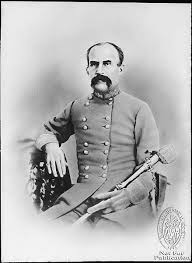
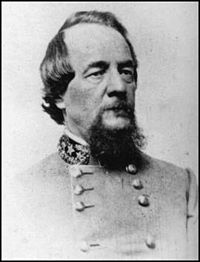
Jubal Early: The Unreconstructed Rebel

??????????????????????????????????????????????????????????????????????????????????????????????

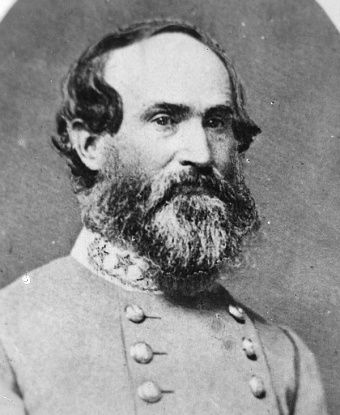
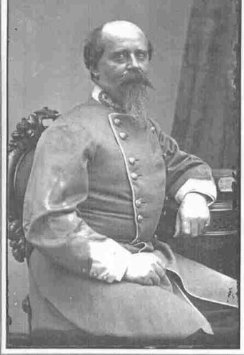
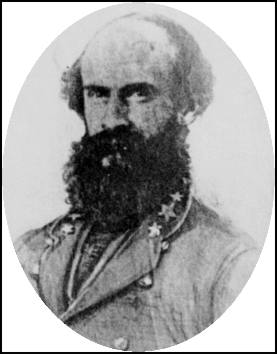
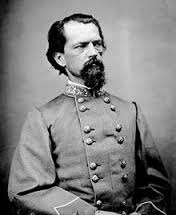
Lieutenant General Jubal Early, the Propagandist of the Lost Cause

Friends of Padre Steve’s World

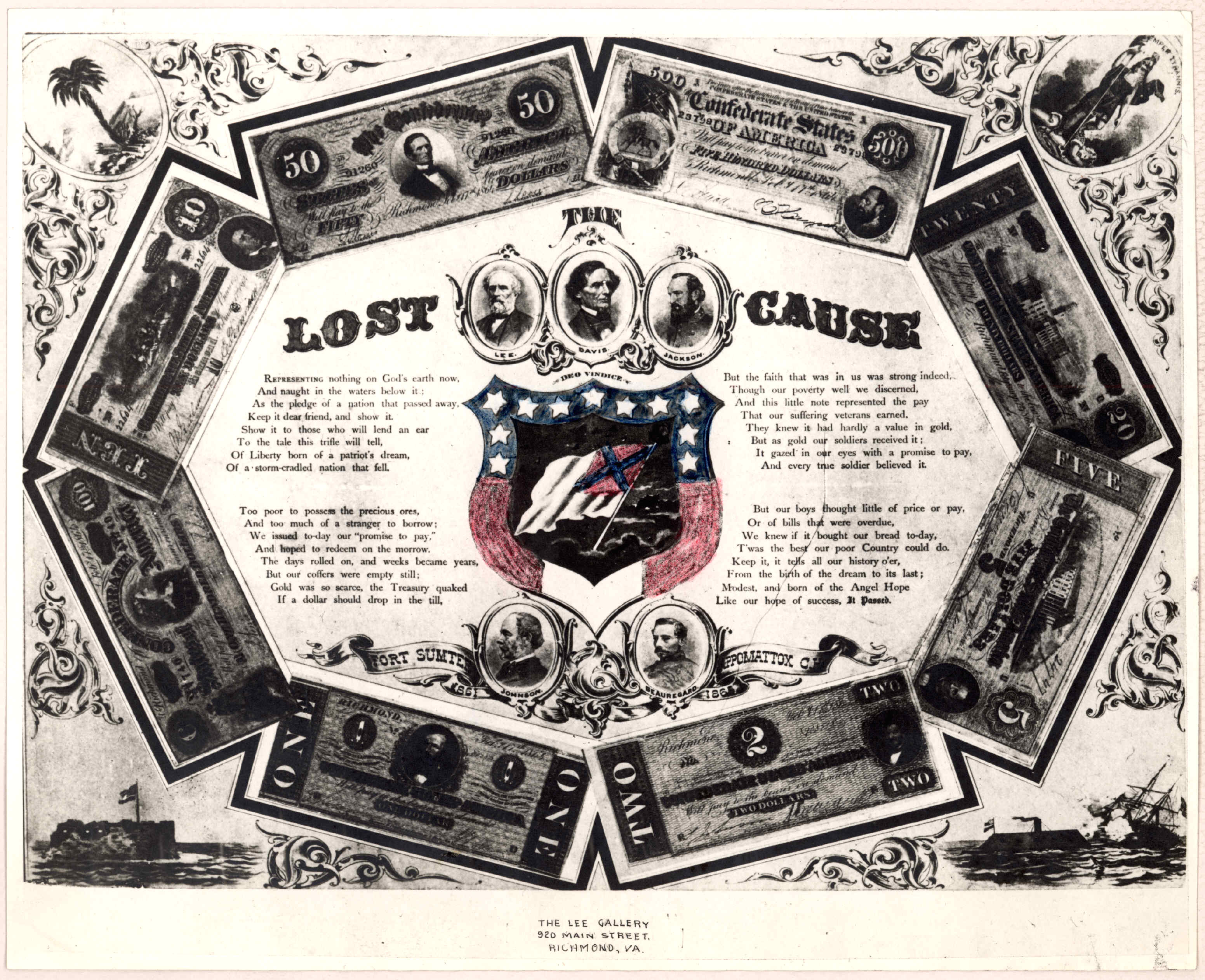
There are some people in history who have a major and sometimes malevolent impact on history who are little known to most people. One of these men is Confederate Lieutenant General Jubal A. Early. You may not have ever heard of him but his influence is still strong today in certain parts of the Republican Party, the Tea Party, the Christian Right and neo-Confederate organizations. Early is a complex, brilliant but malevolent character whose post Civil War activities, and writings influenced how generations of Americans embraced the myth of the Lost Cause as historic truth and why so  many people today support an ideology that is little more than a re-baptized Lost Cause in their fight against supposed liberals, progressives, gays, and minority groups. People who they believe threaten their place in society. 

This article is part of one of the chapters of my Gettysburg which I will continue to periodically publish here. Have a great night.

Peace

Padre Steve+ 

Jubal Early was an unusual character. He is described similarly by many to Dick Ewell in his gruffness and eccentrics. Unlike his corps commander, Ewell, who was modest and charitable, Early was “ambitious, critical, and outspoken to the point of insubordination. Under certain circumstances he could be devious and malevolent.” [1] James Longstreet’s aide Moxey Sorrel wrote of him: “Jubal Early….was one of the ablest soldiers in the army. Intellectually he was perhaps the peer of the best for strategic combinations, but he lacked the ability to handle troops effectively in the field….His irritable disposition and biting tongue made him anything but popular.” [2] Despite this, Early had proved himself as a brigade commander and acting division commander and Lee referred to him affectionately as “my bad old man.” [3]

Early was the son of a tobacco planter in Franklin County Virginia. He was born in 1816 who had served in the Virginia legislature and was a Colonel of militia. Growing up he had an aptitude for science and mathematics. He was accepted into West Point in 1833 at the age of seventeen. He was a good student, but had poor marks for conduct and graduated in the eighteenth of fifty cadets in the class of 1837. His fellow students included Joe Hooker, John Sedgwick, Braxton Bragg, and John Pemberton, later, the doomed defender of Vicksburg. Also in the class was Lewis Armistead, with whom the young Early had an altercation that led to Armistead breaking a plate over his head in the mess hall. For the offense Armistead was dismissed from the academy.

He was commissioned into the artillery on graduation in 1837. However, after experiencing life in the active duty army, including service in the in the Seminole War, Early left the army and became a highly successful lawyer and active Whig politician. He served in the Mexican war as a Major with Virginia volunteers. Unlike some of his classmates, and later contemporaries in the Civil War, Early, and his men did not see combat, instead, serving on occupation duty. In Mexico Zachary Taylor made Early the “military governor of Monterrey, a post that he relished and filled with distinction.” [4]

After his service in Mexico, Early returned to Virginia where he returned to his legal practice, serving as a prosecuting attorney. He also entered local politics where he served as a Whig in the Virginia legislature.

During his time in Mexico, Early contracted rheumatic fever, which left him with painful rheumatoid arthritis for the rest of his life. Due to it he “stooped badly and seemed so much older than his years that his soldiers promptly dubbed him “Old Jube” or Old Jubilee.” [5]

Jubal Early was “notoriously a bachelor and at heart a lonely man.” Unlike many Confederate officers he had “no powerful family connections, and by a somewhat bitter tongue and rasping wit” isolated himself from his peers.[6]

Likewise, in an army dominated by those with deep religious convictions, Early was avowedly irreligious and profane, though he did understand the importance of “the value of religion in keeping his soldiers’ spirits up” and as commander of the Army of the Valley, issued orders for a stricter keeping of the Sabbath. [7] Lee’s adjutant Walter Taylor wrote of him “I feared our friend Early wd not accomplish much because he is such a Godless man. He is a man who utterly sets at defiance all moral laws & such a one heaven cannot favor.” [8] That being said Porter Alexander praised Early and noted that his “greatest quality perhaps was the fearlessness with which he fought against all odds & discouragements.” [9]

Early was a Whig, and a stalwart Unionist who opposed Virginia’s secession, voting against it because he found it “exceedingly difficult to surrender the attachment of a lifetime to that Union which…I have been accustomed to look upon (in the language of Washington) as the palladium of the political safety and prosperity of the country.” [10] Nonetheless, like so many others he volunteered for service after Lincoln called for 75,000 volunteers to crush the rebellion.

Robert E. Lee “appreciated Early’s talents as a soldier and displayed personal fondness for his cantankerous and profane Lieutenant …who only Stonewall Jackson received more difficult assignments from Lee.” [11] Early was the most influential of Ewell’s division commanders, and his “record in battle prior to Gettysburg was unsurpassed.” [12]

After Gettysburg Early remained in command of his division and when Dick Ewell was relieved in 1864 assumed command of the Second Corps. With the corps he conducted operations in the Shenandoah Valley as well as a raid which briefly threatened Washington D.C. in 1864. Early became “a much maligned figure in the Confederacy after his army suffered utter defeat against Philip H. Sheridan’s forces in the Shenandoah Valley during the fall and winter of 1864-65.” [13] The clamor for his relief was so great that Lee relieved Early of command on March 30th 1865, “and sent him home to await orders.” [14] However Lee handled the matter with gentleness that made ensured Early’s undying devotion. Lee wrote:

“while my own confidence in your ability, zeal, and devotion to the cause in unimpaired…I nevertheless felt that I could not oppose what seems to be the current opinion, without injustice to your reputation and injury to the service.” [15]

After the war Early went into voluntary exile until 1869, unable to reconcile life in the United States following defeat. Travelling from Cuba to Mexico and on to Canada his bitterness grew, and for the embittered General it was about honor. For Early, who had fought so hard against secession, now took the opposing view. For him, “honor resided intact in the defeated cause of Southern independence. It was now distilled, for him, in the issue of states’ rights and white supremacy.” [16]

In his efforts Early sought to “elevate Lee above any other Civil War chieftains, and to promote the idea that the South had not been defeated, only compelled to surrender against overwhelming odds.” [17] Early’s hatred for anything to do with the North was demonstrated when he “refused even to donate funds to a monument to Robert E. Lee in Richmond when he learned that the pedestal would be carved from Maine granite.” [18]

Early’s hatred a blacks grew as he got older, and “became particularly virulent when they were involved in anything connected to the war on the Confederacy.” [19] While serving as Governor, James Kemper, who was so grievously wounded during Pickett’s Charge found Early’s views so dangerous that he begged Early not to attend the unveiling of a monument to Stonewall Jackson in 1875. He wrote to Early, “for the sake of public peace and harmony, I beg, beseech and implore you, for God’s sake stay at home.” [20]

Upon his return from his voluntary exile he was sought after by Lee to help in preparation of a memoir that would explain his decisions during the war. In addition to championing Lee and writing polemics against any former Confederate officer who dared to criticize his chief. As such those writing their own memoirs were usually careful to avoid anything that might provoke Early’s wrath, or submitted their work for his imprimatur before going to publication. He shameless attacked James Longstreet and William Mahone for their post war reconciliation with the hated Yankees, as well as Longstreet’s criticism of Lee.

Early was very intelligent and he knew that the controversy surrounding his defeat in the Valley did not enhance his own reputation, so instead “It was on Lee’s credibility that Early built his postwar career.” [21] Over the course of:

“the last twenty-five years of his life the bitter General sought to get his impressions of the war on record. He took an active role in publishing the Southern Historical Papers….and achieved as a leading arbiter of questions concerning relating to Confederate military history.” [22]

Early was immensely successful in this long term effort. The results of Early’s efforts was the successful propagation of the myth of the Lost Cause and its prominence throughout many of the books, journals and other publications published after the war, even Winston Churchill’s history of the Civil War is filled with Early like lost cause images and language in his works. Referring to Southern honor, that concept that Early held so dear Churchill, echoing Early wrote “The South knew they had lost the war, and would be conquered and flattened. It is one of the enduring glories of the American nation that this made no difference to the Confederate resistance.” [23] The idea that Churchill espoused, that Confederate “honor” was one of the enduring glories of  the American nation” is nothing more than myth which promotes everything wrong with the Confederacy.

In February 1894 Lee’s “old bad man” took a fall on the way out of the Lynchburg Post Office. He resisted treatment though he appeared to be in shock and was both mentally and physically unwell. He attempted to continue his business but got worse and he died in Lynchburg on March 2nd 1894.

Sadly, Early’s ideas live on in the minds of many Americans, who like him have not reconciled with the results of the war and who are susceptible to his message. Early set the example for them:

“Like an Old testament prophet, Jubal supported the message by his own extreme example – his “constancy” and intransigence, his unremitting hatred for Grant (even after Jefferson Davis had forgiven the Illinoisan), his refusal to be pardoned or reconstructed or to regard the North, at least in the abstract, as anything but an evil empire.” [24]

Jubal Early’s words and actions read almost as if they come out of current Republican and Christian Right talking points. Instead of Lincoln and the Black Republicans, the enemy is Obama and the Black, Gay and Liberal Democrats. I find it chilling to read about Early and his transformation for an anti-secession Whig to an unreconstructed Rebel whose nearly pathological hatred for the Union that he had once served reminds me of people I know.

Peace

Padre Steve+

Notes

[1] Ibid. Pfanz Richard S. Ewell p.268

[2] Ibid. Girardi. The Civil War Generals p.206

[3] Ibid. Wert A Glorious Army p.155

[4] Ibid. Osborne Jubal p.28

[5] Ibid. Freeman Lee’s Lieutenants p.83

[6] Ibid. Freeman Lee’s Lieutenants p.33

[7] Ibid. Osborne Jubal p.385

[8] Ibid. Girardi. The Civil War Generals p.207

[9] Alexander, Edward Porter. Fighting for the Confederacy: The Personal Recollections of General Edward Porter Alexander edited by Gary Gallagher University of North Carolina Press, Chapel Hill 1989 p.397

[10] Ibid. Osborne Jubal p.50

[11] Gallagher, Gary W. Jubal A. Early, the Lost Cause, and Civil War History: A Persistent Legacy; Frank L Klement Lecture, Alternate Views of the Sectional Conflict Marquette University Press Marquette WI 2003 p.11

[12] Ibid. Tagg The Generals of Gettysburg p.256

[13] Ibid. Gallagher Jubal A. Early, the Lost Cause, and Civil War History p.8

[14] Ibid. Freeman Lee’s Lieutenants p.769

[15] Ibid. Gallagher Jubal A. Early, the Lost Cause, and Civil War History p.11

[16] Ibid. Osborne Jubal p.416

[17] Ibid. Pryor Reading the Man p.469

[18] Guelzo Allen C. Fateful Lightening: A New History of the Civil War Era and Reconstruction Oxford University Press, Oxford and New York 2012 p.526

[19] Ibid. Osborne Jubal p.418

[20] Ibid. Osborne Jubal p.418

[21] Ibid. Osborne Jubal p.476

[22] Ibid. Gallagher Jubal A. Early, the Lost Cause, and Civil War History p.15

[23] Ibid. Gallagher Jubal A. Early, the Lost Cause, and Civil War History p.15

[24] Ibid. Osborne Jubal p.476

Leave a comment

Filed under civil rights, civil war, Gettysburg, History, Military, Political Commentary

The Reconcilled Rebel: James Longstreet

Friends of Padre Steve’s World 

 
I am going to periodically interspersing and publishing short articles about various commanders at Gettysburg  on the site. These all come from my student text and the reason is I am going to do this is because I have found that readers are often more drawn to the lives of people than they are events. As I have noted before that people matter, even flawed people, and we can learn from them.

Today’s vignette is about Confederate Lieutenant General James Longstreet who commanded the Confederate First Corps of  Robert E. Lee’s Army of Northern Virginia at Gettysburg, and is considered by many military historians to be the best corps commander on either side during the war. Yet, Longstreet is one of the most controversial figures in the Confederate Army and there are lessons, good and bad to be learned from him. But I think the one thing that can be learned is that for Longstreet the war was never a “holy cause” and he refused to give in to the hatred that consumed so many Confederates during and after the war. Longstreet chose the path of reconciliation when the war was over and in doing so was mailigned by many in the South. 

Peace

Padre Steve+

LongstreetJ_main

James Longstreet was a native of the Piedmont area of northeastern Georgia. His father, a planter, hailed from a Dutch family that had originally migrated to the colonies in 1687. The young Longstreet, nicknamed Peter or Pete by his family had determined as a child that he would have a military career. His father assisted in his admission to the Military Academy which he entered in 1838. Longstreet was neither a model cadet nor student. He graduated in 1842 “ranked fifty-fourth in a class of fifty-six” [1] and was commissioned into the infantry.

At West Point the young Georgian’s academic performance was lackluster, and he accumulated a significant amounts of demerits. However, the husky Longstreet was well liked and made many lifelong friends while at the academy. His class was distinguished and produced ten Confederate and seven Union Generals during the war. Longstreet’s best friend was a cadet from Ohio in the class which followed him, Ulysses S. Grant of whom Longstreet said was “of noble, generous heart, a lovable character, a valued friend.” [2] That friendship would endure for the rest of their lives.

Longstreet served in the West and went to Texas after it was annexed into the Union. Subsequently, he served in Mexico, getting his first taste of combat on the Rio Grande, then at Monterrey and later at Chapultepec. At Chapultepec, Longstreet was in command of Company H of the 8th Infantry Regiment which was leading the assault. He was near the head of the regiment the regiment as they breached the first parapet carrying the regimental colors “which he had grabbed …as they fell from the hands of their wounded bearer[3] Wounded in the thigh, he handed the colors to his friend George Pickett, whose Company A was advancing behind Longstreet’s company.

After his wound healed Longstreet continued to serve in Texas and later in the New Mexico Territory in campaigns against the Comanche. Serving in various command and staff positions including as a company commander, regimental adjutant, and department Quartermaster he became a well-rounded officer. He was promoted to Major and appointed as a Paymaster. With the promotion he was assigned to duties at Fort Leavenworth in 1858 and then again to New Mexico in 1859.

When Abraham Lincoln was elected in 1860 and Southern states began to secede, Longstreet, who was not a proponent of secession, did not hesitate and offered his services to the Governor of Alabama in February 1861. However, there are many questions about this period due to the conflicting story that Longstreet recorded and what the administrative and pay documents record.

Longstreet resigned his commission on May 9th 1861, though he had already accepted a commission in the new Confederate Army dated May 1st 1861 with a date of rank of March 16th 1861 “eight days before he wrote his letter of resignation from the United States Army.” [4] His biographer Jeffry Wert notes that the acceptance of the Confederate commission while he was still serving as an officer in the United States Army, is “a dark story of a man who crossed the delicate line between honor and dishonor” and that “what he did, however, was not the act of an honorable man and officer.” [5] While there may be extenuating circumstances that we do not know, it does appear that Longstreet crossed a line that few, if any other active officers who left the Army for Confederate service crossed.

After his resignation he travelled to Richmond where he was promoted to Brigadier General on June 17th and given command of a brigade that fought at Bull Run. He was consider to be one of the best Brigadiers in the army and was promoted to Major General on October 7th 1861. After this promotion, Longstreet was given command of a division on the Peninsula. He was noted by his aide Moxie Sorrel to be “rather gay in disposition with his chums, fond of a glass, and very skillful at poker.” [6] However, during that time, his family living in Richmond was ravaged by a Scarlett fever outbreak in January 1862 which claimed the lives of three of his children, leaving him a much more serious, and very changed man. “There was no more gaiety, no more poker, and, certainly for the time, no more liquor. Essentially, from that tragic January, he was a soldier and little besides.” [7]

When Lee took over the Army, Longstreet quickly became one of his most trusted subordinates. Following the Seven Days battles Longstreet was promoted to command a wing of the army, with Jackson commanding the other. These were in effect army corps and functioned as such until the Confederate Congress allowed the creation of army corps within the army. The Confederate Congress then promoted each man to the Rank of Lieutenant General. The contrasts between the two men were remarkable. One of Lee’s biographers wrote of the contrast between Jackson and Longstreet and how each man in a sense reflect a part of his military personality:

“In these two latter men Lee seemed to have recognize the Janus face of his own military personality. Longstreet seemed to be steady and dependable, the consummate professional. Jackson, on the other hand, had been by turns brilliant (the Valley) and useless (Mechanicsville and White Oak Swamp). But Jackson was a killer, possessed of the same sorts of aggressive instincts which obsessed Lee.” [8]

During the 1862 campaign Longstreet built a solid reputation as a commander. Douglas Southall Freeman wrote that if there was a word Longstreet’s contemporaries would have used to describe him “they would have agreed on the same soldierly term: dependable. Brilliance there might not be, reliability there undoubtedly was.” [9] He led that corps in the hammer blows that nearly destroyed Pope’s army at Second Manassas, grimly held the line at Antietam, and helped direct the massacre of Burnside’s attacking force at Fredericksburg. His corps was not present at Chancellorsville. As a commander he was noted for his devoted care and concern for the welfare of his soldiers, his reluctance to waste their lives in what he believed to be unwise, foolish, or suicidal attacks and “Under his command, the First Corps was the “bedrock” of the army.” [10]

During their time together Lee and Longstreet developed “a close personal and professional relationship.” [11] Lee would refer to him at times as “the staff in my right hand” and “my old war horse.” After Jackson’s death their relationship grew closer, even when they did not agree, not an uncommon occurrence. Longstreet could be, and was, blunt with Lee and thankfully for the two men, Lee “was a strong enough personality to bear the presence of a contrarian,” [12] Longstreet could indeed be a contrarian. Even so, Longstreet was a trusted subordinate and Longstreet later wrote that the relationship was “one of confidence and esteem, official and personal, which ripened into stronger ties as the mutations of war bore heavier upon us.” [13]

Longstreet’s presence as a gruff but kindhearted Georgian in an army dominated by Virginians who “idolized Lee” brought him to appoint “himself to pronounce on military reality, which was to say that his outlook on war was more practical than romantic.” [14] That outlook and honesty would cause Longstreet great consternation after the war as Jubal Early and other leaders of the Lost Cause branded him a “Judas” for his actions at Gettysburg and criticism of Robert E. Lee. Even at Gettysburg, despite their differences of opinion regarding Lee’s strategy, British Lieutenant Colonel Arthur Freemantle noted “The relations between him and Longstreet are quite touching – they are almost always together.… I believe these two generals to be as little ambitious and as thoroughly unselfish as any men in the world.” [15]

Longstreet was grievously wounded in the throat during the Wilderness campaign but returned to serve through the surrender at Appomattox. In the search for villains in the post war South, Longstreet became a target of those seeking to defend and exalt Robert E. Lee. After the war Longstreet quickly reconciled with the Union, made amends and renewed his friendships with Ulysses Grant and others. When Grant died he remarked that Grant “was the truest and bravest man that had ever lived.” [16]

He also became a Republican and served in various positions in the U.S. Government and converted to Roman Catholicism. The combination of those decisions as well as his criticism of Lee’s generalship have led to decades of debate, argument and recrimination. That being said the soldiers who served under him continued to hold him in high regard at Confederate veteran reunions until his death in 1904. Thomas Goree who served on Longstreet’s First Corps staff wrote him after the war:

With my heart full of gratitude, I often think of you, and your many acts of kindness shown me, and the innumerable marks of esteem and confidence bestowed on me by you during the four long and trying years that we were together. Although we may differ in our political opinions, yet I have always given you credit for honest and sincerity of purpose.” [17]

[1] Ibid. Wert Longstreet p.30

[2] Ibid. Wert Longstreet p.31

[3] Longacre, Edward G. Pickett: Leader of the Charge White Mane Publishing Company, Shippensburg PA 1995 p.26

[4] Ibid. Wert Longstreet p.54

[5] Ibid. Wert Longstreet pp.54-55

[6] Ibid. Wert Longstreet p.91

[7] Ibid. Freeman Lee’s Lieutenant’s p.111

[8] Ibid. Thomas Robert E. Lee p.247

[9] Ibid. Freeman Lee’s Lieutenant’s p.112

[10] Ibid. Wert Longstreet p.405

[11] Ibid. Wert A Glorious Army p.61

[12] Ibid. Korda Clouds of Glory p.527

[13] Ibid. Wert Longstreet p.173

[14] Ibid. Korda Clouds of Glory p.527

[15] Ibid. Freeman Lee’s Lieutenant’s p.552

[16] Ibid. Wert Longstreet p.424

[17] Ibid. Wert Longstreet p.424

Leave a comment

Filed under civil war, Gettysburg, History, leadership, Military

“Our Army Would Be Invincible If…” Pt.5 Stuart’s Cavalry

This is the fourth part of my re-written chapter on the leadership of Army of Northern Virginia at Gettysburg. Today is a look at the leaders of Major General J.E.B Stuart as well as three other generals, Brigadier General John Imboden who commanded an independent cavalry brigade, Lee’s Chief of Artillery, Brigadier General William Pendleton, and Major General Isaac Trimble. This like the previous sections of this chapter of my Gettysburg text is interesting because it shows the complexities of the lives and personalities of the men leading these units. Professional soldiers, volunteers with little military experience, soldiers, lawyers, engineers and politicians they are an interesting collection of personalities; some surrounded in myth and others practically unknown. I think it is important for anyone studying a war, a campaign, or a battle to at least look at the lives of the men who planned and fought it. In doing so, even those that oppose what they did in rebelling against the United States can find in them some measure of humanity, and sometimes even gain a sense of empathy for some of them.   

That is why when we look at the lives of soldiers, we have to take the time to at least try to understand the nuance, the contradictions, their strengths and weaknesses as leaders, as well as a measure of their character.

As I get ready to take another group of students to Gettysburg I will be doing more work on my text, editing previously written chapters and writing a chapter similar on the leaders of the Army of the Potomac.

Have a great night

Peace

Padre Steve+

Stuart’s Cavalry Division

CWP015

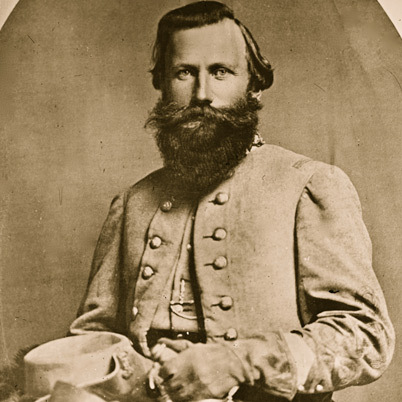
Major General J.E.B. Stuart C.S.A.

The Cavalry Division was commanded by Major General J.E.B. Stuart. While it was considered a division, Stuart’s command was the size of a Union Army Corps with over 10,000 troopers assigned. Despite its large size at Gettysburg the Division was split by agreement of Lee and Stuart. Stuart who had five brigades at his immediate disposal would take three of them, Hampton’s, Rooney Lee’s and Fitz Lee’s on an ill-fated mission which would leave him and them out of the fight during the most important part of the movement to and first two days of battle. His raid causes him “to be absent on the day of all days when he could reconnoiter the Federal position.” [1] Two, Robertson and Grumble Jones’s would remain guarding passes along the Blue Ridge long after that mission had any relevance. Imboden’s would be far to the west and Jenkin’s ere with Ewell’s vanguard in the advance north.

Major General James Ewell Brown Stuart was the son of a former congressman whose family went back five generations in Virginia. He graduated thirteenth in a class of forty-six at West Point in 1854. Classmates included Dorsey Pender and Oliver O. Howard. A fellow cadet who would serve under Stuart during the war, Fitzhugh Lee wrote:

“His distinguishing characteristics were a strict attention to his military duties, an erect, soldierly bearing, an immediate and almost thankful acceptance of a challenge from any cadet to fight, who might in any way feel himself aggrieved, and a clear, metallic, ringing voice.” [2]

At West Point Stuart was noted for his “lifelong religious devoutness. When he was at West Point he was known as a “Bible Class Man.” [3] Stuart was commissioned as a Second Lieutenant and assigned to the Mounted Rifles, which Stuart noted was “a corps which my taste, fondness for riding, and my desire to serve my country in some acceptable manner led me to select above all the rest.” [4] Stuart would serve with the Mounted Rifles for about a year before being selected to serve in one of the first Cavalry regiments formed, the First Cavalry at Jefferson Barracks Missouri.

In the pre-war years the young officer developed a solid reputation in the army where he served on the frontier and in “Bleeding Kansas.” In those years Stuart “was already a young officer of great promise, a natural horseman with a reputation for dash and bravery gained in countless clashes with Indians throughout the West, and for steady competence in the pro- and antislavery warfare of Kansas.” [5]

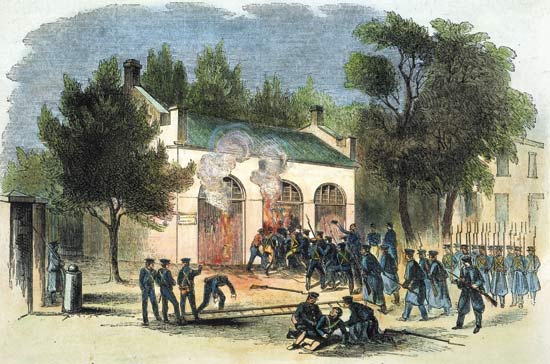
In 1859 Stuart was on leave visiting Washington D.C. and staying with the Lee’s at Arlington. He was visiting the War Department when news came of John Brown’s raid at Harper’s Ferry. He was given a letter to take to Lee which ordered Lee to take command of troops to suppress the rebellion. Stuart accompanied Lee on the mission and was send by Lee to present terms of surrender to the raiders, who at the time were still nameless to the Federal authorities. Stuart entered the building and was confronted by Brown who he had previously met in Kansas. After some fruitless negotiation, Stuart realized that Brown was not about to surrender. At some time Stuart broke away and motioned for the Marines to move in. “Three minutes after Stuart had given his signal, the affair was over.” [6]

Stuart resigned his commission when Virginia seceded from the Union in April 1861, while his father-in-law, Colonel Philip St. George Cooke remained in Union service. He commanded the 1st Virginia Cavalry in the Valley and at First Manassas and was promoted to Brigadier General in September 1861. The following month he was given command of the army’s cavalry brigade and distinguished himself in the eyes of both General Joseph Johnston and Robert E. Lee. Johnston wrote to President Jefferson Davis praising the young brigadier “He is a rare man…wonderfully endowed by nature with the qualities necessary for an officer of light cavalry….If you add to this army a real brigade of cavalry, you can find no better brigadier-general to command it.” [7]

Lee came to share that opinion and over the course of his service Stuart had come to:

“demonstrate a real talent for the most mundane and most essential role cavalry played in this war – reconnaissance and intelligence gathering. No intelligence source surpassed his eye for seeing and evaluating a military landscape or an enemy’s strengths and dispositions.” [8]

This would be something that Lee came to rely and which he would dearly miss at Gettysburg.

Despite his excellence in this “most mundane” task Stuart developed a flair and passion for the spectacular, which was first demonstrated during the Seven Days, where he took his cavalry on a circuit of McClellan’s army which not only gathered a significant amount of intelligence also unnerved the Army of the Potomac. His raid was “flawlessly executed….” And Stuart “became a hero to his troopers and one of the idols of the public.” [9] Lee wrote that Stuart’s operation “was executed with great address and daring by accomplished officer.” [10] The raid did have its detractors, especially among the infantry and it also revealed something to Stuart that appealed to his own vanity, “that raiding would easily garner headlines in the Richmond papers.” [11]

Stuart Lee’s staff secretary, Colonel Robert Taylor noted that Stuart was “possessing of great powers of endurance, courageous to an exalted degree, of sanguine temperament, prompt to act, always ready for fight – he was the ideal cavalryman.” [12] Stuart also kept a lively headquarters. Taylor remarked “How genial he was! There was no room for “the blues” around his headquarters; the hesitating and desponding found no congenial atmosphere at his camp; good will, jollity, and even hilarity, reigned there.” [13]

Stuart always had his African-American banjo player with him and frequently sang around camp and on campaign. That was not always appreciated by some other officers. Wade Hampton, who in time became Stuart’s right-hand man was not impressed with the atmosphere at Stuart’s headquarters and “was not certain that he could flourish, or even survive, among such people….” [14] Lafayette McLaws wrote home complaining not only about Stuart but others:

“Stuart carries around with him a banjo player and special correspondent. This claptrap is noticed and lauded as a peculiarity of genius, when, in fact, it is nothing more but the act of a buffoon to get attention.” [15]

But Stuart was always aware of his own mortality and there was a serious side to him, often expressed in his faith, which impressed those around him. His West Point classmate and friend, Oliver O. Howard wrote:

“J.E.B. Stuart was cut out for a cavalry leader. In perfect health, but thirty-two years of age, full of vigor and enterprise, with the usual ideas imbibed in Virginia concerning State Supremacy, Christian thought and temperate by habit, no man could ride faster, endure more hardships, make a livelier charge, or be more hearty and cheerful while so engaged. A touch of vanity, which invited the smiles and applause of the fair maidens of Virginia, but added to the zest and ardor of Stuart’s parades and achievements.” [16]

At Chancellorsville Stuart assumed acting command of Jackson’s Second Corps which he led well during the battle, even impressing the infantry, who had long derided Stuart and his cavalry. Leading by example “seemed on fire.” Stuart sang as he led the Stonewall Brigade into action and “the troops joined him, singing while they loaded and fired.” One officer stated “Jeb impressed himself on the infantry.” [17]

Some believed that Stuart should have been appointed to command Second Corps after Jackson’s death, but evidently Lee valued Stuart’s role as a cavalry commander more and despite his accomplishments refused to proffer the command to Stuart. Colonel Rosser told Stuart, who was grieving the loss of his friend Jackson “On his death bed Jackson said that you should succeed him, and command his corps.” Stuart responded “I would rather know that Jackson said that, than to have the appointment.” [18] One wonders what might have occurred during the Gettysburg campaign if Stuart had commanded Second Corps and left the cavalry to someone like the accomplished and level headed Wade Hampton.

Stuart was mortally wounded less than a year after Gettysburg at the Battle of Yellow Tavern, upon his death Hampton was promoted to command what was left of the Cavalry Corps.

Hampton

Hampton_inline

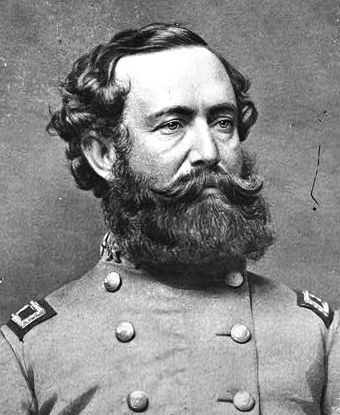
Brigadier General Wade Hampton C.S.A. 

Brigadier General Wade Hampton is one of the fascinating and complex characters in either army who served at Gettysburg. He defies a one dimensional treatment or stereotype. His complexities, contradictions and character make him one of the most interesting men that I have written about during my study of this battle.

Wade Hampton III was one of the richest, if not the richest man in the Confederacy when the war broke out. He had inherited his family’s expansive plantation and many slaves and studied law at the College of South Carolina. As a slave owner he expressed an aversion for the institution, ensured that his slaves were well cared for by the standards of his day, including medical care, he never condemned slavery or worked for the abolition of a system that had made him and his family quite prosperous. He served in the South Carolina legislature and Senate, where he took an “active and prominent role in the public debate on many issues. He was vocal not only on the perils of reopening the African slave trade but also on whether and how his state should seek redress of wrongs, real and imagined, by the federal government.” [19]

As a state senator Hampton was pragmatic, and while he defended the South’s economic interests in slavery, Hampton cautioned against the rhetoric of secessionist fire-breathers. His argument was about “the preservation of the South’s political power and her social and economic institutions, now threatened by the short sighted policies of otherwise good and decent men.” [20] He did not wish to do anything that would lead to the destruction of the South, and he felt that the “only viable course was moderation, conciliation, compromise….” [21]

Hampton was a classic rich “Southern moderate He had opposed secession, and the fire eaters repulsed him.” [22] However, when Lincoln called for volunteers Hampton volunteered to serve in a war that he did not want, which would cost him dearly, and change him from a moderate to a vociferous opponent of most Reconstructionist policies.

Volunteering at the age of forty-three, Hampton had no prior military training. However, he had great organizational skill, leadership ability and a tremendous care and compassion for those who served under his command. Using his own money Hampton organized what would now be called a combined arms unit, the Hampton Legion, which comprised eight companies of infantry, four of cavalry and a battery of light artillery. He was careful in the appointment of the Legion’s officers choosing the best he could find.

Hampton rapidly rose to prominence as a respected officer and commander despite his lack of military training or experience. His soldiers fought well and took over command of an infantry brigade on the Peninsula, and was promoted to Brigadier General in May of 1862 and given command of a cavalry brigade serving under J.E.B. Stuart in July and he “became Stuart’s finest subordinate.” [23] As a brigade, and later division commander, Hampton had “little fondness or respect for Stuart. He regularly criticized Stuart for pampering the Virginia regiments and assigning his South Carolinians to the more arduous tasks.” [24]

During the war he was wounded several times, including at             Gettysburg where he took two sabre cuts to the head. Eventually he took command of the Cavalry Corps after Stuart was killed in action. He fought in nearly every cavalry engagement under Stuart and led his own raids deep into Union territory. He fought well, but “hated the war. In October 1862 he wrote home: “My heart has grown sick of the war, & I long for peace.” [25] Hampton was “one of only three civilians to attain the rank of Lieutenant General in Confederate service.” [26]At Petersburg his son Preston was mortally wounded and died in his arms even as his other son Wade IV was wounded when coming to Preston’s aid. Douglass South Freeman wrote of Hampton:

“Untrained in arms and abhorring war, the South Carolina planter had proved himself the peer of any professional soldier commanding within the same bounds and opportunities. He may not have possessed military genius, but he had the nearest approach to it.” [27]

The war that he opposed cost him the life of his brother, one of his sons and his livelihood. “His property destroyed, many of his slaves gone, and deep in debt from which he would never recover, Hampton faced the future with $1.75 in his pocket.” [28] The war changed the former moderate into a man who sought vindication in some ways, but reconciliation with the black population.

Hampton again entered politics and became the first post-Reconstruction Governor of South Carolina when President Rutherford Hayes withdrew the Federal troops which had supported the Reconstructionist governor. During his campaign and during his terms as Governor, Hampton “opposed the South’s imposition of so-called “black codes” which so restricted the freedom of former slaves as virtually to return them to civility.” [29] Unlike many in the post-reconstruction South Hampton won the thanks of African Americans for condemning whites that would vote for him if they thought that he would “stand between him and the law, or grant him any privileges or immunities that shall not be granted to the colored man.” [30]

Hampton came to dominate South Carolina politics for fifteen years, after two terms as Governor he served as a U.S. Senator until 1891 when a political enemy won the governorship and forced him from the Senate. When he died on April 11th 1902 his final words were “God bless my people, black and white.” [31]

Like so many leaders of so many tumultuous eras, Hampton was complex and cannot be easily classified. He was certainly not perfect, but in war and in peace gave of himself to his state and community.

Rooney Lee

rooney

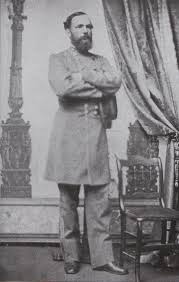
Brigadier General William Fitzhugh “Rooney” Lee C.S.A.

Brigadier General William Fitzhugh Lee, who went by his nickname “Rooney” to distinguish himself from his cousin Fitzhugh Lee, was the second son of Robert E. Lee. He was educated at Harvard and received a direct commission into the Army in 1857, which he resigned in 1859 to manage the White House planation which had been left to him by his grandfather. When war came Lee volunteered for service and was named Colonel of the 9th Virginia Cavalry earning the trust and respect of Stuart and the quiet admiration of his father.

Rooney Lee was promoted to Brigadier General in September 1862 and was wounded at the Battle of Brandy Station as the Gettysburg campaign began and while convalescing was captured by Union forces. He was replaced by Colonel John R. Chambliss, an 1853 graduate of West Point who had left the army after a short amount of active service prior to the war. He was viewed as a competent cavalry tactician and “there was no perceptible anxiety when “Rooney” Lee’s brigade came under Chambliss’ command.” [32]

He was paroled and exchanged in March of 1864. He was promoted to Major General in April 1864 and served until his surrender with the army at Appomattox. After the war he would return to farming and serve in the Virginia legislature and as a Congressman.

Robertson

4198ECu5QML._SY355_

Brigadier General Beverly Roberson C.S.A.

Brigadier General Beverly Roberson was a native Virginian who graduated from West Point in 1849. Most of his service was spent on the frontier with the Second Dragoons where for part of his service he served under command of J.E.B. Stuart’s father-in-law Colonel Philip St. George Cooke who “commended him repeatedly in dispatches.” [33]

Robertson was a veteran of much Indian service and “in person the embodiment of the fashionable French cavalry officer of the time.” [34] Robertson was dismissed from the U.S. Army in August 1861 when it was discovered that he had accepted an appointment in the Confederate army in April 1861.

Robertson’s Confederate service was less than distinguished. He never meshed with Jackson when he commanded Jackson’s cavalry, and Stuart was less than impressed when Robertson’s brigade was assigned to his command. During the Second Manassas campaign Stuart observed Robertson’s less than stellar performance, and his centrality to “so many cavalry quarrels” convinced Stuart that the old regular army veteran and West Pointer “must go. Within a month Robertson was transferred. He would finally go, as one of Stuart’s staff noted, “much to the joy of all concerned.” [35]

Robertson and his brigade were transferred to North Carolina, but returned to the Army of Northern Virginia to participate in the Gettysburg campaign. It was far too easy for Lee to obtain. D.H. Hill commanding in North Carolina “characterized Robertson’s command as “wonderfully inefficient,” [36] and Robertson would prove that again in the coming campaign where he would fail “miserably in his primary duty.” [37] After Gettysburg Robertson was relieved and reassigned to the Department of South Carolina where he served with little distinction until the end of the war.

Fitzhugh Lee

220px-Fitzhugh_Lee_General

Brigadier General Fitzhugh Lee C.S.A.

Brigadier General Fitzhugh Lee was a nephew of both Robert E. Lee and Confederate Adjutant General Samuel Cooper. He “graduated forty-fifth in a class of forty-nine at West Point in 1856.” [38] He was wounded on the frontier and was an instructor at West Point when Virginia seceded. He resigned his commission and was appointed as a Captain. Through his friendship with Stuart he was promoted to Colonel and given command of the First Virginia Cavalry after Grumble Jones was reassigned to the 7th Virginia. He and Stuart “shared a frolicsome nature and hearty laughter, but Lee’s abilities as a horse soldier were limited.” [39]

Wade Hampton held Lee in low regard, and Hampton believed that that Lee was representative of the “most objectionable qualities of the Virginia aristocrat – vanity, ostentation, pomposity, and condensation.” [40] Despite a condition which includes arthritis which hampers him he “fights hard and learns much of the art of command.” [41] He serves until the end of the war, finally surrendering his command in North Carolina.

After the war Fitz Lee enters politics, is elected governor of Virginia and following his defeat in attempting to become U.S. Senator was appointed as counsel-general in Havana by President Grover Cleveland. When the United States went to war with Spain, Lee was appointed as a Major General of Volunteers and serves honorably. Wade Hampton, whose regard for Lee did not increase during the war told his son Albert, who had volunteered to serve on Lee’s staff “Under no circumstances would he have a sin of his ever serve under “such an imperious blowhard as Robert E. Lee’s nephew continued to be.” [42] Lee was retired from the United States Army in 1901 with the rank of Brigadier General and died in Washington D.C. on April 28th 1905.

“Grumble” Jones

William_Edmondson_Jones

Brigadier General William “Grumble” Jones C.S.A.

Another of the old army cavalrymen to serve under Stuart was Brigadier General William “Grumble” Jones. Jones was an 1848 graduate of West Point and served on the frontier. In 1852 he and his new bride were in a shipwreck, and she was swept out of his arms and drowned. “Jones never recovered in spirit. Embittered, complaining, suspicious he resigned from the army” [43] in 1857 and returned to Virginia.

Jones raised a company at the beginning of the war, and served under Stuart at First Manassas, and from the beginning took a dislike to his young superior. He grumbled to his men that he “would take no orders from that young whippersnapper.” [44] When Stuart was promoted he was made Colonel of the 1st Virginia Cavalry. The assignment did not go well for him. His loathing for Stuart grew and one officer wrote that it “ripened afterwards into as genuine hatred as I ever remembered to have seen.” [45] His hatred of Stuart expanded into a hatred for his Lieutenant Colonel, Fitzhugh Lee, who was a close friend of Stuart. Jones was unpopular with the regiment and Lee much admired and the situation became so bad that Jones was reassigned to command the 7th Virginia Cavalry. Jones performed well in this duty, well enough to warrant promotion and he was promoted to Brigadier General in September 1862. The promotion allowed Lee to send Jones to serve in the Shenandoah Valley away from Stuart since their relationship was so toxic and Jones’s hatred of Stuart “bordered on pathological.” [46]

The need for cavalry for the upcoming invasion of Pennsylvania forced Lee to bring Jones and his command back to the Army of Northern Virginia. Stuart expressed his misgiving to Lee but was given no choice in the matter. Since Jones “had the biggest brigade in the division and had the reputation of being the “best outpost officer” [47] Stuart solved his problem by leaving Jones with Robertson to guard the passes of the Blue Ridge.

After Gettysburg Jones clashed again with Stuart over not being recommend for promotion when the division became a corps. The affair was so explosive and Jones reportedly “cursed him venomously” [48] an offense so great that Stuart had him arrested and court-martialed. The court found him guilty, and although Lee had great respect for Jones’s abilities as a brigade commander he wrote to Jefferson Davis:

“I consider General Jones a brave and intelligent officer, but his feelings have become so opposed to General Stuart that I have lost all hope of his being useful in the cavalry here… He has been tried by court-martial for disrespect and the proceedings are now in Richmond. I understand he says he will no longer serve under Stuart and I do not think it advantageous for him to do so.” [49]

Jones was assigned to command in Southwestern Virginia where “organized a cavalry brigade and rendered excellent service.” [50] In June of 1864, his understrength command was defeated and he was killed at the Battle of Piedmont. Douglas Southall Freeman called his death “a tragic end to a tragic life.” [51]

Jenkins

220px-AGJenkins

General Albert G. Jenkins C.S.A.

General Albert G. Jenkins was another anomaly in the Army of Northern Virginia. He was a native of the far western county of Virginia, Cabell County which was one of the six counties to secede from Virginia after Virginia seceded from the Union. He had no previous military training and like many of the Confederate volunteer officers was a lawyer and politician before the war. At the outset of the war he raised a company of volunteer cavalry from that area, which grew to become the 8th Virginia Cavalry.

Jenkins was promoted to Brigadier General and he and three regiments of his brigade were requisitioned by Lee for the invasion of Pennsylvania. The brigade was badly needed but the troops “had not been well schooled in cavalry tactics or in hard fighting at close quarters. Some had the complex of home guards, and some preferred the life of a guerilla to that of a trooper, but many were good raw material” [52] who Lee hoped could be wielded into a good cavalry force.

Jenkins was wounded on July 2nd in an action east of Gettysburg and his brigade was commanded by a subordinate during the final cavalry clash on July 3rd 1863. Jenkins and his brigade returned to the Valley where he was mortally wounded at the Battle of Cloyd’s Mountain in May of 1864.

Attached or Staff Officers: Imboden, Pendleton and Trimble

Imboden

25159e61f0fec416be740c018cae4772

Brigadier General John Imboden C.S.A.

Brigadier General John Imboden commanded a cavalry brigade which operated independently of Stuart’s division during the campaign. Imboden had no prior military experience before the war. He was a graduate of Washington College and a lawyer in Staunton Virginia. He raised a volunteer battery of light artillery, occupied “Harpers Ferry less than thirty hours after Virginia’s secession from the Union.” [53]

Imboden fought at Manassas where he and his battery gave a respectable performance. After Manassas Imboden raised another unit, “the 1st Virginia Partisan Rangers (later called the 62nd Virginia Mounted Infantry)” [54] and operated primarily in the valley and western Virginia. His command expanded in size and he was promoted to Brigadier General in January 1862.

His command during the Gettysburg campaign included the 18th Virginia Cavalry, the previously mentioned 62nd Virginia Mounted Infantry, a battery of artillery and several other partisan units. Imboden and his unit had been on “irregular, detached duty, and many of his men had recently been recruited, some from the infantry service.[55] Imboden’s “brigade” was “more an assortment of armed riders even more unruly and untrained than Jenkins’ and possessing a well-developed proclivity to rob civilians, especially of their horses.” [56] However, they were useful for foraging and guarding supply bases and wagon trains during the march north. It was of dubious value in fighting “pitched battles with veteran enemy cavalry” [57] and would not be used in that capacity. Lee and Stuart did understand the limitations of such irregular formations.

During the march north Imboden’s command slipped away and when found was discovered to be “resting idly at Hancock Maryland, more than fifty miles from Chambersburg When this became known it was to provoke the wrath of Lee as did few events of the war.” [58] Imboden and his brigade served well during the army’s withdraw from Gettysburg, protecting the wounded and the trains. Overall Imboden was not well respected by Lee, Stuart or Early who he later served under and the brigade was not an effective fighting force. As such Lee sent it back to the Valley after Gettysburg.

Pendleton

1477804_651224374900088_489425430_n

Brigadier General William Pendleton C.S.A. 

Brigadier General William Pendleton graduated fifth in his class at west Point in 1830, in the class behind Robert E. Lee and was commissioned as an artillery officer. He spent little time on active service and spent most of his active duty in hospitals battling the effects of “fever, nausea, and paralyzed limbs from an illness that may have been yellow fever.” [59] He resigned his commission in 1833, became a teacher and then entered the ministry as an Episcopal Priest. He pastored Grace Episcopal Church in Lexington where after John Brown’s raid he was asked to assist and train some men who had formed a battery of artillery. When war came he was elected Captain of the battery and served at First Manassas. Joseph Johnston appointed Pendleton as Chief of Artillery as he does have a certain amount of organizational skill, and “Johnston appointed him to the post more for his administrative ability, not for his tactical control of cannon on the battlefield.” [60]

When Lee took command he kept Pendleton in the position, in large part due to their friendship and spiritual connection as Episcopalians. As an artillery commander Pendleton showed his limitations during the Malvern Hill, Antietam and Chancellorsville, all of which harmed Confederate efforts on the battlefield. A junior officer remarked: “Pendleton is Lee’s weakness…. He is like the elephant, we have him and we don’t know what on earth to do with him, and it costs a devil of a sight to feed him.” [61]

His miserable performance “makes the younger men of the artillery wonder if he has the basic qualities of command.” [62]As such Lee removed him from command and returned him to his staff position and his “impatient subordinates hoped that would sever him from any combat role.” [63] At Gettysburg, Pendleton’s interference in moving the artillery trains to the rear and repositioning batteries without informing Porter Alexander, would again prove harmful to Confederate efforts.

Pendleton’s relationship with Lee, and his impact as a spiritual leader kept him with the army, today it would be argued that such a man should have been the senior chaplain of the army rather than remain in any form of combatant role. He did have a major effect on many leaders and soldiers as a source of spiritual encouragement. In fact, he “played such an invaluable role in the spiritual well-being of the army, travelling throughout the army and offering Divine Liturgy so frequently that Lee was loath to remove him as artillery chief, even when more accomplished and capable officers were available.” [64] A junior officer remarked: Pendleton was with Lee at Appomattox and after the war the two remained close, Pendleton helping to secure Lee’s appointment at Washington College and Lee serving on the vestry of Pendleton’s parish. When Lee died it was Pendleton who conducted the last rights as the family gathered around Lee’s deathbed. [65]

Trimble

isaactrimble

Major General Isaac Trimble C.S.A.

Major General Isaac Trimble was a General without a command. One of the oldest Confederate Generals at Gettysburg, William “Extra Billy” Smith was older, Trimble graduated from West Point in 1822 and served as a lieutenant of artillery for ten years. He resigned in 1832 and spent the years before the war “as engineer for a succession of Eastern and Southern roads then being constructed.” [66] At the time of secession “Trimble was general superintendent of the Baltimore and Potomac Railroad, and Marylanders regarded him as one of their most distinguished citizens.” [67] He immediately went to Virginia and was appointed as a Colonel of Engineers and was rapidly promoted to Brigadier General. At First Manassas it was his skill with railroads that enabled the troops from the Valley to join with P.T.G. Beauregard’s forces, it was “an assignment that would have overtaxed the ingenuity of any railroad man.” [68] Likewise, it was the first and last time that the Confederacy would use railroads to their fullest advantage.

Trimble led a brigade of Ewell’s division with great verve and skill during the Valley campaign, during the Seven Days and Cedar Mountain. One officer remarked that “there was enough fight in old man Trimble to satisfy a herd of tigers.” [69] His abilities were such that Stonewall Jackson “had him ticked for future command of his own division.” [70] However his was severely wounded at Second Manassas and still convalescing when Lee named Allegheny Johnson to command Jackson’s old division.

Having recovered Trimble was given command of the forces that were to protect Lee’s supply line in the Shenandoah Valley, but “when he reached his new post he found no troops.” [71] This would have deterred or discouraged many an officer, but Trimble wasted no time and riding alone sought out Lee and reported to the army commander at Chambersburg on June 27th 1863. Lee who admired Trimble’s aggressiveness sent him on to Ewell, who he had previously served under as “as a sort of general officer without portfolio.” [72] The old but fiery general would get his chance in battle commanding Pender’s old division during Pickett’s Charge. Badly wounded in the assault he never commands again. He survived the war and died in 1888.

Lee’s Army of Northern Virginia would go into the Gettysburg Campaign with two new and untried corps commanders. Of nine infantry division commanders four were new to division command and another who had never commanded a division in combat. “At brigade level more than one third of the commanders lacked serious combat experience,” [73] of the infantry brigade commanders First Corps was in the best shape with ten of eleven assigned commanders having experience in command at that level, and most were of sound reputation and seasoned by combat. Second Corps was worse off, with six of thirteen assigned brigade commanders new to command, and two of the experienced brigade commanders were not competent to command at that level. Third Corps had nine of its thirteen commanders who had experience as brigade commanders; however, one of them, Brockenbrough was of little value despite being experienced. The Cavalry division too was a mixed bag of solid commanders, especially Wade Hampton but it too suffered its share of less than effective leaders and formations.

Douglas Southall Freeman wrote that the reorganization necessitated by the losses:

“involved an admixture of new units with old, it broke up many associations of long standing, and it placed veteran regiments of a large part of the army under men who were unacquainted with the soldiers and methods of General Lee. The same magnificent infantry were ready to obey Lee’s orders, but many of their superior officers were untried and were nervous in their new responsibilities.” [74]

Had the new commanders had been given a chance to work together in their new command assignments, especially those who had been promoted and or working with new subordinates or superiors before going into action, Lee might have achieved better results. But as Lee told Hood “this army would be invincible if…” In May and June of 1863 Lee did not believe that he had time to do this.

As we know, “if” is the biggest two letter word in the English language, and these men, as Barbara Tuchman noted would be “made bold by the moment, some irresolute, some carefully judicious, some paralyzed and powerless to act.”

[1] Ibid. Freeman Lee’s Lieutenants p.34

[2] Davis, Burke J.E.B. Stuart: The Last Cavalier Random House, New York 1957 p.20

[3] Ibid. Tagg The Generals of Gettysburg p.356

[4] Ibid. Davis J.E.B. Stuart p.27

[5] Ibid. Korda Clouds of Glory p.xxv

[6] Freeman, Douglas Southall, Lee an abridgment by Richard Harwell, Touchstone Books, New York 1997 p.101

[7] Ibid. Freeman Lee’s Lieutenants p.149

[8] Sears, Stephen W. To the Gates of Richmond: The Peninsula Campaign Houghton Mifflin Company, Boston and New York, 1992 p.167

[9] Ibid. Freeman Lee’s Lieutenants p.158

[10] Ibid. Wert A Glorious Army p.26

[11] Ibid. Guelzo, Gettysburg: The Last Invasion p.54

[12] Taylor, Walter. General Lee: His campaigns in Virginia 1861-1865 With Personal Reminiscences University of Nebraska Press, Lincoln Nebraska and London, 1994 previously published 1906 p.92

[13] Ibid. Taylor General Lee p.92

[14] Longacre, Edward G. Gentleman and Soldier: The Extraordinary Life of General Wade Hampton Rutledge Hill Press, Nashville TN 2003 p.83

[15] Ibid. Davis J.E.B. Stuart p.264

[16] Ibid. Girardi. The Civil War Generals p.255

[17] Ibid. Wert A Glorious Army p.198

[18] Ibid. Davis J.E.B. Stuart p.299

[19] Ibid. Longacre, Gentleman and Soldier pp.26-27

[20] Ibid. Longacre, Gentleman and Soldier p.28

[21] Ibid. Longacre, Gentleman and Soldier p.28

[22] Goldfield, David. America Aflame: How the Civil War Created a Nation Bloomsbury Press, New York 2011 p.399

[23] Ibid. Wert A Glorious Army p.64

[24] Ibid. Glatthaar, General Lee’s Army p.352

[25] Ibid. Goldfield, America Aflame p.399

[26] Ibid. Warner Generals in Gray p.123

[27] Ibid. Freeman Lee’s Lieutenants p.770

[28] Ibid. Goldfield, America Aflame p.399

[29] Ibid. Longacre, Gentleman and Soldier p.265

[30] Ibid. Longacre, Gentleman and Soldier p.265

[31] Ibid. Longacre, Gentleman and Soldier p.276

[32] Ibid. Tagg The Generals of Gettysburg p.365

[33] Ibid. Warner Generals in Gray p.259

[34] Ibid. Freeman Lee’s Lieutenants p.286

[35] Ibid. Davis J.E.B. Stuart p.159

[36] Ibid. Sears. Gettysburg p.57

[37] Ibid. Wert A Glorious Army p.227

[38] Ibid. Warner Generals in Gray p.178

[39] Ibid. Wert A Glorious Army p.64

[40] Ibid. Longacre, Gentleman and Soldier pp.84-85

[41] Ibid. Freeman Lee’s Lieutenants p.36

[42] Ibid. Longacre, Gentleman and Soldier p.275

[43] Ibid. Freeman Lee’s Lieutenants p.427

[44] Ibid. Davis J.E.B. Stuart p.54

[45] Ibid. Freeman Lee’s Lieutenants p.427

[46] Ibid. Coddington The Gettysburg Campaign p.15

[47] Ibid. Coddington The Gettysburg Campaign p.111

[48] Ibid. Davis J.E.B. Stuart p.352

[49] Ibid. Davis J.E.B. Stuart p.352

[50] Ibid. Warner Generals in Gray p.167

[51] Ibid. Freeman Lee’s Lieutenants p.723

[52] Ibid. Freeman Lee’s Lieutenants p.532

[53] Brown, Kent Masterson Retreat from Gettysburg: Lee, Logistics, & the Pennsylvania Campaign University of North Carolina Press, Chapel Hill and London, 2005 p.81

[54] Ibid. Warner Generals in Gray p.147

[55] Ibid. Freeman Lee p.306

[56] Ibid. Coddington The Gettysburg Campaign p.17

[57] Ibid. Coddington The Gettysburg Campaign p.17

[58] Ibid. Freeman Lee p.551

[59] Ibid. Tagg The Generals of Gettysburg p.371

[60] Ibid. Wert A Glorious Army p.16

[61] Ibid. Tagg The Generals of Gettysburg p.373

[62] Ibid. Freeman Lee’s Lieutenants p.35

[63] Ibid. Sears. Gettysburg p.57

[64] Ibid. Glatthaar, General Lee’s Army p.239

[65] Ibid. Thomas Robert E. Lee p.415

[66] Ibid. Warner Generals in Gray p.147

[67] Ibid. Dowdy. Lee and His Men at Gettysburg p.129

[68] Ibid. Freeman Lee p.173

[69] Ibid. Pfanz Ewell p.152

[70] Ibid. Dowdy. Lee and His Men at Gettysburg p.129

[71] Ibid. Dowdy. Lee and His Men at Gettysburg p.129

[72] Ibid. Dowdy. Lee and His Men at Gettysburg p.130

[73] Ibid. Wert A Glorious Army p.217

[74] Ibid. Freeman Lee p.306

1 Comment

Filed under civil war, Gettysburg, History, leadership, Military

Our Army Would Be Invincible If: Pt 3 Ewell’s Second Corps

Friends of Padre Steve’s World

This is the third part of my re-written chapter on the leadership of Army of Northern Virginia at Gettysburg. Today is a look at the leaders of Lieutenant General Richard S. “Dick” Ewell’s Second Corps. This like the following sections of this chapter of my Gettysburg text is interesting because it shows the complexities of the lives and personalities of the men leading these units. Professional soldiers, volunteers with little military experience, soldiers, lawyers, engineers and politicians they are an interesting collection of personalities; some surrounded in myth and others practically unknown. I think it is important for anyone studying a war, a campaign, or a battle to at least look at the lives of the men who planned and fought it. In doing so, even those that oppose what they did in rebelling against the United States can find in them some measure of humanity, and sometimes even gain a sense of empathy for some of them.   

That is why when we look at the lives of soldiers, we have to take the time to at least try to understand the nuance, the contradictions, their strengths and weaknesses as leaders, as well as a measure of their character.

In the coming week I will be doing A.P. Hill’s Third Corps, and Stuart’s Cavalry Division. I will then get to work on a similar chapter for the Army of the Potomac.

Have a great night

Peace

Padre Steve+

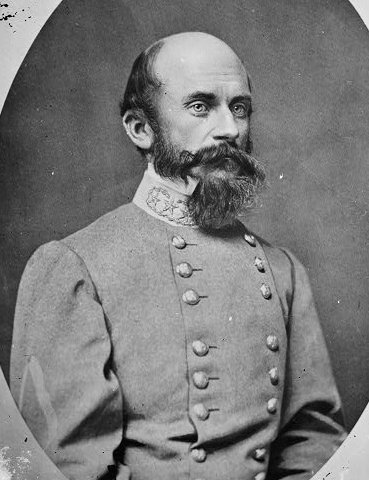
Richard-Ewell

Lieutenant General Richard S. Ewell C.S.A.

Since Lee believed that the size of his two corps was too ponderous, especially for those that he was considering as successors to Jackson, Lee divided Jackson’s old Second Corps into tow elements. To command the three division that now comprised the Second Corps, Lee promoted Major General Richard Ewell to Lieutenant General.

Dick Ewell was a modest man and “had maintained a reputation for solid competence.” [1] Freeman wrote:

“In part, the appointment of Dick Ewell was made because of sentimental association with the name Jackson, and in part because of admiration for his unique, picturesque, and wholly lovable personality. Of his ability to lead a corps nothing was known. Ewell had never handled more than a division and he had served with Lee directly for less than a month.” [2]

Ewell was native of Virginia, his father, Thomas Ewell, was a physician and scientific writer whose works created controversy with both the Catholic and Episcopal Churches. Though a gifted writer and editor his finances declined even as the size of his family increased, plunging the family into poverty. The elder Ewell struggled with depression and alcoholism and died at the age of forty in in 1826 when Richard was nine years old. Ewell’s maternal grandfather was Benjamin Stoddert who served in the Revolutionary war and as the first Secretary of the Navy by John Adams. Stoddert helped create the Navy that rose to greatness. “In just three years he purchased land for six navy yards, acquired fifty ships, and recruited 6,000 sailors, including a corps of talented young officers that included David Porter, Isaac Hull, Oliver Perry, and Stephen Decatur.[3]

When his father died the family remained in poverty on the family farm, albeit poverty with a distinguished heritage which his mother ensured that her children understood. She also instilled a strict religious faith in her son. With one brother at West Point and another having died of a liver infection, possibly caused by typhoid, Richard took over the management of the family farm. His mother, who sought more than a rudimentary education for him worked to get him an appointment to West Point for several years and he was finally admitted to the academy in 1836. Ewell was an eccentric, in many ways like his father, mother and grandfather:

“In him one could see the practical, precise mind of his grandfather Benjamin Stoddert and, negatively, the cynicism and sharp tongue of his mother, Elizabeth. The similarities to his deceased father were more pronounced. Richard possessed Thomas Ewell’s violent temper, high intellect, nervous energy, and love of alcohol.” [4]

In 1836 Ewell entered West Point, from which he graduated in 1840 along with his classmates, William Tecumseh Sherman and George Thomas. Some of his seniors in his cadet company included Joseph Hooker, John Sedgwick, P.T.G. Beauregard, Henry Halleck, Jubal Early and Henry Hunt, all of whom served as General officers in either the Union or Confederate armies during the Civil War. Some of the underclassmen who served under him included both James Longstreet and Ulysses S. Grant. By the end of his time at West Point Ewell had “developed into not only an impressive student but an impressive soldier.[5] He graduated thirteenth in a class of forty-two and chose to be commissioned in the Dragoons.

Upon graduation and his brevet promotion to Second Lieutenant the young officer reported to the First Dragoons and served on the western territories and plains of the rapidly expanding nation. Ewell was picky as far as relationships went and seeing the often sad examples of men who married on the frontier he elected to wait, which caused him not to marry until after the Civil War began.

On the frontier his Christian faith began to wane. He still believed in God, but he was a skeptic, did not own a Bible and found little solace in region, even as his mother converted to Catholicism and entered a novitiate with a Catholic religious order. His antipathy was deepened as he observed the behavior of Christian missionaries working among the various Indian tribes. Of the missionaries he observed “wife beating, fornication, theft and adultery.” He was taken by surprise when his younger brother William decided to become a missionary. Ewell wrote: “I have seen so much injury done the Indians here by them that I am rather skeptic[c]al of their utility. Some of the greatest scamps we have are missionaries.[6] Despite this he never completely lost faith. Stonewall Jackson had a marked influence on his return to faith. One night before a battle he heard Jackson praying inside his tent and later remarked that “he had never before heard a prayer so devout and beautiful; he then for the first time, felt the desire to be a Christian.[7]

When war came with Mexico Ewell, now a First Lieutenant went with his company. He fought at Vera Cruz, Cerro Gordo, Puebla and Churubusco. While he suffered no physical harm in combat, he developed malaria and he lost his older brother Tom, who was serving with the Mounted Rifles and was mortally wounded at Cerro Gordo, and his cousin Levi Gannt, was killed at Chapultepec. Following Mexico he served in various duties became a noted Indian fighter on the western frontier. Those duties showed that “he had proved his mettle and established his credibility.” [8]

As secession drew near Ewell was very sick again with fever and was being returned to Virginia, some thought to die. However, that did not stop him from offering to fight a group of secessionists in Texas who were threatening to attack a Federal installation. He returned to health and on April 24th 1861 he resigned his commission in the U.S. Army, an act that he wrote “was like death to me.” [9] He was commissioned in the new Confederate Army as a Lieutenant Colonel of Cavalry shortly after his resignation.

Completely bald, and speaking with a lisp, Ewell’s oddities “endeared him to his officers and men,” [10] and by January 1862 he was a division commander and Major General serving under Jackson in the Valley campaign. John Gordon noted that Ewell “had in many respects the most unique personality I have ever known. He was composed of anomalies, the oddest, most eccentric genius in the Confederate Army….” [11] During that campaign he distinguished himself. During the campaign “Next to Jackson himself, Ewell stood out. Every act of Ewell’s in the campaign had been the standard of a competent, alert, and courageous lieutenant.” [12]

William C. Oates wrote of Ewell:

“Ewell was a first-class lieutenant, but he did not have enough confidence in himself to make him successful with an independent command…He hesitated…Therein was Ewell’s deficiency as a general. He had a splendid tactical eye, capable of grand military conceptions, and once resolved quick as lightening to act, yet never quite confident of his own judgment and sought the approval of others before he would execute.” [13]

Ewell had been an effective and dependable division commander under Jackson but had been wounded at Groveton where he was severely wounded and lost a leg, which meant the “absence for long months of the most generous, best disciplined, and in many soldierly qualities, the ablest of Jackson’s subordinates.” [14] Longstreet “regarded him as a superior officer in every respect to Hill.” [15]However, Ewell, though serving long with Jackson in the Shenandoah Valley had served “only briefly under Lee” [16] before being wounded at Groveton. The result was that neither Lee nor Ewell fully knew or understood each other. Lee knew Ewell’s excellent reputation among the soldiers of Second Corps and “may have heard rumors that on his deathbed Jackson expressed a preference for Ewell as his successor” [17] but he had little familiarity with Ewell.

In sending the recommendation on to Richmond Lee termed Ewell “an honest, brave soldier, who has always done his duty well.” [18] It was not a resounding recommendation, but then Lee barely knew Ewell. Lee wrote after the war that he recommended Ewell “with full knowledge of “his faults as a military leader- his quick alternations from elation to despondency[,] his want of decision &c.” [19] Many questions hovered around the appointment of Ewell including how the loss of his leg, his recent marriage, newness to corps command, and unfamiliarity with Lee’s style of command would have on him.

The latter was even more problematic than any residual mental or physical effects of his wound and change in lifestyle. The fact was that Ewell was unfamiliar with Lee’s methods of command in large part because he “had served directly under Lee something less than a month, and then always subject to Jackson’s guidance. Lee never had an opportunity of the lack of self-confidence in Ewell.” [20] Had Lee known that the humble Ewell had reservations of his own about assuming command of a corps and going back to battle after the traumatic amputation of his leg, he had written “I don’t feel up to a separate command” and he had “no desire to see the carnage and shocking sights of another field of battle.” [21] Ewell admitted to his new bride Lizinka that he was “provoked excessively with myself at times at my depression of spirits & dismal way of looking at everything, present & future….” [22] Lee did speak privately about his concerns to Ewell, but no record exists of the conversation, regardless Lee was not concerned enough to remove Ewell from command or to assign his corps to important tasks.

Ewell’s reorganized Second Corps now consisted of his former division, commanded since Antietam by Major General Jubal Early, who in some measure acted as Ewell’s executive officer, on whom “Ewell came to rely on heavily – perhaps too heavily – on his judgment.” [23] The corps also contained the former division of Stonewall Jackson under the command of Edward “Old Allegheny” Johnson, an old regular with a solid record of service. The former division of D.H. Hill was now under the command of Robert Rodes, a VMI graduate and professor who had never served in the Regular Army and only had briefly commanded a division before his appointment to command. The brigade level commanders in the corps were another matter.

Early’s Division

??????????????????????????????????????????????????????????????????????????????????????????????

Major General Jubal Early C.S.A.

Early was an unusual character. Described similarly by many to Ewell in his gruffness and eccentrics, unlike Ewell, who was modest and charitable, Early was “ambitious, critical, and outspoken to the point of insubordination. Under certain circumstances he could be devious and malevolent.” [24] Longstreet’s aide Moxey Sorrel wrote of him: “Jubal Early….was one of the ablest soldiers in the army. Intellectually he was perhaps the peer of the best for strategic combinations, but he lacked the ability to handle troops effectively in the field….His irritable disposition and biting tongue made him anything but popular.” [25] Despite this, Early had proved himself as a brigade commander and acting division commander and Lee referred to him affectionately as “my bad old man.” [26]

Early was the son of a tobacco planter in Franklin County Virginia who had served in the Virginia legislature and was a Colonel of militia. Growing up he had an aptitude for science and mathematics accepted into West Point in 1833 at the age of seventeen. His fellow students included Joe Hooker, John Sedgwick, Braxton Bragg, and John Pemberton, later, the doomed defender of Vicksburg. Also in the class was Lewis Armistead, with whom the young Early, had an altercation that led to Armistead breaking a plate over his head in the mess hall. For the offense Armistead was dismissed from the academy. Early was a good student, but had poor marks for conduct and graduated eighteenth in a class of fifty.

He was commissioned into the artillery on graduation in 1837. However, after experiencing life in the active duty army, including service in the in the Seminole War, left the army and became a highly successful lawyer and active Whig politician. He served in the Mexican war as a Major with Virginia volunteers. Unlike some of his classmates, and later contemporaries in the Civil War, Early, and his men did not see combat, and instead served on occupation duty. In Mexico Zachary Taylor made Early the “military governor of Monterrey, a post that he relished and filled with distinction.” [27]

After his service in Mexico Early returned to Virginia where he returned to his legal practice, served as a prosecuting attorney and to politics where he served as a Whig in the Virginia legislature.

During his time in Mexico contracted rheumatic fever, which left him with painful rheumatoid arthritis for the rest of his life. Due to it he “stooped badly and seemed so much older than his years that his soldiers promptly dubbed him “Old Jube” or Old Jubilee.” [28]

Jubal Early was “notoriously a bachelor and at heart a lonely man.” Unlike many Confederate officers he had “no powerful family connections, and by a somewhat bitter tongue and rasping wit” isolated himself from his peers.[29]

Likewise, in an army dominated by those with deep religious convictions, Early was avowedly irreligious and profane, though he did understand the importance of “the value of religion in keeping his soldiers’ spirits up” and as commander of the Army of the Valley issued orders for a stricter keeping of the Sabbath. [30] Lee’s adjutant Walter Taylor wrote of him “I feared our friend Early wd not accomplish much because he is such a Godless man. He is a man who utterly sets at defiance all moral laws & such a one heaven cannot favor.” [31] That being said Porter Alexander praised Early and noted that his “greatest quality perhaps was the fearlessness with which he fought against all odds & discouragements.” [32]

Early was a Whig, and a stalwart Unionist who opposed Virginia’s secession voting against it because he found it “exceedingly difficult to surrender the attachment of a lifetime to that Union which…I have been accustomed to look upon (in the language of Washington) as the palladium of the political safety and prosperity of the country.” [33] Nonetheless, like so many others he volunteered for service after Lincoln called for 75,000 volunteers to crush the rebellion.

Lee “appreciated Early’s talents as a soldier and displayed personal fondness for his cantankerous and profane Lieutenant …who .Only Stonewall Jackson received more difficult assignments from Lee.” [34] He was the most influential of Ewell’s commanders, and his “record in battle prior to Gettysburg was unsurpassed.” [35]

Early’s brigade commanders included standouts such as Brigadier General John Gordon and Harry Hays, which was balanced out by the weakness of Brigadier General William “Extra Billy” Smith and the inexperience of Colonel Isaac Avery, who commanded the brigade of Robert Hoke who had been wounded at Chancellorsville.

Gordon

Brigadier General John Gordon was one of the most outstanding Confederate commanders in the Civil War, eventually rose to command Second Corps. He is possessed of a naturally chivalrous character, which would be show on the Gettysburg battlefield where he came to the aid of the wounded Union General Francis Barlow. Though lacking in some highest command abilities due to his inexperience, he brings a certain freshness, boldness, freedom and originality to command. At Appomattox he was detailed to lead the remnants of the Army of Northern Virginia as it formally surrendered, the officer receiving the surrender was Major General Joshua Chamberlain, who honored the defeated Rebel army by bringing his division to present arms.

Gordon was not a professional soldier, he raised a company from the northwest corner of Georgia called “the Raccoon Roughs” in the opening weeks of the war.” [36] Georgia had no room in its new military for the company and Gordon offered it to Alabama. After Manassas was elected colonel of the 6th Alabama which he commanded the regiment until he was wounded five times in the defense of the Bloody Lane at Antietam. Though he had no prior military experience he learned his trade well and possessed “an oratorical skill which inspires his troops to undertake anything. His men adore him….he makes them feel as if they can charge hell itself.” [37] He is promoted to Brigadier General Gordon took command of Lawton’s brigade of Georgians prior to Chancellorsville.

Hays

Brigadier General Harry Hays was a New Orleans lawyer who had served as “lieutenant and quartermaster of the 5th Louisiana in the Mexican War” and “When the South seceded Hays was made colonel of the 7th Louisiana.” [38] Harry Hays was a solid commander who was promoted to command a Louisiana brigade before the 1862 Maryland campaign. He would continue to serve with distinction until he was wounded at Spotsylvania.

“Extra Billy” Smith

Brigadier General William “Extra Billy” Smith was a sixty-five year old politician turned soldier who was a “valiant but unmilitary officer.” [39] He refused an appointment as a brigadier from Governor John Letcher of Virginia, because “he was wholly ignorant of drill and tactics,” [40] but he instead accepted an appointment as Colonel of the 49th Virginia, and attempted to learn the trade of being a soldier, though he never gave up his political office, serving in the Confederate Congress while at the same time serving as the Colonel of the 49th Virginia. Smith’s case was certainly an unusual, even in an unusual army.

Though never much of a tactician, he was brave in battle. He commanded that regiment and was acting commander of Early’s brigade at Antietam, where he was wounded three times, but directed his troops until the battle was over. Jeb Stuart observed him during the battle “dripping blood but fighting gallantly.” [41] Smith was “the only political general to survive Lee’s weeding out” [42] of officers after Chancellorsville, and in “commanding a brigade Extra Billy Smith was straining the limits of his martial abilities.” [43] He left the army in 1864, but only after he had been elected Governor of Virginia in 1863. At Gettysburg the caustic Jubal Early would “contend not only with an eccentric brigadier general but also the governor-elect of his state.” [44]

Avery

Colonel Isaac Avery commanded the 6th North Carolina and when Hoke was wounded at Chancellorsville took the brigade. Avery was described as having a “high moral worth,” “genial nature,” “stern inflexible fortitude,” and “chivalrous bearing.” [45] As a brigade commander he was an unknown quantity, and though “his peers had confidence in him, in Pennsylvania Avery would be going into battle for the first time at the head of a brigade of men who did not know him well.” [46]

Johnson’s Division

Edward_Johnson_(general)

Major General Edward Johnson C.S.A.

Edward “Old Allegheny” Johnson, an old regular, a graduate of the West Point class of 1838. He had a solid record of service in the old Army. Johnson served in the Seminole War and received brevet promotions to Captain and Major during the Mexican War. Like many officers that remained in the army after Mexico he served on the frontier on the Great Plains. He resigned his commission when Virginia seceded from the Union and was appointed Colonel of the 12th Virginia Infantry and soon was promoted to Brigadier General in December 1861. He commanded a brigade sized force with the grand name of “the Army of the Northwest” which fell under the command of Stonewall Jackson.[47] He was wounded in the ankle at the Battle of McDowell on May 8th 1862, but the wound took nearly a year to heal, imperfectly at that. He was a favorite of Jackson who insisted that he be promoted to Major General and be given a division.

He took command of Jackson’s old division when Ewell was promoted to command Second Corps after Jackson’s death after Chancellorsville. Despite his wealth of experience in the pre-war army and service with Jackson in the Valley, Johnson was an outsider to the division. Like so many others he had never commanded a division “with no real experience above the brigade level.” Likewise he was “unfamiliar with the qualities and limitations of his four new brigadiers.” [48] Despite this he becomes quite popular with some of his men, and because he walks with limp, and uses a long staff to help him walk “his boys sometimes call him “Old Club.” [49] Gettysburg is his first test as a division commander, but not one that he is given a real opportunity to excel.

As a division commander “Johnson developed a reputation that when he threw his troops into battle, the struck with the punch of a sledgehammer, exactly the way Lee wanted his commanders to fight.” [50] Johnson “does well in nearly all his fights, hits hard and wins the confidence of his men.” [51] He was considered for command of First Corps when Longstreet was seriously wounded during the Wilderness Campaign. [52] One of his subordinates agreed, writing “without hesitation that he was the best Division commander I have ever met with, a thorough soldier and capable officer. I have little doubt that as a corps commander he would have proved himself far superior to others that I knew….” [53]

In Johnson’s division the command situation was more unsettled. Like Johnson, all of his brigade commanders were new to their commands. Johnson’s division had four brigades commanded by Brigadier Generals George “Maryland Steuart, John Marshall Jones and James Walker, as well as Colonel Jesse Williams.

“Maryland” Steuart

Brigadier General George “Maryland” Steuart, was a tough regular army cavalry officer. Steuart was one of the few officers from Maryland who left the army for the Confederacy. He graduated from West Point in 1848 along with John Buford. He entered the army too late to serve in Mexico, but served with the 2nd Dragoons and the 2nd U.S. Cavalry Regiment on the Great Plains. He resigned his commission and entered Confederate service. Initially commissioned as a Captain of Cavalry, he became Colonel of the 1st (Confederate) Maryland Regiment at Bull Run. The Marylander was promoted to Brigadier general in March of 1862 and commanded “brigades of cavalry and infantry in the Shenandoah Valley” under Jackson. [54]

His performance as a cavalry commander was “lackluster” and “he was reassigned to an infantry brigade, which he commanded at Cross Keys,” [55] where he was wounded by a canister ball in his chest, a wound that took a year to heal.

Some wonder why Steuart was not more severely handled by Jackson, who was a harsh disciplinarian and who preferred courts-martial charges on others, including Dick Garnett for similar performance issues. Douglas Southall Freeman believed that “As a Maryland soldier of stranding, Steuart was expected to have a large influence, especially on recruiting. If he we arrested as a failure, Marylanders of Southern sympathy would be disillusioned and resentful. Considerations of policy outweighed personalities.” [56] This is likely the case, the Confederacy was counting on bringing sizable numbers of Marylanders into the fold as late as 1863.

Returning to active service Steuart took command of a troubled brigade, whose commander, Brigadier General Raleigh Colston, “had just been relieved of duty by Lee after a disappointing performance as head of a division at Chancellorsville.” [57] Steuart was a strict disciplinarian, who “Lee hoped would bring harmony to a bickering brigade of Marylanders, Virginians, and North Carolinians.” [58] Though Steuart was somewhat eccentric, he trained hi men well and over time his men came to respect him. Fifty years later, one of the surviving Maryland Confederate Veterans said “No one in the war gave more completely and conscientiously every faculty, every energy that was in him to the southern cause.” [59]

J.M. Jones

Brigadier General John Marshall Jones also was a former regular who was an underclassman in Ewell’s company and a classmate of John Reynolds and Richard Garnett. He graduated thirty-ninth of fifty-two cadets in the class of 1841, and served in the infantry. He had a “routine career” and served on the frontier and was an instructor at West Point during the Mexican War, a position that he heled for seven years. [60]

He resigned his commission in 1861 and served as a staff officer. He had a had a well-known problem with alcohol which had earned him the nickname “Rum” at West Point [61] likely kept him out of command for the first part of the war. Unlike most of the former Regulars Jones had never held a field command, and instead “served in staff assignments at the division level, lastly as a lieutenant colonel” [62] under Early.

Though Ewell thought much of his abilities as a staff officer, Jones was an alcoholic, but by early 1863 he appeared “to have gotten himself sufficiently under control to warrant the opportunity to lead men in battle.” [63] Lee was not confident of the appointment and wrote to Jefferson Davis “Should [Jones] fail his duty, he will instantly resign.” If this meant that Jones’s enemy was strong drink, the new brigadier met and overcame that adversary.” [64] Like Johnson he was new to command at this level, he would continue to serve well until his death in the Wilderness in 1864.

Walker

Brigadier General James Walker commanded the “Stonewall” Brigade. Walker replaced the former brigade commander, Elisha Paxton, who had been killed at Chancellorsville. As a cadet at V.M.I. Walker had a confrontation with his instructor, Stonewall Jackson, where he challenged his professor to a duel. [65] The duel did not take place and Walker “was expelled from the school.” [66] After his expulsion worked in railway construction, then studied law and set up a practice in Pulaski Virginia.

After John Brown’s raid Walker formed a militia company which became part of the 4th Virginia, which a part of Jackson’s command. The past did not haunt him and he and Jackson had an “amicable” relationship during the war and “Jackson did what he could to advance Walker.” [67] Walker became Lieutenant Colonel of the 13th Virginia and took command when A.P. Hill was promoted to Brigadier general. He continued to command the 13th Virginia in Ewell’s division, earning praise from Jubal Early who called him “a most gallant officer, who is always ready to perform a duty.” [68] The solid regimental commander then served as acting commander of different brigades during the Seven Days, Antietam, where he was wounded, and Fredericksburg. Walker had a solid record of success and was deserving of his promotion.

He had just been promoted to Brigadier General and was given the honor of command of the Stonewall Brigade, over the distinguished colonels of all five of its regiments. The appointment of an outsider like Walker was “a shock” [69] and brought an outcry from these officers who “in protest tendered their resignations.” Lee handled the incident with great care, and the “resignations were so declined so quietly and with so much tact that no trace of the incident appears in official records.” [70] Likewise Walker dealt with the situation well, in large part due to his personality:

“He was an extrovert who loved to fight, a two-fisted drinker and practical joker who enjoyed life too much to engage in petty bickering with his new subordinates. By the end of his first month, the Virginians affectionately called the tall and muscular fighter “Stonewall Jim.” [71]

He would lead the brigade until it was annihilated with the rest of the division at Spotsylvania, where he lost an arm. He briefly returned to service to lead a division at the end of the war. Following the war he returned to his law practice as well as politics, serving in the House of Delegates, as Lieutenant Governor, and as a Republican a two term member of Congress in the 1890s.

Williams

Colonel Jesse Williams had just taken acting command of the brigade of Brigadier General Francis Nichols who had been wounded at Chancellorsville. Williams had commanded the 2nd Louisiana Regiment prior to Gettysburg, and had little previous military experience. He remained in commanded due to the lack of a suitable brigadier, “it was an ominous admission that superior, developed material of high command had been exhausted temporarily.” [72] After less than stellar performances at Chancellorsville and Gettysburg Williams returned to his regiment when the brigade received a new commander. He was killed in battle at Spotsylvania Court House on May 12th 1864.

Rodes’ Division

rodes

Major General Robert Rodes C.S.A.

Robert Rodes was a Virginia Military Institute graduate and professor who had never served in the Regular Army, the only non-West Point Graduate at the Corps or Division levels in the Army of Northern Virginia at Gettysburg. Thirty-two years old “more than six feet in height, with a drooping sandy mustache and a fiery, imperious manner on the field of battle” [73] Rodes “as the visage of a Viking warrior” [74] and looks like he had “stepped off the pages of Beowulf.” [75] His physical appearance “seemed a dramatic contrast to his one-legged eccentric corps commander and to the stoop and irascible Early.” [76] One of his Alabama soldiers who served under him when he commanded a brigade wrote “We fear him; but at the same time we respect and love him.” [77]

His career had been remarkable. Rodes was “tough, disciplined and courageous; he was one of those unusual soldiers who quickly grew into each new assignment.” [78] In just two years he had “risen from captaining a company of “Warrior Guards” in Alabama in 1861 to earning the equivalent of a battlefield promotion to major general for the fight he made at Chancellorsville.” [79] As a brigadier he had shown remarkable leadership on the battlefield and off, taking care of the needs of his soldiers and worked to have “at least one company per regiment to drill on a field gun and to keep up that training from time to time, so that his men could service a cannon in a crisis.” [80]

While Rodes only had briefly commanded a division before his appointment, he was a solid officer who in time became an excellent division commander, but at Gettysburg he was still new and untried. In the summer of 1863 Rodes “was one of the Army of Northern Virginia’s brightest stars…because of his effective, up-front style of combat leadership.” [81]

Rodes’ division was the largest in the army with five brigades present at Gettysburg. His brigade commanders were a mixed bag ranging from the excellent to the incompetent. Among the former he had George Doles, Stephen Ramseur and Junius Daniel. However, Rodes was saddled with two commanders of dubious quality, Brigadier General Alfred Iverson, who was hated by his men and Colonel Edward O’Neal, a leading secessionist politician “who had absolutely no military experience before the war” [82] and who had been ineffective as an acting brigade commander when he took over for Rodes at Chancellorsville, however, Lee was forced to leave at the head of his brigade for lack of other senior leaders over Rodes objections.

Doles

While Brigadier General George Doles of Georgia had no formal military training he was no stranger to military life. He ran away from home as a teenager to join the army in the Mexican War but was caught before he could join. He later served in the Georgia militia where he commanded a company, “the Baldwin Blues,” one of the oldest and best-trained military units in the state.” [83] As a Colonel he “had shown fiber and distinction” [84] as commander of the 4th Georgia. He was promoted to Brigadier General after Antietam, and commanded the brigade at Chancellorsville. By Gettysburg he had a reputation for “being among the Southern army’s most daring, hard fighting brigadiers.” [85]

Ramseur

Raided in a devout Presbyterian home in North Carolina, Brigadier General Stephen Ramseur attended Davidson College, a Presbyterian before being accepted into West Point. He graduated fourteenth of forty-one cadets in the West Point class of 1861, the last to graduate before the Civil War commenced. [86]

Ramseur was commissioned as an artillery officer, but resigned shortly after to join the new Confederate army in Alabama even before his native state of North Carolina had seceded. Within seven months he would be a Brigadier General. He was elected captain of the Ellis Light Artillery of Raleigh North Carolina, and became colonel of the 49th Alabama in 1862. He led that regiment at Malvern Hill where he was badly wounded. Ramseur was noted for “being a fighter and for his skill in handling troops in battle.” [87] Ramseur was promoted to Brigadier General in late 1862, becoming the youngest general in the army and led a North Carolina brigade with great daring at Chancellorsville where he was wounded in the shin by a shell fragment. Along with his division commander Robert Rodes, the still injured Ramseur was “one of the brightest lights in Lee’s army as it approached the field at Gettysburg.” [88]Jubal Early, who he succeeded as a division commander when Early took command of Second Corps in 1864 said that Ramseur “was a most gallant and energetic officer whom no disaster appalled, but his courage and energy seemed to gain new strength in the midst of confusion and disorder.” [89] The young General was mortally wounded at Cedar Creek on October 19th 1864 shortly after hearing about the birth of a child.

Daniel

Brigadier General Junius Daniel, a former regular and graduate of the West Point Class of 1851. He had resigned his commission as a lieutenant in 1858 to manage a family planation, but when war came volunteered for service where he served as commander of the 14th North Carolina. [90] He commanded a brigade on the Peninsula and was promoted to Brigadier General in September 1862.

Daniel had much brigade command time but little combat experience, as his brigade had been posted in North Carolina and the Virginia Tidewater and thus had not shared in the Army of Northern Virginia’s year of glory and slaughter. “Daniel’s brigade joined Rodes division in Virginia as a result of the army’s reorganization after Chancellorsville and in time for it to take part in the invasion of Pennsylvania.” [91] Despite the lack of combat experience Junius Daniel was well respected and “had the essential qualities of a true soldier and successful officer, brave, vigilant, honest…gifted as an organizer and disciplinarian, skilled in handling troops.” [92] At Gettysburg he “proved himself a valiant soldier and capable leader….” [93] This officer too would be killed in the fighting in the Wilderness.

O’Neal

Colonel Edward O’Neal was an Alabama Lawyer who occasionally dabbled in politics and after the war was elected Governor of Alabama. He won his rank due to his political connections as nothing he “had studied or experienced before 1861 had prepared him for military command at any level.” [94] In acting command at Chancellorsville he handled Rodes old brigade badly and bungled his assignment when Jackson “gave the go-ahead to commence his famous flank attack.” [95] O’Neal was “quarrelsome and unhappy under Rodes, still mired at the rank of colonel and convinced that Rodes was planning to replace him.” [96]

In fact Rodes had recommended other officers for the position, but was turned down by Lee. However, Lee did not have anyone suitable to take command of the brigade and left O’Neal in command, though he “blocked O’Neal’s promotion to brigadier general…Obviously if Lee distrusted O’Neal’s ability as a brigade commander, Rodes would have to give special attention to his old brigade in the fight ahead.” [97]

Iverson

Brigadier General Alfred Iverson had served in Mexico as a teen and gained a direct appointment to the Regular army “with the help of his congressman father” [98] and served as a Lieutenant in the 1st U.S. Cavalry until Georgia seceded. He was “a Richmond political pet whose promotion was deeply resented by his North Carolina brigade as a vote of no confidence in their political loyalties.” [99] His brigade had never been in combat and “the four regiments …needed judicious and competent leadership. Instead they had Alfred Iverson.” [100] Iverson was at constant loggerheads with his officers and once attempted to arrest all twenty six officers of his former regiment. [101]

The situation faced by Ewell, a new corps commander working with three new division commanders, each of whom had a mixture of subordinates that ranged from stellar to incompetent was unfortunate. Though he kept most of Stonewall Jackson’s experienced headquarters staff, he was new to them as a commander. Unlike Longstreet who’s First Corps maintained good continuity among its senior leadership and units, Ewell’s command was just beginning to coalesce as the campaign began.

Notes

[1] Ibid. Taylor, John Duty Faithfully Performed p.130

[2] Ibid. Freeman Lee’s Lieutenants p.322

[3] Pfanz, Donald. Richard S. Ewell: A Soldier’s Life University of North Carolina Press, Chapel Hill and London 1998 p.9

[4] Ibid. Pfanz Richard S. Ewell p.11

[5] Ibid. Pfanz Richard S. Ewell p.24

[6] Ibid. Pfanz Richard S. Ewell p.33

[7] Ibid. Pfanz Richard S. Ewell p.266

[8] Ibid. Pfanz Richard S. Ewell p.99

[9] Ibid. Pfanz Richard S. Ewell p.121

[10] Ibid. Freeman Lee’s Lieutenants p.172

[11] Ibid. Girardi. The Civil War Generals p.209

[12] Ibid. Freeman Lee’s Lieutenants p.220

[13] Ibid. Girardi. The Civil War Generals p.209

[14] Ibid. Freeman Lee’s Lieutenants p.322

[15] Ibid. Wert A Glorious Army p.214

[16] Gallagher, Gary. Confederate Corps Leadership on the First Day at Gettysburg: A.P. Hill and Richard S. Ewell in a Difficult Debut in The First Day at Gettysburg edited by Gallagher, Gary W. Kent State University Press, Kent Ohio 1992 p.47

[17] Ibid. Gallagher Confederate Corps Leadership on the First Day at Gettysburg p.47

[18] Ibid. Gallagher Confederate Corps Leadership on the First Day at Gettysburg p.48

[19] Ibid. Gallagher Confederate Corps Leadership on the First Day at Gettysburg p..49

[20] Freeman, Douglas Southall, Lee an abridgment by Richard Harwell, Touchstone Books, New York 1997 p.305

[21] Ibid. Guelzo, Gettysburg: The Last Invasion p.23

[22] Ibid. Pfanz Richard S. Ewell p.279

[23] Ibid. Pfanz Richard S. Ewell p.268

[24] Ibid. Pfanz Richard S. Ewell p.268

[25] Ibid. Girardi. The Civil War Generals p.206

[26] Ibid. Wert A Glorious Army p.155

[27] Osborne, Charles C. Jubal: The Life and Times of General Jubal A. Early, CSA Algonquin Books of Chapel Hill, Chapel Hill NC 1992

[28] Ibid. Freeman Lee’s Lieutenants p.83

[29] Ibid. Freeman Lee’s Lieutenants p.33

[30] Ibid. Osborne Jubal p.385

[31] Ibid. Girardi. The Civil War Generals p.207

[32] Alexander, Edward Porter. Fighting for the Confederacy: The Personal Recollections of General Edward Porter Alexander edited by Gary Gallagher University of North Carolina Press, Chapel Hill 1989 p.397

[33] Ibid. Osborne Jubal p.50

[34] Gallagher, Gary W. Jubal A. Early, the Lost Cause, and Civil War History: A Persistent Legacy; Frank L Klement Lecture, Alternate Views of the Sectional Conflict Marquette University Press Marquette WI 2003 p.11

[35] Ibid. Tagg The Generals of Gettysburg p.256

[36] Ibid. Tagg The Generals of Gettysburg p.262

[37] Ibid. Freeman Lee’s Lieutenants p.41

[38] Pfanz, Harry W. Gettysburg: Cemetery Hill and Culp’s Hill University of North Carolina Press, Chapel Hill NC 1993 p.206

[39] Ibid. Freeman Lee’s Lieutenants p.534

[40] Pfanz, Harry W. Gettysburg: Cemetery Hill and Culp’s Hill University of North Carolina Press, Chapel Hill NC 1993 p.69

[41] Ibid. Freeman Lee’s Lieutenants p.380

[42] Ibid. Dowdy. Lee and His Men at Gettysburg p.123

[43] Sears, Stephen W. Gettysburg. Houghton Mifflin Co. Boston and New York 2003 p.53

[44] Ibid. Pfanz Gettysburg: Cemetery Hill and Culp’s Hill p.70

[45] Pfanz, Harry W. Gettysburg: Cemetery Hill and Culp’s Hill University of North Carolina Press, Chapel Hill NC 1993 p.240

[46] Ibid. Tagg The Generals of Gettysburg p.268

[47] Ibid. Pfanz. Gettysburg: Cemetery Hill and Culp’s Hill p.123

[48] Ibid. Tagg The Generals of Gettysburg pp.269-270

[49] Ibid. Freeman Lee’s Lieutenants p.47

[50] Ibid. Glatthaar General Lee’s Army from Victory to Collapse p.345

[51] Ibid. Freeman Lee’s Lieutenants p.47

[52] Ibid. Freeman Lee’s Lieutenants p.672

[53] Ibid. Girardi. The Civil War Generals p.227

[54] Ibid. Pfanz. Gettysburg: Cemetery Hill and Culp’s Hill p.312

[55] Ibid. Pfanz. Gettysburg: Cemetery Hill and Culp’s Hill p.312

[56] Ibid. Freeman Lee’s Lieutenants p.216

[57] Ibid. Tagg The Generals of Gettysburg p.273

[58] Sears, Stephen W. Gettysburg. Houghton Mifflin Co. Boston and New York 2003 p.54

[59] Ibid. Pfanz. Gettysburg: Cemetery Hill and Culp’s Hill p.313

[60] Ibid. Pfanz. Gettysburg: Cemetery Hill and Culp’s Hill p.206

[61] Ibid. Tagg The Generals of Gettysburg p.276

[62] Ibid. Pfanz. Gettysburg: Cemetery Hill and Culp’s Hill p.206

[63] Ibid. Tagg The Generals of Gettysburg p.276

[64] Ibid. Freeman Lee’s Lieutenants p.530

[65] Ibid. Pfanz. Gettysburg: Cemetery Hill and Culp’s Hill p.156

[66] Ibid. Pfanz. Gettysburg: Cemetery Hill and Culp’s Hill p.154

[67] Ibid. Freeman Lee’s Lieutenants p.530

[68] Ibid. Tagg The Generals of Gettysburg p. 279

[69] Ibid. Pfanz. Gettysburg: Cemetery Hill and Culp’s Hill p.156

[70] Ibid. Freeman Lee’s Lieutenants p.530

[71] Ibid. Tagg The Generals of Gettysburg p. 278

[72] Ibid. Freeman Lee’s Lieutenants p.530

[73] Ibid. Freeman Lee’s Lieutenants p.39

[74] Ibid. Sears, Gettysburg p.53

[75] Ibid. Freeman Lee’s Lieutenants p.39

[76] Pfanz Harry W. Gettysburg: The First Day University of North Carolina Press, Chapel Hill and London 2001 p.147

[77] Ibid. Wert A Glorious Army p.178

[78] Ibid. Glatthaar General Lee’s Army from Victory to Collapse p.243

[79] Ibid. Sears, Gettysburg p.53

[80] Ibid. Glatthaar General Lee’s Army from Victory to Collapse p.244

[81] Ibid. Tagg The Generals of Gettysburg p. 284

[82] Ibid. Tagg The Generals of Gettysburg p.299

[83] Ibid. Tagg The Generals of Gettysburg p.287

[84] Ibid. Freeman Lee’s Lieutenants p.386

[85] Ibid. Tagg The Generals of Gettysburg p.288

[86] Ibid. Tagg The Generals of Gettysburg p.289

[87] Pfanz Harry W. Gettysburg: The First Day University of North Carolina Press, Chapel Hill and London 2001

[88] Ibid. Tagg The Generals of Gettysburg p.290

[89] Ibid. Girardi. The Civil War Generals p.251

[90] Ibid. Pfanz Gettysburg: The First Day p.179

[91] Ibid. Pfanz Gettysburg: The First Day p.179

[92] Ibid. Tagg The Generals of Gettysburg p.292

[93] Ibid. Coddington The Gettysburg Campaign p.21

[94] Krick, Robert K. Three Confederate Disasters on Oak Ridge: Failures of Brigade Leadership on the First Day of Gettysburg in The First Day at Gettysburg edited by Gallagher, Gary W. Kent State University Press, Kent Ohio 1992 p.120

[95] Ibid. Tagg The Generals of Gettysburg p.298

[96] Ibid. Guelzo, Gettysburg: The Last Invasion p.170

[97] Ibid. Pfanz. Gettysburg: Cemetery Hill and Culp’s Hill p.162

[98] Ibid. Pfanz . Gettysburg: Cemetery Hill and Culp’s Hill p.152

[99] Ibid. Guelzo, Gettysburg: The Last Invasion p.170

[100] Ibid. Krick Three Confederate Disasters on Oak Ridge p.129

[101] Ibid. Krick Three Confederate Disasters on Oak Ridge p.129

Leave a comment

Filed under civil war, Gettysburg, History, leadership, Military

Mine Eyes Have Seen the Glory: Religion, Ideology and the Civil War Part 3

Friends of Padre Steve’s World

This is the final installment `of a very long chapter in my Gettysburg Staff Ride Text. The chapter is different because instead of simply studying the battle my students also get some very detailed history about the ideological components of war that helped make the American Civil War not only a definitive event in our history; but a war of utmost brutality in which religion drove people and leaders on both sides to advocate not just defeating their opponent, but exterminating them.

But the study of this religious and ideological war is timeless, for it helps us to understand the ideology of current rivals and opponents, some of whom we are in engaged in battle and others who we spar with by other means, nations, tribes and peoples whose world view, and response to the United States and the West, is dictated by their religion. 

Yet for those more interested in current American political and social issues the period is very instructive, for the religious, ideological and political arguments used by Evangelical Christians in the ante-bellum period, as well as many of the attitudes displayed by Christians in the North and the South are still on display in our current political and social debates. 

I probably will write something using some of these ideas in a contemporary setting tomorrow….

Peace

Padre Steve+
LawrenceDestruction-500

The Attack on Lawrence Kansas 

The Bloody Battle for Kansas

The struggle between the rival factions in Kansas increased in intensity as Free states and slave states alike poured in settlers and resources to control the territory. However, by the fall of 1855 it appeared that the free-state forces were gaining strength and now enjoyed a numerical superiority to the slave state supporters. That changed when President Franklin Pierce “gave official recognition to a territorial government dominated by proslavery forces- a government that decreed the laws of Missouri in force in Kansas as well.” [1]

That government decreed that:

“Public office and jury service were restricted to those with demonstrably proslavery options. Publicly to deny the right to hold slaves became punishable by five year’s imprisonment. To assist fugitive slaves risked a ten-year sentence. The penalty for inciting slave rebellion was death.” [2]

Rich Southerners recruited poor whites to fight their battles to promote the institution of slavery. Jefferson Buford of Alabama recruited hundreds of non-slaveholding whites to move to Kansas. Buford claimed to defend “the supremacy of the white race” he called Kansas “our great outpost” and warned that “a people who would not defend their outposts had already succumbed to the invader.” [3]

To this end he and 415 volunteers went to Kansas, where they gained renown and infamy as members of “Buford’s Cavalry.” The day they left Montgomery they were given a sendoff. Each received a Bible, and the “holy soldiers elected Buford as their general. Then they paraded onto the steamship Messenger, waving banners conveying Buford’s twin messages: “The Supremacy of the White Race” and “Kansas the Outpost.” [4] His effort ultimately failed but he had proved that “Southern poor men would kill Yankees to keep blacks ground under.” [5]

By the end of 1855 the free-state citizens had established their own rival government which provoked proslavery settlers who “bolstered by additional reinforcements from Missouri invaded the free-state settlement of Lawrence, destroyed its two newspapers, and demolished or looted nearby homes and businesses.” [6] Federal troops stationed in Lawrence “stood idly by because they had received no orders from the inert Pierce administration.” [7]

In response Senator Charles Sumner of Massachusetts began a two day speech on the Senate floor known as “The Crime Against Kansas” in which he condemned the assault on Lawrence which he described as “the anteroom to civil war.” [8] Sumner’s speech was a clarion call to partisans on both sides regarding the serious nature of what had taken place in Lawrence and it burst like a bombshell in the hallowed halls of the Senate. Sumner proclaimed “Murderous robbers from Missouri…hirelings picked from the drunken spew and vomit of an uneasy civilization” [9] had committed:

“The rape of a virgin Territory, compelling it to the hateful embrace of Slavery; and it may clearly be traced to a depraved longing for a new slave State, the hideous offspring of such a crime, in the hope of adding to the power of Slavery in the National Government.” [10]

Sumner painted an even bleaker picture of the meaning what he believed was to come noting that the rape” of Lawrence was the evidence that:

“The horrors of intestine feud” were being planned “not only in this distant Territory, but everywhere throughout the country. Already the muster has begun. The strife is no longer local, but national. Even now while I speak, portents hang on all the arches of the horizon, threatening to darken the land, which already yawns with, the mutterings of civil war.” [11]

Caning-of-Charles-Sumner

Representative Preston Brooks attacks Senator Charles Sumner in the Senate Chamber 

The effects of Sumner’s speech were equally dramatic, partially because he also personally insulted a number of influential Southern Senators while making it. Two days after the speech, while sitting at his desk in a nearly deserted Senate floor, Sumner was attacked by South Carolina representative Preston Brooks, who was related to one of the men, Senator Andrew P. Butler, who Sumner had insulted in his “Crime against Kansas” speech.

Northern extremists were also at work in Kansas carrying on their own holy war against supporters of slavery. One was John Brown who wrote:

“I rode into Kansas territory in eighteen and fifty-five in a one-horse wagon filled with revolvers, rifles, powder, and two-edged artillery broadswords. I expected war to break out between the free-state forces and the Border Ruffians, and I was ready to buckle on my armor and give battle…

In John Brown Jr.’s words I heard the thundering voice of Jehovah exhorting me to slaughter the Border Ruffians as He’s called Gideon to slay the Midianites. Yes, my greatest or principle object – eternal war against slavery – was to be carried out in Kansas Territory. Praise be God!…” [12]

986024510

John Brown’s Pottawatomie Massacre

Following the attack by the Border Ruffians on Lawrence Kansas, Brown and his company of volunteers went into action against a pro-slavery family at the settlement of Pottawatomie Creek. Brown and his sons attacked the family in their cabin, “dragged three men outside, shot the father through the head, and hacked his two sons with broadswords. Ritual murders.” [13] But Brown was not done; he went to two more cabins hacking his victims to death with the broadswords. Brown wrote:

“On the way back to camp, I was transfixed. The proslavery Philistines had murdered five or six free-state men in the great struggle for the soul of Kansas. Now we had got five of them. God alone is my judge. His will be done.” [14]

The issue in Kansas remained bloody and full of political intrigue. Free-state settlers and proslavery elements battled for the control of the territory. “Throughout the summer and early fall of 1856, armies marched and counter-marched, threatening one another with blood-curdling threats, terrorizing peaceably inclined settlers, committing depredations upon those who could not defend themselves, and killing with enough frequency to give validity to the term “Bleeding Kansas.” [15]

The political battle centered on the Lecompton Constitution which allowed slavery, but which had been rejected by a sizable majority of Kansas residents. The divide was so deep and contentious that that Kansas would not be admitted to the Union until after the secession of the Deep South. But the issue had galvanized the political parties of the North, and for the first time a coalition of “Republicans and anti-Lecompton Douglas Democrats, Congress had barely turned back a gigantic Slave Power Conspiracy to bend white men’s majoritarianism to slavemaster’s dictatorial needs, first in Kansas, then in Congress.” [16]

Attempts to Expand Slavery into the Territories and Beyond
thewanderer_lastslaveship

The Last Slave Ship, the Schooner Wanderer 

Taking advantage of the judicial ruling Davis and his supporters in Congress began to bring about legislation not just to ensure that Congress could not “exclude slavery” but to protect it in all places and all times. They sought a statute that would explicitly guarantee “that slave owners and their property would be unmolested in all Federal territories.” This was commonly known in the south as the doctrine of positive protection, designed to “prevent a free-soil majority in a territory from taking hostile action against a slave holding minority in their midst.” [17]

Other extremists in the Deep South had been long clamoring for the reopening of the African slave trade. In 1856 a delegate at the 1856 commercial convention insisted that “we are entitled to demand the opening of this trade from an industrial, political, and constitutional consideration….With cheap negroes we could set hostile legislation at defiance. The slave population after supplying the states would overflow to the territories, and nothing could control its natural expansion.” [18] and in 1858 the “Southern Commercial Convention…” declared that “all laws, State and Federal, prohibiting the African slave trade, out to be repealed.” [19] The extremists knowing that such legislation would not pass in Congress then pushed harder; instead of words they took action.

In 1858 there took place two incidents that brought this to the fore of political debate. The schooner Wanderer owned by Charles Lamar successfully delivered a cargo of four hundred slaves to Jekyll Island, earning him “a large profit.” [20] Then the USS Dolphin captured “the slaver Echo off Cuba and brought 314 Africans to the Charleston federal jail.” [21] The case was brought to a grand jury who had first indicted Lamar were so vilified that “they published a bizarre recantation of their action and advocated the repeal of the 1807 law prohibiting the slave trade. “Longer to yield to a sickly sentiment of pretended philanthropy and diseased mental aberration of “higher law” fanatics…” [22] Thus in both cases juries and judges refused to indict or convict those responsible.

Evangelical supporters of the efforts to re-open the slave trade argued that if the slave trade was re-opened under “Christian slaveholders instead of course Yankees scrupulously conducting the traffic, the trade would feature fair transactions in Africa, healthy conditions on ships, and Christian salvation in America.” [23]

There arose in the 1850s a second extremist movement in the Deep South, this one which had at its heart the mission to re-enslave free blacks. This effort was not limited to fanatics, but entered the Southern political mainstream, to the point that numerous state legislatures were nearly captured by majorities favoring such action. [24] That movement which had appeared out of nowhere soon fizzled, as did the bid to reopen the slave trade, but these “frustrations left extremists the more on the hunt for a final solution” [25] which would ultimately be found in secession.

Secession and war was now on the horizon, and despite well-meaning efforts of some politicians on both sides to find a way around it, it would come. Religion had been at the heart of most of the ideological debates of the preceding quarter century, and Evangelical Protestants on both sides had not failed to prevent the war; to the contrary those Evangelical leaders were instrumental in bringing it about as they:

“fueled the passions for a dramatic solution to transcendent moral questions. Evangelical religion did not prepare either side for the carnage, and its explanations seemed less relevant as the war continued. The Civil War destroyed the Old South civilization resting on slavery; it also discredited evangelical Protestantism as the ultimate arbiter of public policy.” [26]

The Battle Lines Solidify: A House Divided

don1-023

Abraham Lincoln in 1856

Previously a man of moderation Lincoln laid out his views in the starkest terms in his House Divided speech given on June 16th 1858. Lincoln understood, possibly with more clarity than others of his time that the divide over slavery was too deep and that the country could not continue to exist while two separate systems contended with one another. Lincoln for his part was a gradualist and moderate approach to ending slavery in order to preserve the Union. However, Lincoln, like Davis, though professed moderates had allowed “their language to take on an uncompromising quality,” and because the mood of the country was such that neither man “could regard a retreat from his particular position as surrender- hence there could be no retreat at all.” [27]

The Union Lincoln “would fight to preserve was not a bundle of compromises that secured the vital interests of both slave states and free, …but rather, the nation- the single, united, free people- Jefferson and his fellow Revolutionaries supposedly had conceived and whose fundamental principles were now being compromised.” [28] He was to the point and said in clear terms what few had ever said before, in language which even some in his own Republican Party did not want to use because they felt it was too divisive:

“If we could first know where we are and whither we are tending, we could better judge what to do and how to do it. We are now far into the fifth year since a policy was initiated with the avowed object and confident promise of putting an end to slavery agitation. Under the operation of that policy, that agitation has not only not ceased but has constantly augmented. In my opinion, it will not cease until a crisis shall have been reached and passed. “A house divided against itself cannot stand.” I believe this government cannot endure, permanently, half slave and half free. I do not expect the Union to be dissolved; I do not expect the house to fall; but I do expect it will cease to be divided. It will become all one thing, or all the other. Either the opponents of slavery will arrest the further spread of it and place it where the public mind shall rest in the belief that it is in the course of ultimate extinction, or its advocates will push it forward till it shall become alike lawful in all the states, old as well as new, North as well as South.” [29]

Part of the divide was rooted in how each side understood the Constitution. For the South it was a compact among the various states, or rather “only a league of quasi independent states that could be terminated at will” [30] and in their interpretation States Rights was central. In fact “so long as Southerners continued to believe that northern anti-slavery attacks constituted a real and present danger to Southern life and property, then disunion could not be ruled out as an ugly last resort.” [31]

But such was not the view in the North, “for devout Unionists, the Constitution had been framed by the people rather than created as a compact among the states. It formed a government, as President Andrew Jackson insisted of the early 1830s, “in which all the people are represented, which operates directly on the people individually, not upon the States.” [32] Lincoln like many in the North understood the Union that “had a transcendent, mystical quality as the object of their patriotic devotion and civil religion.” [33]

Lincoln’s beliefs can be seen in the Gettysburg Address where he began his speech with the words “Four score and seven years ago our fathers brought forth on this continent, a new nation, conceived in Liberty, and dedicated to the proposition that all men are created equal…” To Lincoln and others the word disunion “evoked a chilling scenario within which the Founders’ carefully constructed representative government failed, triggering “a nightmare, a tragic cataclysm” that would subject Americans to the kind of fear and misery that seemed to pervade the rest of the world.” [34]

Those same beliefs were found throughout the leaders of the Abolition movement, including Theodore Parker who said “The first [step] is to establish Slavery in all of the Northern States- the Dred Scott decision has already put it in all the territories….I have no doubt The Supreme Court will make the [subsequent] decisions.[35]

Even in the South there was a desire for the Union and a fear over its dissolution, even among those officers like Robert E. Lee who would resign his commission and take up arms against the Union in defense of his native state. Lee wrote to his son Custis in January 1861, “I can anticipate no greater calamity for the country than the dissolution of the Union…I am willing to sacrifice everything but honor for its preservation…Secession is nothing but revolution.” But he added “A Union that can only be maintained by swords and bayonets has no charms for me….” [36] The difference between Lee and others like him and Abraham Lincoln was how they viewed the Union, views which were fundamentally opposed.

Alexander Stephens who became the Confederate Vice President was not at all in favor of disunion. A strict constructionist who believed fervently in state’s rights he believed the South was best served to remain in the Union. As the divide grew he remarked “that the men who were working for secession were driven by envy, hate jealousy, spite- “these made war in heaven, which made devils of angels, and of the same passions will make devils of men. Patriotism in my opinion, had no more to do with it than love of God had to do with the other revolt.” [37]
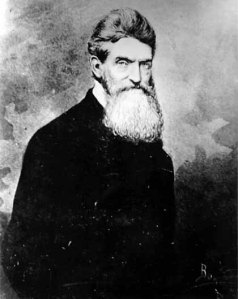
jb_portrait

John Brown

In the North there too existed an element of fanaticism. While “the restraining hand of churches, political parties and familial concerns bounded other antislavery warriors,” [38] and while most abolitionists tried to remain in the mainstream and work through legislation and moral persuasion to halt the expansion of slavery with the ultimate goal of emancipation; there were fanatical abolitionists that were willing to attempt to ignite the spark which would cause the powder keg of raw hatred and emotion to explode.

Most prominent among these men was John Brown. Brown was a “Connecticut-born abolitionist…a man with the selfless benevolence of the evangelicals wrought into a fiery determination to crush slavery” [39] who as early as 1834 was “an ardent sympathizer the Negroes” desiring to raise a black child in his own home and to “offering guidance to a colony of Negroes on the farm of the wealthy abolitionist Gerrit Smith at North Elba New York.” [40] Brown regarded moderate free-staters with distain and in Kansas set about to change the equation when he and a company of his marauders set upon and slaughtered the family of a pro-slavery settler at Pottawatomie Creek. [41]

The example of John Brown provides us a good example to understand religious extremism, especially when it becomes violent. The counterinsurgency field manual notes in words that are certainly as applicable to Brown as they are to current religiously motivated terrorists that “Religious extremist insurgents….frequently hold an all-encompassing worldview; they are ideologically rigid and uncompromising…. believing themselves to be ideologically pure, violent religious extremists brand those they consider insufficiently orthodox as enemies.”[42] 

Brown was certainly “a religious zealot…but was nevertheless every much the product of his time and place….” [43] Brown was a veteran of the violent battles in Kansas where he had earned the reputation as “the apostle of the sword of Gideon” as he and his men battled pro-slavery settlers. Brown was possessed by the belief that God had appointed him as “God’s warrior against slaveholders.” [44] He despised the peaceful abolitionists and demanded action. “Brave, unshaken by doubt, willing to shed blood unflinchingly and to die for his cause if necessary, Brown was the perfect man to light the tinder of civil war in America, which was what he intended to do.” [45] Brown told William Lloyd Garrison and other abolitionist leaders after hearing Garrison’s pleas for peaceful abolition that:

“We’ve reached a point,” I said, “where nothing but war can get rid of slavery in this guilty nation. It’s better that a whole generation of men, women, and children should pass away by a violent death than that slavery should continue to exist.” I meant that literally, every word of it.” [46]

Following that meeting, as well as a meeting with Frederick Douglass who rejected Brown’s planned violent action, Brown went about collecting recruits for his cause and set out to seize 10,000 muskets at the Federal armory in Harper’s Ferry Virginia in order to ignite a slave revolt. Brown and twenty-one followers, sixteen whites and five blacks moved on the arsenal, as they went Brown:

“believed that we would probably fail at the Ferry, would probably die. But I believed that all we had to do was make the attempt, and Jehovah would do the rest: the Heavens would turn black, the thunder would rend the sky, and a mighty storm would uproot this guilty land, washing its sins away with blood. With God’s help, I, John Brown, would effect a mighty conquest even though it was like the last victory of Samson.” [47] 

82590-004-346616D5

U.S. Marines under Command of Colonel Robert E. Lee storm Harper’s Ferry

After initial success in capturing the armory Brown’s plan was was frustrated and Brown captured, by a force of U.S. Marines led by Colonel Robert E. Lee and Lieutenant J.E.B. Stuart. Brown was tried and hung, but his raid “effectively severed the country into two opposing parts, making it clear to moderates there who were searching for compromise, that northerner’s tolerance for slavery was wearing thin.” [48]

It now did not matter that Brown was captured, tried, convicted and executed for his raid on Harper’s Ferry. He was to be sure was “a half-pathetic, half-mad failure, his raid a crazy, senseless exploit to which only his quiet eloquence during trial and execution lent dignity” [49] but his act was the watershed from which the two sides would not be able to recover, the population on both sides having gone too far down the road to disunion to turn back.

Brown had tremendous support among the New England elites, the “names of Howe, Parker, Emerson and Thoreau among his supporters.” [50] To abolitionists he had become a martyr “but to Frederick Douglass and the negroes of Chatham, Ontario, nearly every one of whom had learned something from personal experience on how to gain freedom, Brown was a man of words trying to be a man of deeds, and they would not follow him. They understood him, as Thoreau and Emerson and Parker never did.” [51]

But to Southerners Brown was the symbol of an existential threat to their way of life. In the North there was a nearly religious wave of sympathy for Brown, and the “spectacle of devout Yankee women actually praying for John Brown, not as a sinner but as saint, of respectable thinkers like Thoreau and Emerson and Longfellow glorifying his martyrdom in Biblical language” [52] horrified Southerners, and drove pro-Union Southern moderates into the secession camp.
John_Brown_hanging

The Hanging of John Brown 

The day that Brown went to his hanging he wrote his final missive. This was written once more in apocalyptic language, but also in which he portrayed himself as a Christ figure going to his cross on the behalf of a guilty people, but a people who his blood would not atone:

“It’s now December second – the day of my hanging, the day the gallows become my cross. I’m approaching those gallows while sitting on my coffin in the bed of a military wagon. O dear God, my eyes see the glory in every step of the divine journey that brought me here, to stand on that platform, in that field, before all those soldiers of Virginia. Thank you, Father, for allowing an old man like me such might and soul satisfying rewards. I am ready to join thee now in Paradise…

They can put the halter around my neck, pull the hood over my head. Hanging me won’t save them from God’s wrath! I warned the entire country: I, John Brown, am now quite certain that the crimes of this guilty land will never be purged away, but with blood.” [53]

Brown’s composure and dignity during the trial impressed Governor Henry Wise of Virginia who signed Brown’s death warrant and fire eater Edmund Ruffin, and in his diary Ruffin “praised Brown’s “animal courage” and “complete fearlessness & insensibility to danger and death.” [54]

Brown’s death was marked with signs of mourning throughout the North, for Brown was now a martyr. Henry David Thoreau “pronounced Brown “a crucified hero,” [55] while through the North Brown’s death was treated as a martyr’s death. Even abolitionists like Garrison who had condemned violence in the quest of emancipation praised Brown’s actions while throughout the North:

“Church bells tolled, black bunting was hung out, minute guns were fired, prayer meetings assembled, and memorial resolutions adopted. In the weeks following, the emotional outpouring continued: lithographs of Brown circulated in vast numbers, subscriptions were organized for the support of his family, immense memorial meetings took place in New York, Boston and Philadelphia…” [56]

But in the South there was a different understanding. Despite official denunciations of Brown by Lincoln and other Republican leaders, the message was that the North could not be trusted. Brown’s raid, and the reaction of Northerners to it “was seized upon as argument-clinching proof that the North was only awaiting its opportunity to destroy the South by force….” [57]

The Election of Abraham Lincoln

The crisis continued to fester and when Lincoln was elected to the Presidency in November 1860 with no southern states voting Republican the long festering volcano erupted. It did not take long before southern states began to secede from the Union. Alexander Stephens told a friend who asked him “why must we have civil war?”

“Because there are not virtue and patriotism and sense enough left in the country to avoid it. Mark me, when I repeat that in less than twelve months we shall be in the midst of a bloody war. What will become of us then God only knows.” [58]

But Stephens’ warning fell on deaf ears as passionate secessionist commissioners went throughout the South spreading their message. South Carolina was the first to secede, followed by Mississippi, Florida, Alabama, Georgia, Louisiana and Texas. Many of the declarations of causes for secession made it clear that slavery was the root cause. The declaration of South Carolina is typical of these and is instructive of the basic root cause of the war:

“all the States north of that line have united in the election of a man to the high office of President of the United States, whose opinions and purposes are hostile to slavery. He is to be entrusted with the administration of the common Government, because he has declared that that “Government cannot endure permanently half slave, half free,” and that the public mind must rest in the belief that slavery is in the course of ultimate extinction.”[59]

Throughout the war slavery loomed large, even though in the beginning of abolition controversies of the 1830s many northerners “were content to tolerate slavery’s indefinite survival in the South so long as it did not impinge on their own rights and aspirations at home.” [60] Such attitudes were still common in the North during the late 1850s, especially among Democrats.

But it was the multiple transgressions of slavery supporters to advance those rights in the courts, through the extension of slavery to the territories, to allow slaveholders to recover their human “property” in northern states during the 1850s taught northerners “just how fundamental and intractable the differences with Southern political leaders were. Thus educated, most northern voters had decided by 1860 that only an explicitly anti-slavery party could protect their interests.” [61]

00035483

The results of the divide in American politics were such that in the election of 1860 Abraham Lincoln carried all eighteen Free states with a total of “180 electoral votes- 27 more than he needed for victory.” Lincoln had clear majorities in all but three of the states he won and carried 55 percent of the overall vote in the North. [62] Lincoln won no Southern State during the campaign. The election symbolized the extreme polarization of the respective electorates in both the North and the South. The Baptist clergyman James Furman expressed the outrage and paranoia of many in the South by warning after Lincoln’s election “If you are tame enough to submit, Abolition preachers will be at hand to consummate the marriage of your daughters to black husbands.” [63]

William Lloyd Garrison, again using biblical imagery as well as astute analysis of the behavior of Southern leaders after the election of 1860, wrote that the Southern response to Lincoln’s election:

“Never had the truth of the ancient proverb “Whom the gods intend to destroy, they first make mad” been more signally illustrated than in the condition of southern slaveholders following Lincoln’s election. They were insane from their fears, their guilty forebodings, their lust for power and rule, hatred of free institutions, their merited consciousness of merited judgments; so that they may be properly classed as the inmates of a lunatic asylum. Their dread of Mr. Lincoln, of his Administration, of the Republican Party, demonstrated their insanity. In vain did Mr. Lincoln tell them, “I do not stand pledged to the abolition of slavery where it already exists.” They raved just as fiercely as though he were another John Brown, armed for southern invasion and universal emancipation! In vain did the Republican party present one point of antagonism to slavery – to wit, no more territorial expansion. In vain did that party exhibit the utmost caution not to give offense to any other direction – and make itself hoarse in uttering professions of loyalty to the Constitution and the Union. The South protested that it’s designs were infernal, and for them was “sleep no more!” Were these not the signs of a demented people?” [64]

But both sides were blind to their actions and with few exceptions most leaders, especially in the South, badly miscalculated the effects of the election of 1860. The leaders in the North did not realize that the election of Lincoln would mean the secession of one or more Southern states, and Southerners “were not able to see that secession would finally mean war” [65] despite the warnings of Alexander Stephens to the contrary.

The five slave states of the lower South: “appointed commissioners to the other slave states, and instructed them to spread the secessionist message across the entire region. These commissioners often explained in detail why their states were exiting the Union, and they did everything in their power to persuade laggard slave states to join the secessionist cause. From December 1860 to April 1861 they carried the gospel of disunion to the far corners of the South.” [66]
disunion_dec20_secession3-blog427

Secession Convention in Charleston South Carolina 

Slavery and the superiorly of the white race over blacks was at the heart of the message brought by these commissioners to the yet undecided states. Former Congressman John McQueen of South Carolina wrote to secessionists in Virginia “We, of South Carolina, hope to greet you in a Southern Confederacy, where white men shall rule our destinies, and from which we may transmit our posterity the rights, privileges and honor left us by our ancestors.” [67] In Texas McQueen told the Texas Convention: “Lincoln was elected by a sectional vote, whose platform was that of the Black Republican part and whose policy was to be the abolition of slavery upon this continent and the elevation of our own slaves to an equality with ourselves and our children.” [68]

In his First Inaugural Address Lincoln noted: “One section of our country believes slavery is right and ought to be extended, while the other believes it is wrong and ought not to be extended. This is the only substantial dispute.”[69] Of course he was right, and his southern opponents agreed.

As the war began, white Southerners of all types and classes rallied to the call of war against the hated Yankee. The common people, the poor yeomen farmers were often the most stalwart defenders of the South. With the Orwellian slogan “Freedom is not possible without slavery” ringing in their ears, they went to war against the Yankees alongside their slave-owning neighbors to “perpetuate and diffuse the very liberty for which Washington bled, and which the heroes of the Revolution achieved.” [70]
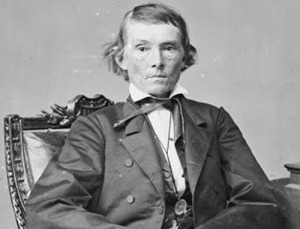
alexander-stephens1

Alexander Stephens

Alexander Stephens the new Vice President of the Confederacy, who had been a devout Unionist and even had a friendly relationship with Lincoln in the months and years leading up to the war explained the foundation of the Southern state in his Cornerstone Speech of March 21st 1861:

Our new government is founded upon exactly the opposite idea; its foundations are laid, its corner- stone rests upon the great truth, that the negro is not equal to the white man; that slavery — subordination to the superior race — is his natural and normal condition. [Applause.] This, our new government, is the first, in the history of the world, based upon this great physical, philosophical, and moral truth.”[71]

Thus the American ideological war was born; it had taken decades to reach the point of no return. It had taken years of frustration, attempts at compromise by politicians who attempted to dodge the moral issues inherent in slavery. Time could not heal the wounds caused by slavery as long as “one section of the country regarded it as a blessing, the other as a curse.” [72] Frederick Douglass observed: “Whatever was done or attempted with a view to the support and secularity of slavery on served to fuel the fire, and heated the furnace of [anti-slavery] agitation to a higher degree than had any before attained.” [73]

“The Heather is on Fire…”
11661

As no middle ground remained, the nation plunged into war with many leaders, especially church leaders forged ahead to claim the mantle of Christ and God for their side; and given the widely held theological “assumptions about divine sovereignty and God’s role in human history, northerners and southerners anxiously looked for signs of the Lord’s favor.” [74] Of course people on both sides used the events of any given day during the war to interpret what this meant and both were subject to massive shifts as the God of Battles seemed to at times favor the armies of the Confederacy and as the war ground on to favor those of the Union.

poster

Those who had been hesitant about secession in the South were overcome by events when Fort Sumter was attacked. Edmund Ruffin spoke for many of the ardent secessionists when he proclaimed “The shedding of blood…will serve to change many voters in the hesitating states, from submission or procrastinating ranks, to the zealous for immediate secession.” [75] But very few of the radical secessionists found their way into uniform or into the front lines. Then like now, very few of those who clamor for war and vengeance the most, and who send the sons of others to die in their wars, take up arms themselves.

Confederate General Jubal Early saw the sour irony in this. Early had fought against secession until the last as a legislator during the Virginia secession debate, and when he finally accepted secession and went to war he never looked back. During the war became one of the most committed Rebels of the Cause. That being said he was not fond of the proponents of secession and took pleasure as the war went on in taunting “the identifiable secessionists in gray uniform who came his way, especially when the circumstances were less than amusing….” [76]After the disastrous defeat at the Third Battle of Winchester in 1864, Early looked at his second in command, former Vice President of the United States and Confederate Major General John C. Breckinridge, who had advocated secession as they retreated amid the “chaos and horror of his army’s rout. Early took the occasion to mock his celebrated subordinate: “Well General, he crowed, “what do you think of the ‘rights of the South’ in the territories now?” [77]

20110930-poster.png_

In the North a different sentiment rose as one volunteer soldier from Pennsylvania wrote: “I cannot believe…that “Providence intends to destroy this Nation, the great asylum for all the oppressed of all other nations and build a slave Oligarchy on the ruins thereof.” Another volunteer from Ohio mused “Admit the right of the seceding states to break up the Union at pleasure…and how long before the new confederacies created by the first disruption shall be resolved into smaller fragments and the continent become a vast theater of civil war, military license, anarchy and despotism? Better to settle it at whatever cost and settle it forever.” [78]

The depth of the religious dimension of the struggle can be seen in the hymn most commonly associated with the Civil War and the United States. This was the immensely popular Battle Hymn of the Republic whose lyricist Julia Ward Howe penned the lines “As he died to make men holy, let us live to make men free! While God is marching on” [79]

There was also an attempt on the part of Northern Evangelicals to push religion to the forefront of the conflict and to correct what they believed was an error in the Constitution, that error being that God was not mentioned in it. They believed that the Civil War was God’s judgment on the nation for this omission. The group, called the National Reform Association proposed the Bible Amendment. They met with Lincoln and proposed to modify the opening paragraph of the Constitution to read:

“We the people of the United States, humbly acknowledging Almighty God as the source of all authority and power and civil government, the Lord Jesus Christ as the Ruler among the nations, His revealed will as the supreme law of the land, in order to form a more perfect union.” [80]

While Lincoln brushed off their suggestion and never referred to the United States as a Christian nation, much to the chagrin of many Northern Christians, the Confederacy had reveled in its self-described Christian character. The Confederacy had “proudly invoked the name of God in their Constitution. Even late in the war, a South Carolina editor pointed to what he saw as a revealing fact: the Federal Constitution – with no reference to the Almighty – “could have been passed and adopted by Atheists or Hindoes or Mahometans.” [81]

When the Stars and Stripes came down on April 14th 1861 the North was galvanized as never before, one observer wrote: “The heather is on fire….I never knew what popular excitement can be… The whole population, men, women, and children, seem to be in the streets with Union favors and flags.” [82] The assault on Fort Sumter help to unify the North in ways not thought possible by Southern politicians who did not believe that Northerners had the mettle to go to war against them. But they were wrong, even Senator Stephen Douglas, Lincoln’s stalwart opponent of so many campaigns went to the White House for a call to national unity. Returning to Chicago he told a huge crowd just a month before his untimely death:

“There are only two sides to the question. Every man must be for the United States or against it. There can be no neutrals in this war, only patriots- or traitors” [83]

Colonel Robert E. Lee, a Virginian who looked askance at secession turned down the command of the Union Army when it was offered and submitted his resignation upon the secession of Virginia noting:

“With all my devotion to the Union and feeling of loyalty and duty of an American citizen, I have not been able to make up my mind to raise my hand against my relatives, my children, my home. I have therefore, resigned my commission in the Army, and save in the defense of my native State…I hope I may never be called upon to draw my sword.” [84]

But throughout the South, most people rejoiced at the surrender of Fort Sumter. In Richmond the night following the surrender “bonfires and fireworks of every description were illuminating in every direction- the whole city was a scene of joy owing to [the] surrender of Fort Sumter” – and Virginia wasn’t even part of the Confederacy.” [85]

The Effect of the Emancipation Proclamation

Some twenty months after Fort Sumter fell and after nearly two years of unrelenting slaughter, culminating in the bloody battle of Antietam, Lincoln published the emancipation proclamation. It was a military order in which he proclaimed the emancipation of slaves located in the Rebel states, and it would be another two years, with the Confederacy crumbling under the combined Federal military onslaught before Lincoln was able to secure passage of the 13th Amendment to the Constitution. The amendment abolished slavery and involuntary servitude throughout the country, as well as nullified the fugitive slave clause and the Three-Fifths Compromise.

Though limited in scope the Emancipation Proclamation had more than a social and domestic political effect, it ensured that Britain would not intervene in the war.
emancipation2

The Emancipation Proclamation and the elimination of slavery also impacted the Union war effort in terms of law, law which eventually had an impact around the world as nations began to adapt to the changing character of war. In the “Instructions for the Government of Armies of the United States in the Field, General Orders No. 100 by President Lincoln, April 24, 1863; Prepared by Francis Lieber, LLD noted in Article 42 of that Code:

“Slavery, complicating and confounding the ideas of property, (that is of a thing,) and of personality, (that is of humanity,) exists according to municipal or local law only. The law of nature and nations has never acknowledged it. The digest of the Roman law enacts the early dictum of the pagan jurist, that “so far as the law of nature is concerned, all men are equal.” Fugitives escaping from a country in which they were slaves, villains, or serfs, into another country, have, for centuries past, been held free and acknowledged free by judicial decisions of European countries, even though the municipal law of the country in which the slave had taken refuge acknowledged slavery within its own dominions.” [86]

It continued in Article 43:

“Therefore, in a war between the United States and a belligerent which admits of slavery, if a person held in bondage by that belligerent be captured by or come as a fugitive under the protection of the military forces of the United States, such person is immediately entitled to the rights and privileges of a freeman To return such person into slavery would amount to enslaving a free person, and neither the United States nor any officer under their authority can enslave any human being. Moreover, a person so made free by the law of war is under the shield of the law of nations, and the former owner or State can have, by the law of postliminy, no belligerent lien or claim of service.” [87]

The threat of the destruction of the Union and the continuance of slavery in either the states of the Confederacy or in the new western states and territories, or the maintenance of the Union without emancipation was too great for some, notably the American Freedmen’s Commission to contemplate. They wrote Edwin Stanton in the spring of 1864 with Grant’s army bogged down outside of Richmond and the Copperheads and the Peace Party gaining in influence and threatening a peace that allowed Southern independence and the continuance of slavery:

“In such a state of feeling, under such a state of things, can we doubt the inevitable results? Shall we escape border raids after fleeing fugitives? No man will expect it. Are we to suffer these? We are disgraced! Are we to repel them? It is a renewal of hostilities!…In the case of a foreign war…can we suppose that they will refrain from seeking their own advantage by an alliance with the enemy?” [88]

In his Second Inaugural Address, Abraham Lincoln discussed the issue of slavery as the chief cause of the war. In it, Lincoln noted that slavery was the chief cause of the war in no uncertain terms and talked in a language of faith that was difficult for many, especially Christians, who “believed weighty political issues could be parsed into good or evil. Lincoln’s words offered a complexity that many found difficult to accept,” for the war had devastated the playground of evangelical politics, and it had “thrashed the certitude of evangelical Protestantism” [89] as much as the First World War shattered Classic European Christian Liberalism. Lincoln’s confrontation of the role that people of faith in bringing on the war in both the North and the South is both illuminating and a devastating critique of the religious attitudes that so stoked the fires of hatred. His realism in confronting facts was masterful, and badly needed, he spoke of “American slavery” as a single offense ascribed to the whole nation.” [90]

“One-eighth of the whole population were colored slaves, not distributed generally over the Union, but localized in the southern part of it. These slaves constituted a peculiar and powerful interest. All knew that this interest was somehow the cause of the war. To strengthen, perpetuate, and extend this interest was the object for which the insurgents would rend the Union even by war, while the Government claimed no right to do more than to restrict the territorial enlargement of it. Neither party expected for the war the magnitude or the duration which it has already attained. Neither anticipated that the cause of the conflict might cease with or even before the conflict itself should cease. Each looked for an easier triumph, and a result less fundamental and astounding. Both read the same Bible and pray to the same God, and each invokes His aid against the other. It may seem strange that any men should dare to ask a just God’s assistance in wringing their bread from the sweat of other men’s faces, but let us judge not, that we be not judged. The prayers of both could not be answered. That of neither has been answered fully. The Almighty has His own purposes. “Woe unto the world because of offenses; for it must needs be that offenses come, but woe to that man by whom the offense cometh.” If we shall suppose that American slavery is one of those offenses which, in the providence of God, must needs come, but which, having continued through His appointed time, He now wills to remove, and that He gives to both North and South this terrible war as the woe due to those by whom the offense came, shall we discern therein any departure from those divine attributes which the believers in a living God always ascribe to Him? Fondly do we hope, fervently do we pray, that this mighty scourge of war may speedily pass away. Yet, if God wills that it continue until all the wealth piled by the bondsman’s two hundred and fifty years of unrequited toil shall be sunk, and until every drop of blood drawn with the lash shall be paid by another drawn with the sword, as was said three thousand years ago, so still it must be said “the judgments of the Lord are true and righteous altogether.”[91]

When Edmund Ruffin pulled the lanyard of the cannon that fired the first shot at Fort Sumter it marked the end of an era. Despite the efforts of Edmund Ruffin, Alexander Stephens, Jefferson Davis and so many others who advocated secession and war, the war that they launched in the hope of maintaining slavery; gave birth to what Lincoln described as “a new birth of freedom.”

When the war ended with the Confederacy defeated and the south in now in ruins, Ruffin still could not abide the result. In a carefully crafted suicide note he sent to his son the bitter and hate filled old man wrote on June 14th 1865:

“I here declare my unmitigated hatred to Yankee rule- to all political, social and business connections with the Yankees and to the Yankee race. Would that I could impress these sentiments, in their full force, on every living Southerner and bequeath them to every one yet to be born! May such sentiments be held universally in the outraged and down trodden South, though in silence and stillness, until the now far-distant day shall arrive for just retribution for Yankee usurpation, oppression and outrages, and for deliverance and vengeance for the now ruined, subjugated and enslaved Southern States! … And now with my latest writing and utterance, and with what will be near my last breath, I here repeat and would willingly proclaim my unmitigated hatred to Yankee rule — to all political, social and business connections with Yankees, and the perfidious, malignant and vile Yankee race.” [92]

A Southern Change of Tune: The War Not About Slavery after All, and the “New Religion” of the Lost Cause

001dr

Though Ruffin was dead in the coming years the southern states would again find themselves under the governance of former secessionists who were unabashed white supremacists. Former secessionist firebrands who had boldly proclaimed slavery to be the deciding issue when the war changed their story. Instead of slavery being the primary cause of Southern secession and the war, it was “trivialized as the cause of the war in favor of such things as tariff disputes, control of investment banking and the means of wealth, cultural differences, and the conflict between industrial and agricultural societies.” [93]

Alexander Stephens who had authored the infamous1861 Cornerstone Speech that “that the negro is not equal to the white man; that slavery — subordination to the superior race — is his natural and normal condition” argued after the war that the war was not about slavery at all, that the war:

“had its origins in opposing principles….It was a strife between the principles of Federation, on the one side, and Centralism, or Consolidation on the other.” He concluded “that the American Civil War “represented a struggle between “the friends of Constitutional liberty” and “the Demon of Centralism, Absolutism, [and] Despotism!” [94]

Jefferson Davis, who had masterfully crafted “moderate” language which radicals in the South used to their advantage regarding the expansion and protection of the rights of slave owners in the late 1850s to mollify Northern Democrats, and who wrote in October 1860 that: “The recent declarations of the Black Republican part…must suffice to convince many who have formerly doubted the purpose to attack the institution of slavery in the states. The undying opposition to slavery in the United States means war upon it where it is, not where it is not.” [95]

After the war a revisionist Davis wrote:

“The Southern States and Southern people have been sedulously represented as “propagandists” of slavery, and the Northern as the champions of universal freedom…” and “the attentive reader…will already found enough evidence to discern the falsehood of these representations, and to perceive that, to whatever extent the question of slavery may have served as an occasion, it was far from being the cause for the conflict.” [96]

Instead of being about slavery the Confederate cause was mythologized by those promoting the false history of the “Lost Cause” a term coined by William Pollard in 1866, which “touching almost every aspect of the struggle, originated in Southern rationalizations of the war.” [97] By 1877 many southerners were taking as much pride in the “Lost Cause” as Northerners took in Appomattox.[98] Alan Nolen notes: “Leaders of such a catastrophe must account for themselves. Justification is necessary. Those who followed their leaders into the catastrophe required similar rationalization.” [99]

The Lost Cause was elevated by some to the level of a religion. In September 1906, Lawrence Griffith speaking to a meeting of the United Confederate Veterans stated that when the Confederates returned home to their devastated lands, “there was born in the South a new religion.” [100] The mentality of the Lost Cause took on “the proportions of a heroic legend, a Southern Götterdämmerung with Robert E. Lee as a latter day Siegfried.” [101]

This new religion that Griffith referenced was replete with signs, symbols and ritual:

“this worship of the Immortal Confederacy, had its foundation in myth of the Lost Cause. Conceived in the ashes of a defeated and broken Dixie, this powerful, pervasive idea claimed the devotion of countless Confederates and their counterparts. When it reached fruition in the 1880s its votaries not only pledged their allegiance to the Lost Cause, but they also elevated it above the realm of common patriotic impulse, making it perform a clearly religious function….The Stars and Bars, “Dixie,” and the army’s gray jacket became religious emblems, symbolic of a holy cause and of the sacrifices made on its behalf. Confederate heroes also functioned as sacred symbols: Lee and Davis emerged as Christ figures, the common soldier attained sainthood, and Southern women became Marys who guarded the tomb of the Confederacy and heralded its resurrection.” [102]

Jefferson Davis became an incarnational figure for the adherents of this new religion. A Christ figure who Confederates believed “was the sacrifice selected-by the North or by Providence- as the price for Southern atonement. Pastors theologized about his “passion” and described Davis as a “vicarious victim”…who stood mute as Northerners “laid on him the falsely alleged iniquities of us all.” [103]

In 1923 a song about Davis repeated this theme:

Jefferson Davis! Still we honor thee! Our Lamb victorious,

who for us endur’d A cross of martyrdom, a crown of thorns,

soul’s Gethsemane, a nation’s hate, A dungeon’s gloom!

Another God in chains.” [104]

The myth also painted another picture, that of slavery being a benevolent institution which has carried forth into our own time. The contention of Southern politicians, teachers, preachers and journalists was that slaves liked their status; they echoed the words of slave owner Hiram Tibbetts to his brother in 1842 “If only the abolitionists could see how happy our people are…..The idea of unhappiness would never enter the mind of any one witnessing their enjoyments” [105] as well as Jefferson Davis who in response to the Emancipation Proclamation called the slaves “peaceful and contented laborers.” [106]
MPW-15446

The images of the Lost Cause, was conveyed by numerous writers and Hollywood producers including Thomas Dixon Jr. whose play and novel The Clansman became D.W. Griffith’s The Birth of a Nation, a groundbreaking part of American cinematography which was released in 1915; Margaret Mitchell who penned the epic Pulitzer Prize winning novel Gone With the Wind which in its 1939 film form won ten academy awards immortalized the good old days of the old South with images of faithful slaves, a theme which found its way into Walt Disney’s famed 1946 animated Song of the South.
Birth-of-a-Nation-poster


D.W. Griffith Birth of a Nation

The Lost Cause helped buttress the myths that both comforted and inspired many Southerners following the war. “It defended the old order, including slavery (on the grounds of white supremacy), and in Pollard’s case even predicted that the superior virtues of cause it to rise ineluctably from the ashes of its unworthy defeat.” [107] The myth helped pave the way to nearly a hundred more years of effective second class citizenship for now free blacks who were often deprived of the vote and forced into “separate but equal” public and private facilities, schools and recreational activities. The Ku Klux Klan and other violent organizations harassed, intimidated, persecuted and used violence against blacks.

“From the 1880s onward, the post-Reconstruction white governments grew unwilling to rely just on intimidation at the ballot box and themselves in power, and turned instead to systematic legal disenfranchisement.” [108] Lynching was common and even churches were not safe. It would not be until the Civil Rights movement of the 1950s and 1960s that blacks would finally begin to gain the same rights enjoyed by whites in most of the South.

Despite this many Union veterans to their dying day fought the Lost Causers. Members of the Grand Army of the Republic, the first truly national veteran’s organization, and the first to admit African American soldiers as equals, and the predecessor of modern veteran’s groups, continued their fight to keep the public fixed on the reason for war, and the profound difference between what they believed that they fought for and what their Confederate opponents fought for during the war.

“The Society of the Army of the Tennessee described the war as a struggle “that involved the life of the Nation, the preservation of the Union, the triumph of liberty and the death of slavery.” They had fought every battle…from the firing on the Union flag Fort Sumter to the surrender of Lee at Appomattox…in the cause of human liberty,” burying “treason and slavery in the Potter’s Field of nations” and “making all our citizens equal before the law, from the gulf to the lakes, and from ocean to ocean.” [109]
GAR postcard

At what amounted to the last great Blue and Gray reunion at Gettysburg was held in 1937, the surviving members of the United Confederate Veterans extended an invitation to the GAR to join them there. The members of the GAR’s 71st Encampment from Madison Wisconsin, which included survivors of the immortal Iron Brigade who sacrificed so much of themselves at McPherson’s Ridge on July 1st 1863 adamantly, opposed a display of the Confederate Battle flag. “No Rebel colors,” they shouted. “What sort of compromise is that for Union soldiers but hell and damnation.” [110]

Ruffin outlived Lincoln who was killed by the assassin John Wilkes Booth on April 14th 1864. However the difference between the two men was marked. In his Second Inaugural Address Lincoln spoke in a different manner than Ruffin. He concluded that address with these thoughts:

“With malice toward none, with charity for all, with firmness in the right as God gives us to see the right, let us strive on to finish the work we are in, to bind up the nation’s wounds, to care for him who shall have borne the battle and for his widow and his orphan, to do all which may achieve and cherish a just and lasting peace among ourselves and with all nations.” [111]

Why this Matters Today

The American Civil War provides a complex drama that political leaders, diplomats and military leaders would be wise to study, and not simply the military aspects and battles. Though the issues may be different in nations where the United States decides to intervene to prevent humanitarian disasters, prevent local civil wars from becoming regional conflagrations, or to provide stability after a civil war, the conflict provides poignant example after poignant example. If we fail to remember them we will lose who we are as a nation.

The Union was preserved, reconciliation was to some degree. Albeit the reconciliation was very imperfectly achieved, as the continuance of racism and discrimination, and the lack of repentance on the part of many of those who shamelessly promoted the Lost Cause and their current defenders continues to this day. Allen Guelzo wrote in the American Interest about the importance of both reconciliation and repentance to Frederick Douglass after the war:

“Douglass wanted the South not only to admit that it had lost, but also that it had deserved to lose. “The South has a past not to be contemplated with pleasure, but with a shudder”, he wrote in 1870. More than a decade later, Douglass was still not satisfied: “Whatever else I may forget, I shall never forget the difference between those who fought to save the Republic and those who fought to destroy it.” [112]

Likewise, that imperfect but reunited Union was all that stood in the way of Nazi Germany in the dark days of early 1942. Had the American republic fragmented during the war; had the South won, as so many kings and dictators of the day either openly or secretly desired, there would have been nothing to stand in the way of Hitler, and there would be nothing to stand in the way of the modern despots, terrorists and dictatorships such as the Islamic State today.

The controversies and conflicts brought on by the ideological, social and religious divides in the Ante-Bellum United States provide current leaders with historical examples. Our Civil War was heavily influenced by religion and the ideologies of the partisans in the North and in the South who were driven by religious motives, be those of the evangelical abolitionists or the proslavery evangelicals. If one is honest, one can see much of the same language, ideology and religious motivation at play in our twenty-first century United States. The issue for the vast majority of Americans, excluding certain neo-Confederate and White Supremacist groups, is no longer slavery; however the religious arguments on both sides of the slavery debate find resonance in our current political debates.

Likewise, for military, foreign policy officials and policy makers the subject of the role of religion can be quite informative. Similar issues are just as present in many the current conflicts in the Middle East, Africa and Eastern Europe which are driven by the religious motives of various sects. The biggest of these conflicts, the divide between Sunni and Shia Moslems, is a conflict that threatens to engulf the region and spread further. In it religion is coupled with the quest for geopolitical and economic power. This conflict in all of its complexity and brutality is a reminder that religion is quite often the ideological foundation of conflict.

These examples, drawn from our own American experience can be instructive to all involved in policy making. These examples show the necessity for policy makers to understand just how intertwined the political, ideological, economic, social and religious seeds of conflict are, and how they cannot be disconnected from each other without severe repercussions.

Samuel Huntington wrote:

“People do not live by reason alone. They cannot calculate and act rationally in pursuit of their self-interest until they define their self. Interest politics presupposes identity. In times of rapid social change established identities dissolve, the self must be redefined, and new identities created. For people facing the need to determine Who am I? Where do I belong? Religion provides compelling answers….In this process people rediscover or create new historical identities. Whatever universalist goals they may have, religions give people identity by positing a basic distinction between believers and non-believers, between a superior in-group and a different and inferior out-group.” [113]

By taking the time to look at our own history as well as our popular mythology; planners, commanders and policy makers can learn lessons that if they take the time to learn will help them understand similar factors in places American troops and their allies might be called to serve, or that we might rather avoid.

Notes

[1] Ibid. Levine Half Slave and Half Free p.196

[2] Ibid. Levine Half Slave and Half Free p.196

[3] Ibid. Freehling, The Road to Disunion Volume II: Secessionists Triumphant 1854-1861 p.125

[4] Ibid. Freehling, The Road to Disunion Volume II: Secessionists Triumphant 1854-1861 p.126

[5] Ibid. Freehling, The Road to Disunion Volume II: Secessionists Triumphant 1854-1861 p.126

[6] Ibid. Levine Half Slave and Half Free p.196

[7] Ibid. McPherson The Battle Cry of Freedom p.148

[8] Ibid. Guelzo Fateful Lightening p.81

[9] Ibid. McPherson The Battle Cry of Freedom p.149

[10] Ibid. Guelzo Fateful Lightening p.81

[11] Ibid. Guelzo Fateful Lightening p.81

[12] Ibid. Oates The Approaching Fury p.173

[13] Ibid. Goldfield America Aflame p.118

[14] Ibid, Oates The Approaching Fury p.181

[15] Ibid. Potter The Impending Crisis pp.213-214

[16] Ibid. Freehling, The Road to Disunion Volume II: Secessionists Triumphant 1854-1861 p.142

[17] Ibid. Catton Two Roads to Sumter p.142

[18] McPherson, James. The Battle Cry of Freedom: The Civil War Era Oxford University Press, Oxford and New York 1988 p.102

[19] Ibid Freehling, The Road to Disunion Volume II: Secessionists Triumphant 1854-1861 p.183

[20] Ibid. McPherson The Battle Cry of Freedom p.103

[21] Ibid. Freehling The Road to Disunion Volume II p.183

[22] Ibid. McPherson The Battle Cry of Freedom p.103

[23] Ibid. Freehling The Road to Disunion Volume II pp.174-175

[24] Ibid. Freehling The Road to Disunion Volume II p.185

[25] Ibid. Freehling The Road to Disunion Volume II p.185

[26] Ibid. Goldfield America Aflame p.360

[27] Ibid. Catton Two Roads to Sumter p.144

[28] Gallagher, Gary The Union War Harvard University Press, Cambridge MA and London, 2011 p.47

[29] Lincoln, Abraham A House Divided given at the Illinois Republican Convention, June 16th 1858, retrieved from www.pbs.org/wgbh/ala/part4/4h2934.html 24 March 2014

[30] Ibid. Guelzo Fateful Lightening p.55

[31] Ibid. Guelzo Fateful Lightening p.55

[32] Ibid. Gallagher The Union War p.46

[33] Ibid Gallagher The Union War p.47

[34] Ibid Gallagher The Union War p.47

[35] Wills, Garry. Lincoln at Gettysburg: The Words that Remade America Simon and Schuster Paperbacks, New York 1992 p.114

[36] Korda, Michael. Clouds of Glory: The Life and Legend of Robert E. Lee Harper Collins Publishers, New York 2014 p.221

[37] Catton, Bruce The Coming Fury Phoenix Press, London 1961 p.46

[38] Ibid. Freehling The Road to Disunion Volume II p.207

[39] Ibid. Guelzo Fateful Lightening p.81

[40] Ibid. Potter The Impending Crisis p.211

[41] Ibid. Potter The Impending Crisis pp.211-212

[42] Ibid. U.S. Army/ Marine Counterinsurgency Field Manual p.27

[43] Ibid. Levine Half Slave and Half Free p.197

[44] Ibid. Freehling The Road to Disunion Volume II p.207

[45] Ibid. Korda, Clouds of Glory p.xviii

[46] Ibid. Oates The Approaching Fury p.203

[47] Ibid. Oates The Approaching Fury p.284

[48] Ibid. Korda Clouds of Glory p.xxxix

[49] Ibid. Catton Two Roads to Sumter p.187

[50] Ibid. Potter The Impending Crisis p.381

[51] Ibid. Potter The Impending Crisis p.375

[52] Ibid. Catton Two Roads to Sumter p.187

[53] Ibid. Oates The Approaching Fury p.290

[54] Ibid. Thomas The Confederate Nation p.3

[55] Ibid. McPherson The Battlecry of Freedom p.210

[56] Ibid. Potter The Impending Crisis p.378

[57] Ibid. Guelzo Fateful Lightening p.119

[58] Ibid. Catton The Coming Fury pp.46-47

[59] __________ Declaration of the Immediate Causes Which Induce and Justify the Secession of South Carolina from the Federal Union. Retrieved from The Avalon Project, Yale School of Law http://avalon.law.yale.edu/19th_century/csa_scarsec.asp 24 March 2014

[60] Ibid. Levine Half Slave and Half Free p.251

[61] Ibid. Levine Half Slave and Half Free p.253

[62] Ibid. Potter The Impending Crisis p.442

[63] Ibid. McPherson Drawn With Sword p.50 These words are little different than the words of many conservative Evangelical Christian pastors, pundits and politicians today in relation to the legalization of Gay marriage.

[64] Ibid. Oates The Approaching Fury p.342

[65] Ibid. Catton The Coming Fury p.122

[66] Ibid. Dew Apostles of Disunion p.18

[67] Ibid. Dew Apostles of Disunion p.48

[68] Ibid. Dew Apostles of Disunion p.48

[69] Lincoln, Abraham First Inaugural Address March 4th 1861 retrieved from www.bartleby.com/124/pres31.html 24 March 2014

[70] Ibid. McPherson Drawn With Sword pp.50-51

[71] Cleveland, Henry Alexander H. Stevens, in Public and Private: With Letters and Speeches, before, during and since the War, Philadelphia 1886 pp.717-729 retrieved from http://civilwarcauses.org/corner.htm 24 March 2014

[72] Ibid. Catton Two Roads to Sumter p.143

[73] Ibid. Levine Half Slave and Half Free p.253

[74] Ibid. Rable God’s Almost Chosen Peoples p.74

[75] Ibid. McPherson The Battle Cry of Freedom p.273

[76] Osborne, Charles C. Jubal: The Life and Times of General Jubal A. Earl, CSA Algonquin Books of Chapel Hill, Chapel Hill NC 1992 p.52

[77] Ibid. Osborne Jubal p.52

[78] Ibid. Levine Half Slave and Half Free pp.253-254

[79] Ibid. Huntington Who Are We? P.77

[80] Ibid. Goldfield America Aflame p.360

[81] Ibid. Rable God’s Almost Chosen Peoples pp.337-338

[82] Ibid. McPherson The Battle Cry of Freedom p.274

[83] Ibid. McPherson The Battle Cry of Freedom p.274

[84] Ibid. Thomas The Confederate Nation p.85

[85] Ibid. Guelzo Fateful Lightening p.140

[86] Reichberg, Gregory M, Syse Henrik, and Begby, Endre The Ethics of War: Classic and Contemporary Readings Blackwell Publishing Ltd, Malden, MA and Oxford UK 2006 p.570

[87] Ibid. Reichberg et al. The Ethics of War p.570

[88] Ibid. Guelzo Fateful Lightening p.534

[89] Ibid. Goldfield America Aflame p.358

[90] Ibid. Wills Lincoln at Gettysburg p.186

[91] Lincoln, Abraham Second Inaugural Address March 4th 1865 retrieved from www.bartleby.com/124/pres32.html 24 March 2014

[92] Edmund Ruffin (1794-1865). Diary entry, June 18, 1865. Manuscript Division, Library of Congress Retrieved from http://blogs.loc.gov/civil-war-voices/about/edmund-ruffin/ 24 March 2014

[93] Gallagher, Gary W. and Nolan Alan T. editors The Myth of the Lost Cause and Civil War History Indiana University Press, Bloomington and Indianapolis 2000 p.15

[94] Ibid. Dew Apostles of Disunion p.16

[95] Ibid. Catton The Coming Fury p.104

[96] Davis, Jefferson The Rise and Fall of the Confederate Government Volume One of Two, A public Domain Book, Amazon Kindle edition pp.76-77

[97] Ibid. Gallagher and Nolan The Myth of the Lost Cause and Civil War History p.12

[98] Millet Allen R and Maslowski, Peter. For the Common Defense: A Military History of the United States of America The Free Press, a division of McMillan Publishers, New York 1984 p.230

[99] Ibid. Gallagher and Nolan The Myth of the Lost Cause and Civil War History p.12

[100] Hunter, Lloyd The Immortal Confederacy: Another Look at the Lost Cause Religion in Gallagher and Nolan The Myth of the Lost Cause and Civil War p.185

[101] Ibid. McPherson The Battle Cry of Freedom p.854

[102] Ibid. Hunter The Immortal Confederacy Religion in Gallagher and Nolan The Myth of the Lost Cause and Civil War p.186

[103] Ibid. Hunter The Immortal Confederacy Religion in Gallagher and Nolan The Myth of the Lost Cause and Civil War p.198

[104] Ibid. Hunter The Immortal Confederacy Religion in Gallagher and Nolan The Myth of the Lost Cause and Civil War p.198

[105] Ibid. Levine Half Slave and Half Free p.106

[106] Ibid. Gallagher and Nolan The Myth of the Lost Cause and Civil War History p.16

[107] Ibid. Guelzo Fateful Lightening p.525

[108] Ibid. Guelzo Fateful Lightening p.526

[109] Ibid. Guelzo Fateful Lightening p.532

[110] Ibid. Guelzo Fateful Lightening p.532

[111] Ibid. Lincoln Second Inaugural Address

[112] Guelzo, Allen C. A War Lost and Found in The American Interest September 1st 2011 retrieved 30 October 2014 from http://www.the-american-interest.com/articles/2011/09/01/a-war-lost-and-found/

[113] Ibid. Huntington The Clash of Civilizations p.97

1 Comment

Filed under civil rights, civil war, faith, History, Military, Political Commentary, Religion

“Our Army Would be Invincible if…” The Problem of Senior Leadership in the Army of Northern Virginia June 1863 Part One First and Second Corps

on-to-gettysburg-900L

This is another installment of my Gettysburg campaign series and the first of four segments on the problems faced by Robert E. Lee as he attempted to find experienced and competent senior leaders to fill Corps, Division and Brigade command positions. I had planned this to be a single entry, but it has kind of taken on a life of its own…such is the life of a historian…. Anyway, I should be publishing the second part on A.P. Hill’s Third Corps and Stuart’s Cavalry division  tomorrow or Wednesday. Likewise, I will be expanding the second about Ewell’s Second Corps leadership and then doing a similar series on the problems of leadership in the Army of the Potomac, which undoubtedly take on a life of its own too…

An issue faced by armies that are forced to expand to meet the demands of war is the promotion and selection of competent leaders at all levels of command. It has been an issue throughout American military history including during our recent wars in Iraq and Afghanistan. The expansion of forces, the creation of new units and operational demands to employ those units sometimes result in officers being promoted, selected to command, being given field command or critical senior staff positions when in normal times they would not. To be fair, some do rise to the occasion and perform in an exemplary manner. Others do not. Those leaders that do not are quite often weeded out over the course of time but often not before their lack of experience, or incompetence proves disastrous on the battlefield. As Barbara Tuchman so eloquently put it:

“When the moment of live ammunition approaches, the moment to which all his professional training has been directed, when the lives of the men under him, the issue of the combat, even the fate of a campaign may depend upon his decision at a given moment, what happens inside the heart and vitals of a commander? Some are made bold by the moment, some irresolute, some carefully judicious, some paralyzed and powerless to act.” [1]

Stonewall Jackson was dead and with his death after the Pyrrhic victory at Chancellorsville General Robert E. Lee was faced with the necessity of reorganizing his army. Jackson’s loss was disastrous for Lee, for he lost the one man who understood him and his method of command more than anyone, someone for whom he had a deep and abiding affection. Months before Jackson’s death Lee said of him “Such an executive officer the sun has never shown on, I have but to show him my design, and I know that it if it can be done it will be done.” [2] After Jackson’s loss Lee said “I had such implicit confidence in Jackson’s skill and energy that I never troubled myself to give him detailed instructions. The most general suggestions were all that he needed.” [3] Lee met the loss with “resignation and deep perplexity,” his words displayed that sense of loss, as well as his sense of faith and trust in God’s providence “I know not how to replace him. God’s will be done. I trust He will raise someone up in his place…” [4]

In addition to the loss of Jackson, a major part of Lee’s problem was organizational. In 1862 Lee inherited an army that was a “hodgepodge of forces” [5] which was organized in an “unwieldy divisional command system, where green commanders out of necessity were given considerable independence.” [6] That organization was tested and found wanting during the Seven Days campaign where on numerous occasions division commanders failed to coordinate their actions with those of adjacent divisions or failed to effectively control their own troops during movement to contact or combat.

Shortly after the Seven Days Lee reorganized the army, working with the material that he had. He divided the army into two corps, under Jackson and James Longstreet, each composed of four divisions consisting of about 30,000 troops apiece. While both commanders were technically equals, it was Jackson to whom Lee relied on for the most daring tasks, and whom he truly considered his closest confidant and his “executive officer.”

The organization worked well at Second Manassas, Fredericksburg and Chancellorsville, although Longstreet’s corps was detached from the army at the time of the latter, and with the loss of Jackson on the first night of that battle neither A.P. Hill nor J.E.B. Stuart effectively commanded Second Corps during the remainder of the battle.

Longstreet and Jackson served to balance each other and each enjoyed the trust of Lee. Lee’s biographer Michael Korda calls them the:

“yin and yang of subordinates. Jackson was superb at guessing from a few words exactly what Lee wanted done, and setting out to do it immediately without argument or further instructions; Longstreet was as good a soldier, but he was an instinctive contrarian and stubbornly insisted on making Lee think twice, and to separate what was possible from what was not.” [7]

Both men had been instrumental to Lee’s battlefield success and both played indispensable roles in Lee’s ability to command the army.

Likewise, the sheer size of Lee’s formations posed problems both in moment and combat, as Lee noted “Some of our divisions exceed the army Genl Scott entered Mexico with, & our brigades are larger than divisions”…that created stupendous headaches in “causing orders & req[uisitions] to be obeyed.” [8] Lee wrote to Jefferson Davis on May 20th “I have for the past year felt that the corps of the army were too large for one commander. Nothing prevented my proposing to you to reduce their size and increase their number but my inability to recommend commanders.” [9]

In the hands of Longstreet and Jackson these massive corps were in the good hands of leaders who could effectively handle them, “but in anyone else’s hands, a corps the size of Jackson’s or Longstreet’s might prove so big as to become clumsy, or even worse, might call for a degree of micromanagement that Lee and his diminutive staff might not be able to deliver.” [10] Thus Lee did not try to replace Jackson; he wrote to Davis the reasons for creating a new corps:

“Each corps contains in fighting condition about 30,000 men. These are more than one man can handle & keep under his eye in battle….They are always beyond the range and vision & frequently beyond his reach. The loss of Jackson from the command of one half of the army seems to me a good opportunity to remedy this evil.” [11]

Instead of appointing one man to command Second Corps, Lee reorganized the army and created two corps from it, stripping a division of Longstreet to join the new Third Corps and dividing the large “Light” Division of A.P. Hill, which under Hill’s “intelligent administration probably is the best in the army” [12] into two divisions.

The problem for Lee was just who to place in command of the new corps and divisions that he was creating. Lee was deeply aware of this problem, and wrote to John Bell Hood that the army would be “invincible if it could be properly organized and officered. There never were such men in an Army before. The will go anywhere and do anything if properly led. But there is the difficulty-proper commanders- where can they be obtained?” [13] Lee sought the best commanders possible for his army, but the lack of depth in the ranks of season, experienced commanders, as well as the need to placate political leaders made some choices necessary evils.

The First Corps, under Longstreet remained relatively intact, but now less the division of Major General Richard Anderson, which was transferred to the new Third Corps. The First Corps now had three divisions instead of four, those of Major General Lafayette McLaws, Major General John Bell Hood and Major General George Pickett. McLaws and Hood were both experienced division commanders who worked well under Longstreet.

McLaws had served in the old army. An 1842 graduate of West Point McLaws served in the infantry and was resigned from the army in 1861 to take command of a Georgia regiment.   McLaws was “a capable soldier without flair, who steady performance never produced a high moment. His reliability and dogged tenacity rubbed off on his men, however, and made them as hard to dislodge as any in the army.” [14] Porter Alexander noted that in the defense “McLaws was about the best in the army…being very painstaking about details, & having an eye for good ground.” [15] But there was a drawback, for all of his solidness and fortitude “he lacked a military imagination,” and was “best when told exactly what to do and closely supervised by superiors.” [16]His division was typical of many in First Corps, “outstanding on defense and led by a competent soldier, they were thoroughly dependable. With the reliance of old pro’s, they did what they were told, stood up under heavy casualties, and produced tremendous firepower.” [17]

McLaws was fortunate to have solid brigade commanders, three of whom had served with him from the beginning, so the lack of familiarity so common in the divisions of Second and Third Corps was not an issue. Interestingly none were professional soldiers.

Brigadier General Joseph Kershaw was a lawyer and politician he had served in Mexico with the Palmetto Regiment and volunteered for service as South Carolina succeeded and he was at Fort Sumter. As commander of the 2nd South Carolina and as a brigade commander he distinguished himself during the Seven Days, Antietam and Fredericksburg He displayed an almost natural ability for “quick and rational decisions, and he never endangered his men rashly. McLaws had complete faith in him and his brigade…” [18]

Brigadier General Paul Semmes was a banker and plantation owner from Georgia and the brother of the Confederacy’s most famous naval commander, Raphael Semmes, who commanded the Raider C.S.S. Alabama. Semmes “was well known in Georgia as a man both of military tastes & accomplishments before the war & though of no military education he was one of the first generals created.” [19] He commanded the 2nd Georgia Regiment and by 1862 was in command of McLaws’ old brigade which he led with distinction during the Seven Days, Antietam and Chancellorsville. By Gettysburg he “had proved himself a worthy and capable brigadier” [20] and Porter Alexander wrote “and it is due to say that there was never a braver or a better.” [21]

Brigadier General William Barksdale was a Mississippi lawyer, newspaper editor and politician who had served in Mexico as a quartermaster, but who “frequently appeared at the front during heavy fighting, often coatless and carrying a large sword.” [22] He was one of the few generals who had been “violently pro-slavery and secessionist” [23] and as a Congressman had been involved in the altercation when Representative Preston Brooks nearly killed Massachusetts Senator Charles Sumner in the Senate chamber. At the outbreak of the war Barksdale volunteered for service and took command of a brigade at Malvern Hill and at Antietam and Fredericksburg was in the thick of the fight. He had a strong bond with his soldiers.

Brigadier General William Wofford was the newest of McLaws’ brigade commanders. Wofford was a Georgia newspaper owner and lawyer who had done a great deal of fighting in the Mexican War where he commanded a company despite having no military education. He was considered a man of “high morale bearing…of the strictest sobriety, and, indeed of irreproachable moral character.” [24] Demonstrating the tensions of the day Wofford was a “staunch Unionist Democrat” who “opposed secession and voted against it at the Georgia secession convention.” [25] Wofford volunteered for service and was “elected colonel of the first Georgia regiment to volunteer for the war.” [26] That being said Wofford “was a decided Union man from first to last during the whole war” and saw “with exceptional prescience…the certain fatality” of secession, but once the deed was done, he closed ranks…” [27] Wofford served well as a regimental commander and acting brigade commander during the Seven Days, Second Manassas, Antietam and Fredericksburg and was promoted to the brigadier general and command of a brigade just before Chancellorsville.

Major General John Bell Hood was an 1853 graduate of West Point and had served as a cavalry officer under Lee’s command in Texas. He gained a stellar reputation as a leader and fighter and when his home state of Kentucky did not secede he attached himself to his adopted state of Texas. He began the war as a lieutenant but by 1862 was a Brigadier General commanding the only Texas brigade in the east. He took command of a division following the Seven Days and during the next year built a “combat record unequalled by any in the army at his level.” [28] And the “reputation gained as commander of the Texas Brigade and as a division commander made him both a valuable general officer and a celebrity who transcended his peers.” [29]

Hood’s brigade commanders were as solid as group as any in the army:

Brigadier General Evander Law was a graduate of the South Carolina Military (the Citadel) and a professor in various military colleges and schools before the war. He served admirably as a regiment and brigade commander during the Seven Days, Second Manassas, and Antietam and was promoted to brigadier general in October 1862 just prior to Fredericksburg. After Chancellorsville he was the senior brigadier in Hood’s division. He had “military training, youth, dash ability and familiarity with his men- a formidable package in combat.” [30]

Brigadier General George “Tige” Anderson was a Georgian who had served in Mexico as a lieutenant of Georgia cavalry and in 1865 was commissioned as a captain in the Regular cavalry, but resigned after three years. He had no formal military training but was considered a capable officer. He was present at most of the major battles fought by the Army of Northern Virginia but in most cases his brigade had not been heavily engaged and had “little chance to distinguish himself” but he was loved by his soldiers. One wrote that he “stands up for us like a father” while another wrote “He is always at his post.” [31]

Hood’s old Texas Brigade was commanded by Brigadier General Jerome Robertson. At the age of forty-eight he had served with Sam Houston in the Texas War for Independence and later took time off to serve fighting Indians. He practiced medicine in Texas and in 1861 was a pro-secession delegate to the Texas secession convention. He was commissioned as a Captain and promoted to Colonel of the 5th Texas just prior to the Seven Days and led that unit to fame. He was promoted after Antietam to command the Texas Brigade. Away from most of the action at Fredericksburg and Chancellorsville he would have his first combat experience as a brigade commander at Gettysburg.

Brigadier General Henry Benning was a lawyer and Georgia Supreme Court justice. While not having any military training or experience he was “known to all as a man of the highest integrity, and he was compared in character to that earlier champion of the South, John Calhoun. He was one of the most industrious and capable men in the Confederacy.” [32] Unlike other Confederate political leaders he favored a strong central government for the new South. He was considered a prime candidate for a cabinet post but had already decided to serve in the new army and helped organize the 17th Georgia Infantry. As a regiment commander and acting brigade commander at Antietam, his brigade had held off Burnside’s corps at the Burnside Bridge and became known as “Old Rock” [33]and was a “proven commander” who “provided strong leadership and bolstered the confidence of the men under him.” [34]

Major General George Pickett had commanded his division for some time, but Pickett “had never led his division in combat.” [35] Likewise the brigades of his division had not fought together in a major engagement and the division was new to fighting as a part of First Corps. The campaign would also be Pickett’s first offensive campaign as a division commander. Pickett was an 1846 graduate of West Point who though well liked “showed evidence of a meager intellect and aversion to hard work.” [36] However he distinguished himself by his gallantry at Chapultapec in the Mexican War where taking the colors from the wounded Longstreet and “carried them over the wall[37] gaining fame around the country for the exploit. Pickett was a protégé of Longstreet who “had been instrumental in Pickett’s appointment to divisional command.” [38] Pickett was “untried at his new rank, but had been an excellent brigade leader and with Longstreet’s full support was apt to direct with wisdom his larger force.” [39]

Pickett’s division only had three of his five brigades at Gettysburg. Two were commanded by old Regular officer’s Richard Garnett and Lewis Armistead, and the third by James Kemper.

Brigadier General James Kemper was the only non-professional soldier of the three brigade commanders. Kemper had been a captain of volunteers in the Mexican War, but that war ended before he could see action. He was a politician who had served twice as Virginia’s Speaker of the House and “was another of those civilian leaders who, accustomed to authority, translated their gifts to command in the field.” [40] During his time as a legislator Kemper had served as “chairman of the Military Affairs Committee in the years before the Civil War, and insisted on a high level of military preparedness.” [41] Kemper served as commander of the 7th Virginia Regiment and was promoted to brigadier general after Seven Pines and commanded the brigade at Second Manassas and Antietam. He was “very determined and was respected by brother officers for solid qualities and sound judgment.” [42]

Brigadier Richard Garnett came to his command and to Gettysburg under a cloud. He was a West Point graduate, class of 1841who strong Unionist, but who had resigned his commission in the Regular Army because he “felt it an imperative duty to sacrifice everything in support of his native state in her time of trial.” [43] Garnett had run afoul of Jackson while commanding the Stonewall Brigade and during the Valley campaign had been relieved of command and arrested by Jackson for ordering a retreat without Jackson’s permission. Garnett had been “humiliated by accusations of cowardice” [44] and demanded a court-martial which never was held as Lee transferred him away from Jackson to Pickett’s division. Gettysburg offered him “his first real opportunity with Pickett’s division to clear his honor as a gentleman and a soldier.” [45]

Pickett’s last brigade was commanded by an old Regular, and longtime friend and comrade of Garnett, Brigadier General Lewis Armistead. He was expelled from West Point and later was commissioned directly into the infantry in 1839. He fought in the Mexican War where he received two brevet promotions for gallantry and was wounded at Chapultapec. Like Garnett Armistead resigned his commission in 1861 to serve in the Confederate army where he took command of the 57th Virginia Infantry and shortly thereafter was promoted to Brigadier General. He held brigade command and served Provost Marshal during Lee’s 1862 invasion of Maryland. He had seen little action since Second Manassas, but was known for “his toughness, sound judgment and great personal courage.” [46]

To command what was left of Second Corps Lee promoted Major General Richard Ewell to Lieutenant General. Ewell had been an effective and dependable division commander under Jackson but had been wounded at Groveton where he was severely wounded and lost a leg, which meant the “absence for long months of the most generous, best disciplined, and in many soldierly qualities, the ablest of Jackson’s subordinates.” [47] However, Ewell, though serving long with Jackson in the Shenandoah Valley had served “only briefly under Lee” [48] before being wounded at Groveton. The result was that neither fully knew or understood each other. Lee knew Ewell’s excellent reputation among the soldiers of Second Corps and “may have heard rumors that on his deathbed Jackson expressed a preference for Ewell as his successor.” [49] Ewell was a modest man and “had maintained a reputation for solid competence.” [50] Freeman wrote:

“In part, the appointment of Dick Ewell was made because of sentimental association with the name Jackson, and in part because of admiration for his unique, picturesque, and wholly lovable personality. Of his ability to lead a corps nothing was known. Ewell had never handled more than a division and he had served with Lee directly for less than a month.” [51]

In sending the recommendation on to Richmond Lee termed Ewell “an honest, brave soldier, who has always done his duty well.” [52] It was not a resounding recommendation, but then Lee barely knew Ewell. Lee wrote after the war that he recommended Ewell “with full knowledge of “his faults as a military leader- his quick alternations from elation to despondency[,] his want of decision &c.” [53] Many questions hovered around the appointment of Ewell including how the loss of his leg, his recent marriage, newness to corps command and unfamiliarity with Lee’s style of command would have on him. Had Lee known that the humble Ewell had reservations of his own about assuming command of a corps and going back to battle after the traumatic amputation of his leg, he had written “I don’t feel up to a separate command” and he had “no desire to see the carnage and shocking sights of another field of battle.” [54]

Ewell’s reorganized Second Corps now consisted of his former division, commanded since Antietam by Major General Jubal Early. Early was an unusual character. He was a West Point graduate who had served in the Seminole wars, left the army and became a highly successful lawyer. He served in the Mexican war as a Major with Virginia volunteers and returned to civilian life. He was “notoriously a bachelor and at heart a lonely man.” Unlike many Confederate officers he had “no powerful family connections, and by a somewhat bitter tongue and rasping wit” isolated himself from his peers.[55] He was a Whig and opposed succession, volunteering for service only after Lincoln called for 75,000 volunteers to crush the rebellion. Called the “my old bad man” by Lee, who “appreciated Early’s talents as a soldier and displayed personal fondness for his cantankerous and profane Lieutenant …who only Stonewall Jackson received more difficult assignments from Lee.” [56] He was affectionately known as “Old Jube” or “Jubilee” by his soldiers he is the most influential of Ewell’s commanders, and his “record in battle prior to Gettysburg was unsurpassed.” [57]

The corps also contains the former division of Stonewall Jackson under the command of Edward “Old Allegheny” Johnson, an old regular with a solid record of service. However, Johnson had spent a year recovering from a serious wound and took command of the division after Chancellorsville. He was an outsider to the division, “with no real experience above the brigade level” and he was “unfamiliar with the qualities and limitations of his four new brigadiers.” [58] The former division of D.H. Hill was now under the command of Robert Rodes, a VMI graduate and professor who had never served in the Regular Army and only had briefly commanded a division before his appointment to command. Rodes was a solid officer who in time became an excellent division commander, but at Gettysburg he was still new and untried. In the summer of 1863 Rodes was one of the Army of Northern Virginia’s brightest stars…because of his effective, up-front style of combat leadership.” [59]

The brigade level commanders in the corps were another matter. Early’s division included standouts such as Brigadier General John Gordon and Harry Hays, which was balanced out by the weakness of Brigadier General William “Extra Billy” Smith and the inexperience of Colonel Isaac Avery, who commanded the brigade of Robert Hoke who had been wounded at Chancellorsville.

In Johnson’s division the situation was more unsettled, as Johnson and all of his brigade commanders were new to their commands. Johnson’s division had Brigadier General George “Maryland” Steuart, a tough old regular cavalry officer who was new to command of a troubled brigade whose commander had just been relieved, Brigadier General John Marshall Jones who also was a former regular, but who had a well-known problem with alcohol, who had never held a field command, like his division commander he was new to the division. Brigadier General James Walker commanded the “Stonewall” Brigade. Walker replaced the brigade commander, Paxton who had been killed at Chancellorsville. He had commanded the 13th Virginia in Ewell’s division and served as acting commander of different brigades during the Seven Days, Antietam and Fredericksburg and had a solid record of success. He had just been promoted to Brigadier General and was new to both the Stonewall Brigade and the division whose officers initially resisted the appointment of an outsider but soon warmed up to their new commander. Colonel Jesse Williams had just taken command of the brigade of Brigadier General Francis Nichols who had been wounded at Chancellorsville.

Rodes division was the largest in the army with five brigades present at Gettysburg. His brigade commanders were a mixed bag ranging from the excellent Brigadier General George Doles and Stephen Ramseur, Brigadier General Junius Daniel, a former regular who had much brigade command time but little combat experience, despite the lack of combat experience Daniel was well respected and “had the essential qualities of a true soldier and successful officer, brave, vigilant, honest…gifted as an organizer and disciplinarian, skilled in handling troops.” [60] However, Rodes was saddled with two commanders of dubious quality, Brigadier General Alfred Iverson, who was hated by his men and Colonel Edward O’Neal, a leading secessionist politician “who had absolutely no military experience before the war” [61] and who had been ineffective as an acting brigade commander when he took over for Rodes at Chancellorsville, however, Lee was forced to leave O’Neal at the head of his brigade for lack of other senior leaders over Rodes objections.

To be continued…

Notes

[1] Tuchman, Barbara The Guns of August Ballantine Books, New York 1962 Amazon Kindle edition location 2946

[2] Taylor, John M. Duty Faithfully Performed: Robert E Lee and His Critics Brassey’s, Dulles VA 1999 p.128

[3] Dowdy, Clifford. Lee and His Men at Gettysburg: The Death of a Nation Skyhorse Publishing, New York 1986, originally published as Death of a Nation Knopf, New York 1958 p.30

[4] Freeman, Douglas Southall, Lee’s Lieutenant’s a Study in Command, One volume abridgement by Stephen W Sears, Scribner, New York 1998 p.524

[5] Ibid. Dowdy. Lee and His Men at Gettysburg p.30

[6] Hagerman, Edward. The American Civil War and the Origins of Modern Warfare. Midland Book Editions, Indiana University Press. Bloomington IN. 1992 p.110

[7] Korda, Michael. Clouds of Glory: The Life and Legend of Robert E. Lee Harper Collins Publishers, New York 2014 p.527

[8] Guelzo, Allen C. Gettysburg: The Last Invasion Vintage Books a Division of Random House, New York 2013 pp.20-21

[9] Wert, Jeffry D. General James Longstreet The Confederacy’s Most Controversial Soldier, A Touchstone Book, Simon and Schuster, New York and London 1993

[10] Ibid. Guelzo, Gettysburg: The Last Invasion pp.20-21

[11] Thomas, Emory Robert E. Lee W.W. Norton and Company, New York and London 1995 p.289

[12] Ibid. Freeman Lee’s Lieutenants p.35

[13] Coddington, Edwin B. The Gettysburg Campaign: A Study in Command, A Touchstone Book, Simon and Schuster New York, 1968 p.12

[14] Tagg, Larry The Generals of Gettysburg: The Leaders of America’s Greatest Battle Da Capo Press Cambridge MA 1998 Amazon Kindle Edition pp.208-209

[15] Alexander, Edward Porter. Fighting for the Confederacy: The Personal Recollections of General Edward Porter Alexander edited by Gary Gallagher University of North Carolina Press, Chapel Hill 1989 p.170

[16] Ibid. Tagg The Generals of Gettysburg p.209

[17] Ibid. Dowdy. Lee and His Men at Gettysburg p.176

[18] Ibid. Tagg The Generals of Gettysburg p.214

[19] Ibid. Alexander Fighting for the Confederacy p.80

[20] Ibid. Tagg The Generals of Gettysburg p.217

[21] Ibid. Alexander Fighting for the Confederacy p.80

[22] Ibid. Tagg The Generals of Gettysburg pp.217-218

[23] Ibid. Dowdy. Lee and His Men at Gettysburg p.217

[24] Ibid. Guelzo, Gettysburg: The Last Invasion p.296

[25] Ibid. Tagg The Generals of Gettysburg p.221

[26] Ibid. Guelzo, Gettysburg: The Last Invasion p.297
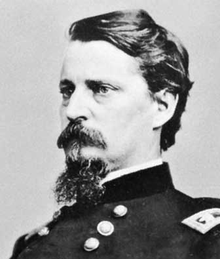
[27] Ibid. Guelzo, Gettysburg: The Last Invasion pp.296-297
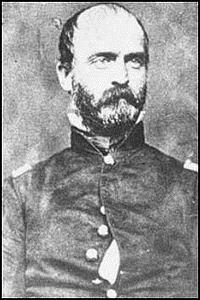
[28] Ibid. Tagg The Generals of Gettysburg p.224

[29] Pfanz, Harry F. Gettysburg: The Second Day. University of North Carolina Press, Chapel Hill 1987 p.161

[30] Ibid. Tagg The Generals of Gettysburg p.228

[31] Ibid. Tagg The Generals of Gettysburg p.230

[32] Ibid. Tagg The Generals of Gettysburg p.234

[33] Ibid. Freeman Lee’s Lieutenants p.430

[34] Ibid. Tagg The Generals of Gettysburg p.235

[35] Ibid. Coddington The Gettysburg Campaign p.12

[36] Ibid. Tagg The Generals of Gettysburg p.237

[37] Ibid. Wert General James Longstreet p.45

[38] Wert, Jeffery D. Gettysburg Day Three A Touchstone Book, New York 2001 p.110

[39] Ibid. Freeman Lee’s Lieutenants p.385

[40] Ibid. Dowdy. Lee and His Men at Gettysburg p.268

[41] Ibid. Tagg The Generals of Gettysburg p.241

[42] Ibid. Dowdy. Lee and His Men at Gettysburg p.269

[43] Ibid. Dowdy. Lee and His Men at Gettysburg p.269

[44] Ibid. Guelzo, Gettysburg: The Last Invasion p.379

[45] Ibid. Dowdy. Lee and His Men at Gettysburg p.270

[46] Ibid. Tagg The Generals of Gettysburg p.244

[47] Ibid. Freeman Lee’s Lieutenants p.322

[48] Gallagher, Gary. Confederate Corps Leadership on the First Day at Gettysburg: A.P. Hill and Richard S. Ewell in a Difficult Debut in The First Day at Gettysburg edited by Gallagher, Gary W. Kent State University Press, Kent Ohio 1992 p.47

[49] Ibid. Gallagher Confederate Corps Leadership on the First Day at Gettysburg p.47

[50] Ibid. Taylor, John Duty Faithfully Performed p.130

[51] Ibid. Freeman Lee’s Lieutenants p.322

[52] Ibid. Gallagher Confederate Corps Leadership on the First Day at Gettysburg p.48

[53] Ibid. Gallagher Confederate Corps Leadership on the First Day at Gettysburg p..49

[54] Ibid. Guelzo, Gettysburg: The Last Invasion p.23

[55] Ibid. Freeman Lee’s Lieutenants p.33

[56] Gallagher, Gary W. Jubal A. Early, the Lost Cause, and Civil War History: A Persistent Legacy; Frank L Klement Lecture, Alternate Views of the Sectional Conflict Marquette University Press Marquette WI 2003 p.11

[57] Ibid. Tagg The Generals of Gettysburg p.256

[58] Ibid. Tagg The Generals of Gettysburg pp.269-270

[59] Ibid. Tagg The Generals of Gettysburg p. 284

[60] Ibid. Tagg The Generals of Gettysburg p.292

[61] Ibid. Tagg The Generals of Gettysburg p.299

2 Comments

Filed under civil war, History, history, leadership, Military

The Tragedy of Friends at War: Hancock, Armistead and Garnett at Pickett’s Charge

armistead

“Armistead at Gettysburg” by Keith Rocco

The bonds of friendship forged by soldiers are some of deepest and long lasting that are formed anywhere.  For American military professionals those bonds are formed in the small rather closed society that is the regular United States military. They are formed in war and peace, and are marked by years of deployments, isolated duty and combat. They are part of a culture that is often quite different than that of civilian society. That is the case now as it was in 1860.

When the Southern States seceded from the Union men who had spent much of their adult lives serving together discovered had to say goodbye and prepare to fight each other. Most did so with a heavy heart even though many had strong convictions about the rightness of their region’s cause. Those who left the army to serve the Confederate states were often torn by doubt and questions of where their loyalty lay. Robert E. Lee was a good example of the conflict that many Southern officers faced. “The Southern professional officer in 1861 was confronted with a cruel choice symbolized by Lee’s anguished pacing at Arlington. On one hand, the Southern officer’s political allegiances drew him to the Confederacy; on the other his professional responsibility drew him to the Union.” [1] They wrestled with their oath of office and the costs of perhaps having to face their dearest friends on future battlefields. Lee’s letter to his sister Ann Marshall, who remained a supporter of the Union, after he resigned from the army he had served for 32 years reflects that anguish, torn between his loyalties Lee wrote “With all my devotion to the Union, and the dear feeling of loyalty and duty of an American citizen, I have not been able to make up my mind to raise my hand against my relatives, my children, my home.” [2] He added: “I know you will blame me…but you must think as kindly of me as you can, and believe that I have endeavored to do what I think right.” [3]

They were different from the mass levies of civilian volunteers who rallied to the flags of the Union and Confederacy in 1861. The volunteers, most of whom did not have the deep and abiding friendships of the professionals were often motivated by ideological, sectional or religious hatred of the other and went to war with great aplomb. However, the professionals for the most part went to war against former comrades with heavy heart, “old army colleagues found themselves wrenched from the normal course of their lives when their states joined the Confederacy.” [4]

The American Civil War has many such tales. Porter Alexander wrote of his final words with his superior James B. McPherson, who later went on to be a highly successful corps commander under Grant and Sherman before being killed outside Atlanta in 1864. McPherson desired that Alexander remain in California as an Engineering officer and warned him about the nature of the coming war and gave him his counsel as a friend:

“Now this is not going to be any 90 day or six months affair as some of the politicians are predicting. Both sides are in deadly earnest & it is long & desperate & fought to the bitter end. ..God only knows what may happen to you individually, but for your cause there can be but one possible result. It must be lost….” [5]

Alexander wrote: “Nothing could exceed the kindness & real affection with which McPherson urged these views on me…. His earnest talk impressed me deeply & made me realize that a crisis in my life was at hand. But I felt helpless to avert it or even to debate the question what I should do. I could not controvert one of McPhersons’ statements or arguments; I could only answer this: “Mac, My people are going to war, & and for their liberty. If I don’t come & bear my part they will believe me a coward…” [6]

One of the most remembered is that of Union General Winfield Scott Hancock and Confederate General Lewis Armistead. It was key story line in Michael Shaara’s Pulitzer Prize winning novel The Killer Angels was immortalized in the movie Gettysburg which is based on Shaara’s novel.

hancock 2

Major General Winfield Scott Hancock USA

Hancock was from Pennsylvania. He was a career soldier and Infantry officer, a graduate of West Point Class of 1844. He served in Mexico and held numerous positions. In 1861 he was stationed in California as a Quartermaster under the command of Colonel (Brevet Brigadier General) Albert Sidney Johnston with the Sixth Infantry Regiment. One of his fellow officers was Captain Lewis Armistead, a twice widowed Virginian who also served as a commander of the New San Diego Garrison under Johnston’s command, and Richard Garnett commanding a company at Fort Yuma. Hancock and his wife Almira became fast friends with the widowed Virginian.

Armistead was a nephew of the officer who defended Fort McHenry from the British in the War of 1812. Armistead had academic and personal difficulties at West Point and “was bounced out, not once but twice.” [7] His troubles included an altercation with Jubal Early in which he broke a plate over Early’s head.  Between his academic difficulties and the fight with Early he resigned from the Academy. However, his father helped him obtain a commission as an Infantry officer in 1839. Armistead’s career from that point on was similar to many other officers of his day. He served with distinction in Mexico, the Great Plains, Kansas, Utah and California.

As the war clouds built and various southern states seceded from the Union numerous officers from the South were torn between their oath, their friendships and their deep loyalty to their home states and families. In the end most Southern officers resigned their commissions, many with mixed feelings and quite often sadness. A large minority, some “40 to 50 per cent of Southern West Point graduates on active duty in 1860 held on to their posts and remained faithful to the Union.” [8] The most prominent of these men were General Winfield Scott and Major General George Thomas, the “Rock of Chickamauga.” Likewise Union Brigadier General John Buford’s family in Kentucky supported the Confederacy.

For those southern officers who remained loyal to the Union to was often at a great personal cost. Thomas’s action cost him his relationship with his immediate family who deemed him to be a traitor. He and others were pilloried and demonized in the basest ways by many in the South. Some Southerners who served the Union were executed when they were captured. George Pickett, who called for his fellow Virginian Thomas’ death ordered 22 North Carolinians who he captured fighting for the Union in Kinston North Carolina to be executed. Pickett was not alone in such sentiments.

armistead2

Brigadier General Lewis Armistead CSA

However, for most it was different. As talk of secession and war heated up officers stationed on the frontier debated the issues and asked each other what they would do if war came. In California Armistead and other officers asked Hancock, who was a Democrat and not openly hostile to the South, advice on what he would do if war came. Hancock’s reply was simple. I shall not fight upon the principle of state-rights, but for the Union, whole and undivided” [9]

The parting came in 1861. When it was apparent that many officers would be resigning and heading home to join their state’s forces the Hancock’s hosted a going away party for their friends. Almira Hancock wrote of the party that “Hearts were filled with sadness over the surrendering of life-long ties.” [10]

Colonel Albert Sidney Johnston’s wife Eliza went to a piano and sang sentimental songs such as Mary of Argyle and the popular Irish song Kathleen Mavourneen. [11] Almira Hancock wrote “Those songs…will ever be remembered by survivors of that mournful gathering.” [12]

“Mavourneen, Mavourneen, my sad tears are falling, to think that from Erin and thee I must part!

It may be for years, and it may be forever, Then why art thou silent, thou voice of my heart?

The parting was especially emotional for Armistead who had been a friend of the Hancock’s for 17 years. They had helped in following the death of both of his wives and children. He was tearful. He put his arm on his friend’s shoulder as he said: “Hancock, good-by; you can never know what this has cost me, and I hope God will strike me dead if I am ever induced to leave my native soil, should worse come to worse.” [13]As he departed Armistead gave a wrapped Bible and Prayer book to Almira Hancock, in case of his death, inscribed were the words “Trust in God and fear nothing.” [14]

Armistead led his brigade during the Peninsula campaign and battles around Richmond and his brigade was decimated in Lee’s failed assault on prepared Federal positions at Malvern Hill. Armistead did not endear himself to many of the volunteer officers who served in the Confederate ranks. One of his Colonels resigned over Armistead’s supposedly harsh treatment to which Armistead replied: “I have felt obliged to speak to him as one military man would to another and as I have passed nearly all my life in camps my manner may not be understood or appreciated by one who has been all his life a civilian.” [15] Armistead’s words can easily be understood by military professionals whose lives have been shaped in a different manner than their civilian counterparts.

At Gettysburg Armistead spoke his fears about the charge to his comrades. One was Brigadier General Dick Garnett, another of Armistead and Hancock’s comrades from the California days on the night of July 2nd. Garnett’s career had paralleled that Armistead, the same age Garnett struggled at West Point in his third year “he failed and withdrew. Taking the same courses again during the next term, he finished fourteenth among his new classmates, then graduated in 1841 standing 29th of fifty-two graduates.” [16]

Armistead and Garnett served together in the Sixth Infantry for most of their careers. They were promoted at similar times, a pattern of promotion that continued into their Confederate service. The next afternoon, the two friends who had served together so long and whose careers were so similar led their brigades of Pickett’s Division across the valley between Seminary Ridge and Cemetery Ridge against their friend and comrade Winfield Scott Hancock’s II Corps which was defending Cemetery Ridge.

Garnett had to lead his brigade on foot, having been injured during the army’s march to Gettysburg. During the engagement Garnett was killed just before reaching the Union lines and Hancock gravely wounded. Armistead, lead the remnants of his decimated brigade to the Stone Wall, near the Copse of Trees. He rallied his troops fearing that some were faltering calling out: “Come on boys, give them the cold steel! Who will follow me?” [17]

His troops breached the Union line and his black hat atop his sword led his troops forward. He reached the now unmanned artillery of Cushing’s battery and called to his remaining men “The day is ours men, come and turn this artillery on them.” [18] It was then that he met more Federal troops who unleashed a volley of musket fire that cut down many of the survivors. Armistead was wounded in the right arm and shoulder and fell near one of the Union artillery pieces, a point now known as “The High Water Mark” of the Confederacy.

armistead memorial

As Armistead lay wounded he was approached by Major Bingham of Hancock’s staff. Bingham, a Mason noticed that Armistead was making a Masonic sign of distress. When Bingham told Armistead of Hancock’s injury Armistead was grieved and told Bingham to “Say to General Hancock for me that I have done him, and you all, an injury, which I shall always regret.” [19]

The meaning of those words is debated, especially by Southerners who cherish the myth of the Lost Cause. However, based on Armistead’s conduct and behavior in the time before he left California, it is not unreasonable to assume that as he lay dying he truly regretted what he had done. Armistead died from infections caused by his wounds which were initially not thought to be life threatening. A Union surgeon described him as: “seriously wounded, completely exhausted, and seemingly broken-spirited.” [20]

Garnett’s body was never found and was probably buried in a mass grave with other Confederate soldiers and was likely taken after the war to his native Virginia “together with thousands of unidentified bodies from Gettysburg, for burial in Richmond’s Hollywood Cemetery.[21] Armistead was buried by a member of the 107th Ohio near the XI Corps field hospital. About a month later a physician from Philadelphia tracked down the soldier and “dug up the “Rough box” containing the body and embalmed poor Armistead’s remains for sale to grieving family members.” [22] Armistead’s family buried the remains in Old Saint Paul’s Cemetery in Baltimore.

Robert Krick wrote: “Death on adjacent bits of blood soaked ground in Adams County, Pennsylvania, yielded a final common thread, that of indignity: Lewis Armistead’s corpse wound up a hostage to petty human greed, while Dick Garnett’s entirely disappeared.” [23]

Hancock’s injuries were severe, but he recovered. He would go on to continued fame and be one of the most admired and respected leaders of the Army during and after the war. He was gracious as a victor and spoke out against reprisals committed against Southerners after the war.

In 1880 Hancock was the Democratic nominee for President. He lost a close election to James Garfield, losing the popular vote by fewer than 40,000 votes. It was an era of great political corruption and Hancock was one of the few major public figures viewed favorably for his integrity. Even his political opponents respected him for his integrity and honesty. Former President Rutherford B Hayes said:

“if when we make up our estimate of a public man, conspicuous both as a soldier and in civil life, we are to think first and chiefly of his manhood, his integrity, his purity, his singleness of purpose, and his unselfish devotion to duty, we can truthfully say of Hancock that he was through and through pure gold.” [24]

A few years after his death Republican General Francis A Walker, lamenting the great corruption of the time said:

“Although I did not vote for General Hancock, I am strongly disposed to believe that one of the best things the nation has lost in recent years has been the example and the influence of that chivalric, stately, and splendid gentleman in the White House. Perhaps much which both parties now recognize as having been unfortunate and mischievous during the past thirteen years would have been avoided had General Hancock been elected.” [25]

The story of Hancock, Armistead and Garnett is one that reminds us of the depth of friendships that many military professionals develop and cherish. It is also a story that reminds us of how hardened ideologues can divide a nation to the point of civil war. It is a story that should give pause to any political or spiritual leader that incites people to war against their neighbor and uses their ideology to slander, demean or even enslave and brutalize their political opponents.

The blood of the approximately 50,000 soldiers that were killed or wounded during the three days of the Battle of Gettysburg is ample reminder of the tragedy of war, especially war that forces the dearest of friends to fight and even kill one another.

Notes

[1] Huntington, Samuel P. The Soldier and the State: The Theory and Politics of Civil-Military Relations, The Belknap Press of Harvard University Press, Cambridge MA and London 1957 p.212

[2] Thomas, Emory Robert E. Lee W.W. Norton and Company, New York and London 1995 p.188

[3] Korda, Michael. Clouds of Glory: The Life and Legend of Robert E. Lee Harper Collins Publishers, New York 2014 pp.230-231

[4] Jordan, David M. Winfield Scott Hancock: A Soldier’s Life Indiana University Press, Bloomington and Indianapolis 1988 p.33

[5] Alexander, Edward Porter. Fighting for the Confederacy: The Personal Recollections of General Edward Porter Alexander edited by Gary Gallagher University of North Carolina Press, Chapel Hill 1989 p.24

[6] Ibid. Alexander . Fighting for the Confederacy p.25

[7] Guelzo, Allen C. Gettysburg: The Last Invasion Vintage Books a Division of Random House, New York 2013 p.379

[8] Ibid. Huntington The Soldier and the State p.213

[9] Ibid. Jordan Winfield Scott Hancockp.33

[10] Ibid. Jordan Winfield Scott Hancockp.34

[11] Ibid. Jordan Winfield Scott Hancock p.34

[12] Ibid. Jordan Winfield Scott Hancock p.34

[13] Ibid. Jordan Winfield Scott Hancock p.34

[14] Krick, Robert K. The Parallel Lives of Two Virginia Soldiers Armistead and Garnett in The Third Day at Gettysburg and Beyond edited by Gary Gallagher, University of North Carolina Press, Chapel Hill and London 1994 p.112

[15] Tagg, Larry The Generals of Gettysburg: The Leaders of America’s Greatest Battle Da Capo Press Cambridge MA 1998 Amazon Kindle Edition p.244


[16] Ibid. Krick Armistead and Garnett p.101

[17] Stewart, George R. Pickett’s Charge: A Micro-History of the Final Attack at Gettysburg, July 3rd 1863Houghton Mifflin Company Boston 1959 pp.216-217

[18] Hess, Earl J. Pickett’s Charge: The Last Attack at Gettysburg University of North Carolina Press, Chapel Hill and London 2001 p.262

[19] Ibid. Stewart Pickett’s Charge pp.254-255

[20] Ibid. Stewart Pickett’s Charge pp.254

[21] Ibid. Krick Armistead and Garnett p.123

[22] Ibid. Krick Armistead and Garnett p.123

[23] Ibid. Krick Armistead and Garnett p.123

[24] Ibid. Jordan Winfield Scott Hancock p.319

[25] Stone, Irving They Also Ran Doubleday, New York 1943 and 1981 pg. 188


2 Comments

Filed under civil war, History, history, Military

Gettysburg Day One: Lee’s Vague Discretionary Orders and Lack of Control

Lee1

Discretionary orders are important to the success of commanders who desire that their subordinates have the necessary freedom to exploit opportunities within the broader operational context. They are a key element of what we now define as Mission Command and thus expressed clearly in the Chairman of the Joint Chiefs of Staff Desired Leader Attributes the ability to operate on intent through trust, empowerment and understanding. In this chapter we will look at how Lee conducted war and how his decision process and communications, particularly the use of discretionary orders influenced the outcome of the battle and how important the issuance of clear orders is to a successful campaign.

To be effective such orders need to be clear and concise and they must be employed in a manner that are within the capabilities of one’s subordinate commanders to both understand them and carry them out. Thus a commander must always be ready to adjust his method when his command goes through a major turnover of personnel. After the loss of Jackson at Chancellorsville and the subsequent reorganization of the Army of Northern Virginia, Lee continued to operate as if nothing had changed, despite his own recognition that the army suffered from a want of qualified senior officers.

Robert E. Lee habitually issued discretionary orders with varying degrees of effectiveness. With Jackson, a man of ruthless battlefield instincts Lee was able to do this, even when Lee’s intent was less than clear, but even with Jackson such orders occasionally went awry as was the case during the Seven Days. Lee’s aide Walter Taylor noted that Jackson “took the suggestion of General Lee into immediate consideration, and proceeded to carry it into effect.” [1] This was not to be the case with those that followed Jackson, something that Lee failed to adjust to that would doom his army at Gettysburg.

Part of this is attributable to Lee’s distaste for administrative routine. Taylor noted how Lee’s “correspondence…was constantly a source of worry to him. He did not enjoy writing; indeed he wrote with labor, and nothing seemed to tax his amiability as the necessity for writing a lengthy official communication.” [2] But more importantly in the matter of communicating orders and following up, much of the issue came down to Lee’s near fatalistic understanding of faith and life in regard to the providence of God. For Lee victory and defeat came down to God’s will, as he wrote his wife after his ill-fated 1861 campaign in western Virginia “But the Ruler of the Universe willed otherwise and sent a storm to discontent a well laid plan and to destroy my hopes.” [3] But for Lee, the concept of “duty” became a secular manifestation of his religion.” [4]

J. F. C. Fuller attributes much of the manner in how Lee conducted battle to this sense of duty as well as belief in providence. Fuller notes that it “controlled the whole of his generalship.” [5] Lee explained his concept of command to the Prussian observer, Captain Justus Scheibert:

“You must know our circumstances, and see in battle that my leading would do more harm than good. It would be a bad thing if I could not then rely on my brigade and divisional commanders. I plan and work with all my might to bring my troops to the right place at the right time; with that I have done my duty. As soon as I order the troops forward into battle, I lay the fate of my army in the hands of God.” [6]

That firm belief in providence and the hand of God was evident in Lee’s comments to Major General Isaac Trimble as the army advanced into Pennsylvania. “We have again outmaneuvered the enemy, who even now does not know where we are or what our designs are. Our whole army will be in Pennsylvania day after tomorrow, leaving the enemy far behind and obliged to follow by forced marches. I hope with these advantages to accomplish some single result and to end the war, if Providence favors us.” [7]

Fuller is one of the harshest critics of Lee bluntly notes that “this lack of appreciation that administration is the foundation for strategy; this lack of interest in routine, and his abhorrence to exert his authority…” [8] were key factors in many of his army’s problems, from command and control, discipline and the material and logistics aspects of war. Likewise his absolute reliance on his subordinates to carry out his orders, and unwillingness to interfere once the battle was joined was a major factor in his failure at Gettysburg, where Russell Weigley noted in a rather kind and subdued way that “Lee…was sometimes served less than well by his corps, division and brigade commanders.” [9]

Throughout the Gettysburg campaign Lee issued vague orders that his subordinates either failed to understand or willingly interpret in a manner that Lee did not intend. Lee’s biographer Michael Korda notes that “the phrase if practicable…led to many unfortunate consequences, since it provided subordinate commanders a kind of escape clause, allowing them to argue after the event that what they had been order to do was not, in their view “practicable.” [10]

From the time that Robert E Lee learned that the Army of the Potomac had crossed the Potomac into Maryland on June 28th, he attempted to adjust his campaign plan and concentrate his army in preparation for battle. At that point his army was scattered and he did not want to provoke an engagement until he could concentrate his forces. Stuart’s cavalry, the absence of which was a matter of great consternation to Lee was chief among his concerns. Lee had hoped that Hooker would pursue him north, but finding the information out from Longsteet’s spy Harrison disturbed Lee greatly. [11]

Lee expected to know about Hooker’s movements from Stuart. However, Stuart was nowhere to be found; operating nearly fifty miles away separated from Lee’s main body much of the Army of the Potomac. Lee’s aide Walter Taylor wrote: “No tidings had been received from or of our cavalry under General Stuart since crossing the river; and General Lee was consequently without accurate of the movements or position of the main Federal Army.” [12] However, while Stuart certainly can be blamed for taking his best cavalry off on a ride around the Federal army, he acted in accordance with how he interpreted Lee’s orders, as Douglas Southall Freeman wrote: “What was possible was permissible. That, as Stuart saw it, was the substance of his orders.” [13]

This was especially true after Stuart had been surprised at Brandy Station by the Federal cavalry and pilloried in the Confederate press, the Richmond Sentinel saying Stuart had been “outgeneraled” and the Richmond Whig predicting that “We shall not be surprised if the gallant Stuart does not, before many days, make the enemy repent sorely the temerity that led them to undertake this bold and insulting feat….” [14] Lee’s orders provided just enough ambiguity and wiggle room for the wounded Stuart to do precisely what he did.

Lee’s orders gave Stuart the options of moving back to screen the army or passing around the Federal army, leaving the decision to Stuart’s discretion. “You will, however, be able to judge whether you can pass around their army without hindrance, doing them all the damage you can…” [15] Major Henry McClellan, Stuart’s aide recorded that he also received a “lengthy communication from General Lee…” which “discussed at considerable length the plan of passing around the enemy’s rear….” [16] Stuart in his official report wrote: “The commanding General wrote me, authorizing this move if I deemed it practical.” [17]

That being said Lee was clear enough that he expected Stuart to “lose no time in placing his command on the right of our column as soon as he should perceive the enemy moving northward.” [18] Though Stuart had detected Hancock’s II Corps moving north near Manassas he elected to make his movement around the Federal Army. Stuart’s biographer Burke Davis noted that Stuart “sought no advice on the all-important detour of June twenty-sixth, which changed his direct. He did not so much consult his brigadiers as he swung his column southward to pass around the enemy.” [19] Though Lee at a number of points during lead up to Gettysburg signaled his frustration with Stuart’s absence and its effect on his abilities, he failed to draw the appropriate conclusions that a prudent commander, operating deep in enemy territory would assume from the lack of contact. Lee should have assumed that Stuart was because of his move “become temporarily incommunicado” but instead, “inferred from Stuart’s silence that Hooker had not crossed the Potomac.” [20]

Lee’s vague order was the first in a series of command and control issues that plagued him during the campaign and combined with Stuart’s vanity and need to redeem his reputation, Lee’s ill use of the cavalry he did have under his control were all contributing factors leading to the disastrous encounter at Gettysburg, but there was more to come.

Now that Lee knew that the Army of the Potomac had crossed into Maryland and was now under the command of George Meade he began to take action to reassemble his widely scattered army in the vicinity of Chambersburg and Cashtown. A.P. Hill’s Third Corps was already near Cashtown, and Longstreet’s First Corps was on its way up. The most important issue Lee had was to get Ewell’s Second Corps, then near Carlisle preparing to attack Harrisburg, back in contact with the rest of the Army.

Lee sent two sets of orders to Ewell on the night of the 28th, after getting Harrison’s intelligence, but they did not reach Ewell until the morning of the 29th. The first orders were for Ewell to move to Chambersburg, and the second, to concentrate at Heidlersburg where he could either continue to Cashtown or turn south to Gettysburg. [21] The intent was good, Lee appears to have desired to minimize congestion on the turnpike in order to more rapidly assemble his army, however the orders caused much discontent at the Second Corps headquarters and “made Old Bald Head most unhappy.” [22] Many of his soldiers with Harrisburg in plain sight were likewise upset the “disappointment and chagrin were extreme” [23] while a soldier in “Maryland Steuart’s brigade recalled the “ill-concealed dissatisfaction” of the men, who “found the movement to be as they supposed “one of retreat.” [24] A staff officer noted that Ewell was “quite testy and hard to please” at the news and “became disappointed, and had everyone flying around.” [25]

Despite his displeasure Ewell did move promptly to comply with Lee’s orders “Lee had not communicated any particular sense of crisis to the case, and the Second Corps’ march proceeded at the usual pace.” [26] Likewise the fact that there were two orders caused several problems that would manifest themselves on July 1st all of which would affect the outcome of the battle.

The first regarded the movement of Second Corps. On receipt of the first order to proceed to Chambersburg Ewell promptly started Allegany Johnson’s division as well as the Second Corps Wagon Train and two battalions of its Corps Artillery Reserve down the turnpike. [27] When they arrived near Cashtown on the first they would become entangled with Anderson’s division of Hill’s Third Corps, slowing that unit’s attempt to move to battle. This massive traffic jam also delayed two of Longstreet’s divisions which were moving to link up with Hill’s Corps. [28]

Ewell was able to direct Rodes and Early’s divisions toward Heildlersburg, but the vagueness of Lee’s changing the objective of the march “to Cashtown or Gettysburg and leaving it up to the commander to choose between the two” [29]caused Ewell problems. Had Johnson’s division and the rest of the corps been available early on the afternoon of July 1st at Heildlersburg with Rodes and Early’s divisions it might have completely changed the outcome of the battle. Ewell had been very successful under Jackson, whose orders “were precise and positive” where Lee had not only revered the course of Ewell’s advance on Harrisburg back to Chambersburg, but then modified with the order to proceed to either Cashtown or Gettysburg. [30]

Lee’s order again contained a discretionary clause, to advance to Cashtown or Gettysburg “as circumstances dictate.” [31] Ewell was upset not knowing what “circumstances” Lee had in mind.” [32] On the night of the 30th he discussed the order with Rodes and Early as well as Major General Isaac Trimble, and complained of the order’s “indefinite phraseology” and made the comment “Why can’t a commanding General have someone on his staff who can write an intelligible order.” [33] Ewell’s acerbic comment could easily be applied to many of Lee’s orders issued during the next few days, but in spite of it Ewell did handle his “first discretionary order very well indeed” [34] as he issued his movement orders for July 1st in a manner that would allow his divisions to move on either location should the situation dictate.

As Ewell attempted to comply with Lee’s orders on the 29th and 30th to rejoin the army his other two corps were resting. Third Corps under A.P. Hill was at and around Cashtown west of Gettysburg. On the 30th Hill allowed Harry Heth to advance Johnston Pettigrew’s brigade to Gettysburg. When Pettigrew discovered Buford’s cavalry division there he withdrew and reported to incident to Hill and Heth who refused to believe it. Hill did pass on that news to Lee and alerted Lee that “that he intended to march there in the morning” but the “announcement seemed not to have disturbed the commanding general, since he expected to move his headquarters only as far as Cashtown the next day.[35] This lack of reaction was to have enormous consequences for Lee.

On the morning of July 1st, Hill ordered Harry Heth to advance his division to Gettysburg without the benefit of cavalry support or reconnaissance and backing them up with Pender’s division. As they advanced the leading brigades under Brigadier General James Archer and Joseph Davis met Federal forces. Heth became embroiled in a fight with Buford’s cavalry, which developed into a fight with Reynolds’s I Corps, a fight that resulted in Heth’s division being mauled and helping to bring a general engagement. That engagement drew in Ewell’s corps as well before Lee knew what was happening.

Lee had a number of chances to prevent the meeting engagement that developed on July 1st 1863. Lee noted in his after action report that “It had not been intended to deliver a general battle so far from our base unless attacked…” [36] but there are no records of him giving such instructions prior to the battle. There are no reports indicating that he urged caution on his commanders not to bring on a general engagement before July 1st, when the battle was already underway, nor are there records of any warning orders to his corps commanders upon learning of the presence of the Federal army north of the Potomac.

In the end of the day it was Lee’s “laxness with respect to reconnaissance and his lack of control of Hill’s movements caused him to stumble into battle.[37] The battle began without him knowing it; his subordinate commanders committed nearly half of his army into battle before he issued an order, Lee wrote “A battle had, therefore, become in a measure unavoidable….” [38] But such is not the case.

(Gburg day one)

Lee arrived early enough in the battle to make his influence known. He was told of Ewell’s movements by Major G. Campbell Brown of Ewell’s staff and instructed Brown in very strong terms to tell Ewell “that a general engagement was to be avoided until the arrival of the rest of the army.” [39] Ewell, did not get that message until after his forces were heavily committed noting in his report “that By the time this message reached me….It was too late to avoid an engagement without abandoning the position already taken up.” [40]

Lee was not happy that battle had been joined by Heth and Taylor observed that “on arriving at the scene of the battle, General Lee ascertained that the enemy’s infantry and artillery were present in considerable force” [41] and when Lee arrived on Herr Ridge, Heth asked permission to renew his attack when Rodes entered the fight. Lee’s initial response was negative “No, I am not prepared to bring on a general engagement today. Longstreet is not up.” [42]

After observing the battle for a time it became evident that Ewell’s corps was also heavily engaged and Lee began to change his mind. Heth reported that the Federal troops in front of him were withdrawing and Lee sensed an opportunity to strike a blow that might bring the climactic victory that he sought. Lee analyzed the situation and with Heth back at his division Heth wrote that “very soon an aide came to me with the orders to attack.” [43]

The order was given in the heat of the moment, and Lee always aggressive responded, but it was a bad decision. “It committed him to a major confrontation on this ground…without sufficient troops on hand and without knowledge of the whereabouts of the rest of the Federal army,” [44] and Lee knew this. He told Anderson at Cashtown not long before- meeting Heth: “I am in ignorance of what we have in front of us here. It may be the whole Federal army, or it may be only a detachment. If it is the whole Federal force we must fight a battle here.” But he was worried, telling Anderson “If we do not gain a victory, those defiles and gorges which we passed through this morning will shelter us from disaster.” [45]

Despite the success that his soldiers we now enjoying as they drove the I Corps and XI Corps back through the town Lee gave yet another vague order. This one to Ewell, who having already committed his corps to battle in the full knowledge that Lee did not desire a general engagement was confronted with another discretionary order, Lee said “General Ewell was…instructed to carry the hill occupied by the enemy, if he found it practicable, but to avoid a general engagement until the arrival of the other divisions of the army.” [46]

The Army of Northern Virginia came very close to sweeping Federal forces from the field on July 1st in spite of Lee’s lack of planning and clear commanders’ intent. But close was not enough. His forces which were committed in a piecemeal manner were unable to follow up their initial success. The situation faced by Ewell in Gettysburg was chaotic; his units were badly disorganized, and burdened by thousands of prisoners on the confided streets of the town. Rodes’ division had sustained frightful losses and he had no assurance of support from Hill. [47] Rodes’ after battle report supported Ewell’s decision. He wrote that before “the completion of his defeat before the town the enemy had begun to establish a line of battle on the heights back of the town, and by the time my line was in condition to renew the attack, he displayed quite a formidable line of infantry and artillery immediately in my front, extending smartly to my right, and as far as I could see to my left in front of Early.”[48]

Lee’s orders to Ewell, to take the high ground “if practicable” were correctly interpreted by Ewell despite his critics; he nature of the terrain, the number and condition of the troops that he had available for an attack, and the nature of the orders given by Lee late in the day was strong factors for Ewell to not attack. [49] Coddington noted that these problems “upset Ewell, for he was faced with the prospect of organizing a new attack with tired men even while he felt constrained by Lee’s injunction not to open a full-fledged battle. No wonder he was uncertain!” [50]The fact that Lee was not far away and did not issue a “peremptory order to Ewell” to attack also has to be noted. [51] If Lee had sensed that Ewell was not going to attack and really wanted him to he could have issued a direct order which Ewell, would have surely obeyed. “Lee realized that Ewell was not Jackson…and should have modified his method of command accordingly.” [52]

That evening Lee rode to Ewell’s headquarters and met with Ewell, Early and Rodes. “No reference was made to the possibility of an attack that evening on Cemetery Hill.” The question was put to them about what to do the next day. Lee asked “Can’t you with your corps attack on this flank tomorrow?” Jubal Early answered for Ewell saying “flatly that he did not believe an attack should be made from Gettysburg against Cemetery Hill the next day.” [53] Early added, “even if such an action were to succeed… it would be at a very great cost.” [54] Lee suggested to Ewell and his commanders that Second Corps around to the right along Seminary Ridge “where it might be better put to use, and twice he gave in to Ewell’s pleadings to remain where he was.” [55] This was yet another mistake that would haunt Lee during the rest of the battle, but the “notion of imposing his will on a subordinate was simply too alien to Lee’s nature for him to even to admit as a possibility.” [56] Fuller wrote “it was Lee’s inexhaustible tact that ruined his army.” [57]

Whether Lee intended to engage the Army of the Potomac at Gettysburg so early in the campaign is debated. His multiple and contradictory strategic aims left his commanders acting much on their own. Lee’s lack of clear commander’s intent to his subordinate commanders created confusion on the battlefield. They also paved the way to many controversies in the years following the war as Southerners sought to explain the failure of the Lost Cause, for which Lee could not be blamed.

Much of the controversy comes from Lee’s own correspondence which indicates that he might have not fully understood his own intentions. Some correspondence indicates that Lee desired to avoid a general engagement as long as possible while other accounts indicate that he wanted an early and decisive engagement. The controversy was stoked after the war by Lee’s supporters, particular his aides Taylor and Marshall and generals Early, Gordon and Trimble. Men like Longstreet and were castigated by Lee’s defenders for suggesting that Lee made mistakes on the battlefield.

The vagueness of Lee’s instructions to his commanders led to many mistakes and much confusion during the battle. Many of these men were occupying command positions under him for the first time and were unfamiliar with his command style. Where Stonewall Jackson might have understood Lee’s intent, even where Lee issued vague or contradictory orders, many others including Hill and Ewell did not. Lee did not change his command style to accommodate his new commanders.

That lack of flexibility and inability to clearly communicate Lee’s intent to his commanders and failure to exercise control over them proved fatal to his aims in the campaign. Stephen Sears’ scathing analysis of Lee’s command at Gettysburg perhaps says it the best. In the final analysis, it was Robert E. Lee’s inability to manage his generals that went to the heart of the failed campaign.” [58]

The vagueness of Lee’s intent was demonstrated throughout the campaign and was made worse by the fog of war. Day one ended with a significant tactical victory for Lee’s army but without a decisive result which would be compounded into a strategic defeat by Lee’s subsequent decisions on the 2nd and 3rd of July.

Notes:

[1] Taylor, Walter. General Lee: His campaigns in Virginia 1861-1865 With Personal Reminiscences University of Nebraska Press, Lincoln Nebraska and London, 1994 previously published 1906 p.45

[2] Ibid. Taylor General Lee: His campaigns in Virginia 1861-1865 With Personal Reminiscences p.25

[3] Lee, Robert Edward. Recollections and Letters of General Robert E Lee A Public Domain book, Amazon Kindle edition location 548

[4] Taylor, John M. Duty Faithfully Performed: Robert E Lee and His CriticsBrassey’s, Dulles VA 1999 p.35


[5] Fuller, J.F.C. Grant and Lee: A Study in Personality and Generalship, Indiana University Press, Bloomington IN 1957 p.112

[6] Korda, Michael. Clouds of Glory: The Life and Legend of Robert E. Lee Harper Collins Publishers, New York 2014 p.348

[7]Tucker, Glenn. High Tide at Gettysburg, The Bobbs Merrill Co. Indianapolis Indiana 1958 p.24

[8] Ibid. Fuller Grant and Lee: A Study in Personality and Generalship p.125

[9] Weigley, Russell F. The American Way of War: A History of United States Military History and Policy University of Indiana Press, Bloomington IN, 1973 p.116

[10] Ibid. Korda, Michael. Clouds of Glory: The Life and Legend of Robert E. Lee p.446

[11] Sears, Stephen W. Gettysburg. Houghton Mifflin Co. Boston and New York 2003 p. 139

[12] Taylor, Walter Four Years with General Lee Original published 1877. Heraklion Press Kindle Edition 2013 location 1199

[13] Freeman, Douglas Southall, Lee’s Lieutenant’s a Study in Command, One volume abridgement by Stephen W Sears, Scribner, New York 1998 pp.554-555

[14] Ibid. Freeman Lee’s Lieutenant’s a Study in Command, p.552

[15] Nolan, Alan T. R. E. Lee and July 1 at Gettysburg in the First Day at Gettysburg edited by Gallagher, Gary W. Kent State University Press, Kent Ohio 1992 p.16

[16] McClellan, Henry Brainerd The Life and Campaigns of Major General J.E.B. Stuart Commander of the Cavalry of the Army of Northern Virginia 1885. Digital edition copyright 2011 Strait Gate Publications, Charlotte NC location 6123 unfortunately this letter cannot be verified as no copy exists, McClellan presuming that it was destroyed sometime during the march.

[17] Dowdy, Clifford. Lee and His Men at Gettysburg: The Death of a Nation Skyhorse Publishing, New York 1986, originally published as Death of a Nation Knopf, New York 1958 p.60

[18] Lee, Robert E. Reports of Robert E Lee, C.S. Army, Commanding Army of Northern Virginia Campaign Report Dated January 20th 1864. Amazon Kindle Edition location 503

[19] Davis, Burke JEB Stuart: The Last Cavalier Random House, New York 1957 p. 325

[20] Coddington, Edwin B. The Gettysburg Campaign: A Study in Command, A Touchstone Book, Simon and Schuster New York, 1968 p.183

[21] Ibid. Coddington The Gettysburg Campaign: A Study in Command p.189

[22] Ibid. Sears Gettysburg p. 134

[23] Tredeau, Noah Andre. Gettysburg: A Testing of Courage, Harper Collins Publishers, New York 2002 p.124

[24] Ibid. Sears Gettysburg p. 134

[25] Ibid. Tredeau, Gettysburg: A Testing of Courage, p.124

[26] Ibid. Sears Gettysburg p. 134

[27] Ibid. Coddington The Gettysburg Campaign: A Study in Command pp.189-190

[28] Ibid. Dowdy Lee and His Men at Gettysburg: The Death of a Nation p.99

[29] Foote, Shelby, The Civil War, A Narrative. Volume Two Fredericksburg to Meridian Random House, New York 1963 p. 464

[30] Ibid. Foote The Civil War, A Narrative. Volume Two Fredericksburg to Meridian p.464

[31] Pfanz Harry W. Gettysburg: The First Day University of North Carolina Press, Chapel Hill and London 2001 p.148

[32] Ibid. Coddington The Gettysburg Campaign: A Study in Command p.192

[33] Ibid. Pfanz Gettysburg: The First Day p.149

[34] Ibid. Sears Gettysburg p. 160

[35] Ibid. Coddington The Gettysburg Campaign: A Study in Command p.264

[36] Ibid. Lee Reports of Robert E Lee, C.S. Army, Commanding Army of Northern Virginia Campaign Report Dated January 20th 1864 location 552

[37]Ibid. Nolan R. E. Lee and July 1 at Gettysburg p.24

[38] Ibid. Lee Reports of Robert E Lee, C.S. Army, Commanding Army of Northern Virginia Campaign Report Dated January 20th 1864 location 552

[39] Ibid. Pfanz Gettysburg: The First Day p.150

[40] Ibid. NolanR. E. Lee and July 1 at Gettysburg p.22

[41] Ibid. Taylor General Lee: His campaigns in Virginia 1861-1865 With Personal Reminiscences p.188

[42] Ibid. Foote The Civil War, A Narrative. Volume Two Fredericksburg to Meridian p.475

[43] Ibid. Sears Gettysburg p. 203

[44] Ibid. NolanR. E. Lee and July 1 at Gettysburg p.24

[45] Ibid. Foote The Civil War, A Narrative. Volume Two Fredericksburg to Meridian p.474

[46] Freeman, Douglas Southall, Lee’s Lieutenant’s a Study in Command, One volume abridgement by Stephen W Sears, Scribner, New York 1998 p.571

[47] Gallagher, Gary. Confederate Corps Leadership on the First Day at Gettysburg: A.P. Hill and Richard S. Ewell in a Difficult Debut in The First Day at Gettysburg edited by Gallagher, Gary W. Kent State University Press, Kent Ohio 1992 pp.54-55

[48] Ibid. Nolan p.26

[49] Ibid. NolanR. E. Lee and July 1 at Gettysburg in the First Day at Gettysburg p.28

[50] Ibid. Coddington The Gettysburg Campaign: A Study in Command p.319

[51] Ibid. NolanR. E. Lee and July 1 at Gettysburg in the First Day at Gettysburg p.28

[52] Ibid Gallagher Confederate Corps Leadership on the First Day at Gettysburg p.56

[53] Ibid. Freeman Lee’s Lieutenant’s a Study in Command p.572

[54] Ibid. Tredeau, Gettysburg: A Testing of Courage, p.261

[55] Sears, Stephen W. Gettysburg. Houghton Mifflin Co. Boston and New York p.504

[56] Ibid. Tredeau, Gettysburg: A Testing of Courage, p.262

[57] Ibid. Fuller Grant and Lee: A Study in Personality and Generalship p.119

[58]Sears, Stephen W. Gettysburg. Houghton Mifflin Co. Boston and New York p.504

3 Comments

Filed under civil war, History, leadership, Military

Gettysburg Day One: A Breakdown in Leadership, Disaster at Oak Ridge

rodes

Major General Robert Rodes

Major General Robert Rodes was new to commanding a division. The big, blond and charismatic Rodes was one of the most popular leaders in the Army of Northern Virginia. Rodes had a great ability to inspire his subordinates, in part due to his physical appearance which was “as if he had stepped from the pages of Beowulf[1] but also due to his “bluff personality featuring “blunt speech” and a tincture of “blarney.” [2]

Rodes graduated at the age of 19 from the Virginia Military Institute and remained at the school as an assistant professor for three years. He left VMI when Thomas “Stonewall” Jackson received the full professorship he desired and became a successful civil engineer working with railroads in Alabama. He had just been appointed a full professor at VMI as the war was declared. [3]

With the coming of war Rodes abandoned his academic endeavors and was appointed Colonel of the 5th Alabama regiment of infantry. Early in the war Rodes distinguished himself as the commander of that regiment and later as a brigade commander. He took acting command of Major General D. H. Hill’s former division at Chancellorsville and handled that unit well. Following Chancellorsville Rodes was recommend for promotion to Major General and permanent command the division by Stonewall Jackson, in one of his last acts before his untimely death from pneumonia as that remarkable commander recovered from wounds sustained at Chancellorsville. With his appointment Rodes was the first non-West Point graduate to command a division in the Army of Northern Virginia.

Rodes’ division was the largest in the Army of Northern Virginia. Composed of five brigades and numbering around 8000 men it was a powerful force. All of its brigades save one had seen action before, but that large brigade of 2200 men was well trained and commanded by West Point graduate Junius Daniel [4] and was expected to perform well despite its inexperience.

battle-of-gettysburg-oak-ridge-july-1

The despite Gettysburg campaign was to be Rodes first command as a Major General and his brigade commanders were an uneven lot. Following the heavy losses in senior officers at Chancellorsville experienced and competent officers were becoming harder to come by. As a result some brigades were commanded by officers either not experienced or competent in their new commands.

Rodes was fortunate to have Brigadier Generals Stephen Ramsuer and George Doles in command of two of his brigades. Both had led their units well at Chancellorsville under Rodes direction, and would fight well in Gettysburg and subsequent actions. [5] Brigadier General Junius Daniel, though experienced was new to the Army of Northern Virginia and his brigade untested.

iverson

Brigadier General Alfred Iverson

This left two brigades under questionable leadership. One brigade from North Carolina was commanded by Brigadier General Alfred Iverson. Iverson who was considered a “reliable secession enthusiast” was appointed to command the North Carolina troops whose political steadiness and loyalty was questioned by Richmond. [6] Because of this Iverson became “embroiled in bitter turmoil with his North Carolinians.” [7] Iverson both in the Mexican War, the 1850s and in his service to the Confederacy owed his position to political appointments and patronage. Though he was from Georgia he helped raise the 20th North Carolina regiment of infantry and became its first Colonel. However he was constantly at war with his officers and his regiment never bonded with him. As a regimental commander he did see a fair amount of action but his leadership was always a question mark. After he took command of the brigade Iverson “sent an aide to the camp of his former regiment to arrest all twenty-six of its officers.” [8] Those officers responded in kind and “retained a powerful bevy of counsel including…Colonel William Bynum who would later become a member of the Supreme Court.” [9] Iverson then refused promotions to any officer who had opposed him. One of the aggrieved officers of the 20th North Carolina “wrote an outraged letter home insisting that resistance to Iverson was every reasonable man’s duty and asserting that he would oppose him again “with great pleasure” if the occasion offered.” [10] In his previous action at Chancellorsville Iverson “had not distinguished himself.” [11] After Chancellorsville he had “been stigmatized for his conspicuous absence at the height of the fighting.” [12]

o'neal

Colonel Edward A. O’Neal

The last brigade to mention is the brigade which Rodes had commanded prior to taking command of the division at Chancellorsville. Due to the lack of qualified officers it was commanded by its senior regimental commander Colonel Edward A. O’Neal. O’Neal was another political animal, who unlike Iverson had no prior military training and nothing he had done before the war “had prepared him for command at any level.” [13] As an Alabama lawyer O’Neal was however well connected politically which gained him rapid rank and seniority over other officers, this eventually led to his command of the 26th Alabama which was a part of Rodes brigade. Rodes had reservations about O’Neal’s ability to command the brigade and recommended two other officers, John Gordon and John T. Morgan who instead were assigned to other brigades and both of whom became General Officers, [14] Gordon finish the war as a Lieutenant General and commander of Second Corps. Richmond forwarded a commission to Lee for O’Neal to be promoted to Brigadier General but Lee, obviously with reservations about O’Neal’s capabilities blocked the promotion. [15]

On June 30th Rodes’ division marched about twenty miles and bivouacked at Heidlersburg where he met with his corps commander Ewell, fellow division commander Jubal Early and Isaac Trimble who was accompanying Second Corps where they puzzled over Lee’s orders as to the movement of Second Corps the following day, which indicated that Ewell should march to Gettysburg or Cashtown “as circumstances may dictate.” [16] Neither Rodes nor Early gave favorable opinions of the order and Ewell asked the rhetorical question “Why can’t a commanding General have someone on his staff who can write an intelligible order?” [17]

Ewell who assumed that Cashtown was the desired junction of the army ordered his to march from on the morning of July 1st 1863 toward Cashtown to join with Hill’s corps. His choice of routes was good as it gave him the opportunity to turn south towards Gettysburg “as circumstances” dictated.[18] Rodes division was at Middletown (modern Bilgerville) when Ewell was informed that Hill’s troops were in action against Federal cavalry outside of Gettysburg. Ewell then ordered his divisions south to support Hill’s corps in its attack even though he was not clear on what the strength or composition of the Federal forces. [19]

Like Heth to his west Rodes was also operating somewhat independently and like Heth when confronted with the opportunity for battle ignored the instruction “to avoid a general engagement, if practicable.” [20] The operation was Rodes’ first as a Major General and he like the other commanders in Second Corps was operating independently “as Ewell preferred.” [21] About four miles north of the town Rodes wrote that “to my surprise, the presence of the enemy there in force was announced by the sound of a sharp cannonade, and instant preparations for battle were made.” [22]

The arrival of Rodes’ division as well as Early’s division was decisive in turning the tide of the battle toward the Confederates that afternoon. The Union I Corps and Buford’s cavalry division had fought Heth’s poorly coordinated and led attacks to a standstill, but when Rodes arrived he found “a golden opportunity spread before him.” [23] From his position at Oak Ridge he saw the opportunity to take the Federal troops opposing Hill in the flank though his position did not “provide him as comprehensive view as he thought. [24] He also saw the divisions of Howard’s XI Corps advancing out of Gettysburg and moving north.

Rodes brought up Carter’s artillery battalion and ordered it to fire on the Union positions. This and the reports from Devin’s brigade of Buford’s cavalry division deployed north of the town alerted the commanders of I Corps who turned to meet the new threat from their north.

dilger

Captain Hubert Dilger

Carter’s artillery, deployed in the open immediately drew the fire of Captain Hubert Dilger’s Battery I First Ohio Artillery from Howard’s XI Corps. Dilger commanded one of the best artillery units in the army, a German immigrant and artilleryman serving in the Grand Duke of Baden’s Horse Artillery at the beginning of the war arrived in the United States at the invitation of a distant uncle, to “practice the war-making he had only previously rehearsed.” [25] Dilger was “blunt and a bit arrogant…loved by his men but not by his superiors.” At Chancellorsville he and his battery had helped save the Federal right “when it used a leapfrogging technique to keep the victorious Confederate infantry at bay.” [26] The effect of Dilger’s fire was blasted carter’s artillery blowing up several caissons and guns causing casualties among the men. [27]

dilgersbatteryDilger’s Battery goes into action

Thinking he had an adequate grasp of the situation Rodes did not order a reconnaissance before launching his attack, nor did the brigades assigned to it put out skirmishers, a normal precaution when advancing to the attack. [28] Rodes deployed his troops over the rough ground of the ridge as quickly as he could and dashed off a note to Jubal Early stating “I con burst through the enemy in an hour.” [29] He was to be badly mistaken.

Rodes deployed Doles’ excellent brigade to guard his left against the advancing XI Corps units a task which it conducted admirably until the arrival of Jubal Early’s division and after which it too joined the attack on XI Corps. Initially this opened a gap between Doles and the rest of the division but this could not be exploited by the Federals.

His division initially deployed on a one brigade front. As they neared the Federal positions Rodes developed a relatively simple plan to “attack on a two brigade front, sending in O’Neal’s and Iverson’s men simultaneously, then following up with Daniel’s brigade in echelon on the right.” [30] It was a sound plan, but in execution it was “bungled right at the start.” [31] Direction was faulty, units were mingled and a gap developed between O’Neal and Iverson. [32]

O’Neal’s brigade had stalled almost immediately when fired upon by Union troops who had been hidden by a wall which had obscured them from Rodes’ view. Striking the O’Neal’s advancing troops at the oblique the Union troops wreaked havoc on the unsuspecting Confederates. These men were solid veterans from Baxter’s brigade of Robinson’s division as well as Dilger’s artillery which delivered effective canister fire at O’Neal’s brigade” [33] which “killed or wounded about half of the advancing men with a series of point blank volleys pumped directly into their flank.” [34] To further complicate matters O’Neal had chosen to remain back with his reserve regiment rather than “going forward to direct the advancing regiments.” [35] Rodes noted in his after action report that O’Neal’s three attacking regiments “moved with alacrity (but not in accordance with my orders as to direction)” and when he ordered the 5th Alabama up to support “I found Colonel O’Neal, instead of personally superintending the movements of his brigade, had chosen to remain with his reserve regiment. The result was that the whole brigade was repulsed quickly and with loss….” [36]

As Rodes bad luck would have it Iverson on O’Neal’s right did not advance simultaneously or on the same axis, but in waited to see O’Neal’s advance. Like O’Neal, Iverson did not advance with or direct his advancing troops. [37] As a result the brigade drifted right and its exposed left was subject to attack from Baxter’s, Paul’s and Hook’s brigades of Robinson’s division. Like O’Neal’s brigade it too blundered into the path of well concealed veterans who like they did with O’Neal’s Alabamians and slaughtered them. The Federals advanced into the broken ranks of the North Carolina regiments they captured many. Official Confederate reports list only 308 missing but that number differs from the Union reports, Robinson reporting 1000 prisoners and three flags and Baxter’s nearly 400 alone. [38]

88thPAchargeThe 88th Pennsylvania Charges Iverson’s Brigade

Iverson was badly shaken by the slaughter and “went to pieces and became unfit for further command,” [39] being just close enough to observe it. He panicked and notified Rodes that one of his regiments had surrendered in masse though he later retracted that in his official report where he noted “when I found afterward that 500 of my men were left lying dead and wounded on a line as straight as a dress parade, I exonerated …the survivors.” [40] His brigade had lost over two-thirds of its strength in those few minutes, one regiment the 23rd North Carolina lost 89 percent of those it took into battle, and at the end of the day would “count but 34 men in its ranks.” [41] Iverson’s conduct during the battle was highly criticized by fellow officers after it. Accused of cowardice, drunkenness and hiding during the action he was relieved of his command upon the army’s return to Virginia “for misconduct at Gettysburg” [42] and sent back to Georgia. Some complained after the war that Iverson was helped by politicians once he returned to Richmond and instead of facing trial “got off scot free & and had brigade of reserves given to him in Georgia.” [43]

With the center of his attacking forces crushed the brigades of Junius Daniels and Stephen Ramseur entered the fray to the right of Iverson’s smashed brigade. These capable officers achieved a link up with the battered brigades of Harry Heth at the Railroad cut after Daniel’s brigade had fought a fierce battle with Culter’s and Stone’s brigades in the area [44] and allowed the Confederates a unified front with which they pressed east. To the east Doles’ brigade advanced with Jubal Early’s division smashed the outnumbered and badly spread out divisions of Oliver Howard’s XI Corps. The timely arrival of that division coupled with the skillful work of Daniel and Ramseur saved Rodes from even more misfortune on that first day of battle, but Rodes’ plan “to burst through the enemy” with his division had evaporated. [45] Rodes’ division lost 3000 of its 8000 men present killed, wounded or captured in those few short hours on July 1st 1863.

The battle at Oak Ridge was a series of tactical debacles within a day of what appeared to be a “Confederate strategic bonanza.” [46] Despite the mistakes Rodes never lost his own self-control. He recovered from each mistake and continued to lead his division. He “kept his men on the ridge driving forward until with Hill, and on the flats left joined Early’s right to form a continuous line into Gettysburg.” [47] It was a hard lesson for the young Major General, but one that he learned from. He would be killed at killed at the Third Battle of Winchester on September 19th 1864.
Notes:

[1] Freeman, Douglas Southall, Lee’s Lieutenant’s a Study in Command, One volume abridgement by Stephen W Sears, Scribner, New York 1998 p.39

[2] Krick, Robert K. Three Confederate Disasters on Oak Ridge: Failures of Brigade Leadership on the First Day of Gettysburg in The First Day at Gettysburg edited by Gallagher, Gary W. Kent State University Press, Kent Ohio 1992 p.115

[3] Dowdy, Clifford. Lee and His Men at Gettysburg: The Death of a Nation Skyhorse Publishing, New York 1986, originally published as Death of a Nation Knopf, New York 1958 p.123

[4] Sears, Stephen W. Gettysburg. Houghton Mifflin Co. Boston and New York 2003 p.53

[5] Ibid. Krick Three Confederate Disasters on Oak Ridge p.117

[6] Guelzo, Allen C. Gettysburg: The Last Invasion Vintage Books, a Division of Random House, New York 2013 p.25

[7] Ibid. Sears Gettysburg p.53

[8] Ibid. Krick Three Confederate Disasters on Oak Ridge p.129

[9] Ibid. Krick Three Confederate Disasters on Oak Ridge p.131

[10] Ibid. Krick Three Confederate Disasters on Oak Ridge p.130-131

[11] Ibid Freeman, Lee’s Lieutenant’s a Study in Command p.564

[12] Tredeau, Noah Andre. Gettysburg: A Testing of Courage, Harper Collins Publishers, New York 2002 p.145

[13] Ibid. Krick Three Confederate Disasters on Oak Ridge p.120

[14] Ibid. Krick Three Confederate Disasters on Oak Ridge p.123

[15] Pfanz Harry W. Gettysburg: The First Day University of North Carolina Press, Chapel Hill and London 2001 p.162Also see Krick pp.123-124 Following Gettysburg Lee continued to block O’Neal’s promotion and that officer went to extraordinary lengths to obtain a General’s commission using every political ally he had in Alabama and in Richmond. Finally Lee settled the matter before the Wilderness campaign writing that he made “more particular inquiries into his capacity to command the brigade and I cannot recommend him to the command.” Krick pp.123-124

[16] Ibid Pfanz Gettysburg: The First Day p.148

[17] Ibid Pfanz Gettysburg: The First Day p.149

[18] Ibid. Sears Gettysburg p.160

[19] Ibid Tredeau, Gettysburg: A Testing of Courage p.169-170

[20] Ibid Freeman, Lee’s Lieutenant’s a Study in Command p.564

[21] Foote, Shelby, The Civil War, A Narrative. Volume Two Fredericksburg to Meridian Random House, New York 1963 p.472

[22] Luvaas, Jay and Nelson Harold W editors. The U.S. Army War College Guide to the Battle of Gettysburg South Mountain Press, Carlisle PA 1986 p.35

[23] Ibid. Foote, Shelby, The Civil War, A Narrative. Volume Two p.472

[24] Ibid. Guelzo Gettysburg: The Last Invasion p.170

[25] Ibid Tredeau, Gettysburg: A Testing of Courage p.208

[26] Gottfried, Bradley The Artillery of Gettysburg Cumberland House Publishing, Nashville TN 2008 pp.59-60 Dilger was awarded the Medal of Honor for his actions at Chancellorsville in 1893, part of the citation stating that Dilger: “fought his guns until the enemy were upon him, then with one gun hauled in the road by hand he formed the rear guard and kept the enemy at bay by the rapidity of his fire and was the last man in the retreat.”

[27] Ibid Tredeau, Gettysburg: A Testing of Courage p.210

[28] Ibid. Guelzo Gettysburg: The Last Invasion p.170

[29] Ibid. Guelzo Gettysburg: The Last Invasion p.170

[30] Ibid. Sears Gettysburg p.197

[31] Ibid. Sears Gettysburg p.197

[32] Ibid Freeman, Lee’s Lieutenant’s a Study in Command p.565

[33] Ibid. Sears Gettysburg p.198

[34] Ibid. Foote, Shelby, The Civil War, A Narrative. Volume Two p.473

[35] Ibid Freeman, Lee’s Lieutenant’s a Study in Command p.565

[36] Ibid Luvaas The U.S. Army War College Guide to the Battle of Gettysburg p.36

[37] Ibid. Krick Three Confederate Disasters on Oak Ridge p.132

[38] Ibid Pfanz Gettysburg: The First Day p.175

[39] Coddington, Edwin B. The Gettysburg Campaign: A Study in Command, A Touchstone Book, Simon and Schuster New York, 1968 p.290

[40] Ibid Luvaas The U.S. Army War College Guide to the Battle of Gettysburg p.37

[41] Ibid. Sears Gettysburg p.201

[42] Ibid. Guelzo Gettysburg: The Last Invasion p.173

[43] Ibid. Krick Three Confederate Disasters on Oak Ridge p.136

[44] Ibid. Coddington, The Gettysburg Campaign: A Study in Command, p.292

[45] Ibid. Guelzo Gettysburg: The Last Invasion p.173

[46] Ibid. Krick Three Confederate Disasters on Oak Ridge p.138

[47] Ibid. Dowdy Lee and His Men at Gettysburg: The Death of a Nation p.138

2 Comments

Filed under civil war, History, Military

Gettysburg Day One: “A Portrait of Hell” The Collapse of Barlow and Schimmelpfennig’s Divisions at Blocher’s Knoll

XI_Coprs_July_1_Gettysburg_Barlows_advance_thumb

Note to readers: This is another of my articles on the battle of Gettysburg.  

Oliver Howard’s XI Corps had a bad reputation in the Army of the Potomac through no fault of its commander. Composed mainly of German immigrants the corps was on the extreme right of the Union line at Chancellorsville with its flank exposed. It was hit unexpectedly by Jackson’s Corps and routed, its soldiers fleeing as Howard and other commanders tried to rally them. The action earned the corps the derisive nickname “the flying Dutchmen.”

As the battle along McPherson’s and Seminary Ridge continued between Hill’s Third Corps and the Union I Corps and Buford’s Cavalry Howard’s Corps deployed to cover I Corps flank. Howard sent two divisions forward under the command of Major General Carl Schurz. The divisions Schurz’s Second division temporarily under the command of Brigadier General Alexander Schimmelpfennig, one of the brigade commanders and the First Division under the command of Brigadier General Francis Barlow were small divisions of just two brigades apiece. Schurz estimated that the two divisions numbered “hardly over 6,000 effective men when going into battle….[1]

schurz

Carl Schurz

Schurz intended to bring these two divisions into line each with one brigade forward and one in reserve. Schimmelpfennig’s brigade was placed at a right angle to the flank of Robinson’s division and it was his intention that Barlow’s division “extend Schimmelpfennig’s front facing north” keeping Ames’ brigade as a reserve in the right rear “in order to use it against a possible flanking movement by the enemy.” [2]

However Barlow did not comply. Barlow was a 29 year old Harvard law graduate and Boston Brahmin was well connected politically with the more radical abolitionists of the Republican Party and had an intense dislike of Democrats. He came from a family well entrenched in Boston society and though he became a competent soldier and was promoted to Brigadier General after Antietam and was convinced to command a division in XI Corps by Howard after Chancellorsville. He soon regretted his decision. Barlow was to use modern terminology somewhat of an elitist and snob. He “disliked the beery and impenetrable Germans in his division as much as he disliked Democrats.” He admitted that he had “always been down on the ‘Dutch’ & I do not abate my contempt now.” [3]

barlow

Francis Barlow

Barlow was the only non-German division commander in XI Corps and he had little regard for Schurz. Instead of following Schurz’s direction he advanced Colonel Leopold Von Gilsa’s small brigade with two sections of artillery to a small knob of high ground known as Blocher’s Knoll. Instead of maintaining Ames’ brigade in reserve and to the right to guard against a flanking attack he deployed it facing slightly northeast on the right of Von Gilsa’s brigade. It was to be a costly error. Schurz noted:

“But I now noticed that Barlow, be it that he had misunderstood my order, or that he was carried away by the ardor of the conflict, had advanced his whole line and lost connection with my third division on the left, and…he had instead of refusing, had pushed forward his right brigade, so that it formed a projecting angle with the rest of the line.” [4]

There are still debates as to why Barlow advanced but one of the most likely explanations is that he saw the unprotected left of Brigadier General George Doles’s brigade of Georgians from Rodes divsion and wanted to strike them in the flank. [5] However this left his own flank exposed to the attack of Brigadier General John Gordon’s brigade of Early’s division.

gordon

John Gordon

Gordon’s troops hit the exposed right flank of Von Gilsa’s brigade and that force rapidly cracked under the fierceness of the Confederate assault. Jones’ artillery battalion “enfiladed its whole line and took it in reverse” [6] supporting Gordon as well as Hays and Avery’s brigades as they advanced. One Confederate recalled “it was a fearful slaughter, the golden wheat fields, a few minutes before in beauty, now gone, and the ground covered with the dead and wounded in blue.” [7]

As Von Gilsa’s brigade collapsed Gordon “focused on the exposed right flank of Ames’s brigade” and Doles fell upon its left and “Ames’s outnumbered troops also collapsed” [8] even as he advanced his brigade to support Von Gilsa’s now fleeing troops. Ames took command of the shattered remnants of the two brigades when Barlow, attempting to rally his troops fell badly wounded. Barlow would be assisted by Gordon who had one of Early’s staff “carried to the shade” of a nearby farmhouse. [9] Barlow recovered and “he and Gordon established a friendship that lasted for the remainder of their lives.” [10]

barlow and gordon

Schurz attempted to recover the situation by extending Schimmelpfennig’s division to the right, and advanced his reserve brigade under Polish born Colonel Wladimir Krzyzanowski to support Barlow counterattacking against Doles’s brigade. However they too were rolled up in the Confederate assault, both of Krzyzanowski’s flanks received enfilading fire and the brigade fell back across the Carlisle Road toward an orchard on the north side of Gettysburg.” [11] During the retreat the 157th New York sacrificed itself leaving over 75 percent of its men on the battlefield. Krzyzanowski described the scene as “a portrait of hell.” [12]

Harry Hays brigade of Louisianans joined the assault on the collapsing Federal right while on the left Schimmelpfennig’s line collapsed and the Prussian joined his troops in retreat. Inside the town he was unhorsed and in order to avoid capture “took refuge in a woodshed, where he remained in hiding the next three days.” [13]

Howard, looking for relief from Major General Slocum’s XII Corps sent the First Brigade of Brigadier General Adolph Von Steinwehr’s division from Cemetery Hill to support the fleeing men of Barlow and Schimmelpfennig’s divsions. The small brigade of about 800 soldiers under the command of Colonel Charles Coster advanced through the town to a brickyard on the outskirts of the town. They were hit hard by Hays and Avery’s brigades of Early’s division; Avery’s which took them in the right flank. Both flanks turned by the advancing Confederates [14] Coster’s brigade too broke under the pressure leaving many prisoners to the Confederates. The commander of the 134th New York exclaimed “I never imagined such a rain of bullets.” [15] Coster survived but resigned from the army a few months later never having filed and official report. [16]

Barlow was acrimonious toward his troops who he had so carelessly exposed to the Confederate onslaught. He wrote “We ought to have held the place easily, for I had my entire force at the very point where the attack was made….But the enemies [sic] skirmishers had hardly attacked us before my men began to run. No fight at all was made.” [17] However this statement is not backed by others on the Union of Confederate side. Henry Hunt wrote that it was “an obstinate and bloody contest” [18] while Gordon wrote:

“The enemy made a most obstinate resistance until the colors of the two lines were separated by a space of less than 50 paces, when his line was broken and driven back, leaving the flank which this line had protected exposed to the fire from my brigade. An effort was made by the enemy to change his front and check our advance, but the effort failed and this line too, was driven back in the greatest confusion with immense loss in killed, wounded and prisoners.” [19]

A private of the 61st Georgia Infantry of Gordon’s brigade wrote the XI Corps troops “stood firm until we got near them. Then they began to retreat in good order. They were harder to drive than we had known them before….Their officers were cheering their men and behaving like heroes and commanders of ‘the first water’” [20]

xi corps

Their right now uncovered by the retreat of the XI Corps the battered I Corps survivors fell back through the town onto Cemetery Ridge.  There they and the remnants Barlow and Schimmelpfennig’s divisions were rallied by Howard and the recently arrived Major General Winfield Scott Hancock around Colonel Orland Smith’s fresh and dug in brigade and a substantial amount of artillery.

[1] Coddington, Edwin B. The Gettysburg Campaign: A Study in Command, A Touchstone Book, Simon and Schuster New York, 1968 p.288

[2] Guelzo, Allen C. Gettysburg: The Last Invasion Vintage Books a Division of Random House, New York 2013 p.181

[3] Ibid. Guelzo. P.181

[4] Green, A. Wilson. From Chancellorsville to Gettysburg: O. O. Howard and Eleventh Corps Leadership in The First Day at Gettysburg edited by Gallagher, Gary W. Kent State University Press, Kent Ohio 1992 p.77

[5] Ibid. Greene p.78

[6] Hunt, Henry The First Day at Gettysburg in Battles and Leaders of the Civil War edited by Bradford, Neil Meridian Press, New York 1989 p.363

[7] Ibid. Greene p.79

[8] Ibid. Greene p.79

[9] Ibid. Guelzo p.188

[10] Dowdy, Clifford. Lee and His Men at Gettysburg: The Death of a Nation Skyhorse Publishing, New York 1986, originally published as Death of a Nation Knopf, New York 1958 p.141

[11] Ibid. Greene p.80

[12] Ibid. Guelzo p.186

[13] Foote, Shelby, The Civil War, A Narrative. Volume Two Fredericksburg to Meridian Random House, New York 1963 p.477

[14] Tredeau, Noah Andre. Gettysburg: A Testing of Courage, Harper Collins Publishers, New York 2002 p.241

[15] Ibid. Trudeau p.241

[16] Ibid. Guelzo p.190

[17] Ibid Greene p.79

[18] Ibid. Hunt The First Day at Gettysburg p.365

[19] Report of Brigadier General J. B. Gordon, CSA, commanding brigade, Early’s Divsision, in Luvaas, Jay and Nelson Harold W editors. The U.S. Army War College Guide to the Battle of Gettysburg South Mountain Press, Carlisle PA 1986 p.45


[20] Ibid. Greene p.79

Leave a comment

Filed under civil war, History, Military