Tag Archives: nato

Iran Makes Noise in Persian Gulf: Obama Dispatches Patriots and Ships to Deter

Mahmoud Ahamadinejad threatens a “harsh blow at global arrogance”

Something is going on in Iran.  The despotic regime of Mahmoud Ahamadinejad has been cracking down on dissidents and protestors over the last few months since the disputed presidential election.  Two opposition leaders were hanged yesterday.  The opposition is calling for protests on February 11th to coincide with the 31st anniversary of the Iranian Revolution.  At the same time government supporters and the Iranian Revolutionary Guard forces are planning both pro-regime activities as well as anti-opposition crackdowns in the days leading up to this event.  To add to the volatile mixture Iran’s President Mahmoud Ahamadinejad has threatened a “harsh blow against global arrogance” on the 11th.  There has been no explanation of what Ahamadinejad meant by his cryptic comments by the Iranian news service but  the Obama administration is taking them seriously by sending additional Aegis Missile ships equipped with anti-ballistic missile systems as well as Patriot air defense missiles to the Persian Gulf. To give you a glimpse of some of the confusion surrounding the current situation in Iran and in its implications for the West I have linked a number of articles from a wide variety of sources here:

http://www.guardian.co.uk/world/2010/jan/31/iran-nuclear-us-missiles-gulf

http://www.cnn.com/2010/WORLD/meast/01/31/iran.protests/index.html?section=cnn_latest

http://www.reuters.com/article/idUSTRE60U18R20100131?type=politicsNews

http://news.bbc.co.uk/2/hi/americas/8490929.stm

http://www.foxnews.com/politics/2010/02/01/missile-shield-gulf-ups-ante-iran/?test=latestnews

http://www.dailystar.com.lb/article.asp?edition_id=1&article_id=111329&categ_id=17

http://www.dailytimes.com.pk/default.asp?page=201022\story_2-2-2010_pg20_1

http://www.theaustralian.com.au/news/world/gulf-countries-accept-air-defences/story-e6frg6so-1225825224604

http://english.farsnews.com/newstext.php?nn=8811080764

http://www1.voanews.com/english/news/middle-east/Supreme-Leader-Claims-Iran-Remains-United-Against-Outside-Threat-82073702.html

http://www.rferl.org/content/Irans_Protesters_Must_Keep_Their_Eyes_On_February_11/1942248.html

http://www.opendemocracy.net/volker-perthes/iran-2010-11-four-scenarios-and-nightmare

http://en.rian.ru/world/20100129/157712614.html

http://www.rferl.org/content/Iran_Media_German_Diplomats_Involved_In_December_Riots_/1941229.html

http://www.haaretz.com/hasen/spages/1146909.html

http://www.energypublisher.com/article.asp?id=25925

http://www.presstv.ir/detail.aspx?id=116955&sectionid=3510303

http://www.google.com/hostednews/afp/article/ALeqM5hos0sGvW5l2cEN2xO2ex4fhamzIw

http://www.ynetnews.com/articles/0,7340,L3838323,00.htmlhttp://www.ynetnews.com/articles/0,7340,L-3838323,00.html

http://www.english.globalarabnetwork.com/201001284565/World-Politics/iran-morality-police-vanish-as-more-protests-loom-in-tehran.html

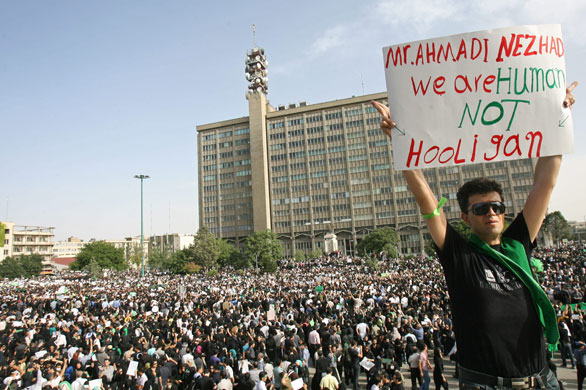
Massed Protests in Iran have been met by force

If you take a look at the details of these various reports there are a number of possibilities in regard to Iran, its internal political tensions and its repeated threats to US and Western interests. There are a myriad of possibilities many of which while directed outward are also directly related to the internal unrest in Iran in which a new generation who have grown up under the religious totalitarianism of the Mullah’s and men like Ahamadinejad who are convinced of the certainty of their beliefs and determined to impose them not only on their own people but their neighbors.  Ahamadinejad’s belief in the return of the 12th Mahdi to bring in a new era where the Caliphate will be established in Jerusalem is another wild card to factor into any equation.

Shahab-3 Missile test launch from mobile launcher

In the past year the Iranians have been increasingly more bellicose concerning their nuclear program and ballistic missile programs and have thwarted US, EU and UN initiatives to ensure that the nascent nuclear capacity is only capable of peaceful use and not capable of producing weapons grade uranium which could then be used in nuclear weapons.   They have expanded the number of centrifuges used for enriching uranium as well as continued to disperse and harden nuclear facilities against possible Israeli or US preventive strikes.  Additionally they have continued to increase their ballistic and cruise missile capabilities and the newer versions of the Shahab missile are capable of striking Western Europe.  The Revolutionary Guard forces have been actively supporting the Hezbollah terrorist group in Lebanon which in 2006 waged a successful war against Israel on the Israeli-Lebanese border.  It has continued to improve its asymmetric warfare capabilities as well as Naval and Revolutionary Guard Naval force capacity for disrupting shipping in the Straits of Hormuz through which a large percentage of the world’s oil is transported.

Iranian Missile Boat and Helicopter

Ahamadinejad’s latest remarks are ambiguous and could mean a number of things ranging from empty rhetoric designed to evoke a response from the United States or Israel up to military action.  Possible events within the continuum could be measures to destabilize Iraq where recently Iranian forces briefly occupied an Iraqi oil facility on the border near Basra before leaving when Iraq sent troops and threatened force to retake the facility.  Likewise a missile test of an upgraded or longer range Shahab could be planned, a military exercise in the Gulf or a test of a nuclear weapon which they might have succeeded in developing in their clandestine labs from previously enriched uranium.  The timing of the threat could also mean a military attack against Israel or US allies in the Persian Gulf including Kuwait, Bahrain, Qatar, the United Arab Emirates or Saudi Arabia.  Iran could in a “doomsday” strike launch a nuclear weapon (should it have an operation weapon) or chemical or biological weapons against Israel or even the rival Sunni Moslem Kingdom of Saudi Arabia, provoking a retaliatory strike which could embroil the region in a major war and might have worldwide implications. While I would think that the military attack would be a lower possibility the timing which coincides with the anniversary of the Revolution coupled with domestic unrest could mean that Ahamadinejad may feel that the benefit outweighs the risk.  It also could mean a stronger domestic crackdown on Iranian dissidents, whichever course of action the Iranians take it could make life even more interesting.

Shore based C-802 Surface to Surface Anti-Ship Missile in Iranian service

With the full spectrum of possibilities from simple rhetoric to a military strike laid out the Obama administration reportedly has sent Patriot Missile batteries to shield key Gulf allies and dispatched additional Aegis anti-ballistic missile capable ships from the US Navy to the Gulf.  Past remarks by the administration have been perceived as weak by the Iranians and the demonstration of US resolve by the dispatch of additional forces to the region may be designed to show that the Obama administration is not indecisive but capable of countering military threats to the region.

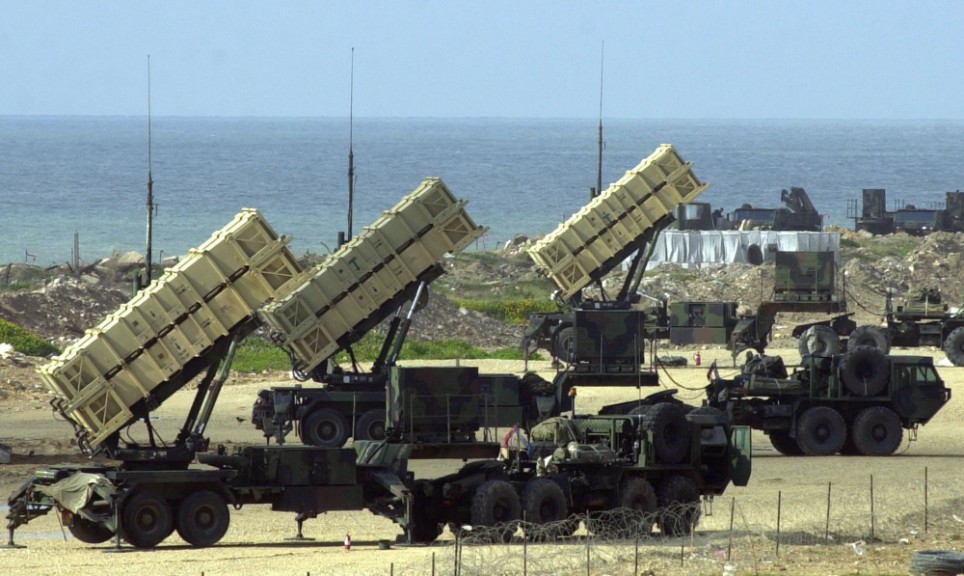
Additional ships of the Arliegh Burke Class that carry SM-3 missiles and Ant–Ballistic Missile systems have been moved into the Gulf along with Patriot Missile batteries

The administration’s move is prudent considering the potential threat.  Iran does not have the capabilities to fight a sustained war but could if fueled by the apocalyptic vision of Ahamadinejad mean that the Iranian government is willing to risk a confrontation with the United States because it perceives the Obama administration as weak.  I think that such an assumption by Ahamadinejad would be a serious mistake, however if he were to attempt a military or asymmetric-terrorist act of some kind he could create chaos until the United States and our allies eliminate his offensive capability.

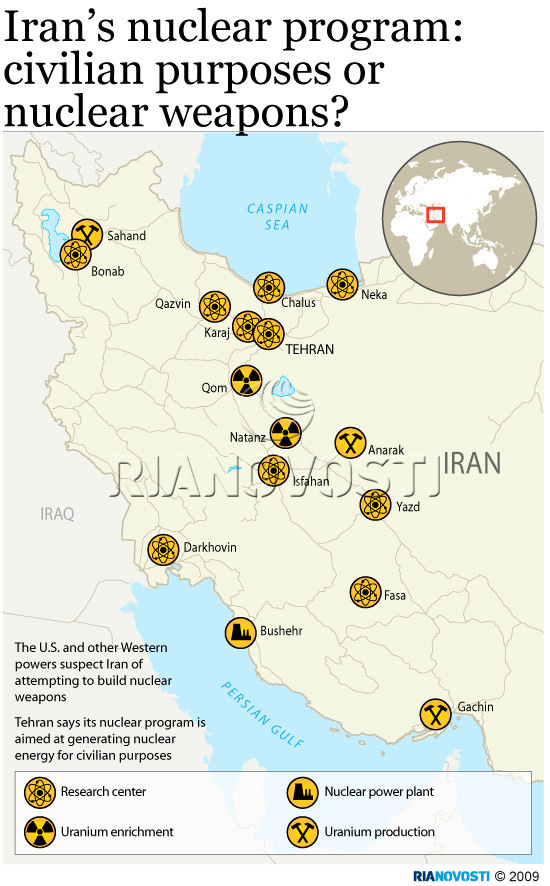
Iranian Nuclear facilities are dispersed around the country and in hardened sites

Potential problems that Iran could cause the United States could include disruption of transition efforts in Iraq through military or terrorist activity as well as to cause casualties or damage US military forces in that country. Far less likely is the possibility that the Iranians could offer support to their rivals in Al Qaida and the Taliban in Afghanistan if for no other reason than to disrupt the US/NATO mission in that country. Likewise the Iranians could attempt to cause economic and diplomatic problems in the region that would adversely affect the US and world economy that could be done short of war.

To deal with all possibilities the United States must not only be militarily ready to respond to any military threat but also to be able to exercise the full spectrum of diplomatic, economic and intelligence resources of its own and our allies.

So in about a week and a half we will know what the cryptic Ahamadinejad meant by his latest outburst, hopefully there will be some clarification before then so the US and its allies in the region can coordinate an effective response.  With tensions rising and uncertainty in the air it is important for the US, Israel and the West to get this right and hopefully give the Iranian opposition time to force Ahamadinejad and his supporters in the Iranian clergy and the Revolutionary Guard from power.  There is both danger and opportunity in the coming days and one can only hope that the Iranian opposition will be successful.

Peace,

Padre Steve+

Leave a comment

Filed under Foreign Policy, Military, national security

Stalingrad: Disaster on the Volga

Madonna of Stalingrad: Drawn by a German Chaplain and physician the piece was taken out of the city by one of the last officers to get out. It is now displayed in the Kaiser Wilhelm Memorial Church in Berlin

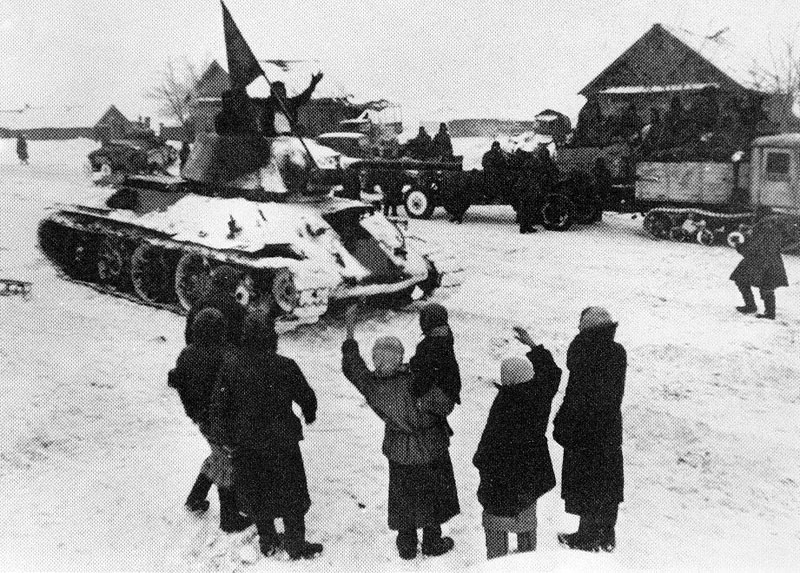
Sunday the 31st of January marks the surrender of the remnants of the German 6th Army to the Soviets at Stalingrad. The focus of this article is on how the Germans and Russians fought the Stalingrad campaign. In particular it is an analysis of the way the governments and military’s of both Nazi Germany and the Soviet Union planned and executed strategy during the course of the campaign adjusted to the situation and how the campaign ended. It is also a reminder of the price that ordinary soldiers can pay when a country commits them to war. I conclude with a potential modern application for the US and NATO in Afghanistan.

Stalingrad: Primary or Secondary Objective

The mistakes began early in the planning and conduct of the operation

Following the Soviet winter offensive and the near disaster in front of Moscow the German High Command was faced with the strategic decision of what to do in the 1942 campaign.  Several options were considered and it was decided to seize the Caucasus oilfields and capture or neutralize the city of Stalingrad on the Volga.  However, the High Command was divided on the actual objective of the campaign.
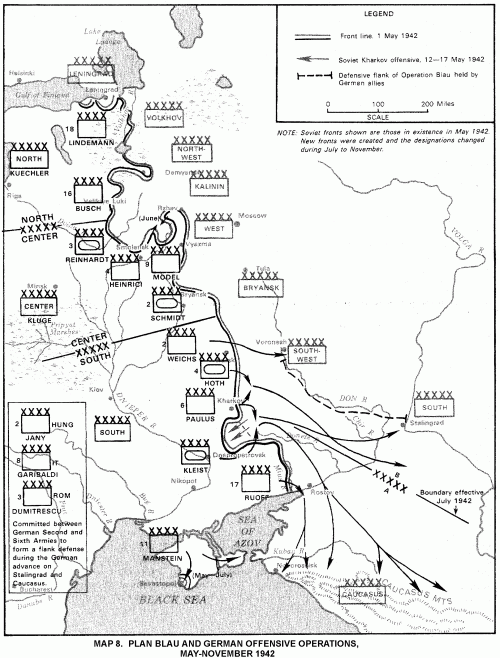
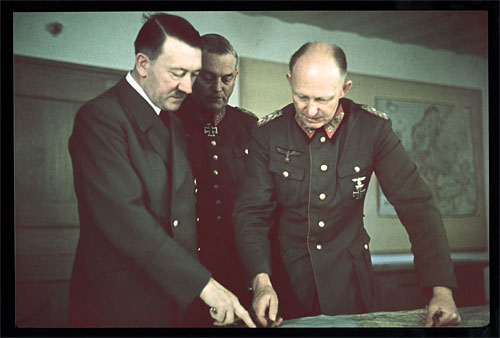
OKH under the guidance of General Halder assumed that Stalingrad was the objective and the advance into the Caucasus was a blocking effort.[i] Hitler and OKW planned to capture the Caucasus oil fields and capture or neutralize Stalingrad to secure the left flank.[ii] Both OKH and OKW considered Stalingrad significant but “German commanders initially regarded it as a weigh station en route to the Caucasus oil fields.”[iii] The conflict echoed in the ambiguity of Directive No. 41 which “included the ‘seizure of the oil region of the Caucasus’ in the preamble concerning the general aim of the campaign, yet made no mention of this in the main plan of operations.”[iv] At the planning conference held at Army Group South in early June “Hitler hardly mentioned Stalingrad. As far as his Generals were concerned it was little more than a name on the map. His obsession was with the oil fields of the Caucasus.”[v] Manstein noted that “Hitler’s strategic objectives were governed chiefly by the needs of his war economy….”[vi] Anthony Beevor notes that at this stage of planning “the only interest in Stalingrad was to eliminate the armaments factories there and secure a position on the Volga. The capture of the city was not considered necessary.”[vii] German planners “expected that the Soviets would again accept decisive battle to defend these regions.”[viii]

In Moscow Stalin and his Generals attempted to guess the direction of the impending German offensive.  “Stalin was convinced that Moscow remained the principle German objective…Most of the Red Army’s strategic reserves…were therefore held in the Moscow region.”[ix] To disrupt the German offensive and to attempt to recover Kharkov three offensives were launched by Red Army forces under the direction of Stavka. The largest of these on Kharkov was defeated between 12-22 May with the loss of most of the armor in southern Russia. This coupled with an equally disastrous defeat of Red Army forces in Crimea by Von Manstein’s 11th Army meant that the Red Army would face the Germans in a severely weakened condition.[x]

Operation Blau: Opening Moves and Divergent Objectives
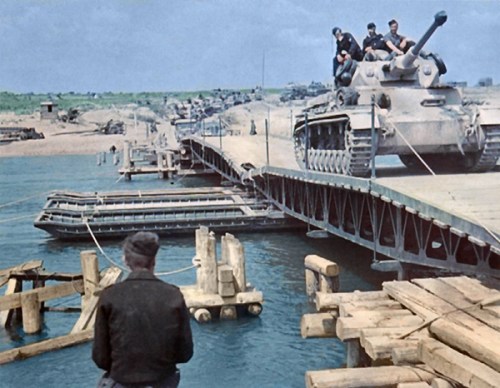
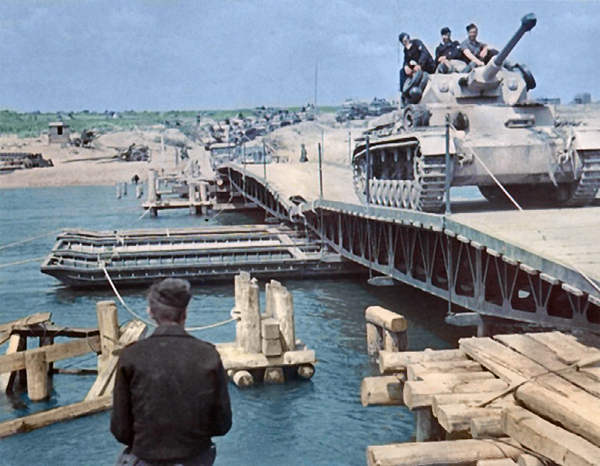
Panzers cross the Don

The German offensive began on 28 June under the command of Field Marshal von Bock. Bock’s command included two separate army groups, Army Group B under General Von Weichs with 2nd Army, 6th Army and 4th Panzer Army operated in the northern part of the operational area. Army Group A was to the south with 17th Army and 1st Panzer Army.[xi] Army Group B provided the main effort and quickly smashed through the defending Soviet armies and by the 20th Hitler believed that “the Russian is finished.”[xii] One reason for the German success in the south was that until July 7th Stalin believed that Moscow was still the primary objective.[xiii] Bock was prevented by Hitler from destroying Soviet formations left behind and was relieved of command by Hitler. He was replaced by Von Weichs which created a difficult command and control problem.  Manstein noted that this created a “grotesque chain of command on the German southern wing” with the result that Army Group A had “no commander of its own whatever” and Army Group B had “no few than seven armies under command including four allied ones.”[xiv]

Destroyed Soviet T-34s

This decision proved fateful.  Hitler’s decided to redirect the advance of the 4th Panzer Army to support an early passage of the lower Don, diverting it from its drive on Stalingrad.  Additionally the army groups became independent of each other when Bock was relieved of command.  They were “assigned independent-and diverging-objectives” under the terms of Directive No.45.[xv] This combination of events would have a decisive impact on the campaign.  The decision prevented a quick seizure of Stalingrad by 4th Panzer Army followed by a hand over to 6th Army to establish the “block” as described by Directive No.41.  Kleist noted that he didn’t need 4th Panzer Army’s help to accomplish his objectives and that it could have “taken Stalingrad without a fight at the end of July….”[xvi]

Field Marshall Von Paulus

The result was damning. Air support and fuel needed by Army Group A was transferred to 6th Army, denuding Army Group A of the resources that it needed to conclude its conquest of the Caucasus.[xvii] At the same time it denied Army Group B of the Panzer Army that could seize Stalingrad when it was still possible to do so.  Beevor calls Hitler’s decision a disastrous compromise.[xviii] Halder believed the decision underestimated the enemy and was “both ludicrous and dangerous.”[xix]

Focus on Stalingrad
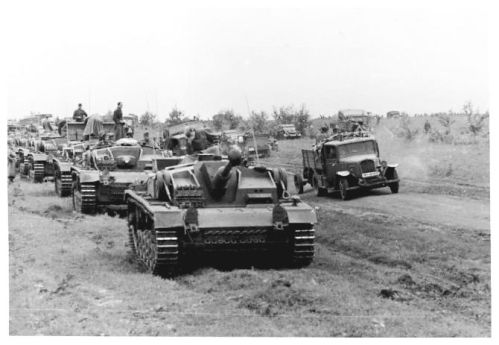
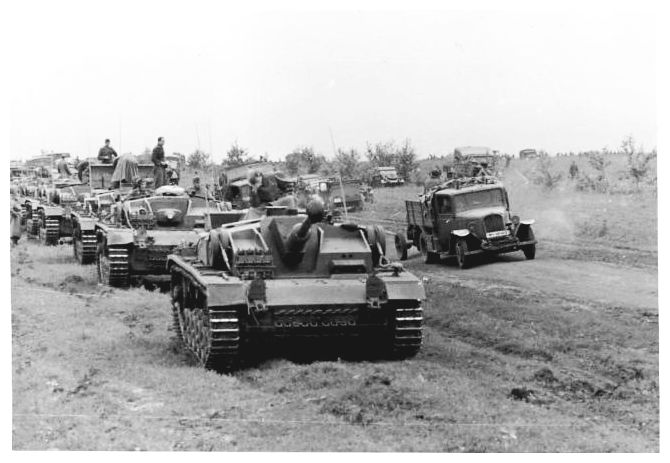
Sturmgeschutz Battalion Advancing toward Stalingrad

On July 22 as the Wehrmacht ran short on fuel and divisions to commit to the Caucasus, and 6th Army fought for control of Voronezh the Soviets created the Stalingrad Front. Stavka moved an NKVD Division to the city,[xx] and rapidly filled the new front with formations transferred from the Moscow Front.[xxi] Stalin issued Stavka Order 227, better known as “No Step Back” on 28 July. The order mandated that commanders and political officers who retreated would be assigned to Penal battalions[xxii] and armies were to form three to five special units of about 200 men each as a second line “to shoot any man who ran away.”[xxiii] Russian resistance west of the Don slowed the German advance. German commanders were astonished “at the profligacy of Russian commanders with their men’s lives.”[xxiv] Von Kleist compared the stubbornness of Russians in his area to those of the previous year and wrote that they were local troops “who fought more stubbornly because they were fighting to defend their homes.”[xxv] Additionally, Stalin changed commanders frequently in the “vain hope that a ruthless new leader could galvanize resistance and transform the situation.”[xxvi] General Chuikov brought the 64th Army into the Stalingrad Front in mid-July to hold the Germans west of the Don.[xxvii]
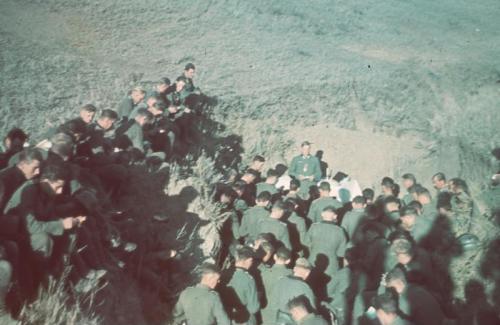
German Militarpfarrer (Chaplain) leading field service in August 1942

Further weakening the Germans OKW transferred key SS Panzer Divisions and the Grossdeutschland Division to France. Supporting Hungarian, Italian and Romanian allied armies which lacked motorization, modern armor or anti-tank units were unable to fulfill the gaps left by the loss of experienced German divisions and the expectations of Hitler.[xxviii] 6th Army was virtually immobilized for 10 days due to lack of supplies allowing the Russians to establish a defense on the Don Bend.[xxix] To the south the Germans were held up by lack of fuel and increased Soviet resistance including the introduction of a force of 800 bombers.[xxx] Glantz and House note that with the fall of Rostov on July 23rd “Hitler abruptly focused on the industrial and symbolic value of Stalingrad.”[xxxi] Undeterred by warnings from Halder that fresh Russian formations were massing east of the Volga and Quartermaster General, Wagner, who guaranteed that he could supply either the thrust to the Caucasus or Stalingrad but not both.[xxxii] Again frustrated by slow progress Hitler reverted to the original plan for 4th Panzer Army to assist 6th Army at Stalingrad, but the cost in time and fuel were significant to the operation and the question was whether “they could make up for Hitler’s changes in plan.”[xxxiii]

Strategic Implications

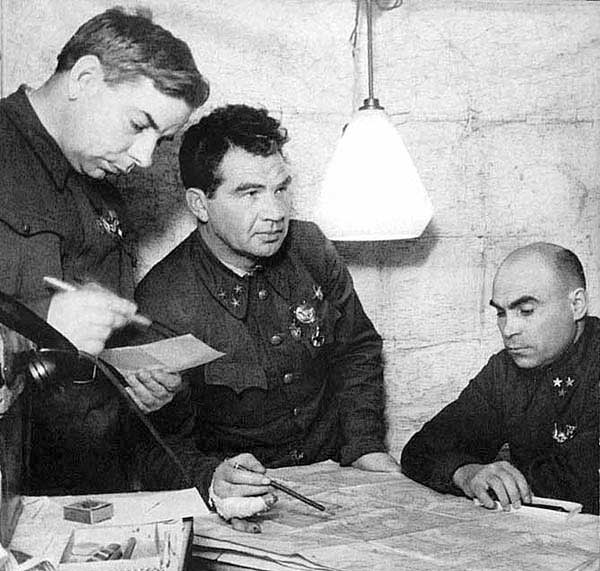
General Chuikov who directed the defense of Stalingrad during the battle

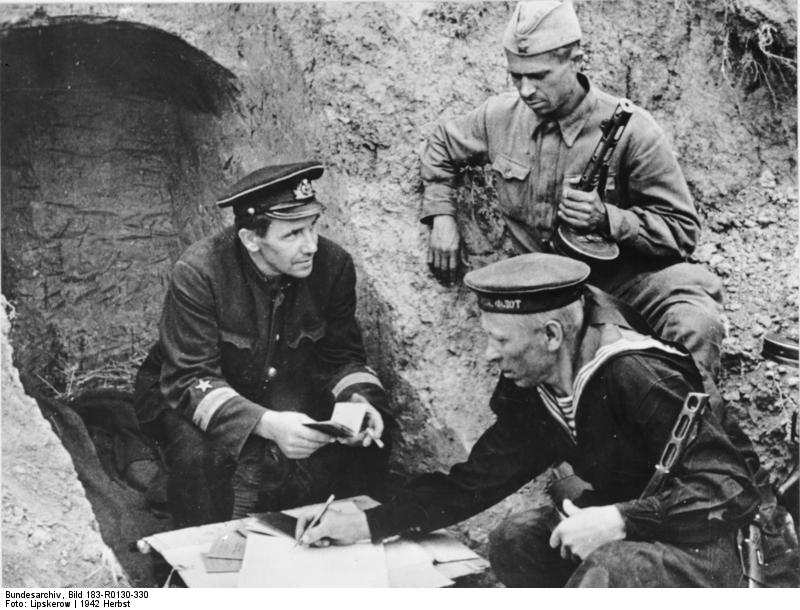
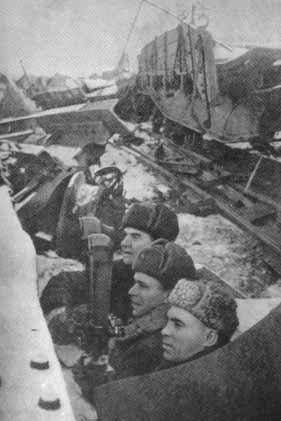
Soviet Naval Infantry and Political Officer

The changes in the German plan had distinct ramifications for both sides.  Von Mellenthin wrote that “the diversion of effort between the Caucasus and Stalingrad ruined our whole campaign.”[xxxiv] The Germans could not secure the Caucasus oil fields which Hitler considered vital to the German war effort.  They advanced deep into the region and captured the Maikop oil fields, though they were almost completely destroyed by the retreating Russians.[xxxv] Army Group A was halted by the Russians along the crests of the Caucasus on August 28th.[xxxvi] This left Hitler deeply “dissatisfied with the situation of Army Group A.”[xxxvii] Kleist and others attributed much of the failure to a lack of fuel[xxxviii] and Blumentritt noted that Mountain divisions that could have made the breakthrough were employed along the Black Sea coast in secondary operations.[xxxix]
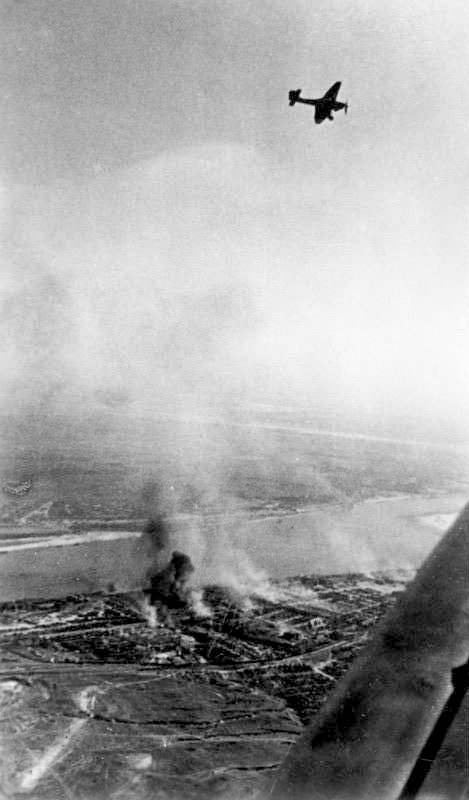
JU-87 Stuka over Stalingrad

Fuel and supply shortages delayed 6th Army’s advance while Hoth’s 4th Panzer Army was needlessly shuttled between Rostov and Stalingrad. By the time it resumed its advance the Russians “had sufficiently recovered to check its advance.”[xl] As 6th Army advanced the “protection of Army Group B’s ever-extending northern flank was taken over by the 3rd Rumanian, the 2nd Hungarian and the newly formed 8th Italian Army.”[xli] The allied armies were neither equipped for the Russian campaign nor well motivated.[xlii] The supply shortage in both army groups was not helped by a logistics bottleneck. All supplies came over a single Dnieper crossing, which Manstein noted, prevented swift movement of troops from one area to another.[xliii]

Reconnaissance Battalion of 24th Panzer Division near Stalingrad

Von Paulus’ 6th Army now attempted to rush Stalingrad between the 25th and 29th of July, while Hoth milled about on the lower Don.  However, Paulus’s piecemeal commitment of his divisions and failure to concentrate in the face of unexpectedly strong Soviet resistance caused the attacks to fail.  Paulus halted 6th Army on the Don so it could concentrate its forces and build its logistics base,[xliv] and to allow Hoth to come up from the south. This delay allowed the Russians to build up forces west of Stalingrad and reinforce the Stalingrad front and strengthen the defenses of the city,[xlv] and due to the distances involved it was easier for the Russians to reinforce the Stalingrad front.[xlvi] It also allowed the Russians to fill a number of key leadership positions with Generals who would skillfully fight the battle.[xlvii]
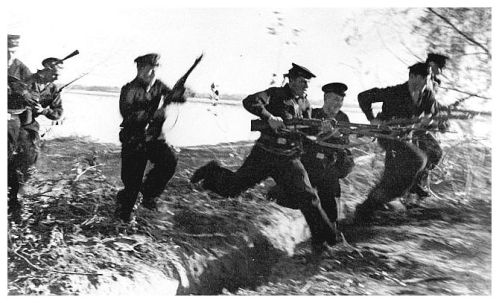
Russian Naval Infantry during early phase of battle

Hitler now focused on the capture of Stalingrad despite the fact that “as a city Stalingrad was of no strategic importance.”[xlviii] Strategically, its capture would cut Soviet supply lines to the Caucasus,[xlix] but this could be achieved without its capture. The checks in the south “began to give Stalingrad a moral importance-enhanced by its name-which came to outweigh its strategic value.”[l] To Hitler Stalingrad would gain “a mystic significance”[li] and along with Leningrad became “not only military but also psychological objectives.”[lii]

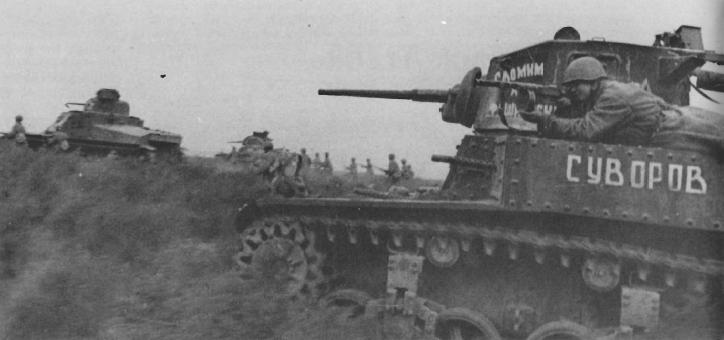
Red Army Armored troops using Lend-Lease American M3 Stuart and M3 Grant tanks

The Germans mounted a frontal assault with 6th Army and elements of 4th Panzer Army despite air reconnaissance that “the Russians are throwing forces from all directions at Stalingrad.[liii] Paulus as the senior General was in charge of the advance, with Hoth subordinated to him, but the attack had to wait until Hoth’s army could fight its way up from the south.[liv] Von Mellenthin comments rightly that “when Stalingrad was not taken on the first rush, it would have been better to mask it….”[lv] It is clear that the German advance had actually reached its culminating point with the failure of the advance into the Caucasus and Paulus’s initial setback on the Don, but it was not yet apparent to many involved.[lvi] The proper course of action would have been to halt and build up the front and create mobile reserve to parry any Russian offensive along northern flank while reinforcing success in the Caucasus. Manstein wrote that “by failing to take appropriate action after his offensive had petered out without achieving anything definite, he [Hitler] paved the way to the tragedy of Stalingrad!”[lvii]

Transfixed by Stalingrad
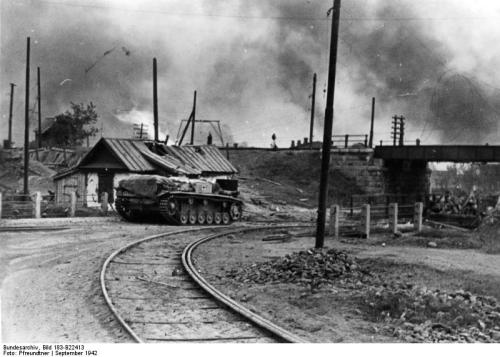
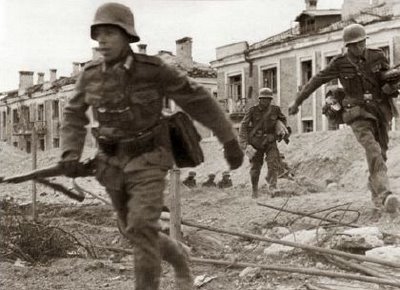
German Stug III at Stalingrad

On August 19th Paulus launched a concentric attack against the Russian 62nd and 64th Armies on the Don.  The attack ran into problems, especially in Hoth’s sector.[lviii] Yet, on the 22nd the 14th Panzer Corps “forced a very narrow breach in the Russian perimeter at Vertyachi and fought its way across the northern suburbs of Stalingrad,”[lix] and reached the Volga on the 23rd. That day 4th Air Fleet launched 1600 sorties against the city dropping over 1,000 tons of bombs.[lx] The breakthrough imperiled the Soviet position they had concentrated their strongest forces against Hoth.[lxi] The Germans held air superiority and continued heavy bombing attacks.  During the last days of August 6th Army “moved steadily forward into the suburbs of the city, setting the stage for battle.”[lxii] As the Soviets reacted to Paulus, Hoth achieved a breakthrough in the south which threatened the Russian position.  However 6th Army was unable to disengage its mobile forces to link up with the 4th Panzer Army and another opportunity had been missed.[lxiii]
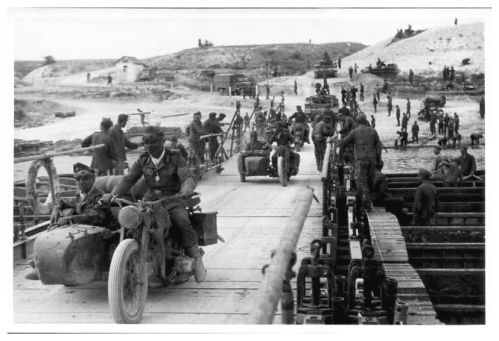
German unit crossing the Don

As 6th Army moved into the city Yeremenko ordered attacks against Hube’s 16th Panzer Division and Soviet resistance increased as more formations arrived the Germans suffered one of their heaviest casualty rates.”[lxiv] Though unsuccessful the counterattacks “managed to deflect Paulus’s reserves at the most critical moment.”[lxv] The Germans remained confident the first week of September as 6th Army and 4th Panzer Army linked up, but Yeremenko saved his forces by withdrawing and avoiding encirclement west of the city, retiring to an improvised line close to the city.[lxvi] On September 12th Chuikov was appointed to command 62nd Army in Stalingrad.  Chuikov understood that there “was only one way to hold on. They had to pay in lives. ‘Time is blood,’ as Chuikov put it later.”[lxvii] Stalin sent Nikita Khrushchev to the front “with orders to inspire the Armies and civilian population to fight to the end.”[lxviii] 13th Guards Rifle Division arrived on the 14th saved the Volga landings but it lost 30% casualties in its first 24 hours of combat.[lxix]
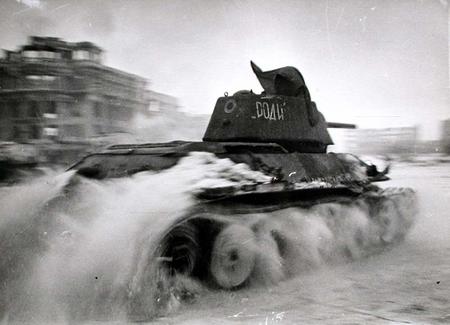
T-34 in Stalingrad

An NKVD regiment and other units held the strategically sited Mamaev Kurgan, keeping German guns from controlling the Volga.[lxx] The defenders fought house to house and block by block, Army and NKVD were reinforced by Naval Infantry.  Chuikov conducted the defense with a brutal ferocity, relieving senior commanders who showed a lack of fight and sending many officers to penal units.  Chuikov funneled massed German attacks into “breakwaters” where the panzers and infantry could be separated from each other causing heavy German casualties.[lxxi]
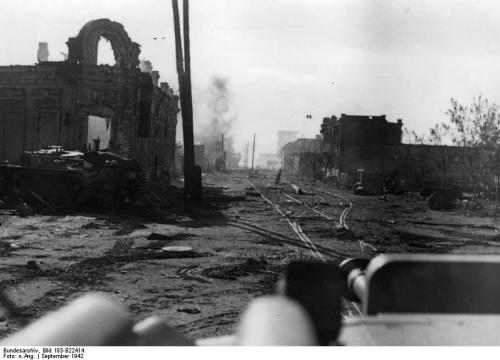
Street Fighting


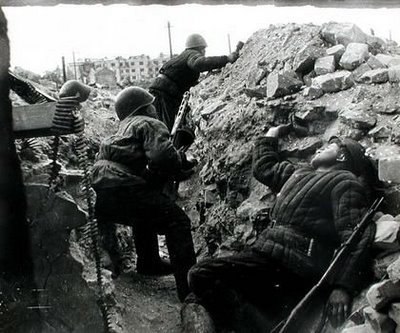
Now the “city became a prestige item, its capture ‘urgently necessary for psychological reasons,’ as Hitler declared on October 2. A week later he declared that Communism must be ‘deprived of its shrine.’”[lxxii] The Germans did continue to gain ground, however slowly and at great cost, especially among their infantry, so much so that companies had to be combined.   Chuikov used his artillery to interdict the Germans from the far side of the Volga and the fight in the city was fought by assault squads with incredible ferocity and the close-quarter combat was dubbed “’Rattenkrieg’ by German soldiers.”[lxxiii] Paulus brought more units into the city and continued to slowly drive the Russians back against the river, by early October Chuikov wondered if he would be able to hold.[lxxiv] By early November Chuikov “was altogether holding only one-tenth of Stalingrad-a few factory buildings and a few miles of river bank.”[lxxv] Paulus expected “to capture the entire city by 10 November,”[lxxvi] despite the fact that many units were fought out. The 6th Army judged that 42% of the battalions of 51st Corps were fought out.[lxxvii] On 9 November Hitler declared “No power on earth will force us out of Stalingrad again!”[lxxviii]

Soviet Counteroffensive: Disaster on the Flanks

Soviet offensive on the flanks

Hungarian withdraw

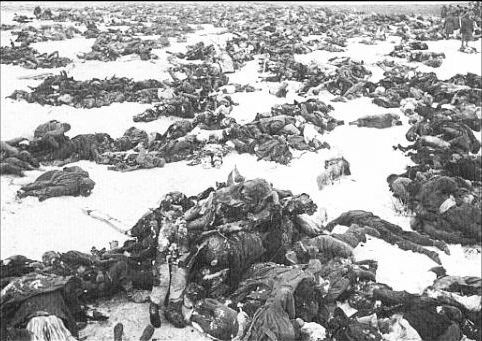
Hungarian dead

On September 24th Hitler relieved Halder for persisting in explaining “what would happen when new Russian reserve armies attacked the over-extended flank that ran out to Stalingrad.”[lxxix] Many in the German side recognized the danger. Blumentritt said “The danger to the long-stretched flank of our advance developed gradually, but it became clear early enough for anyone to perceive it who was not willfully blind.”[lxxx] Warnings were also given by Rumanian Marshall Antonescu and the staff’s of Army Group B and 6th Army[lxxxi] but Hitler was transfixed on Stalingrad.  In doing so the Germans gave up the advantage of uncertainty and once their “aim became obvious…the Russian Command could commit its reserves with assurance.”[lxxxii]

Chuikov and his staff

In the midst of Stalin’s concern about Stalingrad Stavka planners never lost sight of their goal to resume large scale offensive operations and destroy at least one German Army Group.[lxxxiii] Unlike Hitler Stalin had begun to trust his Generals and Stavka under the direction of Marshal Vasilevsky produced a concept in September to cut off the “German spearhead at Stalingrad by attacking the weak Rumanian forces on its flanks.”[lxxxiv] At first Stalin “showed little enthusiasm” for the attack, fearing that Stalingrad might be lost, but on 13 September he gave his full backing to the proposal[lxxxv] which Zhukov, Vasilevsky and Vatutin developed into a plan involving two operations, Operation Uranus, to destroy the German and allied forces at Stalingrad, Operation Saturn to destroy all the German forces in the south and a supporting attack to fix German forces in the north, Operation Mars aimed at Army Group Center.[lxxxvi]
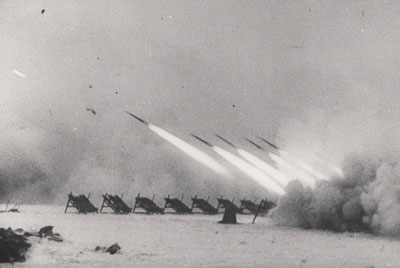
Soviet Katusha Rockets

To accomplish the destruction of 6th Army and part of 4th Panzer Army the Red Army employed over 60% of the “whole tank strength of the Red Army.”[lxxxvii] Strict secrecy combined with numerous acts of deception was used by the Red Army to disguise the operation.[lxxxviii] The plan involved an attack against 3rd Romanian Army on the northern flank by 5th Tank Army and two infantry armies with supporting units.[lxxxix] In the south against 4th Rumanian Army and weak element of 4th Panzer Army another force of over 160,000 men including 430 tanks were deployed.[xc] Despite warnings from his Intelligence Officer, Paulus did not expect a deep offensive into his flanks and rear and made no plans to prepare to face the threat.[xci] Other senior officers believed that the attack would take place against Army Group Center.[xcii] Warlimont notes that there was a “deceptive confidence in German Supreme Headquarters.”[xciii]

Luftwaffe JU-52s made many resupply runs into the pocket but suffered great losses

The storm broke on 19 November as Soviet forces attacked rapidly crushing Romanian armies in both sectors[xciv] linking up on the 23rd.[xcv] 48th Panzer Corps supporting the Romanians was weak and had few operational tanks.[xcvi] It attempted a counterattack but was “cut to pieces” in an encounter with 5th Tank Army.[xcvii] A promising attempt by 29th Motorized division against the flank of the southern Russian pincer was halted by the Army Group and the division was ordered to defensive positions south of Stalingrad.[xcviii] German airpower was neutralized by bad weather.[xcix] Paulus continued to do nothing as since the attacks were outside of his area of responsibility and waited for instructions.[c] As a result the 16th and 24th Panzer Divisions which could have assisted matters to the west remained “bogged down in street-fighting in Stalingrad.”[ci] Without support 6th Army units west of Stalingrad were forced back in horrific conditions.  By the 23rd 6th Army was cut off along with one corps of 4th Panzer Army and assorted Romanian units, over 330,000 men.  This now entrapped force that would require seven rifle armies and much staff attention to eliminate.[cii]

The Death of 6th Army
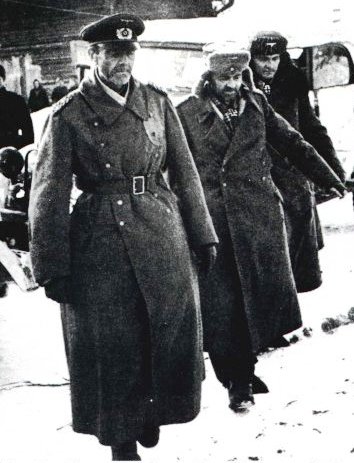
Paulus Surrenders

Hitler ordered Manstein to form Army Group Don to relieve Stalingrad. Hitler would not countenance a break out and wanted Manstein to break through and relieve 6th Army.[ciii] Hitler refused a request by Paulus on 23 November to move troops to prepare for a possible a break out attempt, assuring him that he would be relieved.[civ] Albert Speer notes that Zeitzler who replaced Halder insisted that the Sixth Army must break out to the west.”[cv] Hitler told Zeitzler that “We should under no circumstances give this up. We won’t get it back once it’s lost.”[cvi] Goering promised the Luftwaffe would be able to meet the re-supply needs of 6th Army by air, even though his Generals knew that it was impossible with the number of transport aircraft available.[cvii] Hitler took Goering at his word and exclaimed “Stalingrad can be held! It is foolish to go on talking any more about a breakout by Sixth Army…”[cviii] and a Führer decree was issued ordering that the front be held at all costs.[cix] Goerlitz states that “Hitler was incapable of conceiving that the 6th Army should do anything but fight where it stood.”[cx] Likewise Manstein had precious few troops with which to counterattack and had to protect the flank of Army Group A deep in the Caucasus. His army group was only corps strength and was spread across a 200 mile front.[cxi] Any relief attempt had to wait for more troops, especially Panzers.  Manstein too believed that the best chance for a breakout had passed and that it was a serious error for Paulus to put the request to withdraw through to Hitler rather than the Army Group or act on his own.[cxii] Many soldiers were optimistic that Hitler would get them out.[cxiii] Other generals like Guderian, Reichenau or Hoeppner might have acted, but Paulus was no rebel.[cxiv]
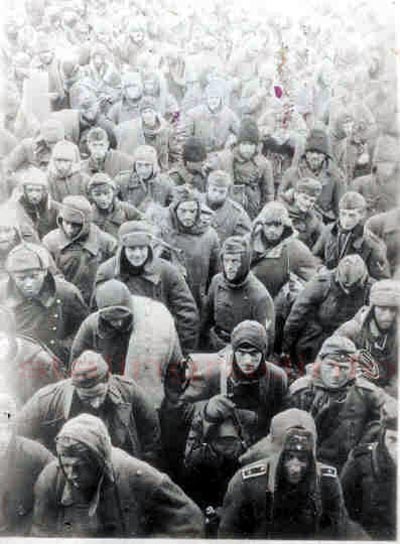
German POWs only 5000 of some 90,000 would see home again

Operation Saturn began on 7 December destroying the Italian 8th Army and forcing the Germans to parry the threat.[cxv] A relief attempt by 57th Panzer Corps under Hoth on 12 December made some headway until a massive Soviet counterattack on 24 December drove it back.[cxvi] This attack was hampered by OKW’s refusal to allocate the 17th Panzer and 16th Motorized divisions to Manstein,[cxvii] and by 6th Army not attacking out to link with the relief force.[cxviii]By 6 January Paulus signaled OKW: Army starving and frozen, have no ammunition and cannot move tanks anymore.”[cxix] On 10 January the Soviets launched Operation Ring to eliminate the pocket and despite all odds German troops fought on. On the 16th Paulus requested that battle worthy units be allowed to break out, but the request was not replied to.[cxx] On the 22nd the last airfield had been overrun and on 31 January Paulus surrendered.[cxxi]

Analysis: What Went Wrong

Stalingrad had strangely drawn the attention of both sides, but the Russians never lost sight of their primary objectives during the campaign. The Germans on the other hand committed numerous unforced errors mostly caused by Hitler and or von Paulus. These mistakes began early in the planning and After the fall of Stalingrad as the Soviets attempted to follow up their success by attempted to cut off Army Group “A” Manstein was permitted to wage a mobile defense while Von Kleist managed to withdraw with few losses.[cxxii] The superior generalship of Manstein and Von Kleist prevented the wholesale destruction of German forces in southern Russia and Manstein’s counter offensive inflicted a severe defeat on the Soviets. However the German Army had been badly defeated.  The seeds of defeat were laid early, the failure to destroy bypassed Soviet formations in July, the diversion of 4th Panzer Army from Stalingrad, and the divergent objectives of trying to capture the Caucasus and Stalingrad at the same time.  This diluted both offensives ensuring that neither succeeded.  Likewise the failure to recognize the culminating point when it was reached and to adjust operations accordingly was disastrous for the Germans. The failure create a mobile reserve to meet possible Russian counter offensives, and the fixation on Stalingrad took the German focus off of the critical yet weakly held flanks. The hubris of Hitler and OKW to believe that the Russians were incapable of conducting major mobile operations even as Stavka commenced offensive operations on those flanks all contributed to the defeat.  Clark notes these facts but adds that the Germans “were simply attempting too much.”[cxxiii] Soviet numbers allowed them to wear down the Germans even in defeat.[cxxiv] At the same time Stalin gave his commanders a chance to revive the mobile doctrine of deep operations with mechanized and shock armies that he had discredited in the 1930s.[cxxv] All through the campaign Zhukov and other commanders maintained both their nerve even when it appeared that Stalingrad was all but lost. They never lost sight of their goal of destroying major German formations though they failed to entrap Army Group A with 6th Army.

A Modern Application

It is well and good to attempt to remain on the offensive.  The U.S. currently has forces spread thinly over two combat theaters with possibilities that other threats in the same region could flare up.  Like the Germans the U.S. is operating in areas, especially Afghanistan where overland supply lines are vulnerable and where weather can and does affect resupply operations by both ground and air.  The fact that the U.S. is operating with just barely enough forces in areas where others have met disaster calls for a circumspect look at what our enemy’s capabilities really are and not allowing ourselves to be surprised when they do things that have worked for them in the past against the Russians.  While it is unlikely that the U.S. and NATO would face a Stalingrad type situation in Afghanistan it is possible that isolated forces could be overrun as the Afghans reprise tactics used so successfully against the Soviets and as they begin to operate in larger units, concentrate them quickly and with more firepower to catch NATO forces when they are most vulnerable.  It is true that they will not mass large numbers of tanks and artillery as the Soviets did against the Germans, but the principle of speed, concentration at the critical point and surprise can inflict defeats, even small ones like the attack on the US outpost in Wanat that can turn public sentiment in the U.S. and Europe against further commitments and against the war and force the NATO governments as well as the U.S. to give up the effort.

Notes

[i] Clark, Alan. Barbarossa: The Russian-German Conflict: 1941-45. Perennial Books, An imprint of Harper Collins Publishers, New York, NY 1965. p.191

[ii] Ibid.

[iii] Glantz, David M. and House, Jonathan. When Titan’s Clashed: How the Red Army Stopped Hitler. The University Press of Kansas, Lawrence KS, 1995. p.111

[iv] Ibid. Clark. p.191

[v] Beevor, Anthony. Stalingrad: The Fateful Siege: 1942-1943. Penguin Books, New York NY 1998. p.69

[vi] Manstein, Erich von. Forward by B.H. Liddle Hart, Introduction by Martin Blumenson. Lost victories: The War Memoirs of Hitler’s Most Brilliant General. Zenith Press, St Paul MN 2004. First Published 1955 as Verlorene Siege, English Translation 1958 by Methuen Company. p.291 This opinion is not isolated, Beevor Quotes Paulus “If we don’t take Maikop and Gronzy…then I must put an end to the war.” (Beevor pp. 69-70)  Halder on the other hand believed that Hitler emphasized that the objective was “the River Volga at Stalingrad. (Clark. p.190)

[vii] Ibid. Beevor. p.70.

[viii] Ibid. Glantz and House. p.106

[ix] Ibid. p.105-106

[x] Ibid. Clark. p.203.  The offensive did impose a delay on the German offensive.

[xi] Ibid. Clark. p.191 Each group also contained allied armies.

[xii] Ibid. p.209.

[xiii] Ibid. Glantz and House. p.119

[xiv] Ibid. Manstein. p.292.

[xv] Ibid. Clark. p.209

[xvi] Ibid. Clark.  p.211

[xvii] Ibid. Glantz and House. p.120. There is a good discussion of the impact of this decision here as 6th Army’s advance was given priority for both air support and fuel.

[xviii] Ibid. Beevor. p.74

[xix] Warlimont, Walter. Inside Hitler’s Headquarters 1939-45. Translated by R.H. Berry, Presido Press, Novato CA, 1964. p.249

[xx] Ibid. Beevor. p.75 This was the 10th NKVD Division and it took control of all local militia, NKVD, and river traffic, and established armored trains and armor training schools.

[xxi] Ibid. Clark. p.212

[xxii] Ibid. Glantz and House. p.121

[xxiii] Ibid. Beevor. p.85

[xxiv] Ibid. p.89

[xxv] Liddell-Hart, B.H. The German Generals Talk. Quill Publishers, New York, NY 1979. Originally published by the author in 1948. p.202

[xxvi] Ibid. Beevor. p.88

[xxvii] Ibid. Beevor. p.90

[xxviii] Ibid. Beevor. p.81

[xxix] Ibid. Glantz and House. p.121

[xxx] Ibid. Liddell-Hart. p.202

[xxxi] Ibid. Glantz and House. p.120

[xxxii] Goerlitz, Walter. History of the German General Staff. Westview Press, Frederick A. Praeger Publisher, Boulder, CO. 1985 p.416

[xxxiii] Ibid. Beevor. pp.95-96.

[xxxiv] Von Mellenthin, F.W. Panzer Battles: A Study of the Employment of Armor in the Second World War. Translated H. Betzler, Edited by L.C.F. Turner. Oklahoma University Press 1956, Ballantine Books, New York, NY. 1971. p.193

[xxxv] Shirer, William L. The Rise and Fall of the Third Reich. A Touchstone Book published by Simon and Schuster, 1981, Copyright 1959 and 1960. p.914

[xxxvi] Ibid. Glantz and House. p.122

[xxxvii] Ibid. Warlimont. p.256

[xxxviii] Ibid. Liddell-Hart. p.203

[xxxix] Ibid. p.204

[xl] Ibid. Shirer. p.914

[xli] Ibid. Goerlitz. p.416

[xlii] Ibid. Goerlitz. p.416

[xliii] Ibid. Manstein. p.293

[xliv] Ibid. Clark. p.214

[xlv] Ibid. Beevor. pp.97-99. The mobilization included military, political, civilian and industrial elements.

[xlvi] Liddell-Hart, B.H. Strategy. A Signet Book, the New American Library, New York, NY. 1974, Originally Published by Faber and Faber Ltd., London. 1954 & 1967. p.250

[xlvii] Ibid. Beevor. p.99.  Two key commanders arrived during this time frame, Colonel General Andrei Yeremenko, who would command the Stalingrad Front  and General Chuikov commander of 64th Army who would conduct the defense of the city.

[xlviii] Carell, Paul Hitler Moves East: 1941-1943. Ballantine Books, New York, NY 1971, German Edition published 1963. p.581

[xlix] Ibid. Shirer.  p.909.

[l] Ibid. Liddell-Hart, Strategy. p.250

[li] Wheeler-Bennett, John W. The Nemesis of Power: The German Army in Politics 1918-1945. St. Martin’s Press, New York, NY 1954.  p.531

[lii] Ibid. Wheeler-Bennett. p.531

[liii] Ibid. Beevor. p.96

[liv] Ibid. Clark. p.216.

[lv] Ibid. Von Mellenthin. P.193

[lvi] See Von Mellinthin pp.193-194.  Von Mellinthin quotes Colonel Dinger, the Operations Officer of 3rd Motorized Division at Stalingrad until a few days before its fall. Dingler noted that the Germans on reaching Stalingrad “had reached the end of their power. Their offensive strength was inadequate to complete the victory, nor could they replace the losses they had suffered.” (p.193) He believed that the facts were sufficient “not only to justify a withdrawal, but compel a retreat.” (p.194)

[lvii] Ibid. Manstein. p.294

[lviii] Ibid. Clark. p.216

[lix] Ibid. Clark. p.217

[lx] Ibid. Beevor. p.107

[lxi] Ibid. Beevor. p.107

[lxii] Ibid. Glantz and House. p.122

[lxiii] Ibid. Carell. P.601

[lxiv] Ibid. Beevor. p.118

[lxv] Ibid. Beevor. p.118

[lxvi] Ibid. Carell. p.602

[lxvii] Ibid. Beevor. p.128

[lxviii] Ibid. Carell. p.603

[lxix] Ibid. Beevor. p.134

[lxx] Ibid. Beevor. pp.136-137

[lxxi] Ibid. Beevor. p.149

[lxxii] Fest, Joachim. Hitler. Translated by Richard and Clara Winston, Harcourt, Brace, Jovanovich Publishers, San Diego, New York, London. 1974. p.661

[lxxiii] Ibid. Beevor. pp. 149-150

[lxxiv] Ibid. Beevor. p.164

[lxxv] Ibid. Carell. p.618

[lxxvi] Ibid. Glantz and House. p.123

[lxxvii] Ibid. Beevor. p.218

[lxxviii] Ibid. Carell. p.623

[lxxix] Ibid. Goerlitz. p.418

[lxxx] Ibid. Liddell-Hart. The German Generals Talk. p.207

[lxxxi] Ibid. Manstein. p292

[lxxxii] Ibid. Liddell-Hart. History of the Second World War. p.258

[lxxxiii] Ibid. Glantz and House. p.129

[lxxxiv] Ibid. Glantz and House. p.130

[lxxxv] Ibid. Beevor. pp.221-222 Glantz and House say that Stalin gave his backing in mid-October but this seems less likely due to the amount of planning and movement of troops involved to begin the operation in November.

[lxxxvi] Ibid. Glantz and House. p.130

[lxxxvii] Ibid. Beevor. p.226

[lxxxviii] Ibid. Glantz and House. p.132

[lxxxix] Ibid. Glantz and House. p.130

[xc] Ibid. Beevor. p.227

[xci] Ibid. Beevor. p.228

[xcii] Ibid. Clark. p.235

[xciii] Ibid. Warlimont. p.274

[xciv] Ibid, Carell. p.627 3rd Rumanian Army lost 75,000 men in three days.

[xcv] Ibid. Clark.pp.247-248

[xcvi] The condition of the few German Panzer Divisions in position to support the flanks was very poor, the 22nd had suffered from a lack of fuel and maintenance and this many of its tanks were inoperative. Most of the armor strength of the 48th Panzer Corps was provided by a Rumanian armored division equipped with obsolete Czech 38t tanks provided by the Germans.

[xcvii] Ibid. Clark. pp.251-252. The designation of 2nd Guards Tank Army by Clark has to be wrong and it is the 5th Tank Army as 2nd Guards Tank was not involved in Operation Uranus.  Carell, Beevor and Glantz properly identify the unit.

[xcviii] Ibid. Carell. p.630

[xcix] Ibid. Beevor. p.244

[c] Ibid. Beevor. p.247

[ci] Ibid. Beevor. p.245

[cii] Ibid. Glantz and House. p.134

[ciii] Ibid. Glantz and House. p.134

[civ] Ibid. Clark. p.256

[cv] Speer, Albert. Inside the Third Reich. Collier Books, a Division of MacMillan Publishers, Inc. New York, NY 1970. p.248

[cvi] Heiber, Helmut and Glantz, David M. Editors. Hitler and His Generals: Military Conferences 1942-1945. Enigma Books, New York, NY 2002-2003.  Originally published as Hitlers Lagebsprechungen: Die Protokollfragmente seiner militärischen Konferenzen 1942-1945. Deutsche Verlags-Anstalt GmbH, Stuttgart, 1962. p.27

[cvii] Ibid. Glantz and House. p.135 Glantz and House note that the amount of aircraft estimated to successfully carry out the re-supply operation in the operational conditions was over 1,000.  The amount needed daily was over 600 tons of which the daily reached only 300 tons only one occasion.

[cviii] Ibid. Speer. p.249

[cix] Ibid. Carell. p.636

[cx] Ibid. Goerlitz. p.426

[cxi] Ibid. Clark. p.252

[cxii] Ibid. Manstein. p.303

[cxiii] Ibid. Beevor. p.276

[cxiv] Ibid. Carell. p.640

[cxv] Ibid. Glantz and House. p.140

[cxvi] Ibid. Glantz and House. p.140

[cxvii] Ibid. Clark. p.264

[cxviii] Ibid. Manstein. p.337

[cxix] Ibid. Beevor. p320

[cxx] Ibid. Beevor. p.365

[cxxi] Of the approximately 330,000 in the pocket about 91,000 surrendered, another 45,000 had been evacuated.  22 German divisions were destroyed.

[cxxii] Ibid. Liddell-Hart. The German Generals Talk. p.211

[cxxiii] Ibid. Clark. p.250

[cxxiv] Ibid. Glantz and House. p.124

[cxxv] Ibid. Beevor. p.221

Bibliography

Beevor, Anthony. Stalingrad: The Fateful Siege: 1942-1943. Penguin Books, New York NY 1998

Carell, Paul Hitler Moves East: 1941-1943. Ballantine Books, New York, NY 1971, German Edition published 1963.

Clark, Alan. Barbarossa: The Russian-German Conflict:1941-45. Perennial Books, An imprint of Harper Collins Publishers, New York, NY 1965.

Fest, Joachim. Hitler. Translated by Richard and Clara Winston, Harcourt, Brace, Jovanovich Publishers, San Diego, New York, London. 1974

Glantz, David M. and House, Jonathan. When Titan’s Clashed: How the Red Army Stopped Hitler. The University Press of Kansas, Lawrence KS, 1995.

Goerlitz, Walter. History of the German General Staff. Westview Press, Frederick A. Praeger Publisher, Boulder, CO. 1985

Heiber, Helmut and Glantz, David M. Editors. Hitler and His Generals: Military Conferences 1942-1945. Enigma Books, New York, NY 2002-2003.  Originally published as Hitlers Lagebsprechungen: Die Protokollfragmente seiner militärischen Konferenzen 1942-1945. Deutsche Verlags-Anstalt GmbH, Stuttgart, 1962.

Liddell-Hart, B.H. The German Generals Talk. Quill Publishers, New York, NY 1979. Originally Published by the author in 1948.

Liddell-Hart, B.H. Strategy. A Signet Book, the New American Library, New York, NY. 1974, Originally Published by Faber and Faber Ltd., London. 1954 & 1967

Manstein, Erich von. Forward by B.H. Liddle Hart, Introduction by Martin Blumenson. Lost victories: The War Memoirs of Hitler’s Most Brilliant General. Zenith Press, St Paul MN 2004. First Published 1955 as Verlorene Siege, English Translation 1958 by Methuen Company

Shirer, William L. The Rise and Fall of the Third Reich. A Touchstone Book published by Simon and Schuster, 1981, Copyright 1959 and 1960

Speer, Albert. Inside the Third Reich. Collier Books, a Division of MacMillan Publishers, Inc. New York, NY 1970.

Von Mellenthin, F.W. Panzer Battles: A Study of the Employment of Armor in the Second World War. Translated H. Betzler, Edited by L.C.F. Turner. Oklahoma University Press 1956, Ballantine Books, New York, NY. 1971.

Warlimont, Walter. Inside Hitler’s Headquarters 1939-45. Translated by R.H. Berry, Presido Press, Novato CA, 1964.

Wheeler-Bennett, John W. The Nemesis of Power: The German Army in Politics 1918-1945. St. Martin’s Press, New York, NY 1954

17 Comments

Filed under History, Military, world war two in europe

A Global Force for Good

A Global Force for Good: A Sailor holds the hand of a Haitian Child

The Navy A Global Force For Good TV Spot

http://www.youtube.com/watch?v=6DriBYQvG_4

“I can imagine no more rewarding a career. And any man who may be asked in this century what he did to make his life worthwhile, I think can respond with a good deal of pride and satisfaction: ‘I served in the United States Navy.’” President John F Kennedy 1 August 1963, at the Naval Academy
“It follows than as certain as that night succeeds the day, that without a decisive naval force we can do nothing definitive, and with it, everything honorable and glorious.” George Washington 15 November 1781 to the Marquis de Lafayette

“A good Navy is not a provocation to war. It is the surest guaranty of peace.” President Theodore Roosevelt 2 December 1902, second annual message to Congress

“For in this modern world, the instruments of warfare are not solely for waging war. Far more importantly, they are the means for controlling peace. Naval officers must therefore understand not only how to fight a war, but how to use the tremendous power which they operate to sustain a world of liberty and justice, without unleashing the powerful instruments of destruction and chaos that they have at their command.” Admiral Arleigh Burke CNO 1 August 1961 at the Naval Academy

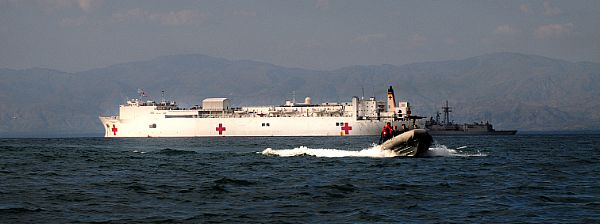
USNS Comfort off of Haiti

The newest Navy recruiting and public relations campaign features a comment “America’s Navy: A Global Force for Good.”  When it first came out some expressed their dislike of the new slogan; however as a Navy and Army veteran as well as a long time “Navy Brat” I found the slogan and the accompanying commercial inspiring and I can be extremely jaded and cynical when it comes to such advertisements and slogans.  See my post Memorable Recruiting Slogans and the All Volunteer Force. http://https://padresteve.wordpress.com/2009/05/03/memorable-recruiting-slogans-and-the-all-volunteer-force/
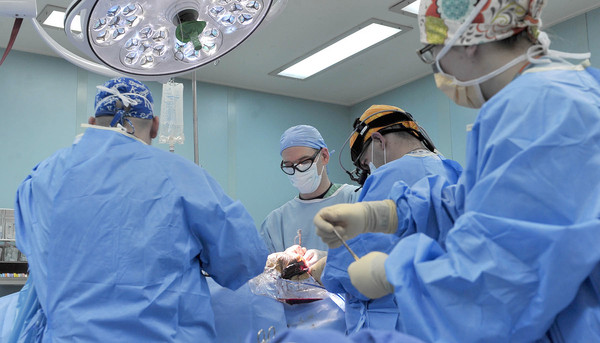
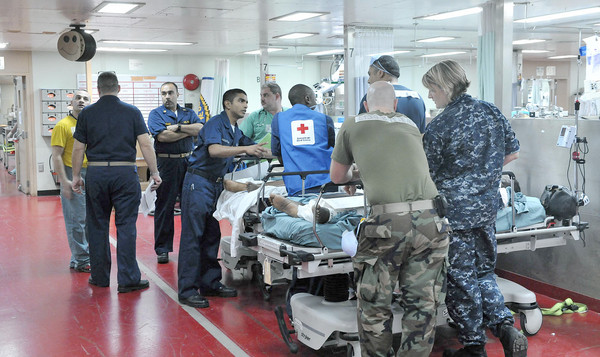
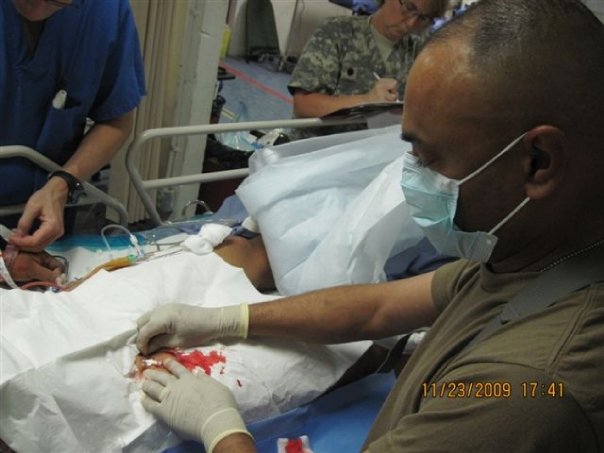
Neurosurgeons from Naval Medical Center Portsmouth operating on a patient aboard the Comfort- Baltimore Sun Photo

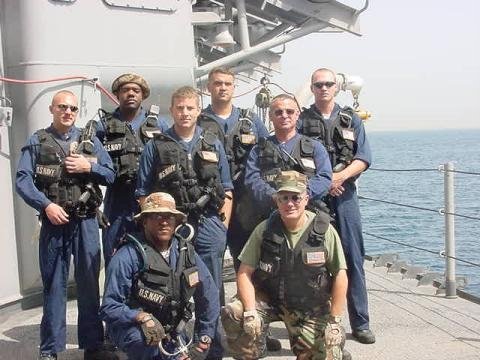
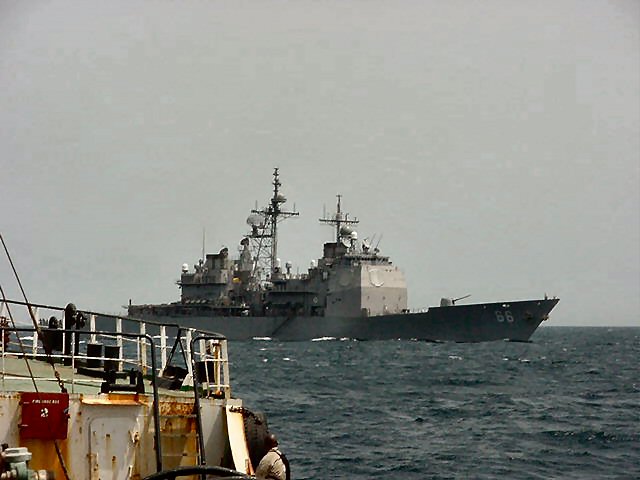
Maybe it is because I serve with a lot of great people who make up the Navy that I think this way. I have served with the brave souls of our EOD force, the Navy Expeditionary Combat Command, the crew of an elite Guided Missile Cruiser, the USS Hue City CG-66 and the professionals of Navy Medicine.  All these professionals be they war-fighters or care givers give so much of themselves to serve this country and protect others while at the same time laying their lives on the line to defend the people of the United States and others around the world.  For me this understanding of the Navy being a global force for good is relational and it goes beyond the crass cynicism of so many in the world who find little good about our nation.  I know that we have our faults but I really do believe that the good that we have done over the years and now outweighs our sins of commission and omission.  I was really offended when I saw some of the comments from some people in other countries condemning our efforts in Haiti.  I know of no other country that will empty itself to care for the people of a devastated and impoverished nation without expecting any form of repayment even while it is still in difficult economic straits.

Comfort receiving casualties- Baltimore Sun Photo

In the forefront of the humanitarian effort are my friends and shipmates in Navy Medicine on the USNS Comfort and ashore who are caring for the injured, sick and dying Haitian people.  These men and women were pulled out of our medical treatment facility and others with as little as 24 hours notice to deploy on a mission of incredible difficulty and undetermined length.  The emotional toll can be difficult as many of these professionals, physicians, nurses, corpsmen and others have deployed at least once if not two or three times to Iraq or Afghanistan.

Navy Pediatric Intensivist performs a procedure on a Afghan child

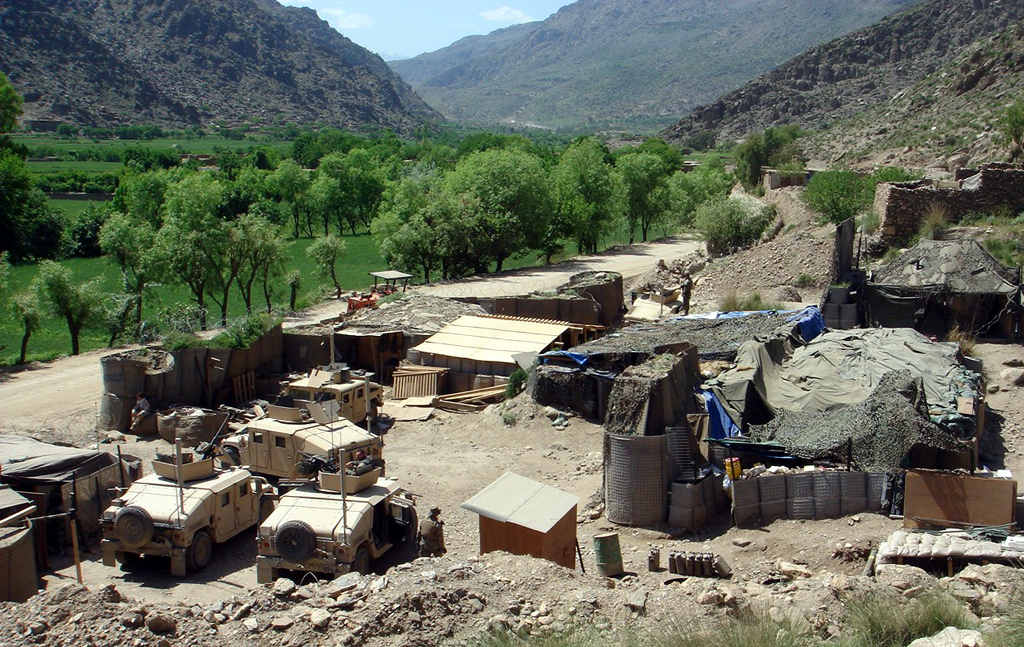
While the staff of the Comfort and those ashore toils to save lives others serve in Afghanistan running medical facilities often in conjunction with our allies.   These professionals are deployed from 7 months to a year and include some of the finest clinicians in the Navy.  Serving in Afghanistan the care for American wounded and sick, those of our NATO and Afghanistan National Army allies as well as the unfortunate civilians including children who are victims of terrorists acts, IEDs or military action mostly initiated by Taliban or Al Qaida forces.  Serving in harm’s way they see their compounds bombarded by incoming rockets, mortars and occasional artillery fire.  They also know that the vehicles that they travel in and helicopters that they fly in are targeted by Taliban forces and they care for those who are injured by IEDs on the same routes that they travel.  Having experienced this in Iraq I can say that it is a sobering and often eerie feeling that you get after you have been with Marines or Soldiers wounded by IEDs and ambushes on routes that you travel.  These men and women see the worst that humanity can do and still care about the victims.

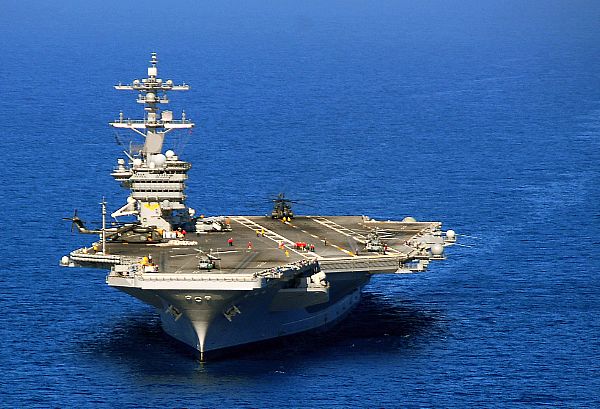
USS Carl Vinson arrived quickly and began relief operations

Others serve in Iraq now supporting our Army troops with medical care working alongside Army and Air Force medical personnel, others are in the Horn of Africa and still others involved with other humanitarian missions or operational support of US Forces abroad.

One has to remember that these medical professionals do not just come out of a vacuum but are normally assigned to medical treatment facilities in the United States. As they depart to serve abroad those left behind continue the mission of caring for our military, their families, and military retirees going back to the Greatest Generation and other combat wounded veterans still entitled to medical care.   The workload back at home does not let up and the professionals back here work harder and longer to provide the quality care that our beneficiaries deserve. Dealing with patients and families I always hear about how much they appreciate the kindness and superior care that they get from our physicians, nurses, corpsmen and other medical professionals.

Boarding Team from USS Hue City

If you do not believe that these men and women are a “global force for good” then I am sorry that you cannot see the labor of love that these men and women provide to those entrusted to their care.  I am ashamed when I hear prominent media personalities call these “meals on wheels” missions. Personally I think it is hateful and demeaning towards the proud professionals who serve in these human tragedies and care for God’s people.  Likewise those that claim that this is being done to further US influence in Haiti are so clueless, in Haiti there is no payback even from a military or strategic point of view and even with our forces stretched thin around the world we still go out and do what no other country can do when we use our military to care for those afflicted by disaster.

In Haiti we are working hand in hand and side by with numerous Non-Governmental Organizations and other military medical professionals from the United States, Canada and other nations who are giving of themselves to serve the Haitian people.

USS Hue City 565 Feet of Naval Power on Patrol

I think that for once a recruiting phrase actually captures the essence of the Navy.  This is not about just being a better individual or improving your life or getting an education and experience.  It is about serving our nation and people as well as others around the world whether that mission is combating terrorists, pirates, protecting our vital interests or like in Haiti, or during the Indonesian Tsunami, Hurricane Katrina or at the World Trade Center and hundreds of other places, this Navy is a global force for good.

Tonight as you go to bed and sleep soundly after eating well and spending time with family, friends or enjoying some form of entertainment remember those of our Navy who serve at sea, in the mountains and deserts of Afghanistan, the cities of Iraq, the desolation of the Horn of Africa and around the world defending our interests, caring for our military personnel and their families and deploying to serve in harm’s way and in areas of devastation.  They are America’s “Global Force for Good.”  They are my shipmates.  They are the United States Navy.

Peace,

Padre Steve+

2 Comments

Filed under Military, national security, US Navy

Learning to Apply the Principles of Counterinsurgency Part One: Introduction to the Soviet-Afghan War

Soviets Enter Afghanistan

Note: This is the First Part of a Series which I will be writing on Afghanistan and Counterinsurgency strategy in that country. Part of this will be a review of various historical materials especially from Russian sources as well as analysis of the Afghan insurgency and its foreign supporters including Al Qaeda. I have written a number of other articles on the Afghan War and associated topics.  Links are provided at the end of this article.

Counterinsurgency is not just thinking man’s warfare—it is the graduate level of war. Special Forces Officer in Iraq, 2005

“Protracted conflicts favor insurgents, and no approach makes better use of that asymmetry than the protracted popular war. The Chinese Communists used this approach to conquer China after World War II. The North Vietnamese and Algerians adapted it to fit their respective situations. And some Al Qaeda leaders suggest it in their writings today. This approach is complex; few contemporary insurgent movements apply its full program, although many apply parts of it. It is, therefore, of more than just historical interest. Knowledge of it can be a powerful aid to understanding some insurgent movements.”[i]

Introduction

US Training Team Base

The United States has entered its 9th year of military involvement in Afghanistan following the October 2001 invasion that came as a response to the attacks on the World Trade Center and Pentagon of September 11th 2001.  In that time the United States, its NATO allies and the United Nations have endeavored to bring stability as well as a more democratic and accountable government to the country in the face of resistance from various political, religious and tribal groups with a diverse and sometimes conflicting agendas.  The foremost of these resistance groups was and is the Taliban which arose during the Soviet occupation of the country and eventually took power after winning a civil war against a number of other Mujahidin groups.   As the United States diverted force and focused its efforts on Iraq’s insurgency the Taliban using bases in remote areas along the Pakistani border and monetary and political support from Moslem groups with similar goals rehabilitated and reorganized its forces and began the process of regaining influence in Afghanistan.  By 2008 it was apparent that the situation had reached a crisis point.  The vast majority of Afghans as well as many in the international community came to view the Karzai government as corrupt, weak and unpopular.  The Taliban and other groups began to work more closely together despite differing agendas and the political and military situation deteriorated to the point that the incoming Obama administration appointed a new commander, General Stanley McChrystal to evaluate the situation and based on his recommendations and those of General David Petreus, Secretary of Defense Robert Gates and others announced a “surge” to try to regain the initiative in the country.  That troop buildup is currently underway. By the time it reaches its maximum the United States will have approximately 100, 000 troops in Afghanistan and the NATO and ISAF allies approximately another 38,000.  These are supporting and training the Afghan National Army and Police which number approximately 97,000 in the Army and another 98,000 in the National Police.  The Afghan forces have not proven to be reliable and have been infiltrated by Taliban and Al Qaeda members and the NATO and ISAF allies are often limited in the scope of their mission and have restrictive rules of engagement.  Thus the bulk of the fight rests on the United States and some allies with more robust rules of engagement such as Canada, Britain and France.  The lack of internal credibility of the Afghan Government, the weakness of its army and security forces coupled with the numerical weakness of US and ISAF forces has given the various indigenous insurgent groups, especially the Taliban to make a comeback that threatens the mission.  General McChrystal noted:

“The situation in Afghanistan is serious; neither success nor failure can be taken for granted. Although considerable effort and sacrifice have resulted in some progress, many indicators suggest the overall situation is deteriorating. We face not only a resilient and growing insurgency; there is also a crisis of confidence among Afghans—in both their government and the international community—that undermines our credibility and emboldens the insurgents. Further, a perception that our resolve is uncertain makes Afghans reluctant to align with us against the insurgents.”[ii]

Taliban Insurgents

The situation is such in Afghanistan that many Americans are struggling how the “good war” could go “bad.”  Many armchair strategists, many political and media figures and even some in the military fail to understand the nature of Counterinsurgency and its complexity as opposed to conventional warfare. In fact many of these assume that the simple application of combat force using conventional tactics is the cure for the situation, however history shows that such is not the case especially in Afghanistan.

This introduction to this study will focus on some commonalities of the Soviet and American experiences in Afghanistan.

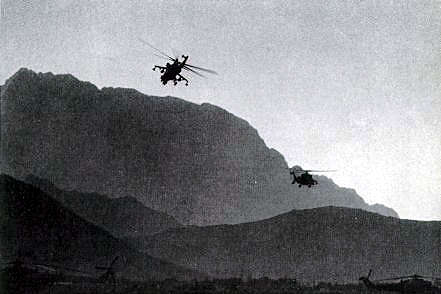
Soviet Mi-24s

The Soviets invaded Afghanistan in 1979 they used their 40th Army which initially was composed of “two motorized rifle divisions, an airborne division, an air assault brigade and separate motorized rifle regiments.”[iii] These forces totaled about 52,000 troops and were “considered sufficient to guarantee the viability of Afghanistan.”[iv] The 40th Army was a standard Cold War Soviet Combined Arms Army designed for high tempo conventional operations.  It was not designed for nor trained in counterinsurgency operations or what the Soviets and Russians class as “anti-guerilla operations.” It was poorly suited to mountain and dessert combat and at the beginning “not only had no practical skills in the conduct of counter-guerilla warfare, they also did not have a single well-developed theoretical manual, regulation or tactical guideline for fighting such a war.”[v]

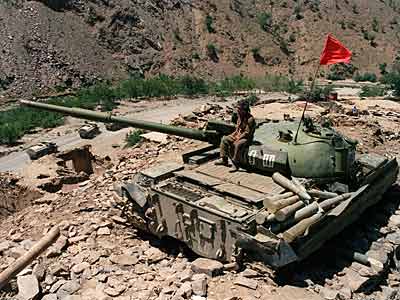
Soviet Tank Guarding Convoy

The Soviets did not expect to be involved in combat operations and the Afghan population reacted to their presence with resistance which spread across the country both against their own government which they viewed as a puppet of the Soviets but also against the Soviet Forces.  As time went on the Soviets attempted to use raids and large scale operations to attempt to bring Mujahidin forces to battle, however the insurgents were very skillful and the Soviets attempted to increase the training of their forces as well as their numbers.  By 1986 the numbers on the ground had increased to 108,000 personnel in four divisions, five separate brigades, four separate regiments and six separate battalions.[vi] In the nearly 10 years of operations over a half million Soviet soldiers and support personnel served in Afghanistan. Tours for enlisted personnel who were primarily conscripts served 12-18 months in country and officers 2 years.  Few returned for subsequent tours meaning that the 40th Army had few personnel very familiar with the country, its people and the challenges faced by Soviet forces.  According to official sources the 40th Army suffered 13,833 killed in action or died of wounds, 49,985 wounded and 311 missing in action a figured of 1 in 8 Soviet Soldiers being casualties.  14.3 percent of the casualties were officers.[vii] Of course the official figure is doubted many believing the number killed in action or died of wounds to be closer to 26,000.[viii]

Soviet Troops Preparing to Leave Afghanistan 1989

The Soviet Forces supported the Army of the Democratic Republic of Afghanistan which numbered at their peak on average between 120,000-150,000 soldiers.[ix] The Afghan forces, then as now were at the mercy of tribal, familial and communist party affiliations. Over 70 percent of the DRA was conscripted, desertions averaged 1,500 to 2,000 soldiers a month and units were usually optimistically 25-40 percent under their TO&E strength.[x] Limitations on training and leadership meant that typically DRA units could not conduct large scale missions without Soviet help. As such most of the fighting was done by Soviet formations.

Many of these problems have plagued the United States and ISAF throughout the first 8 years of the current Afghan War.  As General McChrystal has noted in his assessment “ISAF is a conventional force that is poorly configured for COIN, inexperienced in local languages and culture, and struggling with the challenges inherent to coalition warfare. These intrinsic disadvantages are exacerbated by our current culture and how we operate.”[xi]

End of part one to be continued…

Links:

Lessons on Coalition Warfare: The Dysfunctional Coalition German and the Axis Partners on the Eastern Front

The Afghan War 2009-2012: Lessons from Algeria 1954-1960 A Review of “A Savage War of Peace

Unequal Allies: Lessons from The German’s and Their Allies on the Eastern Front for Today

The Effects of Counter-Insurgency Operations on U.S. and French Forces in Vietnam and Algeria and Implications for Afghanistan

Brothers to the End…the Bond between those Who Serve Together in Unpopular Wars


[i] ______________ “The Army/Marine Corps Counterinsurgency Manual FM 3-24 MCWP 3-33.5,” HQ Department of the Army and HQ Marine Corps Combat Development Command, Washington DC 2006.  p. 1-6

[ii] MCChrystal, Stanley. “Commander’s Initial Assessment Commander International Security Assistance Force Afghanistan” dated 30 August 2009 p. 1-1

[iii] The Russian General Staff. The Soviet Afghan War: How a Superpower Fought and Lost” translated and edited by Lester A. Grau and Michael A. Gress, University Press of Kansas, Lawrence KS 2002 p.17.

[iv] Ibid. p.18

[v] Ibid. p.43

[vi] Ibid. p.28

[vii] Ibid. p.309

[viii] Ibid. p.xix

[ix] Ibid. p.48

[x] Ibid. pp.48-51

[xi] McChrystal. p.1-2

1 Comment

Filed under counterinsurency in afghanistan, History, iraq,afghanistan, Military

The Anomaly of Operation Desert Storm and Its Consequences Today

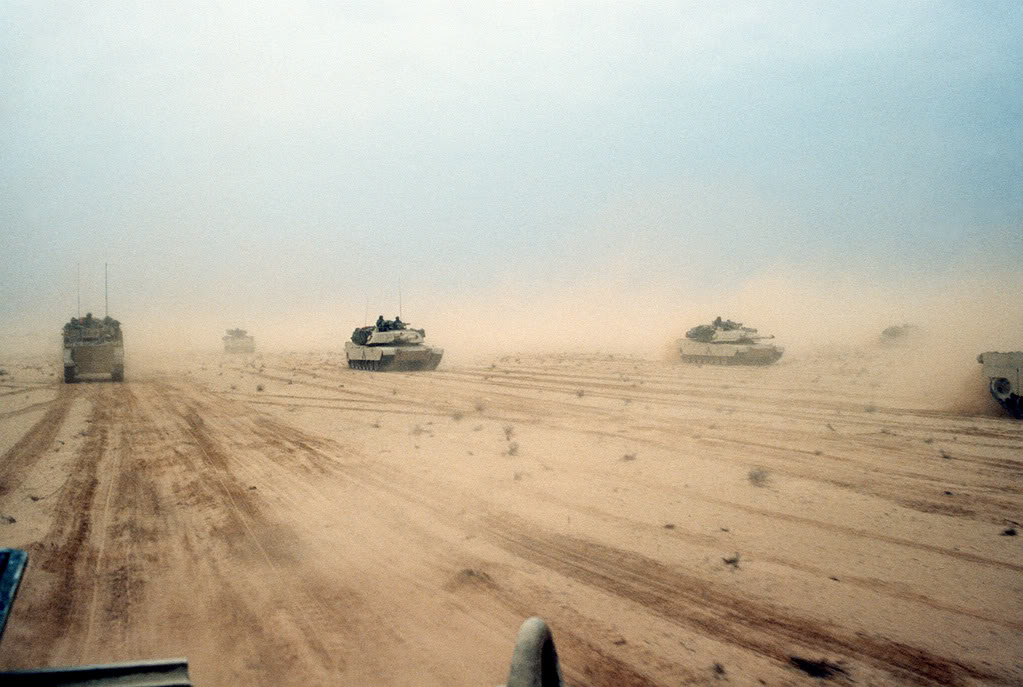
Armor Advancing During Operation Desert Storm

There are few occasions in history where an army is given exactly the scenario to which its organization, training and doctrine coalesce against an opponent that uses the template of organization and training that it has been designed to defeat.  Operation Desert Storm, the liberation of Kuwait by the United States and its coalition from Saddam Hussein’s Iraqi Army and Republican Guard was such a war. The operation was built up in the popular media to the extent that it created a false image of the cost of war and belief that wars can be won “one the cheap” because of superior technology and organization.  That belief was shattered during the Iraq insurgency which began in earnest following the occupation of Iraq following the defeat of Saddam in 2003 by a significantly smaller US force than was used to liberate Kuwait twelve years before.

Architects of Desert Storm

The superior performance of the Army in the Gulf War did not turn out to be the template of how future wars would be fought.  In the following years the US military has become embroiled in conflicts where opponents use inexpensive and often crude off the shelf technology to counter conventional US superiority in firepower and organization.

During the First Gulf War the Army was aided in that the doctrine that it developed to fight a war in Europe against the Warsaw Pact, the Airland Battle was “perhaps best suited to armored warfare in the open desert.”[i] Of course during Desert Storm this was exactly the setting that the Army would be called on to fight.  Unlike Vietnam where the Army attempted to fight an unconventional war with conventional tactics the Army had the chance to fight exactly the battle that it had trained for, against an enemy trained in the tactics and using the equipment of its former Soviet adversary.

The Army enjoyed the advantages of having “reached a high level of training and technological proficiency”[ii] against the Soviet threat. The fact that the Soviet Union and Warsaw Pact had melted down unexpectedly in 1989 and 1990 and removed any conventional threat in Europe which allowed the Army to concentrate massive amount of forces including the VII Corps from Germany to the Middle East was nothing short of incredible.  Additionally the Army had the advantages of superior weaponry and the fortuitous timing of the war before the effects of the post-Cold War drawdown were realized.

For the Army the “1980s were a golden age of military thought and debate,”[iii] and the Airland Battle concept “was greeted with enthusiasm throughout the Army.” Terms such as initiative, agility, synchronization and depth….soon became part of every officer’s vernacular.”[iv] Colonel Harry Summers who had written a critical history of the Vietnam War noted that FM 100-5, the Army’s primary manual of operations, was the “operational blueprint for Operation Desert Storm.”[v] That blueprint had a well trained and disciplined force schooled in the conduct of the Airland Battle concept enunciated in FM-100-5. David Halberstam noted that Operation Desert Storm was fought by a “professional army-a very professional army.”[vi] Seldom in the history of warfare was any army trained and equipped to fight the exact battle for which it found itself.

The Highway of Death

The foundation of doctrine, training, technology and organization laid in the 1980s was solid.  The Army was not only effective in the Gulf War, it was overwhelming.  This is not to say that the Army did not encounter problems.  It did, some which against a better trained and equipped force might have negatively impacts its operations. However the problems encountered did not keep it from dominating the battlefield.

The US rapidly deployed a blocking force of paratroops and Marines following the Iraqi invasion of Kuwait at the end of August.  While few in number they served as a deterrent that Saddam did not test. There was great concern that had Saddam pushed into Saudi Arabia when forces were small and lightly equipped that he might have succeeded in capturing the northeaster Saudi oil fields and production facilities.  The military leadership continually reinforced these forces first to a substantial defensive force and then with the addition of more forces a significant offensive force.  Thus when the decision was made to liberate Kuwait under the United Nations resolution the forces were there and ready.

When the war began advances in Joint warfare and C3 was evident in the effectiveness of the operations.[vii] Particular successes included the movement of VII and XVIII Airborne Corps into the desert to outflank the Iraqis in Kuwait[viii] and every actual engagement between Iraqi and American forces.  Of note was the performance of Major General Barry McCafferey’s 24th Mechanized Division,[ix] and the 2nd Armored Cavalry Regiment at 73 Easting against the Republican Guard’s Talwahkana Division.[x] Likewise the action of 2nd Brigade 1st Armored Division against the Guard’s Adnan Division at Madinah Ridge[xi] displayed the effectiveness and lethality of the Airland Battle and joint warfare concepts developed in the 1980s.

There were weaknesses and these included various aspects of command and control and fratricide[xii] brought about by the fast pace of operations and the fog of war. Likewise conflicts between General Schwartzkopf and some of his Army commanders, notably Generals Franks[xiii] and Yeosock hindered operations.  This occurred most notably in the failure to destroy the Republican Guard prior to the cessation of hostilities. This was partially was due to political considerations and faulty intelligence but was operational decision of Schwartzkopf to halt McCafferty’s  24th Mechanized Division before it could finish off Republican Guard units facing it or letting Franks complete his double encirclement of the Guard or encircle the key southern Iraqi city of  Basrah.[xiv]

The New Face of War Somalia

Iraq

Rwanda Genocide

Deadly Large Shaped Charge IED

Afghanistan: Brits in Action Against Taliban Fighters

Despite the successes of Operation Desert Storm the planners failed to anticipate the end state of what would happen when hostilities had ceased.  The conditions of the cessation of hostilities were the chief contention of many against the end to the ground war at the 100 hour point. Some argue that the early end of hostilities allowed the victory to be less than it could have been.  Some even today argue that the offensive should have gone forward with the goal of overthrowing Saddam, however despite its success the Army was not prepared for an occupation nor would have the coalition supporting the US have survived an invasion and occupation of Iraq.  The actual mistakes were not in the stopping of the war, but rather the faulty conditions of the cease fire which enabled Saddam to recover the internal control of Iraq and put down attempts to revolt especially around Basra in the Shia south.  Rick Atkinson in his book Crusade notes that there were “errors would be made in establishing conditions of the ceasefire…but stopping the war was no mistake.”[xv]

While the debate about Operation Desert Storm still persists nearly 20 years after the fact the more important lesson was not learned.  That lesson was that Operation Desert Storm was not the new face of war, but rather an anomaly.  It was a war that was the swan song of the Cold War where the doctrine, technology, organization and trained to and practiced were inflicted on a less well trained and equipped version of the force that they were designed to defeat, forces which were badly deployed and already isolated by airpower even prior to the ground war. Once the ground war started the Iraqi forces in Kuwait and southern Iraq had little chance against the massive US and coalition force arrayed against it short of preemptively using the chemical and biological weapons of which Iraq had an ample supply.  It did not employ these weapons for a number of reasons, but without them Iraqi forces exposed in the open desert with no air support and cut off from much of their supply by constant air attacks were easily defeated.

In the past 20 years the United States and the west have only once been able to reprise the type of war displayed during Operation Desert Storm.  That was in the initial 2003 invasion of Iraq.  While the forces deployed were successful in defeating the Iraqi military and overthrowing Saddam Hussein they were insufficient to secure the country especially after the decision to disestablish all Iraqi police and military forces which might have assisted US forces in securing the country.  Perhaps planners forgot that German military police, police and civil servants were employed by the western allies in the period immediately after the war even during the period of “de-Nazification.”

Instead of a litany of Desert Storm like scenarios US forces as well as those of NATO and UN allies have had to deal with terrorism, insurgencies, revolutionary wars, tribal wars of genocide and wars waged by religious extremists. Despite more than a decade in dealing with these types of war, many in the military and political establishment as well as the media and public opinion believed that Desert Storm was the model for future wars. As such after the brief period of euphoria which occurred after the initial phase of Operation Iraqi Freedom the grim reality of war has stared Americans and others in the west in the face.  While the military has performed well, it has had to adjust and learn lessons about war that it wanted to avoid during and after Vietnam.  Those were the lessons of counterinsurgency, unglamorous and unexciting they were the lessons buried after Vietnam which were ignored until it was nearly too late in Iraq and possibly now too late in Afghanistan.  Desert Storm was an anomaly and one does not base the future of war on the swan song of the last war.


[i] Atkinson, Rick. Crusade: The Untold Story of the Persian Gulf War, Houghton Mifflin Company, Boston and New York 1993. p.253

[ii] Gordon, Michael R. and Trainor, Bernard E. The Generals’ War, Back Bay Books, Little Brown and Company, Boston and New York 1995. p.467

[iii] Peters, Ralph. Fighting for the Future: Will America Triumph. Stackpole Books, Mechanicsburg , PA p.xi

[iv] Ibid. Atkinson.

[v] Summers Harry G. On Strategy II: A Critical Analysis of the Gulf War, Dell Publishing a Division of Bantam Doubleday Dell Publishing Group, New York NY 1992. p.159

[vi] Halberstam, David. War in a Time of Peace: Bush, Clinton and the Generals, A Touchstone Book published by Simon and Schuster, New York 2001. p.153.  Gordon and Trainor note that the “never in the history of the Republic has a more competent and more professional military been fielded.

[vii] See Summers pp. 243-245.  Summers is very complimentary of the advances in the Joint aspects of command and control that impacted the campaign.  He notes several points at the strategic and operational levels which are complimentary of individuals including comparing General Colin Powell to General George Marshall. Gordon and Trainor writing a few years later are more critical of the “jointness” of the Americans including valid criticism of the air campaign, fire support coordination, and differences in doctrine between Marines and Army and the way the VII Corps and XVIII Corps operated based on the way that they trained and organized. Pp.471-473

[viii] Atkinson pp.309-310.  Atkinson discusses the fact that American commanders involved had seldom maneuvered units of battalion or brigade size prior to this operation.

[ix] The 24th made a great advance to the Euphrates but as Atkinson notes that it had “encountered no enemy resistance at all.” p.406

[x] See Atkinson pp. 441-448

[xi] See Atkinson pp.466-467.  In a 40minute fight the M1A1s destroyed 60 T-72s and dozens of APCs at a cost of one American KIA.  Atkinson notes that this battle like the action at 73 Easting “was waged with tactical acumen and devastating firepower….”

[xii] Ibid Atkinson pp.315-316.  Atkinson notes that there were 28 incidents with 35 killed and 72 wounded.

[xiii] Ibid. pp.405-407.  Schwartzkopf felt that Franks was not aggressive enough and that VII Corps was “sluggish” and “ceding the initiative to the Republican Guard.”  Schwatzkopf even threatened Yeosock that he would fire Franks.

[xiv] Ibid. Atkinson p.476

[xv] Ibid. p.477

Bibliography

Atkinson, Rick. Crusade: The Untold Story of the Persian Gulf War, Houghton Mifflin Company, Boston and New York 1993

Gordon, Michael R. and Trainor, Bernard E. The Generals’ War, Back Bay Books, Little Brown and Company, Boston and New York 1995

Halberstam, David. War in a Time of Peace: Bush, Clinton and the Generals, A Touchstone Book published by Simon and Schuster, New York 2001

Ralph. Fighting for the Future: Will America Triumph. Stackpole Books, Mechanicsburg , PA

Summers Harry G. On Strategy II: A Critical Analysis of the Gulf War, Dell Publishing a Division of Bantam Doubleday Dell Publishing Group, New York NY 1992.

8 Comments

Filed under Foreign Policy, History, iraq,afghanistan, Military, national security

The Commie Trifecta

Once upon a time there was something called the Cold War.  It was rather frosty, even in the sub-tropical paradise of Cuba.  During the Cold War the Soviet Union aka Russia led what was called the Warsaw Pact in a global conflict of world domination against the United States and it’s Allies in the North Atlantic Treaty Organization, better known as NATO.  Both sides had minor surrogates around the world.

During the Cold War there were several places where the United States had forces face to face with the Soviet Union and its Allies. The most prominent of these were Berlin where the Berlin Wall surrounded West Berlin keeping its prosperous citizens from the great deals to be found on the East German economy and the East Germans out of the decadent West.

The Wall Comes Down

In the far east the United States and its South Korean ally faced the DRNK or the Democratic Republic of Nutso Korea headed by a man named Kim who would pass the leadership of the DRNK to his son who also is named Kim.  I think that the second Kim was named after Kim Novak but this is just a rumor started by the CIA to attempt to undermine the DRNK.  The demarcation line was that of the Armistice line of the Korean War located  in the general vicinity of the 38th parallel.  This remains one of the most heavily fortified locations in the world.

The final point of direct contact was in Cuba at Guantanamo Bay where failed baseball prospect Fidel Castro took his revenge on Major League Baseball by taking over Cuba, allying himself with the Soviet Union.  He almost helped start a thermonuclear war between the Soviet Union and the United States during the Cuban Missile Crisis.  After this Castro isolated Cuba from the Major Leagues and prevented them from having access to his star baseball players, except for defectors.

Padre Steve at the Brandenburg Gate on the East Side of the Berlin Wall

To have served in the US Military at all three flash points was nearly impossible akin winning Major League Baseball’s hitting “triple crown.”  By this I don’t just mean the American or National League crown but the entire league.  The last player to do this was Mickey Mantle in 1956 who hit .356 with 52 home runs and 130 in a mere 154 games.  I refer to the feat of serving at all three locations as accomplishing the Commie Trifecta.

PT on the Korean DMZ

To do this now is an accomplishment because you had to be serving in the military in Germany before the Soviet Union went Tango Uniform and the Berlin Wall came down in 1989.  Thus it is an accomplishment that few can attain unless they enter an alternate time line were the the Soviet Union survives.

On the North Korean Side of the Armistice Line

However Padre Steve has accomplished this feat.  Back in November 1986 he and the Abbess made the trip from West Germany along the Helmstedt corridor to West Berlin and then through Checkpoint Charlie into East Berlin.  12 years passed and Padre Steve was now in the Navy serving with the the 3rd Battalion 8th Marines in Korea from February through April of 2001.  Part of this involved camping out at Warrior Base a mere 800 meters from the South side of the Korean Demilitarized Zone, or DMZ.  Serenaded by nightly musical serenades and inspiring messages approved by the boy named Kim we trained and also got a tour of the Armistice village of Panmunjom where in the conference room guarded by really tall and scary looking South Korean Soldiers one can actually cross over the to North Korean side of the room.  I would also do PT along the DMZ carefully avoiding anywhere marked “mines.”

Overlooking Commie Cuba from Leeward

The third portion of the Commie Trifecta was in November 2003 while assigned to the Marine Security Forces who manned the Colonel Nathan R Jessup Memorial Fence Line which separates the Guantanamo Naval Station from Communist Cuba.

This makes Padre Steve a relic albeit one who has been around long enough to get to do the Commie Trifecta. That friends is is way cool.

Peace,

Padre Steve+

Leave a comment

Filed under History

Lessons on Coalition Warfare: The Dysfunctional Coalition German and the Axis Partners on the Eastern Front

“The Dysfunctional Coalition: The Axis Powers and the Eastern Front in World War Two” by R. L. DiNardo. Published in The Journal of Military History October 1996, 60 Research Library pp. 711-730

A Romanian Renault 35 Light Tank Rather Than

The question of the German dominated European Axis alliance in the Second World War is one of the more neglected subjects of World War Two and has application to today’s multi-national campaign in Afghanistan. In most accounts of World War Two the relationship of the Germans to their coalition partners is minimal.  This includes the standard works on the subject of B.H. Liddell-Hart, Williamson Murray, Chester Wilmot and David M Glantz,   Of Germany’s Allies Italy usually receives some attention in the context of the campaign in North Africa and Mediterranean.  Its efforts on the Eastern Front are usually neglected except for how the Italian 8th Army was shattered during the Stalingrad campaign.  The efforts of Hungary, Rumania and Finland receive scant attention from anyone. Popular German memoirs provide little substantive help as most German commanders looked down on their military capabilities. Kesselring’s memoirs and Rommel’s papers give some views, mostly negative of the Italians and Manstein some mention on the Italians, Hungarians and Rumanians in the Stalingrad campaign.

Field Marshal Von Mannerheim of Finland Kept an Independent Course from Germany

In this badly needed essay Robert DiNardo examines the relationship of Germany to her allies on the Eastern Front where they came closest to fighting coalition warfare. This is a subject that he would expand on in his book “Germany and the Axis Powers: from Coalition to Collapse” (University of Kansas Press, 2005).  DiNardo believes that it is important to learn from the failure of Germany and its coalition just as we do from the success of the Allies.  This perhaps is his greatest contribution in an age where the United States must work with coalitions whose members have significant military weaknesses.  The situation in some ways places he United States in a similar position to Germany in the current wars on terror and campaigns in Iraq and especially Afghanistan.

Hungarian Soldiers on Obsolete CV-35 Tankettes at the Beginning of Barbarossa

DiNardo asserts “the way in which Germany conducted coalition warfare was reflective of the manner in which Hitler and the German military looked at the world, as well as the war in general” was a key factor in her defeat. German arrogance and hubris frequently kept them from gaining any advantage from their coalition partners. DiNardo believes that it was “a significant factor that contributed to the ultimate defeat of Nazi Germany.” (p.712)  He then notes the few successes of the coalition, particularly the German work with Rumanian air defense around the Ploesti oil refineries and the German-Finnish Winter Warfare School.  Apart from these he characterizes Axis coalition warfare on the eastern front as “poor” with “failures at every level.” (p.713)

DiNardo analyzes language barriers, the wide disparity between the modernity of the armies and the levels of technology and training of her coalition partners. He also deals with Germany’s failure to become the “arsenal of Fascism” as well as the lack of understanding of all the partners of the “relationship between national objectives, strategy and the morale of soldiers of officers and soldiers alike.” (p.713)  He provides a good description of the German liaison detachments allotted to the coalition armies, dealing with language, tactical communications weaknesses and the generally haughty attitude that the Germans displayed to their partners. He provides an excellent illustration of this in analyzing with the failure of XLVIII Panzer Corps at Stalingrad when the German Liaison to the Rumanian 1st Panzer Division was wounded and the division was destroyed for lack of German support.  So bad was the German attitudes toward their Allies at higher levels that DiNardo describes the German policies and attitudes as “imperialist.” (p.718)

Hungarian Withdraw from the Donets Bend

DiNardo also looks at the wide gap in transportation capabilities of the various armies and the failure of the Germans to better provide for the needs of their partners in contrast to the United States assistance to her allies.  In his analysis he notes how the Germans provided obsolete captured Czech and French weapons and vehicles to the allies instead of providing them with the plans to build German designs in Rumanian and Hungarian industrial concerns capable of their manufacture. (pp.718-719) The lack of modern equipment among the German allies impacted operations against the Red Army and was a factor the eventual defeat of the Germans the hands of the Red Army.

While even elite German formations often had significant equipment shortages and sometimes substandard equipment he does not note that the principle reason for this was that German did not go to a “total war” industrial production until Albert Speer took over as Armaments Minister.  This is perhaps the one weakness in the essay. The final part of the essay deals with the strategic goals and conflicts among the Axis coalition which were never worked out.  In this discussion he again goes to the relationships of the Germans at every level to their partners and how the Germans had a general distain for their allies’ capabilities. He discusses how various partners refused to cooperate with the Germans in different ways and times.

These problems impacted German efforts in significant way. The Finns never signed a formal alliance with Germany and pursued their own war goals, the underlying tensions between Hungary and Rumania over their own territory disputes meant that the Germans could not count on these key partners to work together in the campaign in Russia.  He finishes his essay by detailing the morale problems in the Hungarian, Italian and Rumanian armies as they fought on the Eastern front.

He sources this article well using histories, archival sources, operational orders and analysis by the various armies as well as interviews. Of particular note is that he goes to sources of the coalition partners and not just German sources.  This allows him to be far more nuanced and detailed in his discussion as opposed to others who simply ignore the contributions of the Axis partners.  His footnotes provide added detail and provide and lend support to his arguments.

The importance of this essay is twofold; first it provides a look at the relationship of German to her coalition partners on the Eastern Front.  This is important from a historic standpoint simply because it is such a neglected topic in most histories of the period and gives added depth to the reasons for Germany’s defeat.  One has to ask the “what if questions” in regard to had the Germans better treated, equipped and recognized their allies’ contributions to the war effort.

The second point of interest pertains to how history can inform the leaders of the United States and NATO in the Afghanistan campaign.  The lessons provided to any nation which has to engage in coalition warfare are important, especially of one of the partners enjoys significant military advantages over its allies.  This is the case in Afghanistan and the War on Terror where United States has found itself as the senior and vastly superior partner in a war which has multiple coalition partners in several theaters of operations.  Each coalition partner has certain military weaknesses in relationship to the United States as well as their own national interests, geo-political and economic relationships with competitors to the United States and internal political realities which impact their cooperation in the war.  As such the United States cannot allow itself to be cast in the role of a haughty imperialistic senior partner as did Germany and it must cultivate an attitude of assistance, respect and trust among its partners to assure their full cooperation and assistance in relation to U.S. goals in the war.  Failure to head the German lesson will ensure failure in the current campaigns.

1 Comment

Filed under History, iraq,afghanistan, world war two in europe

Lessons in Coalition Warfare: Admiral Ernest King and the British Pacific Fleet

The genesis and strategy of British Royal Navy’s participation in the Pacific in 1945 is a little studied aspect of the Pacific campaign.  Prior to 1945 the participation of the Royal Navy in the Pacific ended at the Battle of the Java Sea.  After that the Royal Navy operated in the Indian Ocean in support of British operations in Burma and against German surface raiders. Michael Coles in “Ernest King and the British Pacific Fleet: The Conference at Quebec, 1944 (Octagon) published in The Journal of Military History January 2001, 65, 1 Research Library pp. 105-129 provides a good analysis of the Allied decision to allow the Royal Navy a role in the Pacific and the objections of Admiral Ernest King to the proposal.

The renewal of the Royal Navy’s Pacific role began at the 1944 Octagon Conference where the Allied Joint Staff made the decision to bring the Royal Navy back to the Pacific. Admiral Ernest King was the only dissenter in the question of Royal Navy operations in the Pacific.  The strategic aspects of this decision are seldom addressed by most who chronicle the Pacific war.[i] William Kimball in “Forged in War: Roosevelt Churchill and the Second World War” never mentions the naval strategy discussed at the Octagon conference. Samuel Elliott Morison in “The Two-Ocean War” described the decision for the Royal Navy to enter the Pacific as “important” and outlines King’s opposition to it without addressing strategic considerations.[ii] John Costello in “The Pacific War” described how Churchill insisted on the Royal Navy being committed to operations against Japan and how Roosevelt’s agreed to “to avoid a bitter clash.”[iii] Likewise Williamson Murray and Allen R. Millett in “War to Be Won” note that one of the goals of Octagon was “to determine the level and nature of British in the air-naval war in the Pacific.” However they do so as do the others without addressing the naval strategy.[iv] Max Hastings mentions Octagon in “Retribution: The Battle for Japan, 1944-1945” again without specific reference to naval strategy.  However later in the book later discusses the Royal Navy’s limitations in ships, manning, logistics and operational art as it entered the Pacific campaign.[v] Other writers chronicle British operations in the Pacific but usually focus in the gallantry and determination of the Royal Navy and not its weaknesses.[vi]

Coles’ article is invaluable to understand the decision in relation to the political, military and economic considerations which influenced both King’s opposition to the deployment and the performance of the British fleet in the Pacific.  Coles analyzes tensions between King and the other participants at Octagon. He judges King to be more realistic and informed regarding Royal Navy capabilities and more importantly its limitations than British leaders especially Churchill.[vii]

King was surprised at Roosevelt’s decision to accept Churchill’s offer of the Royal Navy without prior discussion by the Combined Chiefs of Staff.  Coles notes that King may have kept silent at subsequent meetings of the Combined Chiefs, because he either assumed that his positions were logical and apparent to all or that he believed that Churchill was lying about his navy’s capabilities. Of course it was politically impossible for King to suggest such.[viii]

King’s realism on the subject was a directly related to the political tensions between American and British visions for the outcome of the Pacific war, and the pressing strategic considerations necessitated by Japanese offensives in Burma and China. The British goal of re-establishing colonial rule in Southeast Asia was a major bone of contention.  Many Americans believed that the British goals were “aimed primarily at the resurgence of British political and economic ascendancy in South East Asia and restoration of British prestige.”[ix] Yet the US wanted to defeat Japan’s formidable Army in Asia without the sacrifice of large numbers of American troops or material which necessitated British participation.[x] The introduction of large numbers of American troops on the Asian continent was impossible due to the lineation of the US Army to 90 divisions, most of which were engaged in Europe.  Likewise US domestic issues regarding war production and the Navy’s share of it in relations to changing wartime conditions was a major concern for King.  King and the Navy argued for high naval production while others including George Marshall were beginning to question it, especially if the British could provide “make substantial Naval forces available in the Pacific.”[xi]

American Lend Lease aid to Britain was another issue.  Roosevelt calculated that the US needed Britain to be active in post-war Europe, this required significant post war aid. Roosevelt viewed “vigorous participation” by the Royal Navy as a means to gain congressional support in spite of the fact that Britain could no longer play a global military role without US support.[xii] One of the problems faced in the Pacific was how British mandated modifications to weapons systems supplied by the United States caused problems in production and caused shortages in key weapons systems, especially naval aircraft.  Coles’ notes how King had problems with this and wondered if supplying the Royal Navy’s Pacific operations “represented the most effective use of American industrial capacity.[xiii] However King did not chose to argue this point at the conference, once again demurring to President Roosevelt.

The most compelling factor discussed by Coles was the operational and logistic problems related to the deployment, supply and operation of the Royal Navy. There were a number of problems that the Royal Navy faced as it deployed to the Pacific.  First among them was the fact that the Royal Navy was in large part short-legged and cold water Navy.  Its ships were designed mainly for service in the Atlantic and Mediterranean and ill-suited for the Pacific. The Royal Navy did not have the operational experience of the Americans in regard to Fast Carrier Task Forces, especially coordination of refueling and resupply operations or coordination of air group operations.  Admiral Philip Vian insisted that “Before joining the Americans…we needed to be adept at using a great many more aircraft at a time, and for longer periods.”[xiv] Max Hastings’ noted that the Royal Navy was “overstretched and war weary”[xv] and Coles goes to great lengths to illustrate British weakness while analyzing tensions in the British-American relationship particularly the shift in the relationship as the Americans took the leading role.

King had the foresight to recognize that the British contribution would be more of a liability than help.[xvi] The principal Royal Navy purpose in the Pacific was political, not military and Coles asks if it helped or hindered “the achievement of the respective nations’ policy objectives.” Coles does not believe that it helped; that in fact the Royal Navy would not have been able to continue had the war continued.  He quoted a British liaison officer who wrote that the Royal Navy would have “been unable to continue operations because of lack of logistic support.”[xvii] Coles calls the Royal Navy’s effort in the Pacific an “expensive instrument of failed policy” and that Admiral King seemed to have recognized this better than others, arguing that King’s opinions were not based on simple personal prejudice.[xviii]

Coles uses an excellent mix of primary and secondary sources including diaries, operational reports, histories and journal articles from American and British sources to document his work providing ample references throughout his article. His work is important in recognizing the importance strategy plays in making political decisions in coalition warfare.  Likewise he places value on individuals such as King who are able to recognize the strategic aims and limitations in coalition warfare by various partners.

Though the Royal Navy’s participation in the Pacific War was a relatively insignificant in terms of its overall role in the war it provides lessons for our time. Coalition warfare requires that members of the coalition be able to function our time we can see a similar situation where many of the NATO forces in Afghanistan are dependent on the US for most of their operational and logistic support. It also requires that the members of the coalition have a firm grip on the overall strategy and understand the capabilities and limitations of each.  In Afghanistan the United States faces a situation where it needs capable alliance partners.  It does not have the force capacity to go it alone and political support for additional troops has weakened in congress and in the public.  It is a somewhat similar situation to the Second World War where the United States needed significant British participation in the Asian ground war to ensure that the United States would not have to make major commitments to on the Asian mainland.  Likewise it was needed to get congressional support for post war aid to Britain.  Likewise George Marshall and others wondered if the British could provide significant naval support which would alleviate the need for high naval production which they questioned.  Strategy and the desired end state must be central to how coalitions fight wars.


[i] See Spector, Ronald H. Eagle Against the Sun: The American War With Japan. The Free Press and Division of MacMillan, Inc. New York, NY 1985. Spector nowhere mentions the British Navy in his history of the campaign  and in his short reference to Octagon he does not mention the debate over the Royal Navy’s inclusion in the campaign. p.419

[ii] Morison, Samuel Eliot. The Two Ocean War: A Short History of the United States Navy in the Second World War. An Atlantic Monthly Press Book, Boston MA 1963. pp. Morrison does also mention some of the specific actions of Royal Navy in the Pacific. Pp.423-424.

[iii] Costello, John. The Pacific War: 1941-1945 Quill Publishers, New York, NY 1981. p.495.

[iv] Murray, Williamson and Millett, Allan R. A War to Be Won: Fighting the Second World War.  The Belknap Press of Harvard University, Cambridge, MA. 2000. pp.484-485.

[v] Hastings, Max. Retribution: The Battle for Japan, 1944-1945. Alfred A Knopf, New York, NY 2008. Originally published in Great Britain as Nemesis: The Battle for Japan, 1944-45, Harper Press, London, 2007.  p.112-113 and 400-402.

[vi] “Ernest King and the British Pacific Fleet: The Conference at Quebec, 1944 (Octagon). By Michael  Coles.  Published in The Journal of Military History January 2001, 65, 1 Research Library. p.127

[vii] Ibid. pp.111-112

[viii] Ibid. p.111

[ix] Ibid. p.113

[x] Ibid. p.114

[xi] Ibid. p.117

[xii] Ibid. p.118

[xiii] Ibid. p.120 Coles describes several instances where the “Anglicized” systems delayed deliveries and lengthened transportation to operational British units.  Modifications included flight helmets, radios and aircraft modifications. He also discusses how ineffectively the British used the large number of Escort Carriers provided by the US.

[xiv] Ibid. p.123

[xv] Hastings. p.400

[xvi] Coles. p.127. This is something that Morison does with utmost deference to the British.

[xvii] Ibid. p.128

[xviii] Ibid. p.129

8 Comments

Filed under Foreign Policy, History, iraq,afghanistan, world war two in the pacific

20 Years: The Fall of the Berlin Wall and the End of the Cold War

Berlin Wall 4Berlin  Wall Being Built 1961

For those that did not get to experience the “other” side of the Iron Curtain and only know the Berlin Wall from history the 9th of November may not mean a lot.  However as someone who spent three years commanding troops preparing for the day that the Soviet Union would strike across the Fulda Gap and across the North German Plain the fall of the Berlin Wall was an amazing event.  The wall had been built in 1961 and in the succeeding years increased in complexity and many East Berliners lost their lives trying to escape at the hands of the East German Grenzschützen and Stasi agents.

Berlin-Wall 5Berlin Wall Death Zone

For those of us who grew up during the Cold War under the threat of “Mutual Assured Destruction” proxy wars in the Middle East, Asia and Africa and tense confrontations between U.S., NATO and Soviet forces at sea, in the air and at various flash points the Wall seemed like it would be there for the rest of our lives.

The initial cracks in the Soviet domination of Eastern Europe began in Poland as an obscure shipyard worker named Lech Walesa along with others who had been active in strike movements in the 1970s which were legalized in 1980 as Solidarity.  This movement would help encourage those in other Eastern European, or Warsaw Pact nations to begin their own resistance movements.  This in every case was a risky undertaking.  Anti-Soviet movements in Hungary and Czechoslovakia and been crushed by Soviet and other Warsaw Pact nations in 1956 and 1968.  Encouraged by support from U.S. President Ronald Reagan and Pope John Paul II these movements in Poland and elsewhere continued to grow.

RonaldReagan at wallPresident Reagan at the Wall 1987

When Reagan gave his “Mr. Gorbachev, tear down this wall” speech on June 27th 1987 it was greeted with derision by many but in less than three years would become a reality as the Soviet system suddenly and unexpectedly came apart in September and October of 1989.  That speech contained these immortal words:

“We welcome change and openness; for we believe that freedom and security go together, that the advance of human liberty can only strengthen the cause of world peace. There is one sign the Soviets can make that would be unmistakable, that would advance dramatically the cause of freedom and peace. General Secretary Gorbachev, if you seek peace, if you seek prosperity for the Soviet Union and Eastern Europe, if you seek liberalization, come here to this gate. Mr. Gorbachev, open this gate. Mr. Gorbachev, tear down this wall.”

berlin wallPadre Steve at Berlin Wall in November 1986

At the time President Reagan made that speech I was an Army Captain at Fort Sam Houston Texas in San Antonio.  The Abbess and I had just returned from a three year assignment in Germany.  My unit, the 557th Medical Company (Ambulance)  where I served as a platoon leader, executive officer and later company commander was part of the 68th Medical Group. Our mission in the event of a war with the Soviet Union was to provide casualty evacuation in V Corps area of operations and assist in the reconstitution of the 11th Armored Cavalry Regiment which was expected if war occurred to have a 90% casualty rate.  Our preparations went on every day, site visits to locations we would occupy, REFORGER exercises and several alerts a month where we were expected to be ready to move to our GDP (General Deployment Positions) locations in 4 hours or less.  This meant ready to go to war.  Additionally there was the very real threat of terrorist directed at U.S. and German soldiers, officials and public locations such as the Frankfurt International Airport and the U.S. PX at Frankfurt which were both bombed by the Red Brigades.  In fact the Abbess and I were on the road to the Frankfurt PX when she told me to turn around because she was not feeling well.  Had we continued on there is a good chance that we would have been at or near where the blast occurred.

We visited Berlin in November of 1986 driving my 1985 bright red Opel Kadett through the Helmstedt-Berlin corridor to Berlin.  That was an interesting trip.  Paperwork had to be completed well in advance and approved before the trip.  Because the trip involved going through East Germany it was required that we first stop at the NATO border checkpoint followed by the Soviet Checkpoint.  The trip was 110 miles to Berlin and we had to repeat the process first with the Soviets then at NATO.  There was to be no deviation from the route and the trip had to be made in a certain amount of time.  Too fast, you got a ticket, too slow, you got investigated.  Since we did not recognize the authority of the East German government all dealings were to be with the Soviets.

The trip was interesting, Soviet and East German troop convoys on the road with us, East German Polizei monitoring our progress and the dreariness of the East German towns and cities that we passed.  It was like driving through a time warp back to the 1950s.  It was a radical difference from what we knew in West Germany.

Cars were different; they were Soviet built Ladas, actually Fiats made under license in the Soviet Union, East German Traubis, and Czech build Skoda automobiles.  All were antiquated by western standards and at best were products of 1950s and 1960s technology.  My Opel was an economy car in the west but as the European Car of the Year in 1985 was a masterpiece of technology in comparison to anything built in the Eastern bloc.

We remained in West Berlin our first night and in the morning made the trip into the East.  Going through Checkpoint Charlie was a surreal experience as we watched East German Border Police take our photos from their control point.   We eventually found some parking in the Alexanderplatz, did some shopping, sightseeing, had a small bite to eat and a beer, the beer being quite bad, obviously the product of the Communist system, you could not believe that it had been brewed in Germany it was so bad.  It was so bad it made any cheap American beer taste good by comparison.  We went to the East Side of the Brandenburg Gate, visited a number of other sites, including the East German War memorial where as I lined up a photo was nearly kicked in the balls by an East German soldier as he goose stepped during the changing of the guard ceremony.  So members of a Scottish Regiment of the British Army got a “kick” out of this and I had no idea how close to disaster I had come until Judy told me later.  That would have been worth the price of admission for all who saw it had the boot landed.  When we finished in the east we went over to the Reichstag and the western side of the wall.   When we returned to our hotel I discovered that I had no film in the camera and so the next morning we made the trek to East Berlin once again.  This time I was able to get photos.

berlin wall 3The Wall Falls November

The Soviet System began to come apart in the summer of 1989.  Strikes, riots and refugee crisis enveloped much of the Warsaw Pact.  Hungary opened its border with Austria in August allowing thousands of East Germans into the west followed by Czechoslovakia.  Gorbachev had decided as early as 1986 that he would not use force to quell trouble in the Warsaw pact nations.  As the turmoil built throughout the Warsaw Pact the situation in East Germany became critical as thousands of East Germans gathered at border crossing points on the night of November 9th.  Later in the evening the wall would be breached.  It was the beginning of the end for the Soviet domination of Eastern Europe.  In country after county Communist governments fell, most peacefully but in cases like Romania in a violent manner.  On December 31st 1990 the Hammer and Sickle was taken down from Red Square in Moscow signaling the end of the Soviet Union as on Republic after another declared their independence ushering in a period of uncertainty, change and confusion in the former Soviet Union.

gorbachev and reaganMikhail Gorbachev and Ronald Reagan in 1987, in 1986 Gorbachev Decided that He would Not Use Force to put down Revolts in Eastern Europe
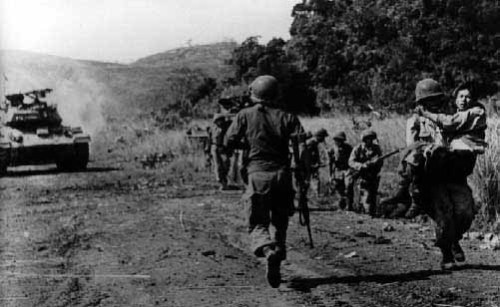
Gorbachev’s foreign affairs adviser, Anatoly Chernyaev, recorded the moment of the collapse of the Berlin Wall in his diary.

“The Berlin Wall has collapsed. This entire era in the history of the socialist system is over,” he wrote. “Today we received messages about the retirement of [China’s] Deng Xiaopeng and [Bulgaria’s] Todor Zhivkov. Only our ‘best friends’ Castro, [Romania’s Nicolae] Ceausescu, and [North Korea’s] Kim Il Sung are still around — people who hate our guts.”

Looking back 20 years it is still hard to believe that the event occurred. As a former Cold Warrior I pray that the West and the Russian Republic will not return to a Cold War mentality and begin to cooperate in ways that are beneficial to peace, security and economic stability.  In the current world situation we have more shared concerns, especially in relationship to radical Islam and terrorism which affect both the West and the Russians in a similar manner.  Economic, military and diplomatic cooperation between the West and the Russians is more important than ever.

The rest is history and the future is yet to be written.

Peace,

Padre Steve+

7 Comments

Filed under History

Lessons for the Afghan War: The Effects of Counterinsurgency Warfare on the French Army in Indo-China and Algeria and the United States Military in Vietnam

Note: This is an article that I wrote for a class a year ago which has been updated in order to show the lessons of history that can be useful in the current wars in Iraq and Afghanistan.

legion indo-china

French Foreign Legionnaires in Indo-China

The effects of the wars Indo-China, Algeria and Vietnam on the French and American military organizations internally and in relationship to their nations piqued my interest in 2005. The wars in Iraq and Afghanistan forced me to start asking the question of what short and long term effect that these wars might have on the U.S. military.  As such I wondered what historical precedent that there was for the question. My interest was furthered by my deployment with Marine and Army advisors to Iraqi Army and Security forces in 2007-2008.  My search led to the French experiences in Indo-China and Algeria and the American experience in Vietnam.  Recently with the Iraq war winding down and ongoing war in Afghanistan which has gone from apparent victory to mounting concern that the effort could fail as the Taliban and Al Qaida have regained momentum amid widespread corruption by the Afghan government and weakness of NATO forces.

Thesis

The counterinsurgency campaigns conducted by the French and American militaries in Vietnam and Algeria had deep and long lasting effects on them.  The effects included developments in organization and tactics, relationship of the military to the government and people, and sociological changes.  The effects were tumultuous and often corrosive.  The French Army in Algeria revolted against the government. The US Army, scarred by Vietnam went through a crisis of leadership and confidence which eventually resulted in end of the draft and formation the all volunteer military.  The effects of the Iraq and Afghanistan wars are yet unknown but could result in similar situations to the militaries and governments involved,

Historiography

legion algeriaForeign Legion in Algeria

There is a wealth of data regarding these wars. There are several types of materials. The accounts of soldiers, diplomats and reporters who experienced these events contained in memoirs and diaries. The best include David Hackworth’s About Face and Steel My Soldiers Hearts; and General Harold Moore’s We Were Soldiers Once… and Young. French works include Jules Roy’s The Battle of Dien Bien Phu and General Paul Aussaresses’ The Battle of the Casbah. There are innumerable popular accounts written by NCOs and junior officers.  These accounts may contain a wealth of information, but are limited by a number of factors. First, the authors, veterans of the wars, only saw part of the overall picture and first-hand experience in war can skew a writer’s objectivity. Those who have been through the trauma of war interpret war through their own experience.  Physical and psychological wounds can have a major impact on the interpretation of these writers as can their experience and political ideology. Finally few of these writers are trained historians. Despite this they can be a valuable resource for the historian.

Another source is found in the official histories written by the military forces involved in the wars. Often these incorporate unit histories and individual narratives and analyze specific battles and the wider campaigns, but do little in regard to broader conditions that affected operations.  While a good source, many are not as critical of their institutions as they should be.

Histories by trained historians and journalists provide another view. The most insightful of the journalist accounts include Bernard Fall’ Street Without Joy and The Siege of Dien Bien Phu: Hell in a Very Small Place. A limitation of all of these is that they are often heavily influenced by the political and societal events. This means that earlier accounts are more likely to be reactive and judgmental versus critical and balanced. Later accounts have the benefit of access to the opposing side and documents not available to earlier writers.  Alistair Horn in A Savage War of Peace provides one of the most informative and balanced accounts of the war in Algeria. Martin Winslow does the same regarding Dien Bien Phu in The Last Valley.

Another source is the writings of participants who critically examine their participation in the wars.  Many of these, French and American provide insights into the minds of leaders who are reflective and critically examine what happened to their military institutions in these wars. The best of these is French Colonel David Galula whose books Pacification in Algeria 1956-1958 and Counterinsurgency Warfare: Theory and Practice provide first-hand accounts of the subject combined with critical reflection. Galula’s works have been important to John Nagl, General David Petreus and others who helped write the U.S. Army and Marine Corps Counterinsurgency manual. Andrew Krepinevich in The Army and Vietnam provides a critical analysis of the U.S. Army in Vietnam.  Other sources, both online and print, such as RAND, provide excellent analysis of selected topics within the scope of this essay, especially COIN.

Dien Bien Phu 1French at Dien Bien Phu

The ability to dispassionately and critically examine and evaluate these sources over a period of several years was and integrate them with my own experience has been a critical to me.  It has changed the way that I look at sources, and caused me to be much more aware of bias, the limitations of sources and the need to have a multiplicity of sources and points of view and to be suspicious of contemporary reports and accounts of the war in Afghanistan regardless of the source.

Analysis of the Issue

viet minh supplyViet Minh Supply Columns were Never Stopped by French Air power or Artillery

The conflicts in French Indo-China, Algeria and Vietnam had major effects on the French and American military institutions. These effects can be classified in a number of ways. First, the manner in which each military waged war, including tactics employed and use and development of weapons systems was changed.  The use of airpower, especially helicopters and use of riverine forces provided an added dimension of battlefield mobility but did not bring victory. As John Shy and Thomas Collier noted regarding the French in Indo-China: “French mobility and firepower could take them almost anywhere in Vietnam, but they could not stay, and could show only wasted resources and time for their efforts.”[1]

Joint_operation_with_ARVN_112-1Joint US and ARVN Operation

The use of intelligence and psychological warfare, including the use of torture became common practice in both the French and American armies.  The wars had an effect on the institutional culture of these armed services; neither completely embraced the idea of counterinsurgency and for the most part fought conventionally. Galula notes how the “legacy of conventional thinking” slowed the implementation of proper counterinsurgency tactics even after most commanders learned that “the population was the objective.”[2] Krepinevich notes that “any changes that might have come about through the service’s experience in Vietnam were effectively short-circuited by Army goals and policies.”[3] Finally the wars had a chilling effect on the relationship between the both militaries and the state, veterans from each nation often felt betrayed or disconnected from their country and people.  Unfortunately instances of all of these have occurred or can be seen in the current wars in Iraq and Afghanistan.

VIETNAM DIEN BIEN PHUFrench Prisoners after Dien Bien Phu: Many Survivors Would be Fighting in Algeria within Two Years
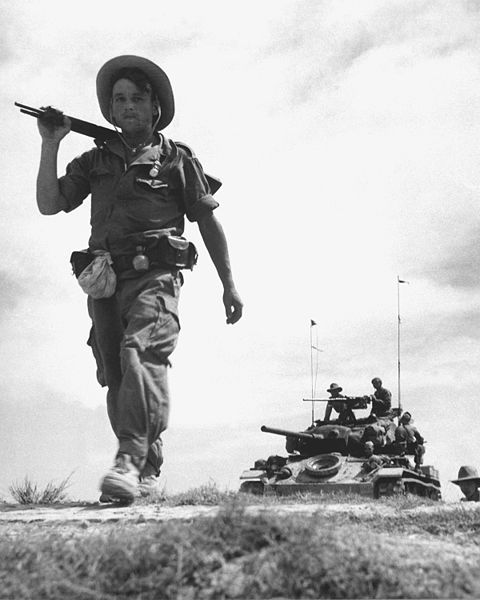
The French Army had the misfortune of fighting two major insurgencies back to back.  The French military was handicapped even before it went into these wars. The Army came out of World War II defeated by the Germans, divided by loyalties to Vichy or one of the Free French factions. They were humiliated by the Japanese in Indo-China, while in Algeria France’s crushing defeat was devastating.  “Muslim minds, particularly sensitive to prestige and baraka, the humiliation made a deep impression.”[4] French society was as divided as the Army; the economy in shambles, the government weak and divided.  The Viet-Minh had prepared well making use of time and training to get ready for war.  “Once full-scale hostilities broke out, the French, for budgetary and political reasons could not immediately make the large scale effort to contain the rebellion in the confines of small-scale warfare.”[5]

In both Indo-China and Algeria the French attempted to fight the budding insurgencies in a conventional manner.  This was particularly disastrous in Indo-China when on a number of occasions battalion and regimental combat team sized elements were annihilated by Viet-Minh regulars.  Between October 1st and 17th 1950 every French garrison along the Chinese border was over-run.  The French lost over 6000 troops and enough equipment to outfit “a whole additional Viet-Minh division.” It was their worst colonial defeat since Montcalm at Quebec.[6] In Algeria when the fight began in earnest France’s “ponderous ponderous N.A.T.O forces found themselves at an impossible disadvantage,”[7] unable to have any influence off the main roads.

french troops indochinaFrench Troops and Tanks in Indo-China: Road Bound Forces were often Defeated by Viet- Minh Forces

In Vietnam the French did not absorb the lessons of fighting a well established insurgent force. French forces hoped to draw the Viet-Minh main forces into battles of attrition where their superior firepower could be brought to bear. Such was the case at Na San in December 1952 where the French established an “Air ground base” deep in Viet-Minh territory to draw Giap’s forces into open battle.  This worked, but just barely. General Giap, short of artillery and not planning on a long battle frittered away his troops in mass charges.  However, the French, because of Na Son assumed they had found the key to victory. In their embrace of the “air ground base concept, French staff officers were following an intellectual tradition that had long been prone to seduction by elegant theories.”[8] The result was the disaster at Dien Bien Phu the following year.  The destruction of the elite Group-mobile 100 near Pleiku in 1954 was the coup de grace. In Indo-China the French made limited use of helicopters, used paratroops widely, and developed riverine forces. One thing they were critically short of was significant tactical air support.[9]

The most inventive French creation in Indochina was the GCMA/GMI forces composed of mountain tribesmen led by French NCOs and Junior Officers.  They were designed to provide “permanent guerilla groups rooted in remote areas” to harass and interdict Viet-Minh forces.[10] Trinquier noted that at the time of the Dien Bien Phu defeat that these forces had reached over 20,000 trained and equipped maquis in the Upper Region of Tonkin and Laos. These forces achieved their greatest success retaking Lao Cai and Lai Chau May 1954 as Dien Bien Phu fell.[11] Trinquier stated that “the sudden cessation of hostilities prevented us from exploiting our opportunities in depth.”[12] The GMI units and their French leaders were abandoned fighting on for years after the defeat. One account noted a French NCO two years after the defeat cursing an aircraft patrolling the border “for not dropping them ammunition so they could die like men.”[13] In the end the French left Indo-China and Giap remarked to Jules Roy in 1963 “If you were defeated, you were defeated by yourselves.”[14]

Algeria was different being part of Metropolitan France; there the French had support of European settlers, the pieds-noir. Many French soldiers had come directly from Indo-China. There French made better adaptations to local conditions, and realized that they had to win the population and isolate the insurgents from it and outside support. As Galula said, victory is the destruction of the insurgent’s political and military structures, plus “the permanent isolation from the population, not forced upon the population, but by and with the population.”[15] The lessons learned by the French in both Algerian and Indo-China were lost upon the Americans.

4CavVnM48US Heavy Forces including Armor had Little Utility in Many Parts of Vietnam
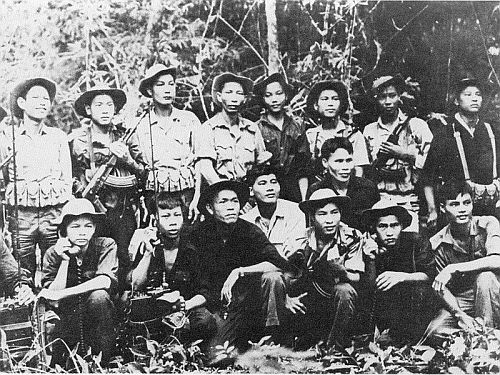
The United States military, especially the Army approached the Vietnam War with a conventional mindset, referred to as the “Army concept.” [16] It not only approached the war in this manner, but it trained and organized the South Vietnamese forces, ARVN into the American model. Americans re-organized ARVN into divisions “based upon the U.S. divisional force structure.”[17] Due to the imposition of an American template and organizational structure upon it, ARVN was not structured appropriately for the threat that it faced.”[18] The results were as to be expected. Large numbers of American troops poured in taking the lead against the North Vietnamese and Viet Cong . The American method of counterinsurgency was costly.  It was “almost a purely military approach”[19] which ignored political and social realities on the ground. Instead of focusing on protecting the Vietnamese people and denying the Communists a safe haven the Army in particular believed that massive firepower was the best means to be“utilized by the Army to achieve the desired end of the attrition strategy-the body count.”[20] In the end the American defeat was a “failure of understanding and imagination.”[21] The one shining success was the Marine Corps experimentation with “Combined Action Program” platoons which lived in the villages with militia for long periods of time. This program produced great results “in eliminating local guerillas”[22] but was killed by the Army.

NlfmainforceNVA Main Forces

These wars tore the heart out French and American armies. For the French the defeats inflicted a terrible toll.  In Indo-China many French career soldiers felt that the government’s “lack of interest in the fate of both thousands of missing French prisoners and loyal North Vietnamese…as dishonorable.”[23] Divisions arose between those who served and those who remained in France or Germany and created bitter enmity between soldiers.  France would endure a military coup which involved many who had fought in Vietnam and Algeria. Having militarily won that war, were turned into what Jean Lartenguy called The Centurions had been turned into liars.”[24] They were forced to abandon those who they had fought for and following the mutiny, tried, imprisoned, exiled or disgraced. Colonial troops who remained loyal to France were left without homes in their “independent” nations.  They saw Dien Bien Phu as the defining moment. “They responded with that terrible cry of pain which pretends to free a man from his sworn duty, and promises such chaos to come: ‘Nous sommes trahis!’-‘We are betrayed.’”[25]

war protestUS Veterans of Vietnam Would Return to a Deeply Divided Country that turned its Back on Them for Years

The U.S. Army left Vietnam and returned to a country deeply divided by the war.  Vietnam veterans remained ostracized by the society until the 1980s.  As Harold Moore recounts “in our time battles were forgotten, our sacrifices were discounted, and both our sanity and suitability for life in polite American society were publically questioned.”[26] The Army endured a massive reorganization that resulted in the formation of the All-Volunteer force, which would redeem itself and emerge from the ashes in the Gulf War. The Americans would not learn the lessons of revolutionary warfare and counterinsurgency until forced to do so in Iraq in 2004-2007. These lessons however were not applied to Afghanistan and the Taliban which seemed to have been defeated have regained the initiative, policy is being debated amid discord in the west and there are reports of American and NATO forces becoming discouraged by the course of the war and concern that their efforts will be in vain. This is a dangerous situation to be in and if we learn from anything from our own history as well as that of foreign military forces in Afghanistan we need to be very careful in implementing strategy to get whatever we do right.

training team baseTraining Team Base in Afghanistan: Some of these Bases Have proven Vulnerable to Well Planned and Coordinated Taliban Attacks

Conclusion

The effects of these wars on the French and American military establishments were long lasting and often tragic. The acceptance of torture as a means to an end sullied even the hardest French officers. Men like Galula and Marcel Bigeard refused to countenance it, while others like Paul Aussaresses never recanted.  Americans would repeat the tactic at Abu Ghraib rallying the Iraqis against them and nearly losing the war because of it.

For the Americans, the effects of Vietnam continued at home. Race riots tore at the force while drug addictions and criminal activities were rampant.  Many incompetent leaders who had “ticket punched” their careers kept their jobs and highly successful leaders who became whistle blowers like Hackworth were scorned by the Army institution.  The years following Vietnam were a severe test of the US Military and took years for the military to recover.  Likewise It took years before either the French or American veterans again felt a part of their countries.  They ended up going to war, and when it was over; feeling abandoned, their deepest bonds were to their comrades who had fought by their side.

What are the lessons to be learned from these campaigns as well as from the various accounts?  Andrew Krepinevich prophetically noted that the failure to learn the lessons of Vietnam “represents a very dangerous mixture that in the end may see the Army again attempting to fight a conventional war against a very unconventional opponent.”[27] Obviously, there are lessons to be learned, especially in understanding the nature of revolutionary war as well as the culture and history of our opponents. The U.S. has made some improvement in this regard but there is still much to be learned, especially since after the war the Army was “erecting barriers to avoid fighting another Vietnam War.”[28] From these wars we learn that nations and incompetent governments who mismanage wars can alienate themselves from the soldiers that they send to fight, with serious consequences.  As far as historiography we learn that certain historical fallacies are evident when one reads the accounts critically and recognize the bias and limitations of the various sources.


[1] Shy, John and Collier, Thomas W. “Revolutionary War” in Makers of Modern Strategy from Machiavelli to the Nuclear Age,” Peter Paret editor. Princeton University Press, Princeton N.J. 1986  p.849

[2] Galula, David. Counterinsurgency in Algeria: 1956-1958. RAND Corporation, Santa Monica, CA. 2006. First published by RAND in 1963. p.244

[3] Krepinevich, Andrew F. “The Army and Vietnam,” The Johns Hopkins University Press, Baltimore and London, 1986 p.213

[4] Horn, Alistair. “A Savage War of Peace: Algeria 1954-1962,” a New York Review Book published by the New York Review of Books, New York, 1977, 1987, 1996, and 2006 p 41

[5] Fall, Bernard B. “Street Without Joy: The French Debacle in Indochina.” Stackpole Books, Mechanicsburg PA, 2005, originally published by Stackpole Publications 1961 p.27

[6] Ibid. p.33

[7] Horn. p.100.

[8] Windrow, Martin. “The Last Valley: Dien Bien Phu and the French Defeat in Vietnam,” Da Capo Press, Novato, CA 2006, originally published by Weidenfeld and Nicholson, London 2004 p.63

[9] Fall, Bernard B. “The Siege of Dien Bien Phu: Hell in a Very Small Place.” Da Capo Press, New York an unabridged reprint of the 1st Edition reprinted in arrangement with Harper and Row Publishers, New York. 1967 pp. 456-457  Fall discusses in depth the lack of French Air support and the antecedents that led to the shortage following World War II.

[10] Pottier, Philippe(2005)’Articles: GCMA/GMI: A French Experience in Counterinsurgency during the French Indochina War’, Small Wars & Insurgencies,16:2,125 — 146 http://dx.doi.org/10.1080/09592310500079874

[11] Simpson, Howard K. “Dien Bien Phu: The Epic Battle America Forgot,” Potomac Books Inc. Washington DC 2005, originally published by Brassey’s Inc. 1994 pp. 170-171

[12] Trinquier, Roger. “Modern Warfare: A French View of Counterinsurgency,” translated from the French by Daniel Lee with an Introduction by Bernard B. Fall. Praeger Security International, Westport CT and London. 1964 and 2006. Originally published under the title “La Guerre Moderne” by Editions Table Ronde. p.87

[13] Windrow. p.652.

[14] Roy, Jules. “The Battle of Dien Bien Phu” Carrol and Graf Publishers, New York 1984. Translated from the French by Robert Baldrick. English translation copyright 1965 by Harper and Row Publishers, New York. p.xxx

[15] Galula, David. “Counterinsurgency Warfare: Theory and Practice.” Praeger Security International, Westport CT 1964 and 2006 p. 54

[16] Krepinevich. p.213

[17] Ibid. p.24

[18] Nagl, John A. “Learning to East Soup with a Knife: Counterinsurgency Lessons from Malaya and Vietnam,” University of Chicago Press, Chicago and London, 2005 p.138

[19] Shy. p.856

[20] Krepinevich. p.202

[21] Spector, Ronald H. “After Tet: The Bloodiest Year in Vietnam,” Vintage Press, a division of Random House, New York, 1993 p.314

[22] Millett, Allan R. and Maslowski, Peter. “For the Common Defense: A Military History of the United States of America.” The Free Press, a division of Macmillian, Inc. New York, 1984 p.555

[23] Windrow. p.655

[24] Ibid. p.657

[25] Ibid.

[26] Moore, Harold G and Galloway, Joseph L. “We were Soldiers Once…and Young: Ia Drang: The Battle that Changed Vietnam,” Harper Collins Publishers, New York NY 1992  p. xx


[27] Krepinevich. p.275

[28] Ibid. p.274

1 Comment

Filed under History, iraq,afghanistan, Military, vietnam