Tag Archives: PTSD

Waiting for First Light at Slaughterhouse Five: PTSD and a Coda to te end of a Military Career


Friends of Padre Steve’s World,

I am checking out of my current command to finish my career attached to Norfolk Naval Shipyard, in Portsmouth Virginia. I am struggling. Not feeling appreciated and feeling like a cast off. This isn’t new, shortly after I was promoted to Commander, the newly appointed Deputy Chief of Chaplains treated me like a potted plant while making her rounds of the Generals and Major Commands. As Kurt Vonnegut noted in Slaughterhouse Five “and so it goes.”  My Problems in the Navy Chaplain Corps began when I went public with my struggles with PTSD. Somehow it seems that Chaplains can care for the wounded and those traumatized by war but if we admit that we are wounded we are expendable.

I read General Romeo Dallaire’s latest book, Waiting for First Light: My Ongoing Struggle with PTSD a couple of years ago. General Dallaire had been the commander of the UN Peacekeepers in Rwanda, men and women who were prevented from stopping genocide, and people who have been forever haunted by what they witnessed.

General Dallaire recounts a story of horror that never ended for him, and he details how difficult and traumatic coming home that neither appreciate nor understood what he had been through, including people in the military. I found so much in his story that was analogous to my own and in light of that I am going to begin writing my PTSD memoir.

It will be hard because I will have to write about things that are deeply traumatic and upsetting, especially how I was received and continue to be received by most of my fellow chaplains. Because I came and publicly discussed my issues with PTSD, the shattering of my faith in so many things, my wilderness experience of being an agnostic for two years, and the change in my faith since then, I experienced the rejection of my former church and many of my peers.

To many of my peers and Chaplain Corps superiors I am simply a broken Chaplain; and broken chaplains or for that matter broken ministers have no place and very few people who they can talk with. I remember my old Commodore at EOD Group Two, the late Captain Tom Sitsch ask me bluntly “Where does a chaplain go for help?”My answer to him was “not to other chaplains.” Sadly, he too was going through his own personal PTSD hell and with his life falling apart he committed suicide in January 2014.

General Dallaire recounts a similar experience, as like Chaplains, Generals and other senior leaders have no place to go, they like us are not supposed to break. General Dallaire wrote: “I received little support from my colleagues and peers; I received only a few messages from my sixty or so fellow generals – a couple of phone calls, and an e-mail from one old friend. The others appeared to be in two camps: those who were too busy to get in touch, and those who didn’t know what to say.” But I would also add, that there are those that do not want to know and others who actually turn their backs on men and women whose injury lies inside their brain, as well as some chaplains and ministers who seem to take a certain perverse joy in inflicting pain.

I still struggle with nightmares, night terrors, insomnia, and hyper-vigilance. After more than a decade I cannot imagine life without them. Like General Dallaire, I still wait for first light.

So pray for me if you do that, if not send some positive thoughts my direction.

Until tomorrow,

Peace

Padre Steve+

23 Comments

Filed under iraq, mental health, Pastoral Care, PTSD, Tour in Iraq, US Navy

Thoughts on An Anniversary of 38 Years of Military Service

Friends of Padre Steve’s World,

Sorry I haven’t posted for the last couple of days but I have been both tired and busy. However, I needed the break. We had major damage to a 60-70 year old Maple tree in in our backyard which had to be repaired following a microburst storm on Monday. Thankfully, a realtor friend of ours recommended someone who would do a professional job at a decent price.

Likewise, I haven’t slept well because my new CPAP mask has irritated my face and led to a bacterial infection that I just finished a course of antibiotics to treat.

That being said today is the 38th anniversary of my enlistment in the California Army National Guard, which with my simultaneous enrollment in the UCLA Army ROTC program began my military career. That career has spanned 38 years without a break in service, in the California National Guard, the active duty Army, the Texas and Virginia National Guard, the Army Reserve, activated and mobilized service in the Reserve and finally the last 20+ years in the Navy. In that capacity I served seven years with the Marine Corps, and four years in Joint assignments.

In the words of Jerry Garcia and the Grateful Dead, “what a long strange trip it’s been.” 

Now, in seven months time I will be retiring from the Navy. This too is a stressful time of transition, not just for me but my wife Judy as we try to get our current home ready to sell and find a new home, without all the steps in our townhome.

However, it will be good to finally retire from military service. I’ve done my time in peace and war, and screwed up my body, mind and spirit in the process. At the same time I am glad that I will be done serving a potentially criminal and authoritarian regime. Like the German General Ludwig Beck realized when it was too late:

“It is a lack of character and insight, when a soldier in high command sees his duty and mission only in the context of his military orders without realizing that the highest responsibility is to the people of his country.” 

I remain committed to my oath and the Constitution. I won’t surrender that. It is a matter of honor.

Until tomorrow,

Peace,

Padre Steve+


3 Comments

Filed under leadership, Military, Political Commentary, Tour in Iraq, us army, US Marine Corps, US Navy

Recovering: Calmer but Still Anxious, yet Determined

Friends of Padre Steve’s World,

Today has been a day of recovery from the physical and emotional stress of being run off the road last week. Despite having dealt with the effects of PTSD for almost a decade and pretty well versed in what happens in the brain and body during a traumatic event, but it has been a long time since I have actually been through something this traumatic.

It’s funny, when it happened I was pretty much pumped up on norepinephrine and cortisol. They control the  fight or flight response, and norepinephrine is similar to adrenaline. When I pulled my damaged car into the grass median I didn’t have anyone to fight. So the initial rush wore off and my anxiety and fear began to build. Since I went over that yesterday, I’ll move on.

Judy was a tower of strength to me over the weekend. She understood and even this morning was willing to take me to early fat boy PT, then to the Naval Medical Center for my other appointments and the pharmacy. I thanked her but said I needed to do it on my own. I was nervous on the road, but extra careful. I gave myself lots of time, kept good following distances, and kept a sharp eye out.

My early morning PT was good for me, as was the aquatic physical therapy. I think they helped release some endorphins, which combined with some time in the sauna calmed me down. Of course I had to wait an ungodly amount of time at the medical center pharmacy for my antidepressant prescription, but such is life. But, I was able to get my paperwork to the orthopedist so he can approve me to take the Physical Readiness Test this fall.

The past two PRT cycles after the fall that injured my knees, ankles, and hip, and has resulted in so much pain and inconvenience as I tried to recover, I wasn’t cleared to participate. The injuries, the failed treatments, and failed meniscus surgery left me unable to physically do much, so I gained weight and got depressed because I saw no hope in sight. I could only walk with the aid of crutches or a cane for months. Of course I gained weight and came in over my maxim body fat allowance.

Since then things have changed. I was switched to aquatic physical therapy and the orthopedics Department Head made me his patient. Despite the injuries to my knees, I am not yet a candidate for knee replacement, so he decided a last ditch effort to relieve my pain, which had been a consistent 7-10 on the pain scale for months. He decided to repeat the gel injections in both knees before trying any other surgeries. This time they worked and soon I was walking relatively normally without the aid of crutches or canes, and the pain level went down to the 2-3 range. I do a lot of walking and swimming and since the first week of June have lost about 17 pounds. My goal is to lose another 10-15 pounds by the 15th of October. I am now up to walking, on a good day, 8-10 miles. I hope  by eating nothing but soup, salad, fruit, and low carb/calorie yogurt over the next week that I meet my allowed body fat allowance by next Monday, on the next “fat boy” weigh in. I think I need to lose about 5 pounds to make it. That won’t stop me from working to lose all I need for my last official weigh in before retirement. If I don’t succeed, under the revised regulations it could screw up my retirement. I won’t let that happen, even if I die in the attempt.

So until tomorrow I leave you with less anxiety, more determination, and a desire to kick ass and take names. I’ll start catching up with current events tonight and tomorrow.

Until then,

Peace

Padre Steve+


Leave a comment

Filed under healthcare, Loose thoughts and musings, Military, US Navy

Emotional and Physical Recovery from a Traumatic Event

Pearls Before Swine Comic Strip for August 07, 2017

Comic, Pearls Before Swine, (c) 2017 by Stephan Pastis

Friends of Padre Steve’s World,

On Thursday afternoon my car was run off the road by an inattentive driver with a very loud exhaust system.

I honestly thought I would be better the next day, but late in the afternoon when Judy took me to get the car, I got in the driver seat and I felt sick to my stomach and was trembling. I got the car home and she drove us to Gordon Biersch where we had a nice night.

I didn’t sleep well, lots of nightmares and I didn’t leave bed, except to let the dogs out until about 1 PM. I knew I had to get a few groceries at Kroger and Wegmans so I made the trip. Until I got to the Kroger parking lot the trip went well. Then it seemed that every old lady was trying to crash by cutting me off or taking up most of a lane. I was doing into panic mode, but took a deep breath, regathered myself and instead of going directly to Wegmans I stopped by Gordon Biersch for a one and done to calm the nerves. Since I no longer take a specific anti anxiety medication, I stopped taking the minimal PRN dosage of Xanax a few years back because I was experiencing less anxiety.

The crash has re-triggered that anxiety, something I will talk to with my shrink on Tuesday and my psychiatric medicine manager Wednesday. But yesterday I needed to calm down. I texted Judy and posted my situation on Facebook. A good friend came over and spent some time with me at the bar. I then did a take out order since Judy told me that. Wegmans could wait.

Judy reminded me of the chemical chain reaction that trauma sends through the body, and how it takes time for that to play out. I am lucky to have her.

This morning we planned to go out to breakfast, but since neither of us were hungry we stayed in bed with the dogs. They have been very comforting, especially my girl Izzy. Judy is about to drive us to Biersch for dinner so we can get out of the house.

Tomorrow I am up really early for fat boy PT, then I have to drive to the Naval Medical Center for aquatic physical therapy and to get my antidepressant refilled  since I have gone without it 5 days and don’t want to crash and get suicidal. Then I will go in to work.

About the cartoon. That is how I have felt all weekend. The cartoon is Pearls Before Swine by Stephan Pastis. This particular cartoon ran in August of 2017. His comics can be accessed at GoComics.com, I hope that since I didn’t ask permission to run it that you will flood his site with hits and buy his books.

So until tomorrow, and hopefully better times,

Peace,

Padre Steve+


3 Comments

Filed under Loose thoughts and musings, mental health, Military, PTSD

The PTSD Startle Response: Never far from the Surface

Friends Of Padre Steve’s World,

PTSD is an unwanted gift that keeps giving. One of its many manifestations is a startle response. My wife Judy can tell you about them, and it took me many years to understand how inadvertent and programmed they are, she’s had them for decades, me just since returning from Iraq in 2008. Until I started dealing with my shit, I failed to understand hers and many times when she would startle and I wasn’t very sympathetic. She has dealt with childhood PTSD for a lot longer than I have combat PTSD, and even after I came back from Iraq I didn’t understand how deep the trauma she experienced still affected her.

I remain hyper vigilant, have terrible nightmares and night terrors, when I go out somewhere I always stay aware of my circumstances, but it has been a few years since I had something happen like today. I was on my way home from work at the beginning of rush hour and and was about a mile or so off base when a large pickup truck with one of those noice enhanced exhaust systems roared up close alongside on the right lane. The noise caused me to look over my shoulder and I caught the vision of the truck, just big and dark, speeding past me. I went into my automatic response, I swerved to avoid a possible collision, entered the edge of the grass on the median and then hit a curb in a turn lane. The impact blew out the tires on the left side of my car. I didn’t try to keep driving and slowly pulled into the grass of the median and turned on my emergency flashers.

The interesting thing was that hundreds of cars passed me with none stopping to offer assistance until a female Virginia Beach Police officer coming from the opposite direction stopped to help. She got me a tow truck and the car will be in the shop until tomorrow afternoon. I am going to let my insurance company, USAA, know what happened in the morning.

Of course I have no positive identification of the pickup truck and he probably meant no harm, just gunning his engine to get home quicker. The fact that the loudness of his exhaust system and noise enhanced muffler startled me is irrelevant. That’s not a crime. But what surprised me is that nobody but a police officer offered to help. I couldn’t do that. I paid for the tow to a tire store that I do business with and walked to meet Judy at a restaurant where I had here waiting in case I needed a ride.

I have nothing but praise for the Virginia Beach Police officer and the tow service. I also thank all of my friends who have contacted me on social media, and for Judy who stayed in touch with me until she was sure that I was safe. I just knew that the location of the incident wasn’t conducive to her traveling to retrieve me.

Whatever happens next I am glad that I am okay and that apart from some money that it won’t cost us anything. I am safe and have a new appreciation for Judy’s startle reflex.

So until tomorrow,

Peace,

Padre Steve+


Leave a comment

Filed under mental health, Military, PTSD, Tour in Iraq

PTSD, Madness; to Perchance to Dream and Yet Live: Iraq Twelve Years Later

Friends of Padre Steve’s World,

Guy Sajer wrote in his book The Forgotten Soldier these words:

“Only happy people have nightmares, from overeating. For those who live a nightmare reality, sleep is a black hole, lost in time, like death.” 

I am exhausted tonight and I will be going to bed early for me. Hopefully I will get some restful sleep. I will be posting this article to post shortly after midnight by which time I hope not only to be in bed but asleep.

I have suffered a week of violent nightmares taking me back to my worst fears when I was serving in the badlands of Iraq’s Al Anbar Province in 2007 and 2008 supporting U.S. Advisors to Iraqi Army, Border Forces, Police, Highway Patrol, and Provincial Reconstruction teams. I rolled out of bed in a nightmare and cut my arm, and I woke up screaming and reaching for the pistol of an Iraqi insurgent who was about to shoot me, scaring the absolute shit out of our oldest Papillon dog Minnie, whose terrified Yelp woke me up.

I do not often write about it because I have been doing better, but I suffer from severe and chronic PTSD related to my experiences at war. The images are seared into my brain and sometimes the memories, and my deepest fears from my time there as an unarmed Chaplain working for the most part with very small groups of Americans and our Iraqis far away from the help of the big battalions if we got into serious trouble. I have written about those experiences and my struggles after my return many times on this blog. Likewise, I have had my story told on the front pages of the Jacksonville Daily News and the Washington Times. A video of my story is on the Department of Defense Real Warriors Campaign website, and is a large part of a chapter of Pulitzer Prize winning War Correspondent David Wood’s book  What Have We Done: The Moral Injury of America’s Longest Wars.  

Since Iraq, my nightmares are very vivid and often involve much physical acting out. The physical acting out is unusual and I have actually injured myself badly enough to require trips to the emergency room after crashing hard throwing myself out of bed combatting imaginary enemies. Likewise, other have been violent and physical enough to wake Judy up.

This is nothing new. In another nightmare a year or so ago I was being attacked by an Iraqi insurgent. Our advisor team had been attacked as we were stopped in the dark to determine if an Improvised Explosive Device had been laid in the road in front of us. This was just a few miles from the Iraq-Syrian border between Al Qaim and COP South, the base of the advisor team which was working with the 3rd Battalion of the 3rd Brigade of the Iraqi 7th Division.

The part about being stopped in the desert in the dark while examining a potential IED actually happened. The attack did not happen but at the time I fully expected something like it to happen. We were sitting ducks on a two lane highway in the middle of the desert. But the attack never happened and we continued to COP South, which would become a part of many of my future missions.

But in my nightmare it happened and as the fighting devolved into close quarters hand to hand combat I found myself grappling an insurgent who was attacking me with a large knife. I managed to roll on top of him and knock the knife from his hand when I was awakened. I was on top of Judy and she was afraid that I was going to strangle her. My hands had not gotten to her throat but she woke me and told me what had happen. I dropped back to my side of the bed in a cold sweat. I could not believe what had happened and that terrifies me. I have set up an appointment prior to my regularly scheduled one with my shrink to talk about this.

Since I my day had been quite good and I have been much more relaxed at work since putting in my retirement papers the event came as a huge surprise. In trying to figure out what triggered it I was at loss until I remembered that I had had dinner last night with a retired Navy EOD Captain who had been my Chief Staff Officer at EOD Group Two and running partner before I went to Iraq. He was sent there not long after me and we met at Camp Victory in Baghdad not long before I left Iraq on the way to Kuwait and home in 2008. We enjoyed a wonderful dinner last night and we did talk about all manner of things including our time in Iraq and those men that we had served alongside.

I saw my sleep doctor yesterday regarding my latest sleep study. Without my sleep Medical Tinos I did not enter in to REM sleep, or dream sleep. In addition to prescribing me a different CPAP machine and increasing the pressure , he referring me to a neurologist colleague of his in the sleep clinic. Honestly, I don’t know what god it will do, but I hope that he can find some kind of answer.

But trying to explain my trying to explain nightmares and night terrors is is not really helpful, they are now part of who I am. I think that Stephen King said it best:

“Nightmares exist outside of logic, and there’s little fun to be had in explanations; they’re antithetical to the poetry of fear.” 

Yes,  I can still try to logically deduce my nightmares and night terrors, but the poetry of fear as Stephen King so rightly calls it cannot be fully explained. For those of us who deal with the memories of combat, of having been shot at and have seen the human cost of war, the dead, the wounded, the destruction, and the aftermath of war, they are all too real and they never completely leave us.

Christmas on the Syrian border

Over eleven years after I returned from Iraq I still find that much of me is still there. In fact, deep down I miss Iraq and the Iraqis that I was honored to know and to serve alongside and I still pray for them and for their future. Maybe someday I will get back. I would love that.

For all that remains with me about Iraq, I left a good part of me there, with my advisors and Iraqis. It was the best of times, and the worst of times, but it is a major part of who I am now, and why I want to continue to live.

So until tomorrow, Inshallah, إن شاء الله

Peace

Padre Steve+

5 Comments

Filed under History, iraq, middle east, Military, ministry, News and current events, to iraq and back, Tour in Iraq, us army, US Marine Corps, US Navy

Inshallah, (إن شاء الله) God willing: Thoughts on Landing in Iraq 12 Years Later it is hard

Friends Of Padre Steve’s World,

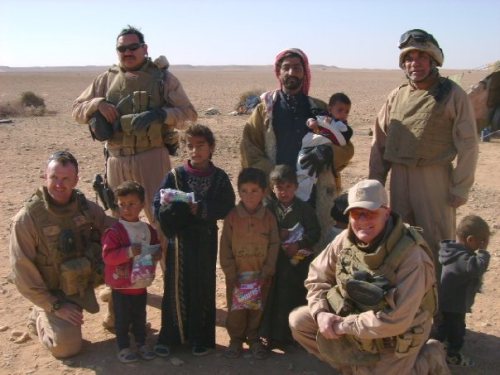
it is hard to believe that about this time a dozen years ago that I was landing in Iraq, for a tour of duty with American advisers to Iraqi Army and security forces in Al Anbar Province. To quote Charles Dickens “It was the best of times, it was the worst of times.” It was a tour of duty that would change me forever, I could have stayed there indefinitely, but my tour was limited to seven months. Nonetheless, I left a lot of me in Iraq, and brought a lot back.

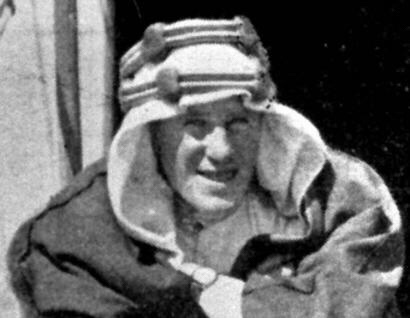
It was an amazing tour of duty, full of danger every day, full of travel from the Syrian border to Fallujah and all places in between. I met many friends there, Americans and Iraqis alike. I returned with a severe case of PTSD as well as moral and spiritual injuries that have afflicted me since. I really understand T. E. Lawrence, better known by most as Lawrence Of Arabia who wrote:

“We were fond together because of the sweep of open places, the taste of wide winds, the sunlight, and the hopes in which we worked. The morning freshness of the world-to-be intoxicated us. We were wrought up with ideas inexpressible and vaporous, but to be fought for. We lived many lives in those whirling campaigns, never sparing ourselves: yet when we achieved and the new world dawned, the old men came out again and took our victory to remake in the likeness of the former world they knew. Youth could win, but had not learned to keep, and was pitiably weak against age. We stammered that we had worked for a new heaven and a new earth, and they thanked us kindly and made their peace.”

You see I went to war as a volunteer. I was eager to go, and as I said I would have remained longer. When I left I felt like I was abandoning my Americans and Iraqis. When I left, the Navy Chaplain who followed the one I served under deferred on having my replacement and in a sense abandoning those Americans and Iraqis that I was the only Chaplain serving. My replacement was sent to an Army team in Mosul.

I left Iraq questioning everything that I had went there believing: about the justness of the war, about my country’s leadership, the political party I had been a part of for three decades, and my faith as a Christian.

I have written much about my experience in Iraq and how even today I have a deep regard for the Iraqi people and their hopes for a better future. However, I wonder if what Lawrence wrote will be true:

“We had been hopelessly labouring to plough waste lands; to make nationality grow in a place full of the certainty of God… Among the tribes our creed could be only like the desert grass – a beautiful swift seeming of spring; which, after a day’s heat, fell dusty.” 

vault-von-saddam-statue-fall-itn-640x360

In 2003 the United States invaded Iraq and made short work of that country’s military. Many Iraqis of all creeds looked upon the US and coalition forces as liberators but within a few months the illusion was over. Within weeks of the overthrow of Saddam, the US military personnel and leaders who were working with Iraqi officials, both military and civilian to get the country back on its feet were replaced by the Bush administration.

rumsfeld-bremer-2

In their place a new entity, the Coalition Provisional Authority was created and staffed. The first administrator of the entity was retired Army Lieutenant General Jay Garner. He had much experience in Iraq but was sacked quickly by Secretary of Defense Donald Rumsfeld for not conducting an immediate purge of members of the Baathist Party from key positions in the civil service or security forces, or implementing the agenda of the administration.

After Garner’s dismissal the CPA was led by Ambassador L. Paul Bremer, a man who had no experience in the Arab world, much less in Iraq. Bremer and his staff, most of who had little experience or knowledge of the country created conditions that directly led the the Iraq insurgency, the sacrifice of thousands of American and allied lives and the loss of friendship of the Iraqi people. They also gave a a bloodless strategic victory to Iraq’s traditional enemy and oppressor Iran, which became a dominant regional power without having to worry about their traditional Arab nemesis.

It was as if Bremer, the leaders of the Bush administration and their neoconservative allies knew nothing of history. If they did they decided to ignore it. Whether it was ignorance of history, or a wanton disregard for it, and the country we invaded it was immoral, unethical and probably criminal.

baghdad1917-2

T.E. Lawrence wrote of the British incursion into Turkish Mesopotamia in 1915, managed by the British Indian Office:

“By brute force it marched then into Basra. The enemy troops in Irak were nearly all Arabs in the unenviable predicament of having to fight on behalf of their secular oppressors against a people long envisaged as liberators, but who obstinately refused to play the part.”

The actions of the CPA destroyed the plans pragmatists in the Pentagon and State Department to incorporate the existing civil service, police and military forces in the newly free Iraq.  Instead Bremer dissolved the Iraqi military, police and civil service within days of his arrival. Since the military invasion had been accomplished with minimal forces most Iraqi weapon sites, arsenals and bases were looted once their Iraqi guardians were banished and left their posts. The embryonic insurgency was thus provided by Bremer a full arsenal of weapons to use against American forces; many of whom were now mobilized Reservists and National Guardsmen that were neither trained or equipped to fight an insurgency or in urban areas.

mosul-41

The reaction of the Iraqi Arabs to US occupation should have been anticipated. Lawrence wrote in 1920 a letter that could have easily been written in 2004:

“It is not astonishing that their patience has broken down after two years. The Government we have set up is English in fashion, and is conducted in the English language. So it has 450 British executive officers running it, and not a single responsible Mesopotamian. In Turkish days 70 per cent of the executive civil service was local. Our 80,000 troops there are occupied in police duties, not in guarding the frontiers. They are holding down the people.”

The actions of Bremer’s incompetent leadership team led to a tragic insurgency that need not have taken place. The now unnumbered US forces had to fight an insurgency while attempting to re-create an army, security forces and civil service from the wreckage created by Bremer’s mistakes; as well as its own often heavy handed tactics in the months following the invasion.

OLYMPUS DIGITAL CAMERA

Nearly 4500 US troops would die and over 30,000 more wounded in the campaign. Hundreds of thousands of Iraqis were killed, wounded or died of disease during the war.  Lawrence wrote about the British administration of Iraq words that could well have been written about Bremer’s Coalition Provisional Authority:

“Meanwhile, our unfortunate troops, Indian and British, under hard conditions of climate and supply, are policing an immense area, paying dearly every day in lives for the willfully wrong policy of the civil administration in Bagdad.”

It took dramatic efforts in blood and treasure to restore the some modicum of security in Iraq, something that was only accomplished when the Sunni tribes of Anbar Province turned against the Al Qaeda backed foreign fighters. The surge under the command of General David Petreus achieved the desired result. It gave the Iraqis a chance to stabilize their government and increase their own security forces.

26iraq_image1-articleLarge

Unfortunately many of those that remained in power of the Shia sect refused to share power in meaningful ways with Iraq’s Sunni and Kurds leading to a political crisis. The US military mission ended in December 2011 and since then Iraq security forces and civil authorities, often divided by tribal or sectarian loyalties have struggled to maintain order. The result is that by 2013 that Iraq was again heading toward the abyss of civil war. Sunni protestors in Anbar and other provinces conducted frequent protests, sectarian violence spread, and an Al Qaeda affiliated group gained control of Fallujah and parts of Ramadi. It took years for the Iraqis aided by the Kurds, and a renewed U.S. military presence to restore a precarious stability in Iraq, something that it seems the Trump administration is trying to destroy in its economic and political war against Iran. To me that seems like the President is pissing on the graves of every American and Iraqi who died supporting that operation, and I hate him for that. I am still loyal to my oath and the Constitution but I loathe him and have no respect for a man who used every opportunity he could to not serve in Vietnam and consistently has disrespected Vietnam veterans and other military personnel. He loves military technology, but he shows no respect for the soldier.

Syria

To the west in Syria a brutal civil war has been going on for  years. Like Iraq it pits Sunni against Shia, as well as Kurd and foreign fighters from a score of nations, some fighting as part of a Free Syria movement, others as part of the Al Qaeda coalition and others beside Syria’s government.

In 1920 Lawrence wrote of the British intervention and occupation of Iraq:

“The people of England have been led in Mesopotamia into a trap from which it will be hard to escape with dignity and honour. They have been tricked into it by a steady withholding of information. The Bagdad communiqués are belated, insincere, incomplete. Things have been far worse than we have been told, our administration more bloody and inefficient than the public knows. It is a disgrace to our imperial record, and may soon be too inflamed for any ordinary cure. We are to-day not far from a disaster.”

lawrenceguerrillas1

His words have a sadly familiar tone. The US invasion of Iraq did have a different outcome than we imagined. The Arab Spring erupted and the consequences of it will be far reaching and effect much of the Middle East and the world. The internal conflicts in Iraq and Syria threaten every country that borders them, and the instability has the potential of bringing on an regional war.

295_26912097058_4309_n-4

That being said, many if not most Arabs in all of these lands simply desire to live in peace and enjoy some amount of freedom for themselves and future for their children. One has to remember that the freedom for which many are striving, and dying is for them, not for the United States or any other power.

Lawrence’s words and wisdom concerning the Arabs who rebelled against the Turkish Ottoman Empire are as true today as when he wrote them after the war:

“The Arabs rebelled against the Turks during the war not because the Turk Government was notably bad, but because they wanted independence. They did not risk their lives in battle to change masters, to become British subjects or French citizens, but to win a show of their own.”

That is the case in many Arab countries today. One can only hope that in those countries as well as in Afghanistan where our troops are embroiled in a war that cannot end well, that somehow peace will come. I do hope that we will do better than we have over the past dozen years of conflict, or than the British or French did almost 100 years ago, but under the present administration I doubt it.

I have recovered much since my tour, but there are days when I feel as Lawrence did not long before his death, when he wrote a friend:

“You wonder what I am doing? Well, so do I, in truth. Days seem to dawn, suns to shine, evenings to follow, and then I sleep. What I have done, what I am doing, what I am going to do, puzzle and bewilder me. Have you ever been a leaf and fallen from your tree in autumn and been really puzzled about it? That’s the feeling.”


I fully understand, and in the final year of my active service, I must speak the truth, even when it is uncomfortable for me and others.

As for my Iraqi friends who still remain in danger, I say Inshallah, (إن شاء الله) God willing.

Peace

Padre Steve+


1 Comment

Filed under ethics, faith, History, iraq, iraq,afghanistan, leadership, life, mental health, Military, News and current events, Political Commentary, PTSD, Tour in Iraq

The Bloodiest Battle on American Soil: The Human Cost at Gettysburg

gburg dead2

Friends of Padre Steve’s World

This week I have been posting about Gettysburg, Independence Day, and a commentary on the toxic nationalism of President Trump’s hijacking of Independence Day. We have been visiting with friends and I have been catching up on my reading. I completed Ian Kershaw’s “To Hell and Back: Europe 1914-1949; I’m about halfway through Geoff Megargee’s “Inside Hitler’s High Command”; and I am about two thirds of the way through with Danielle Allen’s “Our Declaration: A Reading Of the Declaration of Independence In Defense of Equality.” They are all worth the read in an age where much of our citizenry lacks a basic understanding of the principles of the Declaration and worships at the altar of brute military and economic force, thinking that somehow those are the guarantors of freedom and liberty. They are not. Kershaw’s book shows the cost of toxic nationalism and ideologies that destroyed Europe in two World Wars, Megargee’s shows the cost of militarism and militaries  that become compliant with authoritarian leaders. 

So tonight I repost a final article from my Gettysburg text. It deals with the human cost of that battle. 

I am a career military officer who suffers from PTSD, TBI and other afflictions after serving in Iraq’s Al Anbar Province in 2007-2008.  I have seen firsthand the terrible effects of war. I am also a historian and I  have served as Assistant Professor at a major military staff college which helps educate senior military officers from this country and other countries. In that capacity I taught ethics as well as led the Gettysburg Staff ride, or study of the Battle of Gettysburg. When teaching I always attempted to deal with the human cost of war.

Gettysburg was the most costly battle ever fought on the American continent. Around 50,000 men were killed or wounded there in three days of battle. William Tecumseh Sherman noted that “war is hell.” I agree, there is nothing romantic about it. The effects of war last generations and though we have been at war for the last seventeen and a half years, war itself is an abstract concept to most Americans. It is fought by professionals and only experienced by most Americans on the news, movies or most the banal manner, video games; thus the cost in human terms is not fully appreciated, and nor can it be, we are far too insulated from it. Over the past forty plus years our politicians have insulated the public from war, and in doing so they have ensured that we remain in perpetual war which benefits no one. That is a big reason why I write so much about it, not to glorify or romanticize it, but to try in some war to help make it real  to my readers. This is a another draft chapter from my Gettysburg text. 

Peace

Padre Steve+

Walt Whitman Wrote:

“Ashes of soldiers South or North, As I muse retrospective murmuring a chant in thought, The war resumes, again to my sense your shapes, And again the advance of the armies. Noiseless as mists and vapors, From their graves in the trenches ascending, From cemeteries all through Virginia and Tennessee, From every point of the compass out of the countless graves, In wafted clouds, in myriads large, or squads of twos or threes or single ones they come, And silently gather round me…”

Too often we look at distant battles and campaigns in terms of strategy, operations, tactics, leadership and the weaponry employed. Likewise we might become more analytical and look at the impact of the battle or campaign in the context of the war it was fought, or in the manner in which the tactics or weapons used revolutionized warfare. Sometimes in our more reflective moments we might look at individual bravery or sacrifice, often missing in our analysis is the cost in flesh and blood.

Admittedly the subject is somewhat macabre. But with the reality being that very few people in the United States, Canada or Western Europe have experienced the terrible brutality of war it is something that we should carefully consider any time the nation commits itself to war. By we, I mean all citizens, including the many soldiers, sailors and airmen who never see the personally see people they kill, or walk among the devastation caused by the highly advanced, precision weapons that they employ from a great distance, sometimes thousands of miles. In some parts of our military we have men and women who have the mission of targeting and killing enemies and then walking home to their families, but in the Civil War killing in combat “remained essentially intimate; soldiers were able to see each other’s faces and to know whom they had killed.” [1]

While the words of William Tecumseh Sherman that “War is Hell” are as true as when he spoke them; the tragic fact is that for most people war is an abstract concept, antiseptic and unreal; except for the occasional beheading of a hostage by Islamic militants or the videos shot by the perpetrators of crimes against humanity on the internet. Thus the cost of war and its attendant cost in lives, treasure and to the environment are not real to most people in the West.

We use words to describe the business of war which dehumanize the enemy, and we describe their deaths in words more palatable to us. Dave Grossman, the army infantry officer who has spent his post military life writing about the psychology of war and killing wrote:

“Even the language of men at war is the full denial of the enormity of what they have done. Most solders do not “kill,” instead the enemy was knocked over, wasted, greased, taken out, and mopped up. The enemy is hosed, zapped, probed, and fired on. The enemy’s humanity is denied, and he becomes a strange beast called a Jap, Reb, Yank, dink, slant, or slope. Even the weapons of war receive benign names- Puff the Magic Dragon, Walleye, TOW, Fat Boy, Thin Man- and the killing weapon of the individual soldier becomes a piece or a hog, and a bullet becomes a round.” [2]

We can now add the terms Haji and Raghead to Grossman’s list of dehumanizing terms for our opponents from our most recent wars in Iraq and Afghanistan.

The words of Guy Sager in his classic work The Forgotten Soldier about World War Two on the Eastern front is lost on many that study war:

“Too many people learn about war with no inconvenience to themselves. They read about Verdun or Stalingrad without comprehension, sitting in a comfortable armchair, with their feet beside the fire, preparing to go about their business the next day, as usual…One should read about war standing up, late at night, when one is tired, as I am writing about it now, at dawn, while my asthma attack wears off. And even now, in my sleepless exhaustion, how gentle and easy peace seems!” [3]

In an age where so few have served in the military and even few have seen combat in some way shape or form many who study war are comfortable experts who learn about war with no inconvenience to themselves. When I hear men and women, the pundits, politicians and preachers, that Trinity of Evil who constantly exhort governments and peoples to go to war for causes, places or conflicts that they have little understanding of from the comfort of their living rooms or television studios I grow weary. I fully comprehend the words of Otto Von Bismarck who said: “Anyone who has ever looked into the glazed eyes of a soldier dying on the battlefield will think hard before starting a war.” [4]

As a historian who also is a military chaplain who has seen war I struggle with what Sager said. Thus when I read military history, study and write about particular battles or engagements, or conduct staff rides as like the Gettysburg trip that we are embarking on, the human cost is always present in my mind. The fact that I still suffer the effects of PTSD including night terrors and chronic insomnia keeps what I do in good focus, and prevents me from being a comfortable expert.

Thus, it is my view, to conduct a staff ride, to walk the battlefield; especially in somewhat uncomfortable weather is a good thing. It connects us more in at least a small way to the men that fought there, died there, or brought home wounds that changed them forever.

To walk a battlefield where tens of thousands of men were killed and wounded is for me a visit to hallowed ground. I have felt that at Waterloo, Verdun, Arnhem, Normandy, the Bulge, the West Wall, the Shuri Line on Okinawa, Antietam, Chancellorsville, Stone’s River, and of course the battlefield which I have visited more than any in my life, Gettysburg. There are times when I walk these fields that I am overcome with emotion. This I think is a good thing, for as an American who has family ties to the Civil War, Gettysburg in particular is hallowed ground.

In doing this I try to be dispassionate in how I teach and while dealing with big issues that my students will face as Joint Staff Officers. Some of them will become Flag or General Officers, with the responsibility of advising our nation’s leaders as well planning and conducting the military operations on which the lives of thousands or maybe hundreds of thousands of people depend. Thus I do feel a certain responsibility to teach not only the strategy and other important military aspects of this campaign, but also the cost in human lives and ethical considerations. I take this work seriously because it forces us to remember what war is about and its nature, which Clausewitz wrote is “a paradoxical trinity-composed of primordial violence, hatred and enmity…” [5]which William Tecumseh Sherman so rightly understood without the euphemisms that we so frequently use to describe it: “War is cruelty, and you cannot refine it….”

As the sun set on the evening of July 3rd 1863 the battered Army of Northern Virginia and the battered but victorious Army of the Potomac tended their wounds, buried their dead and prepared for what might happen next. On that afternoon it was as if “the doors of Hell had shut” and the next day, the Glorious 4th of July “The heavens opened, and a thunderstorm of biblical proprotions drenched the battlefield, soaking dead, wounded and able-bodied men equally.” [6]

Following the disastrous attack aimed at the Union center, Lee and his surviving commanders prepared for an expected Union counter attack. However, George Meade, the commander of the Army of the Potomac who had correctly anticipated Lee’s assault decided not to gamble on a counter attack, though it was tempting. He knew too well the tenacity and skill of the Confederate commanders and soldiers on the defense and did not want to risk a setback that might give Lee another chance, thus “the two sides stared at each other, each waiting for the other to resume the fighting, neither did.” [7]

As the Confederate army retreated and Meade’s army pursued another army remained at Gettysburg, “an army of the wounded, some 20,350 in number, a third of them Confederate….” Just 106 surgeons were spared from the Army of the Potomac and “the comparatively few overburdened surgeons and attendants now on duty still labored every day to the point of exhaustion.” [8] These overworked men were aided by local volunteers as well as members of the U.S. Sanitary Commission, the Christian Commission and the Sisters of Charity. These men and women “brought organization to the hospitals, relief to the medical staffs and the local volunteers, and immense comfort to the wounded, whether blue or butternut.” [9]

The dead and wounded littered the battlefield and the sights and smells were ghastly:

“Wherever men gazed, they saw dead bodies. A New Yorker thought they “lay as thick as the stones that is on father’s farm.” A stench smothered the field, moving John Geary to tell his wife, “My very clothes smell of death.” A Regular Army veteran exclaimed, “I have seen many a big battle, most of the big ones of the war, and I never saw the like.” [10] A resident of Gettysburg walked up to Little Round top and wrote of what she observed from the peak of that rocky hill:

“surrounded by the wrecks of battle, we gazed upon the valley of death beneath. The view there spread out before us was terrible to contemplate! It was an awful spectacle! Dead soldiers, bloated horses, shattered cannon and caissons, thousands of small arms. In fact everything belonging to army equipments was there in one confused and indescribable mass.” [11]

At Joseph Sherfy’s farm, scene of some of the heaviest fighting on the second day, his barn “which had been used as a field hospital, was left a burnt ruin, with “crisped and blackened limbs, heads and other portions of bodies” clearly visible.” [12] When the rains came, the wounded suffered terribly. Many of the field aid stations were set up next to the creeks that crisscrossed the battlefield, and those streams quickly flooded as torrents of rain water caused them to overflow their banks. “A New Jersey soldier watched in horror as the flood waters washed over and carried away badly wounded men unable to move to safety….” [13]

Oliver Howard took his escort to do a reconnaissance of the town on July 4th, one of the cavalry troopers described the scene:

“The battle field was the Awfulest sight I ever saw…The woods in front of our men the trees were riddled with Cannon ball and bullets evry limb shot off 20 feet high. Some say the Rebel dead lay six deep in the grave yard where we lay. Nearly every grave stone was shattered by shots and everything was torn to pieces. I went through the town on the 4th of July with the General. The streets were covered with dead. Evry frame house were riddled with balls the brick ones dented thick where shot had hit.” [14]

Field hospitals were often little more than butcher shops where arms and legs were amputated by overworked surgeons and attendants while those with abdominal wounds that could not be easily repaired were made as comfortable as possible. Triage was simple. If a casualty was thought to have a reasonable chance at survival he was treated, if not they were set aside in little groups and allowed to die as peacefully as possible. Churches were requisition for use of the surgeons. A volunteer nurse noted: “Every pew was full; some sitting, some lying, some leaning on others. They cut off the legs and arms and threw them out the windows. Every morning the dead were laid on the platform in a sheet or blanket and carried away.” [15]

Chaplains were usually found with the doctors, caring for the physical as well as the spiritual needs of the wounded. Protestant chaplains might ensure that their soldiers “knew Jesus” and Catholics administered the Last Rites, often working together across denominational lines to care for their soldiers.

A Union chaplain described the ministry in the field hospitals and aid stations:

“Some of the surgeons were posted well up toward the front to give first aid. More of them were in the large field hospitals of division in more secure places at the rear. The chaplain might be at either place or at both by turns. Some made a point of watching for any wounded man who might be straggling back, who perhaps could be helped up into the saddle and ride back to the hospital. When the demand for help became urgent the chaplains were nurses. As the rows of wounded men grew longer, chaplains went from man to man to see what could be done to relieve their pain, perhaps to take a message or letter. All day into the night this work would continue. A drink of water, a loosened bandage on a swollen limb, a question answered, a surgeon summoned, a whispered word of comfort marked their course. Each night at sundown the men who died during the day were buried, with a short prayer, side by side in a common grave, each in his uniform with canvas wrapped around his face and a strip of paper giving his name and regiment in a bottle buttoned under his blouse.” [16]

The war would challenge the theology of the clergy who served as chaplains on both sides, as “individuals found themselves in a new and different moral universe, one in which unimaginable destruction had become a daily experience. Where could God belong in such a world? How could a benevolent deity countenance such cruelty and suffering? Doubt threatened to overpower faith….” [17] That sense of bewilderment is not lacking today among those of faith who return from war.

Some men, clergy and laity alike would attempt to find a theological meaning to the suffering. Many would do so in the theology of John Calvin which emphasized the Providence and foreknowledge of God. That theological frame of reference, of the results of battles and the death or wounding of men in war and the attendant suffering was found in the will, or providence of God was quite common among men of both sides who grew up during the Second Great Awakening, as it is today; and for some it was carried to fatalistic extremes. However, others like Colonel William Oates of the 15th Alabama, who considered himself a believing Christian, wrote that he believed God:

“endowed men with the power of acting for themselves and with responsibility for their acts. When we went to war it was a matter of business, of difference of opinion among men about their temporal affairs. God had nothing to do with it. He never diverted a bullet from one man, or caused it to hit another, nor directed who should fall or who should escape, nor how the battle should terminate. If I believed in such intervention of Providence I would be a fatalist….”[18]

The carnage around the battlefield was horrifying to most observers. Corporal Horatio Chapman of the 20th Connecticut Volunteers wrote about the sight on Cemetery Ridge on the night of July 3rd following the repulse of Pickett’s Charge:

But in front of our breastworks, where the confederates were massed in large numbers, the sight was truly awful and appalling. The shells from our batteries had told with fearful and terrible effect upon them and the dead in some places were piled upon each other, and the groans and moans of the wounded were truly saddening to hear. Some were just alive and gasping, but unconscious. Others were mortally wounded and were conscious of the fact that they could not live long; and there were others wounded, how bad they could not tell, whether mortal or otherwise, and so it was they would linger on some longer and some for a shorter time-without the sight or consolation of wife, mother, sister or friend. I saw a letter sticking out of the breast pocket of one of the confederate dead, a young man apparently about twenty-four. Curiosity prompted me to read it. It was from his young wife away down in the state of Louisiana. She was hoping and longing that this cruel war would end and he could come home, and she says, “Our little boy gets into my lap and says, `Now, Mama, I will give you a kiss for Papa.’ But oh how I wish you could come home and kiss me for yourself.” But this is only one in a thousand. But such is war and we are getting used to it and can look on scenes of war, carnage and suffering with but very little feeling and without a shudder.” [19]

Colonel William Oates of the 15th Alabama whose brave troopers assaulted Little Round Top on July 2nd wrote:

“My dead and wounded were nearly as great in number as those still on duty. They literally covered the ground. The blood stood in puddles in some places on the rocks; the ground was soaked with the blood of as brave men as ever fell on the red field of battle.” [20]

Another Confederate soldier described the scene west of the town on July 4th:

“The sights and smells that assailed us were simply indescribable-corpses swollen to twice their size, asunder with the pressure of gases and vapors…The odors were nauseating, and so deadly that in a short time we all sickened and were lying with our mouths close to the ground, most of us vomiting profusely.” [21]

The burial of the dead was too much for the soldier’s alone to accomplish. “Civilians joined the burial of the dead out of both sympathy and necessity. Fifty Confederates lay on George Rose’s fields; seventy-nine North Carolinians had fallen on a perfect line on John Forney’s farm.” [22]

Those tending the wounded recalled how many of the wounded selflessly asked medical personnel to tend others more badly wounded than themselves; a volunteer nurse wrote her sister: “More Christian fortitude was never witnessed than they exhibit, always say-‘Help my neighbor first, he is worse.’” [23] The Confederate wounded were the lowest priority for the badly overwhelmed Union surgeons and Lee had not done much to help, leaving just a few surgeons and attendants to care for the Confederates left on the battlefield. The Confederate wounded housed in the classrooms of Pennsylvania College were left in dire straits:

“All the rooms, halls and hallways were occupied with the poor deluded sons of the South,” and “the moans prayers, and shrieks of the wounded and dying were everywhere.” Between 500 and 700 wounded Confederates were jammed in with “five of our surgeons” and “no nurses, no medicines no kinds of food proper for men in our condition….” [24]

Across the battlefield the wounded were being treated in a variety of makeshift aid stations and field hospitals:

“Sergeant Major David E. Johnson of the Seventh Virginia was taken to the Myers house after the bombardment, suffering from a shrapnel wound to his left side and arm. “The shed in which I was placed,” he recalled, “was filled with the wounded and dying….I spoke to no one, and no one to me, never closed my eyes to sleep; the surgeons close by being engaged in removing the limbs of those nearby to be amputated….I heard nothing but the cries of the wounded and the groans of the dying, the agonies of General Kemper, who lay nearby, frequently being heard.” [25]

The suffering was not confined to the hospitals; John Imboden commanding the cavalry brigade protecting the Confederate wounded being transported home and supply trains described the horror of that movement:

“Scarcely one in a hundred had received adequate surgical aid, owning to the demands on the hard working surgeons from still far worse cases tat had to be left behind. Many of the wounded in the wagons had been without food for thirty-six hours. Their torn and bloody clothing, matted and hardened, was rasping the tender, inflamed, and still oozing wounds….From nearly every wagon as the teams trotted on, urged by whip and shout came such cries and shrieks as these:

“My God! Why can’t I die?” “My God! Will no one have mercy and kill me?” “Stop! Oh! For God’s sake stop for just one minute; take me out and leave me to die on the roadside.” “I am dying! I am dying! My poor wife, my dear children, what will become of you?” [26]

Eventually, by July 22nd with most of the wounded evacuated a proper general hospital was set up east of the town and the remaining wounded taken there. That hospital, named Camp Letterman grew into “a hundred –acre village of cots and tents, with its own morgue and cemetery, and served more than 3,000 wounded before it was finally closed in November.” [27]

As for the families of the dead, many never found out the details of their loved one’s deaths, which caused their losses to be “in some sense unreal and thus “unrealized,” as the bereaved described them, recognizing the inhibition of mourning that such uncertainty imposed.” [28] Much was because of how overwhelmed the field hospital staffs were, and how inadequate their records of treatment and the dispositions of bodies were sketchy at best. “Reports from field hospitals were riddled with errors and omissions, often lacked dates, and were frequently illegible, “written with the faintest lead pencil.” [29]

Among the killed and wounded were the great and the small. John Reynolds who died on day one, Winfield Scott Hancock, the valiant commander of the Union II Corps was severely wounded during Pickett’s Charge. Dan Sickles, the commander of Third Corps who had nearly brought disaster on the Federal lines by advancing to the Peach Orchard on July 2nd had his leg amputated after being grazed by a cannon ball at the Trostle Farm. Sickles, who survived the wound and the war, would visit the leg, which had carefully ordered his surgeons to preserve. The leg is now displayed at the National Museum of Health and Medicine in Washington D.C.

The Army of the Potomac lost a large number of brigade and regimental commanders including Strong Vincent, the young and gallant brigade commander who helped save Little Round Top; George Willard who brought redemption to his Harper’s Ferry brigade on Cemetery Ridge stopping Barksdale’s charge on July 2nd; Colonel Augustus Van Horne Ellis who before being killed at Devil’s Den told his staff “the men must see us today;” and the young Elon Farnsworth, who had been promoted from Captain to Brigadier General just days before his death in a senseless ordered by his division commander Judson “Kill Cavalry” Kilpatrick, against Hood and McLaws dug in divisions as the battle ended.

The Confederates suffered grievous losses. Divisional commanders like Dorsey Pender and Johnston Pettigrew were mortally wounded, John Bell Hood was severely wounded, Isaac Trimble, wounded and captured while Harry Heth was wounded. Casualties were even higher for commanders and the brigade and regiment level, the list included excellent commanders such as Paul Semmes and William Barksdale, while Wade Hampton, Stuart’s best brigade commander was seriously wounded and would be out of action for months. The toll of brigade and regimental commanders who were killed or wounded was fearful. “At the regimental level approximately 150 colonels, lieutenant colonels and majors had been killed, wounded or captured. Of that number nineteen colonels had been slain, the most in any single battle in which the army had been engaged. Captains now led regiments.”[30]

In Picket’s division alone all three brigade commanders, Kemper, Armistead and Garnett were killed or wounded while twenty-six of forty Field Grade officers were casualties. Forty-six percent (78 of 171) of the regiments of the Army of Northern Virginia suffered casualties at the command level. The Confederate casualties, especially among the best leaders were irreplaceable and Lee’s Army never recovered from the loss of seasoned leaders who were already in short supply.

For some like Private Wesley Culp of the 2nd Virginia it was a final trip home. Culp had grown up in Gettysburg and had taken a job in Virginia prior to the war. In 1861 he enlisted to serve among his friends and neighbors. He was killed on the morning of July 3rd on Culp’s Hill on the very property owned by his uncle where he grew up and had learned to hunt.

One witness, Frank Haskell looked in at a field hospital in the Union II Corps area and wrote:

“The Surgeons with coats off and sleeves rolled up…are about their work,… “and their faces and clothes are spattered with blood; and though they look weary and tired, their work goes systematically and steadily on- how much and how long they have worked, the piles of legs, arms, feet, hands, fingers…partially tell.” [31]

All told between 46,000 and 51,000 Americans were killed or wounded during the three days of Gettysburg. Busey and Martin’s Regimental Strengths and Losses at Gettysburg list the following casualty figures, other accounts list higher numbers, some as many as 53,000. One also has to remember that many of the missing soldiers were killed in action, but their bodies were simply never found.

                           Killed               wounded         missing         total

Union                    3,155                14,531             5,369           23,055

Confederate         4,708                12,693             5,830            23,231

Total                     7,863               27,224            11,199          46,286

To provide a reference point we need to remember that in 8 years of war in Iraq the United States suffered fewer casualties than during the three days of Gettysburg. It was the bloodiest single battle in American history, and it was a battle between brothers not against foreign enemies. To put it another perspective, even at the lowest estimates “the “army of Northern Virginia suffered something comparable to two sinkings of the Titanic, the 2001 attacks on the World Trade Center and the Pentagon, ten repetitions of the Great Blizzard of 1888, and two Pearl Harbors.” [32]Robert E Lee testified to Congress following the war “the war… was an unnecessary condition of affairs, and might have been avoided if forbearance and wisdom had been practiced on both sides.” [33]  Lee’s “Old Warhorse” James Longstreet asked “Why do men fight who were born to be brothers?” [34]

The carnage and death witnessed by survivors of Gettysburg and the other battles of the war changed Civil War soldiers as much as war has before or after. James Garfield, who served as a general in the Union army and went on to become President of the United States noted: “at the sight of these dead men whom other men killed, something went out of him, the habit of a lifetime, that never came back again: the sense of the sacredness of life and the impossibility of destroying it.” [35]

Others, like veterans of today had trouble adjusting to life after the war. “Civil War veterans had trouble finding employment and were accused of being drug addicts. Our word “hobo” supposedly comes from homeless Civil War veterans- called “hoe boys” – who roamed the lanes of rural America with hoes on their shoulders, looking for work.” [36] Following the war, during the turmoil of Reconstruction and the massive social change brought about by the industrialization of society and rise of “industrial feudalism” numerous veterans organizations were founded, for those that belonged to them they were “one of the principle refuges for old soldiers who had fought for a very different world than the one they found around them.” The Grand Army of the Republic was the most prominent of these organizations. “In more than 7,000 GAR posts across the United States, former soldiers could immerse themselves in a bath of sentimental memory; there, they established a ritualized camp geography, rekindled devotion to emancipation and preached the glories of manly independence.” [37]

At the end of the war, Joshua Chamberlain, the hero of Little Round Top who was well acquainted with the carnage of war suffered immensely. His wounds never healed fully, and he struggled to climb out of “an emotional abyss” in the years after the war. Part was caused by his wounds which included wounds to his sexual organs, shattering his sexuality and caused his marriage to deteriorate. He wrote his wife about the “widening gulf between them, one created at least in part by his physical limitations: “There is not much left in me to love. I feel that all too well.” [38]

Gouverneur Warren, who had helped save the Union at Little Round Top wrote to his wife while on Engineering duty after the war: He wrote in 1866 “Indeed the past year…was one of great despondency for me…I somehow don’t wonder that persons often remark how seldom I laugh, but it is really seldom that I do.” He wrote again in 1867 “I wish I did not dream that much. They make me sometimes dread to go to sleep. Scenes from the war, are so constantly recalled, with bitter feelings I wish to never experience again. Lies, vanity, treachery, and carnage.” [39]

The killing at Gettysburg and so many other battles “produced transformations that were not readily reversible; the living into the dead, most obviously, but the survivors into different men as well, men required to deny, to numb basic human feelings at costs they may have paid for decades after the war ended, as we know twentieth and twenty-first-century soldiers from Vietnam to Iraq continue to do; men who like James Garfield, were never quite the same again after seeing fields of slaughtered bodies destroyed by me just like themselves.” [40]

Joshua Chamberlain asked the most difficult questions when viewing the devastation around Petersburg in the final days of the war:

“…men made in the image of God, marred by the hand of man, and must we say in the name of God? And where is the reckoning for such things? And who is answerable? One might almost shrink from the sound of his own voice, which had launched into the palpitating air words of order–do we call it?–fraught with such ruin. Was it God’s command that we heard, or His forgiveness that we must forever implore?” [41]

Notes

Chamberlain’s questions should always be in our minds as we send young men and women to war. 

Notes

[1] Faust, Drew Gilpin, This Republic of Suffering: Death and the American Civil War Vintage Books, a division of Random House, New York 2008 p.41

[2] Grossman, Dave On Killing: The Psychological Costs of Learning to Kill in War and Society. Back Bay Books, Little, Brown and Company New York 1995, 1996 p.92

[3] Sager, Guy The Forgotten Soldier originally published as Le Soldat Oublie Editions Robert Laffont 1967, Translation Harper and Row Inc 1971, Brasey’s Washington D.C 2000 p.223

[4] Bismarck, Otto von Speech, August 1867

[5] Clausewitz, Carl von. On War Indexed edition, edited and translated by Michael Howard and Peter Paret, Princeton University Press, Princeton NJ 1976 p.89

[6] Wittenberg, Eric J, Petruzzi, David and Nugent, Michael F. One Continuous Fight: The Retreat from Gettysburg and the Pursuit of Lee’s Army of Northern Virginia July 4-14 1863 Savas Beatie LLC New York NY and El Dorado Hills CA 2008,2001 p.27

[7] Ibid. Wittenberg One Continuous Fight p.28

[8] Sears, Stephen W Gettysburg Houghton Mifflin Co. Boston and New York 2003 p.508

[9] Ibid. Sears Gettysburg p.510

[10] Wert, Jeffry D. The Sword of Lincoln: The Army of the Potomac Simon and Schuster, New York and London 2005 p.303

[11] Schultz, Duane The Most Glorious Fourth: Vicksburg and Gettysburg July 4th 1863. W.W. Norton and Company New York and London, 2002 p.357

[12] Faust This Republic of Suffering p.81

[13] Ibid. Wittenberg One Continuous Fight p.30

[14] Ibid. Wittenberg One Continuous Fight pp.32-33

[15] Ibid. Sears Gettysburg. p.508

[16] Brinsfield, John W. et. al. Editor, Faith in the Fight: Civil War Chaplains Stackpole Books, Mechanicsburg PA 2003 pp.121-122

[17] Ibid. Faust. This Republic of Suffering p.267

[18] Oates, Willam C. and Haskell, Frank AGettysburg: The Confederate and Union Views of the Most Decisive Battle of the War in One Volume Bantam Books edition, New York 1992, originally published in 1905 p.138

[19] Chapman, Horatio Civil War Diary of a Forty-niner pp.22-24 Retrieved from http://www.dbappdev.com/vpp/ct20/hdc/HDC630703.htm 8 April 2014

[20] Oates, William C. Southern Historical Papers, April 6th, 1878 retrieved from http://www.brotherswar.com/Civil_War_Quotes_4h.htm 18 July 2014

[21] _________ What Happened to Gettysburg’s Confederate Dead? The Blog of Gettysburg National Military Park, retrieved from http://npsgnmp.wordpress.com/2012/07/26/what-happened-to-gettysburgs-confederate-dead/ 18 July 2014

[22] Ibid. Faust. This Republic of Suffering p.81

[23] Catton, Bruce The Army of the Potomac: Glory Road Doubleday and Company, Garden City New York, 1952 p.333

[24] Guelzo, Allen C. Gettysburg: The Last Invasion Vintage Books a Division of Random House, New York 2013 p.469

[25] Brown, Kent Masterson Retreat from Gettysburg: Lee, Logistics and the Gettysburg Campaign University of North Carolina Press, Chapel Hill and London, 2005 p.56

[26] Imboden, John D. The Confederate Retreat from Gettysburg in Battles and Leaders of the Civil War Volume III, The Tide Shifts. Edited by Robert Underwood Johnson and Clarence Clough Buel Castle, Secaucus NJ p.424

[27] Ibid. Guelzo Gettysburg: The Last Invasion pp.469-470

[28] Ibid. Faust. This Republic of Suffering p.267

[29] Ibid. Faust. This Republic of Suffering p.113

[30] Wert, Jeffry D. A Glorious Army: Robert E. Lee’s Triumph 1862-1863 Simon and Schuster, New York and London 2011 Ibid. Guelzo Gettysburg: The Last Invasion p.444

[31] Sears, Stephen W. Gettysburg Mariner Books, Houghton Mifflin Company Boston, New York 2004 p.466

[32]

[33] Flood, Charles Bracelen, Lee: The Last Years Houghton Books, New York 1981 p.124

[34] Longstreet, James in New York Times, July 24, 1885, retrieved from the Longstreet Society http://www.longstreetsociety.org/Longstreet_Quotes.html18 July 2014

[35] Ibid. Faust. This Republic of Suffering p.55

[36] Shay, Jonathan Odysseus in America: Combat Trauma and the Trials of Homecoming Scribner, New York and London 2002 p.155

[37] Guelzo Allen C. Fateful Lightening: A New History of the Civil War Era and Reconstruction Oxford University Press, Oxford and New York 2012 p.523

[38] Longacre, Edward Joshua Chamberlain: The Soldier and the ManCombined Publishing Conshohocken PA 1999 p.259

[39] Jordan, David M. Happiness is Not My Companion: The Life of G.K. Warren Indiana University Press, Bloomington Indiana 2001 pp.248-249

[40] Ibid. Faust. This Republic of Suffering p.60

[41] Chamberlain, Joshua Lawrence, The Passing of the Armies: An Account of the Final Campaign of the Army of the Potomac, Based on the Personal Reminisces of the Fifth Corps G.P Putnam’s Son’s 1915, Bantam Books, New York 1993 Amazon Kindle Edition p.41

Leave a comment

Filed under civil war, ethics, Gettysburg, History, leadership, Military, News and current events, Political Commentary, us army

PTSD and Combat Trauma: Gouverneur Warren, a Hero Betrayed

gkwarren

Brigadier General Gouverneur Warren

Friends of Padre Steve’s World,

This is another article from one of my yet unpublished boos on the Battle of Gettysburg. Hopefully my agent will find a home for it. That being said the men who fought that battle were very little different from the men and women that serve in our armed forces today. I find a particular affinity with this man, General Gouverneur Warren.

Peace

Padre Steve+

Throughout this study we have been looking at how leaders at various levels in conduct of campaigns as well as battles make decisions. Likewise we examine the lives and character of those leaders as it applies to their actions at critical points of a battle. In this chapter we will examine three officers whose lives, character and actions at Gettysburg, specifically at Little Round Top exemplify two of the Chairman of the Joint Chiefs of Staff Desired Leader Attributes, “to anticipate and adapt to surprise and uncertainty” and the principle of Mission Command, to “operate on intent through trust, empowerment and understanding.” It is from those perspectives that we will look at this part of the battle, but we would be amiss if we did not address the nearly mythical status to which this action has risen.

The actions of three men at the Battle of Little Round Top; Brigadier General Gouverneur Warren, the Chief Engineer of the Army of the Potomac, Colonel Strong Vincent, commanding Third Brigade, First Division, V Corps and Colonel Joshua Lawrence Chamberlain, commanding the 20th Maine Infantry Regiment of Vincent’s brigade are very important to the outcome of the battle, but also for what they teach us about leadership and the profession of arms. This chapter focuses on Warren, in particular with his work with the Commander of the Army of the Potomac, George Meade and his actions to secure Little Round Top on July 2nd 1863, the next will deal with Chamberlain and Vincent.

The battle at Little Round Top is an iconic part of American History and in particular for the Army, a key element of how leadership has been studied. It has achieved nearly mythical status due to the actions of Colonel Joshua Chamberlain which have been told many times in history, fiction and in film, particularly Michael Shaara’s classic historical novel The Killer Angels and its film adaptation Gettysburg. While these accounts are certainly inspiring and allow us to experience the emotion and near spiritual quality of what Chamberlain writes, there is much more to learn.

That near spiritual quality and mythic status that we accord Gettysburg is important, for in large part it is why we come to the battlefield, and why we study. Chamberlain said it well many years after Gettysburg at the dedication of the Maine Monuments:

“In great deeds, something abides. On great fields, something stays. Forms change and pass; bodies disappear; but spirits linger, to consecrate ground for the vision-place of souls… generations that know us not and that we know not of, heart-drawn to see where and by whom great things were suffered and done for them, shall come to this deathless field, to ponder and dream; and lo! the shadow of a mighty presence shall wrap them in its bosom, and the power of the vision pass into their souls.” [1]

So as we endeavor to look at the actions of these leaders on that fateful day it is important to recognize that we cannot totally separate those actions that helped decide the battle from the mythos that surrounds the story. [2] Likewise, it important to acknowledge that we cannot separate their character and the totality of military leaders lives from their actions on a particular battlefield. Unlike Chamberlain Warren does not engender myth, and that is why he is often overlooked by many casual students and observers of the Battle of Gettysburg.

For the purposes of this study it is important to note that Warren was not a commander during this action, he was, like most senior officers today, a staff officer. Many times students of military history and theory are inclined to dismiss the contributions of staff officers because they do not have the overall responsibility of a battle, or the glamour of the limelight of the commanders that they serve under. However, for military professionals, especially those serving on senior staffs who prepare campaign plans, contingency plans and crisis plans the study of officers like Warren is essential.

The Federal Army at Gettysburg, like its Confederate opponent had a wide variety of officers serving in its ranks. Many of its senior officers were graduates of West Point. Many had served together in Mexico and in the various campaigns against Native American tribes. Those who stayed in the Army during the long “peace” between the Mexican War and the outbreak of the Civil War endured the monotony, boredom and often miserable conditions of isolated army posts, long family separations, as well as low pay, slow promotion and often low social status.[3] In light of such conditions, many resigned their commissions to undertake various professional, business or academic pursuits; in fact Samuel Huntington noted that in the years before the Civil War that “West Point produced more railroad presidents than generals.” [4] However, on the outbreak of the war returned to service whether in the service of the Union, or the Confederate States.

When the war began the Army underwent a massive expansion, which it met through and the call of up militia and raising new units from the various states. In the expansion many officers were appointed who had no prior military service, or if they did it was performed years or even decades before the war. Some of these men were simply patriots who rallied to the flag, others due to a sense of righteousness about their cause, while others were political opportunists or appointees. In the north this was a particular problem as “professional officers were pushed aside and passed over in the Union, the higher commissions going, in the first stages of the war at least to officers called back into service or directly appointed from civilian life, many of them “political” appointees.” [5]

At times the lack of experience, training and sometimes the poor character of these men was tragic. However, many of these men performed as well or better than some of their regular army counterparts at various levels of command. At the same time a good number of Regular Army officers were allowed to assist states in the formation and training of these new units, one of whom was Gouverneur Warren. Gettysburg would provide opportunity for the best and worst of all of these types of officers to succeed or fail. In this chapter we will look at one of the regular officers and two of the volunteer whose lives intersected on July 2nd 1863.

Brigadier General Gouverneur Warren was typical of the many professional officers of the old army. An 1850 graduate of West Point, Warren was a bright student who had absorbed the teachings of his professor, Dennis Hart Mahan as the core of his own military thought, both in his senior year in college and through reinforcement as a faculty member. [6] Warren was commissioned as a Brevet Second Lieutenant and because of his high standing in his class was assigned to Corps of Topographical Engineers. He spent his first seven years in a number of assignments which took him throughout much of the country.

Warren’s work involved exploring and mapping for various enterprises including the project to help tame the Mississippi River, and the exploration of the Great Plains and Black Hills where he developed a sympathy for the various Sioux tribes he encountered noting on completion of his mission in 1858, writing that He had never heard a Sioux chief express an opinion in regard to what was due them in which I do not concur and that many of them view the extinction of their race as an inevitable result of the operation of present causes, and do so with all the feelings of despair with which we should contemplate the extinction of our nationality. [7] Following his years in the west he returned as faculty to West Point where he as an Assistant Professor, shared mathematics instructional duties with Oliver O. Howard and resumed his relationship with his former professor Mahan. [8]

On the outbreak of war Warren was granted leave from his duties at West Point to serve as Lieutenant Colonel of Volunteers in the 5th New York Infantry Regiment, also known as Duryee’s Zouaves. Where Duryee was appointed as a Brigadier General, Warren became its Colonel, serving with it during the Peninsula campaign where he was eventually given command of a provisional brigade and promoted to Brigadier General, serving as a Brigade Commander in at Second Manassas, Antietam and Fredericksburg.

At Chancellorsville he was pulled from his brigade duties by Hooker who employed him with good effect to assist his engineering staff, first with mapping and then building the fortifications that stopped the ferocious Confederate storm on the second day of battle. [9] In less than 48 hours Warren’s troops threw up five miles of the most formidable entrenchments yet constructed under battlefield conditions. [10] Edward Alexander, Longstreet’s artillery officer noted that when the Confederates came upon the fortifications after Hooker’s withdraw that “they were amazed at the strength and completeness of the enemys fortifications. [11] Following the battle Warren was appointed as Chief Engineer of the Army of the Potomac on May 12th 1863 by Hooker. When Hooker was relieved of command and was replaced by Meade on June 28th 1863, he was kept in that position by his fellow engineer Meade rather than being promoted to a division or being assigned as Meade’s Chief of Staff. As this turned out it was a wise choice.

Warren along with Major General Winfield Scott Hancock arrived at Cemetery Hill on the night of July 1st. As Meade organized his defenses he not only depended on his advice about the ground, but “consulted him constantly at headquarters or sent him off on matters of highest importance.” [12] Meade respected Warren and had offered Warren the chance to serve as his Chief of Staff, a position that Warren, like Seth Williams, the Adjutant General declined that offer indicating that he had too much work in their departments to take on the burdens of a new job. [13] Lee appreciated Warren’s calm, absorbed, and earnest manner, his professional skill and sound judgment.[14] These qualities would serve both men and the army well on July 2nd.

When Sickles moved III Corps forward during the afternoon without permission moved his Corps forming a vulnerable salient at the Peach Orchard leaving the southern flank in the air, Meade was aghast. Warren who from his reconnaissance of the previous day and the morning knew the position better than anyone recognized that something was badly awry on SicklesThird Corps front  matters there were not all straight. [15] He had sent an officer to discover to investigate Sickles’ front and that officer reported that the section of Cemetery Ridge assigned to III Corps was not occupied.[16]

Meade and Warren discussed the situation and realized that III Corps “could hardly be said to be in position” [17] and knowing VI Corps was now close at hand order V Corps, at the time his only reserve into the position vacated by Sickles. They went forward and seeing the empty spaces Warren told Meade “here is where our line should be” to which Meade replied: “It’s too late now.” [18] Warren, whose familiarity with the whole of the battlefield gave him concern about Sickles’ corps dispositions suggest that Meade send him to the Federal left, “to examine the condition of affairs.” [19]

Meade concurred with his Engineer and in dispatching him he also gave Warren the authority to take charge as needed saying “I wish you would ride over there and if anything serious is going on, attend to it.” [20] Again Meade’s choice of Warren for the task demonstrated the trust that is essential in command. The two officers worked together seamlessly and as Coddington described their relationship that day: “Meade chose him to act as his alter ego in crucial moments of the battle, and Warren rendered services for which Meade and the country were to be eternally grateful.” [21]Warren would not see Meade again “until the attack had spent its force.” [22]

little round top map

Hunt noted that “The duty could not have been in better hands.” [23]When Warren arrived on Little Round Top he found it unoccupied save for a few signal corps soldiers. Warren immediately recognized the tactical value of Little Round Top and noted that it was “the key of the whole position.” [24]Warren saw that the Confederates were massing not more than a mile away and that there were no troops on the hill to stop them. He believed that an area “of woods on the near side of the Emmitsburg Road as “an excellent place for the enemy to form out of sight” [25] which was exactly what Major General John Bell Hood’s division was doing, as Henry Hunt noted “The enemy at the time lay concealed, awaiting signal for the assault…” [26] To test his suspicions Warren sent a messenger to Captain James Smith’s 4th New York artillery battery on Devil’s Den to fire a single shot into the woods. Warren described the situation:

“As the shot went whistling through the air the sound of it reached the enemy’s troops and caused every one to look in the direction of it. This motion revealed to me the glistening gun-barrels and bayonets of the enemy’s line of battle, already formed and far outflanking the position of any of our troops; so that the line of his advance from the right to Little Round Top was unopposed. I have been particular in telling this, as the discovery was intensely thrilling to my feelings, and almost appalling.” [27]

warren lrt

Upon confirming his fears Warren resorted to ruse and action. He order the “signalmen to keep up their wigwag activity, simply as a pretense of alertness, whether they had any real signals to transmit or not…”[28] He also sent messengers to Meade, Sickles and Sykes, the commander of V Corps asking Meade to “Send at least a division to me” [29] instructing the messenger, Lieutenant Randall Mackenzie to tell Meade “that we would at once have to occupy that place very strongly.” [30] Sickles refused on account of how badly stretched his lines were, however George Sykes of V Corps responded sending Captain William Jay to find Barnes commander of his 1st Division. The messenger could not find Barnes, but instead came across the commander of the division’s 3rd Brigade Colonel Strong Vincent. Vincent knew that Barnes was self-medicating his “pre-battle anxieties out of a black commissary quart bottle” and was already “hollow from skull to boots” and demanded “What are your orders? Give me your orders.” [31] Upon learning that Sykes wanted a brigade to proceed to Little Round Top Vincent responded immediately to take the initiative and ordered his four regiments up Little Round Top without waiting for permission. Vincent told Sykes messenger “I will take the responsibility myself of taking my brigade there.” [32]

Meade’s choice of Warren was demonstrated in how Warren continued to act with alacrity and decisiveness throughout the afternoon. “As the Union line began to crumble on Little Round Top, Warren, vested with the authority of Meade’s chief representative, emerged as the right man at the right place at the right time.” [33] Warren did not stop with sending messengers, but seeing the danger building he noted that the northwest face of the hill was still unoccupied and open to attack. Warren forgot “all about a general’s dignity” he “sprinted down the east slope of the hill like a rabbit.” [34] There he found Brigadier General Stephen Weed’s brigade which he had previously commanded. Since he did not see Weed, but he found Colonel Patrick O’Rorke of the 140th New York and ordered him to follow him up the hill, saying “Paddy…give me a regiment.” [35] When O’Rorke said that Weed expected him to be following him Warren took the responsibility telling O’Rorke “Bring them up on the double quick, and don’t stop for aligning. I’ll take responsibility.” [36] O’Rorke followed with his gallant regiment with the rest of the brigade under Weed following. Warren’s actions were fortuitous as the 140th New York and Lieutenant Charles Hazlett’s battery of the 5th Artillery arrived at the crest just in time to repulse the advancing Confederates. In the fight the brigade would take fearful casualties and by the end of the battle, Weed, O’Rorke and Hazlett would all be dead, but with Vincent’s brigade they held on and saved the Union line.[37]

Warren continued to urge on the Federal troops despite being wounded, in the words of a reporter who observed him in “a most gallant and heroic manner, riding with utmost confidence over fields swept by the enemy’s fire, seemingly everywhere present, directing, aiding, and cheering the troops.” [38] Once he was assured that Little Round Top was secure he proceeded to rejoin Meade “near the center of the battlefield where another crisis was at hand.” [39]

Warren distinguished as a Corps commander until he ran afoul of the fiery General Phillip Sheridan in 1865. Sheridan relieved Warren of command of V Corps following the Battle of Five Forks where Sheridan believed that Warren’s Corps had moved too slowly in the attack. The relief was brutal and ruined his career. Warren was a professional soldier and took the relief hard. Unfortunately as a topographic engineer he was an outsider to many in the army and not fully appreciated by Grant or Sheridan who in their haste at Five Forks destroyed his career.

After the war Warren resigned his commission as a Major General of Volunteers and returned to his permanent rank as a Major of Engineers. He served another 17 years doing engineeringduty and was promoted to Lieutenant Colonel in 1879, but his past always haunted him, even his sleep. He wrote his wife while supervising a major bridge construction project over the Mississippi River in 1867: “I wish I did not dream so much. They make me sometimes to dread to go to sleep. Scenes from the war, are so constantly recalled, with bitter feelings I wish never to experience again. Lies, vanity, treachery, and carnage.” [40]

He sought a Court of Inquiry to exonerate himself but this was refused until President Grant left office. The Court eventually exonerated him but he died three months before the results were published. Embittered he directed that he be buried in civilian clothes and without military honors. His funeral was attended by his friends Winfield Scott Hancock and Samuel Crawford, his oldest army friend and mentor Andrew Humphreys was called away before the service due to the sudden illness of his son. [41] The Washington Post noted that Warren “had gone “where neither the malevolence nor the justice of this world can reach him. He had enough of the former; and denial of the latter not only embittered his closing months of his life, but undoubtedly hastened his end.” [42]

Warren’s actions on that hot and muggy July 2nd exemplified the leadership qualities that we as an institution strive for, and from a leadership perspective demonstrate how the Chairman’s Desired Leader Attributes and the principles of Mission Command“the ability to operate on intent through trust, empowerment and understanding” should work in a relationship between seniors and subordinates. But his life also serves to remind us of the ethics of our profession. Loomis Langdon, who served as the official recorder for the board of inquiry wrote of Warren:

“I had never met General Warren till he came before his Court of Inquiry…I learned to value his good opinion – and while I admired him for his great patience, his wonderful energy, habit of concentration, his vast learning and untiring application, I loved him for his tenderness, gentleness and charity, even to those whom he believed had combined to do him a cruel wrong; and I admired him for his nobleness of character and his courage and unselfish patriotism.” [43]

It is easy for military professionals to become totally focused in our profession, especially the details of planning and process to forget the humanity of those that we serve alongside. Warren is one of those complex figures who are not easy to categorize. His biographer Jordan wrote that:

“Warren was a man with fine intellect, widely read, and of keen sensibilities. He was also an excellent engineer, mapmaker, and scientist. He was a soldier who cared much for the safety and welfare of the men under him, and he was sickened by the appalling carnage of the war in which he took such a prominent part. He was arrogant and proud, and he hesitated hardly at all in putting down those of his colleagues he regarded as inferiors. His mind’s eye took in much beyond what was his immediate concern, but this gift worked against him in the hierarchical realm of military life. Warren was prone to long sieges of depression, and he himself agreed that others found him morose and unsmiling…” [44]

Warren

In reading military history is far too easy to isolate and analyze a commander’s actions in battle and ignore the rest of their lives. I think that this does a great disservice to the men themselves. In time of war gives up something of themselves and sometimes even heroes like Gouverneur Warren are destroyed by the actions of institutions that they serve.

                                                        Notes

[1] Chamberlain, Joshua Lawrence. Chamberlain’s Address at the dedication of the Maine Monuments at Gettysburg, October 3rd 1888 retrieved from http://www.joshualawrencechamberlain.com/maineatgettysburg.php 4 June 2014

[2] Note: My use of the terms myth, mythology or mythos should not be considered negative, and the use of the terms does not mean that there is not some degree of fact or truth in them. The definitions of the term mythos are important to understanding my use of the term here, first it denotes a traditional or recurrent narrative theme or plot structure of a story, and secondly a set of beliefs or assumptions about something. (See the Oxford American Dictionary.)

[3] Taylor, John M. Duty Faithfully Performed: Robert E Lee and His CriticsBrassey’s, Dulles VA 1999 pp.37-38.

[4] Huntington, Samuel P. The Soldier and the State: The Theory and Politics of Civil-Military Relations The Belknap Press of Harvard University Press, Cambridge MA and London 1957 p.199

[5] Ibid. Huntington. The Soldier and the State: The Theory and Politics of Civil-Military Relations p.213

[6] Jordan, David M. Happiness is Not My Companion: The Life of G.K. Warren Indiana University Press, Bloomington Indiana 2001 p.6

[7] Ibid. Jordan Happiness is Not My Companion: The Life of G.K. Warren p.30

[8] Ibid. Jordan Happiness is Not My Companion: The Life of G.K. Warren p.33

[9] Sears, Stephen W. ChancellorsvilleHoughton Mifflin Co. Boston and New York 1996 p.372

[10] Hagerman, Edward. The American Civil War and the Origins of Modern Warfare. Midland Book Editions, Indiana University Press. Bloomington IN. 1992 p.91

[11] Alexander, Edward Porter Military Memoirs of a Confederate: A Critical Narrative 1907 republished 2013 by Pickle Partners Publishing, Amazon Kindle Edition location 7007

[12] Coddington, Edwin B. The Gettysburg Campaign: A Study in Command, A Touchstone Book, Simon and Schuster New York, 1968 p.332

[13] Sears, Stephen W. Gettysburg. Houghton Mifflin Co. Boston and New York 2003 pp.129-130

[14] Ibid. Coddington, The Gettysburg Campaign: A Study in Command, p.332

[15] Ibid. Sears Gettysburg p.262

[16] Tredeau, Noah Andre. Gettysburg: A Testing of Courage, Harper Collins Publishers, New York 2002 p.319

[17] Ibid. Tredeau. Gettysburg: A Testing of Courage, p.319

[18] Ibid. Tredeau. Gettysburg: A Testing of Courage, p.320

[19] Ibid. Jordan Happiness is Not My Companion: The Life of G.K. Warren p.90

[20] Ibid. Tredeau. Gettysburg: A Testing of Courage, p.320

[21] Ibid. Coddington, The Gettysburg Campaign: A Study in Command, p.388

[22] Guelzo, Allen C. Gettysburg: The Last Invasion Vintage Books a Division of Random House, New York 2013 p.260

[23] Hunt, Henry. The Second Day at Gettysburg in Battles and Leaders of the Civil War Volume III, The Tide Shifts. Edited by Robert Underwood Johnson and Clarence Clough Buel Castle, Secaucus NJ p. 307

[24] Ibid. Jordan Happiness is Not My Companion: The Life of G.K. Warren p.92

[25] Ibid. Jordan Happiness is Not My Companion: The Life of G.K. Warren p.92

[26] Ibid. Hunt The Second Day at Gettysburg in Battles and Leaders of the Civil War Volume III, The Tide Shifts. p. 307

[27] Pfanz, Harry F. Gettysburg: The Second Day. University of North Carolina Press, Chapel Hill 1987 p.206

[28] Foote, Shelby, The Civil War, A Narrative. Volume Two Fredericksburg to Meridian Random House, New York 1963 p.503

[29] Ibid. Jordan Happiness is Not My Companion: The Life of G.K. Warren p.92

[30] Ibid. Guelzo Gettysburg: The Last Invasion Vintage p.261

[31] Ibid. Guelzo Gettysburg: The Last Invasion Vintage p.262

[32] Longacre, Edward Joshua Chamberlain: The Soldier and the ManCombined Publishing Conshohocken PA 1999 p.127

[33] Ibid. Coddington, The Gettysburg Campaign: A Study in Command, p.395

[34] Swanberg, W.A. Sickles the IncredibleStan Clark Military Books, Gettysburg PA 1957 p.214

[35] Ibid. Jordan Happiness is Not My Companion: The Life of G.K. Warren p.93

[36] Ibid. Foote The Civil War, A Narrative. Volume Two Fredericksburg to Meridian p.504

[37] Ibid. Jordan Happiness is Not My Companion: The Life of G.K. Warren pp. 93-94

[38] Ibid. Coddington, The Gettysburg Campaign: A Study in Command, p.388

[39] Ibid. Coddington, The Gettysburg Campaign: A Study in Command, p.396

[40] Ibid. Jordan Happiness is Not My Companion: The Life of G.K. Warren p.249

[41] Ibid. Jordan Happiness is Not My Companion: The Life of G.K. Warren p.309

[42] Ibid. Jordan Happiness is Not My Companion: The Life of G.K. Warren p.308

[43] Ibid. Jordan Happiness is Not My Companion: The Life of G.K. Warren p.309

[44] Ibid. Jordan Happiness is Not My Companion: The Life of G.K. Warren preface pp.x-xi

Leave a comment

Filed under civil war, ethics, History, leadership, Military, PTSD, us army

A Hero and His Dark Side: Joshua and Fannie Chamberlain, a Portrait Of Wartime Military Marriage

fannychamberlain1

                     Fannie and Joshua Chamberlain (Dale Gallon) 

Friends of Padre Steve’s World,

The past couple days I have posted articles from my still untitled text on the Battle of Gettysburg dealing with the lives of three of the men who were immortalized during the battle of Little Round Top. Today is A follow up to those articles dealing with an American icon with feet of clay. The impact of war on those who go to war and the loved ones that they return to is often incredibly difficult, I know from experience. I am lucky, first I survived war, then I at least until now have survived its aftermath, finally, I have a wife who survived it with me and in spite of all the trauma our marriage not only survived but has become better. I hope that you appreciate this account of the post-war life of Joshua and Fannie Chamberlain.

Peace

Padre Steve+

Chamberlain’s accolades were certainly earned but others on that hill have been all too often overlooked by most people. This list includes Gouverneur Warren who was humiliated by Phillip Sheridan at Five Forks, Strong Vincent who died on of wounds suffered on Little Round Top and Paddy O’Rorke, the commander of the 140th New York of Weed’s Brigade on Vincent’s right who was mortally wounded that day.

After the war like most citizen soldiers, Chamberlain returned to civilian life, and a marriage that was in crisis in which neither Joshua nor Fannie seemed able to communicate well enough to mend.  The troubled couple “celebrated their tenth wedding anniversary on December 7, 1865. He gave her a double banded gold-and-diamond bracelet from Tiffany’s, an extravagant gift that only temporarily relieved the stresses at work just below the surface of their bland marriage. Wartime separation had perhaps damaged it more than Chamberlain knew.”  [1]

When he came home Chamberlain was unsettled. Fannie quite obviously hoped that his return would reunite them and bring about “peaceful hours and the sweet communion of uninterrupted days with the husband that had miraculously survived the slaughter” [2] and who had returned home, but it was not to be. Army life had given him a sense of purpose and meaning that he struggled to find in the civilian world. He was haunted by a prediction made by one of his professors. A prediction that “he would return from war “shattered” & “good for nothing,” [3] Chamberlain began to search for something to give his life meaning. He began to write a history of V Corps and give speeches around the northeast, and “these engagements buoyed his spirit, helping him submerge his tribulations and uncertainties in a warm sea of shared experience. [4] In his travels he remained apart from Fannie, who remained with the children, seldom including her in those efforts. She expressed her heart in a letter in early 1866:

“I have no idea when you will go back to Philadelphia, why dont you let me know about things dear?….I think I will be going towards home soon, but I want to hear from you. What are you doing dear? are you writing for your book? and how was it with your lecture in Brunswick- was it the one at Gettysburg? I look at your picture when ever I am in my room, and I am lonely for you. After all, every thing that is beautiful must be enjoyed with one you love, or it is nothing to you. Dear, dear Lawrence write me one of the old letters…hoping to hear from you soon…I am as in the old times gone bye Your Fannie.” [5]

In those events he poured out his heart in ways that seemed impossible for him to do with Fannie. He accounted those wives, parents, sons and daughters at home who had lost those that they loved, not only to death:

“…the worn and wasted and wounded may recover a measure of their strength, or blessed by your cherishing care live neither useless nor unhappy….A lost limb is not like a brother, an empty sleeve is not like an empty home, a scarred breast is not like a broken heart. No, the world may smile again and repair its losses, but who shall give you back again a father? What husband can replace the chosen of your youth? Who shall restore a son? Where will you find a lover like the high hearted boy you shall see no more?” [6]

Chamberlain set his sights on politics, goal that he saw as important in championing the rights of soldiers and their well treatment by a society, but a life that again interrupted his marriage to Fannie and brought frequent separation. Instead of the one term that Fannie expected, Chamberlain ended up serving four consecutive one year terms as Governor of Maine, and was considered for other political offices. However, the marriage continued to suffer and Fannie’s “protracted absence from the capital bespoke her attitude toward his political ambitions.” [7]  Eventually Chamberlain returned home and. “For twelve years following his last term as governor, he served as president of Bowdoin College, his alma mater. [8]

He became a champion of national reconciliation admired by friend and former foe alike, but he returned with bitterness towards some in the Union who he did not believe cared for his comrades or their families, especially those who had lost loved ones in the war. While saluting those who had served in the Christian and Sanitary Commissions during the war, praising veterans, soldiers and their families he noted that they were different than:

Those who can see no good in the soldier of the Union who took upon his breast the blow struck at the Nation’s and only look to our antagonists for examples of heroism- those over magnanimous Christians, who are so anxious to love their enemies that they are willing to hate their friends….I have no patience with the prejudice or the perversity that will not accord justice to the men who have fought and fallen on behalf of us all, but must go round by the way of Fort Pillow, Andersonville and Belle Isle to find a chivalry worthy of praise.” [9]

Chamberlain’s post-war life, save for the times that he was able to revisit the scenes of glory and be with his former comrades was marred by deep personal and professional struggles and much suffering. He struggled with the adjustment to civilian life, which for him was profoundly difficult. He “returned to Bowdoin and the college life which he had sworn he would not again endure. Three years of hard campaigning however, had made a career of college teaching seem less undesirable, while his physical condition made a permanent army career impossible.” [10] The adjustment was more than even he could anticipate, and the return to the sleepy college town and monotony of teaching left much to be desired.

These are not uncommon situations for combat veterans to experience, and Joshua Chamberlain, the hero of Little Round Top who was well acquainted with the carnage of war, suffered immensely. His wounds never fully healed and he was forced to wear what would be considered an early form of a catheter and bag. In 1868 he was awarded a pension of thirty dollars a month for his Petersburg wound which was described as “Bladder very painful and irritable; whole lower part of abdomen tender and sensitive; large urinal fistula at base of penis; suffers constant pain in both hips.” [11] Chamberlain struggled to climb out of “an emotional abyss” in the years after the war. Part was caused by his wounds which included wounds to his sexual organs, shattering his sexuality and caused his marriage to deteriorate.

He wrote to Fannie in 1867 about the “widening gulf between them, one created at least in part by his physical limitations: “There is not much left in me to love. I feel that all too well.” [12] Chamberlain’s inability to readjust to civilian life following the war, and Fanny’s inability to understand what he had gone through during it caused great troubles in their marriage. Chamberlain “felt like hell a lot of the time, morose in mood and racked with pain.” [13] His wounds would require more surgeries, and in “April 1883 he was forced to have extensive surgery on his war wounds, and through the rest of the decade and well into the next he was severely ill on several occasions and close to death once.” [14]

By 1868 the issues were so deep that Fannie threatened him with divorce and was accusing Joshua of domestic abuse, not in court, but among her friends and in town; a charge which he contested. It is unknown if the abuse actually occurred and given Chamberlain’s poor physical condition it is unlikely that he could have done what she claimed, it is actually much more likely, based on her correspondence as well as Fannie’s:

“chronic depression, her sense of being neglected of not abandoned, and her status as an unappreciated appendage to her husband’s celebrated public career caused her to retaliate in a manner calculated to get her husband’s attention while visiting on him some of the misery she had long endured.” [15]

The bitterness in their relationship at the time was shown in his offer to her of a divorce; a condition very similar to what many combat veterans and their families experience today. After he received news of the allegations that Fannie was spreading among their friends around town, Chamberlain wrote to her:

“If it is true (as Mr. Johnson seems to think there is a chance of its being) that you are preparing for an action against me, you need not give yourself all this trouble. I should think we had skill enough to adjust the terms of a separation without the wretchedness to all our family which these low people to whom it would seem that you confide your grievances & plans will certainly bring about.

You never take my advice, I am aware.

But if you do not stop this at once it will end in hell.” [16]

His words certainly seem harsh, especially in our time where divorce, be it contested or uncontested does not have the same social stigma it did then. Willard Wallace writes that the letter “reflects bewilderment, anger, even reproof, but not recrimination; and implicit throughout is an acute concern for Fanny, who did not seem to realize the implications of legal action. The lot of a divorcee in that era in a conservative part of the country was not likely to be a happy one.” [17]This could well be the case, but we do not know for sure his intent. We can say that it speaks to the mutual distress, anger and pain that both Joshua and Fannie were suffering at the time.

The marriage endured a separation which lasted until 1871 when his final term of office expired they reconciled, and the marriage did survive, for nearly forty more years. “Whatever differences may have once occasionally existed between Chamberlain and Fanny, the two had been very close for many years.” [18] The reconciliation could have been for any number of reasons, from simple political expedience, in that he had been rejected by his party to be appointed as Senator, and the realization that “that politics, unlike war, could never stir his soul.” [19] Perhaps he finally recognized just how badly he had hurt her over all the years of his neglect of her needs. But it is just as likely that deep in his heart he really did love her despite his chronic inability for so many years to demonstrate it in a way she could feel. Fannie died in 1905 and Chamberlain, who despite all of their conflicts loved her and grieved her, a grief “tinged with remorse and perhaps also with guilt.” [20] The anguished widower wrote after her death:

“You in my soul I see, faithful watcher, by my cot-side long days and nights together, through the delirium of mortal anguish – steadfast, calm, and sweet as eternal love. We pass now quickly from each other’s sight, but I know full well that where beyond these passing scenes you shall be, there will be heaven!”

Chamberlain made a final trip to Gettysburg in May of 1913. He felt well enough to give a tour to a delegation of federal judges. “One evening, an hour or so before sunset, he trudged, alone, up the overgrown slope of Little Round Top and sat down among the crags. Now in his Gothic imagination, the ghosts of the Little Round Top dead rose up around him….he lingered up the hillside, an old man lost in the sepia world of memory.” [21] He was alone.

Chamberlain died on a bitterly cold day, February 24th 1914 of complications from complications of the ghastly wound that he received at Petersburg in 1864. The Confederate minié ball that had struck him at the Rives’ Salient finally claimed his life just four months shy of 50 years since the Confederate marksman found his target.

Sadly, the story of the marriage of Joshua and Fannie Chamberlain is all too typical of many military marriages and relationships where a spouse returns home changed by their experience of war and struggles to readjust to civilian life. This is something that we need to remember when we encounter those changed by war and the struggles of soldiers as well as their families; for if we have learned nothing from our recent wars it is that the wounds of war extend far beyond the battlefield, often scarring veterans and their families for decades after the last shot of the war has been fired.

The Battle for Little Round Top which is so legendary in our collective history and myth was in the end something more than a decisive engagement in a decisive battle. It was something greater and larger than that, it is the terribly heart wrenching story of ordinary, yet heroic men like Vincent, Chamberlain and O’Rorke and their families who on that day were changed forever. As Chamberlain, ever the romantic, spoke about that day when dedicating the Maine Monument in 1888; about the men who fought that day and what they accomplished:

“In great deeds, something abides. On great fields, something stays. Forms change and pass; bodies disappear; but spirits linger, to consecrate ground for the vision-place of souls… generations that know us not and that we know not of, heart-drawn to see where and by whom great things were suffered and done for them, shall come to this deathless field, to ponder and dream; and lo! the shadow of a mighty presence shall wrap them in its bosom, and the power of the vision pass into their souls.” [22]

                                                             Notes 

[1] Ibid. Golay, To Gettysburg and Beyond p.282

[2] Ibid. Smith Fanny and Joshua p.182

[3] Ibid. Smith, Fanny and Joshua p.180

[4] Ibid. Longacre Joshua Chamberlain p.260

[5] Ibid. Smith, Fanny and Joshua pp.178-179

[6] Ibid. Smith, Fanny and Joshua p.181

[7] Ibid. Longacre Joshua Chamberlain p.

[8] Ibid. LaFantasie Twilight at Little Round Top p.245

[9] Ibid. Smith, Fanny and Joshua p.180 It is interesting to note that Chamberlain’s commentary is directed at Northerners who were even just a few years after the war were glorifying Confederate leader’s exploits. Chamberlain instead directs the attention of his audience, and those covering the speech to the atrocities committed at the Fort Pillow massacre of 1864 and to the hellish conditions at the Andersonville and Belle Isle prisoner of war camps run by the Confederacy.

[10] Ibid. Wallace The Soul of the Lion p.203

[11] Ibid. Golay, To Gettysburg and Beyond p.289

[12] Ibid. Longacre  Joshua Chamberlain: The Soldier and the Man p.259

[13] Ibid. Golay, To Gettysburg and Beyond p.288

[14] Ibid. Longacre Joshua Chamberlain: The Soldier and the Man p.285

[15] Ibid. Longacre Joshua Chamberlain: The Soldier and the Man p.268

[16] Chamberlain, Joshua L. Letter Joshua L. Chamberlain to “Dear Fanny” [Fanny Chamberlain], Augusta, November 20, 1868 retrieved from Bowdoin College, Joshua Lawrence Chamberlain Documents http://learn.bowdoin.edu/joshua-lawrence-chamberlain/documents/1868-11-20.html 8 November 2014

[17] Ibid. Wallace The Soul of the Lion p.227

[18] Ibid. Wallace The Soul of the Lion p.297

[19] Ibid. Golay To Gettysburg and Beyond p.290

[20] Ibid. Longacre  Joshua Chamberlain: The Soldier and the Man p.290

[21] Ibid. Golay To Gettysburg and Beyond PPP.342-343

[22] Chamberlain, Joshua Lawrence. Chamberlain’s Address at the dedication of the Maine Monuments at Gettysburg, October 3rd 1888 retrieved from http://www.joshualawrencechamberlain.com/maineatgettysburg.php 4 June 2014

Leave a comment

Filed under civil war, Gettysburg, History, marriage and relationships, Military, us army