Tag Archives: racism

America’s Original Sin and Its Continuing Legacy: Part One

Friends of Padre Steve’s World,

I am going to be posting a number of articles from my various texts dealing with the American Civil War era dealing with topics that some would want to forget, but are very important if we want to fully appreciate the struggle of African-Americans for equality.

Of course this original sin is the distinctly American version of slavery that arose in the American South, was protected in the Constitution, and supported by not only the Slave holders, and their Southern political protectors, but the businessmen, bankers, and equally complicit political allies in the North.

I honestly wish that we had really advanced beyond where we are now. But we are not. We’re still dealing with what has been called our nation’s original sin. over course slavery was abolished, and African Americans given citizenship and voting rights, but those rights would become a mockery in the Post-Reconstruction Jim Crow South, and in the Sundown Towns of the North and West. Even today, after the gains of the Civil Rights Movement we still deal with the continued effects of it. Our President and his closest advisers are White Nationalists, and White Supremacy is thriving under his tacit blessing. But that’s not enough, men like the Democratic Party Governor of Virginia posed in black face or in a KKK hood in his medical school yearbook. I could go on with a laundry list of other issues related to this but that would turn this introduction into another book, which is ironic because the content of this article was an introductory chapter of a Civil War Text about the Battle of Gettysburg that became part of a book of its own.

American Slavery and Racism is the subject of this and the following articles. More articles will follow in the next couple of weeks.

Have a great day,

Peace

Padre Steve+

slavescars

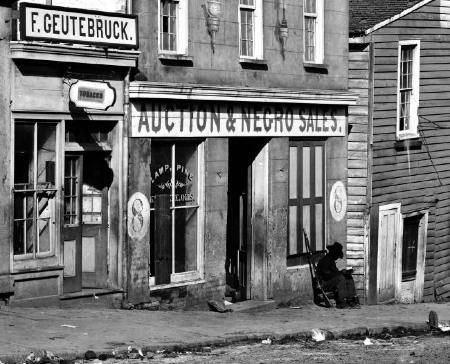
The Slave Economy and the Divide between North and South

“Thy bond-men and thy bond-maids which thou shalt have, shall be of the heathen that are round about you: of them you shall buy bond-men and bond-maids. Moreover, of the children of the strangers that do sojourn among you, of them he shall buy, and of their families that are with you, which they begat in your land. And they shall be your possession. And you shall take them as an inheritance for your children after you, they shall be your bond-men forever.” Leviticus 25:44-46

thewanderer_lastslaveship

Early Slavery in the Americas and the African Slave Trade

If we are to really understand the Civil War we have to understand the ideological clash between Abolitionists in the North, and Southern proponents of slavery. Slavery began very early in the history of the American colonies and though the British and the Dutch were the largest traders of slaves in those early days, the first American slave ship made its first voyage to bring Africans to the new world. Historian Howard Zinn noted:

By 1800, 10 to 15 million blacks had been transported to the Americas, representing perhaps one-third of those originally seized in Africa. It is roughly estimated that Africa lost 50 million human beings to death and slavery in those centuries we call the beginnings of modern Western civilization, at the hands of slave traders and plantation owners in Western Europe and America, the countries deemed the most advanced in the world.” [1]

Slavery in the Americas grew out of the economic need of planters to for laborers on the vast plantations of the new world as “the number of arriving whites, whether free or indentured servants (under four to seven year contract) was not enough to meet the demand of the plantations.” [2] Thus, land owners needed more workers, and unwilling to employ free men who would need to be paid, thus decreasing profit, they resorted to the use of slaves brought from Africa who were then bought.

But the use of slaves in the new American colonies was significantly different than previous forms of slavery in Africa, where slavery was one of a number of forms of labor. In Africa, slaves “worked within the households of their owners and had well-defined rights, such as possessing property and marrying free persons. It was not uncommon for slaves in Africa to acquire their freedom.” [3] In fact the plantation form of slavery practiced in the Americas differed radically from traditional forms of African slavery and was characterized by “the frenzy for limitless profit that comes from capitalistic agriculture; the reduction of the slave to less than human status by the use of race hatred, with that relentless clarity based on color, where white was master, black was slave.” [4]

American slavery took on a new form, that of the plantation. The plantation system allowed owners to amass “large concentrations of laborers under the control of a single owner produced goods – sugar, tobacco, rice, and cotton – for the free market.” [5] Beginning with the Spanish and the Portuguese in the early 1500s, the African slave trade became a major part of the world economy, and “slave labor played an indispensable part in its rapid growth.” [6] 

Not only was this in the world economy, but to the economy of the English colonies in North America and the new American nation it was indispensable. The paradox was rich, especially in a new nation founded upon, and supposed dedicated to liberty and equality. The “Atlantic slave trade, which flourished from 1500 into the nineteenth century was a regularized business in which European merchants, African traders, and American planters engaged in a highly complex and profitable bargaining in human lives.” [7]

It was economic gain that prompted the growth in American slavery, and for which slaves were essential for profit. As such, the “first mass consumer goods in international trade were produced by slaves – sugar, rice, coffee, and tobacco. The profits from slavery stimulated the rise of British ports such as Liverpool and Bristol, and the growth of banking, shipbuilding, and insurance, and helped to finance the early industrial revolution. The centrality of slavery to the British empire encouraged an ever-closer identification of freedom with whites and slavery with blacks.” [8]

full_1361408284slave.market

The Constitution, Slavery and Disunion 

When the United State won its independence the founders of the new nation had to deal with the already existing institution of slavery. It also had to deal with the threat to the Union that the institution and the real possibility of disunion, something that almost all of them feared more than anything. Slavery was an institution that even some powerful politicians who owned slaves were uncomfortable; Patrick Henry noted in 1773 that “to do so was “repugnant to humanity” and “inconsistent with the Bible,” while George Washington wrote in 1786 “There is not a man living…who wishes more sincerely than I do, to see a plan for the gradual abolition of it.” [9]

Slavery was an issue that divided the newly independent states as they gathered for the Constitutional Convention in 1787 and Washington confided to a friend before the convention that “he could “foresee no greater evil than disunion,” and now the “mere discussion of slavery” was poisoning the atmosphere.” [10] James Madison was one of the first to recognize this and noted that “the states differed “primarily from the effects of their having or not having slaves.” [11]

Thus the issue came to a head around how the population of the states would be represented in the new government and how to balance the power between the federal government and the various state governments. To do this the founders divided Congress into two houses, the House of Representatives who were directly elected by the voters of each state with the population of the state determining the number of representative each would have; and in the Senate, whose members were elected by the state legislatures, each state would have two members regardless of the size of its population. The division of the legislature in the Constitution “enabled the individual states to retain a large measure of their jealously guarded autonomy.” [12] Eligible voters in each state elected the President by electing “electors” for the Electoral College, and each state was given an amount of electors equal to its representation in the Senate and the House of Representatives. In a real sense, the Electoral College was designed to support the political power of the Slave States.

The heart of the matter came to the issue of what people would be counted in each state. The Northern states wanted to base the number on each state’s white population. The Southern states wanted to “swell their power by counting both white citizens and black non-citizens.” [13] Doing so would give Southern States more power in the House of Representatives which, when coupled with the equality each state had in the Senate, gave the less populous Southern disproportionate power in the national government. A representative from New Jersey, Gouverneur Morris believed that if slaves “were human enough to boost the representation of the Southern States…they should be treated as persons and not property in the South.” [14]There was debate on this issue and to bridge the sectional divide the Convention passed what is now known as the three-fifths compromise.

This measure had profound results. It stipulated that the size of a state’s congressional delegation and its Electoral College electors; and the state’s tax burden would be determined by their population. The population was determined by counting free-persons as a full person, and then adding the words “three-fifths of all other persons.” Of course the “other persons” were slaves, but the language was carefully crafted to avoid the use of the terms slave or slavery to make the document acceptable to Northern delegations. The compromise was the first of many made by the Northern states to appease the South and maintain national unity. The South got less than it wanted, as its delegates wanted slaves to count as a whole person for population sake without considering them as such.

When all was said and done in 1790 “southern states, possessing around 40% of the nations’ white population, controlled around 47% of the House and Electoral College.” [15] Gouverneur Morris understood that the compromise would exaggerate Southern power and predicted that “the three-fifths clause’s real legacy would be to give slaveholders majority control over electoral politics.” [16] However, Morris’s warning was unheeded for decades by many in the North, though through electoral experience Northern leaders began to realize what the compromise had wrought but could not change the process without amending the Constitution.

Morris was correct. During the election of 1802 in the Electoral College the “three-fifths clause gave the Southerners 14 extra electors, the Republicans’ Thomas Jefferson defeated the Federalists’ John Adams, 73-65. Jefferson swept South’s extra electors 12-2. If no three-fifths clause had existed and House apportionment been based strictly on white numbers, Adams would have likely squeaked by, 63-61.” [17] The compromise had major impacts on the Electoral College. In the first 36 years of the Republic, only one President came from the North, John Adams. The rest, Washington, Jefferson, Madison and Monroe were all Virginian’s, and all were slaveholders.

Apart from John Quincy Adams who served from 1825-1829 every other President until Abraham Lincoln was either a Southern slaveholder, or a Northern supporter of the South’s position on the preservation and or expansion of slavery. In fact the South dominated all branches of the Federal government from 1789-1861, often with the cooperation of Northern political and business interests.

James McPherson wrote:

“A Southern slaveholder had been president of the United States two-thirds of the years between 1789 and 1861, and two-thirds of the Speakers of the House and president pro tem of the Senate had also been Southerners. Twenty of the thirty-five Supreme Court justices during that period had been from slave states, which always had a majority on the court before 1861.” [18] 

Those who believed in the South’s moral, religious, and cultural supremacy over the North often used the Southern domination of American politics as proof of that superiority, despite the fact that the system was rigged to support their status as a minority which depended on the institution of slavery.

Two other compromises were made by the delegates to the convention. The first dealt with ending the African slave trade. This was contentious and in response to the threat of ending the trade the delegates from South Carolina, John Rutledge and Charles Cotesworth Pinckney insisted that “South Carolina could not join the proposed Union if the slave trade was prohibited.” [19] The compromise allowed the African slave trade to remain legal until 1808 unless Congress voted to allow it to continue. However, this was the first of many threats by Southern leaders and states to threaten disunion over the issue of slavery. A final compromise required states to “extradite and deliver any fugitive from service to his or her master and state of origin.” [20] The wording of the law was purposely vague and could include indentured servants, but the real target was escaped slaves.

The early compromises set the stage for future compromises, in large part because Federalist politicians preferred compromise over disunion, and their fear was that “failure to compromise would bring disunion” [21] and with it disaster. Thus the convention approved the compromises and the states, even Northern states which had abolished or were on the way to abolishing slavery ratified it.

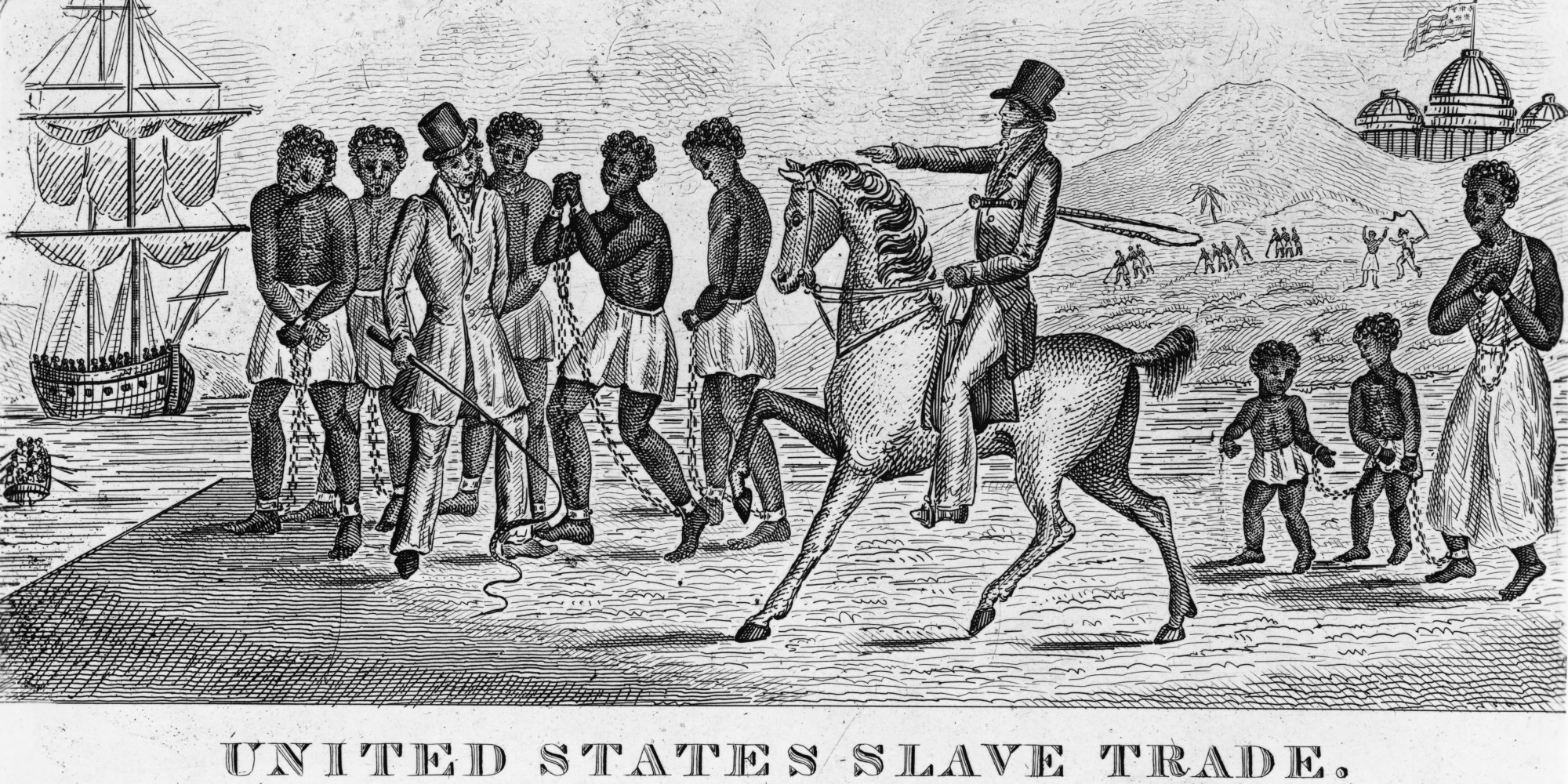
<img src="https://padresteve.com/wp-content/uploads/2014/12/o-slavery-facebook.jpg?w=300&h=150" class="aligncenter size-medium wp-image-15916" width="300" height="150" data-attachment-id="15916" data-permalink="https://padresteve.com/2014/12/11/mine-eyes-have-seen-the-glory-religion-ideology-the-civil-war-part-1/o-slavery-facebook/" data-orig-file="https://padresteve.com/wp-content/uploads/2014/12/o-slavery-facebook.jpg" data-orig-size="2000,1000" data-comments-opened="1" data-image-meta="{"aperture":"0","credit":"Getty Images\/Photo Researchers RM","camera":"","caption":"United States Slave Trade","created_timestamp":"0","copyright":"","focal_length":"0","iso":"0","shutter_speed":"0","title":"128619271","orientation":"0"}" data-image-title="o-SLAVERY-facebook" data-image-description="

United States Slave Trade

” data-medium-file=”https://padresteve.com/wp-content/uploads/2014/12/o-slavery-facebook.jpg?w=300&h=150″ data-large-file=”https://padresteve.com/wp-content/uploads/2014/12/o-slavery-facebook.jpg?w=500″ alt=”o-SLAVERY-facebook” srcset=”https://padresteve.com/wp-content/uploads/2014/12/o-slavery-facebook.jpg?w=300&h=150 300w, https://padresteve.com/wp-content/uploads/2014/12/o-slavery-facebook.jpg?w=600&h=300 600w, https://padresteve.com/wp-content/uploads/2014/12/o-slavery-facebook.jpg?w=150&h=75 150w” sizes=”(max-width: 300px) 100vw, 300px” style=”height: auto; max-width: 100%; border: 0px; margin-bottom: 2px”>

Slavery in the Early Years of the United States

Slavery expanded in the American colonies and continued to do so after American independence despite the fact that a number of prominent slaveholders including George Washington voluntarily emancipated their slaves in the 1780s and 1790s. In large part this was due to fact that the United States “purposely built a weak central state, dispersing power to govern from the center to the constituent (some would have said still sovereign) parts.” [22] 

That being said the in the new Constitution the founders ensured that the central government was far stronger than the attempt made in the initial Confederation of States in matters of tariffs, taxes and laws to protect bondholders, slaveowners, and land speculators. In this government the land owners of the Southern states, as well as the merchants of the North held the bulk of the economic, political and social power. Significantly, “most of the makers of the Constitution had some direct interest in establishing a strong federal government: the manufacturers needed protective tariffs; the moneylenders wanted to stop the use of paper money to pay off debts; the land speculators wanted protection as they invaded Indian lands; slaveowners needed federal security against slave revolts and runaways; bondholders wanted a government able to raise money by nationwide taxation, to pay off those bonds.” [23] The Constitution ensured that the Federal Government was strong enough to protect those interests, but not strong enough to encroach on the powers granted to the states, especially the powers of slave states.

The conflict between supporters of slavery and those who opposed it on either humanitarian, religious or political-ideological grounds would become more of a source of even conflict following slavery’s boost by Eli Whitney’s invention of the Cotton Gin.

The machine made the production of cotton and its export an even more profitable enterprise requiring more slaves to meet the expanding demand and it was not something that those who believed that slavery would expire of its own accord expected. Thomas Jefferson wrote in 1805 that in regard to slavery that “interest is really going over to the side of morality. The value of the slave is every day lessening; his burden on his master dayly increasing. Interest is therefore preparing for the disposition to be just.” [24] Of course Jefferson, who owned over 200 slaves and had built much of his political base among Virginia planters was wrong, and despite the misgivings that he expresses in some of his letters and papers, including the first draft of the Declaration of Independence, he never took the lead or a public stand on the abolition of slavery.

The difference made by the cotton gin was starling, it enabled greater production and increased the need for slaves, and with the end of the legal African slave trade in 1808 the price of slaves already in the United States went up considerably, making the interstate trafficking of slaves much more profitable. In 1790 “a thousand tons of cotton were being produced every year in the South. By 1860, it was a million tons. In the same period, 500,000 slaves grew to 4 million.” [25] This enriched Northerners as well, “Northern ships carried cotton to New York and Europe, northern bankers and merchants financed the cotton crop, northern companies insured it, and northern factories turned cotton into textiles. The “free states” had abolished slavery, but they remained intimately linked to the peculiar institution.” [26] Thus the institution of slavery’s tentacles reached out to much of America and with the threat of slave rebellions in the South which could upset the economic status quo the nation “developed a network of controls in the southern states, backed by laws, courts, armed forces, and race prejudice of the nation’s political leaders.” [27]

But during the early nineteenth century slavery was on the decline in the rest of the Americas as the Spanish, Portuguese and French lost most of their American possessions. Likewise, Britain emancipated its slaves and the slaves in its colonies in the 1830s. Russia emancipated its serfs, and most countries, even the United States banned the African slave trade.

These events would lead to increasing calls for the abolition of slavery in the United States. In the Free States Of the North abolitionist societies, newspapers and stepped up efforts to help slaves escape their bonds. With the advent of these small, but vocal abolitionist organizations, there was a movement, particularly in Southern religious circles to justify and defend the peculiar institution.

To be continued…

Notes

[1] Ibid. Zinn A People’s History of the United States p.29

[2] Ibid. Zinn A People’s History of the United States p.32

[3] Foner, Eric Forever Free: The Story of Emancipation and Reconstruction Vintage Books a Division of Random House, New York 2005 p.6

[4] Ibid. Zinn A People’s History of the United States p.28

[5] Ibid. Foner Forever Free p.6

[6] Foner, Eric A Short History of Reconstruction Harper and Row, New York 1990 p.1

[7] Ibid. Foner Forever Free pp.6-7

[8] Ibid. Foner Forever Free p.7

[9] Ibid. Levine Half Slave and Half Free: The Roots of the Civil War Revised Edition p.5

[10] Ibid. Varon Disunion! The Coming of the American Civil War 1789-1858 p.24

[11] Ibid. Varon Disunion! The Coming of the American Civil War 1789-1858 p.22

[12] Ibid. Guelzo Fateful Lightning p.7

[13] Freehling, William W. The Road to Disunion Volume One: Secessionists at Bay Oxford University Press, Oxford and New York 1990 p.146

[14] Ibid. Varon Disunion! The Coming of the American Civil War 1789-1858 p.23

[15] Ibid. Freehling The Road to Disunion Volume One: Secessionists at Bay p.147

[16] Ibid. Varon Disunion! The Coming of the American Civil War 1789-1858 p.23

[17] Ibid. Freehling The Road to Disunion Volume One: Secessionists at Bay p.147

[18] McPherson, James The War that Forged a Nation: Why the Civil War Still Matters Oxford University Press, Oxford and New York 2015 p.7

[19] Ibid. Varon Disunion! The Coming of the American Civil War 1789-1858 p.23

[20] Ibid. Varon Disunion! The Coming of the American Civil War 1789-1858 p.24

[21] Ibid. Varon Disunion! The Coming of the American Civil War 1789-1858 p.24

[22] McCurry, Stephanie Confederate Reckoning: Power and Politics in the Civil War South Harvard University Press, Cambridge and London 2010 p.220

[23] Ibid. Zinn A People’s History of the United States pp.90-91

[24] Ibid. Levine Half Slave and Half Free: The Roots of the Civil War Revised Edition p.8

[25] Ibid. Zinn A People’s History of the United States p.171

[26] Ibid. Foner Forever Free p.13

[27] Ibid. Zinn A People’s History of the United States p.171

2 Comments

Filed under civil war, History, labor, laws and legislation, News and current events, Political Commentary

The Code Of Honor: Time for Governor Northam to Resign or Admit that He is a Fraud

Friends of Padre Steve’s World,

I pride myself in holding to a code of honor that I learned as an Army ROTC Cadet at UCLA back in 1981 to 1983. It was the West Point honor code: “A cadet will not lie cheat or steal, or tolerate those who do.”

While attending the Virginia Military Institute about the same time that I was at beginning my military career as an ROTC cadet at UCLA, and enlisted member of the California Army National Guard, Governor Ralph Northam was graduating from the ROTC program at VMI where he headed the honor court of the Corps of Cadets.

Today, after the revelations of his personal page in the Eastern Virginia Medical School Yearbook became public knowledge which included pictures of him in either blackface, or dressed as a Klansman, the governor offered a bizarre explanation and refused to resign his office despite the condemnation of the Virginia Democratic Party, Senators Tim Kaine, Mark Warner, Former Governor Terry MacCauliffe, Representative Bobby Scott, Speaker of the House Nancy Pelosi, and far to many more Democratic Party leaders than I can list here.

Now I personally believe that he has probably grown into a better person than he was in 1984, but even so his political judgement is flawed and his arrogance in thinking that he can escape this is mind boggling.

I am a Democrat, and if I am going to criticize members of the GOP, including President Trump for racist rants, behaviors, and affiliations I cannot be silent when a man who I admire and respect cannot own responsibility for his actions as a younger man. If he had any conscience or sense of political sense he would have admitted that these pictures existed before he ever ran for office in the House Of Delegates, not to mention Lieutenant Governor and later Governor.

Honestly, I don’t believe that those pictures represent who he is today, but his incredibly inept explanations and disregard of his party and it’s leaders in an era where everything that he supposedly stands for today is under attack by President Trump and the Trumpified GOP is completely irresponsible and harmful to his party and the country.

For me it all comes down to honor. I have written about this before, and I must be honest. Governor Northam must resign to save himself and the agenda that he was elected to advance. Everyone has skeletons in their closet, but not everyone is elected to serve in public office. Election to such office, demands a higher sense of responsibility than being a private citizen. Had he not entered politics and been elected Governor of Virginia, such an oversight wouldn’t matter a bit, except to his closest family and friends; but he is the Governor and as such this matters far more than it would had he remained a private citizen.

Likewise, if he was only a politician, but not a former Army Officer, not the former head of the VMI honor court, and not a physician who swore an oath to do no harm. Likewise, knowing these photos existed he deceived the African Americans who worked with and for him during his campaigns by not admitting to their existence before they became the issue that they are.

The problem is, that many white Virginians, as well as white citizens of other states see nothing wrong with the pictures. But for Virginians this is part of our dark and racially charged past. My family were all Virginians, and both sides of my family fought for the Confederacy, in the same regiment, the 8th Virginia Cavalry. Both sides of the family owned slaves, and fought to to keep them. The only rights that they fought for was the right to enslave others and to,support laws that forced Free States to comply with slavery. That was what the compromise of 1850 and the Fugitive Slave Law Of 1850 were all about.

Today, Governor Northam in his policies and politics stands against what the Confederacy stood for, but privately he cannot take responsibility for his incredibly stupid, insensitive, and racist acts documented in a Medical School yearbook that he supplied the photos for his page.

Those actions took place 35 years ago, but this weekend he brought them into the present. Despite his stated desire to take Virginia to a new future, he took us all back to a past that sadly it has never fully abandoned.

It is time for him to resign and hand over the Governor’s office to Lieutenant Governor Justin Fairfax, a descendant of Virginia slaves. Lieutenant Governor Fairfax will be much more effective than the politically, and morally crippled Ralph Northam. Every minute Northam remains in office supplies Trump and his allies with the free advantage of an unforced error. It is the “own goal” that keeps on giving.

From a point of honor, from a point of simple decency, and from the simple pragmatism of real life politics Governor Northam has no choice but to resign. Of he doesn’t he’s a fool. He needs to be honest. There is nothing else that he can do unless he hasn’t changed over the last 35 years. Of that’s who he really is he should simply become a Republican and join the ranks of every major White Supremacist in the county.

That’s just my opinion, but I still believe in a code of honor that Governor Northam at one time supposedly upheld.

So, call me an old fashioned Pharisee, but I still hold to the Cadet Code, and the Motto Of West Point: Duty, Honor, Country.

Until tomorrow,

Peace,

Padre Steve+

Leave a comment

Filed under ethics, leadership, News and current events, Political Commentary

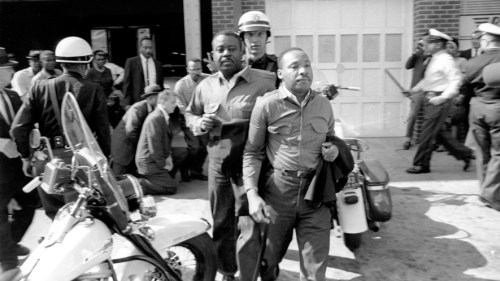
Dr. King’s Letter From a Birmingham Jail

primary-source-mlk-birmingham-jail-497fe198

Friends of Padre Steve’s World,

Not long ago I posted an article about Dr. Martin Luther King Jr.’s Letter from a Birmingham Jail. 

I included the link to the letter in my article, but I realize that most people, unlike me we not follow a link to get to the original source of the information supplied.

For those that don’t understand, my position as a Priest, if I am actually to be faithful to my vows requires that I be faithful to the Gospel. Sometimes that vow requires stating things that some in denial of their own faith would condemn as partisan politics. But this is not partisan, it echoes both the Christian and American propositions that all men are created equal.

With that in mind here is the full text of King’s letter. It is worthy of your full consideration and contemplation, and for that reason I make no editorial comments, although I did find Vice President Mike Pence’s comparison of President Trump to Dr. King abhorrent, insulting, and damnable.

On this day where we as a nation remember Dr. King it is fitting to read his unedited words from a Birmingham jail. Sadly, they are as applicable today as when he penned them.

Peace,

Padre Steve+

16 April 1963

My Dear Fellow Clergymen:

While confined here in the Birmingham city jail, I came across your recent statement calling my present activities “unwise and untimely.” Seldom do I pause to answer criticism of my work and ideas. If I sought to answer all the criticisms that cross my desk, my secretaries would have little time for anything other than such correspondence in the course of the day, and I would have no time for constructive work. But since I feel that you are men of genuine good will and that your criticisms are sincerely set forth, I want to try to answer your statement in what I hope will be patient and reasonable terms.

I think I should indicate why I am here in Birmingham, since you have been influenced by the view which argues against “outsiders coming in.” I have the honor of serving as president of the Southern Christian Leadership Conference, an organization operating in every southern state, with headquarters in Atlanta, Georgia. We have some eighty five affiliated organizations across the South, and one of them is the Alabama Christian Movement for Human Rights. Frequently we share staff, educational and financial resources with our affiliates. Several months ago the affiliate here in Birmingham asked us to be on call to engage in a nonviolent direct action program if such were deemed necessary. We readily consented, and when the hour came we lived up to our promise. So I, along with several members of my staff, am here because I was invited here. I am here because I have organizational ties here.

But more basically, I am in Birmingham because injustice is here. Just as the prophets of the eighth century B.C. left their villages and carried their “thus saith the Lord” far beyond the boundaries of their home towns, and just as the Apostle Paul left his village of Tarsus and carried the gospel of Jesus Christ to the far corners of the Greco Roman world, so am I compelled to carry the gospel of freedom beyond my own home town. Like Paul, I must constantly respond to the Macedonian call for aid.

Moreover, I am cognizant of the interrelatedness of all communities and states. I cannot sit idly by in Atlanta and not be concerned about what happens in Birmingham. Injustice anywhere is a threat to justice everywhere. We are caught in an inescapable network of mutuality, tied in a single garment of destiny. Whatever affects one directly, affects all indirectly. Never again can we afford to live with the narrow, provincial “outside agitator” idea. Anyone who lives inside the United States can never be considered an outsider anywhere within its bounds.

You deplore the demonstrations taking place in Birmingham. But your statement, I am sorry to say, fails to express a similar concern for the conditions that brought about the demonstrations. I am sure that none of you would want to rest content with the superficial kind of social analysis that deals merely with effects and does not grapple with underlying causes. It is unfortunate that demonstrations are taking place in Birmingham, but it is even more unfortunate that the city’s white power structure left the Negro community with no alternative.

In any nonviolent campaign there are four basic steps: collection of the facts to determine whether injustices exist; negotiation; self purification; and direct action. We have gone through all these steps in Birmingham. There can be no gainsaying the fact that racial injustice engulfs this community. Birmingham is probably the most thoroughly segregated city in the United States. Its ugly record of brutality is widely known. Negroes have experienced grossly unjust treatment in the courts. There have been more unsolved bombings of Negro homes and churches in Birmingham than in any other city in the nation. These are the hard, brutal facts of the case. On the basis of these conditions, Negro leaders sought to negotiate with the city fathers. But the latter consistently refused to engage in good faith negotiation.

Then, last September, came the opportunity to talk with leaders of Birmingham’s economic community. In the course of the negotiations, certain promises were made by the merchants–for example, to remove the stores’ humiliating racial signs. On the basis of these promises, the Reverend Fred Shuttlesworth and the leaders of the Alabama Christian Movement for Human Rights agreed to a moratorium on all demonstrations. As the weeks and months went by, we realized that we were the victims of a broken promise. A few signs, briefly removed, returned; the others remained. As in so many past experiences, our hopes had been blasted, and the shadow of deep disappointment settled upon us. We had no alternative except to prepare for direct action, whereby we would present our very bodies as a means of laying our case before the conscience of the local and the national community. Mindful of the difficulties involved, we decided to undertake a process of self purification. We began a series of workshops on nonviolence, and we repeatedly asked ourselves: “Are you able to accept blows without retaliating?” “Are you able to endure the ordeal of jail?” We decided to schedule our direct action program for the Easter season, realizing that except for Christmas, this is the main shopping period of the year. Knowing that a strong economic-withdrawal program would be the by product of direct action, we felt that this would be the best time to bring pressure to bear on the merchants for the needed change.

Then it occurred to us that Birmingham’s mayoral election was coming up in March, and we speedily decided to postpone action until after election day. When we discovered that the Commissioner of Public Safety, Eugene “Bull” Connor, had piled up enough votes to be in the run off, we decided again to postpone action until the day after the run off so that the demonstrations could not be used to cloud the issues. Like many others, we waited to see Mr. Connor defeated, and to this end we endured postponement after postponement. Having aided in this community need, we felt that our direct action program could be delayed no longer.

You may well ask: “Why direct action? Why sit ins, marches and so forth? Isn’t negotiation a better path?” You are quite right in calling for negotiation. Indeed, this is the very purpose of direct action. Nonviolent direct action seeks to create such a crisis and foster such a tension that a community which has constantly refused to negotiate is forced to confront the issue. It seeks so to dramatize the issue that it can no longer be ignored. My citing the creation of tension as part of the work of the nonviolent resister may sound rather shocking. But I must confess that I am not afraid of the word “tension.” I have earnestly opposed violent tension, but there is a type of constructive, nonviolent tension which is necessary for growth. Just as Socrates felt that it was necessary to create a tension in the mind so that individuals could rise from the bondage of myths and half truths to the unfettered realm of creative analysis and objective appraisal, so must we see the need for nonviolent gadflies to create the kind of tension in society that will help men rise from the dark depths of prejudice and racism to the majestic heights of understanding and brotherhood. The purpose of our direct action program is to create a situation so crisis packed that it will inevitably open the door to negotiation. I therefore concur with you in your call for negotiation. Too long has our beloved Southland been bogged down in a tragic effort to live in monologue rather than dialogue.

One of the basic points in your statement is that the action that I and my associates have taken in Birmingham is untimely. Some have asked: “Why didn’t you give the new city administration time to act?” The only answer that I can give to this query is that the new Birmingham administration must be prodded about as much as the outgoing one, before it will act. We are sadly mistaken if we feel that the election of Albert Boutwell as mayor will bring the millennium to Birmingham. While Mr. Boutwell is a much more gentle person than Mr. Connor, they are both segregationists, dedicated to maintenance of the status quo. I have hope that Mr. Boutwell will be reasonable enough to see the futility of massive resistance to desegregation. But he will not see this without pressure from devotees of civil rights. My friends, I must say to you that we have not made a single gain in civil rights without determined legal and nonviolent pressure. Lamentably, it is an historical fact that privileged groups seldom give up their privileges voluntarily. Individuals may see the moral light and voluntarily give up their unjust posture; but, as Reinhold Niebuhr has reminded us, groups tend to be more immoral than individuals.

We know through painful experience that freedom is never voluntarily given by the oppressor; it must be demanded by the oppressed. Frankly, I have yet to engage in a direct action campaign that was “well timed” in the view of those who have not suffered unduly from the disease of segregation. For years now I have heard the word “Wait!” It rings in the ear of every Negro with piercing familiarity. This “Wait” has almost always meant “Never.” We must come to see, with one of our distinguished jurists, that “justice too long delayed is justice denied.”

We have waited for more than 340 years for our constitutional and God given rights. The nations of Asia and Africa are moving with jetlike speed toward gaining political independence, but we still creep at horse and buggy pace toward gaining a cup of coffee at a lunch counter. Perhaps it is easy for those who have never felt the stinging darts of segregation to say, “Wait.” But when you have seen vicious mobs lynch your mothers and fathers at will and drown your sisters and brothers at whim; when you have seen hate filled policemen curse, kick and even kill your black brothers and sisters; when you see the vast majority of your twenty million Negro brothers smothering in an airtight cage of poverty in the midst of an affluent society; when you suddenly find your tongue twisted and your speech stammering as you seek to explain to your six year old daughter why she can’t go to the public amusement park that has just been advertised on television, and see tears welling up in her eyes when she is told that Funtown is closed to colored children, and see ominous clouds of inferiority beginning to form in her little mental sky, and see her beginning to distort her personality by developing an unconscious bitterness toward white people; when you have to concoct an answer for a five year old son who is asking: “Daddy, why do white people treat colored people so mean?”; when you take a cross county drive and find it necessary to sleep night after night in the uncomfortable corners of your automobile because no motel will accept you; when you are humiliated day in and day out by nagging signs reading “white” and “colored”; when your first name becomes “nigger,” your middle name becomes “boy” (however old you are) and your last name becomes “John,” and your wife and mother are never given the respected title “Mrs.”; when you are harried by day and haunted by night by the fact that you are a Negro, living constantly at tiptoe stance, never quite knowing what to expect next, and are plagued with inner fears and outer resentments; when you are forever fighting a degenerating sense of “nobodiness”–then you will understand why we find it difficult to wait. There comes a time when the cup of endurance runs over, and men are no longer willing to be plunged into the abyss of despair. I hope, sirs, you can understand our legitimate and unavoidable impatience. You express a great deal of anxiety over our willingness to break laws. This is certainly a legitimate concern. Since we so diligently urge people to obey the Supreme Court’s decision of 1954 outlawing segregation in the public schools, at first glance it may seem rather paradoxical for us consciously to break laws. One may well ask: “How can you advocate breaking some laws and obeying others?” The answer lies in the fact that there are two types of laws: just and unjust. I would be the first to advocate obeying just laws. One has not only a legal but a moral responsibility to obey just laws. Conversely, one has a moral responsibility to disobey unjust laws. I would agree with St. Augustine that “an unjust law is no law at all.”

Now, what is the difference between the two? How does one determine whether a law is just or unjust? A just law is a man made code that squares with the moral law or the law of God. An unjust law is a code that is out of harmony with the moral law. To put it in the terms of St. Thomas Aquinas: An unjust law is a human law that is not rooted in eternal law and natural law. Any law that uplifts human personality is just. Any law that degrades human personality is unjust. All segregation statutes are unjust because segregation distorts the soul and damages the personality. It gives the segregator a false sense of superiority and the segregated a false sense of inferiority. Segregation, to use the terminology of the Jewish philosopher Martin Buber, substitutes an “I it” relationship for an “I thou” relationship and ends up relegating persons to the status of things. Hence segregation is not only politically, economically and sociologically unsound, it is morally wrong and sinful. Paul Tillich has said that sin is separation. Is not segregation an existential expression of man’s tragic separation, his awful estrangement, his terrible sinfulness? Thus it is that I can urge men to obey the 1954 decision of the Supreme Court, for it is morally right; and I can urge them to disobey segregation ordinances, for they are morally wrong.

Let us consider a more concrete example of just and unjust laws. An unjust law is a code that a numerical or power majority group compels a minority group to obey but does not make binding on itself. This is difference made legal. By the same token, a just law is a code that a majority compels a minority to follow and that it is willing to follow itself. This is sameness made legal. Let me give another explanation. A law is unjust if it is inflicted on a minority that, as a result of being denied the right to vote, had no part in enacting or devising the law. Who can say that the legislature of Alabama which set up that state’s segregation laws was democratically elected? Throughout Alabama all sorts of devious methods are used to prevent Negroes from becoming registered voters, and there are some counties in which, even though Negroes constitute a majority of the population, not a single Negro is registered. Can any law enacted under such circumstances be considered democratically structured?

Sometimes a law is just on its face and unjust in its application. For instance, I have been arrested on a charge of parading without a permit. Now, there is nothing wrong in having an ordinance which requires a permit for a parade. But such an ordinance becomes unjust when it is used to maintain segregation and to deny citizens the First-Amendment privilege of peaceful assembly and protest.

I hope you are able to see the distinction I am trying to point out. In no sense do I advocate evading or defying the law, as would the rabid segregationist. That would lead to anarchy. One who breaks an unjust law must do so openly, lovingly, and with a willingness to accept the penalty. I submit that an individual who breaks a law that conscience tells him is unjust, and who willingly accepts the penalty of imprisonment in order to arouse the conscience of the community over its injustice, is in reality expressing the highest respect for law.

Of course, there is nothing new about this kind of civil disobedience. It was evidenced sublimely in the refusal of Shadrach, Meshach and Abednego to obey the laws of Nebuchadnezzar, on the ground that a higher moral law was at stake. It was practiced superbly by the early Christians, who were willing to face hungry lions and the excruciating pain of chopping blocks rather than submit to certain unjust laws of the Roman Empire. To a degree, academic freedom is a reality today because Socrates practiced civil disobedience. In our own nation, the Boston Tea Party represented a massive act of civil disobedience.

We should never forget that everything Adolf Hitler did in Germany was “legal” and everything the Hungarian freedom fighters did in Hungary was “illegal.” It was “illegal” to aid and comfort a Jew in Hitler’s Germany. Even so, I am sure that, had I lived in Germany at the time, I would have aided and comforted my Jewish brothers. If today I lived in a Communist country where certain principles dear to the Christian faith are suppressed, I would openly advocate disobeying that country’s antireligious laws.

I must make two honest confessions to you, my Christian and Jewish brothers. First, I must confess that over the past few years I have been gravely disappointed with the white moderate. I have almost reached the regrettable conclusion that the Negro’s great stumbling block in his stride toward freedom is not the White Citizen’s Counciler or the Ku Klux Klanner, but the white moderate, who is more devoted to “order” than to justice; who prefers a negative peace which is the absence of tension to a positive peace which is the presence of justice; who constantly says: “I agree with you in the goal you seek, but I cannot agree with your methods of direct action”; who paternalistically believes he can set the timetable for another man’s freedom; who lives by a mythical concept of time and who constantly advises the Negro to wait for a “more convenient season.” Shallow understanding from people of good will is more frustrating than absolute misunderstanding from people of ill will. Lukewarm acceptance is much more bewildering than outright rejection.

I had hoped that the white moderate would understand that law and order exist for the purpose of establishing justice and that when they fail in this purpose they become the dangerously structured dams that block the flow of social progress. I had hoped that the white moderate would understand that the present tension in the South is a necessary phase of the transition from an obnoxious negative peace, in which the Negro passively accepted his unjust plight, to a substantive and positive peace, in which all men will respect the dignity and worth of human personality. Actually, we who engage in nonviolent direct action are not the creators of tension. We merely bring to the surface the hidden tension that is already alive. We bring it out in the open, where it can be seen and dealt with. Like a boil that can never be cured so long as it is covered up but must be opened with all its ugliness to the natural medicines of air and light, injustice must be exposed, with all the tension its exposure creates, to the light of human conscience and the air of national opinion before it can be cured.

In your statement you assert that our actions, even though peaceful, must be condemned because they precipitate violence. But is this a logical assertion? Isn’t this like condemning a robbed man because his possession of money precipitated the evil act of robbery? Isn’t this like condemning Socrates because his unswerving commitment to truth and his philosophical inquiries precipitated the act by the misguided populace in which they made him drink hemlock? Isn’t this like condemning Jesus because his unique God consciousness and never ceasing devotion to God’s will precipitated the evil act of crucifixion? We must come to see that, as the federal courts have consistently affirmed, it is wrong to urge an individual to cease his efforts to gain his basic constitutional rights because the quest may precipitate violence. Society must protect the robbed and punish the robber. I had also hoped that the white moderate would reject the myth concerning time in relation to the struggle for freedom. I have just received a letter from a white brother in Texas. He writes: “All Christians know that the colored people will receive equal rights eventually, but it is possible that you are in too great a religious hurry. It has taken Christianity almost two thousand years to accomplish what it has. The teachings of Christ take time to come to earth.” Such an attitude stems from a tragic misconception of time, from the strangely irrational notion that there is something in the very flow of time that will inevitably cure all ills. Actually, time itself is neutral; it can be used either destructively or constructively. More and more I feel that the people of ill will have used time much more effectively than have the people of good will. We will have to repent in this generation not merely for the hateful words and actions of the bad people but for the appalling silence of the good people. Human progress never rolls in on wheels of inevitability; it comes through the tireless efforts of men willing to be co workers with God, and without this hard work, time itself becomes an ally of the forces of social stagnation. We must use time creatively, in the knowledge that the time is always ripe to do right. Now is the time to make real the promise of democracy and transform our pending national elegy into a creative psalm of brotherhood. Now is the time to lift our national policy from the quicksand of racial injustice to the solid rock of human dignity.

You speak of our activity in Birmingham as extreme. At first I was rather disappointed that fellow clergymen would see my nonviolent efforts as those of an extremist. I began thinking about the fact that I stand in the middle of two opposing forces in the Negro community. One is a force of complacency, made up in part of Negroes who, as a result of long years of oppression, are so drained of self respect and a sense of “somebodiness” that they have adjusted to segregation; and in part of a few middle-class Negroes who, because of a degree of academic and economic security and because in some ways they profit by segregation, have become insensitive to the problems of the masses. The other force is one of bitterness and hatred, and it comes perilously close to advocating violence. It is expressed in the various black nationalist groups that are springing up across the nation, the largest and best known being Elijah Muhammad’s Muslim movement. Nourished by the Negro’s frustration over the continued existence of racial discrimination, this movement is made up of people who have lost faith in America, who have absolutely repudiated Christianity, and who have concluded that the white man is an incorrigible “devil.”

I have tried to stand between these two forces, saying that we need emulate neither the “do nothingism” of the complacent nor the hatred and despair of the black nationalist. For there is the more excellent way of love and nonviolent protest. I am grateful to God that, through the influence of the Negro church, the way of nonviolence became an integral part of our struggle. If this philosophy had not emerged, by now many streets of the South would, I am convinced, be flowing with blood. And I am further convinced that if our white brothers dismiss as “rabble rousers” and “outside agitators” those of us who employ nonviolent direct action, and if they refuse to support our nonviolent efforts, millions of Negroes will, out of frustration and despair, seek solace and security in black nationalist ideologies–a development that would inevitably lead to a frightening racial nightmare.

Oppressed people cannot remain oppressed forever. The yearning for freedom eventually manifests itself, and that is what has happened to the American Negro. Something within has reminded him of his birthright of freedom, and something without has reminded him that it can be gained. Consciously or unconsciously, he has been caught up by the Zeitgeist, and with his black brothers of Africa and his brown and yellow brothers of Asia, South America and the Caribbean, the United States Negro is moving with a sense of great urgency toward the promised land of racial justice. If one recognizes this vital urge that has engulfed the Negro community, one should readily understand why public demonstrations are taking place. The Negro has many pent up resentments and latent frustrations, and he must release them. So let him march; let him make prayer pilgrimages to the city hall; let him go on freedom rides -and try to understand why he must do so. If his repressed emotions are not released in nonviolent ways, they will seek expression through violence; this is not a threat but a fact of history. So I have not said to my people: “Get rid of your discontent.” Rather, I have tried to say that this normal and healthy discontent can be channeled into the creative outlet of nonviolent direct action. And now this approach is being termed extremist. But though I was initially disappointed at being categorized as an extremist, as I continued to think about the matter I gradually gained a measure of satisfaction from the label. Was not Jesus an extremist for love: “Love your enemies, bless them that curse you, do good to them that hate you, and pray for them which despitefully use you, and persecute you.” Was not Amos an extremist for justice: “Let justice roll down like waters and righteousness like an ever flowing stream.” Was not Paul an extremist for the Christian gospel: “I bear in my body the marks of the Lord Jesus.” Was not Martin Luther an extremist: “Here I stand; I cannot do otherwise, so help me God.” And John Bunyan: “I will stay in jail to the end of my days before I make a butchery of my conscience.” And Abraham Lincoln: “This nation cannot survive half slave and half free.” And Thomas Jefferson: “We hold these truths to be self evident, that all men are created equal . . .” So the question is not whether we will be extremists, but what kind of extremists we will be. Will we be extremists for hate or for love? Will we be extremists for the preservation of injustice or for the extension of justice? In that dramatic scene on Calvary’s hill three men were crucified. We must never forget that all three were crucified for the same crime–the crime of extremism. Two were extremists for immorality, and thus fell below their environment. The other, Jesus Christ, was an extremist for love, truth and goodness, and thereby rose above his environment. Perhaps the South, the nation and the world are in dire need of creative extremists.

I had hoped that the white moderate would see this need. Perhaps I was too optimistic; perhaps I expected too much. I suppose I should have realized that few members of the oppressor race can understand the deep groans and passionate yearnings of the oppressed race, and still fewer have the vision to see that injustice must be rooted out by strong, persistent and determined action. I am thankful, however, that some of our white brothers in the South have grasped the meaning of this social revolution and committed themselves to it. They are still all too few in quantity, but they are big in quality. Some -such as Ralph McGill, Lillian Smith, Harry Golden, James McBride Dabbs, Ann Braden and Sarah Patton Boyle–have written about our struggle in eloquent and prophetic terms. Others have marched with us down nameless streets of the South. They have languished in filthy, roach infested jails, suffering the abuse and brutality of policemen who view them as “dirty nigger-lovers.” Unlike so many of their moderate brothers and sisters, they have recognized the urgency of the moment and sensed the need for powerful “action” antidotes to combat the disease of segregation. Let me take note of my other major disappointment. I have been so greatly disappointed with the white church and its leadership. Of course, there are some notable exceptions. I am not unmindful of the fact that each of you has taken some significant stands on this issue. I commend you, Reverend Stallings, for your Christian stand on this past Sunday, in welcoming Negroes to your worship service on a nonsegregated basis. I commend the Catholic leaders of this state for integrating Spring Hill College several years ago.

But despite these notable exceptions, I must honestly reiterate that I have been disappointed with the church. I do not say this as one of those negative critics who can always find something wrong with the church. I say this as a minister of the gospel, who loves the church; who was nurtured in its bosom; who has been sustained by its spiritual blessings and who will remain true to it as long as the cord of life shall lengthen.

When I was suddenly catapulted into the leadership of the bus protest in Montgomery, Alabama, a few years ago, I felt we would be supported by the white church. I felt that the white ministers, priests and rabbis of the South would be among our strongest allies. Instead, some have been outright opponents, refusing to understand the freedom movement and misrepresenting its leaders; all too many others have been more cautious than courageous and have remained silent behind the anesthetizing security of stained glass windows.

In spite of my shattered dreams, I came to Birmingham with the hope that the white religious leadership of this community would see the justice of our cause and, with deep moral concern, would serve as the channel through which our just grievances could reach the power structure. I had hoped that each of you would understand. But again I have been disappointed.

I have heard numerous southern religious leaders admonish their worshipers to comply with a desegregation decision because it is the law, but I have longed to hear white ministers declare: “Follow this decree because integration is morally right and because the Negro is your brother.” In the midst of blatant injustices inflicted upon the Negro, I have watched white churchmen stand on the sideline and mouth pious irrelevancies and sanctimonious trivialities. In the midst of a mighty struggle to rid our nation of racial and economic injustice, I have heard many ministers say: “Those are social issues, with which the gospel has no real concern.” And I have watched many churches commit themselves to a completely other worldly religion which makes a strange, un-Biblical distinction between body and soul, between the sacred and the secular.

I have traveled the length and breadth of Alabama, Mississippi and all the other southern states. On sweltering summer days and crisp autumn mornings I have looked at the South’s beautiful churches with their lofty spires pointing heavenward. I have beheld the impressive outlines of her massive religious education buildings. Over and over I have found myself asking: “What kind of people worship here? Who is their God? Where were their voices when the lips of Governor Barnett dripped with words of interposition and nullification? Where were they when Governor Wallace gave a clarion call for defiance and hatred? Where were their voices of support when bruised and weary Negro men and women decided to rise from the dark dungeons of complacency to the bright hills of creative protest?”

Yes, these questions are still in my mind. In deep disappointment I have wept over the laxity of the church. But be assured that my tears have been tears of love. There can be no deep disappointment where there is not deep love. Yes, I love the church. How could I do otherwise? I am in the rather unique position of being the son, the grandson and the great grandson of preachers. Yes, I see the church as the body of Christ. But, oh! How we have blemished and scarred that body through social neglect and through fear of being nonconformists.

There was a time when the church was very powerful–in the time when the early Christians rejoiced at being deemed worthy to suffer for what they believed. In those days the church was not merely a thermometer that recorded the ideas and principles of popular opinion; it was a thermostat that transformed the mores of society. Whenever the early Christians entered a town, the people in power became disturbed and immediately sought to convict the Christians for being “disturbers of the peace” and “outside agitators.”‘ But the Christians pressed on, in the conviction that they were “a colony of heaven,” called to obey God rather than man. Small in number, they were big in commitment. They were too God-intoxicated to be “astronomically intimidated.” By their effort and example they brought an end to such ancient evils as infanticide and gladiatorial contests. Things are different now. So often the contemporary church is a weak, ineffectual voice with an uncertain sound. So often it is an archdefender of the status quo. Far from being disturbed by the presence of the church, the power structure of the average community is consoled by the church’s silent–and often even vocal–sanction of things as they are.

But the judgment of God is upon the church as never before. If today’s church does not recapture the sacrificial spirit of the early church, it will lose its authenticity, forfeit the loyalty of millions, and be dismissed as an irrelevant social club with no meaning for the twentieth century. Every day I meet young people whose disappointment with the church has turned into outright disgust.

Perhaps I have once again been too optimistic. Is organized religion too inextricably bound to the status quo to save our nation and the world? Perhaps I must turn my faith to the inner spiritual church, the church within the church, as the true ekklesia and the hope of the world. But again I am thankful to God that some noble souls from the ranks of organized religion have broken loose from the paralyzing chains of conformity and joined us as active partners in the struggle for freedom. They have left their secure congregations and walked the streets of Albany, Georgia, with us. They have gone down the highways of the South on tortuous rides for freedom. Yes, they have gone to jail with us. Some have been dismissed from their churches, have lost the support of their bishops and fellow ministers. But they have acted in the faith that right defeated is stronger than evil triumphant. Their witness has been the spiritual salt that has preserved the true meaning of the gospel in these troubled times. They have carved a tunnel of hope through the dark mountain of disappointment. I hope the church as a whole will meet the challenge of this decisive hour. But even if the church does not come to the aid of justice, I have no despair about the future. I have no fear about the outcome of our struggle in Birmingham, even if our motives are at present misunderstood. We will reach the goal of freedom in Birmingham and all over the nation, because the goal of America is freedom. Abused and scorned though we may be, our destiny is tied up with America’s destiny. Before the pilgrims landed at Plymouth, we were here. Before the pen of Jefferson etched the majestic words of the Declaration of Independence across the pages of history, we were here. For more than two centuries our forebears labored in this country without wages; they made cotton king; they built the homes of their masters while suffering gross injustice and shameful humiliation -and yet out of a bottomless vitality they continued to thrive and develop. If the inexpressible cruelties of slavery could not stop us, the opposition we now face will surely fail. We will win our freedom because the sacred heritage of our nation and the eternal will of God are embodied in our echoing demands. Before closing I feel impelled to mention one other point in your statement that has troubled me profoundly. You warmly commended the Birmingham police force for keeping “order” and “preventing violence.” I doubt that you would have so warmly commended the police force if you had seen its dogs sinking their teeth into unarmed, nonviolent Negroes. I doubt that you would so quickly commend the policemen if you were to observe their ugly and inhumane treatment of Negroes here in the city jail; if you were to watch them push and curse old Negro women and young Negro girls; if you were to see them slap and kick old Negro men and young boys; if you were to observe them, as they did on two occasions, refuse to give us food because we wanted to sing our grace together. I cannot join you in your praise of the Birmingham police department.

It is true that the police have exercised a degree of discipline in handling the demonstrators. In this sense they have conducted themselves rather “nonviolently” in public. But for what purpose? To preserve the evil system of segregation. Over the past few years I have consistently preached that nonviolence demands that the means we use must be as pure as the ends we seek. I have tried to make clear that it is wrong to use immoral means to attain moral ends. But now I must affirm that it is just as wrong, or perhaps even more so, to use moral means to preserve immoral ends. Perhaps Mr. Connor and his policemen have been rather nonviolent in public, as was Chief Pritchett in Albany, Georgia, but they have used the moral means of nonviolence to maintain the immoral end of racial injustice. As T. S. Eliot has said: “The last temptation is the greatest treason: To do the right deed for the wrong reason.”

I wish you had commended the Negro sit inners and demonstrators of Birmingham for their sublime courage, their willingness to suffer and their amazing discipline in the midst of great provocation. One day the South will recognize its real heroes. They will be the James Merediths, with the noble sense of purpose that enables them to face jeering and hostile mobs, and with the agonizing loneliness that characterizes the life of the pioneer. They will be old, oppressed, battered Negro women, symbolized in a seventy two year old woman in Montgomery, Alabama, who rose up with a sense of dignity and with her people decided not to ride segregated buses, and who responded with ungrammatical profundity to one who inquired about her weariness: “My feets is tired, but my soul is at rest.” They will be the young high school and college students, the young ministers of the gospel and a host of their elders, courageously and nonviolently sitting in at lunch counters and willingly going to jail for conscience’ sake. One day the South will know that when these disinherited children of God sat down at lunch counters, they were in reality standing up for what is best in the American dream and for the most sacred values in our Judaeo Christian heritage, thereby bringing our nation back to those great wells of democracy which were dug deep by the founding fathers in their formulation of the Constitution and the Declaration of Independence.

Never before have I written so long a letter. I’m afraid it is much too long to take your precious time. I can assure you that it would have been much shorter if I had been writing from a comfortable desk, but what else can one do when he is alone in a narrow jail cell, other than write long letters, think long thoughts and pray long prayers?

If I have said anything in this letter that overstates the truth and indicates an unreasonable impatience, I beg you to forgive me. If I have said anything that understates the truth and indicates my having a patience that allows me to settle for anything less than brotherhood, I beg God to forgive me.

I hope this letter finds you strong in the faith. I also hope that circumstances will soon make it possible for me to meet each of you, not as an integrationist or a civil-rights leader but as a fellow clergyman and a Christian brother. Let us all hope that the dark clouds of racial prejudice will soon pass away and the deep fog of misunderstanding will be lifted from our fear drenched communities, and in some not too distant tomorrow the radiant stars of love and brotherhood will shine over our great nation with all their scintillating beauty.

Yours for the cause of Peace and Brotherhood, 

Martin Luther King, Jr.

3 Comments

Filed under civil rights, ethics, faith, History, Loose thoughts and musings, News and current events

So Far Yet to Go, Overt Racism on Display Yet Again: Catholic Youth Accost Native American at the Lincoln Memorial

Friends of Padre Steve’s World,

Tomorrow is the official observance of the birthday of Dr. Martin Luther King Jr. In the past I have been content to post variations on the theme of Dr. King’s I Have a Dream speech. In some of those I have also mentioned Dr. King’s Letter from a Birmingham Jail. I will address his I have a dream speech in a future post, probably near the anniversary of his assassination.

Today I decided to read the Letter from a Birmingham Jail again  and contemplate Dr. King’s words in the light of the overt racism that has become fashionable in Donald Trump’s America. Today I saw videos of a gang of white male Catholic High School students from Covington Kentucky accosting Native America Vietnam Veteran Nathan Phillips at the Lincoln Memorial. The students were in Washington DC for the annual March for life, but clad in Trump’s Make America Great Again hats and shirts they had surrounded and were shouting at the man and a few other Native Americans gathered there. One young man stood directly in front of Mr. Phillips giving him a mocking and menacing look. It was like watching Hitler Youth mock Jews in the 1930s, and they call themselves Christians, and I knew that I would not take much to turn these young men into killers. Historian Timothy Snyder wrote:

“The European history of the twentieth century shows us that societies can break, democracies can fall, ethics can collapse, and ordinary men can find themselves standing over death pits with guns in their hands. It would serve us well today to understand why.”

The actions of such people are so far out of the prophetic tradition of the Christian church and its ancestors the great Jewish prophets of the Old Testament that it makes my mind spin. I could see them in time standing over death pits with guns in their hands.

I wonder what they are learning from their parents and the school that they attend. While I was already planning on writing about Dr. King I realized just how far we have to go to see his dream come true.

The fact is that as much as anyone would like to deny it, the American President not only is a paranoid and narcissistic sociopath, but also a racist as well. He is all too much like the men and their supposedly Christian supporters who did all that they could to stop the civil rights movement and to fight against every evil cause that Dr. King stood to oppose. The sad thing is that as banal and abhorrent as the racism of President Trump is, that of his defenders is far worse, for they, at least his Christian supporters should know better.

The fact is that instead of speaking a few well meaning yet conscience salving platitudes about Dr. King we really have to remember who he really was and what his message spoke to, and no it was not his acknowledgement of American Exceptionalism. That being said he embodied all that was good about the ideal of the United States of America and the message of Jesus and the prophets; and he was killed for it. Dr. King understood the implications of following Jesus, the depths of Christian theology and the its prophetic past. When I hear and read Dr. King’s words I am reminded of the Sermon on the Mount as well as the messages of Jeremiah and the other great Old Testament prophets.

A year after I returned from Iraq I struggled with what I was becoming. Before Iraq I had always considered myself to be a conservative, but though I was already on the path to becoming a liberal and progressive I could not identify myself as such, so I called myself a “passionate moderate” and the site “Musings of a Passionate Moderate.” A few years ago I owned the fact that I am a liberal and progressive, but also a realist. I came to realize that while moderation is an important part of civic life, it is not redemptive if it stands in silent opposition to justice in the name of order. As my journey continued I began to understand the words of Dietrich Bonhoeffer who wrote:

“Christianity stands or falls with its revolutionary protest against violence, arbitrariness and pride of power and with its plea for the weak. Christians are doing too little to make these points clear rather than too much. Christendom adjusts itself far too easily to the worship of power. Christians should give more offense, shock the world far more, than they are doing now. Christian should take a stronger stand in favor of the weak rather than considering first the possible right of the strong.”

Dr. King wrote in his Letter from a Birmingham Jail: 

“I must make two honest confessions to you, my Christian and Jewish brothers. First, I must confess that over the past few years I have been gravely disappointed with the white moderate. I have almost reached the regrettable conclusion that the Negro’s great stumbling block in his stride toward freedom is not the White Citizen’s Counciler or the Ku Klux Klanner, but the white moderate, who is more devoted to “order” than to justice; who prefers a negative peace which is the absence of tension to a positive peace which is the presence of justice; who constantly says: “I agree with you in the goal you seek, but I cannot agree with your methods of direct action”; who paternalistically believes he can set the timetable for another man’s freedom; who lives by a mythical concept of time and who constantly advises the Negro to wait for a “more convenient season.” Shallow understanding from people of good will is more frustrating than absolute misunderstanding from people of ill will. Lukewarm acceptance is much more bewildering than outright rejection.” 

Dr. King’s words in that letter are timeless and their implications should be contemplated by anyone who truly believes in that proposition in the Declaration of Independence that “all men are created equal.” That is something that Dr. King certainly believed, but like those who sat on the fence in his day so many today choose to believe, but not to act upon. That is why that I continue to make my stand in the name of Jesus the Christ, the Gospel, and yes, the proposition of the Declaration that all men are created equal. If the President and his Christian supporters don’t get that then there is no hope for them as long as they continue down that path, but as I wrote yesterday, I still believe that people can have epiphanies.

I encourage all of my readers to read Dr. King’s letter. You can read it here:

https://www.africa.upenn.edu/Articles_Gen/Letter_Birmingham.html

So until tomorrow,

Peace

Padre Steve+

4 Comments

Filed under christian life, civil rights, ethics, History, Loose thoughts and musings, nazi germany, News and current events, Political Commentary

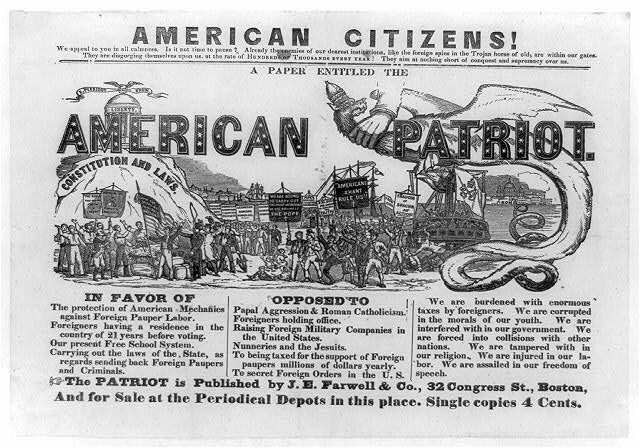
Know Nothings, Racism, Walls and Trump


Friends of Padre Steve’s World,

Long before President Trump was elected President and uttered the words Shithole countries” in slandering the people of Haiti as well as African nations; long before he said that there were “very good people” among the new-Nazis and White Supremacists at Charlottesville; but not before he had made disparaging comments about Mexicans and began talking about making “Mexico pay for a border wall,” I wrote about his penchant for obvious racist terminology and tactics.

I trace that terminology and tactics back to a movement long before Trump was ever thought of, in fact to a time when his German immigrant ancestors were scorned and hated because of their ethnicity. That being said his immigrant grandfather made a small fortune in the Pacific Northwest and the Klondike Gold Rush mostly catering to prospectors and women of ill-repute. Like many immigrants the man was incredibly successful; he made a fortune and returned to Germany where he was discovered was thrown out of the country because the Kingdom of Bavaria believed that he had gone to America to of all things, to avoid military service. The fact that he didn’t have to get a doctor to say he had heel spurs to avoid conscription makes him far more admirable than his grandson. But I digress…

I wrote the following article back in July of 2016 simply because the Trump family story happened to coincide with the subject of my draft book “Mine Eyes Have Seen the Glory”: Race, Religion, Ideology, and Politics in the Civil War Era. It just happens to be that the Donald’s father, Fred happened to get arrested during a march of the Ku Klux Klan in New York in 1927 while dressed as a Klansman. Imagine that.

Back then the blowback that I received for that article from from friends, including a woman who was one of the bridesmaids at our wedding, was so intense that I never wanted to go through it again. However, I went through worse last year when a parishioner at my Navy Chapel attempted to have me tried by Court Martial for allegedly showing disrespect to the President in a sermon. I did no such thing, and the charges were shown false and politically motivated, but they shook me to the core.

It really is amazing when one makes a credible claim that a candidate for the Presidency is a racist and have long time friends castigate you and condemn you for telling the truth. Thus I found it quite refreshing when Congresswoman Alexandria Ocasio-Cortez told CNN’s Anderson Cooper that President Trump was “no question” a racist before noting, as I have so often on this site:

“When you look at the words that he uses, which are historic dog whistles of white supremacy. When you look at how he reacted to the Charlottesville incident, where neo-Nazis murdered a woman, versus how he manufactures crises like immigrants seeking legal refuge on our borders, it’s — it’s night and day,”

But once again I digress but the irony of the current President going after immigrants and defending Klansmen while calling the countries of many current immigrants is far too rich to ignore. But the sad truth is that racism is still to common and is being given voice by the President of the United States in ways that haven’t been seen since the presidency of Woodrow Wilson. Supreme Court Justice Thurgood Marshall noted:

“I wish I could say that racism and prejudice were only distant memories. We must dissent from the indifference. We must dissent from the apathy. We must dissent from the fear, the hatred and the mistrust…We must dissent because America can do better, because America has no choice but to do better.” 

Now the government has been shut down for two weeks because Trump is holding out on building his wall, a wall that will be another budget buster and not do anything to increase national security or stop terrorists. Despite this, the President is now threatening to declare a State Of Emergency in order to find a way to build his wall. If he does, there are many other powers that he can use to shore up his flailing regime.

It is a very dangerous time.

So anyway, here is what I wrote back in July 2016,

Peace,

Padre Steve+

Mark Twain reportedly said that “History does not repeat itself, but it often rhymes.” One can see that in the nomination of Donald Trump as the nominee of the Republican Part for President. Eleven months ago I wrote an article called Trump and the Return of the Know Nothings. At the time few people gave him little chance of becoming the Republican nominee, and now he is the nominee and for all practical purposes owns the GOP.

180103-donald-trump-se-253p_1e0ab4bbfc2b637051d31d044ad52abf.nbcnews-ux-2880-1000

Trump’s xenophobic views on immigration charged the debate in the Republican Party during the primaries, and his positions which were fringe positions of most Republicans for decades became the mainstream, just as the same issue did during the 1840s and 1850s. So this is not a new phenomenon, and even over the past few decades the debate has come and gone, but it has returned with a vengeance as Donald Trump made immigration, or rather a virulent anti-immigration platform the centerpiece of his campaign. Trump’s focus on the issue forced other Republican candidates to scramble in order to find a position close enough to Trump’s without completely throwing away the vote of immigrants who they will need to win in many states; if they are to have any hope of winning back the presidency in 2016. But they failed. Trump outmaneuvered them at every point, and in the end Trump’s strongest opponent, Senator Ted Cruz went into the witch’s cauldron of the Republican National Convention not to endorse Trump but to stand on principle and in the process destroy his politic career and maybe endanger his life.

But Trump’s positionresonated with parts of the Republican base, and by appealing to their anger and frustration he has built a solid core of support which loyally supported him in a campaign that featured so many blunders and heneous comments that in a normal election cycle his campaign would not have survived past the Southern Super Tuesday. But he did, and if on the  takes the time to read Trump’s speeches and the reactions to them by his supporters it becomes apparent that Trump has tapped into that vast reservoir of nativism that has always been a part of the American body-politic.


As I said, such attitudes and movements are nothing new. Anti-immigrant movements in the United States go back to our earliest days, ever since the first Irish Catholics showed up in the northeast in the late 1790s and early 1800s. Met with scorn and treated as criminals the Irish Catholics had to work hard to gain any kind of acceptance in Protestant America. But immigrants continued to come, seeking the freedom promised in the Declaration of Independence.

Many White American Protestants viewed Irish, German and other European immigrants to the Unites States in the 1830s, 1840s, and 1850s as interlopers who were attempting to take over the country. The immigrants were regarded as poor, uneducated, uncouth, and immoral, and in the case of Catholic immigrants as representatives and foot soldiers of a hostile government, the Vatican, headed by the Pope and the bishops. Those who opposed immigration formed a movement that was aimed at forbidding immigrants from being granted full rights, especially the rights of citizenship and voting. The fear was pervasive. Many Northern Whites were afraid that immigrants would take their jobs, since like slaves in the South, the new immigrants were a source of cheap labor.

Northern Protestant church leaders and ministers were some of the most vocal anti-immigrant voices and their words were echoed by politicians and in the press. The movement grew and used government action, the courts and violence to oppress the Irish and Germans who were the most frequent targets of their hate. The movement eventually became known as the “Know Nothing” movement.

Know Nothing leaders were not content to simply discuss their agenda in the forum of ideas and political discourse, they often used mob-violence and intimidation to keep Catholics away from the ballot box. Mobs of nativist Know Nothings sometimes numbering in the hundreds or even the thousands attacked immigrants in what they called “Paddy hunts,” Paddy being a slur for the Irish. To combat immigrants who might want to exercise their right to vote, the Know Nothings deployed gangs like the New York’s Bowery Boys and Baltimore’s Plug Uglies. They also deployed their own paramilitary organization to intimidate immigrants on Election Day. This group, known as the Wide Awakes was especially prone to use violence and physical intimidation in pursuit of their goals. The Nativist paramilitaries also provided security for anti-immigrant preachers from angry immigrants who might try to disrupt their “prayer” meetings.

Know Nothing’s and other Nativist organizations, organized mass meetings throughout the country which were attended by thousands of men. The meetings were often led by prominent Protestant ministers who were rich in their use of preaching and prayer to rile up their audiences. The meetings often ended with physical attacks and other violence against German or Irish immigrants and sometimes with the burning of the local Catholic Church. They also provided security for preachers from angry immigrants who might try to disrupt nativist prayer meetings.


Bloody Monday, Louisville 1855

The violence was widespread and reached its peak in the mid-1850s.

Monday, August 6, 1855 was Election Day in Louisville, Kentucky. To prevent German and Irish Catholics from voting, Know Nothing mobs took to the street and launched a violent attack on immigrants as well as their churches and businesses. Known now as “Black Monday” the Nativists burned Armbruster’s Brewery, they rolled cannons to the doors of the St. Martin of Tours Church, the Cathedral of the Assumption and Saint Patrick’s Church, which they then were searched for arms. The private dwellings and the businesses of immigrants were looted. A neighborhood known as “Quinn’s Row” was burned with the inhabitants barricaded inside. At least 22 persons were killed in the violence and many more were injured. In Baltimore the 1856, 1857, and 1858 elections were all marred by violence perpetrated by Nativist mobs. In Maine, Know Nothing followers tarred and feathered a Catholic priest and burned down a Catholic church.

The Know Nothings did not merely seek to disenfranchise immigrants through violence alone, they were more sophisticated than that. They knew that to be successful they had to change the law. Then, as now, a new immigrant had to live in the United States for five years before becoming eligible to become a naturalized of the United States. The Know nothings felt that this was too short of time and their party platform in the 1856 election had this as one of the party planks:

A change in the laws of naturalization, making a continued residence of twenty-one years, of all not heretofore provided for, an indispensable requisite for citizenship hereafter, and excluding all paupers, and persons convicted of crime, from landing upon our shores; but no interference with the vested rights of foreigners.

The rational of the Know Nothings for the 21 year wait was that if a baby born in the United States had to wait until it was 21 years old he could vote, that immigrants were being permitted to “jump the line” and vote sooner than native-born Americans. But really what the Know Nothings wanted to was to destroy the ability of immigrant communities to use the ballot box. In many localities and some states Know Nothing majorities took power. The Massachusetts legislature, which was dominated by Know Nothings, passed a law barring immigrants from voting for two additional years after they became United States citizens.

The 1856 platform Know Nothing Party was synopsized by a Know Nothing supporter:

(1) Repeal of all Naturalization Laws.

(2) None but Americans for office.

(3) A pure American Common School system.

(4) War to the hilt, on political Romanism.

(5) Opposition to the formation of Military Companies, composed of Foreigners.

(6) The advocacy of a sound, healthy and safe Nationality.

(7) Hostility to all Papal influences, when brought to bear against the Republic.

(8) American Constitutions & American sentiments.

(9) More stringent & effective Emigration Laws.

(10) The amplest protection to Protestant Interests.

(11) The doctrines of the revered Washington.

(12) The sending back of all foreign paupers.

(13) Formation of societies to protect American interests.

(14) Eternal enmity to all those who attempt to carry out the principles of a foreign Church or State.

(15) Our Country, our whole Country, and nothing but our Country.

(16) Finally,-American Laws, and American Legislation, and Death to all foreign influences, whether in high places or low

In addition to their violent acts, the use of the courts and political intimidation the Know Nothings waged a culture war against immigrants. Latin mottoes on courthouses were replaced by English translations. Actions were taken to remove immigrants who had become naturalized citizens from public offices and civil service jobs as well as to use the government to persecute Catholic churches. In Philadelphia, all naturalized citizens on the police force were fired, including non-Catholics who has supported Catholic politicians, and in Boston, a special board was set up to investigate the sex lives of nuns and other supposed crimes of the Catholic church.


In the political upheaval of the 1850s Nativists tried to find homes in the different political parties. Some Know Nothings who were abolitionists became part of the new Republican Party, and Abraham Lincoln condemned them in harsh terms. He wrote his friend Joshua Speed about the hypocrisy that they displayed by supposedly being against the oppression of blacks while willing to oppress immigrants:

“I am not a Know-Nothing. That is certain. How could I be? How can any one who abhors the oppression of negroes, be in favor or degrading classes of white people? Our progress in degeneracy appears to me to be pretty rapid. As a nation, we began by declaring that “all men are created equal.” We now practically read it “all men are created equal, except negroes” When the Know-Nothings get control, it will read “all men are created equal, except negroes, and foreigners, and Catholics.” When it comes to this I should prefer emigrating to some country where they make no pretence of loving liberty — to Russia, for instance, where despotism can be taken pure, and without the base alloy of hypocracy [sic].”

As an organized movement, the Know Nothings died out by the early 1860s, migrating to different parties and causes. In the North many became part of the pro-slavery Copperhead movement, which opposed Lincoln on emancipation and the Thirteenth Amendment. In the post-war South the anti-Catholic parts of the Nativist movement found a home in the Ku Klux Klan and other white terrorist organizations which also used racist and nativist propaganda to perpetuate violence, and disenfranchise emancipated blacks in the decades following the end of the Civil War and the end of Reconstruction. The Nativist and anti-immigrant sentiments have periodically found a home in different parts of the country and the electorate. Violence was used against Chinese, Japanese and Filipino immigrants on the West Coast, against Mexicans in the Southwest, Italians, Slavs, Eastern Europeans and Jews in the Northeast.

Sadly it seems that the Know Nothing is being turned against others today. I find it strange that there are a host of people, mostly on the political right that are doing their best in their local communities, state legislatures and even Congress to roll back civil liberties for various groups of people. There is a certain amount of xenophobia in regard to immigrants of all types, especially those with darker skin white Americans, but some of the worst is reserved for Arabs and other Middle-Easterners, even Arab Christians who are presumed as all Middle Easterners are to be Moslem terrorists, even those who have been here decades and hold respectable places in their communities.

But immigrants are not alone, there seems to be in some states a systematized attempt to disenfranchise the one group of people that has almost always born the brunt of legal and illegal discrimination, African Americans.

Likewise there have been numerous attempts to roll back the rights of women, especially working women; the use of the legislature by religious conservatives to place limits on the reproductive rights of women, holding them to the standard of a religion that they do not practice. Despite the Supreme Court’s ruling for Marriage Equality in Obergfell v. Hodges there still are numerous attempts to curb any civil rights, including the right to marriage or civil unions of the LGBT community.


As I said, this is nothing new, that hatred and intolerance of some toward anyone who is different than them, who they deem to be a threat is easily exploited by politicians, pundits and preachers, none of whom care for anything but their prosperity, ideology, religion, or cause. While I would not call them a new incarnation of the Know Nothings, I have to notice the similarities in their message and the way that they push their agenda. As for those among them who claim the mantle of Christ and call themselves Christians I am troubled, because I know that when religion is entwined with political movements that are based in repressing or oppressing others that it does not end well. As Brian Cox who played Herman Goering in the television miniseries Nuremberg told the American Army psychologist Captain Gustave Gilbert played by Matt Craven: “The segregation laws in your country and the anti-Semitic laws in mine, are they not just a difference of degree?

That difference of degree does matter, and there have been and still could be times when the frustration and anger of people, especially religious people can be whipped into a frenzy of violence and government sanctioned oppression by unscrupulous politicians, preachers and pundits. History is replete with examples of how it can happen. When I think of this I am reminded of the close of Spencer Tracy’s remarks in the movie Judgment at Nuremberg:

But this trial has shown that under a national crisis, ordinary – even able and extraordinary – men can delude themselves into the commission of crimes so vast and heinous that they beggar the imagination. No one who has sat through the trial can ever forget them: men sterilized because of political belief; a mockery made of friendship and faith; the murder of children. How easily it can happen. There are those in our own country too who today speak of the “protection of country” – of ‘survival’. A decision must be made in the life of every nation at the very moment when the grasp of the enemy is at its throat. Then, it seems that the only way to survive is to use the means of the enemy, to rest survival upon what is expedient – to look the other way. Well, the answer to that is ‘survival as what’? A country isn’t a rock. It’s not an extension of one’s self. It’s what it stands for. It’s what it stands for when standing for something is the most difficult! Before the people of the world, let it now be noted that here, in our decision, this is what we stand for: justice, truth, and the value of a single human being.”

So for today I will leave it there. I probably will return to the similarities between the Know Nothings and Trump, but not this moment. I actually do have a life and want to write about other things. But that being said, there are times when history rhymes, and this is one of them.

So have a wonderful day.

Peace,

Padre Steve+

1 Comment

Filed under civil rights, ethics, History, laws and legislation, leadership, News and current events, Political Commentary

“It is the Duty of Troops to Use All Means… Even Against Women and Children…” Robert Jackson’s Closing Arguments at Nuremberg, Part Two

Friends of Padre Steve’s World,

Tonight I am continuing on with my series on Supreme Court Justice Robert Jackson’s closing arguments while serving as the Chief American Prosecutor at the Major War Crimes Trials at Nuremberg. These crimes are not without relevance today, thus it is important for us to revisit them, for as I noted yesterday, quoting Yehuda Bauer, the Holocaust did not deviate from human norms.

For me it is a difficult subject, for I served in and supported a war that by any standard of legal and moral judgement would have met the criteria that we prosecuted the Nazis for I. 1945. I should have known better because I had studied the Nazi crimes and had been the student of a professor who served as an interrogator and interpreter during the Nuremberg War Crimes Trials. But in the moment of hysteria after the attacks of September 11th 2001 and my belief in the integrity of Secretary of State Colin Powell I allowed my good sense to be persuaded that an act of aggressive war that resulted in war crimes, and might even include crimes against humanity was perfectly legal.

I went to Iraq in 2007 and 2008. I worked with advisors to Iraqi Army, Border Troops, Police, Port of Entry, and Provincial Reconstruction Teams In Al Anbar Province. I came back from Iraq a very different man. I saw the lies. I came to love and appreciate the Iraqis and what they had suffered under both Saddam Hussein and our invasion and occupation. I can still see the maimed bodies, the destroyed cities and hamlets, the crippled children, as well as the wounded Marines in my mind. I pray and hope that the Iraqis that I served alongside did not become victims of ISIS after I left the country.

I am haunted by it to this day, and I no longer trust the supposedly good intentions of the American government, and in the age of Donald Trump fear for our nation and the world. This weekend the American Border Patrol fired CS gas, a riot control agent that is banned for use in combat across the international border into Mexico at unarmed Central American refugees, many of whom were women and children. The reason was that they “felt endangered” because some in the sea of refugees threw rocks across the border at the border control officers who were dressed in body armor and Kevlar helmets with face masks.

While this was not war, there is a principle and law of war that American law enforcement officers frequently violate, the principle of proportionality. I’m sorry, but firing CA gas at unarmed refugees on the opposite side of the border for throwing rocks is not proportional. They had not breached the border and were also facing Mexican Federal Police. I have to wonder what is next. President Trump says that he has authorized U. S. Military personnel to use deadly force against rock throwers, and his Chief of Staff, retired Marine Corps General John Kelly issued a “cabinet order” something never heard of before, allowing U. S. Military personnel to engage refugees believed to be endangering Border Control agents, in what appears to be a direct violation of Posse Comitatus.

But I digress. When I read these accounts my mind is taken back to the subject of war crimes, and based on my expertise and study of the crimes of the Nazis, not to mention the Japanese in the Second World War, I automatically default to those settings.

So, I will stop with my words and go back to those of Robert Jackson at Nuremberg.

Until tomorrow,

Peace,

Padre Steve+

Immediately after the seizure of power the Nazis went to work to implement these aggressive intentions by preparing for war. They first enlisted German industrialists in a secret rearmament programme. Twenty days after the seizure of power Schacht was host to Hitler, Goering and some twenty leading industrialists. Among them were Krupp von Bohlen of the great Krupp armament works and representatives of I. G. Farben and other Ruhr heavy industries. Hitler and Goering explained their programme to the industrialists, who became so enthusiastic that they set about to raise three million Reichsmarks to strengthen and confirm the Nazi Party in power. Two months later Krupp was working to bring a reorganised association of German industry into agreement with the political aims of the Nazi Government. Krupp later boasted of the success in keeping the German war industries secretly alive and in readiness despite the disarmament clauses of the Versailles Treaty, and recalled the industrialists’ enthusiastic acceptance of “the great intentions of the Fuehrer in the rearmament period of 1933-1939”.

Some two months after Schacht had sponsored his first meeting to gain the support of the industrialists, the Nazis moved to harness industrial labour to their aggressive plans. In April, 1933, Hitler ordered Dr. Ley “to take over the trade unions”, numbering some 6 million members. By Party directive Ley seized the unions, their property and their funds. Union leaders, taken into “protective custody” by the SS and SA, were put into concentration camps. The free labour unions were then replaced by a Nazi organization known as the German Labour Front, with Dr. Ley at its head. It was expanded until it controlled over 23 million members. Collective bargaining was eliminated, the voice of labour could no longer be heard as to working conditions, and the labour contract was prescribed by “trustees of labour” appointed by Hitler. The war purpose of this labour programme was clearly acknowledged by Robert Ley five days after war broke out, when he declared in a speech that:

“We National Socialists have monopolised all resources and all our energies during the past seven years so as to be able to be equipped for the supreme effort of battle.”

The Nazis also proceeded at once to adapt the Government to the needs of war. In April, 1933, the Cabinet formed a Defence Council, the working committee of which met frequently thereafter. In the meeting of 22nd May, 1933, at which defendant Keitel presided, the members were instructed that:

“No document must be lost since otherwise the enemy propaganda would make use of it. Matters communicated orally cannot be proven; they can be denied by us in Geneva.”

In February, 1934 -and, your Honours, dates in this connection are important -with defendant Jodl present, the Council planned a mobilization calendar and mobilization order for some 240,000 industrial plants. Again it was agreed that nothing should be in writing so that “the military purpose may not be traceable”.

On 21st May, 1935, the top secret Reich Defence Law was enacted. Defendant Schacht was appointed Plenipotentiary General for War Economy with the task of secretly preparing all economic forces for war and, in the event of mobilization, of financing the war.

Schacht’s secret efforts were supplemented

in October, 1936, by the appointment of defendant Goering as Commissioner of the Four-Year Plan, with the duty of putting the entire economy in a state of readiness for war within four years.

A secret programme for the accumulation of the raw materials and foreign credits necessary for extensive rearmament was also set on foot immediately upon seizure of power. In September of 1934, the Minister of Economics was already complaining that:

“The task of stock-piling is being hampered by the lack of foreign currency; the need for secrecy and camouflage also is a retarding influence.”

Foreign currency controls were at once established. Financing was delegated to the wizard Schacht, who conjured up the MEFO bill to serve the dual objectives of tapping the short-term money market for rearmament purposes while concealing the amount of these expenditures.

The spirit of the whole Nazi administration was summed up by Goering at a meeting of the Council of Ministers, which included Schacht, on 27th May, 1936, when he said: “All measures are to be considered from the standpoint of an assured waging of war.” The General Staff, of course, also had to be enlisted in the war plan. Most of the generals, attracted by the prospect of rebuilding their armies, became willing accomplices. The Minister of War von Blomberg and the Chief of Staff General von Fritsch, however, were not cordial to the increasingly belligerent policy of the Hitler regime, and by vicious and obscene plotting they were discredited and removed in January, 1938. Thereupon, Hitler assumed for himself supreme command of the armed forces and the positions of von Blomberg and of von Fritsch were filled by others who became, as Blomberg said of Keitel, “a willing tool in Hitler’s hands for every one of his decisions”. The generals did not confine their participation to merely military matters. They participated in all major diplomatic and political manoeuvres, such as the Obersalzberg meeting where Hitler, flanked by Keitel and other top generals, issued his virtual ultimatum to Schuschnigg.

As early as 5th November, 1937, the plan to attack had begun to take definiteness as to time and victim. In a meeting which included the defendants Raeder, Goering and von Neurath, Hitler stated the cynical objective:

“The question for Germany is where the greatest possible conquest could be made at the lowest possible cost.”

He discussed various plans for the invasion of Austria and Czechoslovakia, indicating clearly that he was thinking of these territories not as ends in themselves, but as means for further conquest. He pointed out that considerable military and political assistance could be afforded by possession of these lands, and discussed the possibility of constituting from them new armies up to a strength of about 12 divisions. The aim he stated boldly and baldly as the acquisition of additional living-space in Europe, and recognized that “The German question can be solved only by way of force.” Six months later, emboldened by the bloodless Austrian conquest, Hitler, in a secret directive to Keitel, stated his “unalterable decision to smash Czechoslovakia by military action in the near future”.

On the same day, Jodl noted in his diary that the Fuehrer had stated his final decision to destroy Czechoslovakia soon and had initiated military preparations all along the line. By April the plan had been perfected to attack Czechoslovakia “with lightning swift action as the result of an ‘incident'”.

All along the line preparations became more definite for a war of expansion, on the assumption that it would result in a world-wide conflict. In September, 1938, Admiral Carls officially commented on a “Draft Study of Naval Warfare against England”:

“There is full agreement with the main theme of the study.

1. If, according to the Fuehrer’s decision, Germany is to acquire a position as a world power, she needs not only sufficient colonial possessions but also secure naval communications and secure access to the ocean.

2. Both requirements can only be fulfilled in opposition to Anglo-French interests and will limit their positions as world powers. It is unlikely that they can be achieved by peaceful means. The decision to make Germany a world power therefore forces upon us the necessity of making the corresponding preparations for war.

3. War against England means at the same time war against the Empire, against France, probably against Russia as well, and a large number of countries overseas; in fact, against one-third to one-half of the whole world.

It can only be justified and have a chance of success if it is prepared economically as well as politically and militarily and waged with the aim of conquering for Germany an outlet to the ocean.”

This Tribunal knows what categorical assurances were given to an alarmed world after the Anschluss, after Munich, after the occupation of Bohemia and Moravia, that German ambitions were realised and that Hitler had “no further territorial demands to make in Europe.” The record of this trial shows that those promises were calculated deceptions and that those high in the bloody brotherhood of Nazidom knew it.

As early as 15th April, 1938, Goering pointed out to Mussolini and Ciano that the possession of those territories would make possible an attack on Poland. Ribbentrop’s Ministry wrote on 26th August, 1938:

“After the liquidation of the Czechoslovakian question, it will be generally assumed that Poland will be next in turn.”

Hitler, after the Polish invasion, boasted that it was the Austrian and Czechoslovakian triumphs by which “the basis for the action against Poland was laid”. Goering suited the act to the purpose and gave immediate instructions to exploit, for the further strengthening of the German war potential, first the Sudetenland, and then the whole Protectorate.

By May of 1939 the Nazi preparations had ripened to the point that Hitler confided to the defendants Goering, Raeder, Keitel, and others, his readiness “to attack Poland at the first suitable opportunity”, even though he recognized that “further successes cannot be attained without the shedding of blood”. The larcenous motives behind this decision he made plain in words that echoed the covetous theme of Mein Kampf:

“Circumstances must be adapted to aims. This is impossible without invasion of foreign States or attacks upon foreign property. Living-space in proportion to the magnitude of the State is the basis of all power -further successes cannot be attained without expanding our living-space in the East ….”

While a credulous world slumbered, snugly blanketed with perfidious assurances of peaceful intentions, the Nazis prepared not as before for a war but now for the war. The defendants Goering, Keitel, Raeder, Frick and Funk, with others, met as the Reich Defence Council in June of 1939. The minutes, authenticated by Goering, are revealing evidence of the way in which each step of Nazi planning dovetailed with every other. These five key defendants, three months before the first panzer unit had knifed into Poland, were laying plans for “employment of the population in wartime”, and had gone so far as to classify industry for priority in labour supply after “five million servicemen had been called up”. They decided upon measures to avoid “confusion when mobilization takes place”, and declared a purpose “to gain and maintain the lead in the decisive initial weeks of war”. They then planned to use in production prisoners of war, criminal prisoners, and concentration camp inmates. They then decided on “compulsory work for women in war time”. They had already passed on applications from 1,172,000 specialist workmen for classification as indispensable, and had approved 727,000 of them. They boasted that orders to workers to report for duty “are ready and tied up in bundles at the labour offices”. And they resolved to increase the industrial manpower supply by bringing into Germany “hundreds of thousands of workers” from the Protectorate to be “housed together in hutments”.

It is the minutes of this significant conclave of many key defendants which disclose how the plan to start the war was coupled with the plan to wage the war through the use of illegal sources of labour to maintain production. Hitler, in announcing his plan to attack Poland, had already foreshadowed the slave labour programme as one of its corollaries when he cryptically pointed out to the defendants Goering, Raeder, Keitel, and others that the Polish population “will be available as a source of labour”. This was part of the plan made good by Frank, who as Governor-General notified Goering, that he would supply “at least one million male and female agricultural and industrial workers to the Reich”, and by Sauckel, whose impressments throughout occupied territory aggregated numbers equal to the total population of some of the smaller nations of Europe.

Here also comes to the surface the link between war labour and concentration camps, a manpower source that was increasingly used and with increasing cruelty. An agreement between Himmler and the Minister of Justice, Thierack, in 1942 provided for “the delivery of anti-social elements from the execution of their sentence to the Reichsfuehrer SS to be worked to death”. An SS directive provided that bedridden prisoners be drafted for work to be performed in bed. The Gestapo ordered 46,000 Jews arrested to increase the “recruitment of manpower into the concentration camps”. One hundred thousand Jews were brought from Hungary to augment the camps’ manpower. On the initiative of the defendant Donitz concentration camp labour was used in the construction of submarines. Concentration camps were thus geared into war production on the one hand, and into the administration of justice and the political aims of the Nazis on the other. The use of prisoner-of-war labour, as then planned in that meeting, also grew with German needs. At a time when every German soldier was needed at the front and forces were not available at home, Russian prisoners of war were forced to man anti-aircraft guns against Allied planes. Field-Marshal Milch reflected the Nazi merriment at this flagrant violation of International Law, saying: “… This is an amusing thing, that the Russians must work the guns.”

The orders for the treatment of Soviet prisoners of war were so ruthless that Admiral Canaris, pointing out that they would “result in arbitrary mistreatments and killing”, protested to the OKW against them as breaches of International Law. The reply of Keitel was unambiguous. He said:

“The objections arise from the military conception of chivalrous warfare! This is the destruction of an ideology! Therefore I approve and back the measures”.

The Geneva Convention would have been thrown overboard openly, except that Jodl objected because he wanted the benefits of Allied observance of it while it was not being allowed to hamper the Germans in any way.

Field Marshal Wilhelm Keitel

Other crimes in the conduct of warfare were planned with equal thoroughness as a means of ensuring victory of German arms: In October, 1938, almost a year before the start of the war, the large-scale violation of the established rules of warfare was contemplated as a policy, and the Supreme Command circulated a most secret list of devious explanations to be given by the Propaganda Minister in such cases. Even before this time commanders of the armed forces were instructed to employ any methods of warfare so long as they facilitated victory. During the progress of the war the orders increased in savagery. A typical Keitel order, demanding the use of the “most brutal means”, provided that .

“… It is the duty of the troops to use all means without restriction, even against women and children, so long as they ensure success.”

The German naval forces were no more immune from the infection than the land forces. Raeder ordered violations of the accepted rules of warfare wherever necessary to gain strategic successes. Donitz urged his submarine crews not to rescue survivors of torpedoed enemy ships, in order to cripple merchant shipping of the Allied Nations by decimating their crews.

Thus, the WAR CRIMES against Allied forces and the CRIMES AGAINST HUMANITY committed in occupied territories are incontestably part of the programme for making the war because, in the German calculations, they were indispensable to its hope of success.

Similarly, the whole group of pre-war crimes, including the persecutions within Germany, fall into place around the plan for aggressive war like stones in a finely wrought mosaic. Nowhere is the whole catalogue of crimes of Nazi oppression and terrorism within Germany so well integrated with the crime of war as in that strange mixture of wind and wisdom which makes up the testimony of Hermann Goering. In describing the aims of the Nazi programme before the seizure of power, Goering stated that the first question was to achieve and establish a different political structure for Germany, which would enable Germany to object against the Dictate (of Versailles), and to make not only a protest, but an objection of such a nature that it would actually be considered.

With these purposes, Goering, admitted that the plan was made to overthrow the Weimar Republic, to seize power, and to carry out the Nazi programme by whatever means were necessary, whether legal or illegal.

From Goering’s cross-examination we learn how necessarily the whole programme of crime followed. Because they considered a strong State necessary to get rid of the Versailles Treaty, they adopted the Fuehrerprinzip. Having seized power, the Nazis thought it necessary to protect it by abolishing parliamentary government, and suppressing all organized opposition from political parties. This was reflected in the philosophy of Goering that the opera was more important than the Reichstag. Even the “opposition of each individual was not tolerated unless it was a matter of unimportance”. To insure the suppression of opposition a secret police force was necessary. In order to eliminate incorrigible opponents, it was necessary to establish concentration camps and to resort to the device of protective custody. Protective custody, Goering, testified, meant that:

“People were arrested arid taken into protective custody who had not yet committed any crime but who could be expected to do so if they remained free.”

The same war purpose was dominant in the persecution of the Jews. In the beginning, fanaticism and political opportunism played a principal part, for anti-Semitism and its allied scapegoat, mythology, were the vehicle on which the Nazis rode to power. It was for this reason that the filthy Streicher and the blasphemous Rosenberg were welcomed at Party rallies and made leaders and officials of the State or Party. But the Nazis soon regarded the Jews as foremost amongst the opposition to the police State with which they schemed to put forward their plans of military aggression. Fear of their pacifism and their opposition to strident nationalism was given as the reason that the Jews had to be driven from the political and economic life of Germany. Accordingly, they were transported like cattle to the concentration camps, where they were utilised as a source of forced labour for war purposes.

At a meeting held on 12th November, 1938, two days after the violent anti-Jewish pogroms instigated by Goebbels and carried out by the Party Leadership Corps and the SA, the programme for the elimination of Jews from the German economy was mapped out by Goering, Funk, Heydrich, Goebbels, and the other top Nazis. The measures adopted included confinement of the Jews in ghettoes, cutting off their food supply, “aryanizing” their shops, and restricting their freedom of movement. Here another purpose behind the Jewish persecutions crept in, for it was the wholesale confiscation of their property which helped to finance German rearmament. Although Schacht’s plan to use foreign money to ransom the entire race within Germany was not adopted, the Jews were stripped to the point where Goering was able to advise the Reich Defence Council that the critical situation of the Reich exchequer, due to rearmament, had been relieved “through the billion Reichsmark fine imposed on Jewry, and through profits accrued to the Reich in the aryanization of Jewish enterprises”.

A glance over the dock will show that, despite quarrels among themselves, each defendant played a part which fitted in with every other, and that all advanced the Common Plan. It contradicts experience that men of such diverse backgrounds and talents should so forward each other’s aims by coincidence. The large and varied role of Goering was half militarist and half gangster. He stuck his pudgy finger in every pie. He used his SA bullies to help bring the gang into power. In order to entrench that power he contrived to have the Reichstag burned, established the Gestapo, and created the concentration camps. He was equally adept at massacring opponents and at framing scandals to get rid of stubborn generals. He built up the Luftwaffe and hurled it at his defenceless neighbours. He was among the foremost in harrying Jews out of the land. By mobilising the total economic resources of Germany he made possible the waging of the war which he had taken a large part in planning. He was, next to Hitler, the man who tied the activities of all the defendants together in a common effort.

The parts played by the other, defendants, although less comprehensive and less spectacular than that of the Reichsmarschall, were nevertheless integral and necessary contributions to the joint undertaking, without any one of which the success of the common enterprise would have been in jeopardy. There are many specific deeds of which these men have been proven guilty. No purpose would be served -nor indeed is time available -to review all the crimes which the evidence has charged against their names. Nevertheless, in viewing the conspiracy as a whole and as an operating mechanism, it may be well to recall briefly the outstanding services which each of the men in the dock rendered to the common cause.

To be continued…

Leave a comment

Filed under ethics, History, holocaust, national security, nazi germany, News and current events, Political Commentary, war crimes, world war two in europe

“The Most Savage and Numerous Crimes” The Nazi Crimes Against the Jews, Robert Jackson’s Opening Statement at Nuremberg, Part Four

Friends of Padre Steve’s World,

I return again to the Nuremberg Trials and the opening statement of the American Chief Prosecutor, Supreme Court Justice Robert Jackson.

The nine volumes of the trial proceedings are something that anyone that studies the Nazi period, or international law must read. In reading them one gets a feel for the process itself and the overall fairness of it.

Jackson’s opening and closing statements in the trial are considered to be among the most important and compelling addresses in legal history, as well as masterful rhetoric which connected with the audience and still do today. One legal analyst wrote:

The form components connected with all who participated as an audience at the time and kept the attentiveness of the audience, to change international criminal law forever. The settings broke, and notably continue to break, down the barriers for even those who still read the discourse today. Finally, the narrative’s connectivity is an absolute active function, as the memory and legacy of the tragedy that the Nazis inflicted upon humanity will forever evoke emotion for anyone exposed to this opening statement… With its emotional charge, legal rationale, and human viewpoint, it cannot be denied that this narrative not only held a strong rhetorical effectiveness for the judicial panel hearing the case, but also the world at the time it was given. Patrick Iyampillai, “A Grave Responsibility: A Rhetorical Critique of the Opening Statement at Nuremberg Using the Narrative Perspective”

I have posted with commentary Jackson’s introduction, and his discussion of the Nazi battles against Free Labor Unions, and the Churches. Today I move on to his discussion of the criminal racial Nazi War Against the Jews in Germany and across occupied Europe. This is one of the most important aspects of his opening statement because of its relevance today as anti-Semitism and violence against Jews grows more open and more common in Europe and the United States.

When you read them you get a sense of the moral authority that Jackson championed and the manner in which he tied these crimes in to the the crimes that he previously had dealt with in his speech before the tribunal.

I have read many authoritative histories of the Holocaust and the Nazi genocide committed against the Jews. I have also read the accounts of the Nazi perpetrators. These are vitality important, but what is often missing from them is Jackson’s skill as a prosecutor to hammer away at the guilt of those who committed these heinous actions. Sometimes a detached historian attempting to convey the facts, fails provide the moral rhetoric of a prosecutor to fully convey the extent of the evil that was committed by the Nazis Against the Jews. Thus, Jackson’s speech should be a jumping off point before one begins to study the Holocaust. It may not sound fair, but one has to understand the moral outrage of the Nazi crimes before one can appreciate the truth about the Nazi crimes.

https://encyclopedia.ushmm.org/content/en/film/screening-of-concentration-camp-film-footage

Sadly, the crimes of the Nazis evoke little outrage today. When neo-Nazis demonstrated in Charlottesville in the summer of 2017, killing a counter-protestor and beating others, President Trump equivocated and said that there “were very good people on both sides.” Time after time we witness the spectacle of political leaders in the United States, Hungary, Poland, Germany, France, and Russia using blatant anti-Semitism, and racism to remind others that they are the superior race; and most of their supporters make no protest. The examples of their political words, and the crimes directly linked to racism and anti-Semitism are now far too numerous to even bother to list, and they are added to on what seems like a daily basis.

Do not get me wrong, history is important, facts matter, and anti-Semitism and racism are a poison that seems to infect the human race. Historian Christopher Browning wrote:

“I fear that we live in a world in which war and racism are ubiquitous, in which the powers of government mobilization and legitimization are powerful and increasing, in which a sense of personal responsibility is increasingly attenuated by specialization and bureaucratization, and in which the peer group exerts tremendous pressures on behavior and sets moral norms. In such a world, I fear, modern governments that wish to commit mass murder will seldom fail in their efforts for being unable to induce “ordinary men” to become their “willing executioners.”


The Nazis were guilty. Their crimes were horrific, and one cannot as a human being simply relegate them to the depths of history when before our eyes their apologists seek to again use race hatred to gain power; in some countries they are The stakes are far too high. As historian Timothy Snyder has so poignantly written:

“The European history of the twentieth century shows us that societies can break, democracies can fall, ethics can collapse, and ordinary men can find themselves standing over death pits with guns in their hands. It would serve us well today to understand why.”

The fact is what happened in the Holocaust was not an aberration of human nature. Genocide is not confined to the Nazis. Rwanda, Cambodia, Armenia, the Balkans, Nanking, Stalin’s genocide of Ukrainians, Kazakhs, Belorussians, and other non-Russian citizens of the Soviet Union, and the American extermination of the indigenous Native American tribes are not ancient history. Historian Gerhard Weinberg wrote:

“It’s very, very important for people to get a sense of what the potentialities of people really are, what the dangers of ignorance can be. It is in this context, that a supposedly advanced society risks descending into the sewer, that the Holocaust is a warning to people who think of themselves as an advanced, modern society

With that, I give you Jackson’s dissection of the Nazi Crimes Against the Jews which he delivered on the afternoon of November 21st, 1945.

The most savage and numerous crimes committed by the Nazis were those against the Jews. Those in Germany, in 1933, numbered about 500,000. In the aggregate, they had made for themselves positions which excited envy, and had accumulated properties which excited the avarice of the Nazis. They were few enough to be helpless and numerous enough to be held up as a menace.

Let there be no misunderstanding about the charge of persecuting Jews. What we charge against these defendants is not those arrogances and pretensions which frequently accompany the intermingling of different peoples and which are likely, despite the honest efforts of Government, to produce regrettable crimes and convulsions. It is my purpose to show a plan and design to which all Nazis were fanatically committed to annihilate all Jewish people. These crimes were organised and promoted by the Party Leadership, executed and protected by the Nazi officials, as we shall convince you by written orders of the Secret State Police itself.

The persecution of the Jews was a continuous and deliberate policy. It was a policy directed against other nations as well as against the Jews themselves. Anti-Semitism was promoted to divide and embitter the democratic peoples and to soften their resistance to the Nazi aggression. As Robert Ley declared in Der Angriff on 14 May, 1944, “the second German secret weapon is Anti-Semitism because, if it is constantly pursued by Germany, it will become a universal problem which all nations will be forced to consider.”

Anti-Semitism also has been aptly credited with being a “spearhead of terror.” The ghetto was the laboratory for testing repressive measures. Jewish property was the first to be expropriated, but the custom grew and included similar measures against Anti-Nazi Germans, Poles, Czechs, Frenchmen, and Belgians. Extermination of the Jews enabled the Nazis to bring a practised hand to similar measures against Poles, Serbs, and Greeks. The plight of the Jew was a constant threat to opposition or discontent among other elements of Europe’s population -Pacifists, Conservatives, Communists, Catholics, Protestants, Socialists. It was in fact, a threat to every dissenting opinion and to every non-Nazi’s life.

The persecution policy against the Jews commenced with non-violent measures, such as disfranchisement and discriminations against their religion, and the placing of impediments in the way of success in economic life. It moved rapidly to organised mass violence against them, physical isolation in ghettos, deportation, forced labour, mass starvation, and extermination. The Government, the Party formations indicted before you as criminal organisations, the Secret State Police, the Army, private and semi-public associations, and “spontaneous” mobs that were carefully inspired from official sources, were all agencies that were concerned in this persecution. Nor was it directed against individual Jews for personal bad citizenship or unpopularity. The avowed purpose was the destruction of the Jewish people as a whole, as an end in itself, as a measure of preparation for war, and as a discipline for conquered peoples.

The conspiracy or common plan to exterminate the Jew was so methodically and thoroughly pursued, that despite the German defeat and Nazi prostration this Nazi aim largely has succeeded. Only remnants of the European Jewish population remain in Germany, in the countries which Germany occupied, and in those which were her satellites or collaborators. Of the 9,600,000Jews who lived in Nazi-dominated Europe, 6o per cent. are authoritatively estimated to have perished-5,700,000 Jews are missing from the countries in which they formerly lived, and over 4,500,000 cannot be accounted for by the normal death rate nor by immigration; nor are they included among displaced persons. History does not record a crime ever perpetrated against so many victims or one ever carried out with such calculated cruelty.

You will have difficulty, as I have, to look into the faces of these defendants and believe that in this Twentieth Century human beings could inflict such sufferings as will be proved here, on their own countrymen as well as upon their so-called “inferior” enemies. Particular crimes, and the responsibility defendants for them, are to be dealt with by the Soviet Government’s Counsel, when committed in the East, and by Counsel for the Republic of France committed in the West. I advert to them only to show their magnitude as evidence of a purpose and a knowledge common to all defendants, of an official plan rather than of a capricious policy of some individual commander, and to show such a continuity of Jewish persecution, from the rise of the Nazi conspiracy to its collapse, as forbids us to believe that any person could be identified with any part of Nazi action without approving this most conspicuous item in their programme.

The Indictment itself recites many evidences of the anti-Semitic persecutions. The defendant Streicher led the Nazis in anti-Semitic bitterness and extremism. In an article appearing in Der Sturmer on 19th March, he complained that Christian teachings have stood in the way of “racial solution of the Jewish question in Europe,” and quoted enthusiastically as the Twentieth Century solution the Fuehrer’s proclamation Of 24th February, 1943, that “the Jew will be exterminated.” And on 4th November, 1943, Streicher declared in Der Sturmer that the Jews “have disappeared from Europe and that the Jewish ‘Reservoir of the East’ from which the Jewish plague has for centuries beset the people of Europe, has ceased to exist.” Streicher now has the effrontery to tell us he is “only a Zionist”; he says he only wants to return the Jews to Palestine.

But on 7th May, 1942, his newspaper Der Sturmer had this to say: “It is also not only a European problem! The Jewish question is a world question! Not only is Germany not safe in the face of the Jews as long as one Jew lives in Europe, but also the Jewish question is hardly solved in Europe so long as Jews live in the rest of the world.”

Hitler’s Lawyer and Governor General of Occupied Poland

And the defendant Hans Frank, a lawyer by profession I say with shame, summarised in his diary in 1944 the Nazi policy thus:

“The Jews are a race which has to be eliminated; whenever we catch one, it is his end.” (Document No. 2233-PS, Vol. 1944, p. 26.)

And earlier, speaking of his function as Governor-General of Poland, he confided to his diary this sentiment:

“Of course I cannot eliminate all lice and Jews in only a year’s time.” (2233-PS, Vol. IV, 1940, p. 1159)

I could multiply endlessly this kind of Nazi ranting, but I will leave it to the evidence and turn to the fruit of this perverted thinking.

The most serious of the actions against Jews were outside of any law, but the law itself was employed to some extent. There were the infamous Nuremberg decrees of 15th September, 1935. (” Reichsgesetzblatt,” 1935, Part 1, p. 1146.) The Jews were segregated into ghettos and put into forced labour; they were expelled from their professions; their property was expropriated; all culturallife, the Press, the theatre, and schools were prohibited them; and the S.D. was made responsible for them. (212-PS, 069-PS.) This was an ominous guardianship as the following order for “The Handling of the Jewish Question” shows:

“The competency of the Chief of the Security Police and Security Service, who is charged with the mission of solving the European Jewish question, extends even to the occupied eastern provinces. . . .

An eventual act by the civilian population against the Jews is not to be prevented as long as this is compatible with the maintenance of order and security in the rear of the fighting troops. . . .

The first main goal of the German measures must be the strict segregation of Jewry from the rest of the population. In the execution of this, first of all, is the seizing of the Jewish populace by the introduction of a registration order and similar appropriate measures…

Then immediately, the wearing of the recognition sign, consisting of a yellow Jewish star, is to be brought about and all rights of freedom for Jews are to be withdrawn. They are to be placed in ghettos, and at the same time, are to be separated according to sex. The presence of many more or less closed Jewish settlements in White Ruthenia and in the Ukraine makes this mission easier. Moreover, places are to be chosen which make possible the full use of the Jewish manpower in case labour needs are present. The entire Jewish property is to be seized and confiscated, with the exception of that which is necessary for a bare existence. As far as the economical situation permits, the power of disposal of their property is to be taken from the Jews as soon as possible through orders and other measures given by the commissariat, so that the moving of property will quickly cease.”

“Any cultural activity will be completely forbidden to the Jew. This includes the outlawing of the Jewish Press, the Jewish theatres and schools.

“The slaughtering of animals according to Jewish rites is also to be prohibited.” (212-PS).

Obergrüppenfuhrer Reinhard Heydrich

The anti-Jewish campaign became furious following the assassination in Paris of the German Legation Councillor von Rath. Heydrich, Gestapo head, sent a telegram to all Gestapo and S.D. offices with directions for handling “spontaneous” uprisings anticipated for the nights of 9th and 10th November, 1938, so as to aid in destruction of Jewish-owned property and protect that of Germans. No more cynical document ever came into evidence. Then there is a report by an S.S. Brigade Leader, Dr. Stahlecher to Himmler, which recites that:

“Similarly, native anti-Semitic forces were induced to start pogroms against Jews after capture, though this inducement proved to be very difficult.

Following out orders, the Security Police was determined to solve the Jewish question with all possible means and most decisively. But it was desirable that the Security Police should not put in an immediate appearance, at least at the beginning, since the extraordinarily harsh measures were apt to stir even German circles. It had to be shown to the world that the native population itself took the first action by way of natural reaction against the suppression by Jews during several decades and against the terror exercised by the Communists during the preceding period.”

In view of the extension of the area of operations and the great number of duties which had to be performed by the Security Police, it was intended from the very beginning to obtain the co-operation of the reliable population for the fight against vermin – that is mainly the Jews and Communists. Beyond our directing of the first spontaneous actions of self-cleansing, which will be reported elsewhere, care had to be taken that reliable people should be put to the cleansing job, and that they were appointed auxiliary members of the Security Police.”

Kowno. To our surprise it was not easy at first to set in motion an extensive pogrom against Jews. Klimatis, the leader of the partisan unit, mentioned above, who was used for this purpose primarily, succeeded in starting a pogrom on the basis of advice given to him by a small advanced detachment acting in Kowno, and in such a way that no German order or German instigation was noticed from the outside. During the first pogrom in the night from 25 to 26.6 the Lithuanian partisans did away with more than 1,500 Jews, set fire to several Synagogues or destroyed them by other means and burned down a Jewish dwelling district consisting of about 60 houses. During the following nights about 2,300 Jews were made harmless in a similar way. In other parts of Lithuania similar actions followed the example of Kowno, though smaller and extending to the Communists who had been left behind.

These self-cleansing actions went smoothly because the Army authorities who had been informed showed understanding for this procedure. From the beginning it was obvious that only the first days after the occupation would offer the opportunity for carrying out pogroms. After the disarmament of the partisans the self-cleansing actions ceased necessarily.

It proved much more difficult to set in motion similar cleaning actions in Latvia.”

From the beginning it was to be expected that the Jewish problem in the East could not be solved by pogroms alone. In accordance with basic orders received, however, the cleansing activities of the Security Police had to aim at the complete annihilation of the Jews…

“The sum total of Jews liquidated in Lithuania amounts to 71,105. . . .” (L-180)

Of course, it is self-evident that these “uprisings” were managed by the government and the Nazi Party. If we were in doubt, we could resort to Streicher’s memorandum of 14th April, 1939, which says, “The anti-Jewish action of November, 1938, did not arise spontaneously from the people.. Part of the party formation has been charged with the execution of the anti-Jewish action.” (406-PS) Jews as a whole were fined a billion Reichsmarks. They were excluded from all businesses, and claims against insurance companies for their burned properties were confiscated, all by the decree of the defendant Goering. (Reichsgesetzblatt, 1938, Part 1, pp. 1579-1582.)

Synagogues were the objects of a special vengeance. On 10th November, 1938, the following order was given: “

“By order of the Group Commander, all Jewish Synagogues in the area of Brigade 50 have to be blown up or set afire. The operation will be carried out in civilian clothing…. Execution of the order will be reported….( 1721-PS.) Some 40 teletype messages, from police headquarters, which will be introduced to you, will tell the fury with which all Jews were pursued in Germany on those awful November nights. The S.S. troops were turned loose and the Gestapo supervised. Jewish-owned property was destroyed. The Gestapo ordered twenty to thirty thousand “well-to-do Jews” to be arrested. Concentration camps were to receive them and the order provided healthy Jews, fit for labour, were to be taken (3051-PS).

As the German frontiers were expanded by war, so the campaign against the Jews expanded. The Nazi plan never was limited to Germany; always it contemplated extinguishing the Jew in Europe and often in the world. In the West, the Jews were killed and their property, taken over. But the campaign achieved its zenith of savagery in the East. The Eastern Jew has suffered as no people ever suffered. Their sufferings were carefully reported to the Nazi authorities to show faithful adherence to the Nazi design. I shall refer only to enough of the evidence of these to show the extent of the Nazi design for killing Jews.

If I should recite these horrors in words of my own, you would think me intemperate and unreliable. Fortunately, we need not take the word of any witness but the Germans themselves. I invite you now to look at a few of the vast number of captured German orders and reports that will be offered in evidence, to see what a Nazi invasion meant. We will present such evidence as the report of “Einsatzgruppe (Action Group) A” of 15th October, 1941, which boasts that in overrunning the Baltic States, “Native Anti-Semitic forces were induced to start pogroms against the Jews during the first hours after occupation.” The report continues:

“From the beginning it was to be expected that the Jewish problem in the East could not be solved by pogroms alone. In accordance with the basic orders received, however, the cleansing activities of the Security Police had to aim at a complete annihilation of the Jews. Special detachments reinforced by selected units -in Lithuania partisan detachments, in Latvia units of the Latvian auxiliary police -therefore performed extensive executions both in the towns and in rural areas. The actions of the execution detachments were performed smoothly.”

“The sum total of the Jews liquidated in Lithuania, according to the report, amounts to 71,105. During the pogroms in Kowno 3,800 Jews were eliminated, in the smaller towns about 1,200 Jews.”

“In Latvia, up to now a total of 30,000 Jews was executed. Five hundred were eliminated by pogroms in Riga.” (L-180.)

This is a captured report from the Commissioner of Sluzk on 20th October, 1941, which describes the scene in more detail.

It says:-“… The first lieutenant explained that the police battalion had received the assignment to effect the liquidation of all Jews here in the town of Sluzk, within two days … Then I requested him to postpone the action one day. However, he rejected this with the remark that he had to carry out this action everywhere and in all towns and that only two days were allotted for Sluzk. Within these two days the town of Sluzk had to be cleared of Jews by all means … All Jews without exception were taken out of the factories and shops and deported in spite of our agreement. It is true that part of the Jews was moved by way of the ghetto, where many of them were processed and still segregated by me, but a large part was loaded directly on trucks and liquidated without further delay outside of the town.. For the rest, as regards the execution of the action, I must point out to my deepest regret that the latter bordered already on sadism. The town itself offered a picture of horror during the action. With indescribable brutality on the part of the German police officers and particularly the Lithuanian partisans, the Jewish people, but also among them White Ruthenians, were taken out of their dwellings and herded together. Everywhere in the town shots were to be heard and in different streets the corpses of shot Jews accumulated. The White Ruthenians were in greatest distress to free themselves from the encirclement. Regardless of the fact that the Jewish people, among whom were also tradesmen, were mistreated in a terribly barbarous way in the face of the White Ruthenian people, the White Ruthenians themselves were also worked over with rubber clubs and rifle butts. There was no question of an action against the Jews anymore. It rather looked like a revolution…”( 1104-PS.)

There are reports which merely tabulate the numbers slaughtered. Another example is an account of the work of Einsatzgruppen of Sipo and S.D. in the East which relates that “in Estonia, all Jews were arrested immediately upon the arrival of the Wehrmacht.”

Jewish men and women above the age of sixteen and capable of work were drafted for forced labour. Jews were subjected to all sorts of restrictions and all Jewish property was confiscated.

All Jewish males above the age of sixteen were executed, with the exception of doctors and elders. Only 500 of an original 4,500 Jews remained.

37,180 persons have been liquidated by the Sipo and S.D. in White Ruthenia during October.

In one town, 337 Jewish women were executed for demonstrating a “provocative attitude.” In another, 380 Jews were shot for spreading vicious propaganda.

And so the report continues, listing town after town, where hundreds upon hundreds of Jews were murdered.

In Vitebsk 3,000 Jews were liquidated because of the danger of epidemics.

In Kiev, 33,771 Jews were executed On 29th/ 30th September in retaliation for some fires which were set off there.

In Zhitomir, 3,145 Jews “had to be shot” because, judging from experience they had to be considered as the carriers of Bolshevik propaganda.

In Kherson, 410 Jews were executed in reprisal against acts of sabotage. In the territory east of the Djnepr, the Jewish problem was “solved” by the liquidation Of 4,891 Jews and by putting the remainder into labour battalions of up to 1,000 persons. (R-102.)

Other accounts tell not of the slaughterso much as of the depths of degradation to which the tormentors stooped. For example, we will show the report made to defendant Rosenberg about the Army and the S.S. in the area under Rosenberg’s jurisdiction, which recited the following:

“Details in the presence of S.S. man, a Jewish dentist has to break all gold teeth and fillings out of mouth of German and Russian Jews before they are executed.”

Men, women and children are locked into barns and burned alive.

Peasants, women and children, are shot on the pretext that they are suspected of belonging to bands. (R-135.)

We of the Western world heard of gas wagons in which Jews and political opponents were asphyxiated. We could not believe it. But here we have the report of 16th May, I942, from the German S.S. Officer Becker, to his supervisor in Berlin, which tells this story;

“Gas vans in C group can be driven to execution spot, which is generally stationed ten to fifteen kilometres from main road, only in dry weather. Since those to be executed become frantic if conducted to this place, such vans become immobilised in wet weather.

Gas vans in D group were camouflaged as cabin trailers, but vehicles well known to authorities and civilian population which calls them ‘Death Vans.’

The writer of the letter, Becker, ordered all men to keep as far away as possible during gassing. Unloading van after the gassing has ‘atrocious spiritual and physical effect’ on men and they should be ordered not to participate in such work.” (501-PS.)

I shall not dwell on this subject longer than to quote one more sickening document which evidences the planned and systematic character of these Jewish persecutions. I hold a report written with Teutonic thoroughness as to detail, illustrated with photographs to authenticate its almost incredible text, and beautifully bound in leather with the loving care bestowed to a proud work. It is the original report of the S.S. Brigade General Stroop in charge of the destruction of the Warsaw Ghetto, and its title page carries the inscription, “The Jewish Ghetto in Warsaw no longer exists.” It is characteristic that one of the captions explains that the photograph concerned shows the driving out of Jewish “bandits”; those whom the photograph shows being driven out are almost entirely women and little children. It contains a day-by-day account of the killings mainly carried out by the S.S. Organisation, too long to relate, but let me quote General Stroop’s summary: “

“The resistance put up by the Jews and bandits could only be suppressed by energetic actions of our troops day and night. The Reichsfuehrer S.S. ordered therefore on 23rd April, 1943, the cleaning out of the ghetto with utter ruthlessness and merciless tenacity. I, therefore, decided to destroy and burn down the entire ghetto without regard to the armament factories. These factories were systematically dismantled and then burned. Jews usually left their hideouts, but frequently remained in the burning buildings and jumped out of the windows only when the heat became unbearable. They then tried to crawl with broken bones across the street into buildings which were not afire. Sometimes they changed their hideouts during the night into the ruins of burned buildings. Life in the sewers was not pleasant after the first week. Many times we could hear loud voices in them. S.S. men or policemen climbed bravely through the manholes to capture these Jews. Sometimes they stumbled over Jewish corpses; sometimes they were shot at. Tear gas bombs were thrown into the manholes and the Jews driven out of the sewers and captured. Countless numbers of Jews were liquidated in sewers and bunkers through blasting. The longer the resistance continued the tougher became the members of the Waffen S.S., Police and Wehrmacht, who always discharged their duties in an exemplary manner. Frequently Jews who tried to replenish. their food supplies during the night or to communicate with neighbouring groups were exterminated.” (1061-PS) “

“This action eliminated,” says the S.S. commander, “a proved total of 56,065. To that we have to add the number killed through blasting, fire, etc., which cannot be counted.”

We charge that all atrocities against Jews were the manifestation and culmination of the Nazi plan to which every defendant here was a party. I know very well that some of these men did take steps to spare some particular Jew for some personal reason from the horrors that awaited the unrescued Jew. Some protested that particular atrocities were excessive, and discredited the general policy. While a few defendants may show efforts to make specific exceptions to the policy of Jewish extermination, I have found no instance in which any defendant opposed the policy itself or sought to revoke or even modify it.

Determination to destroy the Jews was a binding force which at all times cemented the elements of this conspiracy. On many internal policies there were differences among the defendants. But there is not one of them who has not echoed the rallying cry of Naziism: DEUTSCIILAND ERWACHE-JUDA VERRECKE (Germany Awake-Jewry Perish!)

I come to the discussion of terrorism and to preparation for the war.

How a Government treats its own inhabitants generally is thought to be no concern of other Governments or of international society. Certainly few oppressions or cruelties would warrant the intervention of foreign powers. But the German mistreatment of Germans is now known to pass in magnitude and savagery any limits of what is tolerated by modern civilisation. Other nations, by silence, would take a consenting part in such crimes. These Nazi persecutions, moreover, take character as international crimes because of the purpose for which they were undertaken.

The purpose, as we have seen, of getting rid of the influence of free labour, the churches and the Jews was to clear their obstruction to the precipitation of aggressive war. If aggressive warfare in violation of treaty obligation is a matter of international cognisance, the preparations for it must also be of concern to the international community. Terrorism was the chief instrument for securing the cohesion of the German people in war purposes. Moreover, these cruelties in Germany served as atrocity practice to discipline the membership of the criminal organisation to follow the pattern later in occupied countries.

Through the police formations that are before you accused as criminal organisations, the Nazi Party leaders, aided at some point in their basic and notorious purpose by each of the individual defendants, instituted a reign of terror. These espionage and police organisations were utilised to hunt down every form of opposition and to penalise every nonconformity. These organisations early founded and administered concentration camps -Buchenwald in 1933, Dachau in 1934. But these notorious names were not alone. Concentration camps came to dot the German map and to number scores. At first they met with resistance from some Germans. We have a captured letter from Minister of Justice Gurtner to Hitler which is revealing. A Gestapo official had been prosecuted for crimes committed in a camp at Hohenstein, and the Nazi Governor of Saxony had promptly asked that the proceeding be quashed. The Minister of Justice in June of 1935 protested because, as he said, “In this camp unusually grave mistreatments of prisoners has occurred at least since Summer 1939. The prisoners not only were beaten with whips, without cause, similarly as in the Concentration Camp Bredow near Stettin until they lost consciousness, but they were also tortured in other manners, e.g., with the help of a dripping apparatus constructed exclusively for this purpose, under which prisoners had to stand until they were suffering from serious purulent wounds of the scalp.” (787-PS)

I shall not take time to detail the ghastly proceedings in these concentration camps. Beatings, starvings, tortures, and killings were routine -so routine that the tormentors became blase and careless. We have a report of discovery that in Plotzensee one night, 186 persons were executed while there were orders for only 150. Another report describes how the family of one victim received two urns of ashes by mistake. Inmates were compelled to execute each other. In 1942, they were paid five Reichsmarks per execution, but on 27th June, 1942, S.S. General Glucke ordered commandants of all concentration camps to reduce this honorarium to three cigarettes. In 1943, the Reichs leader of the S.S. and Chief of German Police ordered the corporal punishment on Russian women to be applied by Polish women and vice versa, but the price was not frozen. “As a reward, a few cigarettes” was authorised. Under the Nazis, human life had been progressively devalued, until it finally became worth less than a handful of tobacco -Ersatz tobacco. There were, however, some traces of the milk of human kindness. On 11th August, 1942, an order went from Himmler to the commandants of fourteen concentration camps that “only German prisoners are allowed to beat other German prisoners.” (2189-PS).

Mystery and suspense was added to cruelty in order to spread torture from the inmate to his family and friends. Men and women disappeared from their homes or business or from the streets, and no word came of them. The omission of notice was not due to overworked staff; it was due to policy. The Chief of the S.D. and Sipo reported that, in accordance with orders from the Fuehrer, anxiety should be created in the minds of the family of the arrested person. (668-PS.) Deportations and secret arrests were labelled, with a Nazi wit which seems a little ghoulish, “Nacht und Nebel” (Night and Fog). (L, 90, 833-PS.)

One of the many orders for these actions, gave this explanation:

“The decree carries a basic innovation. The Fuehrer and Commander-in-Chief of the Armed Forces commands that crimes of the specified sort by civilians of the occupied territories are to be punished by the pertinent courts martial in the occupied territories only when (a) the sentence calls for the death penalty; and (b) the sentence is pronounced within eight days of arrest. Only when both conditions are met does the Fuehrer and Commander-in Chief of the Armed Forces hope for the desired deterrent effect from the conduct of punitive proceedings in the occupied territories. In other cases in the future, the accused are to be secretly brought to Germany, and the further conduct of the trial carried on here. The deterrent effect of these measures lies (a) in allowing the disappearance of the accused without a trace; (b) therein that no information whatsoever may be given about their whereabouts and their fate.” (833-PS.)

To clumsy cruelty, scientific skill was added. “Undesirables” were exterminated by injection of drugs into the bloodstream, by asphyxiation in gas chambers. They were shot with poison bullets, to study the effects (L-103); Then, to cruel experiments the Nazi added obscene ones. These were not the work of underling-degenerates, but of master-minds high in the Nazi conspiracy. On 20th May, 1942, General Field Marshal Milch authorised S.S. General Wolff to go ahead at Dachau Camp with so-called “cold experiments”; and four female gypsies were selected for the purpose. Himmler gave permission to carry on these “experiments” also in other camps (1617-PS). At Dachau, the reports of the “doctor” in charge show that victims were immersed in cold water until their body temperature was reduced to 26 degrees centigrade (8.24 degrees Fahrenheit) when they all died immediately. (1618-PS.) This was in August, 1942. But the “doctor’s” technique improved. By February, 1943, he was able to report that thirty persons were chilled to 27 to 29 degrees, their hands and feet frozen white, and their bodies “rewarmed” by a hot bath. But the Nazi scientific triumph was “rewarming with animal heat.” The victim, all but frozen to death, was surrounded with the bodies of living women until he revived and responded to his environment by having sexual intercourse. (1616-PS.) Here Nazi degeneracy reached its nadir.

I dislike to encumber the record with such morbid tales, but we are in the grim business of trying men as criminals, and these are the things that their own agents say happened. We will show you these concentration camps in motion pictures. just as the Allied armies found them when they arrived, and the measures General Eisenhower had to take to clean them up. Our proof will be disgusting and you will say I have robbed you of your sleep. But these are the things which have turned the stomach of the world and set every civilised hand against Nazi Germany.

Germany became one vast torture chamber. Cries of its victims were heard round the world and brought shudders to civilised people everywhere. I am one who received during this war most atrocity tales with suspicion and skepticism. But the proof here will be so overwhelming that I venture to predict not one word I have spoken will be denied. These defendants will only deny personal responsibility or knowledge.

Under the clutch of the most intricate web of espionage and intrigue that any modern State has endured, and persecution and torture of a kind that has not been visited upon the world in many centuries, the elements of the German population which were both decent and courageous were annihilated. Those which were decent but weak were intimidated. Open resistance, which had never been more than feeble and irresolute, disappeared. But resistance, I am happy to say, always remained, although it was manifest in only such events as the abortive effort to assassinate Hitler on 20th July, 1944. With resistance driven underground, the Nazi had the German State in his own hands.

But the Nazis not only silenced discordant voices. They created positive controls as effective as their negative case. Propaganda organs, on a scale never before known, stimulated the party and party formations with a permanent enthusiasm and abandon such as we, democratic people, can work up only for a few days before a general election. They inculcated and practised the Fuehrer-prinzip which centralised control of the Party and of the Party-controlled State over the lives and thought of the German people, who are accustomed to look upon the German State, by whomever controlled, with a mysticism that is incomprehensible to my people.

All these controls, from their inception were exerted with unparalleled energy and single-mindedness to put Germany on a war footing. We will show from the Nazis’ own documents their secret training of military personnel, their secret creation of a military air force. Finally, a conscript army was brought into being. Financiers, economists, industrialists, joined in the plan and promoted elaborate alterations in industry and finance to support an unprecedented concentration of resources and energies upon preparations for war. Germany’s rearmament so outstripped the strength of her neighbours that in about a year she was able to crush the whole military force of Continental Europe, exclusive of that of Soviet Russia, and then to push the Russian armies back to the Volga. These preparations were of a magnitude which surpassed all need of defence, and every defendant, and every intelligent German, well understood them to be for aggressive purposes.

Before resorting to open aggressive warfare, the Nazis undertook some rather cautious experiments to test the spirit of resistance of those who lay across their path. They advanced, but only as others yielded, and kept in a position to draw back if they found a temperament that made persistence dangerous.

On 7th March, 1936, the Nazis reoccupied the Rhineland and then proceeded to fortify it in violation of the Treaty of Versailles and the Pact of Locarno. They encountered no substantial resistance and were emboldened to take the next step, which was the acquisition of Austria. Despite repeated assurances that Germany had no designs on Austria, invasion was perfected. Threat of attack forced Schuschnigg to resign as Chancellor of Austria and put the Nazi defendant Seyss-Inquart in his place. The latter immediately opened the frontier and invited Hitler to invade Austria “to preserve order”. On 12th March the invasion began. The next day, Hitler proclaimed himself Chief of the Austrian State, took command of its armed forces, and a law was enacted annexing Austria to Germany.

Threats of aggression had succeeded without arousing resistance. Fears nevertheless had been stirred. They were lulled by an assurance to the Czechoslovak Government that there would be no attack on that country. We will show that the Nazi Government already had detailed plans for the attack. We will lay before you the documents in which those conspirators planned to create an incident to justify their attack. They even gave consideration to assassinating their own Ambassador at Prague in order to create a sufficiently dramatic incident. They did precipitate a diplomatic crisis which endured throughout the summer. Hitler set 30th September as the day when troops should be ready for action. Under the threat of immediate war, the United Kingdom and France concluded a pact with Germany and Italy at Munich on 29th September, 1938, which required Czechoslovakia to acquiesce in the cession of the Sudetenland to Germany. It was consummated by German occupation on 1st October, 1938.

The Munich Pact pledged no further aggression against Czechoslovakia, but the Nazi pledge was lightly given and quickly broken. On 15th March, 1939, in defiance of the Treaty of Munich itself, the Nazis seized and occupied Bohemia and Moravia, which constituted the major part of Czechoslovakia not already ceded to Germany. Once again the West stood aghast, but it dreaded war, it saw no remedy except war, and it hoped against hope that the Nazi fever for expansion had run its course. But the Nazi world was intoxicated by these unresisted successes in open alliance with Mussolini and in covert alliance with Franco. Then, having made a deceitful, delaying peace with Russia, the conspirators entered upon the final phase of the plan to renew war.

I will not prolong this address by detailing the steps leading to the war of aggression which began with the invasion of Poland on 1st September, 1939. The further story will be unfolded to you by the British Delegation from documents including those of the German High Command itself. The plans had been laid long in advance. As early as 1935 Hitler appointed the defendant Schacht to the position of “General Deputy for the War Economy.” (2261-PS) We have the diary of General Jodl (1780-PS); the “Plan Otto,” Hitler’s own order for attack on Austria in case trickery failed (C-102); the “Plan Green” which was the blueprint for attack on Czechoslovakia (338-PS); the plan for the War in the West (376-PS, 375-PS); Funk’s letter to Hitler dated 25th August, 1939, detailing the long course of economic preparation for war (699-PS); Keitel’s top-secret mobilisation order for 1939-40 prescribing steps to be taken during a “period of tension,” as it was described, during which no “‘ state of war’ will be publicly declared even if open war measures against the enemy will be taken.” This latter order (1699-PS) is in our possession despite a secret order issued on 16th March, 1945, when Allied troops were advancing into the heart of Germany, to burn these plans. We have also Hitler’s directive, dated 18th December, 1940, for the “Barbarossa Contingency,” which was a code name, outlining the strategy of the attack on Russia. That plan, in the original, bears the initials of the defendants Keitel and Jodl. They were planning the attack and planning it long in advance of the declaration of war. We have detailed information concerning the “Case White,” the plan for attack on Poland (2327-PS). That attack began the war. The plan was issued by Keitel on 3rd April, 1939. The attack did not come until September. Steps in preparation for the attack were taken by subordinate commanders, one of whom issued an order on 14th June providing that:

“The Commander-in-Chief of the Armies has ordered the working out of a plan of deployment against Poland which takes in account the demands of political leadership for the opening of the war by surprise and for quick successes.. I declare it the duty of the Commanding Generals, the Divisional Commanders, and the Commandants to limit as much as possible the number of persons who will be informed, and to limit the extent of the information, and ask that all suitable measures be taken to prevent persons not concerned from getting information.

The operation, in order to forestall an orderly Polish mobilisation and concentration, is to be opened by surprise with forces which are for the most part armoured and motorised, placed on alert in the neighbourhood of the border. The initial superiority over the Polish frontier-guards and surprise that can be expected with certainty are to be maintained by quickly bringing up other parts of the army as well to counteract the marching up of the Polish Army.

If the development of the political situation should show that a surprise at the beginning of the war is out of question, because of well-advanced defence preparations on the part of the Polish Army, the Commander-in-Chief of the Army will order the opening of the hostilities only after the assembling of sufficient additional forces The basis of all preparations will be to surprise the enemy..”( 2327-PS)

We also have the order for the attack on England, initialled again by Keitel and Jodl. It is interesting that it commences with a recognition that although the British military position is “hopeless,” they show not the slightest sign of giving in. (442-PS)

Not the least incriminating are the minutes of Hitler’s meeting with his high advisers.

As early as 5th November, 1937, Hitler told defendants Goering, Raeder, and Neurath, among others, that German rearmament was practically accomplished and that he had decided to secure by force, starting with a lightening attack on Czechoslovakia and Austria, greater living space for Germans in Europe no later that 1943-5 and perhaps as early as 1938. (368-PS) On the 23rd May, 1939, the Fuehrer advised his staff that:

“It is a question of expanding our living space in the East and of securing our food supplies over and above the natural fertility, thoroughgoing German exploitation will enormously increase the surplus.

There is therefore no question of sparing Poland, and we are left with the decision:

To attack Poland at the first suitable opportunity.

We cannot expect a repetition of the Czech affair. There will be war.” (L-79)

On 22nd August, 1939, Hitler again addressed members of the High Command, telling them when the start of military operations would be ordered. He disclosed that for propaganda purposes, he would provocate a good reason. “It will make no difference,” he announced, “whether this reason will sound convincing or not. After all, the victor will not be asked whether he talked the truth or not. We have to proceed brutally. The stronger is always right.” (1014-PS) On 23rd November, 1939, after the Germans had invaded Poland, Hitler made this explanation: “For the first time in history we have to fight on only one front. The other front is at present free, but no one can know how long that will remain so. I have doubted for a long time whether I would strike in the East and then in the West. Basically, I did not organise the armed forces in order not to strike. The decision to strike was always in me. Earlier or later I wanted to solve the problem. Under pressure it was decided that the East was to be attacked first.” (789-PS)

We know the bloody sequel. Frontier incidents were staged. Demands were made for cession of territory. When Poland refused, the German forces invaded on 1st September, 1939. Warsaw was destroyed; Poland fell. The Nazis, in accordance with plans, moved swiftly to extend their aggression throughout Europe and to gain the advantage of surprise over their unprepared neighbours, Despite repeated and solemn assurances of peaceful intentions, they invaded Denmark and Norway on 9th April, 1940; Belgium, the Netherlands and Luxembourg on 10th May, 1940, Yugoslavia and Greece on 6th April 1941.

As part of the Nazi preparation for aggression against Poland and her allies, Germany, on 23rd April, 1939 had entered into a non-aggression pact with Soviet Russia. It uses only a delaying treaty intended to be kept no longer than necessary to prepare for its violation. On 22nd June, 1941, pursuant to long matured plans, the Nazis hurled troops into Soviet territory without any declaration of war. The entire European world was aflame.

The Nazi plans of aggression called for use of Asiatic allies, and they found among the Japanese men of kindred mind and purpose. They were brothers, under the skin.

Himmler records a conversation that he had on 31st January, 1939, with General Oshima, Japanese Ambassador at Berlin. He wrote:

“Furthermore, he (Oshima) had succeeded up to now in sending 10 Russians with bombs across the Caucasian frontier. These Russians had the mission to kill Stalin. A number of additional Russians, whom he had also sent across, had been shot at the frontier.” (2195-PS.)

On 27th September, 1940, the Nazis concluded a German-Italian-Japanese ten-year military and economic alliance by which those powers agreed “to stand by and co-operate with one another in regard to their efforts in Greater East Asia and regions of Europe respectively, wherein it is their prime purpose to establish and maintain a new order of things.”

On 5th March, 1941, a top secret directive was issued by defendant Keitel. It stated that “The Fuehrer had ordered instigation of Japan’s active participation in the war” an directed that “Japan’s military power has to be strengthened by the disclosure of German war experiences and support of a military, economic and technical nature has to be given.” The aim was stated to be to crush England quickly, thereby keeping the United States out of the war. (C-75)

On 29th March, 1941, Ribbentrop told Matsuoka, the Japanese Foreign Minister, that the German Army was ready to strike against Russia. Matsuoka in turn reassured Ribbentrop about the Far East. Japan, he reported, was acting at the moment as though she had no interest whatever in Singapore, but “intends to strike when the right moment comes.” (1877-PS) On April, 1941, Ribbentrop urged Matsuoka that entry of Japan into the war would “hasten the victory” and would be more in the interest of Japan than of Germany, since it would Japan a unique chance to fulfil her national aims and to play a leading part in Eastern Asia. (1882-PS.)

The proofs in this case will also show that the leaders of Germany were planning war against the United States from its Atlantic as well as instigating it from its Pacific approaches. A captured memorandum from the Fuehrer’s headquarters, dated 29th October, 1940, asks certain information as to air bases and reports further that:

“The Fuehrer is at present occupied with the question of the occupation of the Atlantic islands with a view to the prosecution of war against America at a later date. Deliberations on this subject are being embarked upon here.” (376-PS.)

On 7th December, 1941, a day which the late President Roosevelt declared “will live in infamy,” victory for German aggression seemed certain. The Wehrmacht was at the gates of Moscow. Taking advantage of the situation, and while her plenipotentiaries were creating a diplomatic diversion in Washington, Japan without declaration o war treacherously attacked the United States at Pearl Harbour and the Philippines. Attacks followed swiftly on the British Commonwealth and The Netherlands in the South-west Pacific. These aggressions met in the only way that they could be met, with instant declarations of war and with armed resistance which mounted slowly through many long months of reverse until finally the Axis was crushed to earth and deliverance for its victims was won.

Your Honour, I am about to take up “Crimes in the Conduct of War,” which is quite a separate subject. We are within five minutes of the recessing time. It will be very convenient for me it if will be agreeable to you.

THE PRESIDENT: We will sit again in 15 minutes’ time, (A recess was taken.)

THE PRESIDENT: The Tribunal must request that if it adjourns for I5 minutes, that members of the bar and others are back in their seats after an interval of 15 minutes. Mr. Justice Jackson, I understand that you wish to continue to 5.15, when you may be able to conclude your speech?

MR. JUSTICE JACKSON: I think that would be the most orderly way.

THE PRESIDENT: Yes, the Tribunal will be glad to do so.

MR. JUSTICE JACKSON: May it please your Honour, I will now take up the subject of “Crimes in the Conduct of War.”

Leave a comment

Filed under crime, ethics, History, holocaust, nazi germany, News and current events, Political Commentary, world war two in europe

The Birmingham Church Bombing and the Never Ending Scourge of Race Hatred in the United States

SixteenthStBaptistBomb05

Friends of Padre Steve’s World

On September 16th 1963 a young Southern White lawyer in Birmingham Alabama spoke these words after a black church was bombed and the police attacked peaceful protesters:

“from anger and despair, from frustration and empathy. And from years of hopes, hopes that were shattered and crumbled with the steps of that Negro Baptist Church.”

Most Americans will not recognize the names and I would dare say that many do not even know about what happened in Birmingham Alabama 52 years ago today. At 10:22 in the morning on September 15th 1963 a bomb exploded during the worship service at the 16th Street Baptist Church. It was one of the most brazen attacks against a church in the modern era, and men who claimed to be “Christians” committed it.

MCNAIR ROBERTSON COLLINS WESLEY

Four young girls, three 14 year olds and one 13 year old were killed. Addie Mae Collins, Denise McNair, Carole Robertson and Cynthia Wesley lost their lives that day. Twenty-two other church members were wounded in an attack, which was carried out by members of the KKK and tacitly approved of by many political leaders including Alabama Governor George Wallace. Why were they killed and why were the others wounded? For the crime of being black and the crime of their church serving as a focal point of the Civil Rights movement.

Likewise, most people, including many blacks do not know that before that beginning in 1955 there had been 19 other bombings of black churches and the homes of black leaders in Birmingham before this one. But even before that outbreak of violence, Birmingham had become known as “Bombingham”because over 50 bombing attacks against blacks, black churches and black institutions in the years after the First World War.

The church had served as a focal point of the Freedom Summer where Civil Rights activists and students from around the country had met, trained and organized to register blacks to vote. This made it a prominent target for violence.

1179981

Early in the morning of September 15th four members of the United Klans of America Frank Bobby Cherry, Thomas Blanton, Herman Cash and Robert Chambliss placed a box of 10 sticks of dynamite under the church steps near the basement. A time delay detonator was set o ensure that the church was filled when the bomb went off. The blast occurred as children were entering the to listen to a sermon, ironically entitled “The Love that Forgives.”

The attack was a heinous crime and an act of cold-blooded premeditated murder that maybe a number of years before might not have made the news in much of the country. But this was 1963 and over the preceding months of the Freedom Summer opened the eyes of people across the nation to what was happening in the South. The brutal attacks on many blacks, civil rights workers and student volunteers during that time raised the profile of the Civil Rights Movement and shown the ugly hatred towards blacks held by many Southerners hidden underneath the veneer of polite Southern hospitality.

315

Blacks protested and were met with a massive police response coordinated by Governor Wallace that brought about more violence, and more dead blacks. A day later a young white lawyer, Charles Morgan Jr.; a true Southerner by right and heritage spoke to the White Businessman’s club of Birmingham. His words were forceful and to the point. Instead of simply asking why, the young man began his speech with this poignant remark:

“Four little girls were killed in Birmingham yesterday. A mad, remorseful worried community asks, “Who did it? Who threw that bomb? Was it a Negro or a white?” The answer should be, “We all did it.” Every last one of us is condemned for that crime and the bombing before it and a decade ago. We all did it.”

He continued, A short time later, white policemen kill a Negro and wound another. A few hours later, two young men on a motorbike shoot and kill a Negro child. Fires break out, and, in Montgomery, white youths assault Negroes. And all across Alabama, an angry, guilty people cry out their mocking shouts of indignity and say they wonder, “Why?” “Who?” Everyone then “deplores” the “dastardly” act. But you know the “who” of “Who did it” is really rather simple.”

Not only was the attack heinous, but, the response of many in law enforcement at the local level and even at the office of FBI Director J. Edgar Hoover was criminal. Hoover refused to investigate, and although a witness identified Chambliss, he was not charged with the bombing; instead he was charged for having a case of dynamite without a permit. He was fined $100 and given a six-month jail sentence.

765026275

Thought FBI agents had investigated the crime and discovered evidence against all four men, Hoover ordered the evidence not be provided to local or Federal prosecutors. So for eight years the crime was covered up.

However in 1971 Bill Baxley was elected Attorney General of Alabama. Baxley re-opened the case and requested the FBI files, which had been suppressed by Hoover, who had died in 1972. In 1977 Chambliss was indicted and convicted of first degree murder, he died in prison. Blanton was tried in 2001, convicted of four counts of murder and sentenced to life in prison. Cash died in 1994 with ever having been charged with a crime and Cherry was convicted in 2002, sentenced to life in prison and died in 2004.

The attack and the deaths of the four girls served as a catalyst in the Civil Rights Movement. In 1964 President Lyndon Johnson signed the Civil Rights Act. However it did not end the fight for equality, and others would die in its aftermath, including Dr. Martin Luther King Jr. who died at the hands of an assassin’s bullet less than 4 years later.

Since the passage of the Civil Rights Act of 1964 and the Voters Rights Act of 1965 many blacks have been elected to local, state and federal offices or served in some of the highest ranks of the military, judiciary, and at the Cabinet level. Two, Colin Powell and Condoleezza Rice have served as Secretary of State, two, Eric Holder and Loretta Lynch, as Attorney General of the United States; one, Clarence Thomas, as a Justice of the Supreme Court; and one, Barak Obama elected as President of the United States. Black sports stars, actors and singers are celebrated as heroes among much of society.

But despite these advances, racism is still quite prevalent and getting worse as its proponents, unleashed and unhindered with a supportive President in the White House. One of my former co-workers from Georgia, a white Southern Baptist minister and retired military chaplain noted that many whites may not be explicitly racists in interpersonal relationships with blacks, but have an attitude that blacks still need “to stay in their place.” He noted that he thinks that quite a few believe that many whites believe that this is a large part of the reason that President Obama is opposed and even hated by so many whites. It is not just politics or ideology. While politics may play a role the root of the hatred is racism because I cannot for the life of me imagining any white Democrat, including Hilary Clinton getting this kind of treatment.

But the sad truth is there still is an undercurrent of unrepentant racism in the country and not just the South. In fact many places in the South have seen greater advances in racial relations than other parts of the country. That is not to say that there are those who would attempt to disenfranchise blacks, some of the voting laws recently passed are designed to ensure that significant parts of the black population, specifically the elderly and students living away from home have greater difficulty voting. It is actually a more insidious method than past Jim Crow laws because the drafters of these laws hope to keep just enough black and other poor or minority voters from voting to ensure that they maintain power. Some of those who drafted or supported these state laws designed to disenfranchise voters have openly admitted that fact.

Not only is racial prejudice experienced by blacks, it is experienced by many Americans of Hispanic origins, some of Asian descent but also by those of Middle Eastern, Iranian, Pakistani or Indian descent. And yes, people of all races, including racial, ethnic and religious minorities can be as racist and violent as the men who bombed the 16th Street Baptist Church 52 years ago. Racism is an ugly part of our human condition and no matter whom it is targeted against, and who does the targeting, it is wrong and needs to be fought.

The Southern Poverty Law Center http://www.splcenter.org lists 784 active hate groups of all types operating across the country, including neo-Nazis, Klansmen, white nationalists, neo-Confederates, racist skinheads, black separatists, border vigilantes and others. (See the Hate Map herehttps://www.splcenter.org/hate-map) The number is down from recent because a number of more the virulent White Supremacist and militia groups have gone underground, shut down websites and social media pages.

Too many people have died in this struggle to stop now. If today you read this before or after going to church, remember those four little girls who died at the hands of four murdering, racist Klansmen. Likewise remember that there are others out there full of hate who would not hesitate to do the same again and others who would actively support those efforts. Sometimes even in the name of God.

As for me I will fight it no matter whom it is against.

Charles Morgan Jr. closed the speech which brought about death threats against him and his family and forced him to leave Birmingham with these words.

“And who is really guilty? Each of us. Each citizen who has not consciously attempted to bring about peaceful compliance with the decisions of the Supreme Court of the United States, every citizen who has ever said “they ought to kill that nigger,” every citizen who votes for the candidate with the bloody flag, every citizen and every school board member and schoolteacher and principal and businessman and judge and lawyer who has corrupted the minds of our youth; every person in this community who has in any way contributed during the past several years to the popularity of hatred, is at least as guilty, or more so, than the demented fool who threw that bomb.”

10morgan01-190

Charles Morgan Jr.

Charles Morgan died in 2009, but after he left Birmingham he went on to lead a remarkable life, especially in his commitment to Civil Rights and Justice. The New York Times obituary noted:

“Among his many cases as a civil rights lawyer, Mr. Morgan sued to desegregate his alma mater, the University of Alabama; forced a new election in Greene County, Ala., that led to the election of six black candidates for local offices in 1969; and successfully challenged racially segregated juries and prisons. After the civil rights movement began to subside, Mr. Morgan, as a leader of the American Civil Liberties Union, fought three celebrated court cases involving protests against the Vietnam War.

He represented Muhammad Ali in his successful court fight to avoid being drafted. He represented the civil rights activist Julian Bond in the early stages of an ultimately successful lawsuit after Mr. Bond had been denied a seat in the Georgia legislature because of his antiwar views. And he defended an officer when he was court-martialed for refusing to help instruct Green Berets headed for Vietnam.”

We cannot ever let ourselves forget that it was supposedly Christian men who bombed a church and killed those four little girls, and that as long as all of us fail to live up to our responsibilities such things will happen again. If we do not, we are as guilty as those who throw the bombs, shoot the bullets, and those preachers, pundits and politicians who deny the fact that these things are still commonplace. This is especially true in the Trump era.

Yes, my friends, we will be at least as guilty as the brazen killers who continue to try to kill the dreams of those who are not like them. As for me, I hope that I will be as committed to stand for the rights of the oppressed and for justice as did Charles Morgan.

Peace

Padre Steve+

Leave a comment

Filed under civil rights, ethics, History, Political Commentary, terrorism

The Men of the Negro Leagues: Carl Long Day 2011

Friends of Padre Steve’s World,

For tonight a reposting of an old article dealing with my friends from the Negro Leagues. These men were heroes, they played ball in the face of prejudice and discrimination and were a part of the Civil Rights movement. They were peers of Jackie Robison, Willie Mays, Satchel Paige, and Larry Doby.

This article is from 2011, my friend, Negro League Hall of Famer Carl Long passed away in 2015. I do miss him.

Until tomorrow,

Peace,

Padre Steve+

Carl Long Night: L-R  James “Spot”King, Hubert “Big Daddy”Wooten, Dennis “Bose”Biddle and Carl Long  at Historical Grainger Stadium

Friday I had the privilege of being invited to spend a portion of the day a number of former Negro League players, Minor League players and a couple of former Major Leaguers including one veteran of the 2004 Boston Red Sox World Series Championship team, Trot Nixon.  In addition to the ballplayers I met Carl’s lovely wife Ella as well city officials from the City of Kinston and regular folks, baseball fans and parents with their children.

Carl and Ella

It was a day to honor one of the few remaining veterans of the Negro Leagues.  Carl Long played with the Birmingham Black Barons alongside Willie Mays and Country and Western singer Charlie Pride. He played against Hank Aaron and spent time in the minors with Willie McCovey and Roberto Clemente.  He was the first black to play in the Carolina League and still holds the record for the most RBIs in a season inKinstonwhich has also seen such sluggers as Jim Thome, Alex White and Manny Ramirez play at Historic Grainger Stadium.  Carl did not have a long baseball career, he injured his shoulder and his wife of over 50 years Ella, a local Kinston girl stole his heart.  In Kinston he became the first black commercial bus driver in the state, the first black Deputy Sheriff in North Carolina, and first black Detective on the Kinston Police Department. Carl was presented with a certificate from the Mayor of Kinston during the

That evening the Kinston Indians hosted Carl Long Appreciation night.  Carl as well as Dennis, James “Spot” King and Hubert “Big Daddy” Wooten and a number of local Negro League era players took the field near along the third base line as their names were announced.  A local television station filmed the event and Carl made sure the members of the “Field of Dreams” Little League team each got a copy of his signed baseball card. It was a night of emotion, appreciation and history.

Carl broke barriers wherever he went and credits his father with ensuring that he got his education, a mantra that he repeats to every young person that he meets.  I met Carl earlier in the season and knew that I was in the presence of a pioneer and a great American.  When I am in Kinston there is nothing that I enjoy more that listening to Carl’s stories of life in the Negro Leagues and breaking the baseball’s color barrier in the Deep South.

Hubert “Big Daddy”Wooten” 

It is hard to imagine now just how deep the poisonous river of racism ran in 1940’s, 50’s and 60’s America.  Then it was a fact that segregation was not only acceptable but widely practiced in much of this country.  Institutionalized racism was normal and violence against blacks and whites that befriended them was commonplace.  We like to think that we have overcome racism in this country but unfortunately there is a segment of the population that still practices and promotes this evil.  Even this week there was a Ku Klux Klan attack on the home of a black pastor in the South.  His offense….supporting a white candidate for county sheriff.  While we have overcome much there is still much work to be done.  I think this is why I believe it is so important to remember the men and women of the Negro Leagues.

One of the men at today’s events was Dennis “Bose” Biddle who played for the Chicago American Giants in 1953 and 1954.  He was in the process of having his contract purchased by the Chicago Cubs when he suffered a devastating injury to his leg and ankle going hard into Second Base.  When he couldn’t play in the Majors he went to college and became a Social Worker.  Dennis said to me “you know that “take out” sign at restaurants? We started it” referring to how black players would have to get their food at the back of a restaurant or eat in the kitchen out of sight of white customers.

Dennis “Bose”Biddle autographing a baseball 

The truth of the matter is that the players of the Negro Leagues were torch bearers in our society.  The men and women of the Negro Leagues barnstormed and played against white teams when baseball was still segregated.  When Branch Rickey signed Jackie Robinson it was a seismic event with great social connotations.  A barrier had been broken and I dare say that without the men of the Negro Leagues that the work of other Civil Rights leaders including Dr. Martin Luther King Jr. would have had a less fertile audience in White America and probably a even less friendly reception than they had as they worked to fulfill the vision of a better America where men and women of every race, color and creed could aspire to great things.

Carl Long giving a baseball and good advice to a young fan

Men like Carl Long are responsible for this.  Some made their impact at a national level while others like Carl and Dennis on a local and regional level.  Like the men and women of the “Greatest Generation” this fellowship grows smaller with each passing year. Hubert “Daddy” Wooten was one of the last Negro League players; he played for and later managed the Indianapolis Clowns in the years where they barnstormed.  During that time he managed the legendary Satchel Paige. “Big Daddy” Wooten  is the youngest of the he surviving Negro League players a mere 65 years old.  Most are in their mid-70s or in their 80s.  It is important that their friends and neighbors write down their stories so they are not forgotten.

Baseball in particular the Negro League Hall of Fame and Museum has done a credible job of trying to preserve the contributions of these men to baseball and the American experience. Yet many more stories are still to be told.  I hope that as I continue to visit with Carl, Sam Allen in Norfolk and other players that I will be able to help them tell more of those stories.

Peace

Padre Steve+

1 Comment

Filed under Baseball, civil rights, History, Loose thoughts and musings

Still Relevant Today: Frederick Douglass’s 4th of July Oration

Friends of Padre Steve’s World,

These are the words of Frederick Douglass spoken on July 5th 1852 to a gathering of abolitionists in Rochester New York. He spoke them over 10 years before Abraham Lincoln issued the Emancipation Proclamation. The words are haunting even today because they point to the yet unfulfilled promise of the Declaration:

“We hold these truths to be self-evident, that all men are created equal, that they are endowed by their Creator with certain unalienable Rights, that among these are Life, Liberty and the pursuit of Happiness…”

Peace,

Padre Steve+

Frederick Douglass 4th of July Oration: Source: Frederick Douglass: Selected Speeches and Writings, ed. Philip S. Foner (Chicago: Lawrence Hill, 1999), 188-206.

Mr. President, Friends and Fellow Citizens:

He who could address this audience without a quailing sensation, has stronger nerves than I have. I do not remember ever to have appeared as a speaker before any assembly more shrinkingly, nor with greater distrust of my ability, than I do this day. A feeling has crept over me, quite unfavorable to the exercise of my limited powers of speech. The task before me is one which requires much previous thought and study for its proper performance. I know that apologies of this sort are generally considered flat and unmeaning. I trust, however, that mine will not be so considered. Should I seem at ease, my appearance would much misrepresent me. The little experience I have had in addressing public meetings, in country schoolhouses, avails me nothing on the present occasion.

The papers and placards say, that I am to deliver a 4th [of] July oration. This certainly sounds large, and out of the common way, for it is true that I have often had the privilege to speak in this beautiful Hall, and to address many who now honor me with their presence. But neither their familiar faces, nor the perfect gage I think I have of Corinthian Hall, seems to free me from embarrassment.

The fact is, ladies and gentlemen, the distance between this platform and the slave plantation, from which I escaped, is considerable — and the difficulties to be overcome in getting from the latter to the former, are by no means slight. That I am here to-day is, to me, a matter of astonishment as well as of gratitude. You will not, therefore, be surprised, if in what I have to say I evince no elaborate preparation, nor grace my speech with any high sounding exordium. With little experience and with less learning, I have been able to throw my thoughts hastily and imperfectly together; and trusting to your patient and generous indulgence, I will proceed to lay them before you.

This, for the purpose of this celebration, is the 4th of July. It is the birthday of your National Independence, and of your political freedom. This, to you, is what the Passover was to the emancipated people of God. It carries your minds back to the day, and to the act of your great deliverance; and to the signs, and to the wonders, associated with that act, and that day. This celebration also marks the beginning of another year of your national life; and reminds you that the Republic of America is now 76 years old. I am glad, fellow-citizens, that your nation is so young. Seventy-six years, though a good old age for a man, is but a mere speck in the life of a nation. Three score years and ten is the allotted time for individual men; but nations number their years by thousands. According to this fact, you are, even now, only in the beginning of your national career, still lingering in the period of childhood. I repeat, I am glad this is so. There is hope in the thought, and hope is much needed, under the dark clouds which lower above the horizon. The eye of the reformer is met with angry flashes, portending disastrous times; but his heart may well beat lighter at the thought that America is young, and that she is still in the impressible stage of her existence. May he not hope that high lessons of wisdom, of justice and of truth, will yet give direction to her destiny? Were the nation older, the patriot’s heart might be sadder, and the reformer’s brow heavier. Its future might be shrouded in gloom, and the hope of its prophets go out in sorrow. There is consolation in the thought that America is young. Great streams are not easily turned from channels, worn deep in the course of ages. They may sometimes rise in quiet and stately majesty, and inundate the land, refreshing and fertilizing the earth with their mysterious properties. They may also rise in wrath and fury, and bear away, on their angry waves, the accumulated wealth of years of toil and hardship. They, however, gradually flow back to the same old channel, and flow on as serenely as ever. But, while the river may not be turned aside, it may dry up, and leave nothing behind but the withered branch, and the unsightly rock, to howl in the abyss-sweeping wind, the sad tale of departed glory. As with rivers so with nations.

Fellow-citizens, I shall not presume to dwell at length on the associations that cluster about this day. The simple story of it is that, 76 years ago, the people of this country were British subjects. The style and title of your “sovereign people” (in which you now glory) was not then born. You were under the British Crown. Your fathers esteemed the English Government as the home government; and England as the fatherland. This home government, you know, although a considerable distance from your home, did, in the exercise of its parental prerogatives, impose upon its colonial children, such restraints, burdens and limitations, as, in its mature judgment, it deemed wise, right and proper.

But, your fathers, who had not adopted the fashionable idea of this day, of the infallibility of government, and the absolute character of its acts, presumed to differ from the home government in respect to the wisdom and the justice of some of those burdens and restraints. They went so far in their excitement as to pronounce the measures of government unjust, unreasonable, and oppressive, and altogether such as ought not to be quietly submitted to. I scarcely need say, fellow-citizens, that my opinion of those measures fully accords with that of your fathers. Such a declaration of agreement on my part would not be worth much to anybody. It would, certainly, prove nothing, as to what part I might have taken, had I lived during the great controversy of 1776. To say now that America was right, and England wrong, is exceedingly easy. Everybody can say it; the dastard, not less than the noble brave, can flippantly discant on the tyranny of England towards the American Colonies. It is fashionable to do so; but there was a time when to pronounce against England, and in favor of the cause of the colonies, tried men’s souls. They who did so were accounted in their day, plotters of mischief, agitators and rebels, dangerous men. To side with the right, against the wrong, with the weak against the strong, and with the oppressed against the oppressor! here lies the merit, and the one which, of all others, seems unfashionable in our day. The cause of liberty may be stabbed by the men who glory in the deeds of your fathers. But, to proceed.

Feeling themselves harshly and unjustly treated by the home government, your fathers, like men of honesty, and men of spirit, earnestly sought redress. They petitioned and remonstrated; they did so in a decorous, respectful, and loyal manner. Their conduct was wholly unexceptionable. This, however, did not answer the purpose. They saw themselves treated with sovereign indifference, coldness and scorn. Yet they persevered. They were not the men to look back.

As the sheet anchor takes a firmer hold, when the ship is tossed by the storm, so did the cause of your fathers grow stronger, as it breasted the chilling blasts of kingly displeasure. The greatest and best of British statesmen admitted its justice, and the loftiest eloquence of the British Senate came to its support. But, with that blindness which seems to be the unvarying characteristic of tyrants, since Pharaoh and his hosts were drowned in the Red Sea, the British Government persisted in the exactions complained of.

The madness of this course, we believe, is admitted now, even by England; but we fear the lesson is wholly lost on our present ruler.

Oppression makes a wise man mad. Your fathers were wise men, and if they did not go mad, they became restive under this treatment. They felt themselves the victims of grievous wrongs, wholly incurable in their colonial capacity. With brave men there is always a remedy for oppression. Just here, the idea of a total separation of the colonies from the crown was born! It was a startling idea, much more so, than we, at this distance of time, regard it. The timid and the prudent (as has been intimated) of that day, were, of course, shocked and alarmed by it.

Such people lived then, had lived before, and will, probably, ever have a place on this planet; and their course, in respect to any great change, (no matter how great the good to be attained, or the wrong to be redressed by it), may be calculated with as much precision as can be the course of the stars. They hate all changes, but silver, gold and copper change! Of this sort of change they are always strongly in favor.

These people were called Tories in the days of your fathers; and the appellation, probably, conveyed the same idea that is meant by a more modern, though a somewhat less euphonious term, which we often find in our papers, applied to some of our old politicians.

Their opposition to the then dangerous thought was earnest and powerful; but, amid all their terror and affrighted vociferations against it, the alarming and revolutionary idea moved on, and the country with it.

On the 2d of July, 1776, the old Continental Congress, to the dismay of the lovers of ease, and the worshipers of property, clothed that dreadful idea with all the authority of national sanction. They did so in the form of a resolution; and as we seldom hit upon resolutions, drawn up in our day whose transparency is at all equal to this, it may refresh your minds and help my story if I read it. “Resolved, That these united colonies are, and of right, ought to be free and Independent States; that they are absolved from all allegiance to the British Crown; and that all political connection between them and the State of Great Britain is, and ought to be, dissolved.”

Citizens, your fathers made good that resolution. They succeeded; and to-day you reap the fruits of their success. The freedom gained is yours; and you, therefore, may properly celebrate this anniversary. The 4th of July is the first great fact in your nation’s history — the very ring-bolt in the chain of your yet undeveloped destiny.

Pride and patriotism, not less than gratitude, prompt you to celebrate and to hold it in perpetual remembrance. I have said that the Declaration of Independence is the ring-bolt to the chain of your nation’s destiny; so, indeed, I regard it. The principles contained in that instrument are saving principles. Stand by those principles, be true to them on all occasions, in all places, against all foes, and at whatever cost.

From the round top of your ship of state, dark and threatening clouds may be seen. Heavy billows, like mountains in the distance, disclose to the leeward huge forms of flinty rocks! That bolt drawn, that chain broken, and all is lost. Cling to this day — cling to it, and to its principles, with the grasp of a storm-tossed mariner to a spar at midnight.

The coming into being of a nation, in any circumstances, is an interesting event. But, besides general considerations, there were peculiar circumstances which make the advent of this republic an event of special attractiveness.

The whole scene, as I look back to it, was simple, dignified and sublime.

The population of the country, at the time, stood at the insignificant number of three millions. The country was poor in the munitions of war. The population was weak and scattered, and the country a wilderness unsubdued. There were then no means of concert and combination, such as exist now. Neither steam nor lightning had then been reduced to order and discipline. From the Potomac to the Delaware was a journey of many days. Under these, and innumerable other disadvantages, your fathers declared for liberty and independence and triumphed.

Fellow Citizens, I am not wanting in respect for the fathers of this republic. The signers of the Declaration of Independence were brave men. They were great men too — great enough to give fame to a great age. It does not often happen to a nation to raise, at one time, such a number of truly great men. The point from which I am compelled to view them is not, certainly, the most favorable; and yet I cannot contemplate their great deeds with less than admiration. They were statesmen, patriots and heroes, and for the good they did, and the principles they contended for, I will unite with you to honor their memory.

They loved their country better than their own private interests; and, though this is not the highest form of human excellence, all will concede that it is a rare virtue, and that when it is exhibited, it ought to command respect. He who will, intelligently, lay down his life for his country, is a man whom it is not in human nature to despise. Your fathers staked their lives, their fortunes, and their sacred honor, on the cause of their country. In their admiration of liberty, they lost sight of all other interests.

They were peace men; but they preferred revolution to peaceful submission to bondage. They were quiet men; but they did not shrink from agitating against oppression. They showed forbearance; but that they knew its limits. They believed in order; but not in the order of tyranny. With them, nothing was “settled” that was not right. With them, justice, liberty and humanity were “final;” not slavery and oppression. You may well cherish the memory of such men. They were great in their day and generation. Their solid manhood stands out the more as we contrast it with these degenerate times.

How circumspect, exact and proportionate were all their movements! How unlike the politicians of an hour! Their statesmanship looked beyond the passing moment, and stretched away in strength into the distant future. They seized upon eternal principles, and set a glorious example in their defense. Mark them!

Fully appreciating the hardship to be encountered, firmly believing in the right of their cause, honorably inviting the scrutiny of an on-looking world, reverently appealing to heaven to attest their sincerity, soundly comprehending the solemn responsibility they were about to assume, wisely measuring the terrible odds against them, your fathers, the fathers of this republic, did, most deliberately, under the inspiration of a glorious patriotism, and with a sublime faith in the great principles of justice and freedom, lay deep the corner-stone of the national superstructure, which has risen and still rises in grandeur around you.

Of this fundamental work, this day is the anniversary. Our eyes are met with demonstrations of joyous enthusiasm. Banners and pennants wave exultingly on the breeze. The din of business, too, is hushed. Even Mammon seems to have quitted his grasp on this day. The ear-piercing fife and the stirring drum unite their accents with the ascending peal of a thousand church bells. Prayers are made, hymns are sung, and sermons are preached in honor of this day; while the quick martial tramp of a great and multitudinous nation, echoed back by all the hills, valleys and mountains of a vast continent, bespeak the occasion one of thrilling and universal interest — a nation’s jubilee.

Friends and citizens, I need not enter further into the causes which led to this anniversary. Many of you understand them better than I do. You could instruct me in regard to them. That is a branch of knowledge in which you feel, perhaps, a much deeper interest than your speaker. The causes which led to the separation of the colonies from the British crown have never lacked for a tongue. They have all been taught in your common schools, narrated at your firesides, unfolded from your pulpits, and thundered from your legislative halls, and are as familiar to you as household words. They form the staple of your national poetry and eloquence.

I remember, also, that, as a people, Americans are remarkably familiar with all facts which make in their own favor. This is esteemed by some as a national trait — perhaps a national weakness. It is a fact, that whatever makes for the wealth or for the reputation of Americans, and can be had cheap! will be found by Americans. I shall not be charged with slandering Americans, if I say I think the American side of any question may be safely left in American hands.

I leave, therefore, the great deeds of your fathers to other gentlemen whose claim to have been regularly descended will be less likely to be disputed than mine!

My business, if I have any here to-day, is with the present. The accepted time with God and his cause is the ever-living now.

Trust no future, however pleasant,
Let the dead past bury its dead;
Act, act in the living present,
Heart within, and God overhead.

We have to do with the past only as we can make it useful to the present and to the future. To all inspiring motives, to noble deeds which can be gained from the past, we are welcome. But now is the time, the important time. Your fathers have lived, died, and have done their work, and have done much of it well. You live and must die, and you must do your work. You have no right to enjoy a child’s share in the labor of your fathers, unless your children are to be blest by your labors. You have no right to wear out and waste the hard-earned fame of your fathers to cover your indolence. Sydney Smith tells us that men seldom eulogize the wisdom and virtues of their fathers, but to excuse some folly or wickedness of their own. This truth is not a doubtful one. There are illustrations of it near and remote, ancient and modern. It was fashionable, hundreds of years ago, for the children of Jacob to boast, we have “Abraham to our father,” when they had long lost Abraham’s faith and spirit. That people contented themselves under the shadow of Abraham’s great name, while they repudiated the deeds which made his name great. Need I remind you that a similar thing is being done all over this country to-day? Need I tell you that the Jews are not the only people who built the tombs of the prophets, and garnished the sepulchres of the righteous? Washington could not die till he had broken the chains of his slaves. Yet his monument is built up by the price of human blood, and the traders in the bodies and souls of men shout — “We have Washington to our father.” — Alas! that it should be so; yet so it is.

The evil that men do, lives after them, The good is oft-interred with their bones.

Fellow-citizens, pardon me, allow me to ask, why am I called upon to speak here to-day? What have I, or those I represent, to do with your national independence? Are the great principles of political freedom and of natural justice, embodied in that Declaration of Independence, extended to us? and am I, therefore, called upon to bring our humble offering to the national altar, and to confess the benefits and express devout gratitude for the blessings resulting from your independence to us?

Would to God, both for your sakes and ours, that an affirmative answer could be truthfully returned to these questions! Then would my task be light, and my burden easy and delightful. For who is there so cold, that a nation’s sympathy could not warm him? Who so obdurate and dead to the claims of gratitude, that would not thankfully acknowledge such priceless benefits? Who so stolid and selfish, that would not give his voice to swell the hallelujahs of a nation’s jubilee, when the chains of servitude had been torn from his limbs? I am not that man. In a case like that, the dumb might eloquently speak, and the “lame man leap as an hart.”

But, such is not the state of the case. I say it with a sad sense of the disparity between us. I am not included within the pale of this glorious anniversary! Your high independence only reveals the immeasurable distance between us. The blessings in which you, this day, rejoice, are not enjoyed in common. — The rich inheritance of justice, liberty, prosperity and independence, bequeathed by your fathers, is shared by you, not by me. The sunlight that brought life and healing to you, has brought stripes and death to me. This Fourth [of] July is yours, not mineYou may rejoice, I must mourn. To drag a man in fetters into the grand illuminated temple of liberty, and call upon him to join you in joyous anthems, were inhuman mockery and sacrilegious irony. Do you mean, citizens, to mock me, by asking me to speak to-day? If so, there is a parallel to your conduct. And let me warn you that it is dangerous to copy the example of a nation whose crimes, lowering up to heaven, were thrown down by the breath of the Almighty, burying that nation in irrecoverable ruin! I can to-day take up the plaintive lament of a peeled and woe-smitten people!

“By the rivers of Babylon, there we sat down. Yea! we wept when we remembered Zion. We hanged our harps upon the willows in the midst thereof. For there, they that carried us away captive, required of us a song; and they who wasted us required of us mirth, saying, Sing us one of the songs of Zion. How can we sing the Lord’s song in a strange land? If I forget thee, O Jerusalem, let my right hand forget her cunning. If I do not remember thee, let my tongue cleave to the roof of my mouth.”

Fellow-citizens; above your national, tumultuous joy, I hear the mournful wail of millions! whose chains, heavy and grievous yesterday, are, to-day, rendered more intolerable by the jubilee shouts that reach them. If I do forget, if I do not faithfully remember those bleeding children of sorrow this day, “may my right hand forget her cunning, and may my tongue cleave to the roof of my mouth!” To forget them, to pass lightly over their wrongs, and to chime in with the popular theme, would be treason most scandalous and shocking, and would make me a reproach before God and the world. My subject, then fellow-citizens, is AMERICAN SLAVERY. I shall see, this day, and its popular characteristics, from the slave’s point of view. Standing, there, identified with the American bondman, making his wrongs mine, I do not hesitate to declare, with all my soul, that the character and conduct of this nation never looked blacker to me than on this 4th of July! Whether we turn to the declarations of the past, or to the professions of the present, the conduct of the nation seems equally hideous and revolting. America is false to the past, false to the present, and solemnly binds herself to be false to the future. Standing with God and the crushed and bleeding slave on this occasion, I will, in the name of humanity which is outraged, in the name of liberty which is fettered, in the name of the constitution and the Bible, which are disregarded and trampled upon, dare to call in question and to denounce, with all the emphasis I can command, everything that serves to perpetuate slavery — the great sin and shame of America! “I will not equivocate; I will not excuse;” I will use the severest language I can command; and yet not one word shall escape me that any man, whose judgment is not blinded by prejudice, or who is not at heart a slaveholder, shall not confess to be right and just.

But I fancy I hear some one of my audience say, it is just in this circumstance that you and your brother abolitionists fail to make a favorable impression on the public mind. Would you argue more, and denounce less, would you persuade more, and rebuke less, your cause would be much more likely to succeed. But, I submit, where all is plain there is nothing to be argued. What point in the anti-slavery creed would you have me argue? On what branch of the subject do the people of this country need light? Must I undertake to prove that the slave is a man? That point is conceded already. Nobody doubts it. The slaveholders themselves acknowledge it in the enactment of laws for their government. They acknowledge it when they punish disobedience on the part of the slave. There are seventy-two crimes in the State of Virginia, which, if committed by a black man, (no matter how ignorant he be), subject him to the punishment of death; while only two of the same crimes will subject a white man to the like punishment. What is this but the acknowledgement that the slave is a moral, intellectual and responsible being? The manhood of the slave is conceded. It is admitted in the fact that Southern statute books are covered with enactments forbidding, under severe fines and penalties, the teaching of the slave to read or to write. When you can point to any such laws, in reference to the beasts of the field, then I may consent to argue the manhood of the slave. When the dogs in your streets, when the fowls of the air, when the cattle on your hills, when the fish of the sea, and the reptiles that crawl, shall be unable to distinguish the slave from a brute, then will I argue with you that the slave is a man!

For the present, it is enough to affirm the equal manhood of the Negro race. Is it not astonishing that, while we are ploughing, planting and reaping, using all kinds of mechanical tools, erecting houses, constructing bridges, building ships, working in metals of brass, iron, copper, silver and gold; that, while we are reading, writing and cyphering, acting as clerks, merchants and secretaries, having among us lawyers, doctors, ministers, poets, authors, editors, orators and teachers; that, while we are engaged in all manner of enterprises common to other men, digging gold in California, capturing the whale in the Pacific, feeding sheep and cattle on the hill-side, living, moving, acting, thinking, planning, living in families as husbands, wives and children, and, above all, confessing and worshipping the Christian’s God, and looking hopefully for life and immortality beyond the grave, we are called upon to prove that we are men!

Would you have me argue that man is entitled to liberty? that he is the rightful owner of his own body? You have already declared it. Must I argue the wrongfulness of slavery? Is that a question for Republicans? Is it to be settled by the rules of logic and argumentation, as a matter beset with great difficulty, involving a doubtful application of the principle of justice, hard to be understood? How should I look to-day, in the presence of Americans, dividing, and subdividing a discourse, to show that men have a natural right to freedom? speaking of it relatively, and positively, negatively, and affirmatively. To do so, would be to make myself ridiculous, and to offer an insult to your understanding. — There is not a man beneath the canopy of heaven, that does not know that slavery is wrong for him.

What, am I to argue that it is wrong to make men brutes, to rob them of their liberty, to work them without wages, to keep them ignorant of their relations to their fellow men, to beat them with sticks, to flay their flesh with the lash, to load their limbs with irons, to hunt them with dogs, to sell them at auction, to sunder their families, to knock out their teeth, to burn their flesh, to starve them into obedience and submission to their masters? Must I argue that a system thus marked with blood, and stained with pollution, is wrong? No! I will not. I have better employments for my time and strength than such arguments would imply.

What, then, remains to be argued? Is it that slavery is not divine; that God did not establish it; that our doctors of divinity are mistaken? There is blasphemy in the thought. That which is inhuman, cannot be divine! Who can reason on such a proposition? They that can, may; I cannot. The time for such argument is passed.

At a time like this, scorching irony, not convincing argument, is needed. O! had I the ability, and could I reach the nation’s ear, I would, to-day, pour out a fiery stream of biting ridicule, blasting reproach, withering sarcasm, and stern rebuke. For it is not light that is needed, but fire; it is not the gentle shower, but thunder. We need the storm, the whirlwind, and the earthquake. The feeling of the nation must be quickened; the conscience of the nation must be roused; the propriety of the nation must be startled; the hypocrisy of the nation must be exposed; and its crimes against God and man must be proclaimed and denounced.

What, to the American slave, is your 4th of July? I answer: a day that reveals to him, more than all other days in the year, the gross injustice and cruelty to which he is the constant victim. To him, your celebration is a sham; your boasted liberty, an unholy license; your national greatness, swelling vanity; your sounds of rejoicing are empty and heartless; your denunciations of tyrants, brass fronted impudence; your shouts of liberty and equality, hollow mockery; your prayers and hymns, your sermons and thanksgivings, with all your religious parade, and solemnity, are, to him, mere bombast, fraud, deception, impiety, and hypocrisy — a thin veil to cover up crimes which would disgrace a nation of savages. There is not a nation on the earth guilty of practices, more shocking and bloody, than are the people of these United States, at this very hour.

Go where you may, search where you will, roam through all the monarchies and despotisms of the old world, travel through South America, search out every abuse, and when you have found the last, lay your facts by the side of the everyday practices of this nation, and you will say with me, that, for revolting barbarity and shameless hypocrisy, America reigns without a rival.

Take the American slave-trade, which, we are told by the papers, is especially prosperous just now. Ex-Senator Benton tells us that the price of men was never higher than now. He mentions the fact to show that slavery is in no danger. This trade is one of the peculiarities of American institutions. It is carried on in all the large towns and cities in one-half of this confederacy; and millions are pocketed every year, by dealers in this horrid traffic. In several states, this trade is a chief source of wealth. It is called (in contradistinction to the foreign slave-trade) “the internal slave trade.” It is, probably, called so, too, in order to divert from it the horror with which the foreign slave-trade is contemplated. That trade has long since been denounced by this government, as piracy. It has been denounced with burning words, from the high places of the nation, as an execrable traffic. To arrest it, to put an end to it, this nation keeps a squadron, at immense cost, on the coast of Africa. Everywhere, in this country, it is safe to speak of this foreign slave-trade, as a most inhuman traffic, opposed alike to the laws of God and of man. The duty to extirpate and destroy it, is admitted even by our DOCTORS OF DIVINITY. In order to put an end to it, some of these last have consented that their colored brethren (nominally free) should leave this country, and establish themselves on the western coast of Africa! It is, however, a notable fact that, while so much execration is poured out by Americans upon those engaged in the foreign slave-trade, the men engaged in the slave-trade between the states pass without condemnation, and their business is deemed honorable.

Behold the practical operation of this internal slave-trade, the American slave-trade, sustained by American politics and America religion. Here you will see men and women reared like swine for the market. You know what is a swine-drover? I will show you a man-drover. They inhabit all our Southern States. They perambulate the country, and crowd the highways of the nation, with droves of human stock. You will see one of these human flesh-jobbers, armed with pistol, whip and bowie-knife, driving a company of a hundred men, women, and children, from the Potomac to the slave market at New Orleans. These wretched people are to be sold singly, or in lots, to suit purchasers. They are food for the cotton-field, and the deadly sugar-mill. Mark the sad procession, as it moves wearily along, and the inhuman wretch who drives them. Hear his savage yells and his blood-chilling oaths, as he hurries on his affrighted captives! There, see the old man, with locks thinned and gray. Cast one glance, if you please, upon that young mother, whose shoulders are bare to the scorching sun, her briny tears falling on the brow of the babe in her arms. See, too, that girl of thirteen, weeping, yes! weeping, as she thinks of the mother from whom she has been torn! The drove moves tardily. Heat and sorrow have nearly consumed their strength; suddenly you hear a quick snap, like the discharge of a rifle; the fetters clank, and the chain rattles simultaneously; your ears are saluted with a scream, that seems to have torn its way to the center of your soul! The crack you heard, was the sound of the slave-whip; the scream you heard, was from the woman you saw with the babe. Her speed had faltered under the weight of her child and her chains! that gash on her shoulder tells her to move on. Follow the drove to New Orleans. Attend the auction; see men examined like horses; see the forms of women rudely and brutally exposed to the shocking gaze of American slave-buyers. See this drove sold and separated forever; and never forget the deep, sad sobs that arose from that scattered multitude. Tell me citizens, WHERE, under the sun, you can witness a spectacle more fiendish and shocking. Yet this is but a glance at the American slave-trade, as it exists, at this moment, in the ruling part of the United States.

I was born amid such sights and scenes. To me the American slave-trade is a terrible reality. When a child, my soul was often pierced with a sense of its horrors. I lived on Philpot Street, Fell’s Point, Baltimore, and have watched from the wharves, the slave ships in the Basin, anchored from the shore, with their cargoes of human flesh, waiting for favorable winds to waft them down the Chesapeake. There was, at that time, a grand slave mart kept at the head of Pratt Street, by Austin Woldfolk. His agents were sent into every town and county in Maryland, announcing their arrival, through the papers, and on flaming “hand-bills,” headed CASH FOR NEGROES. These men were generally well dressed men, and very captivating in their manners. Ever ready to drink, to treat, and to gamble. The fate of many a slave has depended upon the turn of a single card; and many a child has been snatched from the arms of its mother by bargains arranged in a state of brutal drunkenness.

The flesh-mongers gather up their victims by dozens, and drive them, chained, to the general depot at Baltimore. When a sufficient number have been collected here, a ship is chartered, for the purpose of conveying the forlorn crew to Mobile, or to New Orleans. From the slave prison to the ship, they are usually driven in the darkness of night; for since the antislavery agitation, a certain caution is observed.

In the deep still darkness of midnight, I have been often aroused by the dead heavy footsteps, and the piteous cries of the chained gangs that passed our door. The anguish of my boyish heart was intense; and I was often consoled, when speaking to my mistress in the morning, to hear her say that the custom was very wicked; that she hated to hear the rattle of the chains, and the heart-rending cries. I was glad to find one who sympathized with me in my horror.

Fellow-citizens, this murderous traffic is, to-day, in active operation in this boasted republic. In the solitude of my spirit, I see clouds of dust raised on the highways of the South; I see the bleeding footsteps; I hear the doleful wail of fettered humanity, on the way to the slave-markets, where the victims are to be sold like horsessheep, and swine, knocked off to the highest bidder. There I see the tenderest ties ruthlessly broken, to gratify the lust, caprice and rapacity of the buyers and sellers of men. My soul sickens at the sight.

Is this the land your Fathers loved,
The freedom which they toiled to win?
Is this the earth whereon they moved?
Are these the graves they slumber in?

But a still more inhuman, disgraceful, and scandalous state of things remains to be presented. By an act of the American Congress, not yet two years old, slavery has been nationalized in its most horrible and revolting form. By that act, Mason and Dixon’s line has been obliterated; New York has become as Virginia; and the power to hold, hunt, and sell men, women, and children as slaves remains no longer a mere state institution, but is now an institution of the whole United States. The power is co-extensive with the Star-Spangled Banner and American Christianity. Where these go, may also go the merciless slave-hunter. Where these are, man is not sacred. He is a bird for the sportsman’s gun. By that most foul and fiendish of all human decrees, the liberty and person of every man are put in peril. Your broad republican domain is hunting ground for men. Not for thieves and robbers, enemies of society, merely, but for men guilty of no crime. Your lawmakers have commanded all good citizens to engage in this hellish sport. Your President, your Secretary of State, our lordsnobles, and ecclesiastics, enforce, as a duty you owe to your free and glorious country, and to your God, that you do this accursed thing. Not fewer than forty Americans have, within the past two years, been hunted down and, without a moment’s warning, hurried away in chains, and consigned to slavery and excruciating torture. Some of these have had wives and children, dependent on them for bread; but of this, no account was made. The right of the hunter to his prey stands superior to the right of marriage, and to all rights in this republic, the rights of God included! For black men there are neither law, justice, humanity, not religion. The Fugitive Slave Law makes mercy to them a crime; and bribes the judge who tries them. An American judge gets ten dollars for every victim he consigns to slavery, and five, when he fails to do so. The oath of any two villains is sufficient, under this hell-black enactment, to send the most pious and exemplary black man into the remorseless jaws of slavery! His own testimony is nothing. He can bring no witnesses for himself. The minister of American justice is bound by the law to hear but one side; and that side, is the side of the oppressor. Let this damning fact be perpetually told. Let it be thundered around the world, that, in tyrant-killing, king-hating, people-loving, democratic, Christian America, the seats of justice are filled with judges, who hold their offices under an open and palpable bribe, and are bound, in deciding in the case of a man’s liberty, hear only his accusers!

In glaring violation of justice, in shameless disregard of the forms of administering law, in cunning arrangement to entrap the defenseless, and in diabolical intent, this Fugitive Slave Law stands alone in the annals of tyrannical legislation. I doubt if there be another nation on the globe, having the brass and the baseness to put such a law on the statute-book. If any man in this assembly thinks differently from me in this matter, and feels able to disprove my statements, I will gladly confront him at any suitable time and place he may select.

I take this law to be one of the grossest infringements of Christian Liberty, and, if the churches and ministers of our country were not stupidly blind, or most wickedly indifferent, they, too, would so regard it.

At the very moment that they are thanking God for the enjoyment of civil and religious liberty, and for the right to worship God according to the dictates of their own consciences, they are utterly silent in respect to a law which robs religion of its chief significance, and makes it utterly worthless to a world lying in wickedness. Did this law concern the “mint, anise, and cumin” — abridge the right to sing psalms, to partake of the sacrament, or to engage in any of the ceremonies of religion, it would be smitten by the thunder of a thousand pulpits. A general shout would go up from the church, demanding repeal, repeal, instant repeal! — And it would go hard with that politician who presumed to solicit the votes of the people without inscribing this motto on his banner. Further, if this demand were not complied with, another Scotland would be added to the history of religious liberty, and the stern old Covenanters would be thrown into the shade. A John Knox would be seen at every church door, and heard from every pulpit, and Fillmore would have no more quarter than was shown by Knox, to the beautiful, but treacherous queen Mary of Scotland. The fact that the church of our country, (with fractional exceptions), does not esteem “the Fugitive Slave Law” as a declaration of war against religious liberty, implies that that church regards religion simply as a form of worship, an empty ceremony, and not a vital principle, requiring active benevolence, justice, love and good will towards man. It esteems sacrifice above mercy; psalm-singing above right doing; solemn meetings above practical righteousness. A worship that can be conducted by persons who refuse to give shelter to the houseless, to give bread to the hungry, clothing to the naked, and who enjoin obedience to a law forbidding these acts of mercy, is a curse, not a blessing to mankind. The Bible addresses all such persons as “scribes, Pharisees, hypocrites, who pay tithe of mintanise, and cumin, and have omitted the weightier matters of the law, judgment, mercy and faith.”

But the church of this country is not only indifferent to the wrongs of the slave, it actually takes sides with the oppressors. It has made itself the bulwark of American slavery, and the shield of American slave-hunters. Many of its most eloquent Divines. who stand as the very lights of the church, have shamelessly given the sanction of religion and the Bible to the whole slave system. They have taught that man may, properly, be a slave; that the relation of master and slave is ordained of God; that to send back an escaped bondman to his master is clearly the duty of all the followers of the Lord Jesus Christ; and this horrible blasphemy is palmed off upon the world for Christianity.

For my part, I would say, welcome infidelity! welcome atheism! welcome anything! in preference to the gospel, as preached by those Divines! They convert the very name of religion into an engine of tyranny, and barbarous cruelty, and serve to confirm more infidels, in this age, than all the infidel writings of Thomas Paine, Voltaire, and Bolingbroke, put together, have done! These ministers make religion a cold and flinty-hearted thing, having neither principles of right action, nor bowels of compassion. They strip the love of God of its beauty, and leave the throng of religion a huge, horrible, repulsive form. It is a religion for oppressors, tyrants, man-stealers, and thugs. It is not that “pure and undefiled religion” which is from above, and which is “first pure, then peaceable, easy to be entreated, full of mercy and good fruits, without partiality, and without hypocrisy.” But a religion which favors the rich against the poor; which exalts the proud above the humble; which divides mankind into two classes, tyrants and slaves; which says to the man in chains, stay there; and to the oppressor, oppress on; it is a religion which may be professed and enjoyed by all the robbers and enslavers of mankind; it makes God a respecter of persons, denies his fatherhood of the race, and tramples in the dust the great truth of the brotherhood of man. All this we affirm to be true of the popular church, and the popular worship of our land and nation — a religion, a church, and a worship which, on the authority of inspired wisdom, we pronounce to be an abomination in the sight of God. In the language of Isaiah, the American church might be well addressed, “Bring no more vain ablations; incense is an abomination unto me: the new moons and Sabbaths, the calling of assemblies, I cannot away with; it is iniquity even the solemn meeting. Your new moons and your appointed feasts my soul hateth. They are a trouble to me; I am weary to bear them; and when ye spread forth your hands I will hide mine eyes from you. Yea! when ye make many prayers, I will not hear. YOUR HANDS ARE FULL OF BLOOD; cease to do evil, learn to do well; seek judgment; relieve the oppressed; judge for the fatherless; plead for the widow.”

The American church is guilty, when viewed in connection with what it is doing to uphold slavery; but it is superlatively guilty when viewed in connection with its ability to abolish slavery. The sin of which it is guilty is one of omission as well as of commission. Albert Barnes but uttered what the common sense of every man at all observant of the actual state of the case will receive as truth, when he declared that “There is no power out of the church that could sustain slavery an hour, if it were not sustained in it.”

Let the religious press, the pulpit, the Sunday school, the conference meeting, the great ecclesiastical, missionary, Bible and tract associations of the land array their immense powers against slavery and slave-holding; and the whole system of crime and blood would be scattered to the winds; and that they do not do this involves them in the most awful responsibility of which the mind can conceive.

In prosecuting the anti-slavery enterprise, we have been asked to spare the church, to spare the ministry; but how, we ask, could such a thing be done? We are met on the threshold of our efforts for the redemption of the slave, by the church and ministry of the country, in battle arrayed against us; and we are compelled to fight or flee. From what quarter, I beg to know, has proceeded a fire so deadly upon our ranks, during the last two years, as from the Northern pulpit? As the champions of oppressors, the chosen men of American theology have appeared — men, honored for their so-called piety, and their real learning. The Lords of Buffalo, the Springs of New York, the Lathrops of Auburn, the Coxes and Spencers of Brooklyn, the Gannets and Sharps of Boston, the Deweys of Washington, and other great religious lights of the land have, in utter denial of the authority of Him by whom they professed to be called to the ministry, deliberately taught us, against the example or the Hebrews and against the remonstrance of the Apostles, they teach that we ought to obey man’s law before the law of God.

My spirit wearies of such blasphemy; and how such men can be supported, as the “standing types and representatives of Jesus Christ,” is a mystery which I leave others to penetrate. In speaking of the American church, however, let it be distinctly understood that I mean the great mass of the religious organizations of our land. There are exceptions, and I thank God that there are. Noble men may be found, scattered all over these Northern States, of whom Henry Ward Beecher of Brooklyn, Samuel J. May of Syracuse, and my esteemed friend (Rev. R. R. Raymond) on the platform, are shining examples; and let me say further, that upon these men lies the duty to inspire our ranks with high religious faith and zeal, and to cheer us on in the great mission of the slave’s redemption from his chains.

One is struck with the difference between the attitude of the American church towards the anti-slavery movement, and that occupied by the churches in England towards a similar movement in that country. There, the church, true to its mission of ameliorating, elevating, and improving the condition of mankind, came forward promptly, bound up the wounds of the West Indian slave, and restored him to his liberty. There, the question of emancipation was a high religious question. It was demanded, in the name of humanity, and according to the law of the living God. The Sharps, the Clarksons, the Wilberforces, the Buxtons, and Burchells and the Knibbs, were alike famous for their piety, and for their philanthropy. The anti-slavery movement there was not an anti-church movement, for the reason that the church took its full share in prosecuting that movement: and the anti-slavery movement in this country will cease to be an anti-church movement, when the church of this country shall assume a favorable, instead of a hostile position towards that movement. Americans! your republican politics, not less than your republican religion, are flagrantly inconsistent. You boast of your love of liberty, your superior civilization, and your pure Christianity, while the whole political power of the nation (as embodied in the two great political parties), is solemnly pledged to support and perpetuate the enslavement of three millions of your countrymen. You hurl your anathemas at the crowned headed tyrants of Russia and Austria, and pride yourselves on your Democratic institutions, while you yourselves consent to be the mere tools and body-guards of the tyrants of Virginia and Carolina. You invite to your shores fugitives of oppression from abroad, honor them with banquets, greet them with ovations, cheer them, toast them, salute them, protect them, and pour out your money to them like water; but the fugitives from your own land you advertise, hunt, arrest, shoot and kill. You glory in your refinement and your universal education yet you maintain a system as barbarous and dreadful as ever stained the character of a nation — a system begun in avarice, supported in pride, and perpetuated in cruelty. You shed tears over fallen Hungary, and make the sad story of her wrongs the theme of your poets, statesmen and orators, till your gallant sons are ready to fly to arms to vindicate her cause against her oppressors; but, in regard to the ten thousand wrongs of the American slave, you would enforce the strictest silence, and would hail him as an enemy of the nation who dares to make those wrongs the subject of public discourse! You are all on fire at the mention of liberty for France or for Ireland; but are as cold as an iceberg at the thought of liberty for the enslaved of America. You discourse eloquently on the dignity of labor; yet, you sustain a system which, in its very essence, casts a stigma upon labor. You can bare your bosom to the storm of British artillery to throw off a threepenny tax on tea; and yet wring the last hard-earned farthing from the grasp of the black laborers of your country. You profess to believe “that, of one blood, God made all nations of men to dwell on the face of all the earth,” and hath commanded all men, everywhere to love one another; yet you notoriously hate, (and glory in your hatred), all men whose skins are not colored like your own. You declare, before the world, and are understood by the world to declare, that you “hold these truths to be self evident, that all men are created equal; and are endowed by their Creator with certain inalienable rights; and that, among these are, life, liberty, and the pursuit of happiness;” and yet, you hold securely, in a bondage which, according to your own Thomas Jefferson, “is worse than ages of that which your fathers rose in rebellion to oppose,” a seventh part of the inhabitants of your country.

Fellow-citizens! I will not enlarge further on your national inconsistencies. The existence of slavery in this country brands your republicanism as a sham, your humanity as a base pretence, and your Christianity as a lie. It destroys your moral power abroad; it corrupts your politicians at home. It saps the foundation of religion; it makes your name a hissing, and a bye-word to a mocking earth. It is the antagonistic force in your government, the only thing that seriously disturbs and endangers your Union. It fetters your progress; it is the enemy of improvement, the deadly foe of education; it fosters pride; it breeds insolence; it promotes vice; it shelters crime; it is a curse to the earth that supports it; and yet, you cling to it, as if it were the sheet anchor of all your hopes. Oh! be warned! be warned! a horrible reptile is coiled up in your nation’s bosom; the venomous creature is nursing at the tender breast of your youthful republic; for the love of God, tear away, and fling from you the hideous monster, and let the weight of twenty millions crush and destroy it forever!

But it is answered in reply to all this, that precisely what I have now denounced is, in fact, guaranteed and sanctioned by the Constitution of the United States; that the right to hold and to hunt slaves is a part of that Constitution framed by the illustrious Fathers of this Republic.

Then, I dare to affirm, notwithstanding all I have said before, your fathers stooped, basely stooped

To palter with us in a double sense:
And keep the word of promise to the ear,
But break it to the heart.

And instead of being the honest men I have before declared them to be, they were the veriest imposters that ever practiced on mankind. This is the inevitable conclusion, and from it there is no escape. But I differ from those who charge this baseness on the framers of the Constitution of the United States. It is a slander upon their memory, at least, so I believe. There is not time now to argue the constitutional question at length — nor have I the ability to discuss it as it ought to be discussed. The subject has been handled with masterly power by Lysander Spooner, Esq., by William Goodell, by Samuel E. Sewall, Esq., and last, though not least, by Gerritt Smith, Esq. These gentlemen have, as I think, fully and clearly vindicated the Constitution from any design to support slavery for an hour.

Fellow-citizens! there is no matter in respect to which, the people of the North have allowed themselves to be so ruinously imposed upon, as that of the pro-slavery character of the Constitution. In that instrument I hold there is neither warrant, license, nor sanction of the hateful thing; but, interpreted as it ought to be interpreted, the Constitution is a GLORIOUS LIBERTY DOCUMENT. Read its preamble, consider its purposes. Is slavery among them? Is it at the gateway? or is it in the temple? It is neither. While I do not intend to argue this question on the present occasion, let me ask, if it be not somewhat singular that, if the Constitution were intended to be, by its framers and adopters, a slave-holding instrument, why neither slavery, slaveholding, nor slave can anywhere be found in it. What would be thought of an instrument, drawn up, legally drawn up, for the purpose of entitling the city of Rochester to a track of land, in which no mention of land was made? Now, there are certain rules of interpretation, for the proper understanding of all legal instruments. These rules are well established. They are plain, common-sense rules, such as you and I, and all of us, can understand and apply, without having passed years in the study of law. I scout the idea that the question of the constitutionality or unconstitutionality of slavery is not a question for the people. I hold that every American citizen has a right to form an opinion of the constitution, and to propagate that opinion, and to use all honorable means to make his opinion the prevailing one. Without this right, the liberty of an American citizen would be as insecure as that of a Frenchman. Ex-Vice-President Dallas tells us that the Constitution is an object to which no American mind can be too attentive, and no American heart too devoted. He further says, the Constitution, in its words, is plain and intelligible, and is meant for the home-bred, unsophisticated understandings of our fellow-citizens. Senator Berrien tell us that the Constitution is the fundamental law, that which controls all others. The charter of our liberties, which every citizen has a personal interest in understanding thoroughly. The testimony of Senator Breese, Lewis Cass, and many others that might be named, who are everywhere esteemed as sound lawyers, so regard the constitution. I take it, therefore, that it is not presumption in a private citizen to form an opinion of that instrument.

Now, take the Constitution according to its plain reading, and I defy the presentation of a single pro-slavery clause in it. On the other hand it will be found to contain principles and purposes, entirely hostile to the existence of slavery.

I have detained my audience entirely too long already. At some future period I will gladly avail myself of an opportunity to give this subject a full and fair discussion.

Allow me to say, in conclusion, notwithstanding the dark picture I have this day presented of the state of the nation, I do not despair of this country. There are forces in operation, which must inevitably work the downfall of slavery. “The arm of the Lord is not shortened,” and the doom of slavery is certain. I, therefore, leave off where I began, with hope. While drawing encouragement from the Declaration of Independence, the great principles it contains, and the genius of American Institutions, my spirit is also cheered by the obvious tendencies of the age. Nations do not now stand in the same relation to each other that they did ages ago. No nation can now shut itself up from the surrounding world, and trot round in the same old path of its fathers without interference. The time was when such could be done. Long established customs of hurtful character could formerly fence themselves in, and do their evil work with social impunity. Knowledge was then confined and enjoyed by the privileged few, and the multitude walked on in mental darkness. But a change has now come over the affairs of mankind. Walled cities and empires have become unfashionable. The arm of commerce has borne away the gates of the strong city. Intelligence is penetrating the darkest corners of the globe. It makes its pathway over and under the sea, as well as on the earth. Wind, steam, and lightning are its chartered agents. Oceans no longer divide, but link nations together. From Boston to London is now a holiday excursion. Space is comparatively annihilated. Thoughts expressed on one side of the Atlantic, are distinctly heard on the other. The far off and almost fabulous Pacific rolls in grandeur at our feet. The Celestial Empire, the mystery of ages, is being solved. The fiat of the Almighty, “Let there be Light,” has not yet spent its force. No abuse, no outrage whether in taste, sport or avarice, can now hide itself from the all-pervading light. The iron shoe, and crippled foot of China must be seen, in contrast with nature. Africa must rise and put on her yet unwoven garment. “Ethiopia shall stretch out her hand unto God.” In the fervent aspirations of William Lloyd Garrison, I say, and let every heart join in saying it:

God speed the year of jubilee
The wide world o’er
When from their galling chains set free,
Th’ oppress’d shall vilely bend the knee,

And wear the yoke of tyranny
Like brutes no more.
That year will come, and freedom’s reign,
To man his plundered fights again
Restore.

God speed the day when human blood
Shall cease to flow!
In every clime be understood,
The claims of human brotherhood,
And each return for evil, good,
Not blow for blow;
That day will come all feuds to end.
And change into a faithful friend
Each foe.

God speed the hour, the glorious hour,
When none on earth
Shall exercise a lordly power,
Nor in a tyrant’s presence cower;
But all to manhood’s stature tower,
By equal birth!
That hour will come, to each, to all,
And from his prison-house, the thrall
Go forth.

Until that year, day, hour, arrive,
With head, and heart, and hand I’ll strive,
To break the rod, and rend the gyve,
The spoiler of his prey deprive —
So witness Heaven!
And never from my chosen post,
Whate’er the peril or the cost,
Be driven.

Leave a comment

Filed under civil rights, civil war, ethics, faith, History, leadership, News and current events, Political Commentary