Tag Archives: stalingrad

The War that No One wants to Fight: Pakistan 2011

Supply Lines in Peril

This weekend there was an altercation on the Afghanistan-Pakistan border in which somewhere between 24 and 28 Pakistani soldiers were killed during a NATO airstrike.  Afghan military and regional government officials are saying that Afghan soldiers called in for air support after they were attacked from the Pakistani side of the border.  The Pakistanis are calling the the strike an “unproved attack.” NATO and Afghan officials note that the border is not very distinguishable and that Taliban forces often will shoot from positions near Pakistani outposts.  Unfortunately in Pakistan the only truth that matters is that NATO killed its soldiers and the fact that their country and some agencies specifically the intelligence service actively support the Taliban is irrelevant.  The truth is that the only reason that the Pakistani government and military has halfway cooperated with NATO is because of the vast amount of military and economic aid it receives from the United States.  The thin veneer of cooperation was broken this weekend and there may be little that anyone can do to reestablish any kind of real trust or cooperation despite the fact that the cooperation of the Pakistanis is a “necessary evil” as long as the US an NATO have over 100.000 troops deployed in “penny packets” around the vast  rugged expanse of Afghanistan.

The fact is that depending on whose statistics you look at some 40-50% of NATO’s supplies are transported overland from the Pakistani port of Karachi to Afghanistan. The bulk of these goods are things like fuel and heavy equipment without which the ability of NATO forces in Afghanistan cannot conduct effective operations.  The Pakistanis have already demanded that the US pull its CIA drone units from a key Pakistani air base and the Pakistanis are still smarting over the killing of Osama Bin Laden on their soil. The simple truth is that unless the Pakistani military can calm their country our supply lines will be cut off. Unfortunately this same military and government has used any excuse or provocation to stir up their population against the United States and NATO in order to preserve their hold on power.  Now it appears that the situation has reached a point that they will not be able to control the passions that they have stirred whenever the need suits them.

If the Pakistani military and government have put themselves and us in a bind. If they  appear to be “soft” on NATO in the eyes of their people they risk a popular revolt and more terrorism at home. If they harden their opposition to NATO and the US or use the latest incident to whip up more anti-NATO support they could find themselves in a war with the United States and NATO.  Any misstep could be disastrous to all concerned.

Unlike the Iranians the Pakistanis actually have deployable nuclear weapons in addition to a large conventional military force.  If they were to decide to stop US and NATO resupply convoys for more than a few days our operations in Afghanistan would be affected and if the impasse were to become long term it could cripple US and NATO operations in that country.

The sad truth is that the US and NATO forces in Afghanistan are terribly exposed to dangers that neither they or their commanders control. It is what happens along the Afghanistan-Pakistan border that matters what happens between the United States-Israel and Iran can have a dramatic and even calamitous effect on our deployed forces.

The fact is that it is hard to replace 40-50% of your bulk supplies when they have to come by sea and the only port is in a hostile or at best semi-hostile country.  If the Pakistanis were to force the issue the mission in Afghanistan would be untenable.  A smaller force tailored to anti-terrorism operations could be sustained by air and via overland routes which pass through former Soviet republics but a heavy force of over 100,000 troops scattered across thousands of square miles of mountainous terrain cannot be sustained unless the supply lines for bulk fuel, water, food and heavy equipment are secure.

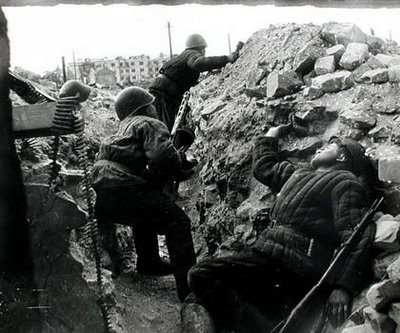
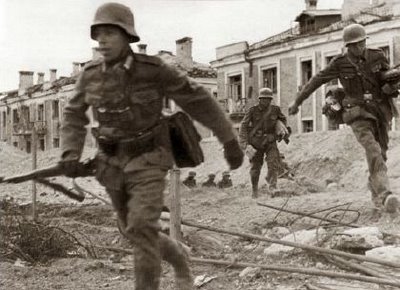
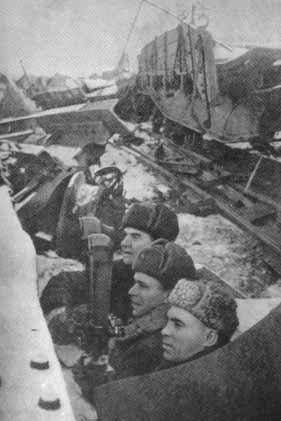
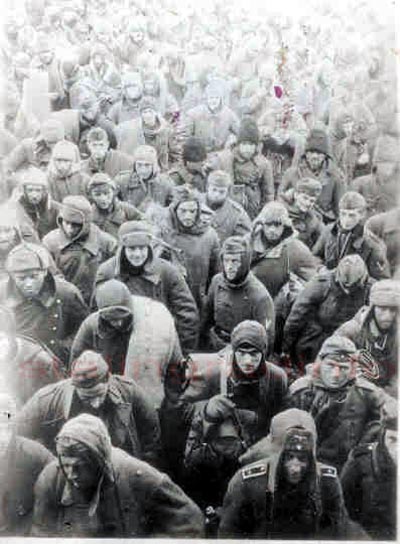
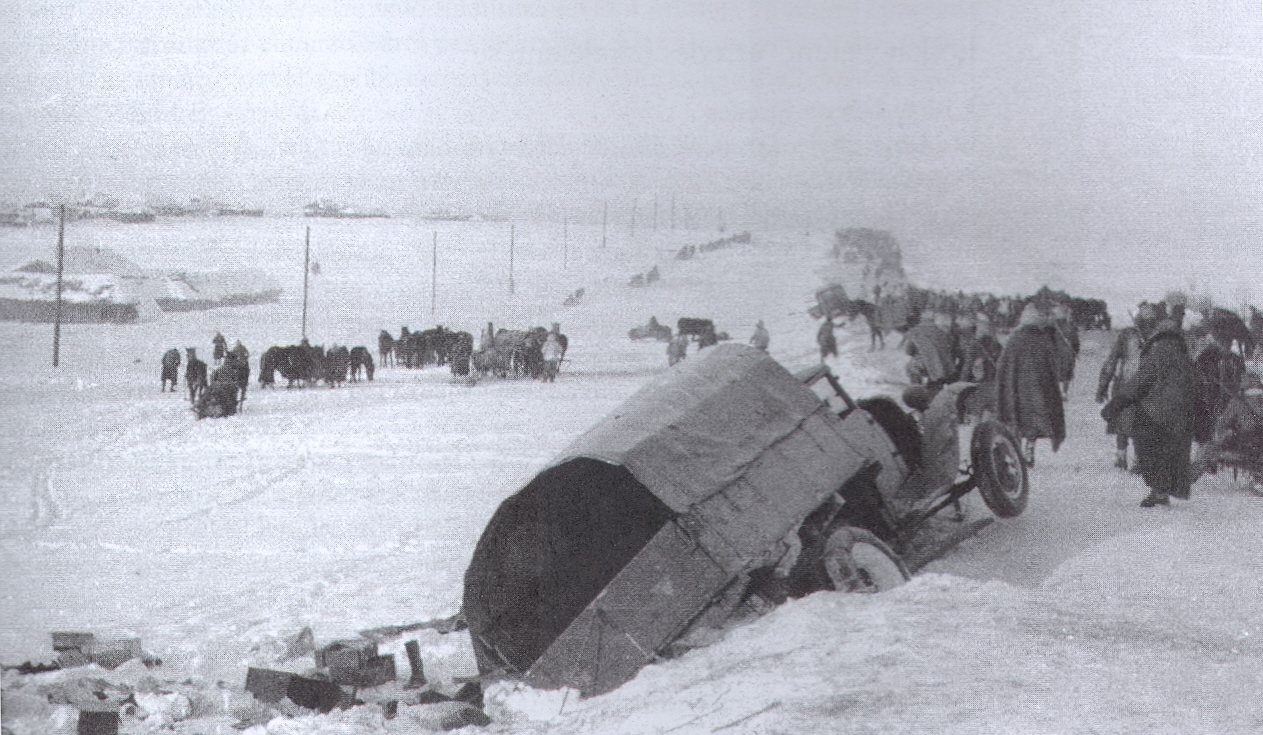
Logistics is not sexy but no modern military can do without it. You do not operate heavy mechanized forces in hostile territory without reliable supply lines. Simply ask the Germans in Stalingrad or the French at Dien Bien Phu how well they did when supplies were cut off.

It just doesn’t seem to me that most people especially politicians see the danger that US and NATO troops face in Afghanistan from forces that they cannot control in surrounding countries.  This is a dangerous situation and even if the current impasse is resolved the long-term outlook is bleak as long as the Pakistani regime plays both sides of the fence.

If the supply lines were severed for any length of time the mission in Afghanistan would have to be reevaluated and the possibility of military action to reopen them considered. At that point all bets are off and God help us.  It would not be good.

Peace

Padre Steve+

1 Comment

Filed under Foreign Policy, History, iraq,afghanistan, Military, Political Commentary

Deep Thoughts and Musings on a Lazy Fall Saturday

I have been down with an ear and sinus infection most of the week which has added to my insomnia and made me pretty useless.  It is no fun to get up in the morning with vertigo.  When this happens I wonder where Verti went. Over the past few days with the vertigo, occasional fever, sinus headaches and some coughing and sneezing I have officially welcomed in the 2011-2012 cold and flu season.

The past few days have given me time to do a lot of thinking, some praying and a bunch of writing.  At least my PTSD-Mad Cow brain is functioning relatively well.  But not getting out much and only going to work to go to the doctor is a bit of a downer.  But it is now time to stop whining to you about this and simply be thankful for the blessings that I have.

I could have a job that had paid time off for sickness or that provided no medical coverage.  I could be wondering where the next meal or paycheck was coming from or where I will sleep.  One thing that I am thankful for is that we paid off a painful reminder of when where the next meal, tank of gas, medical care or pace to live was our reality.  I left the active duty Army in September 1988 to attend seminary and that as about the time of the big Texas oil bust and real estate collapse.  I was an Army Captain and couldn’t get a job because I was overqualified for most jobs or competing against people who could be paid less than me for others.  It was brutal.

Judy was sick and could not work and eventually despite eventually getting a job with a social service agency, things fell apart. We lost our home and even our cars.  It was the worst time of our lives.  We never declared bankruptcy and paid off everything that we owed and this week I paid off the balance of the home that we lost in 1989 to the Veterans Administration.  When the market crashed and the foreclosure came owed almost 40% of the selling price when the house sold at auction.

I am so grateful for what we have now and so being sick and laid up for a few days is really nothing to complain about.  There are far too many people in our country that even a couple of years ago had what they thought were stable well paying jobs with benefits that don’t have them now.  Many are veterans and their families.  It is most likely that things will get worse before they get better for most people as the effects of the sovereign debt and banking crisis in Europe hits our banks.

For me what people are going through is not abstract because we have been there. I really wonder when I see people in political and economic power doing nothing with one Presidential candidate blaming the unemployed if they didn’t have a job and were not rich.  I wonder what has happened to our country.  I wonder why so many churches side with the rich and powerful and seem to despise the poor.

It seems heartless to say the things that this Presidential candidate said with unemployment remaining over 9% for over a year and companies deciding when they do have a job opening to give preference to those that currently have jobs.  Even well qualified unemployed people are not even considered for job openings because they don’t have a job.  And this is happening when the supposed “job creators” on Wall Street who the taxpayers bailed out in 2008 and 2009 are giving themselves bonuses.  It just immoral and when I see many of my fellow Christians making the support of polices which are condemned by Jesus an article of faith in both theology and politics.

I have also had time to think about what is going on in the Middle East especially the Iraq withdraw and ongoing war in Afghanistan.  I am really concerned with Afghanistan because of the veiled threats that Pakistan is making about cutting our supply lines.  They have done this for short time periods before and there have been numerous attacks on supply convoys in that country by Pakistani Taliban.  To make matters even more uncertain Afghan President Hamid Karzai has said that if there were a conflict between the United States and Pakistan that Afghanistan would help them.

Sometimes I hate being a military historian because I understand what happens to armies with tenuous supply lines that are under the control of unreliable allies.  Stalingrad comes to mind. Likewise the lesser known but very significant The Second Jassy-Kishinev Offensive between August 20 and August 29 1944 in which the Romanian allies of the Germans switched sides during the battle.  This allowed the Red Army to destroy the German 6th Army and maul the 8th Army. The offensive probably shortened the war by six months.  At Stalingrad the Germans and their allies suffered 841,000 casualties and at Jassy-Kishinev they lost 100,000 killed and 115,000 captured.  Currently there are about 90,000 American and another 40,000 NATO or coalition troops in Afghanistan deployed in penny packets throughout the country fighting an insurgency.  They are very vulnerable to any supply disruption especially during the winter months and if there was a conflict that shut down the supply lines we would have to rely on the good graces of the Russians to resupply or withdraw our troops. When I think about this I think about my friends and comrades serving in Afghanistan and I pray to God that this does not happen.

When I think that the burden of these wars has fallen on under half a percent of the American population and that politicians and their allies in the business sector are looking at ways to make substantial cutbacks in medical care and other benefits to those that have been sacrificing in ways that no one else has been doing the past ten years.  Talks of cutting VA care for veterans is obscene when because of their preexisting conditions they wouldn’t be able to afford medical insurance even if they could get it.  And the word that these politicians and their allies use is that these are “entitlements.”  That is a really nasty word and it is used pejoratively because everybody knows that “entitlement programs” are bad and those that receive “entitlements” haven’t earned them and are leaching off of society.  In fact a letter from the “Super Committee” in charge of finding ways to slash the budget has proposed cuts to veterans benefits including pension, disability compensation and education payments.

This is why I would rather be at work, I think too much.

But I am still grateful for all that I have and honored to serve with the fine men and women of the US Military in this time of war.  I do pray that things get better in our nation, which those suffering from the terrible economy will have their needs for employment and other physical needs met. I pray that somehow the deep division that has rent our people asunder will be healed and that our political and economic leaders will do what is right for the country and our people rather than the quarterly bottom line of select corporations.  And I pray for the safety and success of my friends and comrades in both Iraq and Afghanistan and that our political and business leaders will not sacrifice us and then abandon us after beating us to dust the past 10 years.

But at least the World Series is on and nothing bad accrues from Baseball.  For that I am very grateful as Sharon Olds said “Baseball is reassuring.  It makes me feel as if the world is not going to blow up.”

Peace

Padre Steve+

1 Comment

Filed under economics and financial policy, History, iraq,afghanistan, Loose thoughts and musings, Military

Reflections on 9-11-2001: How the Day Changed Me….

We are coming up on the 10th anniversary of a date that changed the country.  I wrote about it last year in an article entitled 9-11-2001: A Date that Will Live in Infamy 9 Years Later.  This year I am going to post a couple of short reflections leading up to the anniversary on how that event changed me.

I remember the day like it was yesterday. I was getting out of my office at Camp LeJeune after an early morning counseling case and some administrative duties I was getting ready to head to the French Creek gym.  I was about to close out my browser when I saw a little note on the Yahoo.com homepage: “Airplane crashes into World Trade Center.” It was about 0900 that tragic morning.  I thought to myself, “some dumb ass just crashed his Cessna into the building.

The day was clear and absolutely gorgeous, a slight north wind and low humidity, a well deserved break from what had been a hot and humid summer.  Not that I had seen much of the Carolina summer having returned from a deployment to Okinawa, Mainland Japan and Korea in late July. When I got to my car the local talk radio station was broadcasting a second or third tier national talk radio host and he was screaming “oh my God another plane just flew into the towers!”

I drove over to the gym where I joined a large crowd of Marines and Sailors transfixed as we watched the towers burn.  I went back to my office showered and went over to my battalion headquarters and was there when theSouthTowerwent down at 0959.

Since then a lot has changed.  I have made two deployments and traveled to the Middle East many more times.  I came back from my deployment to Iraq with a serious case of PTSD and a health distrust of the media, politicians, preachers and especially the talk radio hosts that I used to listen to as often as I could.  I remember being in Iraq in between missions to the far reaches of Al Anbar Province and watching the news on the televisions at the dining facility and wondering just what war that they were covering.

Before Iraq I could be considered a pretty solid “conservative” but now I really don’t know what I am.  Some call me “liberal” and in fact I was told to leave my old church last year because I had become “liberal.”  However, despite what some of the talk pundits and right wing preachers say just because a person is “liberal” does not mean that they are unpatriotic or do not care about our country or freedom.  After serving in Iraq and seeing how certain people have equated patriotism with adherence to their political agenda I wholeheartedly believe that a person’s patriotism has nothing to do with their politics or their religious beliefs.

Before IraqI was jaded by what happened to my dad’s generation after Vietnamwhen liberals called returning Veterans “baby killers” or “Nazis.”  In fact I had a Sunday school teacher tell me that my dad was a “baby killer” in 1972 and in 1981 had some ass at UCLA call me a “ROTC Nazi.”  As a result I had little love for the Left.  After September 11th I followed the “conservative” talk radio crowd and Fox News more than I had ever before.  The emotions that they stirred up were primal.  But experience and reflection caused me to get beyond the pain of my past and the emotion of the present.  Just as I detest those that characterized my dad’s service or my service as being criminal I also detest those that say one cannot be critical of those that advocate for war regardless of the human and economic cost or actual strategic benefit.

I rejoiced when our SEALS killed Osama Bin Laden and every Al Qaeda leader that we have ushered into the arms of Allah.  They have caused unmitigated suffering around the world, not just to us but to their own Islamic neighbors and deserve no pity and since they refuse to give quarter should be shown none. If that sounds harsh I can’t help it. The attacks of 9-11 and the wars that have followed are personal.

At the same time I question the strategic purpose and value of the campaign in Afghanistan.  I see it as a potential disaster on the order of Stalingrad or Dien Bien Phu should the Pakistanis shut off the supply routes that constitute the major support to our troops there, especially if they did so in the winter months.

At the ten year mark I grieve for those that have lost their lives as well as loved ones in the attacks or in the wars that have followed.  On September 11th 2001 2977 people were killed at the World Trade Center, the Pentagon or on United Flight 93 which went down inPennsylvania.  One of those killed at the Pentagon was Lieutenant Colonel Karen Wagner was a classmate of my in 1983 at the Medical Service Corps Officer Basic Course.

Since then 4474 American military personnel have given their lives in Iraqand 1760 in Afghanistan.  NATO or coalition allies, excluding the Iraqi and Afghani military or police forces have lost another 1270 military personnel.  Another 45,170 Americans have been wounded.  I know a decent number of those wounded and some of those that have died.  The losses are intensely personal and to think that we have lost well over twice the number killed on September 11th 2001 in two wars, many that were children aged 8-12 years old on that tragic September day.  Of course the numbers do not count those that died by their own hand after they returned from the war, a number that grows daily.

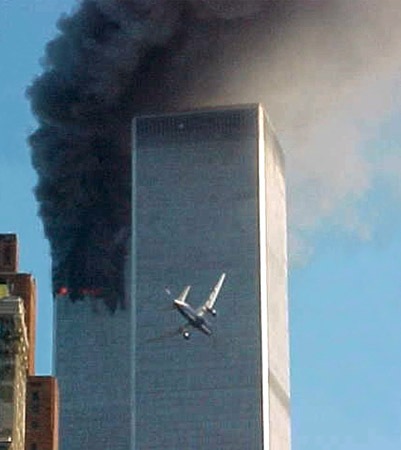
I have been changed by that tragic event. I still shudder when I see the video of United Air Lines Flight 175 crashing into the South Tower or see the videos of the towers crashing down.  They are hard to watch and while I will observe the anniversary with prayers and a lot of reflection I do not know how much of the continuous media coverage of the anniversary that I will be able to watch.

The events of that tragic day changed me, and changed countless numbers of other Americans as well as others around the world.  While we yearn to return to the days before9-11-2001 that is impossible, there is too much water and too much blood that has passed under the bridge.   I know I can’t go back.  Maybe that is good.

Peace

Padre Steve+

6 Comments

Filed under History, iraq,afghanistan, national security, traumatic national events

What if Hitler was assassinated in 1943? An Alternative History of Kursk and the End of World War II in Europe

This is an alternative history of how the Germans might have avoided the disaster at Kursk. It looks at what might have happened if an actual assassination attempt on Hitler had succeeded in March 1943 and how Manstein might have been able to execute the “backhand” strategy that he favored using a mobile defense.  This is predicated by Hitler’s death, based on Hitler’s actions and control of operational decisions Manstein would never have been allowed the freedom to conduct operations in this manner.  In eliminating Hitler I have also included personnel changes and the overall strategy for the German High Command, and the probable response of Stalin to Hitler’s death had it occurred in the spring of 1943. I have tried to be faithful to known historical opinions and actions of the participants and likely reactions to such a situation although one cannot predict precisely what people would have done.  Thus I have documented the article with footnotes as if it were an actual history. It would have been interesting to be able to lengthen this and included sections on tactical actions based on memoirs of German and Russian soldiers. I wrote it as at the behest of one of my Master’s Degree Professors and first published it in August of 2009 on this site under the title of Operation “Dachs” My First Foray into the Genre “Alternative History.” I believe that history is history and this despite what the term “alternative history” implies is fiction.  Though it is based on my belief of how German leaders might have reacted in the spring of 1943 and references actual events that I have altered for the sake of the story it is not history. But one has to wonder what would have happened had the plot to kill Hitler by blowing up his aircraft on its return to Germany from a conference with the commanders of Army Group Center succeeded.


Background: The Strategic Situation Spring 1943

In April 1943 the German High Command faced a decision on which the fate of Nazi Germany would hinge, but for the first time in the war it was not under the thumb of Adolf Hitler. Following Manstein’s counter-stroke following the Stalingrad disaster there was considerable pressure to follow up with that success with a continued offensive. Manstein himself had proposed this but Field Marshal Von Kluge refused to agree to an immediate offensive because he felt his troops needed rest and refitting.
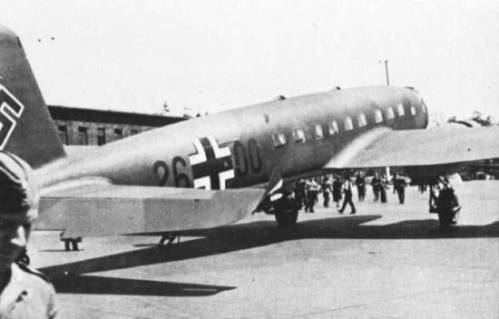
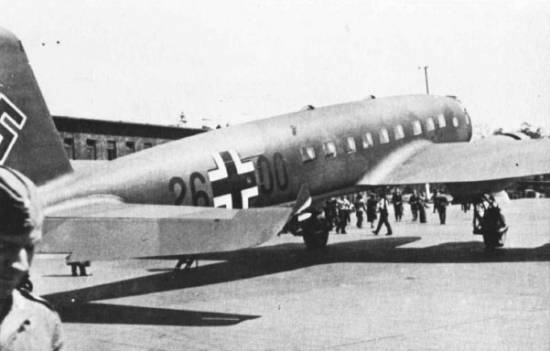
Hitler’s Fw-200 “Condor” before its fatal flight

On March 13th Hitler flew out to meet with Von Kluge at Army Group Center HQ at Smolensk.  On the flight back Hitler’s FW-200 was racked by an explosion crash landing near Minsk, taken down by a bomb planted on the plane by Colonel Henning Von Trescow of Kluge’s staff.[i] While Hitler survived, he remained in critical condition, barely alive at a SS hospital until his death on 20 April 1943, his 54th birthday. The crash landing was reported by the escorting ME-109s of JG-53, and a Alarm Company from a Security Division at Minsk rescued Hitler but were driven off the crash site by a large force of Soviet Partisans who destroyed the aircraft and any evidence to the cause which the escorting fighters attributed to mechanical problems. 

There were no other survivors. Von Kluge, expecting to be implicated the Fuhrer’s death committed suicide after visiting troops on the front line, and was succeeded at Army Group Center by Field Marshal Model the commander of 9th Army. The other conspirators were frozen into inaction when Hitler survived the crash and made no attempt to take over the government, realizing that “our plans for seizing power in Berlin and other large cities were still not adequate to the task.”[ii] In the absence of Hitler Reichsmarschall Goering, Hitler’s designated successor, took action to secure his power and using contacts in the GESTAPO accused Himmler of treason for making contact with Neutral intermediaries in Sweden[iii] and replaced him with SS General Kurt Wolfe, and reappointed Rudolf Diels, the former head of the GESTAPO when it was still under his control[iv], to head it again.  Himmler attempted to flee and was caught near Luneburg when he committed suicide with a cyanide capsule before he could be interrogated. Other potential rivals were eliminated; Martin Bormann, who Goering hated, was arrested on charges of exceeding his authority, embezzlement, and harming the war effort and was executed.[v] Joseph Goebbels swore his loyalty to Goering even before Hitler’s death.  He and Albert Speer were directed to arrange the state funeral for the late Fuhrer. Berlin Radio announced the Fuhrer’s death on the 21 April, Hitler’s body was prepared and lay in state at the Chancellery.   A period of mourning was declared 21 April to 1 May on which the State Funeral took place. On 2 May Goering announced that Field Marshal Von Rundstedt was the new Chief of OKW and would coordinate strategy on all fronts. The next day Goering called together a meeting of the heads of OKH, OKW, the Inspector General of Panzer Troops, and the commanders of the Eastern Front Army Groups, Western Europe and Africa as well as Reichsfuhrer Karl Wolff, Admiral Donitz and Field Marshal Von Richthofen[vi] representing the Luftwaffe to decide on a course of action for the summer. It was the first time that all had been called together to discuss the overall situation since Barbarossa began in 1941, and the first true attempt to formulate a grand strategy during the war.

Options and Decision: The Zossen Conference 3 May 1943[vii]
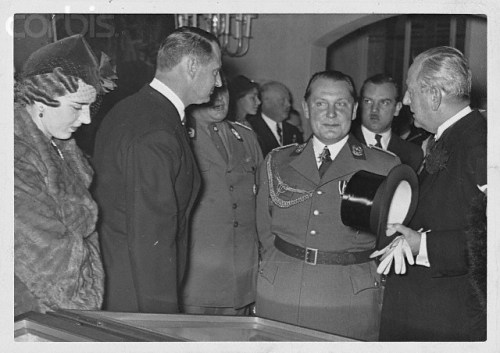
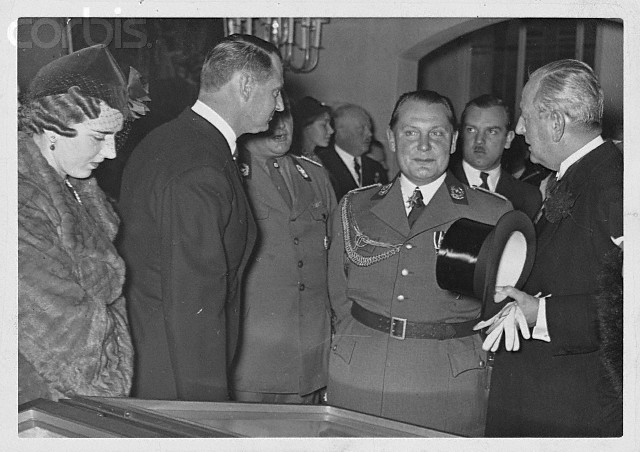
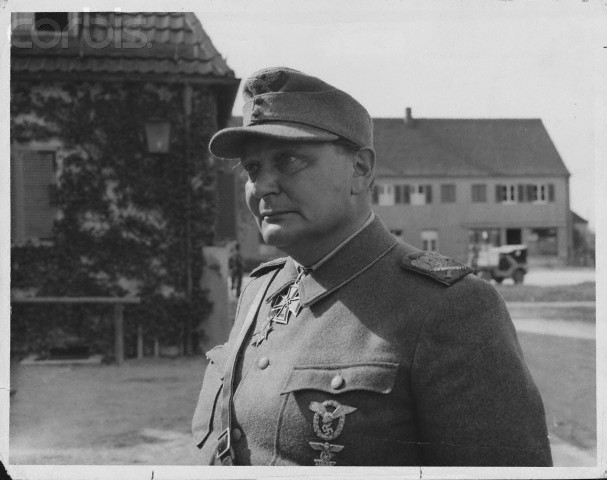
Goering meeting Diplomats following Hitler’s State Funeral

Herman Goering looked up from the maps spread out on the conference table.  He looked surprisingly fit, somehow between the crash of Hitler’s aircraft and his death he had pulled himself together and out of his drug induced malaise.  It was as if he again had a purpose. Field Marshal Von Rundstedt now Chief of OKW following Goering’s relief of Field Marshal Keitel, and General Jodl had just finished briefing the situation in western and southern Europe, following briefings by Colonel General Zeitzler of OKH, the Inspector General of Armored Troops, General Guderian and Field Marshal Von Manstein of Army Group South.  Albert Speer briefed tank and aircraft production numbers while the Chief of the Army personnel office noted the requirement for 800,000 replacements “but even the most ruthless call-up was able to produce only 400,000.”[viii] Looking from the table he spoke: “Gentlemen, the situation is critical and I have to admit that I have thought so for a number of months but have been unable to speak out.   Our political situation is perilous, the Italians are ready to abandon our cause. Our forces in North Africa will soon be unable to hold out as our Italian friends have let us down again.[ix] I expect that if Jodl and Kesselring are right about Allied intentions that we will have our hands full in the west shortly.  Kesselring and Arnim, you need to evacuate as many German soldiers from Africa as possible,[x] use all air and naval forces that you can, I know it will be difficult, especially with the heavy losses we have taken in transport aircraft and the pathetic Italian Navy.”  Goering paused, his gaze passing around the room.  “In the west we need to assume that the Allies will invade and the ‘very real danger that the enemy may turn against Brittany and Normandy,’ Field Marshal Rommel will take command of OB West to build up the Atlantic Wall in these sectors.”[xi] “Zeitzler, Manstein, we need to shore up the eastern front.”

“Herr Reichsmarschall, the Fuhrer had approved the plan called ZITADELLE, to attack the Russians here in the Kursk salient.” responded Zeitzler.[xii] “We should be ready to begin the offensive this month.”  Goering raised his hand stopping Zeitzler.  “I know, but I have considered that plan and I cannot support it. Richthofen briefed me on it prior to the Fuhrer’s death and general, we must have another plan, and an attack on Kursk is so obvious the Russians will be ready to meet it.  I have considered what the General Guderian and Minister Speer said regarding tank production and the state of the Panzer arm.  I cannot approve Zitadelle, but we must find a way to deal the Russians a defeat without squandering our strength attacking such an obvious target. Model too is dubious of the prospects; he believes that the Russians know our intentions and has requested a delay to strengthen his forces.”[xiii] “Reichsmarshall.” chimed in Jodl. “You are correct, the premature commitment of central reserves in such an offensive will not help our cause, in fact only local success is what can be expected from Zitadelle.”[xiv]
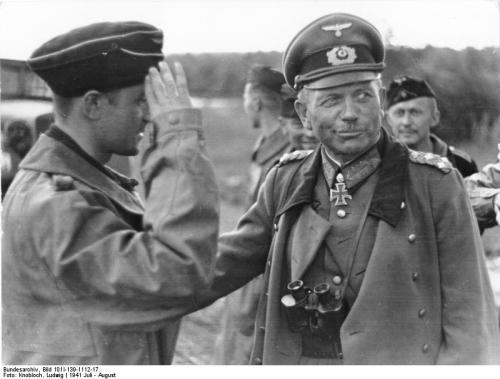
Colonel General Heinz Guderian 

“But Reichsmarshall, we must recapture the initiative in the east, we must take the offensive!” retorted Zeitzler. “Our new units of Panthers and Tigers will give us a decisive technical advantage.”[xv] Guderian now joined in. “But the Panthers still have many technical problems, it would be better to wait until they are worked out before we commit them to a major offensive, and besides, how many people do you think even know where Kursk is?”[xvi]

“Zeitzler, I appreciate your zeal.” Interrupted Goering, “But Jodl and Guderian are correct, even a successful attack at Kursk will not alter the strategic situation. We must work to stave off defeat.  Manstein has a plan that may help, there is some risk, but I see no other way. An offensive at Kursk would require tanks and aircraft that must be used to combat the Allied bombing of the Reich and to safeguard withdraw of our units from Africa, it would force us to commit everything with little gain.” Goering paused and said to Manstein, “Go ahead Manstein.”

“Reichsmarshall, Gentlemen.  Our situation in the east is not hopeless, in March I felt that an immediate offensive would succeed in pinching off the Kursk bulge, but I think now that the moment of opportunity has passed for such an attack.  Instead we should fight a defensive battle of maneuver as called for byTruppenführung that we have developed from the days of the Reichswehr.  We should build up our forces; give ground where we can, and when we have the chance strike the enemy on the backhand, as we did at Kharkov.”[xvii]

Zeitzler jumped in. “But how can we do that? If we don’t strike now while we have the opportunity the Russians will grow stronger, and how can we know where they will strike?”[xviii]

“General Zeitzler, the Russians are already building up heavy armored forces in the area of Kursk, and diverting forces from other sectors of the front to that area.  The south offers them the best opportunity to finish what they started in the winter.  They will come and it will be in the south, they will want Kharkov and they will again attempt to envelop our forces in the south. If they succeed they will follow up and rapidly move into the Balkans, Romania and Hungary will turn on us and it will be a disaster, we cannot afford that.”  Manstein looked up, Jodl nodded and Model said “Once that is done they will push to Kiev and Poland.” Goering interjected “Thank you Model, you are right, Field Marshal Manstein; please go on with your plan.”

Field Marshal Erich Von Manstein at the Front

Motioning to the map Manstein continued. “We will concentrate the majority of our Panzer forces here, just west of Kharkov and another group here west of Orel.  We will also build fall back positions for our infantry forces here along the Dnieper.  We should be ready to withdraw from the Crimea should the need arise, we cannot afford another encirclement.  When the Russians attack we will give ground, even Kharkov if needed. Our infantry divisions will fight a delaying action supported by Jagdpanzer and Sturmgeschutzen, the Luftwaffe will need to give us good close air support from Stukas and as the Russians outrun their supply depots and their offensive loses momentum we will attack, like a badger defending itself.  Our Panzers will cut off their spearheads west of Kharkov while we bleed them dry in the north; we will then roll them up, stabilize the line and prepare for the winter.”  Manstein sounded confident; those in the room began to sense that his plan could work.  Rundstedt spoke up: “That will give us the chance to transfer forces to other fronts and, maybe, since Hitler is dead there might be a chance for Reichsmarschall to negotiate a settlement,[xix] otherwise gentlemen the Allies will destroy our cities from the air and grind our armies down until we have no recourse but surrender.”

“Right” added Goering, making eye contact with each man in the room. “We must have success in the defense, we must buy time and we must work to end this war before Germany is destroyed. ‘We will have reason to be glad if Germany can keep the boundaries of 1933 after the war.”[xx] He paused and said “General Zeitzler, you are relieved of your duties at OKH, General Guderian, you are now the Chief of OKH.[xxi] Manstein, you will command the East, General Hoth will take your Army Group. You will work with Guderian and Model to flesh out this plan.  We must get the Panther, Tiger and Ferdinand units operational as soon as possible.  I believe that the Russians will attack by June. Richthofen, I need you to look to the Luftwaffe. We have not had a good year and we have to succeed in defending the Reich from Allied bombers and provide support to the ground forces. Of course flak needs to be built up. The Luftwaffe Field Divisions with the exception of the Fallschirmjaeger and Herman Goering Panzer Division need to be transferred to Army control.”  He looked at Speer: “Herr Speer, the Fuhrer entrusted you with our war production program, you must increase production of tanks and aircraft. Speed the production of the ME-262 and cancel all programs that take away from the panzers, fighters and ground support aircraft that we need now.” He put his hands on his hips and took a deep breathe. He looked at Wolfe, Himmler’s successor.  Wolff, the Reich needs the Waffen SS, the Panzer troops are exceptional, but I want all Waffen SS Formations, with including the Panzers turned over to Army control, we cannot keep dividing our resources. With the personnel from the Luftwaffe Field Divisions we should be able to provide the Army with excellent troops to rebuild experienced formations.”  Goering looked around the room; “Are there any questions Gentlemen?” Putting his arm across Manstein’s soldier and said: “I think that Badger is a fitting name for your plan. Our little Dachs will tear them to pieces.”   Later, Goering met with Foreign Ministry officials emphasizing the need to strengthen German Allies and seek peace with the west. He “admitted that he was worried about the future. ‘It’s not quite clear to me how we are going to end this war.’”[xxii] Those present could not believe how Goering had conducted himself, and all left the meeting thinking that it might be possible to stave off defeat.  It was an incredible performance. After Hitler’s crash he had secretly undergone a “systematic withdraw cure which had ended his drug addiction.”[xxiii] The change was marked.

STAVKA Headquarters Moscow: 7 May 1943

Josef Stalin was ecstatic.  His agents reported that Hitler was dead even before the announcement from Berlin.  Partisans had confirmed that it was Hitler’s aircraft that they found and recovered some of Hitler’s personal belongings, including his cap, which they presented to Stalin.  Intelligence reported that Goering had taken power, and Stalin was sure that his position was weak and many believed that Goering, was not up to the task, and that a renewed offensive could bring down the Nazi regime.  Now was the time to bring the Nazi terror to an end and Stalin called his key leaders together.  While Stalin wanted an immediate offensive his generals wanted to wait just in case the Germans attacked Kursk.  “Zhukov, Vasilevsky, and various General Staff officers urged caution and recommended that the Red Army remain on the defensive until the Germans expended their offensive strength.”[xxiv] Stalin supported by commanders, like Vatutin, “argued for a resumption of offensive action in early summer to preempt German action and regain the momentum lost in March 1943.”[xxv] In the end a compromise was reached and despite the temporary defensive stand “Russian strategic planning in the summer of 1943 was inherently offensive in nature.”[xxvi] The new offensive would be launched on 15 June if the Germans had not attacked before.  It would be named Operation Kutuzov[xxvii] and be aimed at the Orel salient and Kharkov.  The northern prong under Rokossovsky’s Central Front would destroy the Germans around Orel and drive west while Vatutin’s Voronezh and Konev’s Steppe Front would take Kharkov and drive toward the Dnieper.[xxviii] The Southwest Front and South Fronts would attack and destroy the German forces along the Mius, the goal: “collapse of the German defenses and an advance to the line of the Dnieper River from Smolensk in the north southward to the Black Sea.”[xxix]
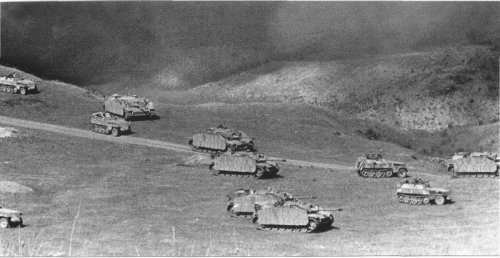
Sturmgeschutzen and SdKfw 251 APCs moving into position

Manstein met with Model, Hoth and Guderian to develop DACHS. They had  to play for time and deceive the Russians as to their true intent so they could build up their forces.  Deception operations were mounted on both sides of the Kursk bulge to give the impression of attack preparations.  1st Panzer Army and Army Detachment Kempf  were to launch a diversion called Operations HABICHT and PANTHER southeast of Kursk  “designed to push the Soviets back from the industrial area of the Donets River.”[xxx] The defensive plan called for the infantry supported by tank destroyers, assault guns the heavy Ferdinands as well as mobile Pioneer units to conduct a withdraw to delay and disrupt the Russian attack.  Bridges were prepared for demolition, defensive positions constructed at choke points which would be defended and then abandoned when no longer defensible, and minefields laid to slow the Russian advance.  This was critical for 9th Army now commanded by General Henrici in the Orel salient north of Kursk.  Henrici, a defensive master constructed a series of defensive belts to allow his army to withdraw from the bulge without being cut off and inflict heavy casualties on the Russians through skillful deployment of anti-tank weapons, especially self propelled guns.[xxxi] In the south 4th Panzer Army, now commanded by SS General Paul Hausser[xxxii] and Army detachment Kempf made preparations to allow the Russians to advance past Kharkov using the same defend and delay tactics and then counterattack. As the armies prepared, Speer and Guderian’s efforts to rebuild the Panzer force were bearing fruit.  By 15 May the first brigade of Panther tanks was activated and began training west of Kharkov.[xxxiii] Two battalions of Ferdinands, one for 9thArmy and one for 4th Panzer Army were activated.[xxxiv] Sturmgeschutzbattalions were assigned to each infantry corps. Panzer divisions built up so that all had an average of 130 tanks, with the SS Divisions and Gross Deutschland receiving more.  Tiger battalions were assigned to each Panzer Corps.

The Summer Campaign

German Infantry

On 1 June Operations PANTHER and HABICHT hit the unfortunate Soviet 6thArmy, which had been victimized by Manstein’s counter-stroke in March.  III Panzer Corps of Army Detachment Kempf supported by Corps Raus (IX Corps) linked up with 1st Panzer Army at Kupiansk on 3 June.  The Russian counterattacked with 8th Guards Army and the 2nd and 23rd Tank Corps. The battle of Kupiansk resulted in the destruction of 6th Army and the 23rd Tank Corps which was surprised by the 503rd Panzer Detachment’s Tigers. 2nd Tank Corps received a similar mauling at the hands of the 6th Panzer Division.  On 9 June the Germans returned to their start positions.

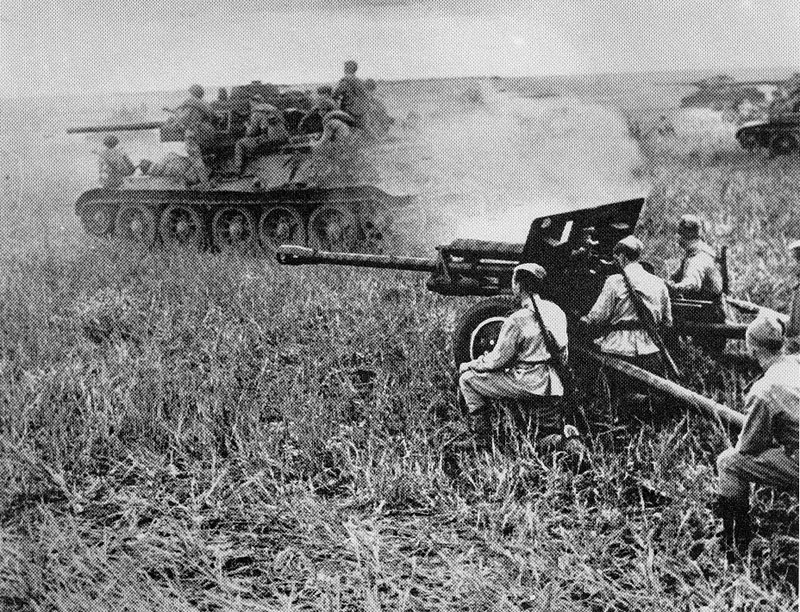
Soviet Tanks and AT Guns at Kupiansk

The attack at Kupiansk surprised STAVKA which had been deceived by the build up of Panzers around the Kursk salient.  Stalin continued to hound his generals to begin Kutuzov on time, but the generals were “chastened” by the defeat at Kupiansk and “earlier experiences”[xxxv] and wanted to delay. Stalin forced them to begin Kutuzov on 22 June, the 2nd Anniversary of Barbarossa.  Manstein and his Eastern Front commanders held their breath.  Teams of Brandenburger commandos operating in the Soviet rear and Luftwaffe reconnaissance aircraft reported Russian units moving to advanced positions to the north and south of Kursk.  Vatutin commanding the Voronezh Front was ambushed and killed by a Brandenburger detachment supporting Ukrainian irregulars[xxxvi] as he returned from visiting 69th Army near Prokhorovka station on 19 June and was replaced by Lieutenant General Katukov of 1st Tank Army.  Katukov “was one of the Red Army’s most accomplished and experienced armor officers.”[xxxvii]

Manstein with Tigers

In the north Rokossovsky’s Central Front and Popov’s Bryansk Front supported by 11th Guards Army[xxxviii] began concentric attacks on the German 9th and 2nd Panzer Armies and ran into Henrici’s labyrinth on 22 June.  They hit the first line they found it empty, the Germans having repaired to secondary positions,[xxxix] German 88’s and self propelled guns took a heavy toll on the tanks of 2nd Tank Army.  The 3rd Tank Army under General Rybalko’s army committed after the initial assault “attempted a fresh penetration instead of exploiting the earlier efforts of the 3rd and 63rd Armies… Rybalko’s force included 698 serviceable tanks…but lacked the artillery and engineers for such a deliberate assault.”[xl] Popov telephoned Stalin at noon on 25 June “to report that Rybalko was practically stalled and suffering heavy losses in tanks.”[xli]The Germans committed the 5th and 8th Panzer divisions[xlii] against 3rd Tank Army. The fresh Panzers inflicted painful losses on Rybalko.  On 27 June Stalin called to complain about the handling of the army, demanding a direct assault.[xliii] The battle turned into a “grinding battle of armored attrition.”[xliv] After “a few bloody days bereft of any success, Rybalko’s tank formations had to be pulled out of the line into reserve.”[xlv] The “battle for the Orel salient ended three weeks later with a German defensive victory, as Army Group Center extricated its two armies from the box prepared for them while inflicting heavy casualties on three Soviet Fronts.”[xlvi] The Soviets lost over 629,000 men and 3,500 tanks.[xlvii] In comparison German losses were light and by falling back they shortened their line freeing units for other operations.  Stalin had Orel but failed to destroy the Germans and lost heavily in the attempt.

Panzer IV’s engaging Soviet forces

In the south Konev’s Steppe and Katukov’s Voronezh Fronts prepared their assault on Kharkov.  They attempted to deceive the Germans by simulating the massing of a “notional tank and combined-arms army” in the western side of the Kursk bulge.[xlviii] The deception was unsuccessful as reconnaissance by Luftwaffe aircraft and Brandenburgers failed to uncover any troop concentrations and Russian deserters, talked of a strike at Kharkov. The offensive “Rumiantsev” was opened by the 5th and 6th Guards armies supported by 53rd and 69th Armies on 21 June; a day later 7th Guards Army jumped off, two additional armies supported the west flank of the offensive.[xlix] The Russians in the two fronts began the operation with 980,000 men and 2,500 tanks.[l] Opposing them were 4th Panzer Army and Army Detachment Kempf’s 350,000 men and 1,750 tanks and assault guns including 100 Tigers and 192 Panthers.[li]
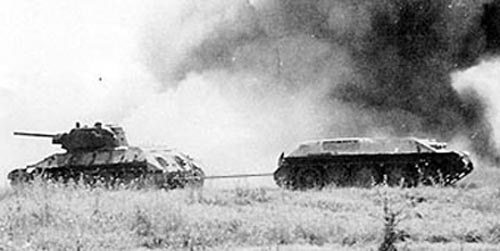
T-34 towing disabled T-34 near Orel

STAVKA “chose to strike the strongest portion of Hoth’s defense head-on, to engage and defeat the German force and avoid the problems of flank threats.”[lii] Unfortunately they complicated the attack by focusing it at “precisely the boundary between the Voronezh and Steppe Fronts, causing increased coordination problems from the start of the operation.”[liii] The Germans used Ferdinands, Jagdpanzers and Sturmgeschutz in a mobile defensive role, as infantry fought delaying actions as they withdrew to successive defensive lines, inflicting brutal losses on the Russians.  Aided by massive artillery preparation the Russians broke through the weakened Army Detachment Kempf near Belgorad[liv] taking the city on 24 June.  Corps Raus’ 167th Infantry Division was taken on its exposed left flank forcing Raus to “fight a delaying action…until the withdraw reached Kharkov.” [lv] The Germans reacted to the threat by committing the “veteran 5th SS Panzer Grenadier Division Wiking” to reinforce Army Detachment Kempf.[lvi] Despite the success “the German defenses proved so tenacious that the leading brigades of the two tank armies had to enter the fray.”[lvii]
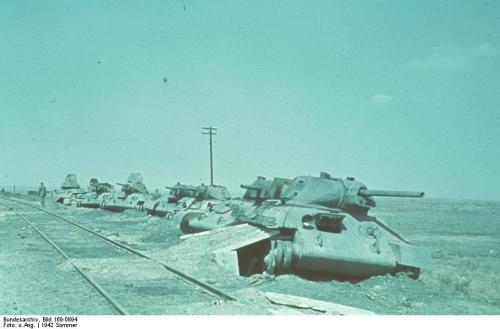
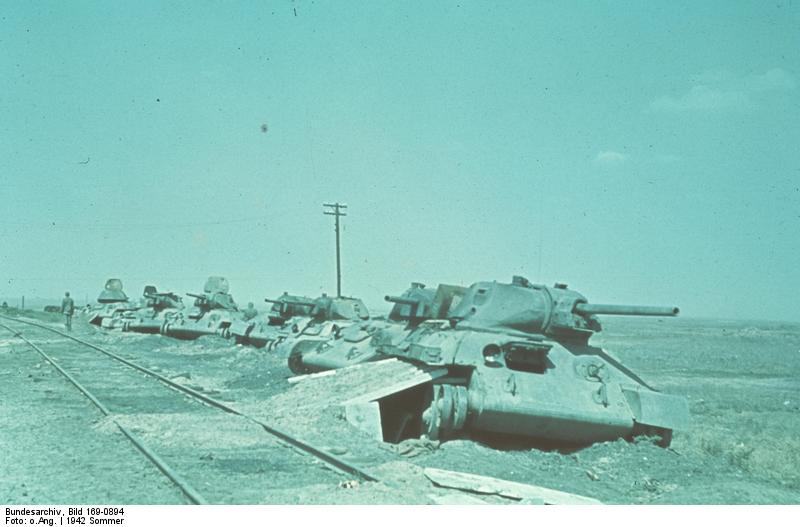
Destroyed column of T-34s

As the Russians advanced the German fell back.  Hoth directed Hausser to wait before counterattacking with XLVIII Panzer Corps and II SS Panzer Corps.  Katukov pushed the 1st and 5th Tank Armies into the hole in the German lines and moved toward Kharkov which was liberated by the 89th and 183rd Guards Divisions[lviii] on 2 July.  The liberation of Kharkov and Belgorad while exhilarating had cost Katukov over 250,000 casualties.  Skillful employment of mobile defense and local counterattacks by mixed Panzer battlegroups, such as one by Grossdeutschland on the flank of 5th Tank Army caused panic and some units withdrew “leaving behind masses of equipment of every description.”[lix]The tank armies had lost upwards of 50 percent of their tanks, infantry divisions were now down to half strength, some down to 3000 men.[lx] Yet the Soviets attempted to drive south to trap the Germans.  They were hit by XLVIII Panzer Corps and II SS Panzer Corps, both of which had seen little action thanks to Hoth’s conservation of strength. XLVIII Panzer Corps hit the 1st Tank Army at the “key road junction of Bogodukhov, 30 kilometers northwest” of Kharkov “severely mauling the leading three brigades”[lxi] forcing 1st Tank Army to withdraw towards Kursk. 5th Tank army moved to support but was taken in the flank by II SS Panzer Corps.  The SS Corps encircled the remainder of 5th Tank Army. Hunted by the SS on the open steppe the survivors slipped through gaps in the encirclement but both armies were ravaged.  By 15 June 1st Tank Army was down to 120 tanks and 5th Tank Army had “50 of its original 503 tanks and self-propelled guns serviceable.”[lxii] XLVII Panzer Corps took Kharkov on 18 July.
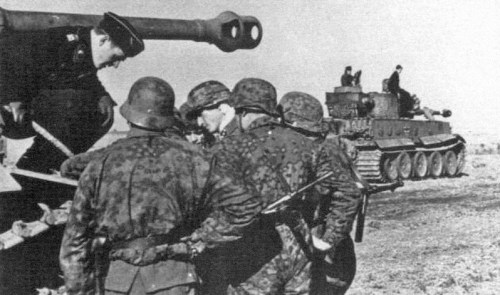
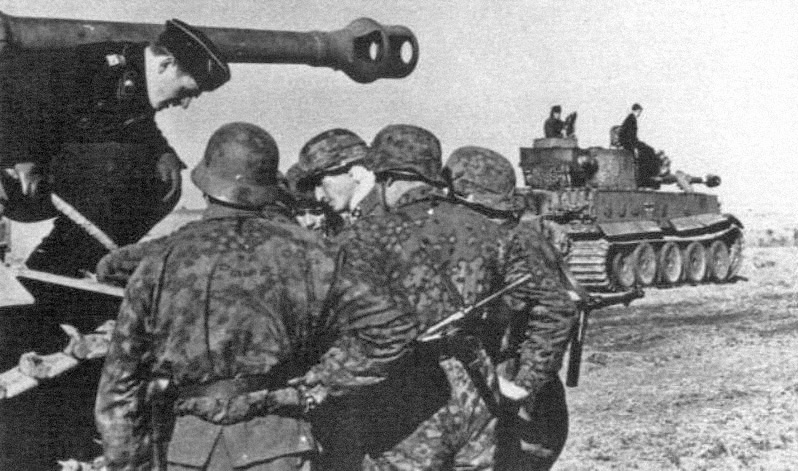
SS Panzer Grenadiers and Panzertrüppen Tigers of 3rd SS Panzer Division prepping for battle

The victory paid dividends for the Germans. The Front held and the Russians had taken nearly a million casualties and lost almost 6000 tanks and self-propelled guns.  Three Tank Armies had been smashed, 5th Tank Army would not be fit for field duty for two months.[lxiii] 3rd Tank Army earned a Guards designation but was withdrawn from combat.[lxiv] 6th Army, victimized by PANTHER was destroyed while the 5th, 6th and 7th Guards Armies were shattered. Additionally, the Germans decimated two independent tank corps.  Stalin reacted by halting operations, cancelling follow on offensives and rebuilding the Red Army’s tank armies and mechanized forces.  He realized that his Generals had been right in not wanting to undertake offensive operations until the Germans had been weakened, but the German insistence on not going on the offensive caused him to ignore their arguments. He decided to wait until winter to launch his next offensive, but that offensive would never be launched as by the time he was ready the war was over.
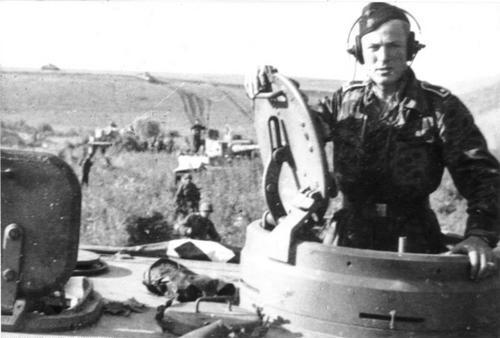
German Tank Commander as Panzers mop up

The elimination of the Russian threat enabled Italy to be reinforced as well as the reinforcement of the Atlantic Wall.  The Salerno landings were a disaster, the Allies driven into the sea by Panzer Divisions released from the Eastern Front.  The disasters at Salerno and the Russian debacle brought overwhelming domestic political pressure on Roosevelt and Churchill to end the war. Clandestine talks began in Switzerland between Avery Dulles and Karl Wolff[lxv] while Walter Schellenberg met with Count Bernadotte.[lxvi] Despite the previous demand for unconditional surrender the Allies decided to negotiate with the new German leadership might end the war in Europe.  Goering surrendered power to General Beck and gave himself and other accused war criminals up to the Allies. Beck took power, withdrew to 1939 borders, dismantled the death camps and disbanded the Nazi Party, and its police apparatus.[lxvii] Peace came to Europe on 9 November 1943, 25 years after Kaiser Wilhelm’s abdicated his throne.

Goering Surrenders to the Allies


[i] Clark, Alan. Barbarossa: The Russian German Conflict, 1941-45. Harper Collins Publishers, New York, NY 1965. Pp.307-311. There was an attempt on Hitler’s life on his return from Kluge’s headquarters.  Only the bomb did not go off, all components had worked but the detonator did not fire.  Clark notes that “the Devil’s hand had protected Hitler.” (p.311)

[ii] Galante, Pierre. Operation Valkyrie: The German Generals’ Plot Against Hitler. Translated by Mark Howson and Cary Ryan. Harper and Row Publishers, New York, NY 1981. Originally published as Hitler est il Mort? Librairie Plon-Paris-Match, France. 1981. p.167

[iii] Padfield, Peter. Himmler. MJF Books, New York. 1990. p.474.  Himmler had a number of contacts and intermediaries who he used to attempt contact with the Allies as early as 1943.

[iv] Höhne, Heinze. The Order of the Death’s Head: The Story of Hitler’s SS. Translated by Richard Barry. Penguin Books, New York and London, 2000. First English edition published by Martin Secker and Warburg Ltd. London 1969. Originally published as Der Orden unter dem Totenkopf, Verlag Der Spiegel, Hamburg 1966.  Diels remained an ally of Goering even marrying his sister in 1943.

[v] Von Lang, Jochen. The Secretary: Martin Bormann: The Man Who Manipulated Hitler. Translated by Christa Armstrong and Peter White. Random House Inc. 1979. Originally published as Der Secretär. Deutsche-Verlags-Anstalt, Stuttgart. 1977 p.9.  At his trial Goering remarked to other defendants. “If Hitler had died sooner, I as his successor would not have had to worry about Bormann. He would have been killed by his own staff even before I could have given the order to bump him off.”

[vi] Irving, David. Göring: A Biography. William Morrow and Company, New York, NY 1989. Richthofen had succeeded Jeschonnek in March when Goering relieved him. Goering believed that Jeschonnek “was too pliable at the Wolf’s Lair.” Goering had actually considered this a number of times but postponed it several times. p.388

[vii] Guderian, Heinz. Panzer Leader. (abridged) Translated from the German by Constantine Fitzgibbon, Ballantine Books, New York 1957. pp.244  Hitler conducted a similar conference involving many of the same people in Munich.

[viii] Carell, Paul. Scorched Earth: The Russian German War 1943-1944. Translated by Ewald Osers, Ballantine Books, New York, NY 1971, published in arrangement with Little-Brown and Company. p. 336

[ix] Ibid. Irving. pp. 377-379.

[x] Ibid. Guderian. p.243

[xi] Ibid. Irving. p.378

[xii] Glantz, David M and House, Jonathan. The Battle of Kursk.  University Press of Kansas, Lawrence, KS. 1999. pp.21-25.  Operations order 5 had been approved by Hitler on and issued by OKH on 13 March. It was followed by Operations Order 6 on 15 April.

[xiii] Ibid. Clark. p.324.

[xiv] Warlimont, Walter. Inside Hitler’s Headquarters 1939-45. Translated by R.H. Berry, Presido Press, Novato CA, 1964. p.334 These objections of Jodl were from June, but indicate the feeling of Jodl for the Zitadelle as planned and when would have likely been his response in such a situation.

[xv]Glantz, David M. and House, Jonathan. When Titans Clashed: How the Red Army Stopped Hitler. University Press of Kansas, Lawrence, KS. 1995. p.157 Zeitzler had been a consistent advocate for Zitadelle since he heard Manstein’s initial proposal in March.

[xvi]Macksey, Kenneth. Guderian: Creator of the Blitzkrieg. Stein and Day Publishing, New York, NY 1975 p.206

[xvii] Ibid. Clark. p.322

[xviii] Ibid. Clark. p.323.  Zeitzler made this argument with Jodl during a briefing in April 1943.

[xix] Shirer, William L. The Rise and Fall of the Third Reich. A Touchstone Book published by Simon and Schuster, 1981, Copyright 1959 and 1960. p.1115.  Hitler had told Keitel and Jodl that “When it comes to negotiating [for peace]…Goering can do much better than I. Goering is much better at those things.”

[xx] Speer, Albert. Inside the Third Reich. Collier Books, a Division of MacMillan Publishers, Inc. New York, NY 1970. p.245.  From a conversation with Speer in late 1942.

[xxi] Ibid. Glantz and House. Clash of Titans. pp. 216-217. Hitler would replace Zeitzler with Guderian in June 1944.

[xxii] Ibid. Irving. p.379 From a conversation with State Secretary Ernst von Weizäcker 11 February 1943.

[xxiii] Ibid. Speer.  p.512. The ending of the addiction took place at Nurnberg and Goering surprised many of his co-defendants with his “remarkable energy.”

[xxiv] Ibid. Glantz and House. Kursk. p.28

[xxv] Ibid. Glantz and House. Kursk. p.28.

[xxvi] Ibid. Glantz and House. Kursk. p.264

[xxvii] Overy, Richard. Russia’s War: A History of the Soviet War Effort: 1941-1945. Penguin Books, New York NY and London, 1997. pp.211

[xxviii] Erickson, John. The Road to Berlin. Cassel Military Paperbacks, London, 2003. First Published by Weidenfeld and Nicholson, 1983. p.76

[xxix] Ibid. Glantz and House. Kursk. p.265

[xxx] Ibid. Glantz and House. Kursk. p.23.

[xxxi] Liddell-Hart, B.H. The German Generals Talk. Quill Publishing, New York, NY. 1979. Copyright 1948 by B.H. Liddell-Hart. p.215  Henrici describes the methods that he used in 1944 as Commander of 1st Panzer Army and as Commander of Army Group Vistula during the defense of Berlin.

[xxxii] Hausser would actually command 7th Army in Normandy in 1944.

[xxxiii] Ibid. Glantz and House Kursk. p.53 This was the 10th Panzer Brigade assigned to XLVIII Panzer Corps.  Additionally Clark notes production figures for Panthers from Speer that indicate that 324 Panthers would be available by 31 May. (Clark. p.325)

[xxxiv] Ibid. Glantz and House. Kursk. p.52.  At Kursk the two Ferdinand detachments were both assigned to 9th Army.

[xxxv] Ibid. Glantz and House. Kursk. p.28.

[xxxvi] Ibid. Carell. p.510.  Vatutin was killed by Ukrainian irregulars in April 1944.

[xxxvii] Ibid. Glantz and House. Kursk. p.62

[xxxviii] Newton, Steven H. Hitler’s Commander: Field Marshal Walter Model, Hitler’s Favorite General. DeCapo Press, Cambridge MA 2005. p. 256

[xxxix] Ibid. Liddell-Hart. p.215.

[xl] Ibid. Glantz and House. Kursk. p.236

[xli] Ibid. Erickson. p.113. At Kursk the call took place on 20 July when Rybalko was in this situation.

[xlii] Ibid. Newton. p.256

[xliii] Ibid. Erickson. p.114

[xliv] Ibid. Glantz and House. Kursk. p.236

[xlv] Ibid. Erickson. p.114

[xlvi] Ibid. Newton. p.256

[xlvii] Ibid. Glantz and House. p.345. The actual losses were 429,000 men and 2,500 tanks against a German force significantly weakened by Zitadelle.  Had the Russians attacked the Germans rather than receiving the German attack first their losses in men and machines would have been far higher.  I have reflected that in the alternative numbers.

[xlviii] Ibid. Glantz and House. When Titans Clashed. p.168  The Soviets did try this in their counter offensive following Zitadelle.

[xlix] Ibid. Glantz and House. When Titans Clashed. p.169

[l] Ibid. Glantz and House. Kursk. p.344. Actual figures for beginning of offensive.

[li] Ibid. Glantz and House. Kursk. p.338.  Figures from beginning of Zitadelle.

[lii] Ibid. Glantz and House. Kursk. p.244 The actual text reads “Manstein’s defense” not Hoth’s.

[liii] Ibid. Glantz and House. Kursk. p.244

[liv] Von Mellenthin, F.W. Panzer Battles: A Study of the Employment of Armor in the Second World War. Translated by H. Betzler, Ballantine Books, New York, NY, 1971. Originally Published University of Oklahoma Press, 1956. p.286

[lv] Raus, Erhard. Panzer Operations: The Eastern Front Memoir of General Raus, 1941-1945. Compiled and Translated by Steven H Newton. Da Capo Press a member of the Perseus Book Group, Cambridge, MA 2003. p.214

[lvi] Ibid. Glantz and House. Kursk. p.247

[lvii] Ibid. Glantz and House. When Titans Clashed. p.169

[lviii] Ibid. Erickson. p.121  These were the actual divisions that liberated Kharkov.

[lix] Ibid.  Von Mellenthin . p.287

[lx] Ibid. Glantz and House. p.252

[lxi] Ibid. Glantz and House. When Titans Clashed. p.170

[lxii] Ibid. Glantz and House. Kursk. p.252

[lxiii] Ibid. Glantz and House. Kursk. p.252

[lxiv] Ibid. Glantz and House. Kursk. p.237

[lxv] Ibid. Hohne. p.572

[lxvi] Ibid.  Hohne. p.570

[lxvii] Ibid. Galante. pp 69 and 207

Bibliography

Carell, Paul. Scorched Earth: The Russian German War 1943-1944. Translated by Ewald Osers, Ballantine Books, New York, NY 1971, published in arrangement with Little-Brown and Company

Clark, Alan. Barbarossa: The Russian German Conflict, 1941-45. Harper Collins Publishers, New York, NY 1965

Erickson, John. The Road to Berlin. Cassel Military Paperbacks, London, 2003. First Published by Weidenfeld and Nicholson, 1983

Galante, Pierre. Operation Valkyrie: The German Generals’ Plot Against Hitler.Translated by Mark Howson and Cary Ryan. Harper and Row Publishers, New York, NY 1981. Originally published as Hitler est il Mort? Librairie Plon-Paris-Match, France. 1981.

Glantz, David M and House, Jonathan. The Battle of Kursk.  University Press of Kansas, Lawrence, KS. 1999.

Glantz, David M. and House, Jonathan. When Titans Clashed: How the Red Army Stopped Hitler. University Press of Kansas, Lawrence, KS. 1995

Guderian, Heinz. Panzer Leader. (abridged) Translated from the German by Constantine Fitzgibbon, Ballantine Books, New York 1957

Höhne, Heinze. The Order of the Death’s Head: The Story of Hitler’s SS. Translated by Richard Barry. Penguin Books, New York and London, 2000. First English edition published by Martin Secker and Warburg Ltd. London 1969. Originally published as Der Orden unter dem Totenkopf, Verlag Der Spiegel, Hamburg 1966.

Irving, David. Göring: A Biography. William Morrow and Company, New York, NY 1989

Liddell-Hart, B.H. The German Generals Talk. Quill Publishing, New York, NY. 1979. Copyright 1948 by B.H. Liddell-Hart

Macksey, Kenneth. Guderian: Creator of the Blitzkrieg. Stein and Day Publishing, New York, NY

Newton, Steven H. Hitler’s Commander: Field Marshal Walter Model, Hitler’s Favorite General. DeCapo Press, Cambridge MA 2005

Overy, Richard. Russia’s War: A History of the Soviet War Effort: 1941-1945.Penguin Books, New York NY and London, 1997

Padfield, Peter. Himmler. MJF Books, New York. 1990

Raus, Erhard. Panzer Operations: The Eastern Front Memoir of General Raus, 1941-1945. Compiled and Translated by Steven H Newton. Da Capo Press a member of the Perseus Book Group, Cambridge, MA 2003

Shirer, William L. The Rise and Fall of the Third Reich. A Touchstone Book published by Simon and Schuster, 1981, Copyright 1959 and 1960.

Speer, Albert. Inside the Third Reich. Collier Books, a Division of MacMillan Publishers, Inc. New York, NY 1970.

Von Lang, Jochen. The Secretary: Martin Bormann: The Man Who Manipulated Hitler. Translated by Christa Armstrong and Peter White. Random House Inc. 1979. Originally published as Der Secretär. Deutsche-Verlags-Anstalt, Stuttgart. 1977

Von Mellenthin, F.W. Panzer Battles: A Study of the Employment of Armor in the Second World War. Translated by H. Betzler, Ballantine Books, New York, NY, 1971. Originally Published University of Oklahoma Press, 1956.

Warlimont, Walter. Inside Hitler’s Headquarters 1939-45. Translated by R.H. Berry, Presido Press, Novato CA, 1964.

15 Comments

Filed under alternative history, Military, world war two in europe

Adjusting Strategy to Reality

Taliban Fighters

“The core goal of the U.S. strategy in the Afghanistan and Pakistan theater remains to disrupt, dismantle, and eventually defeat al-Qa’ida in the region and to prevent its return to either country…” US Strategy in Afghanistan for 2011

“The aim of war should be the defeat of the enemy.  But what constitutes defeat?  The conquest of his whole territory is not always necessary, and total occupation of his territory may not be enough.” Carl Von Clausewitz

Strategic goals cannot remain fixed on geographic objectives which have lost their strategic importance because it is no longer the enemy’s center of gravity. On September 11th 2011 the Taliban ruled Afghanistan which harbored Osama Bin Laden’s Al Qaeda terrorist organization became the central front in the new “War on Terrorism.”  For about a year Afghanistan remained the central focus of United States efforts against Al Qaeda until President Bush and his administration changed the primary effort to the invasion of Iraq and the overthrow of the Saddam Hussein regime.

The effect of switching the American strategic focus from Afghanistan where we were making headway despite the limited resources provided to Iraq was a mistake of epic proportions that only became evident when Iraq did not go the way that the Bush administration led by Vice President Dick Cheney. Secretary of Defense Donald Rumsfeld and Paul Bremer the head of the Coalition Provision Authority planned.  Instead of a quick withdraw a series of mistakes and miscalculations turned the majority of the Iraqi people who had welcomed US Forces with open arms against us and an insurgency which claimed over 4000 American military personnel deaths and over 30,000 wounded became our primary focus.  We are still trying to figure out how to end our involvement in that country hoping that Iraq will not sink into another civil war.

Contrary to expectations Iraq became a front which consumed U.S. Forces and limited strategic flexibility in other regions of the world including Afghanistan.  In that country the indigenous Taliban which had been driven from power in 2001 began a gradual and deliberate return to political and military viability which was finally noticed by the United States in 2008 and 2009.  The Taliban were supported by the Pakistani Taliban, elements of the Bin Laden organization and in many cases duplicitous elements within the Pakistani military and intelligence services which were using the situation to support their own strategic goals of gaining influence in Afghanistan while strengthening their position against their perceived mortal enemy India.  Throughout the war the Pakistanis acted in their own interest while placating American demands to do more against the Taliban and Al Qaeda operating in Pakistan proper.

The Obama administration attempted to regain the initiative with a “surge” of 30,000 additional troops which raised the overall commitment of the United States to a force of over 100,000 troops assisted by NATO Allies and the corrupt, ill-trained and often Taliban Afghan Army and Police.  The surge was controversial and marked with controversy was the US Commander General Stanley McCrystal was relieved of command after an article in the Rolling Stone magazine which made it appear that he held the Obama administration in contempt. Since McCrystal recently returned to the Administration in a civilian capacity one wonders if the administration discovered that the article was meant to discredit McCrystal. McCrystal was relieved by his superior CENTCOM Commander General David Petreaus who had helped devise the strategy which in conjunction with the Anbar Awakening turned the tide against Al Qaeda and indigenous Iraqi insurgents in 2007-2008.  It achieved some success but even the United States recognizes that whatever success has been wrought is fragile and could easily be erased.

Unfortunately while the United States and its Allies continue to reinforce the campaign in Afghanistan their efforts are often undercut by the corrupt and duplicitous regime of Mohammed Karzai as well as our supposed Pakistani allies.  The Karzai regime hunkered down in Kabul has little influence outside the Presidential Palace except in its dealing in the Opium trade which helps finance the Taliban. The Pakistanis have over the 10 year duration of the war failed to maintain the security on their side of the border and often have clandestinely supported the Taliban and according to some may have given sanctuary to Al Qaeda.  The most recent setback came today when the Pakistani Chief of the General Staff General Ashfaq Parvez Kayani and Chief of Intelligence Ahmed Shuja Pasha issued a demand for the US to stop Predator Drone strikes in the border regions, cut Special Forces and CIA Staff and give the Pakistani Intelligence Service, the ISI visibility on CIA operations.  This has been long in the works but came to a head with the arrest of a CIA contractor under the suspicion of murdering two Pakistanis.  The incident created quite a rift in US and Pakistani relations in part brought about by internal Pakistani politics.  Of course the ISI has long been a source of aid to the Taliban so the United States has good reason not to trust the ISI with information that could endanger American lives.

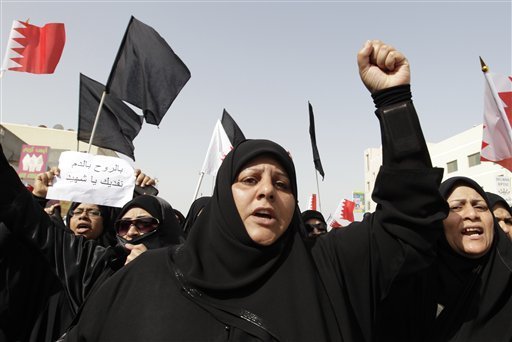
Protests in Bahrain: The Arabian Peninsula as the new Center of Gravity

The fact is without full Pakistani cooperation and substantial Afghani political reform to end corruption and provide real security to Afghani people there is no way to set conditions for a US withdraw that would leave Afghanistan a less dangerous place for its own people and for US and Western security interests. After all no one wants another 9-11 attack.  The US plans to begin withdrawing forces this year but the mission has been extended to at least 2014 at a cost of 119.4 billion dollars per year at the estimated 2011 rate and has increased exponentially since the US involvement began in 2001. The cost of the Afghanistan war in human, material and economic terms has imperiled other strategic priorities and limits the flexibility of the United States in other more vital regions.

Afghanistan is now an expensive sideshow in a larger war where the strategic center of gravity has shifted decisively to the Arabian Peninsula, North Africa and the Eastern Mediterranean where Al Qaeda seeks to use democratic revolts against autocratic despots to further its own ends. The key countries are Yemen, Saudi Arabia, Bahrain and Egypt with Lebanon, Syria, Jordan and the Israeli-Palestinian conflict boiling over.  While all of these crises grow on what seem to be a daily basis the United States and its Allies are mired in Afghanistan reinforcing failure.  Our troops on the ground have not lost a battle but like our brothers in Vietnam could “lose” the war.

This is the point where political and military leaders have to count the cost of the operation and weigh them against our actual strategic interests. The fact is if we withdrew the bulk of our ground combat forces and shifted to a lower footprint special operations and CIA campaign with a goal of ensuring that Al Qaeda cannot operate in Afghanistan with impunity as they did before 9-11 that we would likely be no worse off than we are now and have a greater amount of strategic flexibility to deal with other crises, political, military and humanitarian around the world.

The real crux of the issue is that Afghanistan is much like Stalingrad to the Germans in 1942. It has become a psychological more than a military campaign. We have invested so much in it that we do not believe that we can withdraw even though a scaled back presence would do much to improve our overall strategic situation.  Hitler denuded more important areas to attempt to capture Stalingrad and lost everything. Yes Al Qaeda used Afghanistan as its base to attack us in 2001 but they have moved on and Al Qaeda in Yemen and the Arabian Peninsula is a far greater strategic danger simply because of the oil supplies and strategic waterways in the area.

We simply need to look at all components of national strategy and decide where to concentrate.  Sometimes a strategic withdraw is necessary and actually vital to recover the initiative and set the stage for long term success. In Afghanistan this is not an admission of defeat but rather an acknowledgement that the central focus of the war and our strategic interests are elsewhere.  Our enemies would love to have us continue the campaign in Afghanistan in its current form, they know that our commitment drains our military, imperils our overall strategy and bleeds us dry economically all the while providing propaganda grist for them in their war against us.

However despite the cost the political situation in the United States keeps President Obama invested in Afghanistan. If he withdraws his opponents will say that he lost the war. Unfortunately the war in Afghanistan was ceded to the Taliban in 2003 when we decided that Iraq was more important. Now we reap the terrible consequences of that decision.  Now we have to decide how to make something positive out of this unenviable strategic position. But as Napoleon Bonaparte said “In order to govern, the question is not to follow out a more or less valid theory but to build with whatever materials are at hand. The inevitable must be accepted and turned to advantage.”

Peace

Padre Steve+


2 Comments

Filed under Loose thoughts and musings

A Return to God in the Empty Places

Three years and some change have passed since I returned from Iraq. I originally wrote this article for my former church immediately after returning home. At the time that I wrote it I was well on the way to my psychological and spiritual crash due to PTSD which at the time of writing this I clueless about despite lots of warning signs. Now well into recovery of my life and faith albeit in a different faith community as I was asked to leave my former church last September because I was now “too liberal” I have decided to repost it without any new edits or additions. I do this because for me it is a touch point in relation to being a chaplain serving with military professionals, volunteers fighting a series of unpopular wars. My problem and I think why I keep ending up here is that I was not always a Chaplain. I was not always a Chaplain but I am also a historian and more specifically a military historian and to some degree theorist. Additionally I have served as an enlisted man in the Army National Guard and as a line officer in the Army in command and staff positions before I became a Chaplain first in the Army and then in the Navy, taking a reduction in rank from a senior Army Major to a no time in grade Navy Lieutenant to enter the Navy in February 1999. As such a lot of what I study is military history and the social-political dimension of it.  I graduated from Marine Corps Command and Staff College and was about halfway through my Masters in Military History program of study when I was alerted that I was to be sent to Iraq in the Spring of 2007. As part of both the Command and Staff College and the degree program I spent a lot of time studying counterinsurgency campaigns, especially those of the French in Indo-China and Algeria and I saw many parallels between the professional French soldiers and officers who served in the Paratroops, Foreign Legion and Colonials (Marines) and our military in relation to society and politics in both countries As I point out in the article professional our all volunteer professional military is far different than the men of the Greatest Generation who were for the most part draftees as well as the military that fought in Vietnam the bulk of which were draftees.  This comment is in no way to cast dispersion on the brave men who fought so bravely in both wars, it is just a statement of fact as our military culture is different than it was then as is our political culture. In the middle of this are we happy few, we band of brothers who serve together in very unpopular wars. Tonight I post it again after my first public interview dealing with my struggles to acknowledge all of those that serve today as well as our brothers of the Vietnam era, French Indo-China and Algeria, and the British soldiers who served in so many crummy wars.

Today our Soldiers, Marines, Sailors and Airmen are engaged in three wars in the Middle East, are providing humanitarian relief to the people of Japan as well as other nations and are deployed in many other hot spots that could easily become war zones.  I don’t want anyone to forget them or their sacrifices. Anyway I digress; this is my return to God in the Empty Places.

I have been doing a lot of reflecting on ministry and history over the past few months. While both have been part of my life for many years, they have taken on a new dimension after serving in Iraq. I can’t really explain it; I guess I am trying to integrate my theological and academic disciplines with my military, life and faith experience since my return.

The Chaplain ministry is unlike civilian ministry in many ways. As Chaplains we never lose the calling of being priests, and as priests in uniform, we are also professional officers and go where our nations send us to serve our Soldiers, Sailors, Marines and Airmen. There is always a tension, especially when the wars that we are sent to are unpopular at home and seem to drag on without the benefit of a nice clear victory such as VE or VJ Day in World War II or the homecoming after Desert Shield and Desert Storm.

It is my belief that when things go well and we have easy victories that it is easy for us to give the credit to the Lord and equally easy for others to give the credit to superior strategy, weaponry or tactics to the point of denying the possibility that God might have been involved. Such is the case in almost every war and Americans since World War Two have loved the technology of war seeing it as a way to easy and “bloodless” victory. In such an environment ministry can take on an almost “cheer-leading” dimension. It is hard to get around it, because it is a heady experience to be on a winning Army in a popular cause. The challenge here is to keep our ministry of reconciliation in focus, by caring for the least, the lost and the lonely, and in our case, to never forget the victims of war, especially the innocent among the vanquished, as well as our own wounded, killed and their families.

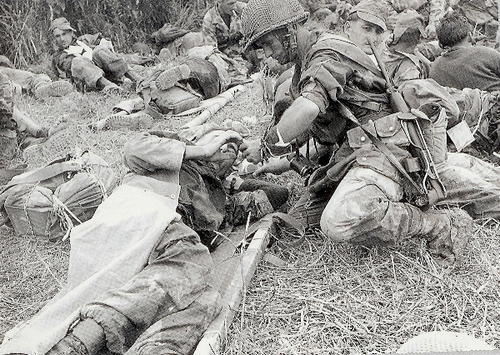
French Paratroop Corpsmen treating wounded at Dien Bien Phu

But there are other wars, many like the current conflict less popular and not easily finished. The task of chaplains in the current war, and similar wars fought by other nations is different. In these wars, sometimes called counter-insurgency operations, guerilla wars or peace keeping operations, there is no easily discernable victory. These types of wars can drag on and on, sometimes with no end in sight. Since they are fought by volunteers and professionals, much of the population acts as if there is no war since it does often not affect them, while others oppose the war.

Likewise, there are supporters of war who seem more interested in political points of victory for their particular political party than for the welfare of those that are sent to fight the wars. This has been the case in about every war fought by the US since World War II. It is not a new phenomenon. Only the cast members have changed.

This is not only the case with the United States. I think that we can find parallels in other militaries. I think particularly of the French professional soldiers, the paratroops and Foreign Legion who bore the brunt of the fighting in Indo-China, placed in a difficult situation by their government and alienated from their own people. In particular I think of the Chaplains, all Catholic priests save one Protestant, at the Battle of Dien Bien Phu, the epic defeat of the French forces that sealed the end of their rule in Vietnam. The Chaplains there went in with the Legion and Paras. They endured all that their soldiers went through while ministering the Sacraments and helping to alleviate the suffering of the wounded and dying. Their service is mentioned in nearly every account of the battle. During the campaign which lasted 6 months from November 1953 to May 1954 these men observed most of the major feasts from Advent through the first few weeks of Easter with their soldiers in what one author called “Hell in a Very Small Place.”

Another author describes Easter 1954: “In all Christendom, in Hanoi Cathedral as in the churches of Europe the first hallelujahs were being sung. At Dienbeinphu, where the men went to confession and communion in little groups, Chaplain Trinquant, who was celebrating Mass in a shelter near the hospital, uttered that cry of liturgical joy with a heart steeped in sadness; it was not victory that was approaching but death.” A battalion commander went to another priest and told him “we are heading toward disaster.” (The Battle of Dienbeinphu, Jules Roy, Carroll and Graf Publishers, New York, 1984 p.239)

Of course one can find examples in American military history such as Bataan, Corregidor, and certain battles of the Korean War to understand that our ministry can bear fruit even in tragic defeat. At Khe Sahn in our Vietnam War we almost experienced a defeat on the order of Dien Bien Phu. It was the tenacity of the Marines and tremendous air-support that kept our forces from being overrun.

You probably wonder where I am going with this. I wonder a little bit too. But here is where I think I am going. It is the most difficult of times; especially when units we are with take casualties and our troops’ sacrifice is not fully appreciated by a nation absorbed with its own issues.

For the French the events and sacrifices of their soldiers during Easter 1954 was page five news in a nation that was more focused on the coming summer. This is very similar to our circumstances today because it often seems that own people are more concerned about economic considerations and the latest in entertainment news than what is going on in Iraq or Afghanistan. The French soldiers in Indo-china were professionals and volunteers, much like our own troops today. Their institutional culture and experience of war was not truly appreciated by their own people, or by their government which sent them into a war against an opponent that would sacrifice anything and take as many years as needed to secure their aim, while their own countrymen were unwilling to make the sacrifice and in fact had already given up their cause as lost. Their sacrifice would be lost on their own people and their experience ignored by the United States when we sent major combat formations to Vietnam in the 1960s. In a way the French professional soldiers of that era have as well as British colonial troops before them have more in common with our force than the citizen soldier heroes of the “Greatest Generation.” Most of them were citizen soldiers who did their service in an epic war and then went home to build a better country as civilians. We are now a professional military and that makes our service a bit different than those who went before us.

Yet it is in this very world that we minister, a world of volunteers who serve with the highest ideals. We go where we are sent, even when it is unpopular. It is here that we make our mark; it is here that we serve our Soldiers, Sailors, Marines and Airmen. Our duty is to bring God’s grace, mercy and reconciliation to men and women, and their families who may not see it anywhere else. Likewise we are always to be a prophetic voice within the ranks.

When my dad was serving in Vietnam in 1972 I had a Sunday school teacher tell me that he was a “Baby Killer.” It was a Catholic Priest and Navy Chaplain who showed me and my family the love of God when others didn’t. In the current election year anticipate that people from all parts of the political spectrum will offer criticism or support to our troops. Our duty is to be there as priests, not be discouraged in caring for our men and women and their families because most churches, even those supportive of our people really don’t understand the nature of our service or the culture that we represent. We live in a culture where the military professional is in a distinct minority group upholding values of honor, courage, sacrifice and duty which are foreign to most Americans. We are called to that ministry in victory and if it happens someday, defeat. In such circumstances we must always remain faithful.

For those interested in the French campaign in Indo-China it has much to teach us. Good books on the subject include The Last Valley by Martin Windrow, Hell in a Very Small Place by Bernard Fall; The Battle of Dienbeinphu by Jules Roy; and The Battle of Dien Bien Phu- The Battle America Forgot by Howard Simpson. For a history of the whole campaign, read Street Without Joy by Bernard Fall. I always find Fall’s work poignant, he served as a member of the French Resistance in the Second World War and soldier later and then became a journalist covering the Nurnberg Trials and both the French and American wars in Vietnam and was killed by what was then known as a “booby-trap” while covering a platoon of U.S. Marines.

There is a picture that has become quite meaningful to me called the Madonna of Stalingrad. It was drawn by a German chaplain-physician named Kurt Reuber at Stalingrad at Christmas 1942 during that siege. He drew it for the wounded in his field aid station, for most of whom it would be their last Christmas. The priest would die in Soviet captivity and the picture was given to one of the last officers to be evacuated from the doomed garrison. It was drawn on the back of a Soviet map and now hangs in the Kaiser Wilhelm Memorial Church in Berlin where it is displayed with the Cross of Nails from Coventry Cathedral as a symbol of reconciliation. I have had it with me since before I went to Iraq. The words around it say: “Christmas in the Cauldron 1942, Fortress Stalingrad, Light, Life, Love.” I am always touched by it, and it is symbolic of God’s care even in the midst of the worst of war’s suffering and tragedy.

Peace

Padre Steve+


2 Comments

Filed under christian life, faith, History, iraq,afghanistan, Military, Tour in Iraq

Padre Steve’s Top 25 Articles of 2010, some Statistics and a Big Thank You to My Readers

Well we are coming to the end of the year here at Padre Steve’s World and as if you didn’t know from my baseball posts I am a fanatic about statistics.  Last year I published my “Top 10” in order to just get an idea about what my readers were reading and to kind of point new readers to articles that might interest them.

Before I delve into this I want to say thank you to all those people that take the time to stop by my little realm of cyber space and to those that take the time to leave comments, positive and even negative. You help me out a lot both in what I write and making me look at different angles on the subjects that I write about. Likewise various reads comments and suggestions have inspired and sometimes provoked me into writing articles that I might not have written otherwise. So thank you for taking the time to look at this site. Unlike the talk radio hosts that as us to give them 3 hours a day 5 days a week I just hope that you stop by once in a while and if you like what you see to come by more often and recommended the site to friends.

What is interesting to me is the way that some of these essays have almost taken on lives of their own and become much more popular than I could have ever imagined.  Who knows maybe I can actually work on finding a publisher this year and get some of this into print and maybe just maybe actually make a little money for my efforts.  I’ve been looking at the 700 plus posts that now are on the site and I can see a few book possibilities and if you have suggestions please let me know.

So as far as statistics go Padre Steve’s World is coming up on 2 Million total views and should go over that mark late today or early tomorrow.  Of those views about 1,280,000 have come this year, I won’t get an exact count until the New Year but then who but me is counting anyway? With those numbers I am averaging about 3500 views a day with the highest today being on June 17th when I had 9647 views.  I have had readers from almost every country or territory in the world from the United States to Togo and almost everywhere in between.  I think that is pretty cool and shows how the internet can reach almost all parts of the globe and I hope that the people in far off lands are getting something positive out of what I write.

This year I have posted 377 articles of which 169 had something to do with Baseball and 70 were about the military and of the military articles 18 dealt with various types of warships and a further dealt with history.  Another 21 articles dealt with Iraq or Afghanistan in one way or another ranging from historical, operational and theoretical articles interspersed with essays about the human cost of war.  Now the categories dealing with religion were harder to quantify as I posted them in several different categories with some articles listed in more than one category. Of these 24 articles dealt with faith, 29 with the Christian life, 49 in the general category of Religion and 53 fit into the rather amorphous category of Philosophy. I also listed 20 in the Pastoral Care section.  Again many of these posts overlapped so depending on the subject an article might be listed under several categories.

I have also more interactive this year with my readers in terms of the comment section and comments listed on my Facebook page for different articles. If you want to subscribe to the site or a single post and its comments feel free to do so and if you want to be a Facebook “friend” just tell me that you read the site when you do the request.

So this year I am posting my top 25 essays of 2010 as I think it gives me and you a better grasp on what people find interesting on this site.  I have also written a little bit of what caused me to write about those subjects.

Music of the 1970s and 1980s topped my list with 3 articles in the top 25 coming it at number 1, 5 and 9

1. I Miss the Music of the 70’s and 80’s I wrote this because I am went to High School and College in the 70s and 80s and like anyone my musical tastes and preferences were set back then. This year the essay which includes a lot of links to music videos has had over 46,000 viewers.

My article about the Rape of Nanking got me some hate mail from Japan

2. “Revisionist” History and the Rape of Nanking 1937 This article grew out of a research paper that I did in one of my classes for my Masters Degree in Military History. I found the subject interesting because I remember some of the Holocaust deniers when I was in college and the fact that people try to expunge the reality of such crimes against humanity is something for which that I have little tolerance. I did get a couple of nasty responses from some Japanese deniers regarding this article. Almost 20,000 people read this article this year.

3. Padre Steve’s World: Top 10 articles of 2009 What can I say? A lot of people, a bit of 13,000 have found my site and other articles through this post.

4. Halloween Book Burning Update: Bring the Marshmallows Please! I wrote this just prior to Halloween of 2009 on a lark. It was fun but serious and deals with a little church near Ashville North Carolina that publicized a book and Bible burning.  About 10,500 folks read this one.

5. More about Why I Miss the Music of the 70’s and 80’s Obviously I wrote this because I didn’t get enough 70s and 80s songs in the first time. Evidently a lot of people like this one as well as about 10,500 folks read it in 2010 and like the first edition it is chocked full of links to music videos.

The Einsatzgrüppen were a key component of Hitler’s racial war in the East

6. The Ideological War: How Hitler’s Racial Theories Influenced German Operations in Poland and Russia This article also came out of a lot of study and thought. I was a history major in college and my concentration area was in modern German History particularly Weimar and the Nazi Era. In the following 28 years or so I have continued to study and I wrote this essay for one of my Masters Degree classes.  About 10,300 people have read this one this year.

7. Reformation Day: How Martin Luther and Hans Kung Brought Me to an Anglo-Catholic Perspective, a Book and Bible Burning Reaches Ludicrous Speed and Yankees take Game Three 8-5 I wrote this during the 2009 World Series and it was kind of a catch all article for that day. The primary focus was Reformation Day and my journey to a Catholic faith.  It also included an update about the previously mentioned book and Bible burning and game three of the 2009 World Series between the Yankees and Phillies. About 7300 people looked at this article since January 1st 2010.

Star Trek is a part of my spiritual journey

8. Star Trek, God and Me 1966 to 2009 This article came out of my spiritual journey and kind of wove my faith with Star Trek.  I grew up with the original series but find Star Trek TNG and DS9 to be my favorites and I loved the new movie.  When I wrote the article back in May of 2009 I was still struggling with faith and in the midst of a spiritual crisis. Even though it is a relatively old article on the site that it had almost 6000 views this year which I attribute to the popularity of Star Trek and not this site or me.

9. Padre Steve’s Favorite Love Songs…Happy Valentine’s Day! Once again I write about music in this post with many love songs from the 1970s and 80s as well as a few from other eras. Close to 6,000 folks have looked at this since I wrote it in February and it too has a lot of music video links.

10. Can Anybody Spare a DIME: A Short Primer on Early Axis Success and How the Allies Won the Second World War This I kind of wrote on the spur of the moment as I was thinking about the concept of the DIME, or the Diplomatic, Intelligence, Military and Economic factors of national power and how it relates to war, in this case World War Two. About 4800 people read this and though it is to me a rather innocuous post it attracted the attention of a Neo-Nazi White Supremacist who didn’t like it.  The guy would bother me a number of other times and even threaten my life on one of my Norfolk Tides Baseball posts.  Such is the danger of putting stuff in public but the Neo-Nazis can pound sand.

11. Oh the Pain…Padre Steve’s Kidney Stone Naming Contest In February I got slammed hard by a nasty 7mm Kidney Stone that lodged at the top of the bladder and would move. I was out of action for over a month and as I waited for my surgery to get the nasty thing out I had a naming contest. So far about 4600 people have read this and I guess that it is one of the more humorous posts on this very painful subject on the internet. By the way I named him Adolf.

12. Background to “The Pacific” Part One: The Guadalcanal Campaign and the Beginning of Joint Operations I had originally written this article for my Master’s Degree program. When the HBO series The Pacific came out I re-wrote it and published it. Almost 4600 people have read this article.

The Landings at D-Day have always been a favorite subject of mine and this article was written in a more reflective moment

13. D-Day- Courage, Sacrifice and Luck, the Costs of War and Reconciliation This article was written in a more reflective moment before the 2009 D-Day anniversary. It has retained its popularity with almost 4500 views this year.

14. 20 Years: The Fall of the Berlin Wall and the End of the Cold War I wrote this around the anniversary of the fall of the Berlin Wall. Since we lived in Germany where I was a Platoon Leader, Company XO and Company Commander in the Cold War and having travelled to East Berlin in November 1986 I couldn’t help but write about it. We cried when the wall came down and I have had the chance to travel in the former East Germany on a number of occasions since the fall of the wall. A bit over 3700 people have read this article.

The loss of shipmates and friends like Senior Chief Pam Branum played a big role in my writing since I started Padre Steve’s World

15. Turning Points: The Battle of Midway, Randy Johnson Gets his 300th Win and Chief Branum Gets Her Star This was a catch-all article when I wrote it back in June of 2009. I was thinking about the Battle of Midway, celebrating Randy Johnson getting his 300th career victory and remembering a shipmate and friend Senior Chief Petty Officer Pamela Branum who was posthumously promoted at her memorial service.  A bit over 3600 people had read this article.

16. Memorable Recruiting Slogans and the All Volunteer Force This was a fun article because it took me back to the days when I first enlisted in the Army national Guard in 1981.  About 3600 folks viewed this article this year.

17. Operation “Dachs” My First Foray into the Genre “Alternative History” I wrote this originally for my Master’s Degree when I asked permission of a professor to do an alternative history of the Battle of Kursk.  I write it using actual sources but altering one key fact which changes the story. What sets it apart is that I get to kill off Hitler before the battle presuming that the anti-Hitler plotters bomb had gone off in his aircraft as he returned to Germany following his visit to Army Group Center.  Almost 3600 people read this in 2010.

The Battle of Stalingrad

18. The Anniversary of Disaster: Stalingrad 67 Years Later This was an article that I modified from a paper that I wrote for my Master’s degree.  I find I have sympathy for the struggle of common soldiers in hopeless causes, even when they fight in causes and under leaders that are unjust or even evil as the Nazis were. Just over 3000 people read this article this year.

The role of Jackie Robinson and other African American Baseball Players in helping end segregation and give added support to the Civil Rights Movement led by Dr Martin Luther King and others

19. Jackie Robinson and Dr. Martin Luther King they Changed America I find the Civil Rights movement to be one of the most important parts of American history and Jackie Robinson possibly had as much or more impact in the movement as anyone with the exception of Doctor Martin Luther King Junior. I know a number of former Negro League players and I respect their struggle on the diamond and how they helped integrate America.  Almost 3000 people read this article.

20. Laughing to the Music: The Musical Genius of Mel Brooks Mel Brooks is my favorite filmmaker and I probably know almost every song in his films by heart. Most people don’t know that Brooks wrote almost all the music in his films. Just over 2900 folks have read this article which like my other music articles is full of links to videos of Mel Brook’s music.

The Battleships of Pearl Harbor essay focused on what happened to the great ladies of Pearl Harbor like the USS West Virginia above

21. The Battleships of Pearl Harbor This was the first article about the attack on Pearl Harbor. I looked at the Battleships which were present and what happened to each of them. Almost 2900 people took a look at this article which spawned articles about the ships on the far side of Ford Island and one about all the ships present.

22. Padre Steve’s Decade in Review: Up Down Tryin’ to Get the Feeling Again I wrote this on New Year’s Eve day in 2009. It was kind of a fun but serious look at some of the events of the first decade of the new millennium. Almost 2800 folks read this one.

23. Why Johnny Can’t Read Maps: NCAA Tournament Geography for Dummies and a Solution I wrote this as the 2010 NCAA Basketball Tournament began. I just hit tilt on way that the NCAA names the brackets by geographic areas that have no connection with some of the cities in them. Like when is Seattle in the Southeast? Give me a break. Evidently almost 2600 people agree with me.

24. Mortain to Market-Garden: A Study in How Armies Improvise in Rapidly Changing Situations I wrote this originally for my Master’s degree program a few years back. I thought about it more and took another crack at it for the website. Almost 2500 folks took a look a this article this year.

The French in Indochina and Algeria and how we can learn from their experience especially on how such campaigns affect the men that fight them

25. Lessons for the Afghan War: The Effects of Counterinsurgency Warfare on the French Army in Indo-China and Algeria and the United States Military in Vietnam I have studied insurgencies since before I went to Iraq when I started my Master’s Degree in Military History program.  As I studied it I began to buy all the books that I could on the subject and with my Iraq experience still resonating in me, I wrote about how counter-insurgency campaigns affect the Armies and Soldiers that wage them.

So my friends thank you for your support over the past year. I pray that you have a wonderful New Year and hope that you keep stopping by.

Peace

Padre Steve+


1 Comment

Filed under Loose thoughts and musings

Christmas at the Front 1776-2010

Note: I wrote most of this on Christmas but didn’t finish it until a bit after 1AM on the 26th.

Today as on so many Christmas Days in days gone by military personnel serve on the front lines in wars far away from home and sometimes not far from their homes. Today American and NATO troops engage a resourceful and determined enemy in Afghanistan. To the west Americans support our Iraqi allies in their continued battle to end terrorism in that country while in many corners of the globe others stand watch on land, at sea and in the air. Unfortunately wars continue and until the end of time as we know it there will likely be war without end.

I have done my time in Iraq at Christmas on the Syrian-Iraqi Border with our Marine advisors and their Iraqis.  Since returning home have thought often of those that remain in harm’s way as well as those soldiers, sailors, Marines and airmen, American and from other nations that have spent Christmas on the front lines. Some of these events are absolutely serious while others display some of the “light” moments that occur even in the most terrible of manmade tragedies.

In American history we can look back to 1776, of course we could go back further but 1776 just sounds better. On Christmas of 1776 George Washington took his Continental Army across the Delaware to attack the British garrison at Trenton. Actually it was a bunch of hung over Hessians who after Christmas dinner on the 24th failed to post a guard but it was an American victory. In 1777 Washington and his Army had a rather miserable Christmas at Valley Forge where they spent the winter freezing their asses off and getting drilled into a proper military force by Baron Von Steuben.

While not a battle in the true sense of the word the Cadets at West Point wrote their own Christmas legend in the Eggnog Riot of 1826 when the Cadets in a bit of holiday revelry had a bit too much Eggnog and a fair amount of Whiskey and behaved in a manner frowned upon by the Academy administration. Needless to say that many of the Cadets spent the Christmas chapel services in a hung over state with a fair number eventually being tossed from the Academy for their trouble.

In 1837 the U.S. Army was defeated at the Battle of Lake Okeechobee by the Seminole Nation, not a Merry Christmas at all.  In 1862 the Army of the Potomac and Army of Northern Virginia faced each other across the Rappahannock River after the Battle of Fredericksburg while to the south in Hilton Head South Carolina 40,000 people watched Union troops play baseball some uttering the cry of many later baseball fans “Damn Yankees.” In 1864 the Army of the Potomac and Army of Northern Virginia faced each other again in the miserable trenches of Petersburg while General William Tecumseh Sherman enjoyed Christmas in Savannah Georgia after cutting a swath of destruction from Atlanta to the sea. He presents the city to Lincoln who simply says “nice, but I really wanted Richmond.”

Napoleon had something to celebrate on December 25th 1801 after surviving an assassination attempt on Christmas Eve and 1809 he was celebrating his divorce from Empress Josephine which had occurred on the 21st.

Meanwhile in Europe the 1914 “Christmas Truce” began between British and German troops and threatened to undo all the hard work of those that made the First World War possible.  Thereafter the High Commands of both sides ensured that such frivolity never happened again.

U.S. Soldiers and Anti-Tank Gun at the Battle of the Bulge

World War II brought much suffering in 1941 after Pearl Harbor the Japanese forced the surrender of Hong Kong and its British garrison while two days later the Soviets launched their counterattack at Moscow against Hitler’s Wehrmacht and the British were retaking Benghazi from the Afrika Corps.  A year later the Americans were clearing Guadalcanal of the Japanese and the Red Army was engaged in a climactic battle against the encircled German 6th Army at Stalingrad. At Stalingrad a German Physician named Kurt Reuber who is also a Lutheran minister draws “The Madonna of Stalingrad.”

The drawing which was taken out of Stalingrad by one of the last German officers to be evacuated now hangs in the Kaiser Wilhelm Memorial Church in Berlin. Reuber would draw another in 1943 while in a Soviet POW camp in which he would die in less than a month after that Christmas. Reuber wrote:

“I wondered for a long while what I should paint, and in the end I decided on a Madonna, or mother and child. I have turned my hole in the frozen mud into a studio. The space is too small for me to be able to see the picture properly, so I climb on to a stool and look down at it from above, to get the perspective right. Everything is repeatedly knocked over, and my pencils vanish into the mud. There is nothing to lean my big picture of the Madonna against, except a sloping, home-made table past which I can just manage to squeeze. There are no proper materials and I have used a Russian map for paper. But I wish I could tell you how absorbed I have been painting my Madonna, and how much it means to me.”
“The picture looks like this: the mother’s head and the child’s lean toward each other, and a large cloak enfolds them both. It is intended to symbolize ‘security’ and ‘mother love.’ I remembered the words of St.John: light, life, and love. What more can I add? I wanted to suggest these three things in the homely and common vision of a mother with her child and the security that they represent.”

In 1943 the Marines were battling the Japanese at New Britain while the Red Army was involved in its winter offensive against the Wehrmacht. In 1944 the Russians were advancing in Hungary, the Americans were engaged in a desperate battle with the Germans in the Ardennes with the German 2nd Panzer Division running out of gas 4 miles from the Meuse River and were destroyed by the American 2nd Armored Division. In the Pacific McArthur’s forces were battling the Japanese in the Philippines.

French Chaplain and Soldiers in Indochina

In the years following the Second World War Christmas was celebrated even while armies continued to engage in combat to the death. Christmas of 1950 was celebrated in Korea as the last American forces were withdrawn from the North following the Chinese intervention which the 1st Marine Division chewed up numerous Red Chinese divisions while fighting its way out of the Chosin Reservoir.  In the following years a stalemate along the front brought no end to the war and In French Indo-China the French garrison of Dien Bien Phu celebrated Christmas in primitive fashion unaware that General Giap was already marshalling his forces to cut them off and then destroy them shortly after Easter of 1954.   In 1964 the U.S. commits to the war in Vietnam and for the next 9 years American Soldiers, Marines, Sailors and Airmen will battle the North Vietnamese and Viet Cong with Marines fighting the North at Khe Sanh during Christmas of 1967.

Christmas on the Syrian Border with USMC Advisors

In the years after Vietnam American troops would spend Christmas in the Desert of Saudi Arabia preparing for Operation Desert Storm in 1990, in Somalia the following year and in the Balkans. After September 11th 2001 U.S. Forces spent their first of at least 10 Christmas’s in Afghanistan and in 2003 begin the first for at least 8 Christmas’s in Iraq.

Today Americans serve around the world far away from home fighting the war against Al Qaeda and its confederates and some will die even on this most Holy of Days while for others it will be their last Christmas.

Please keep them and all who serve now as well as those that served in the past, those that remain and those that have died in your prayers.

Peace

Padre Steve+


1 Comment

Filed under faith, History, Military

Stalingrad: Disaster on the Volga

Madonna of Stalingrad: Drawn by a German Chaplain and physician the piece was taken out of the city by one of the last officers to get out. It is now displayed in the Kaiser Wilhelm Memorial Church in Berlin

Sunday the 31st of January marks the surrender of the remnants of the German 6th Army to the Soviets at Stalingrad. The focus of this article is on how the Germans and Russians fought the Stalingrad campaign. In particular it is an analysis of the way the governments and military’s of both Nazi Germany and the Soviet Union planned and executed strategy during the course of the campaign adjusted to the situation and how the campaign ended. It is also a reminder of the price that ordinary soldiers can pay when a country commits them to war. I conclude with a potential modern application for the US and NATO in Afghanistan.

Stalingrad: Primary or Secondary Objective

The mistakes began early in the planning and conduct of the operation

Following the Soviet winter offensive and the near disaster in front of Moscow the German High Command was faced with the strategic decision of what to do in the 1942 campaign.  Several options were considered and it was decided to seize the Caucasus oilfields and capture or neutralize the city of Stalingrad on the Volga.  However, the High Command was divided on the actual objective of the campaign.

OKH under the guidance of General Halder assumed that Stalingrad was the objective and the advance into the Caucasus was a blocking effort.[i] Hitler and OKW planned to capture the Caucasus oil fields and capture or neutralize Stalingrad to secure the left flank.[ii] Both OKH and OKW considered Stalingrad significant but “German commanders initially regarded it as a weigh station en route to the Caucasus oil fields.”[iii] The conflict echoed in the ambiguity of Directive No. 41 which “included the ‘seizure of the oil region of the Caucasus’ in the preamble concerning the general aim of the campaign, yet made no mention of this in the main plan of operations.”[iv] At the planning conference held at Army Group South in early June “Hitler hardly mentioned Stalingrad. As far as his Generals were concerned it was little more than a name on the map. His obsession was with the oil fields of the Caucasus.”[v] Manstein noted that “Hitler’s strategic objectives were governed chiefly by the needs of his war economy….”[vi] Anthony Beevor notes that at this stage of planning “the only interest in Stalingrad was to eliminate the armaments factories there and secure a position on the Volga. The capture of the city was not considered necessary.”[vii] German planners “expected that the Soviets would again accept decisive battle to defend these regions.”[viii]

In Moscow Stalin and his Generals attempted to guess the direction of the impending German offensive.  “Stalin was convinced that Moscow remained the principle German objective…Most of the Red Army’s strategic reserves…were therefore held in the Moscow region.”[ix] To disrupt the German offensive and to attempt to recover Kharkov three offensives were launched by Red Army forces under the direction of Stavka. The largest of these on Kharkov was defeated between 12-22 May with the loss of most of the armor in southern Russia. This coupled with an equally disastrous defeat of Red Army forces in Crimea by Von Manstein’s 11th Army meant that the Red Army would face the Germans in a severely weakened condition.[x]

Operation Blau: Opening Moves and Divergent Objectives

Panzers cross the Don

The German offensive began on 28 June under the command of Field Marshal von Bock. Bock’s command included two separate army groups, Army Group B under General Von Weichs with 2nd Army, 6th Army and 4th Panzer Army operated in the northern part of the operational area. Army Group A was to the south with 17th Army and 1st Panzer Army.[xi] Army Group B provided the main effort and quickly smashed through the defending Soviet armies and by the 20th Hitler believed that “the Russian is finished.”[xii] One reason for the German success in the south was that until July 7th Stalin believed that Moscow was still the primary objective.[xiii] Bock was prevented by Hitler from destroying Soviet formations left behind and was relieved of command by Hitler. He was replaced by Von Weichs which created a difficult command and control problem.  Manstein noted that this created a “grotesque chain of command on the German southern wing” with the result that Army Group A had “no commander of its own whatever” and Army Group B had “no few than seven armies under command including four allied ones.”[xiv]

Destroyed Soviet T-34s

This decision proved fateful.  Hitler’s decided to redirect the advance of the 4th Panzer Army to support an early passage of the lower Don, diverting it from its drive on Stalingrad.  Additionally the army groups became independent of each other when Bock was relieved of command.  They were “assigned independent-and diverging-objectives” under the terms of Directive No.45.[xv] This combination of events would have a decisive impact on the campaign.  The decision prevented a quick seizure of Stalingrad by 4th Panzer Army followed by a hand over to 6th Army to establish the “block” as described by Directive No.41.  Kleist noted that he didn’t need 4th Panzer Army’s help to accomplish his objectives and that it could have “taken Stalingrad without a fight at the end of July….”[xvi]

Field Marshall Von Paulus

The result was damning. Air support and fuel needed by Army Group A was transferred to 6th Army, denuding Army Group A of the resources that it needed to conclude its conquest of the Caucasus.[xvii] At the same time it denied Army Group B of the Panzer Army that could seize Stalingrad when it was still possible to do so.  Beevor calls Hitler’s decision a disastrous compromise.[xviii] Halder believed the decision underestimated the enemy and was “both ludicrous and dangerous.”[xix]

Focus on Stalingrad

Sturmgeschutz Battalion Advancing toward Stalingrad

On July 22 as the Wehrmacht ran short on fuel and divisions to commit to the Caucasus, and 6th Army fought for control of Voronezh the Soviets created the Stalingrad Front. Stavka moved an NKVD Division to the city,[xx] and rapidly filled the new front with formations transferred from the Moscow Front.[xxi] Stalin issued Stavka Order 227, better known as “No Step Back” on 28 July. The order mandated that commanders and political officers who retreated would be assigned to Penal battalions[xxii] and armies were to form three to five special units of about 200 men each as a second line “to shoot any man who ran away.”[xxiii] Russian resistance west of the Don slowed the German advance. German commanders were astonished “at the profligacy of Russian commanders with their men’s lives.”[xxiv] Von Kleist compared the stubbornness of Russians in his area to those of the previous year and wrote that they were local troops “who fought more stubbornly because they were fighting to defend their homes.”[xxv] Additionally, Stalin changed commanders frequently in the “vain hope that a ruthless new leader could galvanize resistance and transform the situation.”[xxvi] General Chuikov brought the 64th Army into the Stalingrad Front in mid-July to hold the Germans west of the Don.[xxvii]

German Militarpfarrer (Chaplain) leading field service in August 1942

Further weakening the Germans OKW transferred key SS Panzer Divisions and the Grossdeutschland Division to France. Supporting Hungarian, Italian and Romanian allied armies which lacked motorization, modern armor or anti-tank units were unable to fulfill the gaps left by the loss of experienced German divisions and the expectations of Hitler.[xxviii] 6th Army was virtually immobilized for 10 days due to lack of supplies allowing the Russians to establish a defense on the Don Bend.[xxix] To the south the Germans were held up by lack of fuel and increased Soviet resistance including the introduction of a force of 800 bombers.[xxx] Glantz and House note that with the fall of Rostov on July 23rd “Hitler abruptly focused on the industrial and symbolic value of Stalingrad.”[xxxi] Undeterred by warnings from Halder that fresh Russian formations were massing east of the Volga and Quartermaster General, Wagner, who guaranteed that he could supply either the thrust to the Caucasus or Stalingrad but not both.[xxxii] Again frustrated by slow progress Hitler reverted to the original plan for 4th Panzer Army to assist 6th Army at Stalingrad, but the cost in time and fuel were significant to the operation and the question was whether “they could make up for Hitler’s changes in plan.”[xxxiii]

Strategic Implications

General Chuikov who directed the defense of Stalingrad during the battle

Soviet Naval Infantry and Political Officer

The changes in the German plan had distinct ramifications for both sides.  Von Mellenthin wrote that “the diversion of effort between the Caucasus and Stalingrad ruined our whole campaign.”[xxxiv] The Germans could not secure the Caucasus oil fields which Hitler considered vital to the German war effort.  They advanced deep into the region and captured the Maikop oil fields, though they were almost completely destroyed by the retreating Russians.[xxxv] Army Group A was halted by the Russians along the crests of the Caucasus on August 28th.[xxxvi] This left Hitler deeply “dissatisfied with the situation of Army Group A.”[xxxvii] Kleist and others attributed much of the failure to a lack of fuel[xxxviii] and Blumentritt noted that Mountain divisions that could have made the breakthrough were employed along the Black Sea coast in secondary operations.[xxxix]

JU-87 Stuka over Stalingrad

Fuel and supply shortages delayed 6th Army’s advance while Hoth’s 4th Panzer Army was needlessly shuttled between Rostov and Stalingrad. By the time it resumed its advance the Russians “had sufficiently recovered to check its advance.”[xl] As 6th Army advanced the “protection of Army Group B’s ever-extending northern flank was taken over by the 3rd Rumanian, the 2nd Hungarian and the newly formed 8th Italian Army.”[xli] The allied armies were neither equipped for the Russian campaign nor well motivated.[xlii] The supply shortage in both army groups was not helped by a logistics bottleneck. All supplies came over a single Dnieper crossing, which Manstein noted, prevented swift movement of troops from one area to another.[xliii]

Reconnaissance Battalion of 24th Panzer Division near Stalingrad

Von Paulus’ 6th Army now attempted to rush Stalingrad between the 25th and 29th of July, while Hoth milled about on the lower Don.  However, Paulus’s piecemeal commitment of his divisions and failure to concentrate in the face of unexpectedly strong Soviet resistance caused the attacks to fail.  Paulus halted 6th Army on the Don so it could concentrate its forces and build its logistics base,[xliv] and to allow Hoth to come up from the south. This delay allowed the Russians to build up forces west of Stalingrad and reinforce the Stalingrad front and strengthen the defenses of the city,[xlv] and due to the distances involved it was easier for the Russians to reinforce the Stalingrad front.[xlvi] It also allowed the Russians to fill a number of key leadership positions with Generals who would skillfully fight the battle.[xlvii]

Russian Naval Infantry during early phase of battle

Hitler now focused on the capture of Stalingrad despite the fact that “as a city Stalingrad was of no strategic importance.”[xlviii] Strategically, its capture would cut Soviet supply lines to the Caucasus,[xlix] but this could be achieved without its capture. The checks in the south “began to give Stalingrad a moral importance-enhanced by its name-which came to outweigh its strategic value.”[l] To Hitler Stalingrad would gain “a mystic significance”[li] and along with Leningrad became “not only military but also psychological objectives.”[lii]

Red Army Armored troops using Lend-Lease American M3 Stuart and M3 Grant tanks

The Germans mounted a frontal assault with 6th Army and elements of 4th Panzer Army despite air reconnaissance that “the Russians are throwing forces from all directions at Stalingrad.[liii] Paulus as the senior General was in charge of the advance, with Hoth subordinated to him, but the attack had to wait until Hoth’s army could fight its way up from the south.[liv] Von Mellenthin comments rightly that “when Stalingrad was not taken on the first rush, it would have been better to mask it….”[lv] It is clear that the German advance had actually reached its culminating point with the failure of the advance into the Caucasus and Paulus’s initial setback on the Don, but it was not yet apparent to many involved.[lvi] The proper course of action would have been to halt and build up the front and create mobile reserve to parry any Russian offensive along northern flank while reinforcing success in the Caucasus. Manstein wrote that “by failing to take appropriate action after his offensive had petered out without achieving anything definite, he [Hitler] paved the way to the tragedy of Stalingrad!”[lvii]

Transfixed by Stalingrad

German Stug III at Stalingrad

On August 19th Paulus launched a concentric attack against the Russian 62nd and 64th Armies on the Don.  The attack ran into problems, especially in Hoth’s sector.[lviii] Yet, on the 22nd the 14th Panzer Corps “forced a very narrow breach in the Russian perimeter at Vertyachi and fought its way across the northern suburbs of Stalingrad,”[lix] and reached the Volga on the 23rd. That day 4th Air Fleet launched 1600 sorties against the city dropping over 1,000 tons of bombs.[lx] The breakthrough imperiled the Soviet position they had concentrated their strongest forces against Hoth.[lxi] The Germans held air superiority and continued heavy bombing attacks.  During the last days of August 6th Army “moved steadily forward into the suburbs of the city, setting the stage for battle.”[lxii] As the Soviets reacted to Paulus, Hoth achieved a breakthrough in the south which threatened the Russian position.  However 6th Army was unable to disengage its mobile forces to link up with the 4th Panzer Army and another opportunity had been missed.[lxiii]

German unit crossing the Don

As 6th Army moved into the city Yeremenko ordered attacks against Hube’s 16th Panzer Division and Soviet resistance increased as more formations arrived the Germans suffered one of their heaviest casualty rates.”[lxiv] Though unsuccessful the counterattacks “managed to deflect Paulus’s reserves at the most critical moment.”[lxv] The Germans remained confident the first week of September as 6th Army and 4th Panzer Army linked up, but Yeremenko saved his forces by withdrawing and avoiding encirclement west of the city, retiring to an improvised line close to the city.[lxvi] On September 12th Chuikov was appointed to command 62nd Army in Stalingrad.  Chuikov understood that there “was only one way to hold on. They had to pay in lives. ‘Time is blood,’ as Chuikov put it later.”[lxvii] Stalin sent Nikita Khrushchev to the front “with orders to inspire the Armies and civilian population to fight to the end.”[lxviii] 13th Guards Rifle Division arrived on the 14th saved the Volga landings but it lost 30% casualties in its first 24 hours of combat.[lxix]

T-34 in Stalingrad

An NKVD regiment and other units held the strategically sited Mamaev Kurgan, keeping German guns from controlling the Volga.[lxx] The defenders fought house to house and block by block, Army and NKVD were reinforced by Naval Infantry.  Chuikov conducted the defense with a brutal ferocity, relieving senior commanders who showed a lack of fight and sending many officers to penal units.  Chuikov funneled massed German attacks into “breakwaters” where the panzers and infantry could be separated from each other causing heavy German casualties.[lxxi]

Street Fighting


Now the “city became a prestige item, its capture ‘urgently necessary for psychological reasons,’ as Hitler declared on October 2. A week later he declared that Communism must be ‘deprived of its shrine.’”[lxxii] The Germans did continue to gain ground, however slowly and at great cost, especially among their infantry, so much so that companies had to be combined.   Chuikov used his artillery to interdict the Germans from the far side of the Volga and the fight in the city was fought by assault squads with incredible ferocity and the close-quarter combat was dubbed “’Rattenkrieg’ by German soldiers.”[lxxiii] Paulus brought more units into the city and continued to slowly drive the Russians back against the river, by early October Chuikov wondered if he would be able to hold.[lxxiv] By early November Chuikov “was altogether holding only one-tenth of Stalingrad-a few factory buildings and a few miles of river bank.”[lxxv] Paulus expected “to capture the entire city by 10 November,”[lxxvi] despite the fact that many units were fought out. The 6th Army judged that 42% of the battalions of 51st Corps were fought out.[lxxvii] On 9 November Hitler declared “No power on earth will force us out of Stalingrad again!”[lxxviii]

Soviet Counteroffensive: Disaster on the Flanks

Soviet offensive on the flanks

Hungarian withdraw

Hungarian dead

On September 24th Hitler relieved Halder for persisting in explaining “what would happen when new Russian reserve armies attacked the over-extended flank that ran out to Stalingrad.”[lxxix] Many in the German side recognized the danger. Blumentritt said “The danger to the long-stretched flank of our advance developed gradually, but it became clear early enough for anyone to perceive it who was not willfully blind.”[lxxx] Warnings were also given by Rumanian Marshall Antonescu and the staff’s of Army Group B and 6th Army[lxxxi] but Hitler was transfixed on Stalingrad.  In doing so the Germans gave up the advantage of uncertainty and once their “aim became obvious…the Russian Command could commit its reserves with assurance.”[lxxxii]

Chuikov and his staff

In the midst of Stalin’s concern about Stalingrad Stavka planners never lost sight of their goal to resume large scale offensive operations and destroy at least one German Army Group.[lxxxiii] Unlike Hitler Stalin had begun to trust his Generals and Stavka under the direction of Marshal Vasilevsky produced a concept in September to cut off the “German spearhead at Stalingrad by attacking the weak Rumanian forces on its flanks.”[lxxxiv] At first Stalin “showed little enthusiasm” for the attack, fearing that Stalingrad might be lost, but on 13 September he gave his full backing to the proposal[lxxxv] which Zhukov, Vasilevsky and Vatutin developed into a plan involving two operations, Operation Uranus, to destroy the German and allied forces at Stalingrad, Operation Saturn to destroy all the German forces in the south and a supporting attack to fix German forces in the north, Operation Mars aimed at Army Group Center.[lxxxvi]

Soviet Katusha Rockets

To accomplish the destruction of 6th Army and part of 4th Panzer Army the Red Army employed over 60% of the “whole tank strength of the Red Army.”[lxxxvii] Strict secrecy combined with numerous acts of deception was used by the Red Army to disguise the operation.[lxxxviii] The plan involved an attack against 3rd Romanian Army on the northern flank by 5th Tank Army and two infantry armies with supporting units.[lxxxix] In the south against 4th Rumanian Army and weak element of 4th Panzer Army another force of over 160,000 men including 430 tanks were deployed.[xc] Despite warnings from his Intelligence Officer, Paulus did not expect a deep offensive into his flanks and rear and made no plans to prepare to face the threat.[xci] Other senior officers believed that the attack would take place against Army Group Center.[xcii] Warlimont notes that there was a “deceptive confidence in German Supreme Headquarters.”[xciii]

Luftwaffe JU-52s made many resupply runs into the pocket but suffered great losses

The storm broke on 19 November as Soviet forces attacked rapidly crushing Romanian armies in both sectors[xciv] linking up on the 23rd.[xcv] 48th Panzer Corps supporting the Romanians was weak and had few operational tanks.[xcvi] It attempted a counterattack but was “cut to pieces” in an encounter with 5th Tank Army.[xcvii] A promising attempt by 29th Motorized division against the flank of the southern Russian pincer was halted by the Army Group and the division was ordered to defensive positions south of Stalingrad.[xcviii] German airpower was neutralized by bad weather.[xcix] Paulus continued to do nothing as since the attacks were outside of his area of responsibility and waited for instructions.[c] As a result the 16th and 24th Panzer Divisions which could have assisted matters to the west remained “bogged down in street-fighting in Stalingrad.”[ci] Without support 6th Army units west of Stalingrad were forced back in horrific conditions.  By the 23rd 6th Army was cut off along with one corps of 4th Panzer Army and assorted Romanian units, over 330,000 men.  This now entrapped force that would require seven rifle armies and much staff attention to eliminate.[cii]

The Death of 6th Army

Paulus Surrenders

Hitler ordered Manstein to form Army Group Don to relieve Stalingrad. Hitler would not countenance a break out and wanted Manstein to break through and relieve 6th Army.[ciii] Hitler refused a request by Paulus on 23 November to move troops to prepare for a possible a break out attempt, assuring him that he would be relieved.[civ] Albert Speer notes that Zeitzler who replaced Halder insisted that the Sixth Army must break out to the west.”[cv] Hitler told Zeitzler that “We should under no circumstances give this up. We won’t get it back once it’s lost.”[cvi] Goering promised the Luftwaffe would be able to meet the re-supply needs of 6th Army by air, even though his Generals knew that it was impossible with the number of transport aircraft available.[cvii] Hitler took Goering at his word and exclaimed “Stalingrad can be held! It is foolish to go on talking any more about a breakout by Sixth Army…”[cviii] and a Führer decree was issued ordering that the front be held at all costs.[cix] Goerlitz states that “Hitler was incapable of conceiving that the 6th Army should do anything but fight where it stood.”[cx] Likewise Manstein had precious few troops with which to counterattack and had to protect the flank of Army Group A deep in the Caucasus. His army group was only corps strength and was spread across a 200 mile front.[cxi] Any relief attempt had to wait for more troops, especially Panzers.  Manstein too believed that the best chance for a breakout had passed and that it was a serious error for Paulus to put the request to withdraw through to Hitler rather than the Army Group or act on his own.[cxii] Many soldiers were optimistic that Hitler would get them out.[cxiii] Other generals like Guderian, Reichenau or Hoeppner might have acted, but Paulus was no rebel.[cxiv]

German POWs only 5000 of some 90,000 would see home again

Operation Saturn began on 7 December destroying the Italian 8th Army and forcing the Germans to parry the threat.[cxv] A relief attempt by 57th Panzer Corps under Hoth on 12 December made some headway until a massive Soviet counterattack on 24 December drove it back.[cxvi] This attack was hampered by OKW’s refusal to allocate the 17th Panzer and 16th Motorized divisions to Manstein,[cxvii] and by 6th Army not attacking out to link with the relief force.[cxviii]By 6 January Paulus signaled OKW: Army starving and frozen, have no ammunition and cannot move tanks anymore.”[cxix] On 10 January the Soviets launched Operation Ring to eliminate the pocket and despite all odds German troops fought on. On the 16th Paulus requested that battle worthy units be allowed to break out, but the request was not replied to.[cxx] On the 22nd the last airfield had been overrun and on 31 January Paulus surrendered.[cxxi]

Analysis: What Went Wrong

Stalingrad had strangely drawn the attention of both sides, but the Russians never lost sight of their primary objectives during the campaign. The Germans on the other hand committed numerous unforced errors mostly caused by Hitler and or von Paulus. These mistakes began early in the planning and After the fall of Stalingrad as the Soviets attempted to follow up their success by attempted to cut off Army Group “A” Manstein was permitted to wage a mobile defense while Von Kleist managed to withdraw with few losses.[cxxii] The superior generalship of Manstein and Von Kleist prevented the wholesale destruction of German forces in southern Russia and Manstein’s counter offensive inflicted a severe defeat on the Soviets. However the German Army had been badly defeated.  The seeds of defeat were laid early, the failure to destroy bypassed Soviet formations in July, the diversion of 4th Panzer Army from Stalingrad, and the divergent objectives of trying to capture the Caucasus and Stalingrad at the same time.  This diluted both offensives ensuring that neither succeeded.  Likewise the failure to recognize the culminating point when it was reached and to adjust operations accordingly was disastrous for the Germans. The failure create a mobile reserve to meet possible Russian counter offensives, and the fixation on Stalingrad took the German focus off of the critical yet weakly held flanks. The hubris of Hitler and OKW to believe that the Russians were incapable of conducting major mobile operations even as Stavka commenced offensive operations on those flanks all contributed to the defeat.  Clark notes these facts but adds that the Germans “were simply attempting too much.”[cxxiii] Soviet numbers allowed them to wear down the Germans even in defeat.[cxxiv] At the same time Stalin gave his commanders a chance to revive the mobile doctrine of deep operations with mechanized and shock armies that he had discredited in the 1930s.[cxxv] All through the campaign Zhukov and other commanders maintained both their nerve even when it appeared that Stalingrad was all but lost. They never lost sight of their goal of destroying major German formations though they failed to entrap Army Group A with 6th Army.

A Modern Application

It is well and good to attempt to remain on the offensive.  The U.S. currently has forces spread thinly over two combat theaters with possibilities that other threats in the same region could flare up.  Like the Germans the U.S. is operating in areas, especially Afghanistan where overland supply lines are vulnerable and where weather can and does affect resupply operations by both ground and air.  The fact that the U.S. is operating with just barely enough forces in areas where others have met disaster calls for a circumspect look at what our enemy’s capabilities really are and not allowing ourselves to be surprised when they do things that have worked for them in the past against the Russians.  While it is unlikely that the U.S. and NATO would face a Stalingrad type situation in Afghanistan it is possible that isolated forces could be overrun as the Afghans reprise tactics used so successfully against the Soviets and as they begin to operate in larger units, concentrate them quickly and with more firepower to catch NATO forces when they are most vulnerable.  It is true that they will not mass large numbers of tanks and artillery as the Soviets did against the Germans, but the principle of speed, concentration at the critical point and surprise can inflict defeats, even small ones like the attack on the US outpost in Wanat that can turn public sentiment in the U.S. and Europe against further commitments and against the war and force the NATO governments as well as the U.S. to give up the effort.

Notes

[i] Clark, Alan. Barbarossa: The Russian-German Conflict: 1941-45. Perennial Books, An imprint of Harper Collins Publishers, New York, NY 1965. p.191

[ii] Ibid.

[iii] Glantz, David M. and House, Jonathan. When Titan’s Clashed: How the Red Army Stopped Hitler. The University Press of Kansas, Lawrence KS, 1995. p.111

[iv] Ibid. Clark. p.191

[v] Beevor, Anthony. Stalingrad: The Fateful Siege: 1942-1943. Penguin Books, New York NY 1998. p.69

[vi] Manstein, Erich von. Forward by B.H. Liddle Hart, Introduction by Martin Blumenson. Lost victories: The War Memoirs of Hitler’s Most Brilliant General. Zenith Press, St Paul MN 2004. First Published 1955 as Verlorene Siege, English Translation 1958 by Methuen Company. p.291 This opinion is not isolated, Beevor Quotes Paulus “If we don’t take Maikop and Gronzy…then I must put an end to the war.” (Beevor pp. 69-70)  Halder on the other hand believed that Hitler emphasized that the objective was “the River Volga at Stalingrad. (Clark. p.190)

[vii] Ibid. Beevor. p.70.

[viii] Ibid. Glantz and House. p.106

[ix] Ibid. p.105-106

[x] Ibid. Clark. p.203.  The offensive did impose a delay on the German offensive.

[xi] Ibid. Clark. p.191 Each group also contained allied armies.

[xii] Ibid. p.209.

[xiii] Ibid. Glantz and House. p.119

[xiv] Ibid. Manstein. p.292.

[xv] Ibid. Clark. p.209

[xvi] Ibid. Clark.  p.211

[xvii] Ibid. Glantz and House. p.120. There is a good discussion of the impact of this decision here as 6th Army’s advance was given priority for both air support and fuel.

[xviii] Ibid. Beevor. p.74

[xix] Warlimont, Walter. Inside Hitler’s Headquarters 1939-45. Translated by R.H. Berry, Presido Press, Novato CA, 1964. p.249

[xx] Ibid. Beevor. p.75 This was the 10th NKVD Division and it took control of all local militia, NKVD, and river traffic, and established armored trains and armor training schools.

[xxi] Ibid. Clark. p.212

[xxii] Ibid. Glantz and House. p.121

[xxiii] Ibid. Beevor. p.85

[xxiv] Ibid. p.89

[xxv] Liddell-Hart, B.H. The German Generals Talk. Quill Publishers, New York, NY 1979. Originally published by the author in 1948. p.202

[xxvi] Ibid. Beevor. p.88

[xxvii] Ibid. Beevor. p.90

[xxviii] Ibid. Beevor. p.81

[xxix] Ibid. Glantz and House. p.121

[xxx] Ibid. Liddell-Hart. p.202

[xxxi] Ibid. Glantz and House. p.120

[xxxii] Goerlitz, Walter. History of the German General Staff. Westview Press, Frederick A. Praeger Publisher, Boulder, CO. 1985 p.416

[xxxiii] Ibid. Beevor. pp.95-96.

[xxxiv] Von Mellenthin, F.W. Panzer Battles: A Study of the Employment of Armor in the Second World War. Translated H. Betzler, Edited by L.C.F. Turner. Oklahoma University Press 1956, Ballantine Books, New York, NY. 1971. p.193

[xxxv] Shirer, William L. The Rise and Fall of the Third Reich. A Touchstone Book published by Simon and Schuster, 1981, Copyright 1959 and 1960. p.914

[xxxvi] Ibid. Glantz and House. p.122

[xxxvii] Ibid. Warlimont. p.256

[xxxviii] Ibid. Liddell-Hart. p.203

[xxxix] Ibid. p.204

[xl] Ibid. Shirer. p.914

[xli] Ibid. Goerlitz. p.416

[xlii] Ibid. Goerlitz. p.416

[xliii] Ibid. Manstein. p.293

[xliv] Ibid. Clark. p.214

[xlv] Ibid. Beevor. pp.97-99. The mobilization included military, political, civilian and industrial elements.

[xlvi] Liddell-Hart, B.H. Strategy. A Signet Book, the New American Library, New York, NY. 1974, Originally Published by Faber and Faber Ltd., London. 1954 & 1967. p.250

[xlvii] Ibid. Beevor. p.99.  Two key commanders arrived during this time frame, Colonel General Andrei Yeremenko, who would command the Stalingrad Front  and General Chuikov commander of 64th Army who would conduct the defense of the city.

[xlviii] Carell, Paul Hitler Moves East: 1941-1943. Ballantine Books, New York, NY 1971, German Edition published 1963. p.581

[xlix] Ibid. Shirer.  p.909.

[l] Ibid. Liddell-Hart, Strategy. p.250

[li] Wheeler-Bennett, John W. The Nemesis of Power: The German Army in Politics 1918-1945. St. Martin’s Press, New York, NY 1954.  p.531

[lii] Ibid. Wheeler-Bennett. p.531

[liii] Ibid. Beevor. p.96

[liv] Ibid. Clark. p.216.

[lv] Ibid. Von Mellenthin. P.193

[lvi] See Von Mellinthin pp.193-194.  Von Mellinthin quotes Colonel Dinger, the Operations Officer of 3rd Motorized Division at Stalingrad until a few days before its fall. Dingler noted that the Germans on reaching Stalingrad “had reached the end of their power. Their offensive strength was inadequate to complete the victory, nor could they replace the losses they had suffered.” (p.193) He believed that the facts were sufficient “not only to justify a withdrawal, but compel a retreat.” (p.194)

[lvii] Ibid. Manstein. p.294

[lviii] Ibid. Clark. p.216

[lix] Ibid. Clark. p.217

[lx] Ibid. Beevor. p.107

[lxi] Ibid. Beevor. p.107

[lxii] Ibid. Glantz and House. p.122

[lxiii] Ibid. Carell. P.601

[lxiv] Ibid. Beevor. p.118

[lxv] Ibid. Beevor. p.118

[lxvi] Ibid. Carell. p.602

[lxvii] Ibid. Beevor. p.128

[lxviii] Ibid. Carell. p.603

[lxix] Ibid. Beevor. p.134

[lxx] Ibid. Beevor. pp.136-137

[lxxi] Ibid. Beevor. p.149

[lxxii] Fest, Joachim. Hitler. Translated by Richard and Clara Winston, Harcourt, Brace, Jovanovich Publishers, San Diego, New York, London. 1974. p.661

[lxxiii] Ibid. Beevor. pp. 149-150

[lxxiv] Ibid. Beevor. p.164

[lxxv] Ibid. Carell. p.618

[lxxvi] Ibid. Glantz and House. p.123

[lxxvii] Ibid. Beevor. p.218

[lxxviii] Ibid. Carell. p.623

[lxxix] Ibid. Goerlitz. p.418

[lxxx] Ibid. Liddell-Hart. The German Generals Talk. p.207

[lxxxi] Ibid. Manstein. p292

[lxxxii] Ibid. Liddell-Hart. History of the Second World War. p.258

[lxxxiii] Ibid. Glantz and House. p.129

[lxxxiv] Ibid. Glantz and House. p.130

[lxxxv] Ibid. Beevor. pp.221-222 Glantz and House say that Stalin gave his backing in mid-October but this seems less likely due to the amount of planning and movement of troops involved to begin the operation in November.

[lxxxvi] Ibid. Glantz and House. p.130

[lxxxvii] Ibid. Beevor. p.226

[lxxxviii] Ibid. Glantz and House. p.132

[lxxxix] Ibid. Glantz and House. p.130

[xc] Ibid. Beevor. p.227

[xci] Ibid. Beevor. p.228

[xcii] Ibid. Clark. p.235

[xciii] Ibid. Warlimont. p.274

[xciv] Ibid, Carell. p.627 3rd Rumanian Army lost 75,000 men in three days.

[xcv] Ibid. Clark.pp.247-248

[xcvi] The condition of the few German Panzer Divisions in position to support the flanks was very poor, the 22nd had suffered from a lack of fuel and maintenance and this many of its tanks were inoperative. Most of the armor strength of the 48th Panzer Corps was provided by a Rumanian armored division equipped with obsolete Czech 38t tanks provided by the Germans.

[xcvii] Ibid. Clark. pp.251-252. The designation of 2nd Guards Tank Army by Clark has to be wrong and it is the 5th Tank Army as 2nd Guards Tank was not involved in Operation Uranus.  Carell, Beevor and Glantz properly identify the unit.

[xcviii] Ibid. Carell. p.630

[xcix] Ibid. Beevor. p.244

[c] Ibid. Beevor. p.247

[ci] Ibid. Beevor. p.245

[cii] Ibid. Glantz and House. p.134

[ciii] Ibid. Glantz and House. p.134

[civ] Ibid. Clark. p.256

[cv] Speer, Albert. Inside the Third Reich. Collier Books, a Division of MacMillan Publishers, Inc. New York, NY 1970. p.248

[cvi] Heiber, Helmut and Glantz, David M. Editors. Hitler and His Generals: Military Conferences 1942-1945. Enigma Books, New York, NY 2002-2003.  Originally published as Hitlers Lagebsprechungen: Die Protokollfragmente seiner militärischen Konferenzen 1942-1945. Deutsche Verlags-Anstalt GmbH, Stuttgart, 1962. p.27

[cvii] Ibid. Glantz and House. p.135 Glantz and House note that the amount of aircraft estimated to successfully carry out the re-supply operation in the operational conditions was over 1,000.  The amount needed daily was over 600 tons of which the daily reached only 300 tons only one occasion.

[cviii] Ibid. Speer. p.249

[cix] Ibid. Carell. p.636

[cx] Ibid. Goerlitz. p.426

[cxi] Ibid. Clark. p.252

[cxii] Ibid. Manstein. p.303

[cxiii] Ibid. Beevor. p.276

[cxiv] Ibid. Carell. p.640

[cxv] Ibid. Glantz and House. p.140

[cxvi] Ibid. Glantz and House. p.140

[cxvii] Ibid. Clark. p.264

[cxviii] Ibid. Manstein. p.337

[cxix] Ibid. Beevor. p320

[cxx] Ibid. Beevor. p.365

[cxxi] Of the approximately 330,000 in the pocket about 91,000 surrendered, another 45,000 had been evacuated.  22 German divisions were destroyed.

[cxxii] Ibid. Liddell-Hart. The German Generals Talk. p.211

[cxxiii] Ibid. Clark. p.250

[cxxiv] Ibid. Glantz and House. p.124

[cxxv] Ibid. Beevor. p.221

Bibliography

Beevor, Anthony. Stalingrad: The Fateful Siege: 1942-1943. Penguin Books, New York NY 1998

Carell, Paul Hitler Moves East: 1941-1943. Ballantine Books, New York, NY 1971, German Edition published 1963.

Clark, Alan. Barbarossa: The Russian-German Conflict:1941-45. Perennial Books, An imprint of Harper Collins Publishers, New York, NY 1965.

Fest, Joachim. Hitler. Translated by Richard and Clara Winston, Harcourt, Brace, Jovanovich Publishers, San Diego, New York, London. 1974

Glantz, David M. and House, Jonathan. When Titan’s Clashed: How the Red Army Stopped Hitler. The University Press of Kansas, Lawrence KS, 1995.

Goerlitz, Walter. History of the German General Staff. Westview Press, Frederick A. Praeger Publisher, Boulder, CO. 1985

Heiber, Helmut and Glantz, David M. Editors. Hitler and His Generals: Military Conferences 1942-1945. Enigma Books, New York, NY 2002-2003.  Originally published as Hitlers Lagebsprechungen: Die Protokollfragmente seiner militärischen Konferenzen 1942-1945. Deutsche Verlags-Anstalt GmbH, Stuttgart, 1962.

Liddell-Hart, B.H. The German Generals Talk. Quill Publishers, New York, NY 1979. Originally Published by the author in 1948.

Liddell-Hart, B.H. Strategy. A Signet Book, the New American Library, New York, NY. 1974, Originally Published by Faber and Faber Ltd., London. 1954 & 1967

Manstein, Erich von. Forward by B.H. Liddle Hart, Introduction by Martin Blumenson. Lost victories: The War Memoirs of Hitler’s Most Brilliant General. Zenith Press, St Paul MN 2004. First Published 1955 as Verlorene Siege, English Translation 1958 by Methuen Company

Shirer, William L. The Rise and Fall of the Third Reich. A Touchstone Book published by Simon and Schuster, 1981, Copyright 1959 and 1960

Speer, Albert. Inside the Third Reich. Collier Books, a Division of MacMillan Publishers, Inc. New York, NY 1970.

Von Mellenthin, F.W. Panzer Battles: A Study of the Employment of Armor in the Second World War. Translated H. Betzler, Edited by L.C.F. Turner. Oklahoma University Press 1956, Ballantine Books, New York, NY. 1971.

Warlimont, Walter. Inside Hitler’s Headquarters 1939-45. Translated by R.H. Berry, Presido Press, Novato CA, 1964.

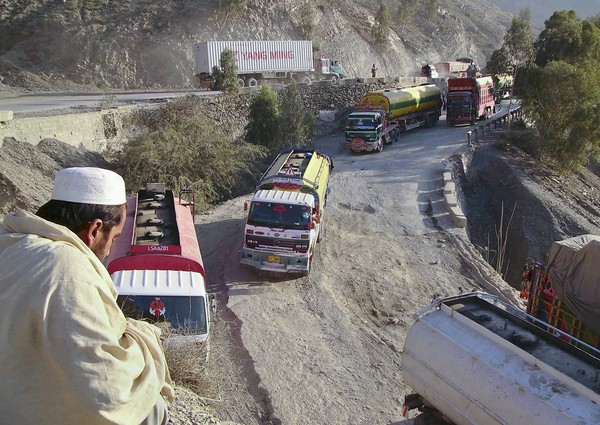
Wheeler-Bennett, John W. The Nemesis of Power: The German Army in Politics 1918-1945. St. Martin’s Press, New York, NY 1954
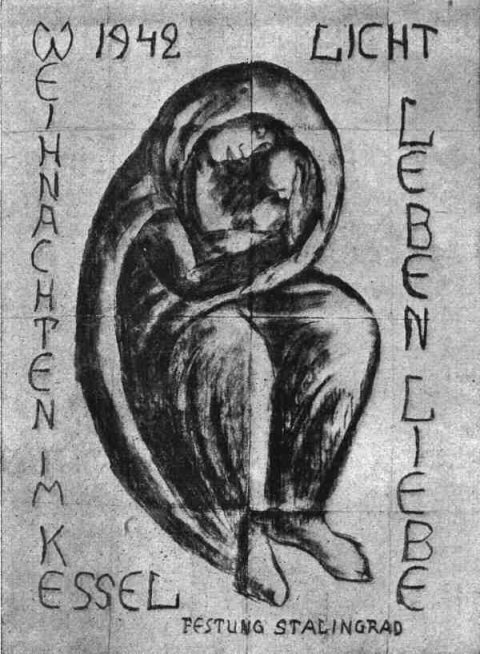
17 Comments

Filed under History, Military, world war two in europe

Lessons on Coalition Warfare: The Dysfunctional Coalition German and the Axis Partners on the Eastern Front

“The Dysfunctional Coalition: The Axis Powers and the Eastern Front in World War Two” by R. L. DiNardo. Published in The Journal of Military History October 1996, 60 Research Library pp. 711-730

A Romanian Renault 35 Light Tank Rather Than

The question of the German dominated European Axis alliance in the Second World War is one of the more neglected subjects of World War Two and has application to today’s multi-national campaign in Afghanistan. In most accounts of World War Two the relationship of the Germans to their coalition partners is minimal.  This includes the standard works on the subject of B.H. Liddell-Hart, Williamson Murray, Chester Wilmot and David M Glantz,   Of Germany’s Allies Italy usually receives some attention in the context of the campaign in North Africa and Mediterranean.  Its efforts on the Eastern Front are usually neglected except for how the Italian 8th Army was shattered during the Stalingrad campaign.  The efforts of Hungary, Rumania and Finland receive scant attention from anyone. Popular German memoirs provide little substantive help as most German commanders looked down on their military capabilities. Kesselring’s memoirs and Rommel’s papers give some views, mostly negative of the Italians and Manstein some mention on the Italians, Hungarians and Rumanians in the Stalingrad campaign.

Field Marshal Von Mannerheim of Finland Kept an Independent Course from Germany

In this badly needed essay Robert DiNardo examines the relationship of Germany to her allies on the Eastern Front where they came closest to fighting coalition warfare. This is a subject that he would expand on in his book “Germany and the Axis Powers: from Coalition to Collapse” (University of Kansas Press, 2005).  DiNardo believes that it is important to learn from the failure of Germany and its coalition just as we do from the success of the Allies.  This perhaps is his greatest contribution in an age where the United States must work with coalitions whose members have significant military weaknesses.  The situation in some ways places he United States in a similar position to Germany in the current wars on terror and campaigns in Iraq and especially Afghanistan.

Hungarian Soldiers on Obsolete CV-35 Tankettes at the Beginning of Barbarossa

DiNardo asserts “the way in which Germany conducted coalition warfare was reflective of the manner in which Hitler and the German military looked at the world, as well as the war in general” was a key factor in her defeat. German arrogance and hubris frequently kept them from gaining any advantage from their coalition partners. DiNardo believes that it was “a significant factor that contributed to the ultimate defeat of Nazi Germany.” (p.712)  He then notes the few successes of the coalition, particularly the German work with Rumanian air defense around the Ploesti oil refineries and the German-Finnish Winter Warfare School.  Apart from these he characterizes Axis coalition warfare on the eastern front as “poor” with “failures at every level.” (p.713)

DiNardo analyzes language barriers, the wide disparity between the modernity of the armies and the levels of technology and training of her coalition partners. He also deals with Germany’s failure to become the “arsenal of Fascism” as well as the lack of understanding of all the partners of the “relationship between national objectives, strategy and the morale of soldiers of officers and soldiers alike.” (p.713)  He provides a good description of the German liaison detachments allotted to the coalition armies, dealing with language, tactical communications weaknesses and the generally haughty attitude that the Germans displayed to their partners. He provides an excellent illustration of this in analyzing with the failure of XLVIII Panzer Corps at Stalingrad when the German Liaison to the Rumanian 1st Panzer Division was wounded and the division was destroyed for lack of German support.  So bad was the German attitudes toward their Allies at higher levels that DiNardo describes the German policies and attitudes as “imperialist.” (p.718)

Hungarian Withdraw from the Donets Bend

DiNardo also looks at the wide gap in transportation capabilities of the various armies and the failure of the Germans to better provide for the needs of their partners in contrast to the United States assistance to her allies.  In his analysis he notes how the Germans provided obsolete captured Czech and French weapons and vehicles to the allies instead of providing them with the plans to build German designs in Rumanian and Hungarian industrial concerns capable of their manufacture. (pp.718-719) The lack of modern equipment among the German allies impacted operations against the Red Army and was a factor the eventual defeat of the Germans the hands of the Red Army.

While even elite German formations often had significant equipment shortages and sometimes substandard equipment he does not note that the principle reason for this was that German did not go to a “total war” industrial production until Albert Speer took over as Armaments Minister.  This is perhaps the one weakness in the essay. The final part of the essay deals with the strategic goals and conflicts among the Axis coalition which were never worked out.  In this discussion he again goes to the relationships of the Germans at every level to their partners and how the Germans had a general distain for their allies’ capabilities. He discusses how various partners refused to cooperate with the Germans in different ways and times.

These problems impacted German efforts in significant way. The Finns never signed a formal alliance with Germany and pursued their own war goals, the underlying tensions between Hungary and Rumania over their own territory disputes meant that the Germans could not count on these key partners to work together in the campaign in Russia.  He finishes his essay by detailing the morale problems in the Hungarian, Italian and Rumanian armies as they fought on the Eastern front.

He sources this article well using histories, archival sources, operational orders and analysis by the various armies as well as interviews. Of particular note is that he goes to sources of the coalition partners and not just German sources.  This allows him to be far more nuanced and detailed in his discussion as opposed to others who simply ignore the contributions of the Axis partners.  His footnotes provide added detail and provide and lend support to his arguments.

The importance of this essay is twofold; first it provides a look at the relationship of German to her coalition partners on the Eastern Front.  This is important from a historic standpoint simply because it is such a neglected topic in most histories of the period and gives added depth to the reasons for Germany’s defeat.  One has to ask the “what if questions” in regard to had the Germans better treated, equipped and recognized their allies’ contributions to the war effort.

The second point of interest pertains to how history can inform the leaders of the United States and NATO in the Afghanistan campaign.  The lessons provided to any nation which has to engage in coalition warfare are important, especially of one of the partners enjoys significant military advantages over its allies.  This is the case in Afghanistan and the War on Terror where United States has found itself as the senior and vastly superior partner in a war which has multiple coalition partners in several theaters of operations.  Each coalition partner has certain military weaknesses in relationship to the United States as well as their own national interests, geo-political and economic relationships with competitors to the United States and internal political realities which impact their cooperation in the war.  As such the United States cannot allow itself to be cast in the role of a haughty imperialistic senior partner as did Germany and it must cultivate an attitude of assistance, respect and trust among its partners to assure their full cooperation and assistance in relation to U.S. goals in the war.  Failure to head the German lesson will ensure failure in the current campaigns.

1 Comment

Filed under History, iraq,afghanistan, world war two in europe