Tag Archives: theodore roosevelt

Tension in the Gulf: Don’t Miscalculate; Speak Softly and Carry a Big Stick

“War is the unfolding of miscalculations.” Barbara Tuchman

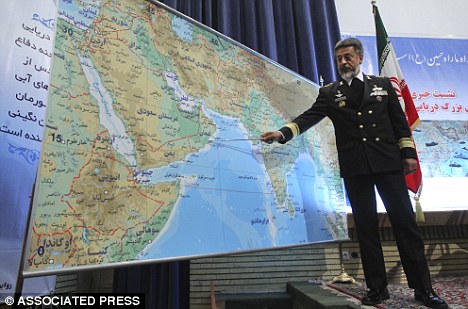
Iran’s navy chief Habibollah Sayyari briefs media on the naval exercise 

The greatest danger in the current war of words between Iran and the United States is the danger that the Iranians one side or the other will miscalculate the will, resolve and strength of the other.  Teddy Roosevelt made the comment “speak softly and carry a big stick.” The Iranians have been shouting loudly and brandishing a small stick and if they are not careful they will bluster their way into a naval war that they cannot win and that will cause significant economic and physical disruption in the region.

The Iranian Navy and Revolutionary Guards Naval Forces are about halfway into a 10 day series of exercises in the Gulf of Oman, the Strait of Hormuz and the Northern Arabian Gulf, or what they call the Persian Gulf. Iranian leaders have increased their rhetoric in regard to closing the Strait of Hormuz if more sanctions are leveled against them for their nuclear program.

The bellicosity of the Iranians comes at a time when they are feeling internal political pressure from Iranian young people, as well as external diplomatic and most likely espionage campaigns.  The latter are designed to slow down or halt their nuclear program which most analysts now believe to be designed to produce nuclear weapons.

For what it is the Iranian Navy can threaten the strait and maybe even close it for a limited time. It is possible if they ever launched a surprise attack on an isolated US or Western warship using their “swarm” tactics close inshore to Iran in the constricted waters of the strait or in a narrow part of the NAG that they could sink or cause severe damage to it.  They would probably mine the straits if they could do so before hostilities began or before sufficient forces could be deployed to stop them. Likewise their missile forces and special operations forces could cause some damage and chaos in the Gulf but the repercussions would isolate and devastate Iran.  However closing the strait or attacking a US or Western warship would be the end of Iran’s naval forces and cause more damage to the country than its leaders are willing to accept at least right now. The Iranians would find that they were fighting far more than the United States Navy should this happen and their Russian and Chinese supporters would more than likely do everything possible to dissuade them from trying this.  Since China imports the bulk of its oil from the Gulf it is unlikely that they would support the Iranians.

While such a direct attack is unlikely the possibility of an accidental war caused by miscalculation on the part of one side or the other is always real and should the Israelis strike Iran’s nuclear facilities Iran would certainly retaliate against Israel but also US Forces and installations in the Gulf and probably against the Gulf States and even Iraq.

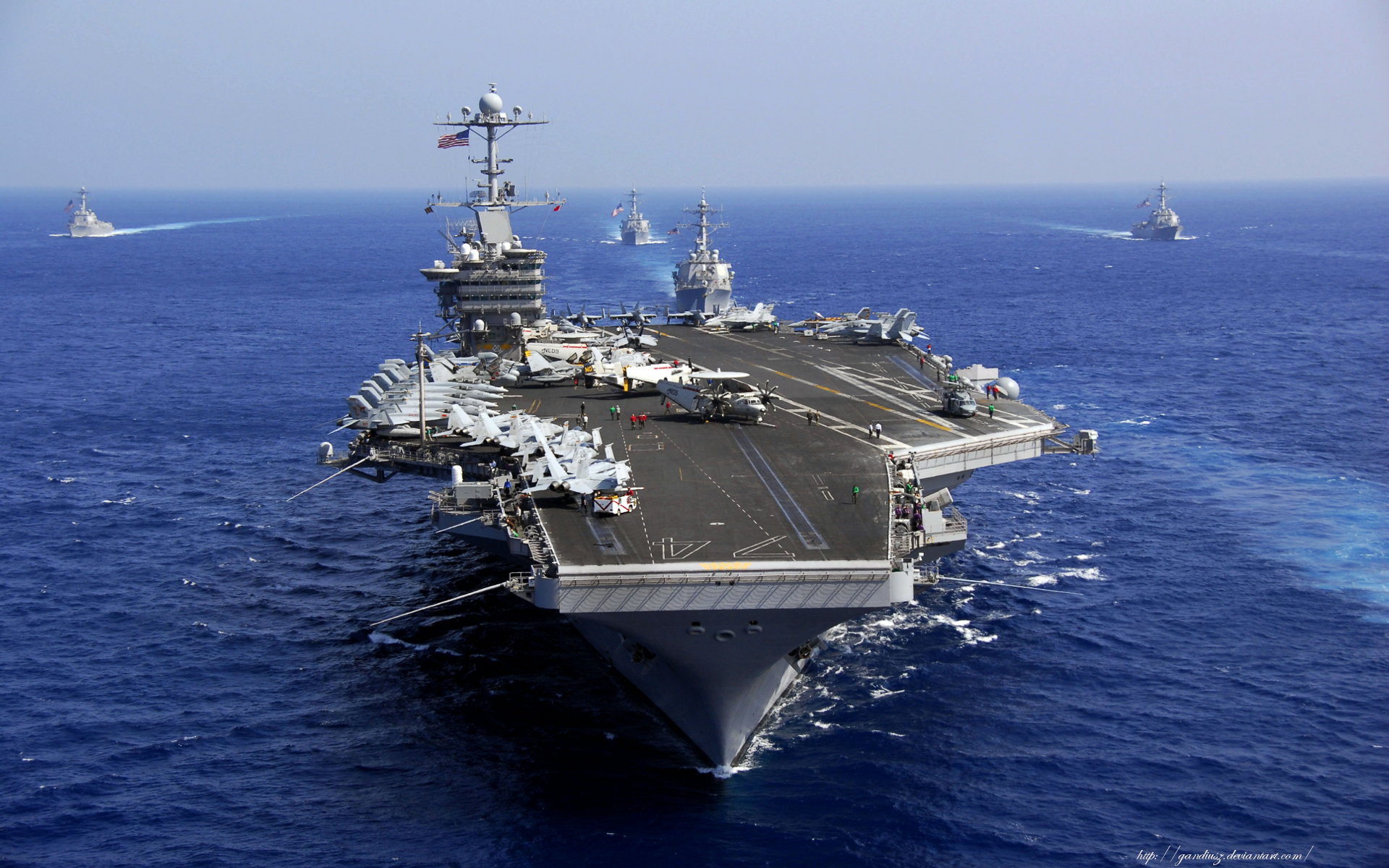
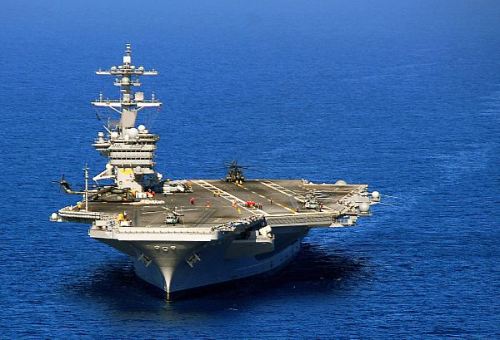
USS John C Stennis (US Navy Photo)

Regarding how such a campaign would be fought the United States would stand off a safe distance and pound Iranian naval, air and coastal defenses and not allow Iranian surface ships to get close enough to make a swarm attack.  This is a big reason that the USS John C. Stennis transited the straits and entered the Gulf of Oman (GOO).  Operating in the open seas gives the blue water US Navy the edge. The Iranian navy’s ships lack the range and endurance for sustained operations at sea and could not sustain a blockade. US attack submarines would hunt down the Iranian Kilo class subs before they could become a threat and US Naval Aviation assets would sweep the surface assets of the Iranian Navy and Revolutionary Guard Naval Forces from the sea while destroying Iranian coastal defenses on the islands in and the Iranian side of the strait.  Once the strait was cleared tanker traffic would resume and Iran would be the biggest loser.  History shows time and time again that light coastal naval forces are no match for a professional seagoing navy even if they score an occasional victory.

Much has been made about Iranian claims to have tracked the USS John C Stennis as she transited the straits.  That is nothing new, the Iranians have air, sea and land surveillance of the narrow straits. The fact is that US ships transit the strait and its approaches on high alert and have done so since the Tanker Wars of the 1980s.  Every Iranian move is watched by the US Navy.  Likewise while transiting the strait the ships of both sides communicate with each other regarding navigation.  It is standard practice.

Since I believe that the Iranians despite their rhetoric are far more prudent than some believe and that they will not launch an unprovoked attack. Even if they succeeded in temporarily closing the straits and even scoring some kind of naval victory by sinking a US ship the victory would be extremely short lived. US and other forces would stream to the region and devastate all that is Iran. The costs for the Iranians and their long term goal of regional hegemony would be too great for them to intentionally start a naval confrontation in the Gulf.  However the chances of either side miscalculating and stumbling into war should not be underestimated.

The biggest danger now is the potential for miscalculation but Iran’s long term goal of dominating the Gulf and acquiring nuclear weapons will probably keep them from attempting anything of this sort. That said there are factions in Iran that could try to use the threat of new sanctions to force a confrontation in the straits and for that we must be ready to meet the threat.  Iranian threats should not be disparaged nor their political and military will underestimated. To underestimate an Iran’s capabilities and will are extremely dangerous. At the same time we should not overestimate their capabilities and yield to their threats when they threaten to cut off the flow of oil from the Gulf.

The United States needs to follow Theodore Roosevelt’s advice and remember history as we follow the situation and ensure that whatever Iran does that we will not be surprised or unprepared.

Peace

Padre Steve+

Leave a comment

Filed under Foreign Policy, History, middle east, national security, US Navy

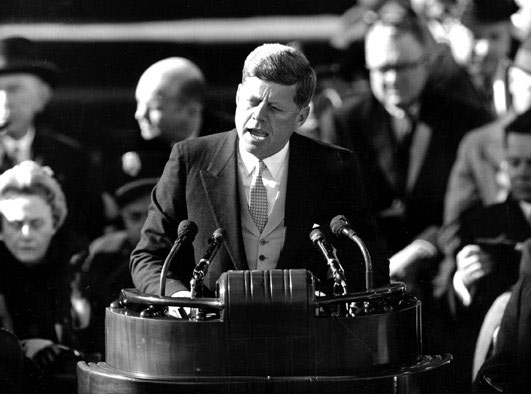
Remembering John F Kennedy

“And so my fellow Americans: Ask not what your country can do for you; ask what you can do for your country.” John F. Kennedy

“Now the trumpet summons us again. Not as a call to bear arms, though arms we need; not as a call to battle, though embattled we are; but a call to bear the burden of a long twilight struggle, year in and year out, ‘rejoicing in hope, patient in tribulation’, a struggle against the common enemies of man: tyranny, poverty, disease, and war itself.”  John F. Kennedy

It is hard to believe that it has been 48 years since President John F Kennedy was assassinated in Dallas Texas on a sunny November afternoon.  The two shots that killed  the President were fired by Lee Harvey Oswald according to the Warren Commission and subsequent inquiries although there are a host of conspiracy theories regarding the assassination. My purpose is not to prove or disprove the official version or any alternative explanation although I personally believe that Oswald was the lone gunman.  It is merely to remember a horrible event in the life of our nation and how easily it could happen again.

Kennedy was not the first President killed by an assassin. Four Presidents of the United States have died by the hand of assassins. The first was Abraham Lincoln killed by John Wilkes Booth on Good Friday 1865.  The next was James A Garfield who was shot on July 2nd 1881 by Charles Guiteau a disgruntled supporter who claimed that he had been commanded by God to kill a the President who he believed to be ungrateful for his support.  Garfield died on September 19th probably due to the incompetence of his doctors.   The third was William McKinley who was shot by Leon Czolgosz on September 6th 1901. McKinley died on September 14th.  Over 20 other attempts have been made on incumbent or former Presidents of which one wounded Theodore Roosevelt after his Presidency and another which nearly killed President Ronald Reagan on March 30th 1981.  Gerald Ford had two close brushes with female assassins within 2 weeks of each other in September 1975. More recent attempts have been made on George H.W Bush, Bill Clinton and George W Bush.  A man was arrested for shooting at the White House last week but President Obama was away from Washington during the attack.

However Kennedy’s assassination tends to be the most talked about and studied and has left a scar on the country that really hasn’t healed. I can remember the effect that it as well as the subsequent killings of Martin Luther King Jr. and Robert F Kennedy had on my parents in the following years.  My mother recounted how she felt when she heard the news of Kennedy’s death on Armed Forces Radio while we were stationed in the Philippines.  I remember the times around the anniversary of his assassination we would watch television shows about it and the movie PT-109. While I do not have direct memories of President Kennedy’s assassination I do remember those of Dr King and Senator Kennedy as well as the subsequent attempts on President Ford, Reagan, Bush, Clinton and Bush.

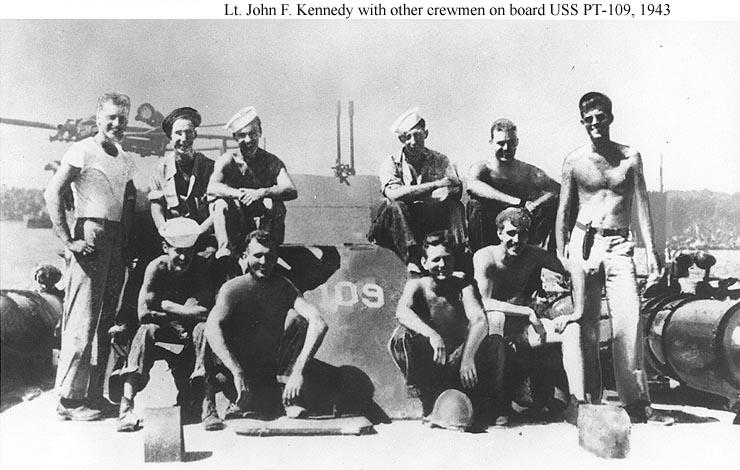
John F Kennedy is one of my favorite Presidents. I know that John F Kennedy was a deeply flawed man and I do not gloss over his failings either as a man or some of his decisions while President. He was certainly not perfect or That being said I still I admire him.  He volunteered to serve in combat on PT Boats despite having chronic lower back problems tht kept him out of the Army and necessitated a waiver to enter the Navy. His actions in saving his crew after his PT-109 was sunk were nothing short of heroic and his crew knew it. After he his crew was rescued Kennedy elected to remain in action and commanded PT-59 in combat rescuing Marines on Choisuel Island. Kennedy’s citation for the Navy and Marine Corps Medal read:

For extremely heroic conduct as Commanding Officer of Motor Torpedo Boat 109 following the collision and sinking of that vessel in the Pacific War Theater on August 1–2, 1943. Unmindful of personal danger, Lieutenant (then Lieutenant, Junior Grade) Kennedy unhesitatingly braved the difficulties and hazards of darkness to direct rescue operations, swimming many hours to secure aid and food after he had succeeded in getting his crew ashore. His outstanding courage, endurance and leadership contributed to the saving of several lives and were in keeping with the highest traditions of the United States Naval Service.

His speeches still inspire me and as a child a had a copy of his book Profiles in Courage . I grew up with his promise to put a man on the Moon by the end of the decade, the creation of the Peace Corps, his backing of Special Forces, his love of the Navy, the great “Ich bin ein Berliner” speech, his support of the Civil Rights movement and and his defusing of the Cuban Missile Crisis all inspire me.  His inauguration speech where he said “Ask not what your country can do for you but what you can do for your country” was and still is a lot of my motivation for serving in the Navy.  John F Kennedy symbolized to me as a young person the hope of a country that had he lived might be different today.

I could be critical and point out all of John Kennedy’s flaws and contradictions.  But then too easy to do. People make a living doing that. People often forget that Kennedy was a hero, not perfect but a hero. I wish a quarter of our current elected officials served their country in combat as Kennedy did and understood what real danger and heroism is. Instead with very few exceptions we have elected men as flawed and contradictory as John F Kennedy with none of the personal courage the vast bulk who would happily order soldiers to their death but have no earthy clue about the dangers of war and the sacrifice involved. That John F Kennedy understood. That earns my respect.

I tremble when I think that someone would have such a deep hatred of him or for that matter any other President that they would kill or attempt to kill them.  That kind of hatred goes beyond me.  Lee Harvey Oswald was a small and pathetic man who needed to be a revolutionary, who needed to be important failing everything else he killed the President. Unfortunately there are people like Oswald on all sides of the political, ideological and religious spectrum who will gladly trade the life of a President or any other public figure for their moment in the spotlight and need to demonstrate their importance to the world.

I fear for our country because of the intense hatred that has become part and parcel of our political landscape. The hatred is almost palpable and while much is directed at President Obama because he is the incumbent President his successor if a Republican would likely have similar hatred directed at him just from different people.  Thus I do pray for the safety of our leaders and for God to protect us from ourselves.

While I do so I remember the President whose life was cut short by the bullets fired by Lee Harvey Oswald.

Peace

Padre Steve+

3 Comments

Filed under History, leadership, Political Commentary, US Navy

Veterans Day Thoughts: The Few that Stand Guard over the Country

“When I was studying law, and Mr. Keefer here was writing his stories, and you, Willie, were tearing up the playing fields of dear old Princeton, who was standing guard over this fat, dumb, happy country of ours, eh? Not us. Oh, no! We knew you couldn’t make any money in the service. So who did the dirty work for us? Queeg did! And a lot of other guys, tough, sharp guys who didn’t crack up like Queeg.” LT Barney Greenwald (Jose Ferrer) in the movie The Caine Mutiny (1954)

I do a lot of reading and watch old war movies. One of my favorite movies and books is Herman Wouk’s classic The Caine Mutiny.  It is quite an amazing story, the book is better but the epic performance of Humphrey Bogart as Captain Queeg is something to behold.  The quote above comes from the movie and I think accurately portrays how most Americans; especially those of privilege have viewed military service not only then but now.

I always find that I become more introspective around Veterans Day.  Perhaps it is the fact that military life, service and history are so deeply woven into the tapestry of my life.  Perhaps it is because veterans beginning with my dad had such a great impact on my life.  Perhaps it is because I fell in love with military service as an ideal as a mere child.

I know that is not uncommon as many men that served with distinction in the military, that of the United States as well as in countries around the world tell similar stories.  In the United Statesthere have been some families that were or continue to be associated with the military going back generations.  What is fascinating to me is that the military tradition of this country, with the exception of the mass levees of draftees required in the World Wars that was continued through the Vietnam War that most who have served have been volunteers going back to the earliest times.

It has always been a perilously small minority often discriminated against who have heeded the call to serve in war and peace and the countless wars of peace that make up our history.  The burden of the American Revolution was carried by a very small part of the population and such has been the case for most of our history.  Today only about one half of one percent of the population serves in the military and that in a time where theUnited States has been at war for over a decade.

But this is nothing new.  It was the same in the War of 1812, the Civil War only had about 3% of the population involved as did World War One.  World War Two had the largest percentage in the military during our history at just over 9% and the military population of theUnited Stateshas been at or below 1% since the establishment of the All Volunteer force in 1975.

This week as our military is stretched around the globe and our Soldiers, Marines, Sailors, Airmen and Coastguardsmen serve with distinction and honor as their predecessors did in times before.  I will be doing some writing this week about Veterans Day and the Veterans that have made an impact in my life.

If you know a veteran or someone currently serving it is an opportune time not only to thank them but to speak out for them in a time when it appears that support for Veterans’ benefits is eroding in Congress even as we remain at war.  As Theodore Roosevelt said “A man who is good enough to shed his blood for the country is good enough to be given a square deal afterwards.”

Peace

Padre Steve+

1 Comment

Filed under History, Military

The Navy is the Future of National Security

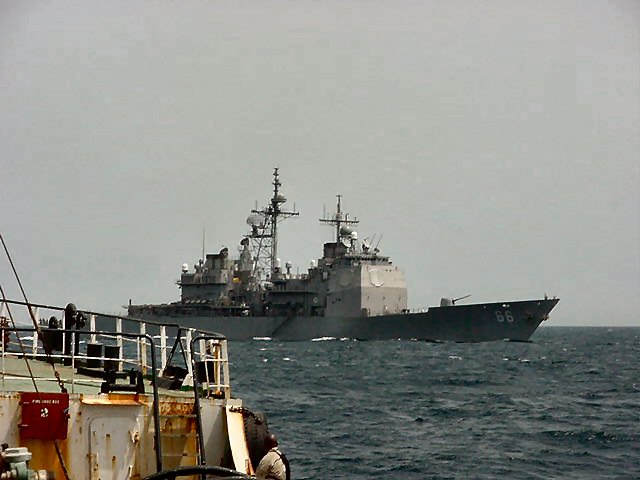
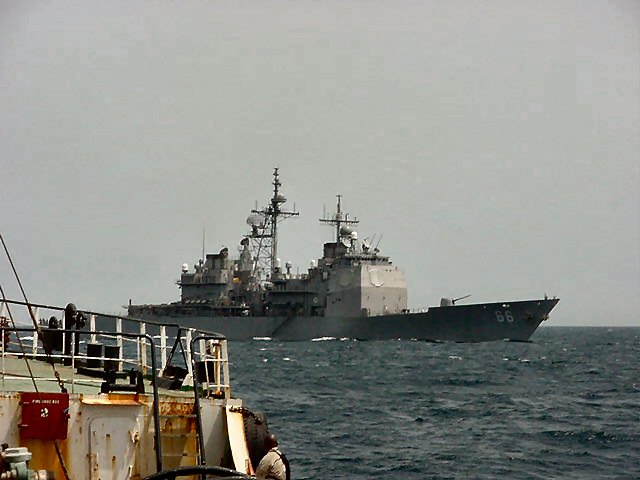
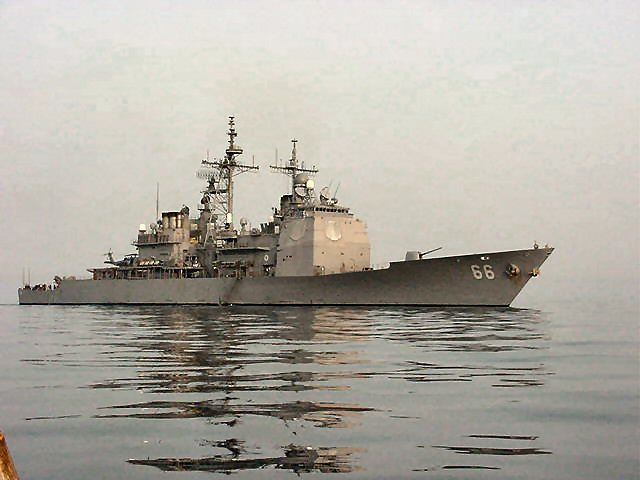
USS HUE CITY CG 66 in the Arabian Gulf 2002.  “I wish to have no Connection with any Ship that does not Sail fast for I intend to go in harm’s way.” John Paul Jones 

“Without a decisive naval force we can do nothing definitive, and with it, everything honorable and glorious.”  President George Washington

“A good Navy is not a provocation to war. It is the surest guaranty of peace.” President Theodore Roosevelt

“A powerful Navy we have always regarded as our proper and natural means of defense; and it has always been of defense that we have thought, never of aggression or of conquest. But who shall tell us now what sort of Navy to build? We shall take leave to be strong upon the seas, in the future as in the past; and there will be no thought of offense or provocation in that. Our ships are our natural bulwarks.” President Woodrow Wilson

“Events of October 1962 indicated, as they had all through history, that control of the sea means security. Control of the seas can mean peace. Control of the seas can mean victory. The United States must control the seas if it is to protect your security….” President John F. Kennedy

There are a great many debates in Congress and the Pentagon regarding the current and future military budgets in light of the massive budget deficits and economic crisis facing the nation.  Complicating the issue is our massive commitment to land campaigns that contribute little to the long term national security of the United States and its friends. These wars constrain our diplomatic military and economic ability to respond to other crises at home and around the world be they military threats, terrorism or natural or man made disasters.

Until the mid 20th Century theUnited States viewed the land forces when used abroad as expeditionary forces which were employed overseas for relatively short periods of times of combat.  The mission and strategy was to fight the war, bring all or most of the forces home, assist with security as needed and depend on a naval presence to show the flag without a continued large “boots on the ground” presence.   The two times that we have elected to fight protracted ground wars with no definable condition of victory we have come out weaker than we went in.  This was the case inVietnam a war which badly divided the nation and nearly destroyed the military as a viable force.  The present campaign in Afghanistan and the war in Iraq which is close to ending have the potential to do the same.

In the prosecuting the Global War on Terror which was launched in response to the attacks of September 11th 2001 we have for the most costly and historically flawed ways to use an American Army.  In doing so we have had to invest a huge amount of our expenditures simply to maintain a force to keep the status quo in a country that will turn on us as soon as it convenient to do so.

In the process of focusing on these aspects of this war we have forgotten the more crucial long term aspects of national security which can only be addressed by maritime power.  This power includes the military might of the Navy and Marine Corps team but also includes our Merchant Marine and Coast Guard.

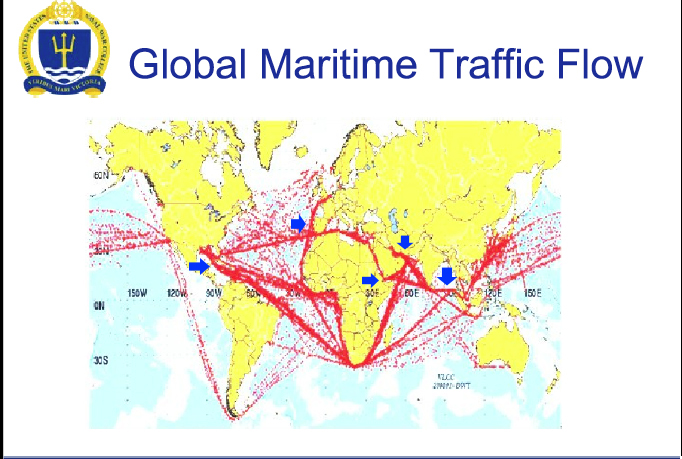
Ninety percent of world trade is transported by ship via sea lanes that have choke points such as the Strait of Hormuz,Strait of Malacca, the Bab El Mendeb and the Horn of Africa, and the Strait of Gibraltar.  Likewise other traffic must pass through the South China Sea, the Taiwan Straits or around Cape Horn.  Then there are the two major maritime canals the Panama and Suez Canals.  Terrorists, pirates, rogue nations and ascending Naval powers such asChinapose real threats in all of these critical maritime commerce choke points.

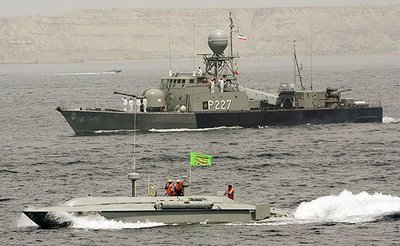
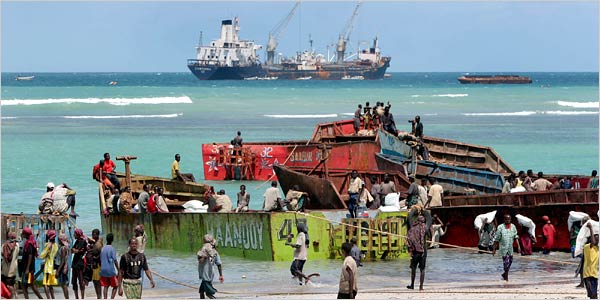
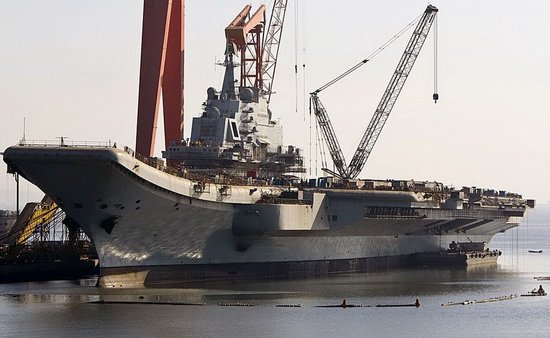
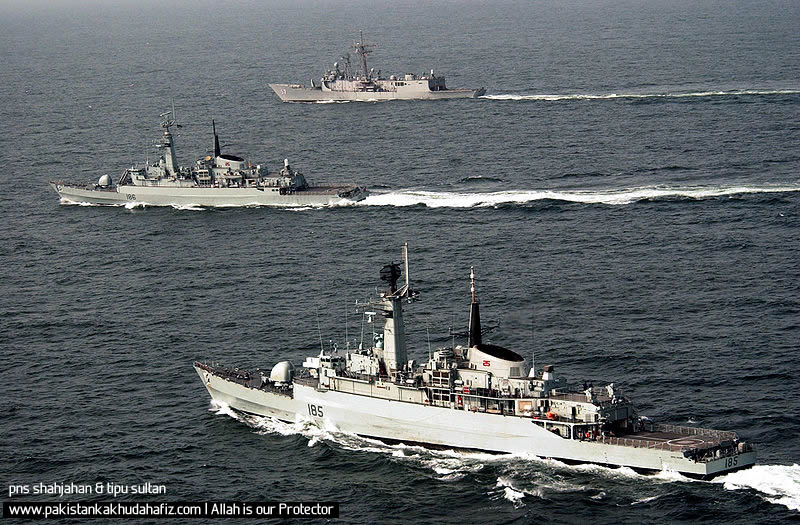
Real and potential threats to the choke points: Iranian Naval and Revolutionary Guard Naval forces, Somali pirates, the new Chinese aircraft carrier and a Pakistani Navy that may become an enemy overnight 

Most of the world’s population lives in what are called the littorals, the areas of land adjacent to oceans and major waterways.  Likewise most industry is located in these areas. Most of these populations and industries are also in areas under the same type of threats as the sea lanes and choke points.  Simply put the sea and the littorals are much more important to this country and the world than landlocked Afghanistan.  They also are much more easily influenced by naval power that is not bound to land bases in nations where governments and their policy to the United Statesand our friends can change overnight and which large land armies would have minimal impact.

The United States Navy has been and still is the world’s preeminent naval power. It will likely remain so for the foreseeable future but the navy is strained.  Since 2001 it has shrunk in size, shed some 52,000 sailors and seen its scope of responsibility and operational tempo increase putting greater strain on the ships, aircraft and personnel remaining.  Ships are aging, maintenance was deferred and the planned new construction has not materialized.  The Ticonderoga Class Guided Missile Cruisers are nearing an average age of 20 years, our carriers average 23 years old, many of our submarines are nearing the end of their projected service lives and some other ships are far older.

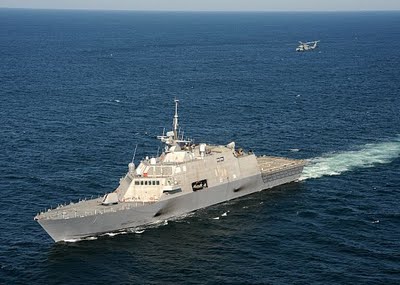
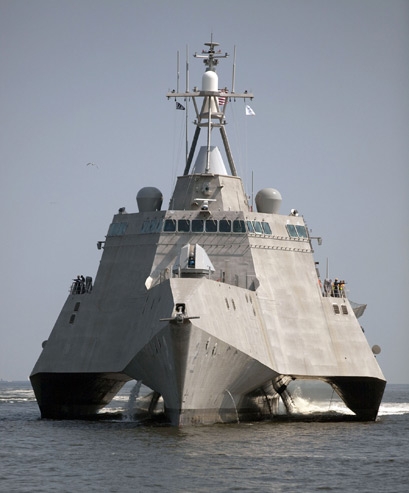
Ship classes like the Freedom and Independence class Littoral Combat Ships (LCS), San Antonio Class Landing Ships (LPD) and the DD-1000 Zumwalt Class are badly over budget, plagued with technical and workmanship issue and are behind in production.

USS Freedom (above) and USS Independence Littoral Combat Ships

The LCS in particular seems like a bad investment, the ships are undermanned and under armed, planned weapons modules are not in production and they are not designed for survivability.  In effect they are large fast ships with almost no offensive or defensive capabilities that would be hard pressed to survive in a fight with any current or future Corvette or Frigate fielded by an opposing naval force. In order to be effective they need heavier armament and larger crews and need a redesign to improve their survivability. It makes no sense to spend more than half a billion dollars each on ships that are not survivable and cannot fulfill their intended missions.  A better choice would be something similar to the Dutch De Zeven Provincien  German Sachsen or the French Lafayette Class frigates which have a heavy armament and good endurance or the smaller and cheaper German Braunschweig class Corvettes.

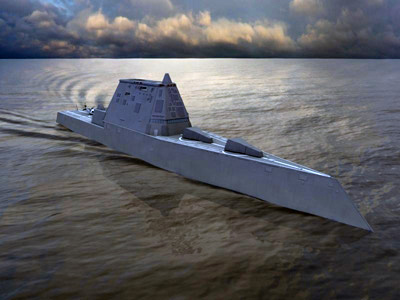
DD-1000 the Zumwalt Class

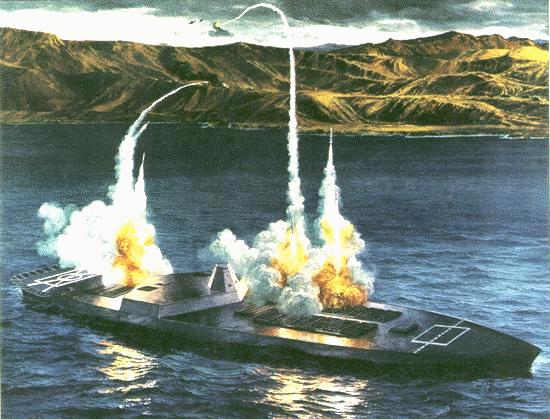
The Zumwalts are 14,000 ton “Destroyers” that were designed as a replacement for the battleship.  Originally 32 were planned but the high cost and multiple problems associated with the design. These issues have included such things as seaworthiness due to their hull form and other hull issues, its integrated advanced electro-magnetic propulsion system and its surface and air warfare capabilities.  Their armament has been an issue since the beginning as they cannot meet the standards of the Aegis equipped Cruisers and DDGs and cannot support the Ballistic Missile Defense capabilities of those ships.  Their naval gunfire support capability which was advertised as one of their main selling points is woeful. They are to be equipped with two 155mm long range naval guns designed to use a “smart” munitions. The ships will carry a limited supply of shells for these guns and because of the need for extended range and guidance capabilities the shells will have a smaller charge than their land based counterparts.   They will have only two-thirds of the VLS cells than Ticonderoga class ships meaning that they can carry few missiles of all types.  It is likely that the Tomahawk cruise missile will comprise the bulk of their missile armament but if one wants a ship that’s only significant capability is launching Tomahawks then there are many other ideas which are more economical and can carry far more missiles than the Zumwalts. One of these was the Arsenal ship which was designed to carry 500 Tomahawks on a stealthy platform that requires a small crew and had an estimated cost of 500-800 million dollars.  It was cancelled in favor of the project that eventually turned into the Zumwalt class. The DD-1000 program began with the DD-21 program in 1994 and the first ship may not enter service until 2015. The cost of just two of these ships has grown exponentially to 6.6 billion as of 2011.  The two ships under construction have little place in the current or future Navy and would likely serve as technology test beds.

The Arsenal Ship

While we have increased the numbers and continued the production of the highly successful Arleigh Burke class guided missile destroyers (DDG) and Wasp class Amphibious Assault ships (LHD) it is not enough to compensate for the continued attrition.  If worst case budget projections occur the Navy could experience massive cuts without any decrease in maritime threats or operational commitments.  The Coast Guard is in even worse shape.

The USS John S McCain DDG 56

The most important aspect of national defense, free trade and humanitarian assistance in the coming years are America’s Navy, Marine Corps, Coast Guard and Merchant Marine.  Without a strong Navy and the other components of maritime power we are at the mercy of tin-horned dictators, pirates and terrorists who live and operate in the most vital areas of the world’s maritime transportation network.

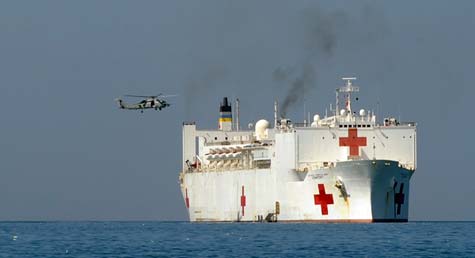
Humanitarian assistance: USNS Comfort off Haiti 

As our political leaders meet in the coming weeks and months decisions will be reached in matters of national security.  They will be based budget considerations alone as we have not operated on a clearly defined national security strategy since the end of the Cold War.  Force structure has to be decided based on the over arching national strategy and broad brushed and un-thought out cuts are a recipe for disaster.

History tells us this. Following our Revolution the nation was deep in debt and eliminated the Navy.  Since our merchant shipping was no longer protected by the Royal Navy and the treaty withFrancewas allowed to lapse American ships became easy prey for the Barbary Pirates.  Rather than build a navy to protect American citizens and shipping the nation paid “tribute” to dictators which amounted to tens of millions of dollars until Thomas Jefferson sent the new re-established Navy to counter the threat.   Our history and that of other maritime powers such asGreat Britainand theNetherlandsprovide many precedents for this use of power.

What needs to happen now is for the LCS ships and Zumwalt class production to end with the current ships building.  No carriers except the 50 year old USS Enterprise should be decommissioned until a full up national strategy review is completed and agreed to by both political parties.  That strategy needs to actually prioritize the most important areas of engagement that the military should focus its efforts.  The Middle East will remain important but will fade as Asia continues to gain importance.

Regarding other ship classes much needs to happen.  DDG production should be stepped up and an affordable yet fully capable replacement to the Ticonderoga class designed, to include the ability to conduct ballistic missile defense.  A diesel electric attack submarine needs to be fielded to complement the Virginia Class attack boats.  A Light Fleet Aircraft Carrier design should be designed and produced to compliment the Nimitz and Ford Class Carriers now in commission or building. The Navy should design or take an off the shelf Corvette or small Frigate type ship to fill the role envisioned by the LCS.  Such ships should be designed for specific tasks to avoid the massive cost overruns and simplify production.  When one remembers that it as the United States Navy that first developed the Destroyer Escort type ship to fill a specific role such an undertaking should be well within ship designer and capabilities so long as they do not try to “gold plate” the type and make it a jack of all trades and master of none ship.  Other types of ship should be studied to include smaller but still capable aircraft carriers and new amphibious ships to support the Marine Expeditionary forces.

Ships need to be designed with combat power, survivability as the first priorities and they need to be affordable and easy to mass produce.  Designs do not need to be over thought.  George Patton’s adage “a good plan violently executed now is better than a perfect plan next week” applies today for this nation and the Navy.  To adapt Patton’s adage I say that “a combat effective and survivable ship class that we can afford and mass produce now is better than a perfect ship that bankrupts us and cannot be produced in the numbers needed to secure the seas.” 

The Navy is the American Armed Force of the Future. Of all the Armed Services the Navy offers the United States the ability to protect its interests abroad and homeland security without the need to base large numbers of ground forces overseas.  Naval forces are flexible, are easily sustainable and conduct security, combat and humanitarian operations better and more affordably than any armed service in the world. When coupled with the expeditionary capability of the Marines offer a force that affordably provides national security.  George Washington, John Adams, Theodore Roosevelt and Franklin Delano Roosevelt all knew this.  I do hope that the current Administration, Congress and their successors will not allow the current superiority that we enjoy on the high seas to decay just as our greatest economic and military competitors build up their naval capabilities and the threat of terrorists, pirates and the small but dangerous navies of rogue states threaten the sea lanes that are absolutely vital to our economy and national security.

The Navy is also the least provocative armed service and history has repeatedly shown that naval forces are a deterrent to war and guarantee of peace.

On that last note…

Peace

Padre Steve+

3 Comments

Filed under History, Military, national security, Navy Ships, US Navy

Smaller than Life: The Thin Skinned, Petty, Small Minded and Visionless Political Elite and what we can do to Change the Political Culture

“Far better is it to dare mighty things, to win glorious triumphs, even though checkered by failure… than to rank with those poor spirits who neither enjoy nor suffer much, because they live in a gray twilight that knows not victory nor defeat.” Theodore Roosevelt

“When small men attempt great enterprises, they always end by reducing them to the level of their mediocrity.”

“In order to govern, the question is not to follow out a more or less valid theory but to build with whatever materials are at hand. The inevitable must be accepted and turned to advantage.” Napoleon Bonaparte

I have these times when lost in thought I imagine what it was like to have truly great political leaders in this country and inWestern Europe.  It just seems to me that those that we have entrusted with the reigns of government and those that aspire to the highest office in this country are perhaps the most pathetic, small minded, petty thin skilled and visionless that this country has ever produced.  I do not see a great leader such as Washington, Jefferson, Lincoln, Teddy Roosevelt, Franklin Roosevelt or Ronald Reagan in the lot of them.  As for the women that aspire to lead this country I see no Margaret Thatcher or Golda Meir among them.  In fact I don’t even see any truly skilled politicians like Bill Clinton and Richard Nixon out there.

I guess I say this because the whole lot of them seem to spend a lot more time campaigning for office even while in office than they actually spend working with their allies and political adversaries to do the right thing even if it goes against their ideology.  Lord knows that our political philosophy is important, but ideology, especially when it become sacrosanct is more than a philosophy of how our leaders should govern it is a set of shackles that binds them to one course of action, one set of beliefs and to the masters that they are beholden.

Campaigning is actually a lot easier than leading or governing because now days it has very little to do with substance or personal qualifications or achievement it simple means that suck up to people that have money and power better than others.  When politicians do that either by supporting one special interest or another without qualification they fail to honor the oath that they took when they entered office.  When the pledge their fealty to a certain cause or position regardless of its actual merits such as the Left has done with its pet constituencies and the Right is unabashedly doing as Presidential candidates sign pledges committing them to do what certain interest groups dictate they show that they are willing to prostitute themselves and their office to those interest groups.

Since our political class lives in constant campaign mode why should we expect them to actually take a risk and do something for the benefit of the country once they are elected?  They obviously don’t feel any need to otherwise as they would be taking risks to try to build with what we have at hand to save the country even the risk of not being elected or reelected.  The great Israeli Prime Minister Golda Meir said “I can honestly say that I was never affected by the question of the success of an undertaking. If I felt it was the right thing to do, I was for it regardless of the possible outcome.”  That is what our leaders need to be saying and doing now.

It seems that those campaigning for the highest office in the land are spineless crybabies.  Yogi Berra once said “All pitchers are liars or crybabies” well I think we can say that “All politicians are liars or crybabies” and be right on target.  I was amazed when I watched coverage of the great Iowa Imbecile Debate and Straw Poll this weekend and in the weeks leading up to this.  It was like watching a bunch of spoiled children calling each other names and then getting mad and crying when they got asked questions that they don’t want to answer accusing those that ask of asking “gotcha” questions.  When caught in obvious contradictions in regard to their campaign rhetoric and what they really do they lie or make excuses.  I watched the movie The Blues Brothers Elwood (Dan Aykroyd) tells his brother Jake “It wasn’t a lie it was bullshit” and I thought about our politicians in office and on the campaign trail.

They are a humorless lot who when you come right down to it have their every whim catered to and surround themselves with “yes” men and women.  This has to be true because if they had one person of true character and honesty that would have the unmitigated courage to say “What the fuck? Over” we might actually see them dealing with the real issues of our day; war, massive unemployment, a currency crisis decaying infrastructure and educational standards not to even mention the debt. John F. Kennedy said something that resonates today “A nation which has forgotten the quality of courage which in the past has been brought to public life is not as likely to insist upon or regard that quality in its chosen leaders today – and in fact we have forgotten.”

Somehow it seems that none of our current leaders or those running for their party’s nomination to the highest office in the land has the gravitas to stand by their word or the character to lay aside differences to work with their opponents to actually do something positive for once.  I cannot remember the last time that any of our leaders have done this except when they cobble together massive bills which sometimes have sections of questionable Constitutional legality that none have ever read before the President signs them into law. That’s not leadership, which is not wisdom, that is not foresight and that is not vision. That is cowardice masked in legislative accomplishment.  Theodore Roosevelt said “A typical vice of American politics is the avoidance of saying anything real on real issues.”

Unfortunately most of us are more interested in seeing our interests and agendas advanced no matter what we say.  After all we elect these men and women time after time and in our hyper-polarized body politic we would sacrifice the country to get our guys, whoever they are elected.  Ideology, political preservation and even religious dogma substitute for reason and personal courage in our world and we are paying for it.

Unfortunately I have no answers on how to solve this except that as a nation we need to start thinking big again to start actually believing in this country. We need to work together like we haven’t since John F. Kennedy challenged us to put men on the moon in under a decade.  The challenges are for the taking but our leaders have to be men and women of character and courage to take them up and a population willing to commit to “pay any price, bear any burden, meet any hardship, support any friend, oppose any foe to assure the survival and the success of liberty”

I actually think that John F. Kennedy said what we need to be doing now better than almost anyone I can imagine because what he said cuts to the heart of our present political crisis.  “Let us not seek the Republican answer or the Democratic answer, but the right answer. Let us not seek to fix the blame for the past. Let us accept our own responsibility for the future.”

I think that we can turn things around but we will have to stop the current political fratricide in order to do so.  We have to take responsibility for the future even as we clean up the mess that we have made in the past.  If we don’t we are going to suffer even worse consequences than we are experiencing now.  The stakes are great and the question is will we rise to the occasion?

God help us,

Peace,

Padre Steve+

1 Comment

Filed under History, leadership, Political Commentary

From the Sea: The Absolute Need of a Strong Navy, Merchant Marine, Coast Guard and Viable National Maritime Strategy

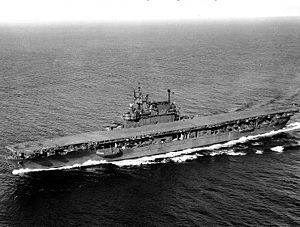
The USS Enterprise CV-6. Ordered in 1933 she was one of the most decorated and battle proven ships ever to fly the flag of the United States

“A good Navy is not a provocation to war. It is the surest guaranty of peace.” Theodore Roosevelt

“A powerful Navy we have always regarded as our proper and natural means of defense; and it has always been of defense that we have thought, never of aggression or of conquest. But who shall tell us now what sort of Navy to build? We shall take leave to be strong upon the seas, in the future as in the past; and there will be no thought of offense or provocation in that. Our ships are our natural bulwarks.” Woodrow Wilson

As the economic crisis continues to envelop the nation there is much talk about the certain reduction in the size and capabilities of the U.S. Military components.  At the present time it seems that politicians of both parties are more interested in the immediate savings that can be derived from cuts.  Regardless of how they are done each service will see force reductions but coming at a time when we are at war those responsible for the cuts must be conscious of the effects on the capabilities that the United States has to defend itself and its interests overseas and to influence world affairs.

The wars in Iraq and Afghanistanhave been ground intensive requiring the strengthening of the Army and Marine Corps to conduct counter insurgency operations. After 9-11 the Navy voluntarily reduced its fleet and personal strength in relatively dramatic fashion intending the savings be used to rebuilt the fleet.  Personnel strength was reduced by nearly 40,000 sailors and many ships were retired well before their anticipated retirement dates.  Unfortunately the Defense Department under then Secretary of Defense Donald Rumsfeld shifted the savings to fund the ground campaigns in Iraq and Afghanistan.  Navy shipbuilding was cut and the Navy failed to help itself by investing much of the service’s budget to the development of three classes of ships and that are over budget, under performing and full of controversy, the Zumwalt Class Destroyers, the Freedom and Independence Class Littoral Combat Ships and the San Antonio Class Landing Ships.

Further cuts are already occurring or envisioned based on the planned cuts in Federal Government programs.  These cuts would reduce the Navy which is now smaller than at any time since the early 1930s following the 1922 Washington Naval Conference which limited the size of the Navies of the signatory countries.  From 1922-1932 the Republican Harding, Coolidge and Hoover administrations not only reduced the force but failed to lay down a single new ship to replace outdated ships and reduced maintenance funds to keep up the ships in service.  Budget cutting gutted the Navy during those years and it was only theRooseveltadministration which realized that a strong Navy was essential to national security began to rebuild the fleet in the 1930s and funded the development of the ships that would win World War Two.  The shipbuilding program had economic benefits as shipyards which had been inactive were able to employ skilled American workers which helped military preparedness, American business and American workers.  The ships that came out of that building program sustained us at the beginning of the war and those designed in the years just before the war served us for decades to come.  Even so the build up byRoosevelt, constrained by the dire economic crisis of the Great Depression could not add ships fast enough to have us fully ready for the Second World War and left us dangerously stretched by the demands of the Japanese advance in the Pacific and the German U-Boat campaign in theAtlantic.  Many good Americans died and the war was decidedly more difficult because of what was done to the Navy in the 1920s by successive short sighted Republican administrations.

The current ship production is at a level not seen in decades and bad surface ship designs and poor workmanship have hurt the Navy.  If the Navy is cut back significantly without a change in mission or corresponding shift in National Security Policy it will degrade the Navy’s ability to respond to emerging threats. Likewise if a coherent shipbuilding program is not undertaken that meets the projected threats American interests can and will be harmed as other nations gain local superiority in critical areas and sea lanes.   While the U.S. Navy currently enjoys a vast superiority over any current or potential adversary there are places that a cunning adversary could hurt American and allied interests simply because we are already spread very thin in regard to the number of ships available and the increasing number of missions and threat areas.

The challenge now is not to give in to the temptation to make indiscriminant cuts until we actually decide on a National Maritime Strategy that is not simply about the Navy but also the Coast Guard and Merchant Marine.  The strategy must include the interrelationship that we have with our allies and other nations and their navies.

The necessity for this goes beyond military preparedness it goes to our economic security since the vast majority of our commerce exports and imports are by sea.  If we take the time to think through a comprehensive maritime strategy it can go a long way to strengthen American industry, labor, commerce as well as national and economic security for us and the world.  A strong Navy, Merchant Marine and Coast Guard are far more important to the United Statesthan large ground forces.

An effective and judicious use of national power: USS Hue City CG-66 passing an impounded Iraqi smuggler in 2002

This is demonstrated in our history as well as that of Great Britain.  When we are strong at sea we are strong, when we commit to long wars of attrition overseas we cause ourselves untold problems. As our first President George Washington said:

“It follows than as certain as that night succeeds the day, that without a decisive naval force we can do nothing definitive, and with it, everything honorable and glorious.”

This is something that our politicians inWashingtonand those that populate the think tanks need to learn.

Peace

Padre Steve+

1 Comment

Filed under national security, Navy Ships, US Navy

Reflecting on the High Water Mark of the Confederacy and the Importance of Our Union

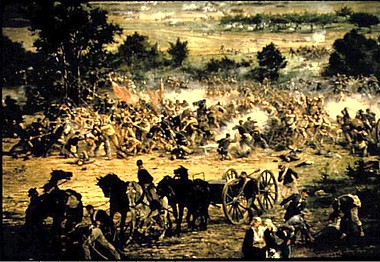
Yesterday was the 148th Anniversary of Pickett’s Charge at the Battle of Gettysburg. There is a spot near the Copse of Trees along Cemetery Ridge which is referred to as the “High Water Mark of the Confederacy.” It is the spot close to where Confederate Brigadier General Lo Armistead fell mortally wounded as the decimated remains of his command were overwhelmed by Union forces shortly after they breached the Union line. It is a place immortalized in history, literature and film. It is the place that marked the beginning of the end for the great evil of slavery in America.

My ancestors lived in Cabell County which in 1861 was part of Virginia. They were slave holders along the Mud River, a tributary of the Ohio River just to the north of what is now Huntington West Virginia. When war came to the country the family patriarch James Dundas and my great, great grandfather joined the 8th Virginia Cavalry Regiment in which he served the bulk of the war as a Lieutenant.  When it ended he refused to sign the loyalty oath to the Union and had his lands, which are now some of the most valuable in that part of West Virginia confiscated and sold by the Federal Government.  He was a believer in the “Lost Cause” that romantic and confused idea about the rightness of the South in its war against what they called “Northern aggression.”

Because he served I am eligible for membership in the Sons of the Confederacy. However it is something that I cannot do.  There are some that do this as a means to honor their relatives that served in the war and I do not make light of their devotion to their family, but there are some that take that devotion to places that I cannot go.  As much as I admire the valor and personal integrity of many military men who served the Confederacy I cannot for a moment think that their “cause” was just.

It has been said that the North won the war but that the South won the history.  I think this is true. Many people now days like to reduce the reasons for the war to the South protecting its rights.  Sometimes the argument is “states rights” or “economic freedom” and those that make these arguments romanticize the valor shown by Confederate soldiers on the battlefield but conveniently ignore or obscure the evil of the Southern economic system. The “rights” and the “economic freedom” were based upon the enslavement and exploitation of the Black man to maintain an archaic economy based on agriculture, particularly the export of King Cotton.  Arguments which try to place the blame on the North, especially arguments that attempt to turn the Northern States into economic predators’ intent on suppressing the economic rights of Southerners only serve to show the bankruptcy of the idea itself. The fact that the “economic and political freedom” of Southerners was founded on the enslavement of a whole race of people matters not because the “cause” is greater.

The fact is that the longer the South relied solely on its agriculture which was supported by the institution of slavery it deprived itself of the means of economic progress, the same progress that propelled the North to prosperity. The south lagged in all industrial areas as well as transportation infrastructure. The majority of non-slave owning whites lived at the poverty line and only enjoyed some elevated social status because the slaves ranked beneath them on the sociological and economic hierarchy.  The South depended on cheap imports from England, which then was still considered an enemy of the country. When tariffs to protect newly establish American industries were enacted in 1828 South Carolina attempted to nullify the Federal law even raising troops and threatened a revolt in 1832.

The Southern economic system was immoral and antiquated. It enslaved blacks and it impoverished most rural Southerners, with the exception of those that owned the land and the slaves. It was a hateful, backward and loathsome system which even the southern churches attempted to justify from Scripture.  Southern Baptists, Methodists and Presbyterians would all break away from their parent denominations regarding slavery.

This does not mean that I think that the average Confederate soldier or officers were dishonorable men. Many officers who had served in the United States Army hated the breakup of the Union but served the South because it was the land that they were from. It was the home of their families and part of who they were.  To judge them as wanting 150 years later when we have almost no connection to family or home in a post industrial world is to impose the standards of a world that they did not know upon them. For those that gave up everything to serve one can feel a measure of sympathy.  So many died and so much of the South was destroyed in the defense of that “cause” one has to wonder just why the political and religious leaders of the South were willing to maintain such an inadequate and evil economic system one that hurt poor Southern whites nearly as much as it did blacks.

The war devastated the South and the radicals that ran “Reconstruction” ensured that Southerners suffered terrible degradation and that Southern blacks would have even more obstacles raised against them by the now very angry and revengeful whites.  It would take another 80-100 years to end segregation and secure voting rights for blacks. Thus I have no desire to become part of an organization that even gives the appearance of supporting the “cause” even if doing so would allow me to “honor” an ancestor who raised his hand against the country that I serve.

I was raised on the West Coast but have lived in the South much of my adult life due to military assignments. I have served in National Guard units that trace their lineage to Confederate regiments in Texas and Virginia. Despite my Confederate connections both familial and by service I can find little of the romance and idealism that some find in the Confederacy and the “Lost Cause.” I see the Civil War for what it was, a tragedy of the highest order brought about by the need of some to enslave others to maintain their economic system.

Today there are many that use the flags of the Confederacy outside of their historic context. They are often used as a symbol of either racial hatred or of defiance to the Federal Government by white Supremacist or anti-government organizations.  Many that use them openly advocate for the overthrow of the Federal Government.  The calls for such “revolt” can be found all over the country even in the halls of Congress much as they were in the 1830s, 40s and 50s. Some of this is based in libertarian economic philosophy which labels the government as the enemy of business, some based social policies which are against their religious beliefs and some sadly to say based in an almost xenophobic racial hatred.  The scary thing as that the divisions in the country are probably as great as or greater than they were in the 1850s as the country lurched inexorably to Civil War with neither side willing to do anything that might lessen their political or economic power even if it means the ruin of the country.

In recent weeks I have seen the symbols of the Confederacy, particularly the Battle Flag displayed in manners that can only be seen as symbols of defiance.  Tomorrow is July 4th and it seems to me that the flag that should be most prominently displayed is not a Confederate banner, nor even the Gadsen flag, a flag from the Revolutionary War which is used as a rallying symbol for many in the Tea Party movement but the Stars and Stripes.  Somehow I find the flag flown in rebellion to the country that I serve displayed in such an arrogant manner

For many of these people it is the Federal Government which is the enemy. Now I know that our system of government has its flaws. Likewise I cannot agree more about the corruption of many in political office, regardless of their political allegiance.  While it is true that the Federal Government has taken upon itself many powers some never envisioned by those that crafted the Constitution, it has done so because leaders of both political parties have consented to it and even worked to strengthen the Federal Government with the consent of the American people that elect them again and again.

Despite this much of this has been accomplished by the Federal Government has been for the good for the country and people no matter what the critics say. Many of the things that we enjoy today are the result of the work of the Federal Government and not business as much as those that deify big corporations want to believe. There are the National Parks, laws against child labor and for safe workplaces brought about by Teddy Roosevelt, the infrastructure built in the 1930s and 1940s by the Franklin Roosevelt administration. The Roosevelt administration also brought about Social Security and banking regulations to protect Americans from corporations and banks that violated the public trust. The Eisenhower administration began the Interstate Highway system which is the backbone of our transportation system.  Likewise the Space Program and yes even the military have led the way in technological, scientific and medical innovation including that thing that we all take for granted today the Internet.

Today quite a few people are calling for revolt or secession if they do not get what they want be it socially, politically or economically. For years politicians on both sides have fought to minimize such talk and enact compromises with the usual discontent that comes with compromise.  Unfortunately many of those compromises have had the effect of widening the political divide much as the various compromises on the road to the Civil War.  Jefferson said of the Missouri Compromise of 1824: “but this momentous question, like a fire bell in the night, awakened and filled me with terror. I considered it at once as the knell of the Union. It is hushed indeed for the moment, but this is a reprieve only, not a final sentence. A geographical line, coinciding with a marked principle, moral and political, once conceived and held up to the angry passions of men, will never be obliterated; and every new irritation will mark it deeper and deeper.”

We have allowed the issues of our time to become a fire of unbridled angry passion where those with almost no historical understanding and whose history is often based on myth stake claims and promote ideas that will destroy this Union if they continue. Unfortunately we have not yet reached the high water mark of this movement yet and I fear like Jefferson that the hatred and division will only grow worse as both radical on the right and left prepare for conflict.

Tomorrow we celebrate the 235th anniversary of our Declaration of Independence.  It is a remarkable occasion. It is the anniversary that free people as well as those oppressed around the world look to as a beacon of liberty. It has been paid for time and time again, especially during that cruel Civil War which killed more American soldiers than any other war that we have fought.

A few months after Gettysburg Abraham Lincoln a man much reviled by those that have romanticized the Cause and who is demonized by many “conservative” politicians and pundits today as a “tyrant” made these brief remarks at the site of the battle:

Four score and seven years ago our fathers brought forth on this continent, a new nation, conceived in Liberty, and dedicated to the proposition that all men are created equal.

Now we are engaged in a great civil war, testing whether that nation, or any nation so conceived and so dedicated, can long endure. We are met on a great battlefield of that war. We have come to dedicate a portion of that field, as a final resting place for those who here gave their lives that that nation might live. It is altogether fitting and proper that we should do this.

But, in a larger sense, we cannot dedicate—we cannot consecrate—we cannot hallow—this ground. The brave men, living and dead, who struggled here, have consecrated it, far above our poor power to add or detract. The world will little note, nor long remember what we say here, but it can never forget what they did here. It is for us the living, rather, to be dedicated here to the unfinished work which they who fought here have thus far so nobly advanced. It is rather for us to be here dedicated to the great task remaining before us—that from these honored dead we take increased devotion to that cause for which they gave the last full measure of devotion—that we here highly resolve that these dead shall not have died in vain—that this nation, under God, shall have a new birth of freedom— and that government of the people, by the people, for the people, shall not perish from the earth.

Today with so many radicals on both the political right and political left doing all that they can to plunge us into yet another civil war we should remember Lincoln’s word and rededicate ourselves to this Union, this remarkable Union.  Tony Blair the former Prime Minster of Great Britain remarked today:

“It may be strange for a former British Prime Minister to offer thoughts on America when the country will be celebrating its independence from Britain. But the circumstances of independence are part of what makes America the great and proud nation it is today. And what gives nobility to the American character.

That nobility isn’t about being nicer, better or more successful than anyone else. It is a feeling about the country. It is a devotion to the American ideal that at a certain point transcends class, race, religion or upbringing. That ideal is about values, freedom, the rule of law, democracy. It is also about the way you achieve: on merit, by your own efforts and hard work.

But it is most of all that in striving for and protecting that ideal, you as an individual take second place to the interests of the nation as a whole. This is what makes the country determined to overcome its challenges. It is what makes its soldiers give their lives in sacrifice. It is what brings every variety of American, from the lowest to the highest, to their feet when “The Star-Spangled Banner” is played.

Of course the ideal is not always met – that is obvious. But it is always striven for.

The next years will test the American character. The world is changing. New powers are emerging. But America should have confidence. This changing world does not diminish the need for that American ideal. It only reaffirms it.”

I think that the Prime Minister got it right.

Peace

Padre Steve+

3 Comments

Filed under History, philosophy, Political Commentary, Religion

The Naming of a New Aircraft Carrier and the Centrality of the Navy in Future National Security Strategy

USS HUE CITY CG-66 Enforcing the UN Oil Embargo against Iraq in April 2002

“Control of the seas means security. Control of the seas means peace. Control of the seas can mean victory. The United States must control the sea if it is to protect our security.” —John F. Kennedy

“For in this modern world, the instruments of warfare are not solely for waging war. Far more importantly, they are the means for controlling peace. Naval officers must therefore understand not only how to fight a war, but how to use the tremendous power which they operate to sustain a world of liberty and justice, without unleashing the powerful instruments of destruction and chaos that they have at their command.” Admiral Arleigh Burke

Over the Memorial Day weekend Secretary of the Navy Ray Mabus announced the naming of the second ship in the Gerald R. Ford class aircraft carrier.  The name selected was significant as the ship will be named the USS John F. Kennedy CVN-79, her namesake being President John F. Kennedy who served as a junior officer in the Second World War commanding a Patrol Torpedo Boat, PT-109 in the Solomon Islands. Kennedy’s boat was rammed and split in two by the Japanese Fubuki class destroyer Amagiri in the early hours of August 2nd 1943.  Over a period of six days he made herculean efforts to save his crew and was awarded the Navy Marine Corps Medal and the Purple Heart.

The United States has always been a seafaring nation and today the vast majority of our commerce is borne by ships from the world over. The United States learned during the Revolution and the War of 1812 the importance of sea power when the Royal Navy for all intents and purposes rules the waves. Even the land victory of Washington at Yorktown was sealed by the intervention of the French Fleet which prevented the British from evacuating the garrison.  During the Civil War the Union Navy was the deciding factor as it blockaded Southern ports and forced the Mississippi River cutting the Confederacy in two and sealing its fate even as Confederate armies battled Union forces in the bloodiest battles ever seen on this continent. The Navy was the deciding factor in the Spanish American War sweeping the Spanish Navy from the seas and dooming its garrisons around the world.  The U.S. Navy began the First World War late but by the end was the ascendant naval power in the world and was one of the major reasons that the British in spite of the superiority that they had at the time agreed to the Washington and later London Naval accords.  When the Second World War erupted the United States was in the beginning stages of a Naval build up to reinforce and replace the fleet that was still dominated by the ships built prior to the Naval treaties.   In the Pacific the Japanese Navy steamrolled its scattered and ill equipped opposition while in the Atlantic German U-Boats decimated convoys very nearly breaking the back of Great Britain and the Soviet Union. However it was the Navy initially stretched to its limits by the Two Ocean War which regained the initiative which in an unprecedented build up of Naval Power defeated its adversaries and safeguarded the vast convoys of merchant ships carrying American troops and equipment into battle and bringing American Lend Lease aid to reach Britain and the Soviet Union. During the Cold War, Korea and Vietnam the Navy was a flexible and mobile response force to crises around the globe military, diplomatic and humanitarian, often diffusing situations without a shot having to be fired in anger and eliminating the need for large numbers of ground forces. In the 1980s the Navy secured the Gulf of Sirte against the threats of Libya’s Colonel Gaddafi and kept the Persian Gulf open during the Tanker Wars initiated by Iran on merchant ships transiting the Gulf. American naval power was again on display during the Gulf War and subsequent United Nations sanctions on Iraq.  After 9-11 the Navy has been a response force around the globe in the War on Terrorism as well as numerous natural disasters and humanitarian crises. When a crisis develops which might require a military response the first questions on the mind of every Presidential administration has been where is the nearest Carrier Strike Group and Marine Expeditionary unit.  Today the Navy supports military operations in Afghanistan, Iraq, and the Horn of Africa and against piracy.

The vast majority of the world’s populations now live on the littorals, or the land areas adjacent to the ocean.  The bulk of world commerce is maritime commerce; the United States depends on secure sea lanes to support our economy.

While sea power is essential to American national power, diplomatic, economic and military large standing armies are not. Yes our land forces must be strong and in quality the best in the world. At the same time whenever we have committed large numbers of land forces to ill defined campaigns we have squandered national power and prestige in wars that have been at best stalemates and at worst strategic defeats. This of course excemts the two World Wars where those large land forces were engaged they had a specific mission that was directly tied to national strategy.

We have come to a place in our national life where our strategic thinking still largely influenced by the World Wars and the Cold War has to be modified.  The major land wars launched by the Bush administration in Iraq and Afghanistan have proven incredibly costly in terms of manpower and economics and it is clear that the Obama administration and bipartisan Congress will seek to disengage sooner rather than later from those wars.  One knows that once those wars are over that land forces will shrink as plans are already on the table with cuts already beginning in some services.

Of course one has to ask what the military should be composed of in light of a coherent national security strategy that takes into account the full spectrum of threats to our nation many of which are not military in a traditional sense. To sustain large numbers of land forces on foreign territory is expensive and often fraught with peril when there are changes in the leadership of allied nations on which we depend for the basing of such forces. Even forward deployed Air Force assets are subject to these constraints.  Such basing was necessitated by the Soviet threat during the Cold War.  All previous overseas conflicts were viewed by American leaders as expeditionary in nature, land forces would go in with a specific goal for a limited time. If forces were left in place they were generally small and of a constabulary nature.

Only the Navy-Marine Corps team provides the flexibility to provide a rapid military or humanitarian response to overseas contingencies.  Critics call it “gunboat diplomacy” but then we have found what we are doing is not sustainable and we need an alternative.  That alternative is the Sea Services, which also include the Coast Guard and Merchant Marine.  The Bush administration reduced the Navy in terms of ships and personnel in order to support land wars of questionable strategic value, even turning thousands of Sailors into soldiers to support Army missions in Iraq and Afghanistan without reducing and even expanding the requirements of Naval forces.  This was a mistake of unmitigated proportions, no strategic goal that we have accomplished in either Iraq or Afghanistan could not have been accomplished by the Navy and Marine Corps and contingents of Special Forces, military and civilian advisors and the CIA.

Theodore Roosevelt had a saying, “speak softly and carry a big stick.” He was not an isolationist by any means; he advocated engagement with the world but also protections, military, economic and ecological for Americans.   A strong Navy was central to his thinking as were good relations with other nations.  He understood the importance of the Navy in supporting American interests. In his annual address to Congress on December 6th 1904 he stated:

“In treating of our foreign policy and of the attitude that this great Nation should assume in the world at large, it is absolutely necessary to consider the Army and the Navy, and the Congress, through which the thought of the Nation finds its expression, should keep ever vividly in mind the fundamental fact that it is impossible to treat our foreign policy, whether this policy takes shape in the effort to secure justice for others or justice for ourselves, save as conditioned upon the attitude we are willing to take toward our Army, and especially toward our Navy. It is not merely unwise, it is contemptible, for a nation, as for an individual, to use high-sounding language to proclaim its purposes, or to take positions which are ridiculous if unsupported by potential force, and then to refuse to provide this force. If there is no intention of providing and keeping the force necessary to back up a strong attitude, then it is far better not to assume such an attitude.”

Roosevelt understood better than most of his peers around the world of the necessity of worldwide engagement and the protection of American interests.  As interdependent as the United States and our allies are on international cooperation in anti-terrorism, humanitarian response and the free flow of commerce the Sea Services have to be the primary means of response.  Land forces are important but it is clear that they will need to be reorganized and rebuilt after the long and arduous conflicts that they have shouldered and ultimately they are dependent on the Navy for the bulk of their support when deployed overseas.

Any new national security strategy must prioritize our nation’s goals with diplomatic, intelligence, military and economic assets. We must leverage power and not squander it.  Naval forces are among the most flexible and economic means of exercising the military aspects of such strategy and are not hostage to unstable governments as are forward deployed land forces.   Naval power leverages national power in ways that forward deployed land forces cannot and are far more connected to goodwill than are ground forces which are seen by many around the world as occupying forces.

British Maritime strategist Julian Corbett in his book Some Principles of Maritime Strategyprovides a clear understanding of how sea power is best suited to the principle of a true national strategy for a maritime nation which emphasized limited and asymmetrical warfare.  Such strategy sustained the British Empire until it allowed itself to become mired in the trenches of Flanders and the shores of Gallipoli during the First World War killing off the flower of the nation’s youth and nearly bankrupting the nation and alienating much of the empire.

Corbett maintained that naval forces were best suited to controlling lines of communications, focus on the enemy, and maneuver for tactical advantage.  He also believed that naval forces best suited the political, economic and financial dimensions of waging war as well as war’s technological and material aspects.  One key aspect of this was the Corbett believed that continental war where large land armies are deployed inherently act against opponents limiting their political aims and increase the chance of total war with all of its destructive effects.  Corbett understood, as Clausewitz did before him the primacy of politics in war and necessity to devise appropriate strategies to protect the national interests while emphasizing efficiency in battle while preserving costly assets.

Ultimately the United States is a maritime power. When we try to become a continental power by engaging in protected land wars overseas we lose our strategic and economic advantage.  One can argue that we would not be in Iraq or Afghanistan today had it not been for the deployment of land and air forces on the Arabian Peninsula following the Gulf War.

The new USS John F. Kennedy when completed will be one of the key platforms of American power projection in the middle part of this century and it is important that we strengthen and modernize the Navy so that it might meet the tasks required of it by our nation and our friends around the world.  It is imperative that we as a nation remember our heritage and return to it as we develop a strategy that is at last freed from the World War and Cold War model.  The time for that is now.

Peace

Padre Steve+

2 Comments

Filed under History, Military, national security, Navy Ships, US Navy

The Unfinished Work of Memorial Day

“It is for us the living, rather, to be dedicated here to the unfinished work which they who fought here have thus far so nobly advanced…” Abraham Lincoln, from the Gettysburg Address

“Heroism is latent in every human soul – However humble or unknown, they (the veterans) have renounced what are accounted pleasures and cheerfully undertaken all the self-denials – privations, toils, dangers, sufferings, sicknesses, mutilations, life-” Major General Joshua Lawrence Chamberlain

Sometimes it is best to remember that people that lived long before us have profound things to say about subjects that we often address in rather cheap and banal ways.  It is easy to do this; in fact many people, especially ideologues and pundits simply quote the great men and women of history simply to buttress what they want to say in much the same manner that preachers from all sides of the theological spectrum will comb the Bible or the Church Fathers to find support for often decidedly un-Christian ideas.  Of course unscrupulous preachers of other religions do the same with their sacred texts so it tends be a universal problem.

Of course we should know better than to do this but all of us do it to one degree or another.  Even worse are those that will misquote people either to bolster their arguments or to tear down the person that they quote.  It should not be that way on Memorial Day. The sacrifices of those that gave “the last full measure” in defense of their homeland, principles and those that they loved are too great to trivialize by using the sacrifices of the fallen to promote themselves as they prepare to launch political campaigns as was recently done by a prominent politician at an annual event which honors veterans in Washington DC.

I think that Abraham Lincoln eulogized the fallen better than almost anyone in the history of our nation when he traveled to Gettysburg and gave a refreshingly short speech for a politician.  Lincoln considered the speech a failure but history shows it to be one of the most remarkable ever made by any American public figure.

“Four score and seven years ago our fathers brought forth on this continent, a new nation, conceived in Liberty, and dedicated to the proposition that all men are created equal.

Now we are engaged in a great civil war, testing whether that nation, or any nation so conceived and so dedicated, can long endure. We are met on a great battlefield of that war. We have come to dedicate a portion of that field, as a final resting place for those who here gave their lives that that nation might live. It is altogether fitting and proper that we should do this.

But, in a larger sense, we cannot dedicate—we cannot consecrate—we cannot hallow—this ground. The brave men, living and dead, who struggled here, have consecrated it, far above our poor power to add or detract. The world will little note, nor long remember what we say here, but it can never forget what they did here. It is for us the living, rather, to be dedicated here to the unfinished work which they who fought here have thus far so nobly advanced. It is rather for us to be here dedicated to the great task remaining before us—that from these honored dead we take increased devotion to that cause for which they gave the last full measure of devotion—that we here highly resolve that these dead shall not have died in vain—that this nation, under God, shall have a new birth of freedom— and that government of the people, by the people, for the people, shall not perish from the earth.”

Supreme Court Justice Oliver Wendell Holmes gave a speech in 1884 twenty years after his service in the 20th Massachusetts Regiment in the Civil War. A veteran of Antietam and other major engagements he made these remarks in a speech so powerful that it was a key factor in Theodore Roosevelt’s decision to nominate him for the Court.

“Every year–in the full tide of spring, at the height of the symphony of flowers and love and life–there comes a pause, and through the silence we hear the lonely pipe of death. Year after year lovers wandering under the apple trees and through the clover and deep grass are surprised with sudden tears as they see black veiled figures stealing through the morning to a soldier’s grave. Year after year the comrades of the dead follow, with public honor, procession and commemorative flags and funeral march–honor and grief from us who stand almost alone, and have seen the best and noblest of our generation pass away…

But grief is not the end of all. I seem to hear the funeral march become a paean. I see beyond the forest the moving banners of a hidden column. Our dead brothers still live for us, and bid us think of life, not death–of life to which in their youth they lent the passion and joy of the spring. As I listen, the great chorus of life and joy begins again, and amid the awful orchestra of seen and unseen powers and destinies of good and evil our trumpets sound once more a note of daring, hope, and will.”   

In his inaugural address President John F. Kennedy a combat veteran of the Solomons Campaign provided a message which though not directly related to Memorial Day certain echoed the themes of the sacrifices of our fallen but also call us to the highest ideals of our nation. As a Naval Officer in command of PT 109 his boat was rammed and sunk by a Japanese destroyer after which his leadership and courage was a deciding factor in the survival of most of his crew. Kennedy was a child of privilege but he volunteered for the arduous duty of service on the tiny PT Boats.  The speech is considered one of the premier speeches by an American President.

“In your hands, my fellow citizens, more than mine, will rest the final success or failure of our course. Since this country was founded, each generation of Americans has been summoned to give testimony to its national loyalty. The graves of young Americans who answered the call to service surround the globe.

Now the trumpet summons us again — not as a call to bear arms, though arms we need — not as a call to battle, though embattled we are — but a call to bear the burden of a long twilight struggle, year in and year out, “rejoicing in hope; patient in tribulation,”² a struggle against the common enemies of man: tyranny, poverty, disease, and war itself….

In the long history of the world, only a few generations have been granted the role of defending freedom in its hour of maximum danger. I do not shrink from this responsibility — I welcome it. I do not believe that any of us would exchange places with any other people or any other generation. The energy, the faith, the devotion which we bring to this endeavor will light our country and all who serve it. And the glow from that fire can truly light the world.

And so, my fellow Americans, ask not what your country can do for you; ask what you can do for your country.

My fellow citizens of the world, ask not what America will do for you, but what together we can do for the freedom of man.

Finally, whether you are citizens of America or citizens of the world, ask of us here the same high standards of strength and sacrifice which we ask of you. With a good conscience our only sure reward, with history the final judge of our deeds, let us go forth to lead the land we love, asking His blessing and His help, but knowing that here on earth God’s work must truly be our own.”   

In 1984 President Ronald Reagan visited Omaha Beach in Normandy, the site of the bloodiest of the D-Day landings on June 6th 1944.  Reagan was a master of rhetoric and understood the importance of his visit to this hallowed site at the apex of the Cold War.  At that time it was unimaginable to most people that the Soviet Union would be no more barely 5 years hence and Reagan used the speech to link the sacrifices of those who fought and died at Normandy to those that served in his day. While his focus was on the sacrifice of America and its British, Canadian and French allies that landed on the beaches of Normandy he recognized the sacrifices of the Soviet Union which lost 20 million soldiers and civilians in the war against the Nazis. Reagan said of those who went ashore in Normandy:

“The men of Normandy had faith that what they were doing was right, faith that they fought for all humanity, faith that a just God would grant them mercy on this beachhead or on the next. It was the deep knowledge — and pray God we have not lost it — that there is a profound, moral difference between the use of force for liberation and the use of force for conquest. You were here to liberate, not to conquer, and so you and those others did not doubt your cause. And you were right not to doubt.

You all knew that some things are worth dying for. One’s country is worth dying for, and democracy is worth dying for, because it’s the most deeply honorable form of government ever devised by man. All of you loved liberty. All of you were willing to fight tyranny, and you knew the people of your countries were behind you….The men of Normandy had faith that what they were doing was right, faith that they fought for all humanity, faith that a just God would grant them mercy on this beachhead or on the next. It was the deep knowledge — and pray God we have not lost it — that there is a profound, moral difference between the use of force for liberation and the use of force for conquest. You were here to liberate, not to conquer, and so you and those others did not doubt your cause. And you were right not to doubt.

You all knew that some things are worth dying for. One’s country is worth dying for, and democracy is worth dying for, because it’s the most deeply honorable form of government ever devised by man. All of you loved liberty. All of you were willing to fight tyranny, and you knew the people of your countries were behind you.”   

Today President Barak Obama made these remarks to conclude his speech following the solemn duty that all Presidents have in laying a wreath at the Tomb of the Unknowns at Arlington National Cemetery.  Obama who is vilified by his most extreme opponents, as was Reagan for that matter ended his speech with these comments in which he eloquently expressed what the nation must do for its military, veterans and those killed in action or missing as well as the highest example of the brotherhood that those of us who have served in harm’s way feel for our fellow Soldiers, Marines, Sailors, Airmen and Coast Guardsmen:

“Our nation owes a debt to its fallen heroes that we can never fully repay. But we can honor their sacrifice, and we must. We must honor it in our own lives by holding their memories close to our hearts, and heeding the example they set. And we must honor it as a nation by keeping our sacred trust with all who wear America’s uniform, and the families who love them; by never giving up the search for those who’ve gone missing under our country’s flag or are held as prisoners of war; by serving our patriots as well as they serve us — from the moment they enter the military, to the moment they leave it, to the moment they are laid to rest.

That is how we can honor the sacrifice of those we’ve lost. That is our obligation to America’s guardians — guardians like Travis Manion. The son of a Marine, Travis aspired to follow in his father’s footsteps and was accepted by the USS [sic] Naval Academy. His roommate at the Academy was Brendan Looney, a star athlete and born leader from a military family, just like Travis. The two quickly became best friends — like brothers, Brendan said.

After graduation, they deployed — Travis to Iraq, and Brendan to Korea. On April 29, 2007, while fighting to rescue his fellow Marines from danger, Travis was killed by a sniper. Brendan did what he had to do — he kept going. He poured himself into his SEAL training, and dedicated it to the friend that he missed. He married the woman he loved. And, his tour in Korea behind him, he deployed to Afghanistan. On September 21st of last year, Brendan gave his own life, along with eight others, in a helicopter crash.

Heartbroken, yet filled with pride, the Manions and the Looneys knew only one way to honor their sons’ friendship — they moved Travis from his cemetery in Pennsylvania and buried them side by side here at Arlington. “Warriors for freedom,” reads the epitaph written by Travis’s father, “brothers forever.”

The friendship between 1st Lieutenant Travis Manion and Lieutenant Brendan Looney reflects the meaning of Memorial Day. Brotherhood. Sacrifice. Love of country. And it is my fervent prayer that we may honor the memory of the fallen by living out those ideals every day of our lives, in the military and beyond. May God bless the souls of the venerable warriors we’ve lost, and the country for which they died.”

Sometimes our fallen are eulogized by the less notable and sometimes oft vilified people. One of these men was Robert Ingersoll, a politician, orator and lecturer as well as an agnostic in a time when that was not a popular belief.  Ingersoll was the son of a Congregationalist minister who often preached for revivalist Charles Finney.  Ingersoll was also a veteran of the Civil War where he raised and commanded the 11th Illinois Cavalry Regiment which fought at Shiloh.  remarked:

“These heroes are dead. They died for liberty – they died for us. They are at rest. They sleep in the land they made free, under the flag they rendered stainless, under the solemn pines, the sad hemlocks, the tearful willows, and the embracing vines. They sleep beneath the shadows of the clouds, careless alike of sunshine or of storm, each in the windowless Place of Rest. Earth may run red with other wars – they are at peace. In the midst of battle, in the roar of conflict, they found the serenity of death. I have one sentiment for soldiers living and dead: cheers for the living; tears for the dead.”  

As we conclude this Memorial Day weekend let us remember those who have given the last full measure of duty for our nation, those who have served those that continue to serve and the friends and loved ones who cherish the lives and memories of each one.  Let us remember as a nation, as fellow citizens and never let our own agendas, ambitions or even our baser instincts sully their memory. May we choose the higher calling of service to our country and each other as Americans, the ideals of which are woven in the lives and sacrifices of those that we honor today and as Lincoln said to finish “the great task remaining before us—that from these honored dead we take increased devotion to that cause for which they gave the last full measure of devotion—that we here highly resolve that these dead shall not have died in vain—that this nation, under God, shall have a new birth of freedom— and that government of the people, by the people, for the people, shall not perish from the earth.”

Peace

Padre Steve+

2 Comments

Filed under faith, History, Military, Political Commentary

An Unnecessary Condition of Affairs

“The war… was an unnecessary condition of affairs, and might have been avoided if forbearance and wisdom had been practiced on both sides.” Robert E. Lee

I am always attracted to military leaders with a tragic and honorable history, men who maintain honor and humanity even when the nations that they serve was on the wrong side of history.  There have been such men in almost every war and I admire them even in defeat more than I do those that win victories at all costs and in the process lose their souls. This puts me in a select minority and minorities are not always appreciated we tend to make people uncomfortable just by existing. Since I have been threatened by threatened by Neo-Nazis, called weak, a heretic, apostate and sometimes worse by fellow Christians even being tossed from my former church for now being “too liberal” I am now officially used to this even when it comes from friends Romans and countrymen and the occasional nutty European, Asian or Islamist from abroad.

Today we stand at a political divide not seen since the days leading up to the American Civil War but it didn’t have to come to this had our political and corporate leadership been responsible and acted with wisdom the past 40 years or so. Robert E Lee a man unquestioned integrity was torn by his desire to see the Union preserved and his allegiance to it and his loyalty to his own family and the Commonwealth of Virginia.  Lee is a tragic figure a true man of courage, faith and decency, a man of moderation who maintained a profound respect and love for the United States even while leading the Confederate Army of Northern Virginia.  He had his flaws as well but on the whole he was one of the truly great men in American history. When the war was lost he was an advocate of reconciliation between the deeply divided North and the conquered South.

In an age of bitterness brought about by defeat and the repression of the draconian measures of Reconstruction Lee was a man that understood that as Americans it was necessary to put aside bitterness.  After the defeat he was accosted by a woman professing her hatred of the North. His reply to her would be a good start for all of those today who hate their fellow Americans be they Republicans, Democrats, Libertarians or Tea Partiers on the basis of political ideology and the raw quest for power.  Lee said to this woman “Madam, don’t bring up your sons to detest the United States Government. Recollect that we form one country now. Abandon all these local animosities, and make your sons Americans.”

Unfortunately among certain parts of the electorate the Government of the United States is detested and some even call for revolution if not at the ballot box if need be by violence.  The rhetoric is certainly pointing that direction as conservatives and liberals alike turn up the heat on this witches cauldron that our country has become. Compromise is considered anathema by both sides especially by the Tea Party movement and the fact is that we are at war with ourselves the national fabric is broken even worse than or economic state or moral state.  We may not be shooting at each other yet but unless we see some kind of national decision by all Americans to stop the political fratricide and work together to solve the problems that have been festering for decades it may come to down to bullets and the tragedy will be worse than that of the Civil War because despite the tragedy of it some good did come, the end of slavery and an understanding of being Americans rather than simply New Yorkers or Virginians. Lee writing about the war said “What a cruel thing is war: to separate and destroy families and friends, and mar the purest joys and happiness God has granted us in this world; to fill our hearts with hatred instead of love for our neighbors, and to devastate the fair face of this beautiful world.”

This political fratricide is in large part due to the manner in which our politicians, political parties and even religious institutions are the servants of multinational corporations and financial groups. When everything comes down to it all of these institutions are deeply subservient to the whims of special interests especially multinational corporations and financial institutions.  It is no wonder that leaders as diverse as Thomas Jefferson, Theodore Roosevelt and Napoleon Bonaparte recognized the threat that they pose to nations and in the case of the United States to democracy itself. Jefferson wrote “The end of democracy and the defeat of the American Revolution will occur when government falls into the hands of lending institutions and moneyed incorporations.”

Roosevelt noted quite rightly, much to the chagrin of his fellow Republicans “Behind the ostensible government sits enthroned an invisible government owing no allegiance and acknowledging no responsibility to the people. To destroy this invisible government, to befoul the unholy alliance between corrupt business and corrupt politics is the first task of the statesmanship of today.” While Napoleon cut to the heart of the matter when he wrote “When a government is dependent upon bankers for money, they and not the leaders of the government control the situation, since the hand that gives is above the hand that takes. Money has no motherland; financiers are without patriotism and without decency; their sole object is gain.”

Yet in the midst of our political fratricide there seems to be one special interest group above all which always seems to win even when the people of the country suffer. That group is the multinational corporations and financial institutions.  It doesn’t matter what party is in power they somehow come out with a big fat profit margin and get treatment that regular people could never hope to get. Now since the Supreme Court has ruled that big corporations (and labor too) now have no limits on what they can contribute to political campaigns you can bet your ass that politicians of all ilk’s will be suckling lucrative money milk from the tits of these corporations which will dispense billions of dollars to political campaigns in the coming year and a half leading up to the 2012 election.  We expect this of Republicans and Democrat but rest assured my friends that even Tea Party candidates will line up for their turn in order suckle at this tit to keep their newly acquired offices or gain more in the coming election. Such is the nature of politics in our fair country.

Meanwhile both parties dither about a budget that if they had been doing their jobs would have been completed months ago had Nancy Pelosi bothered to submit a budget for 2011 while Speaker of the House.  Now about three months into the new Congress both parties are posturing on the next year’s budget all the while the government lurches toward a shutdown of unpredictable consequences.

Yes we have to deal with the mess that these same people of both parties aided and abetted by their special interest group supporters have made over years to get us in this mess. Administration after administration and Congress after Congress have kicked this can down the road and now they have kicked it and the country into the ditch. Now something has to be done and Democrats seem loathe to step up to the plate and take political risks  while Republicans, particularly the Tea Party leadership are acting like the Jacobins during the French Revolution even threatening even their own party leadership if they don’t get everything that they want. All seem to ignore the fact that the vast majority of the country just wants both sides to figure the damned thing out and fix the problem for real even if it means personal sacrifice rather than seeing these people pursue the policy of mutually assured destruction.

Why does this seem so personal to me? Let me tell you. When I came back from Iraq after seeing the results of unbridled hatred in that country and having travelled in the Balkans after the Yugoslav Civil War I became frightened when I saw politicians of both parties speaking with the same invective as I saw in those countries. Nothing like seeing the effects of a real live shooting civil war to give one pause when political enemies threaten to cross that same line in this country.  Don’t dismiss this out of hand. For years certain pundits, politicians and preachers on both sides of the political chasm have been dehumanizing their opponents and once people are no longer seen as human it is very easy to resort to violence against them. Just take a look at the ordinary Germans who took part in the extermination of the Jews under the Hitler regime.

Am I forgetting something here? Yes I almost forgot, in 2008 we saw the housing crisis in which the very institutions caused the crisis were bailed out by both President Bush and President Obama with Congress willing and lovingly joining in to approve billions and billions of dollars for them. This included huge amounts of money which went to foreign financial institutions. Meanwhile regular people had their home value and credit slashed even as unemployment skyrocketed and in the following years we have seen the same banks seizing the foreclosed homes in record numbers while millions of others now owe far more on their loans than their homes are worth. It’s a great deal for the banks. Approve loans for people who will have a hard time repaying them, crash the economy have the government bail you out and then take the homes and sell them while still collecting the cash from the unfortunate former owners. Well to quote a great line from the Roman Empire segment of Mel Brooks’ classic comedy History of the World Part One

Leader of Senate: All fellow members of the Roman senate hear me. Shall we continue to build palace after palace for the rich? Or shall we aspire to a more noble purpose and build decent housing for the poor? How does the senate vote?
Entire Senate: F*** THE POOR!

It’s funny how a comedy from the late 1970s offers such remarkable political and social insights for us today. But then Teddy Roosevelt said of the Roman Republic as a warning to us back in 1903 “The death-knell of the republic had rung as soon as the active power became lodged in the hands of those who sought, not to do justice to all citizens, rich and poor alike, but to stand for one special class and for its interests as opposed to the interests of others.”

Well if these present rulers don’t get their act together parts of the government will shut down and your military which is currently involved in four wars, Iraq, Afghanistan, Libya and the nearly forgotten War on Terrorism in lots of places that the media doesn’t mention will not get paid. Ain’t that a hoot?  But mind you as military personnel try to salvage the wars that our politicians have plunged us into we still serve even if we won’t get paid.  Yet when push comes to shove we are cast aside by the political ruling class for their short term political gain.  I remember a quote of Robert E Lee which speaks volumes on this subject. Lee was besieged at Petersburg, his haggard and outnumbered Army deprived of food, ammunition and replacements was dying in the cold mud of the trenches when he went to seek help from the Confederate Congress. After his visit he remarked “I have been up to see the Congress and they do not seem to be able to do anything except to eat peanuts and chew tobacco, while my army is starving.”

Seems that nothing really changes, does it? This unnecessary condition of affairs, and might have been avoided if forbearance and wisdom had been practiced on both sides. When will we ever learn?

God help us all,

Peace

Padre Steve+
 

3 Comments

Filed under History, laws and legislation, leadership, Military, philosophy, Political Commentary