Tag Archives: world war ii

God in the Empty Places: Four Years Later

Four years ago I was leaving Iraq for Kuwait, the first stop in the process of coming home.  At that point I wanted to go home but I didn’t want to go either. It was the beginning of a new phase in my life.  I wrote an article shortly after my return for the church that I belonged to at the time. I am reposting article here tonight.  

When I wrote it I really had no idea how much I had changed and what had happened to me.  I feel s special kinship with those that have fought in unpopular wars before me. French Indochina, Algeria and Vietnam, even the Soviet troops in Afghanistan before we ever went there.  

I am honored to have served with or known veterans of Vietnam, particularly the Marines that served at the Battle of Hue City, who are remembering the 44th anniversary of the beginning of that battle.  My dad also served in Vietnam at a place called An Loc. He didn’t talk about it much and I can understand having seen war myself. 

There are no new edits to the article. When I wrote it I was well on my way to a complete emotional and spiritual collapse due to PTSD.  Things are better now but it was a very dark time for several years and occasionally I still have my bad days. Today was a day of reflection.  As I walked my little dog Molly down the street tonight to the beach I looked up at the moonlit sky and I was as I have been thinking lately about seeing all of those stars and the brilliance of the moon over the western desert of Iraq near Syria. Somehow that sight now comforts me instead of frightens me. 

Tonight our Soldiers, Marines, Sailors and Airmen serve in harm’s way nearly 100,000 in Afghanistan alone. We are out of Iraq but Lord knows how things will turn out in the long run there.  

Anyway. Here is is.

God in the Empty Places. 

I have been doing a lot of reflecting on ministry and history over the past few months. While both have been part of my life for many years, they have taken on a new dimension after serving in Iraq. I can’t really explain it; I guess I am trying to integrate my theological and academic disciplines with my military, life and faith experience since my return.

The Chaplain ministry is unlike civilian ministry in many ways. As Chaplains we never lose the calling of being priests, and as priests in uniform, we are also professional officers and go where our nations send us to serve our Soldiers, Sailors, Marines and Airmen. There is always a tension, especially when the wars that we are sent to are unpopular at home and seem to drag on without the benefit of a nice clear victory such as VE or VJ Day in World War II or the homecoming after Desert Shield and Desert Storm.

It is my belief that when things go well and we have easy victories that it is easy for us to give the credit to the Lord and equally easy for others to give the credit to superior strategy, weaponry or tactics to the point of denying the possibility that God might have been involved. Such is the case in almost every war and Americans since World War Two have loved the technology of war seeing it as a way to easy and “bloodless” victory. In such an environment ministry can take on an almost “cheer-leading” dimension. It is hard to get around it, because it is a heady experience to be on a winning Army in a popular cause. The challenge here is to keep our ministry of reconciliation in focus, by caring for the least, the lost and the lonely, and in our case, to never forget the victims of war, especially the innocent among the vanquished, as well as our own wounded, killed and their families.

French Paratroop Corpsmen treating wounded at Dien Bien Phu

But there are other wars, many like the current conflict less popular and not easily finished. The task of chaplains in the current war, and similar wars fought by other nations is different. In these wars, sometimes called counter-insurgency operations, guerrilla wars or peace keeping operations, there is no easily discernible victory. These types of wars can drag on and on, sometimes with no end in sight. Since they are fought by volunteers and professionals, much of the population acts as if there is no war since it does often not affect them, while others oppose the war.

Likewise, there are supporters of war who seem more interested in political points of victory for their particular political party than for the welfare of those that are sent to fight the wars. This has been the case in about every war fought by the US since World War II. It is not a new phenomenon. Only the cast members have changed.

This is not only the case with the United States. I think that we can find parallels in other militaries. I think particularly of the French professional soldiers, the paratroops and Foreign Legion who bore the brunt of the fighting in Indochina, placed in a difficult situation by their government and alienated from their own people. In particular I think of the Chaplains, all Catholic priests save one Protestant, at the Battle of Dien Bien Phu, the epic defeat of the French forces that sealed the end of their rule in Vietnam. The Chaplains there went in with the Legion and Paras. They endured all that their soldiers went through while ministering the Sacraments and helping to alleviate the suffering of the wounded and dying. Their service is mentioned in nearly every account of the battle. During the campaign which lasted 6 months from November 1953 to May 1954 these men observed most of the major feasts from Advent through the first few weeks of Easter with their soldiers in what one author called “Hell in a Very Small Place.”

Another author describes Easter 1954: “In all Christendom, in Hanoi Cathedral as in the churches of Europe the first hallelujahs were being sung. At Dienbeinphu, where the men went to confession and communion in little groups, Chaplain Trinquant, who was celebrating Mass in a shelter near the hospital, uttered that cry of liturgical joy with a heart steeped in sadness; it was not victory that was approaching but death.” A battalion commander went to another priest and told him “we are heading toward disaster.” (The Battle of Dienbeinphu, Jules Roy, Carroll and Graf Publishers, New York, 1984 p.239)

Of course one can find examples in American military history such as Bataan, Corregidor, and certain battles of the Korean War to understand that our ministry can bear fruit even in tragic defeat. At Khe Sahn in our Vietnam War we almost experienced a defeat on the order of Dien Bien Phu. It was the tenacity of the Marines and tremendous air-support that kept our forces from being overrun.

You probably wonder where I am going with this. I wonder a little bit too. But here is where I think I am going. It is the most difficult of times; especially when units we are with take casualties and our troops’ sacrifice is not fully appreciated by a nation absorbed with its own issues.

For the French the events and sacrifices of their soldiers during Easter 1954 was page five news in a nation that was more focused on the coming summer. This is very similar to our circumstances today because it often seems that own people are more concerned about economic considerations and the latest in entertainment news than what is going on in Iraq or Afghanistan. The French soldiers in Indochina were professionals and volunteers, much like our own troops today. Their institutional culture and experience of war was not truly appreciated by their own people, or by their government which sent them into a war against an opponent that would sacrifice anything and take as many years as needed to secure their aim, while their own countrymen were unwilling to make the sacrifice and in fact had already given up their cause as lost. Their sacrifice would be lost on their own people and their experience ignored by the United States when we sent major combat formations to Vietnam in the 1960s. In a way the French professional soldiers of that era have as well as British colonial troops before them have more in common with our force than the citizen soldier heroes of the “Greatest Generation.” Most of them were citizen soldiers who did their service in an epic war and then went home to build a better country as civilians. We are now a professional military and that makes our service a bit different than those who went before us.

Yet it is in this very world that we minister, a world of volunteers who serve with the highest ideals. We go where we are sent, even when it is unpopular. It is here that we make our mark; it is here that we serve our Soldiers, Sailors, Marines and Airmen. Our duty is to bring God’s grace, mercy and reconciliation to men and women, and their families who may not see it anywhere else. Likewise we are always to be a prophetic voice within the ranks.

When my dad was serving in Vietnam in 1972 I had a Sunday school teacher tell me that he was a “Baby Killer.” It was a Catholic Priest and Navy Chaplain who showed me and my family the love of God when others didn’t. In the current election year anticipate that people from all parts of the political spectrum will offer criticism or support to our troops. Our duty is to be there as priests, not be discouraged in caring for our men and women and their families because most churches, even those supportive of our people really don’t understand the nature of our service or the culture that we represent. We live in a culture where the military professional is in a distinct minority group upholding values of honor, courage, sacrifice and duty which are foreign to most Americans. We are called to that ministry in victory and if it happens someday, defeat. In such circumstances we must always remain faithful.

For those interested in the French campaign in Indochina it has much to teach us. Good books on the subject include The Last Valley by Martin Windrow, Hell in a Very Small Place by Bernard Fall; The Battle of Dienbeinphu by Jules Roy; and The Battle of Dien Bien Phu- The Battle America Forgot by Howard Simpson. For a history of the whole campaign, read Street Without Joy by Bernard Fall. I always find Fall’s work poignant, he served as a member of the French Resistance in the Second World War and soldier later and then became a journalist covering the Nuremberg Trials and both the French and American wars in Vietnam and was killed by what was then known as a “booby-trap” while covering a platoon of U.S. Marines.

There is a picture that has become quite meaningful to me called the Madonna of Stalingrad. It was drawn by a German chaplain-physician named Kurt Reuber at Stalingrad at Christmas 1942 during that siege. He drew it for the wounded in his field aid station, for most of whom it would be their last Christmas. The priest would die in Soviet captivity and the picture was given to one of the last officers to be evacuated from the doomed garrison. It was drawn on the back of a Soviet map and now hangs in the Kaiser Wilhelm Memorial Church in Berlin where it is displayed with the Cross of Nails from Coventry Cathedral as a symbol of reconciliation. I have had it with me since before I went to Iraq. The words around it say: “Christmas in the Cauldron 1942, Fortress Stalingrad, Light, Life, Love.” I am always touched by it, and it is symbolic of God’s care even in the midst of the worst of war’s suffering and tragedy.

Peace

Padre Steve+

Leave a comment

Filed under History, iraq,afghanistan, Military, PTSD, Tour in Iraq

Marking the Illusion of Peace: December 6th 1941

A great war was already going on in Europe, Asia and the Middle East but most Americans lived as if war would never happen.  It didn’t seem to matter that that Nazi Germany had conquered all of Western Europe and that the Soviet Union was on the Ropes even as the United States Navy was already in action escorting convoys in the Atlantic. Of course the Japanese had been busy and were entering their second decade of war in China and had occupied French Indochina earlier in 1941. No war was something that happened to other people and nations.  The United States of course was immune to what was going on overseas and isolationism dictated much of the political debate often hamstringing the Roosevelt administration.

While the Government and the military anticipated that war was immanent the bulk of the country acted as if war would never happen. Various parties in Congress and special interest groups actively lobbied for the United States to remain clear of war and resisted the Roosevelt administration as it sought to strengthen the military. Thus as December 6th passed the nation focused on  everyday life.  People went to football games did Christmas shopping and spent time with family.

Now the country had been preparing for war, the Army, the Army Air Corps and the Navy  were expanding at a rapid rate. Exercises were held by large Army formations across the South in 1941 and bases were being built around the country.  In the years before the war the Japanese had attacked and sunk the gunboat USS Panay in China and German U-Boats had torpedoed and sunk the Destroyers USS Ruben James and damaged the USS Kearny as well as numerous merchant ships. Despite this many people failed to comprehend that war was immanent.  In fact there were groups that actively supported the political cause of Nazi Germany right here in the United States. Thus when people found out in the morning or in the afternoon of December 7th 1941 there was a collective sense of shock that had was new to the nation.

December 6th 1941 was the last night of an old world, a world of fantasy. It was the temporary end of the belief that the United States could be isolated from the carnage of war in Europe, the Middle East and Asia.  For 70 years since we have fought to return to that fantasy world where if we close our eyes and mind our own business that nothing bad will happen.  After the fall of the Soviet Union and the Cold War we seemed to believe that the world was different and that somehow we were unique, it was told to us by Republicans and Democrats so it had to be true.

Then we were attacked on September 11th 2001 and we went to war, except this time we decided were the wars would be fought but unlike World War II we abdicated the responsibility for conducting the war to a small sliver of the population, never more than half of one percent of the nation to go do the fighting and dying for the rest of us. Instead of a call to service we were told to go shopping. We entered wars with no certainty of what the end state would be.  Ten years later we are still fighting and despite the many successes and the valiant efforts and sacrifices of our military we are nowhere close to where our nation was to winning the war as we were within two years of the attack on Pearl Harbor and unlike that war we now face bigger threats than we were facing then.  War beckons in other lands and the post Cold War world is in shambles.

I certainly don’t have the answers to this but I do know that we must not let ourselves be lulled into even more complacency thinking that what happens overseas stays overseas.

The memories of December 7th 1941 have faded away. Few survivors of that day remain and those of the Greatest Generation are passing away faster than we think possible.  The collective memory is being left to family members, friends and historians. For that matter our collective memory of the Korean War, Vietnam, the Cold War, the First Gulf War and even our current wars seems to be waning.  As a nation we seem to have forgotten everything and have returned to the illusions of December 6th 1941.

These are dangerous times and while there may not be a Japanese Carrier Striking Force making its final approach to Hawaii there are real threats that can make our present “crisis” look like a picnic on a summer day.

Peace

Padre Steve+

1 Comment

Filed under History, Military, national security, world war two in the pacific

November 1918: The Month that Changed the World

November 1918

In November 1918 a world was ending and a new one beginning.  The Great War which had begun in August 1914 following the assassination of the heir apparent to the Throne of the Austro-Hungarian Empire wife on June 29th 1914 was in its final days, as was the Austro-Hungarian Empire and Imperial Germany.  It was a month saw the collapse of a long established order which through wanton ambition and unchecked arrogance had brought about a war that devastated Europe.

In the years following the war revolution and civil war enveloped much of Europe and led to the rise of Fascism, Communism and Nazism and a second world war.  The events of November 1918 led to changes that are still being felt today.

In fact the events that occurred over 90 years ago are the ghosts that haunt Europe today.  They are why the European Union is trying so hard to keep Greece from defaulting on its sovereign debt which most believe would destroy the EU and cause global economic and social disruption. Some key European leaders have even raised the specter of war should the Greeks default and the EU collapse.

To the Europeans the thought of such is frightful having been the epicenter of two world wars, continent changing revolutions, genocide and the division of the continent between NATO and the Warsaw Pact.  The very thought of social and economic chaos brought about by the collapse of the EU is a legitimate concern of the Europeans and it is something that should concern us too because we are so naïve when it comes to civil war.

Yes we had a great civil war which rent the country asunder and cost hundreds of thousands of Americans their lives and left scars that still exist.   We say that our civil war pitted brother against brother but it was really more region against region.  When civil war came toEuropein the aftermath of World War One it was a war that pitted neighbor against neighbor and it as often far more vicious and insidious in the way that it was waged. It was ideology and class warfare at its worst. People on the left and the right surrendered to their basest instincts and permitted themselves to the most brutal atrocities committed not against a foreign power, but their neighbors, and in the case of some men who had served together in the trenches against their former comrades in arms.

The deep scars lurk underneath Europe’s veneer of peace and prosperity.  Despite all its advances and the remarkable changes that have occurred in the years following the Second World War the scars of the wars remain. Europe is more fragile than than it looks and Europe’s leaders understand this.  They also understand that people in the smaller and weaker countries like Greece feel threatened by the power of Germany and France, nations that lead the EU and each at one time dominated the continent by the force of arms and have dominated it economically the past 20 years.

The leaders of Europe and many of its people are justifiably concerned about their future because their ancestors lived that future.  We should be concerned as well because same social, political and economic dynamics are in play in our country but our extremists on the left and the right cannot see the danger.  For both it has become a zero sum game.  Eventually as the Europeans found out in the 1920s and 1930s when it is a zero sum game no compromise is possible and one side will eventually crush their opponents until they themselves are crushed by forces that they unleash but cannot control.

In the mid 1920s an artificial a brief period of prosperity enabled by cheap credit extended by the United States provided Europeans the illusion that their fragile new democracies might take root.  Then in October 1929 the economic house collapsed and the world entered the Great Depression and with it the social order melted away. Governments collapsed under the weight of mass movements championed by radicals on the left and the right.  We know the rest of the story.  The question is will it happen again?

November 1918, November 2011.  Are we about to see Europe and the world plunged into another period of unrelenting economic turmoil, social and political unrest leading to civil wars and wars of conquest?  People like German Chancellor Angela Merkel warn of this with good reason and we should be concerned not just for Europe but for our own country.  If the EU collapses the consequences will wash upon our shores.

Peace

Padre Steve+

1 Comment

Filed under economics and financial policy, Foreign Policy, History, national security

Wings of Gold: U.S. Navy Carrier Fighter Aircraft 1941-1945

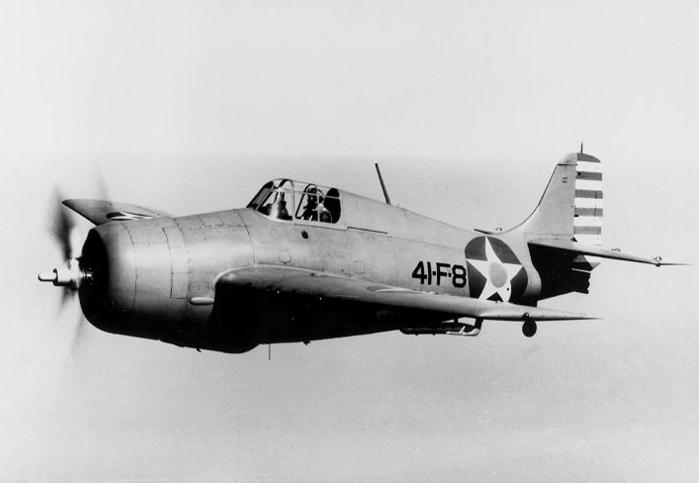
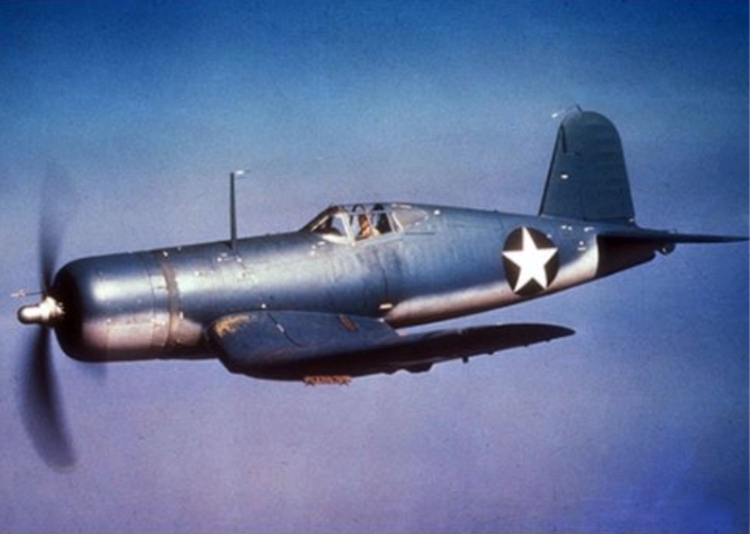
F4F-4 Wildcat of VF-41 in 1942

In 1941 with war raging inEuropeand the Japanese continuing their war in China  and occupied French Indo-China theUnited States rushed to build up its Naval Air Arm and the Arm Air Corps.  New models of aircraft of all types were being rushed into production to replace aircraft already known to be obsolescent.  The Navy brought aircraft already accepted into full production even as it planned more advanced models.  The events in Europe and Asia demonstrated that new fighter designs were needed quickly.

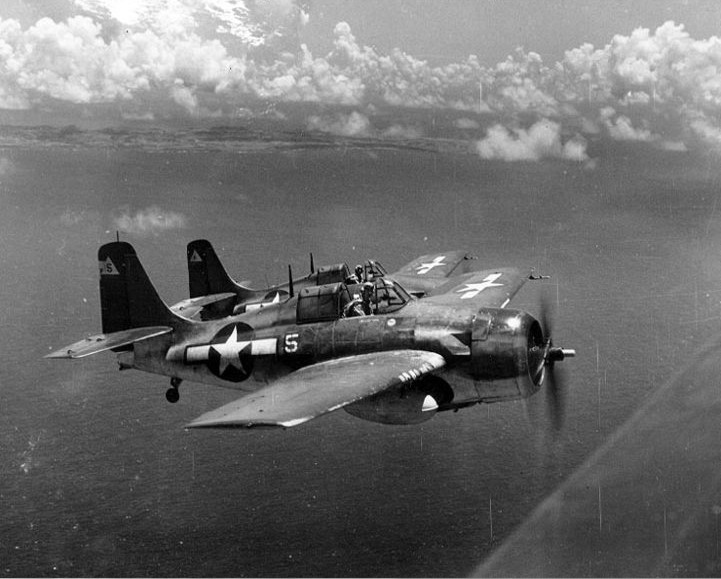
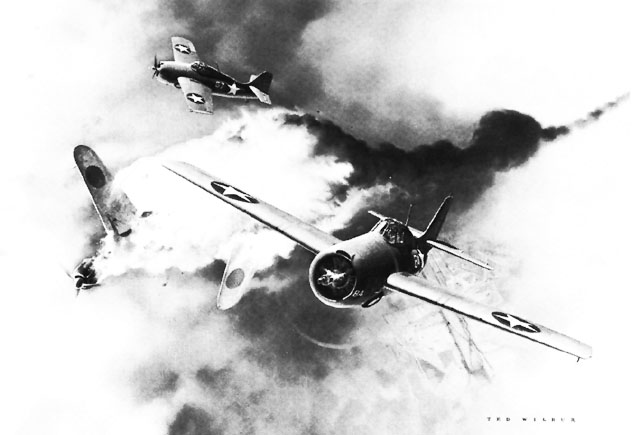
As 1940 dawned the standard fighter aircraft found on U.S. Navy carriers were the F2-A Brewster Buffalo, the Grumman F-3F biplane.  In February 1940 the Navy accepted its first F4F-3 Wildcat which in an earlier for had been rejected in favor of the Brewster Buffalo.  The new Grumman fighter was powered by a 1200 hp Pratt & Whitney R-1830-76 double row radial engine, mounted 4 .50 cal. Machine guns and was heavily armored.  It had a maximum speed of 331 mph range of 845 miles and ceiling of 39500 feet. This would serve it and its pilots well as they aircraft was incredibly tough, often amazing experienced Japanese pilots in their A6M2 Zeros in their ability to suffer heavy damage and remain in the air.  The plucky Wildcat would become the main line of defense in the Pacific against the advancing Japanese Imperial Navy in the months following Pearl Harbor.

The early F4F-3s were superseded by the F4F-4 model which incorporated folding wings, additional armor and an extra two machine guns.  This decreased its maximum speed to 320 mph, rate of climb and ceiling but nonetheless the aircraft gave a good account of itself in Navy and Marine Corps service.  F4F-3’s and F4F-4s served in the British Royal Navy where it was called the Martlet until the end of the war.  When Grumman closed out F4F production in 1943 to concentrate on its replacement the F6F Hellcat production was continued by General Motors and Eastern Aircraft as the FM1 and FM2 Wildcat. The FM1 was identical to the F4F-4 but armament was reduced to 4 machine guns and bomb racks for two 250 lb bombs or depth charges were added.  The FM2 was based on an updated version of the F4F and had a more powerful engine as well as a higher tail assembly to account for the increased torque of the engine.  These aircraft served aboard the tiny Escort Carriers and performed valiantly, especially in the Battle off Samar during the Battle of Leyte Gulf.  A total of 7860 Wildcats of all varieties were built.  They accounted for 1327 enemy aircraft shot down with the loss of only 191 Wildcats.

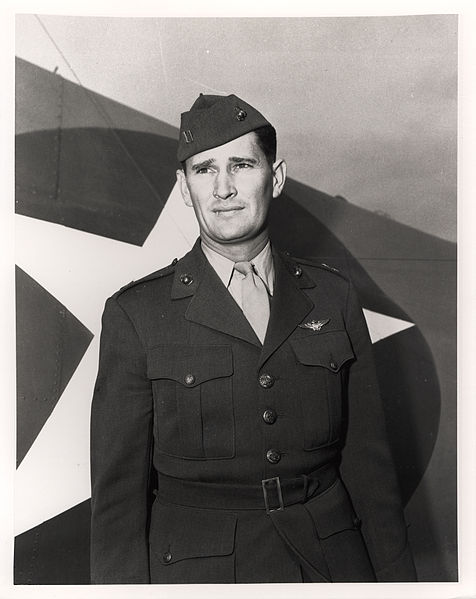
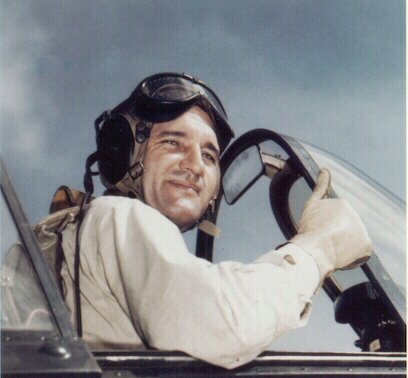
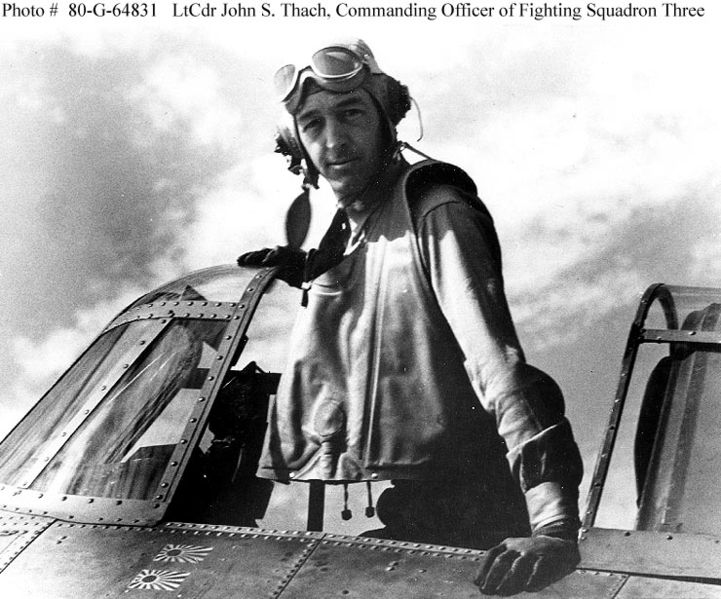
Aces Capt Joe Foss USMC and CAPT David McConnell USN both Medal of Honor Winners and CDR Jimmy Thatch (below)

The top aces who flew the Wildcat were all Marines, CAPT Joe Foss (26 victories) MAJ John Lucian Smith (19 victories) and MAJ Marion Carl (16 victories in the F4F and 2 in the F4U Corsair). Foss and Smith both won the Medal of Honor.  Foss would go on to become Governor of South Dakota and the first Commissioner of the American Football League in 1959. Smith retired as a Colonel in 1960 and Carl as a Major General.  Other distinguished F4F aces included LT Butch O’Hare, the first U.S. Navy ace and Medal of Honor winner and LCDR Jimmy Thatch who developed the highly successful “Thatch Weave” which enabled the U.S.pilots whose machines were slower and less maneuverable than the speedy and nimble Zeros to achieve good success against their Japanese foe.  Thatch retired as an Admiral in 1967.  O’Hare rose to become commander of the Enterprise Air Group and was killed in action in November 1943. Chicago’s O’Hare International Airport is named for this brave aviator.

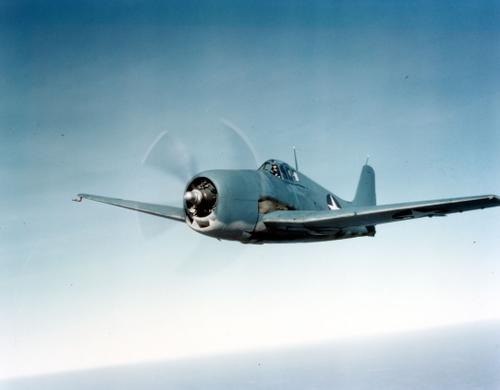
F6F Hellcat

The Grumman F6F Hellcat took over front line fighter duties on the Fleet Carriers from the Wildcat in early 1943 and established itself as the dominant fighter in the Pacific Theater of Operations.  Although it had a resemblance to the F4F the F6F was a totally new design built on combat experience against the Japanese.  The aircraft was built around the powerful Pratt & Whitney R-2800 engine which produced 2000 hp.  The Hellcat mounted six .50 caliber machine guns and had a rate of climb of 3500 feet per minute and a 37300 ft operational ceiling.

Faster than the Zero and other Japanese fighters and piloted by more experienced pilots the Hellcats took a brutal toll of Japanese aircraft.  They accounted for more Japanese aircraft kills than any other with 5163 confirmed kills with a loss of 270 aircraft an overall 19:1 kill ratio. They were piloted by 305 Navy and Marine Corps aces including Meal of Honor winner Captain David McConnell the Navy’s Ace of Aces, and highest surviving United States ace of the war that scored all 34 of his victories in the Hellcat.  The greatest achievement of the Hellcats were when they swept the rebuilt Japanese Naval Air Arm from the skies in the Great Marianas Turkey Shoot. By November 1945 12275 Hellcats had been built with 1263 going to the British Royal Navy. After the war the Hellcat was replaced by the F8F Bearcat as the primary fighter and served in a night fighter and trainer role until the 1950s.  The French Navy used the Hellcat in to provide heroic close air support to beleaguered French Soldiers in Indochina.

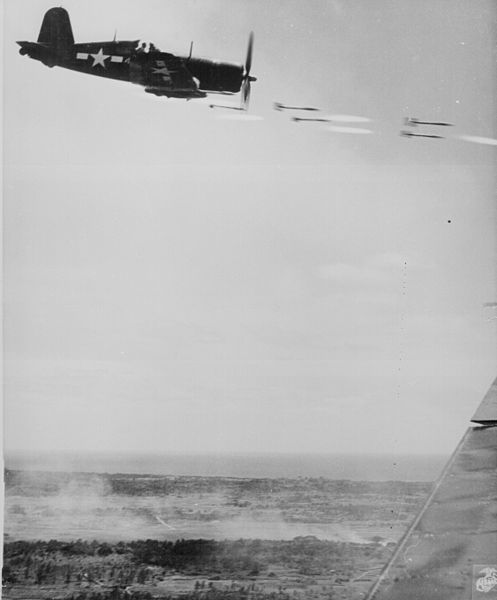
USMC F4U-4 Corsair providing close air support

Flying alongside the F6F was the Vaught F4U Corsair. The Corsair first flew in 1940 and the Navy was slow to adopt it due to difficulties in carrier operations and negative reviews of Navy pilots.  However Marine Corps aviators flying the Corsair had great success and legendary aviators like MAJ Gregory “Pappy” Boyington and VMF-214 the Black Sheep.  The Navy would adopt the aircraft later in the war as the Corsair’s carrier operation deficiencies were remedied, but its real success was a land based aircraft operated by the Marines.  Likewise the first squadrons to operate the aircraft successfully from carriers were the Marine Corps VMF-124 and VMF-213.

Early F4U-1

The Corsair mounted the same Pratt & Whitney R-2800 engine as the F6F but had a highly streamlined gull wing design as well as a turbo-charger which allowed it a top speed of 425 mph.  Later models such as the F4U-4 had a top speed of 445 mph. The F4F was armed with six .50 cal machine guns as well as rockets and a bomb load of 2000 pounds and the F4U-4 could carry 4000 pounds of ordnance.

Less than 10000 of the over 64000 combat sorties flown by F4Us were flown from carriers, the vast bulk of the sorties coming from land based Marine Corps squadrons.  The Corsair was often used as a fighter bomber where its capabilities to drop sizable amounts of ordinance including rockets, bombs and the nearly developed Napalm in a close air support role cemented the importance of Marine Air for future generations.  They were beloved by the Marine Corps and U.S. Army infantrymen in their brutal battles with the Japanese on many hellish island battlefields.  Corsairs accounted for 2140 confirmed kills during the war against a combat loss of 189 aircraft. The aircraft remained in production until 1952 with 12571 aircraft of all variants being built.  Many Japanese pilots considered the Corsair to be the best fighter of the war.

During the war many served in the British Royal Navy and Royal New Zealand Air Force with good success and after the war the French Navy had success with them in a close air support role in Indochina and Algeria.  Following the war the Corsair remained in service for many years in the U.S. Navy and Marine Corps as well as the French Navy and other smaller navies and air forces until the 1960s.

These amazing aircraft and the men that flew them established a tradition of excellence that the Naval Aviators of the U.S. Navy and Marine Corps continue today.

Peace

Padre Steve+

Leave a comment

Filed under aircraft, US Navy, world war two in the pacific

From the Sea: The Absolute Need of a Strong Navy, Merchant Marine, Coast Guard and Viable National Maritime Strategy

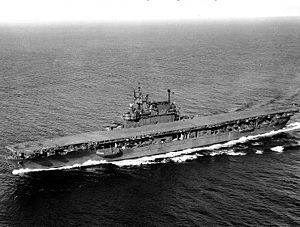
The USS Enterprise CV-6. Ordered in 1933 she was one of the most decorated and battle proven ships ever to fly the flag of the United States

“A good Navy is not a provocation to war. It is the surest guaranty of peace.” Theodore Roosevelt

“A powerful Navy we have always regarded as our proper and natural means of defense; and it has always been of defense that we have thought, never of aggression or of conquest. But who shall tell us now what sort of Navy to build? We shall take leave to be strong upon the seas, in the future as in the past; and there will be no thought of offense or provocation in that. Our ships are our natural bulwarks.” Woodrow Wilson

As the economic crisis continues to envelop the nation there is much talk about the certain reduction in the size and capabilities of the U.S. Military components.  At the present time it seems that politicians of both parties are more interested in the immediate savings that can be derived from cuts.  Regardless of how they are done each service will see force reductions but coming at a time when we are at war those responsible for the cuts must be conscious of the effects on the capabilities that the United States has to defend itself and its interests overseas and to influence world affairs.

The wars in Iraq and Afghanistanhave been ground intensive requiring the strengthening of the Army and Marine Corps to conduct counter insurgency operations. After 9-11 the Navy voluntarily reduced its fleet and personal strength in relatively dramatic fashion intending the savings be used to rebuilt the fleet.  Personnel strength was reduced by nearly 40,000 sailors and many ships were retired well before their anticipated retirement dates.  Unfortunately the Defense Department under then Secretary of Defense Donald Rumsfeld shifted the savings to fund the ground campaigns in Iraq and Afghanistan.  Navy shipbuilding was cut and the Navy failed to help itself by investing much of the service’s budget to the development of three classes of ships and that are over budget, under performing and full of controversy, the Zumwalt Class Destroyers, the Freedom and Independence Class Littoral Combat Ships and the San Antonio Class Landing Ships.

Further cuts are already occurring or envisioned based on the planned cuts in Federal Government programs.  These cuts would reduce the Navy which is now smaller than at any time since the early 1930s following the 1922 Washington Naval Conference which limited the size of the Navies of the signatory countries.  From 1922-1932 the Republican Harding, Coolidge and Hoover administrations not only reduced the force but failed to lay down a single new ship to replace outdated ships and reduced maintenance funds to keep up the ships in service.  Budget cutting gutted the Navy during those years and it was only theRooseveltadministration which realized that a strong Navy was essential to national security began to rebuild the fleet in the 1930s and funded the development of the ships that would win World War Two.  The shipbuilding program had economic benefits as shipyards which had been inactive were able to employ skilled American workers which helped military preparedness, American business and American workers.  The ships that came out of that building program sustained us at the beginning of the war and those designed in the years just before the war served us for decades to come.  Even so the build up byRoosevelt, constrained by the dire economic crisis of the Great Depression could not add ships fast enough to have us fully ready for the Second World War and left us dangerously stretched by the demands of the Japanese advance in the Pacific and the German U-Boat campaign in theAtlantic.  Many good Americans died and the war was decidedly more difficult because of what was done to the Navy in the 1920s by successive short sighted Republican administrations.

The current ship production is at a level not seen in decades and bad surface ship designs and poor workmanship have hurt the Navy.  If the Navy is cut back significantly without a change in mission or corresponding shift in National Security Policy it will degrade the Navy’s ability to respond to emerging threats. Likewise if a coherent shipbuilding program is not undertaken that meets the projected threats American interests can and will be harmed as other nations gain local superiority in critical areas and sea lanes.   While the U.S. Navy currently enjoys a vast superiority over any current or potential adversary there are places that a cunning adversary could hurt American and allied interests simply because we are already spread very thin in regard to the number of ships available and the increasing number of missions and threat areas.

The challenge now is not to give in to the temptation to make indiscriminant cuts until we actually decide on a National Maritime Strategy that is not simply about the Navy but also the Coast Guard and Merchant Marine.  The strategy must include the interrelationship that we have with our allies and other nations and their navies.

The necessity for this goes beyond military preparedness it goes to our economic security since the vast majority of our commerce exports and imports are by sea.  If we take the time to think through a comprehensive maritime strategy it can go a long way to strengthen American industry, labor, commerce as well as national and economic security for us and the world.  A strong Navy, Merchant Marine and Coast Guard are far more important to the United Statesthan large ground forces.

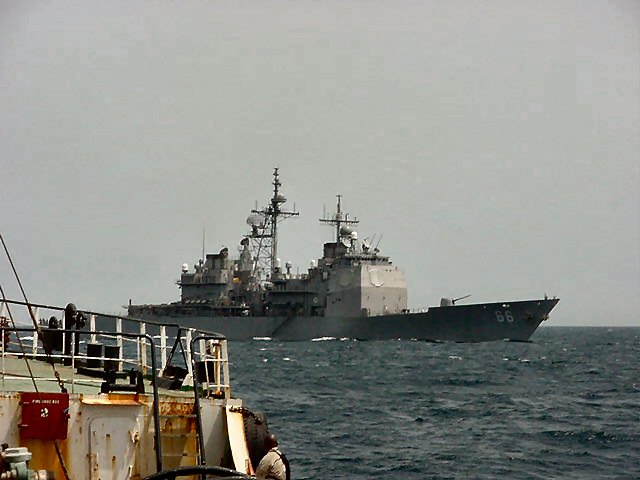
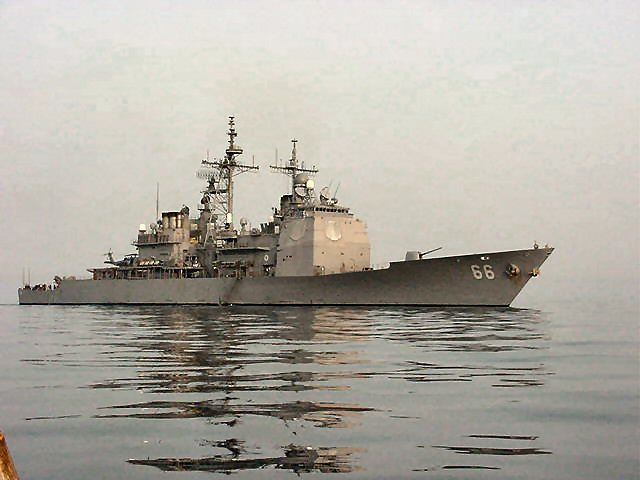
An effective and judicious use of national power: USS Hue City CG-66 passing an impounded Iraqi smuggler in 2002

This is demonstrated in our history as well as that of Great Britain.  When we are strong at sea we are strong, when we commit to long wars of attrition overseas we cause ourselves untold problems. As our first President George Washington said:

“It follows than as certain as that night succeeds the day, that without a decisive naval force we can do nothing definitive, and with it, everything honorable and glorious.”

This is something that our politicians inWashingtonand those that populate the think tanks need to learn.

Peace

Padre Steve+

1 Comment

Filed under national security, Navy Ships, US Navy

The Stab in the Back: How Historical Myths, Lies and Propaganda Destroy Nations

The Stab in the Back

There are many times in history where leaders of nations and peoples embrace myths about their history even when historical, biographical and archeological evidence points to an entirely different record.  Myths are powerful in the way that they inspire and motivate people. They can provide a cultural continuity as a people celebrates the key events and people that shaped their past, even if they are not entirely true.  At the same time myths can be dangerous when they cause leaders and people to make bad choices and actually become destructive. Such was the case inGermanyfollowing the First World War.

While today I am writing about Germany it is important to know that historical myths can become powerful and terribly destructive forces when unleashed in troubled times. This is in fact a lot of what we are seeing in the American body politic at this time as the most extreme views on the political right and left now define the major parties in this country. Some of these myths are no more than appeals to patriotism and times that Americans assume had to be better than they are now. Others are defined by ideology and still others by lies, deceit and hatred directed upon those that the purveyors of such use to demonize and dehumanize those that oppose their agendas.  The scary part that I see as a historian, military officer and Priest is that what is happening now especially on the extreme political right could lead us as a nation down paths that others have gone down before, paths that only lead to destruction. The really scary part is that many people who are in no way extreme often fall for the lies of extremists on both sides of the political spectrum and suffer later for their complicity in allowing extremists to run roughshod.

After the war the belief that the German Army was not defeated but was betrayed by the German people, especially those of the political left.  Like all myths there was an element of truth in the “stab in the back” myth, there were revolts against the Monarchy of Kaiser Wilhelm II and even mutiny on elements of the German High Seas Fleet and Army units stationed in Germany. However the crisis had been brought about by General Ludendorff who until the last month of the war refused to tell the truth about the gravity of Germany’s position to those in the German government.  So when everything came crashing down in late October and early November 1918 the debacle came as a surprise to most Germans.  The myth arose because the truth had not been told by Ludendorff who was arguably the most powerful figure in Germanyfrom 1916-1918.  In the looming crisis which included Ludendorff’s collapse and relief, General Wilhelm Groener presented the facts to the Kaiser and insisted on his abdication.  The Republic that was proclaimed on the 9th of November was saddled with the defeat and endured revolution, civil war and threats from the extreme left and right.  When it signed the Treaty of Versailles it accepted the sole responsibility of  Germany for the war and its damages. Ordered to dismantle its military, cede territory that had not been lost in battle and pay massive reparations the legend of the “stab in the back” gained widespread acceptance in Germany.

Hitler always believed that the defeat of Germany in the First World War was due to the efforts of internal enemies of the German Reich on the home front and not due to battlefield losses or the entry of the United States.  This was a fundamental belief for him and was expressed in his writings, speeches and actions.  The internal enemies of Germany for Hitler included the Jews, as well as the Socialists and Communists who he believed were at the heart of the collapse on the home front.  Gerhard Weinberg believes that the effect of this misguided belief on Hitler’s actions has “generally been ignored” by historians. (Germany, Hitler and World War II p. 196)

Hitler believed that those people and groups that perpetrated the “stab in the back” were “beguiled by the by the promises of President Wilson” (World in the Balance p.92) in his 14 Points.  Thus for him Americans were in part responsible for undermining the German home front, something that he would not allow to happen again.  In fact Hitler characterization of Wilson’s effect on the German people in speaking about South Tyrol.  It is representative of his belief about not only the loss of that region but the war: “South Tyrol was lost by those who, from within Germany, caused attrition at the front, and by the contamination of German thinking with the sham declarations of Woodrow Wilson.” (Hitler’s Second Book p.221)

While others will note Hitler’s lack of respect for the potential power of the United States, no other author that I am familiar with links Hitler’s actions and the reaction of the German political, military and diplomatic elites to the entry of the United States into the war to the underlying belief in the “stab in the back.”   Likewise Hitler had little regard for the military abilities or potential of the United States. Albert Speer notes that Hitler believed “the Americans had not played a very prominent role in the war of 1914-1918,” and that “they would certainly not withstand a great trial by fire, for their fighting qualities were low.” (Inside the Third Reich: Memoirs by Albert Speer p.121)

Hitler not only dismissed the capabilities of the Americans but also emphasized the distance that they were from Germanyand saw no reason to fear the United Stateswhen “he anticipated major victories on the Eastern Front.” (Germany Hitler and World War II p.92)   Hitler’s attitude was reflected by the majority of the military high command and high Nazi officials. Ribbentrop believed that the Americans would be unable to wage war if it broke out “as they would never get their armies across the Atlantic.” (History of the German General Staff, Walter Goerlitz, p.408).  General Walter Warlimont notes the “ecstasy of rejoicing” found at Hitler’s headquarters after Pearl Harbor and the fact that the he and Jodl at OKW caught by surprise by Hitler’s declaration of war. (Inside Hitler’s Headquarters 1939-1945 pp.207-209) Kenneth Macksey notes Warlimont’s comments about Hitler’s beliefs; that Hitler “tended to dismiss American fighting qualities and industrial capability,” and that he “regarded anyone who tried to show him such information [about growing American strength] as defeatist.” (Why the Germans Lose at War, Kenneth Macksey, p.153.)

Others like Field Marshal Erwin Rommel record the disregard of senior Nazis toward American capabilities in weaponry.  Quoting Goering who when Rommel discussed 40mm anti-aircraft guns on aircraft that were devastating his armored forces Goering replied “That’s impossible. The Americans only know how to make razor blades.” (The Rommel Papers edited by B.H. Liddell-Hart p.295) Rommel was one of the few German commanders who recognized the folly of Hitler’s  declaration of war on the United States noting that “By declaring war on America, we had brought the entire American industrial potential into the service of Allied war production. We in Africa knew all about the quality of its achievements.” (The Rommel Papers p.296)

When one also takes into account the general disrespect of the German military for the fighting qualities of American soldiers though often with good reason (see Russell Weigley’s books Eisenhower’s Lieutenants and The American Way of War) one sees how the myth impacted German thought.  This is evidenced by the disparaging comments of the pre-war German military attaché to the United States; General Boeticher, on the American military, national character and capability. (See World in the Balance pp. 61-62)

The overall negative view held by many Germans in regard to the military and industrial power and potential of theUnited Statesreinforced other parts of the myth. Such false beliefs served to bolster belief in the stab-in-the back theory as certainly the Americans could not have played any important role in the German defeat saveWilson’s alleged demoralization of the German population.  This was true not only of Hitler, but by most of his retinue and the military, diplomatic and industrial leadership of the Reich. Hitler’s ultimate belief shaped by the stab-in-the back and reinforced by his racial views which held theUnited Statesto be an inferior mongrel people. This led him to disregard the impact that theUnited Statescould have in the war and ultimately influenced his decision to declare war on theUnited States, a decision that would be a key factor in the ultimate defeat of Germany.

The myths popularized by the extreme political right in Germany after the First World War led to a greater tragedy for the world when Hitler’s Nazi Party used myths, lies and distortion to demonize, marginalize and ultimately murder large segments of its own population and bring destruction to all of Europe.

Myth can have positive value, but myth which becomes toxic can and often does lead to tragic consequences. All societies have some degree of myth in relationship to their history including the United States. The myths are not all the same, various subgroups within the society create their own myth surrounding historic events.  It is the duty of historians, philosophers, ethicists, moral theologians and others in the society to ensure that myth does not override reality to the point that it moves policy both domestic and foreign in a manner that is ultimately detrimental to the nation.

The lesson of history demonstrated by myths surrounding the German defeat and role of the United States in that defeat shows just how myth can drive a nation to irrational, evil and ultimately tragic actions not only for that nation and its people, but for the world.  One can only hope that the American political leadership as well as media will be wiser than the leaders of Germany in the last few years of the Weimar Republic.  One has to be very careful when allowing overheated rhetoric and the use of myths, lies and distortion by political figures, pundits and even preachers no matter what political extreme they belong and just how much we may agree with their politics.

Peace,

Padre Steve+

4 Comments

Filed under History, leadership, Military, philosophy, Political Commentary, world war two in europe

An Introduction to D-Day and the Normandy Campaign

The author with Marines at Point du Hoc, Normandy in 2004

Every year about this time I try to write about D-Day. Last year I posted several articles as I had in 2009 as well.  This year I spent more time on the Battle of Midway writing three articles. Today I have been on the road much of the day and as I drove back to my Island Hermitage I began to think about what I wanted to do this year. When I have decided to do is to re-post a short research paper that I did for one of my Master’s degree courses tonight and follow it with some articles over the week on specific aspects and personalities of the campaign.  What I hope is that people that are not familiar with the campaign as well as those that are can use this as a portal to other resources on the web and in print.

I have visited Normandy once in 2004 on a trip with the Marines of the Marine Security Force Company Europe that took me to Belleau Wood as well as Normandy.  In both places I had the good fortune to be able to explain aspects of both battles, at Normandy discussing the invasion from the German side of the fence.  The Normandy battlefields are well worth visiting.  Hopefully in the next few years I will get a chance to go back and do some serious exploring.

Introduction

General Dwight D Eisenhower Commander in Chief Allied Forces Europe

The American landings on Omaha Beach were critical to the success of the Allied invasion northwestern Europe in the overall Overlord plan.  Without success at Omaha there would have been a strong chance that the German 7th Army and Panzer Group West could have isolated the remaining beachheads, and even if unsuccessful at throwing the Allies into the sea could have produced a stalemate that would have bled the Allies white.  This quite possibly could have led to a political and military debacle for the western allies which would have certainly changed the course of World War II and maybe the course of history.[i] This is not to say the Germans would have won the war, but merely to state that a defeat on Omaha could have changed the outcomes of the war significantly.   Subsequent to the successful landing there were opportunities both for the Allies and the Germans to change the way that the campaign unfolded, thus the battles leading up to the breakout at Avranches are critical to its development and the subsequent campaign in France.

OVERLORD: The Preparations

Eisenhower’s Key Lieutenants: Patton, Bradley and Montgomery

The planning for the Normandy invasion began in earnest after the QUADRANT conference in Quebec in August 1943.  The timetable for the operation was established at the Tehran conference where Stalin sided with the Americans on the need for an invasion of France in the spring of 1944.[ii] Prior to this there had been some planning by both the British and Americans for the eventual invasion initially named ROUNDUP.  These preparations and plans included a large scale raid at Dieppe in 1942 which ended in disaster but which provided needed experience in what not to do in an amphibious assault on a heavily defended beach.        The failure at Dieppe also darkened the mood of the Allies, the British in particular to the success of such operations, bringing to mind the failed Gallipoli campaign of 1915 as well as the opposed landings at Salerno and the USMC experience at Tarawa.[iii] Despite this the Americans led by General Marshall pushed for an early invasion of northwest Europe. Churchill and the British due to their weakness in land power pushed for land operations in the Mediterranean, and even in Norway as an option to the assault in France. The conflicted mindset of the Allies left them in the position of planning almost exclusively for the success of the initial landings and build up to the near exclusion of planning for the subsequent campaign once they landed. This especially included what one writer described as “the maze of troubles awaiting behind the French shore.”[iv]

Field Marshal Erwin Rommel, Commander of Army Group B

Despite conflicts between the Americans and British political and military leadership the planning for the Normandy landings detailed in NEPTUNE and OVERLORD moved ahead.  General Dwight Eisenhower was appointed as the commander of SHAEF with his major subordinates for Land, Air and Sea which caused consternation on both sides of the Atlantic.[v] [vi] The planned operation was expanded from the initial 3 division assault on a narrow front to a minimum 5 division assault on a broad front across Normandy[vii]supplemented by a strong airborne force.[viii] Overall the plan as it developed reflected a distinctly “American willingness to confront the enemy head-on in a collision which Britain’s leaders had sought for so long to defer.”[ix] It is ironic in a sense that the British avoidance of the head on attack was based on their known lack of manpower.  Britain had few infantry reserves to sustain the war effort and the Americans only late recognized their own deficiency in both quantity and quality of infantry forces on which their strategy depended.  That the western allies, so rich in material and natural resources would be so deficient in infantry manpower was a key constraint on the subsequent campaign in France and Germany.  The shortage of infantry forces would cause great consternation among the Allies as the campaign in France wore on.

German Beach Obstacles

The Germans too faced manpower shortages due to the immense losses sustained on the Eastern front, those lost in Africa and those tied down in Italy, the Balkans and Norway as well as the drain caused by Luftwaffe Field Divisions and troops diverted into the Waffen-SS.   The German Army resorted to smaller divisions and the created many “static” divisions manned by elderly or invalid Germans to plug the gaps along the Atlantic wall. The Germans were also forced to recruit “Volksdeutsch” and foreign “volunteers” to fill out both Wehrmacht and Waffen-SS formations.

German fortifications at the Pas de Calais

Prior to the final decision to mount an invasion the Allied planners had contended with the location of the assault in northwestern France.  The Pas de Calais provided a direct route was rejected because it was where the Germans would expect the strike to occur and because it was where the German defenses were strongest.  The fiasco at Dieppe had provided ample proof of what could happen when making an assault into a heavily fortified port.  Likewise the mouth of the Seine near Le Harve was rejected because of the few beaches suitable for landing and because the forces would be split on both sides of the river.  Brittany was excluded due to its distance from the campaigns objectives in Germany.[x]This left Normandy which offered access to a sufficient number of ports and offered some protection from the weather. Normandy offered options to advance the campaign toward the “Breton ports or Le Harve as might be convenient.”[xi] Omaha beach, situated on the center right of the strike would be crucial to the success of the assault situated to the left of UTAH and the right of the British beaches.

Rommel inspecting beach obstacles

Once Normandy was selected as the location for the strike by the Allies, the planning sessions remained contentious.  This was especially true when the Allies debated the amount and type of amphibious lift that could be provided for the landings, particularly the larger types of landing ships and craft to support the Normandy invasion and the planned invasion of southern France, Operation ANVIL.  The increase in OVERLORD requirements for landing craft had an impact in the Mediterranean and resulted in ANVIL being postponed until later in the summer.

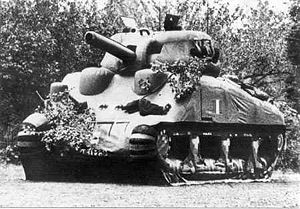
“Dummy” Sherman Tank: The Allies created a fictional Army Group to deceive German planners

As part of their preparations the Allies launched a massive deception campaign, Operation FORTITUDE.  This operation utilized the fictitious First Army Group under the “command” of General George Patton. Patton was still smarting from his relief of command of 7th Army following slapping commanded an “Army Group” which incorporated the use of dummy camp sites, dummy tanks, aircraft and vehicles, falsified orders of battle and communications to deceive German intelligence.[xii] The success of this effort was heightened by the fact that all German intelligence agents in the U.K. had been neutralized or turned by the British secret service.  Additionally the Luftwaffe’s limited air reconnaissance could only confirm the pre-invasion build ups throughout England without determining the target of the invasion.[xiii] The German intelligence chief in the west, Colonel Baron von Roenne “was deceived by FORTITUDE’s fantasy invasion force for the Pas de Calais.”[xiv] Despite this Commander of the 7thArmy recognized by 1943 that Normandy was a likely Allied target and efforts were made to shift 7th Army’s center of gravity from Brittany to Normandy.  The one potential German success in getting wind of when the Allied landings would occur was lost when German intelligence discovered two lines of Verlaine’s “Chason d’ Automme” in June 1944 which were to alert the French Resistance of the invasion.  The security section of 15th Army heard them transmitted on the afternoon of 5 June and notified General Jodl at OKW, but no action was taken to alert forces on the coast.[xv] Allied intelligence was aided by ULTRA intercepts of coded German wireless transmissions. However this was less of a factor than during the African and Italian campaigns as more German communications were sent via secure telephone and telegraph lines vice wireless.[xvi] Allied deception efforts were for the most part successful in identifying German forces deployed in Normandy. However they were uncertain about the location of the 352nd Infantry Division which had been deployed along OMAHA and taken units of the 709th Infantry Division under its command when it moved to the coast.[xvii]


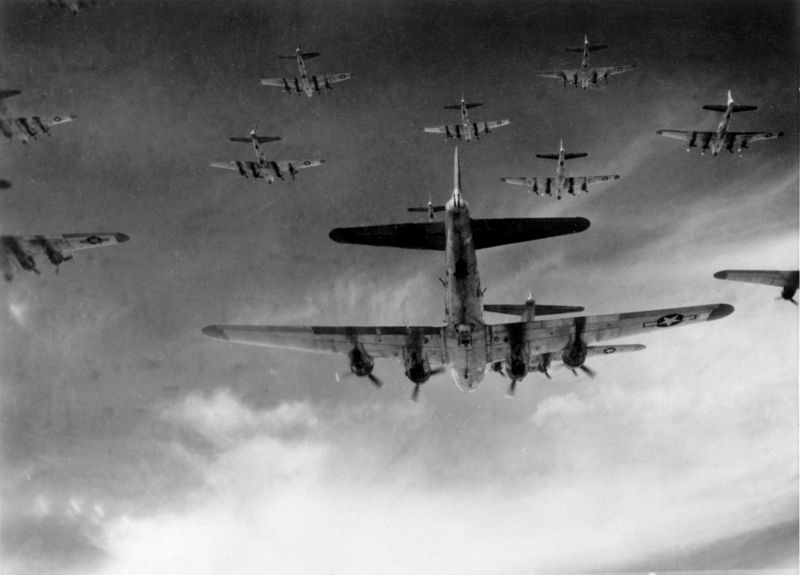
US Army Air Corps B-17s were part of the strategic air campaign to isolate the German beach defenses

The Allied air campaign leading up to the invasion was based on attempting to isolate the invasion site from German reinforcements. Leigh-Mallory the Air Chief developed the “TRANSPORTATION PLAN” which focused efforts on destroying the French railroad infrastructure.[xviii] A more effective effort was led by General Brereton and his Ninth Air Force which was composed of medium bombers and fighters.  Brereton’s aircraft attacked bridges and rapidly achieved success in crippling German efforts to reinforce Normandy.[xix] Max Hastings gives more credit to the American bombing campaign in Germany to crippling the German defense in the west. General Spaatz and the 8th Air Force destroyed German production capacity in oil and petroleum as well as the degraded the German fighter force.  The American daylight raids so seriously degraded the German fighter force that it could not mount effective resistance to the invasion.[xx] Russell Weigley also notes that Albert Speer the Reich Armaments Minister said that “it was the oil raids of 1944 that decided the war.”[xxi]


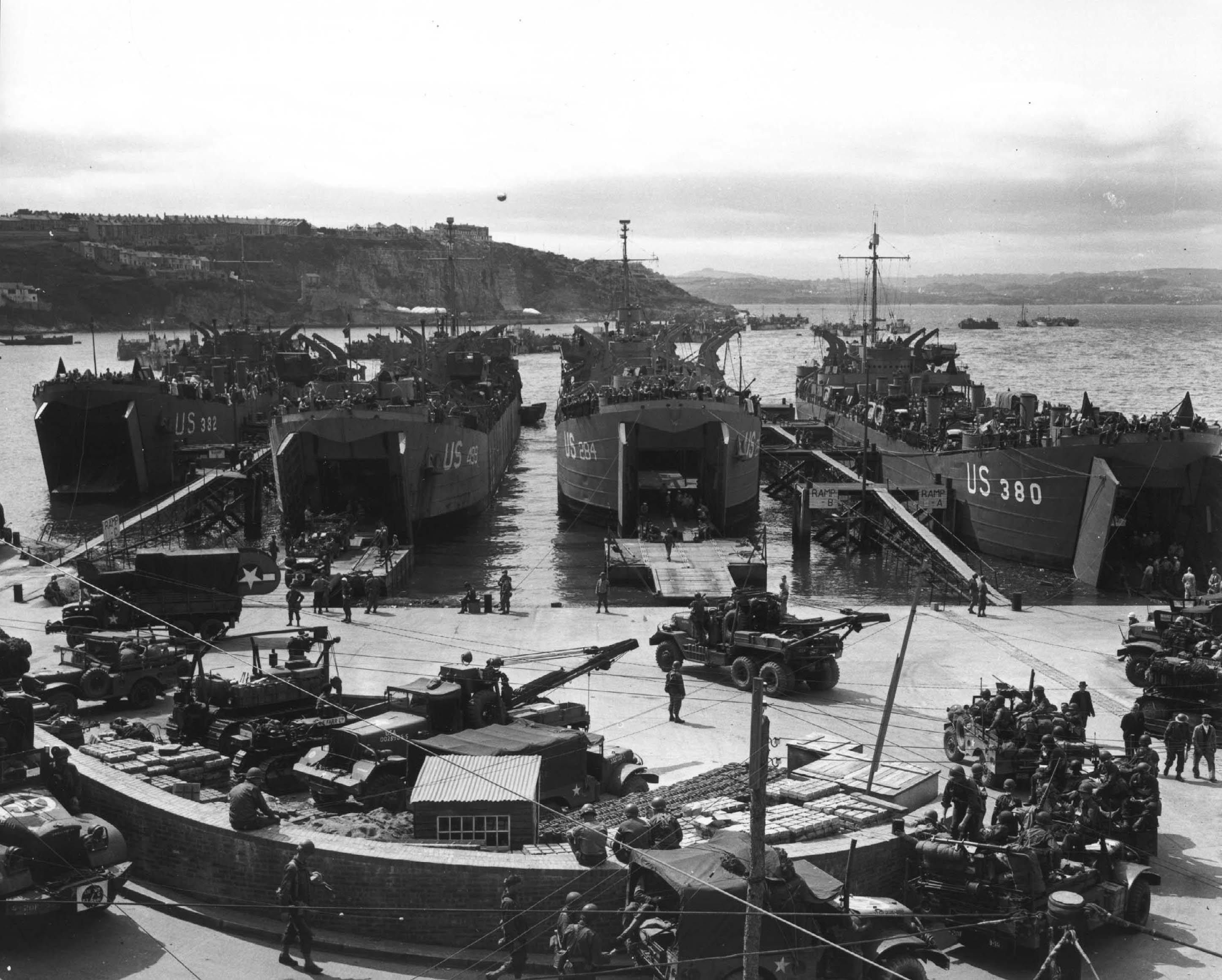
US Navy LST’s being loaded for the invasion

Planning and preparations for OMAHA were based around getting the 1st and 29th Infantry Divisions ashore and them securing a beachhead “twenty-five kilometers wide and eight or nine kilometers deep.”[xxii] American preparations were thorough and ambitious, but the American assault would go through the most heavily defended sector of German defenses in Normandy.  The landing beaches were wide and bordered by dunes which were nearly impassable to vehicles and “scrub covered bluffs thirty to fifty meters high…rough and impassable to vehicles even to tracked vehicles except at a few places.  The exits were unimproved roads running through four or five draws that cut the bluffs.”[xxiii] Dug in along those bluffs was the better part of the 352nd Division. The Americans compounded their selection of a difficult and heavily defended landing zone the Americans failed to take advantage of many of the “gadgets” that were offered by the British which in hindsight could have aided the Americans greatly.  The Americans made use of two battalions of DD (Dual Drive) tanks but turned down the offer of flail tanks, flamethrower tanks, and engineer tanks, the “funnies” developed by General Hobart and the British 79th Armored Division.[xxiv]

Dual Drive amphibious tanks were included as part of the US invasion package

Weigley believes that the American view of “tanks as instruments of mobility rather than of breakthrough power.” Likewise the Americans victories in the First World War were won by infantry with little tank support.[xxv] In this aspect the Americans were less receptive to utilizing all available technology to support their landings, something that when considering the fact that Americans were great lovers of gadgets and technology. The British use of the Armor, including the “Funnies” on the beaches to provide direct fire into German strong points lessened their infantry casualties on D-Day. Due to this lack of armor support on the beach American forces on OMAHA had little opportunity to exercise true combined arms operations during the initial landings.[xxvi]


Rommel with Artillerymen of the 21st Panzer Division in Normandy

German preparations for an Allied landing in Normandy were less advanced than the Pas de Calais.  However they had made great strides since late 1943. Field Marshal Rommel greatly increased defensive preparations along the front, including the Normandy beaches.  One of Rommel’s initiatives was to deploy Panzer Divisions near the coast where they could rapidly respond to an invasion.  However Rommel did not get everything that he wanted.  The OKW only allotted him two Panzer Divisions to be deployed near the Normandy beaches.  Only one of these the 21st Panzer Division was deployed near Caen in the British sector.  One wonders the result had the 12th SS Panzer Division been deployed behind OMAHA. [xxvii]

OMAHA: The Landings

The venerable USS Nevada, resurrected from the mud of Pearl Harbor bombarding German positions at Utah Beach

Like the rest of the Allied invasion forces the 1st and 29th U.S. Infantry Divisions set sail from their embarkation ports with the intent of landing on June 5th.  General Bradley, commanding the First Army until the American XII Army Group would be activated accompanied the invasion force.  The OMAHA landing was under the command of General Gerow and his V Corps while VII Corps led by the 4th Infantry Division landed at Utah supported by airdrops of the 82nd and 101st Airborne Divisions inland.  American command and control during the invasion was exercised from sea as in the Pacific, although General Officers were to go ashore with each of the American divisions.  A severe channel storm disrupted the plan to land on the 5th and Eisenhower delayed the invasion one day catching a break in the weather and electing to go on the 6th.[xxviii] This delay while uncomfortable for the embarked troops caused the Germans to believe that no invasion would take place until the next favorable tide and moon cycle later in the month.[xxix] The assumption that no invasion was possible ensured that a number of key senior German leaders, including Rommel were absent from the invasion front when the Allies landed.[xxx]

US Troops ride a LCVP toward Omaha 

The landing beaches at OMAHA stretched about 6500 meters from Colleville-Sur-Mer to Vierville-Sur-Mere in the west.  The beaches are wide with bluffs overlooking them and a seawall between the beaches and the bluffs.  Additionally several small towns dot the beach. To the west of the town of Vierville, a prominent height overlooked the entire beachhead.  Named Pont du Hoc, it was believed to house a 150mm battery sighted where it could enfilade the OMAHA landing zones.  The Americans assigned to the 2nd Ranger Battalion to make a seaborne assault to land, scale the cliffs and take the battery.  Companies from this battalion made a heroic landing and scaled the cliffs to capture the strongpoint only to discover that the guns had not been emplaced.  The Rangers took heavy casualties and held their isolated beachhead against German counterattacks until relieved by the 29th Division on the morning of June 8th.[xxxi]
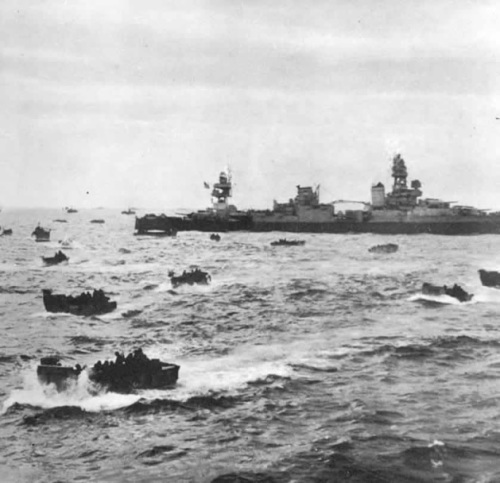
Landing craft passing the USS Augusta in heavy seas heading toward Omaha Beach

H-Hour for OMAHA was 0630.  Unfortunately the assault troops were transferred to their LCVP landing craft 16-20 kilometers from the beach.  The result was a long and dangerous ride in the small craft for the infantry.  Most of the infantry were completely soaked in sea spay and seasick before going ashore and they carried loads far above what they normally would carry into battle.[xxxii] The Armor support was one battalion of DD tanks, the 741stArmored Battalion, supporting the 16th Infantry Regiment of 1st Infantry Division. These were also launched too far out and nearly all of the tanks were swamped and lost before firing a shot in anger.[xxxiii] Other American support units needed to provide firepower on the beach were equally unfortunate. Weigley notes that at OMAHA “at least 10 of the LCVPs sank” as did “the craft carrying almost all of the 105mm howitzers that were to be the first artillery ashore after the tanks.”[xxxiv] The losses would cripple the assault on OMAHA and nearly cause its abandonment.

Bloody Omaha

As the soldiers of the American divisions on OMAHA came ashore they faced German defenders of the 352nd, 716th and a regiment of the 709th Infantry Division, the latter under the tactical command of the 352nd.   Without the bulk of their tanks artillery and lacking close air support the Americans struggled across the beaches and were cut down in large numbers before being pinned down behind the sea wall.[xxxv] With the Americans pinned down on the beach unable to advance, the time tables for the reinforcing waves became snarled amid the German beach obstacles which had not been cleared.  This was in large part due to 40% casualties among the Combat Engineers and the loss of all but five bulldozers.[xxxvi] Naval officers were frustrated in their attempts to provide naval gunfire support by the lack of identifiable targets on the beaches.  Yet German strongpoint’s were “knocked out by either by superbly directed vigorous gunfire from destroyers steaming as close as 800 yards offshore, or by determined action from Rangers or infantry.[xxxvii]


US Infantry struggles ashore at Omaha

Soldiers ashore discovered that they were not facing the static 716th Division but the veteran 352nd Division as well.[xxxviii] Only the leadership and actions of Brigadier General Norman Cota the 29th Division’s Deputy Commander and Colonel Charles Canham of the 116th Infantry kept the situation from complete collapse.  They were able to rally their troops. Under their leadership small units from the 116th which had its linage back to the “Stonewall Brigade” as well as elements of the 16th and 18th Infantry Regiments began to move forward.  Surviving junior leaders began to lead survivors through the dunes and up the bluffs to attack German defenders of the roads leading up from the beach from the flank and rear.  A mid-day break in the weather allowed some close tactical air support giving the troops badly needed support.

US 1st Infantry Division Troops at the Omaha sea wall

With the situation desperate General Bradley considered the evacuation of OMAHA.  At sea events were as confused as Bradley and his staff attempted to make sense of what was going on.  Even later in the evening there was discussion of diverting all further reinforcements from OMAHA to the British beaches.[xxxix]At 1330 hours “Gerow signaled Bradley: “Troops formerly pinned down on beaches…advancing up heights behind beaches.”[xl] By the end of the day Bradley’s aid Major Hansen noted Bradley’s comments to Collins: “They are digging in on Omaha beach with their fingernails. I hope they can push in and get some stuff ashore.”  And Montgomery: “Someday I’ll tell Gen[eral] Eisenhower just how close it was for a few hours.”[xli]

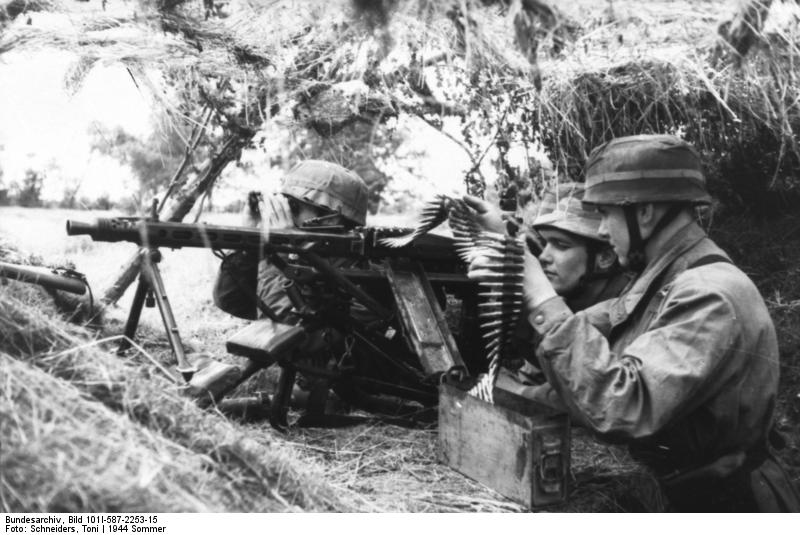
German Fallschirmjaeger Trüppen in Normandy, the German Parachute forces fighting in an infantry role were very effective in the Normandy campaign

The landings at OMAHA succeeded at a cost of over 2000 casualties.  Critical to the success of the landings were the German inability to reinforce their defending troops on the beach.  Likewise the weakness of the units available to mount the standard counterattack that was critical to German defensive plans on D-Day itself kept the Germans from driving the Americans back into the Channel. The 352nd Division fought superbly under the full weight of V Corps and the British XXX Corps on its right suffering heavy casualties as they contested every inch of ground.  The 716th Division composed of second rate troops melted under the onslaught.  Allied air supremacy played a key role as sorties by the 8th and 9th Air Forces helped keep German reinforcements from arriving and interdicted counter attacks inland.  Weigley credits the Allied air superiority with the success of the landings and with limiting casualties.[xlii]Von Rundstedt and other German commanders in France were limited by the delay and refusal of Hitler and OKW to release Panzer reserves when needed most early on June 6th.  By the close of D-Day allied forces had secured the five invasion beaches but not achieved their objectives of taking Caen and Bayuex.  Since the forces on the various beachheads had not linked up the beaches would have been extremely vulnerable had the Germans been able to mount a rapid counterattack by Panzers and strong infantry formations as they had at Salerno.

Major Battles to the Breakout at Avranches

Securing the Beachheads
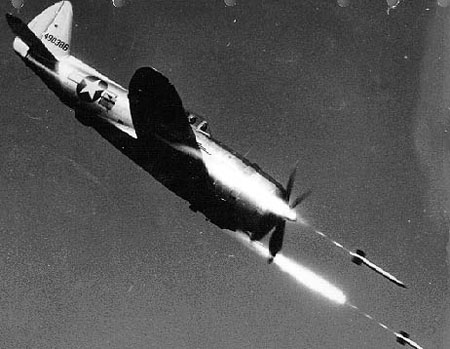
P-47 firing rockets at a ground target. Close air support was vital to Allied forces in Normandy

It took the V and VII Corps nearly a week to secure the beachheads. German forces including the stalwart 352nd Division resisted stubbornly and mounted sharp local counterattacks which kept the Americans off balance.  Elements of the 29th Division and the 90th Division began to push inland and to expand the beachhead toward UTAH. Opposed by the 352nd Division and elements of the 91st Airlanding Division and other non-divisional units the fighting revealed the inexperience of the American infantry formations and the uneven quality of their leadership.  As the Americans tackled the Germans in the labyrinth of the Bocage country the defensive skill of the Germans cost many American lives and delayed the joining of the beachheads. On the 13th the link up was solid enough to enabling the Americans to conduct the follow up operations needed to expand the beachhead, secure Cherbourg and clear the Cotentin.

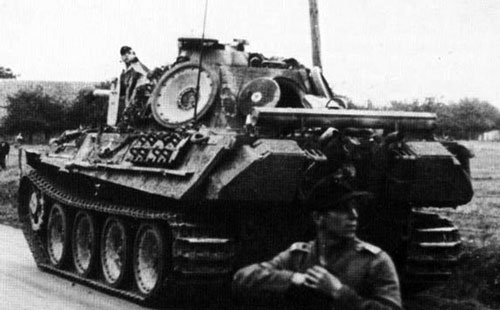
A Panther tank of the Panzer Lehr Division in Normandy

In some American divisions the hard fighting triggered a leadership crisis.  The lack of success of the 90th Division led General “Lightening Joe” Collins of VII Corps relieve the division commander and two regimental commanders of command, a portent of things to come with other American units.[xliii] As the V and VII corps pushed into the “Bocage” they were followed by a massive build up of troops and equipment delivered to the beaches and to the artificial “Mulberry” harbors.  Despite their numeric superiority, air supremacy and massive Naval gunfire support and facing the weakened 352nd, 91st and the 6thParachute Regiment and other less than quality formations, survivors of the static divisions, the Americans made painfully slow progress as they moved off the beachhead and into the Bocage.[xliv]

The Capture of Cherbourg
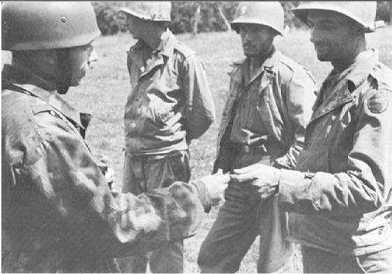
US Soldiers of the 29th Division surrender to German Fallschirmjaeger in Normandy

Once the beachheads had been consolidated the Americans turned their attention toward Cherbourg. Cherbourg was the major naval port at the far northwest tip of the Cotentin.  D-Day planners counted on its swift capture and rehabilitation to serve as a supply port for the Allied forces. The 9th Division drove south to the coast near Barneville on the 18th of June cutting off the German forces covering the approaches to Cherbourg.[xlv] This put the Germans in a bind as the 7th Army “had to split its forces in the peninsula in order to hold the fortress a little longer and thus to gain time for the establishment of the southern front on the Cotentin peninsula.[xlvi] The German forces arrayed before Cherbourg waged a desperate defense centered around the 243rd Infantry Division and other assorted battle groups of LXXXIV Corps, whose commander General Marcks one of the best German Generals was killed in action on 12 June.[xlvii] The U.S. VII Corps under Collins with the 9th, 4th and 79th Divisions pushed up the peninsula capturing Cherbourg on June 29th.  Bradley pushed hard for the capture of the port as the Mulberries had been ravaged by a severe Channel storm the week prior. The port of Cherbourg was thoroughly demolished by German engineers and would not be fully operational for months. The loss of the Mulberries and delay in Cherbourg’s availability meant that few supplies were landed on the beaches would “hinder the escape from the constricting land of the hedgerows into which the Americans had come in search of a port.[xlviii]

The Battle of Caumont Gap

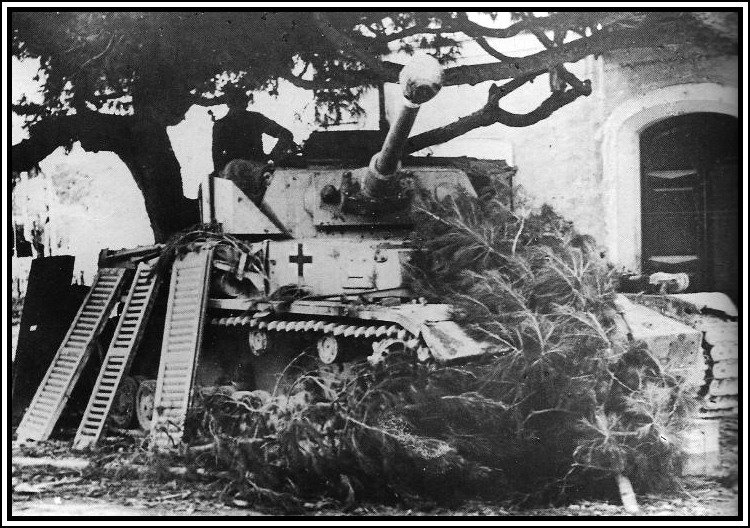
Panzer IV Tank in Normandy

V Corps under Gerow made a cautious advance by phase lines toward Caumont, St Lo and Carentan.  The deliberate advance by the Corps toward a line weakly held by the Reconnaissance battalion of the 17th SS Panzer Grenadier Division was directed by Bradley who did not want to divert attention from the effort against Cherbourg.   After capturing Caumont V Corps halted and continued aggressive patrolling to deceive the Germans while digging in.[xlix] The possibility existed that a strong push against the weak German line could have led to an opportunity to envelope the German line west of Caen. This was a missed opportunity that in part led to the bloody and controversial campaign to capture Caen.[l]

British efforts around Caen

German Panzer Ace Waffen SS Captain Michale Wittman single handedly destroyed a British Battalion at Villers Bocage in his Tiger Tank

Montgomery had ambitious plans to break out of Normandy by capturing Caen on D-Day and driving toward Falaise and Argentan.  The British plans for this were frustrated by the rapid reinforcement of the sector by the Germans and the activities of 21st Panzer, Panzer Lehr, and the 12th SS Panzer Divisions.  A flanking maneuver at Villers-Bocage was frustrated by a few Tiger tanks led by the legendary Waffen SS Panzer commander Captain Michael Wittman whose tanks devastated a British Armored battalion.[li]

Wreckage of a British Battalion at Villers Bocage

A series of disastrous attacks toward Caen (EPSOM, CHARNWOOD and GOODWOOD) strongly supported by air strikes and Naval gunfire finally succeeded in taking that unfortunate city on July 18th but failed to take the heights beyond the town.[lii]

British operations like Operation Epsom met setback after setback against dug in German forces outside of Caen

Against crack well dug in German forces the British took heavy casualties in tanks and infantry seriously straining their ability to conduct high intensity combat operations in the future.[liii] The one benefit, which Montgomery would claim after the war as his original plan was that German forces were fixed before Caen and ground down so they could not be used against Bradley’s breakout in the west at St Lo.[liv]


Clearing the Bocage: The Battle of the Cotentin Plain

US M-5 Light Tank in Normandy

Other German forces arrived, and reinforced the Caumont gap which no longer “yawned invitingly in front of V Corps.” [lv] Bradley wished to push forward rapidly to achieve a breakthrough in the American sector.[lvi] Facing the most difficult terrain in France amid the Bocage and swamps that limited avenues of approach to the American divisions committed to the offensive.  The Americans now faced their old foe the 352nd division as well various elements of II Parachute Corps, the 17th SS Panzer Grenadier and Panzer Lehr Divisions.  American tanks and infantry made slow progress and incurred high losses as they dueled the Germans at close range.  In the VIII Corps sector alone the attack “consumed twelve days and 10,000 casualties to cross eleven kilometers of the Bocage…the achievements of the VII and XIX Corps were no better than comparable.[lvii]

St. Lo

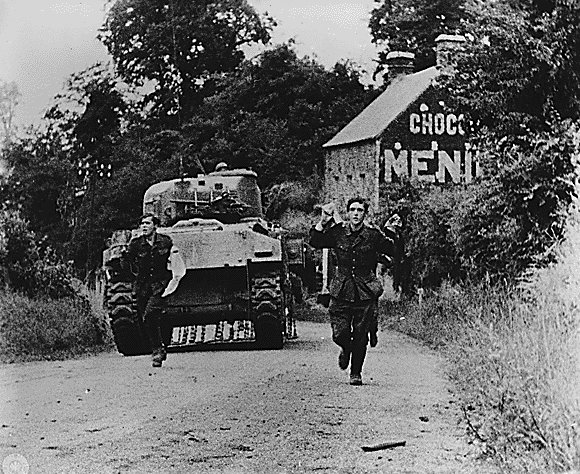
US Tanks advancing with German prisoners moving back to US lines at St Lo

St. Lo was a key to Bradley’s breakout efforts.  His Army had to capture it and the roads leading out of it to launch Operation COBRA along the coast.  The task of capturing St. Lo was assigned to GEROW’S V Corps and Corlett’s XIX Corps.  They faced opposition from the tough paratroops of the German 3rd Parachute Division of II Parachute Corps.  The 2nd, 29th, 30th and 83rd Divisions fought a tough battle advancing eleven kilometers again with high numbers of casualties especially among the infantry to secure St. Lo on 18 July.[lviii] They finally had cleared the hedgerows.  St Lo epitomized the struggle that the American Army had to overcome in the Bocage.  Hard fighting but outnumbered German troops in excellent defensive country exacted a terrible price in American blood despite the Allied control of the skies.[lix]

Operation COBRA

US 155mm Howitzers in Normandy, the Germans had profound respect for American Artillery, a respect that they did not share for American Infantry or Armor forces

With the Bocage behind him Bradley desired to push the Germans hard.  COBRA was his plan to break out of Normandy.  Bradley ably assisted by Collins they realized that the better terrain, road networks favored a breakout.  American preparations included a technical advance that allowed tanks to plow through hedgerows. This was the “Rhino” device fashioned by American troops which was installed on 3 of every 5 First Army Tanks for the operation.[lx] VII Corps was to lead the attack which was to begin on July 24th. American planning was more advanced than in past operations.  Collins and Bradley planned for exploitation operations once the breakthrough had been made. A massive air bombardment would precede the attack along with an artillery barrage by Collins corps artillery which was reinforced by additional battalions.   A mistake by the heavy bombers in the 24th resulted in the American troops being hit with heavy casualties and a postponement of the attack until the 25th.[lxi] The following day the attack commenced.  Another mistake by the bombers led to more American casualties[lxii] but VII Corps units pressed forward against the determined resistance of the survivors of Panzer Lehr and the remnants of units that had fought the Americans since the invasion began.  Although it was a “slow go” on the 25th Bradley and his commanders were already planning for and beginning to execute the breakout before the Germans could move up reinforcements.  The 26th of June brought renewed attacks accompanied by massive air strikes.
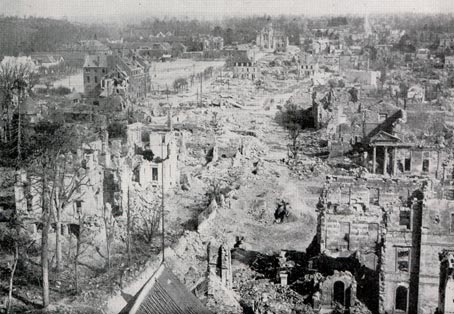
St Lo 

While not much progress was made on the 26th, the Americans discovered on the 27th that the German forces were retreating.  The capture of Marigny allowed VIII Corps to begin exploitation down the coastal highway to Coutances.  On the 27th General Patton was authorized to take immediate command of VIII Corps a precursor to the activation of his 3rdArmy.  COBRA ripped a hole in the German line and inflicted such heavy casualties on the German 7th Army that it could do little to stop the American push.[lxiii] As the American forces pushed forward they reinforced their left flank absorbing the local German counterattacks which were hampered by the Allied close air support.

Avranches and Beyond

US Forces advance through the ruins of St Lo

As the breakthrough was exploited the command of the forces leading it shifted to Patton and the newly activated 3rd Army. By the 28th VIII Corps led by the 4th and 6th Armored Divisions had reached Avranches and established bridgeheads over the See River with additional bridges being captured intact on the 30th.[lxiv] The capture of Avranches allowed the Americans to begin exploitation operations into Brittany and east toward the Seine. Weigley notes that for the first time in the campaign that in Patton the Americans finally had a commander who understood strategic maneuver and would use it to great effect.[lxv]

Conclusion

The American campaign in Normandy cost the U.S. Army a great deal. It revealed weaknesses in the infantry, the inferiority of the M4 Sherman tank to most German types, problems in tank-infantry cooperation and also deficiencies in leadership at senior, mid-grade and junior levels. Heavy casualties among infantry formations would lead to problems later in the campaign. Numerous officers were relieved including Division and Regimental commanders.  Nonetheless during the campaign the Americans grew in their ability to coordinate air and ground forces and adapt to the conditions imposed on them by their placement in the Cotentin.  The deficiencies would show up in later battles but the American Army learned its trade even impressing some German commanders on the ground in Normandy.[lxvi]

[i] See the alternative history of by Peter Tsouras Disaster at D-Day: The Germans Defeat the Allies, June 1944, Greenhill Books, London 1994. Tsouras describes the defeat of the Omaha landings and the effect on the course of the campaign leading to the overthrow of Hitler and a negotiated armistice in the west.  While this outcome could be rigorously debated other outcomes could have led to the fall of the Roosevelt and Churchill governments and their replacement by those not committed to unconditional surrender or a continuation of the war that brought about more German missile attacks on the U.K. and the introduction of other advanced German weapons that could have forced such a settlement. Another option could have led to the dropping of the Atomic Bomb on a German city vice Hiroshima.

[ii] Weigley, Russell F. Eisenhower’s Lieutenants: The Campaign of France and Germany, 1944-1945, Indiana University Press, Bloomington IN, 1981 p.33

[iii] Ibid pp. 34-35

[iv] Ibid p.35

[v] General Montgomery 21st Army group and Land Forces, Admiral Sir Bertram Ramsey as Allied Naval Expeditionary Force and Air Marshall Sir Trafford Leigh-Mallory as Commander in Chief Allied Expeditionary Air Force. Weigley p.43

[vi] Max Hastings in Overlord: D-Day and the Battle for Normandy Vintage Books, New York, 1984, comments that many in Britain wondered if Eisenhower with the lack of actual battle experience could be a effective commander and that Eisenhower was disappointed in the appointment of Leigh-Mallory and Ramsey, and had preferred Alexander over Montgomery, pp. 28-29.

[vii] Ibid. Weigley p.40.  Montgomery was the first to object to the 3 division narrow front invasion rightly recognizing that seizing Caen with its road junctions could provide a springboard for the campaign into open country.

[viii] Ibid. p.37

[ix] Hastings, Max. Overlord: D-Day and the Battle for Normandy Vintage Books, New York, 1984 p.29  Hastings finds the irony in the selection of the British officers to execute the plan that reflected the American way of thinking.

[x] The Germans agreed with this in their planning leaving Brittany very lightly defended.  See  Isby, David C. Ed. “The German Army at D-Day: Fighting the Invasion.” p.27 The report of General Blumentritt, Chief of Staff OB West noted that only 3 divisions were assigned to Brittany.

[xi] Ibid. Weigley, pp. 39-40

[xii] Ibid. p.73

[xiii] See Isby p. 69.  General Max Pemsel of 7th Army noted that “During  the spring of 1944, Seventh Army received only tow good photographs of British southern ports, which showed large concentrations of landing craft.”

[xiv] Ibid. Hastings p.63.  Hastings comments also about the success of using the turned Abwehr agents.

[xv] Warlimont, Walter. “Inside Hitler’s Headquarters: 1939-1945.” Translated from theGerman by R.H. Barry. Presidio Press, Novao CA, English Edition Copyright 1964 Wiedenfeld and Nicholson Ltd. Pp.422-423

[xvi] Ibid. Weigley pp. 53-54

[xvii] Ibid. p. 67

[xviii] Ibid. pp.57-64  Weigley spends a great deal of time on the wrangling between Eisenhower, Leigh Mallory and Spaatz on the nature of the plan, the allocation of forces both strategic and tactical assigned to carry it out and its success, or in the light of postwar analysis the lack of effect that it had on German operations.

[xix] Ibid. p.67-68.

[xx] Ibid. Hastings pp. 43-44 In large part due to the long range P-51 Mustang which accompanied the American bombing raids beginning in 1943.  Another comment is that the campaign drew the German fighters home to defend Germany proper and prevented their use in any appreciable numbers over the invasion beaches.

[xxi] Ibid. Weigley p.69

[xxii] Ibid. p.89

[xxiii] Ibid. pp. 88-89

[xxiv] Ibid. p.87

[xxv] Ibid. Weigley also talks about the rejection of General Corlett’s ideas to use Amtracks used by the Marines in the Pacific to land on less desirable, but less defended beaches to lessen casualties on the beaches and the need for additional support equipment even on smooth beaches.  One of Corlett’s criticisms was that too little ammunition was allotted to supporting the landings and not enough supporting equipment was provided. pp. 46-47

[xxvi] Hastings notes that with the strength and firepower of the German forces on OMAHA that many of these vehicles had they been employed would like have ended up destroyed further cluttering the beachhead. “Overlord” p.102

[xxvii] The battle over the deployment of the Panzer Divisions is covered by numerous historians.  The source of the conflict was between Rommel who desired to place the Panzer Divisions on the Coast under his command due to the fear that Allied air superiority would prevent the traditional Panzer counterthrust, General Gyer von Schweppenburg commander of Panzer Group West (Later the 5th Panzer Army) and Field Marshal Von Rundstedt who desired to deploy the divisions order the command of Rundstedt for a counter attack once the invasion had been launched, a strategy which was standard on the Eastern Front, and Hitler who held most of the Panzer reserve including the SS Panzer Divisions under his control at OKW.  Hitler would negotiate a compromise that gave Rommel the satisfaction of having three Panzer Divisions deployed behind coast areas in the Army Group B area of responsibility.  21stPanzer had those duties in Normandy.

[xxviii] Ibid. p.74-75

[xxix] Von Luck, Hans.  “Panzer Commander“ Dell Publishing, New York, 1989 pp. 169-170.  Von Luck a regiment commander in 21st Panzer noted that General Marcks of 84th Corps had predicted a 5 June invasion at a conference May 30th.

[xxx] Almost every D-Day historian talks about the weather factor and its effect on the German high command’s reaction to the invasion.  Rommel was visiting his wife for her birthday and planned to make a call on Hitler. Others including commanders of key divisions such as the 91st Airlanding Division were off to a war game in Rennes and the 21st Panzer Division to Paris.

[xxxi] Ibid. Weigley p. 96

[xxxii] See Cornelius Ryan, “The Longest Day” Popular Library Edition, New York 1959. pp. 189-193 for a vivid description of the challenges faced by soldiers going from ship to landing craft and their ride in to the beaches.

[xxxiii] Ibid. Weigley. p.78 Weigley talks about the order for the tanks to be carried ashore on their LCTs that did not get transmitted to the 741st.

[xxxiv] Ibid.

[xxxv] Ibid. Weigley  p. 87 The weather prevented the aerial bombardment from being effective. Because the bombers could not see their targets they dropped their bomb loads further inland, depriving the infantry of support that they were expecting.  Naval gunfire support had some effect but had to be lifted as the troops hit the beach leaving much of that support to come from Destroyers and specially equipped landing craft which mounted rockets and guns.

[xxxvi] Ibid. Hastings. pp. 90-91.

[xxxvii] Ibid. p.99

[xxxviii] Ibid. Weigley p.80

[xxxix] Ibid. p.101  Also see Weigley p.80

[xl] Ibid. p.99

[xli] Ibid. Weigleyp.95

[xlii] Ibid. p.94

[xliii] Ibid. p.99 Both Weigley and Hastings make note of the failure of both the Americans and British to train their troops to fight in the bocage once they had left the beaches.

[xliv] Ibid. Hastings. pp.152-153

[xlv] Ibid. Weigley p.101

[xlvi] Isby, David C., Ed. “Fighting in Normandy: The German Army from D-Day to Villers-Bocage.” Greenhill Books, London,  2001.  p.143

[xlvii] Ibid. Hastings p.173 Allied fighter bombers exacted a fearful toll among German commanders. The Commanders of the 243rd and 77th Divisions fighting in the Cotentin were also killed by air attacks on the 17th and 18th.   Further east facing the British the commander of the 12th SS Panzer Division, Fritz Witt on the 17th.

[xlviii] Ibid. Weigley. p.108

[xlix] Ibid. p.111-112.

[l] Ibid.

[li] The efforts of the 51st Highland Division and 7th Armored Division were turned aside by the Germans in the area and were dramatized by the destruction of  a British armored battalion by SS Captain Michael Wittman and his platoon of Tiger tanks.  See Hastings pp.131-135.

[lii] The British 8th Corps under General O’Connor lost 270 tanks and 1,500 men on 18 July attempting to crack the German gun line on the ridge beyond Caen. Weigley, pp.145-146.

[liii] Hastings comments about the critical British manpower shortage and the pressures on Montgomery to not take heavy casualties that could not be replaced. Overlord. pp.241-242.

[liv] Ibid. Weigley pp.116-120

[lv] Ibid. p.122

[lvi] Ibid. p121 Bradley told Eisenhower “when we hit the enemy this time we will hit him with such power that we can keep going and cause a major disaster.”

[lvii] Ibid. 134

[lviii] Ibid. Weigley. pp. 138-143.  Weigley notes of 40,000 U.S. casualties in Normandy up to the capture of St. Lo that 90% were concentrated among the infantry.

[lix] Weigley quotes the 329th Regiment, 83rd Division historian “We won the battle of Normandy, [but] considering the high price in American lives we lost. P.143. This is actually a provocative statement that reflects America’s aversion to massive casualties in any war.

[lx] Ibid. p.149

[lxi] Ibid. p. 152

[lxii] Ibid. pp. 152-153.  Among the casualties were the command group of the 9th Division’s 3rd Battalion 47th Infantry and General Leslie McNair who had come to observe the assault.

[lxiii] Ibid. pp.161-169. Weigley notes the advances in U.S. tactical air support, the employment of massive numbers of U.S. divisions against the depleted German LXXXIV Corps, and the advantage that the “Rhino” device gave to American tanks by giving them the ability to maneuver off the roads for the first time.

[lxiv] Ibid. pp.172-173.

[lxv] Ibid. p.172

[lxvi] Ibid. Isby, David C. “Fighting in Normandy,” p.184, an officer of the 352nd Division referred to the American soldier “was to prove himself a in this terrain an agile and superior fighter.”

Bibliography

Carell, Paul. “Invasion: They’re Coming!” Translated from the German by E. Osers, Bantam, New York 1964.

Hastings, Max. Overlord: D-Day and the Battle for Normandy Vintage Books, New York, 1984

Isby, David C. Ed. “The German Army at D-Day: Fighting the Invasion.” Greenhill Books, London 2004

Isby, David C., Ed. “Fighting in Normandy: The German Army from D-Day to Villers-Bocage.” Greenhill Books, London, 2001.

Ryan, Cornelius, “The Longest Day” Popular Library Edition, New York 1959

Tsouras, Peter. “Disaster at D-Day: The Germans Defeat the Allies, June 1944,”Greenhill Books, London 1994.

Von Luck, Hans.  “Panzer Commander“ Dell Publishing, New York, 1989

Warlimont, Walter. “Inside Hitler’s Headquarters: 1939-1945.” Translated from theGerman by R.H. Barry. Presidio Press, Novao CA, English Edition Copyright 1964 Wiedenfeld and Nicholson Ltd. Warlimont, Walter. “Inside Hitler’s Headquarters: 1939-1945.” Translated from theGerman by R.H. Barry. Presidio Press, Novao CA, English Edition Copyright 1964 Wiedenfeld and Nicholson Ltd.

Weigley, Russell F. Eisenhower’s Lieutenants: The Campaign of France and Germany, 1944-1945, Indiana University Press, Bloomington IN, 1981

5 Comments

Filed under History, Military, world war two in europe

The Naming of a New Aircraft Carrier and the Centrality of the Navy in Future National Security Strategy

USS HUE CITY CG-66 Enforcing the UN Oil Embargo against Iraq in April 2002

“Control of the seas means security. Control of the seas means peace. Control of the seas can mean victory. The United States must control the sea if it is to protect our security.” —John F. Kennedy

“For in this modern world, the instruments of warfare are not solely for waging war. Far more importantly, they are the means for controlling peace. Naval officers must therefore understand not only how to fight a war, but how to use the tremendous power which they operate to sustain a world of liberty and justice, without unleashing the powerful instruments of destruction and chaos that they have at their command.” Admiral Arleigh Burke

Over the Memorial Day weekend Secretary of the Navy Ray Mabus announced the naming of the second ship in the Gerald R. Ford class aircraft carrier.  The name selected was significant as the ship will be named the USS John F. Kennedy CVN-79, her namesake being President John F. Kennedy who served as a junior officer in the Second World War commanding a Patrol Torpedo Boat, PT-109 in the Solomon Islands. Kennedy’s boat was rammed and split in two by the Japanese Fubuki class destroyer Amagiri in the early hours of August 2nd 1943.  Over a period of six days he made herculean efforts to save his crew and was awarded the Navy Marine Corps Medal and the Purple Heart.

The United States has always been a seafaring nation and today the vast majority of our commerce is borne by ships from the world over. The United States learned during the Revolution and the War of 1812 the importance of sea power when the Royal Navy for all intents and purposes rules the waves. Even the land victory of Washington at Yorktown was sealed by the intervention of the French Fleet which prevented the British from evacuating the garrison.  During the Civil War the Union Navy was the deciding factor as it blockaded Southern ports and forced the Mississippi River cutting the Confederacy in two and sealing its fate even as Confederate armies battled Union forces in the bloodiest battles ever seen on this continent. The Navy was the deciding factor in the Spanish American War sweeping the Spanish Navy from the seas and dooming its garrisons around the world.  The U.S. Navy began the First World War late but by the end was the ascendant naval power in the world and was one of the major reasons that the British in spite of the superiority that they had at the time agreed to the Washington and later London Naval accords.  When the Second World War erupted the United States was in the beginning stages of a Naval build up to reinforce and replace the fleet that was still dominated by the ships built prior to the Naval treaties.   In the Pacific the Japanese Navy steamrolled its scattered and ill equipped opposition while in the Atlantic German U-Boats decimated convoys very nearly breaking the back of Great Britain and the Soviet Union. However it was the Navy initially stretched to its limits by the Two Ocean War which regained the initiative which in an unprecedented build up of Naval Power defeated its adversaries and safeguarded the vast convoys of merchant ships carrying American troops and equipment into battle and bringing American Lend Lease aid to reach Britain and the Soviet Union. During the Cold War, Korea and Vietnam the Navy was a flexible and mobile response force to crises around the globe military, diplomatic and humanitarian, often diffusing situations without a shot having to be fired in anger and eliminating the need for large numbers of ground forces. In the 1980s the Navy secured the Gulf of Sirte against the threats of Libya’s Colonel Gaddafi and kept the Persian Gulf open during the Tanker Wars initiated by Iran on merchant ships transiting the Gulf. American naval power was again on display during the Gulf War and subsequent United Nations sanctions on Iraq.  After 9-11 the Navy has been a response force around the globe in the War on Terrorism as well as numerous natural disasters and humanitarian crises. When a crisis develops which might require a military response the first questions on the mind of every Presidential administration has been where is the nearest Carrier Strike Group and Marine Expeditionary unit.  Today the Navy supports military operations in Afghanistan, Iraq, and the Horn of Africa and against piracy.

The vast majority of the world’s populations now live on the littorals, or the land areas adjacent to the ocean.  The bulk of world commerce is maritime commerce; the United States depends on secure sea lanes to support our economy.

While sea power is essential to American national power, diplomatic, economic and military large standing armies are not. Yes our land forces must be strong and in quality the best in the world. At the same time whenever we have committed large numbers of land forces to ill defined campaigns we have squandered national power and prestige in wars that have been at best stalemates and at worst strategic defeats. This of course excemts the two World Wars where those large land forces were engaged they had a specific mission that was directly tied to national strategy.

We have come to a place in our national life where our strategic thinking still largely influenced by the World Wars and the Cold War has to be modified.  The major land wars launched by the Bush administration in Iraq and Afghanistan have proven incredibly costly in terms of manpower and economics and it is clear that the Obama administration and bipartisan Congress will seek to disengage sooner rather than later from those wars.  One knows that once those wars are over that land forces will shrink as plans are already on the table with cuts already beginning in some services.

Of course one has to ask what the military should be composed of in light of a coherent national security strategy that takes into account the full spectrum of threats to our nation many of which are not military in a traditional sense. To sustain large numbers of land forces on foreign territory is expensive and often fraught with peril when there are changes in the leadership of allied nations on which we depend for the basing of such forces. Even forward deployed Air Force assets are subject to these constraints.  Such basing was necessitated by the Soviet threat during the Cold War.  All previous overseas conflicts were viewed by American leaders as expeditionary in nature, land forces would go in with a specific goal for a limited time. If forces were left in place they were generally small and of a constabulary nature.

Only the Navy-Marine Corps team provides the flexibility to provide a rapid military or humanitarian response to overseas contingencies.  Critics call it “gunboat diplomacy” but then we have found what we are doing is not sustainable and we need an alternative.  That alternative is the Sea Services, which also include the Coast Guard and Merchant Marine.  The Bush administration reduced the Navy in terms of ships and personnel in order to support land wars of questionable strategic value, even turning thousands of Sailors into soldiers to support Army missions in Iraq and Afghanistan without reducing and even expanding the requirements of Naval forces.  This was a mistake of unmitigated proportions, no strategic goal that we have accomplished in either Iraq or Afghanistan could not have been accomplished by the Navy and Marine Corps and contingents of Special Forces, military and civilian advisors and the CIA.

Theodore Roosevelt had a saying, “speak softly and carry a big stick.” He was not an isolationist by any means; he advocated engagement with the world but also protections, military, economic and ecological for Americans.   A strong Navy was central to his thinking as were good relations with other nations.  He understood the importance of the Navy in supporting American interests. In his annual address to Congress on December 6th 1904 he stated:

“In treating of our foreign policy and of the attitude that this great Nation should assume in the world at large, it is absolutely necessary to consider the Army and the Navy, and the Congress, through which the thought of the Nation finds its expression, should keep ever vividly in mind the fundamental fact that it is impossible to treat our foreign policy, whether this policy takes shape in the effort to secure justice for others or justice for ourselves, save as conditioned upon the attitude we are willing to take toward our Army, and especially toward our Navy. It is not merely unwise, it is contemptible, for a nation, as for an individual, to use high-sounding language to proclaim its purposes, or to take positions which are ridiculous if unsupported by potential force, and then to refuse to provide this force. If there is no intention of providing and keeping the force necessary to back up a strong attitude, then it is far better not to assume such an attitude.”

Roosevelt understood better than most of his peers around the world of the necessity of worldwide engagement and the protection of American interests.  As interdependent as the United States and our allies are on international cooperation in anti-terrorism, humanitarian response and the free flow of commerce the Sea Services have to be the primary means of response.  Land forces are important but it is clear that they will need to be reorganized and rebuilt after the long and arduous conflicts that they have shouldered and ultimately they are dependent on the Navy for the bulk of their support when deployed overseas.

Any new national security strategy must prioritize our nation’s goals with diplomatic, intelligence, military and economic assets. We must leverage power and not squander it.  Naval forces are among the most flexible and economic means of exercising the military aspects of such strategy and are not hostage to unstable governments as are forward deployed land forces.   Naval power leverages national power in ways that forward deployed land forces cannot and are far more connected to goodwill than are ground forces which are seen by many around the world as occupying forces.

British Maritime strategist Julian Corbett in his book Some Principles of Maritime Strategyprovides a clear understanding of how sea power is best suited to the principle of a true national strategy for a maritime nation which emphasized limited and asymmetrical warfare.  Such strategy sustained the British Empire until it allowed itself to become mired in the trenches of Flanders and the shores of Gallipoli during the First World War killing off the flower of the nation’s youth and nearly bankrupting the nation and alienating much of the empire.

Corbett maintained that naval forces were best suited to controlling lines of communications, focus on the enemy, and maneuver for tactical advantage.  He also believed that naval forces best suited the political, economic and financial dimensions of waging war as well as war’s technological and material aspects.  One key aspect of this was the Corbett believed that continental war where large land armies are deployed inherently act against opponents limiting their political aims and increase the chance of total war with all of its destructive effects.  Corbett understood, as Clausewitz did before him the primacy of politics in war and necessity to devise appropriate strategies to protect the national interests while emphasizing efficiency in battle while preserving costly assets.

Ultimately the United States is a maritime power. When we try to become a continental power by engaging in protected land wars overseas we lose our strategic and economic advantage.  One can argue that we would not be in Iraq or Afghanistan today had it not been for the deployment of land and air forces on the Arabian Peninsula following the Gulf War.

The new USS John F. Kennedy when completed will be one of the key platforms of American power projection in the middle part of this century and it is important that we strengthen and modernize the Navy so that it might meet the tasks required of it by our nation and our friends around the world.  It is imperative that we as a nation remember our heritage and return to it as we develop a strategy that is at last freed from the World War and Cold War model.  The time for that is now.

Peace

Padre Steve+

2 Comments

Filed under History, Military, national security, Navy Ships, US Navy

The Death of the Mighty Hood: The Battle of the Denmark Strait 24 May 1941

HMS Hood arrives in Malta

Seventy years ago today the “Mighty Hood” was sunk by the German Battleship Bismarck. This essay is in honor of that gallant ship and crew.  May we never forget the sacrifice of these men and all others who have gone down to the sea in ships.

There are some warships and naval engagements which assume legendary proportions.  The Battle of the Denmark Strait on 24 May 1941 between the two largest battleships in commission at the time, the pride of the British Royal Navy the HMS Hood and the German behemoth Bismarck is legendary as are those two mighty ships.  The battle came at a critical time as the Britain stood alone against the seemingly invincible German Blitzkrieg.  Britain had been driven from Western Europe and was being bombed regularly by Herman Goering’s Luftwaffe while a British expeditionary force that had been sent to Greece had been defeated and the Germans were assaulting Crete with airborne forces.  In the Western Desert the Afrika Korps under Field Marshall Erwin Rommel had driven off a British counter-offensive on the Libyan-Egyptian frontier and were laying siege to Tobruk and in the Atlantic German U-Boats sank 66 Allied Merchant Ships of over 375,000 tons and the Royal Navy would lose 25 warships not including the Hood.

The “Mighty Hood” at San Francisco in the 1920s

The Hood was the pride of the Royal Navy and was world famous due to her inter-war international presence and goodwill visits.  Displacing 47,430 tons full load she was armed with eight 15” guns in four twin turrets.  Designed as a battle cruiser she was less heavily armored than contemporary battleships and had very weak vertical protection from plunging shellfire.  This was a fault which was known but never rectified between the wars and when the war came the Royal Navy could ill-afford to take her out of service for the necessary improvements to her protection system.  She was fast with a designed speed of 31 knots which been reduced to 28 knots by 1939 as a result of modifications which increased her displacement.   This was further reduced by the wear and tear on her propulsion plant to 26.5 knots by 1940.

Hood in September 1924

Hood was designed before the battle of Jutland (May 1916) where the weaknesses in the armor protection of British Battlecruisers was exposed as three, the HMS Invincible, HMS Queen Mary and HMS Indefatigable were destroyed by plunging fire which exploded their magazines.  Though her design was modified during construction she still was vulnerable to plunging fire. She was scheduled for a major refit which would have included significant improvement in armor protection in 1941 but the war prevented the Hood from receiving anything more than improvements to her anti-aircraft batteries.

The Killer the German Battleship Bismarck

During the war Hood was engaged in patrol and search operations against German raiders in the North Atlantic and in June 1940 joined Force “H” in the Mediterranean.  As Flagship of Force “H” she took part in the sinking of French Fleet Units including the Battleship Bretagne at Mers-El-Kebir on 3 July 1940 following the French surrender to the Germans and remained in operation searching for the German Pocket Battleship Admiral Scheer and Heavy Cruiser Admiral Hipper until she withdrawn for a brief refit in January 1941. Following a brief refit in mid-March Hood was underway from mid-March searching for the German raiders Scharnhorst and Gneisenau and a false report of Bismarck breaking out into the Atlantic in April 1941. She returned to Scapa Flow on 6 May 1941.

Bismarck Firing at Hood

When the British discovered that Bismarck had entered the Atlantic Hood as the flagship of Vice Admiral Lancelot Holland was dispatched with the newly commissioned battleship HMS Prince of Wales to join the Heavy Cruisers HMS Suffolk and HMS Norfolk at the entrance to the Denmark Strait.  When the cruisers discovered Bismarck along with her consort the Heavy Cruiser Prinz Eugen the two British Battleships steamed into naval history.

The last photo of Hood taken from HMS Prince of Wales

Bismarck was slightly larger than Hood and mounted the same main armament but that was about all the two ships had in common. If the battle was a battle between heavyweight prize fighters Hood was the valiant but crippled champion and Bismarck the young and overpowering challenger.  Bismarck was slightly faster than the limping Hood and was one of the most well protected ships ever built.  Her gunnery officers and the men that manned those deadly 15” guns were like previous generations of German sailors’ gunnery experts working some of the finest naval guns ever made.

Hood Blows up, picture taken from Prinz Eugen

The German ships shadowed at a distance by the Norfolk and Suffolk German task force under the command of Admiral Gunther Lütjens emerged from the strait and was sighted by the British at 0537.  Knowing his ship’s weakness in regard to plunging fire Admiral Holland desired to steer a direct course at the German ships in order to close the range quickly. Events dictated otherwise and the British were forced to close the range much more slowly and exposing Hood and Prince of Wales to German plunging fire for a longer period of time.  Holland turned to close faster with the result that his gunnery was degraded by wind and spray coming over the bows of his ships and the inability to fire his after turrets.

At 0553 Holland ordered his ships to open fire without the benefit of Suffolk and Norfolk being in position to engage the Prinz EugenHood initially concentrated her fire on Prinz Eugen assuming her to be the Bismarck while Prince of Wales engaged Bismarck.  Prince of Wales drew first blood striking Bismarck three times. One which damaged her seaplane catapult, a second which did minor damage to machinery spaces and a third which passed through the bow near the waterline which severed fuel lines from her forward fuel tanks.

The Heavy Cruiser Prinz Eugen. Mistaken for Bismarck bu Hood she scored the first hits on Hood

Both German ships opened fire at 0555 concentrating on Hood.  Prinz Eugen immediately hit Hood with at least one 8” shell which set a large fire among the ready to use 4”ammunition stored in lockers near the mainmast. The hit started a large fire which Hood’s damage control teams raced to contain.  At 0600 Holland ordered his ships to turn to port in order to bring his rear turrets into the fight. As the squadron executed the turn Hood was straddled by a salvo from Bismarck and observers on Prince of Wales observed an explosion between “X” turret and the mainmast which consumed the Hood causing her bow to jut sharply out of the water before sinking beneath the waves in under 3 minutes time. Witnesses on both sides of the engagement were stunned by the sudden and violent end of the Hood and the Germans rapidly shifted fire to the Prince of Wales knocking her out of the action.  Against the advice of Bismarck’s Captain Ernst Lindemann, Lütjens did not follow up his advantage to sink the crippled British ship.

Petty Officer Ted Briggs

Only three crewmen Petty Officer Ted Briggs, Seaman Bob Tilburn and Midshipman Bill Dundas survived the sinking of Hood out of a total of 1415 souls embarked. They were rescued 4 hours later nearly dead of hypothermia staying awake by sinking “Roll out the Barrel” by the destroyer HMS Electra.  Briggs who died in 2008 recounted the sinking:

“Then she started listing to starboard. She righted herself, and started going over to port. When she had gone over by about 40 degrees we realised she was not coming back…” Briggs was sucked under the water “I had heard it was nice to drown. I stopped trying to swim upwards. The water was a peaceful cradle – I was ready to meet my God. My blissful acceptance of death ended in a sudden surge beneath me, which shot me to the surface like a decanted cork in a champagne bottle. I turned, and 50 yards away I could see the bows of the Hood vertical in the sea. It was the most frightening aspect of my ordeal, and a vision which was to recur terrifyingly in nightmares for the next 40 years.” (The Daily Telegraph 5 October 2008)

Seaman Tilburn


Artist rendition of Hood’s destruction

The Admiralty reported her loss later in the day saying Hood “received an unlucky hit in a magazine and blew up.  The official report of the sinking released later in the year said:

“That the sinking of Hood was due to a hit from Bismarck’s 15-inch shell in or adjacent to Hood’s 4-inch or 15-inch magazines, causing them all to explode and wreck the after part of the ship. The probability is that the 4-inch magazines exploded first.”

The commission’s findings have been challenged by a number of naval historians and there are several theories of how the magazines might have exploded but all point to a massive magazine explosion but probably not due to a plunging round but from another hit which detonated the unprotected 4” magazines or a hit from Bismarck below Hood’s waterline which stuck a magazine.  Hood’s wreckage was located in 2001 lying across two debris fields and the examination revealed that the after magazines had exploded.  The site is designated as a War Grave by Britain and protected site under the Protection of Military Remains Act of 1986.

Revenge: Bismarck being pounded into a wreck by British Battleships

Bismarck did not long survive her victory being crippled by a lucky aerial torpedo hit from a Fairley Swordfish bomber flying from the HMS Ark Royal on 26 May and being scuttled by her crew after absorbing massive damage from the HMS King George V, HMS Rodney and several cruisers including HMS Dorsetshire the plucky HMS Norfolk and several destroyers. When she went down she took with her all but 115 souls of her crew of over 2200 which included the Fleet Staff of Admiral Lütjens.

HMS Prince of Wales

Prince of Wales would take Winston Churchill to Argentia Bay Newfoundland to meet with Franklin Roosevelt from 9-12 August 1941 where the Atlantic Charter was drafted. She reported to the Far East where she was sunk along with the Battlecruiser HMS Repulse on 9 December 1941 by a force of land based Japanese aircraft.  The Prinz Eugen was the only heavy ship of the German Navy to survive the war and was taken by the US Navy at the end of the war. She was expended as a target during the Able and Baker nuclear tests at Bikini Atoll.  Too radioactive to be repaired she was towed to Kwajalein Atoll where she capsized and sank on 22 December 1946. Her wreck is still visible.

Midshipman William Dundas, one of three surivors

The loss of the Hood traumatized the people of Britain and the Royal Navy; she had been the symbol of British Naval power for over 20 years and people around the world were likewise stunned at her demise. The sinking of the Hood and her crew was a tragedy which all sailors assigned to large and prestigious ships and the nations that they sail for need to keep in mind. No matter how mighty the ships all have an Achilles heel and none are unsinkable.  Of the over 3600 officers and crew of the Hood and the Bismarck only 118 survived.  I will remember the Hood, her gallant crew especially my very distant relative Midshipman Bill Dundas who I never met.  He left the Royal Navy about 1960 and was killed in a car wreck in 1965.  According to the Hood Association website he was troubled by the sinking for the rest of his life.  One can understand.

Peace

Padre Steve+

10 Comments

Filed under History, Military, Navy Ships, world war two in europe

The Week before Armed Forces Day 2011

Armed Forces Day is a holiday, sort of.  It is an official holiday but no-one gets a day of work off for it. It is a holiday where we as a nation honor those serving in the Armed Forces. Other nations also have Armed Forces Day commemorations.  Ours was established in 1949 after the establishment of the Department of Defense and replaced individual days for each of the five armed services.  Each service maintains its own celebration and some are marked with great fanfare particularly those of the Marine Corps and to a lesser extent the Navy.  It is celebrated the third Saturday in May and this year will occur May 21st.

It is different than Memorial Day where we pay homage to the fallen and Veteran’s Day where we remember all who have served because it really focuses on those currently serving.  When it occurs during a war as it has for the past nine years it tends to be more significant at least for those of us currently serving.

Many local and state governments as well as private organizations and businesses do special things to honor the Armed Forces.  There are parades, ceremonies at historic locations and even at baseball games. Fireworks and cookouts as well as discounts at various retailers are common.  At the same time in many places the day goes by without fanfare. This is in part due to the fact that we have had a volunteer military which due to force cutbacks since the end of the Cold War is smaller and based in fewer locations, generally concentrated on bigger bases as many smaller and mid-sized bases were closed or consolidated under the various iterations of the Base Realignment and Closure Act (BRAC).

As a result for many Americans the military is an institution set apart, a closed profession and community with its own culture and worldview.  Less than 1% of Americans serve in the military today. That number includes active and reserve forces. The lack of a draft or some other type of compulsorily military service ensures that those who do not want to serve in the military, those that prefer stability and the chance to make a lot of money don’t have to sully themselves with serving in the military.  As a result a pitiful few politicians and business leaders have any real understanding of the military, much to our detriment as a nation.  We lack the cultural cross leveling that the draft brought.  Personally I don’t think we would have a Red State-Blue State divide if more people served together in the military.  When you serve together in war it is much easier to treat your fellow veterans with respect when you get out.

At the same time our military has become a tremendously professional organization that had it not been an all volunteer force would probably not survived the wars that we have been in for the past 10 years.  Conversely our politicians may have been more prudent in committing us to major ground wars after 2001.

Thus as a profession the military is often misunderstood and what it does overseas often shrouded in mystery as very few news organizations take the time anymore to live with the troops and those reporters that do are few and far between.  The lack of a significant number of political, business, academic and religious leaders with military experience only serves to worsen the situation simply because those leaders are ignorant of the cost that our military members and their families bear.  World War Two was a war that made us Americans because so many people had to serve in the military and serve alongside of people from different parts of the country and economic classes.  Thus the men and women that served in that war had a bond that transcended politics, religion and with the desegregation of the Armed Forces in 1948 race which had divided the country since its inception.

Today the military is one of the most trusted institutions in the country.  It bears a special place in our society and even though many have not served there is an appreciation by many people of the sacrifice of those who serve at the present time.  I am glad for that because I remember when my father came home from Vietnam and the years following that war where the military was scorned and often vilified.

My plea is that as we approach Armed Forces Day that people will take the time to thank the serving Soldiers, Sailors, Airmen, Marines and Coast Guardsmen that they know or meet.  For those that do not serve there are ways to demonstrate your care by volunteering with the Red Cross or USO or donate to any of the military relief societies (Army Relief, Navy-Marine Corps Relief, Air Force Relief) or the Fisher House Foundation which helps the families of military personnel suffering from war wounds or life threatening conditions in hospital at military medical facilities.

It is a profound honor to continue to serve the Constitution and the people of the country. I have serve alongside the best America has to offer and as we continue to serve in Afghanistan, Iraq, Libya, the War on Terrorism and elsewhere around the world please remember us.

Peace

Padre Steve+

1 Comment

Filed under History, iraq,afghanistan, Military, shipmates and veterans