I just finished reading my hard cover copy of Mine Eyes Have Seen the Glory and it was a far different experience than reading it on a computer or iPad screen while making edit after edit. The editing process was clinical and nothing like reading it in the flesh, it was to maybe misuse a term “sensual.” As I read it I found it hard to believe that when I started writing it, that it was just an introductory chapter to my Gettysburg Staff ride text regarding the role of religion and ideology to the men that fought the American Civil War.
Never in my wildest imagination did I expect that wildly aggrieved White Americans, following the lead of Donald Trump would have denied the results of a completely legitimate election, and assaulted Congress when it was in session to formally certify the results of the Electoral College. Nor did I then imagine that a former President and his followers would continue to deny election results long after he was out of office and the results were certified. Nor could I imagine at any former President would abscond with highly classified documents, not comply with subpoenas to return them and that the Justice Department and have to get a warrant to search his residence and retrieve them. Nor did I expect members of a political party supposedly committed to the “Rule of Law” to target FBI agents, other Federal Law Enforcement agencies and Judges for death because of a legal search.
Now my book is out and available for purchase at Amazon and will be available in bookstores on October 1st. But as I was thinking about what I had written and current events I began to ruminate on it I came up with this little essay.
Though the 13th Amendment abolished slavery, the 14th overturned the “Dred Scott” decision to give Blacks citizenship, and the 15th granted Black men suffrage, the ghosts of racism and twin myths of the Noble South and Lost Cause still haunt our Nation and contribute to our current divide. Sadly, the curse of White Supremacy and Christian Nationalism, which were prominent in causing the Civil War, defeated Reconstruction, and restored White rule remain a clear and present danger today.
Unlike 1860, ours is not a sectional divide, but a nationwide racial, religious and political chasm. The changing racial and religious demographics of the country, the passage of laws that gave Blacks, other minorities, Women, and LGBTQ+ people civil and voting rights echoing Abraham Lincoln’s understanding of ever increasing liberty found in the Declaration, “We hold these truths to be self-evident, that they are endowed by their Creator with certain unalienable rights, that among these are life, liberty, and the pursuit of happiness” provide grist for grievance.
The growing tensions exploded after Barack Obama shattered the Color barrier of the presidency, provoking massive growth in violent, militarized White Supremacist and anti-Semitic groups, and the dramatic reemergence of the “Great Replacement“ conspiracy theory. Conservative Christians found more grievance when LGBTQ+ citizens gained equal rights including marriage. In Donald Trump, these aggravated groups found a man who catered to their grievances and perceived victimhood. Trump’s ideas redound today in the pronouncements of many Republican elected officials who subordinate themselves to Trump, including all of the 2016 presidential candidates, who he mocked, insulted, and belittled at every turn.
Trump and his propagandists play upon the same fears of “White Replacement” evoked by Southern leaders and Secession Commissioners. Historian Charles Dew portrayed Georgia Supreme Court Justice and Secession Commissioner Henry Benning’s apocalyptic vision of the outcome of a Northern invasion of the South; he told his audience, “We will be overpowered and our men compelled to wander like vagabonds all over the earth, and for our women, the horrors of their state cannot contemplate in imagination.” This then, was “the fate that Abolition will bring upon the white race. . . . We will be exterminated”.
Trump encourages violence. The politicians, pundits, and preachers who serve as his propagandists whip his followers into a frenzy of hatred reminiscent of the worst moments in our history. This is evidenced by mass murders at Black churches, supermarkets, Jewish synagogues and community centers, and what amount to be lynchings of Black men by Whites.
On June 1st 2020, Trump used a violent attack by Secret Service, Park Police, Washington Metropolitan Police, and Bureau of Prisons officers against peaceful citizens in Lafayette Park gathered to protest the murder of George Floyd, as cover for a photo-op with a Bible outside St. John’s Church. The next day he tweeted with pride about the “Overwhelming Force and Domination” used by police. The violence echoed police attacks on Civil Rights marchers in the 1960s.
Trump’s “Big Lie” of the “stolen” election and the assault on the Capitol echoed the violence of the Confederate response to Lincoln’s election. In 1861 Southern Slave States seceded from the Union, seized Federal facilities, mints, armories, and military bases, and opened fire on Fort Sumter, beginning the bloodiest war in American history.
Some of Trump’s followers call for violence and civil war following the FBI’s legal search of Trump’s Mar a Lago home. Instead of trying to calm them, Trump and acolytes like Steve Bannon, Tucker Carlson, and Republican office holders or candidates continue to incite violence against law enforcement.
Lincoln mistakenly believed that Southerners would come to their senses and calls for secession and civil war would lessen after the 1860 election. Only fools would believe that Trump and his followers will back down now, in light of the January 6th insurrection and the mounting number of criminal and civil investigations against Trump. Like Southerners in 1860 they feel cornered, and are lashing out against their best interests.
Religious intolerance fuels race hatred. Authoritarian leaders like Trump fuse religious and the politics of race in a ruthless drive for political power. History, including ours shows that the result of such fusion results in war, and crimes against humanity. The damage to the victims, perpetrators, and society is felt for generations.
Like the antebellum period, faith has emerged as a political weapon. “But,” wrote British historian and military theorist B. H. Liddell- Hart, “one should still be able to appreciate the point of view of those who fear the consequences. Faith matters so much in times of crisis. One must have gone deep into history before reaching the conviction that truth matters more.” The Confederacy’s ghosts still haunt us through White Supremacy, Christian Nationalism, and Donald Trump. We must learn the lessons, or see our democracy torn asunder from within, with blood flowing in our streets.
Over the past couple of weeks I have been amazingly busy and where I have been pretty much too exhausted to write, despite the plethora of patently palpitating potboilers regarding the perfidious behavior of the twice impeached former President and his pernicious and parasitic promoters following the excruciatingly proper search warrant and search of Trump’s porous pleasure palace of Mar a Lago, issued by profoundly proper Attorney General Merrick Garland and proficiently pulled off by by the FBI. (Yes I know this was an excruciatingly long sentence but I could not resist trying to use all of those words beginning with the letter “p” when so many synonyms were available. It is just one of my peculiar proclivities, see I couldn’t even perchance avoid it in my parenthetical note, but I digress.)
When all of this dropped almost a week and a half ago I was blown away, not because I didn’t think that Trump had made off with classified materials, or in my opinion had already either shared them with hostile foreign powers, or was planning to do so for perfidious profit, and not in the interest of patriotism, but perfidy, or as better known as profit and treason.
The really fascinating but terrifying thing to watch was the mass hysteria that the legal and properly carried out search evoked among the Trump Cult, from the highest elected officials, the pernicious low life’s of the Trump propaganda machine, and his cult of hard core “true believer” followers for whom truth is less important than remaining faithful to the Big Lie, and the Bigger Liar.
My morbid fascination with the onslaught of profoundly disprovable propaganda put out by Trump’s Army of pundits, politicians, and preachers from Monday until Garland dropped the bomb requesting the Judge to unseal the search warrant and inventory of what was recovered was surreal. The demands went to protests, and the protests to terrorism directed at the FBI, including the release of the names and personal data of the agents and the Judge involved in the search warrant and its execution. In one case a former January 6th participant attempted a failed attack on the FBI’s Cincinnati Field office, after which he was killed in a shootout with law enforcement.
Since then, most of Trump’s cult has upped the ante, demanding the release of the Affidavit to the Warrant which the Justice Department is wisely resisting because of the sensitivity of the documents to the investigation. What we have here is a clear cut case of obstruction of Justice, mishandling of government documents, including Classified, Secret, Top Secret, and Top Secret SCI (Special Compartmentalized Information) none of which are to be removed from where they are stored or viewed in SCIFs unless to be briefed in similar secure facilities, of which Mar a Lago is not. Likewise, the need for a former President to require access to such information is not his, but of the current President, should the current President believe that a former President be able to help in a given situation might grant access. But such is not the case when a former President absconds with 11 sets of classified materials, as well as cases of numerous other official government documents, and then lies after being subpoenaed by the National Records Office of the National Archives and the Justice Department for them for over a year.
Trump was given so much latitude in returning the documents without penalty before the warrant was issued it makes one’s mind spin. If it were you or me, you bet your ass that we would be in jail, possibly without parole until trial. But Trump and his cavalcade of incompetent lawyers and cult like followers, whether elected officials or complete private citizen morons, would rather lie, obfuscate and possibly aid Trump in actions that while illegal, might also constitute treason of the former President shared them with any foreign leaders or agents. While serving as President, Trump was notorious for his complete disregard of classified materials and their potential impacts on national security, a fact attested to by two of his National Security Advisors, two Chairman of the Joint Chiefs of Staff, and a former Director of National Intelligence, and many others involved in his administration. Then there is the almost ejaculatory defense of Trump by Russian propagandists, and their transition to mourning that he is no longer an assest after the warrant and search. Dare call Trump’s actions treason. I do. There is much more to this story. There are multiple Federal and State criminal and civil cases moving through the court, and also the House Committee investigating the January 6th attack on Congress, an event orchestrated and encouraged by Trump in order to defy the results of a legal election to maintain his personal power.
There is much still to be added, but none of it will be good for either Trump or our national and the principals and laws it was founded upon.
As for me I will not give up the fight against totalitarianism, treason, and theocratic fascism. To quote the Christian German General Henning von Tresckow who gave up his life in the attempt to kill Hitler:
“A man’s moral worth is established only at the point where he is ready to give up his life in defense of his convictions.”
As my book “Mine Eyes Have Seen the Glory: Religion and the Politics of Race in the Civil War Era and Beyond”, states: I am a historian, retired career military officer, and priest. As a historian I believe the truth, even when uncomfortable or damning, should be told. I take as inspiration a statement by Sir Patrick Stewart, in his role as Captain Jean Luc Picard, in the Star Trek: The Next Generation episode “The First Duty.” In the story Picard tells Cadet Wesley Crusher, “The first duty of every Starfleet officer is to the truth, whether it’s scientific truth or historical truth or personal truth! It is the guiding principle on which Starfleet is based.”
I spent 37 years as an officer in the US Army and Navy. I fully agree with Captain Picard, charge me with living in the past, present, and future, but my duty, and anyone commissioned or appointed by his or her government must be committed to the truth and upholding the law, former Presidents, current politicians, pundits, and preachers be damned. Truth matters. The distinguished history professor Timothy Snyder wrote, “To abandon facts is to abandon freedom.”Truth matters, but it is human nature to take solace in myths and believe they are true. However, many myths are deadly. The deadliest include American Slavery’s “positive good,” the “Noble South,” the “Lost Cause,” the evils of Reconstruction, the good of Jim Crow, and the nonexistence of institutional racism in the United States. These are lies so big and toxic that one has to call them whoppers.
With that I am done for the night. Wednesday will be busy. Be safe, take care and enjoy life all,that you can.
The big day, or actually the first big day for “Mine Eyes Have Seen the Glory: Religion and the Politics of Race in the Civil War Era and Beyond. The people who preordered the book and the historians and civil rights leaders who wrote critical reviews of the book are getting theirs as well. It will be available in stores on 1 October, the actual release date, that it the really big date. If you want a copy now Amazon is fulfilling orders within days of the order. If you want it signed, and you are either not local, or we will be seeing one another soon, you can order on Amazon Prime and send it to me and I will send it back to you, that way you pay no shipping. If you want it signed please e-mail me or put your e-mail in the comments and I will send you my address via e-mail. I am going to try to avoid being doxed by the haters.
Mine Eyes Have Seen the Glory is a hard-hitting history of the impact of racism and religion on the political, social, and economic development of the American nation from Jamestown to today, in particular the nefarious effects of slavery on U.S. society and history. Going back to England’s rise as a colonial power and its use of slavery in its American colonies, Steven L. Dundas examines how racism and the institution of slavery influenced the political and social structure of the United States, beginning with the writing of the Declaration of Independence and the Constitution. Dundas tackles the debates over the Constitution’s three-fifths solution on how to count Black Americans as both property and people, the expansion of the republic and slavery, and the legislation enacted to preserve the Union, including the Missouri Compromise, the Compromise of 1850, and the Kansas-Nebraska Act—as well as their disastrous consequences.
Mine Eyes Have Seen the Glory squarely faces how racism and religion influenced individual and societal debates over slavery, Manifest Destiny, secession, and civil war. Dundas deals with the struggle for abolition, emancipation, citizenship, and electoral franchise for Black Americans, and the fierce and often violent rollback following Reconstruction’s end, the civil rights movement, and the social and political implications today.
Mine Eyes Have Seen the Glory is the story of perpetrators, victims, and bystanders; slaves and slaveholders; preachers, politicians, and propagandists; fire-eaters and firebrands; civil rights leaders and champions of white supremacy; and the ordinary people in the South and the North whose lives were impacted by it all.
I am grateful for all the historians, authors, and civil rights leaders who offered these reviews after reading an early draft of the manuscript. They all have my profound respect.
Dr. James ”Jim” McPherson the George Henry Davis ’86 Professor Emeritus of United States History at Princeton University, and author of “Battle Cry of Freedom, the American Civil War” wich won the Pulitzer Prize in 1989 writes:
“A richly documented history of the ideology of racism that manifested itself in slavery, the Confederacy, the overthrow of Reconstruction, Jim Crow, and the myth of the Lost Cause that glorified the Old South and the Confederacy.”
Dr. Charles Reagan Wilson, Professor Emeritus at the University of Mississippi and author of numerous books on Souther history and society including ”Baptized in Blood, the Religion of the Lost Cause” wrote:
“The ghosts of American slavery and the Civil War haunt this sweeping interpretation of how a toxic blend of white supremacy and tribal religion continue to shape American society. Beginning with the arrival of the first Africans in North America in 1619, Dundas traces how race and religion became an American ideology that influenced politics and public policy. The extensive citation of first-person quotations lends unusual authority to the account. The heart of the study is the period from the antebellum era through the end of Reconstruction, but within a chronological narrative, Dundas weaves philosophical meditations on the mix of idealism and ruthless power that shaped the antebellum and postbellum worlds, with special insight on the American South’s pivotal role in his story. While this is a historical study, the author analyzes its significance for the social and political divisions of the twenty-first century, making it an especially timely study. The author’s wide knowledge of military history serves him well, as he looks at the American experience of the Civil War in a broad perspective. Scholars of southern history, American religion, the Civil War, and contemporary politics will all find this work of interest.”
Dr. Charles Dew, Ephraim Williams Professor of American History at Williams College, and author of “Apostles of Disunion: Southern Secession Commissioners and the Causes of the Civil War” writes:
“Mine Eyes Have Seen the Glory is a book for our time. Steven L. Dundas has skillfully woven slavery, race, racism, politics, and religion into a single entity in telling this country’s complex story. Every American would profit from what he is telling us.”
Dr. Lloyd “Vic” Hackley, military civil rights pioneer and Vietnam War hero before becoming President of the North Carolina Community College System, Vice President of the University of North Carolina System, and Chancellor of North Carolina A & T University writes:
“Steve Dundas has written the definitive account of America’s onerous history with African Americans. A must read to fully understand, teach or discuss the institution of slavery, racism, religion and their current impacts. Every school library should have a copy.”
Dr. Joe Levin, Esq., cofounder of the Southern Poverty Law Center writes,
“Commander Dundas not only brings us a powerful history of slavery but, more importantly, the consequence of untruths and how twisted religious beliefs shaped America. All educators should read it and ensure that its message is delivered to their students.”
Dr. John Fea, Distinguished Professor of History at Messiah University and author of ”Why Study History?”, ”Was America Founded as a Christian Nation?” and ”Believe Me: the Evangelical Road to Donald Trump” writes:
“Steven Dundas offers us a fast-moving introduction to the links between Christianity and slavery in early America. If you are interested in learning more about the roots of racial strife in America, Mine Eyes Have Seen the Glory is a good place to start.”
Dr. Riccardo Herrera, Professor of History at the the Army War College, and author of ”For Liberty and Republic, the American Citizen as Soldier: 1775-1861” and “Feeding Washington’s Army: Surviving the Valley Forge Winter of 1778“ writes:
“Steven Dundas has written a powerful call for Americans to reexamine their too-often mythologized Civil War, Reconstruction, and their ongoing impact on American life. Dundas has infused his work with a strong moral and ethical clarity that is rarely seen.”
Dr. Leanna Keith of the New York Collegiate Academy and author of ”The Colfax Massacre” writes:
“In this concise, personal account, Steven L. Dundas offers a review of religion and ideology in the Civil War era and its aftermath. Taking a broad view, Dundas considers expressions of religious fervor and sermonizing in relations to the establishment of slavery in 1619, the role of the Constitution of the United States, and the painful legacies of the Civil War in Jim Crow and Lost Cause America. Dundas adopts a friendly and familiar tone, quoting at length, and synthesizing based on his careful reading of secondary sources. In its most original passages, the book considers the role of evangelical zeal in promoting conflict in the leadup to the war on both sides of the divide.”
Dr. Margaret Sankey, Professor at the USAF, Air University and author of “Blood Money: How Criminals, Militias, Rebels, and Warlords Finance Violence” and “Women and War” writes:
“Moved by a staff ride to Gettysburg, Professor Dundas–a career naval officer, chaplain and educator–has written an electrifying new take on the American Civil War and its continuing presence in politics, race relations and corrosive mythology. From the first chapters, he center the long tail of slavery, back to the colonial origins of the states, with a grip that does not permit a reader to slide into ‘it was about states’ rights’ or to look away from the system of enslaving human beings that underwrote the commodity production of the southern economy and had the enabling support of northern brokers like Fernando Wood. His key insight, which should have a place in the anti-racism and anti-extremism training we do in Professional Military Education, is that the south definitely lost the war but infiltrated the peace with rhetoric of reunion, white brotherhood, U.S. imperialism (making up with brothers in grey by fighting in Cuba, for one!), Jim Crow constraint of African-American civil rights and vicious terrorizing in the form of nightriders, Klan activities and local lynching. Dundas’ history is visceral, often told in the voices of the participants, and pulls no punches with the searing injustices, large-scale violence and personal tragedies of the nation’s founding and original sin of slavery. This is a book to put in the hands of any military reader who understands that racism, an ugly thread woven into our American story, is a national security issue.”
Chris Rodda, Senior Researcher at the Military Religious Freedom Foundation and author of ”Liars for Jesus: The Religious Right’s Alternate Version of American History writes:
“With no sugar coating of America’s history of slavery and racism, Steve Dundas adds to the story of the religious ideology used to slavery, not as a side note but as the significant factor that it was. A very timely read as we face the growing threat of of today’s Christian nationalists and white supremacists.”
Dr.John Patrick Daly of the State University of New York, Brockport, and Author of “When Slavery was Called Freedom: Evangelism, Proslavery and the Causes of the Civil War” writes:
“Steve Dundas’s “Mine Eyes have seen the Glory” is a lively and wide-ranging account of religion and the politics of race in the South. His expert handling of religion and religious ideology is compelling and especially powerful on the origins and lasting power of the Lost Cause. The book’s innovative style will appeal to college students and all students of history.”
Kristopher D. White Chief Historian, Emerging Civil War, and author of several books on the Civil War writes:
“Military history is more than just the mud and blood of the battlefield. The enduring values and beliefs of a nation equate to policy, policy and politics drives strategy, and strategy drives the prosecution of a war. In Mine Eyes Have Seen the Glory, Steven L. Dundas weaves together the story of the country’s original sin, slavery, into the larger fabric of antebellum and wartime America. Every aspect of American life was directly or indirectly touched by the “peculiar institution.” From the pulpit to the slave auction block, and from the cotton fields of the Deep South to the ramparts of Battery Wagner, Dundas takes readers on an unforgettable journey through the heart of perhaps the darkest chapter in American history—chattel slavery. Through exhaustive research and primary and secondary accounts, Dundas allows the evidence to speak for itself in this powerful examination from the Middle Passage to Emancipation, and beyond. This tome will be welcomed by military and social historians alike as it peels back the layers of some of the most overlooked and critical aspects of our collective history like never before.”
I am now beginning the edits on my draft manuscript of my next book, like “Mine Eyes Have Seen the Glory” began as an introductory chapter in my Gettysburg Staff Ride tome. It’s title is “A Great Civil War in a Revolutionary Age of Change”. It will deal with the many technological, military, sociological, economic, industrial, diplomatic, and informational factors that made the Civil War the first modern war as well as the beginning of social and constitutional advances that are still at the heart of our political debate.
The book will be released in the heat of the the 2022 mid-term election. Those elections will be dominated by Right Wing hysteria regarding Critical Race Theory, and claims by conservative snowflakes that the mere mention of American racism will cause their children to be uncomfortable and traumatized. The people doing this have been terrorizing educators and school boards, with many educators receiving death threats and violent demonstrations at school board meetings. Since I have long experienced online harassment and death threats from White Supremacists and many who claim to be Christians, I expect that this book will considerably raise my profile and lead to much more targeted harassment and threats by these modern day book burning fascists.
But that is the path that I have chosen. Freedom and truth matter, and for those who believe as I that tyranny must be resisted, and that White Supremacists and theocratic Christians pose an existential threat to our democracy I cannot be silent.
What makes these people even more dangerous is that many believe that their actions to crush the rights and persecute other citizens are blessed and ordained by their god. They are banning and burning books, undermining civil rights, constitutional rights, and voting rights. the support open violence including murder of Blacks, Jews, Muslims, Women, LGBTQ people, other racial, ethnic, and religious minorities and political Liberals, who they call ”Communists and Socialists.” On January 6, 2021 they under the direction and with the wholehearted encouragement and support of former President Donald Trump, attacked the Capitol in order to allow Trump to remain in office after he lost a free and fair election.
Yale historian Timothy Snyder wrote:
“The European history of the twentieth century shows us that societies can break, democracies can fall, ethics can collapse, and ordinary men can find themselves standing over death pits with guns in their hands. It would serve us well today to understand why.”
I completely understand why that happens. Yehuda Bauer said, “Thou shall not be a perpetrator, thou shall not be a victim, and thou shall never, but never, be a bystander.” I cannot be a bystander, and thus as long as I have breath I will continue to write and fight.
Pardon the delay in the publication of this article. I started it the day after the hearing and didn’t finish it because I was tired. The next night I went to dinner and Top Gun, Maverick. Then for the next few days between work around the house, catching, doing some work with publicity for the book, catching up on some reading, watching some movies and documentaries about the Civil Rights Movement as I ponder my next book, in light of current reverses to civil, voting, reproductive, and religious rights by Christian Nationalists and their militant supermajority on the Supreme Court. I need to get with my agent soon for his advice in regard to the five other books I in some stage of development.
I will be making a trip to Washington, DC tomorrow to see DC United play my all time favorite team, Bayern Munich. Thursday I will visit the National Museum of African American History, then have some dinner before heading back to my hotel to watch the live hearings on Thursday Night. Friday I will visit some of the preserved Civil War fortifications around DC, and spend the night in Annapolis and return home Saturday. I will be my first trip to see and do things I want to do since the beginning of COVID. So without further delay the long delayed article.
On December 14th, 2020 the Electoral College cast its ballots and elected Joe Biden as President Elect. Between November 4th and that day President Trump’s legal team had filed 61 challenges in State and Federal Courts, filing 61 lawsuits, losing 60 outright and winning a portion of another that had no bearing on that court’s final decision.
Likewise, Trump personally attempted to pressure Georgia Secretary of State, Brad Raffensberger to find over 11,000 votes to flip Georgia into his column and disenfranchise Georgia voters. Raffensberger refused and testified as to that fact before the committee.
White House advisors and cabinet members told Trump that he lost and needed to concede. He did not, even as then Senate Majority Leader Mitch McConnell recognized the legitimacy of the election. However, Trump would not do so and turned to allies outside the administration willing to do anything, especially illegal, to keep him in power.
The situation came to a head on the evening and night of December 18th when in a surprise visit by Rudy Giuliani, Sidney Powell, retired Army Lieutenant General Michael Flynn and Overstock CEO Patrick Byrne obtained access to the President when a junior White House aid admitted to the White House without higher authorization. That is hard to get. I know, because in 2009 a friend of mine from Iraq, who was then Chief of Staff to the National Security Advisor, got Judy and me a private tour of the West Wing, not even to meet the President. The amount of background checks and security required was incredible. One does not get to casually drop in to the Oval Office unless something is seriously awry. Thus when the clown car of clueless, criminally minded, conspiracy theorists pitched a draft executive order for the President to order the Department of Defense to use the military to seize voting machines, and to appoint Sidney Powell as a ”Special Counsel” with full security clearance to do the job of ensuring Trump remained President despite having lost the election and having every lawsuit to overturn the election defeated, often dismissed by Trump appointed Federal judges.
At this point Cassidy Hutchinson, realizing that there were no adults in the room notified Pat Cipollone, and Mark Meadows. Cipollone was the first to arrive followed shortly by Meadows and senior advisor Eric Hirschmann. There was a heated argument which included much profanity and threats, with Hirschmann telling Flynn to ”sit his ass down.” Cipollone demanded their evidence which they failed to supply. There was much profanity, threats of fist fights and violence before the meeting finally ended, with Meadows escorting Giuliani off the White House Grounds. Trump, now realizing that there was no legal way to overturn the election, and the the clown car had no way to keep him in office, decided to use the mob of his supporters to do that very thing. Barely two hours later, Trump sent out a tweet for his supporters to come to Washington on January 6th because it ”would be wild.”
Almost immediately right wing activists, militia groups, and provocateurs, began calling for violence and revolt to keep Trump in power. One used an image from Game of Thrones to call for a ”Red Wedding”, a reference to the murder of people coming to what they thought was a wedding but in which they were massacred. Others, talked of a ”rope day” which is a reference to bringing ropes to hang Trump’s enemies, which included the gallows that was set up hang Mike Pence. Many provocateurs including Steve Bannon, Alex Jones, and many others spread the call of Trump to overthrow the election, start a revolution and kill their opponents.
The violence incited by Trump’s YouTube, Instagram, and other social media propagandists became so vile, violent, and profane and murderous that it makes any person with a modicum of decency, a moral center, and respect for our laws and our system of government sick and frightened for our future as a democracy.
During the following two weeks leading up to 6 January there were meetings, a ”war room” was set up in the Trump Hotel where Trump’s cabal of coup planners made their contacts and gathering their shock troops that led the assault on the Capitol. These included the Oath Keepers and the Proud Boys. Members of these group brought military grade weapons, including AR-15 type rifles, grenades, body armor, kevlar helmets, bear spay, stocks of ammunition, and a 30 day supply of food. They were primed for battle, and as the day grew closer and it became clear that Vice President Pence would most likely fulfill his duties to certify the Electoral College vote and formally declare Joe Biden as President, Pence became one of their targets for death.
The night before the assault on the Capitol and Trump’s own rally on the Ellipse, a large rally was held within hearing distance of the Oval Office, complete with Sidney Powell, Roger Stone, Michael Flynn, Alex Jones, Proud Boys and other miscreants urging the crowd to fight like hell for Trump the next day. The language was that of a pre-combat pep talk. It was incendiary and promoted violence against anyone who opposed Trump or supported Biden, continuing to promote the big lie of the stolen election. According to testimony Trump had the doors of the Oval Office in order to take it in and enjoy it.
That same evening two pipe bombs were left near the offices of the Democratic and Republican parties near Congress. The person who left them has never been identified or arrested.
I will return to 6 January after I come back. between then and now I will post about my travels.
The past couple of weeks have been somewhat surreal. The continued revelations of former President Trump and his allies to attempt a coup to keep him in power, the decision of the Trump appointed majority on the Supreme Court to destroy the Establishment Clause in two cases, and to overturn Roe v. Wade by using poor history and case law to destroy any legal precedent regarding the Fourteenth Amendment after when it was ratified in 1868, when women had few rights to property, civil rights, rights to their medical treatment and the right to vote, the last which was enshrined in the 19th Amendment, 51 years after the 14th Amendment. While Roe v. Wade gave women some choice regarding their reproductive rights, and control of their bodies, the Equal Rights Amendement was never ratified, leaving women with far fewer Constitutionally protected rights than men.
That being said, I thought that rewriting an article from our last visit to Munich in 2018 worked very well considering the most recent actions of the court and Republican state legislatures to crush the civil rights of women ad blacks, uphold the rights of people to arm themselves to the teethe with military grade weaponry with few safeguards as to how they can be purchased. The understanding of settled law and precedent has been demolished such that no protections after 1868 can be safeguarded, based on the perverted legal doctrine of ”Originalism,” which is much like the various Christian Fundamentalist doctrine of BiblicalInerrancy, which though unprovable tries to deduce the meanings of the writers, without the tools of hermeneutics, historiography, or the Christian tradition and reason. The doctrine of originalism depends on interpreting the Constitution as if the Founders intended it to be enshrined as scripture rather than a compromised document that most felt at the time would need to be changed.
Now I am 62 years old. Many people of my generation and my parents generation elected these madmen. Those who will save us from tyranny have to be young people of ideals, integrity, and who believe in the founding principle of the Declaration of Independence, enhanced by the words of Abraham Lincoln in his Gettysburg Address, who also believe in the protections of the Constitution.
So I leave you with this for tonight. Please, read it and share it.
Thank you,
Peace,
Padre Steve+
On one of our trips to Munich we had breakfast and then since Judy’s knees were not up to a lot of long walks or standing took our rental car out to see a couple of places that we had not visited. We went to the grave of the anti-Nazi martyr Sophie Scholl, her brother Hans, and friend Christoph Probst who were executed in February 1943 for publishing anti-Hitler, Nazi, and war pamphlets. Following that we went to the BMW Museum and BMW World. The first was sobering, the second interesting because I like fast cars, but the visit to the cemetery was far more important.
Sophie Scholl Memorial at the University of Munich
I won’t write about the BMW Museum, that is something for true automotive enthusiasts. Instead I will write about that visit to the Friedhof at Perlacher Forst in Munich where Sophie Scholl is buried.
The cemetery is adjacent to the Stadelheim Prison where she was held before her trial and executed on February 22nd 1943. I have written about her and the White Rose resistance movement before. The year before I visited the White Rose Museum and study center at the Ludwig Maximillians University of Munich but last year I didn’t get the chance to make a pilgrimage to her gravesite. I made it a priority this visit.
Visiting a memorial or museum is one thing. However, I find that visiting the gravesite of a martyr, or the mass gravesites of the victims of the Holocaust, other mass killings, or cemeteries where those killed in battle, engenders something of a personal or spiritual connection.
We parked on the street outside Stadelheim, which is still an active prison surrounded by tall walls and guard towers. While Judy waited with the car I walked to the cemetery and then to the gravesite which is on the opposite side of the cemetery from the main entrance. It is a very peaceful place, with many trees and the sections cordoned off by carefully trimmed grapevines.
When I reached the gravesite I paused, and remained for about ten minutes contemplating the cost of real resistance to tyranny. She and her companions had no political, military, or economic power. They were students, and a number had served as medics on the Eastern Front before resuming their studies.
Unlike the men who launched Operation Valkyrie 17 months later they had no connections to any kind of power: they were not part of the movement of German conservatives and militarists who initially supported Hitler and then had second thoughts. When Hitler came to power they were children. They resisted because they found what was happening to go beyond any sense of ethics, morality, or in some cases, like Sophie, their Christian faith.
Memorial Stones to Sophie and members of White Rose outside the University of Munich
At her trial she told the notorious President of the Nazi People’s Court, Roland Freisler:
Somebody, after all, had to make a start. What we wrote and said is also believed by many others. They just don’t dare express themselves as we did.
While I was their I tried to imagine her courage as she testified to the truth and went to her death. The woman who shared Sophie’s cell wrote of her final words before going to her execution:
How can we expect righteousness to prevail when there is hardly anyone willing to give himself up individually to a righteous cause? Such a fine, sunny day, and I have to go, but what does my death matter, if through us, thousands of people are awakened and stirred to action?
Many people today are being faced with the same questions that Sophie Scholl, her brother Hans, and friends, including Christoph Probst who was executed the same day had to make. Thankfully, for the most part the future imitators of Hitler have not yet seized full power in Europe or the United States, but it wouldn’t take much for that to happen. Too many people, and not just conservatives, would be willing to sacrifice freedom in the name of security if a major war, terrorist attack, or natural disaster that threatened their well being and/or their economic or social status occurred. Likewise, we Americans have a pretty lousy history in dealing with suspect minorities and dissenters in times of crisis.
A Small Marker commemorating Sophie and fellow helpers near the Ostbahnhof in Munich
In such a situation, how many people would allow their government to oppress and terrorize people that they distrusted due to their race, ethnicity, or religion? I think that the numbers are a lot higher than we would want to admit. The preservation or self and wealth is often more of a motivation than faith, or the rights and liberties of others.
During the Nazi era many non-Nazis supported the Nazi programs because they thought that they benefited them. The same is true in any authoritarian State regardless of the ideology that it subscribes and its people hold dear.
Sophie said:
The real damage is done by those millions who want to ‘survive.’ The honest men who just want to be left in peace. Those who don’t want their little lives disturbed by anything bigger than themselves. Those with no sides and no causes. Those who won’t take measure of their own strength, for fear of antagonizing their own weakness. Those who don’t like to make waves—or enemies. Those for whom freedom, honour, truth, and principles are only literature. Those who live small, mate small, die small. It’s the reductionist approach to life: if you keep it small, you’ll keep it under control. If you don’t make any noise, the bogeyman won’t find you. But it’s all an illusion, because they die too, those people who roll up their spirits into tiny little balls so as to be safe. Safe?! From what? Life is always on the edge of death; narrow streets lead to the same place as wide avenues, and a little candle burns itself out just like a flaming torch does. I choose my own way to burn.
An addendum for tonight,
My question to you, and me is hers. If you think you are “safe,” you are only kidding yourself, no matter what your political or religious belief may be. Men like Trump or Boris Johnson, Orban of Hungary, Erdogan or Turkey, Bolsonaro Of Brazil, Marcos of the Philippines, Putin of Russia, or Kim Jun Un of North Korea have no real friends or allies. Their supporters, even the most loyal, are like those of Hitler and Stalin only are safe until they realize their mistaken trust in their leader.
As I write this more and more creditable and documented forensic evidence emerges during the various investigations into the crimes of former President Trump and his militant followers who attacked the Capitol Building on 6 January 2021 with the intent to stop the final ceremonial counting of the Electoral College Vote, even threatening to hang Vice President Mike Pence and murder many members of Congress.
It’s up to you young people. I’ll fight as long as I can, as will other older veterans and resisters. But the long term fight belongs to you. What way will you choose to burn?
Police Officer Crying at Highland Park, Brian Casella (AP) Photo
Friends of Padre Steve’s World,
I have grown weary of domestic terrorists murdering and maiming innocent people. Most of them are young angry white men, who often target their victims based on their race, ethnicity, gender, or religion. Their preferred victims seem to children and the elderly. There are few places in our country that can be considered safe. I have dealt with PTSD and its aftereffects for over a decade. I have lost count of the hundreds of people I have seen die, many due to gun violence. If you have never stood over the bodies of those whose bodies are destroyed, literally torn apart by high velocity semiautomatic rifles and handguns, then this is simply an exercise in political rhetoric. When I saw the picture above with the police officer crying his hands as he walked through the carnage.
When I saw what was happening in Highland Park, I could not wish anyone a happy Independence Day. I say that because there are a significant number of our citizens and elected leaders, especially those of the Trumpified and QAnon GOP. They have private heavily armed so called militias like the Proud Boys, the Oath Keepers, which function as did the Nazi Brownshirts who go around, even after their major role in attacking the Capitol and trying to force a coup to overthrow the government and invalidate an election that Trump lost decisively in both the Electoral College and the popular vote, still use intimidation tactics to target LGBTQ gatherings and even readings to children in public libraries.
I recognized that Highland Park terrorism was likely directed at Jews, first because Highland Park has a large Jewish population, second because I saw one of the terrorist’s bloody videos before they were taken down. The video was flooded with a Welsh rope Rune used as a symbol of right wing Finnish group, with Nazi leanings, known as Suomen Sisu.
It is indeed a time to mourn, but to get angry and to whatever is needed in the courts, in our legislatures, and in taking to the streets to demand that our local state and federal representatives take action to restore what the founders meant in the Second Amendment which the Roberts Court in an opinion written by the late Antonin Scalia which turned the amendment on its head in 2008.
We also need to be ready take up arms against these terrorist groups. Lest anyone be confused, these efforts have to be defensive in nature, not threaten any public official, but limited to working within the laws of our states and working with law enforcement to ensure that peaceful protestors, or the people to assemble.
However, I have to pause for the night. I have a long day tomorrow, and there is much more to say. But I will conclude with the words of the German general Henning von Tresckow who gave up his life to overthrow Hitler, “A man’s moral worth is established only at the point where he is ready to give up his life in defense of his convictions.”
This week I have been posting about Gettysburg and the solemn observance of Independence Day on 4 July, 1863.
So tonight I will repost a final article from my Gettysburg text. It deals with the human cost of the Battle of Gettysburg. In his Gettysburg Address Abraham Lincoln said:
“Now we are engaged in a great civil war, testing whether that nation, or any nation so conceived and so dedicated, can long endure. We are met on a great battle-field of that war. We have come to dedicate a portion of that field, as a final resting place for those who here gave their lives that that nation might live. It is altogether fitting and proper that we should do this.
But, in a larger sense, we can not dedicate — we can not consecrate — we can not hallow — this ground. The brave men, living and dead, who struggled here, have consecrated it, far above our poor power to add or detract.”
I am a now recareer military officer who suffers from PTSD, TBI and other afflictions after serving in Iraq’s Al Anbar Province in 2007-2008. I have seen firsthand the terrible effects of war. I am also a historian and I have served as Assistant Professor at a major military staff college which helps educate senior military officers from this country and other countries. In that capacity I taught ethics as well as led the Gettysburg Staff ride, or study of the Battle of Gettysburg. When whenever I teach about Gettysburg or any other military campaign, I always attempted to deal with the human cost of warand its attendant afflictions.
Gettysburg was the most costly battle ever fought on the American continent. Around 50,000 men were killed or wounded there in three days of battle. William Tecumseh Sherman noted that “war is hell.” I agree, there is nothing romantic about it. The effects of war last generations. Although we spent over 20 years at war, war itself is an abstract concept to most Americans. It is fought by professionals and only experienced by most Americans on the news, movies or most the banal manner, video games; thus the cost in human terms is not fully appreciated, and nor can it be, we are far too insulated from it. Over the past forty plus years our politicians have insulated the public from war, and in doing so they have ensured that we remained in perpetual war which benefits no one. That is a big reason why I write so much about it, not to glorify or romanticize it, but to try in some war to help make it real to my readers. This is a another draft chapter from my Gettysburg text, and as a side note, the pictures, with the exception of the color photos taken by me at the Soldier’s Cemetery, all were taken after the battle.
A Hasty Grave being marked after the Battle, such were used to minimize the spread of disease
Walt Whitman Wrote:
“Ashes of soldiers South or North, As I muse retrospective murmuring a chant in thought, The war resumes, again to my sense your shapes, And again the advance of the armies. Noiseless as mists and vapors, From their graves in the trenches ascending, From cemeteries all through Virginia and Tennessee, From every point of the compass out of the countless graves, In wafted clouds, in myriads large, or squads of twos or threes or single ones they come, And silently gather round me…”
Too often we look at distant battles and campaigns in terms of strategy, operations, tactics, leadership and the weaponry employed. Likewise we might become more analytical and look at the impact of the battle or campaign in the context of the war it was fought, or in the manner in which the tactics or weapons used revolutionized warfare. Sometimes in our more reflective moments we might look at individual bravery or sacrifice, often missing in our analysis is the cost in flesh and blood.
Temporary Mass Grave
Admittedly the subject is somewhat macabre. But with the reality being that very few people in the United States, Canada or Western Europe have experienced the terrible brutality of war it is something that we should carefully consider any time the nation commits itself to war. By we, I mean all citizens, including the many soldiers, sailors and airmen who never see the personally see people they kill, or walk among the devastation caused by the highly advanced, precision weapons that they employ from a great distance, sometimes thousands of miles. In some parts of our military we have men and women who have the mission of targeting and killing enemies and then walking home to their families, but in the Civil War killing in combat “remained essentially intimate; soldiers were able to see each other’s faces and to know whom they had killed.” [1]
While the words of William Tecumseh Sherman that “War is Hell” are as true as when he spoke them; the tragic fact is that for most people war is an abstract concept, antiseptic and unreal; except for the occasional beheading of a hostage by Islamic militants or the videos shot by the perpetrators of crimes against humanity on the internet. Thus the cost of war and its attendant cost in lives, treasure and to the environment are not real to most people in the West.
Union and Confederate Dead at Devil’s Den
We use words to describe the business of war which dehumanize the enemy, and we describe their deaths in words more palatable to us. Dave Grossman, the army infantry officer who has spent his post military life writing about the psychology of war and killing wrote:
“Even the language of men at war is the full denial of the enormity of what they have done. Most solders do not “kill,” instead the enemy was knocked over, wasted, greased, taken out, and mopped up. The enemy is hosed, zapped, probed, and fired on. The enemy’s humanity is denied, and he becomes a strange beast called a Jap, Reb, Yank, dink, slant, or slope. Even the weapons of war receive benign names- Puff the Magic Dragon, Walleye, TOW, Fat Boy, Thin Man- and the killing weapon of the individual soldier becomes a piece or a hog, and a bullet becomes a round.”[2]
We can now add the terms Haji and Raghead to Grossman’s list of dehumanizing terms for our opponents from our most recent wars in Iraq and Afghanistan.
Illustration of the Carnage after the Battle
The words of Guy Sager in his classic work The Forgotten Soldier about World War Two on the Eastern front is lost on many that study war:
“Too many people learn about war with no inconvenience to themselves. They read about Verdun or Stalingrad without comprehension, sitting in a comfortable armchair, with their feet beside the fire, preparing to go about their business the next day, as usual…One should read about war standing up, late at night, when one is tired, as I am writing about it now, at dawn, while my asthma attack wears off. And even now, in my sleepless exhaustion, how gentle and easy peace seems!” [3]
In an age where so few have served in the military and even few have seen combat in some way shape or form many who study war are comfortable experts who learn about war with no inconvenience to themselves. When I hear men and women, the pundits, politicians and preachers, that Trinity of Evil who constantly exhort governments and peoples to go to war for causes, places or conflicts that they have little understanding of from the comfort of their living rooms or television studios I grow weary. I fully comprehend the words of Otto Von Bismarck who said: “Anyone who has ever looked into the glazed eyes of a soldier dying on the battlefield will think hard before starting a war.” [4]
As a historian who also is a military chaplain who has seen war I struggle with what Sager said. Thus when I read military history, study and write about particular battles or engagements, or conduct staff rides as like the Gettysburg trip that we are embarking on, the human cost is always present in my mind. The fact that I still suffer the effects of PTSD including night terrors and chronic insomnia keeps what I do in good focus, and prevents me from being a comfortable expert.
Thus, it is my view, to conduct a staff ride, to walk the battlefield; especially in somewhat uncomfortable weather is a good thing. It connects us more in at least a small way to the men that fought there, died there, or brought home wounds that changed them forever.
Black Workers removing bodies from hasty graves before movement to the Soldier’s Cemetery
To walk a battlefield where tens of thousands of men were killed and wounded is for me a visit to hallowed ground. I have felt that at Waterloo, Verdun, Arnhem, Normandy, the Bulge, the West Wall, the Shuri Line on Okinawa, Antietam, Chancellorsville, Stone’s River, and of course the battlefield which I have visited more than any in my life, Gettysburg. There are times when I walk these fields that I am overcome with emotion. This I think is a good thing, for as an American who has family ties to the Civil War, Gettysburg in particular is hallowed ground.
In doing this I try to be dispassionate in how I teach and while dealing with big issues that my students will face as Joint Staff Officers. Some of them will become Flag or General Officers, with the responsibility of advising our nation’s leaders as well planning and conducting the military operations on which the lives of thousands or maybe hundreds of thousands of people depend. Thus I do feel a certain responsibility to teach not only the strategy and other important military aspects of this campaign, but also the cost in human lives and ethical considerations. I take this work seriously because it forces us to remember what war is about and its nature, which Clausewitz wrote is “a paradoxical trinity-composed of primordial violence, hatred and enmity…”[5]which William Tecumseh Sherman so rightly understood without the euphemisms that we so frequently use to describe it: “War is cruelty, and you cannot refine it….”
Illustration of Winfield Scott Hancock being evacuated from the battlefield after Pickett’s Charge
As the sun set on the evening of July 3rd 1863 the battered Army of Northern Virginia and the battered but victorious Army of the Potomac tended their wounds, buried their dead and prepared for what might happen next. On that afternoon it was as if “the doors of Hell had shut” and the next day, the Glorious 4th of July “The heavens opened, and a thunderstorm of biblical proprotions drenched the battlefield, soaking dead, wounded and able-bodied men equally.”[6]
Following the disastrous attack aimed at the Union center, Lee and his surviving commanders prepared for an expected Union counter attack. However, George Meade, the commander of the Army of the Potomac who had correctly anticipated Lee’s assault decided not to gamble on a counter attack, though it was tempting. He knew too well the tenacity and skill of the Confederate commanders and soldiers on the defense and did not want to risk a setback that might give Lee another chance, thus “the two sides stared at each other, each waiting for the other to resume the fighting, neither did.”[7]
Artistic rendering of an amputation at Chancellorsville
As the Confederate army retreated and Meade’s army pursued another army remained at Gettysburg, “an army of the wounded, some 20,350 in number, a third of them Confederate….” Just 106 surgeons were spared from the Army of the Potomac and “the comparatively few overburdened surgeons and attendants now on duty still labored every day to the point of exhaustion.”[8] These overworked men were aided by local volunteers as well as members of the U.S. Sanitary Commission, the Christian Commission and the Sisters of Charity. These men and women “brought organization to the hospitals, relief to the medical staffs and the local volunteers, and immense comfort to the wounded, whether blue or butternut.”[9]
The Dead after the Battle
The dead and wounded littered the battlefield and the sights and smells were ghastly:
“Wherever men gazed, they saw dead bodies. A New Yorker thought they “lay as thick as the stones that is on father’s farm.” A stench smothered the field, moving John Geary to tell his wife, “My very clothes smell of death.” A Regular Army veteran exclaimed, “I have seen many a big battle, most of the big ones of the war, and I never saw the like.” [10] A resident of Gettysburg walked up to Little Round top and wrote of what she observed from the peak of that rocky hill:
“surrounded by the wrecks of battle, we gazed upon the valley of death beneath. The view there spread out before us was terrible to contemplate! It was an awful spectacle! Dead soldiers, bloated horses, shattered cannon and caissons, thousands of small arms. In fact everything belonging to army equipments was there in one confused and indescribable mass.”[11]
Confederate Dead after the Battle
At Joseph Sherfy’s farm, scene of some of the heaviest fighting on the second day, his barn “which had been used as a field hospital, was left a burnt ruin, with “crisped and blackened limbs, heads and other portions of bodies” clearly visible.”[12] When the rains came, the wounded suffered terribly. Many of the field aid stations were set up next to the creeks that crisscrossed the battlefield, and those streams quickly flooded as torrents of rain water caused them to overflow their banks. “A New Jersey soldier watched in horror as the flood waters washed over and carried away badly wounded men unable to move to safety….”[13]
Wounded being treated outdoors
Oliver Howard took his escort to do a reconnaissance of the town on July 4th, one of the cavalry troopers described the scene:
“The battle field was the Awfulest sight I ever saw…The woods in front of our men the trees were riddled with Cannon ball and bullets evry limb shot off 20 feet high. Some say the Rebel dead lay six deep in the grave yard where we lay. Nearly every grave stone was shattered by shots and everything was torn to pieces. I went through the town on the 4th of July with the General. The streets were covered with dead. Every frame house were riddled with balls the brick ones dented thick where shot had hit.”[14]
Woodcut of Surgeons preparing to amputate a soldier’s leg
Field hospitals were often little more than butcher shops where arms and legs were amputated by overworked surgeons and attendants while those with abdominal wounds that could not be easily repaired were made as comfortable as possible. Triage was simple. If a casualty was thought to have a reasonable chance at survival he was treated, if not they were set aside in little groups and allowed to die as peacefully as possible. Churches were requisition for use of the surgeons. A volunteer nurse noted: “Every pew was full; some sitting, some lying, some leaning on others. They cut off the legs and arms and threw them out the windows. Every morning the dead were laid on the platform in a sheet or blanket and carried away.”[15]
Chaplains were usually found with the doctors, caring for the physical as well as the spiritual needs of the wounded. Protestant chaplains might ensure that their soldiers “knew Jesus” and Catholics administered the Last Rites, often working together across denominational lines to care for their soldiers.
A Union chaplain described the ministry in the field hospitals and aid stations:
“Some of the surgeons were posted well up toward the front to give first aid. More of them were in the large field hospitals of division in more secure places at the rear. The chaplain might be at either place or at both by turns. Some made a point of watching for any wounded man who might be straggling back, who perhaps could be helped up into the saddle and ride back to the hospital. When the demand for help became urgent the chaplains were nurses. As the rows of wounded men grew longer, chaplains went from man to man to see what could be done to relieve their pain, perhaps to take a message or letter. All day into the night this work would continue. A drink of water, a loosened bandage on a swollen limb, a question answered, a surgeon summoned, a whispered word of comfort marked their course. Each night at sundown the men who died during the day were buried, with a short prayer, side by side in a common grave, each in his uniform with canvas wrapped around his face and a strip of paper giving his name and regiment in a bottle buttoned under his blouse.”[16]
The war would challenge the theology of the clergy who served as chaplains on both sides, as “individuals found themselves in a new and different moral universe, one in which unimaginable destruction had become a daily experience. Where could God belong in such a world? How could a benevolent deity countenance such cruelty and suffering? Doubt threatened to overpower faith….” [17] That sense of bewilderment is not lacking today among those of faith who return from war.
Nuns from the Sisters of Charity working on the battlefield
Some men, clergy and laity alike would attempt to find a theological meaning to the suffering. Many would do so in the theology of John Calvin which emphasized the Providence and foreknowledge of God. That theological frame of reference, of the results of battles and the death or wounding of men in war and the attendant suffering was found in the will, or providence of God was quite common among men of both sides who grew up during the Second Great Awakening, as it is today; and for some it was carried to fatalistic extremes. However, others like Colonel William Oates of the 15th Alabama, who considered himself a believing Christian, wrote that he believed God:
“endowed men with the power of acting for themselves and with responsibility for their acts. When we went to war it was a matter of business, of difference of opinion among men about their temporal affairs. God had nothing to do with it. He never diverted a bullet from one man, or caused it to hit another, nor directed who should fall or who should escape, nor how the battle should terminate. If I believed in such intervention of Providence I would be a fatalist….”[18]
Nurses at Gettsburg
The carnage around the battlefield was horrifying to most observers. Corporal Horatio Chapman of the 20th Connecticut Volunteers wrote about the sight on Cemetery Ridge on the night of July 3rd following the repulse of Pickett’s Charge:
But in front of our breastworks, where the confederates were massed in large numbers, the sight was truly awful and appalling. The shells from our batteries had told with fearful and terrible effect upon them and the dead in some places were piled upon each other, and the groans and moans of the wounded were truly saddening to hear. Some were just alive and gasping, but unconscious. Others were mortally wounded and were conscious of the fact that they could not live long; and there were others wounded, how bad they could not tell, whether mortal or otherwise, and so it was they would linger on some longer and some for a shorter time-without the sight or consolation of wife, mother, sister or friend. I saw a letter sticking out of the breast pocket of one of the confederate dead, a young man apparently about twenty-four. Curiosity prompted me to read it. It was from his young wife away down in the state of Louisiana. She was hoping and longing that this cruel war would end and he could come home, and she says, “Our little boy gets into my lap and says, `Now, Mama, I will give you a kiss for Papa.’ But oh how I wish you could come home and kiss me for yourself.” But this is only one in a thousand. But such is war and we are getting used to it and can look on scenes of war, carnage and suffering with but very little feeling and without a shudder.” [19]
Colonel William Oates of the 15th Alabama whose brave troopers assaulted Little Round Top on July 2nd wrote:
“My dead and wounded were nearly as great in number as those still on duty. They literally covered the ground. The blood stood in puddles in some places on the rocks; the ground was soaked with the blood of as brave men as ever fell on the red field of battle.” [20]
Another Confederate soldier described the scene west of the town on July 4th:
“The sights and smells that assailed us were simply indescribable-corpses swollen to twice their size, asunder with the pressure of gases and vapors…The odors were nauseating, and so deadly that in a short time we all sickened and were lying with our mouths close to the ground, most of us vomiting profusely.”[21]
Black Workers removing bodies from the Battlefield on Seminary Ridge in preparation for reburial at the Soldier’s Cemetery
The burial of the dead was too much for the soldier’s alone to accomplish. “Civilians joined the burial of the dead out of both sympathy and necessity. Fifty Confederates lay on George Rose’s fields; seventy-nine North Carolinians had fallen on a perfect line on John Forney’s farm.”[22]
Those tending the wounded recalled how many of the wounded selflessly asked medical personnel to tend others more badly wounded than themselves; a volunteer nurse wrote her sister: “More Christian fortitude was never witnessed than they exhibit, always say-‘Help my neighbor first, he is worse.’”[23] The Confederate wounded were the lowest priority for the badly overwhelmed Union surgeons and Lee had not done much to help, leaving just a few surgeons and attendants to care for the Confederates left on the battlefield. The Confederate wounded housed in the classrooms of Pennsylvania College were left in dire straits:
“All the rooms, halls and hallways were occupied with the poor deluded sons of the South,” and “the moans prayers, and shrieks of the wounded and dying were everywhere.” Between 500 and 700 wounded Confederates were jammed in with “five of our surgeons” and “no nurses, no medicines no kinds of food proper for men in our condition….”[24]
Across the battlefield the wounded were being treated in a variety of makeshift aid stations and field hospitals:
“Sergeant Major David E. Johnson of the Seventh Virginia was taken to the Myers house after the bombardment, suffering from a shrapnel wound to his left side and arm. “The shed in which I was placed,” he recalled, “was filled with the wounded and dying….I spoke to no one, and no one to me, never closed my eyes to sleep; the surgeons close by being engaged in removing the limbs of those nearby to be amputated….I heard nothing but the cries of the wounded and the groans of the dying, the agonies of General Kemper, who lay nearby, frequently being heard.”[25]
Confederate Ambulance Column leaving Gettysburg
The suffering was not confined to the hospitals; John Imboden commanding the cavalry brigade protecting the Confederate wounded being transported home and supply trains described the horror of that movement:
“Scarcely one in a hundred had received adequate surgical aid, owning to the demands on the hard working surgeons from still far worse cases tat had to be left behind. Many of the wounded in the wagons had been without food for thirty-six hours. Their torn and bloody clothing, matted and hardened, was rasping the tender, inflamed, and still oozing wounds….From nearly every wagon as the teams trotted on, urged by whip and shout came such cries and shrieks as these:
“My God! Why can’t I die?” “My God! Will no one have mercy and kill me?” “Stop! Oh! For God’s sake stop for just one minute; take me out and leave me ton die on the roadside.” “I am dying! I am dying! My poor wife, my dear children, what will become of you?”[26]
Tent Hospital at Gettysburg
Eventually, by July 22nd with most of the wounded evacuated a proper general hospital was set up east of the town and the remaining wounded taken there. That hospital, named Camp Letterman grew into “a hundred –acre village of cots and tents, with its own morgue and cemetery, and served more than 3,000 wounded before it was finally closed in November.”[27]
As for the families of the dead, many never found out the details of their loved one’s deaths, which caused their losses to be “in some sense unreal and thus “unrealized,” as the bereaved described them, recognizing the inhibition of mourning that such uncertainty imposed.”[28] Much was because of how overwhelmed the field hospital staffs were, and how inadequate their records of treatment and the dispositions of bodies were sketchy at best. “Reports from field hospitals were riddled with errors and omissions, often lacked dates, and were frequently illegible, “written with the faintest lead pencil.”[29]
John Reynolds
the killed and wounded were the great and the small. John Reynolds who died on day one, Winfield Scott Hancock, the valiant commander of the Union II Corps was severely wounded during Pickett’s Charge. Dan Sickles, the commander of Third Corps who had nearly brought disaster on the Federal lines by advancing to the Peach Orchard on July 2nd had his leg amputated after being grazed by a cannon ball at the Trostle Farm. Sickles, who survived the wound and the war, would visit the leg, which had carefully ordered his surgeons to preserve. The leg is now displayed at the National Museum of Health and Medicine in Washington D.C.
Major General Dan Sickles and his preserved leg
The Army of the Potomac lost a large number of brigade and regimental commanders including Strong Vincent, the young and gallant brigade commander who helped save Little Round Top; George Willard who brought redemption to his Harper’s Ferry brigade on Cemetery Ridge stopping Barksdale’s charge on July 2nd; Colonel Augustus Van Horne Ellis who before being killed at Devil’s Den told his staff “the men must see us today;” and the young Elon Farnsworth, who had been promoted from Captain to Brigadier General just days before his death in a senseless ordered by his division commander Judson “Kill Cavalry” Kilpatrick, against Hood and McLaws dug in divisions as the battle ended.
The Confederates suffered grievous losses. Divisional commanders like Dorsey Pender and Johnston Pettigrew were mortally wounded, John Bell Hood was severely wounded, Isaac Trimble, wounded and captured while Harry Heth was wounded. Casualties were even higher for commanders and the brigade and regiment level, the list included excellent commanders such as Paul Semmes and William Barksdale, while Wade Hampton, Stuart’s best brigade commander was seriously wounded and would be out of action for months. The toll of brigade and regimental commanders who were killed or wounded was fearful. “At the regimental level approximately 150 colonels, lieutenant colonels and majors had been killed, wounded or captured. Of that number nineteen colonels had been slain, the most in any single battle in which the army had been engaged. Captains now led regiments.”[30]
In Picket’s division alone all three brigade commanders, Kemper, Armistead and Garnett were killed or wounded while twenty-six of forty Field Grade officers were casualties. Forty-six percent (78 of 171) of the regiments of the Army of Northern Virginia suffered casualties at the command level. The Confederate casualties, especially among the best leaders were irreplaceable and Lee’s Army never recovered from the loss of seasoned leaders who were already in short supply.
For some like Private Wesley Culp of the 2nd Virginia it was a final trip home. Culp had grown up in Gettysburg and had taken a job in Virginia prior to the war. In 1861 he enlisted to serve among his friends and neighbors. He was killed on the morning of July 3rd on Culp’s Hill on the very property owned by his uncle where he grew up and had learned to hunt.
One witness, Frank Haskell looked in at a field hospital in the Union II Corps area and wrote:
“The Surgeons with coats off and sleeves rolled up…are about their work,… “and their faces and clothes are spattered with blood; and though they look weary and tired, their work goes systematically and steadily on- how much and how long they have worked, the piles of legs, arms, feet, hands, fingers…partially tell.” [31]
All told between 46,000 and 51,000 Americans were killed or wounded during the three days of Gettysburg. Busey and Martin’s Regimental Strengths and Losses at Gettysburg list the following casualty figures, other accounts list higher numbers, some as many as 53,000. One also has to remember that many of the missing soldiers were killed in action, but their bodies were simply never found.
Killed wounded missing total
Union 3,155 14,531 5,369 23,055
Confederate 4,708 12,693 5,830 23,231
Total 7,863 27,224 11,199 46,286
To provide a reference point we need to remember that in 8 years of war in Iraq the United States suffered fewer casualties than during the three days of Gettysburg. It was the bloodiest single battle in American history, and it was a battle between brothers not against foreign enemies. To put it another perspective, even at the lowest estimates that the Army of Northern Virginia suffered more casualties that the U.S. losses in Iraq and Afghanistan combined. Robert E Lee testified to Congress following the war “the war… was an unnecessary condition of affairs, and might have been avoided if forbearance and wisdom had been practiced on both sides.” [33] Lee’s “Old Warhorse” James Longstreet asked “Why do men fight who were born to be brothers?”[34]
James Longstreet
Of the two Longstreet was certainly most honest. Lee made a false equivalence between the years of Southern attempts to negate the rights of Free States and to expand slavery. The North was patient, even when the Souther states began to secede the were not calls for war but reconciliation. Longstreet would go on, be reconciled and make himself persona non grata in much of the South for fighting for Reconstruction, and openly stating that slavery was the root cause of the war, he grieved the loss of so many friends who he had served with on both sides before the war. Lee on the other hand didn’t even attend the funeral of Stonewall Jackson, and was harsh toward his critics as well as towards those he believed had failed him.
James Garfield
The carnage and death witnessed by survivors of Gettysburg and the other battles of the war changed Civil War soldiers as much as war has before or after. James Garfield, who served as a general in the Union army and went on to become President of the United States noted: “at the sight of these dead men whom other men killed, something went out of him, the habit of a lifetime, that never came back again: the sense of the sacredness of life and the impossibility of destroying it.”[35]
Members of the Grand Army of the Republic Veterans Association and their ladies auxiliary.The group helped unemployed veterans, paid for burials, and was the only desegregated veterans group.
Others, like veterans of today had trouble adjusting to life after the war. “Civil War veterans had trouble finding employment and were accused of being drug addicts. Our word “hobo” supposedly comes from homeless Civil War veterans- called “hoe boys” – who roamed the lanes of rural America with hoes on their shoulders, looking for work.” [36] Following the war, during the turmoil of Reconstruction and the massive social change brought about by the industrialization of society and rise of “industrial feudalism” numerous veterans organizations were founded, for those that belonged to them they were “one of the principle refuges for old soldiers who had fought for a very different world than the one they found around them.” The Grand Army of the Republic was the most prominent of these organizations. “In more than 7,000 GAR posts across the United States, former soldiers could immerse themselves in a bath of sentimental memory; there, they established a ritualized camp geography, rekindled devotion to emancipation and preached the glories of manly independence.”[37]
Joshua Lawrence Chamberlain
At the end of the war, Joshua Chamberlain, the hero of Little Round Top who was well acquainted with the carnage of war suffered immensely. His wounds never healed fully, and he struggled to climb out of “an emotional abyss” in the years after the war. Part was caused by his wounds which included wounds to his sexual organs, shattering his sexuality and caused his marriage to deteriorate. He wrote his wife about the “widening gulf between them, one created at least in part by his physical limitations: “There is not much left in me to love. I feel that all too well.”[38]
Gouverneur Warren
Gouverneur Warren, who had helped save the Union at Little Round Top wrote to his wife while on Engineering duty after the war: He wrote in 1866 “Indeed the past year…was one of great despondency for me…I somehow don’t wonder that persons often remark how seldom I laugh, but it is really seldom that I do.” He wrote again in 1867 “I wish I did not dream that much. They make me sometimes dread to go to sleep. Scenes from the war, are so constantly recalled, with bitter feelings I wish to never experience again. Lies, vanity, treachery, and carnage.”[39]
The killing at Gettysburg and so many other battles “produced transformations that were not readily reversible; the living into the dead, most obviously, but the survivors into different men as well, men required to deny, to numb basic human feelings at costs they may have paid for decades after the war ended, as we know twentieth and twenty-first-century soldiers from Vietnam to Iraq continue to do; men who like James Garfield, were never quite the same again after seeing fields of slaughtered bodies destroyed by me just like themselves.”[40]
When one walks through the Gettysburg Soldier’s Cemetery one finds that the graves are arrayed in a fan shape, with designated areas for the dead from each loyal state that had soldiers at Gettysburg. They are placed without regard to rank as an acknowledgment of their equality. Those that could be identified are marked, while hundreds of others are marked as unknown. When I look at those that are marked ”unknown” I realize that all were sons, husbands, fathers, nephews, and friends of others. Their families never had closure.
Monument to John Reynolds who is buried in his home town of Lancaster
Joshua Chamberlain asked the most difficult questions when viewing the devastation around Petersburg in the final days of the war:
“…men made in the image of God, marred by the hand of man, and must we say in the name of God? And where is the reckoning for such things? And who is answerable? One might almost shrink from the sound of his own voice, which had launched into the palpitating air words of order–do we call it?–fraught with such ruin. Was it God’s command that we heard, or His forgiveness that we must forever implore?”[41]
I do believe with all my heart that Chamberlain’s questions should always be in our minds as we send young men and women to war, of any kind or for any reason.
Peace,
Padre Steve+
Notes
[1] Faust, Drew Gilpin, This Republic of Suffering: Death and the American Civil War Vintage Books, a division of Random House, New York 2008 p.41
[2] Grossman, Dave On Killing: The Psychological Costs of Learning to Kill in War and Society. Back Bay Books, Little, Brown and Company New York 1995, 1996 p.92
[3] Sager, Guy The Forgotten Soldier originally published as Le Soldat Oublie Editions Robert Laffont 1967, Translation Harper and Row Inc 1971, Brasey’s Washington D.C 2000 p.223
[5] Clausewitz, Carl von. On War Indexed edition, edited and translated by Michael Howard and Peter Paret, Princeton University Press, Princeton NJ 1976 p.89
[6] Wittenberg, Eric J, Petruzzi, David and Nugent, Michael F. One Continuous Fight: The Retreat from Gettysburg and the Pursuit of Lee’s Army of Northern Virginia July 4-14 1863 Savas Beatie LLC New York NY and El Dorado Hills CA 2008,2001 p.27
[16] Brinsfield, John W. et. al. Editor, Faith in the Fight: Civil War Chaplains Stackpole Books, Mechanicsburg PA 2003 pp.121-122
[17] Ibid. Faust. This Republic of Suffering p.267
[18] Oates, Willam C. and Haskell, Frank A. Gettysburg: The Confederate and Union Views of the Most Decisive Battle of the War in One Volume Bantam Books edition, New York 1992, originally published in 1905 p.138
[23] Catton, Bruce The Army of the Potomac: Glory Road Doubleday and Company, Garden City New York, 1952 p.333
[24] Guelzo, Allen C. Gettysburg: The Last Invasion Vintage Books a Division of Random House, New York 2013 p.469
[25] Brown, Kent Masterson Retreat from Gettysburg: Lee, Logistics and the Gettysburg Campaign University of North Carolina Press, Chapel Hill and London, 2005 p.56
[26] Imboden, John D. The Confederate Retreat from Gettysburg in Battles and Leaders of the Civil War Volume III, The Tide Shifts.Edited by Robert Underwood Johnson and Clarence Clough Buel Castle, Secaucus NJ p.424
[27] Ibid. Guelzo Gettysburg: The Last Invasion pp.469-470
[28] Ibid. Faust. This Republic of Suffering p.267
[29] Ibid. Faust. This Republic of Suffering p.113
[30] Wert, Jeffry D. A Glorious Army: Robert E. Lee’s Triumph 1862-1863 Simon and Schuster, New York and London 2011 Ibid. Guelzo Gettysburg: The Last Invasion p.444
[31] Sears, Stephen W. Gettysburg Mariner Books, Houghton Mifflin Company Boston, New York 2004 p.466
[33] Flood, Charles Bracelen, Lee: The Last Years Houghton Books, New York 1981 p.124
[41] Chamberlain, Joshua Lawrence, The Passing of the Armies: An Account of the Final Campaign of the Army of the Potomac, Based on the Personal Reminisces of the Fifth Corps G.P Putnam’s Son’s 1915, Bantam Books, New York 1993 Amazon Kindle Edition p.41
Robert E. Lee’s Army of Northern Virginia tried to lick its wounds and regroup following its last disastrous attacks on 3 July 1863. It prepared hasty fortifications on Seminary Ridge in case Meade’s Army of the Potomac attempted to attack on July 4th, but that attack would not come. Meade had no inclination of allowing the Confederates to do to his forces what his did to Lee’s during Pickett’s Charge.
Between the two armies lay tens of thousands or dead, dying, and grievously wounded and maimed soldiers. I will write about that tomorrow.
A Union soldier, Elbert Corbin, Union Soldier at Gettysburg 1st Regiment, Light Artillery, N. Y. S. Volunteers (Pettit’s Battery) wrote of the aftermath of the Battle of Gettysburg:
“Dead men and plenty here – and I saw plenty of them in all shapes on the field – Help to wound & Kill men then Patch them up I could show more suffering here in one second than you will see in a Life…”
Long after the Battle Joshua Lawrence Chamberlain, who commanded the 20th Maine in its defense of Little Round Top said:
“In great deeds something abides. On great fields something stays. Forms change and pass; bodies disappear, but spirits linger, to consecrate ground for the vision-place of souls.” [2]
The ground was consecrated by the blood of the men who fell there, and like Chamberlain whenever I visit the hallowed ground of Gettysburg I have a sense that the spirits of those men still linger.
On the morning of July 4th, “The day after the battle began muggy and cloudy, and there was a tremendous rainstorm”[3] as the Army of Northern Virginia and Army of the Potomac licked their wounds on the bloodstained Gettysburg battlefield. Both armies had suffered severely in the fighting and around 50,000 soldiers from both sides lay dead, dying or wounded on the battlefield. It was a somber day, the sweltering heat sunshine which had bathed the battlefield as Longstreet’s’ Corps attacked Cemetery Ridge was now broken by heavy rain and wind. The commanders of both armies, General Robert E Lee and Major General George Meade attempted to discern the others intent while making their own plans.
Early in the morning of July 4th, or rather very late the night of July 3rd, General Robert E. Lee called Brigadier General John Imboden, to his headquarters to discuss the withdraw of the Army of Northern Virginia from the place of its defeat. Lee had spent the evening of July 3rd with Longstreet they “rode together along the lines on Seminary Ridge and conferred with other generals.”[4]
When Lee arrived to meet Imboden the brigadier felt the need to say something and said to Lee: “General, this has been a hard day on you.”[5] Lee waited some time before replying mournfully, “Yes, it has been a sad, sad day for us”[6]and then praised the conduct of Pickett’s men saying “I never saw troops behave more magnificently than Pickett’s division of Virginians did today in that grand charge upon the enemy.” He continued and lamented what he believed to be the lack of support from the rest of the army, then paused and “exclaimed in a voice that echoed loudly and grimly through the night, “Too bad! Too bad! Oh, too bad!”[7] It was a strange thing to say, and showed his inability to comprehend the strength and tenacity of his opponent on that final day of battle, and how many of Lee’s decisions, including the fact that “he had denied Hill’s permission to throw his whole corps into the assault,”[8] contributed to his defeat.
Lee realized, that unless “he could somehow entice Meade into counterattacking along his Seminary Ridge line, he must get the army back to Virginia with all speed. There was only enough ammunition for one battle, if that…and lee had to consider that Meade might aggressively seek to cut the routes south to the Potomac.”[9] Thus he wasted little time in preparing the army for its return. Lee “chose his routes, decided on the order of march, and then, despite the lateness of the hour and his bone-deep weariness after three days of failure and frustration, went in person to make certain that his plans were understood by the responsible commanders.”[10] He felt, if not in his words, but in his actions, that he had been failed by his subordinates, but the fault did not lay with his subordinates, but rather with his inability to clearly communicate his orders and expectations in detail to his new Corps commanders, Richard Ewell and A.P. Hill who had never served directly under his command, and James Longstreet who constantly opposed what he believed would lead to disaster.
Lee was finally aware that the method of command he had employed so successfully with Stonewall Jackson had failed, and in “the task of saving his army, he trusted no one with any discretion at all.”[11] Unlike “the vague and discretionary orders he had issued throughout the week leading up to battle and even during the past three days of fighting…his instructions were now written and precise….”[12]
Across the valley that separated the armies, Meade explained “that he had not wanted to follow “the bad example [Lee] had set me, in ruining himself attacking a strong position.”[13] In not attacking Meade was probably correct, despite the criticism he received from contemporaries and later commentators. Lee’s army, though defeated was not broken and held good ground on July 4th, likewise the lack of supplies, exhaustion of his troops and foul weather would likely have doomed any attack. Instead he told a cavalry officer “We have done well enough…”[14]
About 1:00 P.M. on July 4th Imboden’s troopers escorting the ambulance trains carrying the wounded began to withdraw. As they did “a steady, pounding rain increased Imboden’s problems manifold, yet by 4 o’clock that afternoon he had the journey under way. He estimated this “vast procession of misery” stretched for seventeen miles. It bore between 8,000 and 8,500 wounded men, many in constant, almost unendurable agony as they jolted over the rough and rutted roads.” [15] Although beaten, the Lee’s army “retained confidence in itself and its commander”[16] and they retreated in good order.
Across the carnage strewn battlefield on Cemetery Ridge George Meade took inventory and “unsure about the nature and extent of Lee’s movements from information he had already received, he realized he had a busy day ahead.”[17] The army, tired from three weeks of hard marching and three days of brutal combat was exhausted; Meade’s was down to about “51,000 men armed and equipped for duty.” About 15,000 were loose from the ranks, and though they would return “for the moment they were lost.”[18] The torrential rain “was a damper on enthusiasms,” and the Federal burial parties, exhausted from the battle and engaged in somber work, “dug long trenches and, after separating Rebel from Yankee, without ceremony piled the bodies several layers deep and threw dirt over them.”[19]
Meade ordered his trains to bring the supplies from Westminster Maryland on the morning of July 4th as Federal patrols pushed into the town to see what Lee’s army was doing, but apart from isolated skirmishing and sniper actions the day was quiet. During the afternoon, “David Birney summoned the band of the 114th Pennsylvania “to play in honor of the National Anniversary” and up on the “line of battle.” They played the usual “national airs, finishing with the Star Spangled Banner.”[20] As they did a Confederate artillery shell passed over them, and with that last shot the battle of Gettysburg was over. Meade, signaling the beginning of an overly cautious pursuit, wired Halleck: “I shall require some time to get up supplies, ammunition, etc. [and to] rest the army, worn out by hard marches and three days hard fighting.”[21]
Surgeons and their assistants manned open air hospitals while parties of stretcher bearers evacuated wounded men for treatment and other soldiers began to identify and bury the dead. A Confederate soldier described the scene west of the town on July 4th:
“The sights and smells that assailed us were simply indescribable-corpses swollen to twice their size, asunder with the pressure of gases and vapors…The odors were nauseating, and so deadly that in a short time we all sickened and were lying with our mouths close to the ground, most of us vomiting profusely.”[22]
Confederate Dead
Halfway across the continent Confederate Lieutenant General John C. Pemberton surrendered his emaciated forces at Vicksburg to Major General Ulysses S Grant which cut the Confederacy in half. Of course Lee had a direct hand in that debacle as well by rejecting all attempts to send significant forces from his army to defeat Grant and save Vicksburg.
It was a fitting day of remembrance as it was the 87th anniversary of the signing of the Declaration of Independence, and the significance was not lost on any of the commanders. Grant, the victor of Vicksburg had eliminated a Confederate army of over 43,000 troops, and William Tecumseh Sherman wired his friend a most appropriate message: “This is a day of jubilee, a day of rejoicing for the faithful.”[23]
Lieutenant Elisha Hunt Rhodes of the 2nd Rhode Island wrote:
“Was ever the Nation’s Birthday celebrated in such a way before. This morning the 2nd R.I. was sent out to the front and found that during the night General Lee and his Rebel Army had fallen back. It was impossible to march across the field without stepping upon dead or wounded men, while horses and broken artillery lay on every side.” [24]
As Lee withdrew Meade slowly pursued and lost his chance of trapping the Confederate Army before it could escape across the rain swollen Potomac River. Lee completed his withdraw under pressure on July 14th as his rear-guard under the command of Major General Harry Heth fought a delaying action against Union forces in which the accomplished academic and author Brigadier General James Pettigrew was mortally wounded.
Meade’s lackluster pursuit was criticized by many including President Lincoln who believed that had Meade been more aggressive that the war could have ended there. Had Lee’s army been destroyed in little over a week after the surrender of Vicksburg it could have well brought about the downfall of the Confederacy in the summer of 1863. Even so the skill of Meade in defeating Lee at Gettysburg was one of the greatest achievements by a Union commander during the war in the East. In earlier times Lee had held sway over his Federal opponents. McClellan, Porter, Pope, Burnside and Hooker had all failed against Lee and his army.
Many of the dead at Gettysburg were the flower of the nation. Intelligent, thoughtful and passionate they were cut down in their prime. The human cost some of over 50,000 men killed or wounded is astonishing. In those three days more Americans were killed or wounded than in the entire Iraq campaign.
The war would go on for almost two more years adding many thousands more dead and wounded. However the Union victory at Gettysburg was decisive. Never again did Lee go on the offensive. When Grant came east at the end of 1863 to command Union armies in the East against Lee the Federal armies fought with renewed ferocity and once engaged Grant never let Lee’s forces out of his grip.
[2] Primono, John W. The Appomattox Generals: The Parallel Lives of Joshua L Chamberlain, USA, and John B. Gordon, CSA, Commanders at the Surrender Ceremony of April 12th 1865 McFarland and Company Publishers, Jefferson NC 2013 p.187
[3] Catton, Bruce The Army of the Potomac: Glory Road Doubleday and Company, Garden City New York, 1952 p.322
[4] Wert, Jeffry D. General James Longstreet The Confederacy’s Most Controversial Soldier, A Touchstone Book, Simon and Schuster, New York and London 1993 p.293
[5] Trudeau, Noah Andre. Gettysburg: A Testing of Courage, Harper Collins Publishers, New York 2002 p.530
[6] Freeman, Douglas Southall, Lee an abridgment by Richard Harwell, Touchstone Books, New York 1997 p.341
[8] Foote, Shelby, The Civil War, A Narrative. Volume Two Fredericksburg to Meridian Random House, New York 1963 p. 581
[9] Sears, Stephen W. Gettysburg. Houghton Mifflin Co. Boston and New York 2003 p.470
[10] Ibid. Foote, The Civil War, A Narrative. Volume Two pp.579-580
[11] Dowdy, Clifford. Lee and His Men at Gettysburg: The Death of a Nation Skyhorse Publishing, New York 1986, originally published as Death of a Nation Knopf, New York 1958
[12] Ibid. Foote, The Civil War, A Narrative. Volume Two p.580
[13] McPherson, James. The Battle Cry of Freedom: The Civil War Era Oxford University Press, Oxford and New York 1988 p.663
[14] Ibid. McPherson The Battle Cry of Freedom p.663
[23] Ibid. Schultz, Duane The Most Glorious Fourth p.364
[24] Rhodes, Robert Hunt ed. All for the Union: The Civil War Diaries and Letters of Elisha Hunt Rhodes, Vintage Civil War Library, Vintage Books a Division of Random House, New York 198
For the past three days I have critiqued the myth about Robert E. Lee being a great commander. I have written about his inability to comprehend the strategic situation of the Confederacy as he rejected all the counsel to send reinforcements to the west to defeat Grant before he could capture Vicksburg in order to prevent the Union from cutting the Confederacy in half and opening the door to Grant’s armies from advancing across Tennessee to Georgia, where they posed a threat to Atlanta and the heart of the Confederacy.
However, with his myopic view and obsession with the defense of Virginia, ignored the warnings, and convinced Jefferson Davis and the Confederate Cabinet to support his ill-advised invasion of Maryland and Pennsylvania. While Commandant of Cadets at West Point, Lee studied Napoleon through the lens of Dennis Hart Mahan, the first military theorist of the United States, and learned all the wrong lessons. Lee believed in climactic battle of annihilation, but in an invasion of the North in the hopes of annihilating the Army of the Potomac was an irrational gamble. Lee had just lost the one subordinate who better than anyone else in his army who understood his vague discretionary orders, Thomas ”Stonewall” Jackson, whose corpse was barely cold when Lee met with Davis and his cabinet. Likewise, he had just reorganized the Army of Northern Virginia promoting many officers to positions that they were not qualified to hold, units that had never operated together or under their new commanders. Lee knew just how starved his army was for competent commanders, remarking to John Bell Hood, “this army would be invincible if it could be properly organized and officered.”
Instead for following logic Lee decided to invade Pennsylvania thinking that he annihilate the Army of the Potomac over 200 miles from his nearest railhead, with no hope of reinforcements or supplies of ammunition, that even if he was victorious, he would not have enough troops or artillery ammunition to continue his campaign. The Union was not short of troops and even if Lee had triumphed at Gettysburg, Grant’s experienced army, fresh from its victory at Vicksburg would have been moved east within weeks, joined with a large part of the Army of the Potomac, as well as with other Federal forces protecting Washington, DC and being moved from Hampton Roads and the Carolinas. Had he continued, Lee’s army would have been destroyed North of the Potomac, thereby ending the war.
As it was, Lee ignored his senior commanders and in his last desperate attempt to win a decisive battle, lost thousands more troops and experienced commanders by attacking the Union Center in what is now known as Pickett’s Charge. This is the story of that attack, the unfortunate George Pickett, and an unforgiving and vindictive Robert E. Lee.
The great German theoretician of war Carl von Clausewitz had an exceptionally keen understanding of the human element in war and its importance in setting policy, deciding on operations, and especially in what men face on the battlefield. Clausewitz wrote, “Danger is part of the friction of war. Without an accurate conception of danger we cannot understand war. That is why I have dealt with it here.” [1] This is an important understanding because it brings the human element to the fore, thus, when commanders send their troops into battle to execute the plans of their staff, they cannot forget, as Clausewitz so succinctly that War is the province of danger and, “In the dreadful presence of suffering and danger, emotion can easily overwhelm intellectual conviction, and in the psychological fog it is so hard to form clear and complete insights that changes in view become more understandable and excusable….No degree of calm can provide enough protection: new impressions are too powerful, too vivid, and always assault the emotions as well as the intellect.” [2] The memories of the men who fight in such conditions are vivid and seldom forgotten.
However, in the more modern wars of today, many soldiers of developed nations with modern high-tech militaries are not exposed to the same type of danger. Thus it is important to examine the issue in light of history and understand that no-matter how much technology advances that the human element remains the same. Understanding the element of danger is important, for leaders, as General Martin Dempsey noted, “Understanding equips decision makers at all levels with the insight and foresight to make effective decisions, to manage the associated risks, and to consider second and subsequent order effects.”[3] The fact is that many current and recent wars fought by the United States and its NATO and coalition allies have shielded many military professionals from this aspect of war. But the realm of danger it is still present and should not be ignored. As noted in the 2006 edition of the Armed Forces Officer:
“The same technology that yields unparalleled success on the battlefield can also detach the warrior from the traditional ethos of the profession by insulating him or her from many of the human realities of war.”[4]
However, “The nature of the warrior leader is driven by the requirements of combat”[5] and courage, both “courage in the face of the danger, and the courage to accept responsibility”[6] are of paramount importance. That is why the study of history is never a waste, and in fact should be given more importance in general education, but even more so in the education of those who are to lead men and women in combat.
Both Pickett’s Charge and the life of George Pickett provide excellent case studies in courage and responsibility. We live in a time where the numbers of soldiers that actually experience combat or served in true combat conditions where the element of danger is present is shrinking. As such the Battle of Gettysburg and the climactic event of Pickett’s Charge on July 3rd is a good place to reimagine the element of danger from the point of view of the soldiers, but also the commanders involved in the action.
Gettysburg is also a place that we can look to find the end of dreams, the shattering of legacies, the emergence of myth as history, and the terrible effects ill-conceived of plans gone awry.
Major General George Pickett’s men’s opinions varied as they anticipate the approaching battle. Some in Richard Garnett’s brigade were “in splendid spirits and confident of sweeping everything before them;…never was there anything like the same enthusiasm entering battle.”[7]Others were not so confident. In Armistead’s brigade, Lieutenant James F. Crocker of the 9th Virginia ,who had been wounded at Malvern Hill surveyed the ridge before them and told a number of officers that the attack “was going to be another Malvern Hill, another costly day to Virginia and Virginians,”[8] while a Colonel in Pickett’s division noted that when the men were told of the attack that they went “being unusually merry and hilarious that they on a sudden had become as still and thoughtful as Quakers at a love feast.”[9] Their commander, George Pickett received the plan of attack from James Longstreet who later noted that Pickett “seemed to appreciate the severity of the contest he was about to enter…but was quite hopeful of success.” [10]
A member of Pickett’s staff noted years later that “It is said, that the condemned, in going to execution, the moments fly….To the good soldier, about to go into action, I am sure the moments linger. Let us not dare say, that with him, either individually, or collectively, is that ‘mythical love of fighting,’ poetical but fabulous; but rather, that it is the nervous anxiety to solve the great issue as speedily as possible, without stopping to count the cost.”[11]
Porter Alexander’s artillery began its bombardment at 1:07 p.m. As it did, the Union artillery commenced a deliberate counter-fire, in which the Confederate infantry behind Seminary Ridge began to take a beating. Unlike the Confederate barrage which had mainly sailed over the Union troops on Cemetery Ridge causing few causalities, “a large proportion” of the Union “long shots landed squarely in the ranks of the gray soldiers drawn up to await the order to advance.”[12] Estimates vary, but the waiting Confederates lost 300 to 500 men killed and wounded during the Union counter-barrage. The most affected was Kemper’s brigade of Pickett’s division which lost about 250 men or fifteen percent of its strength. [13] Other units lost significant numbers, with those inflicted on Pettigrew’s brigades further depleting their already sparse numbers.
The Union counter fire had an effect on many of the Confederates including Pickett. As the artillery duel continued Porter Alexander “found Pickett in a very positive and excited frame of mind.”[14] There are conflicting opinions of Pickett’s state of mind; supporters tending to believe the best about him and his conduct on the battlefield, while detractors, both his contemporaries and current historians allege that he was afraid and quite possibly minimizing his exposure to enemy fire due to his obsession with his young fiancée La Salle “Sallie” Corbell. Edwin Longacre wrote: “While not himself under fire, Pickett appears not to have taken the barrage too calmly. Aware that Longstreet had asked Alexander recommend “the most opportune time for our attack” based on the enemy’s response to his cannonade, Pickett at least twice sent couriers to as the colonel if they should go in.”[15]
Like in any historical account, the truth probably lies in the middle of the extreme viewpoints and while we think that we know much about the greatest charge in the history of the United States, we are hindered by the lack of written accounts by most of the senior Confederate officers who took part in Pickett’s Charge. This complicates the task of attempting to separate the true from the false and the truth from a judgment or verdict rendered by a less than impartial judge. Lee, Hill and Longstreet “treated the charge as just one episode in long campaign reports, and modern readers, like some of the participants, can wonder how much of any of the three generals really saw once the firing started.” [16]
Since no reports of the Confederate division commanders are available, Pickett’s was suppressed because of how critical it was toward other commanders. Pettigrew and Pender were dead, Trimble was wounded and in a Federal prison and Harry Heth, Pickett’s cousin limited his report to the action of July 1st 1863. Likewise, only two of the nine brigade commanders filed reports and none of them were from Pickett’s division, so it is hard to get a complete and accurate view from official sources. Longstreet discussed Pickett’s report and said that it “was not so strong against the attack as mine before the attack was made but his was made in writing and of official record.”[17] Pickett was reportedly furious at being forced to destroy his report and refused to submit an edited report. So what we are left with on the Confederate side are the reports of two corps commanders and an army commander who were far away from the scene of the action, after action reports of regiments, many of which had lost their commander’s and most of their senior officers, and the recollections from men with axes to grind and or reputations to defend; some Longstreet, some Pickett, some Pettigrew.
Pickett’s Charge
The assault force was composed of Pickett’s fresh division from First Corps, Harry Heth’s battered division now under Johnston Pettigrew which had already taken close to 40% casualties and two brigades of Pender’s division now commanded by Isaac Trimble. Of these two brigades, only Lane’s was fresh while Scales brigade, now under command of Colonel William Lowrence had suffered greatly on July 1st; its “casualty rate was 63% and it had lost its commander and no fewer than fifty-five field and company grade officers.”[18] And now, these battered units began to take casualties from well directed Federal fire. George Stewart wrote: “In most armies, such a battered unit would have been sent to the rear for reorganization, but here it was being selected for a climactic attack!”[19]
“The Confederate losses mounted at an alarming rate. The psychological impact of artillery casualties was great, for the big guns not only killed but mangled bodies, tore them apart, or disintegrated them.”[20] A survivor wrote his wife days later: “If the crash of worlds and all things combustible had been coming in collision with each other, it could not have surpassed it seemingly. To me it was like the “Magazine of Vengeance” blown up.”[21] A soldier of Kemper’s brigade recalled that “The atmosphere was rent and broken by the rust and crash of projectiles…The sun, but a few minutes before so brilliant, was now darkened. Through this smoky darkness came the missiles of death…the scene beggars description…Many a fellow thought his time had come…Great big, stout hearted men prayed, loudly too….”[22] Colonel Joseph Mayo of the 3rd Virginia regiment was heavily hit. One of its survivors wrote: “when the line rose up to charge…it appeared that as many were left dead and wounded as got up.”[23]
On the opposite ridge, Union forces were experiencing the same kind of intense artillery fire. But these effects were minimized due to the prevalent overshooting of the Confederate artillery as well as the poor quality of ammunition. This resulted in few infantry casualties with the worst damage being taken by a few batteries of artillery at “the Angle.” Soldiers behind the lines took the worst beating, but “the routing of these non-combatants was of no military significance,”[24] This did create some problems for the Federals as Meade was forced to abandon their headquarters and the Artillery Reserve was forced to relocate “a little over a half mile to the rear.” [25] The effects of this on operations were minimal as Brigadier General Robert Tyler commanding the Artillery Reserve “posted couriers at the abandoned position, should Hunt want to get in touch with him.”[26]
Despite the fusillade Meade maintained his humor and as some members of his staff tried to find cover on the far side of the little farmhouse quipped:
“Gentlemen, are you trying to find a safe place?…You remind me of the man who drove the oxen team which took ammunition for the heavy guns to the field at Palo Alto. Finding himself in range, he tipped up his cart and hid behind it. Just then General Taylor came along and shouted “You damned fool, don’t you know you are no safer there than anywhere else?” The driver responded, “I don’t suppose I am general, but it kind of feels so.”[27]
A bombardment of this magnitude had never been seen on the American continent, but despite its apparent awesome power, the Confederate artillery barrage had little actual effect on the charge. The Prussian observer traveling with Lee’s headquarters “dismissed the barrage as a“Pulververschwindung,”…a waste of powder. [28] The Federal infantry remained in place behind the stone wall on Cemetery Ridge ready to meet the assault. Henry Hunt replaced his damaged artillery batteries on Cemetery Ridge. But even more importantly Lieutenant Colonel Freeman McGilvery’s massive battery was lying undetected where it could deliver devastating enfilade fire as the Confederate infantry neared their objective. Likewise, Rittenhouse’s batteries on Little Round Top and Osborne’s on Cemetery Hill were unaffected by the Confederate bombardment were poised to wreak destruction on the men of the three Confederate divisions.
Unlike the Federal Army which had a large pool of artillery battalions in the Artillery Reserve with which to replace batteries that had taken casualties or were running low on ammunition, Porter Alexander had no fresh artillery batteries and suffered a want of ammunition. The manifestation of the effect of this was not long in coming: “soon the drivers of the caissons found that the heavy fire had exhausted their supply of shot and shell, and they had to go even farther to get it from the reserve train. As a result some of the guns remained mute and their gunners stood helpless during the cannonade and charge, for Alexander had no batteries in reserve to replace them.”[29]
There were two reasons for this. First was that Lee had reorganized the artillery before Chancellorsville. He eliminated the artillery reserve and assigned all artillery battalions and batteries directly to the three infantry corps. This meant that Alexander could only draw upon the battalions assigned to First Corps and had no operational control over the batteries of Ewell’s Second Corps or Hill’s Third Corps.
The second was due to the meddling of Brigadier General William Pendleton, Lee’s senior artilleryman who as a staff officer had no command authority over any of the guns in the army. Pendleton relocated the artillery trains of First Corps further to the rear without informing Alexander or Longstreet. Likewise, Pendleton also ordered the eight guns of the Richardson’s artillery away without notifying anyone. These were guns that Alexander was counting on to provide direct support to the attack by advancing them to provide close support to the infantry.
At about 2:20 p.m. Alexander, knowing that he was running short of ammunition sent a note to Picket and Pettigrew advising them:
“General: If you are to advance at all, you must come at once or we will not be able to support you as we ought. But the enemy’s fire has not slackened and there are still 18 guns firing from the cemetery.” [30]
About twenty minutes later Alexander saw some of the Federal guns along Cemetery Ridge begin to limber up and depart. He also noticed a considerable drop off in Federal fire. He interpreted this to mean that his guns had broken the Federal resistance, and at 2:40 Alexander sent word to Pickett “For God’s sake come quick or my ammunition will not let me support you.”[31]
However, what Alexander did not realize was that what was happening on Cemetery Ridge had little to do with his bombardment but instead was directed by Henry Hunt. Hunt ordered batteries low on ammunition or that had sustained damage to withdraw and was replacing them with fresh batteries that Alexander could not see, Although he assumed that such might be the case, he noted that the withdraw of batteries was new, for “the Federals had never done anything of that sort before, & I did not believe that they were doing it now.”[32] He had also decided to conserve ammunition by ordering an “immediate cessation and preparation for the assault to follow.”[33]
Alexander’s message reached Pickett and Pickett immediately rode off to confer with Longstreet. Pickett gave the message to Longstreet who read it and said nothing. Pickett said, “General, shall I advance!” Longstreet, knowing it had to be, but unwilling to give the word, turned his face away. Pickett saluted and said “I am going to move forward, sir” galloped off to his division and immediately put it in motion.”[34] Sadly, Pickett “had no inkling that his corps commander was immovably opposed to the charge”[35] and Pickett, caught up in the moment with the excitement of leading his Division into battle did not notice his friend’s mood.
A few minutes later Longstreet rode to find Alexander. Meeting him at 2:45 Alexander informed him of the shortage of ammunition. The news was surprising to Longstreet as neither “he nor Lee had checked on the supply of ammunition during the morning.”[36] The news took him aback enough that he “seemed momentarily stunned”[37] by it. Longstreet told Alexander: “Stop Pickett immediately and replenish your ammunition.”[38] But Alexander now had to give Longstreet even worse news telling him “I explained that it would take too long, and the enemy would recover from the effect of our fire was then having, and too that we had, moreover, very little to replenish it with.”[39] Longstreet continued to ride with Alexander and again eyed the Federal positions on Cemetery Ridge with his binoculars. As he looked at the Federal position he slowly spoke and said “I don’t want to make this attack,” pausing between sentences as if thinking aloud. “I believe it will fail- I do not know how it can succeed- I would not make it even now, but Gen. Lee has ordered it and expects it.”[40] Alexander, who as a battalion commander now in charge of First Corps artillery was very uncomfortable, he later wrote:
“I had the feeling that he was on the verge of stopping the charge, & that with even slight encouragement he would do it. But that very feeling kept me from saying a word, or either assent I would not willingly take any responsibility in so grave a matter & I had almost a morbid fear of causing any loss of time. So I stood by, & looked on, in silence almost embarrassing.”[41]
While Longstreet was still speaking Pickett’s division swept out of the woods to begin the assault. Alexander wrote that “the battle was lost if we stopped. Ammunition was too low to try anything else, for we had been fighting for three days. There was a chance, and it was not my part to interfere.” [42]
Despite this Pickett and many of his soldiers were confident of success, and: “no officer reflected the men’s confidence better than George Pickett. There was no fatalism in him. Believing that his hour of destiny had come and expecting to take fortune at its flood, he rode down the slope like a knight in a tournament.”[43] Pickett was “an unforgettable man at first sight”[44] Pickett wore a “dark mustache drooping and curled at the ends, a thin goatee, and hair worn long and curled in ringlets. His hair was brown, and in the morning sunlight it reflected auburn hints. George Pickett stood slender and graceful at the middle height, and carried himself with an air. Dandified in dress, he was the most romantic looking of all Confederates, the physical image of that gallantry implicit in the South’s self concept. [45]
I decided to take this weekend to take some parts of my Gettysburg Staff Ride text to debunk the mythology of the Lost cause that presented Robert E. Lee as one of the greatest, if not the greatest General in American history. I am not the first or the last to do this. Like many people of my generation, almost everything I read about Lee was what a great General and American he was. There was little mention of his active support of slavery, or his sedition and treason against the United States. But that is another story. Tonight we deal with Lee’s incompetence at the tactical and operational levels of war at Gettysburg, his willful ignorance of his own position and what was facing him a little over a mile way.
At the same time it juxtaposes Lee’s hubris with the often underrated and dismissed opposing commander of the Army of the Potomac, Major General George Meade. Lee’s actions are described in the first section, while Meade’s which in an edited form are a vignette in Army Doctrine Publication 5-0, The Operations Process. Unlike Lee, Meade listened to his staff and sought the counsel of his subordinate commanders. Likewise, where Lee never left his headquarters on Seminary Ridge, observing the battle from a distance on 2 July, Meade was in the thick of the action at numerous threatened throughout the battle. Thus, unlike Lee who knew nothing of the real situation on the battlefield and the condition of his Army, and did not want to know it, Meade knew the situation and then that night sought the counsel of his Corps Commanders and Staff.
This is an important point to note when evaluating the Generalship of Robert E. Lee. In every battle except Fredericksburg and Cold Harbor where he was on the defensive and his army well dug in, he always lost a higher percentage of his troops engaged than his Union counterparts, even when he won. If an Army commander knows that he cannot match the overwhelming numerical and firepower advantage of his opponent he has to do everything that he can to husband his soldiers and not to waste their lives in battles that even if won, would not materially alter the course of the war is either incompetent, negligent, or so arrogant in regards to their abilities, that they cannot be regarded as great commanders. To do so is to propagate a murderous myth.
Peace,
Padre Steve+
Part One: Lee
As night fell on July 2nd 1863 General Robert E Lee had already made his decision. Despite the setbacks of the day he was determined to strike the Army of the Potomac yet again. He did not view the events as setback, and though he lacked clarity of how badly many of his units were mauled Lee took no external counsel, to make his decision, his mind was made up and he neither wanted advice or counsel. By now his subordinate commander’s opinions were irrelevant, and to that end on every day of the Battle of Gettysburg he refused any counsel that did not agree with his vision, which had become myopic and disconnected from the reality faced by his rebellious nation and the Army that he led. After two full days of combat in which his forces failed to break the Union defenses, in which The Army of the Potomac’s commanders out-generaled Lee’s commanders time and time again, and every division he threw at the Union defenses suffered 40% casualties on the first two days, including one division commander mortally wounded and three others wounded. Likewise, numerous brigade and regimental commanders had been killed or wounded.
With the exception of A.P. Hill who came and submitted a report to him at dusk on July 2nd, Lee neither required his other two corps commanders, James Longstreet or Richard Ewell to consult with him, nor took any action to visit them. Lee now lived in a bubble, and his very small staff were nothing more than cyphers, there to transmit orders, not to assist in the planning or coordination of his operations.
Despite the massive casualties and being repulsed all along the line, Lee did “not feel that his troops had been defeated”and he felt that “the failure on the second day had been due to a lack of coordination.”1
In his official report of the battle he wrote:
“The result of this day’s operations induced the belief that, with proper concert of action, and with the increased support that the positions gained on the right would enable the artillery to render to the assaulting columns, that we should succeed, and it was ultimately determined to continue the attack…” 2
While Lee’s charge of a “lack of coordination”of the attacks can certainly be substantiated, the fact of the matter was that if there was anyone to blame for his lack of coordination it was him, and even Lee’s most devoted biographer Douglas Southall Freeman would write that on July 2d “the Army of Northern Virginia was without a commander.” 3 Likewise, Lee’s decision to attack on July 3rd, having not taken counsel of his commanders or assessed the battle-worthiness of the units that he was planning to use his final assault on the Union center was “utterly divorced from reality.” 4 His plan was essentially unchanged from the previous day. Longstreet’s now battered divisions were to renew their assault on the Federal left in coordination with Pickett and two of Hill’s divisions.
In light of Lee’s belief that “a lack of coordination”was responsible for the failures of July 2nd it would have been prudent for him to ensure such coordination happened on the night of July 2nd. “Lee would have done well to have called out his three lieutenants to confer with them and spell out exactly what he wanted. That was not the way he did things however…” 5
Lee knew about the heavy losses among his key leaders but “evidently very little was conveyed to him regarding the condition of the units engaged this day.” 6 This certainly had to be because during the day his only view of the battlefield was from Seminary Ridge through binoculars and because he did not get first hand reports from the commanders involved. Lee was undeterred and according to some who saw Lee that night he seemed confident noting that when Hill reported he shook his and said “It is well, General,…Everything is well.” 7
It was not an opinion that Lee’s subordinates shared. Ewell and his subordinates were told to renew their attack on Cemetery and Culp’s Hill on the night of July 2nd, but “he and his generals believed more than ever that a daylight assault against the ranked guns on Cemetery Hill would be suicidal-Harry Hays said that such an attack would invite “nothing more than slaughter…” 8
James Longstreet
James Longstreet was now more settled in his opposition to another such frontal attack and shortly after dawn when Lee visited him to deliver the order to attack again argued for a flanking movement around the Federal left. Lee’s order was for Longstreet to “attack again the next morning” according to the “general plan of July 2nd.” 9 Longstreet had not wanted to attack the previous day and when Lee came to him Longstreet again attempted to persuade Lee of his desire to turn the Federal flank. “General, I have had my scouts out all night, and I find that you still have an excellent opportunity to move around to the right of Meade’s army and maneuver him into attacking us.” 10
Lee would have nothing of it. He looked at his “Old Warhorse” and as he had done the previous day insisted: “The enemy is there,” he said, pointing northeast as he spoke, “and I am going to strike him.” 11 Longstreet’s gloom deepened and he wrote that he felt “it was my duty to express my convictions.” He bluntly told Lee:
“General, I have been a soldier all of my life. I have been with soldiers engaged in fights by couples, by squads, companies, regiments, divisions and armies, and should know, as well as any one, what soldiers can do. It is my opinion that no fifteen thousand men ever arranged for battle can take that position.” 12
But Lee was determined to force his will on both his subordinates and the battle. Lee was convinced that the plan could succeed while Longstreet “was certain” that the plan “was misguided and doomed to fail.” 13 Longstreet, now realized that further arguments were in vain recalled that Lee “was impatient of listening, and tired of talking, and nothing was left but to proceed.” 14
Even a consultation with Brigadier General William Wofford whose brigade had help crush Sickle’s III Corps at the Peach Orchard and had nearly gotten to the crest of Cemetery Ridge could not alter Lee’s plan. Wofford had to break off his attack on July 2nd when he realized that there were no units to support him. Lee asked if Wofford could “go there again”to which Wofford replied “No, General I think not.” Lee asked “why not” and Wofford explained: “General, the enemy have had all night to intrench and reinforce. I had been pursuing a broken enemy, and now the situation is very different.” 15
The attack would go forward despite Longstreet’s objections and the often unspoken concerns of others who had the ear of Lee, or who would carry out the attack. Walter Taylor of Lee’s staff wrote to his sister a few days after the attack the “position was impregnable to any such force as ours”while Pickett’s brigadier Richard Garnett remarked “this is a desperate thing to attempt”and Lewis Armistead said “the slaughter will be terrible.” 16
Pickett’s fresh division would lead the attack supported by Johnston Pettigrew commanding the wounded Harry Heth’s division of Hill’s Third Corps and Isaac Trimble commanding two brigades of Pender’s division, Trimble having been given command just minutes prior to the artillery bombardment. 17 On the command side few of the commanders had commanded alongside each other before July 3rd. Trimble had just recovered from wounds had never been with his men. Pettigrew had been given command when Pender was wounded was still new and relatively untested, and Pickett’s three brigadiers and their brigades had never fought together. Two of the divisions had never served under Longstreet. From a command perspective where relationships and trust count as much as strength and numbers the situation was nearly as bad is it could be. Although the Confederates massed close to 170 cannon on Seminary Ridge to support the attack ammunition was in short supply and the Lieutenant Colonel Porter Alexander who had been tasked with coordinating fires only controlled the guns of First Corps.
The assaulting troops would attack with their right flank exposed to deadly enfilade fire from Federal artillery and with the left flank unsupported and exposed to such fires from Union artillery on Cemetery Hill. It was a disaster waiting to happen. Longstreet noted “Never was I so depressed as on that day…” 18
Part Two: Meade
George Gordon Meade
While Lee took no counsel and determined to attack on the night of July 2nd little more than two miles away Major General George Meade took no chances. After sending a message to Henry Halleck at 8 PM Meade called his generals together. Unlike Lee who had observed the battle from a distance Meade had been everywhere on the battlefield during the day and had a good idea what his army had suffered and the damage that he had inflicted on the Army of Northern Virginia. Likewise during the day he had been with the majority of his commanders as opposed to Lee who after issuing orders that morning had remained unengaged, as was noted by the British observer Lieutenant Colonel Arthur Fremantle who wrote that during the “whole time the firing continued, he sent only one message, and only received one report.” 19
Meade wired Halleck that evening: “The enemy attacked me about 4 P.M. this day…and after one of the severest contests of the war was repulsed at all points.” 20 However Meade, realizing that caution was not a vice still needed to better assess the condition of his army, hear his commanders and hear from his intelligence service, ended his message: “I shall remain in my present position to-morrow, but am not prepared to say until better advised of the condition of the army, whether operations will be of an offensive or a defensive character.” 21
As Meade waited for his commanders his caution was apparent. Before the attack on Sickles’ III Corps at the Peach Orchard Meade had asked his Chief of Staff Brigadier General Dan Butterfield to “draw up a contingency plan for withdraw to Pipe Creek.” After the attack on Sickles Alfred Pleasanton said that Meade ordered him to “gather what cavalry I could, and prepare for the retreat of the army.” 22 Some of his commanders who heard of the contingency plan including John Gibbon and John Sedgwick believed that Meade was “thinking of a retreat.” 23. Despite Meade’s flat assurances to Halleck his army’s position had been threatened on both flanks, though both were now solidly held, but some of his subordinates believed, maybe through the transference of their own doubts, that Meade “foresaw disaster, and not without cause.” 24
In assessing Meade’s conduct it has to be concluded that while he had determined to remain, that he was smart enough to plan of the worst and to consult his commanders and staff in making his decision. Meade wrote to his wife that evening “for at one time things looked a little blue,…but I managed to get up reinforcements in time to save the day….The most difficult part of my work is acting without correct information on which to predicate action.” 25
Meade’s Counsel of War
Meade called Colonel George Sharpe from the Bureau of Military Information to meet with him, Hancock and Slocum at the cottage on the Taneytown Road where he made his headquarters. Sharpe and his aide explained the enemy situation. Sharpe noted “nearly 100 Confederate regiments in action Wednesday and Thursday” and that “not one of those regiments belonged to Pickett.” He then reported with confidence that indicated that “Pickett’s division has just come up and is bivouac.” 26
It was the assurance that Meade needed as his commanders came together. When Sharpe concluded his report Hancock exclaimed “General, we have got them nicked.” 27
About 9 P.M. the generals gathered. Present were Meade, and two of his major staff officers Warren just back from Little Round Top, wounded and tired, and Butterfield his Chief of Staff. Hancock action as a Wing Commander was there with Gibbon now commanding II Corps, Slocum of XII Corps with Williams. John Newton a division commander from VI Corps who had just arrived on the battlefield now commanding I Corps was present along with Oliver Howard of XI Corps, John Sedgwick of VI Corps, George Sykes of V Corps and David Birney, now commanding what was left of the wounded Dan Sickles’ III Corps. Pleasanton was off with the cavalry and Hunt attending to the artillery.
The meeting began and John Gibbon noted that it “was at first very informal and in the shape of a conversation….” 28 The condition of the army was discussed and it was believed that now only about 58,000 troops were available to fight. Birney honestly described the condition of III Corps noting that “his corps was badly chewed up, and that he doubted that it was fit for much more.” 29 Newton who had just arrived was quoted by Gibbon as saying that Gettysburg was “a bad position”and that “Cemetery Hill was no place to fight a battle in.” 20 The remarks sparked a serious discussion with Meade asking the assembled generals “whether our army should remain on that field and continue the battle, or whether we should change to some other position.” 31
The reactions to the question showed that the army commanders still had plenty of fight in the. Meade listened as his generals discussed the matter. Hancock said he was “puzzled about the practicability of retiring.” 32 Newton later noted that he made his observations about the battlefield based on his belief that that Lee might turn the Federal left and impose his army between it and its supplies, as Longstreet However Newton and the other commanders agreed that pulling back “would be a highly dangerous maneuver to attempt in the immediate presence of the enemy.” 33
Finally Butterfield, no friend of Meade and one of the McClellan and Hooker political cabal who Meade had retained when he took command posed three questions to the assembled generals:
“Under existing circumstances, is it advisable for this army to remain in its present position, or retire to another nearer its base of supplies?
It being determined to remain in present position, shall the army attack or wait the attack of the enemy?
If we wait attack, how long?” 34
Gibbon as the junior officer present said “Correct the position of the army…but do not retreat.”Williams counseled “stay,” as did Birney and Sykes, and Newton, who after briefly arguing the dangers finally agreed. Oliver Howard not only recommended remaining but “even urged an attack if the Confederates stayed their hand.” Hancock who earlier voiced his opinion to Meade that “we have them nicked” added “with a touch of anger, “Let us have no more retreats. The Army of the Potomac has had too many retreats….Let this be our last retreat.” Sedgwick of VI Corps voted “remain” and finally Slocum uttered just three words “stay and fight.” 35
None of Meade’s assembled commanders counseled an immediate attack; all recommended remaining at least another day. When the discussion concluded Meade told his generals “Well gentlemen…the question is settled. We remain here.”36
Some present believed that Meade was looking for a way to retreat to a stronger position, that he had been rattled by the events of the day. Slocum believed that “but for the decision of his corps commanders” that Meade and the Army of the Potomac “would have been in full retreat…on the third of July.” 37 Meade would deny such accusations before Congressional committees the following year as Radical Republicans in Congress sought to have him relieved for political reasons.
Much of the criticism of his command decisions during the battle were made by political partisans associated with the military cabal of Hooker, Butterfield and Sickles as well as Radical Republicans who believed that Meade was a Copperhead. Both Butterfield and Birney accused Meade before the committee of wanting to retreat and “put the worst possible interpretation on Meade’s assumed lack of self-confidence without offering any real evidence to substantiate it.”Edwin Coddington notes “that Meade, other than contemplating a slight withdraw to straighten his lines, wanted no retreat from Gettysburg.” 38
Alpheus Williams of XII Corps, wrote to his daughters on July 6th regarding his beliefs about Meade on the night of July 2nd. “I heard no expression from him which led me to think that he was in favor of withdrawing the army from before Gettysburg.” 39 Likewise the message sent by Meade to Halleck indicates Meade’s own confidence in the upcoming battle of July 3rd. If Meade had some reservations during the day, as he mentioned in the letter to his wife they certainly were gone by the time he received the intelligence report from Sharpe and heard Hancock’s bold assertion that the enemy was “nicked.”
As the meeting broke up after shortly after midnight and the generals returned to their commands Meade pulled Gibbon aside. Gibbon with II Corps had the Federal center on Cemetery Ridge. Meade told him “If Lee attacks tomorrow, it will be in your front.” Gibbon queried as to why Meade thought this and Meade continued “Because he has made attacks on both our flanks and failed,…and if he concludes to try it again it will be on our center.” Gibbon wrote years later “I expressed the hope that he would, and told General Meade with confidence, that if he did we would defeat him.” 40
If some of his generals and political opponents believed Meade to be a defeatist, that defeatism was not present in his private correspondence. He wrote to his wife early in the morning of July 3rd displaying a private confidence that speaks volumes: “Dearest love, All well and going on well in the Army. We had a great fight yesterday, the enemy attacking & we completely repulsing them- both armies shattered….Army in fine spirits & every one determined to do or die.” 41
The contrast between Lee’s and Meade’s decision making process is Meade did what Lee should have done, he had been active on the battlefield, he consulted his intelligence service and he consulted his commanders on the options available to him. Lee remained away from the action on July 2nd he failed to consult his commanders. He failed to gain accurate intelligence on the Federal forces facing him and he failed to fully take into account his losses. Meade better demonstrated the principles of what we now call “mission command.”
Notes
1 Freeman, Douglas Southall, Lee’s Lieutenant’s a Study in Command, One volume abridgement by Stephen W Sears, Scribner, New York 1998 p.558
2 Lee, Robert E, Reports of Robert E Lee, C.S. Army, Commanding Army of Northern Virginia Campaign Report Dated January 20th 1864. Amazon Kindle Edition location 594 of 743
3 Freeman, Douglas S. R.E. Lee volume 3 Charles Scribner’s Sons, New York 1935 p.150
4 Sears, Stephen W Gettysburg Houghton Mifflin Company, New York 2003 p.349
5 Coddinton, Edwin Gettysburg, A Study in Command Simon and Schuster New York 1968 p.455
6 Trudeau, Noah Andre Gettysburg, A Testing of Courage Harper Collins, New York 2002 p.4117 Ibid p.412
8 Ibid. p.347
9 Ibid. p.430
10 Wert, Jeffry General James Longstreet, the Confederacy’s Most Controversial Soldier A Tuchstone Book, Simon and Schuster, New York 1993 p.283
11 Foote, Shelby The Civil War, A Narrative, Fredericksburg to Meridian Random House, New York 1963 p.529 12 Ibid. Wert p.283
13 Ibid. Sears p.349
14 Guelzo, Allen C. Gettysburg: The Last Invasion Vintage Books, a Division of Random House, New York 2013 p.377
15 Ibid. Foote p.531
16 Ibid. Wert p.287
17 Ibid. Freeman p.589
18 Ibid. Wert p.290
19 Fremantle, Arthur Three Months in the Southern States, April- June 1863 William Blackwood and Sons, Edinburgh and London 1863 Amazon Kindle edition p.266
20 Sears, Stephen W Gettysburg Houghton Mifflin Company, New York 2003 pp.341-342
21 Ibid. p.342
22 Guelzo, Allen C. Gettysburg: The Last Invasion Vintage Books, a Division of Random House, New York 2013 p.355
23 Ibid.
24 Foote, Shelby The Civil War, A Narrative, Fredericksburg to Meridian Random House, New York 1963 p.524
25 Trudeau, Noah Andre Gettysburg, A Testing of Courage Harper Collins, New York 2002 p.413
26 Ibid. Sears p.342
27 Ibid. Trudeau p.413
28 Ibid. Sears p.342
29 Ibid. Trudeau p.415
30 Ibid. Guelzo p.556
31 Ibid. Guelzo p.556
32 Ibid. Sears p.343
33 Ibid. Sears p.343
34 Ibid. Trudeau p.415
35 Ibid. Guelzo p.556
36 Ibid. Foote p.525
37 Ibid. Guelzo
38 Coddinton, Edwin Gettysburg, A Study in Command Simon and Schuster New York 1968 pp.451-452
Subscribe to Padre Steve’s WorldEnter your email address to follow this blog and receive notifications of new posts by email.Join 6,785 other followersEmail Address:Sign me up!
Comment PolicyFriends of Padre Steve’s World I welcome comments, even those which disagree with my positions and articles. I have done this for years, but recently I have been worn out by some people. I have just a couple of rules for comments. First, be respectful of me and other commentators. If you are polite and respectful’ even if I disagree with you your comment will be posted and I will respond accordingly. That being said I will not allow people to hijack the comment section to push their religious or ideological views. Unless the comment deals with the meat of the article, don’t expect me to allow you to preach, especially if you are a racist, anti-Semetic, or are a homophobe. Nor will I allow spam comments. Most of those are automatically blocked by WordPress but some do get through, and deal with them accordingly. Peace Padre Steve+
Friends of Padre Steve's World
I welcome comments, even those which disagree with my positions and articles. I have done this for years, but recently I have been worn out by some people.
I have just a couple of rules for comments. First, be respectful of me and other commentators. If you are polite and respectful' even if I disagree with you your comment will be posted and I will respond accordingly.
That being said I will not allow people to hijack the comment section to push their religious or ideological views. Unless the comment deals with the meat of the article, don't expect me to allow you to preach, especially if you are a racist, anti-Semetic, or are a homophobe.
Nor will I allow spam comments. Most of those are automatically blocked by Wordpress but some do get through, and deal with them accordingly.
Peace
Padre Steve+




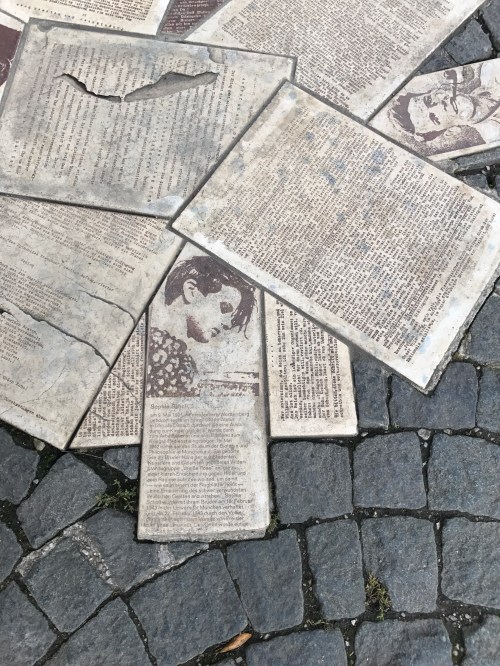
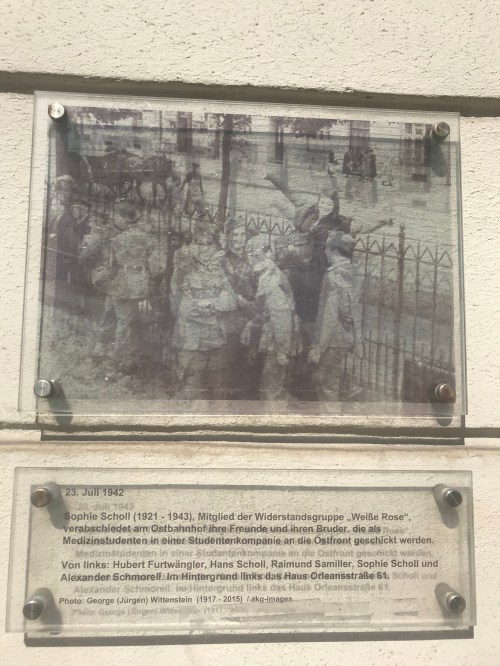
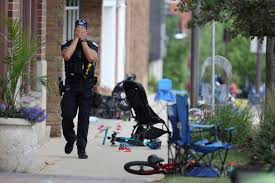


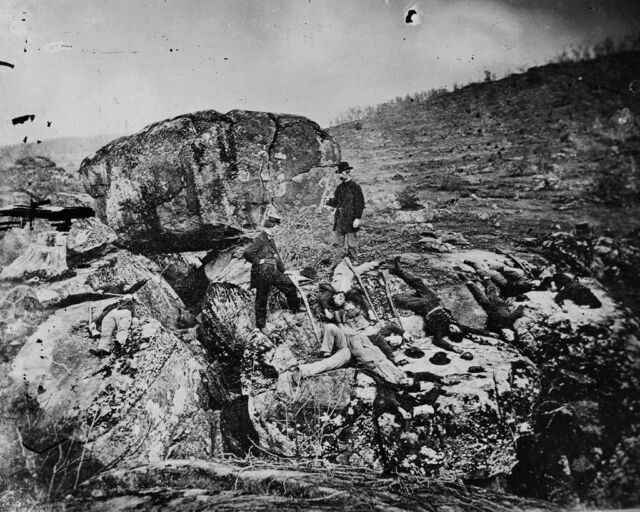


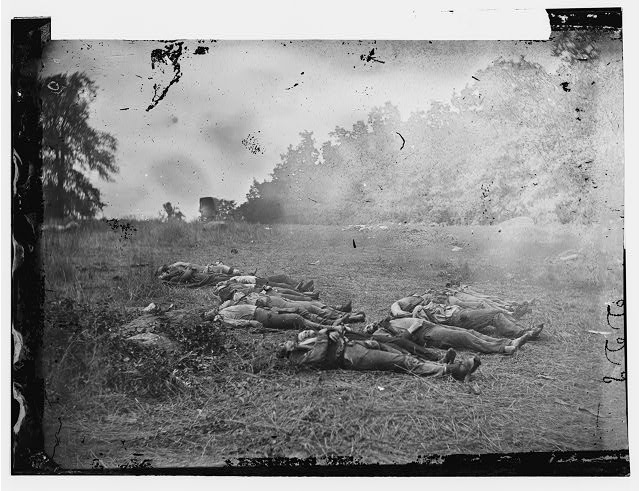


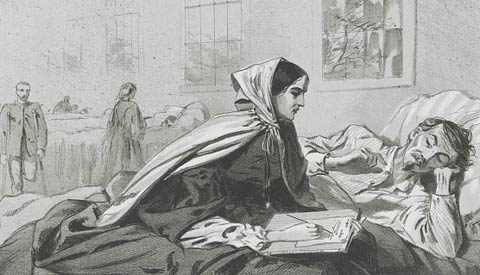
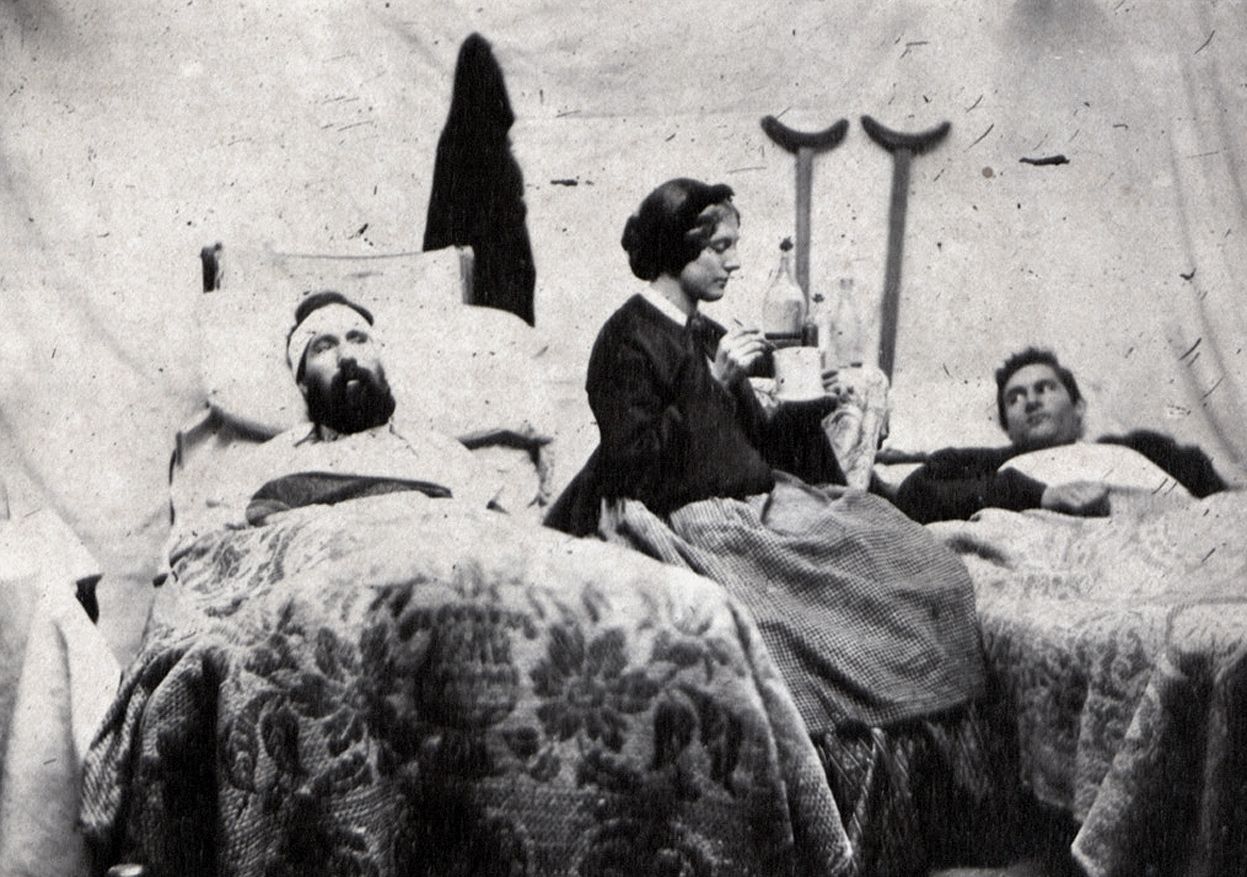


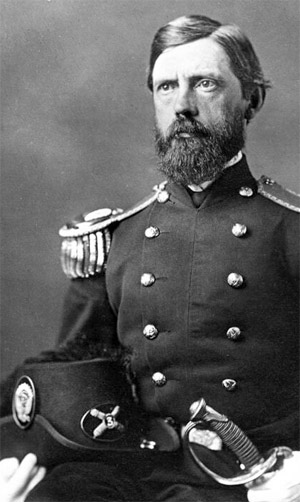

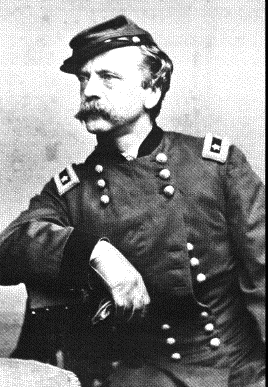

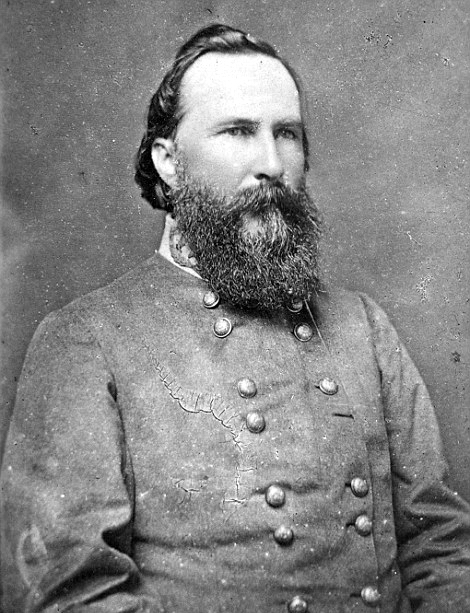
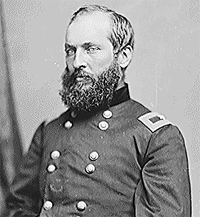

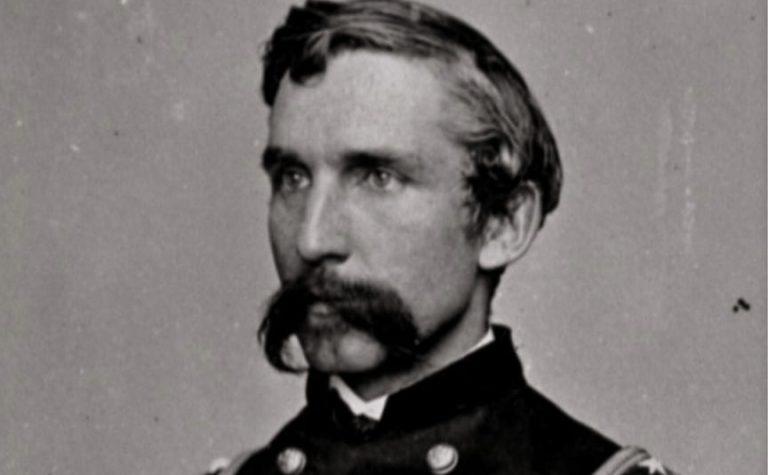

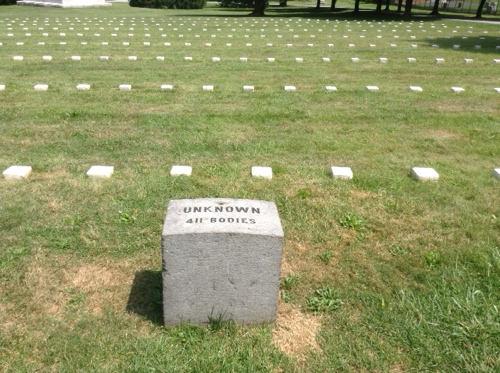
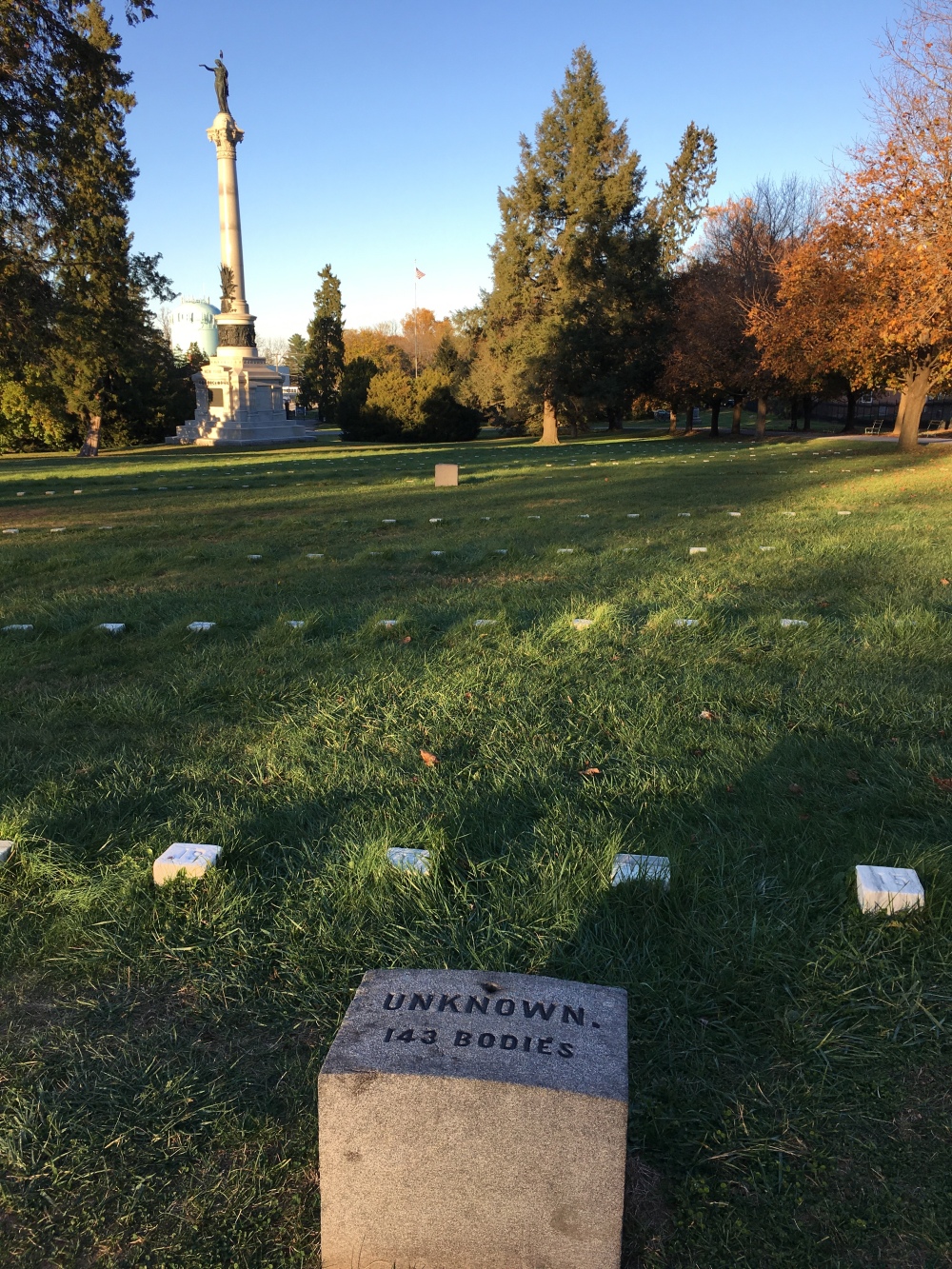


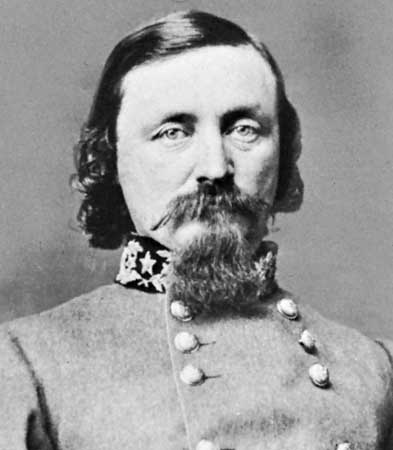


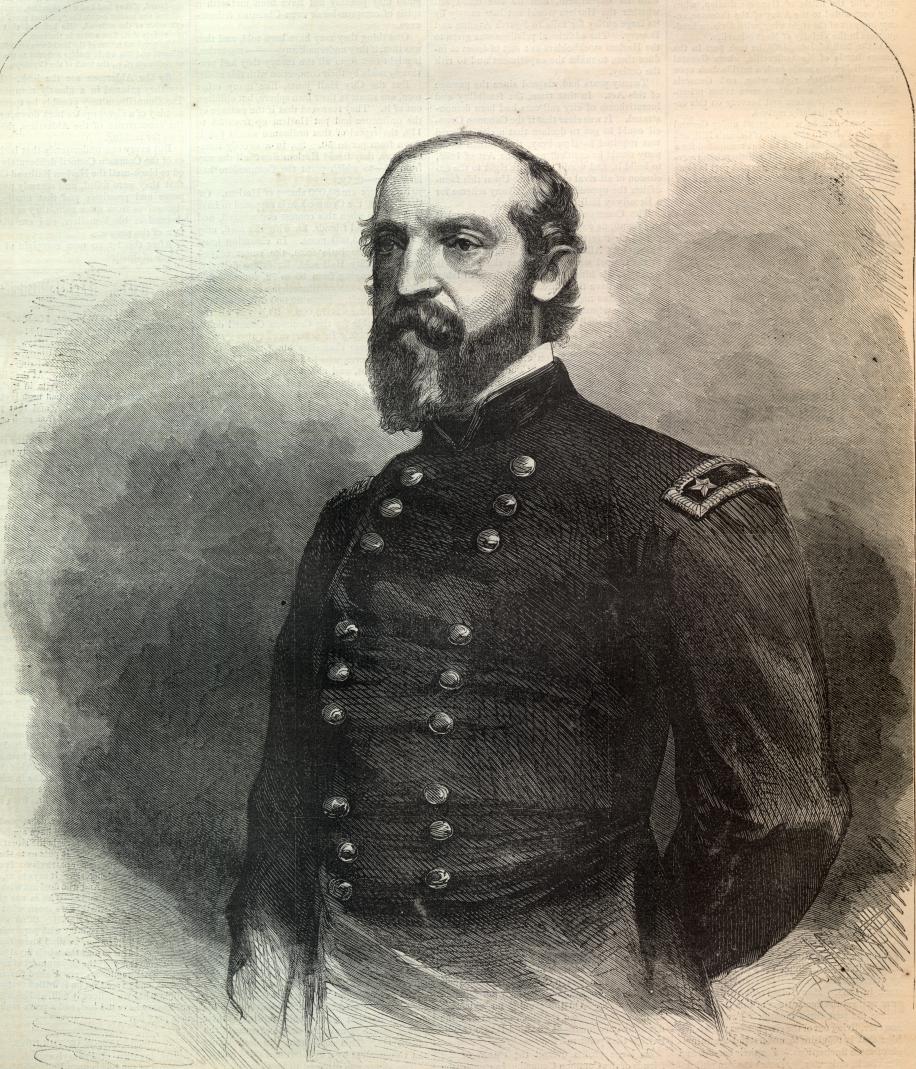


 The Inglorius Padre Steve's World
