Author Archives: padresteve

padresteve's avatar

About padresteve

I'm a Navy Chaplain and Old Catholic Priest

The Absence of Empathy Among Conservative Christians

valuesvoterssummit

“Evil, I think, is the absence of empathy.” Captain Gustave Gilbert at Nuremberg

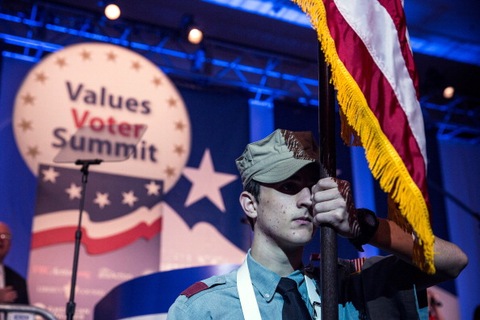
Since coming back from Munich on Friday night I have been catching up on the news and I was nearly overwhelmed with the amount of vitriol, hatred and intolerance coming out of the Values Voters Summit. The summit is an annual gathering of right wing political hacks who specialize promoting fear in the hearts of conservative Christians by fostering a nearly pathological culture of victimhood and persecution, in which they are the victims because others are being granted the same rights and privileges that they have enjoyed since this country was founded. Prominent among all of the speakers was a lack of empathy for anyone who did not hold their views, and those views are reflected in the latest Pew Survey on Religion in America where only 55% of consistent conservatives believe empathy is a value to be taught to their children.


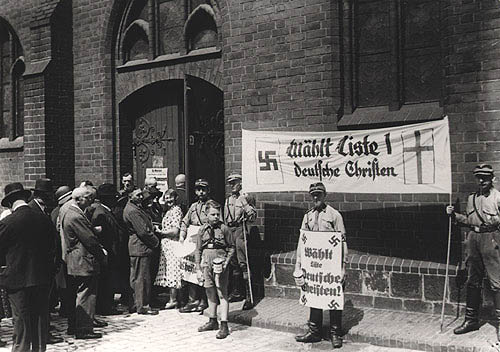
Being that I am a historian as well as a theologian know all too well. The consequences for the church when such leaders promote such intolerance under the veil of being the victims reminds me of what occurred in Weimar Germany less than a century ago. At that time, conservative German Christians, feeling their privileged status that they had enjoyed under the reign of the Kaiser and other local monarchs being threatened took refuge in various right-wing political parties and organizations, many of which entered alliances with Hitler’s National Socialist German Workers Party.
vatican46_35


The leaders of those groups preached how they were being persecuted by the now secular government which had many Socialists in it. Feeling threatened by the rights now afforded to others, including socialists and communists, but in particular those provided to Jews they used a similar strategy to smear anyone that did not hold their perverted views of church and state. They felt that they were the victims; the victims of a “stab in the back,” which caused Germany’s defeat and the collapse of the Empire.


War hero and pastor Martin Niemöller was representative of those that took the bait. After the war Niemöller who after Hitler came to power and he realized what was happening spoke out and was sent to the concentration camp noted:


War hero and pastor Martin Niemöller was representative of those that took the bait. After the war Niemöller who after Hitler came to power and he realized what was happening spoke out and was sent to the concentration camp noted:

“I find myself wondering about that too. I wonder about it as much as I regret it. Still, it is true that Hitler betrayed me. I had an audience with him, as a representative of the Protestant Church, shortly before he became Chancellor, in 1932. Hitler promised me on his word of honor, to protect the Church, and not to issue any anti-Church laws. He also agreed not to allow pogroms against the Jews, assuring me as follows: ‘There will be restrictions against the Jews, but there will be no ghettos, no pogroms, in Germany. I really believed given the widespread anti-Semitism in Germany, at that time—that Jews should avoid aspiring to Government positions or seats in the Reichstag. There were many Jews, especially among the Zionists, who took a similar stand. Hitler’s assurance satisfied me at the time. On the other hand, I hated the growing atheistic movement, which was fostered and promoted by the Social Democrats and the Communists. Their hostility toward the Church made me pin my hopes on Hitler for a while. I am paying for that mistake now; and not me alone, but thousands of other persons like me.”

Realizing the danger of how Christians were giving their support to such parties and the implicit demands of some for a theocracy Bonhoeffer in the Bethel Confession wrote:

“every attempt to establish a visible theocracy on earth by the church as a infraction in the order of secular authority. This makes the gospel into a law. The church cannot protect or sustain life on earth. This remains the office of secular authority.”

But this is the same nonsense being promoted by Mike Huckabee, Sarah Palin, Matt Staver, Tony Perkins, Laura Ingraham, Bryan Fischer, Ted Cruz and a host of others. Sadly, this vision of theocracy is very much in vogue in many churches and among conservative Christians in general no-matter what their denomination. Thomas Jefferson would be appalled by this. He wrote of the effects of clergy in political power:

“The clergy, by getting themselves established by law and ingrafted into the machine of government, have been a very formidable engine against the civil and religious rights of man.”

dyer-hanging1

Much of the thought behind the movement is from Gary North who posits a version of Christianity much like that of Calvin’s Geneva, and the Massachusetts Bay Colony know as Christian Dominionism or Reconstructionism. All of these leaders proclaim their desire to protect religious liberty, but for them religious liberty is a one way street, it only applies to them and the state should ensure that it does not apply to others. North wrote:

“We must use the doctrine of religious liberty to gain independence for Christian schools until we train up a generation of people who know that there is no religious neutrality, no neutral law, no neutral education, and no neutral civil government. Then they will get busy in constructing a Bible-based social, political and religious order which finally denies the religious liberty of the enemies of God.”

North also wrote:

“The long-term goal of Christians in politics should be to gain exclusive control over the franchise. Those who refuse to submit publicly to the eternal sanctions of God by submitting to His Church’s public marks of the covenant–baptism and holy communion–must be denied citizenship, just as they were in ancient Israel.”

The scary thing for me is just how similar North’s words as well as those of others to the Nazi Aryan Laws against the Jews. Please know that I am not claiming these people are Nazis by any means. That being said, I think that their ignorance of history, the Constitution, American jurisprudence which is charged by fear-mongering and vitriolic hatred of those not like them opens the door to much evil. Note how similar North’s comments parallel the Aryan Paragraph:

“A citizen of the Reich is that subject only who is of German or kindred blood and who, through his conduct, shows that he is both desirous and fit to serve the German people and Reich faithfully.” and that “A Jew cannot be a citizen of the Reich. He has no right to vote in political affairs and he cannot occupy public office.”

While much of their vitriol is directed against Moslems, who because of acts committed by Islamic terrorist extremists are all targets of allegedly “Christian rage” like that of Timothy Rollins of The American Partisan who wrote:

“this can best be done by enacting the Great Muslim Purge from our military and other national security apparatuses. These people need to be removed from every security post, even to be completely removed from all levels of government employment, be it federal, state, county, city or other municipality. This applies especially to universities….” 

Westminster Seminary graduate Doug Giles who writes for the Townhall.com website who wrote on one of his commentaries:

“Please note: If Christ wasn’t cool with irrigating irate Islamicists for facts, I must admit, I would still have to green light our boys getting data from enemy combatants 007 style. Stick a fire hose up their tailpipe and turn it on full blast. I don’t care. I’m not as holy as most of you super saints or as evolved as some of you progressive atheists purport to be. Security beats spirituality in this scenario, as far as I’m concerned.”

Or who can forget that lovable darling of the Christian Right Sarah Palin who told the NRA convention that “waterboarding is how we baptize terrorists.”

For me to read and listen to people who claim to be Christians show such little regard for other human beings is frightening. Personally, I am frightened because I know the history of Christians when they not only hold control of their churches but the government. The persecution, torture and murder of heretics and unbelievers, the place of privilege given to the elect and the second rate status of non-Christians in their countries; not to mention the wars of extermination blessed as “holy” by the Church, such as the 30 Years War, the Crusades not to mention the numerous other wars blessed by the church. St Bernard of Clairvaux who told those going off to fight the First Crusade:

“The knight of Christ, I say, may strike with confidence and succumb more confidently. When he strikes, he does service to Christ, and to himself when he succumbs. Nor does he bear the sword in vain. He is God’s minister in the punishment of evil doers and the praise of well doers. Surely, if he kills an evil doer, he is not a man-killer, but, if I may put it, an evil-killer. Clearly he is reckoned the avenger of Christ against evildoers, and the defender of Christians.”

But it is not just Moslems that feel the wrath of the Christian Holy Warriors, but Atheists, agnostics, the LGBT community, other non-Christian religions including the Jews, though most deny the latter due to their beliefs about the role of Israel in the end times. Christians can behave as badly as the those committed to the Islamic State or ISIL. Our history has nothing to commend us, for when we as Christians “hold the franchise” to quote Gary North, we are more than capable of committing some of the most heinous acts imaginable.
thomasjefferson


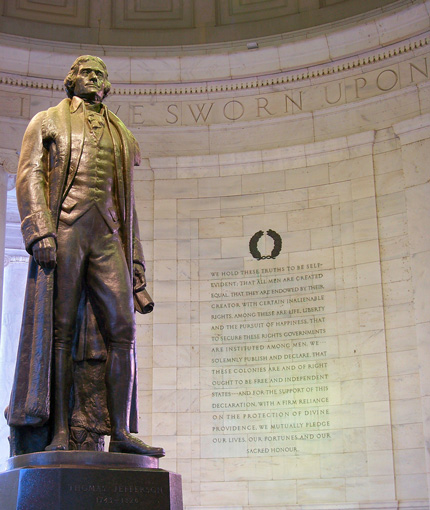
Thomas Jefferson wrote:

“Millions of innocent men, women, and children, since the introduction of Christianity, have been burnt, tortured, fined, and imprisoned; yet we have not advanced one inch toward uniformity. What has been the effect of coercion? To make one-half the world fools and the other half hypocrites. To support roguery and error all over the earth.”

Philosopher Eric Hoffer wrote something that we should very much keep in mid when we read or hear about the antics of those speaking at the Values Voters Summit and others like them:

“The impression somehow prevails that the true believer, particularly the religious individual, is a humble person. The truth is the surrendering and humbling of the self breed pride and arrogance. The true believer is apt to see himself as one of the chosen, the salt of the earth, the light of the world, a prince disguised in meekness, who is destined to inherit the earth and the kingdom of heaven too. He who is not of his faith is evil; he who will not listen will perish.”

Sadly, most if not all of the leaders of this movement of theocratic, liberty denying Christians are so immersed in themselves and narcissistic that they cannot comprehend this. Perpetually the victim they misapply scripture to justify their perceived victimhood. Such should not be the case, and Bonhoeffer reminds us of the mark of true Christian faith in a sermon where he said:

“Christianity stands or falls with its revolutionary protest against violence, arbitrariness and pride of power and with its plea for the weak. Christians are doing too little to make these points clear rather than too much. Christendom adjusts itself far too easily to the worship of power. Christians should give more offense, shock the world far more, than they are doing now. Christian should take a stronger stand in favor of the weak rather than considering first the possible right of the strong.”

Captain Gustave Gilbert who served as the Army Psychologist for the defendants ant the Nuremberg major War Crimes trials wrote of his experience with them in words that at least to me could apply to these supposedly Christian leaders:

“In my work with the defendants (at the Nuremberg Trails 1945-1949) I was searching for the nature of evil and I now think I have come close to defining it. A lack of empathy. It’s the one characteristic that connects all the defendants, a genuine incapacity to feel with their fellow men. Evil, I think, is the absence of empathy.”

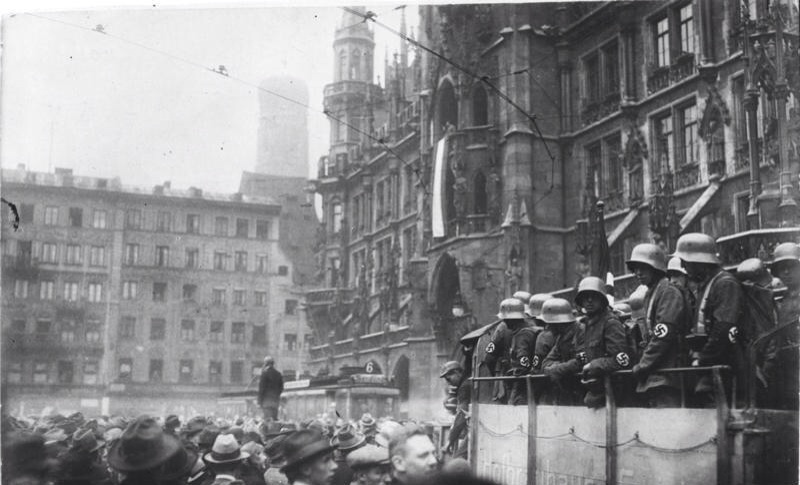
Sadly we have come to the point where many people who profess to be Christians have no empathy, or for that matter any real love for those different than them. History shows this time and time again. Christians who have political power and the “right to the franchise” have behaved little differently than the terrorist thugs of ISIL and I can say with certitude based on the words and legislative efforts of the people who dominated the Values Voters Summit, that they too would behave no differently. As I walked on the Odeonsplatz and went to the Feldherrnhalle in Munich where Hitler’s Beer Hall Putsch came to an end I could not help but think of what might have happened had Christians during the Weimar Republic not gravitated and become politically captive to the right wing of German politics and for many the Nazi Party.

The right of religious liberty for all is far to important to be left to those that would claim it for themselves and deny it to others. As Jefferson wrote the Virginia Baptists in 1808:

“Because religious belief, or non-belief, is such an important part of every person’s life, freedom of religion affects every individual. Religious institutions that use government power in support of themselves and force their views on persons of other faiths, or of no faith, undermine all our civil rights. Moreover, state support of an established religion tends to make the clergy unresponsive to their own people, and leads to corruption within religion itself. Erecting the “wall of separation between church and state,” therefore, is absolutely essential in a free society.”

With that I wish you a good night,

Peace

Padre Steve+

1 Comment

Filed under civil rights, faith, History, laws and legislation, Political Commentary, Religion

Oktoberfest Retrospective: Gemütlichkeit, The Importance of Community

IMG_0491.JPG

Well my friends we have returned from Oktoberfest in Munich and despite a couple of bumps, the trip went well. That couple of days have been too full and I have been unable to post these thoughts until now, that being said I have given them a great deal of reflection.

Of course for most most foreign visitors to Oktoberfest is a chance to drink and enjoy the festive atmosphere, and that is not a bad thing. However, most miss the understanding of Fests such as Oktoberfest in the life of the communities hosting them. Oktoberfest is just one of many that Munich and other German towns observe, which draw their communities together in ways that most Americans do not really comprehend. German festivals draw the local community together in many ways, community groups, clubs, associations, churches and businesses contributed to making the Fest, be it a major event like Oktoberfest or Fests conducted in small communities. Admittedly some American towns and cities have similar events, but with the exception of some major metropolitan centers with diverse and proud ethnic communities, they usually are a singular annual observance.

German cities and towns usually have a good number of these events, which draw their people together throughout the year. In fact they are somewhat linked to seasons, the church calendar, and important crops or products that their town is known for producing. While all are festive each have a different emphasis and different feel. Oktoberfest in Munich is the largess of its type, not just in Germany but the world, but it is not alone, many towns also celebrate their own Oktoberfest which are not clones of the Munich event, instead they reflect the differences in culture and tradition throughout Germany.

The Germans take life and work seriously, but unlike many, if not most of us, they know when business stops and fun, family and community begin. When people leave work they leave work, and even the business culture, in which stores are not open 24 hours or on Sundays provide Germans the opportunity to spend good amounts of time with family, their neighbors and friends as they meet for dinner or drinks at the local Gasthaus or inn on a regular basis. Likewise communities sponsor sports teams, and a wide array of other clubs which draw them together, everything from Rotary, to veterans associations, bands and choirs, hunting and shooting clubs and many more. Many of these groups sponsor events in which the entire community partake.

oktoberfesttent

The concept in all of this is that of Gemütlichkeit, a German word that basically describes a situation of where a cheerful mood, peace of mind and social acceptance are joined with the connotation of being unhurried in a cozy atmosphere. It also is understood in relationship to holidays where public festivities in the form of music, food, and drink help promote a sense of community. In this there is a sense that someone is part of something bigger than themselves where they are connected with being accepted by others while enriching the community.

Unfortunately for many Americans this is not the case. Unless one belongs to an organization such a various types of lodges, local sports fan clubs, or a local pub or bar where “everyone knows you name” there are precious few places one can experience this type of community. Churches like to claim that they are places of fellowship, but in my adult experience I have to say that most churches neither foster community nor are they places where one can go to be accepted. They are often the most cliquish, unfriendly, uninviting, and judgmental places around, and this is across the board. This cliquish and uninviting spirit covered in a veneer of spirituality and forced friendliness knows no denominational or theological boundaries, but I digress….

As I mentioned the Germans have festivals for almost everything. There are Spring, Fall, Summer and Winter festivals, harvest festivals, wine festivals throughout the Rhine, Main and Mosel and Nahe River valleys where wine is produced. I already mentioned Oktoberfest but there are Advent and Christmas markets in almost every city, town or village, Passion plays, celebrations of music, art and culture some of which are tied to the church calendar.

weihnachtsfest

In Bamburg, which is in the north of the state of Bayern (Bavaria) there is a celebration of its large number of very elaborate nativity scenes. In fact it is known as the city of nativity scenes. Some of the displays, of which there are over 30 major ones are changed every week to correspond with the nativity story, from the annunciation until the birth of Jesus, but are extended out to the scene of the first miracle of Jesus where he changed water into wine at the Wedding at Cana, just before Lent.

Speaking of Lent, there are a large number of places where Carnivals, similar to Mardi Gras in New Orleans, known as Fasching are celebrated, which all end on Fat Tuesday. In some cities there are Easter festivals, festivals involving the Patron Saint of the city, or state, and all of these are part of a holiday atmosphere.

The Germans for all of their serious nature and sometimes brusque manner of getting around do know how to draw the line between work and play and in the process build community. Their cities and towns are designed to keep a community connection including the use of excellent public transportation which means that most people don’t have to use up their cars sitting in traffic jams on the way too and from work or to a major event. I like to drive, but if our city had good public transportation I would definitely use it.

Part of this is the difference in culture and how over the years our American culture has become detached from this sort of community. In many ways we have become increasing individualistic through the proliferation of suburbia and all that goes with it, including the abandonment of cities, and small poor rural communities. The fact is we don’t know our neighbors and that leads to a culture that devalues people, destroys community and actually being on more social problems including crime. But again I digress…

This was my first trip to Oktoberfest, and though it was crowded the crowds were relatively well behaved, those who are obviously drunk or out of control are taken out, often to the first aid tent. Likewise, crime is not much a problem, despite the crowds. What is amazing is how many people lose valuables but get them back, either from someone who sees them leave them behind or drop them, but those who turn them in to security.

We experienced that on Wednesday night when the small pouch Judy had containing all of her identification and a debit card was lost. Of course we did everything we were supposed to do, retrace steps, talk with security and go to the lost and found. When I was at the lost and found I was amazed and how much was there, including very expensive looking purses, handbags and backpacks. The people there did not have it. They told me to come back the next day at 1PM Thursday when they opened and assured me that this happens all the time and that most items lost are returned.

On the way back to the hotel Judy was quite upset and my best efforts, as well as those of our friends at comforting her were of little solace. But on the U-Bahn train going back to the hotel, an older German man across from us was most kind, offered to help and did what he could to comfort Judy. That was really neat, and we both appreciated his concern and his offer of help.

With our departure less that 36 hours away, we could take no chances. Immediately on returning to the hotel I cancelled the debit card, which had not been used and contacted the U.S. Consulate in Munich. They too were reassuring, but since we could take no chances we reported her passport as lost and received a new temporary passport to ensure she could return home.

We went back to Oktoberfest after concluding that mission, when to the lost and found and they did have the pouch and nothing was missing. It had been a long 16 hours for both of us, but on finding it the mood lifted considerably. Our friends, who were doing last minute shopping met us at the Munchen Hofbrauhaus tent where we had saved seats. After dinner and a few beers we did a little bit of shopping, a quick bite at a local Gasthaus near the hotel we met our friends at the hotel to drink some of the beer that we had bought out in town.

Oktoberfestmunich

One of the cool things about this was how we have grown closer to our friends. It will be hard not seeing them everyday, but we are planning other get togethers outside of meeting at Gordon Biersch where we all congregate anyway, but cook outs, dinners and other things where we all contribute. I think what we experience with our friends is much closer to the way that Germans do life in community, and for us that is a good thing.

einprosit

There is a song that is sung at Oktoberfest as well as at other Fests throughout Germany called Ein Prosit

The band leader will get everyone’s attention and begins to sing as the band plays and everyone joins in standing, swaying to the music holding their beer steins high:

Ein prosit, Ein prosit, gemütlichkeit;
Ein prosit, Ein prosit, gemütlichkeit!
Eins, Zwei, Drei, G’Suffe!

A to at, a toast
To cheer and good times;
A toast, a toast, to cheer and good times!
One, two three! Drink up!

With that in mind I wish you the best weekend, and my wish that we all discover what it is to be in community and experience gemütlichkeit.

Peace,

Padre Steve+

2 Comments

Filed under beer, Loose thoughts and musings, philosophy

Oktoberfest Pilgrimage Live Blog: A Visit to Beer Land

IMG_0488.JPG

“Beer is proof that God loves us and wants us to be happy.” Benjamin Franklin

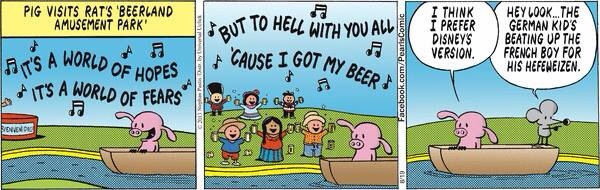
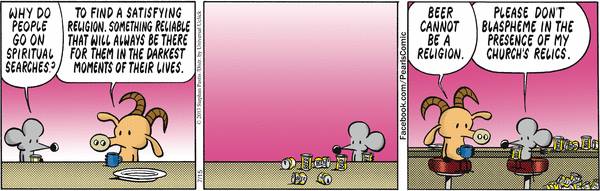
One of my favorite comic strips is Stephan Pastis’ Pearls Before Swine. A few months ago one of the main characters appropriately named Rat, since he is a rat, decides to open his own amusement park called Beer Land. The series of strips is amazingly brilliant, especially to true beer drinkers. I think the strip from that series that I most enjoyed was this one, because of the way Pastis linked a ride at the strip to the syrupy Disney ride It’s a Small World.

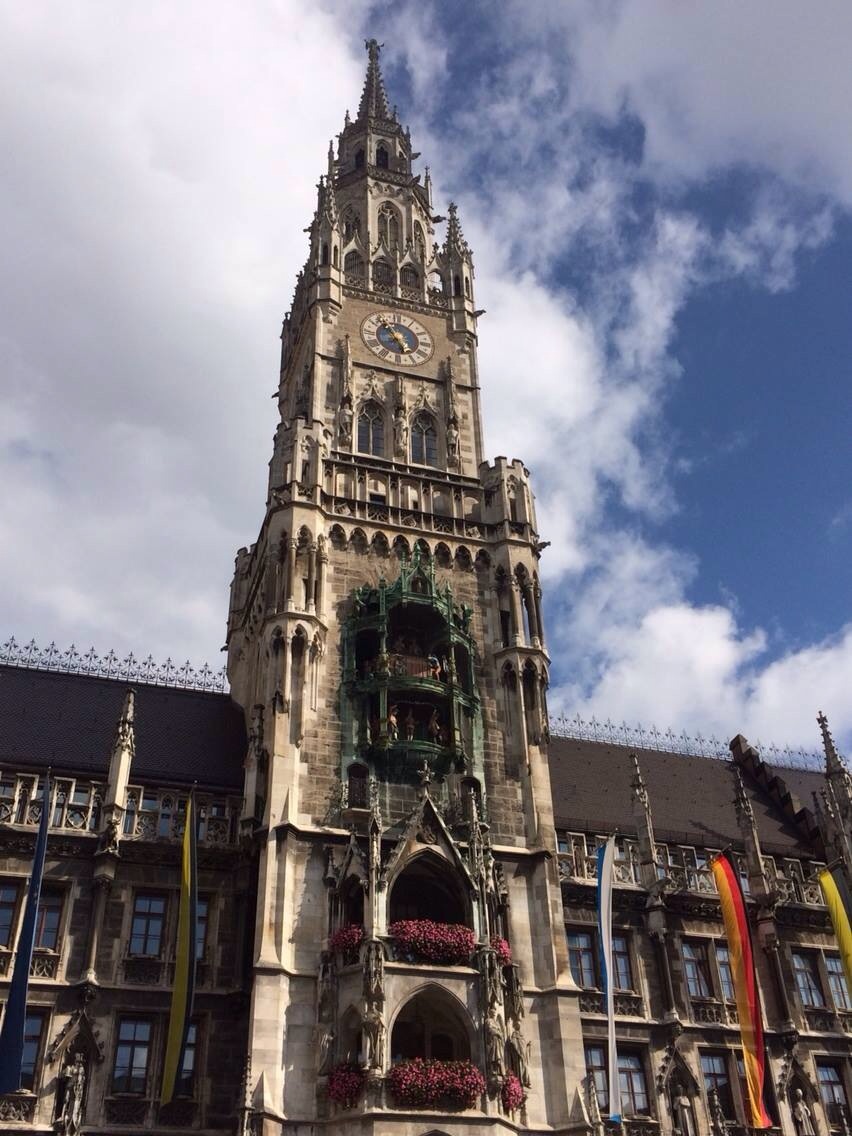
Today we did a bit of a road trip and took the U-Bahn from Munich to a small town on the outskirts of the city called Erding, for a visit and tour of the Erdinger Weisbier brewery, the largest brewer of wheat beers in the world. Before heading to Erding we had taken a short visit to the historic Marianplatz where we were able to see the famous Glockenspiel at the old city hall, or Rathaus.

IMG_0489-0.JPG

Now Judy has incurred a couple of injuries to her knee, ankle, and a couple of years ago had to her Achilles’ tendon repaired. As such sometimes a lot of walking causes her a lot, I mean a lot of pain. We tried to go out some yesterday but after a few minutes at Marianplatz but she was in such pain so we went back to our hotel until later in the evening when we went to dinner with our friends.

This morning she was in less pain but she knew if she didn’t get some European style crutches that she would not do well and possible be confined to the hotel for must of our remaining time here. For those that don’t know, European or as they are referred to in the United States Canadian crutches are far superior to the type most of us know and loath so much. They provide the user much more mobility and less pain to the armpits and shoulders because you do not swing from them.

So while she hung out with our friends I googled where to find the crutches in Munich. The word for crutches is krucken and they are sold at stores that specialize in equipment for those recovering from injuries as well as those with various physical disabilities called a Saniatshaus. The closest of these was about two miles away, so with google maps to guide me I set off. I walk pretty fast so it didn’t take that long to get there and when I did after the normal greetings with the lady at the counter I asked for a pair of crutches, which she showed me and allowed me to even pick the color. They cost about 34 Euros, which isn’t too bad, and for that quality I would have payed more in the U.S, had I gotten them at home. I made my way back by hailing a taxi to save time. Had a nice conversation about Munich, beer and the Oktoberfest with the driver and he delivered me back just city meters from where Judy and some of our friends had gathered. Since we were waiting on some of the rest of our group we had a beer at an outdoor cafe across from the Rathause where we saw the Glockenspiel do its thing when the clock stuck eleven.

Once all of us were gathered we boarded the U-Bahn to Erding a trip of about 45 minutes. Once in Erding we caught a city bus to the Erdinger brewery. We got our tickets for the tours and bought a couple of items in the gift shop and then went on the tour. The tour took about an hour and a half and was amazing.

I was impressed with how well a large brewery can make great beer using only the natural ingredients of hops, barley or wheat malt and water. There are no added sugars, food colorings known to be carcinogenic, Bisphenal A (BPA); cheap filler grains such as rice and corn as well as high fructose corn syrup, dextrose, and mono sodium glutamate, and even propylene glycol (a component of anti-freeze) are found in many mass produced American beers. This is because of the observance of the strict Bavarian or German beer purity law the Reinheitsgebot which stipulates what are acceptable ingredients in beer. Frankly the difference in taste is amazing as well as the effects, especially the morning after. But I digress….

As I mentioned the tour was informative and enjoyable. At the end of the tour, which cost 12 Euros per person we were provided freshly baked Bavarian pretzels, two large Bavarian Weiswurst, which are a mildly spiced and finely textured pork sausage and three half liter glasses of whichever of the eight styles of Weisbier that Erdinger brews.

10670000_10152772414817059_3414239591729879256_n

It truly was a visit to Beer Land and I am sorry to say that at each stage of the tour I kept thinking about that comic, but no, I didn’t see the German kid beat up the French kid for his Hefeweizen.

So Since this a religious pilgrimage, I will close with a quote from one of my favorite rebellious theologians, the eminent Doctor Martin Luther:

“Whoever drinks beer, he is quick to sleep; whoever sleeps long does not sin; whoever does not sin enters heaven! Thus let us drink beer!”

Have a great day.

Peace

Padre Steve+
Leave a comment

Filed under beer, civil rights, faith, History, nazi germany, Religion, travel

Oktoberfest Live Blog: Munich Musings; History and Bier

IMG_2051.JPG

I have spent a total of about four years of my life in Germany. I enjoy the country and the people and I love traveling here because for me it is relaxing. When I have a car I enjoy driving on the Autobahn, and I find the mass transportation more than effective and convenient but a great way to travel.

As a historian who for many years specialized in the study of the latter years of the Kaiser Reich, the German revolution and civil war, the Weimar Republic and the Nazi period visiting here always intellectually stimulating. Munich is a very interesting and sometimes contradictory city, rich in culture, music, art, literature and scientific-technological achievements. Likewise it has always been a more cosmopolitan center of a very conservative state, especially religiously conservative as Bavaria is the heart of Catholic Germany. Thus there has always been a tension in the city, between the local more religious conservatives and business leaders and the more secular and progressive inhabitants, and the immigrants from Eastern Europe, especially more traditional and conservative Orthodox Jews.

This tension continues today with the large numbers of foreigners that live and work in the city. Many are Turkish guest workers and their descendants that have been in Germany almost half a century. But many are new immigrants from the Middle East and Africa, some who have embraced German life in a secular state, but many who have not and stand out in the crowd. In particular I think of the number of Moslems who retain their traditional dress and ways, which in many ways is reminiscent of the Eastern European Orthodox Jews, who likewise stood out as they attempted to maintain their cultural and religious identity.

Munich is the capital city of Bavarian, or as it is known here, Bayern. It was ruled for centuries by the Wittelsbach dynasty, which included “Mad King Louis” who built the amazing Neuschwanstein and Linderhof castles. That dynasty, with the rest of the German royalty was overthrown at the end of the a First World War. It was replaced for about three months by what was known as the Bavarian Soviet led by Kurt Eisner, an “independent socialist.” Eisner could not hold power and resigned in February 1919 and on the way to his resignation he was assassinated by a right wing extremist who held the views of the racist Thule Society. Eisner was replaced by a Majority Socialist leader who could not form a government and then by an Independent Socialist and Communist government. This government was both inept and brutal, it took hostages from the elite of the city as well as conservative reactionaries and had them executed. This brought a response from Berlin which sent a force of 30,000 Weimar Government employed Freikorps troops, including many Bavarians from rural areas, under the command of Ritter Von Epp to crush the Munich Soviet. After hard fighting against the Communist troops Epp’s men crushed the opposition and executed hundreds of the Communists and Independent Socialist fighter and leaders.

The city was still rife with revolutionary and reactionary elements and in 1919 a new political party was established. This party became the National Socialist Workers Party of Germany, or the NSDAP. Adolf Hitler joined the party and quickly became its head. He along with General Erich Ludendorff led a coup, or “putsch” against the government on the 8th and 9th of November 1923. The putsch originated at the NDSAP headquarters and Hitler led about 2000 armed members of the party to the Burgerbrau Keller beer hall where the Gustav Von Kahr, who had been appointed with dictatorial powers due to the unrest, was making a speech.

IMG_0483.JPG

Hitler took Kahr and other members of the government hostage and declared a revolution and enjoined those present to “join in this grave eleventh hour for our German Fatherland.” While many present were turned by his speech, the revolt did not gain momentum and in desperation Hitler ordered a march to overthrow the government. At Odeonsplatz at the bridge over the Isar River near the Feldherrenhalle his group of nearly 2000 followers including future Nazi Leaders Hermann Goering and Rudolf Hess were confronted by about 100 Bavarian police, and defeated. Hitler was arrested and tried, spent nine months in prison during which he wrote Mein Kampf. The Burgerbraukeller and the Feldherrenhalle became Nazi shrines which after Hitler’s takeover became places where Hitler would return yearly to mark his failed putsch.

All of these events took place in a small area of the Munich city center. Sadly most people who come to Munich are aware of the events that occurred here, and many fail to realize how easily a city know for so many cultural and scientific achievements can become the locus of evil for a man like Adolf Hitler.

While I love Munich my love is tempered by how many events which still affect us today occurred here just eight to ninety years ago. To use a German expression, that amount of in the sense of history is merely an “augenblick” or “blink of an eye”. It is hard to believe that so much has happen here, and just how few people understand just how easily such events can happen again.

When I look at my own country I see parallels between the more extreme elements of the Tea Party movement, White Supremacists and others with some of those that followed Hitler to the Burgerbraukeller. The hatred that they express towards liberals, racial minorities, immigrants and Moslems is so similar to the words of those precursors to the Nazi party rule in Germany that it is frightening. Comforting myths are substituted for history. Race, ideology and xenophobic nationalism, often clothed in the language of tradition “Christian” beliefs are used to demonize those who are different. Sadly too I see some of my fellow progressives inflamed with such a hatred of conservatives that they can not see the dangers inherent in such polarization. As a historian, I find the parallels disturbing.

But despite that we are here to have fun, and that I am. After all, I choose to believe in the power of acceptance, tolerance and inclusiveness. Those are found in the words that are imprinted on the modern German Army belt buckles and in the German National anthem “eingekeit, recut und freiheit” or “unity, Justice and freedom.” Those words are also implicit in our own Declaration of Independence which states that “all men are created equal. Thus for me, not believe that good can overcome evil is central to who I am.

IMG_2059.JPG

And from Munich, I am your friend,

Peace

Padre Steve

Leave a comment

Filed under History, philosophy, Political Commentary

Oktoberfest Pilgrimage: Live Blog

IMG_0953.JPG

IMG_0962.JPG

Day two of my Religious Pilgrimage to the Oktoberfest in Munich. Fun using my German again on a daily basis, my German friends tell me I’m fluent in it but I know better. I do very well and speak with a mixed Hessian and Bavarian dialect without an American accent. I can carry on normal conversation as long as it doesn’t get too technical.

We arrived in Munich about 1230 on Saturday and our group left our hotel about 1630 to go to the Fest. It was a lot of fun being with friends. We tried to find a table at the Lowenbrau tent but ended up in the Biergarten at the Paulaner tent across the way. We had a blast, got back to the hotel about 2230, Judy crashed and I went down with some of our friends to the hotel bar for more beer. After a total consumption of somewhere between five and six liters of beer I went up and crashed for the night.

IMG_0954.JPG

IMG_0971.JPG

IMG_0974.JPG

Today after an amazing breakfast at the hotel we are out again this time at the Lowenbrau tent. Again a lot of fun. The music, the party atmosphere and the fun talking with people from Germany and other countries.

I think tonight we will go to the Hofbrauhaus for more bier and dinner. Judy made the comment this morning that it will be hard not seeing our friends everyday, kind of like leaving church camp. But then this is a religious pilgrimage.

IMG_0978.JPG

So anyway, until tomorrow…

Peace

Peace

Padre Steve+

IMG_0979.JPG

Leave a comment

Filed under faith, Religion

Religious Pilgrimages

IMG_0473.JPG

Well friends we are on or way to Munich Germany to take part in an important religious pilgrimage. Well, at least it’s religious to us. We are on board a Lufthansa flight which is presently boarding at Washington Dullest airport enroute to the Oktoberfest.

Yes it is a religious pilgrimage akin to what some people make to Jerusalem, Mecca or Disneyland.

So anyway, posts will be sparse and short over the coming week.

Peace

Padre Steve+
1 Comment

Filed under Loose thoughts and musings

Thursday Thoughts on Life, Faith, Doubt and Beer

1622612_10152232336042059_727365308_n

“There are moments, sure, where you think ‘Is there a God? Where is God?” Archbishop Justin Welby

Friends of Padre Steve’s World. Yesterday I promised you part two of the revised article on the American Civil War as the first modern war. I tried to get it done but since I am so unhappy with the previous edition of it I am tearing it apart and get it logically sorted out. I have been doing this for a while and finally got the first part of it done yesterday. I thought that I could get the rest done today but between a very busy day with multiple meetings and presentations at work as well as securing help for a sailor in a difficult crisis couldn’t get it done. Not only that I am busy getting ready to travel to Munich and the real Oktoberfest tomorrow. That will be fun, we have lived there before and travelled there many times, but never to Oktoberfest. In the week there my wife and plan on going to Salzburg and possibly Nuremberg or Wurzburg. We’ll get back next weekend and then I will get back to work on it.

But anyway, we are so looking forward to this trip, which we are making with a good number of friends from the Gordon Biersch Brewery Restaurant Stein Club. The trip is paid for by the Gordon Biersch Passport rewards program. Trust me it is the best rewards program of any restaurant anywhere, not only do they have great craft beer and food, but they reward you well, but I digress.

Just a few thoughts on the words of the Archbishop of Canterbury, Justin Welby who in an interview at the Bristol Cathedral. You can watch that interview here:

https://www.youtube.com/watch?v=exmHYXNEt9A&feature=youtu.be&t=11m52s 

The remarks shocked some because he quite honestly noted how: “There are moments, sure, where you think ‘Is there a God? Where is God?”

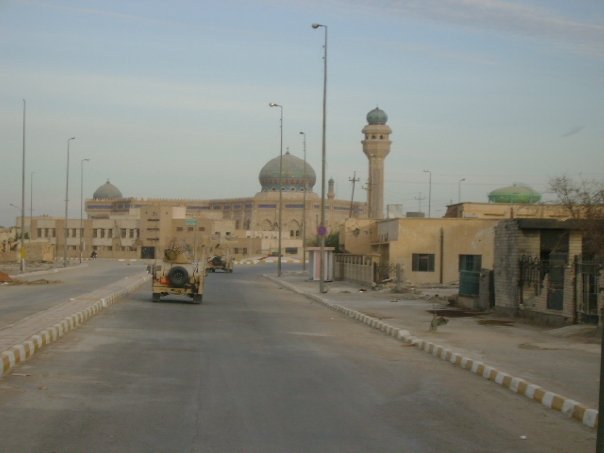
Of course clergy are no supposed to doubt but as I have noted before that I went through almost two years following my tour in Iraq suffering a complete emotional, spiritual and physical collapse from PTSD where I was for all intents and purposes an agnostic just praying that God still existed. So Archbishop Welby’s comments were absolutely refreshing to hear, because for a church leader to do so upsets the apple cart of blind certitude in doctrines that because they deal with God we cannot prove. As Dietrich Bonhoeffer said: “a God who would let us prove his existence is an idol.”

Archbishop Welby did note something that I also, at least, most of the time agree: “It is not about feelings, it is about the fact that God is faithful and the extraordinary thing about being a Christian is that God is faithful when we are not.”  Honestly I still doubt every day, but I also believe. Andrew Greeley’s fiction Bishop Blackie Ryan noted: “Most priests, if they have any sense or any imagination, wonder if they truly believe all the things they preach. Like Jean-Claude they both believe and not believe at the same time.”

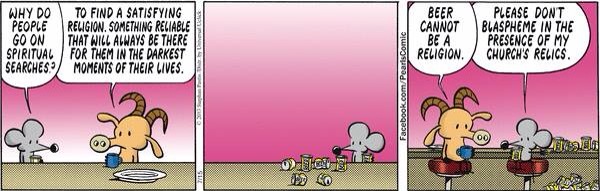
But since I am going to Oktoberfest one last thought on faith and beer.

church relics

So, since I am still busy and unlike my wife have done nothing to pack for the trip, I wish you a good night.

Peace

Padre Steve+

2 Comments

Filed under christian life, faith

The U.S. Civil War: Beginning of Modern Warfare Part One

culp's hill

Note: This is the first part of a major revision to my article on the American Civil War being the first modern war. Part two will follow tomorrow. This is actually the beginning of the first chapter of my Gettysburg text, much of which has been appearing in various forms on this site for the past year, much of this deals with the connection between policy and strategy and the relationship of political leaders to the military.

The American Civil War was the first modern war. It was a watershed time which introduced changes in tactics, logistics, communications and the concept of total war to the world. Though it did not change the essential nature of war, which Clausewitz says is “is an act of violence to compel our opponent to fulfil our will” [1] it expanded the parameters of it and re-introduced the concept of “total war” to the world and “because its aim was all embracing, the war was to be absolute in character.”[2] In a sense it was a true revolution in military affairs.

While the essential nature of war remains constant, wars and the manner in which they are fought have changed in their character throughout history, and this distinction matters not only for military professionals, but also policy makers. The changing character of war was something that military leaders as well as policy makers struggled with during the American Civil War much as today’s military leaders and policy makers seek to understand the character of warfare today. British military theorist Colin Gray writes “Since the character of every war is unique in the details of its contexts (political, social-cultural, economic, technological, military strategic, geographical, and historical), the policymaker most probably will struggle of the warfare that is unleashed.” [3] That was not just an issue for Abraham Lincoln and Jefferson Davis, both of whom struggled with the nature of the war which had been unleashed, but it is one for our present political leaders, who as civilian politicians are “likely to be challenged by a deficient grasp of both the nature of war as well as its contemporary context-specific character.” [4]

In addition to being the first modern war, or maybe I should say, the first war of the Industrial Age, the Civil War became a “total war.” It was the product of both the massive number of technological advances which both preceded and occurred during it, in which the philosophical nature of the Industrial Revolution came to the fore. Likewise, the enmity of the two sides for one another which had been fostered by a half century of relentless and violent propaganda which ushered from the mouths of politicians, the press and even from the pulpit, even to the point of outright armed conflict and murder in “Bleeding Kansas” during the 1850s.

As a total war it became a war that was as close to Clausewitz’s understanding of absolute war in its in character waged on the American continent, and it prefigured the great ideological wars of the twentieth century, as J.F.C. Fuller noted “for the first time in modern history the aim of war became not only the destruction of the enemy’s armed forces, but also of their foundations- his entire political, social and economic order.” [5] It was the first war where at least some of the commanders, especially Ulysses S. Grant and William Tecumseh Sherman were men of the Industrial Age, in their thought and in the way that they waged war, in strategy, tactics even more importantly, psychologically. Fuller wrote:

“Spiritually and morally they belonged to the age of the Industrial Revolution. Their guiding principle was that of the machine which was fashioning them, namely, efficiency. And as efficiency is governed by a single end- that every means is justified- no moral or spiritual conceptions of traditional behavior must stand in its way.” [6]

Both men realized in early 1864 that “the South was indeed a nation in arms and that the common European practice of having standing armies engaged each other in set-piece battles to determine the outcome of a war was not enough to win this struggle.” [7] Though neither man was a student of Clausewitz, their method of waging war was in agreement with the Prussian who wrote that “the fighting forces must be destroyed; that is, they must be put in such a position that they can no longer carry on the fight” but also that “the animosity and the reciprocal effects of hostile elements, cannot be considered to have ended so long as the enemy’s will has not been broken.” [8] Sherman told the mayor of Atlanta after ordering the civilian population expelled that “we are not only fighting hostile armies, but a hostile people, and must make the old and young, the rich and poor, feel the hard hand of war.” [9] Sherman not only “carried on war against the enemy’s resources more extensively and systematically than anyone else had done, but he developed also a deliberate strategy of terror directed against the enemy’s minds.” [10]

Abraham Lincoln came to embrace eternal nature of war as well as the change in the character of the war over time. Lincoln had gone to war for the preservation of the Union, something that for him was almost spiritual in nature, as is evidenced by the language he used in both of his inaugural addresses and the Gettysburg Address. Instead of a war to re-unite the Union with the Emancipation Proclamation the war became a war for the liberation of enslaved African Americans, After January 1st 1863 when the Emancipation Proclamation went into effect, Lincoln “told an official of the Interior Department, “the character of the war will be changed. It will be one of subjugation…The [old] South is to be destroyed and replaced by new propositions and ideas.” [11]

Of course, the revolution in military affairs took time and it was the political and military leaders of the North who better adapted themselves and their nation to the kind of war that was being fought. “Lincoln’s remarkable abilities gave him a wide edge over Davis as a war leader, while in Grant and Sherman the North acquired commanders with a concept of total war and the determination to make it succeed.” [12]

At the beginning of the war the leaders and populace of both sides still held a romantic idea of war. The belief that the war would be over in a few months and that would be settled by a few decisive battles was held by most, including many military officers on both sides, there were some naysayers like the venerable General Winfield Scott, but they were mocked by both politicians and the press.

The Civil War became an archetype of the wars of the twentieth century, and the twenty-first century. It became a war where a clash between peoples and ideologies which extended beyond the province of purely military action as “it was preceded by years of violent propaganda, which long before the war had obliterated all sense of moderation, and awakened in the contending parties the primitive spirit of tribal fanaticism.” [13]

The conduct of the American Civil War added new dimensions to war, increased its lethality and for the first time since the 30 Years’ War saw opponents intentionally target the property, homes and businesses of civilian populations as part of their military campaign. The Civil War was a precursor to the wars that followed, especially the First World War which it prefigured in so many ways. [14]

However, like all wars many of its lessons were forgotten by military professionals in the United States as well as in Europe. Thus 50 years later during World War One, British, French, German, Austrian and Russian wasted vast amounts of manpower and destroyed the flower of a generation because they did not heed the lessons of the Civil War. Fuller noted:

“Had the nations of Europe studied the lessons of the Civil War and taken them to heart they could not in 1914-1918 have perpetuated the enormous tactical blunders of which that war bears record.” [15]

The lessons of the war are still relevant today. Despite vast advances in weaponry, technology and the distances with which force can be applied by opponents, war remains an act of violence to compel an enemy to fulfill our will. War according to Clausewitz is “more than a chameleon that slightly adapts its characteristics to the given case.” [16] but it is always characterized by the violence of its elements, the province of chance and its subordination to the political objective and as such forces political and military leaders as well as policy makers to wrestle with “the practical challenge of somehow mastering the challenge of strategy in an actual historical context.” [17]

The study of the Civil War can be helpful to the joint planner and commander because it so wonderfully shows the interplay of Clausewitz’s “paradoxical trinity- composed of primordial violence, hatred, and enmity, which are to be regarded as a blind natural force; of the play of chance and the element of subordination, as an instrument of policy, which makes it subject to reason alone.” [18] during an era of great technological and philosophical change. The importance of this cannot be underestimated, for in this era of change, like in every era, some leaders and commanders were either resistant to, or failed to understand the changes being forced upon them in their conduct of war by the industrialization of war and its attendant technology; while others, like Sherman, Grant and Sheridan not only understood them, but embraced them and applied them with skill and vigor in ways that stunned the people of the South.

Over time the Union developed what we would now refer to as a “whole of government approach” to the war. This included not only the military instrument but the use of every imaginable means of national power, from the diplomatic, the economic and the informational aspects of the Union in the effort to subdue the Confederacy. The understanding and use of the “whole of government approach” to war and conflict is still a cornerstone of United States military policy in “unified action, to achieve leverage across different domains that will ensure conditions favorable to the U.S. and its allies will endure.” [19] The working staff of the War Department headed by Edwin Stanton and Major General Montgomery Meigs developed rapidly. It effectively coordinated with railroads, weapons manufactures and suppliers of clothing, food and other necessities to supply the army and navy so well that “Union forces never seriously lacked the materials necessary to win the war.” [20] Stanton and Meigs were “aided by the entrepreneurial talent of northern businessmen” which allowed “the Union developed a superior managerial talent to mobilize and organize the North’s greater resources for victory in the modern industrialized conflict that the Civil War became.” [21]

The understanding of this eternal nature and ever changing character of war to leaders of nations as well as military commanders and planners has been very important throughout history. It can be seen in the ways that Jefferson Davis and Abraham Lincoln conducted their relationships with their military commanders, including during the Gettysburg campaign and we are reminded by Colin Gray notes that political leaders and policy makers who are in charge of policy often ignorant of the nature and character of war, and this fact “directs attention to the difficulties of translating political judgment into effective warmaking.” [22] Military leaders should be the people to advise and instruct policy makers in aligning their policy to what is actually feasible based on the ends ways and means, as well as the strengths and limitations of the military to carry out policy decisions and history reminds us “that policymakers committed strongly to their political desires are not easily deflected by military advice of a kind that they do not want to hear.” [23]

While there was much support for the Confederacy in the aristocracies of Europe, the effectiveness of the Union military in winning the key battles that allowed Lincoln to make his Emancipation Proclamation ensured that Europe would not recognize the Confederacy, . Charles F. Adams, the United States minister to Britain successfully defused the crisis of the Trent affair, which could have led to British recognition of the Confederacy and intervention in the war. Adams’ efforts were so successful that they “left Anglo-American relations in better shape than before the crisis.” [24]

Related to this understanding of warfare one has to also look at the importance of diplomacy, especially in picking the right diplomat for a critical post is a part of a whole of government approach to war and warfare. This was very important in the early stages of the Civil War as there was much support for the Confederacy in the aristocracies of Europe. The effectiveness of the diplomacy was increased by the Union military efforts. The Union suffered many failures at the outset of the war by the time of the Gettysburg campaign they did enough to prevent English or French intervention on the side of the Confederacy, which was also aided by tensions in Europe regarding the Schleswig-Holstein problem between Prussia and Austria as well as unrest in Poland, and the British in particular were loath to risk intervening in a conflict that might be “a disturbance in the precarious balance of power which might be the signal for a general conflagration, they recalled Voltaire’s comment that a torch lighted in 1756 in the forests of the new world had promptly wrapped the old world in flames.” [25] Thus, European leaders and diplomats were very hesitant to allow Southern legations to convince them to intervene.

Though the Confederates won many battles it was the Union military whose success Island Number Ten, Fort Donaldson and Shiloh in the West, and the bloody repulses of Confederate armies at Perryville and Antietam; as well as the joint operations conducted by the Union Navy and Army confederacy through the blockade and capture of key ports such as New Orleans early in the war that allowed Lincoln to make his Emancipation Proclamation. These military successes enabled Lord Palmerston to reject a French proposal for France, England and Russia to propose to the warring parties, a “North-South armistice, accompanied by a six month lifting of the blockade. The result, if they had agreed- as they had been in no uncertain terms warned by Seward in private conversations with British representatives overseas- would have been a complete diplomatic rupture, if not an outright declaration of war.” [26]

The issuance of that proclamation ensured that Europe would not recognize the Confederacy because even pro-Southern English political leaders could not appear to even give the appearance of supporting slavery, especially as both England and France had abolished slavery decades before, while Russia had only recently emancipated its serfs and “was pro-Union from the start….” [27] Popular sentiment in those countries, outside of the ruling class and business elites, was heavily in favor of emancipation, especially among the working classes. The leaders of the workingmen of Manchester England, a major textile producer, who which had been among the “hardest hit by the cotton famine, sent him [Lincoln] an address approved at a meeting on New Year’s Eve, announcing their support of the North in its efforts to “strike off the fetters of the slave.” [28]

There were issues related to the blockade but Charles F. Adams, the United States minister to Britain successfully defused the crisis of the Trent affair, which could have led to British recognition of the Confederacy and intervention in the war in a manner that “left Anglo-American relations in better shape than before the crisis.” [29]

The Union blockade was a key factor in the diplomatic efforts. As I have noted there were many in both Britain and France who sympathized with the South and hoped for Southern victory that were not impressed by Southern moves to subject them to an embargo of Southern cotton until they received recognition. While many Englishmen were offended by Seward’s bluster, many “resented even more the Confederacy’s attempt at economic blackmail.” [30]

The British especially were keen on not going to war for the sake of the South, there was far too much at stake for them, something that the Southern leaders and representatives did not fully comprehend. Prime Minister Viscount Palmerston and Foreign Minister Lord Russell were concerned about the economic impact of the loss of Southern cotton but also “recognized that any action against the blockade could lead to a conflict with the United States more harmful to England’s interests than the temporary loss of Southern cotton.” [31] Palmerston well remembered the war of 1812 when he served as Minister of War, and the disastrous results for the British Merchant Marine, and he realized that “England could not only afford the risk of a loss in a sideline war; she could not even afford to win one.” [32]

[1] Clausewitz, Carl von. On War Indexed edition, edited and translated by Michael Howard and Peter Paret, Princeton University Press, Princeton NJ 1976 p.75

[2] Fuller, J.F.C. The Conduct of War 1789-1961 Da Capo Press, New York 1992. Originally published by Rutgers University Press, New Brunswick N.J p.99

[3] Gray, Colin S. Fighting Talk: Forty Maxims on War, Peace, and Strategy Potomac Book, Dulles VA 2009 p.36

[4] Ibid. Gray Fighting Talk p.36

[5] Fuller, J.F.C. A Military History of the Modern World, Volume Three: From the Seven Days Battle, 1862, to the Battle of Leyte Gulf, 1944 Minerva Press 1956 p.88

[6] Ibid. Fuller A Military History of the Modern World, Volume Three p.88

[7] Flood, Charles Bracelen, Grant and Sherman: The Friendship that Won the War, Harper Perennial, New York 2005 p.238

[8] Ibid. Clausewitz p.90

[9] McPherson, James. The Battle Cry of Freedom: The Civil War Era Oxford University Press, Oxford and New York 1988 p.809

[10] Weigley, Russell F. The American Way of War: A History of United States Military History and Policy University of Indiana Press, Bloomington IN, 1973 p.149

[11] Ibid. McPherson The Battle Cry of Freedom p.558

[12] Ibid. McPherson The Battle Cry of Freedom p.857

[13] Ibid. Fuller The Conduct of War 1789-1961 p.99

[14] Fuller has an excellent synopsis of this in his book A Military History of the Modern World, Volume Three (p.89). He wrote: The war fought by Grant and Lee, Sherman and Johnston, and others closely resembled the First of the World Wars. No other war, not even the Russo-Japanese War of 1904-1905, offers so exact a parallel. It was a war of rifle bullets and trenches, of slashings, abattis, and even of wire entanglements- an obstacle the Confederates called “a devilish contrivance which none but a Yankee could devise” because at Drewry’s Bluff they had been trapped in them and slaughtered like partridges.” It was a war of astonishing in its modernity, with wooden wire-bound mortars hand and winged grenades, rockets, and many forms of booby traps. Magazine rifles and Requa’s machine gune were introduced and balloons were used by both sides although the confederates did not think much of them. Explosive bullets are mentioned and also a flame projector, and in June, 1864, General Pendleton asked the chief ordnance officer at Richmond whether he could supply him with “stink-shells” which would give off “offensive gases” and cause “suffocating effect.” The answer he got was “stink-shells, none on hand; don’t keep them; will make them if ordered.” Nor did modernity end there; armoured ships, armoured trains, land mines and torpedoes were used. A submarine was built by Horace H. Hundley at Mobile….”

[15] Ibid. Fuller A Military History of the Modern World, Volume Three p.89

[16] Ibid. Clausewitz p.89

[17] Ibid. Gray Fighting Talk p.38

[18] Ibid. Clausewitz p.89

[19] ________ JCWS Student Text 1 3rd Edition, 14 June 2013 p.2-4

[20] Guelzo Allen C. Fateful Lightening: A New History of the Civil War Era and Reconstruction Oxford University Press, Oxford and New York 2012

[21] Ibid. McPherson. The Battle Cry of Freedom p.857

[22] Ibid. Gray Fighting Talk p.38

[23] Ibid. Gray Fighting Talk p.38

[24] Ibid. McPherson. The Battle Cry of Freedom p.391

[25] Foote, Shelby, The Civil War, A Narrative. Volume Two Fredericksburg to Meridian Random House, New York 1963 p.154

[26] Ibid. Foote , The Civil War, A Narrative. Volume Two p.153

[27] Ibid. Foote , The Civil War, A Narrative. Volume Two p.153

[28] Ibid. Foote , The Civil War, A Narrative. Volume Two p.155

[29] Ibid. McPherson. The Battle Cry of Freedom p.391

[30] Ibid. McPherson. The Battle Cry of Freedom p.384

[31] Ibid. McPherson. The Battle Cry of Freedom p.384

[32] Ibid. Foote , The Civil War, A Narrative. Volume Two p.154

Leave a comment

Filed under civil war, Foreign Policy, History, Military, national security

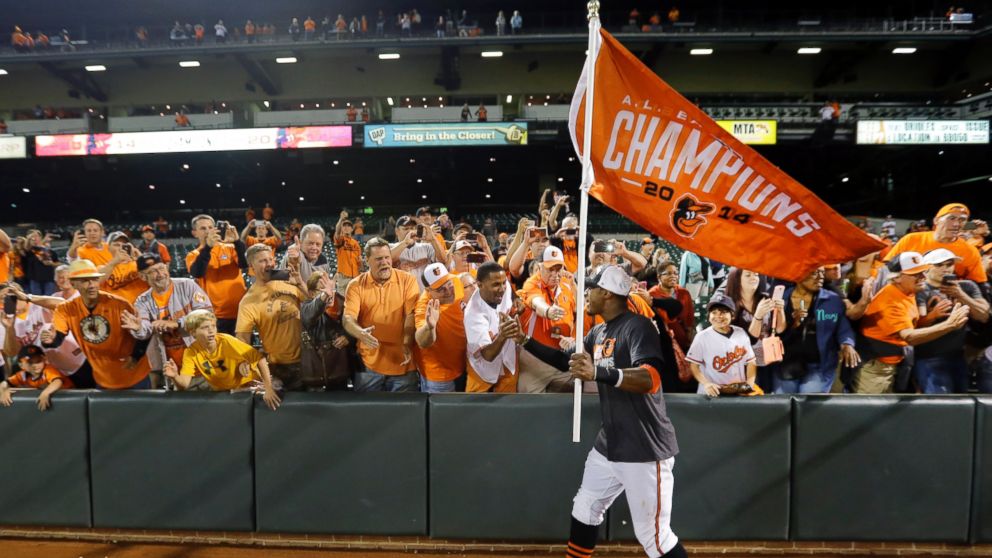
Joy in Birdland: Orioles Win AL East

WireAP_70adf89e6e10437382ee8d7df9629961_16x9_992

It has been seventeen years since the Baltimore Orioles won the American League East, a period in which they and their fans endured 14 strait losing seasons between 1997 and 2012.

I have always liked the Orioles. When I was a kid they were on television a lot as under Earl Weaver and a Hall of Fame roster they always seemed to be in the playoffs or the World Series. I remember when they had the California League Stockton Ports as a farm team and going to games at Stockton’s Billy Herbert Field when my dad was deployed in Vietnam.

Now my dad couldn’t stand the American League. But he did know baseball and despite his dislike for the the American League, and since they were an American League team, the Orioles, he admired baseball players who were exemplary, as such he loved Frank and Brooks Robinson as well as some of the Orioles pitching greats. I wear my Orioles hats, t-shirts and clothing almost everywhere, I have an Orioles doormat at the entrance of my office and lots of signed memorabilia around my house and office. People ask me all the time if I am from Baltimore or Maryland, I always surprise them and tell them that I was a West Coast Navy brat who fell in love with the Orioles in the 1960s and early 1970s. I guess some folks don’t get that you can be as devoted as fan as me without being from Baltimore, a city that I really enjoy which has one of the nicest and friendliest ballparks in the majors, Camden Yards.

My real passion for the Orioles was reignited in 2004 when we took a trip to Camden Yards to see the Orioles play the Yankees, and when I met the late former Orioles great Paul Blair when he visited different bases that I served. But that passion for the Orioles really took off when the Orioles became the major league affiliate of our local Triple-A minor league club the Norfolk Tides in 2006. Now mind you, al lot of those have been very lean years, but I have gotten to know a decent number of Orioles players, some who are with the team that clinched the AL East tonight including Chris Tillman, Zack Britton and Manny Machado, some who have left baseball and some who are doing well with other organizations including the Cubs Jake Arrieta and the Diamondbacks David Hernandez. Likewise I have gotten to know scouts and front office personnel who have spent time in Norfolk evaluating the Tides over the years.

In 2011 things began to turn around for the Orioles, after a miserable two thirds of a season the O’s hired Buck Showalter as manager, and then Dan Duquette, who had laid the foundations of the Boston Red Sox World Series title as their general manager. In 2012 they made the playoffs as a Wild Card team. In 2013 they didn’t get in the playoffs but had a winning season. This year very few people picked them to go far in a division that had the 201 World Series champion Red Sox, the free spending New York Yankees, the amazingly talented and gritty Tampa Bay Rays and the well stocked Toronto Blue Jays.

However, I believed from the beginning of the season that this team would go far. I think that the organization is smart, Buck Showalter is an amazing manager who gets the best out of his players and develops an amazing work ethic, selfless team spirit combined with a climate that the players are relaxed but determined. Led by Adam Jones, Nick Markakis and J.J. Hardy the team has a gritty and under rated pitching staff led by Chris Tillman and a host of players that all do their job on a daily basis, often without the fanfare of the big market teams that have tons of money to spend. The team has made smart trades and between August 6th and September 16th went had a record of 27 wins and 11 losses.

Now that they have won the division the Orioles will try to best the Los Angeles Angels for the best record in the American League and for that matter, baseball. The currently own the second best record in the majors at 91-60. My belief is that the Orioles will at the minimum advance to the American League Championship series, and quite possibly on to the World Series. I am really happy about this because I will be in Munich next week and won’t have to be continually checking my iPhone or iPad to see if the won the division.

530402_10151878451172059_1439813480_n

So anyway, I am happy. Now if my other Orange and Black team, the San Francisco Giants can get a spot in the playoffs or somehow overcome the Dodgers to take the National League West I will be truly happy. But until then I will still be truly happy because there is joy in Birdland.

Peace

Padre Steve+
Leave a comment

Filed under Baseball, Batlimore Orioles, norfolk tides

ISIL: A Generational Problem in Which the Enemy Gets a Vote

295_26912117058_5652_n

I have been writing much in recent days about the war that we are now in against the Islamic State, or ISIL.  Today Secretary of defense Hegel and Chairman of the Joint Chiefs of Staff General Martin Dempsey briefed the Senate Armed Services Committee about the developing strategy to defeat ISIL. They both echoed what I have been writing, that this is not going to be a short and easy war. It was the kind of briefing that Secretary Rumsfeld, Paul Wolfowitz and others should have given Congress before launching the Iraq war in 2003.

Unlike Rumsfeld and others who plainly concocted a fairy tale about the character, length and cost of the war which they and their propagandists in the media deceived the American public into supporting that war, this was a briefing conducted by realists who did not paint beautiful picture of just how easy it will be to win this war, and how it really won’t be over until it’s over. Retired Marine Corps General James Mattis very wisely said: “No war is over until the enemy says it’s over. We may think it over, we may declare it over, but in fact, the enemy gets a vote.”

In fact the aftermath of that 2003 invasion opened a Pandora’s box of chaos, and opened the door to what T.E. Lawrence warned about in 1919: “A Wahabi-like Moslem edition of Bolshevism is possible, and would harm us almost as much in Mesopotamia as in Persia…” ISIL is exactly that, a fulfillment of Lawrence’s warning.

Unfortunately no one really likes realists, they rain on people’s ideological parades and no one likes to have their parade rained on. Both men recognize that after the past thirteen years of war, as well as the massive upheaval spawned in the region in large part because of it, and the many other crises  that the American military and our NATO allies are having to confront, that American military and diplomatic options are less than optimal and as General Mattis said the enemy gets a vote. As Winston Churchill said:

“Never, never, never believe any war will be smooth and easy, or that anyone who embarks on the strange voyage can measure the tides and hurricanes he will encounter. The statesman who yields to war fever must realize that once the signal is given, he is no longer the master of policy but the slave of unforeseeable and uncontrollable events…. Always remember, however sure you are that you could easily win, that there would not be a war if the other man did not think he also had a chance.”

General Dempsey cautioned the Senators that this was not going to be a short or easy effort. He noted as any realist would : “It’s a generational problem, and we should expect that our enemies will adapt their tactics as we adjust our approach.” 

They outlined a number of elements of the strategy to include the continued air campaign, coordination with the Iraqis, the advisory mission and the diplomatic efforts being made to build an alliance, as well as to build up “moderate” Syrian rebel forces that are functioning under some kind of “moderate” authority, whatever that is, and if there is such a thing in Syria I hope we find it.

The fact is there is nothing easy about any of these options, even the advisory piece is fraught with danger and the potential of being expanded into a ground combat operation. President Obama has promised not to enter into a ground war, but remember the enemy, as well as the other participants in war get a vote. General Dempsey acknowledged this when he told the committee: “If we reach the point where I believe our advisors should accompany Iraqi troops on attacks against specific ISIL targets, I’ll recommend that to the president.” Yes, the decision to commit troops in a ground combat role is ultimately that of the President as Commander in Chief, but the Congress and the American people need to be part of the decision making process and get a vote. If Congress fails to weigh in on this, and either vote for committing troops, or putting limitations on military action, they will have failed in one of their chief constitutional duties.

General Dempsey also noted the nature of the air campaign that is being conducted and which will be conducted in Syria, saying: “we will be prepared to strike ISIL targets in Syria that degrade ISIL’s capabilities. This won’t look like a ‘shock and awe’ campaign because that is simply not how ISIL is organized, but it will be a persistent and a sustainable campaign.” Part of this is due to ISIL as General Dempsey said, but also as he later noted the growing mismatch between policy ends and the means available to deal with them including the will of Congress to provide those means. Dempsey warned of the danger if the “will to provide means does not match the will to pursue ends,”  a time bomb that the austerity minded Congress foisted on the nation through sequestration in 2012. 

Dempsey was cautiously optimistic in his assessment:

“Given a coalition of capable, willing regional and international partners, I believe we can destroy ISIL in Iraq, restore the Iraq-Syria border and disrupt ISIL in Syria…ISIL will ultimately be defeated when their cloak of religious legitimacy is stripped away and the populations on which they have imposed themselves reject them. Our actions are intended to move in that direction.”

General Dempsey recognized that American military power alone cannot solve this situation and that ultimately if ISIL is to be defeated and destroyed, those people that they have conquered need to rise up and reject them. I think that is possible, but it may take years of suffering and oppression at the hands of ISIL for those people to rise up against them. The Sunni did it in Anbar in 2006-2009 to help turn around the Iraq campaign, but they did so on the basis that their rights would be respected and that they would have a real voice in the Shi’ite dominated Iraqi government. Instead they were tossed aside by the Maliki government making them far more apprehensive and unwilling to go all in on defeating ISIL as they did its predecessor.  The Sunni attitude is much like that of the Arabs who rebelled against the Turks, of whom T. E. Lawrence wrote:

“The Arabs rebelled against the Turks during the war not because the Turk Government was notably bad, but because they wanted independence. They did not risk their lives in battle to change masters, to become British subjects or French citizens, but to win a show of their own.”

This is the reality and it is not pretty. Reality sucks, but as Mark Twain said

“Reality can be beaten with enough imagination.”

Peace

Padre Steve+

1 Comment

Filed under Foreign Policy, History, iraq,afghanistan, middle east, Military, national security, Political Commentary, War on Terrorism