Category Archives: civil war

“Only Two Parties Now” The Aftermath of Fort Sumter

sumterflag

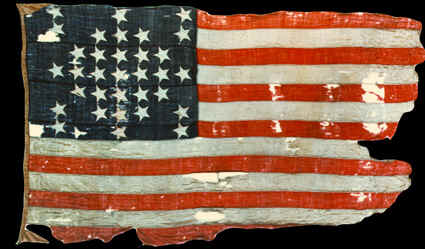
The Flag of Fort Sumter

Friends of Padre Steve’s World,

This is the second of two-part installment from my Civil War text. The story follows the secession crisis and the attack on Fort Sumter. I describes the reactions of people in all parts of the country, as well as the Army to those fateful shots. I find that it is remarkable and ironic that Republican lawmakers in South Carolina have introduced a bill that would allow secession if the Federal Government does anything that these legislators perceive as violating the Second Amendment so close to the date that their predecessors opened fire on Fort Sumter, but that is not the subject of today’s article. 

Peace

Padre Steve+

When the Stars and Stripes came down on April 14th 1861 the North was galvanized as never before, and “the clash at Fort Sumter brought forth an outpouring of support for the Union and President Lincoln.” [1]Abner Doubleday wrote “With the first shot fired against Fort Sumter the whole North became united.” [2] Another observer wrote: “The heather is on fire….I never knew what popular excitement can be… The whole population, men, women, and children, seem to be in the streets with Union favors and flags.” [3] The assault on Fort Sumter help to unify the North in ways not thought possible by Southern politicians who did not believe that Northerners had the mettle to go to war against them. But they were wrong, those shots, which Jefferson Davis ordered had the opposite reaction, for Northerners, even opponents of abolition who were not supporters of Lincoln, slavery in the South was one thing, but the attack on a Federal garrison by massed artillery was another; even Senator Stephen Douglas, Lincoln’s stalwart opponent of so many campaigns went to the White House for a call to national unity. Returning to Chicago he told a huge crowd just a month before his untimely death:

“There are only two sides to the question. Every man must be for the United States or against it. There can be no neutrals in this war, only patriots – or traitors” [4]

For Frederick Douglass the shots marked a new phase in abolition:

“The first flash of rebel gunpowder and shell upon the starving handful of men at Sumter instantly changed the nation’s whole policy. Until then, the ever hopeful North was dreaming of compromise…

I wrote in my newspaper; “On behalf of our enslaved and bleeding brothers and sisters, thank God! The slaveholders themselves have saved the abolition cause from ruin! The government is aroused, the dead North is alive, and its divided people united. Never was a change so sudden, so universal, and so portentous. The whole North from East to West is in arms…” [5]

Douglas died less than a month later, possibly from cirrhosis of the liver, but his impact on the Democrats in the North was immense, “for a year of more his war spirit lived among most Democrats. “Let our enemies perish by the sword,” was the theme of democratic editorials in the spring of 1861. “All squeamish sentimentality should be discarded, and bloody vengeance wreaked upon the heads of the contemptable traitors who have provoked it by their dastardly impertinence and rebellious acts.” [6]

sickles as brigadier

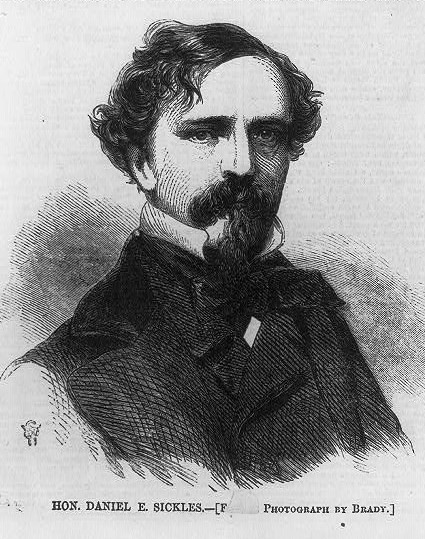
Dan Sickles

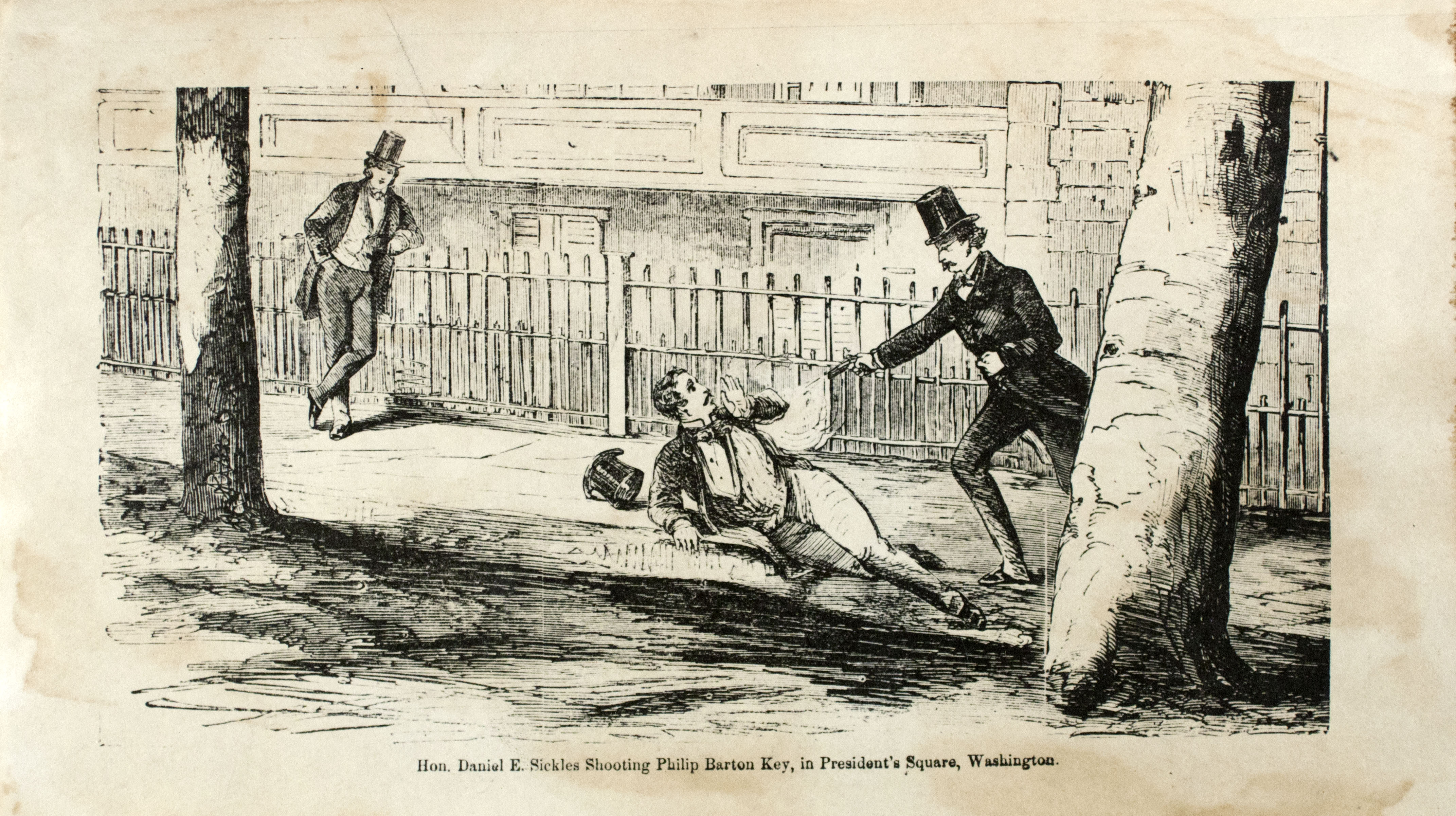
One of these Democrats was New York Congressman Dan Sickles. He was one of many men whose outlook toward the South changed when Sumter was fired upon. Sickles had stridently defended Southerners and Southern states rights just months before, so long as they remained in the Union, and he took the actions of his former friends personally. He then became one of the first of men who were known as Union Democrats who followed Lincoln into the war, and despite his lack of ethics in much of his life it was a cause for which he would remain true, during and after the war.

When the soldiers of South Carolina opened fire on Fort Sumter, Sickles, who had said that no troops would cross through New York to invade the South in 1859 proclaimed “the men of New York would go in untold thousands anywhere to protect the flag of their country and to maintain its legitimate authority.” [7] In one of his last congressional speeches Sickles lambasted the South for its threat to the United States as a whole, and condemned the new Confederacy’s policies in spite of Northern attempts to conciliate them, “has been followed by insults to our flag; by the expulsion of the United States troops and authorities from navy yards and forts and arsenals; by measures to control the vast commerce of the Mississippi and its tributaries….” [8] He also condemned the South for its seizure of U.S. funds in the sub-treasuries and mints in the South as well sending envoys to England and France.

Sickles-Excelsior-Brigade-Headquarters-City-Hall-Park.-Yorktown

After the war Sickles, who had lost his leg in the Battle of Gettysburg fighting for the Union, oversaw the early efforts of reconstruction in North Carolina and for ordering the end to the public whippings of blacks by state officials was fired by President Andrew Johnston for supporting voting rights for African Americans. Congress reinstated him but Sickles who had so earnestly supported the South as late as 1860 no longer could stomach such abuse by those men who at one time his political friends and allies. During the election of 1876 Sickles, a lifelong Democrat labeled his party as “the party of treason.” [9] He joined forces with Republicans and helped to prevent the election of New York Democrat Samuel Tilden through shrewd political electioneering in key battleground states.

For Stephen Douglas the attack on Fort Sumter meant the end of his efforts to bring about some kind of reconciliation to reunite the country and restore the Union. When the Little Giant heard the news of the attack and reports of the statements of Confederate leaders he rushed to Lincoln to offer his support. Douglas wrote of the meeting:

“I heartily approve of your proclamation calling up 75,000 militia,” I told him. “Except that I would make it 200,000. You don’t know the dishonest purposes of these southern men as well as I do.” After a review of the strategic situation with the President Douglas continued, “Mr. President,” I said. “Let me speak plainly. I remain unalterably opposed to your Administration on purely its political issues. Yet I’m prepared to sustain you in the exercise of all your constitutional functions to preserve the Union, maintain the government, and defend the capital. A firm policy and prompt action are necessary. The capital of our country is in danger, and must be defended at all hazards, and at any expense of men and money. I speak of the present and future without reference to the past.

He shook my hand, hard. “We need more patriots like you, Douglas,” he said as he walked me to the door.

“I depreciate war,” I said in parting, “but if it must come, I’m with my country and for my country, under all circumstances and in every contingency.” [10]

Douglas then went to his fellow Democrats in Washington and told them: “We must fight for our country and forget all differences. There can be only two parties now – the party of patriots and the party of traitors. We belong to the first.” [11]

ewell

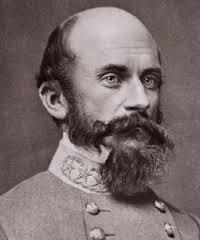
Richard Ewell

Army officers were conflicted between the Army that they had served, often for many years, the flag that they had fought under, longstanding friendships, and loyalty to their states and families. Richard Ewell who would rise to corps command in the Army of Northern Virginia, described the feelings of many officers in the ante-bellum Army: “Officers generally are very much adverse to any thing like civil war, though some of the younger ones are a bit warlike. The truth is in the army there are no sectional feelings and many from extreme ends of the Union are the most intimate friends.” [12] In California a number of those friends and their families bade tearful farewells as they parted ways. Brigadier General Albert Sidney Johnston and Captains Winfield Scott Hancock and Lewis Armistead gathered one last time. Hancock had already, who had great sympathy for his Southern friends, made his views known had previously announced “I shall fight not upon the principle of state-rights, but for the Union, whole and undivided.” [13] His commander, Johnston, and dear friend Armistead were departing to serve the Confederacy and the parting was painful. Almira Hancock wrote of the final night together in Los Angeles:

“The most crushed was Major Armistead, who with tears, which were contagious, streaming down his face, put his hands upon Mr. Hancock’s shoulders, while looking him steadily in the eye, said, “Hancock, good-bye; you can never know what this has cost me; and I hope God will strike me dead if I am ever induced to leave my native soil, should worse come to worst….” [14]

Colonel Robert E. Lee of Virginia looked askance at secession, but he had made the decision that no matter what he would not lead armies against the South. In fact it was clear when he left Texas to come east where his sentiments lay. He told a friend “If Virginia stands by the old Union, so will I. But if she secedes (though I do believe in secession as a constitutional right, nor that there is sufficient cause for revolution), then I will follow my native State with my sword, and if need be, with my life.” [15]When he returned to Washington D.C. he accepted a promotion to Colonel in the Regular Army less than a month before he was offered command of the Union armies by Abraham Lincoln, a position that he turned down. In his final interview with General Winfield Scott to announce his decision, he admitted that “the struggle had been hard. He did not believe in secession, he said, and if he owned every slave in the South he would free them all to bring peace; but to fight against Virginia was not in him.” [16] When Virginia seceded Lee submitted his resignation from the Army for a cause that he did not really believe was constitutional or necessary, noting in his letter:

“With all my devotion to the Union and feeling of loyalty and duty of an American citizen, I have not been able to make up my mind to raise my hand against my relatives, my children, my home. I have therefore, resigned my commission in the Army, and save in the defense of my native State…I hope I may never be called upon to draw my sword.” [17]

Within days Lee was appointed as a General and commander of the military forces of Virginia. When he arrived at the State House and “before he had much time to ruminate, he found himself being presented with George Washington’s sword, and hailed as a hero in a powerful tribute by the president of the convention.” [18] Even so, Lee’s decision was assailed by much of his Unionist oriented family, and many of them went on to serve the Union with distinction during the war. One relative wrote of Lee’s decision, “I feel no exalted respect for a man who takes part in a movement in which he says he can see nothing but ‘anarchy and ruin’… and yet very utterance scare passed Robt Lees lips… when he starts off with delegates to treat traitors.” [19]

Lee’s future right hand man and chief lieutenant, Thomas Jackson, the soon to be “Stonewall” Jackson was then a professor at the Virginia Military Institute. The often grim and serious Jackson saw the issue of secession as he did all of life through the prism of his Evangelical Protestant Calvinistic faith. For him it disunion was a matter of Divine Providence. When secession came and Jackson heard a minister friend in Lexington lamenting the nation’s troubles he noted:

“Why should Christians be at all disturbed about the dissolution of the Union? It can only come by God’s permission, and only will be permitted, if it is for his people’s good, for does he not say that all things shall work together for the good to them that love God?” [20]

In San Francisco Lieutenant James McPherson of the Corps of Engineers attempted to convince Lieutenant Porter Alexander from going home and joining the cause of the Confederacy. He bluntly spoke the facts of what would happen to the South in coming the war to the future Confederate artillery general:

“The population of the seceding states is only eight million while the North has twenty million. Of your 8 million over 3 million are slaves & may pose a dangerous element. You have no army, no navy, no treasury, no organization & practically none of the manufacturers – the machine shops, coal & iron mines & such things – which are necessary for the support of armies & carrying on war on a large scale.

You are but scattered agricultural communities & will be isolated from the world by blockades.

It is not possible for your cause to succeed in the end…” [21]

But Alexander, like so many Southern officers realized “that a crisis in my life was at hand. But I felt helpless to avert it or even debate the question what I should do. I could not doubt or controvert one of McPherson’s statements or arguments…” [22]

buford

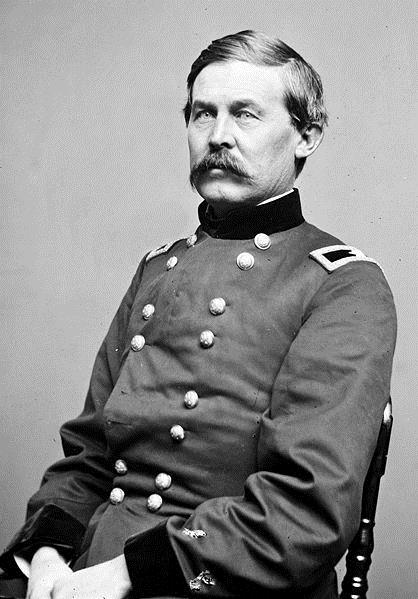
John Buford

However, many Southern born officers serving in the Army did not leave. Close to half of the “Southern West Point graduates on active duty in 1860 held to their posts and remained loyal to the Union.” [23] One was Kentucky’s John Buford who would gain immortal fame at the Battle of Gettysburg. Since Buford’s family had longstanding ties to Kentucky, the pro-secession governor of Kentucky, Beriah Magoffin offered Buford a commission in that states’ militia. At the time Kentucky was still an “undeclared border slave state” and Buford loyal to his oath refused the governor’s offer. He wrote a brief letter to Magoffin and told his comrades that “I sent him word that I was a Captain in the United States Army and I intend to remain one.” [24] Around the same time the new provisional government of the Confederacy “offered Buford a general officer’s commission, which reached him by mail at Fort Crittenden.” [25] According to Buford’s biographer Edward Longacre “a well-known anecdote has him wadding up the letter while angrily announcing that whatever future had in store he would “live and die under the flag of the Union.” [26] A starker contrast could not be drawn.

Close to forty-percent of the Virginians serving on active-duty in the army remained faithful to the Union, including the Commander of the Army, General Winfield Scott and Robert E. Lee’s friend George Thomas and both were ostracized in the Old Dominion. “Thomas’s family never again communicated with him except to ask him to change his name. A young Virginian just out of West Point, acknowledged that by retaining his commission he had been shunned by all of his Southern associates; yet he still derided those who would hold their obligations so lightly as to abandon the nation when it most needed them.” [27]

But throughout the South, most people were less than circumspect and openly rejoiced at the surrender of Fort Sumter. In Richmond the night following the surrender “bonfires and fireworks of every description were illuminating in every direction- the whole city was a scene of joy owing to [the] surrender of Fort Sumter” – and Virginia wasn’t even part of the Confederacy.” [28] John Gordon, the future Confederate General was leading his Georgia volunteers to the new Confederate capital and “found the line of march an unbroken celebration: fires lighted the hilltops; fife-and-drum corps shrilled and thumped; cannons exploded their welcome.” [29]

poor--ulysses-s-grant-president-1040cs021412

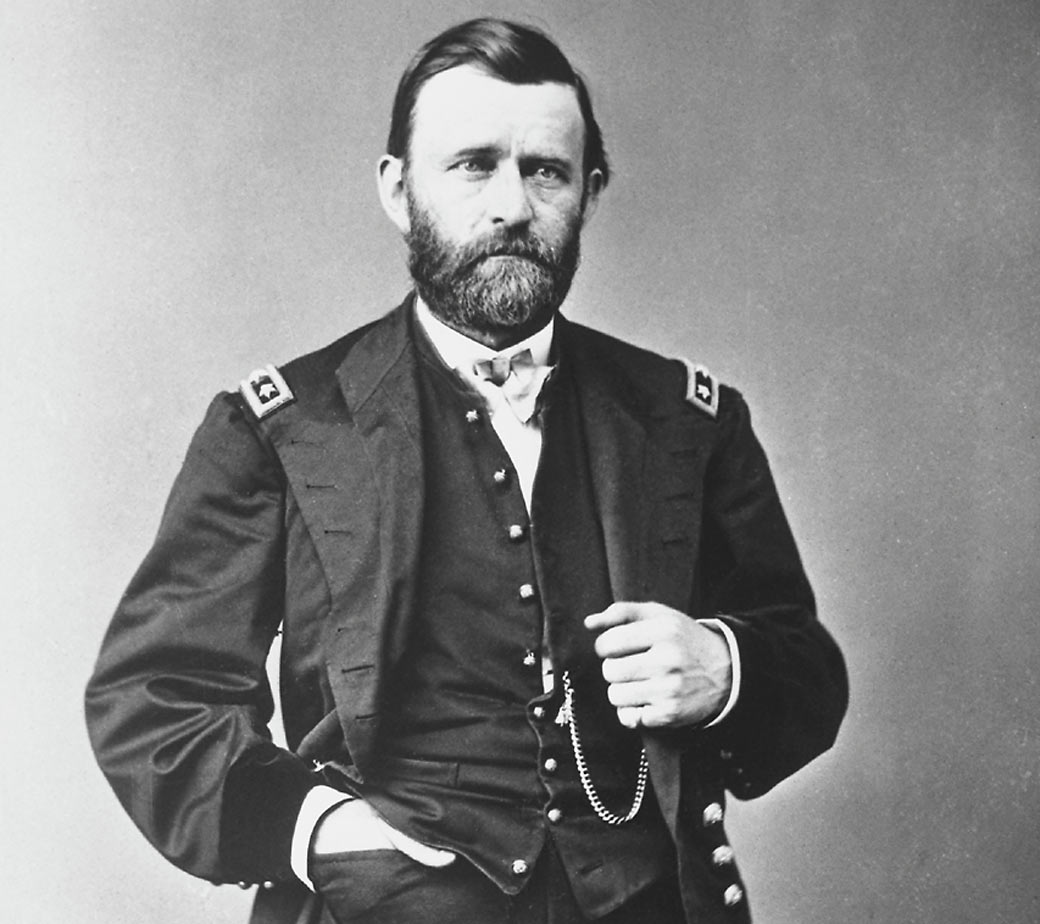
Ulysses Grant

Far to the north in Bangor Maine a little known professor at Bowdin College named Joshua Lawrence Chamberlain read the news “could not abide the thought of a divided nation; the Founding Fathers “did not vote themselves into a people; they recognized and declared that they were a people” whose bonds out not to be severed by political, social, or economic grievances.” [30] The professor “was seized with anger that “the flag of the Nation had been insulted” and “the integrity and existence of the people of the United States had been assailed in open and bitter war.” [31] In Illinois, a former struggling former Regular Army officer and veteran of the War with Mexico, Ulysses S. Grant whose in-laws were sympathetic to the Southern cause who had volunteered to lead a regiment of Illinois volunteers, wrote “Whatever may have been my opinions before, I have but one sentiment now. That is to have a Government, and laws and a flag and they all must be sustained….There are but two parties now, Traitors and Patriots and I want hereafter to be ranked with the latter.” [32]

1st_7th_Reg_Departs

Even in cities that had often leaned toward the South like Cincinnati, people rushed to proclaim their patriotism and support of the Union. George Ticknor told an English friend “The whole population, men, women, and children, seem to be in the streets with Union favours and flags…. Civil war is freely accepted everywhere… by all, anarchy being the obvious, and perhaps the only alternative.” Pacifists who had rejected violence, even in support of righteous causes, turned bellicose. Ralph Waldo Emerson enthused, “Sometimes gunpowder smells good.” [33] As the Sixth Massachusetts Volunteer Infantry marched through the streets of New York on their way to Washington were greeted with cheers from thousands of New Yorkers. The New York Times reported the event:

“Flags were displayed at all the hotels on the route, and waving handkerchiefs from the balconies and windows signified the warm greetings of the fair sex to the brave Bay State soldiers. Opposite the New York Hotel a gray-haired old man mounted a stoop and addressing the soldiers and people, said that he had fought under the Stars and Stripes in the War of 1812 against a foreign power, and now that the flag was spit upon by those who should be its defenders. He closed his remarks by a “God bless our flag,” and left the crowd with tears streaming down his wrinkled cheeks.” [34]

The Rubicon had been crossed and there was now no going back for either side. Poet Walt Whitman wrote:

War! An arm’d race is advancing! The welcome for battle, no turning away;

War! Be it weeks, months, or years, an arm’d race is advancing to welcome it.” [35]

Notes

[1] Ibid. Cooper We Have the War Upon Us p.270

[2] Doubleday, Abner From Moultrie to Sumter in Battles and Leaders of the Civil War Volume I Edited by Robert Underwood Johnson and Clarence Clough Buel Castle, Secaucus NJ p.48

[3] Ibid. McPherson The Battle Cry of Freedom p.274

[4] Ibid. McPherson The Battle Cry of Freedom p.274

[5] Ibid. Oates The Approaching Fury p.423

[6] Ibid. McPherson The Battle Cry of Freedom pp.274-275

[7] Ibid. Keneally American Scoundrel p.212

[8] Ibid. Keneally American Scoundrel p.214

[9] Ibid. Goldfield America Aflame p.525

[10] Ibid. Oates The Approaching Fury pp.421-422

[11] Ibid. Oates The Approaching Fury p.422

[12] Pfanz, Donald. Richard S. Ewell: A Soldier’s Life University of North Carolina Press, Chapel Hill and London 1998 p.120

[13] Jordan, David M. Winfield Scott Hancock: A Soldier’s Life Indiana University Press, Bloomington and Indianapolis 1988 p.33

[14] Hancock, Almira Reminiscences of Winfield Scott Hancock Charles L Webster and Company, New York 1887 pp.69-70

[15] Thomas, Emory Robert E. Lee W.W. Norton and Company, New York and London 1995 p.187

[16] Ibid. Catton The Coming Fury p.335

[17] Ibid. Thomas The Confederate Nation p.85

[18] Pryor, Elizabeth Brown. Reading the Man: A Portrait of Robert E. Lee Through His Private Letters Penguin Books, New York and London 2007 p.295

[19] Ibid. Pryor Reading the Man p.295

[20] Ibid. Rable God’s Almost Chosen Peoples p.38

[21] Alexander, Edward Porter. Fighting for the Confederacy: The Personal Recollections of General Edward Porter Alexander edited by Gary Gallagher University of North Carolina Press, Chapel Hill 1989 p.24

[22] Ibid. Alexander Fighting for the Confederacy p.25

[23] Huntington, Samuel P. The Soldier and the State: The Theory and Politics of Civil-Military Relations, The Belknap Press of Harvard University Press, Cambridge MA and London 1957

[24] Ibid. Guelzo. Gettysburg: The Last Invasion p.121

[25] Longacre, Edward G. John Buford: A Military Biography Da Capo Press, Perseus Book Group, Cambridge MA p.70

[26] Ibid. Longacre John Buford p.70

[27] Pryor, Elizabeth Brown. Reading the Man: A Portrait of Robert E. Lee Through His Private Letters Penguin Books, New York and London 2007 p.292

[28] Ibid. Guelzo Fateful Lightening p.140

[29] Smith, Jean Edward. Grant Simon and Schuster, New York and London 2001 p.99

[30] Longacre, Edward G. Joshua Chamberlain: The Soldier and the ManCombined Publishing Conshohocken PA 1999 pp.49-50

[31] Ibid. Guelzo. Gettysburg: The Last Invasion p.139

[32] Ibid. Smith Grant p.103

[33] Ibid. Goldfield America Aflame p.205

[34] Holzer, Harold and Symonds, Craig L. Editors, The New York Times Complete Civil War 1861-1865 Black Dog and Leventhal Publishers, New York 2010 p.75

[35] Ibid. Goldfield America Aflame p.205

Leave a comment

Filed under civil war, History, Military, Political Commentary

“These acts… are overt acts of war.” The Attack on Fort Sumter

fort-sumter-higher-res

Friends of Padre Steve’s World,

Here is this is the first of a two-part installment of my Civil War text. The story follows the implosion of the Democratic Party, the election of Abraham Lincoln, and the secession crisis. It describes who the attack came about and the reactions of people in all parts of the country, as well as the Army to those fateful shots. I hope that you enjoy.

Peace

Padre Steve+

The remaining forts under Federal control in the South were a thorn in the side and a constant reminder to Jefferson Davis of the power of the federal government. As such he attempted to negotiate to obtain the forts, and when that offer was rejected out of hand by both Buchanan and Lincoln he began military preparations to seize them if negotiations failed. His task was complicated in Charleston where the Federal commander, Major Robert Anderson unexpectedly withdrew his entire garrison from the mainland to Fort Sumter in Charleston harbor. The move was prompted by President Buchanan’s dithering on the status of the fort and garrison. Anderson was a Southerner who had decided to remain loyal to the Union, his second in command was Captain Abner Doubleday, a strongly committed abolitionist.

Under the cover of darkness the Union officers withdrew their men from old and weak Fort Moultrie in Charleston to Fort Sumter gaining him instant adulation in the North and condemnation in the South. Buchanan wanted to abandon the fort but “when it appeared that Northern public opinion was solidly behind Anderson, Buchanan changed his mind and attempted to persuade the South Carolinians to accept Anderson’s occupation of Fort Sumter as a legitimate exercise of federal authority.” [1] Jefferson Davis, who had not yet resigned from the Senate awaiting Mississippi’s declaration of secession complained that he “pleaded with Buchanan to give up Sumter and avert impending calamity. Once again the old imbecile refused, after his fashion, which is to say that he muttered to himself, nodded and tilted his head as if in agreement, begged leave to say a prayer, and then did nothing at all. Plainly the reins of state were in feeble hands. Had this lame-duck President withdrawn the troops from Sumter, he might have turned away the threatening of civil war.” [2]But Davis was blind to the political realities in the North that secession and seizure of other Federal installations had brought about. A prominent Northern Democrat wrote that “Anderson’s course of action is universally approved and that if he is recalled or if Sumter is surrendered… Northern sentiment will be unanimous in favor of hanging Buchanan….I am not joking – Never have I known the entire people more unanimous on any question. We are ruined if Anderson is disgraced or Sumter given up.” [3] Congressman Dan Sickles who had been such a friend of the South for so many years, even backing peaceful secession, spoke out against the Southern seizure of federal installations, said that the secessionists had committed “a fatal error” and said “it will never do, sir, for them to protest against coercion, and, at the same moment seize all the arms and arsenals and forts and navy yards, and ships that may, through our forbearance, fall within their power. This is not peaceful secession. These acts, whensoever or whomsoever done, are overt acts of war.” [4]

major anderson

Buchanan made a belated attempt to reinforce and resupply the fort and on January 9th 1861, an unarmed civilian ship, the Star of the West entered Charleston harbor. But the operation was bungled, secrecy was broken and the South Carolinians knew the ship was coming, even as Anderson did not get the message about the relief expedition and permission to fire if the Star of the West was fired upon. As a result when Confederate gunners opened fire on the steamer, Anderson, who had instructions to defend himself and not for an instance such as this, did nothing to intervene. “If he opened fire, the United States and South Carolina would be at war…. Major Anderson hesitated, plainly uncertain, an immense weight of responsibility resting on him….” [5] As a result the Star of the West retreated, leaving the garrison unreinforced. But the secessionists “had overplayed their hand. The South Carolina gunners who fired on the Star of the West had, in effect, invited the Federal government to start the war then and there if it wanted a war….” [6] The firing on the Star of the West further inflamed Northerners. Dan Sickles thundered in the House chambers “the authorities of South Carolina, through their military forces, opened fire upon that defenseless ship, and compelled her to retire and abandon the peaceful and legitimate mission in which she was engaged. Now, sir, that was an act of war, unqualified war.” [7]

The debate continued as Buchanan eased out of office and the new Confederate government of Jefferson Davis took ownership of the situation in Charleston. Buchanan did not want to do anything overt to tip the balance in undecided slave states toward secession and Davis did not want South Carolina to act alone and risk a premature attack on the fort. But as both sides waited the balance of power in Charleston shifted, “as local troops day by day strengthened the ring of batteries confronting Sumter’s garrison.” [8] In incoming Lincoln administration debated what to do with some of the incoming cabinet members counseling withdraw and others resistance to Confederate demands. Lincoln gave serious thought to abandoning the fort but could not bring himself to authorize the action. He understood that if he ordered evacuation, “the credibility of his presidency and the Republican administration would be in pieces before either had scarcely begun.” [9]

Instead the new President sought more information and sent three men “down to Charleston to observe the situation and report on what they saw. The first two, both southern-born, were Illinois law associates, both reported reconciliation impossible…. The third, a high-ranking naval observer who secured and interview with Anderson at the fort, returned to declare a relief expedition was feasible.” [10] He also continued to meet with his cabinet members to decide on the appropriate policy to meet the challenge to federal authority in Charleston. “He met with Francis Blair, who, like his son, Monty, believed passionately that the surrender of Sumter “was virtually a surrender of the Union unless under irresistible force – that compounding with treason was treason to the Govt.” [11] On March 29th Lincoln again met with his cabinet and having weighed all of the options, decided to resupply the fort. His decision was to “not send guns or bullets to Sumter, only food and medicine. He would resupply, but not rearm, it. And he would announce the plan in advance so the South could not regard the effort as an act of hostility by an enemy.” [12] If the attempt succeeded “federal authority in South Carolina had been preserved, and Charleston could do little short of war to change it; if it failed, the failure would be due to Charleston’s decision to open fire, and the onus of beginning a civil war would lie on their hands.” [13]

Even as the Confederate moved even more troops and guns into position around the Sumter, more and more people of influence were growing impatient with the delays in gaining Fort Sumter and feared that if something was not done that in some places there might be a call to return to the Union. Jefferson Davis was under great pressure to act, a newspaper in Mobile Alabama editorialized that “If something is not done pretty soon…the whole country will be so disgusted with the sham of independence that the first chance the people get at a popular election the y will turn the whole movement topsy-turvy.” [14] Likewise, “Southern ardor was chafing at the bit anyway, and failure to meet the challenge threatened to undermine the government and weaken Southern resolve.” [15]

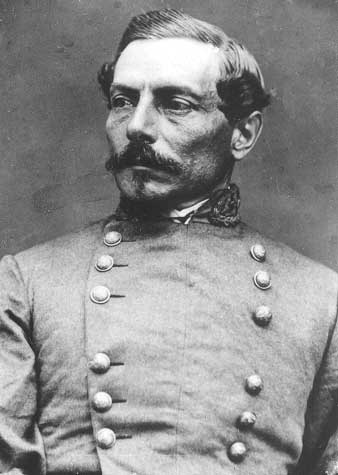
P.G.T._Beauregard

General P.T.G. Beauregard C.S.A.

Knowing from Southern sympathizers still in Washington that a relief expedition was coming, General P.T.G. Beauregard “had already cut off Major Anderson’s purchases in the Charleston market the day before Governor Pickens received Lincoln’s message about the intention to provision Sumter.” [16] Pickens forwarded the message to Davis in Montgomery and Davis was forced to either back down on their threats or fire the first shot of the war, and even worse from a messaging standpoint, “that first shot would be for the immediate purpose of keeping food from hungry men.” [17]

Davis was extremely angry when he went into conference with his cabinet on April 9th upon getting the news of the relief expedition. The debate in the cabinet “ran long and heated. Davis favored proceeding with the bombardment. Charleston’s batteries were ready, and the South Carolinians were more than anxious,” [18] and the majority of the cabinet, with the exception of Robert Toombs concurred. He wrote:

“I summoned the Cabinet and told them that negotiation was now at an end, and that it was time to bombard the fort. Yes, I said, we would now be firing the first shot, but that was not our fault. It was Lincoln who intended war. He and that lying Seward had drawn the sword, and we were responding to them. We were defending our honor.

Toombs, my Secretary of State disagreed. “Sir,” he said to me, “firing at the fort is suicide. It’s unnecessary, it puts us in the wrong, it’s fatal.”

“Sir,” I said, “you are wrong.”

On April tenth, I ordered General Beauregard to demand the evacuation of Fort Sumter, and if refused, to reduce it with his guns.” [19]

Beauregard delivered the ultimatum to Anderson, who rejected it noting that “his sense of honor and obligations to his government prevented him his complying; but in conversation with Beauregard’s aides he remarked that in any event, the garrison would be starved out in a few days.” [20] But the fear of the Confederates that the relief force might actually arrive and succeed in its mission prompted them to open fire on the fort at 4:30 a.m. on the morning of the 12th. The relief force was scattered by a gale and could not resupply Anderson. The bombardment lasted thirty-three hours, and while Anderson’s troops resisted but could not man all of their guns and were short on ammunition and powder. With the fort heavily damaged by over 4,000 hits and interior of the fort on fire, a fire that was threatening the powder magazines, Anderson gave the order to surrender. Beauregard allowed the assembled U.S. Navy ships to evacuate the garrison and as a parting gesture the Confederate General allowed Anderson’s troops to fire a last salute to Old Glory. They hauled down the smoke stained and torn Star Spangled Banner and marched to the ship taking them off the island with their drums beating the tune “Yankee Doodle.” Lincoln realized the importance of what had happened all too well. He noted, “They attacked Sumter. It fell and thus did more service than it otherwise would.” [21]

Notes

[1] Ibid. Guelzo Fateful Lightening p.136

[2] Ibid. Oates The Approaching Fury p.367

[3] Ibid. McPherson The Battle Cry of Freedom pp.265-266

[4] Ibid. Keneally American Scoundrel p.211

[5] Ibid. Catton The Coming Fury pp.180-181

[6] Ibid. Catton The Coming Fury p.184

[7] Ibid. Keneally American Scoundrel pp.211-212

[8] Ibid. Potter The Impending Crisis p.544

[9] Ibid. Guelzo Fateful Lightening p.137

[10] Ibid. Foote The Civil War, A Narrative. Volume One p.46

[11] Ibid. Goodwin Team of Rivals p. 335

[12] Holzer, Harold Lincoln: How Abraham Lincoln Ended Slavery in America Newmarket Press for itbooks an imprint of Harper Collins, New York 2012 p.80

[13] Ibid. Guelzo Fateful Lightening p.137

[14] Ibid. McPherson The Battle Cry of Freedom p.272

[15] Ibid. Catton Two Roads to Sumter p.278

[16] Weigley, Russell F. A Great Civil War: A Military and Political History 1861-1865 Indiana University Press, Bloomington and Indianapolis 2000 pp.20-21

[17] Ibid. Foote The Civil War, A Narrative. Volume One p.47

[18] Ibid. Davis Jefferson Davis p.323

[19] Ibid. Oates The Approaching Fury pp.416-417

[20] Ibid. Weigley A Great Civil War p.21

[21] Ibid. Goldfield America Aflame p.202

1 Comment

Filed under civil war, History, Military, Political Commentary

“We Are All Americans” Ely Parker’s Words at Appomattox

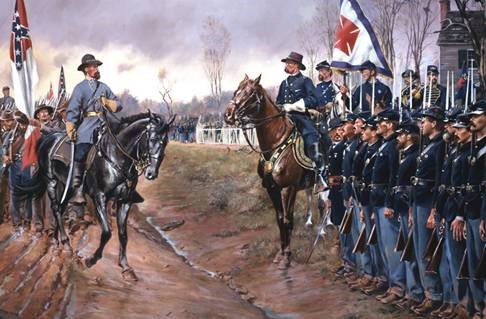
chamberlian gordon appomattox

Joshua Chamberlain Receives the Surrender of John Gordon at Appomattox

Friends of Padre Steve’s World,


One hundred and fifty three years ago on the 9th and 10th of April 1865, four men, Ulysses S Grant, Robert E. Lee, Joshua Lawrence Chamberlain and Ely Parker, taught succeeding generations of Americans the value of mutual respect and reconciliation. The four men, each very different, would do so after a bitter and bloody war that had cost the lives of over 600,000 Americans which had left hundreds of thousands others maimed, shattered or without a place to live, and seen vast swaths of the country ravaged by war and its attendant plagues.

The differences in the men, their upbringing, and their views about life seemed to be insurmountable. The Confederate commander, General Robert E. Lee was the epitome of a Southern aristocrat and career army officer. Lieutenant General Ulysses S. Grant, like Lee was a West Point graduate and veteran of the War with Mexico, but there the similarities ended. Grant was an officer of humble means who had struggled with alcoholism and failed in his civilian life after he left the army, before returning to it as a volunteer when war began. Major General Joshua Lawrence Chamberlain had been a professor of rhetoric and natural and revealed religion from Bowdoin College until 1862 when he volunteered to serve. He was a hero of Little Round Top at the Battle of Gettysburg, who helped exemplify the importance of citizen soldiers in peace and war. Finally there was Colonel Ely Parker, a full-blooded Seneca Indian; a professional engineer by trade, a man who was barred from being an attorney because as a Native American he was never considered a citizen. Although he had been rejected from serving in the army for the same reason, his friend Grant had obtained him a commission and kept him on his staff.

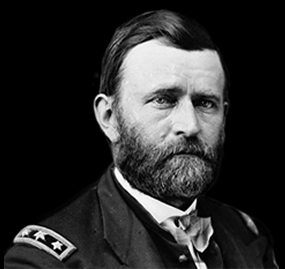
grant 1

Ulysses S. Grant

A few days bef0ore the Confederate line around the fortress of Petersburg was shattered at the battle of Five Forks, and to save the last vestiges of his army Lee attempted to withdraw to the west. Within a few days the once magnificent Army of Northern Virginia was trapped near the town of Appomattox. On the morning of April 9th 1865 Lee replied to an entreaty of Lieutenant General Ulysses S. Grant requesting that he and his Army of Northern Virginia be allowed to surrender. Lee wrote to Grant:

HEADQUARTERS ARMY OF NORTHERN VIRGINIA, APRIL 9, 1865

Lieut. Gen. U.S. GRANT:

I received your note of this morning on the picket-line, whither I had come to meet you and ascertain definitely what terms were embraced in your proposal of yesterday with reference to the surrender of this army. I now ask an interview in accordance with the offer contained in your letter of yesterday for that purpose.

R.E. LEE, General.

The once mighty Army of Northern Virginia, which had won so many victories, and which at its peak numbered nearly 80,000 men, was now a haggard and emaciated, but still proud force of about 15,000 soldiers. For Lee to continue the war now would mean that they would have to face hopeless odds against a vastly superior enemy. Grant recognized this and wrote Lee:

I am equally anxious for peace with yourself, and the whole North entertains the same feeling. The terms upon which peace can be had are well understood. By the South laying down their arms they will hasten that most desirable event, save thousands of human lives, and hundreds of millions of property not yet destroyed. Seriously hoping that all our difficulties may be set-tied without the loss of another life, I subscribe myself, &c.,

Since the high water mark at Gettysburg, Lee’s army had been on the defensive. Lee’s ill-fated offensive into Pennsylvania was one of the two climactic events that sealed the doom of the Confederacy. The other was Grant’s victory at Vicksburg which fell to him a day after Pickett’s Charge, and which cut the Confederacy in half.

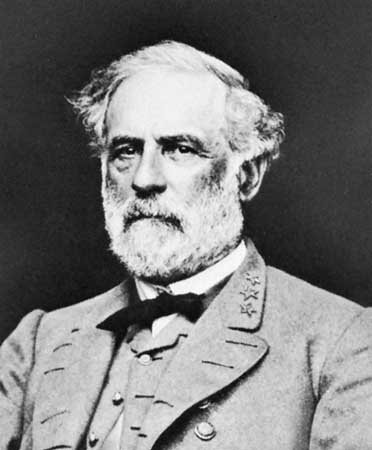
ileerob001p1

Robert E. Lee

The bloody defensive struggle lasted through 1864 as Grant bled the Confederates dry during the Overland Campaign, leading to the long siege of Petersburg. Likewise the armies of William Tecumseh Sherman had cut a swath through the Deep South and were moving toward Virginia from the Carolinas.

With each battle following Gettysburg the Army of Northern Virginia became weaker and finally after the nine month long siege of Petersburg ended with a Union victory there was little else to do. On the morning of April 9th a final attempt to break through the Union lines by John Gordon’s division was turned back by vastly superior Union forces.

On April 7th Grant wrote a letter to Lee, which began the process of ending the war in Virginia. He wrote:

General R. E. LEE:

The result of the last week must convince you of the hopelessness of further resistance on the part of the Army of Northern Virginia in this struggle. I feel that it is so, and regard it as my duty to shift from myself the responsibility of any further effusion of blood, by asking of you the surrender of that portion of the C. S. Army known as the Army of Northern Virginia.

U.S. GRANT, Lieutenant-General

Lee was hesitant to surrender knowing Grant’s reputation for insisting on unconditional surrender, terms that Lee could not accept. He replied to Grant:

HEADQUARTERS ARMY OF NORTHERN VIRGINIA, APRIL 7, 1865 Lieut. Gen. U.S. GRANT:

I have received your note of this date. Though not entertaining the opinion you express on the hopelessness of further resistance on the part of the Army of Northern Virginia, I reciprocate your desire to avoid useless effusion of blood, and therefore, before considering your proposition, ask the terms you will offer on condition of its surrender.

R.E. LEE, General.

The correspondence continued over the next day even as the Confederates hoped to fight their way out of the trap that they were in. But now Robert E. Lee, who had through his efforts extended the war for at least six months, knew that he could no longer continue. Even so some of his younger subordinates wanted to continue the fight. When his artillery chief Porter Alexander recommended that the Army be released, “take to the woods and report to their state governors” Lee replied:

“We have simply now to face the fact that the Confederacy has failed. And as Christian men, Gen. Alexander, you & I have no right to think for one moment of our personal feelings or affairs. We must consider only the effect which our action will have upon the country at large.”

Lee continued:

“Already [the country] is demoralized by the four years of war. If I took your advice, the men would be without rations and under no control of their officers. They would be compelled to rob and steal in order to live…. We would bring on a state of affairs it would take the country years to recover from… You young fellows might go bushwhacking, but the only dignified course for me would be to go to General Grant and surrender myself and take the consequences of my acts.”

Alexander was so humbled at Lee’s reply he later wrote “I was so ashamed of having proposed such a foolish and wild cat scheme that I felt like begging him to forget he had ever heard it.” When Alexander saw the gracious terms of the surrender he was particularly impressed with how non-vindictive the terms were, especially in terms of parole and amnesty for the surrendered soldiers.

Abraham Lincoln had already set the tone for the surrender in his Second Inaugural Address given just over a month before the surrender of Lee’s army. Lincoln closed that speech with these words of reconciliation:

“With malice toward none, with charity for all, with firmness in the right as God gives us to see the right, let us strive on to finish the work we are in, to bind up the nation’s wounds, to care for him who shall have borne the battle and for his widow and his orphan, to do all which may achieve and cherish a just and lasting peace among ourselves and with all nations.”

appomattox surrender

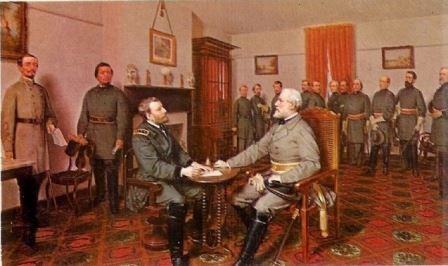
Lee met Grant at the house of Wilmer McLean, who had moved to Appomattox in 1861 after his home near Manassas had been used as a Confederate headquarters and was damaged by artillery fire. Lee was dressed in his finest uniform complete with sash, while Grant was dressed in a mud splattered uniform and overcoat only distinguished from his soldiers by the three stars on his should boards. Grant’s dress uniforms were far to the rear in the baggage trains and Grant was afraid that his slovenly appearance would insult Lee, but it did not. It was a friendly meeting, before getting down to business the two reminisced about the Mexican War.

Grant provided his vanquished foe very generous surrender terms:

“In accordance with the substance of my letter to you of the 8th inst., I propose to receive the surrender of the Army of N. Va. on the following terms, to wit: Rolls of all the officers and men to be made in duplicate. One copy to be given to an officer designated by me, the other to be retained by such officer or officers as you may designate. The officers to give their individual paroles not to take up arms against the Government of the United States until properly exchanged, and each company or regimental commander sign a like parole for the men of their commands. The arms, artillery and public property to be parked and stacked, and turned over to the officer appointed by me to receive them. This will not embrace the side-arms of the officers, nor their private horses or baggage. This done, each officer and man will be allowed to return to their homes, not to be disturbed by United States authority so long as they observe their paroles and the laws in force where they may reside.”

When Lee left the building Federal troops began cheering but Grant ordered them to stop. Grant felt a sense of melancholy and wrote “I felt…sad and depressed, at the downfall of a foe who had fought so long and valiantly, and had suffered so much for a cause, though that cause was, I believe, one of the worst for which a people has fought.” He later noted: “The Confederates were now our countrymen, and we did not want to exult over their downfall.”

In the hours before and after the signing of the surrender documents old friends and classmates, separated by four long years of war gathered on the porch or around the house. Grant and others were gracious to their now defeated friends and the bitterness of war began to melt away. Some Union officers offered money to help their Confederate friends get through the coming months. It was an emotional reunion, especially for the former West Point classmates gathered there:

“It had never been in their hearts to hate the classmates they were fighting. Their lives and affections for one another had been indelibly framed and inextricably intertwined in their academy days. No adversity, war, killing, or political estrangement could undo that. Now, meeting together when the guns were quiet, they yearned to know that they would never hear their thunder or be ordered to take up arms against one another again.”

Grant also sent 25,000 rations to the starving Confederate army waiting to surrender. The gesture meant much to the defeated Confederate soldiers who had had little to eat ever since the retreat began.

The surrender itself was accomplished with a recognition that soldiers who have given the full measure of devotion can know when confronting a defeated enemy. Major General Joshua Lawrence Chamberlain, the heroic victor of Little Round Top was directed by Grant to receive the final surrender of the defeated Confederate infantry on the morning of April 12th.

It was a rainy and gloomy morning as the beaten Confederates marched to the surrender grounds. As the initial units under the command of John Gordon passed him, Chamberlain was moved with emotion he ordered his soldiers to salute the defeated enemy for whose cause he had no sympathy, Chamberlain honored the defeated Rebel army by bringing his division to present arms.

John Gordon, who was “riding with heavy spirit and downcast face,” looked up, surveyed the scene, wheeled about on his horse, and “with profound salutation returned the gesture by lowering his saber to the toe of his boot. The Georgian then ordered each following brigade to carry arms as they passed third brigade, “honor answering honor.”

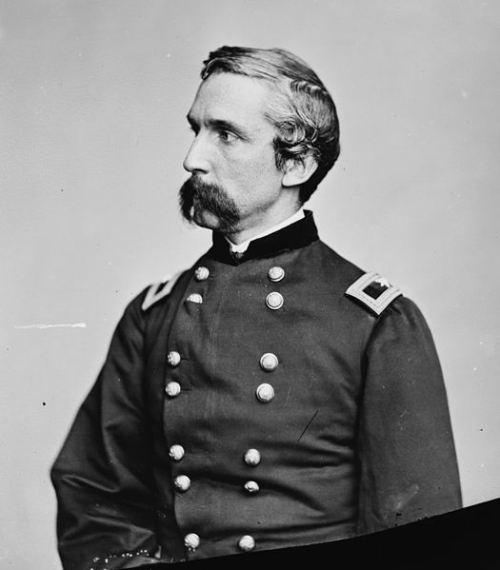
joshua_chamberlain_-_brady-handy

Joshua Lawrence Chamberlain

Chamberlain was not just a soldier, but before the war had been Professor of Natural and Revealed Religions at Bowdoin College, and a student of theology before the war. He could not help to see the significance of the occasion. He understood that some people would criticize him for saluting the surrendered enemy. However, Chamberlain, unlike others, understood the value of reconciliation. Chamberlain was a staunch abolitionist and Unionist who had nearly died on more than one occasion fighting the defeated Confederate Army, and he understood that no true peace could transpire unless the enemies became reconciled to one another.

He noted that his chief reason for doing so:

“The momentous meaning of this occasion impressed me deeply. I resolved to mark it by some token of recognition, which could be no other than a salute of arms. Well aware of the responsibility assumed, and of the criticisms that would follow, as the sequel proved, nothing of that kind could move me in the least. The act could be defended, if needful, by the suggestion that such a salute was not to the cause for which the flag of the Confederacy stood, but to its going down before the flag of the Union. My main reason, however, was one for which I sought no authority nor asked forgiveness. Before us in proud humiliation stood the embodiment of manhood: men whom neither toils and sufferings, nor the fact of death, nor disaster, nor hopelessness could bend from their resolve; standing before us now, thin, worn, and famished, but erect, and with eyes looking level into ours, waking memories that bound us together as no other bond;—was not such manhood to be welcomed back into a Union so tested and assured? Instructions had been given; and when the head of each division column comes opposite our group, our bugle sounds the signal and instantly our whole line from right to left, regiment by regiment in succession, gives the soldier’s salutation, from the “order arms” to the old “carry”—the marching salute. Gordon at the head of the column, riding with heavy spirit and downcast face, catches the sound of shifting arms, looks up, and, taking the meaning, wheels superbly, making with himself and his horse one uplifted figure, with profound salutation as he drops the point of his sword to the boot toe; then facing to his own command, gives word for his successive brigades to pass us with the same position of the manual,—honor answering honor. On our part not a sound of trumpet more, nor roll of drum; not a cheer, nor word nor whisper of vain-glorying, nor motion of man standing again at the order, but an awed stillness rather, and breath-holding, as if it were the passing of the dead!”

The next day Robert E Lee addressed his soldiers for the last time. Lee’s final order to his loyal troops was published the day after the surrender. It was a gracious letter of thanks to men that had served their beloved commander well in the course of the three years since he assumed command of them outside Richmond in 1862.

General Order
No. 9


After four years of arduous service marked by unsurpassed courage and fortitude, the Army of Northern Virginia has been compelled to yield to overwhelming numbers and resources.

I need not tell the survivors of so many hard fought battles, who have remained steadfast to the last, that I have consented to the result from no distrust of them.

But feeling that valour and devotion could accomplish nothing that could compensate for the loss that must have attended the continuance of the contest, I have determined to avoid the useless sacrifice of those whose past services have endeared them to their countrymen.

By the terms of the agreement, officers and men can return to their homes and remain until exchanged. You will take with you the satisfaction that proceeds from the consciousness of duty faithfully performed, and I earnestly pray that a merciful God will extend to you his blessing and protection.

With an unceasing admiration of your constancy and devotion to your Country, and a grateful remembrance of your kind and generous consideration for myself, I bid you an affectionate farewell. — R. E. Lee, General

The surrender was the beginning of the end. Other Confederate forces continued to resist for several weeks, but with the surrender of the Army of Northern Virginia led by the man that nearly all Southerners saw as the embodiment of their nation the war was effectively over.

Lee had fought hard and after the war was still under the charge of treason, but he understood the significance of defeat and the necessity of moving forward as one nation. In August 1865 Lee wrote to the trustees of Washington College of which he was now President:

“I think it is the duty of every citizen, in the present condition of the Country, to do all in his power to aid the restoration of peace and harmony… It is particularly incumbent upon those charged with the instruction of the young to set them an example of submission to authority.

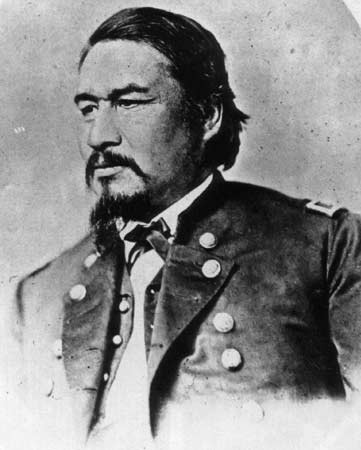
eparker05-966-g

Brigadier General Ely Parker

It is a lesson that all of us in our terribly divided land need to learn regardless of or political affiliation or ideology. After he had signed the surrender document, Lee learned that Grant’s Aide-de-Camp Colonel Ely Parker, was a full-blooded Seneca Indian. He stared at Parker’s dark features and said: “It is good to have one real American here.”

Parker, a man whose people had known the brutality of the white man, a man who was not considered a citizen and would never gain the right to vote, replied, “Sir, we are all Americans.” That afternoon Parker would receive a commission as a Brevet Brigadier General of Volunteers, making him the first Native American to hold that rank in the United States Army. He would later be made a Brigadier General in the Regular Army.

I don’t know what Lee thought of that. His reaction is not recorded and he never wrote about it after the war, but it might have been in some way led to Lee’s letter to the trustees of Washington College. I think with our land so divided, ands that is time again that we learn the lessons so evidenced in the actions and words of Ely Parker, Ulysses Grant, Robert E. Lee and Joshua Chamberlain, for we are all Americans.

Sadly, I think that there is a portion of the American population who will not heed these words and will continue to agitate for policies and laws similar to those that led to the Civil War, and which those the could not reconcile defeat instituted again during the Post-Reconstruction and Jim Crow eras. For me such behavior and attitudes are incompressible, but they are all too real, and all too present in our divided nation.

But I still maintain hope that in spite of everything that divides us, in spite of the intolerance and hatred of some, that we can overcome. I think that the magnanimity of Grant in victory, the humility of Lee in defeat, the graciousness of Chamberlain in honoring the defeated foe, and the stark bluntness of Parker, the Native American, in reminding Lee, that “we are all Americans,” is something that is worth remembering, and yes, even emulating.

Peace

Padre Steve+

Leave a comment

Filed under civil rights, civil war, History, Military, Political Commentary

Controversy and Glory: Dan Sickles Part Six

Daniel_Edgar_Sickles

Friends of Padre Steve’s World,

I am taking a break for the past week or so to read and reflect. As such I am re-posting some articles from my Gettysburg text dealing with a man that I consider one of the most fascinating , salacious, scandalous, heroic, and incredible figures ever to grace and disgrace American history, Congressman, and Civil War General Daniel E. Sickles.

I hope that you enjoy,

Peace

Padre Steve+

LongstreetJ_main

Lieutenant General James Longstreet C.S.A.

President John F. Kennedy paraphrased the words of the Roman Emperor Tacitus after the failed Bay of Pigs invasion, Kennedy told a journalist, “victory has 100 fathers and defeat is an orphan.” The problem in doing a proper analysis of Longstreet’s assault is the fact that many of the men involved on both sides made the battle personal, issuing scathing denunciations of one another, fudging the facts to their advantage, and by making the fight political a political football in the South and in the North.

The Confederate attacks had been badly directed and uncoordinated. In the end though McLaws’ and Hood’s divisions had succeeded in thrashing Sickles’ Third Corps in the exposed salient they were unsuccessful at breaking the Federal line. The disjointed nature of their attacks and the lack of active command and control by Lee and Longstreet had much to do with the outcome. Lee’s presence was needed on the south end of the Confederate line, but he left Longstreet to his own devices.

There was much blame to go around on the Confederate side, Longstreet placed much of the blame for the defeat on Lee, which earned him the everlasting enmity of many Confederates. But Lee’s Warhorse also met with criticism, especially for his performance on July 2nd 1863. Some of the most withering came not years later, but in the days following the battle. The harshest came from Lafayette McLaws, his old friend, who had been a favorite of Longstreet. McLaws blamed his corps commander for the defeat, writing his wife, “I think that the attack was unnecessary and the whole plan of battle a very bad one. Genl Longstreet is to blame for not reconnoitering the ground and for persisting in ordering the assault when his errors were discovered. During the engagement he was very excited [,] giving contrary orders to every one, and exceedingly overbearing. I consider him a humbug – a man of small capacity, very obstinate, not at all chivalrous, exceedingly conceited, and totally selfish….” [1]

One of Longstreet’s biographers wrote “Longstreet’s performance during the morning deserves criticism…. Had he attended to the details that were his responsibility and not allowed his disagreement with Lee to affect his judgment and effort, the afternoon assault would have begun sooner, but not several hours earlier.” [2] That historian believes that had Sickles not moved forward that Longstreet’s attack, even if made earlier would have met success, something echoed by Porter Alexander who wrote, “There seems no doubt that Longstreet’s attack on the 2nd been materially sooner, we would have gained a decided victory.” [3]

Casualties were heavy on both sides but the attack had failed and it had failed because of senior leadership of Lee and his corps commanders. Had Lee “duplicated the active role taken by his counterpart, George Meade, the outcome might have been different.” [4] But this too is speculation born of perfect 20/20 hindsight. One of Lee’s biographer’s wrote “Longstreet was disgruntled, Ewell was inept and Hill was unwell.” [5] To make matters worse, throughout the day, Robert E. Lee did not assert himself and even his most devoted biographer Douglas Southall Freeman would write that on July 2nd 1863 “the Army of Northern Virginia was without a commander.” [6]

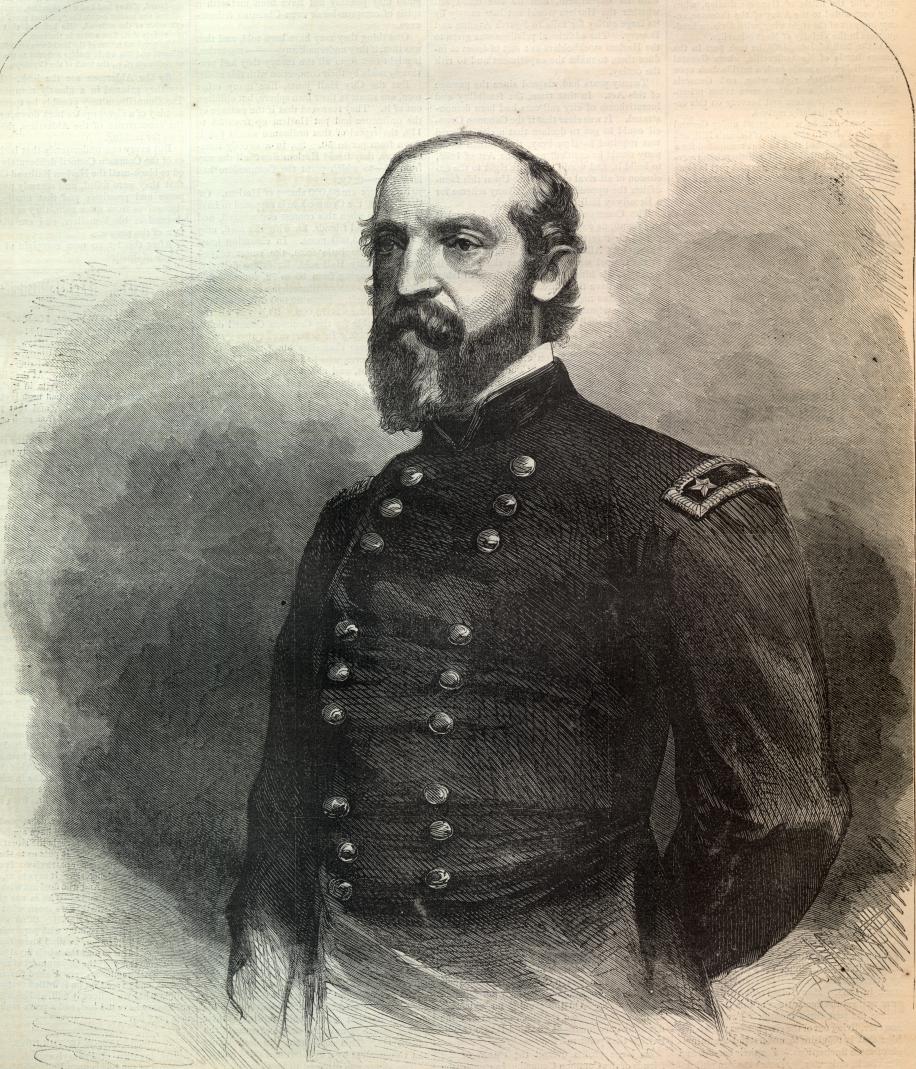
general-george-meade

Major General George Meade U.S. Army

On the Federal side most of the controversy has to do with Sickles’ decision to move the Third Corps forward from Cemetery Hill to the Peach Orchard and so it is appropriate to close this chapter discussing Dan Sickles. The matter has been a long subject of controversy, especially because of the way that Sickles politicized his actions in the press and in the Congressional hearings that followed. Many generals on both sides blundered at Gettysburg.

One can speculate that had Sickles remained in the position dictated by Meade that the Confederate assault might have gone down to an even more disastrous defeat. That being said the line that Sickles would have occupied with his 10,600 troops was long and he could not have held it in great strength, even Little Round Top would have been lightly occupied, and Meade might not have been forced to reexamine his line. It is fully possible that “had Longstreet attacked there with the same headlong fury, it is possible that the Confederates would have broken through not merely into Sickles’ rear, but into the entire Union rear and that disaster would have been the result.” [7] However, Sickles, even though he thought he was justified, was wrong in not informing Meade of the move, and leaving his army commander ignorant of the position of his left.

Sickles action, though an error, was something that could have been rationally addressed by him and Meade long before the Confederate attack began. Had the two men “worked in tandem – that is had the line taken by the Third Corps been shared by the Fifth, and had command matters been resolved and fallback plans established – Longstreet’s troops would have been hard pressed to achieve any of their goals.” [8] One historian put the matter of Sickles’s decision and the subsequent controversies into perspective:

“The entire episode has been clouded since 1863 by issues of politics and personality that hinder unbiased analysis. It is time to put aside such extraneous issues. When Sickles’s scandalous prewar behavior, postwar bombast, and special pleading are discounted and the case is considered solely on its merits, the results of the Third Corps advance speak for themselves. Dan Sickles was not perfect on July 2, 1862, but neither was he the military buffoon so often portray.” [9]

In his after action report Meade criticized Sickles and did so again before the Congressional Committee on the Conduct of the War, that latter in regard to comments made by Sickles and his supporters both to the committee and in the press. Meade not only had to deal with the diversions created by Sickles, he also had the real problem of Abraham Lincoln’s disappointment with his failure to catch and destroy the Army of Northern Virginia before it escaped across the Potomac. Dan Sickles did not have to worry about that, and “he could play the role that politicians play best: critic and second guesser.” [10]With the press on his side the former disgraced Congressman was now a one legged war hero, and Sickles attempted to use his redemption and status of a hero “to have Meade removed from command in disgrace.” [11] Many generals on both sides blundered at Gettysburg. Had Sickles taken the high road after the battle rather than attempting to torpedo the name and reputation of George Meade, his action might have provoked less controversy, and “Dan Sickles the historical figure has paid a permanent price for this, overshadowing the laudable work he did as an early force in establishing the Gettysburg National Memorial Park.” [12]

That was most unfortunate, for it has poisoned the discussion of the battle for over 150 years. Unlike Lee, Meade was constantly leading from the front on this long and brutal afternoon. Meade fought a magnificent defensive battle and recovered from the surprise of Sickles movement even as Sickles and his soldiers fought hard greatly impeded the Confederate plan. Sickles was praised in the press and even by long term enemies such as George Templeton Strong, who wrote, “I suppose Sickles… with his one leg, among our best volunteer officers. His recuperative powers are certainly wonderful. Four years ago he was a ruined man in every sense, a pariah whom to know was discreditable.” [13]

“The whole damned field is my memorial”

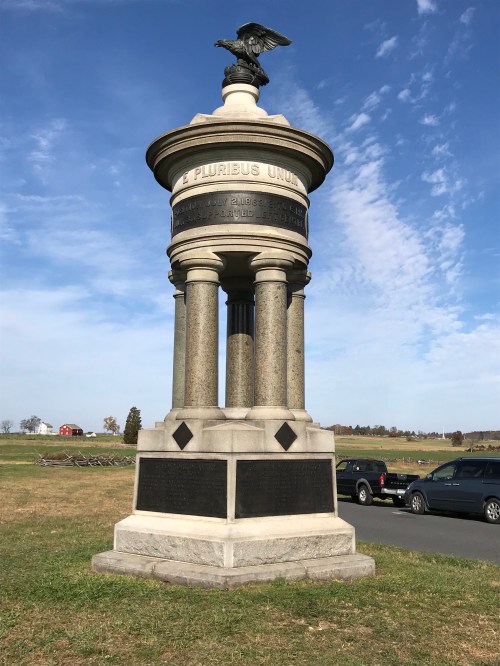
The Excelsior Brigade Monument at Gettysburg

But the continuing controversy which always seemed to swirl around him prevented him from being honored on the battlefield where he lost his leg. Alone of all the Union Corps commanders at Gettysburg Sickles has no memorial on the battlefield. When asked about the lack of a monument, Sickles, in his typical manner is reported to have said that “The whole damned field is my memorial.” [14]Despite the controversy surrounding his life, and those that swirled in the fighting and refighting of the Battle of Gettysburg, in true fashion Dan Sickles went on to further glory and scandal. Ulysses Grant never allowed him to command troops in the field, Sickles commanded the Military Department of South Carolina, the Department of the Carolinas, and the Department of the South, where was a strong proponent of Reconstruction. Teresa died of tuberculosis in 1866

He was retired as a Major General in the Regular Army in 1869 and went on to serve as Minister to Spain where he carried on an affair with the deposed Queen Isabella, a nymphomaniac who long before she ever Sickles had conducted a myriad of high profile affairs. The affair with the former queen was open and offensive to many people, but neither seemed to mind. In a sense they were kindred spirits. A Paris newspaper dubbed the one-legged General “the Yankee King of Spain.” [15]The affair with Isabella eventually burned itself out and Sickles married Senorita Caroline de Creagh, the daughter of a Spanish Minister, who bore him two children. To do this he converted to Roman Catholicism, something that he had never done when Teresa was alive. After his service in Spain was ended Sickles remained in Paris for four years, where he was widely admired and “received the office of Commander of the Legion of Honor.” [16]

Though a Democrat he supported Republican Presidential candidates Ulysses S. Grant and Rutherford Hayes, the latter against a long time Democratic rival from New York. As he got older Gettysburg became an increasing part of his life and in 1892 he ran for Congress in order to spearhead efforts to preserve the battlefield. He was elected and it was in large part due to his efforts that what we now know as the Gettysburg National Military Park exists. In 1893, Sickles met James Longstreet at a Gathering in Gettysburg, and the two men became lifelong friends. Since the war both men had been refighting the battle and the controversies that hung over their decisions that July 2nd like a pall. Longstreet, for his actions on the battlefield, and his decision to become a Republican and serve in the post-war Reconstruction efforts was a pariah in much of the South. That “unpopularity was painful to him, and he was glad to find a sympathetic ally in Sickles. Each of the two generals agreed that the other had moved with blameless skill that day,” [17] and both would defend the other in the succeeding years. As the continuing battle of Gettysburg was fought in the press and in histories written by various participants, Longstreet wrote of Sickles, “I believe it is now conceded that the advanced position at the peach orchard, taken by your Corps and under your orders, saved that battlefield for the Union cause.” [18]

Sickles was awarded the Medal of Honor in 1897, the citation stating, “Displayed most conspicuous gallantry on the field vigorously contesting the advance of the enemy and continuing to encourage his troops after being himself severely wounded.”

Sickles long to outlived George Meade who died in 1872 and all of the other Corps commanders of the Army of the Potomac, not to mention most of his friends and enemies. His father George Sickles died in 1887 leaving Dan an estate of nearly five million dollars. His daughter by Teresa, Laura, whose life had been so scarred by the events of 1859 died alone and estranged from her father. In 1896, disgusted by the nomination of William Jennings Bryant as the Democratic Presidential nominee, the one-legged Sickles went to work with his old Gettysburg comrade, the one-armed Oliver Otis Howard to campaign for the Republican William McKinley. They were quite a pair, the religious Howard, and the libertine Sickles, but they helped McKinley defeat Bryant, and McKinley remained grateful to them until his death by an assassin’s bullet.

In 1913 he attended the fiftieth anniversary ceremonies at Gettysburg where he watched the white haired survivors of Pickett’s Charge hobble across the wide battlefield into the arms of their former opponents on Cemetery Ridge. Helen Longstreet, James Longstreet’s second wife and widow quoted the words of a poet named Horatio King, for the event for a southern newspaper.

I see him on that famous field,

The bravest of the brave,

Where Longstreet’s legions strove to drive

The Third Corps to its grave

The fight was bloody, fierce and long,

And Sickles’ name shall stay

Forever in the hall of fame

As he who saved the day [19]

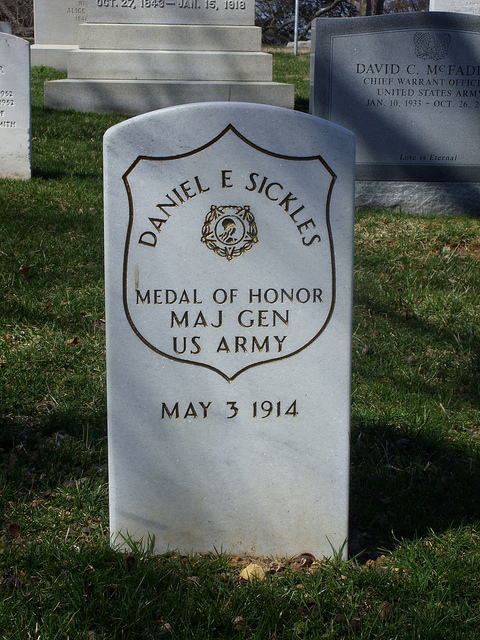
While Helen Longstreet’s claim that Sickles was “forever in the hall of fame” is a tad farfetched, there is no doubt that scoundrel had found redemption. When Sickles died in 1914 at the age of 94, his funeral was held at Saint Patrick’s Cathedral in New York and he was buried at Arlington National Cemetery, with full military honors, his flag-draped casket carried on an artillery caisson accompanied by a rider-less horse and artillery salutes. His funeral, in a military cemetery among other soldiers was “proof that he was no longer an attorney, politician, or even the murderer of Barton Key,” [20] he was a soldier. His tombstone simply reads:

Daniel E. Sickles

Medal of Honor

Maj. Gen. U.S. Army

May 3 1914

sickles grave

The New York Times made a comment that no one, be they an admirer or enemy could deny. “He was a truly adventurous spirit.” [21]

Notes

[1] Ibid. Oeffinger A Soldier’s General p.197

[2] Ibid. Wert General James Longstreet p.279

[3] Ibid. Alexander Fighting for the Confederacy p.278

[4] Ibid. Wert General James Longstreet p.279

[5] Taylor, John M. Duty Faithfully Performed: Robert E Lee and His CriticsBrassey’s, Dulles VA 1999 p.149

[6] Freeman, Douglas S. R.E. Lee volume 3 Charles Scribner’s Sons, New York 1935 p.150

[7] Ibid. Swanberg Sickles the Incredible p.235

[8] Ibid. Trudeau Gettysburg, the Testing of Courage p.421

[9] Robertson, William Glenn The Peach Orchard Revisited: Daniel E. Sickles and the Third Corps on July 2, 1863 in The Second Day at Gettysburg: Essays on Confederate and Union Leadership edited by Gary W. Gallagher, The Kent State University Press, Kent Ohio and London, 1993 p.56

[10] Ibid. Hessler Sickles at Gettysburg p. 244

[11] Ibid. Swanberg Sickles the Incredible p.235

[12] Ibid. Hessler Sickles at Gettysburg p. 401

[13] Ibid. Hessler Sickles at Gettysburg pp.244-245

[14] Ibid. Swanberg Sickles the Incredible p.390

[15] Ibid. Swanberg Sickles the Incredible p.321

[16] Ibid. Keneally American Scoundrel p.339

[17] Ibid. Swanberg Sickles the Incredible p.367

[18] Ibid. Keneally American Scoundrel p.341

[19] Ibid. Keneally American Scoundrel p.353

[20] Ibid. Hessler Sickles at Gettysburg p. 385

[21] Ibid. Swanberg Sickles the Incredible p.390

2 Comments

Filed under civil war, Gettysburg, historic preservation, History, Military

War and Redemption: Dan Sickles Part Five

Friends of Padre Steve’s World,

I am taking a break over the next few days to read and reflect. So I am re-posting some articles from my Gettysburg text dealing with a man that I consider one of the most fascinating , salacious, scandalous, heroic, and incredible figures ever to grace and disgrace American history, Congressman, and Civil War General Daniel E. Sickles.

I hope that you enjoy,

Peace

Padre Steve+

sickles as brigadier


Dan Sickles completed his term in Congress making few speeches and maintaining a relatively low profile, frequently entering and leaving through side entrances. But as tensions rose and secession fever built, Sickles, the longstanding supporter of Southern states rights, who had declined to run for reelection “briefly transformed himself from outcast to firebrand” [1]when secessionist troops opened fire on the transport Star of the West when that ship attempted to deliver supplies to Fort Sumter. Surprising his Southern colleagues he declared the attack on the ship as “naked, unmitigated war,” and declared:

It will never do, sir, for them [the South] to protest against coercion and, at the same moment, seize all the arms and arsenals and forts and navy-yards and ships… when sovereign states by their own deliberate acts, make war, they must not cry peace… When the flag of the Union is insulted, when the fortified place provided for the common defense are assaulted and seized, when the South abandons its Northern friends for English and French alliances, then the loyal and patriotic population of that imperial city [New York] are unanimous for the Union.” [2]

He declared the assault to an act of war, and predicted that “the men of New York would go in untold thousands anywhere to protect the flag of its country and to maintain its legitimate authority.” [3] Sickles’ speech was electrifying and heartened back to his early career and what might have been, and during the remaining days of his term he continued to speak out in the House against the actions of the South and sponsored legislation to bills to suspend postal service with the South and recover the funds in the United States Mint buildings which had been seized by seceding states. He thundered in the presence of Southern friends still serving in the House, “Surely the chivalrous men of the South would scorn to receive the benefit of our postal laws,… “They cannot intend to remain, like Mahomid’s coffin, between heaven and earth, neither in nor out of the Union, getting all the benefits, and subjecting us to all its burdens.” [4]

Shortly thereafter Dan Sickles left Washington to what many thought would be political and possibly personal oblivion, but they underestimated Sickles. Ambition and the desire for redemption still burned in his heart, and shortly after President Lincoln called for 75,000 volunteers to put down the rebellion, Sickles volunteered to help raise and lead the men of the Empire State into battle to restore the Union. As the future commander of a one of the regiments, the French born journalist, Regis De Trobriand, noted “during the lead-up to Sumter, Dan had been among the conciliatory and moderate, “but when the sword was drawn, he was one of the first to throw away the scabbard.” [5]

sickles-brigade

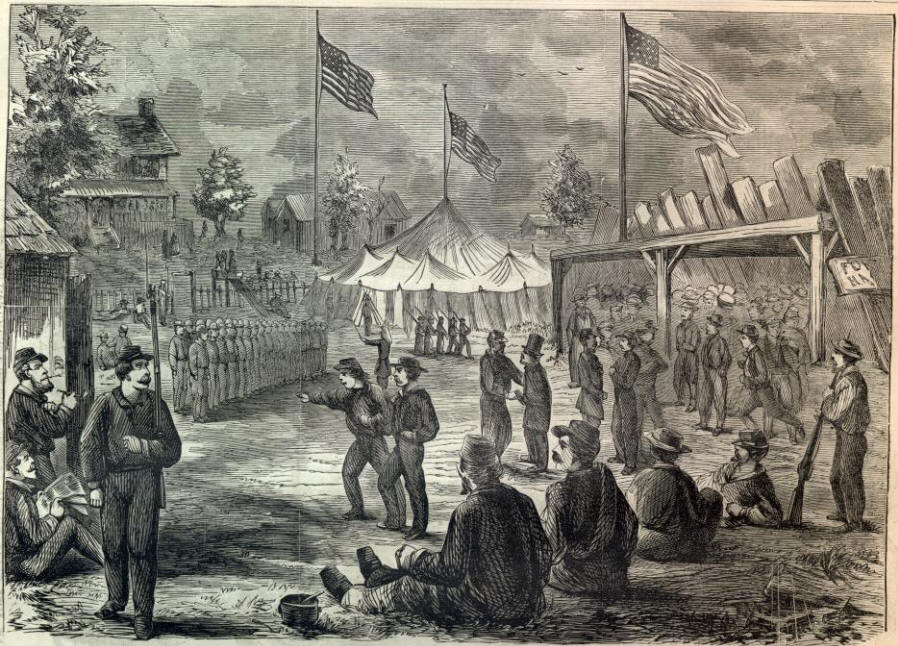
Taking up the challenge to raise a regiment sickles went to work, and “almost overnight, using flag-waving oratory, organizational skills, and promissory notes, he had his regiment, the 70th New York volunteers well in hand.” [6] Soon his authority was expanded to recruit a brigade, which rapidly filled with volunteers, soon over 3,000 men were under his command, and the new brigade, consisting of the 70th, 71st, 72nd, 73rd and 74thNew York Volunteers which Sickles promptly christened the Excelsior Brigade, taking on the Empire State’s motto. However many of the brigade’s volunteers were scorned because of Sickles’ reputation, the brigade’s historian wrote, “no name was too bad for you; one would call you this and another would call you that, and even a person’s own relatives would censure him for joining such a Brigade as that of Daniel E. Sickles.”[7]

Even so, Sickles rapidly captured the hearts of his men. Volunteers were found throughout New York, as well as New Jersey, Ohio, and Pennsylvania, and the men represented the spectrum of White America; men of traditional Anglo-Saxon origin mingled with Irish, Germans, and Dutch. But he was so successful in recruiting that organizers of other regiments, especially in rural New York counties demanded that the Republican governor, Edward Morgan, order Sickles to disband most of the brigade. Believing the action politically motivated, Sickles refused and went directly to Lincoln to get the brigade Federal recognition. At first Lincoln balked at the request, he needed troops but was yet unwilling to get in the way of what he saw as the individual state control of their militias. The result was an impasse as Federal and New York officials argued about the brigade and the status of Sickles himself.

Sickles organizational and leadership skills were tested by the situation, and he went to extraordinary lengths to meet the needs of his soldiers for housing, food and sanitation, “and financed its camp for some time out of his own purse…. At one point he rented a circus tent from P.T. Barnum to house several hundred of his recruits. At another, with several companies or more quartered in a bare hall on lower Broadway, he contracted a cheap bath-house to give fourteen hundred men a shave and shower at ten cents apiece.” [8] To meet the need for cooked meals Sickles’ old friend Captain Wiley “commandeered cooks for the brigade from Delmonico’s, working in inadequate kitchens in side streets, they tried to turn out enough food for the men.” [9] Eventually the brigade was given a campsite on “Staten Island, near Fort Wadsworth, where he and his men could wait until the issue of mustering-in was settled.” [10]

Finally in July of 1861 the Excelsiors were officially mustered in to service as New York Volunteer troops and Sickles commissioned as a Colonel, functioning as the commander of the 70th New York and the de-facto commander of the brigade. Lincoln nominated Sickles for a commission as a Brigadier General of Volunteers but due to pressure from New York officials, still steaming at Sickles for going to Lincoln, and the Senate delated confirmation for months, forcing Lincoln to re-nominate him a second time after which they confirmed him in May 1862, in some measure due to the influence of Sickles former defense attorney, Edwin Stanton who had succeeded Simon Cameron as Secretary of War.

Sickles and his brigade first saw combat at Fair Oaks during the Seven Day’s battle. Sickles acquitted himself well during the fighting, he seemed to be a natural leader of men, who cheered him as he led them into battle. The actions of the Excelsiors and their newly minted Brigadier were praised by the Army commander, George McClellan in a letter to Stanton, “The dashing charge of the Second and Fourth Regiments,…”the cool and steady advance of the Third, occurred under my immediate observation and could not have been surpassed.” [11] A news correspondent attached to the army wrote:

“Gen. Sickles had several narrow escapes; he was always to be found in the thickest of the fight. Had those gifted Senators who refused to confirm his nomination, but witnessed the enthusiasm of his troops when serving under him, and his military qualifications for office, they would do penance until re-elected.” [12]

The success at Fair Oaks was not followed up by McClellan, despite the urging of many officers, including Sickles and Richmond, which many believed could have been taken, remained in Confederate hands. Sickles performance during the Peninsular Campaign won Dan the respect and affection of his soldiers, as well as the respect of his division commander Fighting Joe Hooker. Unlike many other leaders who in their first taste of combat on the Peninsula saw the terrible carnage of battle, the immense numbers of casualties, and the suffering of the troops, Sickles maintained his composure, as others collapsed, “neither the casualties nor the state of the earth daunted Sickles.” [13] Hundreds of his Excelsiors, including his own aid-de-camp were killed or wounded during the campaign, and “the Excelsior Brigade, through steadily reduced by deaths, wounds and illness, had been forged into a body of hard-bitten, battle-wise soldiers educated in the necessities of war and in the tricks of self-preservation.” [14] A member of the brigade wrote, “It is no fable about the men of this Brigade thinking a great deal of the General.” [15]

Following the army’s withdraw from the Peninsula and its return to encampments near Washington D.C. Sickles went back to New York to raise new troops to replace those killed or wounded during the campaign. He also took time to organize efforts to care of the children of the brigade’s soldiers, living and dead who were being taken care of at the Union Home School. Due to this he missed the battles of Second Bull Run and Antietam. His recruiting efforts were successful, even former political enemies were impressed by his service, and his ability to raise and organize troops. His reputation had been so completely rehabilitated by his war service that some of his “old backers in Tammany wanted him to run again for Congress,” [16] but he was opposed by others, like his old friend Sam Butterworth, who had become a “Copperhead,” an anti-war, faction that wanted to end the war and let the South go on its way; “to them, Dan had become a Lincoln man, a crypto-Republican.” [17] the relief of many of his troops he declined the offer to run again. As one of his Chaplains, Joseph Twitchell noted Sickles, “is getting fixed in his new place most successfully and will probably serve himself, as well as the country, better here than in a war of words.” [18]

Sickles-Excelsior-Brigade-Headquarters-City-Hall-Park.-Yorktown

During his recruiting efforts Sickles, now a military, as well as political realist, made many speeches, in which he recognized that conscription was inevitable. Having seen the brutal cost of war and the suffering of his men, Sickles complained of the lack of effort being provided in New York to the war effort. In a speech at the Produce Exchange, he praised the leadership and nerve of President Lincoln, and said, “A man may pass through New York, and unless he is told of it, he would not know that this country is a war…. In God’s name, let the state of New York have it to say hereafter that she furnished her quota for the army without conscription – without resorting to a draft!” [19]

When he returned to the army in November of 1862 his old division commander, Hooker had been promoted to corps command following the relief of George McClellan, and as the senior brigadier was promoted to command of the division. His, division, the Second Division of Third Corps was used in a support role at Fredericksburg and saw little action in that fight and only suffered about 100 casualties. His old friend and defense counsel Thomas Meagher, now commanding the Irish Brigade saw his brigade shattered in the carnage of at Fredericksburg. After Ambrose Burnside who had commanded the army during that fiasco was relieved of command Hooker was appointed by Lincoln as commander of the Army of the Potomac.

One of Hooker’s organizational changes was to establish a Cavalry Corps which was to be commanded by Major General George Stoneman, the commander of Third Corps. This left “Sickles as the corps’ ranking officer.” [20] Sickles was promoted to command the Third Corps by Hooker, who chose Sickles over another volunteer officer, David Birney. Had a professional officer rather than Birney been his competition, “Sickles would have remained division commander.” [21] Sickles was given the corps “on a provisional basis, for his appointment as a major general had not yet been confirmed by the Senate and corps command was definitely a two-star job.”[22]Once again it was political enemies in the Senate, this time Republicans who did not trust the Democrat, who delayed Sickles’ promotion to Major General, but he was finally confirmed on March 9th 1863, with his promotion backdated to November 29th of 1862. “Professionals in the army attributed his rise to his “skill as a political maneuverer.” Few men, however, questioned his personal bravery.” [23]

To be continued…

Notes

[1] Ibid. Hessler Sickles at Gettysburg p.21

[2] Ibid. Hessler Sickles at Gettysburg p.111

[3] Ibid. Keneally American Scoundrel p. 212

[4] Ibid. Keneally American Scoundrel p.214

[5] Ibid. Keneally American Scoundrel p.219

[6] Ibid. Sears Controversies and Commanders p.201

[7] Ibid. Hessler Sickles at Gettysburg p.23

[8] Ibid. Catton Glory Road p. 153

[9] Ibid. Keneally American Scoundrel p.222

[10] Ibid. Keneally American Scoundrel p.222

[11] Ibid. Hessler Sickles at Gettysburg pp.30-31

[12] Ibid. Swanberg Sickles the Incredible p.149

[13] Ibid. Keneally American Scoundrel p.245

[14] Ibid. Swanberg Sickles the Incredible p.153

[15] Ibid. Wert The Sword of Lincoln p.222

[16] Ibid. Hessler Sickles at Gettysburg p.32

[17] Ibid. Keneally American Scoundrel p.245

[18] Ibid. Hessler Sickles at Gettysburg p.32

[19] Ibid. Keneally American Scoundrel p.252

[20] Ibid. Wert The Sword of Lincoln p.223

[21] Ibid. Sears Controversies and Commanders p.206

[22] Ibid. Swanberg Sickles the Incredible p.168

[23] Ibid. Wert The Sword of Lincoln p.223

Leave a comment

Filed under civil war, History, leadership, Military

The Pariah: Dan Sickles Part Four

Friends of Padre Steve’s World,

I am taking a break over the next few days to do some reading and reflection. Thus I am re-posting some articles from my Gettysburg text dealing with a man that I consider one of the most fascinating , salacious, scandalous, heroic, and incredible figures ever to grace and disgrace American history, Congressman, and Civil War General Daniel E. Sickles.

I hope that you enjoy,

Peace

Padre Steve+

dan-sickle-teresa-key


After a brief absence, Sickles returned to Congress and to Teresa, who was now even a worse social pariah than her husband. After the murder and for the duration of the trial, Teresa remained at one of the family homes in the New York countryside under the care of her parents. She followed the trial and occasionally wrote to Dan in jail, and over time he began to write back. Teresa was thrilled with the verdict and she honestly believed that the marriage and her reputation could be rehabilitated, and that she could be restored to a normal wife. The normal family values system of the time would have now involved Sickles divorcing his tarnished wife. That would have been “the predictable and conservative course.” [1] But despite his own continuing excursions into infidelity and his rage over hers, Sickles still loved her, and could not fathom divorcing her. His father George and Teresa’s father Antonio “were stricken with the same delusion as Teresa – that reconciliation would be tolerated by society.” [2]

Had the recently celebrated Congressman done divorced Teresa, his political career, while crippled, might have resumed its previous upward trajectory. But the ever unpredictable Dan Sickles “shocked everyone by forgiving Teresa and resuming their former relationship.” [3]

It was a characteristic of the time, and in some place even today in that maintained the belief that an adulterous wife knew no forgiveness, and Sickles “put himself beyond the pale by the simple act of forgiving his wife and restoring her to his bosom.” [4] Murder could be forgiven, a man’s indiscretions as well, but forgiving an adulterous women, especially a wife and mother was unforgivable. All the better people had already assigned the appropriate scarlet letter to the fallen woman, and they were shocked into paroxysms of moral outrage when Sickles apparently forgave her transgression.” [5] Sickles action was totally “out of kilter with an age that neatly divided women into “saintly mothers,” “pure virgins,” and “fallen women.” [6] Frankly the action was shocking to New York and Washington society, and both Dan and Teresa paid the price, but the price paid by Teresa would be greater, and ultimately contribute to her death, a death that occurred far too early.

Sickles was flailed in the papers, the New York Dispatch noted “His warmest personal and political friends bitterly denounce his course.” While the Sunday Courier wrote, “His political aspirations, his career in life, once so full of encouraging brightness, and his business prospects, have all been blasted by this act.” [7]

The Sunday Mercury put their condemnation published a biting bit of poetry lampooning both Dan and Teresa:

Hail matchless pair! United once again, In newborn bliss forget your bygone pain…

What the world may say, “with hands all red Yon bridegroom steals to a dishonored bed”

And friends, estranged, exclaim on every side: “Behold! Adultery couched with Homicide! [8]

Even long time friends were like James Topham Brady who had defended him at his trial were livid. Interestingly enough it was Sickles old foe Horace Greeley who “flew in the face of convention by commending Sickles for his forgiveness.” [9] But Greeley was an exception, and in the face of the critics sent a letter to the New York Herald in which he fired a broadside:

“Referring to the forgiveness which my sense of duty and my feelings impelled me to extend to an earring and repentant wife… I am prepared to defend what I have done before the only tribunal I recognize as having the slightest claim to jurisdiction over the subject – my own conscience and the bar of Heaven. I am not aware of any statute or code of morals which makes it infamous to forgive a woman… And I cannot allow even all the world combined to dictate to me the repudiation of my wife, when I think it right to forgive her and restore her to my confidence and protection. If I have ever failed to comprehend the utterly desolate position of an offending though penitent woman – the hopeless future, with its dark possibilities of danger, to which she is proscribed as an outcast – I can now see plainly in the in the almost universal howl of denunciation with which she is followed to my threshold…” [10]

Dan Sickles the sinner had struck back at his Pharisaical accusers with the aplomb of Christ himself, who had forgiven the adulteress woman, but it did little to change public perception. Teresa would always be the adulteress, abandoned by friends and scorned by society at large. Dan, who even with the scandal of the Key murder behind him and who would have been forgiven had he denounced and divorced his wife, was now a pariah, even among his peers and colleagues. Mary Boykin Chesnut, wife of a renowned senator, and prolific diarist from South Carolina “sat in the House gallery one day and saw Sickles deliberately, and totally ostracized. He was sitting all alone, like Catiline, every other member careful not to come near him – “left to himself as if he had the smallpox.” [11] When Chesnut asked a friend why he was shunned, the friend noted that the murder of Key “was all right… It was because he condoned his wife’s profligacy and took her back… Unsavory subject.” [12]

But for Teresa it was worse. She was “socially exiled, shunned even by humble neighbors, compelled to keep the house by day or face the sneers and hoots of such street trash as recognized her, cut off from her cherished riding and walking, coped up with a loving but over emotional mother, a penurious, egocentric father, Teresa, torn between grief for the dead, contrition for the living, began to fail…” [13] Despite his defense of her and officially taking her back, he spent little time with her and she never again accompanied him in any of his assignments, in the military, or after the war. But his policy of leaving her behind was not due to cruelty or neglect, as Dan and Teresa were “merely accepting an accomplished social fact, knowing Teresa would forever be an outcast and forever be an outcast and would be exposed to endless snubs and torment were she be so rash as to essay a new entrance into society.” [14] In his own way Dan loved her, but neither could change the attitude of a society where Puritanical morality still reigned, and the granddaughter of Giacomo Casanova’s friend could never be forgiven, and whose relationship with her husband would always be haunted by the ghost of Barton Key. Nothing could change that, and soon Teresa lost the will to live though she was not even twenty-five years old. “Sleepless, she took refuge in opiates….She sank slowly from frailty to invalidism.” [15] She contracted tuberculosis, and though she attempted to maintain her household she suffered from severe depression, and again took up her family’s Catholic faith. Catholic rosaries, missals, holy cards, and other items filled her bedroom. Eventually, she died unexpectedly in January of 1867, with most people thinking that she would yet recover. She was only thirty-one years old. Dan, now serving as military governor in South Carolina was stunned. Her pallbearers include James Topham Brady, and four U.S. Army generals including Sickles former comrade Alfred Pleasanton and his Gettysburg aide Henry Tremain. In death she finally found a measure of public sympathy, the funeral Mass was attended by many mourners, and as Sickles and his now teenage daughter Laura followed Teresa’s casket out of the church, “His feelings now broke forth and he wept, and the large congregation rushed tumultuously from the building after him, testifying to the hold he held on their hearts, and the extent to which they shared his affliction.” [16] In light of the prevailing morality of the day can wonder if most of the mourners had more sympathy for Sickles than his now dead wife. Unlike the adulteress of the Gospels, Teresa Sickles had no one to

Notes

[1] Ibid. Sears Controversies and Commanders p.200

[2] Ibid. Keneally American Scoundrel p.202

[3] Ibid. Wilson and Clair They Also Served p.100

[4] Ibid. Catton Glory Road p.152

[5] Ibid. Sears Controversies and Commanders p.200

[6] Ibid. Pinchon Dan Sickles p.136

[7] Ibid. Swanberg Sickles the Incredible p.72

[8] Ibid. Keneally American Scoundrel p.203

[9] Ibid. Swanberg Sickles the Incredible p.73

[10] Ibid. Swanberg Sickles the Incredible p.74

[11] Ibid. Catton Glory Road p. 152 Catiline was a counsel of Ancient Rome is best known for two attempts to overthrow the Roman Republic in 62 BC. His plot was exposed before the Senate by Cicero and he is famously depicted in Cesare Macari’s painting sitting alone in with his head down as Cicero denounces him before the Senate.

[12] Ibid. Hessler Sickles at Gettysburg p.20

[13] Ibid. Pinchon Dan Sickles p.136

[14] Ibid. Swanberg Sickles the Incredible p.282

[15] Ibid. Pinchon Dan Sickles p.137

[16] Ibid. Keneally American Scoundrel p.329

Leave a comment

Filed under civil war, crime, History, marriage and relationships

Murder in Lafayette Square, Dan Sickles: Part Two

Friends of Padre Steve’s World,

I am taking a break over the next few to read and reflect I am re-posting some articles from my Gettysburg text dealing with a man that I consider one of the most fascinating , salacious, scandalous, heroic, and incredible figures ever to grace and disgrace American history: Congressman, and Civil War General Daniel E. Sickles.

I hope that you enjoy,

Peace

Padre Steve+

philip-barton-key-granger


Within a year of his assignment Sickles returned to the United States to help prepare the Democratic nomination for his friend Buchanan who had long desired the office, and return to his lucrative post in New York. In the spring of 1856 Sickles began to work on Buchanan’s nomination for the Presidency and while doing so began his own campaign for New York’s Third District’s Congressional seat. Buchanan won the election of 1856 against an opposition divided between the Know Nothing candidacy of former President Millard Fillmore and the candidate of the new Republican Party, John C. Fremont.

In the election of 1856, Sickles carried the district easily. For Sickles it was a triumph, he was “riding a flood tide of political fortune that might carry him far,” [1] and like any wife Teresa too was delighted with the result. Even so, Teresa must have wondered if her husband would mend his ways now that he was on the national spotlight, or if he would continue his extramarital romps around the nation’s capital. Following the election Dan and Teresa moved to Washington D.C. where they took up a fashionable residence, the Stockton Mansion, on Lafayette Square, not far from the White House and Sickles friend, James Buchanan.

Once he was established in Washington Sickles was in his element, politics at its grandest. It was a different style than of politics than Tammany, where brass knuckled force often ruled, but it suited Sickles, who was “a fixer who knew all the tricks of Tammany at its crookedest but who seems not to have taken graft himself. He had his sights fixed on the presidency, and he was making about as much progress in that direction as a Tammany man can,” [2]   until a strange combination of unrequited love, infidelity, the personal betrayal of a friend, and a murder intervened.

HarpersMagazineMrs.Sickles

Teresa Sickles

While her husband politicked along the Potomac, the new congressman’s wife was adapting to her life in Washington D.C. The wives were expected to entertain and host parties on a regular basis at their residences, but they also knew their share of loneliness and neglect. Since legislators routinely were “busy with night sessions, committee meetings, and plain nocturnal politicking over whiskey punch, that their wives either accepted other escorts or spent lonely evenings at home with fancywork or a book.” thus it was not surprising that Teresa, “should seek the gayety of the capital in her first year there.” [3] In the absence of their husbands it “was not uncommon for available bachelors to act as escorts for married women when their husbands were unavailable.” [4] Since Dan Sickles was frequently unavailable and since Teresa probably still suspected that Dan was still engaged in extramarital affairs, it is not surprising that the young Mediterranean beauty found comfort in another man.

The years of 1857 and 1858 would be a tumultuous time for the nation as well as the Sickles. Buchanan had been elected because of his stability and moderation in an age of pro and anti-slavery radicalism. However, over the next year his presidency, and his would be overwhelmed by events and Buchanan’s decisions supporting the expansion of slavery. While Sickles was neither a slave owner, nor himself fond of the institution, it was part of life, and many of his friends in Washington D.C. and in Congress were slave holders. Buchanan had schemed before his inauguration with Chief Justice of the Supreme Court Roger Taney in the Dred Scott decision, which was handed down in the days following Buchanan’s inauguration, followed by the fiasco over the Lecompton constitution and the attempted admission of Kansas as a Slave State, an event which split the Democratic party in the 1860 election, ensuring Abraham Lincoln’s defeat of Buchanan’s Lecompton foe in the Senate, Senator Stephen A. Douglas who would have been the prohibitive favorite in the election had the split not occurred.

Likewise, Sickles and his beautiful young wife would become part of one of the most sensational trials of American history, rivaling the Lindbergh kidnapping trial, the trial of O.J. Simpson, the Scopes Monkey Trial, and the Impeachment of President Bill Clinton in its captivation of America. As in London, Teresa became popular and she and Dan were much sought after and their home “became the scene of a gradual number of and entertainments,” [5]and even as Sickles continued his robust politicking and philandering Teresa became the object of another’s affection, the District of Attorney for the District of Columbia, Philip Barton Key, the son Francis Scott key, the writer of the Star Spangled Banner. Interestingly enough it was Sickles who had helped Key the troubled man to be reappointed to his office in early 1857 after Key had helped Sickles overcome legal and financial difficulties to secure Sickles in the Stockton Mansion and the two men developed a warm friendship.

Philip Key was extraordinarily handsome, especially when outfitted in his green and gold militia uniform of the Montgomery Guards, and was considered one of the most desirable men in Washington. An accomplished horsemen he rode about town on his “horse Lucifer – a nobly bred, dapple gray hunter.”[6] When he gained Sickles’ friendship many of his well to do political and society friends became frequent visitors to the Sickles household. After Sickles had helped Key to be reappointed to his office, Key was instrumental in helping make the arrangements for Sickles to rent the Stockton Mansion.

During his first term in office Key was not known for being a particularly good District Attorney and spent much time away from the office complaining about his allegedly poor health. But his health did not keep him away from Washington’s party scene and “One hostess called him “the handsomest man in all Washington… he was a prominent figure at all the principle functions; a graceful dancer, her was a favorite of every hostess of the day.” [7] When he met Teresa, the dashing bachelor took an intense interest in the wife of the man who had helped him retain his job. The two were soon attending many functions together that Sickles, due to his work schedule could seldom attend.

Within weeks Key became a frequent guest at the Sickles home and few were surprised at this, as most observers knew that Sickles was responsible for Key’s reappointment. With Sickles now fully engaged in the dramatic political battles of late 1857, Teresa and Key began to spend much more time together. The two were seen together at the “theater, at teas, at hops. But most of all they went riding together.” [8] The frequency of these visits was noted and became the source of much gossip but Sickles was unaware of it and entertained no suspicions that his new friend was becoming deeply involved with his wife, and that Key had rented a room where the two could intimate.

That was until a young man equally smitten by Teresa had a few drinks with a colleague and the colleague shared the information with a loyal Sickles ally who then told Sickles. Sickles was shocked and called for a meeting with Key, however, after a brief conversation, Key convinced Sickles that there was nothing to the rumors, and Sickles was satisfied.

Though Sickles had been satisfied by the explanation, “despite his own well-publicized moral lapses, Daniel Sickles was a man of intense personal pride who would not countenance the breath of scandal attaching to his wife.” [9] He took the time to warn her to make sure that she was not involved in any other indiscretions, and left the subject. However, Key and Teresa continued to see each other, and “she and Barton thought that they were taking more care, and being less observed by people than they were.” [10] Yet as they pursued one another their affair became increasingly public, and seen by too many people not to go unnoticed. The two were seen together in at the Congressional Cemetery, and frequently at a house at “385 15th Street where he would enter the by the front door – and she the back.” [11] When a mutual friend expressed his concerns, Key shrugged off the warning, and “with the bravado of a proud weakling, he still held his course. And Teresa, ductile, enamored, blindly followed his lead.” [12] Another friend of Key suggested to him that he could be in danger, but Key “bridled and patted the breast of his coat. “I am prepared for any emergency,” he snapped. Key was a crack pistol shot and his friend believed that Key was preparing for a possible confrontation. [13]

Like so many people young spouses who find their needs unfulfilled at home, and who suspect their spouse of infidelity, , “Teresa did not see this love affair as tragic and dangerous. She lived within it as a secret fantasy, as in a virtual and time-consuming experience that lacked any power to inflict damage on other areas of her life.” [14] She became less discreet, Key would signal to her from across the street to confirm their dalliances and despite their insipidly inept attempt to hide the affair it became clear to Sickles’ coachman and household maids that the two were engaged in sexual encounters in the Sickles carriage and in the Stockton Mansion itself.

The situation finally came to a head in February 1859 following Sickles reelection and return to Washington. “Made more reckless than ever by their recent separation, Barton and Teresa now again were seen everywhere together.” [15] The couple were now making clandestine liaisons on a nearly daily basis, and eventually, one of the observers decided to tell Sickles. The anonymous source, using the initials of R.P.G. sent Sickles a letter detailing the affair. Sickles received the letter from a butler on the night of Thursday February 24th as he was leaving the usual dinner party at his house for the traditional hop that followed at the Willard Hotel.

Sickles did not read the letter until after the couple returned home and Teresa had gone to bed. Sickles was stunned and at first did not believe the contents as he placed little stock in anonymous messages. So he had George Wooldridge, a longtime friend and congressional clerk investigate, and on Saturday February 26th Wooldridge confirmed Sickles worst fears. That evening at their home Sickles confronted Teresa about the letter and as he stormed about angrily in their bedroom she confessed, after which Sickles had her write out her confession detailing everything. He may have been desolate and angry, but he was a lawyer, and he got his written proof.

But scandal was the last thing that Sickles wanted, as he had higher aspirations in politics, so he immediately called his friends for counsel and by Sunday morning several, including Wooldridge and Samuel Butterworth were at the Stockton Mansion with Sickles. As always, Sickles’ “first thoughts were for himself, and he melodramatically”[16] exclaimed to Butterworth, “I am a dishonored and ruined man…I cannot look you in the face.” [17]

4P8V9475

Murder

His friends “were profoundly touched by the depth of his feeling, and were convinced that he needed to be saved from a severe derangement of his senses; from lunacy, that is.” [18] his friends attempts to calm him, Sickles was beside himself with anger, and his anger now swirled around his marriage and what he believed was the scandal that would cost hi his career. That afternoon, Key again tempted fate, this time, for the last time. He had been tipped off by an anonymous letter that the affair was public, but he was determined to see Teresa. He made several passes by the house, each time signaling with a handkerchief, until Sickles observed him. Sickles called out to Butterworth “That villain has just passed my house! My God, this is horrible!” [19]

Butterworth left the house first and met Key at the southeast corner of Lafayette Square across from the White House. Allegedly not knowing Sickles intended any harm, Butterworth walked with Key to for a few minutes and then left. The exchange delayed Key and gave Sickles, who had armed himself with a single shot large caliber Derringer, and a muzzle-loading Colt revolver, enough time to catch up with Key near the Club House on Madison on the east side of the square. Sickles was raving but Dan’s fury transcended reality,” [20] as at least a dozen witnesses were nearby as he screamed, “Key, you scoundrel, … you have dishonored my bed – and you must die!” [21] Sickles pulled out the revolver, the first shot from which grazed Key, and the second which misfired. A brief scuffle ensued as Key lunged at his assailant, but Sickles flung him to the ground, and drew the Derringer as Key threw the opera glasses that he viewed Teresa at Dan. A third shot hit Key in the groin and he slumped to the ground screaming “Murder! Murder!… Don’t shoot!” [22]

If there was a chance for Sickles to prove that he acted in self-defense it was now, but he could not control himself. He fired the revolver yet again and it misfired. He placed the weapon in his pocket and drew the Derringer, and fired a shot which hit Key in the Liver. As Key writhed on the ground Sickles tossed the Derringer to the ground and he again drew the Colt. As the stunned witnesses to the attack looked on, Sickles advanced toward the fallen Key and placed the gun at his head and pulled the trigger, but again the weapon misfired. As Sickles attempted to place another cap in the pistol, a number of witnesses began to intervene. One man, “a member of the club, running up, stopped him. Mr. sickles – for God’s sake!” And Butterworth, coming forward, took Dan by the arm. Without a word, they walked away together.” [23] Witnesses took the mortally wounded Key away to the Club, where he expired.

President Buchanan was almost immediately told of the murder by a White House page boy, was aware of the implications of the scandal, Sickles was a friend and political ally with much promise. Buchanan told the boy leave town and gave him a sum of money to facilitate his departure. Soon after Sickles and Butterworth went by carriage “to the home of Attorney General Black, where the Congressman formally surrenders himself to the silver-haired Cabinet member who had regarded him as a protégé.” [24]He declined bail in favor of a speedy trial, was allowed to go home where he told Teresa that he had killed her lover, retrieved some personal items and then went to the District jail, “a foul hole, swarming with vermin, destitute of sewage, bath, water, ventilation, and so inadequate to its purpose that often a dozen or more prisoners were herded into a single narrow cell.” [25] When he arrived he reportedly asked the jailer if they were the best accommodations available, to which the jailer responded “this is the best place you members of Congress have afforded us.” [26] Dejected, but undeterred Sickles sent a message to the public, “In doing what I had to do I have broken the law. Therefore I place myself behind bars. It is for you to set me free.” [27] The stage was now set for the one of the most unbelievable and storied trials in American history.

Notes

[1] Ibid. Swanberg Sickles the Incredible p.4

[2] Ibid. Catton The Army of the Potomac: Glory Road p.151

[3] Ibid. Swanberg Sickles the Incredible p.15

[4] Ibid. Hessler Sickles at Gettysburg p.8

[5] Ibid. Swanberg Sickles the Incredible p.16

[6] Ibid. Pinchon Dan Sickles p.74

[7] Ibid. Hessler Sickles at Gettysburg p.9

[8] ibid. Swanberg Sickles the Incredible p.20

[9] Ibid. Swanberg Sickles the Incredible p.25

[10] Ibid. Keneally American Scoundrel p.92

[11] Ibid. Wilson and Clair They Also Served p.99

[12] Ibid. Pinchon Dan Sickles p.94

[13] Ibid. Swanberg Sickles the Incredible p.44

[14] Ibid. Keneally American Scoundrel p.92

[15] Ibid. Pinchon Dan Sickles p.93

[16] Ibid. Hessler Sickles at Gettysburg p.10

[17] Ibid. Swanberg Sickles the Incredible p.53

[18] Ibid Keneally American Scoundrel p.121

[19] Ibid. Hessler Sickles at Gettysburg p.10

[20] Ibid. Keneally American Scoundrel p.127

[21] Ibid. Swanberg Sickles the Incredible p.54

[22] Ibid. Hessler Sickles at Gettysburg p.11

[23] Ibid. Pinchon Dan Sickles p.112

[24] Ibid. Swanberg Sickles the Incredible p.55

[25] Ibid. Pinchon Dan Sickles p.114

[26] Ibid. Keneally American Scoundrel p.135

[27] Ibid. Swanberg Sickles the Incredible p.114

1 Comment

Filed under civil war, crime, History, laws and legislation

Dan Sickles, the Incredible Scoundrel and Patriot: Part One

Friends of Padre Steve’s World,

I am taking a break over the next week or so to catch up on some reading and reflection, and I am re-posting some articles from my Gettysburg text.  These deal with a man that I consider one of the most fascinating , salacious, scandalous, heroic, and incredible figures ever to grace and disgrace American history, Congressman, and Civil War General Daniel E. Sickles.

I hope that you enjoy,

Peace

Padre Steve+


6517740_orig


George Meade had made his dispositions on July 2nd 1863 with care, but there was one notable problem, the commander of III Corps, Major General Dan Sickles did not like the position assigned to his corps on the south end of Cemetery Ridge. But before discussing that it is worth chasing the rabbit so to speak and spend some time on the life of a man referred to by one by one biographer as an American Scoundrel and another as Sickles the Incredible. The interesting thing is that lie most complex characters in history that Dan Sickles was both and, “he might have had more faults than virtues, but everything about him was perfectly genuine.” [1] That is one of the reason that he is so fascinating.

Sickles was certainly a scoundrel and at the same time incredible, charming yet terribly vain and often insincere. “He was quick-witted, willful, brash, and ambitious, with pliable moral principles.” [2] But he was also incredibly brilliant, far sighted, patriotic, and civic minded. He was a political general, “flamboyant, impulsive, and brave, some would wonder about his discipline and military judgement.” [3] His notoriety and unpopularity among the West Point trained professional officers in the Army of the Potomac, as well as his tactical decision to move his corps on the afternoon of July 2nd 1863, and his subsequent political machinations ensured that he would be the only corps commander of that army not commemorated with a monument at Gettysburg.

Dan Sickles was one of the most colorful, controversial, and perhaps the most scandalous officer ever to command a corps in the history of the United States Army. While he lacked professional training he had done a fair amount of study of the military arts in his spare time, and he “made up for his lack of military training by acting on the battlefield with reckless courage, and was much admired for it by his men.” [4]

After having served as a brigade and division commander Sickles was promoted to corps command. “Sickles owed his elevation to corps command to the patronage of his friend Joseph Hooker…. And while man of the West Point officer….regarded Sickles military acumen with the greatest skepticism, many in the volunteer ranks were of a different mind. “Sickles is a great favorite in this corps,” asserted Private John Haley of the 17th Maine. “The men worship him. He is every inch a soldier and looking like a game cock. No one questions his bravery or patriotism.” [5] General Alpheus Williams who commanded a division in the Union Twelfth Corps despised Sickles, and after Chancellorsville Williams wrote “A Sickles’ would beat Napoleon in winning glory not earned,,, He is a hero without a heroic deed! Literally made by scribblers.” [6] Likewise, Sickles, the political general was no favorite of George Gordon Meade.

On July 2nd 1863 Sickles would be responsible for an act that threw George Meade’s defensive plan into chaos, and according to most historians and analysts nearly lost the battle, however, there are some who defend his actions and give him credit for upsetting Lee’s plan of attack. However, the truth lays somewhat in the middle as both observations are correct. Sickles’ decision created a massive controversy in the months following the battle as public hearings in Congress, where Sickles, a former congressman from New York had many friends, as well as enemies, sought a political advantage from a near military disaster.

Sickles was a mercurial, vain and scandal plagued man who “wore notoriety like a cloak” and “whether he was drinking, fighting, wenching or plotting, he was always operating with the throttle wide open.” [7]Sickles was born in New York to George and Susan Marsh Sickles in late 1819, though a number of sources, including Sickles himself cite dates ranging from 1819 through 1825. “There is little reliable information about Sickles’ early days,” [8] and he did not talk much about them, especially after the war, when Gettysburg and the Civil War became his main subjects of conversation. His father, a sixth generation American whose family were early Dutch settlers in Manhattan became wealthy through real estate speculation, “and he passed on to his son a pride in being a congenital Knickerbocker,” charming, witty, and clever, in whom “hardheadedness and impulsiveness were combined.” [9]

The young Sickles was an impetuous child and his father’s wealth ensured that Dan Sickles had “the finest of tutors…. And an unceasing bankroll of funding for lascivious escapades.” [10] To get their son special tutoring to prepare him for college, his parents “arranged for him to live in the scholarly house of the Da Pont family…. It was a household like few others in that hardheaded, mercantile city, at a time when New York had little of the Italian character it would later take on.”[11]The home was a place of learning, culture, and unusual relationships. The head of the house was Lorenzo L. Da Pont, a Professor at Columbia, as well as a practicing attorney. Also living in the home was Da Pont’s father, the ninety-year-old Professor Lorenzo Da Pont, who “had been the librettist for three of Mozart’s operas” [12] and “held the chair of Italian and Columbia University” [13] Additionally, the elder Da Pont’s “adopted daughter Maria and her husband, Antonio Bagioli, a successful composer and music teacher” [14] lived under the same roof.

Maria was only about twenty-years-old when Sickles moved in. By this time she and Bagioli already had a child of their own, a three year old daughter named Teresa, which Sickles would eventually marry. While the elder Da Pont claimed Maria as an adopted daughter, it was “widely believed that she was his “natural child” … from an American liaison conducted when he was near the age of seventy.” [15] This spawned rumors, even at the time of Gettysburg that the young Sickles “and his future mother-in-law had a sexual affair.” [16]

Whether the liaison with Maria Bagioli occurred is a matter of innuendo and conjecture, but it would not be out of character for Sickles, who, to put it mildly, had a wild proclivity for the opposite sex. As a young man he frequented brothels, and as his social and political status increased, he moved from the brothels frequented by the middle class to those which catered to the more socially well to do. One of his affairs was with the a prostitute named Fanny White, a woman who was smart, pretty, and upwardly mobile who ran her own bordello. His affair with Fanny was well publicized, but did not prevent him from being elected to the state legislature in 1847. She and Sickles would continue their relationship for years with her asking nothing more than expensive gifts, and there are inklings that Fanny help to fund Sickles’ early political campaigns. There is also speculation that in 1854 following his marriage, that Fanny spent time with him in London while he was working with James Buchanan and that that he “may have brought Fanny to one of the Queens’s receptions and introducing the prostitute to Her Majesty.” [17] But Fanny eventually moved on to a man older and richer than Sickles. Eventually she retired from her business and married another New York lawyer but died of complications of tuberculosis and possibly syphilis in 1860. Her property at the time of her death was conservatively “estimated at $50,000 to $100,000”[18] a considerable fortune for a woman of her day and age.

While he lived with the Da Pont family, Sickles gained an appreciation for foreign languages, as well as theater and opera. The elder Professor Da Pont was a major part of his academic life and quite possibly in the development of Sickles liberal education and his rather libertine morality. Lorenzo had been a Catholic Priest and theologian in Italy, but like his young American admirer had quite the attraction for women, and was a connoisseur of erotic literature and poetry. His activities resulted in him being expelled from his teaching position in the seminary, after which he became fast friends with a man whose name is synonymous with smooth talking, suave, amorous men, Giacomo Casanova, and in Europe “his affairs with women had been almost as notorious as those of his good friend.” [19] Certainly the elder Lorenzo’s tales “of Casanova, the fabled prince of Priapus, did nothing to quell Dan’s adolescent sexual appetite.” [20]

Noted Civil War and Gettysburg historian Allen Guelzo describes the Sickles in even less flattering terms, “Sickles was from the beginning, a spoiled brat, and he matured from there into a suave, charming, pathological liar, not unlike certain characters in Mozart operas.”[21]

Following the deaths of both the elder and younger Professor Da Pont, Sickles was stricken with grief. At the funeral of the younger Professor Da Pont Sickles “raved and tore up and down the graveyard shrieking,” [22] forcing other mourners to take him away by force. Soon after, Sickles left New York University and began to work in the law office of the very formidable New York lawyer and former U.S. Attorney General, Benjamin F. Butler.

While he was studying for the bar under Butler, he was joined by his father who would also become an attorney. It was under the influence of his father, who was now a wealthy Wall Street investor, and the Democrats of Tammany Hall that the incredibly talented Sickles was groomed for political leadership. Tammany was a rough and tumble world of hardnosed politics, backroom deals, corruption and graft.

He passed the bar in 1843 and soon was making a name for himself in the legal world, and in politics, despite his well-known questionable ethics and morality. His political career began in 1844 when “he wrote a campaign paper for James Polk and became involved in the Tammany Hall political machine.” [23] The ever ambitious Sickles “clambered up the city’s Democratic party ladder, on the way collecting allies and enemies with utter disregard for the consequences, attending the typically unruly Tammany meetings armed with bowie knife and pistol.” [24]

Like many of his fellow New York Democrats he was a proponent of “Manifest Destiny, and the right of the United States to acquire and hold Texas, New Mexico, California, perhaps the isthmus of Central American, and certainly Cuba.” [25] He was also a political ally of many states rights Southern Democrats and “largely opposed anti-slavery legislation.” [26] This was in large part due to the commercial interests of New York, which between banking and commercial shipping interests profited from the South’s slave economy.

He was elected to the New York State legislature in 1847 and his political star continued to rise even as his personal reputation sank among many of his peers. An attorney who knew him described Sickles as “one of the bigger bubbles in the scum of the profession, swollen, and windy, and puffed out with fetid gas.” [27] Sickles rivals any American politician, before or since in his ability to rise even as the slime ran down his body, the term “Teflon”applied to politicians like Presidents Ronald Reagan and Bill Clinton comes to mind when one studies Sickles’ career. New York lawyer and diarist George Templeton Strong wrote, “One might as well try to spoil a rotten egg as to damage Dan’s career.” [28]

But there was no denying that Sickles was a brilliant lawyer, politician, and debater. One observed that Sickles was “a lawyer by intuition – careful in reaching his conclusions, but quick and bold in pushing them.” [29]New York Governor “William Marcy grudgingly said that as a debater Sickles excelled any man of his years, and the astute Henry Raymond declared that as a parliamentary leader he was unsurpassed.” [30] Soon Sickles was a delegate to the 1848 Democratic Convention where he helped nominate Franklin Pierce for his unsuccessful run at the democratic nomination. The convention enabled Sickles to enter the world of national politics making friends with many influential politicians and financiers, including Pierce, the Van Burens, and James Buchanan. On his return to New York he received an appointed as a Major in the New York Militia.

Even as Sickles rose in the tumultuous world of American law and politics, and chased Fanny White he became enamored with the now teenage daughter of Antonio and Maria Bagioli, Miss Teresa Bagioli who though only fifteen was beautiful, wise beyond her years, fluent in French and Italian, devoted to the arts, and entirely besotted by Dan Sickles. Both the parents of Sickles and Teresa opposed the relationship, but both were madly in love, and Teresa was as headstrong as Dan regarding the relationship. Though such a relationship would be considered completely scandalous today, such marriages were not uncommon then, though they were certainly less common in the upper society of New York. Sickles “was enchanted by her” and “courted her with the sensibility of being a friend of her parents and he must have suspected that he loved her with a fated and exclusive love.” [31] When she was just sixteen Teresa quit school and married the thirty-three year-old assemblyman in a civil ceremony officiated by New York Mayor Ambrose Kingsland on September 27th1852. Six months later, the two were married in the Catholic Church by Archbishop John Hughes, in a “gala and largely attended affair.” [32]Just three months after the church wedding their daughter, Laura, was born. Though there can be no doubt that Sickles loved Teresa, and she him, it did not stop him from other extramarital affairs, nor did it take much away from his political machinations at Tammany Hall.

Following the 1852 Democratic convention where he again supported Franklin Pierce, Sickles hard fighting and influence at in the Wigwam of was rewarded with political plum prize of being appointed “corporation counsel of New York City, a post that paid a flattering salary with extra emoluments and also left room for profitable legal work on the side.” [33] His political and social acumen were again demonstrated as he convinced the state legislature, through personal force of will, to enable the New York City Corporation “to go ahead with creating a great central park,”[34] a park that we now know today as Central Park. He also helped push forward a proposal to create New York’s first mass transportation system, that of horse drawn omnibuses.

Later in the year Sickles was appointed as secretary of the American legation to the Court of St. James n London, headed by former Secretary of State James Buchanan. The position paid a pittance of what Sickles was earning in New York, but he realized that the serving overseas in such a position could not but help him on the national political stage. Though Buchanan and Pierce wanted Sickles, the new Secretary of State, the former New York Governor William Marcy refused to sign Sickles’ commission for the post. Eventually, Pierce prevailed and Sickles got the job.

As their baby, Laura, was still very young and sea travel still quite hazardous, Teresa remained at home, and joined her husband in London the following year. However, when she arrived in London, the teenage wife of Dan Sickles charmed Americans and Britons alike. Aided by her multilingual gifts, which “were rare among American diplomats’ wives,” [35] she became a great success and the unmarried Buchanan appointed her as hostess for the legation. She rapidly became a celebrity due to her stunning beauty and charm, and like he had Fanny, Sickles had Teresa introduced to the Queen. Her celebrity status evoked different responses from those that observed her. “One contemporary described Teresa as an Italian beauty, warm, openhearted, and unselfish. Another described her as being “… without shame or brain and [having] a lust for men.” [36] That “lust for men” coupled with the neglect of her husband may well have been the catalyst for the scandal which overwhelmed them in Dan’s congressional career.

It was during his service in London with Buchanan that Sickles became embroiled in one of the most embarrassing diplomatic incidents in American history. The proponents of Manifest Destiny and American expansion had long desired to take Cuba from Spain through diplomacy, or if needed force. Following a failed attempt by American “Filibusters” to seize the island in 1852 which ended in the execution of fifty Americans, including the son of U.S. Attorney General John Crittenden by Spanish authorities, and in 1854 President Franklin Pierce authorized Buchanan to attempt to negotiate the acquisition of Cuba.

Pierce authorized Buchanan to meet with James Mason, the United States Ambassador to France and Pierre Soule, the United States Ambassador to Spain secretly in order to draft “a statement on the future of Cuba and the proposed role of the United States.” [37] Soule dominated the meeting and the statement, which was in large part drafted by Dan Sickles, was highly inflammatory. Despite this the statement was released to the press in defiance of the order to maintain the strictest secrecy and it resulted in a diplomatic disaster for the Pierce Administration.

The document was prepared by Soule and Sickles and endorsed by Buchanan and Mason was known as the Ostend Manifesto, and it “was one of the most truly American, and at the same time most undiplomatic, documents every devised.” [38] The manifesto prepared by Soule and Sickles proclaimed that “Cuba is as necessary to the North American Republic as any of its present members, and that it belongs naturally to the great family of states of which the Union is the Providential Nursery.” [39] The authors of the manifesto also threatened Spain should the Spanish fail to accede to American demands. The authors declared that if the United States “decided its sovereignty depended on acquiring Cuba, and if Spain would not pass on sovereignty in the island to the United States by peaceful means, including sale, then, “by every law, human and Divine, we shall be justified in wresting it from Spain.” [40]

The Ostend Manifesto “sent shivers through the chancelleries of Europe, provoked hurried conversations between the heads of the French and British admiralties.” [41] European diplomats and leaders reacted harshly to the statement and Secretary of State William Marcy who had previously supported the ideas in the document immediately distance himself and official American policy from it and the authors. Marcy then “forced Soule’s resignation by repudiating the whole thing, but the damage was done.” For months the Pierce administration was on the defensive, and was condemned “as the advocate of a policy of “shame and dishonor,” the supporter of a “buccaneering document,” a “highwayman’s plea.” American diplomacy, said the London Times, was given to “the habitual pursuit of dishonorable object by clandestine means.”[42] The incident ended official and unofficial attempts by Americans to obtain Cuba by legal or extralegal means until the Spanish American War in 1898.

To be continued…

Notes

[1] Catton, Bruce The Army of the Potomac: Glory Road Doubleday and Company, Garden City New York, 1952 p.151

[2] Wert, Jeffry D. The Sword of Lincoln: The Army of the Potomac Simon and Schuster, New York and London 2005 p.222

[3] Ibid. Coddington The Gettysburg Campaign a Study in Command p.45

[4] Sears, Stephen W. Chancellorsville Houghton Mifflin Co. Boston and New York 1996 p.65

[5] Ibid. Trudeau Gettysburg a Testing of Courage p.110

[6] Ibid. Sears Gettysburg p.35

[7] Ibid. Catton The Army of the Potomac: Glory Road pp.150-151

[8] Hessler, James A. Sickles at Gettysburg Savas Beatie New York and El Dorado Hills CA, 2009, 2010 p.1

[9] Keneally, Thomas American Scoundrel: The Life of the Notorious Civil War General Dan Sickles Anchor Books, a Division of Random House, New York 2003 p.7

[10] Ibid. Guelzo, Gettysburg The Last Invasion p.243

[11] Ibid. Keneally American Scoundrel p.3

[12] Ibid. Hessler Sickles at Gettysburg p.2

[13] Ibid. Keneally American Scoundrel p.3

[14] Ibid. Hessler Sickles at Gettysburg p.3

[15] Ibid. Keneally American Scoundrel p.4

[16] Ibid. Hessler Sickles at Gettysburg p.3

[17] Ibid. Hessler Sickles at Gettysburg p.6

[18] Ibid. Keneally American Scoundrel p.215

[19] Swanberg, W.A. Sickles the Incredible copyright by the author 1958 and 1984 Stan Clark Military Books, Gettysburg PA 1991 p.79

[20] Ibid. Swanberg Sickles the Incredible p.80

[21] Ibid. Guelzo, Gettysburg The Last Invasion p.243

[22] Ibid. Swanberg Sickles the Incredible p.81

[23] Ibid. Hessler Sickles at Gettysburg p.4

[24] Sears, Stephen W. Controversies and Commanders Mariner Books, Houghton-Mifflin Company, Boston and New York 1999 p.198

[25] Ibid. Keneally American Scoundrel p.12

[26] Ibid. Swanberg Sickles the Incredible p.82

[27] Ibid. Wert The Sword of Lincoln p.222

[28] Ibid. Hessler Sickles at Gettysburg p.4

[29] Ibid. Swanberg Sickles the Incredible p.84

[30] Ibid. Swanberg Sickles the Incredible p.84

[31] Ibid. Keneally American Scoundrel p.21

[32] Wilson Robert and Clair, Carl They Also Served: Wives of Civil War Generals Xlibris Corporation 2006 p.98

[33] Ibid. Swanberg Sickles the Incredible p.88

[34] Ibid. Keneally American Scoundrel p.21

[35] Ibid. Keneally American Scoundrel p.39

[36] Ibid. Wilson and Clair They Also Served p.98

[37] Ibid. Keneally American Scoundrel p.44

[38] Pinchon, Edgcumb Dan Sickles: Hero of Gettysburg and “Yankee King of Spain” Doubleday, Doran and Company Inc. Garden City NY 1945 p.48

[39] Ibid. Potter The Impending Crisis p.190

[40] Ibid. Keneally American Scoundrel p.45

[41] Ibid. Pinchon Dan Sickles p.48

[42] Potter, David M. The Impending Crisis: America before the Civil War 1848-1861 completed and edited by Don E. Fehrenbacher Harper Collins Publishers, New York 1976 p.193

1 Comment

Filed under civil war, ethics, History, leadership

The Clash of the Ironclads: The Battle of Hampton Roads

800px-the_monitor_and_merrimac1

Friends of Padre Steve’s World

Today marks the 156th anniversary of an event which changed naval warfare forever. It was a watershed event which ended the reign of the great wooden ships which plied the oceans of the world under massive fields of canvas sails. 

It took place just a few miles from my office, if it happened today I would certainly be able to watch it from beach any of the beaches were I work at Joint Base Little Creek – Fort Story.  

On that day, two very strange looking ships joined in battle. This is the story of the Battle of Hanpton Roads and the USS Monitor and CSS Virginia. 

Peace

Padre Steve+ 

On the morning of March 8th 1862 the CSS Virginia steamed slowly from her base at Portsmouth Virginia into Hampton Roads at the mouth of the Chesapeake Bay. Awaiting her was a US Navy squadron of wooden warships including the steam Frigate USS Minnesota, the Sloop of War USS Cumberland and Frigate USS Congress and a number of smaller vessels. The Virginia was an armored ram built from the salvaged remains of the large steam frigate USS Merrimack which had been burned at Gosport (Now Norfolk) Naval Shipyard. Her plans had been leaked to the US Navy which was also in the process of constructing a number of ironclad ships of different types. The first of these ships to be ready was the USS Monitor, a small ship mounting a single heavily armored turret mounting two powerful 11” Dalghren smoothbore guns was still steaming to Hampton Roads when Virginia came out for battle.

CSSVirginia1862.2.ws

During the ensuing fight of March 8th Virginia rammed and sank Cumberland which though fatally wounded disabled two of Virginia’s 9” in guns. She destroyed Congress by gunfire which burned and blew up and appeared to be in position to destroy Minnesota the following day as that ship had run hard aground. The losses aboard Cumberland and Congress were severe and included the Captain of the Congress and Chaplain John L. Lenhart of Cumberland, the first US Navy Chaplain to die in battle. During the battle Virginia had several men wounded including her Captain Franklin Buchanan.

Cumberland_rammed_by_Merrimac

Due to the coming of darkness and a falling tide the acting commander of Virginia, Lieutenant Catsby Ap Roger Jones her executive officer took her in for the night. During the night Monitor, under the command of Lieutenant John Worden arrived and took up station to defend Minnesota.

603px-Battle_of_Hampton_Roads_Map

The next morning Virginia again ventured out and was intercepted by the Monitor. The ships fought for over three hours, with Monitor using her superior speed and maneuverability to great effect. During the battle Monitor suffered a hit on her small pilothouse near her bow blinding her Captain. Monitor’s executive officer, Lieutenant Dana Greene, the son of Union Brigadier General George Sears Greene, the hero of Culp’s Hill at Gettysburg took command. Neither side suffered much damage but the smokestack of Virginia was pierced in several places affecting her already poor engine performance.  Jones broke off the action and returned to Gosport for repairs and Monitor remained on station.

Secretary of the Navy Gideon Welles wrote after the battle:

“the performance, power, and capabilities of the Monitor, must effect a radical change in naval warfare.”

USSMonitor1862.3.ws

It did. The battle showed the world the vulnerability of wooden warships against the new ironclads. Monitor in particular revolutionized naval warfare and warship construction. Her defining mark was the use of the armored gun turret which over the succeeding decades became the standard manner for large ships guns to be mounted. Turrets like the warships they were mounted upon grew in size and power reaching their apex during the Second World War.

arizon-main-battery2

Both Virginia and Monitor reached less than glorious ends. Virginia had to be destroyed by her crew to prevent her capture just over two months after the battle on May 11th 1862. Monitor survived until January 31st 1862 when she sank during a heavy storm off Cape Hatteras North Carolina with the loss of 16 of her 62 man crew. The remains of two of those men, recovered during the salvage of Monitor’s engines, turret, guns and anchor were interred at Arlington National Cemetery on March 8th 2012. The relics from Monitor and some from Virginia are displayed at the Mariners Museum in Newport News (http://www.marinersmuseum.org )while one of Virginia’s anchors resides on the lawn of the Museum of the Confederacy in Richmond.

Those early ironclads and the brave men who served aboard them revolutionized naval warfare and their work should never be forgotten.

Peace

Padre Steve+

1 Comment

Filed under civil war, History, Military, Navy Ships, US Navy

“With Silent Tongue, the Clenched Teeth, the Steady Eye, the Well Poised Bayonet, They Have Helped Mankind on to this Great Consummation” Black Soldiers in the Civil War

Friends of Padre Steve’s World,

This article is a section of one of my yet unpublished Civil War books in which I spend much time dealing with the importance of emancipation and the role of Black soldiers during the American Civil War. I think it is important to remember as we get ready to close out Black History Month just how important these men are to American history and for the civil rights of all Americans.

Emancipation and the U.S. Military

HD_4USCinfantryDetail.preview

Men of the 4th Regiment of U.S. Colored Troops

The war brought about another change to warfare in America. This was a societal and political change that has shaped American military history, culture and life ever since. The Emancipation Proclamation gave African Americans, both Freedmen and recently freed slaves the opportunity to serve in the Union Army. The change of policy instituted by Lincoln was revolutionary as well as controversial and it had strategic implications for the war effort. There were many doubters in the north whose attitudes towards African Americans were not much different than Southerners, especially among the Copperheads.

Prior to the Emancipation some Union commanders in occupied Confederate territory “had unofficially recruited black soldiers in Kansas and in occupied portions of South Carolina and Louisiana in 1862. But the administration had not sanctioned these activities.” [1] The issue for Lincoln in 1861 and 1862 was the necessity of keeping the Border-Slave Sates of Kentucky, Missouri and Maryland, which had not seceded from the Union. Lincoln repudiated the orders of General John Fremont, in Missouri, and his friend General David Hunter, who commanded the Department of the South regarding emancipation, not because he was in complete disagreement, but because he felt that the officers had overstepped their authority.

Lincoln understood that this might hurt him with the abolitionist wing of the Republican Party. While Lincoln was certainly sympathetic to their cause, he insisted that such decisions were not within the prevue of local commanders, but that any such proclamations had to come from him, as Commander-in-Chief. He told Treasure Secretary Salmon Chase, who supported the measures of Hunter and Fremont, “No commanding general shall do such a thing, upon my responsibility, without consulting me.” [2] Lincoln’s decision to reverse and repudiate the decisions of local commanders infuriated some in his cabinet and in the Congress. But Lincoln remained firm in that conviction due to the need to ensure the cooperation of the Border States the continued loyalty of which were absolutely vital to winning the war, without which no meaningful emancipation would be possible.

However, Lincoln did support the efforts of General Benjamin Butler. Butler commanded the Federal forces at Fort Monroe in Hampton Roads. Butler had been a former pro-slavery Democrat who learned that the Confederates were using slaves to construct fortifications and to support their army on the Peninsula. In May 1862 twenty-three slaves escaped to his lines and their owner, a Confederate Colonel, “demanded the return of his property under the Fugitive Slave Law! With as deadpan expression as possible (given his cocked eye), Butler informed him that since Virginia claimed to have left the Union, the Fugitive Slave Law no longer applied.” [3]Butler then declared that since the escaped slaves had worked for the Confederate Army that they were “contraband of war – enemy property subject to seizure.” [4] It was a solid argument, since Southerners themselves referred to African American slaves as property was subject to seizure. Lincoln and Secretary of War Cameron approved of Butler’s action and “eventually, the Congress passed a confiscation law ending the rights of masters over fugitive slaves used to support Confederate troops.” [5]

Salmon Chase and other strong abolitionists opposed Lincoln vehemently for this, but it would not be long until Lincoln made the decision for full emancipation. This was first accomplished by the Emancipation Proclamation, a military order that only applied to the states that had seceded. However, Lincoln would follow this by pushing for a constitutional amendment to end slavery.   The latter occurred when Congress passed the Thirteenth Amendment was passed in January 1865. This amendment abolished slavery in the United States.

Lincoln had already decided upon emancipation in the spring of 1862, however, following the defeat of McClellan on the Peninsula he decided to postpone announcing it, Secretary of State Seward recommended against it until “until you can give it to the country supported by military success.” Otherwise the world might view it as an incitement for slave insurrections, “as the last measure of an exhausted government, a cry for help…our last shriek, on the retreat.” [6] The wisdom of Seward’s advice was profound, and Lincoln put off the announcement until after the Battle of Antietam.

McClellan, true to form opposed any such policy. When Lincoln visited him after his withdraw from the Peninsula, the defeated but still arrogant General handed Lincoln a memorandum on what McClellan viewed as the “proper conduct of the war.” McClellan advised Lincoln that the war “should not be a war looking to the subjugation of any State in any event…but against armed forces and political organizations. Neither confiscation of property, political executions of persons, the territorial organization of States, or the forcible abolition of slavery should be contemplated for a moment.” [7]

Lincoln was not seeking advice from his recalcitrant commander and put the letter in his pocket and simply told McClellan, “All right.” Interestingly enough just a few months earlier Lincoln would have agreed with McClellan’s views on the conduct of the war. However, with the passage of time and the realization that the Confederacy was fully committed to its independence as well as the continuance and even the expansion of slavery had come to the view that fighting a limited war with limited aims was foolish. He told another Unionist Democrat a few days after McClellan offered his advice that the war could not be fought:

“with elder-stalk squirts, charged with rose water….This government cannot much longer play a game in which it stakes all, and its enemies stake nothing. Those enemies must understand that they cannot experiment for ten years trying to destroy this government, and if they fail still come back into the Union unhurt.”[8]

From Slavery to Soldiering

2nd-colored-light-artillery

Gun Crew of 2nd Colored Light Artillery 

But as the war continued on, consuming vast numbers of lives the attitude of Lincoln and his administration began to change. After a year and a half of war, Lincoln and the closest members of his cabinet were beginning to understand that the “North could not win the war without mobilizing all of its resources and striking against Southern resources used to sustain the Confederate war effort.” [9] Slave labor was essential to the Confederate war effort, not only did slaves still work the plantations, they were impressed into service in war industries as well as in the Confederate Army.

Lieutenant Colonel Arthur Freemantle, a British observer who was with Lee’s army at Gettysburg noted, “in the rear of each regiment were from twenty to thirty negro slaves.” [10] The fact is that the slaves who accompanied the army remained slaves, they were not the mythical thousands of black soldiers who rallied to the Confederate cause, nor were they employees. “Tens of thousands of slaves accompanied their owners to army camps as servants or were impressed into service to construct fortifications and do other work for the Confederate army.” [11] This fact attested to by Colonel William Allan, one of Stonewall Jackson’s staff members who wrote “there were no employees in the Confederate army.” [12] slaves served in a number of capacities to free up white soldiers for combat duties, “from driving wagons to unloading trains and other conveyances. In hospitals they could perform work as nurses and laborers to ease the burdens of patients.” [13] An English-born artilleryman in Lee’s army wrote in 1863 that “in our whole army there must be at least thirty thousand colored servants….” [14] When Lee marched to Gettysburg he did so with somewhere between ten and thirty-thousand slaves in support roles and during the advance into Virginia Confederate troops rounded up and re-enslaved as many blacks as they could, including Freedmen.

istanto001p1

Secretary of War Edwin Stanton

Lincoln’s Secretary of War, Edwin Stanton; who was a passionate believer in the justice of emancipation, was one of the first to grasp the importance of slave labor to the Confederate armies and how emancipation was of decided military necessity. Stanton, “Instantly grasped the military value of the proclamation. Having spent more time than any of his colleagues contemplating the logistical problems facing the army, he understood the tremendous advantage to be gained if the massive workforce of slaves could be transferred from the Confederacy to the Union.” [15]

Lincoln emphasized the “military necessity” of emancipation and “justified the step as a “fit and necessary war measure for suppressing the rebellion.” [16] The process of emancipation now became not only a moral crusade, but now became a key part of national strategy, not just in a military means, but politically, economically and diplomatically as Lincoln “also calculated that making slavery a target of the war would counteract the rising clamor in Britain for recognition of the Confederacy.”  [17]

Lincoln wrote to his future Vice President, Andrew Johnson, then the military governor of occupied Tennessee that “The colored population is the great available and yet unavailed of, force for restoration of the Union.”[18] The idea of simply mollifying the border states was dropped and policy changed that of “depriving the Confederacy of slave labor. Mobilizing that manpower for the Union – as soldiers as well as laborers – was a natural corollary.” [19] Reflecting President Lincoln’s and Stanton’s argument for the military necessity of emancipation, General Henry Halleck wrote to Ulysses Grant:

“the character of the war has very much changed within the past year. There is now no possibility of reconciliation with the rebels… We must conquer the rebels or be conquered by them….Every slave withdrawn from the enemy is the equivalent of a white man put hors de combat.” [20]

54thmassposter

Ulysses Grant concurred with Lincoln’s decision. Grant wrote to in a letter to Lincoln after the assault on Battery Wagner by the 54th Massachusetts, “by arming the negro we have added a powerful ally. They will make good soldiers and taking them from the enemy weakens him in the same proportion as it strengthens us.” [21] William Tecumseh Sherman was supportive but also noted some facts that some radical abolitionists did not understand. He noted in his correspondence that, “The first step in the liberation of the Negro from bondage will be to get him and his family to a place of safety… then to afford him the means of providing for his family,… then gradually use a proportion – greater and greater each year – as sailors and soldiers.” [22] Lincoln wrote after the Emancipation Proclamation that “the emancipation policy, and the use of colored troops, constitute the heaviest blow yet dealt to the rebellion.” [23] The change was a watershed in both American history as well as for the future of the U.S. Military services.

In conjunction with the Emancipation Proclamation Secretary of War Stanton “authorized General Rufus Saxton to “arm, uniform, equip, and receive into the service of the United States such number of volunteers of African descent as you may deem expedient, not exceeding 5,000, and [you] may detail officers to instruct them in military drill, discipline, and duty, and to command them.”  [24] The initial regiments of African Americans were formed by Union commanders in liberated areas of Louisiana and South Carolina, and most were composed of newly freed slaves. Others like the 54th and 55th Massachusetts Volunteer Infantry regiments were raised from free black men in the north. Stanton’s authorization was followed by the Enrollment Act passed by Congress in March of 1863 which established the draft also allowed blacks to serve. By March Stanton was working with state governors to establish more black regiments. The units became known as United States Colored Troops, or U.S.C.T. and were commanded by white officers and organized into the infantry, cavalry and, artillery regiments organized on the model of white regiments. The U.S.C.T. “grew to include seven regiments of cavalry, more than a dozen of artillery, and well over one hundred of infantry.” [25]

Some Union soldiers and officers initially opposed enlisting blacks at all, and some “charged that making soldiers of blacks would be a threat to white supremacy, and hundreds of Billy Yanks wrote home that they would no serve alongside blacks.” [26]  But most common soldiers accepted emancipation, especially those who had served in the South and seen the misery that many slaves endured, one Illinois soldier, stationed who served in the Western Theater of war wrote, “the necessity of emancipation is forced upon us by the inevitable events of the war… and the only road out of this war is by blows aimed at the heart of the Rebellion…. If slavery should be left undisturbed the war would be protracted until the loss of life and national bankruptcy would make peace desirable on any terms.” [27]

Another soldier’s letters home show his conversion from being against emancipation to being fully for it. Corporal Chauncey B. Welton from Ohio wrote to his father after the Emancipation proclamation:

“Father I want you to write and tell me what you think of Lincoln’s proclamation of setting all the negroes free. I can tell you we don’t think much of it hear in the army for we did not enlist to fight for the negro and I can tell you that we never shall or many of us any how[.] no never.”

Following over two years of combat in which he served with Sherman’s army he became a vocal critic of the anti-abolitionist Copperheads in the North, especially former Ohio Governor Clement Vallandigham, as well as a strong proponent of abolition and opponent of slavery. By February 1865 his tone had changed “dear parents let us trust in Him that never forsakes the faithful, and never cease to pray… that soon we may look upon an undivided Country and that Country free free free yes free from that blighting curs[e] Slavery the cause of four years of Bloody warfare.” [28]

Even so racial prejudice in the Union ranks never went away and sometimes was accompanied by violence. It remained a part and parcel of life in and outside of the army, even though many Union soldiers would come to praise the soldierly accomplishments and bravery of African American Soldiers. An officer who had refused a commission to serve with a U.S.C.T. regiment watched as black troops attacked the defenses of Richmond in September 1864:

“The darkies rushed across the open space fronting the work, under a fire which caused them loss, into the abattis… down into the ditch with ladders, up and over the parapet with flying flags, and down among, and on top of, the astonished enemy, who left in utmost haste…. Then and there I decided that ‘the black man could fight’ for his freedom, and that I had made a mistake in not commanding them.” [29] Likewise, “Once the Lincoln administration broke the color barrier of the army, blacks stepped forward in large numbers. Service in the army offered to blacks the opportunity to strike a decisive blow for freedom….” [30]

HD_NgroWarFL640116p264cz.preview

The Defense of Milliken’s Bend 

Emancipation allowed for the formation of regiments of United States Colored Troops (USCT), which were mustered directly into Federal service. In sheer numbers the U.S.C.T. formations soon dwarfed the few state raised Black Regiments.  However, it was the inspiration provided by those first state raised regiments, the heroic accounts of those units reported in Northern newspapers, as well as the unprovoked violence directed against Blacks in the 1863 New York draft riots that helped to provoke “many northerners into a backlash against the consequences of violent racism.” [31]

Despite the hurdles and prejudices that blacks faced even in the North, many African Americans urged others to enlist, self-help mattered more than self-preservation. Henry Gooding, an black sergeant from Massachusetts wrote the editor of the New Bedford Mercury urging fellow blacks to enlist despite the dangers, “As one of the race, I beseech you not to trust a fancied security, laying in your minds, that our condition will be bettered because slavery must die…[If we] allow that slavery will die without the aid of our race to kill it – language cannot depict the indignity, the scorn, and perhaps the violence that will be heaped upon us.” [32]

The valor of the state regiments, as well as the USCT units that managed to get into action was remarkable, especially in regard to the amount of discrimination levied at them by some northerners, including white Northern soldiers, and the very real threat of death that they faced if captured by Confederates. In response to the Emancipation Proclamation and to the formation of African American regiments the Confederate Congress passed measures that would make Union officers who commanded African American troops as war criminals and return any black soldier captured by Confederate forces return to slavery, if those blacks captured in battle were not summarily tortured by their captors or executed as happened at Fort Wagner, Petersburg, and at Fort Pillow.

In late 1862 Major General Nathaniel Banks was in desperate need of soldiers and received permission to form a number of regiments of free blacks. Known as the First, Second and Third Regiments of the Louisiana Native Guards they were primarily composed of former slaves who had escaped to Union lines, as well as some mulattos who were the children of prominent white citizens of the city. During an inspection, the white Colonel of the Guards told another officer:

“Sir, the best blood of Louisiana is in that regiment! Do you see that tall, slim fellow, third file from the right of the second company? One of the ex-governors of the state is his father. That orderly sergeant in the next company is the son of a man who has been six years in the United States Senate. Just beyond him is the grandson of Judge ______ …; and through all the ranks you will find the same state of facts…. Their fathers are disloyal; [but] these black Ishmaels will more than compensate for their treason by fighting in the field.” [33]

In May of 1863 Banks dared to send the First and Third Regiments of “Louisiana Native Home Guard regiments on a series of attacks on Confederate positions at Port Hudson, Louisiana” [34] where they received their baptism of fire. They suffered heavy losses and “of the 1080 men in the ranks, 271 were hit, or one out of every four.” [35] A white Wisconsin soldier commented that the black soldiers “fought like devils,”while a soldier of the 156th New York wrote, “They charged and re-charged and they didn’t know what retreat meant. They lost in their two regiments some four hundred men as near as I can learn. This settles the question about niggers not fighting well. They on the contrary make splendid soldiers and are as good fighting men as we have.” [36] Banks too was caught up in the moment and said of these troops in his after action report: “They answered every expectation…In many respects their conduct was heroic…The severe test to which they were subjected, and the determined manner in which they encountered the enemy, leave upon my mind no doubt of their ultimate success.” [37]

The_Storming_of_Ft_Wagner-lithograph_by_Kurz_and_Allison_1890a

54th Massachusetts at Fort Wagner 

But the most famous African American volunteer regiment was the 54thMassachusetts, commanded by Colonel Robert Gould Shaw, the “North’s showcase black regiment.” [38] Raised in Boston and officered by many men who were the sons of Boston’s blue blood abolitionist elite, the regiment was authorized in March 1863. Since there was still opposition to the formation of units made up of African Americans, Massachusetts Governor John Andrew authorized the formation of the 54th under the command of white officers, a practice that with few exceptions, became standard in the U.S. military until President Truman desegregated the armed forces in 1948. Governor Andrew was determined to ensure that the officers of the 54th were men of “firm antislavery principles…superior to a vulgar contempt for color.”[39]

The 54th Massachusetts first saw action in early June 1863 and at Shaw’s urging were sent into battle against the Confederate positions at Fort Wagner on July 18th 1863. Leading the attack the 54th lost nearly half its men, “including Colonel Shaw with a bullet through his heart. Black soldiers gained Wagner’s parapet and held it for an hour before falling back.” [40]Though they tried to hold on they were pushed back after a stubborn fight to secure a breach in the fort’s defenses. “Sergeant William H Carney staggered back from the fort with wounds in his chest and right arm, but with the regiment’s Stars and Stripes securely in his grasp. “The old flag never touched the ground, boys,” Carney gasped as he collapsed at the first field hospital he could find.” [41] Shaw was buried with his men by the Confederates and when Union commanders asked for the return of his body were told “We have buried him with his niggers,” Shaw’s father quelled a northern effort to recover his son’s body with these words: We hold that a soldier’s most appropriate burial-place is on the field where he has fallen.” [42] As with so many frontal attacks on prepared positions throughout the war, valor alone could not overcome a well dug in enemy. “Negro troops proved that they could stop bullets and shell fragments as good as white men, but that was about all.” [43]

Despite the setback, the regiment went on to further actions where it continued to distinguish itself. The Northern press, particularly abolitionist newspapers brought about a change in the way that many Americans in the North, civilians as well as soldiers, saw blacks. The Atlantic Monthly noted, “Through the cannon smoke of that dark night, the manhood of the colored race shines before many eyes that would not see.”  [44]

55th-mass-at-charleston

55th Massachusetts being welcomed in Charleston SC 

In the African American 55th Massachusetts, which was recruited after the 54th, twenty-one year old Sergeant Isaiah Welch wrote a letter which was published in the Philadelphia Christian Recorder from Folly Island South Carolina:

“I will mention a little about the 55th Massachusetts Regiment. They seem to be in good health at the present and are desirous of making a bold dash upon the enemy. I pray God the time will soon come when we, as soldiers of God, and of our race and country, may face the enemy with boldness. For my part I feel willing to suffer all privations incidental to a Christian and a soldier…. In conclusion, let me say, if I fall in the battle anticipated, remember, I fall in defense of my race and country. Some of my friends thought it very wrong of me in setting aside the work of the Lord to take up arms against the enemy…. I am fully able to answer all questions pertaining to rebels. If taking lives will restore the country to what it once was, then God help me to slay them on every hand.” [45]

Like the 54th Massachusetts, the 55th would see much action. After one particularly sharp engagement in July 1864, in which numerous soldiers had demonstrated exceptional valor under fire the regiment’s commander, Colonel Alfred S. Hartwell “recommended that three of the black sergeants of the 55th be promoted to the rank of 2nd Lieutenant.” But Hartwell’s request was turned down, and a member of the regiment complained, “But the U.S. government has refused so far to must them because God did not make them White…. No other objection is, or can be offered.”[46]

Frederick Douglass, who had two sons serving in the 54th Massachusetts, understood the importance of African Americans taking up arms against those that had enslaved them in order to win their freedom:

“Once let a black man get upon his person the brass letters U.S… let him get an eagle on his button, and a musket on his shoulder and bullets in his pockets, and there is no power on earth which can deny he has won the right to citizenship in the United States.” [47]

Douglass urged African American men to enlist to secure their freedom, even while noting the inequities still prevalent in society and in the military, in which they did not receive the same pay as whites, nor could they become officers. Appealing to duty and reality Douglass noted in a speech in Philadelphia urging black men to volunteer. In it he carefully defined the real differences between the purposes of the Confederacy which was to “nothing more than to make the slavery of the African race universal and perpetual on this continent,” which was “based upon the idea that colored men are an inferior race, who may be enslaved and plundered forever.” [48]
220px-WilliamCarney

Sergeant William Carney 54th Massachusetts, Medal of Honor

But the premier leader of the African Americans of his day, who had himself suffered as a slave, did not stop with that. Douglass understood that winning the war was more important that to what had been the attitude of the Federal government before the war and before emancipation, “Now, what is the attitude of the Washington government towards the colored race? What reasons have we to desire its triumph in the present contest? Mind, I do not ask what was its attitude towards us before the war…. I do not ask you about the dead past. I bring you to the living present.” He noted the advances that had been made in just a few months and appealed to his listeners. “Do not flatter yourselves, my friends, that you are more important to the Government than the Government to you. You stand but as the plank to the ship. This rebellion can be put down without your help. Slavery can be abolished by white men: but liberty so won for the black man, while it may leave him an object of pity, can never make him an object of respect…. Young men of Philadelphia, you are without excuse. The hour has arrived, and your place is in the Union army. Remember that the musket – the United States musket with its bayonet of steel – is better than all the mere parchment guarantees of liberty. In your hands that musket means liberty…” [49]

Other African American units less famous than the illustrious 54thMassachusetts distinguished themselves in action against Confederate forces. Two regiments of newly recruited blacks were encamped at Milliken’s Bend Louisiana when a Confederate brigade attempting to relieve the Vicksburg garrison attacked them. The troops were untrained and ill-armed but held on against a determined enemy:

“Untrained and armed with old muskets, most of the black troops nevertheless fought desperately. With the aid of two gunboats they finally drove off the enemy. For raw troops, wrote Grant, the freedmen “behaved well.” Assistant Secretary of War Dana, still with Grant’s army, spoke with more enthusiasm. “The bravery of the blacks,” he declared, “completely revolutionized the sentiment in the army with regard to the employment of negro troops. I heard prominent officers who had formerly in private had sneered at the idea of negroes fighting express after that as heartily in favor of it.”[50]

The actions of the black units at Milliken’s bend attracted the attention and commendation of Ulysses Grant, who wrote in his cover letter to the after action report, “In this battle most of the troops engaged were Africans, who had little experience in the use of fire-arms. Their conduct is said, however, to have been most gallant, and I doubt not but with good officers that they will make good troops.” [51] They also garnered the attention of the press. Harper’s published an illustrated account of the battle with a “double-page woodcut of the action place a black color bearer in the foreground, flanked by comrades fighting hand-to-hand with Confederates. A brief article called it a “the sharp fight at Milliken’s bend where a small body of black troops with a few whites were attacked by a large force of rebels.” [52] In the South the result was chilling and shocked whites, one woman wrote “It is hard to believe that Southern soldiers – and Texans at that – have been whipped by a mongrel crew of white and black Yankees…. There must be some mistake.” While another woman in Louisiana confided in her diary, “It is terrible to think of such a battle as this, white men and freemen fighting with their slaves, and to be killed by such a hand, the very soul revolts from it, O, may this be the last.” [53]
flporthudsonedml

Louisiana Native Guards at Port Hudson 

By the end of the war over 179,000 African American Soldiers, commanded by 7,000 white officers served in the Union armies. For a number of reasons most of these units were confined to rear area duties or working with logistics and transportation operations. The policies to regulate USCT regiments to supporting tasks in non-combat roles “frustrated many African American soldiers who wanted a chance to prove themselves in battle.” [54] Many of the soldiers and their white officers argued to be let into the fight as they felt that “only by proving themselves in combat could blacks overcome stereotypes of inferiority and prove their “manhood.” [55]Even so in many places in the army the USCT and state regiments made up of blacks were scorned:

“A young officer who left his place in a white regiment to become colonel of a colored regiment was frankly told by a staff officer that “we don’t want any nigger soldiers in the Army of the Potomac,” and his general took him aside to say: “I’m sorry to have you leave my command, and am still more sorry that you are going to serve with Negroes. I think that it is a disgrace to the army to make soldiers of them.” The general added that he felt this way because he was sure that colored soldiers just would not fight.”  [56]

The general of course, was wrong, for “Nothing eradicated the prejudices of white soldiers as effectively as black soldiers performing well under fire. And nothing inspired black soldiers to fight as desperately as the fear that capture meant certain death.” [57]  In the engagements where USCT units were allowed to fight, they did so with varying success most of which was often attributable to the direction of their senior officers and the training that they had received. As with any other unit, well led and well trained regiments performed better than those whose leaders had failed their soldiers. When given the chance they almost always fought well, even when badly commanded. This was true as well when they were thrown into hopeless situations.

One such instance was when Ferrero’s Division, comprised of colored troops were thrown into the Battle of the Crater at Petersburg when “that battle lost beyond all recall.” [58] The troops advanced in good order singing as they went, while their commander, General Ferrero took cover in a dugout and started drinking; but the Confederate defenders had been reinforced and “Unsupported, subjected to a galling fire from batteries on the flanks, and from infantry fire in front and partly on the flank,” a witness write, “they broke up in disorder and fell back into the crater.” [59] Pressed into the carnage of the crater where white troops from the three divisions already savaged by the fighting had taken cover, the “black troops fought with desperation, uncertain of their fate if captured.”[60] In the battle Ferrero’s division lost 1,327 of the approximately 4,000 men who made the attack. [61]

Major General Benjamin Butler railed to his wife in a letter against those who questioned the courage of African American soldiers seeing the gallantry of black troops assaulting the defenses of Petersburg in September 1864: The man who says that the negro will not fight is a coward….His soul is blacker than then dead faces of these dead negroes, upturned to heaven in solemn protest against him and his prejudices.” [62]

In another engagement, the 1864 Battle of Saltville in western Virginia the troops of the 5th USCT Cavalry who had been insulted, taunted, and derided by their fellow white Union soldiers went into action against Confederate troops defending the salt works in that town. The regiment’s commander, Colonel Wade, order his troops to attack. Colonel James Brisbin detailed the attack:

“the Negroes rushed upon the works with a yell and after a desperate struggle carried the line killing and wounding a large number of the enemy and capturing some prisoners…. Out of the four hundred men engaged, one hundred and fourteen men and four officers fell killed or wounded. Of this fight I can only say that men could not have behaved more bravely. I have seen white troops in twenty-seven battles and I never saw any fight better…. On the return of the forces those who had scoffed at the Colored Troops on the march out were silent.” [63]

The response of the Confederate government to Emancipation and African Americans serving as soldiers was immediate and uncompromisingly harsh. “When in the autumn of 1862 General Beauregard referred the question of a captured black soldier to Davis’s latest Secretary of War, James A. Seddon, the later replied “…my decision is that the negro is to be executed as an example.” [64] Davis approved of the summary executions of black prisoners carried out in South Carolina in November 1862, and a month later “on Christmas Eve, Davis issued a general order requiring all former slaves and their officers captured in arms to be delivered up to state officials for trial.” [65] Davis warned that “the army would consider black soldiers as “slaves captured in arms,” and therefore subject to execution.” [66] While the Confederacy never formally carried out the edict, there were numerous occasions where Confederate commanders and soldiers massacred captured African American soldiers.

The Lincoln administration responded to the Confederate threats by sending a note to Davis that threatened reprisals against Confederate troops if black soldiers suffered harm. It “was largely the threat of Union reprisals that thereafter gave African-American soldiers a modicum of humane treatment.” [67] Even so, they and their white officers were often in much more danger than the officers and soldiers of all-white regiments if captured by Confederate forces.

When captured by Confederates, black soldiers and their white officers received no quarter from many Confederate opponents. General Edmund Kirby Smith who held overall command of Confederate forces west of the Mississippi instructed General Richard Taylor to simply execute black soldiers and their white officers: “I hope…that your subordinates who may have been in command of capturing parties may have recognized the propriety of giving no quarter to armed negroes and their officers. In this way we may be relieved from a disagreeable dilemma.” [68] This was not only a local policy, but echoed at the highest levels of the Confederate government. In 1862 the Confederate government issued an order that threatened white officers commanding blacks: “any commissioned officer employed in the drilling, organizing or instructing slaves with their view to armed service in this war…as outlaws” would be “held in close confinement for execution as a felon.” [69] After the assault of the 54th Massachusetts at Fort Wagner a Georgia soldier “reported with satisfaction that the prisoners were “literally shot down while on their knees begging for quarter and mercy.” [70]
fortpillowmassacred

Fort Pillow Massacre 

On April 12th 1864 at Fort Pillow, troops under the command of General Nathan Bedford Forrest massacred the bulk of over 231 Union most of them black as they tried to surrender. While it is fairly clear that Forrest did not order the massacre and even may have attempted to stop it, it was clear that he had lost control of his troops, and “the best evidence indicates that the “massacre”…was a genuine massacre.” [71] Forrest’s soldiers fought with the fury of men possessed by hatred of an enemy that they considered ‘a lesser race’ and slaughtered the Union troops as they either tried to surrender or flee; but while Forrest did not order the massacre, he certainly was not displeased with the result. His subordinate, General James Chalmers told an officer from the gunboat Silver Cloud that he and Forrest had neither ordered the massacre and had tried to stop their soldiers but that “the men of General Forrest’s command had such a hatred toward the armed negro that they could not be restrained from killing the negroes,” and he added, “it was nothing better than we could expect so long as we persisted in arming the negro.” [72] It was a portent of what some of the same men would do to defenseless blacks and whites sympathetic to them as members of the Ku Klux Klan, the White Liners, White League, and Red Shirts, during and after Reconstruction in places like Colfax Louisiana.

Ulysses Grant was infuriated and threatened reprisals against any Confederates conducting such activities, he a later wrote:

“These troops fought bravely, but were overpowered I will leave Forrest in his dispatches to tell what he did with them.

“The river was dyed,” he says, “with the blood of the slaughtered for up to 200 years. The approximate loss was upward of five hundred killed; but few of the officers escaped. My loss was about twenty killed. It is hoped that these facts will demonstrate to the Northern people that negro soldiers cannot cope with Southerners.” Subsequently Forrest made a report in which he left out the part that shocks humanity to read.”  [73]

The bulk of the fanatical hatred of Forrest’s troops was directed at the black soldiers of the 6th U.S. Colored Heavy Artillery, which composed over a third of the garrison. “Of the 262 Negro members of the garrison, only 58 – just over 20 percent – were marched away as prisoners; while of the 295 whites, 168 – just under sixty percent were taken.”  [74] A white survivor of the 13th West Tennessee Cavalry, a Union unit at the fort wrote:

We all threw down our arms and gave tokens of surrender, asking for quarter…but no quarter was given….I saw 4 white men and at least 25 negroes shot while begging for mercy….These were all soldiers. There were also 2 negro women and 3 little children standing within 25 steps of me, when a rebel stepped up to them and said, “Yes, God damn you, you thought you were free, did you?” and shot them all. They all fell but one child, when he knocked it in the head with the breech of his gun.” [75]

A Confederate Sergeant who was at Fort Pillow wrote home a week after the massacre: “the poor deluded negroes would run up to our men, fall upon their knees and with uplifted hands scream for mercy, but were ordered to their feet and shot down.” [76] The captain of the Union gunboat Silver Cloud was allowed by the Confederate to bring his ship to the Fort to evacuate wounded, and to bury the dead was appalled at the sight, he wrote:

“All the buildings around the fort and the tents and huts in the fort had been burned by the rebels, and among the embers of the charred remains of numbers of our soldiers who had suffered terrible death in the flames could be seen. All the wounded who had strength enough to speak agreed that after the fort was taken an indiscriminate slaughter of our troops was carried on by the enemy…. Around on every side horrible testimony to the truth of this statement could be seen, Bodies with gaping wounds,… some with skulls beaten through, others with hideous wounds as if their bowels had been ripped open with bowie-knives, plainly told that little quarter was shown…. Strewn from the fort to the river bank, in the ravines and the hollows, behind logs and under the brush where they had crept for protection from the assassins who pursued them, we found bodies bayoneted, beaten, and shot to death, showing how cold-blooded and persistent was the slaughter…. Of course, when a work is carried by assault there will always be more or less bloodshed, even when all resistance has ceased; but here there were unmistakable evidences of a massacre carried on long after any resistance could have been offered, with a cold-blooded barbarity and perseverance which nothing can palliate.” [77]

The rabidly pro-slavery members of the Confederate press lent their propaganda to cheer the massacre of the captured blacks. John R. Eakin of the Washington (Arkansas) Washington Telegraph, who later became a justice on the Arkansas Supreme Court after Reconstruction, wrote,

“The Slave Soldiers. – Amongst there are stupendous wrongs against humanity, shocking to the moral sense of the world, like Herod’s massacre of the Innocents, or the eve of St. Bartholomew, the crime of Lincoln in seducing our slaves into the ranks of his army will occupy a prominent position….

How should we treat our slaves arrayed under the banners of the invader, and marching to desolate our homes and firesides….

Meanwhile, the problem has been met our soldiers in the heat of battle, where there has been no time for discussion. They have cut the Gordian knot with the sword. They did right….

It follows that we cannot treat negroes in arms as prisoners of war without a destruction of the social system for which we contend. We must be firm, uncompromising and unfaltering. We must claim the full control of all negroes who may fall into our hands, to punish with death, or any other penalty, or remand them to their owners. If the enemy retaliate, we must do likewise; and if the black flag follows, the blood be upon their heads.” [78]

However, when African American Troops were victorious, and even after they had seen their brothers murdered by Confederate troops, that they often treated their Confederate with great kindness. Colonel Brisbin wrote that following Battle of Saltville that “Such of the Colored Soldiers who fell into the hands of the Enemy during the battle were murdered. The Negroes did not retaliate but treated the Rebel wounded with great kindness, carrying them water in their canteens and doing all they could to alleviate the sufferings of those whom the fortunes of war had placed in their hands.” [79]

African American soldiers proved themselves during the war and their efforts paved the way for Lincoln and others to begin considering the full equality of blacks as citizens. If they could fight and die for the country, how could they be denied the right to votes, be elected to office, serve on juries or go to public schools? Under political pressure to end the war during the stalemate before Petersburg and Atlanta in the summer of 1864, Lincoln reacted angrily to Copperheads as well as wavering Republicans on the issue of emancipation:

“But no human power can subdue this rebellion without using the Emancipation lever as I have done.” More than 100,000 black soldiers were fighting for the Union and their efforts were crucial to northern victory. They would not continue fighting if they thought the North intended to betray them….If they stake their lives for us they must be prompted by the strongest motive…the promise of freedom. And the promise being made, must be kept…There have been men who proposed to me to return to slavery the black warriors. “I should be damned in time & in eternity for so doing. The world shall know that I will keep my faith to friends & enemies, come what will.”  [80]

The importance of African Americans cannot be minimized, without them the war could have dragged on much longer or even ended in stalemate, which would have been a Confederate victory. Lincoln wrote about the importance of the African American contribution to the war effort in 1864:

“Any different policy in regard to the colored man, deprives us of his help, and this is more than we can bear. We can not spare the hundred and forty or hundred and fifty thousand now serving us as soldiers, seamen, and laborers. This is not a question of sentiment or taste, but one of physical force which may be measured and estimated as horse-power and Steam-power are measured and estimated. Keep it and you save the Union. Throw it away, and the Union goes with it.” [81]

Despite this, even in the North during and after the war, blacks, including former soldiers faced discrimination, sometimes that of the white men that they served alongside, but more often from those who did not support the war effort. Lincoln wisely took note of this fact, and wrote that after the war:

“there will there will be some black men who can remember that, with silent tongue, the clenched teeth, the steady eye, the well poised bayonet, they have helped  mankind on to this great consummation; while, I fear, there will be some white ones, unable to forget that, with malignant heart, and deceitful speech, they have strove to hinder it.” [82]

swails

Lt Stephen Swails, First African American Officer of 54th Massachusetts 

Those rights would be fought for another century and what began in 1863 with the brave service and sacrifice of these African American soldiers began a process of increased civil rights that is still going on today. It would not be until after the war that some blacks were commissioned as officers in the Army. When Governor John Andrew, the man who had raised the 54th Massachusetts attempted to “issue a state commission to Sergeant Stephen Swails of the 54th…the Bureau of Colored Troops obstinately refused to issue Swails a discharge from his sergeant’s rank, and Swails promotion was held up until after the end of the war. “How can we hope for success to our arms or God’s blessing,” raged the white colonel of the 54th, Edward Hallowell, “while we as a people are so blind to justice?” [83]

The families of the free blacks who volunteered also suffered, especially those who still had families enslaved in Confederate occupied areas or Union States which still allowed slavery. One women in Missouri wrote her husband begging him to come home “I have had nothing but trouble since you left….They abuse me because you went & say they will not take care of our children & do nothing but quarrel with me all the time and beat me scandalously the day before yesterday.”  [84]

However, the Emancipation Proclamation transformed the war, and even jaded White Union soldiers who had been against emancipation and who were deeply prejudiced against blacks began to change their outlook as the armies marched into the South and saw the horrors of slavery, Russell Weigley wrote that Union soldiers: “confronting the scarred bodies and crippled souls of African Americans as they marched into the South experienced a strong motivation to become anti-slavery men…Men do not need to play a role long, furthermore, until the role grows to seem natural and customary to them. That of liberators was sufficiently fulfilling to their pride that soldiers found themselves growing more accustomed to it all the more readily.” [85]

A sergeant of the 19th Michigan who had already lost a stepson in the war wrote to his wife from Georgia before being killed in action during the Atlanta campaign; “the more I learn of the cursed institution of Slavery, the more I feel willing to endure, for its final destruction…. After this war is over, this whole country will undergo a change for the better…. Abolishing slavery will dignify labor; that fact will revolutionize everything…. Let Christians use all their influence to have justice done to the black man.” [86]

But even more importantly for the cause of liberty, the sight of regiments of free African Americans, marching “through the slave states wearing the uniform of the U.S. Army and carrying rifles on their shoulders was perhaps the most revolutionary event of a war turned into revolution.” [87]
battle_of_nashville_kurz__allison

At peak one in eight Union troops were African American, and Black troops made an immense contribution to the Union victory. “Black troops fought on 41 major battlefields and in 449 minor engagements. Sixteen soldiers and seven sailors received Medals of Honor for valor. 37,000 blacks in army uniform gave their lives and untold sailors did, too.” [88] To fully appreciate the measure as to the importance and significance of the numbers of African American troops serving in the Union ranks has to compare that number with the number of active Confederate troops serving toward the end of the war. The approximately 180,000 African Americans serving in Union ranks at the end of the war outnumbered the “aggregate present” in Confederate ranks on January 1st 1865 by over 20,000 men. Of these troops “134,111 were recruited in states that had stars in the Confederate battle flag, and the latter figure in turn was several thousand greater than the total of 135,994 gray-clad soldiers “present for duty” that same day.” [89]

Of the African American soldiers who faced the Confederates in combat, “deep pride was their compensation. Two black patients in an army hospital began a conversation. One of them looked at the stump of an arm he had once had and remarked: “Oh I should like to have it, but I don’t begrudge it.” His ward mate, minus a leg, replied: “Well, ‘twas [lost] in a glorious cause, and if I’d lost my life I should have been satisfied. I knew what I was fighting for.” [90]

22nd-usct-flags

Flags of the 22nd U.S. Colored Troops 

After the war many of the African American soldiers became leaders in the African American community and no less than 130 of these former soldiers held elected office including in the U.S. Congress and various state legislatures. The liberating aspect of “the black military experience radiated from black soldiers and their families into the larger black community, so it spread into white society as well.” [91]  Many abolitionists who had served as officers, and officers who were assigned to the USCT or volunteered to serve with state raised African American regiments became leaders continued to be voices for expanding civil rights in the years following the war.

Following war’s end, the demobilized African American troops became the target of racial discrimination and violence, but even so, “black veterans continued to play a central role in black communities, North and South. The skills and experience black men gained during the war not only propelled many of them into positions of leaders and sustained the prominence of others, but it also shaped the expectations and aspirations of all black people. The achievements and pride engendered by military service helped to make a new world of freedom.” [92]

Sadly, much of the nation has forgotten the efforts of the Free Black Soldiers and Sailors who fought for freedom, but even so their legacy remains in the “contribution of black soldiers to Union victory remained a point of pride in black communities. “They say,” an Alabama planter reported in 1867, “the Yankees never could have whipped the South without the aid of the Negroes.” Well into the twentieth century, black families throughout the United States would recall with pride that their fathers and grandfathers had fought for freedom.” [93]

Notes 

[1] Ibid. McPherson Tried by War: Abraham Lincoln as Commander in Chief

[2] Ibid. Goodwin Team of Rivals p.435

[3] Ibid. McPherson Tried by War p.58

[4] Ibid. McPherson Tried by War p.58

[5] Ibid. Goodwin Team of Rivals p.369

[6] Ibid. McPherson Tried by War p.109

[7] Ibid. Foote, The Civil War, A Narrative Volume Two p.531

[8] Ibid. McPherson. The Battle Cry of Freedom p.503

[9] Ibid. McPherson Drawn With the Sword: Reflections on the American Civil War p.101

[10] Ibid. Guelzo Gettysburg: The Last Invasion p.160

[11] Foner, Eric Forever Free: The Story of Emancipation and Reconstruction Vintage Books a Division of Random House, New York 2005 p.45

[12] Ibid. Guelzo Gettysburg: The Last Invasion p.160

[13] Ibid. Glatthaar General Lee’s Army from Victory to Collapse p.313

[14] Ibid. Guelzo Gettysburg: The Last Invasion p.160

[15] Ibid. Goodwin Team of Rivals p.465

[16] Egnal, Marc Clash of Extremes: The Economic Origins of the Civil War Hill and Wang a division of Farrar, Straus and Giroux New York 2009 p.318

[17] Ibid. Foner Forever Free p.48

[18] Ibid. McPherson Tried by War p.159

[19] Ibid. McPherson Drawn With the Sword p.159

[20] Ibid. McPherson Abraham Lincoln and the Second American Revolution p.35

[21] Ibid. Guelzo Fateful Lightning p.381

[22] Ibid. Dobak Freedom by the Sword: The U.S. Colored Troops, 1862-1867 p.10

[23] Ibid. McPherson Abraham Lincoln and the Second American Revolution p.35

[24] Ibid. Robertson Soldiers Blue and Gray p.31

[25] Ibid. Dobak Freedom by the Sword: The U.S. Colored Troops, 1862-1867 p.11

[26] Ibid. Robertson Soldiers Blue and Gray p.31

[27] Ibid. Gallagher, Gary W. The Union War Harvard University Press, Cambridge MA and London 2011 p.103

[28] Welton, Chauncey B. A Union Soldier’s Changing Views on Emancipationin The Civil War and Reconstruction: A Documentary Collection edited by William Gienapp, W.W. Norton Company, New York and London 2001 pp.242 and 245

[29] Ibid. Robertson Soldiers Blue and Gray p.34

[30] Glatthaar, Joseph T. Black Glory: The African American Role in Union Victory in Why the Confederacy Lost edited by Gabor S. Boritt Oxford University Press, Oxford and New York 1992

[31] Ibid. McPherson. The Battle Cry of Freedom p.686

[32] Ibid. Goldfield America Aflame p.282

[33] Jones, Terry L. The Free Men of Color Go to War in The new York Times Disunion: 106 Articles from the New York Times Opinionator edited by Ted Widmer with Clay Risen and George Kalogerakis, Black Dog and Leventhal Publishers, New York 2013 p.403

[34] Ibid. Guelzo Fateful Lightening p.379

[35] Ibid. Foote The Civil War, A Narrative Volume Two p.398

[36] Ibid. Trudeau Like Men of War p.44

[37] Ibid. Guelzo Fateful Lightening p.379

[38] Ibid. McPherson. The Battle Cry of Freedom p.686

[39] Ibid. McPherson Drawn With the Sword p.101

[40] Ibid. McPherson. The Battle Cry of Freedom p.686

[41] Ibid. Guelzo Fateful Lightening pp. 380-381

[42] Ibid. McPherson. The Battle Cry of Freedom pp.686-687

[43] Ibid. Foote, The Civil War, A Narrative Volume Two p.697

[44] Ibid. McPherson. The Battle Cry of Freedom p.686

[45] Welch, Isaiah H. Letter in the Christian Recorder 24 October 1863 in The Civil War and Reconstruction: A Documentary Collection edited by William E. Gienapp, W.W. Norton and Company, New York and London 2001 pp.225-226

[46] Trudeau, Noah Andre, Like Men of War: Black Troops in the Civil War 1862-1865 Little, Brown and Company, Boston, New York and London, 1998 p.262

[47] Ibid. Guelzo Fateful Lightening p. 381

[48] Douglass, Frederick Philadelphia Speech of July 6th 1863 recorded in the Liberator in The Civil War and Reconstruction: A Documentary Collection edited by William E. Gienapp, W.W. Norton and Company, New York and London 2001 pp.220-221

[49] Ibid. Douglass Philadelphia Speech of July 6th 1863 p.221

[50] Ibid. McPherson. The Battle Cry of Freedom p.634

[51] Ibid. Trudeau Like Men of War: Black Troops in the Civil War 1862-1865p.58

[52] Ibid. Gallagher The Union War p.97

[53] Ibid. Trudeau Like Men of War: Black Troops in the Civil War 1862-1865 p.59

[54] Ibid. Gallagher The Union War p.92

[55] Ibid. McPherson Drawn With the Sword p.89 p.

[56] Catton, Bruce. A Stillness at Appomattox Doubleday and Company Garden City, New York 1953 p.227

[57] Berlin, Ira, Riedy, Joseph P. and Rowland, Leslie S. editors, Freedom’s Soldiers: The Black Military Experience in the Civil War  Cambridge University Press, Cambridge and New York 1998 pp.133-134

[58] Ibid. Catton A Stillness at Appomattox p.249

[59] Foote, Shelby, The Civil War, A Narrative. Volume Three Red River to Appomattox Random House, New York 1974 p.537

[60] Ibid.Wert The Sword of Lincoln: The Army of the Potomac pp.384-385

[61] Ibid. Foote The Civil War, A Narrative Volume Three p.537

[62] Ibid. Robertson Soldiers Blue and Gray p.34

[63] Ibid. Berlin et al, Freedom’s Soldiers: The Black Military Experience in the Civil War  p.135

[64] Ibid. Weigley A Great Civil War p.189

[65] Ibid. McPherson Battle Cry of Freedom p.566

[66] Ibid. Goldfield America Aflame p. 280

[67] Ibid. Weigley A Great Civil War p.188

[68] Ibid. Guelzo Fateful Lightening p. 377

[69] Ibid. Guelzo Fateful Lightening p. 377

[70] Ibid. Goldfield America Aflame p.281

[71] Ibid. Weigley A Great Civil War p.189

[72] Ibid. Dobak Freedom by the Sword: The U.S. Colored Troops, 1862-1867 p.208

[73] Grant, Ulysses S. Preparing for the Campaigns of ’64 in Battles and Leaders of the Civil War Volume IV, Retreat With Honor Edited by Robert Underwood Johnson and Clarence Clough Buel Castle, Secaucus NJ pp.107-108

[74] Ibid. Foote The Civil War, A Narrative Volume Three p.111

[75] Ibid. Guelzo Fateful Lightning p. 378

[76] Ibid. Foote The Civil War, A Narrative Volume Three p.112

[77] Ibid. Dobak Freedom by the Sword: The U.S. Colored Troops, 1862-1867 p.208

[78] Eakin, John R. The Slave Soldiers, June 8, 1864  in Loewen, James W. and Sebesta, Edward H. editors, The Confederate and Neo-Confederate Reader: The “Great Truth” about “The Lost Cause” University of Mississippi Press, Jackson 2010 pp.210 and 212

[79] Ibid. Berlin et al, Freedom’s Soldiers: The Black Military Experience in the Civil War  p.47

[80] Ibid. McPherson Abraham Lincoln and the Second American Revolution p.89

[81] Ibid. Glatthaar Black Glory: The African American Role in Union Victoryp.138

[82] Ibid. McPherson The War that Forged a Nation p. 113

[83] Ibid. Guelzo Fateful Lightning p. 376

[84] Ibid. Goldfield America Aflame p.282

[85] Ibid. Weigley A Great Civil War p.192

[86] Ibid. McPherson For Cause and Comrades p.130

[87] Ibid. Weigley A Great Civil War p.191

[88] Gallagher, Gary, Engle, Stephen, Krick, Robert K. and Glatthaar editors The American Civil War: The Mighty Scourge of War Osprey Publishing, Oxford UK 2003 p.296

[89] Ibid. Foote The Civil War, A Narrative. Volume Three Red River to Appomattox p.756

[90] Ibid. Robertson Soldiers Blue and Gray p.36

[91] Ibid. Berlin et al, Freedom’s Soldiers: The Black Military Experience in the Civil War  p.47

[92] Ibid. Berlin et al. Freedom’s Soldiers: The Black Military Experience in the Civil War pp.49-50

[93] Ibid. Foner Forever Free p.55

1 Comment

Filed under civil rights, civil war, History, Military, Political Commentary