Category Archives: ethics

Learning the Lessons of Authoritarians and their Trickery


Friends of Padre Steve’s World,

It has been a bit under three years  since President Trump took the oath of office as President of the United States. Over that time his actions have been similar to other leaders of history who have gravitated towards authoritarian rule. Today I want to share the words of British military theorist and historian B.H. Liddell-Hart on what happens when authoritarian, or would be authoritarian leaders gain control of a government. His words, from his short, but profound book Why Don’t We Learn from History are worth the considered read for anyone with an open mind who can, despite the proliferation of propaganda can still see clearly. Liddell-Hart wrote:

They soon begin to rid themselves of their chief helpers, “discovering” that those who brought about the new order have suddenly become traitors to it.

They suppress criticism on one pretext or another and punish anyone who mentions facts which, however true, are unfavourable to their policy.

They enlist religion on their side, if possible, or, if its leaders are not compliant, foster a new kind of religion subservient to their ends.

They spend public money lavishly on material works of a striking kind, in compensation for the freedom of spirit and thought of which they have robbed the public.

They manipulate the currency to make the economic position of the state appear better than it is in reality.

They ultimately make war on some other state as a means of diverting attention from internal

It has been a bit under ten months since President Trump took the oath of office as President of the United States. Over that time his actions have been similar to other leaders of history who have gravitated towards authoritarian rule. Today I want to share the words of British military theorist and historian B.H. Liddell-Hart on what happens when authoritarian, or would be authoritarian leaders gain control of a government. His words, from his short, but profound book Why Don’t We Learn from History are worth the considered read for anyone with an open mind who can, despite the proliferation of propaganda can still see clearly. Liddell-Hart wrote:

They soon begin to rid themselves of their chief helpers, “discovering” that those who brought about the new order have suddenly become traitors to it.

They suppress criticism on one pretext or another and punish anyone who mentions facts which, however true, are unfavourable to their policy.

They enlist religion on their side, if possible, or, if its leaders are not compliant, foster a new kind of religion subservient to their ends.

They spend public money lavishly on material works of a striking kind, in compensation for the freedom of spirit and thought of which they have robbed the public.

They manipulate the currency to make the economic position of the state appear better than it is in reality.

They ultimately make war on some other state as a means of diverting attention from internal conditions and allowing discontent to explode outward.

They use the rallying cry of patriotism as a means of riveting the chains of their personal authority more firmly on the people.

They expand the superstructure of the state while undermining its foundations by breeding sycophants at the expense of self-respecting collaborators, by appealing to the popular taste for the grandiose and sensational instead of true values, and by fostering a romantic instead of a realistic view, thus ensuring the ultimate collapse, under their successors if not themselves, of what they have created.

This political confidence trick, itself a familiar string of tricks, has been repeated all down the ages. Yet it rarely fails to take in a fresh generation.

Yes it has been nearly three years since he won election, and one can see President Trump following the script of authoritarian rulers. So many of the things that the British historian and theorist noted are present in the actions, words, and policy of the President and his administration.

The House of Representatives is doing what it can to stop this in it’s impeachment hearings, but for the most part House and Senate Republicans seem not intent on defending the President against his alleged crimes, but the Constitutional process, and rules that they themselves put in place while they had control of the House and Senate during the Obama years. The speaks volumes. When a party objects to the laws of the Founders established in the Constitution, and much more recent laws that they instituted, something is decidedly wrong. Former GOP House Majority Leader John Boehner noted yesterday: “There is no Republican Party, only the Party of Trump.”

If this does not tell the tale to the members of the Trump Cult, then nothing will. Liddell-Hart’s  book is worth the read, now more than ever.

So until tomorrow,

Peace,

Padre Steve+

3 Comments

Filed under ethics, History, national security, News and current events, Political Commentary

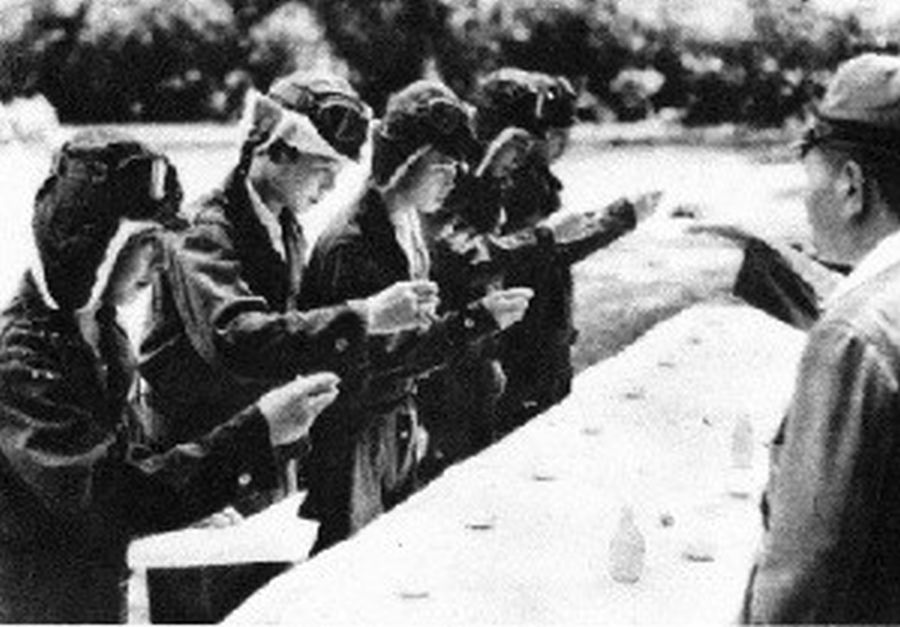
A Senseless and Fanatical Sacrifice: Kamikazes Enter the War at Leyte Gulf


886896

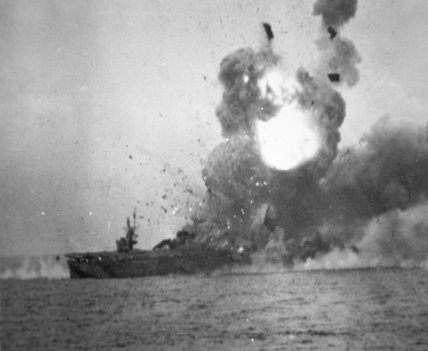
                  USS St Lo exploding after being hit by a Kamikaze

Friends of Padre Steve’s World,

Again I am taking some time off from current events as fast as they are moving, and I am posting edited articles about Battle of Leyte Gulf. The battle was the largest naval battle every fought and harborslessons that redound to our day. This article deals with the first use of Kamikaze aircraft whose pilots would attempt to dive into Allied warships, committing suicide rather than attempting to bomb a ship and return home.

In an age where suicide bombers and attackers do such things it is important to remember that this is not new. The Kamikaze pilots for the most part brainwashed by the Samurai ideology which had been drilled into them since they were children. One who survived because of engine failure and did not get a second chance told the BBC:

“Common sense says you only have one life,” he says, “so why would you want to give it away? Why would you be happy to do that? But at that time everyone I knew, they all wanted to volunteer. We needed to be warriors to stop the invasion from coming. Our minds were set. We had no doubt about it.”

While most Kamikaze pilots hated that ideology, some did not. Regardless, such a mentality is true of many fanatical idealists and terrorists even today. Such men and women span the religious and ideological spectrum. That is the truth, and it is profoundly depressing. Human nature being what it is means that there will be many more like them, the terrorists of September 11th 2001 were little different than the Kamikazes, but instead of the Bushido creed of the Samurai, it was a fanatical belief in Jihad.

Peace

Padre Steve+

In 1944 one of the leading Japanese Naval aviators, Admiral Takijirō Ōnishi wrote:

“In my opinion, there is only one way of assuring that our meager strength will be effective to a maximum degree. That is to organize suicide attack units composed of A6M Zero fighters armed with 250-kilogram bombs, with each plane to crash-dive into an enemy carrier…” 

kamikaze

It was a tactic born of desperation but one that fit in well with the philosophy of Bushido. After the Battle of the Philippine Sea, the “Marianas Turkey Shoot” in June 1944 and the slaughter of land based Japanese Naval and Army air forces based in Formosa in September of that year Japanese leaders began to look to a tactics born of desperation but which fit their Bushido based ethos of sacrifice.

Lt_Yukio_Seki_in_flightgear

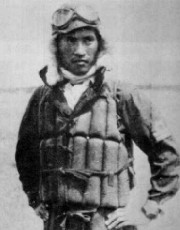
                                                        Lt. Yukio Seki

Suicide attacks were nothing new to the Japanese, but until October 1944 they were tactics decided on by individuals who saw no alternative to the choice. In October 1944 that calculus changed, instead of individuals or isolated units which had no hope of victory conducting suicide attacks, commanders decided to employ suicide attackers as a matter of course.

When the American forces invaded the Philippines Admiral Takijirō Ōnishi was commander of the First Air Fleet based in the Northern Philippines. He was not a fan of Kamikaze tactics and viewed them as heresy. However after the slaughter of the reconstituted Naval Air Force at the Battle of the Philippine Sea he reluctantly changed his mind. I say reluctantly based on his previous views and because after he committed ritual suicide following the Japanese surrender he apologized to the estimated 4000 pilots that he sent to their death and their families.

Admiral_Takijiro_Onishi

                                                Admiral Ōnishi

But in October 1944 with Japan reeling from defeats in the Pacific and its supply route for oil and other raw materials threatened desperation was the order of the day.

The 201st Navy Flying Corps based out of Clark Field near Manila was the major land based Japanese Naval Air Force unit in the Philippines. Among its pilots was a young Naval Officer and Aviator named Lt. Yukio Seki. Seki was a graduate of the Japanese Naval Academy at Eta Jima and was recently married. He was not an ideologue or believer in suicide attacks. When questioned by a reporter before his squadron launched the first Kamikaze attacks he remarked to Masashi Onoda, a War Correspondent :“Japan’s future is bleak if it is forced to kill one of its best pilots. I am not going on this mission for the Emperor or for the Empire… I am going because I was ordered to!”

On October 25th 1944 Seki led his group of 5 A6M2-5 Zero fighters, each carrying a 550 pound bomb took off and attacked the Escort Carriers of Rear Admiral Clifton Sprague’s “Taffy-3.” The five pilots all died in their attacks but two damaged the USS Kalinin Bay and USS Kitkun Bay while two aircraft, one believed to be Seki’s hit the USS St Lo causing mortal damage which sank that ship in less than half an hour with the loss of over 140 sailors.

1st_Kamikaze_Mission_19441025-1

The attacks of Seki’s small squadron were a harbinger of what was to come. Over the next 10 months over 4000 Japanese pilots would die in Kamikaze attacks against US Navy and Allied Naval units. Numbers of ships destroyed or damaged by Kamikazes are debated by some historians believe that 70 US and Allied ships were sunk or damaged beyond repair and close to 300 more damaged. 2525 Imperial Japanese Navy pilots and 1387 Imperial Army pilots died in Kamikaze attacks killing almost 5000 sailors and wounding over 5000 more.

Seki_photo_ma1944-10-20

Another pilot, who did not swallow the propaganda was Lieutenant Ryoji Uehara. He wrote his mother before his final mission:

“Tomorrow, one who believes in democracy will leave this world, he may look lonely but his heart is filled with satisfaction. Fascist Italy and Nazi Germany have been defeated. Authoritarianism is like building a house with broken stones.”

Admiral Ōnishi who made the decision to make Kamikazes a part of Japan’s offensive strategy in 1944 appeared to regret that decision. In his suicide note he urged young Japanese to rebuild the country and seek peace with all people and offered his death a penance for the nearly 4000 pilots he sent to their deaths. Accordingly when he committed ritual suicide (seppuku) he did so alone, with a second to finish the job and died over 15 hours after disemboweling himself.

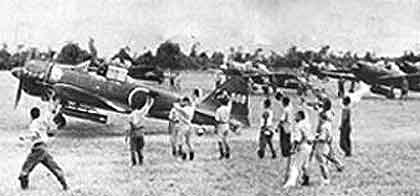
kamikaze-pilots

                                                     A Final Toast

The Kamikaze campaign did not alter the course of the war, but it did introduce a new dimension of terror and misguided sacrifice. Despite the propaganda of the ideologues who urge men and women to undertake suicide missions, there is no honor for those that do so. I do pray that one day war will be no more and that even though I expect war to remain part of our world until longer after my death  that nations, peoples or revolutionary groups will no longer send their best and brightest to certain death.

1 Comment

Filed under culture, ethics, faith, History, Military, Political Commentary, racism, Religion, suicide, World War II at Sea, world war two in the pacific

Of Demagogues and Tyrants: The Declaration, the Constitution, and the Current President


Friends of Padre Steve’s World,

In the Declaration of Independence these words stand out. “A Prince whose character is thus marked by every act which may define a Tyrant, is unfit to be the ruler of a free people.”

I cannot think of an American President who these were more pertinent to, then  Donald Trump. He is the man who Alexander Hamilton warned us in his words and in the Federalist Papers.

“Of those men who have overturned the liberties of republics, the greatest number have begun their career by paying an obsequious court to the people, commencing demagogues and ending tyrants.”

From the beginning of his campaign in 2015 the President has been nothing more than a demagogue, charlatan, and compulsive liar. Additionally, he has shown contempt for the Constitution, the laws, and the institutions of this country in such a myriad of ways it is hard to list them all here; but they include domestic, and foreign affairs which certainly Hamilton and the other Founders believed would eventually happen in our land.

This is all exploding on us now. Those who warned us were derided by Trump’s loyal Army conservative Evangelical Christian supporters, members of White Supremacist groups, and Neo-Nazis; as well as the unofficial, yet official State Propaganda television network, Fox News, and hundreds of right wing television and radio pastors, and other propaganda pundits, many with dubious records of personal and legal conduct.

We are living in a dangerous time. Based on his long history of unfaithfulness to wives, children, employees, investors, and contractors it would be foolish to believe that this President would be faithful to the oath that he took when he was inaugurated as President in 2017.

I am tired and will sign off for the night and continue my series on the Battle of Leyte Gulf tomorrow since I got ahead of myself last night.
So until tomorrow,

Peace,

Padre Steve+

2 Comments

Filed under civil rights, ethics, faith, Foreign Policy, History, laws and legislation, leadership, natural disasters, News and current events, Political Commentary

Conflicted War Criminals: They do not Deserve Monuments


Colonel General Erich Hoepner 
Friends of Padre Steve’s World,

Monuments to soldiers who served their country faithfully and honorably are not a bad thing. At the same time one has to look at the context of their service and if they serve in the high command or in other government postings their service needs to be carefully examined to see if the deserve to be memorialized.

In the United States we have frequently memorialized men whose actions as military and political leaders, while commendable in some aspects leaves much to be desired in terms of long standing memorials.

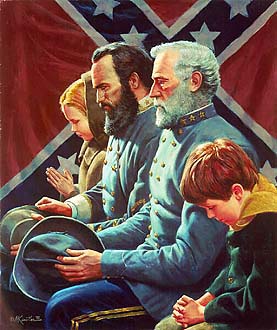
A couple of years ago I had a friend whose family survived the Holocaust ask me where removing memorials to men like Robert E. Lee ends. I replied that it was all about context and the totality of life. We mythologize Robert E. Lee in a manner that his crimes and his flaws are intentionally hidden, though they are many. Since then I have written about Lee, and his crimes against the slaves that his family owned, and his meaningless sacrifice of thousands of Confederate Solders and the destruction of much of the South because he did not have the personal courage to tell Jefferson Davis and the Confederate Congress that the war lost in late 1863 or early 1864. He was the most respected man in the Confederacy and his words word have created an uproar that the Confederacy could not have survived. Instead he is remembered for the myth of his nobility with statues throughout the South and even the former Union States.

I then talked about German General Erich Hoepner who though he had been a part of plots to overthrow Hitler before the war and took part in the plot to overthrow Hitler in 1944 and was executed after a sham trial. The pictures and films of Hoepner being shamed and degraded by the Nazi Chief inquisitor, Judge Roland Freisler, give an impression that General Hoepner was a victim of the Nazi regime.

To some extent Hoepner was a victim of the regime, but while in command of Panzer Group Four during the invasion of the Soviet Union his actions place him in the pantheon of Nazi War Criminals. He fully cooperated with some the most criminal aspects of the Nazi regimes actions. He was a willing accomplice to crimes that stagger the imagination.

In his initial message to his troops Hoepner stated:

The war against Russia is an important chapter in the German nation’s struggle for existence. It is the old battle of the Germanic against the Slavic people, of the defence of European culture against Muscovite-Asiatic inundation and of the repulse of Jewish Bolshevism. The objective of this battle must be the demolition of present-day Russia and must therefore be conducted with unprecedented severity. Every military action must be guided in planning and execution by an iron resolution to exterminate the enemy remorselessly and totally. In particular, no adherents of the contemporary Russian Bolshevik system are to be spared.

Hoepner issued a number of other orders directing how Jews should be treated and the commander of Einsatzgruppe A, SS Brigadier General Walter Stahlecker whose units killed nearly 250,000 Jews between July and December 1941 praised the cooperation of the Wehrmacht and in particular of Hoepner with his execution squads. Stahlecker described the cooperation of the Wehrmacht with his men as “generally very good”, and “in certain cases, as for example, with Panzer Group 4 under the command of General Hoepner, extremely close, one might say even warm.” The fact is that the Einsatzgruppen could not have ran up such massive numbers of deaths without the cooperation of the German Army leaders in Russia.

That leaves us with the question of how does one remember such a military leader? Hoepner demonstrated bravery as a young officer in the First World War, and was prepared to help overthrow Hitler before the war and lost his life in the attempt to kill Hitler on July 20th 1944. But he enabled and participated in war crimes so vast and heinous that they beggar the imagination.

In 1956 a Berlin school was named after Hoepner for his role in the anti-Hitler plot, but in 2008, after his actions in relationship to the Nazi war crimes became public, the school was renamed. Because he perished in the attempt on Hitler’s life, Hoepner was included in the myth of the noble Wehrmacht. But that was a myth, the Wehrmacht was so complicit in the Nazi crimes that it cannot be exculpated from them. It’s leaders for the most part agreed with Nazi racial policies and had no hesitation in cooperating with the SS. Yes, there were exceptions, but they were and forever will remain exceptions, the myth be damned.

So in relation to the American controversy regarding monuments to Confederate leaders, or for that matter to leaders who planned, conducted, or supported our own genocide of Native Americans, the unlawful subjection and conquest of Mexico, the exploitation of territories and peoples gained following the Spanish-American War, those who conducted medical experiments not much different than the Nazi doctors on minorities and the handicapped, and so many other examples which would take too long to list for the purpose of this article: what are we to do?

As I have written before, this is a matter of context and honesty. Honestly I think this is something that we need to address, just as the Germans have since the end of the Second World War. We have to be brutally honest in our assessment of the men and women who we chose to memorialize. If we aren’t we simply bless their crimes and allow their veneration to inspire new generations of racial motivated criminals.

That is where we have to go if we have the moral courage to do so. However, I don’t think that will happen in the next few years, or even in my lifetime, but I can hope and I can act in my own way to bring attention to to them, and hopefully do what I can to keep people of our present time from heading down the same evil path.

So until tomorrow,

Peace

Padre Steve+

Leave a comment

Filed under civil war, ethics, faith, History, holocaust, leadership, Loose thoughts and musings, Military, nazi germany, News and current events, Political Commentary, racism, war crimes, White nationalism, world war two in europe

John Brown: Fanatical Idealist and “Warrior for God”

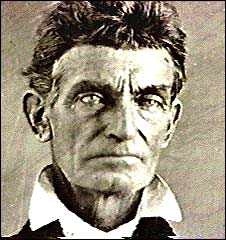
John_brown.JPG

                                                        John Brown

Friends of Padre Steve’s World,

October 16th is the anniversary of John Brown’s attempted seizure of the Federal Armory at Harpers Ferry. He was executed after trial on December 2nd 1859. Brown was  a man who had a righteous cause, but surrendered the moral high ground because of his fanaticism. Justice Robert Jackson wrote:“[I]n our country are evangelists and zealots of many different political, economic and religious persuasions whose fanatical conviction is that all thought is divinely classified into two kinds — that which is their own and that which is false and dangerous.” John Brown was a fanatic who in his desire to achieve his goal was not above committing murder as he did in Kansas, and insurrection as he did at Harper’s Ferry. There are many people in this country who harbor similar beliefs. John Brown serves as a warning to all of us. Violent means in service of a honorable or righteous cause often make things far worse.

This article is part of my draft book Mine Eyes have Seen the Glory: Race, Religion, Ideology and Politics in the Civil War Era. 

Peace

Padre Steve+

In the North there too existed an element of religious fanaticism. While “the restraining hand of churches, political parties and familial concerns bounded other antislavery warriors,” [1] and while most abolitionists tried to remain in the mainstream and work through legislation and moral persuasion to halt the expansion of slavery with the ultimate goal of emancipation; there were fanatical abolitionists that were willing to attempt to ignite the spark which would cause the powder keg of raw hatred and emotion to explode.

Most prominent among these men was John Brown. Brown was a “Connecticut-born abolitionist…a man with the selfless benevolence of the evangelicals wrought into a fiery determination to crush slavery.” [2] His father was an early abolitionist who helped later found Oberlin College. In his early years Brown “formulated a certitude about divine intervention against sinners, starring himself as God’s warrior against slaveholders.” [3] As early as 1834 John Brown was “an ardent sympathizer the Negroes,” desiring to raise a black child in his own home and to “offering guidance to a colony of Negroes on the farm of the wealthy abolitionist Gerrit Smith at North Elba New York.” [4]Brown regarded moderate free Staters with distain and though he was a fanatical Christian he never joined any church, and “obeyed only his conception of God’s unbounded command.” [5]

Brown “ridiculed Republican’s mainstream tactics. He disparaged even Yankee extremists for deploying too non-violent a strategy.” [6] After a series of failed business ventures the militant Brown went to Kansas and set about to change the equation through the use of terror. After the sack of Lawrence, Brown and a company of his marauders set upon and slaughtered the family of a pro-slavery settler at Pottawatomie Creek. [7] Brown and his son’s entered the house of one family, “dragged three men outside, shot the father through the head, and hacked and mutilated his two sons with broadswords.”[8] Two years later Brown went to Missouri where he “murdered a slaveholder, seized eleven slaves, and led the new freedmen 1100 miles to Canadian sanctuary.” [9]

The example of John Brown provides us with a good example to understand religious extremism, especially when it becomes violent. The counterinsurgency field manual notes in words that are certainly as applicable to Brown as they are to current religiously motivated terrorists, that “Religious extremist insurgents….frequently hold an all-encompassing worldview; they are ideologically rigid and uncompromising….  believing themselves to be ideologically pure, violent religious extremists brand those they consider insufficiently orthodox as enemies.”[10] 

Brown was certainly “a religious zealot…but was nevertheless every much the product of his time and place….” [11] Brown was a veteran of the violent battles in Kansas where he had earned the reputation as “the apostle of the sword of Gideon” as he and his men battled pro-slavery settlers. Brown was possessed by a zealous belief that God had appointed him as God’s warrior against slaveholders. He despised the peaceful abolitionists and demanded action. “Brave, unshaken by doubt, willing to shed blood unflinchingly and to die for his cause if necessary, Brown was the perfect man to light the tinder of civil war in America, which was what he intended to do.” [12]

Brown attempted to gain financing from wealthy abolitionists for a new expedition to seize the Federal arsenal at Harper’s Ferry Virginia, and most would have nothing to do with his scheme. When they “touted their pacific antislavery societies, Brown responded that “your methods are perfectly futile; you would not release five slaves in a century; peaceful emancipation is impossible.” [13] After hearing William Lloyd Garrison and other abolitionist leaders plead for peaceful abolition he remarked: “We’ve reached a point,” I said, “where nothing but war can get rid of slavery in this guilty nation. It’s better that a whole generation of men, women, and children should pass away by a violent death than that slavery should continue to exist.” I meant that literally, every word of it.” [14]

Following that meeting, as well as a meeting with Frederick Douglass who rejected Brown’s planned violent action, Brown went about collecting recruits for his cause and set out to seize 10,000 muskets at the Federal armory in Harper’s Ferry, Virginia in order to ignite a slave revolt. Brown and twenty-one followers, sixteen whites and five blacks moved on the arsenal. As they went, Brown:

“believed that we would probably fail at the Ferry, would probably die. But I believed that all we had to do was make the attempt, and Jehovah would do the rest: the Heavens would turn black, the thunder would rend the sky, and a mighty storm would uproot this guilty land, washing its sins away with blood. With God’s help, I, John Brown, would effect a mighty conquest even though it was like the last victory of Samson.” [15] 

After initial success in capturing the armory, Brown’s plan was frustrated and Brown captured by a force of U.S. Marines, led by Colonel Robert E. Lee and Lieutenant J.E.B. Stuart. Brown was tried and hanged, but his raid “effectively severed the country into two opposing parts, making it clear to moderates there who were searching for compromise, that northerner’s tolerance for slavery was wearing thin.” [16]

It now did not matter that Brown was captured, tried, convicted and executed for his raid on Harper’s Ferry. Brown to be sure was “a half-pathetic, half-mad failure, his raid a crazy, senseless exploit to which only his quiet eloquence during trial and execution lent dignity” [17] but his act was the watershed from which the two sides would not be able to recover; the population on both sides having gone too far down the road to disunion to turn back.

Brown had tremendous support among the New England elites, the “names of Howe, Parker, Emerson and Thoreau among his supporters.” [18] To abolitionists he had become a martyr “but to Frederick Douglass and the negroes of Chatham, Ontario, nearly every one of whom had learned something from personal experience on how to gain freedom, Brown was a man of words trying to be a man of deeds, and they would not follow him. They understood him, as Thoreau and Emerson and Parker never did.” [19]

But to Southerners Brown was the symbol of an existential threat to their way of life. In the North there was a nearly religious wave of sympathy for Brown, and the “spectacle of devout Yankee women actually praying for John Brown, not as a sinner but as saint, of respectable thinkers like Thoreau and Emerson and Longfellow glorifying his martyrdom in Biblical language” [20] horrified Southerners, and drove pro-Union Southern moderates into the secession camp. The Richmond Enquirer wrote in its editorial, “The Harper’s Ferry invasion has advanced the cause of Disunion, more than any other event that has happened since the foundation of the Government; it has rallied to that standard men who formerly looked on it with horror; it has revived, with ten fold strength the desire of a Southern Confederacy…” [21]

The day that Brown went to his hanging he wrote his final missive. This was written once more in apocalyptic language, but also in which he portrayed himself as a Christ figure going to his cross on the behalf of a guilty people, but a people whom his blood would not atone:

“It’s now December second – the day of my hanging, the day the gallows become my cross. I’m approaching those gallows while sitting on my coffin in the bed of a military wagon. O dear God, my eyes see the glory in every step of the divine journey that brought me here, to stand on that platform, in that field, before all those soldiers of Virginia. Thank you, Father, for allowing an old man like me such might and soul satisfying rewards. I am ready to join thee now in Paradise…

They can put the halter around my neck, pull the hood over my head. Hanging me won’t save them from God’s wrath! I warned the entire country: I, John Brown, am now quite certain that the crimes of this guilty land will never be purged away, but with blood.” [22]

Brown’s composure and dignity during trial impressed Governor Henry Wise of Virginia who signed Brown’s death warrant as well as that of fire-eater Edmund Ruffin. In his diary Ruffin “praised Brown’s “animal courage” and “complete fearlessness & insensibility to danger and death.” [23]

UBrown’s death was marked with signs of mourning throughout the North, for Brown was now a martyr. Henry David Thoreau “pronounced Brown “a crucified hero,” [24] while through the North, Brown’s death was treated as a martyr’s death. Even abolitionists like William Lloyd Garrison who had condemned violence in the quest of emancipation praised Brown’s actions, while throughout the North:

“Church bells tolled, black bunting was hung out, minute guns were fired, prayer meetings assembled, and memorial resolutions adopted. In the weeks following, the emotional outpouring continued: lithographs of Brown circulated in vast numbers, subscriptions were organized for the support of his family, immense memorial meetings took place in New York, Boston and Philadelphia…” [25]

Future Confederate General Lafayette McLaws spoke for many Southerners in the army when he wrote: His diary entry for February 27th 1860 noted:

“Debates in congress show no mitigation of sec. feeling…. I think it would be better not to be so fanatical on any subject, the extreme pro-slavery man is as bad as that type as that type of anti-slavery, John Brown. I do not consider slavery an evil by any means, but I certainly do not think it the greatest blessing.” [26]

But in the South there was a different understanding of Brown’s assault on Harper’s Ferry. Despite official denunciations of Brown by Abraham Lincoln and other Republican leaders, the message proclaimed by Southern newspapermen, ministers and politicians was that the North could not be trusted.  Brown’s raid, and the reaction of Northerners to it “was seized upon as argument-clinching proof that the North was only awaiting its opportunity to destroy the South by force….” [27]

Of course that was not the feeling in much of the North, but Brown’s actions and words were seized upon by the Southern versions of Brown to make Civil War inevitable once the political balance changed, and they neither controlled the Presidency, House, or Senate.

                                                          Notes 

[1] Ibid. Freehling The Road to Disunion Volume II p.207

[2] Ibid. Guelzo Fateful Lightning p.81

[3] Ibid. Freehling The Road to Disunion Volume II p.207

[4] Ibid. Potter The Impending Crisis p.211

[5] Ibid. Freehling The Road to Disunion Volume II p.207

[6] Ibid. Freehling The Road to Disunion Volume II p.206

[7] Ibid. Potter The Impending Crisis pp.211-212

[8] Ibid. Goldfield America Aflame p.118

[9] Ibid. Freehling The Road to Disunion Volume II p.208

[10] Ibid. U.S. Army/ Marine Counterinsurgency Field Manual p.27

[11] Ibid. Levine Half Slave and Half Free p.197

[12] Ibid. Korda, Clouds of Glory p.xviii

[13] Ibid. Freehling The Road to Disunion Volume II p.208

[14] Ibid. Oates The Approaching Fury p.203

[15] Ibid. Oates The Approaching Fury p.284

[16] Ibid. Korda Clouds of Glory p.xxxix

[17] Ibid. Catton Two Roads to Sumter p.18

[18] Ibid. Potter The Impending Crisis p.381

[19] Ibid. Potter The Impending Crisis p.375

[20] Ibid. Catton Two Roads to Sumter p.187

[21] ___________ The Harper’s Ferry Invasion as Party Capital The Richmond Enquirer, 23 October 1859 in The Civil War and Reconstruction: A Documentary Collection edited by William E. Gienapp, W.W. Norton and Company, New York and London 2001 p.54

[22] Ibid. Oates The Approaching Fury p.290

[23] Ibid. Thomas The Confederate Nation p.3

[24] Ibid. McPherson The Battle Cry of Freedom p.210

[25] Ibid. Potter The Impending Crisis p.378

[26] Oefinger, John C. Editor A Soldier’s General: The Civil War Letters of Major General Lafayette McLaws University of North Carolina Press, Charlotte and London 2002 p.18

[27] Ibid. Guelzo Fateful Lightning p.119

3 Comments

Filed under civil rights, civil war, ethics, faith, History, leadership, Political Commentary, racism, Religion

A Cautionary Tale for Military Leaders that Give Obedience to a Tyrant: the Story of Erwin Rommel, the Legendary Desert Fox


rommel

Friends of Padre Steve’s World,

Just over 75 years ago in Ulm Germany a car pulled up to the residence of Field Marshal Erwin Rommel. In the car was the driver and two Generals dispatched by Hitler.  Rommel was recuperating following being severely wounded in an air attack in Normandy on July 17th 1944.

Rommel had been awarded the Pour le Merite, sometimes known as the Blue Max, Imperial Germany’s highest award for valor in the First World War. He was never an official member of the Nazi Party, but like many Germans he believed Hitler’s promises and propaganda. As Hitler really ose to power he like many others was carried away by early Nazi successes, the bloodless conquests of the Rhineland, Austria, Czechoslovakia, and the spectacle of the Olympics.

He was also an opportunist. With the rise of the Nazis came the expansion of the German military. Rommel was already well known due to his exploits as a platoon and company commander during the First World War in France, Romania, and Italy. In Italy he captured an entire Italian infantry division during the Battle of Mount Cosna, which was part of the Caporetto in October 1917. His company of 150 troops, exploited terrain and weather to surprise and capture 9,000 soldiers and 81 artillery pieces at the cost of 6 men killed and 30 wounded. Rommel used infiltration tactics, flanking maneuvers, and even disobeyed the orders of his superiors during the battle. Less than two weeks later at Langarone using the same tactics, his company surprised the 1st Italian Infantry which thinking it surrounded by superior forces surrendered to Rommel. For these actions Rommel was awarded the coveted Blue Max. 

Rommel was retained in the 100,000 man Reichswehr, but he had refused to attend the course that would have made him part of the elite General Staff. As such he was not assigned to the critical billets that would normally lead to high command. Instead he served in company command and as an instructor at the Infantry School in Dresden. While assigned to the school he wrote a manual of infantry tactics and training based on his experience. The book, Infantrie Greift an, or Infantry Attacks is still considered a classic book on infantry tactics and leadership, and was highly influential in his rise to high command. He was promoted to Major after serving 14 years as a Captain in 1932. In October 1933 he was assigned to command the 3rd Jaeger Battalion of the 17th Infantry Regiment where he first met Hitler when the latter reviewed his troops on an inspection visit.

Rommel, like many officers was caught in the thrall of Hitler. His wife, Lucy was caught up in the moment and was an avid Hitler supporter. Rommel was never a Nazi party member, but that did not keep him from supporting the overtly nationalist and militarist actions of the Hitler regime. In 1935 he was assigned to the Military Academy at Potsdam where as a Lieutenant Colonel he published Infantrie Greift an. In 1937 Hitler appointed Rommel as the liaison officer from the War Ministry to the Hitler Youth. Rommel clashed with the head of the Hitler Jugend, Baldur von Schirach and twiced proposed removing the organization from the Party to the War Ministry.

The conflict resulted in Rommel being quietly reposted from that assignment, promoted to Colonel and assigned to command the former Austrian Theresian Military Academy  in Wiener Neustadt. He was then selected by Hitler to command the Führer-Begleit-Battalion (Escort battalion) which served as the force protection unit for Hitler’s headquarters during the Polish campaign.

Following that campaign, Rommel, now a Major General was appointed to command the newly formed 7th Panzer Division which he commanded with great distinction during the Battle of France, 1940. When the campaign ended the division was placed in reserve where it readied to become part of the planned invasion of Britain, Operation Sea Lion. When that operation was postponed due to the defeat of the Luftwaffe during the Battle of Britain, and Mussolini’s Italian army in North Africa was routed by the small British Western Desert Force, Rommel was assigned to command the Deutsches Afrika Korps, composed of the 5th Light Division, which would soon be re-designated as the 21st Panzer Division and the 15th Panzer Division.

Over the next two years in North Africa built a reputation as an energetic and often risk taking commander who fought against long odds in a campaign which his own high command gave little support. The isolation of North Africa and its purely military significance in supporting a weak ally made it a different war from the concurrent, racially driven German invasion of the Soviet Union. Fighting the British and later the Americans, Rommel built a reputation of being a noble and chivalrous opponent. Unlike most of Europe and especially in Russian there was little to no influence of the SS in theater and the Jewish population of Libya, Tunisia, and Algeria suffered little under Nazi occupation, which many North African Jews attributed to Rommel.

During the North African campaign Rommel soared to the heights of international fame due to his exploits. The Nazi Propaganda Minister, Josef Goebbels sent one of his aides, Lieutenant Alfred Berndt to serve on Rommel’s Staff.  Berndt sent reports to the Propaganda Ministry which became the staple of Nazi propaganda to build Rommel into a German hero. Despite serving in a remote theater and commanding a relatively small number of troops, Rommel became the poster child for Goebbels’s propaganda machine. He was revered by the German people, and at the same time despised by many of his Army contemporaries and superiors.

His fame also earned the resentment of many fellow officers who because he was not an officer of the General Staff regarded him with jealous envy and distain. Even so, Rommel was a soldier’s soldier. He believed in sharing in the suffering of his troops. He once said: 

“Be an example to your men in your duty and in private life. Never spare yourself, and let the troops see that you don’t in your endurance of fatigue and privation. Always be tactful and well-mannered, and teach your subordinates to be the same. Avoid excessive sharpness or harshness of voice, which usually indicates the man who has shortcomings of his own to hide.”

Rommel basked in the praise of Hitler but as time wore on in Africa he became disillusioned by the course of the war, and while maintaining faith in Hitler, he openly despised many of the Nazi elite and his own High Command. While in Africa, Rommel was promoted to Field Marshal but denied the troops and supplies that he needed to successfully hold out in Africa. He opposed efforts to send more troops to Africa and recommended withdrawing his German and Italian soldiers before the Allies closed the door on withdraw across the Mediterranean.

As his troops were being chewed to pieces at El Alamein he requested permission to withdraw to the west. The request was refused and Hitler issued and order to stand in place and not withdraw. Rommel’s words are revealing for a man who had previously trusted Hitler and taken every opportunity from the dictator to advance his career.

“The order demanded the impossible. Even the most devoted soldier can be killed by a bomb. In spite of our unvarnished situation reports, it was apparently still not realized at the Fuehrer’s H.Q. how matters really stood in Africa.  Arms, petrol, and aircraft could have helped us, but not orders. We were completely stunned, and for the first time during the Africa campaign I did not know what to do. A kind of apathy took hold of us as we issued orders for the existing positions to be held on instructions from highest authority. I forced myself to this action, as I had always demanded unconditional obedience from others and, consequently, wished to apply the principle to myself. Had I known what was to come I should have acted differently, because from that time on, we had continually to circumvent orders from the Fuehrer or Duce in order to save the army from destruction. But this first instance of interference by higher authority in the tactical conduct of the African war came as a considerable shock.”

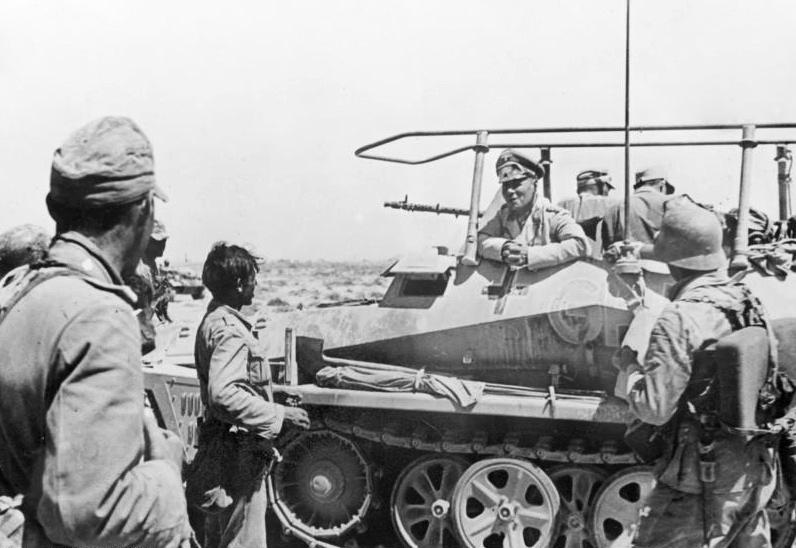
Like most other officers Rommel had served the Hitler regime as it spread its dark pall over Europe without protest. Yet, unlike so many other officers when he suffered a crisis in conscience about the Nazi leadership and their policies, he refused to obey orders that he knew were both illegal and immoral, and then risked his life by joining the conspiracy to kill Hitler.bundesarchiv_bild_146-1991-031-25a_nordafrika_vor_tobruk_rommel

It was at El Alamein that Rommel discovered the emptiness of Hitler’s promises as the troops of the Afrika Corps found themselves subjected to constant privation from lack of supply, air support and reinforcements. As commander of the Afrika Corps and later the Panzer Armee Afrika he and his troops achieved amazing success against an enemy that was always better supplied, equipped and which always had air and sea superiority. Battling the British as well as the political machinations of Mussolini and Germany’s Italian Allies as well as opponents in the German government such as Hermann Goering, Rommel saw his troops crushed under the press of the British as well as the Americans who landed in French North Africa. Eventually, sick and worn out, Rommel was sent back to Germany to recuperate.

rommel-with-soldier

Rommel had a sense of honor and humanity that many other German generals lacked. He refused to allow anti-Jewish measures in areas occupied by German troops in North Africa, ensuring that the approximately 425,000 Jews living in Libya, Tunisia, Algeria, and Morocco were spared the fate of the Holocaust. He refused to execute Jewish POWs, including members of the Jewish Battalion serving with the British 8th Army. Likewise, Rommel refused to follow the notorious “commando order.” In June of 1944 he protested the massacre of the people of the village of Oradour-sur-Glane by units of the 2nd SS Panzer Division directly to Hitler and asked for the authority to punish those responsible, but was refused.

After his return from Africa, Rommel’s honest and open assessments of the chances of the Germans winning the war made him persona non grata in Berlin and Berchtesgaden. He was posted to France in early 1944 according to some accounts he became a part of the plot to end the war and overthrow Hitler. Rommel’s Chief of Staff at OB West, General Hans Speidel, was a key man in the conspiracy and Rommel had contacts with a number of key conspirators. There are arguments about Rommel’s connections and activities in regard to the anti-Hitler plot among respected historians.

When the invasion came Rommel was away from Normandy visiting his wife. On learning of the invasion he sped back to Normandy. When he arrived he fought a desperate battle against the Allied forces. His outnumbered forces were under constant assault from the land, sea and air received paltry reinforcements compared to the Allies. Even so, German troops inflicted many local defeats and exacted a heavy price in allied blood in Normandy but were ground to dust. Even so, many American and British infantry regiments suffered 100% casualties but remained in action because of a continuous stream of replacements. Rommel urged Hitler and the High Command to withdraw German forces from Normandy before the allies broke through his front. By doing so he found that he was now considered a defeatist.

If Rommel had joined the plot to topple Hitler, he did not stop working to defend Germany against the coming Allied invasion. He believed that the war was lost if his forces failed to repel the Allies on the beaches of France, and he worked feverishly to bolster the beach fortifications. He recommended that the Panzer Divisions be deployed near the coast where they could immediately counterattack Allied invasion forces while they were still vulnerable. But his advice was not taken. He was given command of the Army Group but was not given control of most of the Panzer Divisions, which Hitler kept under his direct control. Neither did he approve of an assassination attempt but realizing that his front was about to collapse he was in favor of independent peace negotiations with the Allies on the Western Front.

Many commanders in the west, including Waffen SS commanders were in agreement Rommel was severely wounded in an air attack on his vehicle by a just days before the attempt on Hitler’s life. Hitler survived the attempted assassination and exacted a terrible revenge on anyone connected with the plot. Show trials and public hangings of officers who had served valiantly at the front were common. Thousands were killed and thousands more imprisoned. Many of those arrested, imprisoned, or killed, were those who knew Rommel’s views on ending the war.

Various conspirator’s testimony exposed Rommel as part of the plot. Leading Nazis, including Martin Bormann, and Heinrich Himmler urged Hitler to deal with Rommel. Likewise, some in the High Command, including Heinz Guderian turned upon Rommel. After a secret hearing it was recommended by the “Court of Military Honor” that Rommel be expelled from the military and tried by the “People’s Court” of Judge Roland Freisler. During the purge that followed the attempt on Hitler’s life, many noted German military commanders were hauled before this court and humiliated by Freisler before they were sent to their deaths. Freisler, a fanatic Nazi judge was a participant at the infamous Wannsee Conference which planned the details of the Final Solution was killed when his courtroom was bombed in February 1945.

On 27 September, Martin Bormann submitted to Hitler a memorandum which claimed that “the late General Stülpnagel, Colonel von Hofacker, Kluge’s nephew who has been executed, Lieutenant Colonel Rathgens, and several … living defendants have testified that Field Marshal Rommel was perfectly in the picture about the assassination plan and has promised to be at the disposal of the New Government.”

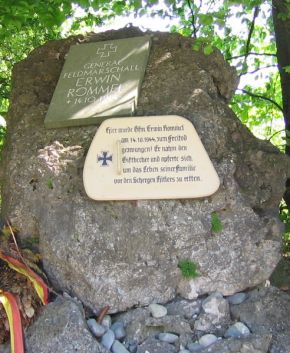
Rommel’s fate was sealed, but because of his fame and popularity in Germany Hitler decided to offer Rommel a choice of being tried by the People’s Court or committing suicide. Goebbels who had spent so much time building up the Rommel legend, turned against him. The latter with an offer to ensure his family’s safety, which he would not guarantee if Rommel choose to defend himself in open court. Hitler dispatched Generals Wilhelm Burgdorf and Ernst Maisel from Berlin to personally deliver the message. Burgdorf was the last Army Chief of Staff and killed himself following Hitler’s suicide.
492px-Erwin_rommel_death

Rommel suspected that he would be identified and killed and told that to his friends and family in the days leading up to the arrival of Generals Wilhelm Burgorf and Ernst Maisel from OKW with the ultimatum. They met with Rommel for a short time before giving him the opportunity to say goodbye to his family. Rommel told them of his choice and left his home for the last time. 15 minutes later the Generals called his wife to say that he had died of a heart attack. Rommel was given a state funeral and the German people were lied to about his cause of his death.

Winston Churchill wrote of Rommel:

“He also deserves our respect because, although a loyal German soldier he came to hate Hitler and all his works, and took part in the conspiracy to rescue Germany by displacing the maniac and tyrant. For this, he paid the forfeit of his life. In the sombre wars of modern democracy, chivalry finds no place … Still, I do not regret or retract the tribute I paid to Rommel, unfashionable though it was judged.”

Rommel was just 52 years old when he died. I find in the story of Rommel some commonality in my own life. Before Rommel went to Africa he believed that Germany would win the war, during his command there he discovered that what he believed was lies and that Hitler had little regard for him or his troops.

Rommel is a complex character. His attitudes towards Hitler waxed and waned. He was no Nazi. He conducted his battles in an honorable manner and displayed much chivalry towards his opponents. His views on race were not at all Nazi like. In North Africa he faced down a White South African commander who did not want to be imprisoned with his Black troops. Rommel told the officer: “For me, soldiers are all equal. Those black people wore your same uniform, fought on your side, and so you will be in the same jail.”

But from the beginning he willingly served Hitler’s regime and basked in the fame that he enjoyed due to Goebbels’s propaganda machine. At the same time while he was according to the Chief of the German Navy in the West, Admiral Friedrich Ruge, as well as his Rommel’s letters to his wife, indicated that Rommel’s mood fluctuated wildly regarding Hitler: while he showed disgust towards the atrocities and disappointment towards the overall military and strategic situation, he was overjoyed to welcome a visit or praise from Hitler, only to return to depression the next day when faced with reality.

The example of Erwin Rommel is a cautionary tale of what can happen when a brilliant and honorable man comes under the spell of a demagogue. Rommel believed Hitler and blindly followed him until he ran into the hard face of reality in Africa at which point he had the moral courage to do the right thing, but many others didn’t.

Sadly there are otherwise honorable men and women in the current United States military that blindly support a delusional madman who happens to be the President: a man who promises to order soldiers to commit war crimes, who threatens to jail political opponents, who condemns whole races of people and religions, who incites violence against his opponents, a man who has no respect for the courts, the law, or the Constitution to which they are sworn to defend.

But I think that we also have to remember the men like Rommel who though not a true believer in the Nazi cause and polices, not only willingly served the Reich, but basked in the adulation lavished on him by friends and foes alike.

To me this is not about partisan politics but something that is bigger than politics, bigger than temporary political advantage, bigger than any single political issue, for which in our country, at least for the moment, that there are many ways to express dissent which were not available to most Germans of Rommel’s era. It is about the Constitution, the rule of law, and the foundational principles of the Declaration of Independence.

Personally, as a historian I cannot understand the blind obedience in the face of the evidence; but then I blindly followed President George Bush into the ill-advised and criminal invasion of Iraq. It was in the desert of Iraq’s Al Anbar Province that I had my own revelation that the man I supported had led the country into a war that could not be won. Like Rommel at El Alamein, it opened my eyes to things that I had never seen before.

Now, in light of President Trump’s immoral, unconstitutional, and foolhardy policies and decisions I wonder why so few high ranking military officers, active or retired have the courage to oppose them. Surely, some must, like Rommel, Ludwig Beck, Henning Von Tresckow, Erich von Witzleben, Hans Oster, Claus von Stauffenberg and others like them realize the abyss that the President is leading the nation to, and far to few are willing to tell the truth when most needed. It took far more courage for the German officers to oppose Hitler than it does American officers to tell the truth about Trump’s policies. Maybe we have become so insulated from political realities that we make excuses for ourselves, and our actions.

Maybe we as officers need to remember the works of General Ludwig Beck:

“It is a lack of character and insight, when a soldier in high command sees his duty and mission only in the context of his military orders without realizing that the highest responsibility is to the people of his country.”

Until tomorrow,

Peace,

Padre Steve+

2 Comments

Filed under ethics, History, holocaust, leadership, middle east, Military, nazi germany, Political Commentary, war crimes, world war two in europe

I’ve Got those Yellowstain Blues: Watching as the President Snatches Defeat from Victory and Sends the Middle East into a Major Conflict


Friends of Padre Steve’s World,

The stain on whatever honor the United States has left continued to grow this weekend as President Yellow Stain abandons another ally, throws the NATO alliance into peril, and lights wick on the powder keg that is the Middle East.

Every time he speaks regarding foreign policy I am reminded of the song from the novel and film The Caine Mutiny, “The Yellowstain Blues.”  The President is man who dodged the draft in Vietnam; a man who bragged on The Howard Stearin Show about avoiding sexually transmitted diseases as his Vietnam, and who has constantly maligned combat veterans and respected military and diplomatic leaders. He routinely supports despotic leaders who oppose every ideal espoused in the Declaration of Independence, scoffs at the Constitution of the United States, and attacks the laws, foundations, and institutions of our Republic.

The words of the song Yellowstain Blues from The Caine Mutiny seem apt to describe President Trump.

I’ve got those yellow stain blues,
From my head down to my shoes,
When someone fires a shot,
It’s always there I am not.
Those yellow stain blues

I’ve got those yellow stain blues,
Those old yellow stain blues,
Well you sh
ould see strong men quail,
If he should spy a shirt tail
Those yellow stain blues

Those old yellow stain blues

Sadly, the words from the movie which were directed at Captain Queeg, played by Humphrey Bogart in the film were directed at a man who was cracking up under the strain of war, not a President who has spent his life avoiding military service and deriding far better men than himself.

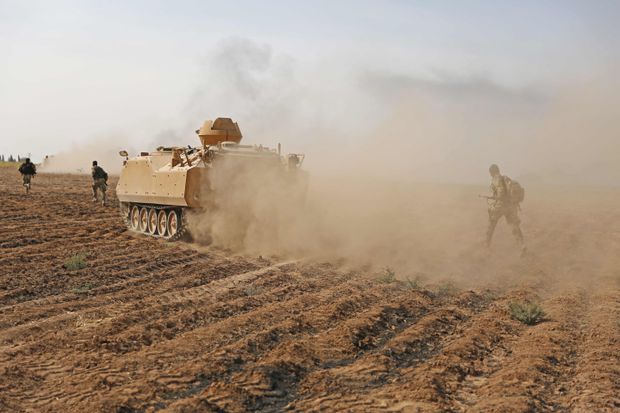
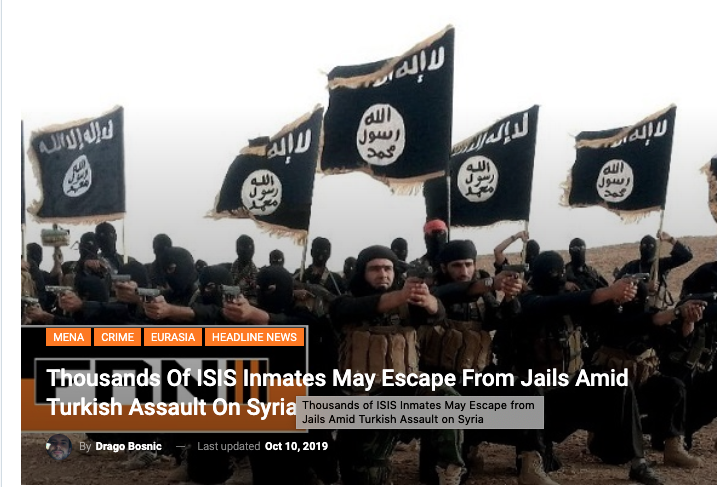
The Syrian regime of Bashir Assad is sending troops to defend the Kurds as President Trump hastily withdraws our military personnel from the danger zone. Once the Syrians commit their troops the Iranians will not be far behind since they have tens of thousands of their Revolutionary Guard Corps in Syria. Likewise their allies in Hezbollah will move against the Turks, even as thousands of Islamic State captives escape to re-enter combat against the United States, and anyone else that opposes them. Because of the chicken-hearted actions of the President one has to hope that the actions of the Syrians, Iranians, and Hezbollah will both protect the Kurds and counter the victory that President Trump has given the Islamic State.

However, this won’t be the end. Soon the Saudis, the Israelis, the Gulf States, and the ever fragile government of Iraq will be involved. This war will will spiral out of control because of President Yellowstain, and the victims will include many U.S. Military personnel and God knows how many others.

Sadly, this can only get worse, and it will be the fault of the U.S. President and his cult-like supporters. He could have made a principled decision based on facts , but instead he has emboldened the Turkish dictator, who is both an Islamist and a Nationalist. Soon, Erdogan will take Turkey out of NATO, unleash 3.5 million Syrian refugees on the European Union, and openly ally himself with Russia, the traditional enemy of the Turks.

A wider and far more costly war will follow, and we will only have President Yellowstain to blame.

God help us all,

Peace,

Padre Steve+ 


1 Comment

Filed under ethics, History, iraq,afghanistan, leadership, middle east, Military, national security, News and current events, Political Commentary, war crimes

The Turkish Invasion and the Immoral and Criminal Support of it by the American President

Friends of Padre Steve’s World,

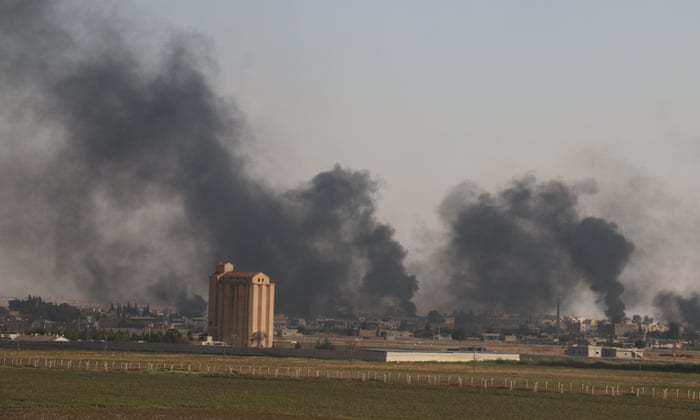
It is a sad day to be an American, especially one who serves in the military. I saw another officer comment on his Twitter feed that for the first time in his career that he did not feel pride in putting on his uniform. A Turkish friend I know here  was angry at his home country, and he served in the Turkish Army in his younger days. As I watch the brutal attacks on the Kurds of northern Syria by the Turkish military I have to angry with them. President Trump has abandoned our most stalwart and effective ally in the region and the fight against the Islamic State to the democratically elected dictator of Turkey, Recip Erdogan.

The President claimed to be doing this as fulfilling a campaign promise to withdraw American troops from Syria, but he didn’t do that. He simply moved them aside to allow the Turks to attack the Kurds, but the troops are still in Syria. Additionally, reports indicate that U.S. intelligence sources provided the Turks aerial and satellite imagery to help them target Kurdish positions. Kurdish fighters are resisting, but against the massive armored, and mechanized invasion, backed by strong air support their defeat is a foregone conclusion unless the United States changes its policy and decides that the Kurds are worth helping.

The leaders of the United States military have requested that the Turks end their invasion and withdraw, but that will not happen. President Trump has given the game away. Turkish President Erdogan has threatened the European Union with dumping three and a half million Syrian refugees on them if they so much as dare to criticize him. Of course his motive is blackmail, and should he dump the refugees his goal will be  to destabilize the E.U. and help Right Wing Racist parties into power, with the ultimate goal of destroying the E.U. Sadly, President Trump encourages this by treating the E.U. and our NATO allies as poor allies and enemies, at times threatening them and also punishing them with frankly insane tariffs that that only serve to tear apart the most successful military, political, and economic alliance in history. In doing so he encourages our real enemies and drives off real friends.

These actions will have drastic repercussions. America’s word will not be trusted.  Friends will seek alternative security, political, and economic options, and those who desire the downfall of the United States, the E.U., and our military-political alliances will rejoice.

Trump cozies up to age old enemies, excuses their crimes, while abandoning the pillars of the alliances that have helped make us the strongest and previously the most respected country in the world.

All I can say now is that it is very hard to be proud of my country and support the actions of this President. I have served under six Presidents, 4 Republicans and 2 Democrats. Until Trump I found some redeeming qualities, even if I disagreed with their policies and actions.

In under six months I will be retired from the military with a total of 38 years and seven months service on active duty in the Army and Navy, as well as time spent in the Army National Guard and Army Reserve. I have no breaks in service. I have been to war, and I suffer both physically, psychologically, and spiritually from that service.  Now, with the actions of Trump around the world and in our country, it is hard to be proud of my service.

To paraphrase the comments of General Henning von Tresckow, an opponent of Hitler who died for his beliefs:

“We have to show the world that not all of us are like him. Otherwise, this will always be Trump’s America.”

Until tomorrow,

Padre Steve+


10 Comments

Filed under ethics, History, leadership, middle east, Military, Political Commentary

“If You Are Offended I am not In the Least Bit Sorry” Witnesses to Genocide: George Patton, Dwight Eisenhower and Edward R. Murrow

Friends of Padre Steve’s World,

During our trip to Germany last year we visited the Buchenwald Concentration Camp, which as a Major Camp had numerous sub-Camps, including Ohrdruf which Generals George Patton and Dwight Eisenhower visited shortly after its liberation in April 1945. Both went out of their way to describe the horrors they saw.

In our day there are fewer and fewer people who lived through or personal saw or documented the evils of the Nazi Concentration Camps. Likewise, there are a host of Holocaust deniers who produce a plethora of pseudo-scholarly articles claiming to be legitimate historians. Even more frighteningly the rise of apologists for the Nazi regime including those who are active members of allegedly conservative parties in the United States and the European Union is beginning to influence politics. The abject racism, rejection of anyone considered racially inferior, and quite often their unhidden anti-Semitism show that what lies in the dark heart of Naziism is not dead and in fact is rising.

In the United States its rise is being fueled and legitimized by the Presidency of Donald Trump who has referred to American Nazis and White Supremacists as “very good people” after one of their protests where an anti-Nazi demonstrator was murdered and others brutally attacked. In the same time frame a good number of Republican candidates have exposed themselves as White Supremacists and actual Nazis while running for office. A host of new-Nazi and White supremacist organizations openly meet and flood the internet with their race hatred, and it goes unchecked by the Administration and the Justice Department.

The fact is that anyone who denies the Holocaust, attempts to minimize it, or advocates the same policies of race hatred and violence against political, religious, or other opponents is no better than the perpetrators of the Holocaust. Likewise, those who stand by and say nothing are worse. As Yehuda Bauer wrote:

“The horror of the Holocaust is not that it deviated from human norms; the horror is that it didn’t. What happened may happen again, to others not necessarily Jews, perpetrated by others, not necessarily Germans. We are all possible victims, possible perpetrators, possible bystanders.”

The good thing is that there were people who took the time to record what they saw in the Nazi Concentration Camps and exposed those deeds to the world in such a way that only perverted and evil people could brazenly deny those facts.

One of the most detailed descriptions of a liberated Concentration Camp was written by General George Patton in his memoirs entitled War as I Knew It.

… we drove to Ohrdruf and visited the first horror camp any of us had ever seen. It was the most appalling sight imaginable.

A man who said he was one of the former inmates acted as impresario and showed us first the gallows, where men were hanged for attempting to escape. The drop board was about two feet from the ground, and the cord used was piano wire which had an adjustment so that when the man dropped, his toes would just reach the ground and it would take about fifteen minutes for him to choke to death, since the fall was not sufficient to break his neck. The next two men to die had to kick the board out from under him. It was stated by some of the Germans present that the generals who were executed after the Hitler bomb incident were hanged in this manner.

Our guide then took us to the whipping table, which was about the height of the average man’s crotch. The feet were placed in stocks on the ground and the man was pulled over the table, which was slightly hollowed, and held by two guards, while he was beaten across the back and loins. The stick which they said had been used, and which had some blood on it, was bigger than the handle of a pick.

Our guide claimed that he himself had received twenty-five blows with this tool. It later developed that he was not a prisoner at all, but one of the executioners. General Eisenhower must have suspected it, because he asked the man very pointedly how he could be so fat. He was found dead next morning, killed by some of the inmates.

Just beyond the whipping table there was a pile of forty bodies, more or less naked. All of these had been shot in the back of the head at short range, and the blood was still cooling on the ground.

In a shed near-by was a pile of forty completely naked bodies in the last stages of emaciation. These bodies were lightly sprinkled with lime – not, apparently, for the purpose of destroying them, but to reduce the smell. As a reducer of smell, lime is a very inefficient medium.

The total capacity of the shed looked to me to be about two hundred bodies. It was stated that bodies were left until the shed was full and then they were taken out and buried. The inmates said some three thousand people had been buried from this shed since January 1, 1945.

When our troops began to draw near, the Germans thought it expedient to remove the evidence of their crimes. They therefore used the inmates to exhume the recently buried bodies and to build a sort of mammoth griddle of 60 cm. railway tracks laid on a brick foundation. The bodies were piled on this and they attempted to burn them. The attempt was a bad failure. Actually, one could not help but think of some gigantic cannibalistic barbecue. In the pit itself were arms and legs and portions of bodies sticking out of the green water which partially filled it.

General Walker and General Middleton had wisely decided to have as many soldiers as possible visit the scene. This gave me the idea of having the inhabitants themselves visit the camp. I suggested this to Walker, and found that he had already had the mayor and his wife take a look at it. On going home those two committed suicide. We later used the same system in having the inhabitants of Weimar go through the even larger slave camp (Buchenwald) north of that town. (Excerpted for G. Patton War as I Knew It)

Dwight D. Eisenhower wrote after seeing the camp:

The same day [April 12, 1945] I saw my first horror camp. It was near the town of Gotha. I have never felt able to describe my emotional reactions when I first came face to face with indisputable evidence of Nazi brutality and ruthless disregard of every shred of decency. Up to that time I had known about it only generally or through secondary sources. I am certain, however that I have never at any other time experienced an equal sense of shock.

Eisenhower was so moved that he ordered that the best reporters and newsmen come and record what he had seen. He did not want the horrors to be denied by history. He wrote:

I visited every nook and cranny of the camp because I felt it my duty to be in a position from then on to testify at first hand about these things in case there ever grew up at home the belief or assumption that `the stories of Nazi brutality were just propaganda.’ Some members of the visiting party were unable to through the ordeal. I not only did so but as soon as I returned to Patton’s headquarters that evening I sent communications to both Washington and London, urging the two governments to send instantly to Germany a random group of newspaper editors and representative groups from the national legislatures. I felt that the evidence should be immediately placed before the American and British publics in a fashion that would leave no room for cynical doubt.

One of those reporters was Edward R. Murrow who broadcast his visit to Buchenwald:

There surged around me an evil-smelling stink, men and boys reached out to touch me. They were in rags and the remnants of uniforms. Death already had marked many of them, but they were smiling with their eyes. I looked out over the mass of men to the green fields beyond, where well-fed Germans were ploughing….

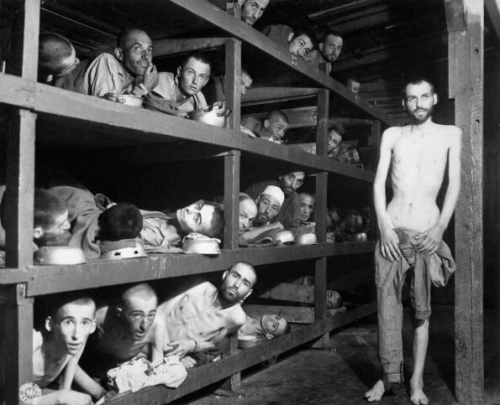
[I] asked to see one of the barracks. It happened to be occupied by Czechoslovaks. When I entered, men crowded around, tried to lift me to their shoulders. They were too weak. Many of them could not get out of bed. I was told that this building had once stabled 80 horses. There were 1200 men in it, five to a bunk. The stink was beyond all description.

They called the doctor. We inspected his records. There were only names in the little black book — nothing more — nothing about who had been where, what he had done or hoped. Behind the names of those who had died, there was a cross. I counted them. They totaled 242 — 242 out of 1200, in one month.

As we walked out into the courtyard, a man fell dead. Two others, they must have been over 60, were crawling toward the latrine. I saw it, but will not describe it.

In another part of the camp they showed me the children, hundreds of them. Some were only 6 years old. One rolled up his sleeves, showed me his number. It was tattooed on his arm. B-6030, it was. The others showed me their numbers. They will carry them till they die. An elderly man standing beside me said: “The children — enemies of the state!” I could see their ribs through their thin shirts….

We went to the hospital. It was full. The doctor told me that 200 had died the day before. I asked the cause of death. He shrugged and said: “tuberculosis, starvation, fatigue and there are many who have no desire to live. It is very difficult.” He pulled back the blanket from a man’s feet to show me how swollen they were. The man was dead. Most of the patients could not move.

I asked to see the kitchen. It was clean. The German in charge….showed me the daily ration. One piece of brown bread about as thick as your thumb, on top of it a piece of margarine as big as three sticks of chewing gum. That, and a little stew, was what they received every 24 hours. He had a chart on the wall. Very complicated it was. There were little red tabs scattered through it. He said that was to indicate each 10 men who died. He had to account for the rations and he added: “We’re very efficient here.”

We proceeded to the small courtyard. The wall adjoined what had been a stable or garage. We entered. It was floored with concrete. There were two rows of bodies stacked up like cordwood. They were thin and very white. Some of the bodies were terribly bruised; though there seemed to be little flesh to bruise. Some had been shot through the head, but they bled but little.

I arrived at the conclusion that all that was mortal of more than 500 men and boys lay there in two neat piles. There was a German trailer, which must have contained another 50, but it wasn’t possible to count them. The clothing was piled in a heap against the wall. It appeared that most of the men and boys had died of starvation; they had not been executed.

But the manner of death seemed unimportant. Murder had been done at Buchenwald. God alone knows how many men and boys have died there during the last 12 years. Thursday, I was told that there were more than 20,000 in the camp. There had been as many as 60,000. Where are they now?

I pray you to believe what I have said about Buchenwald. I reported what I saw and heard, but only part of it. For most of it, I have no words.I

If I have offended you by this rather mild account of Buchenwald, I’m not in the least sorry….

The fact is that as much as we want to pretend that what happened a Buchenwald, Flossenbürg, Dachau, Bergen-Belsen, Auschwitz, Soribor, Belzec, and Treblinka are images from history that cannot happen again, however, they are an ever present reality and they cannot be ignored. Sadly, I cannot help but to imagine that this can and will happen again in my lifetime. The late Primo Levi, a Jewish Italian philosopher and survivor of Auschwitz wrote: “It happened, it can happen again.” 

I will now quote from one of my favorite episodes of Star Trek the Next Generation called The Drumhead uttered by Jean Luc Picard:

We think we’ve come so far. Torture of heretics, burning of witches it’s all ancient history. Then – before you can blink an eye – suddenly it threatens to start all over again.

That is our reality. There are people, even neighbors and those that we think are friends who would be perpetrators or bystanders when those that transgress the way of Trump are take us from our homes and families because of our beliefs. I would love to be wrong about this, but I am a historian and a theologian and I know the human condition far too well to sit back and remain silent, no matter what the cost.

Last year I had a Facebook exchange with a friend who is a retired Navy Chaplain. He is very much a Trump supporter and apologist. He is very happy about Justice Kavanaugh being in the Supreme Court. The stories of the victims and their claims did not matter to him. Despite that I do not believe that he is a bad man or an evil person. I simply believe that like Martin Niemöller that he has made a bad choice in the man and party that he currently supports and that he will eventually regret it. I could be wrong, he might not turn out to be a Niemöller, but a Reichsbishof Müller. Sincerely hope that he does not become the latter.

I keep quoting historian Timothy Snyder, but he was all too correct when he wrote these words less than two years ago:

The European history of the twentieth century shows us that societies can break, democracies can fall, ethics can collapse, and ordinary men can find themselves standing over death pits with guns in their hands. It would serve us well today to understand why.

If you don’t believe me read the words of the President, his closest supporters, the prominent political preachers of the Christian Right, and any number of Trump leaning columnists, pundits, and politicians. There are some who are so far gone that they will accuse any opponent of being disloyal, not the the Constitution or the law but to President Trump.

Last year, one of those people tried to get my commanding officer to have me tried by Court Martial for a sermon in which he lied about what I said. I had to spend my money to hire a lawyer to defend me from the false charges and have them dismissed during the preliminary investigation.

Trust me, I know what resistance will mean if this President and his cult like followers are not stopped. Our fate will be worse than that of Nazi Germany because we should have known better. We should have learned from Dwight Eisenhower and George Patton. We should have learned fro Dietrich Bonhoeffer and Martin Niemöller, we should have learned from the Nuremberg trials, but we have not.

Facing possible impeachment, and with a growing likelihood that the Democrats will extend their control of the House, possibly regain the Senate, and maybe defeat Trump in the 2020 elections, a desperate Trump, backed  by his true believers may very well attempt to circumvent those elections and impeachment hearings.  With the laws already enacted in the Patriot Act and numerous executive orders there is little to stop a President who has no respect for the law or the Constitution from declaring full emergency powers should any war, terrorist act, or natural disaster be declared. That’s what makes all of this so frightening. Trump only needs an event which is scary enough to frighten people into following any emergency decree. Americans wouldn’t be the first to do so, it’s human nature: the need for security overrides the need for the rule of law and freedom.

So with all of that happy commentary I will leave you until tomorrow.

Until then have a good night, and please, never forget.

Peace

Padre Steve+
10 Comments

Filed under ethics, faith, History, holocaust, leadership, Military, nazi germany, News and current events, Political Commentary

They Become Stooges: Otherwise Good People Who Serve Evil Leaders the Story Of Friedrich Kritzinger

Friends of Padre Steve’s World,

Saint Augustine wrote: “Justice being taken away, then, what are kingdoms but great robberies.”

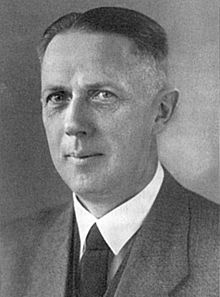
I saw that quote in relation to Friedrich Kritzinger, a lawyer, and Prussian civil servant who served as State Secretary for the Reich Chancellery during the Third Reich and was a participant at the Wannsee conference. The authors of that article noted something that should serve as a reminder to us: “by working as a lawyer for a regime, which he had known from the start to be criminal, he made himself a stooge.” (Stefan Paul-Jacobs and Lore Kleiber in The Participants: the Men of the Wannsee Conference edited by Hans-Christian Jasch and Christoph Kreutzmüller, p.217)

Kritzinger was not what I would call an evil man. He was a traditional German conservative and Nationalist who agreed with many Nazi policies, albeit not to their extremes. But he also had strong moral and religious convictions that caused him to question and at times attempt to mitigate those policies. He was a member of the Confessing Church which condemned the Nazified faith of Reichsbishof Müller and the German Christian movement, but even many of them were receptive to the nationalism and anti-Communist stances of the Nazis. Otto Dibelius, the General Superintendent of the Confessional Lutherans was a hard line conservative and in 1933 at a service for the new Reichstag: “We have learned from Martin Luther that the Church cannot get in the way of State power when it does what it is called to do. Not even when [the state] becomes hard and ruthless…. When the state carries out its office against those who destroy the foundations of state order, above all against those who destroy honor with vituperative and cruel words that scorn faith and vilify death for the Fatherland, then [the state] is ruling in God’s name!” (Richard Seigman-Gall, the Holy Reich: Nazi Conceptions of Christianity 1933-1945 p.68)

Kritzinger himself did not join the Party until 1938 when he was recruited by Hans Lammers to fill a vacancy in the Reich Chancellery for which Party membership was required. Kritzinger was concerned. He only accepted the job and membership in the when assured that he did not have to be politically active and did not have to hire ardent Nazis for jobs in the Chancellery.

At Wannsee he was the only participant who demonstrated any sense of concern about the Final Solution of the Jewish Problem. After the conference he headed the only agency not to sign off on Reinhard Heydrich’s policies against the Jews. According to some he worked inside the system to try to mitigate the worst aspects of Hitler’s policy decisions. He felt shame for what the regime did. That being said “from 1933 on, Kritzinger held positions of responsibility and colluded in disgusting breeches of law and maintaining the illusion that the Nazi dictatorship was a constitutional state.”

The fact is that the Nazi regime believed that it was a functioning constitutional state and attempted to preserve the illusion of legality and the rule of law. Men like Kritzinger helped them to do just that. In his positions, first at the Ministry of Justice and then at the Reich Chancellery, “was held in high esteem… not as an ideological acolyte of the new leader but as an expert on law. Responsible for matters of state law, he was directly complicit in Nazi atrocities.” This included his legal justification for the Night of the Long Knives.

At the Reich Chancellery Kritzinger made sure that the administrative apparatuses the State functioned smoothly. “The facade of legality helped ensure that the Nazi regime and its crimes were accepted even by its detractors, and their participation in the system thereby facilitated.”

After Wannsee, when Kritzinger began to fully grasp what was happening in regard to the Jews he attempted to resign but his resignation was refused. His boss, Hans Lammers refused and rejected his dismissal with the remark that without Kritzinger things would run even worse. In fact, men like Kritzinger were often able to delay or hinder decisions by not passing along memos as they saw fit. Conversely they could speed decisions by ensure that information reached Hitler.

When questioned after the war Kritzinger stated:

My consultations with Hitler were of course tailored to his mentally. It goes without saying that it would have been insane to say that such and such a decision would adversely affect Jews. One had to phrase it differently, and say that it would trigger serious public unrest. Obviously we could not say anything to Hitler he did not want to hear. Especially when it came to those decisions.

I wonder how many people in the American government and in the upper echelons of the Trump administration justify and equivocate their participation in it just as Kritzinger and others like him did his under the Nazis.

Until tomorrow,

Peace

Padre Steve+Otto

2 Comments

Filed under ethics, History, holocaust, leadership, nazi germany, Political Commentary