Category Archives: faith

Live Big and Keep Writing

Friends of Padre Steve’s World,

My literary agent is working with a number of publishers regarding my first book Mine Eyes Have Seen the Glory: Race, Religion, Ideology, and Politics in the Civil War Era, and I am doing some work on the manuscript after I asked him if he thought it was okay. So I am doing that.

Honestly when I started the manuscript which began as one of my introductory chapters of my Gettysburg Staff Ride text I could never have imagined that the subjects that I had addressed in it would have become such a prominent part of our political landscape. Really, in 2014I could not imagine that the Republican Party would have become the vehicle for a White Supremacist ideologue like Steve Bannon and a slave to a man like Donald Trump. While I thought that the so called Christian Right and the Seven Mountains or Dominionist Christians were a travesty to both Evangelical Christianity and the Constitution I could have never imagined that they would align themselves with a movement that no responsible Christian, or for that matter Republican (which I was for 32 years) would have ever supported.

So I am working my way back through my text, updating and editing it. That is not a bad thing. Since it has been about six months since I last touched the text I find that while I want to make edits, additions, and changes, that it is a pretty good product. Hopefully one of those publishers that my agent is working with will agree and it will be on the road to publication. Because of the subject I hope that it might even get a mention on things like Oprah’s Book Club. Honestly if that happened

I wouldn’t mind being on the New York Times Bestseller list. As Denny Crane said: “Live big.”

What really strikes me is that as I read through the text is that I haven’t finished learning and as I scrub it I find myself drawn to other books, articles, and original documents that I have read or studied at one time or another which add to what I had previously written. That is humbling to me because I realize just how much is still out there that could be including or could help improve what I had already written. Since I can neither stop reading or writing this is my conundrum, knowing when to stop. That being said I realized when I sent my initial draft of this to my agent that it was probably at best a 70% solution. Now that I am working on it again it pleases me that what I have already written is not a waste and in fact is still relevant to modern life and politics.

SomI am going to continue to both live big and write with the intention of being big. Who knows, a couple of best seller books might help me if I ever need to escape Trump and the Christian Right’s America.

So until tomorrow,

Peace

Padre Steve+

2 Comments

Filed under ethics, faith, Loose thoughts and musings, Political Commentary

Here I Stand: The Reformation at 500 Years

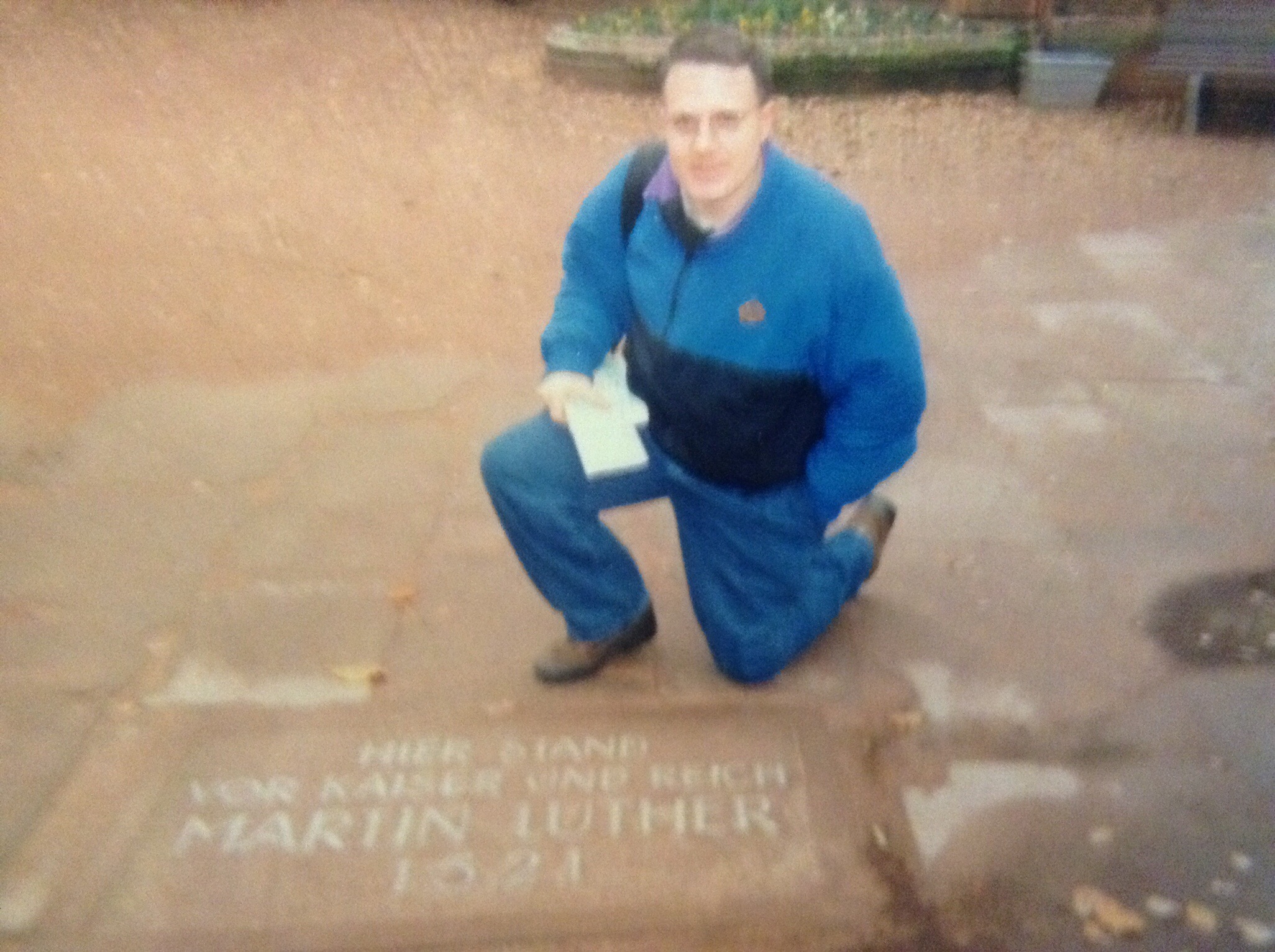
Me at the site where Martin Luther made his stand in 1996

Friends of Padre Steve’s World,

Today was Reformation Sunday, the Sunday where many Protestants celebrate Martin Luther’s posting of his 95 Theses on the door of the Wittenberg Schlosskirche on October 31st 1517.

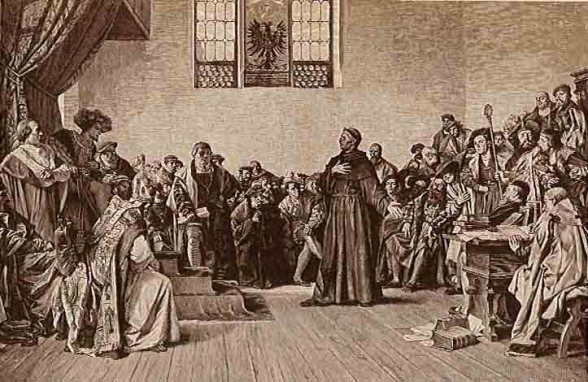
For me it is one of those weird times. I am not Protestant, though Martin Luther is one of my heroes, nor am I Roman Catholic. I am a priest in a small communion that is most like the Dutch Old Catholics and the Utrecht Union. I live in the uncomfortable middle between Roman Catholicism and Protestantism. Thus I have to make my way between a variety of types of Protestants and Roman Catholics in order to survive have a good deal of appreciation for the historic faith of the undivided Catholic Church before the Great Schism of 1054, and Martin Luther’s expression of Protestantism which culminated in his break with Rome and excommunication when he defended himself before the Holy Roman Emperor and the Papal legates at the Diet of Worms where when demanded to recant his views he said:

“Since your most serene majesty and your high mightinesses require of me a simple, clear and direct answer, I will give one, and it is this: I cannot submit my faith either to the pope or to the council, because it is as clear as noonday that they have fallen into error and even into glaring inconsistency with themselves. If, then, I am not convinced by proof from Holy Scripture, or by cogent reasons, if I am not satisfied by the very text I have cited, and if my judgment is not in this way brought into subjection to God’s word, I neither can nor will retract anything; for it cannot be either safe or honest for a Christian to speak against his conscience. Here I stand; I cannot do otherwise; God help me! Amen.

When I read Luther’s defense of his views before the princes and prelates at Worms in 1521 I still get a chill up my spine. It is hard to imagine anyone today daring to stand up to ruling powers unless they have the support of worldly powers greater than oppose.

What Luther did when he nailed his theses to the door of the Schlosskirche was to set into motion events that he could not dare to imagine. By kicking in the doors of the church to real dissent he opened the way to the secular and progressive views of the Enlightenment, without which there would have been no philosophical or political underpinning for the United States of America and the hallmark of our national ideal found in our Declaration of Independence which says “we hold these truth s to be self evident, that all men are created equal…”

Luther recovered the key to the Christian faith, that is faith in the Crucified God. As Lutheran theologian Juergen Moltmann wrote:

“When God becomes man in Jesus of Nazareth, he not only enters into the finitude of man, but in his death on the cross also enters into the situation of man’s godforsakenness. In Jesus he does not die the natural death of a finite being, but the violent death of the criminal on the cross, the death of complete abandonment by God. The suffering in the passion of Jesus is abandonment, rejection by God, his Father. God does not become a religion, so that man participates in him by corresponding religious thoughts and feelings. God does not become a law, so that man participates in him through obedience to a law. God does not become an ideal, so that man achieves community with him through constant striving. He humbles himself and takes upon himself the eternal death of the godless and the godforsaken, so that all the godless and the godforsaken can experience communion with him.”

Because of that we owe the flawed and often troubled monk and theologian from Wittenberg a debt of gratitude. As for me, I know that I do. I may not always be right, nor to I claim to be, but as a matter of faith and politics I have to say “here I stand.”

So until tomorrow,

Peace,

Padre Steve+

1 Comment

Filed under christian life, faith, Religion

A Sociopath and His “Christian” Enablers

Friends of Padre Steve’s World,

I have longed believed that the President of the United States is a sociopath. The man has no sense of care, empathy, respect for the law or the Constitution. In the past 36 hours he has threatened the Freedom of the Press which is enshrined in the First Amendment to the Constitution and made rulings that exempt Christian organizations following laws on health care, he has ended subsidies for poor people that help them to purchase health insurance, and he has threatened to abandon the American citizens in Puerto Rico who were devastated by Hurricane Maria; neither has he said a word about the horrendous wildfires in California which have killed 29 people, destroyed thousands of homes and businesses and in which some 400 people are missing and quite likely dead. Of course I have not even mentioned his continuing threats of war with North Korea. He is so ineffective that he has to rule by Executive Order since he cannot get legislation passed in a Republican controlled Congress.

Sadly, his strongest base of supporters remains the Evangelical Christians who elected him to office and no matter how egregious the President’s actions are in light of the basic teachings of Jesus, most don’t seem to care. Last night while I was asleep, one of them, a lady we knew from our time in Jacksonville Florida in 2002-2003 and have not seen and seldom heard from since went full MAGA on my Facebook page not seeing the contradictions between her words, actions, faith, the Constitution, and reality. When I looked at her posts on my timeline they were full of the the rude and ignorant bluster that has become the norm for many Evangelicals. Instead of arguing with her I simply dropped her and blocked her. I have no need to deal with people like her anymore. Since I don’t go to other people’s social media sites and attack them for things that I don’t agree with I would hope that my supposed Christian friends would exercise the same measure of discretion, but many don’t. Evidently, like the President they feel that they have the God given right to rage on Facebook and Twitter at anyone who dares to criticize the President.

In light of this I am reminded of President Theodore Roosevelt who penned these words when his patriotism was questioned during the First World War:

“Patriotism means to stand by the country. It does not mean to stand by the president or any other public official, save exactly to the degree in which he himself stands by the country. It is patriotic to support him insofar as he efficiently serves the country. It is unpatriotic not to oppose him to the exact extent that by inefficiency or otherwise he fails in his duty to stand by the country. In either event, it is unpatriotic not to tell the truth, whether about the president or anyone else.”

Truth matters, as does the law and the Constitution; and if Evangelical friends, like the one who came to my Facebook page are too hate filled and ignorant to get that then the hell with them.

So until tomorrow,

Peace,

Padre Steve+

5 Comments

Filed under faith, News and current events, Political Commentary

Faith and Politics

Friends of Padre Steve’s World,

The American patriot Samuel Adams once remarked: “If ever a time should come, when vain and aspiring men shall possess the highest seats in Government, our country will stand in need of its experienced patriots to prevent its ruin.”

My friends, that time has arrived. As I wrote a few days ago, Patriotism is distinctly different than nationalism and the President, the Vice President, and many of their most strident followers, especially so-called “conservative Christians” are not patriots but nationalists who in their stridency would co-opt God into their battle with their political opponents. The German Catholic theologian of the Second Vatican Council, and student of Martin Luther, Hans Kung wrote words that are quite applicable today: “Religion often is misused for purely power-political goals, including war.”

Really, what else could motivate Trump’s followers on the Christian Right to not only defend him but in doing so toss their belief in the Crucified God to the curb for the crass cause of gaining political power?

Somehow the old motto of the Wehrmacht and the Imperial German Army before seems to suit them Gott mit Uns or God is with us. Sadly, while a Christian who believes in the incarnation of Christ as a man, born of a woman may take comfort in the belief that God shares our humanity, the concept of Gott mit Uns is the understanding of nationalism and imperialism bent on the domination of other people and other countries is foreign to the ministry of Jesus and the early leaders of the church. Sadly, in our day, the Imperial Church has found a new savior, President Donald Trump and unless one is taking a knee for the National Anthem, one better be ready to bow their knee to this President or face the wrath of both the State and God, at least say the self-anointed prophets and priests like Robert Jeffress, Pat Robertson, Jerry Falwell Jr., and Franklin Graham, who demand that people, even non-Christians follow their lead and obey the President.

Despite the best attempts of the Imperial Church beginning with the Emperor Constantine who cemented the alliance of the Church and Empire to secure his kingdom, and for that matter every empire that followed, has been resisted by people of conscience. The fact is that this Imperial Church concept is not only foreign to the Gospel but also to the founders of our country who resisted every attempt to to impose a state sponsored religion on the people. But neither do the most strident supporters of the President on the Christian seem to think that is important. Likewise these “disciples” neither think of the future of generations to come and their responsibility for perpetuating the Christian faith. Instead they sell their birthright for an illusion of political power that will fade as quickly as the grass in winter.

Future Christians as well as non-Christians who care about this world will look at them and wonder how they could support a man so opposed in almost every conceivable way to the faith of Jesus the Christ. The same Jesus who became incarnate, was born of a woman, who hung out and ministered to the very people who the current “faithful” despise. This is the Jesus who suffered under the scourging of Roman soldiers, was abandoned by his own people, died on a cross as a criminal, and was buried in a borrowed tomb. According to scripture he rose again from the dead bearing all the marks of his humanity, including his scars.

This is what Martin Luther called “the theology of the Cross” and one cannot understand the Christian faith, and I do say faith, without at least trying to comprehend, for it flies in the face of those who desire an earthly kingdom where alleged Christians dominate the government in the perpetually vain attempt to establish the kingdom of Christ on the earth. The best modern exponent of the theology of the Cross, German Lutheran theologian Juergen Moltmann wrote:

“When God becomes man in Jesus of Nazareth, he not only enters into the finitude of man, but in his death on the cross also enters into the situation of man’s godforsakenness. In Jesus he does not die the natural death of a finite being, but the violent death of the criminal on the cross, the death of complete abandonment by God. The suffering in the passion of Jesus is abandonment, rejection by God, his Father. God does not become a religion, so that man participates in him by corresponding religious thoughts and feelings. God does not become a law, so that man participates in him through obedience to a law. God does not become an ideal, so that man achieves community with him through constant striving. He humbles himself and takes upon himself the eternal death of the godless and the godforsaken, so that all the godless and the godforsaken can experience communion with him.”

Why do I say this today? Well actually I began this article a couple of days ago with a different concept in mind, but I basically had writers block. But meditating on it as I walked today I was reminded of just why I stand so strongly against what the President has been doing and how the allegedly Christian Right has sold its soul to him. I cannot look at scripture, profess my belief in Jesus and reconcile that belief with a sham Gospel that despises the poor and values earthly power and prosperity.

Sadly today I had a Facebook follower, a man who I do not know, but who is a Byzantine Catholic Priest tell me that he would no longer follow me because of my “constant anti-Trump rants.” That didn’t bother me at all. I don’t know the man and everything I see that he posts, including his pictures shows me that his faith is more concerned with power, both ecclesiastical and political than the theology of the Cross.

So when you read my criticisms of the President, please know that much of my political beliefs are formed by my faith, a faith that I struggle with on a daily basis since my deployment to Iraq in 2007-2008. For me this is important, because though I believe I still doubt. But there is something that I don’t doubt and that are the words of the Declaration of Independence, the preamble to the Constitution of the United States, and the First Amendment and that means that I cannot abide a President who flaunts all of these things and supposed Christians who sell their souls to defend him. I just can’t go there. I heartily agree with John Leland, the Virginia Baptist pastor who fought to ensure religious liberty for all when his fellow Virginian Anglicans tried to establish a state church after the colonies has secured their independence from England. Leland worked with James Madison to craft the Bill of Rights, especially the First Amendment which both President Trump and his Christian supporters seem to want to destroy.

We are in a terrible time of testing. The German pastor, theologian, and martyr during the Nazi Era, Dietrich Bonhoeffer noted: “Silence in the face of evil is itself evil: God will not hold us guiltless. Not to speak is to speak. Not to act is to act.” 

So until tomorrow,

Peace,

Padre Steve+

4 Comments

Filed under christian life, faith, History, News and current events, Political Commentary

On the Trail of the White Rose: Resistance in the Face of Real Terror

Friends of Padre Steve’s World,

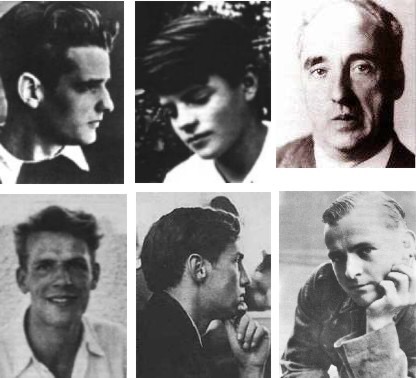
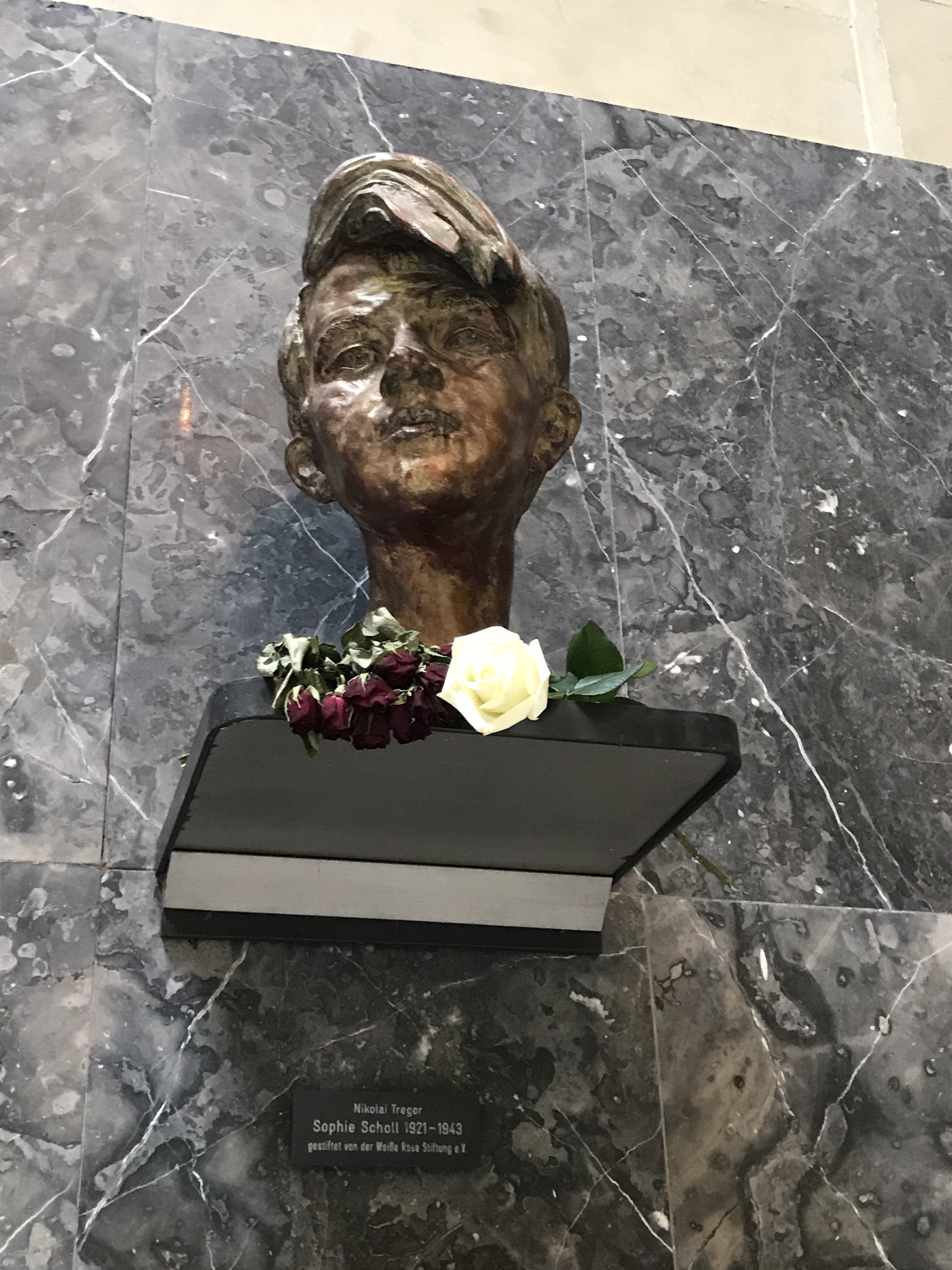
Just a few short thought for today following up on my article yesterday about my visit to Dachau. Today I had the chance to visit one of the memorials and a museum dedicated to the remembrance of Sophie Scholl and the members of the White Rose resistance group. The group was built around Scholl and a number of other students from the University in Munich during 1942 and 1943. I have written about them before but this was the first time that I was able to visit the location where much of their work was centered.


Theirs is a remarkable story because stories like this are often buried by the propaganda machines of totalitarian regimes, but the shock of what these young people did was so great that the Nazi propaganda machine had to publicly confront it with the goal of instilling such fear that no one else’s would dare repeat it. There are a number of monuments scattered around Munich to the White Rose movement, but the most remarkable is the monument in front of the university where they studied and where they distributed their leaflets, facsimiles of their publications and letters are part of the pavement, as if they have been dropped on the ground for someone to pick up.

Scholl, as well as her friends were students, some who in the course of their time of study who had been drafted into the Wehrmacht as medics, serving on the Russian front before returning to the University. There were five of them, Scholl, Willi Graf, Alexander Schmorrel, Hans Scholl, and Christoph Probst, plus one of their professors, Professor Dr. Kurt Huber who began a resistance cell that focused on telling the truth about the crimes of the Nazi regime, and the lies of Hitler. Telling the truth in a dictatorship is dangerous and although Scholl and her companions could have remained silent they had consciences that were guided by reason and human rights, as well as by their Christian faith, a faith which remained despite their aversion to the institutional church for its complicity with the Nazis.

They published a series of six leaflets which they printed themselves and distributed around the university, the city, and to like minded people in a number of other cities. They asked those who got them to make as many copies as they could and distribute them. They were in the process of drafting a seventh when Scholl was spotted distributing them at the university by a maintenance man who was a member of the Nazi Party. She and her friends were arrested on February 21st 1943 by the notorious Nazi People’s Court under the direction of Roland Freisler on the 22nd, and executed by beheading at Munich’s Stadelheim Prison on the 23rd.


The members of the White Rose were bold and defiant in the face of evil, of course those that have that kind of courage usually have short life expectancies in a totalitarian state, but they did not back down. Their pamphlets and graffiti criticizing Hitler garnered the attention of the Gestapo and when they were caught they were brutally tortured, but none backed down.

Their criticisms of Hitler and his Third Reich were hard hitting. Since all of the students had spent much of their childhood teenage years in Nazi organizations which were designed to make loyal little Nazis, their resistance came as a shock to many. All were children who could have easily due to their family background taken the easy road, but chose the more honorable and dangerous road.


Their pamphlets are striking, and each focused on a different part or aspect of the Nazi regime. In their first leaflet they wrote:

“Nothing is so unworthy of a civilized nation as allowing itself to be governed without opposition by an irresponsible clique that has yielded to base instinct.” They urged their readers “Therefore every individual, conscious of his responsibility as a member of Christian and Western civilization, must defend himself as best he can at this late hour, he must work against the scourges of mankind, against fascism and any similar system of totalitarianism.” And to “Offer passive resistance – resistance – wherever you may be, forestall the spread of this atheistic war machine before it is too late, before the last cities, like Cologne, have been reduced to rubble, and before the nation’s last young man has given his blood on some battlefield for the hubris of a sub-human. Do not forget that every people deserves the regime it is willing to endure!”

Such was their beginning, but they went on to attack the Nazi, leaders, the Nazi system, and especially the silence of their countrymen over the extermination of the Jews and Polish intellectuals. They asked in the second leaflet:

“Why do German people behave so apathetically in the face of all these abominable crimes, crimes so unworthy of the human race? Hardly anyone thinks about that. It is accepted as fact and put out of mind. The German people slumber on in their dull, stupid sleep and encourage these fascist criminals; they give them the opportunity to carry on their depredations; and of course they do so…. For through his apathetic behavior he gives these evil men the opportunity to act as they do; he tolerates this “government” which has taken upon itself such an infinitely great burden of guilt; indeed, he himself is to blame for the fact that it came about at all! Each man wants to be exonerated of a guilt of this kind, each one continues on his way with the most placid, the calmest conscience. But he cannot be exonerated; he is guilty, guilty, guilty!”

In each of the letters they asked their readers to offer some form of resistance to Hitler and the Nazi State but urged passive resistance, but in the third missive they went into more detail, including something that anyone who thinks that they are loyal to their country need to appreciate:

“The meaning and the goal of passive resistance is to topple National Socialism, and in this struggle we must not recoil from any course, any action, whatever its nature. At all points we must oppose National Socialism, wherever it is open to attack. We must soon bring this monster of a state to an end. A victory of fascist Germany in this war would have immeasurable, frightful consequences. The military victory over Bolshevism dare not become the primary concern of the Germans. The defeat of the Nazis must unconditionally be the first order of business… And now every convinced opponent of National Socialism must ask himself how he can fight against the present “state” in the most effective way, how he can strike it the most telling blows. Through passive resistance, without a doubt…”

Eventually their tracts became more biting, and in fourth the metaphysical linking Hitler to Satan and Anti-Christ. 


They wrote:

“Every word that comes from Hitler’s mouth is a lie. When he says peace, he means war, and when he blasphemously uses the name of the Almighty, he means the power of evil, the fallen angel, Satan. His mouth is the foul-smelling maw of Hell, and his might is at bottom accursed…. I ask you, you as a Christian wrestling for the preservation of your greatest treasure, whether you hesitate, whether you incline toward intrigue, calculation, or procrastination in the hope that someone else will raise his arm in your defence? Has God not given you the strength, the will to fight? We must attack evil where it is strongest, and it is strongest in the power of Hitler.”

In the fifth leaflet they spoke of where the Nazi war effort would end and the responsibility of not only Hitler but the German people for it:

“It has become a mathematical certainty that Hitler is leading the German people into the abyss. Hitler cannot win the war; he can only prolong it. The guilt of Hitler and his minions goes beyond all measure. Retribution comes closer and closer. But what are the German people doing? They will not see and will not listen. Blindly they follow their seducers into ruin. Victory at any price! is inscribed on their banner. “I will fight to the last man,” says Hitler-but in the meantime the war has already been lost…. Do not believe that Germany’s welfare is linked to the victory of national Socialism for good or ill. A criminal regime cannot achieve a German victory. Separate yourselves in time from everything connected with National Socialism. In the aftermath a terrible but just judgment will be meted out to those who stayed in hiding, who were cowardly and hesitant.”

In the aftermath of the disaster at Stalingrad they published their sixth and last issue before being caught. In it they urged Germans to fight against the Nazi Party and regime, and confronted the way that since its inception Hitler and the Party corrupted the meaning of honor and freedom:

“Freedom and honor! For ten long years Hitler and his coadjutor have manhandled, squeezed, twisted, and debased these two splendid German words to the point of nausea, as only dilettantes can, casting the highest values of a nation before swine. They have sufficiently demonstrated in the ten years of destruction of all material and intellectual freedom, of all moral substance among the German people, what they understand by freedom and honor. The frightful bloodbath has opened the eyes of even the stupidest German – it is a slaughter which they arranged in the name of “freedom and honor of the German nation” throughout Europe, and which they daily start anew.”

Just over two weeks later they were caught and in Freisler’s People’s Court convicted and executed. During their trial, if it can be called that, Freisler and others expressed their shock that young Germans could commit treason. Sophie had no problem confronting her accusers:

Her last words before going to the guillotine were unapologetic: “How can we expect righteousness to prevail when there is hardly anyone willing to give himself up individually to a righteous cause? Such a fine, sunny day, and I have to go, but what does my death matter, if through us, thousands of people are awakened and stirred to action?” On the back of the order condemning her to death she wrote the word Freedom.


There are leaders in many nations today intent on destroying freedom and in many places the people and the country’d institutions fall in behind them, usually by painting pictures of threats so imminent that people willingly trade real freedom for a false security. It is a dangerous world and all of us must be alert to changes in society and question what comes out of the mouths of leaders, and even more so their true believer followers.


Sophie Scholl and her companions understood the risk, but they got their message heard at the highest level of government, and most were killed. But their example of courage and belief in freedom and human rights is still stronger that they mightiest despot, and unlike their mighty yet evil rulers they are the ones that Germany remembers. I think that is a lesson for us as well. I’ll write about that another time. 

Until tomorrow,

Peace,

Padre Steve+

1 Comment

Filed under ethics, faith, History, holocaust, Political Commentary

The Path of Remembrance: A Visit to Dachau

Friends of Padre Steve’s World,

Holocaust survivor Yehuda Bauer wrote: “The horror of the Holocaust is not that it deviated from human norms; the horror is that it didn’t. What happened may happen again, to others not necessarily Jews, perpetrated by others, not necessarily Germans. We are all possible victims, possible perpetrators, possible bystanders.”

The picture that you see above is the memorial to the Unknown Prisoner at Dachau. The words: “Den Toten zur Ehr, den Lebenden zur Mahnung” [To Honor the Dead, to Warn the Living] are engraved at its base.

Yesterday, Munich time, I took short excursion to Dachau in order to visit the Concentration Camp. I have been to Dachau a number of times beginning back in 1996. For me as a historian of the period the trip is both for learning and for meditation, for beyond its historical significance this is a holy place, a place made holy by the blood of tens of thousands of victims of one of the most evil regimes in history. The crimes committed by the staff of Totenkopfverbande SS guards from it’s inception were intended to terrorize and dehumanize the inmates who included political prisoners, religious objectors, Jews, and homosexuals. They were not there because they were convicted of any crimes, in fact many had actually been exonerated by courts, or had served what ever sentence they had been convicted of, but upon release were picked up by the SS and taken to Dachau.

Prisoners were told on arrival:

Here you are, and you’re not in a sanatorium! You’ll have got that already. Anyone who hasn’t grasped that will soon be made to. You can rely on that . . . You’re not prison inmates here, serving a sentence imposed by the courts, you’re just ‘prisoners’ pure and simple, and if you don’t know what that means, you’ll soon find out. You’re dishonourable and defenceless! You’re without rights! Your fate is a slave’s fate! Amen.

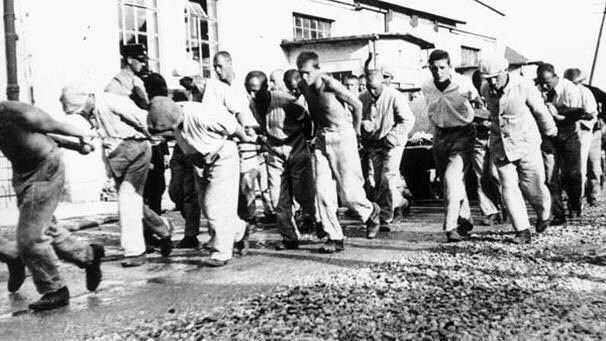
In the Camp they were subject to punishment for even the most minor or perceived infractions, beatings, whippings, and other punishments were meted out by guards who themselves were punished if they showed any mercy or human kindness to a prisoner. “While an offender sentenced to a term in prison knew when he was going to get out, release for the concentration camp inmate was determined by the whim of a quarterly review board, and could be delayed by the malice of any of the SS guards.”

Theodore Eicke, the commandant who systematized the Concentration Camp system created a world that his subordinate, and the later Commandant of Auschwitz, Rudolf Hoess described:

“It was Eicke’s intention that his SS-men, by means of continuous instruction and suitable orders concerning the dangerous criminality of the inmates, should be made basically ill-disposed towards the prisoners. They were to ‘treat them rough’, and to root out once and for all any sympathy they might feel for them. By such means, he succeeded in engendering in simple-natured men a hatred and antipathy for the prisoners which an outsider will find hard to imagine.”

Even a brutal man like Hoess found the brutality hard to watch, he recalled the “malicious evil-minded, basically bad, brutal, inferior, common creatures’ amongst the guards, who compensated for their sense of inferiority by venting their anger on the prisoners. The atmosphere of hatred was total.”

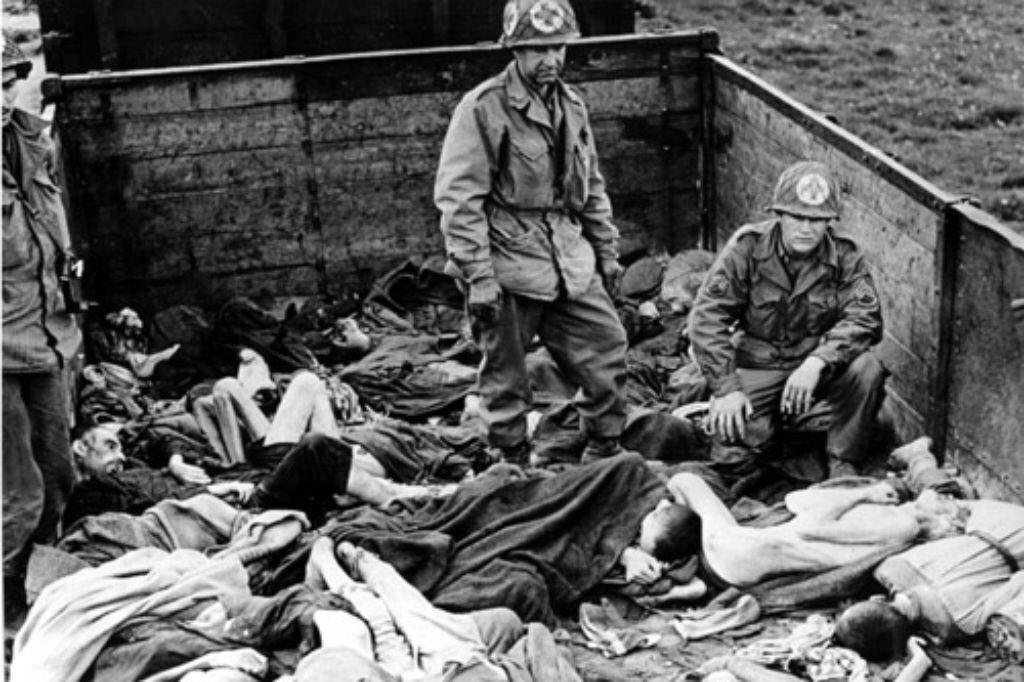
In the twelve years of its existence the staff of Dachau, through mistreatment, execution by bullet, gallows, through being used as subjects in grotesque medical experiments, by “execution by work,” or untreated illness and disease, murdered 41,566 prisoners. The point to be remembered is that despite this incredible number of murders that Dachau was not an extermination camp.

I took the S-Bahn from Munich-East to Dachau, a trip of about 30 minutes. While there I read the chapter in Richard Evans book Third Reich in Power that described the establishment and operations of Dachau and the other early Concentration Camps, from which all of the quotes above this are from. When I got off the train I had a choice of taking a bus to the camp or walking to it via the path known as the Weg des Erinnerns or Path of Remembrance. I chose the walk which was about two miles. Along it there were markers with parts of the history of Dachau and what the prisoners experienced from getting off a train to getting to the camp. The path winds through the town along the street now named Friedenstrasse, (Peace Street) and through John F. Kennedy Platz.
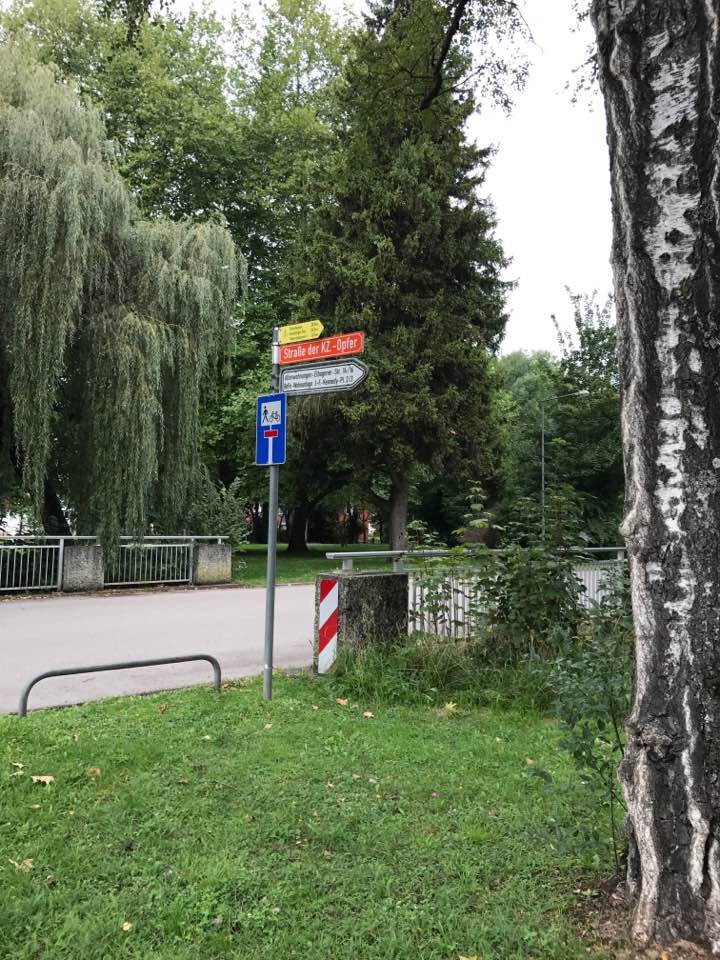
As I neared the camp the signs pointed out the SS Training School and housing for the SS guards. Then it left the paved road and went onto a trail which was uncovered in 2004. This trail is named Strasse der KZ – Opfer, or the Street of the Concentration Camp Victims, or perhaps better translated, “Sacrificial Victims” which was the path that the prisoners took from the SS barracks to the camp itself. It ended at the Hauptwache, the main guardhouse which also functioned as the entrance to the camp.

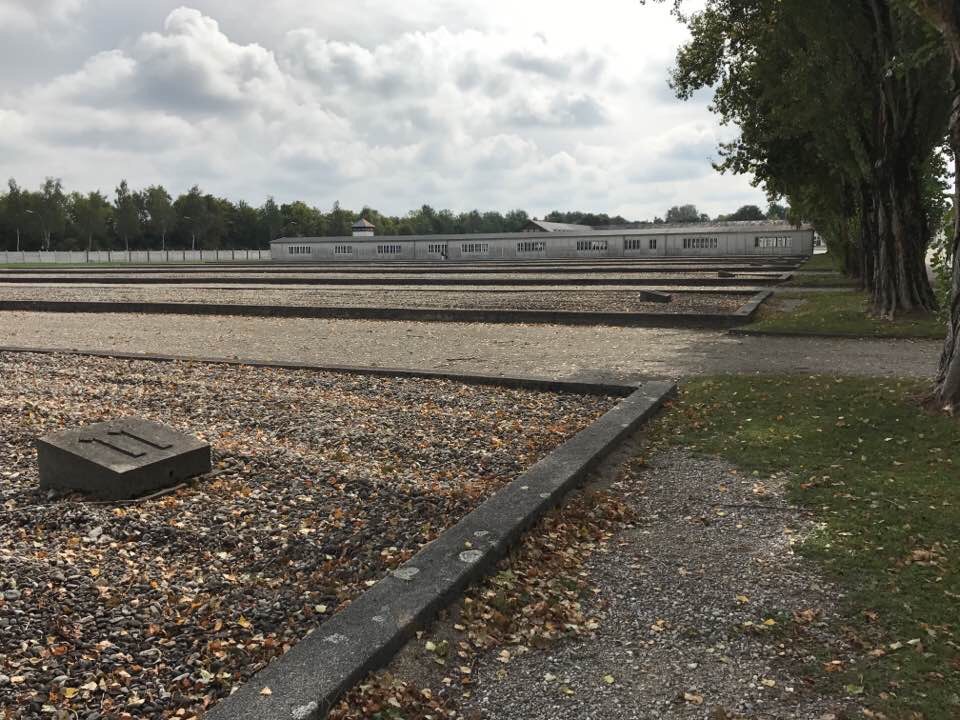
I went through the wrought iron gate with the cynical words Arbeit Mach Frei, work makes you free in the center of it. On entering to the right is the camp’s administration and headquarters building which now serves as a museum. Since I spent a lot of time at the museum last year I went left which took me down the western perimeter of the camp with its barbed wire fences and guard tower with the foundations of the camps prisoner barracks to my right.
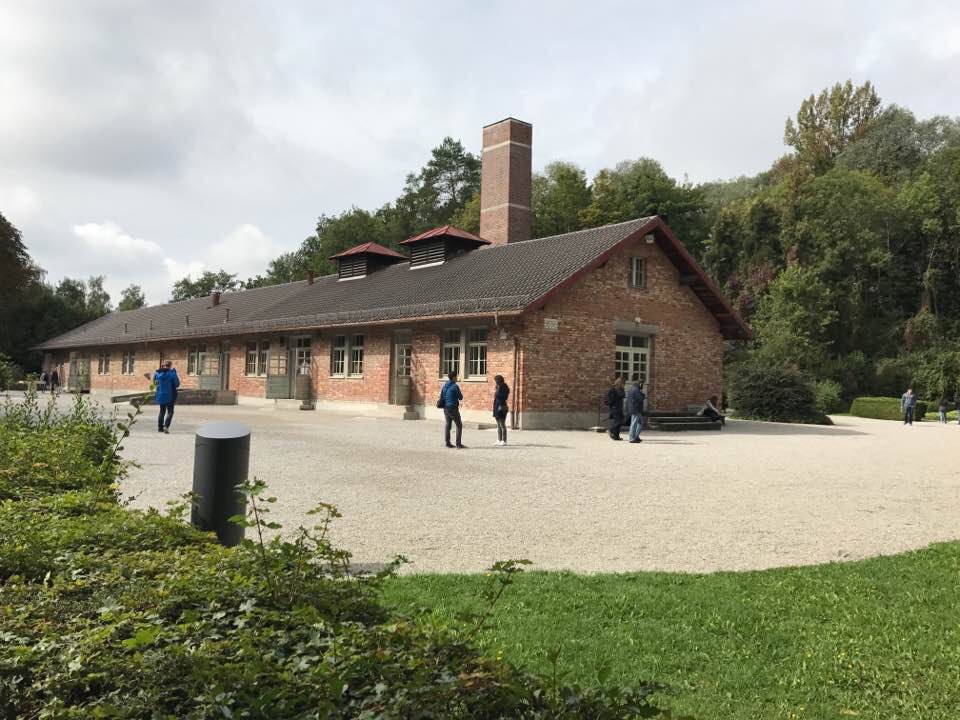
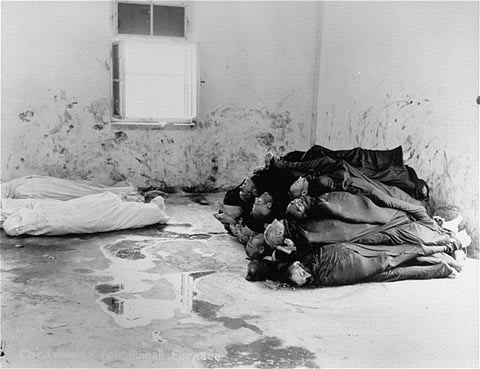
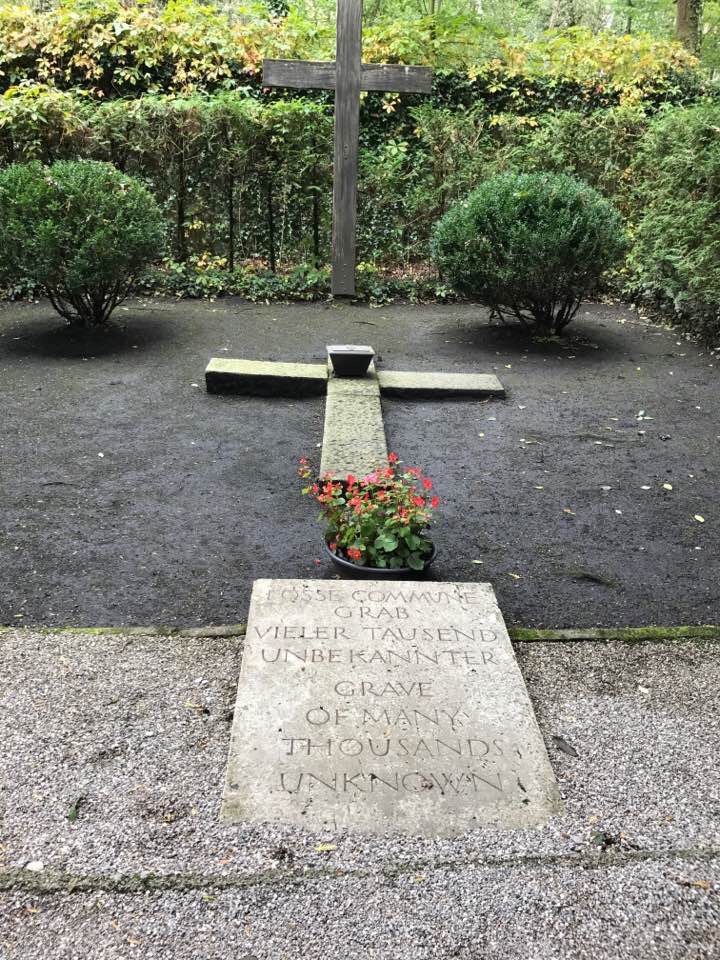
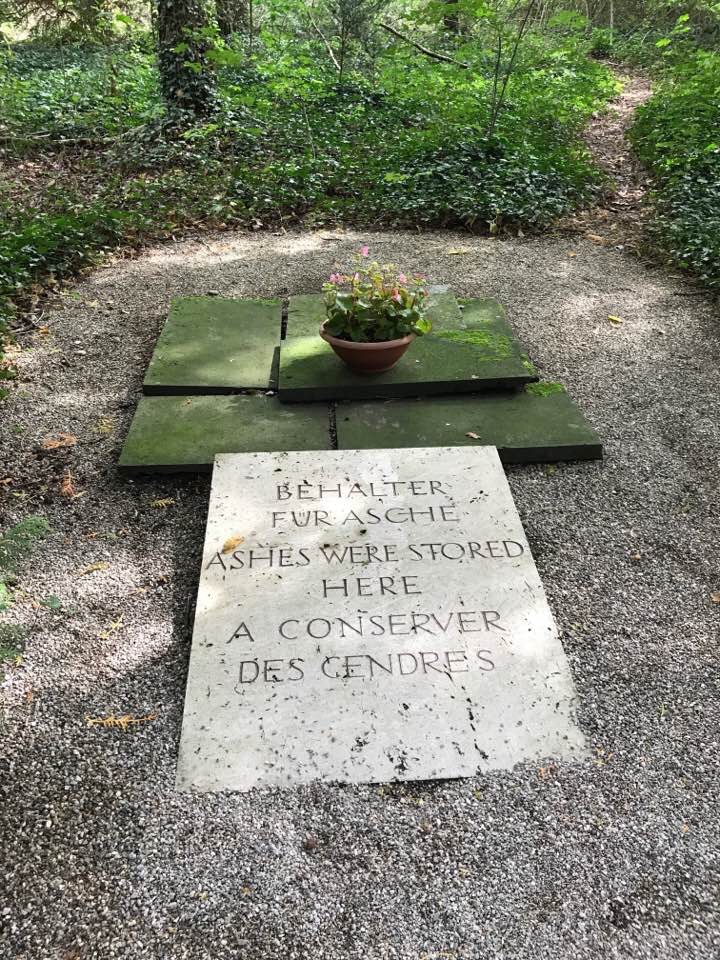
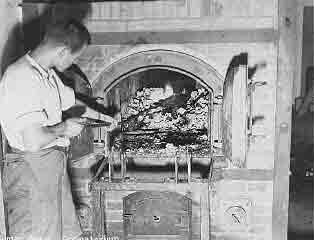
Eventually I reached the location of the execution grounds and the crematorium. I had been there in 1996 but the weather was so cold and damp that I didn’t stay long and I have never found the pictures that I took then. Today I spent more time there, for it is truly the holy place in the camp. Even though there were a good number of people there, including a tour group, it was very quiet. I heard very few words as I walked the area. The first thing I did was to walk the execution grounds around the crematorium. In front of the building the former location of the camp gallows was marked. Behind the building was a memorial with a Star of David crowned with a Menorah and a marker to the thousands of unknown victims. Walking to the right of it down a gravel path that winds through a small grove of trees along the camp wall there were other markers to where the ashes of those murdered were unceremoniously deposited between 1933 and 1945.
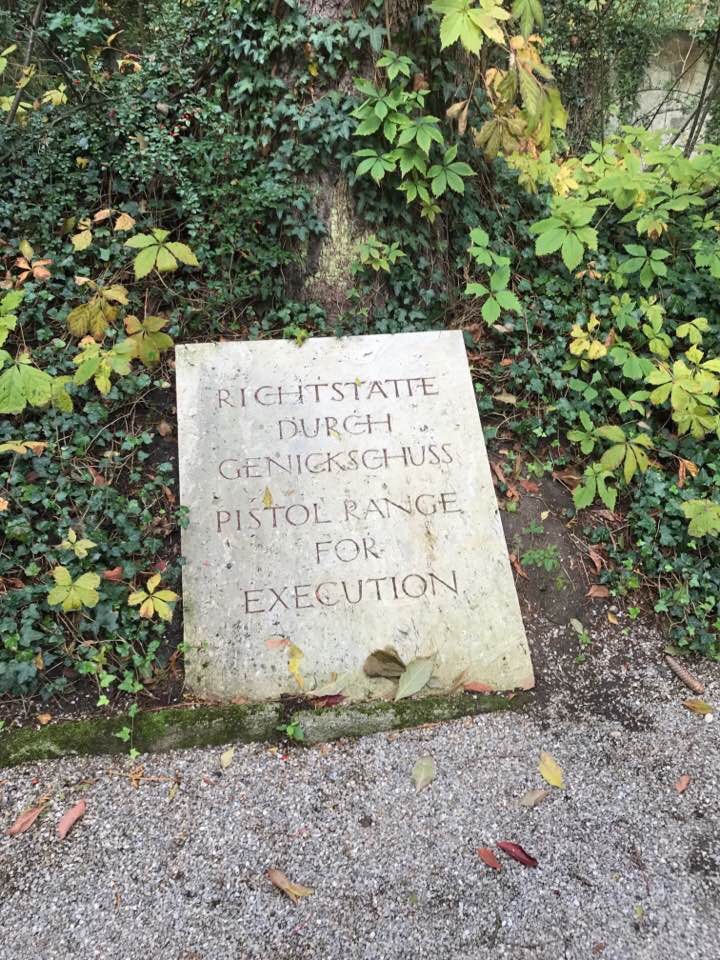

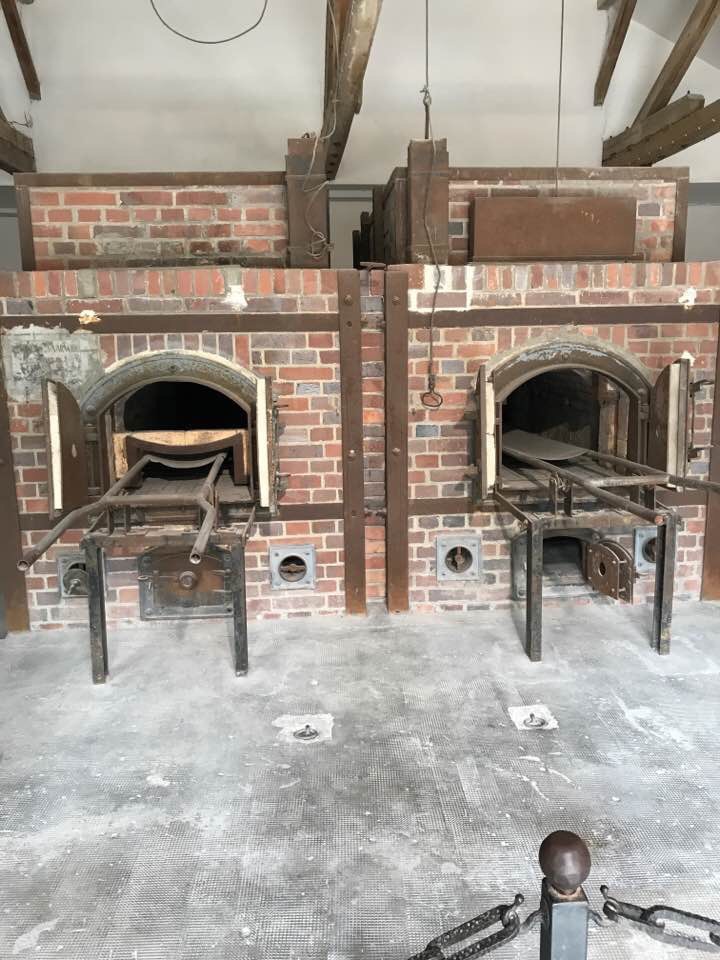
But perhaps the most chilling marker was at the place where SS guards executed prisoners up close and personal with a pistol shot to the nape of the neck. The wall behind where they knelt still stands a long with the blood ditch. After that I walked to the crematorium. At the south end there is the delousing station. The camp was designed with a gas chamber for which there is no credible information of it ever being used. Instead, prisoners who were no longer fit for work were either given lethal injections in the infirmary, sent to extermination camps, or the former T4 Euthanasia site in Hardheim.

Had it been used the the procedure would have been much like the other camps where the unknowing prisoners walked in their camp uniforms which were then removed so they could go into a waiting area before they entered the “shower” or as it is marked over the entrance, the Brausbad. At Dachau this cynically named room was the a gas chamber that was designed to hold up to 150 prisoners. Once they were in the chamber the specially constructed doors which would make the chamber airtight were shut. Then SS men on the roof would release canisters of Zyklon-B gas into it. Within minutes the prisoners were dead, their bodies showing their final agony as many tried to escape the chamber. This was common at other camps as well as in the extermination camps.


Once the executioners had determined that the prisoners were dead and the gas was evacuated from the chamber, other prisoners would enter to remove the bodies to another waiting room, in which the bodies were staged before they were taken to the four chamber crematorium for cremation. Their ashes were then deposited in the areas nearby. At the end of the building another waiting room contained bodies of other prisoners who had been executed by pistol, or died of beatings, whippings, or disease.
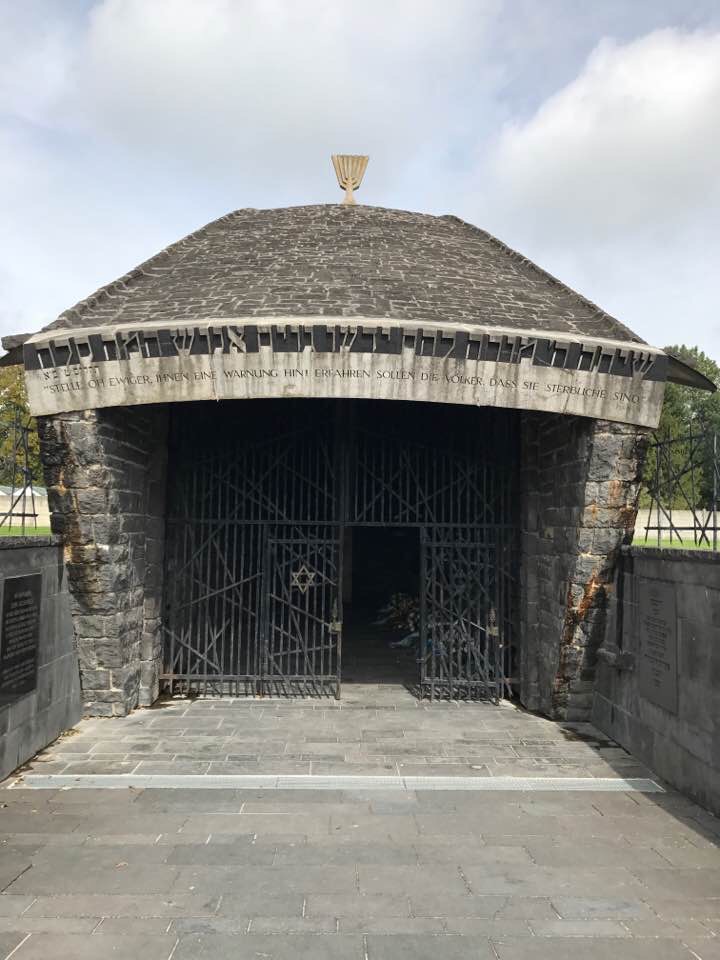
The walk through those areas of the camp as well as the walk up the Path of Remembrance brought me close to tears at many points as I imagined what it must have been like. I was in a somber mood when I left that area and walked past the Russian Orthodox, Protestant, Catholic, and Jewish religious shines along the north edge of the camp. I think that the Jewish one was the most poignant to me. Across it were the words of Psalm 9:21 in German, and as one walks down into it a hole at the top off the monument’s roof allows light to stream into the darkness.
Finishing that I walked down the eastern wall and fence, once again noticing the guard towers, but about halfway down I turned right and walked over to the center street between the rows of prisoner barracks, the street known as Appelallee where the prisoners were assembled multiple times per day for head count and inspection purposes. As I walked down that street which is now lined with trees and markers denoting which prisoner block was at each spot I could almost see the images of the emaciated prisoners falling out for inspection and their brutal guards.

Finally I arrived back at the area in front of the headquarters building which due to a recent commemoration was decorated with wreaths from the German government, the State of Bavaria, Israel, Romania, and other nations. The words Never Again were prominently displayed. As I walked out of the camp I saw a dedication in English, German, French, and Russian which said:

May the example of those who were exterminated here between 1933 and 1945 because they resisted Naziism – help to unite the living for the defense of peace, and freedom and in respect for their fellow man.

I left the camp and decided to take the bus back to the train station where twenty minutes later I was back on a S-Bahn train to Munich.

You may wonder why I took the time to go into such detail about this walk. The answer is the same that I choose to walk civil war battlefields, it is to being to try to understand what the people there were seeing and experiencing. Of course there were the prisoners who were so savagely treated by their jailers. Then there were the bystanders, the citizens of Dachau and other German cities who watched as Jews, political enemies, and others were marched to the camp, which was not a secret installation. Finally, there were the perpetrators, very few of whom were punished for their actions.

But another reason is that the survivors, be they victims, perpetrators, or bystanders are rapidly passing away. Soon none will be left. When that happens it is up to us the living to ensure that this is not forgotten and that those murdered at Dachau, the other Concentration Camps, the extermination camps, and those killed by the murder squads that went from one end of Europe to the other in a systematic attempt to wipe every Jew that they could find off of the face of the earth. Yes, there were other victims, but the Nazi crusade against the Jews knew no boundaries, physical or time included. Unlike every other genocide it extended beyond national borders, or time; it was an eschatological crusade that by the will of Hitler was limited by only one factor, the complete military defeat that was inflicted on Nazi Germany by those who she attacked.

Finally, the story must be told because there are those who either claim it didn’t happen, or are tired of talking about it. In Germany those include leaders of the new-Nazi AfD (Alternative for Germany) Party. In the United States, Britain, and other nations there are members of many new-Nazi and Alt-Right groups who desire very much the same thing, but if decent people decide not to speak out, if we remain silent, there is nothing anywhere that will keep these ideological descendants of Hitler from beginning it again, if not to the Jews, to other despised racial, religious, ethnic, or ideological groups. We live in a world where demagogues take advantage of people’s legitimate anxieties and deeply ingrained prejudices to stir up ungodly anger and hatred in order to both gain new followers and to incite those followers to a campaign of violence.

Doctor Timothy Snyder wrote:

“The European history of the twentieth century shows us that societies can break, democracies can fall, ethics can collapse, and ordinary men can find themselves standing over death pits with guns in their hands. It would serve us well today to understand why.”

Today among other things I will visit sites associated with Sophie Scholl. She was a young Christian college student who led the opposition group the White Rose, which during 1941-1943 attempted to tell the truth about what the Nazis were doing. They were found out, and most after trial were beheaded in Munich. There is a small marker to her and the group just about a block from the hotel on the wall of a building. Her grave is in a cemetery less than a mile from the hotel.

The one thing about Germany as opposed to other nations, including Japan in China, Korea, and much of Asia, Russia and the mass exterminations of Stalin’s time, Belgium in the Congo, Britain in many of its colonies, much of Eastern Europe, Turkey, and yes, even the United States has faced its responsibility to remember the victims of their most evil and lawless government. If only other nations would take such deliberate steps to acknowledge their crimes. It may have taken over a generation for that to become a part of Germany’s being and part of their moral voice today. In Germany the monuments stand not to the perpetrators, but to the victims. An they are not just monuments, dedicated to memory, but the German words Denkmal and gedenkstatte contain the German word for think, meaning that they are not just there for people to remember a mythological past, but rather to be a part of the now living the history of those days for the living to ponder and to serve as a warning that it can happen again.

In a world where nothing is guaranteed and where those who deny or minimize the Holocaust attempt to find legitimacy and to silence good people I have to speak up. I cannot allow myself to become a bystander and let it all happen again, not to the Jews or anyone else.

So until tomorrow,

Peace

Padre Steve+

2 Comments

Filed under ethics, faith, History, holocaust, nazi germany, News and current events, Political Commentary

Retirement Honors

Friends of Padre Steve’s World,

William Shakespeare wrote in his play Henry V:

This story shall the good man teach his son;

And Crispin Crispian shall ne’er go by,

From this day to the ending of the world,

But we in it shall be remembered-

We few, we happy few, we band of brothers;

For he to-day that sheds his blood with me

Shall be my brother; be he ne’er so vile,

This day shall gentle his condition;

And gentlemen in England now-a-bed

Shall think themselves accurs’d they were not here,

And hold their manhoods cheap whiles any speaks

That fought with us upon Saint Crispin’s day.

Today I have the honor or participating in the retirement ceremony of my friend Vince Miller at Naval Station Norfolk. He is retiring from the Navy Chaplain Corps as a Commander after 24 years of service. He is a dear friend and a man of great integrity and one of the conscientious men that I know in the Chaplain Corps. He has served with the Marines, as well as at sea, and with the SEALS. He has served in Iraq, and has done much to better the lives of people at a number of shore installations as a base Chaplain and pastor.

I appreciate Vince’s friendship and I am pleased that I will have the honor or participating in his retirement ceremony. Lord willing in not too many years I will be retiring too, but with nearly two full careers between the Army and the Navy spanning nearly 40 years when I retire in 2020 or 2021.

But for those who have never served it is hard to fully appreciate what a man like Vince, and his family, have accomplished and endured in his 24 years of service. This is not a vocation for the faint of heart, or those who are enamored with uniforms and the possibility of having power over the lives of others. To be a chaplain and a naval officer one has to really desire to put others first and be a servant leader. I know that there are officers and including a good number of chaplains who are not that, but in fact are quite toxic, I have served under a number of them in my career, so when a good chaplain like Vince retires there is always a void left.

However, Vince is, and always has been a servant leader who has likewise endured much at the hands of toxic leaders. But that being said he has always remained humble and devoted to caring for the people of God in the military, regardless of their rank, position, race, creed, color, religion, gender, or sexual preference. He sees people as people, created in the image of God who are all worthy of being cared for, respected, and loved.

We lose a fine chaplain tomorrow. I know that Vince will continue to care for and serve people as a minister in his church regardless of what he does next in life, and that he will always be my friend and care about me.

I think Vince would agree with the words of Admiral William McRaven, a Navy SEAL and the former head of U.S. Special Forces Command:

“Remember… start each day with a task completed. Find someone to help you through life. Respect everyone. Know that life is not fair and that you will fail often. But if you take some risks, step up when times are toughest, face down the bullies, life up the downtrodden, and never, ever give up – if you do these things, then you can change your life for the better… and maybe the world!”

I am honored to have a part in his retirement ceremony today, for he is worthy of being honored for his service to God and country. It is an honor to have served with him, for he truly is my brother.

Peace

Padre Steve+

1 Comment

Filed under faith, Loose thoughts and musings, Military, shipmates and veterans, US Navy

I like Jesus Very Much, but…

Friends of Padre Steve’s World,

I returned from my extended weekend near Washington D.C. this afternoon looking at a world that seems to me to be headed for the abyss I was heartened to see my wife Judy sticking it to greedy and rude people, not that there is anything wrong with what she did. But truthfully, if there is anything that pisses me off more than anything it is the supposed Christians who are the loudest in proclaiming their devotion to Christ are the rudest, most disrespectful, and entitled people that I have ever seen. I think, what the hell, no wonder people are fleeing the church and want nothing the do with Jesus. As for me, like Pedro Cerano, “Jesus, I like him very much, but he no help with curveball.”

I hate to say that but it is true. The people who have the most bumper stickers, t-shirts, and voice the most platitudes about Jesus and his love are sadly some of the most despicable people that I have ever met. So this weekend at an event where a number of people were both the most hateful and entitled, all while holding their “faith” above others, I decided to wear t-shirts fro breweries and bars throughout the weekend.

I’m sorry to sound so harsh, but if your faith is founded upon demeaning others then the Jesus that you worship above all, who is no help with the curveball won’t help you. Being a rather merciful kind of guy I do hope that you have purchased your asbestos water-skies for your eternal vacation on the Lake of Fire, otherwise it will real suck if I read the Bible correctly.

Honestly, if I see a post by someone blaming whatever misfortune, be it a natural disaster, or war on some poor people who happen not to be of white European descent, or who do not meet the supposed moral standards of these Pharisees, will first excoriate them, and then block them from any social media interaction. I have reached the point that while they can post their shit anywhere else, but I will not allow them to do so here or any of my other social media sites. I won’t be a party to it. To do that is simply to be a party to evil masked as godliness, and I cannot do that. If John 3:16 only applies to some people then the hell with it. Again that may sound harsh but what were the earliest disciples of Jesus talking about? That is a rhetorical question so don’t even try to go there.

Anyway. It has been a long day and since my return home I have had enough to drink. So if you want to challenge me to a fight it will be fair, because I’ve had more than enough to drink.

But since when this is officially posted I will be awake after a full night of sleep, you might stand a chance.

So anyway, until tomorrow,

Peace,

Padre Steve+

10 Comments

Filed under Baseball, christian life, faith, Religion

Thoughts on Labor Day

Friends of Padre Steve’s World,

Yesterday was Labor Day and sadly many people don’t really understand its significance. For decades organized labor has been demonized by the descendants of people who died to secure decent working conditions, wages, and benefits for regular hard working people. But most of the people lucky enough not to have to work on Labor Day really don’t know why it it matters, and whips in spite of those who despise labor and care not a whit about working people, who simply to use business terminology are simply human capital or resources.

So today I am digging into the vault to explore why Labor Day and what it represents matters to us now. This article is one that I have taken the time to edit and update.

Until tomorrow,

Peace,

Padre Steve+

Abraham Lincoln, who was perhaps our only President who was a real working man once said, “If any man tells you he loves America, yet hates labor, he is a liar. If any man tells you he trusts America, yet fears labor, he is a fool.” Likewise, Adam Smith wrote:

“In regards to the price of commodities, the rise of wages operates as simple interest does, the rise of profit operates like compound interest. Our merchants and masters complain much of the bad effects of high wages in raising the price and lessening the sale of goods. They say nothing concerning the bad effects of high profits. They are silent with regard to the pernicious effects of their own gains. They complain only of those of other people.”

It seems that nothing about humanity ever changes, even so it is hard to believe that at one time American workers had no rights and I am not talking about African American slaves who as slaves didn’t even count as human beings. No I’m talking about the people Mel Brooks called in Blazing Saddles: “the white God fearing citizens of Rock Ridge” and for that matter every place and every race in America.

It was not until the mid-1800s in the United States and Europe that workers began to organize and protest for the right to decent wages and working conditions. But this came at a cost; the loss of jobs, homes, property, prison, deportation, deportation, and death.

There were many instances when this cost workers and labor organizers their lives. Employers, often backed by heavily armed private security contractors like the Pinkerton Agency, used deadly force to break up peaceful strikes. In the days of the Robber Barons, when business ran the government at almost every level, employers frequently called in local and state law enforcement, as well as the National Guard, and occasionally Federal troops to break strikes. They played various ethnic and racial groups off of each in order to divide the labor movement. There are hundreds of instances of such violence being used against workers, in some strikes the dead numbered in the hundreds.

Some of these attacks on workers occurred in major cities, others at isolated work sites and factories. Some are famous, the Haymarket Massacre of May 4th 1886 in Chicago, the Pullman Strike Massacre of 1894, the Homestead Strike and Massacre of 1892, the Lattimer Massacre of 1897, the Ludlow Massacre of 1914, and the Columbine Mine Massacre of 1927.

Others less so, but there was more. In the Bisbee Deportation of 1917 1300 striking miners and their families were deported from their homes in Bisbee Arizona by 2000 armed deputies, put in box cars and transported 200 miles to the New Mexico desert, where without food, water or money they were left. There was the Triangle Shirtwaist Factory Fire where managers locked the doors in order to ensure that the fleeing women workers did not put anything unauthorized in their purses. One hundred forty-four workers, mostly young women died, many jumping from the burning building to their death.

Early labor organizations such as the Knights of Labor led the effort to bring about better conditions. For doing so they were labeled subversive and even called communists. Their meetings were often attacked and the leaders jailed and some lynched.

The sacrifices of those early workers, and organizers are why we have Labor Day. One of the early American labor leaders was a man named Eugene Debs. Debs eventually became a Socialist, but he said something remarkable which still is as timely as when he uttered the words:

“I am opposing a social order in which it is possible for one man who does absolutely nothing that is useful to amass a fortune of hundreds of millions of dollars, while millions of men and women who work all the days of their lives secure barely enough for a wretched existence.”

I wish that wasn’t true but it is. The Social Darwinists who follow Ayn Rand as if she were the Prophet and who populate Wall Street boardrooms and every major school of business ensure that it is. The disparity between wage laborers and CEOs is higher than it has ever been. But I digress…

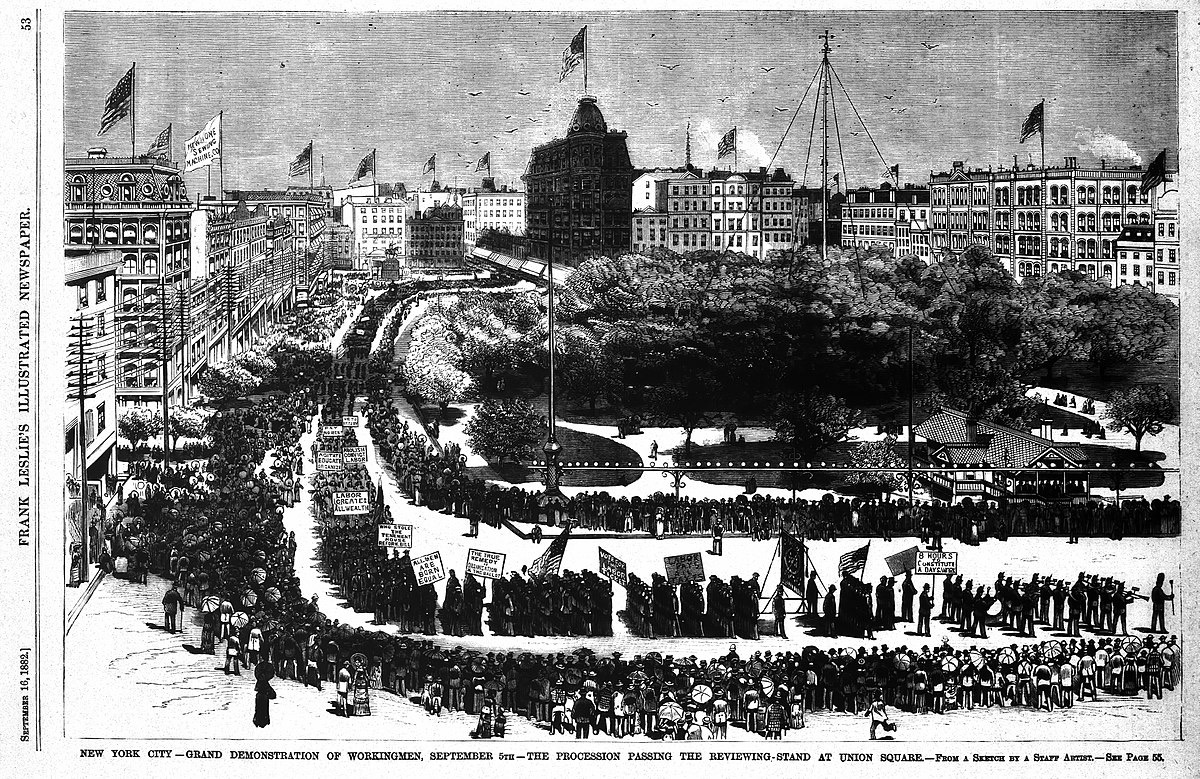
On September 5th 1882 the first Labor Day was observed when members of several Unions in New York City organized the first Labor Day parade. The police came armed and ready to intervene if the workers got out of hand, but the parade was peaceful. It ended and the marchers moved over to Wendell’s Elm Park where they had a party. Twenty-five thousand Union men and their families celebrated, with hundreds of kegs of lager beer.

Within a few years many states began to institute Labor days of their own. In 1894, just days after the violent end of the Pullman strike in which Federal troops and Marshalls killed 30 workers and wounded 57 more, Congress and President Grover Cleveland rushed through legislation to establish a Federal Labor Day.

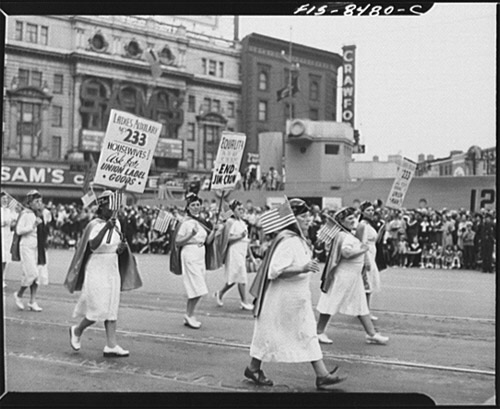
My Great Aunt Goldie Dundas was a labor organizer for the International Ladies Garment Worker’s Union in West Virginia in the 1920s – 1950s. I wish I had gotten to really know her, but she died when I was about 8 or 9 years old. Sadly the workers represented by that Union have had almost all of their jobs in the textile industry outsourced to China, India, Pakistan, the Caribbean, and Bangladesh where cheaply made garments are produced, and workers abused. The examples of mass deaths due to safety issues and fires in Bangladeshi factories are too numerous to list. But then who cares? The fact is you can drive through many parts of the South and see the poverty created by the exodus of these Union employers, the textile industry, which was part of the fabric of the South is gone. Empty factories and poverty stricken towns dot the countryside. I saw a lot of them living in Eastern North Carolina, towns that once thrived are ghost towns, riddled with crime, unemployment and no hope, unless Wal-Mart opens a store in town. Ironically it sells the clothing made overseas that used to be manufactured by the parents, grandparents and great-grandparents of the people who live there today.

Adam Smith, the father of Capitalism understood it in a very different manner than those who claim to be Capitalists today. He wrote in his magnum opus, The Wealth of All Nations:

“In regards to the price of commodities, the rise of wages operates as simple interest does, the rise of profit operates like compound interest. Our merchants and masters complain much of the bad effects of high wages in raising the price and lessening the sale of goods. They say nothing concerning the bad effects of high profits. They are silent with regard to the pernicious effects of their own gains. They complain only of those of other people.”

The fact is that today, labor is under threat. Unions have been demonized by politicians and pundits and their power and influence much reduced. Some of this was due to their own success in improving conditions from workers, and not just Union workers. When my dad retired from the Navy in 1974, he went to work at one of the few non-Union warehouses of the John Deere Company in Stockton, California. While they were not union, the workers received every benefit won by the majority of the workers in the company who were members of the United Auto Workers Union. Due to that my dad had high wages, excellent working conditions and benefits. The company had a program for the children of workers, which allowed them to work in the summer in the warehouse and receive incredibly high pay and benefits while in college. I did that for two years, and it helped pay for much of my college. I was not a union member but I benefited because Union men and leaders did the hard work to make that job happen.

However, in many places, Unions and labor are under attack, sometimes not just by corporations, but also by state governments. Job security and stability for most American workers is a thing of the past. Federal and State agencies charged with protecting those rights, including safety in the workplace are being cut in the mad rush to reduce government power. Corporations are offshoring and outsourcing jobs without regard to American workers or the country itself. Part of that is due to globalization and I understand that, but these companies frequently relocate jobs to places where they can exploit workers, deny them benefits, pay them less, and suffer no penalty for ignoring safety procedures or harming the environment. It seems to me that we are returning to the days of the Robber Barons. I wonder when violence against workers and those who support them will be condoned or simply ignored.

Pope Leo XIII wrote in his encyclical Renum Novarum:

“The following duties . . . concern rich men and employers: Workers are not to be treated as slaves; justice demands that the dignity of human personality be respected in them, … gainful occupations are not a mark of shame to man, but rather of respect, as they provide him with an honorable means of supporting life. It is shameful and inhuman, however, to use men as things for gain and to put no more value on them than what they are worth in muscle and energy.”

He also wrote:

“Equity therefore commands that public authority show proper concern for the worker so that from what he contributes to the common good he may receive what will enable him, housed, clothed, and secure, to live his life without hardship. Whence, it follows that all those measures ought to be favored which seem in any way capable of benefiting the condition of workers. Such solicitude is so far from injuring anyone, that it is destined rather to benefit all, because it is of absolute interest to the State that those citizens should not be miserable in every respect from whom such necessary goods proceed.”

But sadly there are far too few church leaders of any denomination who will take the side of workers or the poor, and when they do they are either condemned by the disciples of Ayn Rand or politely thanked and ignored by politicians and corporate leaders.

So please, when you celebrate Labor Day, do not forget that it is important, and that we should not forget why we celebrate it. If we forget that, it will become a meaningless holiday and our children may have to make the same sacrifices of our ancestors.

Labor Day is a day to remember the men and women, some of them former soldiers, workers, labor organizers, and leaders; some of whom were killed by National Guard and Federal troops for their effort, who paved the way for workers today. We cannot forget that. So when you see a politician attacking Labor and seeking to diminish workers rights or benefits ask them what Abraham Lincoln or Adam Smith would think. If they can’t answer, turn your backs on them and start fighting for what is right.

Dr. Martin Luther King Jr., who always stood for the rights of workers no-matter what their race, creed, or color, said: “We must rapidly begin the shift from a “thing-oriented” society to a “person-oriented” society. When machines and computers, profit motives and property rights are considered more important than people, the giant triplets of racism, materialism, and militarism are incapable of being conquered.”

This my friends is why Labor and the protection of working people from those who abase them, mistreat them, and exploit them is so important.

7 Comments

Filed under ethics, faith, History, labor, laws and legislation, News and current events, Political Commentary

The Glory of Solitude


Friends of Padre Steve’s World,

Today I am writing late after a long but good day at a meet up for owners of Papillon dogs. Saturdays are usually my time to be alone and spend time with Judy and our dogs doing as little as possible. I use them to recharge. I’m getting a lot more social interaction this weekend and that is not a bad thing, but every so often I take the time to break away to spend a bit of time alone, usually with my dogs Izzy and Pierre sitting on my lap. Both happen to be quite sensitive and know when having them there is therapeutic for me.

Since Thursday when I walked the Antietam battlefield I have been musing on the value of solitude and the importance that it has in my life. Paul Tillich wrote: “Our language has wisely sensed these two sides of man’s being alone. It has created the word “loneliness” to express the pain of being alone. And it has created the word “solitude” to express the glory of being alone.”

I am a natural introvert, a thinker, and soldier, who has found his vocation as a priest, and scholar. I think had I been born 800 years ago that I could have easily been a scholastic warrior monk. Thus I live in a world that is foreign to many people. I value community, friendship, and the camaraderie found in some parts of the military. I have learned over the years to mix rather well in social settings, I stay very busy, and I am bombarded with many issues on a daily basis at work as well as by having to know what is going on in the nation and world because of what I do.

I also know what I need, in the words of Elwood Blues, to “live, thrive, and survive,” and one of those things is solitude, which at means for me, venturing from the busyness and chaos of life, and of being inundated by an often toxic stew of nonstop information which dulls the senses. I have to have times of solitude in order to survive, but for much of my life I tried to fill those times alone by doing other doing things, even good things like praying the Daily Office or reading scripture, rather than actually being alone with myself.

Being alone does not necessarily mean being lonely. Loneliness, usually denotes a sense of, pain, abandonment, and often friendlessness, or even being unloved or unlovable. People can be terribly lonely even in a room full of people. There have been times in life, especially in my journey since returning from Iraq in 2008 that I felt the pain and despair of loneliness even when surrounded by people. I also know what it is like to have people who I believed were friends abandon me. But that has nothing to do with being alone or knowing the richness of solitude.

Everyday try to disconnect from people, social media, and other distractions in order to be alone with my thoughts. This can be dangerous as because in solitude we are quite often faced not by the chaos of what is outside of us, but the chaos, and the unresolved conflicts within us. Being alone and seeking solitude is so disquieting at times that many people want to flee from it, because the outer chaos can be used as a shield to mask us from the disquiet within. Thus it takes a certain amount of discipline to remain in solitude, especially in those times when our own demons of fear, anxiety, disappointment, failure, bad memories, unresolved conflicts, angry feelings, and impulses seek to overwhelm us.

Yesterday I wrote about my 17 mile walk through the Antietam battlefield and I think that was one of the most rich times of solitude that I have had in a long time because it was much longer than what I usually get. It was punctuated with a chat with an 88 year old resident of the area who was coming up the trail from the Burnside Bridge with his fishing pole in hand. It was an interesting encounter because during the first 11 miles or so of the walk I had come across very few people and most of them seemed to be in a hurry. But that seems to be the case almost everywhere.

But this gentleman was fascinating, and though I was intent on getting to the bridge, I knew that I had to remain. I listened as he told me about some the the changes in the area since he was a child, homes and barns that no longer existed except as ruins, the people who lived in them, and how as a child he would fish or hunt along the creek. When he found out that I was a in the military and also a historian he lit up. He told me about his and his son’s military experiences, and then he told me about his visit as a child to Gettysburg in 1938 on the occasion of the dedication of the Peace Monument. He described the elderly veterans of North and South, as well as seeing President Franklin Roosevelt deliver his speech on that day. Of course I have read about that event, and seen pictures and newsreel footage of it, but I had never talked to an eyewitness, and he may be the only eyewitness that I will ever meet. My solitude was was enriched. I was reminded of the words of C. S. Lewis who observed, “We live, in fact, in a world starved for solitude, silence, and private: and therefore starved for meditation and true friendship.” As we parted, he walking back toward the new Burnside Bridge and me heading to the site where Burnside’s regiments threw themselves across the old bridge in the face of murderous Confederate fire, he said, “I hope to see you next year,” and I told him I hope so too, and yes I meant it. I then continued my walk all the while contemplating what happened on the battlefield, imagining what it had to be like for those soldiers, and also contemplating my own life. It was liberating.

Solitude is important for many reasons, but it is especially important for leaders at any level, or those who care for others. Secretary of Defense James Mattis is a historian as well as devotee of the writings of Marcus Aurelius. Aurelius was a wise man and he wrote “It is in your power to withdraw yourself whenever you desire. Perfect tranquility within consists in the good ordering of the mind, the realm of your own.” Yes it is possible to withdraw and to seek solitude, but it is also hard, yet necessary. General Mattis noted:

 “Solitude allows you to reflect while others are reacting.  We need solitude to refocus on prospective decision-making, rather than just reacting to problems as they arise.  You have some external stimulus, then you go back to your experience, your education, and you see what needs to be done.”

Solitude is a good thing. It is often, at least for me, an uncomfortable time as I wrestle with my inner demons, but in those times of inner struggle I often discover truths about myself as well as the world around me, sometimes coming in the form of old men who enter my solitude and enrich my life. The two, solitude and companionship on the journey are import, as Dietrich Bonhoeffer wrote:

“Let him who cannot be alone beware of community… Let him who is not in community beware of being alone… Each by itself has profound perils and pitfalls. One who wants fellowship without solitude plunges into the void of words and feelings, and the one who seeks solitude without fellowship perishes in the abyss of vanity, self-infatuation and despair.”

I hope that this makes some sense as I don’t often write articles like this, but as I thought about it today I realized that I ought to write about it, if for nothing else than not writing about the Devil’s Triangle of any of the various crises facing all of us. Sometimes it is important to step away for a time in order to know what to do.

Have a great day and until tomorrow,

Peace

Padre Steve+

1 Comment

Filed under faith, Loose thoughts and musings, philosophy