Category Archives: History

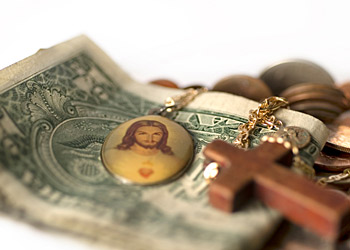
The Gospel of Wealth & War

phillipine harvest

Friends of Padre Steve’s World

Since I am out of country I am pre-posting articles that will be released while I am away. This is a short bit from my the second chapter Civil War and Gettysburg text. The chapter as a whole deals with religion and ideology as chief contributing factors to the war, its conduct by both sides and the post-war myth of the Lost Cause. This section briefly looks at how the war and the earlier concept of Manifest Destiny brought about a new paradigm in which the message of earlier evangelicalism which focused on conversion, salvation and personal piety was transformed into a message of wealth and war. The transformation was lasting, and is something that American Christianity has never recovered from.

Peace

Padre Steve+

Secession and war was now on the horizon, and despite well-meaning efforts of some politicians on both sides to find a way around it, it would come. Religion had been at the heart of most of the ideological debates of the preceding quarter century and now it came to symbolize the causes of both sides. The belief in Manifest Destiny had led Americans to violate nearly every pronouncement of the founders and embark on a policy of imperialism, conquest, and even the extermination of millions in its name. As far as preventing conflict, Evangelical Protestants on both sides had not only failed to prevent the war; to the contrary those very Evangelical leaders were more than instrumental in bringing on the war as they:

“fueled the passions for a dramatic solution to transcendent moral questions. Evangelical religion did not prepare either side for the carnage, and its explanations seemed less relevant as the war continued. The Civil War destroyed the Old South civilization resting on slavery; it also discredited evangelical Protestantism as the ultimate arbiter of public policy.” [1]

When war came Evangelical Protestants on the opposing sides attempted to frame their cause in the light of their nearly identical theology, sometimes seeing it is a prelude to the return of Christ and the beginning of the millennium. An agent of the American Tract Society named Hollis Read was one, he proclaimed:

“A few more such strides, a few more such terrific struggles and travail-pains among the nations; a few more such convulsions and revolutions, that shall break to pieces and destroy what remains of the inveterate and time-honored systems and confederations of sin and Satan and the friends of freedom may then lift up their heads and rejoice, for their redemption draweth nigh. The Day of Vengeance Has Always Preceded And Been preparatory to the Year of the Redeemed.” [2]

Southerners too saw the coming war in similar triumphant theological ways. Some saw in the Confederacy the embodiment of Christ. Methodist minister William Seat of Texas wrote, “The One like the Son of Man has appeared in the rise of the Confederate States.” [3] He wrote that the South would take its place among the nations through it “liberty and pure Christianity would go abroad on earth.” He noted that soon the “peaceful millennial reign would dawn” and the stone from the mountain – the South – would be glorified: “Then the stone cut out from the shall become a great mountain and fill the earth. There shall be no more curse nor death nor sorrow nor crying. There shall be fullness of joy and pleasures forevermore. We solemnly believe that the great prophetic periods have closed: the mystery is finished and the vision of prophecy unsealed. The Final Kingdom has arisen, and the Divine Redeemer has come to reign.” [4]

As the war went on ministers and theologians saw their theological presuppositions dashed on the shoals of reality of William Tecumseh Sherman’s understanding, that “war is hell.” As the war went against the Confederacy, Southerner ministers had to re-frame the cause and the reasons for defeat, which most did not ascribe to slavery, but rather deficiencies in Southern character, and economic policy. In the North the faithful were shaken by the horrendous cost of the war. One of Charles Finney’s correspondents wrote in 1864, “So many are skeptical, doubtful, so many good people are cutting loose from creeds & forms….I am sometimes tempted to ask whether prayer can make any difference.” [5]

American Religion, especially Protestantism, which had served so much to bring about the war, instead became one of its most prominent casualties. American Protestantism shifted its emphasis; some ministers preached a gospel of wealth to align themselves and their congregants with the rising tide of the new rich. Russell Conwell, a former Union soldier in the war turned Baptist preacher, whose church later formed Temple University delivered his Acres of Diamonds sermon in which he proclaimed, “Money is power, money is force…. I say to you to get rich, and it is your duty to get rich.” [6] The sermon became popular throughout the country, and people did not tire of it.

350-prosperity-gospel

The theology of wealth was not political, it preached no moral crusades, it called for no sacrifice, it considered not justice, and it appealed to people’s basest instincts and left little room for sentiment. The poor, the newly free but oppressed African American and others were left behind. Walt Whitman was concerned that the churches encouraged people to pursue everything but the common good. He wrote, “genuine belief seems to have left us…. The spectacle is appalling. We live in an atmosphere of hypocrisy throughout…. A lot of churches, sects, ect., the most dismal phantasm I know, usurp the name of religion.” [7]

Southern Evangelicals retreated in into a skepticism and denial of human progress, for if that had been the case they would have triumphed over their Yankee oppressors. After the war Southern Evangelicals “expected little from the corrupted world and expected even less from the knowledge of corrupted men, especially men of science and power. The war brought to the South a theology, as well as a politics and economics, of diminished expectations.” [8]

Never again would Evangelical Christianity play as dominant role as it did in early part of the war, and “from the 1860s onward, American Protestantism was increasingly marked by the quiet erosion of faith, and religious experience became plagued more and more decaying faith, and in an increasing appeal to feeling and imagination over confessional reason or evangelical conversion.” [9] That trend continues to the present day as if nothing as happened in the meantime. Mark Twain wrote something about Conwell’s “Gospel of Money” which echoes to the critics of the contemporary “Prosperity Gospel”:

“What is the chief end of man? – to get rich. In what way? – dishonesty if we can; honestly if we must. Who is God, the one only and true? Money is God. Gold and Greenbacks and Stock – father, son, and the ghost of same – three persons in one, these are the true and only God, mighty and supreme.” [10]

Notes

[1] Ibid. Goldfield America Aflame p.360

[2] Ibid. Guelzo Fateful Lightening p.414

[3] Ibid. Daly When Slavery Was Called Freedom p.147

[4] Ibid. Daly When Slavery Was Called Freedom p.147-148

[5] Ibid. Guelzo Fateful Lightening p.416

[6] Ibid. Goldfield America Aflame p.456

[7] Ibid. Goldfield America Aflame pp.468-469

[8] Ibid. Daly When Slavery Was Called Freedom p.153

[9] Ibid. Guelzo Fateful Lightening p.416

[10] Ibid. Goldfield America Aflame p.457

2 Comments

Filed under faith, History, Religion

Exploding the Myth of Christian America

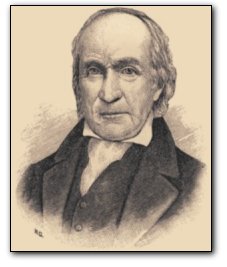
“The notion of a Christian commonwealth should be exploded forever.” John Leland, Virginia Baptist and Pioneer of Religious & Civil Liberties 

leland-1

John Leland

Friends of Padre Steve’s World,

The whole issue of religious liberty and the right to free expression has once again come to the fore in the wake of the Obergfell v. Hodges ruling and the fairly pathetic attempt of Kim Davis and her lawyers to stop gay marriage in Rowan County Kentucky. I call the attempt pathetic because it flies in the face of the real champions of religious liberty in the United States. One of these early proponents of religious liberty and freedom in the United States was the Virginia Baptist pastor, John Leland.

Sadly, many American Christians either have never heard of him. Likewise, if they have heard of him, as the great pontificator, Mike Huckabee should have in his brief tenure as a student at Southwestern Baptist Theological Seminary; they seem to have ignored his warnings about state religion. I guess that problems in his church history and Baptist history classes were a big reason that he left seminary. Ideologues like the Huckster didn’t last at Southwestern, at least until the fundamentalist takeover in 1994 that helped destroy the academic and scholarly reputation of that once fine school, but I digress….

Leland was a friend of Thomas Jefferson and James Madison and without him it is unlikely that the First Amendment of the Constitution would have mentioned religious faith. Leland had a very personal interest in this as during the 1780s the Anglican Church in Virginia was attempting to again become the official state religion. Anglicans, with the help of local authorities were attacking Baptist congregations and even resorting to physical violence. In defiance of the Anglicans, Leland wrote:

“The notion of a Christian commonwealth should be exploded forever. … Government should protect every man in thinking and speaking freely, and see that one does not abuse another. The liberty I contend for is more than toleration. The very idea of toleration is despicable; it supposes that some have a pre-eminence above the rest to grant indulgence, whereas all should be equally free, Jews, Turks, Pagans and Christians.”

There is a form of religion and indeed the “Christian” faith that is toxic and if not treated leads to the spiritual and sometimes the physical and emotional death of the infected person.

There is a nationalized version of this supposedly Christian faith in the Untied Stats today. It is a bastardized version of the Christian faith overlaid with the thin veneer of an equally bastardized version of American history. Its purveyors are quite popular in the world of “conservative” American Evangelicalism and Catholicism.

Supreme Court Justice Robert Jackson and chief Nuremberg war crimes trials prosecutor warned us about people like them over a half-century ago. Jackson wrote, “[I]n our country are evangelists and zealots of many different political, economic and religious persuasions whose fanatical conviction is that all thought is divinely classified into two kinds — that which is their own and that which is false and dangerous.”

Pat Robertson, evangelist and founder of the Christian Broadcasting Network is an example of what Leland and Jackson warned us about. Robertson said on his program that “You say you’re supposed to be nice to the Episcopalians and the Presbyterians and the Methodists and this, that, and the other thing. Nonsense, I don’t have to be nice to the spirit of the Antichrist.” — Pat Robertson, The 700 Club, January 14, 1991. The late David Chilton was another. He wrote: “We believe that institutionally Christianity should be the official religion of the country, that its laws should be specifically Christian”

It is quite fascinating when you look at it. This faith is a combination of a selective reading of American history, Christian teaching and Biblical interpretation that mixes and matches a wide variety of mutually conflicting and contradictory traditions. This Toxic “faith” if you can call it that; is based on a reading of American and Western History, which negates, marginalizes or willingly distorts the views or contributions of those who they disagree. It does not matter of their opponents are not Christians, or were Christians, including Baptists like John Leland and Roger Williams. Due to their experiences of religious persecution, Williams and Leland refused to buy into any form of state sanctioned religion.

I find it interesting that Conservative Icon and champion of limited government Barry Goldwater had great reservations about those that sought to establish the superiority of any religion. Goldwater said on the Senate floor: “The religious factions that are growing throughout our land are not using their religious clout with wisdom. They are trying to force government leaders into following their position 100 percent.”

The leaders of this new and quasi “Christian faith” are many and include some of the most popular religious leaders in the United States such as Pat Robertson, the pseudo-historian David Barton, James Robison, Gary North, Bryan Fischer, James Dobson, Gary Bauer Phyllis Schafley and a host of others. For them the Gospel has been equated with government legislation of supposedly “Christian” values; which conveniently are defined by their political agenda, often in complete contradiction to the Gospel and to nearly 2000 years of Christian experience. North, one of the most eloquent expositors of the Dominionist movement wrote:

“The long-term goal of Christians in politics should be to gain exclusive control over the franchise. Those who refuse to submit publicly to the eternal sanctions of God by submitting to His Church’s public marks of the covenant–baptism and holy communion–must be denied citizenship, just as they were in ancient Israel.”

That is quite a statement and those who think that they can co-opt people like North, Robertson or others are quite mistaken. Goldwater realized this. What is fascinating to me is to watch these men and women advocate religious and political positions in regard to Church-State relations that completely opposite of what early American Christian and non-Christian civil libertarians imagined when our country was founded. Positions that quite often are at odds with even the historical tenants of their own faith. Their only claim to innocence can be because not a one of them have any training in history and often are even worse when it comes to their understanding of the Christian tradition, which did not begin in and will not end in the United States.

In this confused and often hateful “faith” we see men and women who hate centralized government but extol a centralized religion. I was talking with a friend who is adamantly opposed to a powerful Federal Government but extols the perfection of the centralized bureaucracy of his Roman Catholic Faith. He could not see the contradiction. I watch others who extol an almost Libertarian understanding of the government and the Constitution who supposedly in their religious tradition are from the “Free Church” who now advocate the supremacy of the Church over the State and in doing so their particular and limited understanding of Church over that of the Church Universal.

In this confused and contradictory setting there are Catholics espousing political views that are in direct opposition to the understanding of government supported by the Magisterium of the Church. There are Evangelical and Charismatic Protestants that mix and match the untenable and contradictory beliefs of Dominionism and Millennialism which involve on one hand the takeover of earthly power by the Church and the ushering in of the Kingdom of God and the understanding that earthly power is ultimately under the dominion of Satan and must be overcome by the Second Coming of Christ.

Leland wrote:

“These establishments metamorphose the church into a creature, and religion into a principle of state, which has a natural tendency to make men conclude that Bible religion is nothing but a trick of state.”

Leland was one of the most important persons in regards to the relationship of the Christian Churches to the American Government. He was a champion of the religious liberty enshrined in the Bill of Rights and helped influence both James Madison and Thomas Jefferson. He noted in 1791:

“Is conformity of sentiments in matters of religion essential to the happiness of civil government? Not at all. Government has no more to do with the religious opinions of men than it has with the principles of mathematics. Let every man speak freely without fear–maintain the principles that he believes–worship according to his own faith, either one God, three Gods, no God, or twenty Gods; and let government protect him in so doing, i.e., see that he meets with no personal abuse or loss of property for his religious opinions. Instead of discouraging him with proscriptions, fines, confiscation or death, let him be encouraged, as a free man, to bring forth his arguments and maintain his points with all boldness; then if his doctrine is false it will be confuted, and if it is true (though ever so novel) let others credit it. When every man has this liberty what can he wish for more? A liberal man asks for nothing more of government.” John Leland, “Right of Conscience Inalienable, and Therefore, Religious Opinions Not Cognizable By The Law”

When the adherents of a faith, any faith, but especially the Christian faith enlist the government to enforce their understanding of faith they introduce a toxicity that is eventually fatal when consumed and acted on.

I think that much of what we are witnessing today is much more the product of fear mongering preachers that see opportunity in their political alliances and that are willing to reduce the Gospel to a number of “Christian values” in order to achieve a political end; even if that end is ultimately destructive to the Church and to the Gospel.

The message of the Apostle Paul to the Church in Corinth was this: “All this is from God, who reconciled us to himself through Christ, and has given us the ministry of reconciliation; that is, in Christ God was reconciling the world to himself, not counting their trespasses against them, and entrusting the message of reconciliation to us.” (2 Cor 5:18-19 NRSV) 

The early church thrived when it had no early power. It thrived when it was persecuted and when the Roman government openly supported almost every religion but it. However, once it became powerful and worldly it became ensnared in affairs far from that simple message of reconciliation.

It was in this country that the various sects of the Christian faith had the opportunity to make a new start, unencumbered by the trappings of power. But instead, like those that came before us, the toxin of power has all too often seduced us. John Leland understood this and fought to ensure that all people of faith were free and unencumbered by state supported religion. He wrote:

“The liberty I contend for is more than toleration. The very idea of toleration is despicable; it supposes that some have a pre-eminence above the rest to grant indulgence; whereas all should be equally free, Jews, Turks [Muslims], Pagans and Christians. Test oaths and established creeds should be avoided as the worst of evils.”

Leland’s friend James Madison wrote to Edward Everett toward the end of his life:

“The settled opinion here is, that religion is essentially distinct from civil Government, and exempt from its cognizance; that a connection between them is injurious to both; that there are causes in the human breast which ensure the perpetuity of religion without the aid of the law; that rival sects, with equal rights, exercise mutual censorships in favor of good morals; that if new sects arise with absurd opinions or over-heated imaginations, the proper remedies lie in time, forbearance, and example; that a legal establishment of religion without a toleration could not be thought of, and with a toleration, is no security for and animosity; and, finally, that these opinions are supported by experience, which has shewn that every relaxation of the alliance between law and religion, from the partial example of Holland to the consummation in Pennsylvania, Delaware, New Jersey, &c., has been found as safe in practice as it is sound in theory. Prior to the Revolution, the Episcopal Church was established by law in this State. On the Declaration of Independence it was left, with all other sects, to a self-support. And no doubt exists that there is much more of religion among us now than there ever was before the change, and particularly in the sect which enjoyed the legal patronage. This proves rather more than that the law is not necessary to the support of religion” (Letter to Edward Everett, Montpellier, March 18, 1823).

That is the antidote to the toxic faith embodied in the politically motivated Christian Right. It stands against any idea of a state sanction or religion or a religion that like in Saudi Arabia or Iran controls the state. It stands in opposition to the beliefs of so many “Christian” religious leaders work to ensure that they control the powers of government. Attempts that try to proclaim their superiority above even the ultimate message of the Gospel that proclaims, “for God so loved the world….” 

By the way there are always results. The Puritans who many extoll were some of the most intolerant of dissenters of any group that has every held the reigns of power over the state and religion ever known in this country. Their victims included Quakers as well as American Indian converts to Christianity. The picture below of the Puritans hanging Quakers in the Massachusetts Bay Colony should give pause to anyone who thinks that such actions are not possible today should any religion gain control of political power.

Peace

Padre Steve+

3 Comments

Filed under civil rights, faith, History, laws and legislation, News and current events, Political Commentary, Religion

Who is Guilty? Racism & the Birmingham Church Bombing

SixteenthStBaptistBomb05

Friends of Padre Steve’s World

On September 16th 1963 a young Southern White lawyer in Birmingham Alabama spoke these words after a black church was bombed and the police attacked peaceful protesters:

“from anger and despair, from frustration and empathy. And from years of hopes, hopes that were shattered and crumbled with the steps of that Negro Baptist Church.”

Most Americans will not recognize the names and I would dare say that many do not even know about what happened in Birmingham Alabama 52 years ago today. At 10:22 in the morning on September 15th 1963 a bomb exploded during the worship service at the 16th Street Baptist Church. It was one of the most brazen attacks against a church in the modern era, and men who claimed to be “Christians” committed it.

MCNAIR ROBERTSON COLLINS WESLEY

Four young girls, three 14 year olds and one 13 year old were killed. Addie Mae Collins, Denise McNair, Carole Robertson and Cynthia Wesley lost their lives that day. Twenty-two other church members were wounded in an attack, which was carried out by members of the KKK and tacitly approved of by many political leaders including Alabama Governor George Wallace. Why were they killed and why were the others wounded? For the crime of being black and the crime of their church serving as a focal point of the Civil Rights movement.

Likewise, most people, including many blacks do not know that before that beginning in 1955 there had been 19 other bombings of black churches and the homes of black leaders in Birmingham before this one. But even before that outbreak of violence, Birmingham had become known as “Bombingham” because over 50 bombing attacks against blacks, black churches and black institutions in the years after the First World War.

The church had served as a focal point of the Freedom Summer where Civil Rights activists and students from around the country had met, trained and organized to register blacks to vote. This made it a prominent target for violence.

1179981

Early in the morning of September 15th four members of the United Klans of America Frank Bobby Cherry, Thomas Blanton, Herman Cash and Robert Chambliss placed a box of 10 sticks of dynamite under the church steps near the basement. A time delay detonator was set o ensure that the church was filled when the bomb went off. The blast occurred as children were entering the to listen to a sermon, ironically entitled “The Love that Forgives.”

The attack was a heinous crime and an act of cold-blooded premeditated murder that maybe a number of years before might not have made the news in much of the country. But this was 1963 and over the preceding months of the Freedom Summer opened the eyes of people across the nation to what was happening in the South. The brutal attacks on many blacks, civil rights workers and student volunteers during that time raised the profile of the Civil Rights Movement and shown the ugly hatred towards blacks held by many Southerners hidden underneath the veneer of polite Southern hospitality.

315

Blacks protested and were met with a massive police response coordinated by Governor Wallace that brought about more violence, and more dead blacks. A day later a young white lawyer, Charles Morgan Jr.; a true Southerner by right and heritage spoke to the White Businessman’s club of Birmingham. His words were forceful and to the point. Instead of simply asking why, the young man began his speech with this poignant remark:

“Four little girls were killed in Birmingham yesterday. A mad, remorseful worried community asks, “Who did it? Who threw that bomb? Was it a Negro or a white?” The answer should be, “We all did it.” Every last one of us is condemned for that crime and the bombing before it and a decade ago. We all did it.”

He continued, A short time later, white policemen kill a Negro and wound another. A few hours later, two young men on a motorbike shoot and kill a Negro child. Fires break out, and, in Montgomery, white youths assault Negroes. And all across Alabama, an angry, guilty people cry out their mocking shouts of indignity and say they wonder, “Why?” “Who?” Everyone then “deplores” the “dastardly” act. But you know the “who” of “Who did it” is really rather simple.”

Not only was the attack heinous, but, the response of many in law enforcement at the local level and even at the office of FBI Director J. Edgar Hoover was criminal. Hoover refused to investigate, and although a witness identified Chambliss, he was not charged with the bombing; instead he was charged for having a case of dynamite without a permit. He was fined $100 and given a six-month jail sentence.

765026275

Thought FBI agents had investigated the crime and discovered evidence against all four men, Hoover ordered the evidence not be provided to local or Federal prosecutors. So for eight years the crime was covered up.

However in 1971 Bill Baxley was elected Attorney General of Alabama. Baxley re-opened the case and requested the FBI files, which had been suppressed by Hoover, who had died in 1972. In 1977 Chambliss was indicted and convicted of first degree murder, he died in prison. Blanton was tried in 2001, convicted of four counts of murder and sentenced to life in prison. Cash died in 1994 with ever having been charged with a crime and Cherry was convicted in 2002, sentenced to life in prison and died in 2004.

The attack and the deaths of the four girls served as a catalyst in the Civil Rights Movement. In 1964 President Lyndon Johnson signed the Civil Rights Act. However it did not end the fight for equality, and others would die in its aftermath, including Dr. Martin Luther King Jr. who died at the hands of an assassin’s bullet less than 4 years later.

Since the passage of the Civil Rights Act of 1964 and the Voters Rights Act of 1965 many blacks have been elected to local, state and federal offices or served in some of the highest ranks of the military, judiciary, and at the Cabinet level. Two, Colin Powell and Condoleezza Rice have served as Secretary of State, two, Eric Holder and Loretta Lynch, as Attorney General of the United States; one, Clarence Thomas, as a Justice of the Supreme Court; and one, Barak Obama elected as President of the United States. Black sports stars, actors and singers are celebrated as heroes among much of society.

But despite these advances, racism is still quite prevalent. One of my former co-workers from Georgia, a white Southern Baptist minister and retired military chaplain noted that many whites may not be explicitly racists in interpersonal relationships with blacks, but have an attitude that blacks still need “to stay in their place.” He noted that he thinks that quite a few believe that many whites believe that this is a large part of the reason that President Obama is opposed and even hated by so many whites. It is not just politics or ideology. While politics may play a role the root of the hatred is racism because I cannot for the life of me imagining any white Democrat, including Hilary Clinton getting this kind of treatment.

But the sad truth is there still is an undercurrent of unrepentant racism in the country and not just the South. In fact many places in the South have seen greater advances in racial relations than other parts of the country. That is not to say that there are those who would attempt to disenfranchise blacks, some of the voting laws recently passed are designed to ensure that significant parts of the black population, specifically the elderly and students living away from home have greater difficulty voting. It is actually a more insidious method than past Jim Crow laws because the drafters of these laws hope to keep just enough black and other poor or minority voters from voting to ensure that they maintain power. Some of those who drafted or supported these state laws designed to disenfranchise voters have openly admitted that fact.

Not only is racial prejudice experienced by blacks, it is experienced by many Americans of Hispanic origins, some of Asian descent but also by those of Middle Eastern, Iranian, Pakistani or Indian descent. And yes, people of all races, including racial, ethnic and religious minorities can be as racist and violent as the men who bombed the 16th Street Baptist Church 52 years ago. Racism is an ugly part of our human condition and no matter whom it is targeted against, and who does the targeting, it is wrong and needs to be fought.

The Southern Poverty Law Center http://www.splcenter.org lists 784 active hate groups of all types operating across the country, including neo-Nazis, Klansmen, white nationalists, neo-Confederates, racist skinheads, black separatists, border vigilantes and others. (See the Hate Map here https://www.splcenter.org/hate-map) The number is down from recent because a number of more the virulent White Supremacist and militia groups have gone underground, shut down websites and social media pages.

Too many people have died in this struggle to stop now. If today you read this before or after going to church, remember those four little girls who died at the hands of four murdering, racist Klansmen. Likewise remember that there are others out there full of hate who would not hesitate to do the same again and others who would actively support those efforts. Sometimes even in the name of God.

As for me I will fight it no matter whom it is against.

Charles Morgan Jr. closed the speech which brought about death threats against him and his family and forced him to leave Birmingham with these words.

“And who is really guilty? Each of us. Each citizen who has not consciously attempted to bring about peaceful compliance with the decisions of the Supreme Court of the United States, every citizen who has ever said “they ought to kill that nigger,” every citizen who votes for the candidate with the bloody flag, every citizen and every school board member and schoolteacher and principal and businessman and judge and lawyer who has corrupted the minds of our youth; every person in this community who has in any way contributed during the past several years to the popularity of hatred, is at least as guilty, or more so, than the demented fool who threw that bomb.”

10morgan01-190

Charles Morgan Jr.

Charles Morgan died in 2009, but after he left Birmingham he went on to lead a remarkable life, especially in his commitment to Civil Rights and Justice. The New York Times obituary noted:

“Among his many cases as a civil rights lawyer, Mr. Morgan sued to desegregate his alma mater, the University of Alabama; forced a new election in Greene County, Ala., that led to the election of six black candidates for local offices in 1969; and successfully challenged racially segregated juries and prisons. After the civil rights movement began to subside, Mr. Morgan, as a leader of the American Civil Liberties Union, fought three celebrated court cases involving protests against the Vietnam War.

He represented Muhammad Ali in his successful court fight to avoid being drafted. He represented the civil rights activist Julian Bond in the early stages of an ultimately successful lawsuit after Mr. Bond had been denied a seat in the Georgia legislature because of his antiwar views. And he defended an officer when he was court-martialed for refusing to help instruct Green Berets headed for Vietnam.”

We cannot ever let ourselves forget that it was supposedly Christian men who bombed a church and killed those four little girls, and that as long as all of us fail to live up to our responsibilities such things will happen again. If we do not, we are as guilty as those who throw the bombs, shoot the bullets, and those preachers, pundits and politicians who deny the fact that these things are still commonplace.

Yes, my friends, we will be at least as guilty as the brazen killers who continue to try to kill the dreams of those who are not like them. As for me, I hope that I will be as committed to stand for the rights of the oppressed and for justice as did Charles Morgan.

Peace

Padre Steve+

1 Comment

Filed under christian life, civil rights, crime, History, Political Commentary

A Christian & an Enthusiast: General Oliver O. Howard

Friends of Padre Steve’s World,

A change of pace as I get ready for a new class and a section of my Gettysburg Text about Major General Oliver O. Howard. Howard is interesting because alone of senior Union generals his Christian Faith guided his actions and he was maligned by some for that faith. 

This section is only biographic sketch before his Eleventh Corps went into action at Gettysburg. Likewise it does not discuss his very successful command of a corps and army in the West under William Tecumseh Sherman, nor his post war service. I think that he makes an interesting character study; after all, the one constant in history is humanity. We learn from men like Howard and that is important.

Peace

Padre Steve+
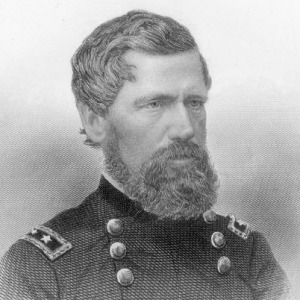
Oliver-Otis-Howard-9345101-1-402

Major General Oliver O. Howard, U.S. Army

With John Reynolds dead and Abner Doubleday directing First Corps in its defense west of Gettysburg Major General Oliver O. Howard, commander of Eleventh Corps assumed command of the Federal forces around Gettysburg. Howard was one of the more unusual characters in the senior leadership of the Army of the Potomac, and later when he served under William Tecumseh Sherman’s command in the west, mostly because of his strong Evangelical Christian religious convictions and the fact that he did not drink. Sherman remarked to a group of generals who were mocking Howard’s temperance, “Let Howard alone! I want one officer who don’t drink!” [1]

“A Christian and an Enthusiast”

The thirty-three year old Howard was from Maine, his father had died when he was ten and in 1846 at the age of sixteen he entered Bowdoin College. He graduated from Bowdoin in 1850 near the top of his small class, and education, far from being something simply to prepare himself for a career was important of itself, and he told his mother, “Education is my first aim…. I seek not money, but a cultivated and enlightened mind, becoming & corresponding with the age in which we live.” [2] During his time at Bowdoin Howard was introspective and frequently mused on his own shortcomings and failures. He also showed little interest in world or national events, including the war with Mexico, but in his first year at Bowdoin he did take an interest in the cousin of a classmate, Elizabeth Ann Waite, or Lizzie who eventually became his wife.

While he was finishing his time at Bowdoin he was still uncertain of what he would do. It was then that his uncle, Congressman John Otis who had help to raise him following the death of his father secured for him an appointment to West Point. He did very well academically but at times struggled with some of his fellow students, some of who considered him “priggish, self-righteous, and opinionated.” [3] This was most likely due to a number of reasons, first his moderate abolitionist views, which were unpopular with many cadets, his active participation in the Bible class, which some classmates ridiculed, and his high academic standing, which provoked the jealousy of others. Howard was also resented by some for his friendship with Sergeant Warren Lothrop, a Mexican War veteran, a childhood friend who was “the son of a close friend of his own father” [4] as well as maintaining a friendship with a cadet “who had been “cut” – shunned – by the corps.” [5] While he stood by the cadet, he was forbidden to maintain the friendship by the Commandant of Cadets due to rules on fraternization, but in the eyes of some classmates, the damage had been done. One cadet who never accepted Howard was Custis Lee, an academic rival and the son of Robert E. Lee.

Despite a rough start Howard became friends with many cadets, including some who had shunned him early in his West Point experience. However, one friend who stood by Howard throughout was a cadet from Virginia named J.E.B. Stuart, who he knew from the Bible class. Howard wrote of that friendship, “I can never forget the manliness of J.E.B. Stuart…. He spoke to me, he visited me, and we became warm friends, often, on Saturday afternoons, visiting the young ladies of the post together.” [6] Howard’s friends included cadets from north and south, and never appeared to let political or ideological differences influence his choice of friends.

He graduated fourth in the class of 1854 and commissioned as a Brevet Second Lieutenant in the highly technical Ordinance Corps. He married Lizzie the following year and held a number of assignments in his corps before being assigned to Florida at the tail end of the Seminole Wars where as an Ordinance officer he saw no action. However, during his time in Florida he experienced his conversion to Evangelical Christianity, following his attendance of a number of Methodist revival meetings and his future life would bear evidence of the influence of the founder of Methodism, John Wesley. His faith became a facet of his life that he would never waver from incurring the praise as well as the criticism of various contemporaries. He wrote Lizzie:

“I then bore hat the text above in mind, & said in my heart oh! My Saviour, I know that thou canst save me! I made an effort to fully believe that my sins were washed in the blood of the Lamb, that my dear Saviour had actually saved me at that moment, i.e. had pardoned all my transgressions of the laws of God, & all the wickedness of a corrupt heart – The fullness of the glow of happiness came into my heart, the tugging & burning left me – the choking sensation was gone…my mind is as clear as when making out an Ordinance Return…” [7]

Following his conversion he led prayers and Bible studies, had enlisted me to his quarters for morning devotions and even considered leaving the army for the ministry. It was fortunate for Howard that his commander, an elderly Colonel, Gustavus Loomis, was a devout Christian who had first taken him to the Methodist revival meetings, for many other senior officers would have not approved of such overtly evangelical behavior.

Howard was transferred back to West Point in September of 1857 where now as a First Lieutenant he was assigned as an instructor in Mathematics, and was able to again be with Lizzie and their children. At West Point he continued his religious activities, leading Bible studies and became the superintendent of a Sunday school for the children of enlisted men and briefly explored the possibility of entering the ministry with a local Episcopal priest and even studied Hebrew for a time.

During his time as an instructor at West Point the young officer, like many devout converts to any religion, wrestled with his faith. Always introspective Howard became even more so, do much soul-searching and with two issues that he recognized in himself, vanity and pride. He wrote: “the pride & haughtiness of my heart is more than pen can tell, but I believe God will so school me, by failures when I act without Christ, by disappointments & afflictions, as to bring my miserably foolish soul into full subjection to himself…. I fear if God would give me success with my heart as it is now, that I would be puffed up with pride & thus lose the countenance of my blessed Saviour.” [8] That struggle to harmonize the tension between his desire to excel in the army and life, with his concerns for his soul should he become consumed by ambition and vanity would become more pronounced within a few very short years.

As he had for most of his life Howard took little interest in political questions and the growing movement toward secession. This was not surprising because Howard, whose religious commitment was continuing to grow was planning to take a leave of absence from the army to attend Bangor Theological Seminary, where his brother, Charles was already a student. However, when Fort Sumter was fired on Howard “abandoned the plan to enter the ministry and determined to stay as a regular or volunteer until the war was over.” [9]

As the officers who made their choice to remain loyal to the Union were now confronted with the decision to remain in the Regular Army or join the new volunteer regiments being formed by Northern states. For many, loyalty and the desire to fight to protect the Union was mixed with a certain amount of pragmatic ambition. Remaining in the relatively small Regular Army might leave them in the position of assisting the training of new volunteer units, or involved with the administration or organizing and equipping them, possibly with limited promotion opportunity while taking a volunteer commission could lead to rapid promotion, command of a regiment or even a brigade.

But initially “the was “a prevalent opposition to regular officers accepting commissions in the volunteers,” [10] but soon the reality that the Regular army was insufficient to bring the rebellious states back into the Union caused the army to allow officers to serve with the volunteers. Howard’s fellow Mathematics instructor, Lieutenant Gouverneur Warren was one of the first young officers at West Point to accept a volunteer commission in the Fifth New York Infantry, the Duryea Zouaves. Howard wrote to Maine’s governor, Israel Washburne offering his services to the State, and after an initial rebuff was offered command of the Third Maine Volunteer Infantry. When he received the offer from Maine Howard took it to Lieutenant Colonel John Reynolds, the Commandant of Cadets and told Reynolds of the offer and asked, “I’ve had the tender, or what amounts to it, of a Maine Regiment. What answer would you give, colonel?’ Reynolds replied, “You’ll accept, of course, Howard,” [11] and then preceded to give the young officer a lesson on what colonels needed to know.

One thing Howard had settled in his mind was the legitimacy of war. As a cadet at West Point he had studied the works of Henry Wager Halleck, who wrote one of the first comprehensive books on strategy by an American and who included in his work a synopsis of the traditional Just War Theory. Halleck, like Howard, was a devout Christian and in his book he wrote “The prevention and punishment of crime causes much human suffering; nevertheless the good of the community requires that crime should be prevented and punished. So, as a nation, we employ military officers to man our ships and forts, to protect our property and our persons, and to repel and punish those who seek to rob us of our life, liberty, and pursuit of happiness…” [12] When Fort Sumter was attacked and other Federal installations in the South being overrun Howard believed that “it was a citizen’s duty to defend his country just as a father would defend his wife and children from an assassin.” [13] When the regiment arrived in New York on its way to Washington it was presented a flag by patriotic Maine citizens living there. Upon receiving it, Howard thanked them and his words reflected his thoughts about war and duty, as well as his religious faith: “I was born in the East, but I was educated by my country. I know no section; I know no party; I never did. I know only my country to love it, and my God who is over my country. We go forth to battle in defense of righteousness and liberty, civil and religious. We go strong in muscle, strong in heart, strong in soul, because we are right…” [14]

Howard’s faith would be a source of personal strength throughout the war and while some like Joseph Hooker ridiculed his faith saying “He was always taken up with Sunday Schools and the temperance cause. Those things are all very good, you know, but have little to do with commanding an army corps. He would command a prayer meeting with a good deal more ability than he would an army.” [15] Likewise his “reputation as a Christian “hampered his acceptance by both fellow officers and enlisted men.” [16] Despite this, many soldiers and officers in every unit Howard commanded came to admire him

Despite this Howard did eventually succeed and became the only officer of his West Point class of 1854 to become a Major General in the Regular Army of the United States. It was not always an easy road, but Howard displayed a resiliency in the face difficulty and even defeat, a resiliency that enabled him to grow as an officer and commander as the war went on.

Shortly after the Third Maine joined the army at Washington Howard was made a brigade commander. His brigade was involved in the final attack at Bull Run were it was caught up in the disaster that overtook the army of Irvin McDowell. He was promoted to brigadier general and commanded a brigade during McClellan’s inept Peninsular Campaign and “at Fair Oaks on June 1, he was hit twice in the right arm while leading a charge; a second bullet shattered the bone near the elbow, and the arm had to be amputated.” [17] Howard’s bravery in the face of the enemy was noted, especially after having received the first wound he continued to lead his men despite having three horses shot from under him. One of his regimental commanders wrote, “The General was the only Brigadier that I saw on the field who led his men into battle & handled them there – He acted with a bravery bordering on rashness & nobly sustained his reputation as a brave and efficient officer.” [18]

Within two months Howard was back with the army, his former officers writing McClellan to recommend that Howard be given command of a division. He did not immediately get that, but was given command of a brigade of Pennsylvania Reserves, the Philadelphia Brigade in John Sedgwick’s division. He took command of that division when Sedgwick was wounded at Antietam. He commanded the division when it was thrown into General Ambrose Burnside’s ill-advised and doomed assault of Marye’s Heights at the Battle of Fredericksburg. Though his division could not break the Confederate line he was commended by Major General Charles Sumner and Major General Darius Couch for his actions. Sumner noted Howard’s “judicious disposition” in driving the Confederates from Fredericksburg” while “Couch, in speak of the corps losses, stated: “Howard, coming up late, lost 700 men, besides 150 on the 11th. He did well in the part assigned to him.” [19]

During the winter following Burnside’s relief and the appointment of Major General Joseph Hooker to command the Army of the Potomac, Howard remained in command of his division. The vanity that he wrestled with in his spiritual life got the better of him when Daniel Sickles, a political general with no formal military training was appointed to command the Third Corps. Howard, who was senior to Sickles protested to Hooker and was promised the newly arrived Eleventh Corps. The corps, which had just become part of Hooker’s army was never “accepted as a true part of the Army of the Potomac,” where it was viewed as a “foreign contingent,” [20] “and was looked upon by the older units with some distain, despite its having seen considerable action.” [21] The previous Corps commander, Major General Fritz Sigel had just left the army after a disagreement regarding not receiving a larger command during the reorganization of the army. When he left many of the corps’ soldiers remained very loyal to their old commander, and “thought Howard was being advanced at Sigel’s expense.” [22]

But Hooker had created a problem for himself. Eleventh Corps was the only large unit in the Federal Army with a high concentration of Germans. Many of the soldiers had enlisted to serve under men that they knew and trusted, Fritz Sigel and Carl Schurz. When Sigel left command Hooker could have appointed Carl Schurz to command the corps, but “Hooker had little use for Schurz’s generalship,” [23] and bluntly told Secretary of War Stanton that he would not appoint Schurz to corps command. For Howard, this was not good, for “in his anxiety to receive a command commensurate with his rank he had failed to consider all the consequences.” [24]

Howard took command of Eleventh Corps barely a month before Hooker launched his offensive against Robert E. Lee’s Army of Northern Virginia, which culminated in the Battle of Chancellorsville. Howard struggled to gain the acceptance of the German soldiers of his new command, many of whom were resentful of having to serve under a non-German officer who did not understand them. Howard’s overtly Evangelical Christian approach to command and stress on temperance, which included the distribution of religious tracts did not endear him to the Germans, many of who were Catholics, free-thinkers and beer drinkers. While Howard’s piety was appreciated many soldiers of English and Scottish descent with Protestant roots, the “Germans of the Eleventh Corps, many of whom were freethinkers, the activities of “Old Prayer Book” were not welcome…. The Eleventh Corps would go on campaign under a general it neither liked nor trusted, and Howard was marching quite out of step with his command.” [25] Some understood this, Colonel Charles Wainwright, commander of the First Corps artillery wrote, “Howard, who succeeds Sigel in the Eleventh is brave enough, and a most perfect gentleman. He is a Christian and an enthusiast, as well as a man of ability, but there is some doubt as to his having snap enough to manage the Germans, who require to be ruled with a rod of iron.” [26]

In the ensuing battle Howard’s Eleventh Corps was taken in the flank by Stonewall Jackson’s troops which outnumbered his badly situated corps by nearly three-to-one, his only reserve brigade having been taken by Hooker to support Sickle’s Third Corps. The ensuing action was a disaster as regiment after regiment was rolled up by the rapidly advancing Confederate phalanx.

Blame could be assigned to both Hooker and Howard, Hooker for leaving Eleventh Corps unsupported and isolated on the flank without a reserve, and Howard for not taking better precautions to secure his right flank from a surprise attack. Neither Howard, nor his senior division commander Brigadier general Charles Devens “personally investigated any of the reports of Rebel activity on their front, and Howard compounded his negligence by leaving his command for two critical hours.” [27] Only Carl Schurz took any action to protect the corps flank and rear by quietly facing three of his regiments west. When the night was over Howard admitted “I wanted to die…. That night I did all in my power to remedy the mistake, and I sought death everywhere I could find an excuse to go to the field.” [28] However, Jackson’s victory was more tactical than strategic and as one historian noted “the corps had generally acquitted itself well in a nearly hopeless situation and delayed Confederate progress until dark,” [29]at which time the Confederates experienced the loss of Stonewall Jackson who was mortally wounded in the darkness by his own troops as he tried to push his corps forward.

However, the morale of the Eleventh Corps was crushed and it would not get a chance to redeem itself during the rest of the Chancellorsville campaign. When Hooker lost his nerve, refused to counter-attack, and then decided to withdraw he was opposed by Howard, George Meade, Darius Couch and John Reynolds who advocated a renewal of the offensive against Lee who they knew to have taken heavy casualties and had to be outnumbered by the Army of the Potomac.

The ever insightful Charles Wainwright wrote, “Some of the papers are very severe on Hooker, and insist upon that he was drunk, which I do not believe. Others go quite as far the other way, and try to screen him from all blame, seeking to throw it on one or the other of his subordinates. The attacks on General Howard are outrageous. He had been in command of the Eleventh Corps but a month before the fight, and was previously unknown to its officers and men…. He is the only religious man of high rank I know in this army, and, in the little intercourse I have had with him, shewed himself the most polished gentleman I have met. I know that he was very anxious to attack Lee on Monday, and together with Couch, Reynolds, and Meade was decidedly opposed to our withdraw on Wednesday night…” [30]

But the damage to the Eleventh Corps had been done. In the search for blame the old line prejudice and sentiment of the “Know nothings” against the immigrant Germans was once again unleashed. Inside and outside the Army of the Potomac, the Eleventh Corps was given the derisive nickname of “the flying Dutchmen” despite the fact that approximately half of its soldiers were of old line Yankee stock. The Eleventh Corps was not without good soldiers or good leaders, the real issue came from “the prejudice of Americans and the defensive attitude of the Germans…” [31] The soldiers of the corps had to endure the mocking of soldiers of other units and the scorn of the press, which “spoke of the “unexampled conduct” of the Eleventh Corps and how “the whole failure of the Army of the Potomac was owing to [its] scandalous poltroonery.” [32] In defense of the Corps Brigadier General Alexander Schimmelpfennig wrote “It would seem a nest of vipers had but waited for an auspicious moment to spit out their poisonous slanders upon this heretofore honored corps…. I have been proud to command the brave men in this brigade; but I am sure that unless these infamous falsehoods be retracted and reparations made, their good will and soldierly spirit will be broken…” [33]

Like his army commander, Fighting Joe Hooker, Howard never “conceded that he was in any way negligent, but he once hinted that at Chancellorsville he was inexperienced and that he had learned a lesson. “When I was a lad, a larger boy gave me a drubbing, but I grew in size and strength till he could do it no longer. The war experience of some of us was like that.” [34] To his credit, Howard did learn from his mistakes and never was surprised again as Eleventh Corps commander or the Commander of the Army of Tennessee under the command of William Tecumseh Sherman. However, Hooker, not only refused to take any blame, but proceeded to blame “squarely upon three of the army’s eight corps commanders…” [35] Howard, John Sedgwick and cavalry corps commander George Stoneman.

The troops were discouraged and resentful of their treatment; one officer wrote of the corps’ withdraw from Chancellorsville “I recrossed with a heavy heart, and… I felt tears rolling down my cheeks. I was ashamed of the battle, and deplored the sad experience of the Eleventh Corps…” while Howard noted, “there was no gloomier period during the great war than the month which followed the disasters at Chancellorsville.” [36] Carl Schurz wrote “The spirit of this corps is broken, and something must be done to revive it.” [37] It was in this depressed environment, commanding a corps that was defeated and demoralized that Oliver Howard advanced into Gettysburg on July 1st 1863.

Notes

[1] Hebert, Walter H. Fighting Joe Hooker University of Nebraska Press, Lincoln and London 1999. Originally published by Bobbs-Merrill, New York 1944 p.178

[2] Carpenter, John A. Sword and Olive Branch: Oliver Otis Howard Fordham University Press, New York 1999 p.3

[3] Thomas, Emory M. Bold Dragoon: The Life of J.E.B. Stuart University of Oklahoma Press, Norman OK 1986 and 1999 p.24

[4] Ibid. Carpenter Sword and Olive Branch p.8

[5] Ibid. Thomas Bold Dragoon p.24

[6] Ibid. Thomas Bold Dragoon p.25

[7] Ibid. Carpenter Sword and Olive Branch p.17

[8] Ibid. Carpenter Sword and Olive Branch p.20

[9] Ibid. Carpenter Sword and Olive Branch p.21

[10] Jordan, David M. Happiness is Not My Companion: The Life of G.K. Warren Indiana University Press, Bloomington Indiana 2001 p.34

[11] Howard, Oliver O. Autobiography of Oliver Otis Howard, Major General, U.S. Army Volume 1 The Baker and Taylor Company, New York 1907 Made available by the Internet Achieve through Amazon Kindle location1627 of 9221

[12] Halleck, Henry Wager. Elements of Military Art and Science Or, Course Instruction In Strategy, Fortification Tactics of Battles, &c. Embracing the Duties of Staff, Infantry, Cavalry, Artillery, and Engineers, Adapted for the Use of Volunteers and Militia Third Edition D. Appleton & Company, New York and London 1862 Amazon Kindle edition location 149 of 6332

[13] Ibid. Carpenter Sword and Olive Branch p.21

[14] Ibid. Howard Autobiography of Oliver Otis Howard location 1983 of 9221

[15] Girardi, Robert I. The Civil War Generals: Comrades, Peers, Rivals in Their Own Words Zenith Press, MBI Publishing, Minneapolis MN 2013 p.92

[16] Ibid. Carpenter Sword and Olive Branch p.25

[17] Tagg, Larry The Generals of Gettysburg: The Leaders of America’s Greatest Battle Da Capo Press Cambridge MA 1998 Amazon Kindle Edition p. 121

[18] Ibid. Girardi The Civil War Generals: Comrades, Peers, Rivals in Their Own Words p.91

[19] Ibid. Carpenter Sword and Olive Branch p.41

[20] Ibid. Hebert Fighting Joe Hooker p.178

[21] Ibid. Carpenter Sword and Olive Branch p.43

[22] Ibid. Hebert Fighting Joe Hooker p.178

[23] Sears, Stephen W. Chancellorsville Houghton Mifflin Co. Boston and New York 1996 p.64

[24] Ibid. Carpenter Sword and Olive Branch p.43

[25] Ibid. Sears Chancellorsville p.65

[26] Wainwright, Charles S. A Diary of Battle: The Personal Journal of Colonel Charles S. Wainwright 1861-1865 edited by Allan Nevins, Da Capo Press, New York 1998 p.183

[27] Ibid. Sears Chancellorsville p.270

[28] Ibid. Sears Chancellorsville p.286

[29] Greene, A. Wilson. From Chancellorsville to Gettysburg: O. O. Howard and Eleventh Corps Leadership in The First Day at Gettysburg edited by Gallagher, Gary W. Kent State University Press, Kent Ohio 1992 p.57

[30] Ibid. Wainwright A Diary of Battle p.210

[31] Coddington, Edwin B. The Gettysburg Campaign: A Study in Command, A Touchstone Book, Simon and Schuster New York, 1968 p.306

[32] Ibid. Green From Chancellorsville to Gettysburg: O. O. Howard and Eleventh Corps Leadership p.58

[33] Ibid. Green From Chancellorsville to Gettysburg: O. O. Howard and Eleventh Corps Leadership p.58

[34] Ibid. Carpenter Sword and Olive Branch p.49

[35] Sears, Stephen W Gettysburg Houghton Mifflin Company, New York 2003 pp.193-194 and Coddington p.20

[36] Ibid. Green From Chancellorsville to Gettysburg: O. O. Howard and Eleventh Corps Leadership p.57

[37] Ibid. Sears Gettysburg p.37

Leave a comment

Filed under civil war, Gettysburg, History, leadership, Military

Be Clear in Your Mind: The Lesson of 9-11’s Aftermath

IMG_2671

Friends of Padre Steve’s World

I have been reflecting about the attacks of September 11th 2001 and their aftermath, and today a final post on that subject for now. The great German military theorist Carl von Clausewitz wrote, “No one starts a war-or rather, no one in his senses ought to do so-without first being clear in his mind what he intends to achieve by that war and how he intends to conduct it.” Sadly, the leaders of nations seldom heed his sage advice.

Nations and peoples who suffer devastating attacks often respond out of deep anger and emotion, and many times. The United States did so after 9-11-2001, and while the initial response to attempt to kill Osama Bin Laden and destroy Al Qaeda in Afghanistan was considered justified by most of the world, what that war, and the subsequent war invasion of Iraq became can be best described as best ill-advised and at worst criminal. After over fourteen years of war, these wars are by no means over, and I have to use the words of T.E. Lawrence to describe the situation, “We have not reached the limit of our military commitments…”

The great Greek Historian Thucydides wrote words which pretty much describe how we got to where we are in this war without end:

“Think, too, of the great part that is played by the unpredictable in war: think of it now, before you are actually committed to war. The longer a war lasts, the more things tend to depend on accidents. Neither you nor we can see into them: we have to abide their outcome in the dark. And when people are entering upon a war they do things the wrong way round. Action comes first, and it is only when they have already suffered that they begin to think.”

Likewise, we, and I don’t just mean the former Bush administration, but many others today who think that war is always the first and best option. We forget the words of Winston Churchill who, despite his many blunders in both World Wars wrote:

“Never, never, never believe any war will be smooth and easy, or that anyone who embarks on the strange voyage can measure the tides and hurricanes he will encounter. The statesman who yields to war fever must realize that once the signal is given, he is no longer the master of policy but the slave of unforeseeable and uncontrollable events…. Always remember, however sure you are that you could easily win, that there would not be a war if the other man did not think he also had a chance.”

The imperial hubris of our actions following 9-11-2001, most notably the invasion of Iraq have opened the gates of Hell in the Middle East and it will take a lot, and not just military power to contain them. Let’s face it, as much as we don’t like to admit it, General James Mattis was right when he said, “No war is over until the enemy says it’s over. We may think it over, we may declare it over, but in fact, the enemy gets a vote.”

image.adapt.960.high

What is next, I do not know; but if history teaches us anything, people, especially the leaders of nations don’t learn from it. Barbara Tuchman said it so well:

When information is relayed to policy-makers, they respond in terms of what is already inside their heads and consequently make policy less to fit the facts than to fit the notions and intentions formed out of the mental baggage that has accumulated in their minds since childhood.”

Peace

Padre Steve+

1 Comment

Filed under History, iraq,afghanistan, Military, national security, Political Commentary

You Can’t go Back: The Aftermath of 9-11-2001

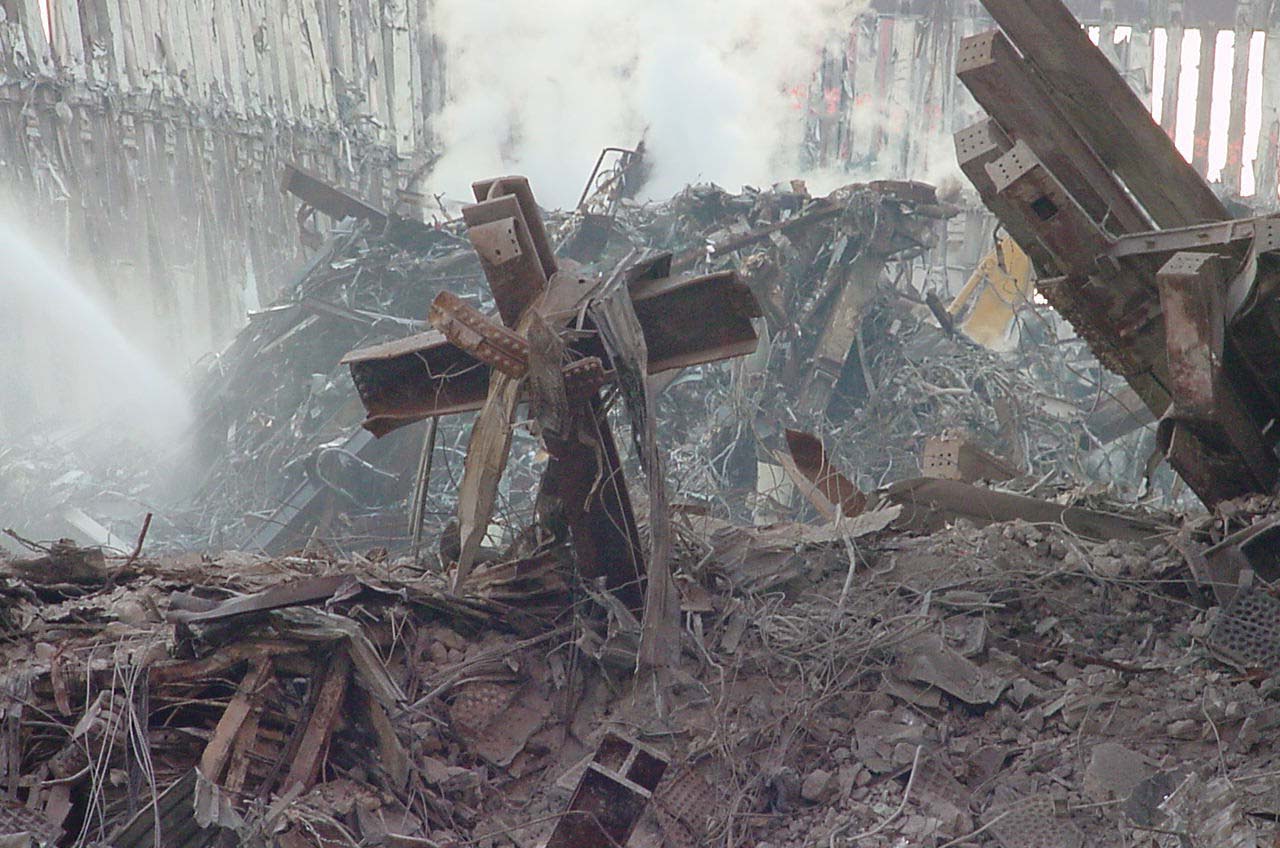
World-Trade-Center-9-11-cross-1

Friends of Padre Steve’s World

I wrote a reflection yesterday on some of my reflections on the 9-11-2001 attacks on the World Trade Center and the Pentagon, today a continuation of those thoughts.

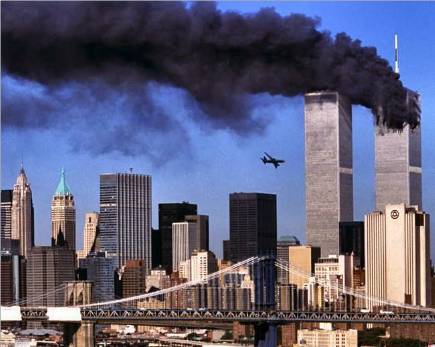
I can still remember the day like it was yesterday. I was getting out of my office at Camp LeJeune after an early morning counseling case and some administrative duties I was getting ready to head to the French Creek gym.  I was about to close out my browser when I saw a little note on the Yahoo.com homepage: “Airplane crashes into World Trade Center.” It was about 0900 that tragic morning.  I thought to myself, “Some dumb ass just crashed his Cessna into the building.

The day was clear and absolutely gorgeous, a slight north wind and low humidity, a well-deserved break from what had been a hot and humid summer.  Not that I had seen much of the Carolina summer having returned from a deployment to Okinawa, Mainland Japan and Korea in late July. When I got to my car the local talk radio station was broadcasting a second or third tier national talk radio host and he was screaming “oh my God another plane just flew into the towers!”

I drove over to the gym where I joined a large crowd of Marines and Sailors transfixed as we watched the towers burn.  I went back to my office showered and went over to my battalion headquarters and was there when the South Tower went down at 0959.

Since then a lot has changed.  I have made two deployments and traveled to the Middle East many more times.  I came back from my deployment to Iraq with a serious case of PTSD and a health distrust of the media, politicians, preachers and especially the talk radio hosts that I used to listen to as often as I could.  I remember being in Iraq in between missions to the far reaches of Al Anbar Province and watching the news on the televisions at the dining facility and wondering just what war that they were covering.

Before Iraq I could be considered a pretty solid “conservative” but eight years after going to war I am decidedly liberal.  However, despite many allegedly conservative  talk pundits, politicians  and right wing preachers say just because a person is “liberal” does not mean that they are unpatriotic or do not care about our country or freedom.  After serving in Iraq and seeing how certain people have equated patriotism with adherence to their political agenda I wholeheartedly believe that a person’s patriotism has nothing to do with their politics or their religious beliefs.

Before Iraq I was jaded by what happened to my dad’s generation after Vietnam when liberals called returning Veterans “baby killers” or “Nazis.”  In fact I had a Sunday school teacher tell me that my dad was a “baby killer” in 1972 and in 1981 had some ass at UCLA call me a “ROTC Nazi.”  As a result I had little love for the Left.  After September 11th I followed the “conservative” talk radio crowd and Fox News more than I had ever before.  The emotions that they stirred up were primal.  But experience and reflection caused me to get beyond the pain of my past and the emotion of the present.  Just as I detest those that characterized my dad’s service or my service as being criminal I also detest those that say one cannot be critical of those that advocate for war regardless of the human and economic cost or actual strategic benefit.

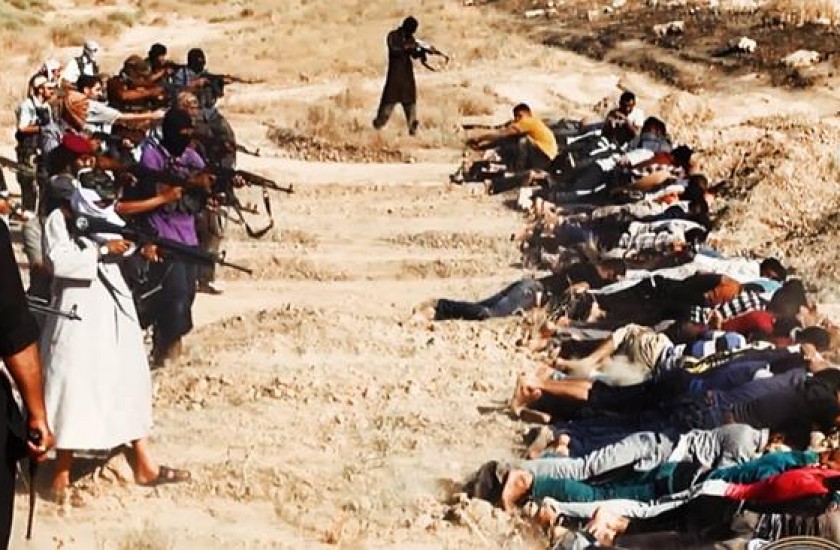
I rejoiced when our SEALS killed Osama Bin Laden and every Al Qaeda leader that we have ushered into the arms of Allah.  They have caused unmitigated suffering around the world, not just to us but to their own Islamic neighbors and deserve no pity and since they refuse to give quarter should be shown none. I feel the same way about ISIS and ISIL who are killing the Iraqis that I served alongside and their families, and if that sounds harsh I can’t help it. The attacks of 9-11 and the wars that have followed are all too personal.

At the same time I question the strategic purpose and value of the campaign in we conducted in Iraq which seems to me has opened the gates of hell. I still think that the words that T.E. Lawrence wrote in 1920 about the British in Iraq are as applicable today as when he penned them; only the empires are different:

“The people of England have been led in Mesopotamia into a trap from which it will be hard to escape with dignity and honour. They have been tricked into it by a steady withholding of information. The Bagdad communiqués are belated, insincere, incomplete. Things have been far worse than we have been told, our administration more bloody and inefficient than the public knows. It is a disgrace to our imperial record, and may soon be too inflamed for any ordinary cure. We are to-day not far from a disaster.”

The British who Lawrence wrote about, gave their people reasons for going into Mesopotamia which were similar to those of the Bush administration over 80 years later. They cloaked their intentions in the words of liberation and protection, the British from the Turks, and the Americans from Saddam. Lawrence noted in words that are hauntingly familiar to those that paid attention to the American war in Iraq:

“Yet our published policy has not changed, and does not need changing. It is that there has been a deplorable contrast between our profession and our practice. We said we went to Mesopotamia to defeat Turkey. We said we stayed to deliver the Arabs from the oppression of the Turkish Government, and to make available for the world its resources of corn and oil. We spent nearly a million men and nearly a thousand million of money to these ends. This year we are spending ninety-two thousand men and fifty millions of money on the same objects.”

At the fourteen year mark I grieve for those that have lost their lives as well as loved ones in the attacks or in the wars that have followed.  On September 11th 2001 2977 people were killed at the World Trade Center, the Pentagon or on United Flight 93 which went down in Pennsylvania.  One of those killed at the Pentagon was Lieutenant Colonel Karen Wagner who I had served with at the Academy of Health Sciences Brigade in 1987-1988.

Since then 4492 American military personnel have given their lives in Iraq and 2363 in Afghanistan.  NATO or coalition allies, excluding the Iraqi and Afghani military or police forces have lost another 1270 military personnel. Another 45,170 Americans have been wounded.  I know a decent number of those wounded and some of those that have died.  The losses are intensely personal and to think that we have lost well over twice the number killed on September 11th 2001 in two wars; many of whom were children aged 8-12 years old on that tragic September day. Of course the numbers do not count those that died by their own hand after they returned from the war, a number that grows daily. I have known too many of them as well, heroes who could not make the adjustment coming home. Likewise I cannot forget the devastation that I saw in Iraq, the deaths of so many, some estimates of over a million civilian casualties, not county what has happening during the current ISIS/ISIL era.

I have been changed by that tragic event. I still shudder when I see the video of United Air Lines Flight 175 crashing into the South Tower or see the videos of the towers crashing down.  They are hard to watch and while I will observe the anniversary with prayers and a lot of reflection as I do not know how much of the continuous media coverage of the anniversary that I will be able to watch.

The events of that tragic day changed me, and changed countless numbers of other Americans as well as others around the world.  While we yearn to return to the day’s before9-11-2001 that is impossible, there is too much water and too much blood that has passed under the bridge.   I know I can’t go back, but I wish that I could, so as I have for the last fourteen years I will continue to learn to live with it.

Peace

Padre Steve+

2 Comments

Filed under afghanistan, Foreign Policy, History, iraq, iraq,afghanistan, middle east, Military, News and current events, Political Commentary

Days Seem to Dawn: Reflections on 9-11-2001 & War

flight_175_photo

Friends of Padre Steve’s World,

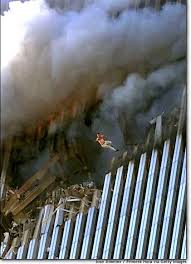
September 11th is a day that always makes me more introspective. It brings back so many memories, some that I wish I could forget; but I cannot get the images of that day out of my mind. The burning towers, the people jumping to their deaths to escape the flames, and the scenes of devastation. I knew one of the victims in the attack on the Pentagon, an Army Lieutenant Colonel, Karen Wagner who commanded a Medical training company at Fort Sam Houston where I was serving as the Brigade Adjutant in 1987 and 1988. She was a very nice person, very gracious and decent, admired by everyone who knew her; I was shocked to see her name on the casualty list after the attack.

The emotions that I feel on the anniversary of these terrorist attacks which claimed the lives of so many innocent people, and which devastated so many families, still haunts me, and my subsequent service, especially in Iraq has changed me. Years after he returned from his time in the Middle East, T.E. Lawrence; the immortal Lawrence of Arabia wrote to a friend, “You wonder what I am doing? Well, so do I, in truth. Days seem to dawn, suns to shine, evenings to follow, and then I sleep. What I have done, what I am doing, what I am going to do, puzzle and bewilder me. Have you ever been a leaf and fallen from your tree in autumn and been really puzzled about it? That’s the feeling.” I often feel that way.

Fourteen years ago I was getting ready to go to the French Creek Gym at Camp Le Jeune North Carolina where I was serving as the Chaplain of Headquarters Battalion 2nd Marine Division. I had been back from a deployment to Okinawa, Mainland Japan and Korea just two months before and was preparing to transfer to the USS Hue City, a guided missile cruiser stationed in Mayport, Florida.

At the time of the attack I had already been in the military for over 20 years and I had actually taken a reduction in rank to transfer from the Army, where I was a Major in the reserves, to the Navy to serve on active duty. In those previous 20 years I had served overseas during the Cold War along the Fulda Gap. I had been mobilized to support the Bosnia mission in 1996, and I had just missed being mobilized for Operation Desert Storm as my unit was awaiting its mobilization orders when the war ended. I had done other missions as well as the deployment to the Far East that returned from in July 2001; but nothing prepared me for that day. Like other career military officers I expected that we would be at war again and thought it might be back in the Middle East, and probably a result of some fool’s miscalculations; but like the American officers who were serving at the time of the Pearl Harbor attack, I never expected what happened that morning.

Tuesday, September 11th 2001 had started like so many days in my career. Routine office work, a couple of counseling cases and what I thought would be a good PT session. I was about to close out my computer browser when I saw a little headline on Yahoo News that a plane had crashed into the World Trade Center. I paid little attention and figured that a private plane, something like a Cessna piloted by an incompetent had inadvertently flown into the building.

9-11 jumpers

That delusion lasted about two minutes. I got in my car and the radio, tuned to an AM talk station had a host calling the play by play. He started screaming “oh my God another airliner flew into the other tower.” Seeking to see what was happening I went to the gym where there were many televisions. I got there and saw the towers burning, with stunned Marines and Sailors watching silently, some in tears. I went back out, drove to my office and got into uniform. After checking in with my colonel a made a quick trip to my house for my sea bags and some extra underwear, and personal hygiene items. When I got back the headquarters we went into a meeting, and the base went on lock down mode. The gates were closed and additional checkpoints, and roadblocks established on base. Marines in full battle-rattle patrolled the perimeter and along the waterfront. I did not leave the base until the night of the 15th when things began to settle down and we all went into contingency planning mode for any military response to the attacks.

My wife, who as waiting for a doctor’s appointment with a friend saw the attacks on live television and knew when the first plane struck she told her friend that it was terrorism. Her friend responded “that damned Saddam Hussein.” Like so many of us who initially thought this, my wife’s friend was wrong.

Those were tumultuous days, so much fear; so much paranoia; and so much bad information as to who committed the attacks and what was going to happen next.

boardingteam

boarding team

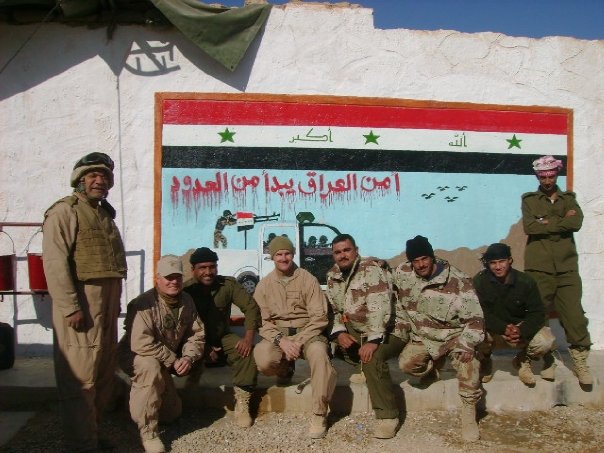
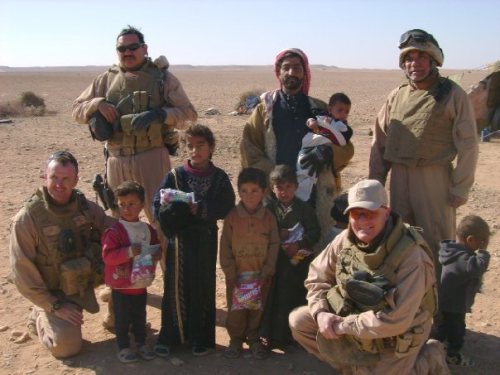
A few months later I deployed aboard Hue City to the Middle East where we supported the air operations in Afghanistan, anti-terrorist operations off the Horn of Africa and in Operation Southern Watch and the U.N. Oil Embargo against Iraq. I then did three years with Marine Security Forces, traveling around the world to support Marine Fleet Anti-Terrorism Security Team companies. For three years I was on the road one to three weeks a month traveling to the Middle East, Europe, the Pacific and many parts of the United States. Then I was promoted and transferred to Explosive Ordnance Disposal Group Two, from which I was deployed with my assistant to Iraq, where we served as members of the Iraq Assistance Group in all Al Anbar Province supporting small teams of Marine Corps, Army and Joint Force adviser teams to the Iraqi Army, Border troops, Port of Entry police, police and highway patrol.

lastmass2

iraq-bedouin1

iraq-2007

When I returned from Iraq I was a changed man and while proud of my service I am haunted by my experiences. One cannot go to war, see its devastation, see the wounded and dead, as well as the innocents traumatized by it. One cannot get shot at, or be in enclosed rooms, meeting with people that might be friends, or might be enemies, and while everyone else is armed, you are not.

War changed me, and my homecoming was more difficult than I could have imagined. I never felt so cut off from my country, my society, my church, or even other chaplains. My experience is not uncommon among those who have served in Iraq or Afghanistan, or for that matter those who have served in almost any modern war. Erich Maria Remarque in his classic All Quite on the Western Front wrote:

“I imagined leave would be different from this. Indeed, it was different a year ago. It is I of course that have changed in the interval. There lies a gulf between that time and today. At that time I still knew nothing about the war, we had been only in quiet sectors. But now I see that I have been crushed without knowing it. I find I do not belong here any more, it is a foreign world.”

That being said I would not trade my experience for anything. The experience of PTSD and other war related afflictions has been a blessing as well as a curse. They have changed my world view and made me much more emphatic to the suffering and afflictions of others, as well when they are abused, mistreated, terrorized and discriminated against. These experiences along with my training as a historian, theologian, and hospital chaplain clinician before and after my tour have given me a lot bigger perspective than I had before.

But I have to live with all of the memories. Guy Sajer wrote in his book The Forgotten Soldier, “Only happy people have nightmares, from overeating. For those who live a nightmare reality, sleep is a black hole, lost in time, like death.” General Gouverneur Warren, a hero of many Civil War battles including Gettysburg wrote to his wife after the war “I wish I did not dream so much. They make me sometimes to dread to go to sleep. Scenes from the war, are so constantly recalled, with bitter feelings I wish never to experience again. Lies, vanity, treachery, and carnage.”

As hard as this has been these are good things, and as I go on I wonder what will happen next. I do not think that the wars and conflicts which have followed in the wake of the 9-11 attacks will be over for years, maybe even decades. I pray for peace, but too many people, some even in this country seem to live for the bloodlust of war. One can only hope and as my Iraqi friends say, Inshallah, (إن شاء الله) God willing…

isis3-840x550

I wonder too, if the words of T.E. Lawrence reflecting on his service in the Arab Revolt are not as applicable to me and others who came back from Iraq, “We had been hopelessly labouring to plough waste lands; to make nationality grow in a place full of the certainty of God… Among the tribes our creed could be only like the desert grass – a beautiful swift seeming of spring; which, after a day’s heat, fell dusty.”  I have lost too many friends in these wars, including men who could not readjust to home, many like me. I have seen the men and women, broken in body, mind and spirit and I wonder if any of it was worth it, and if in some of our response, especially the invasion of Iraq has not made a bad situation even worse, and turned the war into a generational conflict.

As for me, I am now an old guy by military standards. In a couple of years I hope to retire with 36 years of service, knowing that those who I have worked with will be continuing to fight a war which seems to be without end.

481801_10151367001287059_1003164983_n

Today there will be many ceremonies and services to remember the victims of the attacks. I think that is fitting. President Obama has declared a day of prayer and remembrance which is also good. I will not attend the ceremonies because I still get too emotional, but I will be there in spirit, even though much of me is still in Iraq. 

I will quietly reflect at the office today as I get ready for our incoming class at the Staff College. Afterward I will go get a beer and dinner with Judy and our friends at Gordon Biersch after catching to remainder of the Norfolk Tides vs. Columbus Clippers International League playoff game which was postponed due to rain last night. I guess that is fitting to as it was baseball that helped begin the healing in Nee York in the days after the attack. 

Have a good day, and do not forget those whose lives were forever changed by those dastardly attacks and all that has transpired in the years since. Maybe things will get better… Inshallah, (إن شاء الله) God willing…

Peace

Padre Steve+

2 Comments

Filed under History, iraq,afghanistan, Military, PTSD

Gays Get Unalienable Rights Too

re-criminalize-sodomy

Anti-gay Christian protestors outside the Supreme Court

Friends of Padre Steve’s World

In the next day or two, Kim Davis, the Recalcitrant County Clerk of Rowan County will go back to work after Federal Appelate Court Judge Jim Bunning released her from jail after holding her in contempt of court. He released her because other clerks were issuing the marriage licences that she had refused to Gay couples. If she does not interfere with clerks who have pledged to continuing to issue the licences this will probably blow over, but if she interferes with or punishes her employees the stage is set for her quick return to jail, something that her biggest supporters including Mike Huckabee seem to want to happen. 

But lost in all of the ranting of Conservative Christians regarding their right to discriminate in the name of Jesus amen against the legal rights of Gays, Lesbians and others of the LGBTQ community is what is happening to the gays.

From the supporters of Mrs. Davis you almost always hear the claim that Gays are trying to get special rights and persecute Christians. If that claim were true, which it is not it would be troubling. Likewise the claim that Christians and others who oppose Marriage Equality are now the victims of systematic government persecution and oppression is equally fraudulent. 

Their claims to being persecuted are an affront to all Christians who have really suffered and died for their faith in Christ. Likewise the claims of Mrs. Davis’s lawyers and the politicians, pundits, and preachers who support her, that she is “like a Jew in Nazi Germany” utterly demeans the lives of the Jews persecuted by the Nazis in the 1930s and the six-million Jews slaughtered by them during the 1940s. 

The claims of these so-called Christians are repugnant and embarrassing. Any Christian with a modicum of honesty, integrity, and ethics should publically repudiate then. Sadly, most, caught up in the emotions generated by the rabid anti-gay politicians, pundits and preachers, don’t know enough history, fact, or Christian theology to do anything else but to follow these charlatans as they lead the church to the abyss, just as the leaders of German churches did during the Nazi era. 

The fact is, that for the first time in our history Gays and others of the LGBTQ community have almost equal rights to all other Americans citizens, the rights so eloquently written in the Declaration of Independence by Thomas Jefferson that “all men are created equal, that they are endowed by their Creator with certain unalienable Rights, that among these are Life, Liberty and the pursuit of Happiness. – That to secure these rights, Governments are instituted among Men….”

upstairs lounge massacre

Burned bodies of gay men after the Up Stairs Lounge in New Orleans was attacked in 1973, 32 men died. The suspect, a gay man who had been thrown out escaped police custody. Witness testimony was dismissed by investigators. Media buried the story while talk radio hosts mocked the victims. No one cared, even most churches which refused funerals for victims because they were gay

And which were finally enshrined in the Constitution by the 14th Amendment, an amendment which from the time it was ratified has been hated by the opponents of liberty for people that they despise, be it based on race, color, religion, nationality, gender or sexual preference. That amendment is precious and there are some co-called conservatives who actually want to get rid of it. I think that it should be memorized by everyone who believes in freedom:

“All persons born or naturalized in the United States, and subject to the jurisdiction thereof, are citizens of the United States and of the state wherein they reside. No state shall make or enforce any law which shall abridge the privileges or immunities of citizens of the United States; nor shall any state deprive any person of life, liberty, or property, without due process of law; nor deny to any person within its jurisdiction the equal protection of the laws.”

So, Gays are getting rights that they never had before and their critics whine about being oppressed and persecuted for trying to use their religion to deny those legal rights. But how is the right to deny legal rights to others a sign of oppression? I guess it is if you believe that your religious rights trump all other rights because God trump’s all, except maybe Trump.

Mini-StonewallGay Rights protest in 1965

But really, I want you to try to imagine what real oppression is like, that is the official, government sanctioned oppression that Gays went through, until very recent times. I guess if you never served alongside honorable people who put their lives on the line for their country, but who could be tried as criminals simple because someone outed them as being Gay it wouldn’t occur to you why this is so important. But government sanctioned oppression and even violence was a fact of life for gays until very recent times, and this is the kind of country that Kim Davis and the preachers, politicians and pundits who support her would like to return.

Imagine if your activities were monitored, catalogued and reported by local, state and Federal police agencies.

Imagine that police detectives and informants were allowed to spy on your activities.

Imagine that police, acting in the “name of the law” under the merest pretense or spurious accusation could invade your home, business or institution and use physical violence to subdue you, even if you had done nothing wrong.

Imagine if a business rival or a spurned lover desired to ruin you, your business, or your career and professional reputation with only an accusation.

Imagine if the price of your freedom was to name names and condemn others.

Imagine if even suspicion of your activities was considered as grounds for termination of your employment, or prevent you from receiving a promotion.

Imagine if those same suspicions could brand you as a felon with the results of being forbidden to vote, the loss of property and employment rights. 

Imagine that if you went to a bar that if you looked in any direction but straight ahead that you could be charged with accosting others.

Imagine that anyone, anywhere who had knowledge of your behaviors could use that knowledge to have you kicked out of the military, law enforcement or government employment, usually with a felony conviction. 

Imagine that your behavior, even discrete behavior in your own residence could get you locked in a psychiatric hospital and quite possibly the use of drugs and surgery to to include, lobotomy, castration or chemical sterilization “correct your illness” without your consent. 

Imagine if you were a faithful member of your church, were conservative in your theology and politics and supported all the causes of that body, but one aspect of your behavior could lead to your excommunication and banishment from that community. 

stonewall-riots

Police attack Gays in San Francisco during the White Night riot on May 21st 1979. 

I guess if it was your behavior or your beliefs that led to such treatment you would cry foul, you would protest, that you would claim that you were the victim of discrimination; and my friend I say that you would be correct. That would be persecution. Sadly the Kim Davis and those claiming to be victims of “massive anti-Christian” persecution are only being prohibited from crushing the freedom and liberty of people who they consider sinners, not from practicing their faith in any way.

That my friends was the America and Great Britain that Gays lived in the 1950’s, 1960’s and 1970’s, portions of which remained enshrined in law until very recently and which a number of high powered and influential politicians, pundits and preachers of the Christian Right would like to go again.

Sadly there are young Gays and Lesbians who take the rights that those who went before them for granted. Thankfully, they have grown up in a more tolerant society, but few know what happened to people just like them in the not too distant past. It should not be forgotten. 

So, when you think about those special “legal rights” being given to a “vocal minority who want to destroy America” ask which America? The one where we all enjoy the right to Life, Liberty and the pursuit of Happiness or the one that denies those rights to certain types of people who have done nothing wrong other than being who they are. Of course those who seek to abridge these basic human rights and freedoms, almost all do so in the name of their God and religion which they use to buttress and validate their prejudice and hatred.

Think about it.

Peace

Padre Steve+

7 Comments

Filed under civil war, History, laws and legislation, LGBT issues, News and current events, Political Commentary

Why Labor Day Matters

First_United_States_Labor_Day_Parade,_September_5,_1882_in_New_York_City

The First Labor Day

Friends of Padre Steve’s World,

Abraham Lincoln, who was perhaps our only President who was a real working man once said, “If any man tells you he loves America, yet hates labor, he is a liar. If any man tells you he trusts America, yet fears labor, he is a fool.” 

It is hard to believe that at one time workers had no rights. It was not until the mid-1800s in the United States and Europe that workers began to organize and protest for the right to decent wages and working conditions. There were many instances when this cost them their lives. Employers, often backed by heavily armed private security contractors like the Pinkerton Agency, used deadly force to break up peaceful strikes. In the days of the Robber Barons, when business ran the government at almost every level, employers frequently called in local and state law enforcement, as well as the National Guard, and occasionally Federal troops to break strikes. They played various ethnic and racial groups off of each in order to divide the labor movement. There are hundreds of instances of such violence being used against workers, in some strikes the dead numbered in the hundreds.

1912_Lawrence_Textile_Strike_1

Lawrence Massachusetts Textile Strike; the National Guard with Bayonets Fixed against unarmed strikers

Some of these attacks on workers occurred in major cities, others at isolated work sites and factories. Some are famous, the Haymarket Massacre of May 4th 1886 in Chicago, the Pullman Strike Massacre of 1894, the Homestead Strike and Massacre of 1892, the Lattimer Massacre of 1897, the Ludlow Massacre of 1914, and the Columbine Mine Massacre of 1927.

1024px-Ruins_of_Ludlow_restored

Aftermath of the Ludlow Massacre (above) and the Bisbee Deportation (below)

BisbeeDeportation

Others less so, but there was more. In the Bisbee Deportation of 1917 1300 striking miners and their families were deported from their homes in Bisbee Arizona by 2000 armed deputies, put in box cars and transported 200 miles to the New Mexico desert, where without food, water or money they were left. There was the Triangle Shirtwaist Factory Fire where managers locked the doors in order to ensure that the fleeing women workers did not put anything unauthorized in their purses. One hundred forty-four workers, mostly young women died.

Image_of_Triangle_Shirtwaist_Factory_fire_on_March_25_-_1911

The Triangle Shirtwaist Factory Fire

Early labor organizations such as the Knights of Labor led the effort to bring about better conditions. For doing so they were labeled subversive and even called communists. Their meetings were often attacked and the leaders jailed and some lynched.

The sacrifices of those early workers, and organizers are why we have Labor Day. One of the early American labor leaders was a man named Eugene Debs. He said something remarkable which still is as timely as when he uttered the words:

“I am opposing a social order in which it is possible for one man who does absolutely nothing that is useful to amass a fortune of hundreds of millions of dollars, while millions of men and women who work all the days of their lives secure barely enough for a wretched existence.”

On September 5th 1882 the first Labor Day was observed when members of several Unions in New York City organized the first Labor Day parade. The police came armed and ready to intervene if the workers got out of hand, but the parade was peaceful. It ended and the marchers moved over to Wendell’s Elm Park where they had a party. Twenty-five thousand Union men and their families celebrated, with hundreds of kegs of lager beer.

Within a few years many states began to institute Labor days of their own. In 1894, just days after the violent end of the Pullman strike in which Federal troops and Marshalls killed 30 workers and wounded 57 more, Congress and President Grover Cleveland rushed through legislation to establish a Federal Labor Day.

International_Ladies_Garment_Workers_Union_logo

My Great Aunt Goldie Dundas was a labor organizer for the International Ladies Garment Worker’s Union in West Virginia in the 1920s – 1950s. I wish I had gotten to really know her, but she died when I was about 8 or 9 years old. Sadly the workers represented by that Union have had almost all of their jobs in the textile industry outsourced to China, India, Pakistan, the Caribbean, and Bangladesh where cheaply made garments are produced, and workers abused. The examples of mass deaths due to safety issues and fires in Bangladeshi factories are too numerous to list. But then who cares? The fact is you can drive through many parts of the South and see the poverty created by the exodus of these Union employers, the textile industry, which was part of the fabric of the South is gone. Empty factories and poverty stricken towns dot the countryside. I saw a lot of them living in Eastern North Carolina, towns that once thrived are ghost towns, riddled with crime, unemployment and no hope, unless Wal-Mart opens a store in town. Ironically it sells the clothing made overseas that used to be manufactured by the parents, grandparents and great-grandparents of the people who live there today. 

Adam Smith, the father of Capitalism understood it in a very different manner than those who claim to be Capitalists today. He wrote in his magnum opus, The Wealth of All Nations:

“In regards to the price of commodities, the rise of wages operates as simple interest does, the rise of profit operates like compound interest. Our merchants and masters complain much of the bad effects of high wages in raising the price and lessening the sale of goods. They say nothing concerning the bad effects of high profits. They are silent with regard to the pernicious effects of their own gains. They complain only of those of other people.”

The fact is that today, labor is under threat. Unions have been demonized by politicians and pundits and their power and influence much reduced. Some of this was due to their own success in improving conditions from workers, and not just Union workers. When my dad retired from the Navy in 1974, he went to work at one of the few non-Union warehouses of the John Deere Company in Stockton, California. While they were not union, the workers received every benefit won by the majority of the workers in the company who were members of the United Auto Workers Union. Due to that my dad had high wages, excellent working conditions and benefits. The company had a program for the children of workers, which allowed them to work in the summer in the warehouse and receive incredibly high pay and benefits while in college. I did that for two years, and it helped pay for much of my college. I was not a union member but I benefited.

However, in many places, Unions and labor are under attack, sometimes not just by corporations, but also by state governments. Job security and stability for most American workers is a thing of the past. Federal and State agencies charged with protecting those rights, including safety in the workplace are being cut in the mad rush to reduce government power. It seems to me that we are returning to the days of the Robber Barons. I wonder when violence against workers and those who support them will be condoned or simply ignored.

So please, when you celebrate Labor Day, do not forget that it is important, and that we should not forget why we celebrate it. If we forget that, it will become a meaningless holiday and our children may have to make the same sacrifices of our ancestors.

Oh, by the way…. If you see a meme on Facebook telling you to “thank the troops” for Labor Day, it is a bullshit meme. We troops have our days. Labor day is not ours. Labor Day is a day to remember those civilians, some of them former troops, but civilian labor leaders, organizers and unions; some of whom were killed by National Guard and Federal troops for their efforts; which paved the way for workers today.

Peace

Padre Steve+

4 Comments

Filed under economics and financial policy, History, labor, laws and legislation, leadership, Political Commentary

The Oath of Office: What Kim Davis Doesn’t Get

DSCN0016

Friends of Padre Steve’s World

Kim Davis, the Recalcitrant County Clerk of Rowan County, Kentucky remains in jail. She has supporters around the country, one of whom I had to ban from commenting on my site. I didn’t want to do it but after fair warning he gave me little choice. The man was taking advantage of my graciousness to hijack the comments section to preach at me and treat me and other commentators with a contempt that the Pharisee’s would have admired. When I informed him of this he played the aggrieved persecuted Christian victim of vile liberal oppression routine; but I digress…

Lost to many of Mrs. Davis’ supporters, including a number of presidential candidates, some who are sitting United States Senators, is the sacred importance of oath of office. All who serve in public office swear an oath to uphold the law taking office, even laws that we may not like. These oaths, be they local, state or federal all prescribe the conduct and duty of the oath taker. People who take these oaths often swear before God that they will faithfully uphold the laws of the land.

Kim Davis swore an oath, actually two of them and she is in violation of both of them. This is the oath that she took less than nine months ago when she took office as the Clerk of Rowan County Kentucky, it is prescribed by law in the State of Kentucky and applies to all who hold that office:

“I do solemnly swear (or affirm, as the case may be) that I will support the Constitution of the United States and the Constitution of this Commonwealth, and be faithful and true to the Commonwealth of Kentucky so long as I continue a citizen thereof, and that I will faithfully execute, to the best of my ability, the office of ——————— according to law; and I do further solemnly swear (or affirm) that since the adoption of the present Constitution, I, being a citizen of this State, have not fought a duel with deadly weapons within this State nor out of it, nor have I sent or accepted a challenge to fight a duel with deadly weapons, nor have I acted as second in carrying a challenge, nor aided or assisted any person thus offending, so help me God.”

The Kentucky legislature also stipulated in 1978:

Every clerk and deputy, in addition to the oath prescribed by Section 228 of the Constitution, shall, before entering on the duties of his office, take the following oath in presence of the Circuit Court: “I, ….., do swear that I will well and truly discharge the duties of the office of ………….. County Circuit Court clerk, according to the best of my skill and judgment, making the due entries and records of all orders, judgments, decrees, opinions and proceedings of the court, and carefully filing and preserving in my office all books and papers which come to my possession by virtue of my office; and that I will not knowingly or willingly commit any malfeasance of office, and will faithfully execute the duties of my office without favor, affection or partiality, so help me God.” The fact that the oath has been administered shall be entered on the record of the Circuit Court.

Effective: January 2, 1978 History: Created 1976 (1st Extra. Sess.) Ky. Acts ch. 21, sec. 2, effective January 2, 1978. 

I am no stranger to taking an oath of office, and as a Navy Chaplain also signing a document binding me to support people of all religions and their religious liberty. The first oath I took was an oath of enlistment in the California Army National Guard. I took that oath 34 years ago on August 25th 1981. It stated:

I, ________ do solemnly that I will support and defend the Constitution of the United States and the State of California against all enemies, foreign and domestic; that I will bear true faith and allegiance to the same; and that I will obey the orders of the President of the United States (Ronald Reagan) and the Governor of California (Jerry Brown)  and the orders of the officers appointed over me, according to law and regulations. So help me God.

lcdr oath

Re-taking the oath of office in 2006 on being promoted to Lieutenant Commander

That was the beginning. On June 19th 1983 I took an oath as a Commissioned Officer in the United States Army. This is an oath that I renewed with every promotion, and every new appointment in the different components of the military in which I have served; the Army, the Texas and Virginia Army National Guard, and finally the United States Navy. That oath states:

I, _________, do solemnly swear that I will support and defend the Constitution of the United States against all enemies, foreign and domestic; that I will bear true faith and allegiance to the same; that I take this obligation freely, without any mental reservation or purpose of evasion; and that I will well and faithfully discharge the duties of the office on which I am about to enter. So help me God.

I and all other military chaplains also sign a letter when appointed in which each of us agree to serve in a pluralistic environment and to treat each person with dignity, respect, and compassion, irrespective of differences in religious beliefs. For Chaplains that is kind of like the Star Fleet’s Prime Directive.

I have been in the military officer for 34 years, an officer for 32 years and a chaplain for 23 of those years. In that time I have served different Christian denominations, two of which were very conservative, but even so recognized the need to care for all in our charge. I have done my best to care for my soldiers, sailors and marines for all of those years regardless of their beliefs, which span the spectrum of America.

If I cannot in good conscience do something, or if I cannot meet their particular religious need because they need a specific person of their faith group to conduct that rite, sacrament or other ritual, it is my duty, my obligation, to help them find the right person. Likewise, if they come to me seeking counsel or an administrative matter that the service dictates that they see me for, I cannot and will not turn them away. Sadly, I have had to take care of some service members’ non-religious administrative needs that the service required the chaplain to do, because their chaplains refused them based on their chaplain not approving of their faith, or lifestyle. In this case, these service members had me to go to and did not have to seek a court order, like the people in Rowan County Kentucky who were refused by Kim Davis.

This is what so many of Mrs. Davis’ supporters do not understand. Public office is not a private business nor is it a religious office or church. Likewise, all Federal and State appointed chaplains are officers of the state who happen to be religious ministry professionals whose training, and endorsement by their religious bodies is to serve in secular institutions and to protect the liberty of those they serve.

Likewise, judges, clerks, officers of the military, or police all take oaths to serve. Supreme Court Justice Antonin “Big Tony” Scalia said in regard to judges:

“[I]n my view the choice for the judge who believes the death penalty to be immoral is resignation, rather than simply ignoring duly enacted, constitutional laws and sabotaging death penalty cases. He has, after all, taken an oath to apply the laws and has been given no power to supplant them with rules of his own.”

President John F. Kennedy who faced severe criticism from Protestants because of his Catholic faith told the Houston Ministerial Association:

“I do not speak for my church on public matters; and the church does not speak for me. Whatever issue may come before me as President, if I should be elected, on birth control, divorce, censorship, gambling or any other subject, I will make my decision in accordance with these views — in accordance with what my conscience tells me to be in the national interest, and without regard to outside religious pressure or dictates. And no power or threat of punishment could cause me to decide otherwise. 

But if the time should ever come — and I do not concede any conflict to be remotely possible — when my office would require me to either violate my conscience or violate the national interest, then I would resign the office; and I hope any conscientious public servant would do likewise.”

That is the true test of a public official in a pluralistic country. Sadly, like Mrs. Davis, some of her biggest name supporters do not understand that, and truly that is dangerous. Like all public officials, elected, appointed, or commissioned, Mrs. Davis took an oath of office to the state, not her church. If, less than nine months ago, she took those oaths knowing that she would break them then she lied. In doing so lied by swearing with her hand on the Bible and in the name of God.

Please do not preach to me about her relgious rights, if she is willing to lie with her hand on the Bible in the name of God, then she is not worthy of the office.

Have a great day,

Peace

Padre Steve+

11 Comments

Filed under civil rights, ethics, faith, History, laws and legislation, News and current events, Political Commentary, Religion