Category Archives: History

Living in the National Security State

Patriot-Act-HR-3162

Inter Arma Enim Silent Leges, in time of war the law stands silent…

James Madison wrote that “A popular government, without popular information, or the means of acquiring it, is but a prologue to a farce or a tragedy; or, perhaps both.”

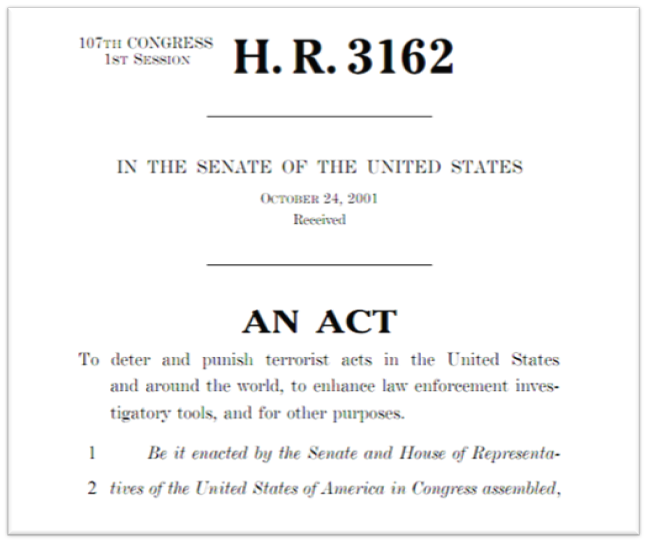
After September 11th 2001 the National Security State went into overdrive with the passage of the so called Patriot Act. That act opened the floodgates for an ever expanding national security state.

I have a lot of apprehension when I read the reports about the activities of the National Security Agency, other intelligence and police agencies at all levels of government and the pervasive erosion of civil rights.  The national security state and the seeming all pervasive security and surveillance apparatus which demolishes any sense of privacy, especially the protections enunciated in the Fourth Amendment and to some extent the First Amendment. Of course the use of similar methods by the private sector, often in conduction with government agencies is another concern, but that needs to wait for another day.

I also understand from history and empirical evidence that many others, many from unfriendly countries do not share those apprehensions. Many of these competitors are willing to use whatever openness that we have as a society against us, using similar technology and methods used by our intelligence, police, governmental and private sector. It makes for an ethical, legal and even constitutional conundrum. I know that I am not comfortable with this, and perhaps maybe none of us should be.

It is very easy on one hand in light of history, our Constitution and democratic process to condemn the NSA, the FISA courts and other lawfully constituted agencies and those that drafted the laws over the decades that allow the activities which they now conduct. The same can be said of foreign intelligence agencies which all engage in similar activities including the British GCHQ, the German Bundesnachrichtendienst and so many others including the Chinese and Russians.

Likewise it is equally easy in light of history, current events and national security concerns for people to jump to the other side of the fence and not only defend the activities of the NSA and agencies like it, and to demonize those that protest or expose such activities.

When I see the talking heads on cable news shows defending or condemning such activities and not agonizing over the complexity and issues involved I get worried. Because there are legitimate concerns voiced by critics as well as defenders. But since we live in an era of soundbites, gotcha and half-truths being portrayed as all truth I find it helpful to use either historical examples, literature or fiction, and even science fiction to wrestle with the fundamental truths. So I find looking at such issues through the prism of Star Trek sometimes more interesting and provocative than simply doing the whole moralizing pundit thing.

enimsilentleges_210

There was an episode of  Star Trek Deep Space Nine that aired well before the events of 9-11-2001, and the subsequent Global War on Terror, that I find fascinating. The episode deals with a secretive agency in Starfleet operating in the gray areas between the laws and ideals of the Federation and the threats that the Federation faces. Even when the Federation is a peace, Section 31, as it is called is engaged in activities against historic or potential enemies. In a way it is somewhat like the NSA or the Defense Intelligence Agency.

At the beginning of the Deep Space Nine Episode Inter Arma Enim Silent Leges the head of Section 31, a man only known as Sloan comes back Doctor Julia Bashir to involve him in an clandestine operation. An operation to on the Romulans who at this point are a Federation ally against the Dominion.

Sloan makes his approach and Bashir, who expresses his reservations:

BASHIR: You want me to spy on an ally.

SLOAN: To evaluate an ally. And a temporary ally at that. I say that because when the war is over, the following will happen in short order. The Dominion will be forced back to the Gamma Quadrant, the Cardassian Empire will be occupied, the Klingon Empire will spend the next ten years recovering from the war and won’t pose a serious threat to anyone. That leaves two powers to vie for control of the quadrant, the Federation and the Romulans.

BASHIR: This war isn’t over and you’re already planning for the next.

SLOAN: Well put. I hope your report is equally succinct.

BASHIR: How many times do I have to tell you, Sloan? I don’t work for you.

SLOAN: You will. It’s in your nature. You are a man who loves secrets. Medical, personal, fictional. I am a man of secrets. You want to know what I know, and the only way to do that is to accept the assignment.

I find the exchange both illuminating and riveting. The fact is that in the situation we face today the arguments of both sides should make us very uncomfortable.

Whether we like it or not or not, the incredibly rapid technical and communication advances of the past couple of decades have primed us for our present conundrum of liberty and privacy or security. That technology, as wonderful as it is  has enabled a generation to grow up in a virtual world in many ways detached from the moral and ethical balances between individual rights and liberties as well responsibility to community.

All the wonderful gadgets that we employ in everyday life, make it easy for enemies and “friends” to do things that were unimaginable to people other than science fiction writers even twenty to thirty years ago. Likewise they were certainly beyond the wildest imaginations of any of the founders who drafted Constitution.

The reality is, the things that make are lives so easy are also the things that have the potential to remove the very liberties that we treasure, either by our enemies using them, or those that defend us.

The truth is, that throughout history, even our own there have been operatives within the government in charge of secrets, as well as spies. In the Inter Arma Enim Silent Leges episode we see an operation that is full of duplicity and moral ambiguity all committed in the name of security. I won’t go into the details because it is too full of twists, and turns, you can read the plot of the episode at Memory Alpha.org http://en.memory-alpha.org/wiki/Inter_Arma_Enim_Silent_Leges_%28episode%29

There is an exchange between Dr. Bashir and Admiral Ross of Starfleet command which is very enlightening because it practically mirrors how many on both the civil liberties and the national security side of the current controversy feel about the War on Terror.

BASHIR: You don’t see anything wrong with what happened, do you.

ROSS: I don’t like it. But I’ve spent the last year and a half of my life ordering young men and young women to die. I like that even less.

BASHIR: That’s a glib answer and a cheap way to avoid the fact that you’ve trampled on the very thing that those men and women are out there dying to protect! Does that not mean anything to you?

ROSS: Inter arma enim silent leges.

BASHIR: In time of war, the law falls silent. Cicero. So is that what we have become? A twenty fourth century Rome driven by nothing more than the certainty that Caesar can do no wrong!

ROSS: This conversation never happened.

In light of the controversy of today regarding the NSA, FISA Courts, government secrecy and intelligence gathering information on its own citizens, as well as allies, friends and and enemies we face a growing tide of reporters and others seeking to reveal those secrets. Back in 1989 ethicist Sissela Bok wrote something very important in her book Secrets: Moral Choice in Public and Private Life:

“…as government secrecy expands, more public officials become privy to classified information and are faced with the choice of whether or not to leak … growing secrecy likewise causes reporters to press harder from the outside to uncover what is hidden. And then in a vicious circle, the increased revelations give government leaders further reasons to press for still more secrecy.”

As we wade through the continuing controversy surrounding these issues we will see people do exactly what Bok said. These are the exact arguments are being made by the people and officials directly involved in such activities, as well as former elected and appointed officials, and members of the press.

nsa-operations-center

The interesting thing to me is that very few of the people or agencies, past and present, Republican and Democrat involved have clean hands. It is amazing to see former champions of civil liberties defend the NSA actions and those that empowered the NSA in the Patriot Act now condemn it. I find it both fascinating and frightening.

At the end of the Inter Arma Enim Silent Leges episode the mysterious Sloan pops back in on Doctor Bashir who is in his quarters, asleep and depressed by what he experienced during the operation on Romulus and with Admiral Ross.

SLOAN: Good evening.

BASHIR: Are you expecting applause? Have you come to take a bow?

SLOAN: I just wanted to say thank you.

BASHIR: For what? Allowing you to manipulate me so completely?

SLOAN: For being a decent human being. That’s why we selected you in the first place, Doctor. We needed somebody who wanted to play the game, but who would only go so far. When the time came, you stood your ground. You did the right thing. You reached out to an enemy, you told her the truth, you tried to stop a murder. The Federation needs men like you, Doctor. Men of conscience, men of principle, men who can sleep at night. You’re also the reason Section Thirty one exists. Someone has to protect men like you from a universe that doesn’t share your sense of right and wrong.

BASHIR: Should I feel sorry for you? Should I be weeping over the burden you’re forced to carry in order to protect the rest of us?

SLOAN: It is an honor to know you, Doctor. Goodnight.

We live in this kind of world and maybe it is good to sometimes step back and look at issues using a different prism. I really don’t have the answers. I am a civil libertarian who places a high value on the openness of a government to its people. I also know that there are those that have no regard for such openness or, to quote Sloan don’t “share your sense of right and wrong.”

Maybe that is not a good answer. I really don’t know. All I know is that as uncomfortable as this all is that those on both sides of the issue have valid points and concerns. It is a debate that needs to happen if we are able to balance that a society needs to balance individual rights and responsibility to the community; openness and secrecy; civil liberties and national security.

But that being said. it is a debate that needs to happen, even if it makes us uncomfortable. I for one think that it is better that we be uncomfortable when looking at such an important debate than to be prisoners of our certitude.

Peace

Padre Steve+

2 Comments

Filed under History, laws and legislation, national security, Political Commentary, star trek

People Matter: Thoughts on History & Biography

IMG_1915

English historian and military theorist Colin Gray noted that “people matter most” when we deal with history, policy, or politics, especially in the matter of war.

I think one of the sad things about history is that many authors, especially in military history, but other areas as well, seem to treat the participants as bit players in a series of events, rather than a prism from which to understand and view history.

I cannot tell you how many times I have had students, and even colleagues tell me that history is dry, boring and uninteresting to them.  I will not condemn them, for certainly if it is that is case, it is not their fault, but rather those who write and teach history. If all history is, is arbitrary dates, lists of disconnected events and names of people, without any context to their lives, why should they care about it?

When I first began to study history I was much more concerned about events than people. However, over the past couple of years I have began to develop what I call my philosophy of history. That has come about through my study of the events leading to the American Civil War and in particular my study of the Battle of Gettysburg, but also in other historical events such as the Arab Revolt of 1917, and the French adventures in Indochina and Algeria.

In doing all of my research I have read a large number of books, articles and primary sources on these subjects and my personal library appears to be growing at an exponential rate. I have noticed that much of what I have read deals very little with the people involved, unless I am reading a biography, and even some of the biographies seem to be event heavy, and person light and sometimes it seems that the subjects of the biography are often one dimensional, and almost caricatures of who they really were. Some of the alleged biographies that I read would be better described as hagiography, the type of writing used by religious writers to make saints a lot less human. The same style of writing is found in hacks like David Barton and Bill O’Reilly for whom truth matters less than profit and propaganda value.

Such is not history. Neither is history which is designed to support a particular ideology, be it political, religious, or economic. Such is not history, but propaganda. When I see people, in this country forbidding the teaching of history because it is not patriotic enough I want to scream. It is like I watching the propagandists of Stalin’s Soviet Union, Hitler’s Third Reich, or any of many ( that rhymed nicely) other nations that used ideology or religion to supress history that didn’t meet their definition of “patriotic.” But then I digress…

My gut feeling says that such artificial divisions between history and biography do a disservice to the reader.  I take a tremendous pleasure in writing, and I like to try to communicate and interpret facts, which is indeed the vocation of the historian, in a manner that makes them interesting. What I am finding is that when telling the stories of events we must also tell the stories of the people who make these events.

Without such a connection there is little to interest most readers. People tend to be interested in people because there is a connection. The human being is still the human being, no matter what age, country, culture, religion that they belong to. I learned a lot of this from reading the works of Barbara Tuchman

In my writing now I attempt to bring the prism of the biography into the events that I write about.

I had a fellow faculty member note that he liked what I wrote about Gettysburg because it was more than just the events, it was the personal connection he felt to the people.

People matter because they have so many layers. I guess one of the things that makes my writing approach a bit different is that while I am a historian, I am also trained in philosophy, pastoral care and psychology, all of which deal with existential matters.

Image found that the complexities and contradictions of the subjects of history, the people help me understand the events more than anything. That is a “warts and all comment.” I think my epiphanies came in reading about the lives, as well at writings of men like T.E. Lawrence and Gouvereur Warren whose triumphs, struggles, weaknesses and injuries mirror my own. In learning about these men as people, in the context of what they accomplished helps me to understand their history and the era that they lived far more than simply recounting how they influenced a battle.

I find that the lives, beliefs, motivations, relationships, and experiences of people to be paramount to understanding events. People are complex, multi-layers and often contradictory. My heroes all have feet of clay, which in a sense makes their stories even richer, and the events that they helped bring about more fascinating, because then I gain a holistic perspective and develop an empathy for them. Even good and honorable people who find themselves due to race, religion, or nationality fighting for an evil cause, or evil people fighting for a good cause. If you are trapped by ideological or religious certitude that may confuse or even offend you, but it is a part of the human condition. That my friends is history.

Barbara Tuchman noted “that if the historian needs to submit himself to his or her material instead of trying to impose himself on his material, then the material will ultimately speak to him and supply the answers.” 

This is very important, because when we do this we discover the answers to the why questions, the why questions that are often very uncomfortable, yet necessary if we want to discover truth.

I know that I can find connections in the strengths as well as their weaknesses of people that I admire.  Thus when I see ordinary people taking part in events, for good or for evil,I can say that given the same set of circumstances that that could be me. Context matters, nuance matters, people matter. If we do not understand that, history becomes nothing more than a set of manipulate facts that can be used to buttress the most evil of

I do plan on developing these thoughts over the coming weeks and months, but for now it will suffice to say that when I write about history, that people matter.

Peace

Padre Steve+
Leave a comment

Filed under History, philosophy

Southern Justice and Its Relevance Today

NormanRockwellSouthernJustice-1Southern Justice- Norman Rockwell 1965

I have been writing about the continued problem of racism and hatred in this country, as well as in others lately. Fifty years ago, three young men working to register blacks to vote as part of the Freedom Summer in Mississippi were brutally murdered by members of the Ku Klux Klan.

The three men were idealists who would all die because they fought for the right of Blacks to vote harassment and intimidation.

Twenty year old Andrew Goodman from New York City, was a progressive activist and Anthropology student at Queens College. Twenty-four year old Mickey Schwerner was a graduate student at Columbia University’s School of Social Work. Both Goodman and Schwerner were Jewish. Twenty-one year old James Chaney was from Meridian Mississippi and was a volunteer with CORE, the Congress of Racial Equity working on voter registration and education with local churches.

MtZion4

The Ruins of Mount Zion Church

On June 21st 1964 the three men were investigating the burning of Mount Zion Methodist Church in Longdale. They had been working with the church  to assist in registering blacks to vote.  In the wake of their visit to the town and to the church, the local Klan, which included many men of influence, including those in law enforcement sought to lure CORE workers into the town to make an example of them. They did this by upping the ante and instigated a campaign to harass, attack and brutalize the black citizens and church members. They then burned the church to the ground.


FBI_Poster_of_Missing_Civil_Rights_Workers

The three went to the site on June 20th and were arrested for an alleged traffic violation. They were then jailed and released later in the evening without being allowed to make any phone calls. On the way back to Meridian, two carloads of Klan members forced them over, abducted them and killed them. The bodies were buried at the base of a dam and not discovered for 44 days.

Cecil Price, a deputy Sheriff involved in the arrest was one of the murderers. He was one of the men later convicted of their murder. After the killing he told his helpers:

“Well, boys, you’ve done a good job. You’ve struck a blow for the white man. Mississippi can be proud of you. You’ve let those agitating outsiders know where this state stands. Go home now and forget it. But before you go, I’m looking each one of you in the eye and telling you this: “The first man who talks is dead! If anybody who knows anything about this ever opens his mouth to any outsider about it, then the rest of us are going to kill him just as dead as we killed those three sonofbitches (sic) tonight. Does everybody understand what I’m saying. The man who talks is dead, dead, dead!”

The disappearance of Chaney, Schwerner and Goodman brought national attention and a major investigation to the town. Eventually seven men, including deputy Price were convicted of the murders. The murders and the investigation became the subject of the movie Mississippi Burning.

In 1965 Norman Rockwell, well known for his portraits of American life and the Civil Rights movement painted “Southern Justice” which is sometimes known as “Murder in Mississippi”  This was not long after passage of the Voting Rights Act of 1964, which has been under attack in many southern states over the past decade and had a key provision gutted by the Supreme Court last year.

mississipiburning

50 years ago the murders of these three young men brought national attention to the pervasive racism and discrimination in the country. Until this incident most of the murders, lynching’s and burnings of homes, businesses, and even churches had been covered up by the media and law enforcement.  Frankly, a black life wasn’t worth investigating or the air time.

I do hope and pray that we never go back to those days, but as laws are passed to limit voting rights in various states I wonder if the clock is being turned back. I don’t think that it will in the long run these efforts to disenfranchise blacks, other minorities, students and the working poor will be successful, but we can never assume that. Freedom always hangs in the balance and it can be lost when we do nothing. The Klan is still active, and sadly its hatred for Blacks, immigrants, Jews, Moslems, Catholics, and Gays, or for that matter anyone who stands against them has spread to others not traditionally affiliated with the Klan.

Some might say that it has been fifty-years, that things have changed, so why bother bringing up the past? I’ll tell you why, because freedom is always under siege, and the sacrifice of so many, including these three young men, for those rights should never be forgotten.

In memory of Andrew Goodman, James Chaney and Mickey Schwerner and others of the Freedom Summer and the Civil Rights movement who died or suffered to peacefully bring about change to our society.

Peace

Padre Steve+
Leave a comment

Filed under civil rights, History, Political Commentary

Remembering the Miracle on Ice

We all remember where we were when tragedy happened.  No one can forget where they were when John or Bobby Kennedy or the Reverend Martin Luther King Junior was assassinated. Likewise few can forget where they were when the Space Shuttles Challenger or Columbia, blew up or where they were during the the events of September 11th 2001.

Tragedy we remember well, but good news not so much.

But, despite the fact that good news is not always as memorable as tragedy there are some good news stories that make a lasting mark.

Back in 1980 there was one of those sentinel events. I am sure that if you were alive back then that you remember it well.

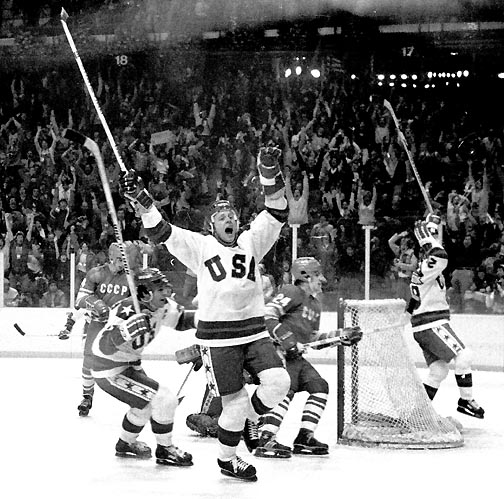
I am speaking about the victory of the US hockey team, Team USA over the Soviet team at the 1980 Winter Games in Lake Placid New York. Some might be prone to dismiss this as merely a sporting event with little relevance, but the context of an event makes all the difference. English historian and military theorist Colin Gray wrote “Wars are not free floating events, sufficient unto themselves as objects for study and understanding. Instead, they are entirely the product of their contexts.” 

I like what Gray said, but I think that we can expand it to other historical events, not just war. If this was just a stand alone hockey game with would have little meaning. There are times when underdogs win championships and defeat heavily favored perennial champions. Most of those times, except for the devoted fans these events pass into relative obscurity and pop-up from time to time on an ESPN special. This event is much more important than a remarkable sporting event.

080624-gaslines-hmed-4p.grid-6x2

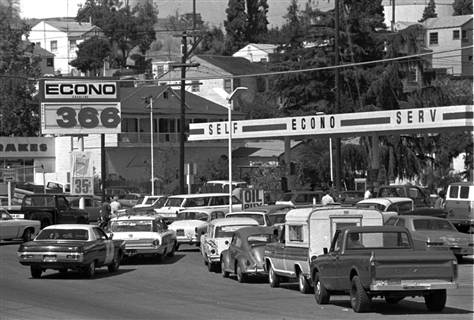
Back in 1980 times were tough in the United States, recession, double digit inflation, 20% interest rates, a gas crisis, as well as the residual effects of the Vietnam War created a specter of anxiety for many people.

Even as the domestic economic lurched from crisis to crisis the United State was reeling  and the humiliation that the Iranians were inflicting on the United States on a daily basis following the seizure of the US Embassy in Tehran and a seemingly unending hostage crisis. The Soviet invasion of Afghanistan was yet another thumb in the eye of the United States.

So as the United States prepared to host the Winter Games at Lake Placid New York there was not much to cheer about. The country was mired in political crisis as the sitting President Jimmy Carter was continually at odds with his own Democratic Party and to all appeared weak in dealing with the Soviets, their satellites or the Iranians. When Cater made his “malaise” speech in July 1979 the reaction around the country and world was I was less than positive. I was in the UK touring as a spotlight tech with a  singing group and the reaction of the Brits and other Europeans was ridicule of the President, and pity for the United States. It seemed to many that the United States had hit bottom and was not coming up any time soon.

http://www.youtube.com/watch?v=fztlLwgSFCg (highlights and live call)

In 1980 Team USA was nothing more than a bunch of American college kids playing teams of Warsaw pact professional all-stars from powerhouse teams such as the Soviet Red Army team.  The Soviets had dominated international hockey since 1956 and with the exception of the US Gold Medal team of 1960 had won every Olympic gold since that time. In 1980 the Soviets were once again expected to win Olympic Gold.

When it came to the American hockey team no one expected much, with the exception of head coach Herb Brooks.  Brooks and his collection of college players, a number of whom would later become stars in the NHL, began their time together inauspiciously conducting a 61 game exhibition tour against teams from around the world.  On February 9th in the final game leading up to the Olympics  the Americans faced the Soviets at Madison Square Garden and were blown out by a score of 10-3 by the Soviet team.  In the lead up to the Olympics the Soviets toured North America and played against NHL teams. The Soviet team went  5-3-1 against their NHL teams.  The previous year a Soviet team had shut out an NHL All-Star team 6-0.

When the Olympic completion began the Soviets as was expected dominated their opponents in the preliminary round going 5-0 and outscoring their opponents 51-10.  The United States surprised everyone tying Sweden 2-2 with a last minute goal and then stunning a highly favored Czech team 7-3 before defeating Norway, Romania and West Germany to advance to the medal round.

Brooks practiced the team hard as they prepared for the Soviets who they were scheduled to meet in the opening round of the medal competition. A loss for the Americans would force them to play for Bronze and no one expected the Americans to defeat the Soviets. Yet when the day came the Lake Placid Field House was packed with 8500 fans decked out in Red White and Blue, American flags displayed everywhere and the crowd spontaneously singing “God Bless America.”  Unfortunately because the Soviets refused to allow a later start time the game was not televised live nor broadcast live on the radio in the States.

On February 22nd I had finished work making and rolling pizza dough at Shakey’s Pizza in Stockton, went home showered and then got in my car to head over to Judy’s house.  On my way over I was listening to the radio when ABC radio broke in to air the last minute of the game live. I was listening as Al Michaels made the famous call “Eleven seconds, you’ve got ten seconds, the countdown going on right now! Morrow up to Silk. Five seconds left in the game. Do you believe in miracles? YES!”

I could not believe it and was screaming with joy and wild abandon in the car. As soon as I got to Judy’s I went in and told her and her parents When the game came on I watched it with undivided attention and to this day I cannot forget that night.  The Americans had beaten the vaunted Soviet team 4-3 and would go on to defeat Finland in the Gold medal game 4-2.  The next day they were guests at the White House and after that the team broke up.  13 players would go on to NHL careers, Brooks would lead the 2002 Team USA to a Silver in 2002 before being killed in a car crash in 2003.

The Soviet people and their news media were stunned by the loss and the fact that the Soviet Team won Silver by defeating Sweden 9-2 the team had lost its luster.  While it remained dominant until the break-up of the Soviet Union in 1990 it was the end of an era.  Today many Russian players star in the NHL and live in the United States even after their careers.

That team and its members did something that no one expected in defeating the Soviets and going on to win the Gold medal against the Finns. No one could have expected the effect on the country either. It was a miracle, a miracle on ice.

Thirty-five years later the triumph of Team USA against all odds on that night is remembered as an event nearly unequaled in sports history as well as contemporary American history.  That game actually marked a return of pride to the country after a decade of discontent, defeat and discouragement.

Some people, especially those on the political right in their Reagan myth, mistakenly give Ronald Reagan the credit for turning around the attitude of the country in the 1980s. I don’t think that they could be more wrong. It wasn’t Reagan or any other politician, it was the 1980 American Olympic hockey team that made us believe again.

That is why this event meant so much more than a a game.

I don’t know about you, but I still believe in miracles.

Peace,

Padre Steve+

2 Comments

Filed under History, Political Commentary, sports and life

“They” The Enemy of “Us”

einsatzgruppen executions

“Hatred is the most accessible and comprehensive of all the unifying agents. Mass movements can rise and spread without belief in a god, but never without a belief in a devil.” Eric Hoffer 

Hatred is an amazing emotion. I was noticing this week in the comments of a number of people on my Facebook page a tremendous amount of hatred against other people. Most of these were directed against Blacks, immigrants, Gays, women and Moslems.

Sadly, as one of those people messaged me it was about “they.” They being the blacks, immigrants, gays, and Moslems. You see “they” is a wonderful term to use to blame a group of people for the ills of society, and I might add for personal failure and petty jealously. You see it is far easier to blame “them” for problems than to take responsibility for treating others decently and maintaining our own humanity.

You see the terms “they” and “them” are terms used not just to divide, but to demonize. Mass movements love them, especially when using them against those of other races or religions. It does not matter if it is an unrequited White American Southern Christian who still to this day regrets losing the Civil War and that that allowed blacks to be granted equity under the law and finding redemption in the myth of the Lost Cause. It does not matter if it is the disappointed and disillusioned German Monarchist seeking to find answers for the loss of the First World War and finding them in the myth of the “Stab in the Back” which ensured that Jews, Socialists and others were blamed for the loss of that war, and finds his answers in the lies of Adolf Hitler. It does not matter if it is the pundits, politicians and preachers of the American political right who constantly blame blacks, gays, women, Moslems and immigrants for problems that they and their policies brought about.

None of this matters, but then it does. It does’t matter to the people who need scapegoats, or who need a “devil” in order to have meaning for themselves and the movements that they find their salvation in. No, not at all. Hoffer was quite correct that “Mass movements can rise and spread without belief in a god, but never without a belief in a devil.” The really successful leaders of such movements understand this. For Hitler it was the Jews and other untermenschen. For American Southerners of the Lost Cause it was the Blacks and their white supporters. For the “Know Nothings” of the 1840s and 1850s it was immigrants, especially Irish and Germans who were Catholic. For the leaders of the Islamic State, it is Jews, Shi’ite Moslems, less than “faithful” Sunnis, Christians and well for that matter anyone who does not line up one hundred percent with them on every issue. The examples are so plentiful to support this fact that it is almost overwhelming.

The problem is that when any of us lump others into the categories of They and Them, and in the process then demonize those people to the point that they become less than human we have reached a tipping point. We reach the point where we are just one crisis away from Jim Crow,  pogroms, ethnic or religious cleansing, and even genocide.

Sadly, we human beings are not nearly as evolved as we think. In the movie Gettysburg Jeff Daniels playing the role of the amazing Colonel Joshua Chamberlain quotes Shakespeare’s Hamlet to an Irishman of the Twentieth Maine:

“What a piece of work is man, in form and movement how express and admirable. In action how like an angel.”

The Irishman, Sergeant Buster Kilrain replied:  “Well, if he’s an angel, all right then. But he damn well must be a killer angel.” 

Sadly that is the case all to often. Those that follow my writings on this site know how much I love the various Star Trek television series and movies. There is an episode (The Siege of AR-558) of Star Trek Deep Space Nine where the Ferengi bartender Quark, makes a truly astute observation during a battle for survival at an isolated outpost :

“Let me tell you something about Hew-mons, Nephew. They’re a wonderful, friendly people, as long as their bellies are full and their holosuites are working. But take away their creature comforts, deprive them of food, sleep, sonic showers, put their lives in jeopardy over an extended period of time and those same friendly, intelligent, wonderful people… will become as nasty and as violent as the most bloodthirsty Klingon. You don’t believe me? Look at those faces. Look in their eyes.”

I don’t think that we are too far from some tipping point where the Trinity of Evil, the politicians, pundits and preachers, especially of the political right and the media whores who are more concerned about market share than truth, decide that their “devils” must be exterminated. Of course when they will do they will claim a higher moral, religious, or racial, purpose; or perhaps use the language of Manifest Destiny, the Lost Cause, or the Stab in the Back or some other historical myth that suffices to justify their actions.

In a Star Trek the Next Generation episode, one called The Drumhead Captain Picard has to warn his security officer, Lt Worf about the dangers of rampant paranoia. Worf starts: “Sir, the Federation does have enemies. We must seek them out.”
 

Picard pauses and then notes:

“Oh, yes. That’s how it starts. But the road from legitimate suspicion to rampant paranoia is very much shorter than we think. Something is wrong here, Mister Worf. I don’t like what we have become.”

To claim Picard’s words for myself I have to admit that I don’t like what we have become either.

Peace

Padre Steve+
 

7 Comments

Filed under civil rights, civil war, ethics, faith, film, History, News and current events, philosophy, Religion

Mine Eyes Have Seen The Glory: The Undying Racism of the Lost Cause

001dr

My friends this is the final section of my Gettysburg text chapter dealing with the religious, ideological and racial component of the American Civil War. My hope is that as you read it you will see that those parts of history which make us uncomfortable, and that some politicians, preachers and pundits say no longer exist, are still pervasive in our society.

I hate to admit this but it is far too true.

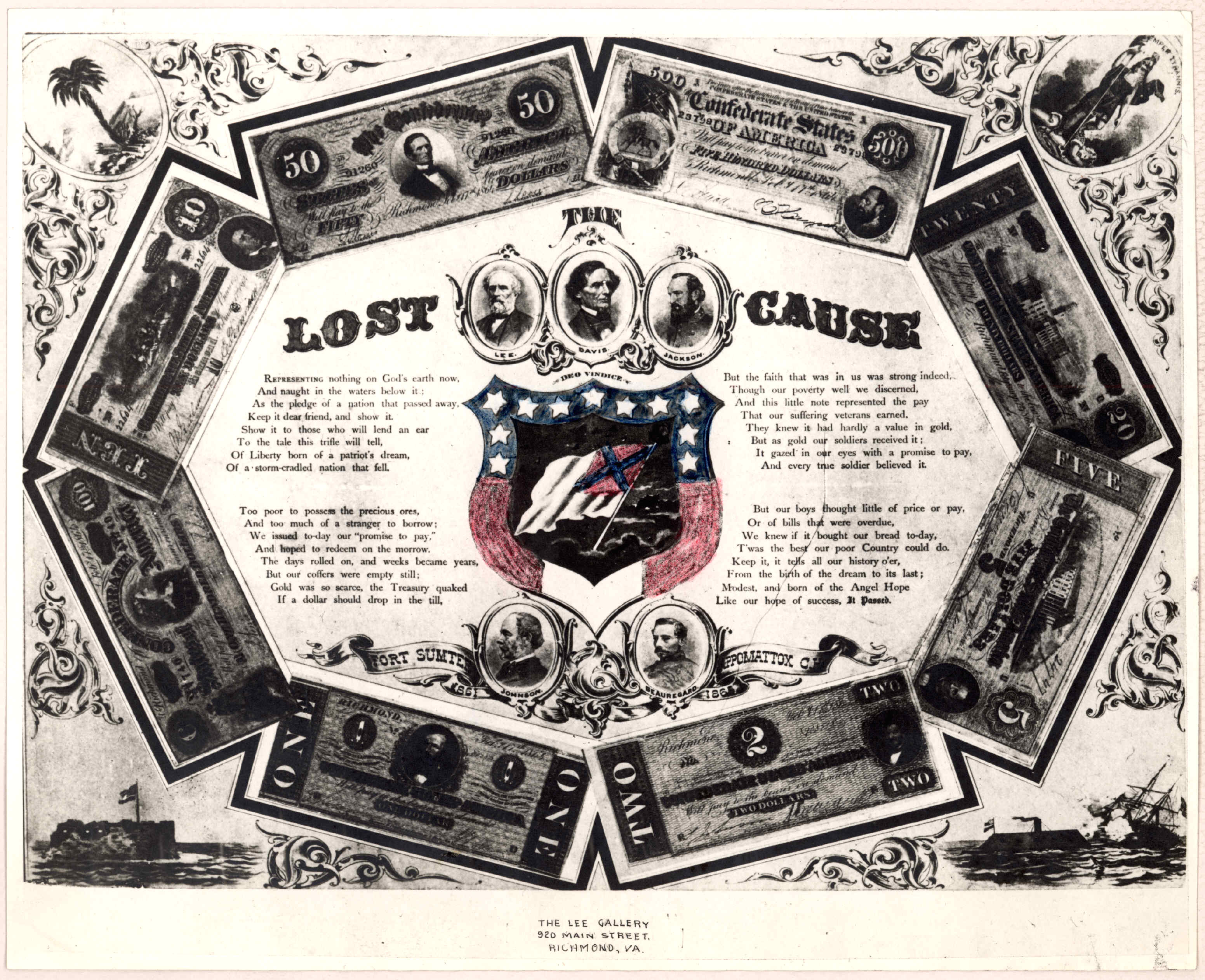
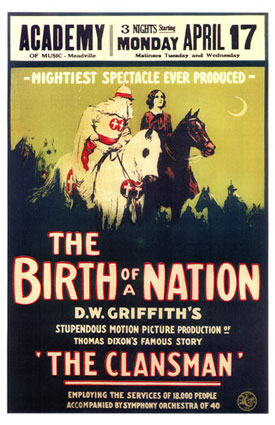
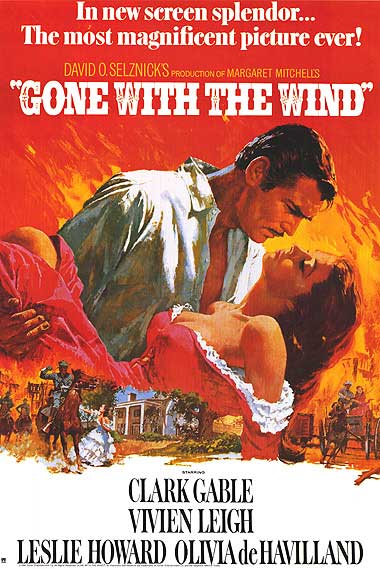
What many don’t realize is just how pervasive and insidious the myth of the Lost Cause was in the decades after the Civil War and its effect on the new medium of film as D.W. Griffith romanticized it in Birth of a Nation, Margaret Mitchell’s best selling novel which became the movie Gone with the Wind and even Walt Disney’s animated classic Song of the South. That was just in the popular media, a host of “histories” advanced the Lost Cause in academia. Many Civil War buffs get a lot of their history from the same sources, sources which “whitewash” the evils of Confederate Nationalism, Racism and the centrality of slavery to Southern culture, economic life and even religion.

Birth-of-a-Nation-poster

MPW-15446

Thus the Orwellian culture of denial continues to this day where, Senators, Congressmen, Governors, and state legislators claim that racism no longer exists and that those who say that it does are “racist.”

Trust me, if you read this and you have grown up sucking at the tit of the Lost Cause without even realizing it, these articles might stir up all sorts of uncomfortable feelings, and I hope that they do. Soul searching is a good thing, and the truth, however uncomfortable as it is will help set us all free.

As I mentioned in the first segment of this post, for me that journey has been at times uncomfortable. As I said, my family owned slaves and parts fought for the Confederacy, even as their neighbors in Cable County West Virginia fought for the Union. After the war the family patriarch, who had served as a junior officer in the Confederate Army, refused to sign the loyalty oath to the Union, and lost all of his family’s lands. If you ask me the truth, I think that history should make us uncomfortable. If it doesn’t I doubt that it is history.

The link to the article is here.

Mine Eyes Have Seen the Glory: Religion, Ideology and the Civil War Part 3

Have a great Weekend,

Peace

Padre Steve+

Leave a comment

Filed under civil rights, civil war, faith, film, History, Political Commentary, Religion

Mine Eyes Have Seen the Glory: Racism, Slavery and Religion

slavescars

Today my friends another installment of my chapter in my Gettysburg text dealing with religion, racism and ideology as causes of the American Civil War. While many people, especially modern Southern White politicians like to repeat the mantra that we live in a “post-racial”  society where racism no longer exists. I discussed that ridiculous assertion yesterday in my intro to the series so I won’t bother to repeat it now.

the-dred-scott-case-1846-1857-402x618

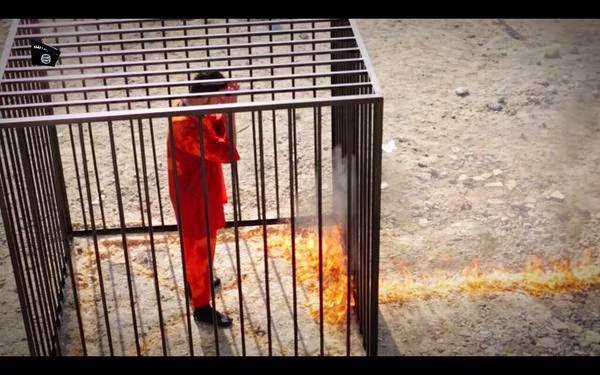
What I will do is discuss how religion has been used and in still being used by “true believers” of many religions to justify all sorts of evil in the name of their God. The latest and most newsworthy of such people are the practitioners of terror in the name of Allah, the Islamic State and Boko Haram in central and west Africa. These groups have brought back the concepts of what we would call public lynching of their enemies, burning them alive, beheading them, enslaving them, and engaging in ethnic and religious cleansing. They are ruthless and are a throwback to times that most of us had hoped had passed into recess of history.

a2a9c088d75423b7f457b194d7c9ea9a

But history has a way of never dying, especially for those who don’t stop believing in their cause. In resp0nse to the acts of ISIL and Boko Haram I have heard numerous American Christian politicians, pundits and preachers claim that Christians have never acted in such a way. I could go through the litany of crimes committed by Christians, Churches and the actions of nations whose state supported churches provided the theological justification for genocide, pogroms, ethnic cleansing, crusades, imperialism, slavery and a host of other crimes against humanity. Instead I am just going to focus on the theological justification of those who defended the institution of slavery, as well as their abolitionists opponents in this posting, because they are really not that too far removed from the actions of ISIL and the words of many supposedly Christian politicians, pundits and preachers in this country today.

020101_isilBurns_jordanian_pilot_alive

Omaha_courthouse_lynching

This section begins with the Compromise of 1850, an act which included the Fugitive Slave Act which gave Southern Slaveholders the right to go into any state or territory to reclaim their human property and provided them with a extra-judicial system to support them.  From this it transitions to the theological arguments and proclamations of those supporters of slavery and their opponents. The section ends with a note about a case that Virginia was pushing through the Courts in 1860, just prior to the Civil War, it was a case that they hoped would destroy any remaining legal obstacles to expanding slavery into Free States and territories against the wishes of the citizens of those states. I find it interesting that for people then as well as today the concept of “States Rights” only applies to them and their attempts to deny freedom to others.

Mine Eyes Have Seen the Glory: Religion, Ideology and the Civil War Part 2

Tomorrow I will post the third section of this chapter which begins with Bleeding Kansas, John Brown, the link between church and state in the Confederacy, the election of Lincoln, Emancipation, and the pervasive and poisonous myth of the Lost Cause in the United States.

Racism, as well as other forms of hatred backed by religion is still alive and it is not just in the Middle East and Africa. It is still here, and it is still happening now. It may be a bit more subtle and certainly not as violent as it was in the ante-bellum days, or Post-Reconstruction, but it is here. Like in the Middle East it bides its time until extremists can invent an excuse to resort to violence and terrorism.

Peace

Padre Steve+

1 Comment

Filed under civil rights, civil war, faith, History, iraq,afghanistan, laws and legislation, leadership, Political Commentary, Religion

Mine Eyes Have Seen the Glory: Racism Still Exists

cover22

Friends of Padre Steve’s World

In a week and a half I shall be off to Gettysburg again with a new band of students, bracing the very cold and possibly even nasty winter weather to experience and learn about the people, whose courage, sacrifice and service helped change this country for the better.

That is not to say that we have arrived in any sense of the word. Today I was confronted on a social media site about a quote that I posted from the late Associate Supreme Court Justice Thurgood Marshall which said:

“None of us got where we are solely by pulling up our bootstraps. We got there because somebody – a parent, a teacher, an Ivy League crony, or a few nuns, bent down and helped us pick up our boots…” 

When I posted it I wasn’t thinking of anything more than that all of us owe something to someone else for what we have achieved.

The person who confronted me on this, a retired Navy Chaplain chastised me because of “institutionalized affirmative action programs.” When I defended Marshall’s comments I got a a comment that “those days are long gone….” 

When  I read that with or new puppy Izzy snuggled beside me I thought, “what the fuck?” I really didn’t know how to respond. I was astounded to hear those words coming from a person who served a full career in the military. Heck the Admiral I work for, who is one of under twenty African Americans serving at that rank today was told by a white Commanding Officer that he would never command anything because he was black. He entered the military a year after I did during the early part of the Reagan build up. I enlisted in 1981 and was commissioned in 1983, he was commissioned in late 1982.

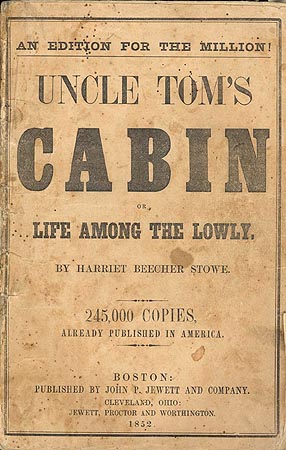
So please keep telling me that institutional and personal racism does’t exist. It does and it is still a part of life, no matter what Ben Carson, Alan West or Starr Parker say. Those people are no different than Stephen, the character played by Samuel L. Jackson in Django Unchained. They benefit from being the black henchmen of those that oppress other blacks. In Harriet Beecher Stowe’s era they were called Uncle Tom. The sad thing is that such people never understand that the system that they defend and advocate still hates them. I’ll go back to that in another two articles this weekend, which will be entitled They Still Hate You and another We the Good White God Fearing Citizens of Rock Ridge Again both will have a film reference and if you don’t know those films you should.

Sadly it seems they one people that really believe that are white American conservative Christians. But I digress….

The heart of why over 600,000 Americans died in the Civil War, and the country was devastated by a total war, the effects of which still linger today was rooted in racism, the institution of slavery, the belief that Blacks were less that human and that States, backed by legislative “compromises” and Supreme Court decisions could and should be able to maintain and even expand an evil  social and economic system that treated Blacks as less than human, enslaved them and treated them not as human beings but as the property of slave owners.

That my friends is not just a fact, it is history and it is uncomfortable as hell because my family owned slaves and fought for the Confederacy, something that I am neither proud of or ashamed to admit. It is history. It is reality, and it is shameful. I will not simply resort to the lie that my ancestors who owned slaves and fought to keep that right were simply products of their time. They and thousands of others like them knew better, and they not only intellectually assented to the system, but the profited from it and fought for it.

What I am saying, and this will not be comfortable to those who want to believe that racism, or other forms of social discrimination exist and are being re-legislated into law in certain state legislatures in actions to roll back voting rights, civil rights and economic liberty.

No they will not, especially to those who hold those beliefs and back them with their religion. Just because an elected official, or a law enforcement officer who happens to be Black expresses an opinion that racism still exists and that the laws on the books designed to ensure equal rights are enforced does not mean that they are racist. It seems to me that the racism label today is used by the very proponents of racism, racism that seeks to assign blacks, women, other people of color, and gays to less than full social, political and racial equity. But then I could be wrong, maybe in  the words of Supertramp’s Logical Song I’m just a radical, liberal, fanatical, criminal…. but then maybe all the world is asleep…. and my questions run too deep….

That my friends is just one of the reasons that I believe that history matters and that such evils, and yes they are evil, need to be confronted today. The history must be told and it cannot be varnished with the lacquer of the myth of the Lost Cause, or any sort of neo-Confederate romanticism, the politicians, pundits and preachers who do so be damned to the pit of the hell that they so adamantly assign those that do not agree with them.

So tonight I am reposting a link to the first of three previously published articles, which are one full chapter of my Civil War and Gettysburg text. They are uncomfortable as hell to read, because I know for a fact that from my own research, and family history that they are just that. The accounts, the words of the defenders of slavery and the racist ideology behind it and today behind much of the preachers, politicians and pundits of the Tea Party must be confronted. Not just because it is part of their ideology, but because it is an integral part of the ideology of the Islamic State, Boko Haram and all evil that go with them. Ideology, religion and racism matters, not just in the past but today.

So tonight I give you 

Mine Eyes Have Seen The Glory: Religion, Ideology & the Civil War Part 1

I’ll repost part two tomorrow and part three Friday with a few more editorial comments because as you an see I am really spun up about this.

Have a great night.

Peace

Padre Steve+


2 Comments

Filed under civil rights, civil war, faith, Gettysburg, History, philosophy, Political Commentary, Religion

There Comes a Time… A Bloom County Reality Check

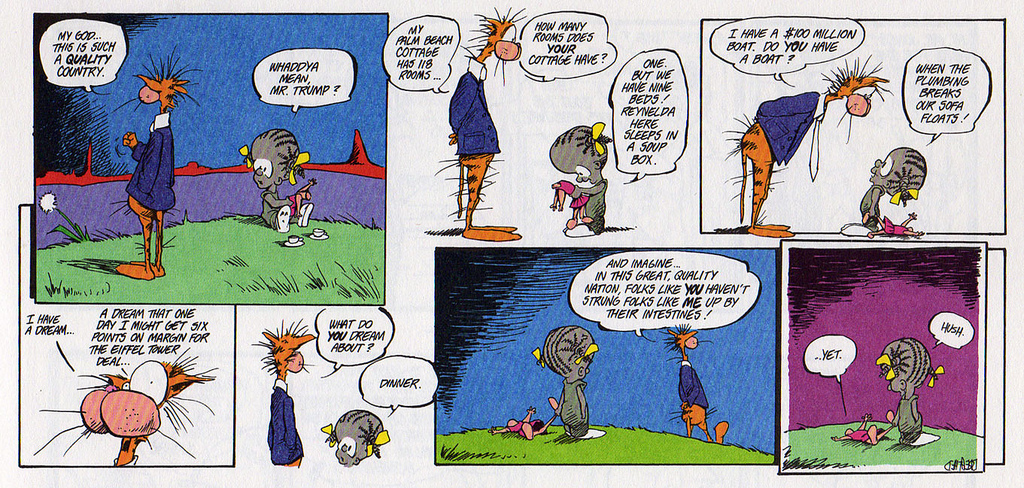
5663117546_c4150a82fc_b

If the print on the strip is too spall on your phone or tablet the link is here: http://www.gocomics.com/bloomcounty/2015/02/17

Likewise if you click on the picture it should be larger and more readable

“Our lives begin to end the day we become silent about things that matter.” Dr. Martin Luther King Jr. 

It is funny how timeless the social commentary of Berkeley Breathed’s classic comic strip Bloom County is even today. The strip shown above is from 1987. It is part of a series of strips where Donald Trump’s brain is transplanted into Bill the Cat’s body leading to some interesting encounters with the citizens of Bloom County.

In this strip, a little Black girl named “Ronald Ann,” named such by her dad after Ronald Reagan meets Mr Trump. The Donald, like all of us has a dream, but his is a bit different, and in the strip he is symbolic of the worst part of our humanity, that which has everything, while denying others of even the chance to achieve. A class of people who have no empathy, and for whom nothing matters but their bottom line, and they have an army of politicians to enshrine their policies into law, pundits who shamelessly defend them, media empires that promote them and their lifestyles as good, and preachers who give the blessing of something that they call “God” to their most ungodly world view.

The amazing thing is that those who promote this vast imbalance don’t even recognize what they are doing to civilization. Barbara Tuchman wrote in her book A Distant Mirror: The Calamitous 14th Century that “When the gap between ideal and real becomes too wide, the system breaks down.”

We are watching this unfold before our very eyes and those leading the charge, the politicians, bankers, moguls, media empires, pundits and preachers are blind to what they are sowing. Sadly they don’t seem to care so long as they have power and their profit margins increase.

What they are sowing is the seed of violent revolution, and not just in the United States, but around the world. They are sowing the seeds of war, they have helped create the growing threat of the Islamic State and Boko Haram, and their short sighted policies will bring down nations and economic systems.

Bu then such people and those who allow them to do what they do do not study history, except for the sanitized kind of myth that makes them feel good and justifies their actions. The same is true of how they view philosophy and religion. That is why they love the pseudo-history of people like David Barton, the philosophy of Ayn Rand, and the theology of Christian Dominionism and the Prosperity Gospel. Sadly, those who call themselves “Christians” and promote this seem oblivious to the fact that it is all based on Social Darwinism, the survival of the fittest. But then to the preachers who support those who benefit by such thought believe that a lie told for the glory of God is justified.

As such they seem to have little capacity for empathy or compassion, the death and suffering of people from disease, poverty and war makes no impact on them. Tuchman wrote “[T]he obverse of facile emotion in the 14th century was a general insensitivity to the spectacle of pain and death.” 

The same is true with technology. We have the most wonderful technological capabilities but instead of harnessing them for good, we turn them into instruments of destruction, instruments that may one day destroy all of us. Tuchman wrote: “For belligerent purposes, the 14th century, like the 20th, commanded a technology more sophisticated than the mental and moral capacity that guided its use.” Sadly, that gap between technology and mental and moral capacity to use it has only grown exponentially in this new century 21st century.

Sadly, that bit of satire about Donald Trump and Ronald Ann in this 1987 Bloom County comic strip is even more true today than when Berkeley Breathed drew it and penned the words. The power of the pen can be seen even today as people who speak out, write or pen satire become targets of those that they critique.

But I can no longer be silent when I see such institutionalized evil that is blessed by the politicians, pundits and preachers, who I call the Trinity of Evil. I would rather be called every epitaph that the promotors and supporters of such a hateful, tyrannical and perverse system can muster, than not to speak the truth. It’s funny how the words to the The Logical Song by Supertramp ring true for me:

“Now watch what you say or they’ll be calling you a radical, liberal, fanatical, criminal.”

I’ll have to write about that song sometime soon, as it seems to speak volumes about my own journey, but I digress…

I said at the beginning of this year that I would seek truth and speak truth. Until I came back from Iraq in 2008, having seen and experienced the horror of war, the lies of my government in launching that war in Iraq that has latterly sowed the wind and is reaping the whirlwind with the Islamic State’s advance, I said nothing, and at times even defended the system. But since then I cannot. I have already paid a price, men who I thought were friends abandoned me, a church that I had faithfully served, threw me out and I have been threatened, harassed and trolled by white supremacists; religious fanatics of various denominations, and political ideologues.

But truth is truth and I cannot be silent. As Dr. King so well put it: “There comes a time when one must take a position that is neither safe, nor politic, nor popular, but he must take it because conscience tells him it is right.”

Peace

Padre Steve+

4 Comments

Filed under civil rights, economics and financial policy, ethics, faith, History, News and current events, philosophy, Political Commentary, Religion

Remembering: Lincoln’s 2nd Inaugural Address

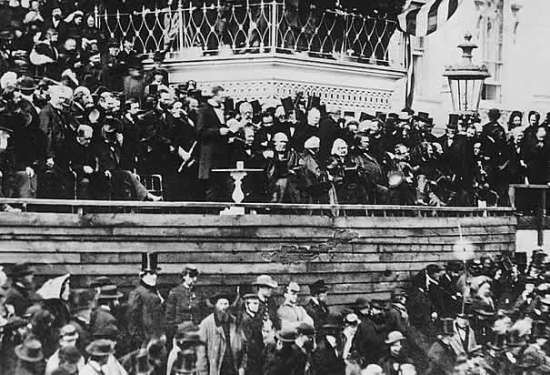
abraham-lincoln-secondinauguration3

Today is President’s Day and instead of doing much I am simply going to post one of the most poignant and meaningful speeches ever given by a President,  Abraham Lincoln’s Second Inaugural Address.

The address was delivered on March 4th 1865 just over a month before Robert E. Lee’s Army surrendered at Appomattox, and just 41 days before Lincoln died at the hands of John Wilkes Booth. A man who the League of the South, a radical group bent on returning the whole country to their neo-Confederate ways plans to honor on April 14th for “executing” Lincoln who they call a criminal tyrant.

Lincoln’s words need to be remembered for what they are, a remarkable statement of reality as well as hope for the future. When he spoke them the war was all but over, but much blood was still being spilt on battlefields across the South. By the time the war, which began in 1861 was over, more than 600,000 Americans would be dead. It was the bloodiest conflict in American History.

To really understand what Lincoln was speaking of one has to remember that just nine years before the Supreme Court had seemed to demolish any hope at all for Blacks in the United States, and not just the enslaved Blacks of the South, in it’s notorious Dred Scott decision. Roger Taney, the Chief Justice writing for the majority, most of whom were Southerners said about Blacks when denying them any form of Constitutional Rights:

“Can a negro, whose ancestors were imported into this country, sold as slaves, become a member of the political community formed and brought into existence by the Constitution of the United States, and as such become entitled to all the rights, and privileges, and immunities, guaranteed by that instrument to the citizen?…It is absolutely certain that the African race were not included under the name of citizens of a state…and that they were not included, and were not intended to be included, under the word “citizens” in the Constitution, and therefore claim none of the rights and privileges which that instrument provides for and secures to citizens of the United States. On the contrary, they were at that time considered as a subordinate and inferior class of beings, who had been subjugated by the dominant race, and, whether emancipated or not, yet remain subject to their authority, and had no rights or privileges but those who held the power and the Government might choose to grant them”

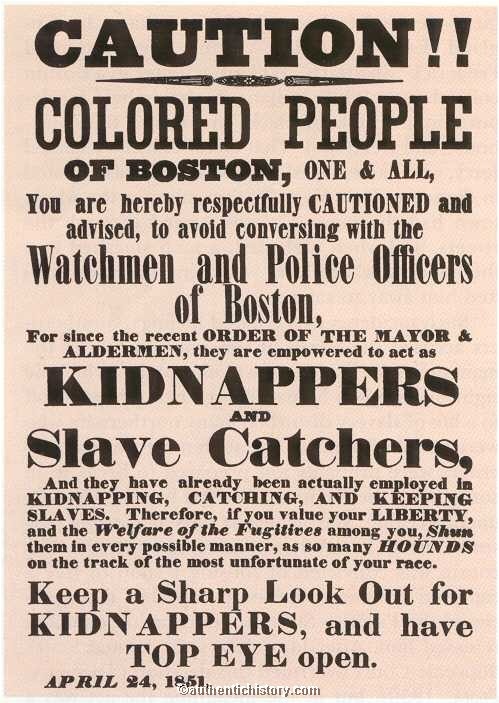
Before that there was the equally noxious Compromise of 1850 which included the Fugitive Slave Act which gave any Southerner claiming his human “property” not only the rights but a legal mechanism to hunt them down in the North and penalize anyone hindering them with weighty fines and jail terms.

One has to look at the words of Confederate Vice President Alexander Stephens in his Cornerstone Speech to understand the truth of what Lincoln spoke on that day in March 1865. Stephens, just four years before had declared in the starkest terms what the war was about and what the Confederacy’s foundation was:

Our new government is founded upon exactly the opposite idea; its foundations are laid, its corner- stone rests upon the great truth, that the negro is not equal to the white man; that slavery — subordination to the superior race — is his natural and normal condition. [Applause.] This, our new government, is the first, in the history of the world, based upon this great physical, philosophical, and moral truth.”

It took four years of bloody war, the first total war waged on American soil to end slavery, sadly within just a few years the Jim Crow laws had regulated Southern Blacks to a status not much better than their previous estate, and again became victims of often state sanctioned violence, discrimination, prejudice and death through lynching.

Southern leaders like Stephens and Jefferson Davis denied that slavery was the cause of the war and the foundation of the Confederacy in their revisionist histories after the war was over. They did so even though the litany of their letters, speeches and laws they supported, damned their words as the bold faced lies that they were. In the mean time many in the South sought to reclaim their pre-war glory in the myth of the Lost Cause which permeated much of the United States in the decades after the war, being glorified by Hollywood in Birth of a Nation, Gone with the Wind, and Walt Disney’s Song of the South. The unconscionable racism and white supremacy promoted by these masterpieces of cinema helped perpetuate racism across the country.

In the North, blacks faced discrimination and prejudice as well. another Supreme Court decision (Plessy v. Ferguson 1896) had legalized segregation and discrimination against Blacks in the form of “Separate but Equal” across the entire United States, something that would remain until a later Supreme Court would overturn Plessy in Brown v. Board of Education in 1954.

Despite all the reverses and the continued fight against the rights of Blacks, as well as women, other minorities and Gays, the struggle continues.

In August 1863, Lincoln was asked to speak at a gathering wrote in support of stronger war efforts and enlistments. Lincoln could not attend and wrote James Conkling a letter to be read on his behalf. That letter addressed those who disagreed with Lincoln on emancipation while still be claiming to be for the Union. Lincoln ended that letter with this:

“Peace does not appear so distant as it did. I hope it will come soon, and come to stay; and so come as to be worth the keeping in all future time. It will then have to be proved that among freemen that there can be no successful appeal from the ballot to to bullet, and that they who take such appeal are sure to lose their case and pay the cost. And there will be some black men who can remember that with silent tongue, and with clenched teeth, and steady eye, and well-poised bayonet, that they will have helped mankind on to this great consummation, while I fear there will be some white ones unable to forget that with malignant heart and deceitful speech they strove to hinder it….” 

Lincoln, unlike many even in the North recognized the heroic nature of African Americans fighting for their rights and how their struggle was beneficial for every American.

Lincoln died too soon, his death was a tragedy for the nation, but today, on President’s Day let us remember the words of the Lincoln’s Second Inaugural Address and the truth that they express. Lincoln’s concluding sentences which began with “With malice toward none, with charity for all…” should be at the heart of our dealings with all people so that we, as Lincoln said so eloquently “may achieve and cherish a just and lasting peace among ourselves and with all nations.”

It is a speech that always encourages me to fight for freedom and truth, even when that truth is less than popular and often uncomfortable. Lincoln’s words still inspire me, because he spoke the truth that many even today do not want to hear:

At this second appearing to take the oath of the Presidential office there is less occasion for an extended address than there was at the first. Then a statement somewhat in detail of a course to be pursued seemed fitting and proper. Now, at the expiration of four years, during which public declarations have been constantly called forth on every point and phase of the great contest which still absorbs the attention and engrosses the energies of the nation, little that is new could be presented. The progress of our arms, upon which all else chiefly depends, is as well known to the public as to myself, and it is, I trust, reasonably satisfactory and encouraging to all. With high hope for the future, no prediction in regard to it is ventured.

On the occasion corresponding to this four years ago all thoughts were anxiously directed to an impending civil war. All dreaded it, all sought to avert it. While the inaugural address was being delivered from this place, devoted altogether to saving the Union without war, insurgent agents were in the city seeking to destroy it without war–seeking to dissolve the Union and divide effects by negotiation. Both parties deprecated war, but one of them would make war rather than let the nation survive, and the other would accept war rather than let it perish, and the war came.

One-eighth of the whole population were colored slaves, not distributed generally over the Union, but localized in the southern part of it. These slaves constituted a peculiar and powerful interest. All knew that this interest was somehow the cause of the war. To strengthen, perpetuate, and extend this interest was the object for which the insurgents would rend the Union even by war, while the Government claimed no right to do more than to restrict the territorial enlargement of it. Neither party expected for the war the magnitude or the duration which it has already attained. Neither anticipated that the cause of the conflict might cease with or even before the conflict itself should cease. Each looked for an easier triumph, and a result less fundamental and astounding. Both read the same Bible and pray to the same God, and each invokes His aid against the other. It may seem strange that any men should dare to ask a just God’s assistance in wringing their bread from the sweat of other men’s faces, but let us judge not, that we be not judged. The prayers of both could not be answered. That of neither has been answered fully. The Almighty has His own purposes. “Woe unto the world because of offenses; for it must needs be that offenses come, but woe to that man by whom the offense cometh.” If we shall suppose that American slavery is one of those offenses which, in the providence of God, must needs come, but which, having continued through His appointed time, He now wills to remove, and that He gives to both North and South this terrible war as the woe due to those by whom the offense came, shall we discern therein any departure from those divine attributes which the believers in a living God always ascribe to Him? Fondly do we hope, fervently do we pray, that this mighty scourge of war may speedily pass away. Yet, if God wills that it continue until all the wealth piled by the bondsman’s two hundred and fifty years of unrequited toil shall be sunk, and until every drop of blood drawn with the lash shall be paid by another drawn with the sword, as was said three thousand years ago, so still it must be said “the judgments of the Lord are true and righteous altogether.”

With malice toward none, with charity for all, with firmness in the right as God gives us to see the right, let us strive on to finish the work we are in, to bind up the nation’s wounds, to care for him who shall have borne the battle and for his widow and his orphan, to do all which may achieve and cherish a just and lasting peace among ourselves and with all nations.

Peace

Padre Steve+

1 Comment

Filed under civil war, History, leadership, Political Commentary