Category Archives: History

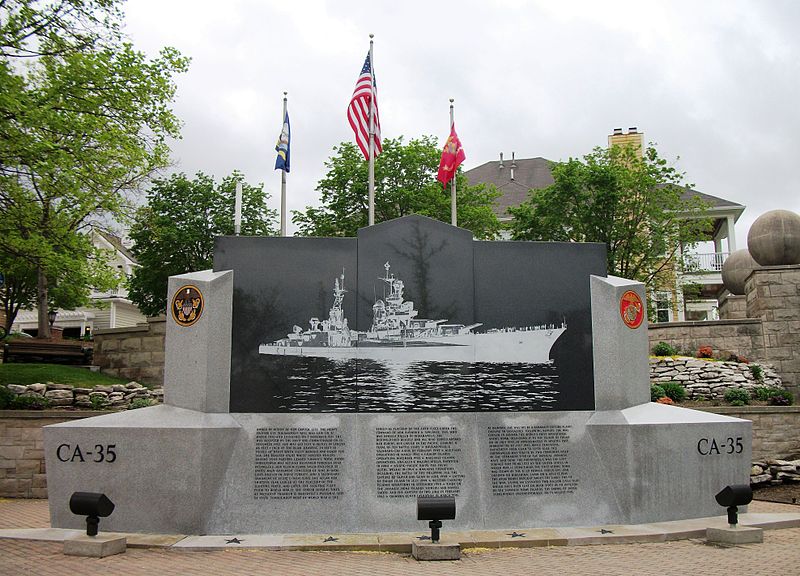
Remembering USS Indianapolis CA-35: Disaster, Dishonor and Redemption

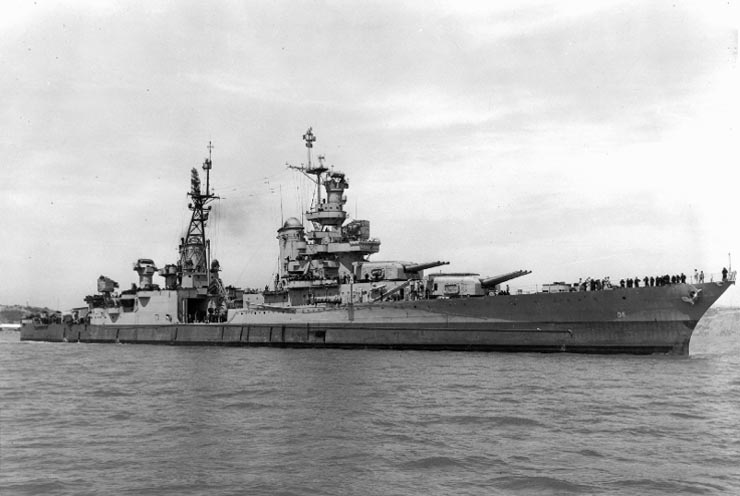
USS_Indianapolis_at_Mare_Island

“Our peoples have forgiven each other for that terrible war and its consequences. Perhaps it is time your peoples forgave Captain McVay for the humiliation of his unjust conviction.” Mochitsura Hashimoto, Captain of the I-58 to Senator John Warner

On July 30th 1945 the USS Indianapolis CA-35 was speeding from the island of Guam where she had made some personnel transfers to Leyte to join other American forces for the final campaign against Japan.

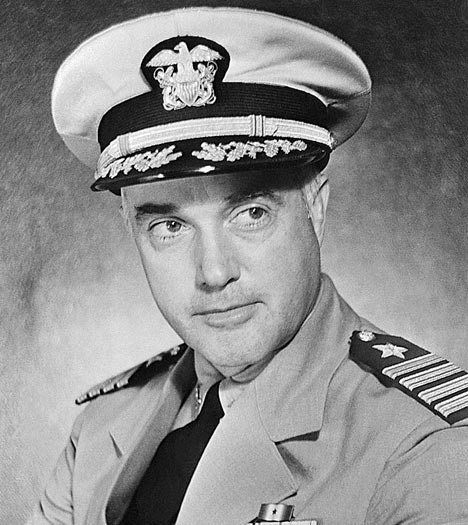
Indianapolis under the command of Captain Charles B McVay III had completed one of the most important secret missions of the war. She had delivered the component parts and enriched Uranium for the the first Atomic Bomb, Little Boy which in less than a week would be detonated over the Japanese City of Hiroshima on August 6th 1945.

Indianapolis was the second ship of the Portland Class heavy cruisers built under the terms of the Washington Naval Conference. Displacing 9800 tons and mounting a main battery of 9 8” guns she typical of the American cruisers of the era. During the 1930s she hosted President Franklin D. Roosevelt three times. When Pearl Harbor was attacked she was on gunnery exercises and from that point played an active role in combat operations in the South Pacific, the Aleutians later served as flagship to Admiral Raymond Spruance, Commander 5th Fleet. After being damaged a Kamikaze off Okinawa on March 31st 1945. She then returned to Mare Island for repairs and a rendezvous with destiny.

With the components for Little Boy aboard Indianapolis sailed unescorted to Pearl Harbor in complete secrecy and then to Tinian where she delivered her deadly cargo. After her brief port call in Guam she made haste to join Vice Admiral Jesse Oldendorf’s Task Force 95 at off Leyte. Her Captain used discretion in his use of a zig-zag course and was not employing it on the night of July 30th.

ce006i58

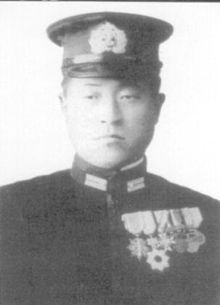
What Captain McVay and his crew did not know was that the Japanese Imperial Navy submarine I-58 under the command of Lieutenant Commander Mochitsura Hashimoto was stalking Indianapolis. At 2300 on the 29th while surfaced the Japanese noted a ship approaching and submerged. At 0014 after he gained firing position Hashimoto launched a spread of 6 Type 95 torpedoes, one of the most powerful type of torpedoes used during the war. Two stuck Indianapolis on her starboard side. The powerful charges caused catastrophic damage and 12 minutes later the cruiser rolled over and sank taking about 300 of her nearly 1200 man crew down with her.

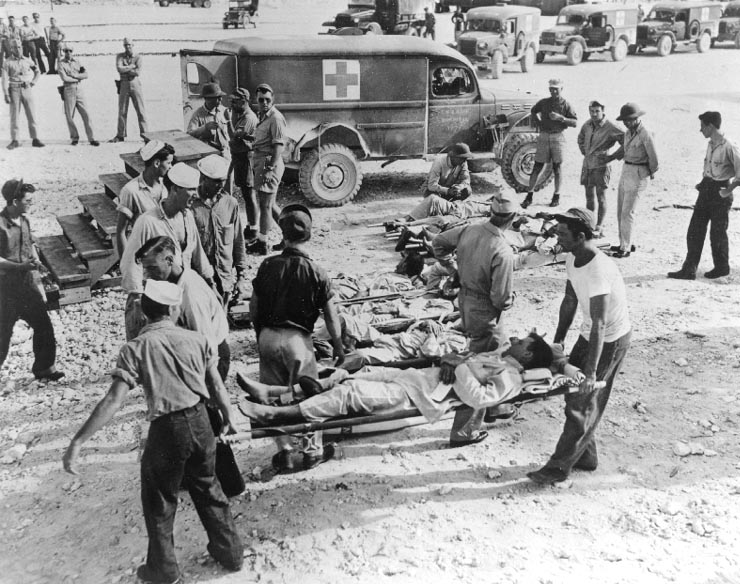
She sank so quickly that few lifeboats or rafts were launched and no distress call issued. It took the Navy nearly three days to even know that she was missing. Finally on August 2d the survivors, now decimated by exposure, dehydration and shark attacks were spotted by a patrol plane. The aircraft sent a message out and other aircraft and the USS Cecil J. Doyle DE-368 as well as a number of other ships which responded to the call. Only 321 crewmen out of the estimated 880 survivors of the sinking lived.

USS_Indianapolis-survivors_on_Guam

The tale of the sinking and the stories of the survivors would be recorded in Fatal Voyage by Daniel Kurzman and All the Drowned Sailors by Raymond Lech. It was also mentioned in the movie Jaws by Robert Shaw’s character, the fishing boat Captain “Quint” who was supposed to be an Indianapolis survivor. The made for television film Mission of the Shark: The Saga of the U.S.S. Indianapolis staring Stacy Keach as Captain McVay brought a renewed interest in the sinking and the story of the survivors.

indy4

Captain McVay would be tried at court-martial and convicted of “hazarding his ship by failing to zig-zag.” The sentence was controversial as McVay was the only commander of a U.S. Navy ship lost during the war to be tried by court-martial. The true fact of the matter was that McVay was a scapegoat for the failure of several systems of reporting and communication that he did not control.

Admiral Nimitz commuted the sentence and restored McVay to active duty. He retired in 1949 after being promote to Rear Admiral. Despite the fact that many of the crew felt that he was innocent many families of those lost at sea took their revenge on McVay. He received much hate mail and was frequently threatened in writing and by phone. On November 6th 1968 McVay, despondent over the death of his wife and the continued harassment committed suicide using his Navy issued revolver in his back yard. In one hand he grasped a toy sailor doll given to him by his father when he was a child.

In the years following many survivors banded together with Captain McVay’s family and others including the commander of I-58, Mochitsura Hashimoto to clear his name. The president of the USS Indianapolis Survivor’s Association testified “Capt. McVay’s court-martial was simply to divert attention from the terrible loss of life caused by procedural mistakes which never alerted anyone that we were missing.” 

220px-Mochitsura_Hashimoto

Hashimoto, who spent much of his time after the war as a Shinto priest sought the forgiveness of survivors. He returned to a survivor reunion in 1991 and said: “I came here to pray with you for your shipmates whose deaths I caused.”   

Hashimoto wrote Senator John Warner on behalf of the late Captain McVay in 1999 when he learned of the efforts being made to clear McVay’s name. The letter is touching in its honesty and speaks of the deep respect that warriors who once fought against each other can maintain for one another. It also speaks to the deep sense of honor of Hashimoto:

“I hear that your legislature is considering resolutions which would clear the name of the late Charles Butler McVay III, captain of the USS Indianapolis which was sunk on July 30, 1945, by torpedoes fired from the submarine which was under my command.

“I do not understand why Captain McVay was court-martialed. I do not understand why he was convicted on the charge of hazarding his ship by failing to zigzag because I would have been able to launch a successful torpedo attack against his ship whether it had been zigzagging or not.

“I have met may of your brave men who survived the sinking of the Indianapolis. I would like to join them in urging that your national legislature clear their captain’s name.

“Our peoples have forgiven each other for that terrible war and its consequences. Perhaps it is time your peoples forgave Captain McVay for the humiliation of his unjust conviction.”

Finally in October 2000 Congress passed a resolution stating of Captain McVay that “he is exonerated for the loss of the USS Indianapolis.” President Clinton signed the resolution and in July 2001 Secretary of the Navy Gordon England order Captain McVay’s record cleared of wrong doing. Hashimoto would die on 25th 2000 at the age of 91.

This year, on the 68th anniversary of the sinking 17 survivors gathered to mark the occasion and pay tribute to their shipmates. The Facebook page of the association has this memorial:

Goodnight and sleep well, crew of the USS Indianapolis. On this night, sixty-eight years ago, you had no way of knowing that a Japanese torpedo would hit your ship in just a few short hours. Your floating home away from home would sink within twelve minutes. Unable to get topside in time, three hundred of you would go to the bottom of the ocean with your ship. Nine hundred of you would find yourselves in the water, about to experience a terrifying existence amid sharks, dehydration, hallucinations, and the elements. 

You were so young, Indy sailors. 

Tonight, like that night, let your minds be free from nightmares and flashbacks. Tonight, like that night, know that your families and friends miss and love you. Tonight, like that night, just be “The Crew of the USS Indianapolis” instead of “Survivors” or “Lost at Sea.”

800px-USS_Indianapolis_(CA-25)_Memorial

I cannot say more.

Peace

Padre Steve+

Leave a comment

Filed under History, Navy Ships, US Navy, world war two in the pacific

The Royal Baby: George Alexander Louis, A Name Fit for a Costanza

BP-eAg7CUAA_jm6.jpg-large

The Once and Future King George? Serenity Now! 

Like many Americans whose families left the old world, particularly England because of the Monarchy I was fascinated to see what Will and Kate would name their new baby. I was betting on William Robert which would give him the nickname “Billy Bob” or James Joseph “Jimmy Joe” or simply a Boy Named Sue, how do you do?

But alas I was wrong. The young Royal’s who unlike their American counterparts have never won a World Series went back to history for the name. The new babe, the firstborn son of William and Kate is His Royal Highness Prince George Alexander Louis of Cambridge.

George, Alexander and Louis. All very royal names, English, Russian and French, alas the Royals are still punishing their wayward cousin Kaiser Wilhelm for that unfortunate 1914-1918 bloodbath called the First World War otherwise Willy might have been in the name somewhere. For a normal Royal Voyeur history might have some meaning when it comes to names, but I am not normal, nor Royal, nor a voyeur. But I digress…

I expected that George might be in the running as the first name of the new Royal heir. It is a good name, George V and VI did pretty well of course George III was one of the reasons that we Americans are no longer British subjects but every name has its share of less than stellar progenitors. It could be worse, he could be a descendent of the infamous Edmund Black Adder who I’m sure would have something to say about the new Royal offspring.

If the babe’s name had been George William Edmund Henry or any other number of good historic Royal names I might have not give it another thought. However when I heard the combination “George Alexander Louis” my PTSD and Mad Cow afflicted brain went other places. I had heard these names before, but where?

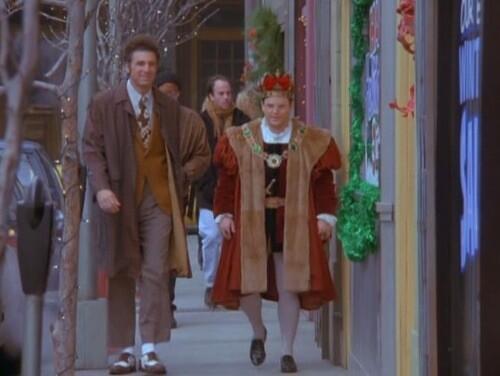
Then it occurred to me, Seinfeld… yes Seinfeld. George Louis Costanza, played so well by Jason Alexander. George, Alexander Louis Costanza Windsor. The name just sings, even better than “Seven.”

It was then that signals began reaching my tinfoil hat and entering my PTSD Mad Cow warped brain. No, this was not an accident. It was not just a reference to history. It was kismet. It was if Seinfeld had become a reality, it is the real “Summer of George” manifested in the offspring of Will and Kate.

I am blessed to have such a warped mind that allows me to see what most mortals cannot see, that somehow God or whatever divine or supernatural forces brought this about has a sense of humor. From now on the House of Windsor will be related to the House of Costanza.

Coincidence? I think not.

Serenity Now!

Peace

Padre Steve+

Leave a comment

Filed under History, Just for fun, News and current events, purely humorous

Kindred Spirits

400236_10151328400862059_541742014_n

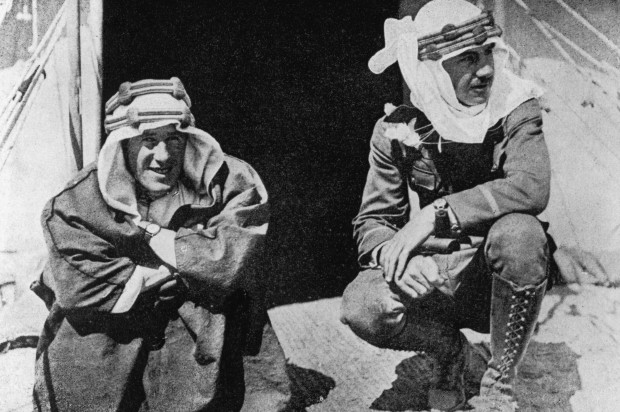
“All men dream: but not equally. Those who dream by night in the dusty recesses of their minds wake in the day to find that it was vanity: but the dreamers of the day are the dangerous men, for they may act their dreams with open eyes, to make it possible. This I did.” T. E. Lawrence

52086880-e1359135444105-620x412

I am an introvert, an academic and a circuitous thinker versus a linear thinker. I am also a dreamer, thinking about possibilities, alternate realities and going beyond the possible. I often discover answers to situations that I face in unrelated subjects. Usually something else that I have read, studied, watched or heard often from history, literature, film, music and sports, especially baseball. I tend to be an outside of the box thinker and I am sure that some that know me consider me quirky or sometimes even off the reservation. I like to ask, ponder and muse about hard questions, sometimes playing Devil’s Advocate.

Frankly I am okay with that.

I love writing and writing has become an extension of me as much as it has been part of my recovery, spirituality and psychological health. In a sense writing has been part of my post Iraq redemption.

I like dealing with people individually and find that I can be as at ease with the a person of most humble means with no power or influence as I can with those of great power, means and influence.

I feel most comfortable teaching and prefer, even as a Naval officer to avoid the limelight. When I was younger that was not the case. I sought promotion and remember hoping to be a Army Colonel or maybe even a General. When I gave up my rank as a Major in the Army Reserve to enter active duty in the Navy in 1999 it was as if that burden was removed. While I have done well in the Navy and have been promoted to the rank of Commander in the Chaplain Corps, I do not seek higher rank. If in a few years I get promoted that is okay, but I almost wonder due to the nature of the jobs at that level if I was promoted if I would be really happy.

I am a Priest and cannot see myself as a Bishop. I am a historian, a teacher, a bit of a counselor, I do ethics well and function very well serving as a chaplain in hospital Intensive Care Units and Trauma departments. While I have served as a company commander in the Army and had other positions where I supervised good numbers of people with a fair amount of responsibility I have found that I prefer to be in less visible positions where my influence is used helping others achieve success.

Thus I really am looking forward to my next assignment at the Joint Forces Staff College where I will be teaching ethics and probably some military history to men and women going to positions of great authority, some of whom will become Generals or Admirals. If I do my job right these men and women may learn something from me that helps them do good things for our nation, their soldiers and even the populations of countries that they be serving in, or occupying.

I think in some ways I am becoming a spiritual director and guide to some people as a Priest and Chaplain. The latter is something that was not sought, nor something that I could ever imagine.  Despite my dual callings as both a Priest and military officer, great experience, education and training I have found that I frequently have felt totally inadequate when people ask me difficult questions.

295_26912097058_4309_n

I am fortunate that I can admit to people that I have questions, doubts and that much of my success is due to other people who took the time to mentor me, teach me and care for me throughout my life and career. Some were teachers, some coaches, some military officers, Navy Chiefs, or NCOs from the Army or Marine Corps, and a few clergymen.

I also have some people that I consider kindred spirits. I think that we all need to have people like that, those that we know personally and those that we know from history, literature, sports, films or whatever. I think that since everyone is different and that we learn in different ways, understand God in different ways that somehow God is not bound to any particular means of speaking to us and reveals himself to us in various ways and that one of those ways is through people that are kindred spirits.

In my case I find such men and women are those that like me march to a different drummer, those that think outside the box and those not threatened by ideas, discoveries or philosophies different than their own. Those who can see the humanity and value in people who are not necessarily like them. Those who in their lives often failed before they succeeded and whose journeys were not easy and those who did not seek the highest office or aspire to be a celebrity even when they had the chance.

I think that the one man who I can call a kindred spirit is T. E. Lawrence, known as history as Lawrence of Arabia. As I read his autobiography I found a complicated and often contradictory man who after achieving fame laid it down even though he could have held any of a number of great positions of power. He really was an amazing person. Lawrence wrote:

“The rare man who attains wisdom is, by the very clearness of his sight, a better guide in solving practical problems than those, more commonly the leaders of men, whose eyes are misted and minds warped by ambition for success….”

That is what I have been learning since Iraq.

Peace

Padre Steve+

Leave a comment

Filed under History, philosophy

The Coming Egyptian Civil War: Disaster Beckons

Cairo protesters

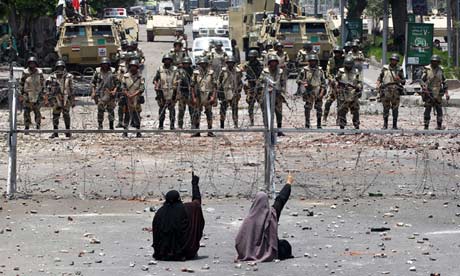
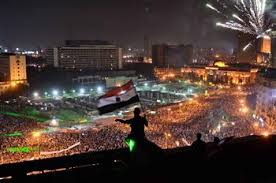
History has a strange way of playing itself out in the lives of individuals, nations and peoples. I wish that I was wrong bit as I look at the situation in Egypt today I see a situation which is as fluid as the shifting sands of the desert and as dangerous as the legendary Biblical plagues of the time of Moses.

When the dictatorship of Hosni Mubarak was overthrow by the military in 2011 it was hoped by many that Egypt would defy he odds of history, not Islamic or Egyptian history, but human history in that a revolution of a people without their own history of freedom and representative democracy seldom in its initial stages produces freedom and representative democracy.

images-49

In Europe alone Britain, France, Spain, Germany and Russia have endured bloody civil wars following the overthrow of autocratic regimes. Likewise the same is true of the history of South America, Africa, Asia and the Middle East the history of most successful oppressed peoples who do not have practical experience in democratic government tend to fight things out and even endure more oppressive governments before eventually, often at great cost to themselves and their neighbors achieve peaceful, stable and representative democratic rule.

egypt-coup-morsi-3_2609447b

Egypt has great potential, many of its people have exactly in temperament, education and wisdom what is needed to become a leading democracy in the region. That being said there are many obstacles to this. First is the longstanding tension between the radical Islamists of the Moslem Brotherhood, secularist military leaders, Social Democrats and others. Second the underlying religious and social tensions between rival Islamic denominations as well as Coptic Christians with generations of internecine bloodshed being played against one another by outside powers, the Ottoman Turks, the French, the British and even to a lesser extent the Soviets and Americans.

571825-Abdel_Fattah_alSisiAFP-1372840335-993-640x480

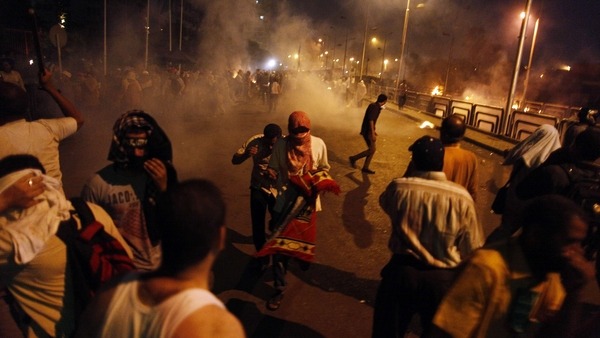
The fact is that Egypt as much as I do not want it to admit is that I believe that there is little that can save Egypt from a bloody civil war with unknown outcomes. The only thing that is sure is that thousands, possibly hundreds of thousands of Egyptians will die before the end of it and that Egypt’s instability will exponentially increase the violence and instability of the region.

egypt-morsi_2608190b

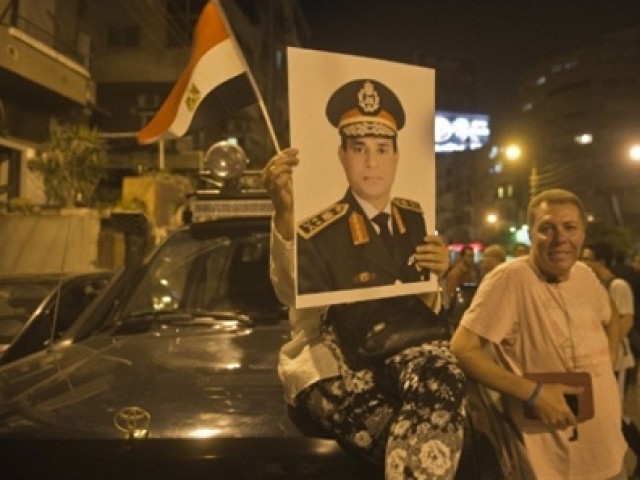
I think the best outcome is that a coalition of Social Democrats and militarists will cobble together enough of a government to stabilize the situation, but it will not be without much bloodshed. It will likely be like the early days of Weimar Germany when an unlikely coalition of military leaders and Social Democrats fought a Civil War against the extreme Soviet style Communists and then resisted Right wing extremist putsch attempts. Unfortunately that democracy died as the economies of the world melted down and the cost of reparations levied by Allied Powers at Versailles and radicals of the extreme Right and Left eventually leaving Hitler in power. It took another World War to eventually end that tyranny.

Muslim-Brotherhood-Clash-Getty

I guess that a best prospect is pretty much as bad as the worst prospect.

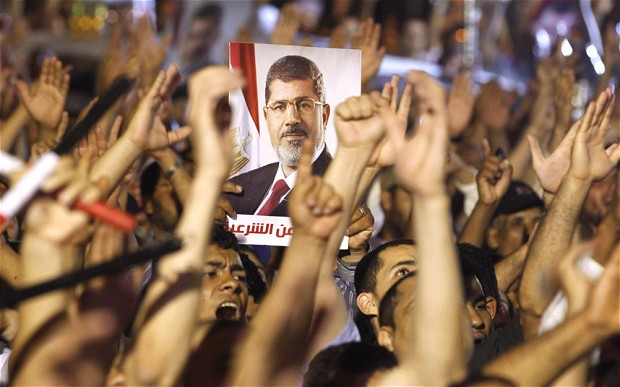
The ouster of the Moslem Brotherhood’s elected President Mohammed Morsi by the Egyptian military follow the protests of the vast majority of the Egyptian electorate is as much of a bad thing as it is a good thing. Morsi was to be sure democratically elected but he governed as an autocrat with increasing dictatorial tendencies. The reaction of the people and the Army was a natural reaction, as one Egyptian boy put it we did not overthrow a dictatorship to replace it with a dictatorial theocracy.  In effect both sides killed the democratic process, Morsi and the Moslem Brotherhood for the sake of Islamic religious power, the military for the sake of their place in society, stability and control and the protestors and democrats the sake of democracy and freedom.

EGYPT-POLITICS-UNREST-ARMY

The situation is much like the days following the the Army High Command’s forced abdication of Kaiser Wilhelm II, when in the face of a Communist revolution the German military establishment represented by Field Marshal Paul Von Hindenburg wrote to the new Socialist Chancellor Friedrich Ebert:

“I am convinced that only the following measures can help us overcome the present difficulties: 

  1. Summoning of the National Assembly in the course of December.
  2. Until then, or until the decision of the National Assembly can be carried out, conduct of the administration solely by the government and legitimate administrative organs. 
  3. So as to fulfill the justified wishes of the working class… qualified people of working class origin should be attached to the administrative authorities in an advisory capacity….
  4. The security service must be solely in the hands of the legal police organs and of the armed forces.
  5. Safeguarding of the orders of government by a reliable police force and, after the restoration of discipline, by the army.   

   In your hands lies the fate of the German nation. It will depend on your decision whether the German nation will rise once more. I am persuaded, and with me the whole army, to support you without any reservation…” (Letter from Field Marshal Hindenburg, likely written by General Groener to Chancellor Ebert December 8th 1918. In The Reichswehr and Politics 1918-1933 by F.L. Carsten, Oxford University Press, London 1966 pp.13-14)

The unfortunate thing is that no one will be happy until they achieve their goals and that will probably not only mean bloodshed, but a full scale civil war. No matter what the talking heads and experts say this has little chance of ending well. Centuries of injustice, dictatorship, colonialism, religious intolerance and economic inequities argue against other eventualities.

n_50238_4

The fact of the matter is that whether or not advocates of democracy like it at the present time no elected government in Egypt can survive without the support of the military. Like Weimar Germany, the fate of Egypt’s democracy will in large part lie in the hands of a military that at its heart is not democratic. It is a conundrum that we would rather not see, but it is reality.

All that being said there is always hope that things can turn out differently and we had better hope, for the people of Egypt, the region and the world that it does, because an Egyptian Civil War now will be disastrous.

Peace

Padre Steve+

1 Comment

Filed under Foreign Policy, History, middle east, national security

Gettysburg at 150: The Accounting in Lives and Difficult Moral Questions

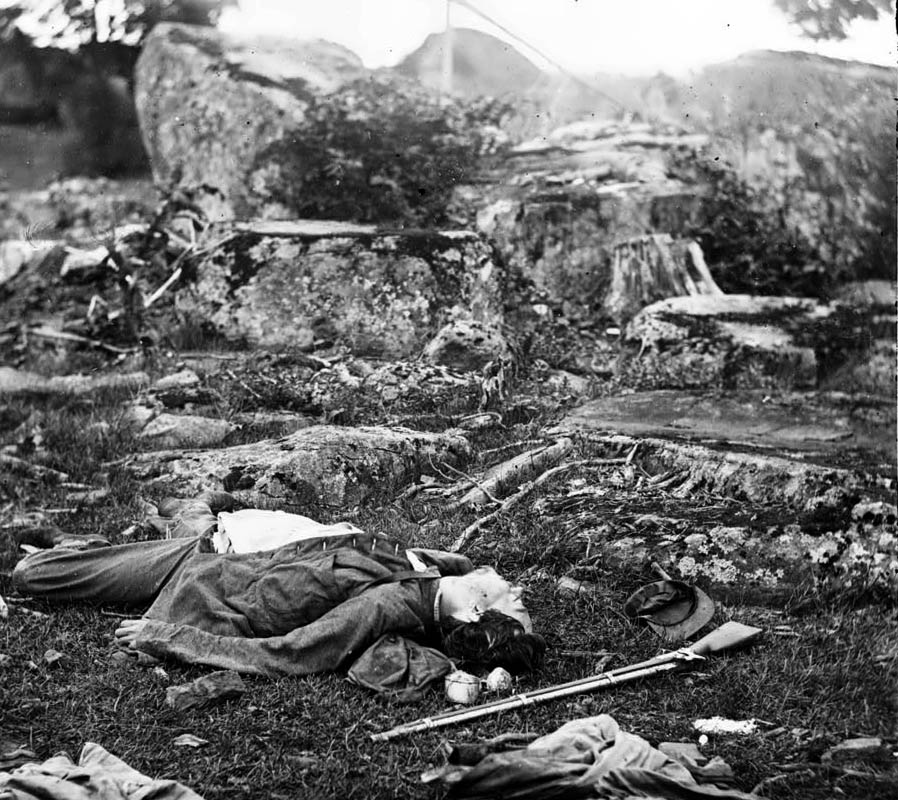
gettysburg-devils-den

“Why do men fight who were born to be brothers?”James Longstreet

“It is well that war is so terrible. We should grow too fond of it.” Robert E Lee

As the sun set on the evening of July 3rd 1863 the battered Army of Northern Virginia and the battered but victorious Army of the Potomac tended their wounds, buried their dead and prepared for what might happen next.

Following the disastrous attack aimed at the Union center, what is commonly called “Pickett’s Charge” Lee and his surviving commanders prepared for an expected Union counter attack. However, George Meade, the commander of the Army of the Potomac who had correctly anticipated Lee’s assault decided not to gamble on a counter attack, though it was tempting. He knew too well the tenacity and skill of the Confederate commanders and soldiers on the defense and did not want to risk a setback that might give Lee another chance.

Savages_Station_field_hospital-600x374

The dead and wounded littered the battlefield. Field hospitals, little more than butcher shops where arms and legs were amputated by overworked surgeons and attendants while those with abdominal wounds that could not be easily repaired were made as comfortable as possible. Triage was simple. If a casualty was thought to have a reasonable chance at survival he was treated, if not they were set aside in little groups and allowed to die as peacefully as possible. Chaplains made their way around, Protestant’s ensuring that their soldiers “knew Jesus” and Catholics administering the Last Rites.

dead-civil-war-soldiers

One Confederate soldier describe the scene west of the town on July 4th:

“The sights and smells that assailed us were simply indescribable-corpses swollen to twice their size, asunder with the pressure of gases and vapors…The odors were nauseating, and so deadly that in a short time we all sickened and were lying with our mouths close to the ground, most of us vomiting profusely.” 

Among the killed and wounded were the great and the small. John Reynolds who died on day one, Winfield Scott Hancock, the valiant commander of the Union II Corps wounded during Pickett’s Charge, Mad Dan Sickles, who had nearly brought disaster on the Federal lines by advancing to the Peach Orchard on July 2nd had a leg amputated.

The Confederates suffered grievous losses. Divisional commanders like Dorsey Pender were mortally wounded. John Bell Hood was severely wounded, Isaac Trimble was wounded and captured while Harry Heth was wounded. Numerous Generals were killed or wounded and among regimental commanders the toll was fearful. In Picket’s division alone all three brigade commanders, Kemper, Armistead and Garnett were killed or wounded while 26 of 40 Field Grade officers were casualties. 46% (78 of 171) of the regiments of the Army of Northern Virginia suffered casualties at the command level. The Confederate casualties, especially among the best leaders were irreplaceable and Lee’s Army never recovered from the loss of seasoned leaders who were already in short supply.

One witness, Frank Haskell looked in at a field hospital in the Union II Corps area and wrote:

“The Surgeons with coats off and sleeves rolled up…are about thier work,… “and their faces and clothes are spattered with blood; and though they look weary and tired, their work goes systematically and steadily on- how much and how long they have worked, the piles of legs, arms, feet, hands, fingers…partially tell.” (Gettysburg by Stephen W Sears, Mariner Books, Houghton Mifflin Company Boston, New York 2004 p.466)

All told between 46,000 and 51,000 Americans were killed or wounded during the three days of Gettysburg. Busey and Martin’s Regimental Strengths and Losses at Gettysburg lists the following casualty figures, other accounts list higher numbers. One also has to remember that many of the missing were killed but simply never found or if their bodies were found identified:

killed           wounded         missing         total

Union                    3,155          14,531             5,369           23,055

Confederate         4,708          12,693             5,830            23,231

Total                     7,863           27,224            11,199          46,286

To provide a reference in 8 years of war in Iraq the United States suffered fewer casualties than during the three days of Gettysburg. It was the bloodiest single battle in American history.

At the end of the war, Joshua Chamberlain, the hero of Little Round Top who was well acquainted with the carnage of war asked the most difficult questions:

“…men made in the image of God, marred by the hand of man, and must we say in the name of God? And where is the reckoning for such things? And who is answerable? One might almost shrink from the sound of his own voice, which had launched into the palpitating air words of order–do we call t?–fraught with such ruin. Was it God’s command that we heard, or His forgiveness that we must forever implore?”

May we pray for peace that such an event never take place again.

Peace

Padre Steve+

Leave a comment

Filed under civil war, History, Military

Gettysburg at 150: The Soul of a Hero Joshua Chamberlain

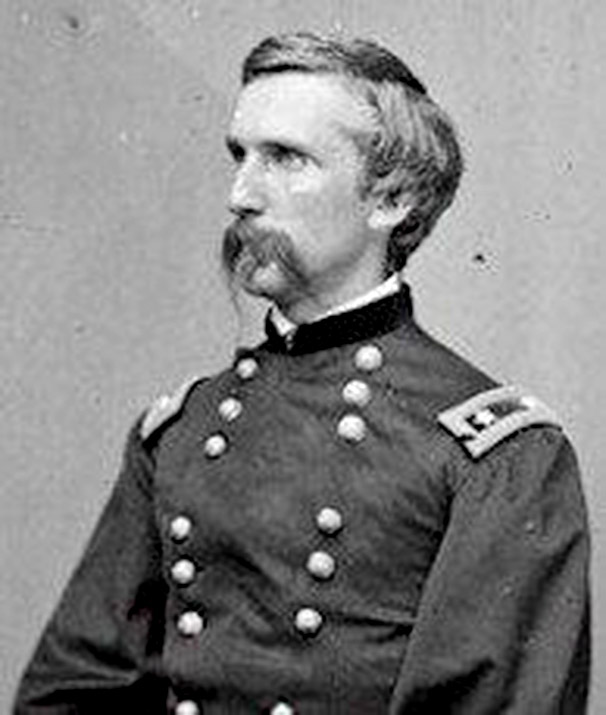
chamberlain

I want to take a brief moment tonight to think about the heart, soul and morality of a soldier, scholar and theologian, Colonel, later Major General Joshua Lawrence Chamberlain, the hero of Little Round Top and certainly a man whose actions as commanding officer of the 20th Maine Regiment at Gettysburg helped preserve the Union.

After the war Chamberlain spoke of the battle often. One of his most famous quotes is a testament to his humanity and integrity.

In great deeds, something abides. On great fields, something stays. Forms change and pass; bodies disappear; but spirits linger, to consecrate ground for the vision-place of souls… generations that know us not and that we know not of, heart-drawn to see where and by whom great things were suffered and done for them, shall come to this deathless field, to ponder and dream; and lo! the shadow of a mighty presence shall wrap them in its bosom, and the power of the vision pass into their souls.”

Chamberlain was a graduate of Bowdoin College and Bangor Theological Seminary, fluent in 9 languages other than English. He was Professor of Rhetoric at Bowdoin before seeking an appointment in a Maine Regiment without consulting either the college or his family. He was offered command of the 20th Maine but asked to be appointed as a Lieutenant Colonel which he was in August 1862. He fought at Fredericksburg and was named commander of the regiment when Colonel Ames, his commander was promoted following Chancellorsville.

Chamberlain was awarded the Medal of Honor for his valor at Little Round Top in 1893. He was gravely wounded during the siege of Petersburg in June of 1864 while commanding a brigade and promoted to Brigadier General. He returned to duty later in the year as commander of the 1st Brigade, 1st Division V Corps and was again wounded at Petersburg in a skirmish at Quaker Road and was promoted to Brevet Major General by Abraham Lincoln. Chamberlain received the surrender of Lee’s decimated Army if Northern Virginia. He would go on to serve as a four term Governor of Maine and remained active with the Grand Army of the Republic veteran’s organization, remained active as an educator and President of Bowdoin College and founded the Maine Institute for the Blind which is now known as the Iris Foundation. He died of his wartime wounds on February 24th 1914.

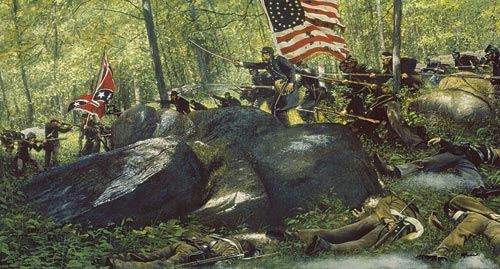
LRT

As the 20th Maine, tired from fighting off numerous assaults by attacking Confederates and now out of ammunition saw another wave of Confederates come up the slopes of Little Round Top Chamberlain ordered his men to fix bayonets and execute a right wheel. The move caught the advancing Rebels who were sensing victory by complete surprise. Chamberlain wrote in his official report of the battle:

“The enemy seemed to have gathered all their energies for their final assault. We had gotten our thin line into as good a shape as possible, when a strong force emerged from the scrub wood in the valley, as well as I could judge, in two lines in echelon by the right, and, opening a heavy fire, the first line came on as if they meant to sweep everything before them. We opened on them as well as we could with our scanty ammunition snatched from the field.

It did not seem possible to withstand another shock like this now coming on. Our loss had been severe. One-half of my left wing had fallen, and a third of my regiment lay just behind us, dead or badly wounded. At this moment my anxietv was increased by a great rbar of musketry in my rear, on the farther or northerly slope of Little Round Top, apparently on the flank of the regular brigade, which was in support or Hazlett’s battery on the crest behind us. The bullets from this attack struck into my left rear, and I feared that the enemy might have nearly surrounded the Little Round Top, and only a desperate chance was left for us. My ammunition was soon exhausted. My men were firing their last shot and getting ready to “club” their muskets.

It was imperative to strike before we were struck by this overwhelming force in a hand-to-hand fight, which we could not probably have withstood or survived. At that crises, I ordered the bayonet. The word was enough. It ran like fire along the line, from man to man, and rose into a shout, with which they sprang forward on the enemy, now not 30 yards away. The effect was surprising; many of the enemy’s first line threw down their arms and surrendered. An officer fired his pistol at my head with one hand, while he handed me his sword with the other. Holding fast by our right, and swinging forward our left, we made an extended “right wheel,” before which the enemy’s second line broke and fell back, fighting from tree to tree, many being captured, until we had swept the valley and cleared the front of nearly our entire brigade.”

The successful defense of Little Round Top by Chamberlain’s gallant 20th Maine as well as the other regiment’s of Colonel Strong Vincent’s brigade saved the Army of the Potomac from being enveloped by the Confederate right wing and defeated in detail. Such a defeat very probably would have given the peace party in the North the leverage that they needed to change the political calculus and end the war, giving the Confederacy independence and destroying the Union.

Though he was a valiant soldier Chamberlain was thoughtful and never lost his sense of honor, integrity or Christian morality in the war. Perhaps it was his education or upbringing. Perhaps it was ideals that were so much a part of his psyche that no matter where he served, or how great the sacrifice and suffering that he still kept his essential humanity. Even in victory he maintained a magnanimous spirit towards former enemies when they surrendered.

As the war drew to a close and Chamberlain continued to lead troops in mortal combat in the campaign at Petersburg and Appomattox Chamberlain saw much that caused to to ask hard questions. With friends lying dead and dying around following the Battle at the Quaker Road on March 30th 1865 Chamberlain pondered:

“But we had with us, to keep and care for, more than five hundred bruised bodies of men–men made in the image of God, marred by the hand of man, and must we say in the name of God? And where is the reckoning for such things? And who is answerable? One might almost shrink from the sound of his own voice, which had launched into the palpitating air words of order–do we call t?–fraught with such ruin. Was it God’s command that we heard, or His forgiveness that we must forever implore?”

I think that we have a lot to learn from Joshua Chamberlain. His question at the Quaker Road is one that anyone leading nations, or military units into the valley of the shadow of death need to ask, especially when the war or conflict is waged “in the name of God” whoever’s God it might be.  All too often evil done in the name of the Almighty is blessed by the Trinity of Evil, the Preacher, Pundits and Politicians who use being on the side of God to justify the basest evil and inhuman deeds. But then maybe it is only the rare man like Chamberlain who can see through the darkness and still discern the “divine spark” in a man.

gl-pr-105

As Chamberlain received the surrender of the units of the Army of Northern Virginia he paid the bedraggled but still proud Confederates the honor of a salute. One Rebel General said to him “You astonish us by your honorable and generous conduct. I fear we should not have done the same by you had the case been reversed.” Another commented “I went into that cause and I meant it. We had our choice of weapons and of ground, and we have lost. Now” pointing at the Stars and Stripes “that is my flag, and I will prove myself as worthy as any of you ” (Soul of the Lion: A Biography of General Joshua L. Chamberlain. by Willard M Wallace, Thomas Nelson and Sons, New York 1960. Reprinted 1991 by Stan Clark Military Books, Gettysburg PA. p.190) 

May we all learn to find that divine spark before it is too late.

Peace

Padre Steve+

1 Comment

Filed under civil war, faith, History, Military, philosophy

Gettysburg at 150 Day One: “For God’s Sake Forward!” John Reynolds at Herr’s or McPherson’s Ridge July 1st 1863

z_maritato_ironbrigadeforward

Iron Brigade Forward! Battle of Gettysburg, PA – July 1, 1863 by Mark Maritato

“…by his promptitude and gallantry he had determined the decisive field of the war, and he opened brilliantly a battle which required three days of hard fighting to close with a victory.” Major General Harry Hunt, Chief of Artillery, Army of the Potomac on the actions of Major General John F Reynolds at Gettysburg

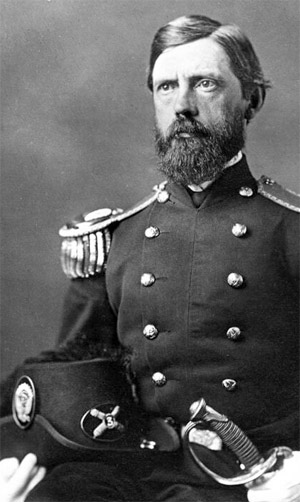
Major General John Reynolds was on his home soil. A native of Lancaster Pennsylvania  Reynolds was the senior Corps commander in the Army of the Potomac. Considered by his peers and superiors to be the best commander in the Army he had been given command of a wing of the Army, his own I Corps, Oliver Howard’s XI Corps and John Sedgewick’s III Corps. He also had John Buford’s 1st Cavalry Division under his command.

Early in June Abraham Lincoln had offered command of the Army of the Potomac to Reynolds, however Reynolds’ set a condition which Lincoln in the political climate of the time could not grant, that he would be free from the political interference which had beset previous Army commanders. Both Reynolds’ request and Lincoln’s response are understandable. Lincoln respected Reynolds and when Major General Joseph Hooker was relieved of command of the Army by Lincoln Major General George Meade, commander of V Corps another Pennsylvanian took his place with Reynolds keeping his position.

As the Army of the Potomac reacted to the advance of Robert E  Lee’s Confederate Army of Northern Virginia Hooker pursued and Meade continued the pursuit into Pennsylvania once he took command.

Reynolds’ wing of three Infantry corps and Buford’s Cavalry division acted as the advance elements of the Army. Late in the afternoon of June 30th Buford’s troops observed Johnston Pettigrew’s brigade of Harry Heth’s division near Gettysburg. Pettigrew on detecting Buford’s cavalry refused to engage and Buford made the choice to take the good high ground west of Gettysburg and hold it in order to give Reynolds followed by the rest of the Army time to arrive.

WaudSketch

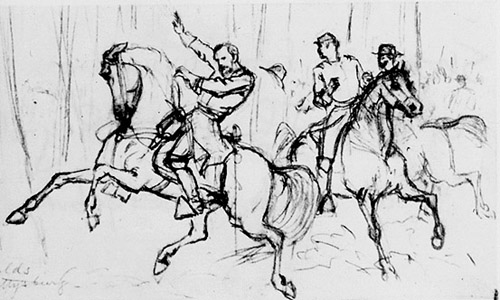
The Death of Reynolds (Waud)

Reynolds sent messages late in the evening to both Reynolds and the Union Calvary Corps commander, Major General Alfred Pleasanton describing the situation. Reynolds’ units were south of Emmitsburg moving north and on the morning of the 1st of July he brought his troops up as Buford and his cavalry troopers engaged Heth’s division in a delaying action in order to give Reynolds’ units time to get to the good high ground around Gettysburg.

Reynolds rode ahead and briefly met Buford at the Lutheran Seminary where Buford ensured Reynolds that his troopers could hold. With that Reynolds ordered his leading corps, the lead division under the command of Abner Doubleday to advance to the action at the double-quick. He then sent a message to Meade through a staff officer stating “Tell the General that we will hold the heights to the south of the town, and that I will barricade the streets of the town if necessary.”

As his units arrived into an already raging battle Reynolds directed them to key areas of the battlefield. As he directed the “Iron Brigade” into position in Herr’s (McPherson’s) Woods Reynolds exhorted the men forward.“Forward! men, forward! for God’s sake, and drive those fellows out of the woods!” As he said these words he was struck by a bullet in the head and died instantly.

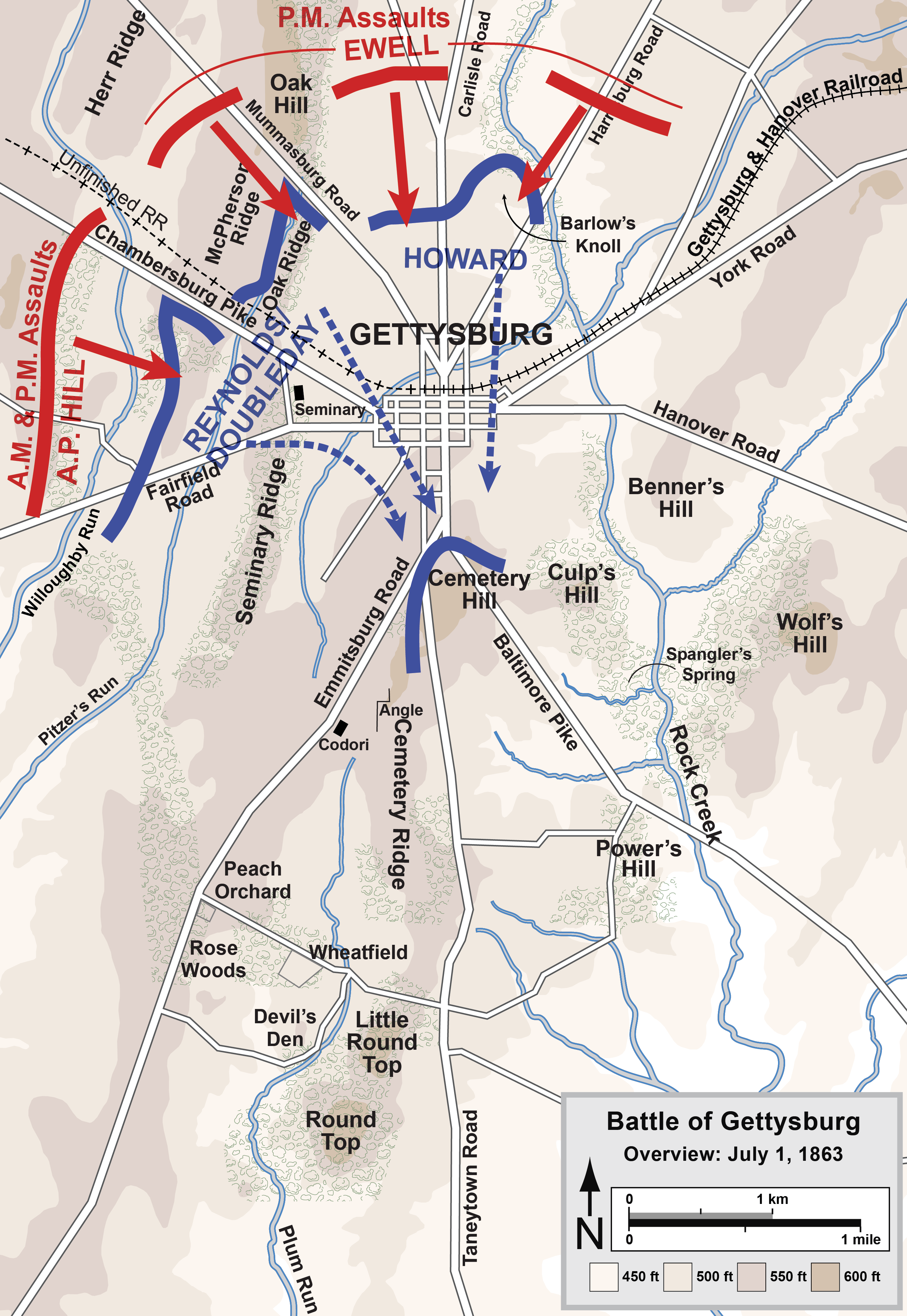
In the immediate confusion following Reynolds’ death the I and XI Corps confusion reigned. It seemed that the Union corps now fighting two Confederate Corps, Hill’s 3rd Corps which they had been fighting since the morning and Ewell’s 2nd Corps which arrived in a flanking position to their north during the afternoon might be routed. The Federal troops, I Corps now under the command of Doubleday and XI under Major General Oliver Howard withdrew through Gettysburg to Cemetery Hill where they were rallied by Reynolds’ old friend Major General Winfield Scott Hancock of II Corps.

Hill’s troops entered the town but did not attempt to take the hill while Ewell passed on an opportunity to take nearby Culp’s Hill which would have dislodged the Federal right flank.

The first day ended with the Army of the Potomac holding the high ground in an easily defensible position on interior lines. Lee’s Army was spread out and the defense mounted by Buford and Reynolds had disrupted Hill’s Corps, causing significant casualties.

Buford is to be given much of the credit for choosing the ground of the battle and fighting a stellar delaying action against superior forces. But had Reynolds not brought his units up in the expeditious manner in which he did and then all of Buford’s efforts might have been in vain. The two men, bound by their professionalism and commitment to duty and their oath helped save the Union on that first day of July 1863.

reynolds

Charles Veil who served as a staff officer under Reynolds wrote the following epitaph stating that Reynolds “was a man who knew not fear or danger was, in a word (he was) one of our very best Generals. Wherever the fight raged the fiercest, there the General was sure to be found, his undaunted courage always inspired men with energy & courage.” 

Peace

Padre Steve+

Leave a comment

Filed under civil war, History, leadership, Military

Gettysburg at 150 Day One: Lee Blunders into Battle

800px-First_day_at_gettysburg

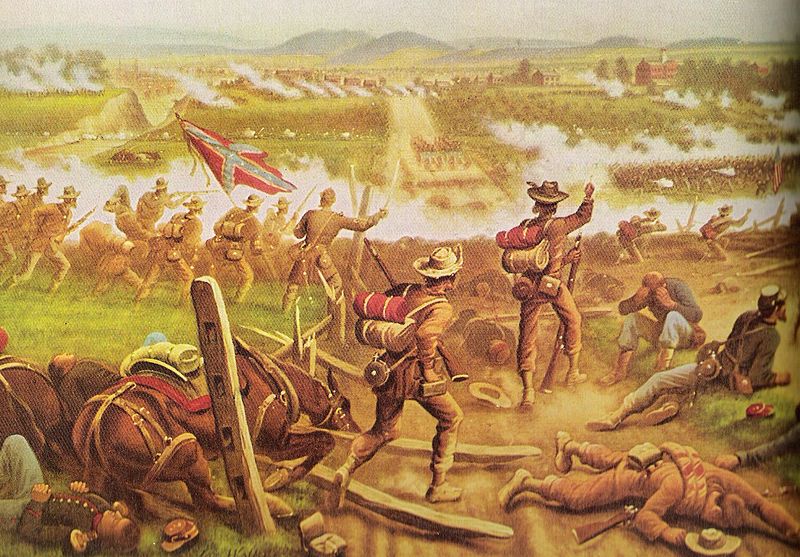
Pender’s Brigade on Day One

The Army of Northern Virginia commanded by Robert E Lee was now deep in Union territory and nearly blind to the location of the Federal Army of the Potomac. On the 30th advanced units of Dick Ewell’s Second Corps had gone nearly as far as Harrisburg while most of the Army was on the road around Chambersburg and Cashtown. Lee’s Cavalry Division under the command of J.E.B. Stuart was far away engaging Union Cavalry around Hanover and not in position to report on Union troop movements. General A.P. Hill sent Johnston Pettigrew’s Brigade of Harry Heth’s Division to Gettysburg on the 30th but Pettigrew observing the Federal cavalry of Buford’s 1st Cavalry Division take up positions on Seminary Ridge declined to engage and reported the Federal concentration to Hill.

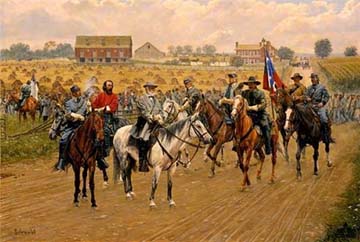
As reports from the spy Harrison came to Lee and Longstreet Lee began to concentrate the Army around Cashtown. However the morning of July Hill ordered Harry Heth’s division to move on Gettysburg without the benefit of cavalry support or reconnaissance believing that the troops reported by Pettigrew could be nothing more than local militia. His leading brigades under Brigadier General James Archer and Joseph Davis took heavy casualties and soon Heth became embroiled in a fight with Buford’s cavalry and lead elements of the Federal 1st Corps under the command of Major General John Reynolds.

Gettysburg_Battle_Map_Day1

Gettysburg Day One (Map by Hal Jespersen, http://www.posix.com/Com)

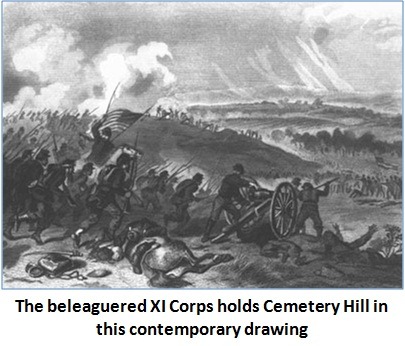
Lee was surprised by the engagement and though he chastised Heth for getting involved committed his army to the attack. Reynolds was killed early in the engagement but the fight was bitter, the Iron Brigade exacted a fearful toll on Archer and Davis’s brigades. The attack by Hill’s 3rd Corps was helped immensely when elements of Ewell’s 2nd Corps arrived on the right flank of the Federal XI Corps, forcing the Federal troops to withdraw through Gettysburg and up to Cemetery Ridge. Ewell’s arrival was fortuitous because it tilted the balance to Lee, but the advantage was short lived.

z_schmehl_leedeliberates

Lee Deliberates Heth’s Advance – Gettysburg by Bradley Schmehl

 Ewell failed to press the attack on Cemetery Ridge or Culp’s Hill while Federal forces were still disorganized, despite the repeated entreaties of Major General Isaac Trimble who was with him. The delay would be fatal to Lee’s intentions as Lee decided to give battle at Gettysburg, ignoring General Longstreet’s plea to disengage take up a favorable position between Gettysburg and Washington DC and force the Army of the Potomac to attack.

doncemeteryhilljuly1_zps512a40fa

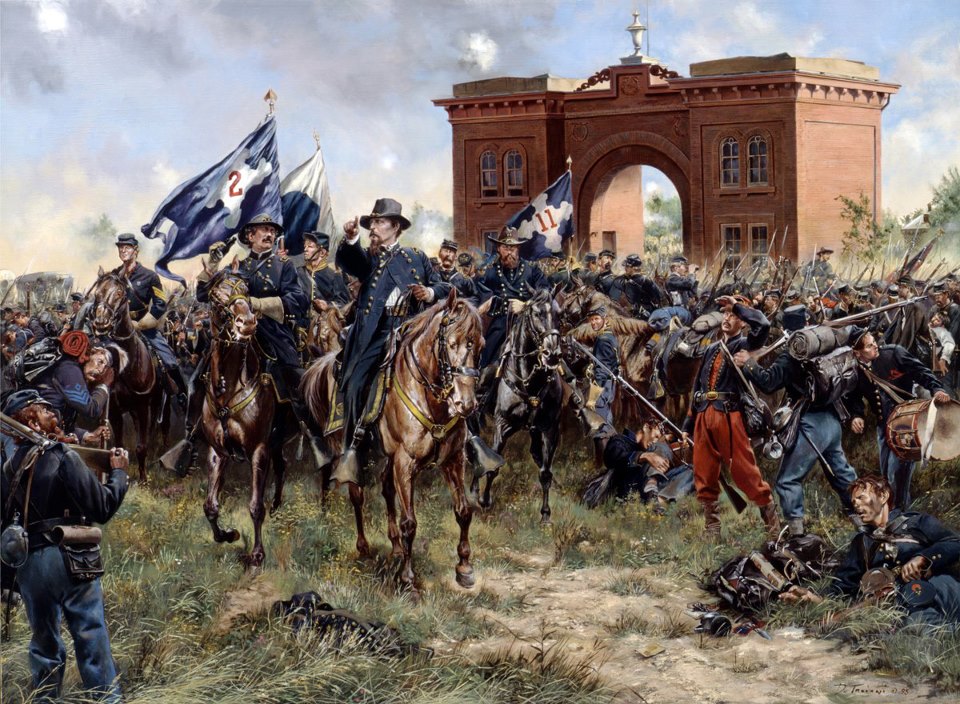
Don Troiani’s Painting of Hancock taking Command on Cemetery Hill on Day One

The Army of Northern Virginia came very close to sweeping Federal forces from the field on July 1st in spite of Lee’s lack of planning and clear commanders intent. That much is clear. His orders to Ewell, to take the high ground “if practicable” we interpreted by Ewell in a manner that he determined not to be practicable, so the advanced Federal corps under the command of Major General Winfield Scott Hancock were able to regroup, dig in and be reinforced by the rest of the Army.

Whether Lee intended to engage the Army of the Potomac at Gettysburg so early in a campaign where his multiple and contradictory strategic aims and lack of clear commander’s intent to his subordinate commanders created confusion is debated. Much of the controversy comes from Lee’s own correspondence which indicates that he might have not fully understood his own intentions. Some correspondence indicates that Lee desired to avoid a general engagement as long as possible while other accounts indicate that he wanted an early and decisive engagement. The controversy was stoked after the war by Lee’s supporters, particular his aides Taylor and Marshal, and Longstreet’s supporters.

Isaac Trimble, traveling with Lee at the beginning of the invasion of Pennsylvania recored that Lee told him:

“We have again outmaneuvered the enemy, who even now does not know where we are or what our designs are. Our whole army will be in Pennsylvania day after tomorrow, leaving the enemy far behind and obliged to follow by forced marches. I hope with these advantages to accomplish some single result and to end the war, if Providence favors us.” (Glenn Tucker, High Tide at Gettysburg (Indianapolis: The Bobbs-Merrill Co.: 1958), p. 24.)

The vagueness of Lee’s instructions to his commanders, many of whom were occupying command positions under him for the first time and were unfamiliar with his command style led to confusion. Where Stonewall Jackson might have understood Lee’s intent, even where Lee issued vague or contradictory orders, many others including Hill and Ewell did not. Lee did not change his command style to accommodate his new commanders and that lack of flexibility on Lee’s part proved fatal to his aims in the campaign.

xi-corps-holds-cemetery-hill

The vagueness of Lee’s intent was demonstrated throughout the campaign and was made worse by the fog of war. Day one ended with a significant tactical victory for Lee’s army but without a decisive result which would be compounded into a strategic defeat by Lee’s subsequent decisions on the 2nd and 3rd of July.

Until tomorrow,

Peace

Padre Steve+

Leave a comment

Filed under civil war, History, Military

Gettysburg at 150 and the Lingering Curse of the “Lost Cause” on the United States

gal9vfvf1

This week I will be writing a lot about the Battle of Gettysburg which happens to fall in the days before the celebration of our Declaration of Independence. Some of these will be articles that I published before and some will be new work. I think that the American Civil War and its consequences today is something that we need to look at as a society, and not from the romanticized “Lost Cause” revisionism that is so popular among many even today.

Last year washed up rocker and now political activist Ted Nugent wrote in the Washington Times “I’m beginning to wonder if it would have been best had the South won the Civil War.”  I find his remark appalling and disgraceful but I have come to expect such comments from him and and others who voice similar sentiments. But Nugent is not alone, an organization called The League of the South states its goals in very clear language: “The League of the South is a Southern Nationalist organization whose ultimate goal is a free and independent Southern republic.”

When I hear such sentiments and they are many now days I think of men like Joshua Chamberlain. Chamberlain was a college professor who served in the Union Army and won fame and the Medal of Honor for the defense of Little Round Top at Gettysburg. There is a quote from the film Gods and Generals which I think about when I hear anyone suggesting that it would have been better for the Confederacy to have won the war:

“Now, somewhere out there is the Confederate army. They claim they are fighting for their independence, for their freedom. Now, I can not question their integrity. I believe they are wrong but I can not question it. But I do question a system that defends its own freedom while it denies it to an entire race of men. I will admit it, Tom. War is a scourge, but so is slavery. It is the systematic coercion of one group of men over another. It has been around since the book of Genesis. It exists in every corner of the world, but that is no excuse for us to tolerate it here when we find it right in front of our very eyes in our own country. As God as my witness, there is no one I hold in my heart dearer than you. But if your life, or mine,is part of the price to end this curse and free the Negro, then let God’s work be done.”

There is a spot near the Copse of Trees along Cemetery Ridge which is referred to as the “High Water Mark of the Confederacy.” It is the spot close to where Confederate Brigadier General Lewis Armistead fell mortally wounded as the decimated remains of his command were overwhelmed by Union forces shortly after they breached the Union line. It is a place immortalized in history, literature and film. It is the place that marked the beginning of the end for the great evil of slavery in America.

My ancestors lived in Cabell County which in 1861 was part of Virginia. They were slave holders along the Mud River, a tributary of the Ohio River just to the north of what is now Huntington West Virginia. When war came to the country the family patriarch James Dundas and my great, great grandfather joined the 8th Virginia Cavalry Regiment in which he served the bulk of the war as a Lieutenant.  When it ended he refused to sign the loyalty oath to the Union and had his lands, which are now some of the most valuable in that part of West Virginia confiscated and sold by the Federal Government.  He was a believer in the “Lost Cause” that romantic and confused idea about the rightness of the South in its war against what they called “Northern aggression.”

Because he and others on both sides of my family served in Confederate ranks I am eligible for membership in the Sons of the Confederacy. However it is something that I cannot do.  There are some that do this as a means to honor their relatives that served in the war and I do not make light of their devotion to their family, but there are some that take that devotion to places that I cannot go.  As much as I admire the valor and personal integrity of many military men who served the Confederacy I cannot for a moment think that their “cause” was just.

It has been said that the North won the war but that the South won the history.  I think this is true. Many people now days like to reduce the reasons for the war to the South protecting its rights.  Sometimes the argument is “states rights” or “economic freedom” and those that make these arguments romanticize the valor shown by Confederate soldiers on the battlefield but conveniently ignore or obscure the evil of the Southern economic system.

The “rights” and the “economic freedom” espoused by those that led the secession and that are lamented by those like Nugent were based upon the enslavement and exploitation of the Black man to maintain an archaic economy based on agriculture, particularly the export of King Cotton.  Arguments which try to place the blame on the North, especially arguments that attempt to turn the Northern States into economic predators’ intent on suppressing the economic rights of Southerners only serve to show the bankruptcy of the idea itself. The fact that the “economic and political freedom” of Southerners was founded on the enslavement of a whole race of people matters not because the “cause” is greater.

One interesting point that many turn a blind eye to is that in each of its campaigns above the Mason Dixon Line Lee’s Army rounded up blacks, mostly freemen and sent them back to the South in chains to be used as slaves. I have to wonder what Southern success at Gettysburg would have meant to African Americans today. Lee believed that his campaign in Pennsylvania would bring about a result that would change the political situation in the North and bring about a situation where the North would recognize Southern independence. He wrote in April of 1863 “next fall there will be a great change in public opinion at the North. The Republicans will be destroyed & I think the friends of peace will become so strong that the next administration will go in on that basis…”

Of course Lee was wrong and his campaign was flawed in large part because he did not adequately define his intent to his commanders. That much is obvious in the writings of the surviving participants after the war.

The overall situation for the Confederacy in June of 1863 was grim. There had been food riots in Richmond, Vicksburg was on the bring of falling and with it the Confederacy would be split in two along the Mississippi River, the Union blockade of Southern ports was working, the South had not been recognized by any foreign powers and the textile industries of Europe had found other suppliers for “King Cotton.” Despite this Lee held on to the hope that a military victory in the East could change the political calculus.

The fact is that the longer the South relied solely on its agriculture which was supported by the institution of slavery it deprived itself of the means of economic progress, the same progress that propelled the North to prosperity. The south lagged in all industrial areas as well as transportation infrastructure. The majority of non-slave owning whites lived at the poverty line and only enjoyed some elevated social status because the slaves ranked beneath them on the sociological and economic hierarchy.  The South depended on cheap imports from England, which then was still considered an enemy of the country. When tariffs to protect newly establish American industries were enacted in 1828 South Carolina attempted to nullify the Federal law even raising troops and threatened a revolt in 1832.

The Southern economic system was immoral and antiquated. It enslaved blacks and it impoverished most rural Southerners, with the exception of those that owned the land and the slaves. It was a hateful, backward and loathsome system which even the southern churches attempted to justify from Scripture. Southern Baptists, Methodists and Presbyterians would all break away from their parent denominations regarding their support for the institution of slavery.

This does not mean that I think that the average Confederate soldier or officers were dishonorable men. Many officers who had served in the United States Army hated the breakup of the Union but served the South because it was the land that they were from. It was the home of their families and part of who they were.  To judge them as wanting 150 years later when we have almost no connection to family or home in a post industrial world is to impose the standards of a world that they did not know upon them. For those that gave up everything to serve one can feel a measure of sympathy.  So many died and so much of the South was destroyed in the defense of that “cause” one has to wonder just why the political and religious leaders of the South were willing to maintain such an inadequate and evil economic system one that hurt poor Southern whites nearly as much as it did blacks.

The war devastated the South and the radicals that ran “Reconstruction” ensured that Southerners suffered terrible degradation and that Southern blacks would have even more obstacles raised against them by the now very angry and revengeful whites.  It would take another 80-100 years to end segregation and secure voting rights for blacks. Thus I have no desire to become part of an organization that even gives the appearance of supporting the “cause” even if doing so would allow me to “honor” an ancestor who raised his hand against the country that I serve.

I was raised on the West Coast but have lived in the South much of my adult life due to military assignments. I have served in National Guard units that trace their lineage to Confederate regiments in Texas and Virginia. Despite my Confederate connections both familial and by service I can find little of the romance and idealism that some find in the Confederacy and the “Lost Cause.” I see the Civil War for what it was, a tragedy of the highest order brought about by the need of some to enslave others to maintain their economic system.

Today there are many that use the flags of the Confederacy outside of their historic context. They are often used as a symbol of either racial hatred or of defiance to the Federal Government by white Supremacist or anti-government organizations.  Many that use them openly advocate for the overthrow of the Federal Government.  The calls for such “revolt” can be found all over the country even in the halls of Congress much as they were in the 1830s, 40s and 50s. Some of this is based in libertarian economic philosophy which labels the government as the enemy of business, some based social policies which are against their religious beliefs and some sadly to say based in an almost xenophobic racial hatred.  The scary thing as that the divisions in the country are probably as great as or greater than they were in the 1850s as the country lurched inexorably to Civil War with neither side willing to do anything that might lessen their political or economic power even if it means the ruin of the country.

As seems to be the case around this time of year I have seen the symbols of the Confederacy, particularly the Battle Flag displayed in manners that can only be seen as symbols of defiance. July 4th will be celebrated this week and it seems to me that the flag that should be most prominently displayed is the Stars and Stripes not the Confederate Battle flag or even the Gadsen Flag which has become the symbol of the modern Tea Party movement.  Somehow I find the flag flown in rebellion to the country that I serve displayed in such an arrogant manner.

For people like the Federal Government which is the enemy. Now I know that our system of government has its flaws. Likewise I cannot agree more about the corruption of many in political office, regardless of their political allegiance.  While it is true that the Federal Government has taken upon itself many powers some never envisioned by those that crafted the Constitution, it has done so because leaders of both political parties have consented to it and even worked to strengthen the Federal Government with the consent of the American people that elect them again and again.

Despite this much of this has been accomplished by the Federal Government has been for the good for the country and people no matter what the critics say. Many of the things that we enjoy today are the result of the work of the Federal Government and not business as much as those that deify big corporations want to believe. There are the National Parks, laws against child labor and for safe workplaces brought about by Teddy Roosevelt, the infrastructure built in the 1930s and 1940s by the Franklin Roosevelt administration. The Roosevelt administration also brought about Social Security and banking regulations to protect Americans from corporations and banks that violated the public trust. The Eisenhower administration began the Interstate Highway system which is the backbone of our transportation system.  Likewise the Space Program and yes even the military have led the way in technological, scientific and medical innovation including that thing that we all take for granted today the Internet.

Today quite a few people are calling for revolt or secession if they do not get what they want be it socially, politically or economically. For years politicians on both sides have fought to minimize such talk and enact compromises with the usual discontent that comes with compromise.  Unfortunately many of those compromises have had the effect of widening the political divide much as the various compromises on the road to the Civil War.  Jefferson said of the Missouri Compromise of 1824: “but this momentous question, like a fire bell in the night, awakened and filled me with terror. I considered it at once as the knell of the Union. It is hushed indeed for the moment, but this is a reprieve only, not a final sentence. A geographical line, coinciding with a marked principle, moral and political, once conceived and held up to the angry passions of men, will never be obliterated; and every new irritation will mark it deeper and deeper.”

We have allowed the issues of our time to become a fire of unbridled angry passion where those with almost no historical understanding and whose history is often based on myth stake claims and promote ideas that will destroy this Union if they continue. Unfortunately we have not yet reached the high water mark of this movement yet and I fear like Jefferson that the hatred and division will only grow worse as both radical on the right and left prepare for conflict.

This week we celebrated the 236th anniversary of our Declaration of Independence.  It is a remarkable occasion. It is the anniversary that free people as well as those oppressed around the world look to as a beacon of liberty. It has been paid for time and time again, especially during that cruel Civil War which killed more American soldiers than any other war that we have fought.

A few months after Gettysburg Abraham Lincoln a man much reviled by those that have romanticized the Cause and who is demonized by many “conservative” politicians and pundits today as a “tyrant” made these brief remarks at the site of the battle:

Four score and seven years ago our fathers brought forth on this continent, a new nation, conceived in Liberty, and dedicated to the proposition that all men are created equal.

“Now we are engaged in a great civil war, testing whether that nation, or any nation so conceived and so dedicated, can long endure. We are met on a great battlefield of that war. We have come to dedicate a portion of that field, as a final resting place for those who here gave their lives that that nation might live. It is altogether fitting and proper that we should do this. But, in a larger sense, we cannot dedicate—we cannot consecrate—we cannot hallow—this ground. The brave men, living and dead, who struggled here, have consecrated it, far above our poor power to add or detract. The world will little note, nor long remember what we say here, but it can never forget what they did here. It is for us the living, rather, to be dedicated here to the unfinished work which they who fought here have thus far so nobly advanced. It is rather for us to be here dedicated to the great task remaining before us—that from these honored dead we take increased devotion to that cause for which they gave the last full measure of devotion—that we here highly resolve that these dead shall not have died in vain—that this nation, under God, shall have a new birth of freedom— and that government of the people, by the people, for the people, shall not perish from the earth.”

Today with so many radicals, especially those on the political right, but some on the left such as the “Anonymous” group doing all that they can to plunge us into yet another civil war we should remember Lincoln’s words and rededicate ourselves to this Union, this remarkable Union.  Tony Blair the former Prime Minster of Great Britain remarked in 2011:

“It may be strange for a former British Prime Minister to offer thoughts on America when the country will be celebrating its independence from Britain. But the circumstances of independence are part of what makes America the great and proud nation it is today. And what gives nobility to the American character.

That nobility isn’t about being nicer, better or more successful than anyone else. It is a feeling about the country. It is a devotion to the American ideal that at a certain point transcends class, race, religion or upbringing. That ideal is about values, freedom, the rule of law, democracy. It is also about the way you achieve: on merit, by your own efforts and hard work.

But it is most of all that in striving for and protecting that ideal, you as an individual take second place to the interests of the nation as a whole. This is what makes the country determined to overcome its challenges. It is what makes its soldiers give their lives in sacrifice. It is what brings every variety of American, from the lowest to the highest, to their feet when “The Star-Spangled Banner” is played.

Of course the ideal is not always met – that is obvious. But it is always striven for.

The next years will test the American character. The world is changing. New powers are emerging. But America should have confidence. This changing world does not diminish the need for that American ideal. It only reaffirms it.”

I think that the Prime Minister got it right and Ted Nugent is an ignorant fool but he has the right to be one.

Peace

Padre Steve+

6 Comments

Filed under civil rights, civil war, History, News and current events, Political Commentary