Category Archives: laws and legislation

Dred Scott: A Warning for Today

Friends of Padre Steve’s World

I am a historian, and as such I look to history to understand people and current events. As such I am looking at the upcoming Supreme Court hearing in the case of Obergefell v. Hodges and thinking about it in relation to the Dred Scott Ruling of 1856.

This case deals with Gay marriage and the attempts of mainly Christian Conservatives to roll back the rights of those in the LBGTQ community to marry. Not only does they seek to prevent Gay marriage where it is not permitted but they seek to roll back those rights in states where the majority of voters through their legislators have passed those laws, and negate the traditional understanding of reciprocity between states concerning recognition of marriages performed in other states. As such it is a major case with big ramifications. 

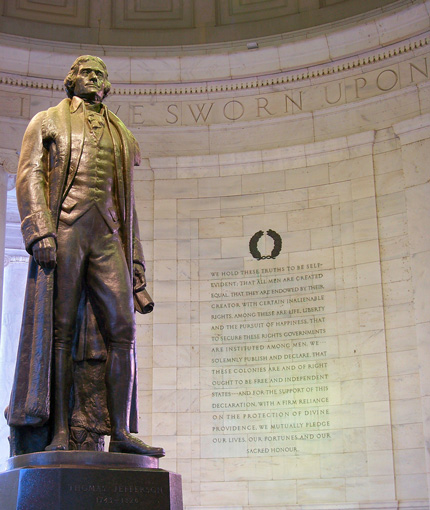
On one hand if the justices rule in favor of those challenging the laws which allow gays to marry it will strike at the very heart of the meaning of the Declaration of Independence’s  central message that “all men are created equal.” Likewise such a ruling will return LBGTQ citizens to a second class status in which though they pay taxes and serve their country in many ways, and contribute to the positive good of all Americans, they will not enjoy the liberties of other citizens and can be denied basic services, or even the right to be at the bedside of a dying spouse. 

Though Gay marriage harms no one its opponents have announced that it will have apocalyptic consequences and will result in a massive persecution of Christians who oppose it. The legal arguments espoused by the opponents of Gay marriage are similar to those who supported the both the protection and expansion of slavery in the 1850s, and those who after emancipation and the Thirteenth Amendment enacted “Black” or “Jim Crow” laws. Sadly, if Gay marriage is upheld by the Court, a number of States are pledging to enact similar laws regarding Gays, and some states are already doing so. 

From more recent Court rulings it appears that the Gay marriage will be upheld, but you never know with the Roberts Court. Several members, Justices Thomas, Alito and Scalia have long histories of opposing and ruling against the rights of gays.  

Today I am looking at the effects of the Dred Scott decision of the Supreme Court. The decision was one of the worst, if not the worst ever enacted by the Supreme Court. The consequences were chilling as it proclaimed that Blacks were a “subordinate and inferior class of beings” who had no rights. It also in combination with the Compromise of 1850 opened territories to slavery and put Blacks in Free States at jeopardy of being re-enslaved.

I ask my readers to imagine what it will be like for Gays if the Supreme Court rules against Gay marriage. I will probably post something tomorrow about the use of the “Black laws” and “Jim Crow” and relate that to the “Gay laws” that are being enacted in many states and locales, laws which serve no purpose than to deprive citizens of basic rights, services and freedoms enjoyed by other citizens. 

This article is an edited part of one of the chapters of my Gettysburg/ Civil War text. I have worked it so that here it is a stand alone article. So please read this and share, it is important and none of us can be complacent.

Peace,

Padre Steve+

the-dred-scott-case-1846-1857-402x618

As the 1850s wore on, the divisions over slavery became deeper and voices of moderation retreated. The trigger for the worsening of the division was the political battle regarding the expansion of slavery; even the status of free blacks in the north who were previously slaves, over whom their owners asserted their ownership. Southerners considered the network to help fugitive slaves escape to non-slave states, called the Underground Railroad “an affront to the slaveholders pride” and “anyone who helped a man or woman escape bondage was simply a thief” who had robbed them of their property and livelihood, as an “adult field hand could cost as much as $2000, the equivalent of a substantial house.” (1)

In 1856 the Supreme Court, dominated by southern Democrats ruled in favor of southern views in the Dred Scott decision, one pillar of which gave slavery the right to expand by denying to Congress the power to prohibit slavery in Federal territories. Taney’s ruling in the case insisted that “Neither the Declaration of Independence nor the Constitution had been intended to apply to blacks he said. Blacks were “so far inferior that they had no rights which the white man was bound to respect.” Taney did not stop with this but he declared the Missouri Compromise itself unconstitutional for “Congress had exceeded its authority when it forbade slavery in the territories by such legislation as the Missouri Compromise, for slaves were private property protected by the Constitution.” (2)

The decision was momentous, but the judicial fiat of Taney and his court majority was a disaster for the American people. It solved nothing and further divided the nation:

“In the South, for instance, it encouraged southern rights advocates to believe that their utmost demands were legitimatized by constitutional sanction and, therefore, to stiffen their insistence upon their “rights.” In the North, on the other hand, it strengthened a conviction that an aggressive slavocracy was conspiring to impose slavery upon the nation, and that any effort to reach an accommodation with such aggressors was futile. While strengthening the extremists, it cut the ground from under the moderates.” (3)

The decision in the case is frightening when one looks upon its tenor and implications. The majority opinion which was written by Chief Justice Roger Taney was chilling, not only in its views of race, but the fact that blacks were perpetually property without the rights of citizens. Taney wrote:

“Can a negro, whose ancestors were imported into this country, sold as slaves, become a member of the political community formed and brought into existence by the Constitution of the United States, and as such become entitled to all the rights, and privileges, and immunities, guaranteed by that instrument to the citizen?…It is absolutely certain that the African race were not included under the name of citizens of a state…and that they were not included, and were not intended to be included, under the word “citizens” in the Constitution, and therefore claim none of the rights and privileges which that instrument provides for and secures to citizens of the United States. On the contrary, they were at that time considered as a subordinate and inferior class of beings, who had been subjugated by the dominant race, and, whether emancipated or not, yet remain subject to their authority, and had no rights or privileges but those who held the power and the Government might choose to grant them” (4)

The effect of the ruling on individuals and the states was far reaching. “No territorial government in any federally administered territory had the authority to alter the status of a white citizen’s property, much less to take that property out of a citizen’s hands, without due process of law or as punishment for some crime.” (5) Free slaves were no longer safe, even in Free States, from the possibility of being returned to slavery, because they were considered property. The tens of thousands of free blacks in the South were effectively stripped of citizenship, and became vulnerable to either expulsion or re-enslavement, something that the legislatures in Virginia, North Carolina and Missouri debated in 1858. Likewise the decision “cast doubt on the free status of every African American regardless of residence.” (6) 

But the decision had been influenced by President-Elect James Buchanan’s secret intervention in the Supreme Court deliberations two weeks before his inauguration. Buchanan hoped by working with the Justices that he would save the Union from breaking apart by appeasing slave owners and catering to their agenda. “The president-elect wanted to know not only when, but if the Court would save the new administration and the Union from the issue of slavery in the territories. Would the judges thankfully declare the explosive subject out of bounds, for everyone who exerted federal power? The shattering question need never bother President Buchanan.” (7) In his inaugural address he attempted to camouflage his intervention and “declared that the Court’s decision, whatever it turned out to be, would settle the slavery issue forever.” (8) 

But Buchanan was mistaken. The case made the situation even more volatile as it impaired “the power of Congress- a power which had remained intact to this time- to occupy the middle ground.” (9)  Taney’s decision held that Congress “never had the right to limit slavery’s expansion, and that the Missouri Compromise had been null and void on the day of its formulation.” (10)

The Court’s decision “that a free negro was not a citizen and the decision that Congress could not exclude slavery from the territories were intensely repugnant to many people in the free states” (11)  and it ignited a firestorm in the north where Republicans now led by Abraham Lincoln, decried the decision and southerners basked in their judicial victory. Southerners were exultant, the Richmond Enquirer wrote that the Court had destroyed “the foundation of the theory upon which their warfare has been waged against the institutions of the South.” (12) Northerners now quite rightly feared that an activist court would rule to deny their states the right to forbid slavery. As early as 1854 Lincoln posed the idea that the Declaration of Independence was “the standard maxim of free society …constantly spreading and deepening its influence,” ultimately applicable “to peoples of all colors everywhere.” (13) 

After the Dred Scott decision Lincoln warned that the Declaration was being cheapened and diluted, he remained insistent on this point, he noted:

“Our Declaration of Independence was held sacred by all, and thought to include all” Lincoln declared, “but now, to aid in making the bondage of the Negro universal and eternal, it is assaulted, and sneered at, and construed, and hawked at, and torn, till, its framers could ride from their graves, they could not recognize it at all.” (14)

Lincoln attacked the decision noting that Taney “insists at great length that negroes were no part of the people who made, or for whom made, the declaration of Independence or the Constitution.” But as Doris Kearns Goodwin notes “in at least five states, black voters action on the ratification of the Constitution and were among the “We the People” by whom the Constitution was ordained and established.” Lincoln acknowledged that the founders “did not declare all men equal in all respects. They did not mean to say that all were equal in color, size, intellect, moral developments, or social capacity.” But they dis declare all men “equal in ‘certain inalienable rights, among which are life, liberty, and the pursuit of happiness.’…They meant simply to declare the right, so the enforcement of it might follow as circumstances permit.” (15)

Not only that, Lincoln asked the logical question regarding Taney’s judicial activism. Lincoln and other Republican leaders “noted that all slavery needed was one more Dred Scott decision that a state could not bar slavery and the objective of Slave Power to nationalize slavery would be accomplished.” (16) How long would it be, asked Abraham Lincoln, before the Court took the next logical step and ruled explicitly that the:

“Constitution of the United States does not permit a state to exclude slavery from its limits?” How far off was the day when “we shall lie down pleasantly thinking that the people of Missouri are on the verge of making their State free; and shall awake to the reality, instead, that the Supreme Court has made Illinois a slave State?” (17)

Lincoln discussed the ramification of the ruling for blacks, both slave and free:

“to aid in making the bondage of the Negro universal and eternal….All the powers of the earth seem rapidly combining against him. Mammon is after him; ambition follows, and philosophy follows, and the theology of the day is fast joining the cry. They have him in his prison house;…One after another they have closed the heavy doors upon him…and they stand musing as to what invention, in all the dominions of mind and matter, can be produced the impossibility of his escape more complete than it is.” (18)

Frederick Douglass noted that “Judge Taney can do many things…but he cannot…change the essential nature of things – making evil good, and good, evil.” (19)

Lincoln was not wrong in his assessment of the potential effects of the Dred Scott decision on Free States. State courts in free-states made decisions on the basis of Dred Scott that bode ill for blacks and cheered slave owners. In newly admitted California the state supreme court ominously “upheld a slaveowner’s right to retain his property contrary to the state’s constitution.” (20)

A similar decision by a New York Court was being used by slave-states to bring that issue to the Taney Court following Dred Scott. “In 1852 a New York judge upheld the freedom of eight slaves who had left their Virginia owner while in New York City on their way to Texas.” (21) The Dred Scott decision brought that case, Lemon v. The People back to the fore and “Virginia decided to take the case to the highest New York court (which upheld the law in 1860) and would have undoubtedly appealed it to Taney’s Supreme Court had not secession intervened.” (22) Even non-Republican parties such as the Democrats could see the writing on the wall. The national publication of the Democratic Party, the Washington Union “announced that the clear implication of the Dred Scott decision was that all state laws prohibiting a citizen from another state, either permanently or temporarily, were unconstitutional.” (23)

Notes

1. Goodheart, Adam. Moses’ Last Exodus in The New York Times: Disunion, 106 Articles from the New York Times Opinionator: Modern Historians Revisit and Reconsider the Civil War from Lincoln’s Election to the Emancipation Proclamation Edited by Ted Widmer, Black Dog and Leventhal Publishers, New York 2013 p.15

2.  Goodwin, Doris Kearns Team of Rivals: The Political Genius of Abraham Lincoln Simon and Schuster, New York 2005 p. 189

3.  Potter, David M. The Impending Crisis: America before the Civil War 1848-1861 completed and edited by Don E. Fehrenbacher Harper Collins Publishers, New York 1976Ibid. Potter The Impending Crisis p.291

4. Guelzo Allen C. Fateful Lightening: A New History of the Civil War Era and Reconstruction Oxford University Press, Oxford and New York 2012 p.91

5. Ibid. Guelzo Fateful Lightening pp.91-92

6. Goldfield, David America Aflame: How the Civil War Created a Nation Bloomsbury Press, New York, London New Delhi and Sidney 2011p.142

7. Freehling, William. The Road to Disunion Volume II: Secessionists Triumphant 1854-1861 Oxford University Press, Oxford and New York 2007 p.115

8. Ibid. Freehling, The Road to Disunion Volume II: Secessionists Triumphant 1854-1861 p.109

9. Ibid. Potter The Impending Crisis p.291

10. Levine, Bruce Half Slave and Half Free: The Roots of the Civil War Revised Edition, Hill and Wang, a division of Farrar, Strauss and Giroux, New York 1992 and 1995   p.210

11. Ibid. Potter The Impending Crisis p.279

12. Ibid. Goodwin Team of Rivals p. 190

13.  Catton, William and Bruce, Two Roads to Sumter: Abraham Lincoln, Jefferson Davis and the March to Civil War McGraw Hill Book Company New York 1963, Phoenix Press edition London p.139

14. Ibid. Guelzo Fateful Lightening p.93

15. Ibid. Goodwin Team of Rivals p. 190

16. Gienapp, William The Republican Party and Slave Power in The Civil War and Reconstruction Documents and Essays Third Edition edited by Michael Perman and Amy Murrell Taylor Wadsworth Cengage Learning Boston MA 2011 p.81

17. Ibid. Levine Half Slave and Half Free p.211

18. Ibid. Catton Two Roads to Sumter p.139

19. Ibid. Goodwin Team of Rivals p. 190

20. Ibid. Gienapp The Republican Party and Slave Power p.81

21. McPherson, James. The Battle Cry of Freedom: The Civil War Era Oxford University Press, Oxford and New York 1988 p.181

22. Ibid. McPherson The Battle Cry of Freedom p.181

23. Ibid. Gienapp The Republican Party and Slave Power p.82

2 Comments

Filed under civil rights, civil war, History, laws and legislation, LGBT issues, marriage and relationships, Political Commentary

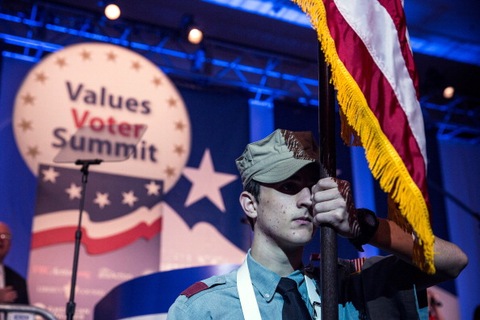
Deny the Liberty of the Enemies of God: Christian Politics

valuesvoterssummit

“We think we’ve come so far. Torture of heretics, burning of witches it’s all ancient history. Then – before you can blink an eye – suddenly it threatens to start all over again.” Captain Jean Luc Picard, Star Trek the Next Generation “The Drumhead”

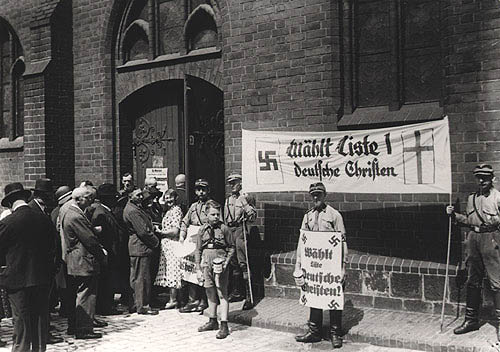
I expect that this article and subject might make some people uncomfortable but it is something that I need to return to yet again.  I fear what is happening to our country, and the agenda of the politically motivated Christian Right and its leaders, especially those who are using what is known as Seven Mountains or Dominionist theology to implement laws at local and state level. These laws damage the fabric of society and encourage discrimination in order to solidify the political power of a minority of conservative Christians.

I get very frustrated and tired of the way many leaders of the American Religious Right, that political animal that only thinks of itself have worked so fervently to poison any sense of unity and community that we might have as Americans regardless of our religious faith, or lack of faith. Back in the 1940’s through the 1970’s that was unity was referred to as “American Civil Religion.” Robert Bellah defined it “at best” as a “genuine apprehension on universal and religious reality as seen in, or as one could almost say, as revealed through the experience of the American people.” (Huntington, Samuel P. Who are We? America’s Great Debate p.103) While I do have a lot of issues with the concept of American Civil Religion, and h0w it has been used to justify some pretty horrible actions undertaken by leaders of this country, as well as some harmful myths as to our system of government and God’s blessing of our actions, even the immoral ones, it did provide some positives in regard to how Americans of different faiths treated each other with respect in the public square. As Huntington noted: “America’s civil religion provides a religious blessing to what Americans feel they have in common.” (Huntington p.104)

In the decades since the United States has undergone a seismic transformation in terms of religious makeup, and while those faith traditions who dominated the religious history of our first two hundred years are still dominant in many ways, they are in decline, especially in terms of the fastest growing segment of the population, those who identify themselves as The Nones those with no religious preference. In response the more conservative and politically minded Christians of the Christian Right have launched a culture war to ensure their dominance in all areas of society. Known as Christian Dominionism, Reconstructionism, or the Seven Mountains theology it is a blatant attempt to legislate a particular type of Christianity as the law of the land. As Gary North, an adviser to Ron and Rand Paul as well as other conservative Christian political leaders wrote:

“We must use the doctrine of religious liberty to gain independence for Christian schools until we train up a generation of people who know that there is no religious neutrality, no neutral law, no neutral education, and no neutral civil government. Then they will get busy in constructing a Bible-based social, political and religious order which finally denies the religious liberty of the enemies of God.”

You can see the influence of this theology in many of the state legislatures of what are called Red States where laws specifically intended to solidify conservative Christian dominance of government which allow for legal discrimination against others, by public officials and private businesses are becoming law. Likewise, such legislatures pass laws which crush the ability of local communities to pass non-discrimination ordinances against gays. This has happened in both Arkansas and West Virginia and similar proposals are being put forth in other states.

One of the leading proponents of this theology is Dr. C. Peter Wagner who wrote a number of influential books on evangelism used in many conservative evangelical seminaries and churches. Wagner is credited with beginning what is called the New Apostolic Reformation and taught at Fuller Seminary until his retirement from teaching in 2001. Wagner has written:

“Our theological bedrock is what has been known as Dominion Theology. This means that our divine mandate is to do whatever is necessary, by the power of the Holy Spirit, to retake the dominion of God’s creation which Adam forfeited to Satan in the Garden of Eden. It is nothing less than seeing God’s kingdom coming and His will being done here on earth as it is in heaven.” Letter dated 31 May 2007

I am a Christian, albeit one with many doubts and concerns. I am a Priest and I am a Navy Chaplain, I have grown up and seen this transformation of our society, especially over the last twenty years as a chaplain in both the Army and the Navy, I have concerns in the trends I see but mostly I am concerned about this radical theology that has helped turn faith into a war zone and is destroying the fabric of American life.  In fact if you wonder why so  many of these “Christians” are doing their best to disenfranchise voters and supporting policies that have turned this country from a republic that functioned on the basis of democracy, to an oligarchy controlled by a few one only has to look to the words of the original Dominionist, the father in law of Gary North, R.J. Rushdooney:

“One faith, one law and one standard of justice did not mean democracy. The heresy of democracy has since then worked havoc in church and state . . . Christianity and democracy are inevitably enemies.” (R.J. Rushdoony, The Institutes of Biblical Law p.100)

That being said, with all the change in the composition of the population of this country I really don’t fear that change. But for the most part I fear these politically minded Christians who are bent on imposing their form of Christianity on the people of this country. There are many reasons for this. Some are more general in the way I see Christians treat others; their own wounded as well as non-believers, the political machinations of pastors and “Christian” special interest groups masquerading as ministries. Wagner once said:

“See, the problem is, is that Satan has had too much of his way in our society because he has a government! And the only way to overthrow a government is with a government. It won’t happen otherwise.”

This is radical, for it is the basis of theocracy. Franklin Graham, son of Billy used words of fear to motivate his base saying at the Liberty Counsel Awakening Conference  “But we’re going to lose everything if we don’t win in this next election – and we only have this next election, I think for our voice to be heard.”  I think that it is pathetic that Graham has to resort to such fear and loathing in order to galvanize people to fight against the rights of others not to be discriminated against.

These groups have turned the Chaplain Corps into a political football. I once found the chaplain ministry to be the epitome of how ministers of various denominations or religions should be able to work together for the benefit of others. Some of the Chaplains that I served with from across the denominational and religious spectrum helped ingrain a respect and care for others that I would never had received working in a civilian parish. While I can do this with some chaplains even today they are few and far between.  The highly politicized environment is destroying the effectiveness and community of the Chaplain Corps. As a result I plan on retiring without seeking a promotion to Captain, which I would be eligible for the promotion boards in 2016. While I may help other priests and ministers in their parishes I have no desire to work in any other form of chaplaincy when I retire.

I have been worn down by all of this and sadly the controversies are now unavoidable. As a result I have experienced a lot of pain, heartache and rejection at the hand of many Christians, some of whom I had counted as close friends, and  many of whom are pastors, priests or chaplains. To experience rejection or being shamed by people that you thought were friends is very hard, especially when that at one time you trusted them implicitly to care for you. However to be rejected by those that you trusted “in the name of God, ” or rather because you violated supposedly “correct” doctrinal beliefs about God is frightening.

It seems to me that with many Christians and churches that the “unconditional” love of God that they proclaim not really unconditional. It is totally conditional on believing what they believe or behaving in the way they think that you should.

For those that do not know me or my story I am a career military officer with over 30 years of service between the Army and Navy. I have been a chaplain since 1992 and served in the National Guard, Army Reserve, Active Duty Army and the Navy. I am a trained hospital chaplain; I have a great academic background. I went to Iraq in 2007 and came home with a terrible case of severe chronic PTSD. I still suffer from some anxiety, depression and plenty of insomnia. I find mental health care hard to get in my new assignment and I realize how woefully unprepared that our medical system, military, VA and civilian is to care for that vast numbers of veterans like me.

After Iraq I suffered a collapse of my faith and for close to two years was a practical agnostic. Only my deep sense of call and vocation kept me going and there were times that I wondered if I would be better off dead.

When faith returned through what I call my Christmas miracle it was different. I totally relate to author Anne Rice who said:

“My faith in Christ is central to my life. My conversion from a pessimistic atheist lost in a world I didn’t understand, to an optimistic believer in a universe created and sustained by a loving God is crucial to me. But following Christ does not mean following His followers. Christ is infinitely more important than Christianity and always will be, no matter what Christianity is, has been, or might become.”

I have always questioned a lot that is taught by the church, but after my crisis of faith I really began to see through the bullshit. I began to not only question things my former church taught, but openly stated my convictions about how we treat others as Christians, the equality of people in general and tolerance for those different than us including gays and Moslems who for some Christians are rather low on the scale of those that God might love. As such I openly support the LGBT community, American Moslems and Arabs in general, as well as those who adhere to other non-Christian religions, are agnostic, or even atheist when they are attacked in the media, or by supposedly Christian politicians, preachers and pundits.

After Iraq I was sickened by the crass politicization of conservative American Christianity and many of its leaders. Men and women who advocate war without end, be it real wars against “enemies” of American, or promote a culture war even against other Christians that they do not like or agree with. Of course this is all done in “Jesus name.”

Likewise I question the opulence and materialism of the church. I question the nearly cult like focus and near worship accorded to the Pastor-CEOs of the mega-churches and the television preachers and teachers. I wonder in amazement about how many of these leaders live like royalty and have devoted followers who despite repeated scandals treat them as the voice of God.

Along with the that I question the preference of many American Christian leaders for the rich and their disdain for the poor, the alien and the outcasts among us. This actually comes from baptizing capitalism and objectivist philosophy as Christian and leaving the Gospel behind.

All of that got me thrown out of a church that I had served 14 years a priest and chaplain back in 2010. I thought I had a lot of friends in that church. I still have some that keep in contact with me but after my dismissal most abandoned me. That hurts worse than anything.

In fact when I came home from Iraq in crisis and falling apart the first person who asked about how I was doing with God was not clergy. It was my first shrink. I was asked by a commanding officer after Iraq “where does a chaplain go for help?” I told him “not to other chaplains.”  The sad thing is that man who did care about me suffered untreated terrible PTSD and Traumatic Brain Injury and committed suicide in January 2014.

I have had a few experiences the past few weeks that have opened that wound again and reminded me of why I am afraid of many that call themselves Christians. I have shared some of those so I will not belabor them here.

Dietrich Bonhoeffer said:

“Many people are looking for an ear that will listen. They do not find it among Christians, because these Christians are talking where they should be listening.”

That being said I am thankful that I have a number of friends, including a good number of Christians from various backgrounds and some chaplains who have stood by me even if they disagree with my theology, politics or favorite baseball team.

That being said with the exception of such people who have been with me through thick and thin I am mostly terrified of being around conservative Christians.

Church in most cases is a frightening place for me, and the sad fact is that if I were not already a Christian there is little in American Christianity that would ever cause me to be interested in Jesus.  I can totally understand why churches are hemorrhaging members, especially young people whose religious preference is “none,” for I too am in some sense an outcast.

I would like to think that we have come so far in our understanding of people, and of civil rights. But as Jean Luc Picard said, it is threatening to happen again.

Pray for me a sinner,

Peace

Padre Steve+

8 Comments

Filed under christian life, civil rights, ethics, faith, laws and legislation, LGBT issues, philosophy, Religion

“They Won’t Get in Our Way…” to Armageddon

US-ISRAEL-CONGRESS-NETANYAHU

“I know what America is. , move it in the right direction. They won’t get in our way…” Prime Minister Benjamin Netanyahu 2001

Yesterday I watched the address of Israeli Prime Minister Benjamin Netanyahu as it occurred live. I watched as the majority of our elected Senators and Congressmen, seem to hang on every word and rise to give thunderous applause to Netanyahu’s blatant attempt to not just hijack but to commandeer U.S. foreign policy to serve Israel. If any other foreign leader had been invited by any other party to do the same at any point in our history there would be an outcry.

 Now please do not get me wrong. Iran is an enemy, they continually work against us in attempting to destabilize the Middle East and advance their Shia’ Moslem version of the Apocalypse. However, they are very pragmatic and with the major demographic shifts there could easily come a point when the young people of Iran, tired of the repression of the Mullah’s overthrow them. Likewise I do believe that the Iranian nuclear program must be monitored and if it looks as if they are about to produce a bomb that can be delivered by air or missile that could harm us or any ally that they will have to be stopped. I have written about this before so I will not go into that here. Likewise, before calling me anti-Semetic please look at the body of my writings which not only are supportive of Israel but those of a realist who understands that anything which involves the United States in yet another pre-emptive war is not in the interest of the United States or Israel. 

 At the same time the speech was insulting because the United States has given Israel everything that it ever has needed since its founding in 1948. American Presidents from Truman to Obama have bent over backwards to support Israel. In 1967 the Israeli Navy and Air Force launched a sustained coordinated attack on the USS Liberty during the Six Day War which killed 34 and wounded 171 United States Navy Sailors. The Israelis, despite evidence to the contrary, including the testimony of the crew of the Liberty claimed that they had mistaken the ship for an Egyptian destroyer. The Johnson administration accepted the Israeli version and quickly buried the incident.

In October 1973, if it had not been for the actions of Richard Nixon Israel very likely would have ceased to exist, Nixon rushed emergency supplies of tanks, aircraft and weapons aboard U.S. ships and cargo aircraft, and confronted the Soviets who were threatening to intervene. 

Since then we have provide Israel advanced weapons and weapons technology in abundance, we share intelligence with Israel that we share with no-one else, and we have always supported Israel in the United States every time there is an attempt to rebuke, condemn or sanction Israel. Even President Obama and his administration has done this with abandon. 

 And what credit do we get? We get a few meaningless platitudes from Netanyahu before he attempts to commandeer U.S. foreign policy with the active aid and support of John Speaker of the House Boehner, support that is in clear violation of one of the oldest laws dealing with foreign policy enacted by this country’s founders in 1799. 

 The speech and the reception of the Representatives and Senators who invited Netanyahu to give it and their wild adulation was not only insulting but flies in the face of what our every one founders believed reference foreign policy and relations and actually a clear violation of the Logan Act of 1799 that prohibits unauthorized citizens from negotiating with a foreign government.

The Logan Act reads:

“Any citizen of the United States, wherever he may be, who, without authority of the United States, directly or indirectly commences or carries on any correspondence or intercourse with any foreign government or any officer or agent thereof, with intent to influence the measures or conduct of any foreign government or of any officer or agent thereof, in relation to any disputes or controversies with the United States, or to defeat the measures of the United States, shall be fined under this title or imprisoned not more than three years, or both.” 

 And this my friends was exactly what happened here. While negotiating with members of the Israeli government as Speaker of the House, Boehner kept his efforts secret for over three weeks. Boehner only told the White House when he had secured a deal for the Israeli Prime Minister to address a Joint Session of Congress, which is in itself a highly unusual event. If fact Winston Churchill was the only foreign leader to receive such an invitation. I do not want to be cheeky, but Netanyahu is not a reincarnated Winston Churchill. Unlike Britain in late 1940 Israel has the capability of destroying every one of its enemies with its large stock of fully operational and deplorable nuclear weapons and delivery systems, most of the latter supplied by the United States and other Western Allies. 

Not only this, but the invitation coincided with the closing weeks of Mr. Netanyahu’s reelection campaign, and is a blatant attempt to sway Israel voters to vote for him.

What the Speaker did was unethical, illegal and against every founding principle of American foreign policy dating back to George Washington and John Adams.

The nearly orgasmic applause of the Republicans to every thing that Netanyahu said was sickening. Especially when Netanyahu demanded that  the United States walk away from the negotiation table, and especially when Netanyahu threatened to attack alone if necessary. Of course, knowing his audience, he said, he knows that would not happen. It was like watching them cheer on Armageddon. 

 Mr. Netanyahu knows that he can use fear to get Americans to do his bidding, as well as the beliefs of the militant Conservative Christians who pray for such a war in order for Jesus to return.

Netanyahu presented a very black and white image of the Middle East. It was as insulting as it was fear based, conflating Iran and the Islamic State competing “for the crown of militant Islam.” He said, “In this deadly game of thrones, there is no place for America or Israel…” and urged no middle ground short of destroying Iran. Netanyahu’s option was to walk away and offer Iran a deal that no nation with any self-respect would agree to, in fact walking away will usher in the war that Netanyahu says that the tactic will avoid. 

 The speech was eerily reminiscent of Netanyahu’s words to a Congressional committee in 2002 in the lead up to the Iraq War, which of course was such a success. Netanyahu has been using the same tactics to get the United States to do Israel’s bidding for two decades, capitalizing on America fears, and the underlying apocalyptic strain of American Evangelical Christianity which has found its way into the political mainstream. Back in 2002 Mr. Netanyahu said:

“There’s no question that [Saddam] has not given upon on his nuclear program, not [sic] whatsoever. There is also no question that he was not satisfied with the arsenal of chemical and biological weapons that he had and was trying to perfect them constantly…So I think, frankly, it is not serious to assume that this man, who 20 years ago was very close to producing an atomic bomb, spent the last 20 years sitting on his hands. He has not. And every indication we have is that he is pursuing, pursuing with abandon, pursuing with every ounce of effort, the establishment of weapons of mass destruction, including nuclear weapons. If anyone makes an opposite assumption or cannot draw the lines connecting the dots, that is simply not an objective assessment of what has happened. Saddam is hell-bent on achieving atomic bombs, atomic capabilities, as soon as he can.”

“Today the United States must destroy the same regime because a nuclear-armed Saddam will place the security of our entire world at risk. And make no mistake about it — if and once Saddam has nuclear weapons, the terror networks will have nuclear weapons.” 

 
“If you take out Saddam’s regime, I guarantee you that it will have enormous positive reverberations on the region… The task and the great opportunity and challenge is not merely to effect the ouster of the regime, but also to transform the region.” 

 The scary thing is that when you look at the Americans who most strongly “support” Israel, they are men like fundamentalist Christian zealots like John Hagee, and Tim LaHaye, who have spent the better part of fifty years preaching a version of Bible prophecy which for Jesus to return and institute his “millennial kingdom” Israel must be devastated by a war that claims two-thirds of Israelis before the “remnant” accept Jesus as their Messiah. By the way this point of view is also held by top contenders for the GOP nomination in 2016 for the GOP nomination in 2016 and many House and Senate GOP leaders. But, my friends, if you disagree with them, some of their “Christian” pundits will call you a traitor who should “be hanged” in from of the Capital Building. 

 Now, be assured, Netanyahu doesn’t believe that for a second, he is a cunning politician, and he has no problem using the political power of the people who believe this to get his way with America. I believe that this will in the long run be bad thing both for the United States and Israel. I think that it is unbelievably unwise and may create an actual rift between our countries and fracture what has been throughout our history a bi-partisan support for Israel, and for what reason, short term political gain, both in Israel and the United States by those that brought it on. 

 My objection to what happened yesterday was not that Iran should not be opposed, nor the security of Israel be compromised. My objection is that what happened yesterday was against everything that our founders believed in and violated the law. Of our land. 

As an American my loyalty is to this country and our Constitution, not to an errant and heretic view of scripture that surrenders American rights to the whim of a particular warmongering Israeli politician. Netanyahu is a politician who has more than once stated his disdain for this country and sees us as a means to achieve his end, even if that means committing the United States to a war from which no good can come.

 Mr. Netanyahu and his American allies pushed us into a war in Iraq which was disastrous, not only for the human lives lost and devastated, the reputation and image of this country, and the economic burdens incurred, but also because it has unleashed turmoil in the region far greater than anyone imagined.

I am an American and my allegiance is not to Israel, it is to this country and our Constitution. I will be damned if allow myself to be silent while religious zealots, be they American, Iranian, the Islamic State, or Jewish try to bring about their version of Armageddon.

 Peace

Padre Steve+

5 Comments

Filed under Foreign Policy, History, laws and legislation, national security, Political Commentary

Living in the National Security State

Patriot-Act-HR-3162

Inter Arma Enim Silent Leges, in time of war the law stands silent…

James Madison wrote that “A popular government, without popular information, or the means of acquiring it, is but a prologue to a farce or a tragedy; or, perhaps both.”

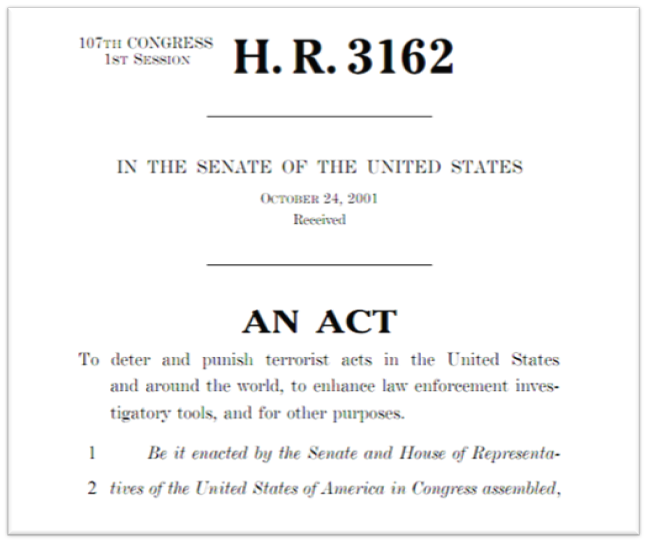
After September 11th 2001 the National Security State went into overdrive with the passage of the so called Patriot Act. That act opened the floodgates for an ever expanding national security state.

I have a lot of apprehension when I read the reports about the activities of the National Security Agency, other intelligence and police agencies at all levels of government and the pervasive erosion of civil rights.  The national security state and the seeming all pervasive security and surveillance apparatus which demolishes any sense of privacy, especially the protections enunciated in the Fourth Amendment and to some extent the First Amendment. Of course the use of similar methods by the private sector, often in conduction with government agencies is another concern, but that needs to wait for another day.

I also understand from history and empirical evidence that many others, many from unfriendly countries do not share those apprehensions. Many of these competitors are willing to use whatever openness that we have as a society against us, using similar technology and methods used by our intelligence, police, governmental and private sector. It makes for an ethical, legal and even constitutional conundrum. I know that I am not comfortable with this, and perhaps maybe none of us should be.

It is very easy on one hand in light of history, our Constitution and democratic process to condemn the NSA, the FISA courts and other lawfully constituted agencies and those that drafted the laws over the decades that allow the activities which they now conduct. The same can be said of foreign intelligence agencies which all engage in similar activities including the British GCHQ, the German Bundesnachrichtendienst and so many others including the Chinese and Russians.

Likewise it is equally easy in light of history, current events and national security concerns for people to jump to the other side of the fence and not only defend the activities of the NSA and agencies like it, and to demonize those that protest or expose such activities.

When I see the talking heads on cable news shows defending or condemning such activities and not agonizing over the complexity and issues involved I get worried. Because there are legitimate concerns voiced by critics as well as defenders. But since we live in an era of soundbites, gotcha and half-truths being portrayed as all truth I find it helpful to use either historical examples, literature or fiction, and even science fiction to wrestle with the fundamental truths. So I find looking at such issues through the prism of Star Trek sometimes more interesting and provocative than simply doing the whole moralizing pundit thing.

enimsilentleges_210

There was an episode of  Star Trek Deep Space Nine that aired well before the events of 9-11-2001, and the subsequent Global War on Terror, that I find fascinating. The episode deals with a secretive agency in Starfleet operating in the gray areas between the laws and ideals of the Federation and the threats that the Federation faces. Even when the Federation is a peace, Section 31, as it is called is engaged in activities against historic or potential enemies. In a way it is somewhat like the NSA or the Defense Intelligence Agency.

At the beginning of the Deep Space Nine Episode Inter Arma Enim Silent Leges the head of Section 31, a man only known as Sloan comes back Doctor Julia Bashir to involve him in an clandestine operation. An operation to on the Romulans who at this point are a Federation ally against the Dominion.

Sloan makes his approach and Bashir, who expresses his reservations:

BASHIR: You want me to spy on an ally.

SLOAN: To evaluate an ally. And a temporary ally at that. I say that because when the war is over, the following will happen in short order. The Dominion will be forced back to the Gamma Quadrant, the Cardassian Empire will be occupied, the Klingon Empire will spend the next ten years recovering from the war and won’t pose a serious threat to anyone. That leaves two powers to vie for control of the quadrant, the Federation and the Romulans.

BASHIR: This war isn’t over and you’re already planning for the next.

SLOAN: Well put. I hope your report is equally succinct.

BASHIR: How many times do I have to tell you, Sloan? I don’t work for you.

SLOAN: You will. It’s in your nature. You are a man who loves secrets. Medical, personal, fictional. I am a man of secrets. You want to know what I know, and the only way to do that is to accept the assignment.

I find the exchange both illuminating and riveting. The fact is that in the situation we face today the arguments of both sides should make us very uncomfortable.

Whether we like it or not or not, the incredibly rapid technical and communication advances of the past couple of decades have primed us for our present conundrum of liberty and privacy or security. That technology, as wonderful as it is  has enabled a generation to grow up in a virtual world in many ways detached from the moral and ethical balances between individual rights and liberties as well responsibility to community.

All the wonderful gadgets that we employ in everyday life, make it easy for enemies and “friends” to do things that were unimaginable to people other than science fiction writers even twenty to thirty years ago. Likewise they were certainly beyond the wildest imaginations of any of the founders who drafted Constitution.

The reality is, the things that make are lives so easy are also the things that have the potential to remove the very liberties that we treasure, either by our enemies using them, or those that defend us.

The truth is, that throughout history, even our own there have been operatives within the government in charge of secrets, as well as spies. In the Inter Arma Enim Silent Leges episode we see an operation that is full of duplicity and moral ambiguity all committed in the name of security. I won’t go into the details because it is too full of twists, and turns, you can read the plot of the episode at Memory Alpha.org http://en.memory-alpha.org/wiki/Inter_Arma_Enim_Silent_Leges_%28episode%29

There is an exchange between Dr. Bashir and Admiral Ross of Starfleet command which is very enlightening because it practically mirrors how many on both the civil liberties and the national security side of the current controversy feel about the War on Terror.

BASHIR: You don’t see anything wrong with what happened, do you.

ROSS: I don’t like it. But I’ve spent the last year and a half of my life ordering young men and young women to die. I like that even less.

BASHIR: That’s a glib answer and a cheap way to avoid the fact that you’ve trampled on the very thing that those men and women are out there dying to protect! Does that not mean anything to you?

ROSS: Inter arma enim silent leges.

BASHIR: In time of war, the law falls silent. Cicero. So is that what we have become? A twenty fourth century Rome driven by nothing more than the certainty that Caesar can do no wrong!

ROSS: This conversation never happened.

In light of the controversy of today regarding the NSA, FISA Courts, government secrecy and intelligence gathering information on its own citizens, as well as allies, friends and and enemies we face a growing tide of reporters and others seeking to reveal those secrets. Back in 1989 ethicist Sissela Bok wrote something very important in her book Secrets: Moral Choice in Public and Private Life:

“…as government secrecy expands, more public officials become privy to classified information and are faced with the choice of whether or not to leak … growing secrecy likewise causes reporters to press harder from the outside to uncover what is hidden. And then in a vicious circle, the increased revelations give government leaders further reasons to press for still more secrecy.”

As we wade through the continuing controversy surrounding these issues we will see people do exactly what Bok said. These are the exact arguments are being made by the people and officials directly involved in such activities, as well as former elected and appointed officials, and members of the press.

nsa-operations-center

The interesting thing to me is that very few of the people or agencies, past and present, Republican and Democrat involved have clean hands. It is amazing to see former champions of civil liberties defend the NSA actions and those that empowered the NSA in the Patriot Act now condemn it. I find it both fascinating and frightening.

At the end of the Inter Arma Enim Silent Leges episode the mysterious Sloan pops back in on Doctor Bashir who is in his quarters, asleep and depressed by what he experienced during the operation on Romulus and with Admiral Ross.

SLOAN: Good evening.

BASHIR: Are you expecting applause? Have you come to take a bow?

SLOAN: I just wanted to say thank you.

BASHIR: For what? Allowing you to manipulate me so completely?

SLOAN: For being a decent human being. That’s why we selected you in the first place, Doctor. We needed somebody who wanted to play the game, but who would only go so far. When the time came, you stood your ground. You did the right thing. You reached out to an enemy, you told her the truth, you tried to stop a murder. The Federation needs men like you, Doctor. Men of conscience, men of principle, men who can sleep at night. You’re also the reason Section Thirty one exists. Someone has to protect men like you from a universe that doesn’t share your sense of right and wrong.

BASHIR: Should I feel sorry for you? Should I be weeping over the burden you’re forced to carry in order to protect the rest of us?

SLOAN: It is an honor to know you, Doctor. Goodnight.

We live in this kind of world and maybe it is good to sometimes step back and look at issues using a different prism. I really don’t have the answers. I am a civil libertarian who places a high value on the openness of a government to its people. I also know that there are those that have no regard for such openness or, to quote Sloan don’t “share your sense of right and wrong.”

Maybe that is not a good answer. I really don’t know. All I know is that as uncomfortable as this all is that those on both sides of the issue have valid points and concerns. It is a debate that needs to happen if we are able to balance that a society needs to balance individual rights and responsibility to the community; openness and secrecy; civil liberties and national security.

But that being said. it is a debate that needs to happen, even if it makes us uncomfortable. I for one think that it is better that we be uncomfortable when looking at such an important debate than to be prisoners of our certitude.

Peace

Padre Steve+

2 Comments

Filed under History, laws and legislation, national security, Political Commentary, star trek

Mine Eyes Have Seen the Glory: Racism, Slavery and Religion

slavescars

Today my friends another installment of my chapter in my Gettysburg text dealing with religion, racism and ideology as causes of the American Civil War. While many people, especially modern Southern White politicians like to repeat the mantra that we live in a “post-racial”  society where racism no longer exists. I discussed that ridiculous assertion yesterday in my intro to the series so I won’t bother to repeat it now.

the-dred-scott-case-1846-1857-402x618

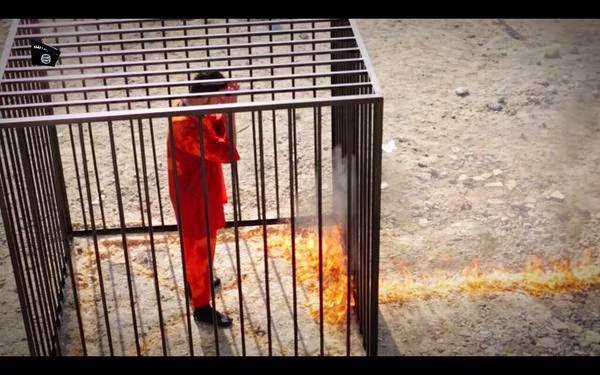
What I will do is discuss how religion has been used and in still being used by “true believers” of many religions to justify all sorts of evil in the name of their God. The latest and most newsworthy of such people are the practitioners of terror in the name of Allah, the Islamic State and Boko Haram in central and west Africa. These groups have brought back the concepts of what we would call public lynching of their enemies, burning them alive, beheading them, enslaving them, and engaging in ethnic and religious cleansing. They are ruthless and are a throwback to times that most of us had hoped had passed into recess of history.

a2a9c088d75423b7f457b194d7c9ea9a

But history has a way of never dying, especially for those who don’t stop believing in their cause. In resp0nse to the acts of ISIL and Boko Haram I have heard numerous American Christian politicians, pundits and preachers claim that Christians have never acted in such a way. I could go through the litany of crimes committed by Christians, Churches and the actions of nations whose state supported churches provided the theological justification for genocide, pogroms, ethnic cleansing, crusades, imperialism, slavery and a host of other crimes against humanity. Instead I am just going to focus on the theological justification of those who defended the institution of slavery, as well as their abolitionists opponents in this posting, because they are really not that too far removed from the actions of ISIL and the words of many supposedly Christian politicians, pundits and preachers in this country today.

020101_isilBurns_jordanian_pilot_alive

Omaha_courthouse_lynching

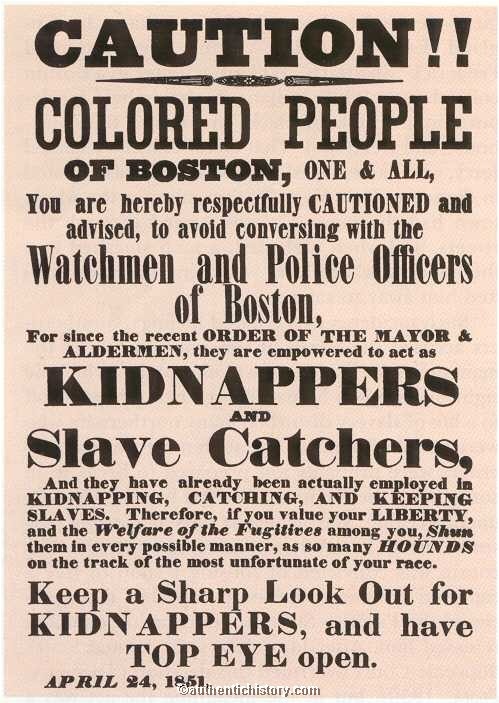
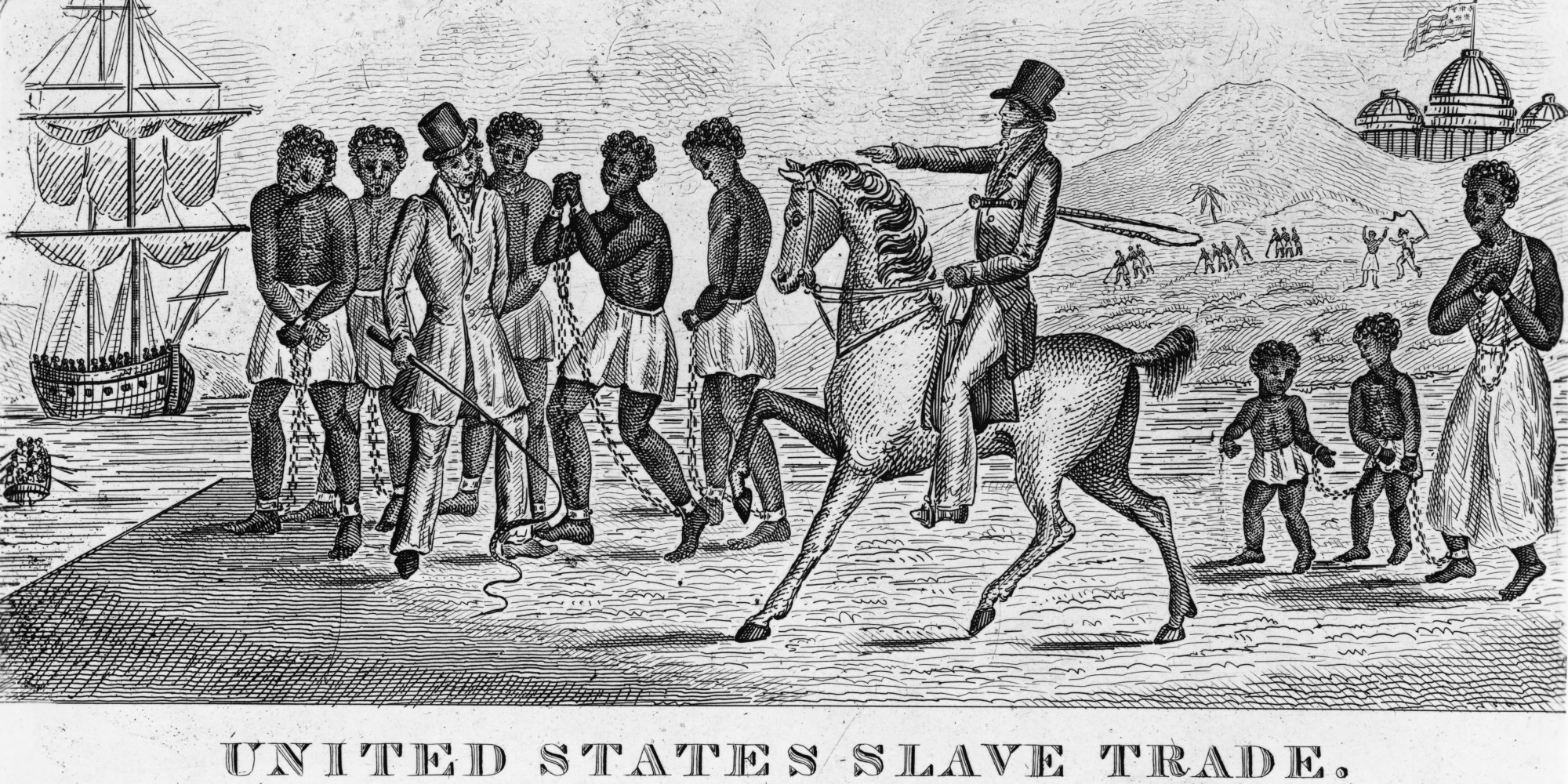
This section begins with the Compromise of 1850, an act which included the Fugitive Slave Act which gave Southern Slaveholders the right to go into any state or territory to reclaim their human property and provided them with a extra-judicial system to support them.  From this it transitions to the theological arguments and proclamations of those supporters of slavery and their opponents. The section ends with a note about a case that Virginia was pushing through the Courts in 1860, just prior to the Civil War, it was a case that they hoped would destroy any remaining legal obstacles to expanding slavery into Free States and territories against the wishes of the citizens of those states. I find it interesting that for people then as well as today the concept of “States Rights” only applies to them and their attempts to deny freedom to others.

Mine Eyes Have Seen the Glory: Religion, Ideology and the Civil War Part 2

Tomorrow I will post the third section of this chapter which begins with Bleeding Kansas, John Brown, the link between church and state in the Confederacy, the election of Lincoln, Emancipation, and the pervasive and poisonous myth of the Lost Cause in the United States.

Racism, as well as other forms of hatred backed by religion is still alive and it is not just in the Middle East and Africa. It is still here, and it is still happening now. It may be a bit more subtle and certainly not as violent as it was in the ante-bellum days, or Post-Reconstruction, but it is here. Like in the Middle East it bides its time until extremists can invent an excuse to resort to violence and terrorism.

Peace

Padre Steve+

1 Comment

Filed under civil rights, civil war, faith, History, iraq,afghanistan, laws and legislation, leadership, Political Commentary, Religion

An Exercise in Exceptions: “Absolute” Truth, Faith and Justice

dyer-hanging1

“Religion carries two sorts of people in two entirely opposite directions: the mild and gentle people it carries towards mercy and justice; the persecuting people it carries into fiendish sadistic cruelty…” Alfred North Whitehead 

Those who follow my writings know how much I struggle with faith and doubt on a daily basis. I believe, but as the man told Jesus when he asked Jesus to heal his child “I believe, help my unbelief.” I no longer believe in the “absolute truths” that I once believed. Of course to some this makes me a heretic or worse. That being said, I have faith in a God I cannot see. I have faith in a God who clothes himself in human weakness and allows himself to be killed as a state criminal.

That being said I see many of my fellow Christians, not to mention those of other faiths who attempt to use their interpretation of what they believe are absolute truths and attempt to impose them on others. Using their houses of worship they indoctrinate believers into believing the “truth” including the judgment on non-believers.

I remember going through classes in my previous denomination which were entitled “The Government of God” and utilized Robert Bork’s book Slouching Towards Gomorrah: Modern Liberalism and American Decline as its primary text. Obviously the class had little to do with faith, but was a tool by which we were indoctrinated to believe the political-religious ideology of our church leaders. There were several more texts, which basically echoed Bork’s thought, but they were taught in a manner is if they were as important as the often contradictory Biblical tests or the writings of the church Fathers, the great saints, scholastics or Protestant Reformers. It was an exercise in political indoctrination based on religious ideology. At the time I had no idea that what the church leaders were appealing to was nothing more than a variation on Christian Dominionism. 

Such ideology is incredibly dangerous because when people in power take it to heart and act upon it, all pretense of fairness, justice and integrity is lost. Those who are simply different are persecuted, those who do not tow a particular party or religious line are suspect, and the innocent are presumed guilty. It has happened throughout human history in every corner of the world, and it still goes on today.

I ended up rejecting that view of faith and life after coming home from Iraq, and for voicing my disagreement on a number of issues was asked to leave that denomination in 2010.

I believe again, but my doubts are real. But even more I have a belief in justice, and I believe that that justice itself cannot be built on absolutes. As Captain Jean Luc Picard (Patrick Stewart) noted in the Star Trek the Next Generation episode Justice: 

“I don’t know how to communicate this, or even if it is possible. But the question of justice has concerned me greatly of late. And I say to any creature who may be listening, there can be no justice so long as laws are absolute. Even life itself is an exercise in exceptions.”

I have found that as Picard said, “that life itself is an exercise in exceptions.”  We all make them, and the Bible and the history of the church is full of them. So I have a hard time with those who claim an absolute certitude in beliefs that are built on faith and treat them as fact, despite the fact that they are not provable. Dietrich Bonhoeffer noted the problem well when he talked of this problem and described the dilemma of so many believers:

“Man no longer lives in the beginning–he has lost the beginning. Now he finds he is in the middle, knowing neither the end nor the beginning, and yet knowing that he is in the middle, coming from the beginning and going towards the end. He sees that his life is determined by these two facets, of which he knows only that he does not know them”

Even so believers of all faiths wrap themselves in the certitude of their faith. They espouse doctrines that at best are humanity’s best attempts to describe a God that is infinitely bigger and more complex than they believe. The contest then becomes not about God himself, but the manner that the human being who interprets God espouses as incontrovertible doctrine. Eric Hoffer wrote:

“A doctrine insulates the devout not only against the realities around them but also against their own selves. The fanatical believer is not conscious of his envy, malice, pettiness and dishonesty. There is a wall of words between his consciousness and his real self.”

That certitude and the belief that we absolutely know the mind of a God who claims that we cannot know is the height of arrogance and it ensures that when we speak in terms of absolutes that we do not understand God, nor do we believe in justice, because as Captain Picard so wisely noted “life itself is an exercise in exceptions.” Even the most devout of believers make exceptions, simply because they are human and can’t avoid it, unless they are sociopaths.

Henri Nouwen wrote something very profound that all who claim to know God’s absolute will or truth need to consider. Nouwen wrote: “Theological formation is the gradual and often painful discovery of God’s incomprehensibility. You can be competent in many things, but you cannot be competent in God.”

The fact is that no one can be competent in God, and that those who claim to are either hopelessly deluded b their ignorance, or worse, are evil men masquerading as good. Those who pro port to know absolutes and want to use the Bible or any other religious text as some sort of rule book that they alone can interpret need to ask themselves this question, posed by Commander Riker to Captain Picard when he talked about absolutes and life: “When has justice ever been as simple as a rulebook?” 

Sadly too many people, Christians, Moslems, Jews, Hindus, and others apply their own misconceptions and prejudices to their scriptures and use them as a weapon of temporal and divine judgement on all who they oppose. However, as history, life and even our scriptures testify, that none of us can absolutely claim to know the absolutes of God. As Captain Picard noted “life itself is an exercise in exceptions.” 

Thus our human justice, as feeble as it often is must take this into account: It takes true wisdom to know when and how to make these exceptions, wisdom based on reason, grace and mercy. Justice, is to apply the law in fairness and equity, knowing that even our best attempts can be misguided and if based on emotion, hatred, racism or vengeance all clothed in the language of righteousness can be more evil than any evil it is supposed to correct.

Does it matter if we are doing it the sake of law and order, or for love of country, or to defend the faith; if at the heart of it what we call justice, or moral absolutes is nothing more than the implementation of an agenda to crush the powerless under our heel and promote even more injustice? If we lean toward the view that we are implementing the absolute law and will of God then we had better be sure, as Nouwen so well noted we can be competent in many things, but we cannot, as much as we deceive ourselves, be competent in God.

But we see it all too often, religious people and others misusing faith to condemn those they do not understand or with whom they disagree. As Patrick Stewart playing Captain Jean Luc Picard noted in the Start Trek Next Generation episode The Drumhead:

“We think we’ve come so far. Torture of heretics, burning of witches it’s all ancient history. Then – before you can blink an eye – suddenly it threatens to start all over again.”

Peace

Padre Steve+

2 Comments

Filed under civil rights, ethics, faith, laws and legislation, philosophy, Religion

Mine Eyes Have Seen The Glory: Religion, Ideology & the Civil War Part 1

Friends of Padre Steve’s World

This is part one of a very long chapter in my Gettysburg Staff Ride Text. The chapter is different because instead of simply studying the battle my students also get some very detailed history about the ideological components of war that helped make the American Civil War not only a definitive event in our history; but a war of utmost brutality in which religion drove people and leaders on both sides to advocate not just defeating their opponent, but exterminating them.

But the study of this religious and ideological war is timeless, for it helps us to understand the ideology of current rivals and opponents, some of whom we are in engaged in battle and others who we spar with by other means, nations, tribes and peoples whose world view, and response to the United States and the West, is dictated by their religion. 

Yet for those more interested in current American political and social issues the period is very instructive, for the religious, ideological and political arguments used by Evangelical Christians in the ante-bellum period, as well as many of the attitudes displayed by Christians in the North and the South are still on display in our current political and social debates. 

I will be posting the next two parts over the next two days. 

Peace

Padre Steve+

illustration-fort-sumter

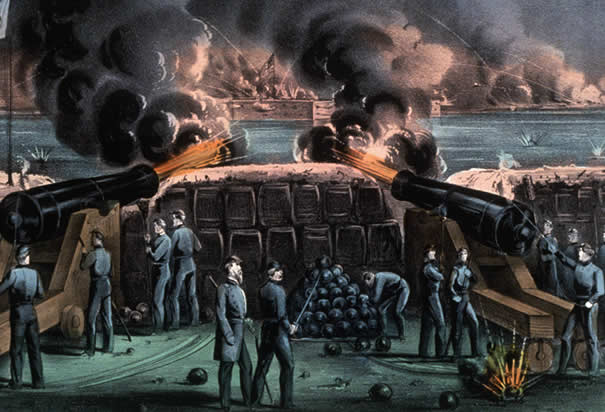
“At length on 12th April, the tension could no longer bear the strain. Contrary to instructions, in the morning twilight, and when none could see clearly what the historic day portended, the Confederates in Charleston bombarded Fort Sumter, and the thunder of their guns announced that the argument of a generation should be decided by the ordeal of war. A war, not between two antagonistic political parties, but a struggle to the death between two societies, each championing a different civilization…” 1

War cannot be separated from Ideology, Politics or Religion One can never separate war and the means by which it is fought from its political ends. According to Clausewitz war is an extension or continuation of politics. Of course Clausewitz understood the term politics or policy in the light of the concept of a “World View” or to use the German term Weltungschauung. The term is not limited to doctrine or party politics, but it encompasses the world view of a people or culture. The world view is oft used by the political, media and religious leadership of countries and can be quite instrumental in the decision by a people to go to war; who they war against, their reasons for going to war, the means by which they fight the war, and the end state that they envision. This concept includes racial, religious, cultural, economic and social dimensions of a world view.

One of the problems that modern Americans and Western Europeans have is that we tend to look at the world, particularly in terms of politics and policy, be it foreign or domestic, through a prism from which we cannot see the forest for the trees. We look at individual components of issues such as economic factors, military capabilities, existing political systems, diplomatic considerations and the way societies get information in isolation from each other. We dissect them, we analyze them, and we do a very good job in examining and evaluating each individual component; but we often do this without understanding the world view and ideological factors that link how a particular people, nation or party understand these components of policy.

Likewise policy makers tend to take any information they receive and interpret it through their own world view. This is true even if they have no idea what their world-view is or how they came to it. Most often a world view is absorbed over years. Barbara Tuchman wrote that “When information is relayed to policy-makers, they respond in terms of what is already inside their heads and consequently make policy less to fit the facts than to fit the notions and intentions formed out of the mental baggage that has accumulated in their minds since childhood.” 2

Policy makers often fail to see just how interconnected the most primal elements of the human experience are to the world view of others as well as their own.

Because of this many policy makers, be they military or civilian do not understand how critical the understanding of world view to designing effective polices. Likewise many fail to see how the world view of others influences their application of economic, political, diplomatic and military power as well as the use and dissemination of information in their nation or culture. This is true no matter which religion or sect is involved, even if a people or nation is decidedly secular, and at least outwardly non-religious.

Perhaps this is because we do not want to admit that our Western culture itself is very much a product of primal religious beliefs which informed politics, philosophy, ethics, law, economics, views of race, and even the arts for nearly two millennia. Perhaps it is because we are justifiably appalled and maybe even embarrassed at the excesses and brutality of our ancestors in using religion to incite the faithful to war; to use race and religion justification to subjugate or exterminate peoples that they found to be less than human; or to punish and conquer heretics.

The United States Military made a belated attempt to address ideology, culture and religion in terms of counter-insurgency doctrine when it published the U.S. Army/Marine Counterinsurgency Manual. The discussion of these issues is limited to two pages that specifically deal with various extreme Moslem groups that use that religion as a pillar of their ideology, strategy and operations. But the analysis in the counterinsurgency manual of is limited because its focus is very general and focused at a tactical level.

Likewise the analysis of world view, ideology and religion in the counterinsurgency manual is done in a manner of “us versus them” and though it encourages leaders to attempt to understand the cultural differences there is little in it to help leaders to understand who to do this. Commendably the manual discusses how terrorist and insurgent groups use ideology, frequently based on religion to create a narrative. The narrative often involves a significant amount of myth presented as history, such as how Al Qaida and ISIL using the Caliphate as a religious and political ideal to strive to achieve, because for many Moslems “produces a positive image of the golden age of Islamic civilization.” 3 However, we frequently cannot see how Americans have used, and in some cases continue to the Puritan understanding of a city set on a hill which undergirded Manifest Destiny, the extermination of Native Americans, the War with Mexico, the romanticism of the ante-bellum South and later the Lost Cause.

Policy makers and military leaders must realize that if they want to understand how culture and religious ideology drive others to conquer, subjugate and terrorize in the name of God, they first have to understand how our ancestors did the same thing. It is only when they do that that they can understand that this behavior and use of ideology for such ends is much more universal and easier to understand.

If one wants to see how the use of this compulsion to conquer in the name of God in American by a national leader one needs to go no farther than to examine the process whereby President McKinley, himself a veteran of the Civil War, decided to annex the Philippine in 1898 following the defeat of the Spanish. That war against the Filipinos that we had helped liberate from Spanish rule saw some of the most bloodthirsty tactics employed in fighting the Filipino insurgents, who merely wanted independence. It was a stain on our national honor which of which Mark Twain wrote: “There must be two Americas: one that sets the captive free, and one that takes a once-captive’s new freedom away from him, and picks a quarrel with him with nothing to found it on; then kills him to get his land. . .


A Doubtlessly sincere McKinley sought counsel from God about whether he should annex the the Philippines or not.

“He went down on his knees, according to his own account, and “prayed to Almighty God for light and guidance.” He was accordingly guided to conclude “that there was nothing left to do for us but to take them all, and to educate the Filipinos. And uplift and civilize and Christianize them, by God’s grace to do the very best we could by them, as our fellowmen for whom Christ died.” 4

On the positive side the counterinsurgency manual does mention how “Ideology provides a prism, including a vocabulary and analytical categories, through which followers perceive their situation.” 5 But again it does so at a micro-level and the lessons of it are not applied at the higher levels of strategic thinking and policy.

Thus when faced with cultures for which religion provides the adhesive which binds each of these elements, such as the Islamic State or ISIL we attempt to deal with each element separately, as if they have no connection to each other. But that is where we err, for even if the religious cause or belief has little grounding in fact, science or logic, and may be the result of a cultures attempting to seize upon mythology to build a new reality, it is, in the words of Reggie Jackson the “straw that stirs the drink” and to ignore or minimize it is to doom our efforts to combat its proponents.

Perhaps that is because we do not like to look at ourselves and our own history in the mirror. Perhaps it is because we are uncomfortable with the fact that the face that we see in the mirror is face too similar to those we oppose who are perfectly willing to commit genocide in the name of their God, than we want to admit. Whether this is because we are now predominantly secularist in the way that we do life, or because we are embarrassed by the religiously motivated actions of our forefathers, the result is strikingly and tragically similar.

Clausewitz was a product of classic German Liberalism. He understood the effects of the moral and spiritual concerns inherent in policy, and it flows from his pen, as where he wrote “that the aim of policy is to unify and reconcile all aspects of internal administration as well as of spiritual values, and whatever else the moral philosopher may care to add.” 6 Clausewitz understood that when the motivation behind politics becomes more extreme and powerful; when the politics becomes more than a simple disagreement about isolated policy issues; when the ideology that lays behind the politics, especially ideology rooted in religion evokes primal hatred between peoples, war can come close to reaching the abstract concept of absolute or total war.

Clausewitz wrote:

“The more powerful and inspiring the motives for war, the more they affect the belligerent nations and the fiercer the tensions that precede the outbreak, the closer will war approach its abstract concept, the more important will be the destruction of the enemy, the more closely will the military and the political objects of war coincide, and the more military and less political will war appear to be….” 7

The American Civil War was the first modern war based on the advancement of technology and the changing character of war. But it was also a modern war which reached back to the most primal urges of the people involved, including the primal expressions of religious justification for their actions that both sides accepted as normal.

The American Civil War was caused by the clash of radically different ideologies, ideologies which championed two very different views of civilization, government, economics and the rights of people. However, these different world views were based based upon a common religious understanding:

“whatever their differences over such matters as slavery and political preaching, both sides read their Bibles in remarkably similar ways Ministers had long seen the American republic as a new Israel, and Confederate preachers viewed the southern nation in roughly the same light. The relentless, often careless application of biblical typologies to national problems, the ransacking of scripture for parallels between ancient and modern events produced a nationalistic theology at once bizarre, inspiring and dangerous. Favorite scripture passages offered meaning and hope to a people in the darkest hours and, at the same time, justified remorseless bloodshed.” 8

This understanding manifested itself in each side’s appeal to their Puritan ancestor’s concept of a “city set on a hill,” a mantle that each side claimed to be the legitimate heir. Though they seem radically different, they are actually two sides of the same religious-ideological coin.

The American Civil War was a religious and ideological war. “Like the total wars of the twentieth century, it was preceded by years of violent propaganda, which long before the war had obliterated all sense of moderation, and had awakened in the contending parties the primitive spirit of tribal fanaticism.” 9 It was preceded by the fracturing of political parties and alliances which had worked for compromise in the previous decades to preserve the Union even at the cost of maintaining slavery.

Far from being irrational as some have posited, the actions and behavior of politicians in both the North and the South was completely rational based on their conflicting ideologies and views of their opponents. The “South’s fears of territorial and economic strangulation and the North’s fears of a “slave power” conspiracy are anything but irrational, and only someone who refuses to think through the evidence available to Americans in the 1850s would find either of them at all illogical.” 10

Understanding How Religiously Based Ideology influences Policy, Politics and War Samuel Huntington wrote:

“Blood, language, religion, way of life were what the Greeks had in common and what distinguished them from the Persians and other non-Greeks. Of all the objective elements which define civilizations, however, the most important is usually religion, as the Athenians emphasized. To a very large degree, the major civilizations in human history have been closely identified with the world’s great religions; and who share ethnicity and language but differ in religion may slaughter each other…” 11

The very realistic fears of both sides brought about clash of extremes in politics which defied efforts at compromise and was already resulting in violent and bloody conflicts between ideologues in Kansas, Missouri and Kentucky years before the firing on Fort Sumter. For both sides their views became a moral cause that in the minds of many became an article of their religious faith, and “Religious faith itself became a key part of the war’s unfolding story for countless Americans….” 12 British theorist and military historian J.F.C. Fuller wrote of the religious undergirding of the war:

“As a moral issue, the dispute acquired a religious significance, state rights becoming wrapped up in a politico-mysticism, which defying definition, could be argued for ever without any hope of a final conclusion being reached.” 13

That is why it impossible to simply examine the military campaigns and battles of the Civil War in isolation from the politics, polices, the competing philosophies and the underlying theology which were the worldview that undergirded the arguments of both sides. Those competing philosophies and world views, undergirded by a pervasive nationalistic understanding of religion not only helped to cause on the war but made the war a total war.

Some might wonder where this fits in a text that is about a specific campaign and battle in a war, but for those entrusted with planning national defense and conducting military campaign the understanding of why wars are fought, in particular the ideological causes of war matter in ways that military planners, commanders and even elected political leadership often overlook. Colin Gray notes: “Wars are not free floating events, sufficient unto themselves as objects for study and understanding. Instead, they are entirely the product of their contexts.” 14

Studying the context of the American Civil War is very important in understanding not just it, but also civil wars in other nations which are currently raging. The study of these contexts brings an American or Western historical perspective to those wars, not so much in trying to place a western template over non-western conflicts; but a human perspective from our own past from which we can gain insight into how the people, even people who share a common language, religion and history, can war against each other in the most brutal of fashions. Again I refer to Colin Gray who noted “Policy and strategy will be influenced by the cultural preferences bequeathed by a community’s interpretation of its history as well as by its geopolitical-geostrategic context.” 15

For American and other Western political and military policy makers this is particularly important in Iraq where so many Americans have fought, and in the related civil war in Syria which has brought about the emergence of the Islamic State of Iraq and the Levant.

Likewise in our Western tradition we can see how radical ideology, based on race was central to Hitler’s conduct of war, especially in the East during the Second World War. Hitler’s ideology permeated German military campaigns and administration of the areas conquered by his armies. No branch of the German military, police or civil administration in occupied Poland or Russia was exempt guiltless in the crimes committed by the Nazi regime. It is a chilling warning of the consequences awaiting any nation that allows it to become caught up in hate-filled political, racial or even religious ideologies which dehumanizes opponents and of the tragedy that awaits them and the world. In Germany the internal and external checks that govern the moral behavior of the nation and individuals failed. Caught up in the Nazi system, the Germans, especially the police and military abandoned the norms of international law, morality and decency, banally committing crimes which still reverberate today and which are seen in the ethnic cleansing actions in the former Yugoslavia and other European nations.

Thus the study of the American Civil War, from the cultural, economic, social and religious differences which divided the nation helps us in understanding war. But even more importantly we have to understand the ideological clash between Abolitionists in the North, and Southern proponents of slavery. Both the ideologies of the Abolitionists who believed that African Americans were created by God and had the same rights as whites, as well as the Southern arguments that blacks were inferior and slavery was a positive good, were buttressed by profoundly religious arguments related directly to a divergence in values. It was in this “conflict of values, rather than a conflict of interests or a conflict of cultures, lay at the root of the sectional schism.” 16

Understanding this component of our own nation’s history helps us to understand how those same factors influence the politics, policies, the primal passions and hatreds of people in other parts of the world. Thus they are helpful for us to understand when we as a nation involve ourselves in the affairs of other peoples whose conflicts are rooted in religiously motivated ideology and differences in values, such as in the current Sunni-Shia conflict raging in various guises throughout the Middle East where culture, ideology and economic motivations of the groups involved cannot be separated. We may want to neatly separate economic, strategic, military and geopolitical factors from religious or ideological factors assuming that each exists in some sort of hermetically sealed environment. But to think this is a fallacy of the greatest magnitude. As we have learned too late in the century in our Middle East muddling, it is impossible to separate geopolitical, strategic, military and economic issues from ideological issues rooted in distinctly religious world views, world views that dictate a nation, people or culture’s understanding of the world.

David M. Potter summed up this understanding of the connection between the ideological, cultural and economic aspects and how the issue of slavery connected all three realms in the American Civil War:

“These three explanations – cultural, economic and ideological – have long been the standard formulas for explaining the sectional conflict. Each has been defended as though it were necessarily incompatible with the other two. But culture, economic interest, and values may all reflect the same fundamental forces at work in a society, in which case each will appear as an aspect of the other. Diversity of culture may produce both diversity of interests and diversity of values. Further, the differences between a slaveholding and a nonslaveholding society would be reflected in all three aspects. Slavery represented an inescapable ethical question which precipitated a sharp conflict of values.” 17
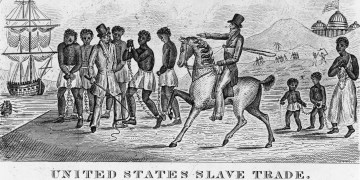
o-SLAVERY-facebook


The Impact of Slavery on the Growing Divide between North and South

The political ends of the Civil War came out of the growing cultural, economic, ideological and religious differences between the North and South that had been widening since the 1830s. However, slavery was the one issue which helped produce this conflict in values and it was “basic to the cultural divergence of the North and South, because it was inextricably fused into the key elements of southern life – the staple crop of the plantation system, the social and political ascendency of the planter class, the authoritarian system of social control.” 18 Without slavery and the southern commitment to an economy based on slave labor, the southern economy would have most likely undergone a similar transformation as what happened in the North; thus the economic divergence between North and South would “been less clear cut, and would have not met in such head-on collision.” 19 But slavery was much more than an economic policy for Southerners; it was a key component of their religious, racial and philosophic world view.

The issue of slavery even divided the ante-Bellum United States on what the words freedom and liberty meant, the dispute can be seen in the writings of many before the war, with each side emphasizing their particular understanding of these concepts. Many Southerners, including poor whites saw slavery as the guarantee of their economic freedom. John C. Calhoun said to the Senate in 1848 that “With us, the two great divisions of society are not the rich and poor, but white and black; and all of the former, the poor as well as the rich, belong to the upper class, and are respected and treated as equals.” 20

But it was Abraham Lincoln who cut to the heart of the matter when he noted that “We all declare for liberty” but:

“in using the same word we do not all mean the same thing. With some the word liberty may mean for each man to do as he pleases with himself and the product of his labor; while with others the same word may mean for some men to do as they please with other men and the product of other men’s labor.” 21

The growing economic disparity between the Slave and Free states became more about the expansion of slavery in federal territories as disunion and war approached; for a number of often competing reasons. These differences were amplified by the issue of slavery led to the substitution of stereotypes of each other and had the “effect of changing men’s attitudes toward the disagreements which are always certain to arise in politics: ordinary, resolvable disputes were converted into questions of principle, involving rigid, unnegotiable dogma.” 22 The editor of the Charleston Mercury noted in 1858 that “on the subject of slavery…the North and the South…are not only two peoples, but they are rival, hostile peoples.” 23

This was driven both by the South’s insistence on both maintaining slavery where it was already legal and expanding it into new territories which was set against the vocal abolitionist movement. They were also fighting an even more powerful enemy, Northern industrialists who were not so idealistic, and much more concerned with “economic policy designed to secure Northern domination of Western lands than the initial step in a broad plan to end slavery.” 24 This completion between the regions not only affected politics, it affected religion and culture In the South it produced a growing culture of victimhood which is manifest in the words of Robert Toombs who authored Georgia’s declaration of causes for secession:

“For twenty years past, the Abolitionists and their allies in the Northern states, have been engaged in constant efforts to subvert our institutions, and to excite insurrection and servile war among us…” whose “avowed purpose is to subject our society, subject us, not only to the loss of our property but the destruction of ourselves, our wives and our children, and the dissolution of our homes, our altars, and our firesides.” 25

As the differences grew and tensions rose the South became ever more closed off from the North. “More than other Americans, Southerners developed a sectional identity outside the national mainstream. The Southern life style tended to contradict the national norm in ways that life styles of other sections did not.” 26

The complex relationship of Southern society where the “Southern bodies social, economic, intellectual, and political were decidedly commingled” 27 and politics of the South came more to embrace the need for slavery and its importance, even to poor whites in the South who it did not benefit and actually harmed economically: “the system of subordination reached out still further to require a certain kind of society, one in which certain questions were not publically discussed. It must give blacks no hope of cultivating dissention among the whites. It must commit non slaveholders to the unquestioning support of racial subordination….In short, the South became increasingly a closed society, distrustful of isms from outside and unsympathetic to dissenters. Such were the pervasive consequences of giving top priority to the maintenance of a system of racial subordination.” 28
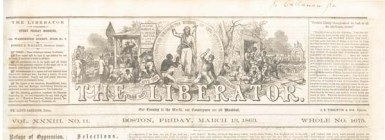
4.0.4


Southern planters declared war on all critics of their “particular institution” beginning in the 1820s. As Northern abolitionists like William Lloyd Garrison and his newspaper The Liberator grew in its distribution and began to appear in the South various elected officials throughout the South “suppressed antislavery books, newspapers, lectures, and sermons and strove generally to deny critics of bondage access to any public forum.” 29

In response to the proliferation of abolitionist literature in the South, John C. Calhoun proposed that Congress pass a law to prosecute “any postmaster who would “knowingly receive or put into the mail any pamphlet, newspaper, handbill, or any printed, written, or pictorial representation touching the subject of slavery.” 30 Calhoun was not alone as other members of Congress as well as state legislatures worked to restrict the import of what they considered subversive and dangerous literature.

Beginning in 1836 the House of Representatives passed a “gag rule” for its members which “banned all petitions, memorials, resolutions, propositions, or papers related in any way or to any extent whatever to the subject of slavery.” 31 This was challenged by former President John Quincy Adams in 1842 as well as by others so that in 1844 the House voted to rescind it. However Southern politicians “began to spout demands that the federal government and the Northern states issue assurances that the abolitionists would never be allowed to tamper with what John Calhoun had described as the South’s “peculiar domestic institution.” 32 The issue of slavery more than any other “transformed political action from a process of accommodation to a mode of combat.” 33

Around the same time as the gag rule was played out in Congress the Supreme Court had ruled that the Federal government alone “had jurisdiction where escaped slaves were concerned” which resulted in several states enacting “personal liberty laws” to “forbid their own elected officials from those pursuing fugitives.” Southern politicians at the federal and state levels reacted strongly to these moves which they believed to be an assault on their institutions and their rights to their human property. Virginia legislators protested that these laws were a “disgusting and revolting exhibition of faithless and unconstitutional legislation.” 34

The issue of slavery shaped political debate and “structured and polarized many random, unoriented points of conflict on which sectional interest diverged.” 35 As the divide grew leaders and people in both the North and the South began to react to the most distorted images of each other imaginable- “the North to an image of a southern world of lascivious and sadistic slave drivers; the South to the image of a northern world of cunning Yankee traders and radical abolitionists plotting slave insurrections.” 36
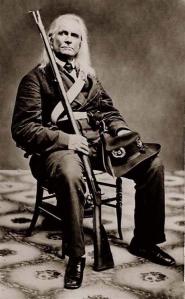
Edmund-Ruffin

The Slaveholder Ideology Personified: Edmund Ruffin

Among the people most enraged by Northern opposition to slavery was Edmund Ruffin. Ruffin was a very successful farm paper editor, plantation owner and ardent old line secessionist from Virginia. In 1860 the then 67 year old Ruffin helped change the world forever when, according to popular legend he pulled the lanyard which fired the first shot at Fort Sumter. While he was there and probably was given the honor of firing the first shot from his battery; other guns from other emplacements may have fired first. 37

Ruffin was a radical ideologue, he had been passionately arguing for secession and Southern independence for fifteen years. Ruffin “perceived the planter civilization of the South in peril; the source of the peril was “Yankee” and union with “Yankees.” Thus he preached revolution, Ruffin was a rebel with a cause, a secular prophet…” 38 He was a type of man who understood reality far better than some of the more moderate oligarchs that populated the Southern political and social elite. While in the years leading up to the war these men, including John Calhoun attempted to secure the continued existence and spread of slavery within the Union through the Congress and the courts, as early as 1850, Ruffin recognized that in order for slavery to survive the slaveholding South would have to secede from the Union. Ruffin and other radical secessionists believed that there could be no compromise with the north. In 1850 he and James Hammond attempted to use a meeting in Nashville to “secure Cooperative State Secession” and wrote to Hammond, against those who sought to use the meeting to preserve the Union, “If the Convention does not open the way to dissolution…I hope it shall never meet.” 39 He believed that in order to maintain the institution of slavery the slave holding states that those states had to be independent from the North.

Ruffin’s views were not unique to him, the formed the basis of how most slave owners and supporters felt about slavery’s economic benefits, Ruffin wrote:

“Still, even this worst and least profitable kind of slavery (the subjection of equals and men of the same race with their masters) served as the foundation and the essential first cause of all the civilization and refinement, and improvement of arts and learning, that distinguished the oldest nations. Except where the special Providence and care of God may have interposed to guard a particular family and its descendants, there was nothing but the existence of slavery to prevent any race or society in a state of nature from sinking into the rudest barbarism. And no people could ever have been raised from that low condition without the aid and operation of slavery, either by some individuals of the community being enslaved, by conquest and subjugation, in some form, to a foreign and more enlightened people.”40

a2a9c088d75423b7f457b194d7c9ea9a

Slavery and National Expansion: The Compromise of 1850

The Ante-Bellum South was an agrarian society which depended on the free labor provided by slaves and in a socio-political sense it was an oligarchy that offered no freedom to slaves, openly discriminated against free blacks and provided little hope of social or economic advancement for poor and middle class whites, but it was maintained because in many cases the Southern Yeoman farmer “feared the fall from independent producer to dependent proletarian, a status he equated with enslavement.” 41 But northerners often driven by religious understandings of human rights founded in the concept of a higher law over a period of a few decades abolished slavery in the years after the United States had gained independence.

However, the South had tied its economy and society to the institution of slavery, and was not content to see it remain just in the original states of the Old South.

The expansion of slavery was essential to its continued maintenance in the states where it was already legal. “Because of the need to maintain a balance in the Senate, check unruly slaves, and cultivate fertile soils, many planters and small plantation owners- particularly those living in the southern districts of the cotton states- asserted that their survival depended on new territory.” 42 In those decades “a huge involuntary migration took place. Between 800,000 and 1 million slaves were moved westward….” 43

slavescars

The need for slaves caused prices to soar. In some older states like Virginia where fewer slaves were required the exportation of slaves became a major industry:

“male slaves were marched in coffles of forty or fifty, handcuffed to each other in pairs, with a long chain through the handcuffs passing down the column to keep it together, closely guarded by mounted slave traders followed by an equal number of female slaves and their children. Most of them were taken to Wheeling, Virginia, the “busiest slave port” in the United States, and from there they were transported by steamboat to New Orleans, Natchez, and Memphis.” 44

In the years the before the war, the North embraced the Industrial Revolution leading to advances which gave it a marked economic advantage over the South in which through its “commitment to the use of slave labor inhibited economic diversification and industrialization and strengthened the tyranny of King Cotton.” 45 The population of the North also expanded at a clip that far outpaced the South as European immigrants swelled the population.

The divide was not helped by the various compromises worked out between northern and southern legislators. After the Missouri Compromise Thomas Jefferson wrote:

“but this momentous question, like a fire bell in the night, awakened and filled me with terror. I considered it at once as the knell of the Union. It is hushed indeed for the moment, but this is a reprieve only, not a final sentence. A geographical line, coinciding with a marked principle, moral and political, once conceived and held up to the angry passions of men, will never be obliterated; and every new irritation will mark it deeper and deeper.” 46

The trigger for the increase in tensions was the war with Mexico in which the United States annexed nearly half of Mexico.

The new territories were viewed by those who advocated the expansion of slavery as fresh and fertile ground for its spread. Ulysses S Grant, who served in the war, noted the effects of the war with Mexico in his memoirs:

“In taking military possession of Texas after annexation, the army of occupation, under General [Zachary] Taylor, was directed to occupy the disputed territory.  The army did not stop at the Nueces and offer to negotiate for a settlement of the boundary question, but went beyond, apparently in order to force Mexico to initiate war….To us it was an empire and of incalculable value; but it might have been obtained by other means.  The Southern rebellion was largely the outgrowth of the Mexican war.”47

Robert Toombs of Georgia was an advocate for the expansion of slavery into the lands conquered during the war. Toombs warned his colleagues in Congress “in the presence of the living God, that if you by your legislation you seek to drive us from the territories of California and New Mexico, purchased by the common blood and treasure of the whole people…thereby attempting to fix a national degradation upon half the states of this Confederacy, I am for disunion.” 48

The tensions in the aftermath of the war with Mexico escalated over the issue of slavery in the newly conquered territories brought heated calls by some southerners for secession and disunion. To preserve the Union, Henry Clay and Daniel Webster, supported by the new President Millard Fillmore were able to pass the compromise of 1850 solved a number of issues related to the admission of California to the Union and boundary disputes involving Texas and the new territories. But among the bills that were contained in it was the Fugitive Slave Law, or The Fugitive Slave Act of 1850. The act was the devise of Henry Clay which was meant to sweeten the deal for southerners. The law would “give slaveholders broader powers to stop the flow of runaway slaves northward to the free states, and offered a final resolution denying that Congress had any authority to regulate the interstate slave trade.” 49 which for all practical purposes nationalized the institution of slavery, even in Free states by forcing all citizens to assist law enforcement in apprehending fugitive slaves and voided state laws in Massachusetts, Vermont, Ohio, Connecticut, Pennsylvania and Rhode Island which barred state officials from aiding in the capture, arrest or imprisonment of fugitive slaves. “Congress’s law had nationalized slavery. No black person was safe on American soil. The old division of free state/slave state had vanished….” 50

fugitive-slave-act-1850-granger-1

That law required all Federal law enforcement officials, even in non-slave states to arrest fugitive slaves and anyone who assisted them, and threatened law enforcement officials with punishment if they failed to enforce the law. The law stipulated that should “any marshal or deputy marshal refuse to receive such warrant, or other process, when tendered, or to use all proper means diligently to execute the same, he shall, on conviction thereof, be fined in the sum of one thousand dollars.” 51

Likewise the act compelled citizens in Free states to “aid and assist in the prompt and efficient execution of this law, whenever their services may be required….” 52 Penalties were harsh and financial incentives for compliance attractive.

“Anyone caught providing food and shelter to an escaped slave, assuming northern whites could discern who was a runaway, would be subject to a fine of one thousand dollars and six months in prison. The law also suspended habeas corpus and the right to trial by jury for captured blacks. Judges received a hundred dollars for every slave returned to his or her owner, providing a monetary incentive for jurists to rule in favor of slave catchers.” 53

The law gave no protection for even black freedmen. No proof or evidence other than the sworn statement of the owner that a black was or had been his property was required to return any black to slavery. Frederick Douglass said:

“By an act of the American Congress…slavery has been nationalized in its most horrible and revolting form. By that act, Mason & Dixon’s line has been obliterated;…and the power to hold, hunt, and sell men, women, and children remains no longer a mere state institution, but is now an institution of the whole United States.” 54

On his deathbed Henry Clay praised the act, which he wrote “The new fugitive slave law, I believe, kept the South in the Union in ‘fifty and ‘fifty-one. Not only does it deny fugitives trial by jury and the right to testify; it also imposes a fine and imprisonment upon any citizen found guilty of preventing a fugitive’s arrest…” Likewise Clay depreciated the opposition noting “Yes, since the passage of the compromise, the abolitionists and free coloreds of the North have howled in protest and viciously assailed me, and twice in Boston there has been a failure to execute the law, which shocks and astounds me…. But such people belong to the lunatic fringe. The vast majority of Americans, North and South, support our handiwork, the great compromise that pulled the nation back from the brink.” 55

To be continued tomorrow….

Notes 

1 Fuller, J.F.C. The Conduct of War 1789-1961 Da Capo Press, New York 1992. Originally published by Rutgers University Press, New Brunswick N.J p.98

2 Tuchman, Barbara W. Practicing History Alfred A. Knopf, New Your 1981 p.289

3 ___________ U.S. Army/ Marine Counterinsurgency Field Manual FM 3-24 MCWP 3-33.5 15 December 2006 with and forward by General David A Petreus and General James Amos, Konecky and Konecky, Old Saybrook CT 2007 p.26

4 Ibid. Tuchman Practicing History p.289

5 Ibid. U.S. Army/ Marine Counterinsurgency Field Manual p.27

6 Clausewitz, Carl von On War Indexed edition, edited and translated by Michael Howard and Peter Paret, Princeton University Press, Princeton NJ 1976 p.606

7 Ibid. Clausewitz On War pp.87-88

8 Rable, George C. God’s Almost Chosen Peoples: A Religious History of the American Civil War University of North Carolina Press, Chapel Hill 2010 p.4

9 Ibid. Fuller The Conduct of War 1789-1961 p.99

10 Guelzo Allen C. Fateful Lightening: A New History of the Civil War Era and Reconstruction Oxford University Press, Oxford and New York 2012 p.95

11 Huntington, Samuel P. The Clash of Civilizations and the Remaking of the World Order Touchstone Books, New York 1997 p.42

12 Ibid. Rable God’s Almost Chosen Peoples p.5

13 Fuller, J.F.C. Decisive Battles of the U.S.A. 1776-1918 University of Nebraska Press, Lincoln 2007 copyright 1942 The Royal Society for the Prevention of Cruelty to Animals p.174

14 Gray, Colin S. Fighting Talk: Forty Maxims on War, Peace, and Strategy Potomac Books, Dulles VA 2009 p.3

15 Ibid. Gray Fighting Talk p.25

16 Potter, David M. The Impending Crisis: America before the Civil War 1848-1861 completed and edited by Don E. Fehrenbacher Harper Collins Publishers, New York 1976 p.41

17 Ibid. Potter The Impending Crisis p.41

18 Ibid. Potter The Impending Crisis p.42

19 Ibid. Potter The Impending Crisis p.42

20 McPherson, James M. Drawn With the Sword: Reflections on the American Civil War Oxford University Press, Oxford and New York 1996 p.50

21 Levine, Bruce Half Slave and Half Free: The Roots of the Civil War Revised Edition, Hill and Wang, a division of Farrar, Strauss and Giroux, New York 1992 and 1995 p.122

22 Ibid. Potter The Impending Crisis p.43

23 Ibid. McPherson Drawn With the Sword p.16

24 Egnal, Marc Clash of Extremes: The Economic Origins of the Civil War Hill and Wang a division of Farrar, Straus and Giroux New York 2009 p.6

25 Dew, Charles B. Apostles of Disunion: Southern Secession Commissioners and the Causes of the Civil War University Press of Virginia, Charlottesville and London 2001 p.12

26 Thomas, Emory The Confederate Nation 1861-1865 Harper Perennial, New York and London 1979 p.5

27 Ibid. Thomas The Confederate Nation p.5

28 Ibid. Potter The Impending Crisis pp.457-458

29 Ibid. Levine Half Slave and Half Free p.166

30 Ibid. Guelzo Fateful Lightening pp.50-51

31 Ibid. Levine Half Slave and Half Free pp.169-170

32 Ibid. Guelzo Fateful Lightening pp.51-52

33 Ibid. Potter The Impending Crisis p.43

34 Ibid. Levine Half Slave and Half Free pp.169-170

35 Ibid. Potter The Impending Crisis p.43

36 Ibid. Potter The Impending Crisis p.43

37 Catton, Bruce The Coming Fury Phoenix Press, London 1961 pp.314-315

38 Ibid. Thomas The Confederate Nation p.1

39 Freehling, William W. The Road to Disunion Volume One: Secessionists at Bay Oxford University Press, Oxford and New York 1990 p.481

40 Ruffin, Edmund The Political Economy of Slavery in McKitrick, Eric L. ed. Slavery Defended: The Views of the Old South. Englewood Cliffs, NJ: Prentice Hall/Spectrum Books, 1963.Retrieved from http://www.pbs.org/wgbh/americanexperience/features/primary-resources/lincolns-political-economy/ 24 March 2014

41 Ibid. McPherson Drawn With the Sword p.50

42 Ibid. Egnal Clash of Extremes pp.125-126

43 Korda, Michael. Clouds of Glory: The Life and Legend of Robert E. Lee Harper Collins Publishers, New York 2014 p.203

44 Ibid. Korda Clouds of Glory: The Life and Legend of Robert E. Lee p.203

45 Ibid. Potter The Impending Crisis p.42

46 Jefferson, Thomas Letter to John Holmes dated April 22nd 1824 retrieved from http://www.loc.gov/exhibits/jefferson/159.html 24 March 2014

47 U.S. Grant, Personal Memoirs of U.S. Grant New York 1885 pp.243-245

48 Ibid. Guelzo Fateful Lightening pp.62-63

49 Ibid. Guelzo Fateful Lightening p.68

50 Goldfield, David America Aflame: How the Civil War Created a Nation Bloomsbury Press, New York, London New Delhi and Sidney 2011 p.71

51 ______________Fugitive Slave of Act 1850 retrieved from the Avalon Project, Yale School of Law http://avalon.law.yale.edu/19th_century/fugitive.asp 11 December 2014

52 Ibid. Fugitive Slave Act of 1850

53 Ibid. Goldfield America Aflame p.71

54 Ibid. Goldfield America Aflame p.72

55 Ibid. Oates The Approaching Fury p.94

3 Comments

Filed under civil rights, civil war, faith, History, laws and legislation, Religion

The Absence of Empathy Among Conservative Christians

valuesvoterssummit

“Evil, I think, is the absence of empathy.” Captain Gustave Gilbert at Nuremberg

Since coming back from Munich on Friday night I have been catching up on the news and I was nearly overwhelmed with the amount of vitriol, hatred and intolerance coming out of the Values Voters Summit. The summit is an annual gathering of right wing political hacks who specialize promoting fear in the hearts of conservative Christians by fostering a nearly pathological culture of victimhood and persecution, in which they are the victims because others are being granted the same rights and privileges that they have enjoyed since this country was founded. Prominent among all of the speakers was a lack of empathy for anyone who did not hold their views, and those views are reflected in the latest Pew Survey on Religion in America where only 55% of consistent conservatives believe empathy is a value to be taught to their children.


Being that I am a historian as well as a theologian know all too well. The consequences for the church when such leaders promote such intolerance under the veil of being the victims reminds me of what occurred in Weimar Germany less than a century ago. At that time, conservative German Christians, feeling their privileged status that they had enjoyed under the reign of the Kaiser and other local monarchs being threatened took refuge in various right-wing political parties and organizations, many of which entered alliances with Hitler’s National Socialist German Workers Party.

vatican46_35


The leaders of those groups preached how they were being persecuted by the now secular government which had many Socialists in it. Feeling threatened by the rights now afforded to others, including socialists and communists, but in particular those provided to Jews they used a similar strategy to smear anyone that did not hold their perverted views of church and state. They felt that they were the victims; the victims of a “stab in the back,” which caused Germany’s defeat and the collapse of the Empire.


War hero and pastor Martin Niemöller was representative of those that took the bait. After the war Niemöller who after Hitler came to power and he realized what was happening spoke out and was sent to the concentration camp noted:


War hero and pastor Martin Niemöller was representative of those that took the bait. After the war Niemöller who after Hitler came to power and he realized what was happening spoke out and was sent to the concentration camp noted:

“I find myself wondering about that too. I wonder about it as much as I regret it. Still, it is true that Hitler betrayed me. I had an audience with him, as a representative of the Protestant Church, shortly before he became Chancellor, in 1932. Hitler promised me on his word of honor, to protect the Church, and not to issue any anti-Church laws. He also agreed not to allow pogroms against the Jews, assuring me as follows: ‘There will be restrictions against the Jews, but there will be no ghettos, no pogroms, in Germany. I really believed given the widespread anti-Semitism in Germany, at that time—that Jews should avoid aspiring to Government positions or seats in the Reichstag. There were many Jews, especially among the Zionists, who took a similar stand. Hitler’s assurance satisfied me at the time. On the other hand, I hated the growing atheistic movement, which was fostered and promoted by the Social Democrats and the Communists. Their hostility toward the Church made me pin my hopes on Hitler for a while. I am paying for that mistake now; and not me alone, but thousands of other persons like me.”

Realizing the danger of how Christians were giving their support to such parties and the implicit demands of some for a theocracy Bonhoeffer in the Bethel Confession wrote:

“every attempt to establish a visible theocracy on earth by the church as a infraction in the order of secular authority. This makes the gospel into a law. The church cannot protect or sustain life on earth. This remains the office of secular authority.”

But this is the same nonsense being promoted by Mike Huckabee, Sarah Palin, Matt Staver, Tony Perkins, Laura Ingraham, Bryan Fischer, Ted Cruz and a host of others. Sadly, this vision of theocracy is very much in vogue in many churches and among conservative Christians in general no-matter what their denomination. Thomas Jefferson would be appalled by this. He wrote of the effects of clergy in political power:

“The clergy, by getting themselves established by law and ingrafted into the machine of government, have been a very formidable engine against the civil and religious rights of man.”

dyer-hanging1

Much of the thought behind the movement is from Gary North who posits a version of Christianity much like that of Calvin’s Geneva, and the Massachusetts Bay Colony know as Christian Dominionism or Reconstructionism. All of these leaders proclaim their desire to protect religious liberty, but for them religious liberty is a one way street, it only applies to them and the state should ensure that it does not apply to others. North wrote:

“We must use the doctrine of religious liberty to gain independence for Christian schools until we train up a generation of people who know that there is no religious neutrality, no neutral law, no neutral education, and no neutral civil government. Then they will get busy in constructing a Bible-based social, political and religious order which finally denies the religious liberty of the enemies of God.”

North also wrote:

“The long-term goal of Christians in politics should be to gain exclusive control over the franchise. Those who refuse to submit publicly to the eternal sanctions of God by submitting to His Church’s public marks of the covenant–baptism and holy communion–must be denied citizenship, just as they were in ancient Israel.”

The scary thing for me is just how similar North’s words as well as those of others to the Nazi Aryan Laws against the Jews. Please know that I am not claiming these people are Nazis by any means. That being said, I think that their ignorance of history, the Constitution, American jurisprudence which is charged by fear-mongering and vitriolic hatred of those not like them opens the door to much evil. Note how similar North’s comments parallel the Aryan Paragraph:

“A citizen of the Reich is that subject only who is of German or kindred blood and who, through his conduct, shows that he is both desirous and fit to serve the German people and Reich faithfully.” and that “A Jew cannot be a citizen of the Reich. He has no right to vote in political affairs and he cannot occupy public office.”

While much of their vitriol is directed against Moslems, who because of acts committed by Islamic terrorist extremists are all targets of allegedly “Christian rage” like that of Timothy Rollins of The American Partisan who wrote:

“this can best be done by enacting the Great Muslim Purge from our military and other national security apparatuses. These people need to be removed from every security post, even to be completely removed from all levels of government employment, be it federal, state, county, city or other municipality. This applies especially to universities….” 

Westminster Seminary graduate Doug Giles who writes for the Townhall.com website who wrote on one of his commentaries:

“Please note: If Christ wasn’t cool with irrigating irate Islamicists for facts, I must admit, I would still have to green light our boys getting data from enemy combatants 007 style. Stick a fire hose up their tailpipe and turn it on full blast. I don’t care. I’m not as holy as most of you super saints or as evolved as some of you progressive atheists purport to be. Security beats spirituality in this scenario, as far as I’m concerned.”

Or who can forget that lovable darling of the Christian Right Sarah Palin who told the NRA convention that “waterboarding is how we baptize terrorists.”

For me to read and listen to people who claim to be Christians show such little regard for other human beings is frightening. Personally, I am frightened because I know the history of Christians when they not only hold control of their churches but the government. The persecution, torture and murder of heretics and unbelievers, the place of privilege given to the elect and the second rate status of non-Christians in their countries; not to mention the wars of extermination blessed as “holy” by the Church, such as the 30 Years War, the Crusades not to mention the numerous other wars blessed by the church. St Bernard of Clairvaux who told those going off to fight the First Crusade:

“The knight of Christ, I say, may strike with confidence and succumb more confidently. When he strikes, he does service to Christ, and to himself when he succumbs. Nor does he bear the sword in vain. He is God’s minister in the punishment of evil doers and the praise of well doers. Surely, if he kills an evil doer, he is not a man-killer, but, if I may put it, an evil-killer. Clearly he is reckoned the avenger of Christ against evildoers, and the defender of Christians.”

But it is not just Moslems that feel the wrath of the Christian Holy Warriors, but Atheists, agnostics, the LGBT community, other non-Christian religions including the Jews, though most deny the latter due to their beliefs about the role of Israel in the end times. Christians can behave as badly as the those committed to the Islamic State or ISIL. Our history has nothing to commend us, for when we as Christians “hold the franchise” to quote Gary North, we are more than capable of committing some of the most heinous acts imaginable.

thomasjefferson


Thomas Jefferson wrote:

“Millions of innocent men, women, and children, since the introduction of Christianity, have been burnt, tortured, fined, and imprisoned; yet we have not advanced one inch toward uniformity. What has been the effect of coercion? To make one-half the world fools and the other half hypocrites. To support roguery and error all over the earth.”

Philosopher Eric Hoffer wrote something that we should very much keep in mid when we read or hear about the antics of those speaking at the Values Voters Summit and others like them:

“The impression somehow prevails that the true believer, particularly the religious individual, is a humble person. The truth is the surrendering and humbling of the self breed pride and arrogance. The true believer is apt to see himself as one of the chosen, the salt of the earth, the light of the world, a prince disguised in meekness, who is destined to inherit the earth and the kingdom of heaven too. He who is not of his faith is evil; he who will not listen will perish.”

Sadly, most if not all of the leaders of this movement of theocratic, liberty denying Christians are so immersed in themselves and narcissistic that they cannot comprehend this. Perpetually the victim they misapply scripture to justify their perceived victimhood. Such should not be the case, and Bonhoeffer reminds us of the mark of true Christian faith in a sermon where he said:

“Christianity stands or falls with its revolutionary protest against violence, arbitrariness and pride of power and with its plea for the weak. Christians are doing too little to make these points clear rather than too much. Christendom adjusts itself far too easily to the worship of power. Christians should give more offense, shock the world far more, than they are doing now. Christian should take a stronger stand in favor of the weak rather than considering first the possible right of the strong.”

Captain Gustave Gilbert who served as the Army Psychologist for the defendants ant the Nuremberg major War Crimes trials wrote of his experience with them in words that at least to me could apply to these supposedly Christian leaders:

“In my work with the defendants (at the Nuremberg Trails 1945-1949) I was searching for the nature of evil and I now think I have come close to defining it. A lack of empathy. It’s the one characteristic that connects all the defendants, a genuine incapacity to feel with their fellow men. Evil, I think, is the absence of empathy.”

Sadly we have come to the point where many people who profess to be Christians have no empathy, or for that matter any real love for those different than them. History shows this time and time again. Christians who have political power and the “right to the franchise” have behaved little differently than the terrorist thugs of ISIL and I can say with certitude based on the words and legislative efforts of the people who dominated the Values Voters Summit, that they too would behave no differently. As I walked on the Odeonsplatz and went to the Feldherrnhalle in Munich where Hitler’s Beer Hall Putsch came to an end I could not help but think of what might have happened had Christians during the Weimar Republic not gravitated and become politically captive to the right wing of German politics and for many the Nazi Party.

The right of religious liberty for all is far to important to be left to those that would claim it for themselves and deny it to others. As Jefferson wrote the Virginia Baptists in 1808:

“Because religious belief, or non-belief, is such an important part of every person’s life, freedom of religion affects every individual. Religious institutions that use government power in support of themselves and force their views on persons of other faiths, or of no faith, undermine all our civil rights. Moreover, state support of an established religion tends to make the clergy unresponsive to their own people, and leads to corruption within religion itself. Erecting the “wall of separation between church and state,” therefore, is absolutely essential in a free society.”

With that I wish you a good night,

Peace

Padre Steve+

1 Comment

Filed under civil rights, faith, History, laws and legislation, Political Commentary, Religion

A Difference of Degree: Thoughts on Discimination and Xenophobia

know-nothing_flag

Flag of the Know Nothing Party

“The segregation laws in your country and the anti-Semitic laws in mine, are they not just a difference of degree? Herman Goering (Brian Cox) to Captain Gustave Gilbert (Matt Craven) in the Miniseries “Nuremberg

Today a rather short post as I had a rough night sleeping and in the midst of a nightmare screamed and threw a body block into the bookcase that serves as my nightstand. You will be happy to know that though I woke up my wife, my trusty dog slept comfortably through the episode. But I digress….

Tonight I am taking a break from writing about the rise of the Islamic State and our war against it. Instead I am going back to a favorite subject of mine; that of civil rights and liberties. I find it strange that there are a host of people, mostly on the political right that are doing their best in their local communities, state legislatures and even Congress to roll back civil liberties for various groups of people. This includes the outright disenfranchisement being legislated in several states to roll back voting days and hours that disproportionally affect African Americans, students and the poor.

Likewise there are numerous attempts to roll back the rights of women, especially working women; the use of the legislature by religious conservatives to place limits on the reproductive rights of women, holding them to the standard of a religion that they do not practice. There are numerous attempts to curb any civil rights, including the right to marriage or civil unions of the LGBT community. There is also a certain amount of xenophobia in regard to immigrants of all types, especially those with darker skin white Americans, but some of the worst is reserved for Arabs and other Middle-Easterners, even Arab Christians who are presumed as all Middle Easterners are to be Moslem terrorists, even those who have been here decades and hold respectable places in their communities.

See what bothers me about all this is not that it is new, but rather these are a new twist on old formerly acceptable means of discrimination. The proponents just clothe them in new terminology and play on fear to rile up support for their policies. Their words and actions are actually very similar to the virulently anti-emigrant (especially toward the Irish), anti-Catholic and anti-Black groups known collectively as the Know Nothings. While I would not call them a new incarnation of the Know Nothings, I have to notice the similarities in their message and the way that they push their agenda. The late Spencer Perkins who worked to reconcile whites and blacks in Mississippi noted: “They saw no contradictions in how they treated me and Christianity.”

Abraham Lincoln wrote to Joshua Speed about the Know Nothing Party:

“I am not a Know-Nothing. That is certain. How could I be? How can any one who abhors the oppression of negroes, be in favor or degrading classes of white people? Our progress in degeneracy appears to me to be pretty rapid. As a nation, we began by declaring that “all men are created equal.” We now practically read it “all men are created equal, except negroes” When the Know-Nothings get control, it will read “all men are created equal, except negroes, and foreigners, and Catholics.” When it comes to this I should prefer emigrating to some country where they make no pretence of loving liberty — to Russia, for instance, where despotism can be taken pure, and without the base alloy of hypocracy [sic].”

photo-jugement-a-nuremberg-judgment-at-nuremberg-1961-1

Likewise it is a very similar spirit that existed in many European countries in the years leading up to the First World War which was magnified, especially in Germany, Austria and Eastern Europe following that war, a spirit which animated the National Socialist movement in Germany, a movement which carried such intolerance toward those deemed racially inferior to an extent unimagined by a supposedly civilized “Christian” country. There is a great scene at the end of the movie Judgment at Nuremberg where Burt Lancaster plays a jurist who served the Nazi regime, a jurist who before the Nazis was considered to be one of the best legal minds not only in Germany but in Europe. In the film the character played by Lancaster, Ernst Janning discussed who he and others like him ended up doing what they did. It is a penetrating look at how people justified their actions.

“There was a fever over the land. A fever of disgrace, of indignity, of hunger. We had a democracy, yes, but it was torn by elements within. Above all, there was fear. Fear of today, fear of tomorrow, fear of our neighbors, and fear of ourselves. Only when you understand that – can you understand what Hitler meant to us. Because he said to us: ‘Lift your heads! Be proud to be German! There are devils among us. Communists, Liberals, Jews, Gypsies! Once these devils will be destroyed, your misery will be destroyed.’. It was the old, old story of the sacrificial lamb. What about those of us who knew better? We who knew the words were lies and worse than lies? Why did we sit silent? Why did we take part? Because we loved our country! What difference does it make if a few political extremists lose their rights? What difference does it make if a few racial minorities lose their rights? It is only a passing phase. It is only a stage we are going through. It will be discarded sooner or later. Hitler himself will be discarded… sooner or later. The country is in danger. We will march out of the shadows. We will go forward. Forward is the great password. And history tells how well we succeeded, your honor. We succeeded beyond our wildest dreams. The very elements of hate and power about Hitler that mesmerized Germany, mesmerized the world! We found ourselves with sudden powerful allies. Things that had been denied to us as a democracy were open to us now…”

Likewise, those with a more religious view who attempt to enact laws specifically designed to give their religion more protections, and allow discrimination based on religious preference are startlingly similar to the Taliban and other extremist groups that use religion to limit the rights of people that do not agree with their interpretation of Islam, including other Moslems.

There is a remarkable scene in the 2001 movie Nuremberg which is about the major war crimes trials following the Second World War. There is a scene where the American Army psychologist assigned to the confined war criminals goes to Herman Goering after he hears the testimony of and then questions the commandant of the Auschwitz concentration camp. The climax of that scene involves Goering dressing down the psychologist in words that make one think, and I have included a link to that scene below.

goering3

http://www.youtube.com/watch?v=WjbsD-TYi3s

Unfortunately this is what happens when people or groups, be they political or religious are more committed to their ideology than they are to their fellow citizens. It matters not if they are Christians, Moslems, Jews, Hindus, secularists, or others that hold the purity of their political, social, ideological, racial or economic theories as more important than people. It occurs when old prejudices are used under the banner of patriotism and nativism to confront real or imagined danger.

My comparison to the Taliban and the Know Nothings while I am sure that it is offensive to some is fitting. Because the spirit of such beliefs is the same, even if they differ in the degree in which people will go to enforce them. Like Hermann Goering’s comments at Nuremberg to Gustav Gilbert the difference between the ideology and actions of the Taliban, or the Know Nothings or the authors of the Jim Crow Laws as opposed to militant Christians and others, who attempt to use the power of the State to suppress, control and persecute those that they find offensive is only a matter of degree.

That may not seem important to some. But it is the difference between a divided society that can agree to disagree respecting the differences within it, and one for which factions attempt to use the police power of the State and the law of the land to persecute those that are different.

Goering in his critique of America in the 1930s and 1940s was correct; what we as a society enshrined in law and in our culture to discriminate against others differed little from what the Nazis did, only in the matter of degree. The sad thing is there are those today that work tirelessly to bring about a return to such practices.

It is something for us all to think about.

Peace

Padre Steve+

1 Comment

Filed under civil rights, film, laws and legislation, Political Commentary

The Misuse of Force: Shock and Awe Backfires in Ferguson

7d26d74bd316b81f5c0f6a706700affa_c0-48-4989-2956_s561x327

“When the gap between ideal and real becomes too wide, the system breaks down.” Barbara Tuchman

Not Iraq, not Syria or the Ukraine, but Ferguson Missouri, a suburb of St. Louis. The shooting of an unarmed black teenager, Michael Brown, by a white police officer was one of the most crass, unconscionable and violent over-reactions of a local government in the United States in years. When the peaceful protests began after the shooting Ferguson and St Louis County police deployed heavy weapons, armored vehicles and chemical weapons against the mainly peaceful protestors who simply sought answers and justice at yet another unjustified killing of a young black man by law enforcement.

The “shock and awe” displayed by the local police agencies had the opposite effect. Instead of defusing the crisis, it provoked violence, mainly from looters by also from young people fed up with police using tactics of fear and intimidation against citizens who have little opportunity. The economic and demographic inequities, including the de-facto segregation in Ferguson are stunning. Two thirds of the population is black and only one member of the city council and one member of the local school board are black. Likewise the police force in Ferguson is overwhelmingly white. It is almost like apartheid South Africa, but it is right here in the United States, and it’s not just a problem in Ferguson but in many other towns and cities in this nation.

After weeks of delay and after days of protests, demonstrations and riots, the Police Chief of Ferguson revealed the name of the officer who killed Brown. However, instead of discussing justice, or inviting an external investigation of the shooting the man took the time to praise and defend the officer and release surveillance video designed to demonize Brown in the eyes of the public. In fact there was no other reason to do it. It was designed to play in his narrative to smear a dead man, for the actions of his officer; and maybe, even more insidiously to possibly taint any jury pool that might have to sit in judgment on that officer. Now I believe in due process and that the officer is innocent until proven guilty, but the calculated actions of the Ferguson police chief were designed to convict a dead man who could not defend his own actions or reputation because his body had at been riddled by at least six bullets including two the to head. Now there may be mitigating circumstances that show that the officer felt that he was in danger, but still six bullets including two to the head.

No wonder instead of subsiding more protests, again mainly peaceful, but with some malicious actors as well have continued. One only has to look at what happened in Cairo’s Tahir Square at the beginning of the Arab Spring, or in Gaza to see why people risk their lives to face overwhelming militarized police forces or military forces deployed in such operations. There is a sense of inequity based on the proportionality of the forces used, and when that inequity becomes too great, revolutions occur.

Part of the problem is that police on every level have become extremely militarized. Local police departments only need to fill out a form to get the latest in surplus combat equipment from the military, thanks to policies enacted after the passage of the wonderfully Orwellian named Patriot Act. Once a department gets the new weaponry, why go back to the old way that police did things. In fact there is an almost a case of “penis envy” that local police departments have. If one department gets an armored MRAP or APC, then another, even if it has no legitimate use for one gets one. Instead of peacefully serving warrants by knocking on a door to confront a non-violent offender, it is time to deploy a platoon of tactical officers to do the same job.

Now I am not excusing looters, arsonists or other criminals that take advantage of unrest such as this to create havoc, and in fact many of the protestors attempted to keep businesses and other property safe from the criminals, even as they themselves were being targeted by the tear gas fired by police. Likewise the police arrested reporters and fired at other reporters covering the story. The reporters had every right to be there covering the protests and nothing in the Constitution excuses the behavior of police interfering with reporters conducting their business.

There is a quote from the most recent television adaptation of Battlestar Galactica where Commander Adama says something most relevant to this needless militarization of police power:

“There’s a reason you separate military and the police. One fights the enemies of the state, the other serves and protects the people. When the military becomes both, then the enemies of the state tend to become the people.”

The fact is that anybody with the slightest understanding of history, sociology, economics or group psychology should know this. It’s not that hard to defuse these kinds of situations before they reach a crisis. It simply takes the courage of leaders to meet people where they are and address their concerns without resorting to deploying heavily armed militarized police forces before any violence occurs. As a career military man who has served with our advisers in Iraq, and who has been an adviser on a boarding team keeping the peace on detained Iraqi oil smugglers in 2002, in both cases unarmed and the latter not even having the body armor of the rest of my team, and having been in a number of potentially violent close quarters situations with emotions running high I can safely say that listening and working to de-escalate the situations worked, and that was with Iraqis, not Americans.

When I was going to seminary and was serving in the National Guard, I worked in poor and crime ridden neighborhoods, homeless shelters and inner city public hospitals. I have seen the inequity and the results in broken homes, lives and communities. Likewise, because we were pretty broke and poor in seminary and in the couple years after it we experienced what is now called “profiling.” We lived on the edge of a very affluent suburb between Dallas and Fort Worth, for several years we had a series of crappy hand me down used cars that we used to go to school, work and church. Because some of those cars were so crappy looking we are frequently followed by the police, and every couple of months one of us would be pulled over.

I remember watching through the peep hole on my front door when a tactical team raided my across the hall neighbor late one night in 1991 of 1992. I remember being awakened by the crash of the team breaking through the door, and seeing their guns drawn. It scared the crap out of me, and in fact it made me feel less safe and more vulnerable. What if they had raided my house by mistake, like so often happens, I might have been gunned down at the door. You see, we were poor, and obviously poor people should not be in affluent areas, they are bad for property values. But, we often didn’t know where the next pay check, tank of gas, tuition payment, money for medications or or even groceries were coming from.

I cannot imagine what it would be like to not just experience that for a few years, but to have to live that way with little or no hope of the situation ever getting better. But, that being said, I think I can understand the pent up frustration and rage of those who live their whole lives in such conditions, where they are because of their race, the kind of car they drive or the way that they dress, are accosted and interrogated by the police as a matter of course.

To borrow from the movie Cool Hand Luke: “What we’ve got here is a failure to communicate.” The problem is that it’s the police who are not listening and they are being joined by the cacophony of Right Wing politicians, pundits and preachers blaming everyone but themselves and the long term, economic and social policies that have brought this to a head. The scary think is how the pundits on Fox News, at Townhall.com, World Net Daily and other “conservative” and allegedly “Christian” websites and “news” sources incessantly blame the victims of police violence and intimidation, and lack of opportunity and hope rather than looking at the real problems.

Barbara Tuchman was absolutely right. “When the gap between ideal and real becomes too wide, the system breaks down.” We are seeing that in Ferguson and I dare say that if we as a nation do not take action to solve these problems that this is just the beginning, and we will have no one to blame but ourselves.

Peace

Padre Steve+

4 Comments

Filed under civil rights, laws and legislation, leadership, Military, political commentary