

Last night I re-read the Declaration of Independence. I do this about every time this year. It is not a long read, but quite profound. As I read again I reflected on the beginning of the second sentence of that document.
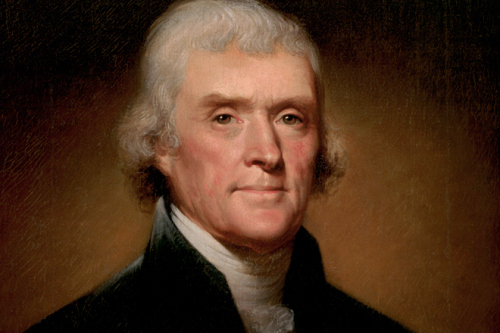
“We hold these truths to be self-evident, that all men are created equal…” When penned by Thomas Jefferson and ratified by the Continental Congress in July 1776 these words, which begin the second sentence of the Declaration of Independence announced something unimaginable to the world, most of which labored under the rule of ensconced monarchies, nobilities and state religions, where your social status and religious affiliation counted more than anything else, places where few commoners had any hope of social advancement, no matter what their talent, ability or genius.
They were a clarion call of equality and revolutionary in their impact, not only in the American colonies but around the world. In the coming years people around the world would look to those words as they sought to free themselves from oppressive governments and systems where the vast majority of people had few rights, and in fact no equality existed.
But the liberty and equality stated in the Declaration of Independence did not extend to all in the United States, or in its territories as it expanded westward, and the inequity eventually brought on a great civil war.
Eighty seven years after those words were published the nation was divided, in the midst of a great civil war, a climactic battle having just been fought at Gettysburg. A few months later President Abraham Lincoln penned one of the most insightful and influential documents ever written, the Gettysburg Address.
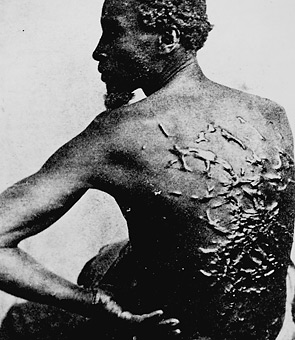
One thing that our founders overlooked was that even while proclaiming equality, they later enshrined that one group of people, African slaves were not equal, in fact they only counted as three fifths of a person. Eventually, many states on their own abolished slavery, but because of the invention of the Cotton Gin slavery became even more fully entrenched in the American South, when an oligarchy of land and slave owners held immense power, where nearly half of the population was enslaved and where even poor whites had few rights and little recourse to justice.
After the Dred Scott decision of 1857 which declared that African Americans, no matter if they were slave or free could be American Citizens and had no standing to sue in Federal courts. Scott had sued to gain his family’s freedom after his owner refused to allow him to purchase it, because they were in a territory where slavery was but even more importantly held that the Missouri Compromise of 1824 which had prohibited the introduction of Slavery into Federal territories was unconstitutional and that the Federal government had no right to limit slavery in territories acquired after the creation of the United States. Chief Justice Roger Taney writing for the majority wrote that all African Americans were viewed by the authors of the Constitution as:
“beings of an inferior order, and altogether unfit to associate with the white race, either in social or political relations, and so far inferior that they had no rights which the white man was bound to respect.”
Taney held that Article V of the Constitution barred any law that would deprive a slave owner of his “property” on entrance into free states or territories. and enunciated a string of negative effects, or “parade of horribles” that would derive if Scott’s petition for freedom was granted. His declaration is amazing in its ignorance and prejudice. Taney wrote:
“It would give to persons of the negro race, …the right to enter every other State whenever they pleased, …to sojourn there as long as they pleased, to go where they pleased …the full liberty of speech in public and in private upon all subjects upon which its own citizens might speak; to hold public meetings upon political affairs, and to keep and carry arms wherever they went.”
The two dissenting Justices, Curtis and McLain disagreed with the proposition that the writers of the Constitution believed as Taney and the majority believed, noting that at the time of the ratification of the Constitution that blacks could vote in five of the thirteen states, making them citizens, not just of those states but the United States. Referring to the Declaration of Independence in 1854 Lincoln wrote: “the standard maxim of free society …constantly spreading and deepening its influence,” ultimately applicable “to peoples of all colors everywhere.”
However, much to the concern of slave holders and the South, the decision energized the abolitionist movement who believed that now no black, even those with a long history of being Freed Men living in non-slave states could be claimed as property by those claiming to be former owners, and that state laws which gave blacks equal rights and citizenship could be overturned. Lincoln again referring to the Declaration wrote of the Dred Scott decision:
“to aid in making the bondage of the Negro universal and eternal….All the powers of the earth seem rapidly combining against him. Mammon is after him; ambition follows, and philosophy follows, and the theology of the day is fast joining the cry. They have him in his prison house;…One after another they have closed the heavy doors upon him…and they stand musing as to what invention, in all the dominions of mind and matter, can be produced the impossibility of his escape more complete than it is.”
Eventually the tensions led to the election of Lincoln along sectional lines and the immediate secession of seven southern states and the establishment of the Confederacy. British military historian and theorist Major General J.F.C. Fuller wrote that the war was “not between two antagonistic political parties, but a struggle to the death between two societies, each championing a different civilization…”
The Confederate Vice President, Alexander Stephens openly proclaimed that the inequity of African Americans was foundational to the Confederacy in his Cornerstone speech of 1861, if there are any doubters about the “rights” the leaders of the Southern States longed to preserve in their secession from the Union, Stephen’s words are all to clear in their intent:
“Our new government is founded upon exactly the opposite idea; its foundations are laid, its corner- stone rests upon the great truth, that the negro is not equal to the white man; that slavery — subordination to the superior race — is his natural and normal condition. [Applause.] This, our new government, is the first, in the history of the world, based upon this great physical, philosophical, and moral truth.”
Lincoln, in his Second Inaugural Address acknowledged what everyone had known, but few, him included in the North were willing to say in 1861:
“One-eighth of the whole population were colored slaves, not distributed generally over the Union, but localized in the southern part of it. These slaves constituted a peculiar and powerful interest. All knew that this interest was somehow the cause of the war. To strengthen, perpetuate, and extend this interest was the object for which the insurgents would rend the Union even by war, while the Government claimed no right to do more than to restrict the territorial enlargement of it….”
Even so it took time for the abolition of slavery to be acknowledged as a major concern by the Federal government, it was not until 1862 after Lee’s failed invasion of Maryland and the Battle of Antietam that Lincoln published the Emancipation Proclamation, and that only applied to Confederate territories.
But in 1863 after Gettysburg Lincoln was asked to speak a “few words” at the dedication of the Soldiers’ cemetery. Lincoln’s words focused the issue of the war in relation to those first words of the second sentence of the Declaration of Independence, the understanding that all men are created equal.
“Four score and seven years ago our fathers brought forth on this continent, a new nation, conceived in Liberty, and dedicated to the proposition that all men are created equal.
Now we are engaged in a great civil war, testing whether that nation, or any nation so conceived and so dedicated, can long endure. We are met on a great battle-field of that war. We have come to dedicate a portion of that field, as a final resting place for those who here gave their lives that that nation might live. It is altogether fitting and proper that we should do this.
But, in a larger sense, we can not dedicate — we can not consecrate — we can not hallow — this ground. The brave men, living and dead, who struggled here, have consecrated it, far above our poor power to add or detract. The world will little note, nor long remember what we say here, but it can never forget what they did here. It is for us the living, rather, to be dedicated here to the unfinished work which they who fought here have thus far so nobly advanced. It is rather for us to be here dedicated to the great task remaining before us — that from these honored dead we take increased devotion to that cause for which they gave the last full measure of devotion — that we here highly resolve that these dead shall not have died in vain — that this nation, under God, shall have a new birth of freedom — and that government of the people, by the people, for the people, shall not perish from the earth.”
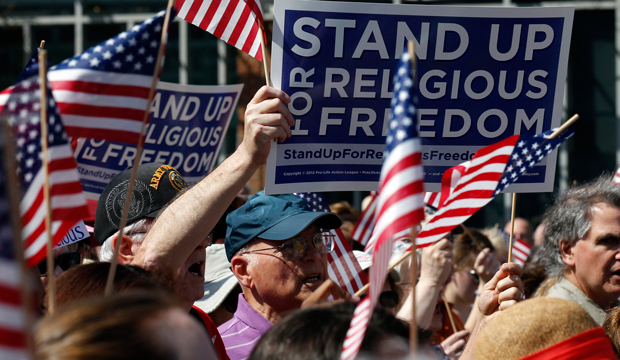
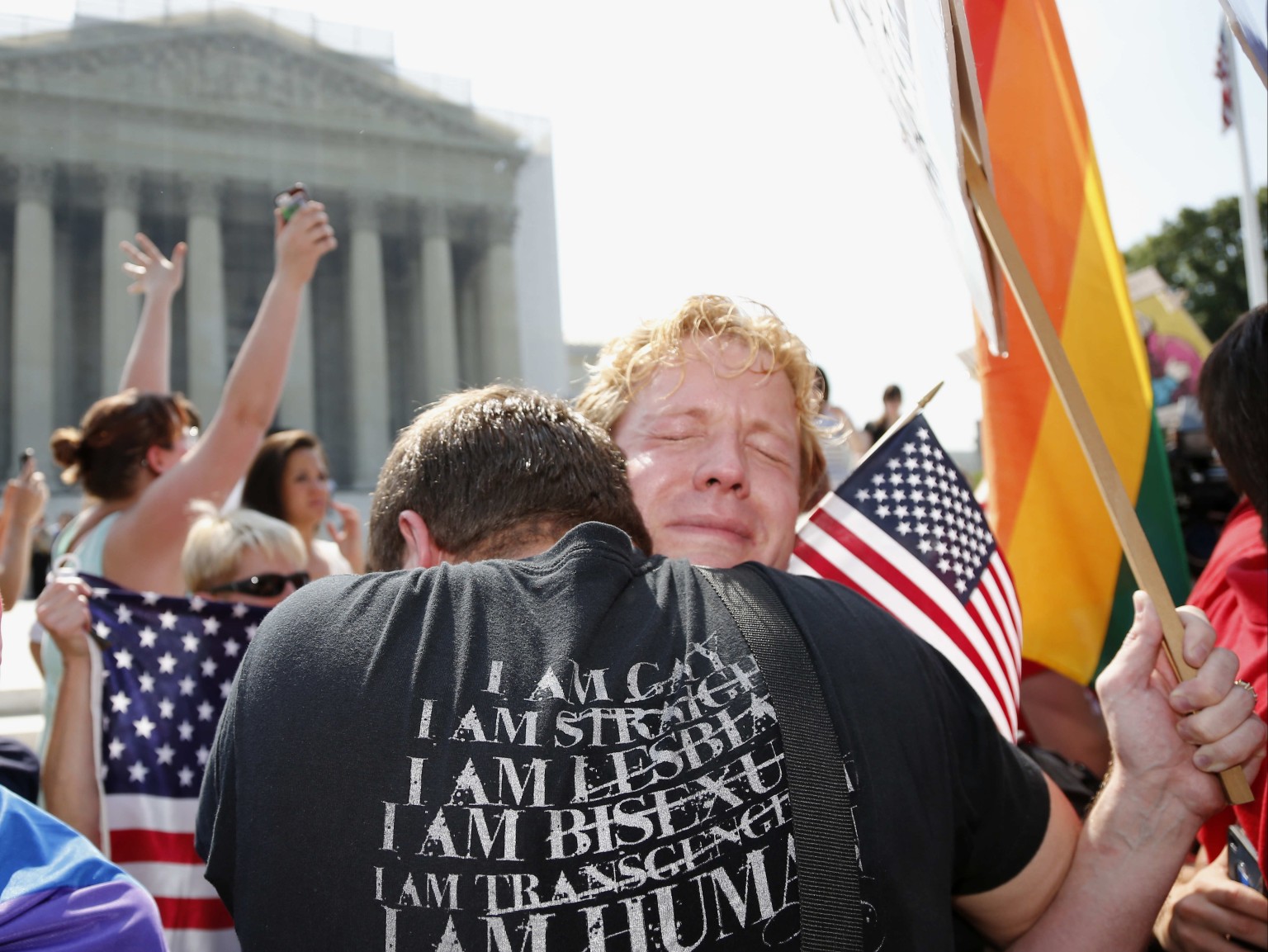
Unfortunately, the issue of equality has languished in our political debates. Equality is the sister of and the guarantor of the individual liberties enunciated in the Declaration. However because of human nature always more vulnerable to those that would attempt to enshrine their personal liberty over others, or attempt to use the courts and Constitution to deprive others of the rights that they themselves enjoy, or to enshrine their place in society above others. In some cases this is about race, sometimes religion, sometimes about gender and even sexual orientation. Likewise there are those that would try to roll back the rights of others, as those who seek to disenfranchise the poor and minorities, particularly African Americans at the ballot box.
That is why it is important, even as we celebrate and protect individual liberties that we also seek to fight for the equality of all citizens, irrespective of race, religion, gender or sexual orientation. The Declaration of Independence is our guide for this as Jefferson so eloquently wrote: “We hold these truths to be self-evident, that all men are created equal, that they are endowed by their Creator with certain unalienable Rights, that among these are Life, Liberty and the pursuit of Happiness.–That to secure these rights, Governments are instituted among Men…”
Have a happy 4th of July and please remember that unless liberty is liberty for all then it is really only liberty for some; those of great economic power and influence; or who happen to be the right race, religion, gender or sexual preference.
Peace
Padre Steve+











 The Inglorius Padre Steve's World
The Dangers of the Expanding National Security State: The Drumhead
Lieutenant Worf: “Sir, the Federation does have enemies. We must seek them out.”
Captain Jean-Luc Picard: “Oh, yes. That’s how it starts. But the road from legitimate suspicion to rampant paranoia is very much shorter than we think. Something is wrong here, Mister Worf. I don’t like what we have become.”
Back in 1991 when I was still in seminary I spent every Saturday evening glued to my television set to watch Star Trek the Next Generation. Even today I enjoy watching the human drama that Gene Roddenberry and his cohorts created on the small screen. Of all the Star Trek series my favorites are TNG and Deep Space Nine. Those series often touched on very pertinent social, political, medical, and technological and dare I say national security issues. In fact I have used some Deep Space Nine episodes in my previous posts about the NSA leak situation and the War on Terrorism.
One of the most chilling episodes regarding national security and potential terrorism or sabotage is called “The Drumhead.” In light of the the ever expanding National Security State and the ability of governments, private industry and even individuals to use technology to gather information on almost anyone and to abuse that power, The Drumhead is an episode that remains as relevant today, perhaps even more so, than when it first aired in 1991.
The episode is about an investigation that takes place on the Enterprise following an explosion in its engineering spaces. Suspicion centers on a Klingon exchange officer. However, the investigator, the retired Starfleet Judge Advocate General, Nora Satie and her Betazed assistant soon casts a wide net which eventually brings charges against a crew member and eventually Captain Picard.
At first Admiral Satie’s investigation seems reasonable. After all the Federation faced danger from the Romulans, who were always trying to use Klingons unhappy with the Federsation-Klingon peace treaty, to further their interests. The initial situation raised the possibility that the Enterprise, was sabotaged and that the Klingons or others might be involved. Thus as Sati began her investigation she was welcomed by the Captain as well as the Security Chief, Lieutenant Worf, the only Klingon serving as a Starfleet officer. Satie, assisted by Enterprise security officers then discovered how the Klingon scientist smuggled classified information off the Enterprise.
The Chief Engineer of the Enterprise, Lieutenant Commander LeForge determined in his investigation that the explosion thought to be “sabotage” was caused by a flaw in a recently replaced dilithium chamber. Although she was convinced that the Klingon was not the saboteur Satie believed that another saboteur was aboard the Enterprise. Satie and her assistant uncovered a piece of information that a crewman lied about his family background on his enlistment contract. They then used it to connect the crewman to to the Klingon spy by supplying false information about the explosion in an attempt to get the crewman to admit guilt.
As the investigation widened Picard discussed it with Lieutenant Worf. I find this dialogue to be quite relevant to today thirteen years into the war on terror and about the same amount of time since the Patriot Act was passed.
Lieutenant Worf: “Sir, the Federation does have enemies. We must seek them out.”
Captain Jean-Luc Picard: “Oh, yes. That’s how it starts. But the road from legitimate suspicion to rampant paranoia is very much shorter than we think. Something is wrong here, Mister Worf. I don’t like what we have become.”
When Picard objected to the grilling of the crewman, Admiral Satie and her chief assistant began an investigation of Picard. As she informed him that he was now a subject of the investigation, the normally calm Picard erupted, telling Sati; “Admiral! What you’re doing here is unethical; it’s immoral. I’ll fight it.” Admiral Sati then laid down the gauntlet, and told Picard, “Do what you must, Captain. And so will I.”
Admiral Satie called on the Director of Starfleet Security, Admiral Henry, to watch her interrogate Picard who she had by now labeled a traitor.
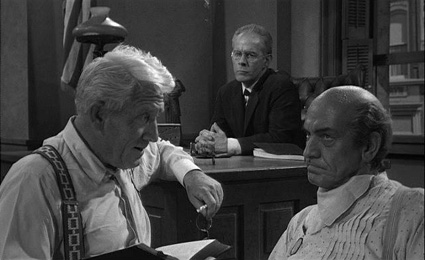
Picard forced to testify at an open hearing where Sati began to attack him. However, the tables are turned during Picard’s testimony. The dialogue is riveting as Sati attempts to use anything that she can to prove Picard a traitor the the Federation.
Admiral Satie: Tell me, Captain, have you completely recovered from your experience with the Borg?
Captain Jean-Luc Picard: Yes, I have completely recovered.
Admiral Satie: It must have been awful for you… actually becoming one of them. Being forced to use your vast knowledge of Starfleet operations to aid the Borg. Just how many of our ships were lost? Thirty-nine? And a loss of life, I believe, measured at nearly 11,000. One wonders how you can sleep at night, having caused so much destruction. I question your actions, Captain; I question your choices, I question your loyalty!
Capt. Picard: You know there are some words I’ve known since I was a schoolboy: “With the first link, the chain is forged. The first speech censured, the first thought forbidden, the first freedom denied, chains us all irrevocably.” Those words were uttered by Judge Aaron Satie, as wisdom and warning. The first time any man’s freedom is trodden on, we’re all damaged. I fear that today…
Admiral Satie: [stands up in anger and interrupts Picard] How dare you! You who consort with Romulans, invoke my father’s name to support your traitorous arguments! It is an offense to everything I hold dear! And to hear those words used to subvert the United Federation of Planets. My father was a great man! His name stands for integrity and principle. You dirty his name when you speak it! He loved the Federation. But you, Captain, corrupt it. You undermine our very way of life. I will expose you for what you are. I’ve brought down bigger men than you, Picard! [Admiral Henry gets up and leaves the room]
With Sati obviously unhinged, Admiral Henry ends the investigation and sends Admiral Satie home.
Of course this is fiction but the mindset and attitude of Admiral Satie seems to have been embraced by some in our government and security agencies, including the TSA and the NSA. But the talk is out there, former Senator and Secretary of Defense William J. Cohen said: “Terrorism is escalating to the point that Americans soon may have to choose between civil liberties and more intrusive means of protection.”
Well the choice has been made and I don’t think that there is any going back despite the posturing of politicians on both sides of the political divide. The fact is that polls show that the majority of Americans are willing to sacrifice freedoms for security.
Sati had become so consumed with “defending liberty” that she was willing to trample the rights of anyone that she suspected of disloyalty to the Federation.
Sati’s questioning of Picard by is fascinating and thought provoking, because there are people that think and act just her fictional character. People who believe, that they too are defending “freedom.”
Frederick Douglass once said: “Find out just what the people will submit to and you have found out the exact amount of injustice and wrong which will be imposed upon them; and these will continue until they are resisted with either words or blows, or with both. The limits of tyrants are prescribed by the endurance of those whom they oppress.”
The balance has to be found in this effort; right now the pendulum is so far to the security side that it seems freedom is no longer even a concern at least for the vast majority of the population and our political leadership, and not just the Executive Branch, the Congress seems to love making new laws that further limit freedom, local governments have militarized their police forces and the courts don’t seem to mind. Unless we undertake a real debate in the issue it is very likely that it will fade away and the national security state that we have become will grow even stronger with the inevitable loss of even more civil liberties.
One only has to look at what politicians on both sides of the political chasm have said about “protecting the homeland” to realize that this is only the beginning and that if we do not have a spirited public debate that we risk our Constitutional liberties under the 4th Amendment as well as potentially the 1st Amendment. Prosecuting actual wrongdoers is one thing, but prominent legislators on important committees dealing with national security suggest prosecuting reporters for doing their job, something that would be a crushing blow to freedom of speech and freedom of the press. The fact that some suggest this shows how just how close we are to surrendering even more freedom in the name of security.
The last scene of The Drumhead is enlightening. Lieutenant Worf, who had so eagerly embraced the investigation, goes to Picard to let him know that Admiral Satie and Admiral Henry have left the Enterprise. Worf is apologetic about his rather overzealous role in the investigation. He tells Picard about Sati: “after yesterday, people will not be so ready to trust her.” Picard replies “Maybe. But she, or someone like her, will always be with us, waiting for the right climate in which to flourish, spreading fear in the name of righteousness. Vigilance, Mister Worf – that is the price we have to continually pay.”
Eternal vigilance in the face of both terrors from abroad and self imposed tyranny designed to protect us from the terrorists. Yes James Madison, was absolutely right when he said “The means of defense against foreign danger historically have become the instruments of tyranny at home.” However I fear that those that warn of such dangers will themselves be labeled the enemy.
Henry Steele Commager said “Men in authority will always think that criticism of their policies is dangerous. They will always equate their policies with patriotism, and find criticism subversive.” This, my friends is the reality that we live in and the danger that we face.
Peace
Padre Steve+
Share this:
Leave a comment
Filed under civil rights, ethics, laws and legislation, national security, political commentary
Tagged as 1st ammendment, 4th amendment, 9-11 2001, admiral satie, attack on benghazi us consulate, Boston marathon bombing, captain jean luc picard, civil liberties, frederick douglass, global war on terrorism, henry steele commager, james madison, lcdr leforge, lieutenant worf, national security state, nsa leaks, Patriot Act of 2001, representativ peter king, star trek the next generation, the drumhead, tsa