Category Archives: Military

The High Cost of Two Battleships: Churchill, Turkey and a Decision that Still Effects us Today

churchill1914

Friends of Padre Steve’s World,

One of the more interesting and overlooked factors in the days leading up to the First World War, which had significant ramifications in the Middle East involved Winston Churchill. Churchill was serving as First Lord of the Admiralty and made a decision which ensured the Ottoman Empire would be pushed into an alliance with Germany.

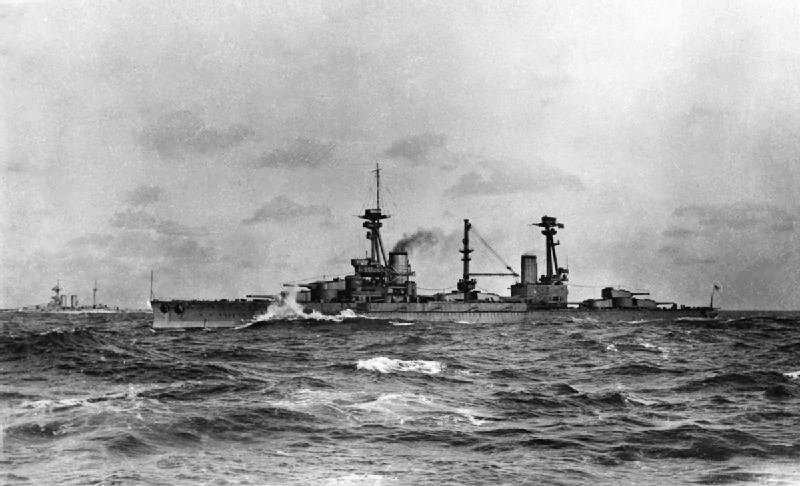
For many years Britain had been the chief supplier of ships for the Ottoman Navy. In fact in the years leading up to World War One the Ottomans had purchased over 40 ships from Great Britain and on August 2nd 1914 was expecting to take delivery of two, extremely modern Dreadnoughts, the Sultan Osman I and the Reshadieh. The Sultan Osman was armed with fourteen 12” guns, the Reshadieh with ten 13” guns, making them the equal or superior to most battleships afloat. The Turkish Government had paid over 4 billion Pounds for the ships and made the final payment on August 2nd shortly before the Turkish Captain and 500 crew members were to come aboard for a ceremony formally handing over the ship to the Turkish Navy.

HMS_Agincourt_1915

HMS Agincourt 

Much of the money the Turks used to pay for the ships came from the donations of ordinary Turkish citizens. Money came from taverns, from cafes, schools, Mosques and markets. Those that donated were awarded a commemorative medal, the ships were the pride of Turkey and the empire. The nation awaited the delivery of the ships which would ensure the superiority of the Turkish Navy against its traditional foe, Russia.

HMS_Erin

HMS Erin

As War approached Churchill began to prepare, keeping many of his plans and actions even from the government. Less than an hour before the ceremony Churchill ordered the ships seized and and the Royal Navy kept the Turkish Captain and crew locked aboard a nearby transport. The Turkish Captain later wrote:

“… We paid the last installment (700.000 Turkish liras). The manufacturer and we agreed on that the ships would be hand over on 2 August 1914. Nevertheless, after we made our payment and half an hour before the ceremony, the British declared that they have requisitioned the ships… Although we have protested, nobody paid attention.”

Churchill had gained two modern Dreadnoughts for the Royal Navy, and the British shipyards kept the money, the Turks were never compensated for the loss. The ships were renamed HMS Agincourt and HMS Erin. Both served throughout the war and at the Battle of Jutland, and bother were scrapped in the early 1920s due to the restrictions of the Washington Naval Treaty.

SMS_Goeben-ptbow3

SMS Goeben

But in the process whereby the British gained the ships, ensured that Turkey would ally itself with Germany. The positive effects were mitigated by the Germans providing the very modern dreadnought type  Molkte ClassBattlecruiser Goeben and Light Cruiser Breslau to the Turks, giving them the edge over the Russians. Breslau was mined and sunk in 1918 but Goeben served in the Turkish Navy as the Yavuz Sultan Selim until she was decommissioned in 1954, and scrapped in 1973.

Likewise, Churchill’s decision meant that when Turkey entered the war that the strategically important Bosporus strait which was Russia’s only year round access to foreign shipping was closed, keeping Britain and France from being able to supply their Russian ally. The ill-fated Gallipoli campaign, launched by Churchill was the attempt to break the Turkish stranglehold, and the costly failure of that operation helped ensure the defeat of Russia and the overthrow of the Czar..

In the long term it had affects that we are still feeling the today. The entry or Turkey into the war and the subsequent collapse of the Ottoman Empire was the catalyst for the arbitrary borders drawn by the allies across the Middle East. We still suffer the result today.

Had Turkey remained neutral throughout the war, or even sided with the allies the course of history might be far different. We don’t know, but the Ottoman Empire might have endured or it might have peacefully morphed into something different.

Churchill’s decision turned out to be one of the more important, and less known events before the war broke out, and certainly we still feel the ramifications today. Actions have consequences, and sometimes what seems expedient to give a tactical edge, sometimes has far reaching strategic consequences. Consequences that sometimes linger for generations. In particular, the Trump administration needs to wake up to how their present policies will effect the world for the next century or more.

Peace

Padre Steve+

2 Comments

Filed under Foreign Policy, History, Military, national security, Navy Ships, News and current events, Political Commentary, world war one

The Night the Lamps Went Out in Europe: August 3rd 1914

Sir Edward Grey Addresses the House of Commons

Friends of Padre Steve’s World,

One hundred and four years ago the political and military leaders of Europe embarked on a catastrophic war, the results of which are still with us over a century later.

The mobilization of millions of soldiers across Europe was moving rapidly as the sun set on the night of August 2nd 1914 when the German Ambassador to Belgium Klaus Bulow-Selaske delivered an ultimatum to the Belgian government. The ultimatum gave the Belgians 12 hours to decide if they would allow the German armies free passage through the country. The Belgians, treasuring their independence and led by a truly heroic leader, the young and humble King Albert, refused the German ultimatum and vowed to fight.

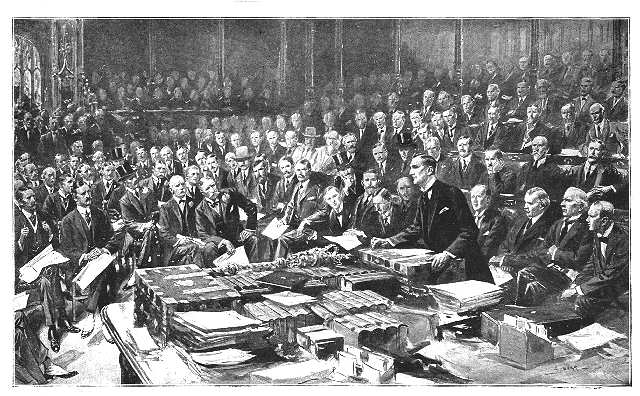
The next morning the British House of Commons met and for the first time since 1893 every member was present, with many spectators also in attendance. It was a dramatic event, as for the first time in 100 years Britain’s participation in a war on the European Continent was being debated. Britain was divided between those who wanted to intervene and non-interventionists. In a high pressure situation where the armies of the Austro-Hungarian Empire, Russia, France, Germany, and little Belgium were mobilizing for war the was on His Majesty’s Government to make a decision.

The British Foreign Minister, Sir Edward Grey urged giving support to France. He told the assembled Members of Parliament about, British military understandings with France, and the German ultimatum to Belgium. Grey asked them whether Britain “would quietly stand by and witness the perpetration of the dirtiest crime that ever stained the pages of history, and thus become participators in the sin.” He added that “we are going to suffer, I am afraid in this war, whether we are in it or stand aside.” If Britain dis stand aside, forfeiting her “Belgian Treaty obligations” the she would “sacrifice our respect and good name and reputation before the world.” Grey had not convinced everyone, but he had carried the day. However, the Germans did not believe that Britain would go to war over Belgium.

At seven that evening the German Ambassador to France Baron Schoen delivered a declaration of war against France, his counterpart in Berlin, the French Ambassador was given his passports.

As Grey pondered the content of an ultimatum to be sent to Berlin he returned to his office in Whitehall. “Watching with his failing eyes, the lamps being lit in St. James Park, Grey was heard to remark that “the lamps are going out all over Europe; we shall not see them again in our lifetime.”

The next morning the German army began its assault on the Belgian fortress city of Liege. That afternoon Poincare and Foreign Minister Viviani addressed the combined houses of the French Parliament, asking for war credits, discussing German violations of French territory and “implored the deputies, and the French people “to help us in bearing the burden of our heavy responsibility, the comfort of a clear conscience and the conviction that we have done our duty.”

The members of all parties, from the nationalists, the Catholic right and the Socialists overwhelming committed themselves to a sacred union. Poincare recalled later “Never has there been a spectacle as magnificent as that which they have just participated….In the memory of man, there has never been anything more beautiful in France.”

Bethmann-Hollweg Addresses the Reichstag

In Berlin Prime Minister Bethmann-Hollweg accused the French of violating German borders and of the Russian mobilization. He asked the Reichstag deputies “Were we to wait in further patience until the nations on either side of us chose the moment for their attack?” He was interrupted with cries of “No! No!”

Bethmann went on and admitted that Germany had violated Belgian territory and that it was a “breach of international law” ironically what he had just accused the French of doing, but Bethmann promised that “this wrong- I speak openly-the wrong we thereby commit we will try to make good as soon as our military aims have been attained.” Grand Admiral Tirpitz considered the admission of wrongdoing “the greatest blunder ever spoken by a German statesman.”

Bethmann called the nation to stand behind the military and as in France “Reichstag party leaders rose as one to vote war credits.”

A similar ultimatum was delivered to Russia by the German Ambassador and a similar scene repeated as Russia declared war.

That evening the British Ambassador to Germany Sir Edward Goschen paid a visit to Foreign Minister Jagow with a British ultimatum for the Germans to withdraw from Belgium within twelve hours, or face war. Bethmann, who had helped lead his nation into war believing that the British would remain neutral was stunned. Likewise, none had counted on the Russians to fight. The Germans had given Austria-Hungary a “blank check” and that nation’s leaders cashed it with grave consequences for the world. Austria’s actions led to Czar Nicholas making the fateful decision to mobilize on July 29th, which set Europe on course for war.

There was no turning back, in four hours the two greatest military powers in the world, Great Britain and Germany would be at war.

All all of the leaders in their speeches had left out information that would be embarrassing to their claims in their addresses, duplicity was the order of the day. The lights were going out across Europe. And the leaders of all of the nations, with the exception of Belgium shared some degree of responsibility.

The questions for us today are similar: Will all of our leaders allow the lights to go out again, not just in Europe but the Middle East and Asia? and will world leaders allow some foolish action somewhere to bring about more war?

Admittedly the situation is not identical, but there are troubling similarities. It is something to think long and hard about.

Peace

Padre Steve+

Leave a comment

Filed under Foreign Policy, History, Military, national security, Political Commentary, world war one

Dealing With “Christian” Political Extremists: My Recent Experience

img_0535

Friends of Padre Steve’s World,

Last night I wrote about Attorney General Jeff Sessions and his newly formed Religious Tyranny Task Force. The goal of that task force is to make sure that white conservative Christians can impose their beliefs on other and suffer no recriminations from discriminating against Gays and others that they do not want to serve or care for, even if their religious rights trump the civil rights of others. It is perhaps one of the most incestuous and dangerous displays of marriage of the Church and the police power of the state in the history of the United States.

Likewise, last month I wrote an article about having been accused by a chapel congregation member of conduct unbecoming an officer and contempt towards the President of the United States. I wrote the article after I was cleared of the charges during the preliminary inquiry. But it left me with many questions about the people of my congregation; questions that I have been wrestling for the better part of the month.

Since I am the senior supervisory chaplain on my base and come from a tiny denomination of the Old Catholic tradition that is stuck in the middle between Roman Catholicism and Protestantism I am an odd fit. My denomination is orthodox in its theology of God and Christ but very much a part of the the understandings of the Protestant Social Gospel of the early 1900s, the social teachings that came out of the Roman Catholic Church during Vatican II, and the Civil Rights Movement. I am also informed by being a trained historian.  This includes having a strong understanding of influence of the early Baptists in the United States on religious liberty as it came to be written into the Bill of Rights. The Baptists of that period were highly persecuted, in Europe and in the North American colonies by state churches. As a result they were much more progressive and tolerant of the rights of all religious minorities and even non-believers.

These men included Roger Williams who founded the colony of Rhode Island as a colony with no state religion and Virginia Baptist John Leland who was the inspiration for James Madison drafting the Bill of Rights.

I do my best to support the congregation and my junior chaplains regardless of their theological beliefs or political viewpoints. As such I try to allow my junior chaplains the chance to do good by pastoring the congregation while I support by them substituting every four to six weeks so they can get a full weekend off once in a while. In fact my policy is that I will not police their sermon content or how they do ministry so long as they care about the people, are not abusive, do not violate the rights of others, or commit crimes. So if a congregation member were to complain to me about their sermon I would tell that congregant to talk to them and if they could not work it out to contact that chaplains church or religious organization. I cannot police the beliefs

Since the accusations were leveled and I was told that I was exonerated I have been thinking of how next to approach the congregation, and today I got a copy of the investigation. I was heartened by some of the statements given by members of the congregation, while others troubled me. In the investigation was a copy of the letter the complainant sent to my commander. The difference between his letter and even the even the most prejudiced other congregant was amazing for even those somewhat critical of the sermon admitted their prejudices and gave me some benefit of doubt. In fact his letter was over the top and in opposition to what everyone of the others said that the investigating officer decided not to get a statement from him. But I could never believe that someone could make up such venomous lies in an attempt to destroy my name, reputation and career in such a despicable manner.

My review of the investigation and the statements has made me even more concerned about going before the congregation again. Knowing the attitudes of many it feels like by doing so I will be exposing myself to other charges from people who are little different than the Gestapo, Stasi, and KGB informants who routinely denounced priests and pastors. Sadly, with the Justice Department now behind them such people will have free reign to denounce people simply based on their often quite shallow and narrow theological understandings which are far more informed by their right wing politics than by Scripture, Tradition, or Reason.

So in the next few weeks I have a decision to make on how I will deal with this. I have a few ideas and I discuss them with my Protestant pastors who are much more conservative than me are incredibly supportive. I also am thinking and praying about what to do. Whatever I do I will script my remarks and have at least one of my other chaplains in attendance. I may even record it because I don’t want to give any of these Trump cultists to make up anything that cannot be refuted.

The sad thing is that I even have to be concerned about this. I never in a million years could have imagined being denounced by retired military officer for my sermon content. That gives me pause and frankly makes me very concerned. The experience has embittered me.  Don’t get me wrong. There are a few people in the congregation who have stood behind me and encouraged me, but most have either turned their backs on me or remained bystanders.

So I ask for your prayers, thoughts, encouragement, or wisdom in what I should do next. I am struggling with anger while trying to love and forgive the people who hurt me that God still loves and who Christ died to save.

However, there is one thing that I do know. It is something that both Dr. Martin Luther King Jr. and Dietrich Bonhoeffer understood. Dr. King said: “Our lives begin to end the day we become silent about things that matter.”  While Bonhoeffer wrote: “Silence in the face of evil is itself evil: God will not hold us guiltless. Not to speak is to speak. Not to act is to act.” 

So I know I cannot remain silent because what is happening in the church in the United States not to mention the country is a manifestation of evil.

Until tomorrow,

Peace,

Padre Steve+


21 Comments

Filed under christian life, civil rights, culture, ethics, faith, History, leadership, LGBT issues, Military, ministry, nazi germany, Political Commentary, Religion, US Navy

War Without Mercy: Race and Power in the Pacific War

Friends of Padre Steve’s World,

It has been another long day of work in the house and dealing with contractors but we are making progress. We stopped work about 8;15 this evening. Tomorrow the contractor crew arrives between seven and seven-thirty in the morning. As they work we too will be working to set conditions so I can start, painting, and then ripping out old laminate and re-flooring our guest room and hallway.

Specifically that mean sorting through all of the stuff that we moved into the guest room. I have to find what was damaged during the flooding from our air conditioning condenser pan, things that we will be keeping and taking to the attic or storage space, and things that we will either throw out or give to Goodwill.

So anyway, I am re-posting an older article, a review and reflection on John Dower’s classic book War without Mercy: Race and Power in the Pacific War. 

Until tomorrow,

Peace,

Padre Steve+

1NoRoosevelt

The study of war cannot simply be confined to the study of battles, weapons and leaders. While all of these are important one must as Clausewitz understood examine the human element of policy, ideology and the motivations of nations as they wage war. Clausewitz understood that war could not be reduced to formulas and templates but involved what he called the “remarkable trinity” which he described in on war as (1) primordial violence, hatred, and enmity; (2) the play of chance and probability; and (3) war’s element of subordination to rational policy. Clausewitz connects this with the people being connected to the primordial forces of war, the military with the non-rational elements of friction, chance and probability and the government.

Anti-Japan2

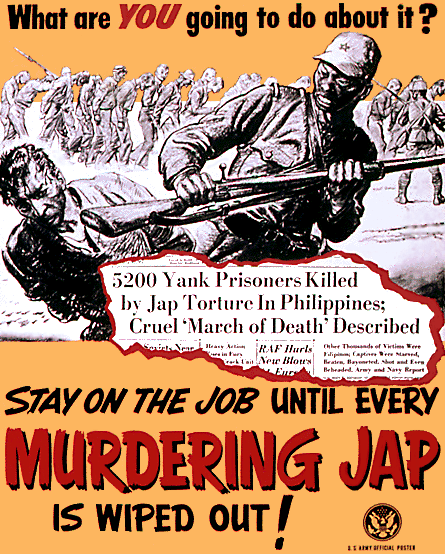
The Clausewitzian understanding of war is rooted in the Enlightenment and classic German Liberalism, born out of his experience in the Napoleonic Wars, which forever changed the face of warfare.  From the defeat of Prussia and its liberation from Napoleonic rule under Scharnhorst and Gneisenau Clausewitz developed the understanding that war was more than simply tactics and weapons.  Thus when we examine war today we deprive ourselves of properly understanding the dynamic of war if we fail to appreciate the human factor which is frequently not rational.  Such is especially the case when one fights an enemy who wages war on religious, racial or ideological grounds as is the case in the current war against Al Qaida and other extremist Moslem groups. Such groups would like to turn this war into such a conflict as do certain figures in the American political milieu who repeatedly label all of Islam as the enemy.  In such a climate it is imperative to look at history to show us the results of such primal passions.

14129979717_6f281b6876_b

It is in such conflict as we are engaged in today it is good to look at previous wars from the human experiential component and not simply military operations.  If one wants to look at how inflamed passion driven by racial prejudice and hatred took war to a level of barbarity and totality that defy our comprehension we only need to look back to the Pacific war between Japan and the United States.  In another post I dealt with the how racial ideology influenced Nazi Germany’s conduct of the war against Poland and the Soviet Union.  https://padresteve.wordpress.com/2009/09/14/the-ideological-war-how-hitlers-racial-theories-influenced-german-operations-in-poland-and-russia/

To do this I will look at John Dower’s “War Without Mercy.” In this book Dower examines World War Two in the Pacific from the cultural and ideological viewpoints of the opposing sides.  He looks at the war as a race war, which he says “remains one of the great neglected subjects of World War Two.”[i] Dower examines race hated and its influence on both the Japanese and the Allies, particularly in the way that each side viewed one another and conducted the war.  He examines the nature of racial prejudice and hate in each society, including its religious, psychological, ideological, scientific and mythological components.  He also examines the use of media and propaganda, and how racial attitudes not only influenced national and individual attitudes, but also the military and intelligence operations of both sides.  This book is not about military campaigns, thus it is much more like “In the Name of War” by Jill Lepore [ii] than any history of the Pacific war.

5767884_orig

Dower uses sources such as songs, movies, cartoons and various writings of the times to demonstrate the totality of the war.  Dower admits many of these are difficult to handle and “not respectable sources in some academic sources.”[iii]Despite this he puts together a work that is sometimes chilling, especially when one looks at the current war that our country is engaged in. He also endeavors to explain how after a war where “extraordinarily fierce and Manichean”[iv] race hate predominated, it could “have dissipated so easily”[v] after the war was over.

Dower divides his work into three major sections.  The first which examines how the aspect of race effected the fighting of the war, the second, the war through Western eyes and the third the war through Japanese eyes.  The first section begins with how racial attitudes in Western and Japanese societies helped fuel the war and compares similar attitudes and concepts in Western and Japanese thought, including how “prejudice and racial stereotypes frequently distorted both Japanese and Allied evaluations of the enemy’s intentions and capabilities.”[vi] He looks at the language of the conflict; at how war words and race words came together “in a manner which did not reflect the savagery of the war, but truly contributed to it….”[vii] the result being “an obsession with extermination on both sides.”[viii] He comes back to this theme throughout the book comparing the two sides and occasionally contrasting these attitudes with corresponding attitudes of the Allies to their German and Italian foes in Europe.[ix]

In the first chapter Dower examines the role played by the propaganda used by both sides.  In particular he expalins how the “Know Your Enemy: Japan”movies commissioned by the War Department and directed by Frank Capra, and the Japanese works “Read this and the War is Won” and “The Way of the Subject” helped shape the view of each side. Propaganda developed the idea of the war in terms of good versus evil and the mortal threat posed to their respective cultures by the enemy.

From this he looks at the visceral emotions that the war engendered and how those emotions spilled over into the conduct of the war especially in regard to its ferocity and the war crimes that were spawned by the unbridled hatred of both sides.  He notes the targeted terror bombings of civilians by both sides and how those actions were portrayed as “barbaric” by the other side when they were the victim.[x] He notes the viciousness of the war and how for the Americans the war brought forth “emotions forgotten since our most savage Indian wars.”[xi]He contrasts this with European war in particular how the Japanese and their actions were portrayed in Western media, and how similar actions by the Germans, such as the Holocaust, were ignored by Western media until the war was over.[xii] He traces some of this to the understanding of the psychological effects of the defeats and humiliations of the Allies at the hands of the Japanese, and the corresponding brutality toward Allied prisoners by the Japanese as compared to that of the Germans.[xiii] He uses this section to also examine the prevailing attitudes of the Japanese toward the Allies as being weak and “psychologically incapable of recovery” from blows such as the Pearl Harbor attack, and the Allied view of the Japanese as “treacherous.”[xiv]

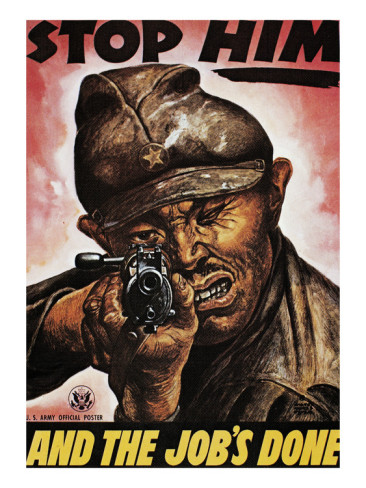
Dower’s second major section describes the attitudes and actions of the Americans and British toward their Japanese enemy.  He looks at the view that the Japanese were less than human and often portrayed as apes or other primates such as monkeys.  To do this he examines cartoons and illustrations in popular magazines and military publications, and includes those cartoons in the book.   The sheer vulgarity of these cartoons is easily contrasted with those promoted and published by Nazis such as Julius Streicher in Der Stürmer, something often overlooked or ignored in other histories.[xv] The early Western views of Japan as sub-human continued throughout the war, while at the same time, especially after the rapid series of Allied defeats and Japanese victories they were viewed as almost “super-human.”  Paradoxically some allied leaders turned the Japanese from “the one time “little man” into a Goliath.”[xvi] They were now “tough, disciplined and well equipped.”[xvii] Ambassador Joseph Grew, reported on his return from Japan, that the Japanese were; “”sturdy,” “Spartan,” “clever and dangerous,” and that “his will to conquer was “utterly ruthless, utterly cruel and utterly blind to the values that make up our civilization….””[xviii] The juxtaposition of such conflicting attitudes is curious, although understandable, especially in light of other Western wars against Asians or Arabs.[xix]

Dower then examines how some Americans and British explained the Japanese “National Character,” their approach to war, and actions during the war from Freudian psychiatry as well as Anthropology and other social and behavioral sciences.   Beginning with the widespread Allied understanding that the Japanese were “dressed-up primitives-or “savages” in modern garb…”[xx] he notes that these interpretations of the Japanese national character stemmed from “child-rearing practices and early childhood experiences,”[xxi] including toilet training and Freudian interpretations that saw an arrested psychic development at the “infantile (anal or genital) stage of development.”[xxii]Dower deduces that it was not hard to see how “Japanese overseas aggression became explicable in terms of penis envy or a castration complex….”[xxiii] The views were widespread and emphasized  that the “Japanese were collectively unstable.”[xxiv] Dower notes that the “very notion of “national character”-was the application to whole nations and cultures of an analytical language that had been developed through personal case studies…”[xxv] which he is rightly critical in suggesting that this premise “was itself questionable.”[xxvi] In addition to this was the understanding of Margaret Mead and others of the Japanese as “adolescents” and “bullies,”[xxvii] and notes that from “the diagnosis of the Japanese as problem children and juvenile delinquents, it was but a small step to see them as emotionally maladjusted adolescents and, finally as a deranged race in general.”[xxviii] Dower cites numerous other “experts” of the time and their interpretations of the Japanese national character, but the overwhelming message is that the application of these theories, regardless of their validity had a major impact on the Allied war against Japan.

He follows this chapter with one with much importance in explaining the similarities in how Americans and Westerners in general viewed the Japanese in relationship to other races that they had dealt with including Blacks, Chinese, Filipinos, and American Indians.  Common themes include the views of each as primitives, children and madmen and the view of the Japanese as part of the “Yellow Peril.”  Of particular note is his analysis of the work of Homer Lea’s 1909 book The Valor of Ignorance and the vision of Japanese supermen which enjoyed a revival after Pearl Harbor.[xxix] Dower examines depictions of Asians in general in the Fu Manchu and Charlie Chan series of films and other racial aspects hearkening back to the “specter of Genghis Khan and the prospect that the white races “may be liquidated.”[xxx] He notes how Japanese propagandists attempted to use Allied prejudice to influence the Chinese and other Asians against the Allies[xxxi] and American blacks against whites,[xxxii] while attempting to maintain their own racial superiority which is the subject of the next section.

The chapters dealing with the Japanese view of themselves and their opponents tie together neatly.  These deal with the Japanese view of themselves as the leading race in Asia and the world.  Dower talks about symbols and the understanding of racial purity that motivated the Japanese from the 1800s to the rejection of Japan’s request for a declaration of “racial equity” at the League of Nations.[xxxiii] He notes the “propagation of an elaborate mythohistory in Japan and the time spent “wrestling with the question of what it really meant to be “Japanese” and how the “Yamato race” was unique among races….”[xxxiv] He notes the relationship of Shinto with whiteness and purity and connotations of how the Japanese indulged in “Caucasianization” of themselves vis-à-vis other Asians during World War Two,”[xxxv] and their emphasis on a Japanese racial worldview.[xxxvi] He also tackles the way in which the Japanese wrestled with evolution and its relationship to other racial theories contrasting books such as A History of Changing Theories about the Japanese Race and Evolution of Life with Cardinal Principles of the National Polity published by the Thought Bureau of the Ministry of Education in1937.  These declared that the Japanese were “intrinsically different from the so-called citizens of Occidental countries.”[xxxvii] He also deals with the Kyoto school and the Taiwa concept.[xxxviii] In Chapter Nine Dower looks at how the Japanese viewed themselves and outsiders, in particular the characterization of Westerners as nanbanjin or  barbarians and how this eventually train of thought carried through the war led to the “Anglo-American foe emerged full blown as the demonic other.”[xxxix]Dowers final chapter deals with how quickly the race hatred dissipated and genuine goodwill that developed between the Japanese and Americans after the war.[xl]

This book holds a unique place in the literature of the Pacific war.  It is not a comfortable book, it is challenging. No other deals with these matters in any systemic way.  If there is a weakness in Dower is that he does not, like Lepore in “In the Name of War” deal with the attitudes of soldiers and those who actually fought the war.  His examples are good and go a long way in explaining the savagery with which the war was conducted, but could have been enhanced with reflections and accounts of those who fought the war and survived as well as the writings of those who did not, and the way those attitudes were reflected in different services, times and theaters during the war, including adjustments that commanders made during the war.[xli] His description of how Japanese “reluctance to surrender had meshed horrifically with Allied disinterest …in contemplating anything short of Japan’s “thoroughgoing defeat.”[xlii]

The lessons of the book are also contemporary in light of the cultural and religious differences between the West and its Moslem opponents in the current war. Possibly even more so than the war between the United States and Japan which was fought by nation states that still were signatories to international conventions, not nation states against terrorists unbound by any Western code or law or indigenous forces engaged in revolutionary war against the west such as the Taliban.[xliii] The temptation is for both sides to demonize one’s opponent while exalting one’s own way of life through official propaganda and popular media, with a result of increased viciousness and inhumanity in pursuit of ultimate victory.   In today’s world with the exponential rise in the radicalization of whole people groups and the availability of weapons of mass destruction, it is possibility that the war could develop into one that is a racial as well as religious and ideological war that would make the War in the Pacific look like a schoolyard brawl.

Bibliography

Alexander, Joseph H. Utmost Savagery: The Three Days of Tarawa. Ivy Books, Published by Ballantine Books, New York, NY 1995

Dower, John W. War without Mercy: Race and Power in the Pacific War.”Pantheon Books, A Division  of Random House, New York, NY 1986.

Leckie, Robert. Okinawa. Penguin Books USA, New York NY, 1996

Lepore, Jill  The Name of War Vintage Books a Division of Random House, New York, NY 1998

Tregaskis, Richard Guadalcanal Diary Random House, New York NY 1943, Modern Library Edition, 2000.


[i] Dower, John W. War without Mercy: Race and Power in the Pacific War.”Pantheon Books, A Division  of Random House, New York, NY 1986. p.4

[ii] Lepore, Jill  The Name of War Vintage Books a Division of Random House, New York, NY 1998.  Lepore’s book deals with King Phillip’s War and how that war shaped the future of American war and how it shaped the views of Indians and the English Colonists and their later American descendants both in the language used to describe it, the histories written of it and the viciousness of the war.

[iii] Ibid. p.x

[iv] Ibid. p.ix

[v] Ibid. p.x

[vi] Ibid. p.11

[vii] Ibid.

[viii] Ibid.   Also see Alexander, Joseph H. Utmost Savagery: The Three Days of Tarawa. Ivy Books, Published by Ballantine Books, New York, NY 1995 Alexander notes an incident that shows a practical application of the Japanese views and the ruthlessness inflicted on their enemies, in this case prisoners in response to an American bombing raid. In 1942 the commander of the Japanese Garrison of Makin Island ordered 22 prisoners beheaded after one cheered following a bombing raid. (p.32)

[ix] An interesting point which Dower does not mention but is interesting for this study is how the Germans referred to the British and Americans as “Die gegener” (opponents) and the Soviets as “Die Feinde” (the enemy), the implication being that one die gegener was a common foe, much like an opposing team in a sport, and the other a mortal enemy, the implication of Feinde being evil, or demonic.

[x] In particular he makes note of the Japanese actions during the “Rape of Nanking,” and the 1945 sack of Manila, as well as the fire bombing of Japanese cities by the US Army Air Corps in 1945.

[xi] Ibid. Dower. p.33

[xii] Ibid. p.35

[xiii] Ibid.  This is important in the fact that the Allies tended not to make much of German brutality to the Jews, Russians and other Eastern Europeans.

[xiv] Ibid. p.36.

[xv] Dower does not make this implicit comparison, but having seen both and studied the Nazi propaganda directed toward the Jews, Russians and other Slavic peoples considered to be Untermenschen (sub-humans) by the Nazis the similarities are striking.

[xvi] Ibid. pp.112-113.

[xvii] Ibid. p.113

[xviii] Ibid.

[xix] In the 2006 Israeli invasion of Lebanon, Israeli soldiers who previously showed no respect to any Arab fighter described their Hezbollah opponents as “soldiers and warriors.”  Similar attitudes were voiced by American soldiers in Vietnam when they fought NVA regulars.

[xx] Ibid. p.123

[xxi] Ibid.

[xxii] Ibid.

[xxiii] Ibid.

[xxiv] Ibid. p.124

[xxv] Ibid.

[xxvi] Ibid.

[xxvii] Ibid. p.129

[xxviii] Ibid. p.143

[xxix] Ibid. P.157.  Lea is interesting because he predicts a decline in the stature of the British Empire and softness of both the Americans and British as peoples.  Also see John Costello in The Pacific War 1941-1945 Quill Books, New York, NY 1982 pp.31-32 notes Lea’s concerns and how they drove the American Pacific strategy until the outbreak of World War Two.

[xxx] Ibid. p.161

[xxxi] Ibid. p.169

[xxxii] Ibid. pp.174-180.  This is an interesting section.  One of the most interesting topics being the reaction of the NAACP’s Walter White’s book A Rising Wind published which “suggested a sense of kinship with other colored-and also oppressed-peoples of the world….he senses that the struggle of the Negro in the United States is part and parcel of the struggle against imperialism and exploitation in India, China, Burma….” (p.177-178)

[xxxiii] Ibid. p.204

[xxxiv] Ibid. p.205

[xxxv] Ibid. p.209  This is interesting when one compares the Japanese emphasis on “Pan-Asianism” and the inherent contradiction between the two.

[xxxvi] Ibid. p.211  Dower notes that the article Establishing a Japanese Racial Worldview in the monthly Bungei Shunju “clarified the Japanese character, whose basic traits were brightness, strength and uprightness.  These qualities made the Japanese “the most superior race in the world.”

[xxxvii] Ibid. p.221

[xxxviii] Ibid. p.227 This was the theory of Zen Buddhism’s Suzuki Daisetsu (D.T. Suzuki) in his teaching of the struggle for the Great Harmony “Taiwa” which attempted to identify “an intuitive sense of harmony and oneness that he declared to be characteristic of Oriental thought.”

[xxxix] Ibid. p.247.  Descriptions of the Allies as Barbarians, Gangsters and Demons permeated Japanese propaganda.

[xl] Ibid. Dower makes a number of observations relating to how the Japanese were able to use their own self concept to adapt to their defeat.  He also notes that the Japanese were able to transfer their self concept to a peaceful orientation.

[xli] See Leckie, Robert. Okinawa. Penguin Books USA, New York NY, 1996 p.35.  Leckie quotes General Ushijima “You cannot regard the enemy as on par with you,” he told his men. “You must realize that material power usually overcomes spiritual power in the present war. The enemy is clearly our superior in machines. Do not depend on your spirits overcoming this enemy. Devise combat method [sic] based on mathematical precision-then think about displaying your spiritual power.”  Leckie comments: “Ushijima’s order was perhaps the most honest issued by a Japanese commander during the war. It was Bushido revised, turned upside down and inside out-but the revision had been made too late.”

[xlii] Ibid. Dower. p.37

[xliii] See Tregaskis, Richard Guadalcanal Diary Random House, New York NY 1943, Modern Library Edition, 2000. p.95.  Tregaskis notes when commenting on Japanese POWs on Guadalcanal “We stared at them and they stared back at us. There was no doubt what we or they would have liked to do at that moment-if we had not remembered our code of civilization or if they had not been unarmed.”


Leave a comment

Filed under History, Military, Political Commentary, world war two in the pacific

The Great Marianas Turkey Shoot

Friends of Padre Steve’s World,

It has been another long day or work in the house, dealing with contractor complications and delays, and running back and forth to Lowe’s and going in to work to take care of business despite being on leave. Tomorrow promises to be similar. So for now part two of my article dealing with my favorite resistors will have to wait.

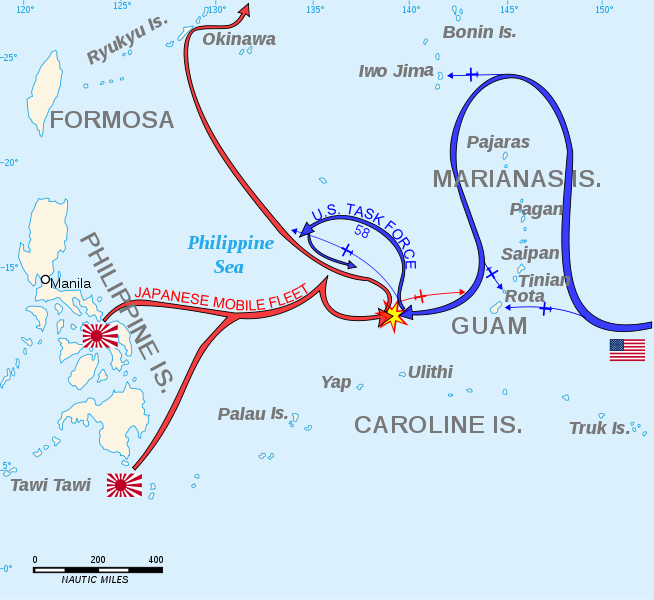
Because of that I am reposting an older article on the Battle of the Philippine Sea, also known as the Great Marianas Turkey Shoot which was fought on the 19th and 20th of June 1944.

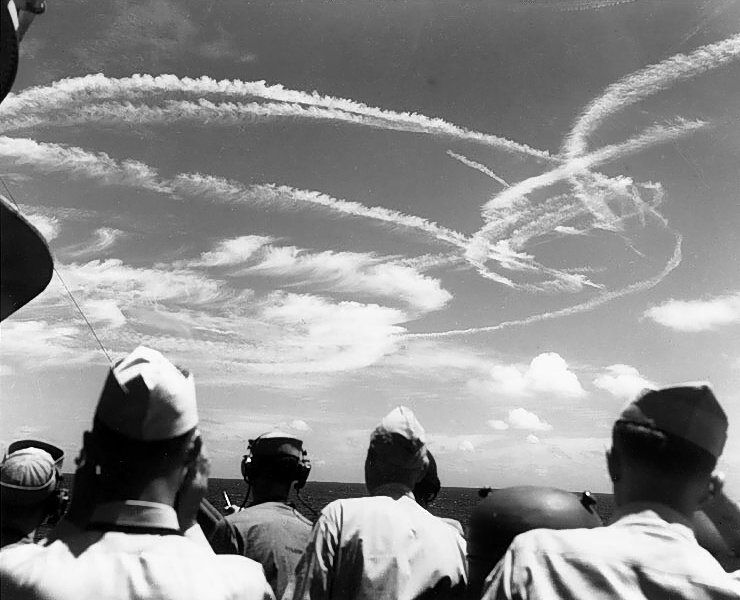
U.S. Navy personnel observe the Air Battle from a Carrier

This battle was the largest battle between aircraft carrier fleets in history.  Twenty four aircraft carriers, 15 American and 9 Japanese embarking over 1400 aircraft dueled in the Central Pacific in a battle that so decimated Japanese Naval Aviation that it never recovered. The battle and the subsequent fall of Saipan brought down the government of General Tojo and was the beginning of the collapse of the Japanese Empire and the “Greater Asia Co-Prosperity Sphere.”

http://dsc.discovery.com/videos/destroyed-in-seconds-marianas-turkey-shoot.html

In late 1943 the Japanese realized that they needed to recover the initiative in the Pacific.  Between the Battle of the Coral Sea and the Battle of Santa Cruz Japanese Naval aviation suffered crippling losses especially among the elite pilots and aircrews with who they had begun the war.  These losses were compounded when the Navy attempted to support the operations of the Army to defend the Solomons and New Guinea.  Squadrons sent to battle the United States Navy, Marine Corps and Army Air Corps suffered at the hands of the every more skilled and well equipped American fighter squadrons the victims of which included Admiral Isoruku Yamamoto the Commander of the Combined Fleet when the Betty bomber that he was traveling on was ambushed by U.S. Army Air Corps P-38 Lightening fighters.

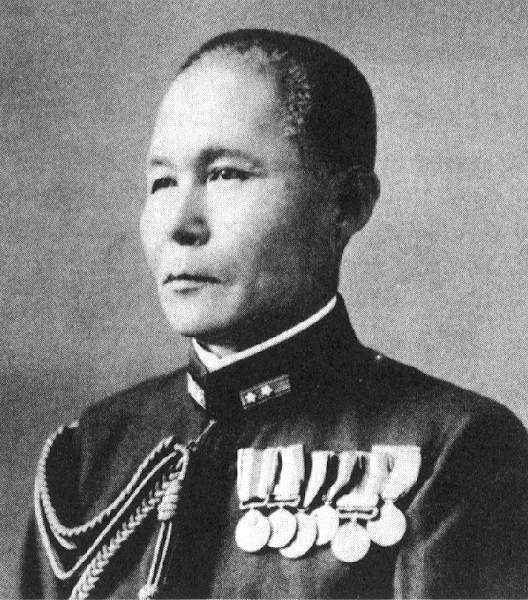
Vice Admiral Jisaburō Ozawa

By late 1943 the Japanese were attempting to train new pilots and aircrews to man the carriers of the Combined Fleet’s Carrier Striking Forces.  Admiral Soemu Toyoda, the new commander of the Combined Fleet and its third commander in less than a year developed “Plan A-Go” as a means to mass carrier and land based aviation assets to defeat the Fast Carrier Task Forces of the United States Navy.  The rebuilt Carrier Striking Groups built around 9 carriers embarking 473 aircraft was commanded by Vice Admiral Jisaburō Ozawa who had taken over from Vice Admiral Chuichi Nagumo.

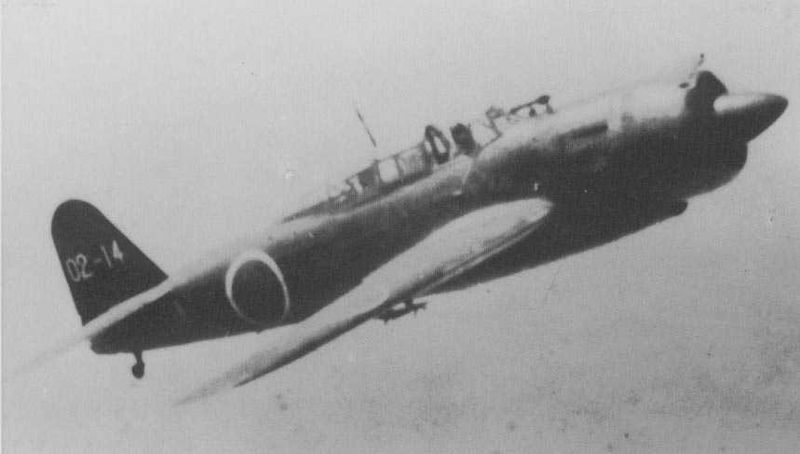
D4Y3 “Judy” Dive Bomber

The Japanese discerned the intentions of the Americans when American Carrier aircraft struck Saipan and Guam. The Japanese had expected the Americans to strike further south and the Marianas had few land-based aircraft in the area. Toyoda made the decision to engage the Americans and ordered the fleet to attack. American submarines discovered the gathering Japanese forces. The Japanese forces were assembled by the 17th and by the 18th the 5th Fleet under the command of Admiral Raymond Spruance spearheaded by Task Force 58 Commanded by Vice Admiral Marc Mitscher had assembled west of Saipan to meet the Japanese.  The Americans fielded 15 carriers including 9 Fleet Carriers of which 6 were the new Essex Class Fleet Carriers which embarked 956 aircraft.

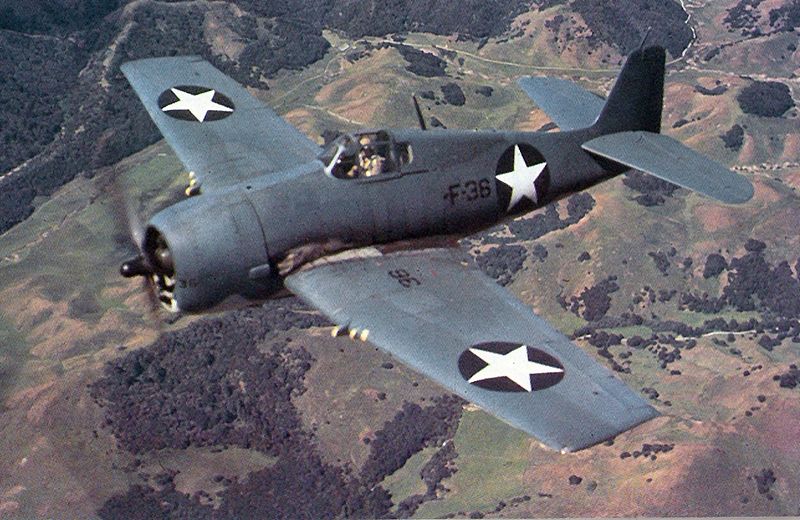
The F6F Hellcat cemented its place as the premier fighter plane of the Pacific war during the “Turkey Shoot”

The Americans held both a quantitative and qualitative advantage against the Japanese. The American fighter squadrons were equipped with the F6F Hellcat which was far superior to the now obsolescent Japanese Zero fighters and their pilots and aircrews were now more experienced and proficient than the newly minted Japanese aviators who by and large had little combat experience and were flying inferior aircraft.  The Japanese had not planned for a long war and had done little to systemically address the heavy losses that their force experienced during 1942 and 1943 at Coral Sea, Midway, Eastern Solomons, Santa Cruz and in the Solomons campaign.

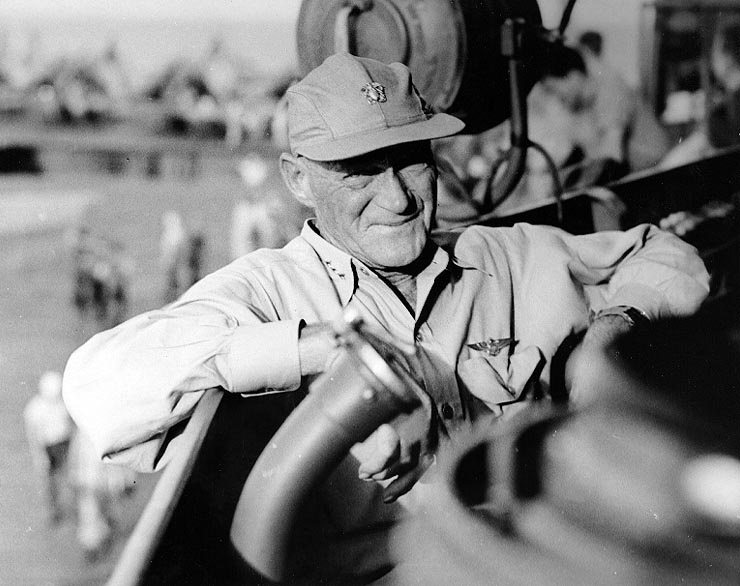
Vice Admiral Marc Mitscher aboard the USS Lexington

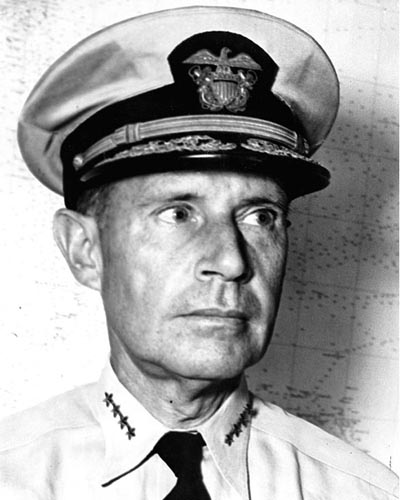
Mitscher desired to move aggressively against the Japanese. However he was overruled by Spruance who acting on the advice of his Battle Line Commander Vice Admiral Willis Lee decided that a possible night surface action with the Japanese was not desirable. Spruance instead directed Mitscher to be ready to defend against Japanese air strikes knowing that his carriers and carrier based air groups was more than a match for the Japanese air groups.   Spruance has been criticized for his decision but the words of Willis Lee, a veteran of the Naval Battle of Guadalcanal where he defeated a Japanese force sinking the Battleship Kirishima.  He prevailed in his flagship the USS Washington but losing three of four escorting destroyers and seeing his second battle wagon the USS South Dakota heavily damaged. A night surface engagement was not worth the risk as in Lee’s eyes it evened the playing field for the Japanese and took away the American air power advantages.

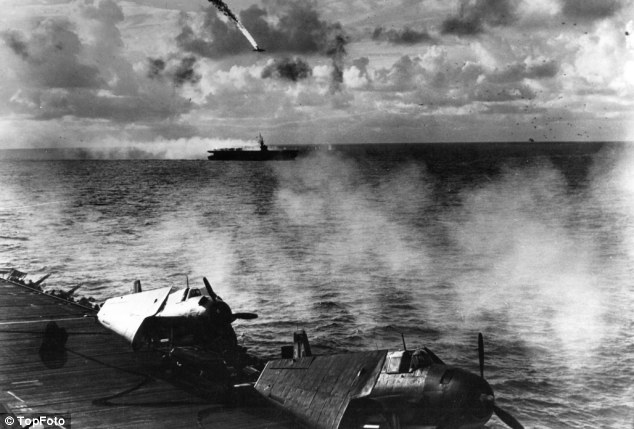
A Japanese aircraft goes down in flames

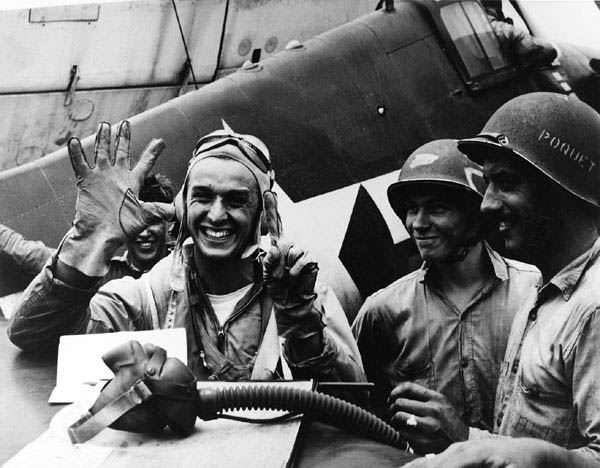
The Japanese began the action on the 19th sending successive attack waves against Task Force 58. They were met by massed formations of Hellcats vectored in by air controllers in the Combat Information Centers of the American carriers using their superior air search radar systems.  In less than two hours well over 200 Japanese aircraft were downed by the Hellcats.  Lieutenant Alexander Vraicu shot down 6 “Judy” dive bombers in minutes before low on fuel he returned to the USS Lexington.

Lieutenant Alexander Vraicu holds up six fingers on board the USS Lexington

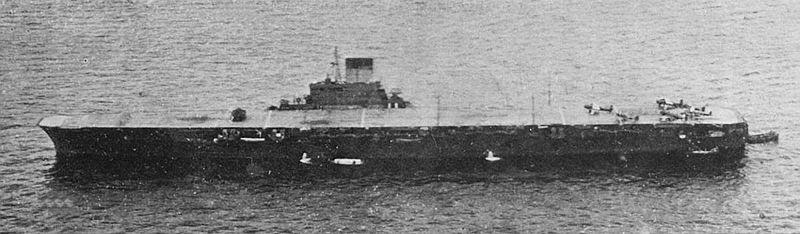
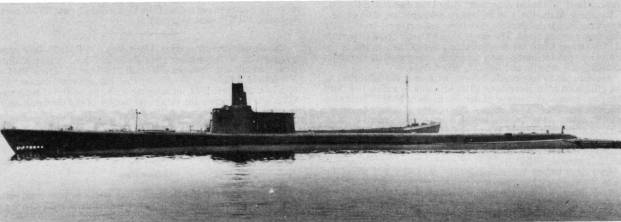
While the Hellcats were chewing up the Japanese squadrons the American submarines USS Albacore and USS Cavalla each sank a Japanese Fleet Aircraft Carrier.  The Albacore hit the Ozawa’s flagship, the new Tiaho with a torpedo which caused minimal damage, but ruptured fuel lines. The Japanese damage control officer opened vents in the ship which allowed the fumes to spread throughout the carrier. They were ignited by a generator causing massive explosions and forcing Ozawa to abandon his flagship. Tiaho would sink by late afternoon after being ripped apart by a series of massive explosions taking with her 1650 of 1750 officers and crew. Cavalla hit the Pearl Harbor veteran Shokaku with a spread of three torpedoes causing that ship to burst into flames with aircraft and ordnance adding to the conflagration. A massive explosion ripped through the ship causing her to sink with a loss of over 1200 officers and crew.

The Japanese flagship Tiaho (above) and her killer the USS Albacore

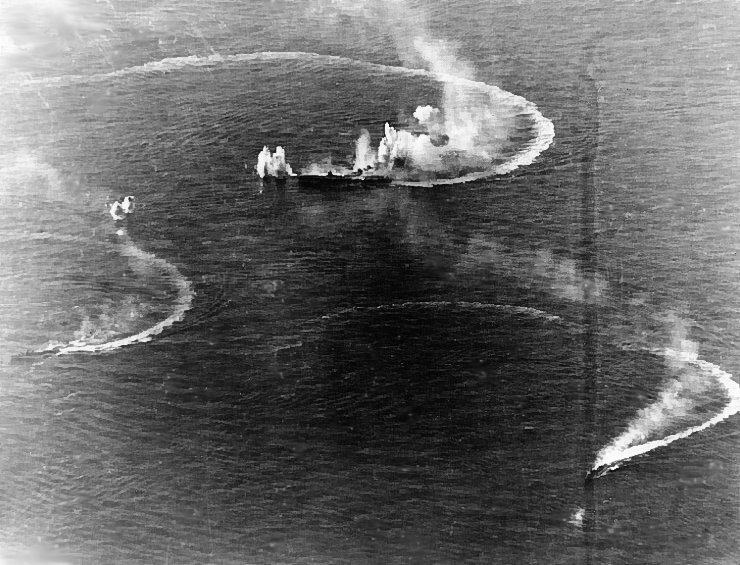
Toyoda desired that Ozawa retire from the battle before he suffered more losses but Ozawa wanted to stay around and hit the Americans with everything that he had left. The Americans sailed west during the night to seek out the Japanese Fleet. It took the majority of the day to find the Japanese. With only 75 minutes of daylight remaining Mitscher launched a strike despite the risk to his aircrew the majority whom were not trained in night landings.  The American strike sank the carrier Hiyo and two tankers and damaged the carriers Zuikaku, Chitoyda and Junyo as well as the battleship Haruna.  By the end of the day Ozawa had 35 aircraft in flyable condition. About 435 of the aircraft operated from the Japanese carriers were lost with the vast majority of their pilots and aircrew.

The Japanese Fleet under attack, carrier Zuikaku and two destroyers on June 20th

The final part of the drama was the return of the American strike group to the carriers. Knowing that if he maintained darken ship he would lose many aircraft and the men that flew them Mitscher ordered that the fleet turn on its lights. This act was incredibly risky but helped bring the majority of the returning aircraft to land or ditch near the task force.  The Americans lost less than 100 aircraft during the battle, most due to the night landings and unlike the Japanese who lost the majority of their aircrews, most of the American pilots and aircrew were rescued. In addition to their carrier based losses the Japanese lost nearly 200 land based aircraft.

Admiral Raymond Spruance

The battle was the death-kneel of Japanese Naval Aviation. Later in the year the carriers again under Ozawa sailed against the Americans only this time they were a decoy force at the Battle of Leyte Gulf, a role that they succeeded in admirably. The American carriers now had free run of the Pacific only opposed by land based aircraft many used in a Kamikaze role until the end of the war. These would cause fearful losses among the American ships heavily damaging a number of carriers.

The battle is often forgotten by due to its proximity to the Normandy landings but was a significant step in the fight against Japan. The islands captured by the Americans, Saipan, Tinian and Guam would provide major sea and air staging areas for the final assault against Japan. Tinian would become the base of many Army Air Corps B-29 “Superfortress” bombers including those that dropped the Atomic bombs less than 14 months later. It was a turning point both militarily and politically. With the fall of the Tojo government the Japanese leaders began to slowly tell the truth about wartime setbacks and losses to a people that it had lied to since their invasion of China and occupation of Mongolia.  It was a setback that even Tojo and the highest leadership of Japan knew that they could not recover.

Until tomorrow,

Peace,

Padre Steve+

1 Comment

Filed under aircraft, History, Military, Navy Ships, US Navy, world war two in the pacific

The Consequences of Having Scruples: Johannes Steinhoff and Government Service in the Trump Era

Friends of Padre Steve’s World

I have written a lot about the dehumanization of people and genocide, and some of the things that create a climate where such events take place, and how political and religious leaders stir the primal passions of otherwise good, decent and law abiding citizens. I wrote yesterday about some of my favorite resistance figures in history. It will be a multi-part series. I think the next in the series will deal with White and African American abolitionists in the ante-Bellum period and the American Civil War.

But that being said writing about the anti-Nazi resistors caused me to go back are re-read a book by World War II German Luftwaffe ace Johannes Steinhoff.

Steinhoff was unlike many of the German officers who wrote memoirs following the war, memoirs that historian Williamson Murray wrote “fell generally into two categories; generals writing in the genre of “if the fuhrer had only listened to me!” and fighter pilots or tank busters writing about their heroics against the productive flood from America or the primitively masses of the Soviet Union.”

Steinhoff’s book, The Final Hours: The Luftwaffe Plot Against Goering should be essential reading for any currently serving officer, diplomat, Federal law enforcement, intelligence, or Department of Justice official  as the Trump administration becomes more established and capricious.

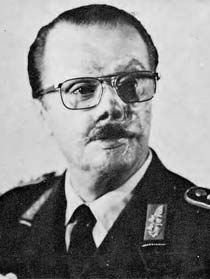
steinhoff6

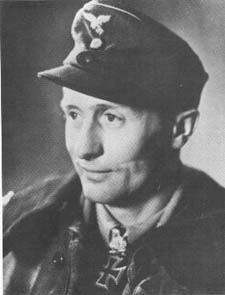
General Johannes Steinhof (above) as a Bundeswehr and NATO officer, showing his burns and before his crash (below)

steinhoff WW II

In his books, Steinhoff does something that you do not see authors do in most military or political memoirs, he actually does serious self reflection on his role in supporting an evil regime. In his introduction to his book The Final Hours the legendary fighter ace who was horribly disfigured when his Me-262 jet fighter crashed and burned two weeks prior to the end of the war wrote:

“In recalling these events, which had been long buried in my memory, it has not been my intention to make excuses. Our unconditional self-sacrifice in the service of the Third Reich is too well documented for that….

So it is because of what is happening today—with freedom threatened in virtually every respect by its own abuse—that I offer this contribution, in the form of an episode in which I was myself involved, to the history of the soldier in the twentieth century. Soldiers have always, in every century of their existence, been victims of the ruthless misuse of power; indeed, given the opportunity, they have joined in the power game themselves. But it fell to our own century to accomplish, with the aid of a whole technology of mass extermination, the most atrocious massacres in the history of mankind. This fact alone makes pacifism a philosophy worthy of respect, and I have a great deal of sympathy with those who profess it. 

The figure of the soldier in all his manifestations is thus symptomatic of the century now nearing its close, and it is to the history of that figure that I wish to contribute by describing what happened to me. I have tried to show what it is possible to do to men, how insidiously they can be manipulated by education, how they can be hoisted onto a pedestal as “heroes,” how they can be so corrupted as even to enjoy the experience—and how they can be dropped and denounced as mutineers when they discover that they have scruples. The complete lack of scruples that such treatment implies is peculiar to rulers who believe that the problems of their own and other peoples can be solved by imposing, through the use of military force, peace on their, the rulers’, terms—in our case a pax germanica, but the second Latin word is readily interchangeable.” from “The Final Hours: The Luftwaffe Plot Against Goring (Aviation Classics)” by Johannes Steinhoff

Since I am a historian and and a career military officer with service in the Iraq War, a war that was illegal and unjust by all measure I can understand Steinhof’s words. Because much of my undergraduate and graduate work focused on German history, particularly that of Imperial Germany after the unification, the Weimar Republic, and the Nazi Reich, I draw a lot of lessons from the period. I also understand how people in this country can fall for the same kind of vitriolic propaganda that the Germans of that era did. I can understand because for years I fell for the lies and propaganda being put out by the politicians, pundits and preachers of the American political right.

In fact I wrote about an incident that happened to me in my own chapel where a dedicated Trump supporter attempted to have me charged with Conduct Unbecoming an Officer and Contempt for the President.  He did this because I used biblical preaching backed by sound theology and history to condemn the President’s comparison of immigrants of darker skin colors as “animals” and an “infestation.” I compared those words with the way Hitler and other totalitarian leaders used such terminology to dehumanize their victims. As I mentioned I was completely cleared by the preliminary inquiry but it sends a chill through my spine.

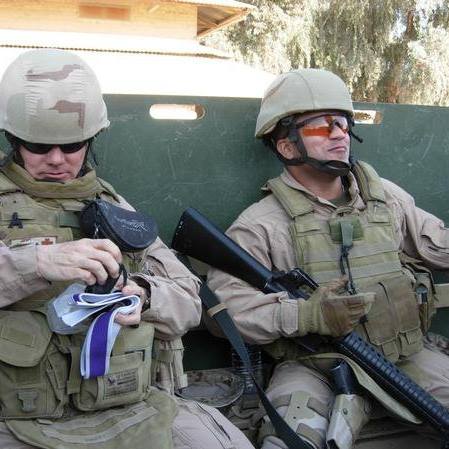
10665323_10154041610267059_5277331492232210946_n

A picture of me (on left) in Iraq 2007 with my assistant and bodyguard RP1 Nelson Lebron

One of those lessons is that in times of crisis, that people, no matter what their race, culture, religious belief system, educational, or economic background are still human. Humanity is the one constant in all of history, our prejudices are often ingrained in us during childhood and reinforced by the words of politicians, pundits, and preachers. In times of stress, crisis, and societal change or upheaval even good people, moral people, people of great intellectual, scientific abilities can fall prey to demagogues who preach hate and blame others, usually racial, ethnic, or religious minorities, as well as civil libertarians who champion the rights of those minorities for the problems of the nation.

Shrewd politicians, preachers, and pundits do this well. They demonize the target group or population and then let the hatred of their disaffected followers flow. The leaders need that disaffected and angry base in order to rise to power; such was how Hitler, Stalin, and so many other despots gained power. They took advantage of a climate of fear, and found others to blame. For Hitler it was the Jews, Slavs, Socialists and Communists; while for Stalin it was various groups like the Ukrainians, or the Poles who were the devil to be feared and destroyed. Timothy Snyder in his book Bloodlands: Europe Between Hitler and Stalin wrote:

“Dead human beings provided retrospective arguments for the rectitude of policy. Hitler and Stalin thus shared a certain politics of tyranny: they brought about catastrophes, blamed the enemy of their choice, and then used the death of millions to make the case that their policies were necessary or desirable. Each of them had a transformative utopia, a group to be blamed when its realization proved impossible, and then a policy of mass murder that could be proclaimed as a kind of ersatz victory.”

But that being said, there are a lot of people who from childhood believe the lies about others without question. In good times such people continue on with life as normal, but in crisis those hatreds and prejudices come to the fore. Rudolf Höss, the notorious sociopath who commanded Auschwitz told American Army psychologist Gustave Gilbert about his reaction when ordered to turn the camp into an extermination center. He said that the order “fitted in with all that had been preached to me for years,” and “at the same time I didn’t think of it as propaganda, but as something one just had to believe.” 

Eugene Davidson in his book on the Nuremberg Trials wrote:

“Every society has in it at all times negative, criminal, sadistic, asocial forces. What holds them in check more than law and police is the consensus of the society – a general belief that despite everything wrong and stupid and muddleheaded in politics, the state is a going concern that will somehow make its way into the future.” (Davidson, The Trial of the Germans p.581)

But when things do not go well, when people do not feel that things will be okay, that the future will be better, and that they have a purpose they look for answers. However, they tend to find their answers in the rantings of demagogues, race baiters, conspiracy theorists, and others who they would tend to dismiss out of hand in good times. In Germany it was the loss of the First World War, the humiliation of Versailles and the economic chaos and social change of the Weimar period which allowed Hitler to gain an audience, then a following, then political power. The demagogues played to what was already in the hearts and minds of the disaffected masses, without that fertile soil, the rantings of Hitler and his propagandists would have never succeeded. Albert Speer wrote:

“As I see it today, Hitler and Goebbels were in fact molded by the mob itself, guided by its yearnings and its daydreams. Of course, Goebbels and Hitler knew how to penetrate through to the instincts of their audiences; but in the deeper sense they derived their whole existence from these audiences. Certainly the masses roared to the beat set by Hitler’s and Goebbels’ baton; yet they were not the true conductors. The mob determined the theme. To compensate for misery, insecurity, unemployment, and hopelessness, this anonymous assemblage wallowed for hours at a time in obsessions, savagery and license. The personal unhappiness caused by the breakdown of the economy was replaced by a frenzy that demanded victims. By lashing out at their opponents and vilifying the Jews, they gave expression and direction to fierce primal passions.”

In a sense a similar thing has happened in the United States which has experienced a series of wars beginning with Vietnam, the shock of the 9-11-2001 attacks, the economic crash of 2007 and 2008 which devastated the savings, home ownership, and investments of many Americans while at the same time benefiting the banking and brokerage houses whose government assisted policies brought about the crash. Of course there are other issues, many religious conservatives hate the progress made by the Women’s and Gay Rights movements, and their leaders play to their fears in apocalyptic terms. I could go on, but I am sure that my readers can identify other issues which demagogues and others use to spread fear and hate to further their goals. The fact is that without the the fertile soil that lays in the hearts of their most fervent followers they would never have a following.

In Weimar Germany hate mongers like Julius Streicher and propagandist Josef Goebbels stuck a chord with disenchanted people who felt that they had lost their country. They were fearful, angry, and desired a leader who would “make Germany great again.” Hitler and his Nazi media sycophants played to that fear, and took advantage of their anger at the existing order. Davidson wrote such people “exist everywhere and in a sick society they can flourish.” 

For decades the way has been prepared for true extremists to take advantage of the fears and doubts of people as modern American versions of Streicher and Goebbels have been at work for years. Rush Limbaugh was a modern pioneer of this in the United States, and he has been joined by so many who are even more extreme in their rantings that it is hard to name them all. Likewise, whole media corporations especially Fox News, websites, and political networks spread such fear every minute of the day, claiming that they, and they alone are real Americans. They actively support politicians who condemn, and sometimes even threaten people who oppose them, and all the while claim that “make America great again.”

When I was younger I devoured that propaganda, despite all of my learning I followed the rantings of men who I realize today are propagandists who promote the basest of lies, and hatred, often in the name of God. I was changed when I was at war, and when I returned home from Iraq in 2008 I realized through hard experience that I had been lied to, and that as a result that thousands of my brothers and sisters were dead, and tens of thousands shattered in body, mind, and spirit. Likewise I saw the massive destruction levied on Iraq and realized how terrible war really is. That was my epiphany, that is what it took to see how much I had been lied to, and it called me to question everything else that I had so willingly believed, things which had been fed to me by years of indoctrination in church, through the media, and by politicians who I believed were truly Christian. I can understand now how Martin Niemoller felt after the Nazi seizure of power when he said, “I hated the growing atheistic movement, which was fostered and promoted by the Social Democrats and the Communists. Their hostility toward the Church made me pin my hopes on Hitler for a while. I am paying for that mistake now; and not me alone, but thousands of other persons like me.”

There was a time that I hated people who espouse the views that I hold today, the views that I write about so often here on this site. I can remember how angry I would get as I listened to the propaganda being put out by Limbaugh, Hannity, the Fox News Channel and all of the others that I listened to every time that I had the chance. But when I changed after Iraq, I felt the sting of that hatred in very real ways. I remember the day I was called by my bishop in my former church, who told me that I had to leave because my views on women, gays, and Moslems were to use his words were now “too liberal.” After that, many men who I considered to be the best of friends turned their backs on me, some in the most bitter and vindictive of ways.

But I realize now that what they did was because I had in a sense left the cult, and had to be ostracized. I can understand that now, because when I was under the spell I too turned my back on people who had fallen out of favor, or people who had rejected the tenants of the church or the political movement, and those are things that I can never undo. But at the time it made sense, it fitted in with all I had been taught for decades, as Albert Speer wrote of Hitler, “One seldom recognizes the devil when he is putting his hand on your shoulder.”

What happened to Steinhoff’s generation is threatening to happen again, in our country, an authoritarian movement is threatening to destroy our democracy and republic. In it soldiers are esteemed, until they realize what is going on and speak out, but by then it is usually too late. I am understanding that fact more and more every day, and having had people troll this blog and call me a traitor and worse, I understand just a bit of what happened to Steinhoff and his fellow officers when they protested to the highest levels what was happening to Germany in early 1945.

In 1944 he and other fighter pilots were subjected to a political indoctrination session and realized that in the Nazi state loyalty and doctrinal purity to Naziism was more important than either combat service or competence. He wrote:

“Now, however, we realized to our horror that a group of officers had decided, after five years of war, to conduct a purge among the troops with the object of eliminating all those “whose past life and present conduct were not consonant with the National-Socialist type” and who did not “stand firm on National-Socialist principles.” We sat there petrified, but some of those present appeared hugely to enjoy the ensuing discussion of what they called “National-Socialist guidelines.” Perhaps, though, for many it was simply an attempt to escape into a less concrete area of discussion than the desperate military situation—and then there was the added satisfaction of being able to censure others. Fanaticism took the place of hopelessness, and phrases like “faith in the Führer,” “rootedness in National-Socialist ideology,” and “irreproachability of character” fell without hesitation from people’s lips. The Luftwaffe leadership, it was said, must be “combed” from top to bottom, and then someone even came out with the “National-Socialist soul…”

We will soon know how military professionals react to being labeled as traitors. President Trump and his followers have been demonizing the personnel of the nation’s intelligence, law enforcement, and diplomatic communities since before the election. The President lambasts critics of any station on his Twitter feed which results in them receiving death threats from his followers. I expect that when Secretary of Defense James Mattis speaks his mind and tells the truth that we will find out.

Personally I expect that when he does that Trump and his most strident supporters will label him as a traitor for doing so. Like a religious cult they have no capacity to tolerate dissent, loyalty to the man will supersede loyalty to the country or the Constitution. When that happens it will be interesting to see the throngs of people in the military and outside of it who make the choice to throw one of the most courageous, selfless, and intellectual soldiers ever produced by our nation under the bus.

Their’s will be a conscious decision. My opinion is that the Constitution and the country will always come first. I wanted to give the President the benefit of the doubt and prayed that he world do the right thing for the country. But I was wrong. I am concerned because of his past and current behavior that his only loyalty is to himself. General Ludwig Beck, who resigned rather than obey Hitler’s order to invade Czechoslovakia in 1938 and died in the anti-Hitler coup attempt in 1944 said:

“It is a lack of character and insight, when a soldier in high command sees his duty and mission only in the context of his military orders without realizing that the highest responsibility is to the people of his country.” 

I have no doubt that General Mattis understands that and will courageously speak his mind, even if he is condemned for doing so. Sadly I have many doubts about other leaders: be they military, political, business, or religious. There are many people who will sell their souls for their personal advancement, the advancement of their agenda, or an increase in their bottom line. It is after all human nature.

But the question is: will we see true men and women of courage who will stand when it appears there is no chance of success? As Atticus Finch said in To Kill a Mockingbird: “Real courage is when you know you’re licked before you begin, but you begin anyway and see it through no matter what.” 

That will be what is demanded in the coming months and years.

Peace

Padre Steve+

4 Comments

Filed under civil rights, faith, History, leadership, Military, nazi germany, News and current events

“Do not forget that every people deserves the regime it is willing to endure.” My Favorite Resistors, Part One: the Anti-Nazis

359212-1081074754-stauffenberg-nazi-germany-stauffenberg-demotivational-poster-1236884536

Friends of Padre Steve’s World,

They are know and unknown but all resisted tyrants and all have become inspirational figures in my life. They are men and women, and many are soldiers or clergy, while others were civil rights leaders. Most were advocates of non-violence, but some due to the incredibly evil nature of the regime under which they lived and served resorted to violence. But all show me and I hope will show you that the path of resistance is not futile.

The problem is that far too many people become discouraged the longer the struggle lasts and end up accommodating themselves to the evil regimes under which they lived. That will probably be the experience of those who struggle against tyranny around the world today as authoritarianism under many guises becomes more entrenched. It is a world wide phenomena but if the classic understanding of democratic liberalism advocated by so many including the founders of the United States is to survive, authoritarians and their tyrannical worldview must be resisted.

Sophie Scholl, a young student at the University of Munich wrote:

“I’ve been thinking of a story from the Old Testament: Moses stood all day and all night with outstretched arms, praying to God for victory. And whenever he let down his arms, the enemy prevailed over the children of Israel. Are there still people today who never weary of directing all their thinking and all their energy, single-heartedly, to one cause?”

That my friends is important.

Yesterday, July 20th was the 74th anniversary of Operation Valkyrie, the attempt of conservative German military officers, diplomats, and others to kill Hitler and end the tyrannical and genocidal Nazi regime. Among the men who died in that attempt were Colonel Claus von Stauffenberg, General Henning von Trescow, General Ludwig Beck, Lieutenant Colonel Mertz von Quirnheim, and General Friedrich Olbricht. Others were implicated and were murdered after kangaroo court proceedings at the hand of the Volksgericht, the “People’s Court” headed by Roland Freisler. Among them was Field Marshal Erich von Witzleben. While Freisler hounded and tried to humiliate him Witzleben remained calm and announced to the court:

“You may hand us over to the executioner, but in three months’ time, the disgusted and harried people will bring you to book and drag you alive through the dirt in the streets!”


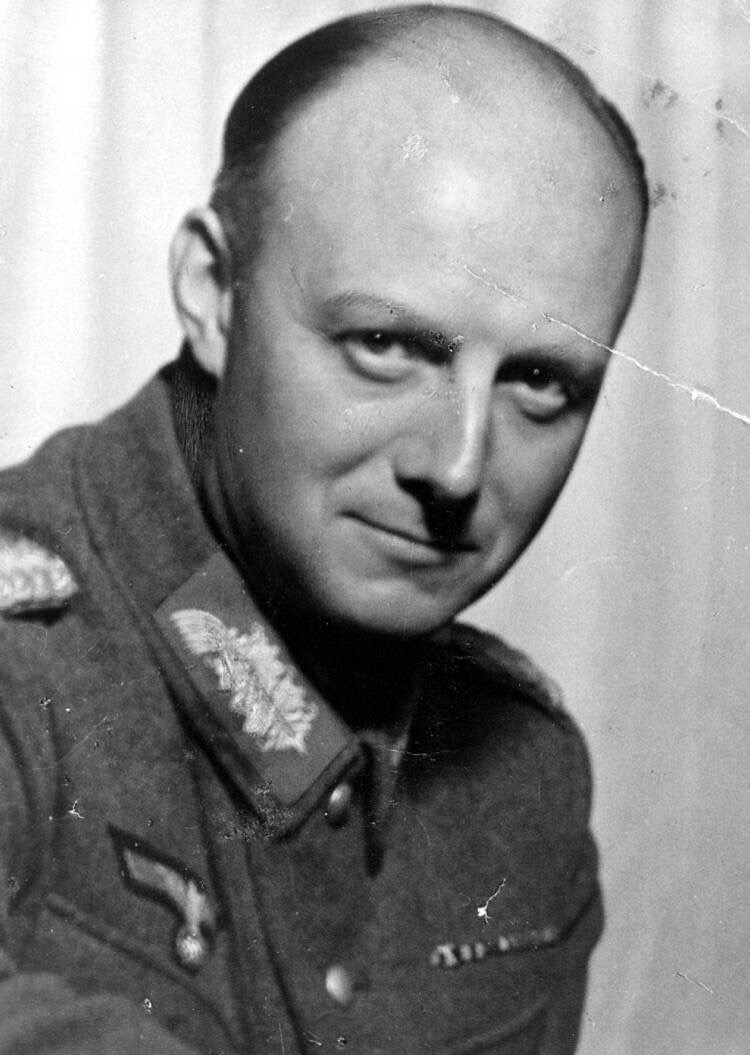
tresckow

General Henning von Tresckow

“We have to show the world that not all of us are like him. Otherwise, this will always be Hitler’s Germany.” When the attempt failed von Trescow was serving on the Russian front far away from Berlin. To avoid arrest and the possibility that under torture he could implicate others or cause harm to his wife and children von Trescow killed himself. Another participant wrote that before his death von Trescow said:

“The whole world will vilify us now, but I am still totally convinced that we did the right thing. Hitler is the archenemy not only of Germany but of the world. When, in few hours’ time, I go before God to account for what I have done and left undone, I know I will be able to justify what I did in the struggle against Hitler. God promised Abraham that He would not destroy Sodom if only ten righteous men could be found in the city, and so I hope for our sake God will not destroy Germany. No one among us can complain about dying, for whoever joined our ranks put on the shirt of Nessus. A man’s moral worth is established only at the point where he is ready to give his life in defense of his convictions.”

Ludwig Beck

General Ludwig Beck

Beck, who had resigned his post as commander of the German Army in protest of the planned invasion of Czechoslovakia wrote something that has become a key part of my military and personal ethic: “It is a lack of character and insight, when a soldier in high command sees his duty and mission only in the context of his military orders without realizing that the highest responsibility is to the people of his country.” 

Tresckow, a committed Christian also noted of Hitler’s supposedly Christian supporters: “I cannot understand how people can still call themselves Christians and not be furious adversaries of Hitler’s regime.” 

220px-Bundesarchiv_Bild_146-1979-013-43,_Wilhelm_Canaris

Admiral Wilhelm Canaris 

There were other Christian resisters of the Hitler regime. Hans Oster was the son of a pastor and one of the senior officers in the Abwehr, the German military intelligence. His boss, Admiral Wihelm Canaris was also a resister. Both would be executed on the personal order of Hitler in April 1945 along with Pastor Dietrich Bonhoeffer, all had been arrested for their involvement in anti-Hitler activities. For his part Canaris would note something that military, intelligence, or police officials who might be tempted to excuse the actions of modern day tyrants or would be authoritarians:

“One day the world will hold the Wehrmacht responsible for these methods since these things are taking place under its nose.”

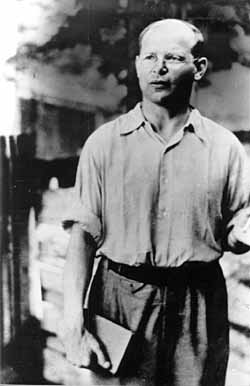
bonhoeffer-prison2

Dietrich Bonhoeffer 

Pastor Bonhoeffer who died with Oster and Canaris at Flossenburg wrote:

“Christianity stands or falls with its revolutionary protest against violence, arbitrariness and pride of power and with its plea for the weak. Christians are doing too little to make these points clear rather than too much. Christendom adjusts itself far too easily to the worship of power. Christians should give more offense, shock the world far more, than they are doing now. Christian should take a stronger stand in favor of the weak rather than considering first the possible right of the strong.”

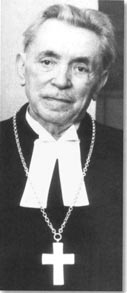
hermann maas

Hermann Maas 

Hermann Maas, another Lutheran pastor made his mark by speaking out in defense of Jews and Socialists. He angered the German political right including the Nazis by doing so. He aided Jews and other non-Aryans to escape Germany, and cared for the elderly Jews who could not. He was removed from his pastorate and imprisoned. He survived the war and would be the first German recognized by Yad Vashem as one of the Righteous Among the Nations. Maas discussed the responsibility of all Germans for the crimes of Hitler and the Nazis, something that Christians and others in nations like the United States, Europe, Asia, Africa, and South America that are threatened by authoritarian leaders and racist regimes:

“Every German bears responsibility for Germany no matter who he is or where he stands, in the homeland or abroad, in public and at home. No one can absolve him of this responsibility. He can transfer it to no one.” 

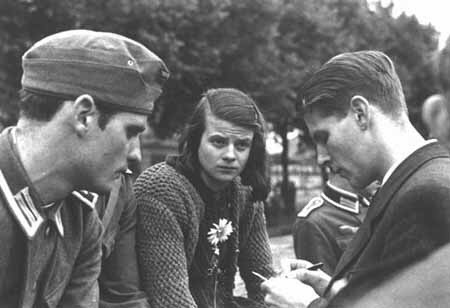
img_0090

Sophie Scholl

But these men were not the only opponents of the Nazi regime. A young woman, a student at the University of Munich named Sophie Scholl and her brother Hans were at the center of an anti-Nazi resistance called the White Rose. They published and distributed a number of anti-Nazi leaflets and were caught doing so in early 1943.

One of those pamphlets noted:

“Nothing is so unworthy of a civilized nation as allowing itself to be “governed” without opposition by an irresponsible clique that has yielded to base instinct. It is certain that today every honest German is ashamed of his government. Who among us has any conception of the dimensions of shame that will befall us and our children when one day the veil has fallen from our eyes and the most horrible of crimes – crimes that infinitely outdistance every human measure – reach the light of day?

If the German people are already so corrupted and spiritually crushed that they do not raise a hand, frivolously trusting in a questionable faith in lawful order in history; if they surrender man’s highest principle, that which raises him above all other God’s creatures, his free will; if they abandon the will to take decisive action and turn the wheel of history and thus subject it to their own rational decision; if they are so devoid of all individuality, have already gone so far along the road toward turning into a spiritless and cowardly mass – then, yes, they deserve their downfall.

Goethe speaks of the Germans as a tragic people, like the Jews and the Greeks, but today it would appear rather that they are a spineless, will-less herd of hangers-on, who now – the marrow sucked out of their bones, robbed of their center of stability – are waiting to be hounded to their destruction. So it seems – but it is not so. Rather, by means of a gradual, treacherous, systematic abuse, the system has put every man into a spiritual prison. Only now, finding himself lying in fetters, has he become aware of his fate.

Only a few recognized the threat of ruin, and the reward for their heroic warning was death. We will have more to say about the fate of these persons. If everyone waits until the other man makes a start, the messengers of avenging Nemesis will come steadily closer; then even the last victim will have been cast senselessly into the maw of the insatiable demon.

Therefore every individual, conscious of his responsibility as a member of Christian and Western civilization, must defend himself against the scourges of mankind, against fascism and any similar system of totalitarianism. Offer passive resistance – resistance – wherever you may be, forestall the spread of this atheistic war machine before it is too late, before the last cities, like Cologne, have been reduced to rubble, and before the nation’s last young man has given his blood on some battlefield for the hubris of a sub-human. Do not forget that every people deserves the regime it is willing to endure.”

She wrote:

“It’s the reductionist approach to life: if you keep it small, you’ll keep it under control. If you don’t make any noise, the bogeyman won’t find you. But it’s all an illusion, because they die too, those people who roll up their spirits into tiny little balls so as to be safe. Safe?! From what? Life is always on the edge of death; narrow streets lead to the same place as wide avenues, and a little candle burns itself out just like a flaming torch does. I choose my own way to burn.”

I think of all of these people that I admire young Sophie Scholl the most. She had no power. She was not an officer, a government official, a businessman, or a pastor. She was simply a young woman who was informed by her faith and her concern for basic human morality and ethics.

While the Nazi State was consumed by the flames of Hitler’s Götterdämmerung, the lives and message of those few who resisted still redounds to us today. And yes, in comparison to the majority of Germans  of the Hitler era, they were a tiny minority, Of over 2000 German General and Flag officers a mere 22 were involved in anti-Nazi activities and the same is true for most professions in the Third Reich.

Milton Mayer wrote the words of a German University Professor and colleague after the war was over. The professor was reflecting on how people ended up going along with the Nazi regime. Mayer wrote his friends words:

“And one day, too late, your principles, if you were ever sensible of them, all rush in upon you. The burden of self-deception has grown too heavy, and some minor incident, in my case my little boy, hardly more than a baby, saying ‘Jewish swine,’ collapses it all at once, and you see that everything, everything, has changed and changed completely under your nose. The world you live in—your nation, your people—is not the world you were born in at all. The forms are all there, all untouched, all reassuring, the houses, the shops, the jobs, the mealtimes, the visits, the concerts, the cinema, the holidays. But the spirit, which you never noticed because you made the lifelong mistake of identifying it with the forms, is changed. Now you live in a world of hate and fear, and the people who hate and fear do not even know it themselves; when everyone is transformed, no one is transformed. Now you live in a system which rules without responsibility even to God. The system itself could not have intended this in the beginning, but in order to sustain itself it was compelled to go all the way.

“You have gone almost all the way yourself. Life is a continuing process, a flow, not a succession of acts and events at all. It has flowed to a new level, carrying you with it, without any effort on your part. On this new level you live, you have been living more comfortably every day, with new morals, new principles. You have accepted things you would not have accepted five years ago, a year ago, things that your father, even in Germany, could not have imagined.

“Suddenly it all comes down, all at once. You see what you are, what you have done, or, more accurately, what you haven’t done (for that was all that was required of most of us: that we do nothing). You remember those early meetings of your department in the university when, if one had stood, others would have stood, perhaps, but no one stood. A small matter, a matter of hiring this man or that, and you hired this one rather than that. You remember everything now, and your heart breaks. Too late. You are compromised beyond repair.

“What then? You must then shoot yourself. A few did. Or ‘adjust’ your principles. Many tried, and some, I suppose, succeeded; not I, however. Or learn to live the rest of your life with your shame. This last is the nearest there is, under the circumstances, to heroism: shame. Many Germans became this poor kind of hero, many more, I think, than the world knows or cares to know.”

I think that I shall close with that tonight.

Peace

Padre Steve+

1 Comment

Filed under christian life, civil rights, ethics, faith, History, holocaust, laws and legislation, leadership, Military, nazi germany, News and current events, Political Commentary

“We have to show the world that not all of us are like him” Operation Valkyrie In the Age of Trump and Other Authoritarians


Henning Von Trescow 

Friends of Padre Steve’s World,

Seventy-three years ago today a number of German military officers as well as civilian officials attempted to assassinate Adolf Hitler in an attempt to overthrow the Nazi Regime and end the Second World War. Ironically many had been supporters of Hitler’s early policies and few had spoken out against the Nazi seizure of power, elimination of political opponents, the outlawing of trade unions and opposition political parties. Most remained silent when Hitler conducted his brutal Night of the Long Knives massacre of 1934 and took the personal oath of loyalty to him after Hindenburg died soon after.

Some would recognize the threat but offered little resistance as Hitler consolidated his power and began to begin his reign of terror at home even as he began to conquer swaths of Europe without firing a shot. Early plans to overthrow Hitler collapsed because his opponents, so used to being loyal and obedient servants of the State were paralyzed whenever an unexpected contingency arose.

Eleven years after Hitler made opposition political parties illegal and almost five years after he invaded Poland to begin the Second World War a plan called Operation Valkyrie was launched. Two of the key plotters were Colonel Claus Schenk Von Stauffenberg, Major General Henning Von Trescow, and retired General Ludwig Beck.

Most understood that the attempt would likely fail, but they were determined to try. Von Trescow said: “It is almost certain that we will fail. But how will future history judge the German people, if not even a handful of men had the courage to put an end to that criminal?” 

When Stauffenberg detonated a bomb at Hitler’s East Prussian Wolf’s Lair headquarters Beck and other conspirators attempted to seize power in Berlin. However their plans went awry. Hitler survived the blast. Josef Goebbels secured Berlin, and the plot fell apart. Stauffenberg and a number of conspirators were shot that night, Beck attempted to commit suicide but failed and was killed. Over 5,000 more conspirators, suspects, and other Nazi opponents, including some of the most respected officers of the Wehrmacht were tried in show trials and executed. Some like Field Marshal Erwin Rommel were given the choice of committing suicide to save their families.

Von Trescow, who killed himself on the Russian front following the collapse of the coup noted: “We have to show the world that not all of us are like him. Otherwise, this will always be Hitler’s Germany.” Likewise, Beck wrote something that has become a key part of my military and personal ethic: “It is a lack of character and insight, when a soldier in high command sees his duty and mission only in the context of his military orders without realizing that the highest responsibility is to the people of his country.” 

Fabian von Schlabrendorff, a conspirator who was captured and tortured by the Gestapo after the failure of Operation Valkyrie, said: “Obedience is the rule. However, there are cases which demand disobedience. This has been uncontested in the Prussian Army. Blind obedience has its origin with Hitler.” 

When Hitler issued the Commissar or Criminal Order on the eve of Operation Barbarossa in 1941, Von Trescow told a colleague:

“Remember this moment. If we don’t convince the field marshal (Fedor von Bock) to fly to Hitler at once and have these orders (Commissar Order) canceled, the German people will be burdened with a guilt the world will not forget in a hundred years. This guilt will fall not only on Hitler, Himmler, Göring, and their comrades but on you and me, your wife and mine, your children and mine, that woman crossing the street, and those children over there playing ball.” 

Unlike Hitler’s Germany Americans still have some checks and balances to guard against a President attempting to gain control of the country the way Hitler did Germany. However, those checks and balances are delicate, fragile, and if neglected will fail in the crisis. In fact they are showing incredible strain as the Republican majorities in Congress fail to exercise their constitutional responsibilities and political appointees undermine the very agencies that they are responsible for maintaining, and laws that they were sworn to uphold. If they do fail, will we have the courage to stand for the principles and ideals of our country? That we do not yet know but my recent experience says that we very well might fail in the crisis. Historian Timothy Snyder wrote:

“The European history of the twentieth century shows us that societies can break, democracies can fall, ethics can collapse, and ordinary men can find themselves standing over death pits with guns in their hands. It would serve us well today to understand why.”

There are prices to be paid for obedience to unlawful orders and the actions of a criminal state, as well as a price to be paid for disobedience. The men who belatedly and against a nation that was still devoted to Hitler understood those questions and acted accordingly. I do hope that none of us have to face what these men did between 1933 and 1944. However, as time marches on and the President and his Administration continue to defy the law, ignore the Constitution, and undermine the foundations of our Republic, even encouraging their supporters to violence, will our democratic institutions survive?

The administration has implemented and is continuing to implement policies that are quite similar in their intent to crimes that the Nazis were tried for at Nuremberg. If Americans do not rise up against them we too will be to use the words of Von Trescow: “be burdened with a guilt the world will not forget in a hundred years.” 

img_0193-1

Bonhoeffer

That is a question that we have to ask. If they do crumble will we stand the test? Will we have the courage to resist even at the cost of our lives? Dietrich Bonhoeffer who had already been jailed by the Gestapo at the time of Valkyrie wrote:

“If I sit next to a madman as he drives a car into a group of innocent bystanders, I can’t, as a Christian, simply wait for the catastrophe, then comfort the wounded and bury the dead. I must try to wrestle the steering wheel out of the hands of the driver.”

Will we have the courage to resist at that moment? Words are cheap, actions are all to rare. Will we be able to stand against the tide?

That my friends is a question we may all have to answer sooner rather than later.

Until tomorrow,

Peace

Padre Steve+

2 Comments

Filed under christian life, civil rights, ethics, faith, History, Military, nazi germany, News and current events, Political Commentary

U.S. Army Artillery from the Napoleonic Era to the Civil War


cannons

Friends of Padre Steve’s World,

Since things are going to stay exciting this week in the realm of American politics and world events I decided to take it easy tonight and post a portion one of my Civil War texts, A Great War in a Revolutionary Age of Change. This section of that chapter deals with the developments of the American artillery branch from the Napoleonic period until the Civil War. 

I figured I needed to relax a bit and truthfully artillery gives me a serious woody. I started my military career as a forward observer in the National Guard back in 1981 before all the GPS and computer stuff and I tell you there is nothing like calling in 155mm artillery fire and seeing it obliterate a target. I know that sounds bad, but don’t knock it until you have tried it, and back in those days the life expectancy of a Forward Observer if we went up against the Soviets was measured in minutes so allow me that because I haven’t been allowed to do it since 1983 when I was commissioned as a Medical Service Corps officer and later became a chaplain. 

I am sure that there are some artillery geeks out there so if you know one please share this with them.

So anyway, until tomorrow.

Peace

Padre Steve+

The Gribeauval System, Napoleon, and the U.S. Army

Like the infantry and cavalry the technical specifics and tactics of the artillery of the United States Army had their roots in the Napoleonic era. Artillery theory “emphasized both the offensive and defensive role of field artillery, with the emphasis on the offensive role in support of infantry assault tactics.” [1] Much of this was due to how Napoleon, a master of artillery tactics, employed his artillery. Napoleon depended heavily on his artillery, he “liked to assemble them in a Grand Battery and use them as an offensive, as against a defensive weapon. At Wagram, in 1809, Napoleon had torn the heart out of an Austrian army with a Grand Battery of 112 guns.” [2] Napoleon would also use a tactic called the artillery rush in which just prior to launching an attack, “the greater part of his artillery reserve would rush to the front. An intensive bombardment would pulverize the opposing line at the point of assault.” [3] If successful he would unleash his heavy and light cavalry in pursuit of broken enemy formations, if not, the guns would cover the retreat of the assault troops.

Napoleon used the system of General Jean Baptiste Gribeauval (1715-1789) who was the real father of artillery in the French army. Gribeauval adapted the Prussian system of Frederick the Great for France. “He “undertook a complete overhaul of the French artillery system.” [4] He developed an entire artillery system for the French army including field, siege and coastal artillery manned by specially trained soldiers. These soldiers were trained in specialized artillery schools. Napoleon, who was trained in the artillery school of the Regiment La Fere in 1785, “used Gribeauval’s guns, equipment, and organization as steppingstones on the path to becoming First Counsel of France and later of a large part of Europe.” [5]

In order to improve mobility, Gribeauval standardized weapons in each arm of the artillery, and most importantly for field artillery he reduced the number of gun types found in different artillery units. He “selected 4-, 8-, and 12-pr guns, all plain unchambered pieces of 18 caliber length, and 6-in howitzers. All of these fired well-fitting projectiles with powder charges about one-third the weight of the shot.” [6] To increase accuracy he ordered that the bore of artillery pieces be drilled rather than case which “produced more exact tolerances within the bore and reduced the windage between the projectile and the bore’s wall.” [7] To enhance mobility he designed standardized limbers and caissons for his guns and all field artillery pieces were “mounted on the same basic carriage so that many carriage parts were interchangeable.” [8] Likewise, the Frenchman “introduced a series of innovations that aimed at improving the artillery’s accuracy. He introduced an elevating screw to adjust the guns range instead of a wedge, allowing for more precise ranging. Gribeauval also provided the gun crews with graduated rear sights. The elevating screw and the rear sight were seen as the most significant improvements regarding cannon in two hundred years.” [9]

One of the most important aspects of Gribeauval’s system was that it touched “nearly every aspect of cannon design, construction, carriages, and deployment, the so-called Gribeauval System served France into the Napoleonic Era. It was so far reaching that it also profoundly influenced artillery in other nations, including that of the emerging United States” [10] which adopted the Gribeauval System in 1818.

American Army officers had long been in the thrall of Napoleon and had been educated in Napoleon’s theory of war by Napoleon’s Swiss interpreter, Henri Jomini, through Denis Hart Mahan, the first military theoretician of the United States who had studied in France and taught at West Point. As such the army sent officers to France to study, among them was Lieutenant Daniel Tyler who went to France in 1828. He translated all of Gribeauval’s System and noted that the French were in the process of adopting British designs of weapons and accouterments, which they had found to be superior to the older designs. Tyler recommended that the Army continue with the Gribeauval System.

One of these advancements was the stock-rail carriage to mount artillery, which was superior to the Gribeauval designs. Janice McKenny, in her book The Organizational History of Field Artillery 1775-2003 noted that Tyler also translated copies of the French evaluations of British designs, and “obtained complete drawings and specifications of the Système anglais modié, which the Americans later named the “stock-trail system” after the design of the carriage. The new trail consisted of a solid block of wood, simpler and stronger than the old split-trail then in use by the American army, and was significantly superior in maneuverability.” [11] In response to Tyler, some American designers “began fabricating stock trail prototypes” [12] from Tyler’s drawings. However, it took over a decade for the Army to adopt the design, but once adopted the army would use the stock-rail system for its field artillery guns until after the Civil War.

This was in large part due to the work of Captain Alfred Mordecai, who traveled to France in 1833-1834 and collected data on the French development of the stock-rail system. His information, “which included detailed drawings, became the basis for U.S. prototypes of the design.” [13] An Ordnance officer, Mordecai went on to become head of the Frankford Arsenal and later was appointed to the Ordnance Board where he wrote the 1841 Ordnance Manual for the Use of Officers in the United States Army. Mordecai was instrumental in standardizing weapons types and carriages. The guns of his 1841 Pattern, 6- and 12-pound guns, as well as the 12-pound howitzer were all mounted on a standard carriage. Larger weapons, the 24- and 32- pound howitzers of the 1841 pattern were developed but did not see as much service due to their weight. Additionally, limbers and caissons were redesigned to lighten them and improve mobility. Though approaching obsolescence, many these guns saw action in early part of the Civil War and Confederate artilleryman Porter Alexander noted that the 24-pound howitzer was “his favorite gun”[14] for the effectiveness of its heavy shells and canister.

6pdrcarriagetravel

M-1841 6-Pounder Artillery Carriage and Limber

The artillery service in United States Army was organized like the French army into batteries of six guns, which in turn were detailed to brigades, regiments or battalions. The regimental system was adopted in 1821, following discussions by Secretary of War John C. Calhoun and Congress. As a result, the existing artillery of the army, “the Corps of Artillery and the Regiment of Light Artillery were consolidated to form the 1st, 2d, 3d, and 4th Regiments of Artillery. One of the nine companies authorized to each of the four regiments was to be equipped as light artillery…. The number of artillery companies was reduced from forty-two (thirty-two in the Corps of Artillery and ten in the Regiment of Light Artillery) to thirty-six in the four artillery regiments.” [15] The units were dispersed at forts as coastal artillery and depots around the country.

Most of the artillery companies of the period were maintained well below strength and none were organized as horse artillery. In order to give artillerymen practical experience and training working as part of a larger force, Calhoun and the Army established an artillery school at Fortress Monroe. This was an important step. The mission of the school was to provide artillerymen the necessary training in the science of gunnery and artillery tactics, which could not be accomplished in isolated posts. To ensure that the total force was trained the army determined that, “ten artillery companies were to be drawn from the four regiments and assembled as the Artillery Corps for Instruction. The faculty was to be selected from the artillery at large. Through a plan of rotation, all artillery companies were eventually to pass through the school. Cadets assigned to the artillery after graduating from West Point were to receive a year’s instruction at the school before joining their regiments.” [16] The school was closed in 1835 due to the demands for artillerymen in the increased number of coastal fortifications and the need for troops to serve in Florida against the Seminoles.

Though almost all artillery units participated in the war “for the most part, the artillerists were limited in employment to manning the numerous stockades erected to confine the Indians to the Everglades.” [17] Thus they gained no practical experience in their trade. In spite of this by the late 1830s a high percentage of the West Point faculty and staff were men who had served with the artillery in Florida. Major Richard Delafield, an artilleryman became Superintendent in 1838 and gave “artillery instruction wider curricular attention: an artillery “laboratory” would be set up, and practice with lightweight and mobile cannon would receive new impetus.” [18] In another move, Secretary of the Army Joel Poinsett decided to implement the provision of the 1821 regulations to establish four light companies. Using surplus horses from the war he mounted one company as horse artillery in which each crew member had his own horse or rode on the limber, and three as mounted units, “meaning that though the guns were horse-drawn, the cannoneers rode on the carriages or caissons or they walked. In theory the mounted units were to be employed with infantry as regular field artillery and the horse (or light) artillery was to be employed with cavalry.” [19]

The Apex of the Smoothbore

12 pound napoleon

12 Pound M-1857 Napoleons at Gettysburg

Most of the improvements in artillery design between the Napoleonic era and the Civil War were on focused on lightening the weight of the tube, developing better and more mobile limbers, and improvements to fuses and ammunition. During this time the smoothbore cannon reached the apex of its development. In the United States this was realized with the brass M 1857 12-pound Napoleon, which was developed from a French design, however the gun “embodied none of the recent advances in technology” and was “already considered obsolescent by the French Army.” [20] However, much of the choice was dictated by purchasing agents and the budget which required any new ordnance to be cheap. The Napoleon was intended to replace the 1841 patter 6 and 12 pound guns and the 12 pound howitzer. It was nearly 500 pounds lighter than the old guns and “though it was technically a gun, owing to its ability to fire canister and solid shot, the Napoleon was often referred to as a gun-howitzer for its ability to fire explosive shell.” [21] It would see its first action at the Battle of Bull Run and nearly 1,800 of these versatile cannon would be produced in Northern and Confederate foundries during the war. Despite its obsolescence it “proved to be the most popular field piece during the Civil War,” [22] and Union artillery General Henry Hunt later acclaimed the Napoleon as “the best all round field piece of this era.” [23]Robert E. Lee told the Prussian observer to the Army of Northern Virginia, Justus Scheibert: “Nothing surpasses… the impression of a battery of 12-pound smoothbores which approaches to within 400-600 paces of the enemy…. In such moment rifled artillery, the advantages of which in open country I fully appreciate, cannot replace the smoothbore.” [24] Some of these guns remained in service until 1880.

The Development of Rifled Cannon and Breechloaders

While the development of rifled, breech loading, and repeating rifles advanced the capabilities of the infantry in terms of firepower, range, accuracy and battlefield lethality, developments to modernize the artillery around the world lagged behind the rifled musket due to the economic costs involved. Because of the cost “no country would face the cost of re-equipment.” [25] This would begin to change in the mid-1850s as the experience of the Crimean began to give new impetus to weapons development.

However, a number of artillerymen and innovators began to experiment with breech loading and rifled cannon. These were not new ideas, and “when combined, they were first experimented with in England in 1745,”[26] but it would take another hundred years before Italian Major Giovanni Cavalli developed “a cast iron gun, its bore cut with simple two groove rifling to accept an elongated projectile fitted with corresponding lugs that mated with the gun’s grooves.” [27] As Cavalli improved his design others in Europe designed rifled guns. In France Colonel Treuille de Bealieu designed a similar gun to Cavalli; but which fired a cylindrical projectile. Napoleon III who was himself authority on artillery ordered brass smoothbores to be rifled on Bealieu’s design. [28] Swedish Baron Martin Wahrendorf “experimented with smaller, multiple-grooved rifling using lead-sheathed projectiles” [29] Cavalli’s guns were used by the Sardinian army, while the French deployed a number of theirs to Algeria and against the Austrians in Italy.

In the 1850s three English inventors, Charles William Lancaster, Joseph Whitworth, and William George Armstrong began to develop rifled guns. During the Crimean War the British Army modified some old large-caliber guns as breech-loaders. The “first British rifled ordnance consisted of a few old 68-pr and 8-in. cast iron guns, which were made oval and twisted in the bore and so converted to pieces rifled on the Lancaster principle.” [30] Some of these guns saw action during the siege of Sevastopol. Whitworth also produced a breech loading rifled cannon. His gun had a very long range and was exceptionally accurate, however the design was complex and temperamental, and the gun “ultimately proved impractical for general use.” This was in part due to their complexity and the “precise tolerances used in the manufacture… required meticulous maintenance by gun crews to avoid malfunctions, and even moderate bore wear led to jamming in the bores.” [31] A few Whitworth rifles were employed by the Confederate army during the Civil War, two seeing action in Richard Ewell’s Second Corps at Gettysburg.

Armstrong, proposed a lightweight rifled field gun, made of forged rather than cast iron to the Duke of Newcastle, Secretary of State for War in 1854. [32] His design incorporated features that remain today. “His rifled breechloader had multiple groves to distribute the twisting force equally around the projectile. The iron projectile was coated with lead to permit a tight sealing into the grooves. Later projectiles have employed copper rotating bands to produce the tight seal without leaving the deposits of lead which tended to foul the cannon.” [33] The only real issues with Armstrong’s guns was that his “breech-loading system was complex and rather advance of its time, and there were a number of accidents due to various mechanical weaknesses.” [34] Likewise, the early breech-loading systems “were so clumsy and slow to operate that a good crew could fire a muzzle-loader faster than a breach loader.”[35]

The United States Army began to examine the possibilities of rifled guns, but the process took time, and much struggle due to the bureaucracy and political infighting. “In the mid-1850s, experiments with the forerunners of rifled cannon began at Fort Monroe. In 1860, a board of artillery and ordnance officers was established to make further tests on rifling, and the board submitted its report late that year. It recommended that at least 50 percent of the guns at forts and arsenals be converted into rifles.” [36]

15inch-rodman-gun

15 inch Rodman Gun

During the same time period a number of Americans both military, and civilian, began to develop their own variations of rifled cannon for use in the U.S. Army. The most important of these were Captain Robert Jackson Rodman and Captain Robert Parrott. Rodman was a true scientist who understood both metallurgy and gunpowder. Rodman was instrumental in using his knowledge to design the largest guns of the era. Called Columbiads, these heavy guns came in 8 inch, 10 inch, 15 inch and even a 20 inch model. They were used in coastal fortifications. In the 1870s over 200 of the 10 inch model were converted to 8 inch rifles. The Rodman guns remained in service the rest of the century and are considered to be the best cast-iron cannon ever produced.

Parrott was the Superintendent of the West Point Iron and Cannon Foundry of Cold Spring New York. Parrott “became interested in rifled guns after the successes of Krupp in Germany. In the following years he applied his own skills to designing an American rifled gun.” [37] Parrott focused on improving cast-iron guns. He “developed a method for shrinking wrought-iron bands around the breech of a cast barrel.”[38] The band was designed to strengthen the cast iron barrel and “the final result was a relatively lightweight, economical gun and gave the Parrot rifle its distinctive profile.” [39] For field artillery use Parrot designed a 2.9 inch 10-pounder in 1861 which was modified to a 3 inch bore in 1863 to standardized ammunition with the 3 inch Ordnance Rifle. Parrot also designed a 20-pound 4.7 inch rifle for field service. Both models were manufactured in the North and the South and saw wide use with over 2,000 produced for the Federal government. When he was at VMI in 1860, Thomas “Stonewall” Jackson was “one of the first to test and recommend for adoption the rifled Parrott guns.” [40] At Jackson’s “recommendation, Virginia purchased twelve” of the new rifled guns. [41]

999130_10152038135167059_1801660138_n

10 Pound Parrot Rifle at Devil’s Den Gettysburg

Parrot also produced heavy guns used by the Navy for use on ships, and the Army for seacoast and siege weapons. The one problem with the Parrot rifles was the fact that the cast-iron barrel was brittle and prone to burst, especially those of large caliber, which made it unpopular among its crews and caused the Navy to withdraw them from service aboard ship. Porter Alexander reported that during the Battle of Fredericksburg that for the first and only time he had 30-pound Parrott rifles in the field and that during the battle “they filled a great want, until they, unfortunately, both exploded towards the middle of the day, one on the 37th round & one on the 42nd.” [42]

A civilian, John Griffen of the Phoenix Ironwork of Phoenixville, Pennsylvania,“pioneered the use of wrought iron in the construction of field pieces” [43] and patented his prototype in 1855. The designed was slightly modified by the Ordnance Department and adopted by the army in 1861. The weapon was known as the Ordnance Rifle and is had a bore of 3 inches and threw a 10-pound projectile. Unlike the cast iron Parrot, it was “constructed of tougher wrought iron, consisting of iron bands welded together around a mandrel and then lathed to a sleek, modern profile. It was then bored and rifled.” [44] The Ordnance rifles were light, easy to maneuver and beloved by their crews for their accuracy, and dependability. Phoenix manufactured over 1,000 of these weapons for the Federal government.

To be continued…

Notes

[1] Ibid. Hagerman The American Civil War and the Origins of Modern Warfare p.21

[2] Ibid. Cornwell Waterloo: The History of Four Days, Three Armies, and Three Battles p.165

[3] Nesmith, Vardell E. Stagnation and Change in Military Thought: The Evolution of American Field Artillery Doctrine, 1861-1905 – An Example United States Army Command and Staff College, Fort Leavenworth, KS 1976 p.5

[4] Kinard, Jeff Artillery: An Illustrated History of Its Impact ABC Clio, Santa Barbara, Denver, and Oxford 2007 p.148

[5] Stevens, Phillip H. Artillery Through the Ages Franklin Watts Inc. New York 1965 p.47

[6] Rogers, H.C.B. A History of Artillery The Citadel Press, Secaucus NJ 1975 p.58

[7] Ibid. Kinard Artillery: An Illustrated History of Its Impact p.148

[8] Ibid. Stevens, Phillip H. Artillery Through the Ages Franklin Watts Inc. New York 1965 p.48

[9] Garcia, Manuel R. The Pursuit of Precision in Field Artillery School of Advanced Military Studies, United States Army Command and General Staff College, Fort Leavenworth KS 2010 pp.7-8

[10] Ibid. Kinard Artillery: An Illustrated History of Its Impact p.148

[11] McKenny, Janice E. The Organizational History of Field Artillery 1775-2003 Center For Military History, United States Army, Washington D.C. 2007 p.36

[12] Ibid. Kinard Artillery: An Illustrated History of Its Impact p.170

[13] Ibid. Kinard Artillery: An Illustrated History of Its Impact p.169

[14] Ibid. Alexander Fighting for the Confederacy: The Personal Recollections of General Edward Porter Alexander p.182

[15] Ibid. McKenny The Organizational History of Field Artillery 1775-2003 p.32

[16] Ibid. McKenny The Organizational History of Field Artillery 1775-2003 p.34

[17] Ibid. McKenny The Organizational History of Field Artillery 1775-2003 p.34

[18] Longacre, Edward G. The Man Behind the Guns: A Military Biography of General Henry J. Hunt, Chief of Artillery, Army of the Potomac Da Capo Press, a Perseus Group, Cambridge MA 2003 p.28

[19] Ibid. McKenny The Organizational History of Field Artillery 1775-2003 p.38

[20] Ibid. Stevens, Phillip H. Artillery Through the Ages Franklin Watts Inc. New York 1965 pp.62-63

[21] Ibid. Kinard Artillery: An Illustrated History of Its Impact p.188

[22] Ibid. McKenny The Organizational History of Field Artillery 1775-2003 p.49

[23] Ibid. Longacre The Man Behind the Guns: A Military Biography of General Henry J. Hunt, Chief of Artillery, Army of the Potomac p.70

[24] Ibid. Guelzo Fateful Lightening p.257

[25] Ibid. Fuller The Conduct of War 1789-1961 p.89

[26] Ibid. Fuller The Conduct of War 1789-1961 p.89

[27] Ibid. Kinard Artillery: An Illustrated History of Its Impact p.222

[28] Ibid. Rogers A History of Artillery p.94

[29] Ibid. Kinard Artillery: An Illustrated History of Its Impact p.222

[30] Ibid. Rogers A History of Artillery p.94

[31] Ibid. Kinard Artillery: An Illustrated History of Its Impact p.223

[32] Ibid. Rogers A History of Artillery p.94

[33] Ibid. Stevens, Phillip H. Artillery Through the Ages Franklin Watts Inc. New York 1965 p.60

[34] Ibid. Rogers A History of Artillery p.94

[35] Ibid. Stevens, Phillip H. Artillery Through the Ages Franklin Watts Inc. New York 1965 p.60

[36] Ibid. McKenny The Organizational History of Field Artillery 1775-2003 pp.50-51

[37] Ibid. Kinard Artillery: An Illustrated History of Its Impact p.190

[38] Ibid. Stevens, Phillip H. Artillery Through the Ages Franklin Watts Inc. New York 1965 p.61

[39] Ibid. Kinard Artillery: An Illustrated History of Its Impact p.190

[40] Ibid. Gwynne Rebel Yell: The Violence, Passion, and Redemption of Stonewall Jackson p.88

[41] Ibid. Nesmith Stagnation and Change in Military Thought: The Evolution of American Field Artillery Doctrine, 1861-1905 – An Example p.15

[42] Ibid. Alexander Fighting for the Confederacy: The Personal Recollections of General Edward Porter Alexander p.172

[43] Ibid. Nesmith Stagnation and Change in Military Thought: The Evolution of American Field Artillery Doctrine, 1861-1905 – An Example p.14

[44] Ibid. Kinard Artillery: An Illustrated History of Its Impact p.192

Leave a comment

Filed under civil war, History, Military, us army

Kursk: The Death Ride of the Panzerwaffe

Friends of Padre Steve’s World,

I am reposting an older article today which was a paper that I wrote for a class as part of my second Masters Degree program. 

The Battle of Kursk was the climactic battle on the Eastern Front from which the Germans never recovered. It was a battle that should not have been fought, at least at the time that it was fought. It was high risk operation with minimal payoff should it succeed. It did not and combined with the Allied landings in Sicily and other setbacks suffered by German forces in 1943 was the battle that doomed Germany to defeat. It was the last time that the German military had a chance to score a major victory against the Soviets and their defeat ensured the defeat of the Third Reich. 

Peace

Padre Steve+


The German Situation and Dilemma in April 1943
Battle_of_Kursk_(map)

The Germans faced a dilemma in April 1943.  Manstein’s brilliant counter-stroke had turned what could have been disaster into an opportunity to salvage prospects for the Eastern Front. The German action had “repaired its front, shattered the hopes of the Allies, and nipped the Russian spearhead.”[i]Unfortunately for the Germans the spring thaw meant that Manstein could not continue immediately and eliminate the Kursk bulge which had been formed by Rokossovky’s offensive and Manstein’s own counter-stroke.  With the Germans stalled by the weather Stavka cancelled “other significant planned offensives to dispatch reinforcements to the Kursk region.”[ii] Despite the weather Manstein pushed Kluge for an immediate attack on both sides of the bulge but was rebuffed by Kluge who “insisted that his troops needed to rest and refit.”[iii] This rebuff combined with the onset of the Russian mud meant that in “March 1943 the war on the ground came to an end….The front was immobilized.”[iv]

manstein with tanksField Marshal Erich von Manstein with Tiger I Tanks

Manstein’s offensive had “enabled the Germans to consolidate a firm position in the East, and build up strength afresh- not to its former level, but sufficient to provide a good prospect of holding the Russians at bay.”[v] As a result German armies in the south “held again nearly the same positions from which the Blau offensive had begun the previous spring.”[vi] Now the Kursk bulge some 250 Kilometers wide and 160 Kilometers deep[vii] protruded menacingly into the German lines and drew the attention of both sides, to the Germans it appeared to be designed for an encirclement battle.[viii] Thus it appeared that the Kursk bulge was the obvious place for the Germans to resume the offensive and maintain the initiative on the Eastern Front.

But was the Kursk necessary?  Was Operation ZITADELLE as obvious as it seemed to be to Hitler, Zeitzler and others?  The battle is the subject of many books and articles which often focus on tactical and operational details of the German offensive, particularly the battle on the southern side of the bulge and the clash of armor at Prokhorovka.  This essay will focus less on the battle and more on the strategic situation faced by the Germans in the spring of 1943. Key to this are the arguments for and against the operation, the operations timing and the option that the Germans had to conduct a mobile defense.   It is the strategic situation that must be looked at to determine whether Operation ZITADELLE was necessary at all. Manstein believed that had the offensive been launched early enough that it might have succeeded provided it “we launched it early enough we could hope to catch them in a state of unpreparedness.”[ix]Williamson Murray and Allan Millett agree with Manstein’s assessment but note that an early offensive was “riskier…but greater the prospect for a major success.”[x] Guderian on the other hand saw that nothing good could come of ZITADELLE and opposed it from the beginning.[xi] Glantz and House in their detailed study argue that “there is absolutely no basis for assuming that Citadel would have succeeded had it been launched in spring 1943.”[xii]

battle_kursk t 34The Soviets Reinforced and Fortified the Kursk Salient

The Germans faced a number of major problems in early 1943.  First, among them was manpower.  The armed forces had been mauled on the Eastern Front, “after continuous operations from June 1942 to March 1943, most German units were worn out.”[xiii] Many infantry divisions “were reduced to two thirds of their original strength, with declining mobility and anti-tank defenses.”[xiv] Had the Germans only faced the Russians this might have been overcome, however they not only faced a rejuvenated Red Army, but challenges brought about by multi-theater operations and their weak, ineffective and reluctant allies.  The Allied air offensive which though it “did not decisively effect German arms production it nevertheless prevented a great deal of work from being carried on and had profound moral effects which communicated themselves to all the fronts.”[xv] Likewise the U-Boat campaign had been effectively defeated by May 1943 allowing for increasing numbers of American troops and supplies to reach Europe, including significant Lend-Lease aide for the Soviet Union.  Manpower became a major issue for the the German Army and industry.  Both the military and industryhad difficulty in getting the required number of personnel to meet their personnel needs, in January 1943 the German High Command “demanded 800,000 men-but even the most ruthless call-up was able to produce only 400,000” who were lost to the civilian war economy.[xvi] Even the “belated industrial mobilization of Germany, fueled by slave labor and directed by the organizational genius of men like Speer and Guderian, could do little beyond patching together existing units.”[xvii]

Bild 101I-139-1112-17General Heinz Guderian, Inspector of Panzer Troops was one of Few Senior German Officers to Oppose ZITADELLE from the Beginning

There were other challenges. The German and Italian armies in North Africa had surrendered, and about 330,000 Axis soldiers entered captivity.[xviii] Added to the heavy losses on the Eastern Front, the disasters in North Africa and Stalingrad had “effectively destroyed the Axis military alliance, such as it was.”[xix] Italy, Hungary and Romania all began to pull their forces out of the Eastern front after having them shattered by the Soviet Winter offensive.[xx]Italy, shaken by its losses in North Africa and the Russian front was wavering in its support for Germany; Mussolini’s government itself was on the verge of falling.  Likewise the Hungarian government sought contact with the Allies;[xxi]as did the Romanians.[xxii] Finland too was looking for a way out and limiting its participation in German offensive operations.[xxiii] As her allies looked for a way out, the British and Americans were about to open a new front in Southern Europe, while another had effectively been opened by partisans in Yugoslavia and Greece.[xxiv] The crisis in the south was great enough that OKW under General Jodl began to look at ways of shoring up those fronts in case Italy withdrew from the war including the use of units that would have to be withdrawn from the Eastern Front.[xxv] The Balkans drained German reserves such that the number of German divisions deployed there increased from 5 to 15 between July 1942 and July 1943.[xxvi] Additionally many units had to be created by the Replacement Army to build up the Western Front knowing that an Allied strike there would eventually take place, further depriving the Eastern Front of badly needed infantry replacements and divisions.
Benito_Mussolini_and_Adolf_HitlerHitler Felt Regaining the Initiative in the East was Critical to Keeping his Allies in the War

The German Options and Decision

The question for the Germans now was whether they “had any strategic options that would allow them to avoid defeat.”[xxvii] It is from this perspective that the necessity of Kursk must be examined. Most in the German High Command now realized that strategy in the east could no longer be “based on the illusion of conquering the vast Soviet Union.”[xxviii] As such the discussion turned to what direction the new strategy should take.  Political considerations came into play: Since the German allies were looking for ways to exit the war it was felt that “it was politically impossible for Germany to surrender the initiative on the Eastern Front.”[xxix] Realistically there were two options available: Wait and counterattack or launch a limited attack on the Kursk salient. The general impression among many German commanders in the East was that they had ended the last campaign “with a relative advantage over the Reds, an advantage that should be exploited as soon as the rasputitsa ended in April or early May.”[xxx] But the only strategy that looked feasible balancing the political and military goal of maintaining the initiative was what Manstein originally had in mind after Kharkov, to continue on, pinch out the Kursk bulge with the cooperation of Kluge’s Army Group Center.  As noted the opportunity to do so was lost with Kluge’s refusal and the onset of the spring thaw.  Yet this idea captured Zeitzler at OKH and Kluge at Army Group Center, though by April and May Manstein was more inclined toward “the ‘backhand’ stroke, which involved giving up the whole Donetz basin and staging a major Panzer offensive southeast from Kharkov.”[xxxi] However, this was too bold for Hitler who was “unwilling to give up the Donetz Basin with its industrial and mineral resources.”[xxxii]

battle_kursk_tiger advancingThe New Tiger Tanks Were to Play a Critical Role in the Attack

Manstein felt that the “moment of opportunity had passed, but his counterpart at Army Group Center…Kluge, was enthusiastic about the proposal.”[xxxiii]Zeitzler believed that an “attack at Kursk would be less risky”[xxxiv] than Manstein’s “backhand” and pushed the plan to Hitler.  There were advantages to this strategy if it could be carried out successfully. The Germans would encircle and destroy Russian forces in the salient and “shorten their own defensive lines after such an encirclement.”[xxxv] Yet the plan was opposed by others. Jodl at OKW argued against ZITADELLE “because he believed that it was dangerous to empty the strategic reserve when so many new crises threatened to develop in the Mediterranean.”[xxxvi] Zeitzler countered that because of German weakness in the east that they could not “wait to be hit.”[xxxvii] Guderian did not believe that either Army Group could be ready to mount the offensive that Zeitzler envisioned and “declared that the attack was pointless…if we attacked according to the plan of the Chief of the General Staff, we were certain to suffer heavy tank casualties, which we would not be in position to replace in 1943.”[xxxviii]Guderian asked Hitler at a separate conference “why he wanted to attack at all in the East in 1943.” When Keitel expressed that the reasons were political, Guderian asked Hitler “How many people do you think even know where Kursk is? It’s a matter of profound indifference to the world whether we hold Kursk or not…”[xxxix] Guderian and Speer both pointed out technical problems in producing the Tigers and Panthers but were overruled.[xl] Hitler himself reportedly had misgivings about the attack at one point reportedly stating that “the thought of the Zitadelle operation ‘made [his] stomach turn over’”[xli] In spite of Jodl and Guderian’s warnings, his own misgivings and those of Manstein and Model in April and May, Hitler “allowed himself to be tempted once more into taking the offensive. The Kursk salient…lured him into mounting his great pincer operation known as Citadel.”[xlii] Glantz and House maintain that he could “see no alternative politically and agreed to the plan.”[xliii]

The Facts on the Ground

Kursk_T34_and_Fieldgun-px800Soviet Forces Expected the Attack and Were well Prepared to Meet it

Once the decision to attack was made the question that remained was the timing of the attack. Manstein had preferred an early attack in May, but the operation was postponed to mid-June and then to July due to the request of Model who believed that his forces were too weak and needed reinforcements.[xliv] The attack was to be one of several “limited offensives designed to consolidate the German defenses while inflicting sufficient damage on the Red Army to delay any Soviet offensive.”[xlv] But the delays insisted on by Model and agreed to by Hitler were a fatal error.  The Germans failed to “factor into their decision was the unpalatable reality that Soviet strength in the Kursk salient was growing much faster than the Wehrmacht could muster forces to attack it.”[xlvi] Not only were the Soviet forces growing they knew about the German plans and could deploy their forces to counter them and for their own offensive.[xlvii] Stalin’s generals were able to convince him not to launch an attack and instead wait on the Germans so they could attack as the Germans exhausted their strength.[xlviii] They knew of it since April and reinforced the flanks of the salient with guns and armor at a faster pace than the Germans opposite them.[xlix] At Kursk “improved intelligence collection and analysis permitted the Red Army to predict almost exactly the strategic focal point of a major German offensive.”[l] Into the bulge “Vatutin and Rokossovsky crammed seven armies.”[li] The Russians deployed in depth in heavy fortified zones and minefields along the very sectors of the bulge that the Germans intended to attack, successfully masking their preparations from the Germans. It was “a measure of Soviet self-confidence that the senior commanders were looking beyond the German attack, beyond its failure, to the first major Soviet summer offensive.”[lii] Had the Germans succeeded in pinching off the salient “they would have faced several additional defensive belts constructed to the east of the salient.”[liii]

Typically when one launches an offensive it is desirable to have numeric advantage over the defender, 3:1 is normally assumed to be sufficient. At Kursk the Germans were outnumbered by the Russians 2.3:1 in men and 1.6:1 in tanks[liv] yet somehow the offensive had now morphed from a spoiling attack into a strategic offensive, albeit with more limited objectives attacking one of the strongest points in the Russian line.  General Raus, commanding a corps in Army Detachment Kempf noted: “Considering Russian dispositions, defenses and terrain, German strength could be considered only minimally sufficient for the assigned mission.”[lv] The Chief of Staff of XLVIII Panzer Corps called Kursk “the strongest fortress in the world.”[lvi]

Danger Signs: Requests for Cancellation

keitel-jodl-hitlerGeneral Alfred Jodl at OKW Protested the Offensive Verbally and in Writing

As more delays occurred Manstein “came out in the open and protested that the operation was no longer feasible and must be abandoned, but it was too late.  The united stand of orthodox General Staff opinion, Keitel, Zeitzler, Kluge, had persuaded the Führer, whose mind, once made up, was never altered.”[lvii]Manstein felt that the idea had been to “attack the enemy before the enemy had replenished his forces and got over the reverses of the winter.”[lviii] He felt there was great danger to the Mius line and to the northern Orel bulge with each delay; and the felt the threat of an attack by the Allies in Western Europe.[lix] On 18 June Jodl and the OKW Operations Staff “recommended to Hitler that he abandon Operation Citadel in order to free strategic reserves for defense in both East and West.”[lx] Warlimont writes that Jodl “raised empathic objection to the premature commitment of the central reserves to the East; he pointed out both verbally and in writing that a local success was all that could be hoped from Operation Citadel and that it could have no strategic significance for the overall situation.”[lxi] Hitler again refused the request.  “The doubts of certain Chiefs of Staff of the attacking armies were disregarded, and in the case of Colonel von Schleinitz, answered with dismissal.”[lxii]

The Battle

battle_kursk tigersTigers Advancing

The attacking forces for ZITADELLE involved units of Army Group Center and Army Group South.  Spearheading the assault for Army Group Center was Model’s 9th Army.  2nd Army from the same Army Group took a defensive role in the center of the bulge while Army Group South’s 4th Panzer Army under Hoth and Army Detachment Kempf composed the Southern attack force.  Von Mellenthin noted that to muster the necessary divisions for the attacking armies “neighboring fronts were to be thinned out beyond the limits of prudence” and from a strategic point of view likened Citadel “to be a veritable ‘death ride.’”[lxiii]Manstein worried about stripping the Mius-Donetz salient which “had to hand over all their available forces.”[lxiv] The Germans sent 17 panzer divisions against Kursk including the elite 2nd Panzer, Grossdeutschland, Leibstandarte, Das Reich and Totenkopf. Hoth’s army was the “strongest force ever put under a single commander in the German Army.”[lxv] While the Germans assembled the Russians waited, and beginning on 1 July the “Red Army defenders were on constant alert, waiting in their bunkers for the first sign of attack.”[lxvi]

battle_kursk_0020Panzers on the Advance

ZITADELLE began on 4 July with a reconnaissance in force, the main blow scheduled for 0300 5 July. The Russians learned of the timing from a prisoner and quickly launched an artillery counter-preparation an hour prior to the German attack, disrupting it while air strikes were ordered against Luftwaffe airfields.[lxvii] Model’s 9th Army on the northern flank attacked the Russian “13th and 70th Armies on a frontage of 50 kilometers”[lxviii] with the focus being a 16 kilometer front where he concentrated 6 infantry divisions, a panzer division and all his Tiger and Ferdinand units.[lxix] He intended to break the Soviet defensive system “by constantly feeding in new units to grind down the defenses.”[lxx] The attack stalled by the 9July making minimal progress of “8 to 12 kilometers into the massive Soviet defenses.”[lxxi] A good deal of his problem was due to limited infantry strength which was  “far below established strength….moreover, the Ninth Army’s infantry- even the veterans- lacked experience in conducting set-piece attacks against prepared positions.”[lxxii]The Russians defined the battleground and forced Model into a battle determined by superior firepower on a constricted battlefield, “a game that the Wehrmacht could not win.”[lxxiii] This nullified any advantage the Germans might have had in mobility for their panzer divisions.  In savage battles to take the high ground at Ponyri station and Ol’khovatka Model’s assaults faltered.  9thArmy sacrificed about 50,000 men and 400 tanks to the god of war.”[lxxiv]Model continued to attack until 12 July when the Russians launched their offensive against the Orel bulge forcing him to redeploy to counter the Russian advance.  The battle in the north became “a savage defensive battle in which considerable parts of the offensive wing of Ninth Army were involved.”[lxxv]Model’s defeat made Hoth’s task “much more challenging.”[lxxvi]

battle_kursk_t-34s and infantryT-34’s and Infantry

The Fourth Panzer Army and Army Detachment Kempf made better progress, nearly breaking through the Russian defenses after hard fighting. They penetrated “into the third Soviet defensive belt, a depth of 35 kilometers, but were stopped by Katukov’s 1st Tank Army.”[lxxvii] The critical point was reached on 11 and 12 July at Prokhorovka station when 5th Tank Army collided with 4thPanzer Army. “Over 1200 tanks from both sides were engaged in this struggle.”[lxxviii] It was the largest tank engagement of the war, over 700 tanks were destroyed and “German losses were too great to allow a decisive breakthrough.”[lxxix] Both sides took heavy casualties but the Germans could not replace theirs while the Russians still had formidable uncommitted reserves.  On 13 July the battle in the south drifted into a stalemate as XLVIII Panzer Corps and Hausser’s II SS Panzer Corps failed to break the Soviet line[lxxx] as the Russians “kept on throwing in fresh troops, and their reserves seemed inexhaustible.”[lxxxi] Manstein desired to continue the offensive as he believed that for his Army Group “the battle was now at its culminating point, that to break it off at this moment would be tantamount to throwing victory away.”[lxxxii] Although Manstein and Hoth felt that they could continue on and break the Russian line, they were now not in a position to do so. Model’s forces were in no shape to assist in the north and Manstein and Kluge were called to the Wolfsschanze by Hitler who, now preoccupied with the Allied invasion of Sicily necessitating withdraws of strong panzer forces from the east to face the threat in the west.[lxxxiii] Hitler rejected Manstein’s counsel to continue and ordered him to withdraw II SS Panzer Corps,[lxxxiv] effectively ending the ZITADELLE as the Russians launched their offensive on 17 July.
battle_kursk_destroyed panzersDestroyed Panzers

Analysis of the Decision: Zitadelle Was Not Obvious, Necessary nor Well Executed

To Hitler and the supporters of ZITADELLE the operation seemed obvious.  In the two previous years the Germans had dealt punishing blows against the Red Army and the belief of Zeitzler and others was that the Wehrmacht was still qualitatively superior to the Soviets and that even a limited offensive would succeed in its objectives.  But the conditions on the ground had changed and the Germans failed to take the change into account.  The German Army did not have the resources for an offensive of the scope of Barbarossa or Blau. However this lack of resources did not lessen the optimism of some for ZITADELLE; particularly Zeitzler and Kluge. From their perspective the offensive to pinch out the Kursk salient seemed likely to succeed.  Yet as Clark notes the offensive was defined by a “lack of imagination and adaptability….Where the old Blitzkrieg formula….was fed into the computer, with little regard for the changed conditions….” [lxxxv] Von Mellenthin comments that by attacking Kursk, the “German Army threw away all their advantages in mobile tactics, and met the Russians on ground of their own choosing.”[lxxxvi] Glantz and House attribute this to the fact that the Germans “clung to outmoded assumptions about their own superiority over their opponents” due to their previous success. They point out that the Red Army had systematically reviewed its performance after every failure,” so that “Soviet doctrine, organization, and expectations were closer to battlefield reality than were those of the senior German leadership.”[lxxxvii] The German intelligence services failed them[lxxxviii] as they failed to detect the large strategic sized force that the Soviets had concentrated in the spring of 1943.  This was a force that Glantz and House believe would have caused ZITADELLE to fail even had it occurred in May, particularly in regard to the comparatively weak German forces fielded by Manstein.[lxxxix]

An offensive with what appeared to be reasonable objectives that were believed to be within the capabilities of the Wehrmacht failed.  Hitler according to Carell “gambled away not only victory but all hope of a draw.”[xc] Manstein categorized the offensive as a “fiasco.”[xci] Guderian called it “a decisive defeat” that made it “problematical” whether the armored formations could be “rehabilitated in time to defend the Eastern Front.”[xcii] Warlimont who served at OKW commented: “Operation Citadel was more than a battle lost; it handed the Russians the initiative and we never recovered it again right up to the end of the war.”[xciii]Guderian’s biographer Kenneth Macksey wrote that “the failure at Kursk was due to the employment of a faulty plan which lacked the element of strategic as well as tactical surprise.”[xciv] Raus lists several factors for this.  However, his argument is summarized: “once we learned in May and June that this was the area in which the Russians were prepared to offer their stiffest resistance, we should have modified our plans.  Either we should have refrained from attacking at all, or the operation should have been carried out to strike the enemy not at his strongest, but at his weakest point.”[xcv]

Hitler felt that a decisive victory was needed for political and propaganda reasons, yet even a significant victory was unlikely to keep Italy in the war, even if it swayed the lesser allies to stay the course.  ZITADELLE was conducted too late to save the Italians, success in May might have given German supporters in Italy some leverage but the invasion of Sicily and the failure at Kursk emboldened Mussolini’s opponents. The Fascist Grand Council “voted to have Mussolini removed as prime minister” and King Vittorio Emmanuaele “dismissed Mussolini” who was then placed under arrest.[xcvi] Finland refused to take offensive action that might have cut the Murmansk railway[xcvii] and engaged the Americans in a round of “abortive negotiation”[xcviii] while the Hungarians and Romanians provided little assistance to the Germans, partially due to the German reluctance to assist in modernizing and rebuilding their armies.[xcix]

Of the German Generals involved it was only Guderian as Inspector of Armored Troops and Jodl at OKW who consistently opposed ZITADELLE, citing realistic assessments of strengths, risks and dangers in other theaters.  Manstein opposed it when he felt the opportunity had passed, though it was unlikely to succeed had it been launched in May as he desired.  Guderian and Jodl’s arguments proved correct in every respect. ZITADELLE engaged German the preponderance of German forces in a battle that had at best chances of local success. The offensive itself weakened and endangered the German position on all fronts.  In the end, despite the belief and decision of Hitler, Zeitzler Kluge and others in the High Command, Operation ZITADELLE was neither obvious nor necessary and played out with the disastrous results expected by those who opposed it.

Notes


[i] Clark, Allan. Barbarossa:  The Russian-German Conflict 1941-45. Perennial, an Imprint of Harper Collins Books, New York, NY 2002. Originally published by William Morrow, New York, NY 1965. p. 306

[ii] Glantz, David M and House, Jonathan. The Battle of Kursk.  University Press of Kansas, Lawrence, KS. 1999. p.14

[iii] Ibid. Glantz and House, Jonathan. The Battle of Kursk.  p.14

[iv] Carell, Paul. Scorched Earth: The Russian German War 1943-1944. Translated by Ewald Osers, Ballantine Books, New York, NY 1971, published in arrangement with Little-Brown and Company. p. 335

[v] Liddell-Hart, B.H. The German Generals Talk. Quill Publishing, New York, NY. 1979. Copyright 1948 by B.H. Liddell-Hart. p.212

[vi] Wray, Timothy A. Standing Fast: German Defensive Doctrine on the Russian Front in World War II, Prewar to March 1943. U.S. Army Command and General Staff College, Fort Leavenworth, KS. 1986. p.163

[vii] Glantz, David M. and House, Jonathan. When Titans Clashed: How the Red Army Stopped Hitler. University Press of Kansas, Lawrence, KS. 1995. p.157

[viii] Ibid. Glantz and House. When Titans Clashed. p.157

[ix] Manstein, Erich von. Lost Victories. Translated by Anthony G. Powell, Zenith Press, an imprint of MBI Publishing Company, St Paul, MN. 2004. First Published as Verlorene Siege Athenaum-Verlag, Bonn, GE 1955, English edition Methuen & Company Ltd. 1958  p.447

[x] Murray, Williamson and Millett, Allan R. A War to Be Won: Fighting the Second World War.  The Belknap Press of Harvard University, Cambridge, MA. 2000. p.295

[xi] Macksey, Kenneth. Guderian: Creator of the Blitzkrieg. Stein and Day Publishing, New York, NY 1975 p.206

[xii] Ibid. Glantz and House. The Battle of Kursk. p.261

[xiii] Ibid. Glantz and House. The Battle of Kursk. p.14

[xiv] Ibid. Glantz and House. Clash of Titans. p.174

[xv] Goerlitz, Walter. History of the German General Staff 1657-1945.Translated by Brian Battershaw. Westview Press. Boulder CO and London. 1985 Originally published as Der Deutsche Generalstab, Verlag der Fankfurter Hefte, Frankfurt am Main.  First U.S. publication in 1953 by Preager Publishers. p.441

[xvi] Ibid. Carell. p.336

[xvii] Ibid. Glantz and House. Clash of Titans. p.174

[xviii] Warlimont, Walter. Inside Hitler’s Headquarters 1939-45. Translated by R.H. Berry, Presido Press, Novato CA, 1964. p.312

[xix] DiNardo, Richard L. Germany and the Axis Powers: From Coalition to Collapse. University Press of Kansas, Lawrence, KS. 2005. p.174

[xx] Ibid. DiNardo. p.174. By the summer all Italians units had been withdrawn, all but two Hungarian divisions which were used in anti-partisan operations and nine Romanian divisions.

[xxi] Ibid. Goerlitz. p.441

[xxii] Ibid. Glantz and House. Kursk. p.21

[xxiii] Ibid. DiNardo. p.180

[xxiv] Ibid. Goerlitz. p.441

[xxv] Ibid. Warlimont. pp.317-318

[xxvi] Dunn, Walter S. Jr. Heroes or Traitors: The German Replacement Arm, the July Plot, and Adolf Hitler. Praeger Publishers, Westport CT and London, 2003. p.53

[xxvii] Ibid. Murray and Millett. p.294

[xxviii] Ibid. Carell. p.339

[xxix] Ibid. Glantz and House. Kursk. p.21

[xxx] Ibid. Glantz and House. Kursk. p.21

[xxxi] Ibid. Clark. p.322

[xxxii] Liddell-Hart, B.H. Strategy. A Signet Book, the New American Library, New York, NY. 1974, Originally Published by Faber and Faber Ltd., London. 1954 & 1967. p.280

[xxxiii] Ibid. Glantz and House. When Titans Clashed. p.157

[xxxiv] Ibid. Clark. p.322

[xxxv] Ibid. Glantz and House. p.157

[xxxvi] Ibid. Clark. p.323

[xxxvii] Ibid. Clark. p.323

[xxxviii] Guderian, Heinz. Panzer Leader. (abridged) Translated from the German by Constantine Fitzgibbon, Ballantine Books, New York 1957. pp.245-246

[xxxix] Ibid. Clark. p.325.

[xl] Ibid. Glantz and House. When Titans Clashed. p.157.

[xli] Ibid. Clark. p.325

[xlii] Ibid. Carell. p.341

[xliii] Ibid. Glantz and House. When Titans Clashed. p.158

[xliv]Newton, Steven H. Hitler’s Commander: Field Marshal Walter Model, Hitler’s Favorite General. DeCapo Press, Cambridge MA 2005. pp.218-219

[xlv] Ibid. Glantz and House. When Titans Clashed. p.21

[xlvi] Ibid. Newton. p.219

[xlvii] Ibid. Murray and Millett. p.295

[xlviii] Ibid. Glantz and House. When Titans Clashed. p.158

[xlix] Ibid. Clark. p.326

[l] Ibid. Glantz and House. Kursk. p.63

[li] Overy, Richard. Russia’s War: A History of the Soviet War Effort: 1941-1945. Penguin Books, New York NY and London, 1997. pp.200-201

[lii] Ibid. Glantz and House. When Titans Clashed. p.159

[liii] Ibid. Glantz and House. Kurskp.64

[liv] Ibid. Glantz and House. Kursk. p.65 This reference contains a listing of each sector and the force ratios of men, tanks and guns in each sector.

[lv] Raus, Erhard. Panzer Operation: The Eastern Front Memoir of General Raus, 1941-1945. Compiled and Translated by Steven H Newton. Da Capo Press a member of the Perseus Book Group, Cambridge, MA 2003. p.197

[lvi] Weingartner, James. J. Leibstandarte SS Adolf Hitler: A Military History, 1933-45. Battery Press, Nashville, TN.(no publication date listed)  p.81

[lvii] Ibid. Clark. p.327

[lviii] Ibid. Manstein. p.447

[lix] Ibid. Manstein. pp.447-448

[lx] Ibid. Glantz and House. Kursk. p.55

[lxi] Ibid. Warlimont. p.334

[lxii] Ibid. Goerlitz. p.445

[lxiii] Von Mellenthin, F.W. Panzer Battles: A Study of the Employment of Armor in the Second World War. Translated by H. Betzler, Ballantine Books, New York, NY, 1971. Originally Published University of Oklahoma Press, 1956. p.262

[lxiv] Ibid. Manstein. p.448

[lxv] Ibid. Clark. p.328

[lxvi] Ibid. Glantz and House. Kursk. p.78

[lxvii] Ibid. Glantz and House. Kursk. pp.81-84

[lxviii] Ibid. Glantz and House. When Titans Clashed. p.166

[lxix] Ibid. Erickson. P.99

[lxx] Erickson, John. The Road to Berlin. Cassel Military Paperbacks, London, 2003. First Published by Weidenfeld and Nicholson, 1983. p.99

[lxxi] Ibid. Glantz and House. When Titans Clashed. p.166

[lxxii] Ibid. Newton. p.222

[lxxiii] Ibid. Newton. 234

[lxxiv] Ibid. Glantz and House. Kursk. p.121

[lxxv] Ibid. Carell. p.342

[lxxvi] Ibid. Glantz and House. Kursk. p.121

[lxxvii] Ibid. Glantz and House. When Titans Clashed. p.166

[lxxviii] Ibid. Glantz and House. When Titans Clashed. p.166

[lxxix] Ibid. Overy. p.209

[lxxx] Ibid. Glantz and House. Kursk. pp.215-217

[lxxxi] Ibid. Von Mellenthin. p.274

[lxxxii] Ibid. Manstein. p.449

[lxxxiii] Ibid. Glantz and House. Kursk. pp.217-218.

[lxxxiv] Ibid. Glantz and House. When Titans Clashed. p.167

[lxxxv] Ibid. Clark. pp.329-330

[lxxxvi] Ibid. Von Mellenthin. p.264

[lxxxvii] Ibid. Glantz and House. Kursk. p.269

[lxxxviii] Macksey, Kenneth. Why the Germans Lose at War. Greenhill Books 1996, Barnes and Noble, New York,  2006. p.227

[lxxxix] Ibid. Glantz and House. Kursk. p. 261

[xc] Ibid. Carell. p.342

[xci] Ibid. Manstein. p.449

[xcii] Ibid. Guderian. p.251

[xciii] Ibid. Warlimont. p.334

[xciv] Ibid. Macksey. Guderian p.206

[xcv] Ibid. Raus. p.211

[xcvi] Ibid. DiNardo. p.178

[xcvii] Ibid. DiNardo. p.181

[xcviii] Ibid. Erickson. p.91

[xcix] Ibid. DiNardo. pp.182-188

Bibliography

Carell, Paul. Scorched Earth: The Russian German War 1943-1944. Translated by Ewald Osers, Ballantine Books, New York, NY 1971, published in arrangement with Little-Brown and Company

Clark, Allan. Barbarossa:  The Russian-German Conflict 1941-45. Perennial, an Imprint of Harper Collins Books, New York, NY 2002. Originally published by William Morrow, New York, NY 1965

DiNardo, Richard L. Germany and the Axis Powers: From Coalition to Collapse.University Press of Kansas, Lawrence, KS. 2005

Dunn, Walter S. Jr. Heroes or Traitors: The German Replacement Arm, the July Plot, and Adolf Hitler. Praeger Publishers, Westport CT and London, 2003

Erickson, John. The Road to Berlin. Cassel Military Paperbacks, London, 2003. First Published by Weidenfeld and Nicholson, 1983

Glantz, David M and House, Jonathan. The Battle of Kursk.  University Press of Kansas, Lawrence, KS. 1999.

Glantz, David M. and House, Jonathan. When Titans Clashed: How the Red Army Stopped Hitler. University Press of Kansas, Lawrence, KS. 1995

Goerlitz, Walter. History of the German General Staff 1657-1945. Translated by Brian Battershaw. Westview Press. Boulder CO and London. 1985 Originally published as Der Deutsche Generalstab, Verlag der Fankfurter Hefte, Frankfurt am Main.  First U.S. publication in 1953 by Preager Publishers

Guderian, Heinz. Panzer Leader. (abridged) Translated from the German by Constantine Fitzgibbon, Ballantine Books, New York 1957

Liddell-Hart, B.H. Strategy. A Signet Book, the New American Library, New York, NY. 1974, Originally Published by Faber and Faber Ltd., London. 1954 & 1967

Liddell-Hart, B.H. The German Generals Talk. Quill Publishing, New York, NY. 1979. Copyright 1948 by B.H. Liddell-Hart.

Macksey, Kenneth. Guderian: Creator of the Blitzkrieg. Stein and Day Publishing, New York, NY 1975

Macksey, Kenneth. Why the Germans Lose at War. Greenhill Books 1996, Barnes and Noble, New York, 2006

Manstein, Erich von. Lost Victories. Translated by Anthony G. Powell, Zenith Press, an imprint of MBI Publishing Company, St Paul, MN. 2004. First Published as Verlorene Siege Athenaum-Verlag, Bonn, GE 1955, English edition Methuen & Company Ltd. 1958

Murray, Williamson and Millett, Allan R. A War to Be Won: Fighting the Second World War.  The Belknap Press of Harvard University, Cambridge, MA. 2000

Newton, Steven H. Hitler’s Commander: Field Marshal Walter Model, Hitler’s Favorite General. DeCapo Press, Cambridge MA 2005

Overy, Richard. Russia’s War: A History of the Soviet War Effort: 1941-1945.Penguin Books, New York NY and London, 1997

Raus, Erhard. Panzer Operation: The Eastern Front Memoir of General Raus, 1941-1945. Compiled and Translated by Steven H Newton. Da Capo Press a member of the Perseus Book Group, Cambridge, MA 2003

Von Mellenthin, F.W. Panzer Battles: A Study of the Employment of Armor in the Second World War. Translated by H. Betzler, Ballantine Books, New York, NY, 1971. Originally Published University of Oklahoma Press, 1956.

Warlimont, Walter. Inside Hitler’s Headquarters 1939-45. Translated by R.H. Berry, Presido Press, Novato CA, 1964

Weingartner, James. J. Leibstandarte SS Adolf Hitler: A Military History, 1933-45. Battery Press, Nashville, TN.(no publication date listed)

Wray, Timothy A. Standing Fast: German Defensive Doctrine on the Russian Front in World War II, Prewar to March 1943. U.S. Army Command and General Staff College, Fort Leavenworth, KS. 1986.
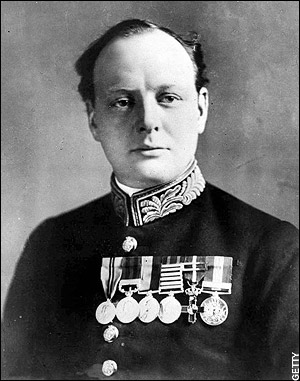
Leave a comment

Filed under History, Military, nazi germany, world war two in europe