Category Archives: Military

A Bridge Too Far: History, Dissent, and North Korea

51dQcS0yiEL._SX355_

Friends of Padre Steve’s World,

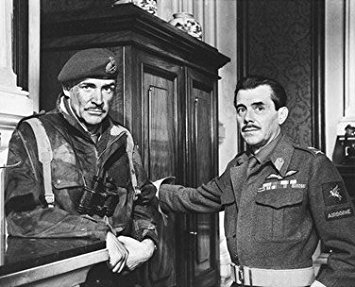
Major General Urquhart: I took 10,000 of our finest troops to Arnhem; I’ve come back with less than 2,000. I don’t feel much like sleeping.

Lt. General Frederick “Boy” Browning: I’ve just been on to Monty. He’s very proud, and pleased.

Major General Urquhart: [incredulous] PLEASED!

Lt. General Frederick “Boy” Browning: According to himself, technically, Market Garden was 90% successful.

Major General Urquhart: But what do YOU think?

Lt. General Frederick “Boy” Browning: Well, as you know, I always felt we tried to go a bridge too far…

Yesterday was our first full day back after our Memorial Day outing to Bethany Beach, a day of work as well as catching up. After our day of taking care of business we went and spent time with our friends at Gordon Biersch and then adoring our Papillon pups, I put on the classic film A Bridge too Far as a belated Memorial Day remembrance. For me as a veteran of Iraq the film conjures up images of heroic sacrifices of men and women who died or became victims of a plan gone wrong.

The film if you haven’t seen it depicts the failed Allied attempt of September 1994 to liberate the Netherlands, cross the Rhine and end World War Two by Christmas. It was a plan that depended much on luck, and ignored the capabilities of the Germans, who the Allies for the most part already believed had been beaten following the campaign in Normandy and the dash across France.

Despite the weakness of the Germans he Allied plan came close to succeeding yet failed and in doing so prolonged the war and inflicted much more suffering on the people of the Netherlands who were not liberated until the end of the war. The failure was one of a failed operational plan that had strategic consequences.

In the past few days I have been become even more concerned about the situation on the Korean Peninsula and the risks of a war that could have worldwide implications, and none of them good. Secretary of Defense Mattis warned of a potential catastrophe, even as the USS Nimitz departed the West Coast to join the USS Carl Vinson and USS Ronald Reagan in the operational area while the North Koreans launched more missiles. The concentration of three carrier battle groups, even for a short time provides the President a massive amount of military power in the region should he decide to launch a preemptive strike as he has more than once spoken about. The fact is that if war breaks out that the casualties will be in the hundreds of thousands if not millions, and that is if the war stays contained to the Korean Peninsula.

I am also concerned that a war with North Korea could be the pretext for the Trump administration to sharply curtail civil liberties at home including the freedom of speech and of political opposition. Be assured that if war breaks out on the Korean Peninsula that these rights will be suppressed and that anyone who opposes the government in  any way whatsoever will be labeled as a defeatist, traitor, or worse. We have seen the same pathology after the 9/11 attacks when those who were not opposed to actions agains Al Qaida were condemned because they opposed the expansion of the war into Iraq. I know this because I was one of those people who condemned these people; and sadly in retrospect in their condemnation of the invasion of Iraq they they were more patriotic than me because I supported it, knowing the dangers.

As far as the Allies were concerned Operation Market Garden was a delay in their plans to invade Germany proper, but for the Germans it was a pyrrhic victory which doomed more of their soldiers, civilians, and their victims to death. The Allied efforts were considered a part of a more righteous cause, while for the most part the German people remained under the spell of Hitler until the end, and even then those who opposed or even were thought to be “defeatists” in Germany were considered to be as bad or worse than the enemies of the Third Reich.

Milton Mayer who wrote the book They Thought They Were Free: The Germans 1933-1945 described the thoughts of a German academic colleague in 1955. Mayer’s friend said:

“Once the war began,” my colleague continued, “resistance, protest, criticism, complaint, all carried with them a multiplied likelihood of the greatest punishment. Mere lack of enthusiasm, or failure to show it in public, was ‘defeatism.’ You assumed that there were lists of those who would be ‘dealt with’ later, after the victory. Goebbels was very clever here, too. He continually promised a ‘victory orgy’ to ‘take care of’ those who thought that their ‘treasonable attitude’ had escaped notice. And he meant it; that was not just propaganda. And that was enough to put an end to all uncertainty.

“Once the war began, the government could do anything ‘necessary’ to win it; so it was with the ‘final solution of the Jewish problem,’ which the Nazis always talked about but never dared undertake, not even the Nazis, until war and its ‘necessities’ gave them the knowledge that they could get away with it. The people abroad who thought that war against Hitler would help the Jews were wrong. And the people in Germany who, once the war had begun, still thought of complaining, protesting, resisting, were betting on Germany’s losing the war. It was a long bet. Not many made it.”

That is something I worry about every day here as the Trump administration, facing failure on so many fronts, and under investigation of things that if any of the rest of us had even been accused of them would be considered treasonous, may embark on a war to save itself and at the same time use the extraordinary nature of such a conflict to consolidate power and crush dissent. That may sound far fetched, but all of his actions and words, as a candidate for President, as the President-Elect, and as President point in that direction and his most faithful followers show that they will even commitment treasonous acts and in some cases even resort to violence and murder to support him.

Trust me I want to be wrong about this more than anyone can imagine, but I cannot get rid of the feeling I have in my gut nor the terrible nightmares I have about this several times a week. I wonder if the Trump administration will gamble on an easy victory to end a very real North Korean threat to the region. If they do there will be no good outcome and we may lose freedoms that we never dreamt possible to lose.

If such an action does not succeed will the President then as he always does that his failure was a success? Will he pronounce like Field Marshal Montgomery that the failed attack was 90% successful or even more? And what of his military advisors? I dare not even attempt to answer that question anymore.

So until tomorrow I must ponder the words of General John Buford played by Sam Elliott in the film Gettysburg: 

“Devin, I’ve led a soldier’s life, and I’ve never seen anything as brutally clear as this. It’s as if I can actually see the blue troops in one long, bloody moment, goin’ up the long slope to the stony top. As if it were already done… already a memory. An odd… set… stony quality to it. As if tomorrow has already happened and there’s nothin’ you can do about it. The way you sometimes feel before an ill-considered attack, knowin’ it’ll fail, but you cannot stop it. You must even take part, and help it fail.”

Like I said, I want more than anything to be wrong about all of this but I fear that I am not and I cannot shake that feeling. So until tomorrow,

Peace

Padre Steve+
1 Comment

Filed under film, History, leadership, Military, nazi germany, News and current events, Political Commentary, world war two in europe

Remembering the Memorial Day Order

Friends of Padre Steve’s World,

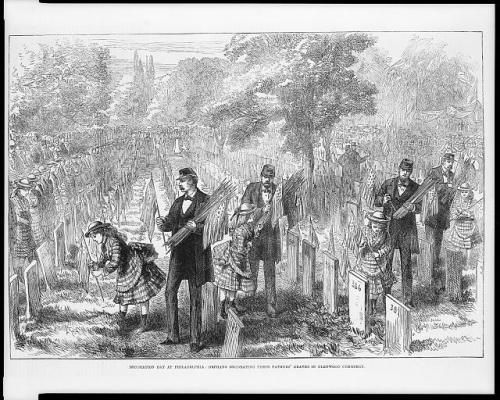
I detest the overly recreational and commercialized hype of how we Americans “celebrate” Memorial Day. It is a time for contemplation and remembering those who have given their last full measure of devotion to our country.

Abraham Lincoln summed it up well in his conclusion of the Gettysburg Address:

“It is rather for us to be here dedicated to the great task remaining before us — that from these honored dead we take increased devotion to that cause for which they gave the last full measure of devotion — that we here highly resolve that these dead shall not have died in vain — that this nation, under God, shall have a new birth of freedom — and that government of the people, by the people, for the people, shall not perish from the earth.”

As we contemplate the importance of Memorial Day and remember the men and women who gave their lives for this country it is important to remember why we do this. Memorial Day grew out of local observances following the Civil War, a war that claimed the lives of over 620,000 American Soldiers from the Union and the Confederacy. New demographic studies by historians estimate the losses at closer to 750,000. Hundreds of thousands of other people had they lives shattered by the war, killed, wounded, maimed, crippled, and shattered in mind and spirit, the country in many places devastated by war’s destruction. If we use the 620,000 number as our yardstick, it would have meant that 2.5% of the population of the country died in the war. People needed to make sense of the terrible losses that often wiped out the younger male populations of the small towns and communities from which most of these men, and a few women hailed.

To put this in perspective, if the same number of Americans were to die today in a way the total would be over seven million people, seven million my friends. The war reached into every home in some way, and sadly or perhaps thankfully we have no concept of such losses today.

In 1868, Major General John Logan who had been an excellent corps commander during the war was serving as the Commander of the nation’s first true Veterans organization, the Grand Army of the Republic which gave those veterans a place of refuge in a country that was leaving them behind and forgetting their sacrifice in the name of westward expansion and a growing economy. Let’s face it, money has almost always been more important to Americans than the troops who sacrificed their lives for the nation, but I digress…

Anyway General Logan issued this order on May 5th 1868:

HEADQUARTERS GRAND ARMY OF THE REPUBLIC, General Orders No.11, WASHINGTON, D.C., May 5, 1868

  1. The 30th day of May, 1868, is designated for the purpose of strewing with flowers or otherwise decorating the graves of comrades who died in defense of their country during the late rebellion, and whose bodies now lie in almost every city, village, and hamlet church-yard in the land. In this observance no form of ceremony is prescribed, but posts and comrades will in their own way arrange such fitting services and testimonials of respect as circumstances may permit.

We are organized, comrades, as our regulations tell us, for the purpose among other things, “of preserving and strengthening those kind and fraternal feelings which have bound together the soldiers, sailors, and marines who united to suppress the late rebellion.” What can aid more to assure this result than cherishing tenderly the memory of our heroic dead, who made their breasts a barricade between our country and its foes? Their soldier lives were the reveille of freedom to a race in chains, and their deaths the tattoo of rebellious tyranny in arms. We should guard their graves with sacred vigilance. All that the consecrated wealth and taste of the nation can add to their adornment and security is but a fitting tribute to the memory of her slain defenders. Let no wanton foot tread rudely on such hallowed grounds. Let pleasant paths invite the coming and going of reverent visitors and fond mourners. Let no vandalism of avarice or neglect, no ravages of time testify to the present or to the coming generations that we have forgotten as a people the cost of a free and undivided republic.

If our eyes grow dull, other hands slack, and other hearts cold in the solemn trust, ours shall keep it well as long as the light and warmth of life remain to us.

Let us, then, at the time appointed gather around their sacred remains and garland the passionless mounds above them with the choicest flowers of spring-time; let us raise above them the dear old flag they saved from dishonor; let us in this solemn presence renew our pledges to aid and assist those whom they have left among us a sacred charge upon a nation’s gratitude, the soldier’s and sailor’s widow and orphan.

  1. It is the purpose of the Commander-in-Chief to inaugurate this observance with the hope that it will be kept up from year to year, while a survivor of the war remains to honor the memory of his departed comrades. He earnestly desires the public press to lend its friendly aid in bringing to the notice of comrades in all parts of the country in time for simultaneous compliance therewith.

III. Department commanders will use efforts to make this order effective.

By order of

JOHN A. LOGAN, Commander-in-Chief

N.P. CHIPMAN, Adjutant General

Official: WM. T. COLLINS, A.A.G.

General Logan’s order is remarkable in its frankness and the understanding of the war in the immediate context of its conclusion. In 1868 the day would be observed at 183 cemeteries in 27 States and the following year over 300 cemeteries. Michigan was the first state to make the day a holiday and by 1890 all states in the North had made it so. In the South there were similar observances but the meaning attributed to the events and the sacrifices of the Soldiers of both sides was interpreted quite differently. In the North the Veterans overwhelmingly saw themselves as the saviors of the Union and the liberators of the Slaves. In South it was about the sacrifices of Confederate soldiers in what became known as the “Lost Cause.” But in both regions and all states, the surviving Soldiers, family members and communities honored their dead.

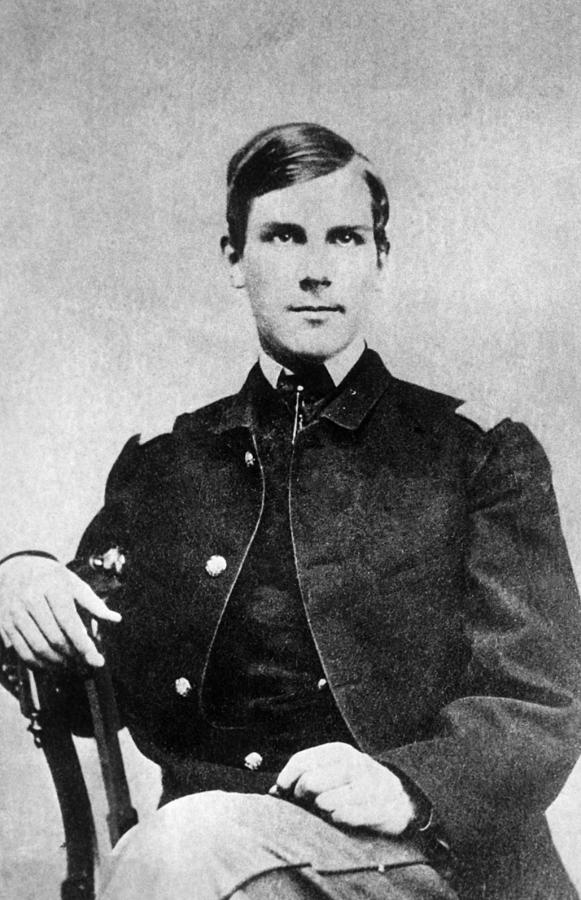
In 1884 Oliver Wendell Holmes Jr. and Frederick Douglass both spoke about the meaning of the sacrifice made by so many.

Holmes, a veteran of the war who had been wounded at Antietam ended his Decoration Day 1884 speech:

“But grief is not the end of all…Our dead brothers still live for us, and bid us think of life, not death, — of life to which in their youth they lent the passion and glory of the spring. As I listen, the great chorus of life and joy begins again, and amid the awful orchestra of seen and unseen powers and destinies of good and evil our trumpets sound once more a note of daring, hope, and will.”

Douglass, the former slave and abolitionist who lobbied Lincoln for emancipation and to give Blacks the chance to serve their country had two of his sons serve in the war spoke these wars:

“Dark and sad will be the hour to this nation when it forgets to pay grateful homage to its greatest benefactors. The offering we bring to-day is due alike to the patriot soldiers dead and their noble comrades who still live; for, whether living or dead, whether in time or eternity, the loyal soldiers who imperiled all for country and freedom are one and inseparable.”

It is important for the country not to forget those who served and the cost of those who have given the last full measure of devotion to duty and those who still carry the scars of war on their bodies and in their minds and spirits. I am one of the latter and I have known too many of the former.  Maybe that is why am so distrustful of those who advocate for war but have no skin in the game.

An Alsatian-German Soldier named Guy Sager wrote in his book The Forgotten Soldier: 

“Too many people learn about war with no inconvenience to themselves. They read about Verdun or Stalingrad without comprehension, sitting in a comfortable armchair, with their feet beside the fire, preparing to go about their business the next day, as usual…One should read about war standing up, late at night, when one is tired, as I am writing about it now, at dawn, while my asthma attack wears off. And even now, in my sleepless exhaustion, how gentle and easy peace seems!”

I agree with him and pray that those who direct the course of this nation will take the words of General Logan, Oliver Wendell Holmes Jr., Frederick Douglass and Guy Sager to heart before they embark on war, and when they remember those that have served.

May we never forget the sacrifices made by these men and women and those who continue to fight and sometimes die today.

Peace

Padre Steve+

1 Comment

Filed under civil war, History, Military, News and current events

They Silently Gather Round Me: A Memorial Day Reflection

Friends of Padre Steve’s World,

After the end of the American Civil War, the poet Walt Whitman reflected on the human cost of it. Whitman wrote,

“Ashes of soldiers South or North, As I muse retrospective murmuring a chant in thought, The war resumes, again to my sense your shapes, And again the advance of the armies. Noiseless as mists and vapors, From their graves in the trenches ascending, From cemeteries all through Virginia and Tennessee, From every point of the compass out of the countless graves, In wafted clouds, in myriads large, or squads of twos or threes or single ones they come, And silently gather round me…”

Memorial Day is always an emotional time for me, especially since I returned from Iraq in 2008, and this weekend I have been thinking about the men and women that I knew who died in action or died after they left the service, some at their own hand, unable to bear the burdens and trauma that they suffered while at war. I was reminded of them again at the memorial service that we conducted for the sailors and soldiers from our base who have died in action since September 11th 2001. In an age where less than one percent of Americans serve in the military, I think that it is important that we take the time to remember and reflect on the human cost of wars.

I think of the battlefields that I have served on in Al Anbar Province, the one my father served on at An Loc, Vietnam, or the battlefields and the graveyards I have been to, Verdun, Waterloo, Arnhem, Normandy, Belleau Wood, Luxembourg, the Shuri Line, the Naktong River, Yorktown, Chancellorsville, Antietam, Stone’s River, Bentonville, Gettysburg, the wrecks of the USS Arizona and USS Utah at Pearl Harbor, and so many more, I think about the men and women who never returned. To me all of these places are hallowed ground, ground that none of us can hallow, the sacrifices of the men who gave their last full measure of devotion have done that better than we can ever do.

There are some songs that are haunting yet comfort me when I reflect on the terrible costs of war, even those wars that were truly just; and yes there are such wars, even if politicians and ideologues demanding revenge or vengeance manage to mangle the peace following them. Of course there are wars that are not just in any manner of speaking and in which the costs far outweigh any moral, legal, or ethical considerations, but I digress…

Joshua Lawrence Chamberlain, the hero of the Battle of Little Round Top at Gettysburg wrote something that talks about the importance and even the transcendence of the deeds of those who lost their lives in those wars fought and died to achieve.

In great deeds, something abides. On great fields, something stays. Forms change and pass; bodies disappear; but spirits linger, to consecrate ground for the vision-place of souls… generations that know us not and that we know not of, heart-drawn to see where and by whom great things were suffered and done for them, shall come to this deathless field, to ponder and dream; and lo! the shadow of a mighty presence shall wrap them in its bosom, and the power of the vision pass into their souls.”

Elton John wrote and performed this song, Oceans Away on the centenary of the First World War. It speaks of the men that never came home, and he related it to those who continue to go off to war today.

I hung out with the old folks

In the hope that I’d get wise

I was trying to bridge the gap

Between the great divide

Hung on every recollection

In the theater of their eyes

Picking up on this and that

In the few that still survive


Call em up

Dust em off

Let em shine

The ones who hold onto the ones, they had to leave behind

Those that flew, those that fell,

The ones that had to stay,

Beneath a little wooden cross


They bend like trees in winter

These shuffling old grey lions

Those snow-white stars still gather

Like the belt around Orion

Just to touch the faded lightning

Of their powerful design

Of a generation gathering

For maybe the last time

Oceans away

Where the green grass sways

And the cool wind blows

Across the shadow of their graves.

Shoulder to shoulder back in the day

Sleeping bones to rest in earth, oceans away

Call em up

Dust em off

Let em shine

The ones who hold onto the ones, they had to leave behind

Those that flew, those that fell,

The ones that had to stay,

Beneath a little wooden cross

Oceans away

Elton John “Oceans Away”

Likewise I find myself thinking about all those times alone overseas, and realize that many did not come home. The song I’m Dreaming of Home or Hymne des Fraternisés from the film Joyeux Noel which was adapted by French composer Philippe Rombi from the poem by Lori Barth I think speaks for all of us that served so far away, both those who returned and those who still remain oceans away.

I hear the mountain birds

The sound of rivers singing

A song I’ve often heard

It flows through me now

So clear and so loud

I stand where I am

And forever I’m dreaming of home

I feel so alone, I’m dreaming of home


It’s carried in the air

The breeze of early morning

I see the land so fair

My heart opens wide

There’s sadness inside

I stand where I am

And forever I’m dreaming of home

I feel so alone, I’m dreaming of home


This is no foreign sky

I see no foreign light

But far away am I

From some peaceful land

I’m longing to stand

A hand in my hand

… forever I’m dreaming of home

I feel so alone, I’m dreaming of home.

Please take the time to remember those who whose spirits still dream of home, oceans away.

Until tomorrow,

Peace,

Padre Steve+

1 Comment

Filed under civil war, History, Military, News and current events

The Offering We Bring: Memorial Day Weekend 2017


In his Memorial Day speech of 1884 Frederick Douglass spoke these words:

“Dark and sad will be the hour to this nation when it forgets to pay grateful homage to its greatest benefactors. The offering we bring to-day is due alike to the patriot soldiers dead and their noble comrades who still live; for, whether living or dead, whether in time or eternity, the loyal soldiers who imperiled all for country and freedom are one and inseparable.”

Memorial Day, at one time known as Decoration Day is one of our most sacred civil holidays that we celebrate in the United States, or at least it should be. It was a holiday born out of the shedding of the blood of 750,000 American soldiers, from the North and the South in the Civil War, a singular event that still echoes in our history and in some sense defines who we are. The sad thing is that many; if not most Americans it is simply another holiday, a chance maybe to get a three day weekend at the end of the school year and beginning of summer vacation. This is so because we and our government dominated by business interests and our own wallets for decades knowingly made the decision to sacrifice of the teaching of history and heritage at the altar of “education” that “produces jobs.”

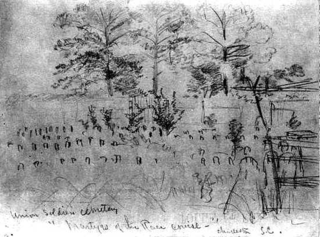
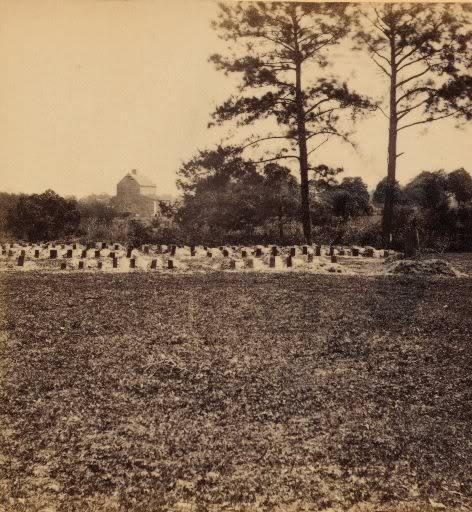
The Racecourse Cemetery

But the first observance of what we now know as Memorial Day is fascinating and it needs to be remembered. Frederick Douglass was absolutely right when he spoke the words that I began this article, and we need to remember the humble beginnings of this day which was first marked by recently freed slaves in Charleston South Carolina on May 1st 1865, barely two weeks after Abraham Lincoln was assassinated and three weeks after the surrender of Robert E. Lee and the Army of Northern Virginia at Appomattox Court House. Their commemoration was for the most part forgotten as Charleston sought to remove the vestiges of any Union sacrifice within the city limits in the 1880s.

The acrid smell of smoke of the last battles of the American Civil War was still lingering over many towns and cities in the South on May 1st 1865. Charleston South Carolina, the hotbed of secession was particularly hard hit during the war. In 1861 Cadets of the Citadel and South Carolina militia forces began the war with the bombardment of Fort Sumter. Union Forces laid siege to the city in late 1863, a siege which ended with the city’s surrender to Union forces on 18 February 1865. The day of the surrender was somewhat ironic. Charleston, the city most associated with the opening of the conflict surrendered to Union forces on the fourth anniversary of the inauguration of Jefferson Davis as President of the Confederacy. By the time of its surrender much of the city had been destroyed by Union siege artillery and naval forces.

Charleston had also been the home of three of the Confederacy’s brutal prisoner of war camps. One was located in the Charleston City Jail and the other at Castle Pinckney which had been one of the ante-bellum U.S. Army installations in the city. A third camp was erected on the site of the Washington Race Course and Jockey Club in 1864. This was an open air camp and Yale Historian David Blight wrote that “Union soldiers were kept in horrible conditions in the interior of the track; at least 257 died of exposure and disease and were hastily buried in a mass grave behind the grandstand.”

By the end of the war most of the white population of the city had left and most of those remaining were recently freed slaves. After their liberation and the city’s occupation by Federal forces, which included the famous 54th Massachusetts as well as the 20th, 35th and 104th US Colored Troops Regiments, about 28 these recently liberated Black men went to work and properly reinterred these 257 Union dead on the raceway building a high fence around it. They inscribed “Martyrs of the Race Course” on an arch above the cemetery entrance.

On May 1st over 10,000 Black Charlestonians gathered at the site to honor the fallen. Psalms, Scriptures and prayers were said, hymns were sung and many brought flowers. A parade of 2800 children covered the burial ground with flowers. They were followed by members of the Patriotic Association of Colored Men and the Mutual Aid Society. This society’s members provided relief supplies to Freedmen and provided aid to bury those Blacks who were too poor to afford burial. More citizens followed many laying flower bouquets on the graves. Children then led the singing of The Star Spangled Banner, America and Rally around the Flag. The Brigade composed of the 54th Massachusetts and the 35th and 104th Colored Regiments marched in honor of their fallen comrades. Following the formalities many remained behind for a picnic.

Other communities established their own Memorial Day observances in the years following the war, but the event in Charleston was the first. The first “Official” commemoration was on 30 May 1868 when Union General John Logan who headed the veteran’s organization called The Grand Army of the Republic appealed to communities to honor the dead by holding ceremonies and decorating the graves of the fallen.

In the South three different days served a similar purpose. In Virginia people commemorated the day on June 3rd, the birthday of Confederate President Jefferson Davis, the Carolinas marked the day on 10 May, the birthday of General Thomas “Stonewall” Jackson. In much of the Deep South the event was conducted April 26th, the anniversary of the surrender of General Joseph Johnson’s Army to General William Tecumseh Sherman. For many in the South, still attempting to come to grips with their defeat the day would become about “The Lost Cause” or “the defense of Liberty” or “States Rights” and the war was often referred to as the “War of Northern Aggression.”

The “Martyrs of the Racecourse” cemetery is no longer there. The site is now a park honoring the fascinatingly complex Confederate General and post-Reconstruction Governor of South Carolina Wade Hampton. An oval track remains in the park and is used to run or walk by the local population and cadets from the Citadel. Thankfully, at long last in 2010, one hundred and forty-five years after the dedication of that cemetery a marker was placed in that park commemorating the cemetery and the event that we now recognize as the first Memorial Day.

The Union dead who had been so beautifully honored by the Black population were moved to the National Cemetery at Beaufort South Carolina by the 1880s. Some state that the reason for this was that the cemetery had fallen into neglect, and this may be the case, but the event and their memory conveniently erased from memory of Charlestonians. I do not think that this would have happened had the people who had the bodies moved simply restored and maintained the cemetery. Had not historian David Blight found the documentation we probably still would not know of this touching act by former slaves who honored those that fought the battles, and gave their lives to win their freedom. Blight wrote in 2011 in the 1870s Charleston “had no place for the former slaves’ march on their masters’ racecourse.”

The African American population of Charleston understood the bonds of slavery and oppression. They understood the tyranny of prejudice in which they only counted as 3/5ths of a person. They understood and saw the suffering of those that were taken prisoner while attempting to liberate them from the tyranny of slavery. They stand as an example for us today.

But their suffering was not over. Within little more than a decade Blacks in the South would be subject to Jim Crow and again treated by many whites as something less than human. The struggle of they and their descendants against the tyranny of racial prejudice, discrimination and violence over the next 100 years would finally bear fruit in the Civil Rights movement, some of whose leaders, like the Reverend Doctor Martin Luther King Jr. would also become martyrs. Unfortunately that struggle is not over.

Frederick Douglass spoke to Union Veterans on Memorial Day 1878. His words, particularly in light of the war and the struggles of African Americans since and the understanding of what those who were enslaved understood liberation to be are most significant to our time. It was not merely a war based on sectionalism or even “States rights,” it was a war of ideas, a war of diametrically opposed ideologies. He said:

“But the sectional character of this war was merely accidental and its least significant feature. It was a war of ideas, a battle of principles and ideas which united one section and divided the other; a war between the old and new, slavery and freedom, barbarism and civilization; between a government based upon the broadest and grandest declaration of human rights the world ever heard or read, and another pretended government, based upon an open, bold and shocking denial of all rights, except the right of the strongest.”

Douglass’s words were powerful then and they resonate today as many of the same ideas that were the cause of the Civil War and were continued during Jim Crow are still alive. Unfortunately there are those in our society who labor daily to establish the “rights” of the strongest over the weak, the poor, the powerless and minorities of all kinds. Of course such actions, often wrapped in the flag, patriotism and buttressed with cherry picked quotes (many of which are fake, changed or taken out of context) from some of our founders are designed to re-establish the oligarchy of the power of the few, much like the men who owned the lives of the slaves and poor whites in the ante-bellum American South. Such actions do nothing but demean and trample the sacrifice of those who fought for freedom and the only remedy is to fight them with the full knowledge of truth.

I do hope that this weekend we will celebrate Memorial Day in a fitting manner. Let us honor those Americans who died that others might be free. Let us look back at what freedom actually means and not forget the sacrifices of those that gave, and still give their lives in the “last full measure of devotion to duty” that others might live. Take a moment today at noon to pause what you are doing and go silent for at least one minute, and remember.

Peace

Padre Steve+

2 Comments

Filed under civil rights, civil war, History, Military, News and current events

To Take Increased Devotion: A Solemn Memorial Service

740360-vb-jeb-bell-tolling-ceremony-d4fa4

Friends of Padre Steve’s World,

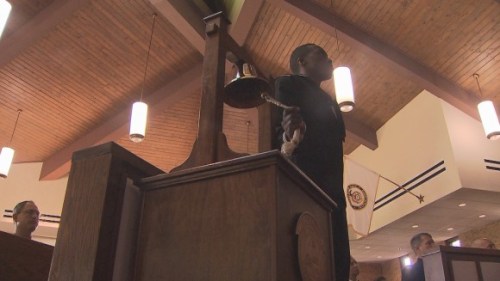
Yesterday at the base where I serve as command Chaplain we conducted a solemn memorial service for the ninety-four sailors and soldiers from our base that have died while serving at war since September 11th 2001. I knew some of them and their families from when I was assigned to EOD Group Two from 2006-2008. As each name was read, a picture of our fallen comrade was shown, a pause followed by the tolling of a bell. The steady cadence of the names, the silence, and the bell tolling continued for each of these men and women who died all too young serving in Iraq, Afghanistan, Somalia, the Horn of Africa, and other places during this war. Ninety-four names, ninety-four lives, ninety-four tolls of the bell.

http://wavy.com/2017/05/25/fallen-heroes-remembered-in-bell-tolling-at-little-creek-fort-story/

The majority of our fallen are SEALS, others in the Special Warfare Community, and EOD techs. As long as these wars continue young men and young women will continue to die and families will be left without husbands, wives, fathers, mothers, sisters, and brothers. The human cost of war cannot be minimized as we honor the fallen this Memorial Day. This is a day that we set aside to remember them, not the living. It is a day for us to remember their sacrifice and commit ourselves to as Abraham Lincoln so stated in his Gettysburg Address:

“It is rather for us to be here dedicated to the great task remaining before us—that from these honored dead we take increased devotion to that cause for which they gave the last full measure of devotion—that we here highly resolve that these dead shall not have died in vain—that this nation, under God, shall have a new birth of freedom— and that government of the people, by the people, for the people, shall not perish from the earth.”

Until tomorrow,

Peace

Padre Steve+

Leave a comment

Filed under History, Military, remembering friends, shipmates and veterans, US Navy, War on Terrorism

Telling the Truth is Neither Disloyal nor Treasonous 

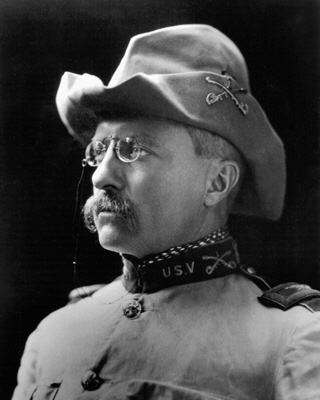
db_theodore_roosevelt_rough_rider9

Friends of Padre Steve’s World,

I find it both interesting and troubling to listen to many supporters of President Trump castigate anyone for any criticism offered about the President, sometimes going as far to say that critics are being “unfair,” “disrespectful,”or most disturbing, “disloyal” or “treasonous.” Even the President tweets out those kind of accusations on a whim.

Admittedly some forms of criticism cross boundaries and are personally insulting and disrespectful of the President. In my writings I try, even when being very critical of his policies, words, or actions, to refrain from personal insults that could be considered disrespectful to the President because I am still on active duty.  As my readers know I am a historian as well as an theologian/ethicist and when I do write about the actions of the President and his administration I do so based on careful study and comparison with historical, ethical, or legal precedents. My views are likewise informed by my education and and belief in the principles of the Enlightenment, my belief in human rights as set out in the Preamble of the Declaration of Independence, the U.S. Constitution, and the French Rights of Man and the Citizen, as well as my understanding of the Anglican Christian tradition of “Scripture, Tradition, and Reason” being the foundations of faith.

But it is not disloyal or treasonous to offer criticism of policies, legislative proposals, executive orders, or actions and words of the President or his advisers that could endanger the security of the United States, its citizens, and its alliances, or potentially be unlawful.

Even so I am occasionally criticized for offering historical examples that compare the President and his most ardent supporters in an unfair way, some even calling those disrespectful. I find their double standards and lack of appreciation of irony quite fascinating as most of these people have spent the last eight years or more disparaging and disrespecting President Obama with some of the most racist, vile, contemptible, and false accusations ever made against a sitting President, while at the same time condemning others for simply repeating what the President himself has said.

I found out this week that I had a couple of students criticize some of my teaching at Gettysburg when comparing the anti-immigrant Know Nothings of the 1830s-1850s to current anti-immigrant Trump supporters and some Trump Administration Civil Rights proposals to be a throwback to Jim Crow. That is not insulting nor disrespectful, but simply valid historical criticism, but some Trump supporters are so thin-skinned that they cannot abide any criticism.

Theodore Roosevelt had to defend himself in 1918 from such criticism from the supporters of President Woodrow Wilson. Roosevelt was criticizing the Wilson administration because of how badly he thought they were pursuing the war effort against Germany. For this people were castigating him. People said that newspapers should not print what Roosevelt had to say as well as “He should stand by the President” and “He should be stood before a stone wall and shot.” Roosevelt ended up writing an op-ed in the Kansas City Star in which he noted:

“The President is merely the most important among a large number of public servants. He should be supported or opposed exactly to the degree which is warranted by his good conduct or bad conduct, his efficiency or inefficiency in rendering loyal, able, and disinterested service to the Nation as a whole. Therefore it is absolutely necessary that there should be full liberty to tell the truth about his acts, and this means that it is exactly necessary to blame him when he does wrong as to praise him when he does right. Any other attitude in an American citizen is both base and servile. To announce that there must be no criticism of the President, or that we are to stand by the President, right or wrong, is not only unpatriotic and servile, but is morally treasonable to the American public. Nothing but the truth should be spoken about him or any one else. But it is even more important to tell the truth, pleasant or unpleasant, about him than about any one else.” 

This is exactly how I base any criticism I offer of the President, his policies, words, and actions. I heartily agree with the words of Senator Stephen A. Douglas when he battled President James Buchanan over the pro-slavery attempt to have Kansas admitted to the Union as a Slave State in 1858. Douglas said of his encounter with Buchanan: “God forbid,” I said “that I ever surrender my right to differ from a President of the United States for my own choice. I am not a tool of any President!”

Now there is a difference, I am not a Senator or elected Representative, I am an officer and must carry out the orders of the President. However, if I ever come to believe that I cannot in good conscience carry them out, or if I believe that they are un-Constitutional I will retire from the military in order to allow myself the freedom to speak out more openly. General Ludwig Beck resigned as head of the German Army in 1938 over Hitler’s aggression and his plan to attack Czechoslovakia. He noted:

“It is a lack of character and insight, when a soldier in high command sees his duty and mission only in the context of his military orders without realizing that the highest responsibility is to the people of his country.” 

That is my belief as well. So have a great day,

Peace

Padre Steve+

2 Comments

Filed under ethics, faith, History, Military, Political Commentary

Robert Smalls and Freedom

Robert Smalls 

Friends of Padre Steve’s World,

I am going to be busy the next couple of days working on some things for my literary agent that hopefully will help my book Mine Eyes Have Seen the Glory! Race, Religion, Ideology, and Politics in the Civil War Era move towards publication. So for the next few days I will probably post very short articles of re-runs of older ones. This is an article that with a few minor changes that I posted here a year ago, and since today is the 155th anniversary of the act I thought it would be a good time to re-post it. I hope that you enjoy it. 

There are some people and events that are important but get swept up in broader historic events and today we remember the anniversary of an act of daring that led to freedom. This is the story of Robert Smalls, a slave in Charleston South Carolina. Smalls was hired out to work with the money going to his master. He worked in a number of jobs, but as a teenager fell in love with the sea. He went to work as a slave worker on the city’s waterfront where he started as a common dockworker, became a rigger, a sailmaker, and finally a wheelman, which basically was a ship’s pilot, since slaves were not permitted that title. Even so his abilities and knowledge of Charleston harbor well well known and respected by ship owners. 

The CSS (later USS) Planter 

When South Carolina seceded and the Confederacy went to war, Smalls was assigned as wheelman of the CSS Planter, a small and lightly armed transport. On the night of May 12th and 13th of 1862, Smalls took advantage of all three white officer’s absence ashore, by putting into effect an escape plan he had worked out with the other slave crew members of Planter. Smalls and seven other slaves got the ship underway, with Smalls donning the captain’s uniform and a straw hat similar to the captain’s. In the darkness the ruse was perfect, no Confederates ashore suspected anything as Planter stopped to pick up the escaped slaves family members at another wharf before Smalls sailed out past the range of the Confederate shore battery guns to surrender to the USS Onward. Smalls present the U.S. Navy with the ship, her cargo, which included four artillery pieces intended for a Confederate fort in the harbor, but more importantly a Confederate code book and charts showing the location of deadly undersea mines and torpedoes that had been laid in the harbor. 

Smalls quickly became a hero. Congress voted him and his crew the prize money for the ship, and he met with Secretary of War Stanton to argue the case that blacks should be allowed to serve. Smalls’ story helped convince Lincoln of allowing African Americans to serve in the United Staes forces. Smalls served as a civilian pilot working for the Navy and and the Army, serving in numerous battles. He was the pilot for the experimental ironclad USS Keokuk when that ship was heavily damaged by over 90 hits at Charleston. He was responsible for getting the ship safely out of range of the  Confederate batteries before she sank, thus saving many crew members. 

He then was reassigned to the USS Planter, now assigned to the Army. The ship got caught in a crossfire between the Union and Confederate forces and Planter’s captain ordered the ship to surrender. Smalls objected, knowing that any African American caught serving Union forces would not be treated as prisoners of war, but either returned to slavery or executed by order of the Confederate Congress. Smalls took command of the vessel and steered her out of harm’s way. He was appointed Captain of the ship and was present for the ceremonial raising of the American flag over Fort Sumter in April 1865. Smalls was the first African American to command a ship in the service of the U.S. Military.

After the war Smalls got an education and when the 14th Amendment was passed ran for office, serving in the South Carolina legislature and as a member of Congress. He fought against changes to the 1895 South Carolina Constituion that disenfhchised African Americans and codified the Jim Crow laws which had be upheld by the Supreme Court in Plessy v. Ferguson. 

In 1889 Smalls was appointed U.S. Collector of Customs in Beaufort and served in that office until 1911. He also was director of a black owner railroad, and helped publish the black owners Beaufort Standard newspaper. He died in 1915 at the age of 75. 

Small’s courage and his fight for freedom, as well as others who did so should not be forgotten. 

Peace,

Padre Steve+ 

1 Comment

Filed under civil rights, civil war, History, Military, Navy Ships, US Navy

Troop Increases with No Plan: Afghanistan and Dien Bien Phu

Friends of Padre Steve’s World,

As always back from Gettysburg on Monday brought to my mind the terrible human cost of war and the consequences of poor choices in matters of strategic and operational military decision making.

Tuesday morning I left my house to read the headline of the Virginia Pilot which stated that a decision had been made to increase troop strength in Afghanistan yet again after over 15 years of war in which the United States and its allies have lost over 3500 troops killed in action and the United States alone over 17,000 wounded without destroying the ability of the Taliban to recover from military defeats, or to ensure that the government of Afghanistan and its military could survive without massive US and NATO support.

The numbers of this new “surge” are massively smaller than that of President Obama, 3000 as compared to 100,000, and even the number of troops committed to the Afghanistan surge of Obama were insufficient to force the Taliban to the negotiating table. Once the US and NATO troops were withdrawn the corrupt Afghan government and military forces were unable to keep the Taliban down even as elements of the Islamic State moved into Afghanistan.

The situation reminded me of what the French faced in Indochina in 1953, and the battle of Dien Bien Phu which sealed the doom of the French colonial efforts in Indochina, at a terrible human cost. I wonder if we will even learn anything from history, but at least the French had a plan, albeit a terribly flawed one in 1953 and early 1954 where since 2002 the United States has had no real plan in Afghanistan.

Dien Bien Phu was an epic battle in a tragic war and most people neither know or care what happened in the valley where a small border post named Dien Bien Phu became synonymous with forgotten sacrifice. This year fewer remembrances are taking place. Some are in Vietnam and others in France.


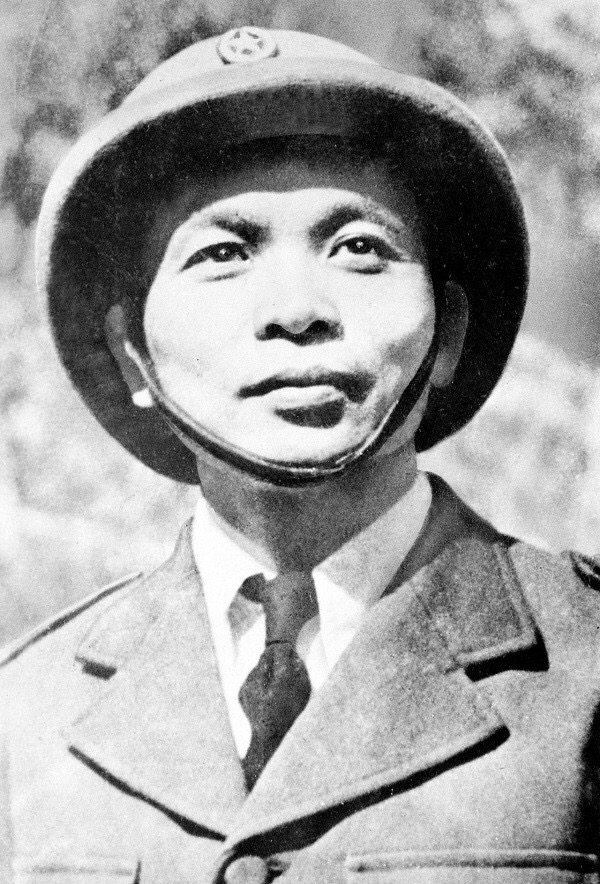
General Vo Nguyen Giap

On May 7th 2011 in Hanoi a small remembrance was held to mark the fall of Dien Bien Phu and honor the victor, 101 year old General Vo Nguyen Giap at his home. Until his death in 2013 at the age of 102. That 2011 ceremony was one of the few remembrances held anywhere marking that battle which was one of the watersheds of the 20th Century. A half a world away in Houston Texas a small group of French veterans, expatriates and historians laid a wreath at the Vietnam War Memorial.  In Paris an ever shrinking number of French survivors gather each year on May 7th at 1815 hours for a religious service at the Church of Saint Louis des Invalides to remember the dead and missing of the French Expeditionary Corps lost in Indochina. A small number of other small ceremonies have been in the following years.

This battle is nearly forgotten by time even though it and the war that it symbolized is probably the one that we need to learn from before Afghanistan becomes our Indochina.

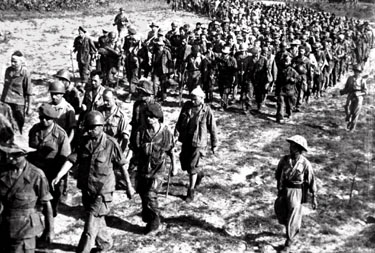
French Prisoners

On May 8th 1954 the French garrison of Dien Bien Phu surrendered to the Viet Minh.  It was the end of the ill-fated Operation Castor in which the French had planned to lure the Viet Minh Regulars into open battle and use superior firepower to decimate them.  The strategy which had been used on a smaller scale the previous year at Na Son.

The French had thought they had come up with a template for victory based on their battle at Na Son in how to engage and destroy the Viet Minh. The plan was called the “Air-land base.”  It involved having strong forces in a defensible position deep behind enemy lines supplied by air.  At Na Son the plan worked as the French were on high ground, had superior artillery and were blessed by General Giap using human wave assaults which made the Viet Minh troops fodder for the French defenders.  Even still Na Son was a near run thing for the French and had almost no effect on Viet Minh operations elsewhere while tying down a light division equivalent and a large portion of French air power.

Viet Minh Regulars

The French took away the wrong lesson from Na-Son and repeated it at Dien Bien Phu.  The French desired to use Dien Bien Phu as a base of operations against the Viet Minh.  Unfortunately the French chose badly. The elected to occupy a marshy valley surrounded by hills covered in dense jungle. They elected to go light on artillery and the air head was at the far end of the range of French aircraft, especially tactical air forces which were in short supply.  To make matters worse the General Navarre, commander of French forces in Indochina informed that the French government was going to begin peace talks and that he would receive no further reinforcements elected to continue the operation.

French Paras Drop into Dien Bien Phu

Likewise French logistics needs were greater than the French Air Force and American contractors could supply.  French positions at Dien Bien Phu were exposed to an an enemy who held the high ground and were not mutually supporting. The terrain was so poor that French units were incapable of any meaningful offensive operations against the Viet Minh. As such they could only dig in and wait for battle. Despite this many positions were not adequately fortified and the artillery was in exposed positions.

Major Marcel Bigeard 

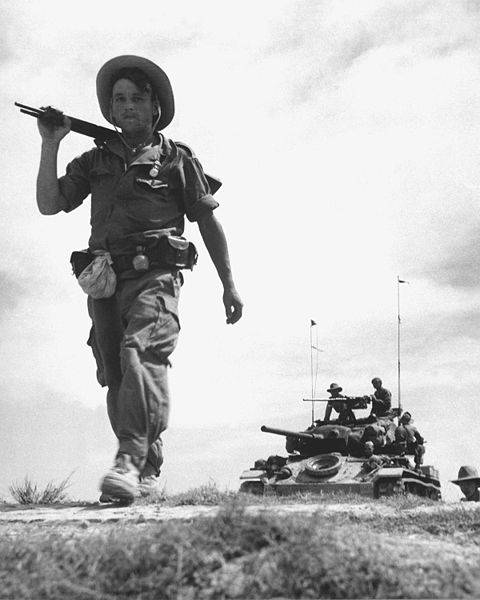
The French garrison was a good quality military force composed of veteran units. It was comprised of Paras, Foreign Legion, Colonials (Marines), North Africans and Vietnamese troops. Ordinarily in a pitched battle it would have done well, but this was no ordinary battle and their Viet Minh opponents were equally combat hardened, well led and well supplied and fighting for their independence.

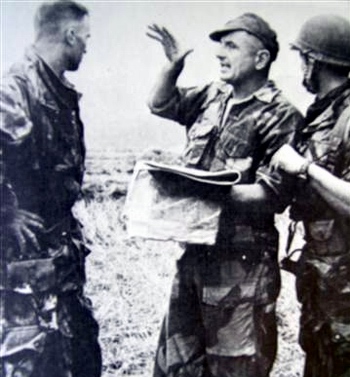
Many of the French officers including Lieutenant Colonel Langlais and Major Marcel Bigeard commander of the 6th Colonial Parachute Battalion were among the best leaders in the French Army. Others who served in Indochina including David Galula and Roger Trinquier would write books and develop counter-insurgency tactics which would help Americans in Iraq. Unfortunately the French High Command badly underestimated the capabilities and wherewithal of the Giap and his divisions.

Viet Minh Supply Column

Giap rapidly concentrated his forces and built excellent logistics support.  He placed his artillery in well concealed and fortified positions which could use direct fire on French positions. Giap also had more and heavier artillery than the French believed him to have.  Additionally he brought in a large number of anti-aircraft batteries whose positions enabled the Viet Minh to take a heavy toll among French Aircraft.  Giap also did not throw his men away in human assaults.  Instead he used his Sappers (combat engineers) to build protective trenches leading up to the very wire of French defensive positions.  In time these trenches came to resemble a spider web.

Without belaboring this post the French fought hard as did the Viet Minh. One after one French positions were overwhelmed by accurate artillery and well planned attacks.  The French hoped for U.S. air intervention, even the possibility of using nuclear weapons against the Viet Minh. They were turned down by a US Government that had grown tired of a war in Korea.

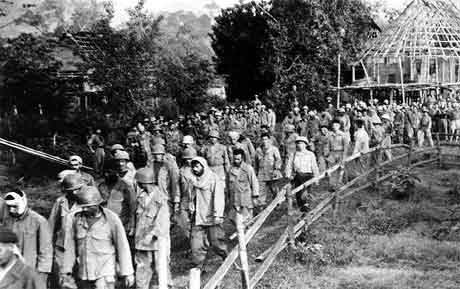
French Wounded Awaiting Medivac from Dien Bien Phu 

Relief forces were unable to get through and the garrison died, despite the bravery of the Paratroops. Colonials and Legionaries. The French garrison was let down by their high command and their government and lost the battle due to inadequate logistics and air power. The survivors endured a brutal forced march of nearly 400 miles on foot to POW camps in which many died. Many soldiers who survived the hell of Dien Bien Phu were subjected to torture, including a practice that we call “water boarding.” General Georges Catroux who presided over the official inquiry into the debacle at Dien Bien Phu wrote in his memoirs: “It is obvious that there was, on the part of our commanding structure, an excess of confidence in the merit of our troops and in the superiority of our material means.”

Few French troops caved to the Viet Minh interrogations and torture but some would come away with the belief that one had to use such means to fight the revolutionaries.  Some French troops and their Algerian comrades would apply these lessons against each other within a year of their release. French soldiers and officers were shipped directly from Indochina to Algeria to wage another protracted counterinsurgency often against Algerians that they had served alongside in Indochina. The Algerian campaign proved to be even more brutal and it was lost politically before it even began.

The March to Captivity

The wars in Indochina and Algeria tore the heart out of the French Army. The defeats inflicted a terrible toll. In Indochina many French career soldiers felt that the government’s “lack of interest in the fate of both thousands of missing French prisoners and loyal North Vietnamese…as dishonorable.” Divisions arose between those who served and those who remained in France or Germany and created bitter enmity between soldiers. France would endure a military coup which involved many who had fought in Vietnam and Algeria. Having militarily won that war these men called The Centurions by Jean Lartenguy had been turned into liars by their government.  They were forced to abandon those who they had fought for and following the mutiny, tried, imprisoned, exiled or disgraced. Colonial troops who remained loyal to France were left without homes in their now “independent” nations. They saw Dien Bien Phu as the defining moment. “They responded with that terrible cry of pain which pretends to free a man from his sworn duty, and promises such chaos to come: ‘Nous sommes trahis!’-‘We are betrayed.’

The effects of the wars in French Indochina, Algeria and Vietnam on the French military establishment were long lasting and often tragic. The acceptance of torture as a means to an end sullied even the hardest French officers. Men like Galula and Marcel Bigeard refused to countenance it, while others like Paul Aussaresses never recanted.

One of the most heart rending parts of the Dien Bien Phu story for me is that of Easter 1954 which fell just prior to the end for the French:

“In all Christendom, in Hanoi Cathedral as in the churches of Europe the first hallelujahs were being sung. At Dienbeinphu, where the men went to confession and communion in little groups, Chaplain Trinquant, who was celebrating Mass in a shelter near the hospital, uttered that cry of liturgical joy with a heart steeped in sadness; it was not victory that was approaching but death.” A battalion commander went to another priest and told him “we are heading toward disaster.” (The Battle of Dienbeinphu, Jules Roy, Carroll and Graf Publishers, New York, 1984 p.239)

As a veteran of Iraq whose father served in Vietnam I feel an almost a spiritual link to our American and French brothers in arms who fought at Dien Bien Phu, the Street Without Joy, Algiers and places like Khe Sanh, Hue City, the Ia Drang and the Mekong. When it comes to this time of year I always have a sense of melancholy and dread as I think of the unlearned lessons and future sacrifices that we may be asked to make.

Legionaires on the Street Without Joy

The lessons of the French at Dien Bien Phu and in Indochina were not learned by the United States as it entered Vietnam, Iraq or Afghanistan. Nor were the lessons of Algeria. It was an arrogance for which we paid dearly and I do not think that many in our political, media and pundits or military have entirely learned or that we in the military have completely shaken ourselves. We lost 54,000 dead in Vietnam, nearly 4500 in Iraq and close to 3500 in Afghanistan, not counting vast numbers of wounded. There are those even as we have been at war for 15 years who advocate even more interventions in places that there is no good potential outcome, only variations on bad. How many more American Soldiers, Sailors, Marines and Airmen and our allies will need die without “victory” however badly we might try to define it?

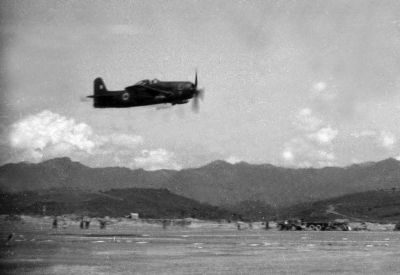
French Navy F-8 Bearcat at Dien Bien Phu

Like the French our troops who returned from Vietnam were forgotten.The U.S. Army left Vietnam and returned to a country deeply divided by the war. Vietnam veterans remained ostracized by the society until the 1980s. As Lieutenant General Harold Moore  who commanded the battalion at the Ia Drang immortalized in the film We Were Soldiers recounted “in our time battles were forgotten, our sacrifices were discounted, and both our sanity and suitability for life in polite American society were publicly questioned.”

For those interested in the French campaign in Indochina it has much to teach us. Good books on the subject include The Last Valley by Martin Windrow, Hell in a Very Small Place by Bernard Fall; The Battle of Dienbeinphu by Jules Roy; and The Battle of Dien Bien Phu- The Battle America Forgot by Howard Simpson. For a history of the whole campaign, read Street Without Joy by Bernard Fall. I always find Fall’s work poignant, he served as a member of the French Resistance in the Second World War and soldier later and then became a journalist covering the Nuremberg Trials and both the French and American wars in Vietnam and was killed by what was then known as a “booby-trap” while covering a platoon of U.S. Marines.

I do pray that we will learn the lessons before we enter yet another hell. But I don’t think it is possible for us to learn anymore, only send more young men and women to die in an already lost cause. As the late Edwin Starr sang in his song War, what is it good for? 

Peace, love and understanding. Tell me, is there no place for them today. They say we must fight to keep our freedom, But lord knows there’s got to be a better way. War, what is it good for? Absolutely nothing, say it again… 

Peace

Padre Steve+

3 Comments

Filed under afghanistan, Foreign Policy, History, Military, News and current events, War on Terrorism

Foul Weather, and Learning about War

Willoughby Run at Herbst Woods at Gettysburg

Friends of Padre Steve’s World,

Yesterday I was with my students conducting the Staff Ride at Gettysburg. About a week ago the mid-Atlantic region was experiencing record high temperatures and abnormally warm weather. In fact has the temperatures just been normal for this time of year we would have counted ourselves lucky to have such good weather, however, the trended changed and instead of warm weather we had temperatures in the low fifties, wind and rain. The weather was raw, but that is part of life, and if you want to really learn and experience military history you need to do more than sit back in a recliner sipping a nice beverage, and reading a book in comfort.

Guy Sager, who wrote the classic soldier’s account of the Second World War on the Easter front wrote in his book, The Forgotten Soldier: 

“Too many people learn about war with no inconvenience to themselves. They read about Verdun or Stalingrad without comprehension, sitting in a comfortable armchair, with their feet beside the fire, preparing to go about their business the next day, as usual…One should read about war standing up, late at night, when one is tired, as I am writing about it now, at dawn, while my asthma attack wears off. And even now, in my sleepless exhaustion, how gentle and easy peace seems!”

Our weather was by my standards not bad, but for some of my students, including veterans of Iraq and Afghanistan it was miserable. For me, adverse conditions that we cannot change are one of the best ways to learn about war. The fact is that war is inconvenient, it is uncomfortable, and it is more often than not quite inhuman.  War is nothing to celebrate, battles, even victories are to be commemorated not celebrated, and not celebrated as our President said this week this week in reference to the Battle of the Coral Sea. Sadly, the current American President is neither a historian, nor a soldier; he is a draft dodger who loves the instruments of military power without appreciating the sacrifice of those who serve in combat.

Yesterday was a relatively miserable day as far as weather goes, but we had it easy. We can ride around the battlefield in vans and cars, we take a long lunch break, there are restrooms, and we don’t have to lay our bodies down in the dirt, grass, or mud to sleep.

For me that is one of the most important lessons of going on a Staff Ride or visiting a battlefield. Those are lessons that our civilian leadership and those who are cheerleaders of war need to learn. Sadly, very few Americans understand this. Too few of us have been to war to understand this, and many who have gone to war have stayed on well protected bases with air conditioning, heat, plentiful food, and even internet and television access. That wasn’t my war i n Iraq out with our advisors in  Al Anbar Province, but I digress…

Today we will do the third day of the Battle of Gettysburg. We will walk the path trod by Pickett’s Division during Pickett’s Charge, we will visit General Meade’s headquarters, and then go the the Soldier’s Cemetery where Abraham Lincoln delivered the Gettysburg Address. The weather will be cool, but clear with no rain, although there will be quite a few places that we will have to walk through muddy ad very wet ground, but c’est le guerre.

Until tomorrow,

Peace

Padre Steve+


1 Comment

Filed under civil war, Gettysburg, History, Military, weather

Thoughts on Being Passed Over for Promotion 


Friends of Padre Steve’s World,

Yesterday was a tough day. I failed to select for promotion to Captain for the second time. It wasn’t so much not being selected for promotion as I neither expected it or wanted it, but it was a reminder to me of the many painful experiences that I have had with senior leaders in both the Army and Navy Chaplain Corps in my 25 years of service as a chaplain. But that being said I was warned. When I was a young Medical Service Corps Captain in the Army I felt the call to go to seminary to become a chaplain. As I got close to leaving active duty, my brigade executive officer pulled me aside. He told me: “Steve, if you think that the Army Medical Department is political and cutthroat, we can’t hold a candle the the Chaplain Corps.” 

Sadly, Lieutenant Colonel Wigger was all too correct. Much of the senior leadership in all of the military chaplain corps, as well as Federal, State, and hospital chaplaincies are as toxic as Zyclon-B. Of course they are not alone, many leaders in church hierarchies are just as bad if not worse. Maybe there is something in humanity that makes some people when given authority in both the temporal as well as spiritual realms exhibit the worst aspects of human nature. 

I have always said that I would never be that way and I have always tried to best to value and care for the chaplains, as well as enlisted personnel who have worked for me. Honestly I think that I’ve done pretty good in that, and I hope that when they remember me that they don’t have the visceral reaction I have at the thought of some of the chaplains and other clergy who have used, abused, and then thrown me under the bus, especially in the depths of my post-Iraq experience with PTSD, mild TBI and moral injury. 

I am not bitter about not getting promoted, but I still bear much animus to those who have used, abused, and then did not care for my spiritual or emotional needs when I needed them. Betrayal is a big part of moral injury and I really do not think that we ever fully recover from that. People, especially Christians say that we should forgive those who have committed acts that have harmed us. I am a priest and I do understand that necessity to forgive, but when one has been harmed over the course of many years it is difficult to do. Actually, until today yesterday I thought that I was pretty much over those feelings and that the wounds had pretty much healed. I was wrong, I have a long way to go. 

After I found out that I hadn’t been selected I took a long walk. I was on my way to Gettysburg and I was dropping my wife and our dogs off with good friends before departing this morning. My walk took me through about five miles of woods along the banks of the Potomac River, including the place that JEB Stuart and his Confederate cavalry forded it during the Gettysburg campaign. That walk in the quiet as well as a conversation with a senior chaplain who has been there for me got me to a better place. When I got back both Minnie and Izzy did what they could to comfort me. Good dogs, they act like nurses. 

I am grateful for the career that I have had. I have been very lucky and very blessed. While there have been some that have gone out of their way to hurt me, or just didn’t give a damn about the way their words and actions impacted me or others, I have been lucky to have some who have done whatever they can to help me and in some cases protected me from myself. Their care, mentoring, and practical, observable love means more to me than anything. I was able to let a number of them know that last night. 

I also know a lot of other fine chaplains and ministers who have been screwed worse by varies chaplain systems or churches than I ever was. Good men and women who deserved far better. I will land on my feet. Some of them are dead, a couple by their own hand because of how they were treated and abandoned when they needed help. I have friends, a wife who loves me and three great Papillons. I am not alone. 

Likewise, had I gotten the operational assignments that I wanted when I was selected for Commander, I never would have gotten my orders to the Staff College. That assignment has opened doors for life after the Navy that I would never have had. I now get to be an academic and hopefully I’ll have my first Civil War era book published in a year or so, and that is when the fun will really begin, so I have nothing to bitch about, but I still hurt. Some say that God has a plan, but honestly I don’t know who true that is, but even so I’m hurting but okay and I’d rather have Judy, my dogs, and my friends than some pie in the sky theology. 

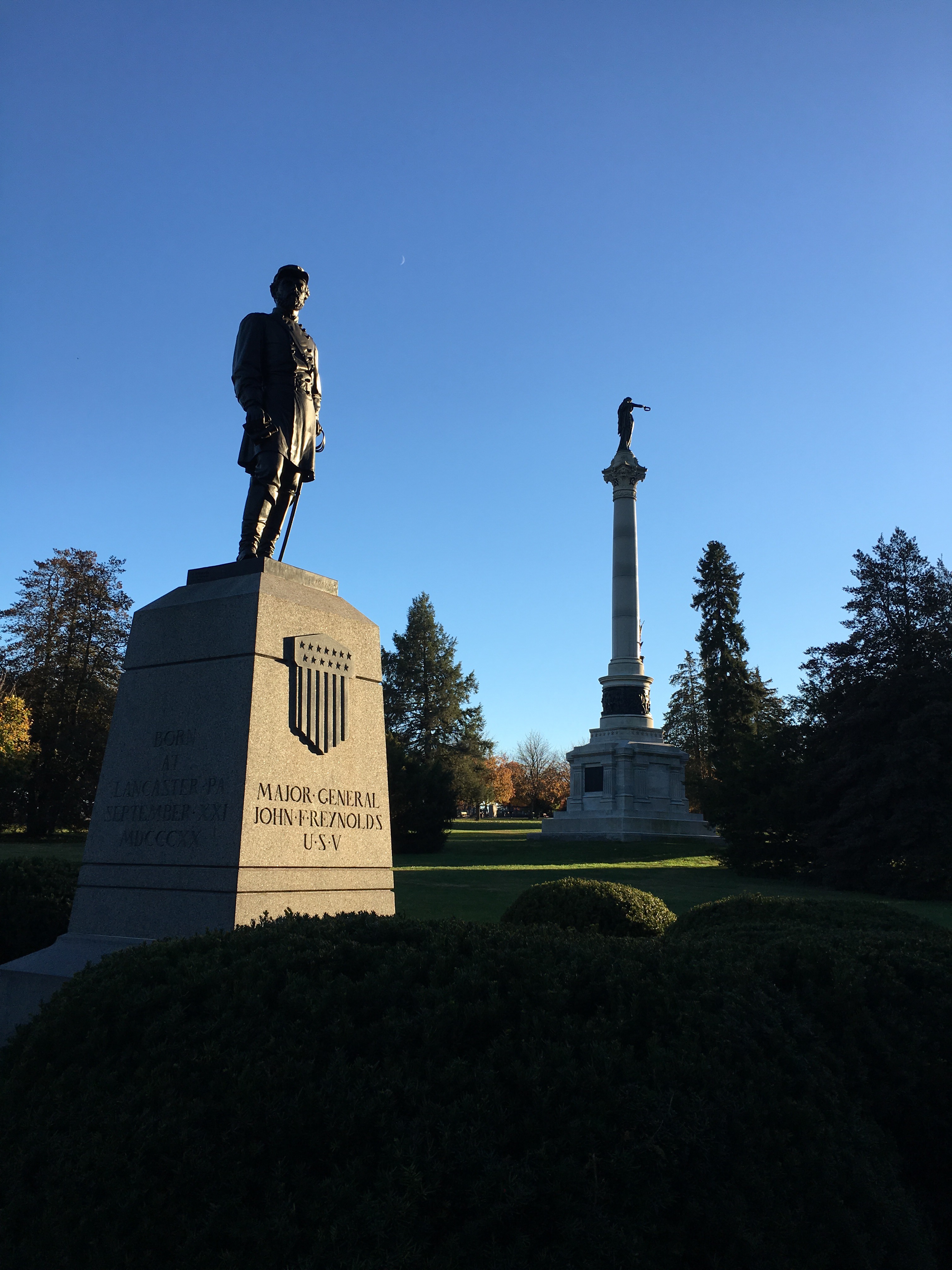
So today I will be going up to Gettysburg early. I’ll arrive well in advance of my students and today my plan is to walk the battlefield from McPherson’s Ridge, to Herbst Woods, and on to Seminary Ridge where I also hope to visit the museum now located in the old seminary building. This is important to do because one never fully appreciates what happened in a certain spot until they have walked the ground. Likewise, there are many markers at Gettysburg that have a lot of meaning that most people never see because they are too busy driving around to see the high points like Little Round Top, the Angle and High Water Mark, and the Virginia And Pennsylvania memorials. 

As I do so I will remember the heroes of the Union side who held their ground, and the men who were not recognized for their actions, and in some cases, like Abner Doubleday, after having done well and fighting heroically were relieved of duty simply because some above them didn’t like them, and acted on false reports. I think that will be a healthy experience for me. Later, I will meet my students for dinner and discuss the strategic and operational aspects of the campaign that connect with what they are learning in regard to planning at the Staff College. 

So anyway, I know that there is a lot of other stuff going on in the world. I’ve seen bit and pieces about the GOP Health Care repeal but have not had time to read anything. Maybe I’ll get to it later in the weekend or early next week as it’s not going to go away. 

I’ll post something small from Gettysburg the next two days. So until tomorrow,

Peace

Padre Steve+
8 Comments

Filed under christian life, faith, Gettysburg, Loose thoughts and musings, Military, PTSD