Category Archives: nazi germany

“Say I slew them not.” And the Queen replied, “Then say they were not slain. But dead they are ….” Trump’s Denial of Responsibly and the Guilt of His Supporters For 158,000 Dead Americans


Friends of Padre Steve’s World,

It has been a hard week because of a mechanical failure that led to another instance of flooding in our house. Since Tuesday we have been living with the HVAC people fixing the problem for no charge since it was a second occurrence in two years.

We have been living with the dehumidifiers and fans installed by ServPro, and seen large amounts of ceiling drywall pulled down because it was too saturated to salvage. Because we are in a heat wave like we haven’t seen in July in years, and the fact that the dehydration units are pumping out hot air into the intakes of of our HVAC it is doing the best it can. I finally got the inside temperature to 76 degrees last night and got it to 75 before I got to bed.

We haven’t slept well all week because of the noise and heat. Last night Judy went upstairs to bed not long after we came home from dinner, she was exhausted. The puppies were with me, with Izzy resuming her role as the police when the little ones get out of line. Izzy protects Maddy Lyn when Pierre, accepting his new role as the middle child with the grace of Jan Brady, growls and snaps at her. Admittedly, he is jealous, but he has always been a diva, a male diva, or miva. Likewise, because Maddy doesn’t back down, Izzy sometimes has to push her down and hold her down with one of her beefy paws, before kissing her like a big sister or mommy. Since I couldn’t sleep I had Izzy and Maddy asleep by me while Pierre was perched high on the couch, in one of his usual spots, when Judy came down about 3 AM.

Since I have been ruminating on the unconstitutional, racist and repugnant police state policies, as well as continuing to sell our national security and the trust of our allies for the Thirty-Pieces of Silver given to him by Vladimir Putin, and with Judy passed out and me still being unable to sleep last night I caught up on some correspondence and then put on the films Nuremberg about the trial of the Major Nazi War Criminals, and Judgment at Nuremberg a factionalized film account of the Judges Trial at Nuremberg.

I watched these films to remind myself that there can be justice for men who lead nations to catastrophe. Despite the lies of the President and his sycophants serving in high office and their supporters who fight against science, medicine, and public health by politicizing the best practice of public health in a pandemic where the pathogen is airborne and highly contagious. For over half a year the President and his closest advisers knew about the threat and they did nothing then to stop it by preparing our people, our medical system, and Governments at all levels on the best practices to stop any airborne virus until there is a vaccine or truly effective treatment; wearing protective masks, maintaining safe social distancing, and washing our Hans with soap and water for at least 20 seconds, and avoid large gatherings of any kind.  However that for them is curtailing their freedom. Their freedom to do what I ask? Well, quite simply, the freedom to ignore social responsibility, to ignore the responsibilities to other people dictated by their primarily Christian Faith, which is interpreted as restricting their religious freedom. Both of which infect millions with the highly contagious virus and kills people of all ages, often destroying most of their vital organs and leaves survivors with long periods of recuperation and Long term medical problems never imagined.

The incompetence, wrapped in negligence, stuffed with ignorance, and sustained malignant narcissistic sociopaths who live in a cloud cuckoo land of lies, distortions and conspiracy theories promoted by the President himself and have no empathy for anyone is beyond comprehension for any rational human being with an once of humanity in his or her heart.

There can be no justice without the people who directed the policies at Federal, State, and Local levels being brought to justice for the deaths of what will amount to probably twice the 158,000 who are already dead, and the nearly 4.7 million who have already been infected and nearly 2.4 million currently infected with the virus. All of this is happening while the President is attempting coerce something into  sending children back to schools without tests, without tracing, without adequate PPE, in facilities that often have poor ventilation, aboard packed school busses, so they can bring the disease back to their parents, grandparents, aunts and uncles, and the uncounted number of people in their social circles.

The blood of all the dead, the suffering of the infected, and the destitution of those without jobs, losing their medical insurance, and faced with the prospect of eviction or foreclosure and being homeless is on the hands of everyone who enacted or supported such policies. If there is no price to pay, then justice is nothing, it is a farce to protect the guilty. To me such people need to be held accountable to the law, the Constitution, and to the basic elements of human compassion to do no harm to others.

If this offends you I am not sorry. If you are a person who willingly gathered without face masks or social distancing, even under the penalty of laws enacted by your state governors or legislatures, then you are a criminal. The fact is that infected people, even without showing symptoms can infect others, sometimes hundreds.

It used to be that many if not most of the Presidents supporters used to always claim their moral supremacy by claiming to be pro-life, and demanded the personal responsibility, and a willingness to take responsibility for their actions. But those were lies to gain political power. For the vast majority of them being pro-life only meant being against abortion, burps once out of the womb, the life of a Black, Brown, Yellow, or Red child was worthless. That sad legacy goes back to the First English and other European colonists arrived in the Western Hemisphere. As far as personal responsibility that only applied to non-Whites and the poor. It is a part of our past that we must face and own up to or have their blood on our hands too.

Of course there are exceptions, there always are, but in large part what I have written today is true of the President and the vast majority of people and Republican Party leaders who still support him. This is the truth, and as for me  “I will tell the truth even if the whole world conspires against me…” as Burt Lancaster playing the German Jurist Ernst Janning said in Judgment at Nuremberg.

During his closing argument at the Major War Crimes trials, Associate Supreme Court Justice Robert Jackson acting as the American Prosecutor said these words. Change the names and titles from the Nazis involved to current Trump administration officials and the words are as true as when Justice Jackson uttered them in 1946:

Rudolf Hess

The zealot Hess, before succumbing to wanderlust, was the engineer tending the Party machinery, passing orders and propaganda down to the Leadership Corps, supervising every aspect of Party activities, and maintaining the organization as a loyal and ready instrument of power.

Joachim von Ribbentrop

When apprehensions abroad threatened the success of the Nazi regime for conquest, it was the double-dealing Ribbentrop, the salesman of deception, who was detailed to pour wine on the troubled waters of suspicion by preaching the gospel of limited and peaceful intentions.

Wilhelm Keitel

Keitel, the weak and willing tool, delivered the armed forces, the instrument of aggression, over to the Party and directed them in executing its felonious designs.
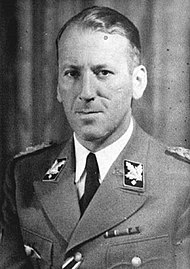
Ernst Kaltenbrunner

Kaltenbrunner, the grand inquisitor, assumed the bloody mantle of Heydrich to stifle opposition and terrorise into compliance, and buttressed the power of National Socialism on a foundation of guiltless corpses.

Alfred Rosenberg

It was Rosenberg, the intellectual high priest of the “master race”, who provided the doctrine of hatred which gave the impetus for the annihilation of Jewry, and who put his infidel theories into practice against the Eastern occupied territories. His woolly philosophy also added boredom to the long list of Nazi atrocities.

Hans Frank

The fanatical Frank, who solidified Nazi control by establishing the new order of authority without law, so that the will of the Party was the only test of legality, proceeded to export his lawlessness to Poland, which he governed with the lash of Caesar and whose population he reduced to sorrowing remnants.

Wilhelm Frick

Frick, the ruthless organiser, helped the Party to seize power, supervised the police agencies to ensure that it stayed in power, and chained the economy of Bohemia and Moravia to the German war machine.
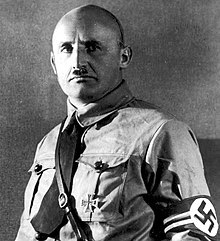
Julius Streicher

Streicher, the venomous vulgarian, manufactured and distributed obscene racial libels which incited the populace to accept and assist the progressively savage operations of “race purification”.
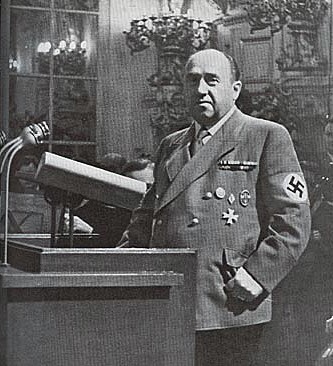
Walter Funk

As Minister of Economics Funk accelerated the pace of rearmament, and as Reichsbank president banked for the SS the gold teeth-fillings of concentration camp victims -probably the most ghoulish collateral in banking history.
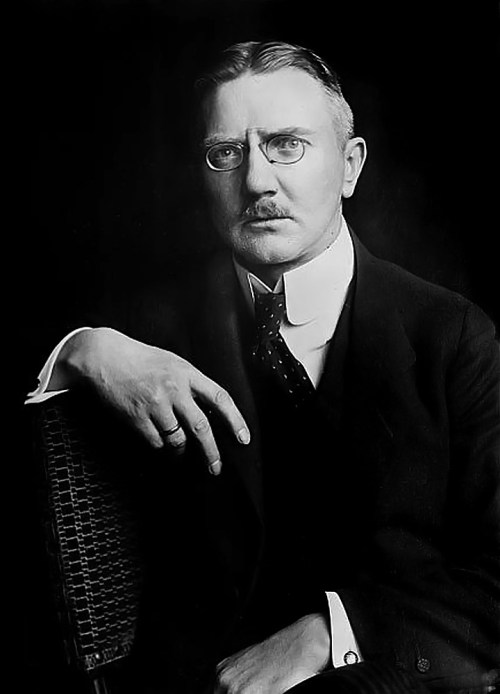
Hjalmar Schacht

It was Schacht, the facade of starched respectability, who in the early days provided the window-dressing, the bait for the hesitant, and whose wizardry later made it possible for Hitler to finance the colossal rearmament programme, and to do it secretly.
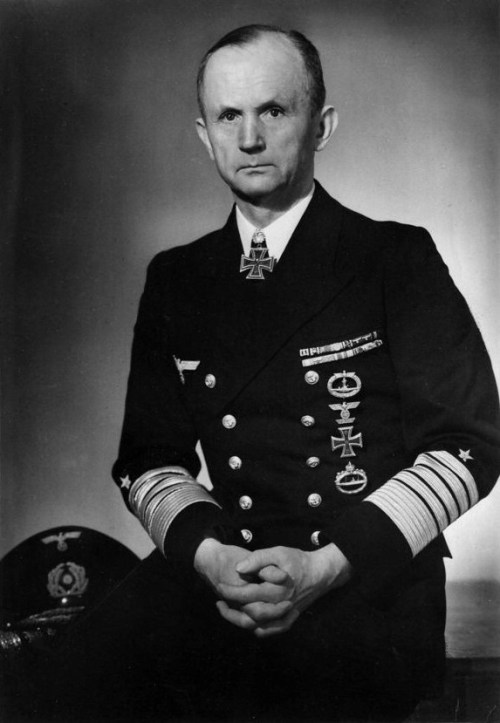
Karl Dönitz

Donitz, Hitler’s legatee of defeat, promoted the success of the Nazi aggressions by instructing his pack of submarine killers to conduct warfare at sea with the illegal ferocity of the jungle.
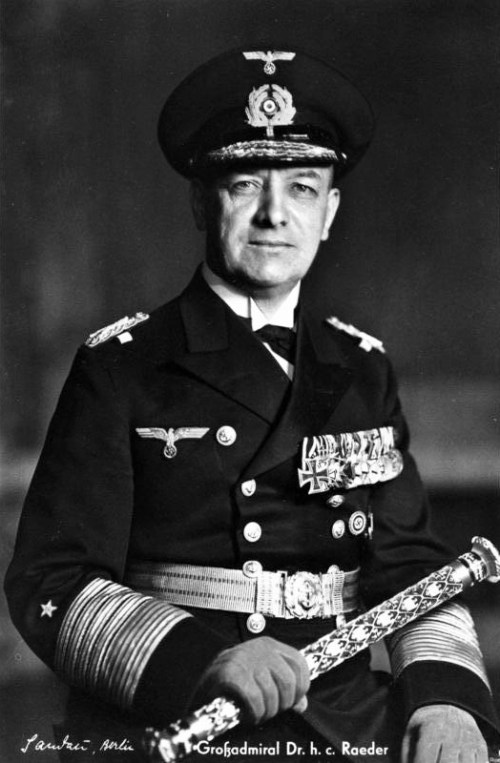
Erich Raeder

Raeder, the political admiral, stealthily built up the German Navy in defiance of the Versailles Treaty, and then put it to use in a series of aggressions which he had taken a leading part in planning.
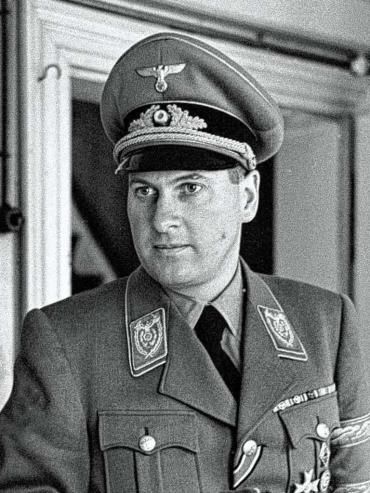
Baldur von Schirach

Von Schirach, poisoner of a generation, initiated the German youth in Nazi doctrine, trained them in legions for service in the SS and Wehrmacht, and delivered them up to the Party as fanatic, unquestioning executors of its will.

Fritz Sauckel

Sauckel, the greatest and cruellest slaver since the Pharaohs of Egypt, produced desperately needed manpower by driving foreign peoples into the land of bondage on a scale unknown even in the ancient days of tyranny in the kingdom of the Nile.

Alfred Jodl

Jodl, betrayer of the traditions of his profession, led the Wehrmacht in violating its own code of military honour in order to carry out the barbarous aims of Nazi policy.
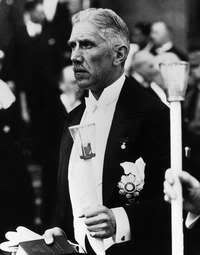
Franz von Papen

Von Papen, pious agent of an infidel regime, held the stirrup while Hitler vaulted into the saddle, lubricated the Austrian annexation, and devoted his diplomatic cunning to the service of Nazi objectives abroad.
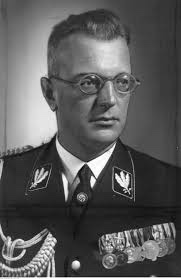
Arthur Seyess-Inquart

Seyss-Inquart, spearhead of the Austrian fifth column, took over the government of his own country only to make a present of it to Hitler, and then, moving north, brought terror and oppression to the Netherlands and pillaged its economy for the benefit of the German juggernaut.
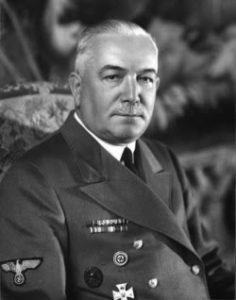
Konstantin von Neurath

Von Neurath, the old-school diplomat, who cast the pearls of his experience before the Nazis, guided Nazi diplomacy in the early years, soothed the fears of prospective victims, and as Reich Protector of Bohemia and Moravia strengthened the German position for the coming attack on Poland.
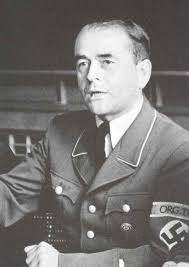
Albert Speer

Speer, as Minister of Armaments and Production, joined in planning and executing the programme to dragoon prisoners of war and foreign workers into German war industries, which waxed in output while the labourers waned in starvation.
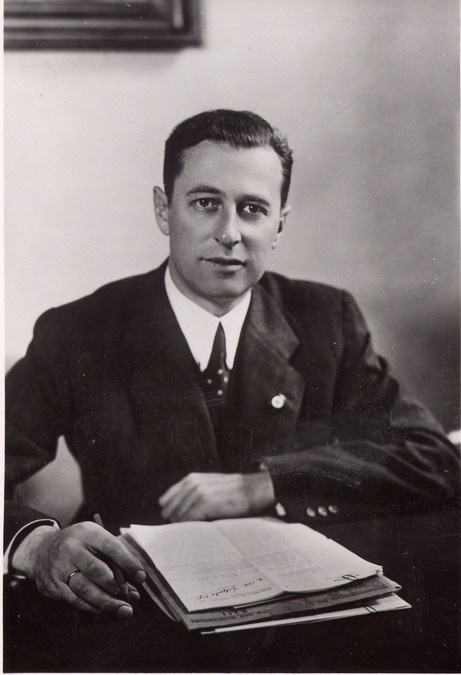
Hans Fritzsche

Fritzsche, radio propaganda chief, by manipulation of the truth goaded German public opinion into frenzied support of the regime, and anaesthetised the independent judgement of the population so that they did their masters’ bidding without question.

Martin Bormann

Bormann, who has not accepted our invitation to this reunion, sat at the throttle of the vast and powerful engine of the Party, guiding it in the ruthless execution of Nazi policies, from the scourging of the Christian Church to the lynching of captive Allied airmen.

The activities of all these defendants, despite their varied backgrounds and talents, were joined with the efforts of other conspirators not now in the. dock, who played still other essential roles: They blend together into one consistent and militant pattern animated by a common objective to reshape the map of Europe by force of arms. Some of these defendants were ardent members of the Nazi movement from its birth. Others, less fanatical, joined the common enterprise later, after success had made participation attractive by the promise of rewards. This group of latter-day converts remedied a crucial defect in the ranks of the original true believers, for as Dr. Siemers has pointed out in his summation:

“… There were no specialists among the National Socialists for the particular tasks. Most of the National Socialist collaborators did not previously follow a trade requiring technical education.”

It was the fatal weakness of the early Nazi band that it lacked technical competence. It could not from among its own ranks make up a government capable of carrying out all the projects necessary to realize its aims. Therein lies the special crime and betrayal of men like Schacht and von Neurath, Speer and von Papen, Raeder and Donitz, Keitel and Jodl. It is doubtful whether the Nazi master plan could have succeeded without their specialized intelligence which they so willingly put at its command. They did so with knowledge of its announced aims and methods, and continued their services after practice had confirmed the direction in which they were tending. Their superiority to the average run of Nazi mediocrity is not their excuse. It is their condemnation.
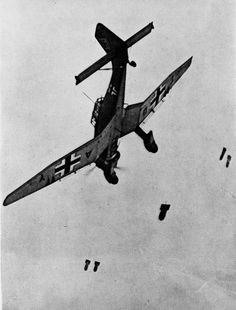
The dominant fact which stands out from all the thousands of pages of the record of this trial is that the central crime of the whole group of Nazi crimes -the attack on the peace of the world -was clearly and deliberately planned. The beginning of these wars of aggression was not an unprepared and spontaneous springing to arms by a population excited by some current indignation. A week before the invasion of Poland Hitler told his military commanders:

“I shall give a propagandist cause for starting war -never mind whether it be plausible or not. The victor shall not be asked later on whether we told the truth or not. In starting and making a war, it is not the right that matters, but victory.”

The propagandist incident was duly provided by dressing concentration camp inmates in Polish uniforms, in order to create the appearance of a Polish attack on a German frontier radio station. The plan to occupy Belgium, Holland, and Luxembourg first appeared as early as August, 1938, in connection with the plan for attack on Czechoslovakia. The intention to attack became a programme in May, 1939, when Hitler told his commanders that:

“The Dutch and Belgian air bases must be occupied by armed forces. Declarations of neutrality must be ignored.”

Thus, the follow-up wars were planned before the first was launched. These were the most carefully plotted wars in all history. Scarcely a step in their terrifying succession and progress failed to move according to the master blueprint or the subsidiary schedules and timetables until long after the crimes of aggression were consummated. Nor were the war crimes and the crimes against humanity unplanned, isolated or spontaneous offences. Apart from our undeniable evidence of their plotting, it is sufficient to ask whether six million people could be separated from the population of several nations on the basis of their blood and birth, could be destroyed and their bodies disposed of, unless the operation had fitted into the general scheme of government. Could the enslavement of five millions of labourers, their impressment into service, their transportation to Germany, their allocation to work where they would be most useful, their maintenance, if slow starvation can be called maintenance, and their guarding have been accomplished if it did not fit into the common plan? Could hundreds of concentration camps located throughout Germany, built to accommodate hundreds of thousands of victims, and each requiring labour and materials for construction, manpower to operate and supervise, and close gearing into the economy -could such efforts have been expended under German autocracy if they had not suited the plan? Has the Teutonic passion for organization suddenly become famous for its toleration of non-conforming activity? Each part of the plan fitted into every other. The slave labour programme meshed with the needs of industry and agriculture, and these in turn synchronised with the military machine. The elaborate propaganda apparatus geared with the programme to dominate the people and incite them to a war which their sons would have to fight. The armament industries were fed by the concentration camps. The concentration camps were fed by the Gestapo. The Gestapo was fed by the spy system of the Nazi Party. Nothing was permitted under the Nazi iron rule that was not in accordance with the programme.

Everything of consequence that took place in this regimented society was but a manifestation of a premeditated and unfolding purpose to secure the Nazi State a place in the sun by casting all others into darkness.

COMMON DEFENCES AGAINST THE CHARGE OF COMMON RESPONSIBILITY

The defendants meet this overwhelming case, some by admitting a limited, responsibility, some by putting the blame on others, and some by taking the position, in effect, that while there have been enormous crimes there are no criminals. Time will not permit me to examine each individual and particular defence, but there are certain lines of defence common to so many cases that they deserve some consideration.

Counsel for many of the defendants seek to dismiss the charge of a common plan or conspiracy on the ground that the pattern of the Nazi plan does not fit into the concept of conspiracy applicable in German law to the plotting of a highway robbery or a burglary. Their concept of conspiracy is in the terms of a stealthy meeting in the dead of night, in a secluded hide-out, in which a group of felons plot every detail of a specific crime. The Charter forestalls resort to such parochial and narrow concepts of conspiracy taken from local law by using the additional and non-technical term, “common plan”. Omitting entirely the alternative term of “conspiracy”, the Charter reads that “leaders, organisers, instigators, and accomplices participating in the formulation or execution of a common plan to commit” any of the described crimes “are responsible for all acts performed by any persons in execution of such plan”.

The Charter concept of a common plan really represents the conspiracy principle in an international context. A common plan or conspiracy to seize the machinery of a State, to commit crimes against the peace of the world, to blot a race out of existence, to enslave millions, and to subjugate and loot whole nations cannot be thought of in the same terms as the plotting of petty crimes, although the same underlying principles are applicable. Little gangsters may plan who will carry a pistol and who a stiletto, who will approach a victim from the front and who from behind, and where they will waylay him. But in planning war, the pistol becomes a Wehrmacht, the stiletto a Luftwaffe. Where to strike is not a choice of dark alleys, but a matter of world geography. The operation involves the manipulation of public opinion, the law of the State, the police power, industry, and finance. The baits and bluffs must be translated into a nation’s foreign policy. Likewise, the degree of stealth which points to a guilty purpose in, a conspiracy will depend upon its object. The clandestine preparations of a State against international society, although camouflaged to those abroad, might be quite open and notorious among its own people. But stealth is not an essential ingredient of such planning. Parts of the common plan may be proclaimed from the housetops, as anti-Semitism was, and parts of it kept under cover, as rearmament for a long time was. It is a matter of strategy how much of the preparation shall be made public, as was Goering’s announcement in 1935 of the creation of an air force, and how much shall be kept covert, as in the case of the Nazis’ use of shovels to teach “labour corps” the manual of arms. The forms of this grand type of conspiracy are amorphous, the means are opportunistic, and neither can divert the law from getting at the substance of things.

The defendants counted, however, that there could be no conspiracy involving aggressive war because (1) none of the Nazis wanted war; (2) rearmament was only intended to provide the strength to make Germany’s voice heard in the family of nations; and (3) the wars were not in fact aggressive wars but were defensive wars against a “Bolshevik menace”.

When we analyse the argument that the Nazis did not want war it comes down, in substance, to this: “The record looks bad indeed -objectively -but when you consider the state of my mind -subjectively I hated war. I knew the horrors of war. I wanted peace.” I am not so sure of this. I am even less willing to accept Goering’s description of the General Staff as pacifist. However, it will not injure our case to admit that as an abstract proposition none of these defendants liked war. But they wanted things which they knew they could not get without war. They wanted their neighbours’ lands and goods. Their philosophy seems to be that if the neighbours would not acquiesce, then they are the aggressors and are to blame for the war. The fact is, however, that war never became terrible to the Nazis until it came home to them, until it exposed their deceptive assurances to the German people that German cities, like the ruined one in which we meet, would be invulnerable. From then on, war was terrible.

But again the defendants claim: “To be sure, we were building guns. But not to shoot. They were only to give us weight in negotiating.” At its best this argument amounts to a contention that the military forces were intended for blackmail, not for battle. The threat of military invasion which forced the Austrian Anschluss, the threats which preceded Munich, and Goering’s threat to bomb the beautiful city of Prague if the President of Czechoslovakia did not consent to the Protectorate, are examples of what the defendants had in mind when they talked of arming to back negotiation.

But from the very nature of German demands, the day was bound to come when some country would refuse to buy its peace, would refuse to pay Dane-geld,

“For the end of that game is oppression and shame, And the nation that plays it is lost.”

Did these defendants then intend to withdraw German demands, or was Germany to enforce them and manipulate propaganda so as to place the blame for the war on the nation so unreasonable as to resist? Events have answered that question, and documents such as Admiral Carl’s memorandum, earlier quoted, leave no doubt that the events occurred as anticipated.

But some of the defendants argue that the wars were not aggressive and were only intended to protect Germany against some eventual danger from the “menace of Communism”, which was something of an obsession with many Nazis.

At the outset this argument of self-defence fails because it completely ignores this damning combination of facts clearly established in the record: first, the enormous and rapid German preparations for war; second, the repeatedly avowed intentions of the German leaders to attack, which I have previously cited; and third, the fact that a series of wars occurred in which German forces struck the first blows, without warning, across the borders of other nations.

Even if it could be shown -which it cannot -that the Russian war was really defensive, such is demonstrably not the case with those wars which preceded it.

It may also be pointed out that even those who would have you believe that Germany was menaced by Communism also compete with each other in describing their opposition to the disastrous Russian venture. Is it reasonable that they would have opposed that war if it were undertaken in good faith in self-defence.

It is sought to balance the frivolous self-defence theory against the facts, as advocates often do, by resort to a theory of law. Dr. Jahrreiss, in his scholarly argument for the defence, rightly points out that no treaty provision and no principle of law denied Germany, as a sovereign nation, the right of self-defence. He follows with the assertion for which there is authority in classic International Law, that:

“… every State is alone judge of whether in a given case it is waging a war of self-defence”.

It is not necessary to examine the validity of an abstract principle which does not apply to the facts of our case. I do not doubt that if a nation arrived at a judgement that it must resort to war in self-defence, because of conditions affording reasonable grounds for such an honest judgement, any Tribunal would accord it great and perhaps conclusive weight, even if later events proved that judgement mistaken.

But the facts in this case call for no such deference to honest judgement because no such judgement was ever pretended, much less honestly made.

In all the documents which disclose the planning and rationalisation of these attacks, not one sentence has been or can be cited to show an honest fear of attack. It may be that statesmen of other nations lacked the courage forthrightly and fully to disarm. Perhaps they suspected the secret rearmament of Germany. But if they hesitated to abandon arms, they did not hesitate to neglect them. Germany well knew that her former enemies had allowed their armaments to fall into decay, so little did they contemplate another war. Germany faced a Europe that not only was unwilling to attack, but was too weak and pacifist even adequately to defend, and went to the very verge of dishonour, if not beyond, to buy its peace. The minutes we have shown you of the Nazis’ secret conclaves identify no potential attacker. They bristle with the spirit of aggression and not of defence. They contemplate always territorial expansion, not the maintenance of territorial integrity.

Minister of War von Blomberg, in his 1937 directive prescribing general principles for the preparation for war of the armed forces, has given the lie to these feeble claims of self-defence. He stated at that time:

“The general political situation justifies the supposition that Germany need not consider an attack on any side. Grounds for this are, in addition to the lack of desire for war in almost all nations, particularly the Western Powers, the deficiencies in the preparedness for war in a number of States and of Russia in particular.”

Nevertheless, he recommended: “a continuous preparation for war in order to (a) counter-attack at any time, and (b) to enable the military exploitation of politically favourable opportunities should they occur”.

If these defendants may now cynically plead self-defence, although no honest need of self-defence was asserted or contemplated by any responsible leader at that time, it reduces non-aggression treaties to a legal absurdity. They become additional instruments of deception in the hands of the aggressor, and traps for well-meaning nations. If there be in non-aggression pacts an implied condition that each nation may make a bona fide judgement as to the necessity for self-defence against imminent threatened attack, it certainly cannot be invoked to shelter those who never made any such judgement at all.

In opening this case I ventured to predict that there would be no serious denial that the crimes charged were committed, and that the issue would concern the responsibility of particular defendants. The defendants have fulfilled that prophecy. Generally, they do not deny that these things happened, but it is contended that they “just happened”, and that they were not the result of a common plan or conspiracy.

One of the chief reasons the defendants say why there was no conspiracy is the argument that conspiracy was impossible with a dictator. The argument runs that they all had to obey Hitler’s orders, which had the force of law m the German State, and hence obedience could not be made the basis of a criminal charge. In this way it is explained that while there have been wholesale killings, there have been no murderers.

This argument is an effort to evade Article 8 of the Charter, which provides that the order of the Government or of a superior shall not free a defendant from responsibility but can only be considered in mitigation. This provision of the Charter corresponds with the justice and with the realities of the situation, as indicated in defendant Speer’s description of what he considered to be the common responsibility of the leaders of the German nation; he said that … with reference to decisive matters, there was a joint responsibility. There must be a joint responsibility among the leaders, because who else could take the responsibility for the development of events, if not the close associates who work with and around the head of the State?

And again he told the Tribunal that … it was impossible after the catastrophe to evade this joint responsibility, and that if the war had been won, the leaders would also have laid claim to joint responsibility.

Like much of defence counsel’s abstract arguments, the contention that the absolute power of Hitler precluded a conspiracy crumbles in the face of the facts of record. The Fuehrerprinzip of absolutism was itself a part of the common plan, as Goering has pointed out. The defendants may have become the slaves of a dictator, but he was their dictator. To make him such was, as Goering has testified, the object of the Nazi movement from the beginning. Every Nazi took this oath:

“I pledge eternal allegiance to Adolf Hitler. I pledge unconditional obedience to him and the Fuehrers appointed by him.”

Moreover, they forced everybody else in their power to take it. This oath was illegal under German law, which made it criminal to become a member of an organization in which obedience to “unknown superiors or unconditional obedience to known superiors is pledged”. These men destroyed free government in Germany and now plead to be excused from responsibility because they became slaves. They are in the position of the boy of fiction who murdered his father and mother and then pleaded for leniency because he was an orphan.

What these men have overlooked is that Adolf Hitler’s acts are their acts. It was these men among millions of others, and it was these men leading millions of others, who built up Adolf Hitler and vested in his psychopathic personality not only innumerable lesser decisions but the supreme issue of war or peace. They intoxicated him with power and adulation. They fed his hates and aroused his fears. They put a loaded gun in his eager hands. It was left to Hitler to pull the trigger, and when he did they all at that time approved. His guilt stands admitted, by some defendants reluctantly, by some vindictively. But his guilt is the guilt of the whole dock, and of every man in it.

But it is urged that these defendants could not be in agreement on a common plan or conspiracy because they were fighting among themselves or belonged to different factions or cliques. Of course, it is not necessary that men should agree on everything in order to agree on enough things to make them liable for a criminal conspiracy. Unquestionably there were conspiracies within the conspiracy, and intrigues and rivalries and battles for power. Schacht and Goering disagreed, but over which of them should control the economy, not over whether the economy should be regimented for war. Goering claims to have departed from the plan because, through Dahlerus, he conducted some negotiations with men of influence in England just before the Polish war. But it is perfectly clear that this was not an effort to prevent aggression against Poland but to make that aggression successful and safe by obtaining English neutrality. Rosenberg and Goering may have had some differences as to how stolen art should be distributed, but they had none about how it should be stolen. Jodl and Goering may have disagreed about whether to denounce the Geneva Convention, but they never disagreed about violating it. And so it goes through the whole long and sordid story. Nowhere do we find a single instance where any one of the defendants stood up against the rest and said: “This thing is wrong and I will not take part in it.” Wherever they differed, their differences were as to method or jurisdiction, but always within the framework of the common plan.

Some of the defendants also contend that in any event there was no conspiracy to commit war crimes or crimes against humanity because Cabinet members never met with the military commanders to plan these acts. But these crimes were only the inevitable and incidental results of the plan to commit the aggression for purposes of Lebensraum. Hitler stated, at a conference with his commanders, that:

“The main objective in Poland is the destruction of the enemy and not the reaching of a certain geographical line.”

Frank picked up the tune and suggested that when their usefulness was exhausted,

“… then, for all I care, mincemeat can be made of the Poles and Ukrainians and all the others who run around here -it does not matter what happens”.

Reichskommissar Koch in the Ukraine echoed the refrain:

“I will draw the very last out of this country. I did not come to spread bliss ….”

This was Lebensraum in its seamy side. Could men of their practical intelligence expect to get neighboring lands free from the claims of their tenants without committing crimes against humanity?

The last stand of each defendant is that even if there was a conspiracy, he was not in it. It is therefore important in examining their attempts at avoidance of responsibility to know, first of all, just what it is that a conspiracy charge comprehends and punishes.
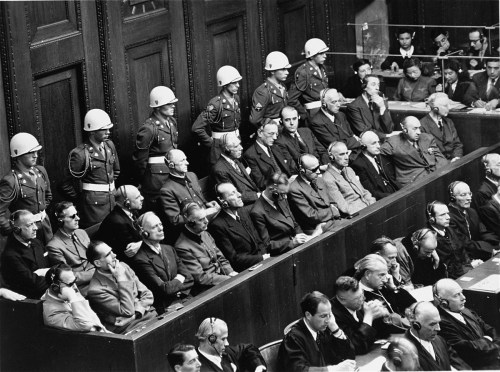
In conspiracy we do not punish one man for another man’s crime. We seek to punish each for his own crime of joining a common criminal plan in which others also participated. The measure of the criminality of the plan and therefore of the guilt of each participant is, of course, the sum total of crimes committed by all in executing the plan. But the gist of the offence is participation in the formulation or execution of the plan. These are rules which every society has found necessary in order to reach men, like these defendants, who never get blood on their own hands but who lay plans that result in the shedding of blood. All over Germany today, in every zone of occupation, little men who carried out these criminal policies under orders are being convicted and punished. It would present a vast and unforgivable caricature of justice if the men who planned these policies and directed these little men should escape all penalty.

These men in this dock, on the face of this record, were not strangers to this programme of crime, nor was their connection with it remote or obscure. We find them in the very heart of it. The positions they held show that we have chosen defendants of self-evident responsibility. They are the very highest surviving authorities in their respective fields and in the Nazi State. No one lives who, at least until the very last moments of the war, outranked Goering in position, power, and influence. No soldier stood above Keitel and Jodl, and no sailor above Raeder and Donitz. Who can be responsible for the double-faced diplomacy if not the Foreign Ministers, von Neurath and Ribbentrop, and the diplomatic handyman, von Papen? Who should be answerable for the oppressive administration of occupied countries if Gauleiter, Protectors, Governors and Commissars such as Frank, Seyss-Inquart, Frick, von Schirach, von Neurath, and Rosenberg are not? Where shall we look for those who mobilised the economy for total war if we overlook Schacht and Speer and Funk? Who was the master of the great slaving enterprise if it was not Sauckel? Where shall we find the hand that ran the concentration camps if it was not the hand of Kaltenbrunner? Who whipped up the hates and fears of the public, and manipulated the Party organizations to incite these crimes, if not Hess, von Schirach, Fritzsche, Bormann and the unspeakable Julius Streicher? The list of defendants is made up of men who played indispensable and reciprocal parts in this tragedy. The photographs and the films show them again and again together on important occasions. The documents show them agreed on policies and on methods, and all working aggressively for the expansion of Germany by force of arms.

Hermann Goering

Each of these men made a real contribution to the Nazi plan. Each man had a key part. Deprive the Nazi regime of the functions performed by a Schacht, a Sauckel, a von Papen, or a Goering, and you have a different regime. Look down the rows of fallen men and picture them as the photographic and documentary evidence shows them to have been in their days of power. Is there one who did not substantially advance the conspiracy along its bloody path towards its bloody goal? Can we assume that the great effort of these men’s lives was directed towards ends they never suspected?

To escape the implications of their positions and the inference of guilt from their activities, the defendants are almost unanimous in one defence. The refrain is heard time and again: these men were without authority, without knowledge, without influence, without importance. Funk summed up the general self-abasement of the dock in his plaintive lament that:

“I always, so to speak, came up to the door. But I was not permitted to enter.”

In the testimony of each defendant, at some point there was reached the familiar blank wall: nobody knew anything about what was going on. Time after time we have heard the chorus from the dock:

“I only heard about these things here for the first time.”

These men saw no evil, spoke none, and none was uttered in their presence. This claim might sound very plausible if made by one defendant. But when we put all their stories together, the impression which emerges of the Third Reich, which was to last a thousand years, is ludicrous. If we combine only the stories of the front bench, this is the ridiculous composite picture of Hitler’s Government that emerges. It was composed of:

A No. 2 man who knew nothing of the excesses of the Gestapo which he created, and never suspected the Jewish extermination programme although he was the signer of over a score of decrees which instituted the persecution of that race;

A No. 3 man who was merely an innocent middleman transmitting Hitler’s orders without even reading them, like a postman or delivery boy;

A Foreign Minister who knew little of foreign affairs and nothing of foreign policy;

A Field-Marshal who issued orders to the armed forces but had no idea of the results they would have in practice;

A Security Chief who was of the impression that the policing functions of his Gestapo and SD were somewhat on the lines of directing traffic;

A Party philosopher who was interested in historical research, and had no idea of the violence which his philosophy was inciting in the twentieth century;

A Governor-General of Poland who reigned but did not rule;

A Gauleiter of Franconia whose occupation was to pour forth filthy writings about the Jews, but who had no idea that anybody would read them;

A Minister of the Interior who knew not even what went on in the interior of his own office, much less the interior of his own department, and nothing at all about the interior of Germany;

A Reichsbank President who was totally ignorant of what went in and out of the vaults of his bank;

A Plenipotentiary for the War Economy who secretly marshalled the entire economy for armament, but had no idea it had anything to do with war.

This may seem like a fantastic exaggeration, but this is what you would actually be obliged to conclude if you were to acquit these defendants.

They do protest too much. They deny knowing what was common knowledge. They deny knowing plans and programmes that were as public as Mein Kampf and the Party programme.

They deny even knowing the contents of documents which they received and acted upon. Nearly all the defendants take two or more conflicting positions. Let us illustrate the inconsistencies of their positions by the record of one defendant -who, if pressed, would himself concede that he is the most intelligent, honourable and innocent man in the dock. That is Schacht. And this is the effect of his own testimony -but let us not forget that I recite it not against him alone, but because most of its self-contradictions are found in the testimony of several defendants.

Schacht did not openly join the Nazi movement until it had won, nor openly desert it until it had lost. He admits that he never gave it public opposition, but asserts that he never gave it private loyalty. When we demand of him why he did not stop the criminal course of the regime in which he was a Minister, he says he had not a bit of influence. When we ask why he remained a member of the criminal regime, he tells us that by sticking on he expected to moderate its programme. Like a Brahmin among Untouchables, he could not bear to mingle with the Nazis socially, but never could he afford to separate from them politically. Of all the Nazi aggressions by which he now claims to have been shocked, there is not one that he did not support before the world with the weight of his name and prestige. Having armed Hitler to blackmail a continent, his answer now is to blame England and France for yielding. Schacht always fought for his position in a regime he now affects to despise. He sometimes disagreed with his Nazi confederates about what was expedient in reaching their goal, but he never dissented from the goal itself. When he did break with them in the twilight of the regime, it was over tactics, not principles. From then on he never ceased to urge others to risk their positions and their necks to forward his plots, but never on any occasion did he hazard either of his own. He now boasts that he personally would have shot Hitler if he had had the opportunity, but the German newsreel shows that even after the fall of France, when he faced the living Hitler, he stepped out of line to grasp the hand he now claims to loathe and hung upon the words of the man he now says he thought unworthy of belief. Schacht says he steadily “sabotaged” the Hitler Government. Yet the most relentless secret service in the world never detected him doing the regime any harm until long after, he knew the war to be lost and the Nazis doomed. Schacht, who dealt in “hedges” all his life, always kept himself in a position to claim that he was in either camp. The plea for him is as specious on analysis as it is persuasive on first sight. Schacht represents the most dangerous and reprehensible type of opportunism -that of the man of influential position who is ready to join a movement that he knows to be wrong because he thinks it is winning.

These defendants, unable to deny that they were the men in the very highest ranks of power, and unable to deny that the crimes I have outlined actually happened, know that their own denials are incredible unless they can suggest someone who is guilty.

The defendants have been unanimous, when pressed, in shifting the blame on other men, sometimes on one and sometimes on another. But the names they have repeatedly picked are Hitler, Himmler, Heydrich, Goebbels and Bormann. All of these are dead or missing. No matter how hard we have pressed the defendants on the stand, they have never pointed the finger at a living man as guilty. It is a temptation to ponder the wondrous workings of a fate which has left only the guilty dead and only the innocent alive. It is almost too remarkable.

The chief villain on whom blame is placed -some of the defendants vie with each other in producing appropriate epithets -is Hitler. He is the man at whom nearly every defendant has pointed an accusing finger.

I shall not dissent from this consensus, nor do I deny that all these dead and missing men shared the guilt. In crimes so reprehensible that degrees of guilt have lost their significance they may have played the most evil parts. But their guilt cannot exculpate the defendants. Hitler did not carry all responsibility to the grave with him. All the guilt is not wrapped in Himmler’s shroud. It was these dead men whom these living chose to be their partners in this great conspiratorial brotherhood, and the crimes that they did together they must pay for one by one.

It may well be said that Hitler’s final crime was against the land he had ruled. He was a mad “messiah” who started the war without cause and prolonged it without reason. If he could not rule he cared not what happened to Germany. As Fritzsche has told us from the stand, Hitler tried to use the defeat of Germany for the self-destruction of the German people. He continued the fight when he knew it could not be won, and continuance meant only ruin.

Speer, in this courtroom, has described it as follows:

“… The sacrifices which were made on both sides after January, 1945, were senseless. The dead of this period will be the accusers of the man responsible for the continuation of that fight, Adolf Hitler, and the ruined cities which in this last phase lost tremendous cultural values and in which a colossal number of dwellings were destroyed …. The German people remained faithful to Adolf Hitler until the end. He betrayed them knowingly. He finally tried to throw them into the abyss ….”

Hitler ordered everyone else to fight to the last and then retreated into death by his own hand. But he left life as he lived it, a deceiver; he left the official report that he had died in battle. This was the man whom these defendants exalted to a Fuehrer. It was they who conspired to get him absolute authority over all of Germany. And in the end he and the system they had created for him brought the ruin of them all. As stated by Speer in cross-examination:

“… the tremendous danger of the totalitarian system, however, only became really clear at the moment when we were approaching the end. It was then that one could see what the principle really meant, namely, that every order should be carried out without criticism. Everything that has become known during this trial, especially with regard to orders which were carried out without any consideration, has proved how evil it .was in the end…. Quite apart from the personality of Hitler, on the collapse of the totalitarian system in Germany it became clear what tremendous dangers there are in a system of that kind. The combination of Hitler and this system has brought about these tremendous catastrophes in the world.”

But let me for a moment turn devil’s advocate. I admit that Hitler was the chief villain. But for the defendants to put all blame on him is neither manly nor true. We know that even the head of the State has the same limits to his senses and to the hours of his days as do lesser men. He must rely on others to be his eyes and ears as to most that goes on in a great empire. Other legs must run his errands; other hands must execute his plans.

On whom did Hitler rely for such things more than upon these men in the dock? Who led him to believe he had an invincible air armada if not Goering? Who kept disagreeable facts from him? Did not Goering forbid Field-Marshal Milch to warn Hitler that in his opinion Germany was not equal to the war upon Russia? Did not Goering, according to Speer, relieve General Galland of his air force command for speaking of the weaknesses and bungling of the air force? Who led Hitler, utterly untravelled himself, to believe in the indecision and timidity of democratic peoples if not Ribbentrop, von Neurath, and von Papen? Who fed his illusion of German invincibility if not Keitel, Jodl, Raeder, and Donitz? Who kept his hatred of the Jews inflamed more than Streicher and Rosenberg? Who would Hitler say deceived him about conditions in concentration camps if not Kaltenbrunner, even as he would deceive us? These men had access to Hitler and often could control the information that reached him and on which he must base his policy and his orders. They were the Praetorian Guard, and while they were under Caesar’s orders, Caesar was always in their hands.

If these dead men could take the witness stand and answer what has been said against them, we might have a less distorted picture of the parts played by these defendants. Imagine the stir that would occur in the dock if it should behold Adolf Hitler advancing to the witness box, or Himmler with an armful of dossiers, or Goebbels, or Bormann with the reports of his Party spies, or the murdered Roehm or Canaris. The ghoulish defence that the world is entitled to retribution only from the cadavers is an argument worthy of the crimes at which it is directed.

We have presented to this Tribunal an affirmative case based on incriminating documents whic are sufficient, if unexplained, to require a finding of guilt on Count One against each defendant. In the final analysis, the only question is whether the defendants’ own testimony is to be credited as against the documents and other evidence of their guilt. What, then, is their testimony worth?

The fact is that the Nazi habit of economising in the use of truth pulls the foundations out from under their own defences. Lying has always been a highly approved Nazi technique. Hitler, in Mein Kampf, advocated mendacity as a policy. Von Ribbentrop admits the use of the “diplomatic lie”. Keitel advised that the facts of rearmament be kept secret so that they could be denied at Geneva. Raeder deceived about rebuilding the German Navy in violation of Versailles. Goering urged Ribbentrop to tell a “legal lie” to the British Foreign Office about the Anschluss, and in so doing only marshalled him the way he was going. Goering gave his word of honour to the Czechs and proceeded to break it. Even Speer proposed to deceive the French into revealing the specially trained among their prisoners.
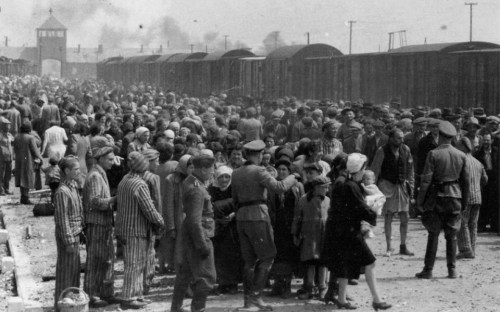
Nor is the lie direct the only means of falsehood. They all speak with a Nazi double meaning with which to deceive the unwary. In the Nazi dictionary of sardonic euphemisms “Final solution” of the Jewish problem was a phrase which meant extermination; “Special treatment” of prisoners of war meant killing; “Protective custody” meant concentration camp; “Duty labour” meant slave labour; and an order to “take a firm attitude” or “take positive measures” meant to act with unrestrained savagery. Before we accept their word at what seems to be its face value, we must always look for hidden meanings. Goering assured us, on his oath, that the Reich Defence Council never met “as such”. When we produced the stenographic minutes of a meeting at which he presided and did most of the talking, he reminded us of the “as such” and explained this was not a meeting of the Council “as such” because other persons were present. Goering denies “threatening” Czechoslovakia. He only told President Hacha that he would “hate to bomb the beautiful city of Prague”.
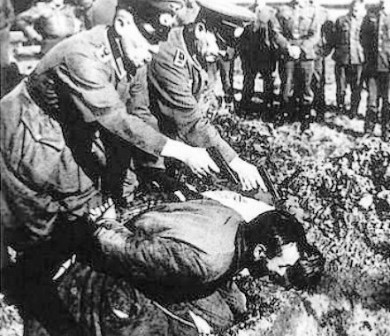
 

Besides outright false statements and those with double meanings, there are also other circumventions of truth in the nature of fantastic explanations and absurd professions. Streicher has solemnly maintained that his only thought with respect to the Jews was to resettle them on the island of Madagascar. His reason for destroying synagogues, he blandly said, was only because they were architecturally offensive. Rosenberg was stated by his counsel to have always had in mind a “chivalrous solution” to the Jewish problem. When it was necessary to remove Schuschnigg after the Anschluss, Ribbentrop would have had us believe that the Austrian Chancellor was resting at a “villa”. It was left to cross-examination to reveal that the “villa” was Buchenwald concentration camp. The record is full of other examples of dissimulations and evasions. Even Schacht showed that he, too, had adopted the Nazi attitude that truth is any story which succeeds. Confronted on cross-examination with a long record of broken vows and false words, he declared in justification -and I quote from the record:

“I think you can score many more successes when you want to lead someone if you don’t tell them the truth than if you tell them the truth.”

This was the philosophy of the National Socialists. When for years they have deceived the world, and masked falsehood with plausibilities, can anyone be surprised that they continue that habit of a lifetime in this dock? Credibility is one of the main issues of this trial. Only those who have failed to learn the bitter lessons of the last decade can doubt that men who have always played on the unsuspecting credulity of generous opponents would not hesitate to do the same now.

It is against such a background that these defendants now ask this Tribunal to say that they are not guilty of planning, executing, or conspiring to commit this long list of crimes and wrongs. They stand before the record of this trial as bloodstained Gloucester stood by the body of his slain King. He begged of the widow, as they beg of you: “Say I slew them not.” And the Queen replied, “Then say they were not slain. But dead they are ….” If you were to say of these men that they are not guilty, it would be as true to say that there has been no war, there are no slain, there has been no crime.

That is as true today as when he spoke thee,. How can so called Christian Conservatives claim any innocence in the crimes and willful actions of a President and administration whose words and actions to deny the danger for temporary political gain, proclaiming without evidence that the Coronavirus 19 was not a danger and would go away, who blocked the efforts of the CDC and other respected and experienced experts in stopping viral pandemics, and mounted a massive propaganda campaign to discredit them in the face of massive factual data proving them wrong.

The fact of the matter is that they are as guilty as any Nazi who condemned a man or woman to death in a gas chamber, by firing squads, explosives, by biting in churches or synagogues, by hanging by the noose or meat hooks, by the guillotine, In medical experiments, or by working them to death or starving them.

The excuse that some will claim that that never thought it would come to the disaster we are facing when they repeated the lies that COVID19 would just go away, or that debunked medications would cure it, or any number of other lies and conspiracy theories were true, are as guilty as the people who promoted them, be they politicians, pundits, or preachers.

Honestly, I will tell the truth, no matter what people say. If someone claims to be pro-life I will ask them what they did to help any of the post-born, whose lives are just as valuable as a pre-born fetus. I am against abortion with some exceptions dictated by medical conditions that presume the death of the fetus as well as the mother, or weigh the survival of each in the full consideration of the values and desires of those who have to live with the decision. However, abortion aside, if you deem the life of any person of less value to dying from COVID19 based on their race, ethnicity, age, or citizenship you are not pro-life. If you are willing to claim that your right not to not follow fact based evidence about wearing masks in public outweighs  endangering others to disease and death is somehow responsible or pro-life, then you are a liar and anyone that gets this disease and dies or suffers from any of the potential life long effects of it because of your actions,myou are as guilty as sin.

In Judgment at Nuremberg, Spencer Tracy playing Judge Haygood tells The court about the eminent German Jurist, Ernst Janning played by Burt Lancaster, who is honestly repentant for his actions is the sterilization sand killings of the handicapped:

“Janning, to be sure, is a tragic figure. We believe he loathed the evil he did. But compassion for the present torture of his soul must not beget forgetfulness of the torture and the death of millions by the Government of which he was a part. Janning’s record and his fate illuminate the most shattering truth that has emerged from this trial: If he and all of the other defendants had been degraded perverts, if all of the leaders of the Third Reich had been sadistic monsters and maniacs, then these events would have no more moral significance than an earthquake, or any other natural catastrophe.

But this trial has shown that under a national crisis, ordinary – even able and extraordinary – men can delude themselves into the commission of crimes so vast and heinous that they beggar the imagination. No one who has sat through the trial can ever forget them: men sterilized because of political belief; a mockery made of friendship and faith; the murder of children. How easily it can happen. There are those in our own country too who today speak of the “protection of country” – of ‘survival’. A decision must be made in the life of every nation at the very moment when the grasp of the enemy is at its throat. Then, it seems that the only way to survive is to use the means of the enemy, to rest survival upon what is expedient – to look the other way. Well, the answer to that is ‘survival as what’? A country isn’t a rock. It’s not an extension of one’s self. It’s what it stands for. It’s what it stands for when standing for something is the most difficult! Before the people of the world, let it now be noted that here, in our decision, this is what we stand for: justice, truth, and the value of a single human being.”

At the end of the film the following exchange between Janning and Haygood there Is this final exchange following the sentencing with Janning thanking Haygood for the sentence, but still trying to profess ignorance.

Ernst Janning: Judge Haywood… the reason I asked you to come: Those people, those millions of people… I never knew it would come to that. You must believe it, you must believe it!
Judge Dan Haywood: Herr Janning, it “came to that” the first time you sentenced a man to death you knew to be innocent.

That is the problem who still argue to deflect the blame from themselves for denying the virus, taking no action to stop it, or propagating complete falsehoods to inoculate themselves against blame. President Trump himself set the precedent for this by early in the game claiming “I am not responsible for anything.” No American President has ever made that claim, and Harry S. Truman, set the tone for Presidential responsibility when he proclaimed “The Buck Stops Here.” And gave a warning to future President’s: “If you can’t handle the heat, stay out of the kitchen.” President Trump who lies at a pace unmatched by any previous President or elected Senator, Representative, or cabinet official ever made until he became President. Now his sycophants all do the same. Nothing is their responsibility, including nearly 160,000 Americans who died from Coronavirus 19. They remind me of the Nuremberg defendants, though in complete control they knew nothing, or they were “just following orders.” How long will it before the supposedly Christian, conservative, pro-life enablers of mass murderers, finally recognize their their bloodguilt in theses deaths, which will continue to mount. I think that the death toll by the election will be close to 300,000, or well above if schools are opened without the means to contain the the virus.

Any federal or state secretary of education, President or Governor, or board of education will share the guilt and bathe their hands in the blood of the victims. But such people who would order such actions has no conscience, and really do not care if those children contract the virus, spread it to their families, friends, teachers, or school staff are infected and die from it or suffer the rest of their mortal lives with conditions caused by the virus. If it was up to me every elected or appointed official carrying out these policies would be arrested and charged with crimes against humanity, and maybe even genocide, especially if most of the students in the affected School districts are Black, Latino, Native American, or Asian.

There is a particular point that I want to re-emphasize: it is the matter of personal responsibility for ones actions and their affects on others. If an elected or appointed official chooses to make policy, and act against the weight of verifiable scientific and historical evidence To advance their political or religious ideology at the cost of hundreds of thousands of deaths and millions of infections that leave many of those infected with lifelong physical complications including heart disease, kidney disease, pulmonary and respiratory disease, early strokes, and too many other physiological diseases and conditions yet to be determined as  new effects of it on the physical bodies of those infected, even mildly come to light in the coming weeks, months, and years.

I will not remain silent. I cannot. I fully concur with the words of Dietrich Bonhoeffer who wrote:

“The church has an unconditional obligation to the victims of any ordering society, even if they do not belong to the Christian community.” and also“We are not to simply bandage the wounds of victims beneath the wheels of injustice, we are to drive a spoke into the wheel itself.”

Until the majority of Americans is willing to fight this and decide that our duty is to of those being persecuted, victimized, and killed  by the Trump regime, we will all have some of the blood on our hands. I cannot remain silent, for silence only brings death, and enables tyranny. which only enables the tyrant, in this case our President, his administration, the legislators who support him as well as the state and local officials doing their damnedest to implement his genocidal policies. They are all complicit in the deaths of at least 158,000 Americans, while dictating policies that if we are lucky will only double that number by th November elections.

As for me I repeat the words of Sophie Scholl, a leader of the White Rose anti-Nazi resistance movement. Sophie wrote:

“The real damage is done by those millions who want to ‘survive.’ The honest men who just want to be left in peace. Those who don’t want their little lives disturbed by anything bigger than themselves. Those with no sides and no causes. Those who won’t take measure of their own strength, for fear of antagonizing their own weakness. Those who don’t like to make waves—or enemies. Those for whom freedom, honour, truth, and principles are only literature. Those who live small, mate small, die small. It’s the reductionist approach to life: if you keep it small, you’ll keep it under control. If you don’t make any noise, the bogeyman won’t find you. But it’s all an illusion, because they die too, those people who roll up their spirits into tiny little balls so as to be safe. Safe?! From what? Life is always on the edge of death; narrow streets lead to the same place as wide avenues, and a little candle burns itself out just like a flaming torch does. I choose my own way to burn.”

A year later Major General Henning Von Tresckow wrote:

“It is almost certain that we will fail. But how will future history judge the German people, if not even a handful of men had the courage to put an end to that criminal?”… and “We have to show the world that not all of us are like him. Otherwise, this will always be Hitler’s Germany.”

That is our choice today. Will we stand with the persecuted, or join the ranks of the persecutors and bystanders? It is an honest and well thought out question for anyone who calls themself a Christian, or any non-Christian who who supports, stands by, and carries out such illegal and unconstitutional orders from a President who believed that he is above the laws of God and man?

I leave you with that,

Peace,

Padre Steve+


6 Comments

Filed under anti-semitism, authoritarian government, christian life, civil rights, Coronavirus, crime, culture, dogs, economics and financial policy, ethics, euthanasia, faith, film, germany, History, holocaust, Immigration and immigrants, laws and legislation, leadership, Military, national security, nazi germany, News and current events, Political Commentary, racism, Religion

Now or Never the Choice Between Freedom and Tyranny in the Last Months of Trump’s Regime

359212-1081074754-stauffenberg-nazi-germany-stauffenberg-demotivational-poster-1236884536

Friends of Padre Steve’s World,

Today will be another day of working around the house to get it ready for our new puppy, which is also mid-COVID 19 belated spring cleaning. It’s going to be a full day of work. 

This is an article about resisters and those that revisited the evil of the Nazi State. Many of these men and women sacrificed their lives in their efforts to resist Hitler. They included university students, military officers, civil servants, clerics, and ordinary citizens. This was part one of a series that I never completed. Over the next few weeks I will complete the series, after I finish my book. 

Let me make it clear, despite the President’s despotic and narcissistic actions which have been so harmful to so many Americans, and which threaten the stability of the world and could end up in war; we are not living in 1930s Germany, and Trump is not Hitler. At the same time there are many troubling parallels. In my opinion it would not take much to bring us to a similar point, especially as the President doubles down on intentionally racist, sexist, and simply inhuman and cruel words, policies, and actions in the midst of a pandemic, an economic meltdown, and crashing poll numbers leading up to the November elections.

One wonders because on March 14th he said: “I can tell you I have the support of the police, the support of the military, the support of the Bikers for Trump – I have the tough people, but they don’t play it tough — until they go to a certain point, and then it would be very bad, very bad,”  then during the protests of the death of George Floyd he attempted to do just that in Washington D.C.

These are very dangerous times. 

They are known and unknown but all resisted tyrants and all have become inspirational figures in my life. They are men and women, and many are soldiers or clergy, while others were civil rights leaders. Most were advocates of non-violence, but some due to the incredibly evil nature of the regime under which they lived and served resorted to violence. But all show me and I hope will show you that the path of resistance is not futile.

The problem is that far too many people become discouraged the longer the struggle lasts and end up accommodating themselves to the evil regimes under which they lived. That will probably be the experience of those who struggle against tyranny around the world today as authoritarianism under many guises becomes more entrenched. It is a world wide phenomena but if the classic understanding of democratic liberalism advocated by so many including the founders of the United States is to survive, authoritarians and their tyrannical worldview must be resisted.

Sophie Scholl, a young student at the University of Munich wrote:

“I’ve been thinking of a story from the Old Testament: Moses stood all day and all night with outstretched arms, praying to God for victory. And whenever he let down his arms, the enemy prevailed over the children of Israel. Are there still people today who never weary of directing all their thinking and all their energy, single-heartedly, to one cause?”

That my friends is important.

Yesterday, July 20th was the 74th anniversary of Operation Valkyrie, the attempt of conservative German military officers, diplomats, and others to kill Hitler and end the tyrannical and genocidal Nazi regime. Among the men who died in that attempt were Colonel Claus von Stauffenberg, General Henning von Trescow, General Ludwig Beck, Lieutenant Colonel Mertz von Quirnheim, and General Friedrich Olbricht. Others were implicated and were murdered after kangaroo court proceedings at the hand of the Volksgericht, the “People’s Court” headed by Roland Freisler. Among them was Field Marshal Erich von Witzleben. While Freisler hounded and tried to humiliate him Witzleben remained calm and announced to the court:

“You may hand us over to the executioner, but in three months’ time, the disgusted and harried people will bring you to book and drag you alive through the dirt in the streets!”

General Henning von Tresckow

“We have to show the world that not all of us are like him. Otherwise, this will always be Hitler’s Germany.” He also wrote: “I cannot understand how people can still call themselves Christians and not be furious adversaries of Hitler’s regime.” When the attempt failed von Trescow was serving on the Russian front far away from Berlin. To avoid arrest and the possibility that under torture he could implicate others or cause harm to his wife and children von Trescow killed himself. Another participant wrote that before his death von Trescow said:

“The whole world will vilify us now, but I am still totally convinced that we did the right thing. Hitler is the archenemy not only of Germany but of the world. When, in few hours’ time, I go before God to account for what I have done and left undone, I know I will be able to justify what I did in the struggle against Hitler. God promised Abraham that He would not destroy Sodom if only ten righteous men could be found in the city, and so I hope for our sake God will not destroy Germany. No one among us can complain about dying, for whoever joined our ranks put on the shirt of Nessus. A man’s moral worth is established only at the point where he is ready to give his life in defense of his convictions.”

Ludwig Beck

General Ludwig Beck

Beck, who had resigned his post as commander of the German Army in protest of the planned invasion of Czechoslovakia wrote something that has become a key part of my military and personal ethic: “It is a lack of character and insight, when a soldier in high command sees his duty and mission only in the context of his military orders without realizing that the highest responsibility is to the people of his country.”

Tresckow, a committed Christian also noted of Hitler’s supposedly Christian supporters: “I cannot understand how people can still call themselves Christians and not be furious adversaries of Hitler’s regime.” 

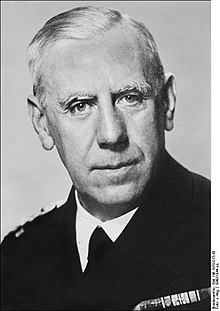
220px-Bundesarchiv_Bild_146-1979-013-43,_Wilhelm_Canaris

Admiral Wilhelm Canaris 

There were other Christian resisters of the Hitler regime. Hans Oster was the son of a pastor and one of the senior officers in the Abwehr, the German military intelligence. His boss, Admiral Wihelm Canaris was also a resister. Both would be executed on the personal order of Hitler in April 1945 along with Pastor Dietrich Bonhoeffer, all had been arrested for their involvement in anti-Hitler activities. For his part Canaris would note something that military, intelligence, or police officials who might be tempted to excuse the actions of modern day tyrants or would be authoritarians:

“One day the world will hold the Wehrmacht responsible for these methods since these things are taking place under its nose.”

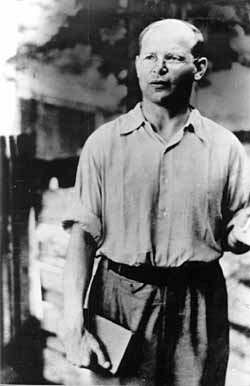
bonhoeffer-prison2

Dietrich Bonhoeffer 

Pastor Bonhoeffer who died with Oster and Canaris at Flossenburg wrote:

“Christianity stands or falls with its revolutionary protest against violence, arbitrariness and pride of power and with its plea for the weak. Christians are doing too little to make these points clear rather than too much. Christendom adjusts itself far too easily to the worship of power. Christians should give more offense, shock the world far more, than they are doing now. Christian should take a stronger stand in favor of the weak rather than considering first the possible right of the strong.”

hermann maas

Hermann Maas 

Hermann Maas, another Lutheran pastor made his mark by speaking out in defense of Jews and Socialists. He angered the German political right including the Nazis by doing so. He aided Jews and other non-Aryans to escape Germany, and cared for the elderly Jews who could not. He was removed from his pastorate and imprisoned. He survived the war and would be the first German recognized by Yad Vashem as one of the Righteous Among the Nations. Maas discussed the responsibility of all Germans for the crimes of Hitler and the Nazis, something that Christians and others in nations like the United States, Europe, Asia, Africa, and South America that are threatened by authoritarian leaders and racist regimes:

“Every German bears responsibility for Germany no matter who he is or where he stands, in the homeland or abroad, in public and at home. No one can absolve him of this responsibility. He can transfer it to no one.” 

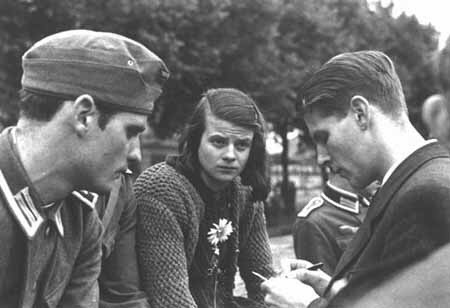
img_0090

Sophie Scholl

But these men were not the only opponents of the Nazi regime. A young woman, a student at the University of Munich named Sophie Scholl and her brother Hans were at the center of an anti-Nazi resistance called the White Rose. They published and distributed a number of anti-Nazi leaflets and were caught doing so in early 1943.

One of those pamphlets noted:

“Nothing is so unworthy of a civilized nation as allowing itself to be “governed” without opposition by an irresponsible clique that has yielded to base instinct. It is certain that today every honest German is ashamed of his government. Who among us has any conception of the dimensions of shame that will befall us and our children when one day the veil has fallen from our eyes and the most horrible of crimes – crimes that infinitely outdistance every human measure – reach the light of day?

If the German people are already so corrupted and spiritually crushed that they do not raise a hand, frivolously trusting in a questionable faith in lawful order in history; if they surrender man’s highest principle, that which raises him above all other God’s creatures, his free will; if they abandon the will to take decisive action and turn the wheel of history and thus subject it to their own rational decision; if they are so devoid of all individuality, have already gone so far along the road toward turning into a spiritless and cowardly mass – then, yes, they deserve their downfall.

Goethe speaks of the Germans as a tragic people, like the Jews and the Greeks, but today it would appear rather that they are a spineless, will-less herd of hangers-on, who now – the marrow sucked out of their bones, robbed of their center of stability – are waiting to be hounded to their destruction. So it seems – but it is not so. Rather, by means of a gradual, treacherous, systematic abuse, the system has put every man into a spiritual prison. Only now, finding himself lying in fetters, has he become aware of his fate.

Only a few recognized the threat of ruin, and the reward for their heroic warning was death. We will have more to say about the fate of these persons. If everyone waits until the other man makes a start, the messengers of avenging Nemesis will come steadily closer; then even the last victim will have been cast senselessly into the maw of the insatiable demon.

Therefore every individual, conscious of his responsibility as a member of Christian and Western civilization, must defend himself against the scourges of mankind, against fascism and any similar system of totalitarianism. Offer passive resistance – resistance – wherever you may be, forestall the spread of this atheistic war machine before it is too late, before the last cities, like Cologne, have been reduced to rubble, and before the nation’s last young man has given his blood on some battlefield for the hubris of a sub-human. Do not forget that every people deserves the regime it is willing to endure.”

She wrote:

“It’s the reductionist approach to life: if you keep it small, you’ll keep it under control. If you don’t make any noise, the bogeyman won’t find you. But it’s all an illusion, because they die too, those people who roll up their spirits into tiny little balls so as to be safe. Safe?! From what? Life is always on the edge of death; narrow streets lead to the same place as wide avenues, and a little candle burns itself out just like a flaming torch does. I choose my own way to burn.”

I think of all of these people that I admire young Sophie Scholl the most. She had no power. She was not an officer, a government official, a businessman, or a pastor. She was simply a young woman who was informed by her faith and her concern for basic human morality and ethics.

While the Nazi State was consumed by the flames of Hitler’s Götterdämmerung, the lives and message of those few who resisted still redounds to us today. And yes, in comparison to the majority of Germans  of the Hitler era, they were a tiny minority, Of over 2000 German General and Flag officers a mere 22 were involved in anti-Nazi activities and the same is true for most professions in the Third Reich.

Milton Mayer wrote the words of a German University Professor and colleague after the war was over. The professor was reflecting on how people ended up going along with the Nazi regime. Mayer wrote his friends words:

“And one day, too late, your principles, if you were ever sensible of them, all rush in upon you. The burden of self-deception has grown too heavy, and some minor incident, in my case my little boy, hardly more than a baby, saying ‘Jewish swine,’ collapses it all at once, and you see that everything, everything, has changed and changed completely under your nose. The world you live in—your nation, your people—is not the world you were born in at all. The forms are all there, all untouched, all reassuring, the houses, the shops, the jobs, the mealtimes, the visits, the concerts, the cinema, the holidays. But the spirit, which you never noticed because you made the lifelong mistake of identifying it with the forms, is changed. Now you live in a world of hate and fear, and the people who hate and fear do not even know it themselves; when everyone is transformed, no one is transformed. Now you live in a system which rules without responsibility even to God. The system itself could not have intended this in the beginning, but in order to sustain itself it was compelled to go all the way.

“You have gone almost all the way yourself. Life is a continuing process, a flow, not a succession of acts and events at all. It has flowed to a new level, carrying you with it, without any effort on your part. On this new level you live, you have been living more comfortably every day, with new morals, new principles. You have accepted things you would not have accepted five years ago, a year ago, things that your father, even in Germany, could not have imagined.

“Suddenly it all comes down, all at once. You see what you are, what you have done, or, more accurately, what you haven’t done (for that was all that was required of most of us: that we do nothing). You remember those early meetings of your department in the university when, if one had stood, others would have stood, perhaps, but no one stood. A small matter, a matter of hiring this man or that, and you hired this one rather than that. You remember everything now, and your heart breaks. Too late. You are compromised beyond repair.

“What then? You must then shoot yourself. A few did. Or ‘adjust’ your principles. Many tried, and some, I suppose, succeeded; not I, however. Or learn to live the rest of your life with your shame. This last is the nearest there is, under the circumstances, to heroism: shame. Many Germans became this poor kind of hero, many more, I think, than the world knows or cares to know.”

I think this is something for every American to ponder in the age of Trump.

Peace,

Padre Steve+

7 Comments

Filed under christian life, civil rights, ethics, faith, germany, History, laws and legislation, Military, nazi germany, News and current events, Political Commentary, racism

Nazi Doctors and Charité at War: Some Things Never Really find their Way into the Ash Heap of History

Friends of Padre Steve’s World,

Last night I decided rewatch the German medical mini-series Charité at War. It is about the famous Charité hospital in Berlin, which along with the Robert Koch Institute is one of the most important hospitals and medical research centers in the world. It had begun as a hospital for patients infected with the plague in 1710. When the plague bypassed Berlin, it became a charity hospital for the poor and destitute and named by the order of Friedrich of Prussia.  In 1727 King Frederick Wilhelm I when he named it Charité and its mission became threefold, to care for the poor and indigent, a state hospital, and as a training center for military physicians. It would also become a teaching hospital associated with Humboldt University and the University of Berlin and it became a hub where some of the premier physicians, researchers, and clinicians in the world practiced. These included Dr. Rudolf Virchow, the founder of modern pathology, Dr. Robert Koch one of the founders of modern Bacteriology whose discoveries included the causative agents of anthrax, cholera, and tuberculosis and experimental support for the study of infectious disease. He was awarded the Nobel Prize for his research on tuberculosis. It also hosted Dr. Otto Binswanger who decried a condition defined as subcortical dementia characterized by loss of memory and intellectual faculties, which is now known as Binswanger’s Disease. He also authored numerous works on Epilepsy, Dr. Emil von Behring who developed a vaccine for Diphtheria antitoxin for which he won a Nobel Prize, and Dr. Paul Erlich who who worked in the fields of hematology, immunology, and antimicrobial chemotherapy. He is credited with finding a cure for syphilis in 1909. He invented the precursor technique to Gram staining bacteria. The methods he developed for staining tissue made it possible to distinguish between different types of blood cells, which led to the capability to diagnose numerous blood diseases. Over half of German Nobel Prize winners have worked at or with Charité.

Now Charité is one of the world’s finest medical centers, schools, and research centers in the world, but things were different in the 1930s and 1940s during the reign of Hitler and the Nazis. while much of its good work would continue, members of its staff would participate in the T-4 Euthanasia program and others that would follow.

In my studies of the Third Reich and the Holocaust I have read a number of volumes dealing with Nazi medicine, eugenics, human experimentation, and the murder of those deemed “life unworthy of life.” I have read The Nazi Doctors and the Nuremberg Code: Human Rights in Human Experimentation, edited by George Annas and Michael Gordon, and previously read The Nazi Doctors by Robert J. Lifton, The Nazi War on Cancer, by Robert Proctor, the Nuremberg transcripts of the Doctors Trial, Hitler’s American Model: the United States and the Making Of Nazi Race Law, by James Whitman, The Nazi Connection: Eugenics, American Racism, and German National Socialism by Stefan Kühl and made  visits to Dachau, Buchenwald, and the Hadamar T-4 Euthanasia Center.

In my career I have served as a member, or the head of ethics committees at major civilian and military medical centers. As such I have also had to read and study much about medicine, disease, and medical ethics. Much of my hospital time was done in ICUs and dealing with end of life matters, consulting with physicians and nursing staff. So I don’t take the subjects involved lightly, and I found the German television series Charité at War, which is available on Netflix to be fascinating.

My life has been deeply involved with history, Ministry, Medicine, and Ethics for decades. The series which is set in Berlin’s Charité hospital, a leading research center and major medical center is so interesting. It shows how even the most decent and idealistic people can be compromised in a medical system of an authoritarian and racist state.

The characters in the series are all based on real people. They are not composites, or factionalized versions. They include the true believers like SS Colonel and Psychiatrist Max de Crinis, who helped write the euthanasia laws of the Reich and used his position as Professor Of Psychiatry at Charité to turn wounded soldiers over to Court Martial as deserters, and to persecute homosexuals. He took cyanide to escape capture by the Soviets. Then there was Doctor and Professor Ferdinand von Sauerbruch, Professor Of Surgery at Charité who walked a thin line but publicly opposed the T-4 Euthanasia program and attempted to protect members of the German resistance. Sauerbach remained at the hospital treating patients until the Red Army captured it. He was known for his work with, tuberculosis, prosthetics, and the diagnosis of Graves Disease. He died in 1951. Then there was Professor Artur Waldhäusen, a pediatrician who became head of pediatrics at Charité who attempted to have his own daughter sent to a Euthanasia center, only to be found out by his wife who saved her daughter with the help of her brother. But of all the characters was the nurse Christel, who was so devoted to the Nazi message that she turned over nurses, physicians, and patients who she deemed traitorous to Professor de Crinis and the Gestapo, including Hans Dohnanyi, Brother in law of Dietrich Bonhoeffer.

The series is interesting because it shows ordinary people, even brilliant people can compromise their ethics and reputations serving an unjust regime. Some of these medical professionals were completely utilitarian in their ethics and had no empathy for those that they treated or sent to their deaths. Sadly, they are no different from people today. Bureaucrats, Physicians, Nurses, and yes even ministers can surrender their ethics, faith, and simple human decency, even those who claim to be Pro-life to serve regimes which are bent on the extermination of life unworthy of life and those that they consider to be subhuman.

Dr. Robert J. Lifton, the author of The Nazi Doctors wrote:

“In all fundamentalisms, and they are usually religious or political, there is the sense of profound threat to what are considered fundamental beliefs and symbols, and a compensatory invocation of a sacred text (the Bible, the Koran, Mein Kampf) as a literal guide to every form of action. History stops so that murderous therapy can be applied. While medicine does not provide the sacred text, one can revert to ancient practices of shamans, witch doctors, and tricksters who could be expected to kill in order to heal. For physicians as well as charismatic spiritual physicians, there is a release from Hippocratic restraint.”

That happened in Nazi Germany and other authoritarian states, as well as in our country around the same time of the Nazis. In our case the effort was led by Eugenicists whose ideas the German Eugenicists of Weimar promoted and which some of them and their students during the Nazi period would take to their logical extreme.  In the Nazi era German physicians engaged in some of the most criminal and unethical experiments and behaviors in history. Their examples were the American Eugenicists, and physicians who their experiments on living human beings at the Tuskegee Institute and other facilities. Since human nature is the one constant in history, do not be surprised if ideologically motivated physicians and scientists do the same thing the Nazi Doctors and the American Eugenicists did a century ago. Syphilis

The series Charité at War is as brilliant as it is disturbing. I recommend it highly, and if you watch it before going to bed I suggest that you start drinking heavily.

So until tomorrow,

Peace,

Padre Steve+

2 Comments

Filed under authoritarian government, civil rights, Diseases Epidemics and Pandemics, ethics, euthanasia, faith, healthcare, History, holocaust, laws and legislation, nazi germany, News and current events, philosophy, Political Commentary, White nationalism

The Racial Terror Mass Murder at Emmanuel AME Church at Five Years

Dylann-Storm-Roof

“You rape our women and you’re taking over our country. And you have to go.” Dylann Storm Roof

Friends of Padre Steve’s World,

As I continue to work on the revisions to my book I am reposting an unedited article from exactly five years ago. As the title says, this is about the race based terror attack on Emmanuel African Methodist Episcopal Church in Charleston, South Carolina. Since there are all to many killings of individual Blacks going on today, by private citizens and police alike, I thought I should post it before some other White Nationalist terrorist attacks yet another Black Church, as a man who owned a UPS store a half mile from my house threatened to do to a Black Baptist Church in my town. I had actually used that store on occasion for shipping large articles across country, and recall meeting the man. He seemed ordinary. He was businesslike but not much personality showed through. Hannah Arendt wrote about the banality of evil in reference to Adolf Eichmann, the one man among many who was truly the driving engine in carrying out Hitler’s order implementing the Final Solution to the Jewish Problem, which just a few years before had been called the Jewish Question. 

The late Christopher Hitchens wrote:

“Die Judenfrage,’ it used to be called, even by Jews. ‘The Jewish Question.’ I find I quite like this interrogative formulation, since the question—as Gertrude Stein once famously if terminally put it—may be more absorbing than the answer. Of course one is flirting with calamity in phrasing things this way, as I learned in school when the Irish question was discussed by some masters as the Irish ‘problem.’ Again, the word ‘solution’ can be as neutral as the words ‘question’ or ‘problem,’ but once one has defined a people or a nation as such, the search for a resolution can become a yearning for the conclusive. Endlösung: the final solution.”

That is precisely the issue. Words like “question”, “problem”, and “solution” seem so neutral and innocuous, that is why they are so effective in turning human beings into killers, and allows others to stand aside and do nothing. There are men like Eichmann today who decide that people of another race, color and sometimes religion are less than human. Instead what to do with them is phased as a question, and as we all know questions demand answers. For the Nazis, the Jews became a problem, and to add emphasis to the less than humanness of the Jews the Nazis often referred to them as vermin or a pestilence. Therefore to such people, the Jews, and likewise for the British at numerous points in their history, the Irish were also a problem. Problems always call out for a solution. It is surprising easy how otherwise ordinary people who go home to their families, go to work, and sometimes church seem to enjoy finding solutions.

Today, to White Supremacists, White Nationalists, and Neo-Nazis in American, the less than human include those who include Blacks, Mexicans, Arabs, Asians, other non-White immigrants, LGBTQ people, and others, including the age old target, the Jews as “problems” that demand solutions.
All too often the solutions that they advocate are not that different than the Nazis. Strip them of their constitutional rights, then their citizenship, if possible deport them, and if all else fails, kill them, and don’t feel bad about it.

But for the lone wolves, they often skip the first steps a government might take, and go straight for the kill.  When I read the description of Dylann Roof by one of his high school friends that I included in the original article. What astounded me on reading it again was that his friend didn’t notice anything wrong with his words, until Roof had committed mass murder. How many times do we let such words pass. Who can forget the words of the great Chinese philosopher Lao Tzu:

“Watch your thoughts, they become your words; watch your words, they become your actions; watch your actions, they become your habits; watch your habits, they become your character; watch your character, it becomes your destiny.”

That happened five years ago this very evening. So to the article.

Peace,

Padre Steve+

Last night a young man who the Charleston Police have identified as Dylann Storm Roof, walked into the historic Emanuel Africa Methodist Episcopal Church in Charleston South Carolina. He sat next to the pastor, Reverend Clementa Pinckney, who also served as a State Senator for an hour before taking out a gun and opening fire as the meeting broke up. According to survivors he stated that he was at the church to kill black people and he did so, killing nine of the 13 people present including Reverend Pinckney. During the attack a survivor noted that he reloaded his gun five times.

usa-charleston-shooting

Reverend Clementa Pinckney

Like many people I am shocked by this but I am not surprised. For decades the mainstream Right Wing media have been chumming the water with enough hatred directed against African Americans, other racial minorities, Moslems and Gays. Such people have been blamed by the Right, and not just the nutty fringe for every evil in our society for so long that it was only a matter of time before an act of terror like the one in this church was committed. Some of those people are already on the air today explaining this away not as an act of racially motivate terrorism, but as another attack on Christians.

However, that was not the case. Yes, these men and women killed by Dylann Roof were Christians, but he killed them because they were black. That is the cold hard fact that no one can get around in this case. He murdered these men and women simply because they were black and they represented a threat to the “White America” that he and other White Supremacists and defend.

The Emanuel African Methodist Episcopal Church is the oldest AME church in the South. Nine people died in a hate crime shooting on June 17, 2015.

Had Roof simply wanted to kill Christians to really make a point he could have gone to any church. There are plenty of the in Charleston, my God it is known as The Holy City because of the vast number of churches. But instead he went to a church which has a long history of standing up for the civil, social and political rights of blacks dating back to 1816. It was the hub of anti-slavery activism and where Denmark Vesey and others plotted a slave revolt which was ruthlessly crushed by South Carolina’s militia. South Carolina’s government burned the church, scattered the congregation and banned blacks from meeting in organized congregations until after South Carolina was liberated by General William Tecumseh Sherman’s Union Army.

We don’t know much about Roof, and I’m sure that we will. However, one thing that I noted was that in one picture Roof was wearing a jacket which had the flag of the old Apartheid South African State and the flag of the also the flag apartheid Rhodesia sewn over the right breast pocket. His car had a decorative Confederate States of America license plate in front. A friend from high school said of Roof:

“I never heard him say anything, but just he had that kind of Southern pride, I guess some would say. Strong conservative beliefs,” he said. “He made a lot of racist jokes, but you don’t really take them seriously like that. You don’t really think of it like that.” But now, “the things he said were kind of not joking,”

When Roof was captured he appeared to be headed for the Blue Ridge Mountains in Western North Carolina of Eastern Tennessee. Eastern Tennessee, Western North Carolina and Southwestern Virginia are the home of numerous KKK, Neo Nazi and other White Supremacist groups.

article-suspect-0618

So today even on Fox news, that bastion of balance hosts are scrambling to call this anything but racially motivated terrorism called it a crime against Christians which fits into their ideological content more than the truth that this was racially motivate terrorism. However this was the same kind of terrorism as the notorious KKK sponsored Birmingham Church bombing of September 1963, or the burnings and bombings of black churches in the South before and after that.

Mark my word by this evening some of the more prominent Right Wing radio and internet pundits are going to be blaming this on everything but racism and terrorism. Imagine though if the shooter was a Moslem what they would say. They would have been all over the air labeling all Moslems as jihadist’s intent on killing Christians and demanding action against all Moslems based through guilt by association. That my friends is a fact and it is not in dispute.

In the coming days we are going to find out more about this and it will not be pleasant reading. We are going to find a young man whose heart has been poisoned by hate propagated by both mainstream Right Wing media as well as extremist White Supremacist and Neo-Nazi groups.

SixteenthStBaptistBomb05

We want to think that we have progressed, but sadly despite a veneer of progress, there still remains a lot of racism and other hatred that lurk beneath the veneer of the post-racial society. Michael Savage who has one of the most popular right wing radio programs in the country described inner-city children as “ghetto slime,” Ann Coulter said in 2013 “Perhaps, someday, blacks will win the right to be treated like volitional human beings. But not yet.” Rush Limbaugh, well his racist trolling and insults are too many too mention, and sadly there are some who call themselves Christian commentators who say even worse than these people, and not just about blacks.

Let us call this crime what it is. Racially motivated terrorism.

Peace,

Padre Steve+
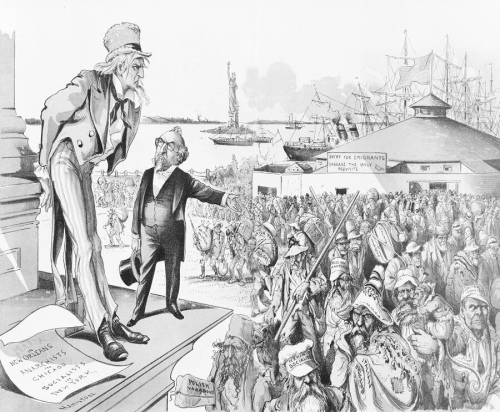
Leave a comment

Filed under anti-semitism, civil rights, crime, culture, History, holocaust, LGBT issues, mental health, nazi germany, News and current events, racism

Silence In the Face of Evil Itself: A Dark Meditation of Resistance in Trump’s America

Friends of Padre Steve’s World,

Dietrich Bonhoeffer wrote the words “silence in the face of evil is evil itself.”

This is a very difficult article to write because truthfully I believe that civility and mutual respect should be an ideal that we as Americans should not retreat from, as John F. Kennedy noted:

“So let us begin a new remembering on both sides that civility is not a sign of weakness, and sincerity is always subject to proof. Let us never negotiate out of fear. But let us never fear to negotiate.”

I have written about that a number of times, the last being on November 22nd 2016 shortly after President Trump’s election and on the anniversary of Kennedy’s assassination. However, since that time I have seen the President lead a descent into depravity that I fully comprehended then, though I hoped for a different outcome. In the past three and a half years the President has gone from bad to worse.

He cannot tell the truth about anything, so his staff and supporters invented something they called alternative truth, or alternative facts. Within months of his inauguration he was overturning civil rights protections for many Americans, those who had little power to resist. He went after the voting rights of Black Americans, the elderly, and the poor. He went after LGBTQ people’s basic civil rights, many of which were only recently won. He went after the human rights of immigrants, and refugees, even the children of people who came here decades ago, the Dreamers who were raised as Americans, who served in the military, and how had become contributors to the American way of life, though they were deprived of citizenship. He promised to build a wall to keep out Latin American refugees, though not completed he took actions that separated families and locked children in cages on concrete floors as he enriched the most wealthy with tax cuts, but in the process blew the budget deficit into realms never dreamed about before. He attacked patriotic Americans, including members of the military calling them traitors because they respected the Constitution more than worshipping him. He went after long time American allies and made himself a de facto ally of Russia’s Vladimir Putin. He made his presidency one of White Supremacy and the economy, but his Presidency was built upon smoke mirrors and lies. When the novel Coronavirus 19 was identified as an epidemic in China and then as a pandemic he ignored it and then minimized it time after time again. Then everything came apart on him with dire results for the country at large.

When COVID 19 finally began to hit the United States and kill people he finally acted, but far too late. Now over 118,000 Americans are dead, and that is the official count, which is certainly a large undercount, with two million more being infected and half of those still at risk of death. But it wasn’t until the economy began to tank and Wall Street crashed that he did anything. The virus is still here, with tens of thousands a day being infected, as he continues to push to reopen the economy to go back to a normal that cannot be restored, regardless of the number of lives lost.

Then there were a spate of targeted killings of Black men by Whites acting as vigilantes, and police brutality and excessive force. The men, and a woman who happened to be an EMT for the City of Louisville, can only be classed as murder. The straw that finally broke the proverbial camel’s back when George Floyd was murdered by a Minneapolis police officer who knelt on his his neck for eight minutes and forty-six seconds until he was dead. When massive protests broke out all over the nation he ordered maximum force to be used and tried to co-opt the military into becoming involved into his political fight for survival. In doing that he attacked peaceful protestors in Lafayette Park and at St John’s Episcopal Church. The assault, launched as he was speaking from the Rose Garden was brutal. Tear gas, pepper spray grenades, rubber bullets were followed rolled by an all out assault by Federal Police and National Guardsmen, including mounted units. When the square was cleared the President marched out for a photo-op displaying the Bible as a weapon. Military leaders reacted in horror and refused to support any more such actions.

Sadly, I could keep listing abuse after abuse of the law and Constitution by President Trump, but don’t think that I need to continue.

The fact is that the President has in his words, deeds, and tweets destroyed any hope of our political divide being healed, or of Americans of different viewpoints being able to reconcile their differences anytime in the foreseeable future. He stokes the hatred and division almost on an hourly basis, and of course his opponents having become wise to him are rolling up their sleeves and fighting back.

Too me that is an unfortunate situation that might become a tragedy for the United States and the world, as Abraham Lincoln noted “a house divided against itself cannot stand.” To the soon to be former GOP Congressman, Steve King of Iowa the sight and sound of Trump’s opponents is like “Harpers Ferry” and what comes next will be “Fort Sumter.” Since King proudly displays the Confederate Battle Flag in his office I know exactly what side of this fight that he is on.

The fact is that he and many like him seem to want blood flowing in the streets, they want a new Civil War, they want to remake the Union in a way that Jefferson Davis and his band of traitors failed to do. As a historian of the period with a book awaiting publication the fact is that in the end it comes down to the fact that Congressman King, many of the President’s supporters and quite probably the President himself are all White Supremacists. They want a full and complete return to White Man’s Rule and the subservience of all non-white races and non-Christian religions to it. They are the Know Nothings of the North and Slave Power Secessionists of the South rolled into one package of ignorance, incivility, and hatred.

I write often about comparisons of the attitudes and actions administration and its supporters to Nazi Germany, but truth be told there is a lot of dirty laundry in our own history that sheds light on Trump and his supporters.

The fact is that for nearly three decades the vast majority of Northerners were too polite to criticize the egregious actions of the Know Nothings in their midst or the Southern Slave Power Block that dominated the presidency, Congress, and the Supreme Court for the three decades prior to the War of the Rebellion, also known as the American Civil War, or the War Between the States. Honestly, I think that the term ascribed to it by many Union Veterans in the Grand Army of the Republic after the war, the “War of the Rebellion” is the best.

Those opposed to the Know Nothings and Slave Power Block were condemned as being rude, impolite, and worse. Some were physical assaulted. In 1856 Senator Charles Sumner was attacked by Representative Preston Brooks of South Carolina on the floor of the Senate for his speech against the Kansas Nebraska Act. Sumner was beaten until he was unconscious and Brooks’ heavy cane which he used to conduct the attack broke. Brooks continued to beat Sumner aided by Representative Lawrence Keitt also of South Carolina who brandishing a pistol threatened Senators coming to his aid. Sumner has proclaimed no threats of violence but only spoken the truth about the Act and those that supported it. So much for civility and now.

The scurrilous and overtly violent threats against minorities and civil rights advocates by conservatives, especially White Christian conservatives have continued unabated since from the ante-Bellum South and the Know Nothing North, through the War of the Rebellion, Reconstruction, Jim Crow, to the modern day. Whole political campaigns, including that of George H.W. Bush run by Lee Atwater turned on the demonization of African Americans. The same is true regarding the Republican revolution led by Newt Gingrich in the 1990s, and again even more so from the time that Candidate Donald Trump descended to the lobby of Trump Tower in 2015 until now. The President proclaims that White Supremacists and Neo-Nazis are “very fine people.”


The President and many of his followers including administration officials like Stephen Miller set the tone while former Presidential spokesperson Sarah Huckabee Sanders and her successors deny that the President’s words and actions, and vilify anyone that bothers to disagree with the President or their blatant lies. So when Huckabee Sander is asked to leave a restaurant, or when Miller or former DHS Secretary Nielsen are shamed when trying to enter Mexican restaurants it makes makes my heart bleed. People who have no compassion, no sense of empathy and behave as sociopaths and then act the victim when the tables are turned only deserve scorn.


Their anti-immigrant and often blatantly racist tropes of the President, his administration, and his supporters on the Fox Propaganda Network, the Right Wing media, the Putrid Princes of the Captive Conservative Church, and his assorted sordid supporters should be condemned and opposed around the clock. If they are not then any of us who remain silent knowing the evil of these policies is as guilty as anyone that turned their backs on the Jews in Nazi Germany. The higher the office the greater the guilt and culpability.

That being said if had the chance to see any one of them in a public setting I would not resort to public shaming. I do not own a restaurant or business so I could not ask them to leave. However, that being said if any of them the President himself presented themselves to me at my old chapel or any civilian church that I might be celebrating the Eucharist I would deny them communion which from a Christian point of view is “a fate worse than a fate worse than death.”

In fact two years ago Wednesday, in my former Chapel, a parishioner, a retired Navy Officer attempted to have me tried by Court Martial for preaching basic Catholic and Christian social justice teaching that goes back to the Old Testament where the Psalmists cry out for justice against oppressors and the Kings, Priests, and rich who the Prophets condemned, and which at least in the Catholic tradition still remains. The man blatantly lied about what I said. He said that in the sermon I called the President Hitler, and the Border Patrol the Gestapo.

It was all a lie, but an investigation was launched. Instead of trusting my life and career to a brand new Navy lawyer, I reached out to Mikey Weinstein of the Military Religious Freedom Foundation, who found me an experienced former military lawyer who had taken on high profile cases before. The investigating officer wanted to interview me, but I refused without legal counsel. So he interviewed half of the congregation that was present that day. None would corroborate the accusations but some said that they disagreed with my sermon because of their political views. I was exonerated and the investigation stopped there, but if I had retired out of that assignment, I would have probably never darkened the door of a church again. That experience confirmed the worst thoughts that I had about the Conservative Christians who make up the majority of President Trump’s Cult. They no longer care about Christ, the teachings of the Christian faith, but only care about establishing a Christian theocracy on the order of the modern Taliban, Calvin’s Geneva, or Torquemada’s Spanish Inquisition.

Bonhoeffer wrote:

“Christianity stands or falls with its revolutionary protest against violence, arbitrariness and pride of power and with its plea for the weak. Christians are doing too little to make these points clear rather than too much. Christendom adjusts itself far too easily to the worship of power. Christians should give more offense, shock the world far more, than they are doing now. Christian should take a stronger stand in favor of the weak rather than considering first the possible right of the strong.”

As for me I must tell the truth and protest against the violence and the arbitrary pride of power exhibited by the Trump administration and its supporters. I could not live with myself if I didn’t do so. Some might think this political and in some sense it is, but it is entirely based on my understanding of the Christian faith and the very premise of the founders of this country, that phrase in the Declaration of Independence that “all men are created equal and endowed by their creator with certain unalienable rights, among them being life, liberty, and the pursuit of happiness.”

If need be I would die for that faith and that proposition and I will not be silent in the face of evil. In 1945 Captain Gustave Gilbert, a US Army Psychologist assigned room the major Nazi War Criminals noted that one thing tied all of them together, the absence of empathy. He would remark, that he had come to the conclusion that “evil is the absence of empathy.”

As I conclude this article I am reminded of the words of the German General Henning Von Tresckow, who died in the attempt to kill Hitler and destroy the Nazi State:

“The idea of freedom can never be disassociated from real Prussia. The real Prussian spirit means a synthesis between restraint and freedom, between voluntary subordination and conscientious leadership, between pride in oneself and consideration for others, between rigor and compassion. Unless a balance is kept between these qualities, the Prussian spirit is in danger of degenerating into soulless routine and narrow-minded dogmatism.”

I think we could easily substitute the United States for Prussia in his words. We have lost that balance that Tresckow described, and it will destroy us if we are not careful.

Sadly, the absence of empathy all too well describes the malignant narcissistic sociopath that is President Trump, his family, his inner circle, and his most faithful supporters appear to be. I could be wrong, but I know that I am not. I expect that things will get worse much worse before they get better. I say this because I truly believe that since they don’t believe in the promise of the Declaration that “all men are created equal and endowed with certain unalienable rights, among which are life, liberty, and the pursuit of happiness,” or the rights laid out in the Constitution including its amendments.

So until tomorrow,

Peace,

Padre Steve+
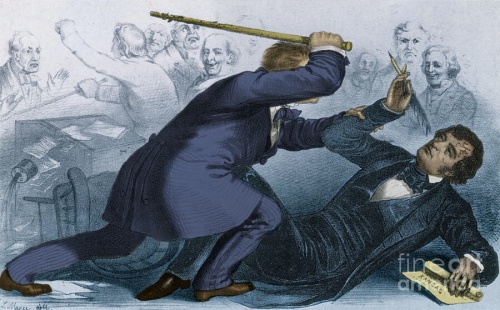
8 Comments

Filed under authoritarian government, christian life, civil war, Coronavirus, economics and financial policy, ethics, healthcare, History, holocaust, Immigration and immigrants, laws and legislation, leadership, LGBT issues, Military, national security, nazi germany, News and current events, Political Commentary, racism, Religion, White nationalism

“But Your Friends are Fewer Now” Milton Meyer’s “They Thought They Were Free” and 2020 America

Friends of Padre Steve’s World,

This article is basically a rerun because I thought it was pertinent and instead of doing much online I was catching up on correspondence with a number of people including friends in Germany and and trying my best to write in the best German that I could. Today was a remarkable day at our shipyard as our commander dealt directly with the dual disasters, COVID19 and the murder of George Floyd. It was inspiring. I had a part to play, but it was behind the scenes, and that is totally okay with me.

The article tonight is a chapter from Milton Mayer’s “They Thought They Were Free: The Germans 1933-1945.” Mayer was a visiting professor at the University of Frankfurt in the 1950s and lived in a small Hessian town near the city. The book is about the relationships that he built with ten ordinary citizens in the town and how they lived under Nazism and how most saw little wrong with it in the end.

The book is well worth the read, and is very timely when one compares the attitudes of the men who became Mayer’s friends and many people, especially followers of President Trump in the United States today. The last few chapters of the book are a reflection of the author’s opinions of the future of Germany at the time of his writing. That being said he was was mistaken on how the Germans would eventually become a society that embraced democracy and rejected authoritarianism (at the time he felt that it was very possible that democracy would fail in Germany) they do not take away anything from the heart of the book and its message about how people adjust to authoritarian rule. I was talking to a German friend over the weekend who wondered when Germany was going to have to save the United States as the United States helped save Germany after the Second World War.

One chapter in particular struck me, it was a conversion that Mayer had with a colleague at the University. The man reflected what it was like to live in the Third Reich, and how in doing so he compromised himself and thereby lost the opportunity to resist when resistance might have changed the course of events in Germany as it proceeded down the road to dictatorship and destruction. The chapter is particularly painful to read as the man that Meyer was talking to understood that he should have known better. However, he didn’t recognize the warning signs of how gradually the nature of life in Germany was changing with each new law or dictate from the Fuhrer.

In reading the chapter I see parallels in American society today. There are the Trump loyalists, many of who openly call for restrictions of liberty and crushing opposition to the President’s policies using extra-constitutional means including violence. This was seen over the past two weeks, although the impenetrable wall presented by the 35-40% of his supporters appears to be showing cracks.

Many are quite extreme and willing to march or even do violence to his opponents, but they are a minority. But others, persuaded by years of right-wing talk radio, politically charged sermons by their pastors, and the daily dose of Fox News or One America News believe everything said by the President even when confronted by facts, and remain fairly passive yet committed. Then there are Trump’s opponents, but many of his opponents, like Hitler’s opponents were divided in 2016, and have had a hard time gaining unity. However, that appears to be changing as a wave of opposition to Trump and his policies in regard to the Coronavirus 19 Pandemic, the murder of George Floyd, and his reaction to peaceful protests. I just wonder what will Trump’s supporters be saying about themselves and their decisions a decade from now?

So I invite you to read this and draw your own conclusions, as this gives me no joy to share. Have a great day.

Peace

Padre Steve+

Chapter 13: But Then It Was Too Late

“What no one seemed to notice,” said a colleague of mine, a philologist, “was the ever widening gap, after 1933, between the government and the people. Just think how very wide this gap was to begin with, here in Germany. And it became always wider. You know, it doesn’t make people close to their government to be told that this is a people’s government, a true democracy, or to be enrolled in civilian defense, or even to vote. All this has little, really nothing, to do with knowing one is governing.

“What happened here was the gradual habituation of the people, little by little, to being governed by surprise; to receiving decisions deliberated in secret; to believing that the situation was so complicated that the government had to act on information which the people could not understand, or so dangerous that, even if the people could not understand it, it could not be released because of national security. And their sense of identification with Hitler, their trust in him, made it easier to widen this gap and reassured those who would otherwise have worried about it.

“This separation of government from people, this widening of the gap, took place so gradually and so insensibly, each step disguised (perhaps not even intentionally) as a temporary emergency measure or associated with true patriotic allegiance or with real social purposes. And all the crises and reforms (real reforms, too) so occupied the people that they did not see the slow motion underneath, of the whole process of government growing remoter and remoter.

“You will understand me when I say that my Middle High German was my life. It was all I cared about. I was a scholar, a specialist. Then, suddenly, I was plunged into all the new activity, as the university was drawn into the new situation; meetings, conferences, interviews, ceremonies, and, above all, papers to be filled out, reports, bibliographies, lists, questionnaires. And on top of that were the demands in the community, the things in which one had to, was ‘expected to’ participate that had not been there or had not been important before. It was all rigmarole, of course, but it consumed all one’s energies, coming on top of the work one really wanted to do. You can see how easy it was, then, not to think about fundamental things. One had no time.”

“Those,” I said, “are the words of my friend the baker. ‘One had no time to think. There was so much going on.’”

“Your friend the baker was right,” said my colleague. “The dictatorship, and the whole process of its coming into being, was above all diverting. It provided an excuse not to think for people who did not want to think anyway. I do not speak of your ‘little men,’ your baker and so on; I speak of my colleagues and myself, learned men, mind you. Most of us did not want to think about fundamental things and never had. There was no need to. Nazism gave us some dreadful, fundamental things to think about—we were decent people—and kept us so busy with continuous changes and ‘crises’ and so fascinated, yes, fascinated, by the machinations of the ‘national enemies,’ without and within, that we had no time to think about these dreadful things that were growing, little by little, all around us. Unconsciously, I suppose, we were grateful. Who wants to think?

“To live in this process is absolutely not to be able to notice it—please try to believe me—unless one has a much greater degree of political awareness, acuity, than most of us had ever had occasion to develop. Each step was so small, so inconsequential, so well explained or, on occasion, ‘regretted,’ that, unless one were detached from the whole process from the beginning, unless one understood what the whole thing was in principle, what all these ‘little measures’ that no ‘patriotic German’ could resent must some day lead to, one no more saw it developing from day to day than a farmer in his field sees the corn growing. One day it is over his head.

“How is this to be avoided, among ordinary men, even highly educated ordinary men? Frankly, I do not know. I do not see, even now. Many, many times since it all happened I have pondered that pair of great maxims, Principiis obsta and Finem respice—‘Resist the beginnings’ and ‘Consider the end.’ But one must foresee the end in order to resist, or even see, the beginnings. One must foresee the end clearly and certainly and how is this to be done, by ordinary men or even by extraordinary men? Things might have. And everyone counts on that might.

“Your ‘little men,’ your Nazi friends, were not against National Socialism in principle. Men like me, who were, are the greater offenders, not because we knew better (that would be too much to say) but because we sensed better. Pastor Niemöller spoke for the thousands and thousands of men like me when he spoke (too modestly of himself) and said that, when the Nazis attacked the Communists, he was a little uneasy, but, after all, he was not a Communist, and so he did nothing; and then they attacked the Socialists, and he was a little uneasier, but, still, he was not a Socialist, and he did nothing; and then the schools, the press, the Jews, and so on, and he was always uneasier, but still he did nothing. And then they attacked the Church, and he was a Churchman, and he did something—but then it was too late.”

“Yes,” I said.

“You see,” my colleague went on, “one doesn’t see exactly where or how to move. Believe me, this is true. Each act, each occasion, is worse than the last, but only a little worse. You wait for the next and the next. You wait for one great shocking occasion, thinking that others, when such a shock comes, will join with you in resisting somehow. You don’t want to act, or even talk, alone; you don’t want to ‘go out of your way to make trouble.’ Why not?—Well, you are not in the habit of doing it. And it is not just fear, fear of standing alone, that restrains you; it is also genuine uncertainty.

“Uncertainty is a very important factor, and, instead of decreasing as time goes on, it grows. Outside, in the streets, in the general community, ‘everyone’ is happy. One hears no protest, and certainly sees none. You know, in France or Italy there would be slogans against the government painted on walls and fences; in Germany, outside the great cities, perhaps, there is not even this. In the university community, in your own community, you speak privately to your colleagues, some of whom certainly feel as you do; but what do they say? They say, ‘It’s not so bad’ or ‘You’re seeing things’ or ‘You’re an alarmist.’

“And you are an alarmist. You are saying that this must lead to this, and you can’t prove it. These are the beginnings, yes; but how do you know for sure when you don’t know the end, and how do you know, or even surmise, the end? On the one hand, your enemies, the law, the regime, the Party, intimidate you. On the other, your colleagues pooh-pooh you as pessimistic or even neurotic. You are left with your close friends, who are, naturally, people who have always thought as you have.

“But your friends are fewer now. Some have drifted off somewhere or submerged themselves in their work. You no longer see as many as you did at meetings or gatherings. Informal groups become smaller; attendance drops off in little organizations, and the organizations themselves wither. Now, in small gatherings of your oldest friends, you feel that you are talking to yourselves, that you are isolated from the reality of things. This weakens your confidence still further and serves as a further deterrent to—to what? It is clearer all the time that, if you are going to do anything, you must make an occasion to do it, and then you are obviously a troublemaker. So you wait, and you wait.

“But the one great shocking occasion, when tens or hundreds or thousands will join with you, never comes. That’s the difficulty. If the last and worst act of the whole regime had come immediately after the first and smallest, thousands, yes, millions would have been sufficiently shocked—if, let us say, the gassing of the Jews in ’43 had come immediately after the ‘German Firm’ stickers on the windows of non-Jewish shops in ’33. But of course this isn’t the way it happens. In between come all the hundreds of little steps, some of them imperceptible, each of them preparing you not to be shocked by the next. Step C is not so much worse than Step B, and, if you did not make a stand at Step B, why should you at Step C? And so on to Step D.

“And one day, too late, your principles, if you were ever sensible of them, all rush in upon you. The burden of self-deception has grown too heavy, and some minor incident, in my case my little boy, hardly more than a baby, saying ‘Jewish swine,’ collapses it all at once, and you see that everything, everything, has changed and changed completely under your nose. The world you live in—your nation, your people—is not the world you were born in at all. The forms are all there, all untouched, all reassuring, the houses, the shops, the jobs, the mealtimes, the visits, the concerts, the cinema, the holidays. But the spirit, which you never noticed because you made the lifelong mistake of identifying it with the forms, is changed. Now you live in a world of hate and fear, and the people who hate and fear do not even know it themselves; when everyone is transformed, no one is transformed. Now you live in a system which rules without responsibility even to God. The system itself could not have intended this in the beginning, but in order to sustain itself it was compelled to go all the way.

“You have gone almost all the way yourself. Life is a continuing process, a flow, not a succession of acts and events at all. It has flowed to a new level, carrying you with it, without any effort on your part. On this new level you live, you have been living more comfortably every day, with new morals, new principles. You have accepted things you would not have accepted five years ago, a year ago, things that your father, even in Germany, could not have imagined.

“Suddenly it all comes down, all at once. You see what you are, what you have done, or, more accurately, what you haven’t done (for that was all that was required of most of us: that we do nothing). You remember those early meetings of your department in the university when, if one had stood, others would have stood, perhaps, but no one stood. A small matter, a matter of hiring this man or that, and you hired this one rather than that. You remember everything now, and your heart breaks. Too late. You are compromised beyond repair.

“What then? You must then shoot yourself. A few did. Or ‘adjust’ your principles. Many tried, and some, I suppose, succeeded; not I, however. Or learn to live the rest of your life with your shame. This last is the nearest there is, under the circumstances, to heroism: shame. Many Germans became this poor kind of hero, many more, I think, than the world knows or cares to know.”

I said nothing. I thought of nothing to say.

“I can tell you,” my colleague went on, “of a man in Leipzig, a judge. He was not a Nazi, except nominally, but he certainly wasn’t an anti-Nazi. He was just—a judge. In ’42 or ’43, early ’43, I think it was, a Jew was tried before him in a case involving, but only incidentally, relations with an ‘Aryan’ woman. This was ‘race injury,’ something the Party was especially anxious to punish. In the case at bar, however, the judge had the power to convict the man of a ‘nonracial’ offense and send him to an ordinary prison for a very long term, thus saving him from Party ‘processing’ which would have meant concentration camp or, more probably, deportation and death. But the man was innocent of the ‘nonracial’ charge, in the judge’s opinion, and so, as an honorable judge, he acquitted him. Of course, the Party seized the Jew as soon as he left the courtroom.”

“And the judge?”

“Yes, the judge. He could not get the case off his conscience—a case, mind you, in which he had acquitted an innocent man. He thought that he should have convicted him and saved him from the Party, but how could he have convicted an innocent man? The thing preyed on him more and more, and he had to talk about it, first to his family, then to his friends, and then to acquaintances. (That’s how I heard about it.) After the ’44 Putsch they arrested him. After that, I don’t know.”

I said nothing.

“Once the war began,” my colleague continued, “resistance, protest, criticism, complaint, all carried with them a multiplied likelihood of the greatest punishment. Mere lack of enthusiasm, or failure to show it in public, was ‘defeatism.’ You assumed that there were lists of those who would be ‘dealt with’ later, after the victory. Goebbels was very clever here, too. He continually promised a ‘victory orgy’ to ‘take care of’ those who thought that their ‘treasonable attitude’ had escaped notice. And he meant it; that was not just propaganda. And that was enough to put an end to all uncertainty.

“Once the war began, the government could do anything ‘necessary’ to win it; so it was with the ‘final solution of the Jewish problem,’ which the Nazis always talked about but never dared undertake, not even the Nazis, until war and its ‘necessities’ gave them the knowledge that they could get away with it. The people abroad who thought that war against Hitler would help the Jews were wrong. And the people in Germany who, once the war had begun, still thought of complaining, protesting, resisting, were betting on Germany’s losing the war. It was a long bet. Not many made it.”

Copyright notice: Excerpt from pages 166-73 of They Thought They Were Free: The Germans, 1933-45 by Milton Mayer, published by the University of Chicago Press. ©1955, 1966 by the University of Chicago. All rights reserved. This text may be used and shared in accordance with the fair-use provisions of U.S. copyright law, and it may be archived and redistributed in electronic form, provided that this entire notice, including copyright information, is carried and provided that the University of Chicago Press is notified and no fee is charged for access. Archiving, redistribution, or republication of this text on other terms, in any medium, requires the consent of the University of Chicago Press. (Footnotes and other references included in the book may have been removed from this online version of the text.)

10 Comments

Filed under authoritarian government, civil rights, Coronavirus, germany, History, laws and legislation, nazi germany, News and current events, Political Commentary, racism

D-Day and After: Beaches, Bocage, and Breakout

The author with Marines at Point du Hoc, Normandy in 2004

Friends of Padre Steve’s World,

Every year about this time I try to write about D-Day.  This year I spent more time on the Battle of Midway writing or rewriting a total of five articles.

Since we are now about to begin a time of major repairs to our home due to flooding from an plugged air conditioning condensation drains I have decided to do is to re-post a short research paper that I did for one of my Master’s degree courses tonight, actually posting it on Sunday night for publication today, and hope to follow it up with some more articles over the week on specific aspects and personalities of the campaign.  What I hope is that people that are not familiar with the campaign as well as those that are can use this as a portal to other resources on the web and in print.

I have visited Normandy once in 2004 on a trip with the Marines of the Marine Security Force Company Europe that took me to Belleau Wood as well as Normandy.  In both places I had the good fortune to be able to explain aspects of both battles, at Normandy discussing the invasion from the German side of the fence.  The Normandy battlefields are well worth visiting.  Hopefully in the next few years I will get a chance to go back and do some serious exploring.

Introduction

General Dwight D Eisenhower Commander in Chief Allied Forces Europe

The American landings on Omaha Beach were critical to the success of the Allied invasion northwestern Europe in the overall Overlord plan.  Without success at Omaha there would have been a strong chance that the German 7th Army and Panzer Group West could have isolated the remaining beachheads, and even if unsuccessful at throwing the Allies into the sea could have produced a stalemate that would have bled the Allies white.  This quite possibly could have led to a political and military debacle for the western allies which would have certainly changed the course of World War II and maybe the course of history.[i] This is not to say the Germans would have won the war, but merely to state that a defeat on Omaha could have changed the outcomes of the war significantly.   Subsequent to the successful landing there were opportunities both for the Allies and the Germans to change the way that the campaign unfolded, thus the battles leading up to the breakout at Avranches are critical to its development and the subsequent campaign in France.

OVERLORD: The Preparations

Eisenhower’s Key Lieutenants: Patton, Bradley and Montgomery

The planning for the Normandy invasion began in earnest after the QUADRANT conference in Quebec in August 1943.  The timetable for the operation was established at the Tehran conference where Stalin sided with the Americans on the need for an invasion of France in the spring of 1944.[ii] Prior to this there had been some planning by both the British and Americans for the eventual invasion initially named ROUNDUP.  These preparations and plans included a large scale raid at Dieppe in 1942 which ended in disaster but which provided needed experience in what not to do in an amphibious assault on a heavily defended beach.

The failure at Dieppe also darkened the mood of the Allies, the British in particular to the success of such operations, bringing to mind the failed Gallipoli campaign of 1915 as well as the opposed landings at Salerno and the USMC experience at Tarawa.[iii] Despite this the Americans led by General Marshall pushed for an early invasion of northwest Europe. Churchill and the British due to their weakness in land power pushed for land operations in the Mediterranean, and even in Norway as an option to the assault in France. The conflicted mindset of the Allies left them in the position of planning almost exclusively for the success of the initial landings and build up to the near exclusion of planning for the subsequent campaign once they landed. This especially included what one writer described as “the maze of troubles awaiting behind the French shore.”[iv]

Field Marshal Erwin Rommel, Commander of Army Group B

Despite conflicts between the Americans and British political and military leadership the planning for the Normandy landings detailed in NEPTUNE and OVERLORD moved ahead.  General Dwight Eisenhower was appointed as the commander of SHAEF with his major subordinates for Land, Air and Sea which caused consternation on both sides of the Atlantic.[v] [vi] The planned operation was expanded from the initial 3 division assault on a narrow front to a minimum 5 division assault on a broad front across Normandy[vii]supplemented by a strong airborne force.[viii] Overall the plan as it developed reflected a distinctly “American willingness to confront the enemy head-on in a collision which Britain’s leaders had sought for so long to defer.”[ix] It is ironic in a sense that the British avoidance of the head on attack was based on their known lack of manpower.  Britain had few infantry reserves to sustain the war effort and the Americans only late recognized their own deficiency in both quantity and quality of infantry forces on which their strategy depended.  That the western allies, so rich in material and natural resources would be so deficient in infantry manpower was a key constraint on the subsequent campaign in France and Germany.  The shortage of infantry forces would cause great consternation among the Allies as the campaign in France wore on.

German Beach Obstacles

The Germans too faced manpower shortages due to the immense losses sustained on the Eastern front, those lost in Africa and those tied down in Italy, the Balkans and Norway as well as the drain caused by Luftwaffe Field Divisions and troops diverted into the Waffen-SS.   The German Army resorted to smaller divisions and the created many “static” divisions manned by elderly or invalid Germans to plug the gaps along the Atlantic wall. The Germans were also forced to recruit “Volksdeutsch” and foreign “volunteers” to fill out both Wehrmacht and Waffen-SS formations.

German fortifications at the Pas de Calais

Prior to the final decision to mount an invasion the Allied planners had contended with the location of the assault in northwestern France.  The Pas de Calais provided a direct route was rejected because it was where the Germans would expect the strike to occur and because it was where the German defenses were strongest.  The fiasco at Dieppe had provided ample proof of what could happen when making an assault into a heavily fortified port.  Likewise the mouth of the Seine near Le Harve was rejected because of the few beaches suitable for landing and because the forces would be split on both sides of the river.  Brittany was excluded due to its distance from the campaigns objectives in Germany.[x]This left Normandy which offered access to a sufficient number of ports and offered some protection from the weather. Normandy offered options to advance the campaign toward the “Breton ports or Le Harve as might be convenient.”[xi] Omaha beach, situated on the center right of the strike would be crucial to the success of the assault situated to the left of UTAH and the right of the British beaches.

Rommel inspecting beach obstacles

Once Normandy was selected as the location for the strike by the Allies, the planning sessions remained contentious.  This was especially true when the Allies debated the amount and type of amphibious lift that could be provided for the landings, particularly the larger types of landing ships and craft to support the Normandy invasion and the planned invasion of southern France, Operation ANVIL.  The increase in OVERLORD requirements for landing craft had an impact in the Mediterranean and resulted in ANVIL being postponed until later in the summer.

“Dummy” Sherman Tank: The Allies created a fictional Army Group to deceive German planners

As part of their preparations the Allies launched a massive deception campaign, Operation FORTITUDE.  This operation utilized the fictitious First Army Group under the “command” of General George Patton. Patton was still smarting from his relief of command of 7th Army following slapping commanded an “Army Group” which incorporated the use of dummy camp sites, dummy tanks, aircraft and vehicles, falsified orders of battle and communications to deceive German intelligence.[xii] The success of this effort was heightened by the fact that all German intelligence agents in the U.K. had been neutralized or turned by the British secret service.  Additionally the Luftwaffe’s limited air reconnaissance could only confirm the pre-invasion build ups throughout England without determining the target of the invasion.[xiii] The German intelligence chief in the west, Colonel Baron von Roenne “was deceived by FORTITUDE’s fantasy invasion force for the Pas de Calais.”[xiv] Despite this Commander of the 7thArmy recognized by 1943 that Normandy was a likely Allied target and efforts were made to shift 7th Army’s center of gravity from Brittany to Normandy.  The one potential German success in getting wind of when the Allied landings would occur was lost when German intelligence discovered two lines of Verlaine’s “Chason d’ Automme” in June 1944 which were to alert the French Resistance of the invasion.  The security section of 15th Army heard them transmitted on the afternoon of 5 June and notified General Jodl at OKW, but no action was taken to alert forces on the coast.[xv] Allied intelligence was aided by ULTRA intercepts of coded German wireless transmissions. However this was less of a factor than during the African and Italian campaigns as more German communications were sent via secure telephone and telegraph lines vice wireless.[xvi] Allied deception efforts were for the most part successful in identifying German forces deployed in Normandy. However they were uncertain about the location of the 352nd Infantry Division which had been deployed along OMAHA and taken units of the 709th Infantry Division under its command when it moved to the coast.[xvii]

USAAF B-17 Bombers and others helped isolate German forces in Normandy by bombing railroads, bridges, and supply lines

The Allied air campaign leading up to the invasion was based on attempting to isolate the invasion site from German reinforcements. Leigh-Mallory the Air Chief developed the “TRANSPORTATION PLAN” which focused efforts on destroying the French railroad infrastructure.[xviii] A more effective effort was led by General Brereton and his Ninth Air Force which was composed of medium bombers and fighters.  Brereton’s aircraft attacked bridges and rapidly achieved success in crippling German efforts to reinforce Normandy.[xix] Max Hastings gives more credit to the American bombing campaign in Germany to crippling the German defense in the west. General Spaatz and the 8th Air Force destroyed German production capacity in oil and petroleum as well as the degraded the German fighter force.  The American daylight raids so seriously degraded the German fighter force that it could not mount effective resistance to the invasion.[xx] Russell Weigley also notes that Albert Speer the Reich Armaments Minister said that “it was the oil raids of 1944 that decided the war.”[xxi]

US Navy LST’s being loaded for the invasion

Planning and preparations for OMAHA were based around getting the 1st and 29th Infantry Divisions ashore and them securing a beachhead “twenty-five kilometers wide and eight or nine kilometers deep.”[xxii] American preparations were thorough and ambitious, but the American assault would go through the most heavily defended sector of German defenses in Normandy.  The landing beaches were wide and bordered by dunes which were nearly impassable to vehicles and “scrub covered bluffs thirty to fifty meters high…rough and impassable to vehicles even to tracked vehicles except at a few places.  The exits were unimproved roads running through four or five draws that cut the bluffs.”[xxiii] Dug in along those bluffs was the better part of the 352nd Division. The Americans compounded their selection of a difficult and heavily defended landing zone the Americans failed to take advantage of many of the “gadgets” that were offered by the British which in hindsight could have aided the Americans greatly.  The Americans made use of two battalions of DD (Dual Drive) tanks but turned down the offer of flail tanks, flamethrower tanks, and engineer tanks, the “funnies” developed by General Hobart and the British 79th Armored Division.[xxiv]

Dual Drive amphibious tanks were included as part of the US invasion package

Weigley believes that the American view of “tanks as instruments of mobility rather than of breakthrough power.” Likewise the Americans victories in the First World War were won by infantry with little tank support.[xxv] In this aspect the Americans were less receptive to utilizing all available technology to support their landings, something that when considering the fact that Americans were great lovers of gadgets and technology. The British use of the Armor, including the “Funnies” on the beaches to provide direct fire into German strong points lessened their infantry casualties on D-Day. Due to this lack of armor support on the beach American forces on OMAHA had little opportunity to exercise true combined arms operations during the initial landings.[xxvi]

Rommel with Artillerymen of the 21st Panzer Division in Normandy

German preparations for an Allied landing in Normandy were less advanced than the Pas de Calais.  However they had made great strides since late 1943. Field Marshal Rommel greatly increased defensive preparations along the front, including the Normandy beaches.  One of Rommel’s initiatives was to deploy Panzer Divisions near the coast where they could rapidly respond to an invasion.  However Rommel did not get everything that he wanted.  The OKW only allotted him two Panzer Divisions to be deployed near the Normandy beaches.  Only one of these the 21st Panzer Division was deployed near Caen in the British sector.  One wonders the result had the 12th SS Panzer Division been deployed behind OMAHA. [xxvii]

OMAHA: The Landings

The venerable USS Nevada, resurrected from the mud of Pearl Harbor bombarding German positions at Utah Beach, (above) and USS Arkansas (below) off Omaha Beach 


USS Texas firing on Omaha Beach (above) Guns of USS Nevada firing at Utah Beach (below) 


Like the rest of the Allied invasion forces the 1st and 29th U.S. Infantry Divisions set sail from their embarkation ports with the intent of landing on June 5th.  General Bradley, commanding the First Army until the American XII Army Group would be activated accompanied the invasion force.  The OMAHA landing was under the command of General Gerow and his V Corps while VII Corps led by the 4th Infantry Division landed at Utah supported by airdrops of the 82nd and 101st Airborne Divisions inland.  American command and control during the invasion was exercised from sea as in the Pacific, although General Officers were to go ashore with each of the American divisions.  A severe channel storm disrupted the plan to land on the 5th and Eisenhower delayed the invasion one day catching a break in the weather and electing to go on the 6th.[xxviii] This delay while uncomfortable for the embarked troops caused the Germans to believe that no invasion would take place until the next favorable tide and moon cycle later in the month.[xxix] The assumption that no invasion was possible ensured that a number of key senior German leaders, including Rommel were absent from the invasion front when the Allies landed.[xxx]

US Troops ride a LCVP toward Omaha 

The landing beaches at OMAHA stretched about 6500 meters from Colleville-Sur-Mer to Vierville-Sur-Mere in the west.  The beaches are wide with bluffs overlooking them and a seawall between the beaches and the bluffs.  Additionally several small towns dot the beach. To the west of the town of Vierville, a prominent height overlooked the entire beachhead.  Named Pont du Hoc, it was believed to house a 150mm battery sighted where it could enfilade the OMAHA landing zones.  The Americans assigned to the 2nd Ranger Battalion to make a seaborne assault to land, scale the cliffs and take the battery.  Companies from this battalion made a heroic landing and scaled the cliffs to capture the strongpoint only to discover that the guns had not been emplaced.  The Rangers took heavy casualties and held their isolated beachhead against German counterattacks until relieved by the 29th Division on the morning of June 8th.[xxxi]

Landing craft passing the USS Augusta in heavy seas heading toward Omaha Beach

H-Hour for OMAHA was 0630.  Unfortunately the assault troops were transferred to their LCVP landing craft 16-20 kilometers from the beach.  The result was a long and dangerous ride in the small craft for the infantry.  Most of the infantry were completely soaked in sea spay and seasick before going ashore and they carried loads far above what they normally would carry into battle.[xxxii] The Armor support was one battalion of DD tanks, the 741stArmored Battalion, supporting the 16th Infantry Regiment of 1st Infantry Division. These were also launched too far out and nearly all of the tanks were swamped and lost before firing a shot in anger.[xxxiii] Other American support units needed to provide firepower on the beach were equally unfortunate. Weigley notes that at OMAHA “at least 10 of the LCVPs sank” as did “the craft carrying almost all of the 105mm howitzers that were to be the first artillery ashore after the tanks.”[xxxiv] The losses would cripple the assault on OMAHA and nearly cause its abandonment.

Bloody Omaha

As the soldiers of the American divisions on OMAHA came ashore they faced German defenders of the 352nd, 716th and a regiment of the 709th Infantry Division, the latter under the tactical command of the 352nd.   Without the bulk of their tanks artillery and lacking close air support the Americans struggled across the beaches and were cut down in large numbers before being pinned down behind the sea wall.[xxxv] With the Americans pinned down on the beach unable to advance, the time tables for the reinforcing waves became snarled amid the German beach obstacles which had not been cleared.  This was in large part due to 40% casualties among the Combat Engineers and the loss of all but five bulldozers.[xxxvi] Naval officers were frustrated in their attempts to provide naval gunfire support by the lack of identifiable targets on the beaches.  Yet German strongpoint’s were “knocked out by either by superbly directed vigorous gunfire from destroyers steaming as close as 800 yards offshore, or by determined action from Rangers or infantry.[xxxvii]

US Infantry struggles ashore at Omaha (above) General Omar Bradley with his Staff aboard USS Augusta

Soldiers ashore discovered that they were not facing the static 716th Division but the veteran 352nd Division as well.[xxxviii] Only the leadership and actions of Brigadier General Norman Cota the 29th Division’s Deputy Commander and Colonel Charles Canham of the 116th Infantry kept the situation from complete collapse.  They were able to rally their troops. Under their leadership small units from the 116th which had its linage back to the “Stonewall Brigade” as well as elements of the 16th and 18th Infantry Regiments began to move forward.  Surviving junior leaders began to lead survivors through the dunes and up the bluffs to attack German defenders of the roads leading up from the beach from the flank and rear.  A mid-day break in the weather allowed some close tactical air support giving the troops badly needed support.

US 1st Infantry Division Troops at the Omaha sea wall

With the situation desperate General Bradley considered the evacuation of OMAHA.  At sea events were as confused as Bradley and his staff attempted to make sense of what was going on.  Even later in the evening there was discussion of diverting all further reinforcements from OMAHA to the British beaches.[xxxix]At 1330 hours “Gerow signaled Bradley: “Troops formerly pinned down on beaches…advancing up heights behind beaches.”[xl] By the end of the day Bradley’s aid Major Hansen noted Bradley’s comments to Collins: “They are digging in on Omaha beach with their fingernails. I hope they can push in and get some stuff ashore.”  And Montgomery: “Someday I’ll tell Gen[eral] Eisenhower just how close it was for a few hours.”[xli]

German Fallschirmjaeger Trüppen in Normandy, the German Parachute forces fighting in an infantry role were very effective in the Normandy campaign

The landings at OMAHA succeeded at a cost of over 2000 casualties.  Critical to the success of the landings were the German inability to reinforce their defending troops on the beach.  Likewise the weakness of the units available to mount the standard counterattack that was critical to German defensive plans on D-Day itself kept the Germans from driving the Americans back into the Channel. The 352nd Division fought superbly under the full weight of V Corps and the British XXX Corps on its right suffering heavy casualties as they contested every inch of ground.  The 716th Division composed of second rate troops melted under the onslaught.  Allied air supremacy played a key role as sorties by the 8th and 9th Air Forces helped keep German reinforcements from arriving and interdicted counter attacks inland.  Weigley credits the Allied air superiority with the success of the landings and with limiting casualties.[xlii]Von Rundstedt and other German commanders in France were limited by the delay and refusal of Hitler and OKW to release Panzer reserves when needed most early on June 6th.

HMS Warspite (above) fired the first shots on D-Day, HMS Ramillies (below) fired over 1000 rounds of 15” shells on June 6th

By the close of D-Day allied forces had secured the five invasion beaches but not achieved their objectives of taking Caen and Bayuex.  Since the forces on the various beachheads had not linked up the beaches would have been extremely vulnerable had the Germans been able to mount a rapid counterattack by Panzers and strong infantry formations as they had at Salerno.

Major Battles to the Breakout at Avranches

Securing the Beachheads

P-47 Thunderbolt firing 5” Rockets at ground targets (above) and British Troops landing on Gold Beach, Sword Beach, and Canadian troops with German P.O.W.s on Juno Beach.


It took the V and VII Corps nearly a week to secure the beachheads. German forces including the stalwart 352nd Division resisted stubbornly and mounted sharp local counterattacks which kept the Americans off balance.  Elements of the 29th Division and the 90th Division began to push inland and to expand the beachhead toward UTAH. Opposed by the 352nd Division and elements of the 91st Airlanding Division and other non-divisional units the fighting revealed the inexperience of the American infantry formations and the uneven quality of their leadership.  As the Americans tackled the Germans in the labyrinth of the Bocage country the defensive skill of the Germans cost many American lives and delayed the joining of the beachheads. On the 13th the link up was solid enough to enabling the Americans to conduct the follow up operations needed to expand the beachhead, secure Cherbourg and clear the Cotentin.

A Panther tank of the Panzer Lehr Division in Normandy

In some American divisions the hard fighting triggered a leadership crisis.  The lack of success of the 90th Division led General “Lightening Joe” Collins of VII Corps relieve the division commander and two regimental commanders of command, a portent of things to come with other American units.[xliii] As the V and VII corps pushed into the “Bocage” they were followed by a massive build up of troops and equipment delivered to the beaches and to the artificial “Mulberry” harbors.  Despite their numeric superiority, air supremacy and massive Naval gunfire support and facing the weakened 352nd, 91st and the 6thParachute Regiment and other less than quality formations, survivors of the static divisions, the Americans made painfully slow progress as they moved off the beachhead and into the Bocage.[xliv]

The Capture of Cherbourg

US Soldiers of the 29th Division surrender to German Fallschirmjaeger in Normandy

Once the beachheads had been consolidated the Americans turned their attention toward Cherbourg. Cherbourg was the major naval port at the far northwest tip of the Cotentin.  D-Day planners counted on its swift capture and rehabilitation to serve as a supply port for the Allied forces. The 9th Division drove south to the coast near Barneville on the 18th of June cutting off the German forces covering the approaches to Cherbourg.[xlv] This put the Germans in a bind as the 7th Army “had to split its forces in the peninsula in order to hold the fortress a little longer and thus to gain time for the establishment of the southern front on the Cotentin peninsula.[xlvi] The German forces arrayed before Cherbourg waged a desperate defense centered around the 243rd Infantry Division and other assorted battle groups of LXXXIV Corps, whose commander General Marcks one of the best German Generals was killed in action on 12 June.[xlvii] The U.S. VII Corps under Collins with the 9th, 4th and 79th Divisions pushed up the peninsula capturing Cherbourg on June 29th.  Bradley pushed hard for the capture of the port as the Mulberries had been ravaged by a severe Channel storm the week prior. The port of Cherbourg was thoroughly demolished by German engineers and would not be fully operational for months. The loss of the Mulberries and delay in Cherbourg’s availability meant that few supplies were landed on the beaches would “hinder the escape from the constricting land of the hedgerows into which the Americans had come in search of a port.[xlviii]

The Battle of Caumont Gap

Panzer IV Tank in Normandy

V Corps under Gerow made a cautious advance by phase lines toward Caumont, St Lo and Carentan.  The deliberate advance by the Corps toward a line weakly held by the Reconnaissance battalion of the 17th SS Panzer Grenadier Division was directed by Bradley who did not want to divert attention from the effort against Cherbourg.   After capturing Caumont V Corps halted and continued aggressive patrolling to deceive the Germans while digging in.[xlix] The possibility existed that a strong push against the weak German line could have led to an opportunity to envelope the German line west of Caen. This was a missed opportunity that in part led to the bloody and controversial campaign to capture Caen.[l]

British efforts around Caen

German Panzer Ace Waffen SS Captain Michale Wittman single handedly destroyed a British Battalion at Villers Bocage in his Tiger Tank

Montgomery had ambitious plans to break out of Normandy by capturing Caen on D-Day and driving toward Falaise and Argentan.  The British plans for this were frustrated by the rapid reinforcement of the sector by the Germans and the activities of 21st Panzer, Panzer Lehr, and the 12th SS Panzer Divisions.  A flanking maneuver at Villers-Bocage was frustrated by a few Tiger tanks led by the legendary Waffen SS Panzer commander Captain Michael Wittman whose tanks devastated a British Armored battalion.[li]

Wreckage of a British Battalion at Villers Bocage

A series of disastrous attacks toward Caen (EPSOM, CHARNWOOD and GOODWOOD) strongly supported by air strikes and Naval gunfire finally succeeded in taking that unfortunate city on July 18th but failed to take the heights beyond the town.[lii]

British operations like Operation Epsom met setback after setback against dug in German forces outside of Caen


British Troops in the Ruins of Caen (above) and destroyed Cromwell tank at Villers-Bocage (below)

Against crack well dug in German forces the British took heavy casualties in tanks and infantry seriously straining their ability to conduct high intensity combat operations in the future.[liii] The one benefit, which Montgomery would claim after the war as his original plan was that German forces were fixed before Caen and ground down so they could not be used against Bradley’s breakout in the west at St Lo.[liv]

Clearing the Bocage: The Battle of the Cotentin Plain

US M-5 Light Tank in Normandy

Other German forces arrived, and reinforced the Caumont gap which no longer “yawned invitingly in front of V Corps.” [lv] Bradley wished to push forward rapidly to achieve a breakthrough in the American sector.[lvi] Facing the most difficult terrain in France amid the Bocage and swamps that limited avenues of approach to the American divisions committed to the offensive.  The Americans now faced their old foe the 352nd division as well various elements of II Parachute Corps, the 17th SS Panzer Grenadier and Panzer Lehr Divisions.  American tanks and infantry made slow progress and incurred high losses as they dueled the Germans at close range.  In the VIII Corps sector alone the attack “consumed twelve days and 10,000 casualties to cross eleven kilometers of the Bocage…the achievements of the VII and XIX Corps were no better than comparable.[lvii]

St. Lo

US Tanks advancing with German prisoners moving back to US lines at St Lo

St. Lo was a key to Bradley’s breakout efforts.  His Army had to capture it and the roads leading out of it to launch Operation COBRA along the coast.  The task of capturing St. Lo was assigned to GEROW’S V Corps and Corlett’s XIX Corps.  They faced opposition from the tough paratroops of the German 3rd Parachute Division of II Parachute Corps.  The 2nd, 29th, 30th and 83rd Divisions fought a tough battle advancing eleven kilometers again with high numbers of casualties especially among the infantry to secure St. Lo on 18 July.[lviii] They finally had cleared the hedgerows.  St Lo epitomized the struggle that the American Army had to overcome in the Bocage.  Hard fighting but outnumbered German troops in excellent defensive country exacted a terrible price in American blood despite the Allied control of the skies.[lix]

Operation COBRA

US 155mm Howitzers in Normandy, the Germans had profound respect for American Artillery, a respect that they did not share for American Infantry or Armor forces

With the Bocage behind him Bradley desired to push the Germans hard.  COBRA was his plan to break out of Normandy.  Bradley ably assisted by Collins they realized that the better terrain, road networks favored a breakout.  American preparations included a technical advance that allowed tanks to plow through hedgerows. This was the “Rhino” device fashioned by American troops which was installed on 3 of every 5 First Army Tanks for the operation.[lx] VII Corps was to lead the attack which was to begin on July 24th. American planning was more advanced than in past operations.  Collins and Bradley planned for exploitation operations once the breakthrough had been made. A massive air bombardment would precede the attack along with an artillery barrage by Collins corps artillery which was reinforced by additional battalions.   A mistake by the heavy bombers in the 24th resulted in the American troops being hit with heavy casualties and a postponement of the attack until the 25th.[lxi] The following day the attack commenced.  Another mistake by the bombers led to more American casualties[lxii] but VII Corps units pressed forward against the determined resistance of the survivors of Panzer Lehr and the remnants of units that had fought the Americans since the invasion began.  Although it was a “slow go” on the 25th Bradley and his commanders were already planning for and beginning to execute the breakout before the Germans could move up reinforcements.  The 26th of June brought renewed attacks accompanied by massive air strikes.

The Devastated town of St Lo 

While not much progress was made on the 26th, the Americans discovered on the 27th that the German forces were retreating.  The capture of Marigny allowed VIII Corps to begin exploitation down the coastal highway to Coutances.  On the 27th General Patton was authorized to take immediate command of VIII Corps a precursor to the activation of his 3rdArmy.  COBRA ripped a hole in the German line and inflicted such heavy casualties on the German 7th Army that it could do little to stop the American push.[lxiii] As the American forces pushed forward they reinforced their left flank absorbing the local German counterattacks which were hampered by the Allied close air support.

Avranches and Beyond

US Forces advance through the ruins of St Lo

As the breakthrough was exploited the command of the forces leading it shifted to Patton and the newly activated 3rd Army. By the 28th VIII Corps led by the 4th and 6th Armored Divisions had reached Avranches and established bridgeheads over the See River with additional bridges being captured intact on the 30th.[lxiv] The capture of Avranches allowed the Americans to begin exploitation operations into Brittany and east toward the Seine. Weigley notes that for the first time in the campaign that in Patton the Americans finally had a commander who understood strategic maneuver and would use it to great effect.[lxv]

Conclusion

The American campaign in Normandy cost the U.S. Army a great deal. It revealed weaknesses in the infantry, the inferiority of the M4 Sherman tank to most German types, problems in tank-infantry cooperation and also deficiencies in leadership at senior, mid-grade and junior levels. Heavy casualties among infantry formations would lead to problems later in the campaign. Numerous officers were relieved including Division and Regimental commanders.  Nonetheless during the campaign the Americans grew in their ability to coordinate air and ground forces and adapt to the conditions imposed on them by their placement in the Cotentin.  The deficiencies would show up in later battles but the American Army learned its trade even impressing some German commanders on the ground in Normandy.[lxvi] 

Notes

[i] See the alternative history of by Peter Tsouras Disaster at D-Day: The Germans Defeat the Allies, June 1944, Greenhill Books, London 1994. Tsouras describes the defeat of the Omaha landings and the effect on the course of the campaign leading to the overthrow of Hitler and a negotiated armistice in the west.  While this outcome could be rigorously debated other outcomes could have led to the fall of the Roosevelt and Churchill governments and their replacement by those not committed to unconditional surrender or a continuation of the war that brought about more German missile attacks on the U.K. and the introduction of other advanced German weapons that could have forced such a settlement. Another option could have led to the dropping of the Atomic Bomb on a German city vice Hiroshima.

[ii] Weigley, Russell F. Eisenhower’s Lieutenants: The Campaign of France and Germany, 1944-1945, Indiana University Press, Bloomington IN, 1981 p.33

[iii] Ibid pp. 34-35

[iv] Ibid p.35

[v] General Montgomery 21st Army group and Land Forces, Admiral Sir Bertram Ramsey as Allied Naval Expeditionary Force and Air Marshall Sir Trafford Leigh-Mallory as Commander in Chief Allied Expeditionary Air Force. Weigley p.43

[vi] Max Hastings in Overlord: D-Day and the Battle for Normandy Vintage Books, New York, 1984, comments that many in Britain wondered if Eisenhower with the lack of actual battle experience could be a effective commander and that Eisenhower was disappointed in the appointment of Leigh-Mallory and Ramsey, and had preferred Alexander over Montgomery, pp. 28-29.

[vii] Ibid. Weigley p.40.  Montgomery was the first to object to the 3 division narrow front invasion rightly recognizing that seizing Caen with its road junctions could provide a springboard for the campaign into open country.

[viii] Ibid. p.37

[ix] Hastings, Max. Overlord: D-Day and the Battle for Normandy Vintage Books, New York, 1984 p.29  Hastings finds the irony in the selection of the British officers to execute the plan that reflected the American way of thinking.

[x] The Germans agreed with this in their planning leaving Brittany very lightly defended.  See  Isby, David C. Ed. “The German Army at D-Day: Fighting the Invasion.” p.27 The report of General Blumentritt, Chief of Staff OB West noted that only 3 divisions were assigned to Brittany.

[xi] Ibid. Weigley, pp. 39-40

[xii] Ibid. p.73

[xiii] See Isby p. 69.  General Max Pemsel of 7th Army noted that “During  the spring of 1944, Seventh Army received only tow good photographs of British southern ports, which showed large concentrations of landing craft.”

[xiv] Ibid. Hastings p.63.  Hastings comments also about the success of using the turned Abwehr agents.

[xv] Warlimont, Walter. “Inside Hitler’s Headquarters: 1939-1945.” Translated from theGerman by R.H. Barry. Presidio Press, Novao CA, English Edition Copyright 1964 Wiedenfeld and Nicholson Ltd. Pp.422-423

[xvi] Ibid. Weigley pp. 53-54

[xvii] Ibid. p. 67

[xviii] Ibid. pp.57-64  Weigley spends a great deal of time on the wrangling between Eisenhower, Leigh Mallory and Spaatz on the nature of the plan, the allocation of forces both strategic and tactical assigned to carry it out and its success, or in the light of postwar analysis the lack of effect that it had on German operations.

[xix] Ibid. p.67-68.

[xx] Ibid. Hastings pp. 43-44 In large part due to the long range P-51 Mustang which accompanied the American bombing raids beginning in 1943.  Another comment is that the campaign drew the German fighters home to defend Germany proper and prevented their use in any appreciable numbers over the invasion beaches.

[xxi] Ibid. Weigley p.69

[xxii] Ibid. p.89

[xxiii] Ibid. pp. 88-89

[xxiv] Ibid. p.87

[xxv] Ibid. Weigley also talks about the rejection of General Corlett’s ideas to use Amtracks used by the Marines in the Pacific to land on less desirable, but less defended beaches to lessen casualties on the beaches and the need for additional support equipment even on smooth beaches.  One of Corlett’s criticisms was that too little ammunition was allotted to supporting the landings and not enough supporting equipment was provided. pp. 46-47

[xxvi] Hastings notes that with the strength and firepower of the German forces on OMAHA that many of these vehicles had they been employed would like have ended up destroyed further cluttering the beachhead. “Overlord” p.102

[xxvii] The battle over the deployment of the Panzer Divisions is covered by numerous historians.  The source of the conflict was between Rommel who desired to place the Panzer Divisions on the Coast under his command due to the fear that Allied air superiority would prevent the traditional Panzer counterthrust, General Gyer von Schweppenburg commander of Panzer Group West (Later the 5th Panzer Army) and Field Marshal Von Rundstedt who desired to deploy the divisions order the command of Rundstedt for a counter attack once the invasion had been launched, a strategy which was standard on the Eastern Front, and Hitler who held most of the Panzer reserve including the SS Panzer Divisions under his control at OKW.  Hitler would negotiate a compromise that gave Rommel the satisfaction of having three Panzer Divisions deployed behind coast areas in the Army Group B area of responsibility.  21stPanzer had those duties in Normandy.

[xxviii] Ibid. p.74-75

[xxix] Von Luck, Hans.  “Panzer Commander“ Dell Publishing, New York, 1989 pp. 169-170.  Von Luck a regiment commander in 21st Panzer noted that General Marcks of 84th Corps had predicted a 5 June invasion at a conference May 30th.

[xxx] Almost every D-Day historian talks about the weather factor and its effect on the German high command’s reaction to the invasion.  Rommel was visiting his wife for her birthday and planned to make a call on Hitler. Others including commanders of key divisions such as the 91st Airlanding Division were off to a war game in Rennes and the 21st Panzer Division to Paris.

[xxxi] Ibid. Weigley p. 96

[xxxii] See Cornelius Ryan, “The Longest Day” Popular Library Edition, New York 1959. pp. 189-193 for a vivid description of the challenges faced by soldiers going from ship to landing craft and their ride in to the beaches.

[xxxiii] Ibid. Weigley. p.78 Weigley talks about the order for the tanks to be carried ashore on their LCTs that did not get transmitted to the 741st.

[xxxiv] Ibid.

[xxxv] Ibid. Weigley  p. 87 The weather prevented the aerial bombardment from being effective. Because the bombers could not see their targets they dropped their bomb loads further inland, depriving the infantry of support that they were expecting.  Naval gunfire support had some effect but had to be lifted as the troops hit the beach leaving much of that support to come from Destroyers and specially equipped landing craft which mounted rockets and guns.

[xxxvi] Ibid. Hastings. pp. 90-91.

[xxxvii] Ibid. p.99

[xxxviii] Ibid. Weigley p.80

[xxxix] Ibid. p.101  Also see Weigley p.80

[xl] Ibid. p.99

[xli] Ibid. Weigleyp.95

[xlii] Ibid. p.94

[xliii] Ibid. p.99 Both Weigley and Hastings make note of the failure of both the Americans and British to train their troops to fight in the bocage once they had left the beaches.

[xliv] Ibid. Hastings. pp.152-153

[xlv] Ibid. Weigley p.101

[xlvi] Isby, David C., Ed. “Fighting in Normandy: The German Army from D-Day to Villers-Bocage.” Greenhill Books, London,  2001.  p.143

[xlvii] Ibid. Hastings p.173 Allied fighter bombers exacted a fearful toll among German commanders. The Commanders of the 243rd and 77th Divisions fighting in the Cotentin were also killed by air attacks on the 17th and 18th.   Further east facing the British the commander of the 12th SS Panzer Division, Fritz Witt on the 17th.

[xlviii] Ibid. Weigley. p.108

[xlix] Ibid. p.111-112.

[l] Ibid.

[li] The efforts of the 51st Highland Division and 7th Armored Division were turned aside by the Germans in the area and were dramatized by the destruction of  a British armored battalion by SS Captain Michael Wittman and his platoon of Tiger tanks.  See Hastings pp.131-135.

[lii] The British 8th Corps under General O’Connor lost 270 tanks and 1,500 men on 18 July attempting to crack the German gun line on the ridge beyond Caen. Weigley, pp.145-146.

[liii] Hastings comments about the critical British manpower shortage and the pressures on Montgomery to not take heavy casualties that could not be replaced. Overlord. pp.241-242.

[liv] Ibid. Weigley pp.116-120

[lv] Ibid. p.122

[lvi] Ibid. p121 Bradley told Eisenhower “when we hit the enemy this time we will hit him with such power that we can keep going and cause a major disaster.”

[lvii] Ibid. 134

[lviii] Ibid. Weigley. pp. 138-143.  Weigley notes of 40,000 U.S. casualties in Normandy up to the capture of St. Lo that 90% were concentrated among the infantry.

[lix] Weigley quotes the 329th Regiment, 83rd Division historian “We won the battle of Normandy, [but] considering the high price in American lives we lost. P.143. This is actually a provocative statement that reflects America’s aversion to massive casualties in any war.

[lx] Ibid. p.149

[lxi] Ibid. p. 152

[lxii] Ibid. pp. 152-153.  Among the casualties were the command group of the 9th Division’s 3rd Battalion 47th Infantry and General Leslie McNair who had come to observe the assault.

[lxiii] Ibid. pp.161-169. Weigley notes the advances in U.S. tactical air support, the employment of massive numbers of U.S. divisions against the depleted German LXXXIV Corps, and the advantage that the “Rhino” device gave to American tanks by giving them the ability to maneuver off the roads for the first time.

[lxiv] Ibid. pp.172-173.

[lxv] Ibid. p.172

[lxvi] Ibid. Isby, David C. “Fighting in Normandy,” p.184, an officer of the 352nd Division referred to the American soldier “was to prove himself a in this terrain an agile and superior fighter.”

Bibliography

Carell, Paul. “Invasion: They’re Coming!” Translated from the German by E. Osers, Bantam, New York 1964.

Hastings, Max. Overlord: D-Day and the Battle for Normandy Vintage Books, New York, 1984

Isby, David C. Ed. “The German Army at D-Day: Fighting the Invasion.” Greenhill Books, London 2004

Isby, David C., Ed. “Fighting in Normandy: The German Army from D-Day to Villers-Bocage.” Greenhill Books, London, 2001.

Ryan, Cornelius, “The Longest Day” Popular Library Edition, New York 1959

Tsouras, Peter. “Disaster at D-Day: The Germans Defeat the Allies, June 1944,”Greenhill Books, London 1994.

Von Luck, Hans.  “Panzer Commander“ Dell Publishing, New York, 1989

Warlimont, Walter. “Inside Hitler’s Headquarters: 1939-1945.” Translated from theGerman by R.H. Barry. Presidio Press, Novao CA, English Edition Copyright 1964 Wiedenfeld and Nicholson Ltd. Warlimont, Walter. “Inside Hitler’s Headquarters: 1939-1945.” Translated from theGerman by R.H. Barry. Presidio Press, Novao CA, English Edition Copyright 1964 Wiedenfeld and Nicholson Ltd.

Weigley, Russell F. Eisenhower’s Lieutenants: The Campaign of France and Germany, 1944-1945, Indiana University Press, Bloomington IN, 1981

3 Comments

Filed under aircraft, armored fighting vehicles, artillery, History, leadership, Military, Navy Ships, nazi germany, us army, US Army Air Corps, US Navy, world war two in europe

True Leadership and Responsibly: Eisenhower’s Letter in Case D-Day Failed

Friends of Padre Steve’s World,

The great Prussian military theorist Carl Von Clausewitz noted: “It is now quite clear how greatly the objective of war makes it a matter of assessing probabilities. Only one more element is needed to make war a gamble – chance: the very last thing that war lacks. No other human activity is so continuously or universally bound up with chance. And through through the element of guesswork and luck come to play a great part in war…. If we now consider briefly the subjective nature of war – the means by which war has to be fought – it will look more like a gamble. The highest of all moral qualities in time of danger is certainly courage.”

For a year General Dwight D. Eisenhower had worked to marshal the largest force possible to launch the long awaited invasion of Nazi Occupied France. Eisenhower surrounded himself with an exceptional staff, but had to fight for what he would need for the coming invasion. He had to struggle with Admiral Ernest King for the landing ships and crafts he needed, against the competing needs of Admiral Nimitz, and General MacArthur’s Forces in the Pacific Theatre of operations. He had to battle the Allied bomber commands, Air Marshal Arthur “Bomber” Harris’s British Bomber Command, and 8th Air Force and Lieutenant General Carl Spaatz, Commander of Strategic Air Forces for bombers to support the invasion. This meant taking them away from the strategic bombing command against the heart of German industry; and finally he had to battle Winston Churchill to be in overall command of the multi-national force being assembled to attack.

The invasion was his baby. He had the ultimate responsibility for its success or failure. He knew the dangers. In 1942 the British launched a raid using Canadian troops on the English Channel port of Dieppe. It was a disaster. With all the work he had done to get his forces ready for the invasion, Eisenhower knew that he owned the result regardless of the outcome.

Eisenhower understood that everything in war is a gamble and that success is not guaranteed. The weather conditions of the English Channel are unpredictable. They only  offer a few month window of opportunity to successfully mount a cross channel invasion. The Germans found that out in 1940 when after their failure to clear the skies of the Royal Air Force during the Battle of Britain by early September, that the a favorable opportunity for Operation Sea Lion had passed and would never come again.

The Allied invasion required a full moon for a massive three division nighttime paratroop drop, and favorable weather for the landing craft to get ashore. Unfortunately, the weather was not cooperating. High winds, seas, and rain forced a cancellation of the planned June 5th invasion, the open question was whether conditions would be on the 6th would be favorable. If not the next opportunity would not be for at least two more weeks, in which the Germans would continue to strengthen their defensive positions along the Atlantic Wall. 

The German weather forecasters, had lost lost the ability to observe weather in the western and mid-Atlantic due to the allies sweeping the ships that relayed weather information from the Atlantic. Blind to oncoming weather systems, the Wehrmacht and Luftwaffe meteorologists anticipated that the bad weather would continue to be unfavorable for an invasion. With this in mind, Field Marshal Erwin Rommel, Commander of Army Group B which had operational control over the potential landing beaches, decided to make a visit to his wife for her birthday and a trip to Berlin to plead for more resources. Other Senior German Commanders departed to inland areas to conduct war games and were not with their units on the night of June 5th.

Meanwhile, the forecasters at Eisenhower’s headquarters had access to weather data from the mid-Atlantic unavailable to the Germans, predicted a brief lull in the storm, not perfect weather, but acceptable. Eisenhower met with his staff and made the decision to go ahead with the invasion in the night of June 5th and June 6th with the American 82nd and 101st Airborne Divisions, and the British 6th Airborne Division landing behind the German coastal fortifications.

But the weather was just one factor, the Allies did not know the latest German deployments, including the movement of the crack 352nd Infantry Division to Omaha Beach. Likewise, a prompt German response with heavy Panzer units could throw the invaders back into the sea if they moved fast enough. One threat was already deployed, but the other was a real probability knowing German doctrine.

However, neither Eisenhower or his staff knew of the conflict in the German High Command and Hitler regarding the deployment of the Panzer Divisions in France. Rommel argued that the Panzer Divisions should be deployed near the potential invasion beaches. However, traditionalists in the German command and Hitler decided that most of the Panzer Divisions should be held back awaiting a point that they could make a massive and decisive counterattack that would drive the Allies out of Europe. However, most of these men had commanded Panzers in Poland in 1939, France and the Low Countries in 1940, and the Soviet Union. In all of those campaigns the Germans always enjoyed air superiority or parity. But Rommel, a veteran of Africa and the West knew the power of allied tactical air assets, and the havoc they could inflict on the Panzers. Rommel believed that the invasion had to be defeated on the beachheads and the allies not given the chance to advance inland, in which case he knew that there would be no chance of defeating the invasion.

Eisenhower also knew that the success of the invasion depended on the success of the landings. A disaster at any of the landing beaches could doom the it. In light of this and so many other ways that could cause the invasion to fail, Eisenhower, wrote a letter to his troops and the world when the invasion commenced. It read:

“Soldiers, Sailors, and Airmen of the Allied Expeditionary Force:

You are about to embark upon the Great Crusade, toward which we have striven these many months.

The eyes of the world are upon you. The hopes and prayers of liberty-loving people everywhere march with you.

In company with our brave Allies and brothers-in-arms on other Fronts you will bring about the destruction of the German war machine, the elimination of Nazi tyranny over oppressed peoples of Europe, and security for ourselves in a free world.

Your task will not be an easy one. Your enemy is well trained, well equipped, and battle-hardened. He will fight savagely.

But this is the year 1944. Much has happened since the Nazi triumphs of 1940-41. The United Nations1 have inflicted upon the Germans great defeats, in open battle, man-to-man. Our air offensive has seriously reduced their strength in the air and their capacity to wage war on the ground. Our Home Fronts have given us an overwhelming superiority in weapons and munitions of war, and placed at our disposal great reserves of trained fighting men. The tide has turned. The free men of the world are marching together to victory.

I have full confidence in your courage, devotion to duty, and skill in battle. We will accept nothing less than full victory.

Good Luck! And let us all beseech the blessing of Almighty God upon this great and noble undertaking.

However, prepared for any eventuality he also also wrote a letter in case the invasion failed, as it nearly did on Omaha Beach. That letter noted:

“Our landings in the Cherbourg-Havre area have failed to gain a satisfactory foothold and I have withdrawn the troops. My decision to attack at this time and place was based upon the best information available. The troops, the air and the Navy did all that Bravery and devotion to duty could do. If any blame or fault attaches the attempt it is mine alone.”

It was dated July 5th, not June 5th, the mistake obviously due to the pressure of what he was feeling for his soldiers, and the mission. Likewise, there was very real threat to his own career if the mission failed. He knew that his adversaries in the United States military and in Britain would have seen that would see that he was relieved and sent back to the United States in disgrace. As Eisenhower’s successor as President, John F. Kennedy said: “Victory has a hundred fathers, defeat is an orphan.”

Likewise, defeat could embolden those in the United States and Britain willing to make peace with Germany at any price. Such an outcome could have destroyed the allied alliance that ended up defeating Germany, rebuilding a democratic Western Europe, establishing NATO, the United Nations, and many other international organizations that have done much good for America and the world.

In a sense Eisenhower was in a similar situation to Grant and Sherman in the Summer of 1864, if they failed, Abraham Lincoln could have been defeated by the anti-war pro-Confederacy Copperheads, who would have settled leaving the South independent, the country divided, and slavery in place. Defeat would have ended the American experiment. Defeat in Normandy could easily have destroyed the Allied alliance, and given the Germans  the time they needed to turn defeat into victory. The whole course of the war and history could have changed, for the worse, with Hitler’s Nazi Regime controlling most of Europe, continuing its genocidal policies, and developing weapons far in advance of the Allies.

Eisenhower would not make excuses if the invasion failed. He was ready to take full responsibility if Overlord failed, regardless of how it happened. The buck stopped with him.

Likewise, he knew that the failure of the invasion would have made it possible for the Nazis to divert needed forces to the Eastern Front, where they might have been able to turn back the Soviet Operation Bagration which destroyed the German Army Group Center. Likewise, the success of the invasion opened the way for the Soviets to drive the Nazis from Soviet territory, advance to Warsaw, and knock key German allies out of the war. Before long, Hungary, Romania, and Finland had abandoned the Germans.

The fact that the invasion succeeded was as much as luck as it was the careful planning, and the exceptional courage, and dogged determination of the Allied troops. The American 4th Infantry Division landed on the wrong beach. Had they landed on the correct beach they could have faced slaughter. The Allied Airborne Divisions were scattered over much of Normandy and had to improvise to capture the targets needed to assist the invasion forces. Had Hitler’s lackeys the courage to wake him when the invasion was in its early stages , he might have released Panzer Divisions sooner than he did. Had Rommel not gone back to Germany for his wife’s birthday and to plead with Hitler for more troops, and been on the ground to coordinate the German response; or the number of realistic “might have beens” that could of defeated the the invasion, and Eisenhower was well aware of them.

Eisenhower’s willingness to take responsibility for defeat as well as give his troops credit for the eventual victory over the Nazis sets him apart from so many others then, and now who would deflect blame for a failed operation to their subordinates and lie about the results achieved.

In the age where the American President blatantly refuses to take responsibility for his actions, blames subordinates and allies for his failures, and who abdicates the duties of his office on an hourly basis, the ability for Eisenhower to be ready to acceptance of failure is an example that we must emulate. Donald Trump would have surrendered to Germany, given Hitler a platform to proclaim his defiance of human rights and international law, and the rights of American citizens at home. Interestingly enough over the past week many highly respected Generals and Admirals, active and retired, have warned against the dangers posed by President Trump.

History and humanity are always the product of character, integrity, and responsibility, or their opposites. All qualities Eisenhower had, and Trump does not, and as many well respected American military commanders are now speaking out about. But I was doing this as early as 2015 and 2016.

Peace,

Padre Steve+

5 Comments

Filed under civil war, ethics, History, holocaust, leadership, Military, national security, nazi germany, News and current events, Political Commentary, us army, US Navy, US Presidents, world war two in europe

“Final decisions about the nation’s existence are at stake here…” America at the Tipping Point of Dictatorship and Democracy

Friends of Padre Steve’s World,

I started this article last night but could not finish it because of how upset I was after seeing President Trump’s speech last night where he threatened the use of active duty military forces against protestors, declared an unorganized amorphous group known as Antifa, as a terrorist organization on the order of Al Qaida, and launched into a tirade worthy of Hitler in a teleconference with the nation’s governors.

But what got me was what happened during his speech. He promised the use of dominating protestors, as he ended his speech tear gas was launched and a line of unarmed peaceful protestors near St John’s Episcopal Church were suddenly assaulted by heavily armed police in riot gear and officers mounted on horseback. An aid station was overrun and two priests handing out water assaulted. I do not know if National Guard personnel were involved in the attack, which was ordered personally by Attorney General Bob Barr, so the President could walk from the White House, through Lafayette Square, and have a photo op holding a Bible in front of the church. It was  an act of absolute violence just to take a propaganda photo.

The Episcopal Bishop for Washington DC, Bishop Mariann Budde almost immediately after the incident:

“ I am outraged. The President did not pray when he came to St. John’s, nor as you just articulated, did he acknowledge the agony of our country right now,” Budde told CNN’s Anderson Cooper on “AC360.”

“And in particular, that of the people of color in our nation, who wonder if anyone ever — anyone in public power will ever acknowledge their sacred words. And who are rightfully demanding an end to 400 years of systemic racism and white supremacy in our country. And I just want the world to know, that we in the diocese of Washington, following Jesus and his way of love … we distance ourselves from the incendiary language of this President. We follow someone who lived a life of nonviolence and sacrificial love.”

While we were in Berlin a bit under two years ago I visited the German Resistance Memorial Center. The museum is located in what was the headquarters of the German Army in World War One, the Weimar Republic, and during the Nazi Era. On July 20th 1944, German Army officers attempted to kill Adolf Hitler, overthrow the Nazi regime, and end the war. Sadly, they failed in their attempt and most of those involved were tried and executed for what their criminal government considered treason.

Of course by the law of their times their act was treasonous, but morally it was all that men and women committed to the rule of law and human rights could do. Our founders even understood and enunciated that concept of liberty in their time.

One of the conspirators in the anti-Hitler plot was Colonel Claus von Stauffenberg was well aware of how their actions would be categorized under current German law. The man who planted a bomb and attempted to assassinate and overthrow Hitler noted:

“I know that he who will act will go down in German history as a traitor; but he who can and does not, will be a traitor to his own conscience.” 

He was correct by the law of the times. All of the officers involved had all sworn a personal oath of obedience to Adolf Hitler as the Führer and Reichskanzler of Germany in 1934. At the time most of the men who swore that oath did not anticipate what would come, as many of us who took our oaths the the Constitution could imagine ever having to possibly disobey criminal orders, lawfully issued by the President? Today, actually yesterday evening, President Trump threatened states and cities which could not control protests with military intervention.

Many of the older officers had served in the Imperial Army and sworn an oath to the Kaiser and their dynasties of the lands where they entered service. That changed in 1918 when the Weimar Republic came into existence and military officers as well as civil servants swore an oath to the constitution rather than a person. We don’t have that excuse, our military officers have always sworn our oath to the Constitution and not any President or political party.

However, one year after Hitler came to power as Reichskanzler, President Hindenburg died. Hitler, seized the opportunity used the occasion to swear the military, as well as the civil service to a new oath. This oath was not to the Constitution, or to Office of thePresidency or Chancellor, but to him personally as the Führer and Reichskanzler. Though there have been no changes to our oaths of office, the President acts as he is the law, and the law is his word, and overrides the Constitution, it’s prescribed checks and balances between the Congress, the Executive Branch, and the Judicial Branch, and the powers given under the Constitution to the States. Like Hitler, Trump has surrounded himself with yes men committed to serving him and ignoring the Constitution and law of the land.

Most German officers and civil servants, even those uncomfortable with Hitler’s policies, obeyed their oaths and simply stayed in their lanes and did their jobs, even when they had incontrovertible evidence of Nazi atrocities. They stood by as bystanders. Yehuda Bauer, Israeli historian and chronicler of the Holocaust, who with his family escaped Czechoslovakia on the day Hitler invaded it, and made their way to Palestine wrote these immortal lines: Thou shall not be a perpetrator, thou shall not be a victim, and thou shall never, but never, be a bystander.”, thou shall not be a victim, and thou shall never, but never, be a bystander.”

Yet there were others who for a number of reasons, in some cases noble, and in others pragmatic, or even base, decided to break the oath they had sworn to Hitler in 1934. Among these men was General Ludwig Beck. Beck noted:

“It is a lack of character and insight, when a soldier in high command sees his duty and mission only in the context of his military orders without realizing that the highest responsibility is to the people of his country.”

Beck also wrote something that is all to important to any military officer, intelligence and law enforcement officials, as well as diplomats in such times as we live today:

“Final decisions about the nation’s existence are at stake here; history will incriminate these leaders with bloodguilt if they do not act in accordance with their specialist political knowledge and conscience. Their soldierly obedience reaches its limit when their knowledge, their conscience, and their responsibility forbid carrying out an order.” 

With the rise of legally elected authoritarian rulers in Europe and the Americas should concern men and women who have sworn to uphold the constitutions of their countries. These leaders campaigning against democratic institutions, and upon gaining power purge those institutions of opponents and use them to solidify their own power. The veneer of democracy is maintained while the soul of it is crushed, as it seems to be this very day as President Trump threatens and verbally insults governors, and uses the most heavy handed methods to crush mostly peace protests.  Almost all the Constitutional and institutional guardrails designed to prevent a President from assuming dictatorial powers have be rolled over and crushed. Too often those charged with guarding it are willing participants in its death, soldiers, civil servants, judges, and legislators. Such was the case in the Third Reich, and could well be the case here.

The problem is that President Trump as a malignant narcissistic sociopath who has no empathy for anyone, no respect for the Constitution or law, despite calling himself a “law and order president.” He has no scruples and there is no line he will not cause. His policies have been racist, homophobic, misogynistic, one sided to enrich the richest and impoverish everyone else. Though he bills himself as a defender of the Christian faith, he blasphemies its most sacred doctrines, scorns its command to love, carries a Bible for show, all to gain the allegiance of his most politically naive, theologically insipid, morally bankrupt, ethically challenged, and power hungry voting block in the nation, Conservative Christians. Russian dissident Gary Kasparov stated something that is burned into the DNA of President Trump:

“dictators & would be autocrats do not ask “Why?” when it comes to using power for their advantage. They ask “why not?”

With the COVID 19 pandemic still raging that he cannot control, and has simply abdicated his position to do anything constructive to solve; much less actually help the states with over 106,000 Americans now dead, over 40 million Americans are newly unemployed, businesses large and small are failing, and he does nothing. Even so the stock market is booming, even as he and the Republican Senate refuse to pass anymore aid to help those without jobs, small business owners who have lost everything, and those who will be soon evicted from their rental properties or have their homes foreclosed on in the next month or two. There is an obvious disconnect between Wall Street and Main Street. And finally, we have massive civil unrest which could have been prevent had President Trump simply been civil and decent, rather that rude, crass, and unfeeling. Rather than addressing the truth of what was going on he retreated into his cloud-cuckoo-nest of acting tough while hiding in a bunker. Kasparov was completely right about him.

That is what Beck understood as well. Beck was certainly not perfect. He longed for the return of the monarchy and had the same cultural anti-semitism of most German conservatives, but he did not act on it. Instead, resigned his office as Chief of Staff of the German Army in 1938 over Hitler’s plan to invade Czechoslovakia, became a member of the anti-Hitler resistance and died in the failed attempt on Hitler’s life on July 20th 1944. He was a career Army officer and a conservative, but he realized that there are limits to obedience in the face of evil.

Another officer, Colonel, later Major General Henning Von Tresckow noted: “I cannot understand how people can still call themselves Christians and not be furious adversaries of Hitler’s regime.”  We can now just substitute Trump’s name in that quote, for in the case of many supposed conservative Evangelical Christians, Trump has become a Messiah figure.

Tresckow also noted: “We have to show the world that not all of us are like him. Otherwise, this will always be Hitler’s Germany.” Again you can substitute Trump’s name in that quote. Tresckow also said: “It is almost certain that we will fail. But how will future history judge the German people, if not even a handful of men had the courage to put an end to that criminal?” The same is true in our day.

How harshly will history judge the American people if we allow this by our action, or inaction to keep going even as thousands of people a day continue to die of COVID19, more and more people losing their jobs, businesses and houses, and heavy handed police tactics claim the lives of more and more people, mostly Blacks and other people of color? Answer that question.

The more Trump says and does the more the world, and especially our oldest and most reliable allies wonder about us, and will seek ways to separate themselves from us if Trump remains in power. At the same time all of our real enemies like Russia, China, North Korea, and Iran salivate as we self destruct. In fact they willingly participate in our destruction by doing things that help Trump stay in power by playing Americans off against one another through malicious use of the internet and social media.

Historian Timothy Snyder wrote:

“The European history of the twentieth century shows us that societies can break, democracies can fall, ethics can collapse, and ordinary men can find themselves standing over death pits with guns in their hands. It would serve us well today to understand why.”

Over the past couple of decades we have seem American police officers, state troopers, and sheriffs kill unarmed people in cold blood, many times their actions being recorded on video, only to be acquitted or sentenced to little in the way of incarceration or punishment. Last week a Minneapolis police officer with a long history of misconduct charges killed George Floyd after arresting him for a non-violent misdemeanor. Three other officers assisted. They were filmed by multiple witnesses, and Mr. Floyd died six minutes into his killer’s knee cutting off his ability to breath, as he reportedly  told the officers “I can’t breath” as witnesses said the same. None of the officers paid any heed and it wasn’t until nearly the eight and a half minute mark, the officer finally removed his knee from Mr. Floyd’s neck, and Mr. Floyd was already dead. If that had been the only occasion of police brutality and over reaction, which now seems to be the standard operating procedure for many police departments, the application of the maximum use of force for any infraction, unless you are a heavily armed white man, in which case you get the benefit of the doubt.

This is not to say that probably the vast majority of law enforcement officers take their jobs seriously and are impartial dispensers of the law who go out of their way not to harm suspects. Sadly, there are a lot that do go out of their way to harm suspects, and with the support of political action committees and police unions laws are written to protect the bad actors from any repercussions from their misconduct.

Retired Admiral Mike Mullen, for Chief of the Joint Chiefs of Staff wrote in The Atlantic today:

While no one should ever condone the violence, vandalism, and looting that has exploded across our city streets, neither should anyone lose sight of the larger and deeper concerns about institutional racism that have ignited this rage.

As a white man, I cannot claim perfect understanding of the fear and anger that African Americans feel today. But as someone who has been around for a while, I know enough—and I’ve seen enough—to understand that those feelings are real and that they are all too painfully founded.

We must, as citizens, address head-on the issue of police brutality and sustained injustices against the African American community. We must, as citizens, support and defend the right—indeed, the solemn obligation—to peacefully assemble and to be heard. These are not mutually exclusive pursuits.

And neither of these pursuits will be made easier or safer by an overly aggressive use of our military, active duty or National Guard. The United States has a long and, to be fair, sometimes troubled history of using the armed forces to enforce domestic laws. The issue for us today is not whether this authority exists, but whether it will be wisely administered…

I remain confident in the professionalism of our men and women in uniform. They will serve with skill and with compassion. They will obey lawful orders. But I am less confident in the soundness of the orders they will be given by this commander in chief, and I am not convinced that the conditions on our streets, as bad as they are, have risen to the level that justifies a heavy reliance on military troops. Certainly, we have not crossed the threshold that would make it appropriate to invoke the provisions of the Insurrection Act.

Furthermore, I am deeply worried that as they execute their orders, the members of our military will be co-opted for political purposes.

Even in the midst of the carnage we are witnessing, we must endeavor to see American cities and towns as our homes and our neighborhoods. They are not “battle spaces” to be dominated, and must never become so.

We must ensure that African Americans—indeed, all Americans—are given the same rights under the Constitution, the same justice under the law, and the same consideration we give to members of our own family. Our fellow citizens are not the enemy, and must never become so.

Too many foreign and domestic policy choices have become militarized; too many military missions have become politicized.

This is not the time for stunts. This is the time for leadership.

Admiral Mullen, though retired is a voice of conscience who understands the dangers of what the President, Attorney General Bob Barr, and their Congressional and media surrogates are doing. He is standing for all Americans, and though a White man who as he admits cannot fully understand the experience of Black Americans, he speaks truth. He is speaking prophetically to a President and Administration who though they attempt to appear to support the law of the land and represent themselves as the modern defenders of the Christian faith, even though all they do is antithetical to the Gospel.

Now, let’s say the active duty military, which is not trained in crowd control or riot control is unleashed on civilian protestors. I am sure that many soldiers, marines, sailors, and airmen would refuse to follow unlawful orders, but then there are others who would shoot to kill with no reservations, especially since a President who has pardoned convicted war criminals gave the orders. This could fracture the military, and endanger national security. But it does not seem that this matters to the President, or most of his advisers and supporters. The SECDEF’s reference to the cities of the United States being battle space can easily lead to disaster. It doesn’t take a senior officer to order killings, just a nervous young squad leader, who after being told that he is in a combat situation and that anyone could be a terrorist, panics and orders his squad to fire on protestors. In that moment that squad could kill more Americans in minutes than the military killed terrorists in the last few years.

If the active duty military is committed to dominate the battle space, and kills people, the blood shed would forever stain the honor and reputation of the American military. We would be no different than the Wehrmacht soldiers who aided the SS Einsatzgruppen in the extermination of Jews in Poland and the Soviet Union during World War II, and we would be worthy of every condemnation, for even Hitler Refused to use the military for domestic police missions in Germany, he left that to the SS and the Ordungspolizei, which after Heinrich Himmler took over all internal police functions, fell under the command and control of the SS. 

I hate to put in those terms, but I have to ask this question. Will our military become an oppressor of our people when even Hitler forbade his to be?

The German Pastor and theologian Dietrich Bonhoeffer who ended up dying for his connection to the Herman conspirators against Hitler wrote:

“The fearful danger of the present time is that above the cry for authority, be it of a Leader or of an office, we forget that man stands alone before the ultimate authority and that anyone who lays violent hands on man here is infringing eternal laws and taking upon himself superhuman authority which will eventually crush him. The eternal law that the individual stands alone before God takes fearful vengeance where it is attacked and distorted. Thus the Leader points to the office, but Leader and office together point to the final authority itself, before which Reich or state are penultimate authorities. Leaders or offices which set themselves up as gods mock God and the individual who stands alone before him, and must perish.”

Bonhoeffer’s words are timeless and should send a chill through anyone who claims the Name of Christ, and supports what Trump is doing.

I leave you with that very disturbing thought for the evening.

Until tomorrow,

Peace,

Padre Steve+

P.S. For the next few days I will be republishing articles on the Battle of Midway and D-Day in order to catch up on work for my book Mine Eyes Have Seen the Glory: Race, Religion, Ideology, and Politics in the Civil War Era and Beyond. 

5 Comments

Filed under authoritarian government, civil rights, civil war, faith, History, laws and legislation, leadership, Military, ministry, national security, nazi germany, News and current events, Political Commentary, racism, Religion

The Bismarck’s Last Battle

FinalBattle

Friends of Padre Steve’s World

This is the final part of my rendition of the great naval tragedy in three acts involving the German Battleship Bismarck. The first part was the sinking of the legendary and graceful pride of the Royal Navy, the Battle Cruiser Hood. The second part was the seemingly futile hunt and chase of the Bismarck by units of the British Home Fleet. What seemed hopeless changed when hours from the protection of night Bismarck was discovered and then torpedoed in a last ditch effort by Swordfish torpedo planes from the HMS Ark Royal. Today, the final act, the sinking of the Bismarck. 

I have written about this before and this is a massively edited and expanded version of that article. As I have mentioned before I have long been fascinated with this naval tragedy. I call it that because I have served at sea and in combat ashore; and because I understand that amid all the technology and weaponry that ultimately it is the men who suffer the terrors of war, and who suffer and die who matter. Soldiers, Sailors, Marines and Airmen seldom get a choice in the wars that the leaders of their nations send them to fight. Thus for me, even the Sailors of the Bismarck, the pride of Adolf Hitler’s Kriegsmarine are as much victims of war as the British Sailors aboard the HMS Hood.

I also apologize for not publishing this yesterday as I had planned. I went a lot deeper into my research and could not complete it before I needed to go to bed. 

Peace

Padre Steve+
King_George_V-px800

Rodney

HMS King George V (above) and HMS Rodney (below)

The torpedo from the Swordfish from the HMS Ark Royal that struck the Bismarck in her stern, jammed her rudders and wrecked her steering gear at last light on May 26th 1941, doomed the remarkable ship and her crew. It was an astounding turn of events, as just minutes before the hit both the Germans and the British were expecting Bismarck to reach safety of German occupied ports in France to fight again.

After a sleepless night in which they attempted to regain control of their ship and endured multiple attacks from destroyers before sunrise, the officers and crew of Bismarck were preparing their ship and themselves for what they all understood would be their final engagement. That sense of fatalism had been fueled by messages they received from Grand Admiral Raeder and Adolf Hitler that were broadcast to the entire crew. Raeder’s message said `All our thoughts are with you and your ship. We wish you success in your difficult fight.’ Hitler addressed the crew `All of Germany is with you. What can be done will be done. Your devotion to duty will strengthen our nation in its struggle for its existence. Adolf Hitler.’ At that point the crew knew that both Raeder and Hitler already considered them dead. Bismarck’s 4th Gunnery Officer Kapitänleutnant Burkhard von Mullenheim-Rechberg was told by another gunnery officer spoke words that Mullenheim-Rechberg would never forget: `Today, my wife will become a widow, but she doesn’t know it yet.’

Just days before Bismarck had sunk the legendary British Battle Cruiser HMS Hood in minutes and had she persisted in her attack could have sunk the new Battleship HMS Prince of Wales. Instead, Vice Admiral Gunther Lütjens in command of the Bismarck and her consort the Heavy Cruiser Prinz Eugen decided to break off contact and make for safety in the French port of Brest.

Bismarck slipped her pursuers and allowed Prinz Eugen to escape. It seemed that nothing that the British could do would stop her from gaining the safety of the French port and with it the knowledge that she had sunk the most powerful ship in the Royal Navy and gotten away. Then out of nowhere Bismarck was spotted by a Royal Air Force Coastal Command PBY Catalina seaplane piloted by an American Naval Officer. Hours later a relatively small and slow torpedo dropped from an obsolescent Swordfish torpedo bomber, a “Stringbag” hit the Bismarck in in her stern, wrecking her rudders and steering gear. Remarkably it was perhaps the only place that such a torpedo could have changed the developing narrative of a great German naval victory into defeat.

On that fateful morning the British ships prepared for a battle, even Admiral Tovey donned his steel helmet and put cotton in his ears as his ships closed the range with the German ship. Rodney, which was already being prepared for her overhaul in Boston had much gear stowed about her decks.  Bismarck was ploughing in to force 8 winds (34-40 knots) and Bismarck struggled to maintain seven knots against the wind as the tension on her bridge mounted as the officers and watch standers knew that they would soon meet the British Battleships that would soon sink their ship. These German officers were realists who knew that their lack of maneuverability made them both a sitting duck for the British onslaught, and not be able to control their gunfire as they might have under better circumstances.

At 0833 Tovey order his ships to close with the last reported position of Bismarck. Their lookouts sighted the German ship at 0843 at a range of just over 25,000 yards. Rodney opened fire at 0847 followed by King George V a minute later. Bismarck’s forward turrets opened fire at 0849, and her first salvos straddled Rodney, something that sent shivers through British sailors who remembered the fate of the Hood, however that was the closest Bismarck got. Her inability to maintain a stable course, something necessary for accurate naval gunfire inhibited her gunnery, while Bismarck’s position amid rain squalls degraded the accuracy of the British gunfire.

For about 12 minutes an uneventful exchange of gunfire ensued, but at 0902 Rodney found the range and two of her 16” shells hit the forward part of Bismarck’s bridge, killing many senior officers and knocking out her forward fire control radar and fire direction equipment, also damaging turret Bruno, the forward 15” turret directly forward of the bridge. The hit blew the rear armor off the turret and over the side of the ship. The hydraulic lines to Anton were cut by a hit and her guns drooped down to their maximum depression, making them useless. At 0908 shells from both British  Battleships, as well as the cruisers destroyed the forward gun direction radar and disabled turret Anton. Bismarck’s Fire control was shifted to the aft fire control center under Mullenheim-Rechberg. In six minutes half of Bismarck’s main battery, and her main fire director destroyed.

Under his control Bismarck’s aft turrets, Cäsar and Dora began to find the range of King George V, and on their fourth salvo straddled the British flagship, but at 0913 the director cupola was destroyed by a 14” shell from King George V. The result was that Bismarck was no longer able to control its main battery fire. Mullenheim-Rechberg wrote about his reaction to the hit:

“My aft director gave a violent shudder, and my two petty officers and I had our heads bounced hard against the eyepieces. What did that? When I tried to get my target in view again, it wasn’t there; all I could see was blue. I was looking at something one didn’t normally see, the `blue layer’ baked on the surface of the lenses and mirrors to make the picture clearer. My director had been shattered. Damn! I had just found the range of my target and now I was out of the battle.”

Mullenheim-Rechberg, ordered the turrets to continue under local control, but within fifteen minutes every turret on Bismarck was out of action. At 0921 turret Dora was put out of action when a shell misfired in the starboard gun, killing much of the turret crew and leaving the gun tube peeled back like a banana. Ten minutes later turret Cäsar was silenced. Only a few guns of her secondary armament, useless against battleships remained in action. At 0930, Captain Lindemann passed the order to prepare to scuttle and abandon ship.

With no real threat to themselves the British ships closed to point blank range, Rodney to a mere 2500 meters, where her 16” and 6” blazing away and hitting the helpless ship with almost every shot, as did King George V and the cruisers from slightly farther away. Without opposition They fired shot after shot into the helpless German ship, but she still remained afloat, though the burning of fires within, seen through holes in her upper deck. She was listing 20 degrees to port and down by the stern, yet on her mainmast her battle flag still flew. Admiral Tovey could not believe Bismarck had remained afloat despite the barrage she had been subjected. In the last minutes before he ordered that the rate of fire be increased, as he due to the smoke he could not see shots hitting hitting. He was concerned. He had remained on station close to ten hours longer than his fuel situation recommended, and he knew that the Germans would certainly send Luftwaffe bombers and U-Boats to attack any British ship the found. Every minute that he remained would make his ships return that much more hazardous.

As the British continued to fire, the situation aboard Bismarck became ever more desperate. Lütjens had been killed. Lindemann was trapped on the forecastle of the ship and made no attempt to escape the sinking ship.

Reluctantly, Tovey ordered the British Battleships to cease fire and withdrew do to a lack of fuel and the real threats of air and submarine attacks. Whether Bismarck remained afloat or sank, Tovey had no doubt the great German ship would never make port. But there was much sympathy for crew of Bismarck. One British officer thought “Pray God I may never know. Another thought “What that ship was like inside did not bear thinking of; her guns smashed, the ship full of fire, her people hurt; and surely all men are much the same when hurt.”  For 45 minutes the British ships had rained a hail of steel  at Bismarck without threat to themselves. Rodney’s Captain, F.H.G. Dalrymple-Hamilton said “I can’t say I enjoyed this part of the business much, but I didn’t see what else I could do.” Likewise, King George V’s Captain, W.R. Patterson remarked that he would have stopped firing earlier if he had been able to see what was going on aboard Bismarck. 

Observers on the British ships could see flames shooting out of the many holes in her superstructure and little knots of men scurrying about the decks, some climbing over rails and jumping into the sea. Aboard Bismarck Mullenheim-Rechberg saw Rodney just 2500 meters away, her now silent guns still trained warily on Bismarck and he wrote “I could look down their muzzles. If that was her range at the end of the battle, I thought, not a single round could have missed.”  

As the King George V and Rodney withdrew from the action Bismarck all that remained was death and destruction. All senior officers except First Officer Fregattenkapitän Hans Oels were dead. Oels ordered that the ship be abandoned and scuttled before he was killed trying to direct some 300 members of the crew to safety, and telling them that the ship had been scuttled and they needed to abandoned ship when a shell hit the crowed space, killing him and over 100 crewmen.  Since scuttling cocks and watertight doors has already  The senior remaining engineering officer Gerhardt Junack ordered the scuttling charges fired, just as HMS Dorsetshire fired torpedos which hit the German ship. The hits stuck the armored belt of Bismarck, and one hit her superstructure as she began to capsize. None would have sunk the Bismarck. 

photo045

Bismarck under Fire from King George V and Rodney

WTBR_Bismarck_Sinking_pic

Bismarck from Dorsetshire

painting28

The end of the Bismarck

The British battleships and cruisers fired 2,876 shells at Bismarck, of which an estimated 300-400 hit Bismarck. This doesn’t mention her previous damage; the three 14” hits scored by Prince of Wales, the three aerial torpedoes from the Swordfish from Victorious and Ark Royal, including the one in a million hit on the night of 26 May which crippled her, and another 3-5 torpedo hits from Rodney and Dorsetshire. 

The shells fired included 380 of 40.6 cm (16”) from Rodney339 of 35.6 cm (14”) from King George V527 of 20.3 cm (8”) from Norfolk254 of 20.3 cm (8”) from Dorsetshire716 of 15.2 cm (6”) from Rodney, and 660 of 13.3 cm (5.25”) from King George V

Though the British had had silenced her and reduced the German ship to smoking ruins, the Bismarck remained  afloat, defying her attackers. She was burning and certainly doomed but undaunted. The British battlewagons continued to pound Bismarck at point blank range, until finally, with their adversary obviously doomed and their own fuel supplies were dangerously low.  Admiral Tovey then ordered his battleships to break off the action. As he did this the British cruisers continued to fire their guns and torpedoes at the blazing helpless ship.

bismar1

Bismarck Survivors being hauled aboard Dorsetshire

Following the scuttling order, the ships  watertight doors were opened by Bismarck’s damage control teams. Likewise, pumps which were being used to pump water out of flooded spaces were reversed. Likewise engineers had the scuttling charges fired at about the same time as HMS Dorsetshire launched her torpedoes at Bismarck. At 1039 the Bismarck slipped beneath the waves. To this day those who claim the Bismarck sank because her crew scuttled her, and those who believe the the torpedos fired by Dorsetshire decided the fate of the ship still argue. But truthfully it doesn’t matter. No matter what happened Bismarck was going to sink and no German forces could save her, or her crew.

hmsdorsetshirempl1284

HMS Dorsetshire 1941

As the great ship slipped beneath the waves into the depths of the North Atlantic, hundreds of survivors bobbed about in the cold Atlantic waters. It was estimated that about 800 men successfully abandoned ship. Of these men, 110 were rescued by British ships, mostly by Dorchester. Then lookouts aboard the cruiser believed that they spotted the periscope of a U-Boat, and the British ships broke off their rescue operations to avoid attack. Aboard King George V, Admiral Tovey mused of the words that he would finish his operational report.

Their withdraw left hundreds more survivors to die of exposure or their wounds in the Atlantic. In a cruel twist of fate, the U-Boat they believed they spotted, the U-558 had expended all of its torpedoes and was not a threat to them. A few more of the Bismarck’s survivors were rescued later by German ships or U-boats, but about 2200 German sailors went down with their ship or died awaiting rescue that never came. When it was all over just 2 officers Junack, Mullenheim-Rechberg and 113 men survived the sinking of the Bismarck. Combined with the three men who survived the sinking of Hood, those lost on Prince of Wales, and other ships, nearly 3700 British and German Sailors perished during Operation Rheinübung. Junack entered the West German Navy when it was established and in 1958 was the first commander of the Bundesmarine damage control and survival school. Mullenheim-Rechberg became a diplomat and later wrote Battleship Bismarck: A Survivor’s Story. Admiral Tovey retired in 1946 became a member of the House of Lords. He died in 1971. Captain F.H.G. Dalrymple-Hamilton retired as an Admiral in 1950 and served in a number of minor civil service positions until 1983. He died in 1984. Rear Admiral Frederic Wake-Walker was promoted to Vice Admiral in 1943 and was appointed Third Sea Lord and Controller where his primary mission was the creation of the vast amphibious armada used from Operation Torch to D-Day. In May of 1945 he was promoted to Admiral and Commander of the British Mediterranean Fleet. He died unexpectedly at his home at the age of 57 in September 1945. Grand Admiral Erich Raeder resigned following Hitler’s Tirade against the surface Navy following the Battle of the Barents Sea in January 1943. After the war he was tried for major war crimes by the International Military Tribunal and was found guilty on all four counts and sentenced to life in prison. He was release for health reasons in 1955 and died in 1960. Captain Patterson was Knighted and promoted to Admiral. He retired in 1950 and died in 1954. 

images-40

Artist’s image of the Wreck of the Bismarck

Subsequent investigations of the wreck of the Bismarck would show that all the British shells and torpedoes did not sink the Bismarck, and that it was indeed the scuttling charges that sent the mighty ship to the bottom of the Atlantic. In fact only two of Rodney’s 16” shells penetrated Bismarck’s armored belt out of the hundreds of shells that hit her. But even had she not been scuttled, she was doomed, and the damage that she had sustained would have sent her to the bottom within 12 to 24 hours had Commander Oels not ordered Lieutenant Commander Junack to scuttle the ship.

As the survivors went into the water the Bismarck began to sink by the stern as she began to capsize. Some crew member attempted to dive headfirst over the port side only it break their necks on the bilge keel. Others decided to slide feet first as the ship began to capsize. When Bismarck sank some 800 of her crew were adrift in the open Atlantic. The Dorsetshire and the last of Vian’s destroyers went to rescue of the survivors. The sea conditions and their injuries made rescue hard, but then a lookout sighted a periscope, and the rescuing ships took up their lines and steamed away, leaving hundred to die of exposure or drown. A few others would be rescued by German and Spanish ships, but of over 2200, officers, crew, and the admiral’s staff, only 115 survived.

At 1100, Winston Churchill informed the House of Commons of the battle: “This morning shortly after day-break, the Bismarck virtually immobilized, without help, was attacked by British battleships that pursued her. I don’t know the result of this action. It seems however, that Bismarck was not sunk by gunfire, and now will be sunk by torpedoes. It is believed that this is happening right now. Great as is our loss in the Hood, the Bismarck must be regarded as the most powerful enemy battleship, as she is the newest enemy battleship and the striking of her from the German Navy is a very definite simplification of the task of maintaining effective mastery of the Northern sea and maintenance of the Northern blockade.” Churchill had just sat down following the announcement when he was handed a note. He rose again From his seat and said: “I have just received news that the Bismarck is sunk.” After so much bad news the members loudly and lonely cheered and clapped at the news.

The German High command issued their statement in the evening.

“Berlin, May 27, 1941. The Supreme Command of the Armed Forces announces: The battleship Bismarck, which in her first battle against superior British forces sank the Hood and damaged the King George V, had her speed reduced by a hit forward. A torpedo from an aircraft attack that took place on the 24th of May, again affected her speed. On May 26, when 400 miles west of Brest, towards 21 hours, the ship was again hit by two aerial torpedoes from aircraft, destroying one steering gear and propellers, and the ship was unable to steer. During the night, the Chief of Fleet, Admiral Lütjens sent the following report to the High Command of the Navy: ‘Ship unable to manoeuvre. We will fight to the last shell. Long live the Führer. Chief of Fleet.’ Contending with enemy naval forces which were gradually being reinforced, the battleship Bismarck went on fighting in her incapacitated state, until finally, on the morning of May 27, she fell victim of the superior strength of three battleships, an aircraft carrier, several cruisers and destroyers. The British formation itself has been attacked early today by German bombers. The thoughts of the entire German people are full of pride and sorrow towards the victorious fleet commander, Admiral Lütjens, during his naval battle in Iceland, towards the battleship Bismarck, her commander, Captain Lindemann, and his brave crew.”

Bismarck was now at the bottom of the seas, and within a year the Ark Royal, Prince of Wales, and Dorsetshire would also lie at the bottom of the seas. Prince of Wales along the HMS Repulse was sunk by Japanese land based bombers off Malaya in 1941, Dorsetshire was sunk near Ceylon by Japanese Carrier aircraft in April 1942, and Ark Royal was torpedoed by the U-Boat U-81 in November 1941 not far from Gibraltar. Of the destroyers that harassed Bismarck the night before her sinking only one, the Polish Destroyer ORP Piorun would survive the war.

The tragedy of mission of the Bismarck is that nearly 3700 sailors died aboard the two mightiest ships in the world. While the legendary the losses of the two ships did not materially alter the course of the war. Hood’s loss though tragic did not alter the strategic equation as more new battleships of the King George V class entered service. Likewise the surviving German capital ships were harassed by RAF bomber sorties and attacks by the Royal Navy’s Fleet Air Arm. With few exceptions these ships remained confined to ports in France, Germany or Norway and slipped into irrelevance as the war progressed as the German U-Boat force took the lead in the Battle of the Atlantic.

Bismarck’s Survivors in England

But from the perspective of the survivability of a battleship against overwhelming odds and against a massive number of hits by shells and torpedoes. Bismarck was not sunk by the fusillade of British shells and torpedoes, but by the actions of her crew, ordered by Captain Lindemann and carried out by Commander Junack and his engineering and damage control teams. The expedition which discovered her wreck and subsequent explorations of the her by multiple teams have determined damage sustained by Bismarck by the British gunfire and torpedoes was not the cause of her sinking, at least of when she sank. Of all the hits on her main armored belt, only two of the 16” shells of Rodney pierced them. None of the torpedoes, except the last ditch strike launched by Ark Royal’s Swordfish which disabled her steering gear and ended her chance of a safe escape to France, did any appreciable damage.

The one weakness were not appreciated at the time was the structural weakness of the stern of Bismarck, a design flaw found in the Scharnhorst Class, and the Admiral Hipper Class Heavy cruisers. After Bismarck was lost, Tirpitz and other ships with the same weakness were corrected. The last 35 feet of the stern collapsed either shortly before her sinking or afterward. In 1942 Prinz Eugen had her stern collapse from a single torpedo hit.

However, even today there are many controversies about what was the cause of the sinking of Bismarck, however, there are no ships that were designed and built after the Washington and London Naval Treaties, even those built in defiance of them, that ever survived the amount of damage that Bismarck sustained in her short career. Prince of Wales was sunk by just four aerial torpedoes, Roma of the Vittorio Veneto Class, was sunk by one hit by a German guided rocket, Jean Bart of the French Richelieu Class, put out of action by a few 16” shell hits from USS Massachusetts, and last but not least the massive Japanese battleships Yamato and Musashi. Both ships were far larger than Bismarck and had much heavier armored belts, decks, and turrets, yet they were sunk by much less ordnance. Yamato was by 11-13 Mk 13 Aerial torpedoes and 6-8 550-1000 pound bombs. Her sister, Musashi was hit by an estimated 19 torpedos and 17 bombs. Their weakness was their torpedo protection. Though on paper their torpedo protection appeared strong there were three major weaknesses. First the voids between the triple underwater armored belts were left empty, rather than filling them with reserve water or fuel. Second, the upper main belt was not joined well to the lower torpedo belt, which created a vulnerable seam just below the waterline, and finally, their bow sections, which were very long were poorly protected, resulting in massive flooding when hit by torpedos. The only modern battleship to survive a large number of hits from 14”, 8”, and 6” shells, was USS South Dakota which was struck by at least 26 shells, but only one was 14”. It is it is doubtful if she or any other ship could have survived the damage inflicted on Bismarck.

As an officer who has served at sea on a cruiser at war which came within minutes of a surface engagement with Iranian Revolutionary Guard patrol boats in the Northern Arabian Gulf in 2002 I have often wondered what would happened in the event of an engagement that seriously damaged or sank our ship. Thus I have a profound sense of empathy for the sailors of both sides who perished aboard the Hood and the Bismarck in the fateful days of May 1941.

I hope that no more brave sailors will have to die this way, but I know from what history teaches that tragedies like this will happen again.

Peace

Padre Steve+
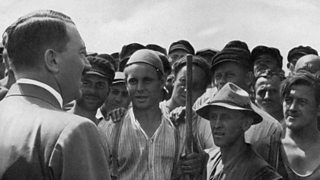
2 Comments

Filed under History, Military, Navy Ships, nazi germany, World War II at Sea, world war two in europe