Category Archives: racism

It’s Not Just Old History: The Fugitive Slave Act Of 1850 at 179 Years

thomas-sims-marched-into-slavery-nypl

Enforcing the Fugitive Slave Act in Boston 

Friends of Padre Steve’s World

Since we are busy tonight getting ready to go to Germany tomorrow I am reposting an article from a series dealing with an uncomfortable period of history for Americans with either a sense of conscience, or those who believe the racist myths surrounding the “Noble South” and “The Lost Cause.”  I hope that you find them interesting, especially in light of current events in the United States.

Peace,

Padre Steve+

                                    The Fugitive Slave Act of 1850

Robert Toombs of Georgia was an advocate for the expansion of slavery into the lands conquered during the war. Toombs warned his colleagues in Congress “in the presence of the living God, that if you by your legislation you seek to drive us from the territories of California and New Mexico, purchased by the common blood and treasure of the whole people…thereby attempting to fix a national degradation upon half the states of this Confederacy, I am for disunion.”  [1]

The tensions in the aftermath of the war with Mexico escalated over the issue of slavery in the newly conquered territories brought heated calls by some southerners for secession and disunion. To preserve the Union, Henry Clay and Daniel Webster, supported by the new President Millard Fillmore were able to pass the compromise of 1850 solved a number of issues related to the admission of California to the Union and boundary disputes involving Texas and the new territories.  But among the bills that were contained in it was the Fugitive Slave Law, or The Fugitive Slave Act of 1850. The act was the device of Henry Clay which was meant to sweeten the deal for southerners. The law would “give slaveholders broader powers to stop the flow of runaway slaves northward to the free states, and offered a final resolution denying that Congress had any authority to regulate the interstate slave trade.” [2]

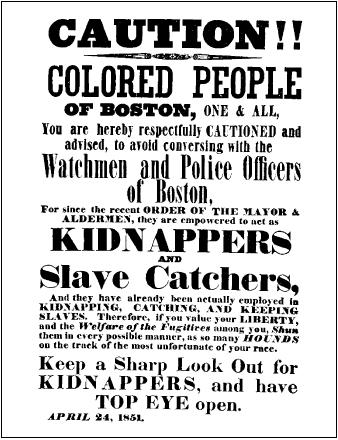
fugitive-slave-law

    A Warning to Blacks in Boston regarding the Fugitive Slave Law

For all practical purposes the Compromise of 1850 and its associated legislation nationalized the institution of slavery, even in Free States. It did this by forcing all citizens to assist law enforcement in apprehending fugitive slaves. It also voided state laws in Massachusetts, Vermont, Ohio, Connecticut, Pennsylvania and Rhode Island, which barred state officials from aiding in the capture, arrest or imprisonment of fugitive slaves. “Congress’s law had nationalized slavery. No black person was safe on American soil. The old division of free state/slave state had vanished….” [3] If there was any question as to whose “States Rights” the leaders of the South were advocating, it was certainly not those of the states whose laws were voided by the act.

That law required all Federal law enforcement officials, even in non-slave states to arrest fugitive slaves and anyone who assisted them, and threatened law enforcement officials with punishment if they failed to enforce the law. The law stipulated that should “any marshal or deputy marshal refuse to receive such warrant, or other process, when tendered, or to use all proper means diligently to execute the same, he shall, on conviction thereof, be fined in the sum of one thousand dollars.” [4] In effect the law nullified state laws and forced individual citizens and local officials to help escaped slaves regardless of their own convictions, religious views, and state and local laws to the contrary.

Likewise the act compelled citizens in Free states to “aid and assist in the prompt and efficient execution of this law, whenever their services may be required….” [5] Penalties were harsh and financial incentives for compliance attractive.

“Anyone caught providing food and shelter to an escaped slave, assuming northern whites could discern who was a runaway, would be subject to a fine of one thousand dollars and six months in prison. The law also suspended habeas corpus and the right to trial by jury for captured blacks. Judges received a hundred dollars for every slave returned to his or her owner, providing a monetary incentive for jurists to rule in favor of slave catchers.” [6]

The law gave no protection for even black freedmen, who simply because of their race were often seized and returned to slavery. The legislation created a new extra-judicial bureaucratic office to decide the fate of blacks. This was the office of Federal Commissioner and it was purposely designed to favorably adjudicate the claims of slaveholders and their agents, and to avoid the normal Federal Court system. There was good reason for the slave power faction to place this in the law, many Federal courts located in Free States often denied the claims of slave holders, and that could not be permitted if slavery was to not only remain, but to grow with the westward expansion of the nation.

When slave owners or their agents went before these new appointed commissioners, they needed little in the way of proof to take a black back into captivity. The only proof or evidence other than the sworn statement by of the owner with an “affidavit from a slave-state court or by the testimony of white witnesses” [7] that a black was or had been his property was required to return any black to slavery. The affidavit was the only evidence required, even if it was false.

runaway

Since blacks could not testify on their own behalf and were denied legal representation before these commissioners, the act created an onerous extrajudicial process that defied imagination. Likewise, the commissioners had a strong a financial incentive to send blacks back to slavery, unlike normal courts the commissioners received a direct financial reward for returning blacks to slave owners. “If the commissioner decided against the claimant he would receive a fee of five dollars; if in favor ten. This provision, supposedly justified by the paper work needed to remand a fugitive to the South, became notorious among abolitionists as a bribe to commissioners.” [8] It was a system rigged to ensure that African Americans had no chance, and it imposed on the citizens of Free states the legal obligation to participate in a system that many wanted nothing to do with.

Douglass.JPG

                                                  Frederick Douglass 

Frederick Douglass wrote about the new law in the most forceful terms:

“By an act of the American Congress…slavery has been nationalized in its most horrible and revolting form. By that act, Mason & Dixon’s line has been obliterated;…and the power to hold, hunt, and sell men, women, and children remains no longer a mere state institution, but is now an institution of the whole United States.” [9]

Douglass was correct as was demonstrated during an incident in Boston in 1854 where an escaped slave named Anthony Burns, who had purchased his freedom, was arrested under the Fugitive Slave Act. The arrest prompted a protest in which, “an urban mob – variously composed of free Negro laborers, radical Unitarian ministers, and others – gathered to free him. They stormed the Federal courthouse, which was surrounded by police and wrapped in protective chains….Amid the melee, one protestor shot and killed a police deputy.” [10] The heated opposition to Burns’ arrest provoked the passions of thousands of Bostonians who protested for his release that caused the Massachusetts governor to deploy two batteries of artillery outside the courthouse to deter any more attacks.

When the Federal Fugitive Slave Law commissioner consigned Burns to his Southern owner, the prisoner was placed in shackles and was marched down State Street. Tensions were now running extremely high and a “brigade of Massachusetts militia and local police were required to run Burns through a gauntlet and deposit him on the ship that would remand him to Virginia.” [11]Bostonians began to see their city as it was in the early days of the American Revolution, as a place that resisted tyranny. Neither did they did not forget Burns but raised the money to purchase his freedom. William Lloyd Garrison wrote, “the “deed of infamy… demonstrated as nothing else that “only “the military power of the United States” could sustain slavery.” [12] Nevertheless, Boston’s “mercantile elite had vindicated law and order” [13] but in the process they helped move so abolitionists who had been advocates of pacifism and non-violence to physical resistance to the bounty hunting Southerners. “Across the North, prisons were broken into, posses were disrupted, and juries refused to convict.” [14] Continue reading

Leave a comment

Filed under civil rights, civil war, History, leadership, Political Commentary, racism, Religion

The Anti-Nazi Resisters: Resistance is Never Futile

359212-1081074754-stauffenberg-nazi-germany-stauffenberg-demotivational-poster-1236884536

Friends of Padre Steve’s World,

In a few days we will be heading to Munich Germany and the Oktoberfest. While in Germany we will be visiting old friends. We have spent much of the weekend working in the house now that both of us are relatively healthy in recovering from our various surgeries, but we are both exhausted, physically and emotionally as we prepare for my retirement from the military and trying to get it ready to sell. Now we are looking forward to the trip. A friend will be housesitting and taking care of our dogs. They love him and he enjoys them, so it should be good. The dogs won’t have to leave their home and comfort zone.

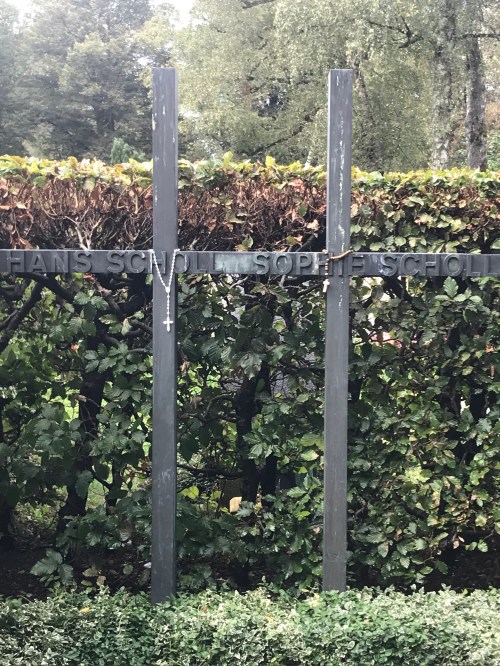
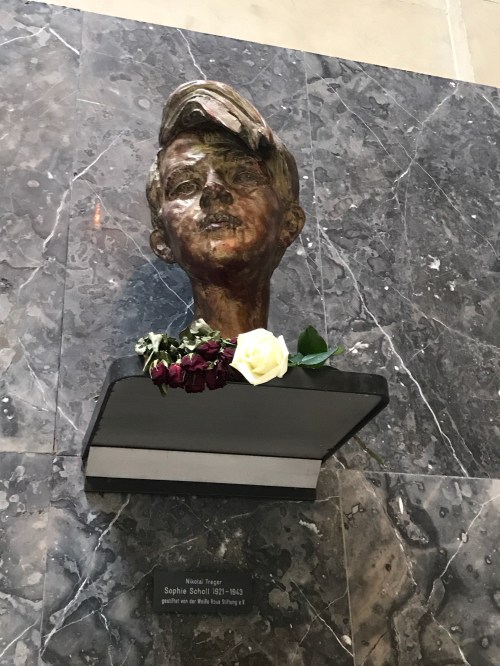
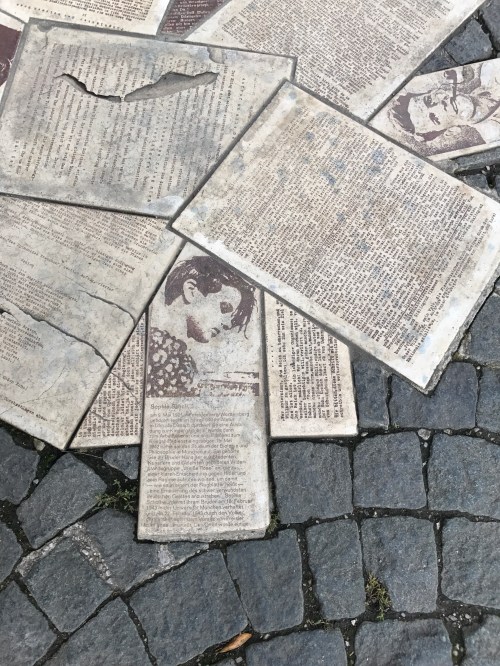
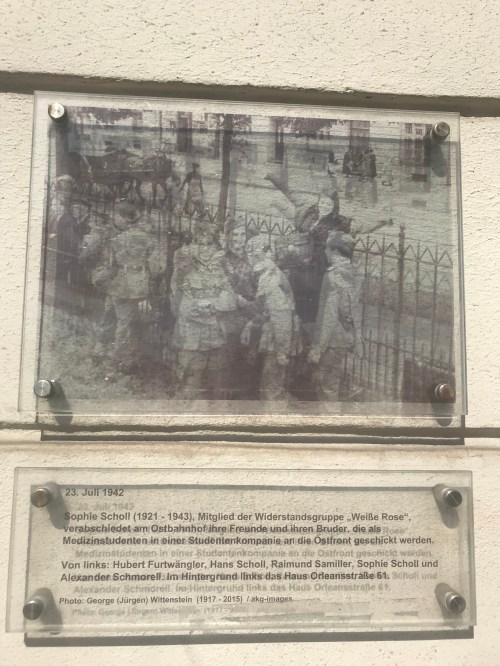
While in Munich, on some days when Judy is resting, I will visit Dachau, one of its labor camps, and maybe the Sophie Scholl Museum and National Socialist study center. Walking, even without crutches is still exhausting and often painful for her after two knee replacements in under a year. This has probably been one of the most difficult years of our lives and marriage. Hopefully, our visit to Munich and with our friends in Hessen and the Rhineland will give us some recovery time before we come home and deal with the reality of a stressful transition from military to civilian life. 

This is an older article that I meant to do a follow-series on last year. Hopefully I’ll get around to that this year. Until tomorrow,

Peace,

Padre Steve+

They are known and unknown but all resisted tyrants and all have become inspirational figures in my life. They are men and women, and many were soldiers or clergy members, students, while others were civil rights leaders. Most were advocates of non-violence, but some due to the incredibly evil nature of the regime under which they lived and served resorted to violence. But all show me and I hope will show you that the path of resistance is not futile.

The problem is that far too many people become discouraged the longer the struggle lasts and end up accommodating themselves to the evil regimes under which they lived. That will probably be the experience of those who struggle against tyranny around the world today as authoritarianism under many guises becomes more entrenched. It is a world wide phenomena but if the classic understanding of democratic liberalism advocated by so many including the founders of the United States is to survive, authoritarians and their tyrannical worldview must be resisted.

Sophie Scholl, a young student at the University of Munich wrote:

“I’ve been thinking of a story from the Old Testament: Moses stood all day and all night with outstretched arms, praying to God for victory. And whenever he let down his arms, the enemy prevailed over the children of Israel. Are there still people today who never weary of directing all their thinking and all their energy, single-heartedly, to one cause?”

That my friends is important.

July 20th was the 75th anniversary of Operation Valkyrie, the attempt of conservative German military officers, diplomats, and others to kill Hitler and end the tyrannical and genocidal Nazi regime. Among the men who died in that attempt were Colonel Claus von Stauffenberg, General Henning von Trescow, General Ludwig Beck, Lieutenant Colonel Mertz von Quirnheim, and General Friedrich Olbricht. Others were implicated and were murdered after kangaroo court proceedings at the hand of the Volksgericht, the “People’s Court” headed by Roland Freisler. Among them was Field Marshal Erich von Witzleben. While Freisler hounded and tried to humiliate him Witzleben remained calm and announced to the court:

“You may hand us over to the executioner, but in three months’ time, the disgusted and harried people will bring you to book and drag you alive through the dirt in the streets!”


tresckow

                                  General Henning von Trescow

Von Tresckow was one of the lead military plotters and had been involved in a number of earlier attempts on Hitler’s life. He had a higher moral sense than many other Wehrmacht officers, even those who disagreed or opposed Hitler. He said something “We have to show the world that not all of us are like him. Otherwise, this will always be Hitler’s Germany.” When the attempt failed von Trescow was serving on the Russian front far away from Berlin. To avoid arrest and the possibility that under torture he could implicate others or cause harm to his wife and children von Trescow killed himself. Another participant wrote that before his death von Trescow said:

“The whole world will vilify us now, but I am still totally convinced that we did the right thing. Hitler is the archenemy not only of Germany but of the world. When, in few hours’ time, I go before God to account for what I have done and left undone, I know I will be able to justify what I did in the struggle against Hitler. God promised Abraham that He would not destroy Sodom if only ten righteous men could be found in the city, and so I hope for our sake God will not destroy Germany. No one among us can complain about dying, for whoever joined our ranks put on the shirt of Nessus. A man’s moral worth is established only at the point where he is ready to give his life in defense of his convictions.”

Ludwig Beck

                                           General Ludwig Beck

Beck, who had resigned his post as commander of the German Army in protest of the planned invasion of Czechoslovakia wrote something that has become a key part of my military and personal ethic: “It is a lack of character and insight, when a soldier in high command sees his duty and mission only in the context of his military orders without realizing that the highest responsibility is to the people of his country.” 

Tresckow, a committed Christian also noted of Hitler’s supposedly Christian supporters: “I cannot understand how people can still call themselves Christians and not be furious adversaries of Hitler’s regime.”  I wonder how many Christians today would say the same of the current American President.

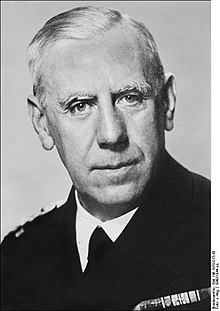
220px-Bundesarchiv_Bild_146-1979-013-43,_Wilhelm_Canaris

                                         Admiral Wilhelm Canaris 

There were other Christian resisters of the Hitler regime. Hans Oster was the son of a pastor and one of the senior officers in the Abwehr, the German military intelligence. His boss, Admiral Wihelm Canaris was also a resister, although a complicated one being the head of German military intelligence and connected with the head of the Nazi Sicherheitssdienst or SD, Reinhard Heydrich, until the latter  Both Canaris, and Oster would be executed on the personal order of Hitler in April 1945 along with Pastor Dietrich Bonhoeffer, all had been arrested for their involvement in anti-Hitler activities. For his part Canaris would note something that military, intelligence, or police officials who might be tempted to excuse the actions of modern day tyrants or would be authoritarians:

“One day the world will hold the Wehrmacht responsible for these methods since these things are taking place under its nose.”

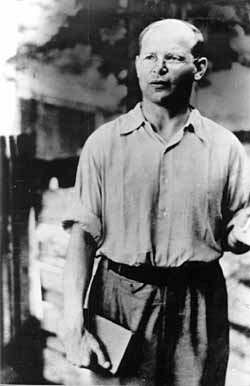
bonhoeffer-prison2

                                                 Dietrich Bonhoeffer 

Pastor Bonhoeffer who died with Oster and Canaris at Flossenburg wrote:

“Christianity stands or falls with its revolutionary protest against violence, arbitrariness and pride of power and with its plea for the weak. Christians are doing too little to make these points clear rather than too much. Christendom adjusts itself far too easily to the worship of power. Christians should give more offense, shock the world far more, than they are doing now. Christian should take a stronger stand in favor of the weak rather than considering first the possible right of the strong.”

hermann maas

                                                      Hermann Maas 

Hermann Maas, another Lutheran pastor made his mark by speaking out in defense of Jews and Socialists. He angered the German political right including the Nazis by doing so. He aided Jews and other non-Aryans to escape Germany, and cared for the elderly Jews who could not. He was removed from his pastorate and imprisoned. He survived the war and would be the first German recognized by Yad Vashem as one of the Righteous Among the Nations. Maas discussed the responsibility of all Germans for the crimes of Hitler and the Nazis, something that Christians and others in nations like the United States, Europe, Asia, Africa, and South America that are threatened by authoritarian leaders and racist regimes:

“Every German bears responsibility for Germany no matter who he is or where he stands, in the homeland or abroad, in public and at home. No one can absolve him of this responsibility. He can transfer it to no one.” 

img_0090

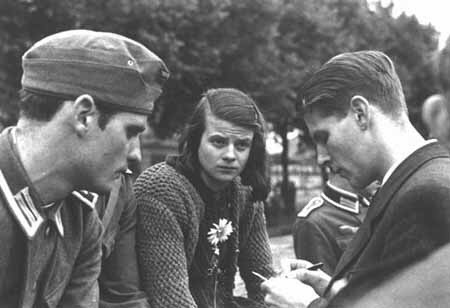
                                                     Sophie Scholl

But these men were not the only opponents of the Nazi regime. A young woman, a student at the University of Munich named Sophie Scholl and her brother Hans were at the center of an anti-Nazi resistance called the White Rose. They published and distributed a number of anti-Nazi leaflets and were caught doing so in early 1943.

One of those pamphlets noted:

“Nothing is so unworthy of a civilized nation as allowing itself to be “governed” without opposition by an irresponsible clique that has yielded to base instinct. It is certain that today every honest German is ashamed of his government. Who among us has any conception of the dimensions of shame that will befall us and our children when one day the veil has fallen from our eyes and the most horrible of crimes – crimes that infinitely outdistance every human measure – reach the light of day?

If the German people are already so corrupted and spiritually crushed that they do not raise a hand, frivolously trusting in a questionable faith in lawful order in history; if they surrender man’s highest principle, that which raises him above all other God’s creatures, his free will; if they abandon the will to take decisive action and turn the wheel of history and thus subject it to their own rational decision; if they are so devoid of all individuality, have already gone so far along the road toward turning into a spiritless and cowardly mass – then, yes, they deserve their downfall.

Goethe speaks of the Germans as a tragic people, like the Jews and the Greeks, but today it would appear rather that they are a spineless, will-less herd of hangers-on, who now – the marrow sucked out of their bones, robbed of their center of stability – are waiting to be hounded to their destruction. So it seems – but it is not so. Rather, by means of a gradual, treacherous, systematic abuse, the system has put every man into a spiritual prison. Only now, finding himself lying in fetters, has he become aware of his fate.

Only a few recognized the threat of ruin, and the reward for their heroic warning was death. We will have more to say about the fate of these persons. If everyone waits until the other man makes a start, the messengers of avenging Nemesis will come steadily closer; then even the last victim will have been cast senselessly into the maw of the insatiable demon.

Therefore every individual, conscious of his responsibility as a member of Christian and Western civilization, must defend himself against the scourges of mankind, against fascism and any similar system of totalitarianism. Offer passive resistance – resistance – wherever you may be, forestall the spread of this atheistic war machine before it is too late, before the last cities, like Cologne, have been reduced to rubble, and before the nation’s last young man has given his blood on some battlefield for the hubris of a sub-human. Do not forget that every people deserves the regime it is willing to endure.”

She wrote:

“It’s the reductionist approach to life: if you keep it small, you’ll keep it under control. If you don’t make any noise, the bogeyman won’t find you. But it’s all an illusion, because they die too, those people who roll up their spirits into tiny little balls so as to be safe. Safe?! From what? Life is always on the edge of death; narrow streets lead to the same place as wide avenues, and a little candle burns itself out just like a flaming torch does. I choose my own way to burn.”

I think of all of these people that I admire young Sophie Scholl the most. She had no power. She was not an officer, a government official, a businessman, or a pastor. She was simply a young woman who was informed by her faith and her concern for basic human morality and ethics.

While the Nazi State was consumed by the flames of Hitler’s Götterdämmerung, the lives and message of those few who resisted still redounds to us today. And yes, in comparison to the majority of Germans  of the Hitler era, they were a tiny minority, Of over 2000 German General and Flag officers a mere 22 were involved in anti-Nazi activities and the same is true for most professions in the Third Reich.

Milton Mayer wrote the words of a German University Professor and colleague after the war was over. The professor was reflecting on how people ended up going along with the Nazi regime. Mayer wrote his friends words:

“And one day, too late, your principles, if you were ever sensible of them, all rush in upon you. The burden of self-deception has grown too heavy, and some minor incident, in my case my little boy, hardly more than a baby, saying ‘Jewish swine,’ collapses it all at once, and you see that everything, everything, has changed and changed completely under your nose. The world you live in—your nation, your people—is not the world you were born in at all. The forms are all there, all untouched, all reassuring, the houses, the shops, the jobs, the mealtimes, the visits, the concerts, the cinema, the holidays. But the spirit, which you never noticed because you made the lifelong mistake of identifying it with the forms, is changed. Now you live in a world of hate and fear, and the people who hate and fear do not even know it themselves; when everyone is transformed, no one is transformed. Now you live in a system which rules without responsibility even to God. The system itself could not have intended this in the beginning, but in order to sustain itself it was compelled to go all the way.

“You have gone almost all the way yourself. Life is a continuing process, a flow, not a succession of acts and events at all. It has flowed to a new level, carrying you with it, without any effort on your part. On this new level you live, you have been living more comfortably every day, with new morals, new principles. You have accepted things you would not have accepted five years ago, a year ago, things that your father, even in Germany, could not have imagined.

“Suddenly it all comes down, all at once. You see what you are, what you have done, or, more accurately, what you haven’t done (for that was all that was required of most of us: that we do nothing). You remember those early meetings of your department in the university when, if one had stood, others would have stood, perhaps, but no one stood. A small matter, a matter of hiring this man or that, and you hired this one rather than that. You remember everything now, and your heart breaks. Too late. You are compromised beyond repair.

“What then? You must then shoot yourself. A few did. Or ‘adjust’ your principles. Many tried, and some, I suppose, succeeded; not I, however. Or learn to live the rest of your life with your shame. This last is the nearest there is, under the circumstances, to heroism: shame. Many Germans became this poor kind of hero, many more, I think, than the world knows or cares to know.”

I think that I shall close with that tonight. Those words matter.

1 Comment

Filed under ethics, faith, History, holocaust, Military, ministry, nazi germany, Political Commentary, racism, Religion

“Life Unworthy of Life” The Killing Of the Handicapped and Mentally Ill at the T4 Euthanasia Center at Hadamar


Friends of Padre Steve’s World,

In a couple of weeks my wife Judy and I will be traveling to Germany for a time of relaxation, study, and visits with German friends. I will be writing about those events as they occur. But as we get closer to going I began to reflect on our visit to Germany. At the end of that visit while visiting our friends Gottfried and Hannelore I took a trip with Gottfried to the T4 Euthanasia Center memorial at Hadamar which is about 12 miles from where they live.

Hadamar had been a mental hospital for decades before it was chosen as one of six places where an euthanasia program ordered by Hitler was to be conducted. Hitler ordered the program on September 1st 1939, the same day his forces invaded Poland.

Under the cover of the title Reich Committee for the Scientific Registering Of Serious Hereditary and Congenital Illnesses.” Under the Direction Of Hitler’s accompanying physician, Dr. Karl Brandt, Philipp Bouhler of the Party Chancellery, the Action, with Hitler’s full approval began, in Germany and the newly occupied territories in Poland.

Between 1941 and 1945 over 15,000 people, deemed to be “life unworthy of life” were murdered at Hadamar. The victims were killed in a bus garage where they were killed with carbon monoxide gas, the gas chamber, or by lethal injection or intentional overdoses of barbiturates while laying in bed at night. The gas chambers at Hadamar ceased operations at the end of 1941 and were removed, making the killings in the next stages “up close and personal” killings done by medical professionals. The specialists that operated them were transferred to run the death camps in German occupied Poland.


Those killed at Hadamar included men, women, and children deemed to have diseases, handicaps, or mental illnesses that kept them from being a useful part of the German economy, or a drain on society. Likewise, there were many people brought to Hadamar to be sterilized so they could never reproduce. The orders for this action came from Hitler himself and were based on what were in the early 20th Century very popular expressions of Social Darwinism which were not isolated to Germany. Sadly, there were those who expressed the same thoughts and conducted medical experiments and sterilization short of euthanasia in many Western countries, including the United States.

The victims included the handicapped, the mentally ill, those born with Down’s Syndrome or other neurological diseases, Jews, people with long term illnesses, children, people determined to be asocial, and during the war soldiers, including those of the Waffen SS who were determined to have mental illness, including what we would now call PTSD which made them unfit for active service.

Karl Brandt 

The relatives of those killed received notification from the authorities that their son, daughter, sister, or brother had died of natural causes, certified by the doctors who had decided that they should die. Unlike the extermination camps in the East, or the concentration camps, the killing in Hadamar and the other T4 centers was conducted by medical personnel. The T4 directorate “created a transport company, Gekrat, that collected the doomed patients from their respective institutions by bus. They were taken first to “transit institutions” for a temporary stay and then to the killing centers. Following their deaths by carbon monoxide, families of the victims received falsified death notices. By August 1941 over 70,000 people had perished in the gas chambers of Brandenburg, Grafeneck, Hartheim, Sonnenstein, Hadamar and Bernburg.” (Browning, Christopher. The Origins Of the Final Solution, September 1939 – March 1942 p. 191) 

When the first phase, that which used carbon monoxide gas in the bus garage was ended, many of the personnel involved were transferred to help run the extermination camps including Treblinka, Soribor, and Auschwitz in the east. After the official ending of the gassings at the T4 centers, the killings continued, this time up close and personal using lethal injections of barbiturates by nurses under the supervision of physicians. When the staff of Hadamar killed their 10,000th victim, they had a party.

Hadamar with Crematorium in Operation 

Jewish victims were treated no differently, apart from that their executioners notified their families that they had died in an asylum at Chelm, Poland. The same faked death notices were sent to their survivors from Chelm to add to the deception.

The service of the gas chamber personnel at Hadamar and the other T4 was little more than a training ground for their future employment. Historian Christopher Browning noted that “the connection between Nazi “Euthanasia” and the Final Solution goes well beyond the personnel, technology, and procedure. The killing of the handicapped and the Jews were two essential elements of the Nazi’s wider vision of creating a racial utopia. The former was to cleanse the German race of its “degenerate” or “defective” elements. The latter was to destroy its ultimate enemy. They were two campaigns in the same crusade.” (Browning p. 193) 

I will write more about the T4 Program and Hadamar at another time. That being said I have to admit that the visit was chilling. In addition to being a memorial, with historical classes, seminars, and tours being offered, the campus is used for many other activities, including medical and educational programs. Likewise, unlike places like Dachau, which are not particularly scenic locations, Hadamar, located in rural Hessen is a place that one could never imagine mass murder ever have taken place. It is a beautiful and peaceful location, so the crimes that happened there, although numerically small compared to other camps are unimaginable.

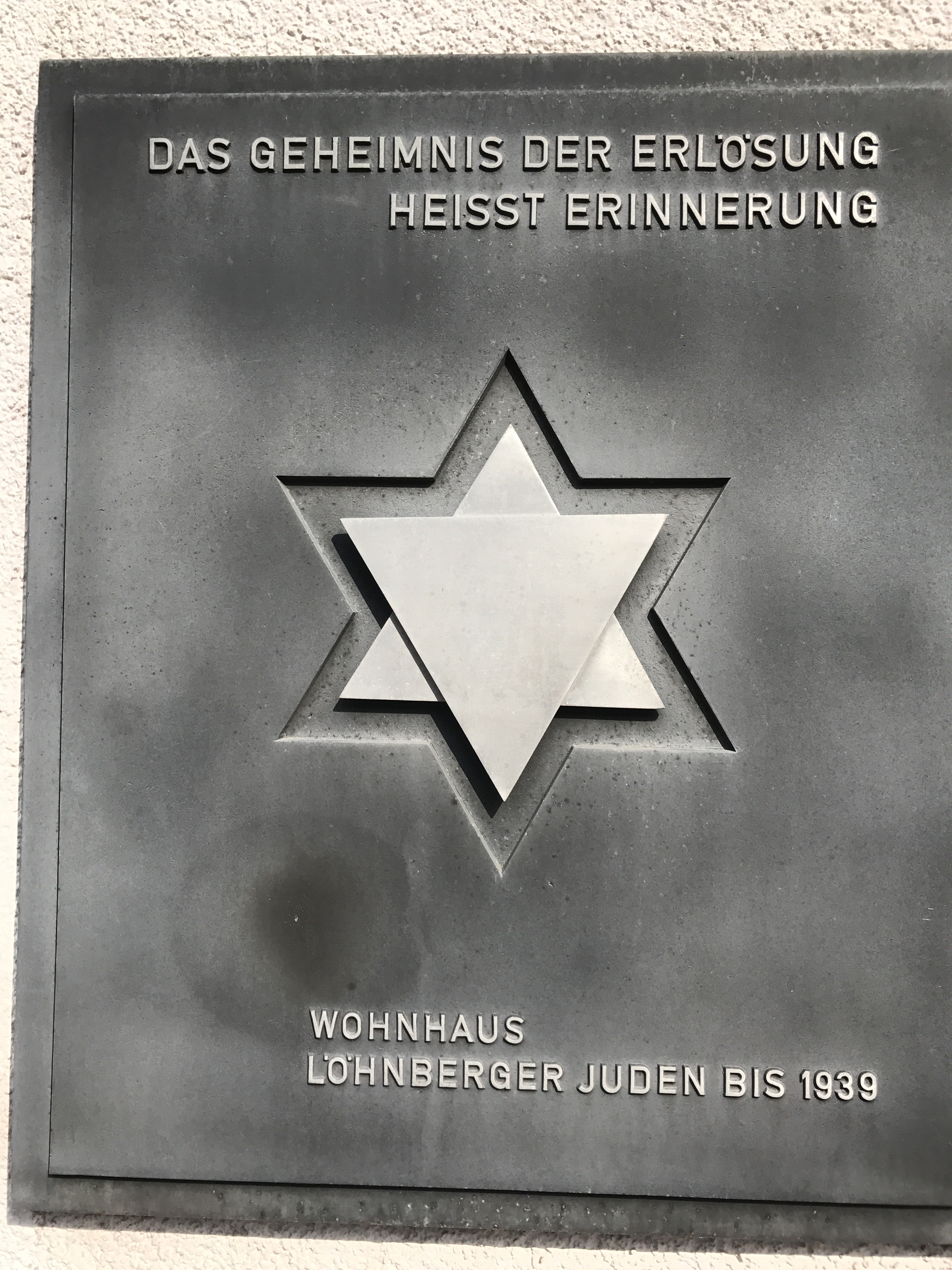
Afterwards Gottfried and I talked and went back to his house. I went on a walk to the town hall, or the Rathaus to see the towns memorial to the Jews who lived there before the war and then I took a walk in the surrounding area and went back to the Jewish cemetery which I had visited last night as the grave stones could not be read in the dark. Those which were still legible were written in Hebrew and or German and most dated to the 1800s and early 1900s. As I mentioned last night the Jews who remained in Loehnberg were forced to sell their houses and belongings and were sent to the extermination centers. At least one survived and she helped dedicate the memorial at the Rathaus in 1991. One thing that I do like about Germany is that the majority of the people now have the opinion that the crimes of their parents, grandparents, or even great-grandparents generations need to be remembered, and the victims, and not the perpetrators be honored. I wish it was that way in the United States where we honor too many of the men who brought genocide to the Native American tribes, or enslaved African Americans and considered both the be less than human.

      Nazi Propaganda Poster on the Cost Of Caring for Handicapped and Mentally Ill 

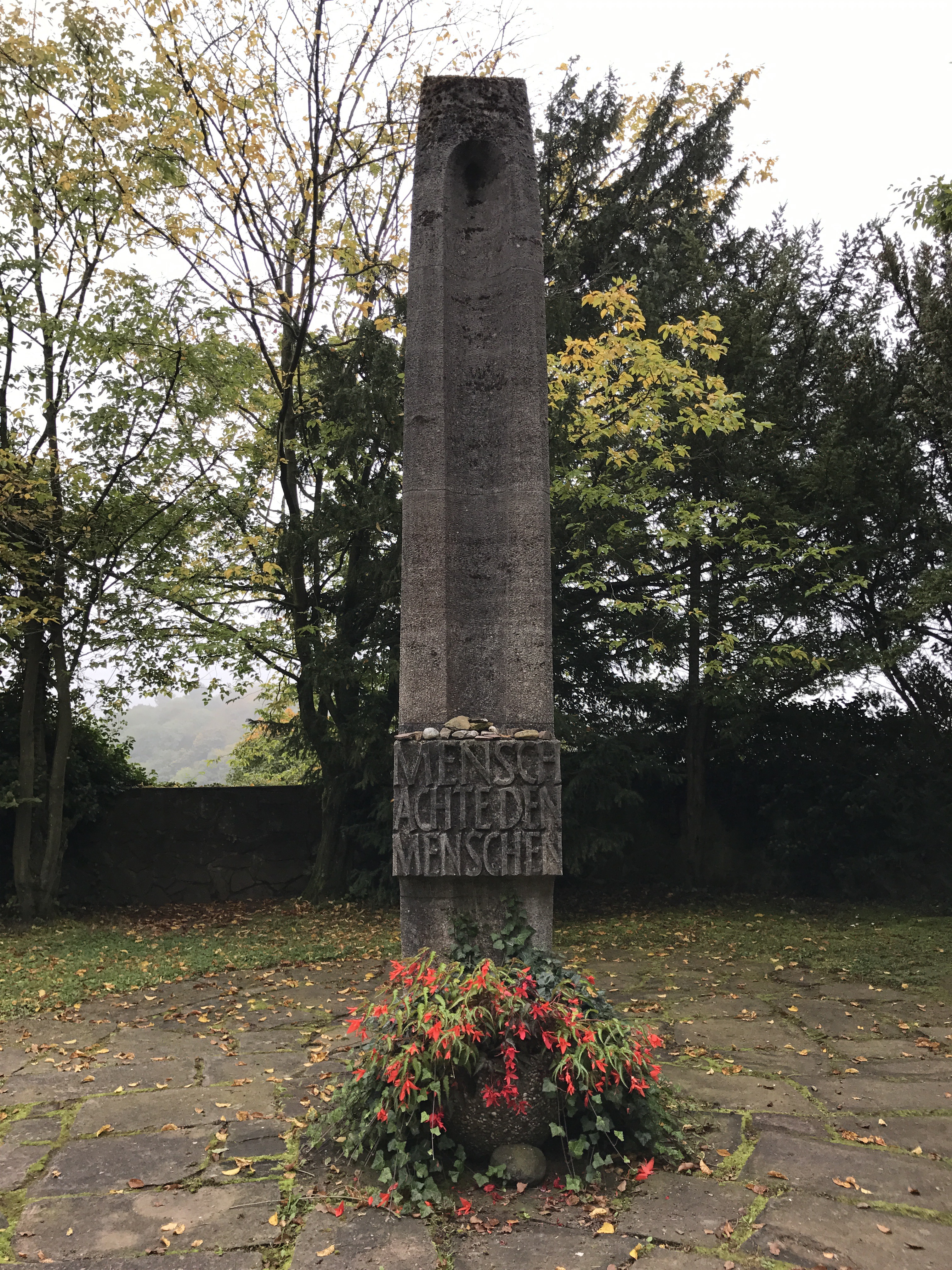
As I walked through the forests and meadows surrounding Loehnberg after my visit to Hadamar, as well as my visits to Dachau, the White Rose Memorial and museum at the University of Munich, and the National Socialist Documentation Center in Munich I did a lot of thinking. I wondered about people who could excuse such terrible crimes in the name of love of country, or even worse because they really believed that God thought that their country and race mattered more than others. I began to think about Manifest Destiny and American Exceptionalism in the light of what happened in Germany, a people who believed for close to 80 years that God intended them to dominate Europe and even the world. Many of theological writings of the times in Germany and the United States.

Honestly, I think that there are a lot of people in the United States who call themselves “Pro Life” because they are anti-abortion or against birth control that would have no problem with the methods of the Nazis at Hadamar so long as those methods either brought them a profit, political power, or were used against people that they thought were less than human. Since lot of these people, mostly self-identified Evangelical and Catholic Christians frequently are in lockstep with President Trump, and cheer him on as he identifies those that he believes to be less than human or unworthy of existence in the United States, I have no doubt that they would either approve and justify such actions or turn their backs on the victims. As for the President, he has openly mocked the handicapped, he gives the support of his office to Neo-Nazi and White Supremacists, and he seldom speaks up for the victims of Neo-Nazi or White Supremacist murderers.

When I ponder all of this it sends a cold chill down my spine, because many of the President’s supporters are our neighbors, co-workers, acquaintances, friends, and family members, and we rub shoulders with them every day. As financial conditions worsen, look for them to look to the government to eliminate what they consider to be Life Unworthy Of Life. 

Until tomorrow,

Peace,

Padre Steve+

Leave a comment

Filed under crime, ethics, History, holocaust, laws and legislation, mental health, Political Commentary, racism

The Einsatzgruppen and Genocide in Russia 1941-1944

Friends of Padre Steve’s World,

This is another part of my article on the actions of Hitler’s Einsatzgruppen and their campaign of mass murder in Eastern Europe. This section is about the campaign in Russia. It is even more troubling than the previous sections, because in Russia, all pretense of civilization was dropped and even the German Army was heavily engaged in committing some of the grossest and most evil atrocities ever committed by a supposedly civilized and allegedly Christian people.

Likewise, it is important to remember that much of what happened occurred before the decision to implement the Final Solution and the operations of the massive extermination camps such as Auschwitz.

The tragedy is that in so ways that Americans, British, French and the Belgians, as well as the Spanish, not to mention the Russians, Turks, Japanese, Rwandans, and so many other have committed genocide, but nothing in their litany of genocide can compare with the Nazi Holocaust.

Their actions, if they were simply limited to just the Germans of that period could be explained away as a exception, but it is not. That is what makes these heinous crimes so troubling, as the people who committed them were not that different than us, or our own ancestors. Despite those the genocides perpetrated by others, those of the Nazis against the Jews are unique in their execution and evil. The entire police and military power of a nation were used first against their fellow citizens, and then against the Jews of every country they conquered or occupied in Europe. It was unique and thus the evil perpetrated by them was in a league of its own. 


Peace

Padre Steve+
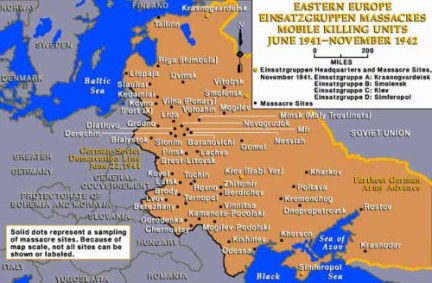
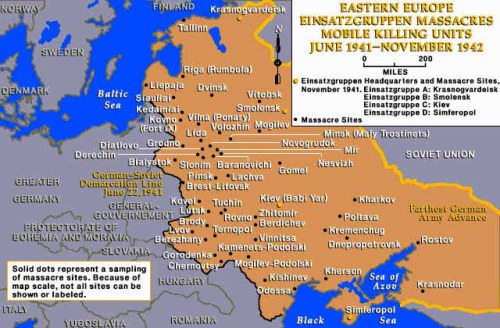
einsattzgruppen map

The Nazi war against Russia was the ultimate test of Hitler’s ideological race war. Planning for the war with the Soviet Union began after the fall of France and during the beginning stages of the Battle of Britain. On 21 July 1940 Hitler made“his intentions plain” to the Army leadership and “von Brauchitsch set his planners to work.” 119 The staff at OKH began preparations for the offensive in the winter of 1940-41 following the Luftwaffe’s failure against Britain and postponement of Operation Sea Lion, the proposed invasion of Great Britain.

Despite the fact that Britain was still in the war and had opened a new front in the Middle East against Italy which required German troops, Hitler decided to open another front and announced his intention to “crush Soviet Russia in a quick campaign which was to begin no later than March 15, 1941, and before the end of the war with England.” 120 Field Marshal Keitel noted the final decision came in “early December 1940” and from then he had “no doubt whatsoever that only some unforeseen circumstance could possibly alter his decision to attack.” 121

The military plan initially focused on the destruction of “the Red Army rather than on any specific terrain or political objective,” 122although the political and geographic objectives would arise in later planning and in the campaign. Hitler stated: “What matters is that Bolshevism must be exterminated. In case of necessity, we shall renew our advance whenever a new center of resistance is formed. Moscow as the center of doctrine must disappear from the earth’s center….” 123

Besides preparations aimed at the destruction of the Red Army and overthrow of the Soviet State, the “war against the Soviet Union was more openly ideological from the start.” 124 Hitler set the stage on March 3rd 1941 by announcing, “the forthcoming campaign is more than a mere armed conflict; it is a collision between two different ideologies…this war will not be ended merely by the defeat of the enemy armed forces” and that “the Jewish-Bolshevist intelligentsia must be eliminated….” 125


                                 Ordungspolizei  Officers in Russia 

Hitler realized that the task of eliminating the Jews was one that had to be done by his SS men. He noted, that “this is a task so difficult that it cannot be entrusted to the Army.” 126 Reichskommissars, civilian overlords from the Nazi Party would be appointed to administer conquered areas, but since normal civilian powers would be insufficient to eliminate the Bolshevists, Hitler noted that it “might be necessary “to establish organs of the Reichsfuhrer SS alongside the army’s Secret Field Police, even in the operational areas….” 127 The “primary task” of the SS Einsatzgruppen and Police battalions was to liquidate “all Bolshevist leaders or commissars” if possible while still in the operations zones,” 128 yet the orders were vague enough not to offend the sensibilities of Army leaders and did not contain “a syllable that in practice every Jew would be handed over to the extermination machine.” 129

As with almost all German operations which involved cooperation between the Army and the SS, the parties ensured that existing agreements between the agencies, German laws, and army doctrine were followed. On 13 March an agreement was reached between the Army represented by General Wagner and the SS, which stated in part, that “the Reichsführer SS has been given by the Führer special tasks within the operations zone of the Army…to settle the conflict between two opposing political systems.” 130Likewise the agreement dictated that Himmler’s SS units would “act independently and on his own responsibility” while ensuring that “military operations are not affected by measures necessary to carry out his task.” 131
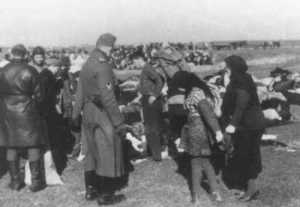
einsatzgruppe troops and victims

                                         Rounding up Jews in Russia

A further instruction was issued by Wagner on 26 March which gave the Army’s agreement for the use of the Einsatzgrüppen in the operations zone. The agreement spelled out the coordinating instructions between the Einsatzgruppen and army authorities in the operational zone and communications zones to the rear. Cooperation between the Army and the SS was based on already existing agreements between the SS and the Army, notably the “principals for co-operation between the State Secret Police and the Field Security organization of the Wehrmacht agreed with the Security branch of the War Ministry on 1 January 1937.” 132

The most significant agreement that the Army reached with the SS was the Commissar Order. This order, sometimes known as the “Criminal Order” was used war as evidence at Nuremberg as against Keitel, Jodl and High Command of the Wehrmacht during the later Generals Trial. The order specified that the Army would cooperated with the SS and kill Soviet Political Commissars attached to the Red Army who were taken prisoner, as “they were not prisoners of war.” Another order specified that “in the event that a German soldier committed against civilians or prisoners, disciplinary action was optional….” 133 The order noted regarding political commissars that “in this struggle consideration and respect for international law with regard to these elements is wrong.” 134 The Army’s “Guidelines for the Conduct of Troops in Russia” issed on May 19, 1941 called for “ruthless and vigorous measures against Bolshevist inciters, saboteurs [and] Jews.” 135
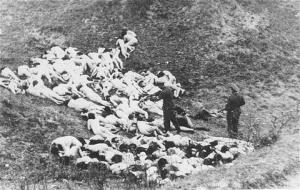
einsatzgruppen executions

Shortly before the Commissar Order was issued, Hitler previewed it to the generals saying that the war in Russia “cannot be conducted in a knightly fashion” and that the war against the Soviet Union would have to be waged with “unprecedented, unmerciful and unrelenting harshness…” 136Hitler told the generals that they would have to “dispense with all of their outdated and traditional ideas about chivalry and the generally accepted rules of warfare: the Bolsheviks had long since dispensed with them.” 137 He explained that he understood that his orders were beyond their comprehension but insisted, “I cannot and will not change my orders and I insist that that they be carried out with unquestioning and unconditional obedience.” 138

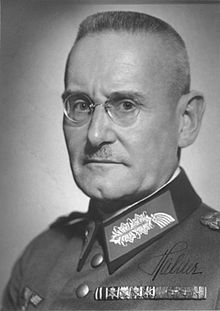
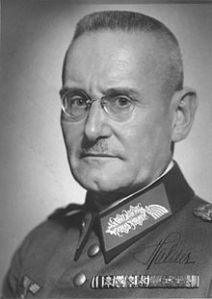
General Franz Halder, Chief of the OKH, or the Army High Command took notes on Hitler’s speech. They are chilling to read as none present could have understood them in any other way than Hitler meant:

“Clash of two ideologies. Crushing denunciation of Bolshevism, identified with asocial criminality….We must forget the comradeship between soldiers. A Communist is no comrade before nor after the battle. This is a war of extermination….We do not wage war to preserve the enemy….War against Russia: Extermination of the Bolshevist Commissars and of the Communist intelligentsia….this is no job for military courts. The individual troop commanders must know the issues at stake. They must be leaders in the fight….This war will be very different from war in the West. In the East harshness today means leniency in the future. Commanders must make the sacrifice of overcoming their personal scruples.”139
220px-Bundesarchiv_Bild_146-1970-052-08,_Franz_Halder

                        Colonel General Franz Halder, Chief Of OKH

Hitler’s speech was protested by some of the generals according to Von Brauchitsch. 140 Von Brauchitsch refused to protest the order to Hitler but issued an order on his own authority “threatening dire penalties for excesses against civilians and prisoners of war” which he maintained at Nuremberg “was sufficient to nullify the Commissar Order.” 141 Yet during the campaign against the Soviet Union, von Brauchitsch told his commanders to “proceed with the necessary hardness.” 142 Walter Warlimont noted that Field Marshal Fedor von Bock, who would “later emerge as an opponent of the Commissar Order…makes no special comment on the meeting or the restricted conference that followed.”143

At Nuremberg Keitel said that he “stubbornly contested” the clause “relating to the authority of the SS-Reichsführer… in the rearward operational areas.” 144Keitel blamed the Army High Command OKH under Halder, but the order came out with his signature on behalf of Hitler, which was key evidence against him at Nuremberg. Keitel stated that “there was never any possibility of justifying them in retrospect by circumstances obtaining in the Russian campaign.” 145

Some commanders refused to publish the orders and “insisted that the Wehrmacht never implemented such policies…” blaming them instead on the SS. One writer states “such protests were undoubtedly sincere, but in practice German soldiers were far from innocent. The senior professional officers were often out of touch with their subordinates.” 146 The orders were a “license to kill, although not a great departure from German military traditions….” 147 The effect was terrifying, for in a sense the Einsatzgruppen, “could commit ever crime known to God and man, so long as they were a mile or two away from the firing line.” 148 Security Divisions of the Army were “instructed to give material and logistical support to…units of the Einsatzgruppen.” 149 Even worse, other army units in rear areas “could be called on to assist Himmler’s SS police leaders” as the situation dictated, and few commanders refused. 150

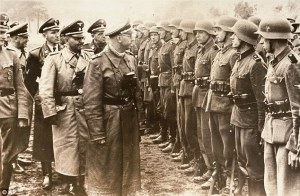
For the campaign against the Soviet Union the Heydrich and the SS formed four Einsatzgruppen composed of SD, Waffen-SS and Police troops designated A-D. Einsatzgruppe A was assigned to Army Group North, Einsatzgruppe B to Army Group Center, Einsatzgruppe C to Army Group South and Einsatzgruppe D to the 11th Army.

The Einsatzgruppen were not standardized in manpower or equipment. In size they were battalion equivalents the largest Einsatzgruppe being Einsatzgruppe A in the North with 990 assigned personnel 151while Einsatzgruppe D was the smallest and had only 550 troops assigned. 152 These units had SS, SD or Police commanders. Though these units were not large, they also had the support of nine Ordungspolizei battalions, which were initially assigned to the invasion forces to supplement the operations of the Einsatzgruppen153

The police contingent would grow to be a massive force. By 1943, these Ordnungspolizei battalions would be grouped into regiments and number about 180,000 men assisted by 301,000 local non-German auxiliaries. 154 These units acted in concert with nine Army Security Divisions which handled rear area security. 155
197BF44C00000578-3114663-image-a-59_1433720058260

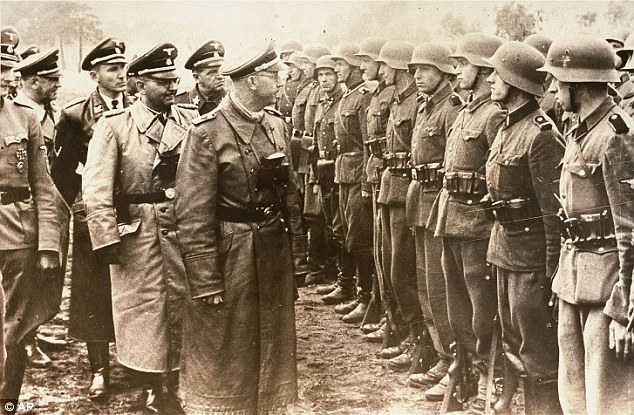
Himmler was so secretive that he initially did not reveal the intent and planned use of their units to the Einsatzgruppen commanders. Instead he spoke to them of a “heavy task…to “secure and pacify” the Russian area using Sicherheitspolizei and SD methods.” 156 Understanding the effect of these operations, Himmler would state that “in many cases it is considerably easier to lead a company in battle than to command a company responsible to…carry out executions, to deport people…to be always consistent, always uncompromising-that is in many cases far, far harder.” 157

The actions of these units are well documented; the Einsatzgruppen, Police, Army and locally recruited Schutzmannschaft battalions 158 ruthlessly exterminated Jews and others in the operational area. No sooner had an Einsatzgruppe unit entered a city, a “deadly stranglehold” would grip the “Jewish inhabitants claiming thousands and thousands of victims day by day and hour by hour.” 159

Non-Jewish Russians were encouraged to conduct programs which Heydrich noted “had to be encouraged.” 160 An Einsatzgruppen D report numbered 153 noted: “During period covered by this report 3,176 Jews, 85 Partisans, 12 looters, 122 Communist functionaries shot. Total 79,276.” 161   By the spring of 1942 Einsatzgruppe A had claimed “more than 270,000 victims, the overwhelming majority of whom were Jewish.” 162 The total killed for all groups by early 1942 was 518,388 people, mostly Jews. 163 Germany’s Romanian ally acted against Jews in their operational areas as well. In Odessa, “on 23 October 1941 19,000 Jews were shot near the harbor… probably 200,000 Jews perished either at Romanian hands or after being turned over by the Romanians to the Germans.” 164

To further cloud the ethics and morality, the operations against Jews were often called anti-partisan operations. Himmler referred to Einsatzgruppen as “anti-Partisan formations” 165 while Wehrmacht Security divisions cooperating with the SS “murdered countless Soviet civilians and burned Russian settlements to the ground under the pretext of subduing partisan resistance.” 166 The attitude by 1941-1942 was that “all Jews are partisans and all partisans are Jews.” From 1943, all armed resistance was “banditry” and all Jews irrespective of circumstances were treated as “bandits.”” 167

Walter_von_Reichenau

                               Field Marshal Walter von Reichenau

Field Marshal Von Reichenau issued an order in which he stated:

“The soldier in the Eastern territories is not merely a fighter according to the art of war but also a bearer of a ruthless national ideology and the avenger of the bestialities which had been inflicted upon German and racially related nations. Therefore the soldier must have full understanding for the necessity of a severe but just revenge on subhuman Jewry.” 168

Likewise the distinguished Panzer commander General Herman Hoth issued his own order of 17 November 1941 urging his troops to exact revenge on the Jews and Communists:

“Every trace of active or passive resistance or of any kind of machinations by the Bolshevik – Jewish agitators are [sic] to be immediately and pitilessly rooted out. The necessity of severe measures against elements foreign to people and kind must be understood precisely by the soldiers. These circles are the spiritual pillars of Bolshevism, the tablebearers [priests] of its murder organization, the helpers of the partisans. It consists of the same Jewish class of people which have done so much to harm our Fatherland and by its hostile activity…and anti-culture, which promotes anti-German currents in the whole world and which wants to be the bearer of revenge. Their annihilation is a law of self-preservation. Any soldier criticizing these measures has no memory of the former traitorous activity lasting for years carried on among our own people by Jewish-Marxist elements.” 169

 Piaśnica_digging_of_the_graves

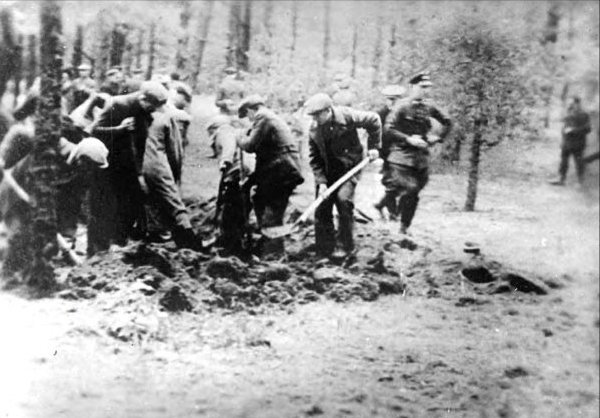
                                        Jews digging their own graves

The commander of the Wehrmacht’s 221st Security Division endeavored to persuade his “subordinate units that the Jews were carriers of Bolshevik contamination and, therefore, the ultimate source of any sabotage or difficulty the division faced.” 170 The extermination of the Jews and partisan war were closely intertwined with the Reich’s economic policies designed to exploit the natural resources of the Russia. This included the “hunger plan” which German authorities seemed to imagine that “millionfold starvation could be induced by requisitioning off all available grain and “shutting off” the cities.” 171
einsatzgruppen-brutal-germans-nazi-death-squads1

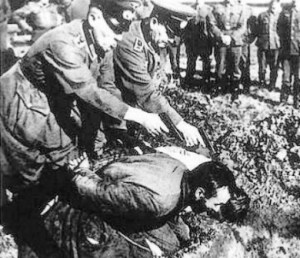
Einsatzgruppe men and Ordungspolizei above and below in action

“The European history of the twentieth century shows us that societies can break, democracies can fall, ethics can collapse, and ordinary men can find themselves standing over death pits with guns in their hands. It would serve us well today to understand why.” Timothy Snyder

Einsatzgruppe_A

The Wehrmacht’s complicity in these measures is demonstrated in the order drafted by Warlimont and signed by Keitel on 13 May 1941. That order, the “Decree on Exercising Military Jurisdiction in the Area of Barbarossa and Special Measures by the Troops” made it clear that international conventions regarding the treatment of civilians would not be observed in the Soviet Union. The order, relying on the historic precedent of German military law in regard to partisan activity stated

I “Treatment of crimes committed by enemy civilians”

“1. Until further order the military courts and the courts martial will not be competent for crimes committed by enemy civilians.”

2. Francs-tireurs will be liquidated ruthlessly by the troops in combat or while fleeing. “

3. Also all other attacks by enemy civilians against the armed forces, its members, andauxiliaries will be suppressed on the spot by the troops with the most rigorous methods until the assailants are finished (niederkaempfen)”

4. Where such measures were not taken or at least were not possible, persons suspected of the act will be brought before an officer at once. This officer will decide whether they are to be shot. Against localities from which troops have been attacked in or treacherous manner, collective coercive measures be applied immediately upon the order of an officer of the rank of at least battalion etc., commander, if the circumstances do not permit a quick identification of individual perpetrators.”

II. “Treatment of crimes committed against inhabitants by members of the Wehrmacht and its auxiliaries”

1. With regard to offenses committed against enemy civilians by members of the Wehrmacht or by its auxiliaries prosecution is not obligatory, even where the deed is at the same time a military crime or misdemeanor….” 172

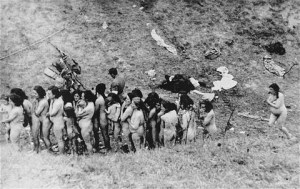
Hitler was quite clear in his intent when he told General Halder that in 1941 that he “intended to level Moscow and Leningrad, to make them uninhabitable, so there would be no need to feed their populations during the winter.” 173Economic officials held life and death power over villages. Those that met agricultural quotas were “likely to be spared annihilation and evacuation…the culmination of this process, during 1943, would be the widespread creation of “dead zones.””174All told during the campaign against the Soviet Union the Germans killed nearly 1.5 million Russian Jews. 175
ww2 mizocz1

                                  Jewish Women Awaiting Execution 

By 1942, over two million Soviet POW’s had been killed. 600,000 shot outright, 140,000 by the Einsatzkommandos. 176Eventually about 3.3 million Soviet POWs died in German captivity through starvation, disease and exposure, 177are included in a total of over 10 million Red Army Combat deaths. 178 The distinguished German historian Karl Dietrich Bracher wrote, “The reality and irreality of the National Socialism were given their most terrible expression in the extermination of the Jews.” 179
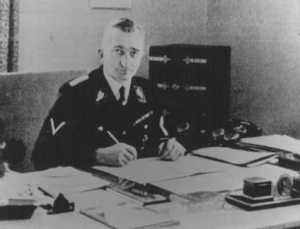
arthur nebe

                   Arthur Nebe, from Jew killer to anti-Hitler plotter

Himmler and others continued to use euphemistic language to describe their efforts talking in terms of “Jewish resettlement.” 180 Terms such as special actions, special treatment, execution activity, cleansing and resettlement were used in place of the word murder. 181At the same time these operations led to problems in the ranks, one SS trooper observed: “deterioration in morale among his own men who had to be issued increasing rations of vodka to carry out their killing orders.” 182

Even commanders of the Einsatzgruppe were affected. Arthur Nebe would say “I have looked after so many criminals and now I have become one myself.” Nebe became an active participant in the July 20th plot against Hitler 183and a fellow conspirator would describe him as a “shadow of his former self, nerves on edge and depressed.” 184 Erich Bach-Zelewski, who led the SS anti- partisan operations, would suffer a nervous breakdown which included “hallucinations connected to the shootings of Jews” which hospitalized him in 1942. 185 Himmler would state in his Posen speech given in October 1943 that “to have gone through” the elimination of the Jews had “and remained decent, that has made us tough. This is an unwritten, never to be written, glorious page in our history.” 186

While while the Einsatzgruppen, Ordungspolizei battalions, the Wehrmacht Security Divisions, and locally recruited forces continued their Jew Hunts, another even more ghastly plan was being launched against the Jews in Nazi occupied territory. The Endlösung of the Jewish Problem had been set in motion.

To be continued…

Notes

119 Ibid. Megargee. War of Annihilation p.24

120 Ibid. Wheeler-Bennett The Nemesis of Power p.511

121 Ibid. Goerlitz. The Memoirs of Field Marshal Wilhelm Keitel. P.132

122 Glantz, David M. and House, Jonathan. When Titans Clashed: How the Red Army Stopped Hitler. University Press of Kansas, Lawrence, KS. 1995 p.31

123 Trevor-Roper, H.R. Hitler’s Table Talk 1941-1944 with an introduction by Gerhard L Weinberg, Translated byNorman Cameron and R.H. Stevens, Enigma Books, New York, NY 2000. Originally published in Great Britain by Weidenfeld & Nicholoson, London 1953 p.6

124 Ibid. Megargee. War of Annihilation p.10 The campaign against the Soviet Union was to be much more openlyideological as compared to the campaign in Poland.

125 Ibid. Warlimont. Inside Hitler’s Headquarters p.150 126 Ibid. Warlimont. Inside Hitler’s Headquarters p.151

125 Ibid. Warlimont. Inside Hitler’s Headquarters p.150 126 Ibid. Warlimont. Inside Hitler’s Headquarters p.151

127 Ibid. Reitlinger, The SS p.175

128 Ibid. Höhne The Order of the Death’s Head p. 354

129 Ibid. Höhne The Order of the Death’s Head p. 354 Again another deception.

130 Ibid. Warlimont. Inside Hitler’s Headquarters p.153

131 Ibid. Warlimont. Inside Hitler’s Headquarters p.153

132 Ibid. Warlimont. Inside Hitler’s Headquarters pp. 158-159

133 Ibid. Glantz and House. When Titans Clashed p.56

134 Ibid. Davidowicz. The War Against the Jews p.123

135 Ferguson, Niall. The War of the Worlds: Twentieth Century Conflict and the Descent of the West. The Penguin Press, New York, 2006 p.442

136 Ibid. Wheeler-Bennett. Nemesis of Power p.513

137 Ibid. Goerlitz. The Memoirs of Field Marshal Wilhelm Keitel. P.135

138 Ibid. Wheeler-Bennett. Nemesis of Power p.513

139 Hebert, Valerie Genevieve, Hitler’s Generals on Trial: The Last War Crimes Tribunal at Nuremberg University of Kansas Press, Lawrence Kansas 2010 pp.77-78

140 Ibid. Wheeler-Bennett Nemesis of Power p.513 and footnote. He cites the three Army Group commanders, Leeb, Rundstedt and Bock. However Von Rundstedt’s biographer notes that “no evidence exists as to what VonRundstedt’s to this was at the time.” Messenger, Charles, The Last Prussian: A Biography of Field Marshal Gerd Von Rundstedt 1875-1953 Brassey’s (UK) London England 1991. p.134

141 Ibid. Reitlinger, The SS p.176

142 Ibid. Megargee. War of Annihilation p.33

143 Ibid. Warlimont. Inside Hitler’s Headquarters p.162

144 Ibid. Goerlitz. The Memoirs of Field Marshal Keitel p.136

145 Ibid. Goerlitz. The Memoirs of Field Marshal Keitel pp.136-137

146 Ibid. Glantz and House. When Titans Clashed p.56

147 Ibid. Blood. Hitler’s Bandit Hunters p.52

148 Ibid. Reitlinger The SS p. 177

149 Ibid. Shepherd. War in the Wild East p.54

150 Ibid. Reitlinger The SS p. 177

151 Ibid. Rhodes Masters of Death pp.12-13

152 Ibid. Westermann. Hitler’s Police Battalions p.167 153 Ibid. Westermann. Hitler’s Police Battalions p.164 154 Ibid. Blood Hitler’s Bandit Hunters p.141

155 Ibid. Shepherd Wild War in the East p.48. Shepherd notes the deficiencies of these units in terms of organization, manpower and equipment which he calls “far short of the yardstick of military excellence with which the Wehrmacht is so widely associated

156 Ibid. Höhne The Order of the Death’s Head p. 356 Only one of the Einsatzgruppen commanding officers was a volunteer, Arthur Nebe who was involved in the conspiracy to kill Hitler. It is believed by many that Nebe volunteered to earn the clasp to the Iron Cross to curry favor with Heydrich and that initially “Nebe certainly did not know that “employment in the east” was synonymous with the greatest mass murder in history.

157 Ibid. Bracher. The German Dictatorship p.422

158 Ibid. Blood Hitler’s Bandit Hunters p.55

159 Ibid. Höhne The Order of the Death’s Head p. 360 160 Ibid. Friedlander TheYears of Extermination p.207 161 Ibid. Höhne The Order of the Death’s Head p. 360 162 Ibid. Tooze The Wages of Destruction p.481

163 Ibid. Ferguson. The War of the World p.446

164 Di Nardo, Richard L. Germany and the Axis Powers: From Coalition to Collapse. University Press of Kansas,Lawrence, KS. 2005 p.133 The Hungarians would also engage in ant-Jewish operations. Only the Italian army would not conduct operations against the Jews.

165 Ibid. Höhne The Order of the Death’s Head p. 369

166 Ibid. Wette The Wehrmacht p.127

167 Ibid. Blood. Hitler’s Bandit Hunters p.117

168 Ibid. Hebert p.94

169 Ibid. Hebert pp.94-95

170 Ibid. Shepherd. War in the Wild East pp.90-91

171 Ibid. Tooze The Wages of Destruction p.481

172 Ibid, Hebert p.86

173 Ibid. Magargee. War of Annihilation p.64

174 Ibid. Shepherd. War in the Wild East pp.127-128

175 Ibid. Davidowicz The War Against the Jews from the table on page 403. This included 228,000 from the Baltic republics (90%) 245,000 from White Russia (65%) 900,000 from the Ukraine (60%) and 107,000 from Russia proper

(11%)

176 Ibid. Rhodes. Masters of Death p.241

177 Ibid. Glantz and House When Titans Clashed p.57

178 Ibid. Glantz and House. When Titans Clashed table on p.292

179 Ibid. Bracher. The German Dictatorship p.431

180 Ibid. Bracher. The German Dictatorship p.430

181 Ibid. Höhne The Order of the Death’s Head p. 367

182 Ibid. Rhodes. Masters of Death p.225

183 Ibid. Rhodes Masters of Death p.225

184 Ibid. Höhne The Order of the Death’s Head p. 363 185 Ibid. Höhne The Order of the Death’s Head p. 363 186 Ibid. Bracher. The German Dictatorshipp.423

Leave a comment

Filed under History, holocaust, laws and legislation, Military, nazi germany, Political Commentary, racism, war crimes, world war two in europe

“Nothing is Easier than to Denounce an Evil Doer; Nothing is more Important than to Understand Him” The Uncomfortable Necessity of Understanding Evil

Friends of Padre Steve’s World,

Fyodor Dostoyevsky wrote, “Nothing is easier than to denounce the evildoer; nothing is more difficult than to understand him.”

I think one of our problems is that we want to believe that evil is simply done be evil people. That is why when we see a Hitler, Stalin, Pol Pot, or the monsters of the so-called Islamic State, we are often strangely comforted. This is often  because we can point to a single person with a wicked ideology and say “they are evil,” all the while forgetting that they are, or were, like us, also human. Aleksandr Solzhenitsyn reminds us of the folly of that type of thinking:

“If only it were all so simple! If only there were evil people somewhere insidiously committing evil deeds, and it were necessary only to separate them from the rest of us and destroy them. But the line dividing good and evil cuts through the heart of every human being. And who is willing to destroy a piece of his own heart?”

A few years ago I took a break from my Gettysburg studies and writing and dusted off an old academic paper dealing with the one of the more uncomfortable aspects of the Nazi Holocaust against the Jews. I did that because I felt that I needed to reexamine the nature of evil in the modern world. Since that time I have gone back, done more study, more writing, and made more visits to locations of Nazi evil. I will be doing more of that in the next few weeks as we go back to Germany for an eighteen day visit.

When I ponder the evil committed by supposedly civilized men and women of Germany, I realize that they are little different than others who share the culture of the West. These people were the products of a culture of learning, and of science. They were part of a culture formed by the Christian tradition, the Renaissance, the Reformation, and the Enlightenment, the age of Reason. As I pondered this I came to remember something said by the late Iris Chang, “civilization is tissue thin.”

Omaha_courthouse_lynching

                                    Lynching in the American South

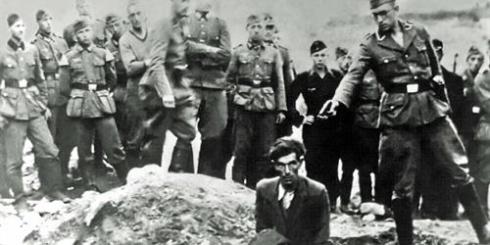
That series of articles about the Einsatzgruppen dealt with the ordinary men, and the bureaucratic systems that implemented an ideology so twisted and evil that it is unimaginable to most people. In fact even in the Nazi system the majority of the genocide was not committed in the death camps, but up close and personal by men standing over pits with pistols, rifles, and machine guns.

While most people in the United States know a little about the Holocaust, most do not fully comprehend how devilish and insidious the crimes of the Nazis were. More frightening is the fact that in a 2015 survey 46% of people worldwide have never heard of the Holocaust, and of the 54% who are aware of it some 32% think it is a myth or has been greatly exaggerated. The numbers will only get worse as we become farther removed from these events and the survivors, witnesses, and perpetrators die off. The same is true for other genocidal acts.

We typically know about the extermination camps like Auschwitz, but the lesser known dark side of the Holocaust, perhaps the scariest part, is the story of the men of the Einsatzgruppen. The Einsatzgruppen and affiliated units, including those of the Wehrmacht, the Waffen SS, the mobilized battalions of the Order Police, and locally recruited units, rounded up massive numbers of people and killed them up close and personal. In all these units murdered over two million people, about 1.3 million of whom were Jews.

My study of the Holocaust began in college as an undergraduate. My primary professor at California State University at Northridge, Dr. Helmut Haeussler had been an interpreter and interrogator at the Nuremberg trials. I was able to take a number of lecture classes from him a large amount of research and independent study courses in a year of graduate work while finishing my Army ROTC program at UCLA. It was an immersion in the history, sociology, and the psychology of evil, during which I was able to meet and talk with Jewish survivors of the Holocaust.

mass killing einsatzgruppen

                       Einsatzgruppen and Ordungspolizei in Russia

Since then I have continued to read and study. I lived in Germany for over four years, and made many other visits, during which I went to a number of Concentration Camp sites. I visited the rebuilt synagogue in Worms which had been destroyed during the infamous Kristallnacht, and other museums and Holocaust memorial sites in Germany. I visited the Zeppelin field, the site of Hitler’s massive Nazi Party rallies in Nuremburg, as well as the graveyards which contain the victims of other Nazi crimes, including the Nacht und Nebel or night and fog actions, where people simply disappeared and were murdered by the Gestapo.

For me, those visits were sobering, maybe even more so because I understood exactly what happened in those sites. These are uncomfortable places to visit, and I can understand why many people would not want to visit them, or even study them.

The darkness that they remind us of  is a part of our human condition. Traces of the evil on display in those places is present in every human being. Frankly, most people cannot bear looking into that abyss, for fear that they might be swallowed by it.

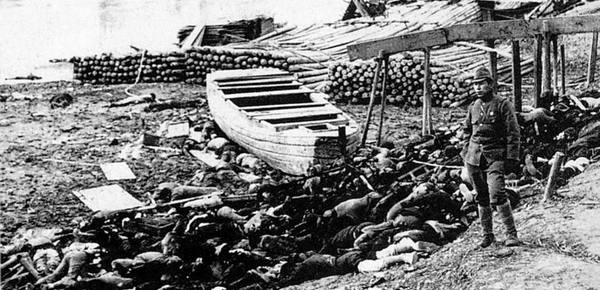
nankino-masakra-1

                                                            Nankingnanking_massacre_1

I can understand that and I have to admit that it is hard to do so. I am a historian as well as a clinician with much experience dealing with death and trauma. With my training I do a pretty good job of keeping my emotional distance to maintain objectivity when confronted with evil. However, it is hard for me not to have some emotional reaction when visiting these places, or reading about the events and people, and in writing about them.

Likewise, I am very troubled by the growing lack or awareness or denial of the Holocaust. It is very hard for me not to have a virulent reaction when I see books and websites dedicated to Holocaust denial, or that minimize other well documented genocides, and crimes against humanity.

tzd8ftsn-1390907543

                                      Soviet Mass Killings in Ukraine

My sensitivity to human suffering and the terrible indifference of people in this country to it was greatly increased by my experience of war, and my post-war struggles with PTSD, depression, anxiety, which at points left me very close to committing suicide. A non-chaplain friend, a now retired Navy Command Master Chief Petty Officer that I served with at my last duty station recently remarked that I am a tremendously empathic person, and that I have a large capacity to feel the pain and suffering of others. This capacity for empathy and the ability to feel the suffering of others is part of who I am. It is a good thing, but it makes my work studying and writing about the Holocaust, other genocides, crimes against humanity, and subjects like American slavery, racism, and Jim Crow a sometimes difficult and often very emotionally consuming task. This sometimes leaves me even more sleepless and anxious than normal; especially when I see the indifference of so many people to the suffering of others today.

CambodiaExhibitMassgrave-x1

                                                  The Killing Fields

It is that indifference which motivates me to write; because if these events are not recalled and retold, they, like any part of history will be ignored and then forgotten. The statistics bear this out. There are people today, who say that we should stop talking about these events, that they are old news, and they cannot happen again; but history tells us different, and not just the Holocaust, but indeed every genocide. Then there are those who shamelessly use the Holocaust imagery to spread fear among their followers even as they openly demonize minority groups and religions as the Nazis did to the Jews.

I have to agree with Elie Wiesel who said, “Indifference to me, is the epitome of all evil.”

The late Iris Chang, who wrote The Rape of Nanking: The Forgotten Holocaust of World War II wrote something that is pertinent to almost every modern episode of genocide, or other crime against humanity. It is the ability of leaders, be they political, military, or religious to convince people to rationalize actions that they normally would find repulsive.

“After reading several file cabinets’ worth of documents on Japanese war crimes as well as accounts of ancient atrocities from the pantheon of world history, I would have to conclude that Japan’s behavior during World War II was less a product of dangerous people than of a dangerous government, in a vulnerable culture, in dangerous times, able to sell dangerous rationalizations to those whose human instincts told them otherwise.”

There are many other such events that we could note; the American decimation and genocide committed against native American tribes that spanned close to two centuries, the 1915 Turkish genocide of Armenians, the Rwandan genocide of 1994, the Serbian atrocities in Bosnia and Kosovo, the Chinese Communist “Great Leap Forward,” the actions of the Islamic State in Iraq and Syria, and the more recent but seldom discussed action of the Myanmar government and military against its Rohingya Muslim minority.

                        Rwandan Genocide

What we call civilization, to use the words of Iris Chang, is tissue thin. That is why we must never forget these terrible events of history, and that part of human nature, and in a sense part of every one of us, that makes them so easy to repeat. That is why we must periodically take the time to remember and reflect on the Holocaust, other genocides and crimes against humanity.

It is even more important now with the rise of fascist, nationalist, and racist regimes around the world. Even in the United States these demons of the past, racism, nationalism, and fascism have come out into the open as those who believe in them have become emboldened by the words of President Trump and members of his administration.

In fact in trying to clean up his inaction after the violence committed by neo-Nazis and KKK sympathizers in Charlottesville the President first equated the Nazis and Klansmen with the people that they attacked and under pressure made a speech condemning the Nazis and Klansmen. According to Bob Woodward, when a Fox News correspondent said that was an admission that he was almost an admission that he was wrong.” The President exploded at Rob Porter, the aide who convinced him to make the speech: “That was the biggest fucking mistake I’ve made,” the President told Porter. “You never make those concessions. You never apologize. I didn’t do anything wrong in the first place. Why look weak?” A few days later the President returned to the subject and again made the argument of moral equivalence.

Coupled with so many of the President’s words and policies directed against Blacks, Mexicans and Central Americans, Arabs, Africans, and others; as well as his attacks on the First Amendment and his praise and defense of cold blooded dictators around the world one has to take it more seriously.

This is not an issue that simply lurks in the past, it is a very real part of the present. Historian Timothy Snyder wrote:

“The European history of the twentieth century shows us that societies can break, democracies can fall, ethics can collapse, and ordinary men can find themselves standing over death pits with guns in their hands. It would serve us well today to understand why.”


Yes, these are terribly uncomfortable subjects, but we cannot allow this generation to allow them to be forgotten, lest they be repeated. That is why that I must continue to write about them and do my best to make sure that they are not forgotten as we cannot afford to let them happen again.

Peace

Padre Steve+

2 Comments

Filed under History, holocaust, iraq,afghanistan, middle east, nazi germany, Political Commentary, racism, world war two in europe

The Einsatzgruppen and Ordungspolizei in Poland, 1939-1940: Killing Up Close and Personal

einsatz1

Friends  of Padre Steve’s World,

Since I posted a new article about Hitler’s attack on Poland yesterday I am following it up with an older article dealing with Hitler’s first use of the Einsatzgruppen in dealing with Poles who might become leaders in an anti-Nazi Resistance as well as Jews. 

Another section of the article dealing with the campaign of mass murder and genocide conducted by Hitler’s legions in Eastern Europe. This section deals with the actions of the Einsatzgrüppen in during the Polish campaign and occupation in 1939 and 1940. In it you will see that the while most of the killing was done by the SS that the German military high command was not guiltless. Some commanders attempted to stop SS actions, but they were the minority.  Most simply turned a blind eye to what was going on and a few would lend their assistance to the Einsatzgrüppen.

Please note, that all of this took place before the first extermination camps began operations, and were accomplished well before the decision about the Final Solution. This killing was done up close and personal by  the men of the Einsatzgruppen and the Police battalions, sometimes with the direct support and approval of the Wehrmacht. In all just a few thousand troops massacred hundreds of thousands of Polish Jews as well as the Polish gentile elites.

It is terribly uncomfortable, for as I always say, these men were little different than most of us, they were terribly ordinary.

Peace

Padre Steve+

himmler1                 

                                                   Heinrich Himmler

The Polish campaign was a precursor to the Russian campaign and was not totally race driven. It contained elements of Germany’s perception of the injustice of Versailles which gave Poland the Danzig corridor and Germany’s desire to reconnect East Prussia to the Reich, as well as the perceived necessity to remove a potential enemy from its rear as it faced France, yet it was a campaign steeped in Nazi racial ideology. Poland resisted German efforts to ally itself with Germany in 1939, thus Hitler determined it “would be crushed first.” 80

Meeting with military leaders on 23 May 1939 Hitler “made it plain that the real issue was not Danzig, but securing of Germany’s Lebensraum….” 81 On 22 August Hitler enjoined the generals to “Close your hearts to pity! Act brutally! Eighty million people must obtain what is their right.” 82

Even so, most military leaders failed to appreciate what Hitler was calling on them to do; Erich von Manstein would later note that “what Hitler had to say about an eventual war with Poland, could not, in my opinion, be interpreted as a policy of annihilation.” 83
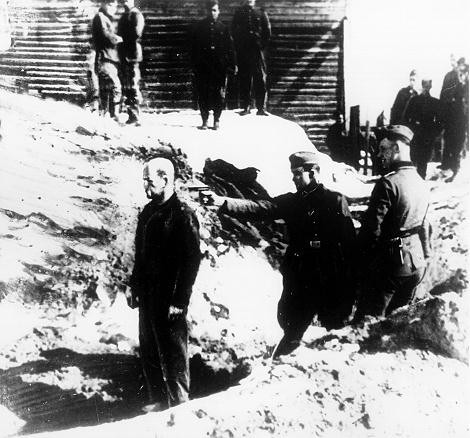
generaloberst johannes blaskowitz

                                        General Johannes Blaskowitz

Others such as Abwehr director Wilhelm Canaris was “utterly horrified.” As he read his notes to his closest colleagues “His voice trembled as he read, Canaris was acutely aware that he had witnessed something monstrous.” 84 General Johannes Blaskowitz, the controversial commander of the German 8th Army who would become the military commander in Poland did not leave any notes about the meeting. However, his biographer noted that Blaskowitz “may have naively attached a military meaning to these terms since he was busy with military matters and soon to begin operations.” 85 As was noted before this was also the interpretation of Erich Manstein gave Hitler’s words, but one has to wonder as to the veracity of his statements. 86 Field Marshal Keitel noted that the speech was “delivered in the finest sense of psychological timing and application,” with Hitler molding “his words and phrases to suit his audience.” 87

In light of the mixed interpretations by military leaders, it is possible that many misinterpreted Hitler’s intent and did not fully appreciated his ideology as they went into Poland, carefully secluding themselves in the narrow confines of their military world. While such an explanation is plausible for some, it is also true that many others in light of subsequent actions were in full agreement with Hitler. One author notes that “no man who participated in the FührerConferences….and there were present the highest ranking officers of the three services, could thereafter plead ignorance of the fact that Hitler had laid bare his every depth of infamy before them, and they had raised no voice in protest either then or later.” 88 In July, General Wagner, the Quartermaster General issued orders that “authorized German soldiers to take and execute hostages in the event of attacks by snipers or irregulars.” 89

Regardless of the meaning ascribed to Hitler’s speech by his generals, Hitler had already laid plans to destroy the Jews in Poland and decimate the Polish intelligentsia and leadership.   Hitler gave Himmler the task of forming Einsatzgrüppen to follow the German troops as they advanced into Poland and liquidate Poland’s upper class wherever it was to be found.” 90 While senior party leaders remained at Hitler’s side following the conference, Himmler worked to coordinate his troops, including the reinforced Totenkopf battalions and Einsatzgrüppen with the Army. 91

Himmler began planning in early May and the Army, working in close collaboration with the SS decided to “use SS and police units to augment their own forces for security tasks.” 92 Himmler established “five Einsatzgrüppen to accompany each of the numbered German armies at the start of the campaign.” 93 Placed under the aegis of Reinhard Heydrich the groups were broken down into smaller units of 100-150 men and allotted to army corps. All senior posts were occupied by officers of the SD, the Sicherhietsdienst. 94

Two additional Einsatzgrüppen were formed shortly after the invasion. 95Additionally three regiments of the SS Totenkopfverbandeunder the direction of SS General Theodore Eicke were deployed in the rear areas of the advancing armies. These regiments were formed from the Concentration Camp guard units and eventually became the nucleus of the 3rd SS Panzer Division Totenkopf. 96 The SS carefully shielded the real purpose of these units from the Army in the planning stages, while the Army might countenance anti-guerrilla operations and cooperate in arresting people who might lead resistance in Poland, the SS was not yet sure that the Army would support or countenance mass murder. 97 That being said, Heydrich worked with the Army to develop lists of up to 30,000 Poles to be arrested following the invasion including intellectuals, political leaders and clergy. 98

To eliminate the Polish elites without disturbing the Army, Himmler and Heydrich gave the Army “only the bare minimum of information” as to their ultimate intent99 The deception was initially successful and many Wehrmacht commanders welcomed the assistance of the SS units for rear area security missions. Blaskowitz’s 8th Army defined the mission of the Einsatzgrüppen in the traditional doctrinal terms of the Ettapen, noting their mission as “the suppression of all anti-Reich and anti- German elements in the rear of the “fighting troops, in particular, counter espionage arrests of  politically unreliable persons, confiscation of weapons, safeguarding of important counter- espionage materials etc…” 100 General Wagner, the Quartermaster General issued orders in July 1939 that “authorized German soldiers to take and execute hostages in the event of attacks by snipers or irregulars.” Despite the deception, there was no way to disguise the murder of Polish intelligentsia and Jews once it began, and had the Army had the political acumen and moral courage it could have considerably restricted or even halted the terror campaign. 101

The ensuing campaign in Poland demonstrated Hitler’s true intent. Heydrich openly discussed “murdering the Polish ruling class” of the aristocracy, Catholic clergy, communists and Jews at a meeting on September 7th, barely a week after the beginning of the invasion. 102 As the German armies advanced into Poland slicing through the badly deployed and inadequately equipped Polish Army the Einsatzgruppen and the Totenkopf Verbande followed in their wake, conducting mass arrests and executions of those Poles deemed to be a threat.

Many army leaders were worried about Polish soldiers left behind in rear areas as the armies advanced. In some cases that concern became a paranoid mindset and some generals believed that a “brutal guerrilla campaign has broken out everywhere and we are ruthlessly stamping it out.” 103

ordungspolizei

               Ordungspolizei Battalion preparing for Mass Murder

Yet some of the actions by Einsatzgruppen and Totenkopf Verbande against the Polish elites and the Jews drew Army reactions. The unit commanded by SS General Woyrsch “behaved with such unparalleled bestiality that it was thrown out of the operational area” by General List of 14th Army.” 104 Another unit, the Totenkopfverbande Brandenburg came to Army attention when its commander remarked that the “SSVT would not obey Army orders.” The conclusion drawn by the Army General was that “the SSVT commander was following orders from some non-military authority to terrorize the local Jews.” 105

These atrocities as well as those of other Waffen-SS units were hard to hide and brought reactions out of army commanders who sought to punish the offenders. Blaskowitz and a few other commanders attempted to put a halt to SS actions against Poles and Jews, 106 but most officers turned a blind eye to the atrocities or outright condoned them. It is believed that General Walter Model and many other senior officers “not only knew what was occurring in Poland but actually took part in what Colonel General Franz Halder himself described in October as “this devilish plan.”” 107

It appears that many of the officers who objected were not motivated so much by humanitarian, moral or legal considerations, but rather by the effect on good order and discipline of their soldiers. 108 Likewise it is clear that many officers, even if they did not participate in the actions probably approved of them. Many of the early biographies and histories of this period were written by authors who were influenced by surviving German officers. Many of these men were being rehabilitated and helping the Americans and British meet the threat of the Soviet Union, made no or little mention of the Army’s part in these actions.

Both Himmler and Heydrich were sensitive to the perception of the Army and resented the fact that the Army believed them to be responsible for actions that they were carrying out under the direction and orders of Hitler himself, They also resented that their troops were characterized as “undisciplined gangs of murderers” by many Army officers. 109

After crushing the Polish armies and dividing Poland with the help of the Red Army, the Germans established what became known as the Government General, which was headed by Hans Frank. The new civilian administration came into conflict with the military governor, General Blaskowitz. Appalled by the actions of the SS, Police and the Nazi administration. Blaskowitz made an “elaborate report on the atrocities of the SS,” 110 expressing concern about his “extreme alarm about illegal executions, his worries about maintaining troop discipline under those circumstances, the failure of discussions with the SD and Gestapo and their assertions that they were only following SS Orders.” 111

While it is unclear if the memorandum made it to Hitler, it is clear that Hitler did know about the protest and Blaskowitz fell into disfavor and was reassigned after a period of continued conflict with the Nazi administration. Hitler was not impressed by the less than ruthless attitudes of Blaskowitz and other commanders. His reaction to Army objections regarding the methods of the SS and police units was characteristically acidic. Hitler’s military adjutant recalled that Hitler accused the Army’s leaders of using “Salvation Army” methods, and called their ideas regarding the occupation as “childish.” 112

Following the reassignment of Blaskowitz, other officers that objected were also relieved of their commands or reassigned. General Georg von Külcher was relieved of command for protesting SS and police atrocities. 113

07102014-461733515

At the beginning of the campaign the SS units and their commanders fell under military justice, and a number of SS officers and their troops were convicted by Army courts-martial for their actions. But soon, SS Officers convicted by Army courts-martial were given amnesty by Hitler and Hitler “removed SS units from the jurisdiction of military courts,” on October 4th 1939. 114 While the army remained, it was no longer in charge and would actively assist the SS and Police in combat and further atrocities against civilians. In November 1939, One German officer, who later was a conspirator in the July 20th plot, remarked, “was ashamed to be German! The minority are dragging our good through the mud by murdering, looting and torching houses will bring disaster on the whole German people if we do not stop it soon…” 115

poland murders

The Army was soon relieved of responsibility for policing Poland which fell on the Ordungspolizei battalions and Gendarmerie. Many officers were pleased as they could now turn their backs on the situation there and begin to prepare for the campaign in the West.

The Ordungspolizei battalions and the Gendarmerie units were composed of mobilized city police and rural constabulary police. These men would soon wreak their own devastation on Poland in the coming months and years. 116Poland was also be the first use of mass evacuations of civilian populations to make room for German settlers, in the newly acquired Lebensraum. Poles were driven into the newly formed Government General and ethnic Germans moved into previously Polish occupied territories. By 1941 over 1,200,000 Poles and 300,000 Jews had been expelled and 497,000 ethnic Germans brought into provinces German had lost in 1919. 117

Prior to the war about 3.3 million Jews lived in Poland. The actions of the Einsatzgruppen and the Police brought a reign of terror to Poland’s Jews. The Jews were rounded up and sent to Ghettos from which they would be dispatched to the death camps following the decision to implement the “Final Solution.”After the war only some 50-70,000 Jews were found to have survived in Poland, the Polish Army and camps in Germany. A further 180,000 were repatriated from the Soviet Union. 118

To be continued….

                                                        Notes

80 Ibid. Weinberg. Visions of Victory p.8
81 Ibid. Goerlitz, History of the German General Staff p.346
82 Höhne, Heinze. The Order of the Death’s Head: The Story of Hitler’s SS. Translated by Richard Barry. PenguinBooks, New York and London, 2000. First English edition published by Martin Secker and Warburg Ltd. London 1969. Originally published as Der Orden unter dem Totenkopf, Verlag Der Spiegel, Hamburg 1966 p.259

83 Manstein, Erich von. Forward by B.H. Liddle Hart, Introduction by Martin Blumenson. Lost victories: The War Memoirs of Hitler’s Most Brilliant General. Zenith Press, St Paul MN 2004. First Published 1955 as Verlorene Siege, English Translation 1958 by Methuen Company p.29

84 Ibid. Hohne. Canaris p.347

85 Giziowski, Richard. The Enigma of General Blaskowitz. Hppocrene Books, New York 1997 p.119

86 Ibid. Manstein. Lost Victories p.29

87 Ibid. Goerlitz. The Memoirs of Field Marshal Keitel p.87

88 Wheeler-Bennett, John. The Nemesis of Power: The German Army in Politics 1918-1945. St. Martin’s Press Inc. New York, NY 1954 p.448

89 Ibid. Megargee. War of Annihilation p.13

90 Ibid. Höhne The Order of the Death’s Head p.297

91 Padfield, Peter. Himmler. MJF Books, New York 1990 p.264

92 Ibid. Megargee. War of Annihilation p.13

93 Ibid. Westermann. Hitler’s Police Battalions p.127

94 Ibid. Höhne The Order of the Death’s Head p.297 95 Ibid. Westermann. Hitler’s Police Battalions p.127 96 Ibid. Sydnor Soldiers of Destruction p.37

97 Ibid. Giziowski Blaskowitz p.120

98 Ibid. Witte. The Wehrmacht p.100

99 Ibid. Höhne The Order of the Death’s Head pp. 297-298

100 Ibid. Giziowski Blaskowitz p.120

101 Ibid. Höhne The Order of the Death’s Head p.298

102 Ibid. Witte. The Wehrmacht p.100

103 Newton, Steven H. Hitler’s Commander: Field Marshal Walter Model-Hitler’s Favorite General Da Capo Press a division of Perseus Books Group, Cambridge MA 2005. p.74

104 Ibid. Giziowski. The Enigma of General Blaskowitz pp.165-166

105 Ibid. Sydnor, Soldiers of Destruction pp. 42-43 Note SSVT is the common abbreviation for Verfügungstruppe which was the early designation of the SS Totenkopf Verbande and some other Waffen SS Units.

106 Ibid. Goerlitz. History of the German General Staff p.359

107 Ibid. Newton. Hitler’s Commander p.78

108 Ibid. Witte The Wehrmacht p.102

109 Ibid. Höhne The Order of the Death’s Head p.298

110 Ibid. Goerlitz. History of the German General Staff .p.359 111 Ibid. Giziowski. The Enigma of General Blaskowitz p.173 112 Ibid. Giziowski. TheEnigma of General Blaskowitz p.173

113 Ibid. Witte The Wehrmacht p.102

114 Burleigh, Michael and Wippermann, Wolfgang. The Racial State: Germany 1933-1945 Cambridge University Press, New York NY and Cambridge UK 1991. p.100

115 Ibid. Witte The Wehrmacht p.102

116 For a good account of one of the Police Battalions see Ordinary Men: Reserve Police Battalion 101 and the Final Solution in Poland by Christopher Browning Harper Perennial Publishers, San Francisco CA 1992

117 Reitlinger, Gerald. The SS: Alibi of a Nation. The Viking Press, New York, 1957. Republished by Da Capo Press, New York, NY p.131

118 Ibid. Davidowicz The War Against the Jews pp.395-397

Leave a comment

Filed under History, holocaust, Military, nazi germany, racism, war crimes, world war two in europe

“Safe from What?” A Warning from Sophie Scholl in the Age of Trump for Young People Of Ideals and Integrity

Friends of Padre Steve’s World,

Today was one of those odd days. Evidently, my new BIPAP mask is working well, but my medicines to mitigate my dreams so they are not so violent or active has not yet kicked in. I got into my first deep REM/Overlap Sleep in more than a week. I slept, but the dreams and nightmares wore me out. I couldn’t go to work and had to wait for a contractor in the afternoon.

That being said, I thought that this old article from our visit to Munich last year worked very well considering the most recent actions of President Trump and his British Counterpart Boris Johnson. 

Now I am 59 years old. Many people of my generation and my parents generation elected these madmen. Those who will save us from tyranny have to be young people of ideals, integrity, and who believe in the founding principle of the Declaration of Independence, enhanced by the words of Abraham Lincoln in his Gettysburg Address, who also believe in the protections of the Constitution. 

So I leave you with this for tonight. Please, read it and share it. 

Thank you,

Peace,

Padre Steve+

Our visit to Munich today was relatively quiet. We went to breakfast and then since Judy’s knees were not up to a lot of long walks or standing took our rental car out to see a couple of places that we haven’t been. We went to the grave of the anti-Nazi martyr Sophie Scholl, her brother Hans, and friend Christoph Probst who were executed in February 1943 for publishing anti-Hitler, Nazi, and war pamphlets. Following that we went to the BMW Museum and BMW World.

I will write about the latter later, but tonight I will write about a visit to the Friedhof at Perlacher Forst in Munich where Sophie Scholl is buried.

The cemetery is adjacent to the Stadelheim Prison where she was held before her trial and executed on February 22nd 1943. I have written about her and the White Rose resistance movement before. Last year I visited the White Rose Museum and study center at the Ludwig Maximillians University of Munich but last year I didn’t get the chance to make a pilgrimage to her gravesite. I made it a priority this year.

We parked on the street outside Stadelheim, which is still an active prison surrounded by tall walls and guard towers. While Judy waited with the car I walked to the cemetery and then to the gravesite which is on the opposite side of the cemetery from the main entrance. It is a very peaceful place, with many trees and the sections cordoned off by carefully trimmed grapevines.

When I reached the gravesite I paused, and remained for about ten minutes contemplating the cost of real resistance to tyranny. She and her companions had no political, military, or economic power. They were students, and a number had served as medics on the Eastern Front before resuming their studies.

Unlike the men who launched Operation Valkyrie 17 months later they had no connections to any kind of power: they were not part of the movement of German conservatives and militarists who initially supported Hitler and then had second thoughts. When Hitler came to power they were children. They resisted because they found what was happening to go beyond any sense of ethics, morality, or in some cases, like Sophie, their Christian faith.

At her trial she told the notorious President of the Nazi People’s Court, Roland Freisler:

Somebody, after all, had to make a start. What we wrote and said is also believed by many others. They just don’t dare express themselves as we did.

While I was their I tried to imagine her courage as she testified to the truth and went to her death. The woman who shared Sophie’s cell wrote of her final words before going to her execution:

How can we expect righteousness to prevail when there is hardly anyone willing to give himself up individually to a righteous cause? Such a fine, sunny day, and I have to go, but what does my death matter, if through us, thousands of people are awakened and stirred to action?

Many people today are being faced with the same questions that Sophie Scholl, her brother Hans, and friends, including Christoph Probst who was executed the same day had to make. Thankfully, for the most part the future imitators of Hitler have not yet seized full power in Europe or the United States, but it wouldn’t take much for that to happen. Too many people, and not just conservatives, would be willing to sacrifice freedom in the name of security if a major war, terrorist attack, or natural disaster that threatened their well being and/or their economic or social status occurred.

In such a situation, how many people would allow their government to oppress and terrorize people that they distrusted due to their race, ethnicity, or religion? I think that the numbers are a lot higher than we would want to admit. The preservation or self and wealth is often more of a motivation than faith, or the rights and liberties of others.

During the Nazi era many non-Nazis supported the Nazi programs because they thought that they benefited them. The same is true in any authoritarian State regardless of the ideology that it subscribes and its people hold dear.

Sophie said:

The real damage is done by those millions who want to ‘survive.’ The honest men who just want to be left in peace. Those who don’t want their little lives disturbed by anything bigger than themselves. Those with no sides and no causes. Those who won’t take measure of their own strength, for fear of antagonizing their own weakness. Those who don’t like to make waves—or enemies. Those for whom freedom, honour, truth, and principles are only literature. Those who live small, mate small, die small. It’s the reductionist approach to life: if you keep it small, you’ll keep it under control. If you don’t make any noise, the bogeyman won’t find you. But it’s all an illusion, because they die too, those people who roll up their spirits into tiny little balls so as to be safe. Safe?! From what? Life is always on the edge of death; narrow streets lead to the same place as wide avenues, and a little candle burns itself out just like a flaming torch does. I choose my own way to burn.

An addendum for tonight,

My question to you, and me is hers. If you think you are “safe,” you are only kidding yourself, no matter what your political or religious belief may be. Men like Trump and Johnson, Orban of Hungary, Erdogan or Turkey, Bolsonaro Of Brazil, Duterte of the Philippines, Putin of Russia, and Trump’s best friend, Kim Jun Un of North Korea have no real friends or allies. Their supporters, even the most loyal, are like those of Hitler and Stalin only are safe until they realize their mistaken trust in their leader.

It’s up to you young people. I’ll fight as long as I can, as will other older veterans and resisters. But the long term fight belongs to you. What way will you choose to burn?

Until tomorrow…

2 Comments

Filed under christian life, civil rights, ethics, faith, History, nazi germany, Political Commentary, racism

“If not us, then who? If not now, then when?” Remembering Dr. Martin Luther King’s “I Have a Dream” Speech

Friends of Padre Steve’s World,

August 28th is the anniversary of Dr. Martin Luther King Jr’s I Have a Dream Speech. It is a speech and message that we cannot forget or continue to fight for if we want to see the promise of our founders fulfilled in spite of the power of those who prefer the rule of political and financial oligarchs, or simple dictatorship to our Republic and the democratic ideals of those imperfect, yet inspired men.

Dr. Martin Luther King Jr. has always been one of my heroes. This time of year I always ponder the importance of his life and work for civil rights, and I wonder what might have been had this man of peace not been cut down in cold blood at the young age of 39 by James Earl Ray on April 4th 1968. He was an amazing and courageous man whose memory should not be let to one day a year.

Tonight I am happy to report that I had a number of good visits with doctors and that the exchange of the face mask for my BIPAP machine allowed me to sleep for the first time in a week. I saw my new sleep doctor and neurologist today and in that visit, which lasted more than an hour I learned a lot and felt better about my condition. I won’t go into details now, but will in the future because it deals with a host of issues that those suffering from PTSD, TBI, and other neurological, psychological, physical, and spiritual conditions contend with on a daily basis. But, I digress, that was an update and not really a part of this article.

We live in a world where a minority of voters elected a man as President who through his words and actions demonstrates daily that he cares not for anything that Dr.King stood for. Thus, we have to ensure, though our words and actions that it is not allowed to die. Doing that may involve a high cost as the President-Elect is not known for playing nice with his opponents and now that he will have the police power of the state and a compliant Congress at his back you can expect that opponents will be harassed, intimidated, and maybe worse.

Dr. King was a man of courage, a man of honor, a man of conviction. But he came of age in a time when many people were willing to maintain the status quo and play things safe, like many clergy, even African-American clergy. Many pastors of the era, remained quiet about the conditions of segregation, and the racism of the day. Their lack of action did not mean they were bad people, they just understood that if they spoke up, their lives, and the lives of their families and congregations could be in danger. As such many pastors just hoped to see things slowly improve, without rocking the boat, and without endangering themselves or their families. They had seen what happened to blacks who spoke up or confronted the evil, lynching’s, cross burnings, threats and murder. They had contented themselves with just trying to get along. At the beginning of the movement, many pastors did not support or gave only lukewarm support to Dr. King, Andrew Young, Fred Shuttlesworth, and Ralph Abernathy going into that critical year of 1963.

lossless-page1-560px-Rosa_Parks_(detail).tiff

King did not start out to become a Civil Rights leader. However, he was inspired to actively join the movement through the example of Rosa Parks, who defiance of the law for blacks to sit “in the back of the bus” in 1955. He led the Montgomery Bus Boycott which lasted for 385 days. The reaction among segregationists to King and his protest was against violent. King’s house was bombed, and his life threatened. But he refused to stand down.

King’s leadership of the boycott brought the young pastor to national prominence. However, by 1963 much of the Civil Rights movement and the African American community was despairing of the lack of progress. Many people had become disenchanted with King, not considering him bold enough despite his rhetorical abilities.

But in April 1963, working with other Civil Rights leaders in Birmingham Alabama King relit the fires of the movement. Montgomery Police Chief “Bull” Conner used his police force to violently attack the demonstrators. Conner ordered his men to unleash their police dogs on the protestors, and used high pressure water cannon against them, including women, children and the elderly. The violent reaction to the protests shocked much of America and the world.

King was arrested and in the Birmingham jail composed one of his most famous works, the Letter from the Birmingham Jail. The letter was a social, political and theological masterpiece. It was some of his harshest criticism was of white liberals, as well as black moderates:

“I have almost reached the regrettable conclusion that the Negro’s great stumbling block in his stride toward freedom is not the White Citizen’s Councilor or the Ku Klux Klanner, but the white moderate, who is more devoted to “order” than to justice; who prefers a negative peace which is the absence of tension to a positive peace which is the presence of justice; who constantly says: “I agree with you in the goal you seek, but I cannot agree with your methods of direct action”; who paternalistically believes he can set the timetable for another man’s freedom; who lives by a mythical concept of time and who constantly advises the Negro to wait for a “more convenient season”

King continued his activism until his assassination. In August 1963 he led the March on Washington for Jobs and Freedom, where before a crowd of an estimated 200,000-300,000 he gave his I Have a Dream Speech.

http://www.americanrhetoric.com/speeches/mlkihaveadream.htm

The crescendo of the speech was remarkable and is perhaps one of the most remembered speeches in American history.

Let us not wallow in the valley of despair, I say to you today, my friends.

And so even though we face the difficulties of today and tomorrow, I still have a dream. It is a dream deeply rooted in the American dream.

I have a dream that one day this nation will rise up and live out the true meaning of its creed: “We hold these truths to be self-evident, that all men are created equal.”

I have a dream that one day on the red hills of Georgia, the sons of former slaves and the sons of former slave owners will be able to sit down together at the table of brotherhood.

I have a dream that one day even the state of Mississippi, a state sweltering with the heat of injustice, sweltering with the heat of oppression, will be transformed into an oasis of freedom and justice.

I have a dream that my four little children will one day live in a nation where they will not be judged by the color of their skin but by the content of their character.

I have a dream today!

I have a dream that one day, down in Alabama, with its vicious racists, with its governor having his lips dripping with the words of “interposition” and “nullification” — one day right there in Alabama little black boys and black girls will be able to join hands with little white boys and white girls as sisters and brothers.

I have a dream today!

I have a dream that one day every valley shall be exalted, and every hill and mountain shall be made low, the rough places will be made plain, and the crooked places will be made straight; “and the glory of the Lord shall be revealed and all flesh shall see it together.”2

This is our hope, and this is the faith that I go back to the South with.

With this faith, we will be able to hew out of the mountain of despair a stone of hope. With this faith, we will be able to transform the jangling discords of our nation into a beautiful symphony of brotherhood. With this faith, we will be able to work together, to pray together, to struggle together, to go to jail together, to stand up for freedom together, knowing that we will be free one day.

And this will be the day — this will be the day when all of God’s children will be able to sing with new meaning:

My country ’tis of thee, sweet land of liberty, of thee I sing.

Land where my fathers died, land of the Pilgrim’s pride,

From every mountainside, let freedom ring!

And if America is to be a great nation, this must become true.

And so let freedom ring from the prodigious hilltops of New Hampshire.

Let freedom ring from the mighty mountains of New York.

Let freedom ring from the heightening Alleghenies of Pennsylvania.

Let freedom ring from the snow-capped Rockies of Colorado.

Let freedom ring from the curvaceous slopes of California.

But not only that:

Let freedom ring from Stone Mountain of Georgia.

Let freedom ring from Lookout Mountain of Tennessee.

Let freedom ring from every hill and molehill of Mississippi.

From every mountainside, let freedom ring.

And when this happens, and when we allow freedom ring, when we let it ring from every village and every hamlet, from every state and every city, we will be able to speed up that day when all of God’s children, black men and white men, Jews and Gentiles, Protestants and Catholics, will be able to join hands and sing in the words of the old Negro spiritual:

                Free at last! Free at last!

                Thank God Almighty, we are free at last!

King knew the dangers and the risks of appealing to a strategy of non-violence based on love of his enemies. King spoke to the world when he accepted the Nobel Peace Prize in 1964:

“Here and there an individual or group dares to love, and rises to the majestic heights of moral maturity. So in a real sense this is a great time to be alive. Therefore, I am not yet discouraged about the future. Granted that the easygoing optimism of yesterday is impossible. Granted that those who pioneer in the struggle for peace and freedom will still face uncomfortable jail terms, painful threats of death; they will still be battered by the storms of persecution, leading them to the nagging feeling that they can no longer bear such a heavy burden, and the temptation of wanting to retreat to a more quiet and serene life. Granted that we face a world crisis which leaves us standing so often amid the surging murmur of life’s restless sea. But every crisis has both its dangers and its opportunities. It can spell either salvation or doom. In a dark confused world the kingdom of God may yet reign in the hearts of men.”  http://www.nobelprize.org/nobel_prizes/peace/laureates/1964/king-lecture.html 

Dr. King understood how easy hatred could consume people and movements and urged  people not to follow the course of hate, he wrote:

“Returning hate for hate multiplies hate, adding deeper darkness to a night already devoid of stars. Darkness cannot drive out darkness; only light can do that. Hate cannot drive out hate; only love can do that. Hate multiplies hate, violence multiplies violence, and toughness multiplies toughness in a descending spiral of destruction.”

The day before his assassination in Memphis, Dr. King still recognized what he might face. His “I have been to the Mountaintop” speech http://www.americanrhetoric.com/speeches/mlkivebeentothemountaintop.htm recounted many of the things that he had encountered, including an assassination attempt in 1958 which had come close to killing him. It was an amazing speech and one wonders if having lived under threat so long that he almost had a premonition of his death the next day.

And then I got into Memphis. And some began to say the threats, or talk about the threats that were out. What would happen to me from some of our sick white brothers?

Well, I don’t know what will happen now. We’ve got some difficult days ahead. But it really doesn’t matter with me now, because I’ve been to the mountaintop.

And I don’t mind.

Like anybody, I would like to live a long life. Longevity has its place. But I’m not concerned about that now. I just want to do God’s will. And He’s allowed me to go up to the mountain. And I’ve looked over. And I’ve seen the Promised Land. I may not get there with you. But I want you to know tonight, that we, as a people, will get to the promised land!

Dr. King’s dream is not dead and we who live today cannot allow it to die. There is still much work to see justice done for all Americans as well as those suffering from violence, persecution, discrimination and poverty around the world.

It is 2019. It has been 57 years since Dr. King sat in the Birmingham jail. Sadly, there are some who long for a return to the day of Jim Crow. In some states there have been and there are ongoing attempts to return it by stealth, especially through restrictions on voting that predominantly impact African Americans and the poor. Racism is not dead, nor are so many other “isms.” As Dr. King told us, “Now is the time to make real the promises of democracy,” and “It would be fatal for the nation to overlook the urgency of the moment.”

Dr. King and many of the leaders of the Civil Rights Movement have passed on. Likewise, many people today are complacent about the injustices present in our society, injustices experienced by many people. We need a generation of new men and women with hearts like Dr. King’s, who will be the conscience of the nation and confront these injustices.

Birmingham_campaign_dogs

Likewise we cannot ghettoize Dr. King’s accomplishments as being something that only helped African Americans. They have helped all of us. Dr. King’s courage in standing for Constitutional Amendments that many of his opponents despised, the 13th, 14th, 15th and 19th Amendments, as well as the Civil Rights Act and Voting Rights Acts is of fundamental importance to all Americans, even those that think they don’t matter.

President Ulysses Grant was absolutely correct when he pointed out the plight of white Southerners in the ante-bellum South. They were people so bound to the slavery system and their place in it that they could not see how badly it hurt them so long as they had a group, in this case African American slaves who were below them. Grant wrote:

“The great bulk of the legal voters of the South were men who owned no slaves; their homes were generally in the hills and poor country; their facilities for educating their children, even up to the point of reading and writing, were very limited; their interest in the contest was very meagre–what there was, if they had been capable of seeing it, was with the North; they too needed emancipation. Under the old regime they were looked down upon by those who controlled all the affairs in the interest of slave-owners, as poor white trash who were allowed the ballot so long as they cast it according to direction.”

That my friends is descriptive of how President Trump and the Republican Congress view those who put them in office. Trump supporters do not seem to realize that they will be hurt the most by the incoming administration and congresses policies. They too need emancipation and deliverance, thus we have to remain strong, for they too are our brothers and sisters.

Representative John Lewis, one of the original Freedom Riders was beaten numerous times during those protests. When leading the march across the Pettus Bridge in Selma, Lewis had his skull fractured by a State Trooper when he stopped to pray.  Lewis’s words call us to action today:

“If not us, then who? If not now, then when?” 

Representative Lewis is still speaking out, and enduring the attacks of President Trump, and we must join him. We cannot let Dr. King’s dream die. It would be fatal to our country and the promise of the Declaration of Independence if we did, and we would only have ourselves to blame.

Peace

Padre Steve+

4 Comments

Filed under civil rights, ethics, faith, History, laws and legislation, leadership, News and current events, Political Commentary, racism, White nationalism

The “The Second Coming of God” The President’s Legitimization Of Race Hatred

Friends of Padre Steve’s World,

President Trump has done something that no President has managed to tap into the hidden shadow that permeates American history. Over the past few weeks it seems if the man is devolving into a completely unhinged, paranoid, and unstable man whose worst character traits are coming to the fore in ways that if they were not happening before our eyes, we would consider them unimaginable.

That dark shadow side includes significant racism, and distrust of immigrants, persecution, violence, discrimination, and laws specifically targeting non-western European Protestant Christians. The first people to experience this were African Slaves, the first of who arrived Four Hundred Years ago this month at the Jamestown settlement. Of course the attempts to exterminate and relocate the Native American tribes that were in the way of White westward expansion.

Then Catholic immigrants from Ireland and Germany began to arrive. The were met with persecution, violence, and accusations of divided loyalties, because the Vatican and its small states were, and still are an actual country with full diplomatic status. The groups that rose up against them were known by their self -proclaimed title The Know Nothings. By the late 1840s they had formed a political party. Abraham Lincoln noted of them:

“I am not a Know-Nothing. That is certain. How could I be? How can any one who abhors the oppression of negroes, be in favor or degrading classes of white people? Our progress in degeneracy appears to me to be pretty rapid. As a nation, we began by declaring that “all men are created equal.” We now practically read it “all men are created equal, except negroes” When the Know-Nothings get control, it will read “all men are created equal, except negroes, and foreigners, and Catholics.” When it comes to this I should prefer emigrating to some country where they make no pretence of loving liberty — to Russia, for instance, where despotism can be taken pure, and without the base alloy of hypocracy [sic].”

The President has consistently referred to Mexican and other Latin American immigrants as invaders, criminals, and murderers, and he is now imprisoning thousands of them, breaking up families for indefinite lengths of time, quite often , facilities that look like they would be found in a third world dictatorship. He frequently disparages African Americans, and the cities where they live. He dissolves offices of the Justice Department charged with enforcing laws that deal with equal rights, civil rights, and voting rights. Most recently he has used oft-repeated anti-Semitic racial tropes to attack American Jews, mainly Democrats in order to rile up the support of Evangelical Christian supporters of the State Of Israel. He even retweeted the comments of a Right Wing radio host that he is The King Of Israel and like a second coming of God. Whether one is Jewish or Christian, such comparisons are outright blasphemy, but there is not a bit of criticism from his Christian Cult supporters. He is not smart enough to realize the depth of his blasphemy and his followers do not care.

In the past several weeks a number of mass murders, including by those who claim Trump’s inspiration for their heinous acts, as well as the breaking up of several more who had written or posted manifestos of their anti-immigrant and anti-Jewish agendas and their praise for the President.

And the President shows no empathy and little remorse. He will make an official statement one day and within hours at a rally will incite his followers to oppose the opponents that he demonizes, political, journalists, immigrants, minorities, and others.

Meanwhile the economy teeters on the brink of recession, he attacks long time loyal allies, and supports despotic rulers from Russia, to the Philippines.

I could keep going but honestly I am tired. This week has been hard. I got a bacterial infection on my face, we got hit by a microburst storm which tore up our large backyard tree, which will cost a significant amount of money to fix, even as we try to get our home ready to sell or rent so we can move into a ranch house without all the steps and levels. At work I stay busy doing counseling and fighting for our programs in the face of budget cuts even as the military budget continues to rise to levels never seen before.

On the  positive side I have lost over 18 pounds since the beginning of June and over 4% body fat. I can walk again, swim and work out. But I’m tired, physically, emotionally, and spiritually. We are facing a major transition, at the age of 60 going from a thirty-eight year military career to civilian life, moving, and getting ready to start a new phase of life.

So anyway, until tomorrow,

Peace,

Padre Steve+


5 Comments

Filed under ethics, History, laws and legislation, News and current events, Political Commentary, racism, Religion

The Continuing Struggle, Part Three: Harriett Tubman “The General” and Women’s Rights Today


Friends of Padre Steve’s World,

Over the past few days I have been going back to the theme of Women’s rights following the 99th anniversary of the ratification of the Nineteenth Amendment.

So today I am posting a section of the portion of my text dealing with a most amazing woman, Harriet Tubman. The more I read about her the more I stand I awe. This section was a lot less detailed that in is now. I have spent a lot of time working on this section recently, and will probably do some more in the coming weeks, but I think that you will find it interesting, and still relevant in our society.

Her image was to be featured on the $20 bill beginning next year, replacing that of Andrew Jackson, but the Trump administration has put this off until at least 2028. Her story should not be forgotten. Maybe after I retire I can write an in depth biography of this remarkable woman and American Patriot.

So until tomorrow, I with you peace, health, and safety,

Peace

Padre Steve+

The innate prejudices of many military and political leaders about the abilities and limitations of women in military service, often caused them to overlook how women could use that prejudice to their advantage, especially as spies. “African American women were generally dismissed as militarily harmless, a miscalculation that Harriet Tubman…used to immense advantage. Tubman, who had escaped from slavery in Maryland twenty years before the war and who had amassed considerable experience venturing into the south to guide runaways to the North undertook spying expeditions for the Federal troops on the South Carolina Sea Islands.” [1] The incredibly brave woman served throughout the war accompanying Union forces and securing vital information even as she worked to set other slaves free. Tubman’s “spying activities included convincing slaves to trust the Union invaders,” [2] many of whom would join the ranks of the newly raised regiments of U.S. Colored Troops.


Tubman had been fighting her personal civil war for over twenty years before the war began. As an escaped slave she returned to the South time and time again as a “conductor” on the Underground Railroad, smuggling escaped slaves out of the South and to freedom. She “successfully returned nineteen more times, bringing out an estimated 300 to 400 people…. She worked with a determination bordering on ruthlessness: if an escaped slave tarried, she pushed him in; if a baby cried she muffled the sound.as she herself said later…. “I was the conductor on the Underground Railroad for eight years, and I can say what most conductors can’t say – I never ran my train off the track and I never lost one passenger.” [3]

In early 1863, Union commanders in South Carolina decided that Tubman would be valuable as a covert operative to lead reconnaissance missions behind Confederate lines and along contested waterways where Confederate personnel had laid torpedoes, what we now know as sea mines, and she organized a small unit of nine men who used small boats to find the torpedoes and warn the captains of Union vessels operating in those streams and rivers.

Eventually, Tubman’s actives “evolved into a kind of special forces operation under Colonel James Montgomery. A fervent believer in guerrilla warfare, Montgomery was a veteran of antislavery border fighting in Kansas.” The pair developed some of the most effective operations mounted by irregular and regular forces conducted by the Union in the war. In July 1863, Tubman came up with a plan for a raid, and in it acted as “Montgomery’s second-in-command during a night raid up the Combahee River, near Beaufort, South Carolina. The Union gunboats, carrying some 300 black troops, slipped up the river, eluding torpedoes that Tubman’s men had spotted. Undetected, the raiders swarmed ashore, destroyed a Confederate supply depot, torched homes and warehouses, and rounded up more than 750 rice plantation slaves.” [4]

The Confederate report on the raid unwittingly ended up praising the work of Tubman and the freed slaves of her unit. It noted that the enemy “seems to have been well posted as to the character and capacity of our troops… and seems to have been well guided with persons thoroughly acquainted with the river and country.” Union Brigadier General Rufus Saxton wrote to Secretary of War Stanton praised Tubman’s work, noting, “This is the only military command in American history wherein a woman, black or white, led to raid, and under whose inspiration, it was originated and conducted.” [5]

Tubman continued her work for the duration of the war and after it continued to assist freed slaves and black veterans and continued her work with campaign for women’s suffrage. In 1890 she was awarded a pension for her work as a spy, nurse, and combat leader. The valiant pioneer of abolition, women’s suffrage, and combat in war who was nicknamed “the General” by Frederick Douglass, died in 1913, and was buried with full military honors.

Other women served in various roles caring for the wounded. In the North, “Dorothea Dix organized the Union’s army nurses for four years without pay; Mary Livermore headed the Union’s Sanitary Commission, inspecting army camps and hospitals….Scores of others like Clara Barton, volunteered to be nurses.” [6] All of these women did remarkable service, mostly as volunteers, and many witnessed the carnage of battle close up as the cared for the wounded and the dying which often created ethic concerns for the women nurses:

“Clara Barton described her crisis of conscience when a young man on the verge of death mistook her for his sister May. Unable to bring herself actually to address him as “brother,” she nonetheless kissed his forehead so that, as she explained, “the act had done the falsehood the lips refused to speak.” [7]

The very existence of so many women who served in the ranks during the Civil War, and their “demonstrated competence as combatants, challenge long-held assumptions about gender roles…. From a historical perspective, the women warriors of the Civil War were not just ahead of their time. They were ahead of our time.” [8]

Of the women that served in the ranks during the war, some were discovered, and many of them remained protected by their fellow soldiers. Quite a few of these closeted women soldiers received promotions and even served as NCOs or junior officers. With women now serving in combat or combat support roles in the U.S. Military since Operation Desert Storm in 1991, the stigma and scandal that these cross-dressing women soldiers of the Civil War has faded and as scholars and the public both “continue probing cultural notions of gender and identity, the reemerging evidence that women historically and successfully engaged in combat has met with less intellectual resistance and has taken on new cultural significance.” [9] As the United States military services examine the issues surrounding further moves to integrate the combat arms we also should attempt to more closely examine the service of the brave and often forgotten women who served on both sides of the Civil War.

In addition to these tasked many other women were engaged in the war as “supply organizers, relief workers, pamphleteers all aided the cause, and female journalists covered it. Dorothea Dix and Clara Barton became powerful forces helping soldiers; Anna Carroll provided the propaganda. And the Civil War boasted its own version of Rosie the Riveter, women who did the dangerous work of making munitions at arsenals, many losing their lives in awful accidents.” [10]

Likewise, the war caused many educated women to take much more interest in “political and military issues and led many women to articulate a sharper consciousness of national affairs…. The feminist paper The Mayflower commented that “nearly every letter we receive breathes a spirit of deep feeling on the war question.” The editorial added that among women, “There seems to be little disposition to think, speak, read or write of anything else.” [11] In particular one women, Anna Ella Carroll, the daughter of Thomas King Carroll, a former governor of Maryland, “was interested in political theory and practice and was a profound logical thinker as well as an effective propagandist for the Union.” [12]  During the war she was in part responsible for persuading the governor of Maryland to keep the pro-secession legislature from meeting in 1861, defended Lincoln’s suspension of habeas corpus in that state, and is believed to have originated the military strategy in the Tennessee River Campaign, for which she was never given full credit even though there is documentary evidence that many leaders knew of her involvement. A recent biographer concluded that she “was a “tragic victim of reconstruction,” for if a military strategist, she was not given due credit.” [13] In the South it was often the same, the diaries of many educated Southern women show a tremendous interest and discernment of what was happening during the war, and in domestic politics, and frequently expressed their criticism of government and military strategy as the war continued.

                                                      Notes

[1] Ibid. Guelzo Fateful Lightning p.394

[2] Sizer, Lyde Cullen Acting Her Part: Narratives of Union Women Spies in Divided Houses: Gender and the Civil War Oxford University Press, New York and Oxford 1992 p.130

[3] Ibid. Sizer Acting Her Part: Narratives of Union Women Spies  p. 127

[4] Ibid. Central Intelligence Agency, Intelligence in the Civil War location 481 of 991

[5] Ibid. Central Intelligence Agency, Intelligence in the Civil War location 481-482 of 9911

[6] Ibid. Silvey I’ll Pass for Your Comrade p.10

[7] Faust, Drew Gilpin, This Republic of Suffering: Death and the American Civil War Vintage Books, a division of Random House, New York 2008 p.12

[8] Ibid. Blanton and Cook They Fought Like Demons p.208

[9] Ibid. Blanton and Cook They Fought Like Demons p.204

[10] Ibid. Roberts Capital Dames: The Civil War and the Women of Washington 1848-1868 p.3

[11] Attie, Jeanie Warwork and the Crisis of Domesticity in the North in Divided Houses: Gender and the Civil War edited by Catherine Clinton and Nina Silber, Oxford University Press, Oxford and New York 1992 p.253

[12] Ibid. Massey Women in the Civil War p. 168

[13] Ibid. Massey Women in the Civil War p.169

2 Comments

Filed under civil rights, civil war, History, News and current events, Political Commentary, racism, women's rights