Tag Archives: abraham lincoln

Gettysburg: The Connection between Policy, Strategy, and Operational Art

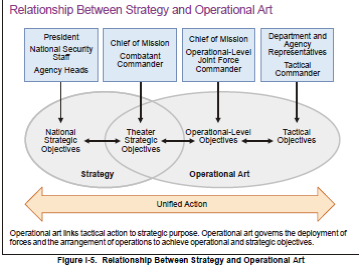
fig-1-5-jp-03a

Friends of Padre Steve’s World

As I have been working to revise my materials form my next Gettysburg Staff Ride I did some revisions to my text that I use with my students. The footnotes did not show up so Monday I will repost the text of this article with them. The article is important even for non-military types who care about the country and are involved in politics or policy, because it shows the linkage between the advantages that a nation with a strong strong and effective central government has over one which adopts what we would call today a Libertarian form of government. In fact I would call the effort of the Confederacy in the Civil War “The Failed Libertarian War.” But that is possibly a subject for an article or maybe even a book, but I digress…

So anyway here is the latest,

Peace

Padre Steve+

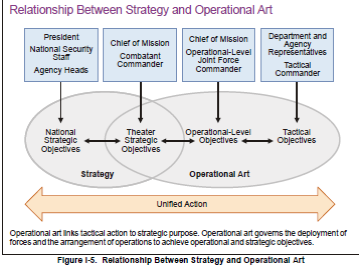
Today we look at the Gettysburg Campaign in terms of how we understand the connection between strategy and operational art. In doing so we have to place it in the context that Lee’s campaign has in relationship to the Confederate command relationships and where it fits in the continuum of unified action as we understand it today.

To do so we have to make the connection between national strategic objectives, theater objectives, operational objective and tactical objectives. We have to explore command and control structures, staff organization and the understand the effect of the Diplomatic, Informational, Economic and Military elements of national power that impact a nation’s ability to wage war.

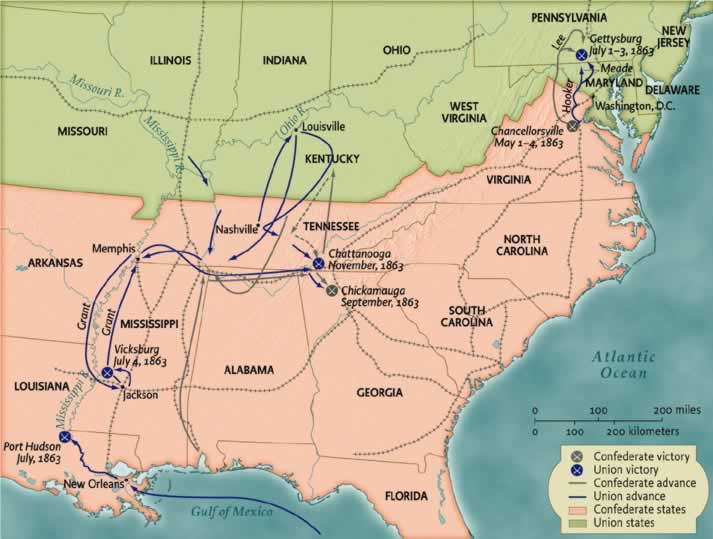
The summer campaign of 1863 in the Civil War gives us the opportunity to do this as we explore the Gettysburg campaign in relation to Vicksburg and the overall strategic situation that both sides faced. This includes the elements that we now associate with the DIME.

While Confederate army units and their commanders generally excelled on the tactical level, and their soldiers endured hardship well, this would not be enough to secure victory. They displayed amazing individual initiative on the battlefield and they won many victories against superior forces, especially in the early part of the war. Even during the final year of the war, Lee’s forces fought skillfully and helped prolong the war. But neither the Confederate government nor the various army commanders were able to translate battlefield success to operational, theater specific or national strategic objectives.

The Confederacy had a twofold problem in its organization for war and how it conducted the war. First it had no organization at the strategic level to direct the war, and it never developed one to coordinate its military, military, diplomatic or economic policies. While Southern strategists understood that they needed to “wear down the ability of the North to wage war” they were consistently hobbled by its own internal political divisions which served to undermine efforts to coordinate the effort to defend the Confederacy. These divisions focused on the opposition of the states’ rights proponents to the central government in Richmond.

The overarching national strategic objective of the Confederacy was to attain independence. The Confederates could not hope to conquer the Union and because of that their “strategic problem was to resist conquest” and to do so they would have to “tire the Federals out, and force them to abandon the war.” Jefferson Davis seems to have understood this early in the war, but political considerations and the temperament of most Southerners and their political leaders frustrated his attempts. Generals like Lee and Joseph E. Johnston “were of the opinion that the more remote frontiers should be abandoned, and that the scattered forces of the Confederacy be concentrated, political reasons overruled their judgment.”

Southern politicians, especially the governors and congressmen demanded that troops “defend every portion of the Confederacy from penetration by “Lincoln’s abolition hordes.” Likewise, most Southerners believed that they “could whip any number of Yankees” and as early as 1861 the Confederate press was advocating an offensive strategy as the Richmond Examiner declared “The idea of waiting for blows rather than inflicting them, is altogether unsuited to the genius of our people….The aggressive policy is the truly defensive one. A column pushed forward into Ohio or Pennsylvania is worth more to us, as a defensive measure, than a whole tier of seacoast batteries from Norfolk to the Rio Grande.”

This combination of wanting to defend everything, which defied Frederick the Great’s classic dictum that “he who defends everything defends nothing” and the persistent employment of the offensive even when it “drained the Confederacy’s manpower and weakened its long term prospects for independence” were key strategic factors in its defeat.

The South did get an earlier start to in mobilizing for war then the Union. Even before the “Confederate Congress authorized an army of 100,000 volunteers for twelve months” on March 6th 1861 the governors of the eleven Confederate States raised units to fight any Federal armies which dared to force them back into the Union. This involved dusting off the old militias which had been allowed to decay in the period between the Mexican War and 1860. Most of these units in the South as well as the North were volunteer companies in which the discipline, equipment and training varied to a significant degree. Most had little in the way of real military training and “many of them spent more time drinking than drilling.” The early Confederate mobilization outstripped the availability of arms and equipment forcing many volunteers to be sent home.

Other than the stated desire for independence and their common hatred of the “Yankee,” there was little in the way of unity within the Confederate States, “the incurable jealousy of the States, especially those not immediately affected by the war, established a dry rot within the Confederacy.” Within the Confederacy, each state viewed itself as an independent nation only loosely bound to the other states and some legislatures enacted laws which actively opposed the central government in Richmond.

The various Confederate states controlled the use of their units and often resisted any effort at centralization of effort. Some kept their best units at home, while others dispatched units to Confederate armies such as Lee’s Army of Northern Virginia. Initially most states limited enlistment periods to one year despite the opposition of Robert E. Lee who helped Jefferson Davis pass the Conscription Act of 1862, a measure that was “heavily watered down by those politicians whose first concern was states’ rights and by those who felt that it would undermine patriotism.” That measure, even in its watered down form was distinctly unpopular, especially with the following declaration of martial law in parts of the Confederacy.

Both measures were brought by realists who understood that for the Confederacy to survive the war effort had to become a total war, with “the whole population and the whole production…put on a war footing.” Such measures provoke more attacks and opposition by their opponents who advocated states’ rights even if it worked against the overall interests of the Confederacy. By the time of Gettysburg if not sooner, “Confederate society began to unravel. The yeomanry and poor white people resented conscription, the tax-in-kind impressment, and other governmental measures than the wealthy. Planters sought to safeguard their property and status to the detriment of national goals.”

This included how state governments responded to the military needs of the Confederacy. Some governors hoarded weapons seized from Federal armories, “retaining these weapons to arm regiments that they kept at home… defend state boarders and guard against potential slave uprisings.” When in response to threats within the Confederacy Jefferson Davis suspended the writ of habeas corpus it resulted in a firestorm of opposition from the states. “Mississippi and Georgia passed flaming resolutions against the act; Louisiana presently did so, too, and North Carolina soon had a law on its books nullifying the action of the central government.” Alexander Stephens, the Confederate Vice President noted that there was “no such thing as a citizen of the United States, but the citizen of a State, and that “the object of quitting the Union, was not to destroy, but to save the principles of the Constitution.”

Likewise as economic conditions worsened and inflation soared in late 1861 the Confederate Congress “in its allotments to the War Department refused to face up to the costs of running the war…it forced the department to scramble in an atmosphere of uncertainty for allotments on a short-run basis.” There was much distrust of any attempt to organize a true central government with any actual authority or power in Richmond. Jefferson Davis may have been President but his country was hamstrung by its own internal divisions, including the often vocal opposition of Stephens for whom states’ rights remained a paramount issue. Stephens, in a statement that defied the understanding that military victory had to be achieved for independence to be won said during the habeas corpus debate “Away with the idea of getting independence first, and looking to liberty afterward.” This, like so many other aspects of the Confederate war effort showed the radical disconnection between legislators, policy makers and the Army and defied any understanding of the importance of government and the unity of effort in pursuing war aims. .

The Confederacy lacked a clear defined command structure to coordinate its war efforts. At the beginning of the war this was true of the Union as well, however, by the Union was much more adept at responding to the needs of the war, this included its military operations, diplomatic efforts and economy. Out of necessity it established a War Department as well as a Department of the Navy in February 1861 and Jefferson Davis, the new President who had served in Mexico and as Secretary of War prior to secession “helped speed southern mobilization in 1861.” However helpful this was initially Davis, who micromanaged Confederate war efforts “eventually led to conflict with some army officers.”
american14_5a

Jefferson Davis was an able man to be sure, but he “totally misunderstood the nature of the war.” Davis was a man given to suspicion and had major personality conflicts with all of his senior commanders save Robert E. Lee. These included Joseph Johnston who he loathed and P.T.G. Beauregard, both of whom he quarreled with on matters of strategy. These conflicts did impact operations, just as did the refusal of various states to support operations or campaigns apart from ones that impacted their state directly.

While Jefferson Davis and his Secretary of War theoretically exercised direction of the war no formal mechanism existed to coordinate the needs of the various military departments or armies. In 1863 Davis, Lee and the Secretary of War, James Seddon were acting as an “informal board which had a say in all major questions of Confederate strategy. Seddon, who had definite ideas of his own about military affairs, was usually but not always a party to Davis’ discussions with Lee…but Davis usually dominated them…. In contrast to the Northern command organization, the South had no general in chief. If anyone fulfilled his functions, it was the President.” It was not until February of 1865 that Lee was named as General in Chief of all armies, and by then the war had been lost.

While Jefferson Davis and his Secretary of War theoretically exercised direction of the war no formal mechanism existed to coordinate the needs of the various military departments or armies. In 1863 Davis, Lee and the Secretary of War, James Seddon were acting as an “informal board which had a say in all major questions of Confederate strategy. Seddon, who had definite ideas of his own about military affairs, was usually but not always a party to Davis’ discussions with Lee…but Davis usually dominated them…. In contrast to the Northern command organization, the South had no general in chief. If anyone fulfilled his functions, it was the President.” It was not until February of 1865 that Lee was named as General in Chief of all armies, and by then the war had been lost.

In effect each Confederate army and military department operated independently, often competing with each other for the troops, supplies and materials needed to fight. They also had to contend with recalcitrant state governments, each loathe to sacrifice anything that might compromise their own independence. Attempts by the authorities in Richmond to centralize some measure of authority were met with resistance by the states. Thus states’ rights were “not only the cause of the war, but also the cause of the Confederate downfall.”

In a country as vast as the Confederacy that lacked the industry, transportation infrastructure, population and economic power of the North this was a hindrance that could not be overcome by the soldierly abilities of its armies alone. An example of the Confederate problem was that “neither the army nor the government exercised any control of the railroads.” The Confederate Subsistence Department, which in theory was responsible for ensuring the supply of food, stores and the logistical needs necessary to maintain armies in the field could not plan with confidence. “Tied to the railroads, unable to build up a reserve; frequently uncertain whether or not their troops were going to be fed from one day to the next, field commanders understandably experienced a general loss of confidence in the Subsistence Department….” Even though the subsistence and even the survival of the army was dependent on the use of railroads, the railroad owners “responded by an assertion of their individual rights. They failed to cooperate….and Government shipments were accorded low priority. In May of 1863 the Confederate Congress finally granted the government broad authority over the railroads, but “Davis hesitated to wield the power. “ It would not be until early 1865 that the Confederacy would “finally take control of the railroads.”

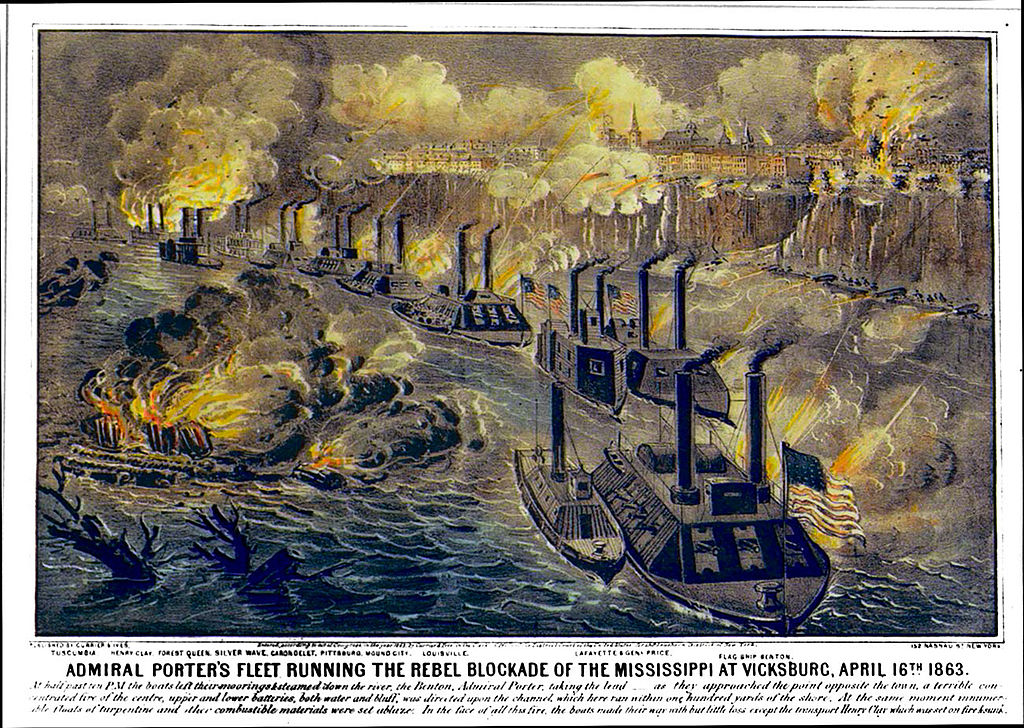
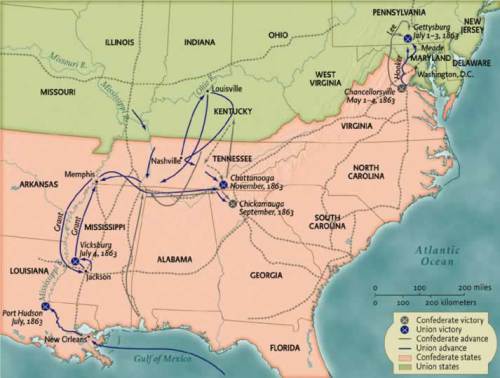
All of these factors had a direct effect on the campaign of 1863. In the west, Confederate commanders were very much left to fend for themselves and to add to their misery failed even to coordinate their activities to meet the threat of Grant and his naval commander, Admiral David Dixon Porter. In the East, Lee having established a close relationship with Jefferson Davis as his military advisor during the first year of the war exercised a disproportionate influence on the overall strategy of the Confederacy because of his relationship with Davis. However, Lee was hesitant to use his influence to supply his army, even when it was suffering. Even though he willingly shared in the plight of his solders, Lee refused “to exert his authority to obtain supplies….” As the army prepared to invade Pennsylvania, “the paltry rationing imposed by Richmond was made worse by a tenuous supply line….”

Lee in theory was simply one of a number of army or department commanders, yet he was responsible for the decision to invade the Union in June of 1863. This decision impacted the entire war effort. The Confederate cabinet “could reject Lee’s proposal as readily as that of any other department commander, Bragg, or Pemberton or Beauregard, for example, each of whom was zealous to protect the interests of the region for which he was responsible…” But this was Lee, “the first soldier of the Confederacy- the first soldier of the world…” Lee’s plan was approved by the cabinet by a vote of five to one. The lone dissenter was Postmaster General John H. Reagan who “believed a fatal mistake had been made…”

Lee in theory was simply one of a number of army or department commanders, yet he was responsible for the decision to invade the Union in June of 1863. This decision impacted the entire war effort. The Confederate cabinet “could reject Lee’s proposal as readily as that of any other department commander, Bragg, or Pemberton or Beauregard, for example, each of whom was zealous to protect the interests of the region for which he was responsible…” But this was Lee, “the first soldier of the Confederacy- the first soldier of the world…” Lee’s plan was approved by the cabinet by a vote of five to one. The lone dissenter was Postmaster General John H. Reagan who “believed a fatal mistake had been made…”

Seddon desired to turn the tide at Vicksburg and proposed sending Longstreet’s Corps to reinforce Johnston to relieve the embattled city and maintain the front on the Mississippi. However, Lee believed that any attempt “to turn the Tide at Vicksburg…put Lee’s army in Virginia at unacceptable risk.”

The lack of any sense of unity in the Confederate hierarchy and lack of a grand strategy was disastrous. The lack of agreement on a grand strategy and the inability of the Confederate States Government and the various state governments to cooperate at any level culminated in the summer of 1863 with the loss of Vicksburg and the failure of Lee’s invasion of Pennsylvania. The Confederate failure in this demonstrates the absolute need for unity of effort and even more a whole of government and whole of nation approach to war.

This can be contrasted with the Union, which though it was slow to understand the nature of the war did have people who, through trial and error developed a cohesive strategy that led to success at the operational level and the tactical level. The genus in Union strategy came from Lieutenant General Winfield Scott who “appreciated the relationship between economic factors and attack.” Scott’s strategic plan was to establish a blockade and form two major armies, “one to move down the Mississippi and cut off the western half of the Confederacy from its eastern half, while the other threatened Richmond and pinned down the main Confederate forces in Virginia.” It was a plan for total war called Anaconda which was mocked in both the Northern and Southern press and it would become the blueprint of Federal success at the war progressed. Scott was the first to recognize that the war would not be short and his plan was the first to “recognize the North’s tremendous advantage in numbers and material, and it was the first to emphasize the importance of the Mississippi Valley in an over-all view of the war.”

Abraham Lincoln had little in the way of military acumen and frequently, until Grant took control of the armies interfered with his senior commanders, often with good reason. However, Lincoln was committed to winning the war and willing to take whatever steps necessary to do so. Fuller describes him as “none other than a dictator” by bypassing Congress and on his own authority declaring a blockade of Southern ports, calling for 75,000 volunteers and suspending habeas corpus.

Likewise Lincoln as well as Congress understood the value and necessity of the railroads and in January 1862 “Congress authorized to take possession of any railroads and place them under military control when the public safety warranted it.” Lincoln formed the Department of Military Railroads the following month and appointed Daniel C McCallum as its director. In May President Lincoln formally took possession of all railroads, but “saw to it that cooperative lines received government aid.”

George McClellan, who Lincoln appointed as commander of the Army of the Potomac in 1862, whatever his many faults as a field commander “possessed a strategic design for winning the war,” understood the necessity of unity of command and successfully built an effective army. Now his design was different than that of Scott, for he desired to “crush the rebels in one campaign” by an overland march to Richmond. While this was unrealistic because of McClellan’s constant overestimation of his enemy and inability to risk a fight when on the Peninsula and at the gates of Richmond, the Union might have at least had a chance should he have defeated the major Confederate forces deployed to defend that city. While that would have been unlikely to win the war in a single stroke it would have been a significant reversal for the Confederacy in 1862.

Logistics was one of the deciding factors of e war, both the Confederate weakness and Union ability to adapt society and government needs to wartime conditions. As a general principle Union leaders, government and business alike understood the changing nature of modern war. This stood in stark contrast to the inefficient and graft ridden Confederate agencies where even those who wanted more effective means to wage war were hindered by politicians, land owners and businessmen who insisted on their rights over the needs of the nation. The Union developed an efficient and well managed War Department where the importance of logistics inter-bureau cooperation became a paramount concern.

Union industry “geared up up for war production on a scale that would make the Union army the best fed, most lavishly supplied army that have ever existed.” The Quartermaster’s Department under the direction of Quartermaster General Montgomery Meigs was particularly efficient in supplying the needs of a military fighting on exterior lines in multiple theaters of operation. Unlike the Confederate Subsistence Bureau the Federal Quartermaster Bureau supplied almost everything the army could need: “uniforms, overcoats shoes, knapsacks, haversacks, canteens, mess gear, blankets, tents, camp equipage, barracks, horses, mules, forage, harnesses, horseshoes, and portable blacksmith shops, supply wagons, ships when the army could be supplied by water, coal and wood to fuel them, and supply depots for storage and distribution.” The ill-equipped Confederates could only look on with awe, in fact during his absence from Lee J.E.B. Stuart was ecstatic over the capture of “one hundred and twenty five of the best United States model wagons and splendid teams….” likewise one of the reasons that A.P. Hill allowed Harry Heth to send his division the Gettysburg was to find shoes that the Confederate Subsistence Department could not provide for them. Thus one of the reasons for the Battle of Gettysburg is directly linked to the failed logistics system of the Confederacy.

Early in the war the Union logistics effort was beset by some of the same problems that plagued the Confederacy throughout the war. Graft and corruption ran rife until 1862 when “Congress established investigative committees to uncover fraud and passed laws regulating the letting of contracts.” Meigs overhauled the bureau. At the beginning of the war it had only one department, for clothing. He modernized this and added eight new departments, which dealt with “specialized logistical functions such as forage and fuel, barracks and hospitals and wagon transportation.” During the war Meigs managed nearly half the direct costs of the Union war effort,” over 1.5 billion dollars in spending. He has been called by James McPherson as “the unsung hero of northern victory.”
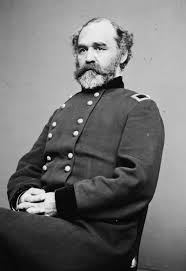
meigs1

The Unsung Union Hero: General Montgomery Meigs 

This had a profound effect on operations. When the Union forces by necessity had to operate in enemy territory they were well supplied whereas whenever Confederate Forces conducted operations in the North or even in supposedly friendly Border States they were forced to subsist off the land. This meant that Confederate operations in the north were no more than what we would call raids, even the large invasions launched by Lee in 1862 and 1863, both which ended in defeat and near disaster.

Because of their poor logistic capabilities Confederate forces had no staying power to keep and hold any ground that they took in enemy territory. This can be contrasted with the Union which when it sent its forces south meant them to stay.

Lee could not fathom this and because he believed that no Federal Army could stand a summer in the Deep South and that Grant would be forced to withdraw. The use of railroads to supply its far flung forces operating in the south as well as its use of maritime transportation along the coast and on inland waterways ensured that Northern armies could always be supplied or if threatened could be withdrawn by ship.

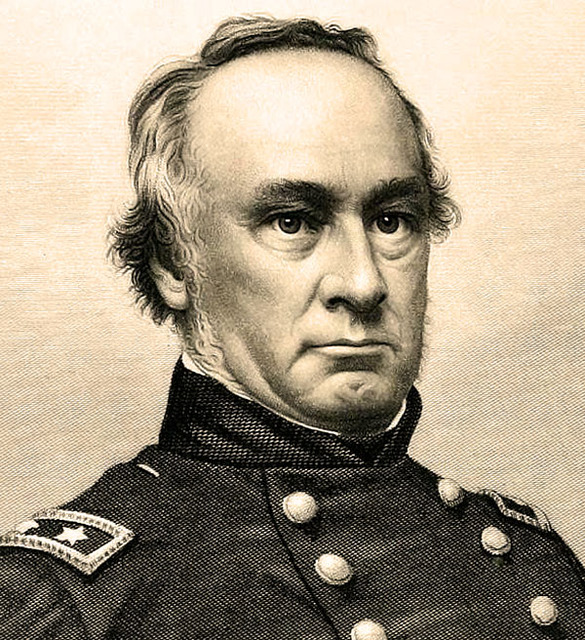
Some senior Union officers also understood the importance of logistics. Henry Halleck was the first true American military theorist. He published the first American work on strategy, Elements of Military Art and Science in 1846. While his is often given short shrift because he was not an effective field commander and had an acerbic personality which rubbed people the wrong way, Halleck was one of the most important individuals in organizing the eventual Union victory. This included matters of strategy, picking effective subordinate commanders and understanding the logistical foundations of strategy.

Weigley wrote of Halleck:

“He sponsored and encouraged the operations of Brigadier General Ulysses. S. Grant and Flag Officer Andrew H. Foote that captured Forts Henry and Donaldson in February 1862 and thereby opened up the Tennessee and Cumberland Rivers for Union penetration deep into the state of Tennessee and toward the strategically important Memphis and Charleston Railroad. Halleck’s insights into the logistical foundations of strategy proved consistently accurate. Throughout the war, he maintained a shrewd eye for logistically viable lines of operation for the Union forces, and he increasingly recognized that one of the most effective weapons of offensive strategy, in an age when battle meant exposure to rifled firepower, was not to aim directly at the enemy armies but at their logistical base.”

Halleck was also instrumental in helping to oust Hooker just before Gettysburg and raise Meade to command the Army of the Potomac. When Lincoln brought Grant east to become General in Chief Halleck took on the new position of Chief of Staff. This was a task that he fulfilled admirably, allowing Grant to remain in the field and ensuring clear communication between Lincoln and Grant as well as relieving “Grant of the burden of personally corresponding with his department commanders.”

By establishing what we now understand as the beginning of a modern command and staff organizational structure the Union was far more able to link its national, theater and operational level objectives with its tactical objectives, even when some of its commanders were not as good as Confederates and blundered into defeats. Above the army, at the administration level Stanton, the Federal Secretary of war organized a War Board and “composed of department heads and chaired by Major General Ethan Allen Hitchcock…as an embryonic American-style general staff.”

In the end during the summer of 1863 it was the Union which was better able to link the ends, ways and means of the strategic direction of the war. This is something that Davis and Lee were unable to do as they struggled with political division, a lack of cooperation from the states, and the lack of any true grand strategy.

Lee’s strategy of the offensive was wrong and compounded the problems faced by the Confederacy. The losses that his army suffered were irreplaceable, not just in terms of overall numbers of soldiers but in terms of his mid-level leaders, his battalion, regiment and brigade commanders who suffered grievous losses and were even more critical to the leadership of his army.

Lee recognized the terrible effects of his officer casualties in a letter to General John Bell Hood on May 21st: “There never were such men in an Army before. But there is the difficulty- proper commanders- where can they be obtained?” His actions at Gettysburg only added to his crisis in keeping his army supplied with competent commanders, as so many were left dead, wounded or captured during the campaign.

Even had Lee won the battle of Gettysburg his casualties in Union territory would have been prohibitive. He would have spent most of his ammunition, incurred serious losses in personnel and horses, and been burdened by not having to care for his wounded and still been deep in Union territory away from his nearest logistics hub. Had Lee won at Gettysburg “his ammunition would have been nearly exhausted in victory, while Federal logistics would have improved as the Army of the Potomac fell back toward the eastern cities.” This would have forced him to withdraw from Pennsylvania even had he been victorious.

It is true that a victory on northern soil might have emboldened the peace party in the North, but even then that could not have an effect on the desired effect on the Lincoln Administration until the election of 1864, still 16 months away. Likewise, in July 1863 such a victory would probably not have triggered foreign recognition or assistance on the part of France or England. “Skilful northern diplomacy prevented an internal conflict from becoming an international war.” Jefferson Davis held on to his fantasy until August 1863, when even he was forced to deal with reality was a vain hope indeed and ended his diplomatic efforts to bring England into the war.

England would not intervene for many reasons and the Confederate government did not fully appreciate the situation of the countries that they hoped would intervene on their behalf:

“its dependence on northern foodstuffs, access to new cotton supplies, turmoil in Europe, fear of what might happen to Canada and to British commerce in a war with the Union, and an unwillingness to side with slavery. The British government also wanted to establish precedents by respecting the blockade, a weapon that it often used.”

Confederate politicians were hindered by a very narrow, parochial view of the world, had little understanding of modern industry, economics and the type of diplomacy employed by Europeans both to strengthen their nations, but also to maintain a balance of power.

As we look at the Gettysburg and Vicksburg campaigns in the summer of 1863 these are important things to consider. The relationship between national strategic objectives, theater objectives, operational objectives and tactical success cannot be minimized. Success on the battlefield alone is almost always insufficient to win a war unless those wins serve a higher operational and strategic purpose, and the costs of battles and campaigns have to be weighed in relation to the strategic benefits that derive from them.

In the end the total failure of the two campaigns destroyed any real hope of Confederate military victory. At Vicksburg the Confederacy lost all of Pemberton’s army, 33,000 men and Lee suffered over 28,000 casualties from an army which had begun the campaign with about 80,000 troops. The losses were irreplaceable.

This essay is certainly not an exhaustive look at the subject, but if we do not consider these factors we cannot really understand the bigger picture of the situation that the two sides faced and how they dealt with them. While the weapons and tactics employed by the sides are obsolete the thought processes and strategic considerations are timeless.

Leave a comment

Filed under civil war, History, leadership, Military, national security

Gettysburg Day One: John Reynolds’ Finest Hour

z_maritato_ironbrigadeforward1

While A.P. Hill and Harry Heth ignored warnings and launched their troops towards Gettysburg, Buford believing an engagement was in the offing sought out good ground to give battle and hold back the enemy until the army could arrive. This he found on the ridges west of Gettysburg. The choice of ground is always important and in this battle was paramount to the success of the Army of the Potomac. Buford alerted Major General John Reynolds and the cavalry corps commander Alfred Pleasanton to the location of the approaching Confederates on the night of June 30th. However, Buford’s warning, and that of the intelligence bureau came too late for Reynolds or Meade to take action on them that evening, nor give Meade “to dictate the choice of giving or accepting battle.” [1]

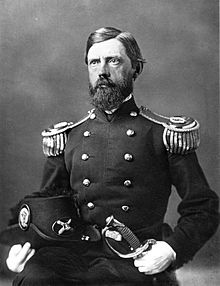
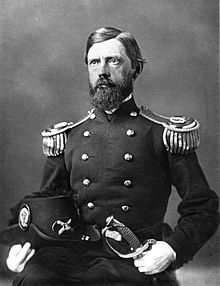
The Army of the Potomac had the good fortune of having Reynolds in this key position on the morning of July 1st 1863. John Reynolds was one of the finest commanders on either side during the Civil War. He graduated from West Point in 1841 and served in the artillery. He fought during the war with Mexico serving in Braxton Bragg’s battery winning fame and two brevet promotions for bravery, [2] to Captain at Monterrey and Major at Buena Vista. Following the war he remained in the army. He served in field and coastal batteries and like John Buford had “participated in the Utah Expedition.” [3] In 1860 he was appointed as Commandant of the Corps of Cadets at West Point and served there until June of 1861 when he was appointed as Lieutenant Colonel of the 14th U.S. Infantry regiment. [4]

220px-GenJFRenyolds

However, he was soon promoted to Brigadier General and he commanded a brigade of Pennsylvania volunteers during the Peninsula Campaign. He was captured on June 28th as McClellan began his withdraw from the gates of Richmond but was released in a prisoner exchange on August 15th 1862. [5] He returned to command a division at Second Bull Run where his division held firm as much of the army retreated, but missed the battle of Antietam as he was called to “the fruitless and frustrating task of trying to organize Pennsylvania’s militia” [6] by Governor Curtain. He commanded I Corps at Fredericksburg and again at Chancellorsville and was reportedly offered command of the Army of the Potomac by Lincoln, something that he recounted to his artillery chief Colonel Wainwright that he “refused it because he would have been under the same constraints as Burnside and Hooker.” [7]

The Army of the Potomac’s senior leadership had been the source of much political consternation during 1862 and 1863 for Abraham Lincoln. It was split among Lincoln’s supporters and detractors, Radical Republican abolitionists and moderate Democrats some of its leaders including McClellan, Hooker and Sickles had their own aspirations for the presidency. However, Reynolds was of a different character than some of his fellow commanders. He was a moderate Pennsylvania Democrat and no supporter of Lincoln, once comparing him to a “baboon.” But he “was also a serious unbending professional, who unlike McClellan, actually lived by the principle of “obedience to the powers that be.” [8] “Universally respected” in the army “for his high character and sterling generalship” [9] it was noted that unlike others Reynolds had a policy of holding back “stoutly aloof from all personal or partisan quarrels, and keeping guardedly free from any of the heart-burnings and jealousies that did so much to cripple the usefulness and endanger the reputation of many gallant officers.” [10]

On the night of June 30th Reynolds was awash in reports, some of them conflicting and without Meade’s course of action for the next day “concluded that Lee’s army was close by and in force.” [11] He spent the night at his headquarters “studying the military situation with Howard and keeping in touch with army headquarters.” [12] Howard noted Reynolds anxiety and “Howard received the impression that Reynolds was depressed.” [13] After Howard’s departure Reynolds took the opportunity to get a few hours of fitful sleet before arising again at 4 a.m. on July 1st.

When morning came, Reynolds was awakened by his aide Major William Riddle with Meade’s order to “advance the First and Eleventh Corps to Gettysburg.” [14] Reynolds studied the order and though he expected no battle that morning, expecting “only moving up to be in supporting distance to Buford” [15] took the reasonable precautions that Confederate commanders had not done.

Though Reynolds was not expecting a fight he organized his march in a manner that ensured if one did happen that he was fully prepared. They were precautionary measures that any prudent commander knowing that strong enemy forces were nearby would take. Reynolds certainly took to heart the words of Napoleon who said “A General should say to himself many times a day: If the hostile army were to make its appearance in front, on my right, or on my left, what should I do?” [16] It was a question that A.P. Hill and Harry Heth seemed not to consider on that warm and muggy July morning, where Heth was committing Lee’s army to battle on his own authority, Reynolds was about to do the same, but unlike Heth, he “had at least been delegated the authority for making such a decision.” [17]

Reynolds “wanted all the fighting troops to be up front, so he instructed Howard not to intermingle his supply wagons with his infantry. Similar instructions had been given to Abner Doubleday; to ensure that the First Corps wagons would wait until the Eleventh Corps foot soldiers had passed.” [18] Likewise, instead operating in the normal fashion of rotating units on the march, Reynolds opted to save time. Since the First Division under the command of James Wadsworth was further advanced than other I Corps divisions, Reynolds instructed it to move first. In doing so he countermanded the order of the acting corps commander Doubleday telling Wadsworth that Doubleday’s order “was a mistake and that I should move on directly.” [19] He went forward with Wadsworth’s division and ordered Doubleday to “assemble the artillery and the remainder of the corps, and join him as soon as possible.” [20] He ordered Howard’s XI Corps to follow and Sickles’ III Corps to come up through Emmitsburg. [21] Reynolds’ intention according to Doubleday was “to fight the enemy as soon as I could meet him.” [22]

Reynolds rode forward with some of his staff into the town as the infantry of I Corps and XI Corps moved advanced. In the town they were met by “a fleeing, badly frightened civilian, who gasped out the news that the cavalry was in a fight.” [23] When he came to the Lutheran Seminary he came across Buford. It was a defining moment of the Civil War, a moment that shaped the battle to come. It has been recounted many times and immortalized on screen in the movie Gettysburg, a time “when the entire battle would come down to a matter of minutes getting one place to another.” [24]

450px-Gettysburg_Day1_1000

When Buford saw Reynolds infantry advancing he remarked “now we can hold this place.” [25] Reynolds greeted Buford, who was in the cupola of the seminary calling out “What’s the matter John?” to which Buford replied “The devil’s to pay” before coming down to discuss the matter with Reynolds. [26] Buford explained the situation noting that “I have come upon some regiments of infantry…they are in the woods…and I am unable to dislodge them.” [27]

Reynolds needed no other convincing. He asked Buford if he could hold and quickly sent off a number of messages. One officer wrote: “The Genl ordered Genl Buford to hold the enemy in check as long as possible, to keep them from getting into town and at the same time sent orders to Genl Sickles…& Genl Howard to come as fast as possible.” [28] He also sent a message to Meade stating: “The enemy are advancing in strong force. I [Reynolds] fear they will get to the heights beyond the own before I can. I will fight them inch by inch, and if driven into the town, I will barricade the streets and hold them back as long as possible.” [29] He directed Major Weld to take it to Meade with all haste “with the greatest speed I could, no matter if I killed my horse.” [30]

After dictating his instructions Reynolds then did what no senior Confederate commander did, he rode back and took personal charge of the movements of his troops to hurry them forward. Unlike Heth, he had taken note of the ground and recognized from Buford’s reports that “the Confederates were marching only on that single road and thus would not be able to push their forces to the front any faster than Reynolds could reach the battlefield with his First Corps divisions.” [31]

Reynolds, recognizing that time was of the essence if his forces were to hold the ground west of the town selected a shortcut around the town for I Corps. Those forces were directed across the fields near the Condori farm toward the back side of Seminary Ridge, with Reynolds’ staff helping to remove fences to speed the advance. [32] It was not an easy advance as the troops had to move across the farm fields at an oblique and have to “double-quick for a mile and a quarter in the thick humidity just to reach the seminary.” [33]

As troops arrived Reynolds directed them into position. He directed the artillery of Captain James Hall’s 2nd Maine Battery to McPherson’s Ridge instructing Hall “I desire you to damage their artillery to the greatest possible extent, and to keep their fire from our infantry until they are deployed….” [34] The leading infantry of I Corps was James Wadsworth’s understrength division containing just two brigades, its losses from Chancellorsville not being made good and as the result of the loss of regiments discharged because their enlistments had expired.

However these units were “good ones,” composed of hardened combat veterans. Brigadier General Zylander Cutler led his brigade of New Yorkers and Pennsylvanians up first followed by the six foot seven inch tall Quaker, Brigadier General Solomon Meredith’s “Iron Brigade” of westerners following in their distinctive black hats. Reynolds directed Cutler’s brigade north of the Cashtown Pike and “called the Iron Brigade into action on the south side” [35] Reynolds directed Wadsworth to take change on the north side of the road while he looked after the left. [36] It is also believed by some writers that he directed Oliver Howard to prepare Cemetery Hill as a fallback position [37] however; there is more evidence that points to Howard selecting the site himself. [38]

Cutler’s brigade moved north and engaged Davis’ men near the railroad cut, with Davis’ troops initially having the upper hand, inflicting massive casualties Cutler’s regiments. But in a fierce engagement Cutler’s men pushed the unsupported Confederates back into the Railroad Cut where they slaughtered many of those unfortunate soldiers, taking over 200 prisoners and a battle flag. [39]

The Iron Brigade, brought forward by Doubleday hit Archer’s brigade in the front at Herbst Woods on McPherson’s Ridge. As the unit went into action Doubleday “urged the men…to hold it all hazards.” He recalled that the troops, “full of enthusiasm and the memory of their past achievements they said to me proudly, “If we can’t hold it, where will you find men who can?” The effect was dramatic as the Iron Brigade overwhelmed that unit, whose soldiers now realized they were facing “the first team.” Members of the Iron Brigade recalling the voices of Confederate soldiers exclaiming “Here are those damned black-hat fellers again…’Taint no militia-that’s the Army of the Potomac.” [40] As they attempted to withdraw they piled up at a fence near Willoughby Run and were hit in the flank by “a Michigan regiment that had worked its way around through the woods to the south.” [41]

Coddington writes “It was a bad moment for the Army of Northern Virginia, and Archer gained the unenviable distinction of being the first of its general officers to be captured after Lee took command.” [42] As the 2nd Wisconsin advanced into the woods Reynolds urged them forward: “Forward men, for God’s sake and drive those fellows out of those woods….” [43] As he looked around toward the seminary to see the progress of reinforcements Reynolds was struck in the back of the neck by a bullet and fell dead with Doubleday taking command of the First Corps to the west of the town.

death_of_reynolds_gettysburg

Reynolds was dead, but the series of command decisions reached by Reynolds under the pressure of a meeting engagement “where neither side held an immediate advantage” [44] were critical to the army. Though shaken by his loss the Union troops fought on at McPherson and Seminary Ridge until the assault of Ewell on their left and the arrival of Pender’s fresh division forced them from their positions.

The contrast between Reynolds and his opponents was marked. Hill was ten miles away from the action, Heth too far to the rear of his troops to direct their advance when they ran into trouble. However, Reynolds “hurried to the front, where he was able to inspirit the defense and throw troops into the decisive zone.” [45] At every point John Reynolds showed himself superior to his opponents as he directed the battle and reacted to circumstances. He paid with his life but his sacrifice was not in vain. Harry Hunt noted: “…by his promptitude and gallantry he had determined the decisive field of the war, and he opened brilliantly a battle which required three days of hard fighting to close with a victory.” [46]

 Notes

[1] Sears, Stephen W. Gettysburg. Houghton Mifflin Co. Boston and New York 2003 p. 159

[2] Pfanz Harry W. Gettysburg: The First Day University of North Carolina Press, Chapel Hill and London 2001pp.47-48

[3] Ibid. Pfanz Gettysburg: The First Day p.48

[4] Ibid. Pfanz Gettysburg: The First Day p.48

[5] Foote, Shelby, The Civil War, A Narrative. Volume One Fort Sumter to Perryville Random House, New York 1958 p.493

[6] Ibid. Pfanz Gettysburg: The First Day p.48

[7] Ibid. Sears, Gettysburg. p. 40-42


[8] Guelzo, Allen C. Gettysburg: The Last Invasion Vintage Books a Division of Random House, New York 2013 pp.29-30

[9] Ibid. Sears, Gettysburg. p. 34

[10] Ibid. Guelzo, Gettysburg: The Last Invasion p.30

[11] Ibid. Pfanz Gettysburg: The First Day p.48

[12] Coddington, Edwin B. The Gettysburg Campaign: A Study in Command, A Touchstone Book, Simon and Schuster New York, 1968 p.261

[13] Ibid. Pfanz Gettysburg: The First Day p.48

[14] Ibid. Coddington The Gettysburg Campaign: A Study in Command, p.261

[15] Ibid. Sears, Gettysburg. p. 158

[16] Napoleon Bonaparte, Military Maxims of Napoleon in Roots of Strategy: The Five Greatest Military Classics of All Time edited by Phillips, Thomas R Stackpole Books Mechanicsburg PA 1985 p.410

[17] Ibid. Sears, Gettysburg. p. 165

[18] Tredeau, Noah Andre. Gettysburg: A Testing of Courage, Harper Collins Publishers, New York 2002 p.159

[19] Ibid. Tredeau, Gettysburg: A Testing of Courage p.156

[20] Ibid. Guelzo, Gettysburg: The Last Invasion p.142

[21] Ibid. Sears, Gettysburg. p. 158

[22] Ibid. Tredeau, Gettysburg: A Testing of Courage p.156

[23] Ibid. Sears, Gettysburg. p. 165

[24] Ibid. Guelzo, Gettysburg: The Last Invasion p.142

[25] Ibid. Guelzo, Gettysburg: The Last Invasion p.142

[26] Ibid. Sears, Gettysburg. p. 172

[27] Ibid. Guelzo, Gettysburg: The Last Invasion p.143

[28] Ibid. Tredeau, Gettysburg: A Testing of Courage p.172-173

[29] Schultz, Duane The Most Glorious Fourth: Vicksburg and Gettysburg July 4th 1863. W.W. Norton and Company New York and London, 2002 p.202

[30] Ibid. Tredeau, Gettysburg: A Testing of Courage p.173

[31] Ibid. Sears, Gettysburg. p. 166

[32] Ibid. Pfanz Gettysburg: The First Day p.75

[33] Ibid. Guelzo, Gettysburg: The Last Invasion p.145

[34] Gottfried, Bradley The Artillery of Gettysburg Cumberland House Publishing, Nashville TN 2008 pp.28-29

[35] Catton, Bruce The Army of the Potomac: Glory Road Doubleday and Company, Garden City New York, 1952 p.271

[36] Ibid. Pfanz Gettysburg: The First Day pp.75-76

[37] Ibid. Pfanz Gettysburg: The First Day p.76

[38] Green, A. Wilson. From Chancellorsville to Gettysburg: O. O. Howard and Eleventh Corps Leadership in The First Day at Gettysburg edited by Gallagher, Gary W. Kent State University Press, Kent Ohio 1992 p. 70

[39] Ibid. Guelzo, Gettysburg: The Last Invasion p.153

[40] Ibid. Catton The Army of the Potomac: Glory Road p.273

[41] Foote, Shelby, The Civil War, A Narrative. Volume Two Fredericksburg to Meridian Random House, New York 1963 pp.470-471

[42] Ibid. Coddington The Gettysburg Campaign: A Study in Command, p.271

[43] Ibid. Coddington The Gettysburg Campaign: A Study in Command, p.271

[44] Ibid. Sears, Gettysburg. p. 168

[45] Krick, Robert K. Three Confederate Disasters on Oak Ridge: Failures of Brigade Leadership on the First Day of Gettysburg in The First Day at Gettysburg edited by Gallagher, Gary W. Kent State University Press, Kent Ohio 1992 p.113

[46] Hunt, Henry. The First Day at Gettysburg in Battles and Leaders of the Civil War Volume III, The Tide Shifts. Edited by Robert Underwood Johnson and Clarence Clough Buel Castle, Secaucus NJ

1 Comment

Filed under civil war, History, leadership, Military

Memorial Day 2014: Remembering the Memorial Day Order of 1868

memorial-day-traditions_1399868491

Oliver Wendell Holmes ended his Decoration Day 1884 speech:

But grief is not the end of all…Our dead brothers still live for us, and bid us think of life, not death, — of life to which in their youth they lent the passion and glory of the spring. As I listen, the great chorus of life and joy begins again, and amid the awful orchestra of seen and unseen powers and destinies of good and evil our trumpets sound once more a note of daring, hope, and will.

Frederick Douglass noted the same year in his Decoration Day Speech:

“Dark and sad will be the hour to this nation when it forgets to pay grateful homage to its greatest benefactors. The offering we bring to-day is due alike to the patriot soldiers dead and their noble comrades who still live; for, whether living or dead, whether in time or eternity, the loyal soldiers who imperiled all for country and freedom are one and inseparable.” From Frederick Douglass’ Memorial Day Speech 1884

The words of both men are something that we should not forget as we remember and honor all who have given the “last full measure of devotion to duty.”

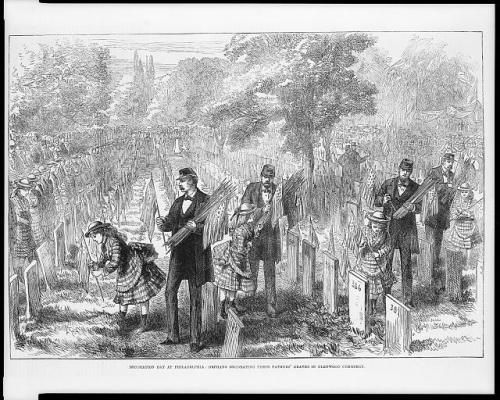
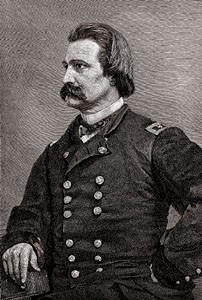
It was after the great bloodletting known as the American Civil War that Memorial Day, originally known as Decoration Day was established. The first observance was made by the recently freed slaves of Charleston South Carolina who honored the memory of the Union Soldiers who had died at the Washington Racecourse Prison Camp on May 1st 1865.  Other celebrations began around the country in May and June of 1866. By 1868 the Commander of the Grand Army of the Republic Union Veterans association General John Logan issued an order directing that the 30th of May 1868 be designated to the memory of the Union Soldiers, Sailors and Marines who had given their lives in the defense of the Union.

decoration-day1

Since its establishment the holiday has grown to encompass the honored dead of all American wars.  However its roots were in the Civil War, a war that claimed the lives of between 600,000 and 700,000 American military personnel on both sides of the conflict. It is hard to imagine that on one, September 17th 1862 that over 23,000 Union and Confederate Soldiers were killed, wounded or missing. At Gettysburg more men were killed and wounded than in the entirety of the Iraq and Afghanistan wars. Two percent of the population was killed in the war. To put that in perspective that casualty rate would involve the deaths of more than 6 million soldiers, well over twice as many men and women as currently serve on active duty and in the reserve components. Abraham Lincoln noted in his Gettysburg Address the importance of not forgetting those men:

“It is rather for us to be here dedicated to the great task remaining before us — that from these honored dead we take increased devotion to that cause for which they gave the last full measure of devotion — that we here highly resolve that these dead shall not have died in vain — that this nation, under God, shall have a new birth of freedom — and that government of the people, by the people, for the people, shall not perish from the earth.”


DSCN8774

General Logan’s order is remarkable in its frankness and the understanding of the war in the immediate context of its conclusion.  In 1868 the day would be observed at 183 cemeteries in 27 States and the following year over 300 cemeteries. Michigan was the first state to make the day a holiday and by 1890 all states in the North had made it so. In the South there were similar observances but the meaning attributed to the events and the sacrifices of the Soldiers of both sides was interpreted differently. In the North it was about preserving the Union and in the South the interpretation of the Lost Cause.  Yet in both regions and all states, the surviving Soldiers, family members and communities honored their dead.

This Memorial Day we will honor all that have fallen but in our mind are the few that fight our current wars, wars that unlike that terrible Civil War, the majority of the population does not experience.

The order of the Grand Army of the Republic establishing Memorial Day is posted below.

Peace

Padre Steve+

logan_engraving

HEADQUARTERS GRAND ARMY OF THE REPUBLIC, General Orders No.11, WASHINGTON, D.C., May 5, 1868

I. The 30th day of May, 1868, is designated for the purpose of strewing with flowers or otherwise decorating the graves of comrades who died in defense of their country during the late rebellion, and whose bodies now lie in almost every city, village, and hamlet church-yard in the land. In this observance no form of ceremony is prescribed, but posts and comrades will in their own way arrange such fitting services and testimonials of respect as circumstances may permit.

We are organized, comrades, as our regulations tell us, for the purpose among other things, “of preserving and strengthening those kind and fraternal feelings which have bound together the soldiers, sailors, and marines who united to suppress the late rebellion.” What can aid more to assure this result than cherishing tenderly the memory of our heroic dead, who made their breasts a barricade between our country and its foes? Their soldier lives were the reveille of freedom to a race in chains, and their deaths the tattoo of rebellious tyranny in arms. We should guard their graves with sacred vigilance. All that the consecrated wealth and taste of the nation can add to their adornment and security is but a fitting tribute to the memory of her slain defenders. Let no wanton foot tread rudely on such hallowed grounds. Let pleasant paths invite the coming and going of reverent visitors and fond mourners. Let no vandalism of avarice or neglect, no ravages of time testify to the present or to the coming generations that we have forgotten as a people the cost of a free and undivided republic.

If our eyes grow dull, other hands slack, and other hearts cold in the solemn trust, ours shall keep it well as long as the light and warmth of life remain to us.

Let us, then, at the time appointed gather around their sacred remains and garland the passionless mounds above them with the choicest flowers of spring-time; let us raise above them the dear old flag they saved from dishonor; let us in this solemn presence renew our pledges to aid and assist those whom they have left among us a sacred charge upon a nation’s gratitude, the soldier’s and sailor’s widow and orphan.

II. It is the purpose of the Commander-in-Chief to inaugurate this observance with the hope that it will be kept up from year to year, while a survivor of the war remains to honor the memory of his departed comrades. He earnestly desires the public press to lend its friendly aid in bringing to the notice of comrades in all parts of the country in time for simultaneous compliance therewith.

III. Department commanders will use efforts to make this order effective.

By order of

JOHN A. LOGAN,
Commander-in-Chief

N.P. CHIPMAN,
Adjutant General

Official:
WM. T. COLLINS, A.A.G.

Leave a comment

Filed under civil war, History, Military, shipmates and veterans

“Integrity, Purity Unselfish Devotion to Duty” Reflections on Winfield Scott Hancock after another Gettysburg Staff Ride

hancock

“I shall not fight upon the principle of state-rights, but for the Union, whole and undivided.” Winfield Scott Hancock

I am back home after leading another trip to Gettysburg with a new group of students.

I always come away from Gettysburg with a new appreciation of the sacrifice that was made there by so many Americans. I am always humbled and learn something new. I only wish that most Americans and our leaders of both political parties as well as most media types and pundits could grasp what I experience on each visit to this “hallowed ground.”

Quite honestly I do not think that the vast majority Americans understand, appreciate or value in the slightest the sacrifices of the men who fought and in many cases died to preserve the Union at Gettysburg. Even among those who do I think that the object of their appreciation are the military aspects of the battle often taken in isolation, not the profound strategic dimensions of what this battle as well as the fall of Vicksburg in the west at the same time had on the war.

Nor do they appreciate the massive political, ideological and social effects bought about by those Union victories in ending the war and how those effects redound to us today. This is especially true of the pundits, politicians and preachers, the “Trinity of Evil” as I call them whose shrill voices urge on divisions between our people; including some that call out for violence to maintain their groups social, economic or religious advantages over others. Quite a few even lament the fall of the South and the institution including the washed up rock and roll musician of the political right Ted Nugent who wrote in the Washington Times in July 2012: “I’m beginning to wonder if it would have been best had the South won the Civil War.” 

All of that concerns me as an American and a historian; because I realize how dangerous such historical ignorance and visceral propaganda is in the life of any nation. Thus when I go to Gettysburg, or for that matter any other battlefield of our American Civil War the sacrifices of those men and what they fought to maintain is again imprinted on my heart.

Abraham Lincoln eloquently noted about those soldiers who fought to turn back the Confederate tide at Gettysburg in his Gettysburg Address:

“But, in a larger sense, we can not dedicate — we can not consecrate — we can not hallow — this ground. The brave men, living and dead, who struggled here, have consecrated it, far above our poor power to add or detract. The world will little note, nor long remember what we say here, but it can never forget what they did here. It is for us the living, rather, to be dedicated here to the unfinished work which they who fought here have thus far so nobly advanced. It is rather for us to be here dedicated to the great task remaining before us — that from these honored dead we take increased devotion to that cause for which they gave the last full measure of devotion — that we here highly resolve that these dead shall not have died in vain — that this nation, under God, shall have a new birth of freedom — and that government of the people, by the people, for the people, shall not perish from the earth.”

While I am an idealist I am also a pragmatist. I respect the right of others, even those that disagree with things that I very much believe in and support. Like it or not the keystone of our governmental system is one of compromise. That being said having relatives that fought on both sides of the American Civil War that I am not a sectionalist. Nor am I a person that attempts to use the political system to ensure that others have to follow my religious beliefs or to enrich certain groups. The democracy that is part of our republic’s system of government is not a perfect system by any means. In fact as the great English Prime Minister Winston Churchill noted “democracy was the worst form of government except for all the others.”

Thus I appreciate military men who maintain their oath to the nation in times of great conflict not abandoning it to support causes that they know are wrong because the people of their state, or interest group seek to divide that Union. Winfield Scott Hancock was one of those kind of men, as was George Meade, and John Buford, all of whom played key roles in defeating the Confederates at Gettysburg.

Hancock, who earned the title “Hancock the Superb” was the commander of the Union II Corps at Gettysburg. Upon the death of John Reynolds early on the first day of battle Hancock was appointed by Meade as commander of the Federal Left Wing, in effect becoming Meade’s deputy commander for the rest of the battle. He was seriously wounded as Pickett’s Charge came to its bloody end at “the Angle” and his dear friend Confederate General Lewis Armistead lay mortally wounded a few hundred yards away.

Hancock is an interesting character. He was from Pennsylvania but was a Democrat. He was not a Republican like Lincoln. Hancock was not a political ideologue but was since he was a Democrat he was suspect by some in the party establishments of both parties and never was given independent command.

Hancock gave his advice to Armistead and others who were preparing to leave the Union in early 1861 including Armistead and his commanding officer Brigadier General Albert Sidney Johnston. He made himself clear:

“I shall not fight upon the principle of state-rights, but for the Union, whole and undivided.” 

During the war he served with distinction and Ulysses Grant wrote of him:

“Hancock stands the most conspicuous figure of all the general officers who did not exercise a separate command. He commanded a corps longer than any other one, and his name was never mentioned as having committed in battle a blunder for which he was responsible. He was a man of very conspicuous personal appearance…. His genial disposition made him friends, and his personal courage and his presence with his command in the thickest of the fight won for him the confidence of troops serving under him. No matter how hard the fight, the 2d corps always felt that their commander was looking after them.”

After the war he supervised the execution of those convicted of the assassination of Abraham Lincoln and in various postings in the occupied South attempted to mitigate some of the actions of those bent on vengeance and others who tried to exploit the defeated people of the south for political or economic gain.

Hancock ran for President and lost a narrow election in 1880 to James A. Garfield. After that he returned to the Army and died at the age of 61at his headquarters of complications from diabetes.

He was praised by political opponents. Former President Rutherford B. Hayes wrote:

“if when we make up our estimate of a public man, conspicuous both as a soldier and in civil life, we are to think first and chiefly of his manhood, his integrity, his purity, his singleness of purpose, and his unselfish devotion to duty, we can truthfully say of Hancock that he was through and through pure gold.” 

Another political opponent Republican General Francis A. Walker lamented not supporting Hancock in 1880 after the great corruption that engulfed the country during “Gilded Age” of the “Robber Barons” the 1880s. Walker wrote:

“Although I did not vote for General Hancock, I am strongly disposed to believe that one of the best things the nation has lost in recent years has been the example and the influence of that chivalric, stately, and splendid gentleman in the White House. Perhaps much which both parties now recognize as having been unfortunate and mischievous during the past thirteen years would have been avoided had General Hancock been elected.”

DSCN9741

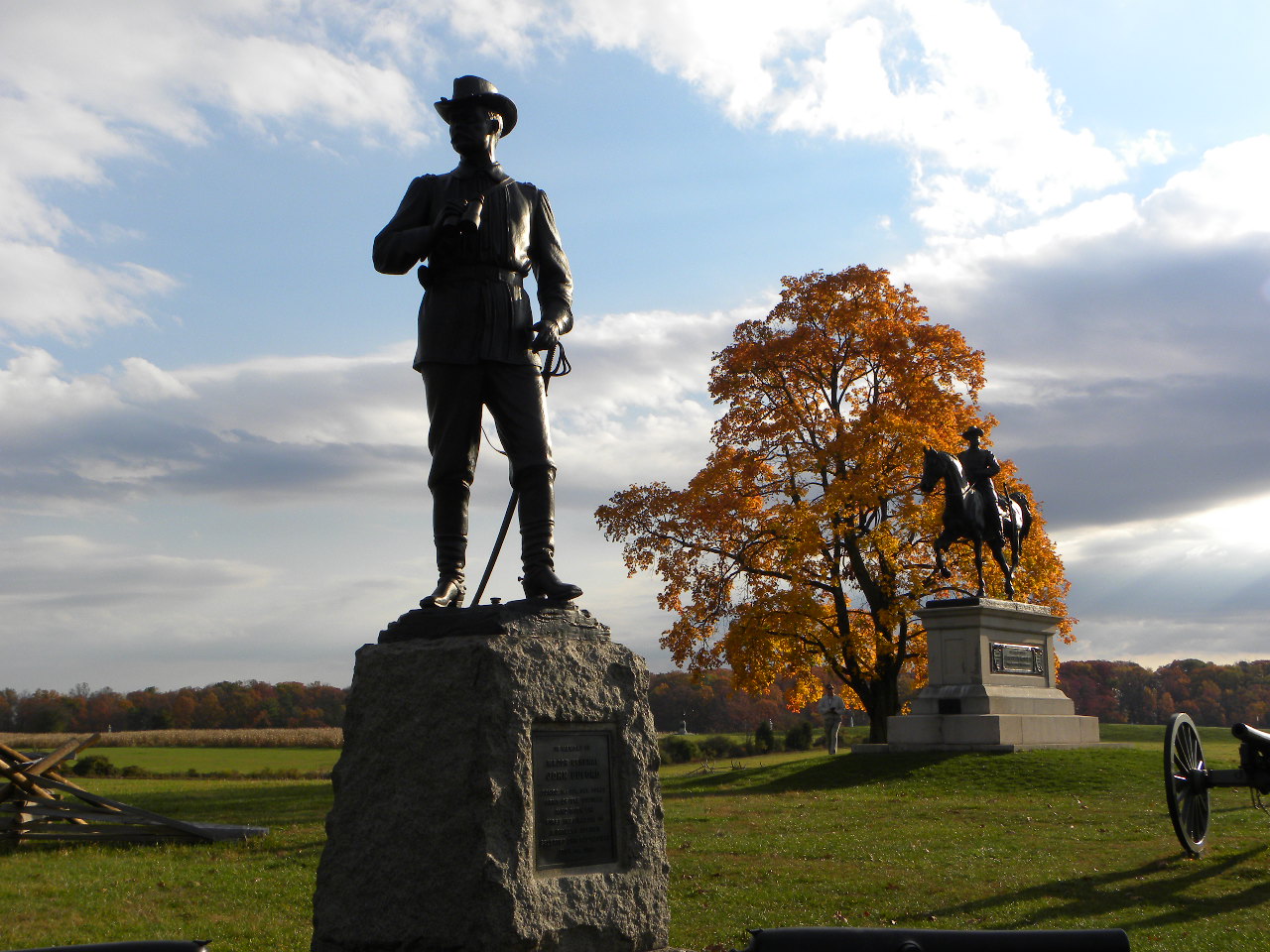
As I stood at the statue that marks Hancock on Cemetery Hill this weekend I again was struck by the bravery, courage and integrity of that remarkable man.

Peace

Padre Steve+

1 Comment

Filed under civil war, History, Political Commentary

Remembering Gettysburg and the New Birth of Freedom

reynoldsmemorial

I am always humbled when I travel to Gettysburg as I did this weekend.  It is hard to believe in that now peaceful pastoral setting that over 157,000 Americans, almost 82,000 Union and 75,000 Confederate met in a three day battle. In those three days over 28,000 Confederates and 23,000 Union soldiers were killed, wounded, missing or captured. It was the greatest number of casualties inflicted in one battle on American soil in history.

I left on Friday with students from our Staff College and returned home this evening. It was my first time leading a Staff Ride like this though I have participated in them at other battlefields and led less extensive visits to Gettysburg when I was stationed at Fort Indiantown Gap Pennsylvania in 1997-1998. I have a good group of students, Army, Navy and Air Force Officers of much experience. In addition to simply examining the battlefield and telling the story of the battle, I have been working over the past two months to build a foundation that enables them to learn the enduring and timeless lessons of leadership, command, control, communication, the linkage between national strategy objectives, the operational art, operational objectives and tactical objectives.  Unlike other visits I added a final stop at the Gettysburg Soldiers’ Cemetery where President Abraham Lincoln delivered the Gettysburg Address.

irishbrigadememorial

The places that the battle was fought have become legendary, for they are “hallowed ground” as Lincoln so eloquently put it. The places, McPherson’s and Herr’s Ridge, Seminary Ridge, the Railroad Cut, Barlow’s Knoll, Cemetery Hill, Culp’s Hill, The Wheat Field, Devil’s Den, the Peach Orchard, Little Round Top, Cemetery Ridge, the Apse of Trees, the Angle and the High Water Mark are in a sense holy, or hallowed. They were consecrated by those who struggled there, those who lived and those who gave the last full measure of devotion to their country.

I think about those men of both sides and how they came to serve. In 1863 the majority of those who fought were volunteers. Some were motivated by their convictions, fully convinced of the rightness of their cause. Other went to war with mixed feelings. Some fought for family, or their homes, or because they felt that they could do no otherwise, and some even fought against the cause that their families or states believed in.

devilsden

But no matter what their reason for going to war they  That being said when I go there though my family predominantly fought for the Confederacy my heart is drawn to those men who remained loyal to the Union and those who answered the call of Abraham Lincoln to serve in a cause greater than their own interests, the great and the small alike.

highwatermark

Lincoln was a masterful orator who managed to rally the Union and bring hundreds of thousands of men volunteer before Gettysburg. They came for an ideal an ideal which Lincoln’s oratory was probably the most effective at articulating in a way that men would volunteer to suffer hardship, fight and die to bring about. It was well put in the movie Gettysburg where Colonel Joshua Chamberlain said:

“This is a different kind of army. If you look at history you’ll see men fight for pay, or women, or some other kind of loot. They fight for land, or because a king makes them, or just because they like killing. But we’re here for something new. This has not happened much, in the history of the world: We are an army out to set other men free. America should be free ground, all of it, from here to the Pacific Ocean. No man has to bow, no man born to royalty. Here we judge you by what you do, not by who your father was. Here you can be something. Here is the place to build a home. But it’s not the land. There’s always more land. It’s the idea that we all have value, you and me. What we’re fighting for, in the end… we’re fighting for each other…”

joshua_l-1._chamberlain_at_little_round_top

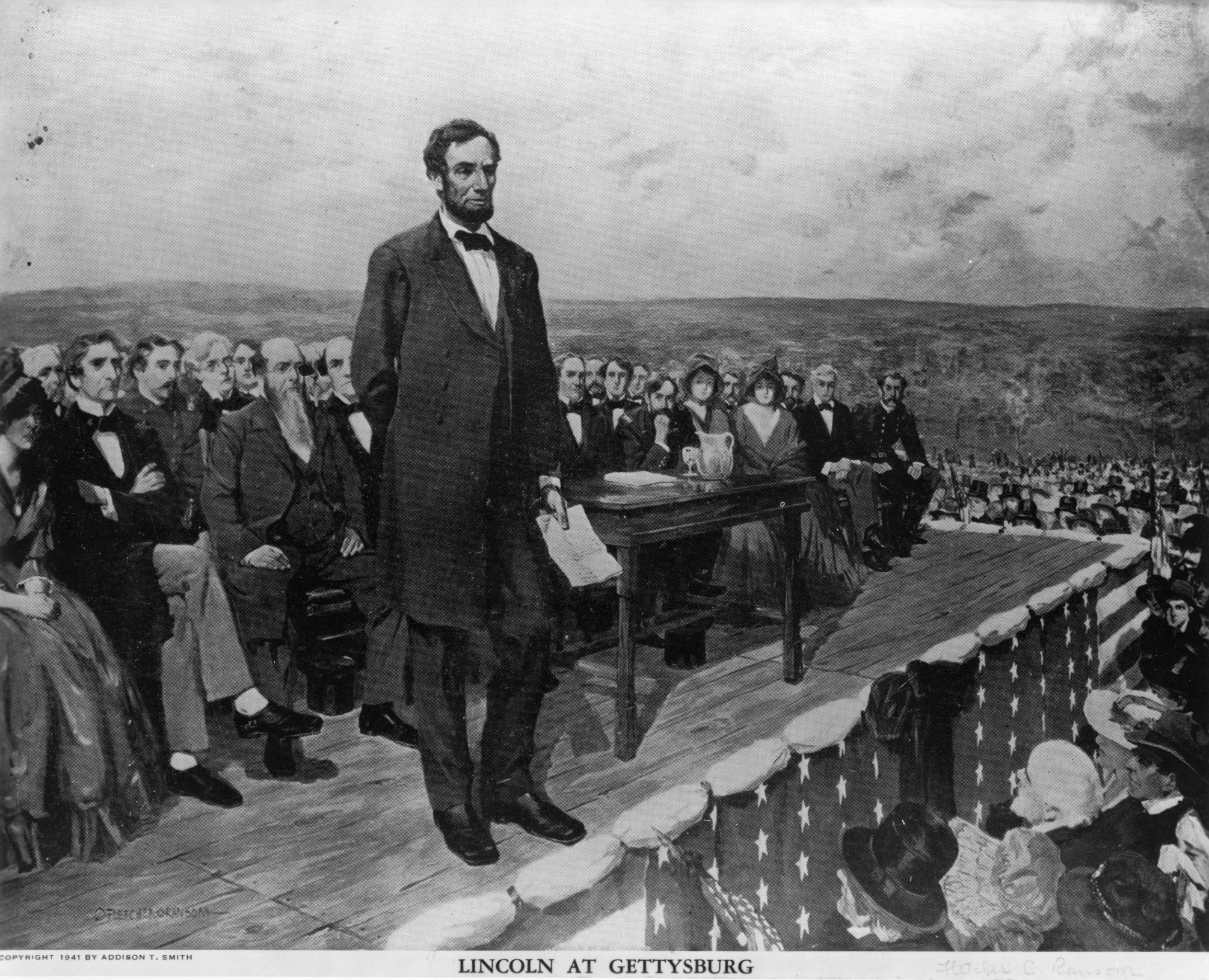
On November 19th 1863 Lincoln delivered a “few words” at Gettysburg which were in all practical aspects a benediction at the dedication of the battlefield cemetery. Lincoln was the second speaker at the ceremony following former Pennsylvania Congressman Edward Everett who spoke for more than two hours, a typical speech from the period. The 270 words of Lincoln’s address are perhaps the most important of any speech or document in American history save the Declaration of Independence and the Constitution of the United States.

The speech was so powerful that Everett wrote Lincoln the next day:

“Permit me also to express my great admiration of the thoughts expressed by you, with such eloquent simplicity & appropriateness, at the consecration of the Cemetery. I should be glad, if I could flatter myself that I came as near to the central idea of the occasion, in two hours, as you did in two minutes.”

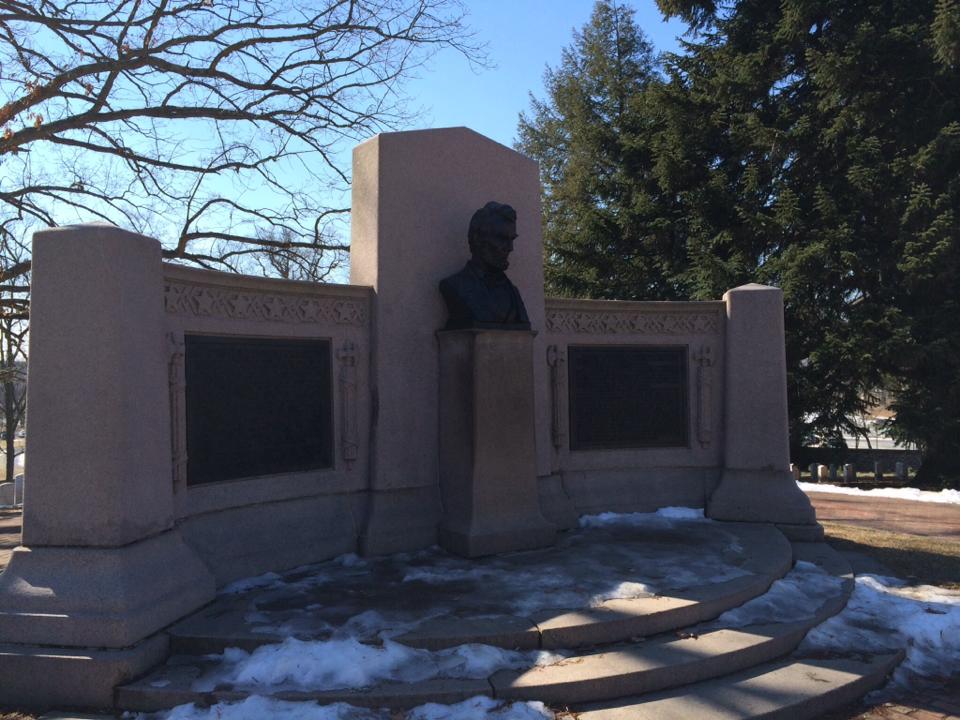
gburgaddressmemorial

The speech is short, but it’s eloquence is unmatched. Lincoln wrapped ideas, concepts and ideals that men have written volumes about into a speech so powerful that many have memorized it.

But few realize the context that it must be placed. Though the Union had defeated Lee’s Army at Gettysburg and Grant had taken Vicksburg to cut the Confederacy in half the North was growing war weary. There were those in the North, the Copperheads who were willing even after Gettysburg and Vicksburg to end the war on terms favorable to the Confederacy, even granting Confederate independence and the continuation of slavery. Likewise Lincoln was sick when he delivered the address having what was mostly likely a mild form of Smallpox when he gave the address. Thus the tenor, simplicity and depth are even more remarkable. It is a speech given in the manner of Winston Churchill’s “Blood sweat toil and tears” address to Parliament upon being appoint Prime Minister in 1940.

In a time where many are wearied by the foibles and follies of our politicians, even wondering about our form of government can survive Lincoln’s words matter. Dr Allen Guelzo, Professor of Civil War Studies at Gettysburg College wrote in the New York Times on the 150th anniversary of the Address:

“The genius of the address thus lay not in its language or in its brevity (virtues though these were), but in the new birth it gave to those who had become discouraged and wearied by democracy’s follies, and in the reminder that democracy’s survival rested ultimately in the hands of citizens who saw something in democracy worth dying for. We could use that reminder again today.”

GAFac1

Dr Guelzo is quite correct. Many people in this country and around the world are having grave doubts about our democracy. I wonder myself, but I am an optimist. I do believe that we will recover because for the life of me I see no nation anywhere else with our resiliency and ability to overcome the stupidity of politicians, pundits and preachers.
The amazing thing was that in spite of everything the Union survived. Lincoln was a big part of that but it was the men who left lives of comfort and security like Joshua Chamberlain and so many others who brought about that victory.

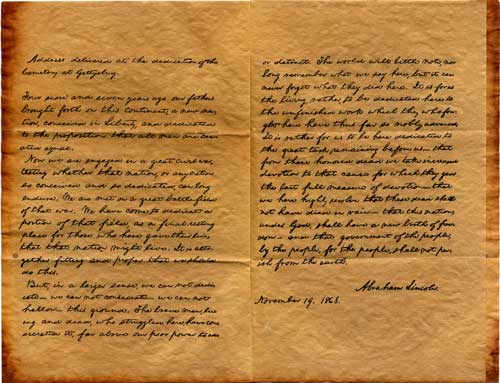
Gettysburg Address

Throughout the war, even to the end Southern political leaders failed to understand that Union men would fight and die for an ideal, something greater than themselves, the preservation of the Union and the freedom of an enslaved race. For those that volunteered it was not about personal gain, loot or land,it was about something greater. It was about freedom.
Now I for one do not think that we are currently living up to the ideals enunciated by Lincoln that day at Gettysburg. I can understand the cynicism disillusionment of Americans as well as those who have for over 200 years looked to us and our system as a “city set on a hill.” That being said, when I read these words and walk that hallowed  ground I am again a believer that we can realize the ideal.

Four score and seven years ago our fathers brought forth on this continent, a new nation, conceived in Liberty, and dedicated to the proposition that all men are created equal.

Now we are engaged in a great civil war, testing whether that nation, or any nation so conceived and so dedicated, can long endure. We are met on a great battle-field of that war. We have come to dedicate a portion of that field, as a final resting place for those who here gave their lives that that nation might live. It is altogether fitting and proper that we should do this.

But, in a larger sense, we can not dedicate — we can not consecrate — we can not hallow — this ground. The brave men, living and dead, who struggled here, have consecrated it, far above our poor power to add or detract. The world will little note, nor long remember what we say here, but it can never forget what they did here. It is for us the living, rather, to be dedicated here to the unfinished work which they who fought here have thus far so nobly advanced. It is rather for us to be here dedicated to the great task remaining before us — that from these honored dead we take increased devotion to that cause for which they gave the last full measure of devotion — that we here highly resolve that these dead shall not have died in vain — that this nation, under God, shall have a new birth of freedom — and that government of the people, by the people, for the people, shall not perish from the earth.

In the hope that we again realize those ideals and help bring about “a new birth of freedom,” I wish you a good night.
Peace

Padre Steve+

Leave a comment

Filed under civil war, History, leadership, Political Commentary

At Gettysburg

mkholrt

“In great deeds, something abides. On great fields, something stays. Forms change and pass; bodies disappear; but spirits linger, to consecrate ground for the vision-place of souls… generations that know us not and that we know not of, heart-drawn to see where and by whom great things were suffered and done for them, shall come to this deathless field, to ponder and dream; and lo! the shadow of a mighty presence shall wrap them in its bosom, and the power of the vision pass into their souls.” Joshua Chamberlain

Tonight I am getting ready for bed but still anxiously preparing for tomorrow and Sunday as I lead about 25 of our officer students and some of their family members on what is called a “Staff Ride” of the Gettysburg Battlefield. In preparing for this I have taught three classes periods at our school and prepared a lot of my own research and writing.

We drove up today and in the van I was in we were able to talk about aspects of the campaign as well as the Civil War connected to this battle. We also discussed the timeless aspects of leadership and dealing with the complexities of people and organizations.

Since the trip up took longer than usual due to bad weather in Hampton Roads and bad traffic around Washington DC I am not going to write much tonight. That is why I led the article with the comments of Joshua Lawrence Chamberlain, the hero of Little Round Top. For me Gettysburg is as Abraham Lincoln so rightly put it “hallowed ground.” I feel that “mighty presence” that Chamberlain described every time I come here. I am drawn here by the actions of men who I never knew but through books and movies, but men who I feel a deep kinship, something spiritual, something deep, something that abides.

I am honored to teach, and in a sense to pass along a bit of what the men who fought here did to consecrate this ground and to give our nation a “new birth of freedom.”

Peace

Padre Steve+

Leave a comment

Filed under civil war, History, Loose thoughts and musings

“For God’s Sake Forward!” John Reynolds at Gettysburg

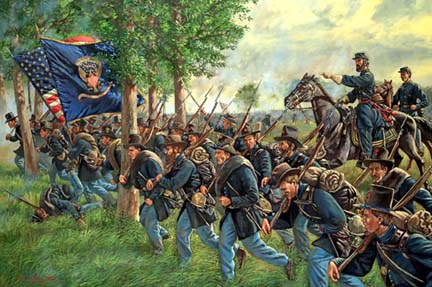
reynoldsz_maritato_ironbrigadeforward

Iron Brigade Forward! Battle of Gettysburg, PA – July 1, 1863 by Mark Maritato

“…by his promptitude and gallantry he had determined the decisive field of the war, and he opened brilliantly a battle which required three days of hard fighting to close with a victory.” Major General Harry Hunt, Chief of Artillery, Army of the Potomac on the actions of Major General John F Reynolds at Gettysburg

Major General John Reynolds was one of the finest commanders on either side during the Civil War. He graduated in the middle of his class at West Point in 1841 and served in the artillery. He fought during the war with Mexico and was promoted for bravery twice, to Captain at Monterrey and Major at Buena Vista. Following the war he remained in the army serving in the west and as Commandant of the Corps of Cadets at West Point from 1860 to June of 1861 when he was appointed as Colonel of the 14th U.S. Infantry regiment. However before he could take command of that unit he was promoted to Brigadier General.

Reynolds commanded a brigade of Pennsylvania volunteers on the Peninsula and was captured on June 27th but was released in a prisoner exchange on August 15th. He fought as a Division commander at Second bull Run where his Division held firm as much of the army retreated. He missed Antietam as he was called to train Pennsylvania militia when Lee invaded Maryland. he commanded I Corps at Fredericksburg and again at Chancellorsville.

Reynolds now held command of his troops on his home soil. A native of Lancaster Pennsylvania  Reynolds was the senior Corps commander in the Army of the Potomac. Considered by his peers and superiors to be the best commander in the Army he had been given command of a wing of the Army, his own I Corps, Oliver Howard’s XI Corps and John Sedgewick’s III Corps. He also had John Buford’s 1st Cavalry Division under his command.

Early in June Abraham Lincoln had offered command of the Army of the Potomac to Reynolds. However according to some credible reports Reynolds set a condition which Lincoln in the political climate of the time could not grant. Reynolds insisted he would be free from the political interference which had beset previous Army commanders. Both Reynolds’ request and Lincoln’s response are understandable.

Reynolds was not a fan of Major General Joseph Hooker and opposed Hooker’s decision to retreat at Chancellorsville. When Hooker was relieved of command of the Army by Lincoln, Major General George Meade, commander of V Corps another Pennsylvanian took his place. Reynolds, a friend of Meade supported the decision and Meade, who trusted Reynolds’ judgement and abilities kept him in his key role as commander of the Left Wing.

Reynolds’ wing of three Infantry corps and Buford’s Cavalry division acted as the advance elements of the Army. Late in the afternoon of June 30th Buford’s troops observed Johnston Pettigrew’s brigade of Harry Heth’s division near Gettysburg. Pettigrew on detecting Buford’s cavalry refused to engage. Buford chose to take the good high ground west of Gettysburg and hold it. He sent word to Reynolds that he would hold the ground to give Reynolds time to arrive.

800px-John_Reynolds_death_2

The Death of Reynolds (Waud)

Buford sent messages late in the evening to both Reynolds and the Union Calvary Corps commander, Major General Alfred Pleasanton describing the situation. Reynolds’ units were south of Emmitsburg moving north. Early on the morning of the 1st of July Reynolds brought his troops up as Buford and his cavalry troopers engaged Heth’s division in a very successful delaying action.

Reynolds rode ahead and briefly met Buford at the Lutheran Seminary where Buford ensured Reynolds that his troopers could hold. With that Reynolds ordered his First Corps and the lead division under the command of Abner Doubleday to advance to the action at the double-quick. Reynolds sent a message to Meade through a staff officer stating “Tell the General that we will hold the heights to the south of the town, and that I will barricade the streets of the town if necessary.” Reynolds had an acute eye for the situation and rapidly brought his corps as well as Howard’s XI Corps to the field.

GenJFRenyoldsAs his units arrived into an already raging battle Reynolds directed them to key areas of the battlefield. With Confederate troops moving toward the high ground Reynolds directed the “Iron Brigade” into position in Herr’s (McPherson’s) Woods. Reynolds exhorted the men forward.“Forward! men, forward! for God’s sake, and drive those fellows out of the woods!” As he said these words he was struck by a bullet at the base of his skull and died instantly.

The Federal troops, I Corps under the command of Doubleday and XI under Major General Oliver Howard withdrew through Gettysburg to Cemetery Hill, where Howard had wisely placed two brigades as well as a significant amount of artillery earlier in the day. Reynolds’ old friend Major General Winfield Scott Hancock of II Corps arrived on the field to take command on the order of George Meade.

Hill’s troops entered the town but did not attempt to take the hill, he did not believe that his exhausted and disorganized troops were in a position to combat fresh troops in good defensive positions. Likewise Ewell passed on an opportunity to take nearby Culp’s Hill as his corps was not fully up and the divisions which had been in action were now in disarray and he recognized the strong position occupied by the Federal forces.

DSCN8774Monuments to Buford and Reynolds at McPherson’s Ridge

The first day ended with the Army of the Potomac holding the high ground in an easily defensible position on interior lines. Lee’s Army was spread out and the defense mounted by Buford and Reynolds had disrupted Hill’s Corps causing significant casualties to the Confederates and denying them the opportunity to take the high ground.

Buford is to be given much of the credit for choosing the ground of the battle and fighting a stellar delaying action against superior forces. But had Reynolds not brought his units up in the expeditious manner in which he did and then all of Buford’s efforts might have been in vain. The two men, bound by their professionalism and commitment to duty and their oath helped save the Union on that first day of July 1863.

Peace

Padre Steve+

Leave a comment

Filed under civil war, History, leadership, Military

Gettysburg, Vicksburg and the Campaign of 1863: The Relationship between Strategy and Operational Art

american14_5

Today we look at the Gettysburg Campaign in terms of how we understand the connection between strategy and operational art. In doing so we have to place it in the context that Lees campaign has in relationship to the Confederate command relationships and where it fits in the continuum of unified action as we understand it today.

To do so we have to make the connection between national strategic objectives, theater objectives, operational objective and tactical objectives. We have to explore command and control structures, staff organization and the understand the effect of the Diplomatic, Informational, Economic and Military elements of national power that impact a nations ability to wage war.

fig 1-5 jp-03

The summer campaign of 1863 in the Civil War gives us the opportunity to do this as we explore the Gettysburg campaign in relation to Vicksburg and the overall strategic situation that both sides faced.

The Confederacy had a twofold problem in its organization for war and how it conducted the war. First it had no organization at the strategic level to direct the war and it never developed a grand strategy from which its national strategic objectives could be translated for action at the theater, operational and tactical levels of warfare.

The overarching national strategic objective of the Confederacy was to attain independence. To such ends the governors of the 11 Confederate States raised units to fight any Federal armies which dared to force them back into the Union. The various states controlled the use of their units. Some kept their best units at home, while others dispatched units to Confederate armies such as Lees Army of Northern Virginia. After that there was not much thought given to how to fight the war.

Other than the stated desire for independence and their common hatred of the Yankee,there was little in the way of unity within the Confederate States. Each state viewed itself as an independent nation only loosely bound to the other states. There was much distrust of any attempt to organize a true central government with any actual authority or power in Richmond. Jefferson Davis may have been President but his country was hamstrung by its own internal divisions.

The Confederacy lacked a clear defined command structure to coordinate war efforts. This included its military operations, diplomatic efforts and economy. Jefferson Davis, an able man to be sure was a man given to suspicion and had major personality conflicts with all of his senior commanders save Robert E. Lee. These conflicts did impact operations, just as did the refusal of various states to support operations or campaigns apart from ones that impacted their state directly.

While Jefferson Davis and his Secretary of War theoretically exercised direction of the war no formal mechanism existed to coordinate the needs of the various military departments or armies. In effect each army operated independently often competing with each other for the troops, supplies and materials needed to fight, as well as having to contend with recalcitrant state governments, each loathe to sacrifice anything that might compromise their own independence. Attempts by the authorities in Richmond to centralize some measure of authority were met with resistance by the states. Thus statesrights were not only the cause of the war, but also the cause of the Confederate downfall.[i]

In a country as vast as the Confederacy that lacked the industry, transportation infrastructure, population and economic power of the North this was a hindrance that could not be overcome by the soldierly abilities of its armies alone.

VicksburgBlockade

This had a direct effect on the campaign of 1863. In the west, Confederate commanders were very much left to fend for themselves and to add to their misery failed even to coordinate their activities to meet the threat of Grant and his naval commander, Admiral David Dixon Porter. In the East, Lee having established a close relationship with Jefferson Davis as his military advisor during the first year of the war exercised a disproportionate influence on the overall strategy of the Confederacy.

Lee in theory was simply one of a number of army or department commanders, yet he was responsible for a decision that impacted the entire war effort. The Confederate cabinet could reject Lees proposal as readily as that of any other department commander, Bragg, or Pemberton or Beauregard, for example, each of whom was zealous to protect the interests of the region for which he was responsible…” But this was Lee, the first soldier of the Confederacy- the first soldier of the world…”[i] Lees plan was approved by the cabinet by a vote of five to one. The lone dissenter was Postmaster General John H. Reagan who believed a fatal mistake had been made…”[ii]

reagan

The Lone Dissenter, Postmaster General John H Reagan

Lees decision to launch an invasion of the north in hopes of a quick victory to secure independence had numerous adverse effects on the broader needs of the Confederacy at a time when the Confederacy had little room for a misstep. Lee was a remarkable commander at the operational level but his military thinking process was very much Napoleonic. To succeed Lees design required a climactic Napoleonic battle,[iii] to defeat Union armies and this was something that his new opponent Meade would not allow.

The lack of any sense of unity in the Confederate hierarchy was disastrous. The lack of agreement on a grand strategy and the inability of the Confederate States Government and the various state governments to cooperate at any level culminated in the summer of 1863 with the loss of Vicksburg and the failure of Lees invasion of Pennsylvania.

Confederate army units and their commanders generally excelled on the tactical level, and their soldiers endured hardship well. They displayed amazing individual initiative on the battlefield and they won many victories against superior forces, especially in the early part of the war. But neither the Confederate government nor the various army commanders were able to translate battlefield success to operational, theater specific or national strategic objectives.

This can be contrasted with the Union, which though it was slow to understand the nature of the war did have people who, through trial and error developed a cohesive strategy that led to success at the operational level and the tactical level. George McClellan, whatever his faults as a field commander possessed a strategic design for winning the war,[iv] the necessity of unity of command and successfully built an effective army.

meigs

General Montgomery Meigs, the Logistician

The Union understood the changing nature of modern war and in stark contrast to the inefficient and graft ridden Confederate agencies developed an efficient and well managed War Department where the importance of logistics interbureau cooperation became a paramount concern. The Quartermasters Department under the direction of Quartermaster General Montgomery Meigs was particularly efficient in supplying the needs of a military fighting on exterior lines in multiple theaters of operation.

This had a profound effect on operations. When the Union forces by necessity had to operate in enemy territory they were well supplied whereas whenever Confederate Forces conducted operations in the North or even in friendly Border States they were forced to subsist off the land. This meant that Confederate operations in the north were no more than raids, even the large invasions launched by Lee. They had no staying power to keep and hold any ground that they took in enemy territory. This can be contrasted with the Union which when it sent its forces south meant them to stay. Lee could not fathom this and because he believed that no Federal Army could stand a summer in the Deep South and that Grant would be forced to withdraw. The use of railroads to supply its far flung forces operating in the south as well as its use of maritime transportation along the coast and on inland waterways ensured that its armies could always be supplied.

Henry Halleck was the first true American military theorist who published Elements of Military Art and Science in 1846. While his is often given short shrift because he was not an effective field commander, and had an acerbic personality which rubbed people the wrong way was one of the most important individuals in organizing the eventual Union victory. This included matters of strategy, picking effective subordinate commanders and understanding the logistical foundations of strategy.

Weigley wrote of Halleck:

He sponsored and encouraged the operations of Brigadier General Ulysses. S. Grant and Flag Officer Andrew H. Foote that captured Forts Henry and Donaldson in February 1862 and  thereby opened up the Tennessee and Cumberland Rivers for Union penetration deep into the state of Tennessee and toward the strategically important Memphis and Charleston Railroad. Hallecks insights into the logistical foundations of strategy proved consistently accurate. Throughout the war, he maintained a shrewd eye for logistically viable lines of operation for the Union forces, and he increasingly recognized that one of the most effective weapons of offensive strategy, in an age when battle meant exposure to rifled firepower, was not to aim directly at the enemy armies but at their logistical base.[i]

Halleck was also instrumental in helping to oust Hooker, raise Meade to command the Army of the Potomac. When Lincoln brought Grant east to become General in Chief Halleck took on the new position of Chief of Staff. This was a task that he fulfilled admirably, allowing Grant to remain in the field and ensuring clear communication between Lincoln and Grant as well as relieving Grant of the burden of personally corresponding with his department commanders.[ii]

By establishing what we now understand as the beginning of a modern command and staff organizational structure the Union was far more able to link its national, theater and operational level objectives with its tactical objectives, even when some of its commanders were not as good as Confederates and blundered into defeats.

In the end during the summer of 1863 it was the Union which was better able to link the ends, ways and means of the strategic direction of the war. This is something that Davis and Lee were unable to do as they struggled with political division, a lack of cooperation from the states, and the lack of any true grand strategy.

Lee’s strategy of the offensive was wrong and compounded the problems faced by the Confederacy. The losses that his army suffered were irreplaceable, not just in terms of overall numbers of soldiers but in terms of his mid-level leaders, his battalion, regiment and brigade commanders who suffered grievous losses and were even more critical to the leadership of his army.

Lee recognized the terrible effects of his officer casualties in a letter to General John Bell Hood on May 21st: There never were such men in an Army before. But there is the difficulty- proper commanders- where can they be obtained?[iii] His actions at Gettysburg only added to his crisis in keeping his army supplied with competent commanders, as so many were left dead, wounded or captured during the campaign.

Even had Lee won the battle of Gettysburg his casualties in Union territory would have been prohibitive. He would have spent most of his ammunition, incurred serious losses in personnel and horses, and been burdened by not having to care for his wounded and still been deep in Union territory away from his nearest logistics hub. Had Lee won at Gettysburg his ammunition would have been nearly exhausted in victory, while Federal logistics would have improved as the Army of the Potomac fell back toward the eastern cities.[iv] This would have forced him to withdraw from Pennsylvania even had he been victorious.

It is true that a victory on northern soil might have emboldened the peace party in the North, but even then that could not have an effect on the desired effect on the Lincoln Administration until the election of 1864, still 16 months away. Likewise, in July 1863 such a victory would probably not have triggered foreign recognition or assistance on the part of France or England. Skilful northern diplomacy prevented an internal conflict from becoming an international war.[v] Jefferson Davis held on to his fantasy until August 1863, when even he was forced to deal with reality was a vain hope indeed and ended his diplomatic efforts to bring England into the war.

England would not intervene for many reasons and the Confederate government did not fully appreciate the situation of the countries that they hoped would intervene on their behalf:

its dependence on northern foodstuffs, access to new cotton supplies, turmoil in Europe, fear of what might happen to Canada and to British commerce in a war with the Union, and an unwillingness to side with slavery. The British government also wanted to establish precedents by respecting the blockade, a weapon that it often used.[vi]

Confederate politicians were hindered by a very narrow, parochial view of the world, had little understanding of modern industry, economics and the type of diplomacy employed by Europeans both to strengthen their nations, but also to maintain a balance of power.

As we look at the Gettysburg and Vicksburg campaigns in the summer of 1863 these are important things to consider. The relationship between national strategic objectives, theater objectives, operational objectives and tactical success cannot be minimized. Success on the battlefield alone is almost always insufficient to win a war unless those wins serve a higher operational and strategic purpose, and the costs of battles and campaigns have to be weighed in relation to the strategic benefits that derive from them.

gettysburg retreat

Retreat from Gettysburg

In the end the total failure of the two campaigns destroyed any real hope of Confederate military victory. At Vicksburg the Confederacy lost all of Pembertons army, 33,000 men and Lee suffered over 28,000 casualties from an army which had begun the campaign with about 80,000 troops.

This essay is certainly not an exhaustive look at the subject, but if we do not consider them we cannot really understand the bigger picture of the situation that the two sides faced and how they dealt with them. While the weapons and tactics employed by the sides are obsolete the thought processes and strategic considerations are timeless.
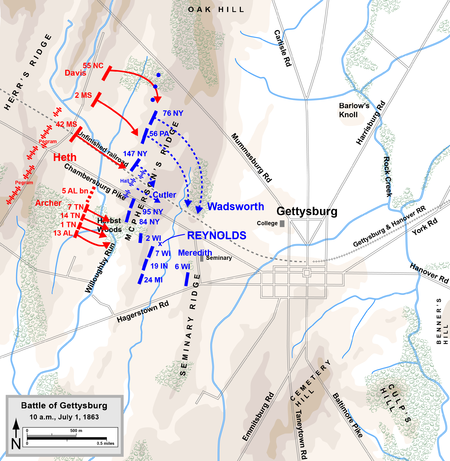
While I will be writing more about the specifics of the battle in the coming days including leadership issues, tactical considerations and even the relationships and friendships between commanders on both sides that transcended the war.

Notes


[i] Ibid. p.429-430

[ii] Millet, Allan R. and Maslowski, Peter, For the Common Defense: A Military History of the United States The Free Press a Division of Macmillan Inc. New York, 1984 p. 221

[iii] Sears, Stephen W Gettsyburg Houghton Mifflin Company Boston and New York, 2004 p.51

[iv] Ibid. Weigley, Russell. The American Way of War p.116

[v] Ibid. Millet and Maslowski p.220

[vi] Ibid.


[i] Foote, Shelby, The Civil War, A Narrative. Volume Two Fredericksburg to Meridian Random House, New York 1963 pp.432-433

[ii] Ibid. p.433

[iii] Weigley, Russell. The American Way of War Indiana University Press, Bloomington Indiana 1974, p.115

[iv] Weigley, Russell F. American Strategy from Its Beginnings through the First World War. In Makers of Modern Strategy, from Machiavelli to the Nuclear Age edited by Paret, Peter, Princeton University Press, Princeton New Jersey 1986. P.429


[i] Fuller, J.F.C Grant and Lee: A Study in Personality and Generalship Indiana University Press, Bloomington Indiana, 1957 p.35

Leave a comment

Filed under civil war, History, leadership, Military

The Gettysburg Campaign: Lee Moves North, the Battle of Brandy Station, Stuart’s Ride and the Relief of Fighting Joe Hooker

on-to-gettysburg-900L

Lee with his Commanders at Williamsport 

Note: This is another of my preparations for for the Gettysburg Staff Ride that I will be conducting with students from the Staff College that I teach. 

On June 3rd 1863 Robert E Lee began to move his units west, away from Fredericksburg to begin his campaign to take the war to the North. He began his exfiltration moving Second Corps under Richard Ewell and First Corps under James Longstreet west. Initially he left A.P. Hill’s Third Corps at Fredericksburg to guard against any sudden advance by Hooker’s Army of the Potomac toward Richmond.

Once it was ascertained that Hooker was not making for Richmond, Hill’s Corps followed and on June 7th all three Corps were reunited at Culpepper. Lee’s movement did not go unnoticed, Hooker’s aerial observers detected the move, but Hooker after throwing pontoon bridges across the river and discovering that Hill’s troops were firmly entrenched made no move to pursue. He asked permission to advance on Richmond but was order not to cross the river, lest his army be exposed and destroyed by a thrust at its rear

CWP015

General J.E.B. Stuart 

Meanwhile, J.E.B. Stuart and his Cavalry Corps had been at Brandy Station near Culpepper for two weeks. On the 5th Stuart staged a grand review of five of his brigades which included a mock charge against the guns of his horse artillery. According to witnesses it was a spectacular event, so realist that during the final charge some women fainted.

As Lee made his move Hooker attempted to ascertain Lee’s intentions. With Lee moving west he asked Lincoln for permission to advance on Richmond, which was denied. Lincoln did not believe that Hooker could take Richmond and believed that if he did it would leave the logistics train of Army of the Potomac as well as Washington exposed to Lee.

General-Hooker-002

Major General Joseph Hooker 

Hooker believed that Stuart’s intent was to disrupt his logistics and communications. He ordered his Cavalry Corps Commander, Major General Alfred Pleasanton to attack Stuart.  On June 9th Pleasanton’s forces, now reorganized under three aggressive division commanders, John Buford, David Gregg and Judson Kilpatrick and reinforced by two brigades of infantry surprised Stuart at Brandy Station.

Cav Fight at Brandy Station

The resultant action was the largest cavalry engagement of the war. Over 20,000 troopers engaged in an inconclusive see-saw battle that lasted most of the day. Stuart claimed victory as he maintained control of the battlefield and inflicted more casualties than his forces incurred.  But the battle was more significant than the number of casualties inflicted or who controlled the battlefield at the end of the day. For the first time Stuart had been surprised by an aggressively led Union Cavalry force.  The Union troopers fought a stubborn and fierce battle and retired in good order. Stuart did not appreciate it but the battle was a watershed, it ended the previous dominance of the Confederate Cavalry arm. It was something that in less than a years’ time would cost him his life.

800px-Brandy_Station_Overview

The Battle of Brandy Station (Map by Hal Jespersen, http://www.posix.com/CW)

However, Stuart’s repulse of Pleasanton’s force did enable Lee’s Army to continue north undetected by Hooker. Ewell’s Corps entered the Shenandoah Valley and defeated a Union force at Winchester on June 14th.  Then with the rest of the Army following he moved to Williamsport Maryland where he called a halt to allow the rest of his corps and the army to come up.

HD_halleckHW4.preview

Major General Henry Halleck 

Hooker was slow to appreciate what Lee was doing. Prodded by Lincoln Hooker moved the Army of the Potomac to a position where it could defend Washington in case Lee was to make a thrust at the Federal capitol. In a series of fierce cavalry clashes west of Washington, Stuart successfully kept the Federal cavalry from discerning the movements of Lee’s Army.

Lee’s initial move to break contact with the Federal Army and keep his movements and intentions secret was an excellent example of deception. Stuart’s success at screening Lee’s movements contributed to Federal confusion. Lee’s deception was so successful that Pleasanton believed that Lee’s objective was Pittsburgh, far to the west. Even when Hooker determined that the bulk of Lee’s infantry was in the Shenandoah he was not certain if Lee would move east toward Baltimore and Washington west or would Lee continue up the valley into Pennsylvania.  

But at this point Lee then made the first of a number of mistakes that would characterize his campaign.  The most grievous of these in my view was his inability to get his commanders to understand his intent. The necessity of subordinate commanders understanding the intent of their superior is essential to the success of any military operation. Lee failed to do this a number of times.

After Stuart recovered from the surprise at Brandy Station Lee gave Stuart permission to move the bulk of his cavalry into the Federal rear.  Lee instructed Stuart that once he determined that Hooker was moving to pursue that Stuart must return to guard Ewell’s flank. However, Lee did not insist on this and left the decision in Stuart’s hands.  When Stuart discovered the Army of the Potomac stationary near Manassas he suggested to Lee that he lead his force around the Federal Army to deceive Hooker as to Lee’s intentions. Lee agreed but told Stuart to maintain close observance of the Federal Army.

Unfortunately his orders left Stuart much in the way of interpretation. He wrote:

You will, however be able to judge whether you can pass around their army without hindrance, doing all the damage that you can, and cross the river east of the mountains. In either case you must move on and feel the right of Ewell’s troops, collecting information, provisions etc.”  Lee added, “Be watchful and circumspect in all your movements.” 

Lee expected Stuart to do this, but his lack of clarity and vagueness allowed to Stuart interpret the order in a manner that benefited him, as he had been stung by criticism of his conduct of the Battle of Brandy Station in the Southern press. For Stuart this was a chance to regain the limelight and add to his luster. He decided to move independently and continue his ride around the Army of the Potomac. It was the last time that Lee had contact with Stuart until the end of the second day of the battle at Gettysburg. Stuart’s absence was critical for it left Lee blind as to the whereabouts of Hooker’s Army or any other threats.
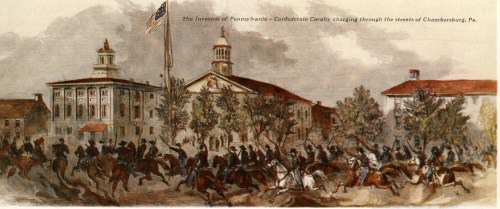
Historians have long wondered why Lee allowed and why Stuart conducted an operation that left Lee blind and had no obvious advantages. Stephen W Sears notes in his book Gettysburg that: “The very concept of Stuart’s expedition was fueled by overconfidence and misjudgment at the highest command level. As soldier-historian Porter Alexander judged the matter, “We took unnecessary risk, which was bad war, & the only bad war too, I think, in all our tactics.” (i)

Lee also took little notice of the events occurring to the west. The siege of Vicksburg was entering its final weeks and with it the hopes of the Confederacy, but Lee was convinced that the war had to be won in the east and quickly.

Lee had no idea that the man directing the campaign against that city, Ulysses S Grant would become his nemesis in less than a years’ time. While Lee had an understanding of all the men who had commanded the armies that he faced, Grant was a man that he never really understood.

As Vicksburg withered and Stuart dithered Lee continued to move north with his Army, crossing into Maryland. By June 24th Ewell’s lead division was near Chambersburg with orders to advance on the Susquehanna and Harrisburg

420px-Gettysburg_Campaign

The Gettysburg Campaign (Map by Hal Jespersen, http://www.posix.com/cw)

As Lee moved north Hooker attempted to convince Lincoln to attack Richmond, but Lincoln did not believe that the Confederate capitol was the key to victory. Lincoln denied Hooker’s request giving the following instruction:

“I think Lee’s army, not Richmond is your true objective point. If he comes toward the Upper Potomac, follow on his flank and on his inside track, shortening your line whilst he lengthens his. Fight him too when the opportunity offers. If he stays where he is, fret him, fret him and fret him.”

Hooker was upset by the constant directives from Lincoln and General Henry Halleck, the General in Chief of the Union Armies. Hooker complained to Lincoln in a letter which seemed to infer that he wanted Lincoln to remove Halleck from his position. On June 15th Lincoln responded:

“To remove all misunderstanding I now place you in the strict military relation to General Halleck of a commander of one of the armies to the general-in-chief of all of the armies. I have not intended differently, but as it seems to be differently understood I shall direct him to give you orders and for you to obey him.”

With that order Lincoln did something that he had not done in relation to the Army of the Potomac since the beginning of the war.  For the first time he enforced unity of command and stopped the commander of that army from directly appealing to him. Lee had tired of commanders such as McClellan and Hooker demanding absolute control of the Army and the war. This time it was Hooker that advocated having “one commander for all the troops whose operations which can have influence on General Lee’s operations.” Lincoln agreed and ensured that Hooker would not be that man.

Neither Lincoln nor Halleck agreed to give Hooker the authority that he demanded.  Lincoln insisted that Hooker obey the orders of Halleck, a man who Hooker despised. The final straw came on June 27th when Hooker demanded that the garrison of Harper’s Ferry be withdrawn and placed under his command. When this was refused he tendered his resignation as commander of the Army of the Potomac. Halleck forwarded that request to Lincoln and promptly sent an order via his Assistant Adjutant General, Colonel James Hardie relieving Hooker of command, simultaneously appointing Major General George Meade, commander of V Corps as the new commander of the army.

june16jenkinscav

By now the movements of Confederate forces deep into Maryland and Pennsylvania gave Lincoln and Halleck the information that they needed about Lee’s movements. Lee’s army was moving toward Harrisburg and the Susquehanna. On the day of Hooker’s relief Lee had no idea that the Union army had already crossed the Potomac, the absence of Stuart had left him blind.

general-george-meade

Major General George Meade 

To this point a number of issues important to those involved in planning campaigns became clear: Deception, commander’s intent and unity of command. Lee successfully used deception to prevent the Federals from discerning his purposes. That was balanced by his lack of clarity in communicating his intent to Stuart. Finally there was the principle of unity of command for the Union forces, something that had eluded Lincoln and his lieutenants throughout the first two years of the war.

All that said, I am going to leave you hanging for the night.

Peace

Padre Steve+


i. Sears, Stephen W. Gettysburg, Mariner Books, Houghton Mifflin Company, Boston and New York, 2003. P.106

1 Comment

Filed under civil war, History, leadership, Military

The Never Ending Struggle Against Racism and Its Terrible Effects

ted-nugent-sotu-ap

On the 149th Anniversary of Pickett’s Charge at the Battle of Gettysburg washed up rocker and right wing political activist Ted Nugent wrote in the Washington Times: “I’m beginning to wonder if it would have been best had the South won the Civil War.”  I found his remark appalling and disgraceful but I have come to expect such comments from him and and others who voice similar sentiments. If Nugent’s rant was a one time slip of the tongue there might be some grace, but even last week he called President Obama a “subhuman mongrel” a term so load with Ku Klux Klan, Jim Crow and Nazi imagery it defies imagination to hear it used today. When I hear such words spoken towards anyone I can only believe that the man that utters them is an unrepentant racist bent on the reestablishment of White Supremacy.

When I hear such sentiments, I think of men like Joshua Chamberlain. Chamberlain was a college professor who served in the Union Army and won fame and the Medal of Honor for the defense of Little Round Top at Gettysburg. There is a quote from the film Gods and Generals which I think about when I hear anyone suggesting that it would have been better for the Confederacy to have won the war:

“Now, somewhere out there is the Confederate army. They claim they are fighting for their independence, for their freedom. Now, I can not question their integrity. I believe they are wrong but I can not question it. But I do question a system that defends its own freedom while it denies it to an entire race of men. I will admit it, Tom. War is a scourge, but so is slavery. It is the systematic coercion of one group of men over another. It has been around since the book of Genesis. It exists in every corner of the world, but that is no excuse for us to tolerate it here when we find it right in front of our very eyes in our own country. As God as my witness, there is no one I hold in my heart dearer than you. But if your life, or mine, is part of the price to end this curse and free the Negro, then let God’s work be done.”

There is a spot near the Copse of Trees along Cemetery Ridge which is referred to as the “High Water Mark of the Confederacy.” It is close to where Confederate Brigadier General Lewis Armistead fell mortally wounded as the decimated remains of his command were overwhelmed by Union forces shortly after they breached the Union line. It is a place immortalized in history, literature and film. It is the place that marked the beginning of the end for the great evil of slavery in America.

My ancestors lived in Cabell County which in 1861 was part of Virginia. They were slave holders along the Mud River, a tributary of the Ohio River just to the north of what is now Huntington West Virginia. When war came to the country the family patriarch James Dundas joined the 8th Virginia Cavalry Regiment in which he served the bulk of the war as a Lieutenant.  When the war ended he refused to sign the loyalty oath to the Union. As a penalty his lands, which are now some of the most valuable in that part of West Virginia were confiscated and sold by the Federal Government. James Dundas was a true believer in the romantic and confused myth of the “Lost Cause.”

Because he served I am eligible for membership in the Sons of the Confederacy. But that is something that I will not do. While some join that organization to honor their ancestors, others that take that devotion to places that I cannot go.  As much as I admire the valor and personal integrity of many military men who served the Confederacy I cannot for a moment think that their “cause” was just.

It has been said that the North won the war but that the South won the history.  I think this is true. Many people reduce the reasons for the war to the South protecting its rights.  Sometimes the argument for the South is “states rights” or “economic freedom.” Those that make these arguments frequently romanticize the valor shown by Confederate soldiers on the battlefield. But sadly they often ignore or obscure the racism and evil of the Southern economic system.

full_1361408284slave.market

The “rights” and the “economic freedom” espoused by those that led the secession and that are lamented by those like Nugent were categorically evil. Those rights and freedoms were built upon the rotten edifice of slavery. The South fought to maintain their rights to enslave and exploit Blacks to maintain an archaic economy based on agriculture, particularly the export of King Cotton. Thus I have no desire to become part of an organization enshrines the myth of the “Lost Cause” no matter what my family connections.

Some attempt to place the blame on the North, to turn the Northern States into economic predators’ intent on suppressing the economic rights of Southerners. These arguments serve to show the bankruptcy of the idea itself. The fact that the “economic and political freedom” of Southerners was founded on the enslavement of a whole race of people matters not because to such people the “cause” is greater.

The fact was that the longer the Southern economy relied on agriculture supported slavery it deprived itself of the means of economic progress. The same progress that propelled the North to prosperity. Because it cast its lot with King Cotton and slavery the South lagged in all industrial areas to include transportation infrastructure. Most non-slave owning whites lived at the poverty line. They were disrespected by the wealthy Plantation owners only enjoyed some elevated social status because the slaves ranked beneath them in the sociological and economic hierarchy.
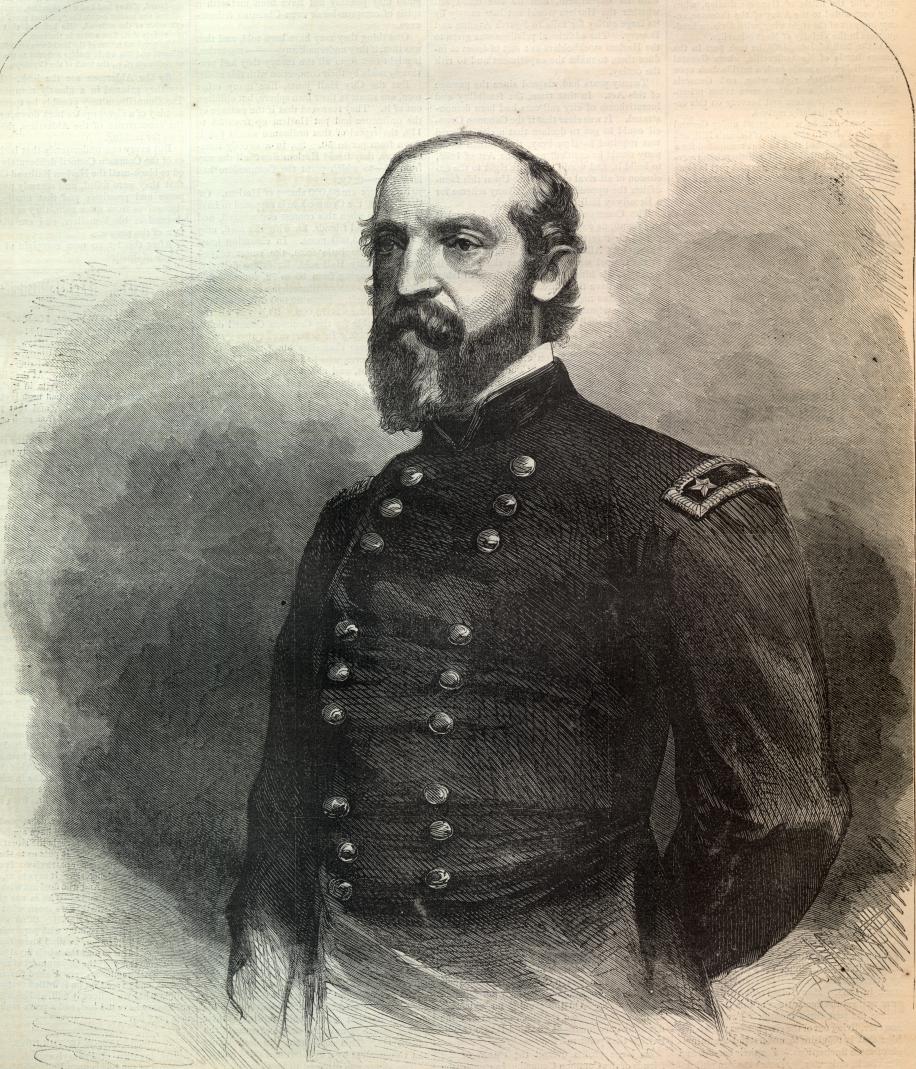
To support its slave economy the South depended on cheap imports from England, which then was still considered an enemy of the United States. When tariffs to protect newly establish American industries were enacted in 1828 South Carolina attempted to nullify the Federal law and even raised troops and threatened to revolt in 1832.
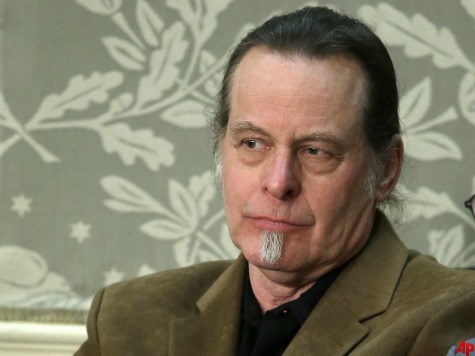
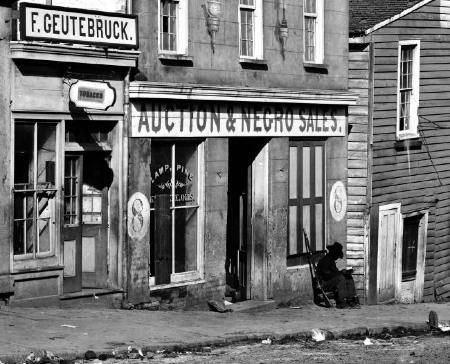
The Southern economic system was immoral and antiquated. It enslaved blacks and it impoverished most rural Southerners.  The only exception to this were those that owned the land and the slaves, and small numbers of entrepreneurs. It was a hateful, backward and loathsome system which even Southern churches attempted to justify from Scripture.  Southern Baptists, Methodists and Presbyterians all broke away from their parent denominations in the 1840s over the issue of slavery.

So many died and so much of the South was destroyed in the defense of  the “cause” that one has to wonder just why Southern political and religious were willing to defend such an inadequate and evil economic system. Perhaps it was an innate sense of racial superiority that ran deep in the South, perhaps it was a misplaced sense of political pride and honor. Regardless of the reason, the war that they brought about devastated their homeland. The radicals that ran “Reconstruction” after the assassination of Abraham Lincoln ensured that Southerners suffered terrible degradation and impeded any real efforts to promote reconciliation between the races and between the regions.  Their misguided and often brutal rule ensured that Southern blacks would have even more obstacles raised against them by the now very angry and revengeful whites.  It would take another 80-100 years to end segregation and secure voting rights for blacks.

I was raised on the West Coast but have lived in the South much of my adult life due to military assignments. I served in National Guard units that trace their lineage to Confederate regiments in Texas and Virginia. Despite my Confederate connections both familial and by service I can find little of the romance and idealism that some find in the Confederacy and the “Lost Cause.” I see the Civil War for what it was, a tragedy of the highest order brought about by the need of some to enslave others to maintain their economic system.

BWeqwULCEAA72jU.jpg-large

Today there are many that use the flags of the Confederacy outside of their historic context. They are most often used as a symbol of continued racial hatred or of defiance to the Federal Government by White Supremacist or anti-government organizations.  Many that use them openly advocate for the overthrow of the Federal Government.  The calls for such “revolt” can be found all over the country even in the halls of Congress much as they were in the 1830s, 40s and 50s.

Some of this is based on libertarian economic philosophy which labels the government as the enemy of business. Some is religious opposition to some social policies, while some is based in xenophobic racial hatred, not just of Blacks, but also Latin Americans, Asians and Middle Eastern immigrants. The divisions in the country are probably as great as or greater than they were in the 1850s as the country lurched inexorably to Civil War.

I often see the symbols of the Confederacy, particularly the Battle Flag displayed in manners that can only be seen as symbols of defiance.  Somehow I find the display of that flag outside of its historic context revolting.

For such people the Federal Government is the enemy. I know that our system of government has its flaws. Likewise I cannot agree more about the corruption of many in political office, regardless of their political allegiance or ideology.

Today quite a few people on the political right call for revolt or secession. Some moderate politicians have attempted to compromise with such radicals, but those efforts only make things worse. Radicals are never satisfied and view compromise as weakness. Thus Thomas Jefferson said of the Missouri Compromise of 1824: “but this momentous question, like a fire bell in the night, awakened and filled me with terror. I considered it at once as the knell of the Union. It is hushed indeed for the moment, but this is a reprieve only, not a final sentence. A geographical line, coinciding with a marked principle, moral and political, once conceived and held up to the angry passions of men, will never be obliterated; and every new irritation will mark it deeper and deeper.”

We have allowed the issues of our time to become a fire of unbridled angry passion. We have allowed those with almost no historical understanding and who promote myth stake claims and promote ideas that are destructive to our union. Unfortunately I do not think that we have reached the high water mark of this movement. I fear like Jefferson that the hatred and division will only grow worse as some prepare for conflict.

A few months after the Battle of Gettysburg Abraham Lincoln made a few remarks at Gettysburg war cemetery.  Lincoln is reviled by men like Nugent and others that romanticize the Lost Cause. He is often demonized by many “conservative” politicians and pundits today, but his remarks are still remarkably pertinent:

“Four score and seven years ago our fathers brought forth on this continent, a new nation, conceived in Liberty, and dedicated to the proposition that all men are created equal.

Now we are engaged in a great civil war, testing whether that nation, or any nation so conceived and so dedicated, can long endure. We are met on a great battlefield of that war. We have come to dedicate a portion of that field, as a final resting place for those who here gave their lives that that nation might live. It is altogether fitting and proper that we should do this. But, in a larger sense, we cannot dedicate—we cannot consecrate—we cannot hallow—this ground. The brave men, living and dead, who struggled here, have consecrated it, far above our poor power to add or detract. The world will little note, nor long remember what we say here, but it can never forget what they did here. It is for us the living, rather, to be dedicated here to the unfinished work which they who fought here have thus far so nobly advanced. It is rather for us to be here dedicated to the great task remaining before us—that from these honored dead we take increased devotion to that cause for which they gave the last full measure of devotion—that we here highly resolve that these dead shall not have died in vain—that this nation, under God, shall have a new birth of freedom— and that government of the people, by the people, for the people, shall not perish from the earth.”

Today with so many radicals doing all that they can to plunge us into yet another civil war we should remember Lincoln’s words. We need to rededicate ourselves to this Union.  Tony Blair the former Prime Minster of Great Britain remarked in 2011:

“It may be strange for a former British Prime Minister to offer thoughts on America when the country will be celebrating its independence from Britain. But the circumstances of independence are part of what makes America the great and proud nation it is today. And what gives nobility to the American character.

That nobility isn’t about being nicer, better or more successful than anyone else. It is a feeling about the country. It is a devotion to the American ideal that at a certain point transcends class, race, religion or upbringing. That ideal is about values, freedom, the rule of law, democracy. It is also about the way you achieve: on merit, by your own efforts and hard work.

But it is most of all that in striving for and protecting that ideal, you as an individual take second place to the interests of the nation as a whole. This is what makes the country determined to overcome its challenges. It is what makes its soldiers give their lives in sacrifice. It is what brings every variety of American, from the lowest to the highest, to their feet when “The Star-Spangled Banner” is played.

Of course the ideal is not always met – that is obvious. But it is always striven for.

The next years will test the American character. The world is changing. New powers are emerging. But America should have confidence. This changing world does not diminish the need for that American ideal. It only reaffirms it.”

I think that the Prime Minister got it right and that Ted Nugent and those like him or defend his hateful ideology are ignorant racist fools. But hatred, ignorance and the belief in myth are often quite powerful in the hands of those who desire to maintain their power at any cost. History proves this, thus we must always confront them and not back down until we truly know that “new birth of freedom.”

Peace

Padre Steve+

Leave a comment

Filed under civil rights, civil war, News and current events, Political Commentary