Tag Archives: al qaida

Taking the Wrong Train

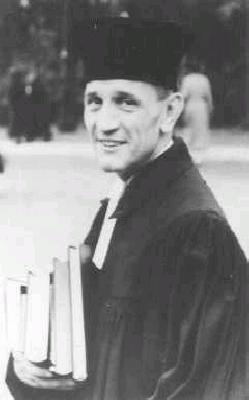
Martin Niemöller

“If you board the wrong train, it is no use running along the corridor in the other direction.” Dietrich Bonhoeffer

Martin Niemöller was a war hero.  He had served on U-Boats during the First World War and commanded a U-Boat in 1918 sinking a number of ships.  After the war he resigned his commission in the Navy in opposition to the Weimar Republic and briefly was a commander in a local Freikorps unit. His book Vom U-Boot zur Kanzel (From U-boat to Pulpit) traced his journey from the Navy to the pastorate. He became a Pastor and as a Christian opposed what he believed to be the evils of Godless Communism and Socialism.  This placed him in the very conservative camp in the years of the Weimar Republic and he rose in the ranks of the United Evangelical Church of the Old Prussian Union.  Active in conservative politics, Niemöller initially support the appointment of Adolf Hitler as Chancellor.  After the war he said:

“I hated the growing atheistic movement, which was fostered and promoted by the Social Democrats and the Communists. Their hostility toward the Church made me pin my hopes on Hitler for a while. I am paying for that mistake now; and not me alone, but thousands of other persons like me.”

However, he quickly soured on Hitler due to his insistence on the state taking precedence over the Church.  Niemöller was typical of many Germans of his era and harbored ant-Semitic sentiments that he only completely abandoned his anti-Semitic views until after he was imprisoned.  He would spend 8 years as a prisoner of the Nazis a period hat he said changed him including his views about Jews, Communists and Socialists.  Niemöller was one of the founding members of the Pfarrernotbund (Pastor’s Emergency Federation) and later theConfessingChurch. He was tried and imprisoned in concentration camps due to his now outspoken criticism of the Hitler regime.

Herman Maas was another Evangelical Pastor.  Unlike Niemöller, Maaswas a active participant in the ecumenical movement, built bridges to the Jewish community and defended the rights of Jews as German citizens.  He received a fair amount of criticism for his attendance of Reichspräsident Friedrich Ebert’s funeral.  Ebert was both a Socialist and avowed atheist.  Maastoo was active in the Pfarrernotbund and the Confessing church, and unlike Niemöller maintained his opposition to anti-Semitism and the Nazi policies against the Jews. He would help draft the Barmen declaration.  He too would be imprisoned and survive the war.  Maaswas the first non-Jewish German to be officially invited to the newly formed state of Israelin 1950. In July 1964 Yad Vashem recognized the Maasas one of the Righteous Among the Nations.
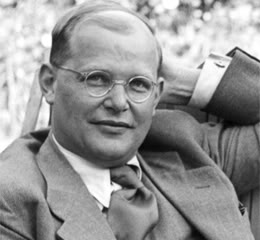
Dietrich Bonhoeffer

Dietrich Bonhoeffer a young Pastor and theologian would also step up to oppose the Nazis and offer support for the Jews.  He helped draft the Bethel Confession which among other things rejected “every attempt to establish a visible theocracy on earth by the church as a infraction in the order of secular authority. This makes the gospel into a law. The church cannot protect or sustain life on earth. This remains the office of secular authority.”  He also helped draft the Barmen declaration which opposed and condemned Nazi Christianity.  Bonhoeffer would eventually along with members of his family take an active role in the anti-Nazi resistance as a double agent for Admiral Canaris’ Abwehr.  For this he would be executed after his final sermon in the concentration camp at Flossenburg just a month prior to the end of the war.

Another opponent of the Nazis in the Confessing Church was Swiss-German theologian Karl Barth.  Barth went into exile as a Swiss citizen but remained active in the criticism of the Nazi regime.

Bishop Galen of Münster and others including Father Rupert Meyer inMunichwho opposed Hitler in the early 1920s would also oppose the Nazi policies toward the Church and the Jews.  They would also end up in concentrations camps with some dying at the hands of the Nazis.

All these men took risks to defend the Jews who were religious minority group that had been traditionally discriminated against inGermany.  They opposed the Nazi policies which were widely supported by much of the German populace making them unpopular in their own churches as among the traditionally conservative supporters of the Evangelical and Catholic Churches.  The Jews were not simply discriminated against as a racial or religious group but also identified with the political left, especially the Social Democrats, Independent Socialists, Communists and the Spartacists. Since the Independent Socialists, Communists and Spartacists were all involved in attempts to create a Soviet state during the early tumultuous years ofWeimarand been involved in many acts of violence against traditional German institutions and the state, they were viewed by Hitler and others as part of the Bolshevik-Jewish threat toGermany.  Karl Liebnicht and Rosa Luxembourg were among the high profile leaders of this movement inGermanyand both were Jewish.  The fact that many in the leadership of the Bolshevik movement in theSoviet Unionwere Jewish added fuel to the fire that the Nazis stoked inGermany.  Hitler and the Nazis played on the historic, but muted prejudice against German Jews who in many cases were more secular and German than religious and had assimilated well inGermany.  Hitler’s rhetoric as well as that of other Nazis and Nazi publications helped identify the Jews as part of the “Stab in the back” myth that was commonly used by the German right to explain the defeat in the First World War.  Thus they were painted as a political and social threat to Germany.

When Hitler took power persecution of the Jews began in earnest.  Jews were along with Communists, Trade Unions and Socialists enemies of the state.  They were banned from the military, civil service and other government employment, professional associations and forced to wear a gold Star of David on their clothing.  Their property was seized, many were abused by SA men acting as deputized auxiliary police and many times their businesses, Synagogues and homes were vandalized, burned or seized by the state.  Many would be forced to flee in order not to be sent to ghettos and concentration camps.  Even those leaving only escaped with the minimum of their possessions as the Nazi regime extorted anything of value from them as they leftGermany.  This was all done because Hitler and those like him portrayed the Jews as not only an inferior race, but enemies of the state and the German people.

Today we face a similar movement in conservative circles in the United States.  This time it is not the Jews but Moslems who are the targets of the xenophobic rage by many influential members of the “conservative” media including Rush Limbaugh, Sean Hannity and numerous others.  Their popularity in voicing support for “Christian morale values” such as being against abortion has ingratiated them with conservative Christians.  It is so bad that that many “conservative” Christians cannot differentiate between their vitriolic and un-Christian rage against Moslems, Gays and Lesbians, trade unionists, Democrats or anyone else portrayed by the big media talkers and the Gospel.

It is if they have become an appendage to Republican or “conservative” politicians rather than a Christian church.  It is not uncommon to see Christians on the web or on the call in talk radio programs identify lock stock and barrel with Limbaugh and others identifying the crass materialism and social Darwinism of “pure” Capitalism and the anti-Christian policy of pre-emptive war.   That may seem harsh, but many of these people in the “Conservative Bible project” seek to re-translate the Bible into their own political, social and economic policies even seeking to change or minimize any Scripture that might be equated with the “Social Gospel.”  Unfortunately many Christians and others have jumped in on the anti-Moslem and anti-immigrant crusades launched by those on the far right.

There are those on the far right that advocate eliminating all Moslems from the military, government, security intelligence and police forces and even universities as did Timothy Rollins of “The American Partisan.”

“this can best be done by enacting the Great Muslim Purge from our military and other national security apparatuses. These people need to be removed from every security post, even to be completely removed from all levels of government employment, be it federal, state, county, city or other municipality. This applies especially to universities….”

Glenn Beck made this comment about a people reacting against Moslems:

“When things—when people become hungry, when people see that their way of life is on the edge of being over, they will put razor wire up and just based on the way you look or just based on your religion, they will round you up. Is that wrong? Oh my gosh, it is Nazi, World War II wrong, but society has proved it time and time again: It will happen.”
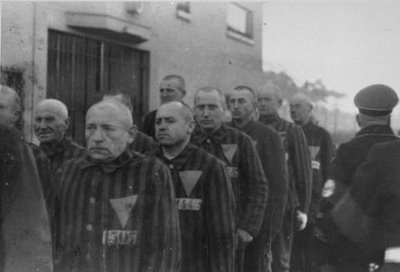
Doug Giles a seminary educated columnist for Townhall.com a leading conservative opinion site made this comment

“Please note: If Christ wasn’t cool with irrigating irate Islamicists for facts, I must admit, I would still have to green light our boys getting data from enemy combatants 007 style. Stick a fire hose up their tailpipe and turn it on full blast. I don’t care. I’m not as holy as most of you super saints or as evolved as some of you progressive atheists purport to be. Security beats spirituality in this scenario, as far as I’m concerned.”

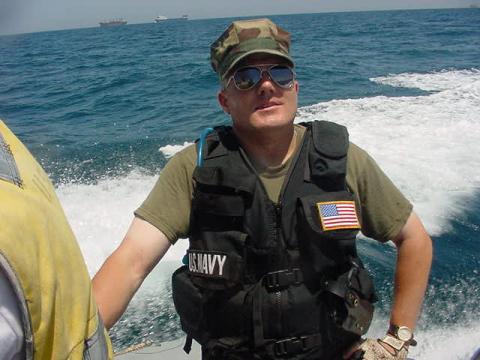
Similar threats are made against non-European immigrants especially those from Mexico or Latin America.  I have a friend; a Navy Officer who served a year in Iraq that was confronted by a member of the “Minutemen” inTexasto show his Green Card and threatened simply because he is Mexican.   Others especially conservative Christians suggest criminalizing homosexuality, jailing homosexuals and even deporting them.

This is so similar to the Nuremberg Laws and the Aryan Paragraph issued by the Nazis that it is scary.  Likewise the threats to American Moslems of placing them “behind razor wire” as we did to American Japanese citizens in World War II are chilling.  I wonder how Christians would react if an atheist or someone on the political left suggested all conservative Christians or members of pro-Life groups be imprisoned for the actions of Christians or pro-Life movement members like Scott Roeder or Eric Rudolph who killed to stop abortion or Fred Phelps and his Westboro Baptist Church?

This new found militancy has swept up the “Christian right” and others since 9-11 and has reached proportions that I could never have imagined. After my tour in Iraq I realized that much of what these people were saying was not Christian at all and when taken to their logical conclusion would be a police state in which anyone who opposed them would be persecuted.  I question the motivations of the leaders of the movement but believe that most of the Christian conservatives have been caught up in the anger and the emotion of the times versus being true believers in what these men say.  That being said, you don’t have to be a true believer to be a willing accomplice in actions that first are not Christian and second trample on the Constitutional rights of American citizens.

I could keep citing examples but if someone can show me where this is condoned in the Gospels I would like to know.  The fact is that Christians are to place God first and defend the rights of others, even non-believers.  This is found not only in Scripture but runs through the Christian tradition across the denominational spectrum.

What the good people who suggesting these “collective guilt” actions against American Moslems do is dangerous, not just for Moslems and other minorities but ultimately for them.  American and English law is based on legal precedence.  Once something has been determined to be legal, or constitutional it is considered by the law to be settled law.  This is a point made by Chief Justice Roberts regarding Roe v. Wade at his confirmation hearings.  If Christians want to use the law against Moslems or for that matter any other minority be it religious or political they tread on very dangerous ground.  Not only do they make a mockery of the Gospel command to love our neighbors, care for the foreigners among us and to be a witness to non-Christians support policies or laws that if enacted could and very well would be used against them by their opponents.

Law is all about precedent and if such laws were enacted and upheld by the courts they would be settled law that could be used against anyone.   What these dear brothers and sisters fail to realize is that such laws can be turned against them if the state should ever decided based on the statements of actions of some that the Christian community is a threat to state security of the public welfare.  With the actions of some radical Christians who have committed murder and violence against political, social and religious opponents it would not be hard for the government to label whole churches as enemies of the state.  The law is a two edged sword and those who want to use it to have the state enforce their religious, social, ideological or political beliefs on others need to remember what comes around goes around.

The Confessing church understood this and many were imprisoned, exiled or killed for this belief.  The founding fathers of this country understood this too, that is why there is the Constitution protection of Religion in the First Amendment.  This was put in because Virginia Baptists who had been persecuted by Anglicans lobbied James Madison for the amendment in the Bill of Rights threatening to withdraw their support for his candidacy if he did not.  Niemöller would discover the depths of his earlier folly in prison telling one interviewer after the war:

“I find myself wondering about that too. I wonder about it as much as I regret it. Still, it is true that Hitler betrayed me. I had an audience with him, as a representative of the Protestant Church, shortly before he became Chancellor, in 1932. Hitler promised me on his word of honor, to protect the Church, and not to issue any anti-Church laws. He also agreed not to allow pogroms against the Jews, assuring me as follows: ‘There will be restrictions against the Jews, but there will be no ghettos, no pogroms, in Germany. I really believed given the widespread anti-Semitism in Germany, at that time—that Jews should avoid aspiring to Government positions or seats in the Reichstag. There were many Jews, especially among the Zionists, who took a similar stand. Hitler’s assurance satisfied me at the time. On the other hand, I hated the growing atheistic movement, which was fostered and promoted by the Social Democrats and the Communists. Their hostility toward the Church made me pin my hopes on Hitler for a while. I am paying for that mistake now; and not me alone, but thousands of other persons like me.”

It is easy for well meaning people Niemöller to be bought with promises of support by politicians and media types who speak the words they want to hear in difficult times.  So today I suggest the formation of an ecumenical Pastor’s Emergency League which will not be bought by the empty and godless promises of hate mongers on the right or the left.  Such a group of men and women spanning the breadth of the Christian tradition and others that see the danger of extremism of all types is becoming necessary.  Such a step is becoming necessary due to the militancy of the Christian right as well as the militancy of atheist groups who lobby against all public religious expression by any religion.  Such a League would respect the various creeds and statements of faith of each member’s denomination.  The movement o the right has set a dangerous course fraught with perils that they do not comprehend. Just allow those that they believe are oppressing or persecuting them now to be empowered with the precedent of laws discriminating against specific religious groups against the Christians that supported them in the first place.  It will be a bitter poison indeed when that happens to them later if American Moslems were to be targets by such laws.

We have entered a dangerous phase of American history.  These movements have the potential not only to oppress law-abiding and patriotic American Moslems and to crush the religious freedoms of all in this county. Suggesting that American citizens, including those who serve the county in the military or government of entire religious, ethnic, political or religious affiliation, sexual preference be jailed, banned from office or fired is totalitarian and dare I say Nazi like.

Niemöller would say it well in this poem:

First they came for the communists, and I did not speak out—because I was not a communist;
Then they came for the socialists, and I did not speak out—because I was not a socialist;
Then they came for the trade unionists, and I did not speak out—because I was not a trade unionist;
Then they came for the Jews, and I did not speak out—because I was not a Jew;
Then they came for me—and there was no one left to speak out for me.

Peace,

Padre Steve+

2 Comments

Filed under christian life, faith, History, philosophy, Political Commentary, Religion

The Bond

This story shall the good man teach his son;
And Crispin Crispian shall ne’er go by,
From this day to the ending of the world,
But we in it shall be remembered-
We few, we happy few, we band of brothers;
For he to-day that sheds his blood with me
Shall be my brother; be he ne’er so vile,
This day shall gentle his condition;
And gentlemen in England now-a-bed
Shall think themselves accurs’d they were not here,
And hold their manhoods cheap whiles any speaks
That fought with us upon Saint Crispin’s day.

From the Speech of King Henry V at Agincourt in Shakespeare’s “Henry V” 1599

In the midst of the petty politics surrounding the Afghan War so so ponderously and pompously purveyed by politicians and pundits of all strains I feel the need to speak up for that small band of brothers that has served in these wars. They are to steal a phrase applied to a previous generation the “New Greatest Generation” something that I am loathe to apply to much of the population at large.  You see the cost of these wars is finally beginning to sink in, at least the financial cost. I’m not so sure that the human cost factors in for most people because the tiny percentage of the population that serve in the wars. The fact is that the volunteer military is an insular community which for the most part is based on bases away from most of the population. We used to have big bases in or near major cities, the New York Naval Yard, the Presidio of San Francisco, Long Beach Naval Shipyard, Fort Devens Massachusetts near Boston, Fort Benjamin Harrison Indiana at Indianapolis.  But after the Cold War they and hundreds of other bases were eliminated and with them a connection to the active duty military.  That is not the fault of the people in the big cities it just happened that way, no the military with a few exceptions is based away from most of the population. As a result people may support the troops but most have no idea what they do, how they live and what they suffer.

In spite of that this new Greatest Generation’s accomplishments will largely go unheralded by history. Unlike the “Greatest Generation” of World War Two they will probably not receive the full honors and accolades due them.  This brotherhood of war who have served in the current War on Terror, Iraq and Afghanistan campaigns have now been serving in a war that is now twice as long as the American involvement in World War Two.  Many, like me have been in this since the beginning and many have made multiple deployments to the combat zones.  And many of us, if not most of us would go again. I know that I would because part of me is still in Iraq; for me this war is still un-won and un-finished.

The battles, Fallujah, Ramadi, Haditha, Mosul, Baghdad, Tal Afar, Marjah, Kandahar, Anaconda, Wanat and thousands of other places significant and insignificant are vivid in the minds of those that were there. Unfortunately for most of their countrymen they might as well be on a different planet.

With no disrespect to the Greatest Generation of World War Two, all of the current Soldiers, Sailors, Marines, Airmen and Coast Guardsmen volunteered to serve in time of war.  At any given time only about one half of one percent is in uniform.  In the three years and ten months of the Second World War about 16.1 Million Americans served in the military, the vast majority being draftees.  Likewise the current generation has fought the war alone.  The vast bulk of the country has lived in peace untouched by any inconvenience to daily life such as gas and food rationing, requirements to work in war industries and the draft as were citizens in World War Two.  In the Second World War Americans shared the burden which in large part has not occurred in this war.  While many have pitched in to help and volunteered to help veterans and their families the vast majority of people in this country are untouched by the war, not that there is anything wrong with that.  This is simply a comparison of the situation that those who served in World War Two and the present conflicts faced.  So I have to say that our current “Greatest Generation” is only a small part of the generation, as the line in Henry V “we few, we happy few who fought together….”

These Soldiers, Sailors, Marines and Airmen from the United States as well as our Allies who serve alongside of us are my brothers and sisters.  They too are volunteers and represent a miniscule portion of their countries population. I am friends with military personnel from the UK, Canada and Germany who have served in the various combat zones or at sea and met quite a few others from France, the Netherlands and Australia. Of course my Iraqi friends who I served with while with our advisers in Al Anbar province who are not only trying to bring peace and stability back to their country but have to worry about the possibility that their families become the target of terrorists.

There are a number of things that unite us in this relatively small brotherhood.  However, I think that this brotherhood could also be extended to our brothers who fought in Vietnam, French, Vietnamese, Australian, South Korean and American, the French who served in Algeria and the Americans and others that served in Korea.  All of these wars were unpopular. All had little support on the home front and often returning veterans found themselves isolated and their sacrifices ignored or disrespected.  For those Americans who serve in the current wars I can say that at least to this point the public has been much more supportive than they were to our Vietnam brothers, many of who were even disrespected by World War Two vets who had fought in “a real war.”  I cannot count the Gulf War in this list as it was hugely successful and the returning vets were hailed as conquering heroes with ticker tape parades.

Our shared brotherhood includes our scars, physical, psychological, neurological and spiritual.  Those who served on the ground in Iraq and Afghanistan as well as those who served in Vietnam, French Indo-China and Algeria have a common shared experience.  All fought people who didn’t or don’t like foreigners no matter how noble our intentions and who by the way have a long history of outlasting people that they believe to be invaders or occupiers.  We have had to fight wars with no front lines, no major units arrayed against us, but rather asymmetrical threats propagated by creatively devious foes who use low tech easily available technology and a willingness to sacrifice themselves and others to force attempt to kill us.  Thus we have cleverly designed and often quite powerful IEDs or Improvised Explosive Devices which can obliterate a HUMMV.

These threats create a situation where there is no front line and thus where every excursion outside of a FOB (Forward Operating Base) or COP (Coalition Outpost) is automatically a trip into a potential danger zone.  Enemies can infiltrate bases posing as local nationals in either military uniform or as workers, rockets and mortars can be lobbed onto even the largest and most secure bases at any time and any vehicle driving by you on the road could be loaded with explosives and just waiting to blow you up while insurgents with automatic weapons and Anti-Tank Rocket Propelled Grenades (RPGs) have taken down helicopters.  When you have taken fire on the road, in the air and had rockets whiz over your head you this becomes a reality that you never forget.

As a result we many men and women with physical wounds as well as wounds that have damaged the psyche or the soul.  PTSD is very common either from a direct encounter or the continual wear and tear of being in a danger zone wondering if you were to get hit that day every day of a tour.  I have lost count now of people that I know who have mild to severe symptoms of PTSD.  Traumatic Brain injury is another condition men and women attacked by IEDs, mortars and rockets experience. Likewise there are the injuries that shatter the soul.  These are the images of ruined buildings, burned out vehicles, wounded bodies, injured children, refugees and wars desolation that can leave a person’s faith in God, or ideals that he or she believes in weakened or even destroyed.  There are the smells of smoke, death, diesel, garbage and sewage that when encountered far away from the combat zone send us back.

The wars have been costly in lives and treasure.  The “up front” casualty numbers are below; they do not include those with PTSD or mild to moderate TBI. They also do not count those that have died later after their service in VA or other civilian care, those that did not report their injuries and those that have committed suicide.

Iraq                   KIA    US  4463       UK 179    Other  139           Total  4781

Afghanistan     KIA  US  1637         UK 374     Other 537        Total  2548

US Wounded   Iraq  32227      Afghanistan   11191

The financial cost: over 1.2 trillion dollars and counting.

As many idealistic and patriotic military personnel question God, their National Leadership and even themselves because of their experience in Iraq or Afghanistan.  I cannot get the image of a refugee camp on the Iraqi Syrian border full of Palestinian refugees who have nowhere to go; they had been invited to Iraq under Saddam and have been sitting on the border trying to get home for years now.  The Palestinian authority wants nothing to do with them. I cannot smell smoke or hear a helicopter or pass a freshly fertilized field without being reminded of Iraq.

These men and women are my brothers and sisters.   I have seen quite a few of my colleagues at the Naval Medical Center and Naval Hospital deploy and deploy, the medical personnel don’t get much of a break.  These are my friends and I do get concerned for them and pray earnestly for their safe return.  I wish that I could go with them because I know them and have already walked with them through the dark valley of the shadow of death in the Medical Center ICU or the wards and clinics of the Naval Hospital.  We already have a bond that will not be broken.

It is now four years since I was in the process of leaving for Iraq and three years since my PTSD crash.  However, I still would do it again in a heartbeat.  There is something about doing the job that you were both trained to do and called to do that makes it so.  Likewise the bonds of friendship and brotherhood with those who you serve are greater than almost any known in the human experience.  Shared danger, suffering and trauma bind soldiers together, even soldiers of different countries and sometimes with enemies.  I remember the conversation that I had with an Iraqi Merchant Marine Captain on a ship that we had apprehended for smuggling oil violating the United Nations sanctions.  The man was a bit older than me, in his early 60s.  He had been educated in Britain and traveled to the US in the 1960s and 1970s. He had the same concerns as any husband and father for his family and had lost his livelihood after Saddam invaded Kuwait in 1990.   He was a gentleman who provided for his crew and went out of his way to cooperate with us.  In our last meeting he said to me: “Someday I hope that like the Americans, British and the German soldiers at the end of the Second World War can meet after the war is over, share a meal and a drink in a bar and be friends.”  That is my hope as well.

In the final episode of the series Band of Brothers there is a scene where one of the American soldiers, Joseph Liebgott who came from a German Jewish family interprets the words of a German General to his men in the prisoner compound.  The words sum up what the Americans had felt about themselves and likewise the bond that all soldiers who serve together in war have in common, if you have seen the episode you know how powerful it is, I ended up crying when I heard it the first time and cannot help but do so now that I have been to the badlands of Al Anbar Province.

“Men, it’s been a long war, it’s been a tough war. You’ve fought bravely, proudly for your country. You’re a special group. You’ve found in one another a bond that exists only in combat, among brothers. You’ve shared foxholes, held each other in dire moments. You’ve seen death and suffered together. I’m proud to have served with each and every one of you. You all deserve long and happy lives in peace.”

As do we.

Peace

Padre Steve+

2 Comments

Filed under History, iraq,afghanistan, Military, PTSD, shipmates and veterans, Tour in Iraq

Why History Matters: The Disastrous Effects of Long Insurgency Campaigns on the Nations that Wage them and the Armies that Fight Them

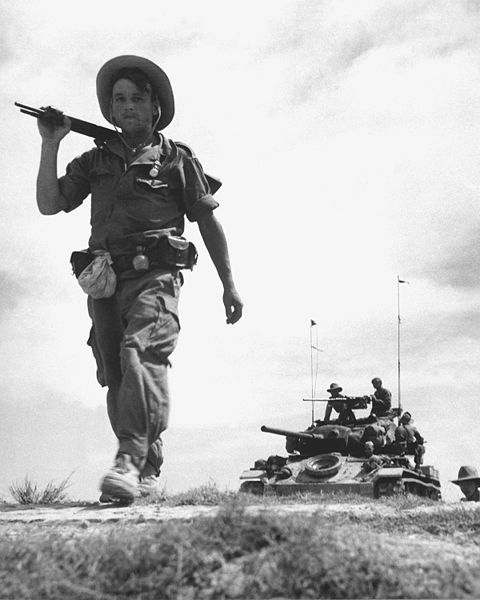
French Mobile Group in Indochina

“Any future defense secretary who advises the president to again send a big American land army into Asia or into the Middle East or Africa should ‘have his head examined,’ as General [Douglas] MacArthur so delicately put it.” Secretary of Defense Robert Gates

The effects of the wars Indo-China, Algeria and Vietnam on the French and American military organizations internally and in relationship to their nations piqued my interest in 2005. The wars in Iraq and Afghanistan forced me to start asking the question of what short and long term effect that these wars might have on the U.S. military. As such I wondered what historical precedent that there was for the question. My interest was furthered by my deployment with Marine and Army advisors to Iraqi Army and Security forces in 2007-2008. My search led to the French experiences in Indo-China and Algeria and the American experience in Vietnam. Recently with the Iraq war winding down and ongoing war in Afghanistan which has gone from apparent victory to mounting concern that we are losing the war in Afghanistan as Taliban and Al Qaida have regained momentum amid widespread corruption by the Afghan government and weakness of NATO forces.
The counterinsurgency campaigns conducted by the French and American militaries in Vietnam and Algeria had deep and long lasting effects on them as did the Soviet war in Afghanistan. The effects included developments in organization and tactics, relationship of the military to the government and people, and sociological changes. The effects were tumultuous and often corrosive. The French Army in Algeria revolted against the government. The US Army, scarred by Vietnam went through a crisis of leadership and confidence which eventually resulted in end of the draft and formation the all volunteer military. The Soviet not only lost their war but they saw their country collapse and the military with it. The effects of the Iraq and Afghanistan wars are yet unknown but could result in similar situations to the militaries and governments involved.

French Surrender at Dien Bien Phu

There is a wealth of data regarding these wars. There are several types of materials. The accounts of soldiers, diplomats and reporters who experienced these events contained in memoirs and diaries. The best include David Hackworth’s About Face and Steel My Soldiers Hearts; and General Harold Moore’s We Were Soldiers Once… and Young. French works include Jules Roy’s The Battle of Dien Bien Phu and General Paul Aussaresses’ The Battle of the Casbah. There are innumerable popular accounts written by NCOs and junior officers. These accounts may contain a wealth of information, but are limited by a number of factors. First, the authors, veterans of the wars, only saw part of the overall picture and first-hand experience in war can skew a writer’s objectivity. Those who have been through the trauma of war interpret war through their own experience. Physical and psychological wounds can have a major impact on the interpretation of these writers as can their experience and political ideology. Finally few of these writers are trained historians. Despite this they can be a valuable resource for the historian.

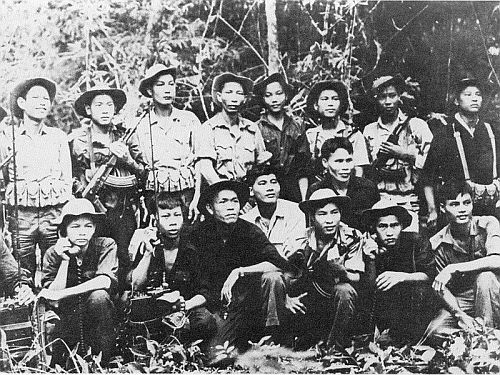
Viet Minh Main Force Soldiers

Another source is found in the official histories written by the military forces involved in the wars. Often these incorporate unit histories and individual narratives and analyze specific battles and the wider campaigns, but do little in regard to broader conditions that affected operations. While a good source, many are not as critical of their institutions as they should be.

Histories by trained historians and journalists provide another view. The most insightful of the journalist accounts include Bernard Fall’ Street Without Joy and The Siege of Dien Bien Phu: Hell in a Very Small Place. A limitation of all of these is that they are often heavily influenced by the political and societal events. This means that earlier accounts are more likely to be reactive and judgmental versus critical and balanced. Later accounts have the benefit of access to the opposing side and documents not available to earlier writers. Alistair Horn in A Savage War of Peace provides one of the most informative and balanced accounts of the war in Algeria. Martin Winslow does the same regarding Dien Bien Phu in The Last Valley.

Foreign Legion in Algeria

Another source is the writings of participants who critically examine their participation in the wars. Many of these, French and American provide insights into the minds of leaders who are reflective and critically examine what happened to their military institutions in these wars. The best of these is French Colonel David Galula whose books Pacification in Algeria 1956-1958 and Counterinsurgency Warfare: Theory and Practice provide first-hand accounts of the subject combined with critical reflection. Galula’s works have been important to John Nagl, General David Petreus and others who helped write the U.S. Army and Marine Corps Counterinsurgency manual. Andrew Krepinevich in The Army and Vietnam provides a critical analysis of the U.S. Army in Vietnam. Other sources, both online and print, such as RAND, provide excellent analysis of selected topics within the scope of this essay, especially COIN.

Battles in the Streets of Algiers

The ability to dispassionately and critically examine and evaluate these sources over a period of several years was and integrate them with my own experience has been a critical to me. It has changed the way that I look at sources, and caused me to be much more aware of bias, the limitations of sources and the need to have a multiplicity of sources and points of view and to be suspicious of contemporary reports and accounts of the war in Afghanistan regardless of the source.

The conflicts in French Indo-China, Algeria and Vietnam had major effects on the French and American military institutions. These effects can be classified in a number of ways. First, the manner in which each military waged war, including tactics employed and use and development of weapons systems was changed. The use of airpower, especially helicopters and use of riverine forces provided an added dimension of battlefield mobility but did not bring victory. As John Shy and Thomas Collier noted regarding the French in Indo-China: “French mobility and firepower could take them almost anywhere in Vietnam, but they could not stay, and could show only wasted resources and time for their efforts.”[1]

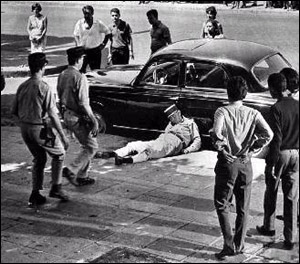
Assassination and Terrorism in Algiers

The use of intelligence and psychological warfare, including the use of torture became common practice in both the French and American armies. The wars had an effect on the institutional culture of these armed services; neither completely embraced the idea of counterinsurgency and for the most part fought conventionally. Galula notes how the “legacy of conventional thinking” slowed the implementation of proper counterinsurgency tactics even after most commanders learned that “the population was the objective.”[2] Krepinevich notes that “any changes that might have come about through the service’s experience in Vietnam were effectively short-circuited by Army goals and policies.”[3] Finally the wars had a chilling effect on the relationship between the both militaries and the state, veterans from each nation often felt betrayed or disconnected from their country and people. Unfortunately instances of all of these have occurred or can be seen in the current wars in Iraq and Afghanistan.

US Army in Vietnam

The French Army had the misfortune of fighting two major insurgencies back to back. The French military was handicapped even before it went into these wars. The Army came out of World War II defeated by the Germans, divided by loyalties to Vichy or one of the Free French factions. They were humiliated by the Japanese in Indo-China, while in Algeria France’s crushing defeat was devastating. “Muslim minds, particularly sensitive to prestige and baraka, the humiliation made a deep impression.”[4] French society was as divided as the Army; the economy in shambles, the government weak and divided. The Viet-Minh had prepared well making use of time and training to get ready for war. “Once full-scale hostilities broke out, the French, for budgetary and political reasons could not immediately make the large scale effort to contain the rebellion in the confines of small-scale warfare.”[5]

Paras of the 1st Colonial Parachute Regiment jump in Algeria

In both Indo-China and Algeria the French attempted to fight the budding insurgencies in a conventional manner. This was particularly disastrous in Indo-China when on a number of occasions battalion and regimental combat team sized elements were annihilated by Viet-Minh regulars. Between October 1st and 17th 1950 every French garrison along the Chinese border was over-run. The French lost over 6000 troops and enough equipment to outfit “a whole additional Viet-Minh division.” It was their worst colonial defeat since Montcalm at Quebec.[6] In Algeria when the fight began in earnest France’s “ponderous ponderous N.A.T.O forces found themselves at an impossible disadvantage,”[7] unable to have any influence off the main roads.

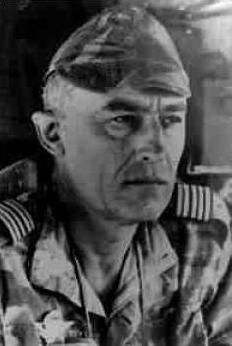
Marcel Bigard: One of the most effective French commanders in Indochina and Algeria

In Vietnam the French did not absorb the lessons of fighting a well established insurgent force. French forces hoped to draw the Viet-Minh main forces into battles of attrition where their superior firepower could be brought to bear. Such was the case at Na San in December 1952 where the French established an “Air ground base” deep in Viet-Minh territory to draw Giap’s forces into open battle. This worked, but just barely. General Giap, short of artillery and not planning on a long battle frittered away his troops in mass charges. However, the French, because of Na Son assumed they had found the key to victory. In their embrace of the “air ground base concept, French staff officers were following an intellectual tradition that had long been prone to seduction by elegant theories.”[8] The result was the disaster at Dien Bien Phu the following year. The destruction of the elite Group-mobile 100 near Pleiku in 1954 was the coup de grace. In Indo-China the French made limited use of helicopters, used paratroops widely, and developed riverine forces. One thing they were critically short of was significant tactical air support.[9]

Roger Trinquier helped develop tactics in Indochina which helped turn the tide in Algeria, until the French Government ended the war leaving their soldiers to feel betrayed

The most inventive French creation in Indochina was the GCMA/GMI forces composed of mountain tribesmen led by French NCOs and Junior Officers. They were designed to provide “permanent guerilla groups rooted in remote areas” to harass and interdict Viet-Minh forces.[10] Trinquier noted that at the time of the Dien Bien Phu defeat that these forces had reached over 20,000 trained and equipped maquis in the Upper Region of Tonkin and Laos. These forces achieved their greatest success retaking Lao Cai and Lai Chau May 1954 as Dien Bien Phu fell.[11] Trinquier stated that “the sudden cessation of hostilities prevented us from exploiting our opportunities in depth.”[12] The GMI units and their French leaders were abandoned fighting on for years after the defeat. One account noted a French NCO two years after the defeat cursing an aircraft patrolling the border “for not dropping them ammunition so they could die like men.”[13] In the end the French left Indo-China and Giap remarked to Jules Roy in 1963 “If you were defeated, you were defeated by yourselves.”[14]
Algeria was different being part of Metropolitan France; there the French had support of European settlers, the pieds-noir. Many French soldiers had come directly from Indo-China. There French made better adaptations to local conditions, and realized that they had to win the population and isolate the insurgents from it and outside support. As Galula said, victory is the destruction of the insurgent’s political and military structures, plus “the permanent isolation from the population, not forced upon the population, but by and with the population.”[15] The lessons learned by the French in both Algerian and Indo-China were lost upon the Americans.

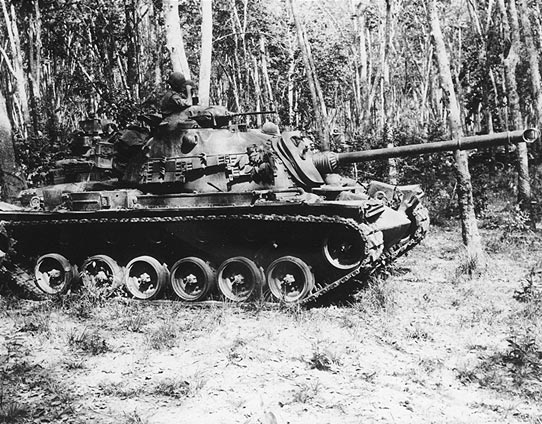
US Armored Cavalry in Vietnam

The United States military, especially the Army approached the Vietnam War with a conventional mindset, referred to as the “Army concept.” [16] It not only approached the war in this manner, but it trained and organized the South Vietnamese forces, ARVN into the American model. Americans re-organized ARVN into divisions “based upon the U.S. divisional force structure.”[17] Due to the imposition of an American template and organizational structure upon it, ARVN was not structured appropriately for the threat that it faced.”[18] The results were as to be expected. Large numbers of American troops poured in taking the lead against the North Vietnamese and Viet Cong . The American method of counterinsurgency was costly. It was “almost a purely military approach”[19] which ignored political and social realities on the ground. Instead of focusing on protecting the Vietnamese people and denying the Communists a safe haven the Army in particular believed that massive firepower was the best means to be “utilized by the Army to achieve the desired end of the attrition strategy-the body count.”[20] In the end the American defeat was a “failure of understanding and imagination.”[21] The one shining success was the Marine Corps experimentation with “Combined Action Program” platoons which lived in the villages with militia for long periods of time. This program produced great results “in eliminating local guerillas”[22] but was killed by the Army.

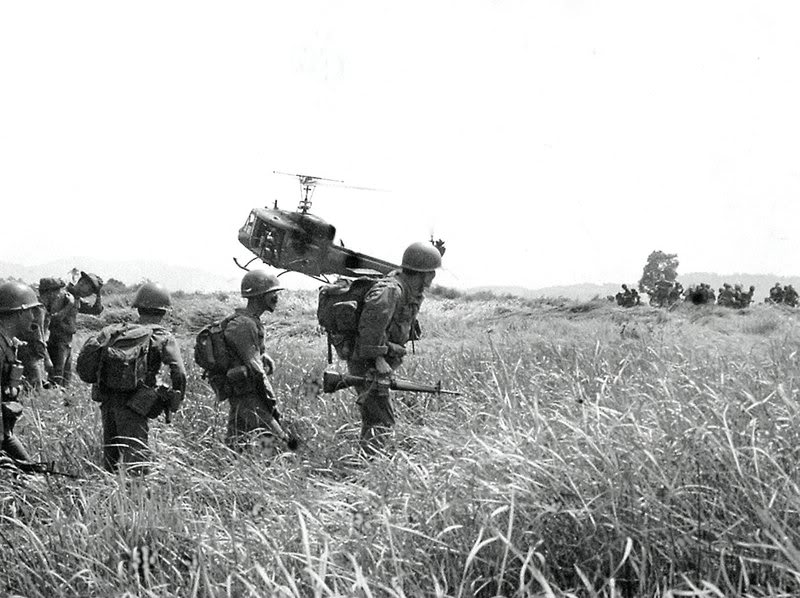
US and ARVN Soldiers in Joint Operation

These wars tore the heart out French and American armies. For the French the defeats inflicted a terrible toll. In Indo-China many French career soldiers felt that the government’s “lack of interest in the fate of both thousands of missing French prisoners and loyal North Vietnamese…as dishonorable.”[23] Divisions arose between those who served and those who remained in France or Germany and created bitter enmity between soldiers. France would endure a military coup which involved many who had fought in Vietnam and Algeria. Having militarily won that war, were turned into what Jean Lartenguy called The Centurions had been turned into liars.”[24] They were forced to abandon those who they had fought for and following the mutiny, tried, imprisoned, exiled or disgraced. Colonial troops who remained loyal to France were left without homes in their “independent” nations. They saw Dien Bien Phu as the defining moment. “They responded with that terrible cry of pain which pretends to free a man from his sworn duty, and promises such chaos to come: ‘Nous sommes trahis!’-‘We are betrayed.’”[25]

War Protests in the United States 

The U.S. Army left Vietnam and returned to a country deeply divided by the war. Vietnam veterans remained ostracized by the society until the 1980s. As Harold Moore recounts “in our time battles were forgotten, our sacrifices were discounted, and both our sanity and suitability for life in polite American society were publically questioned.” [26] The Army endured a massive reorganization that resulted in the formation of the All-Volunteer force, which would redeem itself and emerge from the ashes in the Gulf War.

Taliban in Afghanistan

The Americans would not learn the lessons of revolutionary warfare and counterinsurgency until forced to do so in Iraq in 2004-2007. These lessons however were not applied to Afghanistan and the Taliban which seemed to have been defeated have regained the initiative, policy is being debated amid discord in the west and there are reports of American and NATO forces becoming discouraged by the course of the war and concern that their efforts will be in vain. This is a dangerous situation to be in and if we learn from anything from our own history as well as that of foreign military forces in Afghanistan we need to be very careful in implementing strategy to get whatever we do right.

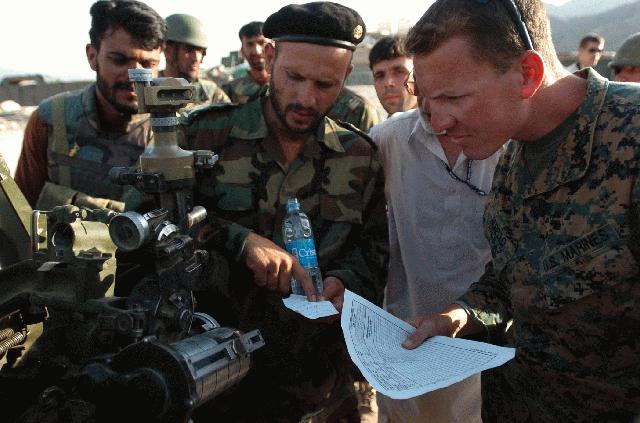
US Advisers with Afghanistan National Army Troops

The greatest success of the war was finally killing the leader of Al Qaeda, Osama Bin Laden at his Pakistani hide-out. That did not occur in Afghanistan and was the result of smart work by the CIA and other American intelligence services and the superb conduct of the mission by Navy SEAL Team Six. It was not the product of our costly counter-insurgency and nation building campaign in Afghanistan. There are many professional think tank “experts” that now urge continuing the Afghan mission indefinitely despite its massive cost and questionable strategic value. The costs of the war which are over 2 billion dollars a week are staggering with little to be shown from the hundreds of billions already spent in Afghanistan, much of which is spent on projects where corrupt Afghan government officials and tribal leaders are the only ones to benefit. Likewise the long term health of the military is imperiled. The money that should go to modernizing the force and replacing equipment worn out by war as well as the enormous costs in lives and the continuing care needed by military personnel wounding in body, mind and spirit remaining on active duty and those in the Veteran’s Administration system are imperiled.

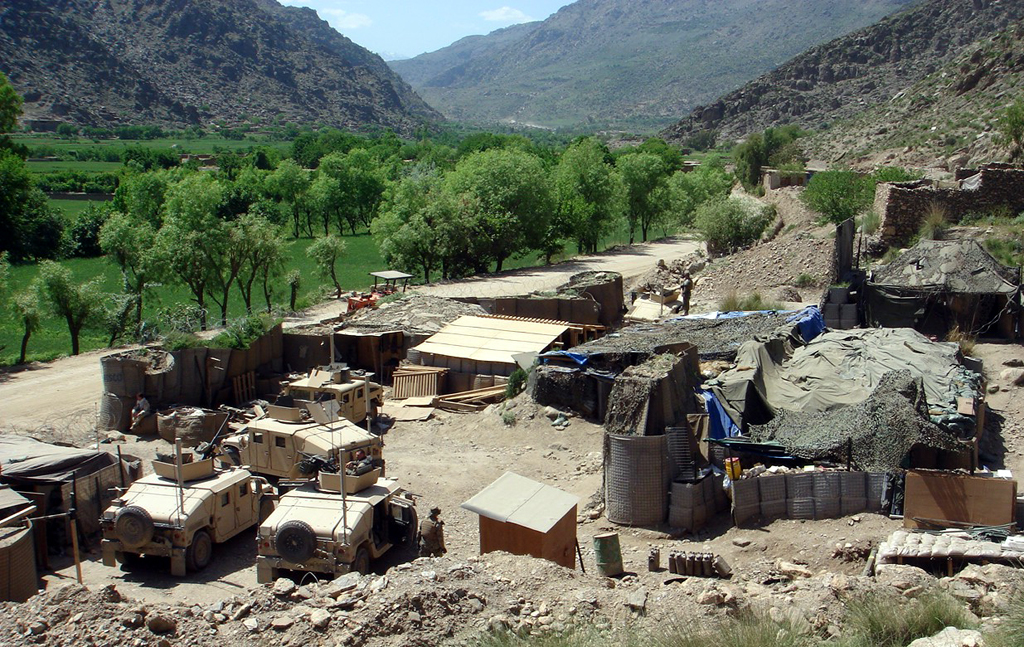
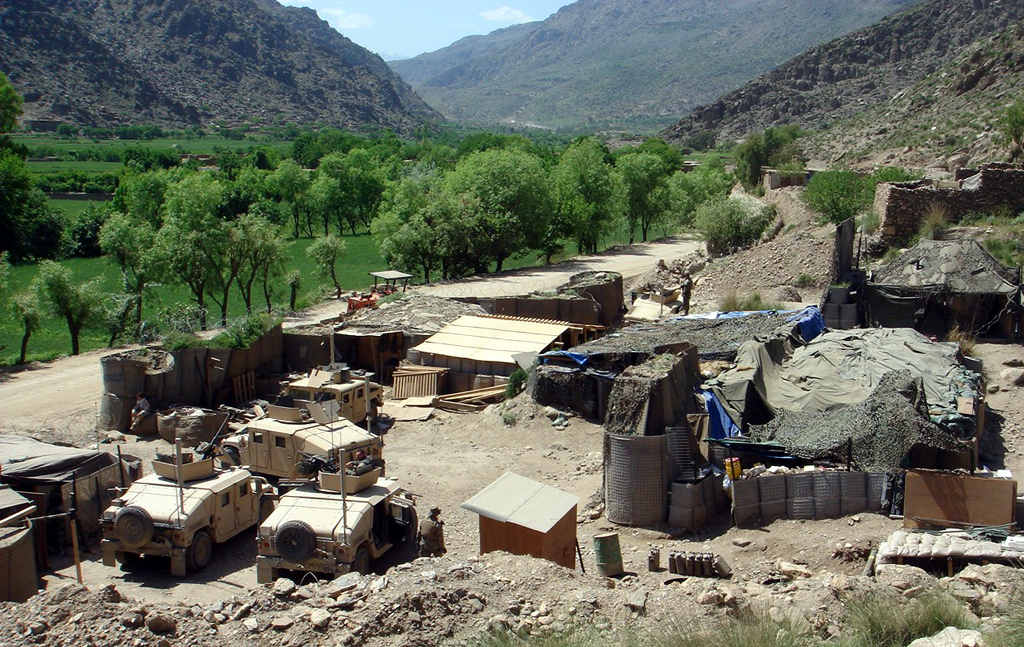
Remote Training Team Base in Afghanistan

The effects of the wars in French Indochina, Algeria and Vietnam on the French and American military establishments were long lasting and often tragic. The acceptance of torture as a means to an end sullied even the hardest French officers. Men like Galula and Marcel Bigeard refused to countenance it, while others like Paul Aussaresses never recanted. Americans would repeat the tactic at Abu Ghraib rallying the Iraqis against them and nearly losing the war because of it.

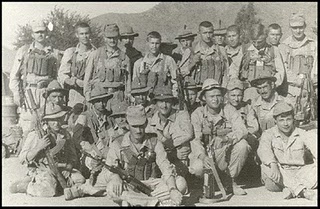
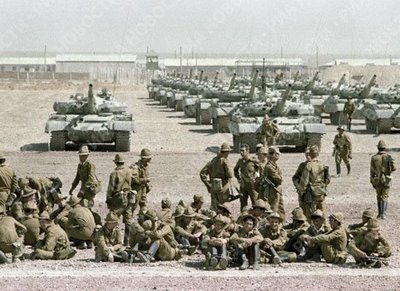
Soviet Paratroops in Afghanistan

For the Americans, the effects of Vietnam continued at home. Race riots tore at the force while drug addictions and criminal activities were rampant. Many incompetent leaders who had “ticket punched” their careers kept their jobs and highly successful leaders who became whistle blowers like Hackworth were scorned by the Army institution. The years following Vietnam were a severe test of the US Military and took years for the military to recover. Likewise it took years before either the French or American veterans again felt a part of their countries. They ended up going to war, and when it was over; feeling abandoned, their deepest bonds were to their comrades who had fought by their side.

Osama Bin Laden leading Mujaheddin in 1984 

If this is not enough we have the experiences of the Soviet Union, the British Empire and others that have attempted to rule Afghanistan as plumb lines to gauge our effectiveness. Others have tried and failed miserably at this. The Soviets learned the hard way and found that Afghanistan was one of the major reasons for the collapse of the Soviet Union. Reading the history of Soviet operations in Afghanistan is frighteningly like reading the history of our campaign.

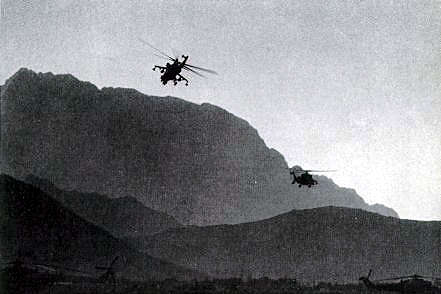
Two Soviet Mi-24 “Hind” attack helicopters flying in an Afghan Valley

The Soviets invaded Afghanistan in 1979 they used their 40th Army which initially was composed of “two motorized rifle divisions, an airborne division, an air assault brigade and separate motorized rifle regiments.”[27] These forces totaled about 52,000 troops and were “considered sufficient to guarantee the viability of Afghanistan.”[28] The 40th Army was a standard Cold War Soviet Combined Arms Army designed for high tempo conventional operations. It was not designed for nor trained in counterinsurgency operations or what the Soviets and Russians class as “anti-guerilla operations.” It was poorly suited to mountain and dessert combat and at the beginning “not only had no practical skills in the conduct of counter-guerilla warfare, they also did not have a single well-developed theoretical manual, regulation or tactical guideline for fighting such a war.”[29]

Downed Soviet Mi-4 “Hound” with Mujaheddin 

The Soviets did not expect to be involved in combat operations and the Afghan population reacted to their presence with resistance which spread across the country both against their own government which they viewed as a puppet of the Soviets but also against the Soviet Forces. As time went on the Soviets attempted to use raids and large scale operations to attempt to bring Mujahidin forces to battle, however the insurgents were very skillful and the Soviets attempted to increase the training of their forces as well as their numbers. By 1986 the numbers on the ground had increased to 108,000 personnel in four divisions, five separate brigades, four separate regiments and six separate battalions.[30] In the nearly 10 years of operations over a half million Soviet soldiers and support personnel served in Afghanistan. Tours for enlisted personnel who were primarily conscripts served 12-18 months in country and officers 2 years. Few returned for subsequent tours meaning that the 40th Army had few personnel very familiar with the country, its people and the challenges faced by Soviet forces. According to official sources the 40th Army suffered 13,833 killed in action or died of wounds, 49,985 wounded and 311 missing in action a figured of 1 in 8 Soviet Soldiers being casualties. 14.3 percent of the casualties were officers.[31] Of course the official figure is doubted many believing the number killed in action or died of wounds to be closer to 26,000.[32]

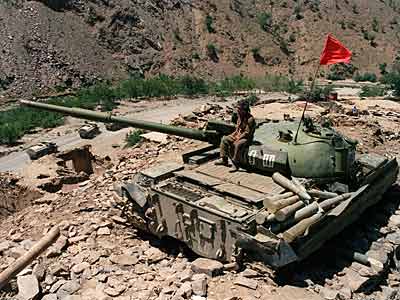
Soviet T-62 Tank guarding a convoy in a mountain pass

Like their American and French counterparts the Soviet veterans have experienced the unhealed wounds of war and a country that does not understand their experiences. The stigma of war wounds and PTSD haunt many Soviet veterans and were compounded by the collapse of the Soviet Union and Warsaw Pact in 1989. They returned home, lost their country and were by and large abandoned by their countrymen. A good number of these men and women travel to one of 5 centers across the country where according to one of the veterans come to for “social and psychological help.” He said that “The best thing about this place is that it provides us with a chance to share our Afghan memories with comrades who understand what we are talking about.” That camaraderie of being able to share their experiences with others that understand is helping some to return to something akin to “normal” life. They are joined by the soldiers that have experienced similar things in Chechnya. Russian veterans of the Afghan War are still so closely linked to it that they refer to themselves as “Afghans.”

Soviet Mi-8 “Hip” Helicopters in Afghanistan preparing for a mission

The Soviet Forces supported the Army of the Democratic Republic of Afghanistan which numbered at their peak on average between 120,000-150,000 soldiers.[33] The Afghan forces, then as now were at the mercy of tribal, familial and communist party affiliations. Over 70 percent of the DRA was conscripted, desertions averaged 1,500 to 2,000 soldiers a month and units were usually optimistically 25-40 percent under their TO&E strength.[34]Limitations on training and leadership meant that typically DRA units could not conduct large scale missions without Soviet help. As such most of the fighting was done by Soviet formations.

Soviet Troops preparing to leave Afghanistan

Many of these problems have plagued the United States and ISAF throughout the first 9 years of the current Afghan War. As former Afghanistan Commander General Stanley McChrystal noted in his assessment “ISAF is a conventional force that is poorly configured for COIN, inexperienced in local languages and culture, and struggling with the challenges inherent to coalition warfare. These intrinsic disadvantages are exacerbated by our current culture and how we operate.”[35]

We should have learned. A retired Red Army Colonel who served in Afghanistan from 1986-1988 who learned the Dari language in order to negotiate with the Afghan Mujahedeen warned what will happen when the Americans and NATO leave the country and the mistake that we made in entering Afghanistan. Frants Klinsevich now a member of the Russian Parliament comment to reporters at a wreath laying ceremony at a veteran’s convention that “they (NATO and the United States) are 100 percent repeating the same mistake we made by entering into a war in that country” and that “As soon as the Americans and Europeans leave, the Taliban will crack down on everything.” Klinsevich noted that he understood the American desire to tame Afghanistan but that “the problem of radical Islam will not be solved there, its violence cannot be solved. It is simply unsolvable.” He said that he wished that the United States had consulted the Russians about Afghanistan saying “they should have invited Russian specialists, involved Russia, really studied how they could use Russia. But unfortunately Americans think they know everything.” The former Russian commander understands far more that the majority of American policy makers on this subject. [36]

The fact is that we are hamstrung by the ongoing wars which limit our ability to respond to rapidly changing situations. We are in a similar situation to the Germans in 1942 and 1943 overcommitted, overstretched and lacking true strategic depth to respond to unanticipated situations as are now occurring across the Middle East. In 1942 and 1943 the Germans were always just short of the forces that would have turned the tide. Like the Germans our economy is laboring on the verge of collapse and we have to honestly answer the question “What is the strategic value in continuing to wage war in Afghanistan in the way that we are doing?”

What are the lessons to be learned from these campaigns as well as from the various accounts? Andrew Krepinevich prophetically noted that the failure to learn the lessons of Vietnam “represents a very dangerous mixture that in the end may see the Army again attempting to fight a conventional war against a very unconventional opponent.”[37] Obviously, there are lessons to be learned, especially in understanding the nature of revolutionary war as well as the culture and history of our opponents. The U.S. has made some improvement in this regard but there is still much to be learned, especially since after the war the Army was “erecting barriers to avoid fighting another Vietnam War.”[38] From these wars we learn that nations and incompetent governments who mismanage wars can alienate themselves from the soldiers that they send to fight, with serious consequences. As far as historiography we learn that certain historical fallacies are evident when one reads the accounts critically and recognize the bias and limitations of the various sources.

The fact is that we have learned little about such wars and are paying a terrible price for it. The debate now is should we continue the war as it is with minor withdraws of troops or begin a rapid exit in order to preserve and rebuild our force and to reduce the cost of these operations. But that debate and decision are well above my pay grade. But then maybe we need to remember what Field Marshall Gerd Von Rundstedt told his staff in September of 1944 when asked how to recover from the disastrous collapse of the German front following the Allied breakout from Normandy and dash across France. “Make peace you fools.” http://www.youtube.com/watch?v=ch56NAL1C-I

Peace
Padre Steve+
________________________________________
[1] Shy, John and Collier, Thomas W. “Revolutionary War” in Makers of Modern Strategy from Machiavelli to the Nuclear Age,” Peter Paret editor. Princeton University Press, Princeton N.J. 1986 p.849
[2] Galula, David. Counterinsurgency in Algeria: 1956-1958. RAND Corporation, Santa Monica, CA. 2006. First published by RAND in 1963. p.244
[3] Krepinevich, Andrew F. “The Army and Vietnam,” The Johns Hopkins University Press, Baltimore and London, 1986 p.213
[4] Horn, Alistair. “A Savage War of Peace: Algeria 1954-1962,” a New York Review Book published by the New York Review of Books, New York, 1977, 1987, 1996, and 2006 p 41
[5] Fall, Bernard B. “Street Without Joy: The French Debacle in Indochina.”Stackpole Books, Mechanicsburg PA, 2005, originally published by Stackpole Publications 1961 p.27
[6] Ibid. p.33
[7] Horn. p.100.
[8] Windrow, Martin. “The Last Valley: Dien Bien Phu and the French Defeat in Vietnam,” Da Capo Press, Novato, CA 2006, originally published by Weidenfeld and Nicholson, London 2004 p.63
[9] Fall, Bernard B. “The Siege of Dien Bien Phu: Hell in a Very Small Place.” Da Capo Press, New York an unabridged reprint of the 1st Edition reprinted in arrangement with Harper and Row Publishers, New York. 1967 pp. 456-457 Fall discusses in depth the lack of French Air support and the antecedents that led to the shortage following World War II.
[10] Pottier, Philippe(2005)’Articles: GCMA/GMI: A French Experience in Counterinsurgency during the French Indochina War’, Small Wars & Insurgencies,16:2,125 — 146http://dx.doi.org/10.1080/09592310500079874
[11] Simpson, Howard K. “Dien Bien Phu: The Epic Battle America Forgot,”Potomac Books Inc. Washington DC 2005, originally published by Brassey’s Inc. 1994 pp. 170-171
[12] Trinquier, Roger. “Modern Warfare: A French View of Counterinsurgency,” translated from the French by Daniel Lee with an Introduction by Bernard B. Fall. Praeger Security International, Westport CT and London. 1964 and 2006. Originally published under the title “La Guerre Moderne” by Editions Table Ronde. p.87
[13] Windrow. p.652.
[14] Roy, Jules. “The Battle of Dien Bien Phu” Carrol and Graf Publishers, New York 1984. Translated from the French by Robert Baldrick. English translation copyright 1965 by Harper and Row Publishers, New York. p.xxx
[15] Galula, David. “Counterinsurgency Warfare: Theory and Practice.”Praeger Security International, Westport CT 1964 and 2006 p. 54
[16] Krepinevich. p.213
[17] Ibid. p.24
[18] Nagl, John A. “Learning to East Soup with a Knife: Counterinsurgency Lessons from Malaya and Vietnam,” University of Chicago Press, Chicago and London, 2005 p.138
[19] Shy. p.856
[20] Krepinevich. p.202
[21] Spector, Ronald H. “After Tet: The Bloodiest Year in Vietnam,” Vintage Press, a division of Random House, New York, 1993 p.314
[22] Millett, Allan R. and Maslowski, Peter. “For the Common Defense: A Military History of the United States of America.” The Free Press, a division of Macmillian, Inc. New York, 1984 p.555
[23] Windrow. p.655
[24] Ibid. p.657
[25] Ibid.
[26] Moore, Harold G and Galloway, Joseph L. “We were Soldiers Once…and Young: Ia Drang: The Battle that Changed Vietnam,” Harper Collins Publishers, New York NY 1992 p. xx
[27] The Russian General Staff. The Soviet Afghan War: How a Superpower Fought and Lost” translated and edited by Lester A. Grau and Michael A. Gress, University Press of Kansas, Lawrence KS 2002 p.17.
[28] Ibid. p.18
[29] Ibid. p.43
[30] Ibid. p.28
[31] Ibid. p.309
[32] Ibid. p.xix
[33] Ibid. p.48
[34] Ibid. pp.48-51
[35] McChrystal, Stanley. “Commander’s Initial Assessment Commander International Security Assistance Force Afghanistan” dated 30 August 2009 pp. 1-2
[36] “Russian veteran warns of Afghan violence.” Reuters 16 May 2011. Edited by Paul Tait and Daniel Magnowski obtained 11 June 2011 at http://www.trust.org/alertnet/news/interview-russian-veteran-warns-of-unsolvable-afghan-violence/
[37] Krepinevich. p.275
[38] Ibid. p.274

3 Comments

Filed under Foreign Policy, History, iraq,afghanistan, middle east, Military, Political Commentary, vietnam, world war two in europe

“Victory” and Reality: Never think that War will be Easy

“No one starts a war-or rather, no one in his senses ought to do so-without first being clear in his mind what he intends to achieve by that war and how he intends to conduct it.” – Karl von Clausewitz

I was talking with a friend recently and the subject came to the support of a certain church for the war in Iraq back in 2003.  My friend, who is very thoughtful, spiritual and circumspect made the comment that “they were even against the war” when we discussed the merits of this particular church.  I thought for a second and said “after the past nine years of war was that wrong?” He paused a moment and said “I see your point.” I think that in the early months and years of this war, where we quickly deposed the Taliban in Afghanistan and Saddam Hussein in Iraq that we made unfounded assumptions about our “successes” with the end result that we have had to fight a much more protracted, bloody and costly series of wars than we had ever imagined. Like so many nations who entered into wars believing that they would have easy victories achieved at a cheap price in blood and treasure we have discovered once again that the serpent of the fog and friction of war coupled with hasty or politically expedient decisions has come to cause us great pain as a nation and after nine years a foreboding sense that we might not win in Afghanistan.

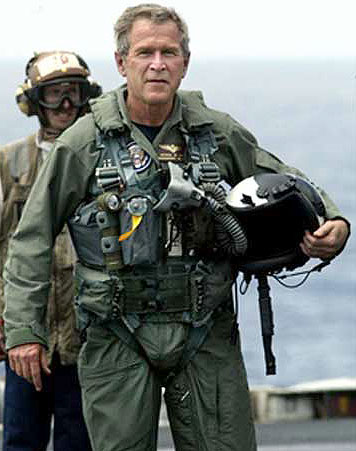
Like most Americans after the attacks of 9-11-2001 on the World Trade Center and the Pentagon I was all in favor of going after those that attacked this country wherever they were to bring those that planned these vile attacks to justice.  Within a month the United States had driven the Taliban out of power in Afghanistan and put the leaders of Al Qaida on the run.  By 2002 the US Government had began making a case against Iraq, one of a trio of nations identified as the “Axis of Evil.”  In 2003 we went to war with Iraq after failing to convince many allies of the necessity of the attack. When the “shock and awe” campaign was launched, Iraq forces defeated, Baghdad captured and Saddam Hussein driven from power there was a heady feeling of success.  Even those opposed to the invasion were amazed at the speed of and apparent ease of the conquest as pictures of cheering Iraqis filled the screen as the statues of Saddam came down.  In May President Bush landed on the USS Abraham Lincoln to proclaim “mission accomplished.” “We support the troops” ribbons and bumper stickers were the rage, victory has many friends and some churches even ascribed the victory to God.  But as the muse would say to the returning Roman conquerors, “victory is fleeting.”

We thought that we had achieved a “revolution in warfare” in the two campaigns but within months the tide had shifted in Iraq as in a colossal mistake of epic proportions a decision was made either in Washington DC or by the head of the Coalition Provisional Authority Ambassador Paul Bremer. A decision was made to disband the Iraqi Military, Police and Civil Service offices without having enough troops in place to police Iraq or civilians including NGOs and the UN available to fill the civil service gaps.  This was in direct contravention to years of CENTCOM plans. To make matters worse we had gone in so light that we had not disarmed or demobilized the Iraqi forces, thus we sent the people who could best help us restore Iraq to working order home. We sent them home and as anyone that knows Arab culture can tell you we dishonored them and created enemies out of potential friends while placing corrupt opportunists in power.  It was if we were making things up as we went rather than thinking things through and the result was a disaster.  By the end of 2004 a full-fledged insurgency had broken out an insurgency that would cost thousands of Americans and Iraqis their lives with tens of thousands of others wounded.  It was not until late 2007 and 2008 that the tides turned in Iraq as Iraqi Sunnis realized that Al Qaida backed insurgents were more of a threat to them than the American forces were.

Over the course of the war the thrill of the early days was forgotten as American Soldiers and Marines engaged a resourceful enemy that was willing to fight us in ways that we had neither expected nor planned.  War loses its luster when the thrill of victory is gone.  With the transition of the mission in Iraq and a renewed focus on Afghanistan where the Taliban had come back with a vengeance we are now moving toward being at war for 10 years.  We have fought the war with a military force that is well under 1% of the US population.  The military has fought well. We have not been defeated in open combat despite losing many troops to IEDs and ambushes; though in Afghanistan there have been a couple of near run events where small bases were nearly overrun by Taliban forces. We should remember General Hans Guderian, the creator of the Blitzkrieg and his words about the German campaign in Russia after the Battle of Kursk in 1943: “We have severely underestimated the Russians, the extent of the country and the treachery of the climate. This is the revenge of reality.” General Heinz Guderian

Nine plus years after 9-11 most of the American public as well as the political class of both parties have soured on the wars even while others seek war with Iran and maybe North Korea. I wonder about the wisdom of taking on even more enemies when the military is stretched to the breaking point and the nation is heading into bankruptcy.

But such things are not new from a historic point of view, if only we would look to history. Back in 1940 after their victories in France and the Low Countries the Germans felt as if they were invincible. By 1941 their troops were bailing out the Italians in North Africa and the Balkans while engaging the British in the air above Great Britain and in the seas around it. That did not stop Hitler from attacking the Soviet Union where as in France and the Balkans the German Army enjoyed amazing success until winter arrived and the Soviets counter-attacked.  Thereafter the German Army would not enjoy the same success and millions of German Soldiers; not to mention at least 20 million Soviet citizens and Red Army Soldiers died. Eventually the Wehrmacht was shattered, defeated and Europe devastated.

I am not saying that this will happen to the US, but it can.  We need to learn from history and look at how good people were enticed by the aphrodisiac of the “victory disease” that accompanied supposedly easy victories.  If one looks at Germany many officers, soldiers and civilians drank the aphrodisiac of victory and had their faith in Germany, their leaders and their cause destroyed as the war turned against them and they experienced defeat even while many times getting the best of their enemies on the battlefield.  Honorable men that had served their country well were either cashiered by the Nazi government and many killed by that instrument of evil because they voiced opposition to the regime.  Initially many had been lured into the trap of easy victory.

Back in 2001 and into 2003 I was like many of those men who served in the German military.  I was excited about the apparent easy victories in both Afghanistan and Iraq.   But like some German officers of that day who realized as the campaign in Russia was going badly into the fall of 1941 by late 2003 I began to sense that something was going terrible wrong in Iraq.  I think it was the moment that I heard that we had disbanded the Iraqi Army, Security forces and Civil Service as I started my course of study with the Marine Command and Staff College program held at the Joint Forces Staff College.  The experience of serving with thoughtful Marines in my unit and my fellow students; Marine, Navy, Coast Guard and Allied officers at the school helped me see the danger that was developing in our campaigns.  By the time I arrived in Iraq in the summer of 2007 the tide was beginning to turn but I saw the devastation of the country, ministered to wounded Marines and Soldiers and seen the affect of the war on Iraqis.  My duties with our advisors and their Iraqi counterparts were enlightening as I travelled about Al Anbar Province.

In the end I think that the Iraqis despite everything will do okay. I believe that most are tired of war and will not succumb again to sectarian violence on a large scale. I do not think that they have an easy road ahead but I believe the words of Brigadier General Ali as I left him for the final time: “You come back to Iraq in five years, as tourist, it will be better then.” I am not so optimistic about Afghanistan or Pakistan and I do not think we have yet seen the worst in those countries, but at least despite all of our mistakes Iraq most likely will do well.

The experience of war coupled with my study of history and military theory at the Command and Staff College as well as in my studies from my Master’s degree in Military History changed my perspective. I still serve faithfully and hope and pray for a conclusion to the wars that leaves us in better shape and brings peace to the lands that we have shed the blood of our Soldiers, Sailors, Marines, Airmen and other Federal intelligence, diplomatic and police agencies and treasure in.  I pray for my friends serving in harm’s way and those preparing to deploy and I pray for the safety of my Iraqi military friends and their families.

I am not a defeatist should someone level that charge at me.  I agree with Ralph Peters who made this comment: “We will not be beaten. But we may be shamed and embarrassed on a needlessly long road to victory.” However, I wonder if this country has the will to win and to make the sacrifices to do so and not just shovel them off on those that serve and have served throughout this war, a war which appears to have no end and which may expand to other countries.

Like the Germans we are engaged in a multi-front and multi-theater war but we have been trying to do so upon the backs of less than one percent of the population. This allows the rest of the country to live under the illusion of peace and prosperity with the bitter losses and memories of 9-11 fade into a yearly remembrance called “Patriot Day” by politicians of all stripes who often mouth empty words to eulogize the victims and thank the troops and then move on to their next fundraiser.  By doing this we have worn out the force without the full support of the nation which is absolutely necessary for the successful prosecution of a war, especially a long drawn out war such as we have now.  Unfortunately most Americans have little patience and while we mythologize a lot about World War Two one has to remember that there was a strong lobby that desired to end the war in 1944 even if victory had not been achieved.

We have a military now composed of many battle hardened and deployment weary soldiers who live in a world that the bulk of the nation does not understand nor really wants to understand.  We have seen the cost of the war multiply to the point that it has drained the ability of the military to prepare for other wars and modernize itself.  What happens if God forbid we are forced into a war with Iran or North Korea?  With what will we fight those wars?

When the Allies were cracking the German front in Normandy and the Red Army was decimating Army Group Center in the East, Field Marshall Gerd Von Rundstedt was asked what needed to be done by a General at Hitler’s military headquarters. The old Prussian warhorse simply said “make peace you idiot.” He was fired shortly thereafter. We certainly have not reached that point but should anything else break out while we are still engaged in Afghanistan and maintain a large number of troops in Iraq that could change.

One always needs to be careful when getting into “easy” and “quick” wars as more often than not they are neither easy nor quick.

Peace

Padre Steve+

Leave a comment

Filed under Foreign Policy, History, iraq,afghanistan, Military, national security

The Great Montana Dude Ranch Sleepover: Padre Steve’s Solution to Politics as Usual

Sleepover on a Dude Ranch anyone?

I don’t know about you but as a passionate moderate I am fed up with the nasty politics as usual that is killing our country.  Our political ruling class appears to be hell bent on destroying the country all to satisfy their respective need for power and to satisfy the basest wants of their most strident supporters. The corruption and malevolence of the career politicians on both sides of the aisle have bankrupted the country, cost American lives in war, cost American jobs, destroyed our manufacturing base, placed the interests of financial traders who produce nothing except promote the evil practice of usury because it makes them money which they in turn contribute copious amounts of said money to their political patrons.  Then to top it all off they pass laws that make no sense and that you have to have an army of lawyers to understand.  They are out of touch with the everyday concerns of real Americans and have done their best to destroy the fabric of our society in their quest for power and they are many times an unseemly lot who do things that regular people could never get away with. The number of ethics violations, criminal charges and convictions and resignations due to shady financial dealings, backroom deals, sexual scandals and sometimes rather nasty criminal cases are too numerous to catalogue unless you are Matt Drudge.  I won’t list them here but they include notable Democrats as well as Republicans, nor will I go into all the idiotic things that our government, both Democrat and Republican controlled administrations or congresses have done as the task would be ginormous. Since we all get spun up about different issues usually in tune with our own political or social viewpoints I leave it to you my readers to fill in the blanks and comment on what you think they are screwing up.

Part of the problem is that our political ruling class, the Federal Government particular is completely out of touch because they live in the netherworld of Washington D.C.  This city has become the symbol of all that ails the country and since our political class only leaves it to raise money for their next campaigns they have no earthly clue of what the rest of us are experiencing.  Thus they can coddle up to their big financial supporters and most demented party extremists and unseemly lobbyists representing some of the vilest elements of our society.  As a result for at least the past 10 years and I am sure a lot more they have for the most part forgotten the people that they are supposed to represent. The political class doesn’t live in our world, thus they do everything that they can not to look at what is best for the country but rather what is best for them, for their party, their supporters and their agendas.  If you ask me its all out of whack and they really all should be whacked.

Since they all spend far too much time in Washington or raising money to stay there it is high time that they get out of Dodge so to speak.  This is my idea of how we fix this situation.  My suggestion is definitely not politics as usual.  Instead it is based on relationships built from shared suffering and since we are suffering why shouldn’t they suffer too? So here’s my idea. First we shut down the government for a month. Now before you think that you won’t get what the government owes you I don’t mean the people that actually do the work.   What I mean is both houses of Congress, the White House and the Supreme Court.   We shut them down.  Let the clerks of the court do their thing, let the White House staff do its job and congressional aides deal with constituents.  Give the Russians and Chinese, the Iranians, Al Qaida, the European Union and everyone else a message that we’re busy the next month so don’t bother us.  We’ll tell them that if they mind their own business that our stand ins with itchy fingers won’t nuke them. where is Al Haig when you need him the most?  Hey MAD (mutual assured destruction)  worked during the Cold War, after all nothing like an ICBM loaded with multiple nuclear warheads to keep people in line and not do anything really stupid.

So do you hear me Mahmoud and Osama? Do you hear me?  All that would come between you and nuclear annihilation are a few disgruntled civil servants with road rage that just got to work after being stuck in Beltway traffic for 3 hours. Go ahead make our day.

Once we shut the place down we put all of these guys and gals on Greyhound buses packed to the gills.  Each bus would have a mix of members of each party really making sure those that hate each other most sit next to each other.  Secret Service and FBI agents on the buses would have the option to Taser anyone that tries to switch seats.  Then we drive them all to some big assed dude ranch in Montana, outfit them in silly looking cowboy clothes with boots that are a bit too tight and leave them there in the charge of a bunch of cowboys at least two of which have had a recent “Brokeback Mountain” experience.

They would have no cell phones, computers or communications with the outside world or even their minions back in D.C., nope, just them and Mother Nature sharing the experience of high plains living.  In fact to liven the place up we need to bring a few folks back into the mix, some former Presidents and Speakers of the House would do fine. Also the addition of the most strident Cable TV and radio talking heads and commentators would be good too, but I digress, too many extras might spoil the moment.  Maybe we should have a separate sleepover of Rush Limbaugh and Maureen Dowd or Sean Hannity and Keith Olberman later?  No, we’ll throw them into this one to make it more fun.

This dude ranch living would be a bit Spartan. Since most of these folks a Spartan way is driving in a luxury car or SUV, having to fly First Class, staying in a luxury suite or eating at a 4 star restaurant they might have a hard time with what I propose but that would just be tough.    They made this mess and by God we’re going to get them back in touch with the real world and in the process get them to build real relationships with each other instead of the artificial life that they have led inside the beltway for years.

Once we get them to the big assed Dude Ranch we pair them up the best we can with a liberal and a conservative in each cabin.  We would try to keep the cabins of the same gender not to cause too much scandal but would make a few exceptions to that rule.  Now by cabins I don’t mean those really nice cabins that people take real vacations at, no I mean really rustic, Spartan tiny cabins with no amenities and only one bed, a full sized bed that our new roommates would need to share. The cabins would have no couches, easy chairs or love seats, no sleeping bags not even a bearskin rug, nope nothing else but the bed.  They would have a rather rustic communal outhouse to share with everyone else over a deep pit latrine and share their meals in a rather dilapidated chow hall eating off of tin plates and drinking from tin cups.  There would be a camp saloon but it would be like those of the old west, nothing but rotgut whisky, no mixed drinks, no foo-foo appetizers, no micro-brew beer. They would sleep together, eat together and have to participate in trail rides, fly fishing, Grizzly Bear hunting, rodeo events such as bull riding and calf roping as couples, odd couples, but couples nonetheless.  This togetherness would be enforced. Those Secret Service and FBI agents with their tasers… they’ll be out there too.  Anyway when our leaders go on the overnight trail rides the fun really starts.  After they eat their beans from tin plates, sing really bad western songs and take a swig or two or more of rotgut whiskey and then relieve themselves in the manner that the cowboys did in the old West they would get to curl up together in their own two person pup tent, a really small one and spoon.  This would help break down the walls that separate them and force them to get to know each other, some possibly in the Biblical sense of the word, but in the spirit of Don’t Ask Don’t Tell I won’t go there.

There is something about shared suffering to bring people together and make them realize that there is more to life than their own narcissistic agendas and power trips.  No this wouldn’t be prison for them as much as a lot of Americans think that prison would be fitting for them; prison is far too easy for our political class. Instead this would build character, character that if once they had they lost over their years inside the Beltway.

Of course they would not get to pick their room-mates so here are some of my suggestions:

President Obama and Rush Limbaugh: I know I said that the media should have their own version of this but since Limbaugh is the leader of the conservative movement he has to come and buck with his pal Barry.

Harry Reid and Orrin Hatch: They’re both Mormons so they can at least pray together.

Chief Justice John Roberts and Rachel Maddow: I don’t know it just sounds right.

Nancy Pelosi and Antonin Scalia: Sure it’s an opposite sex pairing but they are both Italians they should have fun.

Tom Tancredo and Janet Napolitano: Let’s make a run for the border and mend some fences together

Russ Feingold and Ron Paul: Government control and Libertarianism two great tastes that go great together

John Ensign and Barbara Boxer: He can’t seem to hold it in and she looks like that she could use some loving

Al Franken and Clarence Thomas: A comedian and a straight man…what a combination

John Kerry and John McCain: Both Vietnam Veterans, they understand the value of camaraderie

Mitch McConnell and Chuck Schumer: The just look like they need to be together

Diane Feinstein and Michael Savage: A San Francisco treat

Barbara Milkulski and Kay Bailey-Hutchinson: Why not?

Joe Lieberman and Arlen Spector: Not opposites but they seem to go together

Samuel Alito and Maureen Dowd: It just sounds right

Eric Holder and Glenn Beck: I sense real chemistry here

Hillary Clinton and Newt Gingrich: He’s out of office but they both want to be President

Barney Frank and Sean Hannity: They debate on his show often enough let them really get to know each other

Sarah Palin and Joe Biden: Not a recognizable cognitive thought between them all hormones and testosterone

Sheila Jackson-Lee and Ann Coulter: Salt and Pepper

Ruth Bader-Ginsberg and Pat Buchannan: It can’t get any better than this

John Boehner and Chris Dodd: I think that they could really come to love each other

Unfortunately some of our more interesting members of our political class have passed on I would have loved to throw Teddy Kennedy, Robert Byrd, Jesse Helms, Ronald Reagan and any number of others into the mix, but what can I say?

So after 30 days our political elites would board their buses and go back to their home districts or home towns.  Then they would have some real town meetings as couples, holding hands, looking dreamily into each other’s eyes and bringing peace to the political landscape.   With those pesky Secret Service and FBI agents and their tasers at the ready our leaders would have to listen to their constituents and not the lobbyists. Speaking of lobbyists they all get sent to New Guinea.   As for the Congressmen and Senators they and their new found friends would have to spend 8 months a year living in their home state or district. The would give up their palatial estates in favor of homes that are in the median real estate price for their area. They would send their kids to public schools, go to PTA meetings, coach little league or soccer, deal with local government officials as the rest of us are forced to do.  They would have to do their own grocery shopping, fight lines at  Wal-Mart, take out their own garbage and spend time sitting in traffic behind the wheel of their average car or SUV. They would fly coach or business class and go through the TSA checkpoints like the rest of us, maybe even getting the full body scan once in a while. They would sit in the drive through line at Wendy’s, make a run for the border, Taco Bell that is and shop for the lowest priced gasoline.   The four months that they spend in Washington DC will be devoted to actually fixing things that they have fouled up over the years.  They would have to pass non-pork laden budgets passed, reduce the deficit and do everything that they can to bring industry back into this country, rebuild the manufacturing base, protecting the environment as they rebuildour nation’s infrastructure and eliminate the barriers that keep small businesses and entrepreneurs from developing solutions to the challenges that face the country.  Likewise they would need to repeal all of the draconian laws that intrude on the everyday life of ordinary Americans. I want the Federal government out of our churches, out of our local public schools, out of our bedrooms and out of everything that they don’t belong in. Freedom baby, I love it.

Finally just to make sure that our now properly schooled public servants don’t forget the lessons of the Great Montana Dude Ranch Sleepover they would for two weeks each year have to do this again. Maybe it could be a trail ride in Texas and Oklahoma, a swamp safari in Louisiana complete with no mosquito repellent. Perhaps a winter camp out at the Donner Pass, a gang- reenactment camp in East L.A. or an Appalachian family get together, still building and moonshine making contest in some holler in West Virginia or Eastern Kentucky. The possibilities in our great country are endless after all learning should be a lifetime event.

Of course my pairings of political bedfellows may not work for you, maybe you have better ones.  If so feel free to add them as a comment and on this one no pairing will be denied because it’s all about togetherness.  Because as I see it everything comes down to relationships and if we can just get these folks out of Washington to share some hardship, to eat together, ride together and even spoon together after all who can’t say that they don’t feel closer to someone after spooning together?

Now before you think that I am advocating that they all have higgily-piggily sex together I am not.  However if it does happen and they get right with each other and start to work together for us what can be wrong with it? Half have probably had nasty sex with people that aren’t their spouses anyway so what difference does it make? It would be a sacrifice that they make for us, their fellow Americans.  I know that I don’t want to sleep with any of them and figure that you don’t either and I really don’t want to know what happens when they spoon.  Don’t ask don’t tell baby, don’t ask don’t tell.  Besides would you want to know what happens when Sean Hannity and Barney Frank spoon? I don’t. I’ll say it again, don’t ask, don’t tell that’s my rule for life.

If this works maybe just maybe that they will finally start looking to the issues that Americans care about. Maybe they will finally understand the desire that we all have to see our children grow up to have the opportunity to outdo us, that our children might have a better future and that the country that we live in would come together like we did in the Second World War to overcome all the obstacles that stand between us and a better future. Call me a genius or call me crazy, chalk it up to Mad Cow, after all I can’t give blood because I lived in Europe and ate too much beef. But remember “Padre Steve” is a “Uniter” not a divider, a decider not a ditherer and a real American for real Americans.

Padre Steve: a passionate moderate with radical ideas.  Sleepover anyone?

1 Comment

Filed under Just for fun, laws and legislation, philosophy, Political Commentary

Iran Makes Noise in Persian Gulf: Obama Dispatches Patriots and Ships to Deter

Mahmoud Ahamadinejad threatens a “harsh blow at global arrogance”

Something is going on in Iran.  The despotic regime of Mahmoud Ahamadinejad has been cracking down on dissidents and protestors over the last few months since the disputed presidential election.  Two opposition leaders were hanged yesterday.  The opposition is calling for protests on February 11th to coincide with the 31st anniversary of the Iranian Revolution.  At the same time government supporters and the Iranian Revolutionary Guard forces are planning both pro-regime activities as well as anti-opposition crackdowns in the days leading up to this event.  To add to the volatile mixture Iran’s President Mahmoud Ahamadinejad has threatened a “harsh blow against global arrogance” on the 11th.  There has been no explanation of what Ahamadinejad meant by his cryptic comments by the Iranian news service but  the Obama administration is taking them seriously by sending additional Aegis Missile ships equipped with anti-ballistic missile systems as well as Patriot air defense missiles to the Persian Gulf. To give you a glimpse of some of the confusion surrounding the current situation in Iran and in its implications for the West I have linked a number of articles from a wide variety of sources here:

http://www.guardian.co.uk/world/2010/jan/31/iran-nuclear-us-missiles-gulf

http://www.cnn.com/2010/WORLD/meast/01/31/iran.protests/index.html?section=cnn_latest

http://www.reuters.com/article/idUSTRE60U18R20100131?type=politicsNews

http://news.bbc.co.uk/2/hi/americas/8490929.stm

http://www.foxnews.com/politics/2010/02/01/missile-shield-gulf-ups-ante-iran/?test=latestnews

http://www.dailystar.com.lb/article.asp?edition_id=1&article_id=111329&categ_id=17

http://www.dailytimes.com.pk/default.asp?page=201022\story_2-2-2010_pg20_1

http://www.theaustralian.com.au/news/world/gulf-countries-accept-air-defences/story-e6frg6so-1225825224604

http://english.farsnews.com/newstext.php?nn=8811080764

http://www1.voanews.com/english/news/middle-east/Supreme-Leader-Claims-Iran-Remains-United-Against-Outside-Threat-82073702.html

http://www.rferl.org/content/Irans_Protesters_Must_Keep_Their_Eyes_On_February_11/1942248.html

http://www.opendemocracy.net/volker-perthes/iran-2010-11-four-scenarios-and-nightmare

http://en.rian.ru/world/20100129/157712614.html

http://www.rferl.org/content/Iran_Media_German_Diplomats_Involved_In_December_Riots_/1941229.html

http://www.haaretz.com/hasen/spages/1146909.html

http://www.energypublisher.com/article.asp?id=25925

http://www.presstv.ir/detail.aspx?id=116955&sectionid=3510303

http://www.google.com/hostednews/afp/article/ALeqM5hos0sGvW5l2cEN2xO2ex4fhamzIw

http://www.ynetnews.com/articles/0,7340,L3838323,00.htmlhttp://www.ynetnews.com/articles/0,7340,L-3838323,00.html

http://www.english.globalarabnetwork.com/201001284565/World-Politics/iran-morality-police-vanish-as-more-protests-loom-in-tehran.html

Massed Protests in Iran have been met by force

If you take a look at the details of these various reports there are a number of possibilities in regard to Iran, its internal political tensions and its repeated threats to US and Western interests. There are a myriad of possibilities many of which while directed outward are also directly related to the internal unrest in Iran in which a new generation who have grown up under the religious totalitarianism of the Mullah’s and men like Ahamadinejad who are convinced of the certainty of their beliefs and determined to impose them not only on their own people but their neighbors.  Ahamadinejad’s belief in the return of the 12th Mahdi to bring in a new era where the Caliphate will be established in Jerusalem is another wild card to factor into any equation.

Shahab-3 Missile test launch from mobile launcher

In the past year the Iranians have been increasingly more bellicose concerning their nuclear program and ballistic missile programs and have thwarted US, EU and UN initiatives to ensure that the nascent nuclear capacity is only capable of peaceful use and not capable of producing weapons grade uranium which could then be used in nuclear weapons.   They have expanded the number of centrifuges used for enriching uranium as well as continued to disperse and harden nuclear facilities against possible Israeli or US preventive strikes.  Additionally they have continued to increase their ballistic and cruise missile capabilities and the newer versions of the Shahab missile are capable of striking Western Europe.  The Revolutionary Guard forces have been actively supporting the Hezbollah terrorist group in Lebanon which in 2006 waged a successful war against Israel on the Israeli-Lebanese border.  It has continued to improve its asymmetric warfare capabilities as well as Naval and Revolutionary Guard Naval force capacity for disrupting shipping in the Straits of Hormuz through which a large percentage of the world’s oil is transported.

Iranian Missile Boat and Helicopter

Ahamadinejad’s latest remarks are ambiguous and could mean a number of things ranging from empty rhetoric designed to evoke a response from the United States or Israel up to military action.  Possible events within the continuum could be measures to destabilize Iraq where recently Iranian forces briefly occupied an Iraqi oil facility on the border near Basra before leaving when Iraq sent troops and threatened force to retake the facility.  Likewise a missile test of an upgraded or longer range Shahab could be planned, a military exercise in the Gulf or a test of a nuclear weapon which they might have succeeded in developing in their clandestine labs from previously enriched uranium.  The timing of the threat could also mean a military attack against Israel or US allies in the Persian Gulf including Kuwait, Bahrain, Qatar, the United Arab Emirates or Saudi Arabia.  Iran could in a “doomsday” strike launch a nuclear weapon (should it have an operation weapon) or chemical or biological weapons against Israel or even the rival Sunni Moslem Kingdom of Saudi Arabia, provoking a retaliatory strike which could embroil the region in a major war and might have worldwide implications. While I would think that the military attack would be a lower possibility the timing which coincides with the anniversary of the Revolution coupled with domestic unrest could mean that Ahamadinejad may feel that the benefit outweighs the risk.  It also could mean a stronger domestic crackdown on Iranian dissidents, whichever course of action the Iranians take it could make life even more interesting.

Shore based C-802 Surface to Surface Anti-Ship Missile in Iranian service

With the full spectrum of possibilities from simple rhetoric to a military strike laid out the Obama administration reportedly has sent Patriot Missile batteries to shield key Gulf allies and dispatched additional Aegis anti-ballistic missile capable ships from the US Navy to the Gulf.  Past remarks by the administration have been perceived as weak by the Iranians and the demonstration of US resolve by the dispatch of additional forces to the region may be designed to show that the Obama administration is not indecisive but capable of countering military threats to the region.

Additional ships of the Arliegh Burke Class that carry SM-3 missiles and Ant–Ballistic Missile systems have been moved into the Gulf along with Patriot Missile batteries

The administration’s move is prudent considering the potential threat.  Iran does not have the capabilities to fight a sustained war but could if fueled by the apocalyptic vision of Ahamadinejad mean that the Iranian government is willing to risk a confrontation with the United States because it perceives the Obama administration as weak.  I think that such an assumption by Ahamadinejad would be a serious mistake, however if he were to attempt a military or asymmetric-terrorist act of some kind he could create chaos until the United States and our allies eliminate his offensive capability.

Iranian Nuclear facilities are dispersed around the country and in hardened sites

Potential problems that Iran could cause the United States could include disruption of transition efforts in Iraq through military or terrorist activity as well as to cause casualties or damage US military forces in that country. Far less likely is the possibility that the Iranians could offer support to their rivals in Al Qaida and the Taliban in Afghanistan if for no other reason than to disrupt the US/NATO mission in that country. Likewise the Iranians could attempt to cause economic and diplomatic problems in the region that would adversely affect the US and world economy that could be done short of war.

To deal with all possibilities the United States must not only be militarily ready to respond to any military threat but also to be able to exercise the full spectrum of diplomatic, economic and intelligence resources of its own and our allies.

So in about a week and a half we will know what the cryptic Ahamadinejad meant by his latest outburst, hopefully there will be some clarification before then so the US and its allies in the region can coordinate an effective response.  With tensions rising and uncertainty in the air it is important for the US, Israel and the West to get this right and hopefully give the Iranian opposition time to force Ahamadinejad and his supporters in the Iranian clergy and the Revolutionary Guard from power.  There is both danger and opportunity in the coming days and one can only hope that the Iranian opposition will be successful.

Peace,

Padre Steve+
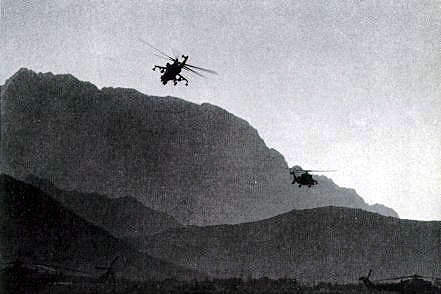
Leave a comment

Filed under Foreign Policy, Military, national security

A Global Force for Good

A Global Force for Good: A Sailor holds the hand of a Haitian Child

The Navy A Global Force For Good TV Spot

http://www.youtube.com/watch?v=6DriBYQvG_4

“I can imagine no more rewarding a career. And any man who may be asked in this century what he did to make his life worthwhile, I think can respond with a good deal of pride and satisfaction: ‘I served in the United States Navy.’” President John F Kennedy 1 August 1963, at the Naval Academy

“It follows than as certain as that night succeeds the day, that without a decisive naval force we can do nothing definitive, and with it, everything honorable and glorious.” George Washington 15 November 1781 to the Marquis de Lafayette

“A good Navy is not a provocation to war. It is the surest guaranty of peace.” President Theodore Roosevelt 2 December 1902, second annual message to Congress

“For in this modern world, the instruments of warfare are not solely for waging war. Far more importantly, they are the means for controlling peace. Naval officers must therefore understand not only how to fight a war, but how to use the tremendous power which they operate to sustain a world of liberty and justice, without unleashing the powerful instruments of destruction and chaos that they have at their command.” Admiral Arleigh Burke CNO 1 August 1961 at the Naval Academy

USNS Comfort off of Haiti

The newest Navy recruiting and public relations campaign features a comment “America’s Navy: A Global Force for Good.”  When it first came out some expressed their dislike of the new slogan; however as a Navy and Army veteran as well as a long time “Navy Brat” I found the slogan and the accompanying commercial inspiring and I can be extremely jaded and cynical when it comes to such advertisements and slogans.  See my post Memorable Recruiting Slogans and the All Volunteer Force. http://https://padresteve.wordpress.com/2009/05/03/memorable-recruiting-slogans-and-the-all-volunteer-force/

Neurosurgeons from Naval Medical Center Portsmouth operating on a patient aboard the Comfort- Baltimore Sun Photo

Maybe it is because I serve with a lot of great people who make up the Navy that I think this way. I have served with the brave souls of our EOD force, the Navy Expeditionary Combat Command, the crew of an elite Guided Missile Cruiser, the USS Hue City CG-66 and the professionals of Navy Medicine.  All these professionals be they war-fighters or care givers give so much of themselves to serve this country and protect others while at the same time laying their lives on the line to defend the people of the United States and others around the world.  For me this understanding of the Navy being a global force for good is relational and it goes beyond the crass cynicism of so many in the world who find little good about our nation.  I know that we have our faults but I really do believe that the good that we have done over the years and now outweighs our sins of commission and omission.  I was really offended when I saw some of the comments from some people in other countries condemning our efforts in Haiti.  I know of no other country that will empty itself to care for the people of a devastated and impoverished nation without expecting any form of repayment even while it is still in difficult economic straits.

Comfort receiving casualties- Baltimore Sun Photo

In the forefront of the humanitarian effort are my friends and shipmates in Navy Medicine on the USNS Comfort and ashore who are caring for the injured, sick and dying Haitian people.  These men and women were pulled out of our medical treatment facility and others with as little as 24 hours notice to deploy on a mission of incredible difficulty and undetermined length.  The emotional toll can be difficult as many of these professionals, physicians, nurses, corpsmen and others have deployed at least once if not two or three times to Iraq or Afghanistan.

Navy Pediatric Intensivist performs a procedure on a Afghan child

While the staff of the Comfort and those ashore toils to save lives others serve in Afghanistan running medical facilities often in conjunction with our allies.   These professionals are deployed from 7 months to a year and include some of the finest clinicians in the Navy.  Serving in Afghanistan the care for American wounded and sick, those of our NATO and Afghanistan National Army allies as well as the unfortunate civilians including children who are victims of terrorists acts, IEDs or military action mostly initiated by Taliban or Al Qaida forces.  Serving in harm’s way they see their compounds bombarded by incoming rockets, mortars and occasional artillery fire.  They also know that the vehicles that they travel in and helicopters that they fly in are targeted by Taliban forces and they care for those who are injured by IEDs on the same routes that they travel.  Having experienced this in Iraq I can say that it is a sobering and often eerie feeling that you get after you have been with Marines or Soldiers wounded by IEDs and ambushes on routes that you travel.  These men and women see the worst that humanity can do and still care about the victims.

USS Carl Vinson arrived quickly and began relief operations

Others serve in Iraq now supporting our Army troops with medical care working alongside Army and Air Force medical personnel, others are in the Horn of Africa and still others involved with other humanitarian missions or operational support of US Forces abroad.

One has to remember that these medical professionals do not just come out of a vacuum but are normally assigned to medical treatment facilities in the United States. As they depart to serve abroad those left behind continue the mission of caring for our military, their families, and military retirees going back to the Greatest Generation and other combat wounded veterans still entitled to medical care.   The workload back at home does not let up and the professionals back here work harder and longer to provide the quality care that our beneficiaries deserve. Dealing with patients and families I always hear about how much they appreciate the kindness and superior care that they get from our physicians, nurses, corpsmen and other medical professionals.

Boarding Team from USS Hue City

If you do not believe that these men and women are a “global force for good” then I am sorry that you cannot see the labor of love that these men and women provide to those entrusted to their care.  I am ashamed when I hear prominent media personalities call these “meals on wheels” missions. Personally I think it is hateful and demeaning towards the proud professionals who serve in these human tragedies and care for God’s people.  Likewise those that claim that this is being done to further US influence in Haiti are so clueless, in Haiti there is no payback even from a military or strategic point of view and even with our forces stretched thin around the world we still go out and do what no other country can do when we use our military to care for those afflicted by disaster.

In Haiti we are working hand in hand and side by with numerous Non-Governmental Organizations and other military medical professionals from the United States, Canada and other nations who are giving of themselves to serve the Haitian people.

USS Hue City 565 Feet of Naval Power on Patrol

I think that for once a recruiting phrase actually captures the essence of the Navy.  This is not about just being a better individual or improving your life or getting an education and experience.  It is about serving our nation and people as well as others around the world whether that mission is combating terrorists, pirates, protecting our vital interests or like in Haiti, or during the Indonesian Tsunami, Hurricane Katrina or at the World Trade Center and hundreds of other places, this Navy is a global force for good.

Tonight as you go to bed and sleep soundly after eating well and spending time with family, friends or enjoying some form of entertainment remember those of our Navy who serve at sea, in the mountains and deserts of Afghanistan, the cities of Iraq, the desolation of the Horn of Africa and around the world defending our interests, caring for our military personnel and their families and deploying to serve in harm’s way and in areas of devastation.  They are America’s “Global Force for Good.”  They are my shipmates.  They are the United States Navy.

Peace,

Padre Steve+
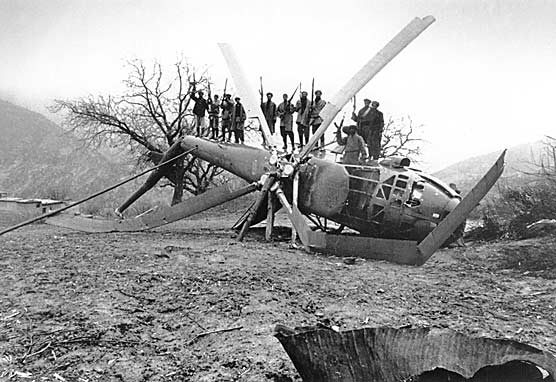
2 Comments

Filed under Military, national security, US Navy

Mission Accomplished in Al Anbar: The Marines Turn Over the Mission to the Iraqis

Religious Support Team 2 MNF-W the Desert Rats at Al Waleed August 2007

There was a time not very long ago that names like Al Anbar, Fallujah and Ramadi were synonymous with futility and humiliation.  But that was before a long time ago in a galaxy far far away. In late 2007 the Marines and our Iraqi Allies aided in large part by the “Anbar Awakening” where the Sunni in the province realized that Al Qaida Iraq’s motives were not in the best interest of the people gained the upper hand in a very short time.  The success was heralded as part of the “surge” but was in large part due to the effort made by the Marines to be seen as something other than occupiers but allies in a fight against foreigners that would brutally kill Iraqis to achieve their goals.

Iraqi Children Happy to see us near Baghdadi

I arrived in Al Anbar in August of 2007 and spent my tour as the Chaplain to the Marine, Army and other advisers in the province which at the time of my arrival were still very much in play.  Within days of arriving at our base of operations I took part in a number of mass casualty situations at the Shock Surgery Trauma center at Ta Qaddum where I prayed for, anointed and looked after Marines wounded when their vehicles were destroyed by improvised explosive devices during combat missions.  My tour was the highlighter of my military career.  In my tour with the advisors as well as the Iraqis of the 1st and 7th Iraqi Army divisions, Second Border Brigade and Iraqi Police, Highway Patrol and even a reconstruction team or two.

Allies: Colonel Cottrell and General Murthi of the 7th Iraqi Division at the Marine Corps Birthday 10 November 2007

During my time there I was privileged to serve with great Marines, Soldiers and even a number of Navy, Air Force, US Border Patrol and Customs personnel and contractors working with the Iraqis.  The Iraqis in many cases were valiant men who while serving against the insurgency and Al Qaida knew that their families were in danger from retaliation as were their own lives.

Friendship: Dinner with General Sabah

While Marines and Army forces took the battle to the insurgents the Iraqi Sunni Muslims in Al Anbar suddenly turned on the insurgents and Al Qaida Iraq.  Soon Iraqi civilians who had been either hostile or neutral towards the Marines and their own Iraqi Army and Police units turned on the Al Qaida and their allies.  Suddenly violence began to subside; Iraqi civilians began to report insurgents, weapons caches and IEDs.

Near COP South waiting to clear suspected IED

By the time that I left Iraq in February 2008 the situation in the province was such that the 1st Iraqi Division was able to be dispatched to Basra and Diyala where they in conjunction they would take the lead in driving the insurgents from these regions. Just before I left an Iraqi General, General Ali in Habbinya told me that I should come back in 5 years as a tourist because everything would be alright. Another Iraqi officer told me that if anything ever happened between us and “the Persians” that the Iraqis would be on our side.  I knew when I left that Iraq would be okay in the long run and I still believe that to be true.

Me with General Ali January 2008

Thursday the Sergeant Major of what used to be Multinational Force West or MNF-West announced the Marines of II Marine Expeditionary Force (Forward) would be conducting a transfer of authority for the American mission to the 1st Armored Division of the US Army as part of the US drawdown in Iraq without a relief in place.   For most people in the United States this will be an event of little significance Iraq is now despite the continued presence of US forces has been forgotten by most.

With Advisers and Leaders of a Company of the Iraqi 2nd Border Brigade

Concern is now focused on US military actions in Afghanistan and the humanitarian relief operations in Haiti.  However, it was in Iraq that an insurgency was defeated, the first time since the British defeated the Malayan insurgency sponsored by Chinese Communists, and the French had militarily defeated the Algerian insurgency before the French government under DeGaulle surrendered the hard fought success of the Paras and Legionnaires betraying them even as he looked after what he viewed as the future of France.

With Bedouin Family and Advsiers near Syria

In the summer of 2007 Iraq was viewed as a lost cause by much of the American body-politic, politicians of both parties and the media.  Now it is becoming a functional state, in large part due to the sacrifices of US Military personnel and the Iraqi Army and security forces.  U.S. Forces are disengaging and exiting the country. While it is likely that and advisory and support mission will remain as the Iraqis continue to rebuild and their Army and security forces continue to expand their capabilities.  The Iraqis recently showed their metal by facing down an Iranian incursion into Iraqi territory on a strategic oil field.

The text of the Sergeant Major’s message describing the transfer is posted below:

From: Carpenter SgtMaj Kiplyn (USF-W SGTMAJ)

Sent: Thursday, January 21, 2010 15:55

Subject: FAREWELL OF THE MARINES FROM IRAQ

UNCLASSIFIED

Please pass on,

SgtsMaj, MGySgts, CMDCMs, Marines and Sailors, Saturday, 23 January at 1100 will mark the end of the Marines in Iraq as an organization.  II MEF (fwd) will conduct a Transfer of Authority Ceremony with the First Armored Division without a Relief in Place from any incoming unit. USF-W (formally MNF-W) will merge with USD-C (formally MND-Baghdad) and will cease to exist.

After 6 years, over 850 Marines and Sailors killed in combat and another 8800 wounded we have completed our mission.  At our peak, we had almost 26,000 Marines and Sailors on deck, close to 200 aircraft, over 380,000 pieces of ground equipment, and were averaging close to 2000 significant events a month.  We have added a whole new generation of Heros; and names like Al Nasiriyah, Fallujah and Ramadi will be added to our History books.

Words can’t begin to explain the magnitude of effort and sacrifice our Marines and Sailors have gone through to help the Iraqi people.  Each year since the initial invasion, Marines and Sailors from all over the Corps have been a part of the revolving I MEF (fwd) and II MEF (Fwd) Commands.  Each year has been different with its own sets of unique challenges and each successive year, the incoming organization has built upon the successes of the outgoing organization.

This year was no different, we didn’t have anywhere near the level of fighting that previous MEFs have done.  However, we did conduct many operations, maintained security, continue to professionalize the Iraqi Security Forces, develop good governance and economics, assisted with the continued establishment of the Rule of Law and oversaw the peaceful transition of the provincial government.  We also had one unique mission that we can call our own. That was to finally bring the Marine Corps home. Over the past year, we have simultaneously conducted the responsible drawdown of 24,000 Personnel, over 34 COPs and FOBs, including Baharia, Rawah, and TQ and sent six years worth of equipment out of theater.

For those of you who served with me this year, thank you.  It was long and difficult at times, with our own set of challenges, but we did it.

It has been an honor to serve with you.

For those of you who have left your boot prints over here at least once during the last six years; thanks to you too. You set the stage for us to finish the job.  It has been costly, it has been challenging, it has taken a while with quite a few dark days. But, in the end, it was worth it.

All Marines and Sailors, including those who remained stateside have contributed to the overall success of the Marines and Sailors in Iraq and; all of us have known someone who didn’t make it back alive or has permanent injuries. It is up to us to ensure that those who follow never forgot their sacrifice or what we did here.

Collectively, we have added another illustrious chapter to the successful story of our Marine Corps.  One that all of us can be proud of.

Semper Fidelis,

K. Carpenter

Sergeant Major

United States Force – West, Iraq

(Previously Multi National Force – West) II Marine Expeditionary Force (Fwd)

21 January 2010

UNCLASSIFIED

Iraqi Recruits going through Basic Training

I am proud today to have been part of a mission that appears to have ended in success, at least in Al Anbar Province.  Semper Fidelis to the Marine Corps and the Sailors, Soldiers and Airmen who served alongside of us in Al Anbar as well as the Iraqi Army and security forces who despite the odds set the stage for the Iraqis and US Forces in the rest of the country to begin to re-establish order and normalcy to a country that has known little but war, dictatorship and tragedy over the past 40 years. I look forward to going back to Iraq someday and maybe visit some of those Iraqis that I was privileged to serve alongside.  May God bless all those who served honorably in Iraq and the Iraqi Army, security forces and the people of Iraq.

Peace,

Padre Steve+
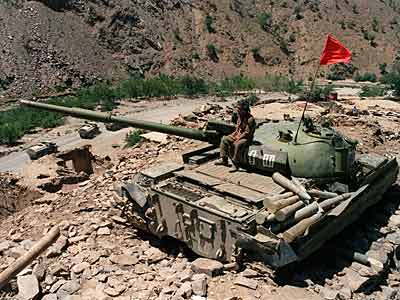
Leave a comment

Filed under History, iraq,afghanistan, Military

Learning to Apply the Principles of Counterinsurgency Part One: Introduction to the Soviet-Afghan War

Soviets Enter Afghanistan

Note: This is the First Part of a Series which I will be writing on Afghanistan and Counterinsurgency strategy in that country. Part of this will be a review of various historical materials especially from Russian sources as well as analysis of the Afghan insurgency and its foreign supporters including Al Qaeda. I have written a number of other articles on the Afghan War and associated topics.  Links are provided at the end of this article.

Counterinsurgency is not just thinking man’s warfare—it is the graduate level of war. Special Forces Officer in Iraq, 2005

“Protracted conflicts favor insurgents, and no approach makes better use of that asymmetry than the protracted popular war. The Chinese Communists used this approach to conquer China after World War II. The North Vietnamese and Algerians adapted it to fit their respective situations. And some Al Qaeda leaders suggest it in their writings today. This approach is complex; few contemporary insurgent movements apply its full program, although many apply parts of it. It is, therefore, of more than just historical interest. Knowledge of it can be a powerful aid to understanding some insurgent movements.”[i]

Introduction

US Training Team Base

The United States has entered its 9th year of military involvement in Afghanistan following the October 2001 invasion that came as a response to the attacks on the World Trade Center and Pentagon of September 11th 2001.  In that time the United States, its NATO allies and the United Nations have endeavored to bring stability as well as a more democratic and accountable government to the country in the face of resistance from various political, religious and tribal groups with a diverse and sometimes conflicting agendas.  The foremost of these resistance groups was and is the Taliban which arose during the Soviet occupation of the country and eventually took power after winning a civil war against a number of other Mujahidin groups.   As the United States diverted force and focused its efforts on Iraq’s insurgency the Taliban using bases in remote areas along the Pakistani border and monetary and political support from Moslem groups with similar goals rehabilitated and reorganized its forces and began the process of regaining influence in Afghanistan.  By 2008 it was apparent that the situation had reached a crisis point.  The vast majority of Afghans as well as many in the international community came to view the Karzai government as corrupt, weak and unpopular.  The Taliban and other groups began to work more closely together despite differing agendas and the political and military situation deteriorated to the point that the incoming Obama administration appointed a new commander, General Stanley McChrystal to evaluate the situation and based on his recommendations and those of General David Petreus, Secretary of Defense Robert Gates and others announced a “surge” to try to regain the initiative in the country.  That troop buildup is currently underway. By the time it reaches its maximum the United States will have approximately 100, 000 troops in Afghanistan and the NATO and ISAF allies approximately another 38,000.  These are supporting and training the Afghan National Army and Police which number approximately 97,000 in the Army and another 98,000 in the National Police.  The Afghan forces have not proven to be reliable and have been infiltrated by Taliban and Al Qaeda members and the NATO and ISAF allies are often limited in the scope of their mission and have restrictive rules of engagement.  Thus the bulk of the fight rests on the United States and some allies with more robust rules of engagement such as Canada, Britain and France.  The lack of internal credibility of the Afghan Government, the weakness of its army and security forces coupled with the numerical weakness of US and ISAF forces has given the various indigenous insurgent groups, especially the Taliban to make a comeback that threatens the mission.  General McChrystal noted:

“The situation in Afghanistan is serious; neither success nor failure can be taken for granted. Although considerable effort and sacrifice have resulted in some progress, many indicators suggest the overall situation is deteriorating. We face not only a resilient and growing insurgency; there is also a crisis of confidence among Afghans—in both their government and the international community—that undermines our credibility and emboldens the insurgents. Further, a perception that our resolve is uncertain makes Afghans reluctant to align with us against the insurgents.”[ii]

Taliban Insurgents

The situation is such in Afghanistan that many Americans are struggling how the “good war” could go “bad.”  Many armchair strategists, many political and media figures and even some in the military fail to understand the nature of Counterinsurgency and its complexity as opposed to conventional warfare. In fact many of these assume that the simple application of combat force using conventional tactics is the cure for the situation, however history shows that such is not the case especially in Afghanistan.

This introduction to this study will focus on some commonalities of the Soviet and American experiences in Afghanistan.

Soviet Mi-24s

The Soviets invaded Afghanistan in 1979 they used their 40th Army which initially was composed of “two motorized rifle divisions, an airborne division, an air assault brigade and separate motorized rifle regiments.”[iii] These forces totaled about 52,000 troops and were “considered sufficient to guarantee the viability of Afghanistan.”[iv] The 40th Army was a standard Cold War Soviet Combined Arms Army designed for high tempo conventional operations.  It was not designed for nor trained in counterinsurgency operations or what the Soviets and Russians class as “anti-guerilla operations.” It was poorly suited to mountain and dessert combat and at the beginning “not only had no practical skills in the conduct of counter-guerilla warfare, they also did not have a single well-developed theoretical manual, regulation or tactical guideline for fighting such a war.”[v]

Soviet Tank Guarding Convoy

The Soviets did not expect to be involved in combat operations and the Afghan population reacted to their presence with resistance which spread across the country both against their own government which they viewed as a puppet of the Soviets but also against the Soviet Forces.  As time went on the Soviets attempted to use raids and large scale operations to attempt to bring Mujahidin forces to battle, however the insurgents were very skillful and the Soviets attempted to increase the training of their forces as well as their numbers.  By 1986 the numbers on the ground had increased to 108,000 personnel in four divisions, five separate brigades, four separate regiments and six separate battalions.[vi] In the nearly 10 years of operations over a half million Soviet soldiers and support personnel served in Afghanistan. Tours for enlisted personnel who were primarily conscripts served 12-18 months in country and officers 2 years.  Few returned for subsequent tours meaning that the 40th Army had few personnel very familiar with the country, its people and the challenges faced by Soviet forces.  According to official sources the 40th Army suffered 13,833 killed in action or died of wounds, 49,985 wounded and 311 missing in action a figured of 1 in 8 Soviet Soldiers being casualties.  14.3 percent of the casualties were officers.[vii] Of course the official figure is doubted many believing the number killed in action or died of wounds to be closer to 26,000.[viii]

Soviet Troops Preparing to Leave Afghanistan 1989

The Soviet Forces supported the Army of the Democratic Republic of Afghanistan which numbered at their peak on average between 120,000-150,000 soldiers.[ix] The Afghan forces, then as now were at the mercy of tribal, familial and communist party affiliations. Over 70 percent of the DRA was conscripted, desertions averaged 1,500 to 2,000 soldiers a month and units were usually optimistically 25-40 percent under their TO&E strength.[x] Limitations on training and leadership meant that typically DRA units could not conduct large scale missions without Soviet help. As such most of the fighting was done by Soviet formations.

Many of these problems have plagued the United States and ISAF throughout the first 8 years of the current Afghan War.  As General McChrystal has noted in his assessment “ISAF is a conventional force that is poorly configured for COIN, inexperienced in local languages and culture, and struggling with the challenges inherent to coalition warfare. These intrinsic disadvantages are exacerbated by our current culture and how we operate.”[xi]

End of part one to be continued…

Links:

Lessons on Coalition Warfare: The Dysfunctional Coalition German and the Axis Partners on the Eastern Front

The Afghan War 2009-2012: Lessons from Algeria 1954-1960 A Review of “A Savage War of Peace

Unequal Allies: Lessons from The German’s and Their Allies on the Eastern Front for Today

The Effects of Counter-Insurgency Operations on U.S. and French Forces in Vietnam and Algeria and Implications for Afghanistan

Brothers to the End…the Bond between those Who Serve Together in Unpopular Wars


[i] ______________ “The Army/Marine Corps Counterinsurgency Manual FM 3-24 MCWP 3-33.5,” HQ Department of the Army and HQ Marine Corps Combat Development Command, Washington DC 2006.  p. 1-6

[ii] MCChrystal, Stanley. “Commander’s Initial Assessment Commander International Security Assistance Force Afghanistan” dated 30 August 2009 p. 1-1

[iii] The Russian General Staff. The Soviet Afghan War: How a Superpower Fought and Lost” translated and edited by Lester A. Grau and Michael A. Gress, University Press of Kansas, Lawrence KS 2002 p.17.

[iv] Ibid. p.18

[v] Ibid. p.43

[vi] Ibid. p.28

[vii] Ibid. p.309

[viii] Ibid. p.xix

[ix] Ibid. p.48

[x] Ibid. pp.48-51

[xi] McChrystal. p.1-2

1 Comment

Filed under counterinsurency in afghanistan, History, iraq,afghanistan, Military

Padre Steve’s Decade in Review: Up Down Tryin’ to Get the Feeling Again

Happy New Year!

Well, we have killed off the first decade of the new millennium and I hate to say it but I miss the 1970s, 1980s and 1990s.  Somehow despite the threat of double secret nuclear annihilation, disco, and bad hair those decades seemed somehow more civil, more hopeful and dare I say just a bit nicer than the current decade has been.  However this decade is what it is, or maybe was what it was.  I think that most of us could say like the Barry Manilow  song that “I’ve been up down tryin’ to get that feeling again” but like Blobdie sang “Dreaming is Free.”

Personally Padre Steve had recently embarked on another phase of military service having left the Army Reserve in February 1999 to enter the Navy. Since that time my career has been pretty good and I’m glad that I made the switch.  I have had the chance to serve with some great folks and see a lot more of the world and do a lot of cool things, including going to war. This time in 1999 I was assigned to the 2nd Marine Division at Camp LeJeune North Carolina.  The big thing going on back then was the world being up in arms about the threat of something called Y2K.  Y2K was supposed to end life as we knew it as anything using computer technology was going to quit working, airplanes would fall from the sky, power plants would shut down and personal computers would stop working in the middle of trying to get a dial-up connection to AOL or Compuserve. We YTK fizzed and those that had made doomsday preparations felt pretty silly as they looked over their shoulders for Black Helicopters and hundreds of thousands of UN troops hiding out in our National Parks building detainment camps for real Americans.

Who the Hell Was this Guy Voting For?

As YTK fizzled the 2000 Presidential campaign got spun up.  Padre Steve missed a lot of it because he spent about 10 weeks in the dessert at 29 Palms with two different Marine battalions during two Combined Arms Exercises, or CAX.  He then left in December for a deployment to the Far East. Just before the election the destroyer USS Cole was attacked and heavily damaged by terrorists in an explosive laden boat while refueling in Yemen.  2000 ended without a decision in the election and the campaign culminated in January 2001 with a razor thin Electoral College victory for George W. Bush full of controversy over disputed ballots in Florida with an Army Corps of lawyers getting involved and taking the whole thing up the Supreme Court.  This process dragged on for what seemed like forever until I was in Okinawa with my battalion.  A new term was coined “the hanging chad.” Once the election nightmare was over things did not get better.  In 2000 lost some notable folks, former Dallas Cowboys Head Coach and Pro-Football Hall of Famer Tom Landry called his last play, Sir Alec Guinness crossed over the River Kwai and Montreal Canadiens Hockey legend Maurice “Rocket” Richard broke away and got his final hat trick.

9-11 Twin Towers Under Attack

As 2001 began it did seem that things were starting to settle down despite lingering hatred on both sides of the political aisle about the election.  But then there were the attacks of September 11th 2001 where terrorists flew hijacked airliners into both of the World Trade Center towers and the Pentagon. This caused a number of congressmen and senators to break forth in song outside the Capital and for a brief time it seemed that the whole country had united in common cause.  Soon US Special Forces, Rangers and Marines were fighting in Afghanistan to overthrow the Taliban and hunt for Osama Bin Laden, the mastermind of the terror attacks and the head of the Al Qaeda terrorist network.  US forces overran Afghanistan quickly with the help of Afghan tribes known as the Northern Alliance and it looked like despite not finding Bin Laden that the US goals were being accomplished even as the President was telling Americans to “go shopping” to many in the military giving the impression that while the military was at war that the nation was not.  In December 2001 Padre Steve was transferred from the Marines to the Guided Missile Cruiser USS Hue City, CG-66. The ship would complete a couple of underway periods and exercises before departing for the Middle East in early February.  This was Padre Steve’s first tour in a war zone and the ship conducted operations off the Horn of Africa, in the Northern Arabian Gulf as part of the UN Oil Embargo on Iraq intercepting smugglers, during which time Padre Steve was with a boarding team that made 75 boarding missions of Iraqi and other smugglers.

Iconic Picture of Padre Steve on a Boarding Mission

From there Hue City operated with the USS John F Kennedy conducting operations in the Gulf of Oman where our air controllers helped direct strikes against Al Qaida and the Taliban and during which time the ship was detached to keep watch on the Indians and Pakistanis who were on the brink of having a nuclear war.  Acting great and Academy Award winner Jack Lemmon, former Beatle George Harrison and NASCAR great Dale Earnhardt all made their final lap around the planet. In Baseball the Arizona Diamondbacks defeated the New York Yankees to win the World Series in 7 games.

2004 The Red Sox Break the Curse

2002 also saw John Allen Mohammed, the Beltway Sniper bring terror to Washington DC, Northern Virginia and Maryland, the Congress passed a joint resolution to allow President Bush to use US Military Forces as he deemed fit in Iraq and the Iraq War Resolution.  Shortly thereafter the Department of Homeland Security was established.  The San Francisco Giants lost the World Series to the Anaheim Angels after leading in the 7th inning of game six much to the consternation of Padre Steve and the other Giants faithful.  Calls for the public water boarding of Giants Manager and former “Evil Dodger” Dusty Baker to find why he took out Russ Ortiz went unheeded. Dave Thomas the founder of Wendy’s flipped his last burger, country music legend Waylon Jennings sang his last song and Baseball immortal Ted Williams all died in 2002 with Williams and his family trying to make him a real immortal by having his remains cryogenically frozen.

The Challenger Disintigrates

For Padre Steve 2003 was relatively uneventful, the Hue City was in the yards when Operation Iraqi Freedom was launched and was just getting ready for a deployment when he was reassigned to the Marine Security Force Battalion.  In short order he was travelling around the globe and before the end of the year had visited his Marines in Bahrain, Rota Spain and Guantanamo Bay Cuba and he and the Abbess celebrated their 20th wedding anniversary. The Iraq War and overthrow of Saddam Hussein was the big story of 2003 however there was other news. The Space Shuttle Columbia blew up on re-entry killing the 7 astronauts on board, California recalled Governor Gray Davis and replaced him with the Governator Arnold Schwarzenegger and the Florida Marlins defeated the New York Yankees to win the World Series. We lost some legends in 2003 comedian Bob Hope died at the age of 100 and is now doing his Christmas show for the Archangel Michael and the Armies of Heaven; US Senator Strom Thurman filibustered his last bill at the age of 100, Fred Rogers left the neighborhood and Joseph Coors brewed his last batch of really bad beer.

George Bush on the USS Abraham Lincoln

2004 saw yet another nasty Presidential election riddled with controversy as George W. Bush defeated Senator John Kerry to win re-election.  In Iraq Saddam Hussein was finally caught hiding in a hole in the ground by US Special Forces, the war in Iraq went south as the insurgency of former Ba’athists, disaffected Sunnis aided by Al Qaida and other foreign fighters and terrorists took up President Bush on his challenge to “bring it on.”  Facebook was founded in Cambridge Massachusetts, simultaneous suicide bombs devastated trains in Madrid in what became known as Spain’s 9-11, Lance Armstrong won his 6th consecutive Tour de France, Chechen terrorists seized a school in Beslan Russia and over 300 are killed and 700 wounded by the terrorists as the school was stormed by Russian security forces and the Boston Red Sox won the 2004 World Series to break the curse of the Bambino after coming back to defeat the Yankees in the ALCS after being down three games to none.  Death took no holidays in 2004 as Bob Keeshan better known as Captain Kangaroo was piped over the side, Rick James dated his last Super Freaky Girl without taking her home to mother and former President Ronald Reagan died of Alzheimer’s Disease after seeing his successors destroy his coalition and “big tent” and hopeful vision of conservatism.   Padre Steve continued to travel around the world with his Marines going to Japan, France, and Spain, Bahrain and Guantanamo Bay as well as a number of trips within the United States.  In France he taught seminars at the Belleau Wood battlefield site and in Normandy.

Hurricane Katrina as a Category 5 Storm

The war in Iraq continued to heat up in 2005 with the insurgency spreading throughout the country with the focal point being Sunni stronghold Al Anbar Province.  Hurricane Katrina ravaged Gulf coast devastating New Orleans and southern Mississippi killing over 1800 and forcing millions from their homes. The ineffective and inept government response beginning with the “fly by visit” of President Bush helped the Democrats regain control of the House and Senate in 2006.  Terrorism was alive and well as a terrorist attack on London’s Underground and a bus killed 56 and injured over 700.  As for Padre Steve well he was selected for promotion to Lieutenant Commander, completed the Marine Corps Command and Staff College and continued to travel around the world with his Marines going to Japan, France, Spain, Bahrain and Guantanamo Bay as well as a number of trips within the United States.  The highlight of this was being able to have the Abbess accompany him to Guantanamo Bay for the Marine Corps Birthday Ball. The Chicago White Sox defeated the Houston Astros in the World Series. In Washington DC baseball stars were hauled before a Congressional committee to testify on steroids in baseball or interrogated about their possible use of steroids. This wasted millions of dollars in taxpayer money as loser Congressmen who tolerate all sorts of illegal and immoral actions of their own sought to embarrass and destroy the careers and reputations of ballplayers in a grand act of inquisitional hypocrisy. Death came knocking for comedian Richard Pryor, Johnny Carson gave his last monologue, Pope John Paul II met Saint Peter and James Doohan, Mr. Scott from Star Trek was beamed up for the last time.

Israeli Merkeva Tank Destroyed by Hezbollah

In 2006 Padre Steve was promoted the Lieutenant Commander and was transferred to EOD Group Two after completing another year of travel with the Marine Security Forces.  Within months there was talk of a deployment to Iraq or Afghanistan for him and his trusty assistant and body guard Nelson Lebron. He also began a Masters Degree program in Military History at American Military University.  In the rest of the world the Republicans lost their majorities in Congress, the war in Iraq continued to grow in intensity and Israel went to war with Hezbollah forces on their northern border.  The attack was ill conceived and was a military failure revealing weaknesses in the Israeli ground forces training and tactical abilities forcing investigations of the military and the resignation of the head of the military.  Pope Benedict XVI the successor to Pope John Paul II published his first encyclical.  In the World Series Tony LaRussa’s St Louis Cardinals defeated the Detroit Tigers and Barry Bonds though tainted by controversy continued his march to the Baseball Home Run title.  Death paid a visit to former Secretary of Defense Caspar Weinberger, sportscaster Curt Gowdy called his last game and Don Knotts, Televisions Barney Fife gave up his bullet for the last time.

Barry Bonds the All Time Home Run Leader

The war in Iraq reached a climax in 2007 as President Bush heeded the advice of General David Petreus and initiated a “surge” of forces to help wage an actual counterinsurgency campaign.  Combined with the Al Anbar Awakening where the Sunni turned on the insurgents and allied themselves with the Americans the course of the war changed as insurgents lost support and the US and better trained and equipped Iraqi forces launched successful offensives to drive the insurgents out of key areas.  Padre Steve deployed to Iraq and served in Al Anbar Province working with US Marine and Army advisers to the Iraqi Army, Police and Border forces travelling thousands of miles in the province to go where few others went.

Padre Steve in Iraq with Bedouin on Syrian Border

Barry Bonds broke Hank Aaron’s all-time home run record while track star Marion Jones surrendered 5 Olympic Gold Medals after admitting to blood doping and the Boston Red Sox swept the Colorado Rockies to claim their second World Series title of the decade.  Meanwhile death came to Jerry Falwell who preached his last sermon; Tammy Faye (Baker) Messner applied her last coat of Bondo, Ike Tuner played his last guitar riff while Pavarotti exited the stage with Marcel Marceau who went rather silently I am told.

Barak Obama the 44th President

In 2008 Padre Steve returned from Iraq with a pretty good case of PTSD, chronic pain and anxiety coupled with depression and a crisis in faith.  He finished his tour at EOD and was assigned to Portsmouth Naval Medical Center. He and the Abbess celebrated thier 25th wedding anniversary.  The war in Iraq was now moving in a successful direction with the Iraqis taking more control of their security and the various religious, political and ethnic factions beginning to talk and work with one another rather than shoot at each other.  However the war in Afghanistan took a nasty turn as the Taliban came back with a vengeance and the Afghan government was revealed as weak, ineffective and corrupt.  The 2008 Presidential election was waged with bitterness and the Democrats sent Senator Barak Obama, who had defeated Senator Hillary Clinton up against Senator John McCain.  Obama won the election becoming the first African American man to become president while strengthening their majorities in Congress. The world entered a major economic crisis in 2008 and the United States suffered massive losses in financial markets, housing and rising unemployment.  Bank bailouts were the order of the day as President Bush left office and Obama took over.  A massive earthquake in Sichuan China killed over 80,000 people while American swimmer Michael Phelps won 8 gold medals to set an Olympic record.  The Philadelphia Phillies won the World Series defeating the surprising Tampa Bay Rays.  Death as always came along taking actors Heath Ledger and Charlton “Moses” Heston, comedian George Carlin and former Senator Jesse Helms.

Sarah Palin the New Leader of the GOP?

2009 came in with the inauguration of Barak Obama as President something that Padre Steve witnessed with a elderly African American women in her ICU room while holding her hand as she cried not believing that she would see an event of this kind in her lifetime.  The war in Iraq began to wind down as the US began to increase it’s withdraw of ground forces and turn over more security to the Iraqis.  In Afghanistan the war reached a crisis point as the military and political situation deteriorated within the country and support for the war dwindled in the US and Europe. Amid this President Obama agreed to a “surge” for Afghanistan.  The worldwide economic continued but by the end of the year some economic indicators were pointing upward again even as the US unemployment rate continued to rise. A bitter fight was waged over health care reform and economic policies while President Obama’s support and approval ratings crashed as people on both the left and right of the political spectrum criticized his leadership and policies.  Republican Vice-Presidential nominee and former Vice President Dick Cheney took the Republican lead in attacking the President while conservative talk radio delivered a daily barrage of criticism.  Some of Obama’s own actions did not help his cause especially in the manner in which he was viewed to respond to terrorist attacks including an attempted Christmas Eve bombing of a US airliner.  Tensions continued to grow between the West and Iran regarding that nation’s nuclear program even as widespread demonstrations wracked that country after an election which appeared to be rigged by the Iranian government. An outbreak of H1N1 Influence reached pandemic proportions across the globe but did not reach the lethality that it had the potential to do.  The Vatican announced a historic plan to allow conservative and traditionalist Anglicans come into the Catholic Church and retain their Anglican traditions and some measure of autonomy.

The Yankees Return

In baseball a revitalized New York Yankees team dominated the American league and went on to dominate their playoff and World Series opponents defeating the Phillies in 6 games. In football a good number of teams in both the NFL and NCAA were a parody of the sport and coaching scandals plagued the sport while at the box office Star Trek came back with a vengeance and a twist. Padre Steve continued his hospital work, battled PTSD, depression, his father’s Alzheimer’s disease and his own spiritual crisis but completed the academic requirements for his Masters Degree in Military History and by the end of the year began to experience some measure of healing.  He launched this site in February of 2009 and as of this post will have made 328 posts on the site.  He also bought his first ever season tickets for a baseball team and now claims Section 102, Row B seats 1 & 2 as his pew at the Church of Baseball, Harbor Park Parish.  Death prowled the earth looking for recruits finding legendary news anchorman Walter Cronkite who signed off of the last time, Pop Superstar Michael Jackson who “moon walked” the stairway to heaven or wherever, Senator Edward Kennedy who finalized his last legislation with his maker and Patrick Swayze who reprised his role in “Ghost.”

So it has been quite a decade personally for your friend Padre Steve as well as an eventual decade for the United States and the World.  The decade has been “interesting” and as the ancient Chinese curse says “may you live in interesting times.”  I hope that the next year and decade are a lot less interesting, that wars will cease and that people all over the world will join together like the old 1960’s Coca Cola commercial.

I’d Like to Teach the World to Sing?

Peace and Blessings in the New Year,

Padre Steve+
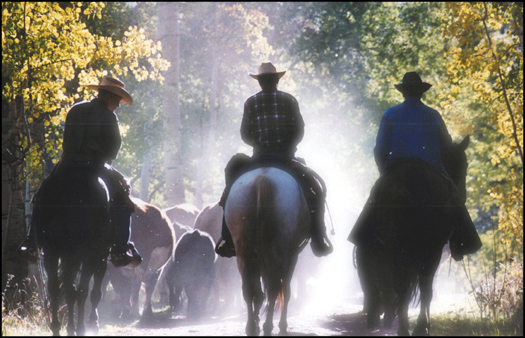
1 Comment

Filed under History, Loose thoughts and musings