Tag Archives: al qaida

War Without Mercy: Race, Religion, Ideology and Total War

Dower, John W. War without Mercy: Race and Power in the Pacific War.” Pantheon Books, a Division of Random House, New York, NY 1986.

The study of war cannot simply be confined to the study of battles, weapons and leaders. While all of these are important one must as Clausewitz understood examine the human element of policy, ideology and the motivations of nations as they wage war. Clausewitz understood that war could not be reduced to formulas and templates but involved what he called the “remarkable trinity” which he described in on war as (1) primordial violence, hatred, and enmity; (2) the play of chance and probability; and (3) war’s element of subordination to rational policy. Clausewitz connects this with the people being connected to the primordial forces of war, the military with the non-rational elements of friction, chance and probability and the government.

The Clausewitzian understanding of war is rooted in the Enlightenment and classic German Liberalism, born out of his experience in the Napoleonic Wars, which forever changed the face of warfare.  From the defeat of Prussia and its liberation from Napoleonic rule under Scharnhorst and Gneisenau Clausewitz developed the understanding that war was more than simply tactics and weapons.  Thus when we examine war today we deprive ourselves of properly understanding the dynamic of war if we fail to appreciate the human factor which is frequently not rational.  Such is especially the case when one fights an enemy who wages war on religious, racial or ideological grounds as is the case in the current war against Al Qaida and other extremist Moslem groups. Such groups would like to turn this war into such a conflict as do certain figures in the American political milieu who repeatedly label all of Islam as the enemy.  In such a climate it is imperative to look at history to show us the results of such primal passions.

It is in such conflict as we are engaged in today it is good to look at previous wars from the human experiential component and not simply military operations.  If one wants to look at how inflamed passion driven by racial prejudice and hatred took war to a level of barbarity and totality that defy our comprehension we only need to look back to the Pacific war between Japan and the United States.  In another post I dealt with the how racial ideology influenced Nazi Germany’s conduct of the war against Poland and the Soviet Union.  https://padresteve.wordpress.com/2009/09/14/the-ideological-war-how-hitlers-racial-theories-influenced-german-operations-in-poland-and-russia/

To do this I will look at John Dower’s “War Without Mercy.” In this book Dower examines World War Two in the Pacific from the cultural and ideological viewpoints of the opposing sides.  He looks at the war as a race war, which he says “remains one of the great neglected subjects of World War Two.”[i] Dower examines race hated and its influence on both the Japanese and the Allies, particularly in the way that each side viewed one another and conducted the war.  He examines the nature of racial prejudice and hate in each society, including its religious, psychological, ideological, scientific and mythological components.  He also examines the use of media and propaganda, and how racial attitudes not only influenced national and individual attitudes, but also the military and intelligence operations of both sides.  This book is not about military campaigns, thus it is much more like “In the Name of War” by Jill Lepore[ii] than any history of the Pacific war.

Dower uses sources such as songs, movies, cartoons and various writings of the times to demonstrate the totality of the war.  Dower admits many of these are difficult to handle and “not respectable sources in some academic sources.”[iii] Despite this he puts together a work that is sometimes chilling, especially when one looks at the current war that our country is engaged in. He also endeavors to explain how after a war where “extraordinarily fierce and Manichean”[iv] race hate predominated, it could “have dissipated so easily”[v] after the war was over.

Dower divides his work into three major sections.  The first which examines how the aspect of race effected the fighting of the war, the second, the war through Western eyes and the third the war through Japanese eyes.  The first section begins with how racial attitudes in Western and Japanese societies helped fuel the war and compares similar attitudes and concepts in Western and Japanese thought, including how “prejudice and racial stereotypes frequently distorted both Japanese and Allied evaluations of the enemy’s intentions and capabilities.”[vi] He looks at the language of the conflict; at how war words and race words came together “in a manner which did not reflect the savagery of the war, but truly contributed to it….”[vii] the result being “an obsession with extermination on both sides.”[viii] He comes back to this theme throughout the book comparing the two sides and occasionally contrasting these attitudes with corresponding attitudes of the Allies to their German and Italian foes in Europe.[ix]

In the first chapter Dower examines the role played by the propaganda used by both sides.  In particular he expalins how the “Know Your Enemy: Japan” movies commissioned by the War Department and directed by Frank Capra, and the Japanese works “Read this and the War is Won” and “The Way of the Subject” helped shape the view of each side. Propaganda developed the idea of the war in terms of good versus evil and the mortal threat posed to their respective cultures by the enemy.

From this he looks at the visceral emotions that the war engendered and how those emotions spilled over into the conduct of the war especially in regard to its ferocity and the war crimes that were spawned by the unbridled hatred of both sides.  He notes the targeted terror bombings of civilians by both sides and how those actions were portrayed as “barbaric” by the other side when they were the victim.[x] He notes the viciousness of the war and how for the Americans the war brought forth “emotions forgotten since our most savage Indian wars.”[xi] He contrasts this with European war in particular how the Japanese and their actions were portrayed in Western media, and how similar actions by the Germans, such as the Holocaust, were ignored by Western media until the war was over.[xii] He traces some of this to the understanding of the psychological effects of the defeats and humiliations of the Allies at the hands of the Japanese, and the corresponding brutality toward Allied prisoners by the Japanese as compared to that of the Germans.[xiii] He uses this section to also examine the prevailing attitudes of the Japanese toward the Allies as being weak and “psychologically incapable of recovery” from blows such as the Pearl Harbor attack, and the Allied view of the Japanese as “treacherous.”[xiv]

Dower’s second major section describes the attitudes and actions of the Americans and British toward their Japanese enemy.  He looks at the view that the Japanese were less than human and often portrayed as apes or other primates such as monkeys.  To do this he examines cartoons and illustrations in popular magazines and military publications, and includes those cartoons in the book.   The sheer vulgarity of these cartoons is easily contrasted with those promoted and published by Nazis such as Julius Streicher in Der Stürmer, something often overlooked or ignored in other histories.[xv] The early Western views of Japan as sub-human continued throughout the war, while at the same time, especially after the rapid series of Allied defeats and Japanese victories they were viewed as almost “super-human.”  Paradoxically some allied leaders turned the Japanese from “the one time “little man” into a Goliath.”[xvi] They were now “tough, disciplined and well equipped.”[xvii] Ambassador Joseph Grew, reported on his return from Japan, that the Japanese were; “”sturdy,” “Spartan,” “clever and dangerous,” and that “his will to conquer was “utterly ruthless, utterly cruel and utterly blind to the values that make up our civilization….””[xviii] The juxtaposition of such conflicting attitudes is curious, although understandable, especially in light of other Western wars against Asians or Arabs.[xix]

Dower then examines how some Americans and British explained the Japanese “National Character,” their approach to war, and actions during the war from Freudian psychiatry as well as Anthropology and other social and behavioral sciences.   Beginning with the widespread Allied understanding that the Japanese were “dressed-up primitives-or “savages” in modern garb…”[xx] he notes that these interpretations of the Japanese national character stemmed from “child-rearing practices and early childhood experiences,”[xxi] including toilet training and Freudian interpretations that saw an arrested psychic development at the “infantile (anal or genital) stage of development.”[xxii] Dower deduces that it was not hard to see how “Japanese overseas aggression became explicable in terms of penis envy or a castration complex….”[xxiii] The views were widespread and emphasized  that the “Japanese were collectively unstable.”[xxiv] Dower notes that the “very notion of “national character”-was the application to whole nations and cultures of an analytical language that had been developed through personal case studies…”[xxv] which he is rightly critical in suggesting that this premise “was itself questionable.”[xxvi] In addition to this was the understanding of Margaret Mead and others of the Japanese as “adolescents” and “bullies,”[xxvii] and notes that from “the diagnosis of the Japanese as problem children and juvenile delinquents, it was but a small step to see them as emotionally maladjusted adolescents and, finally as a deranged race in general.”[xxviii] Dower cites numerous other “experts” of the time and their interpretations of the Japanese national character, but the overwhelming message is that the application of these theories, regardless of their validity had a major impact on the Allied war against Japan.

He follows this chapter with one with much importance in explaining the similarities in how Americans and Westerners in general viewed the Japanese in relationship to other races that they had dealt with including Blacks, Chinese, Filipinos, and American Indians.  Common themes include the views of each as primitives, children and madmen and the view of the Japanese as part of the “Yellow Peril.”  Of particular note is his analysis of the work of Homer Lea’s 1909 book The Valor of Ignorance and the vision of Japanese supermen which enjoyed a revival after Pearl Harbor.[xxix] Dower examines depictions of Asians in general in the Fu Manchu and Charlie Chan series of films and other racial aspects hearkening back to the “specter of Genghis Khan and the prospect that the white races “may be liquidated.”[xxx] He notes how Japanese propagandists attempted to use Allied prejudice to influence the Chinese and other Asians against the Allies[xxxi] and American blacks against whites,[xxxii] while attempting to maintain their own racial superiority which is the subject of the next section.

The chapters dealing with the Japanese view of themselves and their opponents tie together neatly.  These deal with the Japanese view of themselves as the leading race in Asia and the world.  Dower talks about symbols and the understanding of racial purity that motivated the Japanese from the 1800s to the rejection of Japan’s request for a declaration of “racial equity” at the League of Nations.[xxxiii] He notes the “propagation of an elaborate mythohistory in Japan and the time spent “wrestling with the question of what it really meant to be “Japanese” and how the “Yamato race” was unique among races….”[xxxiv] He notes the relationship of Shinto with whiteness and purity and connotations of how the Japanese indulged in “Caucasianization” of themselves vis-à-vis other Asians during World War Two,”[xxxv] and their emphasis on a Japanese racial worldview.[xxxvi] He also tackles the way in which the Japanese wrestled with evolution and its relationship to other racial theories contrasting books such as A History of Changing Theories about the Japanese Race and Evolution of Life with Cardinal Principles of the National Polity published by the Thought Bureau of the Ministry of Education in1937.  These declared that the Japanese were “intrinsically different from the so-called citizens of Occidental countries.”[xxxvii] He also deals with the Kyoto school and the Taiwa concept.[xxxviii] In Chapter Nine Dower looks at how the Japanese viewed themselves and outsiders, in particular the characterization of Westerners as nanbanjin or  barbarians and how this eventually train of thought carried through the war led to the “Anglo-American foe emerged full blown as the demonic other.”[xxxix] Dowers final chapter deals with how quickly the race hatred dissipated and genuine goodwill that developed between the Japanese and Americans after the war.[xl]

This book holds a unique place in the literature of the Pacific war.  It is not a comfortable book, it is challenging. No other deals with these matters in any systemic way.  If there is a weakness in Dower is that he does not, like Lepore in “In the Name of War” deal with the attitudes of soldiers and those who actually fought the war.  His examples are good and go a long way in explaining the savagery with which the war was conducted, but could have been enhanced with reflections and accounts of those who fought the war and survived as well as the writings of those who did not, and the way those attitudes were reflected in different services, times and theaters during the war, including adjustments that commanders made during the war.[xli] His description of how Japanese “reluctance to surrender had meshed horrifically with Allied disinterest …in contemplating anything short of Japan’s “thoroughgoing defeat.”[xlii]

The lessons of the book are also contemporary in light of the cultural and religious differences between the West and its Moslem opponents in the current war. Possibly even more so than the war between the United States and Japan which was fought by nation states that still were signatories to international conventions, not nation states against terrorists unbound by any Western code or law or indigenous forces engaged in revolutionary war against the west such as the Taliban.[xliii] The temptation is for both sides to demonize one’s opponent while exalting one’s own way of life through official propaganda and popular media, with a result of increased viciousness and inhumanity in pursuit of ultimate victory.   In today’s world with the exponential rise in the radicalization of whole people groups and the availability of weapons of mass destruction, it is possibility that the war could develop into one that is a racial as well as religious and ideological war that would make the War in the Pacific look like a schoolyard brawl.

Bibliography

Alexander, Joseph H. Utmost Savagery: The Three Days of Tarawa. Ivy Books, Published by Ballantine Books, New York, NY 1995

Dower, John W. War without Mercy: Race and Power in the Pacific War.” Pantheon Books, A Division  of Random House, New York, NY 1986.

Leckie, Robert. Okinawa. Penguin Books USA, New York NY, 1996

Lepore, Jill  The Name of War Vintage Books a Division of Random House, New York, NY 1998

Tregaskis, Richard Guadalcanal Diary Random House, New York NY 1943, Modern Library Edition, 2000.


[i] Dower, John W. War without Mercy: Race and Power in the Pacific War.” Pantheon Books, A Division  of Random House, New York, NY 1986. p.4

[ii] Lepore, Jill  The Name of War Vintage Books a Division of Random House, New York, NY 1998.  Lepore’s book deals with King Phillip’s War and how that war shaped the future of American war and how it shaped the views of Indians and the English Colonists and their later American descendants both in the language used to describe it, the histories written of it and the viciousness of the war.

[iii] Ibid. p.x

[iv] Ibid. p.ix

[v] Ibid. p.x

[vi] Ibid. p.11

[vii] Ibid.

[viii] Ibid.   Also see Alexander, Joseph H. Utmost Savagery: The Three Days of Tarawa. Ivy Books, Published by Ballantine Books, New York, NY 1995 Alexander notes an incident that shows a practical application of the Japanese views and the ruthlessness inflicted on their enemies, in this case prisoners in response to an American bombing raid. In 1942 the commander of the Japanese Garrison of Makin Island ordered 22 prisoners beheaded after one cheered following a bombing raid. (p.32)

[ix] An interesting point which Dower does not mention but is interesting for this study is how the Germans referred to the British and Americans as “Die gegener” (opponents) and the Soviets as “Die Feinde” (the enemy), the implication being that one die gegener was a common foe, much like an opposing team in a sport, and the other a mortal enemy, the implication of Feinde being evil, or demonic.

[x] In particular he makes note of the Japanese actions during the “Rape of Nanking,” and the 1945 sack of Manila, as well as the fire bombing of Japanese cities by the US Army Air Corps in 1945.

[xi] Ibid. Dower. p.33

[xii] Ibid. p.35

[xiii] Ibid.  This is important in the fact that the Allies tended not to make much of German brutality to the Jews, Russians and other Eastern Europeans.

[xiv] Ibid. p.36.

[xv] Dower does not make this implicit comparison, but having seen both and studied the Nazi propaganda directed toward the Jews, Russians and other Slavic peoples considered to be Untermenschen (sub-humans) by the Nazis the similarities are striking.

[xvi] Ibid. pp.112-113.

[xvii] Ibid. p.113

[xviii] Ibid.

[xix] In the 2006 Israeli invasion of Lebanon, Israeli soldiers who previously showed no respect to any Arab fighter described their Hezbollah opponents as “soldiers and warriors.”  Similar attitudes were voiced by American soldiers in Vietnam when they fought NVA regulars.

[xx] Ibid. p.123

[xxi] Ibid.

[xxii] Ibid.

[xxiii] Ibid.

[xxiv] Ibid. p.124

[xxv] Ibid.

[xxvi] Ibid.

[xxvii] Ibid. p.129

[xxviii] Ibid. p.143

[xxix] Ibid. P.157.  Lea is interesting because he predicts a decline in the stature of the British Empire and softness of both the Americans and British as peoples.  Also see John Costello in The Pacific War 1941-1945 Quill Books, New York, NY 1982 pp.31-32 notes Lea’s concerns and how they drove the American Pacific strategy until the outbreak of World War Two.

[xxx] Ibid. p.161

[xxxi] Ibid. p.169

[xxxii] Ibid. pp.174-180.  This is an interesting section.  One of the most interesting topics being the reaction of the NAACP’s Walter White’s book A Rising Wind published which “suggested a sense of kinship with other colored-and also oppressed-peoples of the world….he senses that the struggle of the Negro in the United States is part and parcel of the struggle against imperialism and exploitation in India, China, Burma….” (p.177-178)

[xxxiii] Ibid. p.204

[xxxiv] Ibid. p.205

[xxxv] Ibid. p.209  This is interesting when one compares the Japanese emphasis on “Pan-Asianism” and the inherent contradiction between the two.

[xxxvi] Ibid. p.211  Dower notes that the article Establishing a Japanese Racial Worldview in the monthly Bungei Shunju “clarified the Japanese character, whose basic traits were brightness, strength and uprightness.  These qualities made the Japanese “the most superior race in the world.”

[xxxvii] Ibid. p.221

[xxxviii] Ibid. p.227 This was the theory of Zen Buddhism’s Suzuki Daisetsu (D.T. Suzuki) in his teaching of the struggle for the Great Harmony “Taiwa” which attempted to identify “an intuitive sense of harmony and oneness that he declared to be characteristic of Oriental thought.”

[xxxix] Ibid. p.247.  Descriptions of the Allies as Barbarians, Gangsters and Demons permeated Japanese propaganda.

[xl] Ibid. Dower makes a number of observations relating to how the Japanese were able to use their own self concept to adapt to their defeat.  He also notes that the Japanese were able to transfer their self concept to a peaceful orientation.

[xli] See Leckie, Robert. Okinawa. Penguin Books USA, New York NY, 1996 p.35.  Leckie quotes General Ushijima “You cannot regard the enemy as on par with you,” he told his men. “You must realize that material power usually overcomes spiritual power in the present war. The enemy is clearly our superior in machines. Do not depend on your spirits overcoming this enemy. Devise combat method [sic] based on mathematical precision-then think about displaying your spiritual power.”  Leckie comments: “Ushijima’s order was perhaps the most honest issued by a Japanese commander during the war. It was Bushido revised, turned upside down and inside out-but the revision had been made too late.”

[xlii] Ibid. Dower. p.37

[xliii] See Tregaskis, Richard Guadalcanal Diary Random House, New York NY 1943, Modern Library Edition, 2000. p.95.  Tregaskis notes when commenting on Japanese POWs on Guadalcanal “We stared at them and they stared back at us. There was no doubt what we or they would have liked to do at that moment-if we had not remembered our code of civilization or if they had not been unarmed.”
2 Comments

Filed under History, iraq,afghanistan, world war two in the pacific

A Christian Defense of the Rights of Moslems and Others in a Democracy (or Constitutional Republic)

Martin Niemöller was a war hero.  He had served on U-Boats during the First World War and commanded a U-Boat in 1918 sinking a number of ships.  After the war he resigned his commission in the Navy in opposition to the Weimar Republic and briefly was a commander in a local Freikorps unit. His book Vom U-Boot zur Kanzel (From U-boat to Pulpit) traced his journey from the Navy to the pastorate. He became a Pastor and as a Christian opposed what he believed to be the evils of Godless Communism and Socialism.  This placed him in the very conservative camp in the years of the Weimar Republic and he rose in the ranks of the United Evangelical Church of the Old Prussian Union.  Active in conservative politics, Niemöller initially support the appointment of Adolf Hitler as Chancellor.  However, he quickly soured on Hitler due to his insistence on the state taking precedence over the Church.  Niemöller was typical of many Germans of his era and harbored ant-Semitic sentiments that he only completely abandoned his anti-Semitic views until after he was imprisoned.  He would spend 8 years as a prisoner of the Nazis a period hat he said changed him including his views about Jews, Communists and Socialists.  Niemöller was one of the founding members of the Pfarrernotbund (Pastor’s Emergency Federation) and later the Confessing Church. He was tried and imprisoned in concentration camps due to his now outspoken criticism of the Hitler regime.

Herman Maas was another Evangelical Pastor.  Unlike Niemöller, Maas was a active participant in the ecumenical movement, built bridges to the Jewish community and defended the rights of Jews as German citizens.  He received a fair amount of criticism for his attendance of Reichspräsident Friedrich Ebert’s funeral.  Ebert was both a Socialist and avowed atheist.  Maas too was active in the Pfarrernotbund and the Confessing church, and unlike Niemöller maintained his opposition to anti-Semitism and the Nazi policies against the Jews. He would help draft the Barmen declaration.  He too would be imprisoned and survive the war.  Maas was the first non-Jewish German to be officially invited to the newly formed state of Israel in 1950. In July 1964 Yad Vashem recognized the Maas as one of the Righteous Among the Nations.

Dietrich Bonhoeffer a young Pastor and theologian would also step up to oppose the Nazis and offer support for the Jews.  He helped draft the Bethel Confession which among other things rejected “every attempt to establish a visible theocracy on earth by the church as a infraction in the order of secular authority. This makes the gospel into a law. The church cannot protect or sustain life on earth. This remains the office of secular authority.”  He also helped draft the Barmen declaration which opposed and condemned Nazi Christianity.  Bonhoeffer would eventually along with members of his family take an active role in the anti-Nazi resistance as a double agent for Admiral Canaris’ Abwehr.  For this he would be executed after his final sermon in the concentration camp at Flossenburg just a month prior to the end of the war.  Another opponent of the Nazis in the Confessing Church was Swiss-German theologian Karl Barth.  Barth went into exile as a Swiss citizen but remained active in the criticism of the Nazi regime.

Bishop Galen of Münster and Father and others including Father Rupert Meyer in Munich who opposed Hitler in the early 1920s would also oppose the Nazi policies toward the Church and the Jews.  They would also end up in concentrations camps with some dying at the hands of the Nazis.

All these men took risks to defend the Jews who were religious minority group that had been traditionally discriminated against in Germany.  They opposed the Nazi policies which were widely supported by much of the German populace making them unpopular in their own churches as among the traditionally conservative supporters of the Evangelical and Catholic Churches.  The Jews were not simply discriminated against as a racial or religious group but also identified with the political left, especially the Social Democrats, Independent Socialists, Communists and the Spartacists. Since the Independent Socialists, Communists and Spartacists were all involved in attempts to create a Soviet state during the early tumultuous years of Weimar and been involved in many acts of violence against traditional German institutions and the state, they were viewed by Hitler and others as part of the Bolshevik-Jewish threat to Germany.  Karl Liebnicht and Rosa Luxembourg were among the high profile leaders of this movement in Germany and both were Jewish.  The fact that many in the leadership of the Bolshevik movement in the Soviet Union were Jewish added fuel to the fire that the Nazis stoked in Germany.  Hitler and the Nazis played on the historic, but muted prejudice against German Jews who in many cases were more secular and German than religious and had assimilated well in Germany.  Hitler’s rhetoric as well as that of other Nazis and Nazi publications helped identify the Jews as part of the “Stab in the back” myth that was commonly used by the German right to explain the defeat in the First World War.  Thus they were painted as a political and social threat to Germany.

When Hitler took power persecution of the Jews began in earnest.  Jews were along with Communists, Trade Unions and Socialists enemies of the state.  They were banned from the military, civil service and other government employment, professional associations and forced to wear a gold Star of David on their clothing.  Their property was seized, many were abused by SA men acting as deputized auxiliary police and many times their businesses, Synagogues and homes were vandalized, burned or seized by the state.  Many would be forced to flee in order not to be sent to ghettos and concentration camps.  Even those leaving only escaped with the minimum of their possessions as the Nazi regime extorted anything of value from them as they left Germany.  This was all done because Hitler and those like him portrayed the Jews as not only an inferior race, but enemies of the state and the German people.

Today we face a similar movement in conservative circles in the United States.  This time it is not the Jews, but Moslems who are the targets of xenophobic rage by many influential members of the “conservative” media, including Rush Limbaugh, Sean Hannity and numerous others.  Their popularity in voicing support for “Christian morale values” such as being against abortion has ingratiated them with conservative Christians.  It is so bad that that many “conservative” Christians cannot differentiate between their vitriolic and un-Christian rage against Moslems, Democrats or anyone else portrayed by the big media talkers as the enemy that they have forgotten the Gospel and become simply an appendage to Republican or “conservative” politicians.  It is not uncommon to see Christians on the web or on the call in talk radio programs identify lock stock and barrel with Limbaugh and others identifying the crass materialism and social Darwinism of “pure” Capitalism and the anti-Christian policy of pre-emptive war.   That may seem harsh, but many of these people in the “Conservative Bible project” seek to re-translate the Bible into their own political, social and economic policies even seeking to change or minimize any Scripture that might be equated with the “Social Gospel.”  Unfortunately many Christians and others have jumped in on the anti-Moslem and anti-immigrant crusades launched by those on the far right.

These men and women have found new grist in the wake of the traitorous terrorism of the disaffected and possibly psychotic Major Nidal Malik Hasan at Fort Hood where he killed 13 and wound 30 Soldiers and military civilians.  Why Hasan was allowed to continue to serve after numerous reports of his Anti-American and pro-Jihadist is the question that needs to be investigated.  However the reaction of some is to treat all Muslims as suspect in a collective manner.  This is troubling.  I have posted just a few of the comments by various “conservatives” some who are Christians to demonstrate the point.

Bryan Fischer of the American Family Association is demanding that Moslems be removed from the military or other security related positions in government.  His position is that until we can prove which Moslems are not going to commit acts of terrorism that we should ban them from the military.  His comments are here:

“It it is time, I suggest, to stop the practice of allowing Muslims to serve in the U.S. military. The reason is simple: the more devout a Muslim is, the more of a threat he is to national security. Devout Muslims, who accept the teachings of the Prophet as divinely inspired, believe it is their duty to kill infidels. Yesterday’s massacre is living proof. And yesterday’s incident is not the first fragging incident involving a Muslim taking out his fellow U.S. soldiers. Of course, most U.S. Muslims don’t shoot up their fellow soldiers. Fine. As soon as Muslims give us a foolproof way to identify their jihadis from their moderates, we’ll go back to allowing them to serve. You tell us who the ones are that we have to worry about, prove you’re right, and Muslims can once again serve. Until that day comes, we simply cannot afford the risk. You invent a jihadi-detector that works every time it’s used, and we’ll welcome you back with open arms. This is not Islamophobia, it is Islamo-realism.”

Pat Robertson of the 700 Club and Regent University said:

“Islam is a violent–I was going to say religion–but it’s not a religion. It’s a political system. It’s a violent political system bent on the overthrow of governments of the world and world domination.”

“They talk about infidels and all this. But the truth is, that’s what the game is. You’re dealing with not a religion. You’re dealing with a political system. And I think you should treat it as such and treat it’s adherents as such. As we would members of the Communist party and members of some Fascist group.”

Dave Gaubatz, author of Muslim Mafia said:

Politicians, Muslims, and law enforcement are concerned about a ‘backlash’ against Muslims. Now is the time for a professional and legal backlash against the Muslim community and their leaders.” The post was redacted later by the website that it was on to change “backlash against the Muslim community” to “backlash against the Muslim Brotherhood.”  I guess the website realized that the use of the term community went a bit far.

Brigitte Gabriel of the American Congress for Truth told students at the Joint Forces Staff College  in response to the question “Should we resist Muslims who want to seek political office in this nation?”

“Absolutely. If a Muslim who has — who is — a practicing Muslim who believes the word of the Koran to be the word of Allah, who abides by Islam, who goes to mosque and prays every Friday, who prays five times a day — this practicing Muslim, who believes in the teachings of the Koran, cannot be a loyal citizen to the United States of America.”

Tell that to the Moslem Soldiers and Marines who have given their lives for this country and their fellow warriors in Iraq and Afghanistan.  Some of those include: U. S. Army Corporal Kareem Rashad Sultan Khan who was killed by a roadside bomb in Iraq, U.S. Army Specialist Rasheed Sahib who was accidently shot to death by a fellow soldier in Iraq, U.S. Army Major James Ahearn, killed by a bomb in Iraq, Army Captain Humayun Khan, who lured a suicide car bomb away from the men in his charge, saving their lives but giving up his own, Army Spc. Rasheed Sahib, an American Muslim from Guyana, Army Spc. Omead Razani, a son of Iranian immigrants or Marine Staff Sgt. Kendall Damon Waters-Bey, who was killed in a helicopter crash, and sadly many more.

Popular Talk Radio host and Fox News commentator Glenn Beck made this comment back in December 2006:

“I’m telling you, with God as my witness… human beings are not strong enough, unfortunately, to restrain themselves from putting up razor wire and putting you on one side of it. When things—when people become hungry, when people see that their way of life is on the edge of being over, they will put razor wire up and just based on the way you look or just based on your religion, they will round you up. Is that wrong? Oh my gosh, it is Nazi, World War II wrong, but society has proved it time and time again: It will happen.”

Timothy Rollins of the American Partisan suggests in the wake of the Fort Hood shootings:

“While the dust is still settling and everything starts getting sorted out with the usual deflections away from the truth that this administration is notorious for doing, there is no better time than now to improve the safety of our military, and this can best be done by enacting the Great Muslim Purge from our military and other national security apparatuses. These people need to be removed from every security post, even to be completely removed from all levels of government employment, be it federal, state, county, city or other municipality. This applies especially to universities. To keep them employed in these positions places our food, water, and other essential services at unacceptable risk.”

Of course there is Doug Giles an unabashed “Christian” columnist for Townhall.com using scripture to justify torture making this delightfully Christian comment in one of his columns about the practice of water boarding:  “Please note: If Christ wasn’t cool with irrigating irate Islamicists for facts, I must admit, I would still have to green light our boys getting data from enemy combatants 007 style. Stick a fire hose up their tailpipe and turn it on full blast. I don’t care. I’m not as holy as most of you super saints or as evolved as some of you progressive atheists purport to be. Security beats spirituality in this scenario, as far as I’m concerned.”

This is so similar to the Nurnberg Laws and the Aryan Paragraph issued by the Nazis that it is scary.  Likewise the threats to American Moslems of placing them “behind razor wire” as we did to American Japanese citizens in World War II are chilling.  I wonder how Christians would react if an atheist or someone on the political left suggested all conservative Christians or members of pro-Life groups be imprisoned for the actions of Christians or pro-Life movement members like Scott Roeder or Eric Rudolph who killed to stop abortion or Fred Phelps and his Westboro Baptist Church?

This new found militancy has swept up the “Christian right” and others since 9-11 and has reached proportions that I could never have imagined. After my tour in Iraq I realized that much of what these people were saying was not Christian at all and when taken to their logical conclusion would be a police state in which anyone who opposed them would be persecuted. In Iraq I met many good Moslems fighting on our side against jihadists and terrorists many of whom have great respect and appreciation of the Christian faith and are more tolerant to Christians than many Christians are to Moslems.  These men put their families at risk to side with us to try to free Iraq from Al Qaida terror.  Almost all had lost family and friends to extremists.

As for the suggestions or demands that all Moslems be investigated and removed from the military these people insist that such action is necessary in the name of “security” and “protecting the Constitution.” All Moslems, even those who are loyal American citizens as well as those from Iraq and other nations who fight and die alongside Americans are placed on the same level as the fanatics and terrorists.  I question the motivations of the leaders of the movement but believe that most of the Christian conservatives have been caught up in the anger and the emotion of the times versus being true believers in what these men say.  That being said, you don’t have to be a true believer to be a willing accomplice in actions that first are not Christian and second trample on the Constitutional rights of American citizens.

I could keep citing examples but if someone can show me where this is condoned in the Gospels I would like to know.  The fact is that Christians are to place God first and defend the rights of others, even non-believers.  This is found not only in Scripture but runs through the Christian tradition across the denominational spectrum unfortunately there are Americans such as Marine Reservist Jasen Bruce have gone “terrorist hunting” and misidentifying a Greek Orthodox Priest as a Jihadist attacking him because of he didn’t speak English. http://www.tampabay.com/news/publicsafety/crime/article1050707.ece Admittedly people like Bruce are idiots, but it doesn’t take much to push some people over the edge.

The fact that so many people are suggesting such actions against American Moslems is troubling on a number of levels especially when those doing so claim to be Christians.  First is that it is the Church, or member’s thereof adopting a non-Christian worldview and attempting to use the state to enact legislation and laws against minority groups that they oppose, in this case the Moslems.  The fact that we live in a secular state, something that many of our Nation’s founding Fathers intended it to be, especially in regard to religion being mandated by the state is a point lost on many of these people.  Many Christians have completely embraced the mythology of the United States being a “Christian Nation.” With some even regarding the Constitution as a God inspired document.  For a more detailed critique of the Christian Nation mythology see Jared Holloway’s article on his Saepe Nihil Cogitamus website: http://jzholloway.wordpress.com/2009/08/04/did-the-founding-fathers-usa-found-the-nation-as-a-christian-nation/

Thankfully there are some, including the daughters of one of the men killed by Major Hasan who said on CBS The Early Show Kerry Cahill said:

“You can’t blanket a whole group of people. There’s extremists in every religion, and there’s extremists all over the world…when this man was obviously ill, I think.” Her sister Keely Vanacker said, “The death of our father or any of these victims shouldn’t be an excuse or a reason to begin to hate an entire group of people.”

There are also leaders of the Religious Right who have taken a stand against such action, Reverend Rob Schenck, President of the National Clergy Council, comments in regard to the Moslem prayer vigil in Washington D.C. earlier this year:  “With over 1.5 billion Muslims in the world, it is important that Christians have an open dialogue with the Islamic community. The church must never be timid in reaching out to peoples and groups with differing beliefs and traditions. Too much is at stake for future generations not to begin this historic conversation. This is an opportunity that we cannot afford to miss.”

And the Reverend Patrick J. Mahoney, Director of the Christian Defense Coalition states:

“The heart of Christ is to reach out and build bridges to all peoples regardless of what their faith traditions or beliefs might be. Several years ago the Christian Defense Coalition began reaching out to the Muslim world which resulted in a prayer delegation going to Baghdad to pray for the nation of Iraq and Prime Minister Maliki. Since then we have had many conversations and discussions with Islamic leaders in Washington, D.C. and around the world. This news conference gives us another chance to dialogue and share with our Islamic neighbors. It also gives us the platform to celebrate the greatness of America where everyone is allowed to practice their faith tradition in the public square free from government interference of harassment. The prayer vigil on the lawn of the Capitol this Friday highlights that timeless truth. Since 9/11, the church should not run from Muslims in America but begin reaching out with God’s love.”

What the good people who suggesting these punitive actions against American Moslems do is dangerous, not just for Moslems and other minorities but for them.  American and English law is based on legal precedence.  Once something has been determined to be legal, or constitutional it is considered by the law to be settled law.  This is a point made by Chief Justice Roberts regarding Roe v. Wade at his confirmation hearings.  If Christians want to use the law against Moslems or for that matter any other minority be it religious or political they tread on very dangerous ground.  Not only do they make a mockery of the Gospel command to love our neighbors, care for the foreigners among us and to be a witness to non-Christians support policies or laws that if enacted could and very well would be used against them by their opponents.  Law is all about precedent and if such laws were enacted and upheld by the courts they would be settled law that could be used against anyone.   What these dear brothers and sisters fail to realize is that such laws can be turned against them if the state should ever decided based on the statements of actions of some that the Christian community is a threat to state security of the public welfare.  With the actions of some radical Christians who have committed murder and violence against political, social and religious opponents it would not be hard for the government to label whole churches as enemies of the state.  The law is a two edged sword and those who want to use it to have the state enforce their religious, social, ideological or political beliefs on others need to remember what comes around goes around.

The Confessing church understood this and many were imprisoned, exiled or killed for this belief.  The founding fathers of this country understood this too, that is why there is the Constitution protection of Religion in the First Amendment.  This was put in because Virginia Baptists who had been persecuted by Anglicans lobbied James Madison for the amendment in the Bill of Rights threatening to withdraw their support for his candidacy if he did not.  Niemöller would discover the depths of his earlier folly in prison telling one interviewer after the war:

“I find myself wondering about that too. I wonder about it as much as I regret it. Still, it is true that Hitler betrayed me. I had an audience with him, as a representative of the Protestant Church, shortly before he became Chancellor, in 1932. Hitler promised me on his word of honor, to protect the Church, and not to issue any anti-Church laws. He also agreed not to allow pogroms against the Jews, assuring me as follows: ‘There will be restrictions against the Jews, but there will be no ghettos, no pogroms, in Germany. I really believed given the widespread anti-Semitism in Germany, at that time—that Jews should avoid aspiring to Government positions or seats in the Reichstag. There were many Jews, especially among the Zionists, who took a similar stand. Hitler’s assurance satisfied me at the time. On the other hand, I hated the growing atheistic movement, which was fostered and promoted by the Social Democrats and the Communists. Their hostility toward the Church made me pin my hopes on Hitler for a while. I am paying for that mistake now; and not me alone, but thousands of other persons like me.”

It is easy for well meaning people Niemöller to be bought with promises of support by politicians and media types who speak the words they want to hear in difficult times.  So today I suggest the formation of an ecumenical Pastor’s Emergency League which will not be bought by the empty and godless promises of hate mongers on the right or the left.  Such a group of men and women spanning the breadth of the Christian tradition and others that see the danger of extremism of all types is becoming necessary.  Such a step is becoming necessary due to the militancy of the Christian right as well as the militancy of atheist groups who lobby against all public religious expression by any religion.  Such a League would respect the various creeds and statements of faith of each member’s denomination.  The movement o the right has set a dangerous course fraught with perils that they do not comprehend. Just allow those that they believe are oppressing or persecuting them now to be empowered with the precedent of laws discriminating against specific religious groups against the Christians that supported them in the first place.  It will be a bitter poison indeed when that happens to them later if American Moslems were to be targets by such laws.

We have entered a dangerous phase of American history.  These movements have the potential not only to oppress law-abiding and patriotic American Moslems and to crush the religious freedoms of all in this county. Suggesting that American citizens, including those who serve the county in the military or government of entire religious or ethnic groups be  targeted for punitive action on the basis of extremists and fanatics like Major Hasan sets a precedent that is chilling.

Niemöller would say it well in this poem:

First they came for the communists, and I did not speak out—because I was not a communist;
Then they came for the socialists, and I did not speak out—because I was not a socialist;
Then they came for the trade unionists, and I did not speak out—because I was not a trade unionist;
Then they came for the Jews, and I did not speak out—because I was not a Jew;
Then they came for me—and there was no one left to speak out for me.

Peace,

Padres Steve+

40 Comments

Filed under History, iraq,afghanistan, Military, philosophy, Religion

Lessons for the Afghan War: The Effects of Counterinsurgency Warfare on the French Army in Indo-China and Algeria and the United States Military in Vietnam

Note: This is an article that I wrote for a class a year ago which has been updated in order to show the lessons of history that can be useful in the current wars in Iraq and Afghanistan.

legion indo-china

French Foreign Legionnaires in Indo-China

The effects of the wars Indo-China, Algeria and Vietnam on the French and American military organizations internally and in relationship to their nations piqued my interest in 2005. The wars in Iraq and Afghanistan forced me to start asking the question of what short and long term effect that these wars might have on the U.S. military.  As such I wondered what historical precedent that there was for the question. My interest was furthered by my deployment with Marine and Army advisors to Iraqi Army and Security forces in 2007-2008.  My search led to the French experiences in Indo-China and Algeria and the American experience in Vietnam.  Recently with the Iraq war winding down and ongoing war in Afghanistan which has gone from apparent victory to mounting concern that the effort could fail as the Taliban and Al Qaida have regained momentum amid widespread corruption by the Afghan government and weakness of NATO forces.

Thesis

The counterinsurgency campaigns conducted by the French and American militaries in Vietnam and Algeria had deep and long lasting effects on them.  The effects included developments in organization and tactics, relationship of the military to the government and people, and sociological changes.  The effects were tumultuous and often corrosive.  The French Army in Algeria revolted against the government. The US Army, scarred by Vietnam went through a crisis of leadership and confidence which eventually resulted in end of the draft and formation the all volunteer military.  The effects of the Iraq and Afghanistan wars are yet unknown but could result in similar situations to the militaries and governments involved,

Historiography

legion algeriaForeign Legion in Algeria

There is a wealth of data regarding these wars. There are several types of materials. The accounts of soldiers, diplomats and reporters who experienced these events contained in memoirs and diaries. The best include David Hackworth’s About Face and Steel My Soldiers Hearts; and General Harold Moore’s We Were Soldiers Once… and Young. French works include Jules Roy’s The Battle of Dien Bien Phu and General Paul Aussaresses’ The Battle of the Casbah. There are innumerable popular accounts written by NCOs and junior officers.  These accounts may contain a wealth of information, but are limited by a number of factors. First, the authors, veterans of the wars, only saw part of the overall picture and first-hand experience in war can skew a writer’s objectivity. Those who have been through the trauma of war interpret war through their own experience.  Physical and psychological wounds can have a major impact on the interpretation of these writers as can their experience and political ideology. Finally few of these writers are trained historians. Despite this they can be a valuable resource for the historian.

Another source is found in the official histories written by the military forces involved in the wars. Often these incorporate unit histories and individual narratives and analyze specific battles and the wider campaigns, but do little in regard to broader conditions that affected operations.  While a good source, many are not as critical of their institutions as they should be.

Histories by trained historians and journalists provide another view. The most insightful of the journalist accounts include Bernard Fall’ Street Without Joy and The Siege of Dien Bien Phu: Hell in a Very Small Place. A limitation of all of these is that they are often heavily influenced by the political and societal events. This means that earlier accounts are more likely to be reactive and judgmental versus critical and balanced. Later accounts have the benefit of access to the opposing side and documents not available to earlier writers.  Alistair Horn in A Savage War of Peace provides one of the most informative and balanced accounts of the war in Algeria. Martin Winslow does the same regarding Dien Bien Phu in The Last Valley.

Another source is the writings of participants who critically examine their participation in the wars.  Many of these, French and American provide insights into the minds of leaders who are reflective and critically examine what happened to their military institutions in these wars. The best of these is French Colonel David Galula whose books Pacification in Algeria 1956-1958 and Counterinsurgency Warfare: Theory and Practice provide first-hand accounts of the subject combined with critical reflection. Galula’s works have been important to John Nagl, General David Petreus and others who helped write the U.S. Army and Marine Corps Counterinsurgency manual. Andrew Krepinevich in The Army and Vietnam provides a critical analysis of the U.S. Army in Vietnam.  Other sources, both online and print, such as RAND, provide excellent analysis of selected topics within the scope of this essay, especially COIN.

Dien Bien Phu 1French at Dien Bien Phu

The ability to dispassionately and critically examine and evaluate these sources over a period of several years was and integrate them with my own experience has been a critical to me.  It has changed the way that I look at sources, and caused me to be much more aware of bias, the limitations of sources and the need to have a multiplicity of sources and points of view and to be suspicious of contemporary reports and accounts of the war in Afghanistan regardless of the source.

Analysis of the Issue

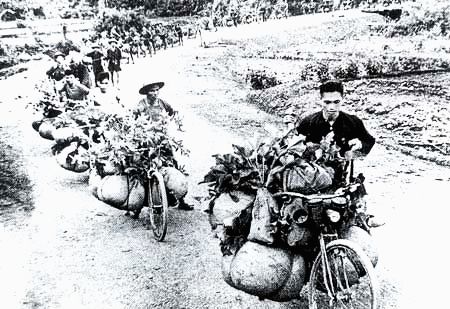
viet minh supplyViet Minh Supply Columns were Never Stopped by French Air power or Artillery

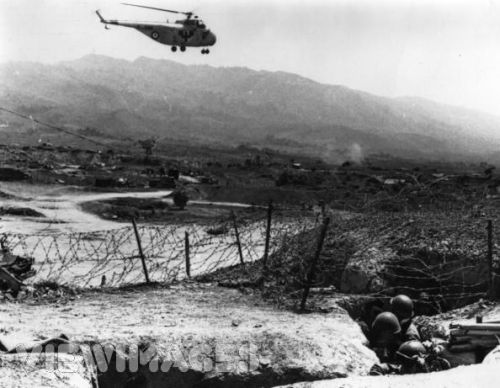
The conflicts in French Indo-China, Algeria and Vietnam had major effects on the French and American military institutions. These effects can be classified in a number of ways. First, the manner in which each military waged war, including tactics employed and use and development of weapons systems was changed.  The use of airpower, especially helicopters and use of riverine forces provided an added dimension of battlefield mobility but did not bring victory. As John Shy and Thomas Collier noted regarding the French in Indo-China: “French mobility and firepower could take them almost anywhere in Vietnam, but they could not stay, and could show only wasted resources and time for their efforts.”[1]

Joint_operation_with_ARVN_112-1Joint US and ARVN Operation

The use of intelligence and psychological warfare, including the use of torture became common practice in both the French and American armies.  The wars had an effect on the institutional culture of these armed services; neither completely embraced the idea of counterinsurgency and for the most part fought conventionally. Galula notes how the “legacy of conventional thinking” slowed the implementation of proper counterinsurgency tactics even after most commanders learned that “the population was the objective.”[2] Krepinevich notes that “any changes that might have come about through the service’s experience in Vietnam were effectively short-circuited by Army goals and policies.”[3] Finally the wars had a chilling effect on the relationship between the both militaries and the state, veterans from each nation often felt betrayed or disconnected from their country and people.  Unfortunately instances of all of these have occurred or can be seen in the current wars in Iraq and Afghanistan.

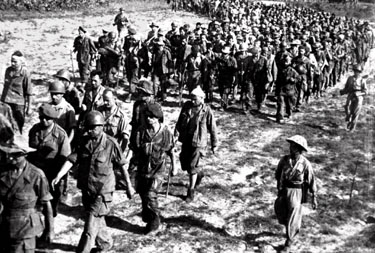
VIETNAM DIEN BIEN PHUFrench Prisoners after Dien Bien Phu: Many Survivors Would be Fighting in Algeria within Two Years
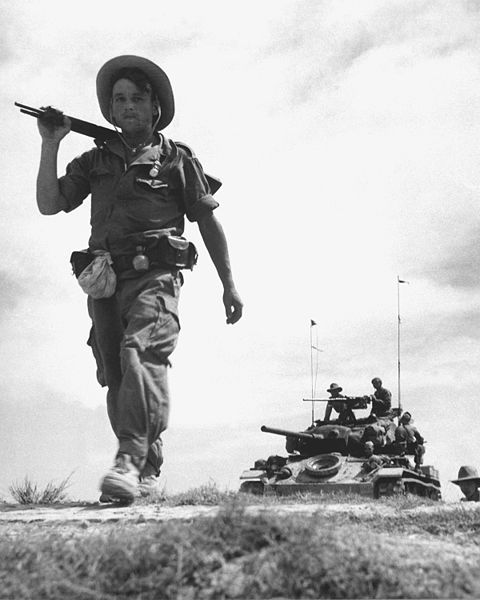
The French Army had the misfortune of fighting two major insurgencies back to back.  The French military was handicapped even before it went into these wars. The Army came out of World War II defeated by the Germans, divided by loyalties to Vichy or one of the Free French factions. They were humiliated by the Japanese in Indo-China, while in Algeria France’s crushing defeat was devastating.  “Muslim minds, particularly sensitive to prestige and baraka, the humiliation made a deep impression.”[4] French society was as divided as the Army; the economy in shambles, the government weak and divided.  The Viet-Minh had prepared well making use of time and training to get ready for war.  “Once full-scale hostilities broke out, the French, for budgetary and political reasons could not immediately make the large scale effort to contain the rebellion in the confines of small-scale warfare.”[5]

In both Indo-China and Algeria the French attempted to fight the budding insurgencies in a conventional manner.  This was particularly disastrous in Indo-China when on a number of occasions battalion and regimental combat team sized elements were annihilated by Viet-Minh regulars.  Between October 1st and 17th 1950 every French garrison along the Chinese border was over-run.  The French lost over 6000 troops and enough equipment to outfit “a whole additional Viet-Minh division.” It was their worst colonial defeat since Montcalm at Quebec.[6] In Algeria when the fight began in earnest France’s “ponderous ponderous N.A.T.O forces found themselves at an impossible disadvantage,”[7] unable to have any influence off the main roads.

french troops indochinaFrench Troops and Tanks in Indo-China: Road Bound Forces were often Defeated by Viet- Minh Forces

In Vietnam the French did not absorb the lessons of fighting a well established insurgent force. French forces hoped to draw the Viet-Minh main forces into battles of attrition where their superior firepower could be brought to bear. Such was the case at Na San in December 1952 where the French established an “Air ground base” deep in Viet-Minh territory to draw Giap’s forces into open battle.  This worked, but just barely. General Giap, short of artillery and not planning on a long battle frittered away his troops in mass charges.  However, the French, because of Na Son assumed they had found the key to victory. In their embrace of the “air ground base concept, French staff officers were following an intellectual tradition that had long been prone to seduction by elegant theories.”[8] The result was the disaster at Dien Bien Phu the following year.  The destruction of the elite Group-mobile 100 near Pleiku in 1954 was the coup de grace. In Indo-China the French made limited use of helicopters, used paratroops widely, and developed riverine forces. One thing they were critically short of was significant tactical air support.[9]

The most inventive French creation in Indochina was the GCMA/GMI forces composed of mountain tribesmen led by French NCOs and Junior Officers.  They were designed to provide “permanent guerilla groups rooted in remote areas” to harass and interdict Viet-Minh forces.[10] Trinquier noted that at the time of the Dien Bien Phu defeat that these forces had reached over 20,000 trained and equipped maquis in the Upper Region of Tonkin and Laos. These forces achieved their greatest success retaking Lao Cai and Lai Chau May 1954 as Dien Bien Phu fell.[11] Trinquier stated that “the sudden cessation of hostilities prevented us from exploiting our opportunities in depth.”[12] The GMI units and their French leaders were abandoned fighting on for years after the defeat. One account noted a French NCO two years after the defeat cursing an aircraft patrolling the border “for not dropping them ammunition so they could die like men.”[13] In the end the French left Indo-China and Giap remarked to Jules Roy in 1963 “If you were defeated, you were defeated by yourselves.”[14]

Algeria was different being part of Metropolitan France; there the French had support of European settlers, the pieds-noir. Many French soldiers had come directly from Indo-China. There French made better adaptations to local conditions, and realized that they had to win the population and isolate the insurgents from it and outside support. As Galula said, victory is the destruction of the insurgent’s political and military structures, plus “the permanent isolation from the population, not forced upon the population, but by and with the population.”[15] The lessons learned by the French in both Algerian and Indo-China were lost upon the Americans.

4CavVnM48US Heavy Forces including Armor had Little Utility in Many Parts of Vietnam
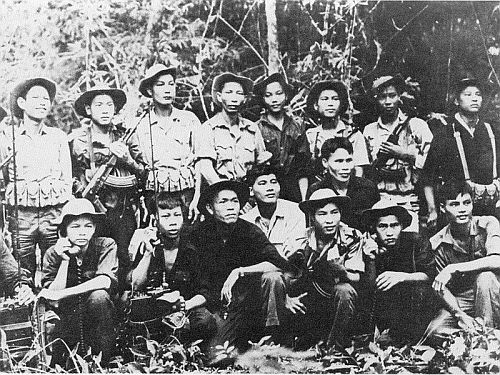
The United States military, especially the Army approached the Vietnam War with a conventional mindset, referred to as the “Army concept.” [16] It not only approached the war in this manner, but it trained and organized the South Vietnamese forces, ARVN into the American model. Americans re-organized ARVN into divisions “based upon the U.S. divisional force structure.”[17] Due to the imposition of an American template and organizational structure upon it, ARVN was not structured appropriately for the threat that it faced.”[18] The results were as to be expected. Large numbers of American troops poured in taking the lead against the North Vietnamese and Viet Cong . The American method of counterinsurgency was costly.  It was “almost a purely military approach”[19] which ignored political and social realities on the ground. Instead of focusing on protecting the Vietnamese people and denying the Communists a safe haven the Army in particular believed that massive firepower was the best means to be“utilized by the Army to achieve the desired end of the attrition strategy-the body count.”[20] In the end the American defeat was a “failure of understanding and imagination.”[21] The one shining success was the Marine Corps experimentation with “Combined Action Program” platoons which lived in the villages with militia for long periods of time. This program produced great results “in eliminating local guerillas”[22] but was killed by the Army.

NlfmainforceNVA Main Forces

These wars tore the heart out French and American armies. For the French the defeats inflicted a terrible toll.  In Indo-China many French career soldiers felt that the government’s “lack of interest in the fate of both thousands of missing French prisoners and loyal North Vietnamese…as dishonorable.”[23] Divisions arose between those who served and those who remained in France or Germany and created bitter enmity between soldiers.  France would endure a military coup which involved many who had fought in Vietnam and Algeria. Having militarily won that war, were turned into what Jean Lartenguy called The Centurions had been turned into liars.”[24] They were forced to abandon those who they had fought for and following the mutiny, tried, imprisoned, exiled or disgraced. Colonial troops who remained loyal to France were left without homes in their “independent” nations.  They saw Dien Bien Phu as the defining moment. “They responded with that terrible cry of pain which pretends to free a man from his sworn duty, and promises such chaos to come: ‘Nous sommes trahis!’-‘We are betrayed.’”[25]

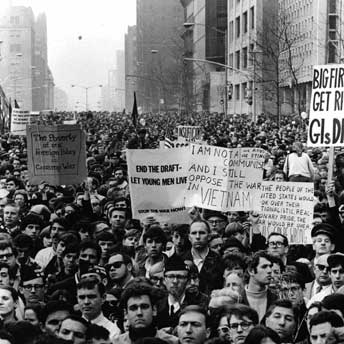
war protestUS Veterans of Vietnam Would Return to a Deeply Divided Country that turned its Back on Them for Years

The U.S. Army left Vietnam and returned to a country deeply divided by the war.  Vietnam veterans remained ostracized by the society until the 1980s.  As Harold Moore recounts “in our time battles were forgotten, our sacrifices were discounted, and both our sanity and suitability for life in polite American society were publically questioned.”[26] The Army endured a massive reorganization that resulted in the formation of the All-Volunteer force, which would redeem itself and emerge from the ashes in the Gulf War. The Americans would not learn the lessons of revolutionary warfare and counterinsurgency until forced to do so in Iraq in 2004-2007. These lessons however were not applied to Afghanistan and the Taliban which seemed to have been defeated have regained the initiative, policy is being debated amid discord in the west and there are reports of American and NATO forces becoming discouraged by the course of the war and concern that their efforts will be in vain. This is a dangerous situation to be in and if we learn from anything from our own history as well as that of foreign military forces in Afghanistan we need to be very careful in implementing strategy to get whatever we do right.

training team baseTraining Team Base in Afghanistan: Some of these Bases Have proven Vulnerable to Well Planned and Coordinated Taliban Attacks

Conclusion

The effects of these wars on the French and American military establishments were long lasting and often tragic. The acceptance of torture as a means to an end sullied even the hardest French officers. Men like Galula and Marcel Bigeard refused to countenance it, while others like Paul Aussaresses never recanted.  Americans would repeat the tactic at Abu Ghraib rallying the Iraqis against them and nearly losing the war because of it.

For the Americans, the effects of Vietnam continued at home. Race riots tore at the force while drug addictions and criminal activities were rampant.  Many incompetent leaders who had “ticket punched” their careers kept their jobs and highly successful leaders who became whistle blowers like Hackworth were scorned by the Army institution.  The years following Vietnam were a severe test of the US Military and took years for the military to recover.  Likewise It took years before either the French or American veterans again felt a part of their countries.  They ended up going to war, and when it was over; feeling abandoned, their deepest bonds were to their comrades who had fought by their side.

What are the lessons to be learned from these campaigns as well as from the various accounts?  Andrew Krepinevich prophetically noted that the failure to learn the lessons of Vietnam “represents a very dangerous mixture that in the end may see the Army again attempting to fight a conventional war against a very unconventional opponent.”[27] Obviously, there are lessons to be learned, especially in understanding the nature of revolutionary war as well as the culture and history of our opponents. The U.S. has made some improvement in this regard but there is still much to be learned, especially since after the war the Army was “erecting barriers to avoid fighting another Vietnam War.”[28] From these wars we learn that nations and incompetent governments who mismanage wars can alienate themselves from the soldiers that they send to fight, with serious consequences.  As far as historiography we learn that certain historical fallacies are evident when one reads the accounts critically and recognize the bias and limitations of the various sources.


[1] Shy, John and Collier, Thomas W. “Revolutionary War” in Makers of Modern Strategy from Machiavelli to the Nuclear Age,” Peter Paret editor. Princeton University Press, Princeton N.J. 1986  p.849

[2] Galula, David. Counterinsurgency in Algeria: 1956-1958. RAND Corporation, Santa Monica, CA. 2006. First published by RAND in 1963. p.244

[3] Krepinevich, Andrew F. “The Army and Vietnam,” The Johns Hopkins University Press, Baltimore and London, 1986 p.213

[4] Horn, Alistair. “A Savage War of Peace: Algeria 1954-1962,” a New York Review Book published by the New York Review of Books, New York, 1977, 1987, 1996, and 2006 p 41

[5] Fall, Bernard B. “Street Without Joy: The French Debacle in Indochina.” Stackpole Books, Mechanicsburg PA, 2005, originally published by Stackpole Publications 1961 p.27

[6] Ibid. p.33

[7] Horn. p.100.

[8] Windrow, Martin. “The Last Valley: Dien Bien Phu and the French Defeat in Vietnam,” Da Capo Press, Novato, CA 2006, originally published by Weidenfeld and Nicholson, London 2004 p.63

[9] Fall, Bernard B. “The Siege of Dien Bien Phu: Hell in a Very Small Place.” Da Capo Press, New York an unabridged reprint of the 1st Edition reprinted in arrangement with Harper and Row Publishers, New York. 1967 pp. 456-457  Fall discusses in depth the lack of French Air support and the antecedents that led to the shortage following World War II.

[10] Pottier, Philippe(2005)’Articles: GCMA/GMI: A French Experience in Counterinsurgency during the French Indochina War’, Small Wars & Insurgencies,16:2,125 — 146 http://dx.doi.org/10.1080/09592310500079874

[11] Simpson, Howard K. “Dien Bien Phu: The Epic Battle America Forgot,” Potomac Books Inc. Washington DC 2005, originally published by Brassey’s Inc. 1994 pp. 170-171

[12] Trinquier, Roger. “Modern Warfare: A French View of Counterinsurgency,” translated from the French by Daniel Lee with an Introduction by Bernard B. Fall. Praeger Security International, Westport CT and London. 1964 and 2006. Originally published under the title “La Guerre Moderne” by Editions Table Ronde. p.87

[13] Windrow. p.652.

[14] Roy, Jules. “The Battle of Dien Bien Phu” Carrol and Graf Publishers, New York 1984. Translated from the French by Robert Baldrick. English translation copyright 1965 by Harper and Row Publishers, New York. p.xxx

[15] Galula, David. “Counterinsurgency Warfare: Theory and Practice.” Praeger Security International, Westport CT 1964 and 2006 p. 54

[16] Krepinevich. p.213

[17] Ibid. p.24

[18] Nagl, John A. “Learning to East Soup with a Knife: Counterinsurgency Lessons from Malaya and Vietnam,” University of Chicago Press, Chicago and London, 2005 p.138

[19] Shy. p.856

[20] Krepinevich. p.202

[21] Spector, Ronald H. “After Tet: The Bloodiest Year in Vietnam,” Vintage Press, a division of Random House, New York, 1993 p.314

[22] Millett, Allan R. and Maslowski, Peter. “For the Common Defense: A Military History of the United States of America.” The Free Press, a division of Macmillian, Inc. New York, 1984 p.555

[23] Windrow. p.655

[24] Ibid. p.657

[25] Ibid.

[26] Moore, Harold G and Galloway, Joseph L. “We were Soldiers Once…and Young: Ia Drang: The Battle that Changed Vietnam,” Harper Collins Publishers, New York NY 1992  p. xx


[27] Krepinevich. p.275

[28] Ibid. p.274

1 Comment

Filed under History, iraq,afghanistan, Military, vietnam

Unequal Allies: Lessons from The German’s and Their Allies on the Eastern Front for Today

patton with french tankPatton with French Renault F1 Tank in WWI

One of the problems that any coalition of unequal partners as is the case in Afghanistan is the role of the lesser partners, their capabilities and limitations imposed on them by their own governments.  When NATO joined the US led effort in Afghanistan a number of NATO allies contributed troops to the effort.  The same was true of the “coalition of the willing” in Iraq.  While obviously the US appreciated and continues to appreciate the efforts of its allies in both theaters the unique problems associated with coalition warfare are often not appreciated until the strengths and weaknesses of each junior partner in the coalition are shown to include the effect of each nation’s choice of units sent, logistics capability and rules of engagement.  Thus when some Americans are critical of the contribution of some allies, or the limitations imposed by their governments they should remember that in the First World War the United States was dependant on France and Britain for the majority of the Artillery, all of the tanks and aircraft as well as instructors and training facilities for the rapidly recruited American Expeditionary Force.

RickenbackerUS Ace Eddie Rickenbacker with French Supplied Nieuport 28
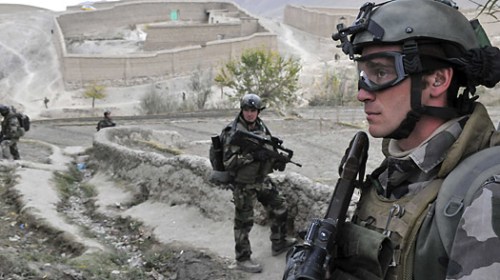
Every nation works within its own national interests and domestic political situation as well as its military capabilities. Unfortunately many people do not look at history to see how a coalition of a major power allied with a number of minor powers each with their own limitations as well as motivations for entering the war execute that war after the initial plan is foiled.  This is something that has happened in Afghanistan after the initial success disappeared with the corrupt and ineffective Afghan government, the resurgent Taliban and the resiliency of Al Qaida in their bases in the remote border areas of Afghanistan and Pakistan.

nato_france_a_0403French Troops in Afghanistan: The French, British and Canadians have the most Robust Rules of Engagement of Non US NATO Forces (Time Magazine Photo)
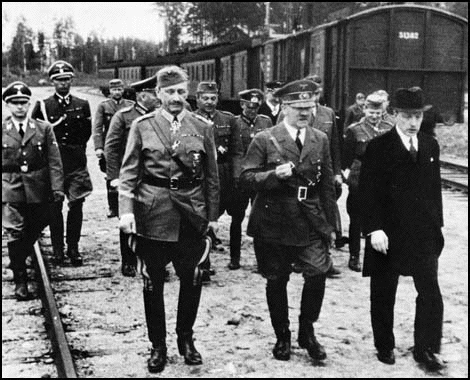
One of the best places to find such an example is the German relationship with their allies on the Eastern Front.  The question of the German dominated European Axis alliance in the Second World War is one of the more neglected subjects of World War Two II. In most accounts of the war, the relationship of the Germans to their coalition is minimal.  This includes the works of B.H. Liddell-Hart, Williamson Murray, Chester Wilmot and David M Glantz.   Italy usually receives some attention in the context of the campaign in North Africa and Mediterranean.  Hungary, Romania and Finland receive scant attention from anyone except as to how their armies were overrun during the Stalingrad campaign. Popular German memoirs provide little substantive help. Field Marshal Albert Kesselring’s memoirs and Erwin Rommel’s papers give some views of the Italian efforts in North Africa and the Mediterranean and Erich Manstein gives a limited amount of attention to the Italians, Finns, Hungarians and Rumanians in Russia.

Finland-HitlerConflicting War Aims: Hitler with Finland’s Field Marshal Von Mannerheim
In his essay The Dysfunctional Coalition Robert Di Nardo examines the relationship of Germany to her allies on the Eastern Front where the Germans due to their own limitations were forced into a coalition war with weak allies of uncertain reliability. This is a subject that Di Nardo expanded on in his book Germany and the Axis Powers: from Coalition to Collapse (University of Kansas Press, 2005).  Di Nardo believes that there are important lessons to be learned from the failure of Germany and its coalition. Unfortunately we in the west are more often than not content to judge coalitions by the success of the Allies in the Second World War.  Di Nardo’s work on the subject is something that the United States must learn from as it works with coalitions whose members have significant military weaknesses often magnified by the domestic political climates in their own country. The situation, especially in Afghanistan places he United States in a similar position to Germany in relation to the current wars on terror and campaigns in Iraq and Afghanistan.

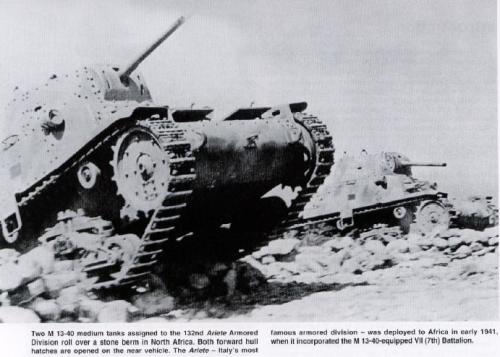
m 13-40 tankItalian M 13-40 tanks were the mainstays of Italian Armored Units, Slow, Undergunned and Poorly Armored they were No Match for Soviet T-34s

Di Nardo asserts “the way in which Germany conducted coalition warfare was reflective of the manner in which Hitler and the German military looked at the world, as well as the war in general.”  Germany often displayed a haughtiness toward its allies and even knowing their weaknesses was both unable and often unwilling to do much to strengthen them for the fight against the Soviet Union.  Di Nardo believes that the German attitudes were “a significant factor that contributed to the ultimate defeat of Nazi Germany.” (p.712)  In the essay Di Nardo notes the few successes of the coalition. In particular he looks at the German work with Rumanian air defense around the Ploesti oil refineries and the German-Finnish Winter Warfare School.  Apart from these instances he characterizes Axis coalition warfare on the eastern front as “poor” with “failures at every level.” (p.713)

italian troops stalino

Di Nardo analyzes the problems with language barriers, the wide differences of modernity of the armies and levels of technology and training of the coalition partners many of which are common to the war in Afghanistan. Germany’s failure to become the “arsenal of Fascism” which the United States became “the Arsenal of Democracy” for its allies hindered the Germans in their relationship to their poorly equipped allies.  Likewise, the lack of understanding of all the partners regarding the “relationship between national objectives, strategy and the morale of soldiers of officers and soldiers alike”(p.713) was a major obstacle.

finnish at gun

Di Nardo provides a good description of the German liaison detachments allotted to the coalition armies.  These teams functioned as advisors to their allies as well as liaisons between the German army and the allies. These teams dealt with language, tactical communications weaknesses and often displayed the generally haughty attitude that the Germans displayed to their partners. There is an excellent illustration of this in dealing with the failure of XLVIII Panzer Corps at Stalingrad when the German Liaison to the Romanian 1st Panzer Division was wounded.  At the operational and strategic levels Di Nardo describes the German policies and attitudes toward their allies as “imperialist.” (p.718)

He examines the wide gap in transportation capabilities of the various armies and the failure of the Germans to better provide for the needs of their partners in contrast to the United States assistance to her allies.   Germany provided obsolete captured Czech and French weapons and vehicles to her allies.  They refused to supply the Romanians and Hungary with the plans to build German tank and aircraft in Romanian and Hungarian industrial concerns capable of their manufacture. (pp.718-719) Di Nardo notes how this lack of modern equipment impacted the allies operations against the Red Army and their defeat at the hands of the Soviets.  Although Di Nardo alludes to how even elite German formations had substandard equipment he does not explain principle reason for this.   This was due to the fact that the Germans did not go to a “total war” footing in regard to industrial production until Albert Speer took over as Armaments Minister in 1943.

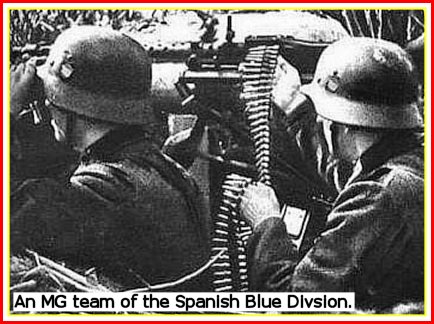
spanish blue divsion

The number of troops contributed by the German Allies was substantial. Hungary began Barbarossa with two corps, including its Mobile Corps and in 1942 supplied their 2nd Army which was composed of 1 Armored and 9 Infantry Divisions. 2nd Army was crushed by the Soviet offensive against Stalingrad. The Italians began with an expeditionary corps of 2 Semi-Motorized and 1 Light Infantry Divisions. In early 1943 they added 4 Infantry and 3 Alpine Divisions and a number of other smaller formations. This force became the 8th Army. It fought well during the advance toward Stalingrad but spread out over a wide front with little armored or air support was decimated by the Soviet offense against the city.  The remnants were no longer battle worthy and were evacuated to Italy.  Most of the Finnish Army was engaged in the war but after September 1939 made no major offensive contribution to the war. In 1944 following a major Soviet offensive which forced them to withdraw from the territory that they had captured in 1941 the Finnish government sued for peace. The Russians occupied a number of border provinces and islands and Finland was obliged to expel German Forces.  This resulted in the “Lapland War” between the Finns and the Germans with the Germans adopting a scorched earth policy as they withdrew from the country. The quality of the Finnish forces was generally higher than that of Germany’s other Allies.

romanian r35Obsolete French Built Romanian R-35 Light Tank
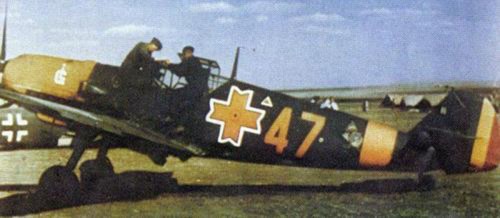
The Romanians contributed 19 divisions organized into 3 Armies to Barbarossa. They were limited by their equipment and logistics. The 3rd and 4th Romanian Armies were shattered at Stalingrad forcing a major reorganization as they continued the war.  In August 1944 with the Soviets pressing their border King Michael led a coup to overthrow the Fascist dictatorship of Antonescu. The Germans elected to fight and the Romanians changed sides and joined the Russian advance to the end of the war with their 1st Army taking part in the Prague offensive. Another contributor of troops was Franco’s Spain although it was a neutral country. Spain provided a division of volunteers which became the famous “Spanish Blue Division” or the 250th Infantry Division. It was outfitted as a German unit and received additional training from the Germans before it went into action. The division fought near Leningrad and was engaged in many tough fights.  A Spanish “Blue” Fighter squadron allotted to and equipped by the Luftwaffe also distinguished itself. In October 1943 Spain under allied pressure withdrew the division from the front although many soldiers volunteered to remain and fight on as smaller units attached to German formations. One volunteer company became part of the 11th SS Panzergrenadier Division Nordland at Berlin.  One thing that probably was a factor in the Spanish effectiveness as well as commitment to to German cause was their genuine loathing of the Soviets following the Spanish Civil War.

The final part of Di Nardo’s essay deals with the strategic goals and conflicts among the Axis coalition which were never worked out.  Examples of this include how the Finns never signed a formal alliance with Germany and how their national strategy did not allow them to deeper into the Soviet Union instead settling on recovering territory lost to the Soviets in 1939 with a few minor gains.  There was also the problem that the Romanians and Hungarians distrusted each other so much that they could not work together over their own territorial disputes.  The Italians joined the campaign late and their 8th Army participated in the German advance toward Stalingrad protecting the German flank.  While the Italians provided their own equipment including armor and aircraft they and their weapons were woefully suited for the war that they faced on the Eastern Front.  Di Nardo finishes his essay noting morale problems in the Hungarian, Italian and Romanian armies, the lack of understanding and general lack of motivation for the campaign.

Romanian_Me109-px800Romanian ME-109 E4, The Romanian Air Force Was One of the Axis Success Stories
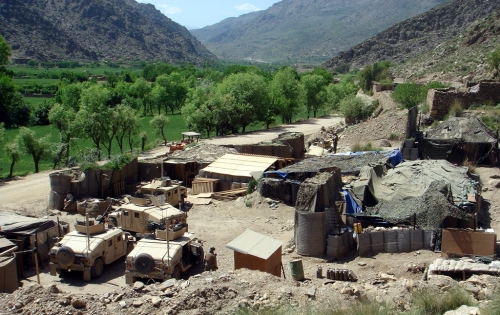
This article is well sourced. Di Nardo uses histories, archival sources, operational orders and analysis by the various armies as well as interviews with participants. Of particular note is that he goes to sources of the coalition partners and not just German sources.  This allows him to be far more nuanced and detailed in his discussion as opposed to others who simply ignore the contributions of the Axis partners.  His footnotes provide added detail and provide and lend support to his arguments.

The importance of this essay is twofold.  First it provides a look at the relationship of German to her coalition partners on the Eastern Front.  This is important from a historic standpoint simply because it is such a neglected topic in most histories of the period and gives added depth to the reasons for Germany’s defeat.  One has to ask the “what if questions” in regard to had the Germans better treated, equipped and recognized their allies’ contributions to the war effort.

The second and probably more important for Afghanistan is that it provides lessons to any nation which has to engage in coalition warfare.  In particular it has lessons for the United States which has found itself as the senior and vastly superior partner in a war which has multiple coalition partners in several theaters of operations.  Each coalition partner has certain military strengths and weaknesses in relationship to the United States, national interests, geo-political and economic relationships with competitors to the United States and internal political realities which impact their cooperation in the war.  As such the United States cannot allow itself to be cast in the role of a haughty imperialistic senior partner as did Germany.  The US instead must cultivate an attitude of assistance, respect and trust among its partners to assure their full cooperation and assistance in relation to U.S. goals in the war. This is particularly important now was it appears that the Afghan war is reaching a point where the deteriorating situation on the ground could invite the early withdraw of allies and necessitate either the addition of more US troops or a strategic withdraw which would be for all intents and purposes a defeat for the US and NATO. The consequences would not be good and while the Taliban may be able to be contained they undoubtedly would invite Al Qaida back and provide them with a sanctuary just as Pakistan has stepped up its efforts on the border.

Leave a comment

Filed under History, iraq,afghanistan, world war two in europe

The most dangerous assignment: 4 More Advisers Die In Afghanistan

training team baseIsolated Embedded Training Team Base

Once know and relatively unglamorous group of American military men have suffered multiple casualties in a single engagement.  These men belong to are small units that do not have a lot of organic firepower.  They usually operate in remote areas far from immediate assistance if they get in trouble.  When one of these units suffers casualties, especially where they lose 3-5 men in one engagement they might have lost 20-25% of their unit.

On September 8th a team of these men was ambushed while on foot going to an Afghan with Afghan soldiers to meet tribal leaders with the intent of establishing a government presence in a hostile area.  In the ambush four were killed, three U.S. Marines and one U.S. Navy Hospital Corpsman attached to them.  On Tuesday the 8th Gunnery Sgt. Edwin W. Johnson Jr., 31, of Columbus, Ga., 1st Lt. Michael E. Johnson, 25, of Virginia Beach, Va., Staff Sgt. Aaron M. Kenefick, 30, of Roswell, Ga. and Petty Officer 3rd Class James R. Layton, 22, of Riverbank, Calif., were while working as trainers to Afghan soldiers on a mission to search for weapons and then meet village elders under an agreement to establish government authority there.  They were killed in “a complex attack according to a U.S. Military spokesman.  According to McClatchy news service who had a reporter that accompanied the mission, insurgents had set up positions in the village and in the mountains on both sides and apparently attacked as the men neared the village. 1st LT Johnson was wounded and while being attended Navy Hospital Corpsman Third Class James R. Layton when they both came under attack.  Both were killed.  Another Marine told the McClatchy reporter that they’d found the wrappings of bandages and other medical gear strewn around Layton and Johnson.  Eight Afghan troops and police and the Marine commander’s Afghan interpreter also died in the ambush and the subsequent battle that raged from dawn until 2 p.m. around the remote hamlet of Ganjgal in eastern Kunar province, close to the Pakistan border.

traiining team with afghan armyUSMC Advisers with Afghan Counterparts

The McClatchy reporter said: “We walked into a trap, a killing zone of relentless gunfire and rocket barrages from Afghan insurgents hidden in the mountainsides and in a fortress-like village where women and children were replenishing their ammunition.”  The reporter said that “U.S. commanders, citing new rules to avoid civilian casualties, rejected repeated calls to unleash artillery rounds at attackers dug into the slopes and tree lines — despite being told repeatedly that they weren’t near the village.”

The battle must have been intense.  I have been on foot patrols in areas crowded with Iraqis far away from significant support where if an insurgent group had attacked us we would have easily been overwhelmed. This is part of the world of the U.S. Military in the embedded training teams which work closely with Afghan and Iraqi soldiers.  I spent a lot of time with the advisers to Iraqi Army. Border and Port of Entry troops, Police and Highway Patrol spread across the entirety of Al Anbar Province.  These men and women are seldom thought of or mentioned by the press or even the military. . They come from all branches of the military and serve as advisers, trainers and mentors to these nations’ security forces.  The duty is dangerous.  The advisers, be they to the military, police, or civil administrations often work in the most isolated places in these countries and are stationed in small teams with the Iraqis and Afghans that they advise.  They are often far from the “big battalions” that have lots of firepower available and often operate out of larger and more secure bases with air support close at hand. Earlier in the year there were a number of incidents where advisers were killed by renegade soldiers or police, or by infiltrators posing as security personnel.  Two soldiers were working with an Iraqi unit in doing humanitarian work in a village when attacked and killed by someone who had infiltrated the Iraqi security forces.  . On March 27th Navy LT Florence Choe and LTJG Francis Toner IV were killed by an Afghan insurgent posing as an Afghan Army soldier. All of these events triggered anxiety in me as I remembered how many times I was incredibly exposed to danger conducting similar operations.

This incident was especially chilling as I read the reporter’s account of the ambush.  “Dashing from boulder to boulder, diving into trenches and ducking behind stone walls as the insurgents maneuvered to outflank us, we waited more than an hour for U.S. helicopters to arrive, despite earlier assurances that air cover would be five minutes away.”  According to the reporter Marine Maj. Kevin Williams” the commander of the team said: “We are pinned down. We are running low on ammo. We have no air. We’ve lost today, through his translator to his Afghan counterpart, responding to the latter’s repeated demands for helicopters.”  When I read this my mind flashed back to being in the middle of a massive crowd at the border crossing of Waleed on the Iraqi-Jordanian border.  There were about nine of us, of which only 8 were armed as I am not allowed by the U.S. interpretation of the law of war to carry a weapon.  There were thousands of Iraqis and others around us, very few border troops or port-of-entry police anywhere near us.  The port of entry had been the scene of numerous attempts to smuggle weapons, materials, and other supplies, drugs and to Iraq insurgents and Al Qaida.  Very few US troops were stationed there and many of these were dispatched off of the base at any given time.

The advisers are drawn from all services.  They are all Individual Augments that come from both the Active and Reserve components.  They do not deploy with their own units, which means that they go to war with people that they might have trained alongside getting ready for the mission, but otherwise have not served with.  When they come home they go back to their old assignments or new orders and are separated from the men and women that they served alongside for 7 to 15 months.  In other words they are isolated when they return home and go back to places where the majority of personnel, even those who have been “in country” have no earthly idea or appreciation of the conditions that they served in and dangers that they faced.  This happened to me when I returned and I went through an emotional collapse as the PTSD that I did not know I had kicked my ass.  Sights, smells, noises, crowds, airports and in fact almost everything but baseball diamonds caused me to melt down as they all brought the danger back to me. Don’t get me wrong, my tour in Iraq was the highlight of 27 plus years in the military, the part of which I am the most proud.

I have a special place for these men and women.  I served with them in Iraq’s Al Anbar Province as the first Navy Chaplain, and one of the first chaplains of any service to be assigned to cover these teams since Vietnam.  My assistant, RP2 Nelson Lebron and I deployed together from out unit.  I had prepared well.  I had been on the bubble to deploy for months.  My background in military history and past service with both the Army and Marines helped me. Likewise my military and civilian education helped me.  Shortly before we were notified of the deployment I went to the Jordanian Army Peace Operations Training Center course on Iraqi culture, religion and society.  I had served as a chaplain in the trauma department of one of the largest trauma centers in the country.  RP2 Lebron had deployed multiple times to Iraq, Beirut and Afghanistan where he was awarded the Defense Meritorious Service Medal (no small feat for an E-5).  He is also an incredibly gifted boxer, kick boxer and martial artist who has fought on Team USA and holds more title belts than I can count.  He most recently won the Arnold Schwarzenegger Classic. I had served with him before and he knew that his mission was to keep me safe.  I don’t want to sound arrogant, but the Chief of Staff of the Iraq Assistance Group said that we were “the best ministry team he had seen in 28 years in the Army.”

When we went to Al Anbar we were sent out with the Marines and Soldiers advising the 1st and 7th Iraqi Army Divisions, The Iraqi Police, Highway Patrol, the 2nd Border Forces Brigade and Port of Entry Police.  We operated in a area the size of the state of Oregon.  In some cases it would take us 2 days by air and convoy to reach isolated teams on the Syrian border.  When you travel by air in Iraq you are always at the mercy of the weather and aircraft availability. I had the rare privilege as a Lieutenant Commander to be able to arrange all of my own air transportation.  Most people, including people higher ranking than me had to depend on others to do this for them.  We worked with our advisers to get out to them.  We would be out 5-12 days at a time with anywhere from 4 to 7 days between missions.  In our 7 months we traveled over 4500 air miles and 1500 ground miles.  Almost all of our air travel was rotor wing. We flew in CH-46, CH-47 and MH-53s and the MV-22 Osprey.  Our convoys were usually not larger than 3 American HUMMVs and sometimes a few Iraqi vehicles.  Our biggest guns were .50 cal or M240B machine guns.

Dinner with Geneal SabahDinner with General Sabah in Ramadi

Many places we served were in places that had no large forces in position to help us if we got in trouble.  Even on the bases we were isolated.  Our teams were with the Iraqis in almost all cases.  We often ate in Iraqi chow halls and used Iraqi shower trailers.  Our advisers had us meeting their Iraqi counterparts.  We met and dined with Iraqi Generals, had ch’ai (tea) with small groups of Americans and Iraqis and got out with the Bedouins. We were in a number of particularly sensitive and dangerous situations with our advisers; one which I cannot go into great detail involved a senior advisor having to inform a new Iraqi Brigade Commander that a member of his staff was engaged in illegal activities and who had put out contracts to kill the American officer.  The bad Iraqi officer was confronted and relieved in a tense meeting where both Nelson and I were with that Colonel and two other advisors as they made the confrontation in the Iraq C.O.’s office, a confrontation that got quite heated until the Iraqi C.O. shut him up. At one point the cashiered officer appealed to the American “Imam” that he was a faithful Moslem, to whit the American Colonel and I asked him how a person who was living a good Moslem life could steal from his own countrymen and supply his county’s enemies with what they needed.

Waleed trip 006Team at Waleed on the “secure” side of the Port of Entry
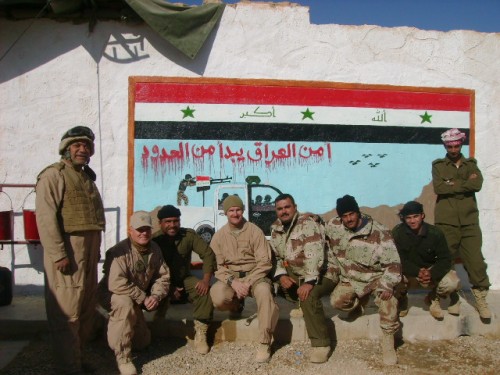
It was an incredible, once in a lifetime tour serving with some of the greatest Americans and Iraqis around. Iraqi soldiers in with our convoys would ask me to bless their trucks with Holy Water like I was doing with the American trucks.  I came to admire many of the professional Iraqi officers that I came to know and pray for the people of Iraq, that God would grant them peace. They are wonderfully hospitable and gracious.  We were often treated to food and tea by Iraqi soldiers, and civilians.  After nearly 30 years of nearly continuous war, dictatorship and terrorism, they deserve peace and security.

Me BTT CO and Iraqi LeadersAdvisers and Iraqi Border Troops near Syria
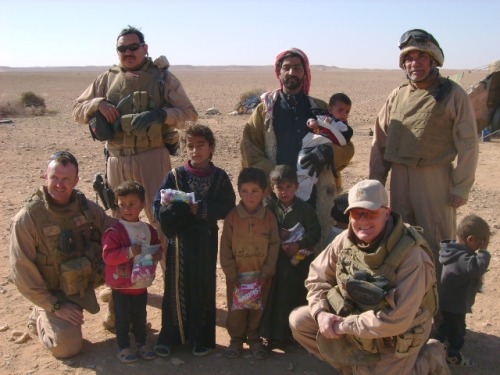
I had one Iraqi operations officer, a Sunni Muslim tell me that he wished that his Army had Christian priests because they would take care of his soldiers and had no political axe to grind. He said that the Army did not trust most Imams or Mullahs because they had compromised themselves during the civil war.  Another officer, a Shia Muslim came to me to thank me for being there to take care of our Marines.  He said that he, an Iraqi Shia Arab, hoped that if they had any problems from the Persians (Iranians), that we would help them.  These is little truth to what is floated that Iraqi and Iranian Shia like each other.  The memories of the past die hard in the Middle East.  When Persia ruled Iraq they treated the Arabs like dirt. Likewise the memories of the Iran-Iraq war are still alive.  Iraqi Arabs, Sunni, Shia and even Christian have little love for the “Persians.”  General Sabah of the 7th Division had us to his quarters for dinner. We had a wonderful and friendly discussion about similarities and differences in Christianity and Islam. We departed friends. The last time I saw him ws in the Ramadi heliport.  He saw me, ran up to me in from of his staff and Americans in the little terminal and gave me a bear hug, telling all that I was his friend. Another Iraqi General told me just before we left to come back as a tourist in 5 years because everything would be better.  I honestly think that he is right.  I hope to go back someday.  It would be a privilege to see my Iraqi friends again.

Me and BTT with Bedouin KidsWith a Bedouin Family

At the same time Afghanistan is a different animal. Iraq was not as easy of place for Al Qaida to work in and the Iraqis have a much more developed national identity which they trace back to the Babylonians and Chaldeans.  They also have adopted a lot of western ways.  Insurgents there once they had lost the confidence of the Iraqis lost traction.  In Afghanistan there is no real collective national identity and the form of Islam is much more severe than almost all Iraqi variants.  The Afghans insurgents have also due to the terrain; climate and inability of invaders to gain the confidence of the population have used the inability of invaders against them as they bring the population back under their control, sometimes quite peacefully.  The Taliban have secure bases on the Pakistani side of the border as did the North Vietnamese and they have the support of much of the population due to the unpopularity and corruption of the Afghan government.  The Taliban have begun to operate in larger better organized units and last year a battalion sized element attempted to overrun a small NATO base.  They did this with the Russians as well.  One troubling comment was reported about something overhead on the Taliban radio: “We will do to you what we did to the Russians,” the insurgent’s leader boasted over the radio, referring to the failure of Soviet troops to capture Ganjgal during the 1979-89 Soviet occupation.”  They also have outlasted or defeated a host of powerful empires.  The war in Afghanistan has much more in common with Vietnam than it does with Iraq. Counter Insurgency techniques learned in Iraq will be helpful but because of the terrain, climate and nature of the opposition will be tougher to execute and in order to have any chance of getting out of Afghanistan having accomplished the mission we will end of taking more casualties, especially in the teams of advisers.  Iraq was different, despite the problems and having to be rebuilt the Iraqi Army has a long history and tradition dating back to the Ottoman Empire, they led the way to westernizing Iraq and helping build an Iraqi identity, this is not the case in Afghanistan.  What happened to this team could easily happen to others and it looks to me like someone set them up to be hit, probably a Taliban sympathizer in the Afghan security forces or government. Afghanistan is much more treacherous than Iraq and in my view will be much more difficult.

What happened at Ganjgal is being investigated and in our area it is front page news as 1st Lt Johnson was from Virginia Beach.  The Taliban want to use events like this to break down the American home front and 8 years after the attacks of 9-11 2001 with that a fading memory they may well do this.  If they do Afghanistan will become Vietnam in the mountains.  We will be forced to withdraw and and the NATO alliance will be severely tested.  A defeat would have wide ranging consequences beginning in Afghanistan as it would fall back into the medieval world of Taliban rule, and would likely spread to Pakistan which which is already under severe strain.  This could threaten the Pakistani nuclear weapons.

Our advisers build bridges between peoples of different history and culture.  They are the unsung heroes of these wars and will likely never get credit for all that they have done.  Operating in isolation they are exposed to more danger that the average unit. They have my highest admiration and I hope that if you know one of these men or women that you will thank them.  I pray that they will all come home safe and be blessed with success.  I would certainly serve with them again at any time and in any place.

Please keep the families of the most recent casualties in your prayers. Peace, Steve+

1 Comment

Filed under iraq,afghanistan, Tour in Iraq

Pondering the Imponderables of National Security Leaks and Condiments

There are times when try as we might the deepest secrets of national security are made know.  Such was the case last week when the wife of Britain’s MI-16 spy service posted photos of the reclusive spymaster in his Speedo on a beach on her Facebook.com page.  Needless to say it is not good when every potential and enemy sees their enemy in such a revealing garment which most men who are not young good looking world class swimmers should never be seen in public in.  So the dear wife of the British spymaster has blown his cover in a big way.  Now Al Qaida will be staking out Brighton Beach or the French Riviera for a chance to schwack him, or at least give him an atomic wedgie as they no longer need simply to see his face but now know what the rest of his body looks like.

Unfortunately there was a security breach in Padre Steve’s household as the Abby Normal Abbess aka “Judy the Snitch” revealed something that the government has been concealing from you for many years.   Of course she could not help herself in being a snitch since she was the youngest child in her family, save her Pug Susie.  Since the damage to yours and mine national security cannot be undone now that she has posted for the world to see, I am posting the link to her article in hopes that the knowledge of the leak and the official explanation from Padre Steve will defuse this crisis.  The link is here:

http://abbeynormalabbess.wordpress.com/2009/07/09/steve-ketchup-and-national-security/

Now the official explanation:  Catsup packets and other condiments are indeed to reserve currency in case of a meltdown in the world economy.  Since many in the world are fearful of a worst case scenarios like the Great Depression or the hyper-inflation period of the Weimar Republic the world leaders decided that condiment packets that are found in fast food restaurants from Atlanta to Zagreb would do in a pinch.  Now this has not been announced anywhere and will not be officially as it could cause a rush on catsup futures which would further destabilize the already fragile world economy as McDonalds, Burger King and other fast food giants would be forced to close stores and lay off employees to find the money to keep the catsup bins stocked.

For those that don’t know the Germans have ascribed a monetary value to catsup and other condiment packets.  Back in the old days if you went to a fast food place or an Imbiss (a little snack bar often found in small towns) you would pay 5 pfennings for a packet of catsup.  Today with the advent of the Euro the last time I was there they cost 10 Euro Cents, which is about 14-15 US cents at recent exchange rates.  Some US fast food franchises now charge for more than the two or three packets that they might normally give you.  I found this out when I looked in the bag with my “to go” order and seeing that there were not enough to have extra to add to my stockpile, I asked for more and was told that it would be an additional charge.  Knowing what I know I paid for the extra.  Many fast food restaurants now have copied what Wendy’s has done for many years and instead of giving you packets of catsup as a “dine-in” customer now supply a pumping station to the catsup tank located below the store, which a couple of times month a tanker truck filled with catsup pulls up to about 0300, or 3 AM and fills up the secret tank.  This is one reason McDonalds is replacing its older buildings, it is cheaper to build a new building with the tank than renovate.  It also provides them cover of plausible deniability should people ask when the parking lot is ripped up and a tank is being installed.  These catsup tankers are unmarked for the reason that the restaurants and the government do not want you to know what is really going on.  Most of these are owned by the Heinz conglomerate whose owner; Teresa Heinz Kerry is married to a member of the US Senate and former Presidential candidate, Senator John Kerry.  By doing this the government and the restaurants are allowing themselves to stockpile catsup packets for the coming time when they will be needed.

Now you probably wonder how you can verify what I am saying.  If you have a friend or family member in the military or employed by a Federal or State law enforcement agency and visit their home or ride in their car, look for their secret stash.  After reading what Judy wrote on her blog, Judy’s cousin Diana recalled a visit to her daughter Becki who is a senior Law Enforcement official in a Federal Government agency with an astronomically high security clearance. Becki also has a drawer full of catsup and other condiment packets.  The light went on for Diana and she knew that indeed that Judy had unearthed a dark secret.

I’m sure that this post will also give the Bible prophecy addicts something new to ponder in relationship to the scriptures which talk about in the end times a bar of gold will buy a loaf of bread and stuff like that.  It is likely now that this is out there that books like The Late Great Planet Earth and parts of The Left Behind series will have to be re-written.

Additionally survivalists and militia movement members who have long suspected a government conspiracy will begin to stockpile catsup packets and begin to hijack restaurant re-supply trucks to make off with cases of catsup and other condiments and even Al Qaida my start targeting Heinz, Hunts and Del Monte catsup plants around the country seeking yet another way to undermine US and world economic security.

So that’s the story.  There will be a cover up of course as there always are, when asked government spokesmen and women will claim ignorance or deny the story altogether.  But now you know the dirty little secret. As we know from Agents Scully and Mulder in the X-Files the truth is out there.

Peace, Steve+

Note:  I gave a bad title to a post a couple of days ago.  It is the “Visit to Super Holy International Temple.”  It is quite funny and quite profound in its own way and I hope that you look it up if you din’t think that the title sounded too interesting. I was told by a reader that it reminded him of the book “The Shack” which I have never read.

3 Comments

Filed under Loose thoughts and musings, national security, Political Commentary, purely humorous

Brothers to the End…the Bond between those Who Serve Together in Unpopular Wars

This story shall the good man teach his son;
And Crispin Crispian shall ne’er go by,
From this day to the ending of the world,
But we in it shall be remembered-
We few, we happy few, we band of brothers;
For he to-day that sheds his blood with me
Shall be my brother; be he ne’er so vile,
This day shall gentle his condition;
And gentlemen in England now-a-bed
Shall think themselves accurs’d they were not here,
And hold their manhoods cheap whiles any speaks
That fought with us upon Saint Crispin’s day.

From the Speech of King Henry V at Agincourt in Shakespeare’s “Henry V” 1599

We have a new Greatest Generation whose accomplishments will likely go unheralded by history and unlike the “Greatest Generation” of World War Two not receive the full honors and accolades due them.  The brothers, and for that matter sisters as well who have served in the current War on Terror, Iraq and Afghanistan campaigns have now been serving in a war that is now twice as long as the American involvement in World War Two.  Many, like me have been in this since the beginning and many have made multiple deployments to the combat zones.  And many of us, if not most of us would go again; I know that I would because part of me is still in Iraq; for me this war is still un-won and un-finished.

With MTT near SyriaAdvisers out on the Badlands of Al Anbar
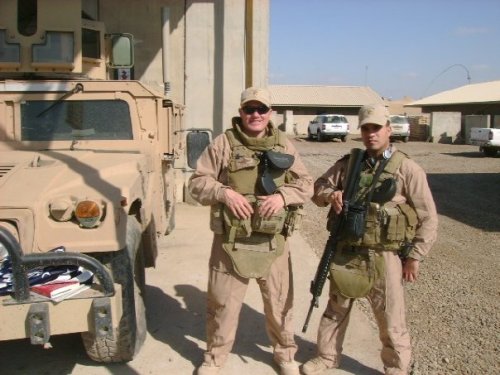
With no disrespect to the Greatest Generation of World War Two, all of the current Soldiers, Sailors, Marines, Airmen and Coast Guardsmen are volunteers, as are the members of the Reserves and National Guard.  Likewise this generation has for the most part fought the war alone as the vast bulk of the country has lived in peace untouched by any inconvenience to daily life such as gas and food rationing, requirements to work in war industries and the draft as were citizens in World War Two.  In the Second World War there was a sharing of the burden which in large part has not occurred in this war.  While many have pitched in to help and volunteered to help veterans and their families the vast majority of people in this country are untouched by the war, not that there is anything wrong with that.  This is simply a comparison of the situation that those who served in World War Two and the present conflicts faced.  So I have to say that our “Greatest Generation” is only a small part of the generation, as the line in Henry V “we few, we happy few who fought together….”

Dynamic DuoBrothers

These Soldiers, Sailors, Marines and Airmen from the United States as well as our Allies who serve alongside of us are my brothers and sisters.  I am friends with military personnel from the UK, Canada and Germany who have served in the various combat zones or at sea and met quite a few others from France, the Netherlands and Australia. Of course my Iraqi friends who I served with while with our advisers in Al Anbar province who are not only trying to bring peace and stability back to their country but have to worry about their families being targeted by terrorists.

There are a number of things that unite us in this relatively small brotherhood.  However, I think that this brotherhood could also be extended to our brothers who fought in Vietnam, French, Vietnamese, Australian, South Korean and American, the French who served in Algeria and the Americans and others that served in Korea.  All of these wars were unpopular, had little support on the home front and often left returning veterans found themselves isolated and their sacrifices either ignored or disrespected.  For those Americans who serve in the current wars I can say that at least to this point the public has been much more supportive than they were to our Vietnam brothers, many of who were even disrespected by World War Two vets who had fought in “a real war.”  I cannot count the Gulf War in this list as it was hugely successful and the returning vets were hailed as conquering heroes with ticker tape parades.

advisers convoy prepGetting Ready for A Mission

Our shared brotherhood includes our scars, physical, psychological, neurological and spiritual.  Those who served on the ground in Iraq and Afghanistan as well as those who served in Vietnam, French Indo-China and Algeria have the common shared experience of fighting people who don’t necessarily like foreigners no matter how noble our intentions and who have a long history of outlasting people that they believe to be invaders or occupiers.  We have had to fight wars with no front lines, no major units arrayed against us, but rather asymmetrical threats propagated by creatively devious foes who use low tech easily available technology and a willingness to sacrifice themselves and others to force attempt to kill us.  Thus we have cleverly designed and often quite powerful IEDs or Improvised Explosive Devices which can obliterate a HUMMV.

374Prayer Before a Mission

These threats create a situation where there is no front line and thus where every excursion outside of a FOB (Forward Operating Base) or COP (Coalition Outpost) is automatically a trip into a potential danger zone.  Enemies can infiltrate bases posing as local nationals in either military uniform or as workers, rockets and mortars can be lobbed onto even the largest and most secure bases at any time and any vehicle driving by you on the road could be loaded with explosives and just waiting to blow you up while insurgents with automatic weapons and Anti-Tank Rocket Propelled Grenades (RPGs) have taken down helicopters.  When you have taken fire on the road, in the air and had rockets whiz by you this becomes a reality that you never forget.

helos at nightA Familiar Sight to Me, Flying at Night AP Photo/David Guttenfelder
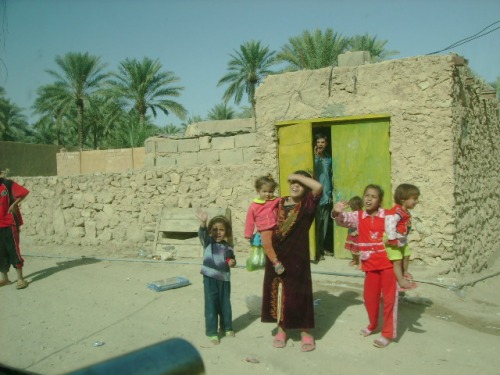
As a result we do not only have men and women with physical wounds, but wounds that have damaged the psyche or the soul.  PTSD is very common either from a direct encounter or the continual wear and tear of being in a danger zone wondering if you were to get hit that day every day of a tour.  I have lost count now of people that I know who have mild to severe symptoms of PTSD.  Traumatic Brain injury is another condition men and women attacked by IEDs, mortars and rockets experience. Likewise there are the injuries that shatter the soul.  These are the images of ruined buildings, burned out vehicles, wounded bodies, injured children, refugees and wars desolation that can leave a person’s faith in God, or ideals that he or she believes in weakened or even destroyed.  There are many idealistic and patriotic military personnel who because of what they have seen question God, their National Leadership and even themselves.  I cannot get the image of a refugee camp on the Iraqi Syrian border full of Palestinian refugees who have nowhere to go; they had been invited to Iraq under Sadaam and have been sitting on the border trying to get home for years now.  The Palestinian authority wants nothing to do with them.

237Iraqi Kids in War Torn Village on the Euphrates

These men and women are my brothers and sisters.   I have seen quite a few of my ICU staff deployed this year with more getting ready to go.  These are my friends and I do get concerned for them and pray earnestly for their safe return.  I wish that I could go with them because I know them and have already walked with them through the dark valley of the shadow of death in our ICU.  We already have a bond that will not be broken.

It is now two years since I was in the process of leaving for Iraq and a year since my PTSD crash.  However, I still would do it again in a heartbeat.  There is something about doing the job that you were both trained to do and called to do that makes it so.  Likewise the bonds of friendship and brotherhood with those who you serve are greater than almost any known in the human experience.  Shared danger, suffering and trauma bind soldiers together, even soldiers of different countries and sometimes with enemies.  I remember the conversation that I had with an Iraqi Merchant Marine Captain on a ship that we had apprehended for smuggling oil violating the United Nations sanctions.  The man was a bit older than me, in his early 60s.  He had been educated in Britain and traveled to the US in the 1960s and 1970s. He had the same concerns as any husband and father for his family and had lost his livelihood after Sadaam invaded Kuwait in 1990.   He was a gentleman who provided for his crew and went out of his way to cooperate with us.  In our last meeting he said to me: “Someday I hope that like the Americans, British and the German soldiers at the end of the Second World War can meet after the war is over, share a meal and a drink in a bar and be friends.”  That is my hope as well.

In the final episode of the series Band of Brothers there is a scene where one of the American soldiers, Joseph Liebgott who came from a German Jewish family interprets the words of a German General to his men in the prisoner compound.  The words sum up what the Americans had felt about themselves and likewise the bond that all soldiers who serve together in war have in common, if you have seen the episode you know how powerful it is, I ended up crying when I heard it the first time and cannot help but do so now that I have been to the badlands of Al Anbar Province.

“Men, it’s been a long war, it’s been a tough war. You’ve fought bravely, proudly for your country. You’re a special group. You’ve found in one another a bond that exists only in combat, among brothers. You’ve shared foxholes, held each other in dire moments. You’ve seen death and suffered together. I’m proud to have served with each and every one of you. You all deserve long and happy lives in peace.”

136A Chance Meeting with our EOD Mobile Uniit 2 Brothers
May God bless all of especially my brothers who served in with me in Iraq or have served or are serving in Afghanistan; as well as my brothers who fought in Vietnam, Indochina and Algeria.  We may never get a victory parade, but we have each other.

Peace, Steve+

5 Comments

Filed under History, iraq,afghanistan, Military, PTSD, vietnam

Gordon Klingenschmitt and his Followers- The Klingenfraud and the Klingenban

Gordon rides the bomb copyGordon Klingenschmitt in all his glory: Ride ’em Cowboy!

Note:  Please know that I am not attacking historic, Evangelical Christianity, nor Christians, Evangelical or otherwise who live their faith proclaiming the Gospel in this post.  Nor am I attacking anyone’s right to deeply held political beliefs.  This post focuses on Gordon Klingenschmitt and others like him who make their living by lying about others using character assassination, the promotion of sedition, secession and pray for the deaths of their political opponents.  Peaceful, law abiding protest and dissent are indispensable in our country.  Likewise the New Testament teaching of Jesus to “Love your enemies and pray for those who persecute you” is antithetical to what Klingenschmitt and the Klingenban are now doing. Unfortunately this bright but unstable man promotes himself in the crassest manner. Though he says what he is doing is for Jesus, it is readily apparent that he is not proclaiming Jesus but himself.    His lies and distortions have become legendary, yet he is a media darling of the Uber-Right.  So please, if you are a conservative Christian, Protestant or Catholic who lives a life upholding the Gospel, love your neighbor, living peaceably with others this does not apply to you. It applies to those who have been so consumed by hatred for the political and religious left that rules of good behavior, respectful dialogue and public decency have been abandoned.  They have been defined by and are now more faithful to extreme right wing political ideology than the Christian faith.  For literary purposes I will refer to them by naming them after their most prominent figure:  Former Chaplain disgraced Naval Officer, convicted criminal professional malcontent and protester Gordon J. Klingenschmitt.  His followers are the Klingenban.

“One-Minute Prayer: Let us pray. Almighty God, today we pray imprecatory prayers from Psalm 109 against the enemies of religious liberty, including Barry Lynn and Mikey Weinstein, who issued press releases this week attacking me personally. God, do not remain silent, for wicked men surround us and tell lies about us. We bless them, but they curse us. Therefore find them guilty, not me. Let their days be few, and replace them with Godly people. Plunder their fields, and seize their assets. Cut off their descendants, and remember their sins, in Jesus’ name. Amen.”  The Prayer of Gordon Klingenschmitt

But I say unto you, Love your enemies, bless them that curse you, do good to them that hate you, and pray for them which despitefully use you, and persecute you;” Matthew 5:44  Jesus Christ

Let every person be subject to the governing authorities. For there is no authority except from God, and those that exist have been instituted by God. Therefore he who resists the authorities resists what God has appointed, and those who resist will incur judgment.  Romans 13:1-2

There are two types of religious Fundamentalists who exist in every religion including Atheism and Secularism, which can for some have an almost religious quality.  There are those who while having and proclaiming their beliefs treat their opponents with respect, love and care.  These folks live their faith, treat others as they would want to be treated, understand that others, even if they believe them to be wrong and maybe even “Hell-bound” still have a right to their beliefs and equal treatment under the law.  In fact many of our nation’s most respected figures have been just these kinds of people.  They have helped make the United States a place where anyone can live peacefully and have the chance to better their lives while contributing to the general welfare of the nation.  They do not seek or desire that the Government take the side of any religious group.  In fact the religious liberty provision in the Bill of Rights was the result of Virginia Baptists who were being discriminated against by the Anglican Church which at the time was the State Church in Virginia.  These Baptists went to James Madison and presented their case and Madison included this in the Bill of Rights.  This was an extremely important event in the life of our Nation.  People forget that almost all of the original 13 colonies, save Rhode Island and Pennsylvania had established “State Churches.”  Eventually these all were disestablished, the last being the Congregational Church in Massachusetts in the 1830s. The second type is the radical Fundamentalist.  As I said these exist in every religion, even those religions which acknowledge no God. In recent times the focus has been on Moslem Extremists such as Al Qaida, the Taliban, Hamas, Hezbollah, the Islamic Jihad, radical Iranian Ayatollahs and other radical Moslem groups.  Likewise there are extremes in Judaism, Hinduism and other religions.  Some atheists and secularists too have had their moments of insanity.

Italy Afghanistan Commander KilledMullah Omar: Klingenschmitt’s Kindred Spirit

The common thread that runs through all of these groups is that they want to be in control of the government wherever they are and enforce their interpretation of their beliefs on others.  They are bullies of the faith.  What they cannot convince you to agree with you on they will push the state to do.  If the state is unwilling then be it through democratic process or hostile takeover they attempt to control the state and by doing so inflict their tyranny on others.  Europe had a long history of this. It has occurred elsewhere in the world.  In 1979 it was on full display when the Ayatollah Khomeini and his followers helped topple the Shah of Iran and then forced more secular reformers out of the government imposing their version of Islamic law.  While not to the same degree we have seen similar things happen in the United States both before and after our founding.  The Plymouth Bay Colony, which we are taught was founded on the principle of religious freedom, was just that.  It was founded so that these colonists could be free from the Church of England and be the State Church.  They were so heavy handed with dissenters that Roger Williams escaped, swimming the Narragansett to found the colony of Rhode Island. This became the first colony to guarantee religious freedom.  Secularists in Revolutionary France conducted routine religious purges.  Radical Hindus in India routinely target Christians and Moslems as well as Hindus of lower castes.   All of this was or is done with the active cooperation or tacit approval of the state.  If given the chance to actually influence policy Klingenfraud and his ilk would impose draconian measures on anyone who disagrees with them.

Yet, Klingenschmitt and the Klingenban exemplify this some of the most radical and compromised people who claim the name “Christian.”  Klingenschmitt’s prayer while unusually bold faced is not an uncommon belief among this radical fringe.  Numerous preachers re-interpret Romans 13: 1-7 180 degrees from what Paul and the early Church believed.  They seem to forget that Paul lived his life in the Roman Empire, which for Christians who were called atheists because they refused to call Caesar “Lord” were persecuted and killed.  Paul included.  Yet at no time do we see Paul telling Christians to take up the sword or to rebel against the Empire.  They died not for political power but for their faith which they refused to compromise.  The early church was known for their peaceful response to their tormentors. The Epistle to Diognetus writes of the Christians’ response to the hatred they received stating that Christians: “…love those who hate them.”  Tertullian in the Apology writes of Christian loyalty stating that Christians “…call upon God for the safety of the Emperor…” and that believers should know from Scripture “…that a superfluity of benevolence is enjoined on us, even so far as to pray God for our enemies and to entreat blessings for our persecutors.”  Such responses are far from those of the Klingenban.

In opposition to the early Church the Klingenban seek political power and the negation of those that oppose them.  Thus we see Klingenschmitt’s excoriation and prayer for the death of Michael Weinstein and Barry Lynn.  Additionally we see the calls for Christians to be prepared to use violence to resist the state.  Such attitudes in effect baptize behaviors that are not merely un-Christian but anti-Christian.  Praying for the death of people because they insult or demean you is not a Christian attitude.  It flies in the face of Jesus’ words on the Cross:  “Father forgive them for they know not what they do.”  It is as self seeking as those who came to this continent seeking religious liberty only for themselves and those willing to submit to them.

Klingenschmitt in practice actively question the faith of those who disagreed with him during his Navy career.  I know of a Priest in a conservative Anglican church who while in seminary elected to go to the Norfolk Chapel to discuss the Navy Chaplaincy with a Navy Chaplain.  He met with Klingenschmitt who instead of discussing what it was to be a Chaplain insinuated that the man was “unsaved.”  Accordining to crew members who served with him on the USS Anzio he accosted those who were not his definition of Christian. He harrassed sailors when they returned to the ship from liberty. Instead of looking out for the mulitude of religious needs and protecting the religious liberty of his sailors, Klingenschmitt used his time in the Navy to advance his own agenda.   Chaplains are mandated to protect the First Ammendment rights of men and women who away from home and away from thier religious tradition. They are also called to care for those with no religious beliefs.  In both cases the requirement is to protect the religious rights of our sailors, not to advance our own agenda.  We actually sign a statement when we come in the Navy that we will do this.  His commanding officer gave him every chance and gave him more personal time that most commanding officers would ever give to a Chaplain, hoping to help him.  For his efforts Klingenschmitt ensured that his commanding officer’s name was smeared in the right-wing media machine.  He did the same to the Commanding Officer of the Naval Station Norfolk.  Klingenschmitt spread such demented lies about this man that he was shunned by his church and pastor because they elected to believe the right wing media machine.  It shows that if you repeat a lie often enough that people will believe it.  Klingenschmitt is a bully and he was rightfully court-martialed after he refused non-judicial punishment for failing to obey a legal order not to wear his uniform at a political event, something that no-one in the military is allowed to do.  He made life hell for us who served honorably and rather then submit to authority he avoided combat by bad mouthing his country, the Navy and his corps.  He took your tax dollars and for months avoided providing ministry to any sailor or Marine.  This was solely a result of his actions.  While hundreds of Evangelical Christian Chaplains deployed to Iraq and Afghanistan and served honorably in combat, Klingenschmitt made up story after story to keep himself in the news. He even still refers to mhimself as “Chaplain” because the group which re-ordained him after being defrocked has endoresed him as “Chaplain to America.”  His website shows him in uniform protesting outside of the White House at the end of his hunger strike in 2006.

Klingenschmitt now markets himself as a victim of persecution, when in fact he brought everything on himself.  In his last days as an officer, no longer a chaplain as his own Church had stripped him of both his ordination and endorsement to serve as a chaplain while waiting discharge.  In spite of this one of his political allies in the Republican Party got Klingenschmitt invited to pray in uniform at the 2006 Conservative Political Action Committee (CPAC) Presidential Banquet at which the Vice President was scheduled to speak.  I saw the notice online and promptly complained to the committee the day before the event about this as a Chaplain telling them that it “insulted all who served honorably.” I also let the Norfolk Naval Station Chaplain know what was going on.  A call from the Commanding Officer of the base to the Chief of Naval Operations persuaded this political group not to let him attend the dinner or pray.  Instead Klingenschmitt waited until the banquet was over and facing an nearly empty auditorium in his Service Dress Blue uniform prayed “in Jesus Name.”  His photo at the podium was published in an article the next day on World Net Daily.  The article obfuscated the fact that the conference had ended when he did this and the headline made it look like he had prayed there with CPACs blessing.  Since then he has made his living in the margin of the far right speaking to churches and far right political groups and protesting wherever he can to keep some measure of media attention on him.

homelss jobless cluelessThe Gordon Klingenschmitt Tour 2007

He, his allies and followers are no different than the Taliban except that they wear suits and not robes.  Their agenda is eerily similar and should they ever gain control of this country they would bring in the worst type of persecution.  Thankfully I think there is little chance of this, but they will still do everything they can to incite trouble and even violence.  Klingenschmitt has prayed for the death of those opposing him, a group ran an advertisement in a Pennsylvania newspaper that said they wanted President Obama to meet the fate of Lincoln, Garfield, McKinley and Kennedy.  Klingenschmitt’s allies actively twist and obfuscate the truth in order to advance their cause at the expense of those who oppose them.  Klingenschmitt’s willing accomplice in the media Joseph Farah openly encourages military members to disobey orders because he does not feel that the President is eligible for the office.  Unfortunately he is doing this in war, and if it were not for the tolerance of the Administration would be tried for sedition.  This is something that Abraham Lincoln had no problem doing in the Civil War.  Farah is opening promoting sedition in time of war, this is a crime.  Conservatives were outrages when members of the Left did such things during the Vietnam war and the current war.   Klingenschmitt, Farah and those like them will not only bring harm to others, but they will continue to discredit the Christian faith by everything they do.  If they were not serious it would e funny.  Klingenschmitt and the Klingenban are dangerous to all who believe in liberty and for the principles on which the United States was founded.

Finally, I know that there are many honest people who have been taken in by Klingenschmitt and his media spin machine.  I encourage you to read for yourselves more about this man from sources other than his website and his allies who parrot what he says. Please know that I was a conservative Republican and worked for Gerald Ford’s campaign before I could vote.  I harbor no animus to conservatives who oppose the Democratic Administration and Congress.  The fact is that principled and respectful conservative opposition is needed, just as principled and respectful liberal Democratic opposition was needed when Republicans controlled the Presidency and Congress.  Klingenschmitt and the Klingenban’s actions are neither principled nor respectful.  Unfortunately they will attempt to destroy the country to save it.  God help us all.

Peace, Steve+

5 Comments

Filed under Loose thoughts and musings