Tag Archives: iraq war

Deep Thoughts and Musings on a Lazy Fall Saturday

I have been down with an ear and sinus infection most of the week which has added to my insomnia and made me pretty useless.  It is no fun to get up in the morning with vertigo.  When this happens I wonder where Verti went. Over the past few days with the vertigo, occasional fever, sinus headaches and some coughing and sneezing I have officially welcomed in the 2011-2012 cold and flu season.

The past few days have given me time to do a lot of thinking, some praying and a bunch of writing.  At least my PTSD-Mad Cow brain is functioning relatively well.  But not getting out much and only going to work to go to the doctor is a bit of a downer.  But it is now time to stop whining to you about this and simply be thankful for the blessings that I have.

I could have a job that had paid time off for sickness or that provided no medical coverage.  I could be wondering where the next meal or paycheck was coming from or where I will sleep.  One thing that I am thankful for is that we paid off a painful reminder of when where the next meal, tank of gas, medical care or pace to live was our reality.  I left the active duty Army in September 1988 to attend seminary and that as about the time of the big Texas oil bust and real estate collapse.  I was an Army Captain and couldn’t get a job because I was overqualified for most jobs or competing against people who could be paid less than me for others.  It was brutal.

Judy was sick and could not work and eventually despite eventually getting a job with a social service agency, things fell apart. We lost our home and even our cars.  It was the worst time of our lives.  We never declared bankruptcy and paid off everything that we owed and this week I paid off the balance of the home that we lost in 1989 to the Veterans Administration.  When the market crashed and the foreclosure came owed almost 40% of the selling price when the house sold at auction.

I am so grateful for what we have now and so being sick and laid up for a few days is really nothing to complain about.  There are far too many people in our country that even a couple of years ago had what they thought were stable well paying jobs with benefits that don’t have them now.  Many are veterans and their families.  It is most likely that things will get worse before they get better for most people as the effects of the sovereign debt and banking crisis in Europe hits our banks.

For me what people are going through is not abstract because we have been there. I really wonder when I see people in political and economic power doing nothing with one Presidential candidate blaming the unemployed if they didn’t have a job and were not rich.  I wonder what has happened to our country.  I wonder why so many churches side with the rich and powerful and seem to despise the poor.

It seems heartless to say the things that this Presidential candidate said with unemployment remaining over 9% for over a year and companies deciding when they do have a job opening to give preference to those that currently have jobs.  Even well qualified unemployed people are not even considered for job openings because they don’t have a job.  And this is happening when the supposed “job creators” on Wall Street who the taxpayers bailed out in 2008 and 2009 are giving themselves bonuses.  It just immoral and when I see many of my fellow Christians making the support of polices which are condemned by Jesus an article of faith in both theology and politics.

I have also had time to think about what is going on in the Middle East especially the Iraq withdraw and ongoing war in Afghanistan.  I am really concerned with Afghanistan because of the veiled threats that Pakistan is making about cutting our supply lines.  They have done this for short time periods before and there have been numerous attacks on supply convoys in that country by Pakistani Taliban.  To make matters even more uncertain Afghan President Hamid Karzai has said that if there were a conflict between the United States and Pakistan that Afghanistan would help them.

Sometimes I hate being a military historian because I understand what happens to armies with tenuous supply lines that are under the control of unreliable allies.  Stalingrad comes to mind. Likewise the lesser known but very significant The Second Jassy-Kishinev Offensive between August 20 and August 29 1944 in which the Romanian allies of the Germans switched sides during the battle.  This allowed the Red Army to destroy the German 6th Army and maul the 8th Army. The offensive probably shortened the war by six months.  At Stalingrad the Germans and their allies suffered 841,000 casualties and at Jassy-Kishinev they lost 100,000 killed and 115,000 captured.  Currently there are about 90,000 American and another 40,000 NATO or coalition troops in Afghanistan deployed in penny packets throughout the country fighting an insurgency.  They are very vulnerable to any supply disruption especially during the winter months and if there was a conflict that shut down the supply lines we would have to rely on the good graces of the Russians to resupply or withdraw our troops. When I think about this I think about my friends and comrades serving in Afghanistan and I pray to God that this does not happen.

When I think that the burden of these wars has fallen on under half a percent of the American population and that politicians and their allies in the business sector are looking at ways to make substantial cutbacks in medical care and other benefits to those that have been sacrificing in ways that no one else has been doing the past ten years.  Talks of cutting VA care for veterans is obscene when because of their preexisting conditions they wouldn’t be able to afford medical insurance even if they could get it.  And the word that these politicians and their allies use is that these are “entitlements.”  That is a really nasty word and it is used pejoratively because everybody knows that “entitlement programs” are bad and those that receive “entitlements” haven’t earned them and are leaching off of society.  In fact a letter from the “Super Committee” in charge of finding ways to slash the budget has proposed cuts to veterans benefits including pension, disability compensation and education payments.

This is why I would rather be at work, I think too much.

But I am still grateful for all that I have and honored to serve with the fine men and women of the US Military in this time of war.  I do pray that things get better in our nation, which those suffering from the terrible economy will have their needs for employment and other physical needs met. I pray that somehow the deep division that has rent our people asunder will be healed and that our political and economic leaders will do what is right for the country and our people rather than the quarterly bottom line of select corporations.  And I pray for the safety and success of my friends and comrades in both Iraq and Afghanistan and that our political and business leaders will not sacrifice us and then abandon us after beating us to dust the past 10 years.

But at least the World Series is on and nothing bad accrues from Baseball.  For that I am very grateful as Sharon Olds said “Baseball is reassuring.  It makes me feel as if the world is not going to blow up.”

Peace

Padre Steve+

1 Comment

Filed under economics and financial policy, History, iraq,afghanistan, Loose thoughts and musings, Military

Goodbye Iraq… Inshallah (إن شاء الله)

A spokesman for the Administration confirmed that US Forces will leave Iraq by the end of the year. The decision came after Iraqi Prime Minister Nouri al-Maliki has told U.S. military officials that he does not have the votes in parliament to provide immunity to the American trainers.

As of today 4478 American, 179 British and 139 other coalition troops have given their lives in this campaign. 32200 Americans have been wounded. Over 10,000 members of the Iraqi Army and Security Forces have given their lives to defend their country following the fall of Saddam Hussein. The official count of Iraqi civilian deaths is a bit over 50,000 people but the actual toll is probably much higher. The Congressional Budget Office estimates the long term cost of the Iraq War will be about 1.9 trillion dollars.

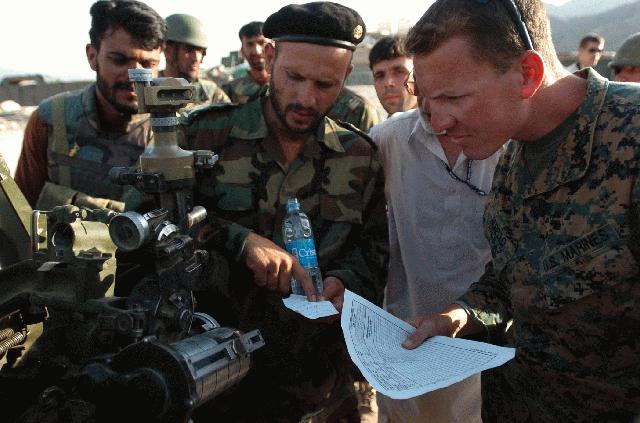
I served in Iraq and I am proud of my service there as part of the Iraq Assistance Group serving with our Marine Corps, Army, Navy and Air Force working with our Iraqi allies in Al Anbar Province from 2007-2008. I have found that it was probably the most rewarding tour I have had in my 30 years in the military. It also changed me in ways that I did not anticipate, especially the effects of PTSD. People sometimes ask me why the tour in Iraq was more rewarding than peacetime or non-deployed service and why I desire to serve in combat again as a Chaplain. The first time someone asked the answer at first surprised them. I said while I viewed peacetime and garrison service as important and meaningful ministry that it was like the regular baseball season. On the other hand getting to do what I did in a combat zone outside the wire with little groups of Americans and their Iraqis was like playing in the World Series. Some will not understand that and I can respect their opinion and their bewilderment. However you had to be there to understand.

I left part of me in Iraq and I will value my friendships with Iraqi military officers and the hospitality shown by them where ever I traveled. I will worry about them and their families as Iraq attempts to stabilize itself and rebuild from the war. I pray that there will be no civil war as some speculate and thatIran’s influence will become less as we leave and the Iraqi Shia Arabs remember that the “Persians” are not their friends as an Iraqi Shia officer reminded me. I do hope that one day I can go back as a visitor and see what I hope to be a free and prosperous country that is a friend.

Yet despite my feelings the question has to be asked: Was it worth it? Somehow I am left feeling that it hurt us andIraqin the long run. Saddam is gone and with him the terror that he imposed on the Iraqi people, but the Iranians are stronger and they were always the real threat to the region.

I almost feel like General Roy Urquhart played by Sean Connery at the end of the movie “A Bridge too Far.” http://www.youtube.com/watch?v=1j9kRciiD3E

We have to ask was it worth the human cost born by the United States military and the Iraqi people. Was it worth the strategic result of Iran becoming stronger? Was it worth the immense cost in blood, military strength and treasure and to our image around the world?

I am not sure if it was. I can only hope and pray that in the end something good will result for us and the long suffering people of Iraq.

Inshallah,

Padre Steve+

Note: Inshallah (إن شاء الله) is the Arabic word for “God Willing” or “if God wills it.”

5 Comments

Filed under History, iraq,afghanistan, Tour in Iraq

Fighting a World Wide Insurgency Part Two: The changing nature of War and the Justified Killing of Anwar al-Awlaki

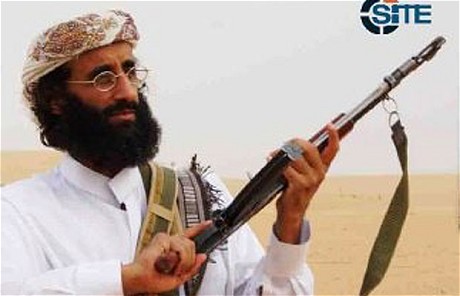
This is a belated follow up to my article Fighting a World Wide Insurgency: The Problem Fighting Revolutionary Terrorists and Insurgents- Part One . It deals with the killing of American born Al Qaeda cleric and propagandists Anwar al-Awlaki and Samir Khan by U.S. Forces in Yemen.  There is controversy in the American media, body politic and among U.S. based civil rights groups such as the ACLU.  My premise is that the killing of Awlaki and Khan was justified because of their actions and because the nature of warfare itself has changed radically since the current “Law of War” contained in the Geneva and Hague conventions the U.N. Charter and other international law standards were laid down.  The were all written with the nation state in mind, not apocalyptic terrorists that recognize no borders do not differentiate between civilians and military targets and have not regard for citizenship either their own or that of others.  Alan Dershowitz the noted jurist, legal scholar and civil libertarian wrote “The great American justice Oliver Wendell Holmes Jr once remarked that “it is revolting to have no better reason for a rule of law than that it was laid down in the time of Henry IV. It is still more revolting if the grounds upon which it was laid down have vanished long since, and the rule simply persists from blind imitation of the past.”

Awlaki and Khan were not mere criminals they were enemy combatants and the fact that they were not on a recognizable battlefield when targeted is irrelevant.  They played games with their citizenship, never officially renouncing it even as they did everything that they could from a propaganda point of view to wage war against their country and incite others including members of the U.S. Military to kill Americans. Yes, they were combatants waging war and not “victims” of an “assassination” ordered by the President.  They knew they were at war and said so quite openly.  The provided aid and encouragement to those that killed American soldiers at FortHoodand attempted to bring down a Delta Air Lines jet on Christmas Day 2009.  Derschowitz commented on the kind of strike used to kill Awlaki and contrasted it with terrorism saying “A targeted assassination is exactly the opposite of terrorism. Terrorism is untargeted assassination — you just throw a bomb in a cafeteria and you get everybody. Targeted assassination is designed to be very precise and very specific.”

Awlaki, Khan and their fellow Al Qaeda travelers fight a different kind of war than we in the West are comfortable waging. They fight a war where they make no distinction between soldiers and civilians and do not recognize the borders of sovereign nations.  Al Qaeda has defined the battlefield and it is not confined to Iraq or Afghanistan.  Using secure bases of operations in nations that are officially our “allies,” they have been able to place themselves safely out of harm’s way until the past year while planning, training and propagandizing new recruits into their terrorist cause.

Awlaki stated his opinion succinctly about the kind of war he was waging in an interview in early 2010:

“Yes. With regard to the issue of ‘civilians,’ this term has become prevalent these days, but I prefer to use the terms employed by our jurisprudents. They classify people as either combatants or non-combatants. A combatant is someone who bears arms – even if this is a woman. Non-combatants are people who do not take part in the war. The American people in its entirety takes part in the war, because they elected this administration, and they finance this war. In the recent elections, and in the previous ones, the American people had other options, and could have elected people who did not want war. Nevertheless, these candidates got nothing but a handful of votes. We should examine this issue from the perspective of Islamic law, and this settles the issue – is it permitted or forbidden? If the heroic mujahid brother Umar Farouk could have targeted hundreds of soldiers, that would have been wonderful. But we are talking about the realities of war.” Anwar a-Awlaki comments in interview supporting attempted downing of Delta Air Lines flight on Christmas Day 2009 http://www.memri.org/report/en/0/0/0/0/0/0/4202.htm

The United States killed two men who though technically a “citizens” were declared enemies of theUnited States. By his own words and actions Awlaki declared war against the land of his birth and the land that blessed him with an education that he used for years to encourage other Muslims, especially American Muslims to kill Americans wherever they are found.

The method of his killing appears to be by a targeted drone strike on his hide out in Yemen.  His killing has been condemned and it’s legality questioned by a good number of people including Republican Presidential candidate Ron Paul.  On the surface I can see their concerns.  Any reader of this site knows that I am on the whole with very few exceptions very much a civil libertarian and some will call me a hypocrite but I am okay with that.  The fact is that I do not want our government to be engaged in activities that violate the constitutional rights of Americans anywhere in the world.  Nor do I want to see Awlaki’s killing used as precedent in killing American citizens not engaged in acts of war against the United States. Critics have contended that Awlaki had not broken the law and that his killing in a country that we are not at war with made the act an illegal assassination under the 5th Amendment while ignoring his goal of mobilizing Muslims worldwide, but especially American Muslims to kill Americans at home and abroad. However even criminal courts in the United States recognize that a person that encourages murder can be charged as an accomplice or even co-conspirator as Awlaki was to the mass murderer of Fort Hood Major Nidal Hussein.

However those that decry Awlaki’s killing ignore his words that “we have to establish an important principle: Jihad is global. It is not a local phenomenon. Jihad is not stopped by borders or barriers; they cannot stand in the way of Jihad. Jihad does not recognize the colonial borders that were made in the countries in the past that were drawn by a ruler on the map; Jihad doesn’t recognize those superficial borders.” (Chapter 3: Constants on the Path of Jihad)  The critics of Awlaki’s killing as well as that of Osama Bin Laden and other men that describe themselves as combatants in a war against the United States all encourage the killing of every American because “all Americans are guilty.”   Awlaki’s fellow “American” terrorist companion Samir Khan who was killed with him in the attack wrote “I am a traitor to America because my religion requires me to be. We pledge to wage jihad for the rest of our lives until either we implant Islam all over the world or meet our Lord as bearers of Islam.”

Dershowitz noted that weapons of mass destruction in the hands of suicide terrorists with no fear of death and no home address have rendered useless the deterrent threat of massive retaliation. This threat has been the staple of military policy since the days of the Bible. Because suicide terrorists cannot be deterred, they must be pre-empted and prevented from carrying out their threats against civilians before they occur. This change in tactics requires significant changes in the laws of war – laws that have long been premised on the deterrent model.”

Yes by law Awlaki was still an American citizen at the time of his death. Despite his many calls for the destruction of this country and the killing of its citizens he never went to an Embassy or Consulate to officially renounce his citizenship and thus was still a citizen.  The fact that Awlaki was a leader and propagandist for Al Qaeda on the order of what Josef Goebbels was to the Nazis is lost in the debate.  The uncomfortable truth is that an “American” citizen Awlaki had for all recognizable purposes renounced his citizenship, and under most historical and legal precedents in the United Statesand Europe Awlaki forfeited his rights as such.

This country has revoked the citizenship of citizens for taking up arms against this country to include all officers who left the U.S. military and former government officials that took up prominent positions in the Confederate armed services and government.  They lost their citizenship rights and all had to reaffirm their allegiance to the Union to receive pardons.  Some did not and some such as the commandant of the Andersonville prisoner of war camp were executed for their crimes against other U.S. citizens.

The fact that he hid among his family’s tribal homeland inYemenis also held out as a reason that Awliki’s killing was illegal.  However Awlaki did not recognize the borders that some say should offer him protection and in my view it is unreasonable for theUnited Statesto be bound by conditions that our adversaries do not acknowledge.

The fact is that Al Qaeda and other terror groups have redefined warfare and that many of our long held notions about the nature of war are obsolete.  Al Qaeda and other militant groups understand the concept of revolutionary warfare in ways that are distinctly uncomfortable for us in the West. We talk about counterinsurgency in Afghanistanand Iraq without realizing that the actual insurgency is worldwide and not bound by our constraints.  One of the key components of revolutionary warfare is propaganda which is exactly what Awlaki and Khan were doing.  They betrayed their country, inspired who knows how many radicals to kill Americans around the world including the infamous Major Nidal Hasan who Awlaki described as a hero. He is a man of conscience who could not bear living the contradiction of being a Muslim and serving in an army that is fighting against his own people…My support to the operation was because the operation brother Nidal carried out was a courageous one.”

Roger Trinquier a French officer who served in both Indo-China and Algeria recognized this method of operation in his book Modern Warfare: http://www.cgsc.edu/carl/resources/csi/trinquier/trinquier.asp:

“Warfare is now an interlocking system of actions political, economic, psychological; military that aims at the overthrow of the established authority in a country and its replacement by another regime.  To achieve this end, the aggressor tries to exploit the internal tensions of the country attacked ideological, social, religious, economic, any conflict liable to have a profound influence on the population to be conquered.”

Unfortunately many in political and media elite as well as some civil libertarians like the ACLU are still acting if it was 1944 and there are clear lines that divide nations as well as military personal from civilians.  But for the terrorist this is not the case, Trinquier states the matter very well:

“But the case of the terrorist is quite otherwise. Not only does he carry on warfare without uniform, but he attacks, far from a field of battle, only unarmed civilians who are incapable of defending themselves and who are normally protected under the rules of warfare. Surrounded by a vast organization, which prepares his task and assists him in its execution, which assures his withdrawal and his protection, he runs practically no risks-neither that of retaliation by his victims nor that of having to appear before a court of justice. When it has been decided to kill someone sometime somewhere, with the sole purpose of terrorizing the populace and strewing a certain number of bodies along the streets of a city or on country roads, it is quite easy under existing laws to escape the police.”

Likewise the critics seem to assume that the people plotting and waging war against the United Statesand the West are poor conscripts that do not have a choice in what they are doing but they are not. Most of the leaders including Awlaki, Khan and Osama Bin Laden were the educated children of privilege as is Adam Yahiye Gadahn an American convert to Islam who like Awlaki and Khan has devoted himself to jihad against his native land. Gadahn who has been indicted on the charge of treason makes no bones about his hatred for the United Statesin a 2004 video saying “Fighting and defeating America is our first priority….” In 2009 he praised Nidal Hassan as “a pioneer, a trailblazer and a role-model who has opened a door, lit a path and shown the way forward for every Muslim who finds himself among the unbelievers.”

Yes this is an ugly conflict and it is far different than any war we have every faced. It will mean having to come to terms with methods and tactics that are effective in carrying the war to the enemy, even enemies that we have allowed to retain their citizenship even as they wage war against us.  Critics that think this war will be won or lost on the battlefields of Iraqor Afghanistanand those who condemn the killing of Awalki and Khan misunderstand the shape of warfare in the 21st century.

Trinquier and others understood this and we have to adapt if we are to defeat this world wide insurgency.  On so vast a field of action, traditional armed forces no longer enjoy their accustomed decisive role. Victory no longer depends on one battle over a given terrain. Military operations, as combat actions carried out against opposing armed forces, are of only limited importance and are never the total conflict.”

Awlaki and Khan understood what they were doing and were prepared to die to achieve their goals which they did.  I suppose that we could have risked the lives of more American troops on the ground to track them down and attempt to capture or kill them deep inside hostile territory as we did with Bin Laden.  However, such operations are so risky that they cannot be allowed to become commonplace.

Likewise even as we step up the use of drones and special operations forces and scale back in the manpower intensive theaters of Iraq and Afghanistan we must embrace the role of the media propagandizing the truth. We must define the message and not allow future Awlaki’s and Khan’s to set the narrative of the war. We must use all available media and communications technology to our advantage and not surrender that realm of operations to whomever Al Qaeda appoints to replace Alwaki and Kahn in their propaganda minister role.

It is clear that  Geneva and Hague conventions, the U.N. Charter and aspects of the U.S. Code including citizenship provisions need to be revised in light of the changing nature of war.  If they are not we will always be constrained by those rules even as terrorists use those protections as part of their overall strategy.  To counter such actions we cannot be bound by common law written at the time of Henry IV or laws that never envisioned the kind of war being waged by our enemies.  Dershowitz wrote:

“Laws must change with the times. They must adapt to new challenges. That has been the genius of the common law. Ironically, it is generally the left that seeks change in the laws, while the right is satisfied with Henry IV. Today it is many on the left who resist any changes in the law of war or human rights. They deny the reality that the war against terrorism is any way different from conventional wars of the past, or that the old laws must be adapted to the new threats. The result is often an unreasonable debate of extremes: the hard left insists that the old laws should not be tampered with in the least; the hard right insists that the old laws are entirely inapplicable to the new threats, and that democratic governments should be entirely free to do whatever it takes to combat terrorism, without regard to anachronistic laws. Both extremes are dangerous. What is needed is a new set of laws, based on the principles of the old laws of war and human rights – the protection of civilians – but adapted to the new threats against civilian victims of terrorism.” Article in “The Independent” 3 May 2006

From a more military standpoint Trinquier noted:

“In seeking a solution, it is essential to realize that in modern warfare we are not up against just a few armed bands spread across a given territory, but rather against an armed clandestine organization whose essential role is to impose its will upon the population. Victory will be obtained only through the complete destruction of that organization.

That complete destruction of such an organization begins with its leaders including its propagandists, even those that are American citizens.  Some will disagree with me on this but this war has been going on over 10 years and will not end when we withdraw from Iraq and Afghanistan. The killing of Osama Bin Laden and the intelligence garnered in the raid on his Pakistani compound was a watershed moment and has shifted momentum to the United States and its allies.  Al Qaeda’s senior leaders are being killed in ever increasing numbers with substantially fewer civilian casualties.  But we can lose it all if we fail recognize that the very nature of war has changed and that if we remain tied to law and policy written when the world in no way resembled what it is today.

Padre Steve+

P.S.  For those wondering what a Priest knows about this I hold a Masters degree in Military History and a graduate of the U.S. Marine Corps Command and Staff College. I have also studied revolutionary war and insurgency extensively since 2001.  I served with our advisers to the Iraqi Army, Police and Border and Port of Entry Police in 2007-2008. 

2 Comments

Filed under laws and legislation, middle east, Military, national security

The 9-11 Generation: The Few

“We few, we happy few, we band of brothers….”

Winston Churchill referred to the Royal Air Force’s heroism in the Battle of Britain.  He remarked “Never in the field of human conflict was so much owed by so many to so few.”  By comparison with that tiny force the American military is massive. However in comparison with the missions that it has been given since September 11th 2001 and its size relative to the population of the United States it is a small force; a force that much more has been asked than anyone could have imagined on that terrible day.

Since the attacks of September 11th 2001 over 2.8 million young Americans have volunteered to serve in the nations military.  Since that fateful day some 5.5 million Americans have served in all branches of the military both active and reserve, many like me were on active duty that fateful morning. Today about 2.2 million serve in the various components of the military, just 1.4 million on active duty out of a total estimated population of 120 million men and women aged 18-49 fit to serve.

That makes the accomplishments of those that have served so much greater.  Never before has our country asked so much for such a long period of time from such a miniscule segment of the population.  Every single Soldier, Sailor, Marine, Airman and Coastguardsman that currently serve volunteered in a time of war to either join or extend their service in the military. Over 2.3 million have served in Iraq or Afghanistan with many more that have served in the Middle East and other regions supporting those wars as well as other anti-terrorist operations around the world.  While we have been committed to wars that may not be “winnable” we have accomplished so much and exacted revenge upon Osama Bin Laden and many of those who planned and perpetrated the attacks of 9-11-2001.

Many were children some as young as 8 years old when the attacks took place who have grown up in the years following the attack.  Others pressed the upper age limits to enlist many seeking age waivers to do so.  The vast majority of the men and women who enlisted because they felt it was their duty, not for money, not for glory.  They came from every State, District and Territory where Old Glory flies as a symbol of freedom.  The represent every race, creed and political party, and come from what the media like to call the “Red States and the Blue States” only for them it is not a question of “Red or Blue” but “Red White and Blue.”  Others have come to the United Statesfrom other nations because they felt that there was something great and noble about this nation and our ideals.

Some would wrongly call this military and those that serve in it a mercenary force, but no it is not and they are professionals that serve our country in time of war.  Mercenaries simply sign on for the money and fight for any regime that will employ them.  We are not mercenaries.

Over the course of this war some of those ideals have faded and of those that go back time and time again do it often because they do not want to abandon their friends or see their sacrifices wasted.  The war has taken and continues to take a toll on this small segment of America.  Over 6200 have died in action and over 45200 wounded, 77 wounded just today September 11th 2011 in Afghanistan.  The numbers do not count the large numbers suffering from PTSD or other combat stress related injuries nor does it count those that have died by suicide following deployment.

Among the many speeches today I was most taken with that of Vice President Joe Biden. The Vice President talked about this generation in a speech today at the Pentagon. The speech was one of the most moving that I have heard about our military in a long time.  It made me even more proud of all that I serve alongside.  I have excepted this passage:

“Many of them were just kids on that bright September morning. But like their grandparents after December 7, 1941, they courageously bore the burden that history placed on their shoulders. And as they came of age, they showed up to fight for their country – 2,800,000 Americans of the 9/11 Generation were moved to join our military since the 9/11 attacks, to finish the war that began on 9/11. They joined knowing full well that they were likely to be deployed in harm’s way – and in many cases deployed multiple times in Afghanistan, Iraq and in other parts of the world….

Over a decade at war, they pioneered new tactics, mastered new languages, developed and employed advanced new technologies. They took on responsibilities once reserved only for those with years of seniority- responsibilities that extended far beyond the base or the battlefield to politics, economics, and development tasks….And one more thing about this generation of warriors-never before in our history has America asked so much, over such a sustained period, of an all-volunteer fighting force. So I say without doubt or exaggeration that the 9/11 generation ranks among the greatest our nation has ever produced.” (See the video or read the speech at http://foxnewsinsider.com/2011/09/11/video-and-text-vice-president-biden-speaks-at-the-pentagon-reflects-on-the-courage-of-the-911-victims-and-their-families/

I have long contended that this generation of patriots who serve in our military as well as in our Federal police and intelligence services are a “new greatest generation.”  All of us have served to defend this country many making multiple deployments to combat zones.  I have made just two combat deployments and feel that I have not done enough, especially compared to those that have done far more of these deployments.  However I would guess that I will get at least one more in before my long career is done.

All Americans and millions of people around the world owe so much to these men and women as well as those from other nations that stand together with us.  For us it is not just remembering that terrible day that changed the world, but to give ourselves to serve and hopefully keep this from happening again.

Always remember9-11-2001, never forget that day or those that died at the hallowed grounds of the World Trade Center, the Pentagon and that lonely field outside Shanksville Pennsylvania.   But please never forget those that continue to give the last full measure of devotion, the 9-11 Generation.

Peace

Padre Steve+

2 Comments

Filed under History, Military, traumatic national events

I Just Want to Thank Everyone that made this Night Necessary

I think that Yogi Berra said it the best when thanking people inSt. Louis when the city decided to honor him when the Yankees came into town in 1947.  He meant to say “I just want to thank everyone that made this night possible” but it came out “I just want to thank everyone that made this night necessary.”

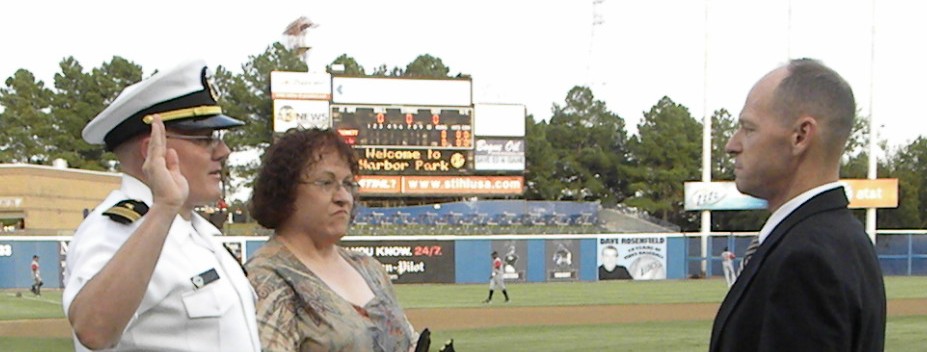
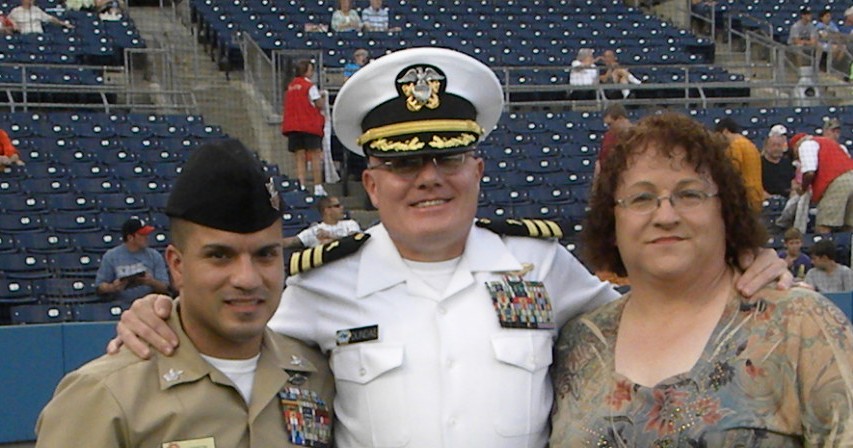
Last night I was promoted to the rank of Commander in the United States Navy.  I’ve been in the military 30 years and this is the first rank that I have not held twice since March 1987.  Since March 1st 1987 I served as an Army Captain and Major and then took a reduction in rank to enter the Navy serve as a Navy Lieutenant and Lieutenant Commander.

Swearing the Oath of Office

It was a special night. The management of the Norfolk Tides was happy to indulge my desire to do the oath behind home plate and throw out the first pitch.  Dave Rosenfield the General Manager approved it early in the season and his staff led by the Director of Community Relations, Heather McKeating made it happen and Linda Waisanen the Box Office Manager helped get the tickets for my guests in the same section.  It was good to see and talk with some of my friends from the Tides that I haven’t seen for a while, pitchers Chris Tillman and Chris George and catcher Adam Donachie.   Of course there were also my friends Elliott, Chip and Audrey the Ushers, concessionaires and members of the Tide Watchers Booster club.

RP1 Nelson Lebron, me and Judy

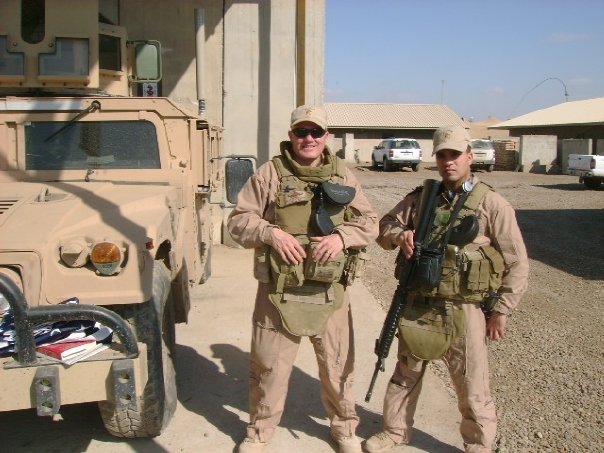
I had the honor of having my old commanding officer from Marine Security Force Battalion, Colonel Mike Paulovich USMC (Retired) come down from Washington DC to administer the Oath of Office.  Likewise I had my wife Judy, who has seen me through my entire career and endured many separations due to deployments, field exercises and schools at my side.  For those that have not served in the military the stress that our spouses go through is tremendous and many marriages do not survive.  There is a reason that around many military bases you will see bumper stickers that say “Navy wife, the toughest job in the military” or Marine or Army wife.  I was also honored to have my former assistant from EOD Group Two RP1 Nelson Lebron there. Nelson and I went to Iraq together and he is an amazing Sailor and I count him as a close friend.  He was my trusted body guard and I would go to war with him again any day of the week.  Judy and Nelson switched out my shoulder boards before I took the oath.

I also had some very special friends in attendance at the game, people that I really wanted to be there; LCDR Greg Ostrander USN (Retired), Randy and Sandy Smith, Jerry Channell, Denise Denise Özdemir and Karen Johnson and their significant others.  There were some people that because of military duty or other commitments that could not make it, however I know they were there in spirit due to the notes, messages and phone calls.

With Advisers in Iraq

One problem of living on the opposite coast from your family is that it is difficult to have them with you on occasions like this.  My mom, my brother and his family in California could not be here but hopefully if I make Captain in a few years or when I retire they will be able to come.  My dad passed away the day after the selection list was announced in June of 2010 but I know that he was here in spirit.

Me and RP1 Nelson Lebron in Iraq, there is no better body guard

There are people that were there for me at many points in my career that helped “make this day necessary.”  The late Master Sergeant Harry Zilkan from the UCLA ROTC detachment and Sergeant First Class Harry Ball who broke me down and built me up during my ROTC pre-commissioning “Advanced Camp at Fort Lewis in 1982 were early influences.  SFC Ball a crusty Special Forces type with a lot of Vietnam tours had me blubbering “I got nowhere else to go” like Lewis Gossett Jr. did to Richard Gere in the movie An Officer and a Gentleman. Lieutenant Colonel Bruce Lawson my ROTC advisor at UCLA was also helpful during those two formative years.  First Sergeant Jim Koenig at 557th Medical Company taught me a lot about enlisted leadership and helped mentor me as a young Lieutenant while Colonel Donald A. Johnson the commander of the 68th Medical Group showed me how to get the most out of people and the importance of knowing the details of an operation without getting in the way of people doing the mission.  Master Sergeant (Retired) Cynthia Carter was my Platoon Sergeant at 557th and went through a lot of deep waters with me there.  She was at my promotion to Captain at Fort Sam Houston in 1987.  I am still in contact with a good number of my soldiers from the 557th and each of them was helpful in my career.

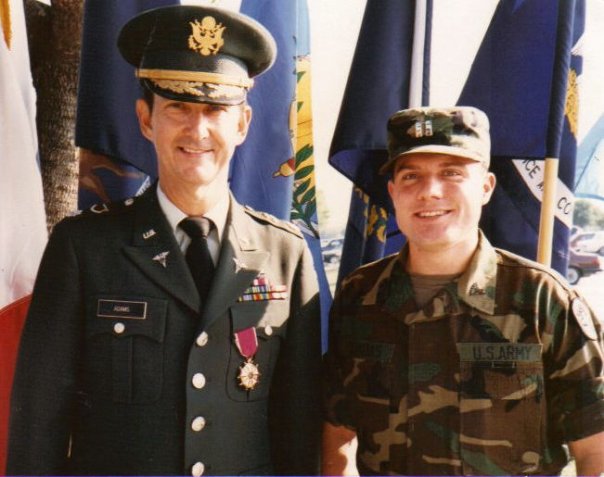
LTC Ike Adams and me 1987

When I started down the road to becoming a chaplain back in 1987, Lieutenant Colonel Ike Adams, my Executive Officer at the Academy Brigade, Academy of Health Sciences was very important in helping me down that road. He is now a professor at Asbury College in Wilmore Kentucky.  Chaplain, Major Wayne Lura (USA Retired) gave me advice that has kept me out of trouble talking to me about the pitfalls of ministry and chaplaincy even before I even went to seminary.  Chaplain, Lieutenant Colonel Rich Whaley saved my ass a number of times at the Army Chaplain school during the Basic and Advanced courses.  I have stayed in contact with Rich, who I believe is one of the finest chaplains that I have ever met and he now is the Endorsing Agent for the Church of Jesus Christ of Latter Day Saints working with LDS Chaplains in both the Military and other Federal Chaplain programs.  Chaplain, Colonel John Price was an Episcopal Priest and the State Chaplain for the Texas Army National Guard and taught me a lot about how to be there for people, especially leaders going through difficult times.  Chaplain, Colonel Paul Howe who I served with in Germany during the Bosnia Operation helped me as a young mobilized Army Reserve Major learn to be a good supervisory Chaplain and look out for the junior chaplains and assistants under my care. He also taught me something important about caring for the sacramental needs of a diverse Christian community.

Army Chaplain School 1990 with Chaplain Bill Blackie (L) and Rich Whaley (Center)

There also was my congregation at Fort Indiantown Gap Pennsylvania, where I served from 1997-1998.  My Commanding Officer, Colonel Tom Allmon, his family and my Parish Council including the late Major General Frank Smoker USAF/PAAirNG, Colonel Ray Hawthorne, USA Retired, the late Major Scotty Jenkes (USAF Retired), CWO4 Herman Bolt, (USA Retired), and Sergeant Bill Ward, and my assistant SSG, now Army Chaplain, Major Steve Cantrell were all instrumental in my success there while General Smoker, Colonel Hawthorne and Colonel Allmon wrote letters to help get me into the Navy.

When I came into the Navy I was helped by Captain John Kaul CHC USN, who served as my Division and MEF Chaplain at Camp LeJeune. He became a model for my Chaplain ministry and has been a great encouragement over the years.  Captain Fred Elkin CHC USN, was my first detailer and set me up for success by sending me to the Second Marine Division figuring that my Army background would help me there.  Fred and I later served at Naval Medical Center Portsmouth. Captain, Chaplain Deborah McGuire, CHC USN, was great to work with at the Navy Expeditionary Combat Command.  Captain Mike Langston the II MEF Forward Chaplain who I served with in Iraq set me up for success there and Captain Jesse Tate CHC USN was really good in helping me get through the toughest time of my life after I returned to Iraq and was assigned to Portsmouth.  My fellow Chaplains there, Commander Jeff Seiler, Commander Derek Ross, Commander Kevin Anderson, Lieutenant Albert Cross, Fr. Fred Elkin and Chaplain, Captain Jerry Shields USN (Retired) were amazing in helping me get through that painful time.  Then there is my current staff, Lieutenant Shauna Sanders, Captain, Chaplain Vince Arnold, USN (Retired) and Chaplain, Lieutenant Commander Duke Quarles USN (Retired).  I have had a number of great assistants and Religious Program specialists during my time as a chaplain.  Of course there have been others who have along the way been there for me to give advice, encouragement and assistance that are too numerous to name.

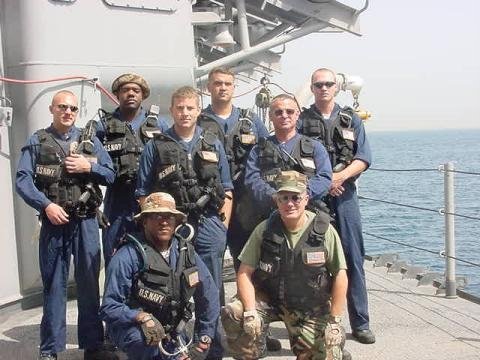
USS HUE CITY Boarding Party

My commanding officers that I have served with in Marine Corps and Navy units have been awesome including Marine Lieutenant Colonel T. D. Anderson, Colonel Louis Rachel,Major General Richard Lake, Colonel Mike Paulovich and Colonel Dan Rogers.  Sergeant Major Kim Davis USMC was an outstanding Sergeant Major to work with, the grandson of Brigadier General Benjamin O. Davis, the first African American General in the U.S. Army, he taught me much in caring for Marines and gave me really helpful advice a number of times.  Captain Rick Hoffman my first skipper on the USS HUE CITY and his Command Master Chief, CMDCM Mark Dubiel were awesome to work for with as are my current Commanding Officer at Naval Hospital Camp LeJeune Captain Dan Zinder, MC USN and my current Command Master Chief CMDCM Terry Prince.  Command Master Chief Gerry Pierce, (USN Retired) has been like family since we served together on HUE CITY.

Soul Vikes

Then there are my fellow officers in the Navy, Army and Marine Corps, my shipmates from the HUE CITY and the Sailors, Soldiers and Marines too numerous to mention that have been part of my life for the last 30 years.  Likewise my teachers and professors, LCDR Jim Breedlove and Senior Chief John Ness from the Edison High Navy Junior ROTC program, Gloria Nomura, Coach Duke Pasquini, Dr. Delmar McComb at San Joaquin Delta College, Dr Helmut Heussler at California State University Northridge, Dr. Doyle Young and Doug Dickens at Southwestern Baptist Theological Seminary and Dr. Steve Ivy at Parkland Memorial Hospital. All of these men and women were amazing in my education and formation as an academic and Priest.

Last but certainly not least are those friends that have been there for me for years going back to my “Soul Vikes” from Edison High School and Stockton Junior High. Those that I went to Army ROTC at UCLA, and those that I have served with over the years in the Army, Navy and Marine Corps as well as seminary classmates, and my colleagues in the clergy from my old church and the Apostolic Catholic Orthodox Church where I serve today.  Thank you Bishop Diana Dale, and my old friends Fr Greg Schluter from the Navy and the Charismatic Episcopal Church, Major Marty Grossman who I have known since my first day on active duty, Dr. Rick Herrera, Gary Vassar and Becky Munoz-Smith who were with me at UCLA and so many more friends, shipmates and comrades that I cannot name them all.

Finally there are my readers on this site that have encouraged me with their comments since I started this site in February 2009.

If as Hillary Clinton said it takes a village, I have good sized town that has stood by my side over the years and I am blessed.

Again I just want to thank everyone that made this night necessary.

Peace

Padre Steve+

3 Comments

Filed under Military, shipmates and veterans

Reaching the Lost Christian Generation

“God weeps with us so that we may one day laugh with him.” Jürgen Moltmann

Over the past couple of weeks I have been thinking about encounters that I have had with Christians of various denominations who have suffered a crisis in faith or loss of faith due to some kind of trauma in their lives.  These people are the unseen, unheard and ignored part of our religious landscape.  In theUnited Stateswe have a very vibrant religious culture which finds its way into much of everyday life.  In fact listening to most of our Presidential candidates you would think that most are in fact Evangelical Christian preachers.

The fact is that despite the popularity of the mega-church and pop-psychology driven church world directed by “pastors” that function more as CEOs, motivational speakers and authors that churches are losing adherents at an increasing rate.  Many of those that are being lost are those that have suffered silently doing everything that is supposed to fulfill a Christian and make them healthy, wealthy and popular get left in the dust because they don’t “get better.”  I call them the “Lost Christian Generation.” There are many times that I totally empathize with author Anne Rice in saying that she has left Christianity yet still has faith in Christ.  For Rice it was the lack of love shown by the institutional church for people that are marginalized and treated as if they were unredeemable by often well meaning Christians.

For the wounded the church itself becomes their little acre of Hell on earth.  Having known plenty of these people I can say that this phenomenon is one of the more tragic aspects of life.  Those that at one time felt the presence of God in their life only sense emptiness and aloneness.   But most remain in the church for years living in pain thinking that they must be doing something wrong, that maybe they have angered God or that God has abandoned them.  In fact I would challenge my readers that attend church to take a look around the pews and see that person sitting alone, maybe staring into space, maybe with an expression of deep sadness on their face even as people talk and laugh around them.  The problem is most of us have very little situational awareness and don’t see them and of we do feel uncomfortable or inadequate so we leave them hoping that maybe they’ll get their act together or just go away.

I know what it feels like to be marginalized after I came back fromIraqbecause many of my Christian friends seemed, at least in my view to be tied to the absolute hogwash that spews from talk radio hosts and allegedly “Christian” politicians.  I remember having some Christians question my patriotism and even my faith because I disagreed with them regarding certain aspects of the war, despite the fact that I had been on the ground in harm’s way serving with our advisors and Iraqis in Al Anbar province.  The fact that not a clergyman, civilian or military, took time to care for me when I was in a major PTSD meltdown and crisis of faith before I went to Naval Medical Center Portsmouth didn’t seem to matter because a political agenda was given primacy over the simple truths and hard demands of the Gospel.

I went through a period after Iraq where feeling abandoned and isolated from those of a like faith that I was for all practical purposes an agnostic.  That was a really difficult time in my life and if you think that anything sucks try to be a Chaplain when you no longer know if God exists and the only person asking how you are doing with “the Big Guy” is your therapist. I can say without a doubt that it sucks and I know that I am not alone in my feelings.  I have met others whose experience is similar to mine but those that are struggling right now, caught between our faith and the feeling of being abandoned by God and his people because our experience of seeing the human suffering caused by war has shaken us.  That experience changed me enough that my former church told me to leave because I had become “too liberal.”

This “God Forsakenness” sometimes leads those people that are part of the “lost Christian generation” to believe that death appears more comforting than life in the present. For such people, they live “Good Friday” everyday feeling that they are truly God Forsaken.   I write this because I really believe that these often very sensitive and wonderful people are either ignored or not even seen by most of their fellow church members. Likewise I believe that many if not most pastors and priests are either unaware of them, uncomfortable around them or irritated by them because they don’t respond like “normal” people do.   I have found from my own experience returning from Iraq that Easter despite the message of resurrection and hope often triggers a despair of life itself when one no longer senses the presence of God and feels alone against the world, especially in church.

Many times the crisis of faith is caused by prolonged depression, PTSD or other trauma often involving family members, clergy or other trusted authority figures in their lives.  Sometimes the trauma is due to a physical injury, perhaps a near death experience due to an illness, combat or accident and can be neurological as in the case of Traumatic Brain Injury or TBI not something that routine counseling either psychological or pastoral or an anti-depressant medication will correct.  In my case it was PTSD and chronic pain and insomnia which overwhelmed me and along with a crisis of faith triggered such hopelessness that I barely held on for almost two years.

I remember when I first started dealing with this in others while in seminary that I was of the mind that if someone was in the midst of a crisis in faith if they read the Bible more, prayed more and made sure that they were in church that things would work out.  I believed then that somehow with counseling, the right concept of God and involvement in church activities that God would “heal” them.  Call me a heretic but that line of thinking is nice for people experiencing a minor bump in their life but absolutely stupid advice for people who are severely traumatized or clinically depressed and suicidal who no longer perceive the presence of God in their lives.

I cannot condemn those who have lost their faith or are wavering in their faith due to trauma, abuse or other psychological reason. So many people like this have been victimized by family, teachers, clergy other authority figures or physical trauma related to accidents, near death experiences or combat that it is mind numbing.  The fact that I went through a period for the nearly two years where I was pretty much an agnostic praying to believe again because of my PTSD injury incurred in Iraq that felt hopelessly isolated for the first year after my return until I finally reconnected with others and began to feel safe again gives me just a bit of an idea at what these people are going through.  My isolation from Christian community and sense of despair during that time showed me that such a loss of faith is not to be trifled with or papered over with the pretty wallpaper or neat sets of “principles” drawn up in the ivory theological towers by theologians and “pastors” who refuse to deal with the reality of the consequences of a fallen world and their impact on real people.

Sometimes the damage wrought on people makes it nearly impossible to comprehend a God who both cares about them and who is safe to approach.  My experience was due to from my time in Iraq and the trauma of my return.  That time was absolutely frightening.  Church was no longer a comfort and my long established spiritual practices no longer brought peace or a feeling of communion with God. It was so bad that I left a Christmas Eve Mass in 2008 and walked through the dark wondering if God even existed.

For those clergy this is an even deeper wound one in which the very concept and understanding of God becomes skewed in the minds and hearts of the victims.  It becomes worse when church institutions deny or ignore their claims which has been an unfortunate occurrence in many Roman Catholic dioceses around the world, particularly in Europe and North America where new revelations of clerical abuse seem to show up with alarming frequency.

The feeling that people who go through a crisis or loss of faith almost always mention to me is that they feel God feel cut off and even abandoned by God.  This is not simply depression that they are dealing with but despair of life itself when thoughts of death or just going to sleep are much preferable to living.  This overwhelming despair impacts their relationships especially with their family and frequently will destroy families as the spouse grows weary and loses hope seeing their loved one get better.  It is if they never are able to leave the “God forsakenness” of Good Friday and cannot climb out of the tomb.   For some the pain is so much the last and previously unthinkable alternative of suicide becomes the only course of action that they think will help.  Such thoughts are not simply narcissism as some would believe but from the “logical” belief that their family, friends and loved ones would be better off without them.  I have seen this too many times to count.

It is hard to reach out to people in this situation.  I have to admit in my case that it was only people who chose to remain with me and walk with me through the ordeal in spite of my frequent crashes, depression, anger and even rage that helped get me through the worst of this.  However I’m sure that my condition burned some people out.  There are some that would not walk with me as I first began to go down and the sad thing is that many were ministers and fellow chaplains.  In some ways I don’t blame them at the same time the first person that asked me how my spiritual life “or how I was with the Big Guy” was my therapist.  When I reported to my current duty station I was shocked to find Chaplains who were willing to come alongside of me, even when they didn’t have the answers and remain with me.

The topic of a loss of faith or the reality of feeling God forsaken is had to deal with.  It is seldom dealt with in many seminaries or Bible schools because it is not comfortable or something that you can “grow your church” with.  But the reality is there are more people going to church praying for an answer who no one reaches out to; in fact they are often invisible amid the busyness of program oriented ministry.

I do not think that it is enough simply to tell them that “God won’t give you more than you can bear” or quote other scriptures when they have been pushed beyond the “red line” and are breaking down.  They want to believe that scriptural principle but no longer believe because God is no longer real to them.

Yet scripture plainly teaches that we are to “bear one another’s burdens, and in this way you will fulfill the law of Christ.” As Dietrich Bonhoeffer said “We must learn to regard people less in light of what they do or omit to do, and more in the light of what they suffer.”  It is our willingness to be with people in their suffering that is one of the true marks of the Christian.  Being with someone in triumph is far easier than with those who suffer the absence of God.  It is presence and love not sermons that people who have lost their faith need as Bonhoeffer so eloquently said “Where God tears great gaps we should not try to fill them with human words.”

We have to be honest and not turn a blind eye to the transgressions of Christians over the centuries.  We cannot turn a deaf ear to the cries of those that are living their own dark night of the soul or have given in to despair.

I do pray that as we celebrate the joy of the Resurrection that we will not forget those who despair of live and feel as if they are “God-forsaken.”  It is not easy as those who walked with me can testify but in doing so there is the chance that such action will prevent tragedy and maybe, just maybe give hope to this “Lost Christian Generation” that may allow them to return.

Peace

Padre Steve+

7 Comments

Filed under christian life, faith, Pastoral Care, PTSD, Religion

From the Sea: The Absolute Need of a Strong Navy, Merchant Marine, Coast Guard and Viable National Maritime Strategy

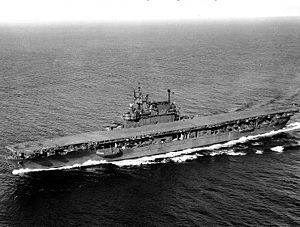
The USS Enterprise CV-6. Ordered in 1933 she was one of the most decorated and battle proven ships ever to fly the flag of the United States

“A good Navy is not a provocation to war. It is the surest guaranty of peace.” Theodore Roosevelt

“A powerful Navy we have always regarded as our proper and natural means of defense; and it has always been of defense that we have thought, never of aggression or of conquest. But who shall tell us now what sort of Navy to build? We shall take leave to be strong upon the seas, in the future as in the past; and there will be no thought of offense or provocation in that. Our ships are our natural bulwarks.” Woodrow Wilson

As the economic crisis continues to envelop the nation there is much talk about the certain reduction in the size and capabilities of the U.S. Military components.  At the present time it seems that politicians of both parties are more interested in the immediate savings that can be derived from cuts.  Regardless of how they are done each service will see force reductions but coming at a time when we are at war those responsible for the cuts must be conscious of the effects on the capabilities that the United States has to defend itself and its interests overseas and to influence world affairs.

The wars in Iraq and Afghanistanhave been ground intensive requiring the strengthening of the Army and Marine Corps to conduct counter insurgency operations. After 9-11 the Navy voluntarily reduced its fleet and personal strength in relatively dramatic fashion intending the savings be used to rebuilt the fleet.  Personnel strength was reduced by nearly 40,000 sailors and many ships were retired well before their anticipated retirement dates.  Unfortunately the Defense Department under then Secretary of Defense Donald Rumsfeld shifted the savings to fund the ground campaigns in Iraq and Afghanistan.  Navy shipbuilding was cut and the Navy failed to help itself by investing much of the service’s budget to the development of three classes of ships and that are over budget, under performing and full of controversy, the Zumwalt Class Destroyers, the Freedom and Independence Class Littoral Combat Ships and the San Antonio Class Landing Ships.

Further cuts are already occurring or envisioned based on the planned cuts in Federal Government programs.  These cuts would reduce the Navy which is now smaller than at any time since the early 1930s following the 1922 Washington Naval Conference which limited the size of the Navies of the signatory countries.  From 1922-1932 the Republican Harding, Coolidge and Hoover administrations not only reduced the force but failed to lay down a single new ship to replace outdated ships and reduced maintenance funds to keep up the ships in service.  Budget cutting gutted the Navy during those years and it was only theRooseveltadministration which realized that a strong Navy was essential to national security began to rebuild the fleet in the 1930s and funded the development of the ships that would win World War Two.  The shipbuilding program had economic benefits as shipyards which had been inactive were able to employ skilled American workers which helped military preparedness, American business and American workers.  The ships that came out of that building program sustained us at the beginning of the war and those designed in the years just before the war served us for decades to come.  Even so the build up byRoosevelt, constrained by the dire economic crisis of the Great Depression could not add ships fast enough to have us fully ready for the Second World War and left us dangerously stretched by the demands of the Japanese advance in the Pacific and the German U-Boat campaign in theAtlantic.  Many good Americans died and the war was decidedly more difficult because of what was done to the Navy in the 1920s by successive short sighted Republican administrations.

The current ship production is at a level not seen in decades and bad surface ship designs and poor workmanship have hurt the Navy.  If the Navy is cut back significantly without a change in mission or corresponding shift in National Security Policy it will degrade the Navy’s ability to respond to emerging threats. Likewise if a coherent shipbuilding program is not undertaken that meets the projected threats American interests can and will be harmed as other nations gain local superiority in critical areas and sea lanes.   While the U.S. Navy currently enjoys a vast superiority over any current or potential adversary there are places that a cunning adversary could hurt American and allied interests simply because we are already spread very thin in regard to the number of ships available and the increasing number of missions and threat areas.

The challenge now is not to give in to the temptation to make indiscriminant cuts until we actually decide on a National Maritime Strategy that is not simply about the Navy but also the Coast Guard and Merchant Marine.  The strategy must include the interrelationship that we have with our allies and other nations and their navies.

The necessity for this goes beyond military preparedness it goes to our economic security since the vast majority of our commerce exports and imports are by sea.  If we take the time to think through a comprehensive maritime strategy it can go a long way to strengthen American industry, labor, commerce as well as national and economic security for us and the world.  A strong Navy, Merchant Marine and Coast Guard are far more important to the United Statesthan large ground forces.

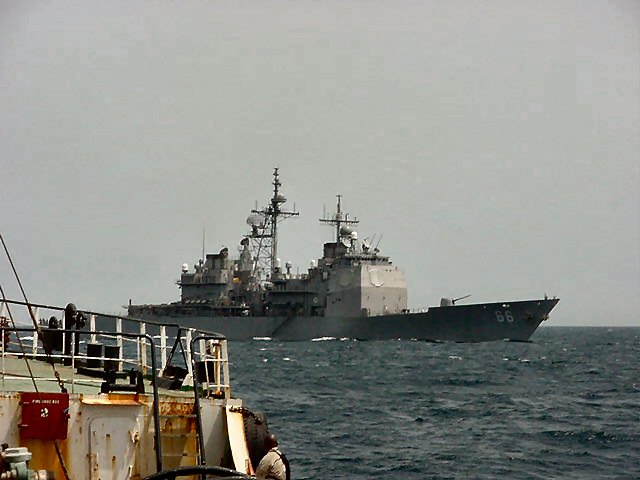
An effective and judicious use of national power: USS Hue City CG-66 passing an impounded Iraqi smuggler in 2002

This is demonstrated in our history as well as that of Great Britain.  When we are strong at sea we are strong, when we commit to long wars of attrition overseas we cause ourselves untold problems. As our first President George Washington said:

“It follows than as certain as that night succeeds the day, that without a decisive naval force we can do nothing definitive, and with it, everything honorable and glorious.”

This is something that our politicians inWashingtonand those that populate the think tanks need to learn.

Peace

Padre Steve+

1 Comment

Filed under national security, Navy Ships, US Navy

We won’t let this Happen again….Until the Next Time

“I am disgusted and worn out with the system that seems to prevail.” Brigadier General John Buford 

The news is abuzz tonight about the bi-partisan deal that has been agreed to by the President, the Speaker of the House and Majority Leader of the Senate.  The details will come out but certainly there will be those unhappy with the deal.  I don’t know what is in it and the devil is always in the details.

I am a realist and the details seldom bode well. Like John Buford a career Officer during the Civil War I have become disgusted and worn out watching the men and women that we have elected to public office work so hard to fracture this country that I hold so dear.

Tomorrow I expect that the deal will pass in the House and Senate unless the hard core right and left work together to embarrass their respective leaders. Since neither side had enough votes to do this on their own despite weeks of impassioned and often bitter argument with neither side listening to the other it has come down to this moment.  Personally in light of all that has transpired between the current Congress and the Obama administration even if this is passed Monday on Tuesday the death struggle will resume. Of course the deal may not pass and like Confederate General Robert E. Lee perhaps questioning his own rejection of  Union we might someday say  “the war… was an unnecessary condition of affairs, and might have been avoided if forebearance and wisdom had been practiced on both sides.”  

That struggle has already begun as some Tea Party leader declared Congressman Allen West and three other Tea Party Supported House Members as “Tea Party defectors” for supporting Speaker of the House John Boehner’s plan over the weekend.  On July 27th Tea Party Nation leader Judson Phillips urged Boehner “to go” and be replaced by a “Tea Party Speaker of the House” while The Party Patriot co-founder Jenny Beth Martin suggested a similar thing.  Many Liberals are equally critical of the President and Majority Leader Harry Reid with a growing number stating that they believe that President Obama has betrayed their ideals one Democrat Congressman calling the deal a “sugar coated Satan sandwich.”

The battle lines are still drawn and the language except for the utilitarian language that compromise was necessary to stave off a default has not changed an iota.  The language of compromise does not sit well with the most vocal members of the Tea Party faction nor those on the hard Left.  Many Tea Party leaders and members continue to argue that their leadership to push the government into default to achieve their goals.

The default may not happen now but the crisis is not past.  No it will be with us for a long time with more division, more bitterness and more fuel being poured onto the flames of hatred that have consumed us.  Much like the various crises and compromises on the road to the Civil War nothing substantial has changed.  In fact William Gross the head of PIMCO one of the major global investment groups said that a downgrade was “inevitable” and that “Congress has basically proven itself to be dysfunctional and this will carry on for months even if the crisis is basically resolved in the next few days.”

We have crossed the Rubicon and unless an external and existential threat to our nation forces our leaders to work together I seriously doubt that this will end well.  The President failed to lead when he had a super-majority and his allies in Congress squandered the chance that they were given in 2008.  The Republicans after taking the House in 2010 are doing the same.  Neither side will admit to their behavior. Both will with good reason to point the finger of blame at their opponents while ignoring their own contributions to this sordid state of affairs.

I can see it as if has already happened. The Unholy Trinity of politicians, pundits and preachers will step up their rhetoric inciting their followers to adopt even more uncompromising positions.  The already fearful enmity will deepen and the center will disappear. Emotion in the form of hatred will drive the arguments that neither side will listen to even as the United Statesand the world economy worsens and the wars continue.  Young Americans will give their lives in Iraq and Afghanistan even as their political leaders on both sides of the aisle seek ways to reduce the force and even the pay and benefits that they have earned after 10 years of unending war that the rest of the nation while seemingly grateful does not understand nor share. “We few, we happy few…” William Shakespeare quotes Henry V before the Battle of Agincourt.

Tonight I have been watching the movie Gettysburg which I think is a fitting reminder of what happens when the Unholy Trinity finally achieves their goal of destroying the very fabric of the nation and pits brother against brother.  Hopefully cooler heads will prevail and somehow, some way we will get through this before we long for the day that makes what we are experiencing now look good.

Like General James Longstreet I wonder “Why do men fight who were born to be brothers?”

Peace

Padre Steve+

2 Comments

Filed under History, Political Commentary

Till the Smoke Clears: A Reflection on PTSD and Faith

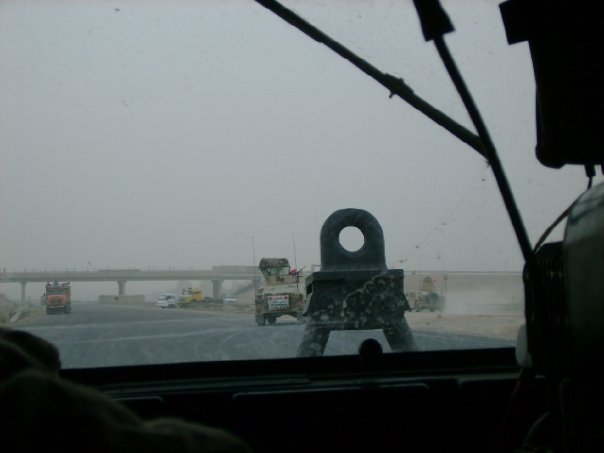
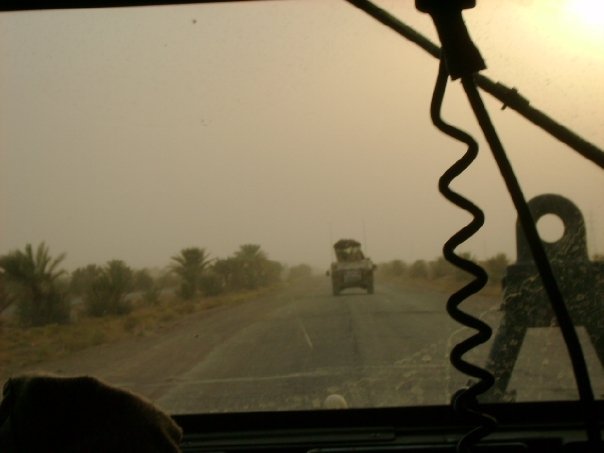
A morning drive in Iraq, looks like that here too

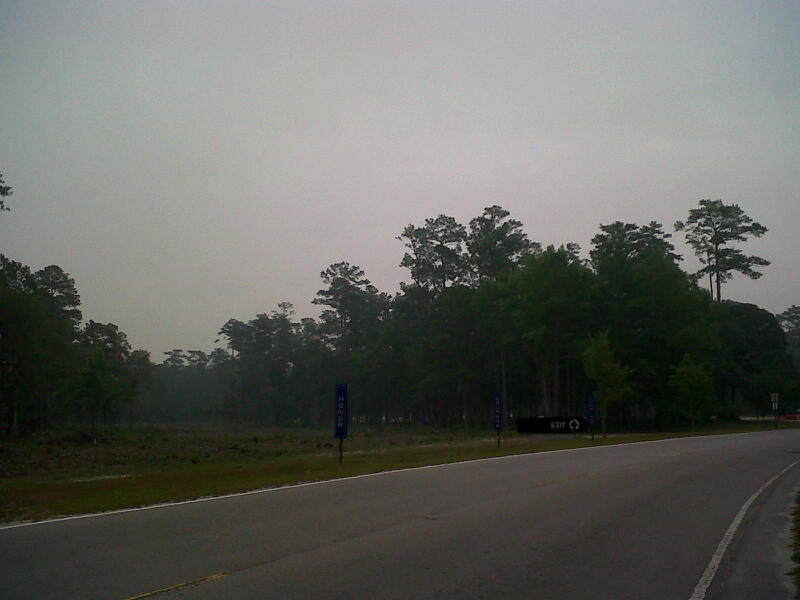
We are in a drought in Eastern North Carolina and with that drought have come forest and peat fires in the areas surrounding the Crystal Coast. The fires have now shrouded the summer sky with a layer of dense smoke and the National Weather Service is predicting poor air quality and visibilities of a mile or less.

I had been noticing it periodically over the past few weeks and occasionally the stench from the fires would catch me unsuspecting and send me back to Iraq. Anyone that has served in Iraq can testify of the pall of smoke from burn pits and in locations around the cities and countryside of Iraq. Those afflicted with PTSD often have a heightened sense of awareness to things that most people take for granted such as noise, light and smell.  Having experienced this myself and talked to many more men and women that served in Iraq, especially those with PTSD these normal parts of everyday life now seem to be hard wired into our brains along with a need for safety and a certain level of hyper-vigilance.

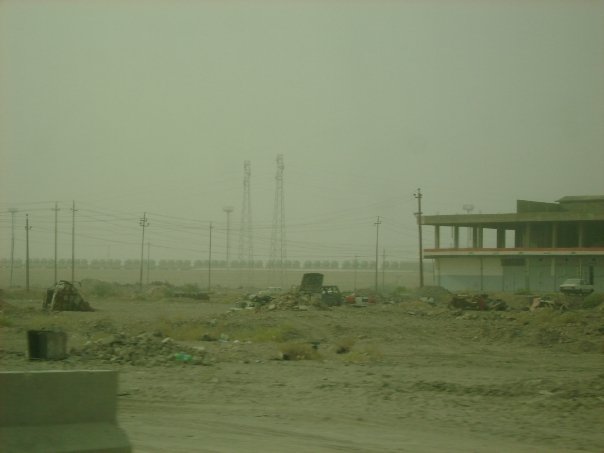
Sand smoke and clouds

I had to drive to the Marine Corps Air Station at Cherry Point for my BLS recertification at the Medical Clinic this morning and the sky was weird hue. It reminded me somewhat of Iraq and the smell of the smoke hit me as did the sound of helicopters and jets taking part in a large exercise.  For a fair amount of the trip I was back in Iraq.  When I returned to LeJeune I had to stop by the UPS Store for a simple transaction and as I was filling out the paperwork someone barged in and slammed the door to the store as the sound of bombs exploding on the bombing ranges of the coast of Camp LeJeune went off. About that time a police car roared by with its siren wailing, just like they did in Iraq. I had to about put myself back into my skin as I remembered a morning doing PT near the perimeter of Taqaddam air base when an explosion rocked the town of Habbinyah less than a mile away with gunfire and sirens following the explosion. That’s some good living.  Hurriedly paying I got out of the store got in my trusty 2001 Honda CR-V and got on the road. As I drove west toward the base the smoke was worse in places as was the stench.

Sunset in the smoke and sand and a smoky day in ENC

I got back to the Hospital and took care of what I needed to do and went home. On the way out the door I could not find my Blackberry. It was nowhere. Not in my uniform, my desk or anywhere. I wracked my brain wondering where it could be.  Then I thought that it had to be at the UPS store, the Cherry Point Clinic or the Cherry Point base gas station.  I was beginning to hit panic mode but was able to calm down and as I drove back home toward the UPS store I just prayed that I had left it there. Thankfully I had and the very kind lady that runs the store had safeguarded it.  Evidently when the other customer had slammed herself through the door I had dropped it out of my hand without even noticing.  That old startle response is still there and thank God for life in small towns.

I finally arrived at home relatively calm and turned on baseball. As I fixed dinner I could hear more bombs exploding on the ocean bombing range which is only about 6 or 7 miles away from my apartment.  Meanwhile the aircraft were much more active even deep into the night. I turned up the television and hunkered down on my big bean bag, finished an article that I began yesterday about the Battle of the Philippine Sea and tried to tune out the aircraft and the occasional explosion.

Hanging on at the end of the Iraq deployment with RP1 Nelson Lebron

A friend of mine recently wrote about the “tentacles of PTSD” which I think is an apt description of the neuro-sensory reactions that are part of life with PTSD.  While I have had a lot fewer reactions over the past few months I have noticed an increase of hyper-arousal and hyper vigilance as these stimuli trigger physical responses to perceived danger.

I remember when I was collapsing in the summer of 2008 there was a rather large and long burning fire in the Great Dismal Swamp. I walked out one morning and the smoke was so thick that the sky looked just like Iraq between the smoke and sandstorms.  That was the day that after a daylong seminar on combat and trauma that my medical officer looked at me and asked if I was okay and I said that I wasn’t. In fact that was around June 16th 2008.  It marked the beginning of me recognizing that I was different and damaged and that nothing was the same including my faith which was shattered to the point that for all practical purposes I was an agnostic. But that day was also my first step to healing.

Now I do not expect a major crash because I am a lot more aware of what is going on and what triggers me. At the same time I do feel less safe in large part due to the sights sounds and smells that are running rampant and reminding me of Iraq. They say that the smoke will be worse tomorrow and the temperatures will also rise into the mid-90s, low by Iraq standards but enough to increase sensitivity to the sights sounds and smells that I and thousands of other Iraq and Afghanistan veterans in the area will experience.

Eventually the smoke from the fires will clear away and with it the neuro-stimuli should decrease and life will return to my “post Iraq normal” where the hyper-vigilance will subside a bit. In the mean time I have the wonderful privilege of caring for and providing ministry to those who like me have returned from war changed.

My faith which was shattered when I returned from Iraq has returned and while I still have days where I have doubts I am no longer an agnostic.  I am able to be with those that doubt and even those that have “broken up with God” to use the term of Sarah Sentilles, especially those who had their faith damaged by war. I see a lot of that here as well as a lot of men and women that have doubts but try to hold onto faith while battling PTSD, TBI, depression, substance abuse and even suicidal thoughts.  Many like I did probably have to lie to their friends and families about their doubts, fears and struggles because most people don’t want to hear them.  When people do start talking they become “radioactive” to use the term of Dr. Robert Grant.  For me that openness cost me friends in my former denomination and led to me being asked to leave it in September of last year. I am better for the experience but it is still somewhat painful as I see more young men and women coming home from war not only injured or damaged in mind body and spirit but also wondering about the war itself and feeling cut off from their countrymen.  No one likes to talk about that but there are tens of thousands of veterans including many still on active duty that struggle with all of this.

Yes the smoke will clear someday, I am confident that somehow God’s grace mercy and love shown to us in Jesus will get us all through.  Until then we wait for that day when the smoke clears and we can see clearly.

Peace

Padre Steve+

4 Comments

Filed under Loose thoughts and musings

Why History Matters: The Disastrous Effects of Long Insurgency Campaigns on the Nations that Wage them and the Armies that Fight Them

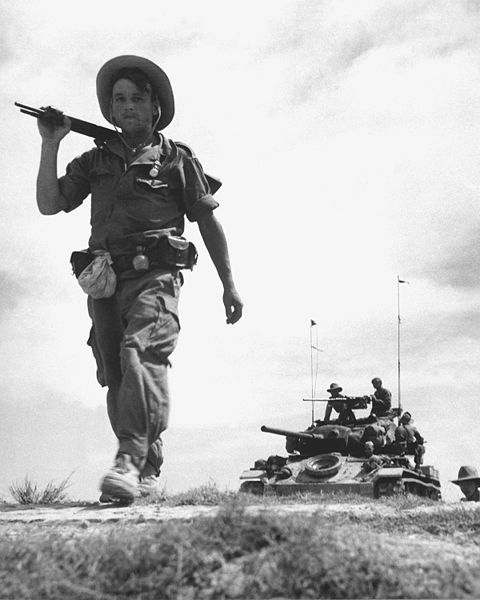
French Mobile Group in Indochina

“Any future defense secretary who advises the president to again send a big American land army into Asia or into the Middle East or Africa should ‘have his head examined,’ as General [Douglas] MacArthur so delicately put it.” Secretary of Defense Robert Gates

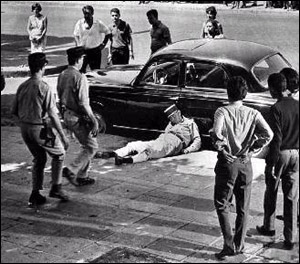
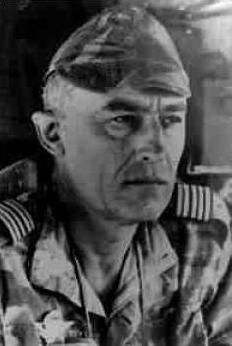
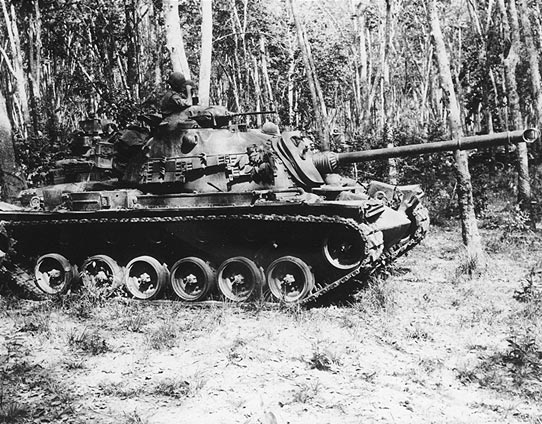
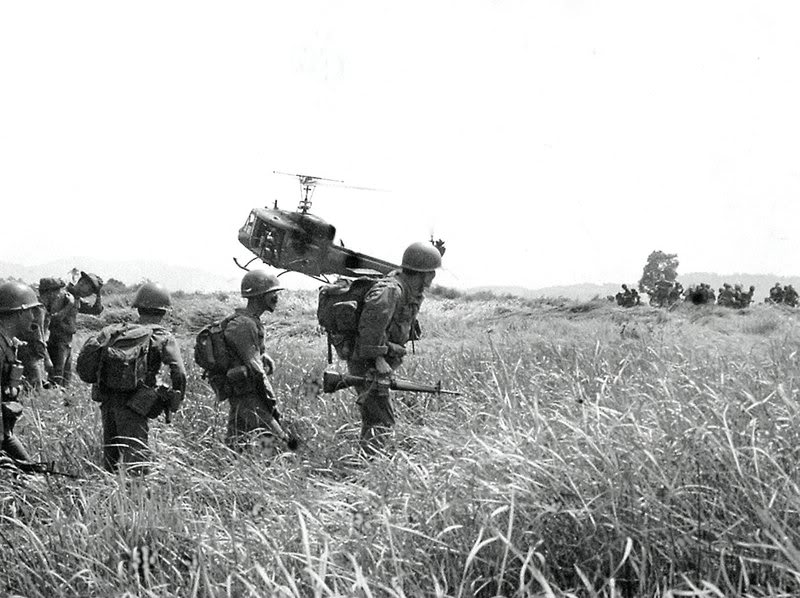
The effects of the wars Indo-China, Algeria and Vietnam on the French and American military organizations internally and in relationship to their nations piqued my interest in 2005. The wars in Iraq and Afghanistan forced me to start asking the question of what short and long term effect that these wars might have on the U.S. military. As such I wondered what historical precedent that there was for the question. My interest was furthered by my deployment with Marine and Army advisors to Iraqi Army and Security forces in 2007-2008. My search led to the French experiences in Indo-China and Algeria and the American experience in Vietnam. Recently with the Iraq war winding down and ongoing war in Afghanistan which has gone from apparent victory to mounting concern that we are losing the war in Afghanistan as Taliban and Al Qaida have regained momentum amid widespread corruption by the Afghan government and weakness of NATO forces.
The counterinsurgency campaigns conducted by the French and American militaries in Vietnam and Algeria had deep and long lasting effects on them as did the Soviet war in Afghanistan. The effects included developments in organization and tactics, relationship of the military to the government and people, and sociological changes. The effects were tumultuous and often corrosive. The French Army in Algeria revolted against the government. The US Army, scarred by Vietnam went through a crisis of leadership and confidence which eventually resulted in end of the draft and formation the all volunteer military. The Soviet not only lost their war but they saw their country collapse and the military with it. The effects of the Iraq and Afghanistan wars are yet unknown but could result in similar situations to the militaries and governments involved.
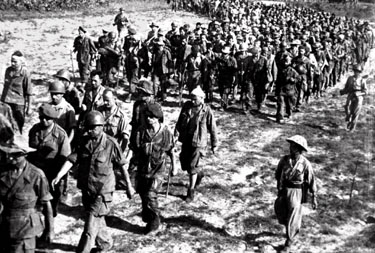
French Surrender at Dien Bien Phu

There is a wealth of data regarding these wars. There are several types of materials. The accounts of soldiers, diplomats and reporters who experienced these events contained in memoirs and diaries. The best include David Hackworth’s About Face and Steel My Soldiers Hearts; and General Harold Moore’s We Were Soldiers Once… and Young. French works include Jules Roy’s The Battle of Dien Bien Phu and General Paul Aussaresses’ The Battle of the Casbah. There are innumerable popular accounts written by NCOs and junior officers. These accounts may contain a wealth of information, but are limited by a number of factors. First, the authors, veterans of the wars, only saw part of the overall picture and first-hand experience in war can skew a writer’s objectivity. Those who have been through the trauma of war interpret war through their own experience. Physical and psychological wounds can have a major impact on the interpretation of these writers as can their experience and political ideology. Finally few of these writers are trained historians. Despite this they can be a valuable resource for the historian.

Viet Minh Main Force Soldiers

Another source is found in the official histories written by the military forces involved in the wars. Often these incorporate unit histories and individual narratives and analyze specific battles and the wider campaigns, but do little in regard to broader conditions that affected operations. While a good source, many are not as critical of their institutions as they should be.

Histories by trained historians and journalists provide another view. The most insightful of the journalist accounts include Bernard Fall’ Street Without Joy and The Siege of Dien Bien Phu: Hell in a Very Small Place. A limitation of all of these is that they are often heavily influenced by the political and societal events. This means that earlier accounts are more likely to be reactive and judgmental versus critical and balanced. Later accounts have the benefit of access to the opposing side and documents not available to earlier writers. Alistair Horn in A Savage War of Peace provides one of the most informative and balanced accounts of the war in Algeria. Martin Winslow does the same regarding Dien Bien Phu in The Last Valley.
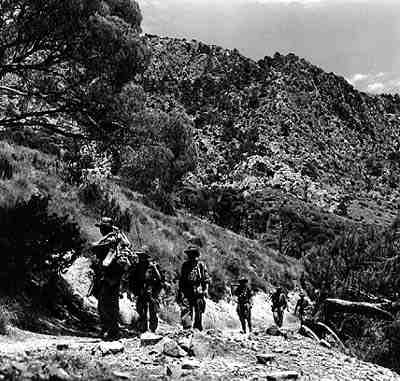
Foreign Legion in Algeria

Another source is the writings of participants who critically examine their participation in the wars. Many of these, French and American provide insights into the minds of leaders who are reflective and critically examine what happened to their military institutions in these wars. The best of these is French Colonel David Galula whose books Pacification in Algeria 1956-1958 and Counterinsurgency Warfare: Theory and Practice provide first-hand accounts of the subject combined with critical reflection. Galula’s works have been important to John Nagl, General David Petreus and others who helped write the U.S. Army and Marine Corps Counterinsurgency manual. Andrew Krepinevich in The Army and Vietnam provides a critical analysis of the U.S. Army in Vietnam. Other sources, both online and print, such as RAND, provide excellent analysis of selected topics within the scope of this essay, especially COIN.

Battles in the Streets of Algiers

The ability to dispassionately and critically examine and evaluate these sources over a period of several years was and integrate them with my own experience has been a critical to me. It has changed the way that I look at sources, and caused me to be much more aware of bias, the limitations of sources and the need to have a multiplicity of sources and points of view and to be suspicious of contemporary reports and accounts of the war in Afghanistan regardless of the source.

The conflicts in French Indo-China, Algeria and Vietnam had major effects on the French and American military institutions. These effects can be classified in a number of ways. First, the manner in which each military waged war, including tactics employed and use and development of weapons systems was changed. The use of airpower, especially helicopters and use of riverine forces provided an added dimension of battlefield mobility but did not bring victory. As John Shy and Thomas Collier noted regarding the French in Indo-China: “French mobility and firepower could take them almost anywhere in Vietnam, but they could not stay, and could show only wasted resources and time for their efforts.”[1]

Assassination and Terrorism in Algiers

The use of intelligence and psychological warfare, including the use of torture became common practice in both the French and American armies. The wars had an effect on the institutional culture of these armed services; neither completely embraced the idea of counterinsurgency and for the most part fought conventionally. Galula notes how the “legacy of conventional thinking” slowed the implementation of proper counterinsurgency tactics even after most commanders learned that “the population was the objective.”[2] Krepinevich notes that “any changes that might have come about through the service’s experience in Vietnam were effectively short-circuited by Army goals and policies.”[3] Finally the wars had a chilling effect on the relationship between the both militaries and the state, veterans from each nation often felt betrayed or disconnected from their country and people. Unfortunately instances of all of these have occurred or can be seen in the current wars in Iraq and Afghanistan.

US Army in Vietnam

The French Army had the misfortune of fighting two major insurgencies back to back. The French military was handicapped even before it went into these wars. The Army came out of World War II defeated by the Germans, divided by loyalties to Vichy or one of the Free French factions. They were humiliated by the Japanese in Indo-China, while in Algeria France’s crushing defeat was devastating. “Muslim minds, particularly sensitive to prestige and baraka, the humiliation made a deep impression.”[4] French society was as divided as the Army; the economy in shambles, the government weak and divided. The Viet-Minh had prepared well making use of time and training to get ready for war. “Once full-scale hostilities broke out, the French, for budgetary and political reasons could not immediately make the large scale effort to contain the rebellion in the confines of small-scale warfare.”[5]

Paras of the 1st Colonial Parachute Regiment jump in Algeria

In both Indo-China and Algeria the French attempted to fight the budding insurgencies in a conventional manner. This was particularly disastrous in Indo-China when on a number of occasions battalion and regimental combat team sized elements were annihilated by Viet-Minh regulars. Between October 1st and 17th 1950 every French garrison along the Chinese border was over-run. The French lost over 6000 troops and enough equipment to outfit “a whole additional Viet-Minh division.” It was their worst colonial defeat since Montcalm at Quebec.[6] In Algeria when the fight began in earnest France’s “ponderous ponderous N.A.T.O forces found themselves at an impossible disadvantage,”[7] unable to have any influence off the main roads.

Marcel Bigard: One of the most effective French commanders in Indochina and Algeria

In Vietnam the French did not absorb the lessons of fighting a well established insurgent force. French forces hoped to draw the Viet-Minh main forces into battles of attrition where their superior firepower could be brought to bear. Such was the case at Na San in December 1952 where the French established an “Air ground base” deep in Viet-Minh territory to draw Giap’s forces into open battle. This worked, but just barely. General Giap, short of artillery and not planning on a long battle frittered away his troops in mass charges. However, the French, because of Na Son assumed they had found the key to victory. In their embrace of the “air ground base concept, French staff officers were following an intellectual tradition that had long been prone to seduction by elegant theories.”[8] The result was the disaster at Dien Bien Phu the following year. The destruction of the elite Group-mobile 100 near Pleiku in 1954 was the coup de grace. In Indo-China the French made limited use of helicopters, used paratroops widely, and developed riverine forces. One thing they were critically short of was significant tactical air support.[9]

Roger Trinquier helped develop tactics in Indochina which helped turn the tide in Algeria, until the French Government ended the war leaving their soldiers to feel betrayed

The most inventive French creation in Indochina was the GCMA/GMI forces composed of mountain tribesmen led by French NCOs and Junior Officers. They were designed to provide “permanent guerilla groups rooted in remote areas” to harass and interdict Viet-Minh forces.[10] Trinquier noted that at the time of the Dien Bien Phu defeat that these forces had reached over 20,000 trained and equipped maquis in the Upper Region of Tonkin and Laos. These forces achieved their greatest success retaking Lao Cai and Lai Chau May 1954 as Dien Bien Phu fell.[11] Trinquier stated that “the sudden cessation of hostilities prevented us from exploiting our opportunities in depth.”[12] The GMI units and their French leaders were abandoned fighting on for years after the defeat. One account noted a French NCO two years after the defeat cursing an aircraft patrolling the border “for not dropping them ammunition so they could die like men.”[13] In the end the French left Indo-China and Giap remarked to Jules Roy in 1963 “If you were defeated, you were defeated by yourselves.”[14]
Algeria was different being part of Metropolitan France; there the French had support of European settlers, the pieds-noir. Many French soldiers had come directly from Indo-China. There French made better adaptations to local conditions, and realized that they had to win the population and isolate the insurgents from it and outside support. As Galula said, victory is the destruction of the insurgent’s political and military structures, plus “the permanent isolation from the population, not forced upon the population, but by and with the population.”[15] The lessons learned by the French in both Algerian and Indo-China were lost upon the Americans.

US Armored Cavalry in Vietnam

The United States military, especially the Army approached the Vietnam War with a conventional mindset, referred to as the “Army concept.” [16] It not only approached the war in this manner, but it trained and organized the South Vietnamese forces, ARVN into the American model. Americans re-organized ARVN into divisions “based upon the U.S. divisional force structure.”[17] Due to the imposition of an American template and organizational structure upon it, ARVN was not structured appropriately for the threat that it faced.”[18] The results were as to be expected. Large numbers of American troops poured in taking the lead against the North Vietnamese and Viet Cong . The American method of counterinsurgency was costly. It was “almost a purely military approach”[19] which ignored political and social realities on the ground. Instead of focusing on protecting the Vietnamese people and denying the Communists a safe haven the Army in particular believed that massive firepower was the best means to be “utilized by the Army to achieve the desired end of the attrition strategy-the body count.”[20] In the end the American defeat was a “failure of understanding and imagination.”[21] The one shining success was the Marine Corps experimentation with “Combined Action Program” platoons which lived in the villages with militia for long periods of time. This program produced great results “in eliminating local guerillas”[22] but was killed by the Army.
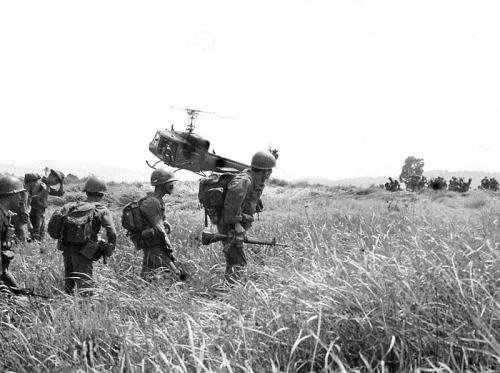
US and ARVN Soldiers in Joint Operation

These wars tore the heart out French and American armies. For the French the defeats inflicted a terrible toll. In Indo-China many French career soldiers felt that the government’s “lack of interest in the fate of both thousands of missing French prisoners and loyal North Vietnamese…as dishonorable.”[23] Divisions arose between those who served and those who remained in France or Germany and created bitter enmity between soldiers. France would endure a military coup which involved many who had fought in Vietnam and Algeria. Having militarily won that war, were turned into what Jean Lartenguy called The Centurions had been turned into liars.”[24] They were forced to abandon those who they had fought for and following the mutiny, tried, imprisoned, exiled or disgraced. Colonial troops who remained loyal to France were left without homes in their “independent” nations. They saw Dien Bien Phu as the defining moment. “They responded with that terrible cry of pain which pretends to free a man from his sworn duty, and promises such chaos to come: ‘Nous sommes trahis!’-‘We are betrayed.’”[25]
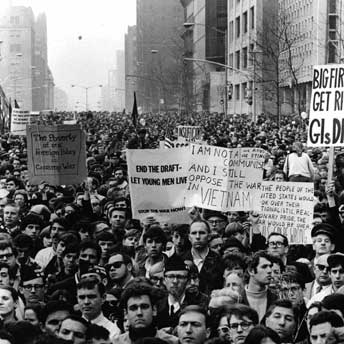
War Protests in the United States 

The U.S. Army left Vietnam and returned to a country deeply divided by the war. Vietnam veterans remained ostracized by the society until the 1980s. As Harold Moore recounts “in our time battles were forgotten, our sacrifices were discounted, and both our sanity and suitability for life in polite American society were publically questioned.” [26] The Army endured a massive reorganization that resulted in the formation of the All-Volunteer force, which would redeem itself and emerge from the ashes in the Gulf War.
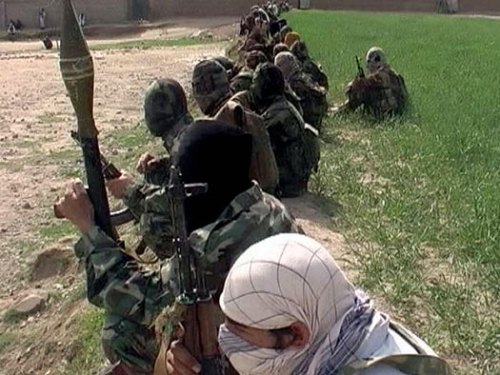
Taliban in Afghanistan

The Americans would not learn the lessons of revolutionary warfare and counterinsurgency until forced to do so in Iraq in 2004-2007. These lessons however were not applied to Afghanistan and the Taliban which seemed to have been defeated have regained the initiative, policy is being debated amid discord in the west and there are reports of American and NATO forces becoming discouraged by the course of the war and concern that their efforts will be in vain. This is a dangerous situation to be in and if we learn from anything from our own history as well as that of foreign military forces in Afghanistan we need to be very careful in implementing strategy to get whatever we do right.

US Advisers with Afghanistan National Army Troops

The greatest success of the war was finally killing the leader of Al Qaeda, Osama Bin Laden at his Pakistani hide-out. That did not occur in Afghanistan and was the result of smart work by the CIA and other American intelligence services and the superb conduct of the mission by Navy SEAL Team Six. It was not the product of our costly counter-insurgency and nation building campaign in Afghanistan. There are many professional think tank “experts” that now urge continuing the Afghan mission indefinitely despite its massive cost and questionable strategic value. The costs of the war which are over 2 billion dollars a week are staggering with little to be shown from the hundreds of billions already spent in Afghanistan, much of which is spent on projects where corrupt Afghan government officials and tribal leaders are the only ones to benefit. Likewise the long term health of the military is imperiled. The money that should go to modernizing the force and replacing equipment worn out by war as well as the enormous costs in lives and the continuing care needed by military personnel wounding in body, mind and spirit remaining on active duty and those in the Veteran’s Administration system are imperiled.

Remote Training Team Base in Afghanistan

The effects of the wars in French Indochina, Algeria and Vietnam on the French and American military establishments were long lasting and often tragic. The acceptance of torture as a means to an end sullied even the hardest French officers. Men like Galula and Marcel Bigeard refused to countenance it, while others like Paul Aussaresses never recanted. Americans would repeat the tactic at Abu Ghraib rallying the Iraqis against them and nearly losing the war because of it.
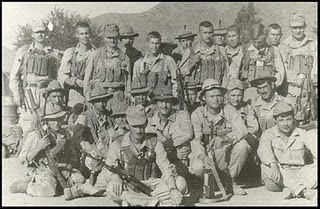
Soviet Paratroops in Afghanistan

For the Americans, the effects of Vietnam continued at home. Race riots tore at the force while drug addictions and criminal activities were rampant. Many incompetent leaders who had “ticket punched” their careers kept their jobs and highly successful leaders who became whistle blowers like Hackworth were scorned by the Army institution. The years following Vietnam were a severe test of the US Military and took years for the military to recover. Likewise it took years before either the French or American veterans again felt a part of their countries. They ended up going to war, and when it was over; feeling abandoned, their deepest bonds were to their comrades who had fought by their side.
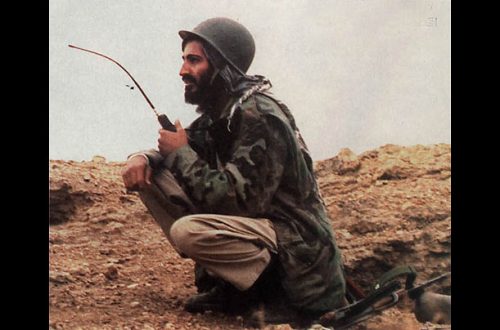
Osama Bin Laden leading Mujaheddin in 1984 

If this is not enough we have the experiences of the Soviet Union, the British Empire and others that have attempted to rule Afghanistan as plumb lines to gauge our effectiveness. Others have tried and failed miserably at this. The Soviets learned the hard way and found that Afghanistan was one of the major reasons for the collapse of the Soviet Union. Reading the history of Soviet operations in Afghanistan is frighteningly like reading the history of our campaign.
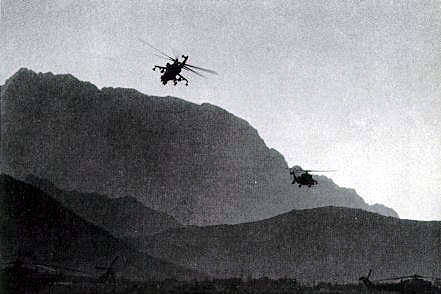
Two Soviet Mi-24 “Hind” attack helicopters flying in an Afghan Valley

The Soviets invaded Afghanistan in 1979 they used their 40th Army which initially was composed of “two motorized rifle divisions, an airborne division, an air assault brigade and separate motorized rifle regiments.”[27] These forces totaled about 52,000 troops and were “considered sufficient to guarantee the viability of Afghanistan.”[28] The 40th Army was a standard Cold War Soviet Combined Arms Army designed for high tempo conventional operations. It was not designed for nor trained in counterinsurgency operations or what the Soviets and Russians class as “anti-guerilla operations.” It was poorly suited to mountain and dessert combat and at the beginning “not only had no practical skills in the conduct of counter-guerilla warfare, they also did not have a single well-developed theoretical manual, regulation or tactical guideline for fighting such a war.”[29]

Downed Soviet Mi-4 “Hound” with Mujaheddin 

The Soviets did not expect to be involved in combat operations and the Afghan population reacted to their presence with resistance which spread across the country both against their own government which they viewed as a puppet of the Soviets but also against the Soviet Forces. As time went on the Soviets attempted to use raids and large scale operations to attempt to bring Mujahidin forces to battle, however the insurgents were very skillful and the Soviets attempted to increase the training of their forces as well as their numbers. By 1986 the numbers on the ground had increased to 108,000 personnel in four divisions, five separate brigades, four separate regiments and six separate battalions.[30] In the nearly 10 years of operations over a half million Soviet soldiers and support personnel served in Afghanistan. Tours for enlisted personnel who were primarily conscripts served 12-18 months in country and officers 2 years. Few returned for subsequent tours meaning that the 40th Army had few personnel very familiar with the country, its people and the challenges faced by Soviet forces. According to official sources the 40th Army suffered 13,833 killed in action or died of wounds, 49,985 wounded and 311 missing in action a figured of 1 in 8 Soviet Soldiers being casualties. 14.3 percent of the casualties were officers.[31] Of course the official figure is doubted many believing the number killed in action or died of wounds to be closer to 26,000.[32]
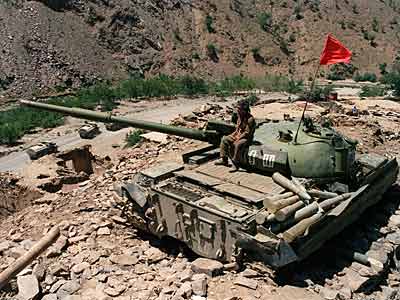
Soviet T-62 Tank guarding a convoy in a mountain pass

Like their American and French counterparts the Soviet veterans have experienced the unhealed wounds of war and a country that does not understand their experiences. The stigma of war wounds and PTSD haunt many Soviet veterans and were compounded by the collapse of the Soviet Union and Warsaw Pact in 1989. They returned home, lost their country and were by and large abandoned by their countrymen. A good number of these men and women travel to one of 5 centers across the country where according to one of the veterans come to for “social and psychological help.” He said that “The best thing about this place is that it provides us with a chance to share our Afghan memories with comrades who understand what we are talking about.” That camaraderie of being able to share their experiences with others that understand is helping some to return to something akin to “normal” life. They are joined by the soldiers that have experienced similar things in Chechnya. Russian veterans of the Afghan War are still so closely linked to it that they refer to themselves as “Afghans.”

Soviet Mi-8 “Hip” Helicopters in Afghanistan preparing for a mission

The Soviet Forces supported the Army of the Democratic Republic of Afghanistan which numbered at their peak on average between 120,000-150,000 soldiers.[33] The Afghan forces, then as now were at the mercy of tribal, familial and communist party affiliations. Over 70 percent of the DRA was conscripted, desertions averaged 1,500 to 2,000 soldiers a month and units were usually optimistically 25-40 percent under their TO&E strength.[34]Limitations on training and leadership meant that typically DRA units could not conduct large scale missions without Soviet help. As such most of the fighting was done by Soviet formations.
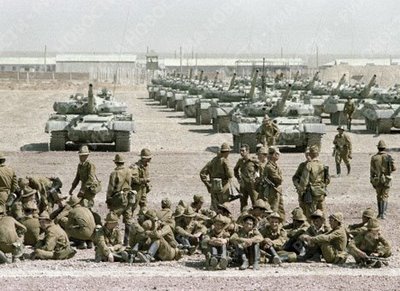
Soviet Troops preparing to leave Afghanistan

Many of these problems have plagued the United States and ISAF throughout the first 9 years of the current Afghan War. As former Afghanistan Commander General Stanley McChrystal noted in his assessment “ISAF is a conventional force that is poorly configured for COIN, inexperienced in local languages and culture, and struggling with the challenges inherent to coalition warfare. These intrinsic disadvantages are exacerbated by our current culture and how we operate.”[35]

We should have learned. A retired Red Army Colonel who served in Afghanistan from 1986-1988 who learned the Dari language in order to negotiate with the Afghan Mujahedeen warned what will happen when the Americans and NATO leave the country and the mistake that we made in entering Afghanistan. Frants Klinsevich now a member of the Russian Parliament comment to reporters at a wreath laying ceremony at a veteran’s convention that “they (NATO and the United States) are 100 percent repeating the same mistake we made by entering into a war in that country” and that “As soon as the Americans and Europeans leave, the Taliban will crack down on everything.” Klinsevich noted that he understood the American desire to tame Afghanistan but that “the problem of radical Islam will not be solved there, its violence cannot be solved. It is simply unsolvable.” He said that he wished that the United States had consulted the Russians about Afghanistan saying “they should have invited Russian specialists, involved Russia, really studied how they could use Russia. But unfortunately Americans think they know everything.” The former Russian commander understands far more that the majority of American policy makers on this subject. [36]

The fact is that we are hamstrung by the ongoing wars which limit our ability to respond to rapidly changing situations. We are in a similar situation to the Germans in 1942 and 1943 overcommitted, overstretched and lacking true strategic depth to respond to unanticipated situations as are now occurring across the Middle East. In 1942 and 1943 the Germans were always just short of the forces that would have turned the tide. Like the Germans our economy is laboring on the verge of collapse and we have to honestly answer the question “What is the strategic value in continuing to wage war in Afghanistan in the way that we are doing?”

What are the lessons to be learned from these campaigns as well as from the various accounts? Andrew Krepinevich prophetically noted that the failure to learn the lessons of Vietnam “represents a very dangerous mixture that in the end may see the Army again attempting to fight a conventional war against a very unconventional opponent.”[37] Obviously, there are lessons to be learned, especially in understanding the nature of revolutionary war as well as the culture and history of our opponents. The U.S. has made some improvement in this regard but there is still much to be learned, especially since after the war the Army was “erecting barriers to avoid fighting another Vietnam War.”[38] From these wars we learn that nations and incompetent governments who mismanage wars can alienate themselves from the soldiers that they send to fight, with serious consequences. As far as historiography we learn that certain historical fallacies are evident when one reads the accounts critically and recognize the bias and limitations of the various sources.

The fact is that we have learned little about such wars and are paying a terrible price for it. The debate now is should we continue the war as it is with minor withdraws of troops or begin a rapid exit in order to preserve and rebuild our force and to reduce the cost of these operations. But that debate and decision are well above my pay grade. But then maybe we need to remember what Field Marshall Gerd Von Rundstedt told his staff in September of 1944 when asked how to recover from the disastrous collapse of the German front following the Allied breakout from Normandy and dash across France. “Make peace you fools.” http://www.youtube.com/watch?v=ch56NAL1C-I

Peace
Padre Steve+
________________________________________
[1] Shy, John and Collier, Thomas W. “Revolutionary War” in Makers of Modern Strategy from Machiavelli to the Nuclear Age,” Peter Paret editor. Princeton University Press, Princeton N.J. 1986 p.849
[2] Galula, David. Counterinsurgency in Algeria: 1956-1958. RAND Corporation, Santa Monica, CA. 2006. First published by RAND in 1963. p.244
[3] Krepinevich, Andrew F. “The Army and Vietnam,” The Johns Hopkins University Press, Baltimore and London, 1986 p.213
[4] Horn, Alistair. “A Savage War of Peace: Algeria 1954-1962,” a New York Review Book published by the New York Review of Books, New York, 1977, 1987, 1996, and 2006 p 41
[5] Fall, Bernard B. “Street Without Joy: The French Debacle in Indochina.”Stackpole Books, Mechanicsburg PA, 2005, originally published by Stackpole Publications 1961 p.27
[6] Ibid. p.33
[7] Horn. p.100.
[8] Windrow, Martin. “The Last Valley: Dien Bien Phu and the French Defeat in Vietnam,” Da Capo Press, Novato, CA 2006, originally published by Weidenfeld and Nicholson, London 2004 p.63
[9] Fall, Bernard B. “The Siege of Dien Bien Phu: Hell in a Very Small Place.” Da Capo Press, New York an unabridged reprint of the 1st Edition reprinted in arrangement with Harper and Row Publishers, New York. 1967 pp. 456-457 Fall discusses in depth the lack of French Air support and the antecedents that led to the shortage following World War II.
[10] Pottier, Philippe(2005)’Articles: GCMA/GMI: A French Experience in Counterinsurgency during the French Indochina War’, Small Wars & Insurgencies,16:2,125 — 146http://dx.doi.org/10.1080/09592310500079874
[11] Simpson, Howard K. “Dien Bien Phu: The Epic Battle America Forgot,”Potomac Books Inc. Washington DC 2005, originally published by Brassey’s Inc. 1994 pp. 170-171
[12] Trinquier, Roger. “Modern Warfare: A French View of Counterinsurgency,” translated from the French by Daniel Lee with an Introduction by Bernard B. Fall. Praeger Security International, Westport CT and London. 1964 and 2006. Originally published under the title “La Guerre Moderne” by Editions Table Ronde. p.87
[13] Windrow. p.652.
[14] Roy, Jules. “The Battle of Dien Bien Phu” Carrol and Graf Publishers, New York 1984. Translated from the French by Robert Baldrick. English translation copyright 1965 by Harper and Row Publishers, New York. p.xxx
[15] Galula, David. “Counterinsurgency Warfare: Theory and Practice.”Praeger Security International, Westport CT 1964 and 2006 p. 54
[16] Krepinevich. p.213
[17] Ibid. p.24
[18] Nagl, John A. “Learning to East Soup with a Knife: Counterinsurgency Lessons from Malaya and Vietnam,” University of Chicago Press, Chicago and London, 2005 p.138
[19] Shy. p.856
[20] Krepinevich. p.202
[21] Spector, Ronald H. “After Tet: The Bloodiest Year in Vietnam,” Vintage Press, a division of Random House, New York, 1993 p.314
[22] Millett, Allan R. and Maslowski, Peter. “For the Common Defense: A Military History of the United States of America.” The Free Press, a division of Macmillian, Inc. New York, 1984 p.555
[23] Windrow. p.655
[24] Ibid. p.657
[25] Ibid.
[26] Moore, Harold G and Galloway, Joseph L. “We were Soldiers Once…and Young: Ia Drang: The Battle that Changed Vietnam,” Harper Collins Publishers, New York NY 1992 p. xx
[27] The Russian General Staff. The Soviet Afghan War: How a Superpower Fought and Lost” translated and edited by Lester A. Grau and Michael A. Gress, University Press of Kansas, Lawrence KS 2002 p.17.
[28] Ibid. p.18
[29] Ibid. p.43
[30] Ibid. p.28
[31] Ibid. p.309
[32] Ibid. p.xix
[33] Ibid. p.48
[34] Ibid. pp.48-51
[35] McChrystal, Stanley. “Commander’s Initial Assessment Commander International Security Assistance Force Afghanistan” dated 30 August 2009 pp. 1-2
[36] “Russian veteran warns of Afghan violence.” Reuters 16 May 2011. Edited by Paul Tait and Daniel Magnowski obtained 11 June 2011 at http://www.trust.org/alertnet/news/interview-russian-veteran-warns-of-unsolvable-afghan-violence/
[37] Krepinevich. p.275
[38] Ibid. p.274

3 Comments

Filed under Foreign Policy, History, iraq,afghanistan, middle east, Military, Political Commentary, vietnam, world war two in europe