Tag Archives: jefferson davis

“With Silent Tongue, the Clenched Teeth, the Steady Eye, the Well Poised Bayonet, They Have Helped Mankind on to this Great Consummation” Black Soldiers in the Civil War

Friends of Padre Steve’s World,

This article is a section of one of my yet unpublished Civil War books in which I spend much time dealing with the importance of emancipation and the role of Black soldiers during the American Civil War. I think it is important to remember as we get ready to close out Black History Month just how important these men are to American history and for the civil rights of all Americans.

Emancipation and the U.S. Military

HD_4USCinfantryDetail.preview

Men of the 4th Regiment of U.S. Colored Troops

The war brought about another change to warfare in America. This was a societal and political change that has shaped American military history, culture and life ever since. The Emancipation Proclamation gave African Americans, both Freedmen and recently freed slaves the opportunity to serve in the Union Army. The change of policy instituted by Lincoln was revolutionary as well as controversial and it had strategic implications for the war effort. There were many doubters in the north whose attitudes towards African Americans were not much different than Southerners, especially among the Copperheads.

Prior to the Emancipation some Union commanders in occupied Confederate territory “had unofficially recruited black soldiers in Kansas and in occupied portions of South Carolina and Louisiana in 1862. But the administration had not sanctioned these activities.” [1] The issue for Lincoln in 1861 and 1862 was the necessity of keeping the Border-Slave Sates of Kentucky, Missouri and Maryland, which had not seceded from the Union. Lincoln repudiated the orders of General John Fremont, in Missouri, and his friend General David Hunter, who commanded the Department of the South regarding emancipation, not because he was in complete disagreement, but because he felt that the officers had overstepped their authority.

Lincoln understood that this might hurt him with the abolitionist wing of the Republican Party. While Lincoln was certainly sympathetic to their cause, he insisted that such decisions were not within the prevue of local commanders, but that any such proclamations had to come from him, as Commander-in-Chief. He told Treasure Secretary Salmon Chase, who supported the measures of Hunter and Fremont, “No commanding general shall do such a thing, upon my responsibility, without consulting me.” [2] Lincoln’s decision to reverse and repudiate the decisions of local commanders infuriated some in his cabinet and in the Congress. But Lincoln remained firm in that conviction due to the need to ensure the cooperation of the Border States the continued loyalty of which were absolutely vital to winning the war, without which no meaningful emancipation would be possible.

However, Lincoln did support the efforts of General Benjamin Butler. Butler commanded the Federal forces at Fort Monroe in Hampton Roads. Butler had been a former pro-slavery Democrat who learned that the Confederates were using slaves to construct fortifications and to support their army on the Peninsula. In May 1862 twenty-three slaves escaped to his lines and their owner, a Confederate Colonel, “demanded the return of his property under the Fugitive Slave Law! With as deadpan expression as possible (given his cocked eye), Butler informed him that since Virginia claimed to have left the Union, the Fugitive Slave Law no longer applied.” [3]Butler then declared that since the escaped slaves had worked for the Confederate Army that they were “contraband of war – enemy property subject to seizure.” [4] It was a solid argument, since Southerners themselves referred to African American slaves as property was subject to seizure. Lincoln and Secretary of War Cameron approved of Butler’s action and “eventually, the Congress passed a confiscation law ending the rights of masters over fugitive slaves used to support Confederate troops.” [5]

Salmon Chase and other strong abolitionists opposed Lincoln vehemently for this, but it would not be long until Lincoln made the decision for full emancipation. This was first accomplished by the Emancipation Proclamation, a military order that only applied to the states that had seceded. However, Lincoln would follow this by pushing for a constitutional amendment to end slavery.   The latter occurred when Congress passed the Thirteenth Amendment was passed in January 1865. This amendment abolished slavery in the United States.

Lincoln had already decided upon emancipation in the spring of 1862, however, following the defeat of McClellan on the Peninsula he decided to postpone announcing it, Secretary of State Seward recommended against it until “until you can give it to the country supported by military success.” Otherwise the world might view it as an incitement for slave insurrections, “as the last measure of an exhausted government, a cry for help…our last shriek, on the retreat.” [6] The wisdom of Seward’s advice was profound, and Lincoln put off the announcement until after the Battle of Antietam.

McClellan, true to form opposed any such policy. When Lincoln visited him after his withdraw from the Peninsula, the defeated but still arrogant General handed Lincoln a memorandum on what McClellan viewed as the “proper conduct of the war.” McClellan advised Lincoln that the war “should not be a war looking to the subjugation of any State in any event…but against armed forces and political organizations. Neither confiscation of property, political executions of persons, the territorial organization of States, or the forcible abolition of slavery should be contemplated for a moment.” [7]

Lincoln was not seeking advice from his recalcitrant commander and put the letter in his pocket and simply told McClellan, “All right.” Interestingly enough just a few months earlier Lincoln would have agreed with McClellan’s views on the conduct of the war. However, with the passage of time and the realization that the Confederacy was fully committed to its independence as well as the continuance and even the expansion of slavery had come to the view that fighting a limited war with limited aims was foolish. He told another Unionist Democrat a few days after McClellan offered his advice that the war could not be fought:

“with elder-stalk squirts, charged with rose water….This government cannot much longer play a game in which it stakes all, and its enemies stake nothing. Those enemies must understand that they cannot experiment for ten years trying to destroy this government, and if they fail still come back into the Union unhurt.”[8]

From Slavery to Soldiering

2nd-colored-light-artillery

Gun Crew of 2nd Colored Light Artillery 

But as the war continued on, consuming vast numbers of lives the attitude of Lincoln and his administration began to change. After a year and a half of war, Lincoln and the closest members of his cabinet were beginning to understand that the “North could not win the war without mobilizing all of its resources and striking against Southern resources used to sustain the Confederate war effort.” [9] Slave labor was essential to the Confederate war effort, not only did slaves still work the plantations, they were impressed into service in war industries as well as in the Confederate Army.

Lieutenant Colonel Arthur Freemantle, a British observer who was with Lee’s army at Gettysburg noted, “in the rear of each regiment were from twenty to thirty negro slaves.” [10] The fact is that the slaves who accompanied the army remained slaves, they were not the mythical thousands of black soldiers who rallied to the Confederate cause, nor were they employees. “Tens of thousands of slaves accompanied their owners to army camps as servants or were impressed into service to construct fortifications and do other work for the Confederate army.” [11] This fact attested to by Colonel William Allan, one of Stonewall Jackson’s staff members who wrote “there were no employees in the Confederate army.” [12] slaves served in a number of capacities to free up white soldiers for combat duties, “from driving wagons to unloading trains and other conveyances. In hospitals they could perform work as nurses and laborers to ease the burdens of patients.” [13] An English-born artilleryman in Lee’s army wrote in 1863 that “in our whole army there must be at least thirty thousand colored servants….” [14] When Lee marched to Gettysburg he did so with somewhere between ten and thirty-thousand slaves in support roles and during the advance into Virginia Confederate troops rounded up and re-enslaved as many blacks as they could, including Freedmen.

istanto001p1

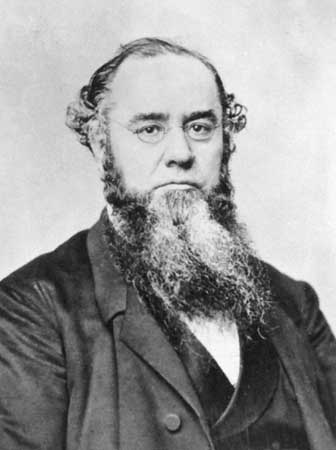
Secretary of War Edwin Stanton

Lincoln’s Secretary of War, Edwin Stanton; who was a passionate believer in the justice of emancipation, was one of the first to grasp the importance of slave labor to the Confederate armies and how emancipation was of decided military necessity. Stanton, “Instantly grasped the military value of the proclamation. Having spent more time than any of his colleagues contemplating the logistical problems facing the army, he understood the tremendous advantage to be gained if the massive workforce of slaves could be transferred from the Confederacy to the Union.” [15]

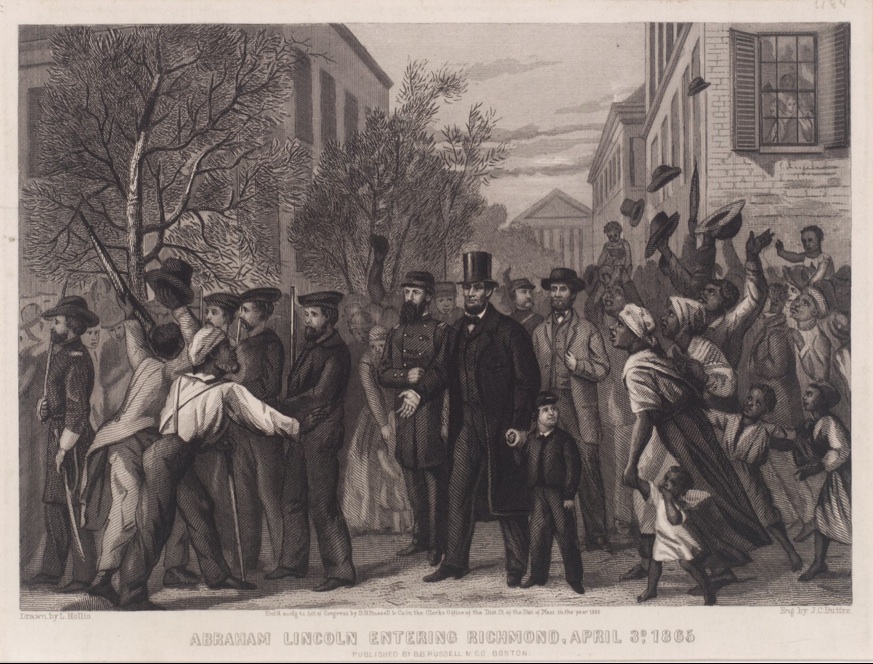
Lincoln emphasized the “military necessity” of emancipation and “justified the step as a “fit and necessary war measure for suppressing the rebellion.” [16] The process of emancipation now became not only a moral crusade, but now became a key part of national strategy, not just in a military means, but politically, economically and diplomatically as Lincoln “also calculated that making slavery a target of the war would counteract the rising clamor in Britain for recognition of the Confederacy.”  [17]

Lincoln wrote to his future Vice President, Andrew Johnson, then the military governor of occupied Tennessee that “The colored population is the great available and yet unavailed of, force for restoration of the Union.”[18] The idea of simply mollifying the border states was dropped and policy changed that of “depriving the Confederacy of slave labor. Mobilizing that manpower for the Union – as soldiers as well as laborers – was a natural corollary.” [19] Reflecting President Lincoln’s and Stanton’s argument for the military necessity of emancipation, General Henry Halleck wrote to Ulysses Grant:

“the character of the war has very much changed within the past year. There is now no possibility of reconciliation with the rebels… We must conquer the rebels or be conquered by them….Every slave withdrawn from the enemy is the equivalent of a white man put hors de combat.” [20]

54thmassposter

Ulysses Grant concurred with Lincoln’s decision. Grant wrote to in a letter to Lincoln after the assault on Battery Wagner by the 54th Massachusetts, “by arming the negro we have added a powerful ally. They will make good soldiers and taking them from the enemy weakens him in the same proportion as it strengthens us.” [21] William Tecumseh Sherman was supportive but also noted some facts that some radical abolitionists did not understand. He noted in his correspondence that, “The first step in the liberation of the Negro from bondage will be to get him and his family to a place of safety… then to afford him the means of providing for his family,… then gradually use a proportion – greater and greater each year – as sailors and soldiers.” [22] Lincoln wrote after the Emancipation Proclamation that “the emancipation policy, and the use of colored troops, constitute the heaviest blow yet dealt to the rebellion.” [23] The change was a watershed in both American history as well as for the future of the U.S. Military services.

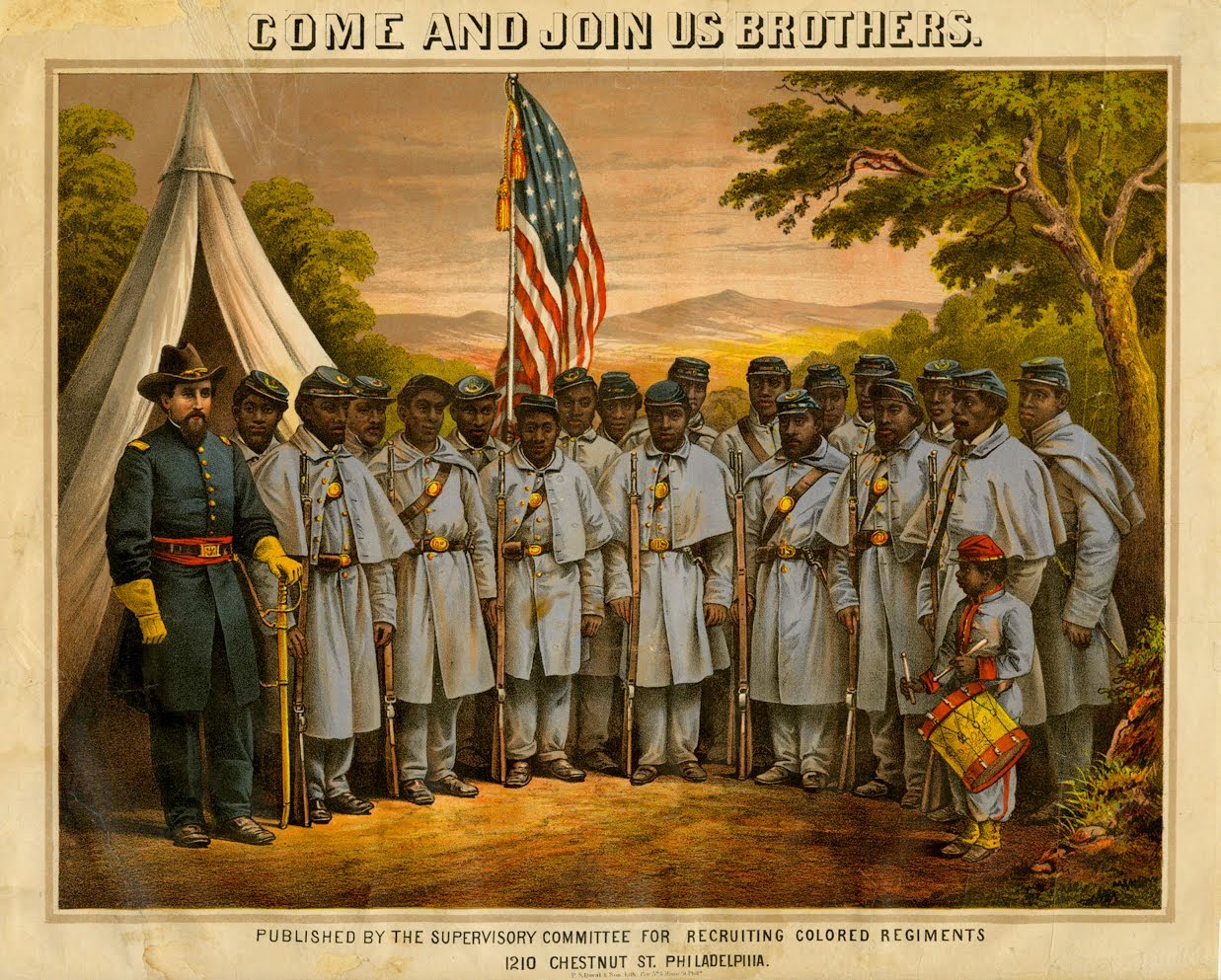
In conjunction with the Emancipation Proclamation Secretary of War Stanton “authorized General Rufus Saxton to “arm, uniform, equip, and receive into the service of the United States such number of volunteers of African descent as you may deem expedient, not exceeding 5,000, and [you] may detail officers to instruct them in military drill, discipline, and duty, and to command them.”  [24] The initial regiments of African Americans were formed by Union commanders in liberated areas of Louisiana and South Carolina, and most were composed of newly freed slaves. Others like the 54th and 55th Massachusetts Volunteer Infantry regiments were raised from free black men in the north. Stanton’s authorization was followed by the Enrollment Act passed by Congress in March of 1863 which established the draft also allowed blacks to serve. By March Stanton was working with state governors to establish more black regiments. The units became known as United States Colored Troops, or U.S.C.T. and were commanded by white officers and organized into the infantry, cavalry and, artillery regiments organized on the model of white regiments. The U.S.C.T. “grew to include seven regiments of cavalry, more than a dozen of artillery, and well over one hundred of infantry.” [25]

Some Union soldiers and officers initially opposed enlisting blacks at all, and some “charged that making soldiers of blacks would be a threat to white supremacy, and hundreds of Billy Yanks wrote home that they would no serve alongside blacks.” [26]  But most common soldiers accepted emancipation, especially those who had served in the South and seen the misery that many slaves endured, one Illinois soldier, stationed who served in the Western Theater of war wrote, “the necessity of emancipation is forced upon us by the inevitable events of the war… and the only road out of this war is by blows aimed at the heart of the Rebellion…. If slavery should be left undisturbed the war would be protracted until the loss of life and national bankruptcy would make peace desirable on any terms.” [27]

Another soldier’s letters home show his conversion from being against emancipation to being fully for it. Corporal Chauncey B. Welton from Ohio wrote to his father after the Emancipation proclamation:

“Father I want you to write and tell me what you think of Lincoln’s proclamation of setting all the negroes free. I can tell you we don’t think much of it hear in the army for we did not enlist to fight for the negro and I can tell you that we never shall or many of us any how[.] no never.”

Following over two years of combat in which he served with Sherman’s army he became a vocal critic of the anti-abolitionist Copperheads in the North, especially former Ohio Governor Clement Vallandigham, as well as a strong proponent of abolition and opponent of slavery. By February 1865 his tone had changed “dear parents let us trust in Him that never forsakes the faithful, and never cease to pray… that soon we may look upon an undivided Country and that Country free free free yes free from that blighting curs[e] Slavery the cause of four years of Bloody warfare.” [28]

Even so racial prejudice in the Union ranks never went away and sometimes was accompanied by violence. It remained a part and parcel of life in and outside of the army, even though many Union soldiers would come to praise the soldierly accomplishments and bravery of African American Soldiers. An officer who had refused a commission to serve with a U.S.C.T. regiment watched as black troops attacked the defenses of Richmond in September 1864:

“The darkies rushed across the open space fronting the work, under a fire which caused them loss, into the abattis… down into the ditch with ladders, up and over the parapet with flying flags, and down among, and on top of, the astonished enemy, who left in utmost haste…. Then and there I decided that ‘the black man could fight’ for his freedom, and that I had made a mistake in not commanding them.” [29] Likewise, “Once the Lincoln administration broke the color barrier of the army, blacks stepped forward in large numbers. Service in the army offered to blacks the opportunity to strike a decisive blow for freedom….” [30]

HD_NgroWarFL640116p264cz.preview

The Defense of Milliken’s Bend 

Emancipation allowed for the formation of regiments of United States Colored Troops (USCT), which were mustered directly into Federal service. In sheer numbers the U.S.C.T. formations soon dwarfed the few state raised Black Regiments.  However, it was the inspiration provided by those first state raised regiments, the heroic accounts of those units reported in Northern newspapers, as well as the unprovoked violence directed against Blacks in the 1863 New York draft riots that helped to provoke “many northerners into a backlash against the consequences of violent racism.” [31]

Despite the hurdles and prejudices that blacks faced even in the North, many African Americans urged others to enlist, self-help mattered more than self-preservation. Henry Gooding, an black sergeant from Massachusetts wrote the editor of the New Bedford Mercury urging fellow blacks to enlist despite the dangers, “As one of the race, I beseech you not to trust a fancied security, laying in your minds, that our condition will be bettered because slavery must die…[If we] allow that slavery will die without the aid of our race to kill it – language cannot depict the indignity, the scorn, and perhaps the violence that will be heaped upon us.” [32]

The valor of the state regiments, as well as the USCT units that managed to get into action was remarkable, especially in regard to the amount of discrimination levied at them by some northerners, including white Northern soldiers, and the very real threat of death that they faced if captured by Confederates. In response to the Emancipation Proclamation and to the formation of African American regiments the Confederate Congress passed measures that would make Union officers who commanded African American troops as war criminals and return any black soldier captured by Confederate forces return to slavery, if those blacks captured in battle were not summarily tortured by their captors or executed as happened at Fort Wagner, Petersburg, and at Fort Pillow.

In late 1862 Major General Nathaniel Banks was in desperate need of soldiers and received permission to form a number of regiments of free blacks. Known as the First, Second and Third Regiments of the Louisiana Native Guards they were primarily composed of former slaves who had escaped to Union lines, as well as some mulattos who were the children of prominent white citizens of the city. During an inspection, the white Colonel of the Guards told another officer:

“Sir, the best blood of Louisiana is in that regiment! Do you see that tall, slim fellow, third file from the right of the second company? One of the ex-governors of the state is his father. That orderly sergeant in the next company is the son of a man who has been six years in the United States Senate. Just beyond him is the grandson of Judge ______ …; and through all the ranks you will find the same state of facts…. Their fathers are disloyal; [but] these black Ishmaels will more than compensate for their treason by fighting in the field.” [33]

In May of 1863 Banks dared to send the First and Third Regiments of “Louisiana Native Home Guard regiments on a series of attacks on Confederate positions at Port Hudson, Louisiana” [34] where they received their baptism of fire. They suffered heavy losses and “of the 1080 men in the ranks, 271 were hit, or one out of every four.” [35] A white Wisconsin soldier commented that the black soldiers “fought like devils,”while a soldier of the 156th New York wrote, “They charged and re-charged and they didn’t know what retreat meant. They lost in their two regiments some four hundred men as near as I can learn. This settles the question about niggers not fighting well. They on the contrary make splendid soldiers and are as good fighting men as we have.” [36] Banks too was caught up in the moment and said of these troops in his after action report: “They answered every expectation…In many respects their conduct was heroic…The severe test to which they were subjected, and the determined manner in which they encountered the enemy, leave upon my mind no doubt of their ultimate success.” [37]

The_Storming_of_Ft_Wagner-lithograph_by_Kurz_and_Allison_1890a

54th Massachusetts at Fort Wagner 

But the most famous African American volunteer regiment was the 54thMassachusetts, commanded by Colonel Robert Gould Shaw, the “North’s showcase black regiment.” [38] Raised in Boston and officered by many men who were the sons of Boston’s blue blood abolitionist elite, the regiment was authorized in March 1863. Since there was still opposition to the formation of units made up of African Americans, Massachusetts Governor John Andrew authorized the formation of the 54th under the command of white officers, a practice that with few exceptions, became standard in the U.S. military until President Truman desegregated the armed forces in 1948. Governor Andrew was determined to ensure that the officers of the 54th were men of “firm antislavery principles…superior to a vulgar contempt for color.”[39]

The 54th Massachusetts first saw action in early June 1863 and at Shaw’s urging were sent into battle against the Confederate positions at Fort Wagner on July 18th 1863. Leading the attack the 54th lost nearly half its men, “including Colonel Shaw with a bullet through his heart. Black soldiers gained Wagner’s parapet and held it for an hour before falling back.” [40]Though they tried to hold on they were pushed back after a stubborn fight to secure a breach in the fort’s defenses. “Sergeant William H Carney staggered back from the fort with wounds in his chest and right arm, but with the regiment’s Stars and Stripes securely in his grasp. “The old flag never touched the ground, boys,” Carney gasped as he collapsed at the first field hospital he could find.” [41] Shaw was buried with his men by the Confederates and when Union commanders asked for the return of his body were told “We have buried him with his niggers,” Shaw’s father quelled a northern effort to recover his son’s body with these words: We hold that a soldier’s most appropriate burial-place is on the field where he has fallen.” [42] As with so many frontal attacks on prepared positions throughout the war, valor alone could not overcome a well dug in enemy. “Negro troops proved that they could stop bullets and shell fragments as good as white men, but that was about all.” [43]

Despite the setback, the regiment went on to further actions where it continued to distinguish itself. The Northern press, particularly abolitionist newspapers brought about a change in the way that many Americans in the North, civilians as well as soldiers, saw blacks. The Atlantic Monthly noted, “Through the cannon smoke of that dark night, the manhood of the colored race shines before many eyes that would not see.”  [44]

55th-mass-at-charleston

55th Massachusetts being welcomed in Charleston SC 

In the African American 55th Massachusetts, which was recruited after the 54th, twenty-one year old Sergeant Isaiah Welch wrote a letter which was published in the Philadelphia Christian Recorder from Folly Island South Carolina:

“I will mention a little about the 55th Massachusetts Regiment. They seem to be in good health at the present and are desirous of making a bold dash upon the enemy. I pray God the time will soon come when we, as soldiers of God, and of our race and country, may face the enemy with boldness. For my part I feel willing to suffer all privations incidental to a Christian and a soldier…. In conclusion, let me say, if I fall in the battle anticipated, remember, I fall in defense of my race and country. Some of my friends thought it very wrong of me in setting aside the work of the Lord to take up arms against the enemy…. I am fully able to answer all questions pertaining to rebels. If taking lives will restore the country to what it once was, then God help me to slay them on every hand.” [45]

Like the 54th Massachusetts, the 55th would see much action. After one particularly sharp engagement in July 1864, in which numerous soldiers had demonstrated exceptional valor under fire the regiment’s commander, Colonel Alfred S. Hartwell “recommended that three of the black sergeants of the 55th be promoted to the rank of 2nd Lieutenant.” But Hartwell’s request was turned down, and a member of the regiment complained, “But the U.S. government has refused so far to must them because God did not make them White…. No other objection is, or can be offered.”[46]

Frederick Douglass, who had two sons serving in the 54th Massachusetts, understood the importance of African Americans taking up arms against those that had enslaved them in order to win their freedom:

“Once let a black man get upon his person the brass letters U.S… let him get an eagle on his button, and a musket on his shoulder and bullets in his pockets, and there is no power on earth which can deny he has won the right to citizenship in the United States.” [47]

Douglass urged African American men to enlist to secure their freedom, even while noting the inequities still prevalent in society and in the military, in which they did not receive the same pay as whites, nor could they become officers. Appealing to duty and reality Douglass noted in a speech in Philadelphia urging black men to volunteer. In it he carefully defined the real differences between the purposes of the Confederacy which was to “nothing more than to make the slavery of the African race universal and perpetual on this continent,” which was “based upon the idea that colored men are an inferior race, who may be enslaved and plundered forever.” [48]

220px-WilliamCarney

Sergeant William Carney 54th Massachusetts, Medal of Honor

But the premier leader of the African Americans of his day, who had himself suffered as a slave, did not stop with that. Douglass understood that winning the war was more important that to what had been the attitude of the Federal government before the war and before emancipation, “Now, what is the attitude of the Washington government towards the colored race? What reasons have we to desire its triumph in the present contest? Mind, I do not ask what was its attitude towards us before the war…. I do not ask you about the dead past. I bring you to the living present.” He noted the advances that had been made in just a few months and appealed to his listeners. “Do not flatter yourselves, my friends, that you are more important to the Government than the Government to you. You stand but as the plank to the ship. This rebellion can be put down without your help. Slavery can be abolished by white men: but liberty so won for the black man, while it may leave him an object of pity, can never make him an object of respect…. Young men of Philadelphia, you are without excuse. The hour has arrived, and your place is in the Union army. Remember that the musket – the United States musket with its bayonet of steel – is better than all the mere parchment guarantees of liberty. In your hands that musket means liberty…” [49]

Other African American units less famous than the illustrious 54thMassachusetts distinguished themselves in action against Confederate forces. Two regiments of newly recruited blacks were encamped at Milliken’s Bend Louisiana when a Confederate brigade attempting to relieve the Vicksburg garrison attacked them. The troops were untrained and ill-armed but held on against a determined enemy:

“Untrained and armed with old muskets, most of the black troops nevertheless fought desperately. With the aid of two gunboats they finally drove off the enemy. For raw troops, wrote Grant, the freedmen “behaved well.” Assistant Secretary of War Dana, still with Grant’s army, spoke with more enthusiasm. “The bravery of the blacks,” he declared, “completely revolutionized the sentiment in the army with regard to the employment of negro troops. I heard prominent officers who had formerly in private had sneered at the idea of negroes fighting express after that as heartily in favor of it.”[50]

The actions of the black units at Milliken’s bend attracted the attention and commendation of Ulysses Grant, who wrote in his cover letter to the after action report, “In this battle most of the troops engaged were Africans, who had little experience in the use of fire-arms. Their conduct is said, however, to have been most gallant, and I doubt not but with good officers that they will make good troops.” [51] They also garnered the attention of the press. Harper’s published an illustrated account of the battle with a “double-page woodcut of the action place a black color bearer in the foreground, flanked by comrades fighting hand-to-hand with Confederates. A brief article called it a “the sharp fight at Milliken’s bend where a small body of black troops with a few whites were attacked by a large force of rebels.” [52] In the South the result was chilling and shocked whites, one woman wrote “It is hard to believe that Southern soldiers – and Texans at that – have been whipped by a mongrel crew of white and black Yankees…. There must be some mistake.” While another woman in Louisiana confided in her diary, “It is terrible to think of such a battle as this, white men and freemen fighting with their slaves, and to be killed by such a hand, the very soul revolts from it, O, may this be the last.” [53]

flporthudsonedml

Louisiana Native Guards at Port Hudson 

By the end of the war over 179,000 African American Soldiers, commanded by 7,000 white officers served in the Union armies. For a number of reasons most of these units were confined to rear area duties or working with logistics and transportation operations. The policies to regulate USCT regiments to supporting tasks in non-combat roles “frustrated many African American soldiers who wanted a chance to prove themselves in battle.” [54] Many of the soldiers and their white officers argued to be let into the fight as they felt that “only by proving themselves in combat could blacks overcome stereotypes of inferiority and prove their “manhood.” [55]Even so in many places in the army the USCT and state regiments made up of blacks were scorned:

“A young officer who left his place in a white regiment to become colonel of a colored regiment was frankly told by a staff officer that “we don’t want any nigger soldiers in the Army of the Potomac,” and his general took him aside to say: “I’m sorry to have you leave my command, and am still more sorry that you are going to serve with Negroes. I think that it is a disgrace to the army to make soldiers of them.” The general added that he felt this way because he was sure that colored soldiers just would not fight.”  [56]

The general of course, was wrong, for “Nothing eradicated the prejudices of white soldiers as effectively as black soldiers performing well under fire. And nothing inspired black soldiers to fight as desperately as the fear that capture meant certain death.” [57]  In the engagements where USCT units were allowed to fight, they did so with varying success most of which was often attributable to the direction of their senior officers and the training that they had received. As with any other unit, well led and well trained regiments performed better than those whose leaders had failed their soldiers. When given the chance they almost always fought well, even when badly commanded. This was true as well when they were thrown into hopeless situations.

One such instance was when Ferrero’s Division, comprised of colored troops were thrown into the Battle of the Crater at Petersburg when “that battle lost beyond all recall.” [58] The troops advanced in good order singing as they went, while their commander, General Ferrero took cover in a dugout and started drinking; but the Confederate defenders had been reinforced and “Unsupported, subjected to a galling fire from batteries on the flanks, and from infantry fire in front and partly on the flank,” a witness write, “they broke up in disorder and fell back into the crater.” [59] Pressed into the carnage of the crater where white troops from the three divisions already savaged by the fighting had taken cover, the “black troops fought with desperation, uncertain of their fate if captured.”[60] In the battle Ferrero’s division lost 1,327 of the approximately 4,000 men who made the attack. [61]

Major General Benjamin Butler railed to his wife in a letter against those who questioned the courage of African American soldiers seeing the gallantry of black troops assaulting the defenses of Petersburg in September 1864: The man who says that the negro will not fight is a coward….His soul is blacker than then dead faces of these dead negroes, upturned to heaven in solemn protest against him and his prejudices.” [62]

In another engagement, the 1864 Battle of Saltville in western Virginia the troops of the 5th USCT Cavalry who had been insulted, taunted, and derided by their fellow white Union soldiers went into action against Confederate troops defending the salt works in that town. The regiment’s commander, Colonel Wade, order his troops to attack. Colonel James Brisbin detailed the attack:

“the Negroes rushed upon the works with a yell and after a desperate struggle carried the line killing and wounding a large number of the enemy and capturing some prisoners…. Out of the four hundred men engaged, one hundred and fourteen men and four officers fell killed or wounded. Of this fight I can only say that men could not have behaved more bravely. I have seen white troops in twenty-seven battles and I never saw any fight better…. On the return of the forces those who had scoffed at the Colored Troops on the march out were silent.” [63]

The response of the Confederate government to Emancipation and African Americans serving as soldiers was immediate and uncompromisingly harsh. “When in the autumn of 1862 General Beauregard referred the question of a captured black soldier to Davis’s latest Secretary of War, James A. Seddon, the later replied “…my decision is that the negro is to be executed as an example.” [64] Davis approved of the summary executions of black prisoners carried out in South Carolina in November 1862, and a month later “on Christmas Eve, Davis issued a general order requiring all former slaves and their officers captured in arms to be delivered up to state officials for trial.” [65] Davis warned that “the army would consider black soldiers as “slaves captured in arms,” and therefore subject to execution.” [66] While the Confederacy never formally carried out the edict, there were numerous occasions where Confederate commanders and soldiers massacred captured African American soldiers.

The Lincoln administration responded to the Confederate threats by sending a note to Davis that threatened reprisals against Confederate troops if black soldiers suffered harm. It “was largely the threat of Union reprisals that thereafter gave African-American soldiers a modicum of humane treatment.” [67] Even so, they and their white officers were often in much more danger than the officers and soldiers of all-white regiments if captured by Confederate forces.

When captured by Confederates, black soldiers and their white officers received no quarter from many Confederate opponents. General Edmund Kirby Smith who held overall command of Confederate forces west of the Mississippi instructed General Richard Taylor to simply execute black soldiers and their white officers: “I hope…that your subordinates who may have been in command of capturing parties may have recognized the propriety of giving no quarter to armed negroes and their officers. In this way we may be relieved from a disagreeable dilemma.” [68] This was not only a local policy, but echoed at the highest levels of the Confederate government. In 1862 the Confederate government issued an order that threatened white officers commanding blacks: “any commissioned officer employed in the drilling, organizing or instructing slaves with their view to armed service in this war…as outlaws” would be “held in close confinement for execution as a felon.” [69] After the assault of the 54th Massachusetts at Fort Wagner a Georgia soldier “reported with satisfaction that the prisoners were “literally shot down while on their knees begging for quarter and mercy.” [70]

fortpillowmassacred

Fort Pillow Massacre 

On April 12th 1864 at Fort Pillow, troops under the command of General Nathan Bedford Forrest massacred the bulk of over 231 Union most of them black as they tried to surrender. While it is fairly clear that Forrest did not order the massacre and even may have attempted to stop it, it was clear that he had lost control of his troops, and “the best evidence indicates that the “massacre”…was a genuine massacre.” [71] Forrest’s soldiers fought with the fury of men possessed by hatred of an enemy that they considered ‘a lesser race’ and slaughtered the Union troops as they either tried to surrender or flee; but while Forrest did not order the massacre, he certainly was not displeased with the result. His subordinate, General James Chalmers told an officer from the gunboat Silver Cloud that he and Forrest had neither ordered the massacre and had tried to stop their soldiers but that “the men of General Forrest’s command had such a hatred toward the armed negro that they could not be restrained from killing the negroes,” and he added, “it was nothing better than we could expect so long as we persisted in arming the negro.” [72] It was a portent of what some of the same men would do to defenseless blacks and whites sympathetic to them as members of the Ku Klux Klan, the White Liners, White League, and Red Shirts, during and after Reconstruction in places like Colfax Louisiana.

Ulysses Grant was infuriated and threatened reprisals against any Confederates conducting such activities, he a later wrote:

“These troops fought bravely, but were overpowered I will leave Forrest in his dispatches to tell what he did with them.

“The river was dyed,” he says, “with the blood of the slaughtered for up to 200 years. The approximate loss was upward of five hundred killed; but few of the officers escaped. My loss was about twenty killed. It is hoped that these facts will demonstrate to the Northern people that negro soldiers cannot cope with Southerners.” Subsequently Forrest made a report in which he left out the part that shocks humanity to read.”  [73]

The bulk of the fanatical hatred of Forrest’s troops was directed at the black soldiers of the 6th U.S. Colored Heavy Artillery, which composed over a third of the garrison. “Of the 262 Negro members of the garrison, only 58 – just over 20 percent – were marched away as prisoners; while of the 295 whites, 168 – just under sixty percent were taken.”  [74] A white survivor of the 13th West Tennessee Cavalry, a Union unit at the fort wrote:

We all threw down our arms and gave tokens of surrender, asking for quarter…but no quarter was given….I saw 4 white men and at least 25 negroes shot while begging for mercy….These were all soldiers. There were also 2 negro women and 3 little children standing within 25 steps of me, when a rebel stepped up to them and said, “Yes, God damn you, you thought you were free, did you?” and shot them all. They all fell but one child, when he knocked it in the head with the breech of his gun.” [75]

A Confederate Sergeant who was at Fort Pillow wrote home a week after the massacre: “the poor deluded negroes would run up to our men, fall upon their knees and with uplifted hands scream for mercy, but were ordered to their feet and shot down.” [76] The captain of the Union gunboat Silver Cloud was allowed by the Confederate to bring his ship to the Fort to evacuate wounded, and to bury the dead was appalled at the sight, he wrote:

“All the buildings around the fort and the tents and huts in the fort had been burned by the rebels, and among the embers of the charred remains of numbers of our soldiers who had suffered terrible death in the flames could be seen. All the wounded who had strength enough to speak agreed that after the fort was taken an indiscriminate slaughter of our troops was carried on by the enemy…. Around on every side horrible testimony to the truth of this statement could be seen, Bodies with gaping wounds,… some with skulls beaten through, others with hideous wounds as if their bowels had been ripped open with bowie-knives, plainly told that little quarter was shown…. Strewn from the fort to the river bank, in the ravines and the hollows, behind logs and under the brush where they had crept for protection from the assassins who pursued them, we found bodies bayoneted, beaten, and shot to death, showing how cold-blooded and persistent was the slaughter…. Of course, when a work is carried by assault there will always be more or less bloodshed, even when all resistance has ceased; but here there were unmistakable evidences of a massacre carried on long after any resistance could have been offered, with a cold-blooded barbarity and perseverance which nothing can palliate.” [77]

The rabidly pro-slavery members of the Confederate press lent their propaganda to cheer the massacre of the captured blacks. John R. Eakin of the Washington (Arkansas) Washington Telegraph, who later became a justice on the Arkansas Supreme Court after Reconstruction, wrote,

“The Slave Soldiers. – Amongst there are stupendous wrongs against humanity, shocking to the moral sense of the world, like Herod’s massacre of the Innocents, or the eve of St. Bartholomew, the crime of Lincoln in seducing our slaves into the ranks of his army will occupy a prominent position….

How should we treat our slaves arrayed under the banners of the invader, and marching to desolate our homes and firesides….

Meanwhile, the problem has been met our soldiers in the heat of battle, where there has been no time for discussion. They have cut the Gordian knot with the sword. They did right….

It follows that we cannot treat negroes in arms as prisoners of war without a destruction of the social system for which we contend. We must be firm, uncompromising and unfaltering. We must claim the full control of all negroes who may fall into our hands, to punish with death, or any other penalty, or remand them to their owners. If the enemy retaliate, we must do likewise; and if the black flag follows, the blood be upon their heads.” [78]

However, when African American Troops were victorious, and even after they had seen their brothers murdered by Confederate troops, that they often treated their Confederate with great kindness. Colonel Brisbin wrote that following Battle of Saltville that “Such of the Colored Soldiers who fell into the hands of the Enemy during the battle were murdered. The Negroes did not retaliate but treated the Rebel wounded with great kindness, carrying them water in their canteens and doing all they could to alleviate the sufferings of those whom the fortunes of war had placed in their hands.” [79]

African American soldiers proved themselves during the war and their efforts paved the way for Lincoln and others to begin considering the full equality of blacks as citizens. If they could fight and die for the country, how could they be denied the right to votes, be elected to office, serve on juries or go to public schools? Under political pressure to end the war during the stalemate before Petersburg and Atlanta in the summer of 1864, Lincoln reacted angrily to Copperheads as well as wavering Republicans on the issue of emancipation:

“But no human power can subdue this rebellion without using the Emancipation lever as I have done.” More than 100,000 black soldiers were fighting for the Union and their efforts were crucial to northern victory. They would not continue fighting if they thought the North intended to betray them….If they stake their lives for us they must be prompted by the strongest motive…the promise of freedom. And the promise being made, must be kept…There have been men who proposed to me to return to slavery the black warriors. “I should be damned in time & in eternity for so doing. The world shall know that I will keep my faith to friends & enemies, come what will.”  [80]

The importance of African Americans cannot be minimized, without them the war could have dragged on much longer or even ended in stalemate, which would have been a Confederate victory. Lincoln wrote about the importance of the African American contribution to the war effort in 1864:

“Any different policy in regard to the colored man, deprives us of his help, and this is more than we can bear. We can not spare the hundred and forty or hundred and fifty thousand now serving us as soldiers, seamen, and laborers. This is not a question of sentiment or taste, but one of physical force which may be measured and estimated as horse-power and Steam-power are measured and estimated. Keep it and you save the Union. Throw it away, and the Union goes with it.” [81]

Despite this, even in the North during and after the war, blacks, including former soldiers faced discrimination, sometimes that of the white men that they served alongside, but more often from those who did not support the war effort. Lincoln wisely took note of this fact, and wrote that after the war:

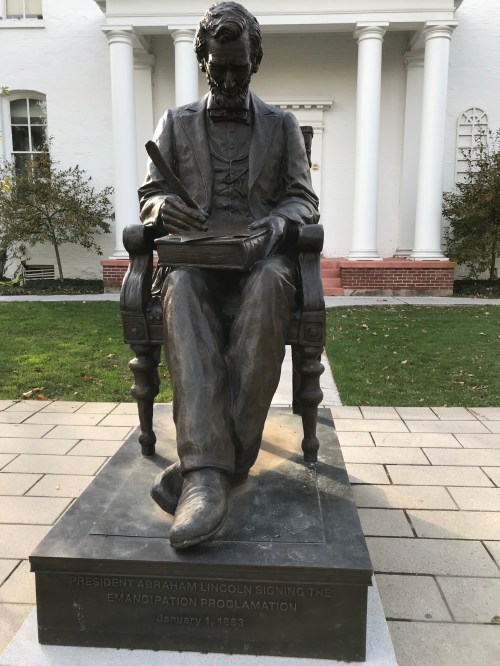
“there will there will be some black men who can remember that, with silent tongue, the clenched teeth, the steady eye, the well poised bayonet, they have helped  mankind on to this great consummation; while, I fear, there will be some white ones, unable to forget that, with malignant heart, and deceitful speech, they have strove to hinder it.” [82]

swails

Lt Stephen Swails, First African American Officer of 54th Massachusetts 

Those rights would be fought for another century and what began in 1863 with the brave service and sacrifice of these African American soldiers began a process of increased civil rights that is still going on today. It would not be until after the war that some blacks were commissioned as officers in the Army. When Governor John Andrew, the man who had raised the 54th Massachusetts attempted to “issue a state commission to Sergeant Stephen Swails of the 54th…the Bureau of Colored Troops obstinately refused to issue Swails a discharge from his sergeant’s rank, and Swails promotion was held up until after the end of the war. “How can we hope for success to our arms or God’s blessing,” raged the white colonel of the 54th, Edward Hallowell, “while we as a people are so blind to justice?” [83]

The families of the free blacks who volunteered also suffered, especially those who still had families enslaved in Confederate occupied areas or Union States which still allowed slavery. One women in Missouri wrote her husband begging him to come home “I have had nothing but trouble since you left….They abuse me because you went & say they will not take care of our children & do nothing but quarrel with me all the time and beat me scandalously the day before yesterday.”  [84]

However, the Emancipation Proclamation transformed the war, and even jaded White Union soldiers who had been against emancipation and who were deeply prejudiced against blacks began to change their outlook as the armies marched into the South and saw the horrors of slavery, Russell Weigley wrote that Union soldiers: “confronting the scarred bodies and crippled souls of African Americans as they marched into the South experienced a strong motivation to become anti-slavery men…Men do not need to play a role long, furthermore, until the role grows to seem natural and customary to them. That of liberators was sufficiently fulfilling to their pride that soldiers found themselves growing more accustomed to it all the more readily.” [85]

A sergeant of the 19th Michigan who had already lost a stepson in the war wrote to his wife from Georgia before being killed in action during the Atlanta campaign; “the more I learn of the cursed institution of Slavery, the more I feel willing to endure, for its final destruction…. After this war is over, this whole country will undergo a change for the better…. Abolishing slavery will dignify labor; that fact will revolutionize everything…. Let Christians use all their influence to have justice done to the black man.” [86]

But even more importantly for the cause of liberty, the sight of regiments of free African Americans, marching “through the slave states wearing the uniform of the U.S. Army and carrying rifles on their shoulders was perhaps the most revolutionary event of a war turned into revolution.” [87]

battle_of_nashville_kurz__allison

At peak one in eight Union troops were African American, and Black troops made an immense contribution to the Union victory. “Black troops fought on 41 major battlefields and in 449 minor engagements. Sixteen soldiers and seven sailors received Medals of Honor for valor. 37,000 blacks in army uniform gave their lives and untold sailors did, too.” [88] To fully appreciate the measure as to the importance and significance of the numbers of African American troops serving in the Union ranks has to compare that number with the number of active Confederate troops serving toward the end of the war. The approximately 180,000 African Americans serving in Union ranks at the end of the war outnumbered the “aggregate present” in Confederate ranks on January 1st 1865 by over 20,000 men. Of these troops “134,111 were recruited in states that had stars in the Confederate battle flag, and the latter figure in turn was several thousand greater than the total of 135,994 gray-clad soldiers “present for duty” that same day.” [89]

Of the African American soldiers who faced the Confederates in combat, “deep pride was their compensation. Two black patients in an army hospital began a conversation. One of them looked at the stump of an arm he had once had and remarked: “Oh I should like to have it, but I don’t begrudge it.” His ward mate, minus a leg, replied: “Well, ‘twas [lost] in a glorious cause, and if I’d lost my life I should have been satisfied. I knew what I was fighting for.” [90]

22nd-usct-flags

Flags of the 22nd U.S. Colored Troops 

After the war many of the African American soldiers became leaders in the African American community and no less than 130 of these former soldiers held elected office including in the U.S. Congress and various state legislatures. The liberating aspect of “the black military experience radiated from black soldiers and their families into the larger black community, so it spread into white society as well.” [91]  Many abolitionists who had served as officers, and officers who were assigned to the USCT or volunteered to serve with state raised African American regiments became leaders continued to be voices for expanding civil rights in the years following the war.

Following war’s end, the demobilized African American troops became the target of racial discrimination and violence, but even so, “black veterans continued to play a central role in black communities, North and South. The skills and experience black men gained during the war not only propelled many of them into positions of leaders and sustained the prominence of others, but it also shaped the expectations and aspirations of all black people. The achievements and pride engendered by military service helped to make a new world of freedom.” [92]

Sadly, much of the nation has forgotten the efforts of the Free Black Soldiers and Sailors who fought for freedom, but even so their legacy remains in the “contribution of black soldiers to Union victory remained a point of pride in black communities. “They say,” an Alabama planter reported in 1867, “the Yankees never could have whipped the South without the aid of the Negroes.” Well into the twentieth century, black families throughout the United States would recall with pride that their fathers and grandfathers had fought for freedom.” [93]

Notes 

[1] Ibid. McPherson Tried by War: Abraham Lincoln as Commander in Chief

[2] Ibid. Goodwin Team of Rivals p.435

[3] Ibid. McPherson Tried by War p.58

[4] Ibid. McPherson Tried by War p.58

[5] Ibid. Goodwin Team of Rivals p.369

[6] Ibid. McPherson Tried by War p.109

[7] Ibid. Foote, The Civil War, A Narrative Volume Two p.531

[8] Ibid. McPherson. The Battle Cry of Freedom p.503

[9] Ibid. McPherson Drawn With the Sword: Reflections on the American Civil War p.101

[10] Ibid. Guelzo Gettysburg: The Last Invasion p.160

[11] Foner, Eric Forever Free: The Story of Emancipation and Reconstruction Vintage Books a Division of Random House, New York 2005 p.45

[12] Ibid. Guelzo Gettysburg: The Last Invasion p.160

[13] Ibid. Glatthaar General Lee’s Army from Victory to Collapse p.313

[14] Ibid. Guelzo Gettysburg: The Last Invasion p.160

[15] Ibid. Goodwin Team of Rivals p.465

[16] Egnal, Marc Clash of Extremes: The Economic Origins of the Civil War Hill and Wang a division of Farrar, Straus and Giroux New York 2009 p.318

[17] Ibid. Foner Forever Free p.48

[18] Ibid. McPherson Tried by War p.159

[19] Ibid. McPherson Drawn With the Sword p.159

[20] Ibid. McPherson Abraham Lincoln and the Second American Revolution p.35

[21] Ibid. Guelzo Fateful Lightning p.381

[22] Ibid. Dobak Freedom by the Sword: The U.S. Colored Troops, 1862-1867 p.10

[23] Ibid. McPherson Abraham Lincoln and the Second American Revolution p.35

[24] Ibid. Robertson Soldiers Blue and Gray p.31

[25] Ibid. Dobak Freedom by the Sword: The U.S. Colored Troops, 1862-1867 p.11

[26] Ibid. Robertson Soldiers Blue and Gray p.31

[27] Ibid. Gallagher, Gary W. The Union War Harvard University Press, Cambridge MA and London 2011 p.103

[28] Welton, Chauncey B. A Union Soldier’s Changing Views on Emancipationin The Civil War and Reconstruction: A Documentary Collection edited by William Gienapp, W.W. Norton Company, New York and London 2001 pp.242 and 245

[29] Ibid. Robertson Soldiers Blue and Gray p.34

[30] Glatthaar, Joseph T. Black Glory: The African American Role in Union Victory in Why the Confederacy Lost edited by Gabor S. Boritt Oxford University Press, Oxford and New York 1992

[31] Ibid. McPherson. The Battle Cry of Freedom p.686

[32] Ibid. Goldfield America Aflame p.282

[33] Jones, Terry L. The Free Men of Color Go to War in The new York Times Disunion: 106 Articles from the New York Times Opinionator edited by Ted Widmer with Clay Risen and George Kalogerakis, Black Dog and Leventhal Publishers, New York 2013 p.403

[34] Ibid. Guelzo Fateful Lightening p.379

[35] Ibid. Foote The Civil War, A Narrative Volume Two p.398

[36] Ibid. Trudeau Like Men of War p.44

[37] Ibid. Guelzo Fateful Lightening p.379

[38] Ibid. McPherson. The Battle Cry of Freedom p.686

[39] Ibid. McPherson Drawn With the Sword p.101

[40] Ibid. McPherson. The Battle Cry of Freedom p.686

[41] Ibid. Guelzo Fateful Lightening pp. 380-381

[42] Ibid. McPherson. The Battle Cry of Freedom pp.686-687

[43] Ibid. Foote, The Civil War, A Narrative Volume Two p.697

[44] Ibid. McPherson. The Battle Cry of Freedom p.686

[45] Welch, Isaiah H. Letter in the Christian Recorder 24 October 1863 in The Civil War and Reconstruction: A Documentary Collection edited by William E. Gienapp, W.W. Norton and Company, New York and London 2001 pp.225-226

[46] Trudeau, Noah Andre, Like Men of War: Black Troops in the Civil War 1862-1865 Little, Brown and Company, Boston, New York and London, 1998 p.262

[47] Ibid. Guelzo Fateful Lightening p. 381

[48] Douglass, Frederick Philadelphia Speech of July 6th 1863 recorded in the Liberator in The Civil War and Reconstruction: A Documentary Collection edited by William E. Gienapp, W.W. Norton and Company, New York and London 2001 pp.220-221

[49] Ibid. Douglass Philadelphia Speech of July 6th 1863 p.221

[50] Ibid. McPherson. The Battle Cry of Freedom p.634

[51] Ibid. Trudeau Like Men of War: Black Troops in the Civil War 1862-1865p.58

[52] Ibid. Gallagher The Union War p.97

[53] Ibid. Trudeau Like Men of War: Black Troops in the Civil War 1862-1865 p.59

[54] Ibid. Gallagher The Union War p.92

[55] Ibid. McPherson Drawn With the Sword p.89 p.

[56] Catton, Bruce. A Stillness at Appomattox Doubleday and Company Garden City, New York 1953 p.227

[57] Berlin, Ira, Riedy, Joseph P. and Rowland, Leslie S. editors, Freedom’s Soldiers: The Black Military Experience in the Civil War  Cambridge University Press, Cambridge and New York 1998 pp.133-134

[58] Ibid. Catton A Stillness at Appomattox p.249

[59] Foote, Shelby, The Civil War, A Narrative. Volume Three Red River to Appomattox Random House, New York 1974 p.537

[60] Ibid.Wert The Sword of Lincoln: The Army of the Potomac pp.384-385

[61] Ibid. Foote The Civil War, A Narrative Volume Three p.537

[62] Ibid. Robertson Soldiers Blue and Gray p.34

[63] Ibid. Berlin et al, Freedom’s Soldiers: The Black Military Experience in the Civil War  p.135

[64] Ibid. Weigley A Great Civil War p.189

[65] Ibid. McPherson Battle Cry of Freedom p.566

[66] Ibid. Goldfield America Aflame p. 280

[67] Ibid. Weigley A Great Civil War p.188

[68] Ibid. Guelzo Fateful Lightening p. 377

[69] Ibid. Guelzo Fateful Lightening p. 377

[70] Ibid. Goldfield America Aflame p.281

[71] Ibid. Weigley A Great Civil War p.189

[72] Ibid. Dobak Freedom by the Sword: The U.S. Colored Troops, 1862-1867 p.208

[73] Grant, Ulysses S. Preparing for the Campaigns of ’64 in Battles and Leaders of the Civil War Volume IV, Retreat With Honor Edited by Robert Underwood Johnson and Clarence Clough Buel Castle, Secaucus NJ pp.107-108

[74] Ibid. Foote The Civil War, A Narrative Volume Three p.111

[75] Ibid. Guelzo Fateful Lightning p. 378

[76] Ibid. Foote The Civil War, A Narrative Volume Three p.112

[77] Ibid. Dobak Freedom by the Sword: The U.S. Colored Troops, 1862-1867 p.208

[78] Eakin, John R. The Slave Soldiers, June 8, 1864  in Loewen, James W. and Sebesta, Edward H. editors, The Confederate and Neo-Confederate Reader: The “Great Truth” about “The Lost Cause” University of Mississippi Press, Jackson 2010 pp.210 and 212

[79] Ibid. Berlin et al, Freedom’s Soldiers: The Black Military Experience in the Civil War  p.47

[80] Ibid. McPherson Abraham Lincoln and the Second American Revolution p.89

[81] Ibid. Glatthaar Black Glory: The African American Role in Union Victoryp.138

[82] Ibid. McPherson The War that Forged a Nation p. 113

[83] Ibid. Guelzo Fateful Lightning p. 376

[84] Ibid. Goldfield America Aflame p.282

[85] Ibid. Weigley A Great Civil War p.192

[86] Ibid. McPherson For Cause and Comrades p.130

[87] Ibid. Weigley A Great Civil War p.191

[88] Gallagher, Gary, Engle, Stephen, Krick, Robert K. and Glatthaar editors The American Civil War: The Mighty Scourge of War Osprey Publishing, Oxford UK 2003 p.296

[89] Ibid. Foote The Civil War, A Narrative. Volume Three Red River to Appomattox p.756

[90] Ibid. Robertson Soldiers Blue and Gray p.36

[91] Ibid. Berlin et al, Freedom’s Soldiers: The Black Military Experience in the Civil War  p.47

[92] Ibid. Berlin et al. Freedom’s Soldiers: The Black Military Experience in the Civil War pp.49-50

[93] Ibid. Foner Forever Free p.55

1 Comment

Filed under civil rights, civil war, History, Military, Political Commentary

“Societies Can Break, Democracies Can Fall” An Unprecedented and Dangerous Shutdown

US-POLITICS-CONGRESS-TRUMP

Friends of Padre Steve’s World,

The present government shutdown is like none that we have seen before. What is going on now is a blatant attempt by the President to humiliate and destroy his opposition from both the Democratic Party and the few Republicans willing to oppose him. Interestingly enough he is being aided by the two Republican congressional leaders who has already emasculated, Senate Majority Leader Mitch McConnell and Speaker of the House Paul Ryan. Both have already so compromised themselves with the Trump’s ardent supporters that they know that their political survival is absolutely dependent on what they do for him.

All this is despite the fact that on Friday Senator Chuck Schumer offered the President more than any previous Democratic leader to end the shutdown, even going against the Democratic base by agreeing to fully fund the President’s wall. The President at least pretended to agree to a deal that would protect the people protected under DACA, the “Dreamers.” The legislation to protect them was first introduced in a bi-partisan bill sponsored by Republican Orrin Hatch and Democrat Dick Durbin. It eventual died but was resurrected by President Obama through his immigration policies. President Trump ended that but on numerous times indicated that he wanted to find a “loving” solution to the plight of the children undocumented immigrants who were brought to this country, some as long as three decades ago.

However, less than three hours after the meeting Schumer was told that the conditions that he thought were agreed to were rejected with Presidential Chief of Staff John Kelly saying that they were “too liberal.”

For all intents and purposes these young people that were protected under DACA are Americans but are prevented from becoming citizens because of how they got here. They are not a menace, they are our neighbors and contribute much to this country; their only crime was to be brought here as children, and now they are being demonized by Trump, Ryan, McConnell, and most of the GOP host in ways that fully assimilated German Jews were during the early days of the Third Reich.

By their words, actions, and policies and actions these men are showing that they are committed to only one thing: total victory for Trump. But that is what Trump has been about since he first went into business, for him it is and always has been a zero sum game, whether be it in business, marriage, entertainment, as a candidate, and now as President.

The plan now is to try to make the Democrats loom as the devil behind the shutdown while they simply are doing what Ryan, McConnell and the GOP Congress did in 2011 and 2013. The hypocrisy and lies that they employ to do this will be on full display all weekend and until they achieve their goal, even if the Democrats eventual agree to end the shutdown, and if they do that is when Trump will move in for the kill.

What is happening is dangerous beyond anything that we have ever seen in this country. The danger to the country is greater than at any time since the Confederate States attempted to destroy the Union in the name of White Supremacy and Slave Power in 1861. Sadly, the President is much more like Jefferson Davis than Abraham Lincoln.

On March 14th of 2016, almost eight months before President Trump was elected  I wrote these words on this site:

“I am afraid. Over the past few weeks violence has become commonplace at the campaign rallies of Donald Trump. In the past week a reporter from the Breitbart News service, an organization that is solidly behind Trump was assaulted by Trump’s campaign manager, and Breitbart threw her under the bus for him. Protesters have been assaulted, reporters threatened, Trump not only condones the actions, he encourages them, threatening to use the law and courts to ruin people’s lives, and offering to pay the legal bills of his supporters who have been charged with crimes. He labels any opponents as “bad people” who need to be punished. The ultimate cruelty is that though he is the one inciting the violence, he and his supporters blame that violence on the victims, be they Democrats or Republicans, protestors or media, pundits, politicians or preachers. He is creating a frenzy among his most violent supporters that demands victims to satiate their new found bloodlust…

If he succeeds in his takeover bid, it will forever change American politics, especially if he is able to ride the fear, and to the White House. I don’t think the latter will happen, but I would not exclude it from the realm of the possible…”

Well Donald Trump is the President now and anyone who thinks that he can be contained, even by the Mueller investigation is foolish.  Today the American system of government so carefully crafted by our founders to prevent such events is now collapsing before our eyes. It is true that over the years that both parties and for that matter almost all Americans bear some responsibility for this, but it is Donald Trump who in the past year has upended almost every societal and political norm in that the founders put in place. Based on his past action and his nefarious personality as well as intent of his supporters; the true believers and the opportunists, we cannot have confidence that our institutions will survive. The only reason that he would cut a deal,with the Democrats would be to further embarrass and degrade McConnell and Ryan, but since they rallied to him Saturday I don’t see that happening.

Historian Timothy Snyder noted:

“The European history of the twentieth century shows us that societies can break, democracies can fall, ethics can collapse, and ordinary men can find themselves standing over death pits with guns in their hands. It would serve us well today to understand why.”

We I see the words and actions of the President, his supporters and even some friends that I thought I knew, including retired military chaplains I fear for this country. I don’t want to sound like an alarmist but that is what I see going on. This is not an ordinary shutdown and it will not end with business as usual. God, I do hope that I’m wrong, but I know in my heart that I am right.

Until tomorrow,

Peace

Padre Steve+

1 Comment

Filed under History, News and current events, Political Commentary

“The Time for All Good Men Not to go to the Aid of Their Party, But to Come to the Aid of Their Country” Flake, Douglas, and McCarthy: Profiles In Senatorial Courage

Jeff-Flake-800x430

Friends of Padre Steve’s World,

I’m up late tonight because of a snowstorm that is allowing me to go in to work late in the morning. But that allowed me to spend more time putting this article together and that is not a bad thing.

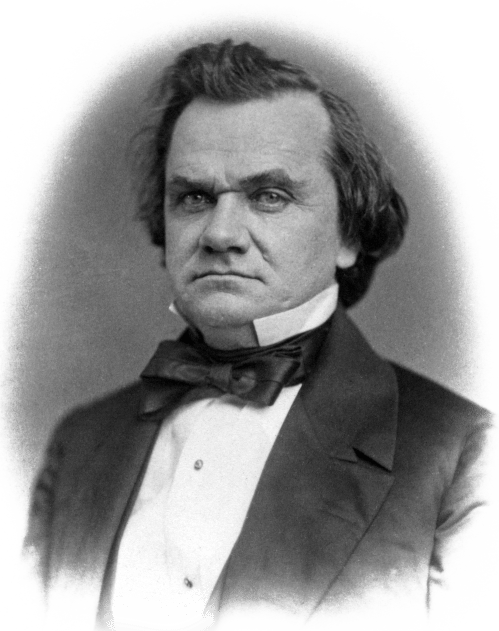
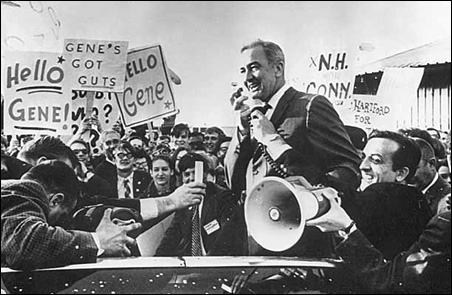
Yesterday Senator Jeff Flake of Arizona made a speech on the Senate floor. I do not think that I have seen one like it since Stephen A. Douglas opposed President James Buchanan in 1858 regarding the LeCompton Constitution. I am trying to remember the last time I have seen a sitting U.S. Senator compare a President of his own party one of the worst dictators in the history of the world. I both watched it and read it and honestly I don’t think that I have seen anything close to it since Senator Eugene McCarthy destroyed Lyndon Johnson’s hopes for a second term in 1968.

Stephen_A_Douglas_by_Vannerson,_1859

In 1858 Douglas warned his fellow Democrats about Buchanan, saying:

“I warned the anti-Lecompton Democrats of the North that the President intended to put the knife to the throat of every man who dared to think for himself on this question and carry out principles in good faith. “God forbid,” I said “that I ever surrender my right to differ from a President of the United States for my own choice. I am not a tool of any President!”

Events like this are truly rare, they don’t happen often and when they do they are quite remarkable and are portents of bigger things to come. Douglas’s opposition ushered in a split in the Democratic Party and helped elect Abraham Lincoln who through his courage helped to overthrow the institution of slavery that Buchanan had sought to expand. McCarthy’s opposition to Johnson helped to not only torpedo Johnson’s hopes for a second term but helped to galvanize the nation against the Vietnam War, fracture the Democratic Party, and elect Richard Nixon.

mccarthy

McCarthy was equally courageous. He noted: “This is, I say, the time for all good men not to go to the aid of their party, but to come to the aid of their country.”

Senator Flake’s speech was a real watershed, try as they might to shun Flake his Republican opponents like Senator Roger Wicker of Mississippi who said: “I don’t think that sort of speech is helpful, I disagree with those quotes and I don’t know why it’s helpful. … I don’t see any need to further stir that pot.” Richard Shelby of Alabama noted: “He’s certainly crossed the Rubicon with Trump. Strife is not productive.” Jim Inhofe of Oklahoma railed against Flake “He hates him. He doesn’t like the president, I can’t imagine anyone questioning that. As it gets closer to the end of his time here, I think he’s going to accelerate his wrath against the president.” Senator John McCain defended his colleague from Arizona.

In previous times both Douglas and McCarthy were attacked by members of their own Party, McCarthy by men who would later become Republicans answering Nixon’s call to a Southern Strategy, Douglas by those who led the drive for secession and Civil War in 1860 and 1861.

Flake, for all of his flaws, and yes he does have them has been pretty much a loyal Republican voting with the GOP on Trump’s legislation the majority of the time, just like Douglas did with much of Buchanan’s legislation and McCarthy with Johnson’s. But all of them as loyal as they had been to their President and parties found something that they had to stand against.

With Douglas is was Buchanan’s assault on the Constitution and law, McCarthy it was the lies of the Johnson administration about Vietnam. Today it is Jeff Flake comparing President Trump to Josef Stalin. In fact one of his GOP critics pointed out how often that Flake had voted with Trump and asked if he would have done that with Stalin. It is a good question for anyone who ignores so much about a President so long that the legislation that they like gets approved, but that being said what Flake did was big and it demonstrated a moral courage that most politicians of both parties are lacking when they vote for legislation solely based on political expediency. So in the case of Senator Flake I say better late than never.

What the Arizona Senator was big and it is an ominous portent of the future regardless of what happens next. I say that very dispassionately as a historian.

If you have not read it or watched it here is what Senator Flake said:

Mr. President, near the beginning of the document that made us free, our Declaration of Independence, Thomas Jefferson wrote: “We hold these truths to be self-evident.” So, from our very beginnings, our freedom has been predicated on truth. The founders were visionary in this regard, understanding well that good faith and shared facts between the governed and the government would be the very basis of this ongoing idea of America.

As the distinguished former member of this body, Daniel Patrick Moynihan of New York, famously said: “Everyone is entitled to his own opinion, but not to his own facts.” During the past year, I am alarmed to say that Senator Moynihan’s proposition has likely been tested more severely than at any time in our history.

It is for that reason that I rise today, to talk about the truth, and its relationship to democracy. For without truth, and a principled fidelity to truth and to shared facts, Mr. President, our democracy will not last.

2017 was a year which saw the truth — objective, empirical, evidence-based truth — more battered and abused than any other in the history of our country, at the hands of the most powerful figure in our government. It was a year which saw the White House enshrine “alternative facts” into the American lexicon, as justification for what used to be known simply as good old-fashioned falsehoods. It was the year in which an unrelenting daily assault on the constitutionally-protected free press was launched by that same White House, an assault that is as unprecedented as it is unwarranted. “The enemy of the people,” was what the president of the United States called the free press in 2017.

Mr. President, it is a testament to the condition of our democracy that our own president uses words infamously spoken by Josef Stalin to describe his enemies. It bears noting that so fraught with malice was the phrase “enemy of the people,” that even Nikita Khrushchev forbade its use, telling the Soviet Communist Party that the phrase had been introduced by Stalin for the purpose of “annihilating such individuals” who disagreed with the supreme leader.

This alone should be a source of great shame for us in this body, especially for those of us in the president’s party. For they are shameful, repulsive statements. And, of course, the president has it precisely backward – despotism is the enemy of the people. The free press is the despot’s enemy, which makes the free press the guardian of democracy. When a figure in power reflexively calls any press that doesn’t suit him “fake news,” it is that person who should be the figure of suspicion, not the press.

I dare say that anyone who has the privilege and awesome responsibility to serve in this chamber knows that these reflexive slurs of “fake news” are dubious, at best. Those of us who travel overseas, especially to war zones and other troubled areas around the globe, encounter members of U.S. based media who risk their lives, and sometimes lose their lives, reporting on the truth. To dismiss their work as fake news is an affront to their commitment and their sacrifice.

According to the International Federation of Journalists, 80 journalists were killed in 2017, and a new report from the Committee to Protect Journalists documents that the number of journalists imprisoned around the world has reached 262, which is a new record. This total includes 21 reporters who are being held on “false news” charges.

Mr. President, so powerful is the presidency that the damage done by the sustained attack on the truth will not be confined to the president’s time in office. Here in America, we do not pay obeisance to the powerful – in fact, we question the powerful most ardently – to do so is our birthright and a requirement of our citizenship — and so, we know well that no matter how powerful, no president will ever have dominion over objective reality.

No politician will ever get to tell us what the truth is and is not. And anyone who presumes to try to attack or manipulate the truth to his own purposes should be made to realize the mistake and be held to account. That is our job here. And that is just as Madison, Hamilton, and Jay would have it.

Of course, a major difference between politicians and the free press is that the press usually corrects itself when it gets something wrong. Politicians don’t.

No longer can we compound attacks on truth with our silent acquiescence. No longer can we turn a blind eye or a deaf ear to these assaults on our institutions. And Mr. President, an American president who cannot take criticism – who must constantly deflect and distort and distract – who must find someone else to blame — is charting a very dangerous path. And a Congress that fails to act as a check on the president adds to the danger.

Now, we are told via Twitter that today the president intends to announce his choice for the “most corrupt and dishonest” media awards. It beggars belief that an American president would engage in such a spectacle. But here we are.

And so, 2018 must be the year in which the truth takes a stand against power that would weaken it. In this effort, the choice is quite simple. And in this effort, the truth needs as many allies as possible. Together, my colleagues, we are powerful. Together, we have it within us to turn back these attacks, right these wrongs, repair this damage, restore reverence for our institutions, and prevent further moral vandalism.

Together, united in the purpose to do our jobs under the Constitution, without regard to party or party loyalty, let us resolve to be allies of the truth — and not partners in its destruction.

It is not my purpose here to inventory all of the official untruths of the past year. But a brief survey is in order. Some untruths are trivial – such as the bizarre contention regarding the crowd size at last year’s inaugural.

But many untruths are not at all trivial – such as the seminal untruth of the president’s political career – the oft-repeated conspiracy about the birthplace of President Obama. Also not trivial are the equally pernicious fantasies about rigged elections and massive voter fraud, which are as destructive as they are inaccurate – to the effort to undermine confidence in the federal courts, federal law enforcement, the intelligence community and the free press, to perhaps the most vexing untruth of all – the supposed “hoax” at the heart of special counsel Robert Mueller’s Russia investigation.

To be very clear, to call the Russia matter a “hoax” – as the president has many times – is a falsehood. We know that the attacks orchestrated by the Russian government during the election were real and constitute a grave threat to both American sovereignty and to our national security. It is in the interest of every American to get to the bottom of this matter, wherever the investigation leads.

Ignoring or denying the truth about hostile Russian intentions toward the United States leaves us vulnerable to further attacks. We are told by our intelligence agencies that those attacks are ongoing, yet it has recently been reported that there has not been a single cabinet-level meeting regarding Russian interference and how to defend America against these attacks. Not one. What might seem like a casual and routine untruth – so casual and routine that it has by now become the white noise of Washington – is in fact a serious lapse in the defense of our country.

Mr. President, let us be clear. The impulses underlying the dissemination of such untruths are not benign. They have the effect of eroding trust in our vital institutions and conditioning the public to no longer trust them. The destructive effect of this kind of behavior on our democracy cannot be overstated.

Mr. President, every word that a president utters projects American values around the world. The values of free expression and a reverence for the free press have been our global hallmark, for it is our ability to freely air the truth that keeps our government honest and keeps a people free. Between the mighty and the modest, truth is the great leveler. And so, respect for freedom of the press has always been one of our most important exports.

But a recent report published in our free press should raise an alarm. Reading from the story:
“In February…Syrian President Bashar Assad brushed off an Amnesty International report that some 13,000 people had been killed at one of his military prisons by saying, “You can forge anything these days, we are living in a fake news era.”

In the Philippines, President Rodrigo Duterte has complained of being “demonized” by “fake news.” Last month, the report continues, with our President, quote “laughing by his side” Duterte called reporters “spies.”

In July, Venezuelan President Nicolas Maduro complained to the Russian propaganda outlet, that the world media had “spread lots of false versions, lots of lies” about his country, adding, “This is what we call ‘fake news’ today, isn’t it?”

There are more:

A state official in Myanmar recently said, “There is no such thing as Rohingya. It is fake news,” referring to the persecuted ethnic group.

Leaders in Singapore, a country known for restricting free speech, have promised “fake news” legislation in the new year.”

And on and on. This feedback loop is disgraceful, Mr. President. Not only has the past year seen an American president borrow despotic language to refer to the free press, but it seems he has in turn inspired dictators and authoritarians with his own language. This is reprehensible.

We are not in a “fake news” era, as Bashar Assad says. We are, rather, in an era in which the authoritarian impulse is reasserting itself, to challenge free people and free societies, everywhere.

In our own country, from the trivial to the truly dangerous, it is the range and regularity of the untruths we see that should be cause for profound alarm, and spur to action. Add to that the by-now predictable habit of calling true things false, and false things true, and we have a recipe for disaster. As George Orwell warned, “The further a society drifts from the truth, the more it will hate those who speak it.”

Any of us who have spent time in public life have endured news coverage we felt was jaded or unfair. But in our positions, to employ even idle threats to use laws or regulations to stifle criticism is corrosive to our democratic institutions. Simply put: it is the press’s obligation to uncover the truth about power. It is the people’s right to criticize their government. And it is our job to take it.

What is the goal of laying siege to the truth? President John F. Kennedy, in a stirring speech on the 20th anniversary of the Voice of America, was eloquent in answer to that question: “We are not afraid to entrust the American people with unpleasant facts, foreign ideas, alien philosophies, and competitive values. For a nation that is afraid to let its people judge the truth and falsehood in an open market is a nation that is afraid of its people.”

Mr. President, the question of why the truth is now under such assault may well be for historians to determine. But for those who cherish American constitutional democracy, what matters is the effect on America and her people and her standing in an increasingly unstable world — made all the more unstable by these very fabrications. What matters is the daily disassembling of our democratic institutions.

We are a mature democracy – it is well past time that we stop excusing or ignoring – or worse, endorsing — these attacks on the truth. For if we compromise the truth for the sake of our politics, we are lost.

I sincerely thank my colleagues for their indulgence today. I will close by borrowing the words of an early adherent to my faith that I find has special resonance at this moment. His name was John Jacques, and as a young missionary in England he contemplated the question: “What is truth?” His search was expressed in poetry and ultimately in a hymn that I grew up with, titled “Oh Say, What is Truth.” It ends as follows:

Then say, what is truth? ‘Tis the last and the first,
For the limits of time it steps o’er.
Tho the heavens depart and the earth’s fountains burst.
Truth, the sum of existence, will weather the worst,
Eternal… unchanged… evermore.

Thank you, Mr. President. I yield the floor.

Senator Flake’s words reminded me a bit of the closing section of Dr. Martin Luther King Jr.’s Beyond Vietnam speech in which he said:

As that noble bard of yesterday, James Russell Lowell, eloquently stated:

Once to every man and nation comes a moment do decide,
In the strife of truth and Falsehood, for the good or evil side;
Some great cause, God’s new Messiah offering each the bloom or blight,
And the choice goes by forever ‘twixt that darkness and that light.
Though the cause of evil prosper, yet ‘tis truth alone is strong
Though her portions be the scaffold, and upon the throne be wrong
Yet that scaffold sways the future, and behind the dim unknown
Standeth God within the shadow, keeping watch above his own.

And if we will only make the right choice, we will be able to transform this pending cosmic elegy into a creative psalm of peace. If we will make the right choice, we will be able to transform the jangling discords of our world into a beautiful symphony of brotherhood. If we will but make the right choice, we will be able to speed up the day, all over America and all over the world, when justice will roll down like waters, and righteousness like a mighty stream. 

That being said I wish that Flake would be much more like Douglas and fight to remain in the Senate and not retire. Douglas noted about his fight with Buchanan:

“After the Christmas recess, the Administration unleashed its heavy horsemen: Davis, Slidell, Hunter, Toombs, and Hammond, all southerners. They damned me as a traitor and demanded that I be stripped of my chairmanship of the Committee on Territories and read out of the Democratic party. Let the fucking bastards threaten, proscribe, and do their worst, I told my followers; it would not cause any honest man to falter. If my course divided the Democratic party, it would not be my fault. We were engaged in a great struggle for principle, I said, and we would defy the Administration to the bitter end.”

I wish more Republicans had the courage of Flake and even more Douglas who sacrificed his ambitions as the presumed front-runner for the 1860 Presidential election. His opposition to Buchanan and the Slave Power Southern Democrats ensured his defeat. When his opponents led the South to secede Douglas remained with the Union rallying Northern Democrats to the cause. Likewise despite a lot of popular support McCarthy was opposed by the party establishment and lost his bid to be the Democratic nominee in 1968. But he said something about the office of the Presidency that every American should support and defend:

“We do not need presidents who are bigger than the country, but rather ones who speak for it and support it.”

What is going on today is as big if not bigger than the crises that led loyal party men like Douglas and McCarthy to defy their President and Party.

So until tomorrow,

Peace

Padre Steve+


3 Comments

Filed under History, laws and legislation, leadership, News and current events, Political Commentary

“Sound Loud the Timbrel” The Emancipation Proclamation at 155 Years

Friends of Padre Steve’s World

Today is the 155th anniversary of the Emancipation Proclamation. The proclamation made by Abraham Lincoln when the outcome of the rebellion of the Southern slave states against the Union was still up in the air was a watershed for civil rights in the United States. Though it was a military order that only affected slaves in the rebellious states, it also set the stage for the 13th, 14th, and 15th Amendments and other legal rulings that affected not only African Americans and former slaves, but also Native Americans, Women, other racial minorities and LGBTQ people. It is something that in our era when so many civil rights are under threat that we must remember and continue to fight for in the coming years. Freedom is never free.

This article is a part of my hopefully soon to be published book “Mine Eyes Have Seen the Glory!” Race, Religion, Ideology, and Politics in the civil War Era. 

Peace

Padre Steve+

From the beginning of the war many Northerners, especially abolitionists and radical Republicans believed that “as the “cornerstone” of the confederacy (the oft-cited description by the South’s vice-president, Alexander H. Stephens) slavery must become a military target.” [1]When some Union generals made their own attempts at issuing emancipation orders, Lincoln countermanded them for exceeding their authority. Lincoln resisted the early calls of the abolitionists to make that a primary war goal for very practical reasons, he had to first ensure that the Border Slave States did not secede, something that would have certainly ensured that the Union would not survived. As a result in the first year of the war, Lincoln “maneuvered to hold Border South neutrals in the Union and to lure Union supporters from the Confederacy’s Middle South white belts. He succeeded on both scores. His double success with southern whites gave the Union greater manpower, a stronger economy, and a larger domain. These slave state resources boosted free labor states’ capacity to should the Union’s heavier Civil War burden.” [2] His success in doing this was instrumental in enabling him to turn to emancipation in 1862.

Finally, some twenty months after Fort Sumter fell and after nearly two years of unrelenting slaughter culminating in the bloody battle of Antietam, Abraham Lincoln published the Emancipation Proclamation. Emancipation was a tricky legal issue for Lincoln as “an executive order of emancipation would be beyond the powers of the president, but not, Lincoln concluded, if such an order were issued as furtherance of the executive’s war powers.” [3] Lincoln had desired to issue the order during the summer and sounded out elected officials and soldiers as to his plan.

Lincoln discussed his views with General George McClellan during a visit to the latter’s headquarters. McClellan stated his strident opposition to them in writing. McClellan did not admire slavery but he despised abolitionists and he wrote one of his political backers “Help me to dodge the nigger – we want nothing to do with him. I am fighting for the Union…. To gain that end we cannot afford to mix up the negro question.”  [4]

Lincoln then called border state Congressmen to sound them out on the subject on July 12th 1862 only to be met with opposition. Such opposition caused Lincoln “to give up trying to conciliate conservatives. From then on the president tilted toward the radical position, though this would not become publicly apparent for more than two months.” [5]

Lincoln’s cabinet met to discuss the proclamation on July 22nd 1862 and after some debate decided that it should be issued, although it was opposed by Postmaster General Montgomery Blair who believed that “the Democrats would capitalize on the unpopularity of such a measure in the border states and parts of the North to gain control of the House in the fall elections.” [6] Wisely, Lincoln heeded the advice of Secretary of State Seward to delay the announcement until military victories ensured that people did not see it as a measure of desperation. Seward noted: “I approve of the proclamation, but I question the expediency of its issue at this juncture. The depression of the public mind, consequent on our repeated reverses, is so great I fear…it may be viewed as the last measure of an exhausted government, a cry for help…our last shriek on the retreat.” Seward suggested that Lincoln wait “until the eagle of victory takes his flight,” and buoyed by military success, “hang your proclamation about his neck.” [7]

After the Battle of Antietam, President Lincoln issued the Preliminary Emancipation Proclamation. This document served as a warning to the leaders of the South, and insisted that there was much more at stake in their rebellion unless they surrendered; their slaves, the very “property” for which the seceded. The document “warned that unless the South laid down its arms by the end of 1862, he would emancipate the slaves.” [8] This was something that they could not and would not do, even as their cities burned and Confederacy collapsed around them in 1864.

The proclamation was a military order in which Lincoln ordered the emancipation of slaves located in the Rebel states and areas of those states occupied by Union troops. It was not designed to change law, which would have to wait until Lincoln felt he could have Congress amend the Constitution.  Instead of law it was “the doctrine of military necessity justified Lincoln’s action.” [9] The concept emanated from Boston lawyer William Whiting who argued “the laws of war “give the President full belligerent rights” as commander and chief to seize enemy property (in this case slaves) being used to wage war against the United States.” [10] There was a legitimate military necessity in the action as Confederate armies used slaves as teamsters, laborers, cooks, and other non-combatant roles to free up white soldiers for combat duty, and because slaves were an important part of the Southern war economy which could not function without them. The proclamation gave inspiration to many slaves throughout the South to desert to the Union cause or to labor less efficiently for their Confederate masters. A South Carolina planter wrote in 1865:

“the conduct of the Negro in the late crisis of our affairs has convinced me that we were all laboring under a delusion….I believed that these people were content, happy, and attached to their masters, But events and reflection have caused me to change these positions….If they were content, happy and attached to their masters, why did they desert him in the moment of need and flocked to the enemy, whom they did not know….” [11]

The proclamation authorized that freed blacks be recruited into the Federal army and it ensured that freed slaves would not again be surrendered back into slavery. As Montgomery Blair had warned Lincoln and the Republicans suffered sharp electoral reverses as “Democrats made opposition to emancipation the centerpiece of their campaign, warning that the North would be “Africanized” – inundated by freed slaves competing for jobs and seeking to marry white women.”  [12]

Lincoln’s response was to continue on despite the opposition and issue the Proclamation in spite of electoral reverses and political resistance. The vehemence of some Northern Democrats came close to matching that of white Southerners. The “white Southerner’s view of Lincoln as a despot, hell-bent on achieving some unnatural vision of “equality,” was shared by Northern Democrats, some of whom thought the president was now possessed by a “religious fanaticism.” [13] But Lincoln was not deterred and he understood “that he was sending the war and the country down a very different road than people thought they would go.” [14] He noted in December 1862:

“Fellow citizens, we cannot escape history….This fiery trial through which we pass, will light us down, in honor or dishonor, to the latest generation….In giving freedom to the slave, we assure freedom to the free – honorable alike in what we give, and what we preserve.”[15]

For Lincoln the Emancipation Proclamation was something that he believed was something that he had to do, and he believed that it would be the one thing that he did in life that would be remembered. He had long been convicted of the need for it, but timing mattered, even six months before it might have created a political backlash in the North which would have fractured support for the war effort, and in this case timing and how he made the proclamation mattered.

The Emancipation Proclamation had military, domestic political, and diplomatic implications, as well as moral implications for the conduct of the war.

The military implication would take some time to achieve but were twofold. First, Lincoln hoped that the Emancipation Proclamation would encourage former slaves, as well as already free blacks in the North to join the Union cause and enlist to serve in the Federal Army. The act would vest African Americans in the Union’s cause as little else could, and at the same time begin to choke-off the agricultural labor force that provided the backbone of the Confederate economy. Frederick Douglass eloquently made the case for African Americans to serve in July 1863, telling a crowd in Philadelphia, “Do not flatter yourself, my friends, that you are more important to the Government than the Government is to you. You stand but as a plank to the ship. This rebellion can be put down without your help. Slavery can be abolished by white men: but Liberty so won for the black man, while it may leave him an object of pity, can never make him an object of respect…. Young men of Philadelphia, you are without excuse. The hour has arrived, and your place is in the Union army. Remember that the musket – the United States musket with its bayonet of steel – is better than all the parchment guarantees of Liberty. In you hands the musket means Liberty…” [16] By the end of the war over 180,000 African American men would serve as volunteers in the United States Army.

Politically the proclamation would the diplomatic purpose by isolating the Confederacy from European assistance. This it did, after the proclamation public sentiment, especially among Europe’s working classes turned solidly against the Confederacy. Domestically it would break-ground for the Thirteenth Amendment, which Lincoln, the pragmatic lawyer was needed to actually abolish slavery. Morally, it  would serve as the guarantee of The United States Government’s public, irrevocable pledge of freedom to African Americans if the North won the war.

Lincoln signed the order on January 1st 1863. As he got ready to sign the document he paused and put down the pen, speaking to Seward he said “I never, in my life, felt more certain that I was doing right, than I do now in signing this paper….If my name ever goes down in history it will be for signing this act, and my whole soul is in it.” [17] The opening paragraph read:

“That on the first day of January, in the year of our Lord one thousand eight hundred and sixty-three, all persons held as slaves within any State or designated part of a State, the people whereof shall then be in rebellion against the United States, shall be then, thenceforward, and forever free; and the Executive Government of the United States, including the military and naval authority thereof, will recognize and maintain the freedom of such persons, and will do no act or acts to repress such persons, or any of them, in any efforts they may make for their actual freedom.” [18]

At the ends of the proclamation he added the words suggested by his devoutly Christian Secretary of the Treasury Salmon Chase: “And upon this act, sincerely believed to be an act of justice, warranted by the Constitution, upon military necessity, I invoke the considerate judgment of mankind, and the gracious favor of Almighty God.” [19]

The response throughout the North was euphoric as celebrations took place throughout the North. In some cities one hundred gun salutes were fired. At Boston’s Tremont Temple people broke out singing a hymn “Sound the loud timbrel o’er Egypt’s dark sea, Jehovah hath triumphed, his people are free.” [20] The Boston Daily Evening Telegraph predicted, “Slavery from this hour ceases to be a political power in this country…such a righteous revolution as it inaugurates never goes backward.” [21]

Frederick Douglass wrote about his reactions to the Emancipation proclamation as he had nearly despaired wondering if the Lincoln administration would actually take up the fight for emancipation:

“The fourth of July was great, but the first of January, when we consider it in all of its relations and bearings in incomparably greater. The one we respect to the mere political birth to a nation, the last concerns national life and character, and is to determine whether that life and character shall be radiantly and glorious with all high and noble virtues, or infamously blackened, forevermore, with all the hell-darkened crimes and horrors which we attach to Slavery.” [22]

The proclamation was not all some had hoped for and it was certainly provoked a negative response in the South and among many Northern Democrats. Southerners accused Lincoln of inciting racial warfare and Jefferson Davis responded “The day is not so distant when the old Union will be restored with slavery nationally declared to be the proper condition of all of African descent.” [23]

But the proclamation did something that politicians, lawyers did not comprehend, that “the details of the emancipation decree were less significant than the fact that there was an emancipation decree, and while the proclamation read like a dull legal brief, filled with qualifying clauses and exceptions, it was not language made for this, finally, a moral document. It was its existence, its title, its arrival into this world, its challenge to the accepted order, and from that there was no turning back. In this sense it was a revolutionary statement, like the Declaration itself, and nearly as significant.” [24]That the proclamation most certainly was and it was a watershed from which there was no stepping back. “It irrevocably committed the government of the United States to the termination of slavery. It was an act of political courage, take at the right time, in the right way.” [25]

However, it would take another two years, with the Confederacy crumbling under the combined Federal military onslaught before Lincoln was able to secure passage of the Thirteenth Amendment to the Constitution in January 1865.  The amendment abolished slavery and involuntary servitude throughout the country, as well as nullified the fugitive slave clause and the Three-Fifths Compromise. It would be followed after Lincoln’s death by the Fourteenth Amendment which reversed the result of the Dred Scott decision and declared that all people born in the United States were citizens and entitled to the rights of citizenship. During the Grant administration the Fifteenth Amendment was passed, and this finally extended to African American men, the right to vote in every state.

Though limited in scope, the Emancipation Proclamation had more than a domestic military, social and political effect. It also had an effect on foreign policy which ensured that Britain, and thereby France would not intervene in the war on behalf of the Southern Confederacy. It stopped all British support for the Rebels to include seizing warships that had been contracted for by Confederate agents that were building or being fitted out in British Yards. Likewise the British rejected various proposals of Emperor Napoleon III to intervene in the war in late 1862 and during the summer of 1863.

Effects of the Emancipation Proclamation on Military Law

The Emancipation Proclamation and the elimination of slavery also impacted the Union war effort in terms of law, law that eventually had an impact around the world as nations began to adapt to the changing character of war. It was important because for the first time slavery was accounted for in the laws of war. The “Instructions for the Government of Armies of the United States in the Field, General Orders No. 100 by President Lincoln, April 24, 1863; Prepared by Francis Lieber, LLD noted in Article 42 of that Code:

“Slavery, complicating and confounding the ideas of property, (that is of a thing,) and of personality, (that is of humanity,) exists according to municipal or local law only. The law of nature and nations has never acknowledged it. The digest of the Roman law enacts the early dictum of the pagan jurist, that “so far as the law of nature is concerned, all men are equal.” Fugitives escaping from a country in which they were slaves, villains, or serfs, into another country, have, for centuries past, been held free and acknowledged free by judicial decisions of European countries, even though the municipal law of the country in which the slave had taken refuge acknowledged slavery within its own dominions.” [26]

It continued in Article 43:

“Therefore, in a war between the United States and a belligerent which admits of slavery, if a person held in bondage by that belligerent be captured by or come as a fugitive under the protection of the military forces of the United States, such person is immediately entitled to the rights and privileges of a freeman To return such person into slavery would amount to enslaving a free person, and neither the United States nor any officer under their authority can enslave any human being. Moreover, a person so made free by the law of war is under the shield of the law of nations, and the former owner or State can have, by the law of postliminy, no belligerent lien or claim of service.” [27]

The Continued Fight for Emancipation: Dealing with the Copperheads and the Passage of the Thirteenth Amendment

But there were still legitimate concerns that slavery might survive as the war continued. Lincoln knew that in issuing the Emancipation Proclamation raised the stakes of the war far higher than they had been. He noted, “We shall nobly save, or meanly lose, the last best hope on earth.” [28] The threat of the destruction of the Union and the continuance of slavery in either the states of the Confederacy, the new western states, territories, or the maintenance of the Union without emancipation was too great for some; notably, the American Freedmen’s Commission to contemplate. With Grant’s army stalled outside Richmond the Copperheads and the peace party gained influence and threatened to bring about a peace that allowed Confederate independence and the continuance of slavery; members of that caucus they Edwin Stanton in the spring of 1864:

“In such a state of feeling, under such a state of things, can we doubt the inevitable results? Shall we escape border raids after fleeing fugitives? No man will expect it. Are we to suffer these? We are disgraced! Are we to repel them? It is a renewal of hostilities!…In the case of a foreign war…can we suppose that they will refrain from seeking their own advantage by an alliance with the enemy?”[29]

The effort of the Copperheads and the peace party to was soon crushed under the military successes of William Tecumseh Sherman’s armies in Georgia. This was especially true of the capture of Atlanta, which was followed by Sherman’s march to the sea and the Carolinas. Additionally the naval victory of David Farragut’s fleet at the Battle of Mobile Bay served to break the stranglehold that the Copperheads were beginning to wield in Northern politics.  These efforts helped secure Lincoln’s reelection by a large margin in the 1864 presidential election over a divided Democratic opposition, whose presidential nominee McClellan could not even endorse his party’s platform.

In his Second Inaugural Address, Abraham Lincoln discussed the issue of slavery as the chief cause of the war. In it, Lincoln noted that slavery was the chief cause of the war in no uncertain terms and talked in a language of faith that was difficult for many, especially Christians, who “believed weighty political issues could be parsed into good or evil. Lincoln’s words offered a complexity that many found difficult to accept,” for the war had devastated the playground of evangelical politics, and it had “thrashed the certitude of evangelical Protestantism” [30] as much as the First World War shattered Classic European Protestant Liberalism.  Lincoln’s confrontation of the role that people of faith brought to the war in both the North and the South is both illuminating and a devastating critique of the religious attitudes that so stoked the fires of hatred.  His realism in confronting facts was masterful, and badly needed.  He spoke of “American slavery” as a single offense ascribed to the whole nation.” [31]

“One-eighth of the whole population were colored slaves, not distributed generally over the Union, but localized in the southern part of it. These slaves constituted a peculiar and powerful interest. All knew that this interest was somehow the cause of the war. To strengthen, perpetuate, and extend this interest was the object for which the insurgents would rend the Union even by war, while the Government claimed no right to do more than to restrict the territorial enlargement of it. Neither party expected for the war the magnitude or the duration which it has already attained. Neither anticipated that the cause of the conflict might cease with or even before the conflict itself should cease. Each looked for an easier triumph, and a result less fundamental and astounding. Both read the same Bible and pray to the same God, and each invokes His aid against the other. It may seem strange that any men should dare to ask a just God’s assistance in wringing their bread from the sweat of other men’s faces, but let us judge not, that we be not judged. The prayers of both could not be answered. That of neither has been answered fully. The Almighty has His own purposes. “Woe unto the world because of offenses; for it must needs be that offenses come, but woe to that man by whom the offense cometh.” If we shall suppose that American slavery is one of those offenses which, in the providence of God, must needs come, but which, having continued through His appointed time, He now wills to remove, and that He gives to both North and South this terrible war as the woe due to those by whom the offense came, shall we discern therein any departure from those divine attributes which the believers in a living God always ascribe to Him? Fondly do we hope, fervently do we pray, that this mighty scourge of war may speedily pass away. Yet, if God wills that it continue until all the wealth piled by the bondsman’s two hundred and fifty years of unrequited toil shall be sunk, and until every drop of blood drawn with the lash shall be paid by another drawn with the sword, as was said three thousand years ago, so still it must be said “the judgments of the Lord are true and righteous altogether.” [32]

Notes 

[1] Ibid. Foner Forever Free: The Story of Emancipation and Reconstruction p.42

[2] Ibid. Freehling The South vs. The South p.47

[3] Brewster, Todd. Lincoln’s Gamble: The Tumultuous Six Months that Gave America the Emancipation Proclamation and Changed the Course of the Civil War Scribner a Division of Simon and Schuster, New York and London p.59

[4] Ibid. McPherson The Battle Cry of Freedom p.364

[5] Ibid. McPherson The Battle Cry of Freedom p.504

[6] McPherson, James M. Tried by War: Abraham Lincoln as Commander in Chief Penguin Books, New York and London 2008 p.109

[7] Ibid. Goodwin Team of Rivals p. 468

[8] Ibid. Foner Forever Free p.49

[9] McGovern, George Abraham Lincoln Times Books, Henry Holt and Company, New York 2009 p.70

[10] Ibid. McPherson Tried by War: p.108

[11] Ibid. Zinn The Other Civil War p.39

[12] Ibid. Foner Forever Free p.49

[13] Ibid. Brewster Lincoln’s Gamble p.169

[14] Ibid. Guelzo Fateful Lightning p.184

[15] Ibid. Foner Forever Free p.49

[16] Douglass, Frederick. Philadelphia Speech of July 6th 1863 recorded in the Liberator in The Civil War and Reconstruction: A Documentary Collection edited by William E. Gienapp, W.W. Norton and Company, New York and London 2001 p.221

[17] Ibid. Goodwin Team of Rivals p. 499

[18] Lincoln, Abraham The Emancipation Proclamation The National Archives & Records Administration retrieved from http://www.archives.gov/exhibits/featured_documents/emancipation_proclamation/transcript.html 14 June 2014

[19] Ibid. Lincoln The Emancipation Proclamation

[20] Ibid. Brewster Lincoln’s Gamble p.244

[21] Ibid. McPherson The Battle Cry of Freedom p.501

[22] Ibid. Guelzo Fateful Lightning pp. 180-181

[23] Ibid. Goldfield America Aflame p.263

[24] Ibid. Brewster Lincoln’s Gamble p.245

[25] Ibid. McGovern Abraham Lincoln p.78

[26] Reichberg, Gregory M, Syse Henrik, and Begby, Endre The Ethics of War: Classic and Contemporary Readings Blackwell Publishing Ltd, Malden, MA and Oxford UK 2006 p.570

[27] Ibid. Reichberg et al. The Ethics of War p.570

[28] Ibid. Goldfield America Aflame p.263

[29] Ibid. Guelzo Fateful Lightning p.534

[30] Ibid. Goldfield  America Aflame p.358

[31] Ibid. Wills Lincoln at Gettysburg p.186

[32] Lincoln, Abraham Second Inaugural Address March 4th 1865 retrieved from www.bartleby.com/124/pres32.html 24 March 2014

1 Comment

Filed under civil rights, civil war, History, laws and legislation, leadership, News and current events, Political Commentary

The “Chosen People” of the Confederacy and the Mission to Advance Slavery

Friends of Padre Steve’s World,

Another in my series dealing with aspects of Black history in the United States which is in every bit a part of American history as any other historical narrative about our nation. One thing that constantly amazes me is the way that some people, in fact many people, including the School Board of the State of Texas go out of their way to minimize the real and tragically crime against humanity that American slavery represented. Like many of the proponents of the whitewashing of slavery out of school textbooks, many of the most vehement supporters of the institution of slavery and its supposed Divine mandate were Christian churches, preachers, and writers. They were in the forefront of the secession movement and at the beginning of the Civil War bragged about how “God was on their side.” One again this is not an easy read if you take your Christian faith seriously, and it has direct application in how american Christians treat other despised races, ethnic groups, religions, and lifestyles today.

So have a great day,

Peace

Padre Steve+

OTCauction


“Lo! Suddenly, to the amazement of the world a mighty kingdom arose…. [of strictly providential Divine origin….The One like the Son of Man has appeared in the ride of the Confederate States.” Reverend William Seat 1862 [1]

Perhaps more than anything, the denominational splits helped prepare the Southern people as well as clergy for secession and war. They set precedent by which Southerners left established national organizations. When secession came, “the majority of young Protestant preachers were already primed by their respective church traditions to regard the possibilities of political separation from the United States without undue anxiety.” [2]

One of the most powerful ideological tools since the days of the ancients has been the linkage of religion to the state. While religion has always been a driving force in American life since the days of the Puritans in the Massachusetts Bay Colony, especially in the belief about the destiny of the nation as God’s “Chosen People,” it was in the South where the old Puritan beliefs took firm root in culture, society, politics and the ideology which justified slavery and became indelibly linked to Southern nationalism. “Confederate independence, explained a Methodist tract quoting Puritan John Winthrop, was intended to enable the South, “like a city set on a hill’ [to] fulfill her God given mission to exalt in civilization and Christianity the nations of the earth.” [3]

Religion and the churches “supplied the overarching framework for southern nationalism. As Confederates cast themselves as God’s chosen people.” [4]  the defense of slavery was a major part of their mission. Southern clergymen had to find a balance between the two most important parts of their political and religious identity, evangelicalism and republicanism. Since these concepts could mean different things to different people Southern clergy and politicians had to find a way to combine the two. Depending on the interpreter “republicanism and evangelicalism could be reactionary or progressive in implication, elitist or democratic.” [5] This can be seen in how Northern and Southern evangelicals supported abolition or the institution of slavery.

A group of 154 clergymen calling themselves “The Clergy of the South” “warned the world’s Christians that the North was perpetuating a plot of “interference with the plans of Divine Providence.” [6] A Tennessee pastor bluntly stated in 1861 that “In all contests between nations God espouses the cause of the Righteous and makes it his own….The institution of slavery according to the Bible is right. Therefore in the contest between the North and the South, He will espouse the cause of the South and make it his own.” [7]

The effect of such discourse on leaders as well as individuals was to unify the struggle as something that linked the nation to God, and God’s purposes to the nation identifying both as being the instruments of God’s Will and Divine Providence. As such, for Southern preachers to be successful agents of the state, the “key to their success as the foundation of a hegemonic ideology lay in making” [8] evangelicalism and republicanism to seem to be both elitist and democratic at the same time.  This resulted in a need to convince the “Southern people to acknowledge God’s authority was bound up with a legitimization of both clerical and civil rulers. Christian humility became identified with social and political deference as the clergy urged submission to both God and Jefferson Davis.” [9]

“Sacred and secular history, like religion and politics, had become all but indistinguishable… The analogy between the Confederacy and the chosen Hebrew nation was invoked so often as to be transformed into a figure of everyday speech. Like the United States before it, the Confederacy became a redeemer nation, the new Israel.” [10]

jackson-prayer

This theology also motivated men like the convinced hard line Calvinist-Presbyterian, General Stonewall Jackson on the battlefield. Jackson’s brutal, Old Testament understanding of the war caused him to murmur: “No quarter to the violators of our homes and firesides,” and when someone deplored the necessity of destroying so many brave men, he exclaimed: “No, shoot them all, I do not wish them to be brave.” [11] He told Richard Ewell after that General order his men not to fire on a Union officer galloping on a white horse during the Valley campaign, “Never do such a thing again, General Ewell. This is no ordinary war. The brave Federal officers are the very kind that must be killed. Shoot the brave officers and the cowards will run away with their men with them.” [12]

For Southerner’s, both lay and clergy alike “Slavery became in secular and religious discourse, the central component of the mission God had designed for the South….The Confederates were fighting a just war not only because they were, in the traditional framework of just war theory, defending themselves against invasion, they were struggling to carry out God’s designs for a heathen race.” [13]

From “the beginning of the war southern churches of all sorts with few exceptions promoted the cause militant” [14] and supported war efforts.  The early military victories of Robert E. Lee’s Army of Northern Virginia and the victories of Stonewall Jackson in the Shenandoah Valley   were celebrated as “providential validations of the cause that could not fail…” Texas Methodist minister William Seat wrote: “Never surely since the Wars of God’s ancient people has there been such a remarkable and uniform success against tremendous odds. The explanation is found in the fact that the Lord goes forth to fight against the coercion by foes of his particular people. Thus it has been and thus it will be to the end of the War.”  [15]

lee-jackson-in-prayer

This brought about a intertwining of church and state authority, a veritable understanding of theocracy as “The need for the southern people to acknowledge God’s authority was bound up with a legitimation of the authority of clerical and civil rulers. Christian humility became identified with social and political deference to both God and Jefferson Davis.” [16]

Jefferson Davis and other leaders helped bolster this belief:

“In his repeated calls for God’s aid and in his declaration of national days of fasting, humiliation, and prayer on nine occasions throughout the war, Jefferson Davis similarly acknowledged the need for a larger scope of legitimization. Nationhood had to be tied to higher ends. The South, it seemed, could not just be politically independent; it wanted to believe it was divinely chosen.” [17]

Davis’s actions likewise bolstered his support and the support for the war among the clergy. A clergyman urged his congregation that the people of the South needed to relearn “the virtue of reverence – and the lesson of respecting, obeying, and honoring authority, for authority’s sake.” [18]

leonidas-polk

Bishop Leonidas Polk

Confederate clergymen not only were spokesmen and supporters of slavery, secession and independence, but many also shed their clerical robes and put on Confederate Gray as soldiers, officers and even generals fighting for the Confederacy. Bishop Leonidas Polk, the Episcopal Bishop of Louisiana, who had been a classmate of Jefferson Davis at West Point was commissioned as a Major General and appointed to command the troops in the Mississippi Valley. Polk did not resign his ecclesiastical office, and “Northerners expressed horror at such sacrilege, but Southerners were delighted with this transfer from the Army of the Lord.” [19] Lee’s chief of Artillery Brigadier General Nelson Pendleton was also an academy graduate and an Episcopal Priest.

Southern churches were supremely active in the war effort. Churches contributed to the Confederate cause through donations of “everything from pew cushions to brass bells, Southern churches gave direct material aid to the cause. Among all the institutions in Southern life, perhaps the church most faithfully served the Confederate Army and nation.” [20] Likewise, many Southern ministers were not content to remain on the sidelines in the war and “not only proclaimed the glory of their role in creating the war but also but also went off to battle with the military in an attempt to add to their glory.” [21]

Sadly, the denominational rifts persisted until well into the twentieth century. The Presbyterians and Methodists both eventually reunited but the Baptists did not, and eventually “regional isolation, war bitterness, and differing emphasis in theology created chasms by the end of the century which leaders of an earlier generation could not have contemplated.” [22]  The Southern Baptist Convention is now the largest Protestant denomination in the United States and many of its preachers are active in often-divisive conservative social and political causes. The denomination that it split from, the American Baptist Convention, though much smaller remains a diverse collection of conservative and progressive local churches. Some of these are still in the forefront of the modern civil rights movement, including voting rights, women’s rights and LGBT issues, all of which find some degree of opposition in the Southern Baptist Convention.

But the religious dimensions were far bigger than denominational disagreements about slavery; religion became one of the bedrocks of Confederate nationalism. The Great Seal of the Confederacy had as its motto the Latin words Deo Vindice, which can be translated “With God as our Champion” or “Under God [Our] Vindicator.” The issue was bigger than independence itself; it was intensely theological. Secession “became an act of purification, a separation from the pollutions of decaying northern society, that “monstrous mass of moral disease,” as the Mobile Evening News so vividly described it.” [23]

The arguments found their way into the textbooks used in schools throughout the Confederacy. “The First Reader, For Southern Schools assured its young pupils that “God wills that some men should be slaves, and some masters.” For older children, Mrs. Miranda Moore’s best-selling Geographic Reader included a detailed proslavery history of the United States that explained how northerners had gone “mad” on the subject of abolitionism.” [24] The seeds of future ideological battles were being planted in the hearts of white southern children by radically religious ideologues, just as they are today in the Madrassas of the Middle East.

While the various theological and ideological debates played out and fueled the fires of passion that brought about the war, they also provided great motivation to their advocates.  This was true especially to Confederates during the war, that their cause was righteous. While this fueled the passion of the true believers, other very real world decisions and events in terms of politics, law and lawlessness, further inflamed passions.

Notes

[1] Ibid. Daly When Slavery was called Freedom p.147

[2] Brinsfield, John W. et. al. Editor, Faith in the Fight: Civil War Chaplains Stackpole Books, Mechanicsburg PA 2003 p.67

[3] Ibid. Faust The Creation of Confederate Nationalism p.27

[4] Ibid. Gallagher The Confederate War pp.66-67

[5] Ibid. Faust The Creation of Confederate Nationalism p.32

[6] Ibid. Daly When Slavery Was Called Freedom  p.145

[7] Ibid. Daly When Slavery Was Called Freedom p.138

[8] Ibid. Faust The Creation of Confederate Nationalism p.32

[9] Ibid. Faust The Creation of Confederate Nationalism p.33

[10] Ibid. Faust The Creation of Confederate Nationalism p.29

[11] Fuller, J.F.C. Grant and Lee: A Study in Personality and Generalship, Indiana University Press, Bloomington IN 1957 p.129

[12] Davis, Burke They Called Him Stonewall: A Life of T.J. Jackson CSA Random House, New York 1954 and 2000 p.192

[13] Ibid. Faust, The Creation of Confederate Nationalism p.60

[14] Ibid. Thomas The Confederate Nation 1861-1865 pp.245-246

[15] Ibid. Daly When Slavery Was Called Freedom pp.145 and 147

[16] Ibid. Faust The Creation of Confederate Nationalism p.26

[17] Ibid. Faust The Creation of Confederate Nationalism p.33

[18] Ibid. Faust The Creation of Confederate Nationalism p.32

[19] Foote, Shelby, The Civil War, A Narrative. Volume One: Fort Sumter to Perryville Random House, New York 1963 1958 p.87

[20] Ibid. Thomas The Confederate Nation p.246

[21] Ibid. Daly When Slavery Was Called Freedom p.142

[22] Ibid. McBeth The Baptist Heritage pp.392-393

[23] Ibid. Faust The Creation of Confederate Nationalism p.30

[24] Ibid. Faust The Creation of Confederate Nationalism p.62

2 Comments

Filed under christian life, civil rights, civil war, faith, History, News and current events, Political Commentary, Religion

Racism Defined: The Confederate Debate About Emancipation and Black Soldiers

Friends of Padre Steve’s World,

The past few days I have been dealing with emancipation and the United States Military during the American Civil War. However, as the Union began to emancipate and recruit African Americans for service, aided and encouraged by men like Frederick Douglass, a few bold souls in the Confederacy began to consider the wisdom of retaining the institution of slavery and proposing emancipation. Their efforts were in vain. The ugly reality of racism kept the leaders of the Confederacy from making the move for months, and only a limited emancipation was approved to recruit slaves as soldiers barely two weeks before Richmond fell to the Union.

I hope that you enjoy this.

Peace

Padre Steve+

slaves-picking-planting-cotton

In the South where before the war about forty percent of the population was composed of African American slaves there was no question regarding abolition or enlistment of African American soldiers. The Confederate States of America was a pro-slavery nation which hoped to “turn back the tide of abolition that had swept the hemisphere in the Age of Revolution…. Confederate founders proposed instead to perfect the slaveholder’s republic and offer it to the world as the political form best suited to the modern age.” [1]

The political and racial ideology of the South, which ranged from benevolent paternal views of Africans as less equal to whites, moderate prejudice and at tolerance of the need for slavery, and extreme slavery proponents who wanted to expand the institution beyond the borders of the Confederacy, as well as extreme prejudice and race race-hatred; was such that almost until the end of the war, Confederate politicians and many senior Confederate officers fought against any allowance for blacks to serve; for they knew if they allowed this, that slavery itself must be swept away. As such, it was not until 1864 when the Confederacy was beginning to face the reality that they could no longer win the war militarily, that any serious discussion of the subject commenced.

But after the fall of Vicksburg and the shattering defeat at Gettysburg, some Southern newspapers in Mississippi and Alabama began to broach the subject of employing slaves as soldiers, understanding the reality that doing so might lead to emancipation, something that they loathed but understood the military and political reality for both if the Confederacy was to gain its independence from the Union. The editor of the Jackson Mississippian wrote that, “such a step would revolutionize our whole industrial system” and perhaps lead to universal emancipation, “a dire calamity to both the negro and the white race.” But if we lose slavery anyway, for Yankee success is death to the institution… so that it is a question of necessity – a question of choice of evils. … We must… save ourselves form the rapacious north, WHATEVER THE COST.” [2]

The editor of the Montgomery Daily Mail “worried about the implications of arming slaves for “our historical position on the slavery question,” as he delicately put it. The argument which goes to the exclusion of negroes as soldiers is founded on the status of the negro.” Negroes, he asserted, are “racially inferior[s],” but “the proposition to make the soldiers… [would be but a] practical equalization of the races.” Nonetheless they had to do it. “The War has made great changes,” he insisted, and, “we must meet those changes for the sake of preserving our existence. They should use any means to defeat the enemy, and “one of those, and the only one which will checkmate him, is the employment of negroes in the military services of the Confederacy.” [3]  Other newspapermen noted “We are forced by the necessity of our condition,” they declared, “to take a step which is revolting to every sentiment of pride, and to every principle that governed our institutions before the war.” The enemy was “stealing our slaves and converting them into soldiers…. It is better for us to use the negroes for our defense than that the Yankees should use them against us.” [4] These were radical words, but neither Jefferson Davis, nor the Confederate Congress was willing to hear them, and the topic remained off the table as a matter of discussion.

Despite this, there were a few Confederate military leaders who understood that the South could either fight for freedom and independence from the Union, but not for slavery at the same time, especially if the Confederacy refused to mobilize its whole arms-bearing population to defeat the Union. The reality that the “necessity of engaging slaves’ politics was starting to be faced where it mattered most: in the military.” [5] One of these men was General Patrick Cleburne, an Irish immigrant and a division commander in the Army of Tennessee who demonstrated the capacity for forward thinking in terms of race, and political objectives far in advance of the vast majority of Confederate leaders and citizens.

Cleburne argued the contradictory nature of the Confederate policy, claiming to fight for liberty while subjugating African Americans as slaves. He understood that the policy has flawed on several counts, including military and diplomatic necessity. He told his staff, “It is said [that] slavery is all we are fighting for, and if we give it up we give up all. Even if this were true, which we deny, slavery is not all our enemies are fighting for…. We have now briefly proposed a plan which we believe will save our country. It may be imperfect, but in all probability it would give us our independence,” [6] and he openly advocated that blacks should be allowed to serve as soldiers of the Confederacy, and that they should be emancipated and “Thirteen brigadier generals and other officers in his division signed the paper. But officers in other units condemned the “monstrous proposition” as “revolting to Southern sentiment, Southern prides, and Southern honor.” [7]

Cleburne, who was known as “the Stonewall Jackson of the West” was a bold fighter who put together a comprehensive plan to reverse the course of the war by emancipating slaves and enlisting them to serve in the Confederate military. Cleburne was a lawyer and not a slave owner, and he honestly believed that slavery was incidental to the conflict and that “if southerners had to choose between securing their own freedom and maintaining the system of slavery, he had no doubt that his friends and neighbors, indeed the entire South, would willingly let slavery expire in order to ensure their own political independence.” [8] In a short amount of time he would discover just how wrong that he was in his assessment of his fellow southerners.

The Irish Confederate’s proposal was based on sound logic. Cleburne noted that the Confederacy was losing the war because it did not have enough soldiers, supplies, or resources to sustain the war effort. He stressed that the South had an inadequate number of soldiers, and that “our soldiers can see no end… except in our own exhaustion; hence, instead of rising to the occasion, they are sinking into a fatal apathy, growing weary of hardships and slaughters which promise no results.” [9]

Most significantly the Irishman argued that “slavery, from being one of our chief sources of strength at the beginning of the war, has now become in a military point of view, one of our chief sources of weakness,” [10] and that “All along the lines… slavery is comparatively valueless to us for labor, but of great and increasing worth to the enemy for information,” an “omnipresent spy system, pointing out our valuable men to the enemy, revealing our positions, purposes, and resources.” [11] He noted, that “Every soldier in our army already knows and feels our numerical inferiority to the enemy…. If this state continues much longer we shall surely be subjugated.” [12]

Cleburne was the ultimate realist in terms of what was going on in the Confederacy and the drain that slavery and the attempts to control the slave population were having on it. The Conscription Act of 1862 acknowledged that men had to be retained at home in order to guard against slave uprisings, and how exemptions diminished forces at the front without adding any corresponding economic value. Cleburne wrote of how African Americans in the South were becoming increasingly pro-Union, and were undermining Southern morale at home and in the ranks. He noted that they brought up “fear of insurrection in the rear” and filled Confederate soldiers with “anxieties for the fate of loved ones when our armies have moved forward.” And when Union forces entered plantation districts, they found “recruits waiting with open arms.” There was no point in denigrating their military record, either. After donning Union blue, black men had proved able “to face and fight bravely against their former masters.” [13]

Cleburne’s proposal was radical for he recommended that “we immediately commence training a large reserve of the most courageous of our slaves, and further that we guarantee freedom within a reasonable time to every slave in the South who shall remain to the confederacy in this war.” [14] Cleburne’s realism came through in his appeal to the high command:

“Ever since the agitation of the subject of slavery commenced the negro has been dreaming of freedom and his vivid imagination has surrounded the condition with so many gratifications that it has become the paradise of his hopes.” It was also shrewd politically: “The measure we propose,” he added, “will strike dead all John Brown fanaticism, and will compel the enemy to draw off altogether or in the eyes of the world to swallow the Declaration of Independence without the sauce and disguise of philanthropy.” [15]

The Irishman’s “logic was military, the goal more men in uniform, but the political vision was radical indeed.” [16] He was asking more from his fellow Southerners than most were willing to risk, and even more than Lincoln had asked of the North in his Emancipation Proclamation. Cleburne was “asking them to surrender the cornerstone of white racism to preserve their nation” [17] something that most seemed even unwilling to consider. He presented his arguments in stark terms that few Southern leaders, or citizens could stomach “As between the loss of independence and the loss of slavery, we can assume that every patriot will freely give up the latter- give up the Negro slave rather than be a slave himself.” [18] Cleburne’s words were those of a heretic, he noted “When we make soldiers of them we must make free men of them beyond all question…and thus enlist their sympathies also.” [19] But Cleburne’s appeal was misguided, far too many Confederate many Southerners believed “the loss of slavery as virtually synonymous with the loss of his own liberty.” [20] It was considered treasonous, and even blasphemous, as slavery was considered by many Southerners to be mandated and blessed by God, and confirmed in the Bible. General William B. Bate who was present at the meeting where Cleburne proposed the idea, proclaimed that what it contained would “contravene principles upon which I have heretofore acted” and that it proposed “to discard our received theory of government [and] destroy our legal institutions and social relations.” [21] Another officer present wrote to a friend that it was a “monstrous proposition… revolting to Southern sentiment, Southern pride, and Southern honor.” [22]

Cleburne’s proposal came to an end in January 1864 when General W.H.T Walker obtained a copy of Cleburne’s proposal and sent it to Jefferson Davis bypassing the chain of command and General Joseph Johnston’s specific order not to forward it to anyone. Walker opposed Cleburne’s proposal and expressed his outrage over it, and he requested that Davis crack down on “the agitation of such sentiments and propositions,” which “would ruin the efficiency of our Army and involve our cause in ruin and disgrace.” [23] Cleburne’s proposal had crossed over from being a military matter to an explosive political matter, and in Walker’s opinion, the political arguments were out of line for any military officer to state in public.

Jefferson Davis actually realized that slavery was doomed already no matter who won the war. However, the Confederate President realized that it was “was a potential bombshell for his administration.” [24] He was already under pressure from numerous officials for his war policies, including conscription, taxation, economic policies and suspension of the writ of habeas corpus, by men like his Vice President Alexander Stephens and, Robert Toombs and Georgia Governor Joseph Brown. Toombs called the President “a false and hypocritical… wretch” who had “neither the ability not the honesty to manage the revolution” [25] while Stephens called Davis’s policies dictatorial, and unconstitutional, and that it was “Davis’s wartime policies that undercut traditional southern values.” [26]

Davis realized that the proposal could not be supported. He ordered Secretary of War Seddon to quash the measure and keep it from public knowledge. Seddon instructed Johnston to ensure “the suppression, not only of the memorial itself, but likewise all discussion and controversy respecting or growing out of it.” [27] Davis and Seddon were “Convinced that the “propagation of such opinions” would cause “discouragements, distraction, and dissension” in the army,” Seddon sought to remove any semblance of criticism from Cleburne, by adding “no doubt or mistrust is for a moment entertained of the patriotic intents of the gallant author of the memorial, but he also noted that the issue was not one that was appropriate for military officers to consider.” [28]

CleburnePatrick

Major General Patrick Cleburne C.S.A.

While the matter seemed over, “The only consequence of Cleburne’s action seemed to be the denial of promotion to this ablest of the army’s division commanders, who was killed ten months later at the Battle of Franklin.” [29] In fact Cleburne was “passed over for command of an army corps and promotion to lieutenant general” three times in the next eight months, and in “each care less distinguished, less controversial men received the honors.” [30] The chief instigator of this appears to have been General Braxton Bragg, who had been appointed as Davis’s military advisor who knew about it while serving in Tennessee. Bragg was a foe of a number of the officers involved in the discussion and wrote that Cleburne and the others, were “agitators, and should be watched.” To ensure that his point was unmistakable, he added ominously, “We must mark these men.” [31]

All copies of Cleburne’s proposal were destroyed by the Joseph Johnston on the order of Davis. He told Johnston, “If it be kept out of the public journals… its ill effects will be much lessened.” [32] Sadly, the “type of radical thinking Cleburne offered would not be seen again.” [33] The cover up initiated by Davis was quite successful, and it would have been lost to history had not a member of Cleburne’s staff discovered a copy in 1890 during the publication of the official war records.

Cleburne was not the only military man to advocate the formation of Negro units or even emancipation. Richard Ewell suggested to Jefferson Davis the idea of arming the slaves and offering them emancipation as early as 1861, and Ewell went as far as “volunteering to “command a brigade of Negroes.” [34] During the war Robert E. Lee became one of the chief proponents of this. Lee said after the war that he had told Davis “often and early in the war that the slaves should be emancipated, that it was the only way to remove a weakness at home and to get sympathy abroad, and divide our enemies, but Davis would not hear of it.” [35]

Ten months later with the Confederacy collapsing and Lincoln having won reelection, Davis raised the issue of arming slaves, as he now, quite belatedly, believed that military necessity left him little choice. “In mid-September Davis acknowledged that two-thirds of the army was absent, most without leave,[36] and the Confederate manpower crisis was deepening every day, and Davis now reluctantly admitted that in order to survive that the Confederacy had to tap the vast manpower pool represented by African Americans, even if that meant emancipation.

On November 7th 1864 Davis made his views known to the Confederate Congress, and they were a radical departure from the hitherto political orthodoxy of slavery. Davis had finally come to the realization the institution of slavery was now useless to the Confederate cause, as he had become a more ardent Confederate nationalist, and to Davis, “Preserving slavery had become secondary to preserving his new nation,” [37] and his words shocked the assembled Congress. The slave, he boldly declared that “the slave… can no longer be “viewed as mere property” but must be recognized instead in his other “relation to the state – that of a person.” As property, Davis explained, slaves were useless to the state, because without the “loyalty” of the men could be gained from their labor.” [38]

In light of the manpower needs of the South as well as the inability to achieve foreign recognition Davis asked their “consideration…of a radical modification in the theory of law” of slavery…” and he noted that the Confederacy “might have to hold out “his emancipation …as a reward for faithful service.” [39]

This drew the opposition of previously faithful supporters and in the press, especially that of North Carolina with some individuals as well and publications appearing that they would rather lose the war that win it with the help of African American men. Accepting blacks as soldiers meant equality and equality meant emancipation.

Some newspapers in North Carolina attacked Davis and his proposal, as “farcical” – “all this done for the preservation and perpetuation of slavery,” and if “sober men… are ready to enquire if the South is willing to abolish slavery as a condition of carrying on the war, why may it not be done as a condition of ending the war?” [40] Likewise, Davis now found himself opposed by some of his closest political allies including Robert Toombs and Howell Cobb.  Toombs roared, “The day that the army of Virginia allows a negro regiment to enter their lines as soldiers they will be degraded, ruined, and disgraced.” [41] Likewise, Cobb warned “The day that you make soldiers of them is the beginning of the end of the revolution. If slaves will make good soldiers our whole theory of slavery is wrong.” [42] Some in the military echoed his sentiments, Brigadier General Clement H. Stevens of South Carolina declared “I do not want independence if it is to be won by the help of the Negro.” [43] A North Carolina private wrote, “I did not volunteer to fight for a free negroes country…. I do not think I love my country well enough to fight with black soldiers.” [44]

Robert E. Lee, who had emancipated his slaves before the war, began to be a formidable voice in the political debate going on in the Confederacy regarding the issue of blacks serving as soldiers and emancipation. In a letter to Andrew T. Hunter he argued,

“There have been formidable armies composed of men having no interest in the cause for which they fight beyond their pay or hope of plunder. But it is certain that the surest foundation upon the fidelity of an army can rest, especially in a service which imposes peculiar hardships and privations, is the personal interests of the soldier in the issue of the contest. Such an interest we can give our negroes by giving immediate freedom to all who enlist, and freedom at the end of the war to the families of those who discharge their duties faithfully (whether they survive or not,) together with the privilege of residing in the South. To this might be added a bounty for faithful service.” [45]

Lee wrote in the same letter, “we must decide whether slavery shall be extinguished by our enemies and the slaves used against us, or use them ourselves at the risk of the effects which may be produced on our social institutions…” and he pointed out that “any act for the enrolling of slaves as soldiers must contain a “well digested plan of gradual and general emancipation”: the slaves could not be expected to fight well if their service was not rewarded with freedom.” [46] He wrote another sponsor of a Negro soldier bill “The measure was “not only expedient but necessary…. The negroes, under proper circumstances will make effective soldiers. I think we could do as well with them as the enemy…. Those employed should be freed. It would be neither just nor wise… to require them to serve as slaves.” [47]

Lee was not alone, others throughout the South, even slave owners wrote to Davis voicing their support. “A Georgia planter who had lost two sons in the war believed that the time had come to enlist black soldiers. “We should away with pride of opinion – away with false pride…. The enemy fights us with the negro – and they will do well to fight the Yankees…. We are reduced to the last resort.” [48]

But many reacted in horror to Lee’s proposal. When Howell Cobb heard of Lee’s support for black soldiers and emancipation he fired of a letter to Secretary of War Seddon, “I think that the proposition to make soldiers of our slaves is the most pernicious idea that has ever been suggested since the war began. It is to me a source of deep mortification and regret to see the name of that good and great man and soldier, General R. E. Lee, given as authority for such policy.” [49] The wife of a prominent South Carolina planter “Slaveholders on principle, & those who hope one day to become slaveholders in time, will not tacitly allow their property & their hopes & allow a degraded race to be placed on a level with them.” [50]

The debate which had begun in earnest in the fall of 1864 revealed a sharp divide in the Confederacy between those who supported the measure and those against it. Cabinet members such as Judah Benjamin and a few governors “generally supported arming the slaves.” [51] The Southern proponents of limited emancipation were opposed by the powerful governors of Georgia and North Carolina, Joe Brown and Zebulon Vance, and by the President pro-tem of the Confederate Senate R.M.T. Hunter, who forcibly opposed the measure. Senator Louis Wigfall who had been Davis’s ally in the conscription debates, now became his opponent, he declared that he “wanted to live in no country in which the man who blacked his boots and curried his horse was his equal.” [52] Senator David Yulee of Florida told Davis, “This is a White Man’s government. To associate colors in camp is to unsettle castes; and when thereby the distinction of color and caste is so far obliterated that the relation of fellow soldier is accepted, the mixture of races and toleration of equality is commenced.” [53]

Much of the Southern press added its voice to the opposition. Newspapers in North Carolina declared the proposal “farcical” – “all this was done for the preservation and the perpetuation of slavery,” and if “sober men…are willing to enquire if the South is willing to abolish slavery as a condition of carrying on the war, why may it not be done, as a condition of ending the war?” [54] The Charleston Mercury considered the proposal apostasy and proclaimed “Assert the right in the Confederate government to emancipate slaves, and it is stone dead…” [55] In Lynchburg an editor noted, “If such a terrible calamity is to befall us… we infinitely prefer that Lincoln shall be the instrument pf our disaster and degradation, that we ourselves strike the cowardly and suicidal blow.” [56]

Some states in the Confederacy began to realize that slaves were needed in the ranks, but did not support emancipation. Led by Governor “Extra Billy” Smith, who had commanded a brigade at Gettysburg before being elected governor, Virginia’s General Assembly finally approved a law in 1865 “to permit the arming of slaves but included no provision for emancipation, either before or after military service.” [57]  Smith declared that without slavery the South “would no longer have a motive to fight.” [58] J.H. Stringfellow, an ardent slave supporter who had led the sack of Lawrence during the pro and anti-slavery wars in the Kansas Territory wrote to Davis in support of black soldiers. While Stringfellow supported using the as soldiers he did not mean that such would make them equal. Even so he wrote,

“We allege that slaves will not fight in our armies. Escaped slaves fight and fight bravely for our enemies; therefore a freed slave will fight. If at the beginning of this war all our negroes had been free does anyone believe that the Yankees would have been able to recruit an army amongst them? Does anyone know of a solitary free negro escaping to them and joining their army? If our slaves were now to be freed would the Yankees be able to raise another recruit amongst them? If freedom and amnesty were declared in favor of those already in the Yankee lines would they not almost to a man desert to their old homes? Would not our freed negroes make us as good of soldiers as they do for our enemies?” [59]

Unlike Stringfellow and supporters of freeing slaves and making them soldiers, many Confederate soldiers displayed the attitude that would later propel them into the ranks of the Ku Klux Klan, the Red Shirts, the White League and the White Liners after the war. A North Carolina soldier wrote, “I did not volunteer to fight for a free negroes country… I do not think I love my country well enough to fight with black soldiers.” [60]

But many agreed with Lee, including Silas Chandler of Virginia, who stated, “Gen Lee is in favor of it I shall cast my vote for it I am in favor of giving him any thing he wants in the way of gaining our independence.” [61] Finally in March of 1865 the Confederate Congress passed by one vote a watered down measure of the bill to allow for the recruitment of slaves. It stipulated that “the recruits must all be volunteers” [62] and those who volunteered must also have “the approbation of his master by a written instrument conferring, as far as he may, the rights of a freed man.” [63] While this in itself was a radical proposition for a nation which had went to war to maintain slavery, the fact was that the slave’s service and freedom were granted not by the government, but by his owner, and even at this stage of the war, few owners were willing to part with their property. It was understood by many that giving freedom to a few was a means of saving the “particular institution.” The Richmond Sentinel noted during the November debate:  “If the emancipation of a part is the means of saving the rest, this partial emancipation is eminently a pro-slavery measure.” [64] Thus the law made “no mention of emancipation as a reward of military service” [65] and in deference to “state’s rights, the bill did not mandate freedom for slave soldiers.” [66]

But diehards opposed even the watered down measure. Robert Kean, who headed the Bureau of War and should have understood the stark reality of the Confederacy’s strategic situation, note in his diary, that the law:

“was passed by a panic in the Congress and the Virginia Legislature, under all the pressure the President indirectly, and General Lee directly, could bring to bear. My own judgment of the whole thing is that it is a colossal blunder, a dislocation of the foundations of society from which no practical results will be reaped by us.” [67]

It was Lee’s prestige alone that allowed the measure to pass, but even that caused some to question Lee’s patriotism. The Richmond Examiner dared to express a doubt whether Lee was “a ‘good Southerner’: that is, whether he is thoroughly satisfied of the justice and beneficence of negro slavery.”  [68] Robert Toombs of Georgia stated that “the worst calamity that could befall us would be to gain our independence by the valor of our slaves” [69] and a Mississippi congressman stated, “Victory itself would be robbed of its glory if shared with slaves.” [70]

But even if the final bill passed was inadequate, “and fell short of General Lee’s preferred plan of general gradual emancipation,” [71] the debate about it had finally forced Southerners “to realign their understanding of what they were protecting and to recognize the contradictions in their carefully honed rationalization. Some would still staunchly defend it; others would adopt the ostrich’s honored posture. But many understood only too well what they had already surrendered.” [72]

On March 23rd 1865 the War Office issued General Order Number 14, which authorized the call up and recruitment of slaves to the Confederate cause. The order read in part: “In order to provide additional forces to repel invasion…the President be, and he is hereby authorized to ask for and to accept from the owners of slaves, the services of such able-bodied negro men as he may deem expedient, for and during the war, to perform military service  in whatever capacity he may direct…” While the order authorized that black soldiers “receive the same rations, clothing and compensation as are allowed to other troops in the same branch of service,” it did not provide for the emancipation of any of the black soldiers that might volunteer. Instead it ended “That nothing in this act shall be construed to authorize a change in the relation which the said slaves shall bear to their owners, except by the consent of the owners and of the States which they may reside….”  [73] Despite the fact that the measure failed to confer freedom on those who enlisted. He insisted that the army would “enroll no slaves, only freemen, by their own consent.” [74] Whatever anyone else thought, Jefferson Davis had finally come to realize that consent and emancipation were the only just and reasonable terms to enlist black soldiers. It was a watershed, the man who labored to build the perfect slave-republic had decided on emancipation.  In signing the order “Davis ordered the War Department to issue regulations that “ensured them the rights of a freedman. The president tried to jump-start the recruitment of black regiments. But the effort was too little and too late.” [75]

Twelve days after the approval of the act, on March 25th two companies of blacks were formed for drill in Richmond’s Capitol Square. Commanded by Majors J.W. Pegram and Thomas P. Turner, the newly recruited former slaves assembled to the sounds of fifes and drums and “proudly marched down the street for the first time in their Southern uniforms, whites lining the sidewalks threw mud at them.” [76] As they continued they were met with more derision and violence as even “Small boys jeered and threw rocks” [77] at them. It was fitting that none of those few volunteers saw action as the war drew to a close, and within a week the Confederate government had ignominiously fled from Richmond, leaving them and the capital at the mercy of the victorious Union army.

But some would see that history was moving, and attitudes were beginning to change. It took time, and the process is still ongoing. As imperfect as emancipation was and though discrimination and racism remained, African Americans had reached “levels that none had ever dreamed possible before the war.” [78] In April 1865 as Jefferson Davis and his government fled Richmond, with Davis proclaiming, “again and again we shall return, until the baffled and exhausted enemy shall abandon in despair his endless and impossible task of making slaves of a people resolved to be free.” [79]

The irony in Davis’s empty vow was stunning. Within a week Lee had surrendered and in a month Davis himself would be in a Federal prison. In the wake of his departure the Confederate Provost Marshall set fire to the arsenal and the magazines to keep them from falling into Union hands. However, the fires “roared out of hand and rioters and looters too to the streets until the last Federal soldiers, their bands savagely blaring “Dixie,” marched into the humiliated capital and raised the Stars and Stripes over the old Capitol building.” [80]

Davis had gone from a state of unreality to one of fantasy. He fled south with his cabinet hoping to regather troops and continue resistance even as Robert E. Lee was surrendering the Army of Northern Virginia to Ulysses S. Grant at Appomattox. Davis reached Joseph Johnston’s tiny fragment of an army in North Carolina, but was rebuffed in his attempt to order the army to continue to fight by Johnston, General P.T.G. Beauregard, and the majority of his cabinet. Johnston told the hopelessly deluded Davis, “My views are, sir, that our people are tired of the war, feel themselves whipped and will not fight…. My men are daily deserting in large numbers. Since Lee’s defeat they regard the war as at an end.” [81] Johnston went through a litany of what the Confederacy lacked to continue the war, he added, “the effect of keeping our forces in the field would be, not to harm the enemy, but to complete the devastation of our country and the ruin of its people.” Further resistance would constitute “the greatest of human crimes.” [82]  Beauregard, an old foe who Davis had ignored and offended throughout the war concurred with Johnston.

A Confederate soldier noted, “Poor President…. He is unwilling to see what all around him see. He cannot bring himself to believe that after four years of glorious struggle we are to be crushed into submission.” [83] The cabinet was dissolved and Davis with a few embers of it and his wife Varina continued to flee but were caught by a Union cavalry patrol near Irwinville, Georgia on May 10th 1865.

The Federal troops who led the army into Richmond came from General Godfrey Weitzel’s Twenty-fifth Corps, of Ord’s Army of the James. The Every black regiment in the Army of the James was consolidated in Weitzel’s Corps, along with Ferrero’s former division that had suffered so badly at the Battle of the Crater. “Two years earlier in New Orleans, Weitzel had protested that he did not believe in colored troops and did not want to command them, and now he sat at the gates of Richmond in command of many thousands of them, and when the citadel fell he would lead them in and share with them the glory of occupying the Rebel capital.” [84] Among Weitzel’s units were regiments of black “cavalrymen and infantrymen. Many were former slaves; their presence showed their resolve to be free.” [85]

lincoln-in-richmond

On April 4th 1865 Abraham Lincoln entered Richmond to the cheers of the now former slaves who had remained in the city. For them the President’s appearance was like that of the Messiah. The historian of the 12th New Hampshire Volunteer Infantry wrote,

“His reception in a city which, only a day or two before, had been the headquarters and centre of the Rebellion, was most  remarkable; and more resembled a triumphant return from, than an entry into the enemy’s capital. Instead of the streets being silent and vacated, they were filled with men, women, and children shouting and cheering wherever he went.

“I’d rather see him that Jesus,” excitedly exclaims one woman, as she runs ahead of the crowd to get a view of his benign countenance. “De kingdom’s come, and de Lord is wid us,” chants another. “Hallelujah!” shouts a third; and so on through a whole volume of prayers, praises, blessings, and benedictions showed down upon his, the great emancipator of a race, and the savior of his country, thus redeemed, as he walked slowly forward with smiling and uncovered head….” [86]

Likewise a journalist witnessing the event described the scene,

“The gathered around the President, ran ahead, hovered upon the flanks of the little company, and hung like a dark cloud upon the rear. Men, women, and children joined the consistently increasing throng. They came from the by-streets, running in breathless haste, shouting and hallooing and dancing with delight. The men threw up their hats, the women their bonnets and handkerchiefs, clapped their hands, and sang, Glory to God! Glory! Glory! Glory!” [87]

One old man rushed to Lincoln and shouted “Bless the Lord, the great Messiah! I knowed him as soon as I seed him. He’s been in my heart four long years, and he’s come at last to free his children from their bondage. Glory, hallelujah!” He then threw himself at the embarrassed President’s feet and Lincoln said, “Don’t kneel to me. You must kneel to God only, and thank Him for the liberty you will enjoy hereafter.” [88]

Emancipation had finally arrived in Richmond, and in the van came the men of the U.S. Colored Troops who had rallied to the Union cause and fought bravely, even against the prejudice of some to their own countrymen. They were followed by the man who had made the bold decision to emancipate them and then persevere against all opposition, even risking his presidency until that hope had become reality.

Notes 

[1] Ibid. McCurry Confederate Reckoning p.310

[2] Ibid. McPherson. The Battle Cry of Freedom p.832

[3] Ibid. McCurry Confederate Reckoning p.324

[4] Ibid. McPherson. The Battle Cry of Freedom p.831

[5] Ibid. McCurry Confederate Reckoning p.325

[6] Symonds, Craig L. Stonewall of the West: Patrick Cleburne and the Civil War University Press of Kansas, Lawrence, Kansas 1997 pp.188-189

[7] McPherson, James M. Embattled Rebel: Jefferson Davis as Commander in Chief The Penguin Press, New York 2014 Amazon Kindle Edition location 2376 of 3649

[8] Ibid. Symonds Stonewall of the West p.182

[9] Ibid. Levine The Fall of the House of Dixie p.167

[10] Ibid. Thomas, The Confederate Nation p.262

[11] Ibid. Levine The Fall of the House of Dixie p.167

[12] Ibid. McCurry Confederate Reckoning p.326

[13] Ibid. Levine The Fall of the House of Dixie p.167

[14] Ibid. Thomas, The Confederate Nation p.262

[15] Winik, Jay April 1865: The Month that Saved America Perennial an Imprint of Harper Collins Publishers New York 2002 p.53

[16] Ibid. McCurry Confederate Reckoning p.327

[17] Ibid. Guelzo Fateful Lightening p. 370

[18] Ibid. Thomas, The Confederate Nation p.262

[19] Ibid. McCurry Confederate Reckoning p.327

[20] Ibid. Symonds Stonewall of the West p.190

[21] Ibid. Levine The Fall of the House of Dixie p.168

[22] Ibid. Foote The Civil War, A Narrative Volume Three p.954

[23] Ibid. McPherson Embattled Rebel: Jefferson Davis as Commander in Chief location 2376 of 3649

[24] Ibid. Symonds Stonewall of the West p.194

[25] Ibid. McPherson. The Battle Cry of Freedom pp.692-693

[26] Ibid. Symonds Stonewall of the West p.194

[27] Ibid. Foote The Civil War, A Narrative Volume Three p.954

[28] Ibid. Symonds Stonewall of the West p.194

[29] Ibid. McPherson. The Battle Cry of Freedom p.833

[30] Ibid. Thomas, The Confederate Nation p.262

[31] Ibid. Symonds Stonewall of the West p.195

[32] Ibid. McPherson Embattled Rebel: Jefferson Davis as Commander in Chief location 2389 of 3649

[33] Ibid. McCurry Confederate Reckoning p.329

[34] Ibid. Guelzo Fateful Lightning p. 370

[35] Ibid. Gallagher The Confederate War p.47

[36] Ibid. McCurry Confederate Reckoning p.330

[37] Ibid. Davis, William C. Jefferson Davis p.598

[38] Ibid. McCurry Confederate Reckoning p.335

[39] Ibid. McCurry Confederate Reckoning p.335

[40] Ibid. Guelzo Fateful Lightning p. 370

[41] Ibid. McPherson. The Battle Cry of Freedom p.835

[42] Ibid. Guelzo Fateful Lightning p. 370

[43] Ibid. Foner Forever Free p.55

[44] Ibid. Guelzo Fateful Lightning p. 370

[45] Lee, Robert E. Letter to Hon. Andrew Hunter,  January 11, 1865 in Loewen, James W. and Sebesta, Edward H. editors, The Confederate and Neo-Confederate Reader: The “Great Truth” about “The Lost Cause” University of Mississippi Press, Jackson 2010 p.217

[46] Korda, Michael. Clouds of Glory: The Life and Legend of Robert E. Lee Harper Collins Publishers, New York 2014 p.643

[47] Ibid. McPherson. The Battle Cry of Freedom p.836

[48] Ibid. McPherson Embattled Rebel: Jefferson Davis as Commander in Chief 2403 of 3649

[49] Cobb, Howell Letter to James A. Seddon, Secretary of War, January 8, 1865 in the Confederate and Neo-Confederate Reader: The “Great Truth” about the “Lost Cause” Loewen, James W. and Sebesta, Edward H. Editors, University Press of Mississippi, Jackson 2010 Amazon Kindle edition location 4221 of 8647     

[50] Edmondson, Catherine. Catherine Edmonston Reflects on the Situation in the Confederacy  in The Civil War and Reconstruction: A Documentary Collection edited by William E. Gienapp W.W. Norton and Company, New York 2001 p.295

[51] Ibid. Thomas, The Confederate Nation p.293

[52] Ibid. McPherson. The Battle Cry of Freedom p.836

[53] Ibid. McPherson Embattled Rebel: Jefferson Davis as Commander in Chief  location 2419 of 3649

[54] Ibid. Guelzo Fateful Lightning p. 370

[55] Ibid. McCurry Confederate Reckoning p.337

[56] Ibid. McPherson. The Battle Cry of Freedom p.836

[57] Ibid. Foote. The Civil War, A Narrative Volume Three pp.754-755

[58] Ibid. Guelzo Fateful Lightning p. 370

[59] Stringfellow, J.H. Letter to President Jefferson Davis, February 8, 1865 in Loewen, James W. and Sebesta, Edward H. editors, The Confederate and Neo-Confederate Reader: The “Great Truth” about “The Lost Cause” University of Mississippi Press, Jackson 2010 p.224

[60] Ibid. Guelzo Fateful Lightning p. 370

[61] Ibid. Pryor Reading the Man p.396

[62] Ibid. Foote. The Civil War, A Narrative Volume Three p. 755

[63] Ibid. Thomas, The Confederate Nation p.296

[64] Ibid. McPherson. The Battle Cry of Freedom p.836

[65] Ibid. Foote. The Civil War, A Narrative Volume Three p.755

[66] Ibid. McPherson. The Battle Cry of Freedom p.837

[67] Ibid. Foote. The Civil War, A Narrative Volume Three p.860

[68] Ibid. McPherson. The Battle Cry of Freedom p.837

[69] Ibid. Foote. The Civil War, A Narrative Volume Three p.860

[70] Ibid. McPherson. The Battle Cry of Freedom p.835

[71] Ibid. McCurry Confederate Reckoning p.345

[72] Ibid. Pryor Reading the Man p.397

[73] Confederate Congress General Orders, No. 14, An Act to Increase the Military Force of the Confederate States, Approved March 13, 1865 in the Confederate and Neo-Confederate Reader: The “Great Truth” about the “Lost Cause” Loewen, James W. and Sebesta, Edward H. Editors, University Press of Mississippi, Jackson 2010 Amazon Kindle edition location4348 of 8647

[74] Ibid. McCurry Confederate Reckoning p.351

[75] Ibid. McPherson Embattled Rebel: Jefferson Davis as Commander in Chief  location 2441 of 3649

[76] Ibid. Robertson Soldiers Blue and Gray p.35

[77] Ibid. Foote. The Civil War, A Narrative Volume Three p.860

[78] Ibid. Guelzo Fateful Lightening p. 386

[79] Levine, Bruce Half Slave and Half Free: The Roots of the Civil War Revised Edition, Hill and Wang, a division of Farrar, Strauss and Giroux, New York 1992 and 1995 p.241

[80] Ibid. Guelzo Fateful Lightening p. 476

[81] Ibid. Foote. The Civil War, A Narrative Volume Three p.968

[82] Ibid. Guelzo Fateful Lightening p. 481

[83] Ibid. McPherson Embattled Rebel: Jefferson Davis as Commander in Chief  location2510 of 3649

[84] Ibid. Catton Grant Takes Command p.411

[85] Ibid. Levine Half Slave and Half Free pp.241-242

[86] Bartlett, A.W. Richmond’s Black Residents Welcome Abraham Lincoln in The Civil War and Reconstruction: A Documentary Collection edited by William E. Gienapp W.W. Norton and Company, New York and London 2001 p.302

[87] Ibid. Levine The Fall of the House of Dixie p.275

[88] Ibid. Foote. The Civil War, A Narrative Volume Three p.897

4 Comments

Filed under civil rights, civil war, History, Military

“I Knew What I Was Fighting For” The Social Revolution of the Civil War: Emancipation Part 1

usct-recruiting

Friends of Padre Steve’s World,

I am continuing my foray into African American History which for those that don’t know is really a key and often neglected part of American History. This is a several part series dealing with Emancipation, and the social revolution that it brought about in the United States Military. The process that began in 1862 has taken another century and a half to come to a much better state, and the men who pioneered the way deserve the credit for persevering in spite of prejudice, in spite of discrimination, and in spite of a country not appreciating them as they should have been. Their sacrifice not only pioneered the way for African Americans, but women, other minorities, and LGBTQ people. As a nation we are indebted to them.

Please enjoy,

Peace

Padre Steve+

Emancipation and the U.S. Military

HD_4USCinfantryDetail.preview

Men of the 4th Regiment of U.S. Colored Troops

The war brought about another change to warfare in America. This was a societal and political change that has shaped American military history, culture and life ever since. The Emancipation Proclamation gave African Americans, both Freedmen and recently freed slaves the opportunity to serve in the Union Army. The change of policy instituted by Lincoln was revolutionary as well as controversial and it had strategic implications for the war effort. There were many doubters in the north whose attitudes towards African Americans were not much different than Southerners, especially among the Copperheads.

Prior to the Emancipation some Union commanders in occupied Confederate territory “had unofficially recruited black soldiers in Kansas and in occupied portions of South Carolina and Louisiana in 1862. But the administration had not sanctioned these activities.” [1] The issue for Lincoln in 1861 and 1862 was the necessity of keeping the Border-Slave Sates of Kentucky, Missouri and Maryland, which had not seceded from the Union. Lincoln repudiated the orders of General John Fremont, in Missouri, and his friend General David Hunter, who commanded the Department of the South regarding emancipation, not because he was in complete disagreement, but because he felt that the officers had overstepped their authority.

Lincoln understood that this might hurt him with the abolitionist wing of the Republican Party. While Lincoln was certainly sympathetic to their cause, he insisted that such decisions were not within the prevue of local commanders, but that any such proclamations had to come from him, as Commander-in-Chief. He told Treasure Secretary Salmon Chase, who supported the measures of Hunter and Fremont, “No commanding general shall do such a thing, upon my responsibility, without consulting me.” [2] Lincoln’s decision to reverse and repudiate the decisions of local commanders infuriated some in his cabinet and in the Congress. But Lincoln remained firm in that conviction due to the need to ensure the cooperation of the Border States the continued loyalty of which were absolutely vital to winning the war, without which no meaningful emancipation would be possible.

However, Lincoln did support the efforts of General Benjamin Butler. Butler commanded the Federal forces at Fort Monroe in Hampton Roads. Butler had been a former pro-slavery Democrat who learned that the Confederates were using slaves to construct fortifications and to support their army on the Peninsula. In May 1862 twenty-three slaves escaped to his lines and their owner, a Confederate Colonel, “demanded the return of his property under the Fugitive Slave Law! With as deadpan expression as possible (given his cocked eye), Butler informed him that since Virginia claimed to have left the Union, the Fugitive Slave Law no longer applied.” [3] Butler then declared that since the escaped slaves had worked for the Confederate Army that they were “contraband of war – enemy property subject to seizure.” [4] It was a solid argument, since Southerners themselves referred to African American slaves as property was subject to seizure. Lincoln and Secretary of War Cameron approved of Butler’s action and “eventually, the Congress passed a confiscation law ending the rights of masters over fugitive slaves used to support Confederate troops.” [5]

Salmon Chase and other strong abolitionists opposed Lincoln vehemently for this, but it would not be long until Lincoln made the decision for full emancipation. This was first accomplished by the Emancipation Proclamation, a military order that only applied to the states that had seceded. However, Lincoln would follow this by pushing for a constitutional amendment to end slavery.   The latter occurred when Congress passed the Thirteenth Amendment was passed in January 1865. This amendment abolished slavery in the United States.

Lincoln had already decided upon emancipation in the spring of 1862, however, following the defeat of McClellan on the Peninsula he decided to postpone announcing it, Secretary of State Seward recommended against it until “until you can give it to the country supported by military success.” Otherwise the world might view it as an incitement for slave insurrections, “as the last measure of an exhausted government, a cry for help…our last shriek, on the retreat.” [6] The wisdom of Seward’s advice was profound, and Lincoln put off the announcement until after the Battle of Antietam.

McClellan, true to form opposed any such policy. When Lincoln visited him after his withdraw from the Peninsula, the defeated but still arrogant General handed Lincoln a memorandum on what McClellan viewed as the “proper conduct of the war.” McClellan advised Lincoln that the war “should not be a war looking to the subjugation of any State in any event…but against armed forces and political organizations. Neither confiscation of property, political executions of persons, the territorial organization of States, or the forcible abolition of slavery should be contemplated for a moment.” [7]

Lincoln was not seeking advice from his recalcitrant commander and put the letter in his pocket and simply told McClellan, “All right.” Interestingly enough just a few months earlier Lincoln would have agreed with McClellan’s views on the conduct of the war. However, with the passage of time and the realization that the Confederacy was fully committed to its independence as well as the continuance and even the expansion of slavery had come to the view that fighting a limited war with limited aims was foolish. He told another Unionist Democrat a few days after McClellan offered his advice that the war could not be fought:

“with elder-stalk squirts, charged with rose water….This government cannot much longer play a game in which it stakes all, and its enemies stake nothing. Those enemies must understand that they cannot experiment for ten years trying to destroy this government, and if they fail still come back into the Union unhurt.” [8]

From Slavery to Soldiering

2nd-colored-light-artillery

Gun Crew of 2nd Colored Light Artillery 

But as the war continued on, consuming vast numbers of lives the attitude of Lincoln and his administration began to change. After a year and a half of war, Lincoln and the closest members of his cabinet were beginning to understand that the “North could not win the war without mobilizing all of its resources and striking against Southern resources used to sustain the Confederate war effort.” [9] Slave labor was essential to the Confederate war effort, not only did slaves still work the plantations, they were impressed into service in war industries as well as in the Confederate Army.

Lieutenant Colonel Arthur Freemantle, a British observer who was with Lee’s army at Gettysburg noted, “in the rear of each regiment were from twenty to thirty negro slaves.” [10] The fact is that the slaves who accompanied the army remained slaves, they were not the mythical thousands of black soldiers who rallied to the Confederate cause, nor were they employees. “Tens of thousands of slaves accompanied their owners to army camps as servants or were impressed into service to construct fortifications and do other work for the Confederate army.” [11] This fact attested to by Colonel William Allan, one of Stonewall Jackson’s staff members who wrote “there were no employees in the Confederate army.” [12] slaves served in a number of capacities to free up white soldiers for combat duties, “from driving wagons to unloading trains and other conveyances. In hospitals they could perform work as nurses and laborers to ease the burdens of patients.” [13] An English-born artilleryman in Lee’s army wrote in 1863 that “in our whole army there must be at least thirty thousand colored servants….” [14] When Lee marched to Gettysburg he did so with somewhere between ten and thirty-thousand slaves in support roles and during the advance into Virginia Confederate troops rounded up and re-enslaved as many blacks as they could, including Freedmen.

istanto001p1

Secretary of War Edwin Stanton

Lincoln’s Secretary of War, Edwin Stanton; who was a passionate believer in the justice of emancipation, was one of the first to grasp the importance of slave labor to the Confederate armies and how emancipation was of decided military necessity. Stanton, “Instantly grasped the military value of the proclamation. Having spent more time than any of his colleagues contemplating the logistical problems facing the army, he understood the tremendous advantage to be gained if the massive workforce of slaves could be transferred from the Confederacy to the Union.” [15]

Lincoln emphasized the “military necessity” of emancipation and “justified the step as a “fit and necessary war measure for suppressing the rebellion.” [16] The process of emancipation now became not only a moral crusade, but now became a key part of national strategy, not just in a military means, but politically, economically and diplomatically as Lincoln “also calculated that making slavery a target of the war would counteract the rising clamor in Britain for recognition of the Confederacy.”  [17]

Lincoln wrote to his future Vice President, Andrew Johnson, then the military governor of occupied Tennessee that “The colored population is the great available and yet unavailed of, force for restoration of the Union.” [18] The idea of simply mollifying the border states was dropped and policy changed that of “depriving the Confederacy of slave labor. Mobilizing that manpower for the Union – as soldiers as well as laborers – was a natural corollary.” [19] Reflecting President Lincoln’s and Stanton’s argument for the military necessity of emancipation, General Henry Halleck wrote to Ulysses Grant:

“the character of the war has very much changed within the past year. There is now no possibility of reconciliation with the rebels… We must conquer the rebels or be conquered by them….Every slave withdrawn from the enemy is the equivalent of a white man put hors de combat.” [20]
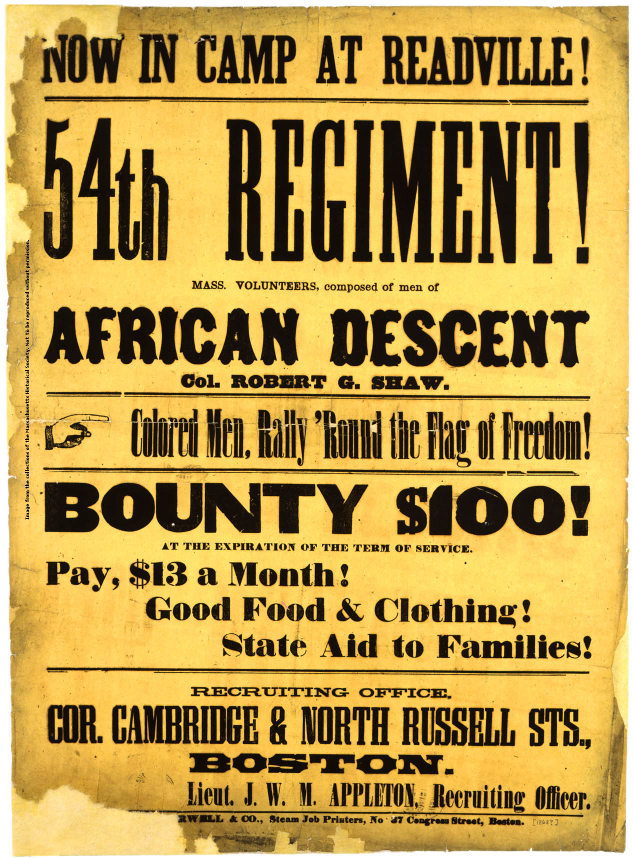
54thmassposter

Ulysses Grant concurred with Lincoln’s decision. Grant wrote to in a letter to Lincoln after the assault on Battery Wagner by the 54th Massachusetts, “by arming the negro we have added a powerful ally. They will make good soldiers and taking them from the enemy weakens him in the same proportion as it strengthens us.” [21] William Tecumseh Sherman was supportive but also noted some facts that some radical abolitionists did not understand. He noted in his correspondence that, “The first step in the liberation of the Negro from bondage will be to get him and his family to a place of safety… then to afford him the means of providing for his family,… then gradually use a proportion – greater and greater each year – as sailors and soldiers.” [22] Lincoln wrote after the Emancipation Proclamation that “the emancipation policy, and the use of colored troops, constitute the heaviest blow yet dealt to the rebellion.” [23] The change was a watershed in both American history as well as for the future of the U.S. Military services.

In conjunction with the Emancipation Proclamation Secretary of War Stanton “authorized General Rufus Saxton to “arm, uniform, equip, and receive into the service of the United States such number of volunteers of African descent as you may deem expedient, not exceeding 5,000, and [you] may detail officers to instruct them in military drill, discipline, and duty, and to command them.”  [24] The initial regiments of African Americans were formed by Union commanders in liberated areas of Louisiana and South Carolina, and most were composed of newly freed slaves. Others like the 54th and 55th Massachusetts Volunteer Infantry regiments were raised from free black men in the north. Stanton’s authorization was followed by the Enrollment Act passed by Congress in March of 1863 which established the draft also allowed blacks to serve. By March Stanton was working with state governors to establish more black regiments. The units became known as United States Colored Troops, or U.S.C.T. and were commanded by white officers and organized into the infantry, cavalry and, artillery regiments organized on the model of white regiments. The U.S.C.T. “grew to include seven regiments of cavalry, more than a dozen of artillery, and well over one hundred of infantry.” [25]

Some Union soldiers and officers initially opposed enlisting blacks at all, and some “charged that making soldiers of blacks would be a threat to white supremacy, and hundreds of Billy Yanks wrote home that they would no serve alongside blacks.” [26]  But most common soldiers accepted emancipation, especially those who had served in the South and seen the misery that many salves endured, one Illinois soldier, stationed who served in the Western Theater of war wrote, “the necessity of emancipation is forced upon us by the inevitable events of the war… and the only road out of this war is by blows aimed at the heart of the Rebellion…. If slavery should be left undisturbed the war would be protracted until the loss of life and national bankruptcy would make peace desirable on any terms.” [27]

Another soldier’s letters home show his conversion from being against emancipation to being fully for it. Corporal Chauncey B. Welton from Ohio wrote to his father after the Emancipation proclamation:

“Father I want you to write and tell me what you think of Lincoln’s proclamation of setting all the negroes free. I can tell you we don’t think much of it hear in the army for we did not enlist to fight for the negro and I can tell you that we never shall or many of us any how[.] no never.” Following over two years of service in which he served with Sherman’s army he became a critic of the anti-abolitionist Copperheads in the North, especially former Clement Vallandigham, and finally wrote in February 1865, “dear parents let us trust in Him that never forsakes the faithful, and never cease to pray… that soon we may look upon an undivided Country and that Country free free free yes free from that blighting curs[e] Slavery the cause of four years of Bloody warfare.” [28]

Even so racial prejudice in the Union ranks never went away and sometimes was accompanied by violence. It remained a part and parcel of life in and outside of the army, even though many Union soldiers would come to praise the soldierly accomplishments and bravery of African American Soldiers. An officer who had refused a commission to serve with a U.S.C.T. regiment watched as black troops attacked the defenses of Richmond in September 1864:

“The darkies rushed across the open space fronting the work, under a fire which caused them loss, into the abattis… down into the ditch with ladders, up and over the parapet with flying flags, and down among, and on top of, the astonished enemy, who left in utmost haste…. Then and there I decided that ‘the black man could fight’ for his freedom, and that I had made a mistake in not commanding them.” [29] Likewise, “Once the Lincoln administration broke the color barrier of the army, blacks stepped forward in large numbers. Service in the army offered to blacks the opportunity to strike a decisive blow for freedom….” [30]

HD_NgroWarFL640116p264cz.preview

The Defense of Milliken’s Bend 

Emancipation allowed for the formation of regiments of United States Colored Troops (USCT), which were mustered directly into Federal service. In sheer numbers the U.S.C.T. formations soon dwarfed the few state raised Black Regiments.  However, it was the inspiration provided by those first state raised regiments, the heroic accounts of those units reported in Northern newspapers, as well as the unprovoked violence directed against Blacks in the 1863 New York draft riots that helped to provoke “many northerners into a backlash against the consequences of violent racism.” [31]

Despite the hurdles and prejudices that blacks faced even in the North, many African Americans urged others to enlist, self-help mattered more than self-preservation. Henry Gooding, an black sergeant from Massachusetts wrote the editor of the New Bedford Mercury urging fellow blacks to enlist despite the dangers, “As one of the race, I beseech you not to trust a fancied security, laying in your minds, that our condition will be bettered because slavery must die…[If we] allow that slavery will die without the aid of our race to kill it – language cannot depict the indignity, the scorn, and perhaps the violence that will be heaped upon us.” [32]

The valor of the state regiments, as well as the USCT units that managed to get into action was remarkable, especially in regard to the amount of discrimination levied at them by some northerners, including white Northern soldiers, and the very real threat of death that they faced if captured by Confederates. In response to the Emancipation Proclamation and to the formation of African American regiments the Confederate Congress passed measures that would make Union officers who commanded African American troops as war criminals and return any black soldier captured by Confederate forces return to slavery, if those blacks captured in battle were not summarily tortured by their captors or executed as happened at Fort Wagner, Petersburg, and at Fort Pillow.

In late 1862 Major General Nathaniel Banks was in desperate need of soldiers and received permission to form a number of regiments of free blacks. Known as the First, Second and Third Regiments of the Louisiana Native Guards they were primarily composed of former slaves who had escaped to Union lines, as well as some mulattos who were the children of prominent white citizens of the city. During an inspection, the white Colonel of the Guards told another officer:

“Sir, the best blood of Louisiana is in that regiment! Do you see that tall, slim fellow, third file from the right of the second company? One of the ex-governors of the state is his father. That orderly sergeant in the next company is the son of a man who has been six years in the United States Senate. Just beyond him is the grandson of Judge ______ …; and through all the ranks you will find the same state of facts…. Their fathers are disloyal; [but] these black Ishmaels will more than compensate for their treason by fighting in the field.” [33]

In May of 1863 Banks dared to send the First and Third Regiments of “Louisiana Native Home Guard regiments on a series of attacks on Confederate positions at Port Hudson, Louisiana” [34] where they received their baptism of fire. They suffered heavy losses and “of the 1080 men in the ranks, 271 were hit, or one out of every four.” [35] A white Wisconsin soldier commented that the black soldiers “fought like devils,” while a soldier of the 156th New York wrote, “They charged and re-charged and they didn’t know what retreat meant. They lost in their two regiments some four hundred men as near as I can learn. This settles the question about niggers not fighting well. They on the contrary make splendid soldiers and are as good fighting men as we have.” [36] Banks too was caught up in the moment and said of these troops in his after action report: “They answered every expectation…In many respects their conduct was heroic…The severe test to which they were subjected, and the determined manner in which they encountered the enemy, leave upon my mind no doubt of their ultimate success.” [37]

The_Storming_of_Ft_Wagner-lithograph_by_Kurz_and_Allison_1890a

54th Massachusetts at Fort Wagner 

But the most famous African American volunteer regiment was the 54th Massachusetts, commanded by Colonel Robert Gould Shaw, the “North’s showcase black regiment.” [38] Raised in Boston and officered by many men who were the sons of Boston’s blue blood abolitionist elite, the regiment was authorized in March 1863. Since there was still opposition to the formation of units made up of African Americans, Massachusetts Governor John Andrew authorized the formation of the 54th under the command of white officers, a practice that with few exceptions, became standard in the U.S. military until President Truman desegregated the armed forces in 1948. Governor Andrew was determined to ensure that the officers of the 54th were men of “firm antislavery principles…superior to a vulgar contempt for color.” [39]

The 54th Massachusetts first saw action in early June 1863 and at Shaw’s urging were sent into battle against the Confederate positions at Fort Wagner on July 18th 1863. Leading the attack the 54th lost nearly half its men, “including Colonel Shaw with a bullet through his heart. Black soldiers gained Wagner’s parapet and held it for an hour before falling back.” [40] Though they tried to hold on they were pushed back after a stubborn fight to secure a breach in the fort’s defenses. “Sergeant William H Carney staggered back from the fort with wounds in his chest and right arm, but with the regiment’s Stars and Stripes securely in his grasp. “The old flag never touched the ground, boys,” Carney gasped as he collapsed at the first field hospital he could find.” [41] Shaw was buried with his men by the Confederates and when Union commanders asked for the return of his body were told “We have buried him with his niggers,” Shaw’s father quelled a northern effort to recover his son’s body with these words: We hold that a soldier’s most appropriate burial-place is on the field where he has fallen.” [42] As with so many frontal attacks on prepared positions throughout the war, valor alone could not overcome a well dug in enemy. “Negro troops proved that they could stop bullets and shell fragments as good as white men, but that was about all.” [43]

Despite the setback, the regiment went on to further actions where it continued to distinguish itself. The Northern press, particularly abolitionist newspapers brought about a change in the way that many Americans in the North, civilians as well as soldiers, saw blacks. The Atlantic Monthly noted, “Through the cannon smoke of that dark night, the manhood of the colored race shines before many eyes that would not see.”  [44]

55th-mass-at-charleston

55th Massachusetts being welcomed in Charleston SC 

In the African American 55th Massachusetts, which was recruited after the 54th, twenty-one year old Sergeant Isaiah Welch wrote a letter which was published in the Philadelphia Christian Recorder from Folly Island South Carolina:

“I will mention a little about the 55th Massachusetts Regiment. They seem to be in good health at the present and are desirous of making a bold dash upon the enemy. I pray God the time will soon come when we, as soldiers of God, and of our race and country, may face the enemy with boldness. For my part I feel willing to suffer all privations incidental to a Christian and a soldier…. In conclusion, let me say, if I fall in the battle anticipated, remember, I fall in defense of my race and country. Some of my friends thought it very wrong of me in setting aside the work of the Lord to take up arms against the enemy…. I am fully able to answer all questions pertaining to rebels. If taking lives will restore the country to what it once was, then God help me to slay them on every hand.” [45]

Like the 54th Massachusetts, the 55th would see much action. After one particularly sharp engagement in July 1864, in which numerous soldiers had demonstrated exceptional valor under fire the regiment’s commander, Colonel Alfred S. Hartwell “recommended that three of the black sergeants of the 55th be promoted to the rank of 2nd Lieutenant.” But Hartwell’s request was turned down, and a member of the regiment complained, “But the U.S. government has refused so far to must them because God did not make them White…. No other objection is, or can be offered.” [46]

Frederick Douglass, who had two sons serving in the 54th Massachusetts, understood the importance of African Americans taking up arms against those that had enslaved them in order to win their freedom:

“Once let a black man get upon his person the brass letters U.S… let him get an eagle on his button, and a musket on his shoulder and bullets in his pockets, and there is no power on earth which can deny he has won the right to citizenship in the United States.” [47]

Douglass urged African American men to enlist to secure their freedom, even while noting the inequities still prevalent in society and in the military, in which they did not receive the same pay as whites, nor could they become officers. Appealing to duty and reality Douglass noted in a speech in Philadelphia urging black men to volunteer. In it he carefully defined the real differences between the purposes of the Confederacy which was to “nothing more than to make the slavery of the African race universal and perpetual on this continent,” which was “based upon the idea that colored men are an inferior race, who may be enslaved and plundered forever.” [48]

220px-WilliamCarney

Sergeant William Carney 54th Massachusetts, Medal of Honor

But the premier leader of the African Americans of his day, who had himself suffered as a slave, did not stop with that. Douglass understood that winning the war was more important that to what had been the attitude of the Federal government before the war and before emancipation, “Now, what is the attitude of the Washington government towards the colored race? What reasons have we to desire its triumph in the present contest? Mind, I do not ask what was its attitude towards us before the war…. I do not ask you about the dead past. I bring you to the living present.” He noted the advances that had been made in just a few months and appealed to his listeners. “Do not flatter yourselves, my friends, that you are more important to the Government than the Government to you. You stand but as the plank to the ship. This rebellion can be put down without your help. Slavery can be abolished by white men: but liberty so won for the black man, while it may leave him an object of pity, can never make him an object of respect…. Young men of Philadelphia, you are without excuse. The hour has arrived, and your place is in the Union army. Remember that the musket – the United States musket with its bayonet of steel – is better than all the mere parchment guarantees of liberty. In your hands that musket means liberty…” [49]

Other African American units less famous than the illustrious 54th Massachusetts distinguished themselves in action against Confederate forces. Two regiments of newly recruited blacks were encamped at Milliken’s Bend Louisiana when a Confederate brigade attempting to relieve the Vicksburg garrison attacked them. The troops were untrained and ill-armed but held on against a determined enemy:

“Untrained and armed with old muskets, most of the black troops nevertheless fought desperately. With the aid of two gunboats they finally drove off the enemy. For raw troops, wrote Grant, the freedmen “behaved well.” Assistant Secretary of War Dana, still with Grant’s army, spoke with more enthusiasm. “The bravery of the blacks,” he declared, “completely revolutionized the sentiment in the army with regard to the employment of negro troops. I heard prominent officers who had formerly in private had sneered at the idea of negroes fighting express after that as heartily in favor of it.” [50]

The actions of the black units at Milliken’s bend attracted the attention and commendation of Ulysses Grant, who wrote in his cover letter to the after action report, “In this battle most of the troops engaged were Africans, who had little experience in the use of fire-arms. Their conduct is said, however, to have been most gallant, and I doubt not but with good officers that they will make good troops.” [51] They also garnered the attention of the press. Harper’s published an illustrated account of the battle with a “double-page woodcut of the action place a black color bearer in the foreground, flanked by comrades fighting hand-to-hand with Confederates. A brief article called it a “the sharp fight at Milliken’s bend where a small body of black troops with a few whites were attacked by a large force of rebels.” [52] In the South the result was chilling and shocked whites, one woman wrote “It is hard to believe that Southern soldiers – and Texans at that – have been whipped by a mongrel crew of white and black Yankees…. There must be some mistake.” While another woman in Louisiana confided in her diary, “It is terrible to think of such a battle as this, white men and freemen fighting with their slaves, and to be killed by such a hand, the very soul revolts from it, O, may this be the last.” [53]

flporthudsonedml

Louisiana Native Guards at Port Hudson 

By the end of the war over 179,000 African American Soldiers, commanded by 7,000 white officers served in the Union armies. For a number of reasons most of these units were confined to rear area duties or working with logistics and transportation operations. The policies to regulate USCT regiments to supporting tasks in non-combat roles “frustrated many African American soldiers who wanted a chance to prove themselves in battle.” [54]  Many of the soldiers and their white officers argued to be let into the fight as they felt that “only by proving themselves in combat could blacks overcome stereotypes of inferiority and prove their “manhood.” [55] Even so in many places in the army the USCT and state regiments made up of blacks were scorned:

“A young officer who left his place in a white regiment to become colonel of a colored regiment was frankly told by a staff officer that “we don’t want any nigger soldiers in the Army of the Potomac,” and his general took him aside to say: “I’m sorry to have you leave my command, and am still more sorry that you are going to serve with Negroes. I think that it is a disgrace to the army to make soldiers of them.” The general added that he felt this way because he was sure that colored soldiers just would not fight.”  [56]

The general of course, was wrong, for “Nothing eradicated the prejudices of white soldiers as effectively as black soldiers performing well under fire. And nothing inspired black soldiers to fight as desperately as the fear that capture meant certain death.” [57]  In the engagements where USCT units were allowed to fight, they did so with varying success most of which was often attributable to the direction of their senior officers and the training that they had received. As with any other unit, well led and well trained regiments performed better than those whose leaders had failed their soldiers. When given the chance they almost always fought well, even when badly commanded. This was true as well when they were thrown into hopeless situations.

One such instance was when Ferrero’s Division, comprised of colored troops were thrown into the Battle of the Crater at Petersburg when “that battle lost beyond all recall.” [58] The troops advanced in good order singing as they went, while their commander, General Ferrero took cover in a dugout and started drinking; but the Confederate defenders had been reinforced and “Unsupported, subjected to a galling fire from batteries on the flanks, and from infantry fire in front and partly on the flank,” a witness write, “they broke up in disorder and fell back into the crater.” [59] Pressed into the carnage of the crater where white troops from the three divisions already savaged by the fighting had taken cover, the “black troops fought with desperation, uncertain of their fate if captured.” [60] In the battle Ferrero’s division lost 1,327 of the approximately 4,000 men who made the attack. [61]

Major General Benjamin Butler railed to his wife in a letter against those who questioned the courage of African American soldiers seeing the gallantry of black troops assaulting the defenses of Petersburg in September 1864: The man who says that the negro will not fight is a coward….His soul is blacker than then dead faces of these dead negroes, upturned to heaven in solemn protest against him and his prejudices.” [62]

In another engagement, the 1864 Battle of Saltville in western Virginia the troops of the 5th USCT Cavalry who had been insulted, taunted, and derided by their fellow white Union soldiers went into action against Confederate troops defending the salt works in that town. The regiment’s commander, Colonel Wade, order his troops to attack. Colonel James Brisbin detailed the attack:

“the Negroes rushed upon the works with a yell and after a desperate struggle carried the line killing and wounding a large number of the enemy and capturing some prisoners…. Out of the four hundred men engaged, one hundred and fourteen men and four officers fell killed or wounded. Of this fight I can only say that men could not have behaved more bravely. I have seen white troops in twenty-seven battles and I never saw any fight better…. On the return of the forces those who had scoffed at the Colored Troops on the march out were silent.” [63]

The response of the Confederate government to Emancipation and African Americans serving as soldiers was immediate and uncompromisingly harsh. “When in the autumn of 1862 General Beauregard referred the question of a captured black soldier to Davis’s latest Secretary of War, James A. Seddon, the later replied “…my decision is that the negro is to be executed as an example.” [64] Davis approved of the summary executions of black prisoners carried out in South Carolina in November 1862, and a month later “on Christmas Eve, Davis issued a general order requiring all former slaves and their officers captured in arms to be delivered up to state officials for trial.” [65] Davis warned that “the army would consider black soldiers as “slaves captured in arms,” and therefore subject to execution.” [66] While the Confederacy never formally carried out the edict, there were numerous occasions where Confederate commanders and soldiers massacred captured African American soldiers.

The Lincoln administration responded to the Confederate threats by sending a note to Davis that threatened reprisals against Confederate troops if black soldiers suffered harm. It “was largely the threat of Union reprisals that thereafter gave African-American soldiers a modicum of humane treatment.” [67] Even so, they and their white officers were often in much more danger than the officers and soldiers of all-white regiments if captured by Confederate forces.

When captured by Confederates, black soldiers and their white officers received no quarter from many Confederate opponents. General Edmund Kirby Smith who held overall command of Confederate forces west of the Mississippi instructed General Richard Taylor to simply execute black soldiers and their white officers: “I hope…that your subordinates who may have been in command of capturing parties may have recognized the propriety of giving no quarter to armed negroes and their officers. In this way we may be relieved from a disagreeable dilemma.” [68] This was not only a local policy, but echoed at the highest levels of the Confederate government. In 1862 the Confederate government issued an order that threatened white officers commanding blacks: “any commissioned officer employed in the drilling, organizing or instructing slaves with their view to armed service in this war…as outlaws” would be “held in close confinement for execution as a felon.” [69] After the assault of the 54th Massachusetts at Fort Wagner a Georgia soldier “reported with satisfaction that the prisoners were “literally shot down while on their knees begging for quarter and mercy.” [70]
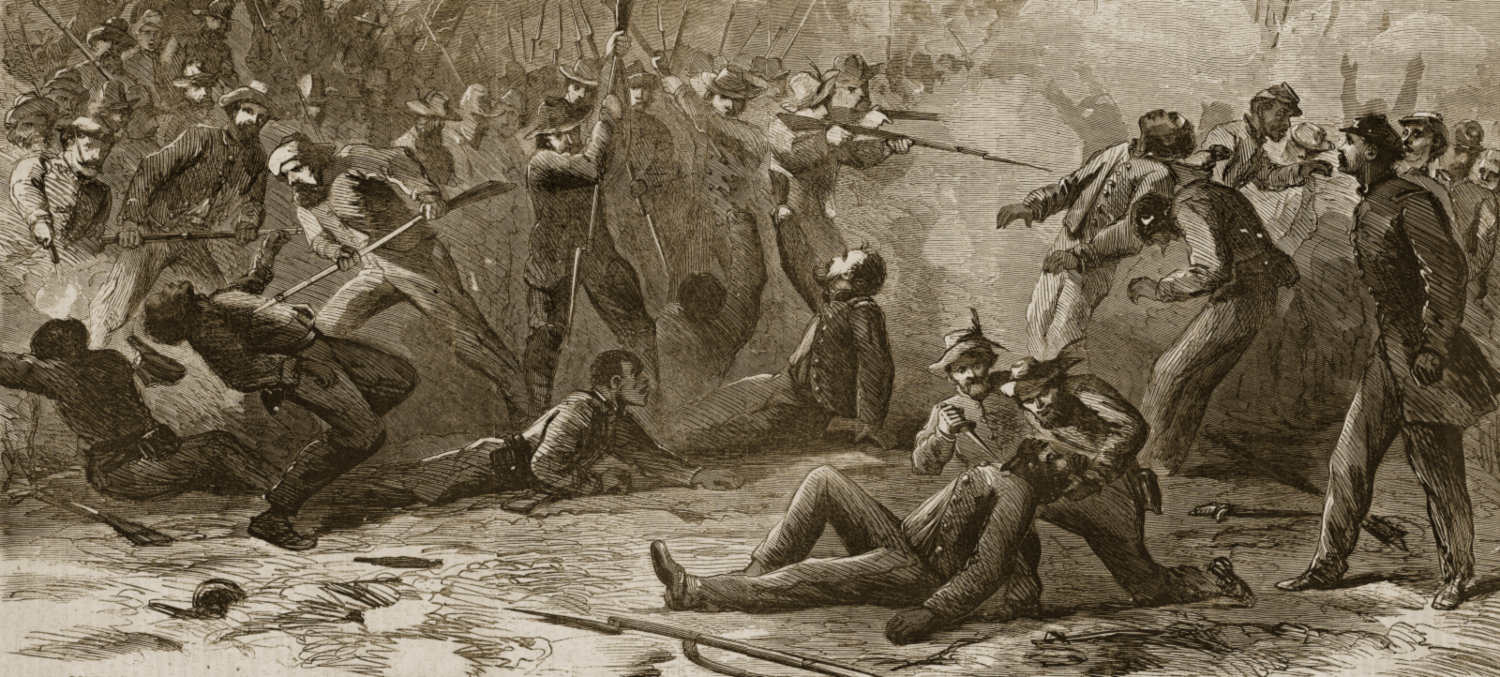
fortpillowmassacred

Fort Pillow Massacre 

On April 12th 1864 at Fort Pillow, troops under the command of General Nathan Bedford Forrest massacred the bulk of over 231 Union most of them black as they tried to surrender. While it is fairly clear that Forrest did not order the massacre and even may have attempted to stop it, it was clear that he had lost control of his troops, and “the best evidence indicates that the “massacre”…was a genuine massacre.” [71] Forrest’s soldiers fought with the fury of men possessed by hatred of an enemy that they considered ‘a lesser race’ and slaughtered the Union troops as they either tried to surrender or flee; but while Forrest did not order the massacre, he certainly was not displeased with the result. His subordinate, General James Chalmers told an officer from the gunboat Silver Cloud that he and Forrest had neither ordered the massacre and had tried to stop their soldiers but that “the men of General Forrest’s command had such a hatred toward the armed negro that they could not be restrained from killing the negroes,” and he added, “it was nothing better than we could expect so long as we persisted in arming the negro.” [72] It was a portent of what some of the same men would do to defenseless blacks and whites sympathetic to them as members of the Ku Klux Klan, the White Liners, White League, and Red Shirts, during and after Reconstruction in places like Colfax Louisiana.

Ulysses Grant was infuriated and threatened reprisals against any Confederates conducting such activities, he a later wrote:

“These troops fought bravely, but were overpowered I will leave Forrest in his dispatches to tell what he did with them.

“The river was dyed,” he says, “with the blood of the slaughtered for up to 200 years. The approximate loss was upward of five hundred killed; but few of the officers escaped. My loss was about twenty killed. It is hoped that these facts will demonstrate to the Northern people that negro soldiers cannot cope with Southerners.” Subsequently Forrest made a report in which he left out the part that shocks humanity to read.”  [73]

The bulk of the killing was directed at the black soldiers of the 6th U.S. Colored Heavy Artillery, which composed over a third of the garrison. “Of the 262 Negro members of the garrison, only 58 – just over 20 percent – were marched away as prisoners; while of the 295 whites, 168 – just under sixty percent were taken.”  [74] A white survivor of the 13th West Tennessee Cavalry, a Union unit at the fort wrote:

We all threw down our arms and gave tokens of surrender, asking for quarter…but no quarter was given….I saw 4 white men and at least 25 negroes shot while begging for mercy….These were all soldiers. There were also 2 negro women and 3 little children standing within 25 steps of me, when a rebel stepped up to them and said, “Yes, God damn you, you thought you were free, did you?” and shot them all. They all fell but one child, when he knocked it in the head with the breech of his gun.” [75]

A Confederate Sergeant who was at Fort Pillow wrote home a week after the massacre: “the poor deluded negroes would run up to our men, fall upon their knees and with uplifted hands scream for mercy, but were ordered to their feet and shot down.” [76] The captain of the Union gunboat Silver Cloud was allowed by the Confederate to bring his ship to the Fort to evacuate wounded, and to bury the dead was appalled at the sight,

“All the buildings around the fort and the tents and huts in the fort had been burned by the rebels, and among the embers of the charred remains of numbers of our soldiers who had suffered terrible death in the flames could be seen. All the wounded who had strength enough to speak agreed that after the fort was taken an indiscriminate slaughter of our troops was carried on by the enemy…. Around on every side horrible testimony to the truth of this statement could be seen, Bodies with gaping wounds,… some with skulls beaten through, others with hideous wounds as if their bowels had been ripped open with bowie-knives, plainly told that little quarter was shown…. Strewn from the fort to the river bank, in the ravines and the hollows, behind logs and under the brush where they had crept for protection from the assassins who pursued them, we found bodies bayoneted, beaten, and shot to death, showing how cold-blooded and persistent was the slaughter…. Of course, when a work is carried by assault there will always be more or less bloodshed, even when all resistance has ceased; but here there were unmistakable evidences of a massacre carried on long after any resistance could have been offered, with a cold-blooded barbarity and perseverance which nothing can palliate.” [77]The rabidly pro-slavery members of the Confederate press lent their propaganda to cheer the massacre of the captured blacks. John R. Eakin of the Washington (Arkansas) Washington Telegraph, who later became a justice on the Arkansas Supreme Court after Reconstruction, wrote,

“The Slave Soldiers. – Amongst there are stupendous wrongs against humanity, shocking to the moral sense of the world, like Herod’s massacre of the Innocents, or the eve of St. Bartholomew, the crime of Lincoln in seducing our slaves into the ranks of his army will occupy a prominent position….

How should we treat our slaves arrayed under the banners of the invader, and marching to desolate our homes and firesides….

Meanwhile, the problem has been met our soldiers in the heat of battle, where there has been no time for discussion. They have cut the Gordian knot with the sword. They did right….

It follows that we cannot treat negroes in arms as prisoners of war without a destruction of the social system for which we contend. We must be firm, uncompromising and unfaltering. We must claim the full control of all negroes who may fall into our hands, to punish with death, or any other penalty, or remand them to their owners. If the enemy retaliate, we must do likewise; and if the black flag follows, the blood be upon their heads.” [78]

However, when African American Troops were victorious, and even after they had seen their brothers murdered by Confederate troops, that they often treated their Confederate with great kindness. Colonel Brisbin wrote that following Battle of Saltville that “Such of the Colored Soldiers who fell into the hands of the Enemy during the battle were murdered. The Negroes did not retaliate but treated the Rebel wounded with great kindness, carrying them water in their canteens and doing all they could to alleviate the sufferings of those whom the fortunes of war had placed in their hands.” [79]

African American soldiers proved themselves during the war and their efforts paved the way for Lincoln and others to begin considering the full equality of blacks as citizens. If they could fight and die for the country, how could they be denied the right to votes, be elected to office, serve on juries or go to public schools? Under political pressure to end the war during the stalemate before Petersburg and Atlanta in the summer of 1864, Lincoln reacted angrily to Copperheads as well as wavering Republicans on the issue of emancipation:

“But no human power can subdue this rebellion without using the Emancipation lever as I have done.” More than 100,000 black soldiers were fighting for the Union and their efforts were crucial to northern victory. They would not continue fighting if they thought the North intended to betray them….If they stake their lives for us they must be prompted by the strongest motive…the promise of freedom. And the promise being made, must be kept…There have been men who proposed to me to return to slavery the black warriors. “I should be damned in time & in eternity for so doing. The world shall know that I will keep my faith to friends & enemies, come what will.”  [80]

The importance of African Americans cannot be minimized, without them the war could have dragged on much longer or even ended in stalemate, which would have been a Confederate victory. Lincoln wrote about the importance of the African American contribution to the war effort in 1864:

“Any different policy in regard to the colored man, deprives us of his help, and this is more than we can bear. We can not spare the hundred and forty or hundred and fifty thousand now serving us as soldiers, seamen, and laborers. This is not a question of sentiment or taste, but one of physical force which may be measured and estimated as horse-power and Steam-power are measured and estimated. Keep it and you save the Union. Throw it away, and the Union goes with it.” [81]

Despite this, even in the North during and after the war, blacks, including former soldiers faced discrimination, sometimes that of the white men that they served alongside, but more often from those who did not support the war effort. Lincoln wisely took note of this fact, and wrote that after the war:

“there will there will be some black men who can remember that, with silent tongue, the clenched teeth, the steady eye, the well poised bayonet, they have helped  mankind on to this great consummation; while, I fear, there will be some white ones, unable to forget that, with malignant heart, and deceitful speech, they have strove to hinder it.” [82]

swails

Lt Stephen Swails, First African American Officer of 54th Massachusetts 

Those rights would be fought for another century and what began in 1863 with the brave service and sacrifice of these African American soldiers began a process of increased civil rights that is still going on today. It would not be until after the war that some blacks were commissioned as officers in the Army. When Governor John Andrew, the man who had raised the 54th Massachusetts attempted to “issue a state commission to Sergeant Stephen Swails of the 54th…the Bureau of Colored Troops obstinately refused to issue Swails a discharge from his sergeant’s rank, and Swails promotion was held up until after the end of the war. “How can we hope for success to our arms or God’s blessing,” raged the white colonel of the 54th, Edward Hallowell, “while we as a people are so blind to justice?” [83]

The families of the free blacks who volunteered also suffered, especially those who still had families enslaved in Confederate occupied areas or Union States which still allowed slavery. One women in Missouri wrote her husband begging him to come home “I have had nothing but trouble since you left….They abuse me because you went & say they will not take care of our children & do nothing but quarrel with me all the time and beat me scandalously the day before yesterday.”  [84]

However, the Emancipation Proclamation transformed the war, and even jaded White Union soldiers who had been against emancipation and who were deeply prejudiced against blacks began to change their outlook as the armies marched into the South and saw the horrors of slavery, Russell Weigley wrote that Union soldiers: “confronting the scarred bodies and crippled souls of African Americans as they marched into the South experienced a strong motivation to become anti-slavery men…Men do not need to play a role long, furthermore, until the role grows to seem natural and customary to them. That of liberators was sufficiently fulfilling to their pride that soldiers found themselves growing more accustomed to it all the more readily.” [85]

A sergeant of the 19th Michigan who had already lost a stepson in the war wrote to his wife from Georgia before being killed in action during the Atlanta campaign; “the more I learn of the cursed institution of Slavery, the more I feel willing to endure, for its final destruction…. After this war is over, this whole country will undergo a change for the better…. Abolishing slavery will dignify labor; that fact will revolutionize everything…. Let Christians use all their influence to have justice done to the black man.” [86]

But even more importantly for the cause of liberty, the sight of regiments of free African Americans, marching “through the slave states wearing the uniform of the U.S. Army and carrying rifles on their shoulders was perhaps the most revolutionary event of a war turned into revolution.” [87]
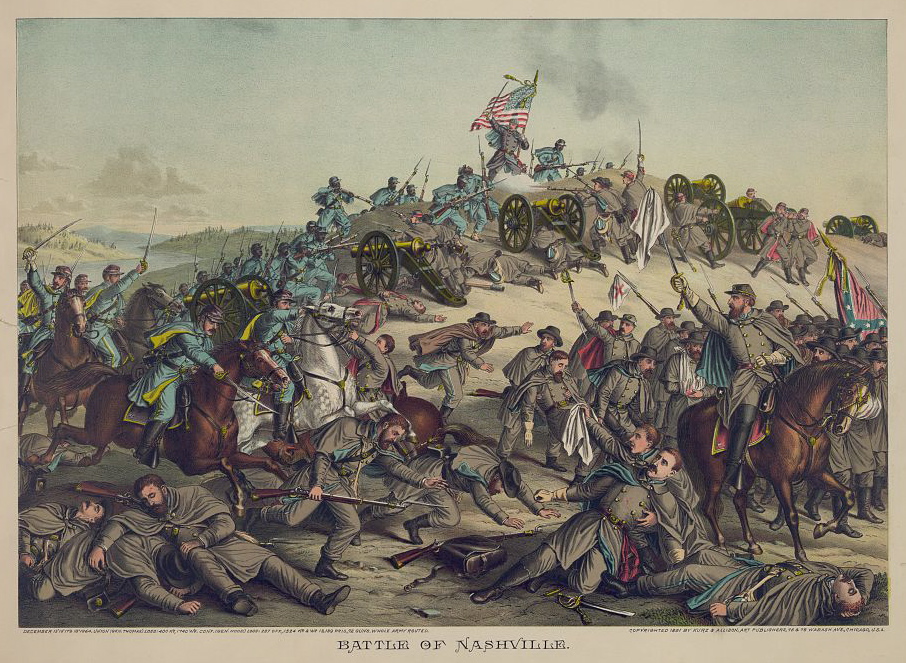
battle_of_nashville_kurz__allison

At peak one in eight Union troops were African American, and Black troops made an immense contribution to the Union victory. “Black troops fought on 41 major battlefields and in 449 minor engagements. Sixteen soldiers and seven sailors received Medals of Honor for valor. 37,000 blacks in army uniform gave their lives and untold sailors did, too.” [88] To fully appreciate the measure as to the importance and significance of the numbers of African American troops serving in the Union ranks has to compare that number with the number of active Confederate troops serving toward the end of the war. The approximately 180,000 African Americans serving in Union ranks at the end of the war outnumbered the “aggregate present” in Confederate ranks on January 1st 1865 by over 20,000 men. Of these troops “134,111 were recruited in states that had stars in the Confederate battle flag, and the latter figure in turn was several thousand greater than the total of 135,994 gray-clad soldiers “present for duty” that same day.” [89]

Of the African American soldiers who faced the Confederates in combat, “deep pride was their compensation. Two black patients in an army hospital began a conversation. One of them looked at the stump of an arm he had once had and remarked: “Oh I should like to have it, but I don’t begrudge it.” His ward mate, minus a leg, replied: “Well, ‘twas [lost] in a glorious cause, and if I’d lost my life I should have been satisfied. I knew what I was fighting for.” [90]

22nd-usct-flags

Flags of the 22nd U.S. Colored Troops 

After the war many of the African American soldiers became leaders in the African American community and no less than 130 of these former soldiers held elected office including in the U.S. Congress and various state legislatures. The liberating aspect of “the black military experience radiated from black soldiers and their families into the larger black community, so it spread into white society as well.” [91]  Many abolitionists who had served as officers, and officers who were assigned to the USCT or volunteered to serve with state raised African American regiments became leaders continued to be voices for expanding civil rights in the years following the war.

Following war’s end, the demobilized African American troops became the target of racial discrimination and violence, but even so, “black veterans continued to play a central role in black communities, North and South. The skills and experience black men gained during the war not only propelled many of them into positions of leaders and sustained the prominence of others, but it also shaped the expectations and aspirations of all black people. The achievements and pride engendered by military service helped to make a new world of freedom.” [92]

Sadly, much of the nation has forgotten the efforts of the Free Black Soldiers and Sailors who fought for freedom, but even so their legacy remains in the “contribution of black soldiers to Union victory remained a point of pride in black communities. “They say,” an Alabama planter reported in 1867, “the Yankees never could have whipped the South without the aid of the Negroes.” Well into the twentieth century, black families throughout the United States would recall with pride that their fathers and grandfathers had fought for freedom.” [93]

Notes 

[1] Ibid. McPherson Tried by War: Abraham Lincoln as Commander in Chief

[2] Ibid. Goodwin Team of Rivals p.435

[3] Ibid. McPherson Tried by War p.58

[4] Ibid. McPherson Tried by War p.58

[5] Ibid. Goodwin Team of Rivals p.369

[6] Ibid. McPherson Tried by War p.109

[7] Ibid. Foote, The Civil War, A Narrative Volume Two p.531

[8] Ibid. McPherson. The Battle Cry of Freedom p.503

[9] Ibid. McPherson Drawn With the Sword: Reflections on the American Civil War p.101

[10] Ibid. Guelzo Gettysburg: The Last Invasion p.160

[11] Foner, Eric Forever Free: The Story of Emancipation and Reconstruction Vintage Books a Division of Random House, New York 2005 p.45

[12] Ibid. Guelzo Gettysburg: The Last Invasion p.160

[13] Ibid. Glatthaar General Lee’s Army from Victory to Collapse p.313

[14] Ibid. Guelzo Gettysburg: The Last Invasion p.160

[15] Ibid. Goodwin Team of Rivals p.465

[16] Egnal, Marc Clash of Extremes: The Economic Origins of the Civil War Hill and Wang a division of Farrar, Straus and Giroux New York 2009 p.318

[17] Ibid. Foner Forever Free p.48

[18] Ibid. McPherson Tried by War p.159

[19] Ibid. McPherson Drawn With the Sword p.159

[20] Ibid. McPherson Abraham Lincoln and the Second American Revolution p.35

[21] Ibid. Guelzo Fateful Lightning p.381

[22] Ibid. Dobak Freedom by the Sword: The U.S. Colored Troops, 1862-1867 p.10

[23] Ibid. McPherson Abraham Lincoln and the Second American Revolution p.35

[24] Ibid. Robertson Soldiers Blue and Gray p.31

[25] Ibid. Dobak Freedom by the Sword: The U.S. Colored Troops, 1862-1867 p.11

[26] Ibid. Robertson Soldiers Blue and Gray p.31

[27] Ibid. Gallagher, Gary W. The Union War Harvard University Press, Cambridge MA and London 2011 p.103

[28] Welton, Chauncey B. A Union Soldier’s Changing Views on Emancipation in The Civil War and Reconstruction: A Documentary Collection edited by William Gienapp, W.W. Norton Company, New York and London 2001 pp.242 and 245

[29] Ibid. Robertson Soldiers Blue and Gray p.34

[30] Glatthaar, Joseph T. Black Glory: The African American Role in Union Victory in Why the Confederacy Lost edited by Gabor S. Boritt Oxford University Press, Oxford and New York 1992

[31] Ibid. McPherson. The Battle Cry of Freedom p.686

[32] Ibid. Goldfield America Aflame p.282

[33] Jones, Terry L. The Free Men of Color Go to War in The new York Times Disunion: 106 Articles from the New York Times Opinionator edited by Ted Widmer with Clay Risen and George Kalogerakis, Black Dog and Leventhal Publishers, New York 2013 p.403

[34] Ibid. Guelzo Fateful Lightening p.379

[35] Ibid. Foote The Civil War, A Narrative Volume Two p.398

[36] Ibid. Trudeau Like Men of War p.44

[37] Ibid. Guelzo Fateful Lightening p.379

[38] Ibid. McPherson. The Battle Cry of Freedom p.686

[39] Ibid. McPherson Drawn With the Sword p.101

[40] Ibid. McPherson. The Battle Cry of Freedom p.686

[41] Ibid. Guelzo Fateful Lightening pp. 380-381

[42] Ibid. McPherson. The Battle Cry of Freedom pp.686-687

[43] Ibid. Foote, The Civil War, A Narrative Volume Two p.697

[44] Ibid. McPherson. The Battle Cry of Freedom p.686

[45] Welch, Isaiah H. Letter in the Christian Recorder 24 October 1863 in The Civil War and Reconstruction: A Documentary Collection edited by William E. Gienapp, W.W. Norton and Company, New York and London 2001 pp.225-226

[46] Trudeau, Noah Andre, Like Men of War: Black Troops in the Civil War 1862-1865 Little, Brown and Company, Boston, New York and London, 1998 p.262

[47] Ibid. Guelzo Fateful Lightening p. 381

[48] Douglass, Frederick Philadelphia Speech of July 6th 1863 recorded in the Liberator in The Civil War and Reconstruction: A Documentary Collection edited by William E. Gienapp, W.W. Norton and Company, New York and London 2001 pp.220-221

[49] Ibid. Douglass Philadelphia Speech of July 6th 1863 p.221

[50] Ibid. McPherson. The Battle Cry of Freedom p.634

[51] Ibid. Trudeau Like Men of War: Black Troops in the Civil War 1862-1865 p.58

[52] Ibid. Gallagher The Union War p.97

[53] Ibid. Trudeau Like Men of War: Black Troops in the Civil War 1862-1865 p.59

[54] Ibid. Gallagher The Union War p.92

[55] Ibid. McPherson Drawn With the Sword p.89 p.

[56] Catton, Bruce. A Stillness at Appomattox Doubleday and Company Garden City, New York 1953 p.227

[57] Berlin, Ira, Riedy, Joseph P. and Rowland, Leslie S. editors, Freedom’s Soldiers: The Black Military Experience in the Civil War  Cambridge University Press, Cambridge and New York 1998 pp.133-134

[58] Ibid. Catton A Stillness at Appomattox p.249

[59] Foote, Shelby, The Civil War, A Narrative. Volume Three Red River to Appomattox Random House, New York 1974 p.537

[60] Ibid.Wert The Sword of Lincoln: The Army of the Potomac pp.384-385

[61] Ibid. Foote The Civil War, A Narrative Volume Three p.537

[62] Ibid. Robertson Soldiers Blue and Gray p.34

[63] Ibid. Berlin et al, Freedom’s Soldiers: The Black Military Experience in the Civil War  p.135

[64] Ibid. Weigley A Great Civil War p.189

[65] Ibid. McPherson Battle Cry of Freedom p.566

[66] Ibid. Goldfield America Aflame p. 280

[67] Ibid. Weigley A Great Civil War p.188

[68] Ibid. Guelzo Fateful Lightening p. 377

[69] Ibid. Guelzo Fateful Lightening p. 377

[70] Ibid. Goldfield America Aflame p.281

[71] Ibid. Weigley A Great Civil War p.189

[72] Ibid. Dobak Freedom by the Sword: The U.S. Colored Troops, 1862-1867 p.208

[73] Grant, Ulysses S. Preparing for the Campaigns of ’64 in Battles and Leaders of the Civil War Volume IV, Retreat With Honor Edited by Robert Underwood Johnson and Clarence Clough Buel Castle, Secaucus NJ pp.107-108

[74] Ibid. Foote The Civil War, A Narrative Volume Three p.111

[75] Ibid. Guelzo Fateful Lightning p. 378

[76] Ibid. Foote The Civil War, A Narrative Volume Three p.112

[77] Ibid. Dobak Freedom by the Sword: The U.S. Colored Troops, 1862-1867 p.208

[78] Eakin, John R. The Slave Soldiers, June 8, 1864  in Loewen, James W. and Sebesta, Edward H. editors, The Confederate and Neo-Confederate Reader: The “Great Truth” about “The Lost Cause” University of Mississippi Press, Jackson 2010 pp.210 and 212

[79] Ibid. Berlin et al, Freedom’s Soldiers: The Black Military Experience in the Civil War  p.47

[80] Ibid. McPherson Abraham Lincoln and the Second American Revolution p.89

[81] Ibid. Glatthaar Black Glory: The African American Role in Union Victory p.138

[82] Ibid. McPherson The War that Forged a Nation p. 113

[83] Ibid. Guelzo Fateful Lightning p. 376

[84] Ibid. Goldfield America Aflame p.282

[85] Ibid. Weigley A Great Civil War p.192

[86] Ibid. McPherson For Cause and Comrades p.130

[87] Ibid. Weigley A Great Civil War p.191

[88] Gallagher, Gary, Engle, Stephen, Krick, Robert K. and Glatthaar editors The American Civil War: The Mighty Scourge of War Osprey Publishing, Oxford UK 2003 p.296

[89] Ibid. Foote The Civil War, A Narrative. Volume Three Red River to Appomattox p.756

[90] Ibid. Robertson Soldiers Blue and Gray p.36

[91] Ibid. Berlin et al, Freedom’s Soldiers: The Black Military Experience in the Civil War  p.47

[92] Ibid. Berlin et al. Freedom’s Soldiers: The Black Military Experience in the Civil War pp.49-50

[93] Ibid. Foner Forever Free p.55


1 Comment

Filed under civil rights, civil war, History, Military, Political Commentary

“Sound the Loud Timbrel o’er Egypt’s Dark Sea, Jehovah Hath Triumphed, His People are Free.” The Emancipation Proclamation

emancipation

Friends of Padre Steve’s World

Another section  from one of my Civil War texts, this dealing with the Emancipation Proclamation.

Peace

Padre Steve+

From the beginning of the war many Northerners, especially abolitionists and radical Republicans believed that “as the “cornerstone” of the confederacy (the oft-cited description by the South’s vice-president, Alexander H. Stephens) slavery must become a military target.” [1] When some Union generals made their own attempts at issuing emancipation orders, Lincoln countermanded them for exceeding their authority. Lincoln resisted the early calls of the abolitionists to make that a primary war goal for very practical reasons, he had to first ensure that the Border Slave States did not secede, something that would have certainly ensured that the Union would not survived. As a result in the first year of the war, Lincoln “maneuvered to hold Border South neutrals in the Union and to lure Union supporters from the Confederacy’s Middle South white belts. He succeeded on both scores. His double success with southern whites gave the Union greater manpower, a stronger economy, and a larger domain. These slave state resources boosted free labor states’ capacity to should the Union’s heavier Civil War burden.” [2] His success in doing this was instrumental in enabling him to turn to emancipation in 1862.

Finally, some twenty months after Fort Sumter fell and after nearly two years of unrelenting slaughter culminating in the bloody battle of Antietam, Abraham Lincoln published the Emancipation Proclamation. Emancipation was a tricky legal issue for Lincoln as “an executive order of emancipation would be beyond the powers of the president, but not, Lincoln concluded, if such an order were issued as furtherance of the executive’s war powers.” [3] Lincoln had desired to issue the order during the summer and sounded out elected officials and soldiers as to his plan.

Lincoln discussed his views with General George McClellan during a visit to the latter’s headquarters. McClellan stated his strident opposition to them in writing. McClellan did not admire slavery but he despised abolitionists and he wrote one of his political backers “Help me to dodge the nigger – we want nothing to do with him. I am fighting for the Union…. To gain that end we cannot afford to mix up the negro question.”  [4]

Lincoln then called border state Congressmen to sound them out on the subject on July 12th 1862 only to be met with opposition. Such opposition caused Lincoln “to give up trying to conciliate conservatives. From then on the president tilted toward the radical position, though this would not become publicly apparent for more than two months.” [5]

Lincoln’s cabinet met to discuss the proclamation on July 22nd 1862 and after some debate decided that it should be issued, although it was opposed by Postmaster General Montgomery Blair who believed that “the Democrats would capitalize on the unpopularity of such a measure in the border states and parts of the North to gain control of the House in the fall elections.” [6] Wisely, Lincoln heeded the advice of Secretary of State Seward to delay the announcement until military victories ensured that people did not see it as a measure of desperation. Seward noted: “I approve of the proclamation, but I question the expediency of its issue at this juncture. The depression of the public mind, consequent on our repeated reverses, is so great I fear…it may be viewed as the last measure of an exhausted government, a cry for help…our last shriek on the retreat.” Seward suggested that Lincoln wait “until the eagle of victory takes his flight,” and buoyed by military success, “hang your proclamation about his neck.” [7]

After the Battle of Antietam, President Lincoln issued the Preliminary Emancipation Proclamation. This document served as a warning to the leaders of the South, and insisted that there was much more at stake in their rebellion unless they surrendered; their slaves, the very “property” for which the seceded. The document “warned that unless the South laid down its arms by the end of 1862, he would emancipate the slaves.” [8] This was something that they could not and would not do, even as their cities burned and Confederacy collapsed around them in 1864.

The proclamation was a military order in which Lincoln ordered the emancipation of slaves located in the Rebel states and areas of those states occupied by Union troops. It was not designed to change law, which would have to wait until Lincoln felt he could have Congress amend the Constitution.  Instead of law it was “the doctrine of military necessity justified Lincoln’s action.” [9] The concept emanated from Boston lawyer William Whiting who argued “the laws of war “give the President full belligerent rights” as commander and chief to seize enemy property (in this case slaves) being used to wage war against the United States.” [10] There was a legitimate military necessity in the action as Confederate armies used slaves as teamsters, laborers, cooks, and other non-combatant roles to free up white soldiers for combat duty, and because slaves were an important part of the Southern war economy which could not function without them. The proclamation gave inspiration to many slaves throughout the South to desert to the Union cause or to labor less efficiently for their Confederate masters. A South Carolina planter wrote in 1865:

“the conduct of the Negro in the late crisis of our affairs has convinced me that we were all laboring under a delusion….I believed that these people were content, happy, and attached to their masters, But events and reflection have caused me to change these positions….If they were content, happy and attached to their masters, why did they desert him in the moment of need and flocked to the enemy, whom they did not know….” [11]

The proclamation authorized that freed blacks be recruited into the Federal army and it ensured that freed slaves would not again be surrendered back into slavery. As Montgomery Blair had warned Lincoln and the Republicans suffered sharp electoral reverses as “Democrats made opposition to emancipation the centerpiece of their campaign, warning that the North would be “Africanized” – inundated by freed slaves competing for jobs and seeking to marry white women.”  [12]

Lincoln’s response was to continue on despite the opposition and issue the Proclamation in spite of electoral reverses and political resistance. The vehemence of some Northern Democrats came close to matching that of white Southerners. The “white Southerner’s view of Lincoln as a despot, hell-bent on achieving some unnatural vision of “equality,” was shared by Northern Democrats, some of whom thought the president was now possessed by a “religious fanaticism.” [13] But Lincoln was not deterred and he understood “that he was sending the war and the country down a very different road than people thought they would go.” [14] He noted in December 1862:

“Fellow citizens, we cannot escape history….This fiery trial through which we pass, will light us down, in honor or dishonor, to the latest generation….In giving freedom to the slave, we assure freedom to the free – honorable alike in what we give, and what we preserve.” [15]

For Lincoln the Emancipation Proclamation was something that he believed was something that he had to do, and he believed that it would be the one thing that he did in life that would be remembered. He had long been convicted of the need for it, but timing mattered, even six months before it might have created a political backlash in the North which would have fractured support for the war effort, and in this case timing and how he made the proclamation mattered.

The Emancipation Proclamation had military, domestic political, and diplomatic implications, as well as moral implications for the conduct of the war.

The military implication would take some time to achieve but were twofold. First, Lincoln hoped that the Emancipation Proclamation would encourage former slaves, as well as already free blacks in the North to join the Union cause and enlist to serve in the Federal Army. The act would vest African Americans in the Union’s cause as little else could, and at the same time begin to choke-off the agricultural labor force that provided the backbone of the Confederate economy. Frederick Douglass eloquently made the case for African Americans to serve in July 1863, telling a crowd in Philadelphia, “Do not flatter yourself, my friends, that you are more important to the Government than the Government is to you. You stand but as a plank to the ship. This rebellion can be put down without your help. Slavery can be abolished by white men: but Liberty so won for the black man, while it may leave him an object of pity, can never make him an object of respect…. Young men of Philadelphia, you are without excuse. The hour has arrived, and your place is in the Union army. Remember that the musket – the United States musket with its bayonet of steel – is better than all the parchment guarantees of Liberty. In you hands the musket means Liberty…” [16] By the end of the war over 180,000 African American men would serve as volunteers in the United States Army.

Politically the proclamation would the diplomatic purpose by isolating the Confederacy from European assistance. This it did, after the proclamation public sentiment, especially among Europe’s working classes turned solidly against the Confederacy. Domestically it would break-ground for the Thirteenth Amendment, which Lincoln, the pragmatic lawyer was needed to actually abolish slavery. Morally, it  would serve as the guarantee of The United States Government’s public, irrevocable pledge of freedom to African Americans if the North won the war.

Lincoln signed the order on January 1st 1863. As he got ready to sign the document he paused and put down the pen, speaking to Seward he said “I never, in my life, felt more certain that I was doing right, than I do now in signing this paper….If my name ever goes down in history it will be for signing this act, and my whole soul is in it.” [17] The opening paragraph read:

“That on the first day of January, in the year of our Lord one thousand eight hundred and sixty-three, all persons held as slaves within any State or designated part of a State, the people whereof shall then be in rebellion against the United States, shall be then, thenceforward, and forever free; and the Executive Government of the United States, including the military and naval authority thereof, will recognize and maintain the freedom of such persons, and will do no act or acts to repress such persons, or any of them, in any efforts they may make for their actual freedom.” [18]

At the ends of the proclamation he added the words suggested by his devoutly Christian Secretary of the Treasury Salmon Chase: “And upon this act, sincerely believed to be an act of justice, warranted by the Constitution, upon military necessity, I invoke the considerate judgment of mankind, and the gracious favor of Almighty God.” [19]

The response throughout the North was euphoric as celebrations took place throughout the North. In some cities one hundred gun salutes were fired. At Boston’s Tremont Temple people broke out singing a hymn “Sound the loud timbrel o’er Egypt’s dark sea, Jehovah hath triumphed, his people are free.” [20] The Boston Daily Evening Telegraph predicted, “Slavery from this hour ceases to be a political power in this country…such a righteous revolution as it inaugurates never goes backward.” [21]

Frederick Douglass wrote about his reactions to the Emancipation proclamation as he had nearly despaired wondering if the Lincoln administration would actually take up the fight for emancipation:

“The fourth of July was great, but the first of January, when we consider it in all of its relations and bearings in incomparably greater. The one we respect to the mere political birth to a nation, the last concerns national life and character, and is to determine whether that life and character shall be radiantly and glorious with all high and noble virtues, or infamously blackened, forevermore, with all the hell-darkened crimes and horrors which we attach to Slavery.” [22]

The proclamation was not all some had hoped for and it was certainly provoked a negative response in the South and among many Northern Democrats. Southerners accused Lincoln of inciting racial warfare and Jefferson Davis responded “The day is not so distant when the old Union will be restored with slavery nationally declared to be the proper condition of all of African descent.” [23]

But the proclamation did something that politicians, lawyers did not comprehend, that “the details of the emancipation decree were less significant than the fact that there was an emancipation decree, and while the proclamation read like a dull legal brief, filled with qualifying clauses and exceptions, it was not language made for this, finally, a moral document. It was its existence, its title, its arrival into this world, its challenge to the accepted order, and from that there was no turning back. In this sense it was a revolutionary statement, like the Declaration itself, and nearly as significant.” [24] That the proclamation most certainly was and it was a watershed from which there was no stepping back. “It irrevocably committed the government of the United States to the termination of slavery. It was an act of political courage, take at the right time, in the right way.” [25]

However, it would take another two years, with the Confederacy crumbling under the combined Federal military onslaught before Lincoln was able to secure passage of the Thirteenth Amendment to the Constitution in January 1865.  The amendment abolished slavery and involuntary servitude throughout the country, as well as nullified the fugitive slave clause and the Three-Fifths Compromise. It would be followed after Lincoln’s death by the Fourteenth Amendment which reversed the result of the Dred Scott decision and declared that all people born in the United States were citizens and entitled to the rights of citizenship. During the Grant administration the Fifteenth Amendment was passed, and this finally extended to African American men, the right to vote in every state.

Though limited in scope, the Emancipation Proclamation had more than a domestic military, social and political effect. It also had an effect on foreign policy which ensured that Britain, and thereby France would not intervene in the war on behalf of the Southern Confederacy. It stopped all British support for the Rebels to include seizing warships that had been contracted for by Confederate agents that were building or being fitted out in British Yards. Likewise the British rejected various proposals of Emperor Napoleon III to intervene in the war in late 1862 and during the summer of 1863.

Effects of the Emancipation Proclamation on Military Law

The Emancipation Proclamation and the elimination of slavery also impacted the Union war effort in terms of law, law that eventually had an impact around the world as nations began to adapt to the changing character of war. It was important because for the first time slavery was accounted for in the laws of war. The “Instructions for the Government of Armies of the United States in the Field, General Orders No. 100 by President Lincoln, April 24, 1863; Prepared by Francis Lieber, LLD noted in Article 42 of that Code:

“Slavery, complicating and confounding the ideas of property, (that is of a thing,) and of personality, (that is of humanity,) exists according to municipal or local law only. The law of nature and nations has never acknowledged it. The digest of the Roman law enacts the early dictum of the pagan jurist, that “so far as the law of nature is concerned, all men are equal.” Fugitives escaping from a country in which they were slaves, villains, or serfs, into another country, have, for centuries past, been held free and acknowledged free by judicial decisions of European countries, even though the municipal law of the country in which the slave had taken refuge acknowledged slavery within its own dominions.” [26]

It continued in Article 43:

“Therefore, in a war between the United States and a belligerent which admits of slavery, if a person held in bondage by that belligerent be captured by or come as a fugitive under the protection of the military forces of the United States, such person is immediately entitled to the rights and privileges of a freeman To return such person into slavery would amount to enslaving a free person, and neither the United States nor any officer under their authority can enslave any human being. Moreover, a person so made free by the law of war is under the shield of the law of nations, and the former owner or State can have, by the law of postliminy, no belligerent lien or claim of service.” [27]

The Continued Fight for Emancipation: Dealing with the Copperheads and the Passage of the Thirteenth Amendment

But there were still legitimate concerns that slavery might survive as the war continued. Lincoln knew that in issuing the Emancipation Proclamation raised the stakes of the war far higher than they had been. He noted, “We shall nobly save, or meanly lose, the last best hope on earth.” [28] The threat of the destruction of the Union and the continuance of slavery in either the states of the Confederacy, the new western states, territories, or the maintenance of the Union without emancipation was too great for some; notably, the American Freedmen’s Commission to contemplate. With Grant’s army stalled outside Richmond the Copperheads and the peace party gained influence and threatened to bring about a peace that allowed Confederate independence and the continuance of slavery; members of that caucus they Edwin Stanton in the spring of 1864:

“In such a state of feeling, under such a state of things, can we doubt the inevitable results? Shall we escape border raids after fleeing fugitives? No man will expect it. Are we to suffer these? We are disgraced! Are we to repel them? It is a renewal of hostilities!…In the case of a foreign war…can we suppose that they will refrain from seeking their own advantage by an alliance with the enemy?” [29]

The effort of the Copperheads and the peace party to was soon crushed under the military successes of William Tecumseh Sherman’s armies in Georgia. This was especially true of the capture of Atlanta, which was followed by Sherman’s march to the sea and the Carolinas. Additionally the naval victory of David Farragut’s fleet at the Battle of Mobile Bay served to break the stranglehold that the Copperheads were beginning to wield in Northern politics.  These efforts helped secure Lincoln’s reelection by a large margin in the 1864 presidential election over a divided Democratic opposition, whose presidential nominee McClellan could not even endorse his party’s platform.

In his Second Inaugural Address, Abraham Lincoln discussed the issue of slavery as the chief cause of the war. In it, Lincoln noted that slavery was the chief cause of the war in no uncertain terms and talked in a language of faith that was difficult for many, especially Christians, who “believed weighty political issues could be parsed into good or evil. Lincoln’s words offered a complexity that many found difficult to accept,” for the war had devastated the playground of evangelical politics, and it had “thrashed the certitude of evangelical Protestantism” [30] as much as the First World War shattered Classic European Protestant Liberalism.  Lincoln’s confrontation of the role that people of faith brought to the war in both the North and the South is both illuminating and a devastating critique of the religious attitudes that so stoked the fires of hatred.  His realism in confronting facts was masterful, and badly needed.  He spoke of “American slavery” as a single offense ascribed to the whole nation.” [31]

“One-eighth of the whole population were colored slaves, not distributed generally over the Union, but localized in the southern part of it. These slaves constituted a peculiar and powerful interest. All knew that this interest was somehow the cause of the war. To strengthen, perpetuate, and extend this interest was the object for which the insurgents would rend the Union even by war, while the Government claimed no right to do more than to restrict the territorial enlargement of it. Neither party expected for the war the magnitude or the duration which it has already attained. Neither anticipated that the cause of the conflict might cease with or even before the conflict itself should cease. Each looked for an easier triumph, and a result less fundamental and astounding. Both read the same Bible and pray to the same God, and each invokes His aid against the other. It may seem strange that any men should dare to ask a just God’s assistance in wringing their bread from the sweat of other men’s faces, but let us judge not, that we be not judged. The prayers of both could not be answered. That of neither has been answered fully. The Almighty has His own purposes. “Woe unto the world because of offenses; for it must needs be that offenses come, but woe to that man by whom the offense cometh.” If we shall suppose that American slavery is one of those offenses which, in the providence of God, must needs come, but which, having continued through His appointed time, He now wills to remove, and that He gives to both North and South this terrible war as the woe due to those by whom the offense came, shall we discern therein any departure from those divine attributes which the believers in a living God always ascribe to Him? Fondly do we hope, fervently do we pray, that this mighty scourge of war may speedily pass away. Yet, if God wills that it continue until all the wealth piled by the bondsman’s two hundred and fifty years of unrequited toil shall be sunk, and until every drop of blood drawn with the lash shall be paid by another drawn with the sword, as was said three thousand years ago, so still it must be said “the judgments of the Lord are true and righteous altogether.[32]

Notes 

[1] Ibid. Foner Forever Free: The Story of Emancipation and Reconstruction  p.42

[2] Ibid. Freehling The South vs. The South p.47

[3] Brewster, Todd. Lincoln’s Gamble: The Tumultuous Six Months that Gave America the Emancipation Proclamation and Changed the Course of the Civil War Scribner a Division of Simon and Schuster, New York and London p.59

[4] Ibid. McPherson The Battle Cry of Freedom p.364

[5] Ibid. McPherson The Battle Cry of Freedom p.504

[6] McPherson, James M. Tried by War: Abraham Lincoln as Commander in Chief Penguin Books, New York and London 2008 p.109

[7] Ibid. Goodwin Team of Rivals p. 468

[8] Ibid. Foner Forever Free p.49

[9] McGovern, George Abraham Lincoln Times Books, Henry Holt and Company, New York 2009 p.70

[10] Ibid. McPherson Tried by War: p.108

[11] Ibid. Zinn The Other Civil War p.39

[12] Ibid. Foner Forever Free p.49

[13] Ibid. Brewster Lincoln’s Gamble p.169

[14] Ibid. Guelzo Fateful Lightning p.184

[15] Ibid. Foner Forever Free p.49

[16] Douglass, Frederick. Philadelphia Speech of July 6th 1863 recorded in the Liberator in The Civil War and Reconstruction: A Documentary Collection edited by William E. Gienapp, W.W. Norton and Company, New York and London 2001 p.221

[17] Ibid. Goodwin Team of Rivals p. 499

[18] Lincoln, Abraham The Emancipation Proclamation The National Archives & Records Administration retrieved from http://www.archives.gov/exhibits/featured_documents/emancipation_proclamation/transcript.html 14 June 2014

[19] Ibid. Lincoln The Emancipation Proclamation

[20] Ibid. Brewster Lincoln’s Gamble p.244

[21] Ibid. McPherson The Battle Cry of Freedom p.501

[22] Ibid. Guelzo Fateful Lightning pp. 180-181

[23] Ibid. Goldfield America Aflame p.263

[24] Ibid. Brewster Lincoln’s Gamble p.245

[25] Ibid. McGovern Abraham Lincoln p.78

[26] Reichberg, Gregory M, Syse Henrik, and Begby, Endre The Ethics of War: Classic and Contemporary Readings Blackwell Publishing Ltd, Malden, MA and Oxford UK 2006 p.570

[27] Ibid. Reichberg et al. The Ethics of War p.570

[28] Ibid. Goldfield America Aflame p.263

[29] Ibid. Guelzo Fateful Lightning p.534

[30] Ibid. Goldfield  America Aflame p.358

[31] Ibid. Wills Lincoln at Gettysburg p.186

[32] Lincoln, Abraham Second Inaugural Address March 4th 1865 retrieved from www.bartleby.com/124/pres32.html 24 March 2014


6 Comments

Filed under civil rights, civil war, History, laws and legislation, leadership, Political Commentary

Infantry Tactics at the Beginning of the American Civil War

2nd michigan

Friends of Padre Steve’s World,

Today another revised section of one of my Civil War texts.

Blessings

Padre Steve+

The heart of the Civil War armies was the infantry, of which the key unit was the infantry regiment. The U.S. Army had ten Regular Army infantry regiments that the outbreak of the war, most of which were scattered about the country in small garrisons especially in the west, where they were engaged in providing security in the newly acquired territories and states. The few Regular Army units of the United States Army were expanded during the war, and more importantly were joined by hundreds of volunteer regiments during the war.

The Confederacy, lacking a regular army also raised hundreds of volunteer infantry regiments.  The regiment was built around the infantry company that was composed of sixty to one hundred soldiers commanded by a Captain. Most companies, in the case of the volunteer regiments came from the same town, county or neighborhood. The infantry regiment was composed of ten companies. Union infantry regiments “maximum strength was fixed at 39 officers and 986 men. A Confederate regiment was larger: 49 officers and 1,340 men maximum.”  [1] However, in practice these guidelines were not rigidly adhered to, depending on recruiting efforts some regiments have fewer men than their authorized strength when organized and others from more populous areas had more.

However, most regiments were rarely at their authorized strength after their muster into service and this got far worse for units after they had been on campaign and in battle. Federal statistics show that, “by April 1862, an average regiment had 560 men; by July 1863, it would number only 375 soldiers.” [2] These were average numbers, at Gettysburg, some regiments like the 8th Ohio Volunteer Infantry, which on July 3rd decimated the men of John Brockenbrough and Joseph Davis’s brigades on the left flank during Pickett’s Charge had just 209 men in its the ranks. The 124th New York Volunteer Infantry had just 18 officers and 220 men in its ranks when Hood’s brigades of Texans, Georgians and Arkansas men hit them at Devil’s Den on July 2nd 1863 at Gettysburg. [3]

Prior to the war regiments tended to be scarred about the nation in small garrisons or on the frontier, and the brigade was the largest unit within the army, and then only put together for combat or expeditionary operations. A brigade was typically composed of two to five regiments. In theory brigades were commanded by Brigadier Generals but many times commanded by Colonels. In addition to their organic infantry brigades usually had their “own quartermaster, commissary, and ammunition trains. Medical teams and sometimes artillery, were assigned to brigades.” [4] With the attachments the brigade could function as an independent unit.

With the expansion of the armies divisions of infantry were formed. Composed of two or more brigades divisions could operate independently or banded together as part of an army corps. Corps were composed of two or more divisions. Two or more corps would compose an army.

Infantry formations on both sides relied on Napoleonic infantry tactics which when they were formulated worked well due to the types of weapons used by opposing armies. Depending on the tactical situation, infantry regiments, brigades and divisions advanced into battle in either column formation or line shoulder to shoulder.

The column formation, a tactic borrowed from the French, but also used by other armies was used to move quickly into battle. It involved “massing troops on a narrow front, like a swinging a ram, could smash into, and disrupt, an enemy infantry formation and make it run for its life.” [5] During the Napoleonic Era the French often used to charge in the offense as it could provide weight of numbers at the point of attack. The drawback to this formation was that the attacking units were extremely vulnerable to enemy artillery fire, particularly Solid Shot cannonballs “which could do hideous damage to a tightly packed column with just a few well-placed rounds[6] if the enemy artillery was not sufficiently disrupted or destroyed before they came into range.

Columns could be formed from battalion level up. At Waterloo Napoleon deployed a Corps in column, to gain a better understanding it is best to look at the battalion or regiment in column. Typically a column would be one to two companies wide making a front of 30 to 60 soldiers. Thus a full strength regiment deployed in a two company front column would have about 17 ranks.

The line formation was adopted from the British although the French and Prussians used it as well. The line formation was designed to maximize the fire of regiments by placing the men in a formation of “two or three lines which allowed the full play of musket fire along its front.” [7] Since the rate of fire of muzzle loading muskets, rifled or not was much slower in battle conditions, the tactic enabled infantry regiments to maintain a good volume of fire against enemy units, in the offense or in the defense. However the line was an “extremely fragile formation. Attempting to march a line forward across anything except the smoothest parade ground led to disorder. Men straggled, stumbled, wavered, and the line would soon lose all cohesion.” [8] Confederate General D.H. Hill “later in life once asked, rhetorically but memorably: ‘Whoever saw a Confederate line advancing that was not crooked as a ram’s horn? Each ragged rebel yelling on his own hook and aligning on himself.’” [9]

The great virtue of the line formation was “its ability to deliver musket fire by volley and its relative immunity to artillery fire,” [10] at least fire delivered from the front as it presented a small target. However if enemy artillery was able to get in position to deliver enfilade fire, or fire from the flank as happened to the Confederate troops who made Pickett’s Charge, the effect could be devastating.  Unlike the column formation, the line formation took a great deal of time to deploy in line of battle and to maneuver swiftly as a unit once formed and it was vulnerable to cavalry if caught in the open.

The first American infantry drill manual was issued in 1779 when General Von Steuben was given the task of training the Continental Army. The books was based on the tactics of the Prussian Army under Frederick the Great. However, over time, Americans came to favor French drill manuals. In 1835 General Winfield Scott translated the revised French drill manual and issued it as Infantry Tactics and Rules for the Exercise and Manoeuvers of the United States Infantry. The Army that Scott led into Mexico in 1846 used the manual with success and it remained in publican until 1861, and “its general structure remained the heart of all the civil War drill manuals.” [11] As tacticians began to appreciate the impact of the rifled musket infantry tactics saw some adjustments in order to “increase the speed and mobility of tactical movement.” [12]

Scott’s manual was superseded by the volume produced by William J. Hardee who later became a Confederate general. Hardee’s work, Rifle and Light Infantry Tactics for the Exercise of Manoeuvers of Troops when acting as Light Infantry or Riflemen was “based directly on a new generation of French manuals.” [13] Hardee modified the line formation from three lines to two and had an increased role for skirmishers. Likewise Hardee added “extra provisions for rifle fire and manoeuvers at a gymnastic pace (‘double quick’) of 165 to 180 steps a minute.” [14] While an improvement on the older manuals it was still very similar to Scott’s work.

civilwararmyinfantry

In 1862 the U.S. Army adopted Silas Casey’s manual, Infantry Tactics as its official doctrine. Casey’s work was for the most part a composite of Scott’s and Hardee’s work. That being said, Casey “also contributed tactical doctrine for brigade and larger-unit tactics and made revisions that improved the deployment from column to line.” These contributions were important to both armies as the “Confederates quickly followed the Union army in adapting his revisions.” [15] While Casey’s became the official doctrine it was Hardee’s that “won the widest usage and was issued in the most variants.” [16] These included adaptations for U.S. Colored Troop regiments as well as militia forces.

Casey’s manual was particularly helpful for officers serving as brigade and regimental commanders. Previous manuals had been unclear as to where they should place themselves in the order of march, or when the unit was moving in line or column on the attack. Casey clarified this so that “Budding commanders could easily work out where they should place themselves as their regiments marched to the front in column or line, how brigade artillery should be employed, how the head of a column should be maneuvered to give direction to the main mass, and so on.” [17] Even so new officers who had crammed their heads with Scott, Hardee, or Casey for a few weeks could cause havoc among his own troops. A soldier of the 14th New Hampshire Infantry noted: “The men were serene in their ignorance of tactics; but ambitious officers of the line, who had been cramming Casey for a fortnight, were in a vertebral, cold-shiver temperature…. That the men got caught in a snarl, a tangle, a double twisted, inextricable tactical knot, is tame delineation. The drill caused a great deal of serious reflection…” [18]

As the war went on more use was made of skirmishers, which traditionally had deployed in front of the line. With the rifled muskets the skirmishers, advancing ahead of the massed formations could use the longer range and greater accuracy of their weapons to inflict significant numbers of casualties on the enemy, and to pick off enemy officers and artillerymen. The artillery despised the skirmishers as they could do little to combat them without having their own close infantry support.

But skirmishers took a long time to train and the massed volunteer armies, mostly officered  by volunteers had precious little time or experience to train good skirmishers. The Union attempted to rectify this by organizing Sharpshooter regiments, “two of which were organized for the army of the Potomac by Hiram Berdan in 1862.” [19] Both of these units served well at Malvern Hill in 1862 and Gettysburg on July 2nd and proved their worth on other battlefields of the war.  Highly trained and motivated Berdan’s sharpshooters “lived like a band of brothers, imbued with the one feeling of patriotism in their voluntary enlistment for three years.” [20]

Notes

[1] Robertson, James I. Soldiers Blue and Gray University of South Carolina Press, Columbia 1988 p.21

[2] Ibid. Robertson Soldiers Blue and Gray p.19

[3] For a listing of the numbers of soldiers that each regiment went into battle with at Gettysburg see Petruzzi, J. David and Stanley, Steven The Gettysburg Campaign in Numbers and Losses: Synopses, Orders of Battle, Strengths, Casualties and Maps, June 9 – July 1, 1863 Savas Beatie LLC, El Dorado Hills CA 2012

[4] Ibid. Robertson Soldiers Blue and Gray p.24

[5] Guelzo, Allen C. Gettysburg: The Last Invasion Vintage Books a Division of Random House, New York 2013 p.38

[6] Ibid. Guelzo Gettysburg the Last Invasion p.39

[7] Ibid. Guelzo Gettysburg the Last Invasion p.38

[8] Ibid. Cornwell Waterloo: The History of Four Days, Three Armies, and Three Battles p.69

[9] Ibid. Griffith, Battle Tactics of the Civil War p.111

[10] Ibid. Guelzo Gettysburg the Last Invasion p.38

[11] Ibid. Griffith, Battle Tactics of the Civil War p.100

[12] Ibid. Hagerman The American Civil War and the Origins of Modern Warfare p.20

[13] Ibid. Griffith, Battle Tactics of the Civil War p.100

[14] Ibid. Griffith, Battle Tactics of the Civil War p.100

[15] Ibid. Hagerman The American Civil War and the Origins of Modern Warfare p.20

[16] Ibid. Griffith, Battle Tactics of the Civil War p.101

[17] Ibid. Griffith, Battle Tactics of the Civil War p.103

[18] Ibid. Robertson Soldiers Blue and Gray p.50

[19] Ibid. Guelzo Gettysburg the Last Invasion  p.38

[20] Ibid. Guelzo Gettysburg the Last Invasion  p.261

1 Comment

Filed under civil war, History, Military

A Revolution in Killing: The Rifled Musket and the Minié Ball

claude_etienne_minie

Claude Minié

Friends of Padre Steve’s World,

I have continued to work on my various Gettysburg and Civil War texts and today something from one of them that should appeal to those interested in Civil War infantry weaponry and tactics.  I have to admit that I am kind of a geek about this kind of stuff but in order to understand the broad brush aspects of history one also has to know something about detailed facts. So anyway, here is a section of my text dealing with the advances in weaponry that made the American Civil War and subsequent wars so much more deadly.

Peace

Padre Steve+

minnie-ball

Minié Ball 

While various individuals and manufacturers had been experimenting with rifles for some time the weapons were difficult to load as the rifled groves slowed down the loading process. The British pioneered the use of the rifle during the Napoleonic Wars and the War of 1812. The issue of the Baker rifle, a rifled flintlock which was accurate to about 300 yards was limited to specific Rifle Regiments which were considered elite units, as well as skirmishers in some other regiments. The soldiers assigned to the Rifle regiments wore a distinctive green uniform as opposed to the red wore by the rest of the British Army. When the United States Army formed its first Sharpshooter regiments in late 1861 under the command of Colonel Hiram Berdan. Like the British the men of the regiment as well as the 2nd Regiment of Sharpshooters wore a distinctive green uniform instead of the Union Blue.

In 1832 a captain Norton of the British Army “invented a cylindroconoidal bullet. When fired, its hollow base automatically expanded to engage the rifling of the barrel, thus giving the bullet a horizontal spin.” [1] But the bullet was unwieldy, so it and other bullets that were “large enough to “take” the rifling was difficult to ram down the barrel” and slowed down the rate of fire significantly, and since “rapid and reliable firing was essential in a battle, the rifle was not practical for the mass of the infantrymen.” [2]

In was not until 1848 when French Army Captain Claude Minié who “perfected a bullet small enough to be easily rammed down a rifled barrel, with a wooden plug in the base of the bullet to expand it upon firing to take the rifling.” [3] Unfortunately the bullets were expensive to produce and it was not until in 1850 an American armorer at Harpers Ferry, James Burton “simplified the design that had made Minié famous and developed a hollow based, .58-caliber lead projectile that could be cheaply mass produced.” [4] Burton’s ammunition was very easy to load into weapons, and soldiers were able to drop the cartridge into the muzzle of their rifles as easily as they could musket balls down a smoothbore.

The tactics the officers were educated in were developed at a time when the maximum effective range of muskets was barely 100 yards. However, the Army did make some minor adjustments to its tactics to increase speed and mobility in the tactic movement of the infantry. Colonel William J. Hardee went on to become a Confederate General adapted changes first made by the French to the U.S. infantry manual. These changes “introduced double-quick time (165 steps per-minute) and the run and allowed changes to the order of march to be made in motion rather than after coming to a halt.” [5]

During Napoleon’s time assaulting an opponent with a large body of troops was a fairly easy proposition, one simply maneuvered out of the rage of the enemy’s artillery and muskets, thus “to bring a heavy mass of troops upon them was possible because of the limited destructiveness of smoothbore firearms. Their range was so restricted that defenders could count on getting off only one reasonably effective volley against advancing soldiers. By the time that volley was unloosed, the attackers would be so close to their objective that before the defenders could reload, the attacking troops would be upon them.” [6] One of Napoleon’s favorite tactics was for his troops to make well executed turning maneuvers aimed at the enemy’s flanks, but the increased range and lethality meant that even when such maneuvers were executed, they often produced only a short term advantage as the defenders would form a new front and continue the action.

Yet by 1860 the rifled muskets had an effective range of about 500 yards and sometimes, depending on the type of weapon even more, but in most cases during the Civil War infantry engagements were fought at considerable shorter ranges. Paddy Griffith notes that even in the modern era long range firing by infantry units is still rare, and that there is “a fallacy in the notion that longer range weapons automatically produce longer-range fire. The range of firing has much more to do with the range of visibility, the intentions of the firer and the general climate of the army.” [7] Drew Gilpin Faust wrote that Civil War battles still “remained essentially intimate; soldiers were often able to see each other’s faces and to know who they had killed.” [8] They knew their weapons could fire at longer range, and one Union soldier explained, “when men can kill one another at six hundred yards they would generally would prefer to do it at that distance.” [9] But for the average infantryman such occasions were the exception.

The advent of the breach loading and later the repeating rifle and carbine further increased the firepower available to individual soldiers. However, with the exception of the Prussian Army, armies in Europe as well as the United States Army were slow to adapt the breech loading rifles. In “1841 the U.S. Arsenal at Harpers Ferry, Virginia, had prepared the pattern weapons of the first general-issue rifled shoulder arm of the U.S. Army” [10]

The process of conversion to the new weapons was slow, conservatism reigned in the Army and the lack of suitable ammunition was a sticking point. However, the U.S. Army began its conversion “to the rifled musket in the 1840s but rejected both the repeating rifle and the breechloader for infantry because of mechanical problems.” [11] Even so there was a continued resistance by leaders in the army to arming infantry with the rifled muskets despite the already noted obsolescence of them during the Crimean War. In discussing the differences of rifles and smoothbore muskets during the Peninsular Campaign, Edward Porter Alexander wrote that “In the Mexican War fought with smooth bore, short range muskets, in fact, the character of the ground cut comparatively little figure. But with the rifles muskets & cannon of this war the affair was proven both at Malvern Hill, & at Gettysburg….” [12]

However, in 1855 the new Secretary of War, Jefferson Davis ordered the Army to convert to “the .58 caliber Springfield Rifled Musket. Along with the similar British Enfield rifle (caliber .577, which would take the same bullet as the Springfield), the Springfield became the main infantry arm of the Civil War.” [13] Even so the production of the new rifles was slow and at the beginning of the war only about 35,000 of all types were in Federal arsenals or in the hands of Federal troops.

The one failure of Union Chief of Ordnance Ripley was his “insistence in sticking by the muzzle loading rifle as the standard infantry arm, rather than introducing the breach-loading repeating rifle.” [14] Ripley believed that a “move to rapid fire repeating rifles would put too much stress on the federal arsenals’ ability to supply the repeaters in sufficient quantities for the Union armies.” [15] There is a measure of truth in this for troops armed with these weapons did have the tendency to waste significantly more ammunition than those armed with slow firing muzzle loaders, but had he done so the war may not have lasted nearly as long.

weapons

Had Ripley done this Union infantry would have enjoyed an immense superiority in sheer weight of firepower on the battlefield. The noted Confederate artilleryman and post-war analyst Porter Alexander believed that had the Federals adopter breech loading weapons that the war would have been over very quickly, noting, “There is reason to believe that had the Federal infantry been armed from the first with even the breech-loaders available in 1861 the war would have been terminated within a year.” [16] Alexander’s observation is quite correct. As the war progressed and more Union troops were armed with breach loaders and repeaters Confederates found themselves unable to stand up to the vastly increased firepower of Union units armed with the newer weapons. A Union soldier assigned to the 100th Indiana of Sherman’s army in 1865:

“I think the Johnnys are getting rattled; they are afraid of our repeating rifles. They say that we are not fair, that we have guns that we load up on Sunday and shoot all the rest of the week. This I know, I feel a good deal confidence in myself with a 16 shooter in my hands, than I used to with a single shot rifle.” [17]

During the war both the Union and Confederate armies used a large number of shoulder-fired rifles and muskets of various manufactures and vintage. This was in large part because of a shortage of the standard M1861 Springfield Rifled Musket at the beginning of the war and initially standardization was a problem, and as a result many units went to war armed with various types of weapons which made supply, training, and coordinated fires difficult. At the beginning of the war, the Federal government had only about 437,000 muskets and rifles in its inventory, and only about 40,000 of these were rifled muskets, either older weapons converted from smoothbores or the newly manufactured Springfield rifles.

The disparity of types of weapons that might be found in a single regiment contributed to difficulties in supplying ammunition to them, and proved to be nightmarish for experienced quartermasters. This was especially the case when the amateur quartermasters of many regiments did not specify exactly what types of ammunition they required.

Likewise, in addition to the existing stocks of weapons available for use, the Federal government only had two armories capable of manufacturing arms, Harpers Ferry Virginia, which had to be abandoned in 1861 when Virginia seceded from the Union, and the other in Springfield Massachusetts, which had a capacity to manufacture between 3,000 and 4,000 rifles a month. Ordnance Chief Ripley solved that problem by contracting with U.S. and foreign manufacturers to make up for what government armories could not do. In the first year of the war he contracted for nearly 750,000 rifles from U.S. and foreign arms suppliers. During the war he expanded the capacity at Springfield so that it could produce over 300,000 weapons a year. Even so at Gettysburg sixty-five of the 242 Union infantry regiments, some 26%, were fully or partially armed with older substandard weapons, both smoothbores and antiquated rifles. In 1863 and 1864, the Confederate Army of the Tennessee over half of the army was armed with smoothbores or antiquated rifles. [18]

But the initial shortage of weapons caused problems for both sides. The Confederacy had to make the best use of what they had obtained in captured federal depots at the beginning of the war, which amounted to 140,000 smoothbores and another 35,000 rifled muskets.  Like the Federal Government, the Confederacy which had much less industrial capacity was forced to purchase many of its weapons from England expending badly needed capital to do so and requiring the weapons to be shipped through the Union blockade on blockade runners operating from England, the Bahamas, or other English Caribbean possessions. During the war the Confederates purchased approximately 300,000 rifled muskets and 30,000 smoothbores from Europe while producing just over 100,000 shoulder fired weapons of all types during the war. The Union through its economic superiority was able to acquire a million rifled muskets, 100,000 smoothbores from Europe in addition to the 1.75 million rifled muskets, 300,000 breechloaders, and 100, repeaters of its own wartime manufacture. [19]

In the end the disparity in quality and quantity of arms would doom the élan of the Confederate infantry in battle after battle. Porter Alexander wrote of the Confederate equipment situation:

“The old smooth-bore musket, calibre 69, made up the bulk of the Confederate armament at the beginning, some of the guns, even all through 1862, being old flint-locks. But every effort was made to replace them by rifled muskets captured in battle, brought through the blockade from Europe, or manufactured at a few small arsenals which we gradually fitted up. Not until after the battle of Gettysburg was the whole army in Virginia equipped with the rifled musket. In 1864 we captured some Spencer breech-loaders, but we could never use them for lack of proper cartridges.” [20]

The number of kinds of weapons that a given unit might be equipped was difficult for commanders and logisticians on both sides.  For example, Sherman’s division at the Battle of Shiloh “utilized six different kinds of shoulder arms, with each necessitating a different caliber of ammunition,” [21] which caused no end of logistical problems for Sherman’s troops as well as other units equipped with mixed weaponry.

Commonly Used Union and Confederate Rifles and Muskets

Type Designed Manufactured Weight Length Caliber Rate of Fire (Rounds per Minute) Feed System Effective Range Maximum Range
M1861 Springfield 1861 ~1,000,000

9 Lbs.

56 inches .58 2-4 Muzzle Loaded 100-400 yards 500-620 yards
M1863 Springfield 1863 700,000 9 Lbs. 56 inches .58 2-3 Muzzle Loaded 200-300 yards 800-1000 yards
Pattern 1853 Enfield (England) 1853 1,500,000 total 900,000 estimated used in Civil War 9.5 Lbs. 55 inches .58 3+ Muzzle Loaded 200-600 Yards 1250 yards
Lorenz Rifle (Austria) 1853  ~325,000 used in Civil War 8.82 Lbs. 37.5 inches .54 2 Muzzle Loaded 100-600 yards 900-1000 yards
M186 to M1842 Springfield Musket 1816-1842 ~1,000,000 10 Lbs. 58 inches .69 2-3 Muzzle Loaded 75-100 yards 200 yards
Sharps Rifle 1848 120,000+ 9.5 Lbs. 47 inches .52 8-9 Breech Loading 500 yards 1000 yards
Spencer Repeating Rifle 1860 200,000 10 Lbs. 47 Inches .52 14-20 Breech Loading 500 yards

1000 yards


While this increase in range, accuracy, and rate of fire were important, they were also mitigated by the fact that the smoke created by the black, non-smokeless gunpowder powder expended by all weapons during the Civil War often obscured the battlefield, and the stress of combat reduced the rate and accuracy of fire of the typical soldier. This was compounded by the fact that most soldiers received little in the way of real marksmanship training. Allen Guelzo notes that the “raw inexperience of Civil War officers, the poor training in firearms offered to the Civil War recruit, and the obstacles created by the American terrain generally cut down the effective range of Civil War combat to little more than eighty yards.” [22] That being said well-drilled regiments engaging enemy troops in the open on ground of their choosing could deliver devastating volley fire on their enemies.

But the real increase in lethality on the Civil War battlefield was the Minié ball “which could penetrate six inches of pine board at 500 yards.” [23] as such, the bullet was decidedly more lethal than the old smoothbore rounds, and most wounds “were inflicted by Minié balls fired from rifles: 94 percent of Union casualties were caused by bullets.” [24] The old musket balls were fired at a comparatively low velocity and when they hit a man they often pass through a human body nearly intact, unless there was a direct hit on a bone. Thus wounds were generally fairly simple to treat unless a major organ or blood vessel had been hit. But the Minié ball ushered in for those hit by it as well as the surgeons who had to treat their wounds:

“The very attributes that increased the bullet’s range also increased its destructive potential when it hit its target. Unlike the solid ball, which could pass through a body nearly intact, leaving an exit would not much larger than the entrance wound, the soft, hollow-based Minié ball flattened and deformed on impact, while creating a shock wave that emanated outward. The Minié ball didn’t just break bones, it shattered them. It didn’t just pierce organs, it shredded them. And if the ragged, tumbling bullet had enough force to cleave completely through the body, which it often did, it tore out an exit wound several times the size of the entrance wound.” [25]

When these bullets hit the arm and leg bones of soldiers the effects were often catastrophic and required immediate amputation of the limb by surgeons working in abysmal conditions. “The two minie bullets, for example, that struck John Bell Hood’s leg at Chickamauga destroyed 5 inches of his upper thigh bone. This left surgeons no choice but to amputate shattered limbs. Hood’s leg was removed only 4 and 1/2 inches away from his body. Hip amputations, like Hood’s, had mortality rates of around 83%.” [26]

This technological advance changed the balance and gave armies fighting on the defensive an edge. The advance in the range and killing power embodied in the rifled musket made it especially difficult for the armies that fought the Civil War to successfully execute frontal assaults on prepared defenders. The defensive power was so enhanced that even a “well executed turning maneuver was likely to produce only a decidedly temporary advantage in the Civil War.” [27] Well trained units could change their front against enemies assailing their flanks and turning them back as was demonstrated by Joshua Chamberlain’s 20th Maine at Little Round Top. Occasionally some assaulting troops would get in among the enemy’s lines, despite the enormous costs that they incurred during their attacks, but “the greater problem was how to stay there and exploit the advantage once the enemy’s line had been pierced. Almost invariably, by that time the attacker had lost so heavily, and his reserves were distant, that he could not hold on against a counterattack by the defending army’s nearby reserves.” [28]

Despite the increased range of the rifled muskets many infantry firefights were still fought at closer ranges, usually under 200 yards, not much more than the Napoleonic era. Much of this had to do with the training of the infantry as well as visibility on the battlefield which in North America was often obscured by heavy forested areas and thickets in which armies would battle each other at close range. Battles such as the Seven Days, Chancellorsville, and much of the Overland Campaign were fought in such terrain.

This was demonstrated time and time again throughout the course of the war as commanders attempted frontal assaults on such positions. “The only way to impose heavy enough casualties upon an enemy army to approximate that army’s destruction was to accept such heavy casualties oneself that no decisive advantage could accrue.” [29] Lee’s assault on Malvern Hill and his numerous frontal assaults on prepared positions at Gettysburg, Burnside’s ghastly assaults at Fredericksburg, Grant’s first attack at Vicksburg, and Grant’s ill-advised attack at Cold Harbor demonstrated the futility and ghastly cost of such tactics. The ability of infantry in the assault to “rise up and deliver a frontal attack became almost always futile against any reasonably steady defenders. Even well executed flank attacks tended to suffer such heavy casualties as experienced riflemen maneuvered to form new fronts against them that they lost the decisiveness they had enjoyed in the Napoleonic Wars.” [30] During the Wilderness Campaign battles were fought for hours on end at point blank range amid heavy woods and fortifications.

As important as the rifled muskets were, the real revolution in battlefield firepower was brought about by the repeating rifles and muskets which came into use during the war. The early examples were not reliable because the ammunition available was in a paper cartridge which sometimes caused gas and flames to escape form the breach, making the weapon dangerous to the user. But this was corrected with the introduction of brass cartridges and later weapons became deadly instrument. Because of its range as compared to the older smoothbores, the rifled musket “added a new spatial dimension to the battlefield,” [31] but the repeating rifles, which had a shorter range than the rifled muskets looked forward to the day of semi-automatic and automatic weapons. The repeaters could “pump out so many shots in such a short time that it offered a new perspective in tactical theory from that used by the old carefully aimed one-shot weapons,” and added “a new temporal dimension to the close range volley.” [32]

Despite the fact that leaders knew about the increased range and accuracy that came with the rifled musket, tactics in all arms were slow to change, and “on every occasion, a frontal assault delivered against an unshaken enemy led to failure.” [33] Even at Gettysburg Robert E. Lee would demonstrate that he had not fully appreciated the effects of the lethality of the rifled musket when he ordered Hood’s assault on Federal troops at Little Round Top on July 2nd and Pickett’s assault on the Union center on July 3rd 1863. Lee should have learned during the bloody battles of 1862 and early 1863 which cost his army over 50,000 casualties.

Notes 

[1] Ibid. Hagerman The American Civil War and the Origins of Modern Warfare p.15

[2] Ibid. McPherson. The Battle Cry of Freedom p.474

[3] Ibid. McPherson. The Battle Cry of Freedom p.474

[4] Leonard, Pat The Bullet that Changed History in The New York Times Disunion: 106 Articles from the New York Times Opinionator edited by Ted Widmer with Clay Risen and George Kalogerakis, Black Dog and Leventhal Publishers, New York 2013 p.372

[5] Ibid. Hagerman The American Civil War and the Origins of Modern Warfare p.20

[6] Ibid. Weigley A Great Civil War p.33

[7] Griffith, Paddy, Battle Tactics of the Civil War Yale University Press, New Haven and London 1989 p.148

[8] Ibid. Faust This Republic of Suffering: Death and the American Civil War p.41

[9] Ibid. Faust This Republic of Suffering: Death and the American Civil War p.41

[10] Ibid. Weigley A Great Civil War p.32

[11] Ibid. Hagerman The American Civil War and the Origins of Modern Warfare p.17

[12] Ibid. Alexander Fighting for the Confederacy: The Personal Recollections of General Edward Porter Alexander p.111

[13] Ibid. McPherson. The Battle Cry of Freedom p.474

[14] Ibid. Guelzo Fateful Lightning p.317

[15] Ibid. Guelzo Fateful Lightning p.251

[16] Alexander, Edward Porter Military Memoirs of a Confederate: A Critical Narrative 1907 republished 2013 by Pickle Partners Publishing, Amazon Kindle Edition location 1691 of 12969

[17] Davis, Burke. Sherman’s March Open Roads Integrated Media, New York, 2016, originally published by Vintage Press 1980 p.196

[18] Ibid. Griffith,  Battle Tactics of the Civil War  pp.76-77

[19] Ibid. Griffith, Battle Tactics of the Civil War p.80

[20] Ibid. Alexander Military Memoirs of a Confederate location 1683 of 12969

[21] Ibid. McDonough William Tecumseh Sherman: In the Service of My Country, A Life  p.2

[22] Ibid. Guelzo Fateful Lightening pp.255-256

[23] Ibid. Guelzo Fateful Lightening p.250

[24] Ibid. Faust This Republic of Suffering: Death and the American Civil War p.41

[25] Ibid. Leonard, Pat The Bullet that Changed History p.372

[26] Goellnitz, Jenny Civil War Battlefield Surgery The Ohio State University, Department of History retrieved from https://ehistory.osu.edu/exhibitions/cwsurgeon/cwsurgeon/amputations 22 December 2016

[27] Ibid. Weigley A Great Civil War: A Military and Political History 1861-1865 p.34

[28] Ibid. Weigley The American Way of War p.117

[29] Ibid. Weigley A Great Civil War: A Military and Political History 1861-1865 p.34

[30] Ibid. Weigley, American Strategy from Its Beginnings through the First World War In Makers of Modern Strategy, from Machiavelli to the Nuclear Age p.419

[31] Ibid. Griffith, Battle Tactics of the Civil War p.75

[32] Ibid. Griffith, Battle Tactics of the Civil War p.75

[33] Ibid. Fuller, The Conduct of War 1789-1961 p.104

5 Comments

Filed under civil war, History, Military