Tag Archives: nazi germany

The Nazi Battle Against the Churches: Robert Jackson’s Opening Statement at Nuremberg, Part Three

Friends of Padre Steve’s World,

Earlier in the week I began to write about the Nuremberg Trials and the opening statement of the American Chief Prosecutor, Supreme Court Justice Robert Jackson. The first section was comprised his general remarks. The second dealt with the Nazi war against free organized labor. The third section presented here was the shortest part of his opening statement. It deals with the Nazi battle against the Churches.

Jackson lays out his argument to show how this was directed with the aim of suppressing or corrupting all competing institutions of power in the state that could potentially become centers of resistance. Likewise, he builds up this to show the attempt to remove any moderating influence that could stand against its plans for aggressive warfare and genocide.

The division of the German State Church into the Evangelical Church (Lutheran and Reformed) and Roman Catholicism was a Problem for the Nazis. They desired a coordination of religion under their rule. The Protestant and Catholic state churches of Germany were potential rivals for the soul of the citizenry of the Third Reich. They ran schools, universities, hospitals, benevolent organizations, published influential newspapers, and had their own political parties and labor organizations.

German Protestantism since the day of Martin Luther was linked to German nationalism and seen by the Nazis as the ideal vehicle to build upon. The Catholic Church which was predominant in Bavaria and was strong in the other states of southern and western Germany. It was not very strong in the north, especially Prussia where in the 1800s Otto Von Bismarck persecuted the Catholic Church through the Külturkampf. Like Bismarck, Hitler, though Catholic himself viewed the Church as less than fully committed to the Reich because of its allegiance to Rome, which Hitler and many other Nazis considered to be a foreign power.

Likewise, other Nazi leaders of Catholic background realized the power of the Church and its institutions, and even stood in awe of them. Heinrich Himmler would pattern his SS indoctrination upon the Jesuits. The former Catholics included Joseph Goebbels, Heinrich Himmler, and Himmler’s number two man, Reinhard Heydrich. Richard Evans wrote in his book The Third Reich in Power:

Himmler’s deputy, Reinhard Heydrich, reacted against a strict Catholic upbringing with a hatred of the Church that can only be called fanatical. In 1936, Heydrich classified the Jews and the Catholic Church, acting above all through political institutions such the Centre Party, as the two principal enemies of Nazism. As an international body, he argued, the Catholic Church was necessarily subversive of the racial and spiritual integrity of the German people. Moreover, the Catholics, unlike the Protestants, had been largely represented by a single political party, the Centre, whose voters, again unlike those of most other parties, had mostly remained loyal and resisted the appeal of Nazism during the elections of the early 1930s. Much of the blame for this could be laid in the Nazis’ view at the feet of the clergy, who had preached vehemently against the Nazi Party, in many cases ruled that Catholics could not join it, and strongly urged their congregations to continue voting for the Centre or its Bavarian equivalent, the Bavarian People’s Party. For many if not most leading Nazis, therefore, it was vitally important to reduce the Catholic Church in Germany as quickly as possible to total subservience to the regime. (Third Reich In Power pp. 234-235)

The average church member was not the physical target of their attacks, instead the Nazis worked at, and quite often were very successful at weaning away many of the faithful from anything more that perfunctory and traditional displays of religion. Even there the Nazis did their best to supplant holidays such as Christmas and Easter with Nazi themes and ideology.

The battle for the Party was to deprive the Churches of their social and political power, and for the most part they were successful in their campaign. They suppressed church political parties and newspapers, labor unions, youth organizations. The latter were dissolved and replaced by the Reich Labor Front, and the Hitler Youth. Church schools were eventually closed by 1939 and religious education in public vocational schools was reduced to very small amounts of time with the teaching becoming more in line with Nazi racial ideology and anti-semitism.

The Protestant Church mostly fell in line with a minority in opposition known as the Confessing Church. Even so the Protestant opposition for the most part limited its opposition to the Nazis to the infringements against the church, not the nationalism or Nazi war aims. Richard Evans wrote:

The co-ordination of the Protestant Church was driven forward, among other factors, by the appointment of the lawyer August Jäger as State Commissioner for the Evangelical Churches in Prussia. Jäger declared that Hitler was completing what Luther had begun. They were ‘working together for the salvation of the German race’. Jesus represented ‘a flaring-up of the Nordic species in the midst of a world tortured by symptoms of degeneracy’. In conformity with the ‘leadership principle’, Jäger dissolved all elected bodies in the Prussian Church and replaced many existing officials with German Christians. Meanwhile, Reich Bishop Ludwig Müller had taken over the administrative headquarters of the Evangelical Church with the aid of a band of stormtroopers. By September, pressure was growing within the Reich Church to dismiss all Jews from Church employment. Much of the pressure came from ordinary pastors. Prominent here were young pastors from lower-middle-class backgrounds or non-academic families, men for whom war service had often been a life-defining experience, and racially conscious pastors from areas near Germany’s eastern borders for whom Protestantism represented German culture against the Catholicism of the Poles or the Orthodox faith of the Russians. Such men desired a Church militant based on the aggressive propagation of the Gospel, a crusading Church whose members were soldiers for Jesus and the Fatherland, tough, hard and uncompromising. Muscular Christianity of this kind appealed particularly to young men who despised the feminization of religion through its involvement in charity, welfare and acts of compassion. The traditional Pietist emphasis on sin and repentance, which dwelt on images of Christ’s suffering and transfiguration, was anathema to such men. They demanded instead an image of Christ that would set a heroic example for German men in the world of the here and now. For them, Hitler took on the mantle of a national redeemer who would bring about the rechristianization of society along with its national reawakening. (Third Reich in Power pp. 224-225)

The Nazified and nationalistic German Protestants, led by these clergy paint a striking image very similar to conservative American Evangelical Christians who echo many of the same theological themes, and who have in many cases elevated President Donald Trump into a redeemer and nearly messianic figure.

Jackson continued his opening statement at Nuremberg dealing with this toward the middle of the day on November 21st 1945. These are his words:

The Nazi Party was always predominantly anti-Christian by ideology. But we who believe in freedom of conscience and of religion base no charge of criminality on anybody’s ideology. It is not because the Nazis themselves were irreligious or pagan, but because they persecuted others of the Christian faith that they became guilty of crime, and it is because the persecution was a step in the preparation for aggressive warfare that the offence becomes one of international consequence. To remove every moderating influence among the German people and to put its population on a total war footing, the conspirators devised and carried out a systematic and relentless repression of all Christian sects and churches.

We will ask you to convict the Nazis on their own evidence, Martin Bormann in June 1941 issued a secret decree on the relation of Christianity and National Socialism. The decree provided:

“For the first time in German history the Fuehrer consciously and completely has the leadership of the people in his own hand. With the Party, its components, and attached units, the Fuehrer has created for himself, and thereby for the German Reich leadership, an instrument which makes him independent of the church. All influences which might impair or damage the leadership of the people exercised by the Fuehrer with the help of the N.S.D.A.P. must be eliminated. More and more the people must be separated from the churches and their organs, the pastors. Of course, the churches must and will, seen from their viewpoint, defend themselves against this loss of power. But never again must an influence on leadership of the people be yielded to the churches. This influence must be broken completely and finally. Only the Reich government, and by its direction the Party, its components, and attached units, have a right to leadership of the people. Just as the deleterious influence of astrologers, seers, and other fakers are eliminated and suppressed by the State, so must the possibility of church influence also be totally removed. Not until this has happened does the State leadership have influence on the individual citizens. Not until then are the people and Reich secure in their existence for all the future” (D-75).

And how the Party had been securing the Reich from Christian influence will be proved by such items as this teletype from the Gestapo, Berlin, to the Gestapo Nuremburg, on 24th July, 1938. Let us hear from their own account of events in Rottenburg:

“The Party, on 23rd July, 1939, from 2100 carried out the third demonstration against Bishop Sproll. Participants, about 2,500-3,000, were brought in from outside by bus, etc. The Rottenburg populace again did not participate in the demonstration. This town took rather a hostile attitude to the demonstrations. The action got completely out of hand of the Party Member responsible for it. The demonstrators stormed the palace, beat in the gates and doors. About 150 to 200 people forced their way into the palace, searched the rooms, threw files out of the windows, and rummaged through the beds in the rooms of the palace. One bed was ignited. Before the fire got to the other objects or equipment in the rooms and the palace, the flaming bed was throw from the window and the fire extinguished. The Bishop was with Archbishop Groeber of Freiburg, and the ladies and gentlemen of his menage in the chapel at prayer. About 25 to 30 pressed into this chapel and molested those present. Bishop Groeber was taken for Bishop Sproll. He was grabbed by the robe and dragged back and forth, Finally the intruders realised that Bishop Groeber was not the one they were seeking. They could then be persuaded to leave the building. After the evacuation of the palace by the demonstrators I had an interview with Archbishop Groeber, who left Rottenburg in the night. Groeber wants to turn to the Fuehrer and Reich Minister of the Interior Dr. Frick anew. On the course of the action, the damage done, as well as the homage of the Rottenburg populace beginning today for the Bishop, I shall immediately hand in a full report, after I begin suppressing counter mass meetings. In case the Fuehrer has instructions to give in this matter, I request that these be transmitted most quickly.” (848-PS).

Alfred Rosenberg Nazi Ideologist and Reich Minister for Occupied Territories

Later, defendant Rosenberg wrote to Bormann reviewing the proposal of Herrl as Church minister to place the Protestant Church under State tutelage and proclaim Hitler its supreme head. Rosenberg was opposed, hinting that Naziism was to suppress the Christian Church completely after the war.

The persecution of all pacifist and dissenting sects, such as Jehovah’s Witnesses and the Pentecostal Association, was peculiarly relentless and cruel. The policy toward the Evangelical Churches, however, was to use their influence for the Nazi’s own purposes. In September, 1933, Muller was appointed the Fuehrer’s representative with power to deal with the “affairs of the Evangelical Church” in its relations to the State. Eventually, steps were taken to create a Reich Bishop vested with power to control this Church. A long conflict followed, Pastor Niemoller was sent to a concentration camp, and extended interference with the internal discipline and administration of the Churches occurred.

A most intense drive was directed against the Roman Catholic Church. After a strategic Concordat with the Holy See, signed in July, 1933, in Rome, which never was observed by the Nazi Party, a long and persistent persecution of the Catholic Church, its priesthood and its members, was carried out. Church Schools and educational institutions were suppressed or subjected to requirements of Nazi teaching inconsistent with the Christian faith. The property of the Church was confiscated and inspired vandalism directed against the Church property was left unpunished. Religious instruction was impeded and the exercise of religion made difficult. Priests and bishops were laid upon, riots were stimulated to harass them, and many were sent to concentration camps.

After occupation of foreign soil, these persecutions went on with greater vigour than ever. We will present to you from the files of the Vatican the earnest protests made by the Vatican to Ribbentrop summarising the persecutions to which the priesthood and the Church had been subjected in this Twentieth Century under the Nazi regime. Ribbentrop never answered them. He could not deny. He dared not justify.

I now come to “Crimes against the Jews.”

THE PRESIDENT: We shall now take our noon recess. (A recess was taken until 1400 hours.)

THE PRESIDENT: The Tribunal will adjourn for fifteen minutes at half past three and then continue until half past four.

MR. JUSTICE JACKSON: I was about to take up the “Crimes Committed Against the Jews.”

Until tomorrow,

Peace,

Padre Steve+

Leave a comment

Filed under History, holocaust, Loose thoughts and musings, nazi germany, News and current events, Political Commentary, Religion

Disaster at Stalingrad

Friends of Padre Steve’s World,

On November 22nd 1942 the Commander of the German 6th Army radioed Berlin that the Red Army had surrounded his army, as well as portions of the 4th Panzer Army. Tonight I am posting what was a paper for one of my Masters degree classes dealing with the German 1942 summer offensive, Operation Blau, which ended when the Red Army began its counter-offensive on November 18th 1942. The German offensive ended in a disastrous defeat at Stalingrad which could have been even worse had it not been for the superb improvisation of Field Marshal Erich Von Manstein who extricated the rest of Army Group South from the Caucasus and stuck a counterblow that halted the Soviet advance.

German and Soviet Plans
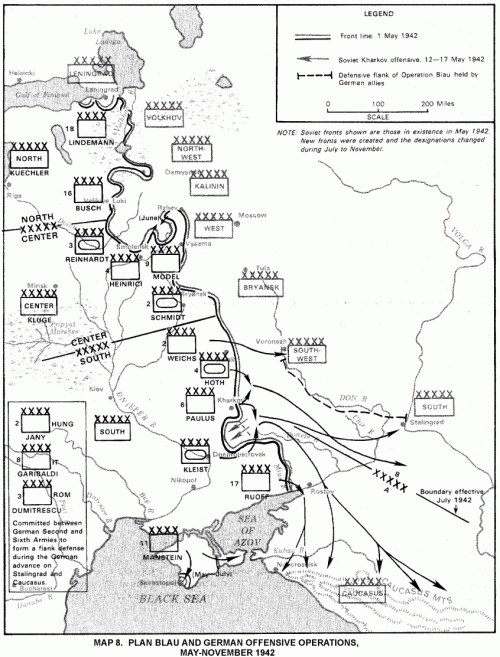
Following the Soviet winter offensive and the near disaster in front of Moscow the German High Command was faced with the strategic decision of what to do in the 1942 campaign.  Several options were considered and it was decided to seize the Caucasus oilfields and in the process capture or neutralize the city of Stalingrad on the Volga.  River.
However, the German High Command was divided on the actual objectives of the campaign. The OKH (Oberkommando Des Heeres) under the guidance of Army Chief of Staff General Franz Halder, which was in charge of the Eastern Front, assumed that Stalingrad was the objective of the campaign. They believed that the advance into the Caucasus was to be a blocking effort.[i] On the other hand, Hitler and his OKW (Oberkommando Der Wehrmacht) envisioned that Army Group South would capture the Caucasus oil fields and capture or neutralize Stalingrad to secure the left flank.[ii]

Both the OKH and OKW considered Stalingrad significant but OKW “initially regarded it as a weigh station en route to the Caucasus oil fields.”[iii] The conflict between OKH and OKW apparent in the ambiguity of Directive No. 41. The directive “included the ‘seizure of the oil region of the Caucasus’ in the preamble concerning the general aim of the campaign, yet made no mention of this in the main plan of operations.”[iv]

At the planning conference held at Army Group South in early June “Hitler hardly mentioned Stalingrad. As far as his Generals were concerned it was little more than a name on the map. Hitler’s obsession was with the oil fields of the Caucasus.”[v] Manstein noted that “Hitler’s strategic objectives were governed chiefly by the needs of his war economy….”[vi] Anthony Beevor notes that at this stage of planning “the only interest in Stalingrad was to eliminate the armaments factories there and secure a position on the Volga. The capture of the city was not considered necessary.”[vii] German planners “expected that the Soviets would again accept decisive battle to defend these regions.”[viii]

Knocked out T-34 Tanks

In Moscow Stalin and his Generals attempted to guess the direction of the impending German offensive.  “Stalin was convinced that Moscow remained the principle German objective…Most of the Red Army’s strategic reserves…were therefore held in the Moscow region.”[ix]

With this in mind the Red Army attempted to disrupt the German offensive and to attempt to recover the key city of Kharkov. The Red Army launched three offensives against the Germans under the direction of Stavka. The largest of these, an attempt to take Kharkov was defeated between 12-22 May with the loss of most of the armor in southern Russia. This compounded by an equally disastrous defeat of Red Army forces in Crimea by Von Manstein’s 11th Army. The heavy losses meant that the Red Army would face the German offensive in a severely weakened condition.[x]

Operation Blau

The German offensive began on 28 June under the command of Field Marshal Fedor von Bock. Von Bock’s command included two separate army groups, Army Group B under Field Marshal Maximillian Von Weichs. Army Group B was comprised of 2nd Army, 6th Army, and the 4th Panzer Army. It also had three allied armies, the Italian 8th Army, the 2nd Hungarian, and 4th Romanian. These forces operated in the northern part of the operational area. Army Group A, under command of Field Marshal Wilhelm List was comprised of The 17th Army, 11th Army, and 1st Panzer Army.[xi] One allied Army, the Romanian 3rd Army was attached to it.

The allied armies which had few armored or motorized forces and little heavy artillery were being depended on to filled the gaps that the Germans could no longer fill with their own troops. The reliance on these units would prove to be a key factor in the German defeat.

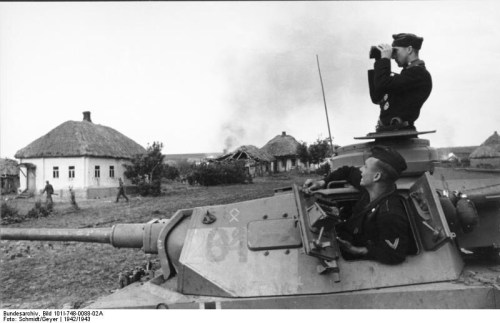
Army Group B provided the main effort and its offensive quickly smashed through the defending Soviet armies. By July 20th Hitler believed that “the Russian is finished.”[xii] One reason for the German success in the south was that until July 7th Stalin believed that Moscow was still the primary objective.[xiii] Despite his success, Von Bock was prevented by Hitler from destroying Soviet formations left behind his advance. He protested and was relieved of command by Hitler. Von Bock was replaced by Von Weichs which created a difficult command and control problem.  Manstein noted that this created a “grotesque chain of command on the German southern wing” with the result that Army Group A had “no commander of its own whatever” and Army Group B had “no few than seven armies under command including four allied ones.”[xiv]
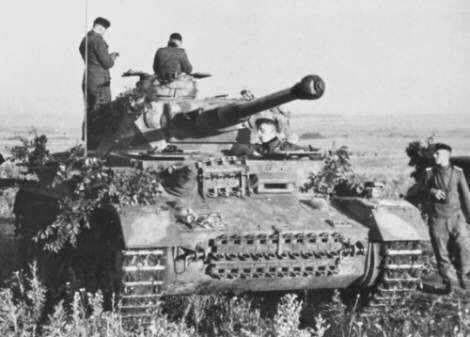
Panzer IV Ausf F Medium Tank

This decision proved fateful.  Hitler decided to redirect the advance of the 4th Panzer Army to support an early passage of the lower Don, diverting it from its drive on Stalingrad.  Additionally, the army groups became independent of each other when Bock was relieved of command.  They were “assigned independent-and diverging-objectives” under the terms of Directive No.45.[xv] This combination of events would have a decisive impact on the campaign.  The decision prevented a quick seizure of Stalingrad by 4th Panzer Army followed by a hand over to 6th Army to establish the “block” as described by Directive No.41.  Field Marshal Ewald Von Kleist, now commanding Army Group A noted that he didn’t need 4th Panzer Army’s help to accomplish his objectives and that it could have “taken Stalingrad without a fight at the end of July….”[xvi]

The result of Hitler’s decision doomed the campaign. Air support and fuel needed by Army Group A was transferred to 6th Army, denuding Army Group A of the resources that it needed to conclude its conquest of the Caucasus.[xvii] At the same time it denied Army Group B of the Panzer Army that could have quickly seized Stalingrad when it was still possible to do so.  Beevor calls Hitler’s decision a disastrous compromise.[xviii] Halder believed the decision underestimated the capabilities of the Red Army and was “both ludicrous and dangerous.”[xix]

All Eyes on Stalingrad

On July 22 as the Wehrmacht ran short on fuel and divisions to commit to the Caucasus, and the 6th Army fought for control of Voronezh, the Soviets created the Stalingrad Front to control operations in that city. Stavka moved an NKVD Division to the city,[xx] and rapidly filled the new front with formations transferred from the Moscow Front.[xxi]

Stalin issued Stavka Order 227, better known as “No Step Back” on 28 July. The order mandated that commanders and political officers who retreated would be assigned to Penal battalions[xxii]. It directed that each field Army was to form three to five special units of about 200 men each as a second line “to shoot any man who ran away.”[xxiii] Russian resistance west of the Don stiffened and slowed the German advance.
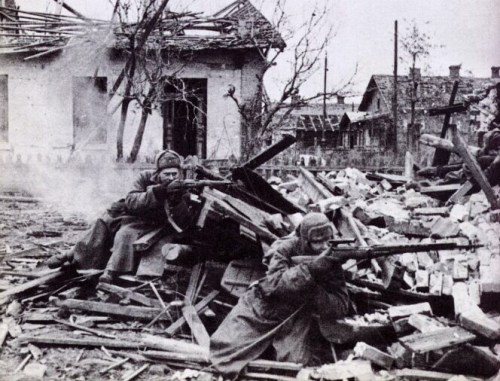
German commanders were astonished “at the profligacy of Russian commanders with their men’s lives.”[xxiv] Von Kleist compared the stubbornness of Russians in his area to those of the previous year and wrote that they were local troops “who fought more stubbornly because they were fighting to defend their homes.”[xxv] Additionally, Stalin changed commanders frequently in the “vain hope that a ruthless new leader could galvanize resistance and transform the situation.”[xxvi] General Vasily Chuikov brought the 64th Army into the Stalingrad Front in mid-July to hold the Germans west of the Don.[xxvii]
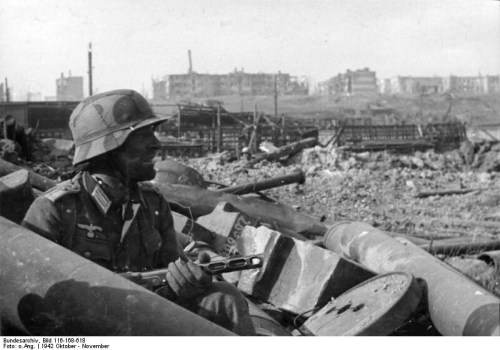
German Soldier in Stalingrad

The attacking German armies were weakened when the OKW transferred several key SS Panzer Divisions and the Grossdeutschland Division to France. The supporting Hungarian, Italian and Romanian allied armies lacked motorization, modern armor or anti-tank units and were unable to fulfill the gaps left by the loss of experienced German divisions and the unrealistic expectations of Hitler.[xxviii]
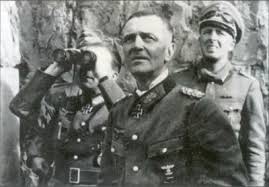
General Friedrich von Paulus

6th Army was virtually immobilized for 10 days due to lack of supplies. This allowed the Russians to establish a defense on the Don Bend.[xxix] To the south the Germans were held up by lack of fuel and increased Soviet resistance which included the introduction of a force of 800 bombers.[xxx]

Glantz and House noted that following the capture of Rostov on July 23rd, “Hitler abruptly focused on the industrial and symbolic value of Stalingrad.”[xxxi] Undeterred by warnings from Halder that fresh Russian formations were massing east of the Volga and the those of Quartermaster General Eduard Wagner, who guaranteed that he could supply either the thrust to the Caucasus or Stalingrad, but not both.[xxxii]

Again frustrated by slow the slow progress of the offensive, Hitler reverted to the original plan for 4th Panzer Army to assist 6th Army at Stalingrad. However, the cost in time and fuel necessitated by his changing of the plan in the first place were significant to the operation. Now the question for the Germans was whether “they could make up for Hitler’s changes in plan.”[xxxiii]

Strategic Implications
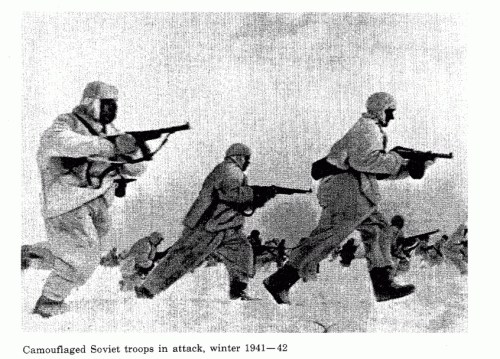
The changes in the German plan had distinct ramifications for both sides.  General F. W. Von Mellenthin wrote of Hitler’s meddling, that “the diversion of effort between the Caucasus and Stalingrad ruined our whole campaign.”[xxxiv] The Germans were able not secure the Caucasus oil fields which Hitler considered vital to the German war effort. While they advanced deep into the region and captured the Maikop oil fields, the vital wells and refineries were almost completely destroyed by the retreating Red Army.[xxxv]

Army Group A was halted by the Russians along the crests of the Caucasus on August 28th.[xxxvi] This left Hitler deeply “dissatisfied with the situation of Army Group A.”[xxxvii] Kleist and others attributed much of the failure to a lack of fuel[xxxviii] and General Günther Blumentritt noted that Mountain divisions that could have made the breakthrough were employed along the Black Sea coast in secondary operations.[xxxix]

Fuel and supply shortages delayed 6th Army’s advance while General Herman Hoth’s 4th Panzer Army was needlessly shuttled between Rostov and Stalingrad. By the time it resumed its attack, the Russians “had sufficiently recovered to check its advance.”[xl] As 6th Army advanced to the East, the “protection of Army Group B’s ever-extending northern flank was taken over by the 3rd Rumanian, the 2nd Hungarian and the newly formed 8th Italian Army.”[xli] The allied armies were neither equipped for the Russian campaign nor were they well motivated for a campaign that offered them or their countries much benefit.[xlii]

The supply shortage in both army groups was not helped by a significant logistics bottleneck. All supplies for Army Group A and Army Group B had pass over a single crossing over the Dnieper River. Manstein noted that this prevented the swift movement of troops from one area to another.[xliii]

General Friedrich Von Paulus’ 6th Army now attempted to rush Stalingrad between the 25th and 29th of July, while Hoth milled about on the lower Don.  However, Paulus’s piecemeal commitment of his divisions and failure to concentrate his army in the face of unexpectedly strong Soviet resistance caused the attacks to fail.  Paulus was forced to halt 6th Army on the Don so it could concentrate its forces and build its logistics base [xliv] as well as to allow Hoth’s 4th Panzer Army to come up from the south.

The delay permitted the Russians to build up their forces west of Stalingrad, to reinforce the Stalingrad front, and to strengthen the defenses of the city. [xlv] Ince the Germans were now operating far from their logistics center, and. The Red Army was closer to its supply centers and due to the distances involved it was now far easier for the Russians to reinforce the Stalingrad front than it was for the Germans to supply their armies.[xlvi] The delay also allowed the Russians to fill a number of key leadership positions with the Generals who would skillfully fight the battle.[xlvii]

German Mountain Troops planting Swastika Flag on Mount Elbrus

Hitler now focused on the capture of Stalingrad despite the fact that “as a city Stalingrad was of no strategic importance.”[xlviii] Strategically, its capture would cut Soviet supply lines to the Caucasus,[xlix] but this objective could be have been achieved without its capture. The success of the Soviets in checking Army Group A’s advance in the Caucasus began to give Stalingrad a moral importance to Hitler , which was enhanced by its name. This came to outweigh its strategic value.”[l] To Hitler Stalingrad would gain “a mystic significance”[li] and along with Leningrad, still besieged by the Wehrmacht, became “not only military but also psychological objectives.”[lii]
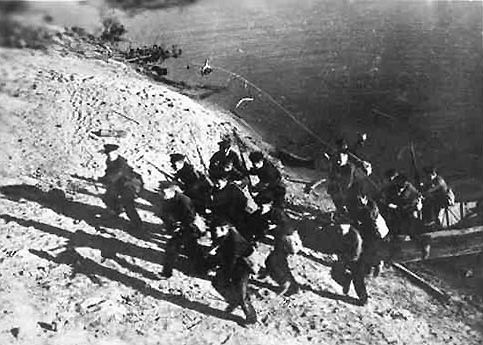
The Germans mounted a frontal assault on Stalingrad with the 6th Army, supported by elements of the 4th Panzer Army, despite air reconnaissance that indicated “the Russians are throwing forces from all directions at Stalingrad.[liii] Paulus as the senior General was in charge of the advance, with Hoth subordinated to him, but the attack had to wait until Hoth’s army could fight its way up from the south.[liv] Von Mellenthin comments rightly that “when Stalingrad was not taken on the first rush, it would have been better to mask it….”[lv]

It is clear that the German advance had actually reached its culminating point with the failure of the advance into the Caucasus and Paulus’s initial setback on the Don, but it was not yet apparent to many involved.[lvi] The proper course of action would have been to halt and build up the front and create mobile reserve to parry any Russian offensive along northern flank while reinforcing success in the Caucasus. Manstein wrote that “by failing to take appropriate action after his offensive had petered out without achieving anything definite, he [Hitler] paved the way to the tragedy of Stalingrad!”[lvii]

Transfixed by Stalingrad
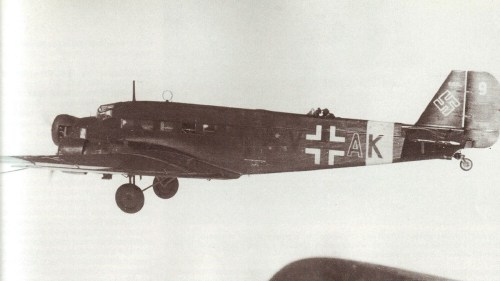
Luftwaffe Ju-52 Transport

On August 19th Paulus launched a concentric attack against the Russian 62nd and 64th Armies on the Don.  The attack ran into problems, especially in Hoth’s sector.[lviii] Yet, on the 22nd the 14th Panzer Corps “forced a very narrow breach in the Russian perimeter at Vertyachi and fought its way across the northern suburbs of Stalingrad,”[lix] and reached the Volga on the 23rd. That day 4th Air Fleet launched 1600 sorties against the city dropping over 1,000 tons of bombs On the city. [lx]

The German breakthrough imperiled the Soviet position as they had concentrated their strongest forces against Hoth’s 4th Panzer Army.[lxi] The Germans maintained air superiority in the sector and the Luftwaffe continued its heavy bombing attacks.

During the last days of August the 6th Army “moved steadily forward into the suburbs of the city, setting the stage for battle.”[lxii] As the Soviets reacted to Paulus, Hoth finally achieved a breakthrough in the south which threatened the Russian position.  However, the 6th Army was unable to disengage its mobile forces from the fight in the city to link up with the 4th Panzer Army and thus another opportunity had been missed.[lxiii]

As 6th Army moved into the city, General Andrey Yeromenko ordered attacks against General Hans Hube’s 16th Panzer Division. Soviet resistance increased, and as more Red Army formations arrived the Germans suffered “one of their heaviest casualty rates.”[lxiv] Though unsuccessful, the counterattacks “managed to deflect Paulus’s reserves at the most critical moment.”[lxv]

Despite this, the Germans remained confident the first week of September as 6th Army and 4th Panzer Army linked up, but Yeremenko saved his forces by withdrawing and avoided encirclement, and retired to an improvised line close to the city.[lxvi]

“Time is Blood”

General Vasily Chuikov at Stalingrad

On September 12th Chuikov was appointed to command 62nd Army in Stalingrad.  Chuikov understood that there “was only one way to hold on. They had to pay in lives. ‘Time is blood,’ as Chuikov put it later.”[lxvii] Stalin sent Nikita Khrushchev to the front “with orders to inspire the Armies and civilian population to fight to the end.”[lxviii] The 13th Guards Rifle Division arrived on the 14th saved the Volga landings but it lost 30% casualties in its first 24 hours of combat.[lxix] An NKVD regiment and other units held the strategically sited high ground of Mamaev Kurgan, keeping German guns from controlling the Volga.[lxx]

The defenders fought house to house and block by block. Red Army and NKVD divisions were reinforced by Naval Infantry.  Chuikov conducted the defense with a brutal ferocity, relieving senior commanders who showed a lack of fight and sending many officers to penal units.  Chuikov funneled the massed German attacks into “breakwaters” where the panzers and infantry could be separated from each other causing heavy German casualties.[lxxi]

Communism Must be Deprived of Its Shrine

Now the “city became a prestige item, its capture ‘urgently necessary for psychological reasons,’ Hitler declared on October 2nd. A week later he declared that Communism must be ‘deprived of its shrine.’”[lxxii] Paulus’s troops continued to gain ground, however slowly and at great cost, especially among their infantry. Casualties were so heavy that companies had to be combined.

Chuikov used his artillery to interdict the Germans from the far side of the Volga where it was immune from ground attack. The fight in the city was fought by assault squads with incredible ferocity, and the close-quarter combat was dubbed “’Rattenkrieg’ by German soldiers.”[lxxiii]

Von Paulus brought more units into the city and continued to slowly drive the Russians back against the river, and by early October Chuikov wondered if he would be able to hold.[lxxiv] By early November Chuikov “was altogether holding only one-tenth of Stalingrad-a few factory buildings and a few miles of river bank.”[lxxv] Paulus now expected “to capture the entire city by 10 November,”[lxxvi] despite the fact that many of his units were fought out. The 6th Army Staff judged that 42% of the battalions of 51st Corps were fought out and no longer combat effective.[lxxvii] Even so, on November 9th, the 19th anniversary of the Beer Hall Putsch, Hitler declared “No power on earth will force us out of Stalingrad again!”[lxxvi.]

Operation Uranus, the Soviet Counter Offensive
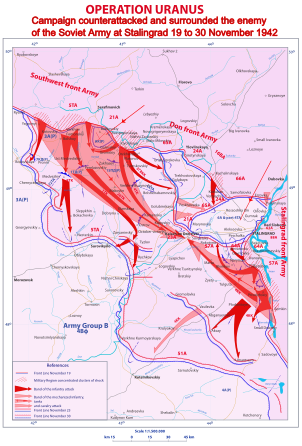
On September 24th Hitler relieved Halder as Chief of Staff of the Army for persisting in explaining “what would happen when new Russian reserve armies attacked the over-extended flank that ran out to Stalingrad.”[lxxix] Many Officers on the German side now recognized the danger. Blumentritt said “The danger to the long-stretched flank of our advance developed gradually, but it became clear early enough for anyone to perceive it who was not willfully blind.”[lxxx] Warnings of the danger were also given by Rumanian Marshall Antonescu and the staff sections of Army Group B and the 6th Army[lxxxi]. Despite this Hitler remained transfixed on Stalingrad and failed to allow his commanders to conduct operations that might be more successful elsewhere. In doing so the Germans gave up the advantage of uncertainty and once the German “aim became obvious…the Russian Command could commit its reserves with assurance.”[lxxxii]

In the midst of Stalin’s concern about Stalingrad Stavka planners never lost sight of their goal to resume large scale offensive operations as soon as possible in order to destroy at least one German Army Group.[lxxxiii] Unlike Hitler, Stalin had finally begun to trust his Generals. In September, Stavka under the direction of Marshal Aleksandr Vasilevsky produced a plan to cut off the “German spearhead at Stalingrad by attacking the weak Rumanian forces on its flanks.”[lxxxiv]

At first Stalin “showed little enthusiasm” for the attack, fearing that Stalingrad might be lost, but on 13 September he gave his full backing to the proposal. [lxxxv] Zhukov, Vasilevsky, and Vatutin developed into a plan involving two operations, Operation Uranus to destroy the German and allied forces at Stalingrad, and Operation Saturn to destroy all the German forces in the south, along with a supporting attack to fix German forces in the north, Operation Mars which was aimed at Army Group Center.[lxxxvi]
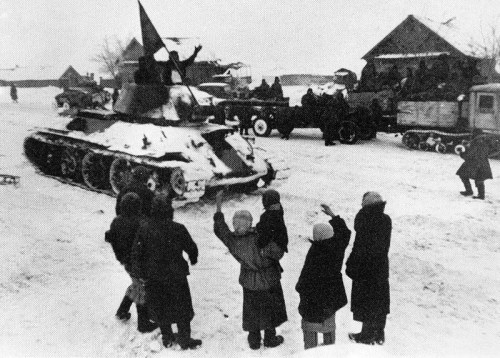
Soviet Armor Advancing to the Cheers of Civilians

To accomplish the destruction of 6th Army and part of 4th Panzer Army, Stavka employed over 60% of the “whole tank strength of the Red Army.”[lxxxvii] Strict secrecy combined with numerous acts of deception were used by the Red Army to disguise the operation.[lxxxviii] The plan involved an attack against 3rd Rumanian Army on the northern flank by 5th Tank Army and two infantry armies with supporting units.[lxxxix]

In the south against the 4th Rumanian Army and weak elements of the 4th Panzer Army, another force of over 160,000 men including 430 tanks were deployed.[xc] Despite warnings from his Intelligence Officer, Von Paulus did not expect a deep offensive into his flanks and rear and made no plans to prepare to face the threat.[xci] Other senior officers at OKW believed that the attack would take place against Army Group Center.[xcii] Warlimont notes that there was a “deceptive confidence in German Supreme Headquarters.”[xciii]

The storm broke on 19 November as Soviet forces attacked, rapidly crushing Romanian armies in both sectors[xciv] and linking up on November 23rd.[xcv] The 48th Panzer Corps which was deployed to support the Romanians was weak and had few operational tanks.[xcvi] It attempted a counterattack, but was “cut to pieces” in an encounter with 5th Tank Army.[xcvii]

A promising attempt by 29th Motorized division against the flank of the southern Russian pincer was halted by the Army Group and the division was ordered to take up defensive positions south of Stalingrad.[xcviii] Meanwhile, the Luftwaffe was neutralized by bad weather.[xcix] Von Paulus, in Stalingrad continued to do nothing since the attacks were outside of his area of responsibility, and waited for instructions from the Army Group. [c]

As a result the 16th and 24th Panzer Divisions which could have assisted matters to the west remained “bogged down in street-fighting in Stalingrad.”[ci] Without support 6th Army units west of Stalingrad were forced to,retreat in horrific conditions.  By the 23rd, the 6th Army was cut off along with one corps of 4th Panzer Army and assorted Romanian units, a total over 330,000 men.  The entrapped force would require the Soviets to use seven rifle armies and devote much staff attention to eliminate.[cii]

The Death of 6th Army
Hitler ordered Von Manstein to form Army Group Don to relieve Stalingrad. Hitler would not countenance any attempt by 6th Army to break out of the pocket and wanted Manstein to break through and relieve 6th Army.[ciii] Hitler refused a request by Paulus on 23 November to move troops to prepare for a possible a break out attempt, assuring him that he would be relieved.[civ]

Albert Speer notes that General Kurt Zeitzler, who replaced Halder insisted that the Sixth Army must break out to the west.”[cv] Hitler told Zeitzler that “We should under no circumstances give this up. We won’t get it back once it’s lost.”[cvi] Hermann Goering promised that the Luftwaffe would be able to meet the re-supply needs of 6th Army by air, even though his Generals knew that it was impossible with the number of transport aircraft available.[cvii]

Hitler took Goering at his word and exclaimed “Stalingrad can be held! It is foolish to go on talking any more about a breakout by Sixth Army…”[cviii] A Führer decree was issued ordering that the front be held at all costs.[cix] Walter Goerlitz wrote that “Hitler was incapable of conceiving that the 6th Army should do anything but fight where it stood.”[cx] Likewise Manstein had precious few troops with which to counterattack and he also had to protect the flank of Army Group A, which was still deep in the Caucasus and in danger of being cut off.
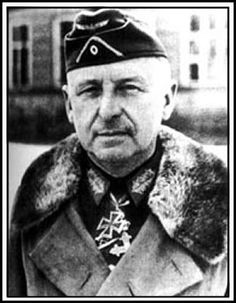
Field Marshal Erich von Manstein

His army group was only at corps strength and was spread across a 200 mile front.[cxi] Any relief attempt had to wait for more troops, especially Panzers divisions. Manstein too believed that the best chance for a breakout had passed and that it was a serious error for Paulus to put the request to withdraw through to Hitler rather than the Army Group or act on his own.[cxii] Many soldiers were optimistic that Hitler would get them out.[cxiii] Other generals like Guderian, Reichenau or Hoeppner might have acted, but Paulus was no rebel.[cxi]

Operation Saturn began on 7 December. The Red Army destroyed the Italian 8th Army and forced the Germans to parry the threat.[cxv] A relief attempt by 57th Panzer Corps under Hoth on 12 December made some headway until a massive Soviet counterattack on 24 December drove it back.[cxvi] This attack was hampered by OKW’s refusal to allocate the 17th Panzer and 16th Motorized divisions to Manstein,[cxvii] and by 6th Army not attacking out to link with the relief force.[cxviii]
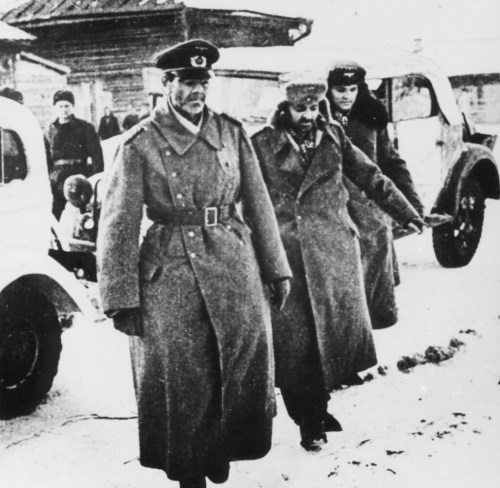
By January 6th, Von Paulus signaled OKW “Army starving and frozen, have no ammunition and cannot move tanks anymore.”[cxix] On 10 January the Soviets launched Operation Ring to eliminate the pocket and despite all odds German troops fought on. On the 16th Paulus requested that battle worthy units be allowed to break out, but the request was not replied to by OKW. cxx] On January 22nd the last airfield was overrun, and on January 31st Paulus surrendered.[cxxi]

Analysis

Stalingrad had strangely drawn the attention of both sides, but the Russians never lost sight of their primary objectives during the campaign. The Germans on the other hand committed numerous unforced errors mostly caused by Hitler or Paulus. After the fall of Stalingrad as the Soviets attempted to follow up their success by attempted to cut off Army Group “A” Manstein was permitted to wage a mobile defense while Von Kleist managed to withdraw with few losses.[cxxii]

The superior generalship of Manstein and Von Kleist prevented the wholesale destruction of German forces in southern Russia, and Manstein’s counter offensive inflicted a severe defeat on the Soviets. However, the German Army had been badly defeated.  The seeds of defeat were laid early, the failure to destroy bypassed Soviet formations in July, the diversion of 4th Panzer Army from Stalingrad, and the divergent objectives of trying to capture the Caucasus and Stalingrad at the same time.  This diluted both offensives ensuring that neither succeeded.  Likewise the failure to recognize the culminating point when it was reached and to adjust operations accordingly was disastrous for the Germans.

The failure create a mobile reserve to meet possible Russian counter offensives and the fixation on Stalingrad took the German focus off of the critical, yet weakly held flanks. The hubris of Hitler and OKW to believe that the Russians were incapable of conducting major mobile operations even as Stavka commenced offensive operations on those flanks all contributed to the defeat.  Clark notes these facts, but adds that the Germans “were simply attempting too much.”[cxxiii]

Soviet numbers allowed them to wear down the Germans even in defeat.[cxxiv] At the same time Stalin gave his commanders a chance to revive the mobile doctrine of deep operations with mechanized and shock armies that he had discredited in the 1930s.[cxxv] Throughout the campaign Zhukov, Chuikov and other commanders maintained both their nerve even when it appeared that Stalingrad was all but lost. They never lost sight of their goal of destroying major German formations though they failed to entrap Army Group A in the Caucasus.

Notes

[i] Clark, Alan. Barbarossa: The Russian-German Conflict:1941-45. Perennial Books, An imprint of Harper Collins Publishers, New York, NY 1965. p.191

[ii] Ibid.

[iii] Glantz, David M. and House, Jonathan. When Titan’s Clashed: How the Red Army Stopped Hitler. The University Press of Kansas, Lawrence KS, 1995. p.111

[iv] Ibid. Clark. p.191

[v] Beevor, Anthony. Stalingrad: The Fateful Siege: 1942-1943. Penguin Books, New York NY 1998. p.69

[vi] Manstein, Erich von. Forward by B.H. Liddle Hart, Introduction by Martin Blumenson. Lost victories: The War Memoirs of Hitler’s Most Brilliant General. Zenith Press, St Paul MN 2004. First Published 1955 as Verlorene Siege, English Translation 1958 by Methuen Company. p.291 This opinion is not isolated, Beevor Quotes Paulus “If we don’t take Maikop and Gronzy…then I must put an end to the war.” (Beevor pp. 69-70)  Halder on the other hand believed that Hitler emphasized that the objective was “the River Volga at Stalingrad. (Clark. p.190)

[vii] Ibid. Beevor. p.70.

[viii] Ibid. Glantz and House. p.106

[ix] Ibid. p.105-106

[x] Ibid. Clark. p.203.  The offensive did impose a delay on the German offensive.

[xi] Ibid. Clark. p.191 Each group also contained allied armies.

[xii] Ibid. p.209.

[xiii] Ibid. Glantz and House. p.119

[xiv] Ibid. Manstein. p.292.

[xv] Ibid. Clark. p.209

[xvi] Ibid. Clark.  p.211

[xvii] Ibid. Glantz and House. p.120. There is a good discussion of the impact of this decision here as 6th Army’s advance was given priority for both air support and fuel.

[xviii] Ibid. Beevor. p.74

[xix] Warlimont, Walter. Inside Hitler’s Headquarters 1939-45. Translated by R.H. Berry, Presido Press, Novato CA, 1964. p.249

[xx] Ibid. Beevor. p.75 This was the 10th NKVD Division and it took control of all local militia, NKVD, and river traffic, and established armored trains and armor training schools.

[xxi] Ibid. Clark. p.212

[xxii] Ibid. Glantz and House. p.121

[xxiii] Ibid. Beevor. p.85

[xxiv] Ibid. p.89

[xxv] Liddell-Hart, B.H. The German Generals Talk. Quill Publishers, New York, NY 1979. Originally published by the author in 1948. p.202

[xxvi] Ibid. Beevor. p.88

[xxvii] Ibid. Beevor. p.90

[xxviii] Ibid. Beevor. p.81

[xxix] Ibid. Glantz and House. p.121

[xxx] Ibid. Liddell-Hart. p.202

[xxxi] Ibid. Glantz and House. p.120

[xxxii] Goerlitz, Walter. History of the German General Staff. Westview Press, Frederick A. Praeger Publisher, Boulder, CO. 1985 p.416

[xxxiii] Ibid. Beevor. pp.95-96.

[xxxiv] Von Mellenthin, F.W. Panzer Battles: A Study of the Employment of Armor in the Second World War. Translated H. Betzler, Edited by L.C.F. Turner. Oklahoma University Press 1956, Ballantine Books, New York, NY. 1971. p.193

[xxxv] Shirer, William L. The Rise and Fall of the Third Reich. A Touchstone Book published by Simon and Schuster, 1981, Copyright 1959 and 1960. p.914

[xxxvi] Ibid. Glantz and House. p.122

[xxxvii] Ibid. Warlimont. p.256

[xxxviii] Ibid. Liddell-Hart. p.203

[xxxix] Ibid. p.204

[xl] Ibid. Shirer. p.914

[xli] Ibid. Goerlitz. p.416

[xlii] Ibid. Goerlitz. p.416

[xliii] Ibid. Manstein. p.293

[xliv] Ibid. Clark. p.214

[xlv] Ibid. Beevor. pp.97-99. The mobilization included military, political, civilian and industrial elements.

[xlvi] Liddell-Hart, B.H. Strategy. A Signet Book, the New American Library, New York, NY. 1974, Originally Published by Faber and Faber Ltd., London. 1954 & 1967. p.250

[xlvii] Ibid. Beevor. p.99.  Two key commanders arrived during this time frame, Colonel General Andrei Yeremenko, who would command the Stalingrad Front  and General Chuikov commander of 64th Army who would conduct the defense of the city.

[xlviii] Carell, Paul Hitler Moves East: 1941-1943. Ballantine Books, New York, NY 1971, German Edition published 1963. p.581

[xlix] Ibid. Shirer.  p.909.

[l] Ibid. Liddell-Hart, Strategy. p.250

[li] Wheeler-Bennett, John W. The Nemesis of Power: The German Army in Politics 1918-1945. St. Martin’s Press, New York, NY 1954.  p.531

[lii] Ibid. Wheeler-Bennett. p.531

[liii] Ibid. Beevor. p.96

[liv] Ibid. Clark. p.216.

[lv] Ibid. Von Mellenthin. P.193

[lvi] See Von Mellinthin pp.193-194.  Von Mellinthin quotes Colonel Dinger, the Operations Officer of 3rd Motorized Division at Stalingrad until a few days before its fall. Dingler noted that the Germans on reaching Stalingrad “had reached the end of their power. Their offensive strength was inadequate to complete the victory, nor could they replace the losses they had suffered.” (p.193) He believed that the facts were sufficient “not only to justify a withdrawal, but compel a retreat.” (p.194)

[lvii] Ibid. Manstein. p.294

[lviii] Ibid. Clark. p.216

[lix] Ibid. Clark. p.217

[lx] Ibid. Beevor. p.107

[lxi] Ibid. Beevor. p.107

[lxii] Ibid. Glantz and House. p.122

[lxiii] Ibid. Carell. P.601

[lxiv] Ibid. Beevor. p.118

[lxv] Ibid. Beevor. p.118

[lxvi] Ibid. Carell. p.602

[lxvii] Ibid. Beevor. p.128

[lxviii] Ibid. Carell. p.603

[lxix] Ibid. Beevor. p.134

[lxx] Ibid. Beevor. pp.136-137

[lxxi] Ibid. Beevor. p.149

[lxxii] Fest, Joachim. Hitler. Translated by Richard and Clara Winston, Harcourt, Brace, Jovanovich Publishers, San Diego, New York, London. 1974. p.661

[lxxiii] Ibid. Beevor. pp. 149-150

[lxxiv] Ibid. Beevor. p.164

[lxxv] Ibid. Carell. p.618

[lxxvi] Ibid. Glantz and House. p.123

[lxxvii] Ibid. Beevor. p.218

[lxxviii] Ibid. Carell. p.623

[lxxix] Ibid. Goerlitz. p.418

[lxxx] Ibid. Liddell-Hart. The German Generals Talk. p.207

[lxxxi] Ibid. Manstein. p292

[lxxxii] Ibid. Liddell-Hart. History of the Second World War. p.258

[lxxxiii] Ibid. Glantz and House. p.129

[lxxxiv] Ibid. Glantz and House. p.130

[lxxxv] Ibid. Beevor. pp.221-222 Glantz and House say that Stalin gave his backing in mid-October but this seems less likely due to the amount of planning and movement of troops involved to begin the operation in November.

[lxxxvi] Ibid. Glantz and House. p.130

[lxxxvii] Ibid. Beevor. p.226

[lxxxviii] Ibid. Glantz and House. p.132

[lxxxix] Ibid. Glantz and House. p.130

[xc] Ibid. Beevor. p.227

[xci] Ibid. Beevor. p.228

[xcii] Ibid. Clark. p.235

[xciii] Ibid. Warlimont. p.274

[xciv] Ibid, Carell. p.627 3rd Rumanian Army lost 75,000 men in three days.

[xcv] Ibid. Clark.pp.247-248

[xcvi] The condition of the few German Panzer Divisions in position to support the flanks was very poor, the 22nd had suffered from a lack of fuel and maintenance and this many of its tanks were inoperative. Most of the armor strength of the 48th Panzer Corps was provided by a Rumanian armored division equipped with obsolete Czech 38t tanks provided by the Germans.

[xcvii] Ibid. Clark. pp.251-252. The designation of 2nd Guards Tank Army by Clark has to be wrong and it is the 5th Tank Army as 2nd Guards Tank was not involved in Operation Uranus.  Carell, Beevor and Glantz properly identify the unit.

[xcviii] Ibid. Carell. p.630

[xcix] Ibid. Beevor. p.244

[c] Ibid. Beevor. p.247

[ci] Ibid. Beevor. p.245

[cii] Ibid. Glantz and House. p.134

[ciii] Ibid. Glantz and House. p.134

[civ] Ibid. Clark. p.256

[cv] Speer, Albert. Inside the Third Reich. Collier Books, a Division of MacMillan Publishers, Inc. New York, NY 1970. p.248

[cvi] Heiber, Helmut and Glantz, David M. Editors. Hitler and His Generals: Military Conferences 1942-1945. Enigma Books, New York, NY 2002-2003.  Originally published as Hitlers Lagebsprechungen: Die Protokollfragmente seiner militärischen Konferenzen 1942-1945. Deutsche Verlags-Anstalt GmbH, Stuttgart, 1962. p.27

[cvii] Ibid. Glantz and House. p.135 Glantz and House note that the amount of aircraft estimated to successfully carry out the re-supply operation in the operational conditions was over 1,000.  The amount needed daily was over 600 tons of which the daily reached only 300 tons only one occasion.

[cviii] Ibid. Speer. p.249

[cix] Ibid. Carell. p.636

[cx] Ibid. Goerlitz. p.426

[cxi] Ibid. Clark. p.252

[cxii] Ibid. Manstein. p.303

[cxiii] Ibid. Beevor. p.276

[cxiv] Ibid. Carell. p.640

[cxv] Ibid. Glantz and House. p.140

[cxvi] Ibid. Glantz and House. p.140

[cxvii] Ibid. Clark. p.264

[cxviii] Ibid. Manstein. p.337

[cxix] Ibid. Beevor. p320

[cxx] Ibid. Beevor. p.365

[cxxi] Of the approximately 330,000 in the pocket about 91,000 surrendered, another 45,000 had been evacuated.  22 German divisions were destroyed.

[cxxii] Ibid. Liddell-Hart. The German Generals Talk. p.211

[cxxiii] Ibid. Clark. p.250

[cxxiv] Ibid. Glantz and House. p.124

[cxxiv] Ibid. Beevor. p.221

Bibliography

Beevor, Anthony. Stalingrad: The Fateful Siege: 1942-1943. Penguin Books, New York NY 1998

Carell, Paul Hitler Moves East: 1941-1943. Ballantine Books, New York, NY 1971, German Edition published 1963.

Clark, Alan. Barbarossa: The Russian-German Conflict:1941-45. Perennial Books, An imprint of Harper Collins Publishers, New York, NY 1965.

Fest, Joachim. Hitler. Translated by Richard and Clara Winston, Harcourt, Brace, Jovanovich Publishers, San Diego, New York, London. 1974

Glantz, David M. and House, Jonathan. When Titan’s Clashed: How the Red Army Stopped Hitler. The University Press of Kansas, Lawrence KS, 1995.

Goerlitz, Walter. History of the German General Staff. Westview Press, Frederick A. Praeger Publisher, Boulder, CO. 1985

Heiber, Helmut and Glantz, David M. Editors. Hitler and His Generals: Military Conferences 1942-1945. Enigma Books, New York, NY 2002-2003.  Originally published as Hitlers Lagebsprechungen: Die Protokollfragmente seiner militärischen Konferenzen 1942-1945. Deutsche Verlags-Anstalt GmbH, Stuttgart, 1962.

Liddell-Hart, B.H. The German Generals Talk. Quill Publishers, New York, NY 1979. Originally Published by the author in 1948.

Liddell-Hart, B.H. Strategy. A Signet Book, the New American Library, New York, NY. 1974, Originally Published by Faber and Faber Ltd., London. 1954 & 1967

Manstein, Erich von. Forward by B.H. Liddle Hart, Introduction by Martin Blumenson. Lost victories: The War Memoirs of Hitler’s Most Brilliant General. Zenith Press, St Paul MN 2004. First Published 1955 as Verlorene Siege, English Translation 1958 by Methuen Company

Shirer, William L. The Rise and Fall of the Third Reich. A Touchstone Book published by Simon and Schuster, 1981, Copyright 1959 and 1960

Speer, Albert. Inside the Third Reich. Collier Books, a Division of MacMillan Publishers, Inc. New York, NY 1970.

Von Mellenthin, F.W. Panzer Battles: A Study of the Employment of Armor in the Second World War. Translated H. Betzler, Edited by L.C.F. Turner. Oklahoma University Press 1956, Ballantine Books, New York, NY. 1971.

Warlimont, Walter. Inside Hitler’s Headquarters 1939-45. Translated by R.H. Berry, Presido Press, Novato CA, 1964.

Wheeler-Bennett, John W. The Nemesis of Power: The German Army in Politics 1918-1945. St. Martin’s Press, New York, NY 1954

5 Comments

Filed under History, Military, nazi germany, world war two in europe

Robert Jackson’s Opening Statement at Nuremberg: Robert Ley and The Nazi Battle Against the Working Class

Friends of Padre Steve’s World,

Yesterday I wrote about the opening of the Major War Criminal Trial at Nuremberg. United States Supreme Court Justice Robert Jackson, serving as the Chief Prosecutor for the American team delivered one of the most compelling opening statements in legal history.

I think that it is a story worth of telling in Jackson’s own words. I have started reading the nine-volume transcript of the trial in between my other reading because it is a wealth of information regarding Hitler’s Nazi regime that too few people today are familiar with or even care about. It happened long ago, the participants, perpetrators, bystanders, and victims are dying off every day. Soon there will be no one alive who lived through those times to sound the warning from history, even as authoritarian regimes take power in nations which either cooperated with, or were the victims of Hitler’s legions and racial policies of occupation.

Likewise, new strains of the old American plague of often violent, and sometimes state supported racism, and anti-Semitism raises its ugly specter throughout the United States.

Tonight I am continuing to post the transcripts from Jackson’s opinion statement. This section deals with Justice Jackson’s description of the Nazi battles against Labor Unions. Tomorrow night I will post his description of the Nazi war against the Churches before moving on the the War against the Jews, and the Nazi crimes in the prosecution of the war.

The war against Labor, which included the political parties associated with it, the Social Democrats and the German Communists were key to completing the Nazi seizure of power and Gleichschaltung (coordination) of all aspects of life in the Nazi State. The Communist Party of Germany had already been suppressed, its leaders banned from the Reichstag, with many taken to Dachau. The Social Democrats would be he last party to resist the Nazi takeover as all other parties had already dissolved themselves prior to the assault on the Labor Unions.

The Nazis fully understood the power of the German Labor movement. It was a general strike by Unions which defeated the Kapp Putsch in 1922. The Nazis would not allow the Unions to stand in their way.

Trade Union leaders were deceived by the words of Hitler. Hitler flew these leaders from all over Germany to take party in a celebration of Labor at Berlin’s Tempelhof airport. Hitler told the leaders and the gathered workers:

“You will see how untrue and unjust is the statement that the revolution is directed against the German workers. On the contrary.” Later in his speech to more than 100,000 workers at the airfield Hitler pronounced the motto, “Honor work and respect the worker!” and promised that May Day would be celebrated in honor of German labor “throughout the centuries.” (William Shirer, The Rise and Fall of the Third Reich)

The next day the offices of the Unions were taken over, their funds confiscated, leaders arrested and sent to Concentration Camps, and the Unions themselves dissolved. Two weeks later, the right to collective bargaining was eliminated.

THE NAZI BATTLE AGAINST LABOR

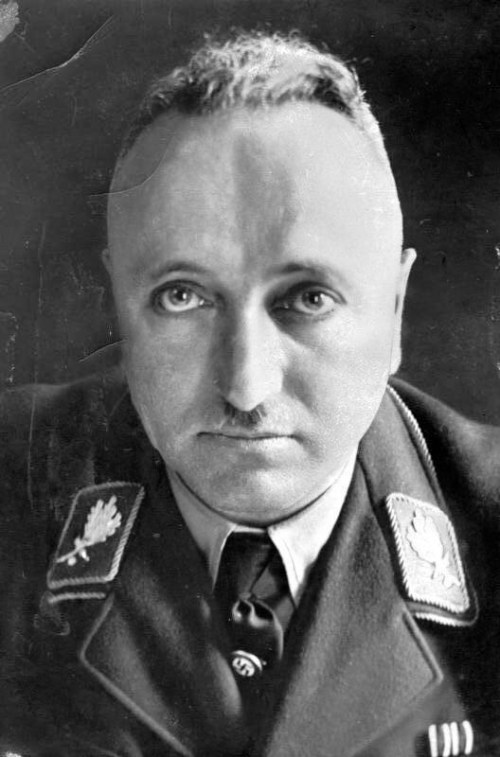
Robert Ley

The defendant Ley between 1932-1945 was: a member of the Nazi Party, Reichsleiter, Nazi Party Organisation Manager, member of the Reichstag, leader of the German Labour Front, a General in the S.A., and Joint Organiser of the Central Inspection for the Care of Foreign Workers. The defendant Ley used the foregoing positions, his personal influence and his intimate connection with the Fuehrer in such a manner that: he promoted the accession to power of the Nazi conspirators and the consolidation of their control over Germany as set forth in Count One of the Indictment; he promoted the preparation for war set forth in Count One of the Indictment; he authorised, directed and participated in the War Crimes set forth in Count Three of the Indictment, and in the Crimes against Humanity set forth in Count Four of the Indictment, including particularly the War Crimes and Crimes against Humanity relating to the abuse of human beings for labour in the conduct of the aggressive wars.

Continuation of Jackson’s Opening Statement

When Hitler came to power there were in Germany three groups of trade unions. The General German Trade Union Confederation (A.D.G.B.) with twenty-eight affiliated unions, and the General Independent Employees Confederation (A.F.A.) with thirteen federated unions together numbered more than 4,500,000 members. The Christian Trade Union had over 1,250,000 members.

The working people of Germany, like the working people of other nations, had little to gain personally by war. While labour is usually brought around to the support of the nation at war, labour by and large is a pacific, though by no means a pacifist force in the world. The working people of Germany had not forgotten in 1933 how heavy the yoke of the war lord can be. It was the working men who had joined with the sailors and soldiers in the revolt of 1918 to the First World War. The Nazis had neither forgiven nor forgotten. The Nazi programme required that this part of the German population not only be stripped of power to resist diversion of its scanty comforts to armament, but also be wheedled or whipped into new and unheard-of sacrifices as a part of the Nazi war preparation. Labour must be cowed, and that meant its organisations and means of cohesion and defence must be destroyed.

The purpose to regiment labour for the Nazi Party was avowed by Ley in a speech to workers on 2nd May, I933, as follows:-

“You may say what else do you want, you have the absolute power. True we have the power, but we do not have the whole people, we do not have you workers 100 per cent, and it is you whom we want; we will not let you be until you stand with us in complete, genuine acknowledgement.” (614-PS)

The first Nazi attack was upon the two larger unions. On 21st April, 1933, an order, not even in the name of the Government, but of the Nazi Party, was issued by the conspirator Robert Ley as “Chief of Staff of the political Organisation of the N.S.D.A.P” applicable to the Trade Union Confederation and the Independent Employees Confederation. It directed seizure of their properties and arrest of their principal leaders. The Party order directed Party organs which we here denounce as criminal associations, the S.A. and S.S., “to be employed for the occupation of the trade union properties, and for the taking into custody of personalities who come into question.” And it directed the taking into “protective custody” of all chairmen and district secretaries and union and branch directors of the labour bank. (392-PS)

These orders were carried out on 2nd May, 1933. All funds of the labour unions, including pension and benefit funds, were seized. Union leaders were sent to concentration camps. A few days later, on 10th May, 1933, Hitler appointed Ley leader of the German Labour Front (Deutsche Arbeitsfront), which succeeded to the confiscated union funds. The German Labour Front, a Nazi controlled labour bureau, was set up under Ley to teach the Nazi philosophy to German workers and to weed out from industrial employment all who were backward in their lessons. (940-PS) “Factory Troops” were organised as an “ideological shock squad within the factory” (1817-PS). The Party order provided that “outside of the German Labour Front, no other Organisation (whether of workers or of employees) is to exist.” On 24th June, 1933, the remaining Christian Trade Unions were seized, pursuant to an order of the Nazi Party, signed by Ley.

On 19th May, 1933, this time by a Government decree, it was provided that “trustees” of labour, appointed by Hitler, should regulate the conditions of all labour contracts, replacing the former process of collective bargaining (405-PS). On 30th November, 1934, a decree “regulating national labour” introduced the Fuehrer principle into industrial relations. It provided that the owners of enterprises should be the “Fuehrers” and the workers should be the followers. The enterprise-fuehrers should “make decisions for employees and labourers in all matters concerning the enterprise” (1861-PS). It was by such bait that the great German industrialists were induced to support the Nazi cause, to their own ultimate ruin.

Not only did the Nazis dominate and regiment German labour, but they forced the youth into the ranks of the labouring people they had thus led into chains. Under a compulsory labour service decree on 26th June, 1935, young men and women between the ages of 18 and 25 were conscripted for labour (1654-PS). Thus was the purpose to subjugate German labour accomplished.

In the words of Ley, the accomplishment consisted “in eliminating the association character of the trade union and employees’ associations, and in its place we have substituted the conception ‘soldiers of work’.” The productive manpower of the German nation was in Nazi control. By these steps the defendants won the battle to liquidate labour unions as potential opposition and were enabled to impose upon the working class the burdens of preparing for aggressive warfare.

Robert Ley, the field marshal of this battle against labour, answered our indictment with suicide. Apparently he knew no better answer.

This still matters. For many years in the United States and Western Europe Labor Unions have been under attack and despite the good that they have done for all workers have been denuded of much of their social, economic, and political power. At one time Unions were a bulwark against the unbridled thirst for political and economic of massive multinational corporations.

Nuremberg reminds us of what happens when free Labor Unions are destroyed.

Until tomorrow,

Peace,

Padre Steve+

Leave a comment

Filed under economics and financial policy, History, labor, laws and legislation, nazi germany, News and current events, Political Commentary

A Trial of Supreme Importance: The Nuremberg War Crimes Trial at 73 Years

Friends of Padre Steve’s World,

On November 20th, 1945 twenty Nazi leaders took their seats in the dock in Saal 6oo (Courtroom 600) at the Palace of Justice in Nuremberg. The men were among the top leaders of the Third Reich, though there were a number of conspicuous absences. Adolf Hitler, Joseph Goebbels, and Heinrich Himmler had committed suicide as the Reich collapsed. Martin Bormann was missing and was believed to have escaped. Reinhard Heydrich died of wounds caused by Czech partisans in 1942.

Now, the men who ruled over most of Europe just three years before presented a sad sight. Deprived of their opulent uniforms and power they looked terrifyingly ordinary.

At 10 A.M., Presiding Judge, Sir Geoffrey Lawrence banged his gavel on his desk looking across the courtroom at the defendants and made his opening statement, saying:

“Before the defendants in this case are called upon to make their pleas to the indictment which has been lodged against them, and in which they are charged with Crimes against Peace, War Crimes, and Crimes against Humanity, and with a Common Plan or Conspiracy to commit those Crimes… The trial which is now about to begin is unique in the history of the jurisprudence of the World and it is of supreme importance to millions of people all over the globe…”

Two years ago during I stood next to that same defendant’s dock where Hermann Goering and nineteen other men sat. Goering had been Hitler’s number two man and designated successor until the last days of the war. The others in the dock with Goering were Governor General of Poland, Dr. Hans Frank; Minister of the Interior and Reich Protector of Bohemia-Moravia, Dr.Wilhelm Frick; General Alfred Jodl, Chief of Staff of the Oberkommando Der Wehrmacht; Field Marshal Wilhelm Keitel, Chief of the Oberkommando der Wehrmacht; Foreign Minister Joachim von Ribbentrop; Gauleiter of Thuringia, and head of Slave Labor programs, Fritz Sauckel; Dr. Arthur Rosenberg, Reich Minister for the Occupied Easter Territories, Dr. Arthur Seyess-Inquart, Reichskommissar of occupied Netherlands; Julius Streicher, Gauleiter of Franconia and publisher of the Nazi propaganda paper, Der Sturmer; Commander of the German Navy and Hitler’s successor, Grand Admiral Karl Donitz; Minister of Economics, Dr. Walter Funk; Deputy Fuhrer Rudolf Hess;;Foreign Minister, Baron Konstantin von Neurath; the First Commander of the German Navy under Hitler, Grand Admiral Erich Raeder; Head of the Hitler Youth, and Gauleiter of Vienna, Baldur von Schirach; Armaments Minister, Albert Speer; Hans Fritzsche of the Propaganda Ministry, Dr. Hjalmar Schlacht pre-war head of the Reichsbank, and Economics Minister, Franz von Papen, who also had served as Vice Chancellor, Ambassador to Austria and later Turkey.

Also indicted but not in the dock, were SS Obergrüppenfuhrer and Chief of the Reich Security Main Office, Ernst Kaltenbrunner, who was recovering from a mild stroke; Gustav Krupp von Bohlen und Halbach, Head of the Armaments and heavy industry conglomerate Friedrich Krupp AG, and Chief of The Nazi Party Chancellery Martin Bormann. Robert Ley, leader of The German Labor Front committed suicide in his cell before the trial began. Krupp was too sick and senile to go to trial.

On the second day of trial Associate Justice of the United States Supreme Court, Robert Jackson who was serving as Chief Prosecutor for the United States gave one of the most powerful opening statements in any trial. He said:

May it please Your Honour, the privilege of opening the first trial in history for crimes against the peace of the world imposes a grave responsibility. The wrongs which we seek to condemn and punish have been so calculated, so malignant and so devastating, that civilisation cannot tolerate their being ignored, because it cannot survive their being repeated. That four great nations, flushed with victory and stung with injury, stay the hands of vengeance and voluntarily submit their captive enemies to the judgement of the law, is one of the most significant tributes that Power ever has paid to Reason.

This Tribunal, while it is novel and experimental, is not the product of abstract speculations nor is it created to vindicate legalistic theories. This inquest represents the practical effort of four of the most mighty of nations, with the support of seventeen more, to utilise International Law to meet the greatest menace of our times -aggressive war. The common sense of mankind demands that law shall not stop with the punishment of petty crimes by little people. It must also reach men who possess themselves of great power and make deliberate and concerted use of it to set in motion evils which leave no home in the world untouched. It is a cause of that magnitude that the United Nations will lay before Your Honour.

In the prisoners’ dock sit twenty-odd broken men. Reproached by the humiliation of those they have led, almost as bitterly as by the desolation of those they have attacked, their personal capacity for evil is forever past. It is hard now to perceive in these miserable men as captives the power by which as Nazi leaders they once dominated much of the world and terrified most of it. Merely as individuals their fate is of little consequence to the world.

What makes this inquest significant is that these prisoners represent sinister influences that will lurk in the world long after their bodies have returned to dust. We will show them to be living symbols of racial hatreds, of terrorism and violence, and of the arrogance and cruelty of power. They are symbols of fierce nationalism and of militarism, of intrigue and war-making which embroiled Europe, generation after generation, crushing its manhood, destroying its homes, and impoverishing its life. They have so identified themselves with the philosophies they conceived, and with the forces they have directed, that tenderness to them is a victory and an encouragement to all the evils which attached to their names. Civilisation can afford no compromise with the forces which would gain renewed strength if we deal ambiguously or with the men in whom those forces now precariously survive.

What these men stand for we will patiently and temperately disclose. We will give you undeniable proofs of incredible events. The catalogue of crimes will omit nothing that could be conceived by a pathological pride, cruelty, and lust for power. These men created in Germany, under the “Fuehrerprinzip,” a National Socialist despotism equalled only by the dynasties of the ancient East. They took from the German people all those dignities and freedoms that we hold natural and inalienable rights in every human being, The people were compensated by inflaming and gratifying hatreds towards those who were marked as “scapegoats.” Against their opponents, including Jews, Catholics, and free labour the Nazis directed such a campaign of arrogance, brutality, and annihilation as the world has not witnessed since the pre-Christian ages. They excited the German ambition to be a “master race,” which of course implies serfdom others. They led their people on a mad gamble for domination. They diverted social energies and resources to the creation of what they thought to be an invincible war machine. They overran their neighbours. To sustain the “master race” in its war-making, they enslaved millions of human beings and brought them into Germany, where these hapless creatures now wander as “displaced persons.” At length, bestiality and bad faith reached such excess that they aroused the sleeping strength of imperilled Civilisation. Its united efforts have ground the German war machine to fragments. But the struggle has left Europe a liberated yet prostrate land where a demoralised society struggles to survive. These are the fruits of the sinister forces that sit with these defendants in the prisoners’ dock.

In justice to the nations and the men associated in this prosecution, I must remind you of certain difficulties which may leave their mark on this case. Never before in legal history has an effort been made to bring within the scope of a single litigation the developments of a decade covering a whole continent, and involving a score of nations, countless individuals, and innumerable events. Despite the magnitude of the task, the world has demanded immediate action. This demand has had to be met, though perhaps at the cost of finished craftsmanship. In my country, established courts, following familiar procedures, applying well-thumbed precedents, and dealing with the legal consequences of local and limited events, seldom commence a trial within a year of the event in litigation. Yet less than eight months ago to-day the courtroom in which you sit was an enemy fortress in the hands of German S.S. troops. Less than eight months ago nearly all our witnesses and documents were in enemy hands. The law had not been codified, no procedures had been established, no tribunal was in existence, no usable courthouse stood here, none of the hundreds of tons of official German documents had been examined, no prosecuting staff had been assembled, nearly all of the present defendants were at large, and the four prosecuting powers had not yet joined in common cause to try them. I should be the last to deny that the case may well suffer from incomplete researches, and quite likely will not be the example of professional work which any of the prosecuting nations would normally wish to sponsor. It is, however, a completely adequate case to the judgement we shall ask you to render, and its full development we shall be obliged to leave to historians.

Before I discuss particulars of evidence, some general considerations which may affect the credit of this trial in the eyes of the world should be candidly faced. There is a dramatic disparity between the circumstances of the accusers and of the accused that might discredit our work if we should falter, in even minor matters, in being fair and temperate.

Unfortunately, the nature of these crimes is such that both prosecution and judgement must be by victor nations over vanquished foes. The world-wide scope of the aggressions carried out by these men has left but few real neutrals. Either the victors must judge the vanquished or we must leave the defeated to judge themselves. After the First World War we learned the futility of the latter course. The former high station of these defendants, the notoriety of their acts, and the adaptability of their conduct to provoke retaliation make it hard to distinguish between the demand for a just and measured retribution, and the unthinking cry for vengeance which arises from the anguish of war. It is our task, so far as is humanly possible, to draw the line between the two. We must never forget that the record on which we judge these defendants today is the record on which history will judge us tomorrow. To pass these defendants a poisoned chalice is to put it to our lips as well. We must summon such detachment and intellectual integrity to our task that this trial will commend itself to posterity as fulfilling humanity’s aspirations to do justice.

At the very outset, let us dispose of the contention that to put these men to trial is to do them an injustice entitling them to some special consideration. These defendants may be hard pressed but they are not ill used. Let us see what alternative they would have to being tried.

More than a majority of these prisoners surrendered to or were tracked down by the forces of the United States. Could they expect us to make American custody a shelter for our enemies against the just wrath of our Allies? Did we spend American lives to capture them only to save them from punishment? Under the principles of the Moscow Declaration, those suspected war criminals who are not to be tried internationally must be turned over to individual governments for trial at the scene of their outrages. Many less responsible and less culpable American-held prisoners have been and will continue to be turned over to other United Nations for local trial. If these defendants should succeed, for any reason, in escaping the condemnation of this Tribunal, or if they obstruct or abort this trial, those who are American-held prisoners will be delivered up to our continental Allies. For these defendants, however, we have set up an International Tribunal, and have undertaken the burden of participating in a complicated effort to give them fair and dispassionate hearings. That is the best known protection to any man with a defence worthy of being heard. If these men are the first war leaders of a defeated nation to be prosecuted in the name of the law, they are also the first to be given a chance to plead for their lives in the name of the law. Realistically, the Charter of this Tribunal, which gives them a hearing, is also the source of their only hope. It may be that these men of troubled conscience, whose only wish is that the world forget them, do not regard a trial as a favour. But they do have a fair opportunity to defend themselves -a favour which, when in power, they rarely extended even to their fellow countrymen. Despite the fact that public opinion already condemns their acts, we agree that here they must be given a presumption of innocence, and we accept the burden of proving criminal acts and the responsibility of these defendants for their commission.

When I say that we do not ask for convictions unless we prove crime, I do not mean mere technical or incidental transgression of international conventions. We charge guilt on planned and intended conduct that involves moral as well as legal wrong. And we do not mean conduct that is a natural and human, even if illegal, cutting of corners, such as many of us might well have committed had we been in the defendants’ positions. It is not because they yielded to the normal frailties of human beings that we accuse them. It is their abnormal and inhuman conduct which brings them to this bar.

We will not ask you to convict these men on the testimony of their foes. There is no count in the Indictment that cannot be proved by books and records. The Germans were always meticulous record keepers, and these defendants had their share of the Teutonic passion for thoroughness in putting things on paper. Nor were they without vanity. They arranged frequently to be photographed in action. We will show you their own films. You will see their own conduct and hear their own voices as these defendants re-enact for you, from the screen, some of the events in the course of the conspiracy.

We would also make clear that we have no purpose to incriminate the whole German people. We know that the Nazi Party was not put in power by a majority of the German vote. We know it came to power by an evil alliance We would also make clear that we have no purpose to incriminate the whole German people. We know that the Nazi Party was not put in power by a majority of the German vote. We know it came to power by an evil alliance between the most extreme of the Nazi revolutionists, the most unrestrained of the German reactionaries, and the most aggressive of the German militarists. If the German populace had willingly accepted the Nazi programme, no Storm-troopers would have been needed in the early days of the Party, and there would have been no need for concentration camps or the Gestapo, both of which institutions were inaugurated as soon as the Nazis gained control of the German state. Only after these lawless innovations proved successful at home were they taken abroad.

The German people should know by now that the people of the United States hold them in no fear, and in no hate. It is true that the Germans have taught us the horrors of modern warfare, but the ruin that lies from the Rhine to the Danube shows that we, like our Allies, have not been dull pupils. If we are not awed German fortitude and proficiency in war, and if we are not persuaded of their political maturity, we do respect their skill in the arts of peace, their technical competence, and the sober, industrious and self-disciplined character of the masses of the German people. In 1933, we saw the German people recovering prestige in the commercial, industrial and artistic world after the set-back of the last war. We beheld their progress neither with envy nor malice. The Nazi regime interrupted this advance. The recoil of the Nazi aggression has left Germany in ruins. The Nazi readiness to pledge the German word without hesitation and to break it without shame has fastened upon German diplomacy a reputation for duplicity that will handicap it for years. Nazi arrogance has made the boast of the “master race” a taunt that will be thrown at Germans the world over for generations. The Nazi nightmare has given the German name a new and sinister significance throughout the world, which will retard Germany a century. The German, no less than the non-German world, has accounts to settle with these defendants.

The fact of the war and the course of the war, which is the central theme of our case, is history. From September 1st, 1939, when the German armies crossed the Polish frontier, until September, 1942, when they met epic resistance at Stalingrad, German arms seemed invincible. Denmark and Norway, the Netherlands and France, Belgium and Luxembourg, the Balkans and Africa, Poland and the Baltic States, and parts of Russia, all had, been overrun and conquered by swift, powerful, well-aimed blows. That attack on the peace of the world is the crime against international society which brings into international cognizance crimes in its aid and preparation which otherwise might be only internal concerns. It was aggressive war, which the nations of the world had renounced. It was war in violation of treaties, by which the peace of the world was sought to be safeguarded.

This war did not just happen -it was planned and prepared for over a long period of time and with no small skill and cunning. The world has perhaps never seen such a concentration and stimulation of the energies of any people as that which enabled Germany, twenty years after it was defeated, disarmed and dismembered, to come so near carrying out its plan to dominate Europe. Whatever else we may say of those who were the authors of this war, they did achieve a stupendous work in organisation, and our first task is to examine the means by which these defendants and their fellow conspirators prepared and incited Germany to go to war.

In general, our case will disclose these defendants all uniting at some time with the Nazi Party in a plan which they well knew could be accomplished only by an outbreak of war in Europe. Their seizure of the German State, their subjugation of the German people, their terrorism and extermination of dissident elements, their planning and waging of war, their calculated and planned ruthlessness in the conduct of warfare, their deliberate and planned criminality toward conquered peoples -all these are ends for which they acted in concert; and all these are phases of the conspiracy, a conspiracy which reached one goal only to set out for another and more ambitious one. We shall also trace for you the intricate web of organisations which these men formed and utilised to accomplish these ends. We will show how the entire structure of offices and officials was dedicated to the criminal purposes and committed to the use of the criminal methods planned by these defendants and their co-conspirators, many of whom war and suicide have put beyond reach.

It is my purpose to open the case, particularly under Count One of the Indictment, and to deal with the Common plan or Conspiracy to achieve ends possible only by resort to Crimes against Peace, War Crimes, and Crimes against Humanity. My emphasis will not be on individual perversions which may have occurred independently of any central plan. One of the dangers ever present in this trial is that it may be protracted by details of particular wrongs and that we will become lost in a “wilderness of single instances.” Nor will I now dwell on the activity of individual defendants except as it may contribute to exposition of the Common Plan.

The case as presented by the United States will be concerned with the brains and authority behind all the crimes. These defendants were men of a station and rank which does not soil its own hands with blood. They were men who knew how to use lesser folk as tools. We want to reach the planners and designers, the inciters and leaders without whose evil architecture, the world would not have been for so long scourged with the violence and lawlessness, and racked with the agonies and convulsions, of this terrible war.

I shall first take up the lawless road by which these men came to possess the power which they have so used. The chief instrumentality of cohesion in plan and action was the National Socialist German Workers Party, known as the Nazi Party. Some of the defendants were with it from the beginning. Others joined only after success seemed to have validated its lawlessness or power had invested it with immunity from the processes of the law. Adolf Hitler became its supreme leader or “Fuehrer” in 1921.

On the 24th February, 1920, at Munich, it publicly had proclaimed its programme (1708-PS). Some of its purposes would commend themselves to many good citizens, such as the demands for “profit-sharing in the great industries,” “generous development of provision for old age,” “a land reform suitable to our national requirements,” and “raising the standard of health.” It also made a strong appeal to that sort of nationalism which in ourselves we call patriotism and in our rivals chauvinism. It demanded “equality of rights for the German people in its dealing with other nations and the evolution of the peace treaties of Versailles and St. Germain.” It demanded the “union of all Germans on the basis of the right of self-determination of peoples to form a Great Germany.” It demanded “land and territory (colonies) for the enrichment of our people and the settlement of our surplus population.” All of these, of course, were legitimate objectives if they were to be attained without resort to aggressive warfare.

The Nazi Party from its inception, however, contemplated war. It demanded the “abolition of mercenary troops and the formation of a national army.” It proclaimed that “in view of the enormous sacrifice of life and property demanded of a nation by every war, personal enrichment through war must be regarded as a crime against the nation. We demand, therefore, ruthless confiscation of all war profits.” I do not criticise this policy. Indeed, I wish it were universal. I merely wish to point out that in a time of peace, war was a preoccupation of the Party, and it started the work of making war less offensive to the masses of the people. With this it combined a programme of physical training and sports for youth that became, as we shall see, the cloak for a secret programme of military training.

The Nazi Party declaration also committed its members to an anti-Semitic programme. It declared that no Jew or any person of non-German blood could be a member of the nation. Such persons were to be disfranchised, disqualified for office, subject to the alien laws, and entitled to nourishment only after the German population had first been provided for. All who had entered Germany after 2nd August, 1914, were to be required forthwith to depart, and all non-German immigration was to be prohibited.

The Party also avowed, even in those early days, an authoritarian and totalitarian programme for Germany. It demanded creation of a strong central power with unconditional authority, nationalisation of all businesses which had been “amalgamated,” and a “reconstruction” of the national system of education, which “must aim at teaching the pupil to understand the idea of the State (state sociology).” Its hostility to civil liberties and freedom of the Press was distinctly announced in these words: “It must be forbidden to publish newspapers which do not conduce to the national welfare. We demand the legal prosecution of all tendencies in art or literature of a kind likely to disintegrate our life as a nation, and the suppression of institutions which might militate against the above requirements.”

The forecast of religious persecution was clothed in the language of religious liberty, for the Nazi programme stated “We demand liberty for all religious denominations in the State.” But it continued with the limitation, “so far as they are not a danger to it and do not militate against the morality and moral sense of the German race.”

The Party programme foreshadowed the campaign of terrorism. It announced, “we demand ruthless war upon those whose activities are injurious to the common interests,” and it demanded that such offences be punished with death.

It is significant that the leaders of this Party interpreted this programme as a belligerent one, certain to precipitate conflict. The Party platform concluded:

“The leaders of the Party swear to proceed regardless of consequences -if necessary, at the sacrifice of their lives -toward the fulfilment of the foregoing points.”

It is this Leadership Corps of the Party, not its entire membership, that stands accused before you as a criminal Organisation.

We have not sought to include every person who may, at some time, have supported the Nazi Party, but only the leadership core which pledged itself to achieve its ends at the risk of their lives.

Let us now see how the leaders of the Party fulfilled their pledge to proceed regardless of consequences. Obviously, their foreign objectives, which were nothing less than to undo international treaties and to wrest territory from foreign control, as well as most of their internal programme, could be accomplished only by possession of the machinery of the German State. The first effort, accordingly, was to subvert the Weimar Republic by violent revolution. An abortive “putsch” at Munich in 1921 landed many of them in jail. A period of meditation which followed produced “Mein Kampf,” henceforth the source of law for the Party workers and a source of considerable revenue to its supreme leader. The Nazi plans for the violent overthrow of the feeble Republic then turned to plans for its capture.

No greater mistake could be made than to think of the Nazi Party in terms of the loose organisations which we of the Western world call “political parties.” In discipline, structure, and method the Nazi Party was not adapted to the democratic process of persuasion. It was an instrument of conspiracy and of coercion. The Party was not organised to take over power in the German State by winning the support of a majority of the German people; it was organised to seize power in defiance of the will of the people.

The Nazi Party, under the “Fuehrerprinzip,” was bound by an iron discipline into a pyramid, with the Fuehrer, Adolf Hitler, at the top and broadening into a numerous Leadership Corps, composed of overlords of a very extensive Party membership at the base. By no means all of those who may have supported the movement in one way or another were actual Party members. The membership took the Party oath which in effect amounted to an abdication of personal intelligence and moral responsibility. This was the oath: “I vow inviolable fidelity to Adolf Hitler; I vow absolute obedience to him and to the leaders he designates for me.” The membership in daily practise followed its leaders with an idolatry and self-surrender more Oriental than Western. We will not be obliged to guess as to the motives or goal of the Nazi Party. The immediate aim was to undermine the Weimar Republic. The order to all Party members to work to that end was given in a letter from Hitler of 24th August, 1931, to Rosenberg, of which we will produce the original.

Hitler wrote:-“I am just reading in the Volkischer Beobachter, edition 235/ 236 page 1, an article entitled ‘Does Wirth intend to come over?’ The tendency of the article is to prevent on our part a crumbling away from the present form of government. I myself am travelling all over Germany to achieve exactly the opposite. May I therefore ask that my own paper will not stab me in the back with tactically unwise articles …” (047-PS)

Captured film enables us to present the defendant, Alfred Rosenberg, who from the screen will himself tell you the story. The S.A. practised violent interference with the elections. We have here the reports of the S.D., describing in detail how its members later violated the secrecy of elections in order to identify those who opposed them. One of the reports makes this explanation:

“The control was effected in the following way: some members of the election-committee marked all the ballot-papers with numbers. During the ballot itself, a voters list was made up. The ballot-papers were handed out in numerical order, therefore it was possible afterwards with the aid of this list to find out the persons who cast no-votes or invalid votes. One sample of these marked ballot-papers is enclosed. The marking was done on the back of the ballot-papers with skimmed-milk.” (R-142)

The Party activity, in addition to all the familiar forms of political contest, took on the aspect of a rehearsal for warfare. It utilised a Party formation, “Die Sturmabteilungen,” commonly known as the S.A. This was a voluntary organisation of youthful and fanatical Nazis trained for the use of violence under semi-military discipline. Its members began by acting as bodyguards for the Nazi leaders and rapidly expanded from defensive to offensive tactics. They became disciplined ruffians for breaking up opposition meetings and the terrorisation of adversaries. They boasted that their task was to make the Nazi Party “master of the streets.” The S.A. was the parent organisation of a number of others. Its offspring included “Die Schutzstaffeln” commonly known as the S.S., formed in 1925, and distinguished for the fanaticism and cruelty of its members; “Der Sicherheitsdienst,” known as the S.D.; and “Die Geheime Staatspolizei,” the Secret State Police, the infamous Gestapo formed in 1934 immediately after Nazi accession to power.

A glance at a chart of the Party Organisation is enough to show how completely it differed from the political parties we know. It had its own source of law in the Fuehrer and it had its own courts and its own police. The conspirators set up a government within the Party to exercise outside the law every sanction that any legitimate State could exercise and many that it could not. Its chain of command was military, and its formations were martial in name as well as in function. They were composed of battalions set up to bear arms under military discipline, motorised corps, flying corps, and the infamous “Death Head Corps,” which was not misnamed. The Party had its own secret police, its security units, its intelligence and espionage division, its raiding forces, and its youth forces. It established elaborate administrative mechanisms to identify and liquidate spies and informers, to manage concentration camps, to operate death vans, and to finance the whole movement. Through concentric circles of authority, the Nazi Party, as its leadership later boasted, eventually organised and dominated every phase of German life -but not until they had waged a bitter internal struggle characterised by brutal criminality. In preparation for this phase of their struggle they created a party police system. This became the pattern and the instrument of the police State, which was the first goal in their plan.

The Party formation, including the Leadership Corps of the Party, the S.D., the S.S. the S.A. and the infamous Secret State Police, or Gestapo -all these stand accused before you as criminal organisations; organisations which, as we will prove from their own documents, were recruited only from the recklessly devoted Nazis, ready in conviction and temperament to do the most violent of deeds to advance the common programme. They terrorised and silenced democratic opposition and were able at length to combine with political opportunists, militarists, industrialists, monarchists and political reactionaries.

A glance at a chart of the Party Organisation is enough to show how completely it differed from the political parties we know. It had its own source of law in the Fuehrer and it had its own courts and its own police. The conspirators set up a government within the Party to exercise outside the law every sanction that any legitimate State could exercise and many that it could not. Its chain of command was military, and its formations were martial in name as well as in function. They were composed of battalions set up to bear arms under military discipline, motorised corps, flying corps, and the infamous “Death Head Corps,” which was not misnamed. The Party had its own secret police, its security units, its intelligence and espionage division, its raiding forces, and its youth forces. It established elaborate administrative mechanisms to identify and liquidate spies and informers, to manage concentration camps, to operate death vans, and to finance the whole movement. Through concentric circles of authority, the Nazi Party, as its leadership later boasted, eventually organised and dominated every phase of German life -but not until they had waged a bitter internal struggle characterised by brutal criminality. In preparation for this phase of their struggle they created a party police system. This became the pattern and the instrument of the police State, which was the first goal in their plan. The Party formation, including the Leadership Corps of the Party, the S.D., the S.S. the S.A. and the infamous Secret State Police, or Gestapo -all these stand accused before you as criminal organisations; organisations which, as we will prove from their own documents, were recruited only from the recklessly devoted Nazis, ready in conviction and temperament to do the most violent of deeds to advance the common programme. They terrorised and silenced democratic opposition and were able at length to combine with political opportunists, militarists, industrialists, monarchists, and political reactionaries.

On January 30,1933 Adolf Hitler became Chancellor of the German Republic. An evil combination, represented in the prisoner’s dock by its most eminent survivors, had succeeded in possessing itself of the machinery of the German Government, a facade behind which they thenceforth would operate to make reality of the war of conquest they so long had plotted. The conspiracy had passed into its second phase.

We shall now consider the steps, which embraced the most hideous of crimes against humanity, to which the conspirators resorted In perfecting control of the German State and in preparing Germany for the aggressive war indispensable to their ends.

The Germans of the 1920′ s were a frustrated and baffled people as a result of defeat and the disintegration of their traditional government. The democratic elements, which were trying to govern Germany through the new and feeble machinery of the Weimar Republic, got inadequate support from the democratic forces of the rest of the world. It is not to be denied that Germany, when world-wide depression added to her other problems, was faced with urgent intricate pressures in her economic and political life, which necessitated bold measures.

The internal measures by which a nation attempts to solve its problems are ordinarily of no concern to other nations. But the Nazi programme from the first was recognised as a desperate programme for a people still suffering the effects of an unsuccessful war. The Nazi policy ends recognised as attainable only by a renewal and more successful outcome of war. The conspirators’ answer to Germany’s problems was nothing less than to plot the the regaining of territories in the First World War and the acquisition of other fertile lands of Eastern Europe by dispossessing or exterminating those who inhabited them. They also contemplated destroying or permanently weakening all other neighbouring peoples so as to win virtual domination over Europe and probably over the world. The precise limits of their ambition we need not define, for it was and is as illegal to wage aggressive war for small stakes as for large ones.

We find at this period two governments in Germany-the real and the ostensible. The form of the German Republic was maintained for a time, and it was the outward and visible government. But the real authority in the State was outside of and above the law and rested in the Leadership Corps of the Nazi Party.

On February 27, 1933, less than a month after Hitler became Chancellor, the Reichstag building was set on fire. The burning of this symbol of free parliamentary government was so providential for the Nazis that it was believed they staged the fire themselves. Certainly when we contemplate their known crimes, we cannot believe they would shrink from mere arson. It is not necessary, however, to resolve the controversy as to who set the fire. The significant point is in the use that was made of the fire and of the state of public mind it produced. The Nazis immediately accused the Communist Party of instigating and committing the crime, and turned every effort to portray this single act of arson as the beginning of a Communist revolution. Then, taking advantage of the hysteria, the Nazis met this phantom revolution with a real one. In the following December, the German Supreme Court, with commendable courage and independence, acquitted the accused Communists, but it was too late to influence the tragic course of events which the Nazi conspirators had set rushing forward.

Hitler, on the morning after the fire, obtained from the aged and ailing President von Hindenburg a Presidential decree suspending the extensive guarantees of individual liberty contained in the constitution of the Weimar Republic. The decree provided that “Sections 114, 115, 117, 118, 123, 124, and 153 of the constitution of the German Reich are suspended until further notice. Thus, restrictions on personal liberty, on the right of free expression of opinion, including freedom of the Press, on the right of assembly and the right of association, and violations of the privacy of postal, telegraphic, and telephonic communications and warrants for house searches, orders for confiscation as well as restrictions on property, are also permissible beyond the legal limits otherwise prescribed.” (1390-PS)

The extent of the restriction on personal liberty under the decree of 28th February, 1933, may be understood by reference to the rights under the Weimar Constitution which were suspended:

Article 114. The freedom of the person is inviolable. Curtailment or deprivation of personal freedom by a public authority is only permissible on a legal basis. Persons who have been deprived of their personal freedom must be informed at the latest on the following day by whose authority and for what reasons the deprivation of freedom was ordered. Opportunity shall be afforded them without delay of submitting objection to their deprivation of freedom.

Article 115. Every German’s home is his sanctuary and is inviolable. Exceptions may only be made as provided by law.

Article 117. The secrecy of letters and all postal, telegraphic and telephone communications is inviolable. Exceptions are inadmissible except by Reich law.

Article 118. Every German has the right, within the limits of the general laws, to express his opinions freely in speech, in writing, in print, in picture form or in any other way. No condition of work or employment may detract from this right and no disadvantage may accrue to him from any person making use of this right.

Article 123. All Germans have the right to assemble peacefully and unarmed without giving notice and without special permission. A Reich law may make previous notification obligatory for assemblies in the open air, and may prohibit them in the case of immediate danger to the public safety.

Article 124. All Germans have the right to form associations or societies for purposes not contrary to criminal law. This right may not be curtailed by preventive measures. The same provisions apply to religious associations and societies. Every association may become incorporated (Erwerb der Rechtsfaehigkeit) according to the provisions of the civil law. The right may not be refused to any association on the grounds that its aims are political, social-political or religious.

Article 153. Property is guaranteed by the Constitution. Its content and limits are defined by the laws. Expropriation can only take place for the public benefitand on a legal basis. Adequate compensation shall be granted, unless a Reich law orders otherwise. In the case of dispute concerning the matter to the ordinary civil courts, unless Reich laws determine otherwise. Compensation must be paid if the Reich expropriates property belonging to the Lands, Communes, or public utility associations. Property carries obligations. Its use shall also serve the common good.” (2050-PS)

It must be said, in fairness to von Hindenburg, that the Constitution itself authorised him temporarily to suspend these fundamental rights “if the public safety and order in the German Reich are considerably disturbed or endangered.” It must also be acknowledged that President Ebert previously had invoked this power.

But the National Socialist coup was made possible because the terms of the Hitler-Hindenburg decree departed from all previous ones in which the power of suspension had been invoked. Whenever President Ebert had suspended constitutional guarantees of individual rights, his decree had expressly revived the Protective Custody Act adopted by the Reichstag in 1916 during the previous war. This Act guaranteed a judicial hearing within twenty-four hours of arrest, gave a right to have counsel and to inspect all relevant records, provided for appeal, and authorised compensation from Treasury funds for erroneous arrests.

The Hitler-Hindenburg decree of 28th February, 1933, contained no such safeguards. The omission may not have been noted by von Hindenburg. Certainly he did not appreciate its effect. It left the Nazi police and party formations, already existing and functioning under Hitler, completely unrestrained and irresponsible. Secret arrest and indefinite detention without charges, without evidence, without hearing, without counsel, became the method of inflicting inhuman punishment on any whom the Nazi police suspected or disliked. No court could issue an injunction, or writ of habeas corpus, or certiorari. The German people were in the hands of the police, the police were in the hands of the Nazi Party, and the Party was in the hands of a ring of evil men, of whom the defendants here before you are surviving and representative leaders.

The Nazi conspiracy, as we shall show, always contemplated not merely overcoming current opposition, but exterminating elements which could not be reconciled with its philosophy of the State. It not only sought to establish the Nazi “new order” but to secure its way, as Hitler predicted, “for a thousand years.” Nazis were never in doubt or disagreement as to what those dissident elements were. They were concisely described by one of them, Col. General von Fritzsche, on 11th December, 1938, in these words:

“Shortly after the first war I came to the conclusion that we should have to be victorious in three battles if Germany were to become powerful again: (1) The battle against the working class -Hitler has won this; (2) Against the Catholic Church, perhaps better expressed against Ultramontanism (3) Against the Jews.” (1947-PS)

The warfare against these elements was continuous. The battle in Germany was but a practice skirmish for the world-wide drive against them. We have here in point of geography and of time two groups of crimes against humanity -one within Germany before and during the war, the other in occupied territory during the war. But the two are not separated in Nazi planning. They are a continuous unfolding of the Nazi plan to exterminate peoples and institutions which might serve as a focus or instrument for overturning their “new world order” at any time. We consider these Crimes against Humanity in this address as manifestations of the one Nazi Plan and discuss them according to General von Fritsche’s classification…

Jackson would continue his statement and address the battle against the Working Class, the battle against the churches, the crimes committed against the Jews, crimes in the conduct of war. I will deal with each of these In later articles.

Jackson concluded his opening statement with this words, and they are important, not only to the Nuremberg Process, but in our day today:

While the defendants and the prosecutors stand before you as individuals, it is not the triumph of either group alone that is committed to your judgement. Above all personalities there are anonymous and impersonal forces whose conflict makes up much of human history. It is yours to throw the strength of the law behind either the one or the other of these forces for at least another generation. What are the forces that are contending before you?

No charity can disguise the fact that the forces which these defendants represent, the forces that would advantage and delight in their acquittal, are the darkest and most sinister forces in society-dictatorship and oppression, malevolence and passion, militarism and lawlessness. By their fruits we best know them. Their acts have bathed the world in blood and set civilisation back a century. They have subjected their European neighbours to every outrage and torture, every spoliation and deprivation that insolence, cruelty, and greed could inflict. They have brought the German people to the lowest pitch of wretchedness, from which they can entertain no hope of early deliverance. They have stirred hatreds and incited domestic violence on every continent. There are the things that stand in the dock shoulder to shoulder with these prisoners.

The real complaining party at your bar is Civilisation. In all our countries it is still a struggling and imperfect thing. It does not plead that the United States, or any other country, has been blameless of the conditions which made the German people easy victims to the blandishments and intimidations of the Nazi conspirators.

But it points to the dreadful sequence of aggression and crimes I have recited, it points to the weariness of flesh, the exhaustion of resources, and the destruction of all that was beautiful or useful in so much of the world, and to greater potentialities for destruction in the days to come. It is not necessary among the ruins of this ancient and beautiful city with untold members of its civilian inhabitants still buried in its rubble, to argue the proposition that to start or wage an aggressive war has the moral qualities of the worst of crimes. The refuge of the defendants can be only their hope that International Law will lag so far behind the moral sense of mankind that conduct which is crime in the moral sense must be regarded as innocent in law.

Civilisation asks whether law is so laggard as to be utterly helpless to deal with crimes of this magnitude by criminals of this order of importance. It does not expect that you can make war impossible. It does expect that your juridical action will put the forces of International Law, its prospects, its prohibitions and, most of all, its sanctions, on the side of peace, so that men and women of good will, in all countries, may have “leave to live by no man’s leave, underneath the law.”

Following the trials of the major war criminals, eleven more trials were held, including the Doctor’s Trial, a General’s Trial, also known as the Hostage Trial, and the Einsatzgruppen Trial.

To stand in the courtroom where such evidence was presented and powerful testimony given was humbling. To see where learned men, powerful, and even respected men, who had so willingly sacrificed any trace of personal honor and morality, men who aided and abetted a regime which committed the most heinous crimes committed by a civilized “Christian” nation in history left me silent. I have studied these trials since I was in college over 35 years ago. My primary professor, Dr. Helmut Haeussler was an interpreter at the trials.

Since that time I have continued to study them and today as I see the rise of Right Wing movements in Europe, as well as the United States, movements which have at their core many of the same beliefs and principles held by Hitler, the Nazi Party, and the men who stood trial at Nuremberg I find myself frightened.

This is especially so in the United States where Donald Trump has made repeated policy statements limiting civil rights and freedom of speech, limiting the role of the courts, curtailing freedom of the press, favoring one religion above others, curtailing the legal and civil rights of whole groups of people, expelling millions of people, banning whole groups of other people entry into the country, promising to rid the government of his opponents, to fire military leaders who disagree with him in mass, to commit the military to use methods that are condemned as war crimes, war crimes such as were prosecuted by the United States and her Allies at Nuremberg.

To make matters more frightening, many of Trump’s supporters see no problem with this and are often shown on video threatening opponents, advocating even more extreme and violent measures than Trump himself. They justify their proposed polices by saying that these measures are to “protect the country,” and to Make America Great Again.” 

But at what price?

In Judgement at Nuremberg, the film version of the Judges’ Trial, Spencer Tracy played Judge Dan Heywood. In the scene at which the verdicts were read, he gave this speech, some of which echoed the words of Justice Robert Jackson’s closing argument in the Major War Criminal Trial.

“Janning, to be sure, is a tragic figure. We believe he loathed the evil he did. But compassion for the present torture of his soul must not beget forgetfulness of the torture and the death of millions by the Government of which he was a part. Janning’s record and his fate illuminate the most shattering truth that has emerged from this trial: If he and all of the other defendants had been degraded perverts, if all of the leaders of the Third Reich had been sadistic monsters and maniacs, then these events would have no more moral significance than an earthquake, or any other natural catastrophe.

But this trial has shown that under a national crisis, ordinary – even able and extraordinary – men can delude themselves into the commission of crimes so vast and heinous that they beggar the imagination. No one who has sat through the trial can ever forget them: men sterilized because of political belief; a mockery made of friendship and faith; the murder of children. How easily it can happen. There are those in our own country too who today speak of the “protection of country” – of ‘survival’. A decision must be made in the life of every nation at the very moment when the grasp of the enemy is at its throat. Then, it seems that the only way to survive is to use the means of the enemy, to rest survival upon what is expedient – to look the other way. Well, the answer to that is ‘survival as what’? A country isn’t a rock. It’s not an extension of one’s self. It’s what it stands for. It’s what it stands for when standing for something is the most difficult! Before the people of the world, let it now be noted that here, in our decision, this is what we stand for: justice, truth, and the value of a single human being.”

A nation is what it stands for. The ideals that have marked the American experiment have never been perfectly practiced by the United States, but they are still the hallmark of the last and greatest hope of civilization. They are the ideals which lead people around the world to want to become Americans, they are the ideals which sustain us. But what Trump and his followers say is that they are not important, and in fact should be limited or abrogated entirely. But this is the way of expediency, and the end of the American experiment.

Standing beside the dock at Nuremberg I was humbled by the fact that I was where such history had been made, and at the same time I was frightened for my country and the world. This is important because the United States is not immune from going down the path of the Third Reich. Historian Timothy Snyder wrote:

“The European history of the twentieth century shows us that societies can break, democracies can fall, ethics can collapse, and ordinary men can find themselves standing over death pits with guns in their hands. It would serve us well today to understand why.”

The Nuremberg trials help us to understand why.

Until tomorrow,

Peace

Padre Steve+

Leave a comment

Filed under ethics, History, holocaust, laws and legislation, nazi germany, Political Commentary, world war two in europe

“No One Can Terrorize a Whole Nation Unless We are all His Accomplices” Edward R. Murrow’s Words for Today

Edward R. Murrow

Friends of Padre Steve’s World,

On the eve of the mid-term elections, I am re-posting an article about personal responsibility in politics. The question is, will we allow a would be authoritarian tyrant to achieve absolute power or not? This is not an unfair question. Acquiescence to a leader who threatens his opponents with violence, threatens to upend the Constitution, and attempts to both use the state for his personal gain and to punish opponents or rivals is as treasonous as if one had done it themselves.

Dissent from such actions is patriotic, and the use of the vote is the most important and often the least practiced forms of dissent. Tuesday, November 6th is that opportunity to exercise that power.

Until tomorrow,

Peace,

Padre Steve+

The great American journalist and pioneering radio and television broadcaster Edward R. Murrow said: “We must not confuse dissent with disloyalty. When the loyal opposition dies, I think the soul of America dies with it.” His words are profound. He, along with William Shirer covered the rise of the Nazis and then lived through the height of the Red Scare and the McCarthy era inquisition. Of course he was right, the fact is that it does not matter which party controls the reigns of government or who the President is that principled opposition is not disloyal.

This is an important fact to remember even as the current President of the United States, his accomplices in the world of Fox News and Breitbart, and his fanatical supporters in what is called the Christian Right dare to say. The fact is that for our government to function as the founders intended it is absolutely necessary for the minority party, as well as other minorities be allowed to dissent. When that Constitutional right is abridged in any way it endangers our society and our way of life. In an age where opinions can be picked up cheap on the internet, television, or radio, and where things like courage, fortitude, and real faith are in short supply, we have to acknowledge as Murrow did “that we are living in an age of confusion – a lot of us have traded in our beliefs for bitterness and cynicism or for a heavy package of despair, or even a quivering portion of hysteria.”

We have a President who has spent the two years following his election victory demonizing his opponents; be they members of the press, the Democratic Party, or even members of his own Republican Party. He does this for infractions that had they happened under any previous American President of any party would have never happened.

Some politicians, pundits, and medical professionals have suggested that the President is either insane or perhaps suffering from the early stages of dementia. Others disagree and believe that he is neither insane or suffering from dementia but that he is a master manipulator who knows exactly what he is doing. His list of actions that would have certainly damned the candidacy of any previous Presidential candidate, or the term of of office of any other President grows with every passing hour. Despite that whatever opposition there is seems to be ineffectual and shunted aside. In normal times the suggestion that the President might be suffering from a type of mental illness or a medical condition that impaired their cognitive ability would be a cause for bi-partisan concern, and to think that the President might be a manipulative prospective tyrant would as it did during Watergate turn his own party against him. Honestly, the thought of an either insane or cognitively impaired President trying to demonize his opposition or one that is bent on crushing them are both bad scenarios. I think that the latter is worse if his own party has surrendered its soul to their ideological goals so much that they are willing to go along with actions and statements that just over a year ago many of them said should disqualify someone from the presidency.

That being said I do not think that the President is mentally impaired or meets any clinical definition of insanity. Does he demonstrate certain psychological pathologies like paranoia and narcissism, as well as behaves with all the gentility of a sociopath; but think that his issues, and the issues of many of his supporters are much more malevolent than that, but I digress…

My problem is that I am a historian and that I have studied totalitarian states and the history of how they became such. What I am seeing going on now frightens me. We are moving closer to a totalitarian system of government than I could have ever thought could have happened in this country. I believed that our system of checks and balances coupled with a free press would keep anyone from overthrowing our system of government and establishing a totalitarian state, but we seem to be moving rapidly in that direction.

Historian Timothy Snyder noted in an interview with Sean Illing: “We think that because we’re America, everything will work itself out. This is exactly what the founders refused to believe. They thought human nature is such that you have to constrain it by institutions. They preferred rule of law and checks and balances.”

The rule of law, the Constitutional system of checks and balances, and the underlying premise of the Declaration of Independence cannot be sacrificed for political expediency. The question one has to begin to ask in light of all of the President’s actions and words is: is the President insane, is he impaired, or is he evil and intent on establishing himself as a tyrant? None of those options are good, but if the President’s supporters were principled as was the Republican Party in 1973-74 during Watergate then such actions can be stopped. However, if they are not, and if the leaders of the President’s Party knows or suspects that he is insane, impaired, or evil and acting against the Constitution, but take no action in order to get their agenda passed then they are no better that the non-Nazi German conservatives of 1932-1935 who abandoned all principle because Hitler gave them some of what they wanted.

The same is true of the ruling class of French conservatives who for decades undermined the Third Republic until the German invasion of 1940 left France defeated. William Shier wrote:

“And more and more, as the last years of the Third Republic ticked off, the wealthy found it difficult to put the interest of the nation above that of their class. Faced with specific obligations to the country if the state were not to flounder in a financial morass, they shrank from meeting them. The Republic might go under but their valuables would be preserved. In the meantime they would not help keep it afloat by paying a fair share of the taxes. The tax burden was for others to shoulder. If that were understood by the politicians, the Republic could continue. If not… were there not other forms of government possible which promised more security for entrenched wealth? The thoughts of some of the biggest entrepreneurs began to turn to the Fascist “experiment” in Italy and to the growing success of the Nazi Party in Germany.”

I’m going to stop for now, but remember the questions about the President posed by many other than me that must be answered: is he insane, is he impaired, or is he evil?

Honestly I don’t know. I can speculate, but the questions have to be asked by people in elected or appointed offices established by the Constitution, as well,as the press, and the citizenry if we are to retain our republican system of government. Dissent is not disloyalty. Asking such questions is not treason. Our founders wrestled with this. Thomas Jefferson wrote: “Experience hath shewn, that even under the best forms of government those entrusted with power have, in time, and by slow operations, perverted it into tyranny.

The fact that the President’s overtly unconstitutional views of government, his frequent attacks on all opponents, his destruction of longstanding alliances and embrace of tyrants has been normalized by much of the press, media, and populace one cannot hope that things will change for the better anytime soon.

Based on the President’s words and actions, I believe that in the aftermath of this election, regardless of the results, that the President will engineer a Reichstag Fire moment in order to gain absolute power in the United States under the pretense of National security. His administration is already physically doing that to immigrants, while using terribly hostile and discriminatory terms against racial or religious minorities, women, gays, the press and political opponents. Sadly, too few people speak up, and fewer take action.

Murrow noted: “No one can terrorize a whole nation unless we are all his accomplices.”

So go out and vote.

Until tomorrow,

Peace,

Padre Steve+

Leave a comment

Filed under History, News and current events, Political Commentary

The Tree of Life Weeps: a Week of Terrorism, Anti-Semitism, Race Murder, and Political Violence

Friends of Padre Steve’s World,

In his book Auschwitz: A New History, Laurence Rees noted something that is important about how human beings act in crisis. After interviewing many of perpetrators, victims, and bystanders who were at Auschwitz and other parts of the Nazi death machine he wrote this:

“…human behavior is fragile and unpredictable and often at the mercy of the situation. Every individual still, of course, has a choice as to how to behave, it’s just that for many people the situation is the key determinate in that choice.”

Yesterday morning, on the Shabbat, the Tree of Life Synagogue in Pittsburgh, Pennsylvania was attacked by Rob Bowers, an open and unashamed White Supremacist determined to kill as many Jews as he could. Armed with an AR-15 style assault rifle and two or three semi-automatic pistols he entered the synagogue and opened fire screaming “All Jews must die!”

This is not an isolated incident, although it appears with eleven people killed, the worst single attack on American Jews in our history. While the United States is probably the least anti-Semitic country in the Jewish diaspora, there has always been an undercurrent of anti-Semitism in the United States. Historically this has been mostly relegated to White Supremacist organizations like the Ku Klux Klan, the America First movement of the 1930s, and other White Nationalist, or Neo-Nazi groups. The Right Wing, White Nationalist anti-Semitism almost always flows from the deep well of racism. In the various expressions of this ideology, Jews are not White, they are Middle Eastern, and thus foreign. Likewise, to the Right Wing the Jews are conflated with Communism and thus in league with America’s Cold War enemies.

Likewise, there are people on the fringes of the American Left who espouse anti-Semitic beliefs, often in reaction to the policies and actions of Israel. Regardless of where it comes from, anti-Semitic threats, actions, and violence are an expression of evil, just as much as are other forms of racism.

The historical background is important. Recognizing it enables us to put the dramatic rise in documented anti-Semitic attacks or incidents over the past three years https://www.adl.org/resources/reports/2017-audit-of-anti-semitic-incidents in their appropriate context.

The fact is that the rise is significant and coupled with the more open and in your face actions of leading White Supremacists, and their political connections within the Republican Party, and among highly placed officials and advisers to President Trump. GOP Congressman Steve King of Iowa frequently makes common cause with White Nationalists, and he is not alone. When in the President claimed that there “were fine people on both sides” in response to the violence precipitated by White Nationalist, KKK, and neo-Nazis which claimed the lives of a counter protester in Charlottesville, it was a tacit blessing of their movement, and despite the later attempts of the President to walk back the remarks, the damage was done.

Now the terrorist attack was committed by a man who embraced the apocalyptic fear mongering of the President regarding Central American immigrants, did not vote for or approve of the President. Bowers does not believe that the President is a Nationalist and believes that White Supremacists that support him are being foolish.

Bowers, who has posted that “the Jews are the children of Satan…” was particularly incensed by the Hebrew Immigrant Aid Society. The HIAS was founded in 1881 to help the Jewish victims of Russian pogroms find safety. They are the oldest such agency in the United States and now support refugees of every race, color, and creed. Bowers was most angered by its support for Central American refugees. In his rage at refugees Bowers is similar to many of the President’s supporters, except that the rage is directed at Jews who support refugees. He could have targeted any number of Christian or secular organizations that support refugees but he targeted Jews. Over the past few months he has made online threats to HIAS for its sponsorship of a National Refugee Shabbat in which participating congregations dedicated a worship service to the plight of refugees. Just before the attack Bowers posted:

“HIAS likes to bring invaders in that kill our people. I can’t sit by and watch my people get slaughtered. Screw your optics, I’m going in,”

Bowers’s rational for killing Jews is very much like the German Nazis in regard to German and European Jews. They believed that they were the victims of the Jews, that the Jews were trying to destroy their race, and since they believed that the Jews were a sub-human infestation, had to be exterminated. Just three days ago Bowers posted:

“Daily Reminder: Diversity means chasing down the last white person.”

Bowers was a frequent poster on the Gab social media site which has become a haven for men like him, as an alternative to Twitter or Facebook, however, anti-Semitic posts on Twitter have risen at an alarming rate. About 40% of the anti-Semitic posts on Twitter include the #MAGA and #KAG hashtags of Trump supporters.

Bowers’s violent act was not an isolated incident, but part of a larger pattern of violent racism and racist political extremism. It took place at the end of a week of race and political based violence. First, a rabid Trump supporter, conspiracy theory follower, and anti-Semite was arrested for mailing 13 bombs to political figures, former government officials, and media figures. All of the people targeted had been openly attacked by the President on Twitter or in various speeches. One of his former employers noted that the man said that he wished “to go back to the Hitler days” and that if it was in his power he would “eradicate the Jews” along with lesbians, black people and Hispanic people.

Then there was the was the incident in Louisville, Kentucky where a White man attempted to attack a predominantly Black church, and failing that went to a Kroger supermarket and shot two Black customers in the back, killing them. When confronted by an armed civilian in the parking lot the man said “whites don’t kill whites.” There was no other motive for the killing except the man’s expressed White Supremacism and racism.

These domestic terrorists are all individually responsible for the crimes that they committed and the lives that they have snuffed our. That being said, how they got to the place in their minds where such actions are justified is not hard to explain. They are very similar to others throughout history who have embraced race hatred, including anti-Semitism as a way of life. But, without a belief that violent acts are permissible due to the existential threats promoted by the President, his GOP political allies, the hosts of Right Wing pundits who have poisoned the airwaves and internet for three decades, and the political preachers who justify race and religious based Nationalism, the perpetrators would likely never act.

Last week the President publicly described himself as a Nationalist for the first time. In 2016 Timothy Snyder wrote of President Trump and the contrast between a Nationalist and a Patriot:

“The president is a nationalist, which is not at all the same thing as a patriot. A nationalist encourages us to be our worst, and then tells us that we are the best. A nationalist, “although endlessly brooding on power, victory, defeat, revenge,” wrote Orwell, tends to be “uninterested in what happens in the real world.” Nationalism is relativist, since the only truth is the resentment we feel when we contemplate others. As the novelist Danilo Kiš put it, nationalism “has no universal values, aesthetic or ethical.” A patriot, by contrast, wants the nation to live up to its ideals, which means asking us to be our best selves. A patriot must be concerned with the real world, which is the only place where his country can be loved and sustained. A patriot has universal values, standards by which he judges his nation, always wishing it well—and wishing that it would do better.

The President has stoked the flames or racism, nationalism, and even anti-Semitism sine the day he announced his candidacy. The GOP establishment, even those men and women who before Trump’s nomination opposed and condemned all that he stood for have embraced him, very much as the German conservatives did with Hitler between 1932 and 1936, only much faster.

It is not that Trump is Hitler, at best he is a sorry pretender, not that he isn’t dangerous in his own right. Rather, it is the fact that his former GOP opponents have sold their souls for some kind of political or economic gain to him despite their obvious contempt for him and all that he stood. It is that the reality that the de facto state run media of Fox News sets his agenda on a daily basis. It is the fact that the scions of Evangelicalism who would never have supported a man like him have not only embraced Trump, but have invented supposedly Biblical reasons to support him. It is the fact that millions of people now embrace conspiracy theories because Trump repeats and amplifies them. It is the fact that this maelstrom of madness has opened the floodgates to the violence we have seen over the past week and it was not unbelievable or unsurprising. It was all too predictable. I have been saying so for years.

Timothy Snyder wrote:

“The European history of the twentieth century shows us that societies can break, democracies can fall, ethics can collapse, and ordinary men can find themselves standing over death pits with guns in their hands. It would serve us well today to understand why.”

We have to understand why or this not be the end. It will continue and it will get worse, regardless of what happens in the mid-term elections unless people stop being bystanders and confront the evil that is before us. The President will not, and neither will the compliant GOP majorities in Congress.

The fact that these men have been emboldened to use race based terrorism and murder, to openly espouse and act on anti-Semitism, and other forms of racism as was the case in Louisville and there is no push back in the Right Wing media while much of the mainstream media continues to give the enablers of such violent people equal time by inviting them to panel discussions where the truth is allowed to be obfuscated in the name of fairness and equal time.

So it will happen again and again. No amount of security can stop it. Unlike the terrorist who attacked on September 11th 2001, these terrorists are born and bred Americans. Two of the three would have attracted any attention, and the one who did was so over the top and open about his beliefs that he was considered to be a loon. They all had a choice as how to behave, and like the murderers of Auschwitz they allowed their situation to determine their choices.

Be assured, these acts will continue to happen. Anti-Semitism didn’t die in the Bunker with Hitler. It has found a comfortable home in the United States and what happened this week at the Tree of Life Synagogue shows us that societies can break, democracies can fall, and ethics can collapse.

Until tomorrow,

Peace,

Padre Steve+

1 Comment

Filed under crime, ethics, History, holocaust, nazi germany, News and current events, Political Commentary, terrorism

Maintaining the Facade of Legality: Friedrich Kritzinger, and Men Who Try to Walk the Totalitarian Tightrope

Friends of Padre Steve’s World,

Saint Augustine wrote: “Justice being taken away, then, what are kingdoms but great robberies.”

I saw that quote in relation to Friedrich Kritzinger, a lawyer, and Prussian civil servant who served as State Secretary for the Reich Chancellery during the Third Reich and was a participant at the Wannsee conference. The authors of that article noted something that should serve as a reminder to us: “by working as a lawyer for a regime, which he had known from the start to be criminal, he made himself a stooge.” (Stefan Paul-Jacobs and Lore Kleiber in The Participants: the Men of the Wannsee Conference edited by Hans-Christian Jasch and Christoph Kreutzmüller, p.217)

Kritzinger was not what I would call an evil man. He was a traditional German conservative and Nationalist who agreed with many Nazi policies, albeit not to their extremes. But he also had strong moral and religious convictions that caused him to question and at times attempt to mitigate those policies. He was a member of the Confessing Church which condemned the Nazified faith of Reichsbishof Müller and the German Christian movement, but even many of them were receptive to the nationalism and anti-Communist stances of the Nazis. Otto Dibelius, the General Superintendent of the Confessional Lutherans was a hard line conservative and in 1933 at a service for the new Reichstag: “We have learned from Martin Luther that the Church cannot get in the way of State power when it does what it is called to do. Not even when [the state] becomes hard and ruthless…. When the state carries out its office against those who destroy the foundations of state order, above all against those who destroy honor with vituperative and cruel words that scorn faith and vilify death for the Fatherland, then [the state] is ruling in God’s name!” (Richard Seigman-Gall, the Holy Reich: Nazi Conceptions of Christianity 1933-1945 p.68)

Kritzinger himself did not join the Party until 1938 when he was recruited by Hans Lammers to fill a vacancy in the Reich Chancellery for which Party membership was required. Kritzinger was concerned. He only accepted the job and membership in the when assured that he did not have to be politically active and did not have to hire ardent Nazis for jobs in the Chancellery.

At Wannsee he was the only participant who demonstrated any sense of concern about the Final Solution of the Jewish Problem. After the conference he headed the only agency not to sign off on Reinhard Heydrich’s policies against the Jews. According to some he worked inside the system to try to mitigate the worst aspects of Hitler’s policy decisions. He felt shame for what the regime did. That being said “from 1933 on, Kritzinger held positions of responsibility and colluded in disgusting breeches of law and maintaining the illusion that the Nazi dictatorship was a constitutional state.”

The fact is that the Nazi regime believed that it was a functioning constitutional state and attempted to preserve the illusion of legality and the rule of law. Men like Kritzinger helped them to do just that. In his positions, first at the Ministry of Justice and then at the Reich Chancellery, “was held in high esteem… not as an ideological acolyte of the new leader but as an expert on law. Responsible for matters of state law, he was directly complicit in Nazi atrocities.” This included his legal justification for the Night of the Long Knives.

At the Reich Chancellery Kritzinger made sure that the administrative apparatuses the State functioned smoothly. “The facade of legality helped ensure that the Nazi regime and its crimes were accepted even by its detractors, and their participation in the system thereby facilitated.”

After Wannsee, when Kritzinger began to fully grasp what was happening in regard to the Jews he attempted to resign but his resignation was refused. His boss, Hans Lammers refused and rejected his dismissal with the remark that without Kritzinger things would run even worse. In fact, men like Kritzinger were often able to delay or hinder decisions by not passing along memos as they saw fit. Conversely they could speed decisions by ensure that information reached Hitler.

When questioned after the war Kritzinger stated:

My consultations with Hitler were of course tailored to his mentally. It goes without saying that it would have been insane to say that such and such a decision would adversely affect Jews. One had to phrase it differently, and say that it would trigger serious public unrest. Obviously we could not say anything to Hitler he did not want to hear. Especially when it came to those decisions.

I wonder how many people in the American government and in the upper echelons of the Trump administration justify and equivocate their participation in it just as Kritzinger and others like him did his under the Nazis.

Until tomorrow,

Peace

Padre Steve+

Leave a comment

Filed under ethics, History, laws and legislation, leadership, nazi germany, Political Commentary

“If These Trees Could Talk” A Visit to Buchenwald

Friends of Padre Steve’s World,

We are beginning to wind up our trip to Germany staying with our friends Linda and Holger near Karlsruhe. As do so I am beginning to catch up on writing about some of the places that we have been to and things that we have experienced.

Last Saturday while driving from Wittenberg to Eisenach to meet our friends Gottfried and Hannelore we stopped at Buchenwald, a notorious Concentration Camp located on the Ettersburg hill and the Buchenwald Forrest near Weimar. The area is beautiful and serene, it is hard to imagine the evil that took place here. The deaths of over 50,000 people who died from being executed by hanging or with a shot to the base of the neck, being worked to death, starved, maltreated, and being used as Guinea Pigs for medical experiments cannot be removed by the scenery in the local area.

If you visit Buchenwald you will be surprised at how vast the camp is. The area most visited is the main camp, but two others adjoin it, though the visible markers are less numerous or obvious than at the main camp. Unless you have more than a couple of hours you cannot do it all. Had I had the time I would have liked to walk the entire perimeter, which you can do, but due to our schedule I could only spend about an hour and a half there.

At the gate there is an inscription which must be read from the inside of the camp. It states Jedem das Seine or to each their own, which the SS interpreted to mean that the Master Race had the right to humiliate and destroy all others.

Buchenwald was opened in 1937 as a place where the Nazi regime could imprison political prisoners as well as members of what they called untermenschen or sub-human. The former included Communists, Socialists, other political opponents, of course Jews, as well as people deemed “asocial” which could mean almost anything. Repeat offenders and habitual criminals, Roma and Sinti, Homosexuals, Freemasons, Jehovah’s Witnesses, the mentally, and the mentally or physically disabled. As the Nazi occupation of Europe grew to encompass most of the continent the list expanded to include the former as well as political, military, social, religious and intellectual leaders of those countries, and anyone else deemed a threat the Reich.

But Buchenwald was not a Death Camp. It had no gas chambers and those executed were killed up close and personal with a bullet to the base of the neck, being hanged in some manner, and in a few cases of Catholic clergy, crucified upside down. Yet it was a place of horror. General Dwight Eisenhower wrote after visiting the Ohrdorf sub-camp of Buchenwald subsequent to its liberation wrote:

The same day [April 12, 1945] I saw my first horror camp. It was near the town of Gotha. I have never felt able to describe my emotional reactions when I first came face to face with indisputable evidence of Nazi brutality and ruthless disregard of every shred of decency. Up to that time I had known about it only generally or through secondary sources. I am certain, however that I have never at any other time experienced an equal sense of shock.

Eisenhower was so moved that he ordered that the best reporters and newsmen come and record what he had seen. He did not want the horrors to be denied by history. He wrote:

I visited every nook and cranny of the camp because I felt it my duty to be in a position from then on to testify at first hand about these things in case there ever grew up at home the belief or assumption that `the stories of Nazi brutality were just propaganda.’ Some members of the visiting party were unable to through the ordeal. I not only did so but as soon as I returned to Patton’s headquarters that evening I sent communications to both Washington and London, urging the two governments to send instantly to Germany a random group of newspaper editors and representative groups from the national legislatures. I felt that the evidence should be immediately placed before the American and British publics in a fashion that would leave no room for cynical doubt.

One of those reporters was Edward R. Murrow who broadcast his visit to Buchenwald:

There surged around me an evil-smelling stink, men and boys reached out to touch me. They were in rags and the remnants of uniforms. Death already had marked many of them, but they were smiling with their eyes. I looked out over the mass of men to the green fields beyond, where well-fed Germans were ploughing….

[I] asked to see one of the barracks. It happened to be occupied by Czechoslovaks. When I entered, men crowded around, tried to lift me to their shoulders. They were too weak. Many of them could not get out of bed. I was told that this building had once stabled 80 horses. There were 1200 men in it, five to a bunk. The stink was beyond all description.

They called the doctor. We inspected his records. There were only names in the little black book — nothing more — nothing about who had been where, what he had done or hoped. Behind the names of those who had died, there was a cross. I counted them. They totaled 242 — 242 out of 1200, in one month.

As we walked out into the courtyard, a man fell dead. Two others, they must have been over 60, were crawling toward the latrine. I saw it, but will not describe it.

In another part of the camp they showed me the children, hundreds of them. Some were only 6 years old. One rolled up his sleeves, showed me his number. It was tattooed on his arm. B-6030, it was. The others showed me their numbers. They will carry them till they die. An elderly man standing beside me said: “The children — enemies of the state!” I could see their ribs through their thin shirts….

We went to the hospital. It was full. The doctor told me that 200 had died the day before. I asked the cause of death. He shrugged and said: “tuberculosis, starvation, fatigue and there are many who have no desire to live. It is very difficult.” He pulled back the blanket from a man’s feet to show me how swollen they were. The man was dead. Most of the patients could not move.

I asked to see the kitchen. It was clean. The German in charge….showed me the daily ration. One piece of brown bread about as thick as your thumb, on top of it a piece of margarine as big as three sticks of chewing gum. That, and a little stew, was what they received every 24 hours. He had a chart on the wall. Very complicated it was. There were little red tabs scattered through it. He said that was to indicate each 10 men who died. He had to account for the rations and he added: “We’re very efficient here.”

We proceeded to the small courtyard. The wall adjoined what had been a stable or garage. We entered. It was floored with concrete. There were two rows of bodies stacked up like cordwood. They were thin and very white. Some of the bodies were terribly bruised; though there seemed to be little flesh to bruise. Some had been shot through the head, but they bled but little.

I arrived at the conclusion that all that was mortal of more than 500 men and boys lay there in two neat piles. There was a German trailer, which must have contained another 50, but it wasn’t possible to count them. The clothing was piled in a heap against the wall. It appeared that most of the men and boys had died of starvation; they had not been executed.

But the manner of death seemed unimportant. Murder had been done at Buchenwald. God alone knows how many men and boys have died there during the last 12 years. Thursday, I was told that there were more than 20,000 in the camp. There had been as many as 60,000. Where are they now?

I pray you to believe what I have said about Buchenwald. I reported what I saw and heard, but only part of it. For most of it, I have no words.

If I have offended you by this rather mild account of Buchenwald, I’m not in the least sorry….

Allied prisoners of war, especially Russians and Poles were brought to Buchenwald. While many Red Army POWs were assigned to the work camps, thousands of other Soviet POWs were summarily executed upon their arrival and thus were never registered as inmates and are not counted in the official German numbers of those who died at the Camp.

In one of the more unusual instances, 168 Allied aviators from the United States, Britain, Canada, and other Commonwealth nations were transported to Buchenwald by the SS from France in August 1944. Normally such prisoners were the responsibility of the Luftwaffe. The men arrived at Buchenwald and remained for two months in the same conditions as the other inmates. During that time three died. The Luftwaffe found out about the prisoners and had them transferred to Stalag Luft III, a regular POW Camp in Silesia from which the legendary Great Escape had been made in March 1944.

One of the Canadians wrote of their arrival at Buchenwald:

As we got close to the camp and saw what was inside… a terrible, terrible fear and horror entered our hearts. We thought, what is this? Where are we going? Why are we here? And as you got closer to the camp and started to enter [it] and saw these human skeletons walking around—old men, young men, boys, just skin and bone, we thought, what are we getting into?

As for me the the cruelty of the SS to their inmates is horrible enough, but I think for me it was the larger scale use of the camp and it’s inmates for medical experiments by physicians that affected me the most. I have Robert Jay Lifton’s book The Nazi Doctors, but to see where and stand where these practitioners of evil did their work was difficult. Lifton wrote:

In all fundamentalisms, and they are usually religious or political, there is the sense of profound threat to what are considered fundamental beliefs and symbols, and a compensatory invocation of a sacred text (the Bible, the Koran, Mein Kampf) as a literal guide to every form of action. History stops so that murderous therapy can be applied. While medicine does not provide the sacred text, one can revert to ancient practices of shamans, witch doctors, and tricksters who could be expected to kill in order to heal. For physicians as well as charismatic spiritual physicians, there is a release from Hippocratic restraint.

Hundreds of inmates were injected with Typhus in order to test treatments for the disease. To test balms which could help victims of incendiary bombs, prisoners were exposed to White Phosphorus which caused massive and incredibly painful burns in order to test the treatments. Many other experiments were conducted by the SS Doctors of Buchenwald.

Almost all of the prisoners at Buchenwald and its sub-Camps were used as slave laborers for German industrial plants and armaments plants. The sub- Camp at Mittelbau-Dora (Nordhausen) which became independent from Buchenwald in 1944 was a key production facility for the V-1 and V-2 rockets. Under the direction of SS Gruppenführer Oswald Pohl and the Verwaltung und Wirtschaft Hauptamt, the Administrative and Economics Main Office, Fritz Sauckel, General Plenipotentiary for Labour Deployment who oversaw the efforts to bring extra laborers to the Reich, and Armaments Minister Albert Speer.

Buchenwald is both historical reality that cannot be denied, as well as an everlasting reminder of the capacity of supposedly advanced human beings can do to others. Man’s capacity for evil is limitless and Buchenwald is one of the great reminders of it.

As I listen to and read the opinions of many American supporters of President Trump I believe that such evil could happen again, this time in my country and at the hands of my countrymen. Honestly, I don’t think that most of these people are really evil. I think that most are simply deluded by years of propaganda put forth by the politicians, pundits, and preachers of the political right who play upon their fears of being displaced economically and socially by minorities, women, foreigners, and others deemed less deserving of having a chance to live the American Dream. In their fear they would excuse the actions of a government that would run Buchenwald and the other components of the Concentration Camp system, not only for punishing political opponents, but also using that system to exploit victims for economic gain without any consideration of them as human beings.

This is something that we have to remember now more than ever. For at least a few months the American President who is an admirer of everything authoritarian now controls all three branches of the Federal Government. With such power at his disposal, a compliant executive branch, a subservient legislative branch, and a Supreme Court in the hands of Right Wing ideologues it would be incredibly easy to pass something like the Reichstag Fire Decree or the Enabling Act giving the President unlimited power.

Historian Timothy Snyder wrote these words not even two years ago.

The European history of the twentieth century shows us that societies can break, democracies can fall, ethics can collapse, and ordinary men can find themselves standing over death pits with guns in their hands. It would serve us well today to understand why.

I do not want to sound like an alarmist but I am beginning to doubt that the institutions so well designed by our Founders to withstand assaults on the Constitution by one or two branches of government can survive this. There is no going back from what has happened over the past few weeks and we will be very fortunate if our institutions survive in the manner that our Founders intended. The outward structure may survive, but the heart of those institutions will be destroyed, even if the Democrats regain control of the House and Senate.

Tomorrow we travel to Munich to spend the night before flying home Monday. Our trip has allowed me to me more reflective about the current American crisis without being immersed in it on a minute to minute basis.

I expect to post something from Munich so until tomorrow,

Peace,

Padre Steve+

4 Comments

Filed under historic preservation, History, holocaust, nazi germany, News and current events, Political Commentary

The Price of Resistance: Remembering the Men of Operation Valkyrie

Friends of Padre Steve’s World,

Three days ago in Berlin I visits the memorial to the men of the German resistance movement who attempted to remove Hitler from power a number of times, and then resorted to attempted assassination. Their final attempt occurred on July 20th 1944. The building from which they attempted to seize power was the headquarters of the German Army, the Oberkommando des Heeres, located on Bendlerstraße.

I am not going to retell the story of those men. I have written about the event and some of the men a number of times. Among them at the headquarters were Colonel Claus von Stauffenberg, who had planted the bomb, General Ludwig Beck, General Friedrich Olbricht, Lieutenant Colonel Merz von Quirnheim, and Stauffenberg’s aide, Lieutenant Werner Von Haeften. All were captured by Wehrmacht Guard forces commanded by Major Remer when it was clear that Hitler was still alive.

Beck was given the opportunity to kill himself but failed and was shot where he lay while Stauffenberg, Olbricht, Quirnheim, and Haeften were tried by a drumhead Court convened by General Friedrich Fromm and executed in the square in the middle of the complex. Fromm had known about the plot but had refused to commit himself to it. When it was clear that Hitler was alive he overcompensated and had them executed to cover up his involvement. This did not save him, he was arrested soon after, tried by the Volksgericht headed by Roland Freisler, and executed in 1945.

I stood in that square where they were executed and I was moved. They paid paid the ultimate price for their act of resistance and I wonder if Americans who claim to be resisters would be willing to pay that price if that was the only remaining option.

Other plotters not in Berlin or at the Bendlerstrasse complex were either arrested and later executed, or committed suicide. One of those men, General Henning von Tresckow said the following shortly before his death:

The whole world will vilify us now, but I am still totally convinced that we did the right thing. Hitler is the archenemy not only of Germany but of the world. When, in few hours’ time, I go before God to account for what I have done and left undone, I know I will be able to justify what I did in the struggle against Hitler. God promised Abraham that He would not destroy Sodom if just ten righteous men could be found in the city, and so I hope that for our sake God will not destroy Germany. None of us can bewail his own death; those who consented to join our circle put on the robe of Nessus. A human being’s moral integrity begins when he is prepared to sacrifice his life for his convictions.

In the United States we still have the option of elections and for the moment most of our institutions are still holding out against a lawless administration. How long that will remain I do not know. Every day that I wake up without discovering that the United States has not experienced its Reichstag Fire moment I am relieved and say a prayer of thanks; but I worry, especially after a chapel member and strong supporter of President Trump tried to get me tried by Court Martial for a sermon in my chapel. I had to hire a lawyer to fight the charges during the preliminary investigation.

Thankfully, I was exonerated and did not have to face a trial because what the man had said was a bold faced lie. Despite that, the comments of some people who said I did not do what I was accused of doing were still quite harrowing in how they portrayed me and my beliefs. It was as if I was a caricature of a raving leftist. The fact is that I do not blindly follow any political party line. I have been a military officer and chaplain for almost all of my adult life, I have served under six Presidents and there are none who I agreed with on every issue, but my oath is to the Constitution, not any President or party despite my current party affiliation.

On some issues I am very liberal or progressive, and others quite conservative, but in each case I try my best to base those positions with my Christian faith, as well as my belief in the great proposition of the Declaration of Independence that “all men are created equal…” and my belief that Abraham Lincoln was correct when he said in the Gettysburg Address “that this nation, under God, shall have a new birth of freedom — and that government of the people, by the people, for the people, shall not perish from the earth.”

However, history shows that when authoritarian leaders seize power that most people, even opponents find a way to make peace with the regime. This is a fair question to ask of anyone.

A hashtag, tweet, or Facebook like or dislike does not define integrity or strength of character, it is what they do in the crisis when the personal costs are factored in. I have already experienced that to a degree, and I know what I will do because I have already had to do it. Yet most people have not hit that point, and honestly I pray that they never do.

Many of the men who acted on July 20th 1944 did so knowing that if they failed in their attempt that they would die and that their families too would be condemned. Of course they no longer had the opportunity that Americans today have to vote or to speak out publicly. They and their country had sacrificed that when sat silently when Hitler dismantled the Republic and the opposition parties, with the exception of the Social Democrats, voted themselves out of existence and allowed Hitler to rule as a dictator. Likewise, many Social Democrats and Communists converted to the NDSAP or minded their own business and looked the other way after the Nazis seized power. The same was true of most German Conservatives.

The German pastor Dietrich Bonhoeffer who was a part of the plot, but who had been arrested earlier through his association with leaders of the resistance in the German military intelligence service, wrote:

“If I sit next to a madman as he drives a car into a group of innocent bystanders, I can’t, as a Christian, simply wait for the catastrophe, then comfort the wounded and bury the dead. I must try to wrestle the steering wheel out of the hands of the driver.”

The men of the German resistance tried and failed more than once to stop Hitler. They were not perfect men, but in the end they made a stand that they knew would cost them, their family members, and their friends dearly.

I wonder if we would have the courage to do it should the institutions of the Republic fail and Trump or any other would be authoritarian leader of any party gain absolute power. By and large the leaders of the GOP, even those who fought his nomination and warned about the danger he posed, have already surrendered to Trump. The most notable is Senator Lindsey Graham.

Stauffenberg was right about men like Graham and the GOP leadership when he made this observation about most German military leaders and government officials:

“You cannot expect people who have broken their spine once or twice to stand up straight when a new decision has to be made.”

Likewise I wonder about the many people that claim to be resisters when the cost is still relatively low. Will they stand when their social or economic status, career, family, or lives are in danger? As I said earlier it is a fair question. People are people no matter what and history too often shows that even resisters often find ways to adjust to authoritarian governments.

Tresckow said:

It is almost certain that we will fail. But how will future history judge the German people, if not even a handful of men had the courage to put an end to that criminal?

There are many lessons to be learned in this. Will we learn them?

Until tomorrow,

Peace,

Padre Steve+

Leave a comment

Filed under christian life, ethics, faith, History, Loose thoughts and musings, nazi germany, Political Commentary, world war two in europe

“Open the Gates…” Berlin’s Neue Synagogue on Oranienburg Straße

Friends of Padre Steve’s World,

We are spending our last night in Berlin after a rather quiet day which included a visit with Dr. Rink, the Bishop of the German Evangelische military chaplain service. We spent an our and a half with his and his chief spokesman at his office. I should have gotten some pictures of us and the offices but forgot because it was such an interesting visit. We will be leaving in the morning which is a holiday, the Tag der Deutschen Einheit, or day of German Unity which celebrates the official reunification of Germany in 1990. The preparations here are quite extensive with much of the area around the Brandenburger Tor and Reichstag blocked off for events and an already large police presence.

This afternoon I took a walk around the district that our hotel, the Hotel Dietrich Bonhoeffer Haus is located. Not far from it is Berlin’s Neue Synagogue, the restored frontal portion of a building dedicated in 1866 by Berlin’s Jewish community. Among those present at the dedication was Otto Von Bismarck, the the Minister President of Prussia prior to the Unification of Germany in 1870.

It was a massive structure that could hold over 3000 worshippers and its Moorish architecture and resemblance to the Alhambra in the Spanish city of Grenada. It was one of the first large buildings to be of iron construction. It is a beautiful structure with its great golden dome topped by a Star of David flanked by two smaller domes.

In addition to its place as a center of worship it was a center of Berlin’s largely assimilated and liberal Jewish community. Berlin was the center of the Jewish Enlightenment, or Haskalah in Germany, and Prussian Jews enjoyed full citizenship and civil rights going back to 1850. The movement emphasized secularism and equality. Prominent Jewish citizens included Albert Einstein, as well as theater and film director Max Reinhardt; composer, music theorist, writer, and painter Arnold Schoenberg, composer Kurt Weill, who is famous for his song Mac the Knife which was popularized in the United States first by Louis Armstrong and then Bobby Darin; and painter Max Liebermann, who was President of the Prussian Academy of Arts until the Nazi takeover in 1933. Additionally, Louis (Lazarus) Lewendowski the highly acclaimed liturgical composer and musician who put his imprint on much Jewish liturgical music used around the world today.

It was used for public concerts and it hand an organ and a mixed choir thanks to Lewendowski, making it a part of a distinctly western and liberal strain of Judaism. In 1929, Einstein performed a renowned violin concert in it.

When the Nazis seized power in 1933 the repression of Berlin’s Jewish community began. Jews lost their citizenship, their employment in the Civil Service and military, membership in professional organizations, and suffered many other humiliations and persecution. As a result many Jews left Germany. Einstein, Schoenberg, Reinhardt, and Weill all fled to the United States. Liebermann died of a heart attack in 1935. He lived near the Brandenburger Tor and reported said as Nazi Stormtroopers marched through it celebrating their takeover of the government: “Ich kann gar nicht soviel fressen, wie ich kotzen möchte.” (“I could not possibly eat as much as I would like to throw up.”)

Despite Nazi repression the Synagogue continued to operate and became a center for Jewish relief efforts. It was one of the few synagogues spared destruction during the Kristallnacht terror organized by Joseph Goebbels on November 9th 1938. A group of Nazis broke into the synagogue, vandalized the Torah scrolls, and attempted to set fire to the building. A Berlin Police Lieutenant named Wilhelm Krützfeld took action and ordered the mob to disperse because the building was a protected historical building. To make his point he drew his pistol and threatened the vandals. His actions allowed the Feuerwehr to arrive and ensured that the building was not burned. Krützfeld reported his actions and only received a verbal reprimand from the Nazi Police President Graf Helldorf who had played a major role in the organization of Kristallnacht. Krützfeld and members of his precinct also helped Jews with identity papers and warned them of Gestapo raids. He was transferred in 1940 and because he could no longer serve the Nazi state requested retirement due to health reasons in 1943. Following the war in 1945 he returned to active police service and died in 1953. his superior, Helldorf, became a part of the anti-Hitler conspiracy and was condemned to death by Roland Freisler and the Volksgericht in 1944.

The synagogue remained active until 1940 when it was ordered closed and taken over by the Wehrmacht which desecrated it and turned it into a warehouse for uniform supplies. It was badly damaged by allied air raids during the war and the main sanctuary was burned out and heavily damaged. The Ruins of the main sanctuary and the main dome were demolished in 1955 with the Jewish community meeting next door to the ruin.

In 1988 on the 50th year anniversary of Kristallnacht the process to restore it as a Jewish cultural center began and it reopened in 1993. The restoration only comprised the front section of the building, but in 1995 the Reformed Jewish community of Berlin was reestablished in it. Today it functions as a synagogue, a cultural center, and a museum.

If you come to Berlin you need to see it.

Until tomorrow,

Peace,

Padre Steve+

2 Comments

Filed under culture, faith, historic preservation, History, holocaust, nazi germany, Religion, world war two in europe