
Friends of Padre Steve’s World,
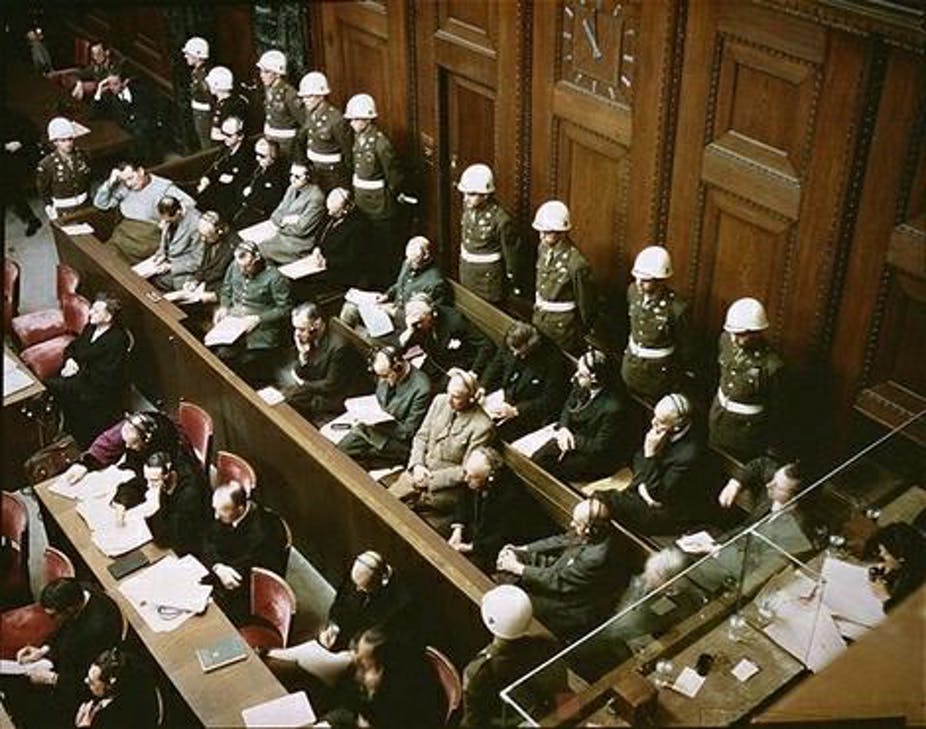
This is the final installment of my introduction and comments regarding Supreme Court Justice and Chief American Prosecutor Robert Jackson’s closing arguments at Nuremberg.
In this final segment of his closing arguments, Jackson confronted the impossibility of a cabal of the most powerful members of the Nazi Party, the German Government, its Military, and Police organizations, the men closest to Adolf Hitler and the center of power in Germany who by their testimony knew nothing of what was going on in the country.
When one reads the transcripts of the trials as I am continuing to do in between reading other books, including one about the Tokyo War Crimes Trials, the defendants universal defense was that they knew nothing, or had learned of the Nazi crimes for the first time during the trial.
What is remarkable is that for every denial there was documented evidence to the contrary, that each in their own way were willing participants in the Nazi crimes. While they pointed fingers at the dead, like Joseph Goebbels, Heinrich Himmler, Reinhard Heydrich, or unaccounted for like Martin Bormann, and on occasion the other defendants in the dock, each attempted to cover his tracks with lies and deception. Even Albert Speer, who was the only one of the defendants to openly admit his guilt during the trial engaged in deception.
The lies of these men and their brutal exposure before the watching world should serve as a warning to the leaders of nations, especially the nations which prosecuted these men, the foremost being the United States of America. Before the trial in the London agreement, Jackson noted:
“If certain acts of violation of treaties are crimes, they are crimes whether the United States does them or whether Germany does them, and we are not prepared to lay down a rule of criminal conduct against others which we would not be willing to have invoked against us.
I have served and continue to serve the United States, but my oath to the Constitution demands that I be intellectually honest and forthright in stating that the United States has not lived up to its founding principles or the words of Justice Jackson. During the Cold War the United States engaged in overthrowing foreign governments and replacing them with dictators more inclined to do our bidding, engineered the pretext to allow massive U. S. Military intervention in Vietnam, and after the Cold War used the real pretext of the terrorism of the 9-11-2001 attacks to invade Iraq, a country that was not involved. The list could go on and on, but because of the protections of the First Amendment, a free press has been able to expose many of those lies, even as the beast of corporate media egged on war like the Yellow Journalism of William Randolph Hearst during the run up to the Spanish American War.
Every government in every nation has engaged in some amount of lying to increase its power, influence, or to cover its malfeasance. The United States is not blameless, but too often Americans, ignorant or history, and the Constitution revel in the myth of American Exceptionalism to justify actions against other nations that do the same, that we have gone to war to confront or prosecuted as war criminals for doing. In fact, some of the Nazis in the dock at Nuremberg defended their actions by citing American history: Slavery, Jim Crow, the extermination of the peoples of America’s First Nations, the American practice of eugenics, and medical experiments on racial minorities or the mentally ill, and the incarceration of Japanese Americans following Pearl Harbor to justify and defend their crimes, even as they denied their culpability for their crimes.
The Nazis in the dock at Nuremberg included true believers as well as opportunists. The were willing members of a regime founded upon lies. In defeat and on trial they would all repeat those lies, and add to them. Unfortunately, the current American President and his administration seem to be playing the same game with truth as the Nazis did. Hannah Arendt wrote:
“Before mass leaders seize the power to fit reality to their lies, their propaganda is marked by its extreme contempt for facts as such, for in their opinion fact depends entirely on the power of man who can fabricate it.”
Truth and integrity are not fungible assets that one can abandon without consequences. Germany is still hampered in international relations as well as domestic politics by what the Nazis did. The shadows of the Nazi past still enshroud Germans who are two or three generations removed from the Nazi past. The great ethicist Sissela Bok wrote:
“Trust and integrity are precious resources, easily squandered, hard to regain. They can thrive only on a foundation of respect for veracity.”





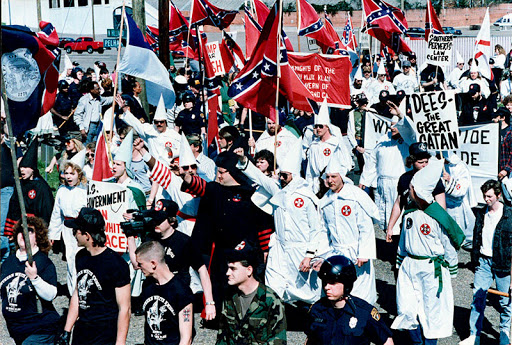

Through his Twitter Account Trump has spread lie upon lie, and spread hate filled conspiracy theories so base and demonic that they are beyond belief, yet his followers believe those lies as if they were the Gospel. In fact many of his followers who identify as conservative or evangelical Christians act as if Trump’s words and actions trump the beliefs of the Church. Trump has become their Messiah, just as Hitler was for his true believers.
I cannot predict with accuracy what will happen with these people when Trump leaves office, but I presume that they will believe a version of the Dolchstoß Myth, the Stab-in-the-back, of betrayal. Trump will feed that belief and that at least some violence will ensue, including political assassinations, lynchings, and other violence.
With that I give you Robert Jackson’s masterful dissection of the Nazis in the dock at Nuremberg’s Palace of Justice. Something that we should pay close attention to as we follow the nefarious antics of President Trump and his corrupt administration and cult-like followers. What is interesting about the Nuremberg defendants were that some were true believers, while others were opportunists trying to advance their careers, even knowing the cause was evil and often criminal. The latter were probably more like many people nowadays, they just look the other way while trying to take advantage of any opportunity given to them.
Anyway, back to indexing my book.
Until tomorrow,
Peace,
Padre Steve+
Record of Proceedings: July 26, 1946, continued:

Rudolf Hess
The zealot Hess, before succumbing to wanderlust, was the engineer tending the Party machinery, passing orders and propaganda down to the Leadership Corps, supervising every aspect of Party activities, and maintaining the organization as a loyal and ready instrument of power.

Joachim von Ribbentrop
When apprehensions abroad threatened the success of the Nazi regime for conquest, it was the double-dealing Ribbentrop, the salesman of deception, who was detailed to pour wine on the troubled waters of suspicion by preaching the gospel of limited and peaceful intentions.

Wilhelm Keitel
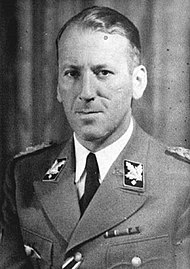
Ernst Kaltenbrunner
Kaltenbrunner, the grand inquisitor, assumed the bloody mantle of Heydrich to stifle opposition and terrorise into compliance, and buttressed the power of National Socialism on a foundation of guiltless corpses.

Alfred Rosenberg
It was Rosenberg, the intellectual high priest of the “master race”, who provided the doctrine of hatred which gave the impetus for the annihilation of Jewry, and who put his infidel theories into practice against the Eastern occupied territories. His woolly philosophy also added boredom to the long list of Nazi atrocities.

Hans Frank
The fanatical Frank, who solidified Nazi control by establishing the new order of authority without law, so that the will of the Party was the only test of legality, proceeded to export his lawlessness to Poland, which he governed with the lash of Caesar and whose population he reduced to sorrowing remnants.

Wilhelm Frick
Frick, the ruthless organiser, helped the Party to seize power, supervised the police agencies to ensure that it stayed in power, and chained the economy of Bohemia and Moravia to the German war machine.
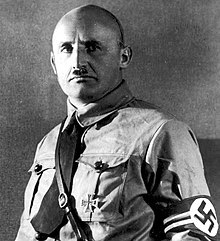
Julius Streicher
Streicher, the venomous vulgarian, manufactured and distributed obscene racial libels which incited the populace to accept and assist the progressively savage operations of “race purification”.
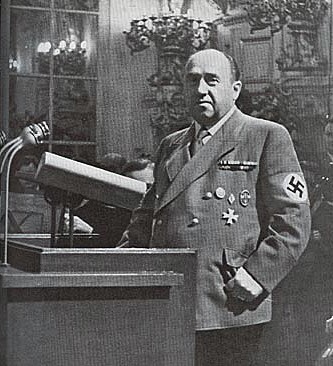
Walter Funk
As Minister of Economics Funk accelerated the pace of rearmament, and as Reichsbank president banked for the SS the gold teeth-fillings of concentration camp victims -probably the most ghoulish collateral in banking history.
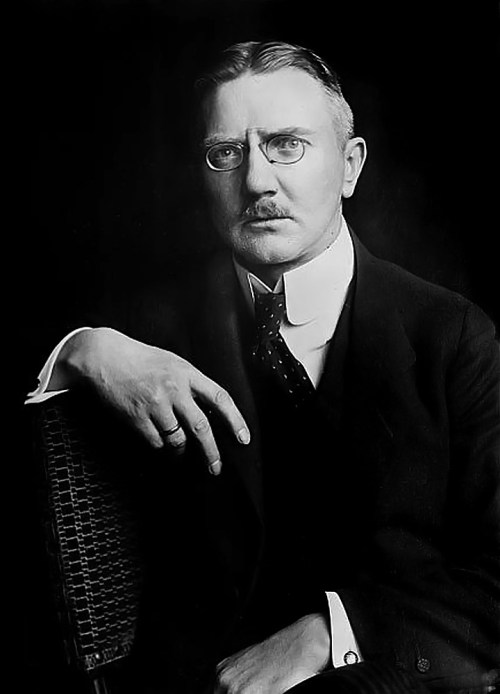
Hjalmar Schacht
It was Schacht, the facade of starched respectability, who in the early days provided the window-dressing, the bait for the hesitant, and whose wizardry later made it possible for Hitler to finance the colossal rearmament programme, and to do it secretly.
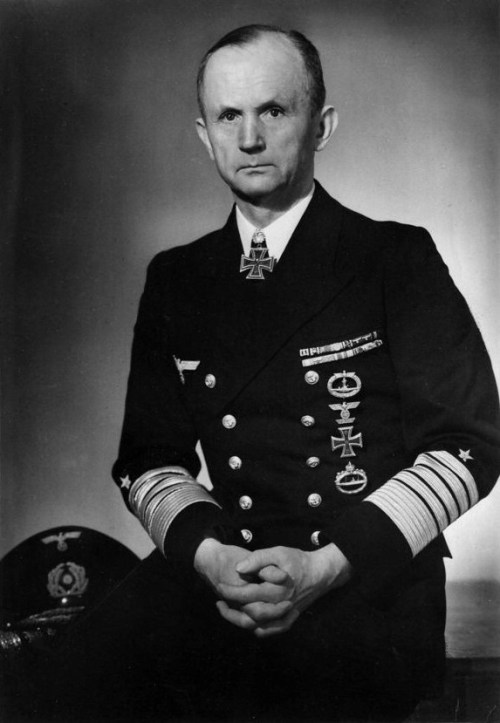
Karl Dönitz
Donitz, Hitler’s legatee of defeat, promoted the success of the Nazi aggressions by instructing his pack of submarine killers to conduct warfare at sea with the illegal ferocity of the jungle.
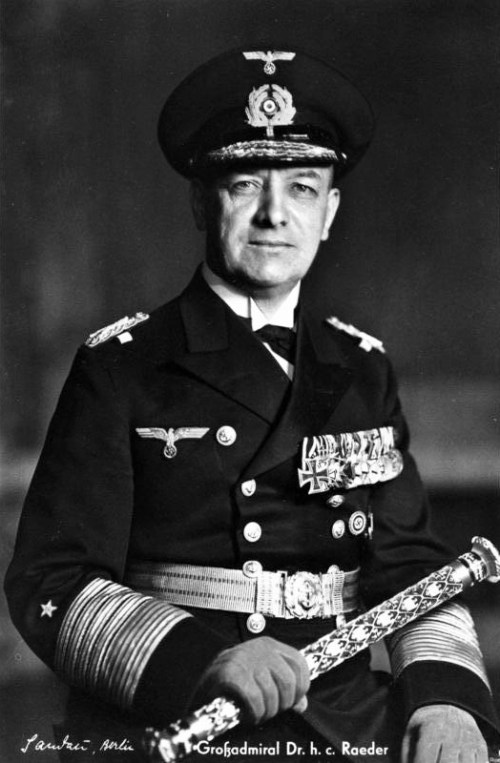
Erich Raeder
Raeder, the political admiral, stealthily built up the German Navy in defiance of the Versailles Treaty, and then put it to use in a series of aggressions which he had taken a leading part in planning.
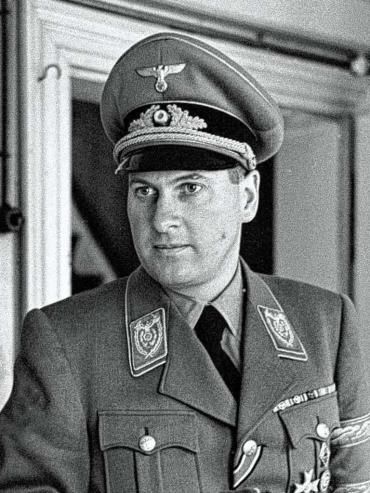
Baldur von Schirach
Von Schirach, poisoner of a generation, initiated the German youth in Nazi doctrine, trained them in legions for service in the SS and Wehrmacht, and delivered them up to the Party as fanatic, unquestioning executors of its will.

Fritz Sauckel
Sauckel, the greatest and cruellest slaver since the Pharaohs of Egypt, produced desperately needed manpower by driving foreign peoples into the land of bondage on a scale unknown even in the ancient days of tyranny in the kingdom of the Nile.

Alfred Jodl
Jodl, betrayer of the traditions of his profession, led the Wehrmacht in violating its own code of military honour in order to carry out the barbarous aims of Nazi policy.
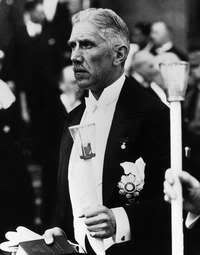
Franz von Papen
Von Papen, pious agent of an infidel regime, held the stirrup while Hitler vaulted into the saddle, lubricated the Austrian annexation, and devoted his diplomatic cunning to the service of Nazi objectives abroad.
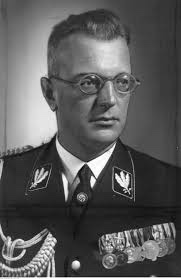
Arthur Seyess-Inquart
Seyss-Inquart, spearhead of the Austrian fifth column, took over the government of his own country only to make a present of it to Hitler, and then, moving north, brought terror and oppression to the Netherlands and pillaged its economy for the benefit of the German juggernaut.
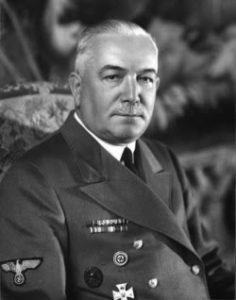
Konstantin von Neurath
Von Neurath, the old-school diplomat, who cast the pearls of his experience before the Nazis, guided Nazi diplomacy in the early years, soothed the fears of prospective victims, and as Reich Protector of Bohemia and Moravia strengthened the German position for the coming attack on Poland.
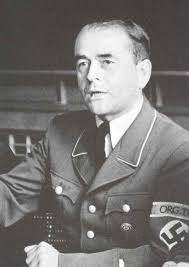
Albert Speer
Speer, as Minister of Armaments and Production, joined in planning and executing the programme to dragoon prisoners of war and foreign workers into German war industries, which waxed in output while the labourers waned in starvation.
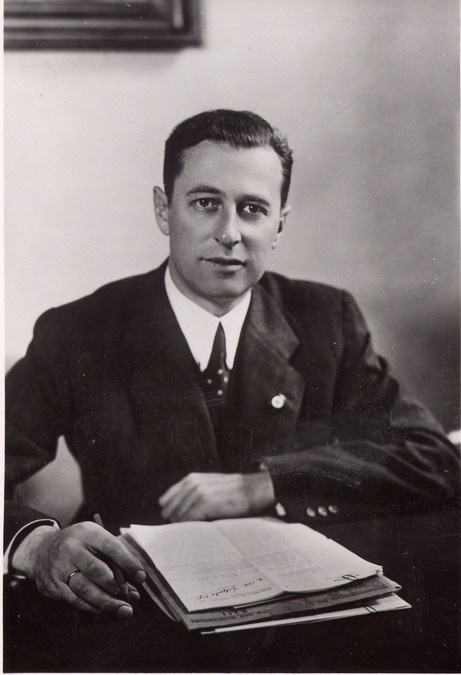
Hans Fritzsche
Fritzsche, radio propaganda chief, by manipulation of the truth goaded German public opinion into frenzied support of the regime, and anaesthetised the independent judgement of the population so that they did their masters’ bidding without question.

Martin Bormann
Bormann, who has not accepted our invitation to this reunion, sat at the throttle of the vast and powerful engine of the Party, guiding it in the ruthless execution of Nazi policies, from the scourging of the Christian Church to the lynching of captive Allied airmen.
The activities of all these defendants, despite their varied backgrounds and talents, were joined with the efforts of other conspirators not now in the. dock, who played still other essential roles: They blend together into one consistent and militant pattern animated by a common objective to reshape the map of Europe by force of arms. Some of these defendants were ardent members of the Nazi movement from its birth. Others, less fanatical, joined the common enterprise later, after success had made participation attractive by the promise of rewards. This group of latter-day converts remedied a crucial defect in the ranks of the original true believers, for as Dr. Siemers has pointed out in his summation:
“… There were no specialists among the National Socialists for the particular tasks. Most of the National Socialist collaborators did not previously follow a trade requiring technical education.”
It was the fatal weakness of the early Nazi band that it lacked technical competence. It could not from among its own ranks make up a government capable of carrying out all the projects necessary to realize its aims. Therein lies the special crime and betrayal of men like Schacht and von Neurath, Speer and von Papen, Raeder and Donitz, Keitel and Jodl. It is doubtful whether the Nazi master plan could have succeeded without their specialized intelligence which they so willingly put at its command. They did so with knowledge of its announced aims and methods, and continued their services after practice had confirmed the direction in which they were tending. Their superiority to the average run of Nazi mediocrity is not their excuse. It is their condemnation.
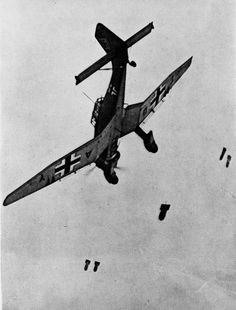


The dominant fact which stands out from all the thousands of pages of the record of this trial is that the central crime of the whole group of Nazi crimes -the attack on the peace of the world -was clearly and deliberately planned. The beginning of these wars of aggression was not an unprepared and spontaneous springing to arms by a population excited by some current indignation. A week before the invasion of Poland Hitler told his military commanders:
“I shall give a propagandist cause for starting war -never mind whether it be plausible or not. The victor shall not be asked later on whether we told the truth or not. In starting and making a war, it is not the right that matters, but victory.”
The propagandist incident was duly provided by dressing concentration camp inmates in Polish uniforms, in order to create the appearance of a Polish attack on a German frontier radio station. The plan to occupy Belgium, Holland, and Luxembourg first appeared as early as August, 1938, in connection with the plan for attack on Czechoslovakia. The intention to attack became a programme in May, 1939, when Hitler told his commanders that:
“The Dutch and Belgian air bases must be occupied by armed forces. Declarations of neutrality must be ignored.”
Thus, the follow-up wars were planned before the first was launched. These were the most carefully plotted wars in all history. Scarcely a step in their terrifying succession and progress failed to move according to the master blueprint or the subsidiary schedules and timetables until long after the crimes of aggression were consummated. Nor were the war crimes and the crimes against humanity unplanned, isolated or spontaneous offences. Apart from our undeniable evidence of their plotting, it is sufficient to ask whether six million people could be separated from the population of several nations on the basis of their blood and birth, could be destroyed and their bodies disposed of, unless the operation had fitted into the general scheme of government. Could the enslavement of five millions of labourers, their impressment into service, their transportation to Germany, their allocation to work where they would be most useful, their maintenance, if slow starvation can be called maintenance, and their guarding have been accomplished if it did not fit into the common plan? Could hundreds of concentration camps located throughout Germany, built to accommodate hundreds of thousands of victims, and each requiring labour and materials for construction, manpower to operate and supervise, and close gearing into the economy -could such efforts have been expended under German autocracy if they had not suited the plan? Has the Teutonic passion for organization suddenly become famous for its toleration of non-conforming activity? Each part of the plan fitted into every other. The slave labour programme meshed with the needs of industry and agriculture, and these in turn synchronised with the military machine. The elaborate propaganda apparatus geared with the programme to dominate the people and incite them to a war which their sons would have to fight. The armament industries were fed by the concentration camps. The concentration camps were fed by the Gestapo. The Gestapo was fed by the spy system of the Nazi Party. Nothing was permitted under the Nazi iron rule that was not in accordance with the programme.
Everything of consequence that took place in this regimented society was but a manifestation of a premeditated and unfolding purpose to secure the Nazi State a place in the sun by casting all others into darkness.
COMMON DEFENCES AGAINST THE CHARGE OF COMMON RESPONSIBILITY
The defendants meet this overwhelming case, some by admitting a limited, responsibility, some by putting the blame on others, and some by taking the position, in effect, that while there have been enormous crimes there are no criminals. Time will not permit me to examine each individual and particular defence, but there are certain lines of defence common to so many cases that they deserve some consideration.
Counsel for many of the defendants seek to dismiss the charge of a common plan or conspiracy on the ground that the pattern of the Nazi plan does not fit into the concept of conspiracy applicable in German law to the plotting of a highway robbery or a burglary. Their concept of conspiracy is in the terms of a stealthy meeting in the dead of night, in a secluded hide-out, in which a group of felons plot every detail of a specific crime. The Charter forestalls resort to such parochial and narrow concepts of conspiracy taken from local law by using the additional and non-technical term, “common plan”. Omitting entirely the alternative term of “conspiracy”, the Charter reads that “leaders, organisers, instigators, and accomplices participating in the formulation or execution of a common plan to commit” any of the described crimes “are responsible for all acts performed by any persons in execution of such plan”.
The Charter concept of a common plan really represents the conspiracy principle in an international context. A common plan or conspiracy to seize the machinery of a State, to commit crimes against the peace of the world, to blot a race out of existence, to enslave millions, and to subjugate and loot whole nations cannot be thought of in the same terms as the plotting of petty crimes, although the same underlying principles are applicable. Little gangsters may plan who will carry a pistol and who a stiletto, who will approach a victim from the front and who from behind, and where they will waylay him. But in planning war, the pistol becomes a Wehrmacht, the stiletto a Luftwaffe. Where to strike is not a choice of dark alleys, but a matter of world geography. The operation involves the manipulation of public opinion, the law of the State, the police power, industry, and finance. The baits and bluffs must be translated into a nation’s foreign policy. Likewise, the degree of stealth which points to a guilty purpose in, a conspiracy will depend upon its object. The clandestine preparations of a State against international society, although camouflaged to those abroad, might be quite open and notorious among its own people. But stealth is not an essential ingredient of such planning. Parts of the common plan may be proclaimed from the housetops, as anti-Semitism was, and parts of it kept under cover, as rearmament for a long time was. It is a matter of strategy how much of the preparation shall be made public, as was Goering’s announcement in 1935 of the creation of an air force, and how much shall be kept covert, as in the case of the Nazis’ use of shovels to teach “labour corps” the manual of arms. The forms of this grand type of conspiracy are amorphous, the means are opportunistic, and neither can divert the law from getting at the substance of things.
The defendants counted, however, that there could be no conspiracy involving aggressive war because (1) none of the Nazis wanted war; (2) rearmament was only intended to provide the strength to make Germany’s voice heard in the family of nations; and (3) the wars were not in fact aggressive wars but were defensive wars against a “Bolshevik menace”.
When we analyse the argument that the Nazis did not want war it comes down, in substance, to this: “The record looks bad indeed -objectively -but when you consider the state of my mind -subjectively I hated war. I knew the horrors of war. I wanted peace.” I am not so sure of this. I am even less willing to accept Goering’s description of the General Staff as pacifist. However, it will not injure our case to admit that as an abstract proposition none of these defendants liked war. But they wanted things which they knew they could not get without war. They wanted their neighbours’ lands and goods. Their philosophy seems to be that if the neighbours would not acquiesce, then they are the aggressors and are to blame for the war. The fact is, however, that war never became terrible to the Nazis until it came home to them, until it exposed their deceptive assurances to the German people that German cities, like the ruined one in which we meet, would be invulnerable. From then on, war was terrible.
But again the defendants claim: “To be sure, we were building guns. But not to shoot. They were only to give us weight in negotiating.” At its best this argument amounts to a contention that the military forces were intended for blackmail, not for battle. The threat of military invasion which forced the Austrian Anschluss, the threats which preceded Munich, and Goering’s threat to bomb the beautiful city of Prague if the President of Czechoslovakia did not consent to the Protectorate, are examples of what the defendants had in mind when they talked of arming to back negotiation.
But from the very nature of German demands, the day was bound to come when some country would refuse to buy its peace, would refuse to pay Dane-geld,
“For the end of that game is oppression and shame, And the nation that plays it is lost.”
Did these defendants then intend to withdraw German demands, or was Germany to enforce them and manipulate propaganda so as to place the blame for the war on the nation so unreasonable as to resist? Events have answered that question, and documents such as Admiral Carl’s memorandum, earlier quoted, leave no doubt that the events occurred as anticipated.
But some of the defendants argue that the wars were not aggressive and were only intended to protect Germany against some eventual danger from the “menace of Communism”, which was something of an obsession with many Nazis.
At the outset this argument of self-defence fails because it completely ignores this damning combination of facts clearly established in the record: first, the enormous and rapid German preparations for war; second, the repeatedly avowed intentions of the German leaders to attack, which I have previously cited; and third, the fact that a series of wars occurred in which German forces struck the first blows, without warning, across the borders of other nations.
Even if it could be shown -which it cannot -that the Russian war was really defensive, such is demonstrably not the case with those wars which preceded it.
It may also be pointed out that even those who would have you believe that Germany was menaced by Communism also compete with each other in describing their opposition to the disastrous Russian venture. Is it reasonable that they would have opposed that war if it were undertaken in good faith in self-defence.
It is sought to balance the frivolous self-defence theory against the facts, as advocates often do, by resort to a theory of law. Dr. Jahrreiss, in his scholarly argument for the defence, rightly points out that no treaty provision and no principle of law denied Germany, as a sovereign nation, the right of self-defence. He follows with the assertion for which there is authority in classic International Law, that:
“… every State is alone judge of whether in a given case it is waging a war of self-defence”.
It is not necessary to examine the validity of an abstract principle which does not apply to the facts of our case. I do not doubt that if a nation arrived at a judgement that it must resort to war in self-defence, because of conditions affording reasonable grounds for such an honest judgement, any Tribunal would accord it great and perhaps conclusive weight, even if later events proved that judgement mistaken.
But the facts in this case call for no such deference to honest judgement because no such judgement was ever pretended, much less honestly made.
In all the documents which disclose the planning and rationalisation of these attacks, not one sentence has been or can be cited to show an honest fear of attack. It may be that statesmen of other nations lacked the courage forthrightly and fully to disarm. Perhaps they suspected the secret rearmament of Germany. But if they hesitated to abandon arms, they did not hesitate to neglect them. Germany well knew that her former enemies had allowed their armaments to fall into decay, so little did they contemplate another war. Germany faced a Europe that not only was unwilling to attack, but was too weak and pacifist even adequately to defend, and went to the very verge of dishonour, if not beyond, to buy its peace. The minutes we have shown you of the Nazis’ secret conclaves identify no potential attacker. They bristle with the spirit of aggression and not of defence. They contemplate always territorial expansion, not the maintenance of territorial integrity.
Minister of War von Blomberg, in his 1937 directive prescribing general principles for the preparation for war of the armed forces, has given the lie to these feeble claims of self-defence. He stated at that time:
“The general political situation justifies the supposition that Germany need not consider an attack on any side. Grounds for this are, in addition to the lack of desire for war in almost all nations, particularly the Western Powers, the deficiencies in the preparedness for war in a number of States and of Russia in particular.”
Nevertheless, he recommended: “a continuous preparation for war in order to (a) counter-attack at any time, and (b) to enable the military exploitation of politically favourable opportunities should they occur”.
If these defendants may now cynically plead self-defence, although no honest need of self-defence was asserted or contemplated by any responsible leader at that time, it reduces non-aggression treaties to a legal absurdity. They become additional instruments of deception in the hands of the aggressor, and traps for well-meaning nations. If there be in non-aggression pacts an implied condition that each nation may make a bona fide judgement as to the necessity for self-defence against imminent threatened attack, it certainly cannot be invoked to shelter those who never made any such judgement at all.
In opening this case I ventured to predict that there would be no serious denial that the crimes charged were committed, and that the issue would concern the responsibility of particular defendants. The defendants have fulfilled that prophecy. Generally, they do not deny that these things happened, but it is contended that they “just happened”, and that they were not the result of a common plan or conspiracy.
One of the chief reasons the defendants say why there was no conspiracy is the argument that conspiracy was impossible with a dictator. The argument runs that they all had to obey Hitler’s orders, which had the force of law m the German State, and hence obedience could not be made the basis of a criminal charge. In this way it is explained that while there have been wholesale killings, there have been no murderers.
This argument is an effort to evade Article 8 of the Charter, which provides that the order of the Government or of a superior shall not free a defendant from responsibility but can only be considered in mitigation. This provision of the Charter corresponds with the justice and with the realities of the situation, as indicated in defendant Speer’s description of what he considered to be the common responsibility of the leaders of the German nation; he said that … with reference to decisive matters, there was a joint responsibility. There must be a joint responsibility among the leaders, because who else could take the responsibility for the development of events, if not the close associates who work with and around the head of the State?
And again he told the Tribunal that … it was impossible after the catastrophe to evade this joint responsibility, and that if the war had been won, the leaders would also have laid claim to joint responsibility.
Like much of defence counsel’s abstract arguments, the contention that the absolute power of Hitler precluded a conspiracy crumbles in the face of the facts of record. The Fuehrerprinzip of absolutism was itself a part of the common plan, as Goering has pointed out. The defendants may have become the slaves of a dictator, but he was their dictator. To make him such was, as Goering has testified, the object of the Nazi movement from the beginning. Every Nazi took this oath:
“I pledge eternal allegiance to Adolf Hitler. I pledge unconditional obedience to him and the Fuehrers appointed by him.”
Moreover, they forced everybody else in their power to take it. This oath was illegal under German law, which made it criminal to become a member of an organization in which obedience to “unknown superiors or unconditional obedience to known superiors is pledged”. These men destroyed free government in Germany and now plead to be excused from responsibility because they became slaves. They are in the position of the boy of fiction who murdered his father and mother and then pleaded for leniency because he was an orphan.
What these men have overlooked is that Adolf Hitler’s acts are their acts. It was these men among millions of others, and it was these men leading millions of others, who built up Adolf Hitler and vested in his psychopathic personality not only innumerable lesser decisions but the supreme issue of war or peace. They intoxicated him with power and adulation. They fed his hates and aroused his fears. They put a loaded gun in his eager hands. It was left to Hitler to pull the trigger, and when he did they all at that time approved. His guilt stands admitted, by some defendants reluctantly, by some vindictively. But his guilt is the guilt of the whole dock, and of every man in it.
But it is urged that these defendants could not be in agreement on a common plan or conspiracy because they were fighting among themselves or belonged to different factions or cliques. Of course, it is not necessary that men should agree on everything in order to agree on enough things to make them liable for a criminal conspiracy. Unquestionably there were conspiracies within the conspiracy, and intrigues and rivalries and battles for power. Schacht and Goering disagreed, but over which of them should control the economy, not over whether the economy should be regimented for war. Goering claims to have departed from the plan because, through Dahlerus, he conducted some negotiations with men of influence in England just before the Polish war. But it is perfectly clear that this was not an effort to prevent aggression against Poland but to make that aggression successful and safe by obtaining English neutrality. Rosenberg and Goering may have had some differences as to how stolen art should be distributed, but they had none about how it should be stolen. Jodl and Goering may have disagreed about whether to denounce the Geneva Convention, but they never disagreed about violating it. And so it goes through the whole long and sordid story. Nowhere do we find a single instance where any one of the defendants stood up against the rest and said: “This thing is wrong and I will not take part in it.” Wherever they differed, their differences were as to method or jurisdiction, but always within the framework of the common plan.
Some of the defendants also contend that in any event there was no conspiracy to commit war crimes or crimes against humanity because Cabinet members never met with the military commanders to plan these acts. But these crimes were only the inevitable and incidental results of the plan to commit the aggression for purposes of Lebensraum. Hitler stated, at a conference with his commanders, that:
“The main objective in Poland is the destruction of the enemy and not the reaching of a certain geographical line.”
Frank picked up the tune and suggested that when their usefulness was exhausted,
“… then, for all I care, mincemeat can be made of the Poles and Ukrainians and all the others who run around here -it does not matter what happens”.
Reichskommissar Koch in the Ukraine echoed the refrain:
“I will draw the very last out of this country. I did not come to spread bliss ….”
This was Lebensraum in its seamy side. Could men of their practical intelligence expect to get neighboring lands free from the claims of their tenants without committing crimes against humanity?
The last stand of each defendant is that even if there was a conspiracy, he was not in it. It is therefore important in examining their attempts at avoidance of responsibility to know, first of all, just what it is that a conspiracy charge comprehends and punishes.
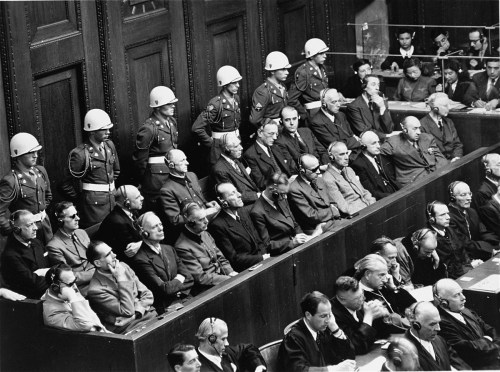
In conspiracy we do not punish one man for another man’s crime. We seek to punish each for his own crime of joining a common criminal plan in which others also participated. The measure of the criminality of the plan and therefore of the guilt of each participant is, of course, the sum total of crimes committed by all in executing the plan. But the gist of the offence is participation in the formulation or execution of the plan. These are rules which every society has found necessary in order to reach men, like these defendants, who never get blood on their own hands but who lay plans that result in the shedding of blood. All over Germany today, in every zone of occupation, little men who carried out these criminal policies under orders are being convicted and punished. It would present a vast and unforgivable caricature of justice if the men who planned these policies and directed these little men should escape all penalty.
These men in this dock, on the face of this record, were not strangers to this programme of crime, nor was their connection with it remote or obscure. We find them in the very heart of it. The positions they held show that we have chosen defendants of self-evident responsibility. They are the very highest surviving authorities in their respective fields and in the Nazi State. No one lives who, at least until the very last moments of the war, outranked Goering in position, power, and influence. No soldier stood above Keitel and Jodl, and no sailor above Raeder and Donitz. Who can be responsible for the double-faced diplomacy if not the Foreign Ministers, von Neurath and Ribbentrop, and the diplomatic handyman, von Papen? Who should be answerable for the oppressive administration of occupied countries if Gauleiter, Protectors, Governors and Commissars such as Frank, Seyss-Inquart, Frick, von Schirach, von Neurath, and Rosenberg are not? Where shall we look for those who mobilised the economy for total war if we overlook Schacht and Speer and Funk? Who was the master of the great slaving enterprise if it was not Sauckel? Where shall we find the hand that ran the concentration camps if it was not the hand of Kaltenbrunner? Who whipped up the hates and fears of the public, and manipulated the Party organizations to incite these crimes, if not Hess, von Schirach, Fritzsche, Bormann and the unspeakable Julius Streicher? The list of defendants is made up of men who played indispensable and reciprocal parts in this tragedy. The photographs and the films show them again and again together on important occasions. The documents show them agreed on policies and on methods, and all working aggressively for the expansion of Germany by force of arms.

Hermann Goering
Each of these men made a real contribution to the Nazi plan. Each man had a key part. Deprive the Nazi regime of the functions performed by a Schacht, a Sauckel, a von Papen, or a Goering, and you have a different regime. Look down the rows of fallen men and picture them as the photographic and documentary evidence shows them to have been in their days of power. Is there one who did not substantially advance the conspiracy along its bloody path towards its bloody goal? Can we assume that the great effort of these men’s lives was directed towards ends they never suspected?
To escape the implications of their positions and the inference of guilt from their activities, the defendants are almost unanimous in one defence. The refrain is heard time and again: these men were without authority, without knowledge, without influence, without importance. Funk summed up the general self-abasement of the dock in his plaintive lament that:
“I always, so to speak, came up to the door. But I was not permitted to enter.”
In the testimony of each defendant, at some point there was reached the familiar blank wall: nobody knew anything about what was going on. Time after time we have heard the chorus from the dock:
“I only heard about these things here for the first time.”
These men saw no evil, spoke none, and none was uttered in their presence. This claim might sound very plausible if made by one defendant. But when we put all their stories together, the impression which emerges of the Third Reich, which was to last a thousand years, is ludicrous. If we combine only the stories of the front bench, this is the ridiculous composite picture of Hitler’s Government that emerges. It was composed of:
A No. 2 man who knew nothing of the excesses of the Gestapo which he created, and never suspected the Jewish extermination programme although he was the signer of over a score of decrees which instituted the persecution of that race;
A No. 3 man who was merely an innocent middleman transmitting Hitler’s orders without even reading them, like a postman or delivery boy;
A Foreign Minister who knew little of foreign affairs and nothing of foreign policy;
A Field-Marshal who issued orders to the armed forces but had no idea of the results they would have in practice;
A Security Chief who was of the impression that the policing functions of his Gestapo and SD were somewhat on the lines of directing traffic;
A Party philosopher who was interested in historical research, and had no idea of the violence which his philosophy was inciting in the twentieth century;
A Governor-General of Poland who reigned but did not rule;
A Gauleiter of Franconia whose occupation was to pour forth filthy writings about the Jews, but who had no idea that anybody would read them;
A Minister of the Interior who knew not even what went on in the interior of his own office, much less the interior of his own department, and nothing at all about the interior of Germany;
A Reichsbank President who was totally ignorant of what went in and out of the vaults of his bank;
A Plenipotentiary for the War Economy who secretly marshalled the entire economy for armament, but had no idea it had anything to do with war.
This may seem like a fantastic exaggeration, but this is what you would actually be obliged to conclude if you were to acquit these defendants.
They do protest too much. They deny knowing what was common knowledge. They deny knowing plans and programmes that were as public as Mein Kampf and the Party programme.
They deny even knowing the contents of documents which they received and acted upon. Nearly all the defendants take two or more conflicting positions. Let us illustrate the inconsistencies of their positions by the record of one defendant -who, if pressed, would himself concede that he is the most intelligent, honourable and innocent man in the dock. That is Schacht. And this is the effect of his own testimony -but let us not forget that I recite it not against him alone, but because most of its self-contradictions are found in the testimony of several defendants.
Schacht did not openly join the Nazi movement until it had won, nor openly desert it until it had lost. He admits that he never gave it public opposition, but asserts that he never gave it private loyalty. When we demand of him why he did not stop the criminal course of the regime in which he was a Minister, he says he had not a bit of influence. When we ask why he remained a member of the criminal regime, he tells us that by sticking on he expected to moderate its programme. Like a Brahmin among Untouchables, he could not bear to mingle with the Nazis socially, but never could he afford to separate from them politically. Of all the Nazi aggressions by which he now claims to have been shocked, there is not one that he did not support before the world with the weight of his name and prestige. Having armed Hitler to blackmail a continent, his answer now is to blame England and France for yielding. Schacht always fought for his position in a regime he now affects to despise. He sometimes disagreed with his Nazi confederates about what was expedient in reaching their goal, but he never dissented from the goal itself. When he did break with them in the twilight of the regime, it was over tactics, not principles. From then on he never ceased to urge others to risk their positions and their necks to forward his plots, but never on any occasion did he hazard either of his own. He now boasts that he personally would have shot Hitler if he had had the opportunity, but the German newsreel shows that even after the fall of France, when he faced the living Hitler, he stepped out of line to grasp the hand he now claims to loathe and hung upon the words of the man he now says he thought unworthy of belief. Schacht says he steadily “sabotaged” the Hitler Government. Yet the most relentless secret service in the world never detected him doing the regime any harm until long after, he knew the war to be lost and the Nazis doomed. Schacht, who dealt in “hedges” all his life, always kept himself in a position to claim that he was in either camp. The plea for him is as specious on analysis as it is persuasive on first sight. Schacht represents the most dangerous and reprehensible type of opportunism -that of the man of influential position who is ready to join a movement that he knows to be wrong because he thinks it is winning.
These defendants, unable to deny that they were the men in the very highest ranks of power, and unable to deny that the crimes I have outlined actually happened, know that their own denials are incredible unless they can suggest someone who is guilty.
The defendants have been unanimous, when pressed, in shifting the blame on other men, sometimes on one and sometimes on another. But the names they have repeatedly picked are Hitler, Himmler, Heydrich, Goebbels and Bormann. All of these are dead or missing. No matter how hard we have pressed the defendants on the stand, they have never pointed the finger at a living man as guilty. It is a temptation to ponder the wondrous workings of a fate which has left only the guilty dead and only the innocent alive. It is almost too remarkable.
The chief villain on whom blame is placed -some of the defendants vie with each other in producing appropriate epithets -is Hitler. He is the man at whom nearly every defendant has pointed an accusing finger.
I shall not dissent from this consensus, nor do I deny that all these dead and missing men shared the guilt. In crimes so reprehensible that degrees of guilt have lost their significance they may have played the most evil parts. But their guilt cannot exculpate the defendants. Hitler did not carry all responsibility to the grave with him. All the guilt is not wrapped in Himmler’s shroud. It was these dead men whom these living chose to be their partners in this great conspiratorial brotherhood, and the crimes that they did together they must pay for one by one.
It may well be said that Hitler’s final crime was against the land he had ruled. He was a mad “messiah” who started the war without cause and prolonged it without reason. If he could not rule he cared not what happened to Germany. As Fritzsche has told us from the stand, Hitler tried to use the defeat of Germany for the self-destruction of the German people. He continued the fight when he knew it could not be won, and continuance meant only ruin.
Speer, in this courtroom, has described it as follows:
“… The sacrifices which were made on both sides after January, 1945, were senseless. The dead of this period will be the accusers of the man responsible for the continuation of that fight, Adolf Hitler, and the ruined cities which in this last phase lost tremendous cultural values and in which a colossal number of dwellings were destroyed …. The German people remained faithful to Adolf Hitler until the end. He betrayed them knowingly. He finally tried to throw them into the abyss ….”
Hitler ordered everyone else to fight to the last and then retreated into death by his own hand. But he left life as he lived it, a deceiver; he left the official report that he had died in battle. This was the man whom these defendants exalted to a Fuehrer. It was they who conspired to get him absolute authority over all of Germany. And in the end he and the system they had created for him brought the ruin of them all. As stated by Speer in cross-examination:
“… the tremendous danger of the totalitarian system, however, only became really clear at the moment when we were approaching the end. It was then that one could see what the principle really meant, namely, that every order should be carried out without criticism. Everything that has become known during this trial, especially with regard to orders which were carried out without any consideration, has proved how evil it .was in the end…. Quite apart from the personality of Hitler, on the collapse of the totalitarian system in Germany it became clear what tremendous dangers there are in a system of that kind. The combination of Hitler and this system has brought about these tremendous catastrophes in the world.”
But let me for a moment turn devil’s advocate. I admit that Hitler was the chief villain. But for the defendants to put all blame on him is neither manly nor true. We know that even the head of the State has the same limits to his senses and to the hours of his days as do lesser men. He must rely on others to be his eyes and ears as to most that goes on in a great empire. Other legs must run his errands; other hands must execute his plans.
On whom did Hitler rely for such things more than upon these men in the dock? Who led him to believe he had an invincible air armada if not Goering? Who kept disagreeable facts from him? Did not Goering forbid Field-Marshal Milch to warn Hitler that in his opinion Germany was not equal to the war upon Russia? Did not Goering, according to Speer, relieve General Galland of his air force command for speaking of the weaknesses and bungling of the air force? Who led Hitler, utterly untravelled himself, to believe in the indecision and timidity of democratic peoples if not Ribbentrop, von Neurath, and von Papen? Who fed his illusion of German invincibility if not Keitel, Jodl, Raeder, and Donitz? Who kept his hatred of the Jews inflamed more than Streicher and Rosenberg? Who would Hitler say deceived him about conditions in concentration camps if not Kaltenbrunner, even as he would deceive us? These men had access to Hitler and often could control the information that reached him and on which he must base his policy and his orders. They were the Praetorian Guard, and while they were under Caesar’s orders, Caesar was always in their hands.
If these dead men could take the witness stand and answer what has been said against them, we might have a less distorted picture of the parts played by these defendants. Imagine the stir that would occur in the dock if it should behold Adolf Hitler advancing to the witness box, or Himmler with an armful of dossiers, or Goebbels, or Bormann with the reports of his Party spies, or the murdered Roehm or Canaris. The ghoulish defence that the world is entitled to retribution only from the cadavers is an argument worthy of the crimes at which it is directed.
We have presented to this Tribunal an affirmative case based on incriminating documents which are sufficient, if unexplained, to require a finding of guilt on Count One against each defendant. In the final analysis, the only question is whether the defendants’ own testimony is to be credited as against the documents and other evidence of their guilt. What, then, is their testimony worth?
The fact is that the Nazi habit of economising in the use of truth pulls the foundations out from under their own defences. Lying has always been a highly approved Nazi technique. Hitler, in Mein Kampf, advocated mendacity as a policy. Von Ribbentrop admits the use of the “diplomatic lie”. Keitel advised that the facts of rearmament be kept secret so that they could be denied at Geneva. Raeder deceived about rebuilding the German Navy in violation of Versailles. Goering urged Ribbentrop to tell a “legal lie” to the British Foreign Office about the Anschluss, and in so doing only marshalled him the way he was going. Goering gave his word of honour to the Czechs and proceeded to break it. Even Speer proposed to deceive the French into revealing the specially trained among their prisoners.
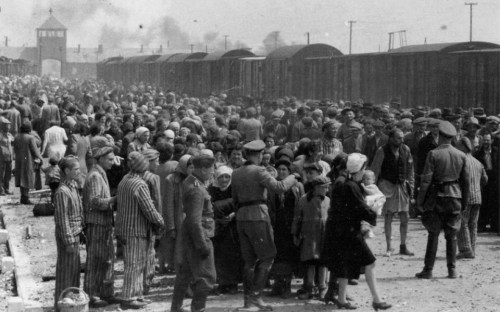

Nor is the lie direct the only means of falsehood. They all speak with a Nazi double meaning with which to deceive the unwary. In the Nazi dictionary of sardonic euphemisms “Final solution” of the Jewish problem was a phrase which meant extermination; “Special treatment” of prisoners of war meant killing; “Protective custody” meant concentration camp; “Duty labour” meant slave labour; and an order to “take a firm attitude” or “take positive measures” meant to act with unrestrained savagery. Before we accept their word at what seems to be its face value, we must always look for hidden meanings. Goering assured us, on his oath, that the Reich Defence Council never met “as such”. When we produced the stenographic minutes of a meeting at which he presided and did most of the talking, he reminded us of the “as such” and explained this was not a meeting of the Council “as such” because other persons were present. Goering denies “threatening” Czechoslovakia. He only told President Hacha that he would “hate to bomb the beautiful city of Prague”.
Besides outright false statements and those with double meanings, there are also other circumventions of truth in the nature of fantastic explanations and absurd professions. Streicher has solemnly maintained that his only thought with respect to the Jews was to resettle them on the island of Madagascar. His reason for destroying synagogues, he blandly said, was only because they were architecturally offensive. Rosenberg was stated by his counsel to have always had in mind a “chivalrous solution” to the Jewish problem. When it was necessary to remove Schuschnigg after the Anschluss, Ribbentrop would have had us believe that the Austrian Chancellor was resting at a “villa”. It was left to cross-examination to reveal that the “villa” was Buchenwald concentration camp. The record is full of other examples of dissimulations and evasions. Even Schacht showed that he, too, had adopted the Nazi attitude that truth is any story which succeeds. Confronted on cross-examination with a long record of broken vows and false words, he declared in justification -and I quote from the record:
“I think you can score many more successes when you want to lead someone if you don’t tell them the truth than if you tell them the truth.”
This was the philosophy of the National Socialists. When for years they have deceived the world, and masked falsehood with plausibilities, can anyone be surprised that they continue that habit of a lifetime in this dock? Credibility is one of the main issues of this trial. Only those who have failed to learn the bitter lessons of the last decade can doubt that men who have always played on the unsuspecting credulity of generous opponents would not hesitate to do the same now.
It is against such a background that these defendants now ask this Tribunal to say that they are not guilty of planning, executing, or conspiring to commit this long list of crimes and wrongs. They stand before the record of this trial as bloodstained Gloucester stood by the body of his slain King. He begged of the widow, as they beg of you: “Say I slew them not.” And the Queen replied, “Then say they were not slain. But dead they are ….” If you were to say of these men that they are not guilty, it would be as true to say that there has been no war, there are no slain, there has been no crime.



 The Inglorius Padre Steve's World