Police Officer Crying at Highland Park, Brian Casella (AP) Photo
Friends of Padre Steve’s World,
I have grown weary of domestic terrorists murdering and maiming innocent people. Most of them are young angry white men, who often target their victims based on their race, ethnicity, gender, or religion. Their preferred victims seem to children and the elderly. There are few places in our country that can be considered safe. I have dealt with PTSD and its aftereffects for over a decade. I have lost count of the hundreds of people I have seen die, many due to gun violence. If you have never stood over the bodies of those whose bodies are destroyed, literally torn apart by high velocity semiautomatic rifles and handguns, then this is simply an exercise in political rhetoric. When I saw the picture above with the police officer crying his hands as he walked through the carnage.
When I saw what was happening in Highland Park, I could not wish anyone a happy Independence Day. I say that because there are a significant number of our citizens and elected leaders, especially those of the Trumpified and QAnon GOP. They have private heavily armed so called militias like the Proud Boys, the Oath Keepers, which function as did the Nazi Brownshirts who go around, even after their major role in attacking the Capitol and trying to force a coup to overthrow the government and invalidate an election that Trump lost decisively in both the Electoral College and the popular vote, still use intimidation tactics to target LGBTQ gatherings and even readings to children in public libraries.
I recognized that Highland Park terrorism was likely directed at Jews, first because Highland Park has a large Jewish population, second because I saw one of the terrorist’s bloody videos before they were taken down. The video was flooded with a Welsh rope Rune used as a symbol of right wing Finnish group, with Nazi leanings, known as Suomen Sisu.
It is indeed a time to mourn, but to get angry and to whatever is needed in the courts, in our legislatures, and in taking to the streets to demand that our local state and federal representatives take action to restore what the founders meant in the Second Amendment which the Roberts Court in an opinion written by the late Antonin Scalia which turned the amendment on its head in 2008.
We also need to be ready take up arms against these terrorist groups. Lest anyone be confused, these efforts have to be defensive in nature, not threaten any public official, but limited to working within the laws of our states and working with law enforcement to ensure that peaceful protestors, or the people to assemble.
However, I have to pause for the night. I have a long day tomorrow, and there is much more to say. But I will conclude with the words of the German general Henning von Tresckow who gave up his life to overthrow Hitler, “A man’s moral worth is established only at the point where he is ready to give up his life in defense of his convictions.”
This week I have been posting about Gettysburg and the solemn observance of Independence Day on 4 July, 1863.
So tonight I will repost a final article from my Gettysburg text. It deals with the human cost of the Battle of Gettysburg. In his Gettysburg Address Abraham Lincoln said:
“Now we are engaged in a great civil war, testing whether that nation, or any nation so conceived and so dedicated, can long endure. We are met on a great battle-field of that war. We have come to dedicate a portion of that field, as a final resting place for those who here gave their lives that that nation might live. It is altogether fitting and proper that we should do this.
But, in a larger sense, we can not dedicate — we can not consecrate — we can not hallow — this ground. The brave men, living and dead, who struggled here, have consecrated it, far above our poor power to add or detract.”
I am a now recareer military officer who suffers from PTSD, TBI and other afflictions after serving in Iraq’s Al Anbar Province in 2007-2008. I have seen firsthand the terrible effects of war. I am also a historian and I have served as Assistant Professor at a major military staff college which helps educate senior military officers from this country and other countries. In that capacity I taught ethics as well as led the Gettysburg Staff ride, or study of the Battle of Gettysburg. When whenever I teach about Gettysburg or any other military campaign, I always attempted to deal with the human cost of warand its attendant afflictions.
Gettysburg was the most costly battle ever fought on the American continent. Around 50,000 men were killed or wounded there in three days of battle. William Tecumseh Sherman noted that “war is hell.” I agree, there is nothing romantic about it. The effects of war last generations. Although we spent over 20 years at war, war itself is an abstract concept to most Americans. It is fought by professionals and only experienced by most Americans on the news, movies or most the banal manner, video games; thus the cost in human terms is not fully appreciated, and nor can it be, we are far too insulated from it. Over the past forty plus years our politicians have insulated the public from war, and in doing so they have ensured that we remained in perpetual war which benefits no one. That is a big reason why I write so much about it, not to glorify or romanticize it, but to try in some war to help make it real to my readers. This is a another draft chapter from my Gettysburg text, and as a side note, the pictures, with the exception of the color photos taken by me at the Soldier’s Cemetery, all were taken after the battle.
A Hasty Grave being marked after the Battle, such were used to minimize the spread of disease
Walt Whitman Wrote:
“Ashes of soldiers South or North, As I muse retrospective murmuring a chant in thought, The war resumes, again to my sense your shapes, And again the advance of the armies. Noiseless as mists and vapors, From their graves in the trenches ascending, From cemeteries all through Virginia and Tennessee, From every point of the compass out of the countless graves, In wafted clouds, in myriads large, or squads of twos or threes or single ones they come, And silently gather round me…”
Too often we look at distant battles and campaigns in terms of strategy, operations, tactics, leadership and the weaponry employed. Likewise we might become more analytical and look at the impact of the battle or campaign in the context of the war it was fought, or in the manner in which the tactics or weapons used revolutionized warfare. Sometimes in our more reflective moments we might look at individual bravery or sacrifice, often missing in our analysis is the cost in flesh and blood.
Temporary Mass Grave
Admittedly the subject is somewhat macabre. But with the reality being that very few people in the United States, Canada or Western Europe have experienced the terrible brutality of war it is something that we should carefully consider any time the nation commits itself to war. By we, I mean all citizens, including the many soldiers, sailors and airmen who never see the personally see people they kill, or walk among the devastation caused by the highly advanced, precision weapons that they employ from a great distance, sometimes thousands of miles. In some parts of our military we have men and women who have the mission of targeting and killing enemies and then walking home to their families, but in the Civil War killing in combat “remained essentially intimate; soldiers were able to see each other’s faces and to know whom they had killed.” [1]
While the words of William Tecumseh Sherman that “War is Hell” are as true as when he spoke them; the tragic fact is that for most people war is an abstract concept, antiseptic and unreal; except for the occasional beheading of a hostage by Islamic militants or the videos shot by the perpetrators of crimes against humanity on the internet. Thus the cost of war and its attendant cost in lives, treasure and to the environment are not real to most people in the West.
Union and Confederate Dead at Devil’s Den
We use words to describe the business of war which dehumanize the enemy, and we describe their deaths in words more palatable to us. Dave Grossman, the army infantry officer who has spent his post military life writing about the psychology of war and killing wrote:
“Even the language of men at war is the full denial of the enormity of what they have done. Most solders do not “kill,” instead the enemy was knocked over, wasted, greased, taken out, and mopped up. The enemy is hosed, zapped, probed, and fired on. The enemy’s humanity is denied, and he becomes a strange beast called a Jap, Reb, Yank, dink, slant, or slope. Even the weapons of war receive benign names- Puff the Magic Dragon, Walleye, TOW, Fat Boy, Thin Man- and the killing weapon of the individual soldier becomes a piece or a hog, and a bullet becomes a round.”[2]
We can now add the terms Haji and Raghead to Grossman’s list of dehumanizing terms for our opponents from our most recent wars in Iraq and Afghanistan.
Illustration of the Carnage after the Battle
The words of Guy Sager in his classic work The Forgotten Soldier about World War Two on the Eastern front is lost on many that study war:
“Too many people learn about war with no inconvenience to themselves. They read about Verdun or Stalingrad without comprehension, sitting in a comfortable armchair, with their feet beside the fire, preparing to go about their business the next day, as usual…One should read about war standing up, late at night, when one is tired, as I am writing about it now, at dawn, while my asthma attack wears off. And even now, in my sleepless exhaustion, how gentle and easy peace seems!” [3]
In an age where so few have served in the military and even few have seen combat in some way shape or form many who study war are comfortable experts who learn about war with no inconvenience to themselves. When I hear men and women, the pundits, politicians and preachers, that Trinity of Evil who constantly exhort governments and peoples to go to war for causes, places or conflicts that they have little understanding of from the comfort of their living rooms or television studios I grow weary. I fully comprehend the words of Otto Von Bismarck who said: “Anyone who has ever looked into the glazed eyes of a soldier dying on the battlefield will think hard before starting a war.” [4]
As a historian who also is a military chaplain who has seen war I struggle with what Sager said. Thus when I read military history, study and write about particular battles or engagements, or conduct staff rides as like the Gettysburg trip that we are embarking on, the human cost is always present in my mind. The fact that I still suffer the effects of PTSD including night terrors and chronic insomnia keeps what I do in good focus, and prevents me from being a comfortable expert.
Thus, it is my view, to conduct a staff ride, to walk the battlefield; especially in somewhat uncomfortable weather is a good thing. It connects us more in at least a small way to the men that fought there, died there, or brought home wounds that changed them forever.
Black Workers removing bodies from hasty graves before movement to the Soldier’s Cemetery
To walk a battlefield where tens of thousands of men were killed and wounded is for me a visit to hallowed ground. I have felt that at Waterloo, Verdun, Arnhem, Normandy, the Bulge, the West Wall, the Shuri Line on Okinawa, Antietam, Chancellorsville, Stone’s River, and of course the battlefield which I have visited more than any in my life, Gettysburg. There are times when I walk these fields that I am overcome with emotion. This I think is a good thing, for as an American who has family ties to the Civil War, Gettysburg in particular is hallowed ground.
In doing this I try to be dispassionate in how I teach and while dealing with big issues that my students will face as Joint Staff Officers. Some of them will become Flag or General Officers, with the responsibility of advising our nation’s leaders as well planning and conducting the military operations on which the lives of thousands or maybe hundreds of thousands of people depend. Thus I do feel a certain responsibility to teach not only the strategy and other important military aspects of this campaign, but also the cost in human lives and ethical considerations. I take this work seriously because it forces us to remember what war is about and its nature, which Clausewitz wrote is “a paradoxical trinity-composed of primordial violence, hatred and enmity…”[5]which William Tecumseh Sherman so rightly understood without the euphemisms that we so frequently use to describe it: “War is cruelty, and you cannot refine it….”
Illustration of Winfield Scott Hancock being evacuated from the battlefield after Pickett’s Charge
As the sun set on the evening of July 3rd 1863 the battered Army of Northern Virginia and the battered but victorious Army of the Potomac tended their wounds, buried their dead and prepared for what might happen next. On that afternoon it was as if “the doors of Hell had shut” and the next day, the Glorious 4th of July “The heavens opened, and a thunderstorm of biblical proprotions drenched the battlefield, soaking dead, wounded and able-bodied men equally.”[6]
Following the disastrous attack aimed at the Union center, Lee and his surviving commanders prepared for an expected Union counter attack. However, George Meade, the commander of the Army of the Potomac who had correctly anticipated Lee’s assault decided not to gamble on a counter attack, though it was tempting. He knew too well the tenacity and skill of the Confederate commanders and soldiers on the defense and did not want to risk a setback that might give Lee another chance, thus “the two sides stared at each other, each waiting for the other to resume the fighting, neither did.”[7]
Artistic rendering of an amputation at Chancellorsville
As the Confederate army retreated and Meade’s army pursued another army remained at Gettysburg, “an army of the wounded, some 20,350 in number, a third of them Confederate….” Just 106 surgeons were spared from the Army of the Potomac and “the comparatively few overburdened surgeons and attendants now on duty still labored every day to the point of exhaustion.”[8] These overworked men were aided by local volunteers as well as members of the U.S. Sanitary Commission, the Christian Commission and the Sisters of Charity. These men and women “brought organization to the hospitals, relief to the medical staffs and the local volunteers, and immense comfort to the wounded, whether blue or butternut.”[9]
The Dead after the Battle
The dead and wounded littered the battlefield and the sights and smells were ghastly:
“Wherever men gazed, they saw dead bodies. A New Yorker thought they “lay as thick as the stones that is on father’s farm.” A stench smothered the field, moving John Geary to tell his wife, “My very clothes smell of death.” A Regular Army veteran exclaimed, “I have seen many a big battle, most of the big ones of the war, and I never saw the like.” [10] A resident of Gettysburg walked up to Little Round top and wrote of what she observed from the peak of that rocky hill:
“surrounded by the wrecks of battle, we gazed upon the valley of death beneath. The view there spread out before us was terrible to contemplate! It was an awful spectacle! Dead soldiers, bloated horses, shattered cannon and caissons, thousands of small arms. In fact everything belonging to army equipments was there in one confused and indescribable mass.”[11]
Confederate Dead after the Battle
At Joseph Sherfy’s farm, scene of some of the heaviest fighting on the second day, his barn “which had been used as a field hospital, was left a burnt ruin, with “crisped and blackened limbs, heads and other portions of bodies” clearly visible.”[12] When the rains came, the wounded suffered terribly. Many of the field aid stations were set up next to the creeks that crisscrossed the battlefield, and those streams quickly flooded as torrents of rain water caused them to overflow their banks. “A New Jersey soldier watched in horror as the flood waters washed over and carried away badly wounded men unable to move to safety….”[13]
Wounded being treated outdoors
Oliver Howard took his escort to do a reconnaissance of the town on July 4th, one of the cavalry troopers described the scene:
“The battle field was the Awfulest sight I ever saw…The woods in front of our men the trees were riddled with Cannon ball and bullets evry limb shot off 20 feet high. Some say the Rebel dead lay six deep in the grave yard where we lay. Nearly every grave stone was shattered by shots and everything was torn to pieces. I went through the town on the 4th of July with the General. The streets were covered with dead. Every frame house were riddled with balls the brick ones dented thick where shot had hit.”[14]
Woodcut of Surgeons preparing to amputate a soldier’s leg
Field hospitals were often little more than butcher shops where arms and legs were amputated by overworked surgeons and attendants while those with abdominal wounds that could not be easily repaired were made as comfortable as possible. Triage was simple. If a casualty was thought to have a reasonable chance at survival he was treated, if not they were set aside in little groups and allowed to die as peacefully as possible. Churches were requisition for use of the surgeons. A volunteer nurse noted: “Every pew was full; some sitting, some lying, some leaning on others. They cut off the legs and arms and threw them out the windows. Every morning the dead were laid on the platform in a sheet or blanket and carried away.”[15]
Chaplains were usually found with the doctors, caring for the physical as well as the spiritual needs of the wounded. Protestant chaplains might ensure that their soldiers “knew Jesus” and Catholics administered the Last Rites, often working together across denominational lines to care for their soldiers.
A Union chaplain described the ministry in the field hospitals and aid stations:
“Some of the surgeons were posted well up toward the front to give first aid. More of them were in the large field hospitals of division in more secure places at the rear. The chaplain might be at either place or at both by turns. Some made a point of watching for any wounded man who might be straggling back, who perhaps could be helped up into the saddle and ride back to the hospital. When the demand for help became urgent the chaplains were nurses. As the rows of wounded men grew longer, chaplains went from man to man to see what could be done to relieve their pain, perhaps to take a message or letter. All day into the night this work would continue. A drink of water, a loosened bandage on a swollen limb, a question answered, a surgeon summoned, a whispered word of comfort marked their course. Each night at sundown the men who died during the day were buried, with a short prayer, side by side in a common grave, each in his uniform with canvas wrapped around his face and a strip of paper giving his name and regiment in a bottle buttoned under his blouse.”[16]
The war would challenge the theology of the clergy who served as chaplains on both sides, as “individuals found themselves in a new and different moral universe, one in which unimaginable destruction had become a daily experience. Where could God belong in such a world? How could a benevolent deity countenance such cruelty and suffering? Doubt threatened to overpower faith….” [17] That sense of bewilderment is not lacking today among those of faith who return from war.
Nuns from the Sisters of Charity working on the battlefield
Some men, clergy and laity alike would attempt to find a theological meaning to the suffering. Many would do so in the theology of John Calvin which emphasized the Providence and foreknowledge of God. That theological frame of reference, of the results of battles and the death or wounding of men in war and the attendant suffering was found in the will, or providence of God was quite common among men of both sides who grew up during the Second Great Awakening, as it is today; and for some it was carried to fatalistic extremes. However, others like Colonel William Oates of the 15th Alabama, who considered himself a believing Christian, wrote that he believed God:
“endowed men with the power of acting for themselves and with responsibility for their acts. When we went to war it was a matter of business, of difference of opinion among men about their temporal affairs. God had nothing to do with it. He never diverted a bullet from one man, or caused it to hit another, nor directed who should fall or who should escape, nor how the battle should terminate. If I believed in such intervention of Providence I would be a fatalist….”[18]
Nurses at Gettsburg
The carnage around the battlefield was horrifying to most observers. Corporal Horatio Chapman of the 20th Connecticut Volunteers wrote about the sight on Cemetery Ridge on the night of July 3rd following the repulse of Pickett’s Charge:
But in front of our breastworks, where the confederates were massed in large numbers, the sight was truly awful and appalling. The shells from our batteries had told with fearful and terrible effect upon them and the dead in some places were piled upon each other, and the groans and moans of the wounded were truly saddening to hear. Some were just alive and gasping, but unconscious. Others were mortally wounded and were conscious of the fact that they could not live long; and there were others wounded, how bad they could not tell, whether mortal or otherwise, and so it was they would linger on some longer and some for a shorter time-without the sight or consolation of wife, mother, sister or friend. I saw a letter sticking out of the breast pocket of one of the confederate dead, a young man apparently about twenty-four. Curiosity prompted me to read it. It was from his young wife away down in the state of Louisiana. She was hoping and longing that this cruel war would end and he could come home, and she says, “Our little boy gets into my lap and says, `Now, Mama, I will give you a kiss for Papa.’ But oh how I wish you could come home and kiss me for yourself.” But this is only one in a thousand. But such is war and we are getting used to it and can look on scenes of war, carnage and suffering with but very little feeling and without a shudder.” [19]
Colonel William Oates of the 15th Alabama whose brave troopers assaulted Little Round Top on July 2nd wrote:
“My dead and wounded were nearly as great in number as those still on duty. They literally covered the ground. The blood stood in puddles in some places on the rocks; the ground was soaked with the blood of as brave men as ever fell on the red field of battle.” [20]
Another Confederate soldier described the scene west of the town on July 4th:
“The sights and smells that assailed us were simply indescribable-corpses swollen to twice their size, asunder with the pressure of gases and vapors…The odors were nauseating, and so deadly that in a short time we all sickened and were lying with our mouths close to the ground, most of us vomiting profusely.”[21]
Black Workers removing bodies from the Battlefield on Seminary Ridge in preparation for reburial at the Soldier’s Cemetery
The burial of the dead was too much for the soldier’s alone to accomplish. “Civilians joined the burial of the dead out of both sympathy and necessity. Fifty Confederates lay on George Rose’s fields; seventy-nine North Carolinians had fallen on a perfect line on John Forney’s farm.”[22]
Those tending the wounded recalled how many of the wounded selflessly asked medical personnel to tend others more badly wounded than themselves; a volunteer nurse wrote her sister: “More Christian fortitude was never witnessed than they exhibit, always say-‘Help my neighbor first, he is worse.’”[23] The Confederate wounded were the lowest priority for the badly overwhelmed Union surgeons and Lee had not done much to help, leaving just a few surgeons and attendants to care for the Confederates left on the battlefield. The Confederate wounded housed in the classrooms of Pennsylvania College were left in dire straits:
“All the rooms, halls and hallways were occupied with the poor deluded sons of the South,” and “the moans prayers, and shrieks of the wounded and dying were everywhere.” Between 500 and 700 wounded Confederates were jammed in with “five of our surgeons” and “no nurses, no medicines no kinds of food proper for men in our condition….”[24]
Across the battlefield the wounded were being treated in a variety of makeshift aid stations and field hospitals:
“Sergeant Major David E. Johnson of the Seventh Virginia was taken to the Myers house after the bombardment, suffering from a shrapnel wound to his left side and arm. “The shed in which I was placed,” he recalled, “was filled with the wounded and dying….I spoke to no one, and no one to me, never closed my eyes to sleep; the surgeons close by being engaged in removing the limbs of those nearby to be amputated….I heard nothing but the cries of the wounded and the groans of the dying, the agonies of General Kemper, who lay nearby, frequently being heard.”[25]
Confederate Ambulance Column leaving Gettysburg
The suffering was not confined to the hospitals; John Imboden commanding the cavalry brigade protecting the Confederate wounded being transported home and supply trains described the horror of that movement:
“Scarcely one in a hundred had received adequate surgical aid, owning to the demands on the hard working surgeons from still far worse cases tat had to be left behind. Many of the wounded in the wagons had been without food for thirty-six hours. Their torn and bloody clothing, matted and hardened, was rasping the tender, inflamed, and still oozing wounds….From nearly every wagon as the teams trotted on, urged by whip and shout came such cries and shrieks as these:
“My God! Why can’t I die?” “My God! Will no one have mercy and kill me?” “Stop! Oh! For God’s sake stop for just one minute; take me out and leave me ton die on the roadside.” “I am dying! I am dying! My poor wife, my dear children, what will become of you?”[26]
Tent Hospital at Gettysburg
Eventually, by July 22nd with most of the wounded evacuated a proper general hospital was set up east of the town and the remaining wounded taken there. That hospital, named Camp Letterman grew into “a hundred –acre village of cots and tents, with its own morgue and cemetery, and served more than 3,000 wounded before it was finally closed in November.”[27]
As for the families of the dead, many never found out the details of their loved one’s deaths, which caused their losses to be “in some sense unreal and thus “unrealized,” as the bereaved described them, recognizing the inhibition of mourning that such uncertainty imposed.”[28] Much was because of how overwhelmed the field hospital staffs were, and how inadequate their records of treatment and the dispositions of bodies were sketchy at best. “Reports from field hospitals were riddled with errors and omissions, often lacked dates, and were frequently illegible, “written with the faintest lead pencil.”[29]
John Reynolds
the killed and wounded were the great and the small. John Reynolds who died on day one, Winfield Scott Hancock, the valiant commander of the Union II Corps was severely wounded during Pickett’s Charge. Dan Sickles, the commander of Third Corps who had nearly brought disaster on the Federal lines by advancing to the Peach Orchard on July 2nd had his leg amputated after being grazed by a cannon ball at the Trostle Farm. Sickles, who survived the wound and the war, would visit the leg, which had carefully ordered his surgeons to preserve. The leg is now displayed at the National Museum of Health and Medicine in Washington D.C.
Major General Dan Sickles and his preserved leg
The Army of the Potomac lost a large number of brigade and regimental commanders including Strong Vincent, the young and gallant brigade commander who helped save Little Round Top; George Willard who brought redemption to his Harper’s Ferry brigade on Cemetery Ridge stopping Barksdale’s charge on July 2nd; Colonel Augustus Van Horne Ellis who before being killed at Devil’s Den told his staff “the men must see us today;” and the young Elon Farnsworth, who had been promoted from Captain to Brigadier General just days before his death in a senseless ordered by his division commander Judson “Kill Cavalry” Kilpatrick, against Hood and McLaws dug in divisions as the battle ended.
The Confederates suffered grievous losses. Divisional commanders like Dorsey Pender and Johnston Pettigrew were mortally wounded, John Bell Hood was severely wounded, Isaac Trimble, wounded and captured while Harry Heth was wounded. Casualties were even higher for commanders and the brigade and regiment level, the list included excellent commanders such as Paul Semmes and William Barksdale, while Wade Hampton, Stuart’s best brigade commander was seriously wounded and would be out of action for months. The toll of brigade and regimental commanders who were killed or wounded was fearful. “At the regimental level approximately 150 colonels, lieutenant colonels and majors had been killed, wounded or captured. Of that number nineteen colonels had been slain, the most in any single battle in which the army had been engaged. Captains now led regiments.”[30]
In Picket’s division alone all three brigade commanders, Kemper, Armistead and Garnett were killed or wounded while twenty-six of forty Field Grade officers were casualties. Forty-six percent (78 of 171) of the regiments of the Army of Northern Virginia suffered casualties at the command level. The Confederate casualties, especially among the best leaders were irreplaceable and Lee’s Army never recovered from the loss of seasoned leaders who were already in short supply.
For some like Private Wesley Culp of the 2nd Virginia it was a final trip home. Culp had grown up in Gettysburg and had taken a job in Virginia prior to the war. In 1861 he enlisted to serve among his friends and neighbors. He was killed on the morning of July 3rd on Culp’s Hill on the very property owned by his uncle where he grew up and had learned to hunt.
One witness, Frank Haskell looked in at a field hospital in the Union II Corps area and wrote:
“The Surgeons with coats off and sleeves rolled up…are about their work,… “and their faces and clothes are spattered with blood; and though they look weary and tired, their work goes systematically and steadily on- how much and how long they have worked, the piles of legs, arms, feet, hands, fingers…partially tell.” [31]
All told between 46,000 and 51,000 Americans were killed or wounded during the three days of Gettysburg. Busey and Martin’s Regimental Strengths and Losses at Gettysburg list the following casualty figures, other accounts list higher numbers, some as many as 53,000. One also has to remember that many of the missing soldiers were killed in action, but their bodies were simply never found.
Killed wounded missing total
Union 3,155 14,531 5,369 23,055
Confederate 4,708 12,693 5,830 23,231
Total 7,863 27,224 11,199 46,286
To provide a reference point we need to remember that in 8 years of war in Iraq the United States suffered fewer casualties than during the three days of Gettysburg. It was the bloodiest single battle in American history, and it was a battle between brothers not against foreign enemies. To put it another perspective, even at the lowest estimates that the Army of Northern Virginia suffered more casualties that the U.S. losses in Iraq and Afghanistan combined. Robert E Lee testified to Congress following the war “the war… was an unnecessary condition of affairs, and might have been avoided if forbearance and wisdom had been practiced on both sides.” [33] Lee’s “Old Warhorse” James Longstreet asked “Why do men fight who were born to be brothers?”[34]
James Longstreet
Of the two Longstreet was certainly most honest. Lee made a false equivalence between the years of Southern attempts to negate the rights of Free States and to expand slavery. The North was patient, even when the Souther states began to secede the were not calls for war but reconciliation. Longstreet would go on, be reconciled and make himself persona non grata in much of the South for fighting for Reconstruction, and openly stating that slavery was the root cause of the war, he grieved the loss of so many friends who he had served with on both sides before the war. Lee on the other hand didn’t even attend the funeral of Stonewall Jackson, and was harsh toward his critics as well as towards those he believed had failed him.
James Garfield
The carnage and death witnessed by survivors of Gettysburg and the other battles of the war changed Civil War soldiers as much as war has before or after. James Garfield, who served as a general in the Union army and went on to become President of the United States noted: “at the sight of these dead men whom other men killed, something went out of him, the habit of a lifetime, that never came back again: the sense of the sacredness of life and the impossibility of destroying it.”[35]
Members of the Grand Army of the Republic Veterans Association and their ladies auxiliary.The group helped unemployed veterans, paid for burials, and was the only desegregated veterans group.
Others, like veterans of today had trouble adjusting to life after the war. “Civil War veterans had trouble finding employment and were accused of being drug addicts. Our word “hobo” supposedly comes from homeless Civil War veterans- called “hoe boys” – who roamed the lanes of rural America with hoes on their shoulders, looking for work.” [36] Following the war, during the turmoil of Reconstruction and the massive social change brought about by the industrialization of society and rise of “industrial feudalism” numerous veterans organizations were founded, for those that belonged to them they were “one of the principle refuges for old soldiers who had fought for a very different world than the one they found around them.” The Grand Army of the Republic was the most prominent of these organizations. “In more than 7,000 GAR posts across the United States, former soldiers could immerse themselves in a bath of sentimental memory; there, they established a ritualized camp geography, rekindled devotion to emancipation and preached the glories of manly independence.”[37]
Joshua Lawrence Chamberlain
At the end of the war, Joshua Chamberlain, the hero of Little Round Top who was well acquainted with the carnage of war suffered immensely. His wounds never healed fully, and he struggled to climb out of “an emotional abyss” in the years after the war. Part was caused by his wounds which included wounds to his sexual organs, shattering his sexuality and caused his marriage to deteriorate. He wrote his wife about the “widening gulf between them, one created at least in part by his physical limitations: “There is not much left in me to love. I feel that all too well.”[38]
Gouverneur Warren
Gouverneur Warren, who had helped save the Union at Little Round Top wrote to his wife while on Engineering duty after the war: He wrote in 1866 “Indeed the past year…was one of great despondency for me…I somehow don’t wonder that persons often remark how seldom I laugh, but it is really seldom that I do.” He wrote again in 1867 “I wish I did not dream that much. They make me sometimes dread to go to sleep. Scenes from the war, are so constantly recalled, with bitter feelings I wish to never experience again. Lies, vanity, treachery, and carnage.”[39]
The killing at Gettysburg and so many other battles “produced transformations that were not readily reversible; the living into the dead, most obviously, but the survivors into different men as well, men required to deny, to numb basic human feelings at costs they may have paid for decades after the war ended, as we know twentieth and twenty-first-century soldiers from Vietnam to Iraq continue to do; men who like James Garfield, were never quite the same again after seeing fields of slaughtered bodies destroyed by me just like themselves.”[40]
When one walks through the Gettysburg Soldier’s Cemetery one finds that the graves are arrayed in a fan shape, with designated areas for the dead from each loyal state that had soldiers at Gettysburg. They are placed without regard to rank as an acknowledgment of their equality. Those that could be identified are marked, while hundreds of others are marked as unknown. When I look at those that are marked ”unknown” I realize that all were sons, husbands, fathers, nephews, and friends of others. Their families never had closure.
Monument to John Reynolds who is buried in his home town of Lancaster
Joshua Chamberlain asked the most difficult questions when viewing the devastation around Petersburg in the final days of the war:
“…men made in the image of God, marred by the hand of man, and must we say in the name of God? And where is the reckoning for such things? And who is answerable? One might almost shrink from the sound of his own voice, which had launched into the palpitating air words of order–do we call it?–fraught with such ruin. Was it God’s command that we heard, or His forgiveness that we must forever implore?”[41]
I do believe with all my heart that Chamberlain’s questions should always be in our minds as we send young men and women to war, of any kind or for any reason.
Peace,
Padre Steve+
Notes
[1] Faust, Drew Gilpin, This Republic of Suffering: Death and the American Civil War Vintage Books, a division of Random House, New York 2008 p.41
[2] Grossman, Dave On Killing: The Psychological Costs of Learning to Kill in War and Society. Back Bay Books, Little, Brown and Company New York 1995, 1996 p.92
[3] Sager, Guy The Forgotten Soldier originally published as Le Soldat Oublie Editions Robert Laffont 1967, Translation Harper and Row Inc 1971, Brasey’s Washington D.C 2000 p.223
[5] Clausewitz, Carl von. On War Indexed edition, edited and translated by Michael Howard and Peter Paret, Princeton University Press, Princeton NJ 1976 p.89
[6] Wittenberg, Eric J, Petruzzi, David and Nugent, Michael F. One Continuous Fight: The Retreat from Gettysburg and the Pursuit of Lee’s Army of Northern Virginia July 4-14 1863 Savas Beatie LLC New York NY and El Dorado Hills CA 2008,2001 p.27
[16] Brinsfield, John W. et. al. Editor, Faith in the Fight: Civil War Chaplains Stackpole Books, Mechanicsburg PA 2003 pp.121-122
[17] Ibid. Faust. This Republic of Suffering p.267
[18] Oates, Willam C. and Haskell, Frank A. Gettysburg: The Confederate and Union Views of the Most Decisive Battle of the War in One Volume Bantam Books edition, New York 1992, originally published in 1905 p.138
[23] Catton, Bruce The Army of the Potomac: Glory Road Doubleday and Company, Garden City New York, 1952 p.333
[24] Guelzo, Allen C. Gettysburg: The Last Invasion Vintage Books a Division of Random House, New York 2013 p.469
[25] Brown, Kent Masterson Retreat from Gettysburg: Lee, Logistics and the Gettysburg Campaign University of North Carolina Press, Chapel Hill and London, 2005 p.56
[26] Imboden, John D. The Confederate Retreat from Gettysburg in Battles and Leaders of the Civil War Volume III, The Tide Shifts.Edited by Robert Underwood Johnson and Clarence Clough Buel Castle, Secaucus NJ p.424
[27] Ibid. Guelzo Gettysburg: The Last Invasion pp.469-470
[28] Ibid. Faust. This Republic of Suffering p.267
[29] Ibid. Faust. This Republic of Suffering p.113
[30] Wert, Jeffry D. A Glorious Army: Robert E. Lee’s Triumph 1862-1863 Simon and Schuster, New York and London 2011 Ibid. Guelzo Gettysburg: The Last Invasion p.444
[31] Sears, Stephen W. Gettysburg Mariner Books, Houghton Mifflin Company Boston, New York 2004 p.466
[33] Flood, Charles Bracelen, Lee: The Last Years Houghton Books, New York 1981 p.124
[41] Chamberlain, Joshua Lawrence, The Passing of the Armies: An Account of the Final Campaign of the Army of the Potomac, Based on the Personal Reminisces of the Fifth Corps G.P Putnam’s Son’s 1915, Bantam Books, New York 1993 Amazon Kindle Edition p.41
Robert E. Lee’s Army of Northern Virginia tried to lick its wounds and regroup following its last disastrous attacks on 3 July 1863. It prepared hasty fortifications on Seminary Ridge in case Meade’s Army of the Potomac attempted to attack on July 4th, but that attack would not come. Meade had no inclination of allowing the Confederates to do to his forces what his did to Lee’s during Pickett’s Charge.
Between the two armies lay tens of thousands or dead, dying, and grievously wounded and maimed soldiers. I will write about that tomorrow.
A Union soldier, Elbert Corbin, Union Soldier at Gettysburg 1st Regiment, Light Artillery, N. Y. S. Volunteers (Pettit’s Battery) wrote of the aftermath of the Battle of Gettysburg:
“Dead men and plenty here – and I saw plenty of them in all shapes on the field – Help to wound & Kill men then Patch them up I could show more suffering here in one second than you will see in a Life…”
Long after the Battle Joshua Lawrence Chamberlain, who commanded the 20th Maine in its defense of Little Round Top said:
“In great deeds something abides. On great fields something stays. Forms change and pass; bodies disappear, but spirits linger, to consecrate ground for the vision-place of souls.” [2]
The ground was consecrated by the blood of the men who fell there, and like Chamberlain whenever I visit the hallowed ground of Gettysburg I have a sense that the spirits of those men still linger.
On the morning of July 4th, “The day after the battle began muggy and cloudy, and there was a tremendous rainstorm”[3] as the Army of Northern Virginia and Army of the Potomac licked their wounds on the bloodstained Gettysburg battlefield. Both armies had suffered severely in the fighting and around 50,000 soldiers from both sides lay dead, dying or wounded on the battlefield. It was a somber day, the sweltering heat sunshine which had bathed the battlefield as Longstreet’s’ Corps attacked Cemetery Ridge was now broken by heavy rain and wind. The commanders of both armies, General Robert E Lee and Major General George Meade attempted to discern the others intent while making their own plans.
Early in the morning of July 4th, or rather very late the night of July 3rd, General Robert E. Lee called Brigadier General John Imboden, to his headquarters to discuss the withdraw of the Army of Northern Virginia from the place of its defeat. Lee had spent the evening of July 3rd with Longstreet they “rode together along the lines on Seminary Ridge and conferred with other generals.”[4]
When Lee arrived to meet Imboden the brigadier felt the need to say something and said to Lee: “General, this has been a hard day on you.”[5] Lee waited some time before replying mournfully, “Yes, it has been a sad, sad day for us”[6]and then praised the conduct of Pickett’s men saying “I never saw troops behave more magnificently than Pickett’s division of Virginians did today in that grand charge upon the enemy.” He continued and lamented what he believed to be the lack of support from the rest of the army, then paused and “exclaimed in a voice that echoed loudly and grimly through the night, “Too bad! Too bad! Oh, too bad!”[7] It was a strange thing to say, and showed his inability to comprehend the strength and tenacity of his opponent on that final day of battle, and how many of Lee’s decisions, including the fact that “he had denied Hill’s permission to throw his whole corps into the assault,”[8] contributed to his defeat.
Lee realized, that unless “he could somehow entice Meade into counterattacking along his Seminary Ridge line, he must get the army back to Virginia with all speed. There was only enough ammunition for one battle, if that…and lee had to consider that Meade might aggressively seek to cut the routes south to the Potomac.”[9] Thus he wasted little time in preparing the army for its return. Lee “chose his routes, decided on the order of march, and then, despite the lateness of the hour and his bone-deep weariness after three days of failure and frustration, went in person to make certain that his plans were understood by the responsible commanders.”[10] He felt, if not in his words, but in his actions, that he had been failed by his subordinates, but the fault did not lay with his subordinates, but rather with his inability to clearly communicate his orders and expectations in detail to his new Corps commanders, Richard Ewell and A.P. Hill who had never served directly under his command, and James Longstreet who constantly opposed what he believed would lead to disaster.
Lee was finally aware that the method of command he had employed so successfully with Stonewall Jackson had failed, and in “the task of saving his army, he trusted no one with any discretion at all.”[11] Unlike “the vague and discretionary orders he had issued throughout the week leading up to battle and even during the past three days of fighting…his instructions were now written and precise….”[12]
Across the valley that separated the armies, Meade explained “that he had not wanted to follow “the bad example [Lee] had set me, in ruining himself attacking a strong position.”[13] In not attacking Meade was probably correct, despite the criticism he received from contemporaries and later commentators. Lee’s army, though defeated was not broken and held good ground on July 4th, likewise the lack of supplies, exhaustion of his troops and foul weather would likely have doomed any attack. Instead he told a cavalry officer “We have done well enough…”[14]
About 1:00 P.M. on July 4th Imboden’s troopers escorting the ambulance trains carrying the wounded began to withdraw. As they did “a steady, pounding rain increased Imboden’s problems manifold, yet by 4 o’clock that afternoon he had the journey under way. He estimated this “vast procession of misery” stretched for seventeen miles. It bore between 8,000 and 8,500 wounded men, many in constant, almost unendurable agony as they jolted over the rough and rutted roads.” [15] Although beaten, the Lee’s army “retained confidence in itself and its commander”[16] and they retreated in good order.
Across the carnage strewn battlefield on Cemetery Ridge George Meade took inventory and “unsure about the nature and extent of Lee’s movements from information he had already received, he realized he had a busy day ahead.”[17] The army, tired from three weeks of hard marching and three days of brutal combat was exhausted; Meade’s was down to about “51,000 men armed and equipped for duty.” About 15,000 were loose from the ranks, and though they would return “for the moment they were lost.”[18] The torrential rain “was a damper on enthusiasms,” and the Federal burial parties, exhausted from the battle and engaged in somber work, “dug long trenches and, after separating Rebel from Yankee, without ceremony piled the bodies several layers deep and threw dirt over them.”[19]
Meade ordered his trains to bring the supplies from Westminster Maryland on the morning of July 4th as Federal patrols pushed into the town to see what Lee’s army was doing, but apart from isolated skirmishing and sniper actions the day was quiet. During the afternoon, “David Birney summoned the band of the 114th Pennsylvania “to play in honor of the National Anniversary” and up on the “line of battle.” They played the usual “national airs, finishing with the Star Spangled Banner.”[20] As they did a Confederate artillery shell passed over them, and with that last shot the battle of Gettysburg was over. Meade, signaling the beginning of an overly cautious pursuit, wired Halleck: “I shall require some time to get up supplies, ammunition, etc. [and to] rest the army, worn out by hard marches and three days hard fighting.”[21]
Surgeons and their assistants manned open air hospitals while parties of stretcher bearers evacuated wounded men for treatment and other soldiers began to identify and bury the dead. A Confederate soldier described the scene west of the town on July 4th:
“The sights and smells that assailed us were simply indescribable-corpses swollen to twice their size, asunder with the pressure of gases and vapors…The odors were nauseating, and so deadly that in a short time we all sickened and were lying with our mouths close to the ground, most of us vomiting profusely.”[22]
Confederate Dead
Halfway across the continent Confederate Lieutenant General John C. Pemberton surrendered his emaciated forces at Vicksburg to Major General Ulysses S Grant which cut the Confederacy in half. Of course Lee had a direct hand in that debacle as well by rejecting all attempts to send significant forces from his army to defeat Grant and save Vicksburg.
It was a fitting day of remembrance as it was the 87th anniversary of the signing of the Declaration of Independence, and the significance was not lost on any of the commanders. Grant, the victor of Vicksburg had eliminated a Confederate army of over 43,000 troops, and William Tecumseh Sherman wired his friend a most appropriate message: “This is a day of jubilee, a day of rejoicing for the faithful.”[23]
Lieutenant Elisha Hunt Rhodes of the 2nd Rhode Island wrote:
“Was ever the Nation’s Birthday celebrated in such a way before. This morning the 2nd R.I. was sent out to the front and found that during the night General Lee and his Rebel Army had fallen back. It was impossible to march across the field without stepping upon dead or wounded men, while horses and broken artillery lay on every side.” [24]
As Lee withdrew Meade slowly pursued and lost his chance of trapping the Confederate Army before it could escape across the rain swollen Potomac River. Lee completed his withdraw under pressure on July 14th as his rear-guard under the command of Major General Harry Heth fought a delaying action against Union forces in which the accomplished academic and author Brigadier General James Pettigrew was mortally wounded.
Meade’s lackluster pursuit was criticized by many including President Lincoln who believed that had Meade been more aggressive that the war could have ended there. Had Lee’s army been destroyed in little over a week after the surrender of Vicksburg it could have well brought about the downfall of the Confederacy in the summer of 1863. Even so the skill of Meade in defeating Lee at Gettysburg was one of the greatest achievements by a Union commander during the war in the East. In earlier times Lee had held sway over his Federal opponents. McClellan, Porter, Pope, Burnside and Hooker had all failed against Lee and his army.
Many of the dead at Gettysburg were the flower of the nation. Intelligent, thoughtful and passionate they were cut down in their prime. The human cost some of over 50,000 men killed or wounded is astonishing. In those three days more Americans were killed or wounded than in the entire Iraq campaign.
The war would go on for almost two more years adding many thousands more dead and wounded. However the Union victory at Gettysburg was decisive. Never again did Lee go on the offensive. When Grant came east at the end of 1863 to command Union armies in the East against Lee the Federal armies fought with renewed ferocity and once engaged Grant never let Lee’s forces out of his grip.
[2] Primono, John W. The Appomattox Generals: The Parallel Lives of Joshua L Chamberlain, USA, and John B. Gordon, CSA, Commanders at the Surrender Ceremony of April 12th 1865 McFarland and Company Publishers, Jefferson NC 2013 p.187
[3] Catton, Bruce The Army of the Potomac: Glory Road Doubleday and Company, Garden City New York, 1952 p.322
[4] Wert, Jeffry D. General James Longstreet The Confederacy’s Most Controversial Soldier, A Touchstone Book, Simon and Schuster, New York and London 1993 p.293
[5] Trudeau, Noah Andre. Gettysburg: A Testing of Courage, Harper Collins Publishers, New York 2002 p.530
[6] Freeman, Douglas Southall, Lee an abridgment by Richard Harwell, Touchstone Books, New York 1997 p.341
[8] Foote, Shelby, The Civil War, A Narrative. Volume Two Fredericksburg to Meridian Random House, New York 1963 p. 581
[9] Sears, Stephen W. Gettysburg. Houghton Mifflin Co. Boston and New York 2003 p.470
[10] Ibid. Foote, The Civil War, A Narrative. Volume Two pp.579-580
[11] Dowdy, Clifford. Lee and His Men at Gettysburg: The Death of a Nation Skyhorse Publishing, New York 1986, originally published as Death of a Nation Knopf, New York 1958
[12] Ibid. Foote, The Civil War, A Narrative. Volume Two p.580
[13] McPherson, James. The Battle Cry of Freedom: The Civil War Era Oxford University Press, Oxford and New York 1988 p.663
[14] Ibid. McPherson The Battle Cry of Freedom p.663
[23] Ibid. Schultz, Duane The Most Glorious Fourth p.364
[24] Rhodes, Robert Hunt ed. All for the Union: The Civil War Diaries and Letters of Elisha Hunt Rhodes, Vintage Civil War Library, Vintage Books a Division of Random House, New York 198
For the past three days I have critiqued the myth about Robert E. Lee being a great commander. I have written about his inability to comprehend the strategic situation of the Confederacy as he rejected all the counsel to send reinforcements to the west to defeat Grant before he could capture Vicksburg in order to prevent the Union from cutting the Confederacy in half and opening the door to Grant’s armies from advancing across Tennessee to Georgia, where they posed a threat to Atlanta and the heart of the Confederacy.
However, with his myopic view and obsession with the defense of Virginia, ignored the warnings, and convinced Jefferson Davis and the Confederate Cabinet to support his ill-advised invasion of Maryland and Pennsylvania. While Commandant of Cadets at West Point, Lee studied Napoleon through the lens of Dennis Hart Mahan, the first military theorist of the United States, and learned all the wrong lessons. Lee believed in climactic battle of annihilation, but in an invasion of the North in the hopes of annihilating the Army of the Potomac was an irrational gamble. Lee had just lost the one subordinate who better than anyone else in his army who understood his vague discretionary orders, Thomas ”Stonewall” Jackson, whose corpse was barely cold when Lee met with Davis and his cabinet. Likewise, he had just reorganized the Army of Northern Virginia promoting many officers to positions that they were not qualified to hold, units that had never operated together or under their new commanders. Lee knew just how starved his army was for competent commanders, remarking to John Bell Hood, “this army would be invincible if it could be properly organized and officered.”
Instead for following logic Lee decided to invade Pennsylvania thinking that he annihilate the Army of the Potomac over 200 miles from his nearest railhead, with no hope of reinforcements or supplies of ammunition, that even if he was victorious, he would not have enough troops or artillery ammunition to continue his campaign. The Union was not short of troops and even if Lee had triumphed at Gettysburg, Grant’s experienced army, fresh from its victory at Vicksburg would have been moved east within weeks, joined with a large part of the Army of the Potomac, as well as with other Federal forces protecting Washington, DC and being moved from Hampton Roads and the Carolinas. Had he continued, Lee’s army would have been destroyed North of the Potomac, thereby ending the war.
As it was, Lee ignored his senior commanders and in his last desperate attempt to win a decisive battle, lost thousands more troops and experienced commanders by attacking the Union Center in what is now known as Pickett’s Charge. This is the story of that attack, the unfortunate George Pickett, and an unforgiving and vindictive Robert E. Lee.
The great German theoretician of war Carl von Clausewitz had an exceptionally keen understanding of the human element in war and its importance in setting policy, deciding on operations, and especially in what men face on the battlefield. Clausewitz wrote, “Danger is part of the friction of war. Without an accurate conception of danger we cannot understand war. That is why I have dealt with it here.” [1] This is an important understanding because it brings the human element to the fore, thus, when commanders send their troops into battle to execute the plans of their staff, they cannot forget, as Clausewitz so succinctly that War is the province of danger and, “In the dreadful presence of suffering and danger, emotion can easily overwhelm intellectual conviction, and in the psychological fog it is so hard to form clear and complete insights that changes in view become more understandable and excusable….No degree of calm can provide enough protection: new impressions are too powerful, too vivid, and always assault the emotions as well as the intellect.” [2] The memories of the men who fight in such conditions are vivid and seldom forgotten.
However, in the more modern wars of today, many soldiers of developed nations with modern high-tech militaries are not exposed to the same type of danger. Thus it is important to examine the issue in light of history and understand that no-matter how much technology advances that the human element remains the same. Understanding the element of danger is important, for leaders, as General Martin Dempsey noted, “Understanding equips decision makers at all levels with the insight and foresight to make effective decisions, to manage the associated risks, and to consider second and subsequent order effects.”[3] The fact is that many current and recent wars fought by the United States and its NATO and coalition allies have shielded many military professionals from this aspect of war. But the realm of danger it is still present and should not be ignored. As noted in the 2006 edition of the Armed Forces Officer:
“The same technology that yields unparalleled success on the battlefield can also detach the warrior from the traditional ethos of the profession by insulating him or her from many of the human realities of war.”[4]
However, “The nature of the warrior leader is driven by the requirements of combat”[5] and courage, both “courage in the face of the danger, and the courage to accept responsibility”[6] are of paramount importance. That is why the study of history is never a waste, and in fact should be given more importance in general education, but even more so in the education of those who are to lead men and women in combat.
Both Pickett’s Charge and the life of George Pickett provide excellent case studies in courage and responsibility. We live in a time where the numbers of soldiers that actually experience combat or served in true combat conditions where the element of danger is present is shrinking. As such the Battle of Gettysburg and the climactic event of Pickett’s Charge on July 3rd is a good place to reimagine the element of danger from the point of view of the soldiers, but also the commanders involved in the action.
Gettysburg is also a place that we can look to find the end of dreams, the shattering of legacies, the emergence of myth as history, and the terrible effects ill-conceived of plans gone awry.
Major General George Pickett’s men’s opinions varied as they anticipate the approaching battle. Some in Richard Garnett’s brigade were “in splendid spirits and confident of sweeping everything before them;…never was there anything like the same enthusiasm entering battle.”[7]Others were not so confident. In Armistead’s brigade, Lieutenant James F. Crocker of the 9th Virginia ,who had been wounded at Malvern Hill surveyed the ridge before them and told a number of officers that the attack “was going to be another Malvern Hill, another costly day to Virginia and Virginians,”[8] while a Colonel in Pickett’s division noted that when the men were told of the attack that they went “being unusually merry and hilarious that they on a sudden had become as still and thoughtful as Quakers at a love feast.”[9] Their commander, George Pickett received the plan of attack from James Longstreet who later noted that Pickett “seemed to appreciate the severity of the contest he was about to enter…but was quite hopeful of success.” [10]
A member of Pickett’s staff noted years later that “It is said, that the condemned, in going to execution, the moments fly….To the good soldier, about to go into action, I am sure the moments linger. Let us not dare say, that with him, either individually, or collectively, is that ‘mythical love of fighting,’ poetical but fabulous; but rather, that it is the nervous anxiety to solve the great issue as speedily as possible, without stopping to count the cost.”[11]
Porter Alexander’s artillery began its bombardment at 1:07 p.m. As it did, the Union artillery commenced a deliberate counter-fire, in which the Confederate infantry behind Seminary Ridge began to take a beating. Unlike the Confederate barrage which had mainly sailed over the Union troops on Cemetery Ridge causing few causalities, “a large proportion” of the Union “long shots landed squarely in the ranks of the gray soldiers drawn up to await the order to advance.”[12] Estimates vary, but the waiting Confederates lost 300 to 500 men killed and wounded during the Union counter-barrage. The most affected was Kemper’s brigade of Pickett’s division which lost about 250 men or fifteen percent of its strength. [13] Other units lost significant numbers, with those inflicted on Pettigrew’s brigades further depleting their already sparse numbers.
The Union counter fire had an effect on many of the Confederates including Pickett. As the artillery duel continued Porter Alexander “found Pickett in a very positive and excited frame of mind.”[14] There are conflicting opinions of Pickett’s state of mind; supporters tending to believe the best about him and his conduct on the battlefield, while detractors, both his contemporaries and current historians allege that he was afraid and quite possibly minimizing his exposure to enemy fire due to his obsession with his young fiancée La Salle “Sallie” Corbell. Edwin Longacre wrote: “While not himself under fire, Pickett appears not to have taken the barrage too calmly. Aware that Longstreet had asked Alexander recommend “the most opportune time for our attack” based on the enemy’s response to his cannonade, Pickett at least twice sent couriers to as the colonel if they should go in.”[15]
Like in any historical account, the truth probably lies in the middle of the extreme viewpoints and while we think that we know much about the greatest charge in the history of the United States, we are hindered by the lack of written accounts by most of the senior Confederate officers who took part in Pickett’s Charge. This complicates the task of attempting to separate the true from the false and the truth from a judgment or verdict rendered by a less than impartial judge. Lee, Hill and Longstreet “treated the charge as just one episode in long campaign reports, and modern readers, like some of the participants, can wonder how much of any of the three generals really saw once the firing started.” [16]
Since no reports of the Confederate division commanders are available, Pickett’s was suppressed because of how critical it was toward other commanders. Pettigrew and Pender were dead, Trimble was wounded and in a Federal prison and Harry Heth, Pickett’s cousin limited his report to the action of July 1st 1863. Likewise, only two of the nine brigade commanders filed reports and none of them were from Pickett’s division, so it is hard to get a complete and accurate view from official sources. Longstreet discussed Pickett’s report and said that it “was not so strong against the attack as mine before the attack was made but his was made in writing and of official record.”[17] Pickett was reportedly furious at being forced to destroy his report and refused to submit an edited report. So what we are left with on the Confederate side are the reports of two corps commanders and an army commander who were far away from the scene of the action, after action reports of regiments, many of which had lost their commander’s and most of their senior officers, and the recollections from men with axes to grind and or reputations to defend; some Longstreet, some Pickett, some Pettigrew.
Pickett’s Charge
The assault force was composed of Pickett’s fresh division from First Corps, Harry Heth’s battered division now under Johnston Pettigrew which had already taken close to 40% casualties and two brigades of Pender’s division now commanded by Isaac Trimble. Of these two brigades, only Lane’s was fresh while Scales brigade, now under command of Colonel William Lowrence had suffered greatly on July 1st; its “casualty rate was 63% and it had lost its commander and no fewer than fifty-five field and company grade officers.”[18] And now, these battered units began to take casualties from well directed Federal fire. George Stewart wrote: “In most armies, such a battered unit would have been sent to the rear for reorganization, but here it was being selected for a climactic attack!”[19]
“The Confederate losses mounted at an alarming rate. The psychological impact of artillery casualties was great, for the big guns not only killed but mangled bodies, tore them apart, or disintegrated them.”[20] A survivor wrote his wife days later: “If the crash of worlds and all things combustible had been coming in collision with each other, it could not have surpassed it seemingly. To me it was like the “Magazine of Vengeance” blown up.”[21] A soldier of Kemper’s brigade recalled that “The atmosphere was rent and broken by the rust and crash of projectiles…The sun, but a few minutes before so brilliant, was now darkened. Through this smoky darkness came the missiles of death…the scene beggars description…Many a fellow thought his time had come…Great big, stout hearted men prayed, loudly too….”[22] Colonel Joseph Mayo of the 3rd Virginia regiment was heavily hit. One of its survivors wrote: “when the line rose up to charge…it appeared that as many were left dead and wounded as got up.”[23]
On the opposite ridge, Union forces were experiencing the same kind of intense artillery fire. But these effects were minimized due to the prevalent overshooting of the Confederate artillery as well as the poor quality of ammunition. This resulted in few infantry casualties with the worst damage being taken by a few batteries of artillery at “the Angle.” Soldiers behind the lines took the worst beating, but “the routing of these non-combatants was of no military significance,”[24] This did create some problems for the Federals as Meade was forced to abandon their headquarters and the Artillery Reserve was forced to relocate “a little over a half mile to the rear.” [25] The effects of this on operations were minimal as Brigadier General Robert Tyler commanding the Artillery Reserve “posted couriers at the abandoned position, should Hunt want to get in touch with him.”[26]
Despite the fusillade Meade maintained his humor and as some members of his staff tried to find cover on the far side of the little farmhouse quipped:
“Gentlemen, are you trying to find a safe place?…You remind me of the man who drove the oxen team which took ammunition for the heavy guns to the field at Palo Alto. Finding himself in range, he tipped up his cart and hid behind it. Just then General Taylor came along and shouted “You damned fool, don’t you know you are no safer there than anywhere else?” The driver responded, “I don’t suppose I am general, but it kind of feels so.”[27]
A bombardment of this magnitude had never been seen on the American continent, but despite its apparent awesome power, the Confederate artillery barrage had little actual effect on the charge. The Prussian observer traveling with Lee’s headquarters “dismissed the barrage as a“Pulververschwindung,”…a waste of powder. [28] The Federal infantry remained in place behind the stone wall on Cemetery Ridge ready to meet the assault. Henry Hunt replaced his damaged artillery batteries on Cemetery Ridge. But even more importantly Lieutenant Colonel Freeman McGilvery’s massive battery was lying undetected where it could deliver devastating enfilade fire as the Confederate infantry neared their objective. Likewise, Rittenhouse’s batteries on Little Round Top and Osborne’s on Cemetery Hill were unaffected by the Confederate bombardment were poised to wreak destruction on the men of the three Confederate divisions.
Unlike the Federal Army which had a large pool of artillery battalions in the Artillery Reserve with which to replace batteries that had taken casualties or were running low on ammunition, Porter Alexander had no fresh artillery batteries and suffered a want of ammunition. The manifestation of the effect of this was not long in coming: “soon the drivers of the caissons found that the heavy fire had exhausted their supply of shot and shell, and they had to go even farther to get it from the reserve train. As a result some of the guns remained mute and their gunners stood helpless during the cannonade and charge, for Alexander had no batteries in reserve to replace them.”[29]
There were two reasons for this. First was that Lee had reorganized the artillery before Chancellorsville. He eliminated the artillery reserve and assigned all artillery battalions and batteries directly to the three infantry corps. This meant that Alexander could only draw upon the battalions assigned to First Corps and had no operational control over the batteries of Ewell’s Second Corps or Hill’s Third Corps.
The second was due to the meddling of Brigadier General William Pendleton, Lee’s senior artilleryman who as a staff officer had no command authority over any of the guns in the army. Pendleton relocated the artillery trains of First Corps further to the rear without informing Alexander or Longstreet. Likewise, Pendleton also ordered the eight guns of the Richardson’s artillery away without notifying anyone. These were guns that Alexander was counting on to provide direct support to the attack by advancing them to provide close support to the infantry.
At about 2:20 p.m. Alexander, knowing that he was running short of ammunition sent a note to Picket and Pettigrew advising them:
“General: If you are to advance at all, you must come at once or we will not be able to support you as we ought. But the enemy’s fire has not slackened and there are still 18 guns firing from the cemetery.” [30]
About twenty minutes later Alexander saw some of the Federal guns along Cemetery Ridge begin to limber up and depart. He also noticed a considerable drop off in Federal fire. He interpreted this to mean that his guns had broken the Federal resistance, and at 2:40 Alexander sent word to Pickett “For God’s sake come quick or my ammunition will not let me support you.”[31]
However, what Alexander did not realize was that what was happening on Cemetery Ridge had little to do with his bombardment but instead was directed by Henry Hunt. Hunt ordered batteries low on ammunition or that had sustained damage to withdraw and was replacing them with fresh batteries that Alexander could not see, Although he assumed that such might be the case, he noted that the withdraw of batteries was new, for “the Federals had never done anything of that sort before, & I did not believe that they were doing it now.”[32] He had also decided to conserve ammunition by ordering an “immediate cessation and preparation for the assault to follow.”[33]
Alexander’s message reached Pickett and Pickett immediately rode off to confer with Longstreet. Pickett gave the message to Longstreet who read it and said nothing. Pickett said, “General, shall I advance!” Longstreet, knowing it had to be, but unwilling to give the word, turned his face away. Pickett saluted and said “I am going to move forward, sir” galloped off to his division and immediately put it in motion.”[34] Sadly, Pickett “had no inkling that his corps commander was immovably opposed to the charge”[35] and Pickett, caught up in the moment with the excitement of leading his Division into battle did not notice his friend’s mood.
A few minutes later Longstreet rode to find Alexander. Meeting him at 2:45 Alexander informed him of the shortage of ammunition. The news was surprising to Longstreet as neither “he nor Lee had checked on the supply of ammunition during the morning.”[36] The news took him aback enough that he “seemed momentarily stunned”[37] by it. Longstreet told Alexander: “Stop Pickett immediately and replenish your ammunition.”[38] But Alexander now had to give Longstreet even worse news telling him “I explained that it would take too long, and the enemy would recover from the effect of our fire was then having, and too that we had, moreover, very little to replenish it with.”[39] Longstreet continued to ride with Alexander and again eyed the Federal positions on Cemetery Ridge with his binoculars. As he looked at the Federal position he slowly spoke and said “I don’t want to make this attack,” pausing between sentences as if thinking aloud. “I believe it will fail- I do not know how it can succeed- I would not make it even now, but Gen. Lee has ordered it and expects it.”[40] Alexander, who as a battalion commander now in charge of First Corps artillery was very uncomfortable, he later wrote:
“I had the feeling that he was on the verge of stopping the charge, & that with even slight encouragement he would do it. But that very feeling kept me from saying a word, or either assent I would not willingly take any responsibility in so grave a matter & I had almost a morbid fear of causing any loss of time. So I stood by, & looked on, in silence almost embarrassing.”[41]
While Longstreet was still speaking Pickett’s division swept out of the woods to begin the assault. Alexander wrote that “the battle was lost if we stopped. Ammunition was too low to try anything else, for we had been fighting for three days. There was a chance, and it was not my part to interfere.” [42]
Despite this Pickett and many of his soldiers were confident of success, and: “no officer reflected the men’s confidence better than George Pickett. There was no fatalism in him. Believing that his hour of destiny had come and expecting to take fortune at its flood, he rode down the slope like a knight in a tournament.”[43] Pickett was “an unforgettable man at first sight”[44] Pickett wore a “dark mustache drooping and curled at the ends, a thin goatee, and hair worn long and curled in ringlets. His hair was brown, and in the morning sunlight it reflected auburn hints. George Pickett stood slender and graceful at the middle height, and carried himself with an air. Dandified in dress, he was the most romantic looking of all Confederates, the physical image of that gallantry implicit in the South’s self concept. [45]
I decided to take this weekend to take some parts of my Gettysburg Staff Ride text to debunk the mythology of the Lost cause that presented Robert E. Lee as one of the greatest, if not the greatest General in American history. I am not the first or the last to do this. Like many people of my generation, almost everything I read about Lee was what a great General and American he was. There was little mention of his active support of slavery, or his sedition and treason against the United States. But that is another story. Tonight we deal with Lee’s incompetence at the tactical and operational levels of war at Gettysburg, his willful ignorance of his own position and what was facing him a little over a mile way.
At the same time it juxtaposes Lee’s hubris with the often underrated and dismissed opposing commander of the Army of the Potomac, Major General George Meade. Lee’s actions are described in the first section, while Meade’s which in an edited form are a vignette in Army Doctrine Publication 5-0, The Operations Process. Unlike Lee, Meade listened to his staff and sought the counsel of his subordinate commanders. Likewise, where Lee never left his headquarters on Seminary Ridge, observing the battle from a distance on 2 July, Meade was in the thick of the action at numerous threatened throughout the battle. Thus, unlike Lee who knew nothing of the real situation on the battlefield and the condition of his Army, and did not want to know it, Meade knew the situation and then that night sought the counsel of his Corps Commanders and Staff.
This is an important point to note when evaluating the Generalship of Robert E. Lee. In every battle except Fredericksburg and Cold Harbor where he was on the defensive and his army well dug in, he always lost a higher percentage of his troops engaged than his Union counterparts, even when he won. If an Army commander knows that he cannot match the overwhelming numerical and firepower advantage of his opponent he has to do everything that he can to husband his soldiers and not to waste their lives in battles that even if won, would not materially alter the course of the war is either incompetent, negligent, or so arrogant in regards to their abilities, that they cannot be regarded as great commanders. To do so is to propagate a murderous myth.
Peace,
Padre Steve+
Part One: Lee
As night fell on July 2nd 1863 General Robert E Lee had already made his decision. Despite the setbacks of the day he was determined to strike the Army of the Potomac yet again. He did not view the events as setback, and though he lacked clarity of how badly many of his units were mauled Lee took no external counsel, to make his decision, his mind was made up and he neither wanted advice or counsel. By now his subordinate commander’s opinions were irrelevant, and to that end on every day of the Battle of Gettysburg he refused any counsel that did not agree with his vision, which had become myopic and disconnected from the reality faced by his rebellious nation and the Army that he led. After two full days of combat in which his forces failed to break the Union defenses, in which The Army of the Potomac’s commanders out-generaled Lee’s commanders time and time again, and every division he threw at the Union defenses suffered 40% casualties on the first two days, including one division commander mortally wounded and three others wounded. Likewise, numerous brigade and regimental commanders had been killed or wounded.
With the exception of A.P. Hill who came and submitted a report to him at dusk on July 2nd, Lee neither required his other two corps commanders, James Longstreet or Richard Ewell to consult with him, nor took any action to visit them. Lee now lived in a bubble, and his very small staff were nothing more than cyphers, there to transmit orders, not to assist in the planning or coordination of his operations.
Despite the massive casualties and being repulsed all along the line, Lee did “not feel that his troops had been defeated”and he felt that “the failure on the second day had been due to a lack of coordination.”1
In his official report of the battle he wrote:
“The result of this day’s operations induced the belief that, with proper concert of action, and with the increased support that the positions gained on the right would enable the artillery to render to the assaulting columns, that we should succeed, and it was ultimately determined to continue the attack…” 2
While Lee’s charge of a “lack of coordination”of the attacks can certainly be substantiated, the fact of the matter was that if there was anyone to blame for his lack of coordination it was him, and even Lee’s most devoted biographer Douglas Southall Freeman would write that on July 2d “the Army of Northern Virginia was without a commander.” 3 Likewise, Lee’s decision to attack on July 3rd, having not taken counsel of his commanders or assessed the battle-worthiness of the units that he was planning to use his final assault on the Union center was “utterly divorced from reality.” 4 His plan was essentially unchanged from the previous day. Longstreet’s now battered divisions were to renew their assault on the Federal left in coordination with Pickett and two of Hill’s divisions.
In light of Lee’s belief that “a lack of coordination”was responsible for the failures of July 2nd it would have been prudent for him to ensure such coordination happened on the night of July 2nd. “Lee would have done well to have called out his three lieutenants to confer with them and spell out exactly what he wanted. That was not the way he did things however…” 5
Lee knew about the heavy losses among his key leaders but “evidently very little was conveyed to him regarding the condition of the units engaged this day.” 6 This certainly had to be because during the day his only view of the battlefield was from Seminary Ridge through binoculars and because he did not get first hand reports from the commanders involved. Lee was undeterred and according to some who saw Lee that night he seemed confident noting that when Hill reported he shook his and said “It is well, General,…Everything is well.” 7
It was not an opinion that Lee’s subordinates shared. Ewell and his subordinates were told to renew their attack on Cemetery and Culp’s Hill on the night of July 2nd, but “he and his generals believed more than ever that a daylight assault against the ranked guns on Cemetery Hill would be suicidal-Harry Hays said that such an attack would invite “nothing more than slaughter…” 8
James Longstreet
James Longstreet was now more settled in his opposition to another such frontal attack and shortly after dawn when Lee visited him to deliver the order to attack again argued for a flanking movement around the Federal left. Lee’s order was for Longstreet to “attack again the next morning” according to the “general plan of July 2nd.” 9 Longstreet had not wanted to attack the previous day and when Lee came to him Longstreet again attempted to persuade Lee of his desire to turn the Federal flank. “General, I have had my scouts out all night, and I find that you still have an excellent opportunity to move around to the right of Meade’s army and maneuver him into attacking us.” 10
Lee would have nothing of it. He looked at his “Old Warhorse” and as he had done the previous day insisted: “The enemy is there,” he said, pointing northeast as he spoke, “and I am going to strike him.” 11 Longstreet’s gloom deepened and he wrote that he felt “it was my duty to express my convictions.” He bluntly told Lee:
“General, I have been a soldier all of my life. I have been with soldiers engaged in fights by couples, by squads, companies, regiments, divisions and armies, and should know, as well as any one, what soldiers can do. It is my opinion that no fifteen thousand men ever arranged for battle can take that position.” 12
But Lee was determined to force his will on both his subordinates and the battle. Lee was convinced that the plan could succeed while Longstreet “was certain” that the plan “was misguided and doomed to fail.” 13 Longstreet, now realized that further arguments were in vain recalled that Lee “was impatient of listening, and tired of talking, and nothing was left but to proceed.” 14
Even a consultation with Brigadier General William Wofford whose brigade had help crush Sickle’s III Corps at the Peach Orchard and had nearly gotten to the crest of Cemetery Ridge could not alter Lee’s plan. Wofford had to break off his attack on July 2nd when he realized that there were no units to support him. Lee asked if Wofford could “go there again”to which Wofford replied “No, General I think not.” Lee asked “why not” and Wofford explained: “General, the enemy have had all night to intrench and reinforce. I had been pursuing a broken enemy, and now the situation is very different.” 15
The attack would go forward despite Longstreet’s objections and the often unspoken concerns of others who had the ear of Lee, or who would carry out the attack. Walter Taylor of Lee’s staff wrote to his sister a few days after the attack the “position was impregnable to any such force as ours”while Pickett’s brigadier Richard Garnett remarked “this is a desperate thing to attempt”and Lewis Armistead said “the slaughter will be terrible.” 16
Pickett’s fresh division would lead the attack supported by Johnston Pettigrew commanding the wounded Harry Heth’s division of Hill’s Third Corps and Isaac Trimble commanding two brigades of Pender’s division, Trimble having been given command just minutes prior to the artillery bombardment. 17 On the command side few of the commanders had commanded alongside each other before July 3rd. Trimble had just recovered from wounds had never been with his men. Pettigrew had been given command when Pender was wounded was still new and relatively untested, and Pickett’s three brigadiers and their brigades had never fought together. Two of the divisions had never served under Longstreet. From a command perspective where relationships and trust count as much as strength and numbers the situation was nearly as bad is it could be. Although the Confederates massed close to 170 cannon on Seminary Ridge to support the attack ammunition was in short supply and the Lieutenant Colonel Porter Alexander who had been tasked with coordinating fires only controlled the guns of First Corps.
The assaulting troops would attack with their right flank exposed to deadly enfilade fire from Federal artillery and with the left flank unsupported and exposed to such fires from Union artillery on Cemetery Hill. It was a disaster waiting to happen. Longstreet noted “Never was I so depressed as on that day…” 18
Part Two: Meade
George Gordon Meade
While Lee took no counsel and determined to attack on the night of July 2nd little more than two miles away Major General George Meade took no chances. After sending a message to Henry Halleck at 8 PM Meade called his generals together. Unlike Lee who had observed the battle from a distance Meade had been everywhere on the battlefield during the day and had a good idea what his army had suffered and the damage that he had inflicted on the Army of Northern Virginia. Likewise during the day he had been with the majority of his commanders as opposed to Lee who after issuing orders that morning had remained unengaged, as was noted by the British observer Lieutenant Colonel Arthur Fremantle who wrote that during the “whole time the firing continued, he sent only one message, and only received one report.” 19
Meade wired Halleck that evening: “The enemy attacked me about 4 P.M. this day…and after one of the severest contests of the war was repulsed at all points.” 20 However Meade, realizing that caution was not a vice still needed to better assess the condition of his army, hear his commanders and hear from his intelligence service, ended his message: “I shall remain in my present position to-morrow, but am not prepared to say until better advised of the condition of the army, whether operations will be of an offensive or a defensive character.” 21
As Meade waited for his commanders his caution was apparent. Before the attack on Sickles’ III Corps at the Peach Orchard Meade had asked his Chief of Staff Brigadier General Dan Butterfield to “draw up a contingency plan for withdraw to Pipe Creek.” After the attack on Sickles Alfred Pleasanton said that Meade ordered him to “gather what cavalry I could, and prepare for the retreat of the army.” 22 Some of his commanders who heard of the contingency plan including John Gibbon and John Sedgwick believed that Meade was “thinking of a retreat.” 23. Despite Meade’s flat assurances to Halleck his army’s position had been threatened on both flanks, though both were now solidly held, but some of his subordinates believed, maybe through the transference of their own doubts, that Meade “foresaw disaster, and not without cause.” 24
In assessing Meade’s conduct it has to be concluded that while he had determined to remain, that he was smart enough to plan of the worst and to consult his commanders and staff in making his decision. Meade wrote to his wife that evening “for at one time things looked a little blue,…but I managed to get up reinforcements in time to save the day….The most difficult part of my work is acting without correct information on which to predicate action.” 25
Meade’s Counsel of War
Meade called Colonel George Sharpe from the Bureau of Military Information to meet with him, Hancock and Slocum at the cottage on the Taneytown Road where he made his headquarters. Sharpe and his aide explained the enemy situation. Sharpe noted “nearly 100 Confederate regiments in action Wednesday and Thursday” and that “not one of those regiments belonged to Pickett.” He then reported with confidence that indicated that “Pickett’s division has just come up and is bivouac.” 26
It was the assurance that Meade needed as his commanders came together. When Sharpe concluded his report Hancock exclaimed “General, we have got them nicked.” 27
About 9 P.M. the generals gathered. Present were Meade, and two of his major staff officers Warren just back from Little Round Top, wounded and tired, and Butterfield his Chief of Staff. Hancock action as a Wing Commander was there with Gibbon now commanding II Corps, Slocum of XII Corps with Williams. John Newton a division commander from VI Corps who had just arrived on the battlefield now commanding I Corps was present along with Oliver Howard of XI Corps, John Sedgwick of VI Corps, George Sykes of V Corps and David Birney, now commanding what was left of the wounded Dan Sickles’ III Corps. Pleasanton was off with the cavalry and Hunt attending to the artillery.
The meeting began and John Gibbon noted that it “was at first very informal and in the shape of a conversation….” 28 The condition of the army was discussed and it was believed that now only about 58,000 troops were available to fight. Birney honestly described the condition of III Corps noting that “his corps was badly chewed up, and that he doubted that it was fit for much more.” 29 Newton who had just arrived was quoted by Gibbon as saying that Gettysburg was “a bad position”and that “Cemetery Hill was no place to fight a battle in.” 20 The remarks sparked a serious discussion with Meade asking the assembled generals “whether our army should remain on that field and continue the battle, or whether we should change to some other position.” 31
The reactions to the question showed that the army commanders still had plenty of fight in the. Meade listened as his generals discussed the matter. Hancock said he was “puzzled about the practicability of retiring.” 32 Newton later noted that he made his observations about the battlefield based on his belief that that Lee might turn the Federal left and impose his army between it and its supplies, as Longstreet However Newton and the other commanders agreed that pulling back “would be a highly dangerous maneuver to attempt in the immediate presence of the enemy.” 33
Finally Butterfield, no friend of Meade and one of the McClellan and Hooker political cabal who Meade had retained when he took command posed three questions to the assembled generals:
“Under existing circumstances, is it advisable for this army to remain in its present position, or retire to another nearer its base of supplies?
It being determined to remain in present position, shall the army attack or wait the attack of the enemy?
If we wait attack, how long?” 34
Gibbon as the junior officer present said “Correct the position of the army…but do not retreat.”Williams counseled “stay,” as did Birney and Sykes, and Newton, who after briefly arguing the dangers finally agreed. Oliver Howard not only recommended remaining but “even urged an attack if the Confederates stayed their hand.” Hancock who earlier voiced his opinion to Meade that “we have them nicked” added “with a touch of anger, “Let us have no more retreats. The Army of the Potomac has had too many retreats….Let this be our last retreat.” Sedgwick of VI Corps voted “remain” and finally Slocum uttered just three words “stay and fight.” 35
None of Meade’s assembled commanders counseled an immediate attack; all recommended remaining at least another day. When the discussion concluded Meade told his generals “Well gentlemen…the question is settled. We remain here.”36
Some present believed that Meade was looking for a way to retreat to a stronger position, that he had been rattled by the events of the day. Slocum believed that “but for the decision of his corps commanders” that Meade and the Army of the Potomac “would have been in full retreat…on the third of July.” 37 Meade would deny such accusations before Congressional committees the following year as Radical Republicans in Congress sought to have him relieved for political reasons.
Much of the criticism of his command decisions during the battle were made by political partisans associated with the military cabal of Hooker, Butterfield and Sickles as well as Radical Republicans who believed that Meade was a Copperhead. Both Butterfield and Birney accused Meade before the committee of wanting to retreat and “put the worst possible interpretation on Meade’s assumed lack of self-confidence without offering any real evidence to substantiate it.”Edwin Coddington notes “that Meade, other than contemplating a slight withdraw to straighten his lines, wanted no retreat from Gettysburg.” 38
Alpheus Williams of XII Corps, wrote to his daughters on July 6th regarding his beliefs about Meade on the night of July 2nd. “I heard no expression from him which led me to think that he was in favor of withdrawing the army from before Gettysburg.” 39 Likewise the message sent by Meade to Halleck indicates Meade’s own confidence in the upcoming battle of July 3rd. If Meade had some reservations during the day, as he mentioned in the letter to his wife they certainly were gone by the time he received the intelligence report from Sharpe and heard Hancock’s bold assertion that the enemy was “nicked.”
As the meeting broke up after shortly after midnight and the generals returned to their commands Meade pulled Gibbon aside. Gibbon with II Corps had the Federal center on Cemetery Ridge. Meade told him “If Lee attacks tomorrow, it will be in your front.” Gibbon queried as to why Meade thought this and Meade continued “Because he has made attacks on both our flanks and failed,…and if he concludes to try it again it will be on our center.” Gibbon wrote years later “I expressed the hope that he would, and told General Meade with confidence, that if he did we would defeat him.” 40
If some of his generals and political opponents believed Meade to be a defeatist, that defeatism was not present in his private correspondence. He wrote to his wife early in the morning of July 3rd displaying a private confidence that speaks volumes: “Dearest love, All well and going on well in the Army. We had a great fight yesterday, the enemy attacking & we completely repulsing them- both armies shattered….Army in fine spirits & every one determined to do or die.” 41
The contrast between Lee’s and Meade’s decision making process is Meade did what Lee should have done, he had been active on the battlefield, he consulted his intelligence service and he consulted his commanders on the options available to him. Lee remained away from the action on July 2nd he failed to consult his commanders. He failed to gain accurate intelligence on the Federal forces facing him and he failed to fully take into account his losses. Meade better demonstrated the principles of what we now call “mission command.”
Notes
1 Freeman, Douglas Southall, Lee’s Lieutenant’s a Study in Command, One volume abridgement by Stephen W Sears, Scribner, New York 1998 p.558
2 Lee, Robert E, Reports of Robert E Lee, C.S. Army, Commanding Army of Northern Virginia Campaign Report Dated January 20th 1864. Amazon Kindle Edition location 594 of 743
3 Freeman, Douglas S. R.E. Lee volume 3 Charles Scribner’s Sons, New York 1935 p.150
4 Sears, Stephen W Gettysburg Houghton Mifflin Company, New York 2003 p.349
5 Coddinton, Edwin Gettysburg, A Study in Command Simon and Schuster New York 1968 p.455
6 Trudeau, Noah Andre Gettysburg, A Testing of Courage Harper Collins, New York 2002 p.4117 Ibid p.412
8 Ibid. p.347
9 Ibid. p.430
10 Wert, Jeffry General James Longstreet, the Confederacy’s Most Controversial Soldier A Tuchstone Book, Simon and Schuster, New York 1993 p.283
11 Foote, Shelby The Civil War, A Narrative, Fredericksburg to Meridian Random House, New York 1963 p.529 12 Ibid. Wert p.283
13 Ibid. Sears p.349
14 Guelzo, Allen C. Gettysburg: The Last Invasion Vintage Books, a Division of Random House, New York 2013 p.377
15 Ibid. Foote p.531
16 Ibid. Wert p.287
17 Ibid. Freeman p.589
18 Ibid. Wert p.290
19 Fremantle, Arthur Three Months in the Southern States, April- June 1863 William Blackwood and Sons, Edinburgh and London 1863 Amazon Kindle edition p.266
20 Sears, Stephen W Gettysburg Houghton Mifflin Company, New York 2003 pp.341-342
21 Ibid. p.342
22 Guelzo, Allen C. Gettysburg: The Last Invasion Vintage Books, a Division of Random House, New York 2013 p.355
23 Ibid.
24 Foote, Shelby The Civil War, A Narrative, Fredericksburg to Meridian Random House, New York 1963 p.524
25 Trudeau, Noah Andre Gettysburg, A Testing of Courage Harper Collins, New York 2002 p.413
26 Ibid. Sears p.342
27 Ibid. Trudeau p.413
28 Ibid. Sears p.342
29 Ibid. Trudeau p.415
30 Ibid. Guelzo p.556
31 Ibid. Guelzo p.556
32 Ibid. Sears p.343
33 Ibid. Sears p.343
34 Ibid. Trudeau p.415
35 Ibid. Guelzo p.556
36 Ibid. Foote p.525
37 Ibid. Guelzo
38 Coddinton, Edwin Gettysburg, A Study in Command Simon and Schuster New York 1968 pp.451-452
Subscribe to Padre Steve’s WorldEnter your email address to follow this blog and receive notifications of new posts by email.Join 6,785 other followersEmail Address:Sign me up!
Comment PolicyFriends of Padre Steve’s World I welcome comments, even those which disagree with my positions and articles. I have done this for years, but recently I have been worn out by some people. I have just a couple of rules for comments. First, be respectful of me and other commentators. If you are polite and respectful’ even if I disagree with you your comment will be posted and I will respond accordingly. That being said I will not allow people to hijack the comment section to push their religious or ideological views. Unless the comment deals with the meat of the article, don’t expect me to allow you to preach, especially if you are a racist, anti-Semetic, or are a homophobe. Nor will I allow spam comments. Most of those are automatically blocked by WordPress but some do get through, and deal with them accordingly. Peace Padre Steve+
Last night I posted an article about Robert E. Lee’s inability to understand the connection between national strategy and operational level command in regard to engaging in offensive operations that did nothing to help his rebellion. In fact his opposition to sending large forces to defeat Grant and relieve Vicksburg, combined with the incompetence he displayed during the Gettysburg Campaign ensured the defeat of the Confederacy, for which I am grateful, despite my ancestors fighting for the Confederacy and against the Union for their land and human property.
This article, like last night’s article demonstrates Lee’s unfitness as a senior commander, who despite serving as the Commandant of West Point and student of Henri Jomini’s understanding of Napoleon, whose two major offensive operations into Union territory ended in failure and the irreplaceable loss of soldiers in 1862 at Antietam and 1863 at Gettysburg. Lee’s strategic incompetence allowed the Confederacy to be cut in half, lose control of the Mississippi, Tennessee, and Cumberland rivers, and the conquest of most of Tennessee, putting Union Armies under the command of William Tecumseh Sherman on the frontier of Georgia with Atlanta dangling as a prize.
Lee’s hubris in the Gettysburg Campaign showed the limitations of a man who despite every opportunity never grasped the consequences of treason and sedition. Nor a man who,fully appreciated, until it was too late the Diplomatic, Informational, Military, and Economic aspects of modern war. Lee was still fighting Napoleonic warfare, without the benefit of Clausewitz and the Enlightenment. Likewise, he made decisions about who would command his Corps, and Divisions based on expediency and a preference for Virginians, regardless of better choices. That is where our story begins.
Discretionary orders are important to the success of commanders who desire that their subordinates have the necessary freedom to exploit opportunities within the broader operational context. They are a key element of what we now define as Mission Command and thus expressed clearly in the Chairman of the Joint Chiefs of Staff Desired Leader Attributes the ability to operate on intent through trust, empowerment and understanding. In this chapter we will look at how Lee conducted war and how his decision process and communications, particularly the use of discretionary orders influenced the outcome of the battle and how important the issuance of clear orders is to a successful campaign.
To be effective such orders need to be clear and concise and they must be employed in a manner that are within the capabilities of one’s subordinate commanders to both understand them and carry them out. Thus a commander must always be ready to adjust his method when his command goes through a major turnover of personnel. After the loss of Thomas ”Stonewall”Jackson at Chancellorsville and the subsequent reorganization of the Army of Northern Virginia, Lee continued to operate as if nothing had changed, despite his own recognition that the army suffered from a want of qualified senior officers.
Robert E. Lee habitually issued discretionary orders with varying degrees of effectiveness. With Jackson, a man of ruthless battlefield instincts, Lee was able to do this, even when Lee’s intent was less than clear and even with Jackson such orders occasionally went awry as was the case during the Seven Days. Lee’s aide Walter Taylor noted that Jackson “took the suggestion of General Lee into immediate consideration, and proceeded to carry it into effect.”[1] This was not to be the case with those that followed Jackson, something that Lee failed to adjust to that would doom his army at Gettysburg.
Part of this is attributable to Lee’s distaste for administrative routine. Taylor noted how Lee’s “correspondence…was constantly a source of worry to him. He did not enjoy writing; indeed he wrote with labor, and nothing seemed to tax his amiability as the necessity for writing a lengthy official communication.”[2] But more importantly in the matter of communicating orders and following up, much of the issue came down to Lee’s near fatalistic understanding of faith and life in regard to the providence of God. For Lee victory and defeat came down to God’s will, as he wrote his wife after his ill-fated 1861 campaign in western Virginia “But the Ruler of the Universe willed otherwise and sent a storm to discontent a well laid plan and to destroy my hopes.” [3] But for Lee, the concept of “duty” became a secular manifestation of his religion.” [4]
J. F. C. Fuller attributes much of the manner in how Lee conducted battle to this sense of duty as well as belief in providence. Fuller notes that it “controlled the whole of his generalship.”[5] Lee explained his concept of command to the Prussian observer, Captain Justus Scheibert:
“You must know our circumstances, and see in battle that my leading would do more harm than good. It would be a bad thing if I could not then rely on my brigade and divisional commanders. I plan and work with all my might to bring my troops to the right place at the right time; with that I have done my duty. As soon as I order the troops forward into battle, I lay the fate of my army in the hands of God.” [6]
That firm belief in providence and the hand of God was evident in Lee’s comments to Major General Isaac Trimble as the army advanced into Pennsylvania. “We have again outmaneuvered the enemy, who even now does not know where we are or what our designs are. Our whole army will be in Pennsylvania day after tomorrow, leaving the enemy far behind and obliged to follow by forced marches. I hope with these advantages to accomplish some single result and to end the war, if Providence favors us.” [7] Lee’s belief in Divine providence was little different than every religious fundamentalist who believed that faith would result in victory without reason.
Fuller is one of the harshest critics of Lee bluntly notes that “this lack of appreciation that administration is the foundation for strategy; this lack of interest in routine, and his abhorrence to exert his authority…”[8] were key factors in many of his army’s problems, from command and control, discipline and the material and logistics aspects of war. Likewise his absolute reliance on his subordinates to carry out his orders, and unwillingness to interfere once the battle was joined was a major factor in his failure at Gettysburg, where Russell Weigley noted in a rather kind and subdued way that “Lee…was sometimes served less than well by his corps, division and brigade commanders.” [9]
Throughout the Gettysburg campaign Lee issued vague orders that his subordinates either failed to understand or willingly interpret in a manner that Lee did not intend. Lee’s biographer Michael Korda notes that “the phrase if practicable…led to many unfortunate consequences, since it provided subordinate commanders a kind of escape clause, allowing them to argue after the event that what they had been order to do was not, in their view “practicable.”[10]
From the time that Robert E Lee learned that the Army of the Potomac had crossed the Potomac into Maryland on June 28th, he attempted to adjust his campaign plan and concentrate his army in preparation for battle. At that point his army was scattered and he did not want to provoke an engagement until he could concentrate his forces. Stuart’s cavalry, the absence of which was a matter of great consternation to Lee was chief among his concerns. Lee had hoped that Hooker would pursue him north, but finding the information out from Longsteet’s spy Harrison disturbed Lee greatly. [11]
Lee expected to know about Hooker’s movements from Stuart. However, Stuart was nowhere to be found; operating nearly fifty miles away separated from Lee’s main body much of the Army of the Potomac. Lee’s aide Walter Taylor wrote: “No tidings had been received from or of our cavalry under General Stuart since crossing the river; and General Lee was consequently without accurate of the movements or position of the main Federal Army.”[12] However, while Stuart certainly can be blamed for taking his best cavalry off on a ride around the Federal army, he acted in accordance with how he interpreted Lee’s orders, as Douglas Southall Freeman wrote: “What was possible was permissible. That, as Stuart saw it, was the substance of his orders.” [13]
This was especially true after Stuart had been surprised at Brandy Station by the Federal cavalry and pilloried in the Confederate press, the Richmond Sentinel saying Stuart had been “outgeneraled” and the Richmond Whig predicting that “We shall not be surprised if the gallant Stuart does not, before many days, make the enemy repent sorely the temerity that led them to undertake this bold and insulting feat….”[14] Lee’s orders provided just enough ambiguity and wiggle room for the wounded Stuart to do precisely what he did.
Lee’s orders gave Stuart the options of moving back to screen the army or passing around the Federal army, leaving the decision to Stuart’s discretion. “You will, however, be able to judge whether you can pass around their army without hindrance, doing them all the damage you can…”[15] Major Henry McClellan, Stuart’s aide recorded that he also received a “lengthy communication from General Lee…” which “discussed at considerable length the plan of passing around the enemy’s rear….” [16] Stuart in his official report wrote: “The commanding General wrote me, authorizing this move if I deemed it practical.”[17]
That being said Lee was clear enough that he expected Stuart to “lose no time in placing his command on the right of our column as soon as he should perceive the enemy moving northward.”[18] Though Stuart had detected Hancock’s II Corps moving north near Manassas he elected to make his movement around the Federal Army. Stuart’s biographer Burke Davis noted that Stuart “sought no advice on the all-important detour of June twenty-sixth, which changed his direct. He did not so much consult his brigadiers as he swung his column southward to pass around the enemy.”[19] Though Lee at a number of points during lead up to Gettysburg signaled his frustration with Stuart’s absence and its effect on his abilities, he failed to draw the appropriate conclusions that a prudent commander, operating deep in enemy territory would assume from the lack of contact. Lee should have assumed that Stuart was because of his move “become temporarily incommunicado” but instead, “inferred from Stuart’s silence that Hooker had not crossed the Potomac.”[20]
Lee’s vague order was the first in a series of command and control issues that plagued him during the campaign and combined with Stuart’s vanity and need to redeem his reputation, Lee’s ill use of the cavalry he did have under his control were all contributing factors leading to the disastrous encounter at Gettysburg, but there was more to come.
Now that Lee knew that the Army of the Potomac had crossed into Maryland and was now under the command of George Meade he began to take action to reassemble his widely scattered army in the vicinity of Chambersburg and Cashtown. A.P. Hill’s Third Corps was already near Cashtown, and Longstreet’s First Corps was on its way up. The most important issue Lee had was to get Ewell’s Second Corps, then near Carlisle preparing to attack Harrisburg, back in contact with the rest of the Army.
Lee sent two sets of orders to Ewell on the night of the 28th, after getting Harrison’s intelligence, but they did not reach Ewell until the morning of the 29th. The first orders were for Ewell to move to Chambersburg, and the second, to concentrate at Heidlersburg where he could either continue to Cashtown or turn south to Gettysburg. [21] The intent was good, Lee appears to have desired to minimize congestion on the turnpike in order to more rapidly assemble his army, however the orders caused much discontent at the Second Corps headquarters and “made Old Bald Head most unhappy.”[22] Many of his soldiers with Harrisburg in plain sight were likewise upset the “disappointment and chagrin were extreme”[23] while a soldier in “Maryland Steuart’s brigade recalled the “ill-concealed dissatisfaction” of the men, who “found the movement to be as they supposed “one of retreat.”[24] A staff officer noted that Ewell was “quite testy and hard to please” at the news and “became disappointed, and had everyone flying around.”[25]
Despite his displeasure Ewell did move promptly to comply with Lee’s orders “Lee had not communicated any particular sense of crisis to the case, and the Second Corps’ march proceeded at the usual pace.”[26] Likewise the fact that there were two orders caused several problems that would manifest themselves on July 1st all of which would affect the outcome of the battle.
The first regarded the movement of Second Corps. On receipt of the first order to proceed to Chambersburg Ewell promptly started Allegany Johnson’s division as well as the Second Corps Wagon Train and two battalions of its Corps Artillery Reserve down the turnpike. [27] When they arrived near Cashtown on the first they would become entangled with Anderson’s division of Hill’s Third Corps, slowing that unit’s attempt to move to battle. This massive traffic jam also delayed two of Longstreet’s divisions which were moving to link up with Hill’s Corps. [28]
Ewell was able to direct Rodes and Early’s divisions toward Heildlersburg, but the vagueness of Lee’s changing the objective of the march “to Cashtown or Gettysburg and leaving it up to the commander to choose between the two”[29]caused Ewell problems. Had Johnson’s division and the rest of the corps been available early on the afternoon of July 1st at Heildlersburg with Rodes and Early’s divisions it might have completely changed the outcome of the battle. Ewell had been very successful under Jackson, whose orders “were precise and positive” where Lee had not only revered the course of Ewell’s advance on Harrisburg back to Chambersburg, but then modified with the order to proceed to either Cashtown or Gettysburg. [30]
Lee’s order again contained a discretionary clause, to advance to Cashtown or Gettysburg “as circumstances dictate.”[31] Ewell was upset not knowing what “circumstances” Lee had in mind.” [32] On the night of the 30th he discussed the order with Rodes and Early as well as Major General Isaac Trimble, and complained of the order’s “indefinite phraseology” and made the comment “Why can’t a commanding General have someone on his staff who can write an intelligible order.”[33] Ewell’s acerbic comment could easily be applied to many of Lee’s orders issued during the next few days, but in spite of it Ewell did handle his “first discretionary order very well indeed”[34] as he issued his movement orders for July 1st in a manner that would allow his divisions to move on either location should the situation dictate.
As Ewell attempted to comply with Lee’s orders on the 29th and 30th to rejoin the army his other two corps were resting. Third Corps under A.P. Hill was at and around Cashtown west of Gettysburg. On the 30th Hill allowed Harry Heth to advance Johnston Pettigrew’s brigade to Gettysburg. When Pettigrew discovered Buford’s cavalry division there he withdrew and reported to incident to Hill and Heth who refused to believe it. Hill did pass on that news to Lee and alerted Lee that “that he intended to march there in the morning” but the “announcement seemed not to have disturbed the commanding general, since he expected to move his headquarters only as far as Cashtown the next day.” [35] This lack of reaction was to have enormous consequences for Lee.
On the morning of July 1st, Hill ordered Harry Heth to advance his division to Gettysburg without the benefit of cavalry support or reconnaissance and backing them up with Pender’s division. As they advanced the leading brigades under Brigadier General James Archer and Joseph Davis met Federal forces. Heth became embroiled in a fight with Buford’s cavalry, which developed into a fight with Reynolds’s I Corps, a fight that resulted in Heth’s division being mauled and helping to bring a general engagement. That engagement drew in Ewell’s corps as well before Lee knew what was happening.
Lee had a number of chances to prevent the meeting engagement that developed on July 1st 1863. Lee noted in his after action report that “It had not been intended to deliver a general battle so far from our base unless attacked…”[36] but there are no records of him giving such instructions prior to the battle. There are no reports indicating that he urged caution on his commanders not to bring on a general engagement before July 1st, when the battle was already underway, nor are there records of any warning orders to his corps commanders upon learning of the presence of the Federal army north of the Potomac.
In the end of the day it was Lee’s “laxness with respect to reconnaissance and his lack of control of Hill’s movements caused him to stumble into battle.” [37] The battle began without him knowing it; his subordinate commanders committed nearly half of his army into battle before he issued an order, Lee wrote “A battle had, therefore, become in a measure unavoidable….”[38] But such is not the case. Lee had the ability and command authority to break off the engagement before it took on a life of its own, but he did not do so.
Lee arrived early enough in the battle to make his influence known. He was told of Ewell’s movements by Major G. Campbell Brown of Ewell’s staff and instructed Brown in very strong terms to tell Ewell “that a general engagement was to be avoided until the arrival of the rest of the army.”[39] Ewell, did not get that message until after his forces were heavily committed noting in his report “that By the time this message reached me….It was too late to avoid an engagement without abandoning the position already taken up.”[40]
Lee was not happy that battle had been joined by Heth and Taylor observed that “on arriving at the scene of the battle, General Lee ascertained that the enemy’s infantry and artillery were present in considerable force” [41] and when Lee arrived on Herr Ridge, Heth asked permission to renew his attack when Rodes entered the fight. Lee’s initial response was negative “No, I am not prepared to bring on a general engagement today. Longstreet is not up.”[42]
After observing the battle for a time it became evident that Ewell’s corps was also heavily engaged and Lee began to change his mind. Heth reported that the Federal troops in front of him were withdrawing and Lee sensed an opportunity to strike a blow that might bring the climactic victory that he sought. Lee analyzed the situation and with Heth back at his division Heth wrote that “very soon an aide came to me with the orders to attack.”[43]
The order was given in the heat of the moment, and Lee always aggressive responded, but it was a bad decision. “It committed him to a major confrontation on this ground…without sufficient troops on hand and without knowledge of the whereabouts of the rest of the Federal army,”[44] and Lee knew this. He told Anderson at Cashtown not long before- meeting Heth: “I am in ignorance of what we have in front of us here. It may be the whole Federal army, or it may be only a detachment. If it is the whole Federal force we must fight a battle here.” But he was worried, telling Anderson “If we do not gain a victory, those defiles and gorges which we passed through this morning will shelter us from disaster.”[45]
Despite the success that his soldiers we now enjoying as they drove the I Corps and XI Corps back through the town Lee gave yet another vague order. This one to Ewell, who having already committed his corps to battle in the full knowledge that Lee did not desire a general engagement was confronted with another discretionary order, Lee said “General Ewell was…instructed to carry the hill occupied by the enemy, if he found it practicable, but to avoid a general engagement until the arrival of the other divisions of the army.”[46]
The Army of Northern Virginia came very close to sweeping Federal forces from the field on July 1st in spite of Lee’s lack of planning and clear commanders’ intent. But close was not enough. His forces which were committed in a piecemeal manner were unable to follow up their initial success. The situation faced by Ewell in Gettysburg was chaotic; his units were badly disorganized, and burdened by thousands of prisoners on the confided streets of the town. Rodes’ division had sustained frightful losses and he had no assurance of support from Hill. [47]Rodes’ after battle report supported Ewell’s decision. He wrote that before “the completion of his defeat before the town the enemy had begun to establish a line of battle on the heights back of the town, and by the time my line was in condition to renew the attack, he displayed quite a formidable line of infantry and artillery immediately in my front, extending smartly to my right, and as far as I could see to my left in front of Early.”[48]
Lee’s orders to Ewell, to take the high ground “if practicable” were correctly interpreted by Ewell despite his critics; he nature of the terrain, the number and condition of the troops that he had available for an attack, and the nature of the orders given by Lee late in the day was strong factors for Ewell to not attack. [49]Coddington noted that these problems “upset Ewell, for he was faced with the prospect of organizing a new attack with tired men even while he felt constrained by Lee’s injunction not to open a full-fledged battle. No wonder he was uncertain!”[50]The fact that Lee was not far away and did not issue a “peremptory order to Ewell” to attack also has to be noted. [51] If Lee had sensed that Ewell was not going to attack and really wanted him to he could have issued a direct order which Ewell, would have surely obeyed. “Lee realized that Ewell was not Jackson…and should have modified his method of command accordingly.” [52]
That evening Lee rode to Ewell’s headquarters and met with Ewell, Early and Rodes. “No reference was made to the possibility of an attack that evening on Cemetery Hill.” The question was put to them about what to do the next day. Lee asked “Can’t you with your corps attack on this flank tomorrow?” Jubal Early answered for Ewell saying “flatly that he did not believe an attack should be made from Gettysburg against Cemetery Hill the next day.”[53] Early added, “even if such an action were to succeed… it would be at a very great cost.” [54] Lee suggested to Ewell and his commanders that Second Corps around to the right along Seminary Ridge “where it might be better put to use, and twice he gave in to Ewell’s pleadings to remain where he was.”[55] This was yet another mistake that would haunt Lee during the rest of the battle, but the “notion of imposing his will on a subordinate was simply too alien to Lee’s nature for him to even to admit as a possibility.”[56] Fuller wrote “it was Lee’s inexhaustible tact that ruined his army.” [57]
Whether Lee intended to engage the Army of the Potomac at Gettysburg so early in the campaign is debated. His multiple and contradictory strategic aims left his commanders acting much on their own. Lee’s lack of clear commander’s intent to his subordinate commanders created confusion on the battlefield. They also paved the way to many controversies in the years following the war as Southerners sought to explain the failure of the Lost Cause, for which Lee could not be blamed.
Much of the controversy comes from Lee’s own correspondence which indicates that he might have not fully understood his own intentions. Some correspondence indicates that Lee desired to avoid a general engagement as long as possible while other accounts indicate that he wanted an early and decisive engagement. The controversy was stoked after the war by Lee’s supporters, particular his aides Taylor and Marshall and generals Early, Gordon and Trimble. Men like Longstreet and were castigated by Lee’s defenders for suggesting that Lee made mistakes on the battlefield.
The vagueness of Lee’s instructions to his commanders led to many mistakes and much confusion during the battle. Many of these men were occupying command positions under him for the first time and were unfamiliar with his command style. Where Stonewall Jackson might have understood Lee’s intent, even where Lee issued vague or contradictory orders, many others including Hill and Ewell did not. Lee did not change his command style to accommodate his new commanders.
That lack of flexibility and inability to clearly communicate Lee’s intent to his commanders and failure to exercise control over them proved fatal to his aims in the campaign. Stephen Sears’ scathing analysis of Lee’s command at Gettysburg perhaps says it the best. “In the final analysis, it was Robert E. Lee’s inability to manage his generals that went to the heart of the failed campaign.” [58]
The vagueness of Lee’s intent was demonstrated throughout the campaign and was made worse by the fog of war. Day one ended with a significant tactical victory for Lee’s army but without a decisive result which would be compounded into a strategic defeat by Lee’s subsequent decisions on the 2nd and 3rd of July.
Notes:
[1] Taylor, Walter. General Lee: His campaigns in Virginia 1861-1865 With Personal Reminiscences University of Nebraska Press, Lincoln Nebraska and London, 1994 previously published 1906 p.45
[2] Ibid. Taylor General Lee: His campaigns in Virginia 1861-1865 With Personal Reminiscences p.25
[3] Lee, Robert Edward. Recollections and Letters of General Robert E Lee A Public Domain book, Amazon Kindle edition location 548
[4] Taylor, John M. Duty Faithfully Performed: Robert E Lee and His CriticsBrassey’s, Dulles VA 1999 p.35
[5] Fuller, J.F.C. Grant and Lee: A Study in Personality and Generalship, Indiana University Press, Bloomington IN 1957 p.112
[6] Korda, Michael. Clouds of Glory: The Life and Legend of Robert E. Lee Harper Collins Publishers, New York 2014 p.348
[7]Tucker, Glenn. High Tide at Gettysburg, The Bobbs Merrill Co. Indianapolis Indiana 1958 p.24
[8] Ibid. Fuller Grant and Lee: A Study in Personality and Generalship p.125
[9] Weigley, Russell F. The American Way of War: A History of United States Military History and Policy University of Indiana Press, Bloomington IN, 1973 p.116
[10] Ibid. Korda, Michael. Clouds of Glory: The Life and Legend of Robert E. Lee p.446
[11] Sears, Stephen W. Gettysburg. Houghton Mifflin Co. Boston and New York 2003 p. 139
[12] Taylor, Walter Four Years with General Lee Original published 1877. Heraklion Press Kindle Edition 2013 location 1199
[13] Freeman, Douglas Southall, Lee’s Lieutenant’s a Study in Command, One volume abridgement by Stephen W Sears, Scribner, New York 1998 pp.554-555
[14] Ibid. Freeman Lee’s Lieutenant’s a Study in Command, p.552
[15] Nolan, Alan T. R. E. Lee and July 1 at Gettysburg in the First Day at Gettysburg edited by Gallagher, Gary W. Kent State University Press, Kent Ohio 1992 p.16
[16] McClellan, Henry Brainerd The Life and Campaigns of Major General J.E.B. Stuart Commander of the Cavalry of the Army of Northern Virginia 1885. Digital edition copyright 2011 Strait Gate Publications, Charlotte NC location 6123 unfortunately this letter cannot be verified as no copy exists, McClellan presuming that it was destroyed sometime during the march.
[17] Dowdy, Clifford. Lee and His Men at Gettysburg: The Death of a Nation Skyhorse Publishing, New York 1986, originally published as Death of a Nation Knopf, New York 1958 p.60
[18] Lee, Robert E. Reports of Robert E Lee, C.S. Army, Commanding Army of Northern VirginiaCampaign Report Dated January 20th 1864. Amazon Kindle Edition location 503
[19] Davis, Burke JEB Stuart: The Last Cavalier Random House, New York 1957 p. 325
[20] Coddington, Edwin B. The Gettysburg Campaign: A Study in Command, A Touchstone Book, Simon and Schuster New York, 1968 p.183
[21] Ibid. Coddington The Gettysburg Campaign: A Study in Command p.189
[44] Ibid. NolanR. E. Lee and July 1 at Gettysburg p.24
[45] Ibid. Foote The Civil War, A Narrative. Volume Two Fredericksburg to Meridian p.474
[46] Freeman, Douglas Southall, Lee’s Lieutenant’s a Study in Command, One volume abridgement by Stephen W Sears, Scribner, New York 1998 p.571
[47] Gallagher, Gary. Confederate Corps Leadership on the First Day at Gettysburg: A.P. Hill and Richard S. Ewell in a Difficult Debut in The First Day at Gettysburg edited by Gallagher, Gary W. Kent State University Press, Kent Ohio 1992 pp.54-55
Like many men my age who began reading military history about the American Civil War, many of the accounts were the mythology of the Lost Cause. These accounts almost universally portrayed Robert E. Lee as if not the greatest American born General of all time, or one of the very best, but also one of the greatest Americans of all time. This article only deals with his poor generalship, particularly in his inability to link operational planning, for which he gets far to much credit with national strategic planning, for which he lacked any talent.
A cohesive national strategy involves true debate and consideration of all available courses of action. In 1863 the Confederacy was confronted with the choice of how it would deal with the multiple threats to it posed by Union forces in both the West at Vicksburg, as well as in Tennessee as well as the East, where the Army of the Potomac was in striking distance of Richmond. However in May of 1863 the leaders of the Confederacy allowed themselves to choose the worst possible course of action for their circumstances simply because it was proposed by Robert E. Lee.
The strategic situation was bad but few Confederate politicians realized just how bad things were, or cared in the euphoria after the Lee and Jackson’s victory at Chancellorsville. In the west the strategic river city of Vicksburg Mississippi was threatened by the Army of Union General Ulysses S. Grant, and Naval forces under the command of Admiral David Farragut and Admiral David Dixon Porter.
If Vicksburg fell the Union would control the entire Mississippi and cut the Confederacy in two. Union forces also maintained a strong presence in the areas of the Virginia Tidewater and the coastal areas of the Carolinas; while in Tennessee a Union Army under Rosecrans, was stalemated, but still threatening Chattanooga, the gateway to the Deep South. The blockade of the United States Navy continually reinforced since its establishment in 1861, had crippled the already tenuous economy of the Confederacy. The once mocked “anaconda strategy” devised by General Winfield Scott was beginning to pay dividends. [1] Of the nine major Confederate ports linked by rail to the inland cities the Union, all except three; Mobile, Wilmington and Charleston were in Union hands by April 1862. [2]
However, the Confederate response to the danger was “divided councils and paralysis”[3] in their upper leadership. Some Confederate leaders realized the mortal danger presented by Grant in the West including officials in the War Department, one of whom wrote “The crisis there is of the greatest moment. The loss of Vicksburg and the Mississippi river…would wound us very deeply in a political as well as a military point of view.”[4]
Confederate Secretary of War James Seddon and President Jefferson Davis recognized the danger in the winter of 1862-1863. During the winter Davis and Seddon suggested to Lee that he detach significant units, including Pickett’s division to relieve the pressure in the west and blunt Grant’s advance. Lee would have nothing of it; he argued that the war would be won in the East. He told Seddon that “The adoption of your proposition is hazardous, and it becomes a question between Virginia and the Mississippi.”[5]
From a strategic point of view it is hard to believe that Lee could not see this, however, much of Lee’s reasoning can be explained by what he saw as his first duty, the defense of Virginia. Lee’s biographer Michael Korda points out that Lee’s strategic argument was very much influenced by his love of Virginia, which remained his first love, despite his deep commitment to the Confederacy. Korda noted that Lee: “could never overcome a certain myopia about his native state. He remained a Virginian first and foremost…..” [6] It was Lee’s view that if Virginia was lost, so was the Confederacy, and was concerned that whatever units left behind should he dispatch troops from his Army west, would be unable to defend Richmond.
Despite this Seddon did remain in favor of shifting troops west and relieving Vicksburg. He was backed in this by Joseph Johnston, Braxton Bragg, P.T.G. Beauregard and James Longstreet. In Mid-May of 1863 Beauregard proposed a strategy to concentrate all available forces in in Tennessee and going to the strategic defensive on all other fronts. Beauregard, probably the best Southern strategist “saw clearly that the decisive point lay in the West and not the East.” [7]Beauregard’s plan was to mass Confederate forces was crush Rosecrans, relieve Vicksburg and then move east to assist Lee in destroying the Army of the Potomac in his words to complete “the terrible lesson the enemy has just had at Chancellorsville.”[8] His plan was never acknowledged and in a letter to Johnston, where he re-sent the plan he noted “I hope everything will turn out well, although I do not exactly see how.”[9]
James Longstreet had proposed a similar measure to Seddon in February 1863 and then again on May 6th in Richmond. Longstreet believed that “the Confederacy’s greatest opportunity lay “in the skillful use of our interior lines.”[10] He suggested to Seddon that two of his divisions link up with Johnston and Bragg and defeat Rosecrans and upon doing that move toward Cincinnati. Longstreet argued that since Grant would have the only Union troops that could stop such a threat that it would relieve “Pemberton at Vicksburg.”[11] Seddon favored Longstreet’s proposal but Jefferson Davis having sought Lee’s counsel rejected the plan, Longstreet in a comment critical of Davis’s rejection of the proposal wrote: “But foreign intervention was the ruling idea with the President, and he preferred that as the easiest solution of all problems.”[12] Following that meeting Longstreet pitched the idea to Lee who according to Longstreet “recognized the suggestion as of good combination, and giving strong assurance of success, but he was averse to having a part of his army so far beyond his reach.”[13]
In early May 1863 Lee, commanding the Army of Northern Virginia realized that the Confederacy was in desperate straits. Despite numerous victories against heavy odds, Lee knew that time was running out. Though he had beaten the Army of the Potomac under General Joseph Hooker at Chancellorsville, he had not destroyed it and Hooker’s Army, along with a smaller force commanded by General Dix in Hampton Roads still threatened Richmond. He had rejected the western option presented by Seddon, Beauregard and Longstreet. Lee questioned “whether additional troops there would redress the balance in favor of the Confederacy, and he wondered how he would be able to cope with the powerful Army of the Potomac.”[14] In Lee’s defense neither of these suggestions was unsound, but his alternative, an offensive into Pennsylvania just as unsound and undertaken for “confused” reasons. Confederate leaders realized that “something had to be done to save Vicksburg; something had to be done to prevent Hooker from recrossing the Rappahannock; something had to be done to win European recognition, or compel the North to consider terms of peace…” [15] However added to these reasons, and perhaps the most overarching for Lee was “to free the State of Virginia, for a time at least, from the presence of the enemy” and “to transfer the theater of war to Northern soil….” [16]
On May 14th Lee travelled by train to Richmond to meet with President Jefferson Davis and War Secretary James Seddon. At the meeting Lee argued for an offensive campaign in the east, to take the war to Pennsylvania. Lee had three major goals for the offensive, two which were directly related to the immediate military situation and one which went to the broader strategic situation.
Lee had long believed that an offensive into the North was necessary, even before Chancellorsville. As I have already noted, Lee did not believe that reinforcing the Confederate Armies in the West would provide any real relief for Vicksburg. He believed, quite falsely, that the harsh climate alone would force Grant to break off his siege of Vicksburg. [17] Instead, Lee believed that his army, flush with victory needed to be reinforced and allowed to advance into Pennsylvania. He proposed withdrawing Beauregard’s 16,000 soldiers from the Carolinas to the north in order “increase the known anxiety of Washington authorities”[18] and sought the return of four veteran brigades which had been loaned to D.H. Hill in North Carolina. In this he was unsuccessful receiving two relatively untested brigades from Hill, those of Johnston Pettigrew and Joseph Davis. The issue of the lack of reinforcements was a “commentary on the severe manpower strains rending the Confederacy…and Davis wrote Lee on May 31st, “and sorely regret that I cannot give you the means which would make it quite safe to attempt all that we desire.”[19]
Lee’s Chief of Staff Colonel Charles Marshall crafted a series of courses of action for Lee designed to present the invasion option as the only feasible alternative for the Confederacy. Lee’s presentation was an “either or” proposal. He gave short shrift to any possibility of reinforcing Vicksburg and explained “to my mind, it resolved itself into a choice of one of two things: either to retire to Richmond and stand a siege, which must ultimately end in surrender, or to invade Pennsylvania.”[20] As any military planner knows the presentation of courses of action designed to lead listeners to the course of action that a commander prefers by ignoring the risks of such action, downplaying other courses of action is disingenuous. In effect Lee was asking Davis and his cabinet to “choose between certain defeat and possibly victory”[21] while blatantly ignoring other courses of action or playing down very real threats.
Lee embraced the offensive as his grand strategy and rejected the defensive in his presentation to the Confederate cabinet, and they were “awed” by Lee’s strategic vision. Swept up in Lee’s presentation the cabinet approved the invasion despite the fact that “most of the arguments he made to win its approval were more opportunistic than real.”[22] However, Postmaster General John Reagan objected and stated his dissent arguing that Vicksburg had to be the top priority. But Lee was persuasive telling the cabinet “There were never such men in any army before….They will go anywhere and do anything if properly led….” So great was the prestige of Lee, “whose fame…now filled the world,” that he carried the day.” [23]Although both Seddon and Davis had reservations about the plan they agreed to it, unfortunately for all of them they never really settled the important goals of the campaign including how extensive the invasion would be, how many troops would he need and where he would get them. [24] The confusion about these issues was fully demonstrated by Davis in his letter of May 31st where he “had never fairly comprehended” Lee’s “views and purposes” until he received a letter and dispatch from the general that day.”[25] That lack of understanding is surprising since Lee had made several personal visits to Davis and the cabinet during May and demonstrates again the severe lack of understanding of the strategic problems by Confederate leaders.
Lee believed that his offensive would relieve Grant’s pressure on Pemberton’s Army at Vicksburg. How it would do so is not clear since the Union had other armies and troops throughout the east to parry any thrust made had the Army of the Potomac endured a decisive defeat that not only drove it from the battlefield but destroyed it as a fighting force. Postmaster General Reagan believed that the only way to stop Grant was “destroy him” and “move against him with all possible reinforcements.”[26]
Likewise Lee believed that if he was successful in battle and defeated the Army of the Potomac in Pennsylvania that it could give the peace party in the North to bring pressure on the Lincoln Administration to end the war. This too was a misguided belief and Lee would come to understand that as his forces entered Maryland and Pennsylvania where there was no popular support for his invading army. In the meeting with the cabinet Postmaster-General Reagan, agreeing with General Beauregard warned that “the probability that the threatened danger to Washington would arouse again the whole of the Yankee nation to renewed efforts for the protection of their capital.”[27] Likewise, Vice President Alexander Stephens the former Unionist Senator who gave the infamous Cornerstone Speech, “wanted to negotiate for peace, and he foresaw rightly that Lee’s offensive would strengthen and not weaken the war party in the North….Stephens was strongly of the opinion that Lee should have remained on the defensive and detached a strong force to assist Johnston against Grant at Vicksburg.”[28]
Lee believed that if he could spend a summer campaign season in the North, living off of Union foodstuffs and shipping booty back to the Confederacy that it would give farmers in Northern Virginia a season to harvest crops unimpeded by major military operations. While the offensive did give a few months relief to these farmers it did not deliver them. Likewise Lee’s argument that he could not feed his army flies in the face of later actions where for the next two years the Army of Northern Virginia continued to subsist. Alan Nolan notes that if a raid for forage was a goal of the operation then “a raid by small, mobile forces rather than the entire army would have had considerably more promise and less risk.”[29] D. H. Hill in North Carolina wrote his wife: “Genl. Lee is venturing upon a very hazardous movement…and one that must be fruitless, if not disastrous.”[30]
Though Lee won permission to invade Pennsylvania, he did not get all that he desired. Davis refused Lee reinforcements from the coastal Carolinas, and insisted on units being left to cover Richmond in case General Dix advanced on Richmond from Hampton Roads. Much of this was due to political pressure as well as the personal animus of General D. H. Hill who commanded Confederate forces in the Carolinas towards Lee. The units included two of Pickett’s brigades which would be sorely missed on July third.
Likewise Lee’s decision revealed an unresolved issue in Confederate Grand Strategy, the conflict between the strategy of the offensive and that of the defensive. Many in the Confederacy realized that the only hope for success was to fight a defensive campaign that made Union victory so expensive that eventually Lincoln’s government would fall or be forced to negotiate.
Lee was convinced that ultimate victory could only be achieved by decisively defeating and destroying Federal military might in the East. His letters are full of references to crush, defeat or destroy Union forces opposing him. His strategy of the offensive was demonstrated on numerous occasions in 1862 and early 1863, however in the long term, the strategy of the offensive was unfeasible and counterproductive to Southern strategy.
Lee’s offensive operations always cost his Army dearly in the one commodity that the South could not replace, nor keep pace with its Northern adversary, his men. His realism about that subject was shown after he began his offensive when he wrote Davis about how time was not on the side of the Confederacy. He wrote: “We should not therefore conceal from ourselves that our resources in men are constantly diminishing, and the disproportion in this respect…is steadily augmenting.” [31] Despite this, as well as knowing that in every offensive engagement, even in victory he was losing more men percentage wise than his opponent Lee persisted in the belief of the offensive.
When Lee fought defensive actions on ground of his choosing, like a Fredericksburg he was not only successful but husbanded his strength. However, when he went on the offensive in almost every case he lost between 15 and 22 percent of his strength, a far higher percentage in every case than his Union opponents. In these battles the percentage of soldiers that he lost was always more than his Federal counterparts, even when his army inflicted greater aggregate casualties on his opponents. Those victories may have won Lee “a towering reputation” but these victories “proved fleeting when measured against their dangerous diminution of southern white manpower.”[32] Lee recognized this in his correspondence but he did not alter his strategy of the offensive until after his defeat at Gettysburg.
The course of action was decided upon, but one has to ask if Lee’s decision was wise decision at a strategic point level, not simply the operational or tactical level where many Civil War students are comfortable. General Longstreet’s artillery commander, Colonel Porter Alexander described the appropriate strategy of the South well, he wrote:
“When the South entered upon war with a power so immensely her superior in men & money, & all the wealth of modern resources in machinery and the transportation appliances by land & sea, she could entertain but one single hope of final success. That was, that the desperation of her resistance would finally exact from her adversary such a price in blood & treasure as to exhaust the enthusiasm of its population for the objects of the war. We could not hope to conquer her. Our one chance was to wear her out.”[33]
What Alexander describes is the same type of strategy successfully employed by Washington and his more able officers during the American Revolution, Wellington’s campaign on the Iberian Peninsula against Napoleon’s armies, and that of General Giap against the French and Americans in Vietnam. It was not a strategy that completely avoided offensive actions, but saved them for the right moment when victory could be obtained.
It is my belief that Lee erred in invading the North for the simple fact that the risks far outweighed the possible benefits. It was a long shot and Lee was a gambler, audacious to a fault. His decision to go north also exhibited a certain amount of hubris as he did not believe that his army could be beaten, even when it was outnumbered. Lee had to know from experience that even in victory “the Gettysburg campaign was bound to result in heavy Confederate casualties…limit his army’s capacity to maneuver…and to increase the risk of his being driven into a siege in the Richmond defenses.”[34] The fact that the campaign did exactly that demonstrates both the unsoundness of the campaign and is ironic, for Lee had repeatedly said in the lead up to the offensive in his meetings with Davis, Seddon and the cabinet that “a siege would be fatal to his army” [35] and “which must ultimately end in surrender.” [36]
Grand-strategy and national policy objectives must be the ultimate guide for operational decisions. “The art of employing military forces is obtaining the objects of war, to support the national policy of the government that raises the military forces.” [37] Using such criteria, despite his many victories Lee has to be judged as a failure as a military commander. Lee knew from his previous experience that his army would suffer heavy casualties. He understood that a victory over the Army of the Potomac deep in Northern territory could cost him dearly. He knew the effect that a costly victory would have on his operations, but he still took the risk. That decision was short sighted and diametrically opposed to the strategy that the South needed to pursue in order to gain its independence. Of course some will disagree, but I am supremely confident in my assertion that Lee made a mistake that greatly affected the Confederacy’s only real means of securing its independence; that of breaking of the will of the Union by fighting a skilled defensive war that would make victory for the Union so costly that it would not be worth the cost. For this miscalculation and the defeat at Gettysburg, the finger of blame can be pointed at only one man, Robert E. Lee.
Notes
[1] Fuller, J.F.C. The Conduct of War 1789-1961 Da Capo Press, New York 1992. Originally published by Rutgers University Press, New Brunswick N.J p.101 Fuller has a good discussion of the Anaconda strategy which I discussed in the chapter: Gettysburg, Vicksburg and the Campaign of 1863: The Relationship between Strategy, Operational Art and the DIME
[2] Ibid. Fuller The Conduct of War 1789-1961 p.101
[3] McPherson, James. The Battle Cry of Freedom: The Civil War Era Oxford University Press, Oxford and New York 1988 p.629
[4] Coddington, Edwin B. The Gettysburg Campaign: A Study in Command, A Touchstone Book, Simon and Schuster New York, 1968 p.5
[5] Guelzo, Allen C. Gettysburg: The Last Invasion Vintage Books a Division of Random House, New York 2013 p.34
[6] Korda, Michael. Clouds of Glory: The Life and Legend of Robert E. Lee Harper Collins Publishers, New York 2014 p.525
[7] Fuller, J.F.C Grant and Lee: A Study in Personality and Generalship Indiana University Press, Bloomington Indiana, 1957 p.193
[8] Foote, Shelby, The Civil War, A Narrative. Volume Two Fredericksburg to MeridianRandom House, New York 1963 p.429
[9] Ibid. Foote The Civil War, A Narrative. Volume Two Fredericksburg to Meridian p.429
[10] Ibid. Korda Clouds of Glory: The Life and Legend of Robert E. Lee p.525
[11] Wert, Jeffry D. General James Longstreet The Confederacy’s Most Controversial Soldier, A Touchstone Book, Simon and Schuster, New York and London 1993 p.241
[12] Longstreet, James From Manassas to Appomattox, Memoirs of the Civil War in America originally published 1896, Amazon Kindle Edition location 4656
[13] Ibid. Longstreet, James From Manassas to Appomattox, Memoirs of the Civil War in America location 4705
[14] Ibid. Coddington The Gettysburg Campaign: A Study in Command, p.5
[15] Ibid. Fuller Grant and Lee: A Study in Personality and p.194
[16] Taylor, Walter. General Lee: His campaigns in Virginia 1861-1865 With Personal Reminiscences University of Nebraska Press, Lincoln Nebraska and London, 1994 previously published 1906 p.180.
[17] Ibid. Foote The Civil War, A Narrative. Volume Two Fredericksburg to Meridian p.430
[18] Ibid. Korda Clouds of Glory: The Life and Legend of Robert E. Lee p.528
[19] Sears, Stephen W. Gettysburg. Houghton Mifflin Co. Boston and New York 2003 p.51
[20] Ibid. Foote The Civil War, A Narrative. Volume Two Fredericksburg to Meridian p.431
[21] Ibid. Foote The Civil War, A Narrative. Volume Two Fredericksburg to Meridian p.431
[22] Tredeau, Noah Andre. Gettysburg: A Testing of Courage, Harper Collins Publishers, New York 2002 p.6
[23] Ibid. McPherson The Battle Cry of Freedom p.647
[24] Ibid. Coddington The Gettysburg Campaign: A Study in Command, p.7
[25] Ibid. Coddington The Gettysburg Campaign: A Study in Command, p.7
[26] Ibid. Foote The Civil War, A Narrative. Volume Two Fredericksburg to Meridian p.432
[27] Ibid. Foote The Civil War, A Narrative. Volume Two Fredericksburg to Meridian p.432
[28] Ibid. Fuller Grant and Lee: A Study in Personality and p.194
[29] Nolan, Alan T. R. E. Lee and July 1 at Gettysburg in the First Day at Gettysburg edited by Gallagher, Gary W. Kent State University Press, Kent Ohio 1992 p.2
[31] Taylor, John M. Duty Faithfully Performed: Robert E Lee and His CriticsBrassey’s, Dulles VA 1999 p.134
[32] Gallagher, Gary W. The Confederate War: How Popular Will, Nationalism and Military Strategy Could not Stave Off Defeat Harvard University Press, Cambridge MA and London 1999 p.120
[33] Alexander, Edward Porter. Fighting for the Confederacy: The Personal Recollections of General Edward Porter Alexander, ed. Gary W. Gallagher, University of North Carolina Press, Chapel Hill NC, 1989 p.415
[34] Ibid. NolanR. E. Lee and July 1 at Gettysburg in the First Day at Gettysburg p.11
[35] Ibid. NolanR. E. Lee and July 1 at Gettysburg in the First Day at Gettysburg p.11
[36] Ibid. Foote The Civil War, A Narrative. Volume Two Fredericksburg to Meridian p.431
[37] Ibid. NolanR. E. Lee and July 1 at Gettysburg in the First Day at Gettysburg p.4
When I was 14 years old in the summer of 1974 I watched the
Watergate Hearings from our living room in Stockton, California. Though only 14 I realized their significance and was shocked at how President Nixon acted illegally and was transfixed by the testimony of John Dean that drove the stake through the heart of the Nixon presidency. I have watched every one of the Congressional hearings on the 6 January 2021 attack on the Capitol, including today’s, in which Cassidy Hutchinson, the senior aide to Trump’s Chief of Staff, Mark Meadows was the most compelling witness I have seen testify before any Congressional committee in my life. I am a historian and something of a wonk when it comes to hearings where I know history was being made, so whenever possible I have tried to watch them. I have watched many witnesses testify in Congressional investigations, including Watergate, Iran-Contra, 9-11, and many more. Likewise I can count numerous Supreme Court and major Cabinet nomination hearings, Impeachment hearings, (Clinton’s and both of Trump’s) and now this.
The interesting thing for me today was that instead of a jaded lawyer, a career politician, a long time bureaucrat, lobbyist, or career military, Defense Department, or other National security professionals, think tank representatives, subject matter experts, and other experienced officials, we saw a 25 year old woman, political novice, speaking under oath, when many others have refused to appear, or plead the Fifth to every question but their name.
Ms. Hutchinson is a 2019 a graduate of Christopher Newport University. She interned for Senator Ted Cruz and Representative Steve Scalise, the year before her senior year, before moving to the White House after she graduated where she served as senior advisor to Trump’s Chief of Staff Mark Meadows. She was at Meadows’ side in almost every high level White House meeting where every senior staffer knew her, and to add to her creditability she was a young and devoted Trump supporter.
She was in the room, or just outside the room seeing and hearing things that troubled her. She had no part in any making policy, directing operations, but trying to advise her boss, Mark Meadows of the things she was seeing, and trying to get him to do something to get Trump to stop the attack. She knew Mike Pence and realized that Trump put Pence’s life in danger.
Her testimony revealed information known to the committee in prior interviews, but not known to the public and her identity was kept secret until today’s testimony. Today we learned things that I believed either possible or probable based on the public information that I had seen or read. She had nothing to gain from it. She had done nothing that could be criminally prosecuted, she didn’t need to be flipped, like the target of an investigation. One might disagree with what her politics were, or maybe still are, but she acted as an American patriot to tell the truth. Now her life is forever changed. She will be threatened and maybe even be killed by Trump fanatics. She will have to always have security and watch her back, for God knows how long. I wouldn’t be surprised if Trump has already put out a hit on her while trying to make it look like he had nothing to do with it, I think that the term is ”plausible deniability.”
Tuesday we learned of the chaos in the White House on 6 January and the days preceding it. We learned of Rudy Giuliani’s unabashed joy in telling her about what was going to happen on 2 January, and Mark Meadows telling her that 6 January would be very bad, and how that and what she heard during Giuliani’s conversations with the Proud Boys and Oathkeepers troubled her. She then recalled how she on the night of 5 January, discouraged Meadows from attending a meeting at what plotters, including Giuliani, Meadows, Steve Bannon, and Roger Stone called the ”War Room,” where the assault was being planned, something that he didn’t do, but said he would dial in on.
The came 6 January. First came the rally on the Ellipse, where Trump was inflamed because the area set aside for the rally was not full. He demanded to know why and was told that many people did not want to pass through the security checkpoint magnetic detectors because the Secret Service would confiscate their weapons. Trump according to Hutchinson, who was with Meadows explained as to why it was necessary. She was there where Tony Ornato, the former head of Trump’s security detail and then working as a member of Meadows’ operational staff told Meadows that weapons including AR-15s and semi-automatic pistols had be confiscated at the checkpoints and the Secret Service observed many armed people in the mob outside the Ellipse.
Trump was infuriated and demanded that the magnetic detectors be taken down and the armed supporters allowed in stating something to the effect of “You know, I don’t even care that they have weapons. They’re not here to hurt me.” So the question of who Trump knew they intended to harm is valid, and the answer is obvious based on his speech and subsequent actions.
In the speech Trump promised to be with his militant supporters and go with them to the Capitol. However, he was thwarted by the commander of his Secret Service detail, something that we learned of yesterday from Ms. Hutchinson’s testimony, which she explained in detail having worked with Mr. Ornato and Mr. Meadows and having gone almost everywhere Meadows went. There are two types of presidential movements that the Secret Service arranges. Planned movements that usually take weeks and months to coordinate. Then there are OTP movements, or Other Than Planned, which are done quickly with only the President’s security detail being involved and knowing the risks.
Evidently Meadows indicated to Trump that the OTP was still a possibility. According to Trump got into the SUV and when he saw that it was not going to the Capitol, Trump became agitated and demanded that his Secret Service detail Chief, Robert Engel take him to the Capitol. According to Ms. Hutchinson she walked into Meadows office where Ornato asked if she knew what occurred in the armored SUV, she recounted what he said in the presence of Mr. Engel, who did not dispute the account at the time.
Hutchinson described being told by Ornato what had happened next: Trump got into an armored presidential vehicle with Robert Engel, the chief of his Secret Service security detail. Engel, according to Hutchinson’s account, then told Trump he could not travel to the Capitol. It was not secure, and Trump would have to return to the White House. “The president had a very strong, a very angry response to that,” Hutchinson said, relaying Ornato’s account. “The president said something to the effect of, ‘I’m the f-ing president. Take me up to the Capitol now,’ to which [Engel] responded, ‘Sir, we have to go back to the West Wing.’”
She also noted Ornoto’s more detailed account which allegedly he and Engel dispute in regard to Trump trying to grab the steering wheel and attack Mr. Engel, but not that Trump demanded to be taken to the Capitol:
She said Deputy Chief of Staff Anthony M. Ornato told her that Trump was “irate” that he wasn’t allowed to go to the Capitol with his supporters after his speech on the Ellipse. She summarized Ornato’s account like this: “The President reached up towards the front of the vehicle to grab at the steering wheel. [The head of Trump’s Secret Service detail Bobby] Engel grabbed his arm, said, ‘Sir you need to take your hand off the steering wheel. We’re going back to the West Wing. We’re not going to the Capitol.’ Mr. Trump then used his free hand to lunge towards Bobby Engel. And when Mr. Ornato had recounted this story to me, he had motioned towards his clavicles.” She said Engel never disputed what Ornato had said. If they dispute the details of her account they should do so under oath and not under the cover of a non-sworn statement issued by the Secret Service.
Thus, from this account we now can establish that Trump knew that his supporters were heavily armed, that they had been incited by Giuliani and Representative Mo Brooks to prepare for war and go into battle, and egged on by Trump who basically threatened the life of Vice President Pence if he ”didn’t do the right thing.” He then promised to be with them when they marched on the Capitol. When I heard Trump say those words on 6 January, I believed that he was lying to them in order to stir themselves up without endangering himself. Evidently, I was wrong. It was his intent to go to the Capitol, evidently with the intent of stopping the Electoral count and in doing so unlawfully overturning the election and peaceful transfer of power in order to remain in power. Who knows what would have happened if he reached the Capitol? I can only imagine that there would have been a massive firefight and probably a massacre, in which Pence and every presumably disloyal Senator or Congressperson, Democrat or Republican present among those slaughtered.
When word came that the Capitol had been breached and the insurgents were inside, Ms. Hutchinson and others including White House Counsel Pat Cipolloni tried to get Meadows to intervene. Hutchinson testified that Meadows responded to calls for more action on Jan. 6 by saying “something to the effect of, ‘You heard him, Pat; he thinks Mike deserves that. He doesn’t think they’re doing anything wrong.’”
Cipolloni, has now been subpoenaed by the Committee. I expect that since Ms. Hutchinson said that he told her to make sure that they stayed away from the Capitol. in her words, “We’re going to get charged with every crime imaginable if we make that movement happen,” she recalled him saying, enumerating crimes that could include obstruction of justice, defrauding the election and inciting a riot.
I believe that others will be subpoenaed based on Ms. Hutchinson’s testimony, and I expect others to volunteer to tesify. I fully expect that as they continue their investigation by the Committee that the Justice Department will take evidence, along with what they are accumulating and charge Trump with multiple counts of felony obstruction election results. There could well be more, which likely will involve Federal and State charges from his attempt to get Georgia’s Attorney General to change that states by thousands of votes so he would win.
I have seen Tweets by people on the left condemning her for not speaking out sooner. Such criticism is unwarranted and nothing more than self-righteous grandstanding. When I was her age I was a young Republican and Army officer. I was a devoted follower of Ronald Reagan, and during the Iran-Contra hearings I had no problem condemning the actions of Oliver North and others, but could not bring myself to believe that Reagan was culpable for anything, and it took me until the outbreak of AIDS that there might be something morally wrong in his administration. That did not stop me from remaining rock solid in my support for Republican Candidates for President, though I often split my down ballot votes. I supported George H.W. Bush, Bob Dole, and George W. Bush, even after I began to see the grim results of the criminal invasion of Iraq.
It was only after returning from Iraq, shattered by what I saw there, and stunned by the lies I saw coming from the Administration, Fox News, and people like Rush Limbaugh and Sean Hannity, which had been my source of news for a decade. I was then, coupled with tremendous racist tropes of Limbaugh and others directed at Barak Obama, and the nomination of Sarah Palin, a completely unqualified airhead and Christian Nationalist nutcase for Vice President that ai quit the GOP and became an ever more thoughtful and strong opponent of it.
So I can understand how a young, idealistic person could support someone like Trump. Crap, how many of us as young people supported candidates and causes that later disgusted us? I guarantee that there are a lot of us. My support of Republicans because I was a Navy brat whose dad served in Vietnam, and how many Democrats and liberals demonized the military, demonization that I experienced as an Army ROTC Cadet at UCLA when some guy started screaming at me ”ROTC Nazi off campus!” That remained with me for years because if there was one thing I was not, it was a Nazi or Holocaust denier. It was probably the one single thing that kept me in the GOP and being an apologist for people I now know were criminals. Thus, I have to commend her for her courage at such a young age to tell the truth when doing so will only endanger her life.
I have to stop for the night, but I have other things that I need to do before bed. I need to take some time to rest, read, and watch our Papillons play.
For the first seven years that I wrote on this blog I never imagined any real threat to the American Republic from within or without. That changed in 2016 when Donald Trump seized control of the Republican Party as I watched its leaders bow to him, and the true believers of the base rally behind him like fanatical Nazis.
I knew this because I had been a Republican for 34 years, from 1976 when I volunteered for the Ford Campaign, until 2008 when after coming home from Iraq to see Sarah Palin becomes the Vice President nominee despite her incredible inexperience, incompetence, and fanatical Dominionist Christian beliefs.
I saw the change over a period of over two decades as a member and later clergy in churches and denominations that taught this incredibly corrosive doctrine, which despite the words of Jesus who said ”my Kingdom is not of this world, insists that the Church is to take over dominion of all earthly life. It was taught at clergy conferences, where our study did not focus on anything to do with the faith of the Church but rather on extreme right wing politics, an anti-abortion crusade, and a lot of time on the importance of tithing.
I never openly admitted my change of political parties, but I began to question beliefs of my Church, not in any major theological matters, but in suggesting that women should be ordained to any office of the Church; of stating that many Iraqi Sunni and Shia Muslims had a higher regard for Jesus and the Virgin Mary than most American Christians, and that we should acknowledge that LGBTQ people could be faithful Christians with no strings attached.
The next day I was called by the Archbishop for the Military with the message that I was ”too liberal” and had to find another Church to endorse me, which as a military chaplain is the kiss of death since one needs a valid church endorsement to remain in the service. Thankfully, the Military Bishop of a large progressive denomination who I knew from active duty made contact with and recommended me to the Bishop of my current church, which gave me refuge and allowed me to remain in service. The bishop who banished me was later to banished by the church for attempting to take the entire military archdiocese into another Anglican denomination behind the backs of the other bishops.
All of that was simply preparation for the mind numbing obedience of friends that I had known for years who abandoned me after Trump began his campaign. A year and a half later a Trump supporting retired navy officer at my Chapel attempted to have me tried by Court Martial on entirely spurious charges that if true would have not only ended my career but put me in Leavenworth, for exercising one of the most sacred rights held by any military chaplain, to faithfully represent my faith tradition in the pulpit, and not to infringe on the religious and civil rights of others. That right was attacked by a man who blatantly lied about what I said in the sermon.
Nonetheless, I had to endure an investigated me which cleared me of the charges based on the testimony of other chapel members and staff, with the help of Mikey Weinstein and the legal team at the Military Religious Freedom Foundation. I refused to use a Navy defense attorney, because the Navy and Marine Corps usually assign their most junior and inexperienced officers to trial defense, and winning cases, especially high profile cases as mine would have been a disaster to his young career, but he would have won. He was the only defense attorney on base, and though a nice young man, we would not have had a chance. The investigating officer was a man of honor, he interviewed almost everyone present among the parishioners and staff, including a man who loved all of the chaplains on my staff and recorded our sermons because he wanted to learn and study the scriptures and church teaching. His recording of the sermon help prove my innocence of the accusations of a Christian Nationalist, aided an abetted by a spineless Commanding Officer and the largely indifferent senior leadership of the Navy Chaplain Corps that refused to support the Constitutionally and Military protected rights of a Chaplain preaching in his pulpit.
It pains me to say that everything that I experienced prepared me for the day when Christian Nationalists in gerrymandered states that deny civil rights, voting rights, and religious rights to their citizens of racial and religious minorities, as well as women, LGBTQ people and others and have the backing of a six Justice, all Conservative Roman Catholics in overturning those rights.
In the past week these Justices, despite their assurances of respecting precedent and claims not to judicial activists overturned a century old New York law that required those seeking permits to carry pistols in public places why they needed to do so. Then they overturned a Maine law banning the use of taxpayer money to expressly fund Christian schools that publicly discriminate against non-Christians attending their schools. Then there was the Dobbs decision that overturned Roe v. Wade on grounds that violated legal precedent, and used horrible historical examples to overturn it. Finally, yesterday they further demolished the Establishment Clause in Kennedy v. Bremerton.
The walls between the minority rule of Christian Nationalist fascists backed by a theocratic Conservative Catholic Supreme Court majority are on the verge of completely subverting the rule of law, destroying constitutional protections, and returning us the 1850s, when Blacks were chattel slaves and free Blacks in Free States were required by law to be returned to their supposed owners based solely on the word of a slave owner or his representative, given to extrajudicial magistrates paid more to return a Black to slavery than allow them to remain free. To a world where Native Americans were exterminated with the survivors herded into reservations. A world where women had no rights to their bodies, property, or suffrage. A nation that denied citizenship rights to Asians, a world where Mexican Americans were subjected to racial laws little different than Blacks, and where after Reconstruction the Supreme Court denied freed blacks civil rights, voting rights, and made them less than citizens.
I have written about all of this before, but to see the Supreme Court of United States upend over a century of progress based on incredibly bad history and legal precedent, shredding constitutional protections and what most people considered to be established law, which all six of these justices lied about in their confirmation hearings.
We have a choice. We most resist or be condemned by history. By the way for suggesting a manner of self defense and resistance on my last blog I was repeatedly defamed and attacked by a man in Austin, Texas.
To quote Major General Henning von Tresckow who gave up his life in the attempt to kill Hitler:
“I cannot understand how people can still call themselves Christians and not be furious adversaries of Hitler’s regime.” I say that about these Christo-Fascist minorities and their allies on the Supreme Court.
I know what I will do. I will remain within the law and Constitution, practice no violence, but prepare for armed defense once those laws and constitutional rights are voided, by a minority that will use every means to return us to antebellum America. As far as these Supreme Court rulings go I will quote from the words of Spencer Tracy playing Henry Drummond, the fictional version of the great American attorney Clarence Darrow in the film Inherit the Wind:
“I say that you cannot administer a wicked law impartially. You can only destroy, you can only punish. And I warn you, that a wicked law, like cholera, destroys every one it touches. Its upholders as well as its defiers.”
The picture above is of the hand written letter sent to the wife of Republican Congressman Adam Kinzinger, a member of the January 6th Commission who voted for the impeachment charges against former President Trump during his second impeachment trial. The language is that of violence, and the direct threat to the life of Congressman Kinzinger, and to the lives of his wife and 5 month old son. Also note the explicitly of the threats to their lives, and the even more explicit damnation of them to Hell. These are the words of a fanatical Christian Nationalist, whose perverted understanding of the Christian faith has entered the mainstream of the Trumpified conservative Evangelical, Charismatic, and Fundamentalist movements and churches in the United States. It is not representative of the Gospel, but it reflects how Christians in this country and others have used twisted understandings of the Bible to persecute and often execute in made up drumhead ecclesiastical trials backed by the power of the state, and when that was not possible used mob violence, often on a large scale.
I am no stranger to death threats, threats of violence and online harassment, mostly from people who claim to be Christians. I see it several times a week when a friend who is the head of a major civil and religious rights organization asks me to respond to violent threats to him, his family, and his organization. He is Jewish and almost every one of these threats come from people who identify themselves as Christians. The blood curdling violence and specificity of these emails is frightening, very much in line with the threats directed at Congressman Kinzinger and others on the committee, or who in State or Federal offices resisted the attempts of Trump and his cohorts to conduct what would result in a violent coup attempt on 6 January, 2021.
The fact is that MAGA Christian Nationalists are deeply embedded in violent and heavily armed domestic terrorist organizations like the Proud Boys, the Patriot Prayer group, the, and the III Percent organizations, just to name a few of the most prominent. This is not new. Christians, including pastors were heavily involved with the Ku Klux Klan, the White Leagues, and the Red Shirts which terrorized Blacks and their White supporters in the Reconstruction and Post Reconstruction South. Such massacres included the Memphis Tennessee Massacre of 1866, the New Orleans Massacre of 1866, the Camilla, Georgia, Massacre of 1868, the Opelousas and St. Bernard Parish, Louisiana Massacres of 1868, the Jackson County, Florida Wars of 1869-1871 (an insurgency against Blacks and Republicans which killed hundreds of Black and White Republicans resulting in the return to White rule.)
But this was not all, the violence continued, all resulting in tens to hundreds of Blacks and Republican office holders throughout the South. They included the Meridian, Mississippi Race Riots of 1871, Colfax Massacre of 1873, the Coushatta Massacre and the Battle of Liberty Place in 1874, all in Louisiana, the Eufaula, Alabama Election Riots of 1874, the Vicksburg, Mississippi Massacre of 1874, the Clinton, Mississippi Massacre of 1875, Hamburg and Ellenton Massacres of 1876 in South Carolina, and the Wilmington, North Carolina, Massacre of 1898.
Such attacks continued in the South and the North in the 20th Century. There were many, some small, others large but some of the more onerous included the Springfield, Illinois Massacre of 1908, Slocum, Texas Massacre of 1910, the Elaine, Arkansas Massacre of 1919, the Ocoee, Florida Massacre of 1920, the Tulsa (Black Wall Street Massacre) of 1921, which included the use of aircraft to bomb Black residents, the Rosewood, Florida Massacre of 1923, Axe Handle Sunday in Jacksonville, Florida in 1961, and the Orangeburg, South Carolina Massacre of 1968.
Likewise there were thousands and according to some accounts tens of thousands of Lynchings.
I mention these specifically American massacres in which Christians often led and supported to show how deep the politics religion, and often race and ideology influence violent acts, including the threatening letter to Congressman Kinzinger is just the latest example.
One of the most important sections of that document is its description of what Christian Nationalism is and what it is not:
Christian nationalism is a political ideology and cultural framework that seeks to merge American and Christian identities, distorting both the Christian faith and America’s constitutional democracy. Christian nationalism relies on the mythological founding of the United States as a “Christian nation,” singled out for God’s providence in order to fulfill God’s purposes on earth. Christian nationalism demands a privileged place for Christianity in public life, buttressed by the active support of government at all levels.
Christian nationalism is not Christianity, though it is not accurate to say that Christian nationalism has nothing to do with Christianity.
The report is important and I will quote a couple more passages from it before moving on.
Christian nationalism and Christianity are not one and the same. It is the cultural influence of white Christian nationalism inclining many Christian and religious Americans toward beliefs and behaviors that harm minorities, democracy, and broader measures of social safety. Those Christian Americans who reject white Christian nationalism and are actively involved in their faith communities are generally more likely to advocate for a civil arena that protects and defends the rights of all people and groups.
It goes on:
Because Christian nationalism is identified (or, more accurately, because it identifies itself) with a religion, the movement is often understood as a set of religious and/or theological positions that are then assumed to lead in a deductive way to a certain set of cultural and policy preferences, and from there to a certain kind of politics. But Christian nationalism is, first and foremost, a political movement. Its principal goal, and the goal of its most active leaders, is power. Its leadership looks forward to the day when they can rely on government for three things: power and influence for themselves and their political allies; a steady stream of taxpayer funding for their initiatives; and policies that favor “approved” religious and political viewpoints…
When Mr. Trump launched the effort to overturn the election by promoting the lie that it was stolen, consider where some of the most militant and coordinated support came from. The Conservative Action Project, a group associated with the Council for National Policy, which serves as a key networking organization for America’s religious and economic right-wing elite, made its position clear in a statement issued a week before the insurrection.
It called for members of the U.S. Senate to “contest the electoral votes” from Georgia, Pennsylvania, Michigan, and other states that were the focus of Republicans’ baseless allegations. Cosignatories included nearly two dozen powerful movement figures including Bob McEwen, a leader of the Council for National Policy; Morton C. Blackwell of the Leadership Institute; Alfred S. Regnery, the former publisher; Tony Perkins, the president of the Family Research Council; the conservative lawyer and activist Cleta Mitchell, who was on the phone with Mr. Trump when he urged Georgia’s secretary of state to “find” extra votes; and Thomas Fitton of Judicial Watch.
Even as Republican figures like former President George W. Bush and Senator Mitt Romney attempted to nudge Mr. Trump toward a graceful concession, many religious right leaders doubled down on conspiracy or denial or provided indirect support for election lies by articulating “concerns” about supposed “constitutional irregularities” in battleground states. Today, many of the movement’s most influential organizations have embraced the cause of “election integrity” as a fairly transparent means of undercutting faith in elections as a cornerstone of our democracy. A key to the movement’s durability is its influence on elected political leaders (and their appointees). Its influence on these leaders depends in large part on its ability to deliver large numbers of votes in a consistent way. And its ability to deliver these votes rests on at least three important mechanisms:
The first is that Christian nationalism serves as an effective tool for controlling information flows to a significant part of the population. It is a way of creating a population that will be receptive to certain forms of disinformation and immune to other types of information, which the present leadership often denigrates as “fake news” or “the lying media.” This gives the leadership cadre, and their political allies, a tremendous degree of power.
A second mechanism for mobilizing mass political power involves manufacturing and focusing a sense of persecution and resentment among the rank and file. To be clear, the movement draws on a wide range of pre- existing anxieties and concerns. But its real contribution consists in identifying and promoting grievance and then aiming it at political opponents.
And finally, the movement offers its supporters a means of reconciling two seemingly contradictory notions: that our nation is the greatest nation on earth precisely because it is a Christian nation; and at the same time that our nation is overrun with alien and evil forces. On the one hand, Christian nationalists are America, at least in their own minds. On the other hand, movement supporters are persuaded that America is in the grip of malevolent forces, which they variously identify as “secularists,” “the homosexual agenda,” “the communist threat,” and even “demonic organizations,” and they insist they need to “take America back.” The ability to keep a population in this state of tension — engaged in an apocalyptic struggle between absolute good and its opposite — is critical to the movement’s power.
All three mechanisms were on display during the attempted coup, which erupted in violence on January 6. On the matter of information flows, there was no shortage of publicly available evidence on the question of the integrity of the 2020 election. There was no factual support for the fraudulent claims that were repeatedly promoted by Mr. Trump and used as the pretext for his attempted coup. There are of course many sources of disinformation, and a number have become the focus of commentators: social media in general, Fox News, Breitbart News Network, and too many others to count. All played significant roles, no doubt. But it is clear that disinformation about the 2020 election was promoted by many Christian nationalist leaders and organizations, and it had a lasting impact among the rank and file. Within the Republican base, survey data shows that white evangelicals are the most likely cohort to believe in Mr. Trump’s election lies…
The leadership of the Christian nationalist movement conveys messaging to their followers through a wide range of means. Among the most important is the targeting and exploitation of the nation’s conservative houses of worship. The faith communities may be fragmented in a variety of denominations and theologies, but movement leaders have had considerable success in uniting them around their political vision and mobilizing them to get out the vote for their chosen candidates.
Leaders of the movement know that members of the clergy can drive votes. They also understand that if you can get congregants to vote on a small handful of issues, you can control their vote. And so they draw pastors into conservative networks focused on political engagement and offer them sophisticated tools that they can use to deliver the “correct” messages about the issues that they wish to emphasize in election cycles.
It is fair to say that the coup attempt started with the actions of Mr. Trump, who very few people identify directly with the “family values” that Christian nationalists frequently claim to support. But this misses the point about the way this kind of movement operates. Once the movement laid the basic groundwork for an antidemocratic politics, others in Mr. Trump’s position could have done what he did. The movement threw its support behind Mr. Trump at a critical moment, delivering to him the Republican Party’s most reliable slice of electoral votes. He in turn gave the movement everything he had promised them: power and political access, access to public money, policies favorable to their agenda, and above all the appointment of hard-right judges.
At the 2021 Road to Majority conference, a gathering of religious right activists, strategists, and political leaders, Senator Lindsey Graham said, “Bottom line is President Trump delivered, don’t you think?”…
I continue from the next section that deals with the actions of the Christian Nationalists after President Biden won the election.
As the previous section shows, there is a substantial structural network in place that allows a few leaders at the top to push Christian nationalist disinformation and motivate a massive cadre of followers.
Christian nationalists engaged this network to win the election. This was electoral politics, but it was sold to the masses as spiritual warfare. Almost immediately after the polls closed on Election Day, that machinery changed gears to stoke outrage and fear, exhort action, and work to give Trump a second term as president, no matter what the voters wanted…
During the lead up to January 6, Christian Nationalists took a major leadership role in organizing large demonstrations that served as dry runs for that fateful coup attempt.
Lance Wallnau, the father of American Dominionism, also frame the fight to overturn the election as a spiritual war. “Fighting with Trump is fighting with God,” he declared.5 This warfare rhetoric was tinged with violence — stochastic terrorism — that increased leading up to January 6…
The first was the Million MAGA March on November 14, 2020.
One of the first post-election rallies in Washington, D.C., took place on November 14 in Freedom Plaza. It was typical of the pre-January 6 rallies, with many of the same players and speakers. It opened with a prayer infused with Christian nationalism that set the tone for everything that happened later…
The Proud Boys attended the rally and knelt in prayer. The Proud Boys are a neo-fascist, white supremacist group whose founder, Gavin McInnes, “calls himself a ‘Western chauvinist,’ espousing the idea that Western civilization, which he associates with ‘Judeo-Christian values,’ is superior to all others.”
There were many prayers that day and even into the night as violence broke out. Representative-elect Marjorie Taylor Greene, R-Ga., who also promotes Christian nationalism, urged them to march to the Supreme Court, just as Trump urged them to march on the Capitol on January 6.11 They marched — they called it the “Million MAGA March” — down Pennsylvania Avenue to the Supreme Court for more speeches.
They marched with crosses, images of the Virgin Mary, “Jesus is my Savior, Trump is my President” flags,”“An Appeal to Heaven” flags, and a red flag that proclaimed “JESUS IS LORD.” An RV bedecked in Trump paraphernalia declared, “PRAY FOR 45.” At the Supreme Court, they erected a massive white Christian cross. They carried yellow “Jesus Saves” signs and handwritten signs that said, “Jesus Saves, Trump Leads,” “Thank God for Trump,” “Jesus is King, Trump is president,” and “Ex: 28 vs. 11-19 [sic] It’s been done. My feet are on the ROCK,” which can be seen as someone preaches over a loudspeaker that “in the end, God has already won the victory.” One woman in a QAnon T-shirt carried two signs “WE LOVE TRUMP” and “WE LOVE AMERICA, GOD & BABIES.” Another protester held two signs on a pole; the top said, “Isaiah 45” (alluding to Trump as King Cyrus), and the bottom, “True Believer in Christ 4 Trump.” He also carried the “Proud American Christian” flag featuring a red, white, and blue ichthys, which is an image of a fish used as a symbol of Christianity, sometimes called a “Jesus fish.”
One Trump supporter warned that day: “[C]areful what you wish for, because a wounded bear is a lot more dangerous than a bear that’s not wounded.” As night fell on November 14, violence erupted in D.C.
The violence we saw on November 14 was not the last time an event of this nature took such a turn — the mobs also turned violent at events on December 12 and January 6. The threat of violence was clear in the weeks before the attack on our Capitol.29 The rallies, the marching to the Capitol, the violence: Dry runs like this are typical of terrorist attacks.
The next rehearsal for January 6 was the Let the Church ROAR event of December 12. It was similar to the previous rally but with much more Christian or biblical imagery from the account of the Israelites marching around Jericho. The Baptist Joint Commission report noted:
Jericho March organized several events leading up to January 6. Throughout December, it had people marching around state capitols blowing shofars. On December 12, less than four weeks before the insurrection, Jericho March organized a “prayer rally” on the National Mall. They named the event “Let the Church ROAR.”
Partnering with Jericho March on “Let the Church ROAR” were Stop the Steal (Ali Alexander’s organization, which he said was inspired by Roger Stone) and Phyllis Schlafly’s Eagles (Ed Martin’s group). In the press release for the event, Weaver, Grossu, Alexander, and Martin praised God and preached Christian nationalism. Martin said, “Our founder, the late Phyllis Schlafly, taught us to build bridges of faith, policy, and politics to keep America great and to always fight for God, country, and the family. Our groups are in this fight to save the Republic from all the forces that seek to destroy it and to restore America to the vision of our Founding Fathers.”
One video ad for the march made the violent undertones clear. It featured crowds chanting “fight for Trump” and multiple speakers talking about losing the nation, losing freedom, the last stand, and “fighting” to prevent that: “we will stand up and fight! … we’re going to protect this president … this is our fight, this is for our freedom.” The ad drew a clear line between Jericho March’s Let the Church ROAR event on December 12 and the Million MAGA March on November 14, showing those crowds and saying it was the “biggest rally….
Jericho March accustomed people to marching on the halls of power, just as they did on November 14 and as they would on January 6. In another promotional video for “Let the Church ROAR,” Grossu explained, “For the march, we are going to simultaneously go around the U.S. Capitol, the Supreme Court, and Department of Justice, after we do that … we will gather onto the National Mall to hear some wonderful talks and prayers by faith leaders, political leaders, and also be led in praise and worship … .” The biblical allusion made violence the implicit goal of the march. In the Bible, Joshua’s army marched around Jericho for several days; the insurrectionists marched in multiple locations across the span of several weeks. Both culminated in violence.
“Let the Church ROAR” was held on the National Mall a few blocks from the Capitol and was basically another dry run for January 6. The crowd waved signs and flags that were seen at the Million MAGA March on November 14 and everywhere on January 6, including the “An Appeal to Heaven” flag and the yellow “Jesus Saves” sign. The crowd chanted “U-S-A.” Nearly every speaker invoked the genocide at Jericho in adoring terms or prayed to Jesus. “One nation under God,” was perhaps the most common refrain. One sang “Ave Maria.” Another sang “God Bless America.” They played Christian rock tunes, like “Chainbreaker,” in between the various speakers (and had a worship concert before the rally began). At the December 12 “Let the Church ROAR” event hosted by the Jericho March, the crowd waved yellow “Jesus Saves” signs as a band led a singalong of the Battle Hymn of the Republic while the livestream displayed the lyrics for all to join; on January 6, the attackers would sing the battle hymn in the Rotunda of the Capitol.
Over the coming weeks the Christian Nationalists supporting the violent overthrow of the government and Constitution to keep Trump in power grew more intense and indicative of the violence of January 6. The Baptist General Commission report goes into far more detail than I will do today. The report is detailed and it describes the violent machinations of Christian Nationalists on January 6, which I noticed and wrote about that day. However, I will add one more section about how deep Christian Nationalism motivated the participants on January 6:
The Rev. Kevin Jessip made the Christian nationalism explicit. “Some have said this is not a Christian nation. I’m telling you this is a Judeo-Christian nation. … Today, I call this the warrior mandate, a battle cry, a call to arms.” And then, almost as an afterthought, he qualified the belligerence with “in the spiritual realm.”55 He explained that the “battle cry” is a “mobilization of God’s men made holy by the blood of Jesus Christ and empowered by the gift of the baptism of the Holy Spirit. This battle cry is a Christian call to all Christian men … as we prepare for a strategic gathering of men in this hour to dispel the Kingdom of Darkness.” This was a sermon of Christian conquest framed with military terminology: warrior, battle cry, mobilization, secret weapon, enlistment, strategic, prisoners of war, glory, deployed in hostile territory under enemy occupation, commissioned as special forces, stationed, final mission to ending this high treason, search and rescue team. And if the allusions weren’t clear enough, Jessip explained, “We are, without question, men born for war. We are fully equipped as warriors, with battle armor directed and suited for our assignment … to restore the Eden Mandate of occupation and expansion of the Glory of God, filling the earth.” He wanted an “Army of the Lord” and preached unadulterated Christian nationalism and a clear call to arms. Jessip himself had organized “The Return: National and Global Day of Prayer and Repentance” on September 26, in Washington, D.C., and he viewed the Jericho March event as the “culmination” of that work.
But to view this as a completely Evangelical led movement need to realize that there are many other Roman Catholic Christian Nationalists who don’t care about the promise of the Declaration, the pluralism specifically intended by Founders, which protected religious minorities which at that time included Catholics who faced often violent persecution. Most American Catholics including Cardinals, Archbishops, and Bishops don’t understand this because of the prominent position the Roman Catholic Church holds in our society. One has to remember the historic role of the Roman Catholic Church as the State Church of many nations, especially in Europe and South America and its role in barbaric wars, persecutions of non-believers, and even aid to Nazi War criminals.
Archbishop Carlo Maria Viganò preached that fighting for Trump was a holy crusade with “the lies and deceptions of the children of darkness” on one side and, on the other, “the silent army of the children of Light, the humble ranks who overthrow evil by invoking God, the praying army that walks around the walls of lies and betrayal in order to bring them down.” He added, “We fight the battles of the Lord with faith and courage, carrying the Ark of the Covenant in our hearts, remaining faithful to the teachings of the Gospel of Our Lord!” After preaching about the “deep state” and converting every public official, Viganò invoked Christian nationalism: “Be proud, as Christians and as patriots, to be able to give witness today to your faith in God and your love for the United States of America, for its Constitution, and for its president, Donald J. Trump.” An Italian citizen, Viganò repeatedly talked of “our nation” and “our beloved nation,” and ended with a prayer that concluded, “… granting victory to those who served under thy holy banner, Amen. God bless our president. God bless the United States of America. One nation under God.”
During the assault the amount of Christian symbols, flags, songs, and prayers was overwhelming to me as I watched it in real time, but they were intermixed with the Confederate Battle Flag, Nazi symbols and imagery. The author of the section on Christian Nationalism during the attack goes into the sickening detail of all of those things, so I will only quote the end of that chapter:
An NPR journalist who is an expert in American extremist groups was struck by the diversity of the extremism that day:
Am I going to see an Oath Keeper? OK, there’s an Oath Keeper. Am I going to see the Three Percent logo? Definitely saw some of them there. Qanon, huge presence at this one. I saw neo-Confederates in the crowd, all sorts of white supremacist and neo- Nazi insignia, too. And all of the strands of American extremism were there in the same crowd. And what’s wilder is that they were in the same crowd with, you know, a grandmother from Arizona, you know, who fervently believes in her heart that the election was stolen and that her vote didn’t matter.
Yes, the groups were diverse. But it was the Christian nationalism that united them that day.
When writing this report and the epilogue of my book,I spoke with Luke Mogelson, the New Yorker journalist who filmed the shocking video of the attack from inside the Capitol. “The Christianity was one of the surprises to me in covering this stuff, and it has been hugely underestimated,” he said. “That Christian nationalism you talk about is the driving force and also the unifying force of these disparate players. It’s really Christianity that ties it all together.”
Despite their failure to keep Trump in power, Christian Nationalists have not given up, still promote the big lie of the stolen election, and labeling their opponents as Godless Communists and Socialists, and they remain committed to violence and every manner of activity contrary to the Gospel. Their warlike words and sermons have increased since January 6. This is most in evidence in Texas where the Republican Party of the State referred to Joe Biden to be an illegitimate President, and to urge a vote on secession in 2023.
Such talk in the light of a failed coup attempt is nothing more than sedition. But since the Texas Republicans are dominated by Christian Nationalists I expect nothing better. However, there are many Evangelicals who have the condemned Christian Nationalism that played such a large part in the insurrection, while others including Franklin Graham and Robert Jeffress try to deflect blame on people who were not even there.
Christian Nationalists often refer to Trump as a deliverer like the Persian King Cyrus, who ended the Babylonian captivity and allowed Jews to return to Jerusalem. It is a false analogy. Instead, Trump was a modern day Constantine who made Christianity the state religion of the Roman Empire. As the legendary Southern Baptist pastor of First Baptist church, Dallas and President of Southwestern Baptist Theological Seminary said:
Constantine, the Emperor, saw something in the religion of Christ’s people which awakened his interest, and now we see him uniting religion to the state and marching up the marble steps of the Emperor’s palace, with the church robed in purple. Thus and there was begun the most baneful misalliance that ever fettered and cursed a suffering world… When … Constantine crowned the union of church and state, the church was stamped with the spirit of the Caesars.
So don’t expect the violence and threats to end. Instead, expect them to increase, and expect violence, killings, and even mass murder committed by true believers in a lost but unending war in which they like so many others before them is justified because they believe that ”God is with them.” As Eric Hoffer wrote:
A doctrine insulates the devout not only against the realities around them but also against their own selves. The fanatical believer is not conscious of his envy, malice, pettiness and dishonesty. There is a wall of words between his consciousness and his real self.
Friends of Padre Steve's World
I welcome comments, even those which disagree with my positions and articles. I have done this for years, but recently I have been worn out by some people.
I have just a couple of rules for comments. First, be respectful of me and other commentators. If you are polite and respectful' even if I disagree with you your comment will be posted and I will respond accordingly.
That being said I will not allow people to hijack the comment section to push their religious or ideological views. Unless the comment deals with the meat of the article, don't expect me to allow you to preach, especially if you are a racist, anti-Semetic, or are a homophobe.
Nor will I allow spam comments. Most of those are automatically blocked by Wordpress but some do get through, and deal with them accordingly.
Peace
Padre Steve+


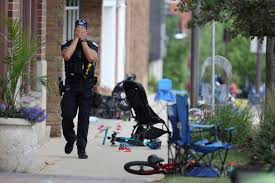


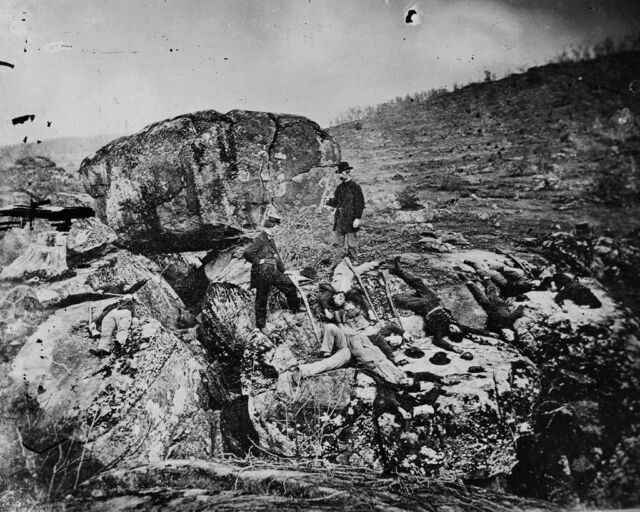


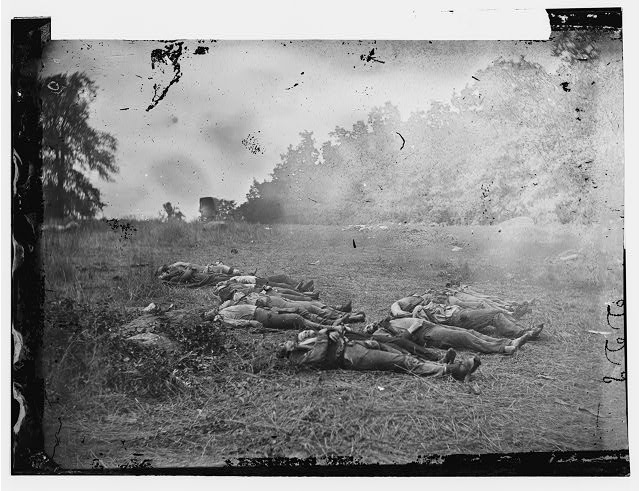


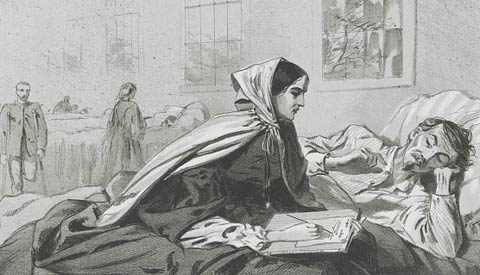
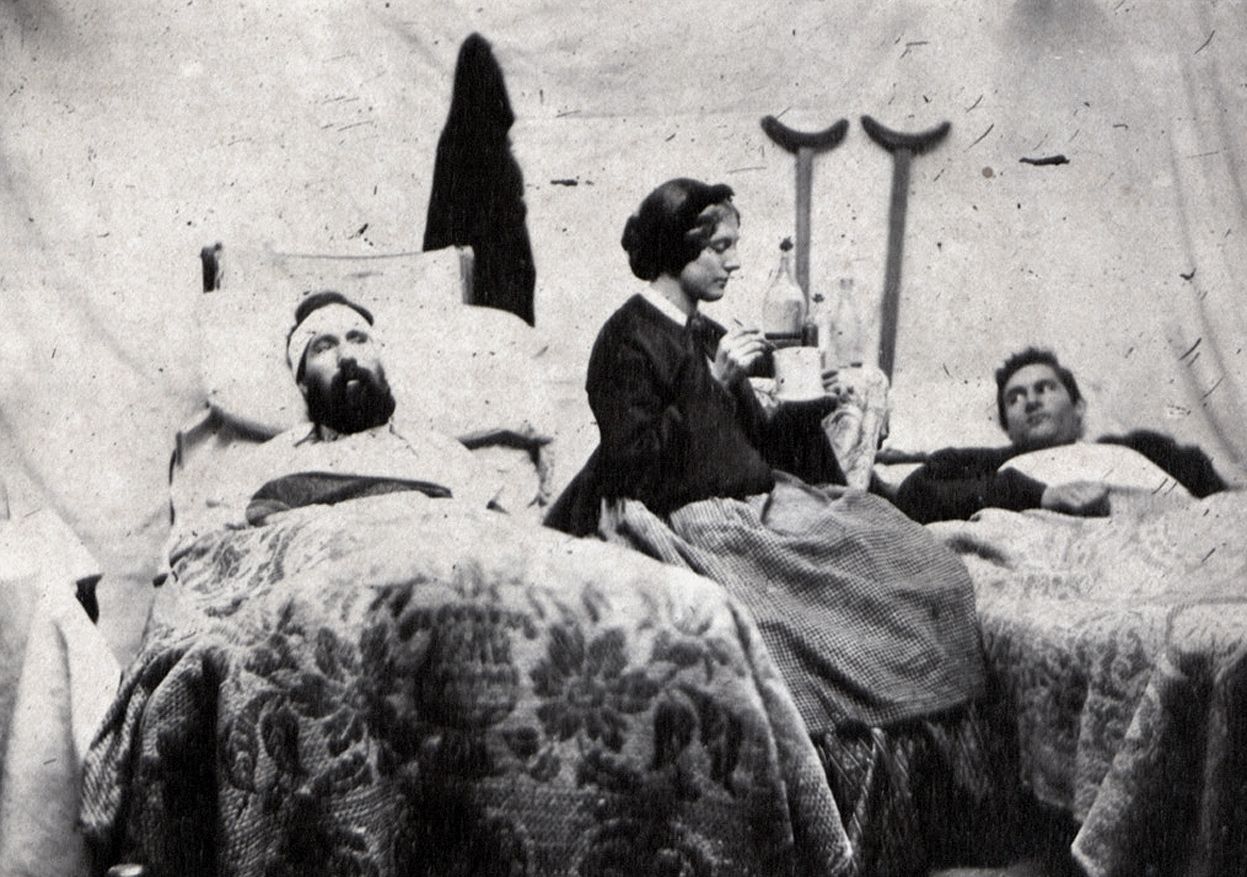


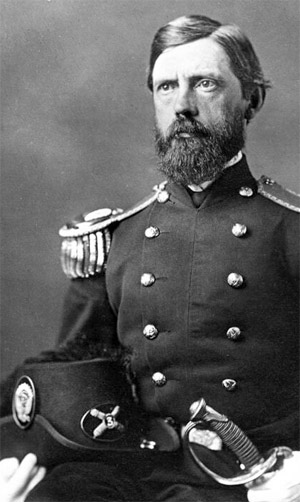

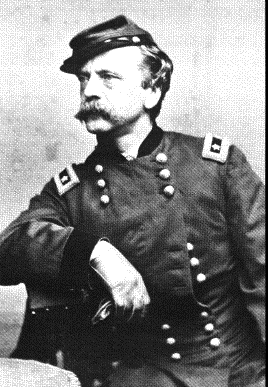

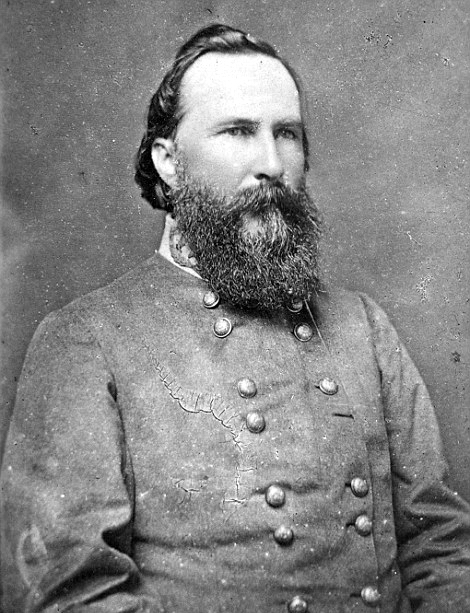
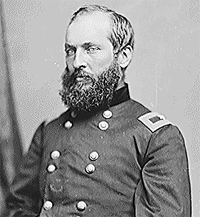

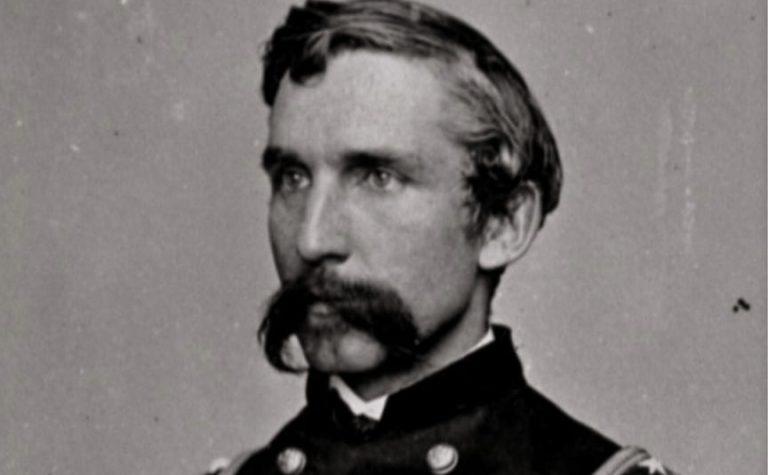

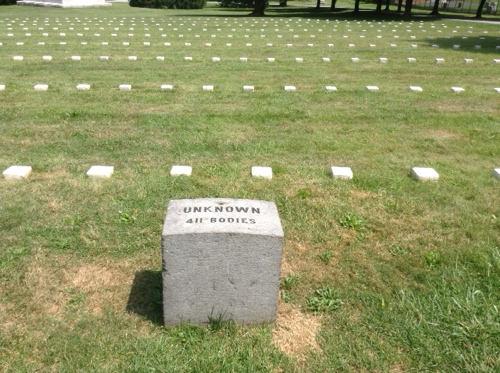
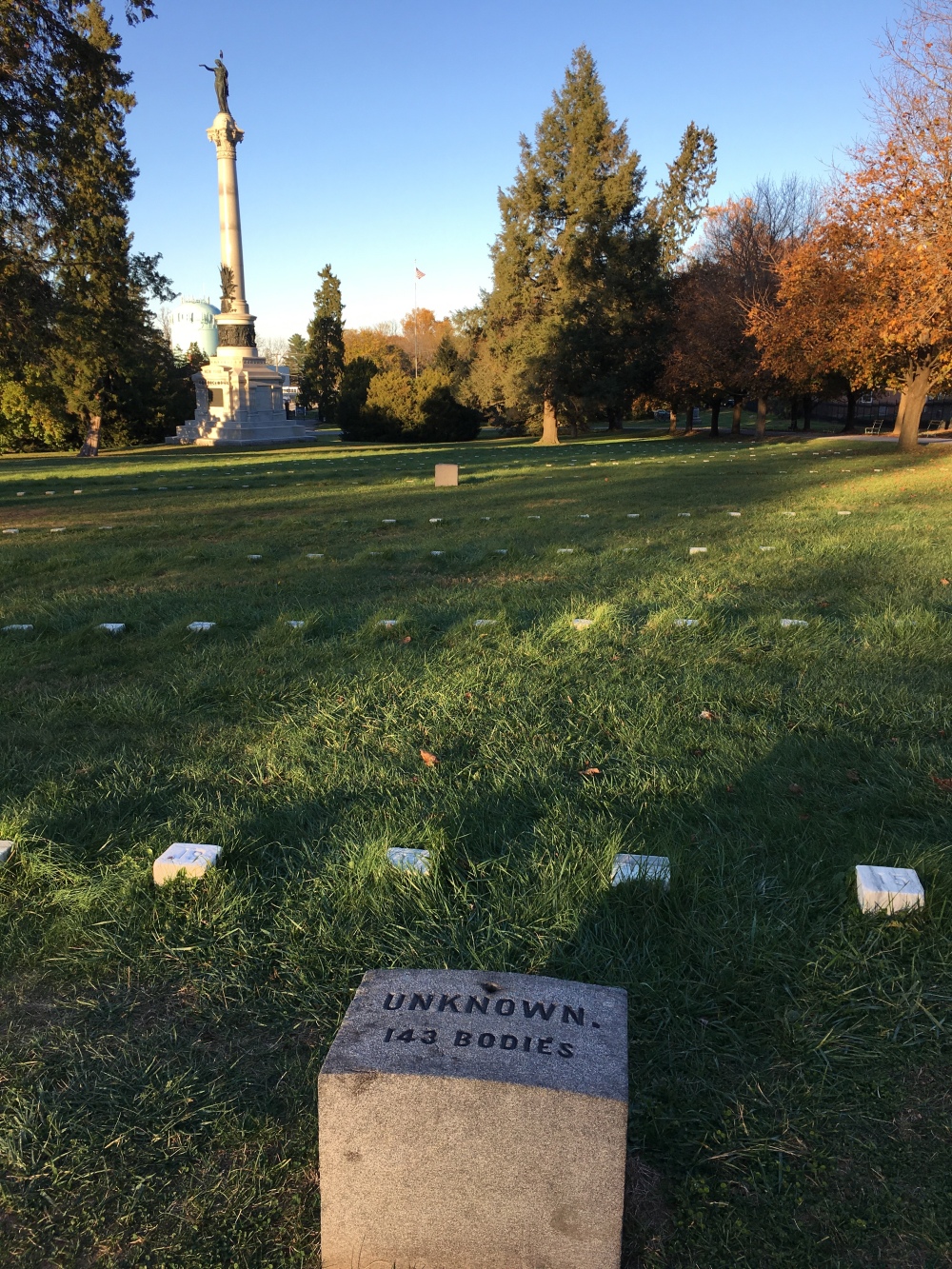


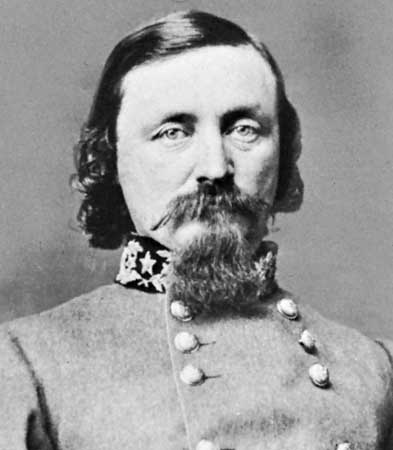


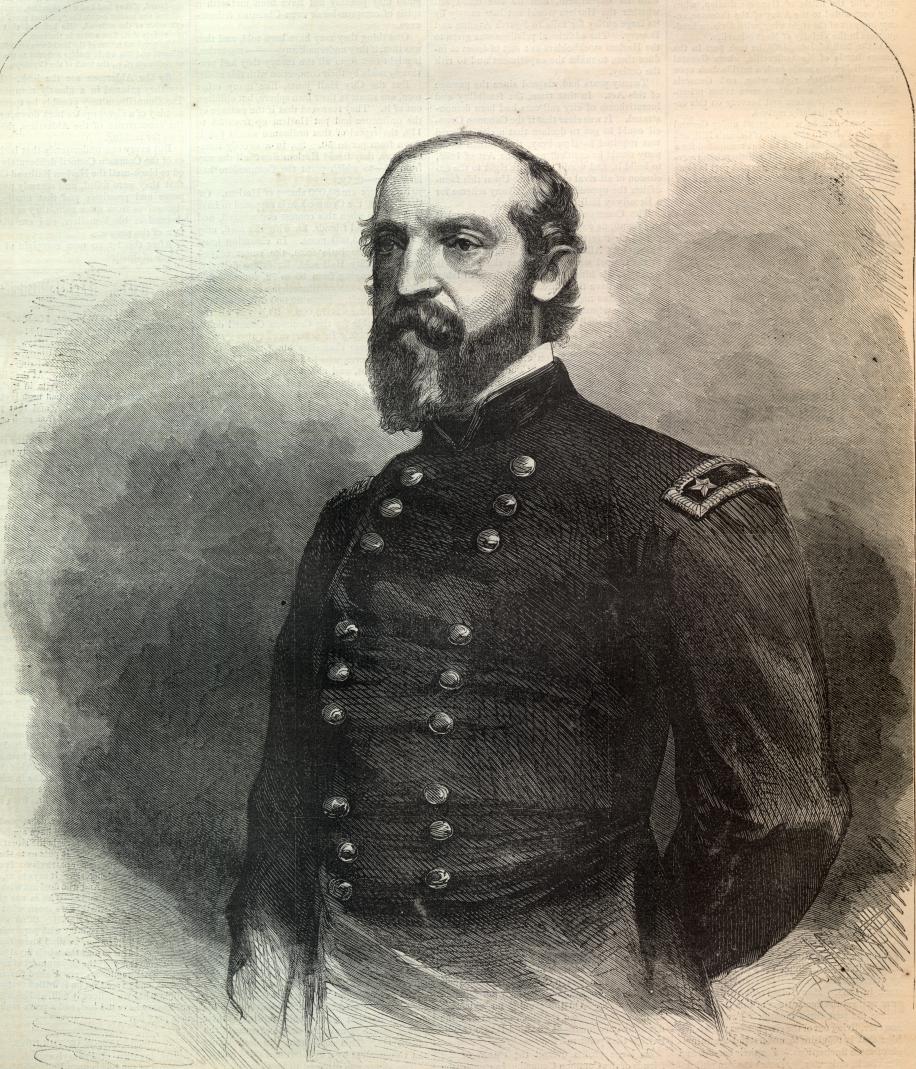


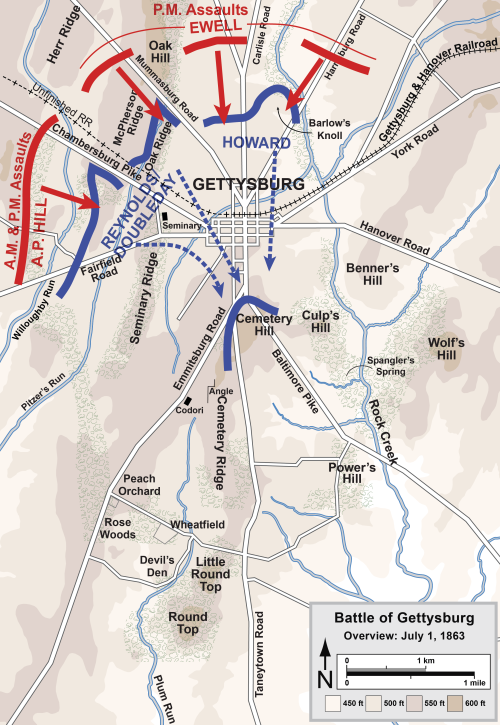


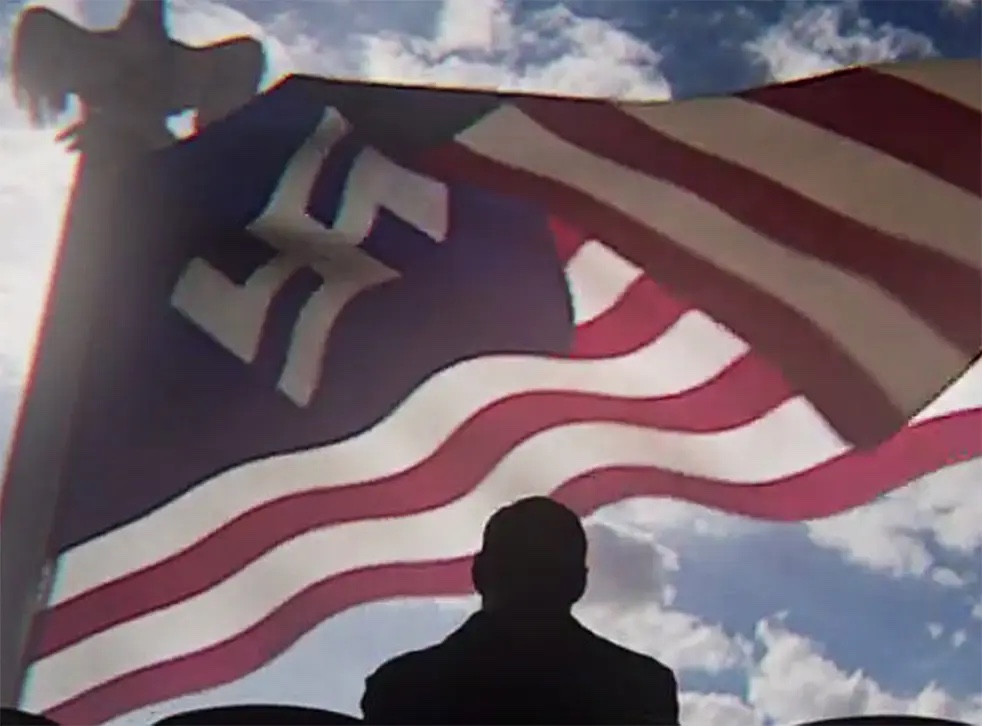


 The Inglorius Padre Steve's World
