Author Archives: padresteve

padresteve's avatar

About padresteve

I'm a Navy Chaplain and Old Catholic Priest

Lee Moves North, Army Politics & the Relief of “Fighting Joe” Hooker

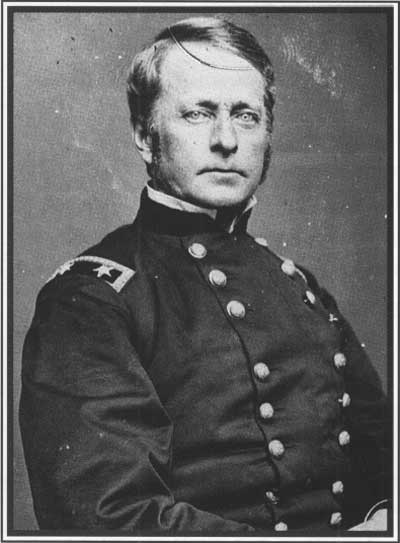
hooker

Major General Joseph “Fighting Joe” Hooker

Friends: This is a major revision of the two part “Lee Moves North” that I put out Monday and Tuesday. I depart tomorrow with my students for our Gettysburg Staff Ride and in this revision I concentrate a lot more on the impact of “Fighting Joe” Hooker on the Army of the Potomac, the “General’s Revolts” that afflicted it and the events leading to Hookers relief during the Gettysburg campaign.

All are very important parts of the story, for despite his personal failings as a commander Hooker set his successors up for success and renewed the spirit of the army through some great reforms which impacted the personal welfare, health, moral and training of his soldiers. His organizational and administrative reforms, which created the Cavalry Corps, the Bureau of Military Information (Intelligence) and more effective medical, sanitary and logistical organizations, set him apart in ways that we often fail to appreciate.

I have taken the time to go into those topics because they have a major effect on the Union victory at Gettysburg. Hooker is a far more complex figure than we often give him credit for; he was a man of brilliance and bravery who had many major character flaws. Likewise I discuss other key figures, men also with feet of clay; J.E.B Stuart, Richard Ewell, Henry Halleck figuring prominently among them.

I think that putting them in this chapter makes the examination of Lee’s movement and the Federal pursuit more pertinent to us as leaders, because the things that Hooker does, for good and bad are issues that military, political and even business or non-profit leaders face. The additions of these parts of the story are important because they show the complexity of flawed people having to make major decisions, in crisis that impact the lives of all of us.

Movement to attain operational reach and maneuver are two critical factors in joint operations. In the time since the American Civil War the distances that forces move to engage the enemy, or maneuver to employ fires to destroy his forces have greatly increased. Movement may be part of an existing Campaign Plan or Contingency Plan developed at Phase 0; it also may be part of a crisis action plan developed in the midst of a campaign. Lee’s movement to get to Gettysburg serves as an example of the former, however, since his forces were already in contact with the Army of the Potomac along the Rappahannock and he was reacting to what he felt was a strategic situation that could not be changed but by going on the offensive that it has the feel of a Crisis Action Plan. Within either context other factors come into play: clarity of communications and orders, security, intelligence, logistics and even more importantly the connection between operational movement and maneuver; the Center of Gravity of the enemy, and national strategy. Since we have already discussed how Lee and the national command authority of the Confederacy got to this point we will discuss the how that decision played in the operational and tactical decisions of Lee and his commanders as the Army of Northern Virginia began the summer campaign and the corresponding actions of Joseph Hooker and the his superiors in Washington.

In the case of Hooker, far more than issues of strategy or operations were involved. Politics, personal rivalries and the personal insecurity of an Army commander played a big role in the drama that engulfed the Army of the Potomac as it pursued Lee’s Army. Additionally the ethics of the leaders involved, especially that of the generals of the Army of the Potomac during their “General’s Revolts” against McClellan, Burnside and Hooker had a major impact on the campaign. These factors all impacted Joe Hooker’s ability to command his army. They affected his relationships with his superiors and subordinates alike, and demonstrate how interconnected all of these elements are in the context of leading, campaigning and conducting the business of war.

“One of the fine arts of the military craft is disengaging one’s army from a guarding army without striking sparks and igniting battle.” [1] On June 3rd 1863 Robert E Lee began to move his units west, away from Fredericksburg to begin his campaign to take the war to the North. He began his exfiltration moving Second Corps under Richard Ewell and First Corps under James Longstreet west “up the south bank of the Rappahannock to Culpepper, near which Hood and Pickett had been halted on their return from Suffolk.” [2] Rodes’ division of Second Corps followed on June 4th with Anderson and Early on June 5th. Lee left the three divisions of A.P. Hill’s Third Corps at Fredericksburg to guard against any sudden advance by Hooker’s Army of the Potomac toward Richmond. Lee instructed Hill to “do everything possible “to deceive the enemy, and keep him in ignorance of any change in the disposition of the army.” [3]

The army was tremendously confident as it marched away from the war ravaged, dreary and desolate battlefields along the Rappahannock “A Captain in the 1st Virginia averred, “Never before has the army been in such a fine condition, so well disciplined and under such complete control.” [4] Porter Alexander wrote that he felt “pride and confidence…in my splendid battalion, as it filed out of the field into the road, with every chest & and ammunition wagon filled, & and every horse in fair order, & every detail fit for a campaign.” [5] Another officer wrote to his father, “I believe there is a general feeling of gratification in the army at the prospect of active operations.” [6]

Lee’s plan was to “shift two-thirds of his army to the northwest and past Hooker’s flank, while A.P. Hill’s Third Corps remained entrenched at Fredericksburg to observe Hooker and perhaps fix him in place long enough for the army to gain several marches on the Federals.” [7] In an organizational and operational sense that Lee’s army after as major of battle as Chancellorsville “was able to embark on such an ambitious flanking march to the west and north around the right of the army of the Potomac….” [8]

However, Lee’s movement did not go unnoticed; Hooker’s aerial observers in their hot air balloons “were up and apparently spotted the movement.” [9] But Hooker was unsure what it meant. He initially suspected that “Lee intended to turn the right flank of the Union army as he had done in the Second Bull Run Campaign, either by interposing his army between Washington and the Federals or by crossing the Potomac River.” [10] Lee halted at Culpepper from which he “could either march westward over the Blue Ridge or, if Hooker moved, recontract at the Rappahannock River.” [11]

“Fighting Joe” Hooker had been in command of the Army of the Potomac about five months, assuming command from Burnside, who Lincoln had relieved after that general had demanded the wholesale firing of ten generals from the army of the Potomac, including Hooker. Hooker was a graduate of West Point, class of 1837 and veteran of the Mexican War. However, he was not well regarded by many of his peers. “While on Garrison duty in California in the 1850s, he cultivated “bad habits and excesses”- too much liquor, and too many women. He left the army, failed at business, and amassed gambling debts and legal problems.” [12]

When war came Hooker managed to obtain an appointment as a Brigadier General of volunteers over the objections of General Winfield Scott from McClellan. He was a “capable commander and brave soldier” [13] but Hooker worked shamelessly against previous army commanders, including George McClellan, who he owed his appointment as a Brigadier General in the Regular Army. Hooker was “a strikingly handsome man” with “erect soldierly bearing…” but he was also “arrogant and stubborn, more than willing to work behind the scenes to advance himself, and reputed to have a headquarters that Charles Francis Adams Jr. described as “a combination barroom and brothel.” [14] The commander of XII Corps, Henry Slocum had “no faith whatever in Hooke’s ability as a military man, in his integrity or honor.” [15] However, George Meade was more circumspect, and wrote to his wife “He is a very good soldier, capital general for an army corps, but I am not prepared to say as to his abilities for carrying out a campaign and commanding a large army. I should fear his judgment and prudence…” [16]

Hooker genuinely believed in his abilities and much of the “criticism which he so freely bestowed on his superiors came simply because his professional competence was outraged by the blunders that he had to witness.[17] But his enemies, “there would be a host of them- regarded him as “thoroughly unprincipled.” Hooker was driven by an “all consuming” ambition and undoubted self-confidence…. War intoxicated hi m and offered salvation for a troubled life. As a gambler he liked the odds.” [18]

During the war Hooker used the media to shamelessly promote his image and “deliberately played up to the press to swell his image as a stern, remorseless campaigner, and he reveled in the nickname the newspapers happily bestowed on him, “Fighting Joe.” [19] However, he would later express his “deep regret that it was ever applied to him. “People will think that I am a highwayman or bandit,” he said; when in fact he was one of the most kindly and tender-hearted of men.” [20]

But Hooker was not just disrespectful of his military superiors, but also of Abraham Lincoln who he told reporters after Fredericksburg “was an imbecile for keeping Burnside on but also in his own right, and that the administration itself “was all played out.” What the country needed was a dictator….” [21] Hooker was an intriguer for sure but unlike many generals who did so anonymously, he was open and public going before the “Joint Committee on the Conduct of the War investigating Fredericksburg” [22] where he not only provided damning testimony against Burnside, but against potential rivals.

When Lincoln appointed him, he gave Hooker a letter unique in American military history. In it Lincoln lectured Hooker as to his conduct while under the command of Burnside, “and just how much he disapproved of the unbounded ambition Hooker had displayed in Undercutting Burnside.” [23] In the letter and during his meeting with Hooker Lincoln laid out his expectations, as well as concerns that he had for him in his new command:

“you may have taken counsel of your ambition, and thwarted him as much as you could, in which you did a great wrong to the country.” Continuing: “I have heard, in such a way as to believe it, of your recently saying that both the Army and the government needed a Dictator. Of course it was not for this, but in spite of it, that I have given you command. Only those generals who gain successes, can set up dictators. What I ask now is military success, and I will risk dictatorship.” [24] However, Lincoln pledged his support to Hooker saying “The government will support you to the utmost of its ability” but warned “I much fear the spirit which you have aided to infuse into the army, of criticizing their commander and withholding confidence in him, will now turn upon you. I shall assist you as far as I can to put it down. Neither you, nor Napoleon, if he were alive again, could get any good out of an army while such a spirit prevails in it.” [25]

Never before or since has an officer been given such responsibility by a President who recognized the man’s qualities, in this case a fighting spirit, as well as his personal vices, and shortcomings in character. Lincoln finished the latter with the admonition “And now, beware of rashness. Beware of rashness, but with energy and sleepless vigilance go forward and give us victories.” [26]

Hooker’s reaction to the letter was an interesting commentary to say the least. He recalled a few days later that, when he read it he “informed him personally of the great value I placed on the letter notwithstanding his erroneous views of myself, and that sometime I intended to have it framed and posted in some conspicuous place for the benefit of those who might come after men.” [27] Hooker was certainly sincere in this as he not only preserved it but ensured that it was published.

Despite the misgivings of the President and many of his peers, Hooker began a turnaround in the army that changed it for the better. At the beginning of his tenure he inspired confidence among his troops. He reorganized the Cavalry Corps and instituted reforms. Hooker discarded Burnside’s failed “Grand Division” organization and returned to the corps system. He was aided by experienced Corps commanders who had earned their promotions in combat and not due to political patronage, even the political animal Dan Sickles of III Corps had shown his abilities as a leader and commander, gone were the last remnants of McClellan’s regime.

Despite the many positives gained during the reorganization, Hooker made one significant mistake during the reorganization which hurt him at Chancellorsville, he decided to “strip General Hunt of command of the artillery and restrict him to purely administrative duties…he had restored Hunt to command the night of May 3 after the Confederates had driven him out of Chancellorsville,” ensuring that “The advantages traditionally possessed by the Union artillery in the quality of its material and cannon disappeared in this battle through Hooker’s inept handling of his forces.” [28]

Hooker was popular with the men as he conducted reforms which improved their lives. “He took immediate steps to cashier corrupt quartermasters, improve food, clean up the camps and hospitals, grant furloughs, and instill unit pride by creating insignia badges for each corps…Sickness declined, desertions dropped, and a grant of amnesty brought back many AWOLs back into the ranks.” [29] Additionally “paydays were reestablished and new clothing issued…. Boards of inspection searched out and dismissed incompetent officers.[30]

But nothing impacted morale more that his order that “soft bread would henceforth be issued to the troops four times a week. Fresh potatoes and onions were to be issued twice a week, and desiccated vegetables once a week.” [31] The impact of the army commander actually caring for his troops was singularly important and far reaching. One officer wrote home “His ‘soft bead’ order reaches us in a tender spot….” [32] Regimental commanders were ordered to ensure that “regular company cooks went to work, and if there were no company cooks they were instructed to create some, so that the soldier could get some decent meals in place of the intestine-destroying stuff he cooked for himself.” [33] Hooker announced “My men shall eat before I am fed, and before my officers are fed” and he clearly meant it.” [34]

Additionally Hooker reformed training in the army. He knew that bored soldiers were their own worst enemy, and instituted a stringent training regimen that paid dividends on the battlefield. “From morning to night the drill fields rumbled with the tramp of many feet. Officers went to school evenings and the next day went out to maneuver companies, regiments, brigades, and divisions in the tactics just studied.” [35]

Hooker ridded himself of the last vestiges of McClellan’s reliance on the Pinkerton detective agency for his intelligence and created a “Bureau of Military Intelligence, led by Colonel George Sharpe” who “built a network of spies, who soon supplied Hooker with accurate information on Lee’s numerical strength and the unit composition of the Confederate army.” [36] He also reorganized and systematized the Medical department, and “placed it under the supervision of the competent medical director Dr. Jonathan Letterman.” [37]

It was a remarkable turnaround which even impressed his soldiers, his critics, and enemies and his enemies alike. Within weeks, “sick rolls had been reduced, and by April, scurvy had virtually disappeared. A veteran contended that Hooker “is a good man to feed an army for we have lived in the best since he took command that we ever did since we have been in the army.” [38] Darius Couch of Second Corps, who later resigned and became Hooker’s arch-enemy, wrote that Hooker had, “by adopting vigorous measures stopped the almost wholesale desertions, and infused new life and discipline into the army.” [39]

After the disaster at Chancellorsville Hooker was not the same. During that battle it was as if he was two persons. During the campaign Hooker had: “planned his campaign like a master and carried out the first half with great skill, and then when the pinch came he simply folded up. There had been no courage in him, no life, no spark; during most of the battle the army had to all intents and purposes had no commander at all.” [40] Hooker, a slave to his vanity had little capacity for reflection and blamed various corps commanders for the defeat, refusing to take any responsibility for it. Years later, Hooker when asked about the defeat, “knew a rare moment of humility and remarked, “Well, to tell the truth, I just lost confidence in Joe Hooker.” [41]

As such just as Lincoln had predicted there were many, both in the army and without who were clamoring for Hooker’s relief, especially after Hooker refused to take the blame for the defeat and instead blamed his subordinates. The blowback was fierce “the army high command took offense and closed ranks against the general commanding,” [42] and the “dissension between Hooker and his senior generals seethed for weeks.” [43]

Henry_Halleck_by_Scholten,_c1865

Major General Henry Halleck

Halleck, who came to the army’s base at Falmouth to assess the army in wake of the defeat, “set the conspirators to work…called the corps commanders into counsel” and “learned of the great dissatisfaction among the higher officers….” [44] Hooker now found that the same knives which he had used on Burnside, “were now turned on him.” [45] Henry Slocum of XII Corps “went among his fellow corps commanders proposing a coup- a petition the president then and there to dismiss Hooker and put George Gordon Meade, commander of the Fifth Corps in his place” [46] but Meade balked at the idea. Lincoln had heard so much dissention that he wrote Hooker to warn him “that some of your Corps and Division Commanders are not giving you their entire confidence.” [47]

Such activities led to discussions at the White House to see if a new commander should lead the Army of the Potomac. Lincoln did interview John Reynolds of I Corps in early June to see if he wound take command, and Reynolds reportedly turned Lincoln down. Others were approached as well, and some officers even lobbied for the return of McClellan. Under this cloud Hooker went into the Gettysburg campaign.

Hooker telegraphed Lincoln and Halleck on June 5th and requested permission to advance cross the river and told Lincoln that “I am of opinion that it is my duty to pitch into his rear” [48] possibly to threaten Richmond. Lincoln ordered Hooker to put the matter to Halleck, with whom Hooker was on the worst possible terms. Hooker “pressed Halleck to allow him to cross the Rappahannock in force, overwhelming whatever rebel force had been left at Fredericksburg, and then lunging down the line of the Virginia Central toward an almost undefended Richmond.” [49] On the morning of June 6th 1863 Hooker ordered pontoon bridges thrown across the river and sent a division of Sedgwick’s VI Corps to conduct a reconnaissance in force against Hill.

Lincoln and Halleck immediately rejected Hooker’s request. Lincoln “saw the flaw in Hooker’s plan at once” [50] and replied in a very blunt manner: “In one word,” he wrote “I would not take any risk of being entangled upon the river, like an ox jumped half over a fence and liable to be torn by dogs front and rear, without a fair chance to gore one way or kick another.” [51] Halleck replied to Hooker shortly after Lincoln that it would “seem perilous to permit Lee’s main force to move upon the Potomac [River] while your army is attacking an intrenched position on the other side of the Rappahannock.” [52] Lincoln, demonstrating a keen regard for the actual center of gravity of the campaign, told Hooker plainly that “I think Lee’s army and not Richmond, is your objective point.” [53]

The fears of Lincoln and Halleck were well founded. In stopping at Culpepper Lee retained the option of continuing his march to the Shenandoah and the Potomac, or he could rapidly “recall his advanced columns, hammer at Hooker’s right flank, and very possibly administer another defeat even more demoralizing than the one he suffered at Chancellorsville.” [54] Hooker heeded the order and while Hooker maintained his bridgehead over the Rappahannock he made no further move against Hill’s well dug in divisions.
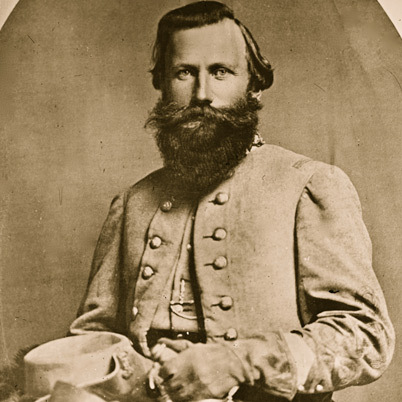
CWP015

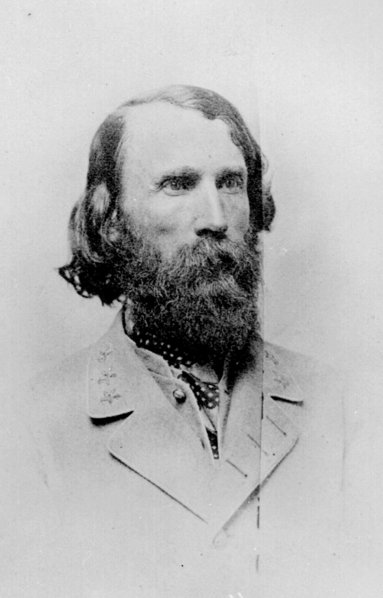
Major General J.E.B. Stuart

Meanwhile, J.E.B. Stuart and his Cavalry Corps had been at Brandy Station near Culpepper for two weeks. Culpepper in June was a paradise for the cavalry, and with nearly 10,000 troopers gathered Stuart ordered a celebration, many dignitaries were invited and on June 4th Stuart hosted a grand ball in the county courthouse. On the 5th Stuart staged a grand review of five of his brigades. Bands played as each regiment passed in review and one soldier wrote that it was “One grand magnificent pageant, inspiring enough to make even an old woman feel fightish.” [55] The review ended with a mock charge by the cavalry against the guns of the horse artillery which were firing blank rounds. According to witnesses it was a spectacular event, so realistic and grand that during the final charge that “several ladies fainted, or pretended to faint, in the grandstand which Jeb Stuart had had set up for them along one side of the field.” [56] That was followed by an outdoor ball “lit by soft moonlight and bright bonfires.” [57] Stuart gave an encore performance when Lee arrived on June 8th, minus the grand finale and afterward Lee wrote to his wife that “Stuart was in all his glory.” [58]

Hooker received word from the always vigilant John Buford, of the First Cavalry Division on the night of June 6th that “Lee’s “movable column” was located near Culpepper Court House and that it consisted of Stuart’s three brigades heavily reinforced by Robertson’s, “Grumble” Jones’s, and Jenkins’ brigades.” [59] Hooker digested the information and believed that Stuart’s intent was to raid his own rear areas to disrupt the Army of the Potomac’s logistics and communications. The next day Hooker ordered his newly appointed Cavalry Corps Commander, Major General Alfred Pleasanton to attack Stuart.

After Chancellorsville, Hooker had reorganized the Union cavalry under Pleasanton into three divisions and under three aggressive division commanders, all West Pointers, Brigadier General John Buford, Brigadier General David Gregg and Brigadier General Judson Kilpatrick. While Stuart conducted his second grand review for Lee Pleasanton quietly massed his cavalry “opposite Beverly Ford and Kelly’s Ford so as to cross the river in the early morning hours of June 9th and carry out Hooker’s crisp orders “to disperse and destroy” the rebel cavalry reported to be “assembled in the vicinity of Culpepper….” [60] Pleasanton’s cavalry was joined by two mixed brigades of infantry “who had the reputation of being among the best marchers and fighters in the army.” [61] One brigade, commanded by Brigadier General Adelbert Ames consisted of five regiments drawn from XI Corps, XII Corps, and III Corps was attached to Buford’s division. The other brigade, under the command of Brigadier General David Russell was composed of seven regiments drawn from I Corps, II Corps and VI Corps. [62]

Stuart’s orders for June 9th were to “lead his cavalry division across the Rappahannock to screen the northward march of the infantry.” [63] The last thing that Stuart expected was to be surprised by the Federal cavalry which he had grown to treat with distain. Stuart who was at his headquarters “woke to the sound of fighting” [64] as Pleasanton’s divisions crossed the river and moved against the unsuspecting Confederate cavalry brigades.

The resultant action was the largest cavalry engagement of the war. Over 20,000 troopers engaged in an inconclusive see-saw battle that lasted most of the day. Though a draw “the rebels might have been swept from the field had Colonel Alfred N. Duffie, at the head of the Second Division acted aggressively and moved to the sounds of battle.” [65] The “Yankees came with a newfound grit and gave as good as they took.” [66] Porter Alexander wrote that Pleasanton’s troopers “but for bad luck in the killing of Col. Davis, leading the advance, would have probably surprised and captured most of Stuart’s artillery.” [67] Stuart had lost “over 500 men, including two colonels dead,” [68] and a brigade commander, Fitzhugh “Rooney” Lee, General Lee’s son, badly wounded. While recuperating at his wife’s home a few weeks later Lee “was captured by the enemy.” [69] Stuart claimed victory as he lost fewer troops and had taken close to 500 prisoners and maintained control of the battlefield.

But even Confederate officers were critical. Lafayette McLaws of First Corps wrote “our cavalry were surprised yesterday by the enemy and had to do some desperate fighting to retrieve the day… As you will perceive from General Lee’s dispatch that the enemy were driven across the river again. All this is not true because the enemy retired at their leisure, having accomplished what I suppose what they intended.” [70] Captain Charles Blackford of Longtreet’s staff wrote: “The fight at Brandy Station can hardly be called a victory. Stuart was certainly surprised, but for the supreme gallantry of his subordinate officers and men… it would have been a day of disaster and disgrace….” The Chief of the Bureau of War in Richmond, Robert H.G. Kean wrote “Stuart is so conceited that he got careless- his officers were having a frolic…” [71] Brigadier General Wade Hampton had the never to criticize his chief in his after action report and after the war recalled “Stuart managed badly that day, but I would not say so publicly.” [72]

The Confederate press was even more damning in its criticism of Stuart papers called it “a disastrous fight,” a “needless slaughter,” [73]and the Richmond Examiner scolded Stuart in words that cut deeply into Stuart’s pride and vanity:

The more the circumstances of the late affair at Brandy Station are considered, the less pleasant do they appear. If this was an isolated case, it might be excused under the convenient head of accident or chance. But the puffed up cavalry of the Army of Northern Virginia has twice, if not three times, surprised since the battles of December, and such repeated accidents can be regarded as nothing but the necessary consequences of negligence and bad management. If the war was a tournament, invented and supported for the pleasure of a few vain and weak-headed officers, these disasters might be dismissed with compassion, But the country pays dearly for the blunders which encourage the enemy to overrun and devastate the land, with a cavalry which is daily learning to despise the mounted troops of the Confederacy…” [74]

Major General Dorsey Pender waxed philosophically about the criticism of Stuart in a letter to his wife saying “I suppose it is all right that Stuart should get all the blame, for when anything handsome is done he gets all the credit.” [75] Stuart reacted angrily to the criticism; his vanity was such that it was impossible. Stuart denied being surprised and his Chief of Staff; Major Henry McClellan wrote “He could never see or acknowledge …that he was worsted in an engagement.” [76]

But the battle was more significant than the number of casualties inflicted or who controlled the battlefield at the end of the day. Stuart had been surprised by an aggressively led Union Cavalry force. The Union troopers fought a stubborn and fierce battle and retired in good order. Stuart did not appreciate it but the battle was a watershed, it signaled the beginning of the end of the previous dominance of the Confederate Cavalry arm over their Union opponents.

Henry McClellan wrote that Brandy Station “made the Federal cavalry. Up to that time confessedly inferior to the Southern horsemen, they gained on this day that confidence in themselves and in their commanders which enabled them to contest so fiercely   the subsequent battle-fields….” [77] The Richmond Examiner noted “The enemy is evidently determined to employ his cavalry extensively, and has spared no pains to perfect that arm.[78] That determination to perfect the Union cavalry was something that in less than a years’ time would cost Stuart his life when his outnumbered and ill troopers met Phil Sheridan’s well led, trained and equipped troops at Yellow Tavern outside of Richmond on May 11th 1864.

The action at Brandy Station delayed Lee’s movement by a day. However, Stuart’s repulse of Pleasanton’s force did enable Lee’s Army to make its northward movement undetected by Hooker who was still trying to divine what Lee was up to and was “slow, even reluctant, to react to Lee’s advance.” [79] Lee’s initial move to break contact with the Federal Army and keep his movements and intentions secret was an excellent example of deception.
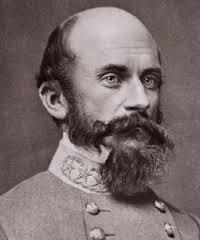
ewell

Major General Richard Ewell

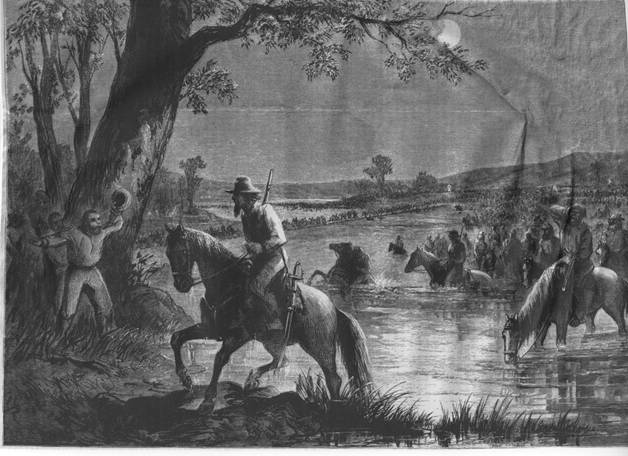
Ewell’s Corps led the march of the army north on the morning of June 10th and joined by Jenkins’ cavalry brigade entered the Shenandoah Valley by way of the Chester Gap on June 12th. In two days of marching his “columns covered over forty-five miles.” [80] On the 13th Ewell was near Winchester where 6,000 soldiers under the command of Major General Robert Milroy were garrisoned. Ewell’s advanced troops skirmished with them on June 13th, and on the 14th Ewell concentrated his corps to attack Milroy’s badly exposed division. As he did so Lincoln and Halleck attempted to get Milroy to withdraw to Harper’s Ferry and for Hooker to do something to attempt to relieve Milroy.

But Hooker was “troubled by indecision” [81] and did nothing. Ewell commenced his attack at about 5:00 PM, and deployed Johnson’s division in an ambush position north of the city to catch Milroy if he attempted to withdraw. The battle, now known as the Second Battle of Winchester the battle was a complete rout. Hit by Ewell’s forces “which swiftly and effectively broke through his outer lines,” [82] Milroy attempted to retreat “northwestward in the darkness, only to be intercepted at dawn by Johnson.” [83] The Second Corps captured “captured 23 cannon, 300 wagons loaded with supplies and ammunition, and nearly 4,000 prisoners.” [84] Milroy and his survivors retreated to Harper’s Ferry where he was “presently removed from command by Lincoln, but that was a superfluous gesture, since practically all of his command had been removed from him by Ewell.” [85] Ewell’s forces lost just 50 killed and 236 wounded.

Ewell’s decisive victory at Winchester “was one of the most swift, total, and bloodless Confederate victories of the war.” [86] The victory “cleared the lower Shenandoah Valley of most Federal forces and paved the way for Lee’s army to march north into Maryland and then into Pennsylvania.” [87] Ewell had been brilliant to this point, the victory at Second Winchester and the skill with which he had conducted his operations had “removed lingering doubts about his ability to carry on the tradition of “Stonewall” Jackson, as well as about his physical capacity, after the loss of a leg, to endure the rigors of campaigning.” [88] The Richmond Daily Dispatch that Ewell “has indeed caught the mantle of the ascended Jackson. Brilliantly has he re-enacted the scenes of the spring of ’62, on the same theatre.[89]

Ewell did not waste time lingering at Winchester. The next day he sent Jenkins with his brigade across the Potomac to Chambersburg Pennsylvania. Rodes division crossed the Potomac on the 16th “for a crossing at Williamsport where a halt was called to allow the other two divisions to catch up for a combined advance into Pennsylvania.” [90]

Longstreet’s First Corps moved next and advanced east of the Blue Ridge in conjunction with Stuart’s cavalry division screening the rest of the army from Hooker. Longstreet “set out for Ashby’s and Snicker’s Gaps with the bulk of Stuart’s cavalry covering his right flank.” [91] By the 17th of June Longstreet’s and Stuart’s troops had cleared the Blue Ridge, securing the vital gaps; however, Longstreet’s advance “was considerably slowed down by lack of supplies” [92] an issue that began to cause Lee, advancing behind Ewell, considerable concern. The once bountiful Shenandoah Valley had been devastated by two years of war. Lieutenant Colonel Arthur Fremantle, a British observed wrote “All fences have been destroyed, and numberless farms burned, their chimneys alone left standing….No animals are grazing and it is almost uncultivated.” [93]

But “Lee’s army was now stretched out from Hagerstown to Culpepper, a distance of seventy-five miles; yet Hooker did nothing.” [94] Lincoln realized that the dispersed Confederate army was vulnerable and telegraphed Hooker “if the head of Lee’s army is at Martinsburg and the tail of it on the Plank road between Fredericksburg and Chancellorsville, the animal must be very slim somewhere. Could you not break him?” [95]

Hooker was slow to appreciate what Lee was doing and the “concealing topography of the region greatly favored Lee’s offensive operations…and Lee was planning on using both the Shenandoah and Loudoun valleys to conceal his forces and confuse his enemies.”[96] In this Lee had succeeded admirably. Finally on June 13th Hooker prodded by Lincoln and Halleck finally moved the Army of the Potomac to a position “near the Orange and Alexandria Railroad near Washington” [97] where it could defend Washington in case Lee was to make a thrust at the Federal capitol. The march from Fredericksburg was ordeal for his soldiers. “It had not rained for more than a month, thick clouds of dust enveloped the columns as the sun burned the air. Men drained their canteens, and water was scarce. Hundreds collapsed from sunstroke.” [98]

Hooker now informed Lincoln and Halleck that from now on his operations “would be governed by the movements of the enemy.” In doing so he “admitted his loss of initiative to Lee and his reluctance or inability to suggest any effective countermoves to the enemy’s plan.” [99]

As the army gathered near Dumfries on June 17th, Hooker who was completely lost as to Lee’s intentions and clearly out of his league was also chose to renew his personal battle with Halleck and Lincoln. Hooker’s Chief of Staff General Dan Butterfield, and a staunch Hooker partisan remarked “We cannot go boggling around until we know what we are going after.” [100] The Provost Marshall of the Army of the Potomac Brigadier General Marsena Patrick was not so generous and critically noted that “Hancock is running the Marching and Hooker has the role of a subordinate- He acts like a man without a plan and is entirely at loss at what to do, or how to match the enemy, or counteract his movements.” [101]

During the march Hooker continued his feud with Halleck and Lincoln, oblivious to the fact that “his contretemps with Washington was costing him respect and credibility.” [102] Navy Secretary Gideon Welles after talking with Lincoln wrote in his diary, “I came away from the War Department painfully impressed. After recent events, Hooker cannot have the confidence which is essential to success, and which is all-important to the commander in the field.” [103]

Hooker however, continued to make matters worse for himself and wrote Lincoln on June 16th, a thinly veiled attempt to have Halleck relieved:

“You have been aware, Mr. President” he telegraphed, “that I have not enjoyed the confidence of the major-general commanding the army, and I can assure you so long as this continues we may look in vain for success, especially as future operations will require our relations to be more dependent on each other than heretofore.” [104]

Lincoln was not to be trifled with by his demanding yet befuddled subordinate. He sent a telegraph to Hooker at 10:00 PM on the 16th which rankled Hooker even the more:

“To remove all misunderstanding I now place you in the strict military relation to General Halleck of a commander of one of the armies to the general-in-chief of all of the armies. I have not intended differently, but as it seems to be differently understood I shall direct him to give you orders and for you to obey him.” [105]

While the drama between Hooker, Halleck and Lincoln played on there were a series of fierce cavalry clashes west of Washington between June 17th and June 21st as Pleasanton’s troops kept assailing the Confederate flank in order to ascertain what Lee’s army was doing. As the Federal cavalry probed the gaps in the Blue Ridge they were confronted by Stuart’s cavalry. At Aldie on June 17th, Middleburg on June 19th and at Upperville on June 21st Stuart’s and Pleasanton’s troopers engaged “in a series of mounted charges and dismounted fighting. The Yankees showed the same grit and valor as they had at Brandy Station, pressing their attacks against the Rebels.” [106]

At Upperville Pleasanton’s troopers “pressed Stuart’s cavalry so hard that Lee ordered McLaws’ division of Longstreet’s Corps to hold Ashby’s Gap, and he momentarily halted Major General Richard Anderson’s division of Hill’s corps on its way to Shepherdstown.” [107] Stuart’s men were successful in protecting the gaps and ensuring that the Federal troopers did not penetrate them, but “Pleasanton learned, however, from prisoners and local citizens, “The main body of the rebel infantry is in the Shenandoah Valley.” [108]

Pleasanton for some unexplained reason thought that this meant that the Confederates were heading toward Pittsburgh. Hooker “viewed it as a raid” and again proposed an overland advance against Richmond, which was again rejected by Lincoln. The President ordered Hooker: “If he comes toward the Upper Potomac, follow on his flank and on his inside track, shortening your line whilst he lengthens his. Fight him too when the opportunity offers. If he stays where he is, fret him, fret him and fret him.” [109]

As the series of clashes occurred on the Confederate flank Ewell’s Second Corps, followed by Hill’s Third Corps advanced into Pennsylvania. A general panic ensued in many places with cries going out for Lincoln to call up militia to defend the state. The panic had begun when Ewell crushed Milroy’s garrison and crossed the Potomac, and was fueled by the actions of Jenkins’ troops, in occupied Chambersburg, who rounded up any blacks that remained in the city. Most blacks, even freedmen fled before the advancing Confederates, and with good reason. “Some fifty blacks were formed into a coffle and marched south to be sold into bondage.” [110] Gideon Welles wrote in Washington D.C.: “Something of a panic pervades the city this evening. Singular rumors of Rebel advances into Maryland. It is said that they have reached Hagerstown, and some of them have penetrated as far as Chambersburg.” [111] Pennsylvania Governor Andrew Curtain, a former Whig now a Republican aligned with Lincoln’s policies “was in political trouble now,” [112] was pressing the Federal government for help and “Lincoln issued a proclamation calling for 100,000 militia volunteers form Pennsylvania, Maryland, Ohio and West Virginia, to serve for six months or until the emergency had passed.” [113]

By June 23rd the head of the Bureau of Military Information, Colonel George Sharpe had deduced that all of Ewell’s corps was in Pennsylvania marching north and that Hill’s corps was across the Potomac., and “in one of those sudden moments of brutal clarity, George Sharpe realized that everything pointed to the conclusion that Lee’s entire army, or most of it, was north of the Potomac.” [114] While Sharpe did not realize that he was incorrect in the location of Longstreet’s corps, which was still helping to hold and screen the gaps on the Blue Ridge, he had correctly deduced Lee’s intentions.

It took time but Hooker belatedly on June 24th began to move his army to Frederick. As the Army of the Potomac crossed its namesake river between June 25th and 27th over a vast pontoon bridge, Hooker made one last attempt to salvage his reputation, and did not believe that Lincoln was actually trying to help mediate his dispute with Halleck. Hooker made a quick trip into Washington on the 23rd of June. He met with Lincoln and was successful in getting Halleck to give him nearly 15,000 reinforcements drawn from the District of Washington, drawing the ire of its commander Major General Samuel Heintzelman, another of his political enemies. But the visit did not help his situation, and “word began to spread that Hooker was drinking a great deal.” [115]

But Hooker opened the door to more trouble by demanding that he be given command and control over the garrison at Harpers Ferry, allegedly to use in an operation to cut off Lee’s line of supply and communication in Western Maryland. Hooker attempted to bypass Halleck yet again and sent orders to affect his course of action to Slocum of XII Corps and William French at Harper’s Ferry, “yet Hooker told Washington nothing of his plan” and then asked Halleck why Harper’s Ferry could not be abandoned, and requested its troops without telling him how he would use the garrison. Hooker then informed Halleck that he “would go to Harper’s Ferry the next day and inspect the place.” [116] Hooker evidently believed that he could still force his will on Halleck with a coupe d ’main.

Halleck refused Hooker and shrewdly had seen the request coming. Halleck told Hooker “that the fortified heights at Harpers Ferry…”have always been regarded as an important point by to be held by us…I cannot approve their abandonment, except in the case of absolute necessity” [117] and directed the Major General William H. French, the commanding officer of the Harper’s Ferry garrison “Pay no attention to Hooker’s orders.” [118] When Hooker went to see French in Harper’s Ferry and saw the dispatch he was furious. In his anger Hooker “told Herman Haupt during the railroad coordinator’s visit that he would do nothing to oppose Lee’s invasion without specific orders. He also continued to tell Halleck, Stanton, and Lincoln that he wanted Lee to go north so he could go after Richmond.” [119]

The order to French was Halleck’s way of baiting Hooker to react badly. Halleck figured that Hooker would consider it the last straw, which was exactly what the impulsive Hooker did. Hooker then played his last card and wired Halleck an ultimatum, which in a sense he was using as a “club to bully Halleck into giving him a free hand in questions of strategy” and it is “questionable whether he expected Lincoln to accept his resignation.[120]

“My original instructions require me to cover Harper’s Ferry and Washington. I have now imposed on me, in addition to an enemy in my front more than my number. I beg to be understood, respectfully, but firmly that I am unable to comply with this condition with the means at my disposal, and earnestly request that I be relieved from the position I occupy.” [121]

Halleck sent Hooker a brief message; simply stating “Your dispatch has been duly referred to the executive for action.” [122] He then took the letter to Stanton and Lincoln and Lincoln wasted little time in relieving Hooker, though he was not happy about having to do so in the middle of a campaign. Lincoln had two choices, “he could send him into battle with his self-doubts and suspicions intact, or he could accept it and risk the political and military consequences that would accompany an abrupt change in leadership.” [123] In less than half an hour Lincoln told Halleck and Stanton to “Accept his resignation. Before midnight, War Secretary Edwin Stanton’s own chief of staff, James Hardie, was on his way by train from Washington with Lincoln’s order removing Hooker from command.”   [124]

In the end, late in the night of June 27th Lincoln chose the latter, relieved Hooker, and appointed Major General George Gordon Meade, commanding officer of V Corps as the new commander of the Army of the Potomac. He explained the decision to the cabinet the next morning; Gideon Welles wrote that Lincoln said “he had, for several days as the conflict became imminent, observed in Hooker the same failings that were witnessed in McClellan after the Battle of Antietam. – A want of alacrity to obey, and a greedy call for more troops which could not, and ought not be taken from other points….:” [125]

Hooker’s relief was a direct result of his “contretemps with General-in Chief Halleck, but it was the general’s revolt that set the stage for it. With virtually no support from his chief lieutenants…Hooker was pushed into a precarious position.” [126]

Despite Hooker’s lackluster performance during the campaign, his failings as a field commander, and his poor relationships with Lincoln, Halleck and many of his corps commanders, Hooker had made significant contributions to the Army of the Potomac and the nation:

“Whatever his mistakes, Hooker’s record as a military administrator ranks him near the top, for he refashioned the army into an effective fighting machine. He saved it from disintegration, gradually filled its ranks to peak strength, inflated its morale, and put it in a superb condition for the start of the spring campaign.” [127]

During his tenure of command, “the army had come of age. It was a professional army now in all but name.” [128] He had assumed command when the army was at its lowest fortune after Fredericksburg, “he instituted reform and restored their fighting spirit.” [129] His reorganization of the Cavalry Corps under solid officers was critical in the campaign and paid dividends for the rest of the war. His creation of the Bureau of Military Information was instrumental in providing George Meade at Gettysburg with accurate information about Lee’s army that he used to his advantage in conducting the battle. In spite of his flaws, Hooker had, even after the defeat at Chancellorsville kept the army together and in good fighting trim, even if his soldiers no longer believed in him, they believed in themselves.

During the opening weeks of the Gettysburg campaign, albeit through the prodding of Lincoln he had kept his army between Lee and Washington. But throughout the campaign Hooker seemed “plagued with uncertainty as to what he should do and what were his true military objectives. The tone of his correspondence with Washington authorities was continually querulous and angry.” [130] Hooker’s justified paranoia of Halleck and his and personal insecurity ensured that he made decisions that caused Lincoln to have even more reservations about his ability to command the army, and confront Robert E. Lee. Some have speculated that his recalcitrance in following Lincoln’s orders to confront Lee during the march was because he did not want to face Lee in battle once again. None of those factors can be ignored when assessing Hooker’s performance during his tenure of command of the Army of the Potomac. It was probably fortunate for the Union that Hooker asked to be relieved. His lack of confidence to face Lee in battle would have probably ensured defeat, but his reforms had set the army and its new commander up for success.

While the high drama in Washington and Pennsylvania unfolded Robert E. Lee, after an excellent beginning to his campaign was beginning to experience a drama of his own which would decisively impact his invasion of Pennsylvania.

Notes

[1] Sears, Stephen W. Gettysburg, Mariner Books, Houghton Mifflin Company, Boston and New York, 2003 p.59

[2] Foote, Shelby, The Civil War, A Narrative. Volume Two Fredericksburg to Meridian Random House, New York 1963 p.436

[3] Trudeau, Noah Andre. Gettysburg: A Testing of Courage, Harper Collins Publishers, New York 2002 p.25

[4] Wert, Jeffry D. A Glorious Army: Robert E. Lee’s Triumph 1862-1863 Simon and Schuster, New York and London 2011 p.218

[5] Alexander, Edward Porter. Fighting for the Confederacy: The Personal Recollections of General Edward Porter Alexander edited by Gary Gallagher University of North Carolina Press, Chapel Hill 1989 p.221

[6] Ibid. Wert A Glorious Army p.219

[7] Ibid. Sears Gettysburg p.60

[8] Korda, Michael. Clouds of Glory: The Life and Legend of Robert E. Lee Harper Collins Publishers, New York 2014 p.530

[9] Ibid. Foote The Civil War, A Narrative. Volume Two p.436

[10] Wert, Jeffry D. The Sword of Lincoln: The Army of the Potomac Simon and Schuster, New York and London 2005 p.260

[11] Dowdy, Clifford. Lee and His Men at Gettysburg: The Death of a Nation Skyhorse Publishing, New York 1986, originally published as Death of a Nation Knopf, New York 1958 p.37

[12] Ibid. Wert The Sword of Lincoln p.74

[13] Jordan, David M. Winfield Scott Hancock: A Soldier’s Life Indian University Press, Bloomington and Indianapolis 1988 p.67

[14] Marszalek, John F. Commander of All of Lincoln’s Armies: A Life of General Henry W. Halleck The Belknap Press of Harvard University Press, Cambridge MA and London 2004 p.165

[15] Guelzo Allen C. Fateful Lightening: A New History of the Civil War Era and Reconstruction Oxford University Press, Oxford and New York 2012 p.331

[16] Huntington, Tom Searching for George Gordon Meade: The Forgotten Victor of Gettysburg Stackpole Books, Mechanicsburg PA 2013 p.127

[17] Catton, Bruce The Army of the Potomac: Glory Road Doubleday and Company, Garden City New York, 1952 p.7

[18] Ibid. Wert The Sword of Lincoln pp.74-75

[19] Ibid. Guelzo Fateful Lightening p.331

[20] Bates, Samuel P. Hooker’s Comments on Chancellorsville in Battles and Leaders of the Civil War Volume III, The Tide Shifts. Edited by Robert Underwood Johnson and Clarence Clough Buel Castle, Secaucus NJ p.217

[21] Ibid. Foote The Civil War, A Narrative. Volume Two p.136

[22] Sears, Stephen W. Controversies and Commanders Mariner Books, Houghton-Mifflin Company, Boston and New York 1999 p.150

[23] Ibid. Sears Controversies and Commanders p.157

[24] Ibid. Wert The Sword of Lincoln p.219

[25] Ibid. Foote The Civil War, A Narrative. Volume Two pp.132-133

[26] Ibid. Foote The Civil War, A Narrative. Volume Two p.133

[27] Sears, Stephen W. Chancellorsville Houghton Mifflin Co. Boston and New York 1996 p.62

[28] Coddington, Edwin B. The Gettysburg Campaign: A Study in Command, A Touchstone Book, Simon and Schuster New York, 1968 p.31

[29] McPherson, James. The Battle Cry of Freedom: The Civil War Era Oxford University Press, Oxford and New York 1988 p.133

[30] Ibid. Sears. Chancellorsville p.73

[31] Ibid. Sears Chancellorsville p.73

[32] Ibid. Sears Chancellorsville p.73

[33] Ibid. Catton Glory Road p.143

[34] Ibid. Sears Chancellorsville p.73

[35] Ibid. Catton Glory Road p.145

[36] Ibid. Wert The Sword of Lincoln p.229

[37] Ibid. Wert The Sword of Lincoln p.225

[38] Ibid. Wert The Sword of Lincoln pp.225-226

[39] Ibid. Sears Controversies and Commanders p.157

[40] Ibid. Catton Glory Road p.210

[41] Ibid. Catton Glory Road p.211

[42] Ibid. Sears Controversies and Commanders p.158

[43] Ibid. Wert The Sword of Lincoln p.256

[44] Ibid. Sears Gettysburg p.19

[45] Guelzo, Allen C. Gettysburg: The Last Invasion Vintage Books a Division of Random House, New York 2013 p.28

[46] Ibid. Sears Gettysburg p.19

[47] Ibid. Guelzo. Gettysburg: The Last Invasion p.28

[48] Ibid. Sears Gettysburg p.61

[49] Ibid. Guelzo. Gettysburg: The Last Invasion p.50

[50] Ibid. Wert The Sword of Lincoln p.260

[51] Fuller, J.F.C. Decisive Battles of the U.S.A. 1776-1918 University of Nebraska Press, Lincoln 2007 copyright 1942 The Royal Society for the Prevention of Cruelty to Animals p.223

[52] Ibid Trudeau Gettysburg a Testing of Courage p.26

[53] Ibid. Guelzo Gettysburg: The Last Invasion p.50

[54] Ibid. Coddington The Gettysburg Campaign p.53

[55] Davis, Burke J.E.B. Stuart: The Last Cavalier Random House, New York 1957 p.304

[56] Ibid. Foote The Civil War, A Narrative. Volume Two p.437

[57] Ibid. Sears Gettysburg p.63

[58] Ibid. Wert A Glorious Army p.221

[59] Ibid. Coddington The Gettysburg Campaign p.54

[60] Ibid. Sears Gettysburg p.64

[61] Ibid. Coddington The Gettysburg Campaign p.54

[62] Petruzzi, J. David and Stanley, Steven The Gettysburg Campaign in Numbers and Losses: Synopses, Orders of Battle, Strengths, Casualties and Maps, June 9 – July 1, 1863 Savas Beatie LLC, El Dorado Hills CA 2012 p.7

[63] Ibid. Sears Gettysburg p.64

[64] Ibid. Davis JEB Stuart p.306

[65] Ibid. Wert The Sword of Lincoln p.261

[66] Wert, Jeffry D. General James Longstreet The Confederacy’s Most Controversial Soldier, A Touchstone Book, Simon and Schuster, New York and London 1993 p. 251

[67] Ibid. Alexander Fighting for the Confederacy p.223

[68] Ibid. Davis JEB Stuart p.310

[69] Ibid. Wert A Glorious Army p.221

[70] Ibid. Coddington The Gettysburg Campaign p.59

[71] Ibid. Davis JEB Stuart p.310

[72] Ibid. Coddington The Gettysburg Campaign p.60

[73] Ibid. Guelzo Gettysburg: The Last Invasion p.57

[74] Ibid. Davis JEB Stuart pp.311-312

[75] Ibid. Sears Gettysburg p.73

[76] Ibid. Wert A Glorious Army p.221

[77] Ibid. Sears Gettysburg p.74

[78] Ibid. Davis JEB Stuart p.312

[79] Ibid. Wert General James Longstreet p.251

[80] Ibid. Coddington The Gettysburg Campaign p.73

[81] Ibid. Coddington The Gettysburg Campaign p.81

[82] Ibid. Coddington The Gettysburg Campaign p.88

[83] Ibid. Foote The Civil War, A Narrative. Volume Two p.440

[84] Ibid. Wert A Glorious Army p.222

[85] Ibid. Foote The Civil War, A Narrative. Volume Two p.440

[86] Ibid. Guelzo Gettysburg: The Last Invasion p.62

[87] Ibid. Petruzzi and Stanley The Gettysburg Campaign in Numbers and Losses p.20

[88] Ibid. Coddington The Gettysburg Campaign p.89

[89] Ibid. Guelzo Gettysburg: The Last Invasion p.62

[90] Ibid. Foote The Civil War, A Narrative. Volume Two p.440

[91] Ibid. Fuller Decisive Battles of the U.S.A. 1776-1918 p.224

[92] Ibid. Fuller Decisive Battles of the U.S.A. 1776-1918 p.225

[93] Ibid. Korda Clouds of Glory p.537

[94] Ibid. Fuller Decisive Battles of the U.S.A. 1776-1918 p.224

[95] Ibid. Guelzo Gettysburg: The Last Invasion pp.64-65

[96] Ibid. Sears Gettysburg p.85

[97] Ibid. Coddington The Gettysburg Campaign p.71

[98] Ibid. Wert The Sword of Lincoln p.263

[99] Ibid. Coddington The Gettysburg Campaign p.71

[100] Ibid. Wert The Sword of Lincoln p.264

[101] Ibid. Trudeau Gettysburg a Testing of Courage pp. 53-54

[102] Ibid. Trudeau Gettysburg a Testing of Courage p.53

[103] Ibid. Sears Gettysburg p.88

[104] Ibid. Sears Gettysburg p.88

[105] Ibid. Trudeau Gettysburg a Testing of Courage p.54

[106] Ibid. Wert The Sword of Lincoln p.264

[107] Ibid. Coddington The Gettysburg Campaign p.79

[108] Ibid. Wert A Glorious Army p.224

[109] Ibid. Wert A Glorious Army p.224

[110] Ibid. Sears Gettysburg p.82

[111] Ibid. Sears Gettysburg p.82

[112] Ibid. Guelzo Gettysburg: The Last Invasion p.101

[113] Ibid. Wert The Sword of Lincoln pp.264-265

[114] Ibid. Trudeau Gettysburg a Testing of Courage p.66

[115] Ibid. Trudeau Gettysburg a Testing of Courage p.63

[116] Ibid. Sears Gettysburg p.120

[117] Ibid. Trudeau Gettysburg a Testing of Courage p.93

[118] Ibid. Guelzo Gettysburg: The Last Invasion p.84

[119] Ibid. Marszalek, Commander of All of Lincoln’s Armies p.175

[120] Ibid. Coddington The Gettysburg Campaign p.131

[121] Ibid. Marsalek Commander of All of Lincoln’s Armies p.175

[122] Ibid. Sears Gettysburg p.123

[123] Ibid. Trudeau Gettysburg a Testing of Courage p.98

[124] Ibid. Guelzo Gettysburg: The Last Invasion p.84

[125] Ibid. Wert The Sword of Lincoln p.266

[126] Ibid. Sears Controversies and Commanders p.162

[127] Ibid. Coddington The Gettysburg Campaign p.31

[128] Ibid. Catton Glory Road p.217

[129] Ibid. Wert The Sword of Lincoln p.266

[130] Ibid. Coddington The Gettysburg Campaign p.133

Leave a comment

Filed under civil war, ethics, History, leadership, Military

“A Spirit of Unbelief”: A.P. Hill, Harry Heth and the Prelude to the Battle of Gettysburg

Friends of Padre Steve’s World
It has been a long, but good day at work, unfortunately I had a tire blow out and thus no time to post the newest on Stuart’s Ride. So since I am heading up to Gettysburg here is a chapter of my text dealing with the events of June 30th 1863 as A.P. Hill and Harry Heth decided to move towards Gettysburg.
Peace,
Padre Steve+

padresteve's avatarThe Inglorius Padre Steve's World

Hill.28135413_stdLieutenant General A.P. Hill

Note: One of the most important things to understand about the Battle of Gettysburg or for that matter any battle or campaign is leadership as well as organizational structure and climate of command. The study of A.P. Hill’s Third Corps is important to understanding how the battle unfolds and what happens at Gettysburg particularly on July 1st. In our understanding “Successful mission command demands that subordinate leaders at all echelons exercise disciplined initiative, acting aggressively and independently to accomplish the mission. Essential to mission command is the thorough knowledge and understanding of the commander’s intent at every level of command.”

While the leaders at Gettysburg on both sides would be unaware of our present definition they certainly would have been acquainted with the maxims of Napoleon, who many studied under Dennis Hart Mahan at the West Point. Napoleon noted: “What are the conditions that…

View original post 3,130 more words

Leave a comment

Filed under Loose thoughts and musings

Lee Moves North Part Two: Winchester, into Pennsylvania and the Relief of Joe Hooker

rebel-potomacEwell’s Corps crossing the Potomac

This is a continuation of the article that I posted last night. It is a continuation of my Gettysburg series. Tomorrow I will finish the chapter on Lee’s movement north by talking about Stuart’s Ride and the Confederate operations in Pennsylvania and Union pursuit up to June 30th. On footnotes please refer to part one because I did not want to go back and re-type each note.

The action at Brandy Station delayed Lee’s movement by a day. However, Stuart’s repulse of Pleasanton’s force did enable Lee’s Army to make its northward movement undetected by Hooker who was still trying to divine what Lee was up to and was “slow, even reluctant, to react to Lee’s advance.” (1) Lee’s initial move to break contact with the Federal Army and keep his movements and intentions secret was an excellent example of deception.

ewellLieutenant General Richard Ewell

Ewell’s Corps led the march of the army north on the morning of June 10th and joined by Jenkins’ cavalry brigade entered the Shenandoah Valley by way of the Chester Gap on June 12th. In two days of marching his “columns covered over forty-five miles.” (2) On the 13th Ewell was near Winchester where 6,000 soldiers under the command of Major General Robert Milroy were garrisoned. Ewell’s advanced troops skirmished with them on the 13th and on the 14th Ewell concentrated his corps to attack. As he did so Lincoln and Halleck attempted to get Hooker to do something to relieve Milroy. Hooker was “troubled by indecision” (3) and did nothing. The attack commenced at about 5:00 PM. The battle, now known as the Second Battle of Winchester the battle was a complete rout. Hit by Ewell’s forces “which swiftly and effectively broke through his outer lines,” (4) That evening Milroy attempted to retreat “northwestward in the darkness, only to be intercepted at dawn by Johnson.” (5) The Second Corps captured “captured 23 cannon, 300 wagons loaded with supplies and ammunition, and nearly 4,000 prisoners.” (6) Milroy and his survivors retreated to Harper’s Ferry where he was “presently removed from command by Lincoln, but that was a superfluous gesture, since practically all of his command had been removed from him by Ewell.” (7) Ewell’s forces lost just 50 killed and 236 wounded.

Ewell’s decisive victory at Winchester “was one of the most swift, total, and bloodless Confederate victories of the war.” (8) The victory “cleared the lower Shenandoah Valley of most Federal forces and paved the way for Lee’s army to march north into Maryland and then into Pennsylvania.” (9) Ewell had been brilliant to this point, the victory at Second Winchester and the skill with which he had conducted his operations “removed lingering doubts about his ability to carry on the tradition of “Stonewall” Jackson, as well as about his physical capacity, after the loss of a leg, to endure the rigors of campaigning.” (10) The Richmond Daily Dispatch that Ewell “has indeed caught the mantle of the ascended Jackson. Brilliantly has he re-enacted the scenes of the spring of ’62, on the same theatre.” (11)

Ewell did not waste time lingering at Winchester. The next day he sent Jenkins across the Potomac to Chambersburg Pennsylvania. Rodes division crossed the Potomac on the 16th “for a crossing at Williamsport where a halt was called to allow the other two divisions to catch up for a combined advance into Pennsylvania.” (12)

Longstreet’s First Corps moved next and advanced east of the Blue Ridge in conjunction with Stuart’s cavalry division screening the rest of the army from Hooker. Longstreet “set out for Ashby’s and Snicker’s Gaps with the bulk of Stuart’s cavalry covering his right flank.” (13) By the 17th of June Longstreet’s and Stuart’s troops had cleared the Blue Ridge. “Lee’s army was now stretched out from Hagerstown to Culpepper, a distance of seventy-five miles; yet Hooker did nothing.” (14) Lincoln realized that the dispersed Confederate army was vulnerable and telegraphed Hooker “if the head of Lee’s army is at Martinsburg and the tail of it on the Plank road between Fredericksburg and Chancellorsville, the animal must be very slim somewhere. Could you not break him?” (15)

hookerMajor General Joseph “Fighting Joe” Hooker

Hooker was slow to appreciate what Lee was doing and the “concealing topography of the region greatly favored Lee’s offensive operations…and Lee was planning on using both the Shenandoah and Loudoun valleys to conceal his forces and confuse his enemies.” (16) In this Lee had succeeded admirably. Finally on June 13th Hooker prodded by Lincoln and Halleck finally moved the Army of the Potomac to a position “near the Orange and Alexandria Railroad near Washington” (17) where it could defend Washington in case Lee was to make a thrust at the Federal capitol. The march from Fredericksburg was ordeal for his soldiers. “It had not rained for more than a month, thick clouds of dust enveloped the columns as the sun burned the air. Men drained their canteens, and water was scarce. Hundreds collapsed from sunstroke.” (18)

Hooker now informed Lincoln and Halleck that from now on his operations “would be governed by the movements of the enemy.” In doing so he “admitted his loss of initiative to Lee and his reluctance or inability to suggest any effective countermoves to the enemy’s plan.” (19)

As the army gathered near Dumfries on June 17th, Hooker who was completely lost as to Lee’s intentions and completely clearly out of his league was also engaged in a personal battle with Halleck and Lincoln. His Chief of Staff, General Dan Butterfield, a staunch supporter, remarked “We cannot go boggling around until we know what we are going after.” (20) The Provost Marshall of the Army of the Potomac Brigadier General Marsena Patrick was quite critical of his chief, noting that “Hancock is running the Marching and Hooker has the role of a subordinate- He acts like a man without a plan and is entirely at loss at what to do, or how to match the enemy, or counteract his movements.” (21)

Henry_Halleck_by_Scholten,_c1865Major General Henry Halleck

During the march Hooker continued his feud with Halleck and Lincoln, oblivious to the fact that “his contretemps with Washington was costing him respect and credibility.” (22) Navy Secretary Gideon Welles after talking with Lincoln wrote in his diary, “I came away from the War Department painfully impressed. After recent events, Hooker cannot have the confidence which is essential to success, and which is all-important to the commander in the field.” (23) Hooker however, continued to make matters worse for himself and wrote to Lincoln, a thinly veiled attempt to have Halleck relieved, on June 16th :

“You have been aware, Mr. President” he telegraphed, “that I have not enjoyed the confidence of the major-general commanding the army, and I can assure you so long as this continues we may look in vain for success, especially as future operations will require our relations to be more dependent on each other than heretofore.” (24)

Lincoln was not to be trifled with by his demanding yet befuddled subordinate. He sent a telegraph to Hooker at 10:00 PM on the 16th which rankled Hooker even the more:

“To remove all misunderstanding I now place you in the strict military relation to General Halleck of a commander of one of the armies to the general-in-chief of all of the armies. I have not intended differently, but as it seems to be differently understood I shall direct him to give you orders and for you to obey him.” (25)

While the drama between Hooker, Halleck and Lincoln played on there were a series of fierce cavalry clashes west of Washington between June 17th and June 21st as Pleasanton’s troops kept assailing the Confederate flank in order to ascertain what Lee’s army was doing. As they probed the gaps in the Blue Ridge they confronted Stuart’s cavalry. At Aldie on June 17th, Middleburg on June 19th and Upperville on June 21st Stuart’s and Pleasanton’s troopers engaged “in a series of mounted charges and dismounted fighting. The Yankees showed the same grit and valor as they had at Brandy Station, pressing their attacks against the Rebels.” (26)

custer@aldieAt Upperville Pleasanton’s troopers “pressed Stuart’s cavalry so hard that Lee ordered McLaws’ division of Longstreet’s Corps to hold Ashby’s Gap, and he momentarily halted Major General Richard Anderson’s division of Hill’s corps on its way to Shepherdstown.” (27) Stuart’s men were successful in protecting the gaps and ensuring that the Federal troopers did not penetrate them, but “Pleasanton learned, however, from prisoners and local citizens, “The main body of the rebel infantry is in the Shenandoah Valley.” (28)

Pleasanton for some unexplained reason thought that this meant that the Confederates were heading toward Pittsburgh. Hooker “viewed it as a raid” and again proposed an overland advance against Richmond, which was once again rejected by Lincoln. The President ordered  Hooker: “If he comes toward the Upper Potomac, follow on his flank and on his inside track, shortening your line whilst he lengthens his. Fight him too when the opportunity offers. If he stays where he is, fret him, fret him and fret him.” (29)

As the series of clashes occurred on the Confederate flank Ewell’s Second Corps, followed by Hill’s Third Corps advanced into Pennsylvania. A general panic ensued in many places with cries going out for Lincoln to call up militia to defend the state. The panic was fueled by Confederate actions. Jenkins’ troops in occupied Chambersburg they rounded up any blacks that remained in the city, and “Some fifty blacks were formed into a coffle and marched south to be sold into bondage.” (30)

By June 23rd the head of the Bureau of Military Information Colonel George Sharpe had deduced that all of Ewell’s corps was in Pennsylvania marching north and that Hill’s corps was across the Potomac, and “in one of those sudden moments of brutal clarity, George Sharpe realized that everything pointed to the conclusion that Lee’s entire army, or most of it, was north of the Potomac.” (31) Now Sharpe did not realize that Longstreet’s corps was still helping to hold and scree the gaps, but he had correctly deduced Lee’s intentions.

It took time but Hooker belatedly on June 24th Hooker began to move his army to Frederick. As the Army of the Potomac crossed its namesake river between June 25th and 27th over a vast pontoon bridge, Hooker made one last attempt to salvage his reputation. He had already been successful in getting Halleck to give him nearly 15,000 troops as reinforcements drawn from the District of Washington, drawing the ire of its commander Major General Samuel Heintzelman, but that was not enough for Hooker.

Hooker also demanded that he be given command and control over the garrison at Harper’s Ferry, allegedly to use in an operation to cut off Lee’s line of supply and communication in Western Maryland. This was refused by Halleck who had seen the request coming. Halleck told Hooker “that the fortified heights at Harper’s Ferry…”have always been regarded as an important point by to be held by us…I cannot approve their abandonment, except in the case of absolute necessity” (32) and directed the Major General William H. French, the commanding officer of the Harper’s Ferry garrison “Pay no attention to Hooker’s orders.” (33)

The highly volatile Hooker was furious and in his anger Hooker “told Herman Haupt during the railroad coordinator’s visit that he would do nothing to oppose Lee’s invasion without specific orders. He also continued to tell Halleck, Stanton, and Lincoln that he wanted Lee to go north so he could go after Richmond.” 34

The order to French was Halleck’s way of bating Hooker figuring that Hooker would consider it the last straw, which the impulsive Hooker did. Hooker then played his last card and wired Halleck an ultimatum:

“My original instructions require me to cover Harper’s Ferry and Washington. I have now imposed on me, in addition to an enemy in my front more than my number. I beg to be understood, respectfully, but firmly that I am unable to comply with this condition with the means at my disposal, and earnestly request that I be relieved from the position I occupy.” (35)

Halleck replied to Hooker  with a brief message; simply stating “Your dispatch has been duly referred to the executive for action.” (36) Halleck then took the letter to Stanton and Lincoln and Lincoln wasted little time in relieving Hooker, though he was not happy about having to do so in the middle of a campaign. Lincoln had two choices, “he could send him into battle with his self-doubts and suspicions intact, or he could accept it and risk the political and military consequences that would accompany an abrupt change in leadership.” (37)

In the end, late in the night on June 27th 1863 Lincoln chose the latter, relieved Hooker and appointed Major General George Gordon Meade, commanding officer of V Corps as the new commander of the Army of the Potomac.

Notes

1 Ibid. Wert General James Longstreet p.251
2 Ibid. Coddington The Gettysburg Campaign p.73
3 Ibid. Coddington The Gettysburg Campaign p.81
4 Ibid. Coddington The Gettysburg Campaign p.88
5 Ibid. Foote The Civil War, A Narrative. Volume Two p.440
6 Ibid. Wert A Glorious Army p.222
7 Ibid. Foote The Civil War, A Narrative. Volume Two p.440
8 Ibid. Guelzo Gettysburg: The Last Invasion p.62
9 Ibid. Petruzzi and Stanley The Gettysburg Campaign in Numbers and Losses p.20
10 Ibid. Coddington The Gettysburg Campaign p.89
11 Ibid. Guelzo Gettysburg: The Last Invasion p.62
12 Ibid. Foote The Civil War, A Narrative. Volume Two p.440
13 Ibid. Fuller Decisive Battles of the U.S.A. 1776-1918 p.224
14 Ibid. Fuller Decisive Battles of the U.S.A. 1776-1918 p.224
15 Ibid. Guelzo Gettysburg: The Last Invasion pp.64-65
16 Ibid. Sears Gettysburg p.85
17 Ibid. Coddington The Gettysburg Campaign p.71
18 Ibid. Wert The Sword of Lincoln p.263
19 Ibid. Coddington The Gettysburg Campaign p.71
20 Ibid. Wert The Sword of Lincoln p.264
21 Ibid. Trudeau Gettysburg a Testing of Courage pp. 53-54
22 Ibid. Trudeau Gettysburg a Testing of Courage p.53
23 Ibid. Sears Gettysburg p.88
24 Ibid. Sears Gettysburg p.88
25 Ibid. Trudeau Gettysburg a Testing of Courage p.54
26 Ibid. Wert The Sword of Lincoln p.264
27 Ibid. Coddington The Gettysburg Campaign p.79
28 Ibid. Wert A Glorious Army p.224
29 Ibid. Wert A Glorious Army p.224
30 Ibid. Sears Gettysburg p.82
31 Ibid. Trudeau Gettysburg a Testing of Courage p.66
32 Ibid. Trudeau Gettysburg a Testing of Courage p.93
33 Ibid. Guelzo Gettysburg: The Last Invasion p.84
34 Marszalek, John F. Commander of All of Lincoln’s Armies: A Life of General Henry W. Halleck The Belknap Press of Harvard University Press, Cambridge MA and London 2004 p.175
35 Ibid. Marsalek Commander of All of Lincoln’s Armies p.175
36 Ibid. Sears Gettysburg p.1233
7 Ibid. Trudeau Gettysburg a Testing of Courage p.98

Leave a comment

Filed under civil war, civil war, History, history, leadership, Military

Lee Moves North and the Battle of Brandy Station

brandy station

Note: I will be heading back to Gettysburg for another Staff Ride this Friday and I am continuing to revise my course materials. This is another part of my Gettysburg series, and a revision to a hastily done section that I wrote when I first took over for conducting the classes and associate trip. 

Movement to attain operational reach and maneuver are two critical factors in joint operations. In the time since the American Civil War the distances that forces move to engage the enemy, or maneuver to employ fires to destroy his forces have greatly increased. Movement may be part of an existing Campaign Plan or Contingency Plan developed at Phase 0; it also may be part of a crisis action plan developed in the midst of a campaign. Lee’s movement to get to Gettysburg serves as an example of the former, however, since his forces were already in contact with the Army of the Potomac along the Rappahannock and he was reacting to what he felt was a strategic situation that could not be changed but by going on the offensive that it has the feel of a Crisis Action Plan. Within either context other factors come into play: clarity of communications and orders, security, intelligence, logistics and even more importantly the connection between operational movement and maneuver; the Center of Gravity of the enemy, and national strategy. Since we have already discussed how Lee and the national command authority of the Confederacy got to this point we will now discuss the how that decision played in the operational and tactical decisions of Lee and his commanders as the Army of Northern Virginia began the summer campaign and the corresponding actions of Joseph Hooker and the his superiors in Washington.

“One of the fine arts of the military craft is disengaging one’s army from a guarding army without striking sparks and igniting battle.” [1] On June 3rd 1863 Robert E. Lee began to move his units west, away from Fredericksburg to begin his campaign to take the war to the North. He began his exfiltration moving Second Corps under Richard Ewell and First Corps under James Longstreet west “up the south bank of the Rappahannock to Culpepper, near which Hood and Pickett had been halted on their return from Suffolk.” [2] Rodes’ division of Second Corps followed on June 4th with Anderson and Early on June 5th. Lee left the three divisions of A.P. Hill’s Third Corps at Fredericksburg to guard against any sudden advance by Hooker’s Army of the Potomac toward Richmond. Lee instructed Hill to “do everything possible “to deceive the enemy, and keep him in ignorance of any change in the disposition of the army.” [3]

The army was tremendously confident as it marched away from the war ravaged, dreary and desolate battlefields along the Rappahannock “A Captain in the 1st Virginia averred, “Never before has the army been in such a fine condition, so well disciplined and under such complete control.” [4] Porter Alexander wrote that he felt “pride and confidence…in my splendid battalion, as it filed out of the field into the road, with every chest & and ammunition wagon filled, & and every horse in fair order, & every detail fit for a campaign.” [5] Another officer wrote to his father, “I believe there is a general feeling of gratification in the army at the prospect of active operations.” [6]

Lee’s plan was to “shift two-thirds of his army to the northwest and past Hooker’s flank, while A.P. Hill’s Third Corps remained entrenched at Fredericksburg to observe Hooker and perhaps fix him in place long enough for the army to gain several marches on the Federals.” [7] In an organizational and operational sense that Lee’s army after as major of battle as Chancellorsville “was able to embark on such an ambitious flanking march to the west and north around the right of the army of the Potomac….” [8]

However, Lee’s movement did not go unnoticed; Hooker’s aerial observers in their hot air balloons “were up and apparently spotted the movement.” [9] But Hooker was unsure what it meant. He initially suspected that “Lee intended to turn the right flank of the Union army as he had done in the Second Bull Run Campaign, either by interposing his army between Washington and the Federals or by crossing the Potomac River.” [10] Lee halted at Culpepper from which he “could either march westward over the Blue Ridge or, if Hooker moved, recontract at the Rappahannock River.” [11]

Hooker telegraphed Lincoln and Halleck on June 5th and requested permission to advance cross the river and told Lincoln that “I am of opinion that it is my duty to pitch into his rear” [12] possibly threatening Richmond. Lincoln ordered Hooker to put the matter to Halleck, with whom Hooker was on the worst possible terms. Hooker “pressed Halleck to allow him to cross the Rappahannock in force, overwhelming whatever rebel force had been left at Fredericksburg, and then lunging down the line of the Virginia Central toward an almost undefended Richmond.” [13] On the morning of June 6th Hooker ordered pontoon bridges thrown across the river and sent a division of Sedgwick’s VI Corps to conduct a reconnaissance in force against Hill.

Lincoln and Halleck immediately rejected Hooker’s request. Lincoln “saw the flaw in Hooker’s plan at once” [14] and replied in a very blunt manner: “In one word,” he wrote “I would not take any risk of being entangled upon the river, like an ox jumped half over a fence and liable to be torn by dogs front and rear, without a fair chance to gore one way or kick another.” [15] Halleck replied to Hooker shortly after Lincoln that it would “seem perilous to permit Lee’s main force to move upon the Potomac [River] while your army is attacking an intrenched position on the other side of the Rappahannock.” [16] Lincoln, demonstrating a keen regard for the actual center of gravity of the campaign, told Hooker plainly that “I think Lee’s army and not Richmond, is your objective point.” [17]

The fears of Lincoln and Halleck were well founded. In stopping at Culpepper Lee retained the option of continuing his march to the Shenandoah and the Potomac, or he could rapidly “recall his advanced columns, hammer at Hooker’s right flank, and very possibly administer another defeat even more demoralizing than the one he suffered at Chancellorsville.” [18] Hooker heeded the order and while Hooker maintained his bridgehead over the Rappahannock he made no further move against Hill’s well dug in divisions.

Meanwhile, J.E.B. Stuart and his Cavalry Corps had been at Brandy Station near Culpepper for two weeks. Culpepper in June was a paradise for the cavalry, and with nearly 10,000 troopers gathered Stuart ordered a celebration, many dignitaries were invited and on June 4th Stuart hosted a grand ball in the county courthouse. On the 5th Stuart staged a grand review of five of his brigades. Bands played as each regiment passed in review and one soldier wrote that it was “One grand magnificent pageant, inspiring enough to make even an old woman feel fightish.” [19] The review ended with a mock charge by the cavalry against the guns of the horse artillery which were firing blank rounds. According to witnesses it was a spectacular event, so realistic and grand that during the final charge that “several ladies fainted, or pretended to faint, in the grandstand which Jeb Stuart had had set up for them along one side of the field.” [20] That was followed by an outdoor ball “lit by soft moonlight and bright bonfires.” [21] Stuart gave an encore performance when Lee arrived on June 8th, minus the grand finale and afterward Lee wrote to his wife that “Stuart was in all his glory.” [22]

Hooker received word from the always vigilant John Buford, of the First Cavalry Division on the night of June 6th that “Lee’s “movable column” was located near Culpepper Court House and that it consisted of Stuart’s three brigades heavily reinforced by Robertson’s, “Grumble” Jones’s, and Jenkins’ brigades.” [23] Hooker digested the information and believed that Stuart’s intent was to raid his own rear areas to disrupt the Army of the Potomac’s logistics and communications. The next day Hooker ordered his newly appointed Cavalry Corps Commander, Major General Alfred Pleasanton to attack Stuart.

After Chancellorsville, Hooker had reorganized the Union cavalry under Pleasanton into three divisions and under three aggressive division commanders, all West Pointers, Brigadier General John Buford, Brigadier General David Gregg and Brigadier General Judson Kilpatrick. While Stuart conducted his second grand review for Lee Pleasanton quietly massed his cavalry “opposite Beverly Ford and Kelly’s Ford so as to cross the river in the early morning hours of June 9th and carry out Hooker’s crisp orders “to disperse and destroy” the rebel cavalry reported to be “assembled in the vicinity of Culpepper….” [24] Pleasanton’s cavalry was joined by two mixed brigades of infantry “who had the reputation of being among the best marchers and fighters in the army.” [25] One brigade, commanded by Brigadier General Adelbert Ames consisted of five regiments drawn from XI Corps, XII Corps, and III Corps was attached to Buford’s division. The other brigade, under the command of Brigadier General David Russell was composed of seven regiments drawn from I Corps, II Corps and VI Corps. [26]

Stuart’s orders for June 9th were to “lead his cavalry division across the Rappahannock to screen the northward march of the infantry.” [27] The last thing that Stuart expected was to be surprised by the Federal cavalry which he had grown to treat with distain. Stuart who was at his headquarters “woke to the sound of fighting” [28] as Pleasanton’s divisions crossed the river and moved against the unsuspecting Confederate cavalry brigades.

The resultant action was the largest cavalry engagement of the war. Over 20,000 troopers engaged in an inconclusive see-saw battle that lasted most of the day. Though a draw “the rebels might have been swept from the field had Colonel Alfred N. Duffie, at the head of the Second Division acted aggressively and moved to the sounds of battle.” [29] The “Yankees came with a newfound grit and gave as good as they took.” [30] Porter Alexander wrote that Pleasanton’s troopers “but for bad luck in the killing of Col. Davis, leading the advance, would have probably surprised and captured most of Stuart’s artillery.” [31] Stuart had lost “over 500 men, including two colonels dead,” [32] and a brigade commander, Fitzhugh “Rooney” Lee, General Lee’s son, badly wounded. While recuperating at his wife’s home a few weeks later Lee “was captured by the enemy.” [33] Stuart claimed victory as he lost fewer troops and had taken close to 500 prisoners and maintained control of the battlefield.

But even Confederate officers were critical. Lafayette McLaws of First Corps wrote “our cavalry were surprised yesterday by the enemy and had to do some desperate fighting to retrieve the day… As you will perceive from General Lee’s dispatch that the enemy were driven across the river again. All this is not true because the enemy retired at their leisure, having accomplished what I suppose what they intended.” [34] Captain Charles Blackford of Longtreet’s staff wrote: “The fight at Brandy Station can hardly be called a victory. Stuart was certainly surprised, but for the supreme gallantry of his subordinate officers and men… it would have been a day of disaster and disgrace….” The Chief of the Bureau of War in Richmond, Robert H.G. Kean wrote “Stuart is so conceited that he got careless- his officers were having a frolic…” [35] Brigadier General Wade Hampton had the never to criticize his chief in his after action report and after the war recalled “Stuart managed badly that day, but I would not say so publicly.” [36]

The Confederate press was even more damning in its criticism of Stuart papers called it “a disastrous fight,” a “needless slaughter,” [37]and the Richmond Examiner scolded Stuart in words that cut deeply into Stuart’s pride and vanity:

The more the circumstances of the late affair at Brandy Station are considered, the less pleasant do they appear. If this was an isolated case, it might be excused under the convenient head of accident or chance. But the puffed up cavalry of the Army of Northern Virginia has twice, if not three times, surprised since the battles of December, and such repeated accidents can be regarded as nothing but the necessary consequences of negligence and bad management. If the war was a tournament, invented and supported for the pleasure of a few vain and weak-headed officers, these disasters might be dismissed with compassion, But the country pays dearly for the blunders which encourage the enemy to overrun and devastate the land, with a cavalry which is daily learning to despise the mounted troops of the Confederacy…” [38]

But the battle was more significant than the number of casualties inflicted or who controlled the battlefield at the end of the day. Stuart had been surprised by an aggressively led Union Cavalry force. The Union troopers fought a stubborn and fierce battle and retired in good order. Stuart did not appreciate it but the battle was a watershed, it ended the previous dominance of the Confederate Cavalry arm. It was something that in less than a years’ time would cost him his life.

Notes

[1] Sears, Stephen W. Gettysburg, Mariner Books, Houghton Mifflin Company, Boston and New York, 2003 p.59

[2] Foote, Shelby, The Civil War, A Narrative. Volume Two Fredericksburg to Meridian Random House, New York 1963 p.436

[3] Trudeau, Noah Andre. Gettysburg: A Testing of Courage, Harper Collins Publishers, New York 2002 p.25

[4] Wert, Jeffry D. A Glorious Army: Robert E. Lee’s Triumph 1862-1863 Simon and Schuster, New York and London 2011 p.218

[5] Alexander, Edward Porter. Fighting for the Confederacy: The Personal Recollections of General Edward Porter Alexander edited by Gary Gallagher University of North Carolina Press, Chapel Hill 1989 p.221

[6] Ibid. Wert A Glorious Army p.219

[7] Ibid. Sears Gettysburg p.60

[8] Korda, Michael. Clouds of Glory: The Life and Legend of Robert E. Lee Harper Collins Publishers, New York 2014 p.530

[9] Ibid. Foote The Civil War, A Narrative. Volume Two p.436

[10] Wert, Jeffry D. The Sword of Lincoln: The Army of the Potomac Simon and Schuster, New York and London 2005 p.260

[11] Dowdy, Clifford. Lee and His Men at Gettysburg: The Death of a Nation Skyhorse Publishing, New York 1986, originally published as Death of a Nation Knopf, New York 1958 p.37

[12] Ibid. Sears Gettysburg p.61

[13] Guelzo, Allen C. Gettysburg: The Last Invasion Vintage Books a Division of Random House, New York 2013 p.50

[14] Ibid. Wert The Sword of Lincoln p.260

[15] Fuller, J.F.C. Decisive Battles of the U.S.A. 1776-1918 University of Nebraska Press, Lincoln 2007 copyright 1942 The Royal Society for the Prevention of Cruelty to Animals p.223

[16] Ibid Trudeau Gettysburg a Testing of Courage p.26

[17] Ibid. Guelzo Gettysburg: The Last Invasion p.50

[18] Coddington, Edwin B. The Gettysburg Campaign: A Study in Command, A Touchstone Book, Simon and Schuster New York, 1968 p.53

[19] Davis, Burke J.E.B. Stuart: The Last Cavalier Random House, New York 1957 p.304

[20] Ibid. Foote The Civil War, A Narrative. Volume Two p.437

[21] Ibid. Sears Gettysburg p.63

[22] Ibid. Wert A Glorious Army p.221

[23] Ibid. Coddington The Gettysburg Campaign p.54

[24] Ibid. Sears Gettysburg p.64

[25] Ibid. Coddington The Gettysburg Campaign p.54

[26] Petruzzi, J. David and Stanley, Steven The Gettysburg Campaign in Numbers and Losses: Synopses, Orders of Battle, Strengths, Casualties and Maps, June 9 – July 1, 1863 Savas Beatie LLC, El Dorado Hills CA 2012 p.7

[27] Ibid. Sears Gettysburg p.64

[28] Ibid. Davis JEB Stuart p.306

[29] Ibid. Wert The Sword of Lincoln p.261

[30] Wert, Jeffry D. General James Longstreet The Confederacy’s Most Controversial Soldier, A Touchstone Book, Simon and Schuster, New York and London 1993 p. 251

[31] Ibid. Alexander Fighting for the Confederacy p.223

[32] Ibid. Davis JEB Stuart p.310

[33] Ibid. Wert A Glorious Army p.221

[34] Ibid. Coddington The Gettysburg Campaign p.59

[35] Ibid. Davis JEB Stuart p.310

[36] Ibid. Coddington The Gettysburg Campaign p.60

[37] Ibid. Guelzo Gettysburg: The Last Invasion p.57

[38] Ibid. Davis JEB Stuart p.311-312

2 Comments

Filed under civil war, History, history, leadership, Military

The Night the Lights Went Out in Europe: August 3rd 1914

grey-bastard

Sir Edward Grey addressing the House of Commons 

The mobilization of millions of soldiers across Europe was moving rapidly as the sun set on the night of August 2nd 1914 when the German Ambassador to Belgium Klaus Bulow-Selaske delivered an ultimatum to the Belgian government. The ultimatum gave the Belgians 12 hours to decide if they would allow the German armies free passage through the country. The Belgians, treasuring their independence and led by a truly heroic leader, the young and humble King Albert refused the German ultimatum and vowed to fight.

The next morning the British House of Commons met and for the first time since 1893 every member was present, with many spectators in attendance, Britain’s participation in a war on the European Continent in nearly 100 years was being contemplated. Britain was divided between interventionists and non-interventionists, and the pressure was on the government.

The British Foreign Minister, Sir Edward Grey urged giving support to France. He told the assembled Members of Parliament about, British military understandings with France, and the German ultimatum to Belgium. Grey asked them whether Britain “would quietly stand by and witness the perpetration of the dirtiest crime that ever stained the pages of history, and thus become participators in the sin.” He added that “we are going to suffer, I am afraid in this war, whether we are in it or stand aside.” If Britain dis stand aside, forfeiting her “Belgian Treaty obligations” the she would “sacrifice our respect and good name and reputation before the world.” Grey had not convinced everyone, but he had carried the day. However, the Germans did not believe that Britain would go to war over Belgium.

At seven that evening the German Ambassador to France Baron Schoen delivered a declaration of war against France, his counterpart in Berlin, the French Ambassador was given his passports.

As Grey pondered the content of an ultimatum to be sent to Berlin he returned to his office in Whitehall. “Watching with his failing eyes, the lamps being lit in St. James Park, Grey was heard to remark that “the lamps are going out all over Europe; we shall not see them again in our lifetime.”

The next morning the German army began its assault on the Belgian fortress city of Liege. That afternoon Poincare and Foreign Minister Viviani addressed the combined houses of the French Parliament, asking for war credits, discussing German violations of French territory and “implored the deputies, and the French people “to help us in bearing the burden of our heavy responsibility, the comfort of a clear conscience and the conviction that we have done our duty.”

The members of all parties, from the nationalists, the Catholic right and the Socialists overwhelming committed themselves to a sacred union. Poincare recalled later “Never has there been a spectacle as magnificent as that which they have just participated….In the memory of man, there has never been anything more beautiful in France.”

kw31_reichstagsprotokolle_bild

Bethmann-Hollweg address the Reichstag 

In Berlin Prime Minister Bethmann-Hollweg accused the French of violating German borders and of the Russian mobilization. He asked the Reichstag deputies “Were we to wait in further patience until the nations on either side of us chose the moment for their attack?” He was interrupted with cries of “No! No!”

Bethmann went on and admitted that Germany had violated Belgian territory and that it was a “breach of international law” ironically what he had just accused the French of doing, but Bethmann promised that “this wrong- I speak openly-the wrong we thereby commit we will try to make good as soon as our military aims have been attained.” Grand Admiral Tirpitz considered the admission of wrongdoing “the greatest blunder ever spoken by a German statesman.”

Bethmann called the nation to stand behind the military and as in France “Reichstag party leaders rose as one to vote war credits.”

A similar ultimatum was delivered to Russia by the German Ambassador and a similar scene repeated as Russia declared war.

That evening the British Ambassador to Germany Sir Edward Goschen paid a visit to Foreign Minister Jagow with a British ultimatum for the Germans to withdraw from Belgium within twelve hours, or face war. Bethmann, who had helped lead his nation into war believing that the British would remain neutral was stunned. Likewise, none had counted on the Russians to fight. The Germans had given Austria-Hungary a “blank check” and that nation’s leaders cashed it with grave consequences for the world. Austria’s actions led to Czar Nicholas making the fateful decision to mobilize on July 29th, which set Europe on course for war.

There was no turning back, in four hours the two greatest military powers in the world, Great Britain and Germany would be at war.

All all of the leaders in their speeches had left out information that would be embarrassing to their claims in their addresses, duplicity was the order of the day. The lights were going out across Europe. And the leaders of all of the nations, with the exception of Belgium shared some degree of responsibility.

The questions for us today are similar: Will all of our leaders allow the lights to go out again, not just in Europe but the Middle East and Asia? and will world leaders allow some foolish action somewhere to bring about more war?

Admittedly the situation is not identical, but there are troubling similarities. It is something to think long and hard about.

Peace

Padre Steve+

1 Comment

Filed under History, history, national security, Political Commentary, world war one

Winston Churchill, Turkey and the High Cost of Two Dreadnoughts

churchill1914

One of the more interesting and overlooked factors in the days leading up to the First World War, which had significant ramifications in the Middle East involved Winston Churchill. Churchill was serving as First Lord of the Admiralty and made a decision which ensured the Ottoman Empire would be pushed into an alliance with Germany.

For many years Britain had been the chief supplier of ships for the Ottoman Navy. In fact in the years leading up to World War One the Ottomans had purchased over 40 ships from Great Britain and on August 2nd 1914 was expecting to take delivery of two, extremely modern Dreadnoughts, the Sultan Osman I and the Reshadieh. The Sultan Osman was armed with fourteen 12” guns, the Reshadieh with ten 13” guns, making them the equal or superior to most battleships afloat. The Turkish Government had paid over 4 billion Pounds for the ships and made the final payment on August 2nd shortly before the Turkish Captain and 500 crew members were to come aboard for a ceremony formally handing over the ship to the Turkish Navy.

HMS_Agincourt_1915

HMS Agincourt 

Much of the money the Turks used to pay for the ships came from the donations of ordinary Turkish citizens. Money came from taverns, from cafes, schools, Mosques and markets. Those that donated were awarded a commemorative medal, the ships were the pride of Turkey and the empire. The nation awaited the delivery of the ships which would ensure the superiority of the Turkish Navy against its traditional foe, Russia.

HMS_Erin

HMS Erin

As War approached Churchill began to prepare, keeping many of his plans and actions even from the government. Less than an hour before the ceremony Churchill ordered the ships seized and and the Royal Navy kept the Turkish Captain and crew locked aboard a nearby transport. The Turkish Captain later wrote:

“… We paid the last installment (700.000 Turkish liras). The manufacturer and we agreed on that the ships would be hand over on 2 August 1914. Nevertheless, after we made our payment and half an hour before the ceremony, the British declared that they have requisitioned the ships… Although we have protested, nobody paid attention.”

Churchill had gained two modern Dreadnoughts for the Royal Navy, and the British shipyards kept the money, the Turks were never compensated for the loss. The ships were renamed HMS Agincourt and HMS Erin. Both served throughout the war and at the Battle of Jutland, and bother were scrapped in the early 1920s due to the restrictions of the Washington Naval Treaty.

SMS_Goeben-ptbow3

SMS Goeben

But in the process whereby the British gained the ships, ensured that Turkey would ally itself with Germany. The positive effects were mitigated by the Germans providing the very modern dreadnought type  Molkte Class Battlecruiser Goeben and Light Cruiser Breslau to the Turks, giving them the edge over the Russians. Breslau was mined and sunk in 1918 but Goeben served in the Turkish Navy as the Yavuz Sultan Selim until she was decommissioned in 1954, and scrapped in 1973.

Likewise, Churchill’s decision meant that when Turkey entered the war that the strategically important Bosporus strait which was Russia’s only year round access to foreign shipping was closed, keeping Britain and France from being able to supply their Russian ally. The ill-fated Gallipoli campaign, launched by Churchill was the attempt to break the Turkish stranglehold, and the costly failure of that operation helped ensure the defeat of Russia and the overthrow of the Czar..

In the long term it had affects that we are still feeling the today. The entry or Turkey into the war and the subsequent collapse of the Ottoman Empire was the catalyst for the arbitrary borders drawn by the allies across the Middle East.

Had Turkey remained neutral throughout the war, or even sided with the allies the course of history might be far different. We don’t know, but the Ottoman Empire might have endured or it might have peacefully morphed into something different.

Churchill’s decision turned out to be one of the more important, and less known events before the war broke out, and certainly we still feel the ramifications today. Actions have consequences, and sometimes what seems expedient to give a tactical edge, sometimes has far reaching strategic consequences. Consequences that sometimes linger for generations.

Peace

Padre Steve+

4 Comments

Filed under History, history, middle east, Military, world war one

The Beginning of the Never Ending End: August 1914

wwimobilization

“An event of great agony is bearable only in the belief that it will bring about a better world. When it does not, as in the aftermath of another vast calamity in 1914-18, disillusion is deep and moves on to self-doubt and self-disgust.” Barbara Tuchman

On August 1st 1914 the armies of Europe were mobilizing for war. The last feeble efforts at diplomacy were failing as leaders, and diplomats sought a way out of the situation that their policies had brought about. They had allowed the military instrument to drive policy, rather than for policy to dictate how the military should be employed as an instrument of national strategy. As such they became prisoners to their military mobilization plans, all of which depended on speed in order to gain advantage over their adversaries.

The nations and militaries of Europe were devoted to the “cult of the offensive” by which they would crush their enemy’s armies in a quick campaign. In Germany there was the modified Schlieffen Plan that was about to be executed by the army commanded by Von Molkte the younger in which Germany would violate the neutrality of Belgium in order to invade France, risking war with England in the process. In France, the offense was also the rule of the day, Plan 17 dictated an advance to recapture the Alsace and drive into the heart of Germany. Russia had “Plan 19” nicknamed by some “the Russian Steamroller,” while Austria-Hungary, the chief protagonist of the War dithered with plans to attack Serbia and defend against Russia, which her military commander Conrad von Hotzendorf neither shared with his German allies, or the politicians leading his country to war.

The numbers of troops were massive, the Germans mobilizing nearly four million troops in less than two weeks, the Austrians three point three million, the French over three million and the Russians nearly five million. Serbia, Belgium and Great Britain were mobilizing as well, but the numbers of soldiers that they mobilized were a fraction the size of the major land powers. Soon other nations would become involved, the Ottoman Empire on the side of Austria and Germany, Italy on the side of England and France. Bulgaria and Romania would become involved as well as far away Japan, which saw the opportunity to expand its empire and influence at the expense of Germany.

No leaders had planned for a long war; they did not believe such a war could last. “One constant among the elements of 1914—as of any era—was the disposition of everyone on all sides not to prepare for the harder alternative, not to act upon what they suspected to be true.”

But they were wrong and in the opening weeks and months of the war, every army lost massive numbers of troops ensuring that victory would not come quickly or cheaply. Between August and December 1914 the Germans had sustained about 800,000 casualties, the French about the same, the Austrians close to a million, the Russians at least 500,000 and the tiny British expeditionary force took about 87,000 casualties of the 110,000 troops deployed to France.

The war dragged on until November 1918. An armistice was signed; a peace treaty made, territory divided but the war never really ended, and in a way continues today in the Middle East, Africa and Eastern Europe. The “War to end all War” really never ended, it continues today in some many places. It really was a war without end.

Of course in August 1914 the leaders of Europe gambled everything on a roll of the dice. The decisions that they made were made deliberately and with forethought, but the logic of those leaders was fatally flawed, and the implications of their flawed decision making process are still haunting us today. Unfortunately it doesn’t look like the politicians, pundits and preachers, that “Trinity of Evil” that find glory and profit in war have learned anything. Like Conrad von Hotzendorf many leaders today believe that “the essence of politics lies in the use of the means called “war.” As Barbara Tuchman said “Learning from experience is a faculty almost never practiced”

Peace

Padre Steve+

1 Comment

Filed under Foreign Policy, History, leadership, Military, Political Commentary

“You Broke it, You Bought It” The Responsibility of a Nation at War

The past couple of days have been very trying as I have been dealing with trying to get simple basic follow up care for the PTSD that I have been dealing with since 2008. Over the past couple of days I have experienced the push back of a system that is attempting to save money at the expense of patients, and inexperienced treatment by mental health providers who are insolent, disrespectful and disdainful of the professional colleagues that they are treating.

Since I dealt with this at length last night I am not going to bore you with those details.  Today was actually worse than yesterday as the provider made the situation worse. In fact the HIPPA violations and disrespectful treatment that would get a lawsuit in the civilian world, but active duty military can’t do that because of the Feres Doctrine.   There are a couple of people seeing what they can do to get me help, and I am glad. However, if they are unsuccessful this will go to the highest ranks of the Navy Medicine system, to Congress and the media.

As I noted last night, our former Secretary of State and retired Chairman of the Joint Chiefs of Staff, Colin Powell said, referring to the country of Iraq: “You break it, you buy it.” this is certainly something that that certainly should apply to those who have served their country in combat and come back broken, just as much as it does to the nations that we occupy and destroy during war.

Last night I wrote and published the article about the terrible treatment I have received since trying to get back into therapy for my PTSD issues. This morning I received an e-mail from my mental health provider that displayed a tremendous, almost stupefying disregard of my experience, as well as the facts that are recorded in my medical records. That e-mail has settled the issue and hardened my resolve to see this through.

My provider basically told me that the choice was not mine to make. She offered me options that neither work for me as a patient, nor were clinically indicated based on my medical record. The sad thing is that as a professional I have probably have more clinical experience and training dealing with PTSD than most providers including her. The fact that she didn’t even graduate from medical school until the war in Iraq was almost over, and has not deployed herself and then treated me with such disregard and disdain.

As I said yesterday this is bullshit. First from the perspective of a senior officer I can totally understand why senior officers and enlisted personnel avoid the military mental health system. First there is the stigma, which whether we like it or not is still very real. I decided to ignore the stigma in order to get help. However, the stigma  keeps many senior leaders from getting help as does the way they are treated when they do try to get help. The system  refuses to deal with people as individuals and instead treat all patients regardless of their rank or experience as if they were 19 year-old recruits with no maturity or understanding.

As I mentioned last night I fear for senior leaders that do not get help because they are afraid of the stigma and the treatment by providers that treat them with disrespect; as well as the junior enlisted personnel that whether they seek treatment on their own, or are told to go by their command enter into a system that on the whole treats them with disrespect as if they were cattle.

The fact is that no matter if they are old veterans, or young men and women, they deserve better. Especially those suffering from PTSD, TBI or other combat stress injuries. They deserve the best the nation can offer, not sloppy seconds. As an old salt that I will fight for all of them, while I am in the military and after I retire.

Have a nice nice night,

Peace

Padre Steve+

3 Comments

Filed under PTSD

Broken and Unlikely to Get Better: Military Mental Health Care

soap-box

Well, my friends it’s time for me to get on the PTSD soapbox and go “Smedley” on the military mental health system. The fact is the system is broken, maybe not as bad as the VA, but broken nonetheless. The biggest part of the problem is not that there are not enough providers, there are not even though many more have been hired. The biggest part of the problem is that the system has lost any humanity that it once had, all in the name of efficiency and the budgetary bottom line. The fact is that the bottom line actually matters more than people and bean counters, not providers have the final say.

Marine Corps Major General, and two time Medal of Honor winner, Smedley Butler wrote after he retired in his classic book War is a Racket:

“I have visited eighteen government hospitals for veterans. In them are about 50,000 destroyed men- men who were the pick of the nation eighteen years ago. The very able chief surgeon at the government hospital in Milwaukee, where there are 3,800 of the living dead, told me that mortality among veterans is three times as great as among those who stayed home.” 

Two years ago, the Navy seeing a increase in healthcare costs decided to bring as many people back into the Navy Medicine system as possible and cut back on referrals for active duty personnel. I understand that, money is short and Lord knows we need to save it wherever we can in order to buy aircraft like those in the grossly over-budget, behind schedule and substandard F-35 Lightening stealth fighter plane program, or ships like the Littoral Combat Ship which are over budget, under armed and not designed to survive the slightest combat. Mind you, none of the F-35s are in service, despite a decade of tests and production delays, costing hundreds of billions of dollars. But I digress…after all, war is a racket.

Now let me be honest and as fair as possible. There are many great mental health providers in the military and the Navy Medicine system; active duty, reserve, civilian and contractors. These people actually do care, but often they don’t get to make decisions that they think are right for their patients. At the same time there are others working in the system that are just in it for job security or the money. However, all of them are at the mercy of commanding officers that decide how they want to spend their budget, and dictate to their providers, sometimes at the threat of their job, contract renewal, a positive fitness report or promotion recommendation what they will approve, or more likely, deny. Thus in some cases commanders will support their providers doing whatever possible to get patients help, while others look at the bottom line. I have had both experiences.

I have been getting mental health treatment for PTSD since July 2008 when my life fell apart after Iraq. I have had mental health providers in the Navy Medical system. I also had a civilian psychiatrist who I was allowed to see when I was at Camp LeJeune, even after Navy Medicine decided to bring people back into the Navy Medicine system.

You see at Camp LeJeune, the old hospital commander, who I worked for, and the Director of Mental Health who I worked with realized that as a Chaplain that my personal and professional privacy, and my need for continuity of care was important. They realized that I needed to feel safe. There I was treated with professional courtesy, with humanity and I felt like people actually cared about me. That was was something that I needed then, and still need now. Unfortunately that is not happening now.

When I returned to the Hampton Roads area I knew that I still needed mental health care. I finally got my first visit and intake evaluation in June. My first appointment with a psychiatrist came on July 7th. The psychiatrist herself was not the issue. You see I used to work at the Naval Medical Center for two years and continued to work at the Naval Hospital Camp LeJeune for another three. I am fairly well known in the Navy Medical Region East.

I suffer a tremendous amount of anxiety. I admit it, I am still bat-shit crazy. I have the PTSD “Mad Cow.” The night before my first appointment I could not sleep, most likely because of being anxious about going to the Naval Medical Center outpatient mental health clinic. The fact is, it is really big and impersonal, and frankly that scares the hell out of me. I can’t go to big churches for the same reason. I feel terribly unsafe in them.

My worst fears were borne out. The waiting room was crowded, and after waiting I had my name and rank called out for everyone to hear, so much for the expectation of privacy, in fact I think that was a HIPPA violation. In the intake room I was met by three very junior hospital corpsmen. I didn’t even get a “hello, how are you doing sir?” from them. Instead one told me to take off my shirt, one told me to step on a scale and after that I was told to sit down, and got my blood pressure taken. My blood pressure was twenty points, actually almost 30 points higher than normal, even after I have just had a bunch of caffeine, which I did not on July 7th. I have to attribute the rise in blood pressure to the anxiety of just going in to the clinic, there is no other reason. After I had my vitals checked, I was asked a series of rapid fire questions that were very personal in nature and that I would prefer a doctor or nurse ask. I was then told to go back and wait.

The whole process was impersonal, embarrassing and dehumanizing. But it was very efficient, and the bean counters should be happy. That being said it was the absolute worst experience I have had with military medicine, and that includes having a thumb stuck up my ass and having to duck walk at the Military Entrance Processing Station. That was a rite of passage, but this scared the absolute hell out of me, I did not feel like I mattered as a person to anyone in the clinic.

When I saw the doctor she was pleasant. I told her of my experience and requested that I be referred to a provider in town as I had at Camp LeJeune. I was told that she would submit the request to her division officer who is a doctor that I know, and get back to me in a day or two. I didn’t hear from her. I waited two and a half weeks, and finally decided to e-mail the doctor on July 24th asking what was going on. Today I got an e-mail telling me that “my case could not be sent to the civilian network.” No reason was provided. The time between that appointment and the denial of my request was almost four weeks, totally unacceptable by any standard of care, military, civilian or even Klingon.

I was given the option of seeing a provider at an outlying clinic however the one close to where I work would be similar to the main hospital, crowded and impersonal. The other option was using a resource called “Military One Source” where I could get up to 10 or 12 appointments with a civilian provider in town with no guarantee that I would be able to see them after those visits were up without approval from the same people who just told me that I couldn’t be seen in town. If I do that my medication would then be managed by my PCM instead of a shrink. At this point I no longer have any trust in the military mental health system, at least for me, and the Military One Source providers are not really there to deal with long term chronic conditions.

I knew that I was being blown off. In military speak it is the old adage that “a mission passed is a mission completed.” The fact is that I do not matter to these providers. Unlike the people at Camp LeJeune, they have no personal investment in me as a patient or as a professional colleague, so why should it matter to them? I don’t write their evaluations, the bean counting admiral does so, why would an old and broken chaplain who doesn’t work with them matter?

Likewise I am being treated like a child in regard to medication. I have no history of drug abuse, prescription or otherwise. Unlike LeJeune where my doctor put refills on my as needed PRN anxiety medicine, I now have to subject myself to the industrial “production line” inhumanity of that clinic, just to get a refill each month.  Even if I didn’t want therapy I would have to endure the ignominy of the inhuman treatment at the clinic 12 times a year just to get a pittance of very low dose anti-anxeity medication. I don’t need that kind of abuse, and that it exactly what it is no matter what the bean counting admiral calls it.

But here’s the deal. I am a senior officer. No wonder so many senior officers decline treatment, attempt to hide their symptoms and self-medicate. The treatment in the system is demeaning and the stigma is there. I have known of a good number of senior officers, Marines, Navy and Army who have ended up losing their careers or lives over untreated PTSD. Right now I am debating even if I should go back to therapy. I know I need it, but if it is a choice of the abuse I am going through at the mental health clinic or maintaining a semblance of human dignity, a good craft beer tastes far better than Xanax.

Not only that, but an even far more important reason than me and my needs, that of the junior enlisted personnel who seek help or are directed by their commands to get help from mental health. Now I cannot imagine what it would be to be a powerless junior enlisted soldier, sailor, Marine or airman. But wait I can, I enlisted in the National Guard back in 1981. However, back then I wasn’t broken, and I cannot now imagine what is is for young, powerless enlisted personnel have to go through what I am going through when getting mental health treatment. That is the bigger issue.

Is it any wonder that the military suicide rates are still high and that this year the Navy is up from the same time as last year? According to statistics released last week, there have been 36 Navy suicides this year, last year at this time there were just 24 with 43 for the entire year. I wonder if that has something to do with pushing people into an often uncaring bureaucratic system that is more concerned with saving money than meeting the needs of patients.

I was talking to a friend, an officer at the Medical Center today while at a different clinic where I am treated with great compassion, care and dignity, a clinic that is not afraid to get me the medical help that I need, even though it is expensive. This officer and I served at Portsmouth together back in 2008-2010 and that officer told me today that the place has changed. He said it was all about business, impersonal and machine like, devoted to the bottom line, with lip service being given to actual patient needs by those in senior leadership.

Thank God I won’t have to stay in the military medical system the rest of my life. The good news is that when I retire I get to go to the amazingly proficient VA system for that care. Won’t that be grand?

No it won’t. Not for me or any of the tens of thousands, maybe hundreds of thousands of military personnel with PTSD, TBI or Moral Injury. We’ve all read about the problems in the VA, they are persistent, endemic and won’t change anytime in the near future. That is shameful.

General and former Secretary of State Colin Powell famously said “you broke it, you buy it.” Of course he was talking about Iraq, but the same principle should apply to those who have put their lives on the line during the last 13 years of war and come back broken. It is a moral obligation, it is something that we as a nation promised. The country pledged to care for those who served, and the fact that it is barely a half percent of the population who have served in war for the last 13 years, men and women who now have to fight for the basic care that a civilized, and as the Religious Right likes to call a “Christian nation” should provide as a matter of basic human decency. It is not special treatment that broken veterans deserve, it is simple decency and honoring a commitment that we made as a nation.

Yes I am going “Smedley” here, because war is a racket, and it is a racket that those inside the military, the government and the private sector promote.

I’m sure that I will get some blowback from this from some in the system, but I don’t care. The system is broken and until we as a nation stop bullshitting and admit there is a problem and elect to do something about it won’t get better. The bean counters, war profiteers and bureaucrats need to be held accountable by our elected representatives.

I am going to be contacting the Admiral that commands the medical center as well as my Congressman, and probably the chairmen of both the House and Senate Defense committees because I suspect from what I hear from soldiers, sailors, Marines and airmen around the country that this is not an isolated instance. So, if someone like me, a senior officer still in the system doesn’t do this who will?

I hope that this post will become viral so that our sailors, Marines, soldiers and airmen get the quality care, delivered with compassion and humanity that they deserve. For some it will be a matter of life and death.

Pray for me a sinner.

Peace,

Padre Steve+

2 Comments

Filed under healthcare, Military, PTSD, US Navy

“Our Army Would be Invincible if…” The Problem of Senior Leadership in the Army of Northern Virginia Part Two, The Third Corps

leeindex1omas

This is the second part of an article that I posted yesterday which is part of my Gettysburg series. This focuses on the Third Corps commanded by Lieutenant General A.P. Hill. The link to the first article is here: https://padresteve.com/2014/07/28/our-army-would-be-invincible-if-the-problem-of-senior-leadership-in-the-army-of-northern-virginia-june-1863-part-one-first-and-second-corps/

The newly created Third Corps under Lieutenant General A.P. Hill was thought to be in good hands. Hill had commanded his large; six brigade “Light Division” with distinction, though having serious conflicts with both Longstreet and Jackson. At Antietam Hill’s hard marching from Harpers Ferry had saved the Army of Northern Virginia from destruction. Hill was a graduate of West Point who had served in the topographic engineers most of his U.S. Army career. He had an earned reputation as a brilliant division commander, and despite his clashes with Longstreet and Hill Lee recommended him to take command of Third Corps who sang his praise to Jefferson Davis “the best soldier of his grade with me.” [1] Hill was a “nervous wiry man with a persistent chip of underappreciation on his shoulders and a bevy of chronic illnesses when under stress.” [2] Hill detested Jackson, who he referred to as “that old Presbyterian fool” [3] and his poor relations with Jackson’s confidants at Second Corps ensured that Ewell took Second Corps. Lee appointed Hill to command Third Corps of which “half of the troops had been with him all along” [4] in the Light Division. Lee liked Hill’s aggressiveness and command instincts, something that he hoped would translate into success at the corps level, and promoted him over the head of D.H. Hill and Lafayette McLaws who were both senior to him. Regarding the promotion of Hill and Ewell Lee wrote to Davis:

“I wish to take advantage of every circumstance to inspire and encourage…the officers and men to believe that their labors are appreciated, and that when vacancies occur that they will receive the advantages of promotion….I do not know where to get better men than those I have named.” [5]

But the decision to promote the Ewell and Hill, both Virginians stirred some dissent among those that believed that Lee was “favoring Virginians over officers from other states. The promotion of A.P. Hill, as previous noted was “made over the head of two Major Generals more senior than Hill- North Carolinian D.H. Hill and Georgian Lafayette McLaws.” [6]

Hill’s corps, like those of Longstreet and Ewell was composed of three divisions, and even more so than Ewell his division suffered a want of senior leaders who had served at the grade they were now expected to serve.

The most stable division in Third Corps was Richard Anderson’s, transferred from First Corps. Under Longstreet the division and its commander had served well. Lee considered Anderson a “capable officer”…and had marked him for future higher command.” [7] Anderson was noted for his modesty and unselfishness, “his easy going ways, combined with his competence and professionalism made him one of the most well liked officers in the Army of Northern Virginia.” [8] However, there was an incalculable thrown into the equation. Hill had not yet established his methods of operation as a corps commander, and Anderson, used to “Longstreet’s methodical insistence that everything be just so before he would venture into action” contrasted with Hill’s “tendency to leap before he looked.” [9]

Anderson’s division was composed of five brigades commanded by a mixed lot of commanders, none of whom were professionals.

Brigadier General Cadmus Wilcox was a no-nonsense graduate of West Point; he served in the Mexican War and taught tactics for five years at West Point. He had served with distinction as a brigade commander, but Wilcox was disgruntled, he “is restless, sore, and disposed to go to another Confederate army where he will have a chance.” [10] Wilcox had been passed over for promotion to Major General in favor of George Pickett and requested transfer from Lee’s army, which was refused for lack of qualified leaders. At Chancellorsville the delaying action of his brigade at Salem’s Church had helped save the army.

Brigadier General William Mahone was a graduate of VMI and was superintendent of the new Norfolk and Petersburg Railroad when the war Virginia seceded from the Union and served with reasonable effectiveness before Gettysburg. As a brigadier “he is not lacking in diligence, but he is not without special distinction.” [11] He fought competently at Chancellorsville and by Gettysburg had established himself as a “competent and experienced brigade leader.” [12]

Brigadier General Ransom Wright had no military training or experience prior to the war, but was a successful lawyer and by Gettysburg he “was considered a well-tested combat veteran.” [13] He had Unionist sentiments, was a no-nonsense individual and though he had no military was named colonel of the 3rd Georgia in 1861 and became a brigade commander during the Seven Days.

Brigadier General Carnot Posey was a highly successful plantation planter and lawyer who had served as a “lieutenant under Col. Jefferson Davis, and suffered a slight wound at the Battle of Buena Vista” [14] in the Mexican War, after which he returned home as was appointed as a United States District Attorney by President Buchanan. Posey commanded the 16th Mississippi and was promoted to brigade command prior to Chancellorsville where he gave a strong performance under fire.

Colonel David Lang commanded the Florida Brigade the smallest in the army. Just twenty-five years old, the graduate of the Georgia Military Institute inherited brigade command when Brigadier General Edward Perry came down with typhoid fever after Chancellorsville. He had only fought in three battles, two as a captain “and he had never led a brigade in combat.” [15]

Hill’s old Light Division was divided into two divisions. Major General William Dorsey Pender commanded the old Light Division which now consisted of four rather than six brigades. Pender was only 29 years old, the “youngest of that rank in the army.” [16] Pender was “only seven years out of West Point” [17] and was deeply loyal to Powell Hill and a partisan of the Light Division. However, he had risen “on first rate ability, steadfast ambition and a headlong personal leadership in battle which gave a driving force to his brigade” [18] which he considered “the best brigade of the best division” [19] in the army. Lee praised him as “a most gallant officer” and was deeply sensitive about keeping Pender with the troops that found him so inspiring noting “I fear the effect upon men of passing him over in favour of another not so identified with them.” [20] Pender was an “intelligent, reflective man, deeply religious and guided by a strong sense of duty.” [21]

Pender’s four veteran brigades were commanded by three experienced officers and one new to brigade command.

Colonel Abner Perrin from South Carolina was the least experienced. He was a successful lawyer who had served as a lieutenant in the Regular army in Mexico, served as a company commander in the 14th South Carolina which he took command of after Fredericksburg. He led the regiment at Chancellorsville and took command of the brigade when the brigade commander was wounded. Despite his inexperience he remained in command of the veteran South Carolina brigade, “whose leadership had been decimated” and had “devolved to lieutenant colonels, majors and captains.” [22]

Brigadier General James Lane was an academic. He graduated second in his class at VMI in 1854 and received a degree in science from the University of Virginia three years later. He returned to VMI as an assistant professor then became a professor of natural philosophy at the North Carolina Military Institute. [23] He was commissioned as a major in the 1st North Carolina and took command of it in September 1861 and promoted to brigade command after Antietam. Lane proved himself an able commander at Fredericksburg and Chancellorsville, at the latter his brigade led Jackson’s assault against the Union right, suffering 909 casualties and had the misfortune of when one of his units mortally wounded Jackson on the night of May 2nd 1863. Despite this “he and his men could be counted on to do the right thing when the bullets started to fly.” [24]

Brigadier General Edward Thomas was a plantation owner from Georgia who had served as a lieutenant in the Mexican War. Offered a commission in the Regular army he turned it down and returned home. He became colonel of the 35th Georgia Infantry in October 1861 and led it as part of Pettigrew’s brigade and after Pettigrew was wounded at Seven Pines the brigade was shifted to Joseph Anderson’s brigade of the Light Division, assuming command of that brigade when Anderson was wounded at Frayser’s Farm. He commanded it in the thick of the fighting at Second Manassas and at Fredericksburg helped stop Meade’s advance with a fierce counterattack, and commanded it again at Chancellorsville. Thomas could always be counted on to deliver “a solid, if unspectacular performance.” [25]

Brigadier General Alfred Scales was new to brigade command. A “forty-five year old humorless politician” [26] who had served in the U.S. House of Representatives with no military experience Scales enlisted as a private when North Carolina seceded. He was elected to a captaincy in Pender’s regiment and when Pender was transferred Scales succeeded him in command of the 13th North Carolina. He commanded that regiment on the Peninsula and during the Seven Days, served as acting commander of the brigade when Pender was wounded at Fredericksburg and distinguished himself with the 13th at Chancellorsville. Scales service with Pender’s brigade “had been one of consistent stout service.” [27] When Pender was promoted to division command “it was a forgone conclusion that his replacement in brigade command would be Scales.” [28] He had served with the brigade, was known to its soldiers and though inexperienced as a brigade commander he “and the brigade were one, for he had shared its fortunes, was proud of it, and was confident of victory as he led it to Gettysburg.” [29]

Hill’s remaining division was commanded by the newly minted Major General Harry Heth. It was composed of the two remaining brigades of the Light Division and two brigades recently joined to the army for the offensive.

Harry Heth was a graduate of West Point who has a “high reputation personally and professionally” [30] in the army, despite finishing 38th in a 45 member class at West Point. Lee had a high regard for Heth and considered him a friend and somewhat a protégé, however his regard “cannot be based on any substantive achievements by Heth, whose antebellum career and war experience had been similarly unremarkable.” [31] Heth was an example of a “soundly trained soldier of perennial promise. Always seemingly on the verge of becoming truly outstanding” but “never lived up to the army’s expectations.” [32] Heth became a brigade commander in Hill’s division prior to Chancellorsville after having served in Western Virginia and in the West. Hill was new to command of a newly formed division and had the weakest collection of brigade commanders in the army at Gettysburg.

Newest to the division was Johnston Pettigrew whose North Carolina brigade was one of the largest in the army. This was one of the new brigades provided to Lee by Davis, Pettigrew was a renaissance man, and was a graduate of the University of North Carolina he was “proficient in French, German, Italian and Spanish, with a reading knowledge of Greek, Hebrew and Arabic.” [33] Pettigrew had spent a good amount of time abroad on diplomatic service before returning to his law practice in Charleston. He had “even spent time as a volunteer aid with the French and Italian forces against the Austrians in 1859.” [34] Elected to the state legislature in 1856 he “sensed the oncoming of hostilities and was named colonel of the 1st Regiment of Rifles, a Charleston militia outfit.” [35] Pettigrew was “one of those natural leaders of a privileged background who, without military ambitions, had been advanced on the application of native intelligence and contagious courage.” [36]

Brigadier General Joseph Davis, the nephew of President Jefferson Davis commanded a newly raised Mississippi brigade. Davis owed his appointment to his relationship with the President. He was “entirely without combat experience.[37] Most of the war he had spent on his uncle’s staff in Richmond and in his new appointment he was not with officers of any experience as “No one serving on Joe Davis’s staff showed strong signs of having the background, experience, and ability that might help the brigadier meet his responsibilities.” [38] Likewise the nine field officers assigned to his regiments were similarly ill-equipped.

Heth did have the experienced mixed Alabama-Tennessee brigade of Brigadier General James Archer. Despite its experience and “fine reputation” [39] the brigade was seriously understrength after seeing heavy combat at Chancellorsville. The brigade commander Archer was a graduate of the University of Maryland who practiced law before entering the Regular army as a Captain during the Mexican War where he was breveted for gallantry at the Battle of Chapultapec. He left the army after the war and then returned to it in 1855. He commanded the 5th Texas Regiment and took command of a Tennessee brigade at Seven Pines. Initially Archer was not well liked by any of his commands, the Texans considered him a tyrant and he was “very non-communicative, the bearing and extreme reserve of the old army officer made him, for a time, one of the most hated of men.” [40]After being joined to the Light Division Archer transformed his reputation among his men and had “won the hearts of his men by his wonderful judgment and conduct on the field.” [41]

The last brigade of Heth’s division was the small Virginia brigade of the “plodding, uninspiring” [42] Colonel John Brockenbrough. Brockenbrough was an 1850 graduate of VMI and “entered service as colonel of the 40th [Virginia Infantry] in May 1861.” [43] The brigade when it had been commanded by Charles Field had been considered one of the best in the army. Brockenbrough took command of it in 1862 when Field was wounded and “had never managed the brigade well, especially at Fredericksburg, and Lee returned him to regimental command.” [44] He reassumed the command of the brigade after Chancellorsville when Heth was promoted. Like Archer’s brigade it was “sadly reduced in numbers” and in morale…” [45]

Lee’s Army of Northern Virginia would go into the Gettysburg Campaign with two new and untried corps commanders. Of nine infantry division commanders three were new to command and another who had never commanded a division in combat. Of the infantry brigade commanders First Corps was in the best shape with ten of eleven assigned commanders having experience in command at that level, and most were of sound reputation. Second Corps was worse off, with six of thirteen assigned brigade commanders new to command, and two of the experienced brigade commanders were not competent to command at that level. Third Corps had nine of its thirteen commanders who had experience as brigade commanders; however, one of them, Brockenbrough was of little value despite being experienced.

Had the army had more time to exercise the new commanders before going into action Lee might have had a better result, but as he told Hood “this army would be invincible if….” As we know, if is the biggest two letter word in the English language, and these men, as Barbara Tuchman noted would be “made bold by the moment, some irresolute, some carefully judicious, some paralyzed and powerless to act.”

Peace,

Padre Steve+

Notes

[1] Ibid. Freeman Lee’s Lieutenants p.526

[2] Ibid. Guelzo, Gettysburg: The Last Invasion p.22

[3] Ibid. Guelzo, Gettysburg: The Last Invasion p.22

[4] Foote, Shelby, The Civil War, A Narrative. Volume Two Fredericksburg to Meridian Random House, New York 1963 p.434


[5] Ibid. Freeman Lee’s Lieutenants p.526

[6] Ibid. Taylor, John Duty Faithfully Performed p.290

[7] Ibid. Dowdy. Lee and His Men at Gettysburg p.86

[8] Ibid. Tagg The Generals of Gettysburg p.306

[9] Ibid. Dowdy. Lee and His Men at Gettysburg pp.86-87

[10] Ibid. Freeman Lee’s Lieutenants p.46

[11] Ibid. Freeman Lee’s Lieutenants p.48

[12] Ibid. Tagg The Generals of Gettysburg p.315

[13] Ibid. Tagg The Generals of Gettysburg p.317

[14] Ibid. Tagg The Generals of Gettysburg p.319

[15] ibid. Tagg The Generals of Gettysburg p.322

[16] Ibid. Sears Gettysburg p.47

[17] Ibid. Dowdy. Lee and His Men at Gettysburg p.85

[18] Ibid. Dowdy. Lee and His Men at Gettysburg p.85

[19] Ibid. Freeman Lee’s Lieutenants p.45

[20] Ibid. Sears Gettysburg p.47

[21] Ibid. Dowdy. Lee and His Men at Gettysburg p.85

[22] Ibid. Tagg The Generals of Gettysburg p.331

[23] Ibid. Tagg The Generals of Gettysburg pp.332-333

[24] Ibid. Tagg The Generals of Gettysburg p.334

[25] Ibid. Tagg The Generals of Gettysburg p.337

[26] Ibid. Tagg The Generals of Gettysburg p.338

[27] Ibid. Freeman Lee’s Lieutenants p.421

[28] Ibid. Tagg The Generals of Gettysburg p.338

[29] Ibid. Pfanz Gettysburg: The First Day p.306

[30] Ibid. Freeman Lee’s Lieutenants p.46

[31] Krick, Robert K. Three Confederate Disasters on Oak Ridge: Failures of Brigade Leadership on the First Day of Gettysburg in The First Day at Gettysburg edited by Gallagher, Gary W. Kent State University Press, Kent Ohio 1992 p.96

[32] Ibid. Dowdy. Lee and His Men at Gettysburg p.87

[33] Ibid. Tagg The Generals of Gettysburg p.343

[34] Ibid. Guelzo, Gettysburg: The Last Invasion p.129

[35] Ibid. Tagg The Generals of Gettysburg p.343

[36] Ibid. Dowdy. Lee and His Men at Gettysburg p.78

[37] Ibid. Freeman Lee’s Lieutenants p.553

[38] Ibid. Krick Three Confederate Disasters on Oak Ridge p.101

[39] Ibid. Dowdy. Lee and His Men at Gettysburg p.87

[40] Ibid. Tagg The Generals of Gettysburg p.349

[41] Ibid. Tagg The Generals of Gettysburg p.350

[42] Ibid. Sears Gettysburg p.55

[43] Ibid. Pfanz Gettysburg: The First Day p.118

[44] Ibid. Guelzo, Gettysburg: The Last Invasion p.134

[45] Ibid. Guelzo, Gettysburg: The Last Invasion p.134

Leave a comment

Filed under civil war, History, leadership, Military