Author Archives: padresteve

padresteve's avatar

About padresteve

I'm a Navy Chaplain and Old Catholic Priest

“Our Army Would be Invincible if…” The Problem of Senior Leadership in the Army of Northern Virginia June 1863 Part One First and Second Corps

on-to-gettysburg-900L

This is another installment of my Gettysburg campaign series and the first of four segments on the problems faced by Robert E. Lee as he attempted to find experienced and competent senior leaders to fill Corps, Division and Brigade command positions. I had planned this to be a single entry, but it has kind of taken on a life of its own…such is the life of a historian…. Anyway, I should be publishing the second part on A.P. Hill’s Third Corps and Stuart’s Cavalry division  tomorrow or Wednesday. Likewise, I will be expanding the second about Ewell’s Second Corps leadership and then doing a similar series on the problems of leadership in the Army of the Potomac, which undoubtedly take on a life of its own too…

An issue faced by armies that are forced to expand to meet the demands of war is the promotion and selection of competent leaders at all levels of command. It has been an issue throughout American military history including during our recent wars in Iraq and Afghanistan. The expansion of forces, the creation of new units and operational demands to employ those units sometimes result in officers being promoted, selected to command, being given field command or critical senior staff positions when in normal times they would not. To be fair, some do rise to the occasion and perform in an exemplary manner. Others do not. Those leaders that do not are quite often weeded out over the course of time but often not before their lack of experience, or incompetence proves disastrous on the battlefield. As Barbara Tuchman so eloquently put it:

“When the moment of live ammunition approaches, the moment to which all his professional training has been directed, when the lives of the men under him, the issue of the combat, even the fate of a campaign may depend upon his decision at a given moment, what happens inside the heart and vitals of a commander? Some are made bold by the moment, some irresolute, some carefully judicious, some paralyzed and powerless to act.” [1]

Stonewall Jackson was dead and with his death after the Pyrrhic victory at Chancellorsville General Robert E. Lee was faced with the necessity of reorganizing his army. Jackson’s loss was disastrous for Lee, for he lost the one man who understood him and his method of command more than anyone, someone for whom he had a deep and abiding affection. Months before Jackson’s death Lee said of him “Such an executive officer the sun has never shown on, I have but to show him my design, and I know that it if it can be done it will be done.” [2] After Jackson’s loss Lee said “I had such implicit confidence in Jackson’s skill and energy that I never troubled myself to give him detailed instructions. The most general suggestions were all that he needed.” [3] Lee met the loss with “resignation and deep perplexity,” his words displayed that sense of loss, as well as his sense of faith and trust in God’s providence “I know not how to replace him. God’s will be done. I trust He will raise someone up in his place…” [4]

In addition to the loss of Jackson, a major part of Lee’s problem was organizational. In 1862 Lee inherited an army that was a “hodgepodge of forces” [5] which was organized in an “unwieldy divisional command system, where green commanders out of necessity were given considerable independence.” [6] That organization was tested and found wanting during the Seven Days campaign where on numerous occasions division commanders failed to coordinate their actions with those of adjacent divisions or failed to effectively control their own troops during movement to contact or combat.

Shortly after the Seven Days Lee reorganized the army, working with the material that he had. He divided the army into two corps, under Jackson and James Longstreet, each composed of four divisions consisting of about 30,000 troops apiece. While both commanders were technically equals, it was Jackson to whom Lee relied on for the most daring tasks, and whom he truly considered his closest confidant and his “executive officer.”

The organization worked well at Second Manassas, Fredericksburg and Chancellorsville, although Longstreet’s corps was detached from the army at the time of the latter, and with the loss of Jackson on the first night of that battle neither A.P. Hill nor J.E.B. Stuart effectively commanded Second Corps during the remainder of the battle.

Longstreet and Jackson served to balance each other and each enjoyed the trust of Lee. Lee’s biographer Michael Korda calls them the:

“yin and yang of subordinates. Jackson was superb at guessing from a few words exactly what Lee wanted done, and setting out to do it immediately without argument or further instructions; Longstreet was as good a soldier, but he was an instinctive contrarian and stubbornly insisted on making Lee think twice, and to separate what was possible from what was not.” [7]

Both men had been instrumental to Lee’s battlefield success and both played indispensable roles in Lee’s ability to command the army.

Likewise, the sheer size of Lee’s formations posed problems both in moment and combat, as Lee noted “Some of our divisions exceed the army Genl Scott entered Mexico with, & our brigades are larger than divisions”…that created stupendous headaches in “causing orders & req[uisitions] to be obeyed.” [8] Lee wrote to Jefferson Davis on May 20th “I have for the past year felt that the corps of the army were too large for one commander. Nothing prevented my proposing to you to reduce their size and increase their number but my inability to recommend commanders.” [9]

In the hands of Longstreet and Jackson these massive corps were in the good hands of leaders who could effectively handle them, “but in anyone else’s hands, a corps the size of Jackson’s or Longstreet’s might prove so big as to become clumsy, or even worse, might call for a degree of micromanagement that Lee and his diminutive staff might not be able to deliver.” [10] Thus Lee did not try to replace Jackson; he wrote to Davis the reasons for creating a new corps:

“Each corps contains in fighting condition about 30,000 men. These are more than one man can handle & keep under his eye in battle….They are always beyond the range and vision & frequently beyond his reach. The loss of Jackson from the command of one half of the army seems to me a good opportunity to remedy this evil.” [11]

Instead of appointing one man to command Second Corps, Lee reorganized the army and created two corps from it, stripping a division of Longstreet to join the new Third Corps and dividing the large “Light” Division of A.P. Hill, which under Hill’s “intelligent administration probably is the best in the army” [12] into two divisions.

The problem for Lee was just who to place in command of the new corps and divisions that he was creating. Lee was deeply aware of this problem, and wrote to John Bell Hood that the army would be “invincible if it could be properly organized and officered. There never were such men in an Army before. The will go anywhere and do anything if properly led. But there is the difficulty-proper commanders- where can they be obtained?” [13] Lee sought the best commanders possible for his army, but the lack of depth in the ranks of season, experienced commanders, as well as the need to placate political leaders made some choices necessary evils.

The First Corps, under Longstreet remained relatively intact, but now less the division of Major General Richard Anderson, which was transferred to the new Third Corps. The First Corps now had three divisions instead of four, those of Major General Lafayette McLaws, Major General John Bell Hood and Major General George Pickett. McLaws and Hood were both experienced division commanders who worked well under Longstreet.

McLaws had served in the old army. An 1842 graduate of West Point McLaws served in the infantry and was resigned from the army in 1861 to take command of a Georgia regiment.   McLaws was “a capable soldier without flair, who steady performance never produced a high moment. His reliability and dogged tenacity rubbed off on his men, however, and made them as hard to dislodge as any in the army.” [14] Porter Alexander noted that in the defense “McLaws was about the best in the army…being very painstaking about details, & having an eye for good ground.” [15] But there was a drawback, for all of his solidness and fortitude “he lacked a military imagination,” and was “best when told exactly what to do and closely supervised by superiors.” [16]His division was typical of many in First Corps, “outstanding on defense and led by a competent soldier, they were thoroughly dependable. With the reliance of old pro’s, they did what they were told, stood up under heavy casualties, and produced tremendous firepower.” [17]

McLaws was fortunate to have solid brigade commanders, three of whom had served with him from the beginning, so the lack of familiarity so common in the divisions of Second and Third Corps was not an issue. Interestingly none were professional soldiers.

Brigadier General Joseph Kershaw was a lawyer and politician he had served in Mexico with the Palmetto Regiment and volunteered for service as South Carolina succeeded and he was at Fort Sumter. As commander of the 2nd South Carolina and as a brigade commander he distinguished himself during the Seven Days, Antietam and Fredericksburg He displayed an almost natural ability for “quick and rational decisions, and he never endangered his men rashly. McLaws had complete faith in him and his brigade…” [18]

Brigadier General Paul Semmes was a banker and plantation owner from Georgia and the brother of the Confederacy’s most famous naval commander, Raphael Semmes, who commanded the Raider C.S.S. Alabama. Semmes “was well known in Georgia as a man both of military tastes & accomplishments before the war & though of no military education he was one of the first generals created.” [19] He commanded the 2nd Georgia Regiment and by 1862 was in command of McLaws’ old brigade which he led with distinction during the Seven Days, Antietam and Chancellorsville. By Gettysburg he “had proved himself a worthy and capable brigadier” [20] and Porter Alexander wrote “and it is due to say that there was never a braver or a better.” [21]

Brigadier General William Barksdale was a Mississippi lawyer, newspaper editor and politician who had served in Mexico as a quartermaster, but who “frequently appeared at the front during heavy fighting, often coatless and carrying a large sword.” [22] He was one of the few generals who had been “violently pro-slavery and secessionist” [23] and as a Congressman had been involved in the altercation when Representative Preston Brooks nearly killed Massachusetts Senator Charles Sumner in the Senate chamber. At the outbreak of the war Barksdale volunteered for service and took command of a brigade at Malvern Hill and at Antietam and Fredericksburg was in the thick of the fight. He had a strong bond with his soldiers.

Brigadier General William Wofford was the newest of McLaws’ brigade commanders. Wofford was a Georgia newspaper owner and lawyer who had done a great deal of fighting in the Mexican War where he commanded a company despite having no military education. He was considered a man of “high morale bearing…of the strictest sobriety, and, indeed of irreproachable moral character.” [24] Demonstrating the tensions of the day Wofford was a “staunch Unionist Democrat” who “opposed secession and voted against it at the Georgia secession convention.” [25] Wofford volunteered for service and was “elected colonel of the first Georgia regiment to volunteer for the war.” [26] That being said Wofford “was a decided Union man from first to last during the whole war” and saw “with exceptional prescience…the certain fatality” of secession, but once the deed was done, he closed ranks…” [27] Wofford served well as a regimental commander and acting brigade commander during the Seven Days, Second Manassas, Antietam and Fredericksburg and was promoted to the brigadier general and command of a brigade just before Chancellorsville.

Major General John Bell Hood was an 1853 graduate of West Point and had served as a cavalry officer under Lee’s command in Texas. He gained a stellar reputation as a leader and fighter and when his home state of Kentucky did not secede he attached himself to his adopted state of Texas. He began the war as a lieutenant but by 1862 was a Brigadier General commanding the only Texas brigade in the east. He took command of a division following the Seven Days and during the next year built a “combat record unequalled by any in the army at his level.” [28] And the “reputation gained as commander of the Texas Brigade and as a division commander made him both a valuable general officer and a celebrity who transcended his peers.” [29]

Hood’s brigade commanders were as solid as group as any in the army:

Brigadier General Evander Law was a graduate of the South Carolina Military (the Citadel) and a professor in various military colleges and schools before the war. He served admirably as a regiment and brigade commander during the Seven Days, Second Manassas, and Antietam and was promoted to brigadier general in October 1862 just prior to Fredericksburg. After Chancellorsville he was the senior brigadier in Hood’s division. He had “military training, youth, dash ability and familiarity with his men- a formidable package in combat.” [30]

Brigadier General George “Tige” Anderson was a Georgian who had served in Mexico as a lieutenant of Georgia cavalry and in 1865 was commissioned as a captain in the Regular cavalry, but resigned after three years. He had no formal military training but was considered a capable officer. He was present at most of the major battles fought by the Army of Northern Virginia but in most cases his brigade had not been heavily engaged and had “little chance to distinguish himself” but he was loved by his soldiers. One wrote that he “stands up for us like a father” while another wrote “He is always at his post.” [31]

Hood’s old Texas Brigade was commanded by Brigadier General Jerome Robertson. At the age of forty-eight he had served with Sam Houston in the Texas War for Independence and later took time off to serve fighting Indians. He practiced medicine in Texas and in 1861 was a pro-secession delegate to the Texas secession convention. He was commissioned as a Captain and promoted to Colonel of the 5th Texas just prior to the Seven Days and led that unit to fame. He was promoted after Antietam to command the Texas Brigade. Away from most of the action at Fredericksburg and Chancellorsville he would have his first combat experience as a brigade commander at Gettysburg.

Brigadier General Henry Benning was a lawyer and Georgia Supreme Court justice. While not having any military training or experience he was “known to all as a man of the highest integrity, and he was compared in character to that earlier champion of the South, John Calhoun. He was one of the most industrious and capable men in the Confederacy.” [32] Unlike other Confederate political leaders he favored a strong central government for the new South. He was considered a prime candidate for a cabinet post but had already decided to serve in the new army and helped organize the 17th Georgia Infantry. As a regiment commander and acting brigade commander at Antietam, his brigade had held off Burnside’s corps at the Burnside Bridge and became known as “Old Rock” [33]and was a “proven commander” who “provided strong leadership and bolstered the confidence of the men under him.” [34]

Major General George Pickett had commanded his division for some time, but Pickett “had never led his division in combat.” [35] Likewise the brigades of his division had not fought together in a major engagement and the division was new to fighting as a part of First Corps. The campaign would also be Pickett’s first offensive campaign as a division commander. Pickett was an 1846 graduate of West Point who though well liked “showed evidence of a meager intellect and aversion to hard work.” [36] However he distinguished himself by his gallantry at Chapultapec in the Mexican War where taking the colors from the wounded Longstreet and “carried them over the wall[37] gaining fame around the country for the exploit. Pickett was a protégé of Longstreet who “had been instrumental in Pickett’s appointment to divisional command.” [38] Pickett was “untried at his new rank, but had been an excellent brigade leader and with Longstreet’s full support was apt to direct with wisdom his larger force.” [39]

Pickett’s division only had three of his five brigades at Gettysburg. Two were commanded by old Regular officer’s Richard Garnett and Lewis Armistead, and the third by James Kemper.

Brigadier General James Kemper was the only non-professional soldier of the three brigade commanders. Kemper had been a captain of volunteers in the Mexican War, but that war ended before he could see action. He was a politician who had served twice as Virginia’s Speaker of the House and “was another of those civilian leaders who, accustomed to authority, translated their gifts to command in the field.” [40] During his time as a legislator Kemper had served as “chairman of the Military Affairs Committee in the years before the Civil War, and insisted on a high level of military preparedness.” [41] Kemper served as commander of the 7th Virginia Regiment and was promoted to brigadier general after Seven Pines and commanded the brigade at Second Manassas and Antietam. He was “very determined and was respected by brother officers for solid qualities and sound judgment.” [42]

Brigadier Richard Garnett came to his command and to Gettysburg under a cloud. He was a West Point graduate, class of 1841who strong Unionist, but who had resigned his commission in the Regular Army because he “felt it an imperative duty to sacrifice everything in support of his native state in her time of trial.” [43] Garnett had run afoul of Jackson while commanding the Stonewall Brigade and during the Valley campaign had been relieved of command and arrested by Jackson for ordering a retreat without Jackson’s permission. Garnett had been “humiliated by accusations of cowardice” [44] and demanded a court-martial which never was held as Lee transferred him away from Jackson to Pickett’s division. Gettysburg offered him “his first real opportunity with Pickett’s division to clear his honor as a gentleman and a soldier.” [45]

Pickett’s last brigade was commanded by an old Regular, and longtime friend and comrade of Garnett, Brigadier General Lewis Armistead. He was expelled from West Point and later was commissioned directly into the infantry in 1839. He fought in the Mexican War where he received two brevet promotions for gallantry and was wounded at Chapultapec. Like Garnett Armistead resigned his commission in 1861 to serve in the Confederate army where he took command of the 57th Virginia Infantry and shortly thereafter was promoted to Brigadier General. He held brigade command and served Provost Marshal during Lee’s 1862 invasion of Maryland. He had seen little action since Second Manassas, but was known for “his toughness, sound judgment and great personal courage.” [46]

To command what was left of Second Corps Lee promoted Major General Richard Ewell to Lieutenant General. Ewell had been an effective and dependable division commander under Jackson but had been wounded at Groveton where he was severely wounded and lost a leg, which meant the “absence for long months of the most generous, best disciplined, and in many soldierly qualities, the ablest of Jackson’s subordinates.” [47] However, Ewell, though serving long with Jackson in the Shenandoah Valley had served “only briefly under Lee” [48] before being wounded at Groveton. The result was that neither fully knew or understood each other. Lee knew Ewell’s excellent reputation among the soldiers of Second Corps and “may have heard rumors that on his deathbed Jackson expressed a preference for Ewell as his successor.” [49] Ewell was a modest man and “had maintained a reputation for solid competence.” [50] Freeman wrote:

“In part, the appointment of Dick Ewell was made because of sentimental association with the name Jackson, and in part because of admiration for his unique, picturesque, and wholly lovable personality. Of his ability to lead a corps nothing was known. Ewell had never handled more than a division and he had served with Lee directly for less than a month.” [51]

In sending the recommendation on to Richmond Lee termed Ewell “an honest, brave soldier, who has always done his duty well.” [52] It was not a resounding recommendation, but then Lee barely knew Ewell. Lee wrote after the war that he recommended Ewell “with full knowledge of “his faults as a military leader- his quick alternations from elation to despondency[,] his want of decision &c.” [53] Many questions hovered around the appointment of Ewell including how the loss of his leg, his recent marriage, newness to corps command and unfamiliarity with Lee’s style of command would have on him. Had Lee known that the humble Ewell had reservations of his own about assuming command of a corps and going back to battle after the traumatic amputation of his leg, he had written “I don’t feel up to a separate command” and he had “no desire to see the carnage and shocking sights of another field of battle.” [54]

Ewell’s reorganized Second Corps now consisted of his former division, commanded since Antietam by Major General Jubal Early. Early was an unusual character. He was a West Point graduate who had served in the Seminole wars, left the army and became a highly successful lawyer. He served in the Mexican war as a Major with Virginia volunteers and returned to civilian life. He was “notoriously a bachelor and at heart a lonely man.” Unlike many Confederate officers he had “no powerful family connections, and by a somewhat bitter tongue and rasping wit” isolated himself from his peers.[55] He was a Whig and opposed succession, volunteering for service only after Lincoln called for 75,000 volunteers to crush the rebellion. Called the “my old bad man” by Lee, who “appreciated Early’s talents as a soldier and displayed personal fondness for his cantankerous and profane Lieutenant …who only Stonewall Jackson received more difficult assignments from Lee.” [56] He was affectionately known as “Old Jube” or “Jubilee” by his soldiers he is the most influential of Ewell’s commanders, and his “record in battle prior to Gettysburg was unsurpassed.” [57]

The corps also contains the former division of Stonewall Jackson under the command of Edward “Old Allegheny” Johnson, an old regular with a solid record of service. However, Johnson had spent a year recovering from a serious wound and took command of the division after Chancellorsville. He was an outsider to the division, “with no real experience above the brigade level” and he was “unfamiliar with the qualities and limitations of his four new brigadiers.” [58] The former division of D.H. Hill was now under the command of Robert Rodes, a VMI graduate and professor who had never served in the Regular Army and only had briefly commanded a division before his appointment to command. Rodes was a solid officer who in time became an excellent division commander, but at Gettysburg he was still new and untried. In the summer of 1863 Rodes was one of the Army of Northern Virginia’s brightest stars…because of his effective, up-front style of combat leadership.” [59]

The brigade level commanders in the corps were another matter. Early’s division included standouts such as Brigadier General John Gordon and Harry Hays, which was balanced out by the weakness of Brigadier General William “Extra Billy” Smith and the inexperience of Colonel Isaac Avery, who commanded the brigade of Robert Hoke who had been wounded at Chancellorsville.

In Johnson’s division the situation was more unsettled, as Johnson and all of his brigade commanders were new to their commands. Johnson’s division had Brigadier General George “Maryland” Steuart, a tough old regular cavalry officer who was new to command of a troubled brigade whose commander had just been relieved, Brigadier General John Marshall Jones who also was a former regular, but who had a well-known problem with alcohol, who had never held a field command, like his division commander he was new to the division. Brigadier General James Walker commanded the “Stonewall” Brigade. Walker replaced the brigade commander, Paxton who had been killed at Chancellorsville. He had commanded the 13th Virginia in Ewell’s division and served as acting commander of different brigades during the Seven Days, Antietam and Fredericksburg and had a solid record of success. He had just been promoted to Brigadier General and was new to both the Stonewall Brigade and the division whose officers initially resisted the appointment of an outsider but soon warmed up to their new commander. Colonel Jesse Williams had just taken command of the brigade of Brigadier General Francis Nichols who had been wounded at Chancellorsville.

Rodes division was the largest in the army with five brigades present at Gettysburg. His brigade commanders were a mixed bag ranging from the excellent Brigadier General George Doles and Stephen Ramseur, Brigadier General Junius Daniel, a former regular who had much brigade command time but little combat experience, despite the lack of combat experience Daniel was well respected and “had the essential qualities of a true soldier and successful officer, brave, vigilant, honest…gifted as an organizer and disciplinarian, skilled in handling troops.” [60] However, Rodes was saddled with two commanders of dubious quality, Brigadier General Alfred Iverson, who was hated by his men and Colonel Edward O’Neal, a leading secessionist politician “who had absolutely no military experience before the war” [61] and who had been ineffective as an acting brigade commander when he took over for Rodes at Chancellorsville, however, Lee was forced to leave O’Neal at the head of his brigade for lack of other senior leaders over Rodes objections.

To be continued…

Notes

[1] Tuchman, Barbara The Guns of August Ballantine Books, New York 1962 Amazon Kindle edition location 2946

[2] Taylor, John M. Duty Faithfully Performed: Robert E Lee and His Critics Brassey’s, Dulles VA 1999 p.128

[3] Dowdy, Clifford. Lee and His Men at Gettysburg: The Death of a Nation Skyhorse Publishing, New York 1986, originally published as Death of a Nation Knopf, New York 1958 p.30

[4] Freeman, Douglas Southall, Lee’s Lieutenant’s a Study in Command, One volume abridgement by Stephen W Sears, Scribner, New York 1998 p.524

[5] Ibid. Dowdy. Lee and His Men at Gettysburg p.30

[6] Hagerman, Edward. The American Civil War and the Origins of Modern Warfare. Midland Book Editions, Indiana University Press. Bloomington IN. 1992 p.110

[7] Korda, Michael. Clouds of Glory: The Life and Legend of Robert E. Lee Harper Collins Publishers, New York 2014 p.527

[8] Guelzo, Allen C. Gettysburg: The Last Invasion Vintage Books a Division of Random House, New York 2013 pp.20-21

[9] Wert, Jeffry D. General James Longstreet The Confederacy’s Most Controversial Soldier, A Touchstone Book, Simon and Schuster, New York and London 1993

[10] Ibid. Guelzo, Gettysburg: The Last Invasion pp.20-21

[11] Thomas, Emory Robert E. Lee W.W. Norton and Company, New York and London 1995 p.289

[12] Ibid. Freeman Lee’s Lieutenants p.35

[13] Coddington, Edwin B. The Gettysburg Campaign: A Study in Command, A Touchstone Book, Simon and Schuster New York, 1968 p.12

[14] Tagg, Larry The Generals of Gettysburg: The Leaders of America’s Greatest Battle Da Capo Press Cambridge MA 1998 Amazon Kindle Edition pp.208-209

[15] Alexander, Edward Porter. Fighting for the Confederacy: The Personal Recollections of General Edward Porter Alexander edited by Gary Gallagher University of North Carolina Press, Chapel Hill 1989 p.170

[16] Ibid. Tagg The Generals of Gettysburg p.209

[17] Ibid. Dowdy. Lee and His Men at Gettysburg p.176

[18] Ibid. Tagg The Generals of Gettysburg p.214

[19] Ibid. Alexander Fighting for the Confederacy p.80

[20] Ibid. Tagg The Generals of Gettysburg p.217

[21] Ibid. Alexander Fighting for the Confederacy p.80

[22] Ibid. Tagg The Generals of Gettysburg pp.217-218

[23] Ibid. Dowdy. Lee and His Men at Gettysburg p.217

[24] Ibid. Guelzo, Gettysburg: The Last Invasion p.296

[25] Ibid. Tagg The Generals of Gettysburg p.221

[26] Ibid. Guelzo, Gettysburg: The Last Invasion p.297

[27] Ibid. Guelzo, Gettysburg: The Last Invasion pp.296-297

[28] Ibid. Tagg The Generals of Gettysburg p.224

[29] Pfanz, Harry F. Gettysburg: The Second Day. University of North Carolina Press, Chapel Hill 1987 p.161

[30] Ibid. Tagg The Generals of Gettysburg p.228

[31] Ibid. Tagg The Generals of Gettysburg p.230

[32] Ibid. Tagg The Generals of Gettysburg p.234

[33] Ibid. Freeman Lee’s Lieutenants p.430

[34] Ibid. Tagg The Generals of Gettysburg p.235

[35] Ibid. Coddington The Gettysburg Campaign p.12

[36] Ibid. Tagg The Generals of Gettysburg p.237

[37] Ibid. Wert General James Longstreet p.45

[38] Wert, Jeffery D. Gettysburg Day Three A Touchstone Book, New York 2001 p.110

[39] Ibid. Freeman Lee’s Lieutenants p.385

[40] Ibid. Dowdy. Lee and His Men at Gettysburg p.268

[41] Ibid. Tagg The Generals of Gettysburg p.241

[42] Ibid. Dowdy. Lee and His Men at Gettysburg p.269

[43] Ibid. Dowdy. Lee and His Men at Gettysburg p.269

[44] Ibid. Guelzo, Gettysburg: The Last Invasion p.379

[45] Ibid. Dowdy. Lee and His Men at Gettysburg p.270

[46] Ibid. Tagg The Generals of Gettysburg p.244

[47] Ibid. Freeman Lee’s Lieutenants p.322

[48] Gallagher, Gary. Confederate Corps Leadership on the First Day at Gettysburg: A.P. Hill and Richard S. Ewell in a Difficult Debut in The First Day at Gettysburg edited by Gallagher, Gary W. Kent State University Press, Kent Ohio 1992 p.47

[49] Ibid. Gallagher Confederate Corps Leadership on the First Day at Gettysburg p.47

[50] Ibid. Taylor, John Duty Faithfully Performed p.130

[51] Ibid. Freeman Lee’s Lieutenants p.322

[52] Ibid. Gallagher Confederate Corps Leadership on the First Day at Gettysburg p.48

[53] Ibid. Gallagher Confederate Corps Leadership on the First Day at Gettysburg p..49

[54] Ibid. Guelzo, Gettysburg: The Last Invasion p.23

[55] Ibid. Freeman Lee’s Lieutenants p.33

[56] Gallagher, Gary W. Jubal A. Early, the Lost Cause, and Civil War History: A Persistent Legacy; Frank L Klement Lecture, Alternate Views of the Sectional Conflict Marquette University Press Marquette WI 2003 p.11

[57] Ibid. Tagg The Generals of Gettysburg p.256

[58] Ibid. Tagg The Generals of Gettysburg pp.269-270

[59] Ibid. Tagg The Generals of Gettysburg p. 284

[60] Ibid. Tagg The Generals of Gettysburg p.292

[61] Ibid. Tagg The Generals of Gettysburg p.299

2 Comments

Filed under civil war, History, history, leadership, Military

Faith and Doubt on a Sunday Afternoon

shakethefinger


“Most priests, if they have any sense or any imagination, wonder if they truly believe all the things they preach. Like Jean-Claude they both believe and not believe at the same time.” Andrew Greeley “The Bishop and the Beggar Girl of St Germain”

Many off my readers as well as people I deal with on a regular basis struggle with faith and doubt. Today I was reading a column in the New York Times that brought up a very interesting article called Where Reason Ends and Faith Begins  by T.M. Luhrmann, http://www.nytimes.com/2014/07/27/opinion/sunday/t-m-luhrmann-where-reason-ends-and-faith-begins.html?hp&action=click&pgtype=Homepage&module=c-column-top-span-region&region=c-column-top-span-region&WT.nav=c-column-top-span-region a professor at Stanford. It talked about the point in different where individuals make a decision of what they chose to believe because it is reasonable and what they chose to believe by faith. I also read an article by Bishop Gene Robinson called Hope When the World’s Gone off the Rails  http://www.thedailybeast.com/articles/2014/07/27/hope-when-the-world-s-gone-off-the-rails.html Both were excellent articles because they deal with a reality that many religious people don’t want to deal with. Something that I have struggled with most of my life, but especially after I returned from Iraq in 2008.

When I returned from Iraq in 2008 I was a mess. I had gone to Iraq thinking that I had the answers to about anything and that I was invincible. I felt that with years of experience in the military and in trauma departments of major trauma centers that I was immune to the effects of war and trauma. Likewise I had spent years studying theology, pastoral care and ethics as well as military history, theory and practice. I had studied PTSD and Combat Stress and had worked with Marines that were dealing with it. If there was anyone who could go to Iraq and come back “normal” it had to be me.

Of course as anyone who knows me or reads this website regularly knows I came back from Iraq different. I collapsed in the midst of PTSD induced depression, anxiety and a loss of faith. For nearly two years I was a practical agnostic.
During those dark days, particularly the times where I was working in the ICU and Pediatric ICU at Naval Medical Center Portsmouth attempting to have enough faith to help others in crisis, be they patients at the brink of death or families walking through that dark valley even though I did not have any faith to even believe that God existed.

It was during those dark days that the writings of Father Andrew Greeley, mainly his Bishop Blackie Ryan mysteries that provided me with one of the few places of spiritual solace and hope that I found. Baseball happened to be the other.
During those dark times when prayer seemed futile and the scriptures seemed dry and dead I found some measure of life and hope in the remarkable lives of the people that inhabited the pages of the Bishop Blackie Ryan novels. Through them I learned that doubt and faith could co-exist and that there was a mystery to faith in Jesus that defied doctrinal suppositions as well as cultural, political and sociological prejudices.

I did learn something else, something that makes many people uncomfortable and that took me a long time to accept. That was that doubt and faith could co-exist and as I read Greeley’s stories I began to see scripture in a new light, especially the stories of men and women that we venerate for their faith who doubted and even when they believed often disputed God. The Old Testament is full of their stories and there are even some in the New Testament. Greeley wrote that is was possible for a priest to lose their faith “no more often than a couple of times a day.”

Thus I find it hard to deal with preachers and others who are so full of certitude that they are full of shit, no matter what their faith tradition. God is too big for that.

I rediscovered faith and life as I anointed that man in our emergency room in December 2009. To my surprise faith returned. I believe again but I also doubt, at least a couple of times a day, it keeps me humble. And for that I’m grateful.

Peace and have a wonderful rest of your weekend,

Padre Steve+

1 Comment

Filed under christian life, faith, Pastoral Care, PTSD

Days of Disastrous Decision Making: July 28th – August 4th 1914

Friends of Padre Steve’s World,
I am a bit tired after working up in my attic again this morning and though I started a new article I decided that it will have to wait. Likewise my next Gettysburg installment on the problem that Robert E Lee had in finding experienced and competent leaders for his army after Chancellorsville should be ready to post on Monday. I have been working on it this week quite a bit and hopefully it will be something that will peak your interest. Today I am re-publishing an article on the final days leading up to the outbreak of the First World War, something that was actually happening 100 years ago this week. Since we still are dealing with the consequences of the actions of the leaders of Europe it would be wise to look before we leap into any more wars.
Have a great weekend,
Peace
Padre Steve+

padresteve's avatarThe Inglorius Padre Steve's World

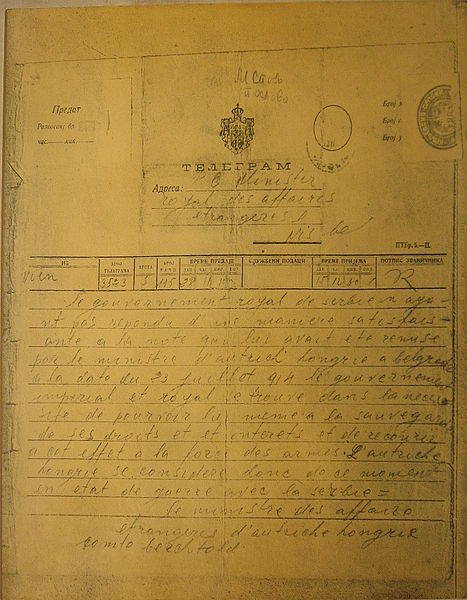
The Austrian Declaration of War against Serbia

“No one starts a war–or rather, no one in his senses ought to do so–without first being clear in his mind what he intends to achieve by that war and how he intends to conduct it.” Carl Von Clausewitz 

It was a war that should never have happened. It was a war for which the belligerent powers could boast many causes but for which few had any real objectives.

It was a war in large part brought on by a declining empire’s fears. Fear of neighbors, ethnic minorities and its place among regional and world powers led the leaders of the Austro-Hungarian Empire to decide for war when the very unpopular heir to the throne Archduke Franz Ferdinand was assassinated in Sarajevo, the capital of the recently annexed province of Bosnia-Herzegovina on June 28th 1914.

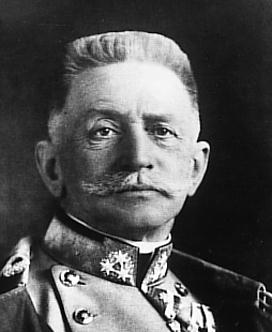
Conrad von Hötzendorf: War was the only means…

View original post 1,036 more words

Leave a comment

Filed under Loose thoughts and musings

A Song of Souls Changed by War: The Minstrel Boy

corby

Absolution of the Irish Brigade at Gettysburg by Father Corby

Friends of Padre Steve’s World. All the things going on in the world, wars, disasters, plane crashes have all have had me a bit melancholy of late. I wonder about all the tragedy, what is going on in Iraq, where so much of my heart is still invested, the situation in Ukraine and the ongoing, seemingly never ending conflict between the Israelis and Palestinians, and in the midst of it I am reminded that even today thousands of Americans are still in Afghanistan, pretty much forgotten by most Americans.

So today I have re-done a very old article about a song that means much to me; the Irish song The Minstrel Boy. 

The Minstrel Boy (Thomas Moore)

The minstrel boy to the war is gone, In the ranks of death ye will find him; His father’s sword he hath girded on, And his wild harp slung behind him; “Land of Song!” said the warrior bard, “Tho’ all the world betray thee, One sword, at least, thy rights shall guard, One faithful harp shall praise thee!”

The Minstrel fell! But the foeman’s chain Could not bring his proud soul under; The harp he lov’d ne’er spoke again, For he tore its chords asunder; And said “No chains shall sully thee, Thou soul of love and bravery! Thy songs were made for the pure and free They shall never sound in slavery!”

The Minstrel Boy will return we pray When we hear the news we all will cheer it, The minstrel boy will return one day, Torn perhaps in body, not in spirit. Then may he play on his harp in peace, In a world such as heaven intended, For all the bitterness of man must cease, And ev’ry battle must be ended.

(Last verse anonymous Civil War)

In February of 2008 I was in the process of returning home from Iraq spending my last couple of days in country before flying out to Kuwait and then the United States. I was already in a rather melancholy state knowing that the Chaplain incoming higher headquarters had turned off my relief for Al Anbar Province after I had paved the way for him with all of the teams of advisors that I had worked with during my time serving them. My relief a personal friend was diverted to the Army advisors with a different Iraqi Division in the north of the country. I felt that the incoming senior chaplain had betrayed and abandoned the men that I worked so hard to care for. Later I heard that he had disregarded my heavily detailed after action reports and told at least one senior chaplain that he “had heard that I was out there but didn’t know if I had done anything.”

It was at that point that I realized that you could do your job and sacrifice yourself to complete a mission only to have someone with their own agenda do what they could to discredit you.  Where the senior Chaplain that I worked for did all that he could to support my team’s mission and see that we were properly recognized at Multi-National Corps Iraq in Baghdad his successor dismissed our work. It was the first time in my Navy career that I had experienced that.  I think it was the fact that I worked for a non-traditional billet working for an Army led joint command outside the normal Navy-Marine Corps chain was a big part of this. Inter-service rivalries and the distain of those bound by conventional thinking are not new and those that have done such non-conventional work have frequently been treated in a similar manner.

Looking back there are some songs which are particularly meaningful to me after my time in Iraq that send a chill up my spine when I hear them. One of these is the patriotic Irish song The Minstrel Boy written by Thomas Moore while a student in honor of friends killed in the Irish Rebellion of 1798.  The song was very popular among soldiers of Irish descent in the American Civil War as well as soldiers fighting in Irish Regiments in World War One and World War Two.

The song is powerful when you hear it for it speaks of the reality of war, war that changes those, even those that return home are not unchanged by it.  It speaks of the sacrifices required by those that go to war and even the effects on the community, the loss of young people.  The final verse added by an anonymous author during the American Civil War in a sense is a prayer, a prayer of return as well as reconciliation. It has been recorded a number of times including an instrumental during the film Blackhawk Down. Another rendition is in the television mini-series Rough Riders about the 1st U.S. Volunteer Cavalry at the Battle of San Juan Hill.

My life has been changed and faith challenged. When I went to Iraq I still maintained a sense of idealism.   After Iraq and having to deal with PTSD and a psychological, spiritual and physical breakdown as well as a profound sense of abandonment by some senior chaplains, my former church and even God I am a different person. My faith which had been shattered to the point of being a practical agnostic for nearly two years has returned. I don’t regret that and do believe that it is a good thing. If we are not changed by what God allows or by what life brings I don’t think that we grow. As a Priest I wonder if I could work in the environment that I work without having gone through what I did.

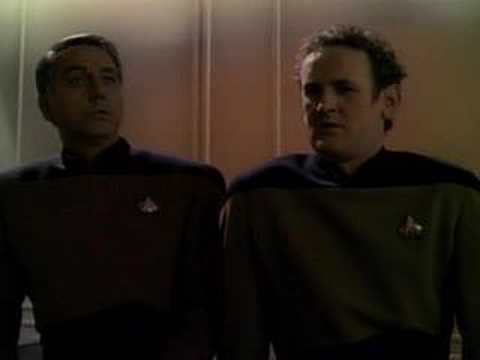
minstrel boy TNG

I see many of the “minstrel boys” and girls of our era and having also been to war and come back changed the last lines of the final verse is a prayer that I echo. One of the versions that I particularly like is the one sung in the Star Trek the Next Generation episode “The Wounded.” While it is only the first verse it deals with the lives of two officers whose lives are forever changed by war. http://www.youtube.com/watch?v=RJudJ9S579A

This is dedicated to all those who have served, those still serving in harm’s way and all who have gone through the pain of war, until war shall be no more.

Peace

Padre Steve+

3 Comments

Filed under iraq,afghanistan, Military, music, Tour in Iraq

The Unfolding of Miscalculations


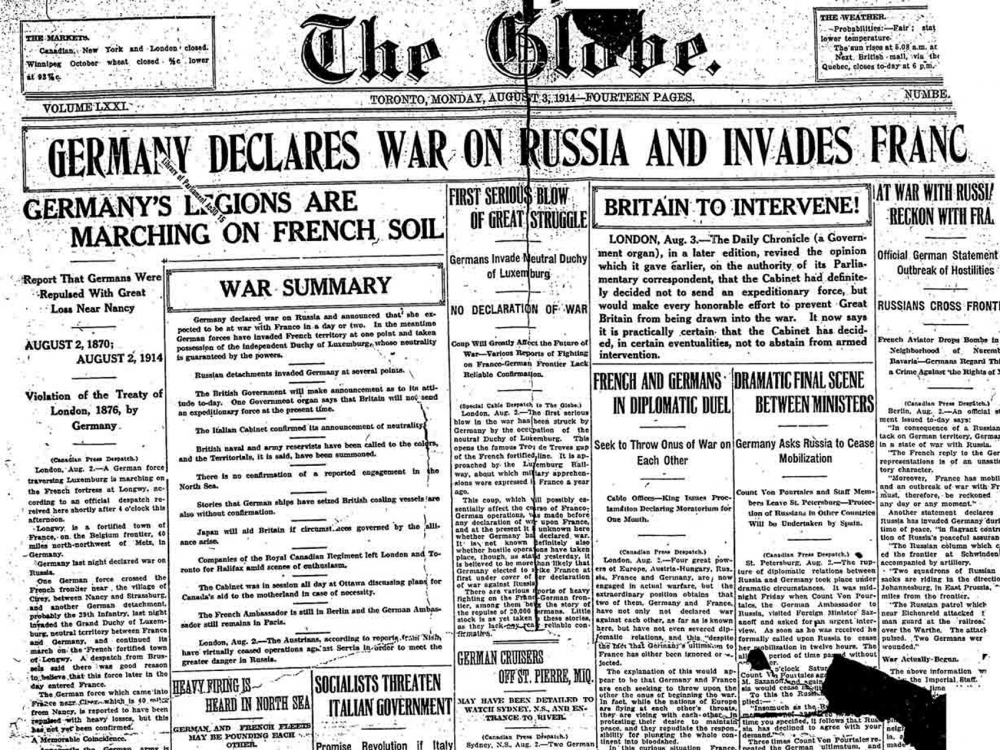
GM_Aug3_1914_Germany-Declares-war-on-Russia-invades-France

“The muffled tongue of Big Ben tolled nine by the clock as the cortege left the palace, but on history’s clock it was sunset, and the sun of the old world was setting in a dying blaze of splendor never to be seen again.” Barbara Tuchman, The Guns of August

It is now late July of 2014 and for the past month I have been reading about the events in Europe of 100 years ago, a time when the leaders of Europe were hurtling into a war which would change the world forever and the effects of which redound to our day. As I read each book I am always amazed at the hubris, vanity, ignorance and incompetence of the monarchs, prime ministers, foreign ministers and diplomats and military leaders. Men who managed to miscalculate their way into a war that was far larger, longer, destructive and earth shaking than most imagined at the time. As Barbara Tuchman wrote “War is the unfolding of miscalculations.”

Yes there were some who knew that a war would be longer, larger and more destructive than most expected, they were either ignored, or in the case of Field Marshal von Molkte of Germany and Joffre of France ignored their own predictions of a long costly war “made any allowance in their plans for the war of attrition which they both foresaw.” Lord Kitchener of Britain, who had no part in his nation’s planning for war and who was recalled to become War Minister on August 4th 1914 was the only military leader to act on his predictions. He predicted to a colleague that the war would last three years, but added that it might last longer, but “three years will do to begin with. A nation like Germany, after having forced the issue, will only give in after it is beaten to the ground. That will take a very long time. No one living knows.”

Of course few people, especially leaders learn from history, including Americans. In November 2002 Donald Rumsfeld predicted that the coming U.S. invasion of Iraq would “Five days or five weeks or five months, but it certainly isn’t going to last any longer than that….It won’t be a World War III.” Of course, he and those who led the United States into war were incredibly wrong, the American involvement lasted 8 years, cost about 4500 U.S. military dead and about 40,000 wounded and when all costs are factored in will have cost the nation trillions of dollars. It also helped bring into existence the group known as ISIL, or the Islamic State of Iraq and the Levant, which now controls vast swaths of Iraq and Syria and whose conquests may drag the United States back in to the Iraq conflagration, maybe even in concert with Iran. It may not be a “world war” but threatens to become global as the influence of ISIL is spreading to other parts of the Middle East, Africa and Asia.

There are also rumblings of war coming from Russia and the Ukraine, a conflict that has now claimed nearly 300 people who had no stake in it, the passengers and crew of Malaysia Air Flight 17, shot down by pro-Russian insurgents with a missile very probably supplied by Russia. Both Russia and Ukraine have begun limited mobilization of their militaries. While one would want to believe that neither Russia or Ukraine, or for that matter Europe or the United States has an interest in war one can never be sure. As Tuchman wrote “One constant among the elements of 1914—as of any era—was the disposition of everyone on all sides not to prepare for the harder alternative, not to act upon what they suspected to be true.”

In the weeks leading to the First World War, some nations were determined on war, others thrust into it by their perceived military interests and still others because they ignored the danger of the situation until it was too late. In all cases their actions and inaction led to disaster.

Peace

Padre Steve+

2 Comments

Filed under History, history, News and current events, world war one

The National Security State thru the Lens of Star Trek Deep Space Nine

nsa-operations-center

Inter Arma Enim Silent Leges, in time of war the law stands silent…

James Madison wrote that “A popular government, without popular information, or the means of acquiring it, is but a prologue to a farce or a tragedy; or, perhaps both.”

I am amazed when I read the reports about the activities of the National Security Agency and the reactions of citizens to them. I know that I feel a sense of apprehension about those activities. The national security state and the seeming all pervasive security and surveillance apparatus which demolishes any sense of privacy, especially the protections enunciated in the Fourth Amendment and to some extent the First Amendment.

I also feel, or rather understand from history and empirical evidence that many others, many from unfriendly countries do not share those apprehensions. It makes for an ethical, legal and even constitutional conundrum that I am not sure if anyone of us is quite comfortable with and perhaps maybe we shouldn’t be.

It is very easy on one hand in light of history, our Constitution and democratic process to condemn the NSA, the FISA courts and other lawfully constituted agencies and those that drafted the laws over the decades that allow the activities which they now conduct. The same can be said of foreign intelligence agencies which all engage in similar activities including the British GCHQ, the German Bundesnachrichtendienst and so many others including the Chinese and Russians.

Likewise it is equally easy in light of history, current events and national security to jump to the other side of the fence and not only defend the activities of the NSA and agencies like it, and to demonize those that expose such activities.

I find looking at such issues in light of Star Trek sometimes more interesting and provocative than simply doing the whole moralizing pundit thing. The fact that the particular episode of  Star Trek Deep Space Nine was aired well before the events of 9-11-2001, and the subsequent Global War on Terror, make it more interesting. The episode deals with an agency in Starfleet that is secretive, but legal operating in the gray areas between the ideals of the Federation and the threats that it faces. Even when the Federation is a peace, Section 31, as it is called is engaged in activities against historic or potential enemies.

At the beginning of the Deep Space Nine Episode Inter Arma Enim Silent Leges the head of Section 31, a man only known as Sloan comes back to Doctor Bashir to involve him in an operation, spying on the Romulans who are working with the Federation against the Dominion.

BASHIR: You want me to spy on an ally.

SLOAN: To evaluate an ally. And a temporary ally at that. I say that because when the war is over, the following will happen in short order. The Dominion will be forced back to the Gamma Quadrant, the Cardassian Empire will be occupied, the Klingon Empire will spend the next ten years recovering from the war and won’t pose a serious threat to anyone. That leaves two powers to vie for control of the quadrant, the Federation and the Romulans.

BASHIR: This war isn’t over and you’re already planning for the next.

SLOAN: Well put. I hope your report is equally succinct.

BASHIR: How many times do I have to tell you, Sloan? I don’t work for you.

SLOAN: You will. It’s in your nature. You are a man who loves secrets. Medical, personal, fictional. I am a man of secrets. You want to know what I know, and the only way to do that is to accept the assignment.

The fact is that the situation we face today and the arguments of both sides should make us uncomfortable. The fact is that like it or not or not the incredibly rapid technical and communication advances of the past couple of decades have primed us for our present time. Likewise they have also enabled a generation to grow up in a virtual world in many ways detached from the moral and ethical balances of individual rights and liberties as well responsibility to community. All the wonderful gadgets that we employ in everyday life make it easy for enemies and “friends” to do things that were unimaginable to people other than science fiction writers even twenty to thirty years ago. Likewise they were must certainly beyond the wildest imaginations of any of the founders of this country or drafters of the Constitution. The reality is, the things that make are lives so easy are also the things that are potential instruments of our destruction.

That being said throughout history, even our own there have been operatives within the government in charge of secrets, and even spies. In the Inter Arma Enim Silent Leges episode we see an operation that is full of duplicity and moral ambiguity all committed in the name of security. It involves the mysterious Section 31 and Starfleet Admiral Ross who attempt to use Doctor Bashir to double cross a Romulan Senator who had been working with the Federation to keep the secret of the head of the Romulan secret police who is a Federation agent. When Doctor Bashir figures out the plot he confronts the Admiral. Part of their exchange is very enlightening because it practically mirrors how many on both the civil liberties and the national security side of the current controversy feel about the War on Terror.

BASHIR: You don’t see anything wrong with what happened, do you.

ROSS: I don’t like it. But I’ve spent the last year and a half of my life ordering young men and young women to die. I like that even less.

BASHIR: That’s a glib answer and a cheap way to avoid the fact that you’ve trampled on the very thing that those men and women are out there dying to protect! Does that not mean anything to you?

ROSS: Inter arma enim silent leges.

BASHIR: In time of war, the law falls silent. Cicero. So is that what we have become? A twenty fourth century Rome driven by nothing more than the certainty that Caesar can do no wrong!

ROSS: This conversation never happened.

In light of the controversy of today, that of the NSA, FISA and government secrecy and gathering information on its own citizens we face a growing tide of reporters and others seeking to reveal those secrets. Back in 1989 ethicist Sissela Bok wrote something very important in her book Secrets: Moral Choice in Public and Private Life:

“…as government secrecy expands, more public officials become privy to classified information and are faced with the choice of whether or not to leak … growing secrecy likewise causes reporters to press harder from the outside to uncover what is hidden. And then in a vicious circle, the increased revelations give government leaders further reasons to press for still more secrecy.”

As we wade through this controversy we will see people do exactly this and the these exact arguments are being made by the people and officials directly involved as well as former elected and appointed officials as well as the press. The interesting thing to me is that very few of the people or agencies, past and present, Republican and Democrat involved really have clean hands. It is amazing to see former champions of civil liberties defend the NSA actions and those that empowered the NSA in the Patriot Act now condemn it. I find it fascinating.

At the end of the Inter Arma Enim Silent Leges episode the mysterious Sloan pops back in on Doctor Bashir who is in his quarters, asleep and depressed by what he experienced during the operation on Romulus and with Admiral Ross.

SLOAN: Good evening.

BASHIR: Are you expecting applause? Have you come to take a bow?

SLOAN: I just wanted to say thank you.

BASHIR: For what? Allowing you to manipulate me so completely?

SLOAN: For being a decent human being. That’s why we selected you in the first place, Doctor. We needed somebody who wanted to play the game, but who would only go so far. When the time came, you stood your ground. You did the right thing. You reached out to an enemy, you told her the truth, you tried to stop a murder. The Federation needs men like you, Doctor. Men of conscience, men of principle, men who can sleep at night. You’re also the reason Section Thirty one exists. Someone has to protect men like you from a universe that doesn’t share your sense of right and wrong.

BASHIR: Should I feel sorry for you? Should I be weeping over the burden you’re forced to carry in order to protect the rest of us?

SLOAN: It is an honor to know you, Doctor. Goodnight.

We live in this kind of world and maybe it is good sometimes to find other ways to look at it. I really don’t have the answers. I am a civil libertarian who places a high value on the openness of a government to its people. I also know that there are those that have no regard for such openness or, to quote Sloan don’t “share your sense of right and wrong.”

Maybe that is not a good answer. I really don’t know. All I know is that as uncomfortable as this all is that those on both sides of the issue have valid points and concerns and they come back to the balance that a society needs to have between individual rights and responsibility to the community, openness and secrecy, civil liberties and national security. But that being said it is a debate that needs to happen, even if it makes us uncomfortable. I for one think that it is better that we be uncomfortable when looking at such an important debate than to be prisoners of our certitude.

Peace

Padre Steve+

1 Comment

Filed under civil rights, Foreign Policy, national security, Political Commentary, star trek

The Stab in the Back: The Destructive Power of Myth in the Life of a Nation

stab-in-the-back

In light of the many historical myths and conspiracy theories being floated by pseudo “historians” like the infamous David Barton it is always appropriate to look at examples of the power of those myths in the lives of nations and their influence on citizens. Some myths can be positive and inspiring, but others can lead to conspiracy theories, false accusations and the demonization of others for the purpose of inciting hatred against political, social or religious opponents. They also can be used to perpetuate false beliefs about other countries that influence policy decisions, including the decision to go to war that ultimately doom those that believe them. A good example of this is the Stab in the Back myth that began after the armistice that ended the First World War, as well as the false beliefs held by Hitler and other Nazi leaders about the United States.

There are many times in history where leaders of nations and peoples embrace myths about their history even when historical, biographical and archeological evidence points to an entirely different record.  Myths are powerful in the way that they inspire and motivate people. They can provide a cultural continuity as a people celebrates the key events and people that shaped their past, even if they are not entirely true.  At the same time myths can be dangerous when they cause leaders and people to make bad choices and actually become destructive. Such was the case in Germany following the First World War.

After the war the belief that the German Army was not defeated but was betrayed by the German people, especially those of the political left.  Like all myths there was an element of truth in the “stab in the back” myth, there were revolts against the Monarchy of Kaiser Wilhelm II and even mutiny on elements of the German High Seas Fleet and Army units stationed in Germany. However the crisis had been brought about by General Ludendorff who until the last month of the war refused to tell the truth about the gravity of Germany’s position to those in the German government.

So when everything came crashing down in late October and early November 1918 the debacle came as a surprise to most Germans.  The myth arose because the truth had not been told by Ludendorff who was arguably the most powerful figure in Germany from 1916-1918.  In the looming crisis which included Ludendorff’s collapse and relief, General Wilhelm Groener presented the facts to the Kaiser and insisted on his abdication.  The Republic that was proclaimed on the 9th of November was saddled with the defeat and endured revolution, civil war and threats from the extreme left and right.  When it signed the Treaty of Versailles it accepted the sole responsibility of Germany for the war and its damages. Ordered to dismantle its military, cede territory that had not been lost in battle and pay massive reparations the legend of the “stab in the back” gained widespread acceptance in Germany.

Hitler always believed that the defeat of Germany in the First World War was due to the efforts of internal enemies of the German Reich on the home front and not due to battlefield losses or the entry of the United States.  This was a fundamental belief for him and was expressed in his writings, speeches and actions.  The internal enemies of Germany for Hitler included the Jews, as well as the Socialists and Communists who he believed were at the heart of the collapse on the home front.  Gerhard Weinberg believes that the effect of this misguided belief on Hitler’s actions has “generally been ignored” by historians. (Germany, Hitler and World War II p. 196)

Hitler believed that those people and groups that perpetrated the “stab in the back” were “beguiled by the by the promises of President Wilson” (World in the Balance p.92) in his 14 Points.  Thus for him Americans were in part responsible for undermining the German home front, something that he would not allow to happen again.  In fact Hitler characterization of Wilson’s effect on the German people in speaking about South Tyrol.  It is representative of his belief about not only the loss of that region but the war: “South Tyrol was lost by those who, from within Germany, caused attrition at the front, and by the contamination of German thinking with the sham declarations of Woodrow Wilson.” (Hitler’s Second Book p.221)

While others will note Hitler’s lack of respect for the potential power of the United States, no other author that I am familiar with links Hitler’s actions and the reaction of the German political, military and diplomatic elites to the entry of the United States into the war to the underlying belief in the “stab in the back.”   Likewise Hitler had little regard for the military abilities or potential of the United States. Albert Speer notes that Hitler believed “the Americans had not played a very prominent role in the war of 1914-1918,” and that “they would certainly not withstand a great trial by fire, for their fighting qualities were low.” (Inside the Third Reich: Memoirs by Albert Speer p.121)

Hitler not only dismissed the capabilities of the Americans but also emphasized the distance that they were from Germany and saw no reason to fear the United States when “he anticipated major victories on the Eastern Front.” (Germany Hitler and World War II p.92)   Hitler’s attitude was reflected by the majority of the military high command and high Nazi officials. Ribbentrop believed that the Americans would be unable to wage war if it broke out “as they would never get their armies across the Atlantic.” (History of the German General Staff, Walter Goerlitz, p.408).  General Walter Warlimont notes the “ecstasy of rejoicing” found at Hitler’s headquarters after Pearl Harbor and the fact that the he and Jodl at OKW caught by surprise by Hitler’s declaration of war. (Inside Hitler’s Headquarters 1939-1945 pp.207-209) Kenneth Macksey notes Warlimont’s comments about Hitler’s beliefs; that Hitler “tended to dismiss American fighting qualities and industrial capability,” and that Hitler “regarded anyone who tried to show him such information [about growing American strength] as defeatist.” (Why the Germans Lose at War, Kenneth Macksey, p.153.)

Others like Field Marshal Erwin Rommel record the disregard of senior Nazis toward American capabilities in weaponry.  Quoting Goering who when Rommel discussed 40mm anti-aircraft guns on aircraft that were devastating his armored forces Goering replied “That’s impossible. The Americans only know how to make razor blades.” (The Rommel Papers edited by B.H. Liddell-Hart p.295) Rommel was one of the few German commanders who recognized the folly of Hitler’s declaration of war on the United States noting that “By declaring war on America, we had brought the entire American industrial potential into the service of Allied war production. We in Africa knew all about the quality of its achievements.” (The Rommel Papers p.296)

When one also takes into account the general disrespect of the German military for the fighting qualities of American soldiers though often with good reason (see Russell Weigley’s books Eisenhower’s Lieutenants and The American Way of War) one sees how the myth impacted German thought.  This is evidenced by the disparaging comments of the pre-war German military attaché to the United States; General Boeticher, on the American military, national character and capability. (See World in the Balance pp. 61-62)

The overall negative view held by many Germans in regard to the military and industrial power and potential of the United States reinforced other parts of the myth. Such false beliefs served to bolster belief in the stab-in-the back theory as certainly the Americans could not have played any important role in the German defeat save Wilson’s alleged demoralization of the German population.  This was true not only of Hitler, but by most of his retinue and the military, diplomatic and industrial leadership of the Reich. Hitler’s ultimate belief shaped by the stab-in-the back and reinforced by his racial views which held the United States to be an inferior mongrel people. This led him to disregard the impact that the United States could have in the war and ultimately influenced his decision to declare war on the United States, a decision that would be a key factor in the ultimate defeat of Germany.

Myth can have positive value, but myth which becomes toxic can and often does lead to tragic consequences. All societies have some degree of myth in relationship to their history including the United States.  The myths are not all the same, various subgroups within the society create their own myth surrounding historic events. The danger is that those myths can supplant reason in the minds of political, military, media and religious figures and lead those people into taking actions that work to their own detriment or even destruction.

It is the duty of historians, philosophers and others in the society to ensure that myth does not override reality to the point that it moves policy both domestic and foreign in a manner that is ultimately detrimental to the nation.  The lesson of history demonstrated by myths surrounding the German defeat and role of the United States in that defeat shows just how myth can drive a nation to irrational, evil and ultimately tragic actions not only for that nation and its people, but for the world.

Peace,

Padre Steve+

1 Comment

Filed under History, nazi germany, philosophy

Strategy and Policy: Lee’s Offensive Gettysburg Campaign -The Worst of Both Worlds

A cohesive national strategy involves true debate and consideration of all available courses of action. It must look at the ends, ways and means of achieving national strategic objectives as well as the risk entailed in each course of action. It has to involve both the political leadership and military commanders. Clausewitz said: “the supreme, most far reaching act of judgment that the statesman and commander have to make is to establish by that test the kind of war on which they are embarking; neither mistaking it for, nor trying to turn it into, something that is alien to its nature.” [1]

“Wars are not free flowing events, sufficient unto themselves as objects for study and understanding. Instead they are entirely the product of their contexts.” [2] Thus it is imperative that both political and military leaders understand for what purpose they embark on a war or begin a campaign. Even in the recent American experience we can recount time after time where American political leaders of both the Republican and Democrat parties, as well as military leaders and planners have failed to grasp the central truth of was Clausewitz wrote about the nature of war.

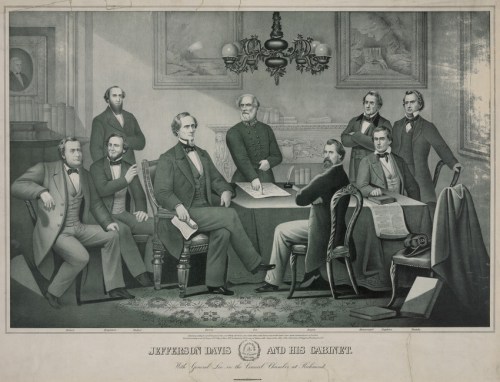
davis and cabinet

British political and military theorist Colin S. Gray writes: “Choice of strategy can determine whether or not policy goals will be attainable. And that choice must provide the most vital contexts for tactical behavior. Once policy objectives have been chosen, strategy is the function that delivers victory.” [3] In our recent wars and in the American Civil War this maxim has been born out time and time again.

Thus, the Gettysburg campaign has to be looked at in the context of Grand Strategy and what was necessary for both sides to achieve their goals. For the Confederacy this was independence and in the context of the Gettysburg campaign the key question is whether it should have been made at all. While Lee is regarded as a masterful commander by many, the myth created by the Lost Cause school of history, in which the failure of Confederate war aims cannot be ascribed to Lee, keeps many people from asking the hard questions of strategy, and how Lee as commander failed to understand what was best for his country.

The key consideration, as Alan T. Nolan observes “must be whether a general’s actions helped or hurt the cause of his government in view of that government’s grand strategy. In short, the appropriate inquiry is to ask whether a general’s actions related positively or negatively to the war objectives and national policy of his government.” [4] The question was one of following a strategy of the defensive as Washington had done in the Revolutionary War, or a strategy of the offense culminating in a climactic battle that would decide the outcome of the war.

A defensive strategy was seen by British observers early in the war as the most feasibly for achieving Southern military and political goals in relationship to attaining independence. In the Revolution, Washington remained on the “grand strategic defensive” and “lost many battles and retreated many times, but they kept their forces in the field to avoid being ultimately defeated, and they won because the British decided that the struggle was either too hopeless or too burdensome to pursue.” [5] They had no doubt that this was the best policy for the Confederate government and military to achieve their strategic end.

The terrain of Virginia, particularly the number of east-west running rivers, the swamps that lay to the east of Richmond and the nearly impassible Wilderness to its north made any Union offensive a costly proposition. Clausewitz noted that terrain has “a decisive influence on the engagement, both as to its course and to its planning and exploitation….Their principle effect lies in the realm of tactics, but the outcome is a matter of strategy” [6]

This naturally advantageous terrain gave the advantage to Lee on the defense, but Lee seemed to never fully appreciate the strategic strength that the nature of the terrain, especially that of the Wilderness offered him. J.F.C. Fuller noted that “the Wilderness had been his staunchest ally. It was not only a natural fortress protecting Richmond, but a spider’s web to any army advancing from the north. Lee never fully realized this, for if he had done so his strategy would have been based upon maneuvering his enemy again and again into this entanglement and defeating him.” [7]

However, the strategic defensive was not that of Robert E. Lee. Lee’s view throughout the war, even as late as the siege of Petersburg was that of the offensive and climactic battle: “If we can defeat or drive the armies of the enemy from the field, we shall have peace. Our efforts and energies should be devoted to that object.” [8]

In 1863 the Confederacy was confronted with the choice of how it would deal with the multiple threats to it posed by Union forces in both the West at Vicksburg, as well as in Tennessee as well as the East, where the Army of the Potomac was in striking distance of Richmond. The strategic situation was bad but few Confederate politicians realized just how bad things were, or cared in the post Chancellorsville euphoria.

In the west the strategic river city of Vicksburg Mississippi was threatened by the Army of Union General Ulysses S Grant, and Naval forces under the command of Admiral David Farragut and Admiral David Dixon Porter. If Vicksburg fell the Union would control the entire Mississippi and cut the Confederacy in two. Union forces also maintained a strong presence in the areas of the Virginia Tidewater and the coastal areas of the Carolinas; while in Tennessee a Union Army under Rosecrans, was stalemated, but still threatening Chattanooga, the gateway to the Deep South. The blockade of the United States Navy continually reinforced since its establishment in 1861, had crippled the already tenuous economy of the Confederacy. The once mocked “anaconda strategy” devised by General Winfield Scott was beginning to pay dividends. [9] Of the nine major Confederate ports linked by rail to the inland cities the Union, all except three; Mobile, Wilmington and Charleston were in Union hands by April 1862. [10]

However, the Confederate response to the danger was “divided councils and paralysis” [11] in their upper leadership, between those like Lee who advocated for the offensive and those like Davis who advocated a defensive strategy. The military relationship between Lee and Davis “represented a continuous compromise between the president’s undeclared policy of outlasting the enemy and the general’s purpose of winning by breaking the enemy’s will to continue their effort at subjugation.” [12]

Davis, though he was Commander-in-Chief wavered between the two strategic ideas throughout the first years of the war, something that was worse than coming to no decision at all. Lee’s latest biographer Michael Korda makes the point that: “The danger that the Confederacy might unravel from west to east, whatever happened between the Rappahannock and the Potomac, was Grant’s central strategic idea, and should have been the overriding concern of the Confederate government; but Lee’s position as the South’s most respected and admired military figure, the high drama of his rapid marches and his victories against much larger armies had a profound effect on southern military strategy.” [13] Instead it was not, and a fog of confused policies confounded Confederate war efforts.

Confederate Secretary of War James Seddon and President Jefferson Davis recognized the danger in the winter of 1862-1863. During the winter Davis and Seddon suggested to Lee that he detach significant units, including Pickett’s division to relieve the pressure in the west and blunt Grant’s advance. Lee would have nothing of it; he argued that the war would be won in the East. He told Seddon that “The adoption of your proposition is hazardous, and it becomes a question between Virginia and the Mississippi.” [14] From a strategic point of view it is hard to believe that Lee could not see this, “but in the post-Chancellorsville aura of invincibility, anything seemed possible.” [15]

However, much of Lee’s reasoning can be explained by what he saw as his first duty, the defense of Virginia. Lee’s biographer Michael Korda points out that Lee’s strategic argument was very much influenced by his love of Virginia, which remained his first love, despite his deep commitment to the Confederacy. Korda noted that Lee: “could never overcome a certain myopia about his native state. He remained a Virginian first and foremost…..” [16] Fuller wrote that Lee “was so obsessed by the idea of threatening Washington in order to relieve Northern Virginia, that throughout his generalship he never saw the war as a whole.” [17] It was Lee’s view that if Virginia was lost, so was the Confederacy, and was concerned that whatever units left behind should he dispatch troops from his Army west, would be unable to defend Richmond.

Likewise, despite the success of his defensive battles at Fredericksburg and Chancellorsville, Lee was not encouraged. Those victories had elated the Confederacy and caused great concern in the North. But Lee was depressed after each. Lee told Harry Heth after Chancellorsville: “Our people were wild with delight- I, on the contrary, was more depressed than after Fredericksburg; our loss was severe, and again we had not gained an inch of ground, and the enemy could not be pursued…” [18]

Some Confederate leaders realized the mortal danger presented by Grant in the West including officials in the War Department, one of whom wrote “The crisis there is of the greatest moment. The loss of Vicksburg and the Mississippi river…would wound us very deeply in a political as well as a military point of view.” [19]

Despite this Seddon did remain in favor of shifting troops west and relieving Vicksburg. He was backed in this by Joseph Johnston, Braxton Bragg, P.T.G. Beauregard and James Longstreet. In Mid-May of 1863 Beauregard proposed a strategy to concentrate all available forces in in Tennessee and going to the strategic defensive on all other fronts. Beauregard, probably the best Southern strategist “saw clearly that the decisive point lay in the West and not the East.” [20] Beauregard’s plan was to mass Confederate forces was crush Rosecrans, relieve Vicksburg and then move east to assist Lee in destroying the Army of the Potomac in his words to complete “the terrible lesson the enemy has just had at Chancellorsville.” [21] His plan was never acknowledged and in a letter to Johnston, where he re-sent the plan he noted “I hope everything will turn out well, although I do not exactly see how.” [22]

James Longstreet had proposed a similar measure to Seddon in February 1863 and then again on May 6th in Richmond. Longstreet believed that “the Confederacy’s greatest opportunity lay “in the skillful use of our interior lines.” [23] He suggested to Seddon that two of his divisions link up with Johnston and Bragg and defeat Rosecrans and upon doing that move toward Cincinnati. Longstreet argued that since Grant would have the only Union troops that could stop such a threat that it would relieve “Pemberton at Vicksburg.” [24] Seddon favored Longstreet’s proposal but Jefferson Davis having sought Lee’s counsel rejected the plan, Longstreet in a comment critical of Davis’s rejection of the proposal wrote: “But foreign intervention was the ruling idea with the President, and he preferred that as the easiest solution of all problems.” [25] Following that meeting Longstreet pitched the idea to Lee who according to Longstreet “recognized the suggestion as of good combination, and giving strong assurance of success, but he was averse to having a part of his army so far beyond his reach.” [26]

In early May 1863 Lee, commanding the Army of Northern Virginia realized that the Confederacy was in desperate straits. Despite numerous victories against heavy odds, Lee knew that time was running out. Though he had beaten the Army of the Potomac under General Joseph Hooker at Chancellorsville, he had not destroyed it and Hooker’s Army, along with a smaller force commanded by General Dix in Hampton Roads still threatened Richmond. He had rejected the western option presented by Seddon, Beauregard and Longstreet. Lee questioned “whether additional troops there would redress the balance in favor of the Confederacy, and he wondered how he would be able to cope with the powerful Army of the Potomac.” [27]

In Lee’s defense neither of these suggestions was unsound, but his alternative, an offensive into Pennsylvania just as unsound and undertaken for “confused” reasons. Confederate leaders realized that “something had to be done to save Vicksburg; something had to be done to prevent Hooker from recrossing the Rappahannock; something had to be done to win European recognition, or compel the North to consider terms of peace…[28] However added to these reasons, and perhaps the most overarching for Lee was “to free the State of Virginia, for a time at least, from the presence of the enemy” and “to transfer the theater of war to Northern soil….” [29]

On May 14th Lee travelled by train to Richmond to meet with President Jefferson Davis and War Secretary James Seddon. At the meeting Lee argued for an offensive campaign in the east, to take the war to Pennsylvania. Lee had three major goals for the offensive, two which were directly related to the immediate military situation and one which went to the broader strategic situation.

Lee had long believed that an offensive into the North was necessary, even before Chancellorsville. As already noted, Lee did not believe that reinforcing the Confederate Armies in the West would provide any real relief for Vicksburg. Lee believed, quite falsely, that the harsh climate alone would force Grant to break off his siege of Vicksburg. [30] Russell Weigley wrote that “In truth, Lee seems to have been less than fully responsive to the problems of the West, partly out of Virginia parochialism- he always regarded his sword as serving his first state of Virginia-and partly in adherence to his military philosophy,” [31] that of the offensive. Lee was not willing to sacrifice Virginia for the west, and “tenaciously fought every suggestion that the Army of Northern Virginia be denuded to reinforce the west, and his influence over Davis guaranteed, at least until the fall of 1863, that the defense of Virginia would always be able to outweigh the demands for help from the Confederate forces in the West.” [32]

Instead of sending troops west, Lee believed that his army, flush with victory needed to be reinforced and allowed to advance into Pennsylvania. Lee proposed withdrawing Beauregard’s 16,000 soldiers from the Carolinas to the north in order “increase the known anxiety of Washington authorities” [33] and he sought the return of four veteran brigades which had been loaned to D.H. Hill in North Carolina. In this he was unsuccessful. He received two relatively untested brigades from Hill; those of Johnston Pettigrew and Joseph Davis instead two of Pickett’s veteran brigades. The issue of the lack of reinforcements was a “commentary on the severe manpower strains rending the Confederacy…and Davis wrote Lee on May 31st, “and sorely regret that I cannot give you the means which would make it quite safe to attempt all that we desire.” [34]

Lee’s Chief of Staff Colonel Charles Marshall crafted a series of courses of action for Lee designed to present the invasion option as the only feasible alternative for the Confederacy. Lee’s presentation was an “either or” proposal. He gave short shrift to any possibility of reinforcing Vicksburg and explained “to my mind, it resolved itself into a choice of one of two things: either to retire to Richmond and stand a siege, which must ultimately end in surrender, or to invade Pennsylvania.” [35] As any military planner knows the presentation of courses of action designed to lead listeners to the course of action that a commander prefers by ignoring the risks of such action, downplaying other courses of action is disingenuous. In effect Lee was asking Davis and his cabinet to “choose between certain defeat and possibly victory” [36] while blatantly ignoring other courses of action or playing down other very real threats in the West.

Lee embraced the offensive as his grand strategy and rejected the defensive in his presentation to the Confederate cabinet, and they were “awed” by Lee’s strategic vision. Swept up in Lee’s presentation the cabinet approved the invasion despite the fact that “most of the arguments he made to win its approval were more opportunistic than real.” [37] However, Postmaster General John Reagan objected and stated his dissent arguing that Vicksburg had to be the top priority. But Lee was persuasive telling the cabinet “There were never such men in any army before….They will go anywhere and do anything if properly led….” So great was the prestige of Lee, “whose fame…now filled the world,” that he carried the day.” [38]

Although both Seddon and Davis had reservations about the plan they agreed to it. Unfortunately for all of them they never really settled the important goals of the campaign including how extensive the invasion would be, how many troops would he need and where he would get them. [39] The confusion about these issues was fully demonstrated by Davis in his letter of May 31st where he “had never fairly comprehended” Lee’s “views and purposes” until he received a letter and dispatch from the general that day.” [40] That lack of understanding is surprising since Lee had made several personal visits to Davis and the cabinet during May and demonstrates again the severe lack of understanding of the strategic problems by Confederate leaders.

Lee believed that his offensive would relieve Grant’s pressure on Pemberton’s Army at Vicksburg. How it would do so is not clear since the Union had other armies and troops throughout the east to parry any thrust made had the Army of the Potomac endured a decisive defeat that not only drove it from the battlefield but destroyed it as a fighting force. Postmaster General Reagan believed that the only way to stop Grant was “destroy him” and “move against him with all possible reinforcements.” [41]

Likewise Lee believed that if he was successful in battle and defeated the Army of the Potomac in Pennsylvania that it could give the peace party in the North to bring pressure on the Lincoln Administration to end the war. This too was a misguided belief and Lee would come to understand that as his forces entered Maryland and Pennsylvania where there was no popular support for his invading army. The fact was that those that “though there was a strong peace party in the North, they did not realize that Lincoln’s Emancipation Proclamation had settled once and for all the question of foreign intervention, and second that to invade the North would consolidate the Federals instead of dividing them.” [42]

In the meeting with the cabinet, Postmaster-General Reagan, agreed with General Beauregard and warned that “the probability that the threatened danger to Washington would arouse again the whole of the Yankee nation to renewed efforts for the protection of their capital.” [43] Reagan was decidedly against Lee’s offensive. He “saw everything wrong with Lee’s plan and everything right with the plan it had superseded. Grant was the main threat to the survival of the Confederacy, and it was Grant at whom the main blow must be aimed and struck.” [44] But “Lee’s opinion carried so much weight that Davis felt compelled to concur” [45] with Lee and voted with the remaining cabinet members to allow the offensive.

Stephens the fire breathing Vice President “wanted to negotiate for peace, and he foresaw rightly that Lee’s offensive would strengthen and not weaken the war party in the North….Stephens was strongly of the opinion that Lee should have remained on the defensive and detached a strong force to assist Johnston against Grant at Vicksburg.” [46] However, he was kept in the dark as to Lee’s plans until after Lee had crossed the Potomac.

Likewise, Lee, the consummate defender of Virginia was determined to at least for a season remove the war from his beloved state. He believed that if he could spend a summer campaign season in the North, living off of Union foodstuffs and shipping booty back to the Confederacy that it would give farmers in Northern Virginia a season to harvest crops unimpeded by major military operations.

While the offensive did give a few months relief to these farmers it did not deliver them. Likewise Lee’s argument that he could not feed his army flies in the face of later actions where for the next two years the Army of Northern Virginia continued to subsist. Alan Nolan noted that if a raid for forage was a goal of the operation then “a raid by small, mobile forces rather than the entire army would have had considerably more promise and less risk.” [47] D. H. Hill in North Carolina wrote his wife: “Genl. Lee is venturing upon a very hazardous movement…and one that must be fruitless, if not disastrous.” [48]

Though Lee won permission to invade Pennsylvania, he did not get all that he desired. Lee wanted, and believed that he would have his entire army to conduct his offensive. However, Davis did not understand or conceive that Lee’s offensive scheme was a “change in the existing policy, a shift from the defense to the offense. To Davis, Lee’s invasion was merely a necessary expedient in the policy of static, scattered defensiveness.” [49]

Davis refused Lee reinforcements from the coastal Carolinas, and “had not the slightest intention of reducing a single garrison to support Lee’s offensive.” [50] Davis insisted on units being left to cover Richmond in case General Dix advanced on Richmond from Hampton Roads. Much of this was due to political pressure as well as the personal animus of General D. H. Hill who commanded Confederate forces in the Carolinas towards Lee. The units included two of Pickett’s brigades which would be sorely missed on July third in the doomed effort to break the Union center on Cemetery Ridge. As a result Lee was without a significant portion of his army when he moved north. Lee did not learn “until he had crossed the Potomac that four of his best brigades, the equivalent of a division, were to be uselessly employed away from the army.” [51]

Lee’s decision revealed an unresolved issue in Confederate Grand Strategy, the conflict between the strategy of the offensive and that of the defensive. Many in the Confederacy realized that the only hope for success was to fight a defensive campaign that made Union victory so expensive that eventually Lincoln’s government would fall or be forced to negotiate.

The conflict between those who believed in the offensive like Lee, and those that advocated a strategic defensive strategy resulted in indecision, which resulted in a policy that brought about “the worst of both worlds.” [52] The fact that Lee got permission to invade but was denied significant numbers of experienced troops as well as support from other departments meant that “what Lee designed as a total stroke from a concentration of its armed strength, was reduced to a desperate, unsupported gamble of one man with one army-and not all of that.” [53] Knowing this, Lee still chose to continue his offensive, something that along with his “own awareness of factors that argued against it.” [54]

Lee was convinced that ultimate victory could only be achieved by decisively defeating and destroying Federal military might in the East. His letters are full of references to crush, defeat or destroy Union forces opposing him. His strategy of the offensive was demonstrated on numerous occasions in 1862 and early 1863, however in the long term, the strategy of the offensive was unfeasible and “counterproductive in terms of the Confederacy’s “objects of war.” [55]

Lee’s offensive operations always cost his Army dearly in the one commodity that the South could not replace, nor keep pace with its Northern adversary, his men. His realism about that subject was shown after he began his offensive when he wrote Davis about how time was not on the side of the Confederacy. He wrote: “We should not therefore conceal from ourselves that our resources in men are constantly diminishing, and the disproportion in this respect…is steadily augmenting.” [56] Despite this, as well as knowing that in every offensive engagement, even in victory he was losing more men percentage wise than his opponent Lee persisted in the belief of the offensive.

When Lee fought defensive actions on ground of his choosing, like at Fredericksburg, he was not only successful but husbanded his strength. However, when he went on the offensive in almost every case he lost between 15 and 22 percent of his strength, a far higher percentage in every case than his Union opponents. In these battles the percentage of soldiers that he lost was always more than his Federal counterparts, even when his army inflicted greater aggregate casualties on his opponents. Those victories may have won Lee “a towering reputation” but these victories “proved fleeting when measured against their dangerous diminution of southern white manpower.” [57] Lee recognized this in his correspondence but he did not alter his strategy of the offensive until after his defeat at Gettysburg.

The course of action was decided upon, but one has to ask if Lee’s decision was wise decision at a strategic level, not simply the operational or tactical level where many Civil War students are comfortable. General Longstreet’s artillery commander, Colonel Porter Alexander described the appropriate strategy of the South well, he wrote:

“When the South entered upon war with a power so immensely her superior in men & money, & all the wealth of modern resources in machinery and the transportation appliances by land & sea, she could entertain but one single hope of final success. That was, that the desperation of her resistance would finally exact from her adversary such a price in blood & treasure as to exhaust the enthusiasm of its population for the objects of the war. We could not hope to conquer her. Our one chance was to wear her out.” [58]

What Alexander describes is the same type of strategy successfully employed by Washington and his more able officers during the American Revolution, Wellington’s campaign on the Iberian Peninsula against Napoleon’s armies, and that of General Giap against the French and Americans in Vietnam. It was not a strategy that completely avoided offensive actions, but saved them for the right moment when victory could be obtained.

It is my belief that Lee erred in invading the North for the simple fact that the risks far outweighed the possible benefits. As Russell Weigley noted “for a belligerent with the limited manpower resources of the Confederacy, General Lee’s dedication to an offensive strategy was at best questionable.” [59] The offensive was a long shot for victory at best, and Lee was a gambler, audacious possibly to a fault. His decision to go north exhibited a certain amount of hubris as he did not believe that his army could be beaten, even when it was outnumbered. Lee had to know from experience that even in victory “the Gettysburg campaign was bound to result in heavy Confederate casualties…limit his army’s capacity to maneuver…and to increase the risk of his being driven into a siege in the Richmond defenses.” [60] The fact that the campaign did exactly that demonstrates both the unsoundness of the campaign and is ironic, for Lee had repeatedly said in the lead up to the offensive in his meetings with Davis, Seddon and the cabinet that “a siege would be fatal to his army” [61] and “which must ultimately end in surrender.” [62]

Grand-strategy and national policy objectives must be the ultimate guide for operational decisions. “The art of employing military forces is obtaining the objects of war, to support the national policy of the government that raises the military forces.” [63] Using such criteria, despite his many victories Lee has to be judged as a failure as a military commander.

Lee knew from his previous experience that his army would suffer heavy casualties. Lee also understood that a victory over the Army of the Potomac deep in Northern territory could cost him dearly. He knew the effect that a costly victory would have on his operations, but he still took the risk. That decision was short sighted and diametrically opposed to the strategy that the South needed to pursue in order to gain its independence. Of course some will disagree, but I am comfortable in my assertion that it was a mistake that greatly affected the Confederacy’s only real means of securing its independence, the breaking of the will of the Union by making victory so costly that it would not be worth the cost.

In light of all of these factors one has to ask a question that is applicable as much today as it was to Lee. Since the object of a campaign is to be able to connect national strategy to the operational and tactical objectives of any campaign, in other words the connection of the campaign to grand-strategy objectives of a nation. In the case of the Confederacy it was to achieve independence, and as Clausewitz so keenly noted that “the political object, which was the original motive, must become an essential factor in the equation.” [64] The Gettysburg campaign, “Lee’s most audacious act, is the apogee of his grand strategy of the offensive.” But the question that has to be asked is “whether Lee should have been there at all.” [65] The same question should be asked by any political or military leader before embarking on a war or campaign within the war.

Notes

[1] Clausewitz, Carl von. On WarIndexed edition, edited and translated by Michael Howard and Peter Paret, Princeton University Press, Princeton NJ 1976 p.88


[2] Gray, Colin S. Fighting Talk: Forty Maxims on War, Peace, and Strategy Potomac Book, Dulles VA 2009 p.3

[3] Ibid. Gray Fighting Talk p.54

[4] Nolan, Alan T. Robert E. Lee: A Flawed General in Major Problems in American Military History: Documents and Essays Edited by Chambers, John Whiteclay II and Piehler, G. Kurt Houghton Mifflin Company, Boston and New York 1999 p.175

[5] Nolan, Alan T. R. E. Lee and July 1 at Gettysburg in the First Day at Gettysburg edited by Gallagher, Gary W. Kent State University Press, Kent Ohio 1992 p.9

[6] Clausewitz, Carl von. On WarIndexed edition, edited and translated by Michael Howard and Peter Paret, Princeton University Press, Princeton NJ 1976 p.348

[7] Fuller, J.F.C Grant and Lee: A Study in Personality and Generalship Indiana University Press, Bloomington Indiana, 1957 p.192

[8] Ibid. NolanR. E. Lee and July 1 at Gettysburg in the First Day at Gettysburg p.5

[9] Fuller, J.F.C. The Conduct of War 1789-1961 Da Capo Press, New York 1992. Originally published by Rutgers University Press, New Brunswick N.J p.101 Fuller has a good discussion of the Anaconda strategy which I discussed in the chapter: Gettysburg, Vicksburg and the Campaign of 1863: The Relationship between Strategy, Operational Art and the DIME

[10] Ibid. Fuller The Conduct of War 1789-1961 p.101

[11] McPherson, James. The Battle Cry of Freedom: The Civil War Era Oxford University Press, Oxford and New York 1988 p.629

[12] Dowdy, Clifford. Lee and His Men at Gettysburg: The Death of a Nation Skyhorse Publishing, New York 1986, originally published as Death of a Nation Knopf, New York 1958 pp.20-21

[13] Korda, Michael. Clouds of Glory: The Life and Legend of Robert E. Lee Harper Collins Publishers, New York 2014 pp.524-525

[14] Guelzo, Allen C. Gettysburg: The Last Invasion Vintage Books a Division of Random House, New York 2013 p.34

[15] Ibid. McPherson The Battle Cry of Freedom p.647

[16] Korda, Michael. Clouds of Glory: The Life and Legend of Robert E. Lee Harper Collins Publishers, New York 2014 p.525

[17] Ibid. Fuller, J.F.C Grant and Lee: A Study in Personality and Generalship p.193

[18] Guelzo Allen C. Fateful Lightening: A New History of the Civil War Era and Reconstruction Oxford University Press, Oxford and New York 2012 p.339

[19] Coddington, Edwin B. The Gettysburg Campaign: A Study in Command, A Touchstone Book, Simon and Schuster New York, 1968 p.5

[20] Ibid. Fuller, J.F.C Grant and Lee: A Study in Personality and Generalship p.193

[21] Foote, Shelby, The Civil War, A Narrative. Volume Two Fredericksburg to Meridian Random House, New York 1963 p.429

[22] Ibid. Foote The Civil War, A Narrative. Volume Two Fredericksburg to Meridian p.429

[23] Ibid. Korda Clouds of Glory: The Life and Legend of Robert E. Lee p.525

[24] Wert, Jeffry D. General James Longstreet The Confederacy’s Most Controversial Soldier, A Touchstone Book, Simon and Schuster, New York and London 1993 p.241

[25] Longstreet, James From Manassas to Appomattox, Memoirs of the Civil War in America originally published 1896, Amazon Kindle Edition location 4656

[26] Ibid. Longstreet, James From Manassas to Appomattox, Memoirs of the Civil War in America location 4705

[27] Ibid. Coddington The Gettysburg Campaign: A Study in Command, p.5

[28] Ibid. Fuller Grant and Lee: A Study in Personality and p.194

[29] Taylor, Walter. General Lee: His campaigns in Virginia 1861-1865 With Personal Reminiscences University of Nebraska Press, Lincoln Nebraska and London, 1994 previously published 1906 p.180.

[30] Ibid. Foote The Civil War, A Narrative. Volume Two Fredericksburg to Meridian p.430

[31] Weigley, Russell F. The American Way of War: A History of United States Military History and Policy University of Indiana Press, Bloomington IN, 1973 pp.114-115

[32] Ibid. Guelzo Fateful Lightening: A New History of the Civil War Era and Reconstruction p.340

[33] Ibid. Korda Clouds of Glory: The Life and Legend of Robert E. Lee p.528

[34] Sears, Stephen W. Gettysburg. Houghton Mifflin Co. Boston and New York 2003 p.51

[35] Ibid. Foote The Civil War, A Narrative. Volume Two Fredericksburg to Meridian p.431

[36] Ibid. Foote The Civil War, A Narrative. Volume Two Fredericksburg to Meridian p.431

[37] Tredeau, Noah Andre. Gettysburg: A Testing of Courage, Harper Collins Publishers, New York 2002 p.6

[38] Ibid. McPherson The Battle Cry of Freedom p.647

[39] Ibid. Coddington The Gettysburg Campaign: A Study in Command, p.7

[40] Ibid. Coddington The Gettysburg Campaign: A Study in Command, p.7

[41] Ibid. Foote The Civil War, A Narrative. Volume Two Fredericksburg to Meridian p.432

[42] Fuller, J.F.C. Decisive Battles of the U.S.A. 1776-1918 University of Nebraska Press, Lincoln 2007 copyright 1942 The Royal Society for the Prevention of Cruelty to Animals p.222

[43] Ibid. Foote The Civil War, A Narrative. Volume Two Fredericksburg to Meridian p.432

[44] Ibid. Foote The Civil War, A Narrative. Volume Two Fredericksburg to Meridian p.432

[45] Ibid. McPherson The Battle Cry of Freedom p.647

[46] Ibid. Fuller Grant and Lee: A Study in Personality and p.194

[47] Ibid. NolanR. E. Lee and July 1 at Gettysburgin the First Day at Gettysburg p.2

[48] Ibid. Sears. Gettysburg p.51

[49] Ibid. Dowdy Lee and His Men at Gettysburg p.27

[50] Ibid. Dowdy Lee and His Men at Gettysburg p.27

[51] Ibid. Dowdy Lee and His Men at Gettysburg p.36

[52] Ibid. Weigley The American Way of War p.118

[53] Ibid. Dowdy Lee and His Men at Gettysburg p.28

[54] Ibid. Nolan Robert E. Lee: A Flawed General p.176

[55] Ibid. Nolan Robert E. Lee: A Flawed General in Major Problems p.176

[56] Taylor, John M. Duty Faithfully Performed: Robert E Lee and His CriticsBrassey’s, Dulles VA 1999 p.134

[57] Gallagher, Gary W. The Confederate War: How Popular Will, Nationalism and Military Strategy Could not Stave Off Defeat Harvard University Press, Cambridge MA and London 1999 p.120

[58] Alexander, Edward Porter. Fighting for the Confederacy: The Personal Recollections of General Edward Porter Alexander, ed. Gary W. Gallagher, University of North Carolina Press, Chapel Hill NC, 1989 p.415

[59] Ibid. Weigley The American Way of War p.118

[60] Ibid. NolanR. E. Lee and July 1 at Gettysburg in the First Day at Gettysburg p.11

[61] Ibid. NolanR. E. Lee and July 1 at Gettysburg in the First Day at Gettysburg p.11

[62] Ibid. Foote The Civil War, A Narrative. Volume Two Fredericksburg to Meridian p.431

[63] Ibid. NolanR. E. Lee and July 1 at Gettysburg in the First Day at Gettysburg p.4

[64] Ibid. Clausewitz On War pp.80-81

[65] Ibid. NolanR. E. Lee and July 1 at Gettysburg in the First Day at Gettysburg p.10

Leave a comment

Filed under civil war, History, leadership, Military, national security, Political Commentary

Churches that Ignore: The Mega-Church and the Least, the Lost and the Lonely

Lakewood-Church-1024x768-2

“Every sacramental encounter is an evangelical occasion. A smile warm and happy is sufficient. If people return to the pews with a smile, it’s been a good day for them. If the priest smiles after the exchanges of grace, it may be the only good experience of the week.”  (The Archbishop in Andalusia p.77)

Back when I was doing my Clinical Pastoral Education Residency at Parkland Memorial Hospital I was astounded to hear my pastor make a comment which I think was one of the most heartless that I have ever heard said from a pulpit.  The church was a large and trendy Evangelical-Charismatic Church which I had attended throughout seminary and had ordained my in October 1991.  The Pastor was recounting an incident where one of our members had been critically ill in hospital and had not been visited by him.  After the parishioner was released from hospital he asked the pastor: “How sick do I have to be for you to visit me in the hospital?”  The pastor told us his response: “Sir, you don’t want to be that sick.”

The congregation laughed at the pastor’s story and he went on to talk about how he and other senior pastors should not be doing that kind of work because it “distracted them from bigger Kingdom tasks.”  You see according to the pastor the care of sick parishioners did not contribute to the “growth” of the church and thus was a “distraction and better left to others.”

The comment struck a raw nerve now that I was dealing with the suffering and death every day of people who had been abandoned by the churches and pastors.  I lost all respect for him as a man and pastor during that sermon.  My philosophy of religion professor at Southwestern Baptist Seminary, Dr. Yandall Woodfin said: “You have not done Christian theology until you have dealt with suffering and death.”

Unfortunately my old pastor, and many more like had stopped doing Christian theology in order to be an “Apostle” and CEO.  He was “growing” the church and managing programs, but had for the most part stopped caring as in being a pastoral care giver.

Now this pastor is not alone and nor is the issue of the lack of care confined to Evangelical or Charismatic churches. The trend has has found its way across the denominational spectrum.  Sometimes this is by design as is the case of the Mega-churches.

Pastors of mega-churches are for all practical purposes CEOs of large organizations and have a multiplicity of specialized staff, but often which do little for pastoral care. Having attended a number of these churches, and worked for a prominent television evangelist I can sadly report seeing this first hand many times.

Sometimes this problem it is by default in cases such as the Roman Catholic Church.  In that church the ever worsening shortage of Priests is forcing the closure of smaller parishes and the increase of large parishes with a corresponding decrease in what Priests can do for their people.   Even very good Priests cannot keep pace with the demand of both Sacramental needs as well as pastoral care.

No matter if it is by design or default the result is similar.  The least, the lost and the lonely those “lambs” that Jesus talks about who need care and feeding are shunted aside.  In one case, that of the Catholic Church it is primarily a lack of Priests, Deacons and Sisters to provide this care, although sadly there are Catholic priests who do not see themselves as care givers.

The “by design” issue is more far more troubling as the focus of the church is growth, sustaining numbers, programs and buildings.  This requires that pastors spend their time with members who can supply the vast financial need that those plans require.  I have seen this in numerous congregations across the spectrum, which sometimes as was the case at a church that I attended in Florida results in a financial meltdown and collapse of the congregation, many of whom gave up and went elsewhere when the extent of the scandal became known.  Likewise the ripple effects that this caused in the denomination were like a Tsunami, it was disastrous and the church is still in recovery mode.  Going back to my pastor back when I was in residency I got the feeling that had he been the shepherd in the Parable of the lost sheep (Luke 15) that he would have let it go as hunting for it might have distracted him from the others.

When I was in seminary there were quite a number of my fellow students who chafed about having to take courses on pastoral care.  I remember friends and fellow students complaining that what they needed were more “practical courses” such as “church growth, evangelism and Sunday School program management.”  Courses dealing with Pastoral Care were seen as a bother and distraction.  Not to mention academic courses such as Systematic Theology, Philosophy of Religion and Church History which offer timeless lessons for pastors.  One friend talked about his Master of Divinity only having a “shelf-life of 5 years” because what he learned would be outdated.

Well in a way he was right.  His focus was on classes that dealt with programs and methods of church growth, programs and management.   From that perspective his degree would rapidly be obsolescent as soon as the next trend in church growth came along and everyone jettisoned the last method in favor of the new.

With the ubiquity of the Mega-church which unlike the Leisure Suit is not going away anytime soon.  The rise of the “Superstar” Pastors such as Bill Hybels, Joel Osteen and Rick Warren and the proliferation of massive “Ministry Media” conglomerates and stand-alone television ministries are actually dangerous to the vitality and health of the Christian Church in the United States.  They propagate methods which have the sole intent of getting people into church or giving to a ministry and keeping them there, doctrine, worship, sacraments or ordinances, and pastoral care of the least, lost and lonely be damned.  The methods are pragmatic and impersonal.   Numbers and crowds define expertise, credibility and worth. The bigger the church the better the church, it’s that simple.

Unlike others who pick these ministers apart for their theology or business practices my problem with what is happening is what happens to regular people in these large and often very impersonal churches.  It is easy for people to get lost, forgotten and when they are going through difficulty abandoned when the church stops making a conscious effort to do real pastoral care and focus purely on the programs which lend to growth.  Often the substitute for pastoral care is found in the home cell group, or care group or whatever cute name a church can pin on a meeting at a member’s house.
The home groups or cell groups have a noble intention.  They attempt to build community in an otherwise very impersonal organization.  There are some really good things that can come out of healthy home groups as well as long lasting friendships.  We have a couple from our time in San Antonio that is still a very real part of our lives, they showed us genuine love and care and we remain friends.  Of course this couple had an advantage over most home group leaders; he was a clinical social worker by trade who was heading off to seminary.

Most home groups are not that fortunate.  There are unhealthy groups which are led by people who are poorly trained and equipped to deal with broken people.  The good group leaders recognize their limitations and try to get help for those who are really hurting.  Others who do not know their limitations end up abusing these dear lambs of God. Often this is because sick, depressed or lonely people take too much time, are too needy, or that their problems don’t match up with their church theology.

My wife and I know this from personal experience as my wife suffered from a number of ailments throughout seminary and we were going through tremendous health and financial difficulties and in some places we felt cast aside and like we did not matter.  We were fortunate that some people did care and we did make it through, however it was not something that I would ever want to repeat.  I have heard similar stories from hundreds of people that I have come across in my life and work over the years.

I don’t care what you call it, but any church which has multiple services of several thousand or a major service of close to 20,000 as occurs at Osteen’s Lakewood Church is no longer focused on caring for people but sustaining their growth and market share.

I remember reading Charisma Magazine back in the mid-1990s when I still read it regularly about a church in North Dallas that has a period of incredible church growth in which it grew from 1,200 members to well over 7,000.  In the article the pastor touted the church programs which drew people to the church.  What the dirty little secret which was not mentioned was that two exits south of this church a Mega-church of some 10,000 members imploded when the Pastor, one Bob Tilton got caught doing some pretty bad stuff.  This church despite its claims of great programs simple picked up about 6,000 of these people because they were close by and a similar type of church.

All of this is dangerous as to its impact on people.  One only has to look at the latest Barna Polls about what is going on in churches to see that these large churches are alienating people even as they grow.  People come, but others either burn out trying to keep pace with the manic pace of programs proliferated by these churches or they get lost in the crowd and forgotten.  I meet a least a person every day who is a displaced Christian, often hurt, lonely and broken, not only by what they have experienced in life, but by the cold emptiness that they feel when a church surrounded by thousands of people who don’t even know their name.

Some churches do recognize that people have issues that need to be addressed and have in-house Christian counseling programs or refer members to Christian counseling services.   I think that there certainly is a place for clinically trained therapists in the life of a church; however this is not really pastoral care, even when they use “Biblical” methods.   In a sense it is the outsourcing by pastors of one of the most vital missions entrusted to a church, the pastoral care of the flock of God to others, in a sense, “hirelings.”  Again my issue is not with the therapists or Christian counselors, but rather pastors who refuse to do pastoral care as part of their ministry.

Ultimately it is people that are important, even those who are not rich, powerful and who have problems that don’t fit nicely into theological boxes or paradigms promoted by church growth experts. It is high time that churches start reclaiming one of the most vital missions given by Jesus to his Disciples, to care for the least, the lost and the lonely.
The onus for this falls on pastors who cannot simply outsource one of their primary missions as given by Jesus himself to others.  If pastors do not set the example of being caring pastoral care givers, it will not matter that they are supposedly “empowering” laypeople to do ministry.  Instead it sends another more ominous message, that if it is not important for the pastor, why should it be important to me?

Every member of the church at some time goes through a crisis when their faith, family, health or vocation.  Sometimes these are not isolated events but rather prolonged periods of anguish, as what Saint John of the Cross described as “the Dark Night of the Soul” where it seems that God has even abandoned the person.  Unfortunately people in this situation are often abandoned by their church as things fail to improve.  Despairing they become the lost sheep whose shepherd has abandoned.  This is the hardest time for pastoral care, the times where we as pastors are called to stand with someone as Mary the Mother of Jesus did at the Cross, just simply being there though nothing else can be done.

Now do I understand that the demands of running a large church can be sometimes become such that pastors have difficulty making time for pastoral care?

Of course I understand this, at the same time pastors, even those who function primarily as pastor-teacher/CEOs still have the responsibility of caring for people, not simply administering programs and preaching.  Pastors need to set the example of care for people, real people, the regular people who populate their pews, by their books and give to their ministry, even if it is only in small ways, not just the super-givers or the wealthy and powerful.

James’s “right strawy epistle” (Martin Luther’s words) has much to say about favoring the rich and powerful and neglecting the poor and seemingly insignificant people hanging about the peanut galleries of their large “Worship Centers.”  Even if the pastor has limited time he or she must be about the flock, or they will forget what the needs of the flock really are and instead of the People of God, the lambs who Jesus says to care for they will simply be the consumers of a religious message who we have to keep coming back to keep the operation going.

Peace,

Padre Steve+

2 Comments

Filed under christian life, faith, leadership, Pastoral Care

Padre Steve Plays Devil’s Advocate: The Complex and Often Confusing Issue of Religious Liberty

Friends of Padre Steve’s World
It is a busy Saturday working around the house, working up in my attic and taking care of things that need to be done. So today a I am re-posting something that I wrote over a year ago, but with all the controversy over religious rights going on I figured that this would be a good read for those interested in a pretty good historical treatment of the subject. Have a great weekend.
Peace
Padre Steve+

padresteve's avatarThe Inglorius Padre Steve's World

rockwell_worship

“Congress shall make no law respecting the establishment of religion, or prohibiting the free exercise thereof; or abridging the freedom of speech, or of the press; or the right of the people peaceably to assemble, and to petition the Government for a redress of grievances.” The First Amendment of the US Constitution

Religious freedom is a central tenant of the Bill of Rights and has been a central facet of American life since our inception as a country, in fact pre-dating our founding in some of the original 13 colonies most notably Rhode Island and Pennsylvania. Now before anyone gets the idea that I am about to write something in favor of limiting the freedom to worship or for that matter any limitation on religious practices I am not in fact I am a stalwart supporter of religion in the Public Square and not just mine. You see I am…

View original post 3,445 more words

Leave a comment

Filed under Loose thoughts and musings