Robert E. Lee’s Army of Northern Virginia tried to lick its wounds and regroup following its last disastrous attacks on 3 July 1863. It prepared hasty fortifications on Seminary Ridge in case Meade’s Army of the Potomac attempted to attack on July 4th, but that attack would not come. Meade had no inclination of allowing the Confederates to do to his forces what his did to Lee’s during Pickett’s Charge.
Between the two armies lay tens of thousands or dead, dying, and grievously wounded and maimed soldiers. I will write about that tomorrow.
A Union soldier, Elbert Corbin, Union Soldier at Gettysburg 1st Regiment, Light Artillery, N. Y. S. Volunteers (Pettit’s Battery) wrote of the aftermath of the Battle of Gettysburg:
“Dead men and plenty here – and I saw plenty of them in all shapes on the field – Help to wound & Kill men then Patch them up I could show more suffering here in one second than you will see in a Life…”
Long after the Battle Joshua Lawrence Chamberlain, who commanded the 20th Maine in its defense of Little Round Top said:
“In great deeds something abides. On great fields something stays. Forms change and pass; bodies disappear, but spirits linger, to consecrate ground for the vision-place of souls.” [2]
The ground was consecrated by the blood of the men who fell there, and like Chamberlain whenever I visit the hallowed ground of Gettysburg I have a sense that the spirits of those men still linger.
On the morning of July 4th, “The day after the battle began muggy and cloudy, and there was a tremendous rainstorm”[3] as the Army of Northern Virginia and Army of the Potomac licked their wounds on the bloodstained Gettysburg battlefield. Both armies had suffered severely in the fighting and around 50,000 soldiers from both sides lay dead, dying or wounded on the battlefield. It was a somber day, the sweltering heat sunshine which had bathed the battlefield as Longstreet’s’ Corps attacked Cemetery Ridge was now broken by heavy rain and wind. The commanders of both armies, General Robert E Lee and Major General George Meade attempted to discern the others intent while making their own plans.
Early in the morning of July 4th, or rather very late the night of July 3rd, General Robert E. Lee called Brigadier General John Imboden, to his headquarters to discuss the withdraw of the Army of Northern Virginia from the place of its defeat. Lee had spent the evening of July 3rd with Longstreet they “rode together along the lines on Seminary Ridge and conferred with other generals.”[4]
When Lee arrived to meet Imboden the brigadier felt the need to say something and said to Lee: “General, this has been a hard day on you.”[5] Lee waited some time before replying mournfully, “Yes, it has been a sad, sad day for us”[6]and then praised the conduct of Pickett’s men saying “I never saw troops behave more magnificently than Pickett’s division of Virginians did today in that grand charge upon the enemy.” He continued and lamented what he believed to be the lack of support from the rest of the army, then paused and “exclaimed in a voice that echoed loudly and grimly through the night, “Too bad! Too bad! Oh, too bad!”[7] It was a strange thing to say, and showed his inability to comprehend the strength and tenacity of his opponent on that final day of battle, and how many of Lee’s decisions, including the fact that “he had denied Hill’s permission to throw his whole corps into the assault,”[8] contributed to his defeat.
Lee realized, that unless “he could somehow entice Meade into counterattacking along his Seminary Ridge line, he must get the army back to Virginia with all speed. There was only enough ammunition for one battle, if that…and lee had to consider that Meade might aggressively seek to cut the routes south to the Potomac.”[9] Thus he wasted little time in preparing the army for its return. Lee “chose his routes, decided on the order of march, and then, despite the lateness of the hour and his bone-deep weariness after three days of failure and frustration, went in person to make certain that his plans were understood by the responsible commanders.”[10] He felt, if not in his words, but in his actions, that he had been failed by his subordinates, but the fault did not lay with his subordinates, but rather with his inability to clearly communicate his orders and expectations in detail to his new Corps commanders, Richard Ewell and A.P. Hill who had never served directly under his command, and James Longstreet who constantly opposed what he believed would lead to disaster.
Lee was finally aware that the method of command he had employed so successfully with Stonewall Jackson had failed, and in “the task of saving his army, he trusted no one with any discretion at all.”[11] Unlike “the vague and discretionary orders he had issued throughout the week leading up to battle and even during the past three days of fighting…his instructions were now written and precise….”[12]
Across the valley that separated the armies, Meade explained “that he had not wanted to follow “the bad example [Lee] had set me, in ruining himself attacking a strong position.”[13] In not attacking Meade was probably correct, despite the criticism he received from contemporaries and later commentators. Lee’s army, though defeated was not broken and held good ground on July 4th, likewise the lack of supplies, exhaustion of his troops and foul weather would likely have doomed any attack. Instead he told a cavalry officer “We have done well enough…”[14]
About 1:00 P.M. on July 4th Imboden’s troopers escorting the ambulance trains carrying the wounded began to withdraw. As they did “a steady, pounding rain increased Imboden’s problems manifold, yet by 4 o’clock that afternoon he had the journey under way. He estimated this “vast procession of misery” stretched for seventeen miles. It bore between 8,000 and 8,500 wounded men, many in constant, almost unendurable agony as they jolted over the rough and rutted roads.” [15] Although beaten, the Lee’s army “retained confidence in itself and its commander”[16] and they retreated in good order.
Across the carnage strewn battlefield on Cemetery Ridge George Meade took inventory and “unsure about the nature and extent of Lee’s movements from information he had already received, he realized he had a busy day ahead.”[17] The army, tired from three weeks of hard marching and three days of brutal combat was exhausted; Meade’s was down to about “51,000 men armed and equipped for duty.” About 15,000 were loose from the ranks, and though they would return “for the moment they were lost.”[18] The torrential rain “was a damper on enthusiasms,” and the Federal burial parties, exhausted from the battle and engaged in somber work, “dug long trenches and, after separating Rebel from Yankee, without ceremony piled the bodies several layers deep and threw dirt over them.”[19]
Meade ordered his trains to bring the supplies from Westminster Maryland on the morning of July 4th as Federal patrols pushed into the town to see what Lee’s army was doing, but apart from isolated skirmishing and sniper actions the day was quiet. During the afternoon, “David Birney summoned the band of the 114th Pennsylvania “to play in honor of the National Anniversary” and up on the “line of battle.” They played the usual “national airs, finishing with the Star Spangled Banner.”[20] As they did a Confederate artillery shell passed over them, and with that last shot the battle of Gettysburg was over. Meade, signaling the beginning of an overly cautious pursuit, wired Halleck: “I shall require some time to get up supplies, ammunition, etc. [and to] rest the army, worn out by hard marches and three days hard fighting.”[21]
Surgeons and their assistants manned open air hospitals while parties of stretcher bearers evacuated wounded men for treatment and other soldiers began to identify and bury the dead. A Confederate soldier described the scene west of the town on July 4th:
“The sights and smells that assailed us were simply indescribable-corpses swollen to twice their size, asunder with the pressure of gases and vapors…The odors were nauseating, and so deadly that in a short time we all sickened and were lying with our mouths close to the ground, most of us vomiting profusely.”[22]
Confederate Dead
Halfway across the continent Confederate Lieutenant General John C. Pemberton surrendered his emaciated forces at Vicksburg to Major General Ulysses S Grant which cut the Confederacy in half. Of course Lee had a direct hand in that debacle as well by rejecting all attempts to send significant forces from his army to defeat Grant and save Vicksburg.
It was a fitting day of remembrance as it was the 87th anniversary of the signing of the Declaration of Independence, and the significance was not lost on any of the commanders. Grant, the victor of Vicksburg had eliminated a Confederate army of over 43,000 troops, and William Tecumseh Sherman wired his friend a most appropriate message: “This is a day of jubilee, a day of rejoicing for the faithful.”[23]
Lieutenant Elisha Hunt Rhodes of the 2nd Rhode Island wrote:
“Was ever the Nation’s Birthday celebrated in such a way before. This morning the 2nd R.I. was sent out to the front and found that during the night General Lee and his Rebel Army had fallen back. It was impossible to march across the field without stepping upon dead or wounded men, while horses and broken artillery lay on every side.” [24]
As Lee withdrew Meade slowly pursued and lost his chance of trapping the Confederate Army before it could escape across the rain swollen Potomac River. Lee completed his withdraw under pressure on July 14th as his rear-guard under the command of Major General Harry Heth fought a delaying action against Union forces in which the accomplished academic and author Brigadier General James Pettigrew was mortally wounded.
Meade’s lackluster pursuit was criticized by many including President Lincoln who believed that had Meade been more aggressive that the war could have ended there. Had Lee’s army been destroyed in little over a week after the surrender of Vicksburg it could have well brought about the downfall of the Confederacy in the summer of 1863. Even so the skill of Meade in defeating Lee at Gettysburg was one of the greatest achievements by a Union commander during the war in the East. In earlier times Lee had held sway over his Federal opponents. McClellan, Porter, Pope, Burnside and Hooker had all failed against Lee and his army.
Many of the dead at Gettysburg were the flower of the nation. Intelligent, thoughtful and passionate they were cut down in their prime. The human cost some of over 50,000 men killed or wounded is astonishing. In those three days more Americans were killed or wounded than in the entire Iraq campaign.
The war would go on for almost two more years adding many thousands more dead and wounded. However the Union victory at Gettysburg was decisive. Never again did Lee go on the offensive. When Grant came east at the end of 1863 to command Union armies in the East against Lee the Federal armies fought with renewed ferocity and once engaged Grant never let Lee’s forces out of his grip.
[2] Primono, John W. The Appomattox Generals: The Parallel Lives of Joshua L Chamberlain, USA, and John B. Gordon, CSA, Commanders at the Surrender Ceremony of April 12th 1865 McFarland and Company Publishers, Jefferson NC 2013 p.187
[3] Catton, Bruce The Army of the Potomac: Glory Road Doubleday and Company, Garden City New York, 1952 p.322
[4] Wert, Jeffry D. General James Longstreet The Confederacy’s Most Controversial Soldier, A Touchstone Book, Simon and Schuster, New York and London 1993 p.293
[5] Trudeau, Noah Andre. Gettysburg: A Testing of Courage, Harper Collins Publishers, New York 2002 p.530
[6] Freeman, Douglas Southall, Lee an abridgment by Richard Harwell, Touchstone Books, New York 1997 p.341
[8] Foote, Shelby, The Civil War, A Narrative. Volume Two Fredericksburg to Meridian Random House, New York 1963 p. 581
[9] Sears, Stephen W. Gettysburg. Houghton Mifflin Co. Boston and New York 2003 p.470
[10] Ibid. Foote, The Civil War, A Narrative. Volume Two pp.579-580
[11] Dowdy, Clifford. Lee and His Men at Gettysburg: The Death of a Nation Skyhorse Publishing, New York 1986, originally published as Death of a Nation Knopf, New York 1958
[12] Ibid. Foote, The Civil War, A Narrative. Volume Two p.580
[13] McPherson, James. The Battle Cry of Freedom: The Civil War Era Oxford University Press, Oxford and New York 1988 p.663
[14] Ibid. McPherson The Battle Cry of Freedom p.663
[23] Ibid. Schultz, Duane The Most Glorious Fourth p.364
[24] Rhodes, Robert Hunt ed. All for the Union: The Civil War Diaries and Letters of Elisha Hunt Rhodes, Vintage Civil War Library, Vintage Books a Division of Random House, New York 198
I decided to take this weekend to take some parts of my Gettysburg Staff Ride text to debunk the mythology of the Lost cause that presented Robert E. Lee as one of the greatest, if not the greatest General in American history. I am not the first or the last to do this. Like many people of my generation, almost everything I read about Lee was what a great General and American he was. There was little mention of his active support of slavery, or his sedition and treason against the United States. But that is another story. Tonight we deal with Lee’s incompetence at the tactical and operational levels of war at Gettysburg, his willful ignorance of his own position and what was facing him a little over a mile way.
At the same time it juxtaposes Lee’s hubris with the often underrated and dismissed opposing commander of the Army of the Potomac, Major General George Meade. Lee’s actions are described in the first section, while Meade’s which in an edited form are a vignette in Army Doctrine Publication 5-0, The Operations Process. Unlike Lee, Meade listened to his staff and sought the counsel of his subordinate commanders. Likewise, where Lee never left his headquarters on Seminary Ridge, observing the battle from a distance on 2 July, Meade was in the thick of the action at numerous threatened throughout the battle. Thus, unlike Lee who knew nothing of the real situation on the battlefield and the condition of his Army, and did not want to know it, Meade knew the situation and then that night sought the counsel of his Corps Commanders and Staff.
This is an important point to note when evaluating the Generalship of Robert E. Lee. In every battle except Fredericksburg and Cold Harbor where he was on the defensive and his army well dug in, he always lost a higher percentage of his troops engaged than his Union counterparts, even when he won. If an Army commander knows that he cannot match the overwhelming numerical and firepower advantage of his opponent he has to do everything that he can to husband his soldiers and not to waste their lives in battles that even if won, would not materially alter the course of the war is either incompetent, negligent, or so arrogant in regards to their abilities, that they cannot be regarded as great commanders. To do so is to propagate a murderous myth.
Peace,
Padre Steve+
Part One: Lee
As night fell on July 2nd 1863 General Robert E Lee had already made his decision. Despite the setbacks of the day he was determined to strike the Army of the Potomac yet again. He did not view the events as setback, and though he lacked clarity of how badly many of his units were mauled Lee took no external counsel, to make his decision, his mind was made up and he neither wanted advice or counsel. By now his subordinate commander’s opinions were irrelevant, and to that end on every day of the Battle of Gettysburg he refused any counsel that did not agree with his vision, which had become myopic and disconnected from the reality faced by his rebellious nation and the Army that he led. After two full days of combat in which his forces failed to break the Union defenses, in which The Army of the Potomac’s commanders out-generaled Lee’s commanders time and time again, and every division he threw at the Union defenses suffered 40% casualties on the first two days, including one division commander mortally wounded and three others wounded. Likewise, numerous brigade and regimental commanders had been killed or wounded.
With the exception of A.P. Hill who came and submitted a report to him at dusk on July 2nd, Lee neither required his other two corps commanders, James Longstreet or Richard Ewell to consult with him, nor took any action to visit them. Lee now lived in a bubble, and his very small staff were nothing more than cyphers, there to transmit orders, not to assist in the planning or coordination of his operations.
Despite the massive casualties and being repulsed all along the line, Lee did “not feel that his troops had been defeated”and he felt that “the failure on the second day had been due to a lack of coordination.”1
In his official report of the battle he wrote:
“The result of this day’s operations induced the belief that, with proper concert of action, and with the increased support that the positions gained on the right would enable the artillery to render to the assaulting columns, that we should succeed, and it was ultimately determined to continue the attack…” 2
While Lee’s charge of a “lack of coordination”of the attacks can certainly be substantiated, the fact of the matter was that if there was anyone to blame for his lack of coordination it was him, and even Lee’s most devoted biographer Douglas Southall Freeman would write that on July 2d “the Army of Northern Virginia was without a commander.” 3 Likewise, Lee’s decision to attack on July 3rd, having not taken counsel of his commanders or assessed the battle-worthiness of the units that he was planning to use his final assault on the Union center was “utterly divorced from reality.” 4 His plan was essentially unchanged from the previous day. Longstreet’s now battered divisions were to renew their assault on the Federal left in coordination with Pickett and two of Hill’s divisions.
In light of Lee’s belief that “a lack of coordination”was responsible for the failures of July 2nd it would have been prudent for him to ensure such coordination happened on the night of July 2nd. “Lee would have done well to have called out his three lieutenants to confer with them and spell out exactly what he wanted. That was not the way he did things however…” 5
Lee knew about the heavy losses among his key leaders but “evidently very little was conveyed to him regarding the condition of the units engaged this day.” 6 This certainly had to be because during the day his only view of the battlefield was from Seminary Ridge through binoculars and because he did not get first hand reports from the commanders involved. Lee was undeterred and according to some who saw Lee that night he seemed confident noting that when Hill reported he shook his and said “It is well, General,…Everything is well.” 7
It was not an opinion that Lee’s subordinates shared. Ewell and his subordinates were told to renew their attack on Cemetery and Culp’s Hill on the night of July 2nd, but “he and his generals believed more than ever that a daylight assault against the ranked guns on Cemetery Hill would be suicidal-Harry Hays said that such an attack would invite “nothing more than slaughter…” 8
James Longstreet
James Longstreet was now more settled in his opposition to another such frontal attack and shortly after dawn when Lee visited him to deliver the order to attack again argued for a flanking movement around the Federal left. Lee’s order was for Longstreet to “attack again the next morning” according to the “general plan of July 2nd.” 9 Longstreet had not wanted to attack the previous day and when Lee came to him Longstreet again attempted to persuade Lee of his desire to turn the Federal flank. “General, I have had my scouts out all night, and I find that you still have an excellent opportunity to move around to the right of Meade’s army and maneuver him into attacking us.” 10
Lee would have nothing of it. He looked at his “Old Warhorse” and as he had done the previous day insisted: “The enemy is there,” he said, pointing northeast as he spoke, “and I am going to strike him.” 11 Longstreet’s gloom deepened and he wrote that he felt “it was my duty to express my convictions.” He bluntly told Lee:
“General, I have been a soldier all of my life. I have been with soldiers engaged in fights by couples, by squads, companies, regiments, divisions and armies, and should know, as well as any one, what soldiers can do. It is my opinion that no fifteen thousand men ever arranged for battle can take that position.” 12
But Lee was determined to force his will on both his subordinates and the battle. Lee was convinced that the plan could succeed while Longstreet “was certain” that the plan “was misguided and doomed to fail.” 13 Longstreet, now realized that further arguments were in vain recalled that Lee “was impatient of listening, and tired of talking, and nothing was left but to proceed.” 14
Even a consultation with Brigadier General William Wofford whose brigade had help crush Sickle’s III Corps at the Peach Orchard and had nearly gotten to the crest of Cemetery Ridge could not alter Lee’s plan. Wofford had to break off his attack on July 2nd when he realized that there were no units to support him. Lee asked if Wofford could “go there again”to which Wofford replied “No, General I think not.” Lee asked “why not” and Wofford explained: “General, the enemy have had all night to intrench and reinforce. I had been pursuing a broken enemy, and now the situation is very different.” 15
The attack would go forward despite Longstreet’s objections and the often unspoken concerns of others who had the ear of Lee, or who would carry out the attack. Walter Taylor of Lee’s staff wrote to his sister a few days after the attack the “position was impregnable to any such force as ours”while Pickett’s brigadier Richard Garnett remarked “this is a desperate thing to attempt”and Lewis Armistead said “the slaughter will be terrible.” 16
Pickett’s fresh division would lead the attack supported by Johnston Pettigrew commanding the wounded Harry Heth’s division of Hill’s Third Corps and Isaac Trimble commanding two brigades of Pender’s division, Trimble having been given command just minutes prior to the artillery bombardment. 17 On the command side few of the commanders had commanded alongside each other before July 3rd. Trimble had just recovered from wounds had never been with his men. Pettigrew had been given command when Pender was wounded was still new and relatively untested, and Pickett’s three brigadiers and their brigades had never fought together. Two of the divisions had never served under Longstreet. From a command perspective where relationships and trust count as much as strength and numbers the situation was nearly as bad is it could be. Although the Confederates massed close to 170 cannon on Seminary Ridge to support the attack ammunition was in short supply and the Lieutenant Colonel Porter Alexander who had been tasked with coordinating fires only controlled the guns of First Corps.
The assaulting troops would attack with their right flank exposed to deadly enfilade fire from Federal artillery and with the left flank unsupported and exposed to such fires from Union artillery on Cemetery Hill. It was a disaster waiting to happen. Longstreet noted “Never was I so depressed as on that day…” 18
Part Two: Meade
George Gordon Meade
While Lee took no counsel and determined to attack on the night of July 2nd little more than two miles away Major General George Meade took no chances. After sending a message to Henry Halleck at 8 PM Meade called his generals together. Unlike Lee who had observed the battle from a distance Meade had been everywhere on the battlefield during the day and had a good idea what his army had suffered and the damage that he had inflicted on the Army of Northern Virginia. Likewise during the day he had been with the majority of his commanders as opposed to Lee who after issuing orders that morning had remained unengaged, as was noted by the British observer Lieutenant Colonel Arthur Fremantle who wrote that during the “whole time the firing continued, he sent only one message, and only received one report.” 19
Meade wired Halleck that evening: “The enemy attacked me about 4 P.M. this day…and after one of the severest contests of the war was repulsed at all points.” 20 However Meade, realizing that caution was not a vice still needed to better assess the condition of his army, hear his commanders and hear from his intelligence service, ended his message: “I shall remain in my present position to-morrow, but am not prepared to say until better advised of the condition of the army, whether operations will be of an offensive or a defensive character.” 21
As Meade waited for his commanders his caution was apparent. Before the attack on Sickles’ III Corps at the Peach Orchard Meade had asked his Chief of Staff Brigadier General Dan Butterfield to “draw up a contingency plan for withdraw to Pipe Creek.” After the attack on Sickles Alfred Pleasanton said that Meade ordered him to “gather what cavalry I could, and prepare for the retreat of the army.” 22 Some of his commanders who heard of the contingency plan including John Gibbon and John Sedgwick believed that Meade was “thinking of a retreat.” 23. Despite Meade’s flat assurances to Halleck his army’s position had been threatened on both flanks, though both were now solidly held, but some of his subordinates believed, maybe through the transference of their own doubts, that Meade “foresaw disaster, and not without cause.” 24
In assessing Meade’s conduct it has to be concluded that while he had determined to remain, that he was smart enough to plan of the worst and to consult his commanders and staff in making his decision. Meade wrote to his wife that evening “for at one time things looked a little blue,…but I managed to get up reinforcements in time to save the day….The most difficult part of my work is acting without correct information on which to predicate action.” 25
Meade’s Counsel of War
Meade called Colonel George Sharpe from the Bureau of Military Information to meet with him, Hancock and Slocum at the cottage on the Taneytown Road where he made his headquarters. Sharpe and his aide explained the enemy situation. Sharpe noted “nearly 100 Confederate regiments in action Wednesday and Thursday” and that “not one of those regiments belonged to Pickett.” He then reported with confidence that indicated that “Pickett’s division has just come up and is bivouac.” 26
It was the assurance that Meade needed as his commanders came together. When Sharpe concluded his report Hancock exclaimed “General, we have got them nicked.” 27
About 9 P.M. the generals gathered. Present were Meade, and two of his major staff officers Warren just back from Little Round Top, wounded and tired, and Butterfield his Chief of Staff. Hancock action as a Wing Commander was there with Gibbon now commanding II Corps, Slocum of XII Corps with Williams. John Newton a division commander from VI Corps who had just arrived on the battlefield now commanding I Corps was present along with Oliver Howard of XI Corps, John Sedgwick of VI Corps, George Sykes of V Corps and David Birney, now commanding what was left of the wounded Dan Sickles’ III Corps. Pleasanton was off with the cavalry and Hunt attending to the artillery.
The meeting began and John Gibbon noted that it “was at first very informal and in the shape of a conversation….” 28 The condition of the army was discussed and it was believed that now only about 58,000 troops were available to fight. Birney honestly described the condition of III Corps noting that “his corps was badly chewed up, and that he doubted that it was fit for much more.” 29 Newton who had just arrived was quoted by Gibbon as saying that Gettysburg was “a bad position”and that “Cemetery Hill was no place to fight a battle in.” 20 The remarks sparked a serious discussion with Meade asking the assembled generals “whether our army should remain on that field and continue the battle, or whether we should change to some other position.” 31
The reactions to the question showed that the army commanders still had plenty of fight in the. Meade listened as his generals discussed the matter. Hancock said he was “puzzled about the practicability of retiring.” 32 Newton later noted that he made his observations about the battlefield based on his belief that that Lee might turn the Federal left and impose his army between it and its supplies, as Longstreet However Newton and the other commanders agreed that pulling back “would be a highly dangerous maneuver to attempt in the immediate presence of the enemy.” 33
Finally Butterfield, no friend of Meade and one of the McClellan and Hooker political cabal who Meade had retained when he took command posed three questions to the assembled generals:
“Under existing circumstances, is it advisable for this army to remain in its present position, or retire to another nearer its base of supplies?
It being determined to remain in present position, shall the army attack or wait the attack of the enemy?
If we wait attack, how long?” 34
Gibbon as the junior officer present said “Correct the position of the army…but do not retreat.”Williams counseled “stay,” as did Birney and Sykes, and Newton, who after briefly arguing the dangers finally agreed. Oliver Howard not only recommended remaining but “even urged an attack if the Confederates stayed their hand.” Hancock who earlier voiced his opinion to Meade that “we have them nicked” added “with a touch of anger, “Let us have no more retreats. The Army of the Potomac has had too many retreats….Let this be our last retreat.” Sedgwick of VI Corps voted “remain” and finally Slocum uttered just three words “stay and fight.” 35
None of Meade’s assembled commanders counseled an immediate attack; all recommended remaining at least another day. When the discussion concluded Meade told his generals “Well gentlemen…the question is settled. We remain here.”36
Some present believed that Meade was looking for a way to retreat to a stronger position, that he had been rattled by the events of the day. Slocum believed that “but for the decision of his corps commanders” that Meade and the Army of the Potomac “would have been in full retreat…on the third of July.” 37 Meade would deny such accusations before Congressional committees the following year as Radical Republicans in Congress sought to have him relieved for political reasons.
Much of the criticism of his command decisions during the battle were made by political partisans associated with the military cabal of Hooker, Butterfield and Sickles as well as Radical Republicans who believed that Meade was a Copperhead. Both Butterfield and Birney accused Meade before the committee of wanting to retreat and “put the worst possible interpretation on Meade’s assumed lack of self-confidence without offering any real evidence to substantiate it.”Edwin Coddington notes “that Meade, other than contemplating a slight withdraw to straighten his lines, wanted no retreat from Gettysburg.” 38
Alpheus Williams of XII Corps, wrote to his daughters on July 6th regarding his beliefs about Meade on the night of July 2nd. “I heard no expression from him which led me to think that he was in favor of withdrawing the army from before Gettysburg.” 39 Likewise the message sent by Meade to Halleck indicates Meade’s own confidence in the upcoming battle of July 3rd. If Meade had some reservations during the day, as he mentioned in the letter to his wife they certainly were gone by the time he received the intelligence report from Sharpe and heard Hancock’s bold assertion that the enemy was “nicked.”
As the meeting broke up after shortly after midnight and the generals returned to their commands Meade pulled Gibbon aside. Gibbon with II Corps had the Federal center on Cemetery Ridge. Meade told him “If Lee attacks tomorrow, it will be in your front.” Gibbon queried as to why Meade thought this and Meade continued “Because he has made attacks on both our flanks and failed,…and if he concludes to try it again it will be on our center.” Gibbon wrote years later “I expressed the hope that he would, and told General Meade with confidence, that if he did we would defeat him.” 40
If some of his generals and political opponents believed Meade to be a defeatist, that defeatism was not present in his private correspondence. He wrote to his wife early in the morning of July 3rd displaying a private confidence that speaks volumes: “Dearest love, All well and going on well in the Army. We had a great fight yesterday, the enemy attacking & we completely repulsing them- both armies shattered….Army in fine spirits & every one determined to do or die.” 41
The contrast between Lee’s and Meade’s decision making process is Meade did what Lee should have done, he had been active on the battlefield, he consulted his intelligence service and he consulted his commanders on the options available to him. Lee remained away from the action on July 2nd he failed to consult his commanders. He failed to gain accurate intelligence on the Federal forces facing him and he failed to fully take into account his losses. Meade better demonstrated the principles of what we now call “mission command.”
Notes
1 Freeman, Douglas Southall, Lee’s Lieutenant’s a Study in Command, One volume abridgement by Stephen W Sears, Scribner, New York 1998 p.558
2 Lee, Robert E, Reports of Robert E Lee, C.S. Army, Commanding Army of Northern Virginia Campaign Report Dated January 20th 1864. Amazon Kindle Edition location 594 of 743
3 Freeman, Douglas S. R.E. Lee volume 3 Charles Scribner’s Sons, New York 1935 p.150
4 Sears, Stephen W Gettysburg Houghton Mifflin Company, New York 2003 p.349
5 Coddinton, Edwin Gettysburg, A Study in Command Simon and Schuster New York 1968 p.455
6 Trudeau, Noah Andre Gettysburg, A Testing of Courage Harper Collins, New York 2002 p.4117 Ibid p.412
8 Ibid. p.347
9 Ibid. p.430
10 Wert, Jeffry General James Longstreet, the Confederacy’s Most Controversial Soldier A Tuchstone Book, Simon and Schuster, New York 1993 p.283
11 Foote, Shelby The Civil War, A Narrative, Fredericksburg to Meridian Random House, New York 1963 p.529 12 Ibid. Wert p.283
13 Ibid. Sears p.349
14 Guelzo, Allen C. Gettysburg: The Last Invasion Vintage Books, a Division of Random House, New York 2013 p.377
15 Ibid. Foote p.531
16 Ibid. Wert p.287
17 Ibid. Freeman p.589
18 Ibid. Wert p.290
19 Fremantle, Arthur Three Months in the Southern States, April- June 1863 William Blackwood and Sons, Edinburgh and London 1863 Amazon Kindle edition p.266
20 Sears, Stephen W Gettysburg Houghton Mifflin Company, New York 2003 pp.341-342
21 Ibid. p.342
22 Guelzo, Allen C. Gettysburg: The Last Invasion Vintage Books, a Division of Random House, New York 2013 p.355
23 Ibid.
24 Foote, Shelby The Civil War, A Narrative, Fredericksburg to Meridian Random House, New York 1963 p.524
25 Trudeau, Noah Andre Gettysburg, A Testing of Courage Harper Collins, New York 2002 p.413
26 Ibid. Sears p.342
27 Ibid. Trudeau p.413
28 Ibid. Sears p.342
29 Ibid. Trudeau p.415
30 Ibid. Guelzo p.556
31 Ibid. Guelzo p.556
32 Ibid. Sears p.343
33 Ibid. Sears p.343
34 Ibid. Trudeau p.415
35 Ibid. Guelzo p.556
36 Ibid. Foote p.525
37 Ibid. Guelzo
38 Coddinton, Edwin Gettysburg, A Study in Command Simon and Schuster New York 1968 pp.451-452
Subscribe to Padre Steve’s WorldEnter your email address to follow this blog and receive notifications of new posts by email.Join 6,785 other followersEmail Address:Sign me up!
Comment PolicyFriends of Padre Steve’s World I welcome comments, even those which disagree with my positions and articles. I have done this for years, but recently I have been worn out by some people. I have just a couple of rules for comments. First, be respectful of me and other commentators. If you are polite and respectful’ even if I disagree with you your comment will be posted and I will respond accordingly. That being said I will not allow people to hijack the comment section to push their religious or ideological views. Unless the comment deals with the meat of the article, don’t expect me to allow you to preach, especially if you are a racist, anti-Semetic, or are a homophobe. Nor will I allow spam comments. Most of those are automatically blocked by WordPress but some do get through, and deal with them accordingly. Peace Padre Steve+
Last night I posted an article about Robert E. Lee’s inability to understand the connection between national strategy and operational level command in regard to engaging in offensive operations that did nothing to help his rebellion. In fact his opposition to sending large forces to defeat Grant and relieve Vicksburg, combined with the incompetence he displayed during the Gettysburg Campaign ensured the defeat of the Confederacy, for which I am grateful, despite my ancestors fighting for the Confederacy and against the Union for their land and human property.
This article, like last night’s article demonstrates Lee’s unfitness as a senior commander, who despite serving as the Commandant of West Point and student of Henri Jomini’s understanding of Napoleon, whose two major offensive operations into Union territory ended in failure and the irreplaceable loss of soldiers in 1862 at Antietam and 1863 at Gettysburg. Lee’s strategic incompetence allowed the Confederacy to be cut in half, lose control of the Mississippi, Tennessee, and Cumberland rivers, and the conquest of most of Tennessee, putting Union Armies under the command of William Tecumseh Sherman on the frontier of Georgia with Atlanta dangling as a prize.
Lee’s hubris in the Gettysburg Campaign showed the limitations of a man who despite every opportunity never grasped the consequences of treason and sedition. Nor a man who,fully appreciated, until it was too late the Diplomatic, Informational, Military, and Economic aspects of modern war. Lee was still fighting Napoleonic warfare, without the benefit of Clausewitz and the Enlightenment. Likewise, he made decisions about who would command his Corps, and Divisions based on expediency and a preference for Virginians, regardless of better choices. That is where our story begins.
Discretionary orders are important to the success of commanders who desire that their subordinates have the necessary freedom to exploit opportunities within the broader operational context. They are a key element of what we now define as Mission Command and thus expressed clearly in the Chairman of the Joint Chiefs of Staff Desired Leader Attributes the ability to operate on intent through trust, empowerment and understanding. In this chapter we will look at how Lee conducted war and how his decision process and communications, particularly the use of discretionary orders influenced the outcome of the battle and how important the issuance of clear orders is to a successful campaign.
To be effective such orders need to be clear and concise and they must be employed in a manner that are within the capabilities of one’s subordinate commanders to both understand them and carry them out. Thus a commander must always be ready to adjust his method when his command goes through a major turnover of personnel. After the loss of Thomas ”Stonewall”Jackson at Chancellorsville and the subsequent reorganization of the Army of Northern Virginia, Lee continued to operate as if nothing had changed, despite his own recognition that the army suffered from a want of qualified senior officers.
Robert E. Lee habitually issued discretionary orders with varying degrees of effectiveness. With Jackson, a man of ruthless battlefield instincts, Lee was able to do this, even when Lee’s intent was less than clear and even with Jackson such orders occasionally went awry as was the case during the Seven Days. Lee’s aide Walter Taylor noted that Jackson “took the suggestion of General Lee into immediate consideration, and proceeded to carry it into effect.”[1] This was not to be the case with those that followed Jackson, something that Lee failed to adjust to that would doom his army at Gettysburg.
Part of this is attributable to Lee’s distaste for administrative routine. Taylor noted how Lee’s “correspondence…was constantly a source of worry to him. He did not enjoy writing; indeed he wrote with labor, and nothing seemed to tax his amiability as the necessity for writing a lengthy official communication.”[2] But more importantly in the matter of communicating orders and following up, much of the issue came down to Lee’s near fatalistic understanding of faith and life in regard to the providence of God. For Lee victory and defeat came down to God’s will, as he wrote his wife after his ill-fated 1861 campaign in western Virginia “But the Ruler of the Universe willed otherwise and sent a storm to discontent a well laid plan and to destroy my hopes.” [3] But for Lee, the concept of “duty” became a secular manifestation of his religion.” [4]
J. F. C. Fuller attributes much of the manner in how Lee conducted battle to this sense of duty as well as belief in providence. Fuller notes that it “controlled the whole of his generalship.”[5] Lee explained his concept of command to the Prussian observer, Captain Justus Scheibert:
“You must know our circumstances, and see in battle that my leading would do more harm than good. It would be a bad thing if I could not then rely on my brigade and divisional commanders. I plan and work with all my might to bring my troops to the right place at the right time; with that I have done my duty. As soon as I order the troops forward into battle, I lay the fate of my army in the hands of God.” [6]
That firm belief in providence and the hand of God was evident in Lee’s comments to Major General Isaac Trimble as the army advanced into Pennsylvania. “We have again outmaneuvered the enemy, who even now does not know where we are or what our designs are. Our whole army will be in Pennsylvania day after tomorrow, leaving the enemy far behind and obliged to follow by forced marches. I hope with these advantages to accomplish some single result and to end the war, if Providence favors us.” [7] Lee’s belief in Divine providence was little different than every religious fundamentalist who believed that faith would result in victory without reason.
Fuller is one of the harshest critics of Lee bluntly notes that “this lack of appreciation that administration is the foundation for strategy; this lack of interest in routine, and his abhorrence to exert his authority…”[8] were key factors in many of his army’s problems, from command and control, discipline and the material and logistics aspects of war. Likewise his absolute reliance on his subordinates to carry out his orders, and unwillingness to interfere once the battle was joined was a major factor in his failure at Gettysburg, where Russell Weigley noted in a rather kind and subdued way that “Lee…was sometimes served less than well by his corps, division and brigade commanders.” [9]
Throughout the Gettysburg campaign Lee issued vague orders that his subordinates either failed to understand or willingly interpret in a manner that Lee did not intend. Lee’s biographer Michael Korda notes that “the phrase if practicable…led to many unfortunate consequences, since it provided subordinate commanders a kind of escape clause, allowing them to argue after the event that what they had been order to do was not, in their view “practicable.”[10]
From the time that Robert E Lee learned that the Army of the Potomac had crossed the Potomac into Maryland on June 28th, he attempted to adjust his campaign plan and concentrate his army in preparation for battle. At that point his army was scattered and he did not want to provoke an engagement until he could concentrate his forces. Stuart’s cavalry, the absence of which was a matter of great consternation to Lee was chief among his concerns. Lee had hoped that Hooker would pursue him north, but finding the information out from Longsteet’s spy Harrison disturbed Lee greatly. [11]
Lee expected to know about Hooker’s movements from Stuart. However, Stuart was nowhere to be found; operating nearly fifty miles away separated from Lee’s main body much of the Army of the Potomac. Lee’s aide Walter Taylor wrote: “No tidings had been received from or of our cavalry under General Stuart since crossing the river; and General Lee was consequently without accurate of the movements or position of the main Federal Army.”[12] However, while Stuart certainly can be blamed for taking his best cavalry off on a ride around the Federal army, he acted in accordance with how he interpreted Lee’s orders, as Douglas Southall Freeman wrote: “What was possible was permissible. That, as Stuart saw it, was the substance of his orders.” [13]
This was especially true after Stuart had been surprised at Brandy Station by the Federal cavalry and pilloried in the Confederate press, the Richmond Sentinel saying Stuart had been “outgeneraled” and the Richmond Whig predicting that “We shall not be surprised if the gallant Stuart does not, before many days, make the enemy repent sorely the temerity that led them to undertake this bold and insulting feat….”[14] Lee’s orders provided just enough ambiguity and wiggle room for the wounded Stuart to do precisely what he did.
Lee’s orders gave Stuart the options of moving back to screen the army or passing around the Federal army, leaving the decision to Stuart’s discretion. “You will, however, be able to judge whether you can pass around their army without hindrance, doing them all the damage you can…”[15] Major Henry McClellan, Stuart’s aide recorded that he also received a “lengthy communication from General Lee…” which “discussed at considerable length the plan of passing around the enemy’s rear….” [16] Stuart in his official report wrote: “The commanding General wrote me, authorizing this move if I deemed it practical.”[17]
That being said Lee was clear enough that he expected Stuart to “lose no time in placing his command on the right of our column as soon as he should perceive the enemy moving northward.”[18] Though Stuart had detected Hancock’s II Corps moving north near Manassas he elected to make his movement around the Federal Army. Stuart’s biographer Burke Davis noted that Stuart “sought no advice on the all-important detour of June twenty-sixth, which changed his direct. He did not so much consult his brigadiers as he swung his column southward to pass around the enemy.”[19] Though Lee at a number of points during lead up to Gettysburg signaled his frustration with Stuart’s absence and its effect on his abilities, he failed to draw the appropriate conclusions that a prudent commander, operating deep in enemy territory would assume from the lack of contact. Lee should have assumed that Stuart was because of his move “become temporarily incommunicado” but instead, “inferred from Stuart’s silence that Hooker had not crossed the Potomac.”[20]
Lee’s vague order was the first in a series of command and control issues that plagued him during the campaign and combined with Stuart’s vanity and need to redeem his reputation, Lee’s ill use of the cavalry he did have under his control were all contributing factors leading to the disastrous encounter at Gettysburg, but there was more to come.
Now that Lee knew that the Army of the Potomac had crossed into Maryland and was now under the command of George Meade he began to take action to reassemble his widely scattered army in the vicinity of Chambersburg and Cashtown. A.P. Hill’s Third Corps was already near Cashtown, and Longstreet’s First Corps was on its way up. The most important issue Lee had was to get Ewell’s Second Corps, then near Carlisle preparing to attack Harrisburg, back in contact with the rest of the Army.
Lee sent two sets of orders to Ewell on the night of the 28th, after getting Harrison’s intelligence, but they did not reach Ewell until the morning of the 29th. The first orders were for Ewell to move to Chambersburg, and the second, to concentrate at Heidlersburg where he could either continue to Cashtown or turn south to Gettysburg. [21] The intent was good, Lee appears to have desired to minimize congestion on the turnpike in order to more rapidly assemble his army, however the orders caused much discontent at the Second Corps headquarters and “made Old Bald Head most unhappy.”[22] Many of his soldiers with Harrisburg in plain sight were likewise upset the “disappointment and chagrin were extreme”[23] while a soldier in “Maryland Steuart’s brigade recalled the “ill-concealed dissatisfaction” of the men, who “found the movement to be as they supposed “one of retreat.”[24] A staff officer noted that Ewell was “quite testy and hard to please” at the news and “became disappointed, and had everyone flying around.”[25]
Despite his displeasure Ewell did move promptly to comply with Lee’s orders “Lee had not communicated any particular sense of crisis to the case, and the Second Corps’ march proceeded at the usual pace.”[26] Likewise the fact that there were two orders caused several problems that would manifest themselves on July 1st all of which would affect the outcome of the battle.
The first regarded the movement of Second Corps. On receipt of the first order to proceed to Chambersburg Ewell promptly started Allegany Johnson’s division as well as the Second Corps Wagon Train and two battalions of its Corps Artillery Reserve down the turnpike. [27] When they arrived near Cashtown on the first they would become entangled with Anderson’s division of Hill’s Third Corps, slowing that unit’s attempt to move to battle. This massive traffic jam also delayed two of Longstreet’s divisions which were moving to link up with Hill’s Corps. [28]
Ewell was able to direct Rodes and Early’s divisions toward Heildlersburg, but the vagueness of Lee’s changing the objective of the march “to Cashtown or Gettysburg and leaving it up to the commander to choose between the two”[29]caused Ewell problems. Had Johnson’s division and the rest of the corps been available early on the afternoon of July 1st at Heildlersburg with Rodes and Early’s divisions it might have completely changed the outcome of the battle. Ewell had been very successful under Jackson, whose orders “were precise and positive” where Lee had not only revered the course of Ewell’s advance on Harrisburg back to Chambersburg, but then modified with the order to proceed to either Cashtown or Gettysburg. [30]
Lee’s order again contained a discretionary clause, to advance to Cashtown or Gettysburg “as circumstances dictate.”[31] Ewell was upset not knowing what “circumstances” Lee had in mind.” [32] On the night of the 30th he discussed the order with Rodes and Early as well as Major General Isaac Trimble, and complained of the order’s “indefinite phraseology” and made the comment “Why can’t a commanding General have someone on his staff who can write an intelligible order.”[33] Ewell’s acerbic comment could easily be applied to many of Lee’s orders issued during the next few days, but in spite of it Ewell did handle his “first discretionary order very well indeed”[34] as he issued his movement orders for July 1st in a manner that would allow his divisions to move on either location should the situation dictate.
As Ewell attempted to comply with Lee’s orders on the 29th and 30th to rejoin the army his other two corps were resting. Third Corps under A.P. Hill was at and around Cashtown west of Gettysburg. On the 30th Hill allowed Harry Heth to advance Johnston Pettigrew’s brigade to Gettysburg. When Pettigrew discovered Buford’s cavalry division there he withdrew and reported to incident to Hill and Heth who refused to believe it. Hill did pass on that news to Lee and alerted Lee that “that he intended to march there in the morning” but the “announcement seemed not to have disturbed the commanding general, since he expected to move his headquarters only as far as Cashtown the next day.” [35] This lack of reaction was to have enormous consequences for Lee.
On the morning of July 1st, Hill ordered Harry Heth to advance his division to Gettysburg without the benefit of cavalry support or reconnaissance and backing them up with Pender’s division. As they advanced the leading brigades under Brigadier General James Archer and Joseph Davis met Federal forces. Heth became embroiled in a fight with Buford’s cavalry, which developed into a fight with Reynolds’s I Corps, a fight that resulted in Heth’s division being mauled and helping to bring a general engagement. That engagement drew in Ewell’s corps as well before Lee knew what was happening.
Lee had a number of chances to prevent the meeting engagement that developed on July 1st 1863. Lee noted in his after action report that “It had not been intended to deliver a general battle so far from our base unless attacked…”[36] but there are no records of him giving such instructions prior to the battle. There are no reports indicating that he urged caution on his commanders not to bring on a general engagement before July 1st, when the battle was already underway, nor are there records of any warning orders to his corps commanders upon learning of the presence of the Federal army north of the Potomac.
In the end of the day it was Lee’s “laxness with respect to reconnaissance and his lack of control of Hill’s movements caused him to stumble into battle.” [37] The battle began without him knowing it; his subordinate commanders committed nearly half of his army into battle before he issued an order, Lee wrote “A battle had, therefore, become in a measure unavoidable….”[38] But such is not the case. Lee had the ability and command authority to break off the engagement before it took on a life of its own, but he did not do so.
Lee arrived early enough in the battle to make his influence known. He was told of Ewell’s movements by Major G. Campbell Brown of Ewell’s staff and instructed Brown in very strong terms to tell Ewell “that a general engagement was to be avoided until the arrival of the rest of the army.”[39] Ewell, did not get that message until after his forces were heavily committed noting in his report “that By the time this message reached me….It was too late to avoid an engagement without abandoning the position already taken up.”[40]
Lee was not happy that battle had been joined by Heth and Taylor observed that “on arriving at the scene of the battle, General Lee ascertained that the enemy’s infantry and artillery were present in considerable force” [41] and when Lee arrived on Herr Ridge, Heth asked permission to renew his attack when Rodes entered the fight. Lee’s initial response was negative “No, I am not prepared to bring on a general engagement today. Longstreet is not up.”[42]
After observing the battle for a time it became evident that Ewell’s corps was also heavily engaged and Lee began to change his mind. Heth reported that the Federal troops in front of him were withdrawing and Lee sensed an opportunity to strike a blow that might bring the climactic victory that he sought. Lee analyzed the situation and with Heth back at his division Heth wrote that “very soon an aide came to me with the orders to attack.”[43]
The order was given in the heat of the moment, and Lee always aggressive responded, but it was a bad decision. “It committed him to a major confrontation on this ground…without sufficient troops on hand and without knowledge of the whereabouts of the rest of the Federal army,”[44] and Lee knew this. He told Anderson at Cashtown not long before- meeting Heth: “I am in ignorance of what we have in front of us here. It may be the whole Federal army, or it may be only a detachment. If it is the whole Federal force we must fight a battle here.” But he was worried, telling Anderson “If we do not gain a victory, those defiles and gorges which we passed through this morning will shelter us from disaster.”[45]
Despite the success that his soldiers we now enjoying as they drove the I Corps and XI Corps back through the town Lee gave yet another vague order. This one to Ewell, who having already committed his corps to battle in the full knowledge that Lee did not desire a general engagement was confronted with another discretionary order, Lee said “General Ewell was…instructed to carry the hill occupied by the enemy, if he found it practicable, but to avoid a general engagement until the arrival of the other divisions of the army.”[46]
The Army of Northern Virginia came very close to sweeping Federal forces from the field on July 1st in spite of Lee’s lack of planning and clear commanders’ intent. But close was not enough. His forces which were committed in a piecemeal manner were unable to follow up their initial success. The situation faced by Ewell in Gettysburg was chaotic; his units were badly disorganized, and burdened by thousands of prisoners on the confided streets of the town. Rodes’ division had sustained frightful losses and he had no assurance of support from Hill. [47]Rodes’ after battle report supported Ewell’s decision. He wrote that before “the completion of his defeat before the town the enemy had begun to establish a line of battle on the heights back of the town, and by the time my line was in condition to renew the attack, he displayed quite a formidable line of infantry and artillery immediately in my front, extending smartly to my right, and as far as I could see to my left in front of Early.”[48]
Lee’s orders to Ewell, to take the high ground “if practicable” were correctly interpreted by Ewell despite his critics; he nature of the terrain, the number and condition of the troops that he had available for an attack, and the nature of the orders given by Lee late in the day was strong factors for Ewell to not attack. [49]Coddington noted that these problems “upset Ewell, for he was faced with the prospect of organizing a new attack with tired men even while he felt constrained by Lee’s injunction not to open a full-fledged battle. No wonder he was uncertain!”[50]The fact that Lee was not far away and did not issue a “peremptory order to Ewell” to attack also has to be noted. [51] If Lee had sensed that Ewell was not going to attack and really wanted him to he could have issued a direct order which Ewell, would have surely obeyed. “Lee realized that Ewell was not Jackson…and should have modified his method of command accordingly.” [52]
That evening Lee rode to Ewell’s headquarters and met with Ewell, Early and Rodes. “No reference was made to the possibility of an attack that evening on Cemetery Hill.” The question was put to them about what to do the next day. Lee asked “Can’t you with your corps attack on this flank tomorrow?” Jubal Early answered for Ewell saying “flatly that he did not believe an attack should be made from Gettysburg against Cemetery Hill the next day.”[53] Early added, “even if such an action were to succeed… it would be at a very great cost.” [54] Lee suggested to Ewell and his commanders that Second Corps around to the right along Seminary Ridge “where it might be better put to use, and twice he gave in to Ewell’s pleadings to remain where he was.”[55] This was yet another mistake that would haunt Lee during the rest of the battle, but the “notion of imposing his will on a subordinate was simply too alien to Lee’s nature for him to even to admit as a possibility.”[56] Fuller wrote “it was Lee’s inexhaustible tact that ruined his army.” [57]
Whether Lee intended to engage the Army of the Potomac at Gettysburg so early in the campaign is debated. His multiple and contradictory strategic aims left his commanders acting much on their own. Lee’s lack of clear commander’s intent to his subordinate commanders created confusion on the battlefield. They also paved the way to many controversies in the years following the war as Southerners sought to explain the failure of the Lost Cause, for which Lee could not be blamed.
Much of the controversy comes from Lee’s own correspondence which indicates that he might have not fully understood his own intentions. Some correspondence indicates that Lee desired to avoid a general engagement as long as possible while other accounts indicate that he wanted an early and decisive engagement. The controversy was stoked after the war by Lee’s supporters, particular his aides Taylor and Marshall and generals Early, Gordon and Trimble. Men like Longstreet and were castigated by Lee’s defenders for suggesting that Lee made mistakes on the battlefield.
The vagueness of Lee’s instructions to his commanders led to many mistakes and much confusion during the battle. Many of these men were occupying command positions under him for the first time and were unfamiliar with his command style. Where Stonewall Jackson might have understood Lee’s intent, even where Lee issued vague or contradictory orders, many others including Hill and Ewell did not. Lee did not change his command style to accommodate his new commanders.
That lack of flexibility and inability to clearly communicate Lee’s intent to his commanders and failure to exercise control over them proved fatal to his aims in the campaign. Stephen Sears’ scathing analysis of Lee’s command at Gettysburg perhaps says it the best. “In the final analysis, it was Robert E. Lee’s inability to manage his generals that went to the heart of the failed campaign.” [58]
The vagueness of Lee’s intent was demonstrated throughout the campaign and was made worse by the fog of war. Day one ended with a significant tactical victory for Lee’s army but without a decisive result which would be compounded into a strategic defeat by Lee’s subsequent decisions on the 2nd and 3rd of July.
Notes:
[1] Taylor, Walter. General Lee: His campaigns in Virginia 1861-1865 With Personal Reminiscences University of Nebraska Press, Lincoln Nebraska and London, 1994 previously published 1906 p.45
[2] Ibid. Taylor General Lee: His campaigns in Virginia 1861-1865 With Personal Reminiscences p.25
[3] Lee, Robert Edward. Recollections and Letters of General Robert E Lee A Public Domain book, Amazon Kindle edition location 548
[4] Taylor, John M. Duty Faithfully Performed: Robert E Lee and His CriticsBrassey’s, Dulles VA 1999 p.35
[5] Fuller, J.F.C. Grant and Lee: A Study in Personality and Generalship, Indiana University Press, Bloomington IN 1957 p.112
[6] Korda, Michael. Clouds of Glory: The Life and Legend of Robert E. Lee Harper Collins Publishers, New York 2014 p.348
[7]Tucker, Glenn. High Tide at Gettysburg, The Bobbs Merrill Co. Indianapolis Indiana 1958 p.24
[8] Ibid. Fuller Grant and Lee: A Study in Personality and Generalship p.125
[9] Weigley, Russell F. The American Way of War: A History of United States Military History and Policy University of Indiana Press, Bloomington IN, 1973 p.116
[10] Ibid. Korda, Michael. Clouds of Glory: The Life and Legend of Robert E. Lee p.446
[11] Sears, Stephen W. Gettysburg. Houghton Mifflin Co. Boston and New York 2003 p. 139
[12] Taylor, Walter Four Years with General Lee Original published 1877. Heraklion Press Kindle Edition 2013 location 1199
[13] Freeman, Douglas Southall, Lee’s Lieutenant’s a Study in Command, One volume abridgement by Stephen W Sears, Scribner, New York 1998 pp.554-555
[14] Ibid. Freeman Lee’s Lieutenant’s a Study in Command, p.552
[15] Nolan, Alan T. R. E. Lee and July 1 at Gettysburg in the First Day at Gettysburg edited by Gallagher, Gary W. Kent State University Press, Kent Ohio 1992 p.16
[16] McClellan, Henry Brainerd The Life and Campaigns of Major General J.E.B. Stuart Commander of the Cavalry of the Army of Northern Virginia 1885. Digital edition copyright 2011 Strait Gate Publications, Charlotte NC location 6123 unfortunately this letter cannot be verified as no copy exists, McClellan presuming that it was destroyed sometime during the march.
[17] Dowdy, Clifford. Lee and His Men at Gettysburg: The Death of a Nation Skyhorse Publishing, New York 1986, originally published as Death of a Nation Knopf, New York 1958 p.60
[18] Lee, Robert E. Reports of Robert E Lee, C.S. Army, Commanding Army of Northern VirginiaCampaign Report Dated January 20th 1864. Amazon Kindle Edition location 503
[19] Davis, Burke JEB Stuart: The Last Cavalier Random House, New York 1957 p. 325
[20] Coddington, Edwin B. The Gettysburg Campaign: A Study in Command, A Touchstone Book, Simon and Schuster New York, 1968 p.183
[21] Ibid. Coddington The Gettysburg Campaign: A Study in Command p.189
[44] Ibid. NolanR. E. Lee and July 1 at Gettysburg p.24
[45] Ibid. Foote The Civil War, A Narrative. Volume Two Fredericksburg to Meridian p.474
[46] Freeman, Douglas Southall, Lee’s Lieutenant’s a Study in Command, One volume abridgement by Stephen W Sears, Scribner, New York 1998 p.571
[47] Gallagher, Gary. Confederate Corps Leadership on the First Day at Gettysburg: A.P. Hill and Richard S. Ewell in a Difficult Debut in The First Day at Gettysburg edited by Gallagher, Gary W. Kent State University Press, Kent Ohio 1992 pp.54-55
Like many men my age who began reading military history about the American Civil War, many of the accounts were the mythology of the Lost Cause. These accounts almost universally portrayed Robert E. Lee as if not the greatest American born General of all time, or one of the very best, but also one of the greatest Americans of all time. This article only deals with his poor generalship, particularly in his inability to link operational planning, for which he gets far to much credit with national strategic planning, for which he lacked any talent.
A cohesive national strategy involves true debate and consideration of all available courses of action. In 1863 the Confederacy was confronted with the choice of how it would deal with the multiple threats to it posed by Union forces in both the West at Vicksburg, as well as in Tennessee as well as the East, where the Army of the Potomac was in striking distance of Richmond. However in May of 1863 the leaders of the Confederacy allowed themselves to choose the worst possible course of action for their circumstances simply because it was proposed by Robert E. Lee.
The strategic situation was bad but few Confederate politicians realized just how bad things were, or cared in the euphoria after the Lee and Jackson’s victory at Chancellorsville. In the west the strategic river city of Vicksburg Mississippi was threatened by the Army of Union General Ulysses S. Grant, and Naval forces under the command of Admiral David Farragut and Admiral David Dixon Porter.
If Vicksburg fell the Union would control the entire Mississippi and cut the Confederacy in two. Union forces also maintained a strong presence in the areas of the Virginia Tidewater and the coastal areas of the Carolinas; while in Tennessee a Union Army under Rosecrans, was stalemated, but still threatening Chattanooga, the gateway to the Deep South. The blockade of the United States Navy continually reinforced since its establishment in 1861, had crippled the already tenuous economy of the Confederacy. The once mocked “anaconda strategy” devised by General Winfield Scott was beginning to pay dividends. [1] Of the nine major Confederate ports linked by rail to the inland cities the Union, all except three; Mobile, Wilmington and Charleston were in Union hands by April 1862. [2]
However, the Confederate response to the danger was “divided councils and paralysis”[3] in their upper leadership. Some Confederate leaders realized the mortal danger presented by Grant in the West including officials in the War Department, one of whom wrote “The crisis there is of the greatest moment. The loss of Vicksburg and the Mississippi river…would wound us very deeply in a political as well as a military point of view.”[4]
Confederate Secretary of War James Seddon and President Jefferson Davis recognized the danger in the winter of 1862-1863. During the winter Davis and Seddon suggested to Lee that he detach significant units, including Pickett’s division to relieve the pressure in the west and blunt Grant’s advance. Lee would have nothing of it; he argued that the war would be won in the East. He told Seddon that “The adoption of your proposition is hazardous, and it becomes a question between Virginia and the Mississippi.”[5]
From a strategic point of view it is hard to believe that Lee could not see this, however, much of Lee’s reasoning can be explained by what he saw as his first duty, the defense of Virginia. Lee’s biographer Michael Korda points out that Lee’s strategic argument was very much influenced by his love of Virginia, which remained his first love, despite his deep commitment to the Confederacy. Korda noted that Lee: “could never overcome a certain myopia about his native state. He remained a Virginian first and foremost…..” [6] It was Lee’s view that if Virginia was lost, so was the Confederacy, and was concerned that whatever units left behind should he dispatch troops from his Army west, would be unable to defend Richmond.
Despite this Seddon did remain in favor of shifting troops west and relieving Vicksburg. He was backed in this by Joseph Johnston, Braxton Bragg, P.T.G. Beauregard and James Longstreet. In Mid-May of 1863 Beauregard proposed a strategy to concentrate all available forces in in Tennessee and going to the strategic defensive on all other fronts. Beauregard, probably the best Southern strategist “saw clearly that the decisive point lay in the West and not the East.” [7]Beauregard’s plan was to mass Confederate forces was crush Rosecrans, relieve Vicksburg and then move east to assist Lee in destroying the Army of the Potomac in his words to complete “the terrible lesson the enemy has just had at Chancellorsville.”[8] His plan was never acknowledged and in a letter to Johnston, where he re-sent the plan he noted “I hope everything will turn out well, although I do not exactly see how.”[9]
James Longstreet had proposed a similar measure to Seddon in February 1863 and then again on May 6th in Richmond. Longstreet believed that “the Confederacy’s greatest opportunity lay “in the skillful use of our interior lines.”[10] He suggested to Seddon that two of his divisions link up with Johnston and Bragg and defeat Rosecrans and upon doing that move toward Cincinnati. Longstreet argued that since Grant would have the only Union troops that could stop such a threat that it would relieve “Pemberton at Vicksburg.”[11] Seddon favored Longstreet’s proposal but Jefferson Davis having sought Lee’s counsel rejected the plan, Longstreet in a comment critical of Davis’s rejection of the proposal wrote: “But foreign intervention was the ruling idea with the President, and he preferred that as the easiest solution of all problems.”[12] Following that meeting Longstreet pitched the idea to Lee who according to Longstreet “recognized the suggestion as of good combination, and giving strong assurance of success, but he was averse to having a part of his army so far beyond his reach.”[13]
In early May 1863 Lee, commanding the Army of Northern Virginia realized that the Confederacy was in desperate straits. Despite numerous victories against heavy odds, Lee knew that time was running out. Though he had beaten the Army of the Potomac under General Joseph Hooker at Chancellorsville, he had not destroyed it and Hooker’s Army, along with a smaller force commanded by General Dix in Hampton Roads still threatened Richmond. He had rejected the western option presented by Seddon, Beauregard and Longstreet. Lee questioned “whether additional troops there would redress the balance in favor of the Confederacy, and he wondered how he would be able to cope with the powerful Army of the Potomac.”[14] In Lee’s defense neither of these suggestions was unsound, but his alternative, an offensive into Pennsylvania just as unsound and undertaken for “confused” reasons. Confederate leaders realized that “something had to be done to save Vicksburg; something had to be done to prevent Hooker from recrossing the Rappahannock; something had to be done to win European recognition, or compel the North to consider terms of peace…” [15] However added to these reasons, and perhaps the most overarching for Lee was “to free the State of Virginia, for a time at least, from the presence of the enemy” and “to transfer the theater of war to Northern soil….” [16]
On May 14th Lee travelled by train to Richmond to meet with President Jefferson Davis and War Secretary James Seddon. At the meeting Lee argued for an offensive campaign in the east, to take the war to Pennsylvania. Lee had three major goals for the offensive, two which were directly related to the immediate military situation and one which went to the broader strategic situation.
Lee had long believed that an offensive into the North was necessary, even before Chancellorsville. As I have already noted, Lee did not believe that reinforcing the Confederate Armies in the West would provide any real relief for Vicksburg. He believed, quite falsely, that the harsh climate alone would force Grant to break off his siege of Vicksburg. [17] Instead, Lee believed that his army, flush with victory needed to be reinforced and allowed to advance into Pennsylvania. He proposed withdrawing Beauregard’s 16,000 soldiers from the Carolinas to the north in order “increase the known anxiety of Washington authorities”[18] and sought the return of four veteran brigades which had been loaned to D.H. Hill in North Carolina. In this he was unsuccessful receiving two relatively untested brigades from Hill, those of Johnston Pettigrew and Joseph Davis. The issue of the lack of reinforcements was a “commentary on the severe manpower strains rending the Confederacy…and Davis wrote Lee on May 31st, “and sorely regret that I cannot give you the means which would make it quite safe to attempt all that we desire.”[19]
Lee’s Chief of Staff Colonel Charles Marshall crafted a series of courses of action for Lee designed to present the invasion option as the only feasible alternative for the Confederacy. Lee’s presentation was an “either or” proposal. He gave short shrift to any possibility of reinforcing Vicksburg and explained “to my mind, it resolved itself into a choice of one of two things: either to retire to Richmond and stand a siege, which must ultimately end in surrender, or to invade Pennsylvania.”[20] As any military planner knows the presentation of courses of action designed to lead listeners to the course of action that a commander prefers by ignoring the risks of such action, downplaying other courses of action is disingenuous. In effect Lee was asking Davis and his cabinet to “choose between certain defeat and possibly victory”[21] while blatantly ignoring other courses of action or playing down very real threats.
Lee embraced the offensive as his grand strategy and rejected the defensive in his presentation to the Confederate cabinet, and they were “awed” by Lee’s strategic vision. Swept up in Lee’s presentation the cabinet approved the invasion despite the fact that “most of the arguments he made to win its approval were more opportunistic than real.”[22] However, Postmaster General John Reagan objected and stated his dissent arguing that Vicksburg had to be the top priority. But Lee was persuasive telling the cabinet “There were never such men in any army before….They will go anywhere and do anything if properly led….” So great was the prestige of Lee, “whose fame…now filled the world,” that he carried the day.” [23]Although both Seddon and Davis had reservations about the plan they agreed to it, unfortunately for all of them they never really settled the important goals of the campaign including how extensive the invasion would be, how many troops would he need and where he would get them. [24] The confusion about these issues was fully demonstrated by Davis in his letter of May 31st where he “had never fairly comprehended” Lee’s “views and purposes” until he received a letter and dispatch from the general that day.”[25] That lack of understanding is surprising since Lee had made several personal visits to Davis and the cabinet during May and demonstrates again the severe lack of understanding of the strategic problems by Confederate leaders.
Lee believed that his offensive would relieve Grant’s pressure on Pemberton’s Army at Vicksburg. How it would do so is not clear since the Union had other armies and troops throughout the east to parry any thrust made had the Army of the Potomac endured a decisive defeat that not only drove it from the battlefield but destroyed it as a fighting force. Postmaster General Reagan believed that the only way to stop Grant was “destroy him” and “move against him with all possible reinforcements.”[26]
Likewise Lee believed that if he was successful in battle and defeated the Army of the Potomac in Pennsylvania that it could give the peace party in the North to bring pressure on the Lincoln Administration to end the war. This too was a misguided belief and Lee would come to understand that as his forces entered Maryland and Pennsylvania where there was no popular support for his invading army. In the meeting with the cabinet Postmaster-General Reagan, agreeing with General Beauregard warned that “the probability that the threatened danger to Washington would arouse again the whole of the Yankee nation to renewed efforts for the protection of their capital.”[27] Likewise, Vice President Alexander Stephens the former Unionist Senator who gave the infamous Cornerstone Speech, “wanted to negotiate for peace, and he foresaw rightly that Lee’s offensive would strengthen and not weaken the war party in the North….Stephens was strongly of the opinion that Lee should have remained on the defensive and detached a strong force to assist Johnston against Grant at Vicksburg.”[28]
Lee believed that if he could spend a summer campaign season in the North, living off of Union foodstuffs and shipping booty back to the Confederacy that it would give farmers in Northern Virginia a season to harvest crops unimpeded by major military operations. While the offensive did give a few months relief to these farmers it did not deliver them. Likewise Lee’s argument that he could not feed his army flies in the face of later actions where for the next two years the Army of Northern Virginia continued to subsist. Alan Nolan notes that if a raid for forage was a goal of the operation then “a raid by small, mobile forces rather than the entire army would have had considerably more promise and less risk.”[29] D. H. Hill in North Carolina wrote his wife: “Genl. Lee is venturing upon a very hazardous movement…and one that must be fruitless, if not disastrous.”[30]
Though Lee won permission to invade Pennsylvania, he did not get all that he desired. Davis refused Lee reinforcements from the coastal Carolinas, and insisted on units being left to cover Richmond in case General Dix advanced on Richmond from Hampton Roads. Much of this was due to political pressure as well as the personal animus of General D. H. Hill who commanded Confederate forces in the Carolinas towards Lee. The units included two of Pickett’s brigades which would be sorely missed on July third.
Likewise Lee’s decision revealed an unresolved issue in Confederate Grand Strategy, the conflict between the strategy of the offensive and that of the defensive. Many in the Confederacy realized that the only hope for success was to fight a defensive campaign that made Union victory so expensive that eventually Lincoln’s government would fall or be forced to negotiate.
Lee was convinced that ultimate victory could only be achieved by decisively defeating and destroying Federal military might in the East. His letters are full of references to crush, defeat or destroy Union forces opposing him. His strategy of the offensive was demonstrated on numerous occasions in 1862 and early 1863, however in the long term, the strategy of the offensive was unfeasible and counterproductive to Southern strategy.
Lee’s offensive operations always cost his Army dearly in the one commodity that the South could not replace, nor keep pace with its Northern adversary, his men. His realism about that subject was shown after he began his offensive when he wrote Davis about how time was not on the side of the Confederacy. He wrote: “We should not therefore conceal from ourselves that our resources in men are constantly diminishing, and the disproportion in this respect…is steadily augmenting.” [31] Despite this, as well as knowing that in every offensive engagement, even in victory he was losing more men percentage wise than his opponent Lee persisted in the belief of the offensive.
When Lee fought defensive actions on ground of his choosing, like a Fredericksburg he was not only successful but husbanded his strength. However, when he went on the offensive in almost every case he lost between 15 and 22 percent of his strength, a far higher percentage in every case than his Union opponents. In these battles the percentage of soldiers that he lost was always more than his Federal counterparts, even when his army inflicted greater aggregate casualties on his opponents. Those victories may have won Lee “a towering reputation” but these victories “proved fleeting when measured against their dangerous diminution of southern white manpower.”[32] Lee recognized this in his correspondence but he did not alter his strategy of the offensive until after his defeat at Gettysburg.
The course of action was decided upon, but one has to ask if Lee’s decision was wise decision at a strategic point level, not simply the operational or tactical level where many Civil War students are comfortable. General Longstreet’s artillery commander, Colonel Porter Alexander described the appropriate strategy of the South well, he wrote:
“When the South entered upon war with a power so immensely her superior in men & money, & all the wealth of modern resources in machinery and the transportation appliances by land & sea, she could entertain but one single hope of final success. That was, that the desperation of her resistance would finally exact from her adversary such a price in blood & treasure as to exhaust the enthusiasm of its population for the objects of the war. We could not hope to conquer her. Our one chance was to wear her out.”[33]
What Alexander describes is the same type of strategy successfully employed by Washington and his more able officers during the American Revolution, Wellington’s campaign on the Iberian Peninsula against Napoleon’s armies, and that of General Giap against the French and Americans in Vietnam. It was not a strategy that completely avoided offensive actions, but saved them for the right moment when victory could be obtained.
It is my belief that Lee erred in invading the North for the simple fact that the risks far outweighed the possible benefits. It was a long shot and Lee was a gambler, audacious to a fault. His decision to go north also exhibited a certain amount of hubris as he did not believe that his army could be beaten, even when it was outnumbered. Lee had to know from experience that even in victory “the Gettysburg campaign was bound to result in heavy Confederate casualties…limit his army’s capacity to maneuver…and to increase the risk of his being driven into a siege in the Richmond defenses.”[34] The fact that the campaign did exactly that demonstrates both the unsoundness of the campaign and is ironic, for Lee had repeatedly said in the lead up to the offensive in his meetings with Davis, Seddon and the cabinet that “a siege would be fatal to his army” [35] and “which must ultimately end in surrender.” [36]
Grand-strategy and national policy objectives must be the ultimate guide for operational decisions. “The art of employing military forces is obtaining the objects of war, to support the national policy of the government that raises the military forces.” [37] Using such criteria, despite his many victories Lee has to be judged as a failure as a military commander. Lee knew from his previous experience that his army would suffer heavy casualties. He understood that a victory over the Army of the Potomac deep in Northern territory could cost him dearly. He knew the effect that a costly victory would have on his operations, but he still took the risk. That decision was short sighted and diametrically opposed to the strategy that the South needed to pursue in order to gain its independence. Of course some will disagree, but I am supremely confident in my assertion that Lee made a mistake that greatly affected the Confederacy’s only real means of securing its independence; that of breaking of the will of the Union by fighting a skilled defensive war that would make victory for the Union so costly that it would not be worth the cost. For this miscalculation and the defeat at Gettysburg, the finger of blame can be pointed at only one man, Robert E. Lee.
Notes
[1] Fuller, J.F.C. The Conduct of War 1789-1961 Da Capo Press, New York 1992. Originally published by Rutgers University Press, New Brunswick N.J p.101 Fuller has a good discussion of the Anaconda strategy which I discussed in the chapter: Gettysburg, Vicksburg and the Campaign of 1863: The Relationship between Strategy, Operational Art and the DIME
[2] Ibid. Fuller The Conduct of War 1789-1961 p.101
[3] McPherson, James. The Battle Cry of Freedom: The Civil War Era Oxford University Press, Oxford and New York 1988 p.629
[4] Coddington, Edwin B. The Gettysburg Campaign: A Study in Command, A Touchstone Book, Simon and Schuster New York, 1968 p.5
[5] Guelzo, Allen C. Gettysburg: The Last Invasion Vintage Books a Division of Random House, New York 2013 p.34
[6] Korda, Michael. Clouds of Glory: The Life and Legend of Robert E. Lee Harper Collins Publishers, New York 2014 p.525
[7] Fuller, J.F.C Grant and Lee: A Study in Personality and Generalship Indiana University Press, Bloomington Indiana, 1957 p.193
[8] Foote, Shelby, The Civil War, A Narrative. Volume Two Fredericksburg to MeridianRandom House, New York 1963 p.429
[9] Ibid. Foote The Civil War, A Narrative. Volume Two Fredericksburg to Meridian p.429
[10] Ibid. Korda Clouds of Glory: The Life and Legend of Robert E. Lee p.525
[11] Wert, Jeffry D. General James Longstreet The Confederacy’s Most Controversial Soldier, A Touchstone Book, Simon and Schuster, New York and London 1993 p.241
[12] Longstreet, James From Manassas to Appomattox, Memoirs of the Civil War in America originally published 1896, Amazon Kindle Edition location 4656
[13] Ibid. Longstreet, James From Manassas to Appomattox, Memoirs of the Civil War in America location 4705
[14] Ibid. Coddington The Gettysburg Campaign: A Study in Command, p.5
[15] Ibid. Fuller Grant and Lee: A Study in Personality and p.194
[16] Taylor, Walter. General Lee: His campaigns in Virginia 1861-1865 With Personal Reminiscences University of Nebraska Press, Lincoln Nebraska and London, 1994 previously published 1906 p.180.
[17] Ibid. Foote The Civil War, A Narrative. Volume Two Fredericksburg to Meridian p.430
[18] Ibid. Korda Clouds of Glory: The Life and Legend of Robert E. Lee p.528
[19] Sears, Stephen W. Gettysburg. Houghton Mifflin Co. Boston and New York 2003 p.51
[20] Ibid. Foote The Civil War, A Narrative. Volume Two Fredericksburg to Meridian p.431
[21] Ibid. Foote The Civil War, A Narrative. Volume Two Fredericksburg to Meridian p.431
[22] Tredeau, Noah Andre. Gettysburg: A Testing of Courage, Harper Collins Publishers, New York 2002 p.6
[23] Ibid. McPherson The Battle Cry of Freedom p.647
[24] Ibid. Coddington The Gettysburg Campaign: A Study in Command, p.7
[25] Ibid. Coddington The Gettysburg Campaign: A Study in Command, p.7
[26] Ibid. Foote The Civil War, A Narrative. Volume Two Fredericksburg to Meridian p.432
[27] Ibid. Foote The Civil War, A Narrative. Volume Two Fredericksburg to Meridian p.432
[28] Ibid. Fuller Grant and Lee: A Study in Personality and p.194
[29] Nolan, Alan T. R. E. Lee and July 1 at Gettysburg in the First Day at Gettysburg edited by Gallagher, Gary W. Kent State University Press, Kent Ohio 1992 p.2
[31] Taylor, John M. Duty Faithfully Performed: Robert E Lee and His CriticsBrassey’s, Dulles VA 1999 p.134
[32] Gallagher, Gary W. The Confederate War: How Popular Will, Nationalism and Military Strategy Could not Stave Off Defeat Harvard University Press, Cambridge MA and London 1999 p.120
[33] Alexander, Edward Porter. Fighting for the Confederacy: The Personal Recollections of General Edward Porter Alexander, ed. Gary W. Gallagher, University of North Carolina Press, Chapel Hill NC, 1989 p.415
[34] Ibid. NolanR. E. Lee and July 1 at Gettysburg in the First Day at Gettysburg p.11
[35] Ibid. NolanR. E. Lee and July 1 at Gettysburg in the First Day at Gettysburg p.11
[36] Ibid. Foote The Civil War, A Narrative. Volume Two Fredericksburg to Meridian p.431
[37] Ibid. NolanR. E. Lee and July 1 at Gettysburg in the First Day at Gettysburg p.4
When I was 14 years old in the summer of 1974 I watched the
Watergate Hearings from our living room in Stockton, California. Though only 14 I realized their significance and was shocked at how President Nixon acted illegally and was transfixed by the testimony of John Dean that drove the stake through the heart of the Nixon presidency. I have watched every one of the Congressional hearings on the 6 January 2021 attack on the Capitol, including today’s, in which Cassidy Hutchinson, the senior aide to Trump’s Chief of Staff, Mark Meadows was the most compelling witness I have seen testify before any Congressional committee in my life. I am a historian and something of a wonk when it comes to hearings where I know history was being made, so whenever possible I have tried to watch them. I have watched many witnesses testify in Congressional investigations, including Watergate, Iran-Contra, 9-11, and many more. Likewise I can count numerous Supreme Court and major Cabinet nomination hearings, Impeachment hearings, (Clinton’s and both of Trump’s) and now this.
The interesting thing for me today was that instead of a jaded lawyer, a career politician, a long time bureaucrat, lobbyist, or career military, Defense Department, or other National security professionals, think tank representatives, subject matter experts, and other experienced officials, we saw a 25 year old woman, political novice, speaking under oath, when many others have refused to appear, or plead the Fifth to every question but their name.
Ms. Hutchinson is a 2019 a graduate of Christopher Newport University. She interned for Senator Ted Cruz and Representative Steve Scalise, the year before her senior year, before moving to the White House after she graduated where she served as senior advisor to Trump’s Chief of Staff Mark Meadows. She was at Meadows’ side in almost every high level White House meeting where every senior staffer knew her, and to add to her creditability she was a young and devoted Trump supporter.
She was in the room, or just outside the room seeing and hearing things that troubled her. She had no part in any making policy, directing operations, but trying to advise her boss, Mark Meadows of the things she was seeing, and trying to get him to do something to get Trump to stop the attack. She knew Mike Pence and realized that Trump put Pence’s life in danger.
Her testimony revealed information known to the committee in prior interviews, but not known to the public and her identity was kept secret until today’s testimony. Today we learned things that I believed either possible or probable based on the public information that I had seen or read. She had nothing to gain from it. She had done nothing that could be criminally prosecuted, she didn’t need to be flipped, like the target of an investigation. One might disagree with what her politics were, or maybe still are, but she acted as an American patriot to tell the truth. Now her life is forever changed. She will be threatened and maybe even be killed by Trump fanatics. She will have to always have security and watch her back, for God knows how long. I wouldn’t be surprised if Trump has already put out a hit on her while trying to make it look like he had nothing to do with it, I think that the term is ”plausible deniability.”
Tuesday we learned of the chaos in the White House on 6 January and the days preceding it. We learned of Rudy Giuliani’s unabashed joy in telling her about what was going to happen on 2 January, and Mark Meadows telling her that 6 January would be very bad, and how that and what she heard during Giuliani’s conversations with the Proud Boys and Oathkeepers troubled her. She then recalled how she on the night of 5 January, discouraged Meadows from attending a meeting at what plotters, including Giuliani, Meadows, Steve Bannon, and Roger Stone called the ”War Room,” where the assault was being planned, something that he didn’t do, but said he would dial in on.
The came 6 January. First came the rally on the Ellipse, where Trump was inflamed because the area set aside for the rally was not full. He demanded to know why and was told that many people did not want to pass through the security checkpoint magnetic detectors because the Secret Service would confiscate their weapons. Trump according to Hutchinson, who was with Meadows explained as to why it was necessary. She was there where Tony Ornato, the former head of Trump’s security detail and then working as a member of Meadows’ operational staff told Meadows that weapons including AR-15s and semi-automatic pistols had be confiscated at the checkpoints and the Secret Service observed many armed people in the mob outside the Ellipse.
Trump was infuriated and demanded that the magnetic detectors be taken down and the armed supporters allowed in stating something to the effect of “You know, I don’t even care that they have weapons. They’re not here to hurt me.” So the question of who Trump knew they intended to harm is valid, and the answer is obvious based on his speech and subsequent actions.
In the speech Trump promised to be with his militant supporters and go with them to the Capitol. However, he was thwarted by the commander of his Secret Service detail, something that we learned of yesterday from Ms. Hutchinson’s testimony, which she explained in detail having worked with Mr. Ornato and Mr. Meadows and having gone almost everywhere Meadows went. There are two types of presidential movements that the Secret Service arranges. Planned movements that usually take weeks and months to coordinate. Then there are OTP movements, or Other Than Planned, which are done quickly with only the President’s security detail being involved and knowing the risks.
Evidently Meadows indicated to Trump that the OTP was still a possibility. According to Trump got into the SUV and when he saw that it was not going to the Capitol, Trump became agitated and demanded that his Secret Service detail Chief, Robert Engel take him to the Capitol. According to Ms. Hutchinson she walked into Meadows office where Ornato asked if she knew what occurred in the armored SUV, she recounted what he said in the presence of Mr. Engel, who did not dispute the account at the time.
Hutchinson described being told by Ornato what had happened next: Trump got into an armored presidential vehicle with Robert Engel, the chief of his Secret Service security detail. Engel, according to Hutchinson’s account, then told Trump he could not travel to the Capitol. It was not secure, and Trump would have to return to the White House. “The president had a very strong, a very angry response to that,” Hutchinson said, relaying Ornato’s account. “The president said something to the effect of, ‘I’m the f-ing president. Take me up to the Capitol now,’ to which [Engel] responded, ‘Sir, we have to go back to the West Wing.’”
She also noted Ornoto’s more detailed account which allegedly he and Engel dispute in regard to Trump trying to grab the steering wheel and attack Mr. Engel, but not that Trump demanded to be taken to the Capitol:
She said Deputy Chief of Staff Anthony M. Ornato told her that Trump was “irate” that he wasn’t allowed to go to the Capitol with his supporters after his speech on the Ellipse. She summarized Ornato’s account like this: “The President reached up towards the front of the vehicle to grab at the steering wheel. [The head of Trump’s Secret Service detail Bobby] Engel grabbed his arm, said, ‘Sir you need to take your hand off the steering wheel. We’re going back to the West Wing. We’re not going to the Capitol.’ Mr. Trump then used his free hand to lunge towards Bobby Engel. And when Mr. Ornato had recounted this story to me, he had motioned towards his clavicles.” She said Engel never disputed what Ornato had said. If they dispute the details of her account they should do so under oath and not under the cover of a non-sworn statement issued by the Secret Service.
Thus, from this account we now can establish that Trump knew that his supporters were heavily armed, that they had been incited by Giuliani and Representative Mo Brooks to prepare for war and go into battle, and egged on by Trump who basically threatened the life of Vice President Pence if he ”didn’t do the right thing.” He then promised to be with them when they marched on the Capitol. When I heard Trump say those words on 6 January, I believed that he was lying to them in order to stir themselves up without endangering himself. Evidently, I was wrong. It was his intent to go to the Capitol, evidently with the intent of stopping the Electoral count and in doing so unlawfully overturning the election and peaceful transfer of power in order to remain in power. Who knows what would have happened if he reached the Capitol? I can only imagine that there would have been a massive firefight and probably a massacre, in which Pence and every presumably disloyal Senator or Congressperson, Democrat or Republican present among those slaughtered.
When word came that the Capitol had been breached and the insurgents were inside, Ms. Hutchinson and others including White House Counsel Pat Cipolloni tried to get Meadows to intervene. Hutchinson testified that Meadows responded to calls for more action on Jan. 6 by saying “something to the effect of, ‘You heard him, Pat; he thinks Mike deserves that. He doesn’t think they’re doing anything wrong.’”
Cipolloni, has now been subpoenaed by the Committee. I expect that since Ms. Hutchinson said that he told her to make sure that they stayed away from the Capitol. in her words, “We’re going to get charged with every crime imaginable if we make that movement happen,” she recalled him saying, enumerating crimes that could include obstruction of justice, defrauding the election and inciting a riot.
I believe that others will be subpoenaed based on Ms. Hutchinson’s testimony, and I expect others to volunteer to tesify. I fully expect that as they continue their investigation by the Committee that the Justice Department will take evidence, along with what they are accumulating and charge Trump with multiple counts of felony obstruction election results. There could well be more, which likely will involve Federal and State charges from his attempt to get Georgia’s Attorney General to change that states by thousands of votes so he would win.
I have seen Tweets by people on the left condemning her for not speaking out sooner. Such criticism is unwarranted and nothing more than self-righteous grandstanding. When I was her age I was a young Republican and Army officer. I was a devoted follower of Ronald Reagan, and during the Iran-Contra hearings I had no problem condemning the actions of Oliver North and others, but could not bring myself to believe that Reagan was culpable for anything, and it took me until the outbreak of AIDS that there might be something morally wrong in his administration. That did not stop me from remaining rock solid in my support for Republican Candidates for President, though I often split my down ballot votes. I supported George H.W. Bush, Bob Dole, and George W. Bush, even after I began to see the grim results of the criminal invasion of Iraq.
It was only after returning from Iraq, shattered by what I saw there, and stunned by the lies I saw coming from the Administration, Fox News, and people like Rush Limbaugh and Sean Hannity, which had been my source of news for a decade. I was then, coupled with tremendous racist tropes of Limbaugh and others directed at Barak Obama, and the nomination of Sarah Palin, a completely unqualified airhead and Christian Nationalist nutcase for Vice President that ai quit the GOP and became an ever more thoughtful and strong opponent of it.
So I can understand how a young, idealistic person could support someone like Trump. Crap, how many of us as young people supported candidates and causes that later disgusted us? I guarantee that there are a lot of us. My support of Republicans because I was a Navy brat whose dad served in Vietnam, and how many Democrats and liberals demonized the military, demonization that I experienced as an Army ROTC Cadet at UCLA when some guy started screaming at me ”ROTC Nazi off campus!” That remained with me for years because if there was one thing I was not, it was a Nazi or Holocaust denier. It was probably the one single thing that kept me in the GOP and being an apologist for people I now know were criminals. Thus, I have to commend her for her courage at such a young age to tell the truth when doing so will only endanger her life.
I have to stop for the night, but I have other things that I need to do before bed. I need to take some time to rest, read, and watch our Papillons play.
I have not written anything here for months, but the last few months have been so busy with teaching, and the finishing touches on Mine Eyes Have Seen the Glory. Likewise I am dealing with a number of physical issues which still continue. I think I mentioned the Kidney stone, and maybe the Carpal Tunnel syndrome. I have follow ups coming for both. I had a CT scan of the Kidney this morning in preparation for the follow up appointment with the Urologist. I am concerned that they might not gotten all of it as I still suffer from pain there. The follow up with the hand surgeon next month to determine the next steps in dealing with it which will likely involve a more complicated surgery. But enough excuses, the fact is that my mind and body were fried, I have taken the ten days since school ended to rest and recuperate, make changes to the website, and work with the publicity team at Potomac Books and University of Nebraska Press.
I have wanted to write but have not had the time or energy to do it, but that changes tonight. After taking the time to watch the January 6th hearings, and with everyone else watching relived that attack and listened to compelling evidence from members of the Trump administration and his re-election team revealing damning information on Trump’s egging on of the attack and the encouragement of the Proud Boys and other insurgents to kill Vice President Pence because ”deserved it.” In fact, an informant from the Proud Boys told the FBI that they intended to kill the Vice President that day, and they got within 40 feet of Pence and his family as they fled.
Then there were the mass murders, one specifically targeting Blacks in a predominantly Black neighborhood in Buffalo, New York by a exceptionally racist 18 year old man armed with an AR-15 type weapon, he murdered 11 people, mostly senior citizens. He picked the store because he knew it was the most heavily Black neighborhood he could reach, and he travelled almost 200 miles to get there. Also the killing of 19 fourth graders and two teachers in Uvalde, Texas, also by an 18 year old with an AR-15 type weapon. There have also been two church shootings by older men, one a gun dealer.
But these are but symptoms of an increasingly violent, gun worshipping culture, with leaders of the MAGA GOP leading the charge. Eric Greitens, the disgraced former governor of Missouri, now running for the GOP nomination for the Senate released a campaign ad with him armed with a pump action shotgun and a group of men dressed as soldiers, all heavily armed and in full combat gear breaking into an ordinary home. Greitens encouraged supporters to get their ”RINO hunting license” which has no limits. A RINO is what used to describe Republicans who were not full in with the party’s agenda. Most of the time it referred to centrists, or those slightly left of center. the first target of this was New York Governor Nelson Rockefeller during the 1964 GOP nominating convention in San Francisco. At that convention, supporters of Senator Barry Goldwater treated Rockefeller as an apostate, and too gain the support of Southern Democrats and the Dixiecrats of South Carolina Senator Strom Thurman who were livid over the Civil and Voting Rights Acts supported by President Lyndon Johnson and a coalition of Democrats and pro-Civil Rights Republicans including future President George H.W. Bush. No matter how one looks at it the 1964 GOP Convention was the watershed moment that led us to today. Baseball great, Jackie Robinson, a special delegate, and friend and supporter of Rockefeller described the fanatical racist crowd in San Francisco’s Cow Palace, in his book I Never Had it Made:
Robinson wrote of his experience at the 1964 Convention:
“I wasn’t altogether caught of guard by the victory of the reactionary forces in the Republican party, but I was appalled by the tactics they used to stifle their liberal opposition. I was a special delegate to the convention through an arrangement made by the Rockefeller office. That convention was one of the most unforgettable and frightening experiences of my life. The hatred I saw was unique to me because it was hatred directed against a white man. It embodied a revulsion for all he stood for, including his enlightened attitude toward black people.
A new breed of Republicans had taken over the GOP. As I watched this steamroller operation in San Francisco, I had a better understanding of how it must have felt to be a Jew in Hitler’s Germany.
The same high-handed methods had been there.
The same belief in the superiority of one religious or racial group over another was here. Liberals who fought so hard and so vainly were afraid not only of what would happen to the GOP but of what would happen to America. The Goldwaterites were afraid – afraid not to hew strictly to the line they had been spoon-fed, afraid to listen to logic and reason if it was not in their script.
I will never forget the fantastic scene of Governor Rockefeller’s ordeal as he endured what must have been three minutes of hysterical abuse and booing which interrupted his fighting statement which the convention managers had managed to delay until the wee hours of the morning. Since the telecast was coming from the West Coast, that meant that many people in other sections of the country, because of the time differential, would be in their beds. I don’t think he has ever stood taller than that night when he refused to be silenced until he had had his say.”
Likewise Belva Davis, then a young African American journalist wrote of her experiences at that convention:
While the Goldwater organization tried to keep its delegates in check on the floor, snarling Goldwater fans in the galleries around us were off the leash. The mood turned unmistakably menacing…
Suddenly Louis and I heard a voice yell, “Hey, look at those two up there!” The accuser pointed us out, and several spectators swarmed beneath us. “Hey niggers!” they yelled. “What the hell are you niggers doing in here?’”
I could feel the hair rising on the back of my neck as I looked into faces turned scarlet and sweaty by heat and hostility. Louis, in suit and tie and perpetually dignified, turned to me and said with all the nonchalance he could muster, “Well, I think that’s enough for today.” Methodically we began wrapping up our equipment into suitcases.
As we began our descent down the ramps of the Cow Palace, a self-appointed posse dangled over the railings, taunting. “Niggers!” “Get out of here, boy!” “You too, nigger bitch!” “Go on, get out!” “I’m gonna kill your ass!”
I stared straight ahead, putting one foot in front of the other like a soldier who would not be deterred from a mission. The throng began tossing garbage at us: wadded up convention programs, mustard-soaked hot dogs, half-eaten Snickers bars. My goal was to appear deceptively serene, mastering the mask of dispassion I had perfected since childhood to steel myself against any insults the outside world hurled my way.
Then a glass soda bottle whizzed within inches of my skull. I heard it whack against the concrete and shatter. I didn’t look back, but I glanced sideways at Louis and felt my lower lip began to quiver. He was determined we would give our tormentors no satisfaction.
“If you start to cry,” he muttered, “I’ll break your leg.”
It took another fifty two years for this evil wing of the GOP under the leadership of former President Trump to take control of the Republican Party. From the beginning Trump promoted violence against his opponents and was delighted to have the muscle of White Nationalist and Christian Nationalist paramilitaries like the Proud Boys, the Oath Keepers, the III Percenters, the Prayer Patriots, and others including Neo-Nazis, and the KKK. When Trump told the Proud Boys in 2020, ”Stand back and stand by“ they knew what he meant. On January 6th they were in position at the Capitol to breach the outer police lines before Trump urged the masses to march to the Capitol and called Mike Pence out as a coward and stated his disappointment with Pence. The threats made toward Pence, Speaker of the House Pelosi, and Senate Majority Leader Schumer, and others in Congress, of both parties were so malignant that they beggar the imagination.
These threats have not stopped. Congressman Adam Kitzinger, a very conservative Republican who voted with Trump 90% of the time finally voted to impeach Trump in the Second Impeachment proceeding and is now one of two Republicans on the January 6th Commission received a hand written death threat targeting him and his family. Many GOP members have either shut up and become complicit through their silence, others who have actively aided him, and still more like Greitens who are not only aiding him but are encouraging violence and killing of all their opponents, Republican or Democrats. They are being aided and abetted by the propagandists of Fox News, Newsmax, One America News, Infowars, and other toxic spreaders of lies and disinformation. Of course there is the Dark Web where the mind numbing conspiracy theories of QAnon and other groups provide an endless supply of misinformation and lies through sites like 4Chan and 8Chan, and many others. Many of these sites aid in the targeting of opponents, and in abetting threats against them.
In light of how violent the GOP has become it is hard not to to believe that it will not get worse. Every indicator, the words and actions of GOP leaders, the targeting of racial, religious, and gender minorities by the GOP, especially in states like Texas and Florida in highly orchestrated campaigns to disenfranchise people, threaten them, or actively legislate punitive laws that target the civil rights, voting rights, and religious rights of racial, religious, or gender identity of citizens.
Since I am a historian of American racism, slavery, Jim Crow, as well as the Nazi crimes of the Holocaust, I cannot not see where this violent, authoritarian, theocratic and venomous MAGA is going. Since I believe that assassinations, mass killings, bombings and targeted killings of those opposed to Trump and MAGA will become commonplace in the next few months leading to the 2022 and 2024 elections, I will leave those who actively or passively support such violence with the words of Spencer Tracy playing Judge Dan Haygood in Judgement at Nuremberg:
“Any person who sways another to commit murder, any person who furnishes the lethal weapon for the purpose of the crime, any person who is an accessory to the crime — is guilty.”
That will be all for tonight but expect more, and more often.
The Czech-Jewish historian Yehuda Bauer, who escaped the Holocaust with his family the day that Hitler invaded Czechoslovakia, which had been abandoned by England, France, Italy, and even indirectly the United States which was battling a pro-Nazi isolationist movement, made this commend that none of us should forget: “Thou shalt not be a victim, thou shalt not be a perpetrator, but, above all, thou shalt not be a bystander.”
The Perpetrators: Putin, his Enablers, and those Who Carry Out His War
Bauer’s words are so applicable today as Vladimir Putin and his willing accomplices in the Russian government and military, having miserably failed to overthrow the Ukraine in a fast military campaign have now resorted to using massive artillery barrages, dumb bombs, and long range missiles to directly attack and massacre Ukrainian civilians, including children.
In the long build up to his attack on Ukraine Putin, his advisors, his military planners, as well as the President of Belarus, Alexander Lukashenko and his advisors easily could be charged under the same counts as were the Nazi leaders at Nuremberg. The first is “CRIMES AGAINST PEACE: namely, planning, preparation, initiation or waging of a war of aggression, or a war in violation of international treaties, agreements or assurances, or participation in a common plan or conspiracy for the accomplishment of any of the foregoing.
The facts of this case are that beginning in 2014 Putin’s Russia invaded the eastern regions of the Ukraine and Crimea based on the deliberate lie that Ukraine was committing genocide against Russia speaking people in those areas. the fact is that there was no genocide or even any government organized systematic persecution of any Russian speaking people there or anywhere in Ukraine. this is back up by the testimony of Russian speaking Ukrainians who are now fighting for the Ukraine against Russia. Likewise, the fact that Russia had nearly eight years to bring evidence of the alleged genocide to the U.N. and the International Criminal Court demonstrates that the Russian allegations were lies. They repeated and doubled down on those lies when they began their invasion in February, not only invoking they were invading to prevent genocide, and to destroy “the Nazi regime that had taken over Ukraine.” One again this was a lie. there was no genocide, as Russian speaking Ukrainians call a lie as they fight for Ukraine against Russia, and Ukraine is not a Nazi state. It is a liberal democracy which has free and fair elections, which coincidentally has a Jewish President.
Putin, his advisors, and his military planners began their preparations and planning for this attack in 2021. They built up forces along their eastern and southern borders with Ukraine and in January began conducting joint exercises with Belarus which enabled them to put tens of thousands more troops on Ukraine’s northern border. This would not possible without the cooperation of Belorussian President Lukashenko.
The invasion was in clear violation of international agreements and treaties to which Russia is a signatory, and they all participated in a common plan and conspiracy to make this possible. Those who should be charged with this count include Presidents Putin and Lukashenko, Russian Foreign Minister Sergei Lavrov, who has been masterminding the Russian diplomatic lies and propaganda, Russian Defense Minister Sergei Shoygu, Chief of the General Staff General Valery Garasimov, First Deputy Chief of the General Staff Colonel General Nikolay Bogdanovsky, the commanders of the Western and Central, and Southern Military districts, their subordinate commanders in Ukraine, and the Commander of the Russian Air Force, Lieutenant General Sergey Dronov, and the commanders of Air Force units that are conducting attacks on civilian targets in Ukraine, General of the Army Viktor Zolotov, Commander of the Russian National Guard which in addition to breaking up anti-war demonstrations in Russia are now deployed in Ukraine. The list could go on but many of these leaders are not readily findable on the internet. Regardless, they are known and their names should be placed before the International Criminal Court for investigation of war crimes and crimes against humanity.
The Victims: The Ukrainians
Putin’s war has bogged down. The Ukrainians are fighting with a heroism, patriotism, and ferocity that nobody imagined. Despite being outnumbered, they are killing thousands of Russian soldiers and destroying hundreds of Russian tanks and armored vehicles, and shot down dozens of Russian aircraft and helicopters, and taken hundreds of Russian soldiers as prisoners of war, most of who had no idea that they had no idea why they were in Ukraine. Despite that Putin mpushes forward destroying more towns and and civilian targets while making up lie after lie.
Putin is desperate, isolated and has changed his tactics to target civilians, hospitals, homes and apartment buildings, cut off Ukrainian civilians from evacuation along agreed to evacuation corridors using direct fire from tanks and artillery to kill them and force them back into battered encircled cities with no electricity, water or power. That is not a new thing for the Russian and the Soviet militaries of the past century. When they are bogged down because of poor training, leadership, logistics, and intelligence they resort to brute force. They do not use precision weapons to target military units or facilities, but use artillery already in Ukraine and missiles fired from Russia and Belarus to devastate Ukrainian cities, towns and people.
The Russian military controls the former but still potentially deadly nuclear plant and Chernobyl, and the Zaporizhzhia nuclear plant, the largest nuclear plant in Europe. The attack on Zaporizhzhia was premeditated and experts now believe that the attack brought the plant closer to disaster than before, had it melted down with would have been similar to the disaster at Fukushima. The Russians have now set up a headquarters and forward operating base manned by 500 soldiers at Zaporizhzhia.
The Ukrainian staff are being held captive to run the plants, even though Russians are now calling the shots, including cutting off the electrical power to Chernobyl and the reporting systems used to let the International Atomic Energy Commission to monitor what is happening at those facilities. It is well within the realm of probability that the Russians will either inadvertently or intentionally trigger a nuclear catastrophe at either of these plants, or the other three Ukrainian nuclear plants.
Wednesday the Russians accused Ukraine and the United States of operating secret chemical weapons facilities in Ukraine, the then convened a meeting of the Security Council of the United Nations where they made the accusation, and were basically told that they could not use that forum to spread lies with absolutely no evidence. Their accusations are false but being fanned by Russian and Chinese media outlets as a pretext to attack Ukraine with chemical weapons.
The Russians have three chemical weapon research and production facilities which they have never allowed international inspectors to inspect. Likewise, the vast amounts of chemical weapons which the Russians had committed to destroying in the 1990s cannot be confirmed to be destroyed, and new production cannot be overseen. These facilities are illegal under international law and produce chemical and biological weapons, some of which have been used in Syria, Chechnya, and against individuals, especially dissidents in Russia and abroad. The Russians maintain missile, tactical rocket, artillery, and bombs which can be used to deliver chemical or biological weapons against Ukrainians. These weapons include Sarin, VX, Tabun, Soman, and Novichok nerve agents which even a singled drop on contact with skin can shut down the human nervous system Lewisite, and Mustard gas blister agents which when inhaled so scar the lungs that people die by drowning in their own bodily fluids, choking agents such as phosgene, and blood agents. Their biological agents include Anthrax and Ricin.
The United States ended its offensive chemical and biological weapons programs in 1969, and the programs in Ukraine ended with their independence from the Soviet Union. However, the Russians have played this game before in Syria, where after its weapons were removed, mostly by the United States, the Russians used them numerous times on civilian targets. The Russian accusations against the United States and Ukraine developing chemical weapons are a certain false flag operation to allow the Russians to claim that they are using chemical weapons in self defense, which is also in violation of international treaties and protocols that they have signed. The Russians have vast stockpiles of these weapons which they have continued to develop and use during and after the Cold War.
The second count is WAR CRIMES: namely, violations of the laws or customs of war. Such violations shall include, but not be limited to, murder, ill-treatment or deportation to slave labor or for any other purpose of civilian population of or in occupied territory, murder or ill-treatment of prisoners of war or persons on the seas, killing of hostages, plunder of public or private property, wanton destruction of cities, towns or villages, or devastation not justified by military necessity.
There is absolutely no doubt that they will use them as they get more desperate to finish this war which they refuse to call a war and have made it illegal for Russian media or citizens to call it such. The Russians have already attacked over 20 civilian hospitals and many other purely civilian targets, including attacking refugees and relief convoys in prearranged humanitarian corridors. The have attacked nuclear facilities and will not hesitate to use chemical weapons as long as the United States and NATO do not call their hand and find a way to get the Ukrainians weapons that can effect tactical actions such as the Stingers and Javelins, and those include the MiG 29s offered by Poland and other heavy weapons systems that the Ukrainian military has experience using. Likewise, Russia needs to be warned that we will hunt down and take into custody any member of the Russian government or military who has take part in these war crimes, and hand them over to the International Criminal Court, from Putin down, diplomatic status notwithstanding.
Finally we come to CRIMES AGAINST HUMANITY: namely, murder, extermination, enslavement, deportation, and other inhumane acts committed against any civilian population, before or during the war; or persecutions on political, racial or religious grounds in execution of or in connection with any crime within the jurisdiction of the Tribunal, whether or not in violation of the domestic law of the country where perpetrated.
The Russians are doing this impunity because not a single leader of any NATO, E.U., or the United Nations has authorized anything more than the shipment of tactical weapons, humanitarian supplies, and yes, massive Economic Sanctions. But Putin is a bully. He is willing to toss around threats of using nuclear or chemical weapons because he knows that we are afraid of crossing his red lines due to fear of World War III and mutually assured destruction in a nuclear war. He is counting on us to back down like Kruschev did in the Cuban Missile Crisis against President Kennedy who put our nuclear forces at THREATCON II, the next to highest and when the Soviet Union under Brezhnev threatened to attack Israel and send nuclear weapons to Egypt during the 1973 Yom Kippur War and President Nixon responded by both mobilizing troops and increasing our Nuclear Threat Condition (THREATCON) to THREATCON III. in both cass the Soviets, fearing the complete destruction of their country backed down. Likewise, when Soviet Lieutenant Colonel Stanislov Petrov was alerted to a nuclear launch of five nuclear missiles realized that the new missile detection system had malfunctioned because such a strike did not match U.S.first strike doctrine, as a result Petrov refused to notify the High Command of the threat, which with only a minute or two to order the retaliatory full nuclear strike mandated by Soviet Doctrine would have certainly ordered. He was relieved of his duties and retired from the Soviet military, but he prevented a world wide nuclear war, which would destroy, him, his family, and his entire country. He later said: “I had obviously never imagined that I would ever face that situation. It was the first and, as far as I know, also the last time that such a thing had happened, except for simulated practice scenarios.“ Petrov made the right decision, as will any officer order by Putin to launch a nuclear weapon, regardless of Russian doctrine. Putin cannot get around that, and if he ordered such an attack he would be eliminated by Russian military or security officers more committed to the survival of Russia and their loved ones than Putin.
The final count is that of conspiracy of Leaders, organizers, instigators and accomplices participating in the formulation or execution of a common plan or conspiracy to commit any of the foregoing crimes are responsible for all acts performed by any persons in execution of such plan.
Every single Russian leader involved in the invasion of Ukraine is guilty of this.
The Bystanders and their chance to intervene
From now on the United States and NATO need to look at history and realize that Putin’s words of nuclear escalation are a bluff that needs to be called without threatening Russia with a nuclear strike but by simply doing what we did in World War II before we were attacked by Japan. We passed the Lend Lease, giving the British, and the Free French, and the Soviets weapons to fight the Nazis and even use American ships and aircraft to escort convoys to Britain. Not only, that but American officers flew is British aircraft during the Battle of the Atlantic, one of them who spotted the German Battleship Bismarck, enabling it to be disabled and sunk by British Aircraft and battleships. Likewise, our involvement did not come without cost. The USS Kearny was damaged by a torpedo while coming to the aid of a convoy in October 1941 with the loss of 11 sailors, and the USS Reuben James was sunk with the loss of 100 of 144 crew members.
Other Americans fought to aide countries being attacked by Fascists, as did American members of the Lincoln Brigade who fought Franco’s Fascists, Mussolini’s Blackshirts, and Hitler’s Condor Legion in Spain, and the American pilots who flew with the Nationalist Chinese against Japan as the ”Flying Tigers” who valiantly fought the Japanese. Today, thousands of Americans, Europeans, and others are volunteering to serve in an international unit of the Ukrainian army. Many are professional soldiers and highly trained combat veterans.
Diplomacy sometimes has to edge towards brinksmanship. Lend Lease and the Cold War demonstrate this. Putin is a typical Soviet KGB hack who only remains in power through the fear of people who are afraid that he is a madman. He is not. We need to give him a way to save face and end his war with Ukraine while claiming that he ended Ukraine’s threat to Russia without destroying Russia, and with it his at least temporary power as its leader. It is the only way to return to what Putin’s Foreign Minster referred to the normal days of the Cold War.
Calling out Putin’s threats, providing the Ukrainians the weapons they need to defend themselves and escorting those weapons to them, daring Putin to do something about it. Despite his bluster and threat of using nuclear weapons or engaging American and NATO units in combat he will not. All of his threats have been political theater to conjure up the fear we have of nuclear war, World War III, and mutually assured destruction. But his is an empty threat, other Russian leaders in the Soviet era made similar threats and never pushed the button because they knew that it would involve the absolute destruction of ”Mother Russia”, the preservation of which is paramount to Putin, who has allied himself with the keepers of this sacred mission, the Russian Orthodox Church. This being the case he will be loathe to start a war that would destroy the holy land he is committed to preserve. For those unaware of the political power of the Orthodox Church in Russia have to rem that its leaders and theologians consider it the Third Rome, in terms of the authority of the Christian Church. It sees itself as the successor to Rome and Constantinople. The Russian Orthodox Church will not permit the destruction of ”Mother Russia” and Putin will not dare cross them. Since the fall of the Soviet Union he was baptized and confirmed as a member of the Church and has presented himself as its defender. To allow it to be destroyed would be tantamount to destroying the Church and Mother Russia. Putin would be damned by the Russian Orthodox Church and his people for letting that happen. Do not underestimate the power of that Church in Russia to deter Putin.
The only way that Putin has a chance to remain in power and salvage a bit of self respect in Russia by declaring his ”limited military operation” a success. If he doesn’t do this the mothers of all those Russian boys killed in Ukraine will rise up like those mothers of the Russian boys lost in Afghanistan. The wounded will come home and tell their stories of the lies they were told, and how honorably and valiantly the Ukrainians fought.
Of course all of this requires the courage of American, NATO, and E.U. leaders to call Putin’s desperate bluffs. We should immediately agree with Poland’s idea to transfer their MiG 29s to Ukraine. The Russians will not do anything to stop them. Despite his threats he does not want war with NATO. He cannot defeat Ukraine unless he totally destroys it, and he is failing. He cannot risk war with NATO.
We should tell Russia directly that if they use chemical or biological weapons against Ukraine that we will find and destroy the Russian military units responsible for their use, declare and enforce a defensive no fly zones over humanitarian aid corridors, airfields, and rail lines, not to destroy Russian military forces. Likewise, we should demand the immediate access by the International Red Cross and other non-aligned humanitarian Non Governmental Organizations to precent a humanitarian catastrophe, that Putin alone would be responsible. Do not be be deceived, despite his false claims about coming to the rescue of of ethnic Russians against Putin and Lavarov’s fake claims of ”genocide” against them, one has to remember that the majority of the people he is killing in Ukraine are the ethnic Russians in Kharkiv, Marianopul, Khorsun, and other cities who have now take up arms against him.
The slaughter can be stopped. Nuclear war avoided, but it cannot be stopped unless we act from the position of moral, legal, economic, diplomatic, and military strength. Putin’s military cannot subdue Ukraine, much less than the full diplomatic, informational, military, and economic might of the United States. President Biden and the leaders of NATO need to call Putin’s bluff knowing that without destroying Mother Russia he doesn’t have the cards or chips to do anything but fold.
For far too many years Western leaders have allowed Putin to get his way by playing on our fears rather than facts. It is true that Russia has the weapons to destroy the world, but when one looks at history, culture, and the preservation of Mother Russia it is a calculated risk that we should take. Putin is not stupid. He is not crazy, he gambled that he could conquer Ukraine in days, that the Inited States, the E.U. and NATO would acquiesce to his seizure of Ukraine. But he was arrogant, made far too many faulty assumptions about how Ukraine, the United States, the E.U., NATO and the world would respond.
Now is the time to take the calculated risk and call his bluffs. If we do not he will continue to wreak havoc in Ukraine, and promote unwarranted fears in the West. The fact is that a militarily, diplomatically, economically and informationally superior NATO is more than a match for him. He is playing the part of a fear filled bully who when push comes to shove, he will back down, or if he continues down this path, members of the Russian military leadership, the FSB, the Oligarchs, and the Russian people will rise up against him. Putin might not face a War Crimes trial if these people kill him and hang him up by meathooks like Mussolini.
The truth is that Putin is playing a weak hand that gets weaker every day. The United States, NATO, and the E.U. need to stop encouraging his aggression by giving in to his threats that paly upon our fears. This is the only way to stop Putin.
The first and final count was the conspiracy charge, which could be used against anyone cooperating with the other charges. It is time for the United States, the E.U., NATO, and the ICC to hang this like the Sword of Damocles over the heads of Putin’s willing helpers. Believe me, none of them want to lose everything for a cause that benefits none of them.
Ukraine will not surrender. That is a given. Many of the Russian people, including senior officers of the FSB are against this invasion, and if the United States, the E.U. and NATO act to support Ukraine beyond supplying short range tactical weapons, fly the Polish MiGs into Ukraine and supply that nation long and medium range air defense missiles, coastal anti-ship missiles, as well as surplus Russian made tanks, artillery, and armored vehicles that Ukrainian military personnel are already trained to use. That is not an escalation as Russian will allege, but something we have always done to help nations being attacked by criminal nation states, just like we did Britain and the Soviet Union through Lend Lease before we were officially at war.
Economic sanctions, diplomatic isolation, and the use of intelligence and information do not deter a state using illegal war built upon lies and disinformation, and threats that it will not Putin will not carry out because they will result in the destruction of the Holy Nation Putin has promised to preserve. Thus the theory of calculated risk. Miether Putin or Russias other leaders will risk the existence of their families and Mother Russia for a war that they cannot win. Standing up and doing these things will bring about peace, enable the Russians to withdraw from Ukraine while preserving the myth that they succeeded in their operation
Sanctions should be maintained until Putin and his willing henchmen turn themselves in to the International Criminal Court, or a new Russian government surrenders them. That being done the people of Russian, many who oppose Putin’s actions should be offered ever resource to rebuild their lives and bring Russia completely into the fold of freedom and democracy without further punishment or declaration of guilt of their nation. This was a terrible legacy of Treaties of Brest-Livstock and Versailles that led to the Soviet Revolution, the Nazis, and World War II.
The Ukrainians need to be free, and the territories seized by Russia in 2014 restored to them. Instead of Russians wealth being seized by the west, a fair amount needs to be given to Ukraine as reparations, but Russia will also need to be rebuilt and its citizens who lost sons and husbands in this war be compensated. The toxic seeds of blame and shame cannot be placed on all Russians, even as their leaders are tried for their conspiracy to commit illegal war, the conduct of that war, and the war crimes and crimes against humanity committed by that regime. We have to separate the ordinary citizens, many who are risking their lives by protesting or fleeing the country because they do not want to be associated with Putin’s regime’s malevolent crimes.
There is justice and there is mercy, but the path to them is filled with danger. That danger includes taking calculated risks against a malevolent dictator attempting to use the fear of World War III to keep powers capable of preventing his war crimes and crimes against humanity from intervening more forcibly. This is where the principle of calculated risk helps us and Ukraine, and eventually the Russian people.
It will take time, and in that time tens of thousands of Ukrainian and Russian lives, but fewer lives will be lost if these actions are taken sooner than later. They are a calculated risk but necessary unless we want to see a complete disaster in Ukraine and and an emboldened Russia that will beging planing attacks on the Baltic States, Poland, and Romania. It will also deter China from making attacks against the Republic of China, Vietnam, and the Philippines. They want an empire but traditionally they are patient and will not take risks that will endanger their nation.
The United States, NATO, the EU, and the World cannot remain bystanders, we must do all we can based on facts, history, diplomatic, informational, military, and economic power cannot be paralyzed by fear by the threats of a bully whose only winning card results in the destruction of his nation. As I have described this is based on the principle of calculated risk. To assume that Putin will resort to a nuclear war that will destroy Mother Russian is to play into the fear that he wants to engender in us, like Hitler did to Britain and France in 1938 at Munich. Putin cannot be appeased. Meeting him with strength the combined weight of Western diplomacy, information, military power and economics might very allow his opponents at home to overthrow him.
It is a risk we must take, sooner rather than later for the sake of the valiant Ukrainians, led by their incredibly brave and insightful President, VolodymyrZelenskyy.
I do apologize for not writing in so long, it has been to long and my loyal readers deserve better. Truthfully, much has been going on at work, on the book, and at home. So much that every time I thought I might write something, I either procrastinated waiting for more information, or got a brain cramp and writers block. But tonight after 10 days of an illegal, immoral, and criminal war of aggression by Vladimir Putin’s Ukraine, I am going to speak some hard and bery personal experiences and truth.
This is a long, but necessary post because it deals with a reality that many people have either forgotten or have never experienced. Please understand it in that manner and please feel free to share.
In the 1980s I served as a platoon leader, Company XO, and Company commander in Central Germany at the climax of the Cold War. Our mission was to help,reconstitute the 11th ACR after they were decimated on the Fulda Gap. We were expected to take 70-90% casualties in the process. I was a Medical Service Corps officer with specialized training as a Nuclear, Biological, and Chemical Warfare officer.
So much of that experience is seared into my brain. I can recite how chemical weapons including choking agents, blood agents, and nerve agents cause death. I know far too much about how biological agents do the same. If you are unfamiliar, depending on your ability to handle horror do some research, if you cannot because of your life experience, don’t traumatize yourself.
But most of all I remember the effects of nuclear weapons, the blast effects of air and surface bursts of various size and types of weapon, and what would happen to people, equipment, and structures from those blasts depending how far one was from the explosion. I understand the firestorms they would ignite, and the effects of radiation on the human body. I know from memory how many RADS one can live with without getting immediate radiation sickness, how long one could remain in an irradiated area, and how much radiation would give a person serious radiation poisoning and bring about death. I understand how the process of how people die from radiation poisoning not just from the immediate effects of the blast, and burn injuries.
I understand how to plot fallout patterns, and had to do so on 1:50,000 maps that had my house on them. I remember receiving and decoding FLASH messages in training exercises, saying where the nukes were going off and plotting the fallout patterns on those maps. If you want to see how frightening that is just watch the film “Crimson Tide.”
I predicted what Putin was going to do in Ukraine and even when he would do it as far back as last fall as he began to build up his forces and issue threats. you can check my Facebook and Twitter feeds to verify that information.
I knew that the Russian Army would struggle in this war because it is poorly trained, most of its soldiers are poorly motivated and trained, and its senior officers and commanders are inexperienced at the operational level of war. as a result they resort to destroying everything in front of them, even as whole Russian units surrender in mass as they suffer massive casualties.
The Russian Army has a nightmarish history of poor logistics, and its soldiers, mostly conscripts are ill-trained, and badly treated. This is nothing new, the Russian Army, including the victorious Red Army of the Second World War has had the same problems, neither is it prepared for a massive insurgency after it takes control of major cities, the Ukrainians will never give up. They will kill so many Russian soldiers in an insurgency that when the bodies come home and the Russian mothers demand justice, when the wounded return and tell their families and friends what they experienced. These accounts will end Putin’s nefarious regime, just as the Red Army’s defeat in Afghanistan sealed the fate of the Soviet Union. The fall of the Soviet Union, and brought about the rule of a disillusioned KGB Agent named Vladimir Putin, who is determined to “Make Russia Great Again”, and damn the cost to his country and people. Despite Putin’s suppression of his opponents, the free press, and trying to cut off Russians from foreign news outlets, these stories will rock Russia, and bring about his fall.
But unlike some, I hate being right in my predictions. I don’t make any money from them, and you don’t see me as a talking head on cable news. Sadly, I am probably a better military historian, theorist, strategist, and subject matter expert than I am a Priest.
Personally, I am not sleeping well. I am having flashbacks, including from when we had to take action to protect us, our families, and even pets when the fallout from Chernobyl passed over us. Judy and I talk about this often. She remembers that time all too well.
Putin’s threats of nuclear war and his forces attack on the largest nuclear reactor, and seizure of the Chernobyl site, and the possibility of the Russians doing something with those places as the mother of all dirty bombs, make what is happening in Ukraine an existential crisis. Putin is now far more reckless than any of his predecessors in raising the nuclear weapons rhetoric.
Thus it is important that the United States, NATO, and the E.U., need to thread the needle of this historic crisis, because it is different than any of the major crises of the Cold War, by giving every means of assistance to Ukraine and punishing Russia without a direct confrontation with Russian military forces. Such a confrontation would give Putin the opportunity to use it as an excuse to launch a few nuclear weapons to test our response. Putin has crossed a line that no Soviet leader other than Krushev did when he placed nuclear missiles in Cuba, and the brinksmanship he engaged in with John Kennedy during the Cuban Missile Crisis.
In order to help the Ukraine without a provoking a direct confrontation that would likely lead to nuclear war, we will have to do things that will cause us pain, like cutting off all Russian oil and LNG trade to West, including us. This will result in higher oil prices with a ripple effect that all of us will feel in our pocketbooks in a myriad of different ways, but we and Europe have the means to compensate. But that is a small price to pay to help cut off Putin’s ability to make war by using economic means and hopefully stir the Russian people to rise up against Putin, and maybe even inspire someone or a faction in the FSB and military to remove Putin from power. But, in the mean time we cannot trust a word that Putin says and be wary as he grows more desperate in the military situation and the massive sanctions that are crippling Russia’s economy and those to follow.
These weapons include more anti-tank and and anti-aircraft missiles like the Javelin and Stinger, as well as the former Soviet Su-27s and MiG-29s that are part of Air Forces Eastern European NATO nations that used to be part of the Warsaw Pact. We can also provide former Soviet artillery from those nations. We need to help Turkey provide more of their very effective and inexpensive drones to Ukraine. Speed is of the essence, while some would like to equip the Ukrainians with Patriot missiles, M-1A Abrams tanks, and F-16 fighters, the pipeline to provide them and train the Ukrainians on them is too long to help at the moment.
We also need to cross the line and provide Ukraine the best real time intelligence to allow their air and ground forces every advantage. Some say this crosses the line into deeper involvement, and possibility of conflict with Russia, but we will not be taking direct military action, simply providing information. This is a moral obligation.
Likewise, we need to let the CIA and other Western intelligence agencies use experienced contractors with Special Forces backgrounds to help arm, train and advise Ukrainian insurgents as we did the Afghans in the 1980s. The use of contractors and mercenaries to do this provides the cover of plausible deniability, and does not involve U.S. or NATO troops taking direct action against the Russias just like we did in Afghanistan.
Additionally we need to keep building up forces in Eastern Europe because there is no doubt that Putin harbors desires on Latvia, Lithuania, Estonia, Poland, and Romania, and has pledged to punish Germany. That will mean deploying more U.S. Army, Marine, and Air Force units to those countries, and provide massive military and humanitarian aide to Ukraine and to the countries providing for the million or so Ukrainian refugees. We probably need to sent another three to five Brigade Combat Teams, and a Marine Expeditionary Brigade.
As for the United States, we need to reverse the historic mistake of President George W. Bush and every President after him and fulfill our commitment to joining the International Criminal Court. We helped establish international criminal at Nuremberg. Our refusal to join the ICC is a black mark on our moral and legal history. As Justice Robert Jackson said when the International Military Tribunal to prosecute the major Nazi War Criminals: “If certain acts of violation of treaties are crimes, they are crimes whether the United States does them or whether Germany does them, and we are not prepared to lay down a rule of criminal conduct against others which we would not be willing to have invoked against us.”
For those born after the Cold War or those born at the tail end of it this is a foreign world, but to us who grew up under the threat of nuclear annihilation, and served looking at the Soviets face to face in the Cold War, it is nothing new, and our President understands it far better than most. Whether you like him or not, he is handling this as good or better than any of our Cold War Presidents did the threats from their time, as this is similar to those but very much different.
Welcome to the old new world of the “hot” Cold War, war crimes, crimes against humanity, mutually assured destruction, and few good answers.
A year ago, just six days after I retired from active duty a hoard of fanatical supporters of then President Donald Trump attack the Capitol Building with Congress in session in order to stop the usually ceremonial certification of the Electoral College vote. It should have not been a surprise as from the day of the election Trump and his cult like followers had been proclaiming that the election had been stolen from him, something that many if not most of them still believe despite incontrovertible forensic proof that the results were accurate.
As a historian I can only call this act of sedition and insurrection as something akin to the firing on Fort Sumter or the Bier Hall Putsch. Like those failed attempts at revolution this too failed, but its effects linger and are not over. The fact that an estimated 100 Republican members of the House and Senate knew of or supported the coup attempt, and many current active duty, reserve, and National Guard members, veterans, military retirees, as well as local and state law enforcement officers took part in it, all of whom violated their oath of office in attempting to overthrow the Constitution they had sworn to defend and overturn a valid and legal election because they did not like the result created a stain in our history and national honor that will never be erased.
These people are still determined to use every means legal and illegal to overthrow our Constitution, ignore Constitutional amendments that they hate, such as the XIIIth, XIVth, and XVth, as well as Civil and Voting Rights. They are supported by a host of conspiracy theorists, White Supremacists, Neo-Nazis, in media, right wing think tanks, and popular propagandists.
Until today when President Biden and Attorney General Garland spoke the Democrats have spent more time fighting amongst themselves than countering Republican and QANON propaganda, or having all hands on deck to pass voting rights laws to counter the GOP Trump Cult using all means available, including working with the dwindling number of anti-Trump Republicans, despite the efforts of the House Committee investigating the assault which includes the now despised Representatives Liz Cheney and Adam Kinzinger.
Today, any man or woman in this country who cares about our freedom, democracy, and Constitution, needs to be willing to make a stand for it in every neighborhood, town, city, county, and state. by refusing to fight by every legal means available we will be the authors of the end of our Republic, democracy will die, and with it freedom.
Ulysses Grant, then a former Army Officer volunteered to fight at the beginning of the Civil War said, ”There are but two parties now: traitors and patriots. And I want hereafter to be ranked with the latter and, I trust, the stronger party.”
I am now retired, but if these people push their plans for a theocratic dictatorship under the looming orange face of Donald Trump. They are a clear and present danger and I will stand by the oath of office that I first took over 40 years again.
I will stand and say ”Never Again” and my actions will match my words. So if any of the Trump Cultists who condemn me, wish me harm or threaten me or my family, or anyone else, I will fight. I am a proud American who served in peace and war for nearly forty years and never forsake my oath to the Constitution regardless of my political or religious beliefs. I will be damned if I let a buch of cowardly fake patriots and religious extremists shut me up.
Sorry for not posting for a week but my ass has been kicked by the work involved in clearing our home of things in order for the painters after having more contractors in the past week. Add to this the new new teaching job and my ass is kicked. Everything hurts, 60 is definitely not the new 40.
As I was getting things cleaned out I found a letter. It was the letter that greeted me at my office a few days that I preached sermon at the JEB Little Creek Fort Story Chapel in July 2017. It was from a fanatical Trump supporter who was upset that I condemned the Trump administration’s policy of separating children from their parents and locking them up in cages on our border with Mexico. During the sermon I never said a word about Trump himself and stayed morality of his administration’s policies.
My accuser was a retired officer who never addressed me face to face and made heinous accusations against me. He sent a similar letter to my Commanding Officer demanding that I be relieved of my position as Command Chaplain and that I be tried by Court Martial. It was a seminal moment in my life. I discovered that the Trump movement was not simply about politics but it was a personality cult devoted to their “Leader” with profoundly racist motives bent on the personal destruction of anyone who opposed his policies.
My sermon actually had scriptural backing in that week’s lectionary readings and was based on the teachings of the Christian Church and backed by history. When I preach I do not deviate from the lectionary texts and seek to apply them to daily life, most of the time this was never about anything political.
The sermons of a chaplain are normally considered one of the most protected types of speech in the military and for that matter in the country, even if they stand against the policies of a President. In fact during my long career I have witnessed conservative Evangelical and Catholic Chaplains venture into politics on a regular basis, sometimes sitting through sermons that were much more partisan and disrespectful than anything I spoke that day, but I do not recall any to have been accused of crimes and investigated for what they said in a sermon preached as part of regularly scheduled religious services.
The official investigation of my “allegedly criminal conduct” in preaching the sermon was grueling. I was called into the investigating officer’s office and read my rights. I refused to answer questions without a lawyer. I had to retain legal counsel and went to Mikey Weinstein of the Military Religious Freedom Foundation who has become a close personal friend. He spoke at my retirement ceremony where his words were remarkably similar to two of my previous commanding officers emphasizing my personal integrity, moral courage and commitment to care for all in my charge, regardless of their beliefs.
The investigating officer interviewed over half of the people present in the service as well as every member of my staff. My attorney handled the situation and in the end I was exonerated and no charges filed. I still have the investigation filed away, but it is now boxed up. Sadly, some of the people who denied that I said the things I was accused of saying also threw in political barbs. All were White male retirees and none ever spoke to me again. I was shunned, but the Black members of the chapel congregation were very supportive, some still keep in touch with me. One said that my sermon was like “hearing the thunder of the voice of God.” Honestly I do miss preaching, but I want nothing to do with the politics of the church.
I elected never to preach in that chapel again, in fact it was the last time I stood in the pulpit for anything other than an official ceremony or memorial service.
The assault on me and my rights by this Trump supporter and my treatment afterwards by the older White members of the chapel made me much wiser about the nature of the Trump Cult. It transitioned from a personality cult to a profoundly religious cult in which any disagreement with the former President was considered heresy and met by virulent attacks on the offenders, and if they were Republicans saw many expelled or driven from the Party, sometimes even threatened with violence.
The Trump Cult is deeply racist, openly White Nationalist and authoritarian in nature, and supported by violent Neo-Nazi groups, militias and Christian Nationalists, who are probably the most disreputable of the lot.
I get online threats on a fairly regular basis for what I write and truthfully I no longer feel safe in my country, a country I served for nearly 40 years in the military. Sadly, most claim to be “Christians” as if they even know what being a follower of Jesus means. It does not mean making death threats on behalf of a would be dictator, as a good number have done.
Less than a month after my sermon those White Supremacist groups conducted a violent demonstration in Charlottesville, Virginia. Trump said that there “were very good people” on both sides. Of course he and they only grew more threatening and violent and culminated in the 6 January insurrection and assault on the Capitol, but I digress…
The letter from that man reminded me just how personal this threat is for anyone who actually believes in truth, believes in the promise our Declaration of Independence and the Constitution. There are so many times that I resist the urge to spam my accuser’s name all over the world. That man is a despicable moral coward who refused to even follow the clear teachings of scripture of how to confront another Christian over a matter of faith, and instead attempted to use the power of military law in order to destroy me. Of course for him like most of these Christofacists, the teachings of Jesus, Scripture, or the testimony of the Church mean nothing, because the worship Trump uber Alles. They would kill for him, not die for Jesus. That my friends is idolatry and a denial of their Christian faith.
But for me this is a fight that I will not shirk. I cannot stomach supposed Christians who have a higher loyalty to Trump and his racist Cult than they do to Jesus. I quote General Henning Von Tresckow who helped lead the opposition to Hitler and died after the failed assassination attempt, “We have to show the world that not all of us are like him. Otherwise, this will always be Hitler’s Germany.”
Yes, I compared Trump to Hitler. This is because Trump has repeatedly shown that he wants to be like Hitler. True, he is not as smart and unlike Hitler never volunteered to serve his adopted country in wartime, and he has no one as gifted as Joseph Goebbels as his chief propagandist. Nor does he have anyone as Lani Riefenstahl to promote him as a God as she did in the film The Triumph of the Will.
That being said, Trump is both a demagogue and coward. He loves authoritarian government and hates the system of checks and balances created by our founders. Today he registered his disappointment that the Courts would not overturn the election, despite the fact nothing he and his lawyers could come up with that could win a single court case of over 60 they filed because they had no evidence and the facts did not support them. His continuous assault on facts and truth bodes ill for all of us, even his followers. Thus he and them and his followers remain a danger to anyone who actually believes that the Declaration or the Constitution.
But had Trump won the election, or had his insurgents prevented Congress from fulfilling its obligations under the Constitution there is no doubt that he would have gone full Fuhrer. Had he won or succeed in His coup attempt no opponent would be safe from his Neo-Nazi thugs backed by the full police power of the government and his Christian Theocratic base. The sad thing is that even though he is out of office the threat still remains, largely because of his Cult and a spineless Republican Party that sold its soul to Trump.
I’ll stop for now as it is late. However, it is a good thing that the man who tried to destroy me coming up on four years ago never properly introduced himself to me in person, thus I can’t match his face to my memories. It is a good thing for him because if I recognized him I might be tempted to beat him within an inch of his life if he did not admit his sin against me before my left jab right hook combination struck his jaw. Of course if that ever happened that sonofabitch would be the victim and I would be in jail. So I won’t give him that as strong as the temptation might be. But to quote the Psalmist in Psalm 139:22 when it comes to men like Jack who tried to destroy my life to defend Trump, “I hate them with perfect hatred: I count them mine enemies.”
Friends of Padre Steve's World
I welcome comments, even those which disagree with my positions and articles. I have done this for years, but recently I have been worn out by some people.
I have just a couple of rules for comments. First, be respectful of me and other commentators. If you are polite and respectful' even if I disagree with you your comment will be posted and I will respond accordingly.
That being said I will not allow people to hijack the comment section to push their religious or ideological views. Unless the comment deals with the meat of the article, don't expect me to allow you to preach, especially if you are a racist, anti-Semetic, or are a homophobe.
Nor will I allow spam comments. Most of those are automatically blocked by Wordpress but some do get through, and deal with them accordingly.
Peace
Padre Steve+


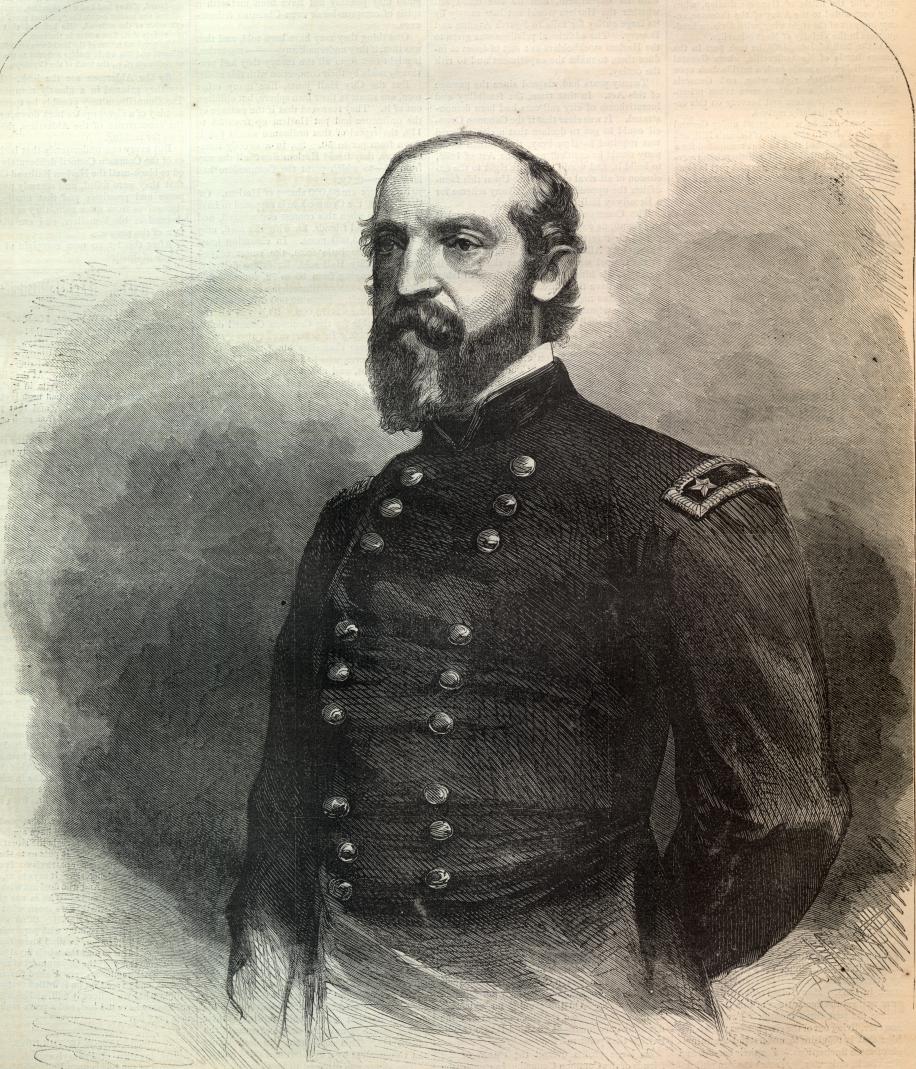


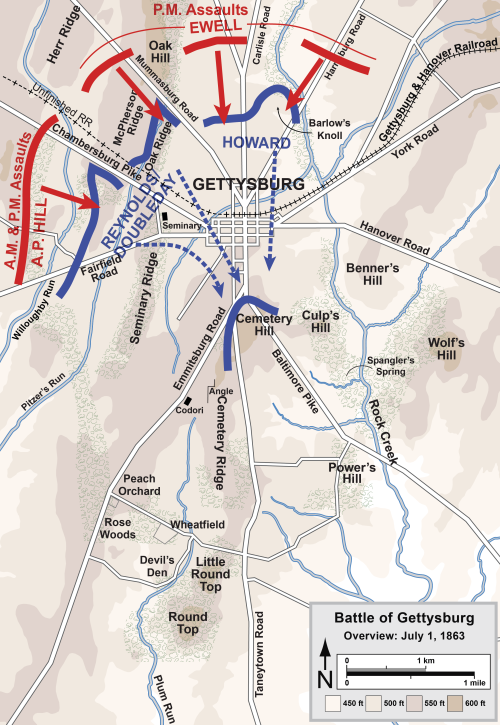





 The Inglorius Padre Steve's World
