Category Archives: History

Public Impeachment Hearings: Damning But Not a Sure Thing

Friends of Padre Steve’s World,

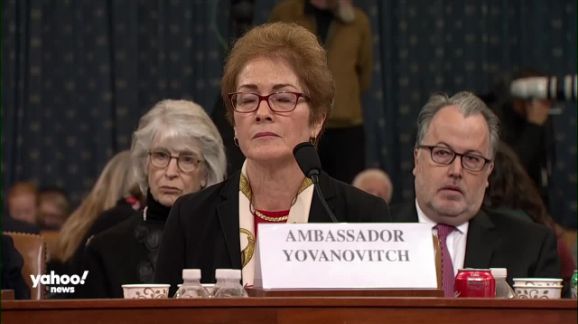
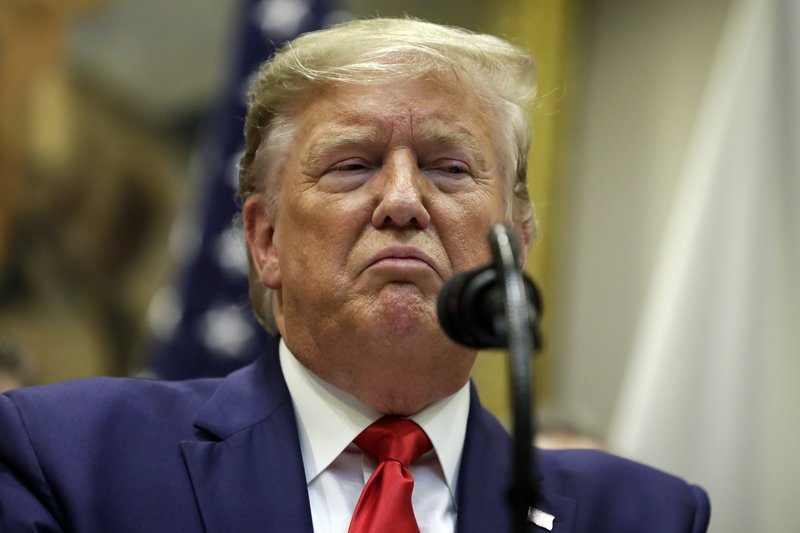
This week we witnessed something that hasn’t been seen since I was in 9th grade, televised public impeachment hearings in the House of Representatives, and we saw the President’s defense shredded as witnesses, all members of the State Department gave damning testimony without a creditable defense, either by his Counsel, or by House Republicans. To make matters worse, the President began tweeting attacks against the woman he had appointed as Ambassador to the Ukraine, which only could be construed as witness intimidation.

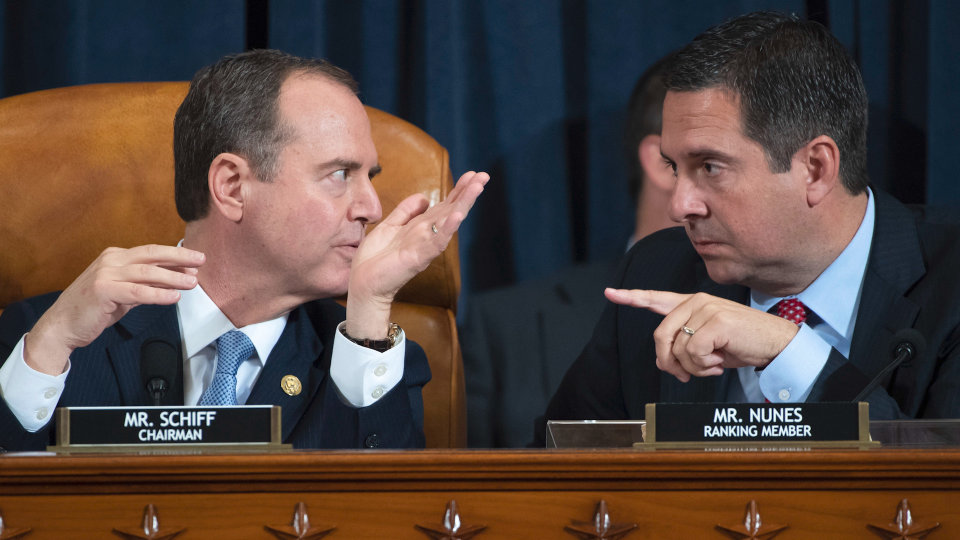
Unfortunately for the President he ran into a Congressman who is an experienced and sharp prosecuting attorney, Representative Adam Schiff of California. Instead of letting the President’s unhinged Twitter assaults go, Schiff quoted them in real time allowing the former ambassador the chance to rebut them in real time.


It was something that we will probably never see again because no future President would lack the self control to avoid further incriminating him or herself and adding charges against themselves. But this is Donald Trump, a pathological narcissist who cannot shut his mouth to save himself. Today in real time he threatened and attempted to intimidate former Ambassador to the Ukraine Marie Yovanovitch in real time, something that Congressman Schiff was quick to point out and read those tweets within seconds during the hearing. This is something that has never happened before.

What happens next? More hearings, both public and secret, and then a vote on whether to move to an impeachment trial.

After that the drama moves to the Senate. In normal times, Senators like Barry Goldwater would go to the President and demand he resign in the face of certain conviction, as he and others told Richard Nixon in August 1974. but these are not normal times. Instead of principled men like Goldwater the GOP Senate is stocked with spineless men without any ethics who will only break from supporting Trump if their constituents show a clear indication to do so or face defeat in their respective Senate races in 2020.

I for one do not know how it will end, but I do know that the President is not coming across well.

So, until tomorrow,

Peace,

Padre Steve+

1 Comment

Filed under ethics, History, laws and legislation, leadership, News and current events, Political Commentary

Against Insurmountable Odds: The Naval Battle of Guadalcanal, part Two


Friends of Padre Steve’s World,

Last night I wrote about the opening engagement of the Naval Battle of Guadalcanal. Despite the heroic battle to protect the Marines on Guadalcanal I the early morning hours of November 13th, the situation in the White House was akin to the setbacks at Omaha Beach a year and a half later. The temptation to withdraw the Marines who had already won a foothold on the island and who had withstood several major Japanese assaults was strong, but time played a role that superseded American political realities.

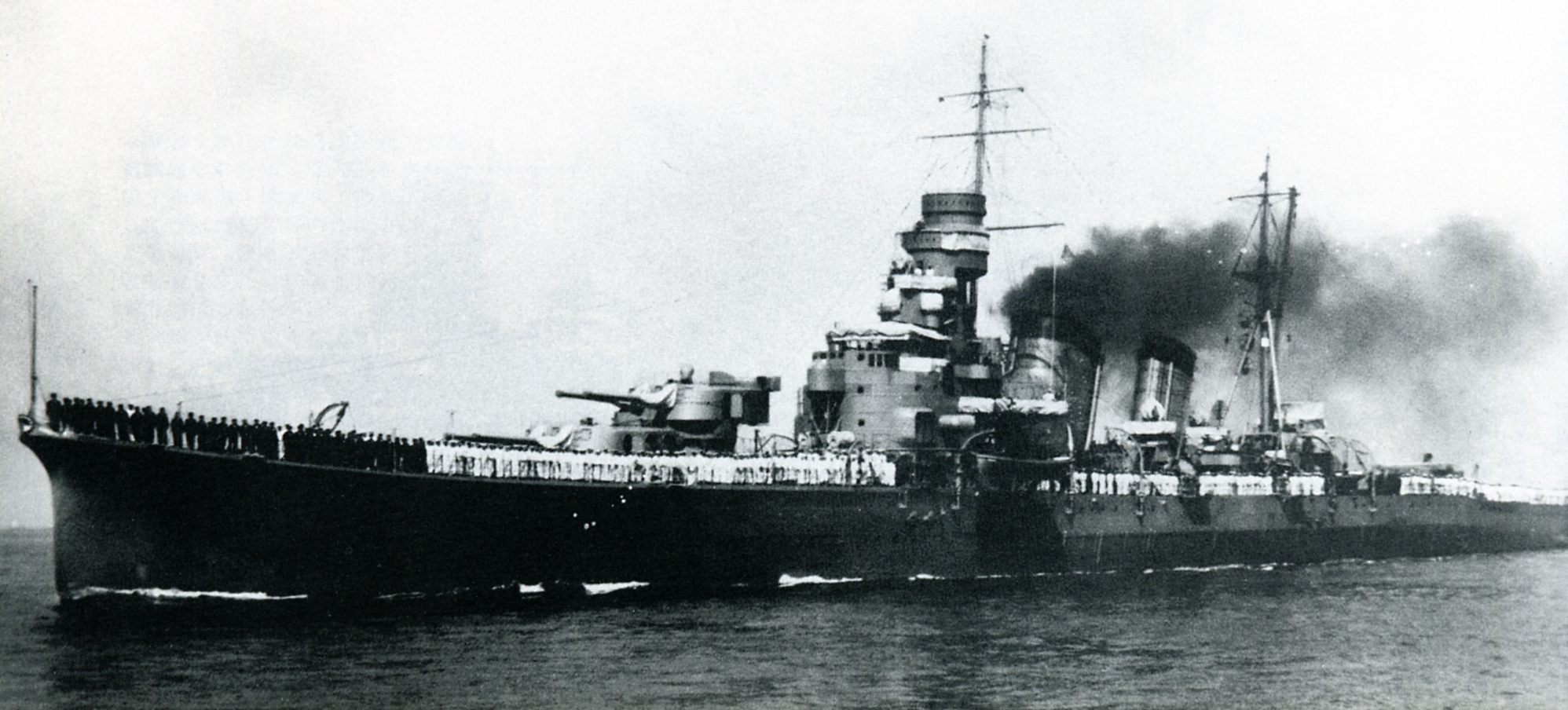
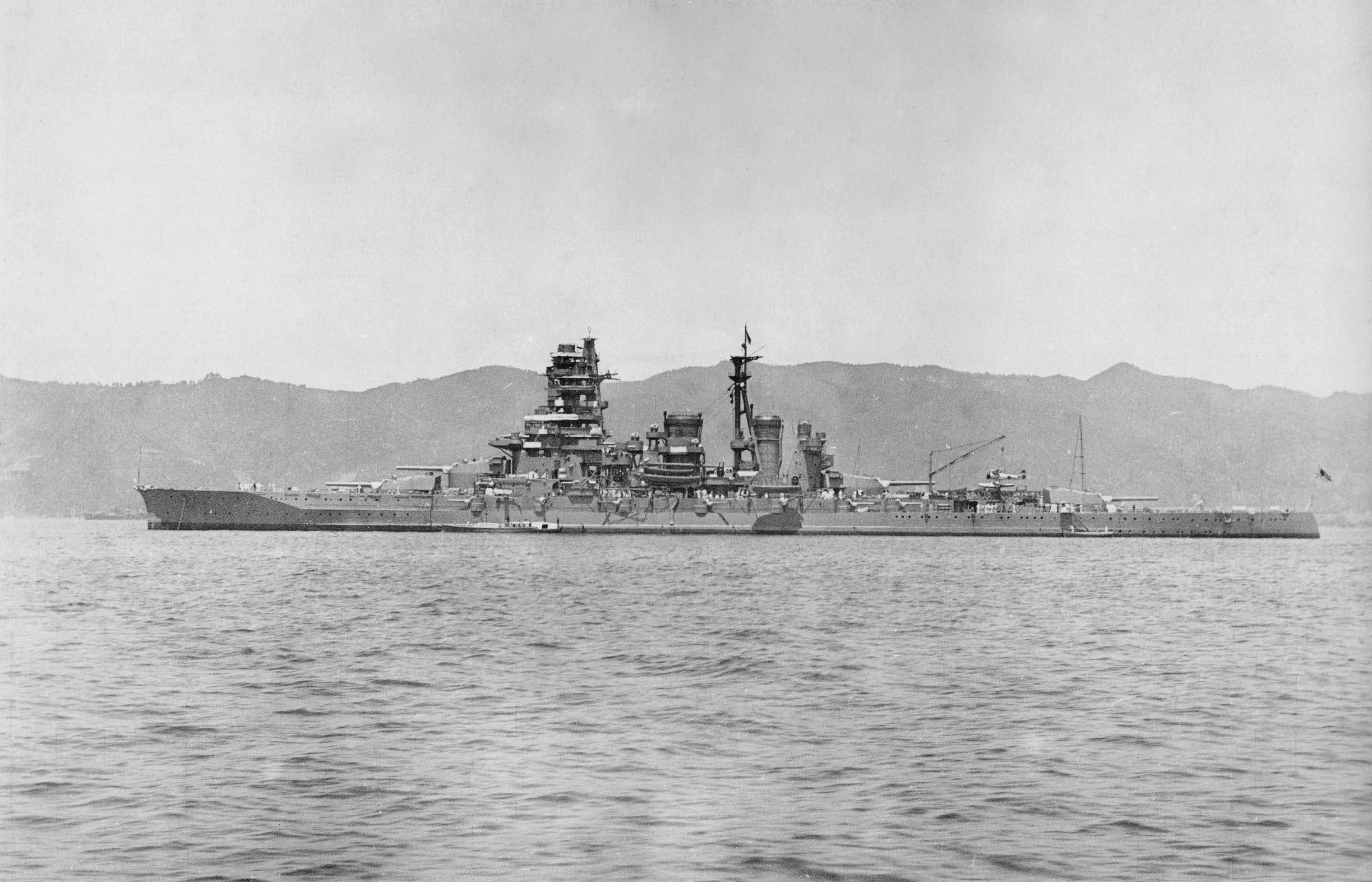
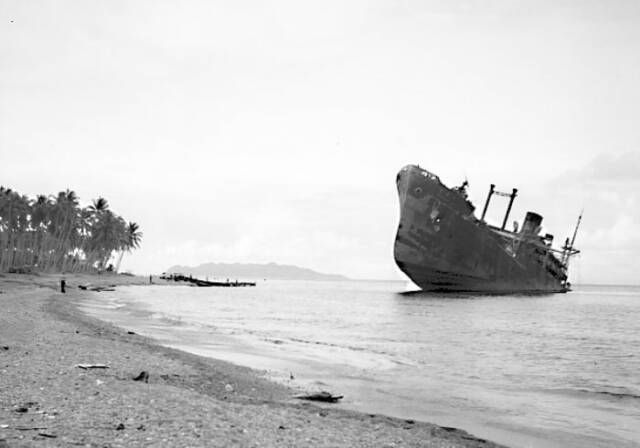
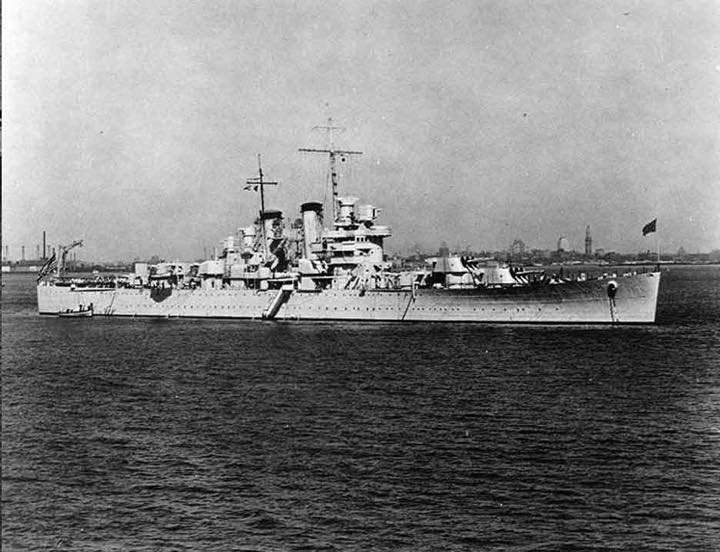
                                                        IJN Kinugusa 
On the morning of the 13th, following the defeat of Rear Admiral Hiraoki Abe’s Force, Vice Admiral Nobutake Kondo pressed home the attack. On the 13th, his transport force, carrying the Imperial Army 38th Division, protected by the destroyers of Rear Admiral Gunichi Mikawa ran the gauntlet of  Marine Corps, Navy, and Army Air Force aircraft stationed at Henderson Field which according to the Japanese plan should have been rendered inoperative on the night of the 12th and 13th. Mikawa pressed ahead despite heavy losses and though losing seven of the eleven transports landed a sizable number of troops on Guadalcanal despite losing most of their supplies and equipment.

As the sun set on the night of the 13th another bombardment Force under Rear Admiral Shoji Nishimura came in under the cover of darkness to fire 500 eight inch shells at the airfield. Damage was moderate, some aircraft were destroyed, but Henderson Field Remained in action, its aircraft continuing to inflict heavy casualties of the Japanese landing forces, and their escorts, including the heavy cruisers Kinugusa, Maya, Chokai, and Suzuya, light cruisers Isuzu and Tenryu, and six destroyers. Mikawa sent Maya and Suzuya to shell Henderson Field while his other ships attempted to screen the transports. In the following action seven of the eleven transports were sunk, with many of their troops transferred to destroyers which delivered them to Guadalcanal without most of their supplies and equipment. During his withdraw, most of Mikawa’s ships were damaged by aircraft from Henderson Field, including Kinugusa which was mortally wounded by Marine and Navy aircraft from Henderson Field and USS Enterprise. 

                                             IJN Battleship Kirishima 

Despite the losses and under pressure from Tokyo to retake the Guadalcanal, Admiral Yamamoto ordered Admiral Kondo, with a reconstructed bombardment Force to attack Henderson Field. That task force was centered on the battleship Kirishima, though Kondo’s flagship was the heavy cruiser Atago. This force was more powerful than Abe’s, with one battleship, 2 heavy and 2 light cruisers as well as nine destroyers.


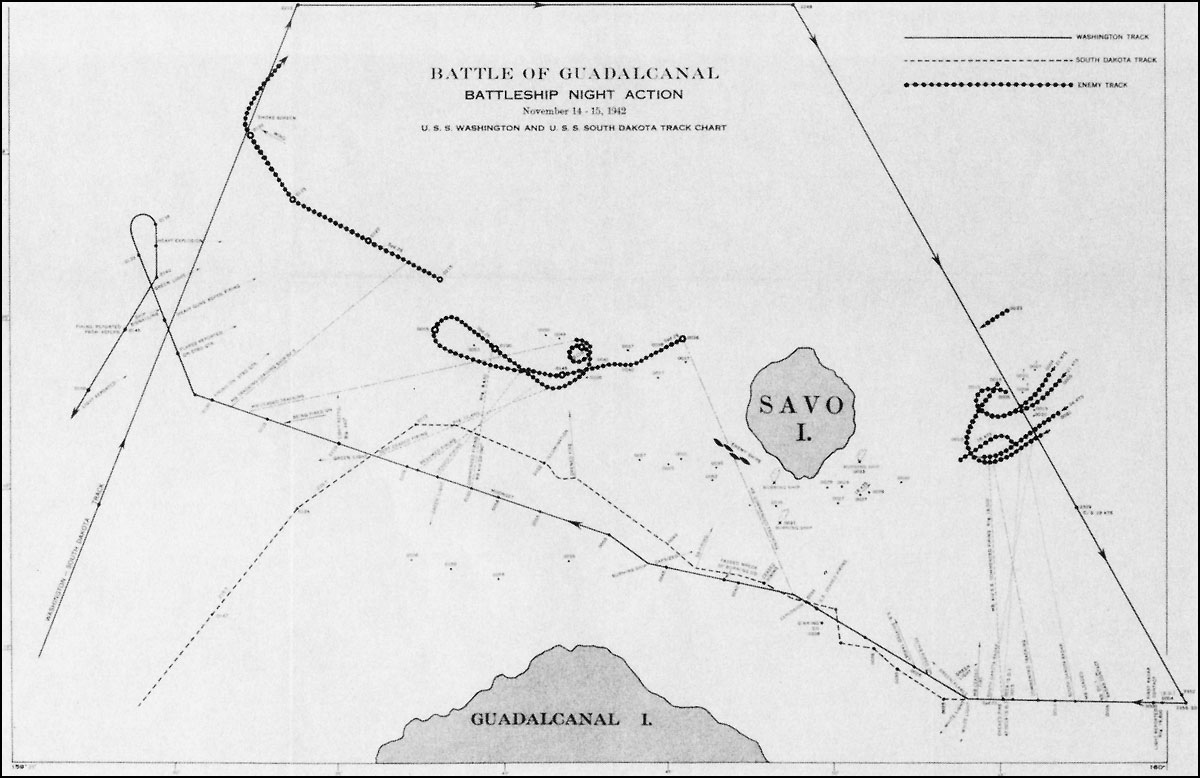
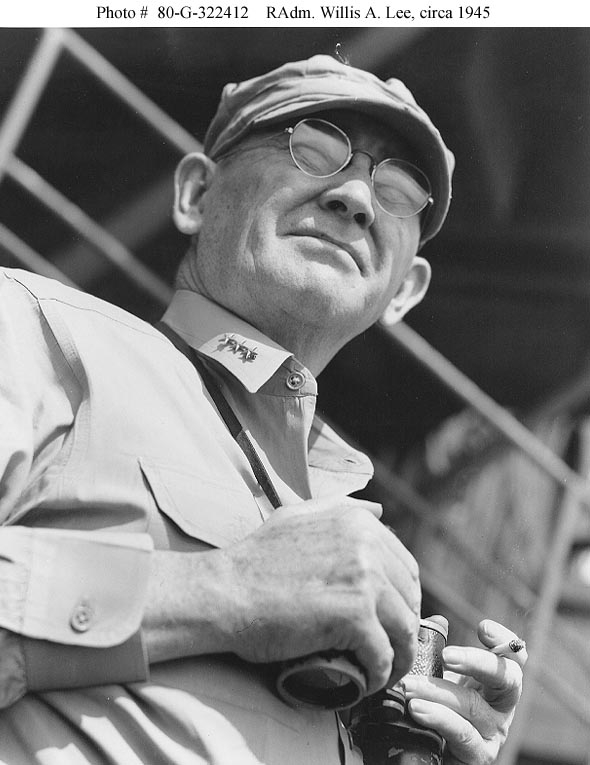
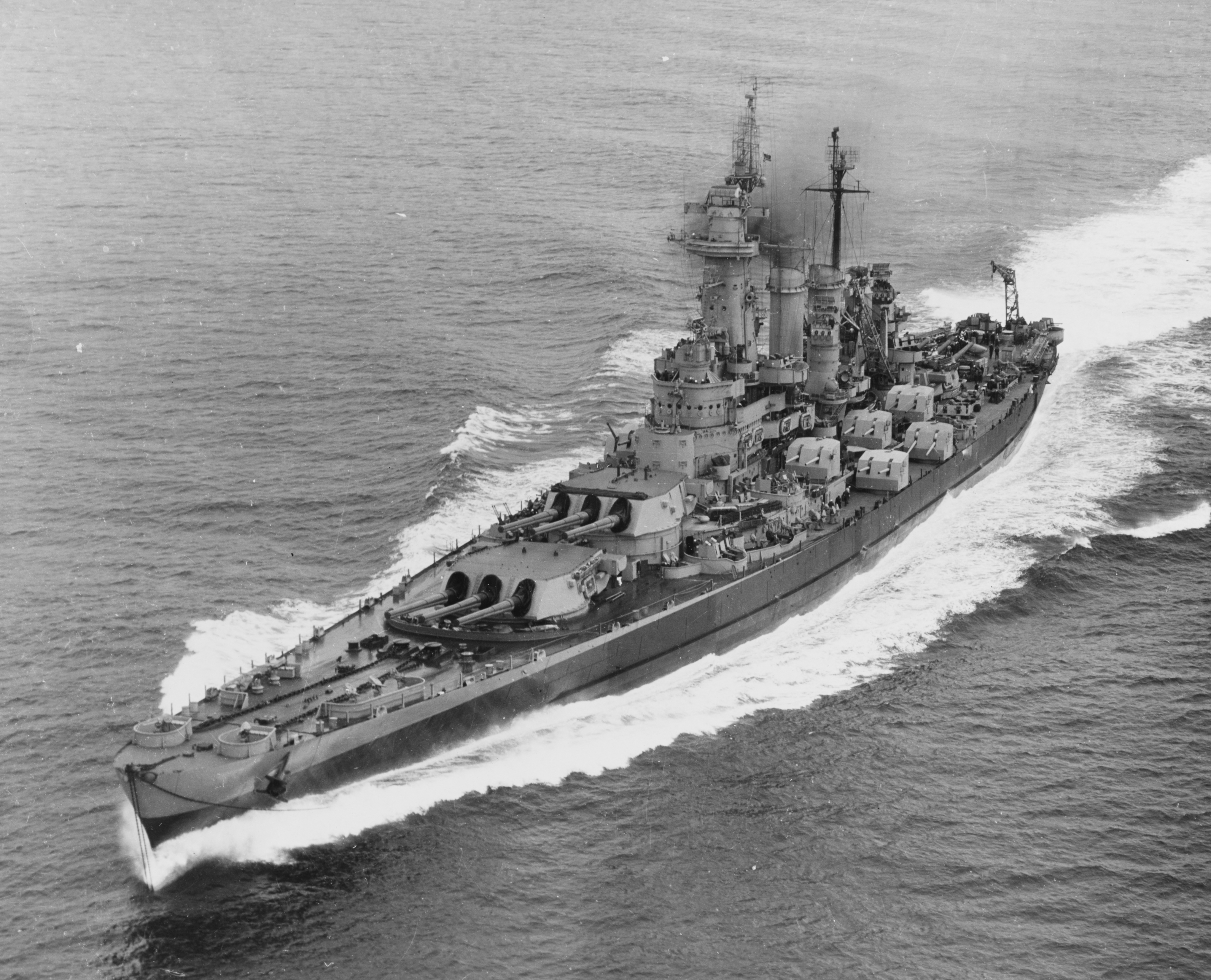
By now the Americans were rushing to get every available ship to Guadalcanal, despite the doubts that it could hold. Against the advice of many officers, Vice Admiral William “Bull” Halsey directed the battleships USS Washington and South Dakota, along with the destroyers USS Preston, Walke, Benham, and Gwin none of which had operated together before until that night. The battleships were selected because nothing else was available, the spdestroyers, each because they had more fuel. They were under the command of Rear Admiral Willis Lee aboard Washington.


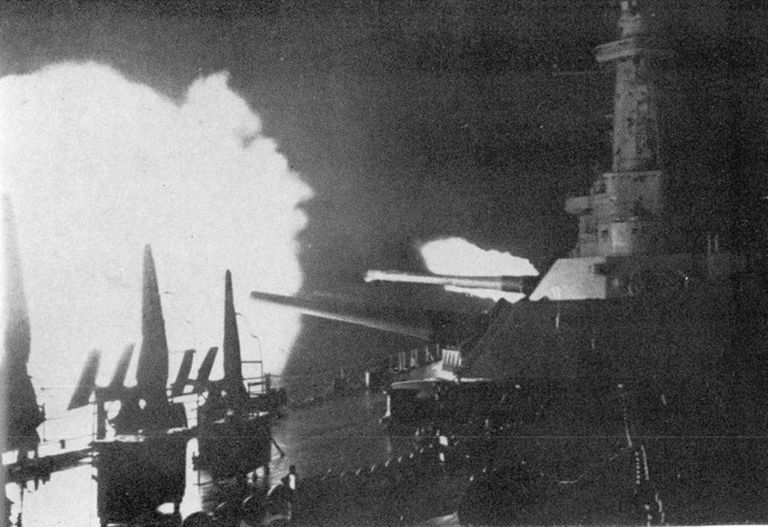
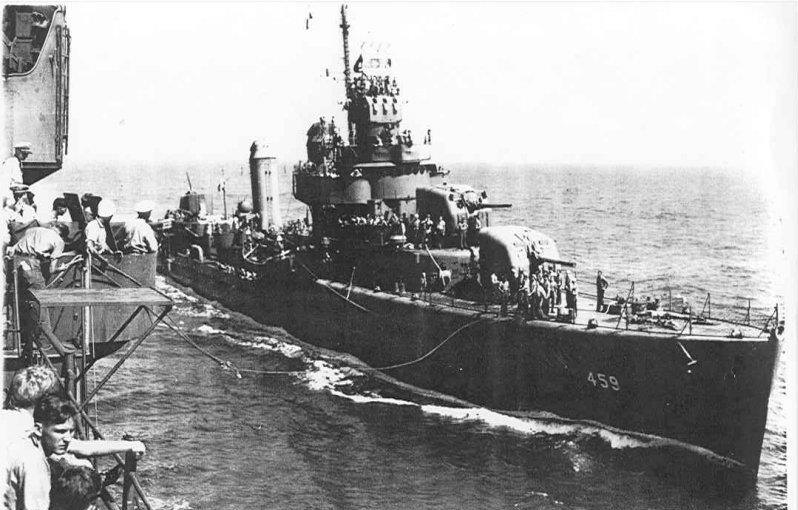
Early in the morning of the 15th the task forces of Kondo and Lee joined battle. The US destroyers, operating in the van succeeded in their task of screening the battleships at heavy loss to themselves. Preston, Walke, and Benham were sunk or mortally wounded. The South Dakota was put out of the action by a mistake by her Chief Engineer coupled with accurate Japanese gunfire. Now operating alone and undetected, Washington opened fire on Kirishima hitting her with between 9 and 20 16” shells. Mortally wounded Kirishima became the second battleship lost by the Imperial Navy in the war. Kondo retreated, and the following morning the four surviving transports beaches themselves under air attack from Henderson Field.

  •                       Washington Firing and Broadside at Kirishima 

    From that point on Japanese missions were limited to resupply of forced on Guadalcanal or their evacuation. Many other bloody battles remained to be fought, it after November 15th 1942, the issue of who should control Guadalcanal was not no longer in doubt.

Peace,

Padre Steve+


Leave a comment

Filed under History, imperial japan, leadership, Navy Ships, US Army Air Corps, US Marine Corps, US Navy, World War II at Sea, world war two in the pacific

40 Minutes of Hell: The Naval Battle of Guadalcanal, Part One


Friends of Padre Steve’s World,

In the very early morning hours of November 13th 1942, one of the most intense short range battles in modern naval history was fought in the waters between Guadalcanal and Savo Island. Fourteen ships of the Imperial Japanese Navy, including the battleships Hiei and Kirishima supported by the light cruiser Nagara and eleven destroyers under the command of Rear Admiral Hiraoki Abe were sent on a mission to destroy the Marine air base, Henderson Field on Guadalcanal in order to ensure the safety of a convoy carrying the soldiers of the 38th division of the Imperial Japanese Army, whose mission was to land than recover the island for the Japanese.

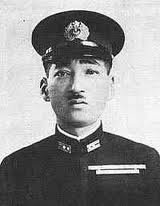
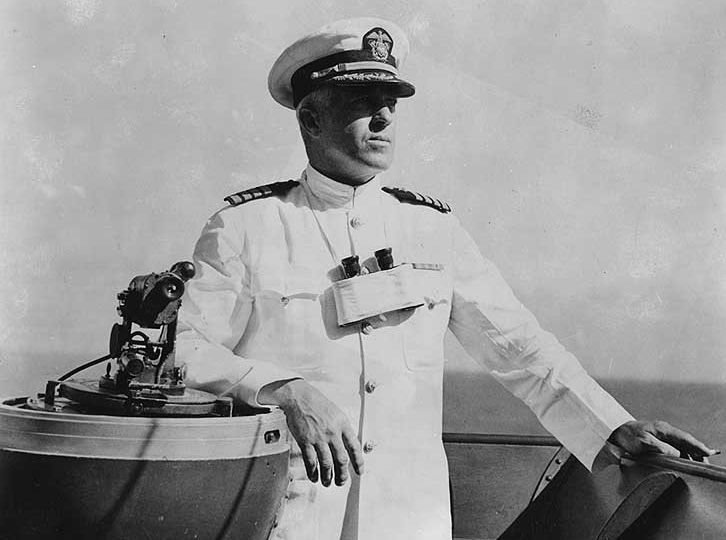
Rear  Hiraoki  Abe  (above)  and  Daniel  Callaghan  (below)

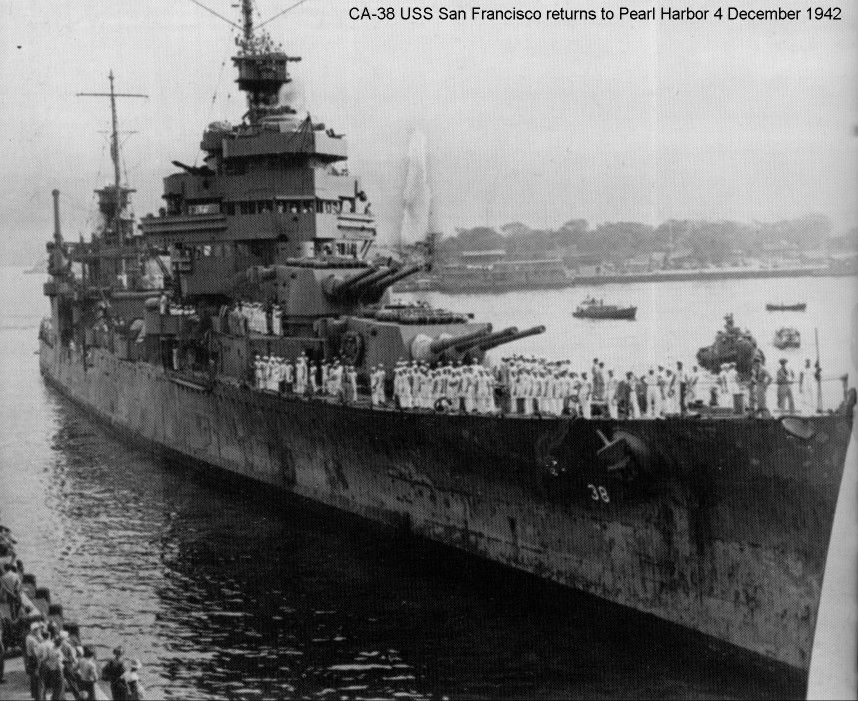
The Americans, whose intelligence code-breakers had surmised Japanese intentions and in response Admiral Richmond Turner gathered a force of two heavy and five light cruisers, the USS San Francisco, USS Portland, USS Helena, USS Atlanta, and the USS Juneau and eight destroyers. He placed Rear Admiral Daniel Callaghan in command, although Rear Admiral Norman Scott aboard Atlanta was slightly junior but more experienced in fighting the Japanese at Guadalcanal, having led a US task force to victory at the Battle of Cape Esperance just a month earlier.

                                            Rear Admiral Norman Scott

Adding to the US difficulties was that the force, hastily cobbled together had never operated before as a unit, and Callaghan choose San Francisco, which had previously commanded as his flagship, despite her lack of the latest surface search radar. Likewise, he placed the five ships with it at the rear of his formation, and did not issue a battle plan for his task force. In doing so he lost the element of surprise as Abe had no knowledge of a US task force off Guadalcanal.

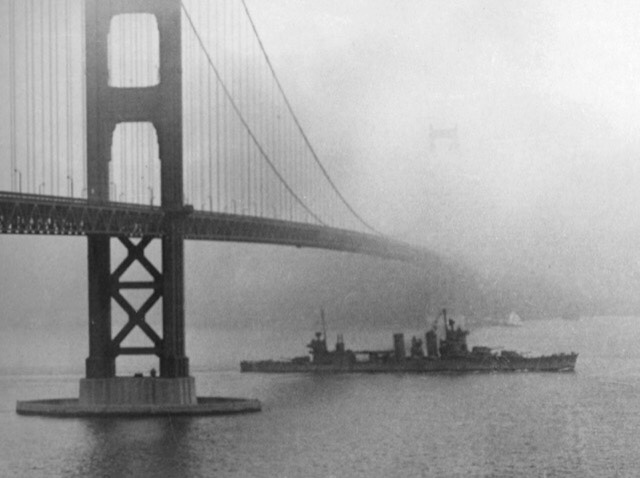
               San Francisco returns to Pearl Harbor, December 1942 under Golden Gate Bridge

As night gathered on the 12th of November, Abe steamed southeast down the slot and south of Savo Island, in an unwieldy formation, and his battleships piled high with special fragmentation shells designed to maximize destruction of shore targets and airfields but which were of little use against surface ships. Callaghan steamed northeast through Ironbottom Sound to intercept in a column formation with four destroyers in the van, followed by his five cruisers, and then his other four destroyers. According to Naval historian Samuel Elliott Morrison, the formation was chosen because it had worked for Scott at Cape Esperance, but he failed to take advantage of his advantage in radar and left the cruiser Helena, and the four destroyers with the latest radar in the rear of his formation.

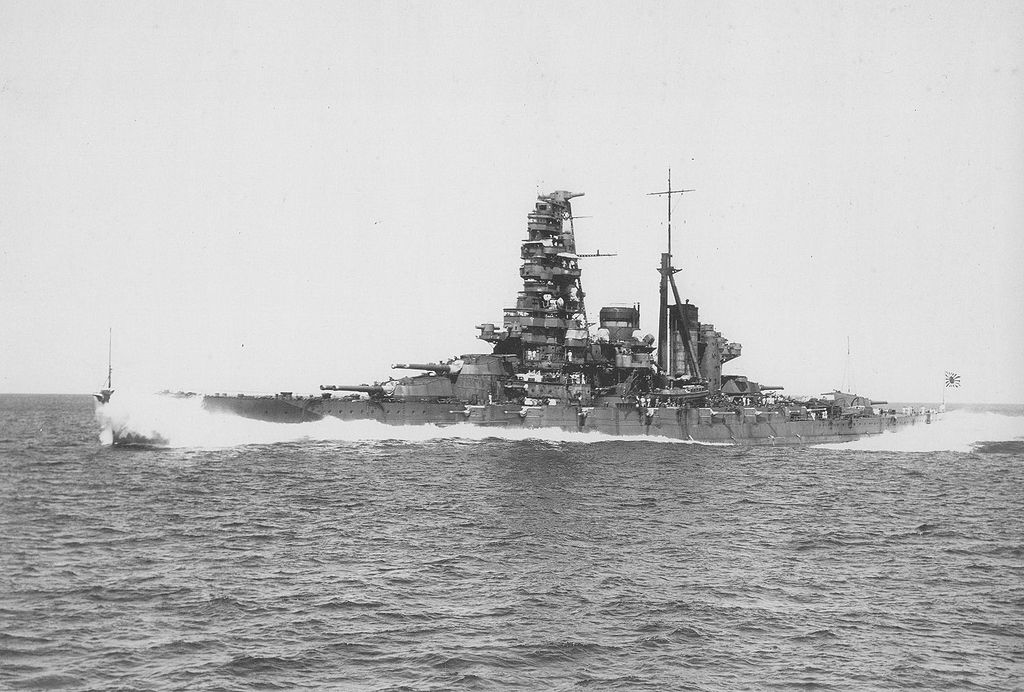
Battleship IJN Hiei (above) USS Helena (below)


At 0124 hours radarmen aboard Helena picked up the Japanese Force at 27,000 and 32,000 yards and notified Callaghan. Instead of moving into a position to take the Japanese by a surprise gunfire and torpedo attack Callaghan decided to go directly at the Japanese, sacrificing his advantage in surprise and radar in favor of a short range melee.


USS Laffey

Approaching each other at a combined forty knots the range closed rapidly until at 0141 the destroyer USS Cushing had to make a sharp turn to starboard to avoid a collision with the leading Japanese destroyers, the result was a near pile up for which which Callaghan demanded answers. The Captain of Atlanta explained his maneuvers by radioing Callaghan, “avoiding our destroyers.” 
Within seconds the battle began. The lead US destroyers, Cushing, Laffey, Sterrett, and O’Bannon along with Atlanta engaging the lead Japanese destroyers, Nagara and Hiei.


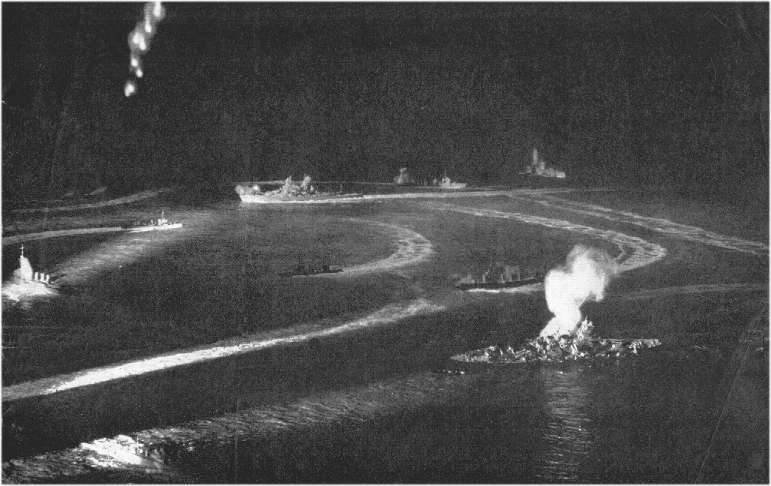
The result was chaos. Laffey engaged Hiei at a range of 20 feet, inflicting damage and killing key members of Abe’s staff and Hiei’s senior officers. Yet it was another four minutes before Callaghan gave the order to open fire. In the mean time Atlanta was illuminated by Japanese searchlights and opened a murderous fire on the Japanese destroyer Akatzuki. However, the Japanese destroyer’s sacrifice was not in vain as other Japanese ships blasted Atlanta with gunfire and torpedoes, and putting her out of action. Cushing and Laffey were mortally wounded during the initial minutes of the action and both forces continued to close one another, the battle developing into a series of individual fights with each ship searching for targets as well as being targeted by the enemy.
San Francisco was smashed by Japanese shells, including those from the battleships.

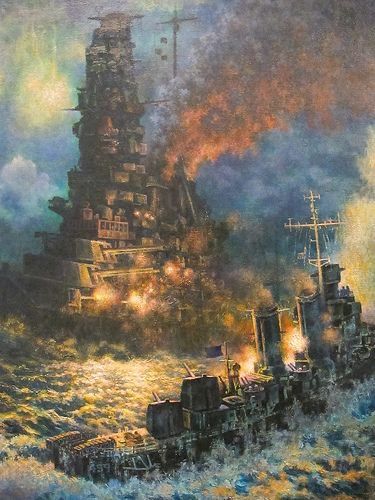
Illustration of the Battle by Life Magazine

The barrage killed Admiral Callaghan, his staff, as well as the Commanding Officer and Executive officer of the ship. But for the actions of her crew led by her Chief Engineer  LCDR Bruce McCandless, and Gunnery officer LCDR Wilborne the ship might have been lost. Instead she continued in action adding her 8” guns to the maelstrom. Portland delivered devastating fire from her 8” guns into several targets but was hit in the stern by a Japanese torpedo which limited her to steaming in circles, yet still engaging any target she could.
Helena, Juneau and the rear destroyers now entered the fray. Helena, a veteran of Cape Esperance used her superior radar and experience to help deliver San Francisco from other Japanese attacks from Japanese destroyers and Nagara. Juneau was hit by a Japanese torpedo which broke her keel and left her dead in the water. Destroyers Barton and Monssen were devastier by Japanese fire, Barton sinking seven minutes into her combat career. Monssen was mortally wounded.
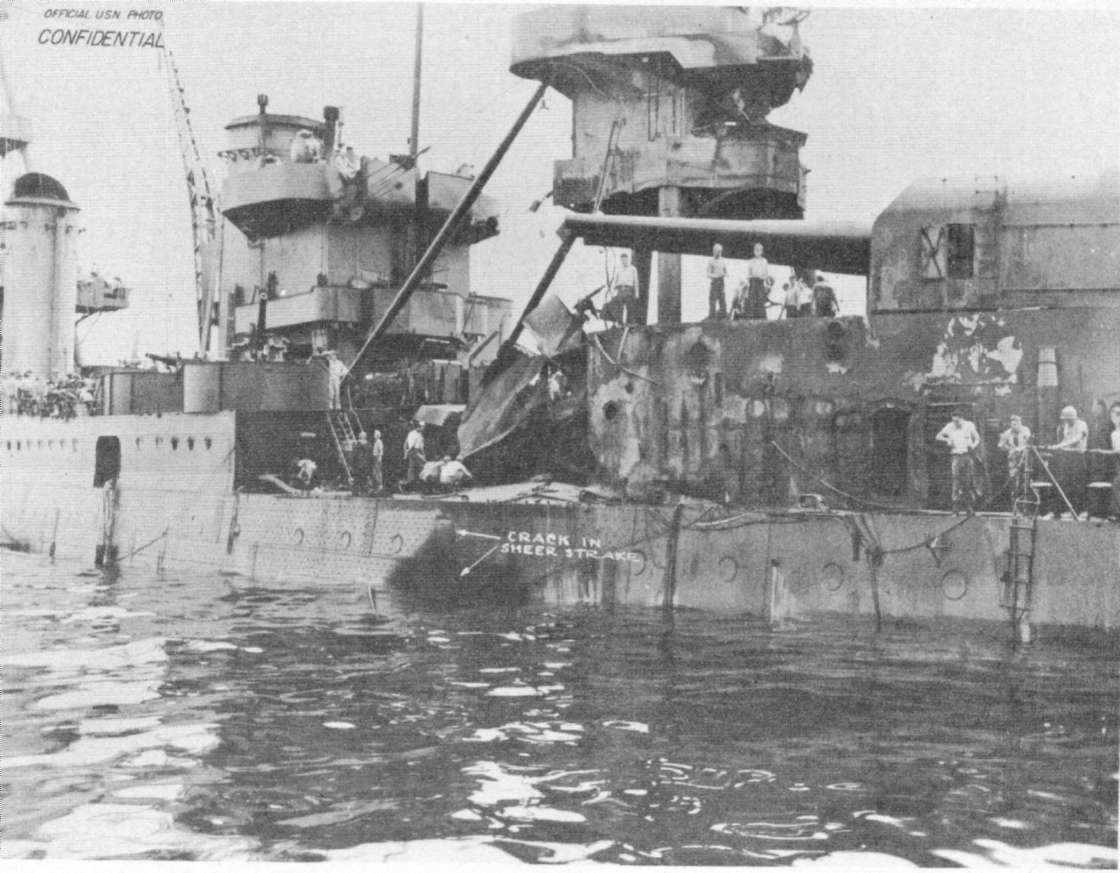
                                               Damage to USS Portland

At 0200 Admiral Abe broke off the action. Individual fights still continued, Sterrett crippled the Japanese destroyer Yudachi which was finished off of Portland shortly after sunrise. Hiei was crippled and was further damaged by Marine aircraft from Henderson Field before her crew scuttled her, she was the first Japanese battleship to be sunk in combat during the war. Cushing, Monssen, and Atlanta each lost their fight to stay afloat and Portland, assisted by the tug USS Bobolink reached the safety of Tulagi the next day. After temporary repairs she sailed for Australia and then the United States for full repair and modernization.

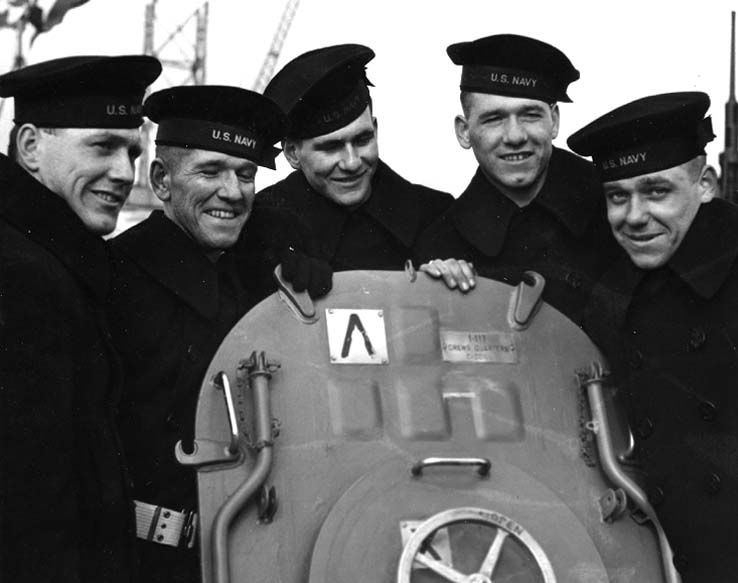
The Sullivan Brothers
As Captain Hoover, the senior surviving officer of the US task force took his surviving, and still navigable ships out of harm’s way. It was a harrowing task. Only Helena of his cruisers was fully operational, and  of his three destroyers, only Sterrett and Fletcher had operational sonar, but they were not enough to protect the crippled cruisers. At 1101 a torpedo hit Juneau, blasting her to pieces and leaving about one hundred survivors to fend for themselves as Hoover sought to avoid further attacks. For ten days the surviors suffered until an Army Air Force B-17 spotted them. By then only ten sailors remained alive from the crew of the Juneau, over seven hundred others, including the five Sullivan Brothers either went down with the ship or died awaiting rescue.

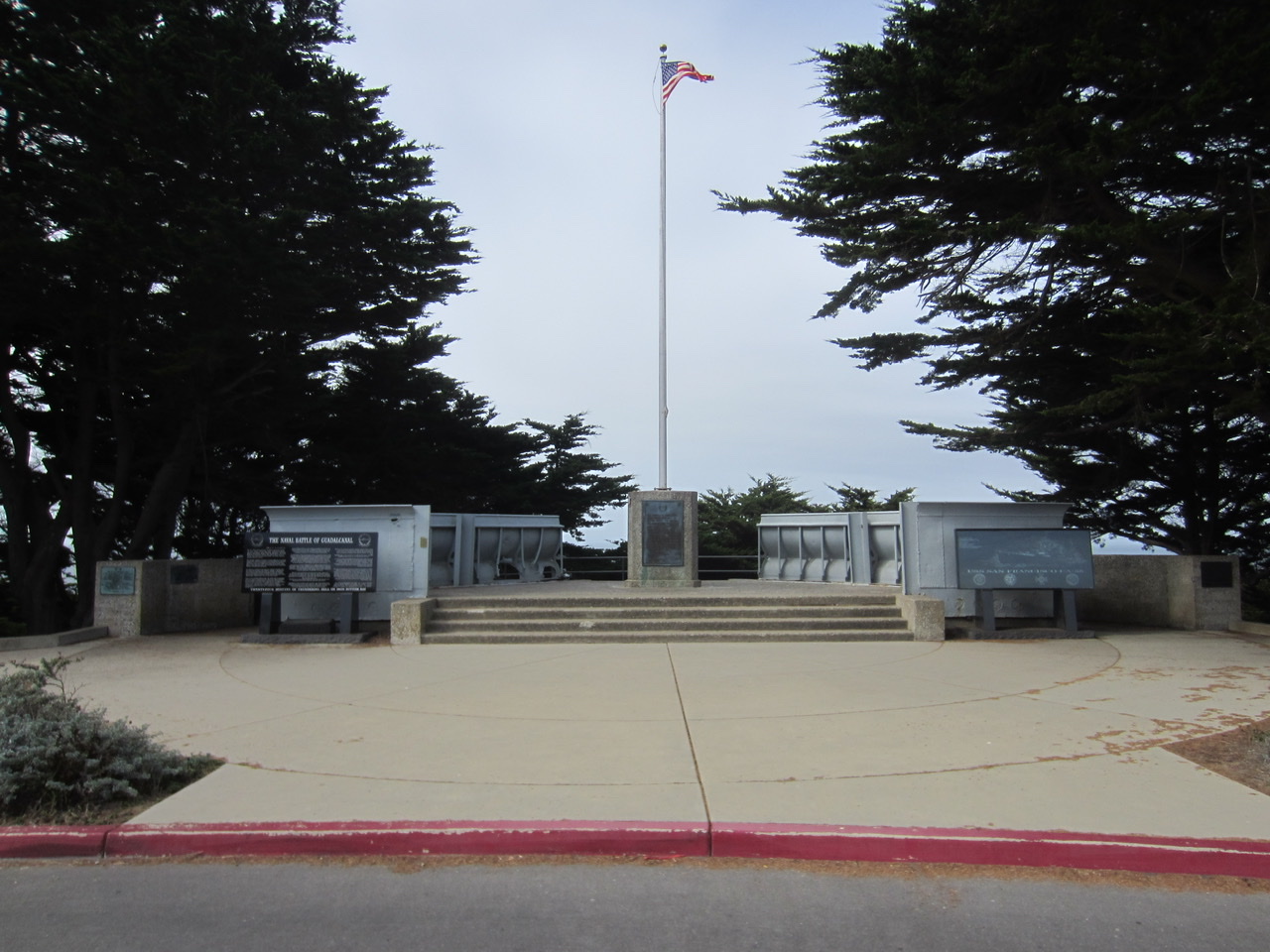
USS San Francisco Memorial, the outer wall is from the bridge of the ship still pierced by Japanese shell fire

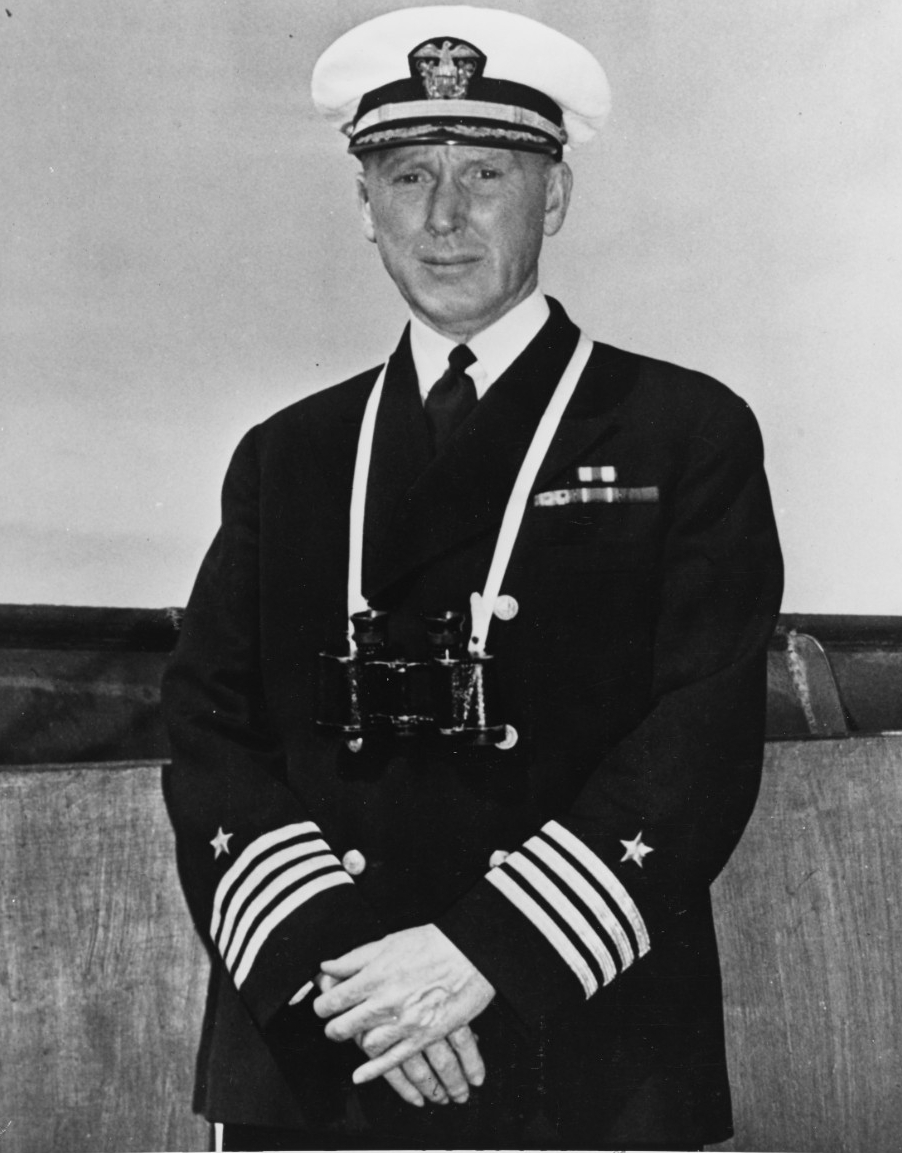
Of the Commanders, Admiral Abe was forced into retirement at the age of 53, Admirals Callaghan and Scott died in the battle, and Captain Hoover was tried, but not convicted at Court Martial for the loss of Juneau and her crew.
But, the Naval Battle of Guadalcanal was not yet over…

To be continued,

Peace

Padre Steve+

Leave a comment

Filed under History, Military, Navy Ships, US Army Air Corps, US Marine Corps, US Navy, World War II at Sea, world war two in the pacific

A Veteran’s Day Postscript: Belonging to a Different World

Friends of Padre Steve’s World

I wrote about Armistice Day and Veteran’s Day but I decided to write a postscript to it today. I write this specifically as a combat veteran who more than a decade after my return still deal with the effects of war, PTSD, TBI, sleep disorders, nightmares and night terrors, bad knees, ankles, shoulders, tinnitus, inability to understand speech, and a bunch of other stuff. I know many more who deal with what I do and worse. At least I am no longer suicidal, though I do experience periodic bouts of depression, panic attacks, and anxiety.

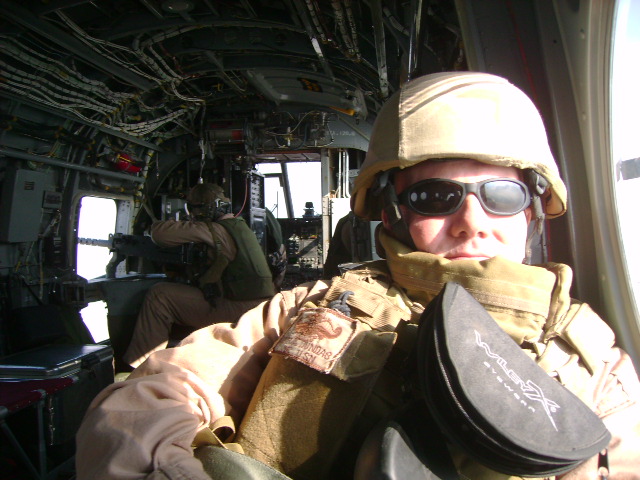
For me it began in February 2008 when on the way back from Iraq the military charter aircraft bringing us home stopped in Ramstein Germany. After a few hour layover we re-boarded the aircraft but we were no longer alone, the rest of the aircraft had been filled with the families of soldiers and airmen stationed in Germany. Just days before most of us had been in Iraq or Afghanistan. The cries of children and the intrusion of these people, not bad people by any means on our return flight was shocking, it was like returning to a world that I no longer knew.

I think that coming home from war, especially for those damaged in some way, in mind, body or spirit is harder than being at war.

In that thought I am not alone. Erich Maria Remarque in his classic novel All Quiet on the Western Front wrote:

“I imagined leave would be different from this. Indeed, it was different a year ago. It is I of course that have changed in the interval. There lies a gulf between that time and today. At that time I still knew nothing about the war, we had been only in quiet sectors. But now I see that I have been crushed without knowing it. I find I do not belong here any more, it is a foreign world.”

Likewise, Guy Sajer a French-German from the Alsace and veteran of the Grossdeutschland Division on the Eastern Front in World War II noted at the end of his book The Forgotten Soldier: 

“In the train, rolling through the sunny French countryside, my head knocked against the wooden back of the seat. Other people, who seemed to belong to a different world, were laughing. I couldn’t laugh and couldn’t forget.”

I have been reminded of this several times in the past week. It began walking through a crowded Navy commissary on Saturday, in the few minutes in the store my anxiety level went up significantly. On Tuesday I learned of the death of Captain Tom Sitsch my last Commodore at EOD Group Two, who died by his own hand. His life had come apart. After a number of deployments to Iraq as the Commander EOD Mobile Unit 3 and of Task Force Troy he was afflicted with PTSD. Between June of 2008 and the end of 2009 he went from commanding an EOD Group to being forced to retire.  Today I had a long talk with a fairly young friend agonizing over continued medical treatments for terminal conditions he contracted in two tours in Iraq where he was awarded the Bronze Star twice.

I have a terrible insomnia, nightmares and night terrors due to PTSD. My memories of Iraq are still strong, and this week these conditions have been much worse. Sager wrote:

“Only happy people have nightmares, from overeating. For those who live a nightmare reality, sleep is a black hole, lost in time, like death.”

Nearly 20 years after returning from war, a survivor of the 1st Battalion 308th Infantry, the “Lost Battalion” of World War One, summed up the experience of so many men who come back from war:

“We just do not have the control we should have. I went through without a visible wound, but have spent many months in hospitals and dollars for medical treatment as a result of those terrible experiences.”

butler-medals1

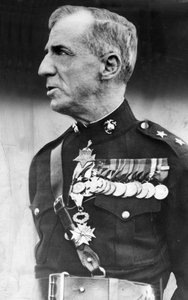
Two time Medal of Honor winner Major General Smedley Butler toured Veterans hospitals following his retirement from the Marine Corps. He observed the soldiers who had been locked away. In his book War is a Racket:

“But the soldier pays the biggest part of this bill. If you don’t believe this, visit the American cemeteries on the battlefields abroad. Or visit  any of the veterans’ hospitals in the United States….I have visited eighteen government hospitals for veterans. In them are about 50,000 destroyed men- men who were the pick of the nation eighteen years ago. The very able chief surgeon at the government hospital in Milwaukee, where there are 3,800 of the living dead, told me that mortality among veterans is three times as great as among those who stayed home.”

Similarly Remarque wrote in All Quiet on the Western Front:

“A man cannot realize that above such shattered bodies there are still human faces in which life goes its daily round. And this is only one hospital, a single station; there are hundreds of thousands in Germany, hundreds of thousands in France, hundreds of thousands in Russia. How senseless is everything that can ever be written, done, or thought, when such things are possible. It must be all lies and of no account when the culture of a thousand years could not prevent this stream of blood being poured out, these torture chambers in their hundreds of thousands. A hospital alone shows what war is.”

Lt.ColonelCharlesWhiteWhittlesey

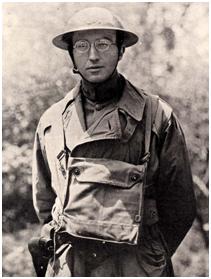
Lieutenant Colonel Charles Whittlesey

Sometimes even those who have been awarded our Nation’s highest award for valor succumb to the demons of war that they cannot shake, and never completely adjust to life at “home” which is no longer home. For them it is a different, a foreign world to use the words of Sager and Remarque. Lieutenant Colonel Charles Whittlesey won the Medal Medal of Honor as Commander of 1st Battalion 308th Infantry, the “Lost Battalion” in France. After the war he was different. He gave up his civilian law practice and served as head of the Red Cross in New York. In that role, and as the Colonel for his reserve unit, he spent his time visiting the wounded who were still suffering in hospitals. He also made the effort to attend the funerals of veterans who had died. The continued reminders of the war that he could not come home from left him a different man. He committed suicide on November 21st 1921not long after serving as a pallbearer for the Unknown Soldier when that man was interred at Arlington National Cemetery.

In his eulogy, Judge Charles L. Hibbard noted:

“He is sitting on the piazza of a cottage by the sea on a glorious late September day but a few weeks ago. . . He is looking straight out to sea, with naught but sea between him and that land where lie so many of his boys. The beating surf is but an echo, the warm, bright sunshine, the blue sky, the dancing waves, all combine to charm. But a single look at his face and one knows he is unconscious of this glory of Nature. Somewhere far down in the depths of his being or in imagination far off across the waters he lives again the days that are past. That unconscious look has all the marks of deep sorrow, brooding tragedy, unbearable memories. Weeks pass. The mainspring of life is wound tighter and tighter and then comes the burial of the Unknown Soldier. This draws the last measure of reserve and with it the realization that life had little now to offer. This quiet, reserved personality drew away as it were from its habitation of flesh, thought out the future, measured the coming years and came to a mature decision. You say, ‘He had so much to live for – family, friends, and all that makes life sweet.’ No, my friends, life’s span for him was measured those days in that distant forest. He had plumbed the depth of tragic suffering; he had heard the world’s applause; he had seen and touched the great realities of life; and what remained was of little consequence. He craved rest, peace and sweet forgetfulness. He thought it out quietly, serenely, confidently, minutely. He came to a decision not lightly or unadvisedly, and in the end did what he thought was best, and in the comfort of that thought we too must rest. ‘Wounded in action,’ aye, sorely wounded in heart and soul and now most truly ‘missing in action.’”

Psychologist and professor Dr. Ari Solomon analyzed the case of Colonel Whittlesey and noted:

“If I could interview Whittlesey as a psychologist today, I’d especially have in mind … the sharp discrepancy between the public role he was playing and his hidden agony, his constant re-exposure to reminders of the battle, his possible lack of intimate relations, and his felt need to hide his pain even from family and dearest friends.”

I wish I had the answer. I have some ideas that date back to antiquity in the ways that tribes, clans and city states brought their warriors home. The warriors were recognized, there were public rituals, sometimes religious but other times not. But the difference is that the warriors were welcomed home by a community and re-integrated into it. They were allowed to share their stories, many of which were preserved through oral traditions so long that they eventually were written down, even in a mythologized state.

But we do not do that. Our society is disconnected, distant and often cold. Likewise it is polarized in ways that it has not been since the years before our terrible Civil War. Our warriors return from war, often alone, coming home to families, friends and communities that they no longer know. They are misunderstood because the population at large does not share their experience. The picture painted of them in the media, even when it is sympathetic is often a caricature; distance and the frenetic pace of our society break the camaraderie with the friends that they served alongside. Remarque wrote, “We were all at once terribly alone; and alone we must see it through.”

If we wonder about the suicide epidemic among veterans we have to ask hard questions. Questions like why do so many combat veterans have substance abuse problems and why is it that approximately one in ten prisoners serving time are veterans? It cannot be simply that they are all bad eggs. Many were and are smart, talented, compassionate and brave, tested and tried in ways that our civilian society has no understanding for or clue about. In fact to get in the military most had to be a cut above their peers. We have to ask if we are bringing our veterans home from war in a way that works. Maybe even more importantly we have to ask ourselves if as a culture if we have forgotten how to care about each other. How do we care for the men and women who bear the burden of war, even while the vast majority of the population basks in the freedom and security provided by the soldier without the ability to empathize because they have never shared that experience.

For every Tom Sitsch, Charles Whittlesey or people like my friend, there are countless others suffering in silence as a result of war. We really have to ask hard questions and then decide to do something as individuals, communities and government to do something about it. If we don’t a generation will suffer in silence.

Peace

Padre Steve+

3 Comments

Filed under History, iraq,afghanistan, leadership, Military, ministry, PTSD, remembering friends, shipmates and veterans, suicide, Tour in Iraq, us army, US Marine Corps, US Navy, world war one

For Me It’s Personal: Veteran’s Day 2019


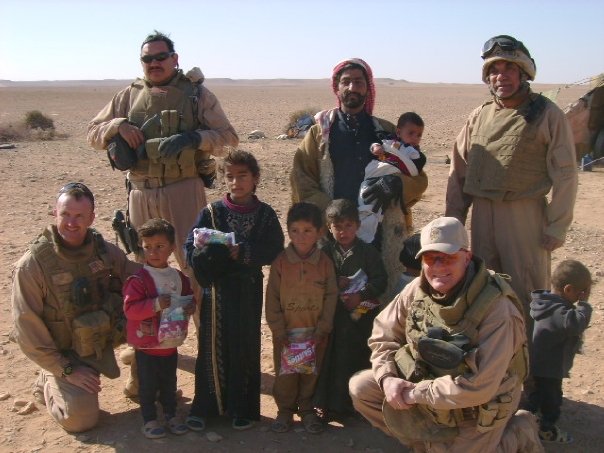
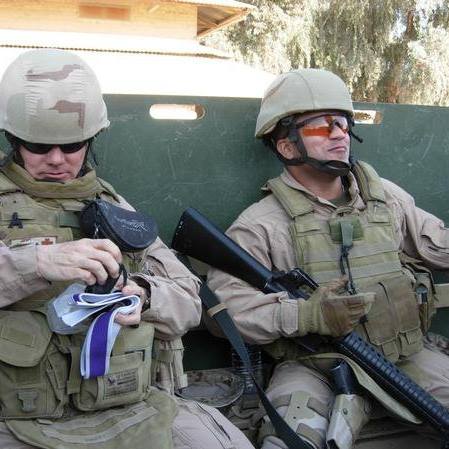
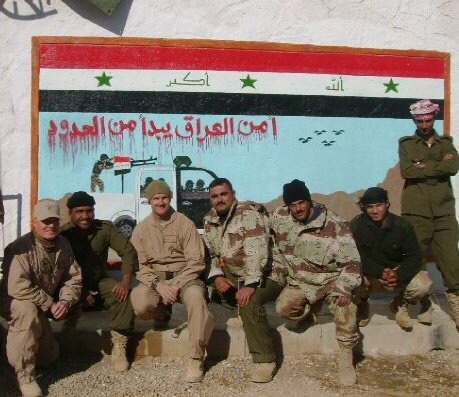
With Advisors and Bedouin Family, Iraq Syria Border, Christmas Eve 2007

Friends of Padre Steve’s World,

Today is the official observance of Veterans Day, which actually falls on The anniversary of Armistice Day. 

It is a strange feeling. I don’t really advertise that I am a veteran out in public, even though I have quite a few ball caps, sweat shirts, Polo shirts, hoodies, and fleeces that I could wear. To do that. I certainly am not ashamed of my service, but much of it has been hard, and I spend the time thinking about those who I served alongside, or set an example for me, living and dead. Unless something really unusual happens it will be my last on active duty.

I understand men like the Alsatian German Guy Sajer who wrote after spending World War Two on the Russian Front:

“In the train, rolling through the sunny French countryside, my head knocked against the wooden back of the seat. Other people, who seemed to belong to a different world, were laughing. I couldn’t forget.”

As I said, I have been reflecting on the many friends, comrades, and shipmates, not all of whom are American, that I have served alongside, or have known in the course of my 38 plus year military career. I also am remembering my dad who served in Vietnam as a Navy Chief Petty Officer and the men who help to guide me in my military career going back to my high school NJROTC instructors, LCDR J. E. Breedlove, and Senior Chief Petty Officer John Ness.

My Dad, Aviation Storekeeper Chief Carl Dundas

LCDR Breedlove and Senior Chief Ness

2nd Platoon, 557th Medical Company (Ambulance), Germany 1985

As I think of all of these men and women, I am reminded of the words spoke by King Henry V in Shakespeare’s play Henry V:

This story shall the good man teach his son;

And Crispin Crispian shall ne’er go by,

From this day to the ending of the world,

But we in it shall be remembered-

We few, we happy few, we band of brothers;

For he to-day that sheds his blood with me

Shall be my brother; be he ne’er so vile,

This day shall gentle his condition;

And gentlemen in England now-a-bed

Shall think themselves accurs’d they were not here,

And hold their manhoods cheap whiles any speaks

That fought with us upon Saint Crispin’s day.

From the Speech of King Henry V at Agincourt in Shakespeare’s “Henry V” 1599

It is a peculiar bond that veterans share. On Veterans Day the United States choses to honor all of its veterans on a day that was originally dedicatedly Armistice Day, a day to remember the World War One, or the War to end all war; we saw how well that worked out, but I digress.

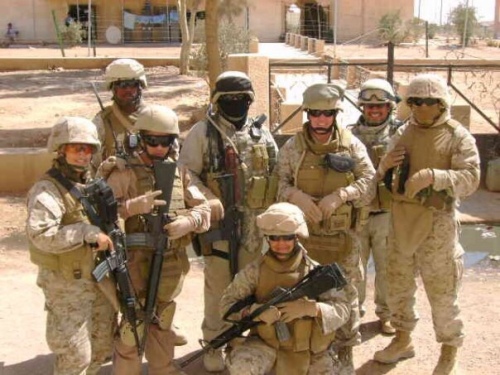
With My trusty Bodyguard and assistant RP1 Nelson LeBron, Habbinyah Iraq, January 2008. 

I wrote about Armistice Day yesterday, but Veterans Day is for all veterans, even those who fought in unpopular and sometimes even unjust wars. This makes it an honorable, but sometimes an ethical problematic observance. So, in a broader and more universal sense, those of us who have served, especially in the wars that do not fit with our nation’s ideals, share the heartache of the war; the loss of friends, comrades, and parts of ourselves, with the veterans of other nations whose leaders sent their soldiers to fight and die in unjust wars.

With Advisors at Al Waleed Border Crossing

It is now over ten years since I served in Iraq and nine years since my PTSD crash.  However, I still would do it again in a heartbeat.  There is something about doing the job that you were both trained to do and called to do that makes it so.  Likewise the bonds of friendship and brotherhood with those who you serve are greater than almost any known in the human experience.  Shared danger, suffering and trauma bind soldiers together, even soldiers of different countries and sometimes with enemies. I am by no means a warmonger, in fact I am much more of a pacifist now; but there is something about having served in combat, especially with very small and isolated groups of men and women in places where if something went wrong there was no possibility of help.

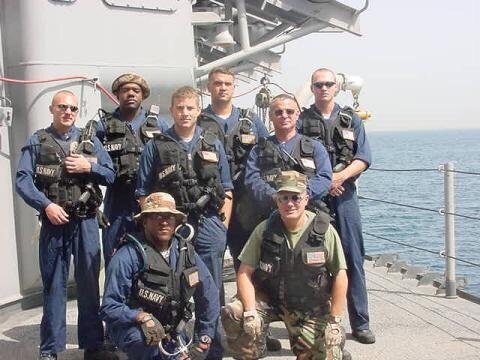
With my boarding team from the USS Hue City, Persian Gulf 2002

I remember the conversation that I had with an Iraqi Merchant Marine Captain on a ship that we had apprehended for smuggling oil violating the United Nations sanctions.  The man was a bit older than me, in his early 60s.  He had been educated in Britain and traveled to the US in the 1960s and 1970s. He had the same concerns as any husband and father for his family and had lost his livelihood after Saddam invaded Kuwait in 1990.   He was a gentleman who provided for his crew and went out of his way to cooperate with us.  In our last meeting he said to me: “Someday I hope that like the American, British, and German soldiers at the end of the Second World War, that we can meet after the war is over, share a meal and a drink in a bar and be friends.”

That is still my hope.

In the final episode of the series Band of Brothers there is a scene where one of the American soldiers, Joseph Liebgott who came from a German Jewish family interprets the words of a German General to his men in the prisoner compound.  The words sum up what the Americans had felt about themselves and likewise the bond that all soldiers who serve together in war have in common, if you have seen the episode you know how powerful it is, I ended up crying when I heard it the first time and cannot help but do so now that I have been to the badlands of Al Anbar Province.

“Men, it’s been a long war, it’s been a tough war. You’ve fought bravely, proudly for your country. You’re a special group. You’ve found in one another a bond that exists only in combat, among brothers. You’ve shared foxholes, held each other in dire moments. You’ve seen death and suffered together. I’m proud to have served with each and every one of you. You all deserve long and happy lives in peace.”

We live in a time where it is quite possible or even likely that the world will be shaken by wars that will dwarf all of those that have occurred since the Second World War. Since I am still serving, I prepare myself every day, and speak frankly with those who I serve alongside of this reality.

Over the weekend I have had more people than I can count thank me for my service. For this I am grateful, for when my dad returned from Vietnam that didn’t happen. At the same time it is a bit embarrassing. I don’t really know what to say most of the time. I have always been a volunteer, I wasn’t drafted, and I even volunteered for my deployment to Iraq. But there are so many other men and women who have done much more than I ever did to deserve such expressions of thanks.

More than a decade after I left Iraq, I quite often feel out of place in the United States, even among some veterans. That isolation has gotten worse for me in the Trump era, especially after a Navy retiree in my chapel congregation attempted to have me tried by Court Martial for a sermon. I can’t understand that when the President that he worships dodged the draft, mocks veterans and real heroes, and has never even once in his first two years in office has refused to visit any deployed troops. The President, and those like him should think himself accursed that he has not only not served, but worked his entire life to avoid that service. I pray the the spirits of the honored dead haunt him until the day that he dies. That may sound harsh but he deserves a fate worse than a fate worse than death.

Judy were out with friends today, some military, retired, maybe some still active, as well as civilian friends, many of whom have military relations at Gordon Biersch, the brewer brewed a special Veterans IPA, proceeds from tonight which went to Virginia Veterans.

To my friends there I am Steve or the Padre. They all know me and know that I still serve, but that’s because they know me, not because I advertise. They also represent the span of political views in the country at large, but we are friends.

So until tomorrow,

I wish you peace,

Padre Steve+

Leave a comment

Filed under History, Military, News and current events, remembering friends, Tour in Iraq, Veterans and friends

Armistice Day at 101 Years

Friends of Padre Steve’s World,

Forty years after the guns went silent in on November 11th 1918, General Omar Bradley, spoke these words on the eve of Armistice Day, 1948:

Tomorrow is our day of conscience. For although it is a monument to victory, it is also a symbol of failure. Just as it honors the dead, so must it humble the living. Armistice Day is a constant reminder that we won a war and lost a peace…”

It was supposed to be the “War to end all war,” or so thought President Woodrow Wilson and other American idealists. However, the war to end all war birthed a series of wars which far exceeded the losses of the First World War as ideological wars, exponentially more powerful weapons, and systematized mass murder and genocide birthed new horrors.

Winston Churchill wrote:

“The Great War differed from all ancient wars in the immense power of the combatants and their fearful agencies of destruction, and from all modern wars in the utter ruthlessness with which it was fought. … Europe and large parts of Asia and Africa became one vast battlefield on which after years of struggle not armies but nations broke and ran. When all was over, Torture and Cannibalism were the only two expedients that the civilized, scientific, Christian States had been able to deny themselves: and they were of doubtful utility.”

In the First World War there were over 22 million military casualties including over 8 million dead of which over 126,000 were Americans. Close to 20 million civilians also were casualties of the war.

President Woodrow Wilson established what we know now as Veteran’s Day as Armistice Day in November 1919, a year after the guns went silent.

Wilson wrote:

To us in America, the reflections of Armistice Day will be filled with solemn pride in the heroism of those who died in the country’s service and with gratitude for the victory, both because of the thing from which it has freed us and because of the opportunity it has given America to show her sympathy with peace and justice in the councils of the nations…

That initial proclamation was followed 45 years later by one of President Dwight D. Eisenhower. Eisenhower signed into law what we now know as Veteran’s Day in 1954.

In a sense I wish we had two holidays, one for Veterans from all wars in general and this one which we should never forget. It seems that in combining them we have lost some of the sacredness of the original. As Kurt Vonnegut wrote: “I don’t want to throw away any sacred things.” 

Because of that, I will remember all who served tomorrow as we observe Veterans Day, but I will not forget Armistice Day.

It is important not to forget the horrors and results of the First World War because both it and the Second World War, have faded from memory. Most people today cannot fathom killing on such a large scale, the overthrow of powerful nations and dynasties, the creation of new nations built from diverse, and often rival ethnic and religious groups such as Czechoslovakia and Yugoslavia, or the re-establishment of ancient nations such as Poland.

Yet to those of us who have gone to war and studied past wars the end result is not so distant. It is a part of our lives even today. Edmond Taylor accurately noted in his book, The Fall of the Dynasties: The Collapse of the Old Order, 1905-1922:

“The First World War killed fewer victims than the Second World War, destroyed fewer buildings, and uprooted millions instead of tens of millions – but in many ways it left even deeper scars both on the mind and on the map of Europe. The old world never recovered from the shock.”

The cost in human lives alone is incomprehensible. In the short time that United States forces went into action in late 1917 on the western front and the armistice, 126,000 Americans were killed, 234,000 wounded, and 4,500 missing; 8.2% of the force of 4,355,000 the nation mobilized for war. More Americans were killed in the First World War than Korea, Vietnam, the Gulf War, Iraq, and Afghanistan combined.

But American losses were small in comparison with the European nations who had for over four years bled themselves dry.  If one wonders why Europeans seem to have so little desire for involvement in war, one only needs to see how the concentrated killing of the First World War decimated the best and brightest of that generation. Out of the nearly 8.5 million Frenchmen mobilized lost 1,357,000 killed, 4,266,000 wounded and 537,000 missing, 6,160,000 casualties or 73.3% of its forces. The Russians also lost over 73% of 12 million, Romania 71% of 750,000, Germany 65% of 11 million, Serbia 47% of 707,000, tiny Montenegro 40% of 50,000, Italy 39.9% of 5.6 million, Great Britain 36% of almost 9 million, the Ottoman Empire 34% of 8.5 million. But the dual monarchy of Austria-Hungary which began the war in response to the assassination of Archduke Franz Ferdinand lost 90% of the 7.8 million men that it sent to war.

The human costs were horrifying. In all over over 65 million men served under arms in the war. Over 8.5 million were killed, over 21 million wounded, 7.75 million missing or prisoners or almost 37.5 million military casualties alone. That total would be roughly equivalent to every citizen of the 30 largest American cities being killed, wounded or missing.

Much of Europe was devastated and in the following months and years, mass numbers of refugees the dissolution of previously stable empires were displaced. A Civil War in Russia killed many more people and led to the establishment of the Soviet Union. Germany too was torn apart by civil war that left it bitterly divided and planted the seeds of Hitler’s Nazi regime. Border conflicts between new states with deep seated ethnic hatreds broke out. A flu pandemic spread around the world killing millions more. Economic disasters culminating in the Great Depression and social instability led to the rise of totalitarian regimes which spawned another, even more costly World War and a 40 year Cold War. The bitter results of the First World War are still felt today as conflicts in the Middle East in part fueled by the decisions of Britain and France at the end of the war rage on.

T. E. Lawrence, Lawrence of Arabia, who gained fame during the Arab revolt looked at the results of the war with a great deal of melancholy. He wrote:

“We were fond together because of the sweep of open places, the taste of wide winds, the sunlight, and the hopes in which we worked. The morning freshness of the world-to-be intoxicated us. We were wrought up with ideas inexpressible and vaporous, but to be fought for. We lived many lives in those whirling campaigns, never sparing ourselves: yet when we achieved and the new world dawned, the old men came out again and took our victory to remake in the likeness of the former world they knew. Youth could win, but had not learned to keep, and was pitiably weak against age. We stammered that we had worked for a new heaven and a new earth, and they thanked us kindly and made their peace.”

The his epic war poem, In Flanders Fields, Canadian Lieutenant Colonel John McCrea symbolized the cost of that war and the feelings of the warriors who endured its hell.

In Flanders fields the poppies blow
Between the crosses, row on row,
That mark our place; and in the sky
The larks, still bravely singing, fly
Scarce heard amid the guns below.

We are the Dead. Short days ago
We lived, felt dawn, saw sunset glow,
Loved and were loved, and now we lie
In Flanders fields.

Take up our quarrel with the foe:
To you from failing hands we throw
The torch; be yours to hold it high.
If ye break faith with us who die
We shall not sleep, though poppies grow
In Flanders fields.

Yes there are always consequences to actions. This weekend as we remember what we Americans now call Veteran’s Day, and the British refer to as Remembrance Day let us blood shed by so on the battlefields of Verdun, Gallipoli, Caporetto, Passchendaele, the Marne, the Argonne, Tannenberg, the Somme, Galicia, the Balkans, Flanders Fields, at sea and in the air.
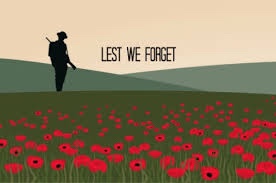
President John F. Kennedy said: “As we express our gratitude, we must never forget that the highest appreciation is not to utter words, but to live by them.”

Kennedy was right, that our appreciation is not just to utter words, but to live by them. Sadly, the current American President has no understanding of such nuances. He continued thump his chest and spit in the face of allies while, courting nations hostile to the very ideals of the United States. Likewise, the President, a man who never served in the military, and spent the Vietnam War avoiding service and dodging the draft while later comparing avoiding sexuality transmitted diseases to combat again dishonored the men who spilt their blood in the First World War. Donald Trump does not understand anything about history, war, courage, or honor. Sadly, he is all too representative of a generation that neither knows or cares about those things. He and others like him will be the ones that lead the world into another disaster.

“Strong prejudices in an ill-formed mind are hazardous to government, and when combined with a position of power even more so.”

I write in the hope of peace and an end to war. I will write about Veteran’s Day later today.

Peace,

Padre Steve+

1 Comment

Filed under History, middle east, Military, Political Commentary, us army, US Marine Corps, world war one

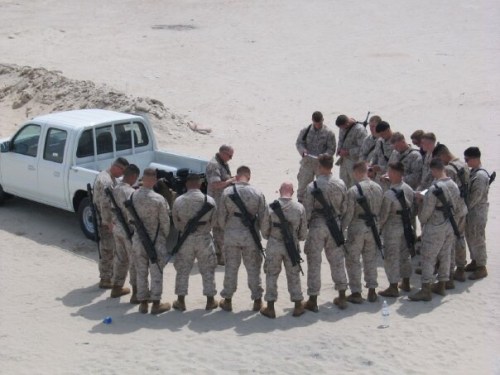
Happy 244th Birthday Marines


Friends of Padre Steve’s World,

i will take a momentary break from politics and everything else to wish all United States Marines a Happy 244th Birthday. This one is more special than many others because my nephew Darren is now a Marine.

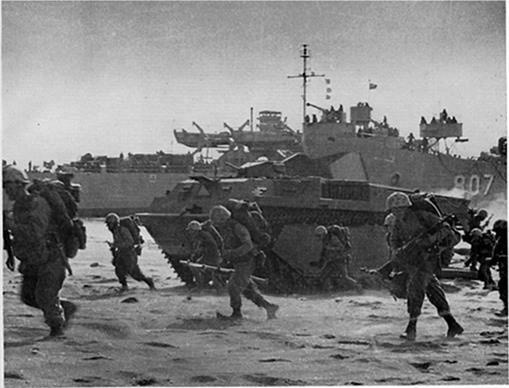
Honestly, after all that we have been through as a country this year, today is one of these days where I just want to wish people well. Those men and women are those of the United States Marine Corps, with whom I have have spent almost ten years of my thirty-five year military career assigned to or in support of as a chaplain. Today is the 244th anniversary of the establishment of the Marine Corps and its founding at Tun Tavern, in Philadelphia. Today I wish all those who have served past, present and future, especially those who I have served alongside a happy birthday.

On November 10th 1775 the Continental Congress passed a resolution that stated:

Resolved, that two Battalions of Marines be raised consisting of one Colonel, two Lieutenant Colonels, two Majors & Officers as usual in other regiments, that they consist of an equal number of privates with other battalions; that particular care be taken that no persons be appointed to office or enlisted into said Battalions, but such as are good seamen, or so acquainted with maritime affairs as to be able to serve to advantage by sea, when required. That they be enlisted and commissioned for and during the present war with Great Britain and the colonies, unless dismissed by Congress. That they be distinguished by the names of the first & second battalions of American Marines, and that they be considered a part of the number, which the continental Army before Boston is ordered to consist of.

The history of the Marine Corps is one of the most fascinating of any armed service in the world. Starting out as a tiny force attached to Navy ships and shipyards the Corps has gained prominence as one of the premier fighting forces ever assembled. Flexible and deployable anywhere in the world on short notice the Marine Corps has seen action in “every place and clime” and continues to serve around the world.

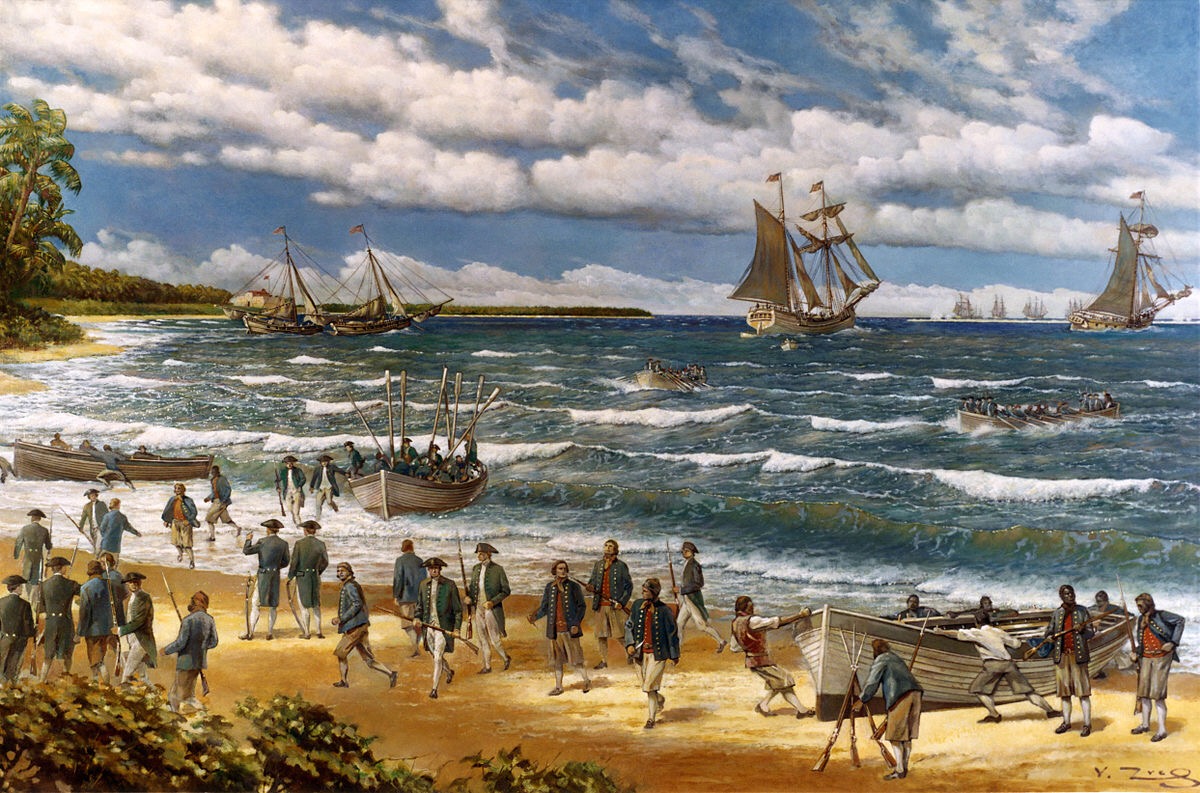
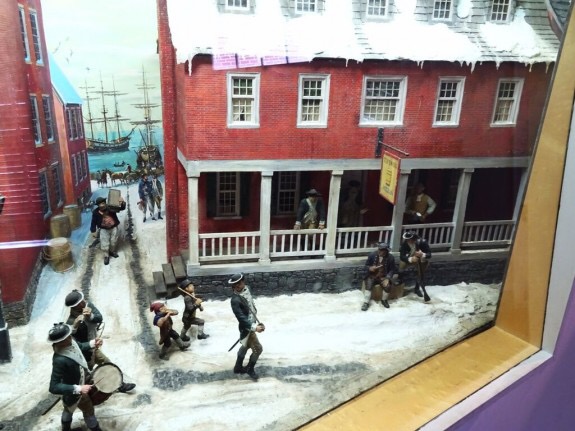
In 1775 a committee of the Continental Congress met at Philadelphia’s Tun Tavern to draft a resolution calling for two battalions of Marines able to fight for independence at sea and on shore.  The resolution was approved on November 10, 1775, officially forming the Continental Marines. The first order of business was to appoint Samuel Nicholas as the Commandant of the newly formed Marines.

Robert Mullan the owner and proprietor of the said Tun Tavern became Nicholson’s first captain and recruiter. They began gathering support and were ready for action by early 1776.  They served throughout the War for Independence and like the Navy they were disbanded in April 1783 and reconstituted as the Marine Corps in 1798.

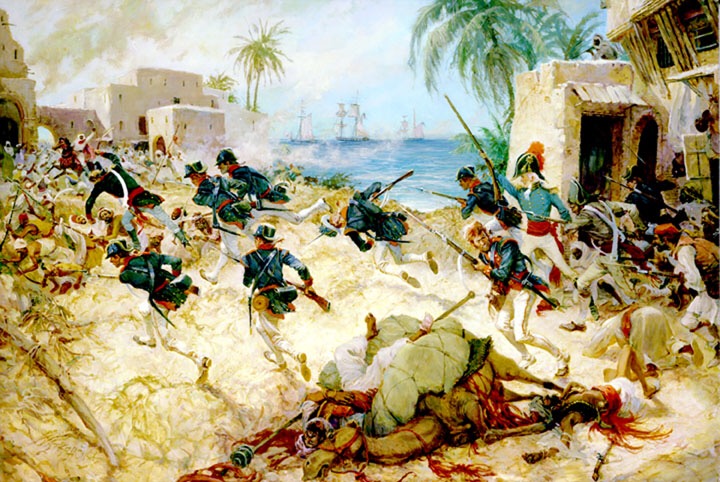
The Marines served on the ships of the Navy in the Quasi-war with France, against the Barbary Pirates where a small group of 8 Marines and 500 Arabs under Lieutenant Presley O’Bannon made a march of 500 miles across the Libyan Desert to lay siege Tripoli but only reached Derna. The action is immortalized in the Marine Hymn as well as the design of the Marine Officer’s “Mameluke” Sword. They served in the War of 1812, the Seminole Wars and in the Mexican-American War where in the storming of the on Chapultepec Palace they continued to build and enduring legacy. In the months leading up to the Civil War they played a key role at home and abroad.  In October 1859 Colonel Robert E. Lee led Marines from the Marine Barracks Washington DC to capture John Brown and his followers who had captured the Federal Armory at Harper’s Ferry.

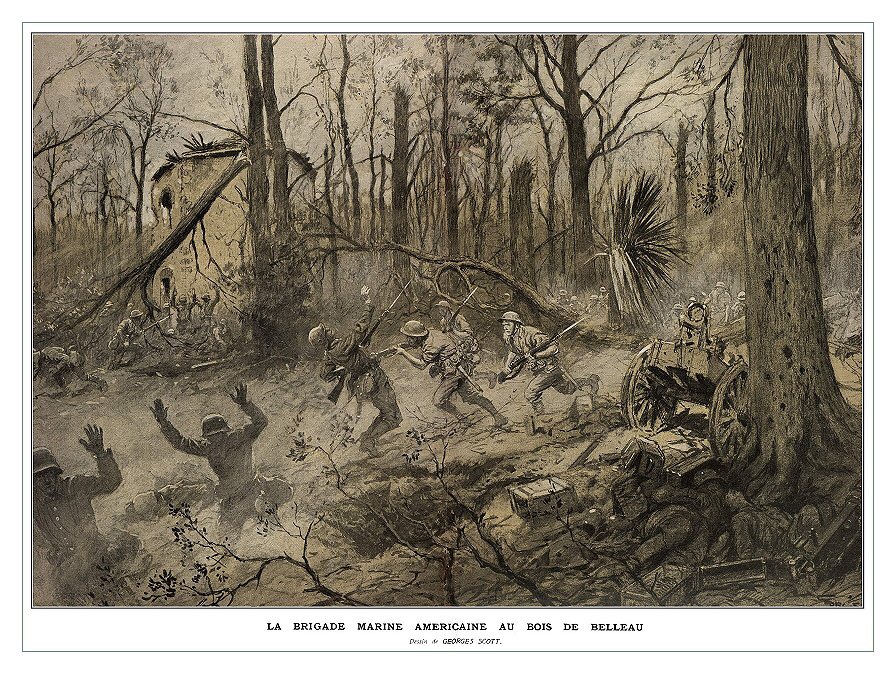
The Corps would serve through the Civil War and on into the age of American Expansion serving in the Spanish American War in the Philippines, Puerto Rico and Cuba where they seized Guantanamo Bay at the battle of Cuzco Wells.  The would serve in China and be a key component of the international force that defended foreign diplomats during the Boxer Revolt as well as the international force that would relieve the diplomatic compound in Peking (Beijing).  In World War One the Marines stopped the German advance at Chateau Thierry and cemented their reputation as an elite fighting force at Belleau Wood where legend has it that the Germans nicknamed them Teufelhunden or Devil Dogs, a name that they Marines have appropriated with great aplomb.

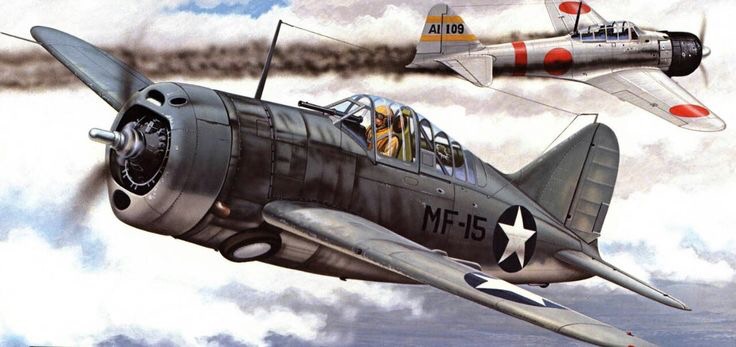
During the inter-war years the Marines were quite active in the Caribbean and Asia and also developed amphibious tactics and doctrine that would be put to use in the Pacific Campaign.  During the war the Marines served in all theaters but won enduring fame at Wake Island, Guadalcanal, Tarawa, Iwo Jima, Okinawa and numerous other battles in the Pacific war. Marine Aviators flew in some the most desperate actions in the war to support the Navy and amphibious operations ashore.

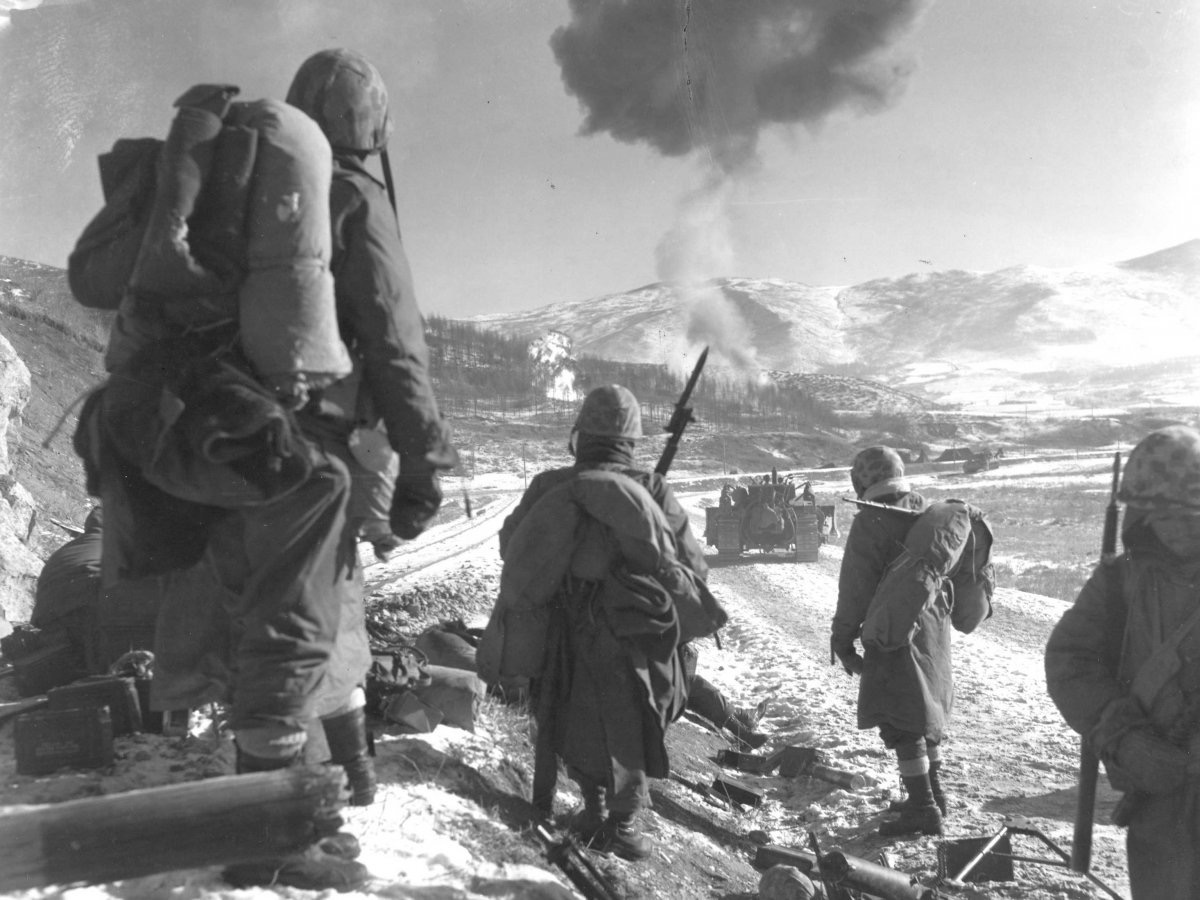
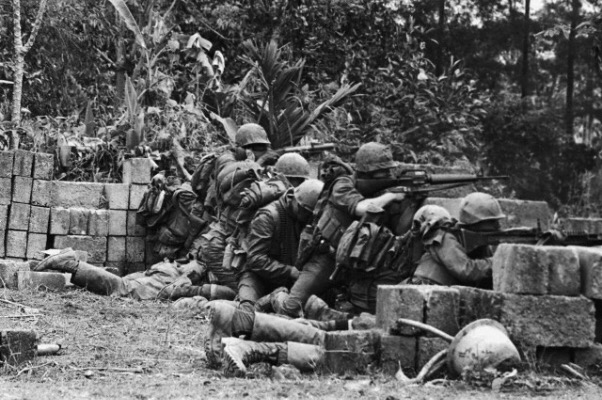
After the war the Truman Administration sought to eliminate the Marine Corps but the Corps was saved by the efforts of Americans across the country and Marine supporters in Congress.  That was a good thing because the Marines were instrumental in keeping the North Koreans from overrunning the South during the Korean War on the Pusan Perimeter, turned the tide at Inchon and helped decimate Communist Chinese forces at the Chosin Reservoir.  After Korea the Marines would serve around the World in the Caribbean and Lebanon and in Vietnam where at Da Nang Keh Sanh, Hue City, Con Thien fighting the North Vietnamese and their Viet Cong allies.  The Marines took the initiative to implement innovative counter insurgency measures such as the Combined Action Platoons which enjoyed tremendous success until they were shut down by the Army high command.  These lessons would serve the Marines well in the new millennium during the Anbar Awakening in Iraq which changed the course of that insurgency and war.

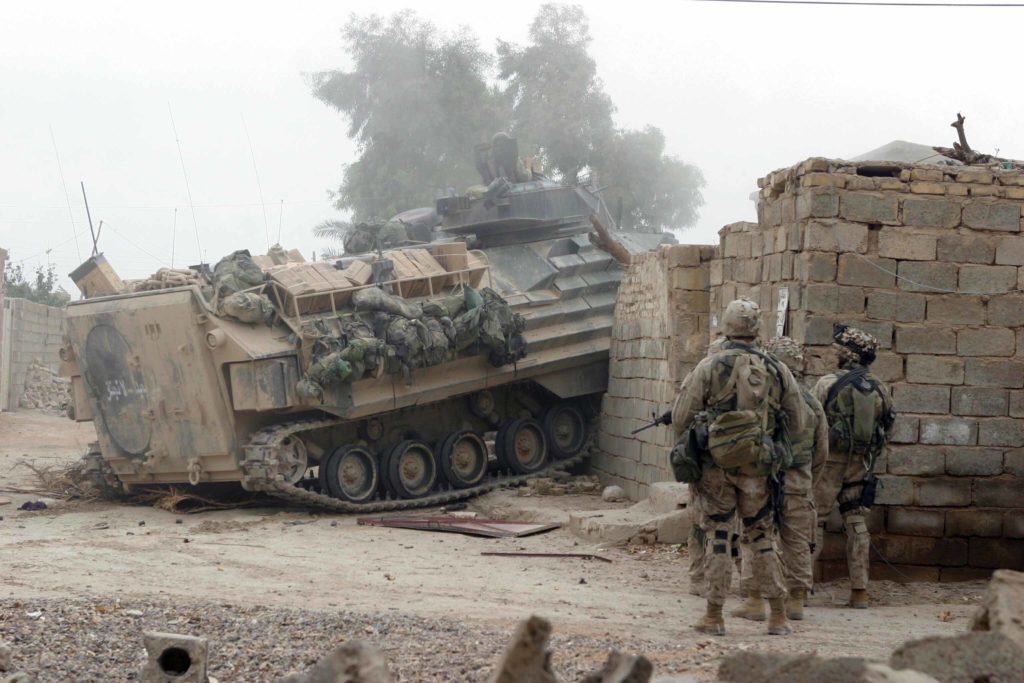
The Marines would again be involved around the World after Vietnam serving in the Cold War, in Lebanon and the First Gulf War which was followed by actions in Somalia, the Balkans and Haiti. After the attacks of September 11th 2001 the Marines were among the first into Afghanistan helping to drive the Taliban from power. In the Iraq Campaign the Marines had a leading role both in the invasion and in the campaign in Al Anbar Province.  After their withdraw from Iraq the Marines became a central player in Afghanistan where they were engaged around Khandahar and in Helmand Province. In the wake of the ISIS gains in Syria and Iraq the Marines returned to Iraq serving to help train and advise Iraqi Army units in areas of Al Anbar Province and other areas of that country, while others have been involved in relief efforts in Puerto Rico following Hurricane Maria. If by some chance war breaks out on the Korean Peninsula, Marines will be among the first to respond.

The Marines are elite among world military organizations and continue to “fight our nations battles on the air and land and sea.” The Corps under General John LeJeune institutionalized the celebration of the Marine Corps Birthday and their establishment at Tun Tavern. General LeJeune issued this order which is still read at every Marine Corps Birthday Ball or observance:

MARINE CORPS ORDER No. 47 (Series 1921)
HEADQUARTERS
U.S. MARINE CORPS Washington, November 1, 1921

The following will be read to the command on the 10th of November, 1921, and hereafter on the 10th of November of every year. Should the order not be received by the 10th of November, 1921, it will be read upon receipt.

On November 10, 1775, a Corps of Marines was created by a resolution of Continental Congress. Since that date many thousand men have borne the name “Marine”. In memory of them it is fitting that we who are Marines should commemorate the birthday of our corps by calling to mind the glories of its long and illustrious history.

The record of our corps is one which will bear comparison with that of the most famous military organizations in the world’s history. During 90 of the 146 years of its existence the Marine Corps has been in action against the Nation’s foes. From the Battle of Trenton to the Argonne, Marines have won foremost honors in war, and in the long eras of tranquility at home, generation after generation of Marines have grown gray in war in both hemispheres and in every corner of the seven seas, that our country and its citizens might enjoy peace and security.

In every battle and skirmish since the birth of our corps, Marines have acquitted themselves with the greatest distinction, winning new honors on each occasion until the term “Marine” has come to signify all that is highest in military efficiency and soldierly virtue.

This high name of distinction and soldierly repute we who are Marines today have received from those who preceded us in the corps. With it we have also received from them the eternal spirit which has animated our corps from generation to generation and has been the distinguishing mark of the Marines in every age. So long as that spirit continues to flourish Marines will be found equal to every emergency in the future as they have been in the past, and the men of our Nation will regard us as worthy successors to the long line of illustrious men who have served as “Soldiers of the Sea” since the founding of the Corps.

JOHN A. LEJEUNE,
Major General
Commandant

I have had the privilege to have served with the Marines directly or indirectly for nearly ten of the thirty-seven years that I have served in the military. In addition to that I wear the Fleet Marine Force Officer Warfare Qualification device and I am a graduate of the Marine Corps Command and Staff College. I have been able to celebrate the Marine Corps Birthday with Marines in places like Ramadi and Guantanamo Bay. For me it is an honor to have served with so many great Americans.

So to all my Marine Corps friends, and any other Marines who read this piece, have a great night and Semper Fidelis.

Peace

Padre Steve+

Leave a comment

Filed under History, iraq,afghanistan, Military, shipmates and veterans, Tour in Iraq, US Marine Corps, US Navy, War on Terrorism, world war one, world war two in the pacific

A Day of Fate: November 9th “Der Schicksaltag” in Germany


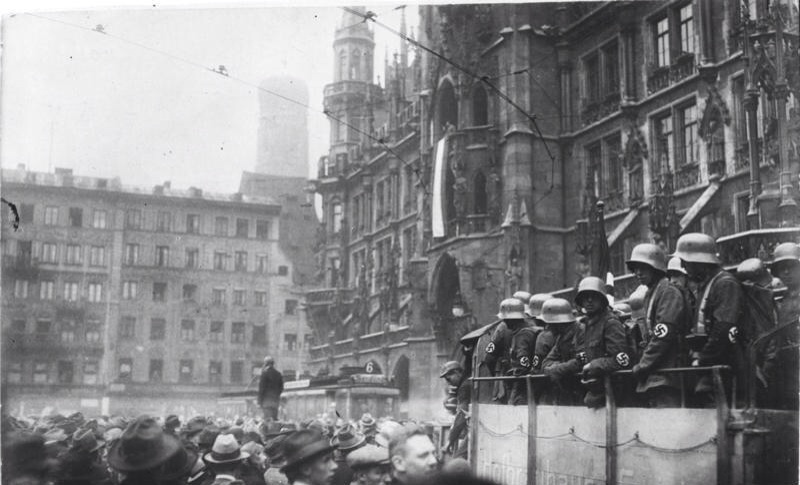
Hitler-Putsch, M¸nchen, Marienplatz

                                   Schicksalstag: The Fateful Day

Friends of Padre Steve’s World,

There are some days in history that are crammed full world changing events, and sometimes those events occur, for good or bad and sometimes good and bad in different countries. In the United States July 4th is not only Independence Day, but eighty-seven years later marked the surrender of Vicksburg and the retreat of Robert E. Lee’s army from Gettysburg. Likewise it was the day that the Louisiana Purchase was announced in 1803 and that in 1826 the Thomas Jefferson and John Adams died.

Since 1918 November 9th has been a day in German history that has impacted both Germany and the world in many ways. In a sense it is almost hard to believe that so much occurred on that day. It is known by many in Germany as Der Schicksalstag (the fateful day).

robert-blum-03

                                                        Robert Blum

In 1848 a member of the Frankfurt Parliament, Robert Blum was arrested and executed executed for traveling to Vienna to support the 1848 democracy uprising there. A liberal, humanist and democrat Blum advocated German unification without Prussian dominance, protested Prussian oppression of Poles, stood against anti-Semitism and for the rights of Catholics in heavily Protestant German kingdoms. Blum’s dream remained unfulfilled for over a century after his death. Many of the men and women who took part in the failed revolution of 1848 would come to the United States where during the American Civil War they would fight for the emancipation of slaves and later the Civil rights of freed blacks. Among them was Carl Schurz.


Kaiser Wilhelm II Cross
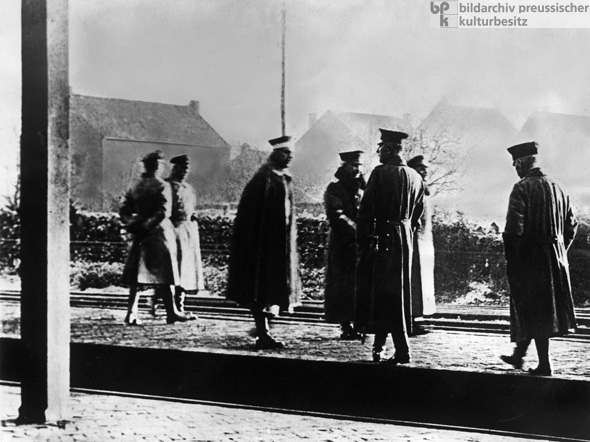
es the Dutch Border Following his Abdication

November 9th, 1918 was gloomy day at the military headquarters of Kaiser Wilhelm II. General Wilhelm Groener, Quartermaster General of the Army looked his sovereign in the eye and told Kaiser Wilhelm that the war was lost, and that he no longer had the support of the Army. The Kaiser, reeling from battlefield defeats and the mutiny of his precious High Seas Fleet, was stunned. Field Marshal Paul von Hindenburg, who had for all practical intents had headed a military dictatorship with General Erich Ludendorff since 1916, meekly nodded his concurrence with Groener. The Kaiser abdicated the throne and departed in his private train to the Netherlands the next day.

ausrufung-der-republik-in-berlin-preview-image_900x510

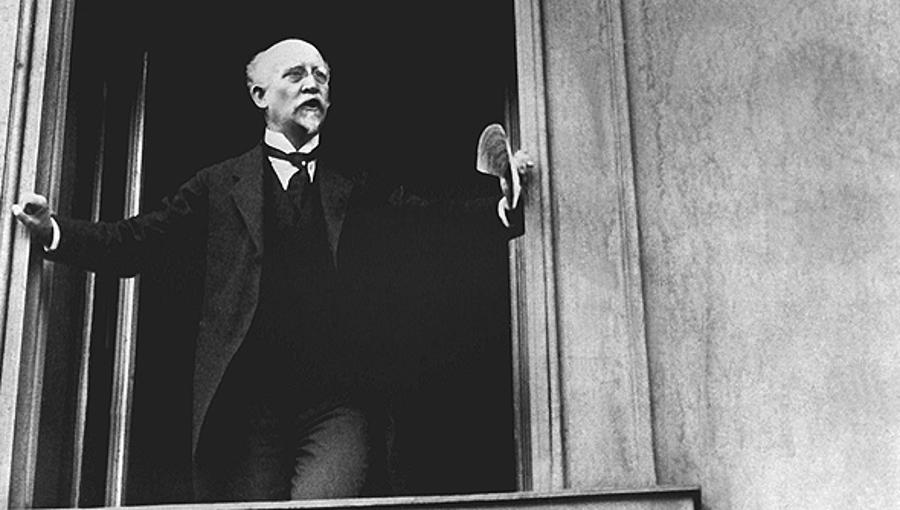
                         Phillip Scheidemann Proclaims the Republic 

Meanwhile in Berlin, Majority Socialist parliament member Philip Scheidemann proclaimed the Republic to prevent a Soviet takeover. Unfortunately, Scheidemann’s bold move upset a plan for a smooth transition of power between Friedrich Ebert and the outgoing Chancellor Theobald von Bethmann-Hollweg. Chaos ensued and the Republic, known as the Weimar Republic struggled for its existence in the face of a Soviet Revolution and Conservative reaction.

However, the promise of democracy was soured by events that the leaders of the Republic were blamed: a continued allied blockade, a humiliating peace treaty, the loss of territory, the occupation of the industrial areas of the Ruhr and Saar by France and Belgium, heavy war reparations, and the war guilt clause of the Treaty of Versailles. This was compounded by civil war between various right and left wing factions and major economic problems including massive hyper-inflation of 1920-21 and the Great Depression doomed the young Republic.

                                                Beer Hall Putsch

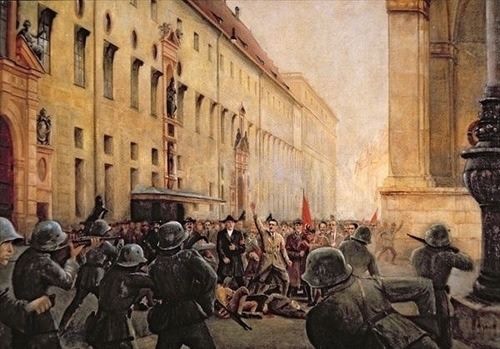
Five years to the day following Scheidemann’s proclamation a charismatic Austrian in Munich who had fought and been wounded fighting for Germany in the First World War gathered with his political sympathizes and para-military street thugs to attempt a putsch. The man was Adolf Hitler, the head of the small and radical National Socialist Deutches Arbeiter Partei, or National Socialist German Workers Party. Hitler hoped that his putsch would result in a popular uprising against the German government in Berlin. The putsch was a failure and ended in bloodshed at the Feldherrnhalle monument on Munich’s Odeonsplatz.

Hitler fled the scene but arrested and put on trial. The case was tried in Munich rather than Berlin and convicted of treason. He was given a light sentence and jailed for nine months at the Landesberg prison where he wrote his book Mein Kampf. In prison he continued to recruit others to his cause. Less than ten years later Hitler was appointed Chancellor by President Hindenburg. Hitler quickly banned political opposition and began his persecution of Jews and others that he believed to be sub-human and upon Hindenburg’s death in 1934 merged the office of Chancellor and President become the leader of Nazi Germany.

In November 1938 Hitler and his henchmen were looking for a reason to openly begin persecuting the Jews. They had been doing so since the seizure of power, but 1938 marked a turning point. Instead of unofficial pogroms launched by his undisciplined Stormtroopers, this was orchestrated by the top men in the Nazi regime.

One of the chief reasons for this was to seize the property and financial resources of German Jews. This coincided with the expulsion of Polish Jews from Germany. A reason for the action was furnished when a young Polish man, Herschel Grynszpan, whose parents were expelled from Germany on November 3rd went to the German embassy in Paris and shot and mortally wounded Ernst von Rath, a young diplomat, who reportedly had some anti-Nazi sentiments. When Von Rath died the the Nazis unleashed their fury.

kristallnacht1

Kristallnacht 

Joseph Goebbels unleashed the storm troopers and others in civilian clothes on the night of November 9th. They were supposedly spontaneous demonstrations, but the Police and Fire Departments were ordered not to intervene except to save German property. Stormtroopers ransacked Jewish businesses, homes and synagogues causing hundreds of millions of Reichsmarks in damage, destroying over 200 synagogues and 7000 businesses. About 100 Jews were killed during the rampage, which went unchecked by police. Another 2000-3000 subsequently died either by suicide or in concentration camps in which 30,000 Jewish men were incarcerated.

To add to the insult to injury Jews were charged for the damage done to their property and insurance payments that should have gone to them were collected by the state. The night became known as Kristallnacht, the night of broken glass and marked a major turn in the open Nazi persecution of Jews in Germany, which would extend throughout Europe and end in the Final Solution and the systematic murder of nearly six million Jews. World War Two ended with the total defeat of Germany and the Nazi regime.

berlin_wall_02

Building the Berlin Wall

Following Germany’s defeat in the Second World War, it was occupied by the Allied powers. Germany was split in two, the East under the domination of the Soviet Union which became the German Democratic Republic, and the West which supported by the United States and Britain became the Federal Republic of Germany.

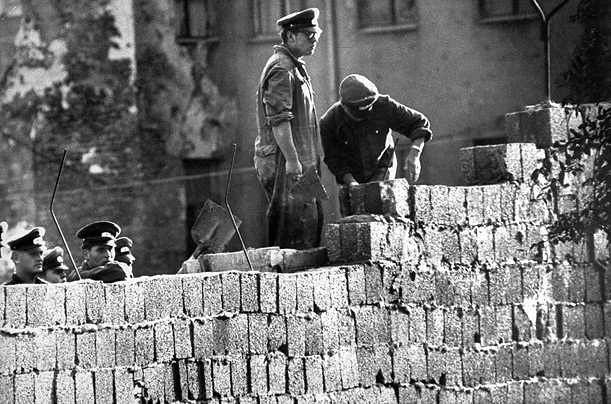
The divided country became the focal point of what became the Cold War, the fortified border became infamous as the Iron Curtain. The Berlin was blockaded by the Soviets in 1948 and the subsequent airlift kept West Berlin Free. However in August 1961 as the Cold War escalated the leaders of East Germany erected a fence which became the Berlin Wall, a wall which was effectively a means to imprison the population. It seemed to be a fixture that would never come down.

berlin-wall_1412605c

                                              The Wall Comes Down 

But in the late 1980s the Cold War began to thaw. Mikhail Gorbachev took power in the economically strapped Soviet Union which was bogged down in a costly war in Afghanistan, and a struggle against a Polish democratic movement. Premier Gorbachev sought to relieve the situation with a policy of openness. It backfired, and throughout Eastern Europe, pro-democracy and pro-freedom groups began to protest the status quo.

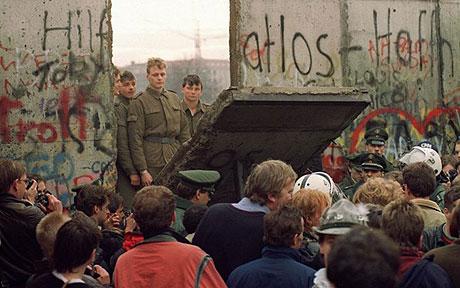
The once feared Warsaw Pact began to disintegrate. As borders were opened hundreds of thousands of Eastern Europeans including thousands of East Germans went west through Hungary and Czechoslovakia. East Germans began to gather at the Berlin Wall and on November 9th 1989 the tottering East German government decided to open border crossing points with restrictions. On hearing the news hundreds of thousands of people gathered at the six crossings demanding to be let through, and finally, ignoring orders, Stasi Lieutenant Colonel Harald Jäger who commanded the Bornholmer Strasse crossing opened the gates. The Berlin Wall had fallen and 339 days later East Germany was dissolved. On October 3rd 1990, Germany was reunited.

The new Germany is the economic heart of the European Union and has become a champion of human rights and social progress. But that could be in danger with the splintering of the major political parties that guided Germany to its position and the rise of a new nationalistic, racist, and anti-Semitic movement built around the AfD, or Alternative for Germany Party. Some leaders and members of this party express admiration for the Third Reich.

It has now been twenty-nine years since the Berlin Wall fell, eighty years since Kristallnacht, ninety-five years since the Beer Hall Putsch, and one hundred years since the abdication of Kaiser Wilhelm II.

These are all important events, and our challenge as citizens of the world is never to forget just how important and fateful each was, and why November 9th is indeed the “fateful day.” One wonders if a future November 9th will become another Schicksalstag that will again shake Germany to its foundations. The reunited Germany is still struggling with its identity thirty years after the Wall came down. Apart from Berlin, much of the former East seems like a different country than the west. It will be a full generation or more before that identity is settled, especially in the former East.

But then, maybe what is going on in the United States today is much more threatening than anything going on in Germany. We have a President who admires the former KGB dictator of Russia and who constantly tries to undermine Germany, NATO, and the European Union and is suggesting that he attend the Soviet/Russian May Day Parade next year, a parade that mixes a celebration of Soviet Communism and Russian Nationalism, with a profound hatred of the United States, NATO, and the European Union. One has to question the loyalties of the American President this Schicksalstag

It is truly a bizarro world. Harry Truman, Dwight Eisenhower, John F Kennedy and Ronald Reagan, not to mention Barry Goldwater must be spinning in their graves.

Peace,

Padre Steve+
3 Comments

Filed under germany, History, nazi germany, Political Commentary

Books The Window to My Soul and the Guard of my Conscience

Friends of Padre Steve’s World,

George R.R. Martin wrote in his book A Dance With Dragons:  “A reader lives a thousand lives before he dies, said Jojen. The man who never reads lives only one.”

I constantly read and because I try to imagine what I am reading so that in a way I live it. I have been to places that have never traveled to before and on entering them I know exactly where everything is and what happened there. I remember leading a group from my Army chapel in Wurzburg Germany to Wittenberg, where Martin Luther began the Protestant Reformation. As I led the group through the town a couple of people asked me how many times I had been there. I told them, “physically, never until today, but I have been here a thousand times before because of books. I saw Wittenberg in my minds eye before I ever saw the city.” They were surprised and both said that it seemed like I had been there many times.

I have had the same thing happen other places that I have visited, and again, it is because I read, and as I read, I imagine and occasionally dream.

I have a huge number of my books in my office most dealing with the history, especially the American Civil War and Reconstruction, the World Wars, and the insurgencies and counter-insurgency wars of the past seventy or so years. I have a lot of biographies, books on American history, military theory, sociology, philosophy, psychology related to war and PTSD, and a few theological works, though most of my theology books are at home because I don’t have room for them in the office.

Coupled with mementos of my military career, other militaria, artwork, and baseball memorabilia the sight and smell can be both overwhelming and comforting at the same time. I hear that a lot from my visitors, including those who come in for counseling, consolation, or just to know someone cares. They tell my visitors volumes about me without them ever asking a question or me telling them, and occasionally someone will ask to borrow a book, and most of the time I will lend them the book, or if I have multiple copies even give it to them.

In a sense my books are kind of a window to my soul, the topics, and even how I have them organized, and they are not for decoration. Many times while I am reflecting on a topic, a conversation, or something that I read in the news I peruse my books and pull one or more out to help me better understand it, or relate it to history. sometimes when in conversation something will come up and I can pull out a book. One of my Chaplains said that he should “apply for graduate credit” for what he learns in our often off the cuff talks. But, for me that is because I read so much and absorb it.

Likewise my memorabilia is there to remind me of all the people in my past who I have served with. I don’t have all my medals, honors, and diplomas up for everyone to see, instead I have pictures and collages, many signed by people who made a difference in my life. When I see the signatures and often all too kind words on them I am humbled, and in some cases a tear will come to my eye, but I digress…

I always try to read a decent amount everyday. I in the past couple of weeks I have finished reading a number of very good books dealing with different historical dramas. I have mentioned a number of my recent reads. Today I finished reading a very good book called Hidden Horrors: Japanese War Crimes In World War II, by Yuki Tanaka. The book is primarily focused on Japanese War Crimes In the Southwest Pacific against Allied POWs, civilians, including German missionaries, and indigenous peoples. I will be referring to it in future articles as I deal with Japanese War Crimes In the Second World War. I am well versed in the Nazi War crimes and only somewhat familiar with Japanese war crimes, but the the takeaway from the book was that both the German War Crimes and Japanese War Crimes committed during the Second World War were committed by men who placed unconditional loyalty to a supreme leader, in the case of the Germans, Hitler’s Fuhrer cult, and in the case of the Japanese, Emperor worship, much like the present day Trump Cult. But I digress, I will go into that in a future article.

I love reading and writing about complex characters, people who may be heroes and at the same time scoundrels. I like the contradictions and the feet of clay of people, because I am filled with my own, and truthfully saints are pretty boring. Unfortunately I haven’t read any biographies of late, although most of my reading deals a lot with biography as the characters weave their way through history.

Last year we observed the Centenary of the end of World War One. As a result I re-read Edmond Taylor’s The Fall of the Dynasties: The Collapse of the Old Order, 1905-1922 and Richard Watt’s The Kings Depart: The Tragedy of Germany: Versailles and the German Revolution. Both of these are very important reads which should help us to reflect reflect on what is happening in our world today. There are many similarities and reading them causes me to wonder if world leaders will allow hubris, arrogance, greed, and pride to drag the world into another catastrophic war. Sadly President Trump, doesn’t read, and doesn’t learn from history. Unfortunately, his ignorance is very much a reflection of our twenty-first century media culture.

But to me, books are important, far more important than anything that is shouted at me on television. Unfortunately, the latter is how most people get information today. I often sit at the bar and on quiet days simply listen to those near me repeat ad-nauseam the bullshit echoed by badly educated and historically ignorant conservative pundits, usually from Fox News. Historian Timothy Snyder wrote in his little but profound book, On Tyranny:

“Staring at screens is perhaps unavoidable, but the two-dimensional world makes little sense unless we can draw upon a mental armory that we have developed somewhere else. When we repeat the same words and phrases that appear in the daily media, we accept the absence of a larger framework. To have such a framework requires more concepts, and having more concepts requires reading. So get the screens out of your room and surround yourself with books. The characters in Orwell’s and Bradbury’s books could not do this—but we still can.”

Likewise, Barbara Tuchman wrote:

“Books are the carriers of civilization. Without books, history is silent, literature dumb, science crippled, thought and speculation at a standstill. Without books, the development of civilization would have been impossible. They are engines of change (as the poet said), windows on the world and lighthouses erected in the sea of time. They are companions, teachers, magicians, bankers of the treasures of the mind. Books are humanity in print.”

But anyway, I signed in to my final duty station today where not only my Chaplain skills, but my historical knowledge will be appreciated. I immediately felt at home, far more than I did in my last assignment.

So have a great day and a better tomorrow, so pick up a book and read.

Peace

Padre Steve+

6 Comments

Filed under ethics, faith, History, imperial japan, life, Military, national security, nazi germany, Political Commentary, world war two in the pacific

“To Abandon Facts is to Abandon Freedom” The Trump Effect

Friends of Padre Steve’s World,

After a long day yesterday we went out and hung out with friends for quite a while at Gordon Biersch. Then we came home and just watched television and read. I waited until this morning to check the election results and was quite pleased for the State that I will officially be a citizen of once I retire from the Navy, the Commonwealth of Virginia. So I didn’t write anything.

Tonight is kind of a reflection on the words and actions of President Trump, his family, and his cult like followers have been conducting themselves as public impeachment hearings loom in the wake of very unfavorable results for Trump and the GOP. I began to think of Historian Timothy Snyder’s words from his book On Tyranny which was published not long after President Trump’s election in 2016. Snyder wrote:

”The mistake is to assume that rulers who came to power through institutions cannot change or destroy those very institutions—even when that is exactly what they have announced that they will do.”

Dissent is not disloyalty, opposing the President’s policies, obeying one’s oath of office when seeing criminal or potential criminal actions being undertaken is not being a communist or enemy of the state. Asking such questions is not treason. Our founders wrestle with this. Thomas Jefferson wrote: “Experience hath shewn, that even under the best forms of government those entrusted with power have, in time, and by slow operations, perverted it into tyranny.“

In spite of the Democrat victories in 2018 and 2019 and the upcoming impeachment hearings, neither the President, nor his supporters in Congress, nor his propaganda department or his cult led by charlatan preachers like Paula White, the new spiritual advisor at the White House will stop the lies and will stoop to no low in order to retain power. For them neither the law or the Constitution have any meaning. Trump is the law, and what he says is coming directly from God according to Reichsbishofin Paula White.

Between White’s outright heresy and Trump’s lies, supported by those of his family, his partners in the GOP and the blind faith and belief of his propaganda network and cult the truth does not matter. Oaths of office don’t matter, only loyalty to Trump. Snyder wrote:

“To abandon facts is to abandon freedom. If nothing is true, then no one can criticize power, because there is no basis to do so. If nothing is truth, then all is spectacle. The biggest wallet pays for the most blinding lights.”

I figure that even if Trump is legally removed from office through impeachment or loses the 2020 election that the damage is done and that it will take a generation for the country, it’s laws, and institutions to recover. Thirty years ago when the Berlin Wall came down and the Soviet system fell apart it would bring forth universal democracy and freedom. I figured that the dictators were on their last legs, but I was wrong, even the United States is not immune to the lure of authoritarian rule. I believe that the next year will be very dangerous. Some of Trump’s preachers have promised that she he be turned out of office that they will kill those who opposed him.

So, until tomorrow,

Peace,

Padre Steve+
1 Comment

Filed under ethics, History, laws and legislation, leadership, nazi germany, News and current events, Political Commentary