Category Archives: History

Der Schicksaltag, November 9th in History: Revolutions, Abdication, Republics, Repression, and A Wall Falls

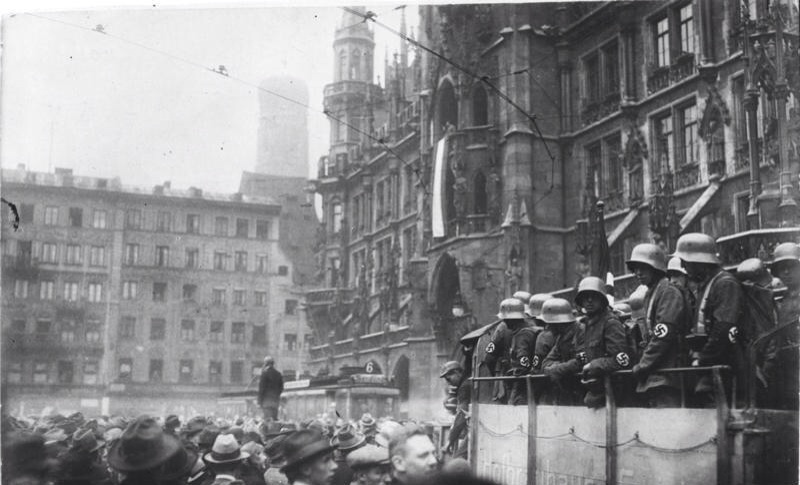
Hitler-Putsch, M¸nchen, Marienplatz

Schicksaltag: The Fateful Day and the Beer Hall Putsch November 9th 1923

Friends of Padre Steve’s World,

There are some days in history that are crammed full world changing events, and sometimes those events occur, for good or bad and sometimes good and bad in different countries. In the United States July 4th is not only Independence Day, but eighty-seven years later marked the surrender of Vicksburg and the retreat of Robert E. Lee’s army from Gettysburg. Likewise it was the day that the Louisiana Purchase was announced in 1803 and that in 1826 the Thomas Jefferson and John Adams died. In Russia however it was on July 4th 1918 that Czar Nicholas and his family were killed by the Bolsheviks.

Since 1918 November 9th has been a day in German history that has impacted both Germany and the world in many ways. In a sense it is almost hard to believe that so much occurred on that day. It is known by many as Der Schicksaltag (the fateful day).

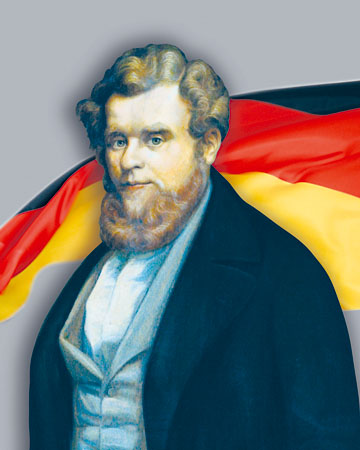
robert-blum-03

Robert Blum

In 1848 a member of the Frankfurt Parliament, Robert Blum was arrested and executed executed for traveling to Vienna to support the 1848 democracy uprising there. A liberal, humanist and democrat Blum advocated German unification without Prussian dominance, protested Prussian oppression of Poles, stood against anti-Semitism and for the rights of Catholics in heavily Protestant German kingdoms. Blum’s dream remained unfulfilled for over a century after his death.

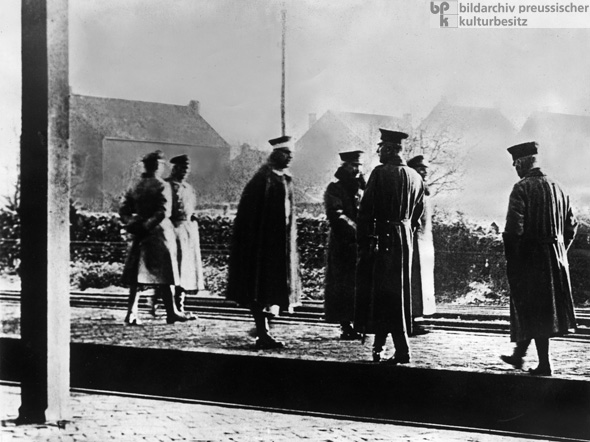
Wilhelm II. (4.v.l.) geht am Tag der Unterzeichnung seiner Abdankung über die Grenze in das holländische Exil

Kaiser Wilhelm II Cross the Dutch Border Following his Abdication

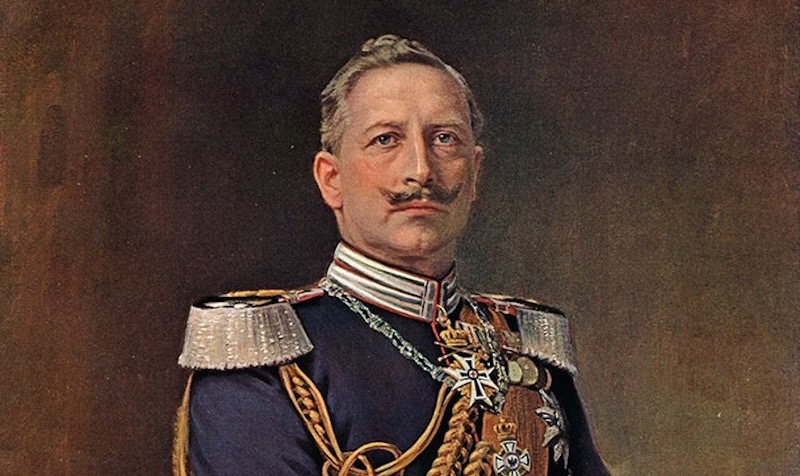
It was a gloomy day at the military headquarters of Kaiser Wilhelm II on November 9th 1918 when General Wilhelm Groener looked his sovereign in the eye and told Kaiser Wilhelm that the war was lost, and that he no longer had the support of the Army. The Kaiser, reeling from battlefield defeats and the mutiny of the High Seas Fleet was stunned, and Field Marshal Paul von Hindenburg, who had for all practical intents directed the war effort meekly nodded his concurrence with Groener. The Kaiser abdicated the throne and departed in his private train to the Netherlands the next day.

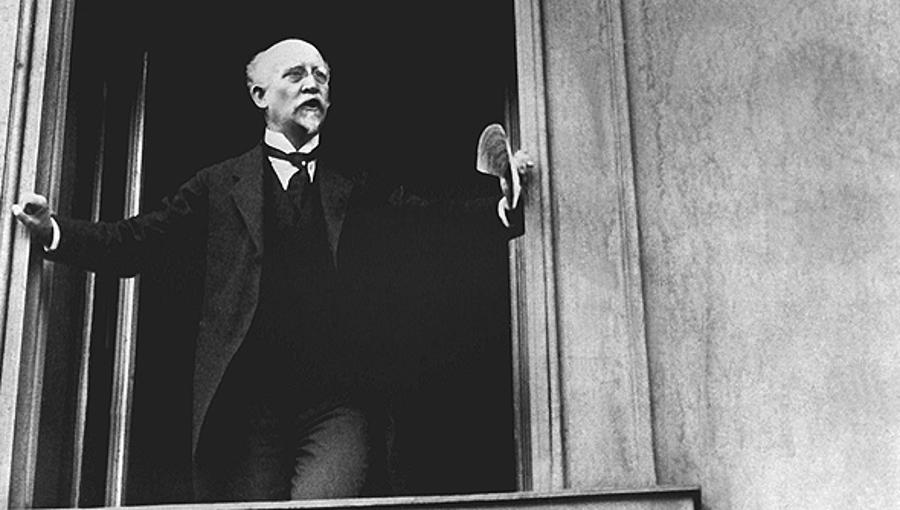
ausrufung-der-republik-in-berlin-preview-image_900x510

Phillip Scheidemann Proclaims the Republic 

In Berlin Majority Socialist parliament member Philip Scheidemann proclaimed the Republic, in part to prevent a Soviet takeover, which became known as the Weimar Republic. However, the promise of democracy was soured by a continued allied blockade, a humiliating peace treaty, loss of territory, and occupation of the industrial areas of the Ruhr and Saar by France and Belgium, heavy reparations, and war guilt; compounded by civil war between various right and left wing factions and major economic problems including massive hyper-inflation doomed the young republic.

Beer Hall Putsch

Beer Hall Putsch Re-enactment 

Five years later an Austrian in Munich who had fought and been wounded fighting for Germany in the First World War gathered with his political sympathizes and para-military street thugs and attempted a putsch. The man was Adolf Hitler, the head of the small and radical National Socialist Deutches Arbeiter Partei, or National Socialist German Workers Party, which he hoped that his putsch would result in a popular uprising against the German government in Berlin. The putsch was a failure and ended in bloodshed at the Feldherrnhalle on Munich’s Odeonsplatz.

Hitler was wounded, convicted of treason and jailed for nine months at the Landesberg prison where he wrote his book Mein Kampf and continued to recruit others to his cause. Under ten years later Hitler was appointed Chancellor by President Hindenburg. He quickly banned political opposition and began his persecution of Jews and others that he believed to be sub human and on Hindenburg’s death in 1934 merged the office of Chancellor and President become the leader of Nazi Germany.

In November 1938 Hitler’s and his henchmen were looking for a reason to openly begin persecuting the Jews, something that they had already been doing since the seizure of power. One of the chief reasons for this was to seize the property and financial resources of German Jews, which coincided with the expulsion of Polish Jews from Germany. A reason was furnished when a young Polish man, Herschel Grynszpan, whose parents were expelled from Germany on November 3rd went to the German embassy in Paris and shot and mortally wounded Ernst von Rath, a young diplomat, who reportedly had some anti-Nazi sentiments.

kristallnacht1

Kristallnacht 

The murder was what Josef Goebbels needed and on the night of November 9th Nazi storm troopers ransacked Jewish businesses, homes and synagogues causing hundreds of millions of Reichsmarks in damage, destroying over 200 synagogues and 7000 businesses. About 100 Jews were killed during the rampage, which went unchecked by police. Another 2000-3000 subsequently died either by suicide or in concentration camps. About 30,000 Jewish men were incarcerated. To add to the insult to injury Jews were charged for the damage done to their property and insurance payments that should have gone to them were collected by the state. The night became known as Kristallnacht, the night of broken glass and marked a major turn in the open Nazi persecution of Jews in Germany, which would extend throughout Europe and end in the Final Solution and the systematic murder of nearly six million Jews. World War Two ended with the total defeat of Germany and the Nazi regime.

berlin_wall_02

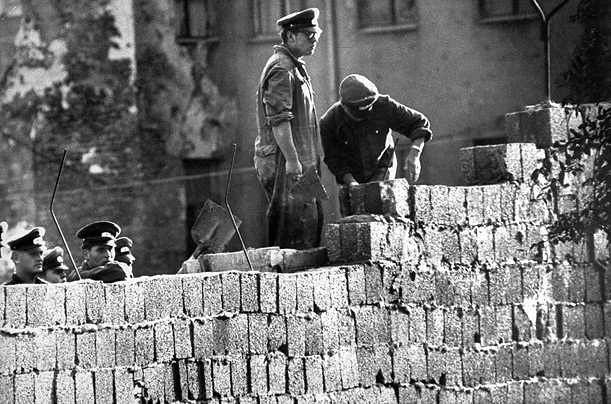
Occupied by the allied powers Germany was split in two, the East under the domination of the Soviet Union which became the German Democratic Republic, and the West which supported by the United States and Britain became the Federal Republic of Germany. The divided country became the focal point of what became the Cold War, the fortified border became infamous as the Iron Curtain. The divided Berlin was blockaded by the Soviets in 1948 and the subsequent airlift kept West Berlin Free. However in August 1961 as the Cold War escalated the leaders of East Germany erected a fence which became the Berlin Wall, a wall which was effectively a means to imprison the population. It seemed to be a fixture that would never come down.

berlin-wall_1412605c

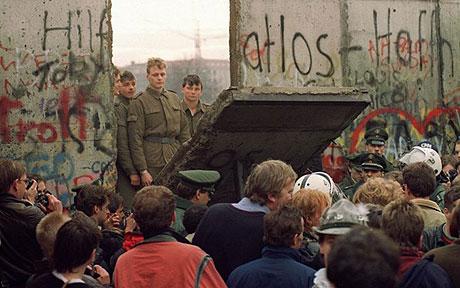
But in the 1980s the Cold War began to thaw, the economically strapped Soviet Union was bogged down in a costly war in Afghanistan, and a struggle against a Polish democratic movement; Premier Gorbachev sought to relieve the situation with a policy of openness. It backfired, throughout Eastern Europe, pro-democracy and pro-freedom groups began to protest the status quo, and as borders were opened hundreds of thousands of Eastern Europeans including thousands of East Germans went west through Hungary and Czechoslovakia. East Germans began to gather at the wall and on November 9th 1989 a tottering East German government decided to open border crossing points, but on hearing the news hundreds of thousands of people gathered at the six crossings demanding to be let through, finally, ignoring orders, Stasi Lieutenant Colonel Harald Jäger who commanded the Bornholmer Strasse crossing opened the gates. The wall had fallen and 339 days later East Germany was dissolved and Germany reunited.

The new Germany is the economic heart of the European Union and has become a champion of human rights and social progress. It has now been thirty years since the Wall fell, eighty-one years since Kristallnacht, ninety-four years since the Beer Hall Putsch and one hundred and one years since the abdication of Kaiser Wilhelm II. These are all important events, and our challenge as citizens of the world is never to forget just how important and fateful each was, and why November 9th is indeed the “fateful day.”

Peace,

Padre Steve+

Leave a comment

Filed under History, holocaust, nazi germany, Political Commentary

Trump Sets Stage for Turkish Offensive and Genocide Against Syrian Kurds


Awaiting Orders, Turkish Armor on Syrian Border

Friends of Padre Steve’s World,

I was stunned to find out Sunday that President Trump announced that U.S. advisors and other troops backing the Kurds in Syria were going to be pulled out in order to aid a Turkish offensive against them. It was an announcement evoked strong bi-partisan condemnations in Congress, but it appears that the President will not make down.

       U.S. Troops Pulling Out to Make Way for Turkish Offensive 

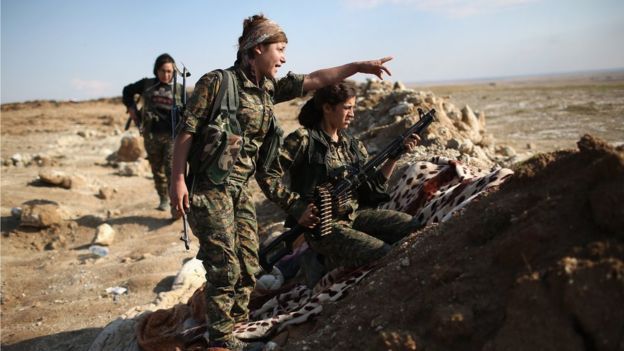
During the war against ISIS, or the Islamic State, it was the Kurds who were our most effective and and loyal ally. It was mostly due to their military prowess and sacrifice, that we achieved a large measure of success in defeating ISIS on the battlefields of Syria and Iraq. For the most part they did the dying for us and still are doing so. The Kurds were also responsible for clearing ISIS from much of northern Iraq.

Kurdish Forces in Action 

While crippled, ISIS is not yet defeated, its key leaders remain alive and the Kurds are necessary to ensure their final defeat. Our military commitment inside Syria has been minimal and achieved greater success than our substantially greater efforts in Iraq or Afghanistan. The Joint operations with the Kurds in Syrian and northwestern Iraq have arguably been our most successful operations in the Middle East since we invaded Afghanistan eighteen years ago.

Over a hundred years ago T. E. Lawrence provides the template for success that we have used with the Kurds. While we have given them important help, it has been their war to win or lose. Lawrence wrote his superiors:

“Do not try to do too much with your own hands. Better the Arabs do it tolerably than that you do it perfectly. It is their war, and you are to help them, not to win it for them. Actually, also, under the very odd conditions of Arabia, your practical work will not be as good as, perhaps, you think it is.”

We could keep doing that if we didn’t have a President who is willing to cut and run, and abandon the Kurds to the Turks under their leader Recep Erdogan. Erdogan is not just a Turk Nationalist, he is an Islamist. He and for that matter many generations of Turks have desired to crush the Kurds, a people left without a state when the borders of the former Ottoman Empire were redrawn after World War One. They live in Iraq, Syrian, and eastern Turkey. They are a distinct ethnic group who only want freedom and to be left in peace.

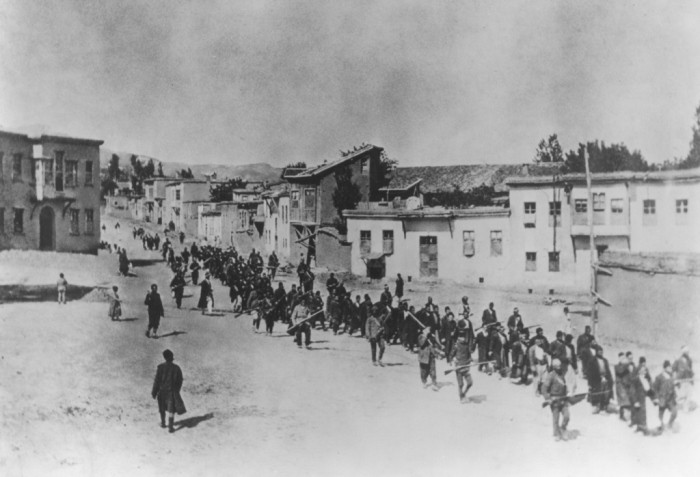
Now all the success against ISIS is in doubt and the Turks will have a free hand to exterminate the Kurds. History shows that they are quite good at genocide. The Armenian genocide was bloody and brutal. Between 700,000 and 1.5 million  Armenians were killed, others used as Slave Labor, placed in Concentration Camps, subjected to poison gas, infected with Typhus, in some cases pushed out to sea in overloaded unseaworthy small boats in condition that left them to drown.  Still others driven into the Syrian desert. The genocide began in 1915 and continued after the war, however, over the preceding decades they had been subjected to smaller yet brutal pogroms. At the same time the Turks conducted similar operations against ethnic Greeks and Abyssinians.

Now, the American President is presenting Turkey its long delayed chance to eliminate the Kurds. Sadly, with his emigration policies, those men and women who have fought alongside of us for the better part of a decade will not be afforded asylum and left to the bloody designs of the Turks, and the revenge of ISIS.

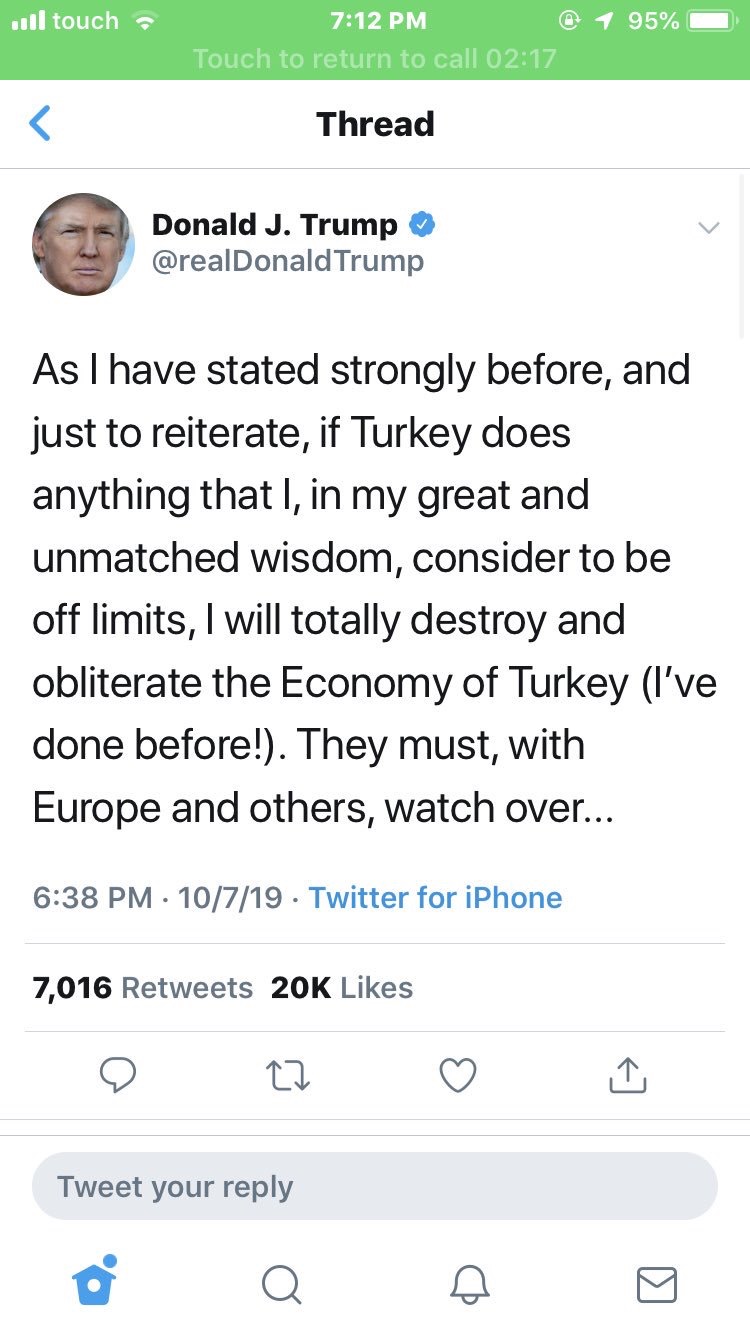
In response to his critics the President tweeted something so incredibly inane that I cannot begin to fathom it:

If he really believes this he should be removed from office under the 25th Amendment. Anyone who says that they have Great and Unmatched Wisdom” as they threaten to destroy the economy of another country with good options for support, such as Russia and China, our economic and military competitors is a loon.

At this point I can only imagine the worst, unless Congress votes to overturn his unilateral action. The blood of the Kurds will be on our hands, and we will be saddled with the reputation of being an unreliable ally that cannot be trusted. That is already happening across the globe as long time allies explore non-U.S. based options for their security. In such a case no amount of military might can save us. We will be alone, but then that is what Trump wants. He thinks an omnipotent military, a tightly controlled police state, and economic isolation through tariff after tariff, including against allies will Make America Great? 

Although all of this is connected I digress. We are watching the President melt down before our eyes. His actions are erratic and setting us, all of us, his supporters and opponents alike up for disaster, economic, and possibly military. In his desperation to save his Presidency with impeachment looming, it is highly likely that he will become more unstable and devolve further.

But right now I expect the worst for the Kurds.

Anyway, until tomorrow,

Peace,

Padre Steve+


2 Comments

Filed under Foreign Policy, History, middle east, Military, national security, Political Commentary, War on Terrorism

“If You Are Offended I am not In the Least Bit Sorry” Witnesses to Genocide: George Patton, Dwight Eisenhower and Edward R. Murrow

Friends of Padre Steve’s World,

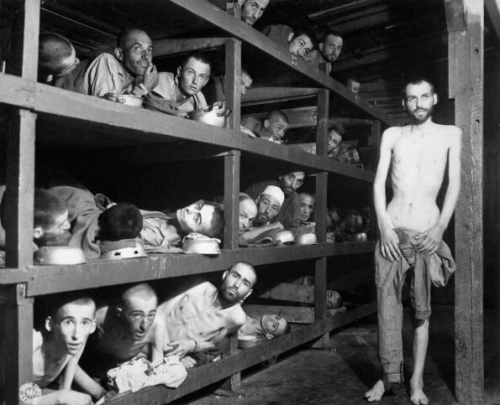
During our trip to Germany last year we visited the Buchenwald Concentration Camp, which as a Major Camp had numerous sub-Camps, including Ohrdruf which Generals George Patton and Dwight Eisenhower visited shortly after its liberation in April 1945. Both went out of their way to describe the horrors they saw.

In our day there are fewer and fewer people who lived through or personal saw or documented the evils of the Nazi Concentration Camps. Likewise, there are a host of Holocaust deniers who produce a plethora of pseudo-scholarly articles claiming to be legitimate historians. Even more frighteningly the rise of apologists for the Nazi regime including those who are active members of allegedly conservative parties in the United States and the European Union is beginning to influence politics. The abject racism, rejection of anyone considered racially inferior, and quite often their unhidden anti-Semitism show that what lies in the dark heart of Naziism is not dead and in fact is rising.

In the United States its rise is being fueled and legitimized by the Presidency of Donald Trump who has referred to American Nazis and White Supremacists as “very good people” after one of their protests where an anti-Nazi demonstrator was murdered and others brutally attacked. In the same time frame a good number of Republican candidates have exposed themselves as White Supremacists and actual Nazis while running for office. A host of new-Nazi and White supremacist organizations openly meet and flood the internet with their race hatred, and it goes unchecked by the Administration and the Justice Department.

The fact is that anyone who denies the Holocaust, attempts to minimize it, or advocates the same policies of race hatred and violence against political, religious, or other opponents is no better than the perpetrators of the Holocaust. Likewise, those who stand by and say nothing are worse. As Yehuda Bauer wrote:

“The horror of the Holocaust is not that it deviated from human norms; the horror is that it didn’t. What happened may happen again, to others not necessarily Jews, perpetrated by others, not necessarily Germans. We are all possible victims, possible perpetrators, possible bystanders.”

The good thing is that there were people who took the time to record what they saw in the Nazi Concentration Camps and exposed those deeds to the world in such a way that only perverted and evil people could brazenly deny those facts.

One of the most detailed descriptions of a liberated Concentration Camp was written by General George Patton in his memoirs entitled War as I Knew It.

… we drove to Ohrdruf and visited the first horror camp any of us had ever seen. It was the most appalling sight imaginable.

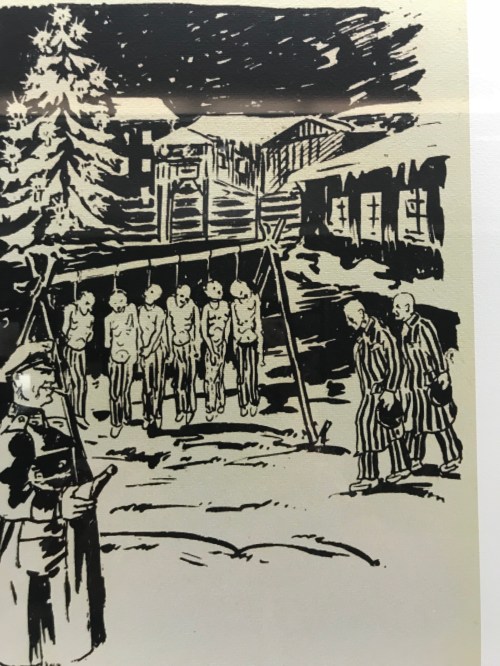
A man who said he was one of the former inmates acted as impresario and showed us first the gallows, where men were hanged for attempting to escape. The drop board was about two feet from the ground, and the cord used was piano wire which had an adjustment so that when the man dropped, his toes would just reach the ground and it would take about fifteen minutes for him to choke to death, since the fall was not sufficient to break his neck. The next two men to die had to kick the board out from under him. It was stated by some of the Germans present that the generals who were executed after the Hitler bomb incident were hanged in this manner.

Our guide then took us to the whipping table, which was about the height of the average man’s crotch. The feet were placed in stocks on the ground and the man was pulled over the table, which was slightly hollowed, and held by two guards, while he was beaten across the back and loins. The stick which they said had been used, and which had some blood on it, was bigger than the handle of a pick.

Our guide claimed that he himself had received twenty-five blows with this tool. It later developed that he was not a prisoner at all, but one of the executioners. General Eisenhower must have suspected it, because he asked the man very pointedly how he could be so fat. He was found dead next morning, killed by some of the inmates.

Just beyond the whipping table there was a pile of forty bodies, more or less naked. All of these had been shot in the back of the head at short range, and the blood was still cooling on the ground.

In a shed near-by was a pile of forty completely naked bodies in the last stages of emaciation. These bodies were lightly sprinkled with lime – not, apparently, for the purpose of destroying them, but to reduce the smell. As a reducer of smell, lime is a very inefficient medium.

The total capacity of the shed looked to me to be about two hundred bodies. It was stated that bodies were left until the shed was full and then they were taken out and buried. The inmates said some three thousand people had been buried from this shed since January 1, 1945.

When our troops began to draw near, the Germans thought it expedient to remove the evidence of their crimes. They therefore used the inmates to exhume the recently buried bodies and to build a sort of mammoth griddle of 60 cm. railway tracks laid on a brick foundation. The bodies were piled on this and they attempted to burn them. The attempt was a bad failure. Actually, one could not help but think of some gigantic cannibalistic barbecue. In the pit itself were arms and legs and portions of bodies sticking out of the green water which partially filled it.

General Walker and General Middleton had wisely decided to have as many soldiers as possible visit the scene. This gave me the idea of having the inhabitants themselves visit the camp. I suggested this to Walker, and found that he had already had the mayor and his wife take a look at it. On going home those two committed suicide. We later used the same system in having the inhabitants of Weimar go through the even larger slave camp (Buchenwald) north of that town. (Excerpted for G. Patton War as I Knew It)

Dwight D. Eisenhower wrote after seeing the camp:

The same day [April 12, 1945] I saw my first horror camp. It was near the town of Gotha. I have never felt able to describe my emotional reactions when I first came face to face with indisputable evidence of Nazi brutality and ruthless disregard of every shred of decency. Up to that time I had known about it only generally or through secondary sources. I am certain, however that I have never at any other time experienced an equal sense of shock.

Eisenhower was so moved that he ordered that the best reporters and newsmen come and record what he had seen. He did not want the horrors to be denied by history. He wrote:

I visited every nook and cranny of the camp because I felt it my duty to be in a position from then on to testify at first hand about these things in case there ever grew up at home the belief or assumption that `the stories of Nazi brutality were just propaganda.’ Some members of the visiting party were unable to through the ordeal. I not only did so but as soon as I returned to Patton’s headquarters that evening I sent communications to both Washington and London, urging the two governments to send instantly to Germany a random group of newspaper editors and representative groups from the national legislatures. I felt that the evidence should be immediately placed before the American and British publics in a fashion that would leave no room for cynical doubt.

One of those reporters was Edward R. Murrow who broadcast his visit to Buchenwald:

There surged around me an evil-smelling stink, men and boys reached out to touch me. They were in rags and the remnants of uniforms. Death already had marked many of them, but they were smiling with their eyes. I looked out over the mass of men to the green fields beyond, where well-fed Germans were ploughing….

[I] asked to see one of the barracks. It happened to be occupied by Czechoslovaks. When I entered, men crowded around, tried to lift me to their shoulders. They were too weak. Many of them could not get out of bed. I was told that this building had once stabled 80 horses. There were 1200 men in it, five to a bunk. The stink was beyond all description.

They called the doctor. We inspected his records. There were only names in the little black book — nothing more — nothing about who had been where, what he had done or hoped. Behind the names of those who had died, there was a cross. I counted them. They totaled 242 — 242 out of 1200, in one month.

As we walked out into the courtyard, a man fell dead. Two others, they must have been over 60, were crawling toward the latrine. I saw it, but will not describe it.

In another part of the camp they showed me the children, hundreds of them. Some were only 6 years old. One rolled up his sleeves, showed me his number. It was tattooed on his arm. B-6030, it was. The others showed me their numbers. They will carry them till they die. An elderly man standing beside me said: “The children — enemies of the state!” I could see their ribs through their thin shirts….

We went to the hospital. It was full. The doctor told me that 200 had died the day before. I asked the cause of death. He shrugged and said: “tuberculosis, starvation, fatigue and there are many who have no desire to live. It is very difficult.” He pulled back the blanket from a man’s feet to show me how swollen they were. The man was dead. Most of the patients could not move.

I asked to see the kitchen. It was clean. The German in charge….showed me the daily ration. One piece of brown bread about as thick as your thumb, on top of it a piece of margarine as big as three sticks of chewing gum. That, and a little stew, was what they received every 24 hours. He had a chart on the wall. Very complicated it was. There were little red tabs scattered through it. He said that was to indicate each 10 men who died. He had to account for the rations and he added: “We’re very efficient here.”

We proceeded to the small courtyard. The wall adjoined what had been a stable or garage. We entered. It was floored with concrete. There were two rows of bodies stacked up like cordwood. They were thin and very white. Some of the bodies were terribly bruised; though there seemed to be little flesh to bruise. Some had been shot through the head, but they bled but little.

I arrived at the conclusion that all that was mortal of more than 500 men and boys lay there in two neat piles. There was a German trailer, which must have contained another 50, but it wasn’t possible to count them. The clothing was piled in a heap against the wall. It appeared that most of the men and boys had died of starvation; they had not been executed.

But the manner of death seemed unimportant. Murder had been done at Buchenwald. God alone knows how many men and boys have died there during the last 12 years. Thursday, I was told that there were more than 20,000 in the camp. There had been as many as 60,000. Where are they now?

I pray you to believe what I have said about Buchenwald. I reported what I saw and heard, but only part of it. For most of it, I have no words.I

If I have offended you by this rather mild account of Buchenwald, I’m not in the least sorry….

The fact is that as much as we want to pretend that what happened a Buchenwald, Flossenbürg, Dachau, Bergen-Belsen, Auschwitz, Soribor, Belzec, and Treblinka are images from history that cannot happen again, however, they are an ever present reality and they cannot be ignored. Sadly, I cannot help but to imagine that this can and will happen again in my lifetime. The late Primo Levi, a Jewish Italian philosopher and survivor of Auschwitz wrote: “It happened, it can happen again.” 

I will now quote from one of my favorite episodes of Star Trek the Next Generation called The Drumhead uttered by Jean Luc Picard:

We think we’ve come so far. Torture of heretics, burning of witches it’s all ancient history. Then – before you can blink an eye – suddenly it threatens to start all over again.

That is our reality. There are people, even neighbors and those that we think are friends who would be perpetrators or bystanders when those that transgress the way of Trump are take us from our homes and families because of our beliefs. I would love to be wrong about this, but I am a historian and a theologian and I know the human condition far too well to sit back and remain silent, no matter what the cost.

Last year I had a Facebook exchange with a friend who is a retired Navy Chaplain. He is very much a Trump supporter and apologist. He is very happy about Justice Kavanaugh being in the Supreme Court. The stories of the victims and their claims did not matter to him. Despite that I do not believe that he is a bad man or an evil person. I simply believe that like Martin Niemöller that he has made a bad choice in the man and party that he currently supports and that he will eventually regret it. I could be wrong, he might not turn out to be a Niemöller, but a Reichsbishof Müller. Sincerely hope that he does not become the latter.

I keep quoting historian Timothy Snyder, but he was all too correct when he wrote these words less than two years ago:

The European history of the twentieth century shows us that societies can break, democracies can fall, ethics can collapse, and ordinary men can find themselves standing over death pits with guns in their hands. It would serve us well today to understand why.

If you don’t believe me read the words of the President, his closest supporters, the prominent political preachers of the Christian Right, and any number of Trump leaning columnists, pundits, and politicians. There are some who are so far gone that they will accuse any opponent of being disloyal, not the the Constitution or the law but to President Trump.

Last year, one of those people tried to get my commanding officer to have me tried by Court Martial for a sermon in which he lied about what I said. I had to spend my money to hire a lawyer to defend me from the false charges and have them dismissed during the preliminary investigation.
Trust me, I know what resistance will mean if this President and his cult like followers are not stopped. Our fate will be worse than that of Nazi Germany because we should have known better. We should have learned from Dwight Eisenhower and George Patton. We should have learned fro Dietrich Bonhoeffer and Martin Niemöller, we should have learned from the Nuremberg trials, but we have not.

Facing possible impeachment, and with a growing likelihood that the Democrats will extend their control of the House, possibly regain the Senate, and maybe defeat Trump in the 2020 elections, a desperate Trump, backed  by his true believers may very well attempt to circumvent those elections and impeachment hearings.  With the laws already enacted in the Patriot Act and numerous executive orders there is little to stop a President who has no respect for the law or the Constitution from declaring full emergency powers should any war, terrorist act, or natural disaster be declared. That’s what makes all of this so frightening. Trump only needs an event which is scary enough to frighten people into following any emergency decree. Americans wouldn’t be the first to do so, it’s human nature: the need for security overrides the need for the rule of law and freedom.

So with all of that happy commentary I will leave you until tomorrow.

Until then have a good night, and please, never forget.

Peace

Padre Steve+

10 Comments

Filed under ethics, faith, History, holocaust, leadership, Military, nazi germany, News and current events, Political Commentary

The Limits Of Obedience: The Lessons Of Ludwig Beck, Claus Von Stauffenberg, and Government Officials In Authoritarian Times

Friends of Padre Steve’s World,

While we were in Berlin last year I visited the German Resistance Memorial Center. The museum is located in what was the headquarters of the German Army in World War One, the Weimar Republic, and during the Nazi Era. On July 20th 1944, German Army officers attempted to kill Adolf Hitler, overthrow the Nazi regime, and end the war. Sadly, they failed in their attempt and most of those involved were tried and executed for what their criminal government considered treason.

Of course by the law of their times their act was treasonous, but morally it was all that men and women committed to the rule of law and human rights could do.

One of the conspirators, Colonel Claus von Stauffenberg was well aware of how their actions would be categorized under current German law. The man who planted a bomb and attempted to assassinate and overthrow Hitler noted:

“I know that he who will act will go down in German history as a traitor; but he who can and does not, will be a traitor to his own conscience.” 

He was correct by the law of the times. All of the officers involved had all sworn a personal oath of obedience to Adolf Hitler as the Führer and Reichskanzler of Germany in 1934. At the time most of the men who swore that oath did not anticipate what would come. Many of the older officers had served in the Imperial Army and sworn an oath to the Kaiser and their dynasties of the lands where they entered service. That changed in 1918 when the Weimar Republic came into existence and military officers as well as civil servants swore an oath to the constitution rather than a person.

A year after Hitler came to power as Reichskanzler, President Hindenburg died. Hitler, seized the opportunity used the occasion to swear the military, as well as the civil service to a new oath. This oath was not to the Constitution, or to Office of thePresidency or Chancellor, but to him personally as the Führer and Reichskanzler.

Most officers and civil servants, even those uncomfortable with Hitler’s policies obeyed their oaths and simply stayed in their lanes and did their jobs, even when they had incontrovertible evidence of Nazi atrocities.

Yet there were others who for a number of reasons, in some cases noble, and in others pragmatic, or even base, decided to break the oath they had sworn to Hitler in 1934. Among these men was General Ludwig Beck. Beck noted:

“It is a lack of character and insight, when a soldier in high command sees his duty and mission only in the context of his military orders without realizing that the highest responsibility is to the people of his country.”

Beck also wrote something that is all to important to any military officer, intelligence and law enforcement officials, as well as diplomats in such times as we live today:

“Final decisions about the nation’s existence are at stake here; history will incriminate these leaders with bloodguilt if they do not act in accordance with their specialist political knowledge and conscience. Their soldierly obedience reaches its limit when their knowledge, their conscience, and their responsibility forbid carrying out an order.” 

With the rise of legally elected authoritarian rulers in Europe and the Americas should concern men and women who have sworn to uphold the constitutions of their countries. These leaders campaigning against democratic institutions, and upon gaining power purge those institutions of opponents and use them to solidify their own power. The veneer of democracy is maintained while the soul of it is crushed. Too often those charged with guarding it are willing participants in its death, soldiers, civil servants, judges, and legislators.

That is what Beck understood. He resigned his office as Chief of Staff of the German Army in 1938 over Hitler’s plan to invade Czechoslovakia, became a member of the anti-Hitler resistance and died in the failed attempt on Hitler’s life on July 20th 1944. He was a career Army officer and a conservative, but he realized that there are limits to obedience in the face of evil.

I fear that there are many men and women in nations whose democratic institutions are being subordinated to authoritarian rulers who will not rise to the occasion and allow those institutions and eventually their nations to perish. Sadly, that also includes those in the United States.

I will leave you with that thought for the evening.

Until tomorrow,

Peace,

Padre Steve+

3 Comments

Filed under Foreign Policy, History, laws and legislation, leadership, Military, national security, nazi germany, News and current events, Political Commentary

The First Rule: Above All Thou Shall Not Be a Bystander

Jewish Men being Rounded Up in Baden with Citizens looking on  

Friends of Padre Steve’s World,

Holocaust historian Yehuda Bauer wrote: “Thou shalt not be a victim, thou shalt not be a perpetrator, but, above all, thou shalt not be a bystander.”  These words from his book Perpetrators, Victims, Bystanders: The Jewish Catastrophe 1933-1945 serve as a warning to members of a society where various minority groups are being labeled as enemies of the state and often less than human.

Two years ado we have watched as a rabid Trump supported sent pipe bombs to a dozen men and women who the President has personally attacked in speeches, interviews, or on his Twitter account. We have watched as a White man gun down two Black senior citizens in a Louisville, Kentucky Kroger store after failing to gain access into a Black Baptist Church. Last year have watched as a hate filled anti-Semite kill eleven Jews, mostly senior citizens in the Tree of Life Synagogue in Pittsburgh. Likewise we watch as the President turns a caravan of Honduran refugees, mostly women and children, nearly 1,000 miles from the US border into a terrorist caravan full of MS-13 and ISIS killers, something that he reprises at nearly every rally that he headlines.

The President has blamed the intended victims for the actions of a very real terrorist who happened to be one of his most stalwart supporters. He ignored the racially motivated murder of Black senior citizens. He made jokes about having a “bad hair day” within hours of the massacre at Tree of Life on his way to a political rally where he again excoriated the press and his political opponents blaming them for the violent acts of his supporters or men who have fully bought in to the President’s racial conspiracy theories.

Many people wonder how this can happen, but it happens all too easily. All that is needed is a population that has been conditioned by propaganda, based on historical myth, untruth, a prevailing climate of fear, and in which the threat of crisis, real or imagined, can delude even good, able, and even extraordinary people to commit crimes that if they were not real, would be incomprehensible to the mind.

In such times decisions have to be made, difficult decisions, the decision to stand for what is right, even if the country’s leaders, and their most vocal followers threaten violence and the use of government force against those who dissent.

Primo Levi, an Italian Jew who survived Auschwitz wrote, “Monsters exist, but they are too few in number to be truly dangerous. More dangerous are the common men, the functionaries ready to believe and to act without asking questions.” 

The excuse of just following orders has been shown to be no excuse. Men and women who follow such orders under a thin veneer of technical legality will be condemned by history. The men of the Wehrmacht who gave logistic, communication, and security support to the Einsatzgruppen that were committing genocide in the Soviet Union were as guilty as the trigger pullers.

Genocide begins when those who know better turn their backs on crimes committed against a few. The last lines of the classic film Judgement at Nuremberg are illuminating when it comes to understanding men and women who do just that. In the film, Burt Lancaster playin the convicted Nazi judge Janning asks Judge Heywood played by Spencer Tracy to visit him. In that closing scene Janning implored Heywood to understand that he never believed that things would go so far.

Ernst Janning: “Judge Haywood… the reason I asked you to come: Those people, those millions of people… I never knew it would come to that. You must believe it, You must believe it!”

Judge Dan Haywood: “Herr Janning, it “came to that” the first time you sentenced a man to death you knew to be innocent.”

Being a perpetrator is one thing, but being a bystander is worse. As Hannah Arendt noted: “The sad truth is that most evil is done by people who never make up their minds to be good or evil. 

Until Tomorrow,

Peace

Padre Steve+
2 Comments

Filed under History, holocaust, laws and legislation, leadership, nazi germany, Political Commentary

They Become Stooges: Otherwise Good People Who Serve Evil Leaders the Story Of Friedrich Kritzinger

Friends of Padre Steve’s World,

Saint Augustine wrote: “Justice being taken away, then, what are kingdoms but great robberies.”

I saw that quote in relation to Friedrich Kritzinger, a lawyer, and Prussian civil servant who served as State Secretary for the Reich Chancellery during the Third Reich and was a participant at the Wannsee conference. The authors of that article noted something that should serve as a reminder to us: “by working as a lawyer for a regime, which he had known from the start to be criminal, he made himself a stooge.” (Stefan Paul-Jacobs and Lore Kleiber in The Participants: the Men of the Wannsee Conference edited by Hans-Christian Jasch and Christoph Kreutzmüller, p.217)

Kritzinger was not what I would call an evil man. He was a traditional German conservative and Nationalist who agreed with many Nazi policies, albeit not to their extremes. But he also had strong moral and religious convictions that caused him to question and at times attempt to mitigate those policies. He was a member of the Confessing Church which condemned the Nazified faith of Reichsbishof Müller and the German Christian movement, but even many of them were receptive to the nationalism and anti-Communist stances of the Nazis. Otto Dibelius, the General Superintendent of the Confessional Lutherans was a hard line conservative and in 1933 at a service for the new Reichstag: “We have learned from Martin Luther that the Church cannot get in the way of State power when it does what it is called to do. Not even when [the state] becomes hard and ruthless…. When the state carries out its office against those who destroy the foundations of state order, above all against those who destroy honor with vituperative and cruel words that scorn faith and vilify death for the Fatherland, then [the state] is ruling in God’s name!” (Richard Seigman-Gall, the Holy Reich: Nazi Conceptions of Christianity 1933-1945 p.68)

Kritzinger himself did not join the Party until 1938 when he was recruited by Hans Lammers to fill a vacancy in the Reich Chancellery for which Party membership was required. Kritzinger was concerned. He only accepted the job and membership in the when assured that he did not have to be politically active and did not have to hire ardent Nazis for jobs in the Chancellery.

At Wannsee he was the only participant who demonstrated any sense of concern about the Final Solution of the Jewish Problem. After the conference he headed the only agency not to sign off on Reinhard Heydrich’s policies against the Jews. According to some he worked inside the system to try to mitigate the worst aspects of Hitler’s policy decisions. He felt shame for what the regime did. That being said “from 1933 on, Kritzinger held positions of responsibility and colluded in disgusting breeches of law and maintaining the illusion that the Nazi dictatorship was a constitutional state.”

The fact is that the Nazi regime believed that it was a functioning constitutional state and attempted to preserve the illusion of legality and the rule of law. Men like Kritzinger helped them to do just that. In his positions, first at the Ministry of Justice and then at the Reich Chancellery, “was held in high esteem… not as an ideological acolyte of the new leader but as an expert on law. Responsible for matters of state law, he was directly complicit in Nazi atrocities.” This included his legal justification for the Night of the Long Knives.

At the Reich Chancellery Kritzinger made sure that the administrative apparatuses the State functioned smoothly. “The facade of legality helped ensure that the Nazi regime and its crimes were accepted even by its detractors, and their participation in the system thereby facilitated.”

After Wannsee, when Kritzinger began to fully grasp what was happening in regard to the Jews he attempted to resign but his resignation was refused. His boss, Hans Lammers refused and rejected his dismissal with the remark that without Kritzinger things would run even worse. In fact, men like Kritzinger were often able to delay or hinder decisions by not passing along memos as they saw fit. Conversely they could speed decisions by ensure that information reached Hitler.

When questioned after the war Kritzinger stated:

My consultations with Hitler were of course tailored to his mentally. It goes without saying that it would have been insane to say that such and such a decision would adversely affect Jews. One had to phrase it differently, and say that it would trigger serious public unrest. Obviously we could not say anything to Hitler he did not want to hear. Especially when it came to those decisions.

I wonder how many people in the American government and in the upper echelons of the Trump administration justify and equivocate their participation in it just as Kritzinger and others like him did his under the Nazis.

Until tomorrow,

Peace

Padre Steve+Otto

2 Comments

Filed under ethics, History, holocaust, leadership, nazi germany, Political Commentary

Threats of Civil War and Accusations Of Treason: Trump, His Reichsbishof, and Those Ready to Kill in his Name

Friends Of Padre Steve’s World,

Just a couple of thoughts tonight. We celebrated Judy’s Birthday with our friends in Germany and even made a trip over the border to France where we got her birthday cake. But I digress…

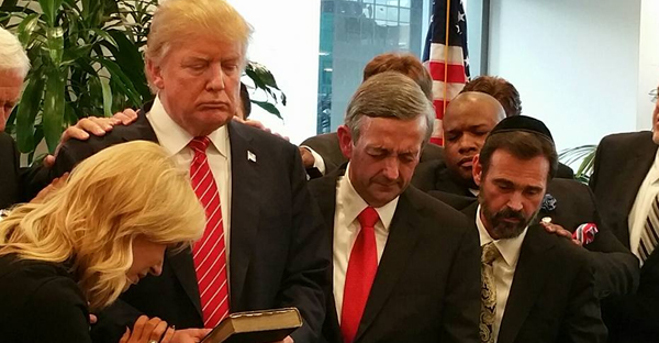
Tonight I am very concerned about what President Trump and some of his leading supporters, especially his Reichsbishof , Pastor Robert Jeffress, of First Baptist Church Dallas threatened that if he were impeached that it would bring about a civil war. During his Twitter tirade the President accused the Congressman Adam Schiff, Chairman of the House Intelligence Committee of Treason.

First, the whole concept of Treason when it comes to United States law and the Constitution, which set very tight limitations on what can be charged as treason.

In fact it is spelled out in the Constitution:

“Treason against the United States, shall consist only in levying war against them, or in adhering to their enemies, giving them aid and comfort.” 

That does not sound like Schiff, the Whistleblower, or any of Trumps political opponents or media critics. The only ones coming close to the definition is Trump himself, Rudi Giuliani, Attorney General Barr, and Secretary of State Mike Pompeo who all seem to be neck deep in not only the Ukrainian affair, but those involving other countries as well. Sadly, this is just the tip of the iceberg.

Unlike Hitler’s Germany, the Soviet Union Of Stalin, or for than matter any government ruled by a dictator, our Constitution does not say that the President is above the law. That is why the process impeachment of impeachment, and what can trigger it is in the Constitution. It is not about where you like a President or his policies at all, it is about holding the Chief Executive accountable to the Legislative Branch, which is given first place in the Constitution, including oversight of the Exectutive Branch, and advice, consent, and voting on the appointment of those of the Judicial Branch.

Okay, that was bad enough, a President who does not respect the Constitution and law is pretty bad, but one who re-tweets men like Jeffress that make threats of civil war is repugnant and repulsive. Trump tweeted Jeffress’s comments with his own his own comments:

If the Democrats are successful in removing the President from office (which they will never be), it will cause a Civil War like fracture in this Nation from which our Country will never heal,”

This is dangerous. The fact that first a Pastor would threaten civil war should the man he supported for president and defends today is much more like an Ayatollah, Taliban preacher, or somebody out of the religiously supported wars of the Reformation, or the Crusades than anything our Founders accepted. The fact that Jeffress pastors the flagship church of a denomination which was founded upon its support of slavery and later secession and civil war is ironic. They are remarks that any Southern Baptist today should flee from, and I am a graduate of Southwestern Baptist Theological Seminary, class of 1992.

Likewise I am a historian who has studied and written extensively about the American Civil War, Slavery, Reconstruction, Jim, Crow and the Civil Rights Movement, the German Civil War that followed World War One, during the Weimar Republic, and the wars which followed the Reformation in Europe and England. I have also visited countries in the Balkans after their civil wars of the 1990s, and been in the middle of of the Sunni-Shia Civil War in Iraq in 2007-2008.

The civil war that Trump, Jeffress, and other Trump supporters, including the so-called Oath Keepers threaten, will not be like the American Civil War with massed armies fighting a continental war, instead it will be much more like the Spanish Civil War, Iraq, Syria, Ireland, the wars in the former Yugoslavia, or those of the 1970s and 1980s in Central America. They will be murderous, terrorist type wars, insurgencies with no end. I have seen and studied these wars. Anyone advocating them is either evil, or insane.

I think that applies to both the President, the Pastor, and their armed fanatical supporters.

I say, let the Congress do its job and follow the law and Constitution regardless of where it leads.

So until tomorrow,

Peace,

Padre Steve+

30 Comments

Filed under civil rights, civil war, ethics, faith, History, Political Commentary

Flossenbürg Concentration Camp: State Sanctioned Punishment for Profit

Friends of Padre Steve’s World,

We are on the tail end of of trip to Germany, now visiting friends near the Rhein River in a town not far from Karlsruhe. Tomorrow is Judy’s Birthday and on the way here we visited four towns within a fifteen mile radius of each other where other members of her mothers family emigrated first to the Black Sea regain of Russia, and then to the United States In 1870. The interesting thing is that it took nearly half a century for her family to begin to assimilate into America. They lived in German villages and spoke German. Her mother, born over 50 years after the family came to the United States first learned English in the public school. I preface this article, which has nothing to do with anything above, to remember how many of our European ancestors maintained their language, culture, and took decades before they assimilated into our country, and not to be so hard on darker skinned immigrants from other parts of the world who are just beginning the process that so many of our European ancestors endured. 

The article below was written about a year ago and deals with how a authoritarian and racist police state turned its system of punishment into an opportunity for profit at the expense of human lives. 

So until tomorrow,

Peace,

Padre Steve+

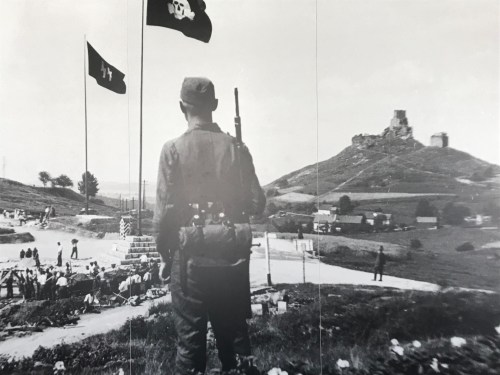
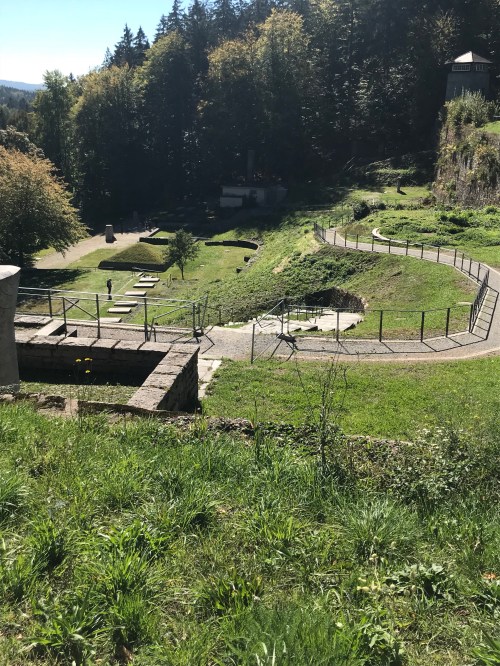
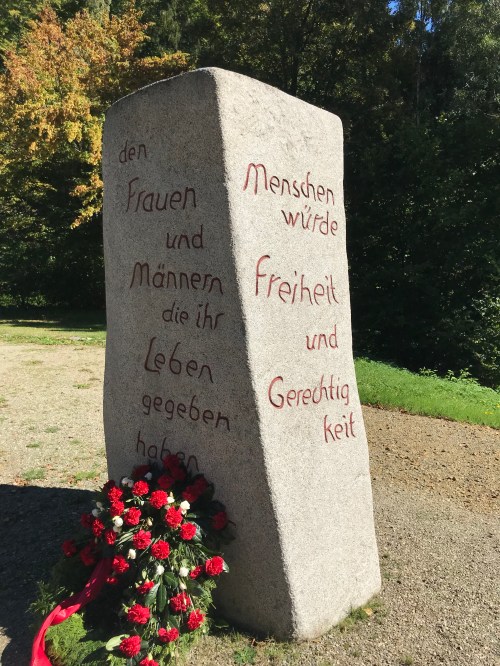
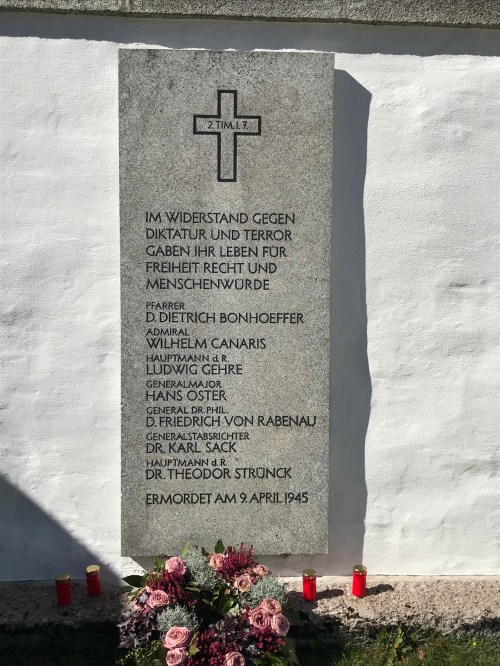
Last year, on our way from Munich to Berlin we stopped to visit the memorial at the site of the former Flossenbürg Concentration Camp. For most people it is best known as the site where Dietrich Bonhoeffer, Admiral Wilhelm Canaris, General Hans Oster and others implicated in the 20th of July plot to assassinate Hitler. However, the evil committed there was far greater than the execution of these outstanding men.

In May of 1938 the SS-Wirtschafts- und Verwaltungshauptamt or the SS Main Economic and Administrative Office constructed a labor camp for German political and other prisoners at the town of Flossenbürg near the Czech border in northern Bavaria. Directed by SS Gruppenführer Oswald Pohl, a former German Navy officer and paymaster. Already a dedicated Nazi, Pohl gave up his Navy career in 1933 to take a commission in the SS at the behest of Heinrich Himmler who desired to use Pohl’s military administrative experience to set up a more professional and efficient administrative branch.

Pohl was the man for the job, and over time his influence grew. He was appointed to head the Hauptamt Haushalt und Bauten or the Main Office for Budget and Construction, and over time his responsibility continued to grow. German historian Heinz Höhne who wrote of Pohl:

Four potent departments placed Pohl’s hand firmly on the levers of power in the SS empire: he was in charge of the entire administration and supply of the Waffen-SS; he controlled the 20 concentration camps and 165 labor camps; he directed all SS and Police building projects; he was in charge of all SS economic enterprises.

But in 1938 Pohl was just beginning his rise in the SS. He realized that the Concentration Camps could be used for economic reasons as well as the punishment of the Reich’s enemies. Himmler appointed Pohl to oversee the economic and business operations of the camps. In March of 1938 they began at Mauthausen in Austria by partnering with the SS operated German Earth and Stoneworks Corporation (DEST) excavate Granite using Slave labor. In May they did the same at Flossenbürg.

Pohl’s understanding of labor was thoroughly Nazi, he wrote:

“SS industries [Unternehmen] have the task…to organize a more businesslike (more productive) execution of punishment and adjust it to the overall development of the Reich.”

Flossenbürg’s prisoners initially worked in the granite quarry above the town. They, like other slave laborers were exploited and even the more pragmatic views of Pohl’s office in terms of exploitation were based on the policies of extermination. As time went on Pohl developed a formula to base the economic profits of each prisoner. This was based on the “rental” of each prisoner to industry, minus food and clothing, the profits from anything left by them when they died, minus the expense of the cremation, based on an expected lifespan of nine months as a slave laborer. Pohl expected a profit of about 1,630 Reichsmarks per inmate employed as a slave laborer.

Flossenbürg was one of the second generation camps designed to be more than a place of extrajudicial punishment for enemies of the Nazi regime. It was designed for economic exploitation and extermination through work. While the initial inmates were Germans it would become a place where people from eighteen nations were worked to death.

Like Mauthausen, Flossenbürg supplied laborers to DEST which ran the quarry. The quarry is still in operation, though most of the work is done by machines run by very few actual well paid workers. The machines can be heard from the grounds of the former camp.

The camp grew and so did the numbers of prisoners, especially from countries conquered by the Nazis. Germans who made up the majority of the prisoners from its opening until late 1940 were eclipsed by Poles, Russians, and Hungarians. By the end of the war the camp had housed about 100,000 prisoners, of which about 30,000 died or were executed there.

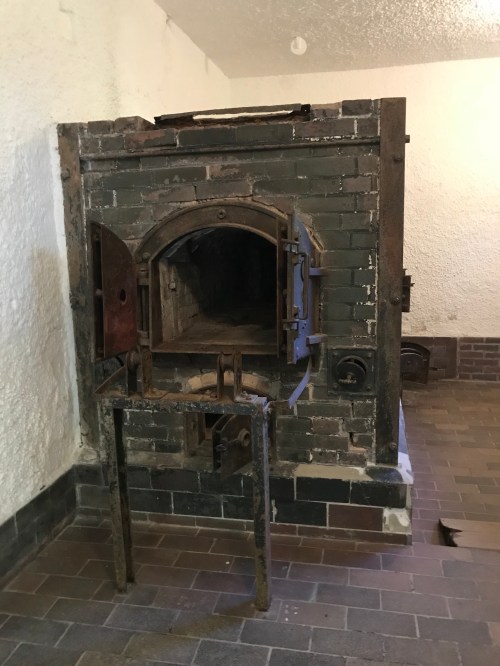
As the number of deaths rose the process to dispose of the remains of the victims required that a crematorium be constructed. It was built in a valley at the base of the camp and ashes were disposed of near it in what is known as The Valley of Death. Those killed not only included those inmates who were worked to death, died of starvation or disease, but also the Polish and Soviet prisoners of war killed on the orders of the regime.

In 1943 the Messerschmitt facility in Regensburg moved parts production for the Bf-109 fighter plane to Flossenbürg. Camp inmates became part of the workforce producing those parts as well as other munitions for the German armaments industry.

The camp was liberated by the American 90th Infantry Division on April 23rd 1945.

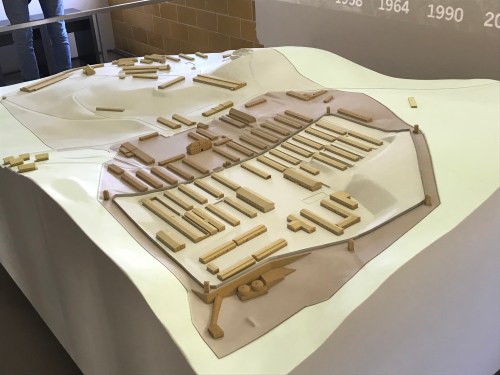
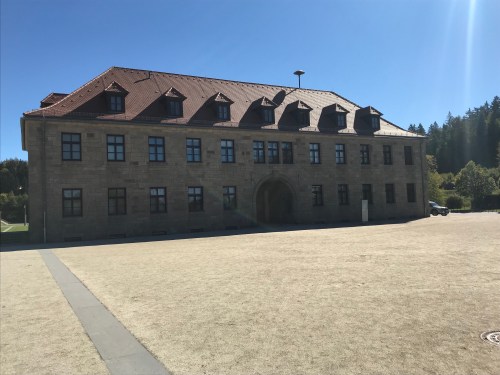
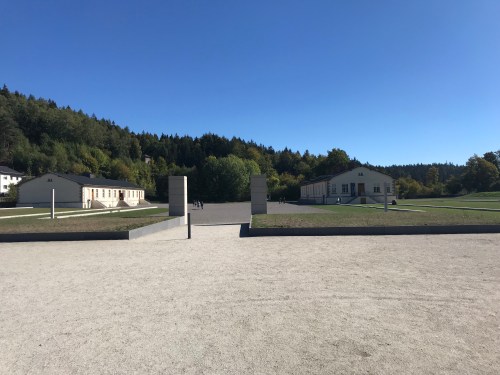
The camp memorial is off the beaten track for most people. Visitors must make a special point to visit it. Unlike Buchenwald, Dachau, or Bergen-Belsen it is quite isolated from places that most people would go. Even so there are a significant number of Germans, and other Europeans, especially young people, who go to the camp to learn. In addition to the museum there is an education program with seminar rooms, guest speakers, and speak alike programs. A number of buildings have been preserved including the Camp Administration building, the Detention building where the special prisoners were housed, the laundry and camp kitchen which house the museum and special exhibits, the crematorium, two guard towers, and the SS Officer Club, or Casino. The last houses the education center as well as a small cafe for visitors.

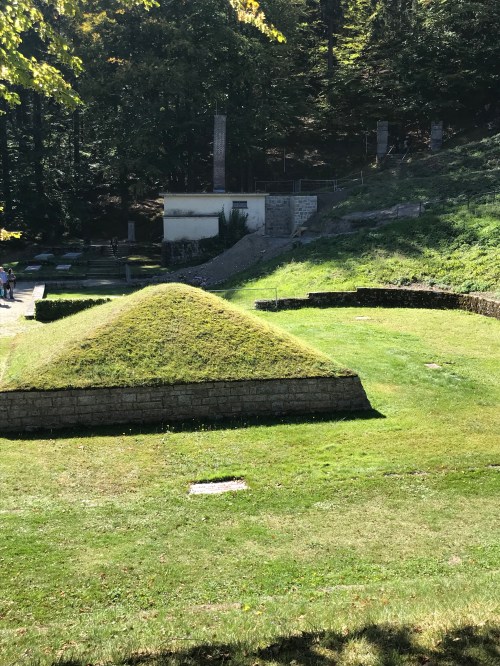
In The Valley of Death near the crematorium there is what is called the Pyramid of Ashes, the Square of the Nations, and a cemetery. Above them are a chapel dedicated to the victims and a Jewish memorial.

For me I think that the most powerful images I will remember are The Valley of Death and the courtyard outside of the Detention barracks where Bonhoeffer, Oster, and Canaris were executed. The SS Camp doctor wrote the only account of the death of these men:

“On the morning of that day between five and six o’clock the prisoners, among them Admiral Canaris, General Oster, General Thomas and Reichgerichtsrat Sack were taken from their cells, and the verdicts of the court martial read out to them. Through the half-open door in one room of the huts I saw Pastor Bonhoeffer, before taking off his prison garb, kneeling on the floor praying fervently to his God. I was most deeply moved by the way this lovable man prayed, so devout and so certain that God heard his prayer. At the place of execution, he again said a short prayer and then climbed the steps to the gallows, brave and composed. His death ensued after a few seconds. In the almost fifty years that I worked as a doctor, I have hardly ever seen a man die so entirely submissive to the will of God.”

That being said, while Bonhoeffer, Oster, and Canaris resonate with me I cannot ignore the fate of the 30,000 other men and women who died at Flossenbürg. They were victims of the Nazi policies on race and men like Pohl who extracted the last bit of profit they could make off of the lives and labor of their prisoners before they killed them.

Unfortunately with humanity being what it is and the desire to seek profit and power over the good of people what happened at Flossenbürg could happen again. There are men like Oswald Pohl today who would not hesitate to try to make a profit off of so called enemies of the state.

That is why we always have to remember what happened there and fight to ensure that it can never happen again.

Leave a comment

Filed under economics and financial policy, History, holocaust, nazi germany, Political Commentary, racism

A Day to Disconnect: Friends, Family History, and a Walk up a Mountain and Through the Forest

Friends of Padre Steve’s World,

I kind of disconnected from most American media today to spend time with our German friends in the countryside of Hessen; to visit the county seat, Weilburg, that my wife’s father’s family left in the 1700s to go to the Volga region of Russia at the invitation of Catherine the Great before coming to the United States after the failed 1905 revolution as the Russian Government had continually reneged on its promises to the German settlers, who had been basically sold a bill of good by unscrupulous agents acting in the name of the Russian government.

I pride myself on being informed and trying the best I can to write about life, history, faith, religion and politics, with a keen eye. But there are times for one’s sanity that we have to take a break. The world and its problems will more than likely be here tomorrow, and to paraphrase Dietrich Bonhoeffer, we were not here at the beginning of creation, we won’t be here when it ends, we live in the uncomfortable middle.

With that in mind is important to take a break once in a while.

Following breakfast and our visit to Weilburg we had lunch with our friend Gottfried before visiting a Kloster just down the road. We got home about 2:30 PM or so and after a while I decided to make my annual pilgrimage up the highest mountain in the area and visit to old Jewish Cemetery which has been preserved with care by the town following the Holocaust. There is a memorial on the city hall to the Jews of the town who were sent East, at least one survived and she was invited to dedicate the memorial on the city hall in 1991. The gravestones at the cemetery date to the 1800s and early 1900s.

I ended up doing a power walk up, down, and around the mountain before ending up back at our friends after a two hour walk of just over eight miles, for a day long total of about ten and a half miles.

Then we went out with Gottfried’s wife Hannelore to an Italian Restaurant, and upon our return Gottfried to me to to meet some of his friends in the next town over. On our return we talked and watched TV together before heading up to bed, where I am writing this. Tomorrow will be a full day. We will take a two hour train ride to Fulda, visit there for a few hours then return home. That should be an interesting trip. I have been to Fulda a number of times, Judy never has. It was a key city in Cold War planning, and the old city and Cathedral are magnificent. My first trip there was a tour of the old inter-German Border between West and East Germany in 1984. I made a couple of other trips related to our potential mission to fight the Soviets if they attacked, and then after the Wall fell I visited the old city and Cathedral in late 1996. The fact that we are taking the train and not having to drive is very nice, since we will be driving Sunday to see friends near Karlsruhe on the Rhein River.

It is interesting that although I have kept myself apprised of the latest events in the United States I have disconnected enough to keep my sanity, even when occasionally checking my Twitter feed and Facebook page. The walk up the mountain and through the forest was good for me, it was not only a good workout but put me in touch with nature and history. John Muir said, “Climb the mountains and get their good tidings. Nature’s peace will flow into you as sunshine flows into trees.” 

That happened to me today.

So until tomorrow,

Peace,

Padre Steve+

Leave a comment

Filed under faith, History, life, Loose thoughts and musings, spirituality

Brittle Personalities with Yearning for Respect, the Danger Of the Lack Of Character in Leaders: President Trump and Kaiser Wilhelm II

Friends of Padre Steve’s World,

We are in the German State Of Hessen visiting German friends that we have known for almost 35 years, after making the trip up from Munich. In our conversations with our German friends who are conservative supporters of Angela Merkel and the CDU, the question of the stability, suitably for office, and the Character of the American President came up, and they are frightened by his actions and wonder how a country like ours could have elected him. That made me revisit the question of the President’s character, or lack thereof, and compare him with other vain, immature, and unstable leaders. Character matters, especially when we elect someone to be President of the United States. President Trump may be a character, but he has none, and that is the most dangerous thing about him.

Theodore Roosevelt noted: “Character, in the long run, is the decisive factor in the life of an individual and of nations alike.”

As the crises of probable impeachment hearings and potential war in the Middle East, and a growing trade war with Chine swirl around the White House I think that it is important to see the President’s words and actions in light of a number of factors. One of those, as Theodore Roosevelt noted is character. Thus it is important to know how the character other leaders at other times influenced how they treated people, reacted to criticism, and led their nations.

In the American experience one is hard pressed to find a President with a similar temperament and character that corresponds to Donald Trump. Yes, Nixon had some similarities, Andrew Jackson as well, but both men even at their worst did, at least in public restrain themselves, and Nixon, when confronted with the reality of certain impeachment did the country a favor by resigning. James Buchanan, whose pro-slavery positions helped ignite the American Civil War, and Andrew Johnson, whose anti-Reconstruction policies and actions led to his impeachment, which fell short of conviction by one vote in the Senate, were as corrupt and cruel as Trump, but neither rose to Trump’s level of contempt for our institutions and Constitution.

But that was a different time. There were leaders in the Republican Party who chose to honor the Constitution and their oaths over blind party loyalty or their determination to pass a certain legislative act. Their resistance to President Nixon was instrumental in his resignation in 1974, especially that of conservative icon Barry Goldwater.

But there seem to be few current members of the GOP congressional delegations willing to stand either for fear of the Trump base, or blind determination to press on with tax cuts even if it means the sacrifice of the Constitution, nuclear war, or their own integrity. It seems that Mitt Romney and Ben Sasse are now beginning to show some backbone, but most of the Republican Senate still seems willing; even after the revelations of what appears to be the President using his office to influence the President of the Ukraine to help undermine the campaign of one of his leading Democratic Party rivals, Vice President Joe Biden.

Of course no amount of the President’s lies and corruption have yet swayed most of his supporters, so I don’t think, unless individual Republican Senators decide that their political survival depends on abandoning Trump, that the GOP will do anything. His base remains solid, and armed members of private “militias” are begging the President to call them into action to eliminate his political enemies and members of the press who press his administration for the truth. I actually saw one of the videos a couple of days ago. Basically such people and their organizations are lawless gangs, despite their words, and they include active and former members of the military. They, are willing to kill for Trump, especially those who believe that he was chosen by God to be President, but I digress, Trump is not Hitler, and his thugs are minor leaguers compared to the SA and the SS.

But I do think that there is a leader who in temperament was much like President Trump, who ended up helping to lead his nation and the world to the abyss of World War. That is not Adolf Hitler who many people often compare the President. I think that Trump’s authoritarian tendencies and his reliance on his radicalized base, including armed mobs in the street, and hyper-partisan allies in the right wing media, especially Fox News and Rupert Murdoch’s NewsCorp which serves as his de-facto state media are similar, but they do not speak to the President’s unstable, narcissistic, and paranoid behaviors. I think that the better comparison is to Kaiser Wilhelm II of Germany with whom the President seems to share many similarities.

In his book The Sleepwalkers: How Europe Went to War in 1914, Christopher Clark wrote of Wilhelm in words that are strikingly reminiscent of the President.

“It was one of this Kaiser’s many peculiarities that he was completely unable to calibrate his behaviour to the contexts in which his high office obliged him to operate. Too often he spoke not like a monarch, but like an over-excited teenager giving free rein to his current preoccupations.

‘I am the sole master of German policy,’ he remarked in a letter to the Prince of Wales (the future Edward VII), ‘and my country must follow me wherever I go”

“Wilhelm frequently –especially in the early years of his reign –bypassed his responsible ministers by consulting with ‘favourites’, encouraged factional strife in order to undermine the unity of government, and expounded views that had not been cleared with the relevant ministers or were at odds with the prevailing policy.

“It was in this last area –the unauthorized exposition of unsanctioned political views –that the Kaiser achieved the most hostile notice, both from contemporaries and from historians. There can be no doubt about the bizarre tone and content of many of the Kaiser’s personal communications in telegrams, letters, marginal comments, conversations, interviews and speeches on foreign and domestic political themes. Their exceptional volume alone is remarkable: the Kaiser spoke, wrote, telegraphed, scribbled and ranted more or less continuously during the thirty years of his reign, and a huge portion of these articulations was recorded and preserved for posterity…”

Max Hastings wrote that Wilhelm “was a brittle personality whose yearning for respect caused him to intersperse blandishments and threats in ill-judged succession.” Sean McMeekin in his book July 1914 wrote that Wilhelm had an “insecurity complex, a need for constant attention and acclaim. As one of his many critics put it, the kaiser needed to be “the stag at every hunt, the bride at every wedding, and the corpse at every funeral.” He also noted “Eager for praise, taking offense at the merest slight, the kaiser was a difficult man to work for. Bismarck had disdained to gratify Wilhelm II’s fragile ego after he became emperor in 1888, which led to his sacking two years later.”

Like President Trump the Kaiser did experience some push back from different governmental ministers, and was somewhat restrained during the month leading up to the war, but his constant belligerence, instability, and unscripted remarks helped set the diplomatic and governmental crisis that led to the war. Of course this was not his fault alone, the Austrian-Hungarians, Serbians, Russians, French, and British all had a hand, but the Kaiser, through his words and actions during the three decades preceding the war bears much responsibility for what happened in 1914. If the Kaiser had had a Twitter account he would have certainly used it in a similar manner to President Trump.

But Germany had no checks and balances to restrain Wilhelm. He was an absolute monarch. Americans do still have institutional checks and balances to Presidential overreach or abuses should we choose to follow the Constitution, but for that to happen the leadership of the Republican Party must also act, as did their predecessors during the Nixon administration to put principle or party, and rule of law over blind obedience. This is not about partisanship; it is about the Constitution, our form of government, and yes, even the prevention of nuclear war.

Character and temperament are very important in times of crisis and elevated tensions. Character is also fate. We should all tremble when we think of the lack of character and maturity shown by our President.

Until tomorrow,

Peace

Padre Steve+

6 Comments

Filed under ethics, Foreign Policy, History, leadership, national security, nazi germany, News and current events, Political Commentary