Category Archives: leadership

The Gettysburg Campaign: Lee Moves North, the Battle of Brandy Station, Stuart’s Ride and the Relief of Fighting Joe Hooker

on-to-gettysburg-900L

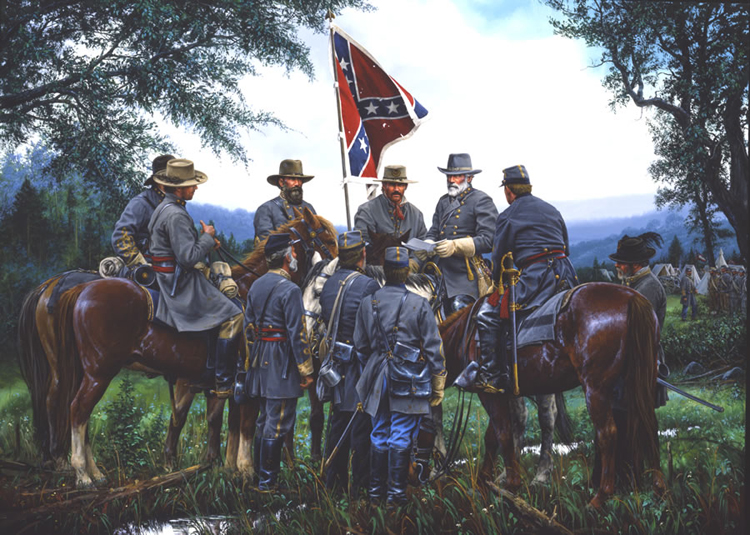
Lee with his Commanders at Williamsport 

Note: This is another of my preparations for for the Gettysburg Staff Ride that I will be conducting with students from the Staff College that I teach. 

On June 3rd 1863 Robert E Lee began to move his units west, away from Fredericksburg to begin his campaign to take the war to the North. He began his exfiltration moving Second Corps under Richard Ewell and First Corps under James Longstreet west. Initially he left A.P. Hill’s Third Corps at Fredericksburg to guard against any sudden advance by Hooker’s Army of the Potomac toward Richmond.

Once it was ascertained that Hooker was not making for Richmond, Hill’s Corps followed and on June 7th all three Corps were reunited at Culpepper. Lee’s movement did not go unnoticed, Hooker’s aerial observers detected the move, but Hooker after throwing pontoon bridges across the river and discovering that Hill’s troops were firmly entrenched made no move to pursue. He asked permission to advance on Richmond but was order not to cross the river, lest his army be exposed and destroyed by a thrust at its rear
CWP015

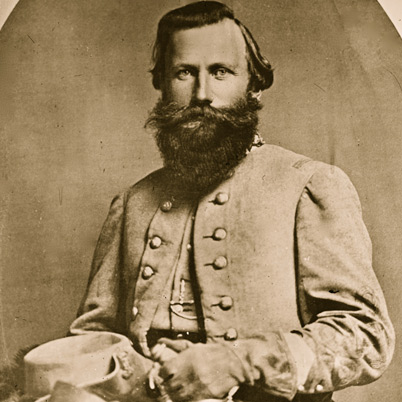
General J.E.B. Stuart 

Meanwhile, J.E.B. Stuart and his Cavalry Corps had been at Brandy Station near Culpepper for two weeks. On the 5th Stuart staged a grand review of five of his brigades which included a mock charge against the guns of his horse artillery. According to witnesses it was a spectacular event, so realist that during the final charge some women fainted.

As Lee made his move Hooker attempted to ascertain Lee’s intentions. With Lee moving west he asked Lincoln for permission to advance on Richmond, which was denied. Lincoln did not believe that Hooker could take Richmond and believed that if he did it would leave the logistics train of Army of the Potomac as well as Washington exposed to Lee.
General-Hooker-002

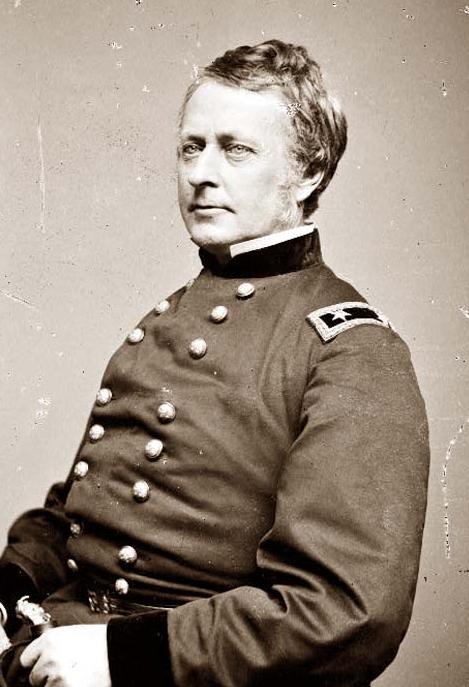
Major General Joseph Hooker 

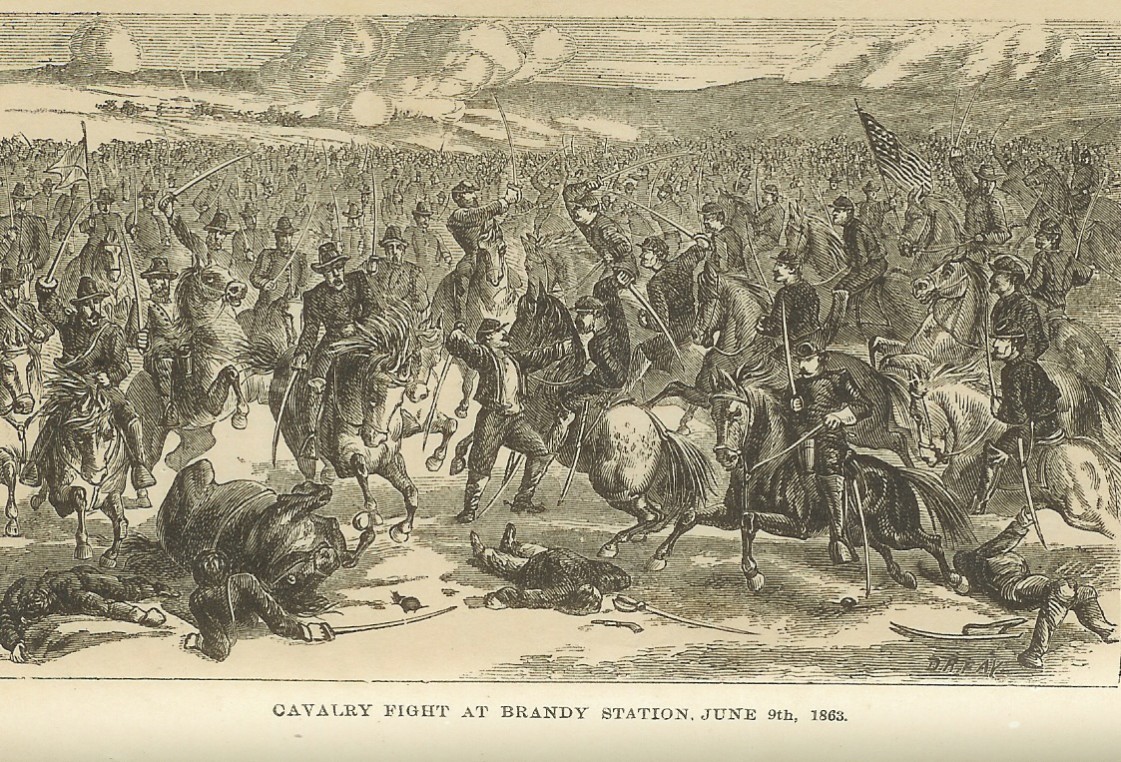
Hooker believed that Stuart’s intent was to disrupt his logistics and communications. He ordered his Cavalry Corps Commander, Major General Alfred Pleasanton to attack Stuart.  On June 9th Pleasanton’s forces, now reorganized under three aggressive division commanders, John Buford, David Gregg and Judson Kilpatrick and reinforced by two brigades of infantry surprised Stuart at Brandy Station.
Cav Fight at Brandy Station

The resultant action was the largest cavalry engagement of the war. Over 20,000 troopers engaged in an inconclusive see-saw battle that lasted most of the day. Stuart claimed victory as he maintained control of the battlefield and inflicted more casualties than his forces incurred.  But the battle was more significant than the number of casualties inflicted or who controlled the battlefield at the end of the day. For the first time Stuart had been surprised by an aggressively led Union Cavalry force.  The Union troopers fought a stubborn and fierce battle and retired in good order. Stuart did not appreciate it but the battle was a watershed, it ended the previous dominance of the Confederate Cavalry arm. It was something that in less than a years’ time would cost him his life.
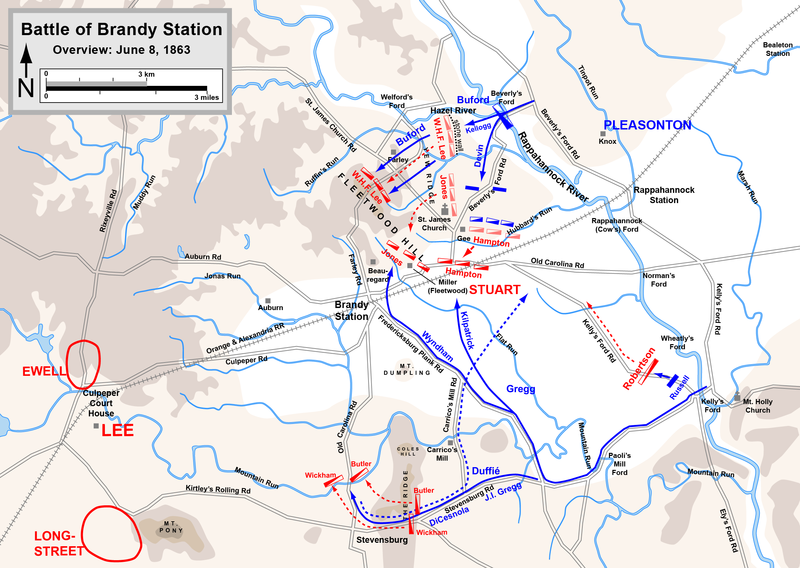
800px-Brandy_Station_Overview

The Battle of Brandy Station (Map by Hal Jespersen, http://www.posix.com/CW)

However, Stuart’s repulse of Pleasanton’s force did enable Lee’s Army to continue north undetected by Hooker. Ewell’s Corps entered the Shenandoah Valley and defeated a Union force at Winchester on June 14th.  Then with the rest of the Army following he moved to Williamsport Maryland where he called a halt to allow the rest of his corps and the army to come up.
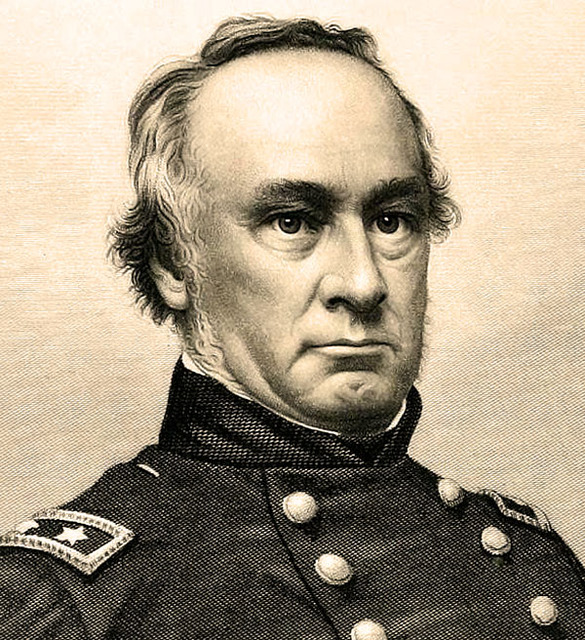
HD_halleckHW4.preview

Major General Henry Halleck 

Hooker was slow to appreciate what Lee was doing. Prodded by Lincoln Hooker moved the Army of the Potomac to a position where it could defend Washington in case Lee was to make a thrust at the Federal capitol. In a series of fierce cavalry clashes west of Washington, Stuart successfully kept the Federal cavalry from discerning the movements of Lee’s Army.

Lee’s initial move to break contact with the Federal Army and keep his movements and intentions secret was an excellent example of deception. Stuart’s success at screening Lee’s movements contributed to Federal confusion. Lee’s deception was so successful that Pleasanton believed that Lee’s objective was Pittsburgh, far to the west. Even when Hooker determined that the bulk of Lee’s infantry was in the Shenandoah he was not certain if Lee would move east toward Baltimore and Washington west or would Lee continue up the valley into Pennsylvania.  

But at this point Lee then made the first of a number of mistakes that would characterize his campaign.  The most grievous of these in my view was his inability to get his commanders to understand his intent. The necessity of subordinate commanders understanding the intent of their superior is essential to the success of any military operation. Lee failed to do this a number of times.

After Stuart recovered from the surprise at Brandy Station Lee gave Stuart permission to move the bulk of his cavalry into the Federal rear.  Lee instructed Stuart that once he determined that Hooker was moving to pursue that Stuart must return to guard Ewell’s flank. However, Lee did not insist on this and left the decision in Stuart’s hands.  When Stuart discovered the Army of the Potomac stationary near Manassas he suggested to Lee that he lead his force around the Federal Army to deceive Hooker as to Lee’s intentions. Lee agreed but told Stuart to maintain close observance of the Federal Army.

Unfortunately his orders left Stuart much in the way of interpretation. He wrote:

You will, however be able to judge whether you can pass around their army without hindrance, doing all the damage that you can, and cross the river east of the mountains. In either case you must move on and feel the right of Ewell’s troops, collecting information, provisions etc.”  Lee added, “Be watchful and circumspect in all your movements.” 

Lee expected Stuart to do this, but his lack of clarity and vagueness allowed to Stuart interpret the order in a manner that benefited him, as he had been stung by criticism of his conduct of the Battle of Brandy Station in the Southern press. For Stuart this was a chance to regain the limelight and add to his luster. He decided to move independently and continue his ride around the Army of the Potomac. It was the last time that Lee had contact with Stuart until the end of the second day of the battle at Gettysburg. Stuart’s absence was critical for it left Lee blind as to the whereabouts of Hooker’s Army or any other threats.

Historians have long wondered why Lee allowed and why Stuart conducted an operation that left Lee blind and had no obvious advantages. Stephen W Sears notes in his book Gettysburg that: “The very concept of Stuart’s expedition was fueled by overconfidence and misjudgment at the highest command level. As soldier-historian Porter Alexander judged the matter, “We took unnecessary risk, which was bad war, & the only bad war too, I think, in all our tactics.” (i)

Lee also took little notice of the events occurring to the west. The siege of Vicksburg was entering its final weeks and with it the hopes of the Confederacy, but Lee was convinced that the war had to be won in the east and quickly.

Lee had no idea that the man directing the campaign against that city, Ulysses S Grant would become his nemesis in less than a years’ time. While Lee had an understanding of all the men who had commanded the armies that he faced, Grant was a man that he never really understood.

As Vicksburg withered and Stuart dithered Lee continued to move north with his Army, crossing into Maryland. By June 24th Ewell’s lead division was near Chambersburg with orders to advance on the Susquehanna and Harrisburg
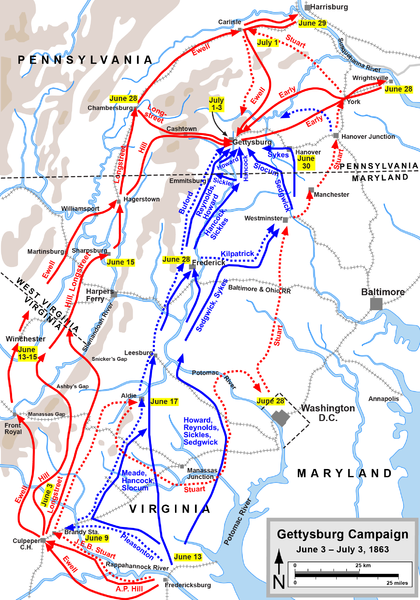
420px-Gettysburg_Campaign

The Gettysburg Campaign (Map by Hal Jespersen, http://www.posix.com/cw)

As Lee moved north Hooker attempted to convince Lincoln to attack Richmond, but Lincoln did not believe that the Confederate capitol was the key to victory. Lincoln denied Hooker’s request giving the following instruction:

“I think Lee’s army, not Richmond is your true objective point. If he comes toward the Upper Potomac, follow on his flank and on his inside track, shortening your line whilst he lengthens his. Fight him too when the opportunity offers. If he stays where he is, fret him, fret him and fret him.”

Hooker was upset by the constant directives from Lincoln and General Henry Halleck, the General in Chief of the Union Armies. Hooker complained to Lincoln in a letter which seemed to infer that he wanted Lincoln to remove Halleck from his position. On June 15th Lincoln responded:

“To remove all misunderstanding I now place you in the strict military relation to General Halleck of a commander of one of the armies to the general-in-chief of all of the armies. I have not intended differently, but as it seems to be differently understood I shall direct him to give you orders and for you to obey him.”

With that order Lincoln did something that he had not done in relation to the Army of the Potomac since the beginning of the war.  For the first time he enforced unity of command and stopped the commander of that army from directly appealing to him. Lee had tired of commanders such as McClellan and Hooker demanding absolute control of the Army and the war. This time it was Hooker that advocated having “one commander for all the troops whose operations which can have influence on General Lee’s operations.” Lincoln agreed and ensured that Hooker would not be that man.

Neither Lincoln nor Halleck agreed to give Hooker the authority that he demanded.  Lincoln insisted that Hooker obey the orders of Halleck, a man who Hooker despised. The final straw came on June 27th when Hooker demanded that the garrison of Harper’s Ferry be withdrawn and placed under his command. When this was refused he tendered his resignation as commander of the Army of the Potomac. Halleck forwarded that request to Lincoln and promptly sent an order via his Assistant Adjutant General, Colonel James Hardie relieving Hooker of command, simultaneously appointing Major General George Meade, commander of V Corps as the new commander of the army.
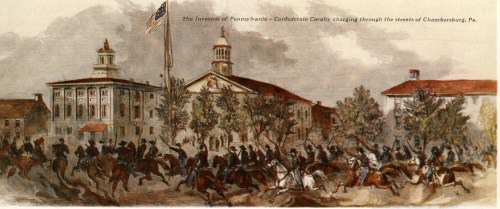
june16jenkinscav

By now the movements of Confederate forces deep into Maryland and Pennsylvania gave Lincoln and Halleck the information that they needed about Lee’s movements. Lee’s army was moving toward Harrisburg and the Susquehanna. On the day of Hooker’s relief Lee had no idea that the Union army had already crossed the Potomac, the absence of Stuart had left him blind.
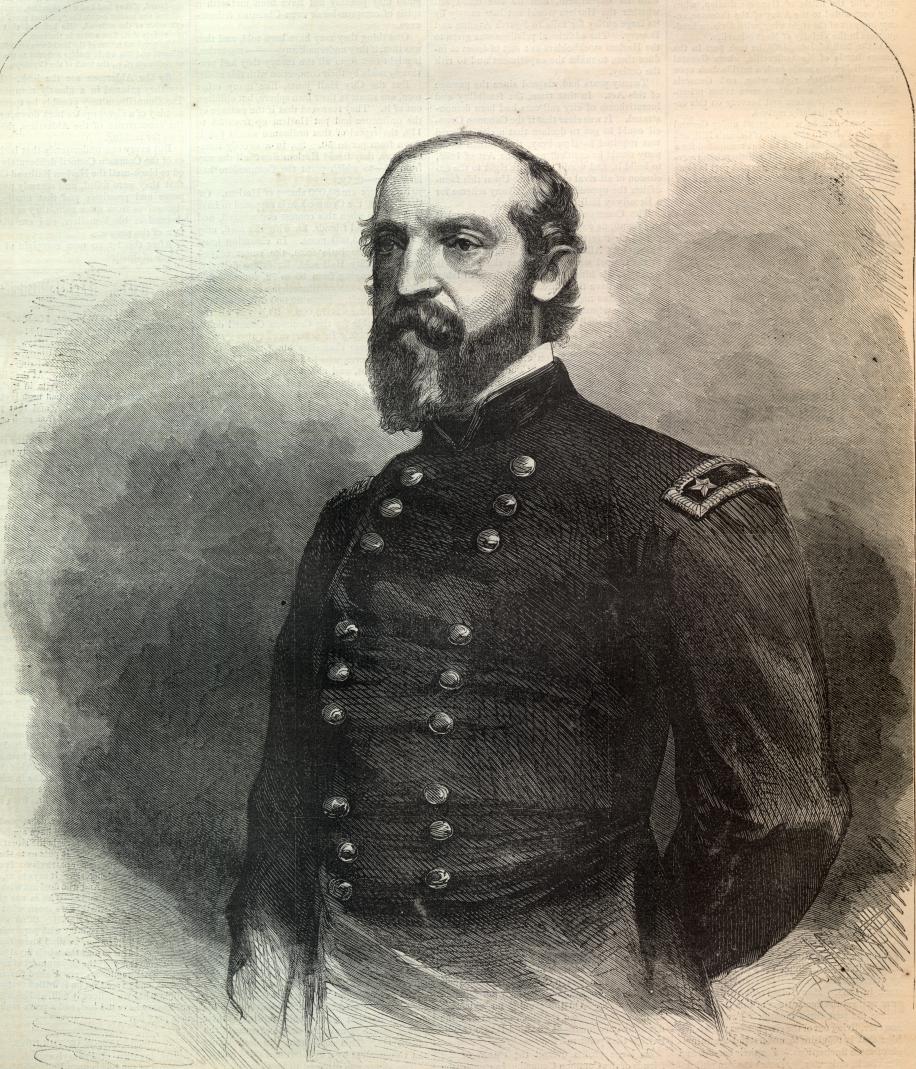
general-george-meade

Major General George Meade 

To this point a number of issues important to those involved in planning campaigns became clear: Deception, commander’s intent and unity of command. Lee successfully used deception to prevent the Federals from discerning his purposes. That was balanced by his lack of clarity in communicating his intent to Stuart. Finally there was the principle of unity of command for the Union forces, something that had eluded Lincoln and his lieutenants throughout the first two years of the war.

All that said, I am going to leave you hanging for the night.

Peace

Padre Steve+


i. Sears, Stephen W. Gettysburg, Mariner Books, Houghton Mifflin Company, Boston and New York, 2003. P.106
1 Comment

Filed under civil war, History, leadership, Military

The Gettysburg Campaign: Lee Decides to Go on the Offensive

993scr_3a12918e0189d2e

I am preparing to lead a Staff Ride of our students to Gettysburg in early March. As part of my preparation I am doing a lot of study to refresh myself on both the campaign and the battle, not only as an operational study, but at the strategic level. This short essay deals with Lee’s decision to invade the North following his victory at Chancellorsville. I will follow it up with other articles the next talking about the Northern strategy at both the strategic and operational levels.

In early May 1863 General Robert E. Lee, commanding the Army of Northern Virginia realized that the Confederacy was in desperate straits. Despite numerous victories against heavy odds, Lee knew that time was running out. Though he had beaten the Army of the Potomac under General Joseph Hooker at Chancellorsville, he had not destroyed it and that Army, along with a smaller force commanded by General Dix in Hampton Roads still threatened Richmond.

The strategic situation was bad, even if many Confederate politicians realized it or cared in the post Chancellorsville euphoria. In the west the strategic river city of Vicksburg Mississippi was threatened by the Army of Union General Ulysses S Grant, and Naval forces under the command of Admiral David Farragut. If Vicksburg fell the Union would control the entire Mississippi and cut the Confederacy in two. Union forces also maintained a strong presence in the areas of the Virginia Tidewater and the coastal areas of the Carolinas, while in Tennessee a Union Army was stalemated, but still threatening Chattanooga, the gateway to the Deep South. The blockade of the United States Navy had crippled the already tenuous economy of the Confederacy.

Some Confederate leaders realized the danger presented by Grant in the West. Secretary of War James Seddon recognized the danger in the Winter of 1862-1863 both suggested to Lee that he detach significant units to relieve the pressure in the west and blunt Grant’s advance. Lee would have nothing of it, he argued that the war would be won in the East. It was his view that if Virginia was lost, so was the Confederacy, and was concerned that whatever units left behind should he dispatch troops from his Army west, would be unable to defend Richmond.

On May 14th Lee travelled by train to Richmond to meet with President Jefferson Davis and War Secretary James Seddon. At the meeting Lee argued for an offensive campaign in the east, to take the war to Pennsylvania. Lee had two goals three major goals, two which were directly related to the immediate military situation and one which went to the broader strategic situation. Unfortunately no notes from that conference are known to survive.

Lee had long believed that an offensive into the North was necessary, even before Chancellorsville. Lee did not believe that reinforcing the Confederate Armies in the West would provide any real relief, instead he believed that his Army, flush with victory needed to be reinforced and allowed to advance into Pennsylvania. Lee’s Chief of Staff Colonel Charles Marshall crafted a series of courses of action designed to present the invasion option as the only feasible alternative. Although both Seddon and Davis had reservations about the plan they agreed to it, unfortunately for all of them they never really settled the important goals of the campaign.

Lee believed that his offensive would relieve Grant’s pressure on Pemberton’s Army at Vicksburg. Likewise Lee believed that if he was successful in battle and defeated the Army of the Potomac in Pennsylvania that it could give the peace party in the North to bring pressure on the Lincoln Administration to end the war.  He also believed that if he could spend a summer campaign season in the North, living off of Union foodstuffs and shipping booty back to the Confederacy that it would give farmers in Northern Virginia a season to harvest crops unimpeded by major military operations.

However, the meeting evidently did not have all the results that Lee desired. Davis refused Lee reinforcements from the coastal Carolinas, and insisted on units being left to cover Richmond in case General Dix advanced on Richmond from Hampton Roads. Much of this was due to political pressure as well as the personal animus that existed between General D. H. Hill in the Carolinas towards Lee.

Likewise Lee’s decision revealed an unresolved issue in Confederate Grand Strategy. Many in the Confederacy realized that the only hope for success was to fight a defensive campaign that made Union victory so expensive that eventually Lincoln’s government would fall or be forced to negotiate.

However, Lee was convinced that ultimate victory could only be achieved by decisively defeating and destroying Federal military might. His letters are full of references to crush, defeat or destroy Union forces opposing him. His strategy of the offensive was demonstrated on numerous occasions in 1862 and early 1863, however it was unfeasible and counterproductive to Southern strategy. His offensive operations cost his Army dearly in the one commodity that the South could not replace, nor keep pace with its Northern adversary, his men.

When Lee fought defensive actions on ground of his choosing, like a Fredericksburg he was not only successful but husbanded his strength. However, when he went on the offensive in almost every case he lost between 15 and 22 percent of his strength, and the percentage of soldiers that he lost was always more than his Federal counterparts, even when his army inflicted greater aggregate casualties on his opponents. Lee recognized this as was evident in his correspondence but it did not deter his strategy of the offensive until after his defeat at Gettysburg.

The course of action was decided upon, but one has to ask if Lee’s decision was wise decision at a strategic point level, not simply the operational or tactical level where many Civil War students are comfortable. General Longstreet’s artillery commander, Colonel Porter Alexander described the appropriate strategy of the South well, he wrote:

“When the South entered upon war with a power so immensely her superior in men & money, & all the wealth of modern resources in machinery and the transportation appliances by land & sea, she could entertain but one single hope of final success. That was, that the desperation of her resistance would finally exact from her adversary such a price in blood & treasure as to exhaust the enthusiasm of its population for the objects of the war. We could not hope to conquer her. Our one chance was to wear her out.”  (Edward Porter Alexander, Fighting for the Confederacy: The Personal Recollections of General Edward Porter Alexander, ed. Gary W. Gallagher, University of North Carolina Press, Chapel Hill NC, 1989 p.415 

What Alexander describes is the same type of strategy successfully employed by Washington and his more able officers during the American Revolution, Wellington’s campaign on the Iberian Peninsula against Napoleon’s armies, and that of General Giap against the French and Americans in Vietnam. It was not a strategy that completely avoided offensive actions, but saved them for the right moment when victory could be obtained.

It is my belief that Lee erred in invading the North for the simple fact that the risks far outweighed the possible benefits. It was a long shot and Lee was a gambler, audacious possibly to a fault. His decision to go North also exhibited a certain amount of hubris as he did not believe that his army could be beaten, even when it was outnumbered.  Likewise he took the offensive in spite of the fact that many of his commanders were untested at the levels of command that they exercised. He had lost his right arm, General Stonewall Jackson, who died following being wounded at Gettysburg.

He knew from his previous battles the heavy casualties that even a victory over the Army of the Potomac would entail deep in Northern territory and the effect that a costly victory would have on his operations, but he still took the risk. That was short sighted and diametrically opposed to the strategy that the South needed to pursue in order to gain its independence. Of course some will disagree, but I am comfortable in my assertion that it was a mistake that greatly affected the Confederacy’s only real means of securing its independence, the breaking of the will of the Union by making victory so costly that it would not be worth the cost.

Peace

Padre Steve+

Leave a comment

Filed under civil war, History, leadership, Military

The Long Road to Freedom and Reconciliation: Rest in Peace Nelson Mandela

images-65

“As I walked out the door toward the gate that would lead to my freedom, I knew if I didn’t leave my bitterness and hatred behind, I’d still be in prison.”  Nelson Mandela

One of the greatest men of the last century passed away today at the age of 95. Nelson Mandela, the human and civil rights advocate in Apartheid South Africa who spent 27 years in prison before being released and overseeing the end of apartheid and the beginning of reconciliation in that country. As President he understood the importance of sport to the country and helped use the victory of the Springboks, a rugby team that during the Apartheid era embodied the spirit of that system as a way to unify the country. When the team played the New Zealand All Blacks in the World Cup of Rugby Mandela helped use it to unify the country.

world-cup

Nelson Mandela was one of the most influential men of our time. He was a rare man of grace, courage integrity and vision. He was a man who fought for the liberation of every South African, not just blacks; those imprisoned by walls and laws and those imprisoned by the attitudes of their hearts an minds.

ZZ628BFEC1

Unfortunately so many of us including me did not realize just what an amazing man he was until he had spent so many years in prison. It was only after his release that I began to appreciate and admire him. Up until that point I had only thought that he was another Marxist type revolutionary. Of course I had never read anything he had ever written and didn’t know anything about his life or story. All I knew is that South Africa was “democratic” and stood against the Soviets and their proxies.

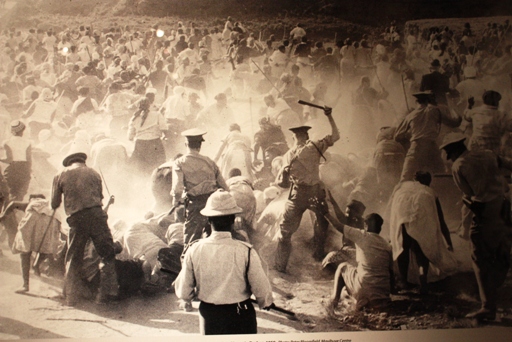
apartheid_sign_1980

My knowledge of him until his release and later election as the President of South Africa was the product of Cold War anti-Communist propaganda coupled with a distaste for “revolutionaries” in general. However when I began to read his works, understand his life and causes and put them into actual historical context of racism, imperialism and colonialism in Africa I was ashamed of my former views.

PHOTOS Century Collection

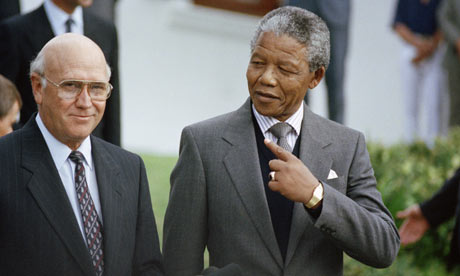
The sad thing was that in the United States I was anti-racism and discrimination and pro equal rights and integration for blacks and other minorities. I was a liberal here in regard to these issues even as I excused the vestiges of colonialism, imperialism and racism in South Africa simply because of the my Cold War “realism.” It is funny how a utilitarian ethic can lead people to positions that are diametrical opposites even in their own life and positions. The irony is that it was the fall of the Berlin Wall and collapse of Soviet Communism that brought the staunchly anti-Communist President F. W. De Klerk to release Mandela from captivity and eventually work with Mandela to end Apartheid.

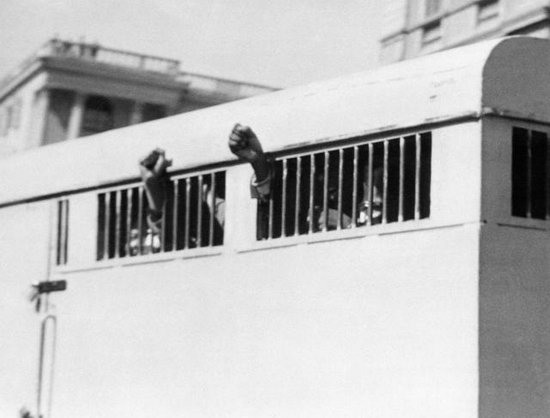
Nelson Mandela - Rivonia Trial - Life in Prison 16-6-1964

When Mandela became President of South Africa I finally began to understand the man who before had been a caricature painted by my supposed “foreign policy realism.” His actions upon his release from prison, his election and his life after leaving office were nothing more than amazing. He was a man of rare personal and pubic integrity, courage, grace and virtue.

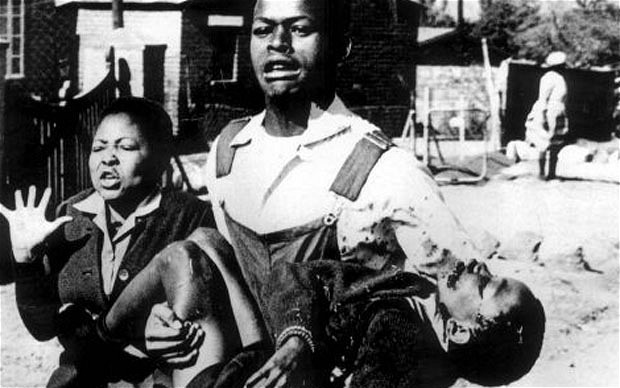
apartheid2

Unlike other victorious revolutionaries he did not seek vengeance or seek to settle old scores. His committee on reconciliation was just that. It was not a commission that sought to punish men and women who during the apartheid days persecuted him but all non-whites in South Africa. Mandela understood something that others across the political, racial and religious spectrum fail to understand. He understood that resentment  of the other is a poison. His comment that “Having resentment against someone is like drinking poison and thinking it will kill your enemy”  is among the most rue that an philosopher, politician or preacher has ever uttered.

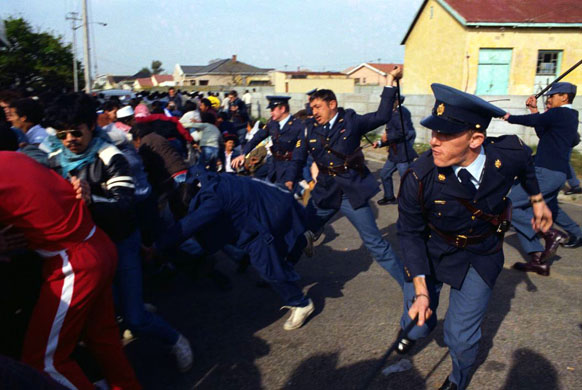
Police Officers Try to Control Protesters

Mandela’s personal leadership in South Africa’s transition from apartheid was perhaps on of his greatest triumphs. It would have been very easy for the country to collapse, for whites to be forced to flee or for civil war between the ANC, various tribal leaders and governments and the South Africa’s white population to tear the country apart and lead to great bloodshed. Instead Mandela modeled reconciliation. He understood something about freedom that many of us never really understand. He wrote: “For to be free is not merely to cast off one’s chains, but to live in a way that respects and enhances the freedom of others.”

Likewise Mandela understood the dynamic human tension that exists between hatred and love. He understood that both were learned behaviors. His words “for to be free is not merely to cast off one’s chains, but to live in a way that respects and enhances the freedom of others,” embody that dynamic. That goes back to Mandela’s many years of imprisonment, years that many in the same situation would become bitter, consumed by hatred and ready to seek revenge, a revenge that he knew would achieve nothing positive. He knew that unless he left hatred and bitterness behind that he would still be in prison, a prison that so many of us, including me at times find ourselves. A prison without physical walls and bars but a prison nonetheless.

He understood that that hatred and bitterness only served to fill a cup of resentment which in his words “resentment is like drinking poison then hoping it will kill your enemies.”

FW-de-Klerk-and-Nelson-Ma-001

He was not unrealistic. He understood that many people saw him as their enemy. He also understood that in a country where great differences existed that such was the case. That being said he understood something that is lacking in much political discourse in our country today. He noted “If you want to make peace with your enemy, you have to work with your enemy. Then he becomes your partner.” That is something that we need to learn again.

Nelson Mandela - South African Flag Face 01

I thank God for Nelson Mandela, his life and works. He was truly a man for the ages. He was a giant. May he rest in peace.

Peace

Padre Steve+

1 Comment

Filed under History, leadership, News and current events

Awarding the Heroes of Pearl Harbor

gal-pearl-harbor6-jpg

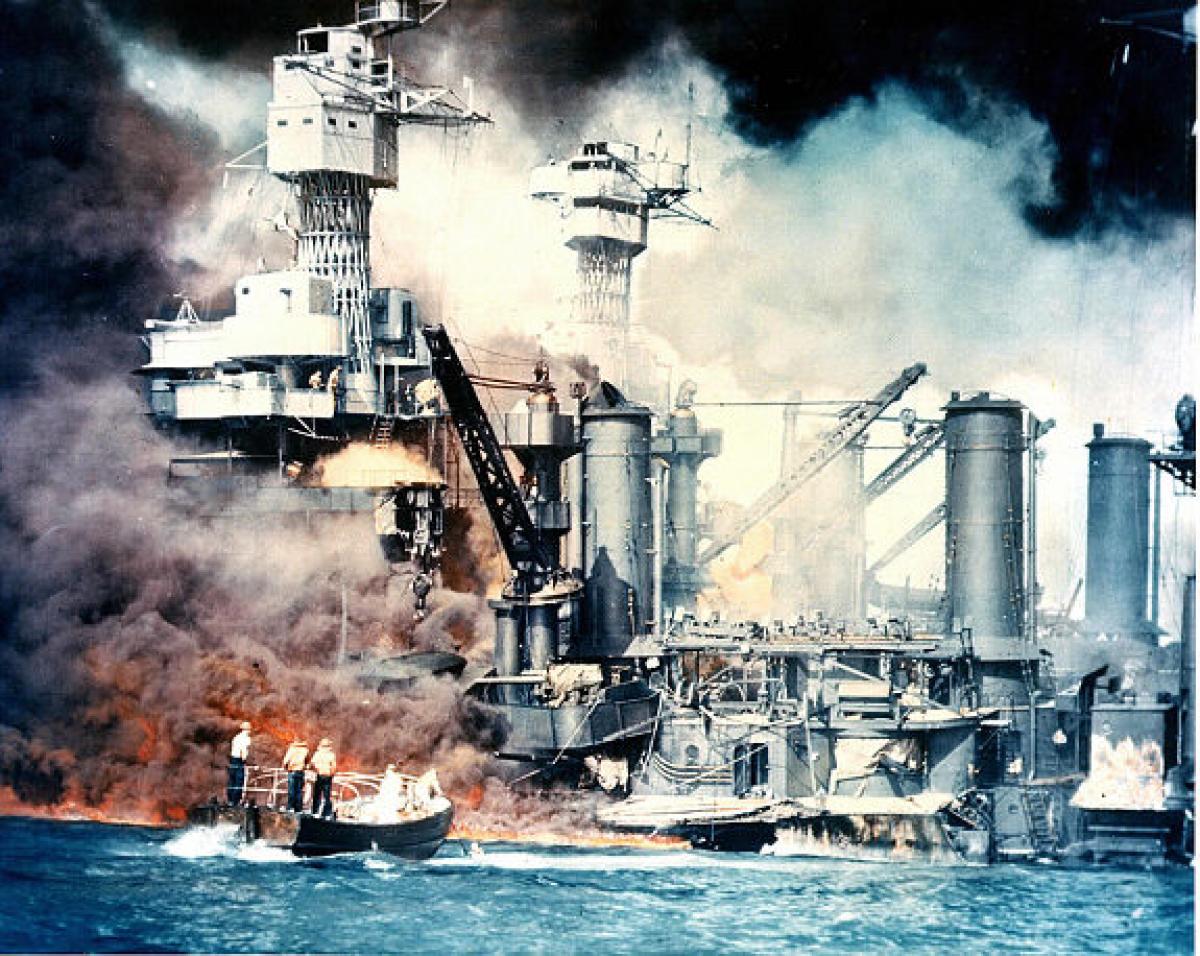
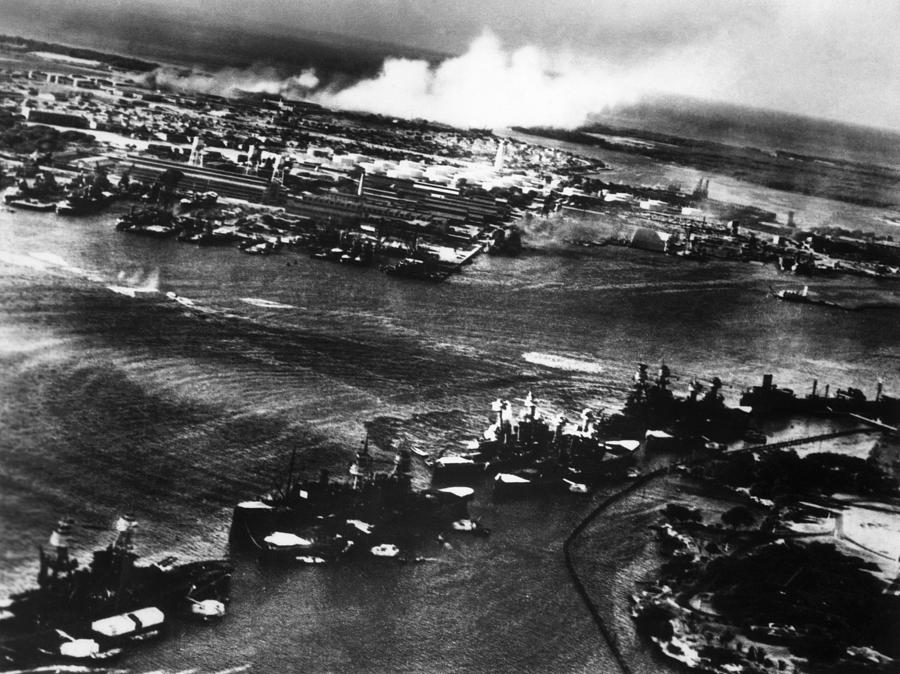
On the morning of December 7th 1941 aircraft from the Japanese First Air Fleet attacked the United States Pacific Fleet as it lay at anchor at Pearl Harbor.

The attack inflicted great damage and casualties on the Pacific Fleet as well as the Army Air Forces based on Oahu. On that fateful Sunday the US Navy had 19 ships sunk or damaged. The Navy, Marine Corps and Army Air Corps lost 188 aircraft destroyed and another 159 damaged. 2402 American Sailors, Marines and Soldiers, including members of the Army Air Corps lost their lives and another 1247 were wounded.

the-japanese-attack-on-pearl-harbor-everett

It was a day where men, suddenly shaken from their peacetime routine by bombs, bullets and torpedoes conducted themselves in in an extraordinary manner. When the last Japanese aircraft turned away the previously placid waters of Pearl Harbor were littered with wrecked and sunken ships, blazing fires and the bodies of sailors and Marines. Desperate rescue efforts were already underway even as undamaged ships sortied to attempt to find and engage the Japanese fleet.

The next day President Franklin Delano Roosevelt asked the Congress for a Declaration of War.His speech, immortalized in its opening words galvanized the nation.

“Yesterday, December 7, 1941 – a date which will live in infamy – the United States of America was suddenly and deliberately attacked by naval and air forces of the Empire of Japan….” 

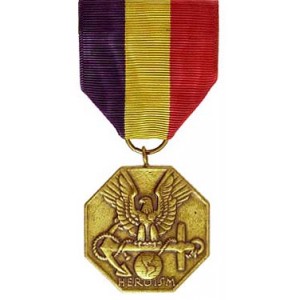
It was also a day where heroism was acknowledged. In the days and months following many Sailors, Soldiers and Marines ware awarded for their heroism, posthumously. 16 Congressional Medals of Honor were awarded, 15 at Pearl Harbor and one at Midway Island which was attacked the same day. Of those 10 were to men killed in action.  There were 51 awards of the Navy Cross, four Silver Stars and three wards of the Navy and Marine Corps Medal. One of the Navy Cross awards was upgraded to the Medal of Honor.
The ranks of the awardees ranged from the Commander of Battleship Division One Rear Admiral Isaac Kidd to killed on the bridge of his flagship the USS Arizona to Seaman First Class James Ward who died on the USS Oklahoma. Kidd’s body was never found, his Naval Academy ring was found fused to a bulkhead on the destroyed bridge of the Arizona.

Ward was a gunner in one of Oklahoma’s main gun turrets. His citation reads:

“For conspicuous devotion to duty, extraordinary courage and complete disregard of his own life, above and beyond the call of duty, during the attack on the Fleet in Pearl Harbor by Japanese forces on 7 December 1941. When it was seen that the U.S.S.Oklahoma was going to capsize and the order was given to abandon ship, Ward remained in a turret holding a flashlight so the remainder of the turret crew could see to escape, thereby sacrificing his own life.”

tumblr_lvtli9HXlM1qigaa4o1_1280

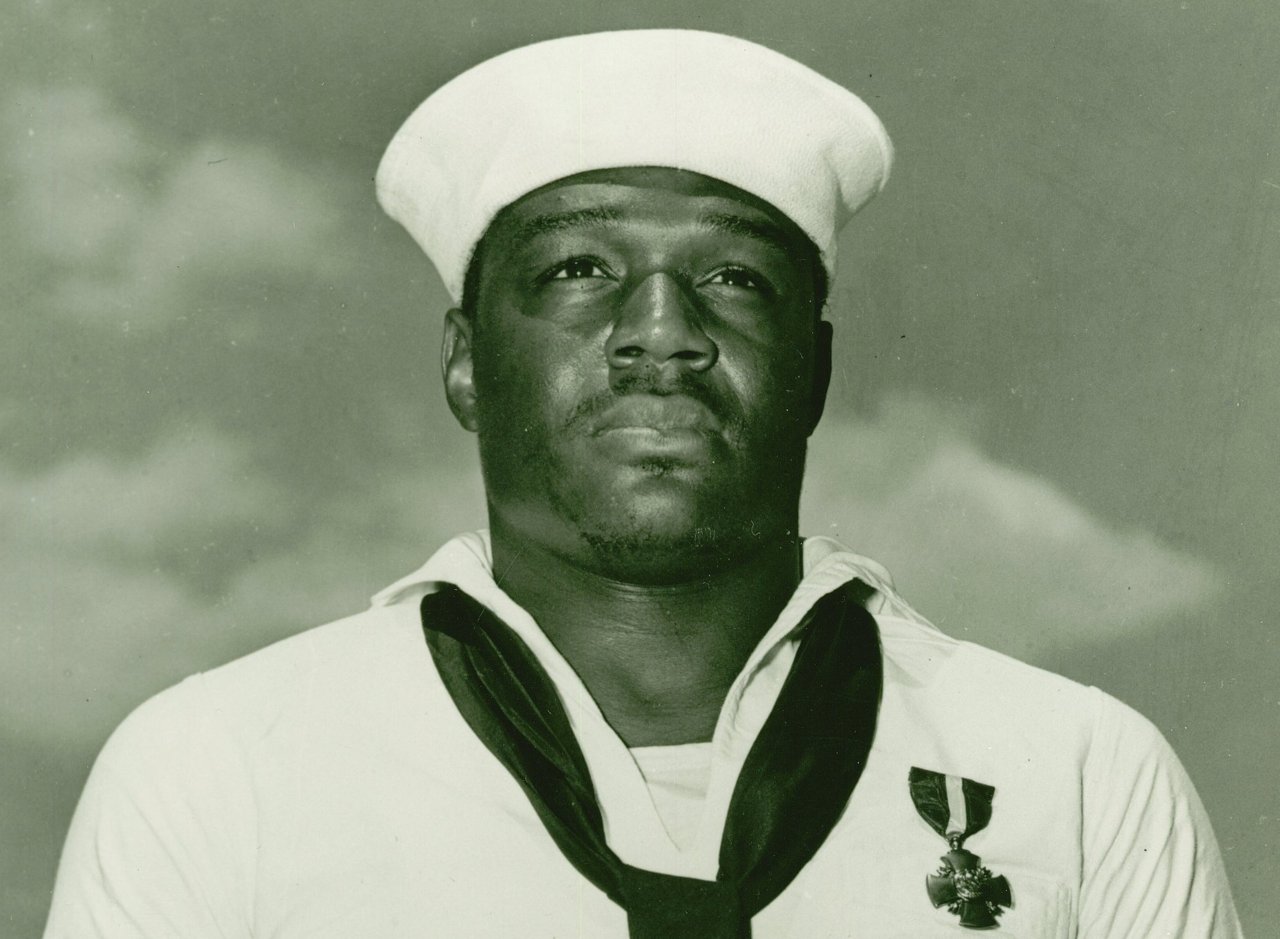
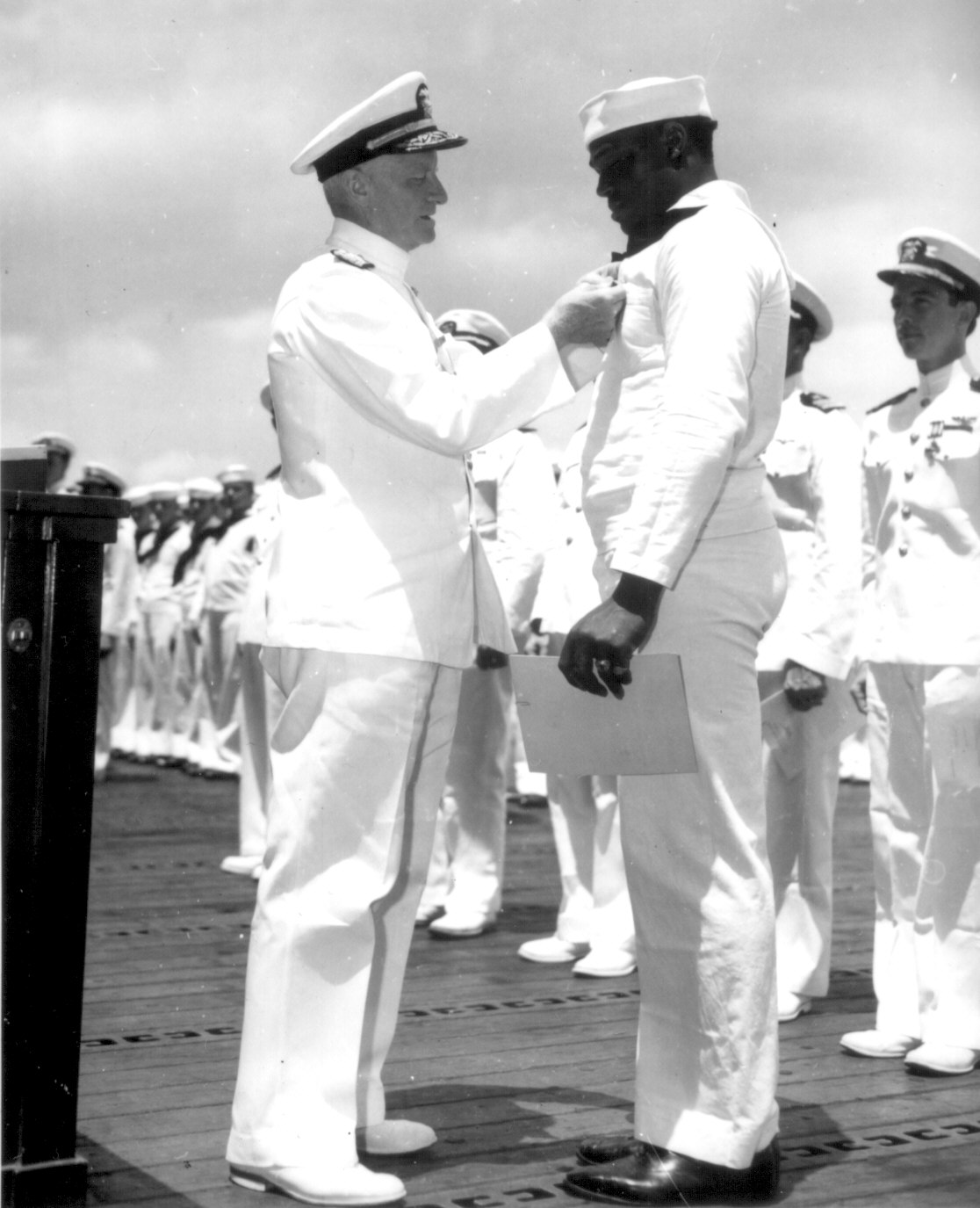
One of the Navy Crosses was awarded to Mess Attendant First Class Doris “Dorie” Miller. Miller was the only African American to win such an award that day. Miller who was assigned to the USS West Virginia received the award from Admiral Chester Nimitz for his efforts to assist his mortally wounded Commanding Officer, Captain Mervyn Bennion and manning a .50 caliber machine gun on his ship, possibly shooting down a Japanese aircraft.

Nimitz_and_miller

Nimitz remarked at the ceremony “This marks the first time in this conflict that such high tribute has been made in the Pacific Fleet to a member of his race and I’m sure that the future will see others similarly honored for brave acts.” Miller died less than two years later along with 645 other sailors when his ship the USS Liscombe Bay was torpedoed and sunk by a Japanese submarine near Tarawa. Miller’s Navy Cross citation reads:

“For distinguished devotion to duty, extraordinary courage and disregard for his own personal safety during the attack on the Fleet in Pearl Harbor, Territory of Hawaii, by Japanese forces on December 7, 1941. While at the side of his Captain on the bridge, Miller, despite enemy strafing and bombing and in the face of a serious fire, assisted in moving his Captain, who had been mortally wounded, to a place of greater safety, and later manned and operated a machine gun directed at enemy Japanese attacking aircraft until ordered to leave the bridge.”

CaptCassinYoung285

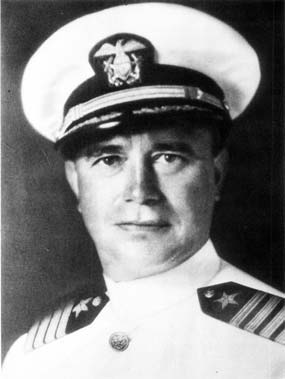
Others who survived the Pearl Harbor attack including Captain Cassin Young of the USS Vestal were later killed in action, Young while in command of the Heavy Cruiser USS San Francisco at the Naval Battle of Guadalcanal on November 13th 1942. Captain Young’s Medal of Honor citation reads:

For distinguished conduct in action, outstanding heroism and utter disregard of his own safety, above and beyond the call of duty, as commanding officer of the U.S.S. Vestal, during the attack on the Fleet in Pearl Harbor, Territory of Hawaii, by enemy Japanese forces on 7 December 1941. Comdr. Young proceeded to the bridge and later took personal command of the 3-inch antiaircraft gun. When blown overboard by the blast of the forward magazine explosion of the U.S.S. Arizona, to which the U.S.S. Vestal was moored, he swam back to his ship. The entire forward part of the U.S.S. Arizona was a blazing inferno with oil afire on the water between the 2 ships; as a result of several bomb hits, the U.S.S. Vestal was afire in several places, was settling and taking on a list. Despite severe enemy bombing and strafing at the time, and his shocking experience of having been blown overboard, Comdr. Young, with extreme coolness and calmness, moved his ship to an anchorage distant from the U.S.S. Arizona, and subsequently beached the U.S.S. Vestal upon determining that such action was required to save his ship.

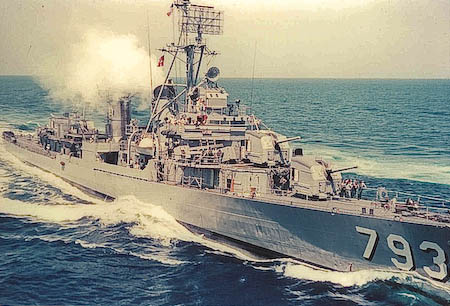
The Fletcher Class destroyer named after Captain Young, the USS Cassin Young DD-793 is now a museum ship in Boston Massachusetts.

In_action_courtesy_the_web

The individual bravery of these men was remarkable and many more did equally heroic things but for whatever reason were not recognized.

i06422

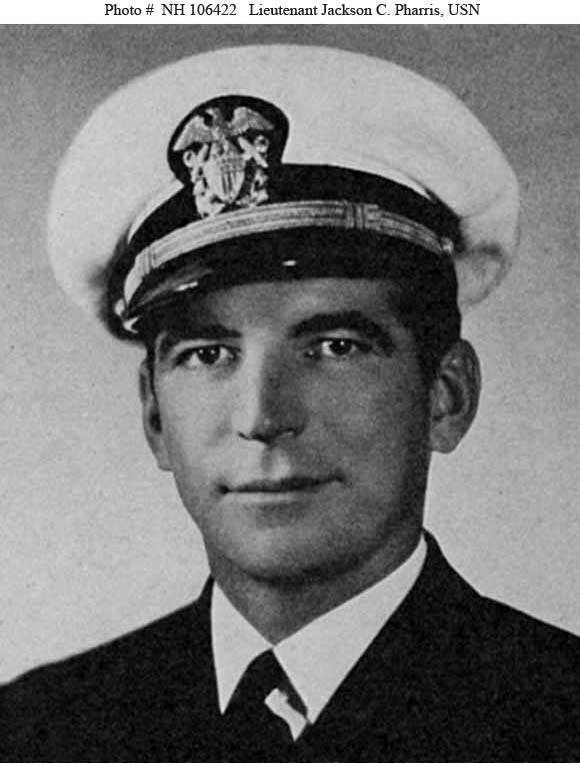
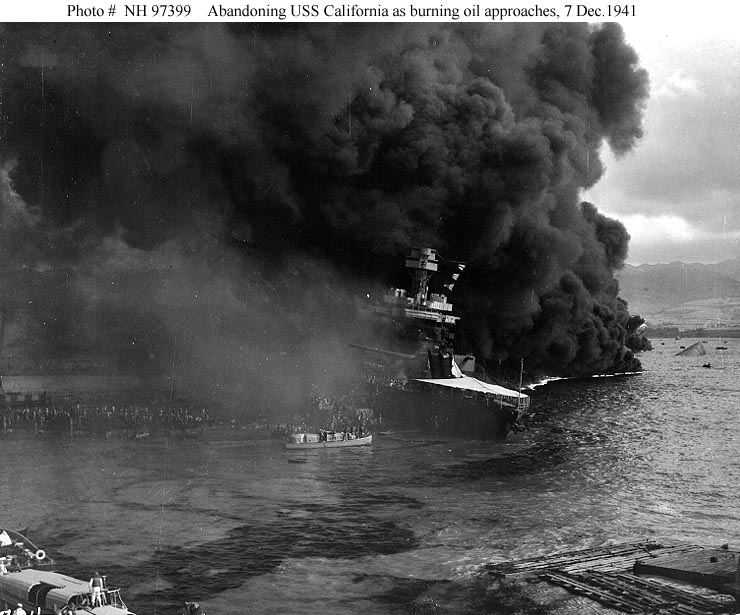
The citation of Lieutenant Jackson Pharris at the time of the attack a Gunners Mate on the USS California is typical of the actions of so many men on that desperate day. He was first awarded the Navy Cross but the award was upgraded to the Medal of Honor. That citation follows:

For conspicuous gallantry and intrepidity at the risk of his life above and beyond the call of duty while attached to the U.S.S. California during the surprise enemy Japanese aerial attack on Pearl Harbor, Territory of Hawaii, 7 December 1941. In charge of the ordnance repair party on the third deck when the first Japanese torpedo struck almost directly under his station, Lt. (then Gunner) Pharris was stunned and severely injured by the concussion which hurled him to the overhead and back to the deck. Quickly recovering, he acted on his own initiative to set up a hand-supply ammunition train for the antiaircraft guns. With water and oil rushing in where the port bulkhead had been torn up from the deck, with many of the remaining crewmembers overcome by oil fumes, and the ship without power and listing heavily to port as a result of a second torpedo hit, Lt. Pharris ordered the shipfitters to counterflood. Twice rendered unconscious by the nauseous fumes and handicapped by his painful injuries, he persisted in his desperate efforts to speed up the supply of ammunition and at the same time repeatedly risked his life to enter flooding compartments and drag to safety unconscious shipmates who were gradually being submerged in oil. By his inspiring leadership, his valiant efforts and his extreme loyalty to his ship and her crew, he saved many of his shipmates from death and was largely responsible for keeping the California in action during the attack. His heroic conduct throughout this first eventful engagement of World War 11 reflects the highest credit upon Lt. Pharris and enhances the finest traditions of the U.S. Naval Service.

h97399

2008-04-medal-of-honor-presented-to-navy-seal-monsoor1

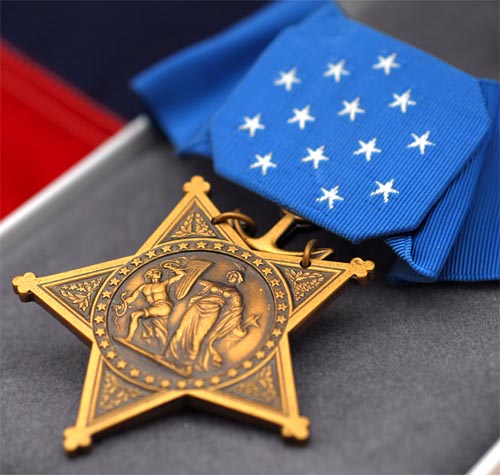
Those awarded the Medal of Honor are listed here:

Bennion, Mervyn, Capt., USN, CO of USS West Virginia, casualty of USS West Virginia 

Cannon, George H., First Lt., USMC, casualty of Midway Island NAS

Finn, John W., Lt.(jg), USN, NAS Kaneohe Bay, from Los Angeles, CA (20 shrapnel wounds from firing at Japanese planes)

Flaherty, Francis C., Ens., USNR, casualty of USS Oklahoma

Fuqua, Samuel G. (Glenn), Capt., USN, USS Arizona, from Missouri

Hill, Edwin J. (Joseph), Boatswain CWO, USN, casualty of USS Nevada

Jones, Herbert C., Ens., USN, casualty of USS California

Kidd, Isaac C., R. Adm., USN, from Ohio, casualty of USS Arizona

Pharris, Jackson C., Gunner, USN, USS California, from Columbus, GA

Reeves, Thomas J., Chief Radioman WO(RAD), USN, casualty of USS California

Ross, Donald K., Lt.Cmdr, USN, USS Nevada

Scott, Robert R., Machinist’s Mate first class MM1c, USN, casualty of USS California

Tomich, Peter, Chief Watertender, USN, casualty of USS Utah

Van Valkenburgh, Franklin, Capt(CO), USN, CO USS Arizona, casualty of USS Arizona

Ward, James Richard, Seaman first class, USN, casualty of USS Oklahoma

Young, Cassin, Capt., USN, Washington DC, USS Vestal

navy_cross_medal_171

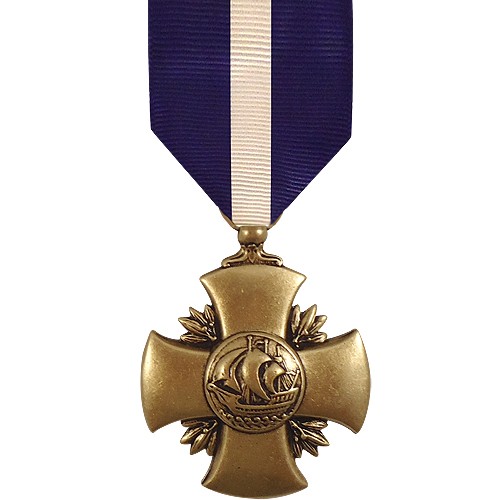
Those awarded the Navy Cross are listed here: 

Austin, John A., Chief Carpenter, USN, casualty of USS Oklahoma

Baker, Lionel H., Pharmacist’s Mate second class, USN

Bolser, Gordon E. Lt.(jg), USN

Bothne, Adoloph M., Boatswain, USN

Burford, William P., Lt. Comdr., USN

Christopher, Harald J., Ens., USNR, casualty of USS Nevada

Curtis, Ned B., Pharmacist’s Mate second class, USN

Daly, Edward Carlyle, Coxwain, USN, casualty of USS Downes

Darling, Willard D., Cpl., USMC

Davis, Frederick C., Ens., USNR, casualty of USS Nevada

Dickinson, Clarence E. Jr., Lt., USN

Douglas, C. E., Gunnery Sgt., USMC

Driskel, Joseph R., Corporal, USMC

Dunlap, Ernest H. Jr., Ens., USN

Edwards, John Perry, Ens., USNR

Etchell, George D., Shipfitter, USN

Fleming, W.D., Boatswain’s Mate first class, USN

Gombasy, L.G., Seaman second class, USN

Graham, Donald A., Aviation Machinist’s Mate first class, USN

Hailey, Thomas E., Sgt., USMC

Hansen, Alfred L., Chief Machinist’s Mate, USN

Huttenberg, Allen J., Ens., USNR

Isquith, Solomon S., Lt. Cmdr. USN

Jewel, Jesse D., Comdr.(MC), USN

Kauffman, Draper L., Lt., USNR

Larson, Nils R., Ens., USN

Ley, F. C. Jr., Fireman second class, USNR

McMurtry, Paul J., Boatswain’s Mate first class, USN

Mead, Harry R., Radioman second class, USN

Miller, Doris, Mess Attendant first class, USN 

Miller, Jim D., Lt.(jg), USN

Moore, Fred K., Seaman first class, USN, casualty of USS Arizona

Outerbridge, William W., Lt. Comdr., USN

Parker, William W., Seaman first class, USN

Peterson, Robert J., Radioman second class, USN

Pharris, Jackson C., Gunner, USN (upgraded to Medal of Honor)

Phillips, John S., Comdr. USN

Riggs, Cecil D., Lt. Comdr. (MC), USN

Robb, James W. Jr., Lt.(jg), USN

Roberts, William R., Radioman second class, USN

Ruth, Wesley H., Ens., USN

Singleton, Arnold, Ens., USN

Smith, Harold F., Boatswain’s Mate second class, USN

Snyder, J. L., Yeoman first class USN

Taussig, Joseph K. Jr., Ens., USN

Taylor, Thomas H., Ens., USN

Teaff, Perry L, Ens., USN

Thatcher, Albert C., Aviation Machinists Mate second class, USN

Thomas, Francis J., Lt. Comdr., USN

Thomas, Robert E. Jr., Ens., USN

Vaseen, John B., Fireman second class, USNR

silver_star_medal_205_web.jpeg_1

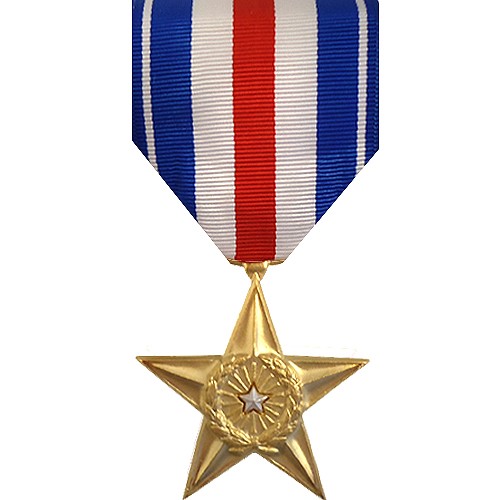
The Silver Star was awarded to:

Kiefer, Edwin H., Lt.(jg), USNR

Marshall, Theodore W., Lt., USNR

Owen, George T., Comdr., USN

Shapley, Alan, Maj., USMC

983-963-large

The Navy and Marine Corps Medal was awarded posthumously to: 

Day, Francis D., Chief Watertender, USN, casualty of USS Oklahoma

Schmitt, Aloysius H., Shipfitter first class, USN, casualty of USS Oklahoma

Wright, Paul R., Chief Watertender, USNR, casualty of USS Oklahoma

Note: The Awards listed are also complied at the website http://pearlharbor.org That site also has one of the most extensive searchable casualty listings available on the web. 

As we remember the attack on Pearl Harbor, or for that matter any battle we cannot reduce them to the number of ships, aircraft, tanks or equipment lost. Likewise when we talk the raw numbers of casualties the temptation is to treat them as impersonal statistics. However behind each of those numbers is a name, a man or woman with a life, family and friends who died in the service of their country.

The same is true today of men and women who will be unknown to most Americans.

Please do not forget them.

Peace

Padre Steve+

1 Comment

Filed under History, leadership, ministry, US Navy, world war two in the pacific

A New Birth of Freedom: The Gettysburg Address at 150

mkholrt

I am always humbled when I travel to Gettysburg as I did just two weeks ago. It is hard to believe in that now peaceful pastoral setting that over 157,000 Americans, almost 82,000 Union and 75,000 Confederate met in a three day battle. In those three days over 28,000 Confederates and 23,000 Union soldiers were killed, wounded, missing or captured. It was the greatest number of casualties inflicted in one battle on American soil in history.

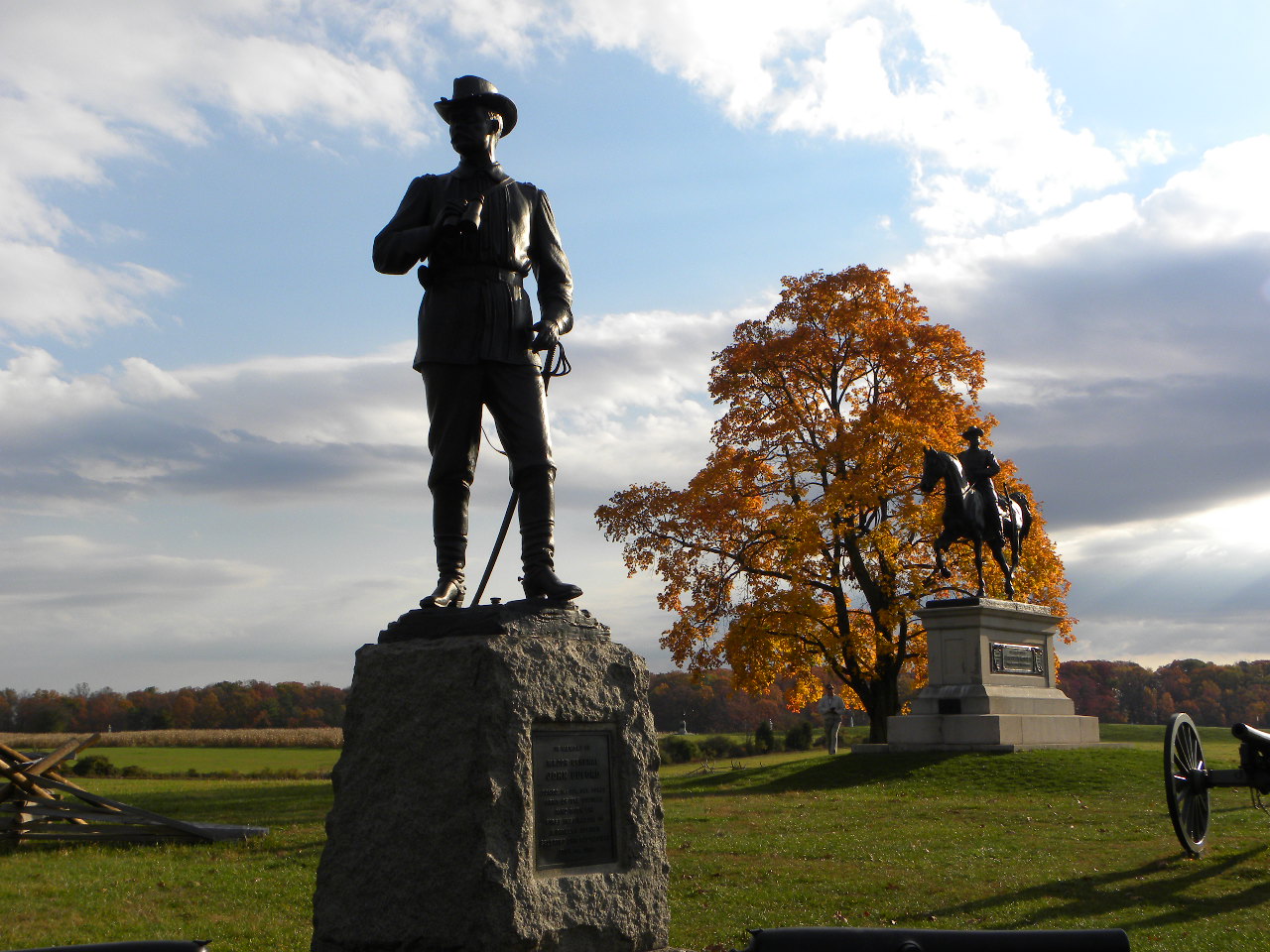
The places that the battle was fought have become legendary, for they are “hallowed ground” as President Abraham Lincoln so eloquently put it. The places, McPherson’s and Herr’s Ridge, Seminary Ridge, the Railroad Cut, Barlow’s Knoll, Cemetery Hill, Culp’s Hill, The Wheat Field, Devil’s Den, the Peach Orchard, Little Round Top, Cemetery Ridge, the Apse of Trees, the Angle and the High Water Mark are in a sense holy, or hallowed, consecrated by those who struggled there, those who lived and those who gave the last full measure of devotion to their country.

gal9vfvf1

I think about those men of both sides, fully convinced of the rightness of their cause who fought valiantly in the struggle. That being said when I go there though my family predominantly fought for the Confederacy my heart is drawn to those men who remained loyal to the Union and those who answered the call of Abraham Lincoln to serve in a cause greater than their own interests, the great and the small alike.

DSCN8774

Lincoln was a masterful orator who managed to rally the Union and bring hundreds of thousands of men volunteer before Gettysburg. They came for an ideal an ideal which Lincoln’s oratory was probably the most effective at articulating in a way that men would volunteer to suffer hardship, fight and die to bring about. It was well put in the movie Gettysburg where Colonel Joshua Chamberlain said:

“This is a different kind of army. If you look at history you’ll see men fight for pay, or women, or some other kind of loot. They fight for land, or because a king makes them, or just because they like killing. But we’re here for something new. This has not happened much, in the history of the world: We are an army out to set other men free. America should be free ground, all of it, from here to the Pacific Ocean. No man has to bow, no man born to royalty. Here we judge you by what you do, not by who your father was. Here you can be something. Here is the place to build a home. But it’s not the land. There’s always more land. It’s the idea that we all have value, you and me. What we’re fighting for, in the end… we’re fighting for each other…”

images-61

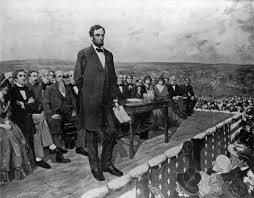
On November 19th 1863 Lincoln delivered a “few words” at Gettysburg which were in all practical aspects a benediction at the dedication of the battlefield cemetery. Lincoln was the second speaker at the ceremony following former Pennsylvania Congressman Edward Everett who spoke for more than two hours, a typical speech from the period. The 270 words of Lincoln’s address are perhaps the most important of any speech or document in American history save the Declaration of Independence and the Constitution of the United States.

The speech was so powerful that Everett wrote Lincoln the next day:

“Permit me also to express my great admiration of the thoughts expressed by you, with such eloquent simplicity & appropriateness, at the consecration of the Cemetery. I should be glad, if I could flatter myself that I came as near to the central idea of the occasion, in two hours, as you did in two minutes.”

The speech is short, but it’s eloquence is unmatched. Lincoln wrapped ideas, concepts and ideals that men have written volumes about into a speech so powerful that many have memorized it.

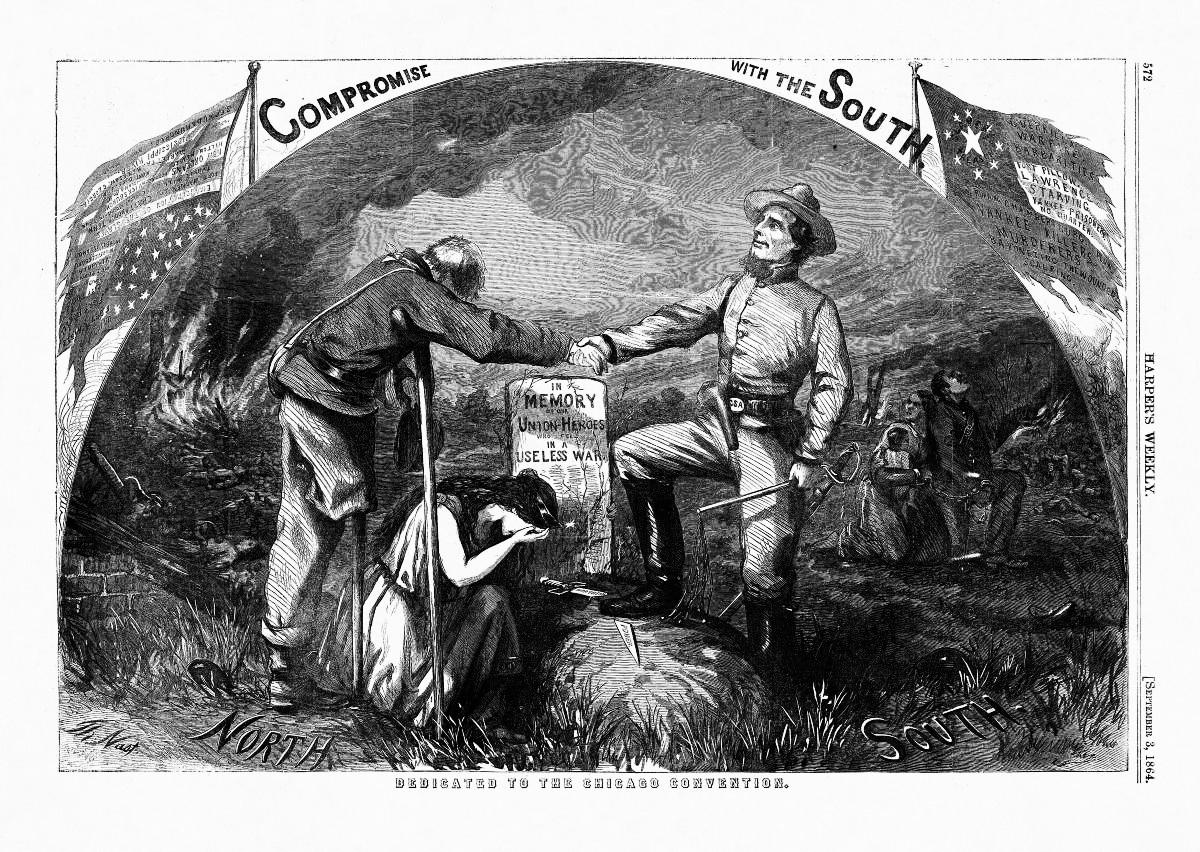
18640903.nashcartoon

But few realize the context that it must be placed. Though the Union had defeated Lee’s Army at Gettysburg and Grant had taken Vicksburg to cut the Confederacy in half the North was groining war weary. There were those in the North, the Copperheads who were willing even after Gettysburg and Vicksburg to end the war on terms favorable to the Confederacy, even granting Confederate independence and the continuation of slavery. Likewise Lincoln was sick when he delivered the address having what was mostly likely a mild form of Smallpox when he gave the address. Thus the tenor, simplicity and depth are even more remarkable. It is a speech given in the manner of Winston Churchill’s “Blood sweat toil and tears” address to Parliament upon being appoint Prime Minister in 1940.

cropped-dscn88191.jpg

In a time where many are wearied by the foibles and follies of our politicians, even wondering about our form of government can survive Lincoln’s words matter. Dr Allen Guelzo, Professor of Civil War Studies at Gettysburg College wrote in the New York Times today:

“The genius of the address thus lay not in its language or in its brevity (virtues though these were), but in the new birth it gave to those who had become discouraged and wearied by democracy’s follies, and in the reminder that democracy’s survival rested ultimately in the hands of citizens who saw something in democracy worth dying for. We could use that reminder again today.”

Dr Guelzo is quite correct. Many people in this country and around the world are having grave doubts about our democracy. I wonder myself, but I am an optimist. I do believe that we will recover because for the life of me I see no nation anywhere else with our resiliency and ability to overcome the stupidity of politicians, pundits and preachers.

The amazing thing was that in spite of everything the Union survived. Lincoln was a big part of that but it was the men who left lives of comfort and security like Joshua Chamberlain and so many others who brought about that victory. Throughout the war, even to the end Southern political leaders failed to understand that Union men would fight and die for an ideal, something greater than themselves, the preservation of the Union and the freedom of an enslaved race. For those that volunteered it was not about personal gain, loot or land,it was about something greater. It was about freedom.

GAFac1

Now I for one do not think that we are currently living up to the ideals enunciated by Lincoln that day at Gettysburg. I can understand the cynicism disillusionment of Americans as well as those who have for over 200 years looked to us and our system as a “city set on a hill.” That being said, when I read these words and walk that hallowed  ground I am again a believer that we can realize the ideal.

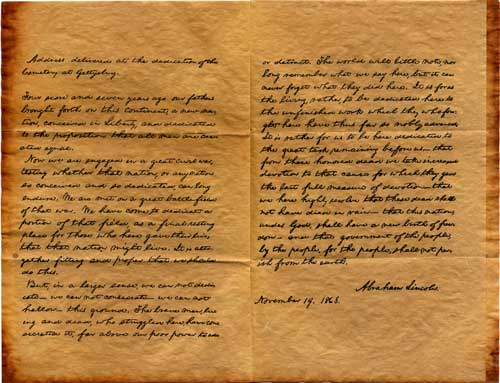
Four score and seven years ago our fathers brought forth on this continent, a new nation, conceived in Liberty, and dedicated to the proposition that all men are created equal.

Now we are engaged in a great civil war, testing whether that nation, or any nation so conceived and so dedicated, can long endure. We are met on a great battle-field of that war. We have come to dedicate a portion of that field, as a final resting place for those who here gave their lives that that nation might live. It is altogether fitting and proper that we should do this.

But, in a larger sense, we can not dedicate — we can not consecrate — we can not hallow — this ground. The brave men, living and dead, who struggled here, have consecrated it, far above our poor power to add or detract. The world will little note, nor long remember what we say here, but it can never forget what they did here. It is for us the living, rather, to be dedicated here to the unfinished work which they who fought here have thus far so nobly advanced. It is rather for us to be here dedicated to the great task remaining before us — that from these honored dead we take increased devotion to that cause for which they gave the last full measure of devotion — that we here highly resolve that these dead shall not have died in vain — that this nation, under God, shall have a new birth of freedom — and that government of the people, by the people, for the people, shall not perish from the earth.

dscn0061

In the hope that we again realize those ideals and help bring about “a new birth of freedom,” I wish you a good night.

Peace

Padre Steve+

Leave a comment

Filed under civil war, History, leadership, Political Commentary

Shutdown Dead Ahead

img00169-20110726-2126

“Passionate hatred can give meaning and purpose to an empty life. Thus people haunted by the purposelessness of their lives try to find a new content not only by dedicating themselves to a holy cause but also by nursing a fanatical grievance.” Eric Hoffer “The True Believer 

It looks like tomorrow I will go to work and get to hear how the Republican and Tea Party Shutdown of the government will impact my senior military schooling. I do know that at least some classmates will be sent home to their parent commands approximately 3 1/2 weeks into a 10 week course required by law for them to serve in either their current or projected assignments. Likewise much of our civilian faculty and staff will be sent home leaving those of us working to complete the course without their knowledge and experience as well as what we will lose when our fellow students are sent home. I will remain because unlike most I am being assigned as faculty to the school that I am attending.

It seems strange for me, a man who spent almost his whole life in the military as well as a member of the Republican Party until my return from Iraq in 2008 to watch this debacle occur and to understand that those in the GOP leadership pushing hardest for the shutdown really don’t care.

Listen, I get the fact that a lot of people on the political right do not like the Affordable Health Care Act (aka Obamacare.) However it was passed in both houses of Congress, signed into law and been ruled Constitutional by the Supreme Court. However throwing a tantrum and shutting down the government is not how our founders envisioned the repeal of laws. Their remedy was to win elections, repeal unpopular laws, even Constitutional amendments  through the legislative process even if it took a while. In fact there are numerous examples of this including my favorite the repeal of Prohibition.

However it appears now that the members of the radical minority of the Tea Party and GOP House of Representatives caucus and freshman Senator Ted “Green Eggs and Ham” Cruz want to make the entire government shut down to try to win their point. Unfortunately for everyone their irresponsible actions will cost the country billions of taxpayer dollars, not to mention the economic impact in the private sector, something that Wall Street and the American Chamber of Commerce are warning are dangerous to our economy. But then let us not forget that we are supposedly, if you believe in American Exceptionalism “a city set on a hill” then you have to realize that what is happening tonight is resonating with people around the world.

Those who looked to American democracy as a model or example are looking elsewhere and who would blame them? The Chinese Communists are completely amoral but their system seems to be working. Now I don’t think it to be superior and they too have problems but that is not what the world sees. Likewise nearly every advanced nation on the planet, almost all of which are Western democracies have some form of Government funded health care. I have many friends around the world and most, even military men wonder what the hell is going on with our politicians.

Why is this happening? The real fact of the matter is that this has nothing to do with the budget. It has nothing even to do with the Constitutionality of the AHCA. It is a power play to try to humiliate a sitting President who won not one, but two elections by convincing margins. Some of the grand standing by those in the GOP has been more than crass. One House Representative compared their action to the brave passengers of Flight 93 on 9-11 quoting Todd Beamer “Let’s roll.” When I heard that I was both saddened and angered, having been on active duty before and after 9-11 and having served multiple tours in the Arabian Gulf or Iraq I found the entire display offensive and almost Talibanesque.

The fact of the matter is that this isn’t about economic policy or even health care. It is about power and it is about the unremitting hatred of a minority of people who loathe the fact that an African American President passed a health care law that was originally drafted by the Conservative Heritage Foundation. A law that if a Republican had passed it would be hailed as a law that made everyone pay for their health insurance. But such is the zero sum politics of this faction.

This shutdown going to hurt a lot of people. It will hurt our economy. It will also hurt national security. However those forcing the issue do not care, because the ultimate goal has nothing to do with the AHCA or the budget, but rather a minority, many (but certainly not all) motivated by racism (yes I said it) attempting to put the Black man in the White House in his proper place. If you don’t believe me just go out and read their columns, internet posts and social media entries. If you have any sense you will see this.

There is a way to change laws and there is a way to make corrections in our system, but this is not the venue for it. Too much is at stake. However it seems that much of the leadership of my former part seem hell bent on devastating the country and destroying their party. Ronald Reagan and Barry Goldwater must be spinning in their graves. Neither of those conservative icons would have tolerated this behavior. But then, even if you didn’t agree with them all the time you had to admit that they could work with others and understood both the Constitution and our legislative system. John Boehner, Ted Cruz and the other leaders of this insanity seem neither to understand or care.

God help us.

Peace

Padre Steve+

7 Comments

Filed under economics and financial policy, leadership, News and current events, Political Commentary

My Way or the Highway: The Zero Sum Game of American Politics in 2013

img00169-20110726-2126

“Politics is an art and not a science, and what is required for its mastery is not the rationality of the engineer but the wisdom and the moral strength of the statesman”Once upon a time in America there was a time when we had people in government who were statesmen.” Hans J Morgenthau 

These men understood something about the Constitution, representative government. pluralism, tolerance and dare I say compromise. Yet all were men of principle. The honestly believed in and worked toward the goals that they believed best embodied the American body politic as well as their own political, ideological and even religious beliefs. Basically when we cut to the chase the real thing that sets them apart from the legislators of today was that they knew that compromise was actually desirable in many cases. They understood that there were times to “duke it out” on Capitol Hill but that at the end of the day that as Americans we could have different opinions yet still come together for the benefit of all Americans, not just those that we were beholden to for the money needed to keep us in office.

But that was a different era. Men like Edward Dirksen, Scoop Jackson, Harry Truman, Dwight Eisenhower, Tip O’Neill and Ronald Reagan or for that matter even Jack, Bobby or Teddy Kennedy would not survive in the zero-sum politics if 21st Century American. They would be despised by their political “allies” even more so than their opponents.

The sad thing is that in the United States of 2013 it is much easier to be against something than it is to be for something. Likewise it is now more beneficial for politicians of both parties in the gerrymandered congressional districts which ensure the safety of the incumbent to adopt a no-quarter attitude. It has allowed elected leaders to adopt a zero-sum game of no-compromise.

The results are a broken system of government, a deep division of the people almost all of whom distrust and even despise the very people that they elected.

As I watch the current proceedings in Washington I am reminded of what I thought when the “deal” to agree to the sequester was reached. I remembered the words of Thomas Jefferson concerning the Missouri Compromise. I knew back in 2011 that the even the threat of sequester would not change the behavior of those in Congress, particularly the Tea Party faction of the Republicans, a group who have in many cases so wedded the most uncompromising aspects of religion to political ideology that there can be no backing down for them. Politics is an extension of God’s will. It is the extension of the theology of Christian Dominionism which has at its center the takeover of the systems of the world by Christians, the Seven Mountains theology. That is why compromise if there is any in the current situation will by only delay the reckoning.

Jefferson noted: “but this momentous question, like a fire bell in the night, awakened and filled me with terror. I considered it at once as the knell of the Union. it is hushed indeed for the moment. but this is a reprieve only, not a final sentence. a geographical line, coinciding with a marked principle, moral and political, once conceived and held up to the angry passions of men, will never be obliterated; and every new irritation will mark it deeper and deeper.” 

We need a revival of statesmanship in our country but in the current political environment I fear that those who would attempt to be statesmen would not survive. Much like Weimar Germany our politicians, pundits and preachers, the Unholy Trinity are paving the way for something unimaginably terrible when they finally wreck our current system of government. They are doing it and those who do not speak out against them regardless of our politics have to take part of the blame.

Martin Niemoller wrote after the Second World War:

In Germany they first came for the Communists,
and I didn’t speak up because I wasn’t a Communist.
Then they came for the Jews,
and I didn’t speak up because I wasn’t a Jew.
Then they came for the trade unionists,
and I didn’t speak up because I wasn’t a trade unionist.
Then they came for the Catholics,
and I didn’t speak up because I was a Protestant.
Then they came for me –
and by that time no one was left to speak up.

Peace

Padre Steve+

2 Comments

Filed under History, leadership, Loose thoughts and musings, Political Commentary, Religion

Re-entering Academia

20130906-213735.jpg

Education is the kindling of a flame, not the filling of a vessel. Socrates

I signed in to my new assignment at the Ethics faculty and Command Chaplain at the Joint Forces Staff College today. The JFSC is part of the National Defense University and as such is not a Navy Command. it is a joint command responsible to the joint Chiefs of Staff and the Defense Department. There are faculty members from the Army, Navy, Marine Corps, Air Force, NSA, State Department and other agencies and the student body is composed of US military personnel from all branches, other Federal agencies as well as NATO and other allied nations. To put it succinctly my diverse background seems perfectly tailored for the job.

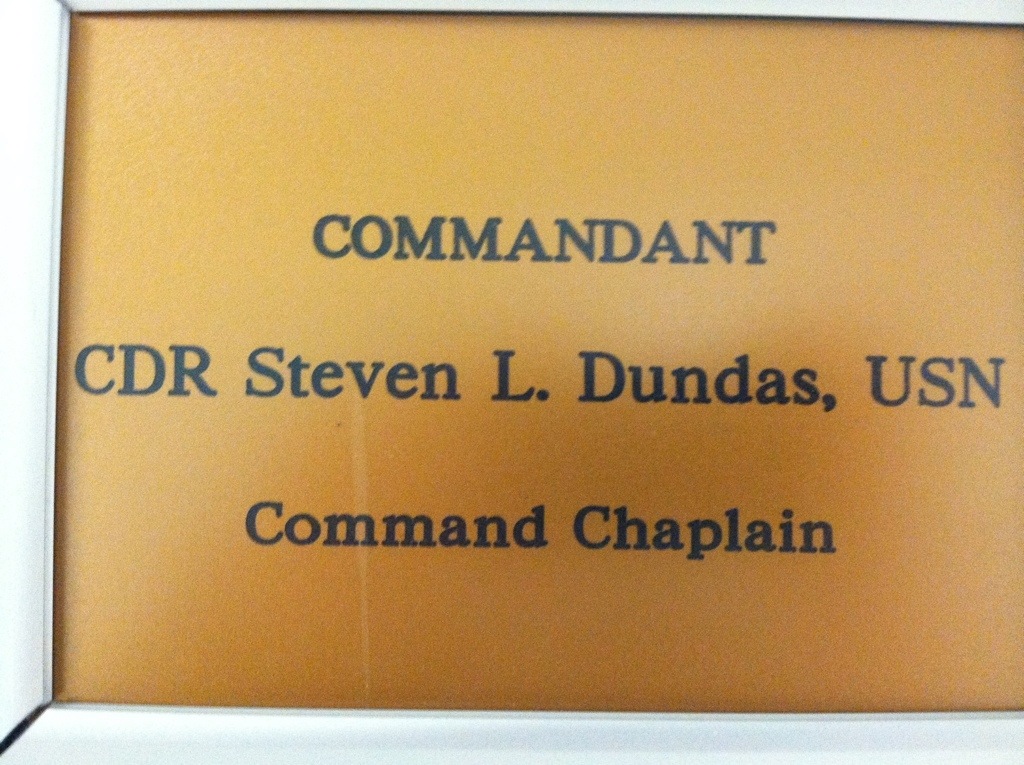
My friend Hal Scott is the outgoing chaplain and has already been a great help during the transition before I reported and today. What was really cool is even the little things were taken care of, right down to the name plate on my office door. Like Denny Crane said in Boston Legalname on the door.” But I digress…

20130906-214943.jpg

It is a good thing to have a friend in the position that you are moving in to. I have had many assignments in the military and had a number of good turnovers as we call them, but when someone who knows you and has your best interests at heart is on deck preparing the way it makes things a lot easier.

I met with the Commandant and Chief of Staff as well as some of the academic deans and professors today. It was really nice. Every single person asked me what “I wanted to do” at the college. Today the door to teaching, learning and deeper academic education was thrown open to me. I was told that I will have the chance to do anything I desire.

Now says my desires are pretty simple. I want to care for the faculty and staff members of the college as well as our students. Many of whom are catching one of our programs between arduous operation assignments and combat deployments. Quite a few I understand suffer from PTSD or some other type of combat stress injury and since they are senior officers many choose not to get help because of the stigma attached to getting it. Hopefully I will be someone who can be an encouragement to those that have not sought help,to get it and to be there for those that suffer in silence.

I also want to teach, not just Ethics, which is incredibly important in our world which appears to have gone mad, but also Military history and theory. Since I have my second Masters Degree in Military History it looks like I will get that chance as well. The doors have been opened.

That being said I do want to continue my own education. I for one do not think that a person should ever stop learning, no matter what their academic field or vocation. Since I lean toward academia it follows that I desire to continue to learn, both in my individual study and in formal education. I am looking at a number of doctoral programs which will,help me do that and help me in the academic world when I eventually retire from the military. Admittedly in that all I want to be is an adjunct professor to keep myself in the game but the additional education will help.

My first 10 weeks will be spent as a student in the Joint Advanced Warfighting School, which focuses on Joint, Multi-National and Inter-Agency operations even as I transition to being the Command Chaplain. I will be in a seminar group composed of a cross section of the student body that i already described. once i complete the course I will be teaching a number of Ethics courses and most likely get to teach other subjects as well. The last time I taught college courses was when I taught Western Civilization for Park University back in 2001.

From what Hal tells me the teaching methods encourage class participation and not doing data dumps of Power Point slides. That is good because I am okay with that and don’t mind chasing a rabbit once in a while if it helps students think more critically, ask hard questions and not be satisfied with easy answers to questions where there either are no easy answers or where multiple answers might be correct. That being said I believe that when we do this we give leaders the chance to do the right thing no matter what kind of situation that they find themselves in be it deployed or supporting combat operations or in garrison.

In this I am reminded of a quote from Star Trek the Next Generation. It is from an episode called “The First Duty.” in it the seasoned Captain Jean Luc Picard confronts his young protege Wesley Crusher after a disastrous accident that leaves a Star Fleet Academy cadet dead. Picard tells the young Crusher that “the first duty of every Starfleet officer is to the truth, whether it’s scientific truth, historical truth or personnel truth… in my book that sums up ethics.

Likewise the pursuit of truth, learning and seeking can never be brushed aside no matter how old we get or who wise that we think that we are. As the late great Hall of Fame Manager of the Baltimore Orioles Earl Weaver put it so well “It’s what you learn after you know it all that counts.”

So on Monday morning I will report to class and also give my first briefing on chaplain services, operational and combat stress issues, suicide prevention and other topics to an incoming class. My own class at that. Since we will have a few German officers in the class I will probably do at least part of my introduction in German. My Arabic or French is not good enough at the present to pull that off in either of those languages, but give me time.

Until tomorrow

Peace

Padre Steve+

20130906-233937.jpg

2 Comments

Filed under ethics, History, leadership, Military

Letter to a New Military Chaplain Part IV: The Minefields of the Flesh, Sex, Alcohol and Money

1905_50393027058_1870_n

This is fourth part of a response to a question I had from a new Navy Chaplain. I have decided to post it here without any identification of the chaplain because I know that many men and women who are new to the military chaplaincy or who are exploring the possibilities of becoming a chaplain have the same questions. I was fortunate to have had a number of chaplains who at various points in my decision process and formation as a minister, Priest and Chaplain in both the Army and the Navy help me with many of these questions. Likewise I learned far too much the hard way and blew myself up on some of the “land mines” that almost all who serve as chaplains experience in their careers. This is the third of several parts to the letter and is my attempt to systematically explain my understanding of what it is to be a Chaplain serving in the military and in particularly the Navy. The first three parts are linked here:

Letter to a New Military Chaplain: Part One

Letter to a New Military Chaplain: Part Two The Minefields of the Heart 

Letter to a New Military Chaplain Part Three: The Minefields of the Soul: Power and Arrogance

Dear Chaplain

It has been about a week since my last letter concerning the minefields that so easily ensnare those in the various Military Chaplain ministries. This section of my letter to you will be of the more practical type of advice and less philosophical and theological than the first several installments even though at the heart these observations are both theological and philosophical.

I chose the title of this section carefully because I do think that the way a number of New Testament writers deal with the subject of sin, calling it “the flesh” as opposed to “the spirit” is appropriate to the topic.

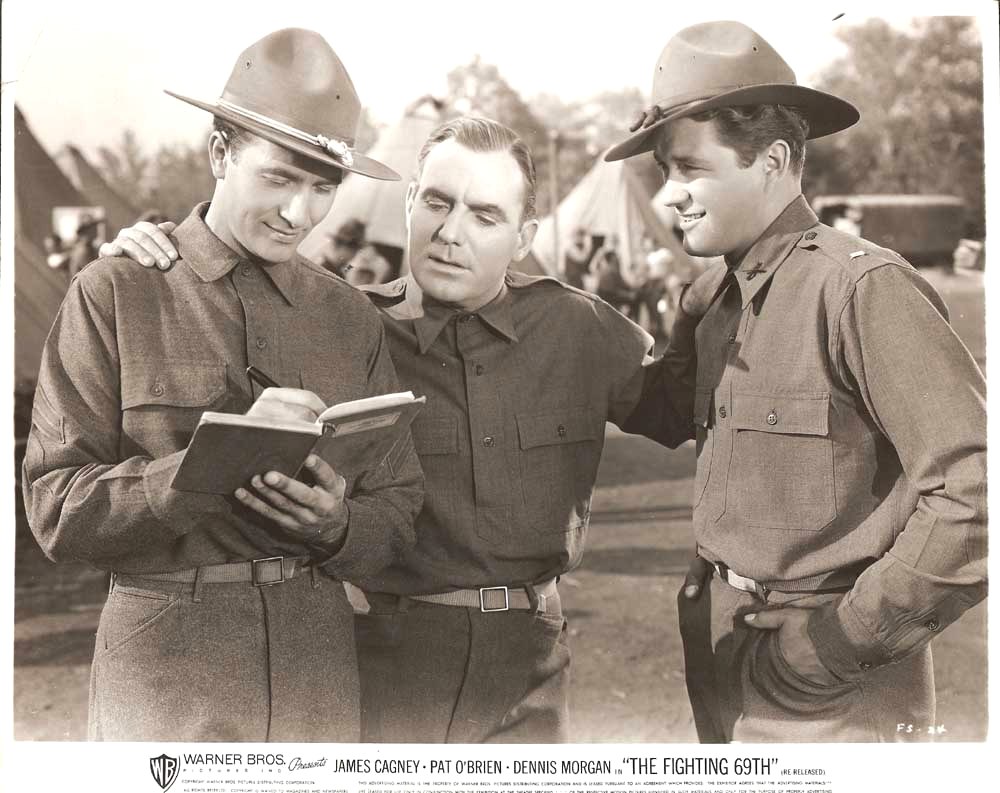
I think that people of my generation and earlier had a very high view of clergy. We didn’t think that they could do much wrong. Of course we all knew that they did but we didn’t like to talk about it, even productions such as Elmer Gantry did little to dissuade us from our beliefs that Ministers, Priests and Rabbis were somehow morally and certainly spiritually better than us. Even Hollywood maintained the myth, movies like The Bells of St Mary’s showed the essential goodness of the parish priest, while The Fighting 69th in which Pat O’Brien played the legendary Father Duffy, a man both streetwise and holy became the quintessential Chaplain of his generation.

18722 - The Fighting 69th

In fact the prayer that he prays in the movie is one that I have echoed in my career as a Chaplain and I am sure that many others have as well.

“Almighty God, in Thine infinite mercy grant me, thy servant, the wisdom to guide my young flock through the trials of war. Oh, Father, they’re so young. So young and they know so little of life and nothing at all of that terrible and bloody altar towards which they move, carrying so eagerly the bright sacrifice of their youth. Their need will be great, O Lord, and I am weak. Therefore, I beseech thee through Thy Son, Christ, our Lord, grant me the strength to keep them steadfast in the faith, in decency and courage to the glory of God, their country, and their regiment in the bad times to come. And if in battle you see fit to gather them to your protecting arms, thy will be done, but let them die like men, valiant and unafraid.”

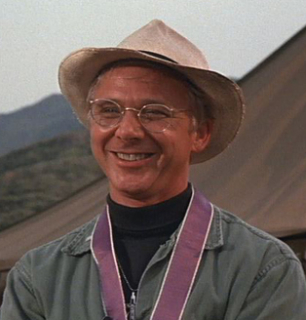
Of course there is Father Mulcahy of the movie and television series M*A*S*H. I actually liked the portrayal of him by William Christopher in the series better than the movie, perhaps because he became more than a bit player, but like many real life chaplains of every denomination an integral part of the life of his unit. His struggles are the same that many of us who serve as chaplains. In one episode he says to Hawkeye “For some time now, I’ve been comparing the disparity of our callings – Doctor versus priest. You fellows are always able to see the end result of your work. I mean, you know immediately if you’ve been successful. For me, the results are far less tangible. Sometimes… most of the time… I honestly don’t know whether I’m doing any good or not.” 

father

The film and television portrayals of chaplains such as Father Duffy and Father Mulcahy are inspiring, as are the examples of so many good men and women who have served as military chaplains. Some of these even gave their lives in combat so others might live, or placed themselves in harms way to be the the visible representation of God’s presence in places that God himself seems to have abandoned.

That being said there are minefields that exist which even the most noble, caring  and committed Chaplains can fall victim. They primarily lie in the real of Sex, Alcohol and Money, what we referred to as “SAM” when I was an Army Chaplain. Those are general categories to which unfortunately we need to discuss, illicit drugs, disobeying lawful orders and simple rudeness. I will save the issues of disobeying lawful orders and simple rudeness for part five, or Part V as they say in Roman numerals.

At any given time there are between a half a dozen and dozen military chaplains serving time at either Leavenworth or one of the regional Brigs. Others end up in trouble, are disciplined and then discharged from the the service often after devastating the lives of those that they served with. Those numbers are not included in the numbers incarcerated.

You wouldn’t think that sex would be a big issue being that we are supposed to be better at keeping our zippers up than others, but this is not always the case. I can cite from personal knowledge case after case where chaplains that I have known from across the denominational spectrum conservatives and liberals alike. Those actions have included heterosexual and homosexual relationships, inside and outside their units and sometimes involved the spouses of their unit members or parishioners.

For some this is due to the isolation that many Chaplains experience, be they married or single. Some are sexual predators, loathsome and evil animals masquerading as good, while others in moments of weakness succumb to temptation. I have had to go into a number of billets where the chaplain just before me had been relieved of their duties for sexual misconduct. Regardless of the reason the real fact of the matter is that when a chaplain is relieved and disciplined for their sexual misconduct their actions radiate out and damage the ministry and reputations of Chaplains who are completely innocent of wrong doing. This is much like how the actions of disgraced televangelists, pastors of large churches and Bishops or Priests implicated in pedophile or other sexual crimes cause problems for others in similar positions who again are without reproach. In every case where I have had to go into such a situation the onus has been on me to help heal the wounds and rebuild the credibility of the Chaplain Corps. This is true for every Chaplain who has to take a job where his or her predecessor was a criminal.

bilde-2

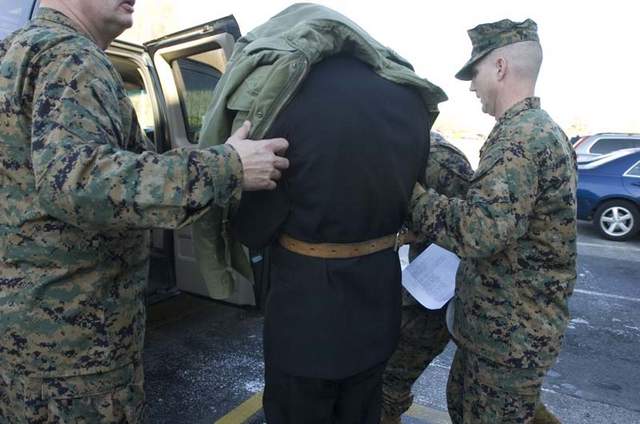
A Navy Chaplain being taken to the Brig after being convicted at Court Martial for sexual crimes (Marine Corps Times Photo)

Sexuality can be one of the greatest minefields that a military chaplain has to navigate, but there are others less visible that also trip men and women up.

The second major area is alcohol. I know a number of chaplains who have become alcoholics. I like to drink good craft beer, but I do know my limits now and am very careful about my consumption of alcohol. When I first came back from Iraq that was not the case. I did drink too much, mainly because I was in the process of coming apart with severe and chronic PTSD. I almost ended up in a bar fight one night and I am thankful that I never ended up in an accident or involved in any other alcohol related incident. There were times at various conferences that I would sit around and drink late into the night at the hotel with other chaplains going through similar problems as I was going through. For us it was safer than going to our superiors either in our churches or the chaplain corps.

That being said I have seen other Chaplains succumb to alcoholism and know one who in dealing with his own demons from service in Vietnam committed suicide while on active duty. Alcohol is also related to many of the incidents regarding sex, so even if it was not the primary issue it was a factor. I also know a number of chaplains who are involved with Alcoholics Anonymous and fight the battle of sobriety on a daily basis.

Related to alcohol are drugs. This is a relatively new phenomena and in most cases is related to prescription medicines, especially pain killers and anti-psychotics prescribed to treat the wounds of war, injuries and things like PTSD and TBI. Once again these are easy to become addicted to and chaplains are much like others when dealing with chronic pain, PTSD or TBI. Recently I saw something that I never thought I would see and that was a chaplain who tested positive for THC, the active ingredient in Marijuana. I figure that if there is one there probably are more that are using, many who battled addictions before their faith conversions and call to the ministry but when placed under the stress of this ministry go back to old friends.

The last component of SAM is money. I think this is a more difficult area in the Army than the Navy because in the Navy chaplains are not allowed to deal with the Religious Offering Fund, where in the Army a Chaplain at every installation is the Religious Offering Fund Manager. It is said by some that “money is the root of all evil” but I am not sure if that is exactly true in this case. I think that money and the power it brings sometimes reveals the inner character of a man more than anything. The great televangelist scandals of the late 1980s and early 1990s, the continuing saga of corruption at the Vatican Bank and the all too frequent revelations of ministers of all faiths misusing church finances are legend. When I had to manage a relative small installation chapel fund I lived in terror of making an innocent mistake, and thankfully I had an outstanding Chaplain Assistant and Parish Council to work with and maintained close contact with the fund manager at our higher headquarters.

Another issue dealing with money is what we are paid when in a travel status. I know that there are Chaplains who play fast and loose with this and I know people in the travel and disbursing offices who tell me about the actions of chaplains that they have to deal with who are not playing straight with the system. In my case I don’t make claims that I cannot substantiate even if it costs me money. I would rather be absolutely honest on a travel claim and lose money that claim something that I may or may not be entitled to that might cause scandal and bring disrepute to God, my church or the Chaplain Corps.

Money is a great temptation and more than one military Chaplain has fallen to it.

The sad thing about all of this is that most of our religious traditions deal explicitly with all of these matters as do our various Service Regulations and Defense Department Instructions. They are not rocket surgery but they are the downfall of far too many chaplains, many of whom actually came into the ministry and chaplaincy with good motives. Once again I lay a lot of this at the feet of our churches and theological schools which for decades have stressed how to run a church program over any real pastoral or theological formation process.

I am lucky. I have made mistakes but I have had numerous chaplains in both the Army and the Navy help me to see the blind spots and teach me about these things. They span the denominational, theological and even political spectrum. Conservatives, liberals, men and women, Protestants, Catholics, Later Day Saints, Jews and even a Moslem.

I could easily have gone into detail about the specific incidents where I knew the people involved or had to deal with them or follow in their footsteps. Some have made the national media, but somehow to do so would be unseemly, after all I do not work for the National Enquirer or for that matter the Navy or Army Times. That being said the Chaplain Corps of the various services all have by percentage among the highest incidences of misconduct of any officer branch or community and this has been a constant since I began my military career in 1981.

That should be a warning. If you know something is wrong don’t do it. If you are unsure about something ask someone. If you need help get it before your actions destroy the lives of those you serve and bring disrepute to your office, your religious body, the Chaplain Corps of your military service and yes even God. After all God does tend to get the blame for all of the actions of those in his service so be careful, guard your heart and mind and for God sakes keep your zipper up and all appearances thereof.

Until the next installment,

Peace

Padre Steve+

1 Comment

Filed under christian life, faith, leadership, Military, ministry, Pastoral Care

Letter to a New Military Chaplain: Part One

185615_1857288397412_3950321_n

Note: This is a response to a question I had from a new Navy Chaplain. I have decided to post it here without any identification of the chaplain because I know that many men and women who are new to the military chaplaincy or who are exploring the possibilities of becoming a chaplain have the same questions. I was fortunate to have had a number of chaplains who at various points in my decision process and formation as a minister, Priest and Chaplain in  both the Army and the Navy help me with many of these questions. Likewise I learned far too much the hard way and blew myself up on some of the “land mines” that almost all who serve as chaplains experience in their careers. It will be the first of several parts to the letter and is my attempt to systematically explain my understanding of what it is to be a Chaplain serving in the military and in particularly the Navy.

Dear Chaplain,

“Preach the Gospel at all times, use words when necessary.” Francis of Assisi 

I thank you for writing me about the questions that you have concerning ministry as a Navy Chaplain. They are incredibly good questions and I since you first asked me two days ago I have given them much thought before responding. I find that if I take the time to mull over such questions it is much more beneficial than simply spitting out whatever comes to mind first because if I don’t get the questions right my advice however good might be wrong. Of course even well thought out advice can be wrong in a given circumstance so you must contextualize the advice and adapt it to your own circumstances at any given time.

As a prologue to the actual questions that you ask I want to point you back to the words of St Francis. I think that they are they key to success in any ministry, but especially the chaplaincy.

As chaplains we are called by our churches or religious bodies to serve in an organization that is essentially secular. Our ordinations come from our churches or religious bodies and we are to be faithful to them. However our commissions as officers come from the President and this creates a dialectical tension that is hard to resolve for some. You will hear people talk about managing the “right and left side of our collars.” That of course is the fact that we wear our military rank on the right collar and the Cross that we wear as Christians or in the case of our Jewish, Islamic or Buddhist colleagues the Tablets of David, the Crescent or the Wheel of Life on the left.

Some attempt to seek a balance between the rank and the religious symbol. That is a bad model because but what typically happens is that chaplains become fall to one side or the other. By that I mean that they either place the military side higher and forget their call or minimize the military side and find that they have no voice in the system. I have seen many chaplains who have in their attempt to fit in with the military forgotten their call as ministers. On the other hand I have seen a number place such an emphasis on their own religious traditions and their perceived rights as ministers that they neglect the vast majority of the people that they are assigned to care for as chaplains. Both options are bad because ultimately we fail to serve those that we are called and given the privilege to serve.

A few years back I saw the travesty of trying to “balance” the two sides of the collar. From my observation those who tried this always end up becoming so military that they end up losing their faith distinctions or they never adapt to the military and even if they do “good ministry” they end up frustrated, are seen as an outsiders and have relatively short careers.

295_27076762058_7573_n-1

As such I went back to Christian theology to find a model of ministry and that is in the hypostatic union of Jesus the Christ. By our understanding as Christians Jesus is both fully God and fully Human, not half and half, or any other percentage, but 100% God and 100% human. The fact is that as Navy Chaplains we are 100% ministers of our own faith group and 100% Naval Officer. As such we need to be the best we can at both and cannot allow ourselves to settle for anything less. If we attempt to “balance” we will fail in being ministers or being officers.

The military is not the church, as such  In the United States our service in such a capacity is not a right, it is a privilege. The right is not ours, it is right of the people that we serve to have the Constitutional right under the First Amendment to their “Free Exercise” of religion. As chaplains we facilitate the religious rights and freedoms of those who wear the same uniform that we wear, whether they of our faith, another faith or even of no faith. This is not about being “politically correct” but rather being faithful to two callings, both of which must be valid and respected in order for us to do what we are called to do as Navy Chaplains and there is always a tension in this. If you take a look at the chaplains that have trouble it is most often because believe that their right to free exercise is greater than the people that they are called to serve or that they lack a sufficient understanding of their call as Ministers, Priests, Rabbis or Imams. That is why Francis’ words are so important.

I think that many ministers, not just chaplains have a terrible understanding of our calling and vocation. To many the ministry is simply a job, their ordination and theological education the necessary prerequisites to perform the task. It is an attitude that I noted in seminary back in the late 1980s and early 1990s and have continued to observe over time. In seminary I had fellow students tell me that they were just thier to get a more advanced degree to help them get a bigger and better paying church. I had others friends disparage their theological education. I had one friend tell me that our degree was “only good for 5 years.” Obviously he was only thinking about the “how too classes” and not the courses that are really important to theological and pastroral formation.

But such is the state of theological education in this country. The fact is that most churches, seminaries or religious bodies do a pretty bad job at pastoral formation. We do a great job on teaching people how to manage churches, direct programs, teach doctrine, evangelize, run media empires or even become social and political activists, but a terrible job at actual pastoral formation and the latter is actually the most important task. Formation is primarily about relationships and relationships are what the Gospel is all about, beginning with the relationship of God to humanity and all of creation.

That may sound like I chased the proverbial rabbit but the attitude has a decided impact on the chaplain ministry. What happens is that this simply becomes a job and “skill sets” take priority over our calling and our service to those who were are called to serve during the time that we are allowed to serve in the Navy. We must never lose sight of who we are called to be as ministers, including the vows the we took when we were ordained as well as the oath that we swore as Naval Officers.

All that being said back to your questions. You asked first about the minefields that you might encounter as a chaplain. In a sense I have described some of them, they are very often related to who we are on the inside. It is as Lao Tzu said: “He who knows others is wise; he who knows himself is enlightened.”

The minefields that you asked are varied but most are related to what I have already described. They are often directly related to our own understanding of ourselves, our calling and our relationship to those that we are called to serve.

But to get into some detail on real, perceived and potential “minefields” you might encounter let me break them into several categories.

The first is the personal. As I stated before we have to know ourselves. This takes time and many people remain oblivious to who they are and what they are about, sometimes for most of their lives. Where this comes into play as a chaplain is that if we do not understand who we are and what we are about we will fail either in regard to our ministerial calling, our military vocation or our familial or ecclesiastical relationships.

The second is behavior. This is directly related to our personal behaviors and as we were told back during my early times as a new Army Chaplain. Most chaplains who self destruct tend to do so through SAM. Sex, alcohol or money. At any given time there are anywhere between half a dozen and dozen chaplains of all services serving time in Leavenworth or a regional Brig most having been convicted of charges involving SAM.

The third is professional. This is the nuts and bolts of what you will face as a Navy Chaplain. This includes your service to your crew, relationships with the chain of command and your fellow chaplains, your peers, your superiors and eventually those that you supervise as well as your Religious Programs Specialists or Chaplain Assistants. Likewise it includes your continuing relationships with your endorser and church that ordained you.

n671902058_1153804_6925

I will continue the discussion of these three areas in the next couple of days. After those topics are address I will discuss the particularities of promotion and assignments in the Chaplain Corps. Since my experience includes 17 1/2 years  in the Army and 14 1/2 years in the Navy including service as a junior chaplain in both as well as service as a Field Grade Officer in the Army and now as a Senior Officer in the Navy Chaplain Corps my perspectives will be quite unique.

Thank you for your patience in reading through this as well as for asking your questions.  They have forced me to think about this subject in new ways and write in down my thoughts down ways that I never have before. Yes I have set down with and discussed these ideas and concepts with various chaplains but have never written them down in a systematic format until now. I do appreciate you giving me the chance to do this. It means a lot.

Until tomorrow,

Peace

Padre Steve+

5 Comments

Filed under faith, leadership, Military, ministry, Pastoral Care, philosophy