Category Archives: world war two in europe

The Road to Trump Began Here: Jackie Robinson and the 1964 GOP Convention

Jackie Robinson Speaking with the Press

Friends of Padre Steve’s World,

Pardon the interruption, but I started a new article last night but was too tired to complete. I guess I will mull it over more and get around to posting it when I am ready. So instead of that I am going to repost an article from a few years back. 

Sometimes people wonder how the Republican Party devolved to the point that it became a proto-Fascist Party completely unrelated to the Party of Lincoln. Now it is true that after Ulysses Grant’s Presidency the GOP became less civil rights and more a party of the Robber Barons. Of course Teddy Roosevelt repudiated the Robber Barons, and was quite progressive except in terms of race and civil rights, and Dwight Eisenhower who took action to enforce Supreme Court Rulings after Brown v. Board of Education, and was as progressive in many ways as were Franklin Roosevelt and Harry Truman. Richard Nixon took advantage of the Southern Strategy to continue the transformation of the GOP into the party of Trump, which continued, under slightly less obvious means under Ronald Reagan, and both George H.W. Bush, and George W. Bush. But even more pivotal was the speakership of Newt Gingrich, and the  the Tea Party.

But think that the 1964 GOP National Convention was more important because it was a watershed moment in American politics, a moment that started the Republican Party down the path that has culminated today. The convention was a direct response to the Civil Rights Movement and the Freedom Summer of 1964.

But most of all it is how the GOP rank and file treated baseball icon and civil rights pioneer Jackie Robinson’s trip to the 1964 Republican National Convention. Though the events happened some fifty-six years ago, they are not ancient history, and the spirit and ideology that characterized them is all to present today, especially in the modern Republican Party. 

So have a great day. 

Peace

Padre Steve+

republican-national-convention-delegates_1964

Jackie Robinson was an American hero and icon. He was an amazing athlete who served as an Army Officer in the Second World War, but whose military career was cut short by a bus driver who ordered him to the back of the bus, for which he was tried by what amounted to a drumhead Court Martial, but was acquitted. So he missed seeing action in the war. Robinson remembered his defense attorney’s closing argument.

My lawyer summed up the case beautifully by telling the board that this was not a case involving any violation of the Articles of War, or even of military tradition, but simply a situation in which a few individuals sought to vent their bigotry on a Negro they considered ‘uppity’ because he had the audacity to exercise rights that belonged to him as an American and a soldier.

Twenty years later, Robinson, a Republican because of the then racist attitudes of the Democrats was a supporter of the progressive Republican Governor or New York, Nelson Rockefeller. When he arrived as Rockefeller’s guest he was confronted with the most vile behavior by GOP delegates as could be imagined.

“A new breed of Republicans had taken over the GOP. As I watched this steamroller operation in San Francisco, I had a better understanding of how it must have felt to be a Jew in Hitler’s Germany.” Jackie Robinson on his observations of the 1964 Republican National Convention

Jackie Robinson was a Republican. So was I for 32 years and for much of that time I considered myself a “conservative” whatever that means, though I thought it meant freedom, limited government and opportunity for all regardless of race, color, religion or any other trait or belief. I also believed and still do in a strong defense, but I can no longer consider myself a man that blesses American intervention in other people’s wars unless there is a clear and present danger to the United States, not simply our so called “interests” which may not be those of the nation at all but of multi-national corporations which were originally American businesses but not only need our military, diplomatic and intelligence resources to increase their profits.

My parents were Kennedy type Democrats, but in the 1970s, torn by the extremism of the 1972 Democratic Convention in Chicago and feeling the hatred of people for those in the military, including a Sunday School teacher who told me that my dad, then serving in Vietnam was “baby killer” I at the age of 12 decided that I would be a Republican. I was a Republican until I returned from Iraq in 2008, fully aware of the lies that took us into that war and seeing the cost both to American servicemen and the people of Iraq.

fsms1

I have been doing a lot of reading lately on a period of history that as a historian I had pretty much skipped over. That is the period of the Civil Rights movement of the early to mid-1960s. I guess I skipped over it because I was more interested in the glory of war and patriotism wrapped in historic myth than in the experiences of fellow citizens who had been killed, abused, tormented and persecuted by people like me simply because of the color of their skin. I had not yet begun to appreciate the concept of justice at home being interconnected to our deepest held principles and how we embody them in our foreign policy.

For many years I echoed the point made by some conservatives that it was the GOP that helped make the Voter’s Rights Act of 1964 and Civil Rights Act of 1965 passed into law. That is true. Most Republicans voted for them, with a notable exception, Barry Goldwater. However, what is also true is that the Republicans that voted for the 1964 act were considered “liberals” and treated shamefully at the 1964 convention, whose delegates voted down a part of the platform that would have supported that act. Of the Democrats that voted against those bills almost all came from the Deep South, a region which within a decade become a Republican stronghold and a key part of the Southern Strategy of every GOP Presidential Candidate since Richard Nixon. A Republican aide at the 1964 convention told a reporter that “the nigger issue was sure to put Goldwater in the White House.” (See Freedom Summer by Bruce Watson p.163)

However as a life long baseball fan there is one thing that I know, that if there had been no Branch Rickey and Jackie Robinson we might not have gotten Rosa Parks or the Reverend Martin Luther King Jr.

$(KGrHqF,!qEF!GdOTlS(BQOjfQWE0w~~60_57

Robinson was appointed as a special delegate to New York Governor Nelson Rockefeller who was running against Goldwater and attended the convention. He had given up his job as a spokesman for and Vice President of the Chock Full O’Nuts Coffee Company to assist Rockefeller’s campaign in 1964.

Robinson knew what it was like to be the “point man” in the integration of baseball and in his career was threatened with physical violence and death on many occasions. Some teammates circulated petitions that they would not play for a team that had a “black” on it. Robinson, encouraged by Rickey persevered and became an icon in baseball, the Civil Rights movement and the history of the United States. However, not even 10 years after his retirement from baseball and 2 years after he was elected to the Hall of Fame he once again discovered just how deep racism still ran in this country. As he attended the convention FBI agents and other Federal authorities attempted to find the bodies of three young Voting Rights staff who were part of the 1964 Freedom Summer campaign in Mississippi. Eventually, later in the summer the bodies of James Chaney, Andrew Goodman and Michael Schwerner would be discovered buried in the base of a dam near Philadelphia Mississippi. Their killers were local law enforcement officers and members of the Ku Klux Klan.

200px-AndrewGoodman-JamesChaney-MichaelSchwerner

Maybe I lived in my own fantasy world. My experience growing up was on the West Coast living in a military family in small towns and big cities. I am proud to be part of the first class that attended high school in my home town when the courts ordered desegregation in our schools. That experience at Edison High School of Stockton California from 1975-78 changed me, as did having a black roommate in college.

However, that being said it took me a long time to realize that things really haven’t changed that much from 1964 in many parts of the country, especially since I have lived most of my adult live in the historic States that comprised the Confederacy. I can say from practical observation and knowledge that racism and other forms of more acceptable prejudice live on in this country. There is not a day that goes by that I do not run into the vestiges of the hate that lived during the Freedom Summer of 1964. It is more subtle in some cases, but other times is so blatant that is sickening. I never expected that I would ever be called a “nigger lover” or “wigger” until I had people made those comments on this website in response to articles that had nothing to do with race relations or civil rights, nor did I expect physical threats from people who call themselves “Christian.” Those were learning experiences that I have never forgotten.

G21767P

Robinson wrote of his experience at the 1964 Convention:

“I wasn’t altogether caught of guard by the victory of the reactionary forces in the Republican party, but I was appalled by the tactics they used to stifle their liberal opposition. I was a special delegate to the convention through an arrangement made by the Rockefeller office. That convention was one of the most unforgettable and frightening experiences of my life. The hatred I saw was unique to me because it was hatred directed against a white man. It embodied a revulsion for all he stood for, including his enlightened attitude toward black people.

A new breed of Republicans had taken over the GOP. As I watched this steamroller operation in San Francisco, I had a better understanding of how it must have felt to be a Jew in Hitler’s Germany.

The same high-handed methods had been there.

The same belief in the superiority of one religious or racial group over another was here. Liberals who fought so hard and so vainly were afraid not only of what would happen to the GOP but of what would happen to America. The Goldwaterites were afraid – afraid not to hew strictly to the line they had been spoon-fed, afraid to listen to logic and reason if it was not in their script.

I will never forget the fantastic scene of Governor Rockefeller’s ordeal as he endured what must have been three minutes of hysterical abuse and booing which interrupted his fighting statement which the convention managers had managed to delay until the wee hours of the morning. Since the telecast was coming from the West Coast, that meant that many people in other sections of the country, because of the time differential, would be in their beds. I don’t think he has ever stood taller than that night when he refused to be silenced until he had had his say.

It was a terrible hour for the relatively few black delegates who were present. Distinguished in their communities, identified with the cause of Republicanism, an extremely unpopular cause among blacks, they had been served notice that the party they had fought for considered them just another bunch of “niggers”. They had no real standing in the convention, no clout. They were unimportant and ignored. One bigot from one of the Deep South states actually threw acid on a black delegate’s suit jacket and burned it. Another one, from the Alabama delegation where I was standing at the time of the Rockefeller speech, turned on me menacingly while I was shouting “C’mon Rocky” as the governor stood his ground. He started up in his seat as if to come after me. His wife grabbed his arm and pulled him back.

“Turn him loose, lady, turn him loose,” I shouted.

I was ready for him. I wanted him badly, but luckily for him he obeyed his wife…” From Jackie Robinson “I Never Had it Made” Chapter XV On Being Black Among the Republicans

1*HLP1tcduxglV4VtdWHUI0Q

Belva Davis, then a young journalist wrote of her experiences at that convention:

While the Goldwater organization tried to keep its delegates in check on the floor, snarling Goldwater fans in the galleries around us were off the leash. The mood turned unmistakably menacing…

Suddenly Louis and I heard a voice yell, “Hey, look at those two up there!” The accuser pointed us out, and several spectators swarmed beneath us. “Hey niggers!” they yelled. “What the hell are you niggers doing in here?’”

I could feel the hair rising on the back of my neck as I looked into faces turned scarlet and sweaty by heat and hostility. Louis, in suit and tie and perpetually dignified, turned to me and said with all the nonchalance he could muster, “Well, I think that’s enough for today.” Methodically we began wrapping up our equipment into suitcases.

As we began our descent down the ramps of the Cow Palace, a self-appointed posse dangled over the railings, taunting. “Niggers!” “Get out of here, boy!” “You too, nigger bitch!” “Go on, get out!” “I’m gonna kill your ass!”

I stared straight ahead, putting one foot in front of the other like a soldier who would not be deterred from a mission. The throng began tossing garbage at us: wadded up convention programs, mustard-soaked hot dogs, half-eaten Snickers bars. My goal was to appear deceptively serene, mastering the mask of dispassion I had perfected since childhood to steel myself against any insults the outside world hurled my way.

Then a glass soda bottle whizzed within inches of my skull. I heard it whack against the concrete and shatter. I didn’t look back, but I glanced sideways at Louis and felt my lower lip began to quiver. He was determined we would give our tormentors no satisfaction.

“If you start to cry,” he muttered, “I’ll break your leg.” ( Belva Davis “Never in My Wildest Dreams: A Black Woman’s Life in Journalism)

The sad thing is that in many states the new GOP has taken a page out of the past and has been either passing legislation or attempting to pass legislation that makes it harder for Blacks and other minorities to vote. Groups have shown up armed at heavily black polling sites in recent elections and efforts have been made to ensure that minorities cannot vote. They have also challenged the 1964 Voter’s Rights Act in Court and have a friend in Justice Antonine Scalia who called it a “racial entitlement” and violation of State sovereignty.

8399w

The tactics are quite similar to those used in the Deep South prior to 1964 which made it virtually impossible for a Black man or woman to cast a vote, and if they tried even to register to vote did so at the peril of their lives or families. The opponents of integration, voter’s rights and equal rights used some of the same lines used today against those that support these rights. “Communists sympathizers, Socialists, Atheists, Anti-Christian, Anti-American, Anti-Constitution,” you name it the same labels are being applied to those that simply want to be at the table. The sad thing that many of the most vicious users of such untruths are my fellow Christians.

ae-eop-freedom-school_tx700

These are hard things to look at and it is far easier to believe myth than it is to actually seek truth. A few years back I cannot every in a million years having written this article. However the threats to minorities be they racial, religious or even gender have become part an parcel of the new GOP, the GOP that I could not remain a part of when I returned from Iraq.

I guess that I am becoming a Civil Rights advocate, or then, maybe it’s that I’m actually becoming more of a Christian. Branch Rickey said “I may not be able to do something about racism in every field, but I can sure do something about it in baseball.” Oh well, I amy not be able to do something about racism and other prejudice everywhere but I can do it here and wherever I work or preach.

freedom_cross1

Oh well whatever, it really doesn’t matter so long as I can live with myself. Besides, I’ll get labeled anyway so what does it matter? I would rather be in the same camp as someone like Jackie Robinson and Branch Rickey than Antonine Scalia or those that seek to keep people down simply because they are different anyway.

Martin Niemoller once said:

First they came for the , communist
and I didn’t speak out because I wasn’t a communist.

Then they came for the socialists,
and I didn’t speak out because I wasn’t a socialist.

Then they came for the trade unionists,
and I didn’t speak out because I wasn’t a trade unionist.

Then they came for me,
and there was no one left to speak for me.

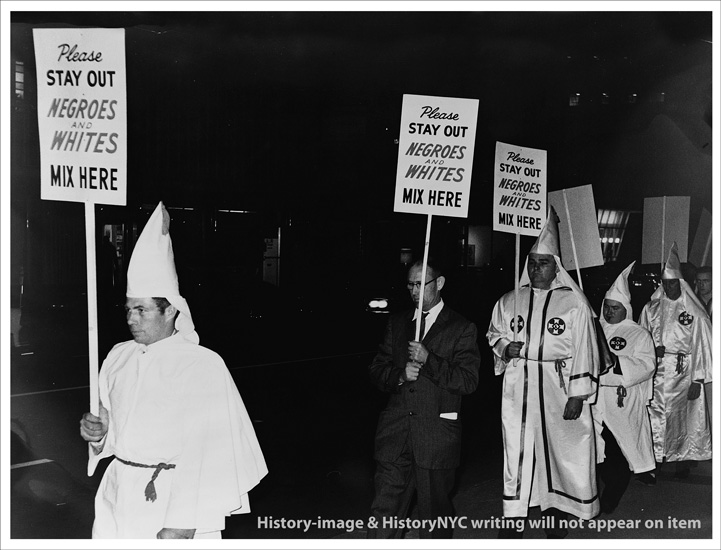
Friends, it is all too important that we not forget this, even as Donald Trump and many of his supporters who include most of the White Supremacists, Klansmen, and Neo-Nazis in this country offer the same threats against blacks, other minorities, and political moderates and liberals. Make no mistake, what is happening now is nothing more than a resurgence of the hatred and violence that was unleashed against those who fought for civil rights fifty-six years ago.

I have no doubt that Jackie Robinson is rejoicing in heaven with the selection of Kamala Harris as Joe Biden’s Vice Presidential Running mate, and I know how he would respond to a draft dodging, war criminal pardoning, racist President like Donald Trump.

So until tomorrow,

Peace,

Padre Steve+

7 Comments

Filed under authoritarian government, Baseball, civil rights, ethics, History, laws and legislation, leadership, Military, Political Commentary, racism, us army, world war two in europe

When Military Forces Become Criminal Institution’s: The WWII Wehrmacht and the Attempt of Trump to Turn the Military into His Instrument of Terror

Hitler and His Commanders Planning Operation Barbarossa 

Friends of Padre Steve’s World,

Tonight I am continuing on with my series on Supreme Court Justice Robert Jackson’s closing arguments while serving as the Chief American Prosecutor at the Major War Crimes Trials at Nuremberg. These crimes are not without relevance today, thus it is important for us to revisit them, for as I noted yesterday, quoting Yehuda Bauer, the Holocaust did not deviate from human norms.

For me it is a difficult subject, for I served in and supported a war that by any standard of legal and moral judgement would have met the criteria that we prosecuted the Nazis for in 1945. I should have known better because I had studied the Nazi crimes and had been the student of a professor who served as an interrogator and interpreter during the Nuremberg War Crimes Trials. But in the moment of hysteria after the attacks of September 11th 2001 and my belief in the integrity of Secretary of State Colin Powell, I allowed my good sense to be persuaded that an act of aggressive war that resulted in war crimes, and might even include crimes against humanity was perfectly legal.

I went to Iraq in 2007 and 2008. I worked with advisors to Iraqi Army, Border Troops, Police, Port of Entry, and Provincial Reconstruction Teams In Al Anbar Province. I came back from Iraq a very different man. I saw the lies. I came to love and appreciate the Iraqis and what they had suffered under both Saddam Hussein and our invasion and occupation. I can still see the maimed bodies, the destroyed cities and hamlets, the crippled children, as well as the wounded Marines in my mind. I pray and hope that the Iraqis that I served alongside did not become victims of ISIS after I left the country.

I am haunted by it to this day, and I no longer trust the supposedly good intentions of the American government, and in the age of Donald Trump fear for our nation and the world. Since he took office he has attempted to use military units in operations both on the Mexican Border, in Washington D.C., and has pardoned convicted U.S. Army and Navy War Criminals.

After Border Patrol agents, in full combat gear and body armor fired tear gas across across the Mexican border against Mexicans throwing rocks at them,  President Trump said that he authorized U. S. Military personnel to use deadly force against rock throwers. His former Chief of Staff, and now opponent, retired Marine Corps General John Kelly issued a “cabinet order” something never heard of before, allowing U. S. Military personnel to engage refugees believed to be endangering Border Control agents, in what appears to be a direct violation of Posse Comitatus. Add to those issues the use of drone strikes, by the Bush, Obama, and Trump Administrations, both DOD and CIA, against often insignificant targets that that more often than not have many women and children in them, and finally the pardoning of convicted war criminals by President Trump, and firing the only administration who stood in his way, Secretary of the Navy Richard Spencer.

Since then the President attempted to use the Army against peaceful protestors in Lafayette Part outside the White House on 1 June 2020, their use was not authorized by the Secretary of Defense and Chairman of the Joint Chiefs of Staff. However, the President used U.S. Park Police, a mixture of other Federal Police, and D.C. National Guardsmen launched a violent attack on the protestors in order to allow the President unimpeded access to St. John’s Episcopal Church for a disastrous photo-op. But the optics for the military were bad, both Secretary of Defense Mark Esper and General Mark Miley apologized for their presence. Subsequently, they have taken actions following it directly opposing the President’s most racist and pro-Confederate, and White Nationalist words and tweets, while the Commandant of the Marine Corps, Chief of Naval Operations, and other Service Chiefs banned Confederate and other racist symbols on military bases. They also ordered investigations into racial incidents and at least in the case of the Navy have moved to initiate a climate of command that takes the issues of racism, gender bias, sexual assault, religious prejudice and other actions harm anyone serving in the Navy.

But I digress. When I read these accounts my mind is taken back to the subject of war crimes, and based on my expertise and study of the crimes of the Nazis, not to mention the Japanese in the Second World War, I automatically default to those settings.

So, I will stop with my words and go back to those of Robert Jackson at Nuremberg, because they are so pertinent today, and because I have been writing about Justice Jackson and the Major War Crimes Trials at Nuremberg. There will be a time that I write about the subsequent Generals Trial, and the Einsatzgruppen Trial. 

Until tomorrow,

Peace,

Padre Steve+

Immediately after the seizure of power the Nazis went to work to implement these aggressive intentions by preparing for war. They first enlisted German industrialists in a secret rearmament programme. Twenty days after the seizure of power Schacht was host to Hitler, Goering and some twenty leading industrialists. Among them were Krupp von Bohlen of the great Krupp armament works and representatives of I. G. Farben and other Ruhr heavy industries. Hitler and Goering explained their programme to the industrialists, who became so enthusiastic that they set about to raise three million Reichsmarks to strengthen and confirm the Nazi Party in power. Two months later Krupp was working to bring a reorganised association of German industry into agreement with the political aims of the Nazi Government. Krupp later boasted of the success in keeping the German war industries secretly alive and in readiness despite the disarmament clauses of the Versailles Treaty, and recalled the industrialists’ enthusiastic acceptance of “the great intentions of the Fuehrer in the rearmament period of 1933-1939”.

Some two months after Schacht had sponsored his first meeting to gain the support of the industrialists, the Nazis moved to harness industrial labour to their aggressive plans. In April, 1933, Hitler ordered Dr. Ley “to take over the trade unions”, numbering some 6 million members. By Party directive Ley seized the unions, their property and their funds. Union leaders, taken into “protective custody” by the SS and SA, were put into concentration camps. The free labour unions were then replaced by a Nazi organization known as the German Labour Front, with Dr. Ley at its head. It was expanded until it controlled over 23 million members. Collective bargaining was eliminated, the voice of labour could no longer be heard as to working conditions, and the labour contract was prescribed by “trustees of labour” appointed by Hitler. The war purpose of this labour programme was clearly acknowledged by Robert Ley five days after war broke out, when he declared in a speech that:

“We National Socialists have monopolised all resources and all our energies during the past seven years so as to be able to be equipped for the supreme effort of battle.”

The Nazis also proceeded at once to adapt the Government to the needs of war. In April, 1933, the Cabinet formed a Defence Council, the working committee of which met frequently thereafter. In the meeting of 22nd May, 1933, at which defendant Keitel presided, the members were instructed that:

“No document must be lost since otherwise the enemy propaganda would make use of it. Matters communicated orally cannot be proven; they can be denied by us in Geneva.”

In February, 1934 -and, your Honours, dates in this connection are important -with defendant Jodl present, the Council planned a mobilization calendar and mobilization order for some 240,000 industrial plants. Again it was agreed that nothing should be in writing so that “the military purpose may not be traceable”.

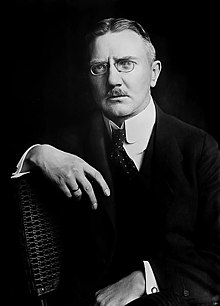
Hjalmar Schacht


On 21st May, 1935, the top secret Reich Defence Law was enacted. Defendant Schacht was appointed Plenipotentiary General for War Economy with the task of secretly preparing all economic forces for war and, in the event of mobilization, of financing the war.

Schacht’s secret efforts were supplemented in October, 1936, by the appointment of defendant Goering as Commissioner of the Four-Year Plan, with the duty of putting the entire economy in a state of readiness for war within four years.

A secret programme for the accumulation of the raw materials and foreign credits necessary for extensive rearmament was also set on foot immediately upon seizure of power. In September of 1934, the Minister of Economics was already complaining that:

“The task of stock-piling is being hampered by the lack of foreign currency; the need for secrecy and camouflage also is a retarding influence.”

Foreign currency controls were at once established. Financing was delegated to the wizard Schacht, who conjured up the MEFO bill to serve the dual objectives of tapping the short-term money market for rearmament purposes while concealing the amount of these expenditures.

The spirit of the whole Nazi administration was summed up by Goering at a meeting of the Council of Ministers, which included Schacht, on 27th May, 1936, when he said: “All measures are to be considered from the standpoint of an assured waging of war.” The General Staff, of course, also had to be enlisted in the war plan. Most of the generals, attracted by the prospect of rebuilding their armies, became willing accomplices. The Minister of War von Blomberg and the Chief of Staff General von Fritsch, however, were not cordial to the increasingly belligerent policy of the Hitler regime, and by vicious and obscene plotting they were discredited and removed in January, 1938. Thereupon, Hitler assumed for himself supreme command of the armed forces and the positions of von Blomberg and of von Fritsch were filled by others who became, as Blomberg said of Keitel, “a willing tool in Hitler’s hands for every one of his decisions”. The generals did not confine their participation to merely military matters. They participated in all major diplomatic and political manoeuvres, such as the Obersalzberg meeting where Hitler, flanked by Keitel and other top generals, issued his virtual ultimatum to Schuschnigg.

As early as 5th November, 1937, the plan to attack had begun to take definiteness as to time and victim. In a meeting which included the defendants Raeder, Goering and von Neurath, Hitler stated the cynical objective:

“The question for Germany is where the greatest possible conquest could be made at the lowest possible cost.”

He discussed various plans for the invasion of Austria and Czechoslovakia, indicating clearly that he was thinking of these territories not as ends in themselves, but as means for further conquest. He pointed out that considerable military and political assistance could be afforded by possession of these lands, and discussed the possibility of constituting from them new armies up to a strength of about 12 divisions. The aim he stated boldly and baldly as the acquisition of additional living-space in Europe, and recognized that “The German question can be solved only by way of force.” Six months later, emboldened by the bloodless Austrian conquest, Hitler, in a secret directive to Keitel, stated his “unalterable decision to smash Czechoslovakia by military action in the near future”.

On the same day, Jodl noted in his diary that the Fuehrer had stated his final decision to destroy Czechoslovakia soon and had initiated military preparations all along the line. By April the plan had been perfected to attack Czechoslovakia “with lightning swift action as the result of an ‘incident’”.

All along the line preparations became more definite for a war of expansion, on the assumption that it would result in a world-wide conflict. In September, 1938, Admiral Carls officially commented on a “Draft Study of Naval Warfare against England”:

“There is full agreement with the main theme of the study.

1. If, according to the Fuehrer’s decision, Germany is to acquire a position as a world power, she needs not only sufficient colonial possessions but also secure naval communications and secure access to the ocean.

2. Both requirements can only be fulfilled in opposition to Anglo-French interests and will limit their positions as world powers. It is unlikely that they can be achieved by peaceful means. The decision to make Germany a world power therefore forces upon us the necessity of making the corresponding preparations for war.

3. War against England means at the same time war against the Empire, against France, probably against Russia as well, and a large number of countries overseas; in fact, against one-third to one-half of the whole world.

It can only be justified and have a chance of success if it is prepared economically as well as politically and militarily and waged with the aim of conquering for Germany an outlet to the ocean.”

This Tribunal knows what categorical assurances were given to an alarmed world after the Anschluss, after Munich, after the occupation of Bohemia and Moravia, that German ambitions were realised and that Hitler had “no further territorial demands to make in Europe.” The record of this trial shows that those promises were calculated deceptions and that those high in the bloody brotherhood of Nazidom knew it.

As early as 15th April, 1938, Goering pointed out to Mussolini and Ciano that the possession of those territories would make possible an attack on Poland. Ribbentrop’s Ministry wrote on 26th August, 1938:

“After the liquidation of the Czechoslovakian question, it will be generally assumed that Poland will be next in turn.”

Hitler, after the Polish invasion, boasted that it was the Austrian and Czechoslovakian triumphs by which “the basis for the action against Poland was laid”. Goering suited the act to the purpose and gave immediate instructions to exploit, for the further strengthening of the German war potential, first the Sudetenland, and then the whole Protectorate.

By May of 1939 the Nazi preparations had ripened to the point that Hitler confided to the defendants Goering, Raeder, Keitel, and others, his readiness “to attack Poland at the first suitable opportunity”, even though he recognized that “further successes cannot be attained without the shedding of blood”. The larcenous motives behind this decision he made plain in words that echoed the covetous theme of Mein Kampf:

“Circumstances must be adapted to aims. This is impossible without invasion of foreign States or attacks upon foreign property. Living-space in proportion to the magnitude of the State is the basis of all power -further successes cannot be attained without expanding our living-space in the East ….”

While a credulous world slumbered, snugly blanketed with perfidious assurances of peaceful intentions, the Nazis prepared not as before for a war but now for the war. The defendants Goering, Keitel, Raeder, Frick and Funk, with others, met as the Reich Defence Council in June of 1939. The minutes, authenticated by Goering, are revealing evidence of the way in which each step of Nazi planning dovetailed with every other. These five key defendants, three months before the first panzer unit had knifed into Poland, were laying plans for “employment of the population in wartime”, and had gone so far as to classify industry for priority in labour supply after “five million servicemen had been called up”. They decided upon measures to avoid “confusion when mobilization takes place”, and declared a purpose “to gain and maintain the lead in the decisive initial weeks of war”. They then planned to use in production prisoners of war, criminal prisoners, and concentration camp inmates. They then decided on “compulsory work for women in war time”. They had already passed on applications from 1,172,000 specialist workmen for classification as indispensable, and had approved 727,000 of them. They boasted that orders to workers to report for duty “are ready and tied up in bundles at the labour offices”. And they resolved to increase the industrial manpower supply by bringing into Germany “hundreds of thousands of workers” from the Protectorate to be “housed together in hutments”.

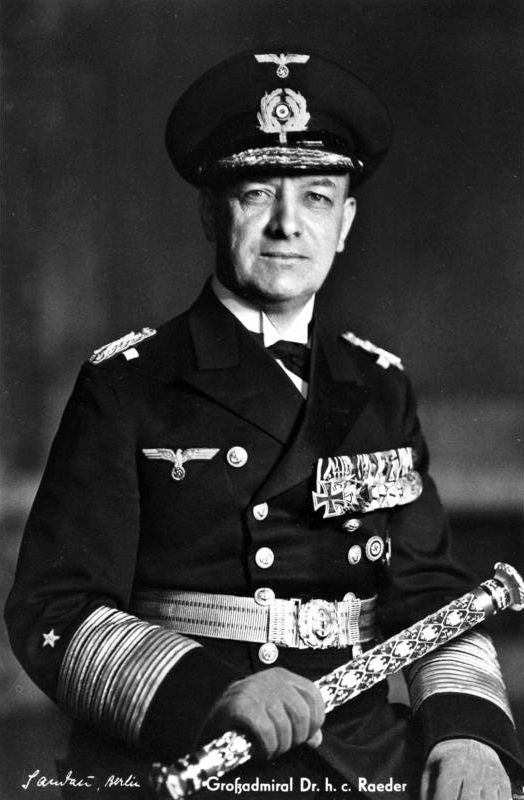
Grand Admiral Erich Raeder

It is the minutes of this significant conclave of many key defendants which disclose how the plan to start the war was coupled with the plan to wage the war through the use of illegal sources of labour to maintain production. Hitler, in announcing his plan to attack Poland, had already foreshadowed the slave labour programme as one of its corollaries when he cryptically pointed out to the defendants Goering, Raeder, Keitel, and others that the Polish population “will be available as a source of labour”. This was part of the plan made good by Frank, who as Governor-General notified Goering, that he would supply “at least one million male and female agricultural and industrial workers to the Reich”, and by Sauckel, whose impressments throughout occupied territory aggregated numbers equal to the total population of some of the smaller nations of Europe.

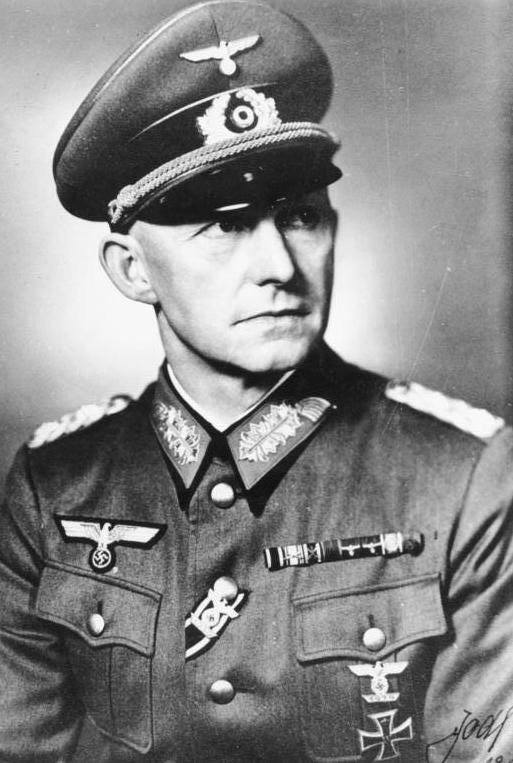
Colonel General Alfred Jodl 


Here also comes to the surface the link between war labour and concentration camps, a manpower source that was increasingly used and with increasing cruelty. An agreement between Himmler and the Minister of Justice, Thierack, in 1942 provided for “the delivery of anti-social elements from the execution of their sentence to the Reichsfuehrer SS to be worked to death”. An SS directive provided that bedridden prisoners be drafted for work to be performed in bed. The Gestapo ordered 46,000 Jews arrested to increase the “recruitment of manpower into the concentration camps”. One hundred thousand Jews were brought from Hungary to augment the camps’ manpower. On the initiative of the defendant Donitz concentration camp labour was used in the construction of submarines. Concentration camps were thus geared into war production on the one hand, and into the administration of justice and the political aims of the Nazis on the other. The use of prisoner-of-war labour, as then planned in that meeting, also grew with German needs. At a time when every German soldier was needed at the front and forces were not available at home, Russian prisoners of war were forced to man anti-aircraft guns against Allied planes. Field-Marshal Milch reflected the Nazi merriment at this flagrant violation of International Law, saying: “… This is an amusing thing, that the Russians must work the guns.”

Admiral Wilhelm Canaris, Executed on the order of Adolf Hitler 9 April 1945 


The orders for the treatment of Soviet prisoners of war were so ruthless that Admiral Canaris, pointing out that they would “result in arbitrary mistreatments and killing”,  protested to the OKW against them as breaches of International Law. The reply of Keitel was unambiguous. He said:

“The objections arise from the military conception of chivalrous warfare! This is the destruction of an ideology! Therefore I approve and back the measures”.

The Geneva Convention would have been thrown overboard openly, except that Jodl objected because he wanted the benefits of Allied observance of it while it was not being allowed to hamper the Germans in any way.

Field Marshal Wilhelm Keitel

Other crimes in the conduct of warfare were planned with equal thoroughness as a means of ensuring victory of German arms: In October, 1938, almost a year before the start of the war, the large-scale violation of the established rules of warfare was contemplated as a policy, and the Supreme Command circulated a most secret list of devious explanations to be given by the Propaganda Minister in such cases. Even before this time commanders of the armed forces were instructed to employ any methods of warfare so long as they facilitated victory. During the progress of the war the orders increased in savagery. A typical Keitel order, demanding the use of the “most brutal means”, provided that .

“… It is the duty of the troops to use all means without restriction, even against women and children, so long as they ensure success.”

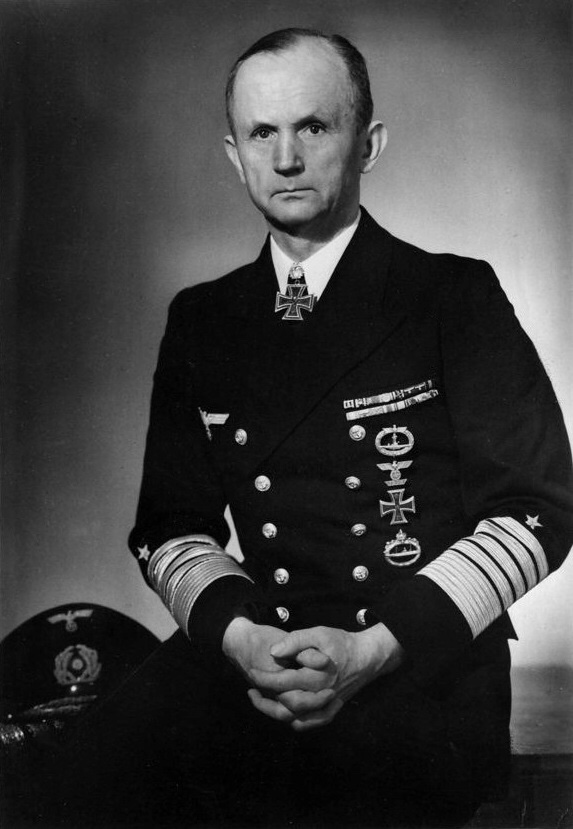
Grand Admiral Karl Donitz

The German naval forces were no more immune from the infection than the land forces. Raeder ordered violations of the accepted rules of warfare wherever necessary to gain strategic successes. Donitz urged his submarine crews not to rescue survivors of torpedoed enemy ships, in order to cripple merchant shipping of the Allied Nations by decimating their crews.

Thus, the WAR CRIMES against Allied forces and the CRIMES AGAINST HUMANITY committed in occupied territories are incontestably part of the programme for making the war because, in the German calculations, they were indispensable to its hope of success.

Similarly, the whole group of pre-war crimes, including the persecutions within Germany, fall into place around the plan for aggressive war like stones in a finely wrought mosaic. Nowhere is the whole catalogue of crimes of Nazi oppression and terrorism within Germany so well integrated with the crime of war as in that strange mixture of wind and wisdom which makes up the testimony of Hermann Goering. In describing the aims of the Nazi programme before the seizure of power, Goering stated that the first question was to achieve and establish a different political structure for Germany, which would enable Germany to object against the Dictate (of Versailles), and to make not only a protest, but an objection of such a nature that it would actually be considered.

With these purposes, Goering, admitted that the plan was made to overthrow the Weimar Republic, to seize power, and to carry out the Nazi programme by whatever means were necessary, whether legal or illegal.

Reichsmarschal Hermann Goering 

From Goering’s cross-examination we learn how necessarily the whole programme of crime followed. Because they considered a strong State necessary to get rid of the Versailles Treaty, they adopted the Fuehrerprinzip. Having seized power, the Nazis thought it necessary to protect it by abolishing parliamentary government, and suppressing all organized opposition from political parties. This was reflected in the philosophy of Goering that the opera was more important than the Reichstag. Even the “opposition of each individual was not tolerated unless it was a matter of unimportance”. To insure the suppression of opposition a secret police force was necessary. In order to eliminate incorrigible opponents, it was necessary to establish concentration camps and to resort to the device of protective custody. Protective custody, Goering, testified, meant that:

“People were arrested arid taken into protective custody who had not yet committed any crime but who could be expected to do so if they remained free.”

The same war purpose was dominant in the persecution of the Jews. In the beginning, fanaticism and political opportunism played a principal part, for anti-Semitism and its allied scapegoat, mythology, were the vehicle on which the Nazis rode to power. It was for this reason that the filthy Streicher and the blasphemous Rosenberg were welcomed at Party rallies and made leaders and officials of the State or Party. But the Nazis soon regarded the Jews as foremost amongst the opposition to the police State with which they schemed to put forward their plans of military aggression. Fear of their pacifism and their opposition to strident nationalism was given as the reason that the Jews had to be driven from the political and economic life of Germany. Accordingly, they were transported like cattle to the concentration camps, where they were utilised as a source of forced labour for war purposes.

At a meeting held on 12th November, 1938, two days after the violent anti-Jewish pogroms instigated by Goebbels and carried out by the Party Leadership Corps and the SA, the programme for the elimination of Jews from the German economy was mapped out by Goering, Funk, Heydrich, Goebbels, and the other top Nazis. The measures adopted included confinement of the Jews in ghettoes, cutting off their food supply, “aryanizing” their shops, and restricting their freedom of movement. Here another purpose behind the Jewish persecutions crept in, for it was the wholesale confiscation of their property which helped to finance German rearmament. Although Schacht’s plan to use foreign money to ransom the entire race within Germany was not adopted, the Jews were stripped to the point where Goering was able to advise the Reich Defence Council that the critical situation of the Reich exchequer, due to rearmament, had been relieved “through the billion Reichsmark fine imposed on Jewry, and through profits accrued to the Reich in the aryanization of Jewish enterprises”.

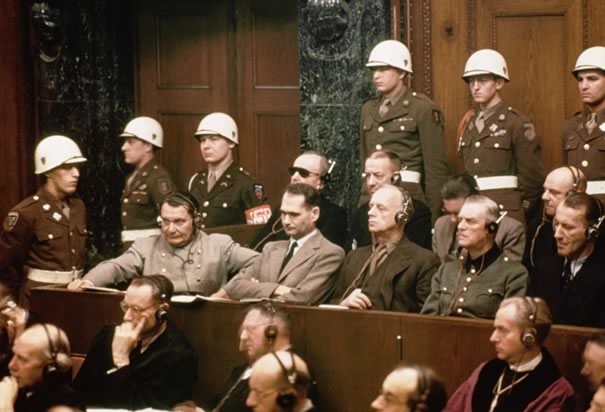
A glance over the dock will show that, despite quarrels among themselves, each defendant played a part which fitted in with every other, and that all advanced the Common Plan. It contradicts experience that men of such diverse backgrounds and talents should so forward each other’s aims by coincidence. The large and varied role of Goering was half militarist and half gangster. He stuck his pudgy finger in every pie. He used his SA bullies to help bring the gang into power. In order to entrench that power he contrived to have the Reichstag burned, established the Gestapo, and created the concentration camps. He was equally adept at massacring opponents and at framing scandals to get rid of stubborn generals. He built up the Luftwaffe and hurled it at his defenceless neighbours. He was among the foremost in harrying Jews out of the land. By mobilising the total economic resources of Germany he made possible the waging of the war which he had taken a large part in planning. He was, next to Hitler, the man who tied the activities of all the defendants together in a common effort.

The parts played by the other, defendants, although less comprehensive and less spectacular than that of the Reichsmarschall, were nevertheless integral and necessary contributions to the joint undertaking, without any one of which the success of the common enterprise would have been in jeopardy. There are many specific deeds of which these men have been proven guilty. No purpose would be served -nor indeed is time available -to review all the crimes which the evidence has charged against their names. Nevertheless, in viewing the conspiracy as a whole and as an operating mechanism, it may be well to recall briefly the outstanding services which each of the men in the dock rendered to the common cause.

To be continued…

2 Comments

Filed under ethics, germany, History, holocaust, laws and legislation, leadership, Military, national security, nazi germany, Political Commentary, war crimes, war crimes trials, White nationalism, world war two in europe

The Combination of Trump and his System has Brought About this Catastrophe

Friends of Padre Steve’s World,

The crimes of Adolf Hitler’s Nazi regime may seem like the happened a long time ago in a galaxy far, far away, we would all like to believe that. However, they are only as far away as the next time. That is why we must continue to show them in their awful reality. Yehuda Bauer, a renowned historian of the Holocaust whose family escaped from Czechoslovakia the day it was annexed by the Third Reich wrote:

“The horror of the Holocaust is not that it deviated from human norms; the horror is that it didn’t. What happened may happen again, to others not necessarily Jews, perpetrated by others, not necessarily Germans. We are all possible victims, possible perpetrators, possible bystanders.”

This is an eternal truth. The Red Chinese in Tibet, the Cambodian Killing Fields, the Serbians massacring Bosnians under the noses of Dutch Peacekeepers in Srebrenica, the Tutsis of Rwanda butchered by their Hutu neighbors shortly after Easter, as well as the crimes of the Islamic State against Kurds, opposition Sunnis, Shia, Yazidis, and Christians in Iraq and Syria.

Besides genocide we can add the crime of aggressive war against weaker neighbors or nations committed Russia in Georgia and the Ukraine, and the United States against Iraq. Then there is the assault on minority groups within various nations, the rejection of refugees, and rise in anti-Semitism across Russia, Europe, and the United States have all produced myriads of victims, perpetrators, and bystanders.

The crimes committed by the Nazis against their own citizens and the nations that they victimized are not completely unique to them. While the Nazi Genocide committed against the Jews is unique, what motivated them is far more common than we would want to admit. The Holocaust and the Nazi war for Lebensraum is not an aberration from the norms of human nature, it is the norm. That is why continuing to expose those crimes, the men and women behind them, and those who stood by, doing nothing while their neighbors were being marched away, or stood by as other men marched men, women, and children to massive pits and shot them one by one, up close and personal, by the tens of thousands.

I would like with all my heart to consign the crimes of the Nazis to the depths of history, but I cannot. That is why I, a man born thirteen and a half years after the major Nuremberg War Crimes ended with ten of the defendants hanging from the gallows continues to write about it.

However, that is not the case. What is happening in the United States under the authoritarian regime of President Trump which is smashing the legal, constitutional, and institutional guardrails that until now preventing a Chief Executive from becoming an autocrat are endangering the Republic and threading to destroy our system of government, our alliances, economy, National security, and the lives and civil rights of all Americans, including his deluded cult followers who he will condemn to death by COVID19, lack of health care, or simply betray them to poverty, unemployment and opioid addiction. Of course as far as the heavily armed self-proclaimed militias, they would do well to remember the story of SA the Sturmanteilung, or Storm Troopers, that once their purpose was finished, Hitler killed their leaders and consigned them to the lowest rungs of the Nazi hierarchy, with meaningless titles and no power. He needed no competition from an armed force that wanted to displace the military, police, and SS from their positions. No one, not even his faithful should trust him because he only cares for himself, and will blame them if he falls from power.

Albert Speer commented:

“The tremendous danger, however, contained in this totalitarian system only became abundantly clear at the moment when we were approaching the end. It was then that one could see what the meaning of the principle was, namely, that every order should be carried out without any criticism. Everything . . . you have seen in the way of orders which were carried out without any consideration, did after all turn out to be mistakes . . . This system let me put it like this to the end of the system it had become clear what tremendous dangers are contained in any such system, as such quite apart from Hitler’s principle. The combination of Hitler and this system, then, brought about this tremendous catastrophe to this world.” 

He told his staff on the morning of 22 April 1945:

“Everyone has lied to me, everyone has deceived me… the SS left me in the lurch. The German people have not fought heroically. It deserves to perish… it is not I who have lost the war, but the German people.”

If Trump loses and lives, that will be his judgement on both the nation and those who followed him into the abyss of his own making. After all, he has never taken personal responsibility for anything;  his multiple corporate bankruptcies, his avoidance of military service in Vietnam, his failed marriages, all which all ended because of his unfaithfulness to his wives, and then with the Coronavirus 19 Pandemic, where he has claimed on several occasions, “I take no responsibility for anything.”  That is one thing that he is not lying about. To him, all of his failures are the fault of someone else.

Over the past few days I have been writing about the Nuremberg Trials and the American Chief Prosecutor, Supreme Court Justice Robert Jackson. Last night I wrote about the introduction of his closing arguments before the Tribunal which followed his opening address by nine months. I now continue with Justice Jackson’s closing arguments against the Nazi war criminals sitting in the dock of Nuremberg’s Palace of Justice, many of whom were little different than Trump and his sycophants.

So until tomorrow, I leave you with Jackson’s words.

Peace,

Padre Steve+

THE CRIMES OF THE NAZI REGIME

The strength of the case against these defendants under the conspiracy count, which it is the duty of the United States to argue, lies in its simplicity. It involves but three ultimate inquiries: First, have the acts defined by the Charter as crimes been committed; second, were they committed pursuant to a common plan or conspiracy; third, are these defendants among those who are criminally responsible? The charge requires examination of a criminal policy, not of a multitude of isolated, unplanned, or disputed crimes. The substantive crimes upon which we rely, either as goals of a common plan or as means for its accomplishment, are admitted. The pillars which uphold the conspiracy charge may be found in five groups of overt acts, whose character and magnitude are important considerations in appraising the proof of conspiracy.

1. THE SEIZURE OF POWER AND SUBJUGATION OF GERMANY TO A POLICE STATE The Nazi Party seized control of the German State in 1933. “Seizure of power” is a characterisation used by defendants and defence witnesses, and so apt that it has passed into both history and everyday speech. The Nazi junta in the early days lived in constant fear of overthrow. Goering, in 1934, pointed out that its enemies were legion, and said:

“Therefore, the concentration camps have been created, where we have first confined thousands of Communists and Social Democrat functionaries.”

In 1933 Goering forecast the whole programme of purposeful cruelty and oppression when he publicly announced:

“Whoever in the future raises a hand against a representative of the National Socialist movement or of the State must know that he will lose his life in a very short while.”

New political crimes were created to this end. It was made a treason, punishable with death, to organize or support a political party other than the Nazi Party. Circulating a false or exaggerated statement, or one which would harm the State or even the Party, was made a crime. Laws were enacted of such ambiguity that they could be used to punish almost any innocent act. It was, for example, made a crime to provoke “any act contrary to the public welfare”.

The doctrine of punishment by analogy was introduced to enable conviction for acts which no statute forbade. Minister of Justice Guertner explained that National Socialism considered every violation of the goals of life which the community set up for itself to be a wrong per se, and that the acts could be punished even though it was not contrary to existing “formal law”.

The Gestapo and the SD were instrumentalities of an espionage system which penetrated public and private life. Goering controlled a personal wiretapping unit. All privacy of communication was abolished. Party Blockleiter appointed over every 50 householders spied continuously on all within their ken.

Upon the strength of this spying individuals were dragged off to “protective custody” and to concentration camps without legal proceedings of any kind1and without statement of any reason therefore. The partisan political police were exempted from effective legal responsibility for their acts.

With all administrative offices in Nazi control and with the Reichstag reduced to impotence, the judiciary remained the last obstacle to this reign of terror. But its independence was soon overcome and it was reorganised to dispense a venal justice. Judges were ousted for political or racial reasons and were spied upon and put under pressure to join the Nazi Party. After the Supreme Court had acquitted three of the four men whom the Nazis accused of setting the Reichstag on fire, its jurisdiction over treason cases was transferred to a newly established “People’s Court” consisting of two judges and five Party officials. The German film of this “People’s Court” in operation, which the showed in this chamber, revealed its presiding judge pouring partisan abuse on speechless defendants. Special courts were created to try political crimes, only Party members were appointed judges, and “Judges’ letters” instructed the puppet judges as to the “general lines” they must follow.

The result was the removal of all peaceable means either to resist or to change the Government. Having sneaked through the portals of power, the Nazis slammed the gate in the face of all others who might also aspire to enter. Since the law was what the Nazis said it was, every form of opposition was rooted out and every dissenting voice throttled. Germany was in the clutch of a police State, which used the fear of the concentration camp as a means to enforce non-resistance. The Party was the State, the State was the Party, and terror by day and death by night were the policy of both.

2. THE PREPARATION AND WAGING OF WARS OF AGGRESSION From the moment the Nazis seized power, they set about with feverish but stealthy efforts, in defiance of the Versailles Treaty, to arm for war. In 1933 they found no air force. By 1939 they had 21 squadrons, consisting of 240 echelons or about 2,400 first-line planes, together with trainers and transports.

In 1933 they found an army of 3 infantry and 3 cavalry divisions. By 1939 they had raised and equipped an army of 51 divisions, 4 of which were fully motorized and 4 of which were panzer divisions. In 1933 they found a navy of one cruiser and six light cruisers. By 1939 they had built a navy of 4 battleships, 1 aircraft carrier, 6 cruisers, 22 destroyers, and 54 submarines. They had also built up in that period an armament industry as efficient as that of any country in the world.

These new weapons were put to use, commencing in September, 1939, in a series of undeclared wars against nations with which Germany had arbitration and non-aggression treaties, and in violation of repeated assurances.

On 1st September, 1939, this rearmed Germany attacked Poland. The following April witnessed the invasion and occupation of Denmark and Norway, and May saw the overrunning of Belgium, the Netherlands, and Luxembourg. Another spring saw Yugoslavia and Greece under attack, and in June, 1941, came the invasion of Soviet Russia. Then Japan, which Germany had embraced as a partner, struck without warning at Pearl Harbour in December, 1941, and four days later Germany declared war on the United States.

We need not trouble ourselves about the many abstract difficulties that can be conjured up about what constitutes aggression in doubtful cases. I shall show you, in discussing the conspiracy, that by any test ever put forward by any responsible authority, by all the canons of plain common sense, these were unlawful wars of aggression in breach of treaties and in violation of assurances.

3. WARFARE IN DISREGARD OF INTERNATIONAL LAW

It is unnecessary to labour this point on the facts. Goering asserts that the Rules of Land Warfare were obsolete, that no nation could fight a total war within their limits. He testified that the Nazis would have denounced the Conventions to which Germany was a party, but that General Jodl wanted captured German soldiers to continue to benefit from. their observance by the Allies.

It was, however, against the Soviet people and Soviet prisoners that Teutonic fury knew no bounds, in spite of a warning by Admiral Canaris that the treatment was in violation of International Law. We need not, therefore, for the purposes of the conspiracy count, recite the revolting details of starving, beating, murdering, freezing, and mass extermination admittedly used against the Eastern soldiery. Also, we may take as established or admitted that the lawless conduct such as shooting British and American airmen, mistreatment of Western prisoners of war, forcing French prisoners of war into German war work, and other deliberate violations of the Hague and Geneva Conventions, did occur, and in obedience to highest levels of authority.

4. ENSLAVEMENT AND PLUNDER OF POPULATIONS IN OCCUPIED COUNTRIES

The defendant Sauckel, Plenipotentiary General for the Utilization of Labour, is authority for the statement that “out of five million foreign workers who arrived in Germany, not even 200,000 came voluntarily”. It was officially reported to defendant Rosenberg that in his territory “recruiting methods were used which probably have their origin in the blackest period of the slave trade”. Sauckel himself reported that male and female agents went hunting for men, got them drunk, and “shanghaied” them to Germany. These captives were shipped in trains without heat, food, or sanitary facilities. The dead were thrown out at stations, and the newborn were thrown out the windows of moving trains.

Sauckel ordered that “all the men must be fed, sheltered and treated in such a way as to exploit them to the highest possible extent at the lowest conceivable degree of expenditure”. About two million of these were employed directly in the manufacture of armaments and munitions. The director of the Krupp locomotive factory in Essen complained to the company that Russian forced labourers were so underfed that they were too weakened to do their work, and the Krupp doctor confirmed their pitiable condition. Soviet workers were put in camps under Gestapo guards, who were allowed to punish disobedience by confinement in a concentration camp or by hanging on the spot.

Populations of occupied countries were otherwise exploited and oppressed unmercifully. Terrorism was the order of the day. Civilians were arrested without charges, committed without counsel, executed without hearing. Villages were destroyed, the male inhabitants shot or sent to concentration camps, the women sent to forced labour, and the children scattered abroad. The extent of the slaughter in Poland alone was indicated by Frank, who reported:

” If I wanted to have a poster put up for every seven Poles who were shot, the forests of Poland would not suffice for producing the paper for such posters.”

Those who will enslave men cannot be expected to refrain from plundering them. Boastful reports show how thoroughly and scientifically the resources of occupied lands were sucked into the German war economy, inflicting shortage, hunger, and inflation upon the inhabitants. Besides this grand plan to aid the German war effort there were the sordid activities of the Rosenberg “Einsatzstab”, which pillaged art treasures for Goering and his fellow-bandits. It is hard to say whether the spectacle of Germany’s No. 2 leader urging his people to give up every comfort and strain every sinew on essential war work while he rushed around confiscating art by the trainload should be cast as tragedy or comedy. In either case it was a crime.

International Law at all times before and during this war spoke with precision and authority respecting the protection due to civilians of an occupied country, and the slave trade and plunder of occupied countries was at all times flagrantly unlawful.

5. PERSECUTION AND EXTERMINATION OF JEWS AND CHRISTIANS

The Nazi movement will be of evil memory in history because of its persecution of the Jews, the most far-flung and terrible racial persecution of all time. Although the Nazi Party neither invented nor monopolised anti-Semitism, its leaders from the very beginning embraced it, incited it, and exploited it. They used it as “the psychological spark that ignites the mob”. After seizure of power, it became an official State policy. The persecution began in a series of discriminatory laws eliminating the Jews from the civil service, the professions, and economic life. As it became more intense it included segregation of Jews in ghettoes, and exile. Riots were organized by Party leaders to loot Jewish business places and to burn synagogues. Jewish property was confiscated and a collective fine of a billion marks was imposed upon German Jewry. The programme progressed in fury and irresponsibility to the “final solution”. This consisted of sending all Jews who were fit to work to concentration camps as slave labourers, and all who were not fit, which included children under 12 and people over 50, as well as any others judged unfit by an SS doctor, to concentration camps for extermination.

Adolf Eichmann, the sinister figure who had charge of the extermination programme, has estimated that the anti-Jewish activities resulted in the killing of six million Jews. Of these, four million were killed in extermination institutions, and two million were killed by Einsatzgruppen, mobile units of the Security Police and SD which pursued Jews in the ghettoes and in their homes and slaughtered them in gas wagons, by mass shooting in anti-tank ditches and by every device which Nazi ingenuity could conceive.

So thorough and uncompromising was this programme that the Jews of Europe as a race no longer exist, thus fulfilling the diabolic “prophecy” of Adolf Hitler at the beginning of the war. Of course, any such programme must reckon with the opposition of the Christian Church. This was recognized from the very beginning. Defendant Bormann wrote all Gauleiter in 1941 that “National Socialism and Christian concepts are irreconcilable”, and that the people must be separated from the Churches, and the influence of the Churches totally removed. Defendant Rosenberg even wrote dreary treatises advocating a new and weird. Nazi religion.

The Gestapo appointed “Church specialists” who were instructed that the ultimate aim was “destruction of the confessional Churches”. The record is full of specific instances of the persecution of clergymen, the confiscation of Church property, interference with religious publications, disruption, of religious education, and suppression of religious organizations.

The chief instrument for persecution and extermination was the concentration camp, sired by the defendant Goering and nurtured under the overall authority of defendants Frick and Kaltenbrunner.

The horrors of these iniquitous places have been vividly disclosed by documents and testified to by witnesses. The Tribunal must be satiated with ghastly verbal and pictorial portrayals. From your records it is clear that the concentration camps were the first and worst weapon of Nazi oppression used by the National Socialist State, and that they were the primary means utilised for the persecution of the Christian Church and the extermination of the Jewish race. This has been admitted to you by some of the defendants from the witness stand. In the words of defendant Frank:

“A thousand years will pass and this guilt of Germany will still not be erased.”

These, then, were the five great substantive crimes of the Nazi regime. Their commission, which cannot be denied, stands admitted. The defendant Keitel, who is in a position to know the facts, has given the Tribunal what seems to be a fair summation of the case on the facts:

“The defendant has declared that ‘he admits the contents of the general Indictment to be proved from the objective and factual point of view’ (that is to say, not every individual case) ‘and this in consideration of the law of procedure governing the trial. It would be senseless, despite the possibility of refuting several documents or individual facts, to attempt to shake the Indictment as a whole.’” I pass now to the inquiry as to whether these groups of criminal acts were integrated in a common plan or conspiracy.

THE COMMON PLAN OR CONSPIRACY

The prosecution submits that these five categories of premeditated crimes were not separate and independent phenomena but that all were committed pursuant to a common plan or conspiracy.

The defence admits that these classes of crimes were committed, but denies that they are connected one with another as parts of a single programme. The central crime in this pattern of crimes, the king-pin which holds them all together, is the plot for aggressive wars. The chief reason for international cognizance of these crimes lies in this fact. Have we established the plan or conspiracy to make aggressive war?

Certain admitted or clearly proven facts help to answer that question. First is the fact that such war of aggression did take place. Second, it is admitted that from the moment the Nazis came to power, every one of them and every one of the defendants worked like beavers to prepare for some war. The question therefore comes to this: Were they preparing for the war which did occur, or were they preparing for some war which never happened?

It is probably true that in their early days none of them had in mind what month of what year war would begin, the exact dispute which would precipitate it, or whether its first impact would be Austria, Czechoslovakia, or Poland. But I submit that the defendants either knew or were chargeable with knowledge that the war for which they were making ready would be a war of German aggression. This is partly because there was no real expectation that any power or combination of powers would attack Germany. But it is chiefly because the inherent nature of the German plans was such that they were certain sooner or later to meet resistance and that they could then be accomplished only by aggression.

The plans of Adolf Hitler for aggression were just as secret as Mein Kampf, of which over six million copies were published in Germany. He not only openly advocated overthrowing the Treaty of Versailles, but made demands which went far beyond a mere rectification of its alleged injustices. He avowed an intention to attack neighbouring States and seize their lands, which he said would have to be won with “the power of a triumphant sword”. Here, for every German to hearken to, were the “ancestral voices prophesying war”.

Goering has testified in this courtroom that at his first meeting with Hitler, long before the seizure of power:

“I noted that Hitler had a definite view of the impotency of protest and, as a second point, that he was of the opinion that Germany should be freed of the Peace of Versailles. ‘We did not say we shall have to have a war and defeat our enemies’; this was the aim and the methods had to be adapted to the political situation.”

When asked if this goal were to be accomplished by war if necessary, Goering did not deny that eventuality but evaded a direct answer by saying, “We did not debate about that at all at that time.” He went on to say that the aim to overthrow the Treaty of Versailles was open and notorious and that, I quote again, “Every German in my opinion was for its modification, and there was no doubt that this was a strong inducement for joining the party.”

Thus, there can be no possible excuse for any person who aided Hitler to get absolute power over the German people, or who took a part in his regime, to fail to know the nature of the demands he would make on Germany’s neighbours.

Until tomorrow…

1 Comment

Filed under anti-semitism, crimes against humanity, ethics, euthanasia, faith, History, holocaust, nazi germany, News and current events, Political Commentary, racism, Religion, war crimes, war crimes trials, world war two in europe

Their dislike for the law which condemns them is not original. It has been remarked before that: “No thief e’er felt the halter draw with good opinion of the law.” Robert Jackson’s Closing Argument at Nuremberg and Trump: Part One

Friends of Padre Steve’s World,

Yesterday I introduced a segment of Associate Supreme Court Justice Robert Jackson’s Closing Arguments at Nuremberg. This article, which is actually the first section of that argument without the allusions to the films Nuremberg and Judgment at Nuremberg. Instead it is simply the first part of Jackson’s argument taken directly from the trial records.

Jackson’s closing occurred 178 days after his opening address, after nearly nine months of testimony, with evidence was presented by the prosecutors and the defense. It was The Nazis own records provided the massive amounts of damning evidence by which the prosecution had to present in such a skillful manner that it couldn’t be denied by defendants or history.

Jackson was masterful as he made his synopsis of the evidence and testimony presented over those nine months. To do so he had to come back after a poor performance against the former Nazi Reichs Marshal Hermann Goering. It was a day that shook his confidence, but after Jackson’s performance, British prosecutor Maxwell Fyfe destroyed Goering on cross. Many in the media believed that Jackson could not come back, in fact he wanted to resign as Chief Prosecutor. But he remained and delivered his second masterpiece of the trial.

His words should give us all pause when we think that we view the events of the past in a patronizing manner, thinking that we are too advanced to be capable of such such behaviors. We trust in technological advances and affluence but human nature remains unchanged and the crimes of the Twentieth Century which Jackson detailed in his summation could be eclipsed by worse today. There are plenty of monsters in the United States and the world all too willing to reprise the crimes of the Nazis. I sincerely believe that President Trump and many members of his administration, and his supporters are capable of doing worse than the Nazis and would do the same if he is elected to a second term, or refuses to leave office. Let the reader understand.

So we begin where Jackson began on the Friday, July 27th 1946.

Mr. President and members of the Tribunal:

An advocate can be confronted with few more formidable tasks than to select his closing arguments where there is great disparity between his appropriate time and his available material. In eight months -a short time as State trials go -we have introduced evidence which embraces as vast and varied a panorama of events as has ever been compressed within the framework of a litigation. It is impossible in summation to do more than outline with bold strokes the vitals of this trial’s sad and melancholy record, which will live as the historical text of the twentieth century’s shame and depravity.

It is common to think of our own time as standing at the apex of civilisation, from which the deficiencies of preceding ages may patronisingly be viewed in the light of what is assumed to be “progress”. The reality is that in the long perspective of history the present century will not hold an admirable position, unless its second half is to redeem its first. These two-score years in this twentieth century will be recorded in the book of years as some of the most bloody in all annals. Two world wars have left a legacy of dead which number more than all the armies engaged in any war that made ancient or medieval history. No half-century ever witnessed slaughter on such a scale, such cruelties and inhumanities, such wholesale deportations of peoples into slavery, such annihilations of minorities. The terror of Torquemada pales before the Nazi Inquisition. These deeds are the overshadowing historical facts by which generations to come will remember this decade. If we cannot eliminate the causes and prevent the repetition of these barbaric events, it is not an irresponsible prophecy to say that this twentieth century may yet succeed in bringing the doom of civilisation.

Goaded by these facts, we were moved to redress the blight on the record of our era. The defendants complain that our pace is too fast. In drawing the Charter of this Tribunal, we thought we were recording an accomplished advance in International Law. But they say that we have outrun our times, that we have anticipated an advance that should be, but has not yet been made. The Agreement of London, whether it originates or merely records, at all events marks a transition in International Law which roughly corresponds to that in the evolution of local law when men ceased to punish crime by “hue and cry” and began to let reason and inquiry govern punishment. The society of nations has emerged from the primitive “hue and cry”, the law of “catch and kill”. It seeks to apply sanctions to enforce International Law, but to guide their application by evidence, law, and reason instead of outcry. The defendants denounce the law under which their accounting is asked. Their dislike for the law which condemns them is not original. It has been remarked before that:

“No thief e’er felt the halter draw with good opinion of the law.”

I shall not labour the law of this case. The position of the United States was explained in my opening statement. My distinguished colleague, the Attorney-General of Great Britain, will reply on behalf of all the Chief Prosecutors to the defendants’ legal attack. At this stage of the proceedings, I shall rest upon the law of these crimes as laid down in the Charter. The defendants, who except for the Charter would have no right to be heard at all, now ask that the legal basis of this trial be nullified. This Tribunal, of course, is given no power to set aside or modify the Agreement between the Four Powers, to which eighteen other nations have adhered. The terms of the Charter are conclusive upon every party to these proceedings.

In interpreting the Charter, however, we should not overlook the unique and emergent character of this body as an International Military Tribunal. It is no part of the constitutional mechanism of internal justice of any of the signatory nations. Germany has unconditionally surrendered, but no peace treaty has been signed or agreed upon. The Allies are still technically in a state of war with Germany, although the enemy’s political and military institutions have collapsed. As a Military Tribunal, this Tribunal is a continuation of the war effort of the Allied nations. As an International Tribunal, it is not bound by the procedural and substantive refinements of our respective judicial or constitutional systems, nor will its rulings introduce precedents into any country’s internal system of civil justice. As an International Military Tribunal, it rises above the provincial and transient, and seeks guidance not only from International Law but also from the basic principles of jurisprudence, which are assumptions of civilisation and which long have found embodiment in the codes of all nations.

Of one thing we may be sure. The future will never have to ask, with misgiving, what could the Nazis have said in their favour. History will know that whatever could be said, they were allowed to say. They have been given the kind of a trial which they, in the days of their pomp and power, never gave to any man.

But fairness is not weakness. The extraordinary fairness of these hearings is an attribute of our strength. The prosecution’s case, at its close, seemed inherently unassailable because it rested so heavily on German documents of unquestioned authenticity. But it was the weeks upon weeks of pecking at this case, by one after another of the defendants, that has demonstrated its true strength. The fact is that the testimony of the defendants has removed any doubt of guilt which, because of the extraordinary nature and magnitude of these crimes, may have existed before they spoke. They have helped to write their own judgement of condemnation.

But justice in this case has nothing to do with some of the arguments put forth by the defendants or their counsel. We have not previously and we need not now discuss the merits of all their obscure and tortuous philosophy. We are not trying them for the possession of obnoxious ideas. It is their right, if they choose, to renounce the Hebraic heritage in the civilisation of which Germany was once a part. Nor is it our affair that they repudiated the Hellenic influence as well. The intellectual bankruptcy and moral perversion of the Nazi regime might have been no concern of International Law had it not been utilised to goose-step the Herrenvolk across international frontiers. It is not their thoughts, it is their overt acts which we charge to be crimes. Their creed and teachings are important only as evidence of motive, purpose, knowledge and intent.

We charge unlawful aggression but we are not trying the motives, hopes, or frustrations which may have led Germany to resort to aggressive war as an instrument of policy. The law, unlike politics, does not concern itself with the good or evil in the status quo, nor with the merits of the grievances against it. It merely requires that the status quo be not attacked by violent means and that policies be not advanced by war. We may admit that overlapping ethnological and cultural groups, economic barriers, and conflicting national ambitions created in the 1930′ s, as they will continue to create, grave problems for Germany as well as for the other peoples of Europe. We may admit too that the world had failed to provide political or legal remedies which would be honourable and acceptable alternatives to war. We do not underwrite either the ethics or the wisdom of any country, including my own, in the face of these problems. But we do say that it is now, as it was for some time prior to 1939, illegal and criminal for Germany or any other nation to redress grievances or seek expansion by resort to aggressive war.

Let me emphasize one cardinal point. The United States has no interest which would be advanced by the conviction of any defendant if we have not proved him guilty on at least one of the counts charged against him in the Indictment. Any result that the calm and critical judgement of posterity would pronounce unjust would not be a victory for any of the countries associated in this prosecution. But in summation we now have before us the tested evidences of criminality and have heard the flimsy excuses and paltry evasions, of the defendants. The suspended judgement with which we opened this case is no longer appropriate. The time has come for final judgement, and if the case I present seems hard and uncompromising, it is because the evidence makes it so.

I perhaps can do no better service than to try to lift this case out of the morass of detail with which the record is full, and put before you only the bold outlines of a case that is impressive in its simplicity. True, its thousands of documents and more thousands of pages of testimony deal with an epoch and cover a continent, and touch almost every branch of human endeavour.

They illuminate specialities, such as diplomacy, naval development and warfare, land warfare, the genesis of air warfare, the politics of the Nazi rise to power, the finance and economics of totalitarian war, sociology, penology, mass psychology, and mass pathology. I must leave it to experts to comb the evidence and write volumes on their specialities, while I picture in broad strokes the offences whose acceptance as lawful would threaten the continuity of civilisation. I must, as Kipling put it, “splash at a ten-league canvas with brushes of camel’s hair”.

Until tomorrow,

Peace,

Padre Steve+

Leave a comment

Filed under crimes against humanity, ethics, History, holocaust, laws and legislation, leadership, nazi germany, News and current events, Political Commentary, war crimes, world war two in europe

D-Day and After: Beaches, Bocage, and Breakout

The author with Marines at Point du Hoc, Normandy in 2004

Friends of Padre Steve’s World,

Every year about this time I try to write about D-Day.  This year I spent more time on the Battle of Midway writing or rewriting a total of five articles.

Since we are now about to begin a time of major repairs to our home due to flooding from an plugged air conditioning condensation drains I have decided to do is to re-post a short research paper that I did for one of my Master’s degree courses tonight, actually posting it on Sunday night for publication today, and hope to follow it up with some more articles over the week on specific aspects and personalities of the campaign.  What I hope is that people that are not familiar with the campaign as well as those that are can use this as a portal to other resources on the web and in print.

I have visited Normandy once in 2004 on a trip with the Marines of the Marine Security Force Company Europe that took me to Belleau Wood as well as Normandy.  In both places I had the good fortune to be able to explain aspects of both battles, at Normandy discussing the invasion from the German side of the fence.  The Normandy battlefields are well worth visiting.  Hopefully in the next few years I will get a chance to go back and do some serious exploring.

Introduction

General Dwight D Eisenhower Commander in Chief Allied Forces Europe

The American landings on Omaha Beach were critical to the success of the Allied invasion northwestern Europe in the overall Overlord plan.  Without success at Omaha there would have been a strong chance that the German 7th Army and Panzer Group West could have isolated the remaining beachheads, and even if unsuccessful at throwing the Allies into the sea could have produced a stalemate that would have bled the Allies white.  This quite possibly could have led to a political and military debacle for the western allies which would have certainly changed the course of World War II and maybe the course of history.[i] This is not to say the Germans would have won the war, but merely to state that a defeat on Omaha could have changed the outcomes of the war significantly.   Subsequent to the successful landing there were opportunities both for the Allies and the Germans to change the way that the campaign unfolded, thus the battles leading up to the breakout at Avranches are critical to its development and the subsequent campaign in France.

OVERLORD: The Preparations

Eisenhower’s Key Lieutenants: Patton, Bradley and Montgomery

The planning for the Normandy invasion began in earnest after the QUADRANT conference in Quebec in August 1943.  The timetable for the operation was established at the Tehran conference where Stalin sided with the Americans on the need for an invasion of France in the spring of 1944.[ii] Prior to this there had been some planning by both the British and Americans for the eventual invasion initially named ROUNDUP.  These preparations and plans included a large scale raid at Dieppe in 1942 which ended in disaster but which provided needed experience in what not to do in an amphibious assault on a heavily defended beach.

The failure at Dieppe also darkened the mood of the Allies, the British in particular to the success of such operations, bringing to mind the failed Gallipoli campaign of 1915 as well as the opposed landings at Salerno and the USMC experience at Tarawa.[iii] Despite this the Americans led by General Marshall pushed for an early invasion of northwest Europe. Churchill and the British due to their weakness in land power pushed for land operations in the Mediterranean, and even in Norway as an option to the assault in France. The conflicted mindset of the Allies left them in the position of planning almost exclusively for the success of the initial landings and build up to the near exclusion of planning for the subsequent campaign once they landed. This especially included what one writer described as “the maze of troubles awaiting behind the French shore.”[iv]

Field Marshal Erwin Rommel, Commander of Army Group B

Despite conflicts between the Americans and British political and military leadership the planning for the Normandy landings detailed in NEPTUNE and OVERLORD moved ahead.  General Dwight Eisenhower was appointed as the commander of SHAEF with his major subordinates for Land, Air and Sea which caused consternation on both sides of the Atlantic.[v] [vi] The planned operation was expanded from the initial 3 division assault on a narrow front to a minimum 5 division assault on a broad front across Normandy[vii]supplemented by a strong airborne force.[viii] Overall the plan as it developed reflected a distinctly “American willingness to confront the enemy head-on in a collision which Britain’s leaders had sought for so long to defer.”[ix] It is ironic in a sense that the British avoidance of the head on attack was based on their known lack of manpower.  Britain had few infantry reserves to sustain the war effort and the Americans only late recognized their own deficiency in both quantity and quality of infantry forces on which their strategy depended.  That the western allies, so rich in material and natural resources would be so deficient in infantry manpower was a key constraint on the subsequent campaign in France and Germany.  The shortage of infantry forces would cause great consternation among the Allies as the campaign in France wore on.

German Beach Obstacles

The Germans too faced manpower shortages due to the immense losses sustained on the Eastern front, those lost in Africa and those tied down in Italy, the Balkans and Norway as well as the drain caused by Luftwaffe Field Divisions and troops diverted into the Waffen-SS.   The German Army resorted to smaller divisions and the created many “static” divisions manned by elderly or invalid Germans to plug the gaps along the Atlantic wall. The Germans were also forced to recruit “Volksdeutsch” and foreign “volunteers” to fill out both Wehrmacht and Waffen-SS formations.

German fortifications at the Pas de Calais

Prior to the final decision to mount an invasion the Allied planners had contended with the location of the assault in northwestern France.  The Pas de Calais provided a direct route was rejected because it was where the Germans would expect the strike to occur and because it was where the German defenses were strongest.  The fiasco at Dieppe had provided ample proof of what could happen when making an assault into a heavily fortified port.  Likewise the mouth of the Seine near Le Harve was rejected because of the few beaches suitable for landing and because the forces would be split on both sides of the river.  Brittany was excluded due to its distance from the campaigns objectives in Germany.[x]This left Normandy which offered access to a sufficient number of ports and offered some protection from the weather. Normandy offered options to advance the campaign toward the “Breton ports or Le Harve as might be convenient.”[xi] Omaha beach, situated on the center right of the strike would be crucial to the success of the assault situated to the left of UTAH and the right of the British beaches.

Rommel inspecting beach obstacles

Once Normandy was selected as the location for the strike by the Allies, the planning sessions remained contentious.  This was especially true when the Allies debated the amount and type of amphibious lift that could be provided for the landings, particularly the larger types of landing ships and craft to support the Normandy invasion and the planned invasion of southern France, Operation ANVIL.  The increase in OVERLORD requirements for landing craft had an impact in the Mediterranean and resulted in ANVIL being postponed until later in the summer.

“Dummy” Sherman Tank: The Allies created a fictional Army Group to deceive German planners

As part of their preparations the Allies launched a massive deception campaign, Operation FORTITUDE.  This operation utilized the fictitious First Army Group under the “command” of General George Patton. Patton was still smarting from his relief of command of 7th Army following slapping commanded an “Army Group” which incorporated the use of dummy camp sites, dummy tanks, aircraft and vehicles, falsified orders of battle and communications to deceive German intelligence.[xii] The success of this effort was heightened by the fact that all German intelligence agents in the U.K. had been neutralized or turned by the British secret service.  Additionally the Luftwaffe’s limited air reconnaissance could only confirm the pre-invasion build ups throughout England without determining the target of the invasion.[xiii] The German intelligence chief in the west, Colonel Baron von Roenne “was deceived by FORTITUDE’s fantasy invasion force for the Pas de Calais.”[xiv] Despite this Commander of the 7thArmy recognized by 1943 that Normandy was a likely Allied target and efforts were made to shift 7th Army’s center of gravity from Brittany to Normandy.  The one potential German success in getting wind of when the Allied landings would occur was lost when German intelligence discovered two lines of Verlaine’s “Chason d’ Automme” in June 1944 which were to alert the French Resistance of the invasion.  The security section of 15th Army heard them transmitted on the afternoon of 5 June and notified General Jodl at OKW, but no action was taken to alert forces on the coast.[xv] Allied intelligence was aided by ULTRA intercepts of coded German wireless transmissions. However this was less of a factor than during the African and Italian campaigns as more German communications were sent via secure telephone and telegraph lines vice wireless.[xvi] Allied deception efforts were for the most part successful in identifying German forces deployed in Normandy. However they were uncertain about the location of the 352nd Infantry Division which had been deployed along OMAHA and taken units of the 709th Infantry Division under its command when it moved to the coast.[xvii]

USAAF B-17 Bombers and others helped isolate German forces in Normandy by bombing railroads, bridges, and supply lines

The Allied air campaign leading up to the invasion was based on attempting to isolate the invasion site from German reinforcements. Leigh-Mallory the Air Chief developed the “TRANSPORTATION PLAN” which focused efforts on destroying the French railroad infrastructure.[xviii] A more effective effort was led by General Brereton and his Ninth Air Force which was composed of medium bombers and fighters.  Brereton’s aircraft attacked bridges and rapidly achieved success in crippling German efforts to reinforce Normandy.[xix] Max Hastings gives more credit to the American bombing campaign in Germany to crippling the German defense in the west. General Spaatz and the 8th Air Force destroyed German production capacity in oil and petroleum as well as the degraded the German fighter force.  The American daylight raids so seriously degraded the German fighter force that it could not mount effective resistance to the invasion.[xx] Russell Weigley also notes that Albert Speer the Reich Armaments Minister said that “it was the oil raids of 1944 that decided the war.”[xxi]

US Navy LST’s being loaded for the invasion

Planning and preparations for OMAHA were based around getting the 1st and 29th Infantry Divisions ashore and them securing a beachhead “twenty-five kilometers wide and eight or nine kilometers deep.”[xxii] American preparations were thorough and ambitious, but the American assault would go through the most heavily defended sector of German defenses in Normandy.  The landing beaches were wide and bordered by dunes which were nearly impassable to vehicles and “scrub covered bluffs thirty to fifty meters high…rough and impassable to vehicles even to tracked vehicles except at a few places.  The exits were unimproved roads running through four or five draws that cut the bluffs.”[xxiii] Dug in along those bluffs was the better part of the 352nd Division. The Americans compounded their selection of a difficult and heavily defended landing zone the Americans failed to take advantage of many of the “gadgets” that were offered by the British which in hindsight could have aided the Americans greatly.  The Americans made use of two battalions of DD (Dual Drive) tanks but turned down the offer of flail tanks, flamethrower tanks, and engineer tanks, the “funnies” developed by General Hobart and the British 79th Armored Division.[xxiv]

Dual Drive amphibious tanks were included as part of the US invasion package

Weigley believes that the American view of “tanks as instruments of mobility rather than of breakthrough power.” Likewise the Americans victories in the First World War were won by infantry with little tank support.[xxv] In this aspect the Americans were less receptive to utilizing all available technology to support their landings, something that when considering the fact that Americans were great lovers of gadgets and technology. The British use of the Armor, including the “Funnies” on the beaches to provide direct fire into German strong points lessened their infantry casualties on D-Day. Due to this lack of armor support on the beach American forces on OMAHA had little opportunity to exercise true combined arms operations during the initial landings.[xxvi]

Rommel with Artillerymen of the 21st Panzer Division in Normandy

German preparations for an Allied landing in Normandy were less advanced than the Pas de Calais.  However they had made great strides since late 1943. Field Marshal Rommel greatly increased defensive preparations along the front, including the Normandy beaches.  One of Rommel’s initiatives was to deploy Panzer Divisions near the coast where they could rapidly respond to an invasion.  However Rommel did not get everything that he wanted.  The OKW only allotted him two Panzer Divisions to be deployed near the Normandy beaches.  Only one of these the 21st Panzer Division was deployed near Caen in the British sector.  One wonders the result had the 12th SS Panzer Division been deployed behind OMAHA. [xxvii]

OMAHA: The Landings

The venerable USS Nevada, resurrected from the mud of Pearl Harbor bombarding German positions at Utah Beach, (above) and USS Arkansas (below) off Omaha Beach 


USS Texas firing on Omaha Beach (above) Guns of USS Nevada firing at Utah Beach (below) 


Like the rest of the Allied invasion forces the 1st and 29th U.S. Infantry Divisions set sail from their embarkation ports with the intent of landing on June 5th.  General Bradley, commanding the First Army until the American XII Army Group would be activated accompanied the invasion force.  The OMAHA landing was under the command of General Gerow and his V Corps while VII Corps led by the 4th Infantry Division landed at Utah supported by airdrops of the 82nd and 101st Airborne Divisions inland.  American command and control during the invasion was exercised from sea as in the Pacific, although General Officers were to go ashore with each of the American divisions.  A severe channel storm disrupted the plan to land on the 5th and Eisenhower delayed the invasion one day catching a break in the weather and electing to go on the 6th.[xxviii] This delay while uncomfortable for the embarked troops caused the Germans to believe that no invasion would take place until the next favorable tide and moon cycle later in the month.[xxix] The assumption that no invasion was possible ensured that a number of key senior German leaders, including Rommel were absent from the invasion front when the Allies landed.[xxx]

US Troops ride a LCVP toward Omaha 

The landing beaches at OMAHA stretched about 6500 meters from Colleville-Sur-Mer to Vierville-Sur-Mere in the west.  The beaches are wide with bluffs overlooking them and a seawall between the beaches and the bluffs.  Additionally several small towns dot the beach. To the west of the town of Vierville, a prominent height overlooked the entire beachhead.  Named Pont du Hoc, it was believed to house a 150mm battery sighted where it could enfilade the OMAHA landing zones.  The Americans assigned to the 2nd Ranger Battalion to make a seaborne assault to land, scale the cliffs and take the battery.  Companies from this battalion made a heroic landing and scaled the cliffs to capture the strongpoint only to discover that the guns had not been emplaced.  The Rangers took heavy casualties and held their isolated beachhead against German counterattacks until relieved by the 29th Division on the morning of June 8th.[xxxi]
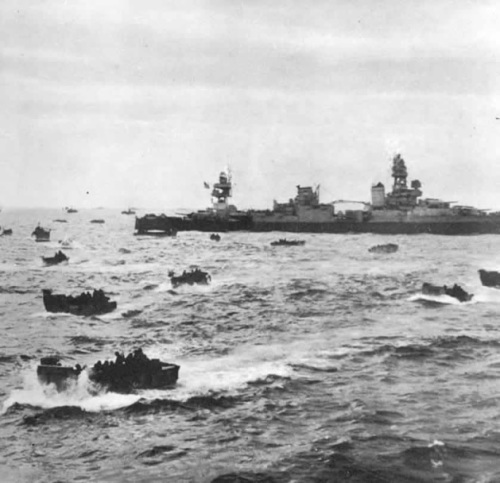
Landing craft passing the USS Augusta in heavy seas heading toward Omaha Beach

H-Hour for OMAHA was 0630.  Unfortunately the assault troops were transferred to their LCVP landing craft 16-20 kilometers from the beach.  The result was a long and dangerous ride in the small craft for the infantry.  Most of the infantry were completely soaked in sea spay and seasick before going ashore and they carried loads far above what they normally would carry into battle.[xxxii] The Armor support was one battalion of DD tanks, the 741stArmored Battalion, supporting the 16th Infantry Regiment of 1st Infantry Division. These were also launched too far out and nearly all of the tanks were swamped and lost before firing a shot in anger.[xxxiii] Other American support units needed to provide firepower on the beach were equally unfortunate. Weigley notes that at OMAHA “at least 10 of the LCVPs sank” as did “the craft carrying almost all of the 105mm howitzers that were to be the first artillery ashore after the tanks.”[xxxiv] The losses would cripple the assault on OMAHA and nearly cause its abandonment.

Bloody Omaha

As the soldiers of the American divisions on OMAHA came ashore they faced German defenders of the 352nd, 716th and a regiment of the 709th Infantry Division, the latter under the tactical command of the 352nd.   Without the bulk of their tanks artillery and lacking close air support the Americans struggled across the beaches and were cut down in large numbers before being pinned down behind the sea wall.[xxxv] With the Americans pinned down on the beach unable to advance, the time tables for the reinforcing waves became snarled amid the German beach obstacles which had not been cleared.  This was in large part due to 40% casualties among the Combat Engineers and the loss of all but five bulldozers.[xxxvi] Naval officers were frustrated in their attempts to provide naval gunfire support by the lack of identifiable targets on the beaches.  Yet German strongpoint’s were “knocked out by either by superbly directed vigorous gunfire from destroyers steaming as close as 800 yards offshore, or by determined action from Rangers or infantry.[xxxvii]

US Infantry struggles ashore at Omaha (above) General Omar Bradley with his Staff aboard USS Augusta
Soldiers ashore discovered that they were not facing the static 716th Division but the veteran 352nd Division as well.[xxxviii] Only the leadership and actions of Brigadier General Norman Cota the 29th Division’s Deputy Commander and Colonel Charles Canham of the 116th Infantry kept the situation from complete collapse.  They were able to rally their troops. Under their leadership small units from the 116th which had its linage back to the “Stonewall Brigade” as well as elements of the 16th and 18th Infantry Regiments began to move forward.  Surviving junior leaders began to lead survivors through the dunes and up the bluffs to attack German defenders of the roads leading up from the beach from the flank and rear.  A mid-day break in the weather allowed some close tactical air support giving the troops badly needed support.

US 1st Infantry Division Troops at the Omaha sea wall

With the situation desperate General Bradley considered the evacuation of OMAHA.  At sea events were as confused as Bradley and his staff attempted to make sense of what was going on.  Even later in the evening there was discussion of diverting all further reinforcements from OMAHA to the British beaches.[xxxix]At 1330 hours “Gerow signaled Bradley: “Troops formerly pinned down on beaches…advancing up heights behind beaches.”[xl] By the end of the day Bradley’s aid Major Hansen noted Bradley’s comments to Collins: “They are digging in on Omaha beach with their fingernails. I hope they can push in and get some stuff ashore.”  And Montgomery: “Someday I’ll tell Gen[eral] Eisenhower just how close it was for a few hours.”[xli]

German Fallschirmjaeger Trüppen in Normandy, the German Parachute forces fighting in an infantry role were very effective in the Normandy campaign

The landings at OMAHA succeeded at a cost of over 2000 casualties.  Critical to the success of the landings were the German inability to reinforce their defending troops on the beach.  Likewise the weakness of the units available to mount the standard counterattack that was critical to German defensive plans on D-Day itself kept the Germans from driving the Americans back into the Channel. The 352nd Division fought superbly under the full weight of V Corps and the British XXX Corps on its right suffering heavy casualties as they contested every inch of ground.  The 716th Division composed of second rate troops melted under the onslaught.  Allied air supremacy played a key role as sorties by the 8th and 9th Air Forces helped keep German reinforcements from arriving and interdicted counter attacks inland.  Weigley credits the Allied air superiority with the success of the landings and with limiting casualties.[xlii]Von Rundstedt and other German commanders in France were limited by the delay and refusal of Hitler and OKW to release Panzer reserves when needed most early on June 6th.
HMS Warspite (above) fired the first shots on D-Day, HMS Ramillies (below) fired over 1000 rounds of 15” shells on June 6th

By the close of D-Day allied forces had secured the five invasion beaches but not achieved their objectives of taking Caen and Bayuex.  Since the forces on the various beachheads had not linked up the beaches would have been extremely vulnerable had the Germans been able to mount a rapid counterattack by Panzers and strong infantry formations as they had at Salerno.

Major Battles to the Breakout at Avranches

Securing the Beachheads

P-47 Thunderbolt firing 5” Rockets at ground targets (above) and British Troops landing on Gold Beach, Sword Beach, and Canadian troops with German P.O.W.s on Juno Beach.

It took the V and VII Corps nearly a week to secure the beachheads. German forces including the stalwart 352nd Division resisted stubbornly and mounted sharp local counterattacks which kept the Americans off balance.  Elements of the 29th Division and the 90th Division began to push inland and to expand the beachhead toward UTAH. Opposed by the 352nd Division and elements of the 91st Airlanding Division and other non-divisional units the fighting revealed the inexperience of the American infantry formations and the uneven quality of their leadership.  As the Americans tackled the Germans in the labyrinth of the Bocage country the defensive skill of the Germans cost many American lives and delayed the joining of the beachheads. On the 13th the link up was solid enough to enabling the Americans to conduct the follow up operations needed to expand the beachhead, secure Cherbourg and clear the Cotentin.

A Panther tank of the Panzer Lehr Division in Normandy

In some American divisions the hard fighting triggered a leadership crisis.  The lack of success of the 90th Division led General “Lightening Joe” Collins of VII Corps relieve the division commander and two regimental commanders of command, a portent of things to come with other American units.[xliii] As the V and VII corps pushed into the “Bocage” they were followed by a massive build up of troops and equipment delivered to the beaches and to the artificial “Mulberry” harbors.  Despite their numeric superiority, air supremacy and massive Naval gunfire support and facing the weakened 352nd, 91st and the 6thParachute Regiment and other less than quality formations, survivors of the static divisions, the Americans made painfully slow progress as they moved off the beachhead and into the Bocage.[xliv]

The Capture of Cherbourg

US Soldiers of the 29th Division surrender to German Fallschirmjaeger in Normandy

Once the beachheads had been consolidated the Americans turned their attention toward Cherbourg. Cherbourg was the major naval port at the far northwest tip of the Cotentin.  D-Day planners counted on its swift capture and rehabilitation to serve as a supply port for the Allied forces. The 9th Division drove south to the coast near Barneville on the 18th of June cutting off the German forces covering the approaches to Cherbourg.[xlv] This put the Germans in a bind as the 7th Army “had to split its forces in the peninsula in order to hold the fortress a little longer and thus to gain time for the establishment of the southern front on the Cotentin peninsula.[xlvi] The German forces arrayed before Cherbourg waged a desperate defense centered around the 243rd Infantry Division and other assorted battle groups of LXXXIV Corps, whose commander General Marcks one of the best German Generals was killed in action on 12 June.[xlvii] The U.S. VII Corps under Collins with the 9th, 4th and 79th Divisions pushed up the peninsula capturing Cherbourg on June 29th.  Bradley pushed hard for the capture of the port as the Mulberries had been ravaged by a severe Channel storm the week prior. The port of Cherbourg was thoroughly demolished by German engineers and would not be fully operational for months. The loss of the Mulberries and delay in Cherbourg’s availability meant that few supplies were landed on the beaches would “hinder the escape from the constricting land of the hedgerows into which the Americans had come in search of a port.[xlviii]

The Battle of Caumont Gap

Panzer IV Tank in Normandy

V Corps under Gerow made a cautious advance by phase lines toward Caumont, St Lo and Carentan.  The deliberate advance by the Corps toward a line weakly held by the Reconnaissance battalion of the 17th SS Panzer Grenadier Division was directed by Bradley who did not want to divert attention from the effort against Cherbourg.   After capturing Caumont V Corps halted and continued aggressive patrolling to deceive the Germans while digging in.[xlix] The possibility existed that a strong push against the weak German line could have led to an opportunity to envelope the German line west of Caen. This was a missed opportunity that in part led to the bloody and controversial campaign to capture Caen.[l]

British efforts around Caen
German Panzer Ace Waffen SS Captain Michale Wittman single handedly destroyed a British Battalion at Villers Bocage in his Tiger Tank

Montgomery had ambitious plans to break out of Normandy by capturing Caen on D-Day and driving toward Falaise and Argentan.  The British plans for this were frustrated by the rapid reinforcement of the sector by the Germans and the activities of 21st Panzer, Panzer Lehr, and the 12th SS Panzer Divisions.  A flanking maneuver at Villers-Bocage was frustrated by a few Tiger tanks led by the legendary Waffen SS Panzer commander Captain Michael Wittman whose tanks devastated a British Armored battalion.[li]

Wreckage of a British Battalion at Villers Bocage

A series of disastrous attacks toward Caen (EPSOM, CHARNWOOD and GOODWOOD) strongly supported by air strikes and Naval gunfire finally succeeded in taking that unfortunate city on July 18th but failed to take the heights beyond the town.[lii]

British operations like Operation Epsom met setback after setback against dug in German forces outside of Caen


British Troops in the Ruins of Caen (above) and destroyed Cromwell tank at Villers-Bocage (below)

Against crack well dug in German forces the British took heavy casualties in tanks and infantry seriously straining their ability to conduct high intensity combat operations in the future.[liii] The one benefit, which Montgomery would claim after the war as his original plan was that German forces were fixed before Caen and ground down so they could not be used against Bradley’s breakout in the west at St Lo.[liv]

Clearing the Bocage: The Battle of the Cotentin Plain
US M-5 Light Tank in Normandy

Other German forces arrived, and reinforced the Caumont gap which no longer “yawned invitingly in front of V Corps.” [lv] Bradley wished to push forward rapidly to achieve a breakthrough in the American sector.[lvi] Facing the most difficult terrain in France amid the Bocage and swamps that limited avenues of approach to the American divisions committed to the offensive.  The Americans now faced their old foe the 352nd division as well various elements of II Parachute Corps, the 17th SS Panzer Grenadier and Panzer Lehr Divisions.  American tanks and infantry made slow progress and incurred high losses as they dueled the Germans at close range.  In the VIII Corps sector alone the attack “consumed twelve days and 10,000 casualties to cross eleven kilometers of the Bocage…the achievements of the VII and XIX Corps were no better than comparable.[lvii]

St. Lo

US Tanks advancing with German prisoners moving back to US lines at St Lo

St. Lo was a key to Bradley’s breakout efforts.  His Army had to capture it and the roads leading out of it to launch Operation COBRA along the coast.  The task of capturing St. Lo was assigned to GEROW’S V Corps and Corlett’s XIX Corps.  They faced opposition from the tough paratroops of the German 3rd Parachute Division of II Parachute Corps.  The 2nd, 29th, 30th and 83rd Divisions fought a tough battle advancing eleven kilometers again with high numbers of casualties especially among the infantry to secure St. Lo on 18 July.[lviii] They finally had cleared the hedgerows.  St Lo epitomized the struggle that the American Army had to overcome in the Bocage.  Hard fighting but outnumbered German troops in excellent defensive country exacted a terrible price in American blood despite the Allied control of the skies.[lix]

Operation COBRA

US 155mm Howitzers in Normandy, the Germans had profound respect for American Artillery, a respect that they did not share for American Infantry or Armor forces

With the Bocage behind him Bradley desired to push the Germans hard.  COBRA was his plan to break out of Normandy.  Bradley ably assisted by Collins they realized that the better terrain, road networks favored a breakout.  American preparations included a technical advance that allowed tanks to plow through hedgerows. This was the “Rhino” device fashioned by American troops which was installed on 3 of every 5 First Army Tanks for the operation.[lx] VII Corps was to lead the attack which was to begin on July 24th. American planning was more advanced than in past operations.  Collins and Bradley planned for exploitation operations once the breakthrough had been made. A massive air bombardment would precede the attack along with an artillery barrage by Collins corps artillery which was reinforced by additional battalions.   A mistake by the heavy bombers in the 24th resulted in the American troops being hit with heavy casualties and a postponement of the attack until the 25th.[lxi] The following day the attack commenced.  Another mistake by the bombers led to more American casualties[lxii] but VII Corps units pressed forward against the determined resistance of the survivors of Panzer Lehr and the remnants of units that had fought the Americans since the invasion began.  Although it was a “slow go” on the 25th Bradley and his commanders were already planning for and beginning to execute the breakout before the Germans could move up reinforcements.  The 26th of June brought renewed attacks accompanied by massive air strikes.

The Devastated town of St Lo 

While not much progress was made on the 26th, the Americans discovered on the 27th that the German forces were retreating.  The capture of Marigny allowed VIII Corps to begin exploitation down the coastal highway to Coutances.  On the 27th General Patton was authorized to take immediate command of VIII Corps a precursor to the activation of his 3rdArmy.  COBRA ripped a hole in the German line and inflicted such heavy casualties on the German 7th Army that it could do little to stop the American push.[lxiii] As the American forces pushed forward they reinforced their left flank absorbing the local German counterattacks which were hampered by the Allied close air support.

Avranches and Beyond

US Forces advance through the ruins of St Lo

As the breakthrough was exploited the command of the forces leading it shifted to Patton and the newly activated 3rd Army. By the 28th VIII Corps led by the 4th and 6th Armored Divisions had reached Avranches and established bridgeheads over the See River with additional bridges being captured intact on the 30th.[lxiv] The capture of Avranches allowed the Americans to begin exploitation operations into Brittany and east toward the Seine. Weigley notes that for the first time in the campaign that in Patton the Americans finally had a commander who understood strategic maneuver and would use it to great effect.[lxv]

Conclusion

The American campaign in Normandy cost the U.S. Army a great deal. It revealed weaknesses in the infantry, the inferiority of the M4 Sherman tank to most German types, problems in tank-infantry cooperation and also deficiencies in leadership at senior, mid-grade and junior levels. Heavy casualties among infantry formations would lead to problems later in the campaign. Numerous officers were relieved including Division and Regimental commanders.  Nonetheless during the campaign the Americans grew in their ability to coordinate air and ground forces and adapt to the conditions imposed on them by their placement in the Cotentin.  The deficiencies would show up in later battles but the American Army learned its trade even impressing some German commanders on the ground in Normandy.[lxvi] 

Notes

[i] See the alternative history of by Peter Tsouras Disaster at D-Day: The Germans Defeat the Allies, June 1944, Greenhill Books, London 1994. Tsouras describes the defeat of the Omaha landings and the effect on the course of the campaign leading to the overthrow of Hitler and a negotiated armistice in the west.  While this outcome could be rigorously debated other outcomes could have led to the fall of the Roosevelt and Churchill governments and their replacement by those not committed to unconditional surrender or a continuation of the war that brought about more German missile attacks on the U.K. and the introduction of other advanced German weapons that could have forced such a settlement. Another option could have led to the dropping of the Atomic Bomb on a German city vice Hiroshima.

[ii] Weigley, Russell F. Eisenhower’s Lieutenants: The Campaign of France and Germany, 1944-1945, Indiana University Press, Bloomington IN, 1981 p.33

[iii] Ibid pp. 34-35

[iv] Ibid p.35

[v] General Montgomery 21st Army group and Land Forces, Admiral Sir Bertram Ramsey as Allied Naval Expeditionary Force and Air Marshall Sir Trafford Leigh-Mallory as Commander in Chief Allied Expeditionary Air Force. Weigley p.43

[vi] Max Hastings in Overlord: D-Day and the Battle for Normandy Vintage Books, New York, 1984, comments that many in Britain wondered if Eisenhower with the lack of actual battle experience could be a effective commander and that Eisenhower was disappointed in the appointment of Leigh-Mallory and Ramsey, and had preferred Alexander over Montgomery, pp. 28-29.

[vii] Ibid. Weigley p.40.  Montgomery was the first to object to the 3 division narrow front invasion rightly recognizing that seizing Caen with its road junctions could provide a springboard for the campaign into open country.

[viii] Ibid. p.37

[ix] Hastings, Max. Overlord: D-Day and the Battle for Normandy Vintage Books, New York, 1984 p.29  Hastings finds the irony in the selection of the British officers to execute the plan that reflected the American way of thinking.

[x] The Germans agreed with this in their planning leaving Brittany very lightly defended.  See  Isby, David C. Ed. “The German Army at D-Day: Fighting the Invasion.” p.27 The report of General Blumentritt, Chief of Staff OB West noted that only 3 divisions were assigned to Brittany.

[xi] Ibid. Weigley, pp. 39-40

[xii] Ibid. p.73

[xiii] See Isby p. 69.  General Max Pemsel of 7th Army noted that “During  the spring of 1944, Seventh Army received only tow good photographs of British southern ports, which showed large concentrations of landing craft.”

[xiv] Ibid. Hastings p.63.  Hastings comments also about the success of using the turned Abwehr agents.

[xv] Warlimont, Walter. “Inside Hitler’s Headquarters: 1939-1945.” Translated from theGerman by R.H. Barry. Presidio Press, Novao CA, English Edition Copyright 1964 Wiedenfeld and Nicholson Ltd. Pp.422-423

[xvi] Ibid. Weigley pp. 53-54

[xvii] Ibid. p. 67

[xviii] Ibid. pp.57-64  Weigley spends a great deal of time on the wrangling between Eisenhower, Leigh Mallory and Spaatz on the nature of the plan, the allocation of forces both strategic and tactical assigned to carry it out and its success, or in the light of postwar analysis the lack of effect that it had on German operations.

[xix] Ibid. p.67-68.

[xx] Ibid. Hastings pp. 43-44 In large part due to the long range P-51 Mustang which accompanied the American bombing raids beginning in 1943.  Another comment is that the campaign drew the German fighters home to defend Germany proper and prevented their use in any appreciable numbers over the invasion beaches.

[xxi] Ibid. Weigley p.69

[xxii] Ibid. p.89

[xxiii] Ibid. pp. 88-89

[xxiv] Ibid. p.87

[xxv] Ibid. Weigley also talks about the rejection of General Corlett’s ideas to use Amtracks used by the Marines in the Pacific to land on less desirable, but less defended beaches to lessen casualties on the beaches and the need for additional support equipment even on smooth beaches.  One of Corlett’s criticisms was that too little ammunition was allotted to supporting the landings and not enough supporting equipment was provided. pp. 46-47

[xxvi] Hastings notes that with the strength and firepower of the German forces on OMAHA that many of these vehicles had they been employed would like have ended up destroyed further cluttering the beachhead. “Overlord” p.102

[xxvii] The battle over the deployment of the Panzer Divisions is covered by numerous historians.  The source of the conflict was between Rommel who desired to place the Panzer Divisions on the Coast under his command due to the fear that Allied air superiority would prevent the traditional Panzer counterthrust, General Gyer von Schweppenburg commander of Panzer Group West (Later the 5th Panzer Army) and Field Marshal Von Rundstedt who desired to deploy the divisions order the command of Rundstedt for a counter attack once the invasion had been launched, a strategy which was standard on the Eastern Front, and Hitler who held most of the Panzer reserve including the SS Panzer Divisions under his control at OKW.  Hitler would negotiate a compromise that gave Rommel the satisfaction of having three Panzer Divisions deployed behind coast areas in the Army Group B area of responsibility.  21stPanzer had those duties in Normandy.

[xxviii] Ibid. p.74-75

[xxix] Von Luck, Hans.  “Panzer Commander“ Dell Publishing, New York, 1989 pp. 169-170.  Von Luck a regiment commander in 21st Panzer noted that General Marcks of 84th Corps had predicted a 5 June invasion at a conference May 30th.

[xxx] Almost every D-Day historian talks about the weather factor and its effect on the German high command’s reaction to the invasion.  Rommel was visiting his wife for her birthday and planned to make a call on Hitler. Others including commanders of key divisions such as the 91st Airlanding Division were off to a war game in Rennes and the 21st Panzer Division to Paris.

[xxxi] Ibid. Weigley p. 96

[xxxii] See Cornelius Ryan, “The Longest Day” Popular Library Edition, New York 1959. pp. 189-193 for a vivid description of the challenges faced by soldiers going from ship to landing craft and their ride in to the beaches.

[xxxiii] Ibid. Weigley. p.78 Weigley talks about the order for the tanks to be carried ashore on their LCTs that did not get transmitted to the 741st.

[xxxiv] Ibid.

[xxxv] Ibid. Weigley  p. 87 The weather prevented the aerial bombardment from being effective. Because the bombers could not see their targets they dropped their bomb loads further inland, depriving the infantry of support that they were expecting.  Naval gunfire support had some effect but had to be lifted as the troops hit the beach leaving much of that support to come from Destroyers and specially equipped landing craft which mounted rockets and guns.

[xxxvi] Ibid. Hastings. pp. 90-91.

[xxxvii] Ibid. p.99

[xxxviii] Ibid. Weigley p.80

[xxxix] Ibid. p.101  Also see Weigley p.80

[xl] Ibid. p.99

[xli] Ibid. Weigleyp.95

[xlii] Ibid. p.94

[xliii] Ibid. p.99 Both Weigley and Hastings make note of the failure of both the Americans and British to train their troops to fight in the bocage once they had left the beaches.

[xliv] Ibid. Hastings. pp.152-153

[xlv] Ibid. Weigley p.101

[xlvi] Isby, David C., Ed. “Fighting in Normandy: The German Army from D-Day to Villers-Bocage.” Greenhill Books, London,  2001.  p.143

[xlvii] Ibid. Hastings p.173 Allied fighter bombers exacted a fearful toll among German commanders. The Commanders of the 243rd and 77th Divisions fighting in the Cotentin were also killed by air attacks on the 17th and 18th.   Further east facing the British the commander of the 12th SS Panzer Division, Fritz Witt on the 17th.

[xlviii] Ibid. Weigley. p.108

[xlix] Ibid. p.111-112.

[l] Ibid.

[li] The efforts of the 51st Highland Division and 7th Armored Division were turned aside by the Germans in the area and were dramatized by the destruction of  a British armored battalion by SS Captain Michael Wittman and his platoon of Tiger tanks.  See Hastings pp.131-135.

[lii] The British 8th Corps under General O’Connor lost 270 tanks and 1,500 men on 18 July attempting to crack the German gun line on the ridge beyond Caen. Weigley, pp.145-146.

[liii] Hastings comments about the critical British manpower shortage and the pressures on Montgomery to not take heavy casualties that could not be replaced. Overlord. pp.241-242.

[liv] Ibid. Weigley pp.116-120

[lv] Ibid. p.122

[lvi] Ibid. p121 Bradley told Eisenhower “when we hit the enemy this time we will hit him with such power that we can keep going and cause a major disaster.”

[lvii] Ibid. 134

[lviii] Ibid. Weigley. pp. 138-143.  Weigley notes of 40,000 U.S. casualties in Normandy up to the capture of St. Lo that 90% were concentrated among the infantry.

[lix] Weigley quotes the 329th Regiment, 83rd Division historian “We won the battle of Normandy, [but] considering the high price in American lives we lost. P.143. This is actually a provocative statement that reflects America’s aversion to massive casualties in any war.

[lx] Ibid. p.149

[lxi] Ibid. p. 152

[lxii] Ibid. pp. 152-153.  Among the casualties were the command group of the 9th Division’s 3rd Battalion 47th Infantry and General Leslie McNair who had come to observe the assault.

[lxiii] Ibid. pp.161-169. Weigley notes the advances in U.S. tactical air support, the employment of massive numbers of U.S. divisions against the depleted German LXXXIV Corps, and the advantage that the “Rhino” device gave to American tanks by giving them the ability to maneuver off the roads for the first time.

[lxiv] Ibid. pp.172-173.

[lxv] Ibid. p.172

[lxvi] Ibid. Isby, David C. “Fighting in Normandy,” p.184, an officer of the 352nd Division referred to the American soldier “was to prove himself a in this terrain an agile and superior fighter.”

Bibliography

Carell, Paul. “Invasion: They’re Coming!” Translated from the German by E. Osers, Bantam, New York 1964.

Hastings, Max. Overlord: D-Day and the Battle for Normandy Vintage Books, New York, 1984

Isby, David C. Ed. “The German Army at D-Day: Fighting the Invasion.” Greenhill Books, London 2004

Isby, David C., Ed. “Fighting in Normandy: The German Army from D-Day to Villers-Bocage.” Greenhill Books, London, 2001.

Ryan, Cornelius, “The Longest Day” Popular Library Edition, New York 1959

Tsouras, Peter. “Disaster at D-Day: The Germans Defeat the Allies, June 1944,”Greenhill Books, London 1994.

Von Luck, Hans.  “Panzer Commander“ Dell Publishing, New York, 1989

Warlimont, Walter. “Inside Hitler’s Headquarters: 1939-1945.” Translated from theGerman by R.H. Barry. Presidio Press, Novao CA, English Edition Copyright 1964 Wiedenfeld and Nicholson Ltd. Warlimont, Walter. “Inside Hitler’s Headquarters: 1939-1945.” Translated from theGerman by R.H. Barry. Presidio Press, Novao CA, English Edition Copyright 1964 Wiedenfeld and Nicholson Ltd.

Weigley, Russell F. Eisenhower’s Lieutenants: The Campaign of France and Germany, 1944-1945, Indiana University Press, Bloomington IN, 1981

3 Comments

Filed under aircraft, armored fighting vehicles, artillery, History, leadership, Military, Navy Ships, nazi germany, us army, US Army Air Corps, US Navy, world war two in europe

Arthritis, a Cane, and a Pistol: The Son of the Rough Rider, Theodore Roosevelt III and D-Day

Theodore Roosevelt Jr4

Friends of Padre Steve’s World,

Today I am remembering an American hero who the older and more broken down I get I admire more. Brigadier Theodore Roosevelt III, known affectionately as “Ted” was beloved by his troops, and less that appreciated by senior commanders, mainly because he cared for his troops and he tended to dress down, and often wore non-uniform gear. He also had bad arthritis and needed to walk with a cane. I had to do that for a year when my knees when bad, and without the aid of gel injections in both knees every 3-4 months I would need today. He went ashore in the first wave of the 4th Infantry Division in Normandy. So this adds to my D-Day collection for this year. I hope that you can enjoy and appreciate. 

The Prussian military theorist Carl von Clausewitz wrote: “Courage, above all things, is the first quality of a warrior.”

By the standards of military service on the front line the man was ancient. He was 56 years old, four years younger than I am now. He had arthritis and a history of heart problems, but he was his father’s son and he put himself in harm’s way in the greatest invasion in history.

The oldest man to land on the beaches of Normandy was the son of a President. His father was Theodore “Teddy” Roosevelt who had taken leave of his office as Assistant Secretary of the Navy at the outset of the Spanish-American War to go into harm’s way. With the help of his friend Colonel Leonard Wood, Roosevelt formed the legendary First U.S. Volunteer Cavalry Regiment, the “Rough Riders” and led them in the fight at the Battle of San Juan Hill.

The son of the President entered the business world and then served as a Reserve officer. When the United States entered the First World War he was commissioned as a Major.  He volunteered for overseas service and served as a battalion commander and later as commander of the 26th Infantry Regiment of the 1st Infantry Division. Leading from the front he was wounded and gassed at Soissons in 1918. For his service he was awarded the Distinguished Service Cross and the French Chevalier Légion d’honneur.

After the war he helped found the American Legion and entered politics and was elected to the New York State Assembly. However while serving as Assistant Secretary of the Navy in the Harding Administration he was linked to the Teapot Dome Scandal and though he was cleared of any wrongdoing his name was tarnished. He was opposed by his cousin Franklin Delano Roosevelt and his political fortunes in elections plummeted. However, he was appointed as Governor of Puerto Rico and later Governor-General of the Philippines a post that he served at until 1935.  He returned to the United States and went back into business world with American Express.

Between the wars he continued his Army Reserve service. Like most reservists he attended his annual training periods, but he also took it upon himself to attend the Infantry Officer Basic and Officer Advanced Courses as well as the Command and General Staff College. When war broke out in Europe and the United States began to mobilize for war he again volunteered for active service. He attended a refresher course and was promoted to Colonel in the Army Reserve. He was mobilized in April 1940 and was given command of his old 26th Infantry Regiment assigned to the First Infantry Division. He was promoted to Brigadier General in late 1941 and became the the Assistant Division Commander.

Ted_Cane_France

He served well in that role in North Africa and Sicily and earned citations for bravery being constantly on the front lines with his soldiers. However his association with the Division Commander, the unorthodox Terry Allen earned the enmity of George Patton and Omar Bradley. Patton disliked Allen and hated the way both Allen and Roosevelt eschewed “spit and polish” and “dressed down,” often wearing unauthorized uniform items. After Bradley assumed command of 7th Army he relieved both officers, believing that they were guilty of “loving their division too much.” Bradley later admitted was one of the hardest decisions that he made in the war. Roosevelt then served as a liaison officer with the Free French Forces in Italy before returning to England to assume duties as Assistant Division Commander of the 4th Infantry Division. His superior, Terry Allen would go on to command the 104th Infantry Division in an exemplary manner in France and Germany in 1944-45. Bradley praised him and his new division as one of the best in Europe.

TeddyJr5-530x414

Roosevelt constantly trained with the troops and asked his commander, Major General Raymond “Tubby” Barton for permission to land with the first wave in the invasion. After being denied twice Roosevelt put his request to Barton in writing:

“The force and skill with which the first elements hit the beach and proceed may determine the ultimate success of the operation…. With troops engaged for the first time, the behavior pattern of all is apt to be set by those first engagements. [It is] considered that accurate information of the existing situation should be available for each succeeding element as it lands. You should have when you get to shore an overall picture in which you can place confidence. I believe I can contribute materially on all of the above by going in with the assault companies. Furthermore I personally know both officers and men of these advance units and believe that it will steady them to know that I am with them.”

Barton reluctantly approved the request not expecting Roosevelt to survive the landings. Roosevelt was in the first wave of assault troops at Utah Beach. On landing he discovered that the first wave was about a mile off course and in an area where the German defenses were not strong.

Armed with a pistol and supported by a cane Roosevelt led a reconnaissance patrol  to find the causeways off the beach. He briefed the battalion commanders and then ordered an attack from where the troops had landed telling his officers “We’ll start the war from right here!” It was a moment immortalized in the film The Longest Day in which Henry Fonda played Roosevelt.

fon2

Henry Fonda Portrays Brigadier General Theodore “Ted” Roosevelt III in “The Longest Day”

His actions were key in the success of the Utah Beach landings and he was recommended for the Distinguished Service Cross by General Barton. Just over a month after the invasion after continuously leading his troops in Normandy Roosevelt died of a heart attack on July 12th 1944, the very day he had been selected for his second star and promotion to Major General with orders to take command of the 90th Infantry Division. His award was upgraded to the Congressional Medal of Honor which was posthumously awarded on September 28th 1944. He was buried in the American Cemetery in Normandy. The remains of his younger brother Quentin who had been killed in the First World War were exhumed and interred next to his in 1955.

The Medal of Honor citation reads:

For gallantry and intrepidity at the risk of his life above and beyond the call of duty on 6 June 1944, in France. After 2 verbal requests to accompany the leading assault elements in the Normandy invasion had been denied, Brig. Gen. Roosevelt’s written request for this mission was approved and he landed with the first wave of the forces assaulting the enemy-held beaches. He repeatedly led groups from the beach, over the seawall and established them inland. His valor, courage, and presence in the very front of the attack and his complete unconcern at being under heavy fire inspired the troops to heights of enthusiasm and self-sacrifice. Although the enemy had the beach under constant direct fire, Brig. Gen. Roosevelt moved from one locality to another, rallying men around him, directed and personally led them against the enemy. Under his seasoned, precise, calm, and unfaltering leadership, assault troops reduced beach strong points and rapidly moved inland with minimum casualties. He thus contributed substantially to the successful establishment of the beachhead in France.

Roosevelt’s story is quite amazing. In the modern wars of the late 20th and early 21st Centuries few commanders as senior as Roosevelt would ever be in the first wave of an invasion or offensive operation. The personal courage and example set by Roosevelt in both World Wars, leading from the front and maintaining relationships with the troops that he commanded in combat is something that is unusual today. We in the military talk about a lot in various military leadership classes but often seems to be smothered by business models promoted by think tanks and others with money to be made.

Likewise, a commander suffering from Roosevelt’s infirmities would not be allowed to command troops in combat today. But in the Second World War when many other American Generals failed miserably and often could not be found near the front and were relieved of command for incompetence and cowardice the old, crippled and infirm Roosevelt led from the front. He made decisions on Utah Beach on D-Day that helped ensure that the landings were a success. Bradley, who had fired Roosevelt after the Sicilian Campaign with Allen said that the most heroic act that he had seen in combat was “Ted Roosevelt on Utah Beach.”

Roosevelt was an exception to Clausewitz’s axiom that “boldness becomes rarer, the higher the rank.” I think that even if a General wanted to lead in the manner of Roosevelt today that he would be punished by the institution for risking himself regardless of his success, because I t would make others look bad.

Peace

Padre Steve+

1 Comment

Filed under History, leadership, Military, us army, world war two in europe

True Leadership and Responsibly: Eisenhower’s Letter in Case D-Day Failed

Friends of Padre Steve’s World,

The great Prussian military theorist Carl Von Clausewitz noted: “It is now quite clear how greatly the objective of war makes it a matter of assessing probabilities. Only one more element is needed to make war a gamble – chance: the very last thing that war lacks. No other human activity is so continuously or universally bound up with chance. And through through the element of guesswork and luck come to play a great part in war…. If we now consider briefly the subjective nature of war – the means by which war has to be fought – it will look more like a gamble. The highest of all moral qualities in time of danger is certainly courage.”

For a year General Dwight D. Eisenhower had worked to marshal the largest force possible to launch the long awaited invasion of Nazi Occupied France. Eisenhower surrounded himself with an exceptional staff, but had to fight for what he would need for the coming invasion. He had to struggle with Admiral Ernest King for the landing ships and crafts he needed, against the competing needs of Admiral Nimitz, and General MacArthur’s Forces in the Pacific Theatre of operations. He had to battle the Allied bomber commands, Air Marshal Arthur “Bomber” Harris’s British Bomber Command, and 8th Air Force and Lieutenant General Carl Spaatz, Commander of Strategic Air Forces for bombers to support the invasion. This meant taking them away from the strategic bombing command against the heart of German industry; and finally he had to battle Winston Churchill to be in overall command of the multi-national force being assembled to attack.

The invasion was his baby. He had the ultimate responsibility for its success or failure. He knew the dangers. In 1942 the British launched a raid using Canadian troops on the English Channel port of Dieppe. It was a disaster. With all the work he had done to get his forces ready for the invasion, Eisenhower knew that he owned the result regardless of the outcome.

Eisenhower understood that everything in war is a gamble and that success is not guaranteed. The weather conditions of the English Channel are unpredictable. They only  offer a few month window of opportunity to successfully mount a cross channel invasion. The Germans found that out in 1940 when after their failure to clear the skies of the Royal Air Force during the Battle of Britain by early September, that the a favorable opportunity for Operation Sea Lion had passed and would never come again.

The Allied invasion required a full moon for a massive three division nighttime paratroop drop, and favorable weather for the landing craft to get ashore. Unfortunately, the weather was not cooperating. High winds, seas, and rain forced a cancellation of the planned June 5th invasion, the open question was whether conditions would be on the 6th would be favorable. If not the next opportunity would not be for at least two more weeks, in which the Germans would continue to strengthen their defensive positions along the Atlantic Wall. 

The German weather forecasters, had lost lost the ability to observe weather in the western and mid-Atlantic due to the allies sweeping the ships that relayed weather information from the Atlantic. Blind to oncoming weather systems, the Wehrmacht and Luftwaffe meteorologists anticipated that the bad weather would continue to be unfavorable for an invasion. With this in mind, Field Marshal Erwin Rommel, Commander of Army Group B which had operational control over the potential landing beaches, decided to make a visit to his wife for her birthday and a trip to Berlin to plead for more resources. Other Senior German Commanders departed to inland areas to conduct war games and were not with their units on the night of June 5th.

Meanwhile, the forecasters at Eisenhower’s headquarters had access to weather data from the mid-Atlantic unavailable to the Germans, predicted a brief lull in the storm, not perfect weather, but acceptable. Eisenhower met with his staff and made the decision to go ahead with the invasion in the night of June 5th and June 6th with the American 82nd and 101st Airborne Divisions, and the British 6th Airborne Division landing behind the German coastal fortifications.

But the weather was just one factor, the Allies did not know the latest German deployments, including the movement of the crack 352nd Infantry Division to Omaha Beach. Likewise, a prompt German response with heavy Panzer units could throw the invaders back into the sea if they moved fast enough. One threat was already deployed, but the other was a real probability knowing German doctrine.

However, neither Eisenhower or his staff knew of the conflict in the German High Command and Hitler regarding the deployment of the Panzer Divisions in France. Rommel argued that the Panzer Divisions should be deployed near the potential invasion beaches. However, traditionalists in the German command and Hitler decided that most of the Panzer Divisions should be held back awaiting a point that they could make a massive and decisive counterattack that would drive the Allies out of Europe. However, most of these men had commanded Panzers in Poland in 1939, France and the Low Countries in 1940, and the Soviet Union. In all of those campaigns the Germans always enjoyed air superiority or parity. But Rommel, a veteran of Africa and the West knew the power of allied tactical air assets, and the havoc they could inflict on the Panzers. Rommel believed that the invasion had to be defeated on the beachheads and the allies not given the chance to advance inland, in which case he knew that there would be no chance of defeating the invasion.

Eisenhower also knew that the success of the invasion depended on the success of the landings. A disaster at any of the landing beaches could doom the it. In light of this and so many other ways that could cause the invasion to fail, Eisenhower, wrote a letter to his troops and the world when the invasion commenced. It read:

“Soldiers, Sailors, and Airmen of the Allied Expeditionary Force:

You are about to embark upon the Great Crusade, toward which we have striven these many months.

The eyes of the world are upon you. The hopes and prayers of liberty-loving people everywhere march with you.

In company with our brave Allies and brothers-in-arms on other Fronts you will bring about the destruction of the German war machine, the elimination of Nazi tyranny over oppressed peoples of Europe, and security for ourselves in a free world.

Your task will not be an easy one. Your enemy is well trained, well equipped, and battle-hardened. He will fight savagely.

But this is the year 1944. Much has happened since the Nazi triumphs of 1940-41. The United Nations1 have inflicted upon the Germans great defeats, in open battle, man-to-man. Our air offensive has seriously reduced their strength in the air and their capacity to wage war on the ground. Our Home Fronts have given us an overwhelming superiority in weapons and munitions of war, and placed at our disposal great reserves of trained fighting men. The tide has turned. The free men of the world are marching together to victory.

I have full confidence in your courage, devotion to duty, and skill in battle. We will accept nothing less than full victory.

Good Luck! And let us all beseech the blessing of Almighty God upon this great and noble undertaking.

However, prepared for any eventuality he also also wrote a letter in case the invasion failed, as it nearly did on Omaha Beach. That letter noted:

“Our landings in the Cherbourg-Havre area have failed to gain a satisfactory foothold and I have withdrawn the troops. My decision to attack at this time and place was based upon the best information available. The troops, the air and the Navy did all that Bravery and devotion to duty could do. If any blame or fault attaches the attempt it is mine alone.”

It was dated July 5th, not June 5th, the mistake obviously due to the pressure of what he was feeling for his soldiers, and the mission. Likewise, there was very real threat to his own career if the mission failed. He knew that his adversaries in the United States military and in Britain would have seen that would see that he was relieved and sent back to the United States in disgrace. As Eisenhower’s successor as President, John F. Kennedy said: “Victory has a hundred fathers, defeat is an orphan.”

Likewise, defeat could embolden those in the United States and Britain willing to make peace with Germany at any price. Such an outcome could have destroyed the allied alliance that ended up defeating Germany, rebuilding a democratic Western Europe, establishing NATO, the United Nations, and many other international organizations that have done much good for America and the world.

In a sense Eisenhower was in a similar situation to Grant and Sherman in the Summer of 1864, if they failed, Abraham Lincoln could have been defeated by the anti-war pro-Confederacy Copperheads, who would have settled leaving the South independent, the country divided, and slavery in place. Defeat would have ended the American experiment. Defeat in Normandy could easily have destroyed the Allied alliance, and given the Germans  the time they needed to turn defeat into victory. The whole course of the war and history could have changed, for the worse, with Hitler’s Nazi Regime controlling most of Europe, continuing its genocidal policies, and developing weapons far in advance of the Allies.

Eisenhower would not make excuses if the invasion failed. He was ready to take full responsibility if Overlord failed, regardless of how it happened. The buck stopped with him.

Likewise, he knew that the failure of the invasion would have made it possible for the Nazis to divert needed forces to the Eastern Front, where they might have been able to turn back the Soviet Operation Bagration which destroyed the German Army Group Center. Likewise, the success of the invasion opened the way for the Soviets to drive the Nazis from Soviet territory, advance to Warsaw, and knock key German allies out of the war. Before long, Hungary, Romania, and Finland had abandoned the Germans.

The fact that the invasion succeeded was as much as luck as it was the careful planning, and the exceptional courage, and dogged determination of the Allied troops. The American 4th Infantry Division landed on the wrong beach. Had they landed on the correct beach they could have faced slaughter. The Allied Airborne Divisions were scattered over much of Normandy and had to improvise to capture the targets needed to assist the invasion forces. Had Hitler’s lackeys the courage to wake him when the invasion was in its early stages , he might have released Panzer Divisions sooner than he did. Had Rommel not gone back to Germany for his wife’s birthday and to plead with Hitler for more troops, and been on the ground to coordinate the German response; or the number of realistic “might have beens” that could of defeated the the invasion, and Eisenhower was well aware of them.

Eisenhower’s willingness to take responsibility for defeat as well as give his troops credit for the eventual victory over the Nazis sets him apart from so many others then, and now who would deflect blame for a failed operation to their subordinates and lie about the results achieved.

In the age where the American President blatantly refuses to take responsibility for his actions, blames subordinates and allies for his failures, and who abdicates the duties of his office on an hourly basis, the ability for Eisenhower to be ready to acceptance of failure is an example that we must emulate. Donald Trump would have surrendered to Germany, given Hitler a platform to proclaim his defiance of human rights and international law, and the rights of American citizens at home. Interestingly enough over the past week many highly respected Generals and Admirals, active and retired, have warned against the dangers posed by President Trump.

History and humanity are always the product of character, integrity, and responsibility, or their opposites. All qualities Eisenhower had, and Trump does not, and as many well respected American military commanders are now speaking out about. But I was doing this as early as 2015 and 2016.

Peace,

Padre Steve+

5 Comments

Filed under civil war, ethics, History, holocaust, leadership, Military, national security, nazi germany, News and current events, Political Commentary, us army, US Navy, US Presidents, world war two in europe

The Bismarck’s Last Battle

FinalBattle

Friends of Padre Steve’s World

This is the final part of my rendition of the great naval tragedy in three acts involving the German Battleship Bismarck. The first part was the sinking of the legendary and graceful pride of the Royal Navy, the Battle Cruiser Hood. The second part was the seemingly futile hunt and chase of the Bismarck by units of the British Home Fleet. What seemed hopeless changed when hours from the protection of night Bismarck was discovered and then torpedoed in a last ditch effort by Swordfish torpedo planes from the HMS Ark Royal. Today, the final act, the sinking of the Bismarck. 

I have written about this before and this is a massively edited and expanded version of that article. As I have mentioned before I have long been fascinated with this naval tragedy. I call it that because I have served at sea and in combat ashore; and because I understand that amid all the technology and weaponry that ultimately it is the men who suffer the terrors of war, and who suffer and die who matter. Soldiers, Sailors, Marines and Airmen seldom get a choice in the wars that the leaders of their nations send them to fight. Thus for me, even the Sailors of the Bismarck, the pride of Adolf Hitler’s Kriegsmarine are as much victims of war as the British Sailors aboard the HMS Hood.

I also apologize for not publishing this yesterday as I had planned. I went a lot deeper into my research and could not complete it before I needed to go to bed. 

Peace

Padre Steve+

King_George_V-px800

Rodney

HMS King George V (above) and HMS Rodney (below)

The torpedo from the Swordfish from the HMS Ark Royal that struck the Bismarck in her stern, jammed her rudders and wrecked her steering gear at last light on May 26th 1941, doomed the remarkable ship and her crew. It was an astounding turn of events, as just minutes before the hit both the Germans and the British were expecting Bismarck to reach safety of German occupied ports in France to fight again.

After a sleepless night in which they attempted to regain control of their ship and endured multiple attacks from destroyers before sunrise, the officers and crew of Bismarck were preparing their ship and themselves for what they all understood would be their final engagement. That sense of fatalism had been fueled by messages they received from Grand Admiral Raeder and Adolf Hitler that were broadcast to the entire crew. Raeder’s message said `All our thoughts are with you and your ship. We wish you success in your difficult fight.’ Hitler addressed the crew `All of Germany is with you. What can be done will be done. Your devotion to duty will strengthen our nation in its struggle for its existence. Adolf Hitler.’ At that point the crew knew that both Raeder and Hitler already considered them dead. Bismarck’s 4th Gunnery Officer Kapitänleutnant Burkhard von Mullenheim-Rechberg was told by another gunnery officer spoke words that Mullenheim-Rechberg would never forget: `Today, my wife will become a widow, but she doesn’t know it yet.’

Just days before Bismarck had sunk the legendary British Battle Cruiser HMS Hood in minutes and had she persisted in her attack could have sunk the new Battleship HMS Prince of Wales. Instead, Vice Admiral Gunther Lütjens in command of the Bismarck and her consort the Heavy Cruiser Prinz Eugen decided to break off contact and make for safety in the French port of Brest.

Bismarck slipped her pursuers and allowed Prinz Eugen to escape. It seemed that nothing that the British could do would stop her from gaining the safety of the French port and with it the knowledge that she had sunk the most powerful ship in the Royal Navy and gotten away. Then out of nowhere Bismarck was spotted by a Royal Air Force Coastal Command PBY Catalina seaplane piloted by an American Naval Officer. Hours later a relatively small and slow torpedo dropped from an obsolescent Swordfish torpedo bomber, a “Stringbag” hit the Bismarck in in her stern, wrecking her rudders and steering gear. Remarkably it was perhaps the only place that such a torpedo could have changed the developing narrative of a great German naval victory into defeat.

On that fateful morning the British ships prepared for a battle, even Admiral Tovey donned his steel helmet and put cotton in his ears as his ships closed the range with the German ship. Rodney, which was already being prepared for her overhaul in Boston had much gear stowed about her decks.  Bismarck was ploughing in to force 8 winds (34-40 knots) and Bismarck struggled to maintain seven knots against the wind as the tension on her bridge mounted as the officers and watch standers knew that they would soon meet the British Battleships that would soon sink their ship. These German officers were realists who knew that their lack of maneuverability made them both a sitting duck for the British onslaught, and not be able to control their gunfire as they might have under better circumstances.

At 0833 Tovey order his ships to close with the last reported position of Bismarck. Their lookouts sighted the German ship at 0843 at a range of just over 25,000 yards. Rodney opened fire at 0847 followed by King George V a minute later. Bismarck’s forward turrets opened fire at 0849, and her first salvos straddled Rodney, something that sent shivers through British sailors who remembered the fate of the Hood, however that was the closest Bismarck got. Her inability to maintain a stable course, something necessary for accurate naval gunfire inhibited her gunnery, while Bismarck’s position amid rain squalls degraded the accuracy of the British gunfire.

For about 12 minutes an uneventful exchange of gunfire ensued, but at 0902 Rodney found the range and two of her 16” shells hit the forward part of Bismarck’s bridge, killing many senior officers and knocking out her forward fire control radar and fire direction equipment, also damaging turret Bruno, the forward 15” turret directly forward of the bridge. The hit blew the rear armor off the turret and over the side of the ship. The hydraulic lines to Anton were cut by a hit and her guns drooped down to their maximum depression, making them useless. At 0908 shells from both British  Battleships, as well as the cruisers destroyed the forward gun direction radar and disabled turret Anton. Bismarck’s Fire control was shifted to the aft fire control center under Mullenheim-Rechberg. In six minutes half of Bismarck’s main battery, and her main fire director destroyed.

Under his control Bismarck’s aft turrets, Cäsar and Dora began to find the range of King George V, and on their fourth salvo straddled the British flagship, but at 0913 the director cupola was destroyed by a 14” shell from King George V. The result was that Bismarck was no longer able to control its main battery fire. Mullenheim-Rechberg wrote about his reaction to the hit:

“My aft director gave a violent shudder, and my two petty officers and I had our heads bounced hard against the eyepieces. What did that? When I tried to get my target in view again, it wasn’t there; all I could see was blue. I was looking at something one didn’t normally see, the `blue layer’ baked on the surface of the lenses and mirrors to make the picture clearer. My director had been shattered. Damn! I had just found the range of my target and now I was out of the battle.”

Mullenheim-Rechberg, ordered the turrets to continue under local control, but within fifteen minutes every turret on Bismarck was out of action. At 0921 turret Dora was put out of action when a shell misfired in the starboard gun, killing much of the turret crew and leaving the gun tube peeled back like a banana. Ten minutes later turret Cäsar was silenced. Only a few guns of her secondary armament, useless against battleships remained in action. At 0930, Captain Lindemann passed the order to prepare to scuttle and abandon ship.

With no real threat to themselves the British ships closed to point blank range, Rodney to a mere 2500 meters, where her 16” and 6” blazing away and hitting the helpless ship with almost every shot, as did King George V and the cruisers from slightly farther away. Without opposition They fired shot after shot into the helpless German ship, but she still remained afloat, though the burning of fires within, seen through holes in her upper deck. She was listing 20 degrees to port and down by the stern, yet on her mainmast her battle flag still flew. Admiral Tovey could not believe Bismarck had remained afloat despite the barrage she had been subjected. In the last minutes before he ordered that the rate of fire be increased, as he due to the smoke he could not see shots hitting hitting. He was concerned. He had remained on station close to ten hours longer than his fuel situation recommended, and he knew that the Germans would certainly send Luftwaffe bombers and U-Boats to attack any British ship the found. Every minute that he remained would make his ships return that much more hazardous.

As the British continued to fire, the situation aboard Bismarck became ever more desperate. Lütjens had been killed. Lindemann was trapped on the forecastle of the ship and made no attempt to escape the sinking ship.

Reluctantly, Tovey ordered the British Battleships to cease fire and withdrew do to a lack of fuel and the real threats of air and submarine attacks. Whether Bismarck remained afloat or sank, Tovey had no doubt the great German ship would never make port. But there was much sympathy for crew of Bismarck. One British officer thought “Pray God I may never know. Another thought “What that ship was like inside did not bear thinking of; her guns smashed, the ship full of fire, her people hurt; and surely all men are much the same when hurt.”  For 45 minutes the British ships had rained a hail of steel  at Bismarck without threat to themselves. Rodney’s Captain, F.H.G. Dalrymple-Hamilton said “I can’t say I enjoyed this part of the business much, but I didn’t see what else I could do.” Likewise, King George V’s Captain, W.R. Patterson remarked that he would have stopped firing earlier if he had been able to see what was going on aboard Bismarck. 

Observers on the British ships could see flames shooting out of the many holes in her superstructure and little knots of men scurrying about the decks, some climbing over rails and jumping into the sea. Aboard Bismarck Mullenheim-Rechberg saw Rodney just 2500 meters away, her now silent guns still trained warily on Bismarck and he wrote “I could look down their muzzles. If that was her range at the end of the battle, I thought, not a single round could have missed.”  

As the King George V and Rodney withdrew from the action Bismarck all that remained was death and destruction. All senior officers except First Officer Fregattenkapitän Hans Oels were dead. Oels ordered that the ship be abandoned and scuttled before he was killed trying to direct some 300 members of the crew to safety, and telling them that the ship had been scuttled and they needed to abandoned ship when a shell hit the crowed space, killing him and over 100 crewmen.  Since scuttling cocks and watertight doors has already  The senior remaining engineering officer Gerhardt Junack ordered the scuttling charges fired, just as HMS Dorsetshire fired torpedos which hit the German ship. The hits stuck the armored belt of Bismarck, and one hit her superstructure as she began to capsize. None would have sunk the Bismarck. 

photo045

Bismarck under Fire from King George V and Rodney

WTBR_Bismarck_Sinking_pic

Bismarck from Dorsetshire

painting28

The end of the Bismarck

The British battleships and cruisers fired 2,876 shells at Bismarck, of which an estimated 300-400 hit Bismarck. This doesn’t mention her previous damage; the three 14” hits scored by Prince of Wales, the three aerial torpedoes from the Swordfish from Victorious and Ark Royal, including the one in a million hit on the night of 26 May which crippled her, and another 3-5 torpedo hits from Rodney and Dorsetshire. 

The shells fired included 380 of 40.6 cm (16”) from Rodney339 of 35.6 cm (14”) from King George V527 of 20.3 cm (8”) from Norfolk254 of 20.3 cm (8”) from Dorsetshire716 of 15.2 cm (6”) from Rodney, and 660 of 13.3 cm (5.25”) from King George V

Though the British had had silenced her and reduced the German ship to smoking ruins, the Bismarck remained  afloat, defying her attackers. She was burning and certainly doomed but undaunted. The British battlewagons continued to pound Bismarck at point blank range, until finally, with their adversary obviously doomed and their own fuel supplies were dangerously low.  Admiral Tovey then ordered his battleships to break off the action. As he did this the British cruisers continued to fire their guns and torpedoes at the blazing helpless ship.

bismar1

Bismarck Survivors being hauled aboard Dorsetshire

Following the scuttling order, the ships  watertight doors were opened by Bismarck’s damage control teams. Likewise, pumps which were being used to pump water out of flooded spaces were reversed. Likewise engineers had the scuttling charges fired at about the same time as HMS Dorsetshire launched her torpedoes at Bismarck. At 1039 the Bismarck slipped beneath the waves. To this day those who claim the Bismarck sank because her crew scuttled her, and those who believe the the torpedos fired by Dorsetshire decided the fate of the ship still argue. But truthfully it doesn’t matter. No matter what happened Bismarck was going to sink and no German forces could save her, or her crew.

hmsdorsetshirempl1284

HMS Dorsetshire 1941

As the great ship slipped beneath the waves into the depths of the North Atlantic, hundreds of survivors bobbed about in the cold Atlantic waters. It was estimated that about 800 men successfully abandoned ship. Of these men, 110 were rescued by British ships, mostly by Dorchester. Then lookouts aboard the cruiser believed that they spotted the periscope of a U-Boat, and the British ships broke off their rescue operations to avoid attack. Aboard King George V, Admiral Tovey mused of the words that he would finish his operational report.

Their withdraw left hundreds more survivors to die of exposure or their wounds in the Atlantic. In a cruel twist of fate, the U-Boat they believed they spotted, the U-558 had expended all of its torpedoes and was not a threat to them. A few more of the Bismarck’s survivors were rescued later by German ships or U-boats, but about 2200 German sailors went down with their ship or died awaiting rescue that never came. When it was all over just 2 officers Junack, Mullenheim-Rechberg and 113 men survived the sinking of the Bismarck. Combined with the three men who survived the sinking of Hood, those lost on Prince of Wales, and other ships, nearly 3700 British and German Sailors perished during Operation Rheinübung. Junack entered the West German Navy when it was established and in 1958 was the first commander of the Bundesmarine damage control and survival school. Mullenheim-Rechberg became a diplomat and later wrote Battleship Bismarck: A Survivor’s Story. Admiral Tovey retired in 1946 became a member of the House of Lords. He died in 1971. Captain F.H.G. Dalrymple-Hamilton retired as an Admiral in 1950 and served in a number of minor civil service positions until 1983. He died in 1984. Rear Admiral Frederic Wake-Walker was promoted to Vice Admiral in 1943 and was appointed Third Sea Lord and Controller where his primary mission was the creation of the vast amphibious armada used from Operation Torch to D-Day. In May of 1945 he was promoted to Admiral and Commander of the British Mediterranean Fleet. He died unexpectedly at his home at the age of 57 in September 1945. Grand Admiral Erich Raeder resigned following Hitler’s Tirade against the surface Navy following the Battle of the Barents Sea in January 1943. After the war he was tried for major war crimes by the International Military Tribunal and was found guilty on all four counts and sentenced to life in prison. He was release for health reasons in 1955 and died in 1960. Captain Patterson was Knighted and promoted to Admiral. He retired in 1950 and died in 1954. 

images-40

Artist’s image of the Wreck of the Bismarck

Subsequent investigations of the wreck of the Bismarck would show that all the British shells and torpedoes did not sink the Bismarck, and that it was indeed the scuttling charges that sent the mighty ship to the bottom of the Atlantic. In fact only two of Rodney’s 16” shells penetrated Bismarck’s armored belt out of the hundreds of shells that hit her. But even had she not been scuttled, she was doomed, and the damage that she had sustained would have sent her to the bottom within 12 to 24 hours had Commander Oels not ordered Lieutenant Commander Junack to scuttle the ship.

As the survivors went into the water the Bismarck began to sink by the stern as she began to capsize. Some crew member attempted to dive headfirst over the port side only it break their necks on the bilge keel. Others decided to slide feet first as the ship began to capsize. When Bismarck sank some 800 of her crew were adrift in the open Atlantic. The Dorsetshire and the last of Vian’s destroyers went to rescue of the survivors. The sea conditions and their injuries made rescue hard, but then a lookout sighted a periscope, and the rescuing ships took up their lines and steamed away, leaving hundred to die of exposure or drown. A few others would be rescued by German and Spanish ships, but of over 2200, officers, crew, and the admiral’s staff, only 115 survived.

At 1100, Winston Churchill informed the House of Commons of the battle: “This morning shortly after day-break, the Bismarck virtually immobilized, without help, was attacked by British battleships that pursued her. I don’t know the result of this action. It seems however, that Bismarck was not sunk by gunfire, and now will be sunk by torpedoes. It is believed that this is happening right now. Great as is our loss in the Hood, the Bismarck must be regarded as the most powerful enemy battleship, as she is the newest enemy battleship and the striking of her from the German Navy is a very definite simplification of the task of maintaining effective mastery of the Northern sea and maintenance of the Northern blockade.” Churchill had just sat down following the announcement when he was handed a note. He rose again From his seat and said: “I have just received news that the Bismarck is sunk.” After so much bad news the members loudly and lonely cheered and clapped at the news.

The German High command issued their statement in the evening.

“Berlin, May 27, 1941. The Supreme Command of the Armed Forces announces: The battleship Bismarck, which in her first battle against superior British forces sank the Hood and damaged the King George V, had her speed reduced by a hit forward. A torpedo from an aircraft attack that took place on the 24th of May, again affected her speed. On May 26, when 400 miles west of Brest, towards 21 hours, the ship was again hit by two aerial torpedoes from aircraft, destroying one steering gear and propellers, and the ship was unable to steer. During the night, the Chief of Fleet, Admiral Lütjens sent the following report to the High Command of the Navy: ‘Ship unable to manoeuvre. We will fight to the last shell. Long live the Führer. Chief of Fleet.’ Contending with enemy naval forces which were gradually being reinforced, the battleship Bismarck went on fighting in her incapacitated state, until finally, on the morning of May 27, she fell victim of the superior strength of three battleships, an aircraft carrier, several cruisers and destroyers. The British formation itself has been attacked early today by German bombers. The thoughts of the entire German people are full of pride and sorrow towards the victorious fleet commander, Admiral Lütjens, during his naval battle in Iceland, towards the battleship Bismarck, her commander, Captain Lindemann, and his brave crew.”

Bismarck was now at the bottom of the seas, and within a year the Ark Royal, Prince of Wales, and Dorsetshire would also lie at the bottom of the seas. Prince of Wales along the HMS Repulse was sunk by Japanese land based bombers off Malaya in 1941, Dorsetshire was sunk near Ceylon by Japanese Carrier aircraft in April 1942, and Ark Royal was torpedoed by the U-Boat U-81 in November 1941 not far from Gibraltar. Of the destroyers that harassed Bismarck the night before her sinking only one, the Polish Destroyer ORP Piorun would survive the war.

The tragedy of mission of the Bismarck is that nearly 3700 sailors died aboard the two mightiest ships in the world. While the legendary the losses of the two ships did not materially alter the course of the war. Hood’s loss though tragic did not alter the strategic equation as more new battleships of the King George V class entered service. Likewise the surviving German capital ships were harassed by RAF bomber sorties and attacks by the Royal Navy’s Fleet Air Arm. With few exceptions these ships remained confined to ports in France, Germany or Norway and slipped into irrelevance as the war progressed as the German U-Boat force took the lead in the Battle of the Atlantic.

Bismarck’s Survivors in England

But from the perspective of the survivability of a battleship against overwhelming odds and against a massive number of hits by shells and torpedoes. Bismarck was not sunk by the fusillade of British shells and torpedoes, but by the actions of her crew, ordered by Captain Lindemann and carried out by Commander Junack and his engineering and damage control teams. The expedition which discovered her wreck and subsequent explorations of the her by multiple teams have determined damage sustained by Bismarck by the British gunfire and torpedoes was not the cause of her sinking, at least of when she sank. Of all the hits on her main armored belt, only two of the 16” shells of Rodney pierced them. None of the torpedoes, except the last ditch strike launched by Ark Royal’s Swordfish which disabled her steering gear and ended her chance of a safe escape to France, did any appreciable damage.

The one weakness were not appreciated at the time was the structural weakness of the stern of Bismarck, a design flaw found in the Scharnhorst Class, and the Admiral Hipper Class Heavy cruisers. After Bismarck was lost, Tirpitz and other ships with the same weakness were corrected. The last 35 feet of the stern collapsed either shortly before her sinking or afterward. In 1942 Prinz Eugen had her stern collapse from a single torpedo hit.

However, even today there are many controversies about what was the cause of the sinking of Bismarck, however, there are no ships that were designed and built after the Washington and London Naval Treaties, even those built in defiance of them, that ever survived the amount of damage that Bismarck sustained in her short career. Prince of Wales was sunk by just four aerial torpedoes, Roma of the Vittorio Veneto Class, was sunk by one hit by a German guided rocket, Jean Bart of the French Richelieu Class, put out of action by a few 16” shell hits from USS Massachusetts, and last but not least the massive Japanese battleships Yamato and Musashi. Both ships were far larger than Bismarck and had much heavier armored belts, decks, and turrets, yet they were sunk by much less ordnance. Yamato was by 11-13 Mk 13 Aerial torpedoes and 6-8 550-1000 pound bombs. Her sister, Musashi was hit by an estimated 19 torpedos and 17 bombs. Their weakness was their torpedo protection. Though on paper their torpedo protection appeared strong there were three major weaknesses. First the voids between the triple underwater armored belts were left empty, rather than filling them with reserve water or fuel. Second, the upper main belt was not joined well to the lower torpedo belt, which created a vulnerable seam just below the waterline, and finally, their bow sections, which were very long were poorly protected, resulting in massive flooding when hit by torpedos. The only modern battleship to survive a large number of hits from 14”, 8”, and 6” shells, was USS South Dakota which was struck by at least 26 shells, but only one was 14”. It is it is doubtful if she or any other ship could have survived the damage inflicted on Bismarck.

As an officer who has served at sea on a cruiser at war which came within minutes of a surface engagement with Iranian Revolutionary Guard patrol boats in the Northern Arabian Gulf in 2002 I have often wondered what would happened in the event of an engagement that seriously damaged or sank our ship. Thus I have a profound sense of empathy for the sailors of both sides who perished aboard the Hood and the Bismarck in the fateful days of May 1941.

I hope that no more brave sailors will have to die this way, but I know from what history teaches that tragedies like this will happen again.

Peace

Padre Steve+

2 Comments

Filed under History, Military, Navy Ships, nazi germany, World War II at Sea, world war two in europe

The Last Chance: 820 Squadron’s Stringbags vs. Bismarck

Alan Fearnley; (c) Alan Fearnley; Supplied by The Public Catalogue Foundation

Friends of Padre Steve’s World

A couple of days ago I reposted an article about the sinking of the HMS Hood by the German Battleship Bismarck. The story of the Bismarck is an epic saga of naval warfare and history. It is tragedy played out as if scripted by a playwright in three parts. The first was the sinking of the illustrious “Mighty” Hood by the Bismarck on May 24th 1941. 

The second, which I deal with today, was the pursuit and search for Bismarck by the British Home Fleet and the desperate attempt of the British to find a way, any way, to slow Bismarck down and bring her to battle, before she could return to the safety of Nazi occupied France.  The final chance to stop the mighty German Leviathan came as night fell on May 26th. 

I hope you appreciate the heroism of the men who flew the hopelessly obsolete aircraft who dealt the blow which crippled Bismarck. This is a re-write of past articles and I will post the final article about the sinking of the Bismarck tomorrow. 

There is one other thing to mention. I cannot imagine what it would have been to be a crewman on the Bismarck, knowing that nightfall would bring them safely unter the protection of the Luftwaffe, and then discover that there was no escape from death and destruction. 

Peace

Padre Steve

h69721

On May 24th 1941 the German Battleship Bismarck had sunk the celebrated Battlecruiser HMS Hood in the Denmark Strait and had seriously damaged the new Battleship HMS Prince of Wales. The news of the disaster stunned the Royal Navy. Fighting a war on multiple fronts and now standing alone against Hitler’s Germany the British deployed every warship available to find and sink Bismarck.

On the evening of the 24th of May Bismarck was being shadowed by the heavy cruisers HMS Norfolk and HMS Suffolk. To the east the ships of the Home Fleet, Britain’s last line of defense under the command Admiral John Tovey was making the fastest speed to intercept the Bismarck.  Far to the southeast, Vice Admiral James Sommerville’s  “Force H” comprised of the carrier HMS Ark Royal, the fast but elderly battlecruiser HMS Renown, and the light cruiser HMS Sheffield were ordered to leave the vital convoy which there were escorting and proceed to the northwest to join the hunt for the German battleship.

The Admiralty knew that the disaster could not be covered up, and within three hours of the battle sent out a press release detailing the situation: “British naval forces intercepted early this morning, off the coast of Greenland, German naval forces, including the battleship Bismarck. 

The enemy were attacked, and during the ensuing action H.M.S. Hood (Captain R. Kerr, C.B.E., R.N.) wearing the flag of Vice-Admiral L. F. Holland, C.B., received an unlucky hit in the magazine and blew up. The Bismarckhas received damage, and the pursuit of the enemy continues. It is feared there will be few survivors from H.M.S. Hood. 


HMS_Ark_Royal_h85716

HMS Ark Royal with Swordfish in 1939

With Bismarck loose the North Atlantic Convoys on which Britain depended for her survival were vulnerable. The previous year the commander of the Bismarck task force Admiral Günther Lütjens with the Battlecruisers Scharnhorst and Gneisenau had wreaked havoc on the convoys. Now of Britain was on edge with the news of Bismarck’s break out into the Atlantic. Churchill was furious with the Navy when the Mighty Hood, the largest and most powerful ship in the Royal Navy destroyed with the loss of all but three crew members. Now every effort was directed to find and sink the Bismarck.

Swiftly ships were redeployed to find, sink, and prevent Bismarck intercepting and destroying any of the eleven convoys then at sea. HMS Rodney and the Sixth Destroyer Flotilla made up the Tribal Class Destroyers Somali, Tartar, Mashona, and Eskimo, was west of Ireland escorting the passenger liner RMS Britannic which was serving as a troopship even as Rodney made her way to Boston for a major refit, including her notoriously unreliable engineering plant. Leaving the Eskimo behind to escort, Rodney and the other three destroyers steamed to join Tovey and King George V. Likewise, HMS Ramillies was detached from Convoy HX-127 South of Cape Farewell, to intercept Bismarck from the west, and her sister ship HMS Revenge was dispatched from Halifax, Nova Scotia with the same mission. The elderly Ramillies and Revenge would have have stood little chance in an engagement with Bismarck, but they were better than nothing.

gallbismlastdays01

Bismarck photographed from a Swordfish from 824  Squadron

Accompanying the Home Fleet was the brand new Aircraft Carrier HMS Victorious with 824 Naval Air Squadron embarked under the command of LCDR Eugene Esmond. The squadron, like many in the Fleet Air Arm was equipped with Fairey Swordfish Torpedo Bombers. The squadron had seen action aboard other carriers in the North Atlantic, the Norway Campaign and in the Mediterranean before being assigned to the Victorious. On the night of 24 May 1941, in foul North Atlantic weather the Victorious launched nine Swordfish from a range of 120 miles in a desperate attempt to slow the Bismarck down. Esmond’s squadron scored one hit amidships on the Bismarck which did no damage except to scratch and dent the armor plate of Bismarck’s main belt.

780px-Swordfish_on_HMS_Victorious_before_strike_on_Bismarck

824 Squadron Swordfish on HMS Victorious

About 6 hours after the attack by Victorious’s Swordfish, Bismarck shook her pursuers and disappeared into the mists of the North Atlantic, while her consort, the Heavy Cruiser Prinz Eugen escaped to the northwest in order to conduct independent raiding operations. Not knowing the location or course of the Bismarck the Royal Navy frantically searched for the German Leviathan. Most of the ships nearest to Bismarck’s last reported position, like Victorious and Repulse were low on fuel, others like Prince of Wales damaged, and others, like Force H seemed too far away to be of any importance in the search.

However the British were able to intercept and decode some German communications which indicated that Lütjens had orders to steam to Brest, in German occupied France for repairs. Brest had good repair facilities and both Scharnhorst and Gneisenau were undergoing repairs there. However, as far as the British knew, Lütjens might have doubled back through the Denmark Strait to Norway.

Though the British believed that the Bismarck could be headed toward Brest they could not be sure, as each hour passed the chances of finding and bringing Bismarck to battle diminished. For nearly 36 hours the British searched in vain for the Bismarck, and for much of the 25th Tovey’s squadron was searching in the wrong direction.

For over 30 hours the British had no idea where Bismarck was or might be heading. Winston Churchill was livid. He was angry at the loss of Hood and Bismarck’s evasion of ships shadowing her. Then at 1030 on the 26th of May the luck of the British changed.

After breaking clear of Prince of Wales, Norfolk, and Suffolk, the crew of the Bismarck believed with every hour that they would soon Be safe. They expected that by the morning of the 27th they would under the protection of Herman Goering’s Luftwaffe and safely in France. But, the good fortune of the British was the worst thing that could happen to the 2200 men aboard Bismarck.

On that morning a Royal Air Force Coastal Command PBY Catalina co-piloted by US Navy Ensign Leonard Smith found the Bismarck. The aircraft was holed by anti-aircraft fire, but sent out the following message:

One battleship, bearing 240º, distance 5 miles, course 150º. My position 49º 33′ North, 21º 47′ West. Time of transmission 1030/26.”

Once Smith transmitted Bismarck’s location every available ship converged on her location,  but unless something could be done to slow the Bismarck down, the chances bringing her to battle diminished by the hour.

The only heavy forces close enough to successfully engage Bismarck, Tovey’s battleships HMS King George V and HMS Rodney were over 120 miles behind Bismarck, too far away to intervene unless Bismarck changed course or could be slowed down. Ramillies and Revenge were far to the west and too slow to intercept.

This left Somerville’s Force H to the south, but it did not have the combat power to survive a surface engagement with the Bismarck should they encounter her without the support of other heavy fleet units. Even so Sommerville was willing to risk the Renown in a suicidal action to bring Bismarck to battle if it would allow Tovey to catch her before she could escape. Desperation was the order of the day for both sides.

HMS_Ark_Royal_swordfish

820 Squadron Swordfish returning to Ark Royal after the attack on Bismarck

The situation was desperate. If Bismarck could not be slowed down before dark she would be in range of heavy Luftwaffe Air support as well as support from U-Boats and destroyers based in France. Unless something akin to a miracle occurred Bismarck, would join the Scharnhorst and Gneisenau in Brest and with the addition of Bismarck’s sister-ship Tirpitz form a surface squadron strong enough to devastate British shipping in the Atlantic.

Ark Royal’s aircraft were the last hope of slowing down Bismarck before she could effect her escape and emerge from the Atlantic after having dealt the Royal Navy a devastating blow.

The strike aircraft available on Ark Royal were the most unlikely aircraft imaginable to successfully carry out such a mission. Ark Royal’s 820 Squadron, like Victorious’ 825 Squadron it was equipped with Fairey Swordfish Mk 1 Torpedo Bombers. These were biplanes with their crew compartment exposed to the weather.

The Swordfish entered service to the Navy in 1936. By all standards these aircraft were antique compared with most aircraft of its day. Likewise, the Mark XII 18” torpedo carried by the aircraft was smaller or slower and equipped with a less powerful warhead than comparable torpedoes used by other navies. Despite their limitations the venerable Swordfish had performed admirably during the early part of the war sinking or damaging three Italian battleships at Taranto in November 1940. Their success against the Italians at Taranto gave inspiration to the Japanese for their attack against the U.S. Pacific Fleet at Pearl Harbor the following year. But now, in the face of foul weather and a powerful opponent 820 Squadron’s Swordfish were all the Royal Navy had left to stop Bismarck before she could make her escape.

gallbismlastdays03

Bismarck steering erratically after the torpedo hit to her stern

With that in mind  Sommerville in sent his light cruiser, the  HMS Sheffield ahead to shadow Bismarck while Ark Royal closed in to launch her Swordfish against the German ship.  The first wave of aircraft strike were unaware Sheffield was near Bismarck mistakenly attacked the British cruiser. Thankfully, the new design magnetic detonators On the torpedoes failed to detonate,  saving Sheffield from destruction. With little daylight left the aircraft returned to Ark Royal where they rearmed with torpedoes equipped with contact fuzes and refueled by the flight deck crew, that labored in rain and 50 knot winds blowing across the carrier’s flight deck. Just before 8 p.m. 15 Swordfish of 820 Squadron took off for what they knew was the very last chance to attack Bismarck before night fell. If they failed Bismarck would most certainly escape.

As darkness began to fall the 15 Swordfish from 820 Squadron descended through the clouds to attack the German ship. Just fifteen obsolete aircraft and thirty men were attacking the most powerful warship afloat. They dispersed and attacked from all points of the compass. Bismarck twisted and turned and fired all of her guns at the attacking aircraft. The Germans fired with every weapon available, even the 15″ guns of her main battery, which she fired her into the ocean ahead of the Swordfish. It appeared for a moment that Bismarck had successfully avoided serious damage. All but two torpedoes missed.  One torpedo struck the German midships and barely dented her massive armor. However a second torpedo, launched by a Swordfish piloted by Lieutenant John Moffat hit Bismarck in her weakly protected stern. The target angle from the aircraft to Bismarck was poor and those aboard the battleship who saw the torpedo approach believed that it was certain to miss, but it hit.

The hit jammed Bismarck’s port rudder at a 12 degree angle, and destroyed her steering gear. Repair crews and divers were dispatched but the weather was such that German damage control teams could not repair her steering gear. This was mainly due to the most critical design flaw in the class and most other German Capital Ships, and Heavy Cruisers. The structure of the stern was inherently weak. Likewise, the design of the ship’s propulsion system used a three screw system with dual rudders. This was designed to save weight when most other capital ships used a four screw arrangement. The steering gear were hopelessly jammed and the three screw arrangement did not give Bismarck the ability to steer herself and main control just using her screws. The game was now over, except for the final engagement. Escape was now impossible.

After the hit Bismarck steamed in circles, unable to maneuver. This enabled Tovey with King George VRodney, the heavy cruisers Norfolk and Dorchester, as well as a number of destroyers to catch up with the hitherto elusive German battleship.

Bismarck’s senior surviving Engineering Officer, Korvettenkapitänen Gerhard Junack recalled the damage and attempts to restore maneuverability to the stricken ship:

    One torpedo which hit amidships caused no damage, but the second affected the rudders disastrously, jamming the port-side rudder at a 15º angle. Immediately, the Bismarck became no longer manoeuvrable.

  • The torpedo-hit on the rudder shook the ship so badly that even in my zone of action in the turbine-room, the deck-plates were thrown into the air, and the hull vibrated violently. Shortly after the blow, water flooded through the port-side gangways into the turbine-room, and clouds of gas and smoke filled the room until the forced ventilation cleared it.
  • The stern compartments of the ship were now flooding, but the men who had been stationed there could still be saved, and soon the carpenters and repair-crew came through, making their way aft. But the ship pitched so violently in the strong sea swell that it was impossible to keep a foothold in the turbulent water surging through the companion-way.
  • All possibilities were now being considered to restore the ship’s manoeuvrability – even if only temporarily. The Commander, Kapitän zur See Lindemann, considered reports from Chief Engineer Lehmann, who was in continual contact with the repair and rescue teams. There was much gesticulation, and at one point the Chief Engineer stepped out of the circle, walked away, turned about, and made a sign of complete refusal. What this was about I am not certain, but eventually it was found possible to connect the hand rudder. But the old rudder would not budge, and to attempt to cut it away with underwater saws was quite impossible because of the heavy swell. A proposal to force the rudder out from below with the help of explosives was rejected, because of the proximity to the propellers. Thus all experiments with the auxiliary rudder were given up as completely hopeless, with the old one immovable.”

The attacks of the antiquated Swordfish on the Bismarck achieved results that no one in the Royal Navy expected. When reports indicated that Bismarck had reversed course following the torpedo attack Tovey could not believe them. It was only when lookouts aboard Sheffield confirmed the reports from the Swordfish about Bismarck’s erratic movements that Tovey realized that Bismarck must have been damaged and was unable to maneuver.

It was a dramatic and unexpected turn of events. The German crew sank into gloom as the night went on and they dealt with torpedo attacks from the British Destroyers as Tovey’s battleships moved in for the kill. As darkness descended the destroyers of Captain Phillip Vians’s 4th Flotilla, the Tribal Class destroyers Cossack, Maori, Zulu, Sikh and the Free Polish Navy destroyer Piorun, closed with Bismarck subjecting her to a Lilliputian torture. The ships harassed and attacked the German ship with guns and torpedoes. Though their attacks did not succeed they kept the bulk of the Bismarck’s crew up and awake all night. They launched 16 torpedoes without a hit, but a star shell landed on Bismarck’s bow forcing damage control teams to race to the forecastle to extinguish the flames in order to prevent heavier ships nearby from shooting at her. As daylight arrived, Admiral Lütjens, his staff, and Bismarck’s Captain and watch standers prepared the ship for the inevitable confrontation with the British battleships and heavy cruisers.

Until tomorrow,

Peace,

Padre Steve+

1 Comment

Filed under History, Military, Navy Ships, nazi germany, World War II at Sea, world war two in europe

Decoration Day or Memorial Day 2020: Their Spirits Gather Round Me, as I Muse of Poppy’s, Dreaming of Home Oceans Away

Friends of Padre Steve’s World,

Today is, or should be the most solemn and reflective of holidays that we observe in the United States. It is the one day a year that we specifically put aside to remember those who died in the service of our country. It is not a day to thank a living veteran for their service, be they active military  personnel, veterans or retirees,, we have our own days, Armed Forces Day and Veterans Day. Likewise, and even worse, most Americans completely forget and turn it in to a day to kick off the summer holiday season. Not that has been harder to do this year in the midst of the Coronavirus 19 Pandemic, with its related shutdowns and travel restrictions, and since we will probably mark the 100,000th official death in this country later today, it should be a more reflective time.

But the holiday itself it is more interesting, because when it began it was called Decoration Day. It was a day where the families and friends of the soldiers, North and South who died in the war of the Southern Rebellion (the term that Union Veterans of the Grand Army of the Republic called it) or the War of Northern Aggression (as it was called by many Southerners) to the less divisive term the American Civil War. Personally, though most of my family fought for the Confederate side despite the fact that their counties of West Virginia had gone to the Union, because they were slave owners, I land pretty hard on calling it the War of the Southern Rebellion, because I am a historian.

Now as a kid I absorbed a lot of the revisionist views of the Southern historians who mythologized the cause, The Lost Cause, their honor and culture, The Noble South, and the hagiography surrounding their heroes like Robert E. Lee, and Thomas “Stonewall” Jackson. However, when one looks at their writings, beliefs, and actions, it is far better to label them as rebels and traitors, and the cause that they fought for as evil, but I digress, because even then the truth is more complicated. There were Southerners who never renounced they Union, and close to 40% of Southern graduates of West Point and others that remained loyal to the Union. These included men like General Winfield Scott (Virginia),  George Thomas (Virginia) , General John Buford (Kentucky where his family supported the Confederate Cause) General John Gibbon (North Carolina), Admiral David Farragut (Tennessee) the Union’s master logistician, General Montgomery Meigs of Georgia. Meigs is known for his deep hatred Former U.S. Army officers who fought for the Confederacy, especially Robert E. Lee. He used his position to select Lee’s mansion and plantation property in Arlington, Virginia as the Union’s first, and premiere national cemetery.

But back to Decoration Day. It predates the end of the war in some towns in the south and north where families would go to play flowers on the graves of their relatives or friends who died during the war. In 1865 the newly freed Black population of Charleston, South Carolina dedicated a cemetery to the Union soldiers who had died in Confederate prisons there at the old racehorse track. In 1868, General John Logan, the head of the Union’s largest and most influential veterans organization, the Grand Army of the Republic, called for it to become a National day of remembrance to be held on May 30th. Soon Michigan became the first state to make the day a holiday and they were rapidly followed but most other states. Logan and the G.A.R. headquarters issued the the Decoration Day Order:

GENERAL ORDERS No. 11

I. The 30th day of May, 1868 is designated for the purpose of strewing with flowers or otherwise decorating the graves of comrades who died in defense of their country during the late rebellion, and whose bodies now lie in almost every city, village, and hamlet churchyard in the land. In this observance no form or ceremony is prescribed, but posts and comrades will in their own way arrange such fitting services and testimonials of respect as circumstances may permit.

We are organized, comrades, as our regulations tell us, for the purpose, among other things, “of preserving and strengthening those kind and fraternal feelings which have bound together the soldiers, sailors and marines who united to suppress the late rebellion.” What can aid more to assure this result than by cherishing tenderly the memory of our heroic dead who made their breasts a barricade between our country and its foes? Their soldier lives were the reveille of freedom to a race in chains and their deaths the tattoo of rebellious tyranny in arms. We should guard their graves with sacred vigilance. All that the consecrated wealth and taste of the nation can add to their adornment and security is but a fitting tribute to the memory of her slain defenders. Let no wanton foot tread rudely on such hallowed grounds. Let pleasant paths invite the coming and going of reverent visitors and fond mourners. Let no vandalism of avarice or neglect, no ravages of time, testify to the present or to the coming generations that we have forgotten, as a people, the cost of a free and undivided republic.

If other eyes grow dull and other hands slack, and other hearts cold in the solemn trust, ours shall keep it well as long as the light and warmth of life remains in us.

Let us, then, at the time appointed, gather around their sacred remains and garland the passionless mounds above them with choicest flowers of springtime; let us raise above them the dear old flag they saved from dishonor; let us in this solemn presence renew our pledges to aid and assist those whom they have left among us as sacred charges upon the nation’s gratitude—the soldier’s and sailor’s widow and orphan.

II. It is the purpose of the commander in chief to inaugurate this observance with the hope that it will be kept up from year to year, while a survivor of the war remains to honor the memory of his departed comrades. He earnestly desires the public press to call attention to this order, and lend its friendly aid in bringing it to the notice of comrades in all parts of the country in time for simultaneous compliance therewith.

III. Department commanders will use every effort to make this order effective.

By Command of –
John A. Logan,
Commander in Chief

Over the years Decoration Day began to be know as Memorial Day, especially as the members of the G.A.R. became fewer, but the name was not officially changed until 1967. In 1968 Congress passed an act to move four holidays, Memorial Day, Labor Day, Veterans Day (Formerly Armistice Day), and Washington’s Birthday (now President’s Day) to Monday’s to allow for three day weekends. There have been attempts by Veterans organizations to have Memorial Day moved back to a set date over the past two decades in order to bring emphasis to the solemnity that it should be observed. I would support that, but business leaders and lobbyists have ensured that Congress has take no action to make that change. Thus for most people the day is the kick off of the summer holiday season.

After the end of the American Civil War, the poet Walt Whitman reflected on the human cost of it. Whitman wrote,

“Ashes of soldiers South or North,

As I muse retrospective murmuring a chant in thought, The war resumes, again to my sense your shapes, And again the advance of the armies.

Noiseless as mists and vapors, From their graves in the trenches ascending, From cemeteries all through Virginia and Tennessee, From every point of the compass out of the countless graves,

In wafted clouds, in myriads large, or squads of twos or threes or single ones they come, And silently gather round me…”

Memorial Day is always an emotional time for me, especially since I returned from Iraq in 2008. It is a weekend that I always think about the men and women that I knew who died in action or died after they left the service, some at their own hand, unable to bear the burdens and trauma that they suffered while at war. I was reminded of them again at the memorial service that we conducted for all of our fallen at the Naval Shipyard where I serve.  In an age where less than one percent of Americans serve in the military, I think that it is important that we take the time to remember and reflect on the human cost of wars.

For me I think that is the lives lost that hit me hardest. They were friends who I knew, and also family members that I never met because they lost their lives before I was born.

I think of the battlefields that I have served on in Al Anbar Province, the one my father served on at An Loc, Vietnam, or the battlefields and the graveyards I have been to, Verdun, the Somme, Paschendaele, Waterloo, Arnhem, Normandy, Belleau Wood, Luxembourg, the Shuri Line, the Naktong River, Yorktown, Chancellorsville, Antietam, Stone’s River, Bentonville, Gettysburg, the wrecks of the USS Arizona and USS Utah at Pearl Harbor, and so many more, I think about the men and women who never returned. To me all of these places are hallowed ground, ground that none of us can hallow, the sacrifices of the men who gave their last full measure of devotion have done that better than we can ever do.

There are some songs that are haunting yet comfort me when I reflect on the terrible costs of war, even those wars that were truly just; and yes there are such wars, even if politicians and ideologues demanding revenge or vengeance manage to mangle the peace following them. Of course there are wars that are not just in any manner of speaking and in which the costs far outweigh any moral, legal, or ethical considerations, but I digress…

Joshua Lawrence Chamberlain, the hero of the Battle of Little Round Top at Gettysburg wrote something that talks about the importance and even the transcendence of the deeds of those who lost their lives in those wars fought and died to achieve.

In great deeds, something abides. On great fields, something stays. Forms change and pass; bodies disappear; but spirits linger, to consecrate ground for the vision-place of souls… generations that know us not and that we know not of, heart-drawn to see where and by whom great things were suffered and done for them, shall come to this deathless field, to ponder and dream; and lo! the shadow of a mighty presence shall wrap them in its bosom, and the power of the vision pass into their souls.”

Elton John wrote and performed this song, Oceans Away on the centenary of the First World War. It speaks of the men that never came home, and he related it to those who continue to go off to war today.

I hung out with the old folks, In the hope that I’d get wise

I was trying to bridge the gap, Between the great divide

Hung on every recollection, In the theater of their eyes

Picking up on this and that, In the few that still survive


Call em up, Dust em off, Let em shine

The ones who hold onto the ones, they had to leave behind

Those that flew, those that fell, The ones that had to stay,

Beneath a little wooden cross, Oceans away


They bend like trees in winter, These shuffling old grey lions

Those snow-white stars still gather, Like the belt around Orion

Just to touch the faded lightning, Of their powerful design

Of a generation gathering, For maybe the last time, Oceans away

Where the green grass sways,And the cool wind blows

Across the shadow of their graves, Shoulder to shoulder back in the day

Sleeping bones to rest in earth, oceans away

Call em up, Dust em off, Let em shine

The ones who hold onto the ones, they had to leave behind

Those that flew, those that fell,, The ones that had to stay,

Beneath a little wooden cross, Oceans away

Elton John “Oceans Away”

Likewise I find myself thinking about all those times alone overseas, and realize that many did not come home. The song I’m Dreaming of Home or Hymne des Fraternisés from the film Joyeux Noel which was adapted by French composer Philippe Rombi from the poem by Lori Barth I think speaks for all of us that served so far away, both those who returned and those who still remain oceans away.

I hear the mountain birds, The sound of rivers singing

A song I’ve often heard, It flows through me now, So clear and so loud

I stand where I am, And forever I’m dreaming of home

I feel so alone, I’m dreaming of home


It’s carried in the air, The breeze of early morning

I see the land so fair, My heart opens wide, There’s sadness inside

I stand where I am, And forever I’m dreaming of home

I feel so alone, I’m dreaming of home


This is no foreign sky, I see no foreign light, But far away am I

From some peaceful land, I’m longing to stand, A hand in my hand

… forever I’m dreaming of home, I feel so alone, I’m dreaming of home.

The Canadian physician, John McCrea, served in Flanders with the British Army. There he wrote his  immortal poem, In Flanders Fields: 

In Flanders fields the poppies blow
Between the crosses, row on row,
    That mark our place; and in the sky
    The larks, still bravely singing, fly
Scarce heard amid the guns below.
We are the Dead. Short days ago
We lived, felt dawn, saw sunset glow,
    Loved and were loved, and now we lie,
        In Flanders fields.
Take up our quarrel with the foe:
To you from failing hands we throw
    The torch; be yours to hold it high.
    If ye break faith with us who die
We shall not sleep, though poppies grow
        In Flanders fields.

The 20th Century was the bloodiest in human history. If we and our leaders are not careful, the peace and international institutions that guarded that peace will be destroyed in a cataclysm of Nationalism, Racism, and renewed wars over contested living space. In short, the 21st Century is setting up to be every bit as bloody as the 20th.

The Armistice Day Poppy which became an international symbol of remembrance for the dead of the First World War was introduced to Decoration Day in 1922. Its roots lie in McCrea’s prom, and that of an American woman volunteering with the YMCA to support the troops in France. In 1918 Moina Michael, a professor on sabbatical from the University of Georgia vowed to always wear a red poppy to remember those who died in the war. Her poem We Shall Keep the Faith expressed her feelings:

Oh! you who sleep in Flanders Fields,
Sleep sweet – to rise anew!
We caught the torch you threw
And holding high, we keep the Faith
With All who died.

We cherish, too, the Poppy red
That grows on fields where valor led;
It seems to signal to the skies
That blood of heroes never dies,
But lends a lustre to the red
Of the flower that blooms above the dead
In Flanders Fields.

And now the Torch and Poppy Red
We wear in honor of our dead.
Fear not that ye have died for naught;
We’ll teach the lesson that ye wrought
In Flanders Fields.

Please take the time to remember those who whose spirits still linger around the battles fields of the Civil War, and those who beneath Crosses, Stars of David, and Islamic Crescent Moons, or plain headstones denoting no religion, who fought for the Allied cause in the First and Second World Wars, and all of the wars since, who still dream of home, oceans away.

Until tomorrow,

Peace,

Padre Steve+

3 Comments

Filed under civil war, History, leadership, Military, Navy Ships, Political Commentary, remembering friends, shipmates and veterans, us army, US Army Air Corps, US Marine Corps, US Navy, Veterans and friends, vietnam, War on Terrorism, World War II at Sea, world war one, world war two in europe, world war two in the pacific