Tag Archives: dorsey pender

“Our Army Would Be Invincible If…” Pt.4 A.P. Hill’s Third Corps

Friends of Padre Steve’s World

This is the fourth part of my re-written chapter on the leadership of Army of Northern Virginia at Gettysburg. Today is a look at the leaders of Lieutenant General A.P. Hill’s Third Corps. This like the following sections of this chapter of my Gettysburg text is interesting because it shows the complexities of the lives and personalities of the men leading these units. Professional soldiers, volunteers with little military experience, soldiers, lawyers, engineers and politicians they are an interesting collection of personalities; some surrounded in myth and others practically unknown. I think it is important for anyone studying a war, a campaign, or a battle to at least look at the lives of the men who planned and fought it. In doing so, even those that oppose what they did in rebelling against the United States can find in them some measure of humanity, and sometimes even gain a sense of empathy for some of them.   

That is why when we look at the lives of soldiers, we have to take the time to at least try to understand the nuance, the contradictions, their strengths and weaknesses as leaders, as well as a measure of their character.

In the coming week I will be doing Stuart’s Cavalry Division. I will then get to work on a similar chapter for the Army of the Potomac.

Have a great night

Peace

Padre Steve+
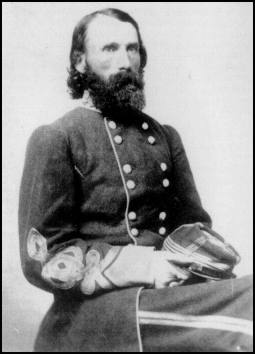
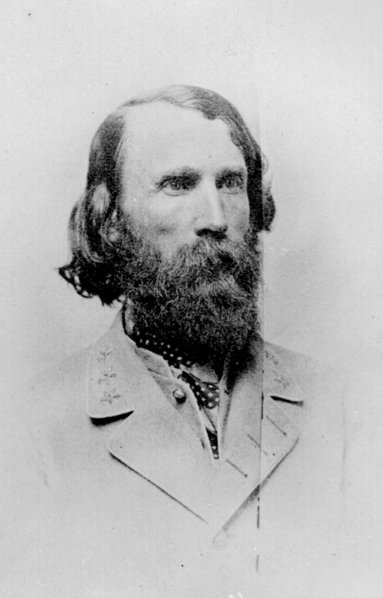
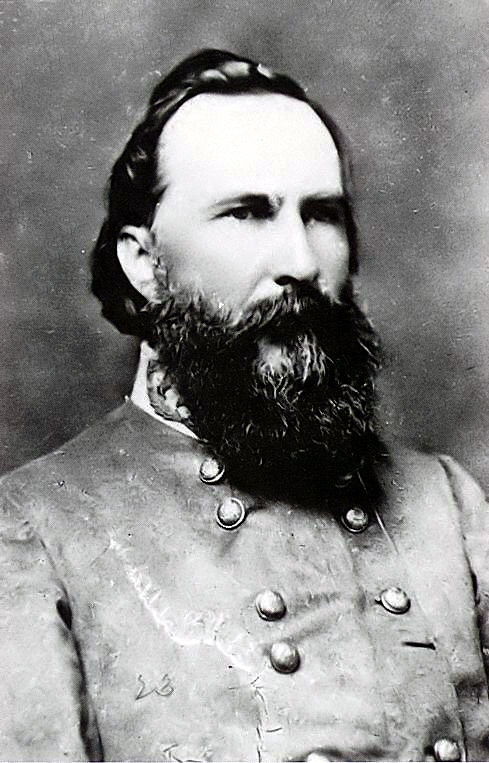
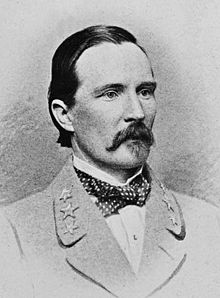
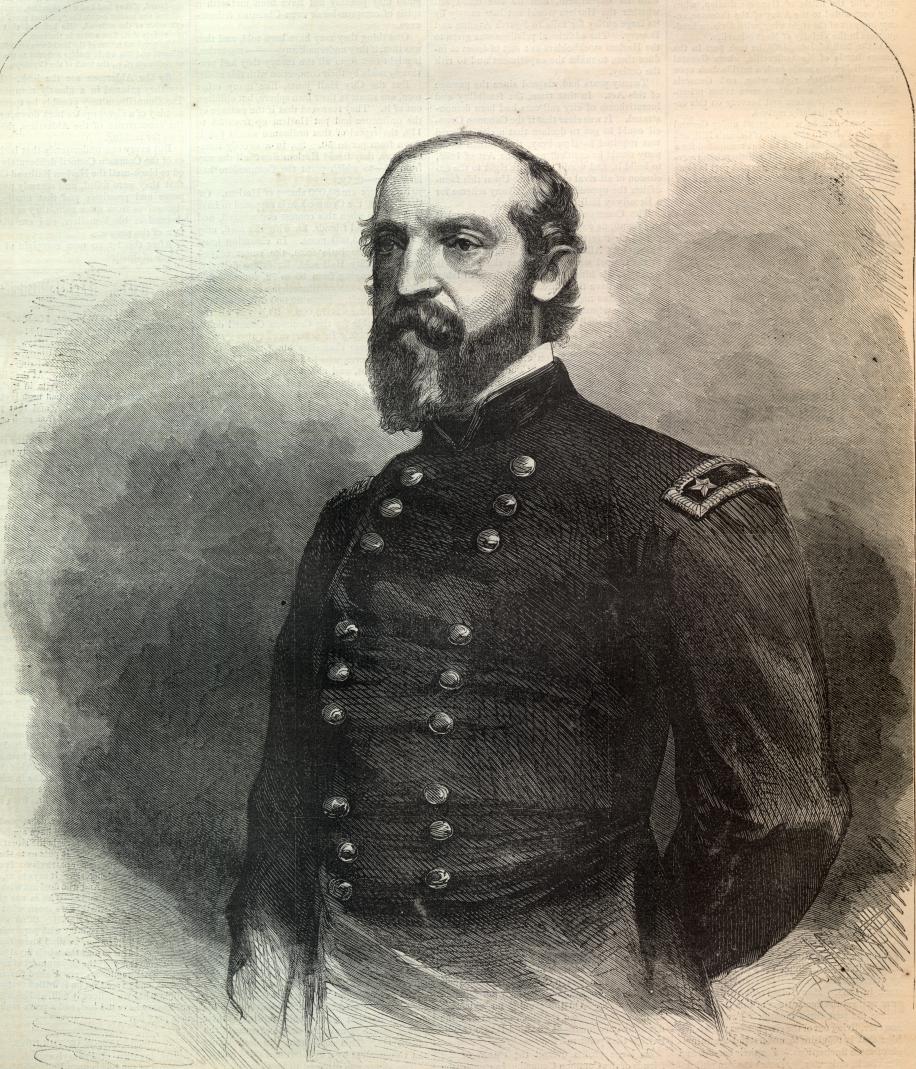
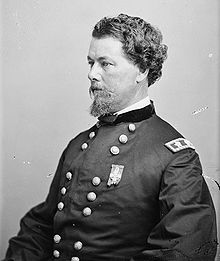
general_a_p_hill

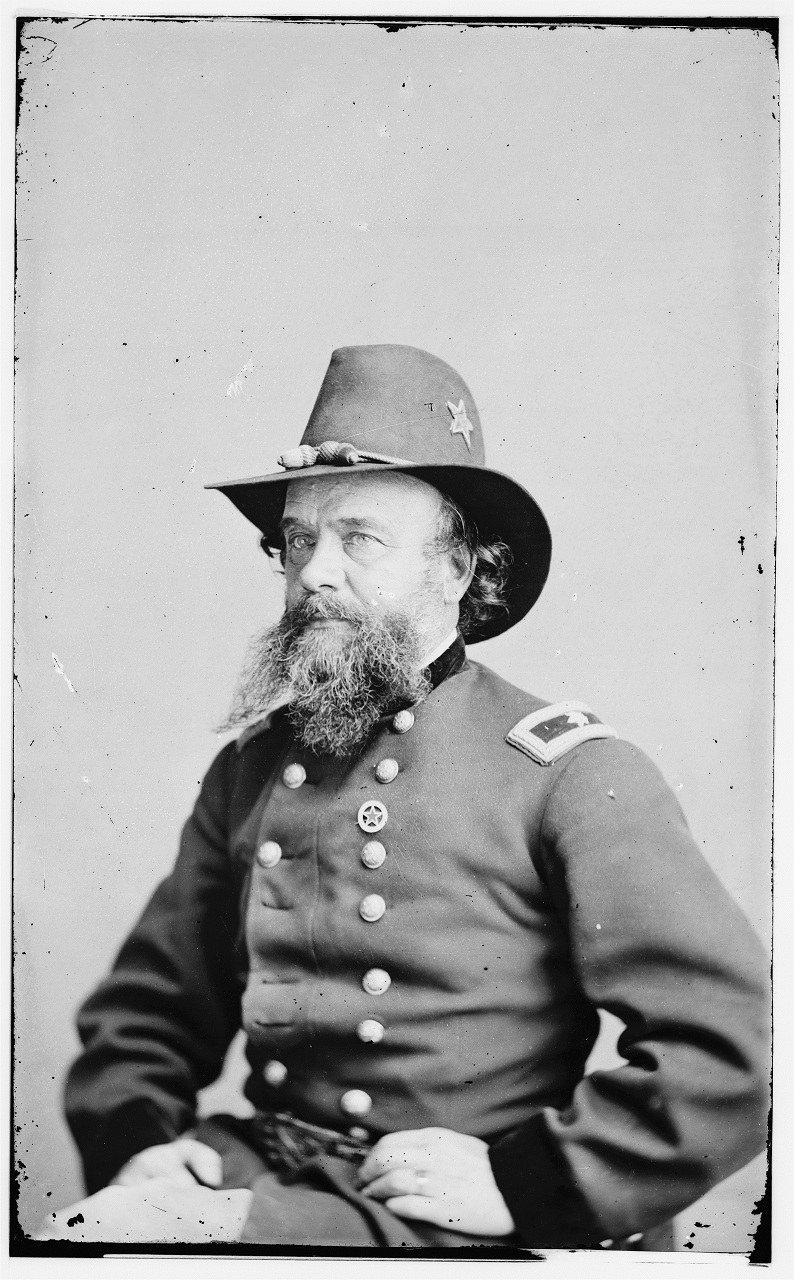
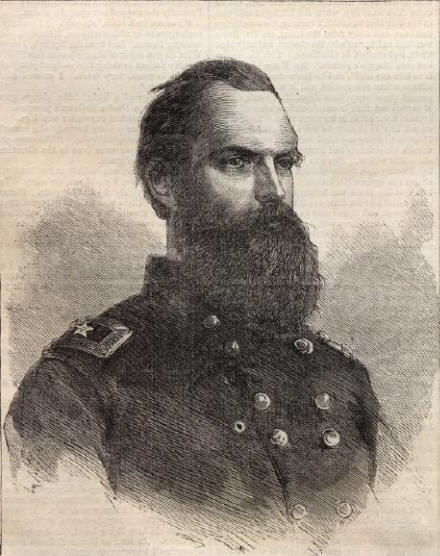
Lieutenant General Ambrose Powell “A.P.” Hill, C.S.A.

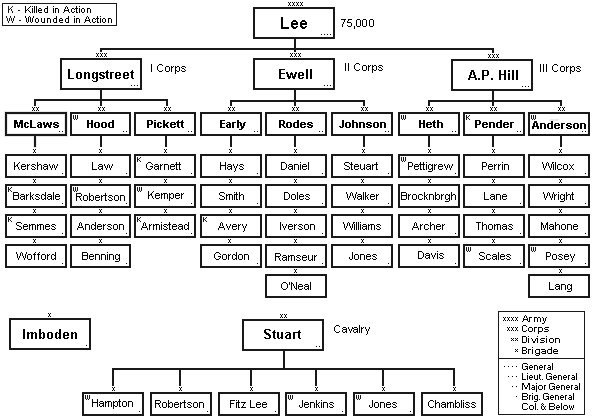
The newly created Third Corps under Lieutenant General A.P. Hill was thought to be in good hands. Hill had commanded his large; six brigade “Light Division” with distinction, though having serious conflicts with both Longstreet and Jackson. At Antietam Hill’s hard marching from Harpers Ferry which allowed the Light Division to arrive on the battlefield in a nick of time, had saved the Army of Northern Virginia from destruction.

Hill was a graduate of West Point, class of 1847. He would have been part of the illustrious class of 1846, but the young cadet had a certain proclivity for women and a certain amount of debauchery lost a year of study after contracting “a case of gonorrhea, followed by complications, which were followed by lingering prostatitis” [1] afflictions which caused many other ailments that would plague him the rest of his life. At West Point Hill roomed with and became a longtime friend of a refined cadet from Philadelphia, George McClellan. His delayed graduate put him in the class of 1847 where along with his roommate Julian McAllister and friends Harry Heth and Ambrose Burnside were the social leaders of the class, due to their “practical jokes and boisterous conduct.” [2]

Hill graduated fifteenth in his class and was assigned to the artillery. The young Second Lieutenant accompanied Brigadier General Joseph Lane’s brigade to Mexico where he saw limited action at the end of the war and mainly served on occupation duty. In Mexico and in the following years he was stricken with various fevers including typhoid and yellow fever, as well as recurrences of his prostatitis which so limited his ability to serve in the field with the artillery that he requested a transfer to a desk job. This he was granted by Secretary of War Jefferson Davis who detailed him “for special duty in the United States Coast Survey offices in Washington D.C.” [3]

The assignment to the Coast Survey offices was unusual, especially for Hill’s era of service, for they were a part of the Department of the Navy. Despite much political support Hill could not get promoted to captain, likely due to the fact that he was working for the Navy. As war drew near Hill married Kitty Morgan McClung. His friends at the Coastal Survey attempted to convince him to remain with the Union as serving in their office he would have little chance of taking up arms against Virginia.

Hill was torn, he hated slavery and the depreciations visited on blacks; having in 1850 responded to the lynching of a young black man in his home town of Lynchburg: “Shame, shame upon you all, good citizens…Virginia must crawl unless you vindicate good order or discipline and hang every son of a bitch connected with this outrage.” [4] Likewise he was not in favor of secession, but he, like so many other Southern officers felt a stronger connection to family and his Virginia heritage than to the Union, and resigned his commission on February 26th 1861.

Hill was appointed as a Colonel of infantry in May 1861 to organize and command the 13th Virginia Infantry regiment. He commanded the regiment in the Valley and western Virginia as well as at First Manassas. By February 1862 he was a Brigadier General commanding Longstreet’s old Virginia brigade on the Peninsula where he distinguished himself against McClellan at Williamsburg. On May 26th 1862 he was promoted to Major General and given command of the very large so called “Light Division.” He emerged from the fighting on the Peninsula, the battles around Richmond and the Seven Days “with the reputation of being one of the best combat officers that Lee had.” [5] However, his success on the battlefield, like so many commanders came at great cost. In those battles his division suffered nearly 5,500 casualties. “Six colonels and three majors were killed; two brigadiers (Anderson and Pender), eleven colonels and six lieutenant colonels wounded.” [6]

Hill had an earned reputation as a brilliant division commander with the Light Division. Despite his clashes with Longstreet, and especially with Jackson, who had Hill arrested twice and attempted to have him court-martialed, Lee recommended him to take command of Third Corps. Lee sang his praise of Hill and his abilities to Jefferson Davis noting that Hill was “the best soldier of his grade with me.” [7] However, Hill had never commanded more than one division in action, except for the confused hour after Jackson had been struck down. Hill, however, was devoted, prompt, and energetic, and deserved promotion.” [8]

Hill’s reputation as a superb division commander was well earned, at Antietam where when Lee’s army was in danger of destruction, he “drove his men at a killing pace toward the sound of distant gunfire….” [9] Hill’s “Light Division’s remarkable march from Harper’s Ferry- seventeen miles in less than eight hours- rivaled the best marks by Jackson’s famous foot cavalry.” [10] Upon his arrival “instantly recognized the military situation, Kyd Douglas wrote, “and without waiting for the rest of the division and without a breathing spell he threw his columns into line and moved against the enemy, taking no note of their numbers.” [11] Hill’s march saved the Army of Northern Virginia from destruction as he dealt reverses to his old friends McClellan and Burnside. “Lee’s reference to him in his official Sharpsburg report, “And then A.P. Hill came up,” had become a byword in the army.” [12] There were other times, notably at Second Manassas and Fredericksburg where “he was sometimes careless on the battlefield,” and in both instances “his defensive postings were poor and nearly proved very costly.” [13]

Hill was a “nervous wiry man with a persistent chip of underappreciation on his shoulders and a bevy of chronic illnesses when under stress.” [14] He had an “impetuous streak and fiery temperament that matched his red beard, traits that at times had brought him trouble on the battlefield and off…” [15] He Despite that Hill exhibited a fondness and care for the welfare of his men that earned their respect and admiration. One officer called him “the most loveable of all Lee’s generals,” while “his manner so courteous as almost to lack decision.” [16]

Hill detested Jackson, who he referred to as “that old Presbyterian fool.” [17] His poor relations with Jackson’s confidants at Second Corps ensured that Ewell took Second Corps when Lee reorganized the army after Chancellorsville.

Lee appointed Hill to command Third Corps of which “half of the troops had been with him all along” [18] in the Light Division. Lee liked Hill’s aggressiveness and command instincts, which mirrored his own. Lee hoped that Hill’s aggressive instincts as a division commander would translate into success at the corps level. As such Lee, promoted him over the head of D.H. Hill and Lafayette McLaws who were both senior to him. Longstreet was not in favor of Hill’s appointment, most likely due to his altercation with Hill the previous year and lobbied for the promotion of D.H. Hill.

Regarding the promotion of A.P. Hill and Ewell, Lee wrote to Davis:

“I wish to take advantage of every circumstance to inspire and encourage…the officers and men to believe that their labors are appreciated, and that when vacancies occur that they will receive the advantages of promotion….I do not know where to get better men than those I have named.” [19]

But the decision to promote the Ewell and Hill, both Virginians stirred some dissent among those that believed that Lee was “favoring Virginians over officers from other states. The promotion of A.P. Hill, as previous noted was “made over the head of two Major Generals more senior than Hill- North Carolinian D.H. Hill and Georgian Lafayette McLaws.” [20] There is some validity to this perception, as Longstreet’s biographer Jeffry Wert noted:

“While the bulk of the troops hailed from outside the Old Dominion, two of the three corps commanders, six of the ten division commanders – including Jeb Stuart with the cavalry – and sixteen of forty-seven brigade commanders were natives of Virginia, along with the army commander and the chief of artillery.” [21]

Hill’s corps, like those of Longstreet and Ewell was composed of three divisions, and even more so than Ewell his division suffered a want of senior leaders who had served at the grade they were now expected to serve.

Anderson’s Division

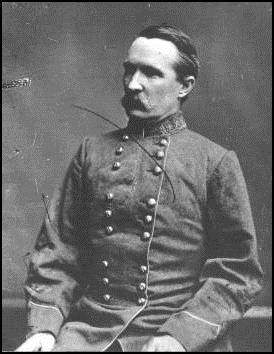
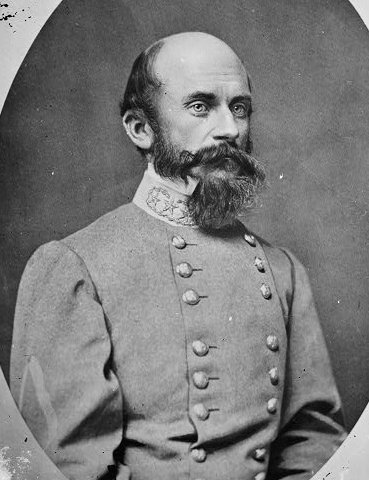
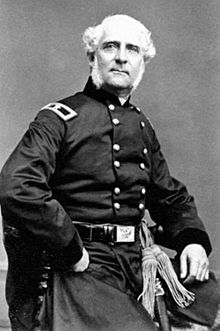
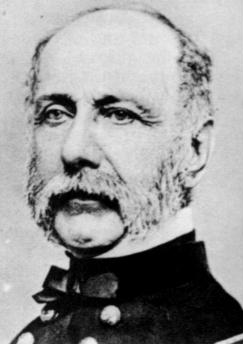
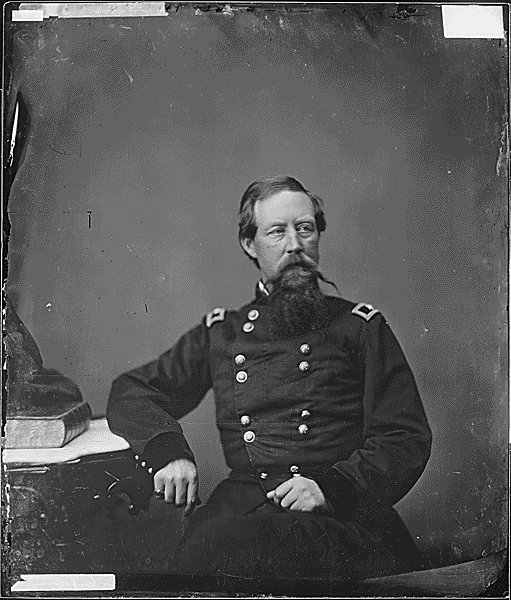
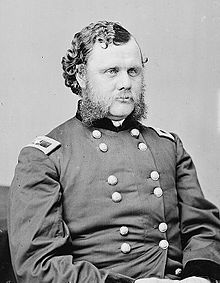
Richard_H._Anderson

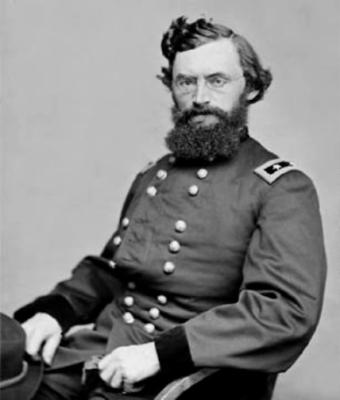
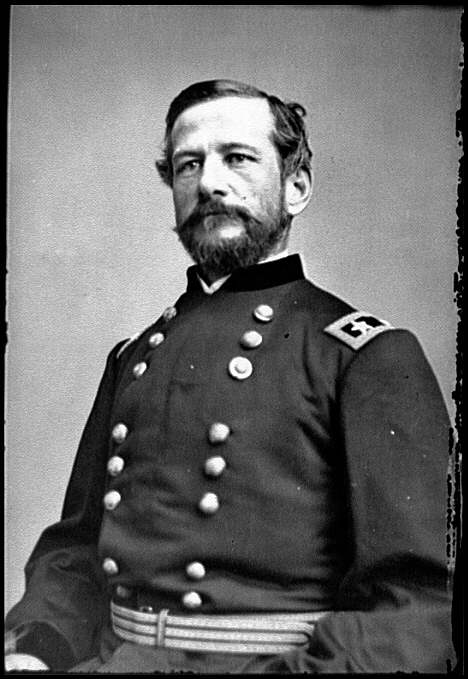
Major General Richard Anderson, C.S.A.

The most stable division in Third Corps was Richard Anderson’s, transferred from First Corps. Under Longstreet the division and its commander had served well. Anderson was an 1842 graduate of West Point and classmate of Longstreet and Lafayette McLaws. He served as in the Dragoons on the frontier, in Mexico and again on the frontier, throughout the 1840s and 1850s. He was promoted to Captain in 1855 and stationed in Nebraska when his home state of South Carolina seceded from the Union.

“Tall, strong, and of fine background, Anderson never was disposed to quibble over authority or to indulge in any kind of boastfulness.” [22] He began the war commanding the 1st South Carolina Infantry, and was soon a brigadier. He fought well on the Peninsula and was promoted to Major General and given command of Benjamin Huger’s former division in July of 1862. He commanded the division at Second Manassas and at Antietam, where he was wounded in the vicious fighting at the Bloody Lane. The division saw little action at Fredericksburg, but in “the Battle of Chancellorsville, he and his men fought extremely well.” [23] Lee commented that at Chancellorsville that Anderson was “distinguished for the promptness, courage, and skill with which he and his division executed every order.” [24]

Lee considered Anderson a “capable officer”…and had marked him for future higher command.” [25] Anderson was noted for his modesty and unselfishness, “his easy going ways, combined with his competence and professionalism made him one of the most well liked officers in the Army of Northern Virginia.” [26]

However, there was an incalculable thrown into the equation. During the reorganization of the army, Anderson’s division was detached from Longstreet’s First Corps and assigned to Hill’s new Third Corps. Hill had not yet established his methods of operation as a corps commander, and Anderson, used to “Longstreet’s methodical insistence that everything be just so before he would venture into action” contrasted with Hill’s “tendency to leap before he looked.” [27]

Anderson’s division was composed of five brigades commanded by a mixed lot of commanders, none of whom were professionals.

Wilcox

Brigadier General Cadmus Wilcox was a no-nonsense graduate of the illustrious West Point class of 1846. Hailing from Tennessee, Wilcox was outgoing and popular, and before the end of his first year “had made friends of every member of the class. It was said that no cadet of his time had so many friends and was so universally esteemed.” [28] He kept those friends throughout the years, friends who remained his friends, even though they had to fight against him. Harry Heth said of him “I know of no man of rank who participated in our unfortunate struggle on the Southern side, who had more warm and sincere friends, North and South.” [29]

Wilcox graduated near the bottom of the class fifty-fourth of fifty-eight and was commissioned as an infantry officer. Wilcox served in the Mexican War where he was in the thick of the fight at Chapultepec, on the frontier, and taught tactics for five years at West Point. Following that assignment he studied for two years in Europe. Wilcox is an expert rifleman and instructor. He “wrote a manual, Rifle and Infantry Tactics, and translated an Austrian manual on infantry tactics.” [30]

When war came he resigned his commission and became Colonel of the 9th Alabama Infantry, and by October 1861 he was promoted to Brigadier General and given command of a brigade. He had served with distinction as a brigade commander at Williamsburg, Seven Pines and the Seven Days Battles, and was given acting command of small division at Second Manassas. However, after an uneven performance he is passed over for command of a division which instead was given to his classmate, George Pickett. Wilcox was disgruntled and upset at being “passed over for advancement in favor of a junior officer.” [31] “Restless, sore, and disposed to go to another Confederate army where he will have a chance,” [32] Wilcox asked Lee for a transfer to another army, but “Lee could not afford to lose such an experienced brigadier, and refused to transfer” him. [33]

At Chancellorsville the delaying action of his brigade at Salem’s Church had helped save the army. Sedgwick’s Sixth Corps had succeeded in crossing the Rappahannock and was marching on Lee’s rear areas. On May third with the fate of the army in the balance, Wilcox “reasoned intelligently and promptly when he should leave Banks’ Ford. Then, instead of joining Early, he took his chance on being destroyed in order that he might delay the enemy on the Plank Road.” [34] Wilcox and his troops, supported by other units of McLaws’ division which came up in support thrashed the Union troops, inflicting 1523 casualties for the loss of 674 men. [35] In his post-battle report Lee noted that Wilcox was “entitled to especial praise for the judgment and bravery displayed “in impeding Sedgwick “and for the gallant and successful stand at Salem’s Church.” [36] Three months later he will get his promotion to Major General and command of a division.

Mahone

Brigadier General William “Little Billy” Mahone was a diminutive graduate of VMI with no prior military experience.. Barely five foot five inches tall and weighing just 125 pounds the brigadier was described by Moxie Sorrel as “Very small in height and frame, he seemed a mere atom with little flesh.” [37] There was so little substance to his body that when his wife heard that he had “he had taken a flesh wound at Second Manassas…she knew it had to be serious, she said, “for William has no flesh whatsoever.” [38]

Instead Mahone was an engineer who had “established himself as a resourceful construction engineer for railroads.” [39] When Virginia seceded he was “president, chief engineer and superintendent of the new Norfolk and Petersburg Railroad, which he succeeded in constructing across the bottomless Dismal Swamp.” [40] Hard driven, he had dreams of connecting his railroad with others and linking the Virginia Tidewater with the Mississippi and the Pacific.

Mahone was an ardent secessionist and when Virginia seceded he took leave of his railroad and became Colonel of the 6th Virginia Infantry, with which he occupied Norfolk when Federal forces evacuated it. He was soon a brigadier and his skill in engineering was put to good use at Drewry’s Bluff before Richmond.

He commanded his brigade with reasonable effectiveness before Gettysburg. As a brigadier “he is not lacking in diligence, but he is not without special distinction.” [41] As a brigade commander fought competently at Chancellorsville and by Gettysburg had established himself as a “competent and experienced brigade leader.” [42] His actions at Gettysburg would be controversial, but he rose to fame as the war went on and became one of the hardest fighting division commanders in the Army of Northern Virginia during the Wilderness, Petersburg and to the end of the war where he “one of Lee’s most conspicuous – and trusted – subordinates.” [43]. Following the war Mahone expands the Norfolk and Western Railway system, and entered politics, where won election as a Republican to the U.S. Senate in 1880.

Wright

Brigadier General Ransom “Rans” Wright was a Georgia lawyer who had grown up dirt poor and between hard work and study had made a name for himself. He was a “very gifted man, a powerful writer, an effective orator, and a rare lawyer.” [44]

He had strong Unionist sentiments, something that gained him little popularity in a secession minded state, he was the brother in law of Stephen Douglas’s running mate Herschel Johnson and supported the pro-Union ticket of John Bell and Edward Everett.

Despite his sentiments Wright volunteered when Georgia seceded and despite his lack of military experience was named Colonel of the 3rd Georgia Infantry. He took command of his brigade as a Colonel and was promoted to Brigadier General in June 1862. By the time of Gettysburg he “was considered a well-tested combat veteran.” [45] Despite his earned reputation as a solid brigade commander, Wright “did not endear himself to the Virginia elite in the Army of Northern Virginia.” [46] In 1864 the Governor of Georgia requested that he be detached from the Army of Northern Virginia to serve in that state where he was promoted to Major General.

Posey

Brigadier General Carnot Posey was a highly successful plantation planter and lawyer who had served as a “lieutenant under Col. Jefferson Davis, and suffered a slight wound at the Battle of Buena Vista” [47] in the Mexican War. After the war he returned to his legal practice and was appointed as a United States District Attorney by President Buchanan, a position that he held until Mississippi seceded from the Union. At the outset of the war he organized a company named the “Wilkinson Rifles.” That company became part of the 16th Mississippi Infantry and Posey became its first Colonel. He was badly wounded at Cross Keys in the Valley campaign.

He fought well at Second Manassas and took acting command of Featherston’s brigade at Antietam. Despite a poor showing there by the brigade which collapsed in confusion after doomed counter-attack on the Sunken Road, he was promoted to brigade command prior to Chancellorsville where he and his brigade gave a strong performance under fire. He was mortally wounded at Bristoe Station on October 14th 1863.

Lang

Colonel David Lang commanded the Florida Brigade the smallest in the army. Just twenty-five years old, the graduate of the Georgia Military Institute inherited brigade command when Brigadier General Edward Perry came down with typhoid fever after Chancellorsville. He had only fought in three battles, two as a captain “and he had never led a brigade in combat.” [48] After Gettysburg when Perry returned to the brigade Lang returned to command his regiment, finally taking command of a brigade at Petersburg at the end of the war, without a promotion to Brigadier General.

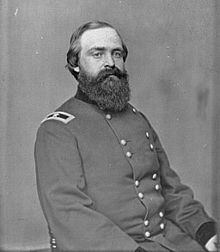
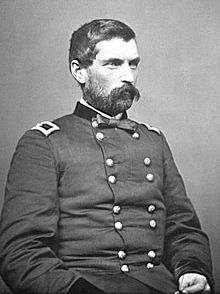
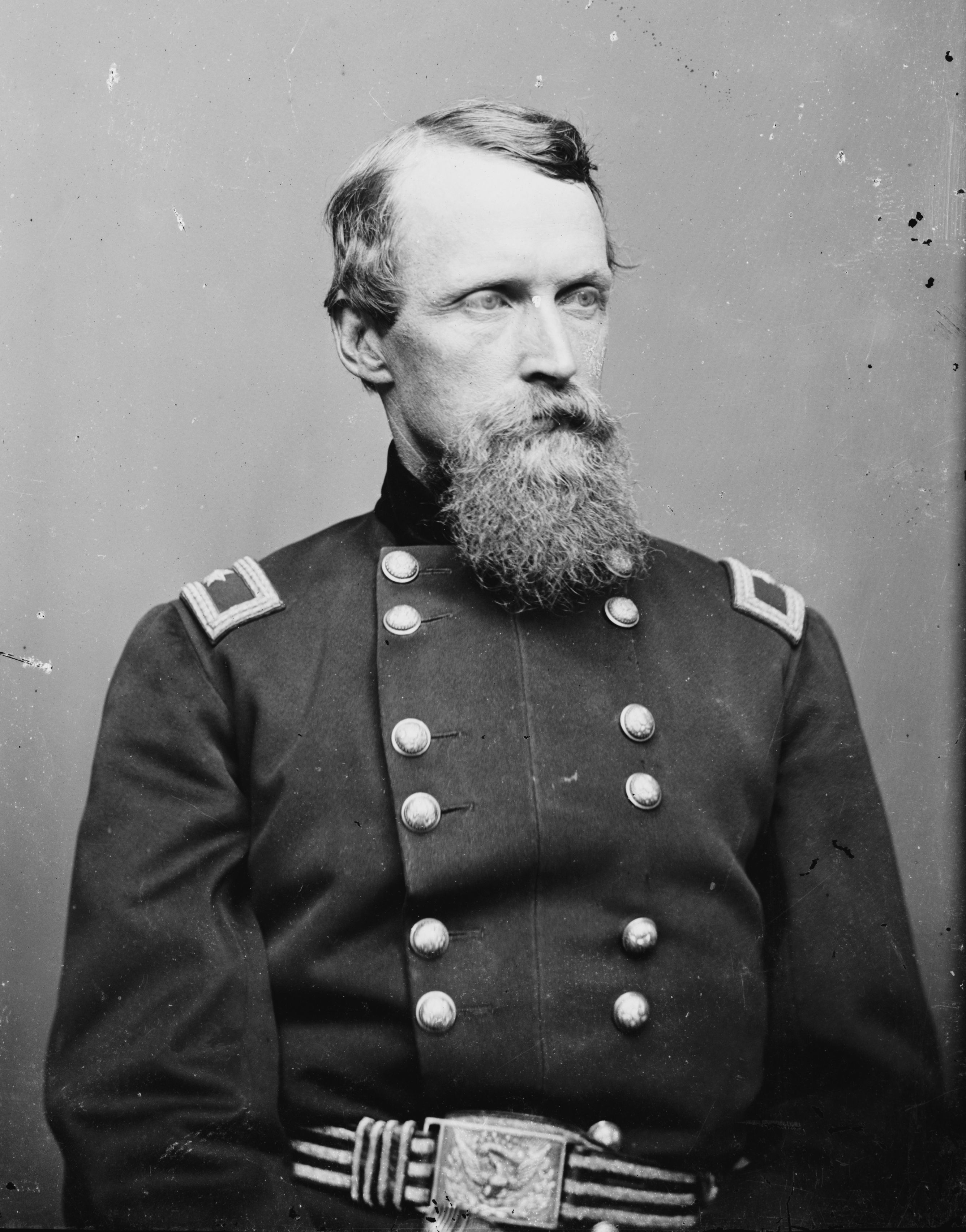
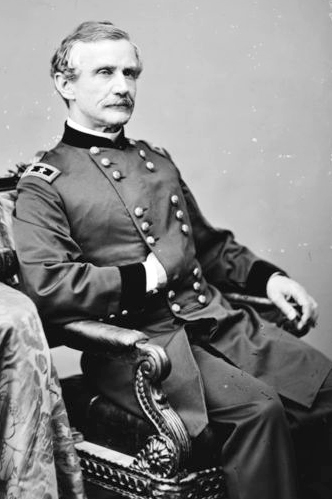
Pender’s Division

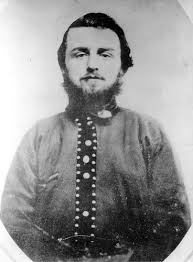
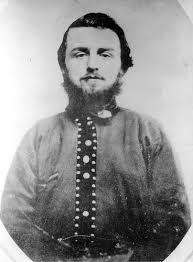
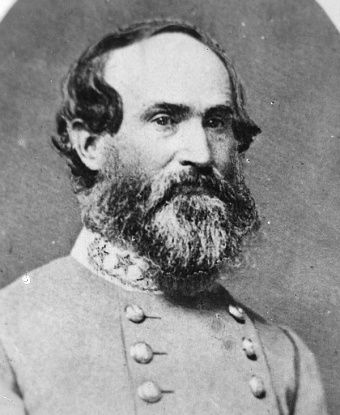
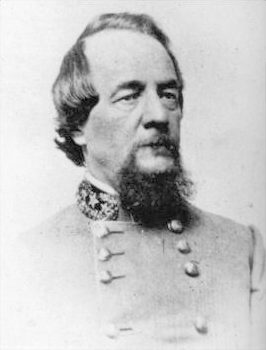
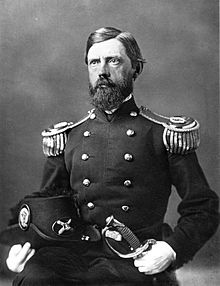
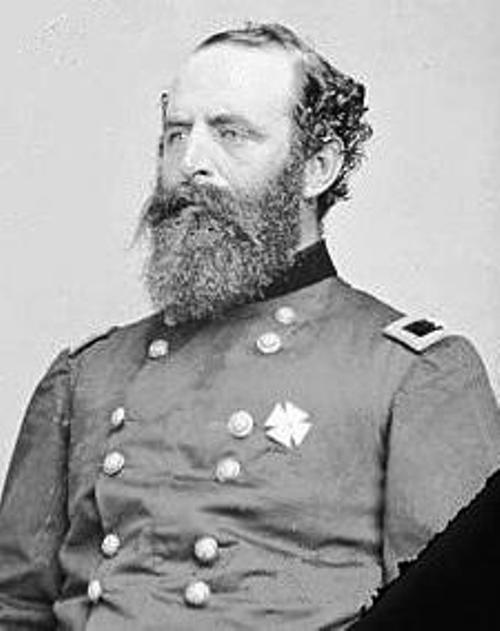
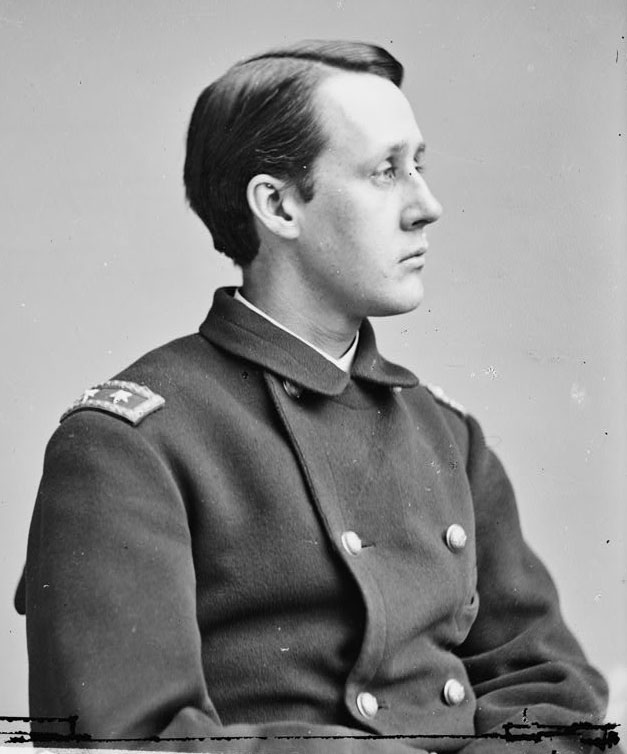
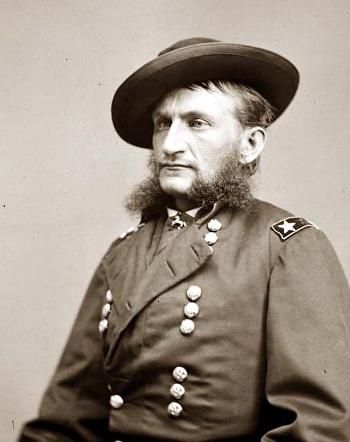
William_Dorsey_Pender

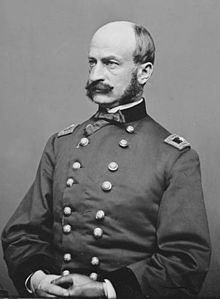
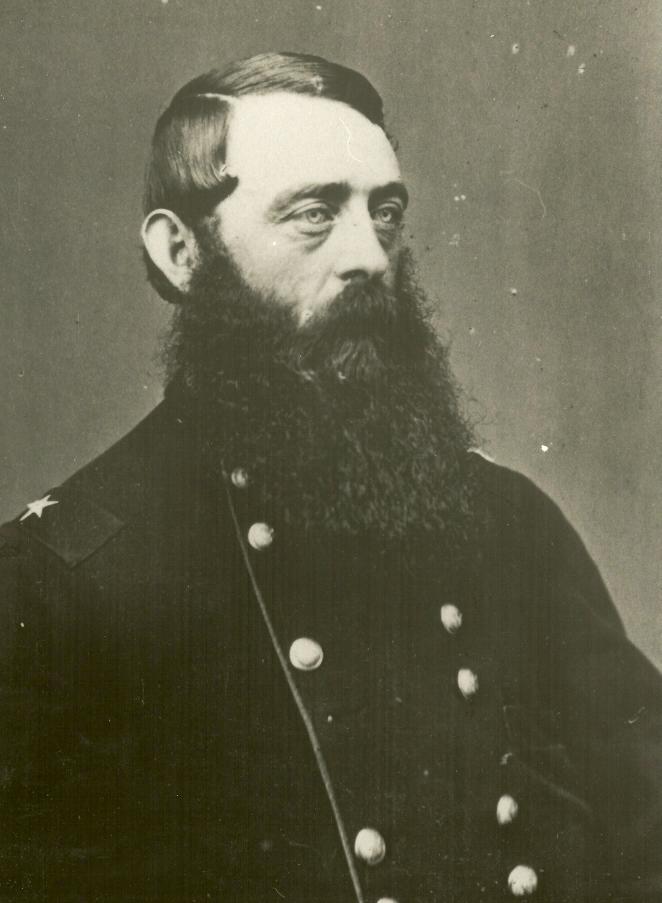
Major General Dorsey Pender, C.S.A

Hill’s old Light Division was divided into two divisions. Major General William Dorsey Pender commanded the old Light Division which now consisted of four rather than six brigades.

Pender was a “pious, serious North Carolinian” [49]and a graduate of West Point when he graduated nineteenth of forty-six in that class. Prior to the war he served on the frontier and in California with the artillery and dragoons. During the secession crisis he “offered his services to the Confederacy even before most of the states, including his own, had seceded.” [50]

Pender was “only seven years out of West Point” [51] in 1863 when he was promoted to Major General and given command of his division, he was only twenty-nine years old, and the “youngest of that rank in the army.” [52] The young general was deeply loyal to Powell Hill and a partisan of the Light Division. However, he had risen “on first rate ability, steadfast ambition and a headlong personal leadership in battle which gave a driving force to his brigade” [53] which he considered “the best brigade of the best division” [54] in the army.

Lee praised him as “a most gallant officer” and was deeply sensitive about keeping Pender with the troops that found him so inspiring noting “I fear the effect upon men of passing him over in favour of another not so identified with them.” [55] Pender was an “intelligent, reflective man, deeply religious and guided by a strong sense of duty.” [56]

Pender’s four veteran brigades were commanded by three experienced officers and one new to brigade command, but the young general would not get to lead them into action for long as he was mortally wounded by a shell fragment before the division was to go into action on July 2nd at Gettysburg. His division would be led by Brigadier General James Lane on July 2nd and turned over to Major General Isaac Trimble shortly before Pickett’s Charge.

Perrin

Colonel Abner Perrin from South Carolina was the least experienced of Pender’s brigade commanders. He had prior Regular Army experience. He enlisted in the army at the age of nineteen and served as a lieutenant in Mexico. He resigned his commission in 1848 and became a successful lawyer. When secession came he volunteered and served as a company commander in the 14th South Carolina. Perrin took command of the regiment after Fredericksburg. He led the regiment in action for the first time at Chancellorsville. Lee named him to command the brigade when his brigade commander, Samuel McGowan, was wounded. He was not promoted to Brigadier General, but despite his inexperience he remained in command of the veteran South Carolina brigade, “whose leadership had been decimated” and had “devolved to lieutenant colonels, majors and captains.” [57] His brigade performed well on the first day, and his leadership earned him his promotion. He was killed in action in the “counterattack at the Bloody Angle at the Battle of Spotsylvania on May 12th, 1864. Just before the battle he promised to emerge a live major general or a dead brigadier.” [58]

Lane

Brigadier General James Lane was an academic. He graduated second in his class at VMI in 1854 and received a degree in science from the University of Virginia three years later. He returned to VMI as an assistant professor then became a professor of natural philosophy at the North Carolina Military Institute. [59]

He led many of his cadets to war when he was commissioned as a major in the 1st North Carolina Volunteer Infantry. He took command of it in September 1861 and was promoted to brigade command in October 1862 after Antietam.

Lane proved himself an able commander at Fredericksburg and Chancellorsville. During the Battle of Chancellorsville his brigade led Jackson’s assault against the Union right, suffering 909 casualties. That night he had the misfortune to be part of one of the saddest episodes of the Confederate war when one of his units mortally wounded Stonewall Jackson on the night of May 2nd 1863. Despite this “he and his men could be counted on to do the right thing when the bullets started to fly.” [60] He was badly wounded at Cold Harbor and missed most of the rest of the war. Following the war he returned to academics and was a professor of civil engineering at the Alabama Polytechnic Institute when he died in 1907.

Thomas

Brigadier General Edward Thomas was a plantation owner from Georgia. He was not completely without military experience having served as a lieutenant of Georgia mounted volunteers in the Mexican War. He was offered a commission in the Regular Army after the war, but he turned it down and returned home.

He became colonel of the 35th Georgia Infantry in October 1861 and led it as part of Pettigrew’s brigade. When Pettigrew was wounded at Seven Pines the regiment was shifted to Joseph Anderson’s brigade of the Light Division. Thomas assumed command of that brigade when Anderson was wounded at Frayser’s Farm and returned to Richmond to “resume direction of the important Tredegar Iron Works.” [61] He commanded it in the thick of the fighting at Second Manassas, and at Fredericksburg helped stop Meade’s advance with a fierce counterattack. He continued to command it at Chancellorsville. Thomas could always be counted on to deliver “a solid, if unspectacular performance.” [62] He remained in command of the brigade through the end of the war and surrendered with Lee at Appomattox.

Scales

Brigadier General Alfred Scales was new to brigade command. A “forty-five year old humorless politician…a duty driven public official-turned-warrior.” [63] Scales had served in the U.S. House of Representatives and left politics when the war began. Since he had no military experience he chose, unlike so many other men of stature, to enlist as a private when North Carolina seceded.

His fellow soldiers elected to a captaincy in Pender’s 3rd North Carolina Volunteers. When Pender was transferred, Scales succeeded him in command of the regiment. He commanded that regiment on the Peninsula and during the Seven Days. From that time Scales’ career was “one of consistent stout service in Pender’s hard fighting brigade.” [64] Scales served as acting commander of the brigade when Pender was wounded at Fredericksburg and “met the test.” [65] He distinguished himself with the 13th at Chancellorsville where he was wounded in the thigh. Scales service with Pender’s brigade “had been one of consistent stout service.” [66]

When Pender was promoted to division command “it was a forgone conclusion that his replacement in brigade command would be Scales.” [67] He had served with the brigade, was known to its soldiers and though inexperienced as a brigade commander he “and the brigade were one, for he had shared its fortunes, was proud of it, and was confident of victory as he led it to Gettysburg.” [68]

Heth’s Division
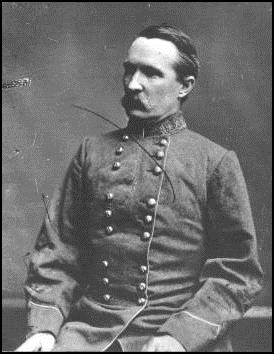
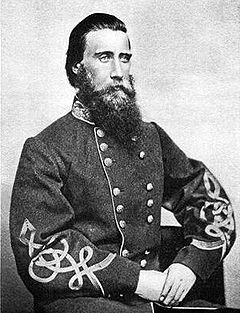
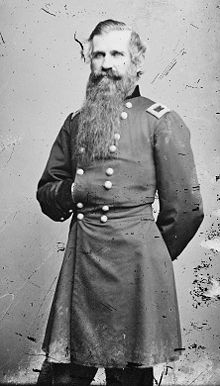
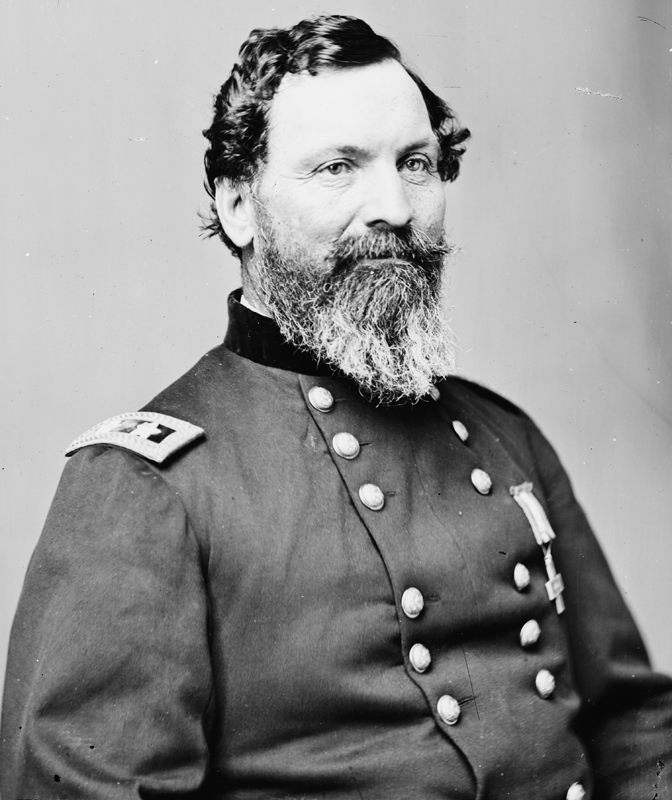
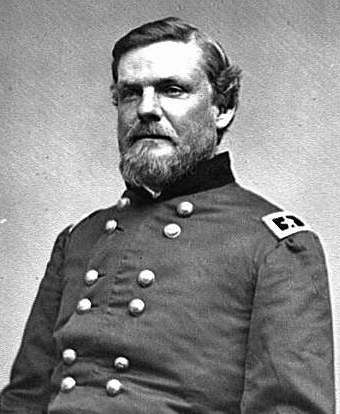
heth

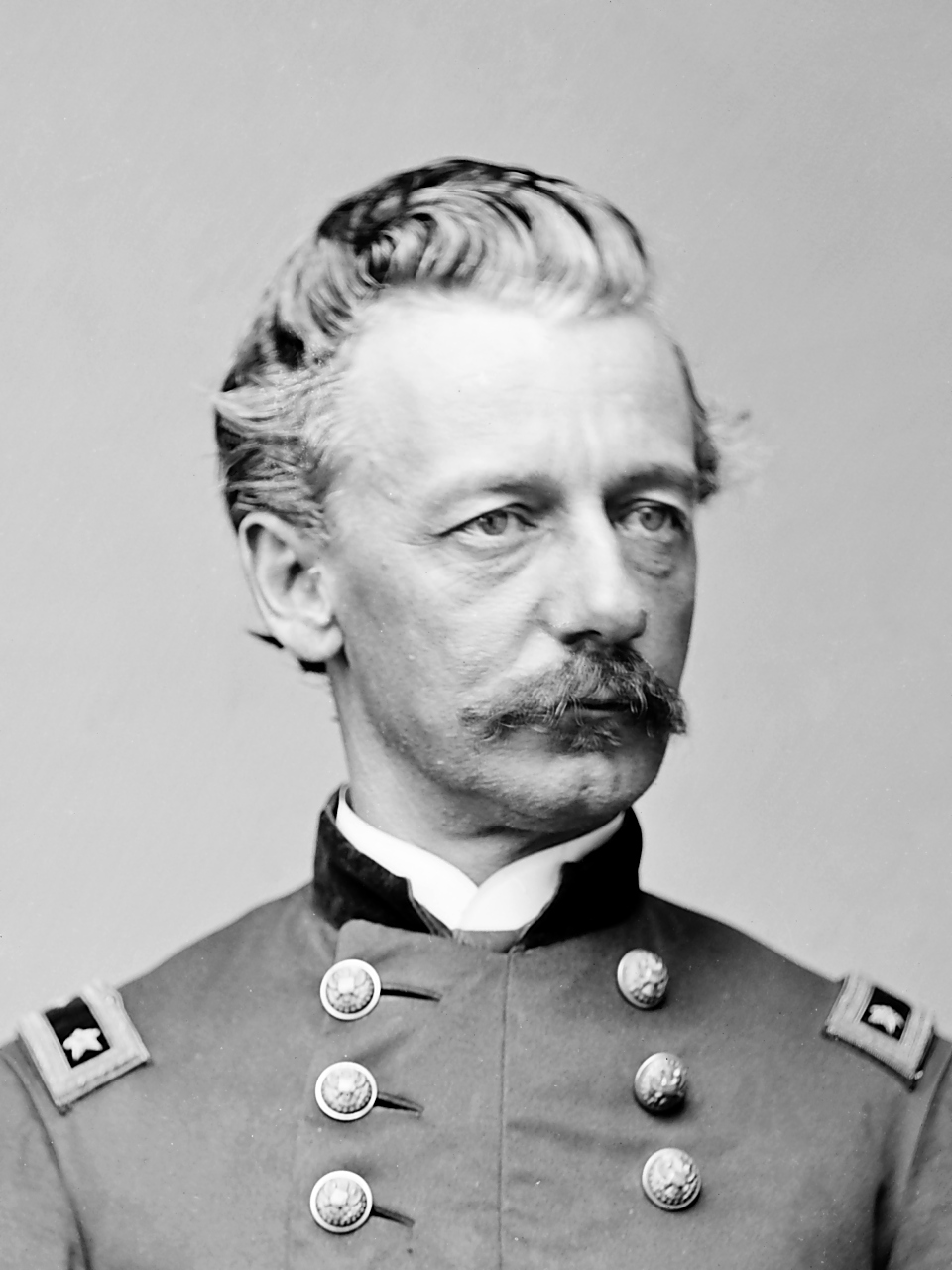
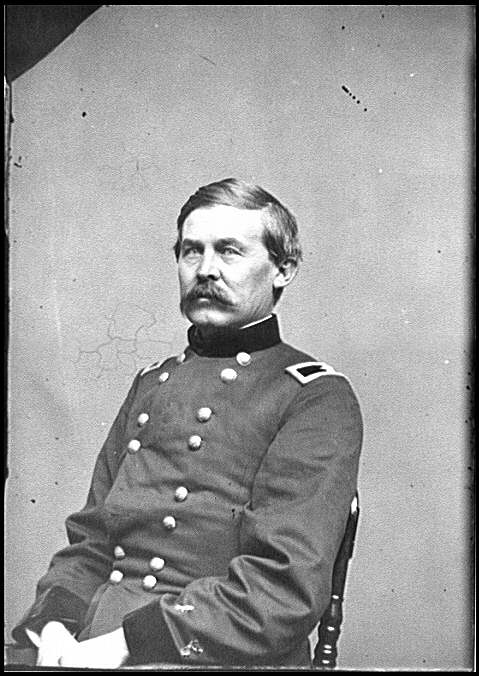
Major General Harry Heth, C.S.A. 

Hill’s remaining division was commanded by the newly minted Major General Harry Heth. It was composed of the two remaining brigades of the Light Division and two brigades that had recently joined to the army for the offensive.

Harry Heth was a graduate of West Point who had a “high reputation personally and professionally.” [69] He was a cousin of George Pickett and joined Pickett as one of the hell raising cadets of the academy. Their reunion at the academy “developed into a three-year effort to see how much illicit merriment they could initiate without getting booted out.” [70] Heth graduated no higher in his class than Pickett did his the previous year, finishing at the bottom in the forty-five member class of 1847. Heth wrote of his West Point years later admitting that his academic record was

“abominable. My thoughts ran in the channel of fun. How to get to Benny Havens occupied more of my time than Legendre on Calculus. The time given to study was measured by the amount of time necessary to be given to prevent failure at the annual examinations.” [71]

Heth spent fourteen years in the old army, rising to the rank of Captain and spending most of his time on the frontier. Heth came from a family with long ties dating back to the American Revolution where his grandfather had, fought and the War of 1812 where his father had served. He was “well liked for his social graces, and Powell Hill held him in great respect.” [72]

Lee had a high regard for Heth who “had a solid record as Lee’s quartermaster general in the early days of Virginia’s mobilization for war.” [73] Lee considered him a friend and somewhat a protégé, however his regard “cannot be based on any substantive achievements by Heth, whose antebellum career and war experience had been similarly unremarkable.” [74] The appointment would prove to be a mistake. “Heth had little experience under fire, and an earlier petition for Heth’s promotion had been turned down by the Confederate Senate.” [75] When he recommended Heth for command of the new division he assured Jefferson Davis that he had “a high estimate of Genl. Heth.” [76] Heth did know his own deficiencies and candidly “admitted his own weaknesses and resisted the temptation to take himself too seriously.” [77]

Clifford Dowdy wrote that Heth was an example of a “soundly trained soldier of perennial promise. Always seemingly on the verge of becoming truly outstanding” but “never lived up to the army’s expectations.” [78] Heth became a brigade commander in Hill’s division prior to Chancellorsville after having served in Western Virginia and in the West.

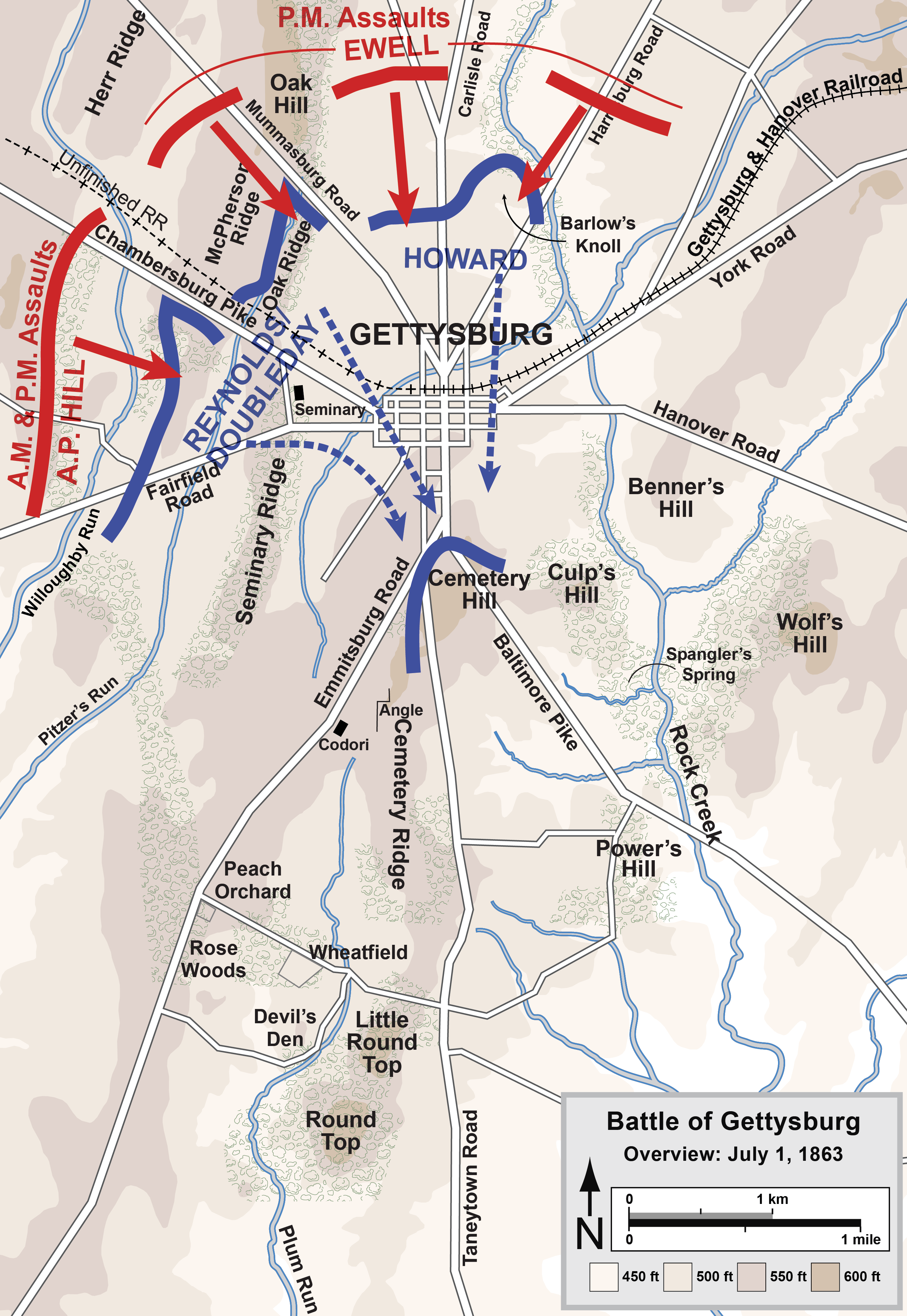
Heth was new to command of the newly formed division which was a hastily put together force. In a new division where experienced leadership was needed, Heth had the weakest collection of brigade commanders in the Army of Northern Virginia at Gettysburg. Ironically, it would be the division that stumbled into combat against the Buford’s Cavalry and Reynold’s First Corps at Herr, McPherson and Seminary Ridge on July 1st 1863. After Gettysburg he retained command of his division “with steadfastness and some competence until the final surrender.” [79]

Pettigrew

Newest to the division was Brigadier General Johnston Pettigrew whose North Carolina brigade was one of the largest in the army. This was one of the new brigades provided to Lee by Davis, and “it had no appreciable experience.” [80] Pettigrew was a renaissance man, “the most educated of all Confederate generals.[81] He was a graduate of the University of North Carolina. He was “proficient in French, German, Italian and Spanish, with a reading knowledge of Greek, Hebrew and Arabic.” [82]

Pettigrew had spent a good amount of time abroad on diplomatic service before returning to his law practice in Charleston. He had “even spent time as a volunteer aid with the French and Italian forces against the Austrians in 1859.” [83] He was elected to the state legislature in 1856 when he “sensed the oncoming of hostilities and was named colonel of the 1st Regiment of Rifles, a Charleston militia outfit.” [84] Pettigrew was “one of those natural leaders of a privileged background who, without military ambitions, had been advanced on the application of native intelligence and contagious courage.” [85]

Davis

Brigadier General Joseph Davis, the nephew of President Jefferson Davis commanded a newly raised Mississippi brigade. Davis was “a congenial and conscientious officer,” but “he had never led troops in battle.”[86] Davis owed his appointment to his relationship with the President. He was “entirely without combat experience.[87] Robert Krick wrote that Davis’s “promotion to the rank of brigadier general seems to be as unadulterated an instance of nepotism as the record of the Confederacy offers.” [88] Davis survived Gettysburg and after a bout with typhoid fever returned to command his brigade and “served solidly, though unspectacularly, until the end of the war with Lee’s army.” [89]

Most of the war he had been spent on his uncle’s staff in Richmond and in his new appointment he was not with officers of any experience as “No one serving on Joe Davis’s staff showed strong signs of having the background, experience, and ability that might help the brigadier meet his responsibilities.” [90] Likewise the nine field grade officers assigned to the regiments of his brigade were similarly ill-equipped for what they would face in their first test of combat.

Archer

Heth did have the experienced mixed Alabama-Tennessee brigade of Brigadier General James Archer under his command, but despite its experience and “fine reputation” [91] the brigade was seriously understrength after seeing heavy combat at Chancellorsville.

The brigade commander James Archer was a native of Bel Air Maryland, one of two Maryland officers serving in the Army of Northern Virginia. Archer was graduate of the University of Maryland who practiced law before entering the Regular army as a Captain during the Mexican War. During the war he was brevetted for gallantry at the Battle of Chapultepec. He left the army after the war and then returned to it in 1855 as an infantry Captain and was serving in Walla Walla Washington as the secession crisis deepened.

He resigned his commission in March 1861 and was commissioned in the new Confederate army. He received command of the 5th Texas Regiment “who thought him a tyrant.” [92] Though he had no battle experience he was promoted to Brigadier General and took command of a Tennessee brigade at Seven Pines when its commander was killed. Like the Texans the Tennesseans did not take to him and dubbed him “The Little Game Cock.” [93]

Initially, Archer was not well liked in any of his commands, the Texans considered him a tyrant and he was “very non-communicative, the bearing and extreme reserve of the old army officer made him, for a time, one of the most hated of men.” [94] After being joined to the Light Division Archer transformed his reputation among his men and had “won the hearts of his men by his wonderful judgment and conduct on the field.” [95] He distinguished himself at Antietam, and though quite ill led his brigade solidly. At Fredericksburg Archer helped save the Confederate line by leading a counter-attack following the Union breakthrough at Telegraph Hill.

Brockenbrough

The last brigade of Heth’s division was the small Virginia brigade of the “plodding, uninspiring” [96] Colonel John Brockenbrough. Brockenbrough was a “wealthy, but rough- looking Virginia planter.” [97] He was an 1850 graduate of VMI.

He entered “entered service as colonel of the 40th [Virginia Infantry] in May 1861.” [98] The brigade when it had been commanded by Charles Field had been considered one of the best in the army. Brockenbrough took command of it in 1862 when Field was wounded, but he “had never managed the brigade well, especially at Fredericksburg, and Lee returned him to regimental command.” [99]

Brockenbrough again assumed the command of the brigade after Chancellorsville when Heth was promoted. Lee did not deem him suited for promotion, but believed that Brockenbrough “could be counted on to keep together a command sadly reduced in numbers.” [100] Like Archer’s brigade the brigade was “sadly reduced in numbers” and in morale…” [101] His performance at Gettysburg was dreadful and five days after the battle Lee relived him of command of the brigade, returning to his regiment with lower ranking subordinate in command of the brigade. He resigned from the army in 1864.

Hill’s Third Corps was the least prepared command to go into battle at Gettysburg. While some leaders, particularly Richard Anderson, Dorsey Pender and Cadmus Wilcox were excellent commanders, the corps was led by too many untried, inexperienced, or in some cases incompetent leaders to be committed to an offensive campaign so shortly after it was constituted. Likewise, some of its formations were just shells of what they had been before Chancellorsville and had not been reconstituted

[1] Waugh, John C. The Class of 1846: From West Point to Appomattox, Stonewall Jackson, George McClellan and their Brothers Ballantine Books, New York 1994 p.166

[2] Robertson, James I. Jr. General A.P. Hill: The Story of a Confederate Warrior Random House, New York 1987 p.13

[3] Ibid. Robertson General A.P. Hill p.26

[4] Ibid. Robertson General A.P. Hill p.22

[5] Ibid. Robertson General A.P. Hill p.95

[6] Ibid. Robertson General A.P. Hill p.95

[7] Ibid. Freeman Lee’s Lieutenants p.526

[8] Ibid. Freeman Lee p.304

[9] Ibid. Robertson, General A.P. Hillp.143

[10] Sears, Stephen W. Landscape Turned Red: The Battle of Antietam Houghton-Mifflin Company, Boston and New York 1983 p.285

[11] Ibid. Robertson General A.P. Hill p.144

[12] Ibid. Tagg The Generals of Gettysburg p.301

[13] Ibid. Sears Gettysburg p.45

[14] Ibid. Guelzo, Gettysburg: The Last Invasion p.22

[15] Ibid. Sears Landscape Turned Red p.285

[16] Ibid. Tagg The Generals of Gettysburg p.301

[17] Ibid. Guelzo, Gettysburg: The Last Invasion p.22

[18] Foote, Shelby, The Civil War, A Narrative. Volume Two Fredericksburg to Meridian Random House, New York 1963 p.434

[19] Ibid. Freeman Lee’s Lieutenants p.526

[20] Ibid. Taylor, John Duty Faithfully Performed p.290

[21] Ibid. Wert General James Longstreet p.249

[22] Ibid. Freeman Lee’s Lieutenants p.108

[23] Ibid. Glatthaar General Lee’s Army from Victory to Collapse p.343

[24] Ibid. Freeman Lee’s Lieutenants p.512

[25] Ibid. Dowdy. Lee and His Men at Gettysburg p.86

[26] Ibid. Tagg The Generals of Gettysburg p.306

[27] Ibid. Dowdy. Lee and His Men at Gettysburg pp.86-87

[28] Ibid. Waugh The Class of 1846 p.69

[29] Ibid. Waugh The Class of 1846 p.498

[30] Ibid. Tagg The Generals of Gettysburg p.310

[31] Ibid. Tagg The Generals of Gettysburg p.310

[32] Ibid. Freeman Lee’s Lieutenants p.46

[33] Ibid. Tagg The Generals of Gettysburg p.310

[34] Ibid. Freeman Lee’s Lieutenants p.512

[35] Sears, Stephen W. Chancellorsville Houghton Mifflin Co. Boston and New York 1996 p.385

[36] Ibid. Freeman Lee’s Lieutenants p.512

[37] Trudeau, Noah Andre, The Last Citadel: Petersburg, Virginia, June 1864-April 1865 Little Brown and Company, Boston, Toronto, London 1991 p.117

[38] Ibid. Sears Gettysburg p.55

[39] Ibid. Freeman Lee’s Lieutenants p.243

[40] Ibid. Tagg The Generals of Gettysburg p.314

[41] Ibid. Freeman Lee’s Lieutenants p.48

[42] Ibid. Tagg The Generals of Gettysburg p.315

[43] Ibid. Freeman Lee’s Lieutenants p.243

[44] Ibid. Guelzo, Gettysburg: The Last Invasion p.328

[45] Ibid. Tagg The Generals of Gettysburg p.317

[46] Ibid. Guelzo, Gettysburg: The Last Invasion p.328

[47] Ibid. Tagg The Generals of Gettysburg p.319

[48] ibid. Tagg The Generals of Gettysburg p.322

[49] Ibid. Guelzo, Gettysburg: The Last Invasion p.23

[50] ibid. Tagg The Generals of Gettysburg p.325

[51] Ibid. Dowdy. Lee and His Men at Gettysburg p.85

[52] Ibid. Sears Gettysburg p.47

[53] Ibid. Dowdy. Lee and His Men at Gettysburg p.85

[54] Ibid. Freeman Lee’s Lieutenants p.45

[55] Ibid. Sears Gettysburg p.47

[56] Ibid. Dowdy. Lee and His Men at Gettysburg p.85

[57] Ibid. Tagg The Generals of Gettysburg p.331

[58] Ibid. Tagg The Generals of Gettysburg p.332

[59] Ibid. Tagg The Generals of Gettysburg pp.332-333

[60] Ibid. Tagg The Generals of Gettysburg p.334

[61] Ibid. Freeman Lee’s Lieutenants p.282

[62] Ibid. Tagg The Generals of Gettysburg p.337

[63] Ibid. Tagg The Generals of Gettysburg p.338-339

[64] Ibid. Freeman Lee’s Lieutenants p.421

[65] Ibid. Freeman Lee’s Lieutenants p.421

[66] Ibid. Freeman Lee’s Lieutenants p.421

[67] Ibid. Tagg The Generals of Gettysburg p.338

[68] Ibid. Pfanz Gettysburg: The First Day p.306

[69] Ibid. Freeman Lee’s Lieutenants p.46

[70] Ibid. Longacre Pickett p.13

[71] Ibid. Longacre Pickett p.13

[72] Ibid. Dowdy. Lee and His Men at Gettysburg p.88

[73] Ibid. Robertson General A.P. Hill p.178

[74] Ibid. Krick, Three Confederate Disasters on Oak Ridge: p.96

[75] Ibid. Guelzo, Gettysburg: The Last Invasion p.23

[76] Ibid. Sears Gettysburg p.47

[77] Ibid. Robertson General A.P. Hill p.178

[78] Ibid. Dowdy. Lee and His Men at Gettysburg p.87

[79] Ibid. Tagg The Generals of Gettysburg p.342

[80] Ibid. Sears Gettysburg p.50

[81] Ibid. Robertson General A.P. Hill p.196

[82] Ibid. Tagg The Generals of Gettysburg p.343

[83] Ibid. Guelzo, Gettysburg: The Last Invasion p.129

[84] Ibid. Tagg The Generals of Gettysburg p.343

[85] Ibid. Dowdy. Lee and His Men at Gettysburg p.78

[86] Ibid. Robertson General A.P. Hill p.196

[87] Ibid. Freeman Lee’s Lieutenants p.553

[88] Krick, Robert K. Three Confederate Disasters on Oak Ridge: Failures of Brigade Leadership on the First Day of Gettysburg in The First Day at Gettysburg edited by Gallagher, Gary W. Kent State University Press, Kent Ohio 1992

[89] Ibid. Tagg The Generals of Gettysburg p.354

[90] Ibid. Krick Three Confederate Disasters on Oak Ridge p.101

[91] Ibid. Dowdy. Lee and His Men at Gettysburg p.87

[92] Ibid. Tagg The Generals of Gettysburg p.349

[93] Ibid. Tagg The Generals of Gettysburg p.350

[94] Ibid. Tagg The Generals of Gettysburg p.349

[95] Ibid. Tagg The Generals of Gettysburg p.350

[96] Ibid. Sears Gettysburg p.55

[97] Ibid. Guelzo, Gettysburg: The Last Invasion p.134

[98] Ibid. Pfanz Gettysburg: The First Day p.118

[99] Ibid. Guelzo, Gettysburg: The Last Invasion p.134

[100] Ibid. Freeman Lee’s Lieutenants p.529

[101] Ibid. Guelzo, Gettysburg: The Last Invasion p.134

1 Comment

Filed under civil war, Gettysburg, History, leadership, Military

Our Army Would be Invincible if…” Confederate Leadership Pt.1

Friends of Padre Steve’s World

This is the first part of a chapter that I am revising for my Gettysburg text. It deals with the problems faced by Robert E. Lee as he attempted to reorganize the Army of Northern Virginia following his victory at Chancellorsville and the death of Stonewall Jackson. 

Over the next few days I will be posting sections on each of the Confederate army corps and J.E.B. Stuart’s Cavalry Division. The later sections will be largely biographic sketches of the leaders of the Confederate Corps, Divisions and Brigades. Eventually I will have a similar chapter on the leadership of the Army of the Potomac.

Have a great night.

Peace,

Padre Steve+  

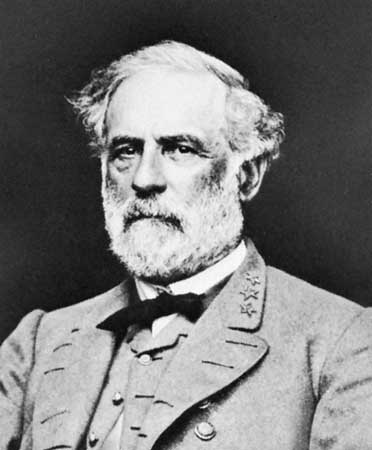
Lee1

General Robert E. Lee C.S.A.

An issue faced by armies that are forced to expand to meet the demands of war is the promotion and selection of competent leaders at all levels of command. It has been an issue throughout American military history including during our recent wars in Iraq and Afghanistan. The expansion of forces, the creation of new units, combined with the operational demands to employ those units often creates a leadership vacuum that must be filled. Sometimes this results in officers being promoted, being given field command or critical senior staff positions, who have critical deficiencies of leadership, character, intellect, experience or lack the necessary skill sets to do the job.

We may not see this as often in a long term professional military which has been at war for a significant amount of time, but during the Civil War it was something that both sides had to wrestle with, even for high level commanders. The nature of the armies involved, the high proportion of volunteer officers and political appointees coupled with the dearth of officers who had commanded anything larger than a company or widely scattered regiment made this a necessary evil.

To be fair, some officers of limited experience or training do rise to the occasion and perform in an exemplary manner. Others do not. Those leaders that do not are quite often weeded out over the course of time but often not before their lack of experience, or incompetence proves disastrous on the battlefield. As Barbara Tuchman so eloquently put it:

“When the moment of live ammunition approaches, the moment to which all his professional training has been directed, when the lives of the men under him, the issue of the combat, even the fate of a campaign may depend upon his decision at a given moment, what happens inside the heart and vitals of a commander? Some are made bold by the moment, some irresolute, some carefully judicious, some paralyzed and powerless to act.” [1]

Of course the selection of competent and experienced leaders is essential to the planning and execution of all aspects of Joint Planning and Mission Command, as is the proper supervision and command and control on the battlefield. As was noted in Infantry in Battle:

“Of course, a leader cannot be everywhere, but he can and should weigh the capabilities and limitations of his subordinates, determine the critical point or time of the action, and lend the weight and authority of personal supervision where it is most needed.” [2]

The Death of Stonewall Jackson and the Reorganization of the Army of Northern Virginia

Stonewall_Jackson

Lieutenant General Thomas “Stonewall” Jackson C.S.A

Stonewall Jackson was dead, and with his death after the Pyrrhic victory at Chancellorsville, General Robert E. Lee was faced with the necessity of reorganizing the Army of Northern Virginia. Jackson’s loss was disastrous for Lee, for he lost the one man who understood him and his method of command more than anyone, someone for whom he had a deep and abiding affection. Months before Jackson’s death Lee said of him: “Such an executive officer the sun has never shown on, I have but to show him my design, and I know that it if it can be done it will be done.” [3]

Jackson’s loss loomed large over the Army and the Confederate nation. Jefferson Davis told his wife Varina at Jackson’s funeral “saw a tear escape her husband’s eye and land on Jackson’s face. “You must excuse me,” Davis said later after silently ignoring a fellow mourner’s conversation. “I am still staggered from such a dreadful blow. I cannot think.” [4] Davis telegraphed Lee and described Jackson’s death “A great national calamity has befallen us.” [5] Lee was devastated, but stoic. When he told his Chief of artillery, Brigadier General William Pendleton of Jackson’s death he wept. Lee told his son Custis “It is a terrible loss. I do not know how to replace him. Any victory would be dear at such a cost. But God’s will be done.” [6]

Jackson’s loss was felt throughout the Confederacy, and not just from a military point of view. Southerners saw the war “as a spiritual and religious crusade, a test of the superiority of their devoutness and culture.” [7] As such victory was seen as part of God’s blessing and defeat or loss of Divine punishment. Jackson was a part of that, his legendary piety, valor and success on the battlefield had imbued the spiritual dimension of the Confederate cause with proof of God’s favor. He had been sent by God, and even in death his memory inspired Confederates, one poet “described Jackson as the Confederate Moses who would not get to the Promised Land” [8] although others most certainly would. In a war where death had become more pervasive and affected almost everyone in the South in a personal way, through the loss of family, friends, or home it was easy to lose sight of “basic values and transcending causes. Jackson’s death brought those values and causes to the fore. To what end remained unclear. The certitude of a holy cause that greeted the war’s onset slid into doubt….” [9] After the war soldiers, journalists and civilians pointed to Jackson’s death as “a premonition of their coming defeat.” One wrote “The melancholy news affected the Confederates in the same way that various omens predicted, before Troy could be captured affected the city’s defenders.” [10]

A forlorn Southern woman wrote: “He was the nation’s idol, not a breath even from a foe has ever been breathed against his fame. His very enemies reverenced him. God has taken him away from us that we may lean more upon Him, feel that he can raise up to Himself instruments to work His Divine Will.” [11] An officer in the Army of Northern Virginia wrote: “One of the greatest heroes of the war has been called from us by an all-wise Providence, no doubt as a punishment for ascribing to a mere man praises due to God for giving us Jackson with the virtues and talents he possessed.” [12] Seeing Jackson’s death in light of the defeat at Gettysburg and other major Confederate reverses in the summer of 1863 Virginia Presbyterians decided that Jackson’s “Untimely” death marked a “further chastisement for sins, especially ingratitude, pride, and dependency on an arm of the flesh.” [13]

After Jackson’s loss Lee said “I had such implicit confidence in Jackson’s skill and energy that I never troubled myself to give him detailed instructions. The most general suggestions were all that he needed.” [14] Lee met the loss with “resignation and deep perplexity,” his words displayed that sense of loss, as well as his sense of faith and trust in God’s providence “I know not how to replace him. God’s will be done. I trust He will raise someone up in his place…” [15] In losing Jackson Lee lost a commander who had the ability to make his most imaginative plans come to life and find fulfillment and despite his efforts he never succeeded in finding a suitable replacement. Jackson was not a great tactician, but unlike any other Confederate commander he could implement Lee’s plans through his:

“single-mindedness of purpose, his unbending devotion to duty, his relentlessness as a foe, and his burning desire at whatever cost, for victory….He possessed an unmatched ability to impose his will on recalcitrant subordinates and on his enemies.” [16]

In addition to the loss of Jackson, Lee was desperately short of qualified senior and mid-level officers and Lee “understood how the diminishing numbers of quality officers impacted the army’s effectiveness.” [17] The problem was serious throughout the army, even though Lee had been victories in many battles, was that it suffered badly from high casualty counts, not just in the aggregate number of troops lost, but in leaders. “From the Seven Days to Chancellorsville, few if any regiments had not lost multiple field grade officers. Casualties among colonels, lieutenant colonels and majors surpassed 300 in total in all of the engagements.” [18]

A major part of Lee’s problem was organizational. In 1862 Lee inherited an army that was a “hodgepodge of forces” [19] which was organized in an “unwieldy divisional command system, where green commanders out of necessity were given considerable independence.” [20] That organization was tested and found wanting during the Seven Days campaign where on numerous occasions division commanders failed to coordinate their actions with those of adjacent divisions or failed to effectively control their own troops during movement to contact or combat.

Shortly after the Seven Days Lee reorganized the army, working with the material that he had. He divided the army into two wings since “Confederate law still did not allow for corps commands” [21] under Jackson and James Longstreet. Each wing was composed of four divisions and consisted of about 30,000 troops apiece. Both would be appointed Lieutenant Generals and their command’s recognized officially as the First Corps and the Second Corps in October 1862. These were massive forces, each nearly three times the size of a Union Corps in the Army of the Potomac.

While both Longstreet and Jackson were technically equals, and Longstreet Jackson’s senior by one day, it was Jackson to whom Lee relied on for the most daring tasks, and whom he truly considered his closest confidant and his “executive officer.” The relationship between Lee and Jackson was one of the most remarkable collaborations in military history and Lee owed much of his battlefield success to Jackson, and as J.F.C Fuller wrote: “Without Jackson, Lee was a one armed pugilist. Jackson possessed that brutality essential in war; Lee did not” [22]

The organization worked well at Second Manassas, Fredericksburg and Chancellorsville, although Longstreet’s corps was detached from the army at the time of the latter. When Jackson was wounded at Chancellorsville on the first night of that battle neither A.P. Hill nor J.E.B. Stuart were able effectively commanded Second Corps during the remainder of the battle.

The temperament and personalities of Longstreet and Jackson served to balance each other, and each enjoyed the trust of Lee. Lee’s biographer Michael Korda calls them the:

“yin and yang of subordinates. Jackson was superb at guessing from a few words exactly what Lee wanted done, and setting out to do it immediately without argument or further instructions; Longstreet was as good a soldier, but he was an instinctive contrarian and stubbornly insisted on making Lee think twice, and to separate what was possible from what was not.” [23]

Both men had been instrumental to Lee’s battlefield success and both played indispensable roles in Lee’s ability to command the army.

Likewise, the sheer size of Lee’s formations posed problems both in moment and combat, as Lee noted “Some of our divisions exceed the army Genl Scott entered Mexico with, & our brigades are larger than divisions”…that created stupendous headaches in “causing orders & req[uisitions] to be obeyed.” [24] Lee wrote to Jefferson Davis on May 20th “I have for the past year felt that the corps of the army were too large for one commander. Nothing prevented my proposing to you to reduce their size and increase their number but my inability to recommend commanders.” [25]

In the hands of Longstreet and Jackson these massive corps were in the good hands of leaders who could effectively handle them, “but in anyone else’s hands, a corps the size of Jackson’s or Longstreet’s might prove so big as to become clumsy, or even worse, might call for a degree of micromanagement that Lee and his diminutive staff might not be able to deliver.” [26] Lee recognized this and did not try to replace Jackson. Instead he wrote Jefferson Davis and explained the reasons for creating a new corps:

“Each corps contains in fighting condition about 30,000 men. These are more than one man can handle & keep under his eye in battle….They are always beyond the range and vision & frequently beyond his reach. The loss of Jackson from the command of one half of the army seems to me a good opportunity to remedy this evil.” [27]

Instead of appointing one man to command Second Corps, Lee reorganized the army and created two corps from it. He stripped a division of Longstreet’s First Corps, that of Richard Anderson, to join the new Third Corps. He also divided the large “Light” Division, which under Hill’s “intelligent administration probably is the best in the army” [28] into two divisions, one commanded by Dorsey Pender and the other by Harry Heth.

The problem for Lee was just who to place in command of the new corps and divisions that he was creating. Lee was deeply aware of this problem, and wrote to John Bell Hood that the army would be “invincible if it could be properly organized and officered. There never were such men in an Army before. The will go anywhere and do anything if properly led. But there is the difficulty-proper commanders- where can they be obtained?” [29] Lee sought the best commanders possible for his army, but the lack of depth in the ranks of season, experienced commanders, as well as the need to placate political leaders made some choices necessary evils.

To be continued…

Notes

[1] Tuchman, Barbara The Guns of August Ballantine Books, New York 1962 Amazon Kindle edition location 2946

[2] _________. Infantry In Battle The Infantry Journal Incorporated, Washington DC 1939, reprinted by the USACGSC with the permission of the Association of the United States Army p.195

[3] Taylor, John M. Duty Faithfully Performed: Robert E Lee and His Critics Brassey’s, Dulles VA 1999 p.128

[4] Davis, William C. Jefferson Davis: The Man and His Hour Harper Collins Publishers New York 1991 p.501

[5] Freeman, Douglas Southall, Lee’s Lieutenant’s a Study in Command, One volume abridgement by Stephen W Sears, Scribner, New York 1998 p.524

[6] Wert, Jeffry D. A Glorious Army: Robert E. Lee’s Triumph 1862-1863 Simon and Schuster, New York and London 2011 p.208

[7] Pryor, Elizabeth Brown. Reading the Man: A Portrait of Robert E. Lee Through His Private Letters Penguin Books, New York and London 2007 p.235

[8] Rable, George C. God’s Almost Chosen Peoples: A Religious History of the American Civil War University of North Carolina Press, Chapel Hill 2010 p.261


[9] Goldfield, David. America Aflame: How the Civil War Created a Nation Bloomsbury Press, New York 2011 p.279

[10] Royster, Charles The destructive War: William Tecumseh Sherman, Stonewall Jackson, and the Americans Alfred A. Knopf, New York 1991 p.227

[11] Glatthaar, Joseph T. General Lee’s Army from Victory to Collapse The Free Press, Simon and Schuster, New York and London 2008 p.255

[12] Ibid. Pryor Reading the Man p.236

[13] Ibid. Rable God’s Almost Chosen Peoples p.261

[14] Dowdy, Clifford. Lee and His Men at Gettysburg: The Death of a Nation Skyhorse Publishing, New York 1986, originally published as Death of a Nation Knopf, New York 1958 p.30

[15] Ibid. Freeman Lee’s Lieutenant’s p.524

[16] Ibid. Wert A Glorious Army p.209

[17] Ibid. Wert A Glorious Army p.217

[18] Ibid. Wert A Glorious Army p.217

[19] Ibid. Dowdy. Lee and His Men at Gettysburg p.30

[20] Hagerman, Edward. The American Civil War and the Origins of Modern Warfare. Midland Book Editions, Indiana University Press. Bloomington IN. 1992 p.110

[21] Ibid. Glatthaar General Lee p.157

[22] Fuller, J.F.C. Grant and Lee: A Study in Personality and Generalship, Indiana University Press, Bloomington IN 1957

[23] Korda, Michael. Clouds of Glory: The Life and Legend of Robert E. Lee Harper Collins Publishers, New York 2014 p.527

[24] Guelzo, Allen C. Gettysburg: The Last Invasion Vintage Books a Division of Random House, New York 2013 pp.20-21

[25] Wert, Jeffry D. General James Longstreet The Confederacy’s Most Controversial Soldier, A Touchstone Book, Simon and Schuster, New York and London 1993 p.248

[26] Ibid. Guelzo, Gettysburg: The Last Invasion pp.20-21

[27] Thomas, Emory Robert E. Lee W.W. Norton and Company, New York and London 1995 p.289

[28] Ibid. Freeman Lee’s Lieutenants p.35

[29] Coddington, Edwin B. The Gettysburg Campaign: A Study in Command, A Touchstone Book, Simon and Schuster New York, 1968 p.12

1 Comment

Filed under civil war, History, leadership, Military

The Dead and Those Forever Changed: Gettysburg and the Human Cost of War

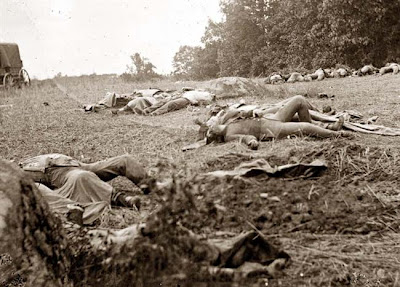
gburg dead2

“Ashes of soldiers South or North, As I muse retrospective murmuring a chant in thought, The war resumes, again to my sense your shapes, And again the advance of the armies. Noiseless as mists and vapors, From their graves in the trenches ascending, From cemeteries all through Virginia and Tennessee, From every point of the compass out of the countless graves, In wafted clouds, in myriads large, or squads of twos or threes or single ones they come, And silently gather round me…”

From Walt Whitman- Ashes of Dead Soldiers

Too often we look at distant battles and campaigns in terms of strategy, operations, tactics, leadership and the weaponry employed. Likewise we might become more analytical and look at the impact of the battle or campaign in the context of the war it was fought, or in the manner in which the tactics or weapons used revolutionized warfare. Sometimes in our more reflective moments we might look at individual bravery or sacrifice, often missing in our analysis is the cost in flesh and blood.

Admittedly the subject is somewhat macabre. But with the reality being that very few people in the United States, Canada or Western Europe have experienced the terrible brutality of war it is something that we should carefully consider any time the nation commits itself to war. By we, I mean all citizens, including the many soldiers, sailors and airmen who never see people they kill, at least in person, or walk among the devastation caused by the highly advanced, precision weapons that they employ from a great distance, sometimes thousands of miles. In some parts of our military we have men and women who have the mission of targeting and killing enemies and then walking home to their families, to have a nice dinner and read their children a bedtime story. But in the Civil War the acts of killing and being killed in combat  “remained essentially intimate; soldiers were able to see each other’s faces and to know whom they had killed.” [1]

While the words of William Tecumseh Sherman that “War is Hell” are as true as when he spoke them. The tragic fact is that for most people war is an abstract concept, antiseptic and unreal; except for the occasional beheading of a hostage by Islamic militants or the videos shot by the perpetrators of crimes against humanity on the internet. Thus the real, brutal and devastating cost of war and its attendant cost in lives, treasure and to the environment are not real to most people in the West.

We use words to describe the business of war which dehumanize the enemy, and we describe their deaths in words more palatable to us, to shield our souls from the evil in which we partake. Military ethicists and philosophers from time immemorial describe even the most just wars as having some sense of evil to them.  Dave Grossman, the army infantry officer who has spent his post military life writing about the psychology of war and killing wrote:

“Even the language of men at war is the full denial of the enormity of what they have done. Most solders do not “kill,” instead the enemy was knocked over, wasted, greased, taken out, and mopped up. The enemy is hosed, zapped, probed, and fired on. The enemy’s humanity is denied, and he becomes a strange beast called a Jap, Reb, Yank, dink, slant, or slope. Even the weapons of war receive benign names- Puff the Magic Dragon, Walleye, TOW, Fat Boy, Thin Man- and the killing weapon of the individual soldier becomes a piece or a hog, and a bullet becomes a round.” [2]

We can now add the terms “Haji” and “Raghead” and “Camel Driver” to Grossman’s list of dehumanizing terms that we label our opponents from our most recent wars in Iraq and Afghanistan.

The very insightful words of Guy Sager in his classic work The Forgotten Soldier about World War Two on the Eastern front are lost on many that study war:

“Too many people learn about war with no inconvenience to themselves. They read about Verdun or Stalingrad without comprehension, sitting in a comfortable armchair, with their feet beside the fire, preparing to go about their business the next day, as usual…One should read about war standing up, late at night, when one is tired, as I am writing about it now, at dawn, while my asthma attack wears off. And even now, in my sleepless exhaustion, how gentle and easy peace seems!” [3]

In an age where so few have served in the military and even few have seen combat in some way shape or form many who study war are comfortable experts who learn about war with no inconvenience to themselves. When I hear men and women, the pundits, politicians and preachers; that Trinity of Evil who constantly exhort governments and peoples to go to war for causes, places or conflicts that they have little understanding of from the comfort of their living rooms or television studios I grow weary. I fully comprehend the words of Otto Von Bismarck who said: “Anyone who has ever looked into the glazed eyes of a soldier dying on the battlefield will think hard before starting a war.” [4]

As a historian who also is a military chaplain who has seen war I struggle with what Sager said. Thus when I read military history, study and write about particular battles or engagements, or conduct staff rides as like the Gettysburg trip that we are embarking on, the human cost is always present in my mind. The fact that I still suffer the effects of PTSD including night terrors and chronic insomnia keeps what I do in good focus, and prevents me from being a comfortable expert.

Thus, it is my view, to conduct a staff ride, to walk the battlefield; especially in somewhat uncomfortable weather is a good thing. It connects us more in at least a small way to the men that fought there, died there, or brought home wounds that changed them forever.

To walk a battlefield where tens of thousands of men were killed and wounded is for me a visit to hallowed ground. I have felt that at Waterloo, Verdun, Arnhem, Normandy, the Bulge, the West Wall, the Shuri Line on Okinawa, Antietam, Chancellorsville, Stone’s River, and of course the battlefield which I have visited more than any in my life, Gettysburg. There are times when I walk these fields that I am overcome with emotion. This I think is a good thing, for as an American who has family ties to the Civil War, Gettysburg in particular is hallowed ground.

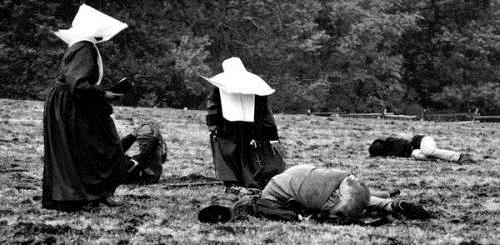
 sisters of charity

Sisters of Charity on the Battlefield

In doing this I try to be dispassionate in how I teach and while dealing with big issues that my students will face as Joint Staff Officers. Some of them will become Flag or General Officers, with the responsibility of advising our nation’s leaders as well planning and conducting the military operations on which the lives of thousands or maybe hundreds of thousands of people depend. Thus I do feel a certain responsibility to teach not only the strategy and other important military aspects of this campaign, but also the cost in human lives and ethical considerations. I take this work seriously because it forces us to remember what war is about and its nature, which Clausewitz wrote is “a paradoxical trinity-composed of primordial violence, hatred and enmity…” [5] which William Tecumseh Sherman so rightly understood without the euphemisms that we so frequently use to describe it: “War is cruelty, and you cannot refine it….”

As the sun set on the evening of July 3rd 1863 the battered Army of Northern Virginia and the battered but victorious Army of the Potomac tended their wounds, buried their dead and prepared for what might happen next. On that afternoon it was as if “the doors of Hell had shut” and the next day, the Glorious 4th of July “The heavens opened, and a thunderstorm of biblical proportions drenched the battlefield, soaking dead, wounded and able-bodied men equally.” [6]

Following the disastrous attack aimed at the Union center, Lee and his surviving commanders prepared for an expected Union counter attack. However, George Meade, the commander of the Army of the Potomac who had correctly anticipated Lee’s assault decided not to gamble on a counter attack, though it was tempting. He knew too well the tenacity and skill of the Confederate commanders and soldiers on the defense and did not want to risk a setback that might give Lee another chance, thus “the two sides stared at each other, each waiting for the other to resume the fighting, neither did.” [7]

 nurses

Federal Field Hospital

As the Confederate army retreated and Meade’s army pursued another army remained at Gettysburg, “an army of the wounded, some 20,350 in number, a third of them Confederate….” Just 106 surgeons were spared from the Army of the Potomac and “the comparatively few overburdened surgeons and attendants now on duty still labored every day to the point of exhaustion.” [8] These overworked men were aided by local volunteers as well as members of the U.S. Sanitary Commission, the Christian Commission and the Sisters of Charity. These men and women “brought organization to the hospitals, relief to the medical staffs and the local volunteers, and immense comfort to the wounded, whether blue or butternut.” [9]

The dead and wounded littered the battlefield and the sights and smells were ghastly:

“Wherever men gazed, they saw dead bodies. A New Yorker thought they “lay as thick as the stones that is on father’s farm.” A stench smothered the field, moving John Geary to tell his wife, “My very clothes smell of death.” A Regular Army veteran exclaimed, “I have seen many a big battle, most of the big ones of the war, and I never saw the like.” [10] A resident of Gettysburg walked up to Little Round top and wrote of what she observed from the peak of that rocky hill:

“surrounded by the wrecks of battle, we gazed upon the valley of death beneath. The view there spread out before us was terrible to contemplate! It was an awful spectacle! Dead soldiers, bloated horses, shattered cannon and caissons, thousands of small arms. In fact everything belonging to army equipments was there in one confused and indescribable mass.” [11]

At Joseph Sherfy’s farm, scene of some of the heaviest fighting on the second day, his barn “which had been used as a field hospital, was left a burnt ruin, with “crisped and blackened limbs, heads and other portions of bodies” clearly visible.” [12] When the rains came, the wounded suffered terribly. Many of the field aid stations were set up next to the creeks that crisscrossed the battlefield, and those streams quickly flooded as torrents of rain water caused them to overflow their banks. “A New Jersey soldier watched in horror as the flood waters washed over and carried away badly wounded men unable to move to safety….” [13]

Major General Oliver Howard of the Union XI Corps took his escort to do a reconnaissance of the town on July 4th, and one of the cavalry troopers of his escort described the scene:

“The battle field was the Awfulest sight I ever saw…The woods in front of our men the trees were riddled with Cannon ball and bullets evry limb shot off 20 feet high. Some say the Rebel dead lay six deep in the grave yard where we lay. Nearly evry grave stone was shattered by shots and everything was torn to pieces. I went through the town on the 4th of July with the General. The streets were covered with dead. Evry frame house were riddled with balls the brick ones dented thick where shot had hit.” [14]

Field hospitals were often little more than butcher shops where arms and legs were amputated by overworked surgeons and attendants while those with abdominal wounds that could not be easily repaired were made as comfortable as possible. Triage was simple. If a casualty was thought to have a reasonable chance at survival he was treated, if not they were set aside in little groups and allowed to die as peacefully as possible. Churches were requisition for use of the surgeons. A volunteer nurse noted: “Every pew was full; some sitting, some lying, some leaning on others. They cut off the legs and arms and threw them out the windows. Every morning the dead were laid on the platform in a sheet or blanket and carried away.” [15]

Chaplains were usually found with the doctors, caring for the physical as well as the spiritual needs of the wounded. Protestant chaplains might ensure that their soldiers “knew Jesus,” while Catholics administered the Last Rites, often working together across denominational lines to care for their soldiers.

A Union chaplain described the ministry in the field hospitals and aid stations:

“Some of the surgeons were posted well up toward the front to give first aid. More of them were in the large field hospitals of division in more secure places at the rear. The chaplain might be at either place or at both by turns. Some made a point of watching for any wounded man who might be straggling back, who perhaps could be helped up into the saddle and ride back to the hospital. When the demand for help became urgent the chaplains were nurses. As the rows of wounded men grew longer, chaplains went from man to man to see what could be done to relieve their pain, perhaps to take a message or letter. All day into the night this work would continue. A drink of water, a loosened bandage on a swollen limb, a question answered, a surgeon summoned, a whispered word of comfort marked their course. Each night at sundown the men who died during the day were buried, with a short prayer, side by side in a common grave, each in his uniform with canvas wrapped around his face and a strip of paper giving his name and regiment in a bottle buttoned under his blouse.” [16]

The war would challenge the theology of the clergy who served as chaplains on both sides, as “individuals found themselves in a new and different moral universe, one in which unimaginable destruction had become a daily experience. Where could God belong in such a world? How could a benevolent deity countenance such cruelty and suffering? Doubt threatened to overpower faith….” [17] That sense of bewilderment is not lacking today among those of faith who return from war.

Some men, clergy and laity alike would attempt to find a theological meaning to the suffering. Many would do so in the theology of John Calvin which emphasized the Providence and foreknowledge of God. That theological frame of reference, of the results of battles and the death or wounding of men in war and the attendant suffering was found in the will, or providence of God was quite common among men of both sides who grew up during the Second Great Awakening, and it can still be found today; and for some, like Stonewall Jackson, it was carried to fatalistic extremes. However, others like Colonel William Oates of the 15th Alabama, who considered himself a believing Christian, saw things differently, he wrote that he believed God:

“endowed men with the power of acting for themselves and with responsibility for their acts. When we went to war it was a matter of business, of difference of opinion among men about their temporal affairs. God had nothing to do with it. He never diverted a bullet from one man, or caused it to hit another, nor directed who should fall or who should escape, nor how the battle should terminate. If I believed in such intervention of Providence I would be a fatalist….” [18]

The carnage around the battlefield was horrifying to most observers. Corporal Horatio Chapman of the 20th Connecticut Volunteers wrote about the sight on Cemetery Ridge on the night of July 3rd following the repulse of Pickett’s Charge:

But in front of our breastworks, where the confederates were massed in large numbers, the sight was truly awful and appalling. The shells from our batteries had told with fearful and terrible effect upon them and the dead in some places were piled upon each other, and the groans and moans of the wounded were truly saddening to hear. Some were just alive and gasping, but unconscious. Others were mortally wounded and were conscious of the fact that they could not live long; and there were others wounded, how bad they could not tell, whether mortal or otherwise, and so it was they would linger on some longer and some for a shorter time-without the sight or consolation of wife, mother, sister or friend. I saw a letter sticking out of the breast pocket of one of the confederate dead, a young man apparently about twenty-four. Curiosity prompted me to read it. It was from his young wife away down in the state of Louisiana. She was hoping and longing that this cruel war would end and he could come home, and she says, “Our little boy gets into my lap and says, `Now, Mama, I will give you a kiss for Papa.’ But oh how I wish you could come home and kiss me for yourself.” But this is only one in a thousand. But such is war and we are getting used to it and can look on scenes of war, carnage and suffering with but very little feeling and without a shudder.” [19]

Colonel William Oates of the 15th Alabama whose brave troopers assaulted Little Round Top on July 2nd wrote:

“My dead and wounded were nearly as great in number as those still on duty. They literally covered the ground. The blood stood in puddles in some places on the rocks; the ground was soaked with the blood of as brave men as ever fell on the red field of battle.” [20]

Another Confederate soldier described the scene west of the town on July 4th:

“The sights and smells that assailed us were simply indescribable-corpses swollen to twice their size, asunder with the pressure of gases and vapors…The odors were nauseating, and so deadly that in a short time we all sickened and were lying with our mouths close to the ground, most of us vomiting profusely.” [21]

The burial of the dead was too much for the soldier’s alone to accomplish. “Civilians joined the burial of the dead out of both sympathy and necessity. Fifty Confederates lay on George Rose’s fields; seventy-nine North Carolinians had fallen on a perfect line on John Forney’s farm.” [22]

Those tending the wounded recalled how many of the wounded soldeirs selflessly asked medical personnel to tend others more badly wounded than themselves; a volunteer nurse wrote her sister: “More Christian fortitude was never witnessed than they exhibit, always say-‘Help my neighbor first, he is worse.’” [23] The Confederate wounded were the lowest priority for the badly overwhelmed Union surgeons and Lee had not done much to help, leaving just a few surgeons and attendants to care for the Confederates left on the battlefield. The Confederate wounded housed in the classrooms of Pennsylvania College were left in dire straits:

“All the rooms, halls and hallways were occupied with the poor deluded sons of the South,” and “the moans prayers, and shrieks of the wounded and dying were everywhere.” Between 500 and 700 wounded Confederates were jammed in with “five of our surgeons” and “no nurses, no medicines no kinds of food proper for men in our condition….” [24]

Across the battlefield the wounded were being treated in a variety of makeshift aid stations and field hospitals:

“Sergeant Major David E. Johnson of the Seventh Virginia was taken to the Myers house after the bombardment, suffering from a shrapnel wound to his left side and arm. “The shed in which I was placed,” he recalled, “was filled with the wounded and dying….I spoke to no one, and no one to me, never closed my eyes to sleep; the surgeons close by being engaged in removing the limbs of those nearby to be amputated….I heard nothing but the cries of the wounded and the groans of the dying, the agonies of General Kemper, who lay nearby, frequently being heard.” [25]

The suffering was not confined to the hospitals; John Imboden commanding the cavalry brigade protecting the Confederate wounded being transported home and supply trains described the horror of that movement:

“Scarcely one in a hundred had received adequate surgical aid, owning to the demands on the hard working surgeons from still far worse cases tat had to be left behind. Many of the wounded in the wagons had been without food for thirty-six hours. Their torn and bloody clothing, matted and hardened, was rasping the tender, inflamed, and still oozing wounds….From nearly every wagon as the teams trotted on, urged by whip and shout came such cries and shrieks as these:

“My God! Why can’t I die?” “My God! Will no one have mercy and kill me?” “Stop! Oh! For God’s sake stop for just one minute; take me out and leave me to die on the roadside.” “I am dying! I am dying! My poor wife, my dear children, what will become of you?” [26]

Eventually, by July 22nd with most of the wounded evacuated a proper general hospital was set up east of the town and the remaining wounded taken there. That hospital, named Camp Letterman grew into “a hundred –acre village of cots and tents, with its own morgue and cemetery, and served more than 3,000 wounded before it was finally closed in November.” [27]

As for the families of the dead, many never found out the details of their loved one’s deaths, which caused their losses to be “in some sense unreal and thus “unrealized,” as the bereaved described them, recognizing the inhibition of mourning that such uncertainty imposed.” [28] Much was because of how overwhelmed the field hospital staffs were, and how inadequate their records of treatment and the dispositions of bodies were sketchy at best. “Reports from field hospitals were riddled with errors and omissions, often lacked dates, and were frequently illegible, “written with the faintest lead pencil.” [29]

Among the killed and wounded were the great and the small. John Reynolds who died on day one, Winfield Scott Hancock, the valiant commander of the Union II Corps was severely wounded during Pickett’s Charge. Dan Sickles, the commander of Third Corps who had nearly brought disaster on the Federal lines by advancing to the Peach Orchard on July 2nd had his leg amputated after being grazed by a cannon ball at the Trostle Farm. Sickles, who survived the wound and the war, would visit the leg, which had carefully ordered his surgeons to preserve. The leg is now displayed at the National Museum of Health and Medicine in Washington D.C.

The Army of the Potomac lost a large number of brigade and regimental commanders including Strong Vincent, the young and gallant brigade commander who helped save Little Round Top; George Willard who brought redemption to his Harper’s Ferry brigade on Cemetery Ridge stopping Barksdale’s charge on July 2nd; Colonel Augustus Van Horne Ellis who before being killed at Devil’s Den told his staff “the men must see us today;” and the young Elon Farnsworth, who had been promoted from Captain to Brigadier General just days before his death in a senseless ordered by his division commander Judson “Kill Cavalry” Kilpatrick, against Hood and McLaw’s dug in divisions as the battle ended.

The Confederates suffered grievous losses. Divisional commanders like Dorsey Pender and Johnston Pettigrew were mortally wounded, John Bell Hood was severely wounded, Isaac Trimble, wounded and captured while Harry Heth was wounded. Casualties were even higher for commanders and the brigade and regiment level, the list included excellent commanders such as Paul Semmes and William Barksdale, while Wade Hampton, Stuart’s best brigade commander was seriously wounded and would be out of action for months. The toll of brigade and regimental commanders who were killed or wounded was fearful. “At the regimental level approximately 150 colonels, lieutenant colonels and majors had been killed, wounded or captured. Of that number nineteen colonels had been slain, the most in any single battle in which the army had been engaged. Captains now led regiments.” [30]

In Picket’s division alone all three brigade commanders, Kemper, Armistead and Garnett were killed or wounded while twenty-six of forty Field Grade officers were casualties. Forty-six percent (78 of 171) of the regiments of the Army of Northern Virginia suffered casualties at the command level. The Confederate casualties, especially among the best leaders were irreplaceable and Lee’s Army never recovered from the loss of seasoned leaders who were already in short supply.

 culp

Private Wesley Culp CSA

For some like Private Wesley Culp of the 2nd Virginia it was a final trip home. Culp had grown up in Gettysburg and had taken a job in Virginia prior to the war. In 1861 he enlisted to serve among his friends and neighbors. He was killed on the morning of July 3rd on Culp’s Hill on the very property owned by his uncle where he grew up and had learned to hunt.

One witness, Frank Haskell looked in at a field hospital in the Union II Corps area and wrote:

“The Surgeons with coats off and sleeves rolled up…are about their work,… “and their faces and clothes are spattered with blood; and though they look weary and tired, their work goes systematically and steadily on- how much and how long they have worked, the piles of legs, arms, feet, hands, fingers…partially tell.” [31]

All told between 46,000 and 51,000 Americans were killed or wounded during the three days of Gettysburg. Busey and Martin’s Regimental Strengths and Losses at Gettysburg list the following casualty figures, other accounts list higher numbers, some as many as 53,000. One also has to remember that many of the missing soldiers were killed in action, but their bodies were simply never found.

                          Killed               wounded         missing         total

Union                    3,155                14,531             5,369           23,055

Confederate         4,708                12,693             5,830            23,231

Total                     7,863               27,224            11,199          46,286

To provide a reference point we need to remember that in 8 years of war in Iraq the United States suffered fewer casualties than during the three days of Gettysburg. It was the bloodiest single battle in American history, and it was a battle between brothers not against foreign enemies. Robert E Lee testified to Congress following the war “the war… was an unnecessary condition of affairs, and might have been avoided if forbearance and wisdom had been practiced on both sides.” [32]  Lee’s “Old Warhorse” James Longstreet asked “Why do men fight who were born to be brothers?” [33]

The carnage and death witnessed by survivors of Gettysburg and the other battles of the war changed Civil War soldiers as much as war has before or after. James Garfield, who served as a general in the Union army and went on to become President of the United States noted: “at the sight of these dead men whom other men killed, something went out of him, the habit of a lifetime, that never came back again: the sense of the sacredness of life and the impossibility of destroying it.” [34]

GARpost

Grand Army of the Republic Veterans

Others, like veterans of today had trouble adjusting to life after the war. “Civil War veterans had trouble finding employment and were accused of being drug addicts. Our word “hobo” supposedly comes from homeless Civil War veterans- called “hoe boys” – who roamed the lanes of rural America with hoes on their shoulders, looking for work.” [35] Following the war, during the turmoil of Reconstruction and the massive social change brought about by the industrialization of society and rise of “industrial feudalism” numerous veterans organizations were founded, for those that belonged to them they were “one of the principle refuges for old soldiers who had fought for a very different world than the one they found around them.” The Grand Army of the Republic was the most prominent of these organizations. “In more than 7,000 GAR posts across the United States, former soldiers could immerse themselves in a bath of sentimental memory; there, they established a ritualized camp geography, rekindled devotion to emancipation and preached the glories of manly independence.” [36]

At the end of the war, Joshua Chamberlain, the hero of Little Round Top who was well acquainted with the carnage of war suffered immensely. His wounds never healed fully, and he struggled to climb out of “an emotional abyss” in the years after the war. Part was caused by his wounds which included wounds to his sexual organs, shattering his sexuality and caused his marriage to deteriorate. He wrote his wife about the “widening gulf between them, one created at least in part by his physical limitations: “There is not much left in me to love. I feel that all too well.” [37]

Gouverneur Warren, who had helped save the Union at Little Round Top wrote to his wife while on Engineering duty after the war: He wrote in 1866 “Indeed the past year…was one of great despondency for me…I somehow don’t wonder that persons often remark how seldom I laugh, but it is really seldom that I do.” He wrote again in 1867 “I wish I did not dream that much. They make me sometimes dread to go to sleep. Scenes from the war, are so constantly recalled, with bitter feelings I wish to never experience again. Lies, vanity, treachery, and carnage.” [38]

The killing at Gettysburg and so many other battles “produced transformations that were not readily reversible; the living into the dead, most obviously, but the survivors into different men as well, men required to deny, to numb basic human feelings at costs they may have paid for decades after the war ended, as we know twentieth and twenty-first-century soldiers from Vietnam to Iraq continue to do; men who like James Garfield, were never quite the same again after seeing fields of slaughtered bodies destroyed by me just like themselves.” [39]

Joshua Chamberlain asked the most difficult questions when viewing the devastation around Petersburg in the final days of the war:

“…men made in the image of God, marred by the hand of man, and must we say in the name of God? And where is the reckoning for such things? And who is answerable? One might almost shrink from the sound of his own voice, which had launched into the palpitating air words of order–do we call it?–fraught with such ruin. Was it God’s command that we heard, or His forgiveness that we must forever implore?” [40]

Chamberlain’s questions should always be in our minds as we send young men and women to war.

Peace

Padre Steve+

Notes

[1] Faust, Drew Gilpin, This Republic of Suffering: Death and the American Civil War Vintage Books, a division of Random House, New York 2008 p.41

[2] Grossman, Dave On Killing: The Psychological Costs of Learning to Kill in War and Society. Back Bay Books, Little, Brown and Company New York 1995, 1996 p.92

[3] Sager, Guy The Forgotten Soldier originally published as Le Soldat Oublie Editions Robert Laffont 1967, Translation Harper and Row Inc 1971, Brasey’s Washington D.C 2000 p.223

[4] Bismarck, Otto von Speech, August 1867

[5] Clausewitz, Carl von. On War Indexed edition, edited and translated by Michael Howard and Peter Paret, Princeton University Press, Princeton NJ 1976 p.89

[6] Wittenberg, Eric J, Petruzzi, David and Nugent, Michael F. One Continuous Fight: The Retreat from Gettysburg and the Pursuit of Lee’s Army of Northern Virginia July 4-14 1863 Savas Beatie LLC New York NY and El Dorado Hills CA 2008,2001 p.27

[7] Ibid. Wittenberg One Continuous Fight p.28

[8] Sears, Stephen W Gettysburg Houghton Mifflin Co. Boston and New York 2003 p.508

[9] Ibid. Sears Gettysburg p.510

[10] Wert, Jeffry D. The Sword of Lincoln: The Army of the Potomac Simon and Schuster, New York and London 2005 p.303

[11] Schultz, Duane The Most Glorious Fourth: Vicksburg and Gettysburg July 4th 1863. W.W. Norton and Company New York and London, 2002 p.357

[12] Faust This Republic of Suffering p.81

[13] Ibid. Wittenberg One Continuous Fight p.30

[14] Ibid. Wittenberg One Continuous Fight pp.32-33

[15] Ibid. Sears Gettysburg. p.508

[16] Brinsfield, John W. et. al. Editor, Faith in the Fight: Civil War Chaplains Stackpole Books, Mechanicsburg PA 2003 pp.121-122

[17] Ibid. Faust. This Republic of Suffering p.267

[18] Oates, Willam C. and Haskell, Frank A. Gettysburg: The Confederate and Union Views of the Most Decisive Battle of the War in One Volume Bantam Books edition, New York 1992, originally published in 1905 p.138

[19] Chapman, Horatio Civil War Diary of a Forty-niner pp.22-24 Retrieved from http://www.dbappdev.com/vpp/ct20/hdc/HDC630703.htm 8 April 2014

[20] Oates, William C. Southern Historical Papers, April 6th, 1878 retrieved from http://www.brotherswar.com/Civil_War_Quotes_4h.htm 18 July 2014

[21] _________ What Happened to Gettysburg’s Confederate Dead? The Blog of Gettysburg National Military Park, retrieved from http://npsgnmp.wordpress.com/2012/07/26/what-happened-to-gettysburgs-confederate-dead/ 18 July 2014

[22] Ibid. Faust. This Republic of Suffering p.81

[23] Catton, Bruce The Army of the Potomac: Glory Road Doubleday and Company, Garden City New York, 1952 p.333

[24] Guelzo, Allen C. Gettysburg: The Last Invasion Vintage Books a Division of Random House, New York 2013 p.469

[25] Brown, Kent Masterson Retreat from Gettysburg: Lee, Logistics and the Gettysburg Campaign University of North Carolina Press, Chapel Hill and London, 2005 p.56

[26] Imboden, John D. The Confederate Retreat from Gettysburg in Battles and Leaders of the Civil War Volume III, The Tide Shifts. Edited by Robert Underwood Johnson and Clarence Clough Buel Castle, Secaucus NJ p.424

[27] Ibid. Guelzo Gettysburg: The Last Invasion pp.469-470

[28] Ibid. Faust. This Republic of Suffering p.267

[29] Ibid. Faust. This Republic of Suffering p.113

[30] Wert, Jeffry D. A Glorious Army: Robert E. Lee’s Triumph 1862-1863 Simon and Schuster, New York and London 2011

[31] Sears, Stephen W. Gettysburg Mariner Books, Houghton Mifflin Company Boston, New York 2004 p.466

[32] Flood, Charles Bracelen, Lee: The Last Years Houghton Books, New York 1981 p.124

[33] Longstreet, James in New York Times, July 24, 1885, retrieved from the Longstreet Society http://www.longstreetsociety.org/Longstreet_Quotes.html 18 July 2014

[34] Ibid. Faust. This Republic of Suffering p.55

[35] Shay, Jonathan Odysseus in America: Combat Trauma and the Trials of Homecoming Scribner, New York and London 2002 p.155

[36] Guelzo Allen C. Fateful Lightening: A New History of the Civil War Era and Reconstruction Oxford University Press, Oxford and New York 2012 p.523

[37] Longacre, Edward Joshua Chamberlain: The Soldier and the Man Combined Publishing Conshohocken PA 1999 p.259

[38] Jordan, David M. Happiness is Not My Companion: The Life of G.K. Warren Indiana University Press, Bloomington Indiana 2001 pp.248-249

[39] Ibid. Faust. This Republic of Suffering p.60

[40] Chamberlain, Joshua Lawrence, The Passing of the Armies: An Account of the Final Campaign of the Army of the Potomac, Based on the Personal Reminisces of the Fifth Corps G.P Putnam’s Son’s 1915, Bantam Books, New York 1993 Amazon Kindle Edition p.41

1 Comment

Filed under civil war, faith, History, mental health, Military, philosophy

“Our Army Would be Invincible if…” The Problem of Senior Leadership in the Army of Northern Virginia Part Two, The Third Corps

leeindex1omas

This is the second part of an article that I posted yesterday which is part of my Gettysburg series. This focuses on the Third Corps commanded by Lieutenant General A.P. Hill. The link to the first article is here: https://padresteve.com/2014/07/28/our-army-would-be-invincible-if-the-problem-of-senior-leadership-in-the-army-of-northern-virginia-june-1863-part-one-first-and-second-corps/

The newly created Third Corps under Lieutenant General A.P. Hill was thought to be in good hands. Hill had commanded his large; six brigade “Light Division” with distinction, though having serious conflicts with both Longstreet and Jackson. At Antietam Hill’s hard marching from Harpers Ferry had saved the Army of Northern Virginia from destruction. Hill was a graduate of West Point who had served in the topographic engineers most of his U.S. Army career. He had an earned reputation as a brilliant division commander, and despite his clashes with Longstreet and Hill Lee recommended him to take command of Third Corps who sang his praise to Jefferson Davis “the best soldier of his grade with me.” [1] Hill was a “nervous wiry man with a persistent chip of underappreciation on his shoulders and a bevy of chronic illnesses when under stress.” [2] Hill detested Jackson, who he referred to as “that old Presbyterian fool” [3] and his poor relations with Jackson’s confidants at Second Corps ensured that Ewell took Second Corps. Lee appointed Hill to command Third Corps of which “half of the troops had been with him all along” [4] in the Light Division. Lee liked Hill’s aggressiveness and command instincts, something that he hoped would translate into success at the corps level, and promoted him over the head of D.H. Hill and Lafayette McLaws who were both senior to him. Regarding the promotion of Hill and Ewell Lee wrote to Davis:

“I wish to take advantage of every circumstance to inspire and encourage…the officers and men to believe that their labors are appreciated, and that when vacancies occur that they will receive the advantages of promotion….I do not know where to get better men than those I have named.” [5]

But the decision to promote the Ewell and Hill, both Virginians stirred some dissent among those that believed that Lee was “favoring Virginians over officers from other states. The promotion of A.P. Hill, as previous noted was “made over the head of two Major Generals more senior than Hill- North Carolinian D.H. Hill and Georgian Lafayette McLaws.” [6]

Hill’s corps, like those of Longstreet and Ewell was composed of three divisions, and even more so than Ewell his division suffered a want of senior leaders who had served at the grade they were now expected to serve.

The most stable division in Third Corps was Richard Anderson’s, transferred from First Corps. Under Longstreet the division and its commander had served well. Lee considered Anderson a “capable officer”…and had marked him for future higher command.” [7] Anderson was noted for his modesty and unselfishness, “his easy going ways, combined with his competence and professionalism made him one of the most well liked officers in the Army of Northern Virginia.” [8] However, there was an incalculable thrown into the equation. Hill had not yet established his methods of operation as a corps commander, and Anderson, used to “Longstreet’s methodical insistence that everything be just so before he would venture into action” contrasted with Hill’s “tendency to leap before he looked.” [9]

Anderson’s division was composed of five brigades commanded by a mixed lot of commanders, none of whom were professionals.

Brigadier General Cadmus Wilcox was a no-nonsense graduate of West Point; he served in the Mexican War and taught tactics for five years at West Point. He had served with distinction as a brigade commander, but Wilcox was disgruntled, he “is restless, sore, and disposed to go to another Confederate army where he will have a chance.” [10] Wilcox had been passed over for promotion to Major General in favor of George Pickett and requested transfer from Lee’s army, which was refused for lack of qualified leaders. At Chancellorsville the delaying action of his brigade at Salem’s Church had helped save the army.

Brigadier General William Mahone was a graduate of VMI and was superintendent of the new Norfolk and Petersburg Railroad when the war Virginia seceded from the Union and served with reasonable effectiveness before Gettysburg. As a brigadier “he is not lacking in diligence, but he is not without special distinction.” [11] He fought competently at Chancellorsville and by Gettysburg had established himself as a “competent and experienced brigade leader.” [12]

Brigadier General Ransom Wright had no military training or experience prior to the war, but was a successful lawyer and by Gettysburg he “was considered a well-tested combat veteran.” [13] He had Unionist sentiments, was a no-nonsense individual and though he had no military was named colonel of the 3rd Georgia in 1861 and became a brigade commander during the Seven Days.

Brigadier General Carnot Posey was a highly successful plantation planter and lawyer who had served as a “lieutenant under Col. Jefferson Davis, and suffered a slight wound at the Battle of Buena Vista” [14] in the Mexican War, after which he returned home as was appointed as a United States District Attorney by President Buchanan. Posey commanded the 16th Mississippi and was promoted to brigade command prior to Chancellorsville where he gave a strong performance under fire.

Colonel David Lang commanded the Florida Brigade the smallest in the army. Just twenty-five years old, the graduate of the Georgia Military Institute inherited brigade command when Brigadier General Edward Perry came down with typhoid fever after Chancellorsville. He had only fought in three battles, two as a captain “and he had never led a brigade in combat.” [15]

Hill’s old Light Division was divided into two divisions. Major General William Dorsey Pender commanded the old Light Division which now consisted of four rather than six brigades. Pender was only 29 years old, the “youngest of that rank in the army.” [16] Pender was “only seven years out of West Point” [17] and was deeply loyal to Powell Hill and a partisan of the Light Division. However, he had risen “on first rate ability, steadfast ambition and a headlong personal leadership in battle which gave a driving force to his brigade” [18] which he considered “the best brigade of the best division” [19] in the army. Lee praised him as “a most gallant officer” and was deeply sensitive about keeping Pender with the troops that found him so inspiring noting “I fear the effect upon men of passing him over in favour of another not so identified with them.” [20] Pender was an “intelligent, reflective man, deeply religious and guided by a strong sense of duty.” [21]

Pender’s four veteran brigades were commanded by three experienced officers and one new to brigade command.

Colonel Abner Perrin from South Carolina was the least experienced. He was a successful lawyer who had served as a lieutenant in the Regular army in Mexico, served as a company commander in the 14th South Carolina which he took command of after Fredericksburg. He led the regiment at Chancellorsville and took command of the brigade when the brigade commander was wounded. Despite his inexperience he remained in command of the veteran South Carolina brigade, “whose leadership had been decimated” and had “devolved to lieutenant colonels, majors and captains.” [22]

Brigadier General James Lane was an academic. He graduated second in his class at VMI in 1854 and received a degree in science from the University of Virginia three years later. He returned to VMI as an assistant professor then became a professor of natural philosophy at the North Carolina Military Institute. [23] He was commissioned as a major in the 1st North Carolina and took command of it in September 1861 and promoted to brigade command after Antietam. Lane proved himself an able commander at Fredericksburg and Chancellorsville, at the latter his brigade led Jackson’s assault against the Union right, suffering 909 casualties and had the misfortune of when one of his units mortally wounded Jackson on the night of May 2nd 1863. Despite this “he and his men could be counted on to do the right thing when the bullets started to fly.” [24]

Brigadier General Edward Thomas was a plantation owner from Georgia who had served as a lieutenant in the Mexican War. Offered a commission in the Regular army he turned it down and returned home. He became colonel of the 35th Georgia Infantry in October 1861 and led it as part of Pettigrew’s brigade and after Pettigrew was wounded at Seven Pines the brigade was shifted to Joseph Anderson’s brigade of the Light Division, assuming command of that brigade when Anderson was wounded at Frayser’s Farm. He commanded it in the thick of the fighting at Second Manassas and at Fredericksburg helped stop Meade’s advance with a fierce counterattack, and commanded it again at Chancellorsville. Thomas could always be counted on to deliver “a solid, if unspectacular performance.” [25]

Brigadier General Alfred Scales was new to brigade command. A “forty-five year old humorless politician” [26] who had served in the U.S. House of Representatives with no military experience Scales enlisted as a private when North Carolina seceded. He was elected to a captaincy in Pender’s regiment and when Pender was transferred Scales succeeded him in command of the 13th North Carolina. He commanded that regiment on the Peninsula and during the Seven Days, served as acting commander of the brigade when Pender was wounded at Fredericksburg and distinguished himself with the 13th at Chancellorsville. Scales service with Pender’s brigade “had been one of consistent stout service.” [27] When Pender was promoted to division command “it was a forgone conclusion that his replacement in brigade command would be Scales.” [28] He had served with the brigade, was known to its soldiers and though inexperienced as a brigade commander he “and the brigade were one, for he had shared its fortunes, was proud of it, and was confident of victory as he led it to Gettysburg.” [29]

Hill’s remaining division was commanded by the newly minted Major General Harry Heth. It was composed of the two remaining brigades of the Light Division and two brigades recently joined to the army for the offensive.

Harry Heth was a graduate of West Point who has a “high reputation personally and professionally” [30] in the army, despite finishing 38th in a 45 member class at West Point. Lee had a high regard for Heth and considered him a friend and somewhat a protégé, however his regard “cannot be based on any substantive achievements by Heth, whose antebellum career and war experience had been similarly unremarkable.” [31] Heth was an example of a “soundly trained soldier of perennial promise. Always seemingly on the verge of becoming truly outstanding” but “never lived up to the army’s expectations.” [32] Heth became a brigade commander in Hill’s division prior to Chancellorsville after having served in Western Virginia and in the West. Hill was new to command of a newly formed division and had the weakest collection of brigade commanders in the army at Gettysburg.

Newest to the division was Johnston Pettigrew whose North Carolina brigade was one of the largest in the army. This was one of the new brigades provided to Lee by Davis, Pettigrew was a renaissance man, and was a graduate of the University of North Carolina he was “proficient in French, German, Italian and Spanish, with a reading knowledge of Greek, Hebrew and Arabic.” [33] Pettigrew had spent a good amount of time abroad on diplomatic service before returning to his law practice in Charleston. He had “even spent time as a volunteer aid with the French and Italian forces against the Austrians in 1859.” [34] Elected to the state legislature in 1856 he “sensed the oncoming of hostilities and was named colonel of the 1st Regiment of Rifles, a Charleston militia outfit.” [35] Pettigrew was “one of those natural leaders of a privileged background who, without military ambitions, had been advanced on the application of native intelligence and contagious courage.” [36]

Brigadier General Joseph Davis, the nephew of President Jefferson Davis commanded a newly raised Mississippi brigade. Davis owed his appointment to his relationship with the President. He was “entirely without combat experience.[37] Most of the war he had spent on his uncle’s staff in Richmond and in his new appointment he was not with officers of any experience as “No one serving on Joe Davis’s staff showed strong signs of having the background, experience, and ability that might help the brigadier meet his responsibilities.” [38] Likewise the nine field officers assigned to his regiments were similarly ill-equipped.

Heth did have the experienced mixed Alabama-Tennessee brigade of Brigadier General James Archer. Despite its experience and “fine reputation” [39] the brigade was seriously understrength after seeing heavy combat at Chancellorsville. The brigade commander Archer was a graduate of the University of Maryland who practiced law before entering the Regular army as a Captain during the Mexican War where he was breveted for gallantry at the Battle of Chapultapec. He left the army after the war and then returned to it in 1855. He commanded the 5th Texas Regiment and took command of a Tennessee brigade at Seven Pines. Initially Archer was not well liked by any of his commands, the Texans considered him a tyrant and he was “very non-communicative, the bearing and extreme reserve of the old army officer made him, for a time, one of the most hated of men.” [40]After being joined to the Light Division Archer transformed his reputation among his men and had “won the hearts of his men by his wonderful judgment and conduct on the field.” [41]

The last brigade of Heth’s division was the small Virginia brigade of the “plodding, uninspiring” [42] Colonel John Brockenbrough. Brockenbrough was an 1850 graduate of VMI and “entered service as colonel of the 40th [Virginia Infantry] in May 1861.” [43] The brigade when it had been commanded by Charles Field had been considered one of the best in the army. Brockenbrough took command of it in 1862 when Field was wounded and “had never managed the brigade well, especially at Fredericksburg, and Lee returned him to regimental command.” [44] He reassumed the command of the brigade after Chancellorsville when Heth was promoted. Like Archer’s brigade it was “sadly reduced in numbers” and in morale…” [45]

Lee’s Army of Northern Virginia would go into the Gettysburg Campaign with two new and untried corps commanders. Of nine infantry division commanders three were new to command and another who had never commanded a division in combat. Of the infantry brigade commanders First Corps was in the best shape with ten of eleven assigned commanders having experience in command at that level, and most were of sound reputation. Second Corps was worse off, with six of thirteen assigned brigade commanders new to command, and two of the experienced brigade commanders were not competent to command at that level. Third Corps had nine of its thirteen commanders who had experience as brigade commanders; however, one of them, Brockenbrough was of little value despite being experienced.

Had the army had more time to exercise the new commanders before going into action Lee might have had a better result, but as he told Hood “this army would be invincible if….” As we know, if is the biggest two letter word in the English language, and these men, as Barbara Tuchman noted would be “made bold by the moment, some irresolute, some carefully judicious, some paralyzed and powerless to act.”

Peace,

Padre Steve+

Notes

[1] Ibid. Freeman Lee’s Lieutenants p.526

[2] Ibid. Guelzo, Gettysburg: The Last Invasion p.22

[3] Ibid. Guelzo, Gettysburg: The Last Invasion p.22

[4] Foote, Shelby, The Civil War, A Narrative. Volume Two Fredericksburg to Meridian Random House, New York 1963 p.434


[5] Ibid. Freeman Lee’s Lieutenants p.526

[6] Ibid. Taylor, John Duty Faithfully Performed p.290

[7] Ibid. Dowdy. Lee and His Men at Gettysburg p.86

[8] Ibid. Tagg The Generals of Gettysburg p.306

[9] Ibid. Dowdy. Lee and His Men at Gettysburg pp.86-87

[10] Ibid. Freeman Lee’s Lieutenants p.46

[11] Ibid. Freeman Lee’s Lieutenants p.48

[12] Ibid. Tagg The Generals of Gettysburg p.315

[13] Ibid. Tagg The Generals of Gettysburg p.317

[14] Ibid. Tagg The Generals of Gettysburg p.319

[15] ibid. Tagg The Generals of Gettysburg p.322

[16] Ibid. Sears Gettysburg p.47

[17] Ibid. Dowdy. Lee and His Men at Gettysburg p.85

[18] Ibid. Dowdy. Lee and His Men at Gettysburg p.85

[19] Ibid. Freeman Lee’s Lieutenants p.45

[20] Ibid. Sears Gettysburg p.47

[21] Ibid. Dowdy. Lee and His Men at Gettysburg p.85

[22] Ibid. Tagg The Generals of Gettysburg p.331

[23] Ibid. Tagg The Generals of Gettysburg pp.332-333

[24] Ibid. Tagg The Generals of Gettysburg p.334

[25] Ibid. Tagg The Generals of Gettysburg p.337

[26] Ibid. Tagg The Generals of Gettysburg p.338

[27] Ibid. Freeman Lee’s Lieutenants p.421

[28] Ibid. Tagg The Generals of Gettysburg p.338

[29] Ibid. Pfanz Gettysburg: The First Day p.306

[30] Ibid. Freeman Lee’s Lieutenants p.46

[31] Krick, Robert K. Three Confederate Disasters on Oak Ridge: Failures of Brigade Leadership on the First Day of Gettysburg in The First Day at Gettysburg edited by Gallagher, Gary W. Kent State University Press, Kent Ohio 1992 p.96

[32] Ibid. Dowdy. Lee and His Men at Gettysburg p.87

[33] Ibid. Tagg The Generals of Gettysburg p.343

[34] Ibid. Guelzo, Gettysburg: The Last Invasion p.129

[35] Ibid. Tagg The Generals of Gettysburg p.343

[36] Ibid. Dowdy. Lee and His Men at Gettysburg p.78

[37] Ibid. Freeman Lee’s Lieutenants p.553

[38] Ibid. Krick Three Confederate Disasters on Oak Ridge p.101

[39] Ibid. Dowdy. Lee and His Men at Gettysburg p.87

[40] Ibid. Tagg The Generals of Gettysburg p.349

[41] Ibid. Tagg The Generals of Gettysburg p.350

[42] Ibid. Sears Gettysburg p.55

[43] Ibid. Pfanz Gettysburg: The First Day p.118

[44] Ibid. Guelzo, Gettysburg: The Last Invasion p.134
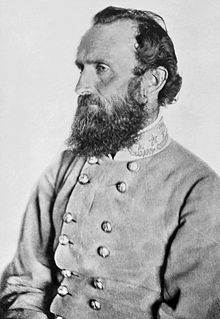
[45] Ibid. Guelzo, Gettysburg: The Last Invasion p.134

Leave a comment

Filed under civil war, History, leadership, Military

“A Spirit of Unbelief”: A.P. Hill, Harry Heth and the Prelude to the Battle of Gettysburg

Hill.28135413_stdLieutenant General A.P. Hill

Note: One of the most important things to understand about the Battle of Gettysburg or for that matter any battle or campaign is leadership as well as organizational structure and climate of command. The study of A.P. Hill’s Third Corps is important to understanding how the battle unfolds and what happens at Gettysburg particularly on July 1st. In our understanding “Successful mission command demands that subordinate leaders at all echelons exercise disciplined initiative, acting aggressively and independently to accomplish the mission. Essential to mission command is the thorough knowledge and understanding of the commander’s intent at every level of command.”

While the leaders at Gettysburg on both sides would be unaware of our present definition they certainly would have been acquainted with the maxims of Napoleon, who many studied under Dennis Hart Mahan at the West Point. Napoleon noted: “What are the conditions that make for the superiority of an army? Its internal organization, military habits in officers and men, the confidence of each in themselves; that is to say, bravery, patience, and all that is contained in the idea of moral means.”

Likewise in a maxim that has direct application to the Confederate campaign in Pennsylvania Napoleon noted “To operate upon lines remote from each other and without communications between them, is a fault which ordinarily occasions a second. The detached column has orders only for the first day. Its operations for the second day depend on what has happened to the main body. Thus according to circumstances, the column wastes its time in waiting for orders or it acts at random….” [1]

I have spent more time in this chapter developing the issues of organization, leadership, climate of command and relationships between leaders because of their importance to the campaign. From these students should be able to draw lessons that would be applicable to leadership, organization and campaigning at the operational level of war.

As the Army of Northern Virginia began to concentrate near Cashtown after the reports that the Army of the Potomac was in Maryland it was Lieutenant General A.P. Hill’s Third Corps that was nearest to Gettysburg. Major General Harry Heth’s division led the corps and arrived on June 29th followed by Major General Dorsey Pender’s division on the 30th. Hill ordered his last division under the command of Major General Richard Anderson to remain behind and join the corps on July 1st. [2]

On the 30th Harry Heth sent Johnston Pettigrew’s Brigade to Gettysburg to “search the town for army supplies (shoes especially), and to return the same day.” [3] It was the first in a series of miscalculations that brought Lee’s army into a general engagement that he wished to avoid.

The Confederate Third Corps commanded by Lieutenant General Ambrose Powell (A.P.) Hill had been formed as part of the reorganization of the army following Stonewall Jackson’s death after the Battle of Chancellorsville. Hill had a stellar reputation as a division commander; his “Light Division” had distinguished itself on numerous occasions, especially at Antietam where its timely arrival after a hard forced march from Harper’s Ferry helped save Lee’s army late in the battle. At Chancellorsville Hill briefly succeeded Jackson until he too was wounded.

But that being said Hill was no stranger to controversy, beginning with a clash with James Longstreet during the Seven Days battles in which time Longstreet placed Hill under arrest and Hill challenged Longstreet to a duel. Lee quickly reassigned Hill to Jackson’s command as Jackson was operating in a semi-independent assignment. [4] Hill was in an intractable controversy with Stonewall Jackson for nearly a year until Jackson succumbed to his wounds. Jackson at one point during the invasion of Maryland prior to Antietam had Hill placed under arrest for the number of stragglers that he observed in Hill’s hard marching division as well as other errors that Jackson believed Hill had made. The dispute continued and the animosity deepened between the two men and in January 1863 Hill asked Lee for a trial by courts-martial on charges preferred against him by Jackson. Lee refused this and wrote to Hill: “Upon examining the charges in question, I am of the opinion that the interests of the service do not require that they be tried, and therefore, returned them to General Jackson with an indorsement to that effect….” [5] Just before Chancellorsville Jackson wrote to Lee “I respectfully request that Genl. Hill be relieved of duty in my Corps.” This time Lee simply ignored the request and though the two generals remained at loggerheads they also remained at their commands at Chancellorsville. [6]

Hill was recommended for promotion to Lieutenant General and command of the new Third Corps by Lee on May 24th and was promoted over the heads of Harvey Hill and Lafayette McLaws. The move displeased Longstreet who considered McLaws “better qualified for the job” and but who felt that the command should have gone to Harvey Hill whose “record was as good as that of Stonewall Jackson…but, not being a Virginian, he was not so well advertised.” [7]

Hill was slightly built and high strung. “Intense about everything” Hill was “one of the army’s intense disbelievers in slavery.” [8] Hill was an 1847 graduate of West Point and briefly served in Mexico but saw no combat. He spent some time in the Seminole wars and in garrison duty along the East Coast, spending 1855-1860 in the Coastal Survey and resigned his commission before Virginia’s secession. At the outbreak of the war he “received his commission as colonel, and soon trained one of Johnston’s best regiments in the Valley.” [9] He commanded a brigade under Longstreet on the Peninsula and was promoted to Major General and command of a division in May 1862. He was plagued by health problems which had even delayed his graduation from West Point, health issues that would arise on the first day at Gettysburg.

Hill’s Third Corps was emblematic of the “makeshift nature of the reorganization of the whole army.” [10] It was composed of three divisions; the most experienced being that of the recently promoted and hard fighting Major General Dorsey Pender. Pender’s division, was built around four excellent brigades from Hill’s old “Light Division” one of which Pender had commanded before his promotion. Hill strongly recommended Pender’s promotion which was accepted by Lee. Pender found the command to be a heavy burden. He was “an intelligent, reflective man, deeply religious and guided by a strong sense of duty….” [11]

Hill’s second experienced division was that of Major General Richard Anderson, transferred from Longstreet’s First Corps, something else which failed to endear Hill to Longstreet. [12] The unassuming Anderson had distinguished himself as a brigade and division commander in Longstreet’s corps, but in “an army of prima donnas, he was a self-effacing man, neither seeking praise for himself nor winning support by bestowing it on others.” [13] At Chancellorsville he fought admirably and Lee wrote that Anderson was “distinguished for the promptness, courage and skill with which he and his division executed every order.” [14] With four seasoned brigades under excellent commanders it was a good addition to the corps, although the transition from Longstreet’s stolid and cautious style of command to Hill’s impetuous style introduced “another incalculable of the reshuffled army.” [15]

heth

Major General Harry Heth

Major General Harry Heth’s division was the final infantry division assigned to the corps. This division was recently formed from two brigades of Hill’s old Light Division and “the two new brigades that Jefferson Davis had forced on an already disrupted army organization.” [16] The organization of this division as well as its leadership would be problematic in the days to come, especially on June 30th and July 1st 1863.

Heth like Pender was also newly promoted to his grade and the action at Gettysburg would be his first test in division command. Heth was a native Virginian, well connected politically who through his social charm had “many friends and bound new acquaintances to him” readily. [17] Heth was a West Point graduate who had an undistinguished academic career graduating last in the class of 1847. His career in the ante-bellum army was typical of many officers, he served “credibly in an 1855 fight with Sioux Indians” but his real claim to fame was in authoring the army’s marksmanship manual which was published in 1858. [18]

Heth’s career with the Confederate army serving in western Virginia was undistinguished but he was a protégé of Robert E. Lee who recommended him as a brigade commander to Jackson before Chancellorsville. Tradition states that of all his generals that Heth was the only one “whom Lee called by his first name.” [19] A.P. Hill when writing Lee about the choice of a successor for the Light Division noted that Heth was “a most excellent officer and gallant soldier” but in the coming campaign “my division under him, will not be half as effective as under Pender.” [20] Douglas Southall Freeman noted that Heth was “doomed to be one of those good soldiers…who consistently have bad luck.” [21]

Heth’s division was composed of two depleted brigades from the Light Division which had taken heavy casualties at Chancellorsville. The brigade commanded by James Archer from Alabama and Mississippi was “well led and had a fine combat reputation.” But the second brigade was more problematic. A Virginia brigade it had once been considered one of the best in the army had deteriorated in quality following the wounding of its first commander Brigadier General Charles Field. Heth took command of it at Chancellorsville and both he and the brigade performed well, but when Heth was promoted the lack of qualified officers left it under the command of its senior colonel, John Brockenbrough. [22] His third brigade came from Mississippi and North Carolina and was commanded by Brigadier General Joe Davis whose uncle was President Jefferson Davis. Davis had served on his uncle’s staff for months and had no combat experience. [23] One author noted that Davis’s promotion to Brigadier General “as unadulterated an instance of nepotism as the record of the Confederacy offers.” [24] His subordinate commanders were no better, one William Magruder was so bad that J.E.B. Stuart suggested that “he have his commission revoked” and only one of the nine field grade officers in his brigade had military training, and that from the Naval Academy. [25]

pettigrew

Brigadier General Johnston Pettigrew

Heth’s largest brigade was new to the army. Commanded by the North Carolina academic Johnston Pettigrew it had no combat experience though Pettigrew was considered a strong leader, badly wounded at Seven Pines and thinking his wound mortal “he refused to permit his men to leave the ranks to carry him to the rear” [26] and was captured but later paroled and returned to the army later in the year.

Hill was under the impression that Meade’s army was still miles away, having just come from meeting Lee who assured him that “the enemy are still at Middleburg,” (Maryland) “and have not yet struck their tents.” [27] With that assurance Heth decided to use June 30th to send Pettigrew’s brigade on the foraging expedition to Gettysburg. An officer present noted that Heth instructed Pettigrew “to go to Gettysburg with three of his regiments present…and a number of wagons for the purpose of collecting commissary and quartermaster stores for the use of the army.” [28]

However Heth did instruct Pettigrew in no uncertain terms not to “precipitate a fight” should he encounter “organized troops” of the Army of the Potomac. [29] Heth was specific in his report that “It was told to Pettigrew that he might find in the town in possession of a home guard,…but if, contrary to expectations, he should find any organized troops capable of making resistance., or any part of the Army of the Potomac, he should not attack it.” [30]

That in mind one has to ask the question as to why Heth would employ “so many men on a long, tiring march, especially as without a cavalry escort he took the risk of sending them into a trap” when his “objects hardly justified” using such a large force. [31] Likewise it has to be asked why the next day in light of Lee’s standing orders not to provoke an engagement that Hill would send two divisions, two thirds of his corps on a reconnaissance mission. Some have said that Hill would have had to move to Gettysburg on July 1st anyway due to forage needs of the army, [32] but this is not indicated in any of Hill or Heth’s reports.

As his troops neared Gettysburg Pettigrew observed the Federal cavalry of Buford’s 1st Cavalry Division as they neared the town. He received another report “indicating that drumming could be heard in the distance – which might mean infantry nearby, since generally cavalry generally used only bugles.” [33] He then prudently and in accordance with his orders not to precipitate a fight “elected to withdraw rather than risk battle with a foe of unknown size and composition.” [34] His troops began their retrograde at 11 a.m. leaving Buford’s cavalry to occupy the town at ridges. On Confederate wrote “in coming in contact with the enemy, had quite a little brush, but being under orders not to bring a general engagement fell back, followed by the enemy.” [35]

Upon returning Pettigrew told Hill and Heth that “he was sure that the force occupying Gettysburg was a part of the Army of the Potomac” but Hill and Heth discounted Pettigrew’s report. [36] “Heth did not think highly of such wariness” and “Hill agreed with Heth” [37] Hill believed that nothing was in Gettysburg “except possibly a cavalry vidette.” [38] Hill was not persuaded by Pettigrew or Pettigrew’s aide Lieutenant Louis Young who had previously served under Hill and Pender who reported that the “troops that he saw were veterans rather than Home Guards.” [39] Hill reiterated that he did not believe “that any portion of the Army of the Potomac was up” but then according to Young Hill “expressed the hope that it was, as this was the place he wanted it to be.” [40] The West Point Graduates Hill and Heth may have manifested an often typical “distain for citizen soldiers…a professional questioning a talented amateur’s observations” [41] If so it was a distain that would cost the Confederacy dearly in the days to come.

Pettigrew was “aghast at Hill’s nonchalant attitude” [42] and Young was dismayed and later recalled that “a spirit of unbelief” seemed to cloud their thinking. [43] In later years he wrote “blindness in part seems to have come over our commanders, who slow to believe in the presence of an organized army of the enemy, thought that there must be a mistake in the report taken back by General Pettigrew.” [44]

Heth then asked Hill since neither believed Pettigrew’s report “whether Hill would have any objection to taking his division to Gettysburg again to get those shoes. Hill replied “none in the world.” [45] Douglas Southall Freeman wrote “On those four words fate hung” [46] and then, in “that incautious spirit, Hill launched Harry Heth’s division down the Chambersburg Pike and into battle at Gettysburg.” [47]

Notes

[1] Napoleon Bonaparte, Military Maxims of Napoleon in Roots of Strategy: The Five Greatest Military Classics of All Time edited by Phillips, Thomas R Stackpole Books Mechanicsburg PA 1985 p.410

[2] Coddinton, Edwin B. The Gettysburg Campaign, A Study in Command A Touchstone Book, Simon and Shuster New York 1968 p.194
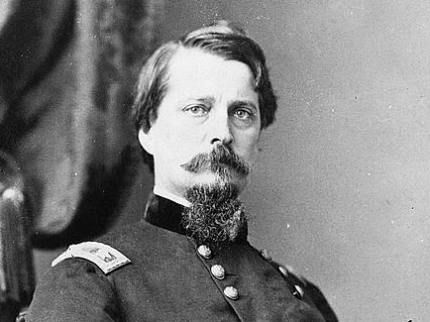
[3] Ibid. Coddinton, The Gettysburg Campaign, A Study in Command p. 263

[4] Dowdy, Clifford. Lee and His Men at Gettysburg: The Death of a Nation Skyhorse Publishing, New York 1986, originally published as Death of a NationKnopf, New York 1958 p.81

[5] Freeman, Douglas Southall, Lee’s Lieutenant’s a Study in Command, One volume abridgement by Stephen W Sears, Scribner, New York 1998 p.460

[6] Sears, Stephen W. Chancellorsville A Mariner Book, Houghton and Mifflin Company, Boston and New York 1996 p.51

[7] Foote, Shelby, The Civil War, A Narrative. Volume Two Fredericksburg to Meridian Random House, New York 1963 p.453

[8] Ibid. Dowdy, Lee and His Men at Gettysburg: The Death of a Nation p.79

[9] Ibid. Freeman Lee’s Lieutenant’s a Study in Command p.109

[10] Ibid. Dowdy, Lee and His Men at Gettysburg: The Death of a Nation p.88

[11] Ibid. Dowdy, Lee and His Men at Gettysburg: The Death of a Nation p.85

[12] Ibid. Dowdy, Lee and His Men at Gettysburg: The Death of a Nation p.86

[13] Ibid. Dowdy, Lee and His Men at Gettysburg: The Death of a Nation p.86

[14] Ibid. Freeman Lee’s Lieutenant’s a Study in Command p.512

[15] Ibid. Dowdy, Lee and His Men at Gettysburg: The Death of a Nation p.86

[16] Ibid. Dowdy, Lee and His Men at Gettysburg: The Death of a Nation p.87

[17] Ibid. Freeman Lee’s Lieutenant’s a Study in Command p.527

[18] Krick, Robert K. Three Confederate Disasters on Oak Ridge: Failures of Brigade Leadership on the First Day of Gettysburg in The First Day at Gettysburg edited by Gallagher, Gary W. Kent State University Press, Kent Ohio 1992 p.96

[19] Ibid. Krick. Three Confederate Disasters on Oak Ridge p.96

[20] Ibid. Freeman Lee’s Lieutenant’s a Study in Command p.527

[21] Ibid. Freeman Lee’s Lieutenant’s a Study in Command p.46

[22] Ibid. Dowdy, Lee and His Men at Gettysburg: The Death of a Nation p.87

[23] Ibid. Freeman Lee’s Lieutenant’s a Study in Command p.533

[24] Ibid. Krick. Three Confederate Disasters on Oak Ridge p.99

[25] Ibid. Krick. Three Confederate Disasters on Oak Ridge p.101

[26] Ibid. Freeman Lee’s Lieutenant’s a Study in Command p.136

[27] Guelzo, Allen C. Gettysburg: The Last Invasion Vintage Books a Division of Random House, New York 2013 p.131

[28] Tredeau, Noah Andre. Gettysburg: A Testing of Courage, Harper Collins Publishers, New York 2002 p.128

[29] Sears, Stephen W. Gettysburg. Houghton Mifflin Co. Boston and New York 2003 p.136

[30] Ibid. Tredeau Gettysburg: A Testing of Courage, p.129

[31] Ibid. Coddinton,. The Gettysburg Campaign, A Study in Command p. 263

[32] Ibid. Guelzo. Gettysburg: The Last Invasion p.131 This argument does have merit based on the considerations Guelzo lists but neither Hill, Heth or Lee make any mention of that need in their post battle reports.

[33] Ibid. Tredeau Gettysburg: A Testing of Courage, p.130

[34] Gallagher, Gary. Confederate Corps Leadership on the First Day at Gettysburg: A.P. Hill and Richard S. Ewell in a Difficult Debut in The First Day at Gettysburg edited by Gallagher, Gary W. Kent State University Press, Kent Ohio 1992 p.42

[35] Ibid. Tredeau Gettysburg: A Testing of Courage, p.135

[36] Ibid. Coddinton, The Gettysburg Campaign, A Study in Command pp. 263-264

[37] Foote, Shelby, The Civil War, A Narrative. Volume Two Fredericksburg to Meridian Random House, New York 1963 p.465

[38] Pfanz Harry W. Gettysburg: The First Day University of North Carolina Press, Chapel Hill and London 2001 p.27

[39] Ibid. Gallagher, Gary. Confederate Corps Leadership on the First Day at Gettysburg p.42

[40] Ibid. Pfanz. Gettysburg: The First Day p.27

[41] Ibid. Gallagher, Gary. Confederate Corps Leadership on the First Day at Gettysburg p.42

[42] Ibid. Guelzo. Gettysburg: The Last Invasion p.131

[43] Ibid. Coddinton, The Gettysburg Campaign, A Study in Command p. 264

[44] Ibid Pfanz Gettysburg: The First Day p.27

[45] Ibid. Coddinton, The Gettysburg Campaign, A Study in Command p. 264

[46] Ibid. Freeman Lee’s Lieutenant’s a Study in Command p. 563

[47] Ibid. Krick. Three Confederate Disasters on Oak Ridge p.94

1 Comment

Filed under civil war, History, leadership, Military

Counting the Cost: Gettysburg in Flesh and Blood

CW-GettysburgDead

“It is well that war is so terrible. We should grow too fond of it.” Robert E Lee

Too often we look at distant battles and campaigns in terms of strategy, operations, tactics, leadership and the weaponry employed. Likewise we might become more analytical and look at the impact of the battle or campaign in the context of the war it was fought,  or in the manner in which the tactics or weapons used revolutionized warfare. Sometimes in our more reflective moments we might look at individual bravery or sacrifice, often missing in our analysis is the cost in flesh and blood.

The words of Guy Sager in his classic work The Forgotten Soldier about World War Two on the Eastern front is lost on many that study war:

“Too many people learn about war with no inconvenience to themselves. They read about Verdun or Stalingrad without comprehension, sitting in a comfortable armchair, with their feet beside the fire, preparing to go about their business the next day, as usual…One should read about war standing up, late at night, when one is tired, as I am writing about it now, at dawn, while my asthma attack wears off. And even now, in my sleepless exhaustion, how gentle and easy peace seems!”
battleofgettysburg-devils-den

In an age where so few have served in the military and even few have seen combat in some way shape or form many who study war are comfortable experts who learn about war with no inconvenience to themselves. When I hear men and women, the pundits, politicians and preachers, that Trinity of Evil who constantly urge on others to go to war for causes, places or conflicts that they have little understanding of from the comfort of their living rooms or television studios I grow weary.

As a historian who also is a military chaplain who has seen war I struggle with what Sager said. Thus when I read military history, study and write about particular battles or engagements, or conduct staff rides as I will this weekend at Gettysburg the human cost is always present in my mind. The fact that I still suffer the effects of PTSD including night terrors and chronic insomnia keeps what I do in good focus, and prevents me from being a comfortable expert. Thus to do a staff ride, to walk the battlefield, especially in somewhat uncomfortable weather is a good thing. It connects us more in at least a small way to the men that fought there.

To walk a battlefield where tens of thousands of men were killed and wounded is for me a visit to hallowed ground. I have felt that at Waterloo, Verdun, Arnhem, Normandy, the West Wall, the Shuri Line, Antietam, Chancellorsville and of course the battlefield which I have visited more than any in my life, Gettysburg. There are times when I walk these fields that I am overcome with emotion. This I think is a good thing, for as an American who has family ties to the Civil War, Gettysburg in particular is hallowed ground.

nursingnationdivided-jpg-20130518
Sisters of Charity on the Battlefield

The past few weeks I have been doing a lot of reading and writing on Gettysburg as part of my preparation for the staff ride. In my position as a Chaplain who also teaches Ethics and will be teaching more military history I cannot be a cheerleader. I try to be dispassionate in how I teach and while dealing with big issues that my students need to face as Joint Staff Officers. Some of these men and women will probably become Flag or General Officers. Thus I do feel a certain responsibility to teach not only the strategy and other important military aspects, but also the cost in human lives and ethical considerations. I take my work seriously. Like James Longstreet I have to ask “Why do men fight who were born to be brothers?”

As the sun set on the evening of July 3rd 1863 the battered Army of Northern Virginia and the battered but victorious Army of the Potomac tended their wounds, buried their dead and prepared for what might happen next.

Gettysburg-Casualties1

Following the disastrous attack aimed at the Union center, what is commonly called “Pickett’s Charge” Lee and his surviving commanders prepared for an expected Union counter attack. However, George Meade, the commander of the Army of the Potomac who had correctly anticipated Lee’s assault decided not to gamble on a counter attack, though it was tempting. He knew too well the tenacity and skill of the Confederate commanders and soldiers on the defense and did not want to risk a setback that might give Lee another chance.

Nurse-Anne-Bell-cares-for-wounded-soldiers-600x366

The dead and wounded littered the battlefield. Field hospitals, little more than butcher shops where arms and legs were amputated by overworked surgeons and attendants while those with abdominal wounds that could not be easily repaired were made as comfortable as possible. Triage was simple. If a casualty was thought to have a reasonable chance at survival he was treated, if not they were set aside in little groups and allowed to die as peacefully as possible. Chaplains made their way around, Protestant’s ensuring that their soldiers “knew Jesus” and Catholics administering the Last Rites.

Corporal Horatio Chapman of the 20th Connecticut Volunteers wrote about the the July 3rd:

But in front of our breastworks, where the confederates were massed in large numbers, the sight was truly awful and appalling. The shells from our batteries had told with fearful and terrible effect upon them and the dead in some places were piled upon each other, and the groans and moans of the wounded were truly saddening to hear. Some were just alive and gasping, but unconscious. Others were mortally wounded and were conscious of the fact that they could not live long; and there were others wounded, how bad they could not tell, whether mortal or otherwise, and so it was they would linger on some longer and some for a shorter time-without the sight or consolation of wife, mother, sister or friend. I saw a letter sticking out of the breast pocket of one of the confederate dead, a young man apparently about twenty-four. Curiosity prompted me to read it. It was from his young wife away down in the state of Louisiana. She was hoping and longing that this cruel war would end and he could come home, and she says, “Our little boy gets into my lap and says, `Now, Mama, I will give you a kiss for Papa.’ But oh how I wish you could come home and kiss me for yourself.” But this is only one in a thousand. But such is war and we are getting used to it and can look on scenes of war, carnage and suffering with but very little feeling and without a shudder.”

Colonel William Oates of the 15th Alabama whose brave troopers assaulted Little Round Top on July 2nd wrote:

“My dead and wounded were nearly as great in number as those still on duty. They literally covered the ground. The blood stood in puddles in some places on the rocks; the ground was soaked with the blood of as brave men as ever fell on the red field of battle.”

Another Confederate soldier describe the scene west of the town on July 4th:

“The sights and smells that assailed us were simply indescribable-corpses swollen to twice their size, asunder with the pressure of gases and vapors…The odors were nauseating, and so deadly that in a short time we all sickened and were lying with our mouths close to the ground, most of us vomiting profusely.”
Elon_John_Farnsworth

Elon Farnsworth

Among the killed and wounded were the great and the small. John Reynolds who died on day one, Winfield Scott Hancock, the valiant commander of the Union II Corps wounded during Pickett’s Charge, “Mad” Dan Sickles, who had nearly brought disaster on the Federal lines by advancing to the Peach Orchard on July 2nd had a leg amputated. The Army of the Potomac lost a large number of brigade and regimental commanders including Strong Vincent, the young and gallant brigade commander who helped save Little Round Top, and young Elon Farnsworth, who had been promoted from Captain to Brigadier General just days before his death on the Cavalry field to the east of the town.

The Confederates suffered grievous losses. Divisional commanders like Dorsey Pender and Johnston Pettigrew were mortally wounded, John Bell Hood was severely wounded, Isaac Trimble, wounded and captured while Harry Heth was wounded. Casualties were even higher for commanders and the brigade and regiment level. The toll of brigade and regimental commanders  that were killed or wounded was fearful. In Picket’s division alone all three brigade commanders, Kemper, Armistead and Garnett were killed or wounded while 26 of 40 Field Grade officers were casualties. 46% (78 of 171) of the regiments of the Army of Northern Virginia suffered casualties at the command level. The Confederate casualties, especially among the best leaders were irreplaceable and Lee’s Army never recovered from the loss of seasoned leaders who were already in short supply.
wesleyculp

Wesley Culp

For some like Private Wesley Culp of the 2nd Virginia it was a final trip home. Culp had grown up in Gettysburg and took a job prior to the war in Virginia. In 1861 he enlisted to serve among his friends and neighbors. He was killed on the morning of July 3rd on Culp’s Hill on property owned by his uncle where he grew up and had learned to hunt.

One witness, Frank Haskell looked in at a field hospital in the Union II Corps area and wrote:

“The Surgeons with coats off and sleeves rolled up…are about their work,… “and their faces and clothes are spattered with blood; and though they look weary and tired, their work goes systematically and steadily on- how much and how long they have worked, the piles of legs, arms, feet, hands, fingers…partially tell.” (Gettysburg by Stephen W Sears, Mariner Books, Houghton Mifflin Company Boston, New York 2004 p.466)

All told between 46,000 and 51,000 Americans were killed or wounded during the three days of Gettysburg. Busey and Martin’s Regimental Strengths and Losses at Gettysburg lists the following casualty figures, other accounts list higher numbers. One also has to remember that many of the missing were killed but their bodies were simply never found.

Killed          wounded         missing         total
Union                    3,155          14,531             5,369           23,055
Confederate         4,708          12,693             5,830            23,231
Total                     7,863           27,224            11,199          46,286

To provide a reference in 8 years of war in Iraq the United States suffered fewer casualties than during the three days of Gettysburg. It was the bloodiest single battle in American history.

At the end of the war, Joshua Chamberlain, the hero of Little Round Top who was well acquainted with the carnage of war asked the most difficult questions:

“…men made in the image of God, marred by the hand of man, and must we say in the name of God? And where is the reckoning for such things? And who is answerable? One might almost shrink from the sound of his own voice, which had launched into the palpitating air words of order–do we call it?–fraught with such ruin. Was it God’s command that we heard, or His forgiveness that we must forever implore?”

May we pray for peace that such an event never take place again.

Peace

Padre Steve+

1 Comment

Filed under civil war, History, leadership, Military

Gettysburg: The Order of Battle

battle-of-gettysburg-war-is-hell-store

Note: This is a resource for those following my Gettysburg series and for my students that go with me on the Gettysburg Staff Ride. When the armies met at Gettysburg Lee’s Army of Norther Virginia had about 75,000-80,000 effectives, Meade’s Army of the Potomac had about 80,000-85,000 depending on the sources. This meant that they were relatively evenly matched in terms of manpower and that the battle came down to leadership, tactical decisions and strategic factors that were already in play by the time that the armies met at Gettysburg.

As a note of explanation the Confederate forces at the division and brigade level were named after their commander’s, or in some cases previous commanders. Confederate units were allocated to the Army from the various states, thus there is no Confederate “Regulars” as are shown in the Union order of battle. Union Corps were numbered as were the divisions and brigades in each corps. In some cases the brigades or divisions were referred to by the names of their commanders, but this was not consistent. Federal forces consisted of both Regular Army units as well as units allocated by the states. The reader can note the composition of each brigade in both the Union and Confederate armies to see from where the soldiers were recruited from.

So apart from that there is no story to tell tonight. Nothing in the way of commentary. This is simply a resource.
Have a great night.

Peace

Padre Steve+

confeorg

Army of Northern Virginia – General Robert Edward Lee, Commanding


ileerob001p1

General Staff: Chief of Staff and Inspector General: Col Robert H. Chilton; Chief of Artillery: BG William N. Pendleton; Medical Director: Dr. Lafayette Guild; Aide de Camp and Asst. Adjutant General: Maj Walter H. Taylor; Aide de Camp and Asst. Military Secretary: Maj Charles Marshall; Aide de Camp and Asst. Inspector General: Maj Charles S. Venable; Aide de Camp: Maj Thomas M. R. Talcott

General Headquarters
Escort: 39th Virginia Cavalry Battalion (companies A & C)

James_Longstreet

I Corps- Lt. Gen. James Longstreet, Commanding

Lafayette_McLaws

McLaws’ Division- MG Lafayette McLaws

Kershaw’s Brigade-BG Joseph B. Kershaw
2nd South Carolina, 3rd South Carolina, 7th South Carolina, 8th South Carolina,  15th South Carolina; 3rd South Carolina Battalion
Barksdale’s Brigade- BG William Barksdale (mw); Col Benjamin G. Humphreys
13th Mississippi, 17th Mississippi, 18th Mississippi, 21st Mississippi
Semmes’ Brigade- BG Paul J. Semmes (mw); Col Goode Bryan
10th Georgia, 50th Georgia, 51st Georgia, 53rd Georgia
Wofford’s Brigade- BG William T. Wofford
16th Georgia, 18th Georgia, 24th Georgia, Cobb’s (Georgia) Legion, Phillips’ (Georgia) Legion, 3rd Georgia Sharpshooter Battalion
Cabell’s Artillery Battalion- Col Henry C. Cabell; Maj Samuel P. Hamilton
1st North Carolina Artillery, Battery A, Pulaski (Georgia) Artillery, 1st Richmond Howitzers, Troup (Georgia) Artillery

GeorgePickett

Pickett’s Division- MG George E. Pickett

Garnett’s Brigade- BG Richard B. Garnett (k); Maj Charles S. Peyton
8th Virginia, 18th Virginia, 19th Virginia, 28th Virginia, 56th Virginia
Kemper’s Brigade- BG James L. Kemper (w&c); Col Joseph Mayo, Jr
1st Virginia, 3rd Virginia, 7th Virginia, 11th Virginia, 24th Virginia
Armistead’s Brigade- BG Lewis A. Armistead (mw&c); Ltc William White (w); Maj Joseph R. Cabell; Col William R. Aylett
9th Virginia, 14th Virginia, 38th Virginia, 53rd Virginia, 57th Virginia
Dearing’s Artillery Battalion- Maj James Dearing; Maj John P. W. Read (w)
Fauquier (Virginia) Artillery, Hampden (Virginia) Artillery, Richmond Fayette (Virginia) Artillery, Blount’s (Virginia) Battery

Lt._Gen._John_B._Hood

Hood’s Division- MG John Bell Hood (w); BG Evander M. Law

Law’s Brigade-BG Evander M. Law; Col James L. Sheffield
4th Alabama, 15th Alabama, 44th Alabama, 47th Alabama, 48th Alabama
Robertson’s Brigade- BG Jerome B. Robertson (w); Ltc Philip A. Work
3rd Arkansas, 1st Texas, 4th Texas, 5th Texas
Anderson’s Brigade- BG George T. Anderson (w); Ltc William Luffman (w)
7th Georgia, 8th Georgia, 9th Georgia,  11th Georgia,  59th Georgia
Benning’s Brigade- BG Henry L. Benning
2nd Georgia, 15th Georgia,  17th Georgia, 20th Georgia
Henry’s Artillery Battalion- Maj Mathias W. Henry; Maj John C. Haskell
Branch (North Carolina) Battery, Charleston German (South Carolina) Artillery, Palmetto (South Carolina) Light Artillery, Rowan North Carolina Artillery
Artillery Reserve- Col James B. Walton
Alexander’s Artillery Battalion- Col Edward P. Alexander (w)
Ashland (Virginia) Artillery, Bedford (Virginia) Artillery, Brooks (South Carolina) Artillery, Madison (Louisiana) Light Artillery, Richmond (Virginia) Battery, Bath (Virginia) Battery
Washington (Louisiana) Artillery Battalion- Maj Benjamin F. Eshleman
First Company, Second Company, Third Company, Fourth Company

Richard-Ewell

II Corps- Lt. Gen. Richard S. Ewell Commanding

??????????????????????????????????????????????????????????????????????????????????????????????

Early’s Division- MG Jubal A. Early
Hays’ Brigade- BG Harry T. Hays
5th Louisiana, 6th Louisiana, 7th Louisiana, 8th Louisiana, 9th Louisiana
Smith’s Brigade-BG William Smith
31st Virginia, 49th Virginia, 52nd Virginia
Hoke’s Brigade- Col Isaac E. Avery (mw); Col Archibald C. Godwin
6th North Carolina: Maj Samuel McD. Tate, 21st North Carolina: Col William W. Kirkland, Maj James Beall, 57th North Carolina: Col Archibald C. Godwin, Ltc Hamilton C. Jones
Gordon’s Brigade- BG John Brown Gordon
13th Georgia, 26th Georgia, 31st Georgia, 38th Georgia, 60th Georgia, 61st Georgia
Jones’ Artillery Battalion- Ltc Hilary P. Jones
Charlottesville (Virginia) Artillery, Courtney (Virginia) Artillery, Louisiana Guard Artillery, Staunton (Virginia) Artillery
Cavalry 35th Virginia Battalion: Ltc Elijah V. White

JohnsonE

Johnson’s Division- MG Edward Johnson

Steuart’s Brigade- BG George H. Steuart
1st Maryland Battalion, 1st North Carolina, 3rd North Carolina, 10th Virginia, 23rd Virginia, 37th Virginia
Stonewall Brigade- BG James A. Walker
2nd Virginia, 4th Virginia, 5th Virginia, 27th Virginia, 33rd Virginia
Nicholls’ Brigade-Col Jesse M. Williams
1st Louisiana, 2nd Louisiana, 10th Louisiana, 14th Louisiana, 15th Louisiana
Jones’ Brigade- BG John M. Jones (w); Ltc Robert H. Dungan
21st Virginia, 25th Virginia, 42nd Virginia, 44th Virginia, 48th Virginia, 50th Virginia
Andrews’ Artillery Battalion- Maj Joseph W. Latimer (mw); Cpt Charles I. Raine
1st Maryland Battery, Alleghany (Virginia) Artillery, Chesapeake (Maryland) Artillery, Lee (Virginia) Battery

robert-rodes

Rodes’ Division- MG Robert E. Rodes

Daniel’s Brigade-BG Junius Daniel
32nd North Carolina, 43rd North Carolina, 45th North Carolina, 53rd North Carolina, 2nd North Carolina Battalion
Doles’ Brigade-BG George P. Doles
4th Georgia, 12th Georgia, 21st Georgia, 44th Georgia
Iverson’s Brigade- BG Alfred Iverson, Jr.
5th North Carolina, 12th North Carolina, 20th North Carolina, 23rd North Carolina
Ramseur’s Brigade- BG Stephen D. Ramseur
2nd North Carolina, 4th North Carolina, 14th North Carolina, 30th North Carolina
Rodes’ (old) Brigade- Col Edward A. O’Neal
3rd Alabama, 5th Alabama, 6th Alabama, 12th Alabama, 26th Alabama
Carter’s Artillery Battalion-Ltc Thomas H. Carter
Jefferson Davis (Alabama) Artillery, King William (Virginia) Artillery, Morris (Virginia) Artillery, Orange (Virginia) Artillery

Artillery Reserve- Col J. Thompson Brown
First Virginia Artillery Battalion- Cpt Willis J. Dance
2nd Richmond (Virginia) Howitzers, 3rd Richmond (Virginia) Howitzers, Powhatan (Virginia) Artillery, Rockbridge (Virginia) Artillery, Salem (Virginia) Artillery
Nelson’s Artillery Battalion- Ltc William Nelson
Amherst (Virginia) Artillery, Fluvanna (Virginia) Artillery, Milledge’s Georgia Battery

general_a_p_hill

III Corps- Lt. Gen. Ambrose Powell Hill Commanding

Richard_H._Anderson

Anderson’s Division- MG Richard H. Anderson
Wilcox’s Brigade- BG Cadmus M. Wilcox
8th Alabama, 9th Alabama, 10th Alabama, 11th Alabama, 14th Alabama
Mahone’s Brigade- BG William Mahone
6th Virginia, 12th Virginia, 16th Virginia, 41st Virginia, 61st Virginia
Wright’s Brigade-BG Ambrose R. Wright; Col William Gibson; BG Ambrose R. Wright
3rd Georgia, 22nd Georgia, 48th Georgia, 2nd Georgia Battalion
Perry’s Brigade- Col David Lang
2nd Florida, 5th Florida, 8th Florida
Posey’s Brigade- BG Carnot Posey (w); Col. Nathaniel Harris
12th Mississippi, 16th Mississippi, 19th Mississippi, 48th Mississippi
Cutt’s Artillery Battalion- Maj John Lane
Company A, Company B, Company C

heth

Heth’s Division- MG Henry Heth (w); BG James J. Pettigrew (w)
Pettigrew’s Brigade-BG James J. Pettigrew; Col James K. Marshall (k); Maj John T. Jones (w)
11th North Carolina, 26th North Carolina, 47th North Carolina, 52nd North Carolina
Heth’s (old) Brigade- Col John M. Brockenbrough; Col Robert M. Mayo
40th Virginia, 47th Virginia, 55th Virginia, 22nd Virginia Battalion
Archer’s Brigade- BG James J. Archer (w&c); Col Birkett D. Fry (w&c); Ltc Samuel G. Shepard
13th Alabama, 5th Alabama Battalion, 1st Tennessee (Provisional Army), 7th Tennessee,  14th Tennessee
Davis’ Brigade- BG Joseph R. Davis (w)
2nd Mississippi, 11th Mississippi, 42nd Mississippi, 55th North Carolina
Garnett’s Artillery Battalion- Ltc John J. Garnett
Donaldsonville (Louisiana) Artillery, Huger (Virginia) Artillery, Lewis (Virginia) Artillery, Norfolk (Virginia) Blues Artillery

William_Dorsey_Pender

Pender’s Division-MG William D. Pender (mw); BG James H. Lane; MG Isaac R. Trimble (w&c); BG James H. Lane
McGowan’s Brigade-Col Abner M. Perrin
1st South Carolina (Provisional Army), 1st South Carolina Rifles, 12th South Carolina, 13th South Carolina, 14th South Carolina
Lane’s Brigade- BG James H. Lane; Col Clark M. Avery
7th North Carolina, 18th North Carolina, 28th North Carolina, 33rd North Carolina, 37th North Carolina
Thomas’ Brigade- BG Edward L. Thomas
14th Georgia, 35th Georgia, 45th Georgia, 49th Georgia
Scales’ Brigade- BG Alfred M. Scales (w); Ltc George T. Gordon; Col William L. J. Lowrance
13th North Carolina, 16th North Carolina, 22nd North Carolina, 34th North Carolina, 38th North Carolina
Poague’s Artillery Battalion- Maj William T. Poague
Albemarle (Virginia) Artillery, Charlotte (North Carolina) Artillery, Madison (Mississippi) Artillery, Brooke’s Virginia Battery
Artillery Reserve- Col Reuben L. Walker
McIntosh’s Artillery Battalion- Maj David G. McIntosh
Danville (Virginia) Artillery, Hardaway (Alabama) Artillery, 2nd Rockbridge (Virginia) Artillery, Johnson’s Virginia Battery
Pegram’s Artillery Battalion- Maj William R. J. Pegram; Cpt Ervin B. Brunson
Crenshaw (Virginia) Battery, Fredericksburg (Virginia) Artillery, Letcher (Virginia) Artillery, Pee Dee (South Carolina) Artillery, Purcell (Virginia) Artillery

CWP015

Cavalry Division- Maj. Gen. James Ewell Brown Stuart
Hampton’s Brigade- BG Wade Hampton (w)
1st North Carolina, 1st South Carolina, 2nd South Carolina, Cobb’s (Georgia) Legion, Jeff Davis (Mississippi) Legion, Phillips (Georgia) Legion
Robertson’s Brigade (not present at Gettysburg) BG Beverly H. Robertson
4th North Carolina, 5th North Carolina
Fitzhugh Lee’s Brigade- BG Fitzhugh Lee
1st Maryland Battalion, 1st Virginia, 2nd Virginia, 3rd Virginia, 4th Virginia, 5th Virginia
Jenkins’ Brigade- BG Albert G. Jenkins (w); Col Milton J. Ferguson
14th Virginia, 16th Virginia, 17th Virginia, 34th Virginia Battn., 36th Virginia Battn., Jackson’s (Virginia) Battery
William H. F. (Rooney) Lee’s Brigade- Col John R. Chambliss, Jr.
2nd North Carolina Cavalry, 9th Virginia, 10th Virginia, 13th Virginia
Jones’ Brigade- BG William E. Jones
6th Virginia, 7th Virginia, 11th Virginia
Stuart’s Horse Artillery- Maj Robert F. Beckham
Breathed’s (Virginia) Battery, Chew’s (Virginia) Battery, Griffin’s (Maryland) Battery Hart’s (South Carolina) Battery, McGregor’s (Virginia) Battery, Moorman’s (Virginia) Battery
Imboden’s Command- BG John D. Imboden
18th Virginia, 62nd Virginia, McNeill’s Company (Virginia), Staunton (Virginia) Battery

Union Order of Battle
unionorg

general-george-meade

Army of the Potomac – Major General George Gordon Meade, Commanding


General Staff: Chief of Staff: Maj. Gen. Daniel Butterfield, Chief of Artillery: Brig. Gen. Henry J. Hunt, Medical Director: Maj Jonathan Letterman, Chief of Engineers: Brig. Gen. Gouverneur K. Warren, Bureau of Military Information: Col. George H. Sharpe
Command of the Provost Marshal General: Brig. Gen. Marsena R. Patrick
93rd New York: Col. John S. Crocker, 8th United States (8 companies): Capt. Edwin W. H. Read, 2nd Pennsylvania Cavalry: Col. R. Butler Price, 6th Pennsylvania Cavalry (Companies E&I): Capt. James Starr, Regular cavalry
Engineer Brigade: Brig. Gen. Henry W. Benham
15th New York (3 companies): Maj Walter L. Cassin, 50th New York: Col. William H. Pettes, U.S. Battalion: Capt. George H. Mendell

GenJFRenyolds

I Corps- Maj. Gen. John F. Reynolds (k)

JSWadsworthBGenleft

First Division- Brig. Gen. James S. Wadsworth
1st  Brigade (The Iron Brigade)-Brig. Gen. Solomon Meredith (w); Col.. William W. Robinson
19th Indiana, 24th Michigan, 2nd Wisconsin, 6th Wisconsin, 7th Wisconsin
2nd Brigade- Brig. Gen. Lysander Cutler
7th Indiana, 76th New York, 84th New York (14th Militia), 95th New York, 147th New York, 56th Pennsylvania (9 companies)

john_Cleveland_Robinson

Second Division- Brig. Gen. John C. Robinson
1st Brigade- Brig. Gen. Gabriel R. Paul (w); Col. Samuel H. Leonard (w); Col. Adrian R. Root (w&c); Col. Richard Coulter (w); Col. Peter Lyle; Col. Richard Coulter
16th Maine, 13th Massachusetts, 94th New York, 104th New York, 107th Pennsylvania
2nd Brigade-Brig. Gen. Henry Baxter
12th Massachusetts, 83rd New York (9th Militia), 97th New York, 11th Pennsylvania, 88th Pennsylvania, 90th Pennsylvania

abner-doubleday

Third Division- Maj. Gen. Abner Doubleday; Brig. Gen. Thomas A. Rowley; Maj. Gen. Abner Doubleday
1st Brigade- Col. Chapman Biddle; Brig. Gen. Thomas A. Rowley; Col. Chapman Biddle
80th New York (20th Militia), 121st Pennsylvania, 142nd Pennsylvania, 151st Pennsylvania
2nd Brigade-Col. Roy Stone (w); Col. Langhorne Wister (w); Col. Edmund L. Dana
143rd Pennsylvania, 149th Pennsylvania, 150th Pennsylvania
3rd Brigade- Brig. Gen. George J. Stannard (w); Col. Francis V. Randall
13th Vermont, 14th Vermont, 16th Vermont
Artillery Brigade- Col. Charles S. Wainwright
Maine Light, 2nd Battery (B), Maine Light, 5th Battery (E), 1st New York Light, Batteries E&L, 1st Pennsylvania Light, Battery B, 4th United States, Battery B

HancockWinfield_teaser

II Corps- Maj. Gen. Winfield S. Hancock (w); Brig. Gen. John Gibbon; Brig. Gen. William Hays

John_C._Caldwell

First Division- Brig. Gen.  John C. Caldwell
1st Brigade- Col. Edward E. Cross (mw); Col. H. Boyd McKeen
5th New Hampshire, 61st New York, 81st Pennsylvania , 148th Pennsylvania
2nd Brigade (The Irish Brigade) – Col. Patrick Kelly
28th Massachusetts, 63rd New York (2 companies),69th New York (2 companies), 88th New York (2 companies), 116th Pennsylvania (4 companies)
3rd Brigade-Brig. Gen. Samuel K. Zook (mw); Lt. Col.. Charles G. Freudenberg (w); Col. Richard P. Roberts (k); Lt. Col.. John Fraser
52nd New York, 57th New York, 66th New York, 140th Pennsylvania
4th Brigade- Col. John R. Brooke (w)
27th Connecticut (2 companies), 2nd Delaware, 64th New York, 53rd Pennsylvania, 145th Pennsylvania (7 companies)

john_Gibbon

Second Division- Brig. Gen. John Gibbon (w); Brig. Gen. William Harrow
1st Brigade- Brig. Gen. William Harrow; Col. Francis E. Heath
19th Maine, 15th Massachusetts, 1st Minnesota, 82nd New York (2nd Militia)
2nd Brigade- Brig. Gen. Alexander S. Webb (w)
69th Pennsylvania, 71st Pennsylvania, 72nd Pennsylvania, 106th Pennsylvania
3rd Brigade- Col. Norman J. Hall
19th Massachusetts, 20th Massachusetts, 7th Michigan, 42nd New York, 59th New York (4 companies)
Unattached: Massachusetts Sharpshooters, 1st Company

Daniel_Edgar_Sickles

III Corps- Maj. Gen. Daniel E. Sickles (w); Maj. Gen. David B. Birney

David_B._Birney_-_Brady-Handy

First Division- Maj. Gen. David B. Birney; Brig. Gen. J. H. Hobart Ward (w)
1st Brigade- Brig. Gen. Charles K. Graham (w&c); Col. Andrew H. Tippin; Col. Henry J. Madill
57th Pennsylvania (8 companies), 63rd Pennsylvania, 68th Pennsylvania, 105th Pennsylvania, 114th Pennsylvania, 141st Pennsylvania
2nd Brigade- Brig. Gen. J. H. Hobart Ward; Col. Hiram Berdan
20th Indiana, 3rd Maine, 4th Maine, 86th New York, 124th New York, 99th Pennsylvania, 1st United States Sharpshooters, 2nd United States Sharpshooters (8 companies)
3rd Brigade- Col. P. Régis de Trobriand
17th Maine, 3rd Michigan, 5th Michigan, 40th New York, 110th Pennsylvania (6 companies)

HumphreysA

Second Division- Brig. Gen. Andrew A. Humphreys
1st Brigade- Brig. Gen. Joseph B. Carr (w)
1st Massachusetts, 11th Massachusetts, 16th Massachusetts, 12th New Hampshire, 11th New Jersey,26th Pennsylvania
2nd Brigade-Col. William R. Brewster
70th New York, 71st New York, 72nd New York, 73rd New York, 74th New York, 120th New York
3rd Brigade-Col. George C. Burling
2nd New Hampshire, 5th New Jersey, 6th New Jersey, 7th New Jersey, 8th New Jersey,115th Pennsylvania
Artillery Brigade-Capt. George E. Randolph (w); Capt. A. Judson Clark
1st New Jersey Light, Battery B, 1st New York Light, Battery D, New York Light, 4th Battery, 1st Rhode Island Light, Battery E, 4th United States, Battery K

George_Sykes_and_staff_-_Brady-Handy

V Corps-Maj. Gen. George Sykes

James_Barnes

First Division- Brig. Gen. James Barnes (w)
1st Brigade-Col. William S. Tilton
18th Massachusetts, 22nd Massachusetts, 1st Michigan, 118th Pennsylvania
2nd Brigade-Col. Jacob B. Sweitzer
9th Massachusetts, 32nd Massachusetts, 4th Michigan, 62nd Pennsylvania
3rd Brigade-Col. Strong Vincent (mw); Col. James C. Rice
20th Maine, 16th Michigan, 44th New York, 83rd Pennsylvania

2.-Brig.-Gen.-Romeyn-B.-Ayres

Second Division-Brig. Gen. Romeyn B. Ayres
1st Brigade- Col. Hannibal Day
3rd United States (Cos. B, C, E, G, I and K), 4th United States (Cos. C, F, H and K), 6th United States (Cos. D, F, G, H and I), 12th United States (Cos. A, B, C, D and G, 1st Bn. and Cos. A, C and D, 2nd Bn.), 14th United States (Cos. A, B, D, E, F and G, 1st Bn. and Cos. F and G, 2nd Bn.)
2nd Brigade-Col. Sidney Burbank
2nd United States (Cos. B, C, F, H, I and K), 7th United States (Cos. A, B, E and I), 10th United States (Cos. D, G and H), 11th United States (Cos. B, C, D, E, F and G),17th United States (Cos. A, C, D, G and H, 1st Bn. and Cos. A and B, 2nd Bn.)
3rd Brigade-Brig. Gen. Stephen H. Weed (k); Col. Kenner Garrard
140th New York, 146th New York, 91st Pennsylvania, 155th Pennsylvania
Third Division-Brig. Gen. Samuel W. Crawford
1st Brigade-Col. William McCandless
1st Pennsylvania Reserves (9 companies), 2nd Pennsylvania Reserves, 6th Pennsylvania Reserves,13th Pennsylvania Reserves
2nd Brigade (not present—assigned to Washington defenses)
3rd Brigade-Col. Joseph W. Fisher
5th Pennsylvania Reserves, 9th Pennsylvania Reserves, 10th Pennsylvania Reserves, 11th Pennsylvania Reserves, 12th Pennsylvania Reserves (9 companies)
Artillery Brigade-Capt. Augustus P. Martin
Massachusetts Light, 3rd Battery, 1st New York Light, Battery C, 1st Ohio Light, Battery L, 5th United States, Battery D, 5th United States, Battery I

John_Sedgwick

VI Corps-Maj. Gen. John Sedgwick

HGWright

First Division-Brig. Gen. Horatio G. Wright
1st Brigade-Brig. Gen. Alfred T. A. Torbert
1st New Jersey, 2nd New Jersey, 3rd New Jersey, 15th New Jersey
2nd Brigade-Brig. Gen. Joseph J. Bartlett; Col. Emory Upton
5th Maine, 121st New York, 95th Pennsylvania, 96th Pennsylvania
3rd Brigade-Brig. Gen. David A. Russell
6th Maine, 49th Pennsylvania (4 companies), 119th Pennsylvania, 5th Wisconsin

Provost Guard: 4th New Jersey (3 companies): Capt. William R. Maxwell

albion-howe-111-b-4713

Second Division- Brig. Gen. Albion P. Howe
2nd Brigade-Col. Lewis A. Grant
2nd Vermont, 3rd Vermont, 4th Vermont, 5th Vermont, 6th Vermont
3rd Brigade-Brig. Gen. Thomas H. Neill
7th Maine (6 companies), 33rd New York (detachment), 43rd New York, 49th New York, 77th New York, 61st Pennsylvania

NewtonJohn

Third Division-Maj. Gen. John Newton; Brig. Gen. Frank Wheaton
1st Brigade-Brig. Gen. Alexander Shaler
65th New York, 67th New York, 122nd New York, 23rd Pennsylvania, 82nd Pennsylvania
2nd Brigade-Col. Henry L. Eustis
7th Massachusetts, 10th Massachusetts, 37th Massachusetts, 2nd Rhode Island.
3rd Brigade-Brig. Gen. Frank Wheaton; Col. David J. Nevin
62nd New York, 93rd Pennsylvania, 98th Pennsylvania,139th Pennsylvania
Artillery Brigade-Col. Charles H. Tompkins
Massachusetts Light, 1st Battery, New York Light, 1st Battery, New York Light, 3rd Battery, 1st Rhode Island Light, Battery C, 1st Rhode Island Light, Battery G, 2nd United States, Battery D, 2nd United States, Battery G, 5th United States, Battery F

Oliver-Otis-Howard-9345101-1-402

XI Corps-Maj. Gen. Oliver O. Howard; Maj. Gen. Carl Schurz

Francis_C._Barlow

First Division-Brig. Gen. Francis C. Barlow (w); Brig. Gen. Adelbert Ames
1st Brigade-Col. Leopold von Gilsa
1st New York (9 companies), 54th New York, 68th New York, 153rd Pennsylvania
2nd Brigade-Brig. Gen. Adelbert Ames; Col. Andrew L. Harris
17th Connecticut, 25th Ohio, 75th Ohio, 107th Ohio

Adolph_von_Steinwehr

Second Division-Brig. Gen. Adolph von Steinwehr
1st Brigade-Col. Charles R. Coster
134th New York, 154th New York, 27th Pennsylvania, 73rd Pennsylvania
2nd Brigade  Col. Orland Smith
33rd Massachusetts, 136th New York, 55th Ohio, 73rd Ohio

schurz

Third Division-Maj. Gen. Carl Schurz; Brig. Gen. Alexander Schimmelfennig; Maj. Gen. Carl Schurz
1st Brigade-Brig. Gen. Alexander Schimmelfennig; Col. George von Amsberg
82nd Illinois, 45th New York, 157th New York, 61st Ohio, 74th Pennsylvania
2nd Brigade-Col. Wladimir Krzyzanowski
58th New York, 19th New York, 82nd Ohio, 75th Pennsylvania, 26th Wisconsin
Artillery Brigade-Maj Thomas W. Osborn
1st New York Light, Battery I, New York Light, 13th Battery, 1st Ohio Light, Battery I, 1st Ohio Light, Battery K, 4th United States, Battery G

Henry_Warner_Slocum

XII Corps-Maj. Gen. Henry W. Slocum; Brig. Gen. Alpheus S. Williams

alpheus-williams1

First Division-Brig. Gen. Alpheus S. Williams; Brig. Gen. Thomas H. Ruger
1st Brigade-Col. Archibald L. McDougall
5th Connecticut, 20th Connecticut, 3rd Maryland, 123rd New York, 145th New York, 46th Pennsylvania
3rd Brigade-Brig. Gen. Thomas H. Ruger; Col. Silas Colgrove
27th Indiana, 2nd Massachusetts, 13th New Jersey, 107th New York, 3rd Wisconsin

General-John-Geary

Second Division-Brig. Gen. John W. Geary
1st Brigade-Col. Charles Candy
5th Ohio, 7th Ohio, 29th Ohio, 66th Ohio, 28th Pennsylvania, 147th Pennsylvania (8 companies)
2nd Brigade-Col. George A. Cobham, Jr.; Brig. Gen. Thomas L. Kane
29th Pennsylvania, 109th Pennsylvania, 111th Pennsylvania
3rd Brigade-Brig. Gen. George S. Greene (w)
60th New York, 78th New York, 102nd New York, 137th New York, 149th New York
Lockwood’s Brigade-Brig. Gen. Henry H. Lockwood
1st Maryland, Potomac Home Brigade, 1st Maryland, Eastern Shore,150th New York
Artillery Brigade-Lt Edward D. Muhlenberg
1st New York Light, Battery M, Pennsylvania Light, Battery E,4th United States, Battery F  5th United States, Battery K

pleasonton

Cavalry Corps -Maj. Gen. Alfred Pleasonton

buford

First Division-Brig. Gen. John Buford
1st Brigade-Col. William Gamble
8th Illinois, 12th Illinois (4 cos.) & 3rd Indiana (6 cos.), 8th New York
2nd Brigade-Col. Thomas Devin
6th New York (6 companies), 9th New York, 17th Pennsylvania, 3rd West Virginia, Companies A and C
Reserve Brigade-Brig. Gen. Wesley Merritt
6th Pennsylvania, 1st United States, 2nd United States, 5th United States, 6th United States

dmgregg

Second Division-Brig. Gen. David Gregg
1st Brigade-Col. John B. McIntosh
1st Maryland (11 companies), Purnell (Maryland) Legion, Company A, 1st Massachusetts, 1st New Jersey, 1st Pennsylvania, 3rd Pennsylvania, 3rd Pennsylvania Heavy Artillery, Section, Battery H
3rd Brigade-Col. John I. Gregg
1st Maine (10 companies), 10th New York, 4th Pennsylvania, 16th Pennsylvania

Kilpatrick-Judson(1)

Third Division-Brig. Gen. Judson Kilpatrick
1st Brigade-Brig. Gen. Elon J. Farnsworth (k); Col. Nathaniel P. Richmond
5th New York, 18th Pennsylvania, 1st Vermont, 1st West Virginia (10 companies)
2nd Brigade-Brig. Gen. George A. Custer
1st Michigan, 5th Michigan, 6th Michigan, 7th Michigan: (10 companies)
Horse Artillery
1st Brigade-Capt. James M. Robertson
9th Michigan Battery, 6th New York Battery,2nd United States, Batteries B and L, 2nd United States, Battery M, 4th United States, Battery E
2nd Brigade-Capt. John C. Tidball
1st United States, Batteries E and G, 1st United States, Battery K, 2nd United States, Battery A

Robert_O_Tyler

Artillery Reserve-Brig. Gen. Robert O. Tyler, Capt. James M. Robertson

1st Regular Brigade-Capt. Dunbar R. Ransom
1st United States, Battery H, 3rd United States, Batteries F and K, 4th United States, Battery C, 5th United States, Battery C
1st Volunteer Brigade-Lt. Col.. Freeman McGilvery
Massachusetts Light, 5th Battery (E), Massachusetts Light, 9th Battery, New York Light, 15th Battery, Pennsylvania Light, Batteries C and F
2nd Volunteer Brigade-Capt. Elijah D. Taft
1st Connecticut Heavy, Battery B, 1st Connecticut Heavy, Battery M, Connecticut Light, 2nd Battery. New York Light, 5th Battery
3rd Volunteer Brigade-Capt. James F. Huntington
New Hampshire Light, 1st Battery, 1st Ohio Light, Battery H, 1st Pennsylvania Light, Batteries F and G, West Virginia Light, Battery C
4th Volunteer Brigade-Capt. Robert H. Fitzhugh
Maine Light, 6th Battery, Maryland Light, Battery A, New Jersey Light, 1st Battery, 1st New York Light, Battery G, 1st New York Light, Battery K
Train Guard: 4th New Jersey Infantry (7 companies)

Leave a comment

Filed under civil war, History, Military

Gettysburg at 150 Day One: Lee Blunders into Battle

800px-First_day_at_gettysburg

Pender’s Brigade on Day One

The Army of Northern Virginia commanded by Robert E Lee was now deep in Union territory and nearly blind to the location of the Federal Army of the Potomac. On the 30th advanced units of Dick Ewell’s Second Corps had gone nearly as far as Harrisburg while most of the Army was on the road around Chambersburg and Cashtown. Lee’s Cavalry Division under the command of J.E.B. Stuart was far away engaging Union Cavalry around Hanover and not in position to report on Union troop movements. General A.P. Hill sent Johnston Pettigrew’s Brigade of Harry Heth’s Division to Gettysburg on the 30th but Pettigrew observing the Federal cavalry of Buford’s 1st Cavalry Division take up positions on Seminary Ridge declined to engage and reported the Federal concentration to Hill.

As reports from the spy Harrison came to Lee and Longstreet Lee began to concentrate the Army around Cashtown. However the morning of July Hill ordered Harry Heth’s division to move on Gettysburg without the benefit of cavalry support or reconnaissance believing that the troops reported by Pettigrew could be nothing more than local militia. His leading brigades under Brigadier General James Archer and Joseph Davis took heavy casualties and soon Heth became embroiled in a fight with Buford’s cavalry and lead elements of the Federal 1st Corps under the command of Major General John Reynolds.

Gettysburg_Battle_Map_Day1

Gettysburg Day One (Map by Hal Jespersen, http://www.posix.com/Com)

Lee was surprised by the engagement and though he chastised Heth for getting involved committed his army to the attack. Reynolds was killed early in the engagement but the fight was bitter, the Iron Brigade exacted a fearful toll on Archer and Davis’s brigades. The attack by Hill’s 3rd Corps was helped immensely when elements of Ewell’s 2nd Corps arrived on the right flank of the Federal XI Corps, forcing the Federal troops to withdraw through Gettysburg and up to Cemetery Ridge. Ewell’s arrival was fortuitous because it tilted the balance to Lee, but the advantage was short lived.

z_schmehl_leedeliberates

Lee Deliberates Heth’s Advance – Gettysburg by Bradley Schmehl

 Ewell failed to press the attack on Cemetery Ridge or Culp’s Hill while Federal forces were still disorganized, despite the repeated entreaties of Major General Isaac Trimble who was with him. The delay would be fatal to Lee’s intentions as Lee decided to give battle at Gettysburg, ignoring General Longstreet’s plea to disengage take up a favorable position between Gettysburg and Washington DC and force the Army of the Potomac to attack.

doncemeteryhilljuly1_zps512a40fa

Don Troiani’s Painting of Hancock taking Command on Cemetery Hill on Day One

The Army of Northern Virginia came very close to sweeping Federal forces from the field on July 1st in spite of Lee’s lack of planning and clear commanders intent. That much is clear. His orders to Ewell, to take the high ground “if practicable” we interpreted by Ewell in a manner that he determined not to be practicable, so the advanced Federal corps under the command of Major General Winfield Scott Hancock were able to regroup, dig in and be reinforced by the rest of the Army.

Whether Lee intended to engage the Army of the Potomac at Gettysburg so early in a campaign where his multiple and contradictory strategic aims and lack of clear commander’s intent to his subordinate commanders created confusion is debated. Much of the controversy comes from Lee’s own correspondence which indicates that he might have not fully understood his own intentions. Some correspondence indicates that Lee desired to avoid a general engagement as long as possible while other accounts indicate that he wanted an early and decisive engagement. The controversy was stoked after the war by Lee’s supporters, particular his aides Taylor and Marshal, and Longstreet’s supporters.

Isaac Trimble, traveling with Lee at the beginning of the invasion of Pennsylvania recored that Lee told him:

“We have again outmaneuvered the enemy, who even now does not know where we are or what our designs are. Our whole army will be in Pennsylvania day after tomorrow, leaving the enemy far behind and obliged to follow by forced marches. I hope with these advantages to accomplish some single result and to end the war, if Providence favors us.” (Glenn Tucker, High Tide at Gettysburg (Indianapolis: The Bobbs-Merrill Co.: 1958), p. 24.)

The vagueness of Lee’s instructions to his commanders, many of whom were occupying command positions under him for the first time and were unfamiliar with his command style led to confusion. Where Stonewall Jackson might have understood Lee’s intent, even where Lee issued vague or contradictory orders, many others including Hill and Ewell did not. Lee did not change his command style to accommodate his new commanders and that lack of flexibility on Lee’s part proved fatal to his aims in the campaign.

xi-corps-holds-cemetery-hill

The vagueness of Lee’s intent was demonstrated throughout the campaign and was made worse by the fog of war. Day one ended with a significant tactical victory for Lee’s army but without a decisive result which would be compounded into a strategic defeat by Lee’s subsequent decisions on the 2nd and 3rd of July.

Until tomorrow,

Peace

Padre Steve+

Leave a comment

Filed under civil war, History, Military