Tag Archives: leadership

Honesty and Leadership: The Example of Field Marshal William Slim

Field Marshal William Joseph Slim, 1st Viscount Slim, KG, GCB, GCMG, GCVO, GBE, DSO, MC (6 August 1891 - 14 December 1970).   Photo possibly taken in Burma where in March 1942 he was given command of 1st Burma Corps (or BurCorps) which was being attacked by the Japanese.  He was a British military commander and the 13th Governor-General of Australia. He fought in both World War I and World War II and was wounded in action three times during his career.  ©TopFoto

Field Marshal William Slim

“Leadership is of the spirit, compounded of personality and vision.”

Friends of Padre Steve’s World,

I have been thinking about leadership and moral courage lately and came to remember a British general from the Second World War whose example of both is all to often forgotten even in military circles. I hope you enjoy.

Peace

Padre Steve+

Field Marshal William Slim was one of the most brilliant commanders of the Second World War. He gets little press and there are not a lot of books written about him. Slim was one of those unique officers who served on the periphery of the British Empire as an office in the British Indian Army. He was a clerk in a factory who attended the University of Birmingham and commissioned as a reserve officer through its reserve officer training course; he did not attend Sandhurst, the British equivalent of the U.S. Military Academy.

Slim was commissioned in 1914 and assigned to the Indian Army. He served at Gallipoli and Mesopotamia in the First World War and was wounded three times. At Gallipoli Slim saw the immense waste of human life which led him in his future commands never to sacrifice his men in senseless operations. Between the wars he served in India with the Gurkhas and also spent a significant time as a student and an instructor. His career between the was was marked by slow promotion, but eventually he was promoted to Lieutenant Colonel and given command of a battalion at the age of 46. One of his students remembered:

“We had a most able and later highly distinguished batch of instructors and we were all of the opinion that Slim was one of the best. He tackled every subject in a down-to-earth manner and presented it in a simple, straightforward language. He also had the knack of making any lecture interesting by introducing enough of the personal side and by including a sufficient degree of humour. In the Mess he was always natural, affable and tremendously interesting on all kinds of subjects other than military. I don’t think I have ever learned more from anybody.”

However, during the war a man who many would have considered an outlier rose from battalion to brigade and then Division command and became a general through wartime promotions all the while remaining a Colonel on the regular list as he served in the British campaign against the Italians in the Sudan and the invasion of Iraq.

When Britain’s fortunes were at war were at their lowest point, and British forces were collapsing against the relentless Japanese advance in Burma Slim was called upon to stem the tide. He was assigned to command the Burma Corps which eventually became the British 14th Army. The army was sometimes better known as the “Forgotten Army.” He took command and had to conduct a 900 mile withdraw under desperate conditions. His Army was emaciated, poorly equipped and beaten, but his leadership during that retreat saved his army and kept their spirit alive.

But it was his indomitable leadership that turned the Army around, stopped the Japanese advance and then conducted an amazing campaign to drive the Japanese out of Burma. But unlike many commanders, Slim was honest about his own mistakes and shortcomings. In recounting one battle he noted:

“Like so many generals whose plans have gone wrong I could find plenty of excuses but only one reason–myself….”

Slim has some of the most brilliant insights into leadership and I am just going to throw out one here.

“Morale is a state of mind. It is that intangible force which will move a whole group of men to give their last ounce to achieve something, without counting the cost to themselves; that makes them feel they are part of something greater than themselves. If they are to feel that, their morale must, if it is to endure–and the essence of morale is that it should endure–have certain foundations. These foundations are spiritual, intellectual, and material, and that is the order of their importance. Spiritual first, because only spiritual foundations can stand real strain. Next intellectual, because men are swayed by reason as well as feeling. Material last–important, but last–because the very highest kinds of morale are often met when material conditions are lowest.”

This is something that is really important and something that I think that we have lost all sense of in the West and why we struggle against insurgents who are inferior to us in every military aspect. We focus on the material first, technology has become our God, and it is our answer to everything. Likewise we often fail to emphasize the intellectual aspects of the military profession, the need to keep an open mind, to carefully examine doctrine and if it is not working to change it. Sadly, we all to often emphasize formulas, templates or abstract principles that that are hard to apply in the real world.

Likewise we often adhere to doctrines that do not apply to the wars that we are currently engaged, or which might break out. Instead policy makers and strategists often try make the reality fit our templates rather than taking the time to really learn, and much of what we have to learn is not related to tactics or technology. With all our technological marvels we have also lost much of the sense of personal leadership where senior leaders actually know their soldiers.

Slim understood the reality of these leadership principles because he took the time to know his soldiers. Because of the, his troops, in spite of the incredible hardships that they faced, knew that Slim understood them and would not sacrifice them needlessly. Slim trained his men hard in the tactics that would be needed to drive the Japanese from Burma and his leadership would pay off. His ability to hold leaders accountable for the welfare of their soldiers and his ability to relate to all kinds of soldiers made him one of the most unique and successful commanders of the war.

After the war Slim retired from active duty, but in 1948 Slim was called out of retirement by Prime Minister Clement Atlee to replace Field Marshal Bernard Montgomery as the Chief of the Imperial General Staff. He was the first officer from the Indian Army to hold that position, and indeed a rare feat for a man who began his career as a factory clerk.

Peace

Padre Steve+

1 Comment

Filed under History, leadership, Military, world war one, world war two in the pacific

A Name Change to Reflect Reality: Musings of a Progressive Realist in Wonderland


Friends of Padre Steve’s World,

The World is a bit different today than it was when I first began to blog here in 2009, and my world is also different. When I started writing here I named the site Padre Steve’s World: Musings of a Passionate Moderate. After the 2012 elections I decided that the title needed a change to reflect my still moderate, but ever growing liberal and progressive philosophy. Over the past year as I have watched friends as well as the country as a whole drift towards more ideological polarity, I realized that even as a progressive, and a passionate one at that that I was not an ideologue, nor have I ever been. 

A few weeks ago I was reading B.H. Liddell-Hart’s biography of General William Tecumseh Sherman and I was struck by the title of the chapter describing Sherman’s warnings to people in the South and the North of what secession and civil war would bring to the country. His predictions turned out to be more correct than almost anyone of his time, others such as Abraham Lincoln and Ulysses S. Grant would within the year begin to come to Sherman’s point of view, but many people and leaders in both the North and South were much too slow to comprehend his warning. The chapter was titled “A Realist in Wonderland.” As I reflected in it, and then looked back to the articles I have been writing about the rapidly changing political climate and polarization in the country that my views are much like Sherman, I am much more pragmatic than many people in the country. I do have my passionate beliefs, and yes though I am a liberal and progressive, I am still moderate. But my moderatation is better described as realism. I have a hard time being arguments from either side of the political and ideological spectrum that are not grounded in political, economic, social, technological, diplomatic, cultural, or military reality, as well as human nature. Likewise, I do not jump on the bandwagon of any movement without looking at it in context of what it will mean for all of us. 

Since I am a historian, a theologian with a fair amount of training in psychology and sociology, coupled with the fact  and I am a man who has spent over 90% of my adult life in the military and 86% of that time as an officer I am a consummate realist. 

Sadly, in today’s world, realism is not often practiced. Ideologues on all sides of the political spectrum fan passionate hatred of all that oppose them, even in minor details. Politicians of all stripes promise things that cannot be delivered because they are not based in political or economic realities, compromise and cooperation is shunned in favor of extreme positions than when examined seldom pass the muster of reality and their proponents seldom thing of the second, third, and fourth order effects of their policies if enacted. I think the recent Brexit is an example of that and what happens now will change the world. In some cases those changes may be good, in other realms bad, and some potentially disastrous. How those changes unfold, and what the consequences  will be, is dependent on all of us and who the political leaders that we elect deal with the issues, as well as the leaders of commerce and industry. 

In fact I would dare say that the United States today is as divided as it was in the mid to late 1850s and that our political parties are undergoing the same kind of disintegration as occurred to the Whigs and Democrats of that era, with new movements; some based on economics, some on the idea of emancipation and freedom, and some based on anti-immigrant racial and religious xenophobia arising. But I digress…

We can look to history to try to understand the nature of our situation, but what we become will be based on our human nature, and how we rise to the occasion. It will be a challenging time, and to get back to what I started with, I think that the change in the blog title is better descriptive of me and my views. 

Have a great day and I hope that you continue to enjoy what I post, learn from it, be challenged, and spread the word that there is a realist in wonderland.

Peace

Padre Steve+

1 Comment

Filed under leadership, philosophy, Political Commentary

The Road to Gettysburg: Meade Takes Command

general-george-meade

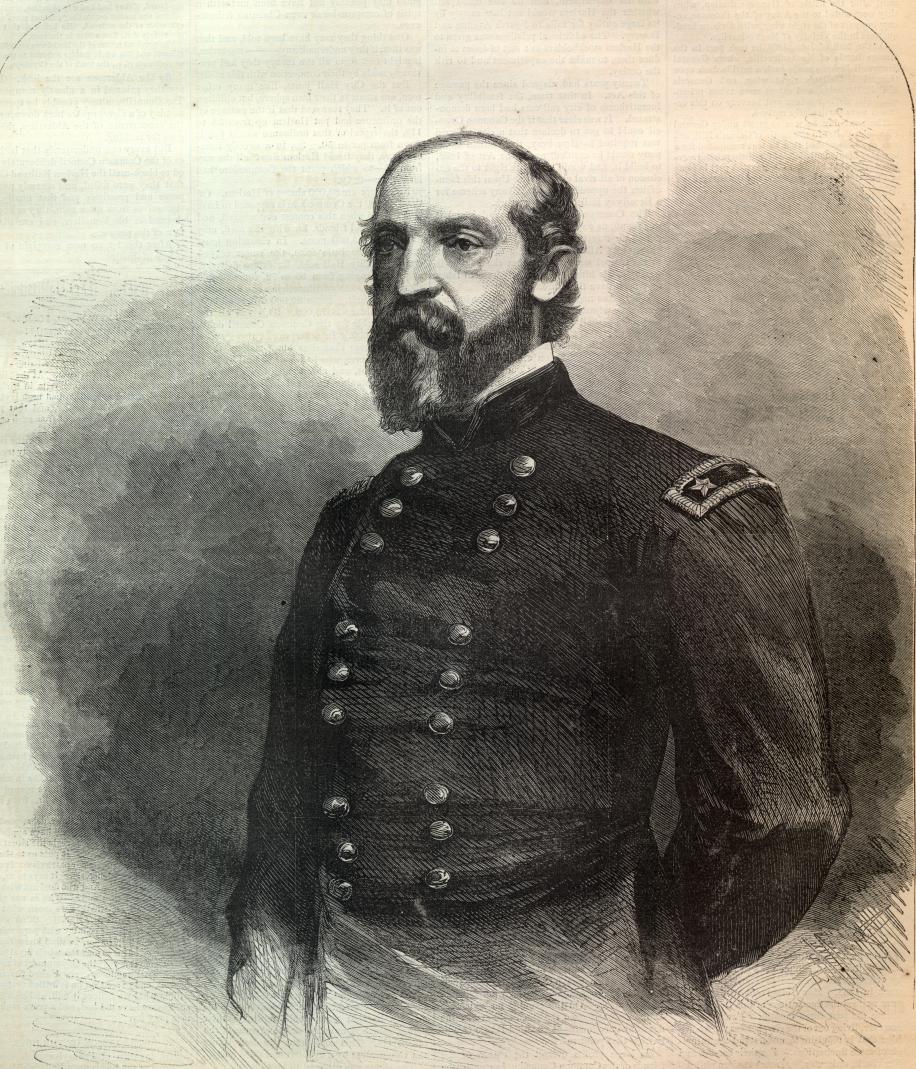
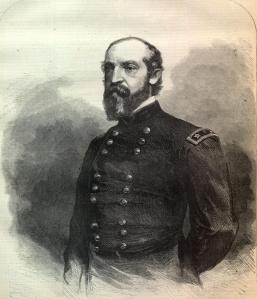
Major General George Gordon Meade

Friends of Padre Steve’s World

For those that have followed my writing for some time you know that I teach military history and ethics at the Joint Forces Staff College. One of the great joys that I have is leading the Gettysburg Staff Ride, which is an optional event for students that want to participate. When I took the position here I took some of my older writings on Gettysburg and put them into a student study guide and text. That was two years ago. Then the text was about 70 pages long. It is now about 870 pages long and eventually I hope to get it published. When and if that happens I expect it to become two, and possibly three books.

This is the second of a series of articles that I will be posting potions of a chapter that I have rewritten about the surprises that various commanders experienced on June 28th 1863. The lessons for today are that war, any war, is the realm of chance, as such, surprises always happen. It is said that no plan survives first contact with the enemy, but some plans don’t survive that long. As you read this don’t just look at the events, but look at the people, and their reaction to the surprises that they encountered, for that is where we come to understand history.

So even if you are not a Civil War buff, or even a history buff, take the time to look at the people, their actions, and the things that made them who they were, and influenced what they did. History is about people.

So please enjoy,

Peace

Padre Steve+

About the time that Lee was confidently discussing the campaign with Isaac Trimble Major General George Meade, commander of V Corps the night of June 27th George Meade was simply one of seven Corps Commanders in the Army of the Potomac, but before the night was over he would be its commander on the eve of the most decisive battle of the war in the east.

George Gordon Meade was the son of an American merchant who served as the naval agent for the U.S. government in that country until 1817. Meade was born in Cadiz on December 31st 1815 and grew up in Pennsylvania and Maryland. His father had been ruined financially in Spain when supporting the Spanish government by loaning it over $375,000 in the Peninsular War against Napoleon. Meade’s father remained in Spain to try to recover his lost fortune he sent his wife and children back to the United States where the family lived on the margins of poverty. The money should have been reimbursed to him under the terms of the Treaty of Florida “which obligated the American government to assume any Spanish obligations to American citizens.” However “the U.S. government discovered loopholes that it allowed it to dodge all responsibility to an increasingly bitter and disappointed Richard Meade.” [1] It was a crushing blow to the elder Meade.

Meade’s father returned to the U.S. and the family moved from Philadelphia to Washington D.C. were Richard Meade, “worn down physically and mentally by his struggles” [2] died in 1828 when George was just 12 years old and attending “a boarding-school at Mount Airy, a few miles from Philadelphia, known as the American Classical and Military Lyceum.” [3] It was here that Meade got his first taste of military discipline as the school was modeled after West Point and in addition to their studies the students participated in military drill.

At the Lyceum, Meade was known for being “an amiable boy, full of life, but rather disposed to avoid the rough-and-tumble frolics of youths his age; quick at his lessons, and popular with both teachers and scholars.” [4] The family ran out of money to keep him at the school and he returned to Baltimore where he was enrolled in the Mount Hope School in Baltimore as his mother sought to gain him an appointment at West Point. At Mount Hope he studied Latin, English composition and mathematics. A certificate from the headmaster of the school obtained by his mother discussed Meade’s academic acumen.

“The knowledge he has gained…is far greater than is usually acquired by young men of his age in a single year. He possesses an uncommon quickness of perception and is, therefore, capable of acquiring knowledge with great rapidity….” [5]

Meade entered West Point in 1831 when he was just sixteen years old after being nominated by Andrew Jackson. The financial condition of his family was mostly responsible for this as “West Point was the one place where the young Meade could obtain a free college education.” [6] At West Point Meade did not excel in his studies and due to “his lack of attention to details of dress and equipment and apparent disinterest in drill, demerits began to pile up in his third year.” [7] While he graduated in the top half of his class his performance in some subjects such as military engineering gave no indication of how he would excel later in life. He graduated nineteenth of fifty-six in the class of 1835.

Unlike many classes which were crowded with men destined for greatness, there were few notables in this class. Other than Meade there was Lincoln’s Postmaster General Montgomery Blair, Brigadier General Herman Haupt, who directed the transportation system of the Union army in the East during the war and John Pemberton, who as a Confederate general would surrender Vicksburg to Grant as Meade was defeating Lee.

Meade was commissioned as a Brevet Second Lieutenant and assigned to the artillery. He spent most of that year in Florida where he was sick and assigned less demanding duties. He resigned his commission after serving his one year obligation and entered civilian life as a topographic engineer. Such was not an unusual occurrence in the tiny army of that era, as “over the previous two years more than a hundred West Point graduates had left the army.[8]

He found civilian employment with the Bureau of Topographical Engineers and over the next five years took part in surveying the Texas-Louisiana boundary line, followed by an assignment on the Mississippi River Delta. He finally worked on the survey of the Canadian-United States boundary, an area of perpetual dispute from the time of American independence.

It was during his time of civilian work with the Bureau that he met and married his wife Margaret Sergeant Wise, the daughter of Congressman John Sergeant, who had been the running mate of Henry Clay in the 1832 presidential election. The young woman was well educated and “developed a wide range of cultural interests including facility in four languages and proficiency at the piano.” [9] They had had seven children together, three sons and four daughters and through much of his career was forced to raise the children alone. Despite this, the marriage appeared to be happy and would last until his death in 1872.

In 1842 Congress passed a measure which limited topographic survey to officers of the Topographic Engineer Corps. For Meade this was a godsend, for with the assistance of Margaret’s brother-in-law Congressman Henry A. Wise of Virginia Meade was reappointed as a Second Lieutenant in the Topographic Engineers on May 19th 1842. He had lost nearly six years of seniority, but “he had fairly earned his rank of Second Lieutenant of Topographic Engineers.” [10] His first assignments included surveying the Aroostook River in Maine and the design and construction of a lighthouse for Brandywine Shoals, Delaware.

In 1845 with a war with Mexico looming due to the annexation of Texas, Lieutenant Meade reported to the headquarters of General Zachary Taylor in Corpus Christi. Here he conducted surveys of the Nueces River and other inland waterways. Meade accompanied Taylor to the disputed border area around between the Nueces and the Rio Grande where some of the first actions of the war took place in 1846. During the war he served in Mexico “principally with Taylor’s army, where he won a brevet for gallantry at Monterrey.” [11] During his time in Texas and Mexico Meade became disgusted with the political machinations that surrounded the war and in a letter home he wrote “the mighty engine of influence, that curse of our country, which forces party politics into everything.” [12]

Meade was transferred to the army of Winfield Scott where he was no longer the senior Topographic Engineer but the junior. He chafed at his inactivity with Scott and complained about it. Major Turnbull, the senior Topographic Engineer told Scott that Meade was “Meade was unexpectedly with the army and that he had quite enough officers without him.” [13] In light of this Scott sent Meade back, where he returned to building lighthouses missing the bulk of the campaign. That assignment was cut short in 1849 when Meade was ordered to Florida “amid an outbreak of violence by the Seminoles.” [14] In Florida he survey a line of forts and upon completion returned to lighthouse work at Brandywine Shoals and then in Key Largo.

When the Army established the Lighthouse Board, Meade was appointed t the Seventh District where he continued his work in Florida. Among the lighthouses that he built was the Sand Key lighthouse at Key West which stands to this day. Meade was still just a First Lieutenant but he was rising in terms of the work that he was doing and was “promoted to superintendent of the Seventh Lighthouse District.” [15] He took over the Fourth District as well when its superintendent was transferred to the West Coast. In this work Meade prospered. The most impressive monument to Meade’s work is the 163 foot tall Barnegat Bay Light in New Jersey. Meade was justifiably proud of his accomplishments and after the war noted that “I have always thought my services in the construction of lighthouses, and subsequently on the Lake Survey were of considerable importance.” [16]

In 1856 Meade was promoted to Captain and given charge over the vast Great Lakes survey. In Meade’s words he work involved:

“the delineation of the shores, and bottom of the lakes, bringing to light the hidden dangers; obtaining the evidence and capacity and depth of water in all the harbors and rivers and consequently the most practical mode of improving them; furnishing the evidence of the wants of navigation in reference to lighthouses, beacons and buoys and the proper sites for same.” [17]

Meade had to lobby Congress for funding and expanded the number of officers and personnel involved until by 1860 he had ten teams, some working on land and some aboard ships with a budget which he expanded from $25,000 to $75,000 in three years. It was a remarkable job, but then Meade had matured as an officer and as a leader.

Meade was still involved with this mission when Fort Sumter was attacked. To the consternation of local leaders in Detroit, he and his officers refused to be part of a mass meeting where the locals were insisting the Federal officers publically renew their oaths. This decision was part of Meade’s innate conservatism. Meade felt that doing so without the order of the War Department was not within his prevue.

Meade was not a firebrand, conservative and logical thought that the best course would for both sides to step back and catch their breath. He was “dismayed at the arrogance of the fire-eaters, to whom Southern secession seemed like a simple riot which would be suppressed by the mere appearance of Federal troops.” [18] The decision angered Senator Zach Chandler who had organized the event and Chandler would remain an opponent of Meade throughout the war.

He had never been a political officer and was determined to avoid becoming one, he wrote “as a soldier, holding a commission, it has always been my judgement that duty required that I should disregard all political questions, and obey orders.” [19] Thus he avoided some of the more overtly political displays in Michigan but wrote:

“I have ever held it to be my duty…to uphold and maintain the Constitution and resist the disruption of this Government. With this opinion I hold the other side responsible for this existing condition of affairs.” [20]

He was viewed with suspicion by Radical Republicans as “another politically unreliable McClellan Democrat” and William Lloyd Garrison’s The Liberator noted that his look “reveals a character that never yet efficiently and consistently served a liberal cause.” [21]

He immediately volunteered for field duty, but it his request was not answered due to resistance in the Corps of Topographic Engineers. It was not until after the debacle at Bull Run when he would be appointed a Brigadier General of Volunteers, even as he was preparing to resign his commission to take command of a Michigan Regiment.

Meade was appointed to command a brigade of the Pennsylvania Reserves and saw much action at the head of his brigade on the Peninsula, serving alongside his friend John Reynolds who commanded another brigade in the division. Meade exhibited a coolness under fire that earned the respect of his soldiers and officers. His fearless nature had “resulted in his being wounded twice by bullets almost simultaneously at the Battle of Glendale on the Peninsula” [22] and incurring other wounds and close calls at South Mountain, Antietam and Fredericksburg.

In September 1862 he was promoted to command the division and after Fredericksburg he was promoted to command Fifth Corps. His promotions “from brigade commander in the Pennsylvania Reserve Division to corps command had been earned on battlefields.” [23] Serving in almost all of the army’s campaigns in the East Meade “gained increasing distinction as a highly competent and skillful officer. At Fredericksburg his division was the only unit to achieve any kind of success in a battle that otherwise was known as the worst fiasco in the history of the Army of the Potomac.” [24]

Like many of the commanders at Gettysburg Meade’s personality, temperament and character were complex, leading to people who met him or served with him to different conclusions. He possessed little flair for the dramatic or the theatrical. He was quietly religious and modest and “he usually kept aloof and made no effort to make himself popular” especially with reporters and “they exacted a toll for this treatment, and as a result Meade’s reputation suffered from a poor press.” [25]

He did not fit the stereotype of a commanding general of an army, he possessed none of McClellan’s style, Hooker’s dash or Reynold’s handsomeness. Some of his critics in the ranks referred to him as “a damned old goggle-eyed snapping turtle” while others called him “Old Four Eye” based on the glasses that he wore.[26] Meade handled such comments well for he had few delusions about himself, he remarked to an officer “I know they call me a damned old snapping turtle.” [27] As for his physical appearance a reporter noted that Meade “is colorless, being of a ghostly pale,” and “his nose of the antique bend.” [28] Another noted that he looked more like “a learned pundit than a soldier” [29] while his attire did not help, an aide noted “as for clothes, General Meade was nowhere.” Another officer remarked, “it would be rather hard to make him look well dressed.” [30]

Meade was sharp minded and quick tempered, “irritable and touchy in camp, possessed of a famous temper and imperfect means of controlling it.” [31] His temper was rooted in his sense of perfectionism and truthfulness. Theodore Lyman wrote that “I never saw a man in my life who was so characterized by straightforward truthfulness as he is.” [32] But Meade’s often volcanic temper and abject truthfulness were that of a logical man who could not abide “stupidity, negligence or laziness.” [33] Lyman observed “I don’t know any thin old gentleman, with a hooked nose and cold blue eye, who, when he is wrathy, exercises less of Christian charity than my well-beloved Chief!” [34]

Unlike some leaders whose temper led them to make unwise decisions with the lives of their troops, “in matters involving the safety of the army or the lives of thousands of men he exercised self-control and showed great moral courage in his decisions.” [35] At the same time he was a man who if after an angry outburst was full of regret, and as introspective as he was had “a cordial desire, if he had been wrong to make amends.” [36]

He was a man who in the war did not lose his humanity either towards the soldiers that he commanded or the victims of war. He was moved to acts of compassion when he saw suffering women and children whose lives had been upended by war. During the campaign of 1864 Meade:

“happened upon a poorly dressed woman fringed by several crying children – a family which the cavalry had robbed – he pulled out a five-dollar bill and also saw that food was provided for the day’s neediest. “The soft-hearted General…though of his own small children,” Colonel Lyman reflected. “He is a tender hearted man.” [37]

It was this complex man, a modest, conservative perfectionist, prone to volcanic eruptions of temper, but possessing of a strong sense of honesty even in regard to himself, who in the early morning hours of June 28th 1863 would have the fate of the Union thrust upon his shoulders.

“I Bring You Trouble” Meade Takes Command

As Trimble left and Lee settled in for the night, Meade, Commander of V Corps, was at his new headquarters located at Robert McGill’s farm outside of Frederick. Meade was asleep in his tent, was unaware that Colonel James A. Hardie, Halleck’s Assistant Adjutant General, was on a train from Washington with orders that would change the course of the war. Hardie arrived in Fredericksburg after midnight and instead of remaining for the night rented a carriage and made his way directly to Meade’s headquarters, bearing in his hand “General Orders 194…relieving General Hooker as commander of the Army of the Potomac and appointing General Meade in his place.” [38]

Meade, though he desired the appointment as commander of the Army did not expect it. Meade, a career soldier “possessed ambition but had never allowed it to consume him as Joseph Hooker had.” [39] Meade believed that if Hooker was relieved of command that John Reynolds of First Corps or another would receive it. Meade was outranked by his fellow Corps commanders Reynolds and John Sedgwick of VI Corps, and he felt that Reynolds was the ideal man to command the army.

Meade wrote to his wife the reasons he believed that he would not get command a few days before: “because I have no friends, political or others, who press or advance my claims or pretentions.” [40] The latter was not because Meade did not have friends, but because unlike Hooker, Sickles and so many others he stayed out of the various political cabals in the army and their constant intrigues. Meade, though on bad terms with Hooker was not one of the Generals who conspired against Hooker in the weeks following Chancellorsville. He told Governor Andrew Curtain of Pennsylvania that “I should be very sorry to see him removed, unless a decidedly better man is substituted.” [41]

On June 25th Meade had written his wife Margaret, who was uneasy with the rumors that her husband might be named head of the army. Earlier in the month when it was rumored that he might be offered command she “reacted to the news with vigor and urgency: “Do not accept it!” She was convinced that it would ruin his career.” [42] Reiterating his belief that he did not have the necessary political connections, and that there were others at least as competent or more to lead the army, he wrote:

“For these reasons I have never indulged in any dreams of ambition, contented to await events, and do my duty in the sphere it pleases God to place me in…and I really think that it would be well for you to take the same philosophical view; but do you know, I think your ambition is being roused and that you are beginning to be bitten with the dazzling prospect of having for a husband a commanding general of an army. How is this?” [43]

At 3:00 A.M. Hardie arrived. “Led to Meade’s tent, Hardie greeted the suddenly awakened general by saying he brought “trouble.” [44] Meade wrote his wife:

“At 3:00 A.M. I was roused from my sleep by an officer from Washington entering my tent…and after waking me up, saying he had come to give me trouble. At first I thought that it was to either relieve or arrest me, and promptly replied to him, that my conscience was clear, void of offense towards any man; I was prepared for his bad news. He then handed me a communication to read: which I found was an order relieving Hooker from the command and assigning me to it.” [45]

Meade was “given a brief order from Lincoln assigning him the high command, and a detailed message outlining his course. The army was to cover Washington and Baltimore; Harpers Ferry and its garrison would come under Meade’s own jurisdiction, etc.” and Halleck noted that “the transfer was being made at a critical time.” [46]

Meade agitatedly stated his objections to Hardie, again reiterating his belief that Reynolds should command the army but Hardie explained that the decision had been made and that Meade had no choice but to obey his orders or resign. Hardie provided Meade a letter from Halleck which said “Considering the circumstances…no one ever received a more important command; and I cannot doubt that you will firmly justify the confidence that the Government has reposed in you.” [47]

The order gave Meade command of the troops at Harper’s Ferry which had been denied to Hooker just days before. It also gave him freedom of command. It read: “You will not be hampered by any minute instructions from these headquarters” and “you are free to act as you deem proper under the circumstances as they arise.” [48] Likewise Meade was authorized to take command General Couch’s forces along the Susquehanna. A further power given to Meade which had not been given to previous commanders of the Army of the Potomac was the authority to relieve from command and dismiss officers from the army, or appoint to command officers regardless of seniority as he saw fit. It was a power that during the tumult of battle that he would use well in the coming days.

Meade went by horseback with Hardie and his son Captain George Meade to Hooker’s headquarters at Prospect Hall.

The previous night Hooker, who after hearing nothing after Halleck’s terse response to his request to be relieved “had convinced himself that the ensuing silence meant that he had beaten Halleck.” [49] But now, Hooker, aware that Hardie was in the camp, correctly assumed that he was through as the commander of the Army of the Potomac. Hooker greeted his visitors in his full dress uniform and with “much effort he tried to hide his feelings and by extreme courtesy to relieve the situation of embarrassment.” [50]

Meade had not seen Hooker in two weeks and had no idea how scattered the army was. When Hooker and Dan Butterfield his Chief of Staff briefed Meade, and Meade learned of the army’s disposition he “unguardedly expressed himself.” Hooker “retorted with feeling.[51] There was also disagreement on what the two generals believed Lee’s intentions were regarding crossing the Susquehanna. Hooker insisted that since Lee had no bridging equipment that he would not cross the river or threaten Harrisburg. Instead Hooker believed that Lee would proceed down the right bank of the river towards Baltimore and Washington. Meade disagreed that “the enemy would not attempt to cross at low water. In point of fact, Lee had already issued orders to move,” [52] while Dick Ewell was already preparing for a river crossing and assault on the weakly held Pennsylvania Capital.

Despite the uncomfortableness of the situation Hooker and Meade were able to successfully pass command of the army and Hooker issued General Order 66 in which “he praised his successor and asked the army to extend the hearty support it had given him. He added:

“Impressed with the ability that my usefulness as the commander of the Army of the Potomac is impaired I part from it; yet not without the deepest emotion.

The sorrow of parting with comrades of so many battles is relieved by the conviction that the courage and devotion of this army will never cease to fail.” [53]

Meade’s words in his General Order 67 are indicative of his feelings on assuming command of the army:

“By direction of the President of the United States, I hereby assume command of the Army of the Potomac…. As a soldier obeying this order- an order totally unexpected and unsolicited- I have no promises to make.”

‘The country looks to this army to relieve it from the devastation and disgrace of a foreign invasion. Whatever fatigues and sacrifices we may be called to undergo, let us have in view, constantly the magnitude of the interests involved, and let each man determine to do his duty, leaving to an all-controlling Providence the decision of the contest.

“It is with great diffidence that I relieve in the command of this army an eminent and accomplished soldier, whose name must appear conspicuous in the history of its achievements; but I rely on the hearty support of my companions in arms to assist me in the discharge of the duties of the important trust which has been confided to me.” [54]

That afternoon Meade sent a note to Halleck telling him he had received “the order placing me in command of this army” and that “as a soldier, I obey it.” [55] When Lincoln saw the letter which also outlined Meade’s initial plans to give battle, he was overheard to say “I tell you I think a lot of that fine fellow Meade.” [56]

Reynolds was among the first corps commanders to pay his respects to Meade, and Meade “grabbed him by the arm and earnestly told him he wished Reynolds had received the assignment. Reynolds replied that Meade was the right choice and that he would do whatever was necessary to support him.” [57] John Gibbon greeted Meade’s appointment “with a sigh of relief” and Reynold’s artillery commander wrote “For my part, I think that we have got the best man of the two, much as I think of Reynolds….” [58]

Meade had good reason to wish that Reynolds or another had been appointed and certainly welcomed his friend Reynolds’ support. Meade knew that he was not Lincoln’s first choice for the job, partly because of being associated with George McClellan, as well as his own political ties as a Democrat, and the opposition of leading Republicans to his appointment to any command. He had run afoul of the Northern abolitionist “fire eaters” in Detroit when Fort Sumter was fired on, and was distrustful of politicians and politically inclined soldiers.

The new commander of the army was fully aware ware of the fate of other officers who had a similar political bent. One of these officers, Fitz-John Porter, his predecessor at V Corps, was “court-martialed, cashiered and disgraced” [59] after being falsely accused of “disobedience of orders during the Second Battle of Bull Run” [60] by John Pope who had brought about that disaster.

With that in mind Meade understood the political danger that his appointment entailed:

“If he was successful in protecting Washington and Baltimore or if he somehow defeated Lee and drove the Confederates back across the Potomac, he would receive precious little credit from the Lincoln administration; if he failed, even for the most plainly military reasons, he expected to be pilloried without mercy as a halfheart and traitor.” [61]

The appointment of Meade was met with relief by most of his fellow Corps commanders. He was respected by them, despite having “a cold, even irascible, edge to him, particularly when occupied with army business. He was demanding of himself and of aids and subordinates,” [62] but what mattered to them was that Meade “was a thorough soldier, and a “mighty clear headed man”, with “extraordinary courage.” [63] A future staff officer noted that Meade “will pitch himself in a moment, if he thinks he has done wrong; and woe to those, no matter who they are, who do not do right.” [64]

He was viewed as a truthful, honest and caring commander who after a blow- up would do what he could to reconcile. He was passionate about the lives of his troops and whenever possible avoided battles that he believed their sacrifice would be in vain. He knew his trade, paid close attention to detail and knew and understood his troops and commanders. He had earned respect throughout his career and during the battles on the Peninsula, Antietam, Fredericksburg and Chancellorsville proved that he was an excellent leader and commander of troops.

All that being said Meade was virtually “an unknown quantity outside of his corps.” [65] Many in the rank and file wondered about the change of commanders in the middle of the campaign, “What’s Meade ever done?” was a common response among the men- those outside his corps at least- when they heard that he was their new commander. The general himself had few delusions on this score. “I know they call me a damned old snapping turtle….” [66] These soldiers had seen good and bad commanders and seen how Washington had dealt with each one, but by now “their training in the school of hard knocks under fumbling leaders had toughened the soldiers to a flinty self-reliance that left many indifferent to the identity of their commander. [67] On the eve of battle they had a new commanding general and “they were almost within rifleshot of a supremely aggressive enemy…whatever happened during the next week, the one certainty was now that the soldiers themselves would run this next battle. The most that could be expected of Meade was that he would make no ruinous mistakes.” [68] It not only was an army with a new leader, but in its soul, the Army of the Potomac was a different army than Lee had ever faced.

Meade had an immense task to accomplish. When he went to bed on the night of the 27th as commander of V Corps he was unaware of the locations of the bulk of the Federal Army and knew that Lee was already deep in Pennsylvania. Now, Meade was determined to bring Lee to battle, but was cautious as he did not want to take a chance of his forces being split up and defeated in detail, which in fact was what Lee hoped to do to the Army of the Potomac.

With his assumption of command Meade had to make some organizational changes. Against the advice of some Meade kept General Daniel Butterfield as his Chief of Staff despite his personal aversion for him and for Butterfield’s close association with Hooker and his political cabal. He appointed Major General George Sykes to command his old V Corps and wired Halleck with an “unheard of request: to promote in one jump three brilliant young officers from the rank of captain to that of brigadier general. They were Elon J. Farnsworth of the 8th Illinois Cavalry, George A Custer of the 5th United States Cavalry and Wesley Merritt of the 2nd United States Cavalry.” [69] Each was appointed to command brigades in Pleasanton’s Cavalry Corps which was being reorganized that day.

Meade had another great advantage over Lee in in his access to information and intelligence. Colonel George Sharpe of the Bureau of Military Information had provided him with the information that “the enemy force does not exceed 80,000 men and 275 guns,” as well as “a remarkably accurate outline of Lee’s movements.” [70] The information allowed Meade to begin his pursuit of Lee in earnest the following morning.

One thing that Meade understood was that if he was to defeat Lee he had to concentrate his combat power, he could not allow Lee’s forces to engage elements of the army and defeat them in detail. All too often Federal forces had not concentrated or taken advantage of their superiority in men and artillery. Meade wired Halleck that he would “move toward the Susquehanna keeping Baltimore and Washington well covered, and if the enemy is checked in his attempt to cross the Susquehanna or if he turns toward Baltimore, to give him battle.” [71] Meade wrote discussed his intent, noting, “my object being at all hazards to compel him to loose his hold on the Susquehanna and to meet me in battle at some point. It was my firm determination…to give battle wherever and as soon as I could possibly find the enemy.” [72]

Wisely, Meade also prepared a fallback position along Pipe Creek on the Pennsylvania-Maryland border. Knowing that it was possible that a corps could become isolated and face superior forces Meade gave his Corps commanders permission to withdraw back to the Pipe Creek line if they felt threatened by a larger Confederate force.

With his orders given and preparations underway, Meade’s Army of the Potomac began to march north on the morning of June 29th into Pennsylvania where it was fated to do battle with its old nemesis, the Army of Northern Virginia.

Notes

[1] Huntington, Tom Searching for George Gordon Meade: The Forgotten Victor of Gettysburg Stackpole Books, Mechanicsburg PA 2013 p.12

[2] Ibid. Huntington Searching for George Gordon Meade p.12

[3] Meade, George edited by George Gordon Meade The Life and Letters of George Gordon Meade, Major General United States Army Volume I Big Byte Books Amazon Kindle Edition 2014 originally published 1913 location 185 of 7307

[4] Ibid. Huntington Searching for George Gordon Meade p.12

[5] Cleaves, Freeman Meade of Gettysburg University of Oklahoma Press, Norman and London 1960 p.10

[6] Sears, Stephen W. Gettysburg. Houghton Mifflin Co. Boston and New York 2003 p.85

[7] Ibid. Cleaves Meade of Gettysburg p.11

[8] Ibid. Huntington Searching for George Gordon Meade p.13

[9] Wilson Robert and Clair, Carl They Also Served: Wives of Civil War Generals Xlibris Corporation 2006 p.27

[10] Ibid. Cleaves Meade of Gettysburg p.18

[11] Pfanz Harry W. Gettysburg: The First Day University of North Carolina Press, Chapel Hill and London 2001 p.43

[12] Ibid. Huntington Searching for George Gordon Meade p.29

[13] Ibid. Cleaves Meade of Gettysburg p.43

[14] Ibid. Huntington Searching for George Gordon Meade p.31

[15] Ibid. Cleaves Meade of Gettysburg p.49

[16] Ibid. Huntington Searching for George Gordon Meade p.32

[17] Ibid. Cleaves Meade of Gettysburg p.50

[18] Ibid. Catton The Army of the Potomac: Glory Roadp.257

[19] Ibid. Huntington Searching for George Gordon Meade p.39

[20] Ibid. Cleaves Meade of Gettysburg p.52

[21] Ibid. Guelzo Gettysburg: The Last Invasion p.88

[22] Tagg, Larry The Generals of Gettysburg: The Leaders of America’s Greatest Battle Da Capo Press Cambridge MA 1998 Amazon Kindle Edition p.2

[23] Ibid. Wert A Glorious Army p.267

[24] Ibid. Coddington The Gettysburg Campaign pp.213-214

[25] Ibid. Coddington The Gettysburg Campaign p.213

[26] Ibid. Guelzo Gettysburg: The Last Invasion p.87

[27] Ibid. Foote The Civil War, A Narrative. Volume Two p.454

[28] Wert, Jeffry D. The Sword of Lincoln: The Army of the Potomac Simon and Schuster, New York and London 2005 p.268

[29] Ibid. Foote The Civil War, A Narrative. Volume Two p.454

[30] Ibid. Wert The Sword of Lincoln p.268

[31] Ibid. Catton The Army of the Potomac: Glory Roadp.257

[32] Ibid. Coddington The Gettysburg Campaign p.211

[33] Ibid. Coddington The Gettysburg Campaign p.211

[34] Ibid Sears. Gettysburg. Pp.125-126

[35] Ibid. Coddington The Gettysburg Campaign p.211

[36] Ibid. Coddington The Gettysburg Campaign p.212

[37] Ibid. Cleaves Meade of Gettysburg p.247

[38] Ibid Sears. Gettysburg. p.123

[39] Ibid. Wert The Sword of Lincoln p.267

[40] Ibid. Foote The Civil War, A Narrative. Volume Two p.446

[41] Ibid. Huntington Searching for George Gordon Meade p.145

[42] Ibid. Wilson and Clair They Also Served p.28

[43] Ibid. Huntington Searching for George Gordon Meade p.147

[44] Ibid. Wert The Sword of Lincoln p.266

[45] Trudeau, Noah Andre. Gettysburg, A Testing of Courage Harper Collins, New York, 2003. p.102

[46] Ibid. Cleaves Meade of Gettysburg p.125

[47] Ibid. Huntington Searching for George Gordon Meade p.148

[48] Ibid. Foote The Civil War, A Narrative. Volume Two p.451

[49] Ibid. Guelzo Gettysburg: The Last Invasion p.89

[50] Hebert, Walter H. Fighting Joe Hooker University of Nebraska Press, Lincoln and London 1999. Originally published by Bobbs-Merrill, New York 1944 p. 246

[51] Ibid. Huntington Searching for George Gordon Meade p.149

[52] Ibid. Cleaves Meade of Gettysburg p.125

[53] Ibid. Hebert Fighting Joe Hooker p.246

[54] Ibid. Huntington Searching for George Gordon Meade p.150

[55] Ibid. Guelzo Gettysburg: The Last Invasion p.89

[56] Ibid. Cleaves Meade of Gettysburg p.126

[57] Ibid. Huntington Searching for George Gordon Meade p.149

[58] Ibid. Huntington Searching for George Gordon Meade p.150

[59] Ibid. Guelzo Gettysburg: The Last Invasion p.90

[60] Ibid. Wert The Sword of Lincoln p.185

[61] Ibid. Guelzo Gettysburg: The Last Invasion p.90

[62] Ibid. Wert The Sword of Lincoln p.267

[63] Ibid. Wert The Sword of Lincoln p.268

[64] Ibid. Wert The Sword of Lincoln p.267

[65] McPherson, James. The Battle Cry of Freedom: The Civil War Era Oxford University Press, Oxford and New York 1988 p.652

[66] Ibid. Foote The Civil War, A Narrative. Volume Two p.454

[67] Ibid. McPherson The Battle Cry of Freedom p.652

[68] Ibid. Catton The Army of the Potomac p.259

[69] Ibid. Coddington p.220

[70] Ibid. Trudeau Gettysburg, A Testing of Courage p.106

[71] Ibid. Coddington The Gettysburg Campaign, A Study in Command pp. 219-220

[72] Ibid. Trudeau Gettysburg, A Testing of Courage p.112

1 Comment

Filed under civil war, Gettysburg, History, leadership, Military

Bitter Feelings I wish Never to Experience Again: Tuesday Musings

IMG_0535

Friends of Padre Steve’s World

It is funny how a single event, or a number of seemingly unrelated events can change all the plans for a week of writing. Tonight I am struggling with my own feelings as I try to make sense out of my own experiences as well as the events of the day. I am still awake and writing because of how upset I am about a number of things that really  on the surface shouldn’t be so upsetting but wound me deeply. 

This weekend I will be leading a group of my students to Gettysburg and I have been working on my Gettysburg text as well as revisions to that text. My plan is to place a number of the short biographic articles on a number of leaders in that battle who I find particularly interesting and not just for what they did in the battle. I find complex and contradictory people fascinating. Likewise I will be posting an article about the classic action of the first day of the battle between the Union cavalry under Brigadier General John Buford, a fascinating man in his own right and Confederate general Harry Heth who led the Confederate army into the a battle that would help turn the tide of the war.

Of course I am cognizant of the the fact that events can change my plans as far as what I intend to write and tend to plan accordingly. But sometimes such events actually give me a chance to reflect and actually cause me to think about the significance of those events. Since I do a lot of that the attack in Garland that I wrote about yesterday has triggered some more of those thoughts.

When I wrote yesterday’s article I began thinking about some of the things that I wrote in the wake of the Charlie Hebdo massacre in Paris as well as other terrorist attacks, those of Moslems as well as those who attack and hate Moslems. Some critics might think I am being “politically correct” but truth is truth and terrorism no matter what the ideology or religion of those who kill innocents is evil. So I think I will probably re-package one or more of those articles because of the attack in Garland because when I went back and re-read the series I saw that so much of what I wrote then was still pertinent today, and because of the seriousness of what is going on probably need more attention.

I will also be writing something about the Battle of Dien Bien Phu which sealed the fate of French colonialism in Indochina. That battle was concluded sixty-one years ago this week. Having been a participant in the Iraq war, a war which like Indochina was a disaster for the colonial power and a war in which the soldiers who sacrificed so much were so rapidly forgotten by the nation even as they were thrown into other hopeless wars.

I have been reading a book on the experiences of the Union soldiers when they returned home from the Civil War and that book has stirred up a lot of my emotions concerning my return from Iraq and what I have experienced over the past six years.

Sadly I have a hard time containing my bitterness about my sacrifices and the insults I have endured even from the incredibly irrational and insensitive military bureaucracy and even my own Chaplain Corps. Some of that I was reminded of today in dealing with a bureaucracy that ensures that you are caught in a permanent state of “catch-twenty-two” when simply trying to get the appropriate credit for what you have done. I ran into that today in regard to an administrative catch-twenty-two regarding my Joint Qualification credit and I am so angry that I can scarcely contain myself. Sadly, that is just one more reason that I will be glad to retire in 2017. 

The past week I have had terrible nightmares, some dealing with those issues and I can fully understand the words of Union General Gouverneur Warren who wrote his wife after the war:

“I wish I did not dream so much. They make me sometimes to dread to go to sleep. Scenes from the war, are so constantly recalled, with bitter feelings I wish never to experience again. Lies, vanity, treachery, and carnage.”

I fully understand how Warren felt, because he was not only a victim of the war but of Army bureaucracy. In Warren I have found someone that I can completely understand and relate to in what he had to deal with during and after the war.

People ask me sometimes why I will remove my name from consideration for promotion to Captain in the Navy Chaplain Corps and retire instead of remaining on active duty and possibly make Captain. This my friends something that many men and women would consider the pinnacle of accomplishment, and which a number of senior chaplains tell me I would be very competitive. In fact even two years ago I would have almost sold my soul to be promoted to that rank. But I know that don’t need to sacrifice any more of my life for a promotion that I no longer want. 

Maybe I’m a bit bitter, not terribly, but enough to make me realize that I don’t want to deal with the bullshit that I would have to deal with at a higher rank as I now realize that I am rank enough in my own right. Frankly, somehow I need to let go of the bitterness and disappointment that I have, but I realize that I may never fully let it go. Not because I do not want to, but because whenever I turn around there is yet another reminder which twists the knife in my belly that the bureaucrats in the service do not give a damn about me, or for that matter anyone else. 

But I am now rambling and I should stop writing for the night before I get myself in trouble by being too honest by naming names. 

Until the next time, pray for me a sinner.

Peace

Padre Steve+


3 Comments

Filed under History, iraq, leadership, Military

“Our Army Would be Invincible if…” The Problem of Senior Leadership in the Army of Northern Virginia Part Two, The Third Corps

leeindex1omas

This is the second part of an article that I posted yesterday which is part of my Gettysburg series. This focuses on the Third Corps commanded by Lieutenant General A.P. Hill. The link to the first article is here: https://padresteve.com/2014/07/28/our-army-would-be-invincible-if-the-problem-of-senior-leadership-in-the-army-of-northern-virginia-june-1863-part-one-first-and-second-corps/

The newly created Third Corps under Lieutenant General A.P. Hill was thought to be in good hands. Hill had commanded his large; six brigade “Light Division” with distinction, though having serious conflicts with both Longstreet and Jackson. At Antietam Hill’s hard marching from Harpers Ferry had saved the Army of Northern Virginia from destruction. Hill was a graduate of West Point who had served in the topographic engineers most of his U.S. Army career. He had an earned reputation as a brilliant division commander, and despite his clashes with Longstreet and Hill Lee recommended him to take command of Third Corps who sang his praise to Jefferson Davis “the best soldier of his grade with me.” [1] Hill was a “nervous wiry man with a persistent chip of underappreciation on his shoulders and a bevy of chronic illnesses when under stress.” [2] Hill detested Jackson, who he referred to as “that old Presbyterian fool” [3] and his poor relations with Jackson’s confidants at Second Corps ensured that Ewell took Second Corps. Lee appointed Hill to command Third Corps of which “half of the troops had been with him all along” [4] in the Light Division. Lee liked Hill’s aggressiveness and command instincts, something that he hoped would translate into success at the corps level, and promoted him over the head of D.H. Hill and Lafayette McLaws who were both senior to him. Regarding the promotion of Hill and Ewell Lee wrote to Davis:

“I wish to take advantage of every circumstance to inspire and encourage…the officers and men to believe that their labors are appreciated, and that when vacancies occur that they will receive the advantages of promotion….I do not know where to get better men than those I have named.” [5]

But the decision to promote the Ewell and Hill, both Virginians stirred some dissent among those that believed that Lee was “favoring Virginians over officers from other states. The promotion of A.P. Hill, as previous noted was “made over the head of two Major Generals more senior than Hill- North Carolinian D.H. Hill and Georgian Lafayette McLaws.” [6]

Hill’s corps, like those of Longstreet and Ewell was composed of three divisions, and even more so than Ewell his division suffered a want of senior leaders who had served at the grade they were now expected to serve.

The most stable division in Third Corps was Richard Anderson’s, transferred from First Corps. Under Longstreet the division and its commander had served well. Lee considered Anderson a “capable officer”…and had marked him for future higher command.” [7] Anderson was noted for his modesty and unselfishness, “his easy going ways, combined with his competence and professionalism made him one of the most well liked officers in the Army of Northern Virginia.” [8] However, there was an incalculable thrown into the equation. Hill had not yet established his methods of operation as a corps commander, and Anderson, used to “Longstreet’s methodical insistence that everything be just so before he would venture into action” contrasted with Hill’s “tendency to leap before he looked.” [9]

Anderson’s division was composed of five brigades commanded by a mixed lot of commanders, none of whom were professionals.

Brigadier General Cadmus Wilcox was a no-nonsense graduate of West Point; he served in the Mexican War and taught tactics for five years at West Point. He had served with distinction as a brigade commander, but Wilcox was disgruntled, he “is restless, sore, and disposed to go to another Confederate army where he will have a chance.” [10] Wilcox had been passed over for promotion to Major General in favor of George Pickett and requested transfer from Lee’s army, which was refused for lack of qualified leaders. At Chancellorsville the delaying action of his brigade at Salem’s Church had helped save the army.

Brigadier General William Mahone was a graduate of VMI and was superintendent of the new Norfolk and Petersburg Railroad when the war Virginia seceded from the Union and served with reasonable effectiveness before Gettysburg. As a brigadier “he is not lacking in diligence, but he is not without special distinction.” [11] He fought competently at Chancellorsville and by Gettysburg had established himself as a “competent and experienced brigade leader.” [12]

Brigadier General Ransom Wright had no military training or experience prior to the war, but was a successful lawyer and by Gettysburg he “was considered a well-tested combat veteran.” [13] He had Unionist sentiments, was a no-nonsense individual and though he had no military was named colonel of the 3rd Georgia in 1861 and became a brigade commander during the Seven Days.

Brigadier General Carnot Posey was a highly successful plantation planter and lawyer who had served as a “lieutenant under Col. Jefferson Davis, and suffered a slight wound at the Battle of Buena Vista” [14] in the Mexican War, after which he returned home as was appointed as a United States District Attorney by President Buchanan. Posey commanded the 16th Mississippi and was promoted to brigade command prior to Chancellorsville where he gave a strong performance under fire.

Colonel David Lang commanded the Florida Brigade the smallest in the army. Just twenty-five years old, the graduate of the Georgia Military Institute inherited brigade command when Brigadier General Edward Perry came down with typhoid fever after Chancellorsville. He had only fought in three battles, two as a captain “and he had never led a brigade in combat.” [15]

Hill’s old Light Division was divided into two divisions. Major General William Dorsey Pender commanded the old Light Division which now consisted of four rather than six brigades. Pender was only 29 years old, the “youngest of that rank in the army.” [16] Pender was “only seven years out of West Point” [17] and was deeply loyal to Powell Hill and a partisan of the Light Division. However, he had risen “on first rate ability, steadfast ambition and a headlong personal leadership in battle which gave a driving force to his brigade” [18] which he considered “the best brigade of the best division” [19] in the army. Lee praised him as “a most gallant officer” and was deeply sensitive about keeping Pender with the troops that found him so inspiring noting “I fear the effect upon men of passing him over in favour of another not so identified with them.” [20] Pender was an “intelligent, reflective man, deeply religious and guided by a strong sense of duty.” [21]

Pender’s four veteran brigades were commanded by three experienced officers and one new to brigade command.

Colonel Abner Perrin from South Carolina was the least experienced. He was a successful lawyer who had served as a lieutenant in the Regular army in Mexico, served as a company commander in the 14th South Carolina which he took command of after Fredericksburg. He led the regiment at Chancellorsville and took command of the brigade when the brigade commander was wounded. Despite his inexperience he remained in command of the veteran South Carolina brigade, “whose leadership had been decimated” and had “devolved to lieutenant colonels, majors and captains.” [22]

Brigadier General James Lane was an academic. He graduated second in his class at VMI in 1854 and received a degree in science from the University of Virginia three years later. He returned to VMI as an assistant professor then became a professor of natural philosophy at the North Carolina Military Institute. [23] He was commissioned as a major in the 1st North Carolina and took command of it in September 1861 and promoted to brigade command after Antietam. Lane proved himself an able commander at Fredericksburg and Chancellorsville, at the latter his brigade led Jackson’s assault against the Union right, suffering 909 casualties and had the misfortune of when one of his units mortally wounded Jackson on the night of May 2nd 1863. Despite this “he and his men could be counted on to do the right thing when the bullets started to fly.” [24]

Brigadier General Edward Thomas was a plantation owner from Georgia who had served as a lieutenant in the Mexican War. Offered a commission in the Regular army he turned it down and returned home. He became colonel of the 35th Georgia Infantry in October 1861 and led it as part of Pettigrew’s brigade and after Pettigrew was wounded at Seven Pines the brigade was shifted to Joseph Anderson’s brigade of the Light Division, assuming command of that brigade when Anderson was wounded at Frayser’s Farm. He commanded it in the thick of the fighting at Second Manassas and at Fredericksburg helped stop Meade’s advance with a fierce counterattack, and commanded it again at Chancellorsville. Thomas could always be counted on to deliver “a solid, if unspectacular performance.” [25]

Brigadier General Alfred Scales was new to brigade command. A “forty-five year old humorless politician” [26] who had served in the U.S. House of Representatives with no military experience Scales enlisted as a private when North Carolina seceded. He was elected to a captaincy in Pender’s regiment and when Pender was transferred Scales succeeded him in command of the 13th North Carolina. He commanded that regiment on the Peninsula and during the Seven Days, served as acting commander of the brigade when Pender was wounded at Fredericksburg and distinguished himself with the 13th at Chancellorsville. Scales service with Pender’s brigade “had been one of consistent stout service.” [27] When Pender was promoted to division command “it was a forgone conclusion that his replacement in brigade command would be Scales.” [28] He had served with the brigade, was known to its soldiers and though inexperienced as a brigade commander he “and the brigade were one, for he had shared its fortunes, was proud of it, and was confident of victory as he led it to Gettysburg.” [29]

Hill’s remaining division was commanded by the newly minted Major General Harry Heth. It was composed of the two remaining brigades of the Light Division and two brigades recently joined to the army for the offensive.

Harry Heth was a graduate of West Point who has a “high reputation personally and professionally” [30] in the army, despite finishing 38th in a 45 member class at West Point. Lee had a high regard for Heth and considered him a friend and somewhat a protégé, however his regard “cannot be based on any substantive achievements by Heth, whose antebellum career and war experience had been similarly unremarkable.” [31] Heth was an example of a “soundly trained soldier of perennial promise. Always seemingly on the verge of becoming truly outstanding” but “never lived up to the army’s expectations.” [32] Heth became a brigade commander in Hill’s division prior to Chancellorsville after having served in Western Virginia and in the West. Hill was new to command of a newly formed division and had the weakest collection of brigade commanders in the army at Gettysburg.

Newest to the division was Johnston Pettigrew whose North Carolina brigade was one of the largest in the army. This was one of the new brigades provided to Lee by Davis, Pettigrew was a renaissance man, and was a graduate of the University of North Carolina he was “proficient in French, German, Italian and Spanish, with a reading knowledge of Greek, Hebrew and Arabic.” [33] Pettigrew had spent a good amount of time abroad on diplomatic service before returning to his law practice in Charleston. He had “even spent time as a volunteer aid with the French and Italian forces against the Austrians in 1859.” [34] Elected to the state legislature in 1856 he “sensed the oncoming of hostilities and was named colonel of the 1st Regiment of Rifles, a Charleston militia outfit.” [35] Pettigrew was “one of those natural leaders of a privileged background who, without military ambitions, had been advanced on the application of native intelligence and contagious courage.” [36]

Brigadier General Joseph Davis, the nephew of President Jefferson Davis commanded a newly raised Mississippi brigade. Davis owed his appointment to his relationship with the President. He was “entirely without combat experience.[37] Most of the war he had spent on his uncle’s staff in Richmond and in his new appointment he was not with officers of any experience as “No one serving on Joe Davis’s staff showed strong signs of having the background, experience, and ability that might help the brigadier meet his responsibilities.” [38] Likewise the nine field officers assigned to his regiments were similarly ill-equipped.

Heth did have the experienced mixed Alabama-Tennessee brigade of Brigadier General James Archer. Despite its experience and “fine reputation” [39] the brigade was seriously understrength after seeing heavy combat at Chancellorsville. The brigade commander Archer was a graduate of the University of Maryland who practiced law before entering the Regular army as a Captain during the Mexican War where he was breveted for gallantry at the Battle of Chapultapec. He left the army after the war and then returned to it in 1855. He commanded the 5th Texas Regiment and took command of a Tennessee brigade at Seven Pines. Initially Archer was not well liked by any of his commands, the Texans considered him a tyrant and he was “very non-communicative, the bearing and extreme reserve of the old army officer made him, for a time, one of the most hated of men.” [40]After being joined to the Light Division Archer transformed his reputation among his men and had “won the hearts of his men by his wonderful judgment and conduct on the field.” [41]

The last brigade of Heth’s division was the small Virginia brigade of the “plodding, uninspiring” [42] Colonel John Brockenbrough. Brockenbrough was an 1850 graduate of VMI and “entered service as colonel of the 40th [Virginia Infantry] in May 1861.” [43] The brigade when it had been commanded by Charles Field had been considered one of the best in the army. Brockenbrough took command of it in 1862 when Field was wounded and “had never managed the brigade well, especially at Fredericksburg, and Lee returned him to regimental command.” [44] He reassumed the command of the brigade after Chancellorsville when Heth was promoted. Like Archer’s brigade it was “sadly reduced in numbers” and in morale…” [45]

Lee’s Army of Northern Virginia would go into the Gettysburg Campaign with two new and untried corps commanders. Of nine infantry division commanders three were new to command and another who had never commanded a division in combat. Of the infantry brigade commanders First Corps was in the best shape with ten of eleven assigned commanders having experience in command at that level, and most were of sound reputation. Second Corps was worse off, with six of thirteen assigned brigade commanders new to command, and two of the experienced brigade commanders were not competent to command at that level. Third Corps had nine of its thirteen commanders who had experience as brigade commanders; however, one of them, Brockenbrough was of little value despite being experienced.

Had the army had more time to exercise the new commanders before going into action Lee might have had a better result, but as he told Hood “this army would be invincible if….” As we know, if is the biggest two letter word in the English language, and these men, as Barbara Tuchman noted would be “made bold by the moment, some irresolute, some carefully judicious, some paralyzed and powerless to act.”

Peace,

Padre Steve+

Notes

[1] Ibid. Freeman Lee’s Lieutenants p.526

[2] Ibid. Guelzo, Gettysburg: The Last Invasion p.22

[3] Ibid. Guelzo, Gettysburg: The Last Invasion p.22

[4] Foote, Shelby, The Civil War, A Narrative. Volume Two Fredericksburg to Meridian Random House, New York 1963 p.434


[5] Ibid. Freeman Lee’s Lieutenants p.526

[6] Ibid. Taylor, John Duty Faithfully Performed p.290

[7] Ibid. Dowdy. Lee and His Men at Gettysburg p.86

[8] Ibid. Tagg The Generals of Gettysburg p.306

[9] Ibid. Dowdy. Lee and His Men at Gettysburg pp.86-87

[10] Ibid. Freeman Lee’s Lieutenants p.46

[11] Ibid. Freeman Lee’s Lieutenants p.48

[12] Ibid. Tagg The Generals of Gettysburg p.315

[13] Ibid. Tagg The Generals of Gettysburg p.317

[14] Ibid. Tagg The Generals of Gettysburg p.319

[15] ibid. Tagg The Generals of Gettysburg p.322

[16] Ibid. Sears Gettysburg p.47

[17] Ibid. Dowdy. Lee and His Men at Gettysburg p.85

[18] Ibid. Dowdy. Lee and His Men at Gettysburg p.85

[19] Ibid. Freeman Lee’s Lieutenants p.45

[20] Ibid. Sears Gettysburg p.47

[21] Ibid. Dowdy. Lee and His Men at Gettysburg p.85

[22] Ibid. Tagg The Generals of Gettysburg p.331

[23] Ibid. Tagg The Generals of Gettysburg pp.332-333

[24] Ibid. Tagg The Generals of Gettysburg p.334

[25] Ibid. Tagg The Generals of Gettysburg p.337

[26] Ibid. Tagg The Generals of Gettysburg p.338

[27] Ibid. Freeman Lee’s Lieutenants p.421

[28] Ibid. Tagg The Generals of Gettysburg p.338

[29] Ibid. Pfanz Gettysburg: The First Day p.306

[30] Ibid. Freeman Lee’s Lieutenants p.46

[31] Krick, Robert K. Three Confederate Disasters on Oak Ridge: Failures of Brigade Leadership on the First Day of Gettysburg in The First Day at Gettysburg edited by Gallagher, Gary W. Kent State University Press, Kent Ohio 1992 p.96

[32] Ibid. Dowdy. Lee and His Men at Gettysburg p.87

[33] Ibid. Tagg The Generals of Gettysburg p.343

[34] Ibid. Guelzo, Gettysburg: The Last Invasion p.129

[35] Ibid. Tagg The Generals of Gettysburg p.343

[36] Ibid. Dowdy. Lee and His Men at Gettysburg p.78

[37] Ibid. Freeman Lee’s Lieutenants p.553

[38] Ibid. Krick Three Confederate Disasters on Oak Ridge p.101

[39] Ibid. Dowdy. Lee and His Men at Gettysburg p.87

[40] Ibid. Tagg The Generals of Gettysburg p.349

[41] Ibid. Tagg The Generals of Gettysburg p.350

[42] Ibid. Sears Gettysburg p.55

[43] Ibid. Pfanz Gettysburg: The First Day p.118

[44] Ibid. Guelzo, Gettysburg: The Last Invasion p.134

[45] Ibid. Guelzo, Gettysburg: The Last Invasion p.134

Leave a comment

Filed under civil war, History, leadership, Military

“Our Army Would be Invincible if…” The Problem of Senior Leadership in the Army of Northern Virginia June 1863 Part One First and Second Corps

on-to-gettysburg-900L

This is another installment of my Gettysburg campaign series and the first of four segments on the problems faced by Robert E. Lee as he attempted to find experienced and competent senior leaders to fill Corps, Division and Brigade command positions. I had planned this to be a single entry, but it has kind of taken on a life of its own…such is the life of a historian…. Anyway, I should be publishing the second part on A.P. Hill’s Third Corps and Stuart’s Cavalry division  tomorrow or Wednesday. Likewise, I will be expanding the second about Ewell’s Second Corps leadership and then doing a similar series on the problems of leadership in the Army of the Potomac, which undoubtedly take on a life of its own too…

An issue faced by armies that are forced to expand to meet the demands of war is the promotion and selection of competent leaders at all levels of command. It has been an issue throughout American military history including during our recent wars in Iraq and Afghanistan. The expansion of forces, the creation of new units and operational demands to employ those units sometimes result in officers being promoted, selected to command, being given field command or critical senior staff positions when in normal times they would not. To be fair, some do rise to the occasion and perform in an exemplary manner. Others do not. Those leaders that do not are quite often weeded out over the course of time but often not before their lack of experience, or incompetence proves disastrous on the battlefield. As Barbara Tuchman so eloquently put it:

“When the moment of live ammunition approaches, the moment to which all his professional training has been directed, when the lives of the men under him, the issue of the combat, even the fate of a campaign may depend upon his decision at a given moment, what happens inside the heart and vitals of a commander? Some are made bold by the moment, some irresolute, some carefully judicious, some paralyzed and powerless to act.” [1]

Stonewall Jackson was dead and with his death after the Pyrrhic victory at Chancellorsville General Robert E. Lee was faced with the necessity of reorganizing his army. Jackson’s loss was disastrous for Lee, for he lost the one man who understood him and his method of command more than anyone, someone for whom he had a deep and abiding affection. Months before Jackson’s death Lee said of him “Such an executive officer the sun has never shown on, I have but to show him my design, and I know that it if it can be done it will be done.” [2] After Jackson’s loss Lee said “I had such implicit confidence in Jackson’s skill and energy that I never troubled myself to give him detailed instructions. The most general suggestions were all that he needed.” [3] Lee met the loss with “resignation and deep perplexity,” his words displayed that sense of loss, as well as his sense of faith and trust in God’s providence “I know not how to replace him. God’s will be done. I trust He will raise someone up in his place…” [4]

In addition to the loss of Jackson, a major part of Lee’s problem was organizational. In 1862 Lee inherited an army that was a “hodgepodge of forces” [5] which was organized in an “unwieldy divisional command system, where green commanders out of necessity were given considerable independence.” [6] That organization was tested and found wanting during the Seven Days campaign where on numerous occasions division commanders failed to coordinate their actions with those of adjacent divisions or failed to effectively control their own troops during movement to contact or combat.

Shortly after the Seven Days Lee reorganized the army, working with the material that he had. He divided the army into two corps, under Jackson and James Longstreet, each composed of four divisions consisting of about 30,000 troops apiece. While both commanders were technically equals, it was Jackson to whom Lee relied on for the most daring tasks, and whom he truly considered his closest confidant and his “executive officer.”

The organization worked well at Second Manassas, Fredericksburg and Chancellorsville, although Longstreet’s corps was detached from the army at the time of the latter, and with the loss of Jackson on the first night of that battle neither A.P. Hill nor J.E.B. Stuart effectively commanded Second Corps during the remainder of the battle.

Longstreet and Jackson served to balance each other and each enjoyed the trust of Lee. Lee’s biographer Michael Korda calls them the:

“yin and yang of subordinates. Jackson was superb at guessing from a few words exactly what Lee wanted done, and setting out to do it immediately without argument or further instructions; Longstreet was as good a soldier, but he was an instinctive contrarian and stubbornly insisted on making Lee think twice, and to separate what was possible from what was not.” [7]

Both men had been instrumental to Lee’s battlefield success and both played indispensable roles in Lee’s ability to command the army.

Likewise, the sheer size of Lee’s formations posed problems both in moment and combat, as Lee noted “Some of our divisions exceed the army Genl Scott entered Mexico with, & our brigades are larger than divisions”…that created stupendous headaches in “causing orders & req[uisitions] to be obeyed.” [8] Lee wrote to Jefferson Davis on May 20th “I have for the past year felt that the corps of the army were too large for one commander. Nothing prevented my proposing to you to reduce their size and increase their number but my inability to recommend commanders.” [9]

In the hands of Longstreet and Jackson these massive corps were in the good hands of leaders who could effectively handle them, “but in anyone else’s hands, a corps the size of Jackson’s or Longstreet’s might prove so big as to become clumsy, or even worse, might call for a degree of micromanagement that Lee and his diminutive staff might not be able to deliver.” [10] Thus Lee did not try to replace Jackson; he wrote to Davis the reasons for creating a new corps:

“Each corps contains in fighting condition about 30,000 men. These are more than one man can handle & keep under his eye in battle….They are always beyond the range and vision & frequently beyond his reach. The loss of Jackson from the command of one half of the army seems to me a good opportunity to remedy this evil.” [11]

Instead of appointing one man to command Second Corps, Lee reorganized the army and created two corps from it, stripping a division of Longstreet to join the new Third Corps and dividing the large “Light” Division of A.P. Hill, which under Hill’s “intelligent administration probably is the best in the army” [12] into two divisions.

The problem for Lee was just who to place in command of the new corps and divisions that he was creating. Lee was deeply aware of this problem, and wrote to John Bell Hood that the army would be “invincible if it could be properly organized and officered. There never were such men in an Army before. The will go anywhere and do anything if properly led. But there is the difficulty-proper commanders- where can they be obtained?” [13] Lee sought the best commanders possible for his army, but the lack of depth in the ranks of season, experienced commanders, as well as the need to placate political leaders made some choices necessary evils.

The First Corps, under Longstreet remained relatively intact, but now less the division of Major General Richard Anderson, which was transferred to the new Third Corps. The First Corps now had three divisions instead of four, those of Major General Lafayette McLaws, Major General John Bell Hood and Major General George Pickett. McLaws and Hood were both experienced division commanders who worked well under Longstreet.

McLaws had served in the old army. An 1842 graduate of West Point McLaws served in the infantry and was resigned from the army in 1861 to take command of a Georgia regiment.   McLaws was “a capable soldier without flair, who steady performance never produced a high moment. His reliability and dogged tenacity rubbed off on his men, however, and made them as hard to dislodge as any in the army.” [14] Porter Alexander noted that in the defense “McLaws was about the best in the army…being very painstaking about details, & having an eye for good ground.” [15] But there was a drawback, for all of his solidness and fortitude “he lacked a military imagination,” and was “best when told exactly what to do and closely supervised by superiors.” [16]His division was typical of many in First Corps, “outstanding on defense and led by a competent soldier, they were thoroughly dependable. With the reliance of old pro’s, they did what they were told, stood up under heavy casualties, and produced tremendous firepower.” [17]

McLaws was fortunate to have solid brigade commanders, three of whom had served with him from the beginning, so the lack of familiarity so common in the divisions of Second and Third Corps was not an issue. Interestingly none were professional soldiers.

Brigadier General Joseph Kershaw was a lawyer and politician he had served in Mexico with the Palmetto Regiment and volunteered for service as South Carolina succeeded and he was at Fort Sumter. As commander of the 2nd South Carolina and as a brigade commander he distinguished himself during the Seven Days, Antietam and Fredericksburg He displayed an almost natural ability for “quick and rational decisions, and he never endangered his men rashly. McLaws had complete faith in him and his brigade…” [18]

Brigadier General Paul Semmes was a banker and plantation owner from Georgia and the brother of the Confederacy’s most famous naval commander, Raphael Semmes, who commanded the Raider C.S.S. Alabama. Semmes “was well known in Georgia as a man both of military tastes & accomplishments before the war & though of no military education he was one of the first generals created.” [19] He commanded the 2nd Georgia Regiment and by 1862 was in command of McLaws’ old brigade which he led with distinction during the Seven Days, Antietam and Chancellorsville. By Gettysburg he “had proved himself a worthy and capable brigadier” [20] and Porter Alexander wrote “and it is due to say that there was never a braver or a better.” [21]

Brigadier General William Barksdale was a Mississippi lawyer, newspaper editor and politician who had served in Mexico as a quartermaster, but who “frequently appeared at the front during heavy fighting, often coatless and carrying a large sword.” [22] He was one of the few generals who had been “violently pro-slavery and secessionist” [23] and as a Congressman had been involved in the altercation when Representative Preston Brooks nearly killed Massachusetts Senator Charles Sumner in the Senate chamber. At the outbreak of the war Barksdale volunteered for service and took command of a brigade at Malvern Hill and at Antietam and Fredericksburg was in the thick of the fight. He had a strong bond with his soldiers.

Brigadier General William Wofford was the newest of McLaws’ brigade commanders. Wofford was a Georgia newspaper owner and lawyer who had done a great deal of fighting in the Mexican War where he commanded a company despite having no military education. He was considered a man of “high morale bearing…of the strictest sobriety, and, indeed of irreproachable moral character.” [24] Demonstrating the tensions of the day Wofford was a “staunch Unionist Democrat” who “opposed secession and voted against it at the Georgia secession convention.” [25] Wofford volunteered for service and was “elected colonel of the first Georgia regiment to volunteer for the war.” [26] That being said Wofford “was a decided Union man from first to last during the whole war” and saw “with exceptional prescience…the certain fatality” of secession, but once the deed was done, he closed ranks…” [27] Wofford served well as a regimental commander and acting brigade commander during the Seven Days, Second Manassas, Antietam and Fredericksburg and was promoted to the brigadier general and command of a brigade just before Chancellorsville.

Major General John Bell Hood was an 1853 graduate of West Point and had served as a cavalry officer under Lee’s command in Texas. He gained a stellar reputation as a leader and fighter and when his home state of Kentucky did not secede he attached himself to his adopted state of Texas. He began the war as a lieutenant but by 1862 was a Brigadier General commanding the only Texas brigade in the east. He took command of a division following the Seven Days and during the next year built a “combat record unequalled by any in the army at his level.” [28] And the “reputation gained as commander of the Texas Brigade and as a division commander made him both a valuable general officer and a celebrity who transcended his peers.” [29]

Hood’s brigade commanders were as solid as group as any in the army:

Brigadier General Evander Law was a graduate of the South Carolina Military (the Citadel) and a professor in various military colleges and schools before the war. He served admirably as a regiment and brigade commander during the Seven Days, Second Manassas, and Antietam and was promoted to brigadier general in October 1862 just prior to Fredericksburg. After Chancellorsville he was the senior brigadier in Hood’s division. He had “military training, youth, dash ability and familiarity with his men- a formidable package in combat.” [30]

Brigadier General George “Tige” Anderson was a Georgian who had served in Mexico as a lieutenant of Georgia cavalry and in 1865 was commissioned as a captain in the Regular cavalry, but resigned after three years. He had no formal military training but was considered a capable officer. He was present at most of the major battles fought by the Army of Northern Virginia but in most cases his brigade had not been heavily engaged and had “little chance to distinguish himself” but he was loved by his soldiers. One wrote that he “stands up for us like a father” while another wrote “He is always at his post.” [31]

Hood’s old Texas Brigade was commanded by Brigadier General Jerome Robertson. At the age of forty-eight he had served with Sam Houston in the Texas War for Independence and later took time off to serve fighting Indians. He practiced medicine in Texas and in 1861 was a pro-secession delegate to the Texas secession convention. He was commissioned as a Captain and promoted to Colonel of the 5th Texas just prior to the Seven Days and led that unit to fame. He was promoted after Antietam to command the Texas Brigade. Away from most of the action at Fredericksburg and Chancellorsville he would have his first combat experience as a brigade commander at Gettysburg.

Brigadier General Henry Benning was a lawyer and Georgia Supreme Court justice. While not having any military training or experience he was “known to all as a man of the highest integrity, and he was compared in character to that earlier champion of the South, John Calhoun. He was one of the most industrious and capable men in the Confederacy.” [32] Unlike other Confederate political leaders he favored a strong central government for the new South. He was considered a prime candidate for a cabinet post but had already decided to serve in the new army and helped organize the 17th Georgia Infantry. As a regiment commander and acting brigade commander at Antietam, his brigade had held off Burnside’s corps at the Burnside Bridge and became known as “Old Rock” [33]and was a “proven commander” who “provided strong leadership and bolstered the confidence of the men under him.” [34]

Major General George Pickett had commanded his division for some time, but Pickett “had never led his division in combat.” [35] Likewise the brigades of his division had not fought together in a major engagement and the division was new to fighting as a part of First Corps. The campaign would also be Pickett’s first offensive campaign as a division commander. Pickett was an 1846 graduate of West Point who though well liked “showed evidence of a meager intellect and aversion to hard work.” [36] However he distinguished himself by his gallantry at Chapultapec in the Mexican War where taking the colors from the wounded Longstreet and “carried them over the wall[37] gaining fame around the country for the exploit. Pickett was a protégé of Longstreet who “had been instrumental in Pickett’s appointment to divisional command.” [38] Pickett was “untried at his new rank, but had been an excellent brigade leader and with Longstreet’s full support was apt to direct with wisdom his larger force.” [39]

Pickett’s division only had three of his five brigades at Gettysburg. Two were commanded by old Regular officer’s Richard Garnett and Lewis Armistead, and the third by James Kemper.

Brigadier General James Kemper was the only non-professional soldier of the three brigade commanders. Kemper had been a captain of volunteers in the Mexican War, but that war ended before he could see action. He was a politician who had served twice as Virginia’s Speaker of the House and “was another of those civilian leaders who, accustomed to authority, translated their gifts to command in the field.” [40] During his time as a legislator Kemper had served as “chairman of the Military Affairs Committee in the years before the Civil War, and insisted on a high level of military preparedness.” [41] Kemper served as commander of the 7th Virginia Regiment and was promoted to brigadier general after Seven Pines and commanded the brigade at Second Manassas and Antietam. He was “very determined and was respected by brother officers for solid qualities and sound judgment.” [42]

Brigadier Richard Garnett came to his command and to Gettysburg under a cloud. He was a West Point graduate, class of 1841who strong Unionist, but who had resigned his commission in the Regular Army because he “felt it an imperative duty to sacrifice everything in support of his native state in her time of trial.” [43] Garnett had run afoul of Jackson while commanding the Stonewall Brigade and during the Valley campaign had been relieved of command and arrested by Jackson for ordering a retreat without Jackson’s permission. Garnett had been “humiliated by accusations of cowardice” [44] and demanded a court-martial which never was held as Lee transferred him away from Jackson to Pickett’s division. Gettysburg offered him “his first real opportunity with Pickett’s division to clear his honor as a gentleman and a soldier.” [45]

Pickett’s last brigade was commanded by an old Regular, and longtime friend and comrade of Garnett, Brigadier General Lewis Armistead. He was expelled from West Point and later was commissioned directly into the infantry in 1839. He fought in the Mexican War where he received two brevet promotions for gallantry and was wounded at Chapultapec. Like Garnett Armistead resigned his commission in 1861 to serve in the Confederate army where he took command of the 57th Virginia Infantry and shortly thereafter was promoted to Brigadier General. He held brigade command and served Provost Marshal during Lee’s 1862 invasion of Maryland. He had seen little action since Second Manassas, but was known for “his toughness, sound judgment and great personal courage.” [46]

To command what was left of Second Corps Lee promoted Major General Richard Ewell to Lieutenant General. Ewell had been an effective and dependable division commander under Jackson but had been wounded at Groveton where he was severely wounded and lost a leg, which meant the “absence for long months of the most generous, best disciplined, and in many soldierly qualities, the ablest of Jackson’s subordinates.” [47] However, Ewell, though serving long with Jackson in the Shenandoah Valley had served “only briefly under Lee” [48] before being wounded at Groveton. The result was that neither fully knew or understood each other. Lee knew Ewell’s excellent reputation among the soldiers of Second Corps and “may have heard rumors that on his deathbed Jackson expressed a preference for Ewell as his successor.” [49] Ewell was a modest man and “had maintained a reputation for solid competence.” [50] Freeman wrote:

“In part, the appointment of Dick Ewell was made because of sentimental association with the name Jackson, and in part because of admiration for his unique, picturesque, and wholly lovable personality. Of his ability to lead a corps nothing was known. Ewell had never handled more than a division and he had served with Lee directly for less than a month.” [51]

In sending the recommendation on to Richmond Lee termed Ewell “an honest, brave soldier, who has always done his duty well.” [52] It was not a resounding recommendation, but then Lee barely knew Ewell. Lee wrote after the war that he recommended Ewell “with full knowledge of “his faults as a military leader- his quick alternations from elation to despondency[,] his want of decision &c.” [53] Many questions hovered around the appointment of Ewell including how the loss of his leg, his recent marriage, newness to corps command and unfamiliarity with Lee’s style of command would have on him. Had Lee known that the humble Ewell had reservations of his own about assuming command of a corps and going back to battle after the traumatic amputation of his leg, he had written “I don’t feel up to a separate command” and he had “no desire to see the carnage and shocking sights of another field of battle.” [54]

Ewell’s reorganized Second Corps now consisted of his former division, commanded since Antietam by Major General Jubal Early. Early was an unusual character. He was a West Point graduate who had served in the Seminole wars, left the army and became a highly successful lawyer. He served in the Mexican war as a Major with Virginia volunteers and returned to civilian life. He was “notoriously a bachelor and at heart a lonely man.” Unlike many Confederate officers he had “no powerful family connections, and by a somewhat bitter tongue and rasping wit” isolated himself from his peers.[55] He was a Whig and opposed succession, volunteering for service only after Lincoln called for 75,000 volunteers to crush the rebellion. Called the “my old bad man” by Lee, who “appreciated Early’s talents as a soldier and displayed personal fondness for his cantankerous and profane Lieutenant …who only Stonewall Jackson received more difficult assignments from Lee.” [56] He was affectionately known as “Old Jube” or “Jubilee” by his soldiers he is the most influential of Ewell’s commanders, and his “record in battle prior to Gettysburg was unsurpassed.” [57]

The corps also contains the former division of Stonewall Jackson under the command of Edward “Old Allegheny” Johnson, an old regular with a solid record of service. However, Johnson had spent a year recovering from a serious wound and took command of the division after Chancellorsville. He was an outsider to the division, “with no real experience above the brigade level” and he was “unfamiliar with the qualities and limitations of his four new brigadiers.” [58] The former division of D.H. Hill was now under the command of Robert Rodes, a VMI graduate and professor who had never served in the Regular Army and only had briefly commanded a division before his appointment to command. Rodes was a solid officer who in time became an excellent division commander, but at Gettysburg he was still new and untried. In the summer of 1863 Rodes was one of the Army of Northern Virginia’s brightest stars…because of his effective, up-front style of combat leadership.” [59]

The brigade level commanders in the corps were another matter. Early’s division included standouts such as Brigadier General John Gordon and Harry Hays, which was balanced out by the weakness of Brigadier General William “Extra Billy” Smith and the inexperience of Colonel Isaac Avery, who commanded the brigade of Robert Hoke who had been wounded at Chancellorsville.

In Johnson’s division the situation was more unsettled, as Johnson and all of his brigade commanders were new to their commands. Johnson’s division had Brigadier General George “Maryland” Steuart, a tough old regular cavalry officer who was new to command of a troubled brigade whose commander had just been relieved, Brigadier General John Marshall Jones who also was a former regular, but who had a well-known problem with alcohol, who had never held a field command, like his division commander he was new to the division. Brigadier General James Walker commanded the “Stonewall” Brigade. Walker replaced the brigade commander, Paxton who had been killed at Chancellorsville. He had commanded the 13th Virginia in Ewell’s division and served as acting commander of different brigades during the Seven Days, Antietam and Fredericksburg and had a solid record of success. He had just been promoted to Brigadier General and was new to both the Stonewall Brigade and the division whose officers initially resisted the appointment of an outsider but soon warmed up to their new commander. Colonel Jesse Williams had just taken command of the brigade of Brigadier General Francis Nichols who had been wounded at Chancellorsville.

Rodes division was the largest in the army with five brigades present at Gettysburg. His brigade commanders were a mixed bag ranging from the excellent Brigadier General George Doles and Stephen Ramseur, Brigadier General Junius Daniel, a former regular who had much brigade command time but little combat experience, despite the lack of combat experience Daniel was well respected and “had the essential qualities of a true soldier and successful officer, brave, vigilant, honest…gifted as an organizer and disciplinarian, skilled in handling troops.” [60] However, Rodes was saddled with two commanders of dubious quality, Brigadier General Alfred Iverson, who was hated by his men and Colonel Edward O’Neal, a leading secessionist politician “who had absolutely no military experience before the war” [61] and who had been ineffective as an acting brigade commander when he took over for Rodes at Chancellorsville, however, Lee was forced to leave O’Neal at the head of his brigade for lack of other senior leaders over Rodes objections.

To be continued…

Notes

[1] Tuchman, Barbara The Guns of August Ballantine Books, New York 1962 Amazon Kindle edition location 2946

[2] Taylor, John M. Duty Faithfully Performed: Robert E Lee and His Critics Brassey’s, Dulles VA 1999 p.128

[3] Dowdy, Clifford. Lee and His Men at Gettysburg: The Death of a Nation Skyhorse Publishing, New York 1986, originally published as Death of a Nation Knopf, New York 1958 p.30

[4] Freeman, Douglas Southall, Lee’s Lieutenant’s a Study in Command, One volume abridgement by Stephen W Sears, Scribner, New York 1998 p.524

[5] Ibid. Dowdy. Lee and His Men at Gettysburg p.30

[6] Hagerman, Edward. The American Civil War and the Origins of Modern Warfare. Midland Book Editions, Indiana University Press. Bloomington IN. 1992 p.110

[7] Korda, Michael. Clouds of Glory: The Life and Legend of Robert E. Lee Harper Collins Publishers, New York 2014 p.527

[8] Guelzo, Allen C. Gettysburg: The Last Invasion Vintage Books a Division of Random House, New York 2013 pp.20-21

[9] Wert, Jeffry D. General James Longstreet The Confederacy’s Most Controversial Soldier, A Touchstone Book, Simon and Schuster, New York and London 1993

[10] Ibid. Guelzo, Gettysburg: The Last Invasion pp.20-21

[11] Thomas, Emory Robert E. Lee W.W. Norton and Company, New York and London 1995 p.289

[12] Ibid. Freeman Lee’s Lieutenants p.35

[13] Coddington, Edwin B. The Gettysburg Campaign: A Study in Command, A Touchstone Book, Simon and Schuster New York, 1968 p.12

[14] Tagg, Larry The Generals of Gettysburg: The Leaders of America’s Greatest Battle Da Capo Press Cambridge MA 1998 Amazon Kindle Edition pp.208-209

[15] Alexander, Edward Porter. Fighting for the Confederacy: The Personal Recollections of General Edward Porter Alexander edited by Gary Gallagher University of North Carolina Press, Chapel Hill 1989 p.170

[16] Ibid. Tagg The Generals of Gettysburg p.209

[17] Ibid. Dowdy. Lee and His Men at Gettysburg p.176

[18] Ibid. Tagg The Generals of Gettysburg p.214

[19] Ibid. Alexander Fighting for the Confederacy p.80

[20] Ibid. Tagg The Generals of Gettysburg p.217

[21] Ibid. Alexander Fighting for the Confederacy p.80

[22] Ibid. Tagg The Generals of Gettysburg pp.217-218

[23] Ibid. Dowdy. Lee and His Men at Gettysburg p.217

[24] Ibid. Guelzo, Gettysburg: The Last Invasion p.296

[25] Ibid. Tagg The Generals of Gettysburg p.221

[26] Ibid. Guelzo, Gettysburg: The Last Invasion p.297

[27] Ibid. Guelzo, Gettysburg: The Last Invasion pp.296-297

[28] Ibid. Tagg The Generals of Gettysburg p.224

[29] Pfanz, Harry F. Gettysburg: The Second Day. University of North Carolina Press, Chapel Hill 1987 p.161

[30] Ibid. Tagg The Generals of Gettysburg p.228

[31] Ibid. Tagg The Generals of Gettysburg p.230

[32] Ibid. Tagg The Generals of Gettysburg p.234

[33] Ibid. Freeman Lee’s Lieutenants p.430

[34] Ibid. Tagg The Generals of Gettysburg p.235

[35] Ibid. Coddington The Gettysburg Campaign p.12

[36] Ibid. Tagg The Generals of Gettysburg p.237

[37] Ibid. Wert General James Longstreet p.45

[38] Wert, Jeffery D. Gettysburg Day Three A Touchstone Book, New York 2001 p.110

[39] Ibid. Freeman Lee’s Lieutenants p.385

[40] Ibid. Dowdy. Lee and His Men at Gettysburg p.268

[41] Ibid. Tagg The Generals of Gettysburg p.241

[42] Ibid. Dowdy. Lee and His Men at Gettysburg p.269

[43] Ibid. Dowdy. Lee and His Men at Gettysburg p.269

[44] Ibid. Guelzo, Gettysburg: The Last Invasion p.379

[45] Ibid. Dowdy. Lee and His Men at Gettysburg p.270

[46] Ibid. Tagg The Generals of Gettysburg p.244

[47] Ibid. Freeman Lee’s Lieutenants p.322

[48] Gallagher, Gary. Confederate Corps Leadership on the First Day at Gettysburg: A.P. Hill and Richard S. Ewell in a Difficult Debut in The First Day at Gettysburg edited by Gallagher, Gary W. Kent State University Press, Kent Ohio 1992 p.47

[49] Ibid. Gallagher Confederate Corps Leadership on the First Day at Gettysburg p.47

[50] Ibid. Taylor, John Duty Faithfully Performed p.130

[51] Ibid. Freeman Lee’s Lieutenants p.322

[52] Ibid. Gallagher Confederate Corps Leadership on the First Day at Gettysburg p.48

[53] Ibid. Gallagher Confederate Corps Leadership on the First Day at Gettysburg p..49

[54] Ibid. Guelzo, Gettysburg: The Last Invasion p.23

[55] Ibid. Freeman Lee’s Lieutenants p.33

[56] Gallagher, Gary W. Jubal A. Early, the Lost Cause, and Civil War History: A Persistent Legacy; Frank L Klement Lecture, Alternate Views of the Sectional Conflict Marquette University Press Marquette WI 2003 p.11

[57] Ibid. Tagg The Generals of Gettysburg p.256

[58] Ibid. Tagg The Generals of Gettysburg pp.269-270

[59] Ibid. Tagg The Generals of Gettysburg p. 284

[60] Ibid. Tagg The Generals of Gettysburg p.292

[61] Ibid. Tagg The Generals of Gettysburg p.299

2 Comments

Filed under civil war, History, history, leadership, Military

An Evening at Gettysburg

20140308-231743.jpg

Today was a really good day conducting our Staff College Gettysburg Staff Ride.

This is an optional event for our students and it is the first time that I have conducted it. My predecessor had done it 80 times in the last 20 years. I can only hope that I get that chance.

Today we covered the events of the first two days of the battle examining them in the light of the concepts or command and control, intelligence and mission command. What we discussed today was linked with concepts that we discussed before the trip. These included linking national and military strategy with the operational art and from there to tactics.

Though what occurred at Gettysburg happened over 150 years ago the concepts are timeless because they deal with the human aspects of leadership, communications and command.

Weapons and tactics may change but the human side remains the same. That it is why it is so important, especially in an era where STEM (Science, Math, Engineering and Technology) are exalted above the humanities.

We finished this afternoon at Little Round Top where Grouvenor Warren, Strong Vincent and Joshua Chamberlain kept the Confederate Army from turning the Union flank and quite possibly winning a decisive victory.

Tomorrow we will continue our Staff Ride with the events of July 3rd 1863 on Culp’s Hill and Cemetery Ridge.

This evening I spent with seven of our officers having a nice dinner and a nightcap.

Until tomorrow,

Peace

Padre Steve+

Leave a comment

Filed under civil war, History, leadership, Military

Home Behind Home Plate

I am finally home. Yesterday I went back to North Carolina in order to officially sign out of Naval Hospital Camp LeJeune. It was a nice visit. I spent yesterday evening with my friends at Rucker John’s and the Emerald Club and my friend Eddie was gracious enough to let me crash at his place.

This morning I headed over to the Naval Hospital officially signed out, picked up my FITREP and was able to visit a couple of friends who I will dearly miss, Duke Quarles who serves as a Pastoral Counselor and for the first two years of my tour was a great right hand man and sanity checker. I also was able to spend time with Command Master Chief Ed Moreno. There are a lot of Chaplains who are not as fortunate as I have been with some of the Senior Enlisted Leaders who I have had the honor of serving alongside.

Ed is a colleague and friend and we relied on each other. He and I turned out to be peas in a pod and he and our last Director of Mental Health Services Captain Suzy Ghurrani and Public Affairs Officer Raymond Applewhite helped make the last year of my time at the hospital a time of personal healing as well as service to others. Master Chief Hospital Corpsman Joe Burds was another leader who I will miss. he was not available this morning but I do stay in contact with him. As a Chaplain one needs people like them, especially if one has suffered trauma. Too many Chaplains isolate themselves and while they may deal with command issues with members of the command triad seldom develop the close personal relationships with other leaders that I was able to do and at this point in my life and career am comfortable enough to do.

After doing what I needed I got underway and drove back home to Judy and our dogs Molly and Minnie. This evening I was able to go to Harbor Park in Norfolk to sit in my old section, 102 and hang out watching the game and taking pictures while visiting with my old friends at the ballpark. This is a place of peace and refuge to me. It was hard this year not having a local team in the LeJeune area. I missed my time with my friends in Kinston at Grainger Stadium since the Indians moved away.

Tonight I was able to visit with my friends Elliot, Chip, Art and Tom while watching the game. The Tides won the game 3-2 on a walk off single by Zealous Wheeler, Zach Britton pitched 7 strong innings in the win. It was the final part of knowing that I was really home. Next year I plan on having my season tickets again. Tomorrow begins more of the heavy lifting in the house. I’ll visit California to go to my 35th high school reunion and see my mom, brother and his family before checking in to the Joint Forces Staff College where I will be the Ethics faculty and chaplain.

So anyway, enough about me for the night.

Peace

Padre Steve+

Home is

20130822-235225.jpg

Leave a comment

Filed under Baseball, Military, norfolk tides

Kindred Spirits

400236_10151328400862059_541742014_n

“All men dream: but not equally. Those who dream by night in the dusty recesses of their minds wake in the day to find that it was vanity: but the dreamers of the day are the dangerous men, for they may act their dreams with open eyes, to make it possible. This I did.” T. E. Lawrence

52086880-e1359135444105-620x412

I am an introvert, an academic and a circuitous thinker versus a linear thinker. I am also a dreamer, thinking about possibilities, alternate realities and going beyond the possible. I often discover answers to situations that I face in unrelated subjects. Usually something else that I have read, studied, watched or heard often from history, literature, film, music and sports, especially baseball. I tend to be an outside of the box thinker and I am sure that some that know me consider me quirky or sometimes even off the reservation. I like to ask, ponder and muse about hard questions, sometimes playing Devil’s Advocate.

Frankly I am okay with that.

I love writing and writing has become an extension of me as much as it has been part of my recovery, spirituality and psychological health. In a sense writing has been part of my post Iraq redemption.

I like dealing with people individually and find that I can be as at ease with the a person of most humble means with no power or influence as I can with those of great power, means and influence.

I feel most comfortable teaching and prefer, even as a Naval officer to avoid the limelight. When I was younger that was not the case. I sought promotion and remember hoping to be a Army Colonel or maybe even a General. When I gave up my rank as a Major in the Army Reserve to enter active duty in the Navy in 1999 it was as if that burden was removed. While I have done well in the Navy and have been promoted to the rank of Commander in the Chaplain Corps, I do not seek higher rank. If in a few years I get promoted that is okay, but I almost wonder due to the nature of the jobs at that level if I was promoted if I would be really happy.

I am a Priest and cannot see myself as a Bishop. I am a historian, a teacher, a bit of a counselor, I do ethics well and function very well serving as a chaplain in hospital Intensive Care Units and Trauma departments. While I have served as a company commander in the Army and had other positions where I supervised good numbers of people with a fair amount of responsibility I have found that I prefer to be in less visible positions where my influence is used helping others achieve success.

Thus I really am looking forward to my next assignment at the Joint Forces Staff College where I will be teaching ethics and probably some military history to men and women going to positions of great authority, some of whom will become Generals or Admirals. If I do my job right these men and women may learn something from me that helps them do good things for our nation, their soldiers and even the populations of countries that they be serving in, or occupying.

I think in some ways I am becoming a spiritual director and guide to some people as a Priest and Chaplain. The latter is something that was not sought, nor something that I could ever imagine.  Despite my dual callings as both a Priest and military officer, great experience, education and training I have found that I frequently have felt totally inadequate when people ask me difficult questions.

295_26912097058_4309_n

I am fortunate that I can admit to people that I have questions, doubts and that much of my success is due to other people who took the time to mentor me, teach me and care for me throughout my life and career. Some were teachers, some coaches, some military officers, Navy Chiefs, or NCOs from the Army or Marine Corps, and a few clergymen.

I also have some people that I consider kindred spirits. I think that we all need to have people like that, those that we know personally and those that we know from history, literature, sports, films or whatever. I think that since everyone is different and that we learn in different ways, understand God in different ways that somehow God is not bound to any particular means of speaking to us and reveals himself to us in various ways and that one of those ways is through people that are kindred spirits.

In my case I find such men and women are those that like me march to a different drummer, those that think outside the box and those not threatened by ideas, discoveries or philosophies different than their own. Those who can see the humanity and value in people who are not necessarily like them. Those who in their lives often failed before they succeeded and whose journeys were not easy and those who did not seek the highest office or aspire to be a celebrity even when they had the chance.

I think that the one man who I can call a kindred spirit is T. E. Lawrence, known as history as Lawrence of Arabia. As I read his autobiography I found a complicated and often contradictory man who after achieving fame laid it down even though he could have held any of a number of great positions of power. He really was an amazing person. Lawrence wrote:

“The rare man who attains wisdom is, by the very clearness of his sight, a better guide in solving practical problems than those, more commonly the leaders of men, whose eyes are misted and minds warped by ambition for success….”

That is what I have been learning since Iraq.

Peace

Padre Steve+

Leave a comment

Filed under History, philosophy

Musing on Life as Journeyman on a Lazy Saturday: Billy Chapel, Crash Davis and Padre Steve

163017_10150113444907059_3944470_n

Today is one of those lazy Saturdays where Judy and I, both tired from a long week and watching a winter weather system approach the area have been taking it easy. We have talked, napped, and enjoyed playing with and watching the antics of our dogs Molly and Minnie. Judy has been reading a Kindle book on her I-Pad and I have been sort of puttering around, paying the bills, updating connections on Linked-In and reading the comics online. This afternoon I have been listening to the songs that I linked in my Valentine’s Day article Padre Steve’s Top 25 Lonely Hearts Club Valentine Day Love Songs and musing about life.

Music tends to make be a bit more contemplative and introspective. Some of those songs, as well as the thoughts of the beginning of Baseball Spring Training have led me to muse about my own long strange trip as a long time military officer and chaplain. I’ve always related to the characters in Kevin Costner’s baseball films the classic Bull Durham, the touching and sentimental Field of Dreams and For the Love of the Game.

The main characters in each of the films touch me each in a different way. The character of Billy Chapel in For the Love of the Game helps me remember why I keep going and how I want to leave my military career, at the top of my game and ready to move on with life with Judy. Ray Kinsella, the lead character in Field of Dreams is like my dreamer side, the one that sees possibilities that others do not, even those that most people think are foolish. The character also reminds me of how much I miss my dad but know that he is still with me.

Crash-Davis

However, the character of Crash Davis who Costner played in Bull Durham strikes a particular chord in me. Crash is a journeyman minor league catcher with the dubious distinction of having the most minor league homers. He also spent three weeks “in the show.” I guess what gets me is how much he loves the game and the intensity that he gives it, but also has a sense of humor and knowledge about when to back off the seriousness.

Crash is a consummate professional. He loves the game works hard on his own skills and actually cares about the development of the young guys, even if they try his patience. I can say that his I find a lot of commonality with him.

Crash’s relationship with the young pitcher he is assigned by the organization to help, Ebby Calvin “Nuke” LaLoosh (Tim Robbins) is case in point.  Crash is demoted by the big team from a AAA contract to a single A contract to develop the young bonus baby.  He’s not happy with the job, in fact he is angry at being sent down. Crash is proud, threatens to quit the game but he then takes on the task of dealing with the wild and cocky LaLooshe with a mixture of skill and humor in a manner that benefits not only the young pitcher but motivates the rest of the team, which until his arrival was derided by its fans, manager and announcer as “the worst.”

It does not matter that he is in the minor leagues as Crash still plays his heart out and spends his time teaching the next generation.  He even gets thrown out of a games if it helps motivate his team and let’s his young charge learn the hard way when young “Nuke” decides to ignore his advice.

My life is like a journeyman ball player. I started in the Army, and to use the baseball journeyman analogy I played one position for a number of years and then so to speak left the big team to train for a new position while playing in the minors.

I left active duty as a Medical Service Corps officer for seminary in 1988. It was like going from playing in the Majors to going to learn a new position in an instructional league. In seminary I entered the Army Chaplain Candidate program in the National Guard. When I graduated from seminary and become a National Guard and Reserve Chaplain while doing my hospital residency and first hospital chaplain jobs it was like working my way up through the minors.

The National Guard and Reserve assignments then were the ones that didn’t pay much and involved a lot of travel, long nights and time away from home. The civilian jobs offered little job security or upward as I found out when I lost a contract chaplain job when I was mobilized with Reserves.

When I was promoted to the rank of Major in the Army Reserve it was like moving up to Triple A ball. The assignments were better but I was still like playing in the minors as the active duty, especially then often viewed reservists and National Guardsmen as inferiors.  But when I was mobilized to support the Bosnia operation in 1996 to 1997 and then remain on active duty to serve as the Installation Command Chaplain for Fort Indiantown Gap it was like getting promoted to the Major League, however it was with the knowledge that it was a call up not a career. When that time ended and I returned to the reserve it was like being sent back to the minors.

I honestly thought that I would spend the rest of my career there, maybe getting called up for brief periods of time but knowing that my career, like that of Crash Davis was destined to end in the minor leagues.

for_the_love_of_the_game

That changed when I was given a chance to go into the Navy.  I reduced in rank and came in with no time in grade meaning that I was starting from scratch with a new slate.  Now all of my experience was still there, but I was starting over.  It was like when a player gets traded between from the American League to the National League in mid season, or is called up from the minors to play on the big team with a clean slate. That to me was the beginning of the Billy Chapel side of my career.

After 17 1/2 years in the Army, going up and down the food chain I have been blessed to serve the last 14 years in the Navy. I am now an old veteran, still a journeyman at heart but I got the chance to go back and live my dream serving as an active duty Navy Chaplain.  I’ve gotten to serve on ship and with the Marines and EOD.  I’ve travelled the world and I’ve gone to war.  I’m not the same as I was as when I started.  I have issues, maybe even the full subscription.

400236_10151328400862059_541742014_n

I have streaks where I am hot and when I am not, I have my slumps. The biggest slump was the struggle with PTSD and a faith crisis that engulfed my life for several years. That is pretty much over now, though I have my moments and flashbacks but things are back to my new normal. I know my limitations now, and like Billy Chapel fighting through his near career ending injury to come back and finish well, I want to do the same.

652_53210437058_4925_n

I’m somewhat superstitious at times. I am not the same person that started the journey so long ago, but I make do. I guess now my goal is to help the younger guys and gals that are coming up through the ranks, chaplains as well as others. Sometimes this is difficult, I have had to work with some who are potential superstars and others who struggle greatly either due to lack of skills or bad judgement and decision making. I have had others who have seen their dreams in the military ended my injury, wounds, illness or supervisors or commanders that did not appreciate them.

295_26911932058_5614_n

I know that disappointment but thankfully I can point to several men and women in the course of who have helped me through those times. I have also had men who helped set me up for success through their personal example and the opportunities that they provided me. For all of them I will always be grateful.

The thing is now I’ve been in the military since before many of them were born. In a sense I’m a Crash Davis or Billy Chapel kind of guy.  I love both of those movies and those characters and find inspiration in them.

I hope we can all find something or someone to help connect us to what we do in life.

Peace, Steve+

Leave a comment

Filed under Baseball, Military, movies, PTSD