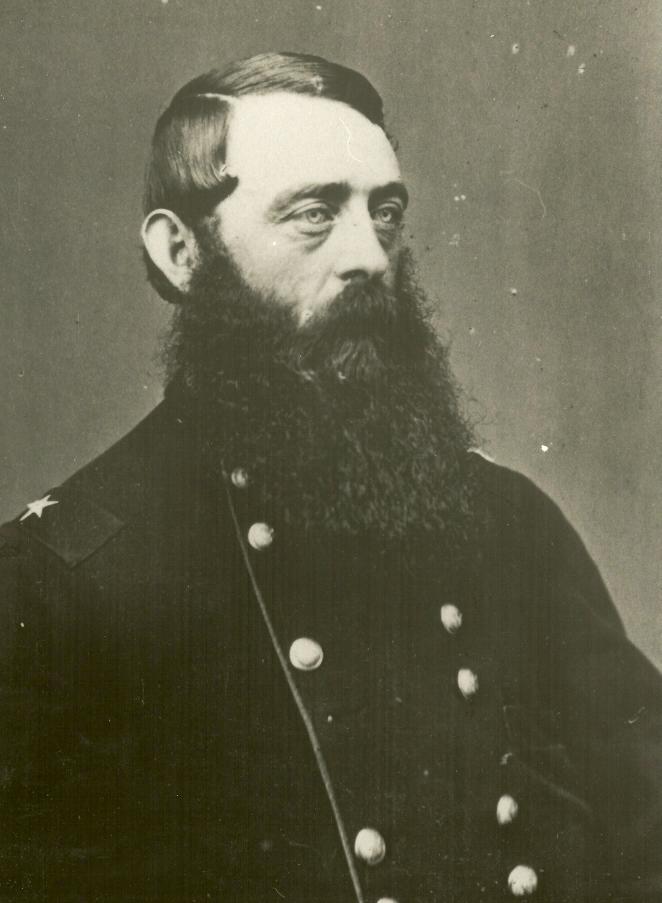
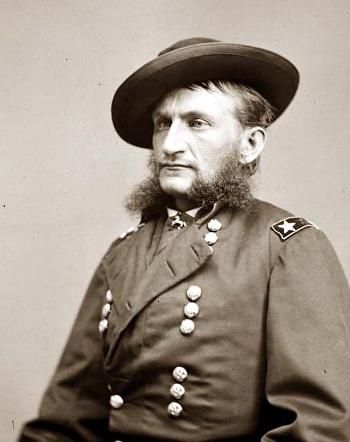
Tag Archives: richard anderson

“Our Army Would Be Invincible If…” Pt.4 A.P. Hill’s Third Corps

Friends of Padre Steve’s World

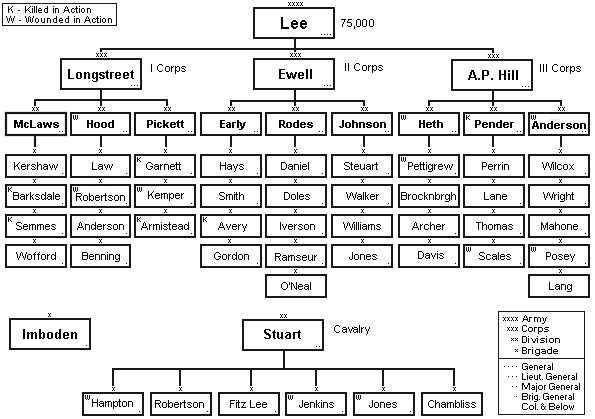
This is the fourth part of my re-written chapter on the leadership of Army of Northern Virginia at Gettysburg. Today is a look at the leaders of Lieutenant General A.P. Hill’s Third Corps. This like the following sections of this chapter of my Gettysburg text is interesting because it shows the complexities of the lives and personalities of the men leading these units. Professional soldiers, volunteers with little military experience, soldiers, lawyers, engineers and politicians they are an interesting collection of personalities; some surrounded in myth and others practically unknown. I think it is important for anyone studying a war, a campaign, or a battle to at least look at the lives of the men who planned and fought it. In doing so, even those that oppose what they did in rebelling against the United States can find in them some measure of humanity, and sometimes even gain a sense of empathy for some of them.   

That is why when we look at the lives of soldiers, we have to take the time to at least try to understand the nuance, the contradictions, their strengths and weaknesses as leaders, as well as a measure of their character.

In the coming week I will be doing Stuart’s Cavalry Division. I will then get to work on a similar chapter for the Army of the Potomac.

Have a great night

Peace

Padre Steve+
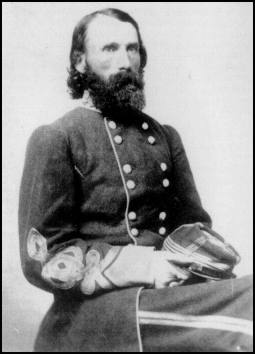
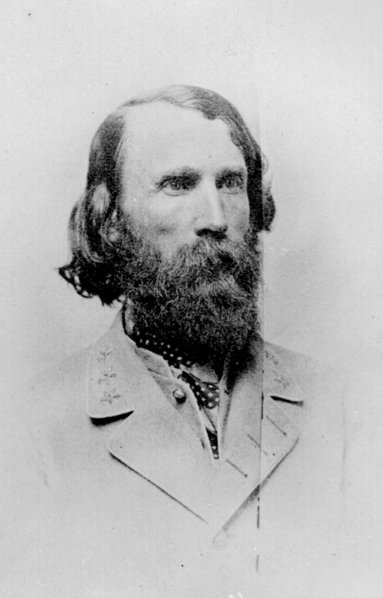
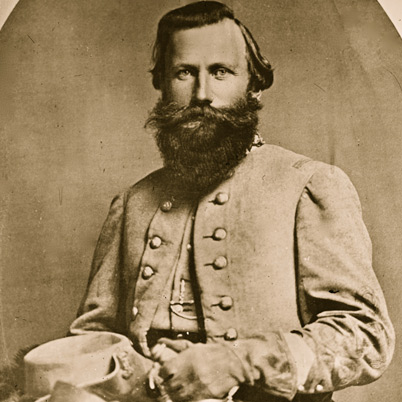
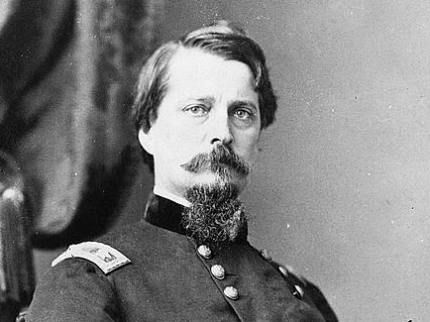
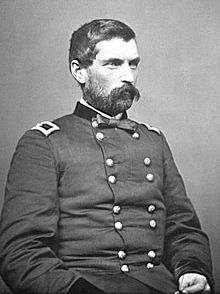
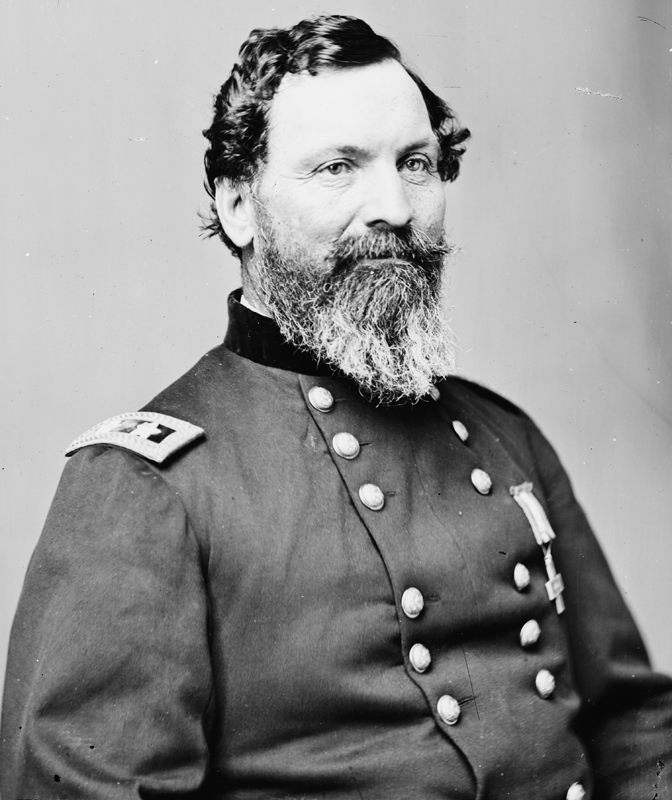
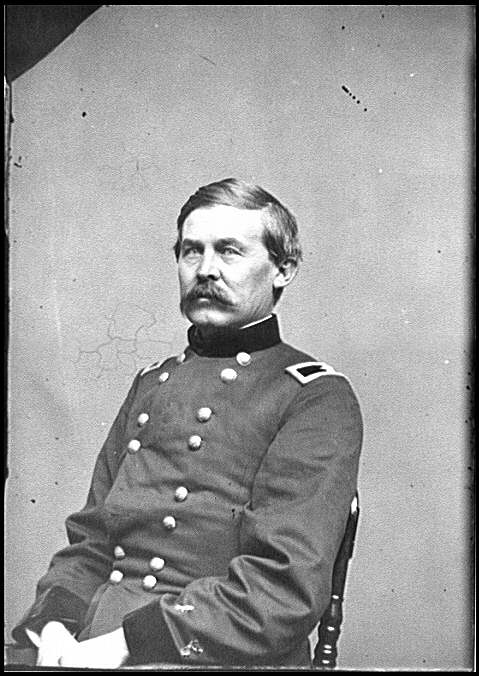
general_a_p_hill

Lieutenant General Ambrose Powell “A.P.” Hill, C.S.A.

The newly created Third Corps under Lieutenant General A.P. Hill was thought to be in good hands. Hill had commanded his large; six brigade “Light Division” with distinction, though having serious conflicts with both Longstreet and Jackson. At Antietam Hill’s hard marching from Harpers Ferry which allowed the Light Division to arrive on the battlefield in a nick of time, had saved the Army of Northern Virginia from destruction.

Hill was a graduate of West Point, class of 1847. He would have been part of the illustrious class of 1846, but the young cadet had a certain proclivity for women and a certain amount of debauchery lost a year of study after contracting “a case of gonorrhea, followed by complications, which were followed by lingering prostatitis” [1] afflictions which caused many other ailments that would plague him the rest of his life. At West Point Hill roomed with and became a longtime friend of a refined cadet from Philadelphia, George McClellan. His delayed graduate put him in the class of 1847 where along with his roommate Julian McAllister and friends Harry Heth and Ambrose Burnside were the social leaders of the class, due to their “practical jokes and boisterous conduct.” [2]

Hill graduated fifteenth in his class and was assigned to the artillery. The young Second Lieutenant accompanied Brigadier General Joseph Lane’s brigade to Mexico where he saw limited action at the end of the war and mainly served on occupation duty. In Mexico and in the following years he was stricken with various fevers including typhoid and yellow fever, as well as recurrences of his prostatitis which so limited his ability to serve in the field with the artillery that he requested a transfer to a desk job. This he was granted by Secretary of War Jefferson Davis who detailed him “for special duty in the United States Coast Survey offices in Washington D.C.” [3]

The assignment to the Coast Survey offices was unusual, especially for Hill’s era of service, for they were a part of the Department of the Navy. Despite much political support Hill could not get promoted to captain, likely due to the fact that he was working for the Navy. As war drew near Hill married Kitty Morgan McClung. His friends at the Coastal Survey attempted to convince him to remain with the Union as serving in their office he would have little chance of taking up arms against Virginia.

Hill was torn, he hated slavery and the depreciations visited on blacks; having in 1850 responded to the lynching of a young black man in his home town of Lynchburg: “Shame, shame upon you all, good citizens…Virginia must crawl unless you vindicate good order or discipline and hang every son of a bitch connected with this outrage.” [4] Likewise he was not in favor of secession, but he, like so many other Southern officers felt a stronger connection to family and his Virginia heritage than to the Union, and resigned his commission on February 26th 1861.

Hill was appointed as a Colonel of infantry in May 1861 to organize and command the 13th Virginia Infantry regiment. He commanded the regiment in the Valley and western Virginia as well as at First Manassas. By February 1862 he was a Brigadier General commanding Longstreet’s old Virginia brigade on the Peninsula where he distinguished himself against McClellan at Williamsburg. On May 26th 1862 he was promoted to Major General and given command of the very large so called “Light Division.” He emerged from the fighting on the Peninsula, the battles around Richmond and the Seven Days “with the reputation of being one of the best combat officers that Lee had.” [5] However, his success on the battlefield, like so many commanders came at great cost. In those battles his division suffered nearly 5,500 casualties. “Six colonels and three majors were killed; two brigadiers (Anderson and Pender), eleven colonels and six lieutenant colonels wounded.” [6]

Hill had an earned reputation as a brilliant division commander with the Light Division. Despite his clashes with Longstreet, and especially with Jackson, who had Hill arrested twice and attempted to have him court-martialed, Lee recommended him to take command of Third Corps. Lee sang his praise of Hill and his abilities to Jefferson Davis noting that Hill was “the best soldier of his grade with me.” [7] However, Hill had never commanded more than one division in action, except for the confused hour after Jackson had been struck down. Hill, however, was devoted, prompt, and energetic, and deserved promotion.” [8]

Hill’s reputation as a superb division commander was well earned, at Antietam where when Lee’s army was in danger of destruction, he “drove his men at a killing pace toward the sound of distant gunfire….” [9] Hill’s “Light Division’s remarkable march from Harper’s Ferry- seventeen miles in less than eight hours- rivaled the best marks by Jackson’s famous foot cavalry.” [10] Upon his arrival “instantly recognized the military situation, Kyd Douglas wrote, “and without waiting for the rest of the division and without a breathing spell he threw his columns into line and moved against the enemy, taking no note of their numbers.” [11] Hill’s march saved the Army of Northern Virginia from destruction as he dealt reverses to his old friends McClellan and Burnside. “Lee’s reference to him in his official Sharpsburg report, “And then A.P. Hill came up,” had become a byword in the army.” [12] There were other times, notably at Second Manassas and Fredericksburg where “he was sometimes careless on the battlefield,” and in both instances “his defensive postings were poor and nearly proved very costly.” [13]

Hill was a “nervous wiry man with a persistent chip of underappreciation on his shoulders and a bevy of chronic illnesses when under stress.” [14] He had an “impetuous streak and fiery temperament that matched his red beard, traits that at times had brought him trouble on the battlefield and off…” [15] He Despite that Hill exhibited a fondness and care for the welfare of his men that earned their respect and admiration. One officer called him “the most loveable of all Lee’s generals,” while “his manner so courteous as almost to lack decision.” [16]

Hill detested Jackson, who he referred to as “that old Presbyterian fool.” [17] His poor relations with Jackson’s confidants at Second Corps ensured that Ewell took Second Corps when Lee reorganized the army after Chancellorsville.

Lee appointed Hill to command Third Corps of which “half of the troops had been with him all along” [18] in the Light Division. Lee liked Hill’s aggressiveness and command instincts, which mirrored his own. Lee hoped that Hill’s aggressive instincts as a division commander would translate into success at the corps level. As such Lee, promoted him over the head of D.H. Hill and Lafayette McLaws who were both senior to him. Longstreet was not in favor of Hill’s appointment, most likely due to his altercation with Hill the previous year and lobbied for the promotion of D.H. Hill.

Regarding the promotion of A.P. Hill and Ewell, Lee wrote to Davis:

“I wish to take advantage of every circumstance to inspire and encourage…the officers and men to believe that their labors are appreciated, and that when vacancies occur that they will receive the advantages of promotion….I do not know where to get better men than those I have named.” [19]

But the decision to promote the Ewell and Hill, both Virginians stirred some dissent among those that believed that Lee was “favoring Virginians over officers from other states. The promotion of A.P. Hill, as previous noted was “made over the head of two Major Generals more senior than Hill- North Carolinian D.H. Hill and Georgian Lafayette McLaws.” [20] There is some validity to this perception, as Longstreet’s biographer Jeffry Wert noted:

“While the bulk of the troops hailed from outside the Old Dominion, two of the three corps commanders, six of the ten division commanders – including Jeb Stuart with the cavalry – and sixteen of forty-seven brigade commanders were natives of Virginia, along with the army commander and the chief of artillery.” [21]

Hill’s corps, like those of Longstreet and Ewell was composed of three divisions, and even more so than Ewell his division suffered a want of senior leaders who had served at the grade they were now expected to serve.

Anderson’s Division

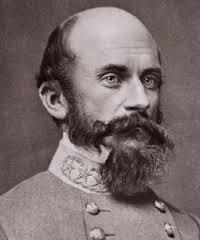
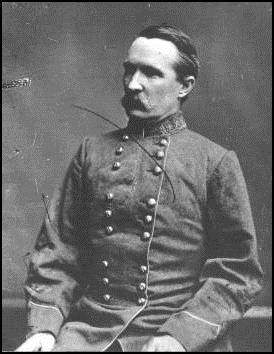
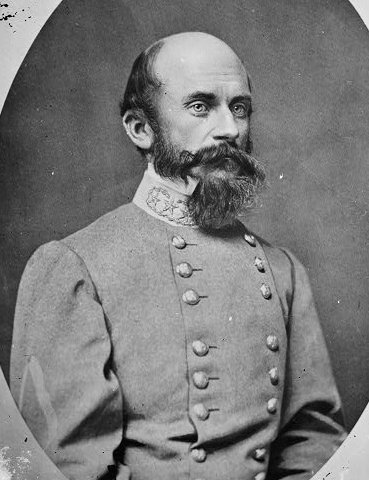
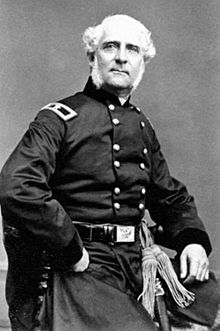
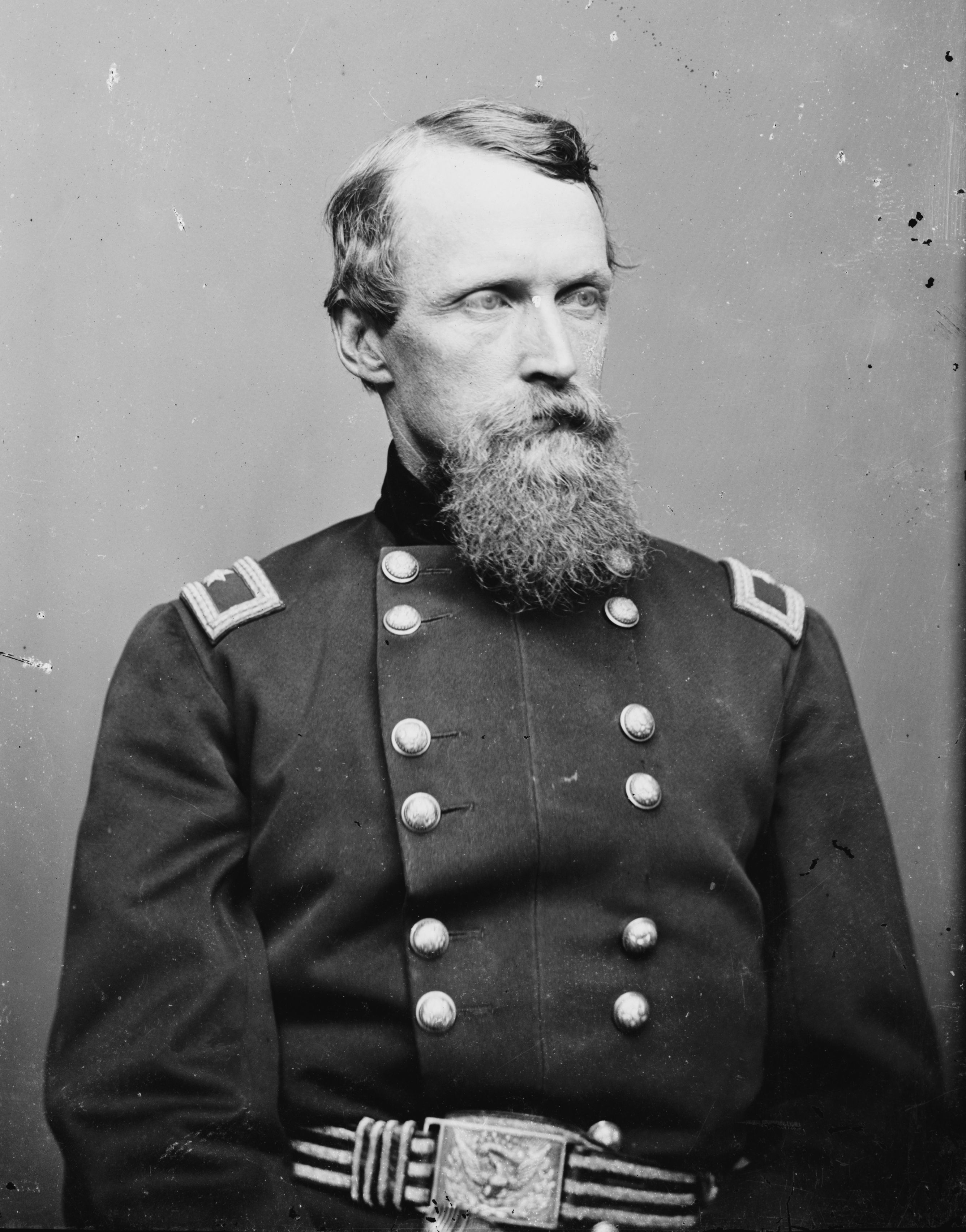
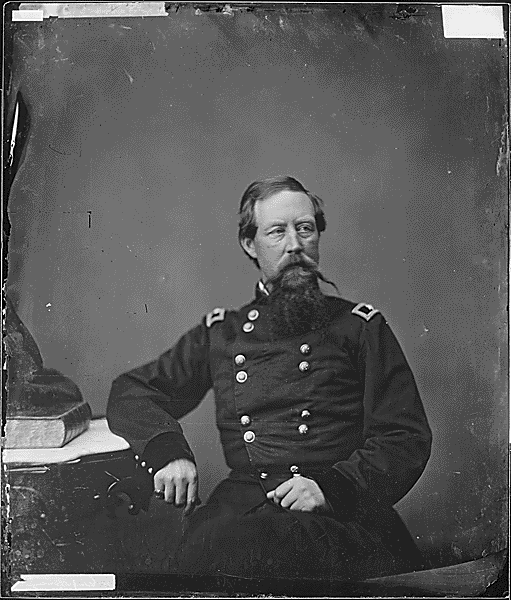
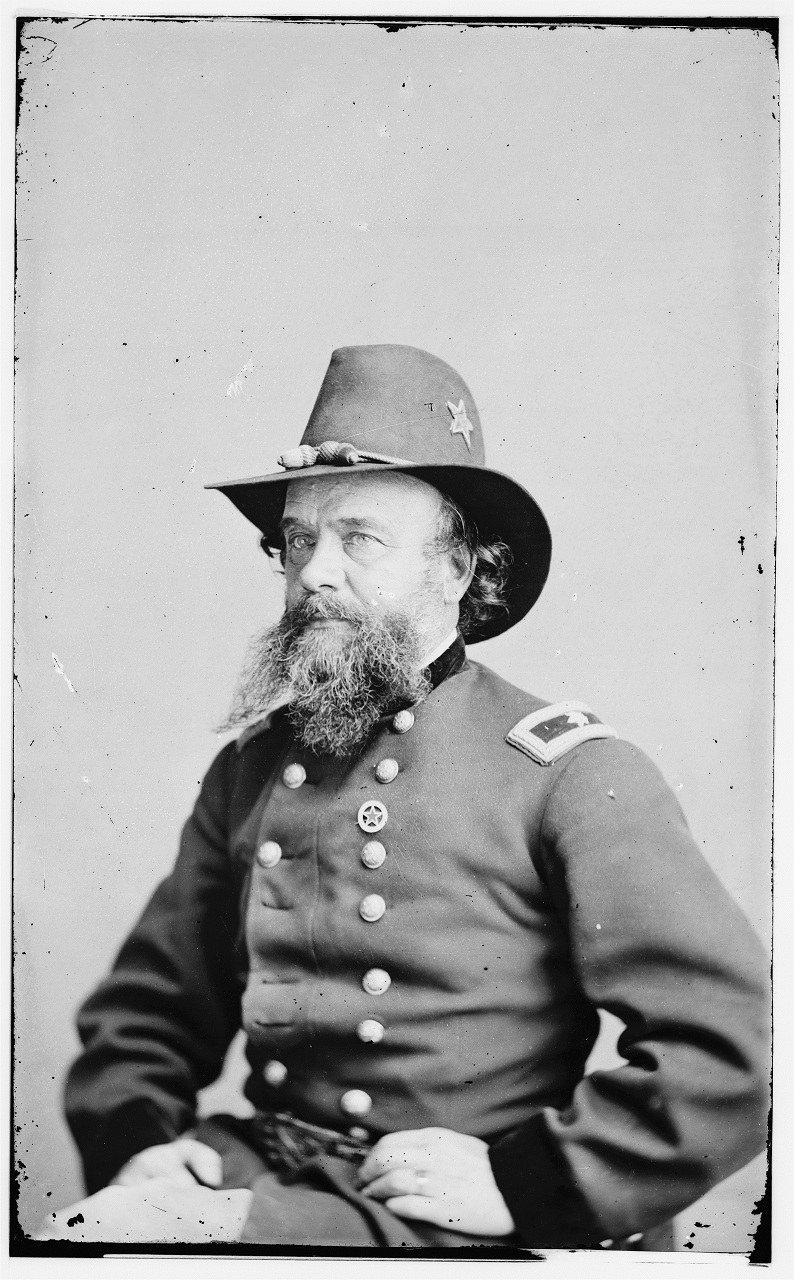
Richard_H._Anderson

Major General Richard Anderson, C.S.A.

The most stable division in Third Corps was Richard Anderson’s, transferred from First Corps. Under Longstreet the division and its commander had served well. Anderson was an 1842 graduate of West Point and classmate of Longstreet and Lafayette McLaws. He served as in the Dragoons on the frontier, in Mexico and again on the frontier, throughout the 1840s and 1850s. He was promoted to Captain in 1855 and stationed in Nebraska when his home state of South Carolina seceded from the Union.

“Tall, strong, and of fine background, Anderson never was disposed to quibble over authority or to indulge in any kind of boastfulness.” [22] He began the war commanding the 1st South Carolina Infantry, and was soon a brigadier. He fought well on the Peninsula and was promoted to Major General and given command of Benjamin Huger’s former division in July of 1862. He commanded the division at Second Manassas and at Antietam, where he was wounded in the vicious fighting at the Bloody Lane. The division saw little action at Fredericksburg, but in “the Battle of Chancellorsville, he and his men fought extremely well.” [23] Lee commented that at Chancellorsville that Anderson was “distinguished for the promptness, courage, and skill with which he and his division executed every order.” [24]

Lee considered Anderson a “capable officer”…and had marked him for future higher command.” [25] Anderson was noted for his modesty and unselfishness, “his easy going ways, combined with his competence and professionalism made him one of the most well liked officers in the Army of Northern Virginia.” [26]

However, there was an incalculable thrown into the equation. During the reorganization of the army, Anderson’s division was detached from Longstreet’s First Corps and assigned to Hill’s new Third Corps. Hill had not yet established his methods of operation as a corps commander, and Anderson, used to “Longstreet’s methodical insistence that everything be just so before he would venture into action” contrasted with Hill’s “tendency to leap before he looked.” [27]

Anderson’s division was composed of five brigades commanded by a mixed lot of commanders, none of whom were professionals.

Wilcox

Brigadier General Cadmus Wilcox was a no-nonsense graduate of the illustrious West Point class of 1846. Hailing from Tennessee, Wilcox was outgoing and popular, and before the end of his first year “had made friends of every member of the class. It was said that no cadet of his time had so many friends and was so universally esteemed.” [28] He kept those friends throughout the years, friends who remained his friends, even though they had to fight against him. Harry Heth said of him “I know of no man of rank who participated in our unfortunate struggle on the Southern side, who had more warm and sincere friends, North and South.” [29]

Wilcox graduated near the bottom of the class fifty-fourth of fifty-eight and was commissioned as an infantry officer. Wilcox served in the Mexican War where he was in the thick of the fight at Chapultepec, on the frontier, and taught tactics for five years at West Point. Following that assignment he studied for two years in Europe. Wilcox is an expert rifleman and instructor. He “wrote a manual, Rifle and Infantry Tactics, and translated an Austrian manual on infantry tactics.” [30]

When war came he resigned his commission and became Colonel of the 9th Alabama Infantry, and by October 1861 he was promoted to Brigadier General and given command of a brigade. He had served with distinction as a brigade commander at Williamsburg, Seven Pines and the Seven Days Battles, and was given acting command of small division at Second Manassas. However, after an uneven performance he is passed over for command of a division which instead was given to his classmate, George Pickett. Wilcox was disgruntled and upset at being “passed over for advancement in favor of a junior officer.” [31] “Restless, sore, and disposed to go to another Confederate army where he will have a chance,” [32] Wilcox asked Lee for a transfer to another army, but “Lee could not afford to lose such an experienced brigadier, and refused to transfer” him. [33]

At Chancellorsville the delaying action of his brigade at Salem’s Church had helped save the army. Sedgwick’s Sixth Corps had succeeded in crossing the Rappahannock and was marching on Lee’s rear areas. On May third with the fate of the army in the balance, Wilcox “reasoned intelligently and promptly when he should leave Banks’ Ford. Then, instead of joining Early, he took his chance on being destroyed in order that he might delay the enemy on the Plank Road.” [34] Wilcox and his troops, supported by other units of McLaws’ division which came up in support thrashed the Union troops, inflicting 1523 casualties for the loss of 674 men. [35] In his post-battle report Lee noted that Wilcox was “entitled to especial praise for the judgment and bravery displayed “in impeding Sedgwick “and for the gallant and successful stand at Salem’s Church.” [36] Three months later he will get his promotion to Major General and command of a division.

Mahone

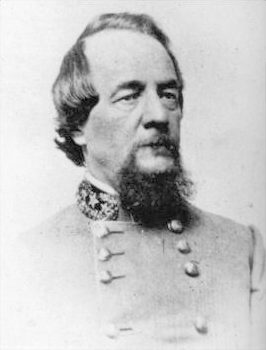
Brigadier General William “Little Billy” Mahone was a diminutive graduate of VMI with no prior military experience.. Barely five foot five inches tall and weighing just 125 pounds the brigadier was described by Moxie Sorrel as “Very small in height and frame, he seemed a mere atom with little flesh.” [37] There was so little substance to his body that when his wife heard that he had “he had taken a flesh wound at Second Manassas…she knew it had to be serious, she said, “for William has no flesh whatsoever.” [38]

Instead Mahone was an engineer who had “established himself as a resourceful construction engineer for railroads.” [39] When Virginia seceded he was “president, chief engineer and superintendent of the new Norfolk and Petersburg Railroad, which he succeeded in constructing across the bottomless Dismal Swamp.” [40] Hard driven, he had dreams of connecting his railroad with others and linking the Virginia Tidewater with the Mississippi and the Pacific.

Mahone was an ardent secessionist and when Virginia seceded he took leave of his railroad and became Colonel of the 6th Virginia Infantry, with which he occupied Norfolk when Federal forces evacuated it. He was soon a brigadier and his skill in engineering was put to good use at Drewry’s Bluff before Richmond.

He commanded his brigade with reasonable effectiveness before Gettysburg. As a brigadier “he is not lacking in diligence, but he is not without special distinction.” [41] As a brigade commander fought competently at Chancellorsville and by Gettysburg had established himself as a “competent and experienced brigade leader.” [42] His actions at Gettysburg would be controversial, but he rose to fame as the war went on and became one of the hardest fighting division commanders in the Army of Northern Virginia during the Wilderness, Petersburg and to the end of the war where he “one of Lee’s most conspicuous – and trusted – subordinates.” [43]. Following the war Mahone expands the Norfolk and Western Railway system, and entered politics, where won election as a Republican to the U.S. Senate in 1880.

Wright

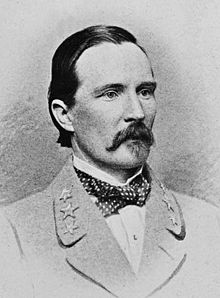
Brigadier General Ransom “Rans” Wright was a Georgia lawyer who had grown up dirt poor and between hard work and study had made a name for himself. He was a “very gifted man, a powerful writer, an effective orator, and a rare lawyer.” [44]

He had strong Unionist sentiments, something that gained him little popularity in a secession minded state, he was the brother in law of Stephen Douglas’s running mate Herschel Johnson and supported the pro-Union ticket of John Bell and Edward Everett.

Despite his sentiments Wright volunteered when Georgia seceded and despite his lack of military experience was named Colonel of the 3rd Georgia Infantry. He took command of his brigade as a Colonel and was promoted to Brigadier General in June 1862. By the time of Gettysburg he “was considered a well-tested combat veteran.” [45] Despite his earned reputation as a solid brigade commander, Wright “did not endear himself to the Virginia elite in the Army of Northern Virginia.” [46] In 1864 the Governor of Georgia requested that he be detached from the Army of Northern Virginia to serve in that state where he was promoted to Major General.

Posey

Brigadier General Carnot Posey was a highly successful plantation planter and lawyer who had served as a “lieutenant under Col. Jefferson Davis, and suffered a slight wound at the Battle of Buena Vista” [47] in the Mexican War. After the war he returned to his legal practice and was appointed as a United States District Attorney by President Buchanan, a position that he held until Mississippi seceded from the Union. At the outset of the war he organized a company named the “Wilkinson Rifles.” That company became part of the 16th Mississippi Infantry and Posey became its first Colonel. He was badly wounded at Cross Keys in the Valley campaign.

He fought well at Second Manassas and took acting command of Featherston’s brigade at Antietam. Despite a poor showing there by the brigade which collapsed in confusion after doomed counter-attack on the Sunken Road, he was promoted to brigade command prior to Chancellorsville where he and his brigade gave a strong performance under fire. He was mortally wounded at Bristoe Station on October 14th 1863.

Lang

Colonel David Lang commanded the Florida Brigade the smallest in the army. Just twenty-five years old, the graduate of the Georgia Military Institute inherited brigade command when Brigadier General Edward Perry came down with typhoid fever after Chancellorsville. He had only fought in three battles, two as a captain “and he had never led a brigade in combat.” [48] After Gettysburg when Perry returned to the brigade Lang returned to command his regiment, finally taking command of a brigade at Petersburg at the end of the war, without a promotion to Brigadier General.

Pender’s Division

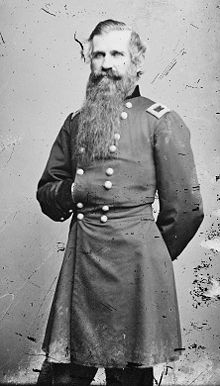
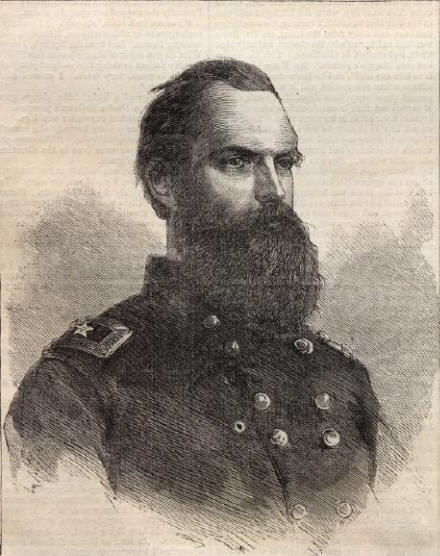
William_Dorsey_Pender

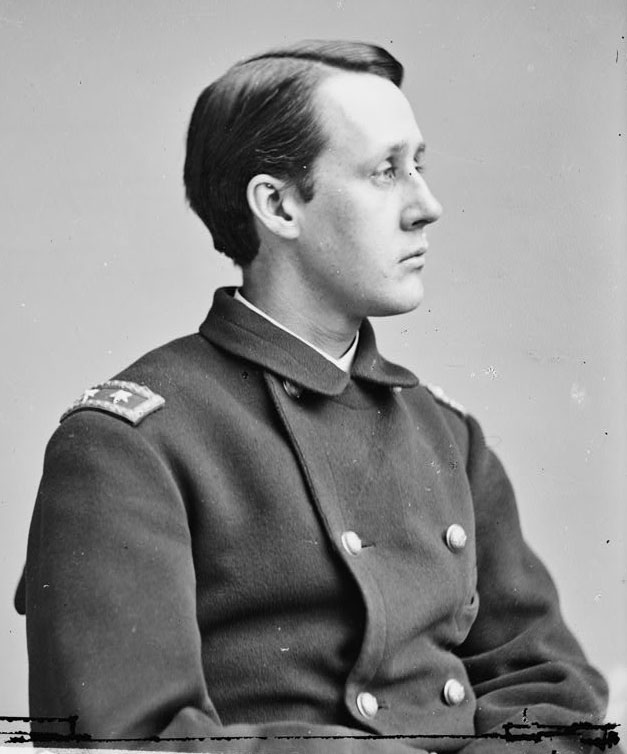
Major General Dorsey Pender, C.S.A

Hill’s old Light Division was divided into two divisions. Major General William Dorsey Pender commanded the old Light Division which now consisted of four rather than six brigades.

Pender was a “pious, serious North Carolinian” [49]and a graduate of West Point when he graduated nineteenth of forty-six in that class. Prior to the war he served on the frontier and in California with the artillery and dragoons. During the secession crisis he “offered his services to the Confederacy even before most of the states, including his own, had seceded.” [50]

Pender was “only seven years out of West Point” [51] in 1863 when he was promoted to Major General and given command of his division, he was only twenty-nine years old, and the “youngest of that rank in the army.” [52] The young general was deeply loyal to Powell Hill and a partisan of the Light Division. However, he had risen “on first rate ability, steadfast ambition and a headlong personal leadership in battle which gave a driving force to his brigade” [53] which he considered “the best brigade of the best division” [54] in the army.

Lee praised him as “a most gallant officer” and was deeply sensitive about keeping Pender with the troops that found him so inspiring noting “I fear the effect upon men of passing him over in favour of another not so identified with them.” [55] Pender was an “intelligent, reflective man, deeply religious and guided by a strong sense of duty.” [56]

Pender’s four veteran brigades were commanded by three experienced officers and one new to brigade command, but the young general would not get to lead them into action for long as he was mortally wounded by a shell fragment before the division was to go into action on July 2nd at Gettysburg. His division would be led by Brigadier General James Lane on July 2nd and turned over to Major General Isaac Trimble shortly before Pickett’s Charge.

Perrin

Colonel Abner Perrin from South Carolina was the least experienced of Pender’s brigade commanders. He had prior Regular Army experience. He enlisted in the army at the age of nineteen and served as a lieutenant in Mexico. He resigned his commission in 1848 and became a successful lawyer. When secession came he volunteered and served as a company commander in the 14th South Carolina. Perrin took command of the regiment after Fredericksburg. He led the regiment in action for the first time at Chancellorsville. Lee named him to command the brigade when his brigade commander, Samuel McGowan, was wounded. He was not promoted to Brigadier General, but despite his inexperience he remained in command of the veteran South Carolina brigade, “whose leadership had been decimated” and had “devolved to lieutenant colonels, majors and captains.” [57] His brigade performed well on the first day, and his leadership earned him his promotion. He was killed in action in the “counterattack at the Bloody Angle at the Battle of Spotsylvania on May 12th, 1864. Just before the battle he promised to emerge a live major general or a dead brigadier.” [58]

Lane

Brigadier General James Lane was an academic. He graduated second in his class at VMI in 1854 and received a degree in science from the University of Virginia three years later. He returned to VMI as an assistant professor then became a professor of natural philosophy at the North Carolina Military Institute. [59]

He led many of his cadets to war when he was commissioned as a major in the 1st North Carolina Volunteer Infantry. He took command of it in September 1861 and was promoted to brigade command in October 1862 after Antietam.

Lane proved himself an able commander at Fredericksburg and Chancellorsville. During the Battle of Chancellorsville his brigade led Jackson’s assault against the Union right, suffering 909 casualties. That night he had the misfortune to be part of one of the saddest episodes of the Confederate war when one of his units mortally wounded Stonewall Jackson on the night of May 2nd 1863. Despite this “he and his men could be counted on to do the right thing when the bullets started to fly.” [60] He was badly wounded at Cold Harbor and missed most of the rest of the war. Following the war he returned to academics and was a professor of civil engineering at the Alabama Polytechnic Institute when he died in 1907.

Thomas

Brigadier General Edward Thomas was a plantation owner from Georgia. He was not completely without military experience having served as a lieutenant of Georgia mounted volunteers in the Mexican War. He was offered a commission in the Regular Army after the war, but he turned it down and returned home.

He became colonel of the 35th Georgia Infantry in October 1861 and led it as part of Pettigrew’s brigade. When Pettigrew was wounded at Seven Pines the regiment was shifted to Joseph Anderson’s brigade of the Light Division. Thomas assumed command of that brigade when Anderson was wounded at Frayser’s Farm and returned to Richmond to “resume direction of the important Tredegar Iron Works.” [61] He commanded it in the thick of the fighting at Second Manassas, and at Fredericksburg helped stop Meade’s advance with a fierce counterattack. He continued to command it at Chancellorsville. Thomas could always be counted on to deliver “a solid, if unspectacular performance.” [62] He remained in command of the brigade through the end of the war and surrendered with Lee at Appomattox.

Scales

Brigadier General Alfred Scales was new to brigade command. A “forty-five year old humorless politician…a duty driven public official-turned-warrior.” [63] Scales had served in the U.S. House of Representatives and left politics when the war began. Since he had no military experience he chose, unlike so many other men of stature, to enlist as a private when North Carolina seceded.

His fellow soldiers elected to a captaincy in Pender’s 3rd North Carolina Volunteers. When Pender was transferred, Scales succeeded him in command of the regiment. He commanded that regiment on the Peninsula and during the Seven Days. From that time Scales’ career was “one of consistent stout service in Pender’s hard fighting brigade.” [64] Scales served as acting commander of the brigade when Pender was wounded at Fredericksburg and “met the test.” [65] He distinguished himself with the 13th at Chancellorsville where he was wounded in the thigh. Scales service with Pender’s brigade “had been one of consistent stout service.” [66]

When Pender was promoted to division command “it was a forgone conclusion that his replacement in brigade command would be Scales.” [67] He had served with the brigade, was known to its soldiers and though inexperienced as a brigade commander he “and the brigade were one, for he had shared its fortunes, was proud of it, and was confident of victory as he led it to Gettysburg.” [68]

Heth’s Division
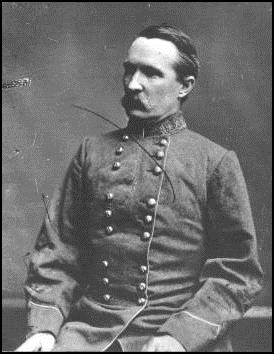
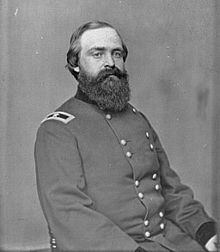
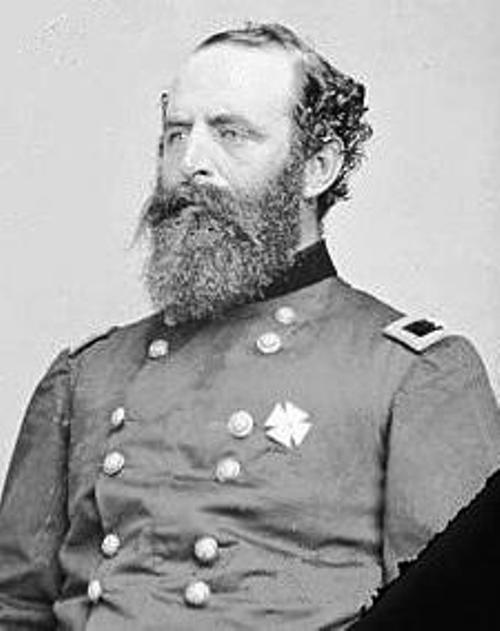
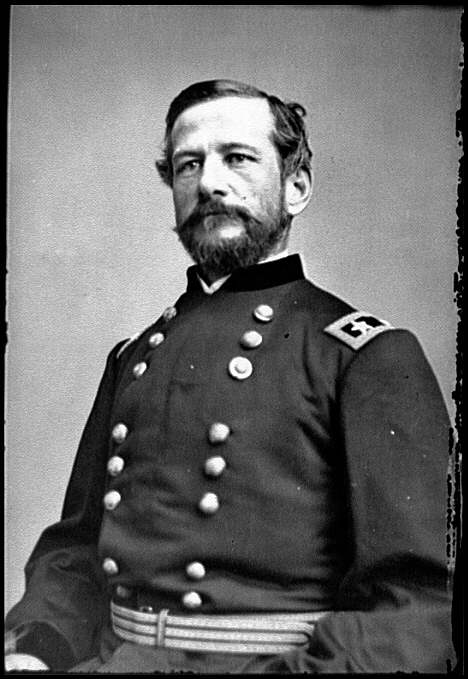
heth

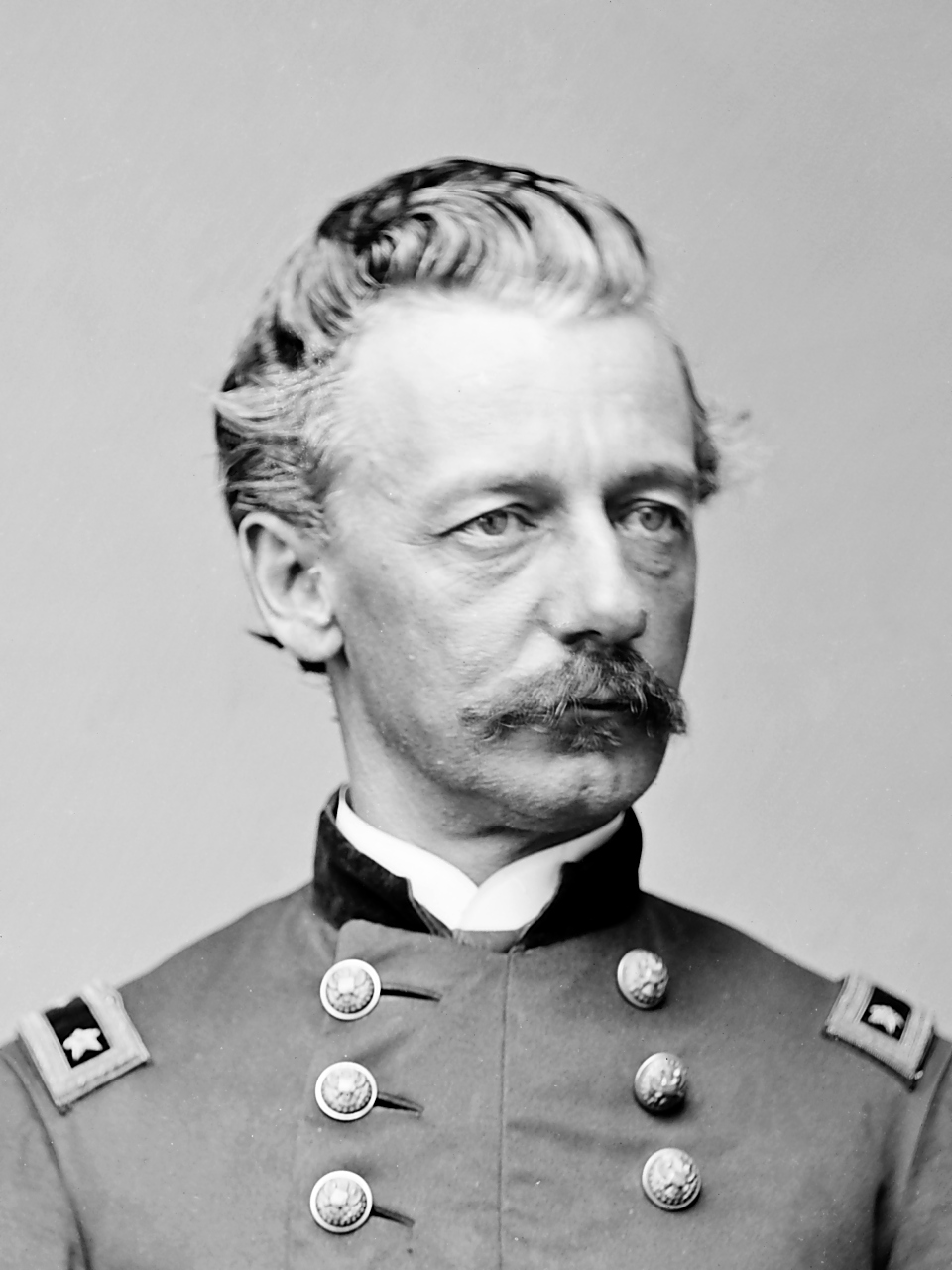
Major General Harry Heth, C.S.A. 

Hill’s remaining division was commanded by the newly minted Major General Harry Heth. It was composed of the two remaining brigades of the Light Division and two brigades that had recently joined to the army for the offensive.

Harry Heth was a graduate of West Point who had a “high reputation personally and professionally.” [69] He was a cousin of George Pickett and joined Pickett as one of the hell raising cadets of the academy. Their reunion at the academy “developed into a three-year effort to see how much illicit merriment they could initiate without getting booted out.” [70] Heth graduated no higher in his class than Pickett did his the previous year, finishing at the bottom in the forty-five member class of 1847. Heth wrote of his West Point years later admitting that his academic record was

“abominable. My thoughts ran in the channel of fun. How to get to Benny Havens occupied more of my time than Legendre on Calculus. The time given to study was measured by the amount of time necessary to be given to prevent failure at the annual examinations.” [71]

Heth spent fourteen years in the old army, rising to the rank of Captain and spending most of his time on the frontier. Heth came from a family with long ties dating back to the American Revolution where his grandfather had, fought and the War of 1812 where his father had served. He was “well liked for his social graces, and Powell Hill held him in great respect.” [72]

Lee had a high regard for Heth who “had a solid record as Lee’s quartermaster general in the early days of Virginia’s mobilization for war.” [73] Lee considered him a friend and somewhat a protégé, however his regard “cannot be based on any substantive achievements by Heth, whose antebellum career and war experience had been similarly unremarkable.” [74] The appointment would prove to be a mistake. “Heth had little experience under fire, and an earlier petition for Heth’s promotion had been turned down by the Confederate Senate.” [75] When he recommended Heth for command of the new division he assured Jefferson Davis that he had “a high estimate of Genl. Heth.” [76] Heth did know his own deficiencies and candidly “admitted his own weaknesses and resisted the temptation to take himself too seriously.” [77]

Clifford Dowdy wrote that Heth was an example of a “soundly trained soldier of perennial promise. Always seemingly on the verge of becoming truly outstanding” but “never lived up to the army’s expectations.” [78] Heth became a brigade commander in Hill’s division prior to Chancellorsville after having served in Western Virginia and in the West.

Heth was new to command of the newly formed division which was a hastily put together force. In a new division where experienced leadership was needed, Heth had the weakest collection of brigade commanders in the Army of Northern Virginia at Gettysburg. Ironically, it would be the division that stumbled into combat against the Buford’s Cavalry and Reynold’s First Corps at Herr, McPherson and Seminary Ridge on July 1st 1863. After Gettysburg he retained command of his division “with steadfastness and some competence until the final surrender.” [79]

Pettigrew

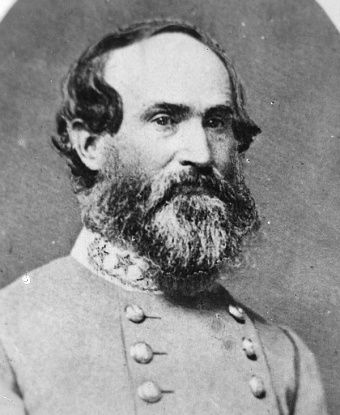
Newest to the division was Brigadier General Johnston Pettigrew whose North Carolina brigade was one of the largest in the army. This was one of the new brigades provided to Lee by Davis, and “it had no appreciable experience.” [80] Pettigrew was a renaissance man, “the most educated of all Confederate generals.[81] He was a graduate of the University of North Carolina. He was “proficient in French, German, Italian and Spanish, with a reading knowledge of Greek, Hebrew and Arabic.” [82]

Pettigrew had spent a good amount of time abroad on diplomatic service before returning to his law practice in Charleston. He had “even spent time as a volunteer aid with the French and Italian forces against the Austrians in 1859.” [83] He was elected to the state legislature in 1856 when he “sensed the oncoming of hostilities and was named colonel of the 1st Regiment of Rifles, a Charleston militia outfit.” [84] Pettigrew was “one of those natural leaders of a privileged background who, without military ambitions, had been advanced on the application of native intelligence and contagious courage.” [85]

Davis

Brigadier General Joseph Davis, the nephew of President Jefferson Davis commanded a newly raised Mississippi brigade. Davis was “a congenial and conscientious officer,” but “he had never led troops in battle.”[86] Davis owed his appointment to his relationship with the President. He was “entirely without combat experience.[87] Robert Krick wrote that Davis’s “promotion to the rank of brigadier general seems to be as unadulterated an instance of nepotism as the record of the Confederacy offers.” [88] Davis survived Gettysburg and after a bout with typhoid fever returned to command his brigade and “served solidly, though unspectacularly, until the end of the war with Lee’s army.” [89]

Most of the war he had been spent on his uncle’s staff in Richmond and in his new appointment he was not with officers of any experience as “No one serving on Joe Davis’s staff showed strong signs of having the background, experience, and ability that might help the brigadier meet his responsibilities.” [90] Likewise the nine field grade officers assigned to the regiments of his brigade were similarly ill-equipped for what they would face in their first test of combat.

Archer

Heth did have the experienced mixed Alabama-Tennessee brigade of Brigadier General James Archer under his command, but despite its experience and “fine reputation” [91] the brigade was seriously understrength after seeing heavy combat at Chancellorsville.

The brigade commander James Archer was a native of Bel Air Maryland, one of two Maryland officers serving in the Army of Northern Virginia. Archer was graduate of the University of Maryland who practiced law before entering the Regular army as a Captain during the Mexican War. During the war he was brevetted for gallantry at the Battle of Chapultepec. He left the army after the war and then returned to it in 1855 as an infantry Captain and was serving in Walla Walla Washington as the secession crisis deepened.

He resigned his commission in March 1861 and was commissioned in the new Confederate army. He received command of the 5th Texas Regiment “who thought him a tyrant.” [92] Though he had no battle experience he was promoted to Brigadier General and took command of a Tennessee brigade at Seven Pines when its commander was killed. Like the Texans the Tennesseans did not take to him and dubbed him “The Little Game Cock.” [93]

Initially, Archer was not well liked in any of his commands, the Texans considered him a tyrant and he was “very non-communicative, the bearing and extreme reserve of the old army officer made him, for a time, one of the most hated of men.” [94] After being joined to the Light Division Archer transformed his reputation among his men and had “won the hearts of his men by his wonderful judgment and conduct on the field.” [95] He distinguished himself at Antietam, and though quite ill led his brigade solidly. At Fredericksburg Archer helped save the Confederate line by leading a counter-attack following the Union breakthrough at Telegraph Hill.

Brockenbrough

The last brigade of Heth’s division was the small Virginia brigade of the “plodding, uninspiring” [96] Colonel John Brockenbrough. Brockenbrough was a “wealthy, but rough- looking Virginia planter.” [97] He was an 1850 graduate of VMI.

He entered “entered service as colonel of the 40th [Virginia Infantry] in May 1861.” [98] The brigade when it had been commanded by Charles Field had been considered one of the best in the army. Brockenbrough took command of it in 1862 when Field was wounded, but he “had never managed the brigade well, especially at Fredericksburg, and Lee returned him to regimental command.” [99]

Brockenbrough again assumed the command of the brigade after Chancellorsville when Heth was promoted. Lee did not deem him suited for promotion, but believed that Brockenbrough “could be counted on to keep together a command sadly reduced in numbers.” [100] Like Archer’s brigade the brigade was “sadly reduced in numbers” and in morale…” [101] His performance at Gettysburg was dreadful and five days after the battle Lee relived him of command of the brigade, returning to his regiment with lower ranking subordinate in command of the brigade. He resigned from the army in 1864.

Hill’s Third Corps was the least prepared command to go into battle at Gettysburg. While some leaders, particularly Richard Anderson, Dorsey Pender and Cadmus Wilcox were excellent commanders, the corps was led by too many untried, inexperienced, or in some cases incompetent leaders to be committed to an offensive campaign so shortly after it was constituted. Likewise, some of its formations were just shells of what they had been before Chancellorsville and had not been reconstituted

[1] Waugh, John C. The Class of 1846: From West Point to Appomattox, Stonewall Jackson, George McClellan and their Brothers Ballantine Books, New York 1994 p.166

[2] Robertson, James I. Jr. General A.P. Hill: The Story of a Confederate Warrior Random House, New York 1987 p.13

[3] Ibid. Robertson General A.P. Hill p.26

[4] Ibid. Robertson General A.P. Hill p.22

[5] Ibid. Robertson General A.P. Hill p.95

[6] Ibid. Robertson General A.P. Hill p.95

[7] Ibid. Freeman Lee’s Lieutenants p.526

[8] Ibid. Freeman Lee p.304

[9] Ibid. Robertson, General A.P. Hillp.143

[10] Sears, Stephen W. Landscape Turned Red: The Battle of Antietam Houghton-Mifflin Company, Boston and New York 1983 p.285

[11] Ibid. Robertson General A.P. Hill p.144

[12] Ibid. Tagg The Generals of Gettysburg p.301

[13] Ibid. Sears Gettysburg p.45

[14] Ibid. Guelzo, Gettysburg: The Last Invasion p.22

[15] Ibid. Sears Landscape Turned Red p.285

[16] Ibid. Tagg The Generals of Gettysburg p.301

[17] Ibid. Guelzo, Gettysburg: The Last Invasion p.22

[18] Foote, Shelby, The Civil War, A Narrative. Volume Two Fredericksburg to Meridian Random House, New York 1963 p.434

[19] Ibid. Freeman Lee’s Lieutenants p.526

[20] Ibid. Taylor, John Duty Faithfully Performed p.290

[21] Ibid. Wert General James Longstreet p.249

[22] Ibid. Freeman Lee’s Lieutenants p.108

[23] Ibid. Glatthaar General Lee’s Army from Victory to Collapse p.343

[24] Ibid. Freeman Lee’s Lieutenants p.512

[25] Ibid. Dowdy. Lee and His Men at Gettysburg p.86

[26] Ibid. Tagg The Generals of Gettysburg p.306

[27] Ibid. Dowdy. Lee and His Men at Gettysburg pp.86-87

[28] Ibid. Waugh The Class of 1846 p.69

[29] Ibid. Waugh The Class of 1846 p.498

[30] Ibid. Tagg The Generals of Gettysburg p.310

[31] Ibid. Tagg The Generals of Gettysburg p.310

[32] Ibid. Freeman Lee’s Lieutenants p.46

[33] Ibid. Tagg The Generals of Gettysburg p.310

[34] Ibid. Freeman Lee’s Lieutenants p.512

[35] Sears, Stephen W. Chancellorsville Houghton Mifflin Co. Boston and New York 1996 p.385

[36] Ibid. Freeman Lee’s Lieutenants p.512

[37] Trudeau, Noah Andre, The Last Citadel: Petersburg, Virginia, June 1864-April 1865 Little Brown and Company, Boston, Toronto, London 1991 p.117

[38] Ibid. Sears Gettysburg p.55

[39] Ibid. Freeman Lee’s Lieutenants p.243

[40] Ibid. Tagg The Generals of Gettysburg p.314

[41] Ibid. Freeman Lee’s Lieutenants p.48

[42] Ibid. Tagg The Generals of Gettysburg p.315

[43] Ibid. Freeman Lee’s Lieutenants p.243

[44] Ibid. Guelzo, Gettysburg: The Last Invasion p.328

[45] Ibid. Tagg The Generals of Gettysburg p.317

[46] Ibid. Guelzo, Gettysburg: The Last Invasion p.328

[47] Ibid. Tagg The Generals of Gettysburg p.319

[48] ibid. Tagg The Generals of Gettysburg p.322

[49] Ibid. Guelzo, Gettysburg: The Last Invasion p.23

[50] ibid. Tagg The Generals of Gettysburg p.325

[51] Ibid. Dowdy. Lee and His Men at Gettysburg p.85

[52] Ibid. Sears Gettysburg p.47

[53] Ibid. Dowdy. Lee and His Men at Gettysburg p.85

[54] Ibid. Freeman Lee’s Lieutenants p.45

[55] Ibid. Sears Gettysburg p.47

[56] Ibid. Dowdy. Lee and His Men at Gettysburg p.85

[57] Ibid. Tagg The Generals of Gettysburg p.331

[58] Ibid. Tagg The Generals of Gettysburg p.332

[59] Ibid. Tagg The Generals of Gettysburg pp.332-333

[60] Ibid. Tagg The Generals of Gettysburg p.334

[61] Ibid. Freeman Lee’s Lieutenants p.282

[62] Ibid. Tagg The Generals of Gettysburg p.337

[63] Ibid. Tagg The Generals of Gettysburg p.338-339

[64] Ibid. Freeman Lee’s Lieutenants p.421

[65] Ibid. Freeman Lee’s Lieutenants p.421

[66] Ibid. Freeman Lee’s Lieutenants p.421

[67] Ibid. Tagg The Generals of Gettysburg p.338

[68] Ibid. Pfanz Gettysburg: The First Day p.306

[69] Ibid. Freeman Lee’s Lieutenants p.46

[70] Ibid. Longacre Pickett p.13

[71] Ibid. Longacre Pickett p.13

[72] Ibid. Dowdy. Lee and His Men at Gettysburg p.88

[73] Ibid. Robertson General A.P. Hill p.178

[74] Ibid. Krick, Three Confederate Disasters on Oak Ridge: p.96

[75] Ibid. Guelzo, Gettysburg: The Last Invasion p.23

[76] Ibid. Sears Gettysburg p.47

[77] Ibid. Robertson General A.P. Hill p.178

[78] Ibid. Dowdy. Lee and His Men at Gettysburg p.87

[79] Ibid. Tagg The Generals of Gettysburg p.342

[80] Ibid. Sears Gettysburg p.50

[81] Ibid. Robertson General A.P. Hill p.196

[82] Ibid. Tagg The Generals of Gettysburg p.343

[83] Ibid. Guelzo, Gettysburg: The Last Invasion p.129

[84] Ibid. Tagg The Generals of Gettysburg p.343

[85] Ibid. Dowdy. Lee and His Men at Gettysburg p.78

[86] Ibid. Robertson General A.P. Hill p.196

[87] Ibid. Freeman Lee’s Lieutenants p.553

[88] Krick, Robert K. Three Confederate Disasters on Oak Ridge: Failures of Brigade Leadership on the First Day of Gettysburg in The First Day at Gettysburg edited by Gallagher, Gary W. Kent State University Press, Kent Ohio 1992

[89] Ibid. Tagg The Generals of Gettysburg p.354

[90] Ibid. Krick Three Confederate Disasters on Oak Ridge p.101

[91] Ibid. Dowdy. Lee and His Men at Gettysburg p.87

[92] Ibid. Tagg The Generals of Gettysburg p.349

[93] Ibid. Tagg The Generals of Gettysburg p.350

[94] Ibid. Tagg The Generals of Gettysburg p.349

[95] Ibid. Tagg The Generals of Gettysburg p.350

[96] Ibid. Sears Gettysburg p.55

[97] Ibid. Guelzo, Gettysburg: The Last Invasion p.134

[98] Ibid. Pfanz Gettysburg: The First Day p.118

[99] Ibid. Guelzo, Gettysburg: The Last Invasion p.134

[100] Ibid. Freeman Lee’s Lieutenants p.529

[101] Ibid. Guelzo, Gettysburg: The Last Invasion p.134
1 Comment

Filed under civil war, Gettysburg, History, leadership, Military

Lee Moves North, Army Politics & the Relief of “Fighting Joe” Hooker

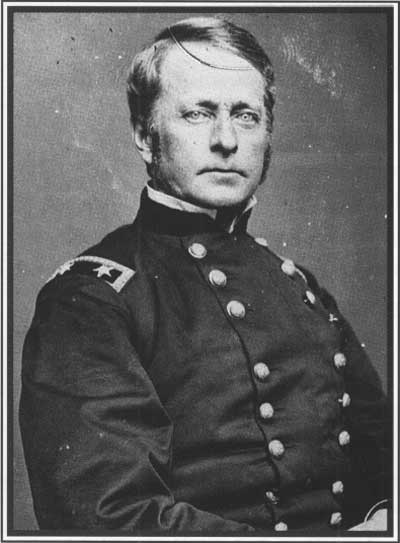
hooker

Major General Joseph “Fighting Joe” Hooker

Friends: This is a major revision of the two part “Lee Moves North” that I put out Monday and Tuesday. I depart tomorrow with my students for our Gettysburg Staff Ride and in this revision I concentrate a lot more on the impact of “Fighting Joe” Hooker on the Army of the Potomac, the “General’s Revolts” that afflicted it and the events leading to Hookers relief during the Gettysburg campaign.

All are very important parts of the story, for despite his personal failings as a commander Hooker set his successors up for success and renewed the spirit of the army through some great reforms which impacted the personal welfare, health, moral and training of his soldiers. His organizational and administrative reforms, which created the Cavalry Corps, the Bureau of Military Information (Intelligence) and more effective medical, sanitary and logistical organizations, set him apart in ways that we often fail to appreciate.

I have taken the time to go into those topics because they have a major effect on the Union victory at Gettysburg. Hooker is a far more complex figure than we often give him credit for; he was a man of brilliance and bravery who had many major character flaws. Likewise I discuss other key figures, men also with feet of clay; J.E.B Stuart, Richard Ewell, Henry Halleck figuring prominently among them.

I think that putting them in this chapter makes the examination of Lee’s movement and the Federal pursuit more pertinent to us as leaders, because the things that Hooker does, for good and bad are issues that military, political and even business or non-profit leaders face. The additions of these parts of the story are important because they show the complexity of flawed people having to make major decisions, in crisis that impact the lives of all of us.

Movement to attain operational reach and maneuver are two critical factors in joint operations. In the time since the American Civil War the distances that forces move to engage the enemy, or maneuver to employ fires to destroy his forces have greatly increased. Movement may be part of an existing Campaign Plan or Contingency Plan developed at Phase 0; it also may be part of a crisis action plan developed in the midst of a campaign. Lee’s movement to get to Gettysburg serves as an example of the former, however, since his forces were already in contact with the Army of the Potomac along the Rappahannock and he was reacting to what he felt was a strategic situation that could not be changed but by going on the offensive that it has the feel of a Crisis Action Plan. Within either context other factors come into play: clarity of communications and orders, security, intelligence, logistics and even more importantly the connection between operational movement and maneuver; the Center of Gravity of the enemy, and national strategy. Since we have already discussed how Lee and the national command authority of the Confederacy got to this point we will discuss the how that decision played in the operational and tactical decisions of Lee and his commanders as the Army of Northern Virginia began the summer campaign and the corresponding actions of Joseph Hooker and the his superiors in Washington.

In the case of Hooker, far more than issues of strategy or operations were involved. Politics, personal rivalries and the personal insecurity of an Army commander played a big role in the drama that engulfed the Army of the Potomac as it pursued Lee’s Army. Additionally the ethics of the leaders involved, especially that of the generals of the Army of the Potomac during their “General’s Revolts” against McClellan, Burnside and Hooker had a major impact on the campaign. These factors all impacted Joe Hooker’s ability to command his army. They affected his relationships with his superiors and subordinates alike, and demonstrate how interconnected all of these elements are in the context of leading, campaigning and conducting the business of war.

“One of the fine arts of the military craft is disengaging one’s army from a guarding army without striking sparks and igniting battle.” [1] On June 3rd 1863 Robert E Lee began to move his units west, away from Fredericksburg to begin his campaign to take the war to the North. He began his exfiltration moving Second Corps under Richard Ewell and First Corps under James Longstreet west “up the south bank of the Rappahannock to Culpepper, near which Hood and Pickett had been halted on their return from Suffolk.” [2] Rodes’ division of Second Corps followed on June 4th with Anderson and Early on June 5th. Lee left the three divisions of A.P. Hill’s Third Corps at Fredericksburg to guard against any sudden advance by Hooker’s Army of the Potomac toward Richmond. Lee instructed Hill to “do everything possible “to deceive the enemy, and keep him in ignorance of any change in the disposition of the army.” [3]

The army was tremendously confident as it marched away from the war ravaged, dreary and desolate battlefields along the Rappahannock “A Captain in the 1st Virginia averred, “Never before has the army been in such a fine condition, so well disciplined and under such complete control.” [4] Porter Alexander wrote that he felt “pride and confidence…in my splendid battalion, as it filed out of the field into the road, with every chest & and ammunition wagon filled, & and every horse in fair order, & every detail fit for a campaign.” [5] Another officer wrote to his father, “I believe there is a general feeling of gratification in the army at the prospect of active operations.” [6]

Lee’s plan was to “shift two-thirds of his army to the northwest and past Hooker’s flank, while A.P. Hill’s Third Corps remained entrenched at Fredericksburg to observe Hooker and perhaps fix him in place long enough for the army to gain several marches on the Federals.” [7] In an organizational and operational sense that Lee’s army after as major of battle as Chancellorsville “was able to embark on such an ambitious flanking march to the west and north around the right of the army of the Potomac….” [8]

However, Lee’s movement did not go unnoticed; Hooker’s aerial observers in their hot air balloons “were up and apparently spotted the movement.” [9] But Hooker was unsure what it meant. He initially suspected that “Lee intended to turn the right flank of the Union army as he had done in the Second Bull Run Campaign, either by interposing his army between Washington and the Federals or by crossing the Potomac River.” [10] Lee halted at Culpepper from which he “could either march westward over the Blue Ridge or, if Hooker moved, recontract at the Rappahannock River.” [11]

“Fighting Joe” Hooker had been in command of the Army of the Potomac about five months, assuming command from Burnside, who Lincoln had relieved after that general had demanded the wholesale firing of ten generals from the army of the Potomac, including Hooker. Hooker was a graduate of West Point, class of 1837 and veteran of the Mexican War. However, he was not well regarded by many of his peers. “While on Garrison duty in California in the 1850s, he cultivated “bad habits and excesses”- too much liquor, and too many women. He left the army, failed at business, and amassed gambling debts and legal problems.” [12]

When war came Hooker managed to obtain an appointment as a Brigadier General of volunteers over the objections of General Winfield Scott from McClellan. He was a “capable commander and brave soldier” [13] but Hooker worked shamelessly against previous army commanders, including George McClellan, who he owed his appointment as a Brigadier General in the Regular Army. Hooker was “a strikingly handsome man” with “erect soldierly bearing…” but he was also “arrogant and stubborn, more than willing to work behind the scenes to advance himself, and reputed to have a headquarters that Charles Francis Adams Jr. described as “a combination barroom and brothel.” [14] The commander of XII Corps, Henry Slocum had “no faith whatever in Hooke’s ability as a military man, in his integrity or honor.” [15] However, George Meade was more circumspect, and wrote to his wife “He is a very good soldier, capital general for an army corps, but I am not prepared to say as to his abilities for carrying out a campaign and commanding a large army. I should fear his judgment and prudence…” [16]

Hooker genuinely believed in his abilities and much of the “criticism which he so freely bestowed on his superiors came simply because his professional competence was outraged by the blunders that he had to witness.[17] But his enemies, “there would be a host of them- regarded him as “thoroughly unprincipled.” Hooker was driven by an “all consuming” ambition and undoubted self-confidence…. War intoxicated hi m and offered salvation for a troubled life. As a gambler he liked the odds.” [18]

During the war Hooker used the media to shamelessly promote his image and “deliberately played up to the press to swell his image as a stern, remorseless campaigner, and he reveled in the nickname the newspapers happily bestowed on him, “Fighting Joe.” [19] However, he would later express his “deep regret that it was ever applied to him. “People will think that I am a highwayman or bandit,” he said; when in fact he was one of the most kindly and tender-hearted of men.” [20]

But Hooker was not just disrespectful of his military superiors, but also of Abraham Lincoln who he told reporters after Fredericksburg “was an imbecile for keeping Burnside on but also in his own right, and that the administration itself “was all played out.” What the country needed was a dictator….” [21] Hooker was an intriguer for sure but unlike many generals who did so anonymously, he was open and public going before the “Joint Committee on the Conduct of the War investigating Fredericksburg” [22] where he not only provided damning testimony against Burnside, but against potential rivals.

When Lincoln appointed him, he gave Hooker a letter unique in American military history. In it Lincoln lectured Hooker as to his conduct while under the command of Burnside, “and just how much he disapproved of the unbounded ambition Hooker had displayed in Undercutting Burnside.” [23] In the letter and during his meeting with Hooker Lincoln laid out his expectations, as well as concerns that he had for him in his new command:

“you may have taken counsel of your ambition, and thwarted him as much as you could, in which you did a great wrong to the country.” Continuing: “I have heard, in such a way as to believe it, of your recently saying that both the Army and the government needed a Dictator. Of course it was not for this, but in spite of it, that I have given you command. Only those generals who gain successes, can set up dictators. What I ask now is military success, and I will risk dictatorship.” [24] However, Lincoln pledged his support to Hooker saying “The government will support you to the utmost of its ability” but warned “I much fear the spirit which you have aided to infuse into the army, of criticizing their commander and withholding confidence in him, will now turn upon you. I shall assist you as far as I can to put it down. Neither you, nor Napoleon, if he were alive again, could get any good out of an army while such a spirit prevails in it.” [25]

Never before or since has an officer been given such responsibility by a President who recognized the man’s qualities, in this case a fighting spirit, as well as his personal vices, and shortcomings in character. Lincoln finished the latter with the admonition “And now, beware of rashness. Beware of rashness, but with energy and sleepless vigilance go forward and give us victories.” [26]

Hooker’s reaction to the letter was an interesting commentary to say the least. He recalled a few days later that, when he read it he “informed him personally of the great value I placed on the letter notwithstanding his erroneous views of myself, and that sometime I intended to have it framed and posted in some conspicuous place for the benefit of those who might come after men.” [27] Hooker was certainly sincere in this as he not only preserved it but ensured that it was published.

Despite the misgivings of the President and many of his peers, Hooker began a turnaround in the army that changed it for the better. At the beginning of his tenure he inspired confidence among his troops. He reorganized the Cavalry Corps and instituted reforms. Hooker discarded Burnside’s failed “Grand Division” organization and returned to the corps system. He was aided by experienced Corps commanders who had earned their promotions in combat and not due to political patronage, even the political animal Dan Sickles of III Corps had shown his abilities as a leader and commander, gone were the last remnants of McClellan’s regime.

Despite the many positives gained during the reorganization, Hooker made one significant mistake during the reorganization which hurt him at Chancellorsville, he decided to “strip General Hunt of command of the artillery and restrict him to purely administrative duties…he had restored Hunt to command the night of May 3 after the Confederates had driven him out of Chancellorsville,” ensuring that “The advantages traditionally possessed by the Union artillery in the quality of its material and cannon disappeared in this battle through Hooker’s inept handling of his forces.” [28]

Hooker was popular with the men as he conducted reforms which improved their lives. “He took immediate steps to cashier corrupt quartermasters, improve food, clean up the camps and hospitals, grant furloughs, and instill unit pride by creating insignia badges for each corps…Sickness declined, desertions dropped, and a grant of amnesty brought back many AWOLs back into the ranks.” [29] Additionally “paydays were reestablished and new clothing issued…. Boards of inspection searched out and dismissed incompetent officers.[30]

But nothing impacted morale more that his order that “soft bread would henceforth be issued to the troops four times a week. Fresh potatoes and onions were to be issued twice a week, and desiccated vegetables once a week.” [31] The impact of the army commander actually caring for his troops was singularly important and far reaching. One officer wrote home “His ‘soft bead’ order reaches us in a tender spot….” [32] Regimental commanders were ordered to ensure that “regular company cooks went to work, and if there were no company cooks they were instructed to create some, so that the soldier could get some decent meals in place of the intestine-destroying stuff he cooked for himself.” [33] Hooker announced “My men shall eat before I am fed, and before my officers are fed” and he clearly meant it.” [34]

Additionally Hooker reformed training in the army. He knew that bored soldiers were their own worst enemy, and instituted a stringent training regimen that paid dividends on the battlefield. “From morning to night the drill fields rumbled with the tramp of many feet. Officers went to school evenings and the next day went out to maneuver companies, regiments, brigades, and divisions in the tactics just studied.” [35]

Hooker ridded himself of the last vestiges of McClellan’s reliance on the Pinkerton detective agency for his intelligence and created a “Bureau of Military Intelligence, led by Colonel George Sharpe” who “built a network of spies, who soon supplied Hooker with accurate information on Lee’s numerical strength and the unit composition of the Confederate army.” [36] He also reorganized and systematized the Medical department, and “placed it under the supervision of the competent medical director Dr. Jonathan Letterman.” [37]

It was a remarkable turnaround which even impressed his soldiers, his critics, and enemies and his enemies alike. Within weeks, “sick rolls had been reduced, and by April, scurvy had virtually disappeared. A veteran contended that Hooker “is a good man to feed an army for we have lived in the best since he took command that we ever did since we have been in the army.” [38] Darius Couch of Second Corps, who later resigned and became Hooker’s arch-enemy, wrote that Hooker had, “by adopting vigorous measures stopped the almost wholesale desertions, and infused new life and discipline into the army.” [39]

After the disaster at Chancellorsville Hooker was not the same. During that battle it was as if he was two persons. During the campaign Hooker had: “planned his campaign like a master and carried out the first half with great skill, and then when the pinch came he simply folded up. There had been no courage in him, no life, no spark; during most of the battle the army had to all intents and purposes had no commander at all.” [40] Hooker, a slave to his vanity had little capacity for reflection and blamed various corps commanders for the defeat, refusing to take any responsibility for it. Years later, Hooker when asked about the defeat, “knew a rare moment of humility and remarked, “Well, to tell the truth, I just lost confidence in Joe Hooker.” [41]

As such just as Lincoln had predicted there were many, both in the army and without who were clamoring for Hooker’s relief, especially after Hooker refused to take the blame for the defeat and instead blamed his subordinates. The blowback was fierce “the army high command took offense and closed ranks against the general commanding,” [42] and the “dissension between Hooker and his senior generals seethed for weeks.” [43]

Henry_Halleck_by_Scholten,_c1865

Major General Henry Halleck

Halleck, who came to the army’s base at Falmouth to assess the army in wake of the defeat, “set the conspirators to work…called the corps commanders into counsel” and “learned of the great dissatisfaction among the higher officers….” [44] Hooker now found that the same knives which he had used on Burnside, “were now turned on him.” [45] Henry Slocum of XII Corps “went among his fellow corps commanders proposing a coup- a petition the president then and there to dismiss Hooker and put George Gordon Meade, commander of the Fifth Corps in his place” [46] but Meade balked at the idea. Lincoln had heard so much dissention that he wrote Hooker to warn him “that some of your Corps and Division Commanders are not giving you their entire confidence.” [47]

Such activities led to discussions at the White House to see if a new commander should lead the Army of the Potomac. Lincoln did interview John Reynolds of I Corps in early June to see if he wound take command, and Reynolds reportedly turned Lincoln down. Others were approached as well, and some officers even lobbied for the return of McClellan. Under this cloud Hooker went into the Gettysburg campaign.

Hooker telegraphed Lincoln and Halleck on June 5th and requested permission to advance cross the river and told Lincoln that “I am of opinion that it is my duty to pitch into his rear” [48] possibly to threaten Richmond. Lincoln ordered Hooker to put the matter to Halleck, with whom Hooker was on the worst possible terms. Hooker “pressed Halleck to allow him to cross the Rappahannock in force, overwhelming whatever rebel force had been left at Fredericksburg, and then lunging down the line of the Virginia Central toward an almost undefended Richmond.” [49] On the morning of June 6th 1863 Hooker ordered pontoon bridges thrown across the river and sent a division of Sedgwick’s VI Corps to conduct a reconnaissance in force against Hill.

Lincoln and Halleck immediately rejected Hooker’s request. Lincoln “saw the flaw in Hooker’s plan at once” [50] and replied in a very blunt manner: “In one word,” he wrote “I would not take any risk of being entangled upon the river, like an ox jumped half over a fence and liable to be torn by dogs front and rear, without a fair chance to gore one way or kick another.” [51] Halleck replied to Hooker shortly after Lincoln that it would “seem perilous to permit Lee’s main force to move upon the Potomac [River] while your army is attacking an intrenched position on the other side of the Rappahannock.” [52] Lincoln, demonstrating a keen regard for the actual center of gravity of the campaign, told Hooker plainly that “I think Lee’s army and not Richmond, is your objective point.” [53]

The fears of Lincoln and Halleck were well founded. In stopping at Culpepper Lee retained the option of continuing his march to the Shenandoah and the Potomac, or he could rapidly “recall his advanced columns, hammer at Hooker’s right flank, and very possibly administer another defeat even more demoralizing than the one he suffered at Chancellorsville.” [54] Hooker heeded the order and while Hooker maintained his bridgehead over the Rappahannock he made no further move against Hill’s well dug in divisions.

CWP015

Major General J.E.B. Stuart

Meanwhile, J.E.B. Stuart and his Cavalry Corps had been at Brandy Station near Culpepper for two weeks. Culpepper in June was a paradise for the cavalry, and with nearly 10,000 troopers gathered Stuart ordered a celebration, many dignitaries were invited and on June 4th Stuart hosted a grand ball in the county courthouse. On the 5th Stuart staged a grand review of five of his brigades. Bands played as each regiment passed in review and one soldier wrote that it was “One grand magnificent pageant, inspiring enough to make even an old woman feel fightish.” [55] The review ended with a mock charge by the cavalry against the guns of the horse artillery which were firing blank rounds. According to witnesses it was a spectacular event, so realistic and grand that during the final charge that “several ladies fainted, or pretended to faint, in the grandstand which Jeb Stuart had had set up for them along one side of the field.” [56] That was followed by an outdoor ball “lit by soft moonlight and bright bonfires.” [57] Stuart gave an encore performance when Lee arrived on June 8th, minus the grand finale and afterward Lee wrote to his wife that “Stuart was in all his glory.” [58]

Hooker received word from the always vigilant John Buford, of the First Cavalry Division on the night of June 6th that “Lee’s “movable column” was located near Culpepper Court House and that it consisted of Stuart’s three brigades heavily reinforced by Robertson’s, “Grumble” Jones’s, and Jenkins’ brigades.” [59] Hooker digested the information and believed that Stuart’s intent was to raid his own rear areas to disrupt the Army of the Potomac’s logistics and communications. The next day Hooker ordered his newly appointed Cavalry Corps Commander, Major General Alfred Pleasanton to attack Stuart.

After Chancellorsville, Hooker had reorganized the Union cavalry under Pleasanton into three divisions and under three aggressive division commanders, all West Pointers, Brigadier General John Buford, Brigadier General David Gregg and Brigadier General Judson Kilpatrick. While Stuart conducted his second grand review for Lee Pleasanton quietly massed his cavalry “opposite Beverly Ford and Kelly’s Ford so as to cross the river in the early morning hours of June 9th and carry out Hooker’s crisp orders “to disperse and destroy” the rebel cavalry reported to be “assembled in the vicinity of Culpepper….” [60] Pleasanton’s cavalry was joined by two mixed brigades of infantry “who had the reputation of being among the best marchers and fighters in the army.” [61] One brigade, commanded by Brigadier General Adelbert Ames consisted of five regiments drawn from XI Corps, XII Corps, and III Corps was attached to Buford’s division. The other brigade, under the command of Brigadier General David Russell was composed of seven regiments drawn from I Corps, II Corps and VI Corps. [62]

Stuart’s orders for June 9th were to “lead his cavalry division across the Rappahannock to screen the northward march of the infantry.” [63] The last thing that Stuart expected was to be surprised by the Federal cavalry which he had grown to treat with distain. Stuart who was at his headquarters “woke to the sound of fighting” [64] as Pleasanton’s divisions crossed the river and moved against the unsuspecting Confederate cavalry brigades.

The resultant action was the largest cavalry engagement of the war. Over 20,000 troopers engaged in an inconclusive see-saw battle that lasted most of the day. Though a draw “the rebels might have been swept from the field had Colonel Alfred N. Duffie, at the head of the Second Division acted aggressively and moved to the sounds of battle.” [65] The “Yankees came with a newfound grit and gave as good as they took.” [66] Porter Alexander wrote that Pleasanton’s troopers “but for bad luck in the killing of Col. Davis, leading the advance, would have probably surprised and captured most of Stuart’s artillery.” [67] Stuart had lost “over 500 men, including two colonels dead,” [68] and a brigade commander, Fitzhugh “Rooney” Lee, General Lee’s son, badly wounded. While recuperating at his wife’s home a few weeks later Lee “was captured by the enemy.” [69] Stuart claimed victory as he lost fewer troops and had taken close to 500 prisoners and maintained control of the battlefield.

But even Confederate officers were critical. Lafayette McLaws of First Corps wrote “our cavalry were surprised yesterday by the enemy and had to do some desperate fighting to retrieve the day… As you will perceive from General Lee’s dispatch that the enemy were driven across the river again. All this is not true because the enemy retired at their leisure, having accomplished what I suppose what they intended.” [70] Captain Charles Blackford of Longtreet’s staff wrote: “The fight at Brandy Station can hardly be called a victory. Stuart was certainly surprised, but for the supreme gallantry of his subordinate officers and men… it would have been a day of disaster and disgrace….” The Chief of the Bureau of War in Richmond, Robert H.G. Kean wrote “Stuart is so conceited that he got careless- his officers were having a frolic…” [71] Brigadier General Wade Hampton had the never to criticize his chief in his after action report and after the war recalled “Stuart managed badly that day, but I would not say so publicly.” [72]

The Confederate press was even more damning in its criticism of Stuart papers called it “a disastrous fight,” a “needless slaughter,” [73]and the Richmond Examiner scolded Stuart in words that cut deeply into Stuart’s pride and vanity:

The more the circumstances of the late affair at Brandy Station are considered, the less pleasant do they appear. If this was an isolated case, it might be excused under the convenient head of accident or chance. But the puffed up cavalry of the Army of Northern Virginia has twice, if not three times, surprised since the battles of December, and such repeated accidents can be regarded as nothing but the necessary consequences of negligence and bad management. If the war was a tournament, invented and supported for the pleasure of a few vain and weak-headed officers, these disasters might be dismissed with compassion, But the country pays dearly for the blunders which encourage the enemy to overrun and devastate the land, with a cavalry which is daily learning to despise the mounted troops of the Confederacy…” [74]

Major General Dorsey Pender waxed philosophically about the criticism of Stuart in a letter to his wife saying “I suppose it is all right that Stuart should get all the blame, for when anything handsome is done he gets all the credit.” [75] Stuart reacted angrily to the criticism; his vanity was such that it was impossible. Stuart denied being surprised and his Chief of Staff; Major Henry McClellan wrote “He could never see or acknowledge …that he was worsted in an engagement.” [76]

But the battle was more significant than the number of casualties inflicted or who controlled the battlefield at the end of the day. Stuart had been surprised by an aggressively led Union Cavalry force. The Union troopers fought a stubborn and fierce battle and retired in good order. Stuart did not appreciate it but the battle was a watershed, it signaled the beginning of the end of the previous dominance of the Confederate Cavalry arm over their Union opponents.

Henry McClellan wrote that Brandy Station “made the Federal cavalry. Up to that time confessedly inferior to the Southern horsemen, they gained on this day that confidence in themselves and in their commanders which enabled them to contest so fiercely   the subsequent battle-fields….” [77] The Richmond Examiner noted “The enemy is evidently determined to employ his cavalry extensively, and has spared no pains to perfect that arm.[78] That determination to perfect the Union cavalry was something that in less than a years’ time would cost Stuart his life when his outnumbered and ill troopers met Phil Sheridan’s well led, trained and equipped troops at Yellow Tavern outside of Richmond on May 11th 1864.

The action at Brandy Station delayed Lee’s movement by a day. However, Stuart’s repulse of Pleasanton’s force did enable Lee’s Army to make its northward movement undetected by Hooker who was still trying to divine what Lee was up to and was “slow, even reluctant, to react to Lee’s advance.” [79] Lee’s initial move to break contact with the Federal Army and keep his movements and intentions secret was an excellent example of deception.

ewell

Major General Richard Ewell

Ewell’s Corps led the march of the army north on the morning of June 10th and joined by Jenkins’ cavalry brigade entered the Shenandoah Valley by way of the Chester Gap on June 12th. In two days of marching his “columns covered over forty-five miles.” [80] On the 13th Ewell was near Winchester where 6,000 soldiers under the command of Major General Robert Milroy were garrisoned. Ewell’s advanced troops skirmished with them on June 13th, and on the 14th Ewell concentrated his corps to attack Milroy’s badly exposed division. As he did so Lincoln and Halleck attempted to get Milroy to withdraw to Harper’s Ferry and for Hooker to do something to attempt to relieve Milroy.

But Hooker was “troubled by indecision” [81] and did nothing. Ewell commenced his attack at about 5:00 PM, and deployed Johnson’s division in an ambush position north of the city to catch Milroy if he attempted to withdraw. The battle, now known as the Second Battle of Winchester the battle was a complete rout. Hit by Ewell’s forces “which swiftly and effectively broke through his outer lines,” [82] Milroy attempted to retreat “northwestward in the darkness, only to be intercepted at dawn by Johnson.” [83] The Second Corps captured “captured 23 cannon, 300 wagons loaded with supplies and ammunition, and nearly 4,000 prisoners.” [84] Milroy and his survivors retreated to Harper’s Ferry where he was “presently removed from command by Lincoln, but that was a superfluous gesture, since practically all of his command had been removed from him by Ewell.” [85] Ewell’s forces lost just 50 killed and 236 wounded.

Ewell’s decisive victory at Winchester “was one of the most swift, total, and bloodless Confederate victories of the war.” [86] The victory “cleared the lower Shenandoah Valley of most Federal forces and paved the way for Lee’s army to march north into Maryland and then into Pennsylvania.” [87] Ewell had been brilliant to this point, the victory at Second Winchester and the skill with which he had conducted his operations had “removed lingering doubts about his ability to carry on the tradition of “Stonewall” Jackson, as well as about his physical capacity, after the loss of a leg, to endure the rigors of campaigning.” [88] The Richmond Daily Dispatch that Ewell “has indeed caught the mantle of the ascended Jackson. Brilliantly has he re-enacted the scenes of the spring of ’62, on the same theatre.[89]

Ewell did not waste time lingering at Winchester. The next day he sent Jenkins with his brigade across the Potomac to Chambersburg Pennsylvania. Rodes division crossed the Potomac on the 16th “for a crossing at Williamsport where a halt was called to allow the other two divisions to catch up for a combined advance into Pennsylvania.” [90]

Longstreet’s First Corps moved next and advanced east of the Blue Ridge in conjunction with Stuart’s cavalry division screening the rest of the army from Hooker. Longstreet “set out for Ashby’s and Snicker’s Gaps with the bulk of Stuart’s cavalry covering his right flank.” [91] By the 17th of June Longstreet’s and Stuart’s troops had cleared the Blue Ridge, securing the vital gaps; however, Longstreet’s advance “was considerably slowed down by lack of supplies” [92] an issue that began to cause Lee, advancing behind Ewell, considerable concern. The once bountiful Shenandoah Valley had been devastated by two years of war. Lieutenant Colonel Arthur Fremantle, a British observed wrote “All fences have been destroyed, and numberless farms burned, their chimneys alone left standing….No animals are grazing and it is almost uncultivated.” [93]

But “Lee’s army was now stretched out from Hagerstown to Culpepper, a distance of seventy-five miles; yet Hooker did nothing.” [94] Lincoln realized that the dispersed Confederate army was vulnerable and telegraphed Hooker “if the head of Lee’s army is at Martinsburg and the tail of it on the Plank road between Fredericksburg and Chancellorsville, the animal must be very slim somewhere. Could you not break him?” [95]

Hooker was slow to appreciate what Lee was doing and the “concealing topography of the region greatly favored Lee’s offensive operations…and Lee was planning on using both the Shenandoah and Loudoun valleys to conceal his forces and confuse his enemies.”[96] In this Lee had succeeded admirably. Finally on June 13th Hooker prodded by Lincoln and Halleck finally moved the Army of the Potomac to a position “near the Orange and Alexandria Railroad near Washington” [97] where it could defend Washington in case Lee was to make a thrust at the Federal capitol. The march from Fredericksburg was ordeal for his soldiers. “It had not rained for more than a month, thick clouds of dust enveloped the columns as the sun burned the air. Men drained their canteens, and water was scarce. Hundreds collapsed from sunstroke.” [98]

Hooker now informed Lincoln and Halleck that from now on his operations “would be governed by the movements of the enemy.” In doing so he “admitted his loss of initiative to Lee and his reluctance or inability to suggest any effective countermoves to the enemy’s plan.” [99]

As the army gathered near Dumfries on June 17th, Hooker who was completely lost as to Lee’s intentions and clearly out of his league was also chose to renew his personal battle with Halleck and Lincoln. Hooker’s Chief of Staff General Dan Butterfield, and a staunch Hooker partisan remarked “We cannot go boggling around until we know what we are going after.” [100] The Provost Marshall of the Army of the Potomac Brigadier General Marsena Patrick was not so generous and critically noted that “Hancock is running the Marching and Hooker has the role of a subordinate- He acts like a man without a plan and is entirely at loss at what to do, or how to match the enemy, or counteract his movements.” [101]

During the march Hooker continued his feud with Halleck and Lincoln, oblivious to the fact that “his contretemps with Washington was costing him respect and credibility.” [102] Navy Secretary Gideon Welles after talking with Lincoln wrote in his diary, “I came away from the War Department painfully impressed. After recent events, Hooker cannot have the confidence which is essential to success, and which is all-important to the commander in the field.” [103]

Hooker however, continued to make matters worse for himself and wrote Lincoln on June 16th, a thinly veiled attempt to have Halleck relieved:

“You have been aware, Mr. President” he telegraphed, “that I have not enjoyed the confidence of the major-general commanding the army, and I can assure you so long as this continues we may look in vain for success, especially as future operations will require our relations to be more dependent on each other than heretofore.” [104]

Lincoln was not to be trifled with by his demanding yet befuddled subordinate. He sent a telegraph to Hooker at 10:00 PM on the 16th which rankled Hooker even the more:

“To remove all misunderstanding I now place you in the strict military relation to General Halleck of a commander of one of the armies to the general-in-chief of all of the armies. I have not intended differently, but as it seems to be differently understood I shall direct him to give you orders and for you to obey him.” [105]

While the drama between Hooker, Halleck and Lincoln played on there were a series of fierce cavalry clashes west of Washington between June 17th and June 21st as Pleasanton’s troops kept assailing the Confederate flank in order to ascertain what Lee’s army was doing. As the Federal cavalry probed the gaps in the Blue Ridge they were confronted by Stuart’s cavalry. At Aldie on June 17th, Middleburg on June 19th and at Upperville on June 21st Stuart’s and Pleasanton’s troopers engaged “in a series of mounted charges and dismounted fighting. The Yankees showed the same grit and valor as they had at Brandy Station, pressing their attacks against the Rebels.” [106]

At Upperville Pleasanton’s troopers “pressed Stuart’s cavalry so hard that Lee ordered McLaws’ division of Longstreet’s Corps to hold Ashby’s Gap, and he momentarily halted Major General Richard Anderson’s division of Hill’s corps on its way to Shepherdstown.” [107] Stuart’s men were successful in protecting the gaps and ensuring that the Federal troopers did not penetrate them, but “Pleasanton learned, however, from prisoners and local citizens, “The main body of the rebel infantry is in the Shenandoah Valley.” [108]

Pleasanton for some unexplained reason thought that this meant that the Confederates were heading toward Pittsburgh. Hooker “viewed it as a raid” and again proposed an overland advance against Richmond, which was again rejected by Lincoln. The President ordered Hooker: “If he comes toward the Upper Potomac, follow on his flank and on his inside track, shortening your line whilst he lengthens his. Fight him too when the opportunity offers. If he stays where he is, fret him, fret him and fret him.” [109]

As the series of clashes occurred on the Confederate flank Ewell’s Second Corps, followed by Hill’s Third Corps advanced into Pennsylvania. A general panic ensued in many places with cries going out for Lincoln to call up militia to defend the state. The panic had begun when Ewell crushed Milroy’s garrison and crossed the Potomac, and was fueled by the actions of Jenkins’ troops, in occupied Chambersburg, who rounded up any blacks that remained in the city. Most blacks, even freedmen fled before the advancing Confederates, and with good reason. “Some fifty blacks were formed into a coffle and marched south to be sold into bondage.” [110] Gideon Welles wrote in Washington D.C.: “Something of a panic pervades the city this evening. Singular rumors of Rebel advances into Maryland. It is said that they have reached Hagerstown, and some of them have penetrated as far as Chambersburg.” [111] Pennsylvania Governor Andrew Curtain, a former Whig now a Republican aligned with Lincoln’s policies “was in political trouble now,” [112] was pressing the Federal government for help and “Lincoln issued a proclamation calling for 100,000 militia volunteers form Pennsylvania, Maryland, Ohio and West Virginia, to serve for six months or until the emergency had passed.” [113]

By June 23rd the head of the Bureau of Military Information, Colonel George Sharpe had deduced that all of Ewell’s corps was in Pennsylvania marching north and that Hill’s corps was across the Potomac., and “in one of those sudden moments of brutal clarity, George Sharpe realized that everything pointed to the conclusion that Lee’s entire army, or most of it, was north of the Potomac.” [114] While Sharpe did not realize that he was incorrect in the location of Longstreet’s corps, which was still helping to hold and screen the gaps on the Blue Ridge, he had correctly deduced Lee’s intentions.

It took time but Hooker belatedly on June 24th began to move his army to Frederick. As the Army of the Potomac crossed its namesake river between June 25th and 27th over a vast pontoon bridge, Hooker made one last attempt to salvage his reputation, and did not believe that Lincoln was actually trying to help mediate his dispute with Halleck. Hooker made a quick trip into Washington on the 23rd of June. He met with Lincoln and was successful in getting Halleck to give him nearly 15,000 reinforcements drawn from the District of Washington, drawing the ire of its commander Major General Samuel Heintzelman, another of his political enemies. But the visit did not help his situation, and “word began to spread that Hooker was drinking a great deal.” [115]

But Hooker opened the door to more trouble by demanding that he be given command and control over the garrison at Harpers Ferry, allegedly to use in an operation to cut off Lee’s line of supply and communication in Western Maryland. Hooker attempted to bypass Halleck yet again and sent orders to affect his course of action to Slocum of XII Corps and William French at Harper’s Ferry, “yet Hooker told Washington nothing of his plan” and then asked Halleck why Harper’s Ferry could not be abandoned, and requested its troops without telling him how he would use the garrison. Hooker then informed Halleck that he “would go to Harper’s Ferry the next day and inspect the place.” [116] Hooker evidently believed that he could still force his will on Halleck with a coupe d ’main.

Halleck refused Hooker and shrewdly had seen the request coming. Halleck told Hooker “that the fortified heights at Harpers Ferry…”have always been regarded as an important point by to be held by us…I cannot approve their abandonment, except in the case of absolute necessity” [117] and directed the Major General William H. French, the commanding officer of the Harper’s Ferry garrison “Pay no attention to Hooker’s orders.” [118] When Hooker went to see French in Harper’s Ferry and saw the dispatch he was furious. In his anger Hooker “told Herman Haupt during the railroad coordinator’s visit that he would do nothing to oppose Lee’s invasion without specific orders. He also continued to tell Halleck, Stanton, and Lincoln that he wanted Lee to go north so he could go after Richmond.” [119]

The order to French was Halleck’s way of baiting Hooker to react badly. Halleck figured that Hooker would consider it the last straw, which was exactly what the impulsive Hooker did. Hooker then played his last card and wired Halleck an ultimatum, which in a sense he was using as a “club to bully Halleck into giving him a free hand in questions of strategy” and it is “questionable whether he expected Lincoln to accept his resignation.[120]

“My original instructions require me to cover Harper’s Ferry and Washington. I have now imposed on me, in addition to an enemy in my front more than my number. I beg to be understood, respectfully, but firmly that I am unable to comply with this condition with the means at my disposal, and earnestly request that I be relieved from the position I occupy.” [121]

Halleck sent Hooker a brief message; simply stating “Your dispatch has been duly referred to the executive for action.” [122] He then took the letter to Stanton and Lincoln and Lincoln wasted little time in relieving Hooker, though he was not happy about having to do so in the middle of a campaign. Lincoln had two choices, “he could send him into battle with his self-doubts and suspicions intact, or he could accept it and risk the political and military consequences that would accompany an abrupt change in leadership.” [123] In less than half an hour Lincoln told Halleck and Stanton to “Accept his resignation. Before midnight, War Secretary Edwin Stanton’s own chief of staff, James Hardie, was on his way by train from Washington with Lincoln’s order removing Hooker from command.”   [124]

In the end, late in the night of June 27th Lincoln chose the latter, relieved Hooker, and appointed Major General George Gordon Meade, commanding officer of V Corps as the new commander of the Army of the Potomac. He explained the decision to the cabinet the next morning; Gideon Welles wrote that Lincoln said “he had, for several days as the conflict became imminent, observed in Hooker the same failings that were witnessed in McClellan after the Battle of Antietam. – A want of alacrity to obey, and a greedy call for more troops which could not, and ought not be taken from other points….:” [125]

Hooker’s relief was a direct result of his “contretemps with General-in Chief Halleck, but it was the general’s revolt that set the stage for it. With virtually no support from his chief lieutenants…Hooker was pushed into a precarious position.” [126]

Despite Hooker’s lackluster performance during the campaign, his failings as a field commander, and his poor relationships with Lincoln, Halleck and many of his corps commanders, Hooker had made significant contributions to the Army of the Potomac and the nation:

“Whatever his mistakes, Hooker’s record as a military administrator ranks him near the top, for he refashioned the army into an effective fighting machine. He saved it from disintegration, gradually filled its ranks to peak strength, inflated its morale, and put it in a superb condition for the start of the spring campaign.” [127]

During his tenure of command, “the army had come of age. It was a professional army now in all but name.” [128] He had assumed command when the army was at its lowest fortune after Fredericksburg, “he instituted reform and restored their fighting spirit.” [129] His reorganization of the Cavalry Corps under solid officers was critical in the campaign and paid dividends for the rest of the war. His creation of the Bureau of Military Information was instrumental in providing George Meade at Gettysburg with accurate information about Lee’s army that he used to his advantage in conducting the battle. In spite of his flaws, Hooker had, even after the defeat at Chancellorsville kept the army together and in good fighting trim, even if his soldiers no longer believed in him, they believed in themselves.

During the opening weeks of the Gettysburg campaign, albeit through the prodding of Lincoln he had kept his army between Lee and Washington. But throughout the campaign Hooker seemed “plagued with uncertainty as to what he should do and what were his true military objectives. The tone of his correspondence with Washington authorities was continually querulous and angry.” [130] Hooker’s justified paranoia of Halleck and his and personal insecurity ensured that he made decisions that caused Lincoln to have even more reservations about his ability to command the army, and confront Robert E. Lee. Some have speculated that his recalcitrance in following Lincoln’s orders to confront Lee during the march was because he did not want to face Lee in battle once again. None of those factors can be ignored when assessing Hooker’s performance during his tenure of command of the Army of the Potomac. It was probably fortunate for the Union that Hooker asked to be relieved. His lack of confidence to face Lee in battle would have probably ensured defeat, but his reforms had set the army and its new commander up for success.

While the high drama in Washington and Pennsylvania unfolded Robert E. Lee, after an excellent beginning to his campaign was beginning to experience a drama of his own which would decisively impact his invasion of Pennsylvania.

Notes

[1] Sears, Stephen W. Gettysburg, Mariner Books, Houghton Mifflin Company, Boston and New York, 2003 p.59

[2] Foote, Shelby, The Civil War, A Narrative. Volume Two Fredericksburg to Meridian Random House, New York 1963 p.436

[3] Trudeau, Noah Andre. Gettysburg: A Testing of Courage, Harper Collins Publishers, New York 2002 p.25

[4] Wert, Jeffry D. A Glorious Army: Robert E. Lee’s Triumph 1862-1863 Simon and Schuster, New York and London 2011 p.218

[5] Alexander, Edward Porter. Fighting for the Confederacy: The Personal Recollections of General Edward Porter Alexander edited by Gary Gallagher University of North Carolina Press, Chapel Hill 1989 p.221

[6] Ibid. Wert A Glorious Army p.219

[7] Ibid. Sears Gettysburg p.60

[8] Korda, Michael. Clouds of Glory: The Life and Legend of Robert E. Lee Harper Collins Publishers, New York 2014 p.530

[9] Ibid. Foote The Civil War, A Narrative. Volume Two p.436

[10] Wert, Jeffry D. The Sword of Lincoln: The Army of the Potomac Simon and Schuster, New York and London 2005 p.260

[11] Dowdy, Clifford. Lee and His Men at Gettysburg: The Death of a Nation Skyhorse Publishing, New York 1986, originally published as Death of a Nation Knopf, New York 1958 p.37

[12] Ibid. Wert The Sword of Lincoln p.74

[13] Jordan, David M. Winfield Scott Hancock: A Soldier’s Life Indian University Press, Bloomington and Indianapolis 1988 p.67

[14] Marszalek, John F. Commander of All of Lincoln’s Armies: A Life of General Henry W. Halleck The Belknap Press of Harvard University Press, Cambridge MA and London 2004 p.165

[15] Guelzo Allen C. Fateful Lightening: A New History of the Civil War Era and Reconstruction Oxford University Press, Oxford and New York 2012 p.331

[16] Huntington, Tom Searching for George Gordon Meade: The Forgotten Victor of Gettysburg Stackpole Books, Mechanicsburg PA 2013 p.127

[17] Catton, Bruce The Army of the Potomac: Glory Road Doubleday and Company, Garden City New York, 1952 p.7

[18] Ibid. Wert The Sword of Lincoln pp.74-75

[19] Ibid. Guelzo Fateful Lightening p.331

[20] Bates, Samuel P. Hooker’s Comments on Chancellorsville in Battles and Leaders of the Civil War Volume III, The Tide Shifts. Edited by Robert Underwood Johnson and Clarence Clough Buel Castle, Secaucus NJ p.217

[21] Ibid. Foote The Civil War, A Narrative. Volume Two p.136

[22] Sears, Stephen W. Controversies and Commanders Mariner Books, Houghton-Mifflin Company, Boston and New York 1999 p.150

[23] Ibid. Sears Controversies and Commanders p.157

[24] Ibid. Wert The Sword of Lincoln p.219

[25] Ibid. Foote The Civil War, A Narrative. Volume Two pp.132-133

[26] Ibid. Foote The Civil War, A Narrative. Volume Two p.133

[27] Sears, Stephen W. Chancellorsville Houghton Mifflin Co. Boston and New York 1996 p.62

[28] Coddington, Edwin B. The Gettysburg Campaign: A Study in Command, A Touchstone Book, Simon and Schuster New York, 1968 p.31

[29] McPherson, James. The Battle Cry of Freedom: The Civil War Era Oxford University Press, Oxford and New York 1988 p.133

[30] Ibid. Sears. Chancellorsville p.73

[31] Ibid. Sears Chancellorsville p.73

[32] Ibid. Sears Chancellorsville p.73

[33] Ibid. Catton Glory Road p.143

[34] Ibid. Sears Chancellorsville p.73

[35] Ibid. Catton Glory Road p.145

[36] Ibid. Wert The Sword of Lincoln p.229

[37] Ibid. Wert The Sword of Lincoln p.225

[38] Ibid. Wert The Sword of Lincoln pp.225-226

[39] Ibid. Sears Controversies and Commanders p.157

[40] Ibid. Catton Glory Road p.210

[41] Ibid. Catton Glory Road p.211

[42] Ibid. Sears Controversies and Commanders p.158

[43] Ibid. Wert The Sword of Lincoln p.256

[44] Ibid. Sears Gettysburg p.19

[45] Guelzo, Allen C. Gettysburg: The Last Invasion Vintage Books a Division of Random House, New York 2013 p.28

[46] Ibid. Sears Gettysburg p.19

[47] Ibid. Guelzo. Gettysburg: The Last Invasion p.28

[48] Ibid. Sears Gettysburg p.61

[49] Ibid. Guelzo. Gettysburg: The Last Invasion p.50

[50] Ibid. Wert The Sword of Lincoln p.260

[51] Fuller, J.F.C. Decisive Battles of the U.S.A. 1776-1918 University of Nebraska Press, Lincoln 2007 copyright 1942 The Royal Society for the Prevention of Cruelty to Animals p.223

[52] Ibid Trudeau Gettysburg a Testing of Courage p.26

[53] Ibid. Guelzo Gettysburg: The Last Invasion p.50

[54] Ibid. Coddington The Gettysburg Campaign p.53

[55] Davis, Burke J.E.B. Stuart: The Last Cavalier Random House, New York 1957 p.304

[56] Ibid. Foote The Civil War, A Narrative. Volume Two p.437

[57] Ibid. Sears Gettysburg p.63

[58] Ibid. Wert A Glorious Army p.221

[59] Ibid. Coddington The Gettysburg Campaign p.54

[60] Ibid. Sears Gettysburg p.64

[61] Ibid. Coddington The Gettysburg Campaign p.54

[62] Petruzzi, J. David and Stanley, Steven The Gettysburg Campaign in Numbers and Losses: Synopses, Orders of Battle, Strengths, Casualties and Maps, June 9 – July 1, 1863 Savas Beatie LLC, El Dorado Hills CA 2012 p.7

[63] Ibid. Sears Gettysburg p.64

[64] Ibid. Davis JEB Stuart p.306

[65] Ibid. Wert The Sword of Lincoln p.261

[66] Wert, Jeffry D. General James Longstreet The Confederacy’s Most Controversial Soldier, A Touchstone Book, Simon and Schuster, New York and London 1993 p. 251

[67] Ibid. Alexander Fighting for the Confederacy p.223

[68] Ibid. Davis JEB Stuart p.310

[69] Ibid. Wert A Glorious Army p.221

[70] Ibid. Coddington The Gettysburg Campaign p.59

[71] Ibid. Davis JEB Stuart p.310

[72] Ibid. Coddington The Gettysburg Campaign p.60

[73] Ibid. Guelzo Gettysburg: The Last Invasion p.57

[74] Ibid. Davis JEB Stuart pp.311-312

[75] Ibid. Sears Gettysburg p.73

[76] Ibid. Wert A Glorious Army p.221

[77] Ibid. Sears Gettysburg p.74

[78] Ibid. Davis JEB Stuart p.312

[79] Ibid. Wert General James Longstreet p.251

[80] Ibid. Coddington The Gettysburg Campaign p.73

[81] Ibid. Coddington The Gettysburg Campaign p.81

[82] Ibid. Coddington The Gettysburg Campaign p.88

[83] Ibid. Foote The Civil War, A Narrative. Volume Two p.440

[84] Ibid. Wert A Glorious Army p.222

[85] Ibid. Foote The Civil War, A Narrative. Volume Two p.440

[86] Ibid. Guelzo Gettysburg: The Last Invasion p.62

[87] Ibid. Petruzzi and Stanley The Gettysburg Campaign in Numbers and Losses p.20

[88] Ibid. Coddington The Gettysburg Campaign p.89

[89] Ibid. Guelzo Gettysburg: The Last Invasion p.62

[90] Ibid. Foote The Civil War, A Narrative. Volume Two p.440

[91] Ibid. Fuller Decisive Battles of the U.S.A. 1776-1918 p.224

[92] Ibid. Fuller Decisive Battles of the U.S.A. 1776-1918 p.225

[93] Ibid. Korda Clouds of Glory p.537

[94] Ibid. Fuller Decisive Battles of the U.S.A. 1776-1918 p.224

[95] Ibid. Guelzo Gettysburg: The Last Invasion pp.64-65

[96] Ibid. Sears Gettysburg p.85

[97] Ibid. Coddington The Gettysburg Campaign p.71

[98] Ibid. Wert The Sword of Lincoln p.263

[99] Ibid. Coddington The Gettysburg Campaign p.71

[100] Ibid. Wert The Sword of Lincoln p.264

[101] Ibid. Trudeau Gettysburg a Testing of Courage pp. 53-54

[102] Ibid. Trudeau Gettysburg a Testing of Courage p.53

[103] Ibid. Sears Gettysburg p.88

[104] Ibid. Sears Gettysburg p.88

[105] Ibid. Trudeau Gettysburg a Testing of Courage p.54

[106] Ibid. Wert The Sword of Lincoln p.264

[107] Ibid. Coddington The Gettysburg Campaign p.79

[108] Ibid. Wert A Glorious Army p.224

[109] Ibid. Wert A Glorious Army p.224

[110] Ibid. Sears Gettysburg p.82

[111] Ibid. Sears Gettysburg p.82

[112] Ibid. Guelzo Gettysburg: The Last Invasion p.101

[113] Ibid. Wert The Sword of Lincoln pp.264-265

[114] Ibid. Trudeau Gettysburg a Testing of Courage p.66

[115] Ibid. Trudeau Gettysburg a Testing of Courage p.63

[116] Ibid. Sears Gettysburg p.120

[117] Ibid. Trudeau Gettysburg a Testing of Courage p.93

[118] Ibid. Guelzo Gettysburg: The Last Invasion p.84

[119] Ibid. Marszalek, Commander of All of Lincoln’s Armies p.175

[120] Ibid. Coddington The Gettysburg Campaign p.131

[121] Ibid. Marsalek Commander of All of Lincoln’s Armies p.175

[122] Ibid. Sears Gettysburg p.123

[123] Ibid. Trudeau Gettysburg a Testing of Courage p.98

[124] Ibid. Guelzo Gettysburg: The Last Invasion p.84

[125] Ibid. Wert The Sword of Lincoln p.266

[126] Ibid. Sears Controversies and Commanders p.162

[127] Ibid. Coddington The Gettysburg Campaign p.31

[128] Ibid. Catton Glory Road p.217

[129] Ibid. Wert The Sword of Lincoln p.266

[130] Ibid. Coddington The Gettysburg Campaign p.133

Leave a comment

Filed under civil war, ethics, History, leadership, Military

Lee Moves North Part Two: Winchester, into Pennsylvania and the Relief of Joe Hooker

rebel-potomacEwell’s Corps crossing the Potomac

This is a continuation of the article that I posted last night. It is a continuation of my Gettysburg series. Tomorrow I will finish the chapter on Lee’s movement north by talking about Stuart’s Ride and the Confederate operations in Pennsylvania and Union pursuit up to June 30th. On footnotes please refer to part one because I did not want to go back and re-type each note.

The action at Brandy Station delayed Lee’s movement by a day. However, Stuart’s repulse of Pleasanton’s force did enable Lee’s Army to make its northward movement undetected by Hooker who was still trying to divine what Lee was up to and was “slow, even reluctant, to react to Lee’s advance.” (1) Lee’s initial move to break contact with the Federal Army and keep his movements and intentions secret was an excellent example of deception.

ewellLieutenant General Richard Ewell

Ewell’s Corps led the march of the army north on the morning of June 10th and joined by Jenkins’ cavalry brigade entered the Shenandoah Valley by way of the Chester Gap on June 12th. In two days of marching his “columns covered over forty-five miles.” (2) On the 13th Ewell was near Winchester where 6,000 soldiers under the command of Major General Robert Milroy were garrisoned. Ewell’s advanced troops skirmished with them on the 13th and on the 14th Ewell concentrated his corps to attack. As he did so Lincoln and Halleck attempted to get Hooker to do something to relieve Milroy. Hooker was “troubled by indecision” (3) and did nothing. The attack commenced at about 5:00 PM. The battle, now known as the Second Battle of Winchester the battle was a complete rout. Hit by Ewell’s forces “which swiftly and effectively broke through his outer lines,” (4) That evening Milroy attempted to retreat “northwestward in the darkness, only to be intercepted at dawn by Johnson.” (5) The Second Corps captured “captured 23 cannon, 300 wagons loaded with supplies and ammunition, and nearly 4,000 prisoners.” (6) Milroy and his survivors retreated to Harper’s Ferry where he was “presently removed from command by Lincoln, but that was a superfluous gesture, since practically all of his command had been removed from him by Ewell.” (7) Ewell’s forces lost just 50 killed and 236 wounded.

Ewell’s decisive victory at Winchester “was one of the most swift, total, and bloodless Confederate victories of the war.” (8) The victory “cleared the lower Shenandoah Valley of most Federal forces and paved the way for Lee’s army to march north into Maryland and then into Pennsylvania.” (9) Ewell had been brilliant to this point, the victory at Second Winchester and the skill with which he had conducted his operations “removed lingering doubts about his ability to carry on the tradition of “Stonewall” Jackson, as well as about his physical capacity, after the loss of a leg, to endure the rigors of campaigning.” (10) The Richmond Daily Dispatch that Ewell “has indeed caught the mantle of the ascended Jackson. Brilliantly has he re-enacted the scenes of the spring of ’62, on the same theatre.” (11)

Ewell did not waste time lingering at Winchester. The next day he sent Jenkins across the Potomac to Chambersburg Pennsylvania. Rodes division crossed the Potomac on the 16th “for a crossing at Williamsport where a halt was called to allow the other two divisions to catch up for a combined advance into Pennsylvania.” (12)

Longstreet’s First Corps moved next and advanced east of the Blue Ridge in conjunction with Stuart’s cavalry division screening the rest of the army from Hooker. Longstreet “set out for Ashby’s and Snicker’s Gaps with the bulk of Stuart’s cavalry covering his right flank.” (13) By the 17th of June Longstreet’s and Stuart’s troops had cleared the Blue Ridge. “Lee’s army was now stretched out from Hagerstown to Culpepper, a distance of seventy-five miles; yet Hooker did nothing.” (14) Lincoln realized that the dispersed Confederate army was vulnerable and telegraphed Hooker “if the head of Lee’s army is at Martinsburg and the tail of it on the Plank road between Fredericksburg and Chancellorsville, the animal must be very slim somewhere. Could you not break him?” (15)

hookerMajor General Joseph “Fighting Joe” Hooker

Hooker was slow to appreciate what Lee was doing and the “concealing topography of the region greatly favored Lee’s offensive operations…and Lee was planning on using both the Shenandoah and Loudoun valleys to conceal his forces and confuse his enemies.” (16) In this Lee had succeeded admirably. Finally on June 13th Hooker prodded by Lincoln and Halleck finally moved the Army of the Potomac to a position “near the Orange and Alexandria Railroad near Washington” (17) where it could defend Washington in case Lee was to make a thrust at the Federal capitol. The march from Fredericksburg was ordeal for his soldiers. “It had not rained for more than a month, thick clouds of dust enveloped the columns as the sun burned the air. Men drained their canteens, and water was scarce. Hundreds collapsed from sunstroke.” (18)

Hooker now informed Lincoln and Halleck that from now on his operations “would be governed by the movements of the enemy.” In doing so he “admitted his loss of initiative to Lee and his reluctance or inability to suggest any effective countermoves to the enemy’s plan.” (19)

As the army gathered near Dumfries on June 17th, Hooker who was completely lost as to Lee’s intentions and completely clearly out of his league was also engaged in a personal battle with Halleck and Lincoln. His Chief of Staff, General Dan Butterfield, a staunch supporter, remarked “We cannot go boggling around until we know what we are going after.” (20) The Provost Marshall of the Army of the Potomac Brigadier General Marsena Patrick was quite critical of his chief, noting that “Hancock is running the Marching and Hooker has the role of a subordinate- He acts like a man without a plan and is entirely at loss at what to do, or how to match the enemy, or counteract his movements.” (21)

Henry_Halleck_by_Scholten,_c1865Major General Henry Halleck

During the march Hooker continued his feud with Halleck and Lincoln, oblivious to the fact that “his contretemps with Washington was costing him respect and credibility.” (22) Navy Secretary Gideon Welles after talking with Lincoln wrote in his diary, “I came away from the War Department painfully impressed. After recent events, Hooker cannot have the confidence which is essential to success, and which is all-important to the commander in the field.” (23) Hooker however, continued to make matters worse for himself and wrote to Lincoln, a thinly veiled attempt to have Halleck relieved, on June 16th :

“You have been aware, Mr. President” he telegraphed, “that I have not enjoyed the confidence of the major-general commanding the army, and I can assure you so long as this continues we may look in vain for success, especially as future operations will require our relations to be more dependent on each other than heretofore.” (24)

Lincoln was not to be trifled with by his demanding yet befuddled subordinate. He sent a telegraph to Hooker at 10:00 PM on the 16th which rankled Hooker even the more:

“To remove all misunderstanding I now place you in the strict military relation to General Halleck of a commander of one of the armies to the general-in-chief of all of the armies. I have not intended differently, but as it seems to be differently understood I shall direct him to give you orders and for you to obey him.” (25)

While the drama between Hooker, Halleck and Lincoln played on there were a series of fierce cavalry clashes west of Washington between June 17th and June 21st as Pleasanton’s troops kept assailing the Confederate flank in order to ascertain what Lee’s army was doing. As they probed the gaps in the Blue Ridge they confronted Stuart’s cavalry. At Aldie on June 17th, Middleburg on June 19th and Upperville on June 21st Stuart’s and Pleasanton’s troopers engaged “in a series of mounted charges and dismounted fighting. The Yankees showed the same grit and valor as they had at Brandy Station, pressing their attacks against the Rebels.” (26)

custer@aldieAt Upperville Pleasanton’s troopers “pressed Stuart’s cavalry so hard that Lee ordered McLaws’ division of Longstreet’s Corps to hold Ashby’s Gap, and he momentarily halted Major General Richard Anderson’s division of Hill’s corps on its way to Shepherdstown.” (27) Stuart’s men were successful in protecting the gaps and ensuring that the Federal troopers did not penetrate them, but “Pleasanton learned, however, from prisoners and local citizens, “The main body of the rebel infantry is in the Shenandoah Valley.” (28)

Pleasanton for some unexplained reason thought that this meant that the Confederates were heading toward Pittsburgh. Hooker “viewed it as a raid” and again proposed an overland advance against Richmond, which was once again rejected by Lincoln. The President ordered  Hooker: “If he comes toward the Upper Potomac, follow on his flank and on his inside track, shortening your line whilst he lengthens his. Fight him too when the opportunity offers. If he stays where he is, fret him, fret him and fret him.” (29)

As the series of clashes occurred on the Confederate flank Ewell’s Second Corps, followed by Hill’s Third Corps advanced into Pennsylvania. A general panic ensued in many places with cries going out for Lincoln to call up militia to defend the state. The panic was fueled by Confederate actions. Jenkins’ troops in occupied Chambersburg they rounded up any blacks that remained in the city, and “Some fifty blacks were formed into a coffle and marched south to be sold into bondage.” (30)

By June 23rd the head of the Bureau of Military Information Colonel George Sharpe had deduced that all of Ewell’s corps was in Pennsylvania marching north and that Hill’s corps was across the Potomac, and “in one of those sudden moments of brutal clarity, George Sharpe realized that everything pointed to the conclusion that Lee’s entire army, or most of it, was north of the Potomac.” (31) Now Sharpe did not realize that Longstreet’s corps was still helping to hold and scree the gaps, but he had correctly deduced Lee’s intentions.

It took time but Hooker belatedly on June 24th Hooker began to move his army to Frederick. As the Army of the Potomac crossed its namesake river between June 25th and 27th over a vast pontoon bridge, Hooker made one last attempt to salvage his reputation. He had already been successful in getting Halleck to give him nearly 15,000 troops as reinforcements drawn from the District of Washington, drawing the ire of its commander Major General Samuel Heintzelman, but that was not enough for Hooker.

Hooker also demanded that he be given command and control over the garrison at Harper’s Ferry, allegedly to use in an operation to cut off Lee’s line of supply and communication in Western Maryland. This was refused by Halleck who had seen the request coming. Halleck told Hooker “that the fortified heights at Harper’s Ferry…”have always been regarded as an important point by to be held by us…I cannot approve their abandonment, except in the case of absolute necessity” (32) and directed the Major General William H. French, the commanding officer of the Harper’s Ferry garrison “Pay no attention to Hooker’s orders.” (33)

The highly volatile Hooker was furious and in his anger Hooker “told Herman Haupt during the railroad coordinator’s visit that he would do nothing to oppose Lee’s invasion without specific orders. He also continued to tell Halleck, Stanton, and Lincoln that he wanted Lee to go north so he could go after Richmond.” 34

The order to French was Halleck’s way of bating Hooker figuring that Hooker would consider it the last straw, which the impulsive Hooker did. Hooker then played his last card and wired Halleck an ultimatum:

“My original instructions require me to cover Harper’s Ferry and Washington. I have now imposed on me, in addition to an enemy in my front more than my number. I beg to be understood, respectfully, but firmly that I am unable to comply with this condition with the means at my disposal, and earnestly request that I be relieved from the position I occupy.” (35)

Halleck replied to Hooker  with a brief message; simply stating “Your dispatch has been duly referred to the executive for action.” (36) Halleck then took the letter to Stanton and Lincoln and Lincoln wasted little time in relieving Hooker, though he was not happy about having to do so in the middle of a campaign. Lincoln had two choices, “he could send him into battle with his self-doubts and suspicions intact, or he could accept it and risk the political and military consequences that would accompany an abrupt change in leadership.” (37)

In the end, late in the night on June 27th 1863 Lincoln chose the latter, relieved Hooker and appointed Major General George Gordon Meade, commanding officer of V Corps as the new commander of the Army of the Potomac.

Notes

1 Ibid. Wert General James Longstreet p.251
2 Ibid. Coddington The Gettysburg Campaign p.73
3 Ibid. Coddington The Gettysburg Campaign p.81
4 Ibid. Coddington The Gettysburg Campaign p.88
5 Ibid. Foote The Civil War, A Narrative. Volume Two p.440
6 Ibid. Wert A Glorious Army p.222
7 Ibid. Foote The Civil War, A Narrative. Volume Two p.440
8 Ibid. Guelzo Gettysburg: The Last Invasion p.62
9 Ibid. Petruzzi and Stanley The Gettysburg Campaign in Numbers and Losses p.20
10 Ibid. Coddington The Gettysburg Campaign p.89
11 Ibid. Guelzo Gettysburg: The Last Invasion p.62
12 Ibid. Foote The Civil War, A Narrative. Volume Two p.440
13 Ibid. Fuller Decisive Battles of the U.S.A. 1776-1918 p.224
14 Ibid. Fuller Decisive Battles of the U.S.A. 1776-1918 p.224
15 Ibid. Guelzo Gettysburg: The Last Invasion pp.64-65
16 Ibid. Sears Gettysburg p.85
17 Ibid. Coddington The Gettysburg Campaign p.71
18 Ibid. Wert The Sword of Lincoln p.263
19 Ibid. Coddington The Gettysburg Campaign p.71
20 Ibid. Wert The Sword of Lincoln p.264
21 Ibid. Trudeau Gettysburg a Testing of Courage pp. 53-54
22 Ibid. Trudeau Gettysburg a Testing of Courage p.53
23 Ibid. Sears Gettysburg p.88
24 Ibid. Sears Gettysburg p.88
25 Ibid. Trudeau Gettysburg a Testing of Courage p.54
26 Ibid. Wert The Sword of Lincoln p.264
27 Ibid. Coddington The Gettysburg Campaign p.79
28 Ibid. Wert A Glorious Army p.224
29 Ibid. Wert A Glorious Army p.224
30 Ibid. Sears Gettysburg p.82
31 Ibid. Trudeau Gettysburg a Testing of Courage p.66
32 Ibid. Trudeau Gettysburg a Testing of Courage p.93
33 Ibid. Guelzo Gettysburg: The Last Invasion p.84
34 Marszalek, John F. Commander of All of Lincoln’s Armies: A Life of General Henry W. Halleck The Belknap Press of Harvard University Press, Cambridge MA and London 2004 p.175
35 Ibid. Marsalek Commander of All of Lincoln’s Armies p.175
36 Ibid. Sears Gettysburg p.1233
7 Ibid. Trudeau Gettysburg a Testing of Courage p.98

Leave a comment

Filed under civil war, civil war, History, history, leadership, Military

“Our Army Would be Invincible if…” The Problem of Senior Leadership in the Army of Northern Virginia Part Two, The Third Corps

leeindex1omas

This is the second part of an article that I posted yesterday which is part of my Gettysburg series. This focuses on the Third Corps commanded by Lieutenant General A.P. Hill. The link to the first article is here: https://padresteve.com/2014/07/28/our-army-would-be-invincible-if-the-problem-of-senior-leadership-in-the-army-of-northern-virginia-june-1863-part-one-first-and-second-corps/

The newly created Third Corps under Lieutenant General A.P. Hill was thought to be in good hands. Hill had commanded his large; six brigade “Light Division” with distinction, though having serious conflicts with both Longstreet and Jackson. At Antietam Hill’s hard marching from Harpers Ferry had saved the Army of Northern Virginia from destruction. Hill was a graduate of West Point who had served in the topographic engineers most of his U.S. Army career. He had an earned reputation as a brilliant division commander, and despite his clashes with Longstreet and Hill Lee recommended him to take command of Third Corps who sang his praise to Jefferson Davis “the best soldier of his grade with me.” [1] Hill was a “nervous wiry man with a persistent chip of underappreciation on his shoulders and a bevy of chronic illnesses when under stress.” [2] Hill detested Jackson, who he referred to as “that old Presbyterian fool” [3] and his poor relations with Jackson’s confidants at Second Corps ensured that Ewell took Second Corps. Lee appointed Hill to command Third Corps of which “half of the troops had been with him all along” [4] in the Light Division. Lee liked Hill’s aggressiveness and command instincts, something that he hoped would translate into success at the corps level, and promoted him over the head of D.H. Hill and Lafayette McLaws who were both senior to him. Regarding the promotion of Hill and Ewell Lee wrote to Davis:

“I wish to take advantage of every circumstance to inspire and encourage…the officers and men to believe that their labors are appreciated, and that when vacancies occur that they will receive the advantages of promotion….I do not know where to get better men than those I have named.” [5]

But the decision to promote the Ewell and Hill, both Virginians stirred some dissent among those that believed that Lee was “favoring Virginians over officers from other states. The promotion of A.P. Hill, as previous noted was “made over the head of two Major Generals more senior than Hill- North Carolinian D.H. Hill and Georgian Lafayette McLaws.” [6]

Hill’s corps, like those of Longstreet and Ewell was composed of three divisions, and even more so than Ewell his division suffered a want of senior leaders who had served at the grade they were now expected to serve.

The most stable division in Third Corps was Richard Anderson’s, transferred from First Corps. Under Longstreet the division and its commander had served well. Lee considered Anderson a “capable officer”…and had marked him for future higher command.” [7] Anderson was noted for his modesty and unselfishness, “his easy going ways, combined with his competence and professionalism made him one of the most well liked officers in the Army of Northern Virginia.” [8] However, there was an incalculable thrown into the equation. Hill had not yet established his methods of operation as a corps commander, and Anderson, used to “Longstreet’s methodical insistence that everything be just so before he would venture into action” contrasted with Hill’s “tendency to leap before he looked.” [9]

Anderson’s division was composed of five brigades commanded by a mixed lot of commanders, none of whom were professionals.

Brigadier General Cadmus Wilcox was a no-nonsense graduate of West Point; he served in the Mexican War and taught tactics for five years at West Point. He had served with distinction as a brigade commander, but Wilcox was disgruntled, he “is restless, sore, and disposed to go to another Confederate army where he will have a chance.” [10] Wilcox had been passed over for promotion to Major General in favor of George Pickett and requested transfer from Lee’s army, which was refused for lack of qualified leaders. At Chancellorsville the delaying action of his brigade at Salem’s Church had helped save the army.

Brigadier General William Mahone was a graduate of VMI and was superintendent of the new Norfolk and Petersburg Railroad when the war Virginia seceded from the Union and served with reasonable effectiveness before Gettysburg. As a brigadier “he is not lacking in diligence, but he is not without special distinction.” [11] He fought competently at Chancellorsville and by Gettysburg had established himself as a “competent and experienced brigade leader.” [12]

Brigadier General Ransom Wright had no military training or experience prior to the war, but was a successful lawyer and by Gettysburg he “was considered a well-tested combat veteran.” [13] He had Unionist sentiments, was a no-nonsense individual and though he had no military was named colonel of the 3rd Georgia in 1861 and became a brigade commander during the Seven Days.

Brigadier General Carnot Posey was a highly successful plantation planter and lawyer who had served as a “lieutenant under Col. Jefferson Davis, and suffered a slight wound at the Battle of Buena Vista” [14] in the Mexican War, after which he returned home as was appointed as a United States District Attorney by President Buchanan. Posey commanded the 16th Mississippi and was promoted to brigade command prior to Chancellorsville where he gave a strong performance under fire.

Colonel David Lang commanded the Florida Brigade the smallest in the army. Just twenty-five years old, the graduate of the Georgia Military Institute inherited brigade command when Brigadier General Edward Perry came down with typhoid fever after Chancellorsville. He had only fought in three battles, two as a captain “and he had never led a brigade in combat.” [15]

Hill’s old Light Division was divided into two divisions. Major General William Dorsey Pender commanded the old Light Division which now consisted of four rather than six brigades. Pender was only 29 years old, the “youngest of that rank in the army.” [16] Pender was “only seven years out of West Point” [17] and was deeply loyal to Powell Hill and a partisan of the Light Division. However, he had risen “on first rate ability, steadfast ambition and a headlong personal leadership in battle which gave a driving force to his brigade” [18] which he considered “the best brigade of the best division” [19] in the army. Lee praised him as “a most gallant officer” and was deeply sensitive about keeping Pender with the troops that found him so inspiring noting “I fear the effect upon men of passing him over in favour of another not so identified with them.” [20] Pender was an “intelligent, reflective man, deeply religious and guided by a strong sense of duty.” [21]

Pender’s four veteran brigades were commanded by three experienced officers and one new to brigade command.

Colonel Abner Perrin from South Carolina was the least experienced. He was a successful lawyer who had served as a lieutenant in the Regular army in Mexico, served as a company commander in the 14th South Carolina which he took command of after Fredericksburg. He led the regiment at Chancellorsville and took command of the brigade when the brigade commander was wounded. Despite his inexperience he remained in command of the veteran South Carolina brigade, “whose leadership had been decimated” and had “devolved to lieutenant colonels, majors and captains.” [22]

Brigadier General James Lane was an academic. He graduated second in his class at VMI in 1854 and received a degree in science from the University of Virginia three years later. He returned to VMI as an assistant professor then became a professor of natural philosophy at the North Carolina Military Institute. [23] He was commissioned as a major in the 1st North Carolina and took command of it in September 1861 and promoted to brigade command after Antietam. Lane proved himself an able commander at Fredericksburg and Chancellorsville, at the latter his brigade led Jackson’s assault against the Union right, suffering 909 casualties and had the misfortune of when one of his units mortally wounded Jackson on the night of May 2nd 1863. Despite this “he and his men could be counted on to do the right thing when the bullets started to fly.” [24]

Brigadier General Edward Thomas was a plantation owner from Georgia who had served as a lieutenant in the Mexican War. Offered a commission in the Regular army he turned it down and returned home. He became colonel of the 35th Georgia Infantry in October 1861 and led it as part of Pettigrew’s brigade and after Pettigrew was wounded at Seven Pines the brigade was shifted to Joseph Anderson’s brigade of the Light Division, assuming command of that brigade when Anderson was wounded at Frayser’s Farm. He commanded it in the thick of the fighting at Second Manassas and at Fredericksburg helped stop Meade’s advance with a fierce counterattack, and commanded it again at Chancellorsville. Thomas could always be counted on to deliver “a solid, if unspectacular performance.” [25]

Brigadier General Alfred Scales was new to brigade command. A “forty-five year old humorless politician” [26] who had served in the U.S. House of Representatives with no military experience Scales enlisted as a private when North Carolina seceded. He was elected to a captaincy in Pender’s regiment and when Pender was transferred Scales succeeded him in command of the 13th North Carolina. He commanded that regiment on the Peninsula and during the Seven Days, served as acting commander of the brigade when Pender was wounded at Fredericksburg and distinguished himself with the 13th at Chancellorsville. Scales service with Pender’s brigade “had been one of consistent stout service.” [27] When Pender was promoted to division command “it was a forgone conclusion that his replacement in brigade command would be Scales.” [28] He had served with the brigade, was known to its soldiers and though inexperienced as a brigade commander he “and the brigade were one, for he had shared its fortunes, was proud of it, and was confident of victory as he led it to Gettysburg.” [29]

Hill’s remaining division was commanded by the newly minted Major General Harry Heth. It was composed of the two remaining brigades of the Light Division and two brigades recently joined to the army for the offensive.

Harry Heth was a graduate of West Point who has a “high reputation personally and professionally” [30] in the army, despite finishing 38th in a 45 member class at West Point. Lee had a high regard for Heth and considered him a friend and somewhat a protégé, however his regard “cannot be based on any substantive achievements by Heth, whose antebellum career and war experience had been similarly unremarkable.” [31] Heth was an example of a “soundly trained soldier of perennial promise. Always seemingly on the verge of becoming truly outstanding” but “never lived up to the army’s expectations.” [32] Heth became a brigade commander in Hill’s division prior to Chancellorsville after having served in Western Virginia and in the West. Hill was new to command of a newly formed division and had the weakest collection of brigade commanders in the army at Gettysburg.

Newest to the division was Johnston Pettigrew whose North Carolina brigade was one of the largest in the army. This was one of the new brigades provided to Lee by Davis, Pettigrew was a renaissance man, and was a graduate of the University of North Carolina he was “proficient in French, German, Italian and Spanish, with a reading knowledge of Greek, Hebrew and Arabic.” [33] Pettigrew had spent a good amount of time abroad on diplomatic service before returning to his law practice in Charleston. He had “even spent time as a volunteer aid with the French and Italian forces against the Austrians in 1859.” [34] Elected to the state legislature in 1856 he “sensed the oncoming of hostilities and was named colonel of the 1st Regiment of Rifles, a Charleston militia outfit.” [35] Pettigrew was “one of those natural leaders of a privileged background who, without military ambitions, had been advanced on the application of native intelligence and contagious courage.” [36]

Brigadier General Joseph Davis, the nephew of President Jefferson Davis commanded a newly raised Mississippi brigade. Davis owed his appointment to his relationship with the President. He was “entirely without combat experience.[37] Most of the war he had spent on his uncle’s staff in Richmond and in his new appointment he was not with officers of any experience as “No one serving on Joe Davis’s staff showed strong signs of having the background, experience, and ability that might help the brigadier meet his responsibilities.” [38] Likewise the nine field officers assigned to his regiments were similarly ill-equipped.

Heth did have the experienced mixed Alabama-Tennessee brigade of Brigadier General James Archer. Despite its experience and “fine reputation” [39] the brigade was seriously understrength after seeing heavy combat at Chancellorsville. The brigade commander Archer was a graduate of the University of Maryland who practiced law before entering the Regular army as a Captain during the Mexican War where he was breveted for gallantry at the Battle of Chapultapec. He left the army after the war and then returned to it in 1855. He commanded the 5th Texas Regiment and took command of a Tennessee brigade at Seven Pines. Initially Archer was not well liked by any of his commands, the Texans considered him a tyrant and he was “very non-communicative, the bearing and extreme reserve of the old army officer made him, for a time, one of the most hated of men.” [40]After being joined to the Light Division Archer transformed his reputation among his men and had “won the hearts of his men by his wonderful judgment and conduct on the field.” [41]

The last brigade of Heth’s division was the small Virginia brigade of the “plodding, uninspiring” [42] Colonel John Brockenbrough. Brockenbrough was an 1850 graduate of VMI and “entered service as colonel of the 40th [Virginia Infantry] in May 1861.” [43] The brigade when it had been commanded by Charles Field had been considered one of the best in the army. Brockenbrough took command of it in 1862 when Field was wounded and “had never managed the brigade well, especially at Fredericksburg, and Lee returned him to regimental command.” [44] He reassumed the command of the brigade after Chancellorsville when Heth was promoted. Like Archer’s brigade it was “sadly reduced in numbers” and in morale…” [45]

Lee’s Army of Northern Virginia would go into the Gettysburg Campaign with two new and untried corps commanders. Of nine infantry division commanders three were new to command and another who had never commanded a division in combat. Of the infantry brigade commanders First Corps was in the best shape with ten of eleven assigned commanders having experience in command at that level, and most were of sound reputation. Second Corps was worse off, with six of thirteen assigned brigade commanders new to command, and two of the experienced brigade commanders were not competent to command at that level. Third Corps had nine of its thirteen commanders who had experience as brigade commanders; however, one of them, Brockenbrough was of little value despite being experienced.

Had the army had more time to exercise the new commanders before going into action Lee might have had a better result, but as he told Hood “this army would be invincible if….” As we know, if is the biggest two letter word in the English language, and these men, as Barbara Tuchman noted would be “made bold by the moment, some irresolute, some carefully judicious, some paralyzed and powerless to act.”

Peace,

Padre Steve+

Notes

[1] Ibid. Freeman Lee’s Lieutenants p.526

[2] Ibid. Guelzo, Gettysburg: The Last Invasion p.22

[3] Ibid. Guelzo, Gettysburg: The Last Invasion p.22

[4] Foote, Shelby, The Civil War, A Narrative. Volume Two Fredericksburg to Meridian Random House, New York 1963 p.434


[5] Ibid. Freeman Lee’s Lieutenants p.526

[6] Ibid. Taylor, John Duty Faithfully Performed p.290

[7] Ibid. Dowdy. Lee and His Men at Gettysburg p.86

[8] Ibid. Tagg The Generals of Gettysburg p.306

[9] Ibid. Dowdy. Lee and His Men at Gettysburg pp.86-87

[10] Ibid. Freeman Lee’s Lieutenants p.46

[11] Ibid. Freeman Lee’s Lieutenants p.48

[12] Ibid. Tagg The Generals of Gettysburg p.315

[13] Ibid. Tagg The Generals of Gettysburg p.317

[14] Ibid. Tagg The Generals of Gettysburg p.319

[15] ibid. Tagg The Generals of Gettysburg p.322

[16] Ibid. Sears Gettysburg p.47

[17] Ibid. Dowdy. Lee and His Men at Gettysburg p.85

[18] Ibid. Dowdy. Lee and His Men at Gettysburg p.85

[19] Ibid. Freeman Lee’s Lieutenants p.45

[20] Ibid. Sears Gettysburg p.47

[21] Ibid. Dowdy. Lee and His Men at Gettysburg p.85

[22] Ibid. Tagg The Generals of Gettysburg p.331

[23] Ibid. Tagg The Generals of Gettysburg pp.332-333

[24] Ibid. Tagg The Generals of Gettysburg p.334

[25] Ibid. Tagg The Generals of Gettysburg p.337

[26] Ibid. Tagg The Generals of Gettysburg p.338

[27] Ibid. Freeman Lee’s Lieutenants p.421

[28] Ibid. Tagg The Generals of Gettysburg p.338

[29] Ibid. Pfanz Gettysburg: The First Day p.306

[30] Ibid. Freeman Lee’s Lieutenants p.46

[31] Krick, Robert K. Three Confederate Disasters on Oak Ridge: Failures of Brigade Leadership on the First Day of Gettysburg in The First Day at Gettysburg edited by Gallagher, Gary W. Kent State University Press, Kent Ohio 1992 p.96

[32] Ibid. Dowdy. Lee and His Men at Gettysburg p.87

[33] Ibid. Tagg The Generals of Gettysburg p.343

[34] Ibid. Guelzo, Gettysburg: The Last Invasion p.129

[35] Ibid. Tagg The Generals of Gettysburg p.343

[36] Ibid. Dowdy. Lee and His Men at Gettysburg p.78

[37] Ibid. Freeman Lee’s Lieutenants p.553

[38] Ibid. Krick Three Confederate Disasters on Oak Ridge p.101

[39] Ibid. Dowdy. Lee and His Men at Gettysburg p.87

[40] Ibid. Tagg The Generals of Gettysburg p.349

[41] Ibid. Tagg The Generals of Gettysburg p.350

[42] Ibid. Sears Gettysburg p.55

[43] Ibid. Pfanz Gettysburg: The First Day p.118

[44] Ibid. Guelzo, Gettysburg: The Last Invasion p.134

[45] Ibid. Guelzo, Gettysburg: The Last Invasion p.134
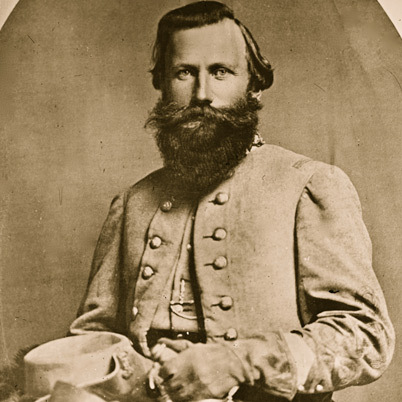
Leave a comment

Filed under civil war, History, leadership, Military

“Our Army Would be Invincible if…” The Problem of Senior Leadership in the Army of Northern Virginia June 1863 Part One First and Second Corps

on-to-gettysburg-900L

This is another installment of my Gettysburg campaign series and the first of four segments on the problems faced by Robert E. Lee as he attempted to find experienced and competent senior leaders to fill Corps, Division and Brigade command positions. I had planned this to be a single entry, but it has kind of taken on a life of its own…such is the life of a historian…. Anyway, I should be publishing the second part on A.P. Hill’s Third Corps and Stuart’s Cavalry division  tomorrow or Wednesday. Likewise, I will be expanding the second about Ewell’s Second Corps leadership and then doing a similar series on the problems of leadership in the Army of the Potomac, which undoubtedly take on a life of its own too…

An issue faced by armies that are forced to expand to meet the demands of war is the promotion and selection of competent leaders at all levels of command. It has been an issue throughout American military history including during our recent wars in Iraq and Afghanistan. The expansion of forces, the creation of new units and operational demands to employ those units sometimes result in officers being promoted, selected to command, being given field command or critical senior staff positions when in normal times they would not. To be fair, some do rise to the occasion and perform in an exemplary manner. Others do not. Those leaders that do not are quite often weeded out over the course of time but often not before their lack of experience, or incompetence proves disastrous on the battlefield. As Barbara Tuchman so eloquently put it:

“When the moment of live ammunition approaches, the moment to which all his professional training has been directed, when the lives of the men under him, the issue of the combat, even the fate of a campaign may depend upon his decision at a given moment, what happens inside the heart and vitals of a commander? Some are made bold by the moment, some irresolute, some carefully judicious, some paralyzed and powerless to act.” [1]

Stonewall Jackson was dead and with his death after the Pyrrhic victory at Chancellorsville General Robert E. Lee was faced with the necessity of reorganizing his army. Jackson’s loss was disastrous for Lee, for he lost the one man who understood him and his method of command more than anyone, someone for whom he had a deep and abiding affection. Months before Jackson’s death Lee said of him “Such an executive officer the sun has never shown on, I have but to show him my design, and I know that it if it can be done it will be done.” [2] After Jackson’s loss Lee said “I had such implicit confidence in Jackson’s skill and energy that I never troubled myself to give him detailed instructions. The most general suggestions were all that he needed.” [3] Lee met the loss with “resignation and deep perplexity,” his words displayed that sense of loss, as well as his sense of faith and trust in God’s providence “I know not how to replace him. God’s will be done. I trust He will raise someone up in his place…” [4]

In addition to the loss of Jackson, a major part of Lee’s problem was organizational. In 1862 Lee inherited an army that was a “hodgepodge of forces” [5] which was organized in an “unwieldy divisional command system, where green commanders out of necessity were given considerable independence.” [6] That organization was tested and found wanting during the Seven Days campaign where on numerous occasions division commanders failed to coordinate their actions with those of adjacent divisions or failed to effectively control their own troops during movement to contact or combat.

Shortly after the Seven Days Lee reorganized the army, working with the material that he had. He divided the army into two corps, under Jackson and James Longstreet, each composed of four divisions consisting of about 30,000 troops apiece. While both commanders were technically equals, it was Jackson to whom Lee relied on for the most daring tasks, and whom he truly considered his closest confidant and his “executive officer.”

The organization worked well at Second Manassas, Fredericksburg and Chancellorsville, although Longstreet’s corps was detached from the army at the time of the latter, and with the loss of Jackson on the first night of that battle neither A.P. Hill nor J.E.B. Stuart effectively commanded Second Corps during the remainder of the battle.

Longstreet and Jackson served to balance each other and each enjoyed the trust of Lee. Lee’s biographer Michael Korda calls them the:

“yin and yang of subordinates. Jackson was superb at guessing from a few words exactly what Lee wanted done, and setting out to do it immediately without argument or further instructions; Longstreet was as good a soldier, but he was an instinctive contrarian and stubbornly insisted on making Lee think twice, and to separate what was possible from what was not.” [7]

Both men had been instrumental to Lee’s battlefield success and both played indispensable roles in Lee’s ability to command the army.

Likewise, the sheer size of Lee’s formations posed problems both in moment and combat, as Lee noted “Some of our divisions exceed the army Genl Scott entered Mexico with, & our brigades are larger than divisions”…that created stupendous headaches in “causing orders & req[uisitions] to be obeyed.” [8] Lee wrote to Jefferson Davis on May 20th “I have for the past year felt that the corps of the army were too large for one commander. Nothing prevented my proposing to you to reduce their size and increase their number but my inability to recommend commanders.” [9]

In the hands of Longstreet and Jackson these massive corps were in the good hands of leaders who could effectively handle them, “but in anyone else’s hands, a corps the size of Jackson’s or Longstreet’s might prove so big as to become clumsy, or even worse, might call for a degree of micromanagement that Lee and his diminutive staff might not be able to deliver.” [10] Thus Lee did not try to replace Jackson; he wrote to Davis the reasons for creating a new corps:

“Each corps contains in fighting condition about 30,000 men. These are more than one man can handle & keep under his eye in battle….They are always beyond the range and vision & frequently beyond his reach. The loss of Jackson from the command of one half of the army seems to me a good opportunity to remedy this evil.” [11]

Instead of appointing one man to command Second Corps, Lee reorganized the army and created two corps from it, stripping a division of Longstreet to join the new Third Corps and dividing the large “Light” Division of A.P. Hill, which under Hill’s “intelligent administration probably is the best in the army” [12] into two divisions.

The problem for Lee was just who to place in command of the new corps and divisions that he was creating. Lee was deeply aware of this problem, and wrote to John Bell Hood that the army would be “invincible if it could be properly organized and officered. There never were such men in an Army before. The will go anywhere and do anything if properly led. But there is the difficulty-proper commanders- where can they be obtained?” [13] Lee sought the best commanders possible for his army, but the lack of depth in the ranks of season, experienced commanders, as well as the need to placate political leaders made some choices necessary evils.

The First Corps, under Longstreet remained relatively intact, but now less the division of Major General Richard Anderson, which was transferred to the new Third Corps. The First Corps now had three divisions instead of four, those of Major General Lafayette McLaws, Major General John Bell Hood and Major General George Pickett. McLaws and Hood were both experienced division commanders who worked well under Longstreet.

McLaws had served in the old army. An 1842 graduate of West Point McLaws served in the infantry and was resigned from the army in 1861 to take command of a Georgia regiment.   McLaws was “a capable soldier without flair, who steady performance never produced a high moment. His reliability and dogged tenacity rubbed off on his men, however, and made them as hard to dislodge as any in the army.” [14] Porter Alexander noted that in the defense “McLaws was about the best in the army…being very painstaking about details, & having an eye for good ground.” [15] But there was a drawback, for all of his solidness and fortitude “he lacked a military imagination,” and was “best when told exactly what to do and closely supervised by superiors.” [16]His division was typical of many in First Corps, “outstanding on defense and led by a competent soldier, they were thoroughly dependable. With the reliance of old pro’s, they did what they were told, stood up under heavy casualties, and produced tremendous firepower.” [17]

McLaws was fortunate to have solid brigade commanders, three of whom had served with him from the beginning, so the lack of familiarity so common in the divisions of Second and Third Corps was not an issue. Interestingly none were professional soldiers.

Brigadier General Joseph Kershaw was a lawyer and politician he had served in Mexico with the Palmetto Regiment and volunteered for service as South Carolina succeeded and he was at Fort Sumter. As commander of the 2nd South Carolina and as a brigade commander he distinguished himself during the Seven Days, Antietam and Fredericksburg He displayed an almost natural ability for “quick and rational decisions, and he never endangered his men rashly. McLaws had complete faith in him and his brigade…” [18]

Brigadier General Paul Semmes was a banker and plantation owner from Georgia and the brother of the Confederacy’s most famous naval commander, Raphael Semmes, who commanded the Raider C.S.S. Alabama. Semmes “was well known in Georgia as a man both of military tastes & accomplishments before the war & though of no military education he was one of the first generals created.” [19] He commanded the 2nd Georgia Regiment and by 1862 was in command of McLaws’ old brigade which he led with distinction during the Seven Days, Antietam and Chancellorsville. By Gettysburg he “had proved himself a worthy and capable brigadier” [20] and Porter Alexander wrote “and it is due to say that there was never a braver or a better.” [21]

Brigadier General William Barksdale was a Mississippi lawyer, newspaper editor and politician who had served in Mexico as a quartermaster, but who “frequently appeared at the front during heavy fighting, often coatless and carrying a large sword.” [22] He was one of the few generals who had been “violently pro-slavery and secessionist” [23] and as a Congressman had been involved in the altercation when Representative Preston Brooks nearly killed Massachusetts Senator Charles Sumner in the Senate chamber. At the outbreak of the war Barksdale volunteered for service and took command of a brigade at Malvern Hill and at Antietam and Fredericksburg was in the thick of the fight. He had a strong bond with his soldiers.

Brigadier General William Wofford was the newest of McLaws’ brigade commanders. Wofford was a Georgia newspaper owner and lawyer who had done a great deal of fighting in the Mexican War where he commanded a company despite having no military education. He was considered a man of “high morale bearing…of the strictest sobriety, and, indeed of irreproachable moral character.” [24] Demonstrating the tensions of the day Wofford was a “staunch Unionist Democrat” who “opposed secession and voted against it at the Georgia secession convention.” [25] Wofford volunteered for service and was “elected colonel of the first Georgia regiment to volunteer for the war.” [26] That being said Wofford “was a decided Union man from first to last during the whole war” and saw “with exceptional prescience…the certain fatality” of secession, but once the deed was done, he closed ranks…” [27] Wofford served well as a regimental commander and acting brigade commander during the Seven Days, Second Manassas, Antietam and Fredericksburg and was promoted to the brigadier general and command of a brigade just before Chancellorsville.

Major General John Bell Hood was an 1853 graduate of West Point and had served as a cavalry officer under Lee’s command in Texas. He gained a stellar reputation as a leader and fighter and when his home state of Kentucky did not secede he attached himself to his adopted state of Texas. He began the war as a lieutenant but by 1862 was a Brigadier General commanding the only Texas brigade in the east. He took command of a division following the Seven Days and during the next year built a “combat record unequalled by any in the army at his level.” [28] And the “reputation gained as commander of the Texas Brigade and as a division commander made him both a valuable general officer and a celebrity who transcended his peers.” [29]

Hood’s brigade commanders were as solid as group as any in the army:

Brigadier General Evander Law was a graduate of the South Carolina Military (the Citadel) and a professor in various military colleges and schools before the war. He served admirably as a regiment and brigade commander during the Seven Days, Second Manassas, and Antietam and was promoted to brigadier general in October 1862 just prior to Fredericksburg. After Chancellorsville he was the senior brigadier in Hood’s division. He had “military training, youth, dash ability and familiarity with his men- a formidable package in combat.” [30]

Brigadier General George “Tige” Anderson was a Georgian who had served in Mexico as a lieutenant of Georgia cavalry and in 1865 was commissioned as a captain in the Regular cavalry, but resigned after three years. He had no formal military training but was considered a capable officer. He was present at most of the major battles fought by the Army of Northern Virginia but in most cases his brigade had not been heavily engaged and had “little chance to distinguish himself” but he was loved by his soldiers. One wrote that he “stands up for us like a father” while another wrote “He is always at his post.” [31]

Hood’s old Texas Brigade was commanded by Brigadier General Jerome Robertson. At the age of forty-eight he had served with Sam Houston in the Texas War for Independence and later took time off to serve fighting Indians. He practiced medicine in Texas and in 1861 was a pro-secession delegate to the Texas secession convention. He was commissioned as a Captain and promoted to Colonel of the 5th Texas just prior to the Seven Days and led that unit to fame. He was promoted after Antietam to command the Texas Brigade. Away from most of the action at Fredericksburg and Chancellorsville he would have his first combat experience as a brigade commander at Gettysburg.

Brigadier General Henry Benning was a lawyer and Georgia Supreme Court justice. While not having any military training or experience he was “known to all as a man of the highest integrity, and he was compared in character to that earlier champion of the South, John Calhoun. He was one of the most industrious and capable men in the Confederacy.” [32] Unlike other Confederate political leaders he favored a strong central government for the new South. He was considered a prime candidate for a cabinet post but had already decided to serve in the new army and helped organize the 17th Georgia Infantry. As a regiment commander and acting brigade commander at Antietam, his brigade had held off Burnside’s corps at the Burnside Bridge and became known as “Old Rock” [33]and was a “proven commander” who “provided strong leadership and bolstered the confidence of the men under him.” [34]

Major General George Pickett had commanded his division for some time, but Pickett “had never led his division in combat.” [35] Likewise the brigades of his division had not fought together in a major engagement and the division was new to fighting as a part of First Corps. The campaign would also be Pickett’s first offensive campaign as a division commander. Pickett was an 1846 graduate of West Point who though well liked “showed evidence of a meager intellect and aversion to hard work.” [36] However he distinguished himself by his gallantry at Chapultapec in the Mexican War where taking the colors from the wounded Longstreet and “carried them over the wall[37] gaining fame around the country for the exploit. Pickett was a protégé of Longstreet who “had been instrumental in Pickett’s appointment to divisional command.” [38] Pickett was “untried at his new rank, but had been an excellent brigade leader and with Longstreet’s full support was apt to direct with wisdom his larger force.” [39]

Pickett’s division only had three of his five brigades at Gettysburg. Two were commanded by old Regular officer’s Richard Garnett and Lewis Armistead, and the third by James Kemper.

Brigadier General James Kemper was the only non-professional soldier of the three brigade commanders. Kemper had been a captain of volunteers in the Mexican War, but that war ended before he could see action. He was a politician who had served twice as Virginia’s Speaker of the House and “was another of those civilian leaders who, accustomed to authority, translated their gifts to command in the field.” [40] During his time as a legislator Kemper had served as “chairman of the Military Affairs Committee in the years before the Civil War, and insisted on a high level of military preparedness.” [41] Kemper served as commander of the 7th Virginia Regiment and was promoted to brigadier general after Seven Pines and commanded the brigade at Second Manassas and Antietam. He was “very determined and was respected by brother officers for solid qualities and sound judgment.” [42]

Brigadier Richard Garnett came to his command and to Gettysburg under a cloud. He was a West Point graduate, class of 1841who strong Unionist, but who had resigned his commission in the Regular Army because he “felt it an imperative duty to sacrifice everything in support of his native state in her time of trial.” [43] Garnett had run afoul of Jackson while commanding the Stonewall Brigade and during the Valley campaign had been relieved of command and arrested by Jackson for ordering a retreat without Jackson’s permission. Garnett had been “humiliated by accusations of cowardice” [44] and demanded a court-martial which never was held as Lee transferred him away from Jackson to Pickett’s division. Gettysburg offered him “his first real opportunity with Pickett’s division to clear his honor as a gentleman and a soldier.” [45]

Pickett’s last brigade was commanded by an old Regular, and longtime friend and comrade of Garnett, Brigadier General Lewis Armistead. He was expelled from West Point and later was commissioned directly into the infantry in 1839. He fought in the Mexican War where he received two brevet promotions for gallantry and was wounded at Chapultapec. Like Garnett Armistead resigned his commission in 1861 to serve in the Confederate army where he took command of the 57th Virginia Infantry and shortly thereafter was promoted to Brigadier General. He held brigade command and served Provost Marshal during Lee’s 1862 invasion of Maryland. He had seen little action since Second Manassas, but was known for “his toughness, sound judgment and great personal courage.” [46]

To command what was left of Second Corps Lee promoted Major General Richard Ewell to Lieutenant General. Ewell had been an effective and dependable division commander under Jackson but had been wounded at Groveton where he was severely wounded and lost a leg, which meant the “absence for long months of the most generous, best disciplined, and in many soldierly qualities, the ablest of Jackson’s subordinates.” [47] However, Ewell, though serving long with Jackson in the Shenandoah Valley had served “only briefly under Lee” [48] before being wounded at Groveton. The result was that neither fully knew or understood each other. Lee knew Ewell’s excellent reputation among the soldiers of Second Corps and “may have heard rumors that on his deathbed Jackson expressed a preference for Ewell as his successor.” [49] Ewell was a modest man and “had maintained a reputation for solid competence.” [50] Freeman wrote:

“In part, the appointment of Dick Ewell was made because of sentimental association with the name Jackson, and in part because of admiration for his unique, picturesque, and wholly lovable personality. Of his ability to lead a corps nothing was known. Ewell had never handled more than a division and he had served with Lee directly for less than a month.” [51]

In sending the recommendation on to Richmond Lee termed Ewell “an honest, brave soldier, who has always done his duty well.” [52] It was not a resounding recommendation, but then Lee barely knew Ewell. Lee wrote after the war that he recommended Ewell “with full knowledge of “his faults as a military leader- his quick alternations from elation to despondency[,] his want of decision &c.” [53] Many questions hovered around the appointment of Ewell including how the loss of his leg, his recent marriage, newness to corps command and unfamiliarity with Lee’s style of command would have on him. Had Lee known that the humble Ewell had reservations of his own about assuming command of a corps and going back to battle after the traumatic amputation of his leg, he had written “I don’t feel up to a separate command” and he had “no desire to see the carnage and shocking sights of another field of battle.” [54]

Ewell’s reorganized Second Corps now consisted of his former division, commanded since Antietam by Major General Jubal Early. Early was an unusual character. He was a West Point graduate who had served in the Seminole wars, left the army and became a highly successful lawyer. He served in the Mexican war as a Major with Virginia volunteers and returned to civilian life. He was “notoriously a bachelor and at heart a lonely man.” Unlike many Confederate officers he had “no powerful family connections, and by a somewhat bitter tongue and rasping wit” isolated himself from his peers.[55] He was a Whig and opposed succession, volunteering for service only after Lincoln called for 75,000 volunteers to crush the rebellion. Called the “my old bad man” by Lee, who “appreciated Early’s talents as a soldier and displayed personal fondness for his cantankerous and profane Lieutenant …who only Stonewall Jackson received more difficult assignments from Lee.” [56] He was affectionately known as “Old Jube” or “Jubilee” by his soldiers he is the most influential of Ewell’s commanders, and his “record in battle prior to Gettysburg was unsurpassed.” [57]

The corps also contains the former division of Stonewall Jackson under the command of Edward “Old Allegheny” Johnson, an old regular with a solid record of service. However, Johnson had spent a year recovering from a serious wound and took command of the division after Chancellorsville. He was an outsider to the division, “with no real experience above the brigade level” and he was “unfamiliar with the qualities and limitations of his four new brigadiers.” [58] The former division of D.H. Hill was now under the command of Robert Rodes, a VMI graduate and professor who had never served in the Regular Army and only had briefly commanded a division before his appointment to command. Rodes was a solid officer who in time became an excellent division commander, but at Gettysburg he was still new and untried. In the summer of 1863 Rodes was one of the Army of Northern Virginia’s brightest stars…because of his effective, up-front style of combat leadership.” [59]

The brigade level commanders in the corps were another matter. Early’s division included standouts such as Brigadier General John Gordon and Harry Hays, which was balanced out by the weakness of Brigadier General William “Extra Billy” Smith and the inexperience of Colonel Isaac Avery, who commanded the brigade of Robert Hoke who had been wounded at Chancellorsville.

In Johnson’s division the situation was more unsettled, as Johnson and all of his brigade commanders were new to their commands. Johnson’s division had Brigadier General George “Maryland” Steuart, a tough old regular cavalry officer who was new to command of a troubled brigade whose commander had just been relieved, Brigadier General John Marshall Jones who also was a former regular, but who had a well-known problem with alcohol, who had never held a field command, like his division commander he was new to the division. Brigadier General James Walker commanded the “Stonewall” Brigade. Walker replaced the brigade commander, Paxton who had been killed at Chancellorsville. He had commanded the 13th Virginia in Ewell’s division and served as acting commander of different brigades during the Seven Days, Antietam and Fredericksburg and had a solid record of success. He had just been promoted to Brigadier General and was new to both the Stonewall Brigade and the division whose officers initially resisted the appointment of an outsider but soon warmed up to their new commander. Colonel Jesse Williams had just taken command of the brigade of Brigadier General Francis Nichols who had been wounded at Chancellorsville.

Rodes division was the largest in the army with five brigades present at Gettysburg. His brigade commanders were a mixed bag ranging from the excellent Brigadier General George Doles and Stephen Ramseur, Brigadier General Junius Daniel, a former regular who had much brigade command time but little combat experience, despite the lack of combat experience Daniel was well respected and “had the essential qualities of a true soldier and successful officer, brave, vigilant, honest…gifted as an organizer and disciplinarian, skilled in handling troops.” [60] However, Rodes was saddled with two commanders of dubious quality, Brigadier General Alfred Iverson, who was hated by his men and Colonel Edward O’Neal, a leading secessionist politician “who had absolutely no military experience before the war” [61] and who had been ineffective as an acting brigade commander when he took over for Rodes at Chancellorsville, however, Lee was forced to leave O’Neal at the head of his brigade for lack of other senior leaders over Rodes objections.

To be continued…

Notes

[1] Tuchman, Barbara The Guns of August Ballantine Books, New York 1962 Amazon Kindle edition location 2946

[2] Taylor, John M. Duty Faithfully Performed: Robert E Lee and His Critics Brassey’s, Dulles VA 1999 p.128

[3] Dowdy, Clifford. Lee and His Men at Gettysburg: The Death of a Nation Skyhorse Publishing, New York 1986, originally published as Death of a Nation Knopf, New York 1958 p.30

[4] Freeman, Douglas Southall, Lee’s Lieutenant’s a Study in Command, One volume abridgement by Stephen W Sears, Scribner, New York 1998 p.524

[5] Ibid. Dowdy. Lee and His Men at Gettysburg p.30

[6] Hagerman, Edward. The American Civil War and the Origins of Modern Warfare. Midland Book Editions, Indiana University Press. Bloomington IN. 1992 p.110

[7] Korda, Michael. Clouds of Glory: The Life and Legend of Robert E. Lee Harper Collins Publishers, New York 2014 p.527

[8] Guelzo, Allen C. Gettysburg: The Last Invasion Vintage Books a Division of Random House, New York 2013 pp.20-21

[9] Wert, Jeffry D. General James Longstreet The Confederacy’s Most Controversial Soldier, A Touchstone Book, Simon and Schuster, New York and London 1993

[10] Ibid. Guelzo, Gettysburg: The Last Invasion pp.20-21

[11] Thomas, Emory Robert E. Lee W.W. Norton and Company, New York and London 1995 p.289

[12] Ibid. Freeman Lee’s Lieutenants p.35

[13] Coddington, Edwin B. The Gettysburg Campaign: A Study in Command, A Touchstone Book, Simon and Schuster New York, 1968 p.12

[14] Tagg, Larry The Generals of Gettysburg: The Leaders of America’s Greatest Battle Da Capo Press Cambridge MA 1998 Amazon Kindle Edition pp.208-209

[15] Alexander, Edward Porter. Fighting for the Confederacy: The Personal Recollections of General Edward Porter Alexander edited by Gary Gallagher University of North Carolina Press, Chapel Hill 1989 p.170

[16] Ibid. Tagg The Generals of Gettysburg p.209

[17] Ibid. Dowdy. Lee and His Men at Gettysburg p.176

[18] Ibid. Tagg The Generals of Gettysburg p.214

[19] Ibid. Alexander Fighting for the Confederacy p.80

[20] Ibid. Tagg The Generals of Gettysburg p.217

[21] Ibid. Alexander Fighting for the Confederacy p.80

[22] Ibid. Tagg The Generals of Gettysburg pp.217-218

[23] Ibid. Dowdy. Lee and His Men at Gettysburg p.217

[24] Ibid. Guelzo, Gettysburg: The Last Invasion p.296

[25] Ibid. Tagg The Generals of Gettysburg p.221

[26] Ibid. Guelzo, Gettysburg: The Last Invasion p.297

[27] Ibid. Guelzo, Gettysburg: The Last Invasion pp.296-297

[28] Ibid. Tagg The Generals of Gettysburg p.224

[29] Pfanz, Harry F. Gettysburg: The Second Day. University of North Carolina Press, Chapel Hill 1987 p.161

[30] Ibid. Tagg The Generals of Gettysburg p.228

[31] Ibid. Tagg The Generals of Gettysburg p.230

[32] Ibid. Tagg The Generals of Gettysburg p.234
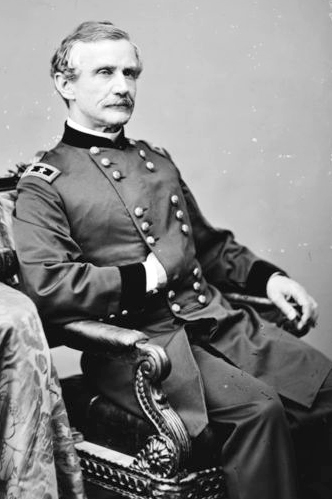
[33] Ibid. Freeman Lee’s Lieutenants p.430

[34] Ibid. Tagg The Generals of Gettysburg p.235

[35] Ibid. Coddington The Gettysburg Campaign p.12

[36] Ibid. Tagg The Generals of Gettysburg p.237

[37] Ibid. Wert General James Longstreet p.45

[38] Wert, Jeffery D. Gettysburg Day Three A Touchstone Book, New York 2001 p.110

[39] Ibid. Freeman Lee’s Lieutenants p.385

[40] Ibid. Dowdy. Lee and His Men at Gettysburg p.268

[41] Ibid. Tagg The Generals of Gettysburg p.241

[42] Ibid. Dowdy. Lee and His Men at Gettysburg p.269

[43] Ibid. Dowdy. Lee and His Men at Gettysburg p.269

[44] Ibid. Guelzo, Gettysburg: The Last Invasion p.379

[45] Ibid. Dowdy. Lee and His Men at Gettysburg p.270

[46] Ibid. Tagg The Generals of Gettysburg p.244
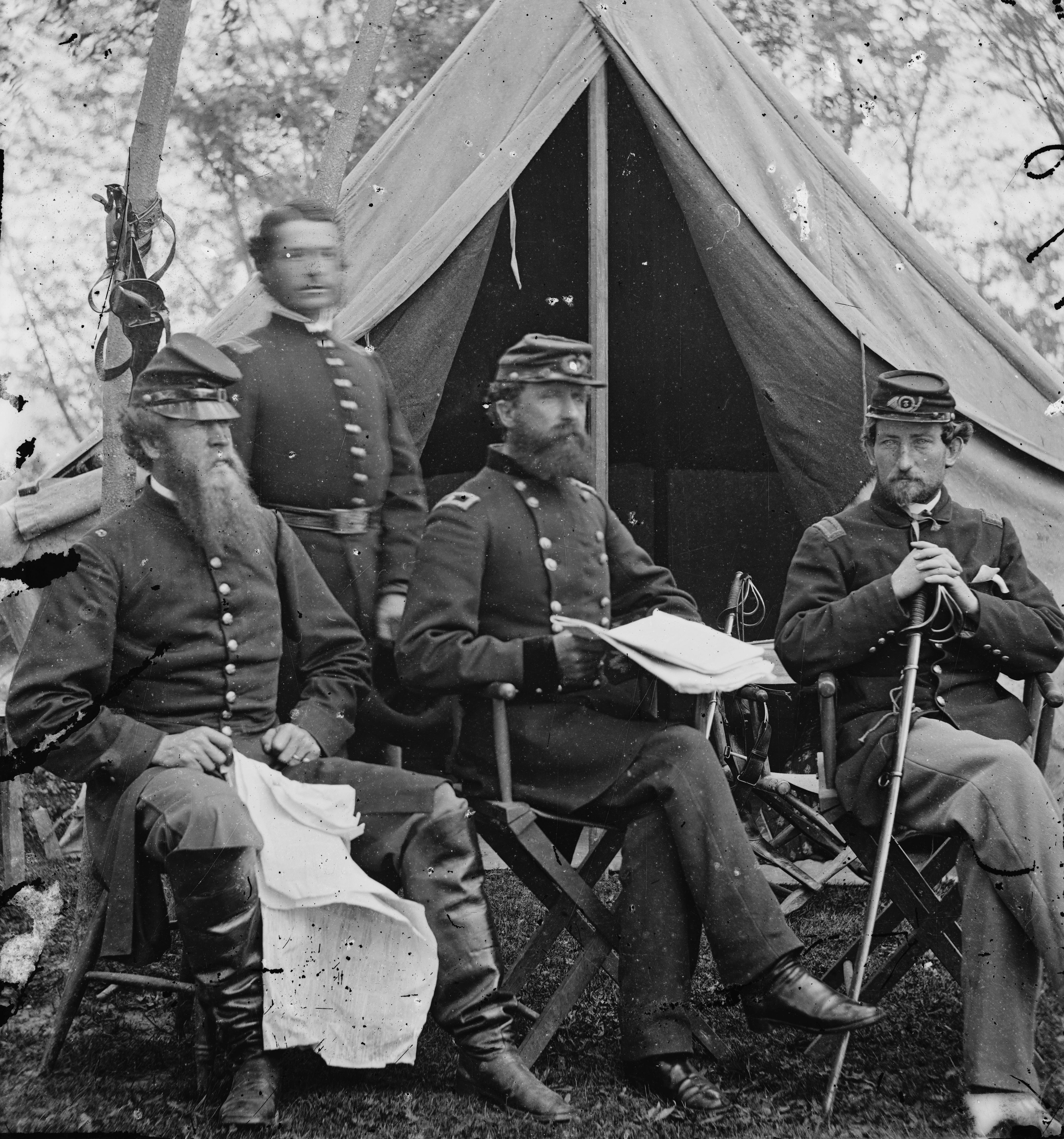
[47] Ibid. Freeman Lee’s Lieutenants p.322

[48] Gallagher, Gary. Confederate Corps Leadership on the First Day at Gettysburg: A.P. Hill and Richard S. Ewell in a Difficult Debut in The First Day at Gettysburg edited by Gallagher, Gary W. Kent State University Press, Kent Ohio 1992 p.47

[49] Ibid. Gallagher Confederate Corps Leadership on the First Day at Gettysburg p.47

[50] Ibid. Taylor, John Duty Faithfully Performed p.130

[51] Ibid. Freeman Lee’s Lieutenants p.322

[52] Ibid. Gallagher Confederate Corps Leadership on the First Day at Gettysburg p.48

[53] Ibid. Gallagher Confederate Corps Leadership on the First Day at Gettysburg p..49

[54] Ibid. Guelzo, Gettysburg: The Last Invasion p.23

[55] Ibid. Freeman Lee’s Lieutenants p.33

[56] Gallagher, Gary W. Jubal A. Early, the Lost Cause, and Civil War History: A Persistent Legacy; Frank L Klement Lecture, Alternate Views of the Sectional Conflict Marquette University Press Marquette WI 2003 p.11

[57] Ibid. Tagg The Generals of Gettysburg p.256

[58] Ibid. Tagg The Generals of Gettysburg pp.269-270

[59] Ibid. Tagg The Generals of Gettysburg p. 284

[60] Ibid. Tagg The Generals of Gettysburg p.292

[61] Ibid. Tagg The Generals of Gettysburg p.299

2 Comments

Filed under civil war, History, history, leadership, Military

“We had Nothing to do but to Obey the Orders” Final Confederate Preparations for Pickett’s Charge

10003289_10152329730082059_400175304_n

While James Longstreet was depressed and many Confederate commanders who had seen the carnage of attacking the entrenched Federal army on July 2nd doubted whether any assault could break the Federal line, Robert E. Lee held on to the hope that one more assault would carry the day. It had to, “the importance with which his whole strategy had invested in this battle and the stubbornness which had driven him on at Gaines’s Mill, Malvern Hill, and Antietam, impelled Lee to still try another major attack on July 3.” 1 His partial success on July 2nd also “persuaded Lee that with the proper coordination and support of artillery, it was still possible to assault and break through Meade’s front.” 2 Convinced that his men could conquer the Federal position, and encouraged by the small successes of the second day “the general plan of attack was unchanged.” 3

However the real problem was not breaking through the line, but “how to stay there and exploit the advantage once the enemy’s line was pierced.” 4 Lee’s tactical problem remained the same as it had on July 2nd, when the power of the rifled musket and massed artillery on the defense cut his assaulting troops to ribbons, even though they inflicted heavy casualties on the Federal army, especially Sickles’ badly exposed III Corps in the Wheat Field and the Peach Orchard. His problem was how to break the enemy’s line and then exploit the breakthrough in order to gain not only a victory, but destroy the Army of the Potomac as a fighting force in the process.

As we have already discussed, on the new battlefield of the Civil War where the killing power of entrenched troops on the defense had grown exponentially as compared to the Napoleonic era or even the Mexican War, of which Lee and so many commanders were veterans. As Russell Weigley noted that by the time an attacking force was able to breach a prepared defensive position, “almost invariably, by that time the attacker had lost so heavily, and his reserves were so distant, that he could not hold on against a counterattack by the defending army’s nearby reserves.” 5 And like his assaults at Gaines’s Mill, Malvern Hill and those at Gettysburg on July 2nd, the assault of July 3rd by the divisions of Pickett, Pettigrew and Trimble would meet a similar bloody repulse, only Lee refused to accept it. Colonel Porter Alexander, commanding Longstreet’s corps artillery noted that “even if the attack was “entirely successful, it can be only be at a very bloody cost” 6 while Brigadier General A.R. Wright, whose brigade had actually reached Cemetery Ridge on July 2nd told Alexander “The trouble is not going in there…the problem is to stay there after you get there.” 7

With a fresh army, or perhaps a number of fresh divisions, Lee’s plan might have had a chance to succeed. But Lee had already lost heavily on July 1st and 2nd and in the process shattered the divisions of Heth, Pender, Rodes, Johnson, Hood and McLaws and suffered serious casualties to the divisions of Early and Anderson. As far as infantry he had very little left, only Pickett’s short handed division which was missing two of its five brigades, with which to mount a frontal assault that would further decimate his army and render it incapable of further offensive operations, even if he drove Meade from his positions on Cemetery Hill and Cemetery Ridge.

But Robert E. Lee was not deterred, over the past year of action “Lee had developed extremely high expectations of his enlisted men” 8 He had seen them overcome adversity as well as defeat far larger forces, but this time the open terrain, the superiority of the Federal artillery, the excellent position that Meade’s army occupied and his own lack of fresh troops and scarcity of artillery ammunition, combined with poor staff work and bad organization would ensure that this assault would be more than they could handle. Unlike Longstreet, Lee was never in awe “of the formidable character of the Union position…and he felt sure his incomparable infantry if properly handled could take any height.” 9

But even Porter Alexander, like most in the Army, held Lee in such esteem that regardless of the situation they implicitly trusted his judgment. As the preparations were made in the morning initially “believed that it would come out right, because General Lee had planned it.” 10 As he weighed the matter more fully Alexander told Longstreet “if there is any alternative to this attack, it should be carefully considered before opening our fire, for it will take all the artillery ammunition we have left to test this one thoroughly, and if the result is unfavorable, we will have none left for another effort.” 11

Once again Lee’s lack of clarity and vagueness in his orders and the reluctance of a subordinate to carry them out hindered Lee’s plan. Lee and Longstreet “had not reached a clear understanding on the nature, extent, and direction of his offensive operations” 12 and somehow, in “the strange, undeclared conflict of wills that had begun thirty-six hours before, neither general was thinking clearly. As Longstreet would now do anything to avoid assuming responsibility for a full-scale attack, Lee would do anything to get him to move out.” 13

Pickett’s division had arrived at Marsh Creek was of Gettysburg after a long and tiring forced march from Chambersburg at about 4 p.m. on July 2nd. Lee informed Pickett that he would not be needed that day and to rest his troops, and for whatever reason they remained in that position until about 4 a.m on July 3rd. Neither Lee nor Longstreet ordered them up earlier, where they might have been in position for an earlier assault on the Federal center, an attack that might have been coordinated with Ewell’s attack on Culp’s Hill which went off about 4 a.m.

Some of the blame for this can be laid at the feet of Longstreet, who still determined to find a way to turn the Federal left flank had his staff planning throughout the night for a way to execute that attack, but Lee was remiss in not clearly communicating his intent to his subordinate, to include what he expected him to do as well as when and where he expected him to do it. These questions were not cleared up until after sunrise on July 3rd, when Lee reiterated his plans to Longstreet and A.P. Hill.

Lee decided to attack the Federal center, where Cemetery Ridge was less commanding than Cemetery Hill, or the Round Tops which had been so costly to attack on the first two days of battle. All of Pickett’s division arrived behind Seminary Ridge between 7 a.m. and 9 a.m. on the morning of July 3rd. There it joined the other units assigned to the attack by Lee. Those units, apart from Pickett all came from A.P. Hill’s Third Corps, Longstreet having convinced that the badly cut up divisions of Hood and McLaws remain in place on the south end of the battlefield to protect the flank. Longstreet was of the opinion, and gained Lee’s concurrence that if those units joined the assault that the flank would be exposed to the well dug in and reinforced Federal units on and around the Round Tops, as Longstreet explained, “To have rushed forward with my two divisions, then carrying bloody noses from their terrible conflict the day before, would have been madness.” 14

The decision to leave these two divisions in place resulted in a change of plan as to where the Confederate assault would be directed. Lee initially planned for Longstreet’s corps to continue its push in the south, from the positions they had taken near Little Round Top, Devil’s Den, the Peach Orchard and the Wheat Field. In that attack Hood’s division now lead by Evander Law, would be on the extreme right, McLaws division in the center attacking from the Wheat Field and Peach Orchard and Pickett on the left, supported by some of A.P. Hill’s Third Corps. However, with the change of plan Pickett’s division was now on the left of the attack, while Heth’s division, now commanded by Johnston Pettigrew would be in the center supported by Lane’s and Scales’ brigades of Dorsey Pender’s division, now commanded by Isaac Trimble, who had taken command only that morning. The selection of Heth’s division to join the attack now “provided a focal point for the attack, since it was roughly opposite the Federal center; then, too, there was a concealed position to the right of Heth’s line that offered room enough for Pickett’s men.” 15 This necessitated a change to the intended target of the attack, which Lee now identified as the “small clump of trees” visible in the center of the Federal position.

Lee discounted the terrain as a factor, thinking that the fences that criss-crossed the open field between the two opponents was of little concern. The open ground lent itself to the “massive attack on the scale that Lee visualized” but would “expose his men to a raking fire from enemy muskets and artillery.” 16 Lee hoped to reduce this danger with an overwhelming artillery barrage, but while Longstreet opposed the attack, and other Confederate commanders such as Armistead and Garnett realized the near hopelessness of the attack but maintained a silence, William Mahone, whose brigade was part of Anderson’s division and not assigned to the attack was mortified. Mahone begged Anderson to observe the battlefield and told him his honest opinion of the coming attack: “That no troops ever formed a line of battle that could cross the plain of fire to which the attacking force would be subjected, and…that I could not believe that General Lee would insist on such an assault after he had seen the ground.” 17 But Lee was determined and Anderson refused to confront Lee, saying “in substance, that we had nothing to do but to obey the orders.” 18

Mahone was right both about the ground and the fires that the attacking Confederates would encounter. While the fences along the Emmitsburg road in Pickett’s area were not much of a factor, they were on Pettigrew’s front. The Plum Run Valley which cut across the battlefield was a wide swale which “was truly a valley of death; Union artillery placed on Little Round Top could easily fire up its shallow groove as if it were a bowling alley, and Federal infantry could easily counterattack into it.” 19 In front of Pettigrew the ground formed “a natural glacis. In short, it naturally sloped at a steeper angle, forcing the attacker to literally walk up directly into the muzzles of the defending infantrymen.” 20 Whether Lee recognized it or not the ground itself offered major obstacles that the attacking Confederates would have to negotiate under heavy artillery and musket fire.

From a command, control and coordination aspect there was little to be commended in Lee’s plan. The artillery support, nominally to be conducted by all the Confederate artillery from all three corps was not well coordinated and lacked an overall commander, this ensured that the “corps artillery commanders acted independently, without a firm understanding of the crucial importance of their roles.” 21 Porter Alexander, who had the heaviest responsibility only had operational control of the batteries of First Corps and a few from Third Corps, the rest of the artillery battalions remained under their respective corps artillery commanders. Additionally, the senior artilleryman present, who had no command authority, Brigadier General William Pendleton moved batteries committed to Alexander and the infantry assault without telling him, and removed the artillery trains far to the rear where the ammunition needed to sustain an attack was out of reach when needed. Additionally the batteries of Third Corps did not conserve their limited ammunition and became involved in a long battle over the Bliss farmhouse between the lines, thus limiting their ability to take part in the attack. Likewise the guns of Second Corps, some of which could have had good enfilade fire on Cemetery Hill took little part in the action.

Of the three infantry divisions allotted to the attack, only one, Pickett’s actually belonged to the corps commander leading the attack, and the two divisions from Third Corps were badly cut up from the battle on July 1st and commanded by new commanders, neither who had commanded a division, and one of who, Trimble had never worked with or even met his subordinate commanders until that morning. Additionally, the two brigades assigned from Pender’s division were units that had been heavily engaged, there were two other brigades, those of Mahone and Posey from Anderson’s division, which “yet to see see serious action” and were “just as fresh as Pickett’s division, yet they were overlooked and not even assigned a supporting role.” 22

Despite his objections to it and the challenges posed by the attack, James Longstreet earnestly worked to make it succeed. Longstreet, Pickett and Pettigrew attempted to smooth out communications to “avoid mistakes and secure proper coordination between various units.” 23 However, despite his good intentions, Longstreet made a number of mistakes which could be best described as “lapses of thought.” He failed to “explain the details of the attack to all levels of command in all units…he failed to communicate effectively with anyone outside of First Corps, even though Third Corps troops would make up more than half of the attackers.” He left the artillery plan to Alexander and failed to develop a detailed plan that would determine if the artillery bombardment had weakened the Federals enough “to justify sending in the infantry.” He also did not appreciate the weakened condition of the attached Third Corps units and more importantly seemed to give little thought to the placement of Pickett’s troops in relationship to Pettigrew. This left a 400 yard gap between the Pickett and Pettigrew’s divisions, a gap that would cause problems during the attack, as it necessitated “a significant and difficult left oblique movement by the Virginians across the valley, under artillery fire.” 24

Despite Longstreet’s lapses the fact was that Lee reviewed the plans, and troops dispositions late in the morning. Lee had gone up and down the line inspecting it, but somehow he too “did not detect the hidden flaws in the deployment of his troops and the layout of its batteries.” 25 Likewise he seemed to continue the passive role that he had maintained throughout the battle. Alexander spelled this out in a private letter noting that “The arrangement of all the troops,… must have been apparent to Gen Lee when he was going about the lines between 11 & 12, & his not interfering with it stamps of his approval.” 26

About noon the approximately 13,000 troops in the attacking divisions continued to make their individual preparations for the attack. As they did this “a great stillness came down over the field and over the two armies on their ridges…the Confederates maintaining their mile wide formation along the wooded slope and in the swale, the heat was oppressive.” 27 Pickett wrote his young fiancee “the suffering and waiting are almost unbearable.” 28

Notes

1 Weigley, Russell F. The American Way of War: A History of United States Military Strategy and Policy Indiana University Press, Bloomington and Indianapolis 1973 p.117 

2 Fuller, J.F.C. Grant and Lee: A Study in Command Indiana University Press, Bloomington and Indianapolis 1957 pp. 198-199 

3 Guelzo, Allen C. Gettysburg: The Last Invasion Vintage Books, a Division of Random House, New York 2013 p.375

4 Ibid. Weigley The American Way of War p.117 5 Ibid. Weigley The American Way of War p.117

6 Korda, Michael. Clouds of Glory: The Life and Legend of Robert E Lee Harper Collins Books, New York 2014 p.591

7 Coddington, Edwin B. The Gettysburg Campaign: A Study in Command A Touchstone Book, New York, 1968 p.459

8 Hess, Earl J. Pickett’s Charge: The Last Attack at Gettysburg University of North Carolina Press, Chapel Hill and London 2001 p.13

9 Coddington The Gettysburg Campaign: A Study in Command p.457

10 Golay, Michael To Gettysburg and Beyond: The Parallel Lives of Joshua Lawrence Chamberlain and Edward Porter Alexander Crown Publishers, New York 1994 p.167

11 Freeman, Douglas Southall. Lee’s Lieutenants: A Study in Command One Volume Abridgment by Stephen Sears, Scribner New York 1998 p.592

12 Ibid. Coddington Gettysburg: A Study in Command p.454

13 Dowdy, Clifford Lee and His Men at Gettysburg: The Death of a Nation originally published as Death of a Nation Skyhorse Publishing New York 1958 p.258 

14 Trudeau, Noah Andre Gettysburg a Testing of Courage Harper Collins Publishers, New York 2002 p.441

15 Ibid. Trudeau Gettysburg: A Testing of Courage p.441

16 Ibid. Coddington The Gettysburg Campaign p.459

17 Ibid. Trudeau Gettysburg: A Testing of Courage p.458

18 Ibid. Trudeau Gettysburg: A Testing of Courage p.458

19 Ibid. Hess Pickett’s Charge p.79

20 Ibid. Hess Pickett’s Charge p.81

21 Wert, Jeffery D. Gettysburg Day Three A Touchstone Book, New York 2001 p.126

22 Ibid. Coddington The Gettysburg Campaign p.462

23 Ibid. Coddington The Gettysburg Campaign p.491

24 Ibid. Hess Pickett’s Charge p.32

25 Ibid. Coddington The Gettysburg Campaign p.492

26 Ibid. Wert. Gettysburg Day Three p.128

27 Foote, Shelby The Civil War a Narrative: Fredericksburg to Meridian Vintage Books a Division of Random House, New York 1963 p.539

28 Ibid. Dowdy Lee and His Men at Gettysburg p.281

Leave a comment

Filed under civil war, History, leadership, Military

“A Spirit of Unbelief”: A.P. Hill, Harry Heth and the Prelude to the Battle of Gettysburg

Hill.28135413_stdLieutenant General A.P. Hill

Note: One of the most important things to understand about the Battle of Gettysburg or for that matter any battle or campaign is leadership as well as organizational structure and climate of command. The study of A.P. Hill’s Third Corps is important to understanding how the battle unfolds and what happens at Gettysburg particularly on July 1st. In our understanding “Successful mission command demands that subordinate leaders at all echelons exercise disciplined initiative, acting aggressively and independently to accomplish the mission. Essential to mission command is the thorough knowledge and understanding of the commander’s intent at every level of command.”

While the leaders at Gettysburg on both sides would be unaware of our present definition they certainly would have been acquainted with the maxims of Napoleon, who many studied under Dennis Hart Mahan at the West Point. Napoleon noted: “What are the conditions that make for the superiority of an army? Its internal organization, military habits in officers and men, the confidence of each in themselves; that is to say, bravery, patience, and all that is contained in the idea of moral means.”

Likewise in a maxim that has direct application to the Confederate campaign in Pennsylvania Napoleon noted “To operate upon lines remote from each other and without communications between them, is a fault which ordinarily occasions a second. The detached column has orders only for the first day. Its operations for the second day depend on what has happened to the main body. Thus according to circumstances, the column wastes its time in waiting for orders or it acts at random….” [1]

I have spent more time in this chapter developing the issues of organization, leadership, climate of command and relationships between leaders because of their importance to the campaign. From these students should be able to draw lessons that would be applicable to leadership, organization and campaigning at the operational level of war.

As the Army of Northern Virginia began to concentrate near Cashtown after the reports that the Army of the Potomac was in Maryland it was Lieutenant General A.P. Hill’s Third Corps that was nearest to Gettysburg. Major General Harry Heth’s division led the corps and arrived on June 29th followed by Major General Dorsey Pender’s division on the 30th. Hill ordered his last division under the command of Major General Richard Anderson to remain behind and join the corps on July 1st. [2]

On the 30th Harry Heth sent Johnston Pettigrew’s Brigade to Gettysburg to “search the town for army supplies (shoes especially), and to return the same day.” [3] It was the first in a series of miscalculations that brought Lee’s army into a general engagement that he wished to avoid.

The Confederate Third Corps commanded by Lieutenant General Ambrose Powell (A.P.) Hill had been formed as part of the reorganization of the army following Stonewall Jackson’s death after the Battle of Chancellorsville. Hill had a stellar reputation as a division commander; his “Light Division” had distinguished itself on numerous occasions, especially at Antietam where its timely arrival after a hard forced march from Harper’s Ferry helped save Lee’s army late in the battle. At Chancellorsville Hill briefly succeeded Jackson until he too was wounded.

But that being said Hill was no stranger to controversy, beginning with a clash with James Longstreet during the Seven Days battles in which time Longstreet placed Hill under arrest and Hill challenged Longstreet to a duel. Lee quickly reassigned Hill to Jackson’s command as Jackson was operating in a semi-independent assignment. [4] Hill was in an intractable controversy with Stonewall Jackson for nearly a year until Jackson succumbed to his wounds. Jackson at one point during the invasion of Maryland prior to Antietam had Hill placed under arrest for the number of stragglers that he observed in Hill’s hard marching division as well as other errors that Jackson believed Hill had made. The dispute continued and the animosity deepened between the two men and in January 1863 Hill asked Lee for a trial by courts-martial on charges preferred against him by Jackson. Lee refused this and wrote to Hill: “Upon examining the charges in question, I am of the opinion that the interests of the service do not require that they be tried, and therefore, returned them to General Jackson with an indorsement to that effect….” [5] Just before Chancellorsville Jackson wrote to Lee “I respectfully request that Genl. Hill be relieved of duty in my Corps.” This time Lee simply ignored the request and though the two generals remained at loggerheads they also remained at their commands at Chancellorsville. [6]

Hill was recommended for promotion to Lieutenant General and command of the new Third Corps by Lee on May 24th and was promoted over the heads of Harvey Hill and Lafayette McLaws. The move displeased Longstreet who considered McLaws “better qualified for the job” and but who felt that the command should have gone to Harvey Hill whose “record was as good as that of Stonewall Jackson…but, not being a Virginian, he was not so well advertised.” [7]

Hill was slightly built and high strung. “Intense about everything” Hill was “one of the army’s intense disbelievers in slavery.” [8] Hill was an 1847 graduate of West Point and briefly served in Mexico but saw no combat. He spent some time in the Seminole wars and in garrison duty along the East Coast, spending 1855-1860 in the Coastal Survey and resigned his commission before Virginia’s secession. At the outbreak of the war he “received his commission as colonel, and soon trained one of Johnston’s best regiments in the Valley.” [9] He commanded a brigade under Longstreet on the Peninsula and was promoted to Major General and command of a division in May 1862. He was plagued by health problems which had even delayed his graduation from West Point, health issues that would arise on the first day at Gettysburg.

Hill’s Third Corps was emblematic of the “makeshift nature of the reorganization of the whole army.” [10] It was composed of three divisions; the most experienced being that of the recently promoted and hard fighting Major General Dorsey Pender. Pender’s division, was built around four excellent brigades from Hill’s old “Light Division” one of which Pender had commanded before his promotion. Hill strongly recommended Pender’s promotion which was accepted by Lee. Pender found the command to be a heavy burden. He was “an intelligent, reflective man, deeply religious and guided by a strong sense of duty….” [11]

Hill’s second experienced division was that of Major General Richard Anderson, transferred from Longstreet’s First Corps, something else which failed to endear Hill to Longstreet. [12] The unassuming Anderson had distinguished himself as a brigade and division commander in Longstreet’s corps, but in “an army of prima donnas, he was a self-effacing man, neither seeking praise for himself nor winning support by bestowing it on others.” [13] At Chancellorsville he fought admirably and Lee wrote that Anderson was “distinguished for the promptness, courage and skill with which he and his division executed every order.” [14] With four seasoned brigades under excellent commanders it was a good addition to the corps, although the transition from Longstreet’s stolid and cautious style of command to Hill’s impetuous style introduced “another incalculable of the reshuffled army.” [15]

heth

Major General Harry Heth

Major General Harry Heth’s division was the final infantry division assigned to the corps. This division was recently formed from two brigades of Hill’s old Light Division and “the two new brigades that Jefferson Davis had forced on an already disrupted army organization.” [16] The organization of this division as well as its leadership would be problematic in the days to come, especially on June 30th and July 1st 1863.

Heth like Pender was also newly promoted to his grade and the action at Gettysburg would be his first test in division command. Heth was a native Virginian, well connected politically who through his social charm had “many friends and bound new acquaintances to him” readily. [17] Heth was a West Point graduate who had an undistinguished academic career graduating last in the class of 1847. His career in the ante-bellum army was typical of many officers, he served “credibly in an 1855 fight with Sioux Indians” but his real claim to fame was in authoring the army’s marksmanship manual which was published in 1858. [18]

Heth’s career with the Confederate army serving in western Virginia was undistinguished but he was a protégé of Robert E. Lee who recommended him as a brigade commander to Jackson before Chancellorsville. Tradition states that of all his generals that Heth was the only one “whom Lee called by his first name.” [19] A.P. Hill when writing Lee about the choice of a successor for the Light Division noted that Heth was “a most excellent officer and gallant soldier” but in the coming campaign “my division under him, will not be half as effective as under Pender.” [20] Douglas Southall Freeman noted that Heth was “doomed to be one of those good soldiers…who consistently have bad luck.” [21]

Heth’s division was composed of two depleted brigades from the Light Division which had taken heavy casualties at Chancellorsville. The brigade commanded by James Archer from Alabama and Mississippi was “well led and had a fine combat reputation.” But the second brigade was more problematic. A Virginia brigade it had once been considered one of the best in the army had deteriorated in quality following the wounding of its first commander Brigadier General Charles Field. Heth took command of it at Chancellorsville and both he and the brigade performed well, but when Heth was promoted the lack of qualified officers left it under the command of its senior colonel, John Brockenbrough. [22] His third brigade came from Mississippi and North Carolina and was commanded by Brigadier General Joe Davis whose uncle was President Jefferson Davis. Davis had served on his uncle’s staff for months and had no combat experience. [23] One author noted that Davis’s promotion to Brigadier General “as unadulterated an instance of nepotism as the record of the Confederacy offers.” [24] His subordinate commanders were no better, one William Magruder was so bad that J.E.B. Stuart suggested that “he have his commission revoked” and only one of the nine field grade officers in his brigade had military training, and that from the Naval Academy. [25]

pettigrew

Brigadier General Johnston Pettigrew

Heth’s largest brigade was new to the army. Commanded by the North Carolina academic Johnston Pettigrew it had no combat experience though Pettigrew was considered a strong leader, badly wounded at Seven Pines and thinking his wound mortal “he refused to permit his men to leave the ranks to carry him to the rear” [26] and was captured but later paroled and returned to the army later in the year.

Hill was under the impression that Meade’s army was still miles away, having just come from meeting Lee who assured him that “the enemy are still at Middleburg,” (Maryland) “and have not yet struck their tents.” [27] With that assurance Heth decided to use June 30th to send Pettigrew’s brigade on the foraging expedition to Gettysburg. An officer present noted that Heth instructed Pettigrew “to go to Gettysburg with three of his regiments present…and a number of wagons for the purpose of collecting commissary and quartermaster stores for the use of the army.” [28]

However Heth did instruct Pettigrew in no uncertain terms not to “precipitate a fight” should he encounter “organized troops” of the Army of the Potomac. [29] Heth was specific in his report that “It was told to Pettigrew that he might find in the town in possession of a home guard,…but if, contrary to expectations, he should find any organized troops capable of making resistance., or any part of the Army of the Potomac, he should not attack it.” [30]

That in mind one has to ask the question as to why Heth would employ “so many men on a long, tiring march, especially as without a cavalry escort he took the risk of sending them into a trap” when his “objects hardly justified” using such a large force. [31] Likewise it has to be asked why the next day in light of Lee’s standing orders not to provoke an engagement that Hill would send two divisions, two thirds of his corps on a reconnaissance mission. Some have said that Hill would have had to move to Gettysburg on July 1st anyway due to forage needs of the army, [32] but this is not indicated in any of Hill or Heth’s reports.

As his troops neared Gettysburg Pettigrew observed the Federal cavalry of Buford’s 1st Cavalry Division as they neared the town. He received another report “indicating that drumming could be heard in the distance – which might mean infantry nearby, since generally cavalry generally used only bugles.” [33] He then prudently and in accordance with his orders not to precipitate a fight “elected to withdraw rather than risk battle with a foe of unknown size and composition.” [34] His troops began their retrograde at 11 a.m. leaving Buford’s cavalry to occupy the town at ridges. On Confederate wrote “in coming in contact with the enemy, had quite a little brush, but being under orders not to bring a general engagement fell back, followed by the enemy.” [35]

Upon returning Pettigrew told Hill and Heth that “he was sure that the force occupying Gettysburg was a part of the Army of the Potomac” but Hill and Heth discounted Pettigrew’s report. [36] “Heth did not think highly of such wariness” and “Hill agreed with Heth” [37] Hill believed that nothing was in Gettysburg “except possibly a cavalry vidette.” [38] Hill was not persuaded by Pettigrew or Pettigrew’s aide Lieutenant Louis Young who had previously served under Hill and Pender who reported that the “troops that he saw were veterans rather than Home Guards.” [39] Hill reiterated that he did not believe “that any portion of the Army of the Potomac was up” but then according to Young Hill “expressed the hope that it was, as this was the place he wanted it to be.” [40] The West Point Graduates Hill and Heth may have manifested an often typical “distain for citizen soldiers…a professional questioning a talented amateur’s observations” [41] If so it was a distain that would cost the Confederacy dearly in the days to come.

Pettigrew was “aghast at Hill’s nonchalant attitude” [42] and Young was dismayed and later recalled that “a spirit of unbelief” seemed to cloud their thinking. [43] In later years he wrote “blindness in part seems to have come over our commanders, who slow to believe in the presence of an organized army of the enemy, thought that there must be a mistake in the report taken back by General Pettigrew.” [44]

Heth then asked Hill since neither believed Pettigrew’s report “whether Hill would have any objection to taking his division to Gettysburg again to get those shoes. Hill replied “none in the world.” [45] Douglas Southall Freeman wrote “On those four words fate hung” [46] and then, in “that incautious spirit, Hill launched Harry Heth’s division down the Chambersburg Pike and into battle at Gettysburg.” [47]

Notes

[1] Napoleon Bonaparte, Military Maxims of Napoleon in Roots of Strategy: The Five Greatest Military Classics of All Time edited by Phillips, Thomas R Stackpole Books Mechanicsburg PA 1985 p.410

[2] Coddinton, Edwin B. The Gettysburg Campaign, A Study in Command A Touchstone Book, Simon and Shuster New York 1968 p.194

[3] Ibid. Coddinton, The Gettysburg Campaign, A Study in Command p. 263

[4] Dowdy, Clifford. Lee and His Men at Gettysburg: The Death of a Nation Skyhorse Publishing, New York 1986, originally published as Death of a NationKnopf, New York 1958 p.81

[5] Freeman, Douglas Southall, Lee’s Lieutenant’s a Study in Command, One volume abridgement by Stephen W Sears, Scribner, New York 1998 p.460

[6] Sears, Stephen W. Chancellorsville A Mariner Book, Houghton and Mifflin Company, Boston and New York 1996 p.51

[7] Foote, Shelby, The Civil War, A Narrative. Volume Two Fredericksburg to Meridian Random House, New York 1963 p.453

[8] Ibid. Dowdy, Lee and His Men at Gettysburg: The Death of a Nation p.79

[9] Ibid. Freeman Lee’s Lieutenant’s a Study in Command p.109

[10] Ibid. Dowdy, Lee and His Men at Gettysburg: The Death of a Nation p.88

[11] Ibid. Dowdy, Lee and His Men at Gettysburg: The Death of a Nation p.85

[12] Ibid. Dowdy, Lee and His Men at Gettysburg: The Death of a Nation p.86

[13] Ibid. Dowdy, Lee and His Men at Gettysburg: The Death of a Nation p.86

[14] Ibid. Freeman Lee’s Lieutenant’s a Study in Command p.512

[15] Ibid. Dowdy, Lee and His Men at Gettysburg: The Death of a Nation p.86

[16] Ibid. Dowdy, Lee and His Men at Gettysburg: The Death of a Nation p.87

[17] Ibid. Freeman Lee’s Lieutenant’s a Study in Command p.527

[18] Krick, Robert K. Three Confederate Disasters on Oak Ridge: Failures of Brigade Leadership on the First Day of Gettysburg in The First Day at Gettysburg edited by Gallagher, Gary W. Kent State University Press, Kent Ohio 1992 p.96

[19] Ibid. Krick. Three Confederate Disasters on Oak Ridge p.96

[20] Ibid. Freeman Lee’s Lieutenant’s a Study in Command p.527

[21] Ibid. Freeman Lee’s Lieutenant’s a Study in Command p.46

[22] Ibid. Dowdy, Lee and His Men at Gettysburg: The Death of a Nation p.87

[23] Ibid. Freeman Lee’s Lieutenant’s a Study in Command p.533

[24] Ibid. Krick. Three Confederate Disasters on Oak Ridge p.99

[25] Ibid. Krick. Three Confederate Disasters on Oak Ridge p.101

[26] Ibid. Freeman Lee’s Lieutenant’s a Study in Command p.136

[27] Guelzo, Allen C. Gettysburg: The Last Invasion Vintage Books a Division of Random House, New York 2013 p.131

[28] Tredeau, Noah Andre. Gettysburg: A Testing of Courage, Harper Collins Publishers, New York 2002 p.128

[29] Sears, Stephen W. Gettysburg. Houghton Mifflin Co. Boston and New York 2003 p.136

[30] Ibid. Tredeau Gettysburg: A Testing of Courage, p.129

[31] Ibid. Coddinton,. The Gettysburg Campaign, A Study in Command p. 263

[32] Ibid. Guelzo. Gettysburg: The Last Invasion p.131 This argument does have merit based on the considerations Guelzo lists but neither Hill, Heth or Lee make any mention of that need in their post battle reports.

[33] Ibid. Tredeau Gettysburg: A Testing of Courage, p.130

[34] Gallagher, Gary. Confederate Corps Leadership on the First Day at Gettysburg: A.P. Hill and Richard S. Ewell in a Difficult Debut in The First Day at Gettysburg edited by Gallagher, Gary W. Kent State University Press, Kent Ohio 1992 p.42

[35] Ibid. Tredeau Gettysburg: A Testing of Courage, p.135

[36] Ibid. Coddinton, The Gettysburg Campaign, A Study in Command pp. 263-264

[37] Foote, Shelby, The Civil War, A Narrative. Volume Two Fredericksburg to Meridian Random House, New York 1963 p.465

[38] Pfanz Harry W. Gettysburg: The First Day University of North Carolina Press, Chapel Hill and London 2001 p.27

[39] Ibid. Gallagher, Gary. Confederate Corps Leadership on the First Day at Gettysburg p.42

[40] Ibid. Pfanz. Gettysburg: The First Day p.27

[41] Ibid. Gallagher, Gary. Confederate Corps Leadership on the First Day at Gettysburg p.42

[42] Ibid. Guelzo. Gettysburg: The Last Invasion p.131

[43] Ibid. Coddinton, The Gettysburg Campaign, A Study in Command p. 264

[44] Ibid Pfanz Gettysburg: The First Day p.27

[45] Ibid. Coddinton, The Gettysburg Campaign, A Study in Command p. 264

[46] Ibid. Freeman Lee’s Lieutenant’s a Study in Command p. 563

[47] Ibid. Krick. Three Confederate Disasters on Oak Ridge p.94

1 Comment

Filed under civil war, History, leadership, Military

Gettysburg: The Order of Battle

battle-of-gettysburg-war-is-hell-store

Note: This is a resource for those following my Gettysburg series and for my students that go with me on the Gettysburg Staff Ride. When the armies met at Gettysburg Lee’s Army of Norther Virginia had about 75,000-80,000 effectives, Meade’s Army of the Potomac had about 80,000-85,000 depending on the sources. This meant that they were relatively evenly matched in terms of manpower and that the battle came down to leadership, tactical decisions and strategic factors that were already in play by the time that the armies met at Gettysburg.

As a note of explanation the Confederate forces at the division and brigade level were named after their commander’s, or in some cases previous commanders. Confederate units were allocated to the Army from the various states, thus there is no Confederate “Regulars” as are shown in the Union order of battle. Union Corps were numbered as were the divisions and brigades in each corps. In some cases the brigades or divisions were referred to by the names of their commanders, but this was not consistent. Federal forces consisted of both Regular Army units as well as units allocated by the states. The reader can note the composition of each brigade in both the Union and Confederate armies to see from where the soldiers were recruited from.

So apart from that there is no story to tell tonight. Nothing in the way of commentary. This is simply a resource.
Have a great night.

Peace

Padre Steve+

confeorg

Army of Northern Virginia – General Robert Edward Lee, Commanding


ileerob001p1

General Staff: Chief of Staff and Inspector General: Col Robert H. Chilton; Chief of Artillery: BG William N. Pendleton; Medical Director: Dr. Lafayette Guild; Aide de Camp and Asst. Adjutant General: Maj Walter H. Taylor; Aide de Camp and Asst. Military Secretary: Maj Charles Marshall; Aide de Camp and Asst. Inspector General: Maj Charles S. Venable; Aide de Camp: Maj Thomas M. R. Talcott

General Headquarters
Escort: 39th Virginia Cavalry Battalion (companies A & C)

James_Longstreet

I Corps- Lt. Gen. James Longstreet, Commanding

Lafayette_McLaws

McLaws’ Division- MG Lafayette McLaws

Kershaw’s Brigade-BG Joseph B. Kershaw
2nd South Carolina, 3rd South Carolina, 7th South Carolina, 8th South Carolina,  15th South Carolina; 3rd South Carolina Battalion
Barksdale’s Brigade- BG William Barksdale (mw); Col Benjamin G. Humphreys
13th Mississippi, 17th Mississippi, 18th Mississippi, 21st Mississippi
Semmes’ Brigade- BG Paul J. Semmes (mw); Col Goode Bryan
10th Georgia, 50th Georgia, 51st Georgia, 53rd Georgia
Wofford’s Brigade- BG William T. Wofford
16th Georgia, 18th Georgia, 24th Georgia, Cobb’s (Georgia) Legion, Phillips’ (Georgia) Legion, 3rd Georgia Sharpshooter Battalion
Cabell’s Artillery Battalion- Col Henry C. Cabell; Maj Samuel P. Hamilton
1st North Carolina Artillery, Battery A, Pulaski (Georgia) Artillery, 1st Richmond Howitzers, Troup (Georgia) Artillery

GeorgePickett

Pickett’s Division- MG George E. Pickett

Garnett’s Brigade- BG Richard B. Garnett (k); Maj Charles S. Peyton
8th Virginia, 18th Virginia, 19th Virginia, 28th Virginia, 56th Virginia
Kemper’s Brigade- BG James L. Kemper (w&c); Col Joseph Mayo, Jr
1st Virginia, 3rd Virginia, 7th Virginia, 11th Virginia, 24th Virginia
Armistead’s Brigade- BG Lewis A. Armistead (mw&c); Ltc William White (w); Maj Joseph R. Cabell; Col William R. Aylett
9th Virginia, 14th Virginia, 38th Virginia, 53rd Virginia, 57th Virginia
Dearing’s Artillery Battalion- Maj James Dearing; Maj John P. W. Read (w)
Fauquier (Virginia) Artillery, Hampden (Virginia) Artillery, Richmond Fayette (Virginia) Artillery, Blount’s (Virginia) Battery

Lt._Gen._John_B._Hood

Hood’s Division- MG John Bell Hood (w); BG Evander M. Law

Law’s Brigade-BG Evander M. Law; Col James L. Sheffield
4th Alabama, 15th Alabama, 44th Alabama, 47th Alabama, 48th Alabama
Robertson’s Brigade- BG Jerome B. Robertson (w); Ltc Philip A. Work
3rd Arkansas, 1st Texas, 4th Texas, 5th Texas
Anderson’s Brigade- BG George T. Anderson (w); Ltc William Luffman (w)
7th Georgia, 8th Georgia, 9th Georgia,  11th Georgia,  59th Georgia
Benning’s Brigade- BG Henry L. Benning
2nd Georgia, 15th Georgia,  17th Georgia, 20th Georgia
Henry’s Artillery Battalion- Maj Mathias W. Henry; Maj John C. Haskell
Branch (North Carolina) Battery, Charleston German (South Carolina) Artillery, Palmetto (South Carolina) Light Artillery, Rowan North Carolina Artillery
Artillery Reserve- Col James B. Walton
Alexander’s Artillery Battalion- Col Edward P. Alexander (w)
Ashland (Virginia) Artillery, Bedford (Virginia) Artillery, Brooks (South Carolina) Artillery, Madison (Louisiana) Light Artillery, Richmond (Virginia) Battery, Bath (Virginia) Battery
Washington (Louisiana) Artillery Battalion- Maj Benjamin F. Eshleman
First Company, Second Company, Third Company, Fourth Company

Richard-Ewell

II Corps- Lt. Gen. Richard S. Ewell Commanding

??????????????????????????????????????????????????????????????????????????????????????????????

Early’s Division- MG Jubal A. Early
Hays’ Brigade- BG Harry T. Hays
5th Louisiana, 6th Louisiana, 7th Louisiana, 8th Louisiana, 9th Louisiana
Smith’s Brigade-BG William Smith
31st Virginia, 49th Virginia, 52nd Virginia
Hoke’s Brigade- Col Isaac E. Avery (mw); Col Archibald C. Godwin
6th North Carolina: Maj Samuel McD. Tate, 21st North Carolina: Col William W. Kirkland, Maj James Beall, 57th North Carolina: Col Archibald C. Godwin, Ltc Hamilton C. Jones
Gordon’s Brigade- BG John Brown Gordon
13th Georgia, 26th Georgia, 31st Georgia, 38th Georgia, 60th Georgia, 61st Georgia
Jones’ Artillery Battalion- Ltc Hilary P. Jones
Charlottesville (Virginia) Artillery, Courtney (Virginia) Artillery, Louisiana Guard Artillery, Staunton (Virginia) Artillery
Cavalry 35th Virginia Battalion: Ltc Elijah V. White

JohnsonE

Johnson’s Division- MG Edward Johnson

Steuart’s Brigade- BG George H. Steuart
1st Maryland Battalion, 1st North Carolina, 3rd North Carolina, 10th Virginia, 23rd Virginia, 37th Virginia
Stonewall Brigade- BG James A. Walker
2nd Virginia, 4th Virginia, 5th Virginia, 27th Virginia, 33rd Virginia
Nicholls’ Brigade-Col Jesse M. Williams
1st Louisiana, 2nd Louisiana, 10th Louisiana, 14th Louisiana, 15th Louisiana
Jones’ Brigade- BG John M. Jones (w); Ltc Robert H. Dungan
21st Virginia, 25th Virginia, 42nd Virginia, 44th Virginia, 48th Virginia, 50th Virginia
Andrews’ Artillery Battalion- Maj Joseph W. Latimer (mw); Cpt Charles I. Raine
1st Maryland Battery, Alleghany (Virginia) Artillery, Chesapeake (Maryland) Artillery, Lee (Virginia) Battery

robert-rodes

Rodes’ Division- MG Robert E. Rodes

Daniel’s Brigade-BG Junius Daniel
32nd North Carolina, 43rd North Carolina, 45th North Carolina, 53rd North Carolina, 2nd North Carolina Battalion
Doles’ Brigade-BG George P. Doles
4th Georgia, 12th Georgia, 21st Georgia, 44th Georgia
Iverson’s Brigade- BG Alfred Iverson, Jr.
5th North Carolina, 12th North Carolina, 20th North Carolina, 23rd North Carolina
Ramseur’s Brigade- BG Stephen D. Ramseur
2nd North Carolina, 4th North Carolina, 14th North Carolina, 30th North Carolina
Rodes’ (old) Brigade- Col Edward A. O’Neal
3rd Alabama, 5th Alabama, 6th Alabama, 12th Alabama, 26th Alabama
Carter’s Artillery Battalion-Ltc Thomas H. Carter
Jefferson Davis (Alabama) Artillery, King William (Virginia) Artillery, Morris (Virginia) Artillery, Orange (Virginia) Artillery

Artillery Reserve- Col J. Thompson Brown
First Virginia Artillery Battalion- Cpt Willis J. Dance
2nd Richmond (Virginia) Howitzers, 3rd Richmond (Virginia) Howitzers, Powhatan (Virginia) Artillery, Rockbridge (Virginia) Artillery, Salem (Virginia) Artillery
Nelson’s Artillery Battalion- Ltc William Nelson
Amherst (Virginia) Artillery, Fluvanna (Virginia) Artillery, Milledge’s Georgia Battery

general_a_p_hill

III Corps- Lt. Gen. Ambrose Powell Hill Commanding

Richard_H._Anderson

Anderson’s Division- MG Richard H. Anderson
Wilcox’s Brigade- BG Cadmus M. Wilcox
8th Alabama, 9th Alabama, 10th Alabama, 11th Alabama, 14th Alabama
Mahone’s Brigade- BG William Mahone
6th Virginia, 12th Virginia, 16th Virginia, 41st Virginia, 61st Virginia
Wright’s Brigade-BG Ambrose R. Wright; Col William Gibson; BG Ambrose R. Wright
3rd Georgia, 22nd Georgia, 48th Georgia, 2nd Georgia Battalion
Perry’s Brigade- Col David Lang
2nd Florida, 5th Florida, 8th Florida
Posey’s Brigade- BG Carnot Posey (w); Col. Nathaniel Harris
12th Mississippi, 16th Mississippi, 19th Mississippi, 48th Mississippi
Cutt’s Artillery Battalion- Maj John Lane
Company A, Company B, Company C

heth

Heth’s Division- MG Henry Heth (w); BG James J. Pettigrew (w)
Pettigrew’s Brigade-BG James J. Pettigrew; Col James K. Marshall (k); Maj John T. Jones (w)
11th North Carolina, 26th North Carolina, 47th North Carolina, 52nd North Carolina
Heth’s (old) Brigade- Col John M. Brockenbrough; Col Robert M. Mayo
40th Virginia, 47th Virginia, 55th Virginia, 22nd Virginia Battalion
Archer’s Brigade- BG James J. Archer (w&c); Col Birkett D. Fry (w&c); Ltc Samuel G. Shepard
13th Alabama, 5th Alabama Battalion, 1st Tennessee (Provisional Army), 7th Tennessee,  14th Tennessee
Davis’ Brigade- BG Joseph R. Davis (w)
2nd Mississippi, 11th Mississippi, 42nd Mississippi, 55th North Carolina
Garnett’s Artillery Battalion- Ltc John J. Garnett
Donaldsonville (Louisiana) Artillery, Huger (Virginia) Artillery, Lewis (Virginia) Artillery, Norfolk (Virginia) Blues Artillery

William_Dorsey_Pender

Pender’s Division-MG William D. Pender (mw); BG James H. Lane; MG Isaac R. Trimble (w&c); BG James H. Lane
McGowan’s Brigade-Col Abner M. Perrin
1st South Carolina (Provisional Army), 1st South Carolina Rifles, 12th South Carolina, 13th South Carolina, 14th South Carolina
Lane’s Brigade- BG James H. Lane; Col Clark M. Avery
7th North Carolina, 18th North Carolina, 28th North Carolina, 33rd North Carolina, 37th North Carolina
Thomas’ Brigade- BG Edward L. Thomas
14th Georgia, 35th Georgia, 45th Georgia, 49th Georgia
Scales’ Brigade- BG Alfred M. Scales (w); Ltc George T. Gordon; Col William L. J. Lowrance
13th North Carolina, 16th North Carolina, 22nd North Carolina, 34th North Carolina, 38th North Carolina
Poague’s Artillery Battalion- Maj William T. Poague
Albemarle (Virginia) Artillery, Charlotte (North Carolina) Artillery, Madison (Mississippi) Artillery, Brooke’s Virginia Battery
Artillery Reserve- Col Reuben L. Walker
McIntosh’s Artillery Battalion- Maj David G. McIntosh
Danville (Virginia) Artillery, Hardaway (Alabama) Artillery, 2nd Rockbridge (Virginia) Artillery, Johnson’s Virginia Battery
Pegram’s Artillery Battalion- Maj William R. J. Pegram; Cpt Ervin B. Brunson
Crenshaw (Virginia) Battery, Fredericksburg (Virginia) Artillery, Letcher (Virginia) Artillery, Pee Dee (South Carolina) Artillery, Purcell (Virginia) Artillery

CWP015

Cavalry Division- Maj. Gen. James Ewell Brown Stuart
Hampton’s Brigade- BG Wade Hampton (w)
1st North Carolina, 1st South Carolina, 2nd South Carolina, Cobb’s (Georgia) Legion, Jeff Davis (Mississippi) Legion, Phillips (Georgia) Legion
Robertson’s Brigade (not present at Gettysburg) BG Beverly H. Robertson
4th North Carolina, 5th North Carolina
Fitzhugh Lee’s Brigade- BG Fitzhugh Lee
1st Maryland Battalion, 1st Virginia, 2nd Virginia, 3rd Virginia, 4th Virginia, 5th Virginia
Jenkins’ Brigade- BG Albert G. Jenkins (w); Col Milton J. Ferguson
14th Virginia, 16th Virginia, 17th Virginia, 34th Virginia Battn., 36th Virginia Battn., Jackson’s (Virginia) Battery
William H. F. (Rooney) Lee’s Brigade- Col John R. Chambliss, Jr.
2nd North Carolina Cavalry, 9th Virginia, 10th Virginia, 13th Virginia
Jones’ Brigade- BG William E. Jones
6th Virginia, 7th Virginia, 11th Virginia
Stuart’s Horse Artillery- Maj Robert F. Beckham
Breathed’s (Virginia) Battery, Chew’s (Virginia) Battery, Griffin’s (Maryland) Battery Hart’s (South Carolina) Battery, McGregor’s (Virginia) Battery, Moorman’s (Virginia) Battery
Imboden’s Command- BG John D. Imboden
18th Virginia, 62nd Virginia, McNeill’s Company (Virginia), Staunton (Virginia) Battery

Union Order of Battle
unionorg

general-george-meade

Army of the Potomac – Major General George Gordon Meade, Commanding


General Staff: Chief of Staff: Maj. Gen. Daniel Butterfield, Chief of Artillery: Brig. Gen. Henry J. Hunt, Medical Director: Maj Jonathan Letterman, Chief of Engineers: Brig. Gen. Gouverneur K. Warren, Bureau of Military Information: Col. George H. Sharpe
Command of the Provost Marshal General: Brig. Gen. Marsena R. Patrick
93rd New York: Col. John S. Crocker, 8th United States (8 companies): Capt. Edwin W. H. Read, 2nd Pennsylvania Cavalry: Col. R. Butler Price, 6th Pennsylvania Cavalry (Companies E&I): Capt. James Starr, Regular cavalry
Engineer Brigade: Brig. Gen. Henry W. Benham
15th New York (3 companies): Maj Walter L. Cassin, 50th New York: Col. William H. Pettes, U.S. Battalion: Capt. George H. Mendell

GenJFRenyolds

I Corps- Maj. Gen. John F. Reynolds (k)

JSWadsworthBGenleft

First Division- Brig. Gen. James S. Wadsworth
1st  Brigade (The Iron Brigade)-Brig. Gen. Solomon Meredith (w); Col.. William W. Robinson
19th Indiana, 24th Michigan, 2nd Wisconsin, 6th Wisconsin, 7th Wisconsin
2nd Brigade- Brig. Gen. Lysander Cutler
7th Indiana, 76th New York, 84th New York (14th Militia), 95th New York, 147th New York, 56th Pennsylvania (9 companies)

john_Cleveland_Robinson

Second Division- Brig. Gen. John C. Robinson
1st Brigade- Brig. Gen. Gabriel R. Paul (w); Col. Samuel H. Leonard (w); Col. Adrian R. Root (w&c); Col. Richard Coulter (w); Col. Peter Lyle; Col. Richard Coulter
16th Maine, 13th Massachusetts, 94th New York, 104th New York, 107th Pennsylvania
2nd Brigade-Brig. Gen. Henry Baxter
12th Massachusetts, 83rd New York (9th Militia), 97th New York, 11th Pennsylvania, 88th Pennsylvania, 90th Pennsylvania

abner-doubleday

Third Division- Maj. Gen. Abner Doubleday; Brig. Gen. Thomas A. Rowley; Maj. Gen. Abner Doubleday
1st Brigade- Col. Chapman Biddle; Brig. Gen. Thomas A. Rowley; Col. Chapman Biddle
80th New York (20th Militia), 121st Pennsylvania, 142nd Pennsylvania, 151st Pennsylvania
2nd Brigade-Col. Roy Stone (w); Col. Langhorne Wister (w); Col. Edmund L. Dana
143rd Pennsylvania, 149th Pennsylvania, 150th Pennsylvania
3rd Brigade- Brig. Gen. George J. Stannard (w); Col. Francis V. Randall
13th Vermont, 14th Vermont, 16th Vermont
Artillery Brigade- Col. Charles S. Wainwright
Maine Light, 2nd Battery (B), Maine Light, 5th Battery (E), 1st New York Light, Batteries E&L, 1st Pennsylvania Light, Battery B, 4th United States, Battery B

HancockWinfield_teaser

II Corps- Maj. Gen. Winfield S. Hancock (w); Brig. Gen. John Gibbon; Brig. Gen. William Hays

John_C._Caldwell

First Division- Brig. Gen.  John C. Caldwell
1st Brigade- Col. Edward E. Cross (mw); Col. H. Boyd McKeen
5th New Hampshire, 61st New York, 81st Pennsylvania , 148th Pennsylvania
2nd Brigade (The Irish Brigade) – Col. Patrick Kelly
28th Massachusetts, 63rd New York (2 companies),69th New York (2 companies), 88th New York (2 companies), 116th Pennsylvania (4 companies)
3rd Brigade-Brig. Gen. Samuel K. Zook (mw); Lt. Col.. Charles G. Freudenberg (w); Col. Richard P. Roberts (k); Lt. Col.. John Fraser
52nd New York, 57th New York, 66th New York, 140th Pennsylvania
4th Brigade- Col. John R. Brooke (w)
27th Connecticut (2 companies), 2nd Delaware, 64th New York, 53rd Pennsylvania, 145th Pennsylvania (7 companies)

john_Gibbon

Second Division- Brig. Gen. John Gibbon (w); Brig. Gen. William Harrow
1st Brigade- Brig. Gen. William Harrow; Col. Francis E. Heath
19th Maine, 15th Massachusetts, 1st Minnesota, 82nd New York (2nd Militia)
2nd Brigade- Brig. Gen. Alexander S. Webb (w)
69th Pennsylvania, 71st Pennsylvania, 72nd Pennsylvania, 106th Pennsylvania
3rd Brigade- Col. Norman J. Hall
19th Massachusetts, 20th Massachusetts, 7th Michigan, 42nd New York, 59th New York (4 companies)
Unattached: Massachusetts Sharpshooters, 1st Company

Daniel_Edgar_Sickles

III Corps- Maj. Gen. Daniel E. Sickles (w); Maj. Gen. David B. Birney

David_B._Birney_-_Brady-Handy

First Division- Maj. Gen. David B. Birney; Brig. Gen. J. H. Hobart Ward (w)
1st Brigade- Brig. Gen. Charles K. Graham (w&c); Col. Andrew H. Tippin; Col. Henry J. Madill
57th Pennsylvania (8 companies), 63rd Pennsylvania, 68th Pennsylvania, 105th Pennsylvania, 114th Pennsylvania, 141st Pennsylvania
2nd Brigade- Brig. Gen. J. H. Hobart Ward; Col. Hiram Berdan
20th Indiana, 3rd Maine, 4th Maine, 86th New York, 124th New York, 99th Pennsylvania, 1st United States Sharpshooters, 2nd United States Sharpshooters (8 companies)
3rd Brigade- Col. P. Régis de Trobriand
17th Maine, 3rd Michigan, 5th Michigan, 40th New York, 110th Pennsylvania (6 companies)

HumphreysA

Second Division- Brig. Gen. Andrew A. Humphreys
1st Brigade- Brig. Gen. Joseph B. Carr (w)
1st Massachusetts, 11th Massachusetts, 16th Massachusetts, 12th New Hampshire, 11th New Jersey,26th Pennsylvania
2nd Brigade-Col. William R. Brewster
70th New York, 71st New York, 72nd New York, 73rd New York, 74th New York, 120th New York
3rd Brigade-Col. George C. Burling
2nd New Hampshire, 5th New Jersey, 6th New Jersey, 7th New Jersey, 8th New Jersey,115th Pennsylvania
Artillery Brigade-Capt. George E. Randolph (w); Capt. A. Judson Clark
1st New Jersey Light, Battery B, 1st New York Light, Battery D, New York Light, 4th Battery, 1st Rhode Island Light, Battery E, 4th United States, Battery K

George_Sykes_and_staff_-_Brady-Handy

V Corps-Maj. Gen. George Sykes

James_Barnes

First Division- Brig. Gen. James Barnes (w)
1st Brigade-Col. William S. Tilton
18th Massachusetts, 22nd Massachusetts, 1st Michigan, 118th Pennsylvania
2nd Brigade-Col. Jacob B. Sweitzer
9th Massachusetts, 32nd Massachusetts, 4th Michigan, 62nd Pennsylvania
3rd Brigade-Col. Strong Vincent (mw); Col. James C. Rice
20th Maine, 16th Michigan, 44th New York, 83rd Pennsylvania

2.-Brig.-Gen.-Romeyn-B.-Ayres

Second Division-Brig. Gen. Romeyn B. Ayres
1st Brigade- Col. Hannibal Day
3rd United States (Cos. B, C, E, G, I and K), 4th United States (Cos. C, F, H and K), 6th United States (Cos. D, F, G, H and I), 12th United States (Cos. A, B, C, D and G, 1st Bn. and Cos. A, C and D, 2nd Bn.), 14th United States (Cos. A, B, D, E, F and G, 1st Bn. and Cos. F and G, 2nd Bn.)
2nd Brigade-Col. Sidney Burbank
2nd United States (Cos. B, C, F, H, I and K), 7th United States (Cos. A, B, E and I), 10th United States (Cos. D, G and H), 11th United States (Cos. B, C, D, E, F and G),17th United States (Cos. A, C, D, G and H, 1st Bn. and Cos. A and B, 2nd Bn.)
3rd Brigade-Brig. Gen. Stephen H. Weed (k); Col. Kenner Garrard
140th New York, 146th New York, 91st Pennsylvania, 155th Pennsylvania
Third Division-Brig. Gen. Samuel W. Crawford
1st Brigade-Col. William McCandless
1st Pennsylvania Reserves (9 companies), 2nd Pennsylvania Reserves, 6th Pennsylvania Reserves,13th Pennsylvania Reserves
2nd Brigade (not present—assigned to Washington defenses)
3rd Brigade-Col. Joseph W. Fisher
5th Pennsylvania Reserves, 9th Pennsylvania Reserves, 10th Pennsylvania Reserves, 11th Pennsylvania Reserves, 12th Pennsylvania Reserves (9 companies)
Artillery Brigade-Capt. Augustus P. Martin
Massachusetts Light, 3rd Battery, 1st New York Light, Battery C, 1st Ohio Light, Battery L, 5th United States, Battery D, 5th United States, Battery I

John_Sedgwick

VI Corps-Maj. Gen. John Sedgwick

HGWright

First Division-Brig. Gen. Horatio G. Wright
1st Brigade-Brig. Gen. Alfred T. A. Torbert
1st New Jersey, 2nd New Jersey, 3rd New Jersey, 15th New Jersey
2nd Brigade-Brig. Gen. Joseph J. Bartlett; Col. Emory Upton
5th Maine, 121st New York, 95th Pennsylvania, 96th Pennsylvania
3rd Brigade-Brig. Gen. David A. Russell
6th Maine, 49th Pennsylvania (4 companies), 119th Pennsylvania, 5th Wisconsin

Provost Guard: 4th New Jersey (3 companies): Capt. William R. Maxwell

albion-howe-111-b-4713

Second Division- Brig. Gen. Albion P. Howe
2nd Brigade-Col. Lewis A. Grant
2nd Vermont, 3rd Vermont, 4th Vermont, 5th Vermont, 6th Vermont
3rd Brigade-Brig. Gen. Thomas H. Neill
7th Maine (6 companies), 33rd New York (detachment), 43rd New York, 49th New York, 77th New York, 61st Pennsylvania

NewtonJohn

Third Division-Maj. Gen. John Newton; Brig. Gen. Frank Wheaton
1st Brigade-Brig. Gen. Alexander Shaler
65th New York, 67th New York, 122nd New York, 23rd Pennsylvania, 82nd Pennsylvania
2nd Brigade-Col. Henry L. Eustis
7th Massachusetts, 10th Massachusetts, 37th Massachusetts, 2nd Rhode Island.
3rd Brigade-Brig. Gen. Frank Wheaton; Col. David J. Nevin
62nd New York, 93rd Pennsylvania, 98th Pennsylvania,139th Pennsylvania
Artillery Brigade-Col. Charles H. Tompkins
Massachusetts Light, 1st Battery, New York Light, 1st Battery, New York Light, 3rd Battery, 1st Rhode Island Light, Battery C, 1st Rhode Island Light, Battery G, 2nd United States, Battery D, 2nd United States, Battery G, 5th United States, Battery F

Oliver-Otis-Howard-9345101-1-402

XI Corps-Maj. Gen. Oliver O. Howard; Maj. Gen. Carl Schurz

Francis_C._Barlow

First Division-Brig. Gen. Francis C. Barlow (w); Brig. Gen. Adelbert Ames
1st Brigade-Col. Leopold von Gilsa
1st New York (9 companies), 54th New York, 68th New York, 153rd Pennsylvania
2nd Brigade-Brig. Gen. Adelbert Ames; Col. Andrew L. Harris
17th Connecticut, 25th Ohio, 75th Ohio, 107th Ohio

Adolph_von_Steinwehr

Second Division-Brig. Gen. Adolph von Steinwehr
1st Brigade-Col. Charles R. Coster
134th New York, 154th New York, 27th Pennsylvania, 73rd Pennsylvania
2nd Brigade  Col. Orland Smith
33rd Massachusetts, 136th New York, 55th Ohio, 73rd Ohio

schurz

Third Division-Maj. Gen. Carl Schurz; Brig. Gen. Alexander Schimmelfennig; Maj. Gen. Carl Schurz
1st Brigade-Brig. Gen. Alexander Schimmelfennig; Col. George von Amsberg
82nd Illinois, 45th New York, 157th New York, 61st Ohio, 74th Pennsylvania
2nd Brigade-Col. Wladimir Krzyzanowski
58th New York, 19th New York, 82nd Ohio, 75th Pennsylvania, 26th Wisconsin
Artillery Brigade-Maj Thomas W. Osborn
1st New York Light, Battery I, New York Light, 13th Battery, 1st Ohio Light, Battery I, 1st Ohio Light, Battery K, 4th United States, Battery G

Henry_Warner_Slocum

XII Corps-Maj. Gen. Henry W. Slocum; Brig. Gen. Alpheus S. Williams

alpheus-williams1

First Division-Brig. Gen. Alpheus S. Williams; Brig. Gen. Thomas H. Ruger
1st Brigade-Col. Archibald L. McDougall
5th Connecticut, 20th Connecticut, 3rd Maryland, 123rd New York, 145th New York, 46th Pennsylvania
3rd Brigade-Brig. Gen. Thomas H. Ruger; Col. Silas Colgrove
27th Indiana, 2nd Massachusetts, 13th New Jersey, 107th New York, 3rd Wisconsin

General-John-Geary

Second Division-Brig. Gen. John W. Geary
1st Brigade-Col. Charles Candy
5th Ohio, 7th Ohio, 29th Ohio, 66th Ohio, 28th Pennsylvania, 147th Pennsylvania (8 companies)
2nd Brigade-Col. George A. Cobham, Jr.; Brig. Gen. Thomas L. Kane
29th Pennsylvania, 109th Pennsylvania, 111th Pennsylvania
3rd Brigade-Brig. Gen. George S. Greene (w)
60th New York, 78th New York, 102nd New York, 137th New York, 149th New York
Lockwood’s Brigade-Brig. Gen. Henry H. Lockwood
1st Maryland, Potomac Home Brigade, 1st Maryland, Eastern Shore,150th New York
Artillery Brigade-Lt Edward D. Muhlenberg
1st New York Light, Battery M, Pennsylvania Light, Battery E,4th United States, Battery F  5th United States, Battery K

pleasonton

Cavalry Corps -Maj. Gen. Alfred Pleasonton

buford

First Division-Brig. Gen. John Buford
1st Brigade-Col. William Gamble
8th Illinois, 12th Illinois (4 cos.) & 3rd Indiana (6 cos.), 8th New York
2nd Brigade-Col. Thomas Devin
6th New York (6 companies), 9th New York, 17th Pennsylvania, 3rd West Virginia, Companies A and C
Reserve Brigade-Brig. Gen. Wesley Merritt
6th Pennsylvania, 1st United States, 2nd United States, 5th United States, 6th United States

dmgregg

Second Division-Brig. Gen. David Gregg
1st Brigade-Col. John B. McIntosh
1st Maryland (11 companies), Purnell (Maryland) Legion, Company A, 1st Massachusetts, 1st New Jersey, 1st Pennsylvania, 3rd Pennsylvania, 3rd Pennsylvania Heavy Artillery, Section, Battery H
3rd Brigade-Col. John I. Gregg
1st Maine (10 companies), 10th New York, 4th Pennsylvania, 16th Pennsylvania

Kilpatrick-Judson(1)

Third Division-Brig. Gen. Judson Kilpatrick
1st Brigade-Brig. Gen. Elon J. Farnsworth (k); Col. Nathaniel P. Richmond
5th New York, 18th Pennsylvania, 1st Vermont, 1st West Virginia (10 companies)
2nd Brigade-Brig. Gen. George A. Custer
1st Michigan, 5th Michigan, 6th Michigan, 7th Michigan: (10 companies)
Horse Artillery
1st Brigade-Capt. James M. Robertson
9th Michigan Battery, 6th New York Battery,2nd United States, Batteries B and L, 2nd United States, Battery M, 4th United States, Battery E
2nd Brigade-Capt. John C. Tidball
1st United States, Batteries E and G, 1st United States, Battery K, 2nd United States, Battery A

Robert_O_Tyler

Artillery Reserve-Brig. Gen. Robert O. Tyler, Capt. James M. Robertson

1st Regular Brigade-Capt. Dunbar R. Ransom
1st United States, Battery H, 3rd United States, Batteries F and K, 4th United States, Battery C, 5th United States, Battery C
1st Volunteer Brigade-Lt. Col.. Freeman McGilvery
Massachusetts Light, 5th Battery (E), Massachusetts Light, 9th Battery, New York Light, 15th Battery, Pennsylvania Light, Batteries C and F
2nd Volunteer Brigade-Capt. Elijah D. Taft
1st Connecticut Heavy, Battery B, 1st Connecticut Heavy, Battery M, Connecticut Light, 2nd Battery. New York Light, 5th Battery
3rd Volunteer Brigade-Capt. James F. Huntington
New Hampshire Light, 1st Battery, 1st Ohio Light, Battery H, 1st Pennsylvania Light, Batteries F and G, West Virginia Light, Battery C
4th Volunteer Brigade-Capt. Robert H. Fitzhugh
Maine Light, 6th Battery, Maryland Light, Battery A, New Jersey Light, 1st Battery, 1st New York Light, Battery G, 1st New York Light, Battery K
Train Guard: 4th New Jersey Infantry (7 companies)

Leave a comment

Filed under civil war, History, Military