Author Archives: padresteve

padresteve's avatar

About padresteve

I'm a Navy Chaplain and Old Catholic Priest

If the Fates Allow: Have Yourself a Merry Little Christmas, a Haunting Song Of Hope

Friends of Padre Steve’s World

There are some songs at Christmas that despite their relative newness as compared to ancient carols seem to strike a chord that resonates deep in the hearts of people. I think that in our day that some speak louder than others.

One of those songs, at least for me, and probably many others is the song Have Yourself a Merry Little Christmas. The music was written by Ralph Blane and the lyrics by Hugh Martin for the musical Meet Me in St Louis and first performed by Judy Garland in that film. In the movie Garland’s character sings the song to her younger sister after their father announces plans to move from their home of St Louis to New York for a job. It is a haunting song with a fascinating story.

But the lyrics for the musical were different than the ones originally penned by Martin, and it would not be the last time that the words were changed.

For the musical, Garland, director Vincent Minnelli, and co-star Tom Drake felt that Martin’s original lyrics which began with “Have yourself a Merry Little Christmas, it could be your last. Next year we may all be living in the past” were too depressing. Martin resisted but finally bowed to pressure and the lyrics were changed to “let your heart be light, Next year all our troubles will be out of sight” in response to their request.

The words sung in the musical by Judy Garland have a haunting but very real feel for people who face uncertainty at Christmas, as such they were very meaningful to the US military personnel who heard them at the front in the Second World War.

As originally produced they reflect a hope for a better future as opposed to a carefree present. As such they are probably much more appropriate to our current time than in the mid-1950s when Frank Sinatra recorded a modified version of the song for his album A Jolly Christmas.

Sinatra asked Martin to “jolly up” the line “we’ll have to muddle through somehow” and Martin changed it to “Hang a shining star upon the highest bough.”

When Frank Sinatra recorded the song in 1957 it too became a hit and the focus on present happiness rather than a hope for a better future fit the times in which it was recorded. Sinatra’s version also notes that “faithful friends gather near to us once more” instead of “will be near to us once more.”

The song was re-written by Martin a number of times including a “Christian” version which included the words “if the Lord allows” instead of “if the fates allow.” Though I am a Christian I think that change was kind of lame, but then if there are a few dollars to be made off religious people who otherwise won’t listen to a song, why not?

The song is one is one of the most recorded Christmas songs ever written and can be heard being sung by artists as diverse as Bing Crosby, Ella Fitzgerald, Rod Steward, the Carpenters, Kelly Clarkson, John Denver with the Muppets, the Pretenders, Olivia Newton John, Kenny Loggins, and even Twisted Sister.

The song as recorded by Judy Garland is actually my favorite, though I also love the Sinatra version. Somehow “muddling through somehow” seems to be more appropriate in my experience.

So enjoy these versions of a song that has touched the hearts of hundreds of millions of people since it was first recorded. May it be an inspiration in these uncertain times of a hope for a better future. Maybe that makes it a better Advent song than a Christmas song, and maybe that’s why Muddling Through Somehow isn’t such a bad thing after all.

For me it is kind of a sad song, but at the same time it is mixed with hope…and I always try to live in hope.

Here’s to muddling through somehow…

Peace

Padre Steve

2 Comments

Filed under enteratinment, faith, movies, music

Please Christmas Don’t be Late: Funny and Feel Good Christmas Songs

Friends of Padre Steve’s World,

I get sentimental when I hear Christmas songs of almost any genre. That sentimentality ranges from the hymns of the season such as Silent Night, The First Noel, or Joy to the World. Likewise I find the hymns of Advent like O Come, O Come Immanuel and Es ist Ein Ros Ensprungen (Lo, how a Rose e’re Blooming) to be songs of hope in dark times.

I have shared many of my Christmas favorites each year. This year I did my favorite Rock, R&B, and Classic Country and Western favorites. But tonight I am going to share some of my favorite non-religious and sometimes funny Christmas songs. I suppose this goes back to my earliest days when as a three to four year old living in the Philippines and my parents bought me David Seville and the Chipmunks Christmas Album, which included the song Christmas Don’t Be Late. 

That came to me tonight when Judy and I were talking about our Papillon dog Minnie, who I compared to Alvin. Judy knew about the Chipmunks but her parents had never let her watch them, so the whole concept of David Seville trying to get Alvin’s attention being like us an Minnie was lost on her.

So anyway, here are my favorite non-religious Christmas songs. Some are sentimental, some irreverent, but I love them all.

Until tomorrow,

Peace,

Padre Steve+


3 Comments

Filed under Loose thoughts and musings, music

A Lesson to be Learned: I Will Tell the Truth

Friends of Padre Steve’s World,

Yesterday I wrote about a Code that I live by and how a military officer, and contemporary of me violated that code. Of course I was writing about Michael Flynn in regard to the code of the Military Academy that “a Cadet will Not lie, cheat, or steal, or tolerate those who do.” This is important because it is foundational to how one views the law, ethics, morality, and human rights.

Thus, during my military service I have always tried to tell the truth, even when it was disadvantageous to me, even when remaining silent would have been to my advantage. But I have always tried to tell the truth even when to deny it would have helped my career. That has been my experience, even through this year when I flat out asked a senior officer “do you want me to lie?”, when it came to putting my name on the evaluation of an important contractor at my base.

“Do you want me to lie?”

I don’t know many people who would ask that question to a superior, but I did, and it wasn’t the first time that I did it or I acted in ways that superiors would not do.

That superior officer told me that he did not, so I wrote the evaluation of the contractor and his services, in such a way that the truth was told, but in a manner in which the recipients of the service provided by the contractor were not harmed. I told the truth, fully and completely, even though the contend his supporters, including very high ranking officers have continued to attack me and try to cause me personal harm. Thankfully, my Commander and the commanders over him have seen through the lies and bullshit and have defended me and my staff against the lies and attacks of high ranking Admirals and supporters of my rogue contractor who has yet to admit his complicity in personal and legal attacks on me on my staff.

Frankly, I will go to my grave telling the truth rather than to lie. Call me whatever you want but it all goes back to the simple Cadet Code that I embraced as an ROTC Cadet : “I will Not lie, cheat, or steal, or tolerate those who do.”

The truth matters. Personal integrity matters. Speaking the truth to power even if it is harmful to career ambitions matters.

Tonight I rewatched the films Denial about the libel trial raised by Holocaust denier David Irving against American historian Deborah Lipstadt, and Judgement at Nuremberg, a fictional account of the Judges Trials at Nuremberg.

Lipstadt wrote:

“And therein is a lesson that can be learned by all who fight the purveyors of hatred and lies. Though the battle against our opponents is exceptionally important, the opponents themselves are not. Their arguments make as much sense as flat-earth theory. However, in dramatic contrast to flat-earthers, they can cause tremendous pain and damage. Some of them use violence. Others, as Hajo Funke said in Berlin as we sat in the shadow of the Reichstag, use words that, in turn, encourage others to do harm. It was words that motivated those who blew up the Murrah Building in Oklahoma City, dragged an African-American down a logging road to his death, tortured a young homosexual in Wyoming, stabbed a Jewish student to death on the streets of Crown Heights, blew up Israeli families about to celebrate the Passover Seder, and flew planes into the World Trade Center. We must conduct an unrelenting fight against those who encourage—directly or indirectly—others to do these things. But, even as we fight, we must not imbue our opponents with a primordial significance. We certainly must never attribute our existence to their attacks on us or let our battle against them become our raison d’etre. And as we fight them, we must dress them—or force them to dress themselves—in the jester’s costume. Ultimately, our victory comes when, even as we defeat them, we demonstrate not only how irrational, but how absolutely pathetic, they are.”

Speaking the truth to those in power and when it costs us something actually matters. Personal responsibility during war doesn’t begin or end at pulling the trigger at places like Babi Yar, Fort Number Nine, Lidice, or Oradour Sur Glane. It doesn’t begin or end at Nanking, My Lai, or Abu Ghraib. It is something that must be done regardless of whoever is in power or it is not about truth at all.

Truth and integrity matter, and if one is willing to subvert them in order to gain or maintain power, then they are merely a ruse.

So until tomorrow,

Peace,

Padre Steve+

2 Comments

Filed under ethics, faith, History, Loose thoughts and musings

The Banality of Criminality: Complicity and Dishonor in the Age of Trump, the Example of Michael Flynn

Friends of Padre Steve’s World,

Dwight D. Eisenhower noted:

“The supreme quality for leadership is unquestionably integrity. Without it, no real success is possible, no matter whether it is on a section gang, a football field, in an army, or in an office.”

It is becoming more clear every day that the wheels are coming off the Presidency of Donald Trump, and that as a man and as a person that he is losing any grip on reality and lives in a cloud-Cuckoo land of lies, untruths, and alternate facts. He has shown throughout his life and career that he has no integrity, especially while serving as President, which makes Eisenhower’s words relevant to our present crisis.

Likewise it is quite clear now, that the President has been implicated in what the founders of the country and the writers of our Constitution would understand to be high crimes and misdemeanors. The banality of his and his administration’s criminality is buttressed by the cult of personality that surrounds him. The latter would not be possible without the fifty year process of the moral and ethical disintegration of the Republican Party. Eisenhower wouldn’t recognize the GOP of today.

However, the President has not been indicated in Federal Court, nor charged with crimes and impeached by the House of Representatives yet, but the writing is on the wall. It is only a matter of time before Robert Mueller indicts the men closest to the President; his son Donald Jr., and son-in-Law Jared Kushner. The evidence is mounting of their premeditated attempt to collude with Russia for both political and financial gain. The revelations of the past week would be the beginning of the end for the President and his lawless administration if only the GOP members of the Senate would have the courage to do what Barry Goldwater did in 1974 to give Richard Nixon an ultimatum.

Over the past week we have seen countless GOP leaders excuse the blatant lies of the President, and ignore the complicity of him, his family, and his closest collaborators as “they didn’t happen”, “if they did happen they weren’t criminal”, ” they happened and they were against the law, but they are not really Crimes because it’s a bad law”, or “people do them all the time”, and “what about Hillary?” Of course none of these defenses call for personal responsibility or defense of the law and Constitution, it is all about holding onto power.

But even more troubling than the President and his conditorei of putrid family members, bankers, investors, shyster lawyers, and incredibly compromised and often incompetent individuals he has appointed to cabinet positions, are some of the former military men in the cabinet who served in the cabinet. The most notorious of these is the convicted felon and retired Lieutenant General Michael Flynn, who after getting a gift in the form of sentencing accused the FBI of tricking him into lying. I won’t even go into Ryan Zinke, John Kelly, or Mike Pompeo.

Flynn’s film-flam act is maddening to me because as an officer he should have known better. He lied to investigators and he certainly knew that lying to them was wrong. I know this because I enlisted the same year that he was commissioned, and was just two years behind him when I was commissioned. We come out of the same post-Vietnam pipeline of Army officers. We both were commissioned from the ROTC program, albeit from different universities. But we knew the rules, our programs were similar in that Ethics was taught, and after Vietnam it was considered a big deal. I don’t know about Flynn, but I had to take a course on military law while in ROTC. We went through officer basic and officer advanced courses that contained a common core of classes, We served as platoon leaders, company executive officers, company commanders, as well as battalion and brigade staff officers.

As officers we both administered the Uniform Code of Military Justice, and both took sworn statements, administered Miranda Rights, conducted 15-6 investigations, Reports of Survey, and as commanders administered non-judicial punishment under Article 15. When doing that we served as prosecutor, judge, and jury over the soldiers charged with violating the UCMJ. There is no way that Flynn didn’t known that lying to an investigator wasn’t wrong. He lied and knew that it was wrong.

My career path veered from his when I returned to the National Guard to attend seminary full time to become a Chaplain. My senior positions have all been served as an Army or Navy Chaplain. Like him I served in combat, except I did so unarmed, far away from big battalions that could protect me.

But maybe I embraced an ethic that Flynn didn’t, let’s call it The Code. Let me explain.

My thirty-seven plus year military career began in the Army. I enlisted in the California Army National Guard when I entered the senior ROTC program at UCLA. Though I never attended West Point, Annapolis, or any of the other military academies, I always embraced the Cadet Code of the United States Military Academy at West Point. It states:

“A cadet will not lie, cheat, steal, or tolerate those who do.”

Likewise I have always subscribed to and tried to uphold the motto of West Point, which General Douglas MacArthur put into such moving words in 1962:

“Duty, Honor, Country” — those three hallowed words reverently dictate what you ought to be, what you can be, what you will be. They are your rallying point to build courage when courage seems to fail, to regain faith when there seems to be little cause for faith, to create hope when hope becomes forlorn.

Unhappily, I possess neither that eloquence of diction, that poetry of imagination, nor that brilliance of metaphor to tell you all that they mean.

The unbelievers will say they are but words, but a slogan, but a flamboyant phrase. Every pedant, every demagogue, every cynic, every hypocrite, every troublemaker, and, I am sorry to say, some others of an entirely different character, will try to downgrade them even to the extent of mockery and ridicule.

But these are some of the things they do. They build your basic character. They mold you for your future roles as the custodians of the nation’s defense. They make you strong enough to know when you are weak, and brave enough to face yourself when you are afraid.

They teach you to be proud and unbending in honest failure, but humble and gentle in success; not to substitute words for action; not to seek the path of comfort, but to face the stress and spur of difficulty and challenge; to learn to stand up in the storm, but to have compassion on those who fall; to master yourself before you seek to master others; to have a heart that is clean, a goal that is high; to learn to laugh, yet never forget how to weep; to reach into the future, yet never neglect the past; to be serious, yet never take yourself too seriously; to be modest so that you will remember the simplicity of true greatness, the open mind of true wisdom, the meekness of true strength.

They give you a temper of the will, a quality of the imagination, a vigor of the emotions, a freshness of the deep springs of life, a temperamental predominance of courage over timidity, an appetite for adventure over love of ease.

They create in your heart the sense of wonder, the unfailing hope of what next, and the joy and inspiration of life. They teach you in this way to be an officer and a gentleman…”

The code may sound old fashioned, a bit puritanical, or even pharisaical to some, including many current and former officers. I actually had a friend, a retired Army Chaplain who retired at a grade higher than I will ever hold told me that in my criticism of the President and his high ranking supporters that he saw “my inner Pharisee” come out. I told him that it wasn’t my “inner Pharisee, but my inner Army company Commander.” I subscribe to a code of honor that far too many people across the political spectrum despise and ridicule, especially those of the Christian Right who defend the President as if he is the Messiah. Sometimes I feel like Jack Nicholson’s character in A Few Good Men, except I wouldn’t order the code red.

The concept of honor may be a punch line to many people but for me it has been a way of life. That honor includes telling the truth, even as an officer to commanders and those that outrank me. Doing this has cost me dearly many times in my career in both the Army and Navy. I cannot shut up an be silent when I see superiors lying, cheating, and tolerating those who do. To enforce such ideas on junior personnel is expected, but to speak those words in a prophetic voice to those in power is dangerous, but I have often lived dangerously, and truthfully I have been lucky. Only once has someone tried to have me tried by Court Martial, and that was a retired officer last year who made a written complain to my commanding officer for a sermon that I preached, but I digress…

The reality is that throughout my life I have tried to live up to the Cadet Code, and the motto of Duty, Honor, Country my whole life and for doing somI have often been treated as an anachronism, out of step with the world, even at times from senior military officers.

I could tell you stories, but only over a beer in a bar about those instances, without any recording devices at hand. That being said, if I ever ran into the people that I am talking about, I would confront them in person and give them a chance to defend their actions. I would then walk away, satisfied that my honor was still intact.

But what bothers me now mor than anything is watching men and women who I once respected, defend the indefensible, excuse the inexcusable, and accuse the already acquitted for actions of the President and those around him who if he had been a Democrat they would have already voted to impeach. But my standard has been consistent regardless of who the President is and what his party affiliation. I wanted to see Bill Clinton impeached, I couldn’t support John Edwards because of he cheated on his wife when she had cancer, and as much as I liked and admired him, I thought it was right that former Senator Al Franken resigned, as much as I liked and respected him as a Senator. I have no respect for Newt Gingrich in part for having an affair, and divorcing his wife while she was fighting cancer. Likewise,as much as I like him as a person, I still believe that George W. Bush was a War Criminal for invading Iraq.

The office of the President, the Constitution, and our system of government mean much more to me than my party affiliation. Frankly, that has always been the case for me.

I spent the vast majority of my adult life as a Republican for God’s sakes, but after returning from Iraq, and seeing the claims of the Bush Administration for the war, which I had believed, turn out to be lies on the order of the crimes that we prosecuted at Nuremberg, just couldn’t remain in the party.

When I see people who I know and consider to be friends throw ethics, morality, and faith under the bus to defend the indefensible acts of this President I do get worried, and all of us should be because it is happening all the time.

I was raised to believe that military officers are to hold to a higher moral code than politicians, lawyers, businessmen, or even priests or preachers; I was an officer long before I was ordained. For me it all goes back to the West Point Cadet Code.

So when I see Michael Flynn attack the FBI for “tricking him to lie” after he was cut a huge deal for his testimony, I have to wonder where he was in the classes about military ethics. But then maybe his Professor of Military Science hadn’t been assigned to the Task Force that investigated the My Lai Massacre, or whose primary history professor at California State University Northridge, Dr. Helmut Haeussler, who served as an interpreter at the Nuremberg Trials. I know what happens when military officers sacrifice their integrity to serve leaders that have none, or in wars where they abandon all the principles that they were supposed to uphold.

But then, just maybe in the words of my friend, mentor, and former superior, maybe I am a Pharisee because I value honor over political expediency, or what helps me the most right now.

So for today I will leave you with the words of General Ludwig Beck who lost his life during the abortive attempt to kill Hitler on July 20th 1944:

“It is a lack of character and insight, when a soldier in high command sees his duty and mission only in the context of his military orders without realizing that the highest responsibility is to the people of his country.”

That is what I consider to the moral failure of the officers cannot see anything wrong in the actions of this President and his administration; they place their party and ideology over the Constitution, the law, and the people. They not only tolerate, but they defend those who lie, cheat, and steal to gain political power.

For me it always comes back to that code of honor.

Until tomorrow,

Peace,

Padre Steve+

3 Comments

Filed under crime, culture, ethics, History, Military, News and current events, Political Commentary

A Hard Candy Christmas, A Country and Western Christmas Anthology


Friends of Padre Steve’s World,

As we work our way towards Christmas I am putting out anthologies of Christmas songs. Yesterday it was R&B, the day before Rock. Today it is country and western, or as the wife of Bob, the owner of Bob’s Country Bunker in the film the Blues Brothers noted “We got both kinds, Country and Western.” 

I grew up in a house with a lot of music. My parents both liked Country Western music, though my dad was more of the fan of it, while mom had much more eclectic musical taste, from rock, to R & B and top 40 Pop music. As a result I was exposed to a lot of different musical genres and the Christmas music played around our house reflected that diversity. I have written a number of articles about Christmas music, the latest more focused on Rock and R & B.

Since I have done those I figured I would add to the mix with the Country and Western Christmas music that I grew up with, which I consider to be classic. What you won’t find in this particular list is anything new, and by that I mean anything done in the last 20 years. This is a conscious choice on my part and not because I dislike the new Country music sound or artists. I actually want to reintroduce people to some of the classics, the artists who made the overwhelming success of the modern artists possible.

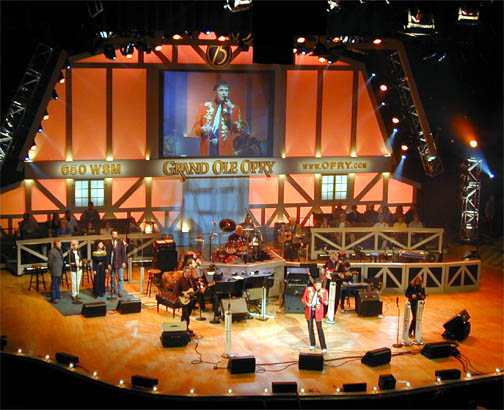
grand ole opry tickets

Like R & B Country and Western music comes out of the unique experiences of Americans. The unique styles of the the artists even when they perform traditional Christmas music comes through to make a distinctive sound. Like the R & B artists the Country and Western artists also wrote and performed Christmas music the spoke to both the joys and heartaches of life, especially of lost loves and loneliness.

So, tonight I present these Country and Western Christmas and holiday songs.

Until tomorrow,

Peace,

Padre Steve+

 

So wherever you are in whatever circumstance this Christmas season finds you I hope that you find hope and comfort in these songs.

Until tomorrow,

Peace

Padre Steve+

1 Comment

Filed under faith, life, Loose thoughts and musings, movies, music

Blues For Christmas, a R & B Christmas Anthology

MI0003255649

Friends of Padre Steve’s World,

As I wrote yesterday, I love Christmas and holiday music. Yesterday I did a piece that had a lot of my Rock and Roll era favorites, and today one about my R&B favorites.

American Christmas music has been enriched by the influence of Jazz, Blues, Gospel and what came to be known as Rhythm and Blues in the 1940.  I have always loved R & B and some of the most memorable songs about Christmas come from the African American experience and the R & B genre.

R&B as it became known was what record labels marketed music by African American artists. It became popular with White Americans as well with audiences in Europe and the musical influence was felt in the early days of Rock and Roll as Elvis Presley’s musical style incorporated many facets of this rich tradition. R&B Christmas music incorporated a good amount of the faith found in African American churches of the time as well as the reality of life including discrimination, segregation, Jim Crow, violence, poverty, brokenness and loneliness.

A couple of years ago I decided to look up some of those great songs by the great R&B artists. Now while I was familiar with many of these artists, for me their Christmas songs were new and refreshing, despite in many cases being recorded before I was born. Some of course were new versions of songs already made popular by people like Bing Crosby or other crooners. But here are some of those great songs, as well as some of the lyrics. I hope that you enjoy them as much as I do. The songs are in no particular order, and I do hope you enjoy them all.


Marvin Gaye’s “I Want to Come Home for Christmas”  is a song that those who can’t be home for Christmas, in this case that of a Vietnam Prisoner of War set in 1972. It is a song that anyone who has served in a combat zone at Christmas can understand.


But for a song that I think speaks of the human meaning of the season; something that anyone, of any faith or simply anyone who just want’s to be a good human being can understand it is The Jackson 5’s Give Love on Christmas Day”   I like it because love is something that any of us can give to someone else if we want.

People making lists

Hiding special gifts

Taking time to be kind to one and all

It’s that time of year

When good friends are dear

And you wish you could give more

Than just presents from a store

Why don’t you give love on Christmas day

Oh, even the man who has everything

Would be so happy if you would bring

Him love on Christmas day

No greater gift is there than love

People you don’t know

Smile and nod hello

Everywhere there’s an air of Christmas joy

It’s that once a year

When the world’s sincere

And you’d like to find a way

To show the things that words can’t say.

Why don’t you give love on Christmas day

Oh, the man on the street and the couple upstairs

Who need to know there’s someone who cares

Give love on Christmas day.

No greater gift is there than love

What the world needs is love

Yes, the world needs your love.

Why don’t you give love on Christmas day

Every little child on Santa’s knee

Has room for your love underneath his tree

Give love on Christmas day

No greater gift is there than love

What the world needs is love

Yes, the world needs your love.

Give love, oh give love on Christmas day

Every Tom, Dick, and Harry, every Susie too

Needs love every bit as much as you

Give love on Christmas day

So with that message I wish you the best in these days leading up to Christmas. Until tomorrow my friends…

Peace,

Padre Steve

1 Comment

Filed under faith, Loose thoughts and musings, music

Rockin’ At at Christmas: An Anthology of Christmas Rock

Friends of Padre Steve’s World,

I am taking a break from history, and Politics to share some classic Christmas and holiday songs performed by various Rock and Roll artists and groups.

I realize that it is not quite  Christmas yet, and in fact it is still the season of Advent but I have to admit that I love the holiday season, especially the music. But, I am a child of the 1960s and 1970s, so I have certain preferences in in music and Christmas music comes in many forms and genres.

Over the next couple of weeks I will be doing a number of articles like this which have no purpose but to share a little joy through music. I plan on doing one focusing on the great R & B legends, one with Country artists, and a couple dealing with the stories of White Christmas and Have Yourself a Merry Little Christmas, as well as the many different versions of both.

These holiday season I hope that no matter what holiday you celebrate that you do it with a joyful heart, even if it is Festivus, which it is tomorrow, or today when many of you are reading this.

So here are some great songs put out by some great artists and groups over the years, they are in no particular order. Some are traditional Christmas hymns while others are popular Christmas songs without a particularly religious bent, and many are sung by artists who are not practicing Christians, some of whom would be condemned to hell by many conservative Christians. Maybe that speaks to the power of the holiday, and the hope that it brings to so many people.

I hope you enjoy them.

Peace,

Padre Steve+
Chuck Berry Run, Run Rudolph

Elton John, Step into Christmas

Elvis Presley, Blue Christmas

Paul McCartney and Wings, Having a Wonderful Christmastime

Freddy Mercury and Queen, Thank God it’s Christmas

The Bangles, Hazy Shade of Winter

The Beach Boys, Little Saint Nick

Band Aid 1984, Do They Know It’s Christmas

Billy Idol, Jingle Bell Rock

The Carpenters, Have Yourself a Merry Little Christmas

Wham! Last Christmas 

Jose Feliciano, Feliz Navidad

Chicago, O Come All Ye Faithful

Annie Lennox and Al Green, Put a Little Love in Your Heart

Gary Glitter, Another Rock and Roll Christmas

George Harrison, Dong, Dong, Ding Dong

Herman’s Hermit’s O Holy Night

Eagles, Please Come Home for Christmas


Mariah Carey, All I Want for Christmas is You

Tom Petty and the Heartbreakers, Christmas All over Again

Blondie, We Three Kings

Rod Stewart, Let it Snow

Joan Jett and the Blackhearts, Little Drummer Boy

Nat King Cole, The Christmas Song

Twisted Sister, White Christmas

John Lennon, Happy Christmas (War is Over)

Bruce Springsteen, Baby Please Come Home

Barry Manilow, Have Yourself a Merry Little Christmas  

Neil Diamond, The Chri

Stevie Nicks, Silent Night

2 Comments

Filed under enteratinment, Just for fun, music

Justice and Life as an Exercise in Exceptions: Faith in the Age of Trump

thedrumhead117

Friends of Padre Steve’s World,

The English Mathematician and founder of Process Philosophy, Alfred North Whitehead wrote:

Religion carries two sorts of people in two entirely opposite directions: the mild and gentle people it carries towards mercy and justice; the persecuting people it carries into fiendish sadistic cruelty…” 

I find much truth in Whitehead’s words. Those who follow my writings know how much I struggle with faith and doubt on a daily basis. I believe, but as the man told Jesus when he asked Jesus to heal his child “I believe, help my unbelief.” I no longer believe in the “absolute truths” that I once believed.

Of course to some this makes me a heretic or worse. That being said, as a Christian, I have faith in a God I cannot see or prove. I have faith in a God who Scripture and Tradition clothes himself in human weakness and allows himself to be killed based on the trumped up charges of corrupt and fearful religious leaders aided by fearful politicians. For me this is part of being a theologian of the Cross in a post-Auschwitz world.

Jürgen Moltmann, a German theologian who wrote the book The Crucified God answered a question about believing in God after Auschwitz:

“A shattering expression of the theologia crucis which is suggested in the rabbinic theology of God’s humiliation of himself is to be found in Night, a book written by E. Wiesel, a survivor of Auschwitz:

The SS hanged two Jewish men and a youth in front of the whole camp. The men died quickly, but the death throes of the youth lasted for half an hour. ‘Where is God? Where is he?’ someone asked behind me. As the youth still hung in torment for a long time, I heard the man call again, ‘Where is God now?’ And I heard a voice in myself answer: ‘Where is he? He is here. He is hanging there on the gallows…’

Any other answer would be blasphemy. There cannot be any other Christian answer to the question of this torment. To speak here of a God who could not suffer would make God a demon. To speak here of an absolute God would make God an annihilating nothingness. To speak here of an indifferent God would condemn men to indifference.

(Jurgen Moltmann, The Crucified God, p 273-274)

In answer to the question “How can we believe in God after Auschwitz he responded:

“In whom can we believe after Auschwitz if not God?

Likewise, Rabbi Emil Fackenheim noted:

If we abandoned our faith in God after Auschwitz, we would give Hitler a posthumous victory.

And as long as we know that the ‘Sh’ma Yisrael’ and the ‘Our Father’ prayers were prayed in Auschwitz, we must not give up our faith in God.”

Thus, while I believe, I have a problem with Christians or members of other religions try to use the police power of state to enforce their beliefs on others. In this belief I am much like the great Virginia Baptist leader, John Leland who was a driving force behind the First Amendment and the Bill of Rights who wrote:

“Is conformity of sentiments in matters of religion essential to the happiness of civil government? Not at all. Government has no more to do with the religious opinions of men than it has with the principles of mathematics. Let every man speak freely without fear–maintain the principles that he believes–worship according to his own faith, either one God, three Gods, no God, or twenty Gods; and let government protect him in so doing, i.e., see that he meets with no personal abuse or loss of property for his religious opinions. Instead of discouraging him with proscriptions, fines, confiscation or death, let him be encouraged, as a free man, to bring forth his arguments and maintain his points with all boldness; then if his doctrine is false it will be confuted, and if it is true (though ever so novel) let others credit it. When every man has this liberty what can he wish for more? A liberal man asks for nothing more of government.”

When it comes to God, I believe, but my doubts are all too real. Frankly I cringe when I hear religious people speaking with absolute certitude about things that they ultimately cannot prove, and that includes the concept of justice, which cannot always be measured in absolutes.

Captain Jean Luc Picard (Patrick Stewart) noted in the Star Trek the Next Generation episode Justice: 

“I don’t know how to communicate this, or even if it is possible. But the question of justice has concerned me greatly of late. And I say to any creature who may be listening, there can be no justice so long as laws are absolute. Even life itself is an exercise in exceptions.”

I have found and learned to accept that life as we know it “is an exercise in exceptions.”  We all make them, and the Bible and the history of the church is full of them. So I have a hard time with people who claim an absolute certitude in beliefs that wish to impose on others.

True believers frequently wrap themselves in the certitude of their faith. They espouse doctrines that are unprovable and then build complex doctrinal systems to prove them, systems that then which must be defended, sometimes to the death. Eric Hoffer wrote:

A doctrine insulates the devout not only against the realities around them but also against their own selves. The fanatical believer is not conscious of his envy, malice, pettiness and dishonesty. There is a wall of words between his consciousness and his real self.”

Henri Nouwen, the Priest who wrote the classic book on pastoral care, The Wounded Healer, and many other works wrote:

Theological formation is the gradual and often painful discovery of God’s incomprehensibility. You can be competent in many things, but you cannot be competent in God.” 

No one can be competent in God, I certainly am not. I am sure that even well meaning people who claim to be are hopelessly deluded, and those that those that use their alleged competence in God to prop up evil are far worse, they are evil men masquerading as good.

Those men and women that speak of absolutes and want to use the Bible or any other religious text as some sort of rule book that they alone can interpret need to ask themselves this question, “When has justice ever been as simple as a rulebook?” The Bible is not a rule book, but a story of imperfect people trying to understand and live an experience with a being that they, like us, can only imagine and often misunderstand.

Sadly too many people, Christians, Moslems, Jews, Hindus, and others apply their own misconceptions and prejudices to their scriptures and use them as a weapon of temporal and divine judgement on all who they oppose. However, as history, life and even our scriptures testify, that none of us can absolutely claim to know the absolutes of God. As Captain Picard noted “life itself is an exercise in exceptions.” 

It takes true wisdom to know when and how to make these exceptions, wisdom based on reason, grace and mercy. Justice, is to apply the law in fairness and equity, knowing that even our best attempts can be misguided. If instead of reason we appeal to emotion, hatred, prejudice or vengeance and clothe them in the language of righteousness, what we call justice can be more evil than any evil it is supposed to correct, no matter what our motivation.

But we see it all too often, religious people and others misusing faith or ideology to condemn those they do not understand or with whom they disagree. It is happening again.

When such people gain power, especially when the do so supporting a leader who is they tend to expand that power into the realm of theocratic absolutism and despotism. As Captain Jean Luc Picard noted in the Start Trek Next Generation episode The Drumhead: 

“We think we’ve come so far. Torture of heretics, burning of witches it’s all ancient history. Then – before you can blink an eye – suddenly it threatens to start all over again.”

It is happening, all around the world, and it could easily happen here. Our founders realized how easily it could happen, they warned about it; but they are dead, and neither Trump or his followers give a damn about them or the Constitution that they crafted. In fact, his followers are for more dangerous thanTrump, because they will outlast him by a generation, or more, always waiting for the chance to grab power by any means possible.

Peace,

Padre Steve+

Padre Steve+

Leave a comment

Filed under christian life, civil rights, ethics, faith, History, holocaust, News and current events, Political Commentary, Religion

A Futile Sacrifice: The Sinking of HMS Prince of Wales and HMS Repulse

Friends of Padre Steve’s World,

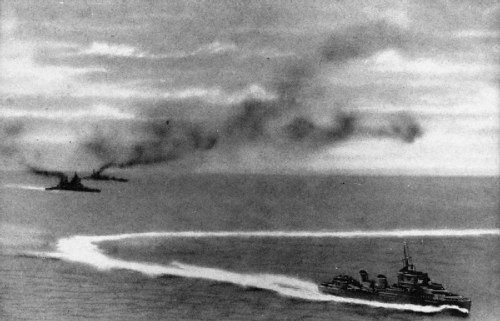
Throughout history there have been times that commanders have sacrificed themselves and the forces under their command for no good reason. One of the most futile of these instances occurred on December 10th 1941 when Force Z, commanded by Admiral Tom Phillips went into action against Japanese Air Forces off the Malay coast.

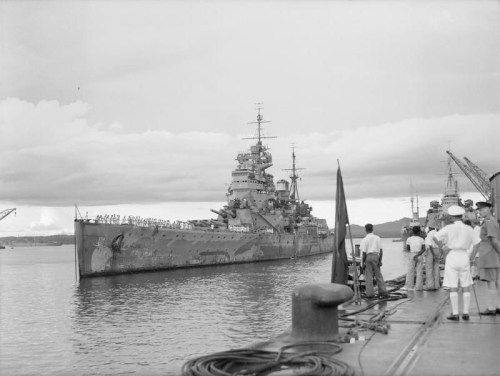
HMS Repulse (above) and HMS Prince of Wales (below)

The task force, composed of the new battleship HMS Prince of Wales, and the battlecruiser HMS Repulse had only recently arrived in the Far East. They had been ordered there by Winston Churchill, against the advice of the Admiralty, and other leaders of the Commonwealth. They were to be accompanied by the aircraft carrier HMS Indomitable. However, the new carrier had been damaged by grounding at Jamaica in November 1941. Even without the grounding incident it is unlikely that Indomitable could have reached Singapore in time to join the task force and provide it with the air cover necessary for its survival.

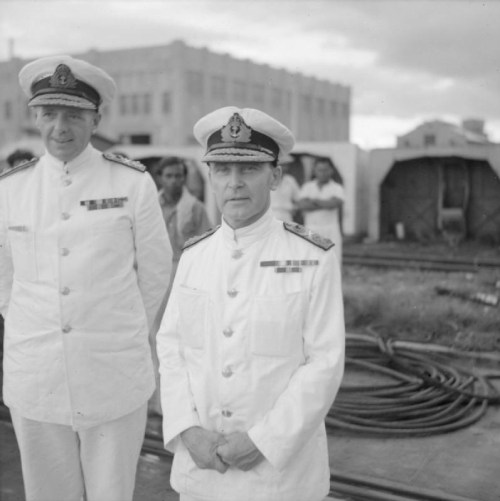
Admiral Tom Phillips (R) at Singapore

The Commander of Force Z, Admiral Phillips was considered by many in the Royal Navy to be a “desk Admiral.” He had held few sea commands and never commanded a surface force in combat. However, he had served as Naval Advisor to King George VI, and had gained the attention and favor of Winston Churchill while serving as Deputy Chief of the Naval Staff. Churchill had him appointed as Acting Vice Admiral and later Acting Admiral to command what would become known as Force Z.

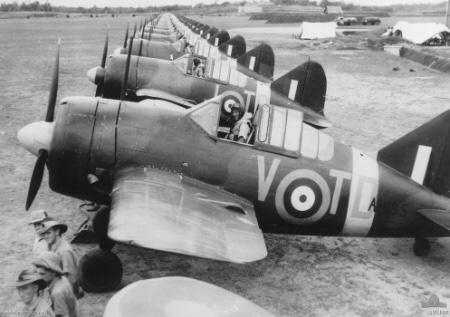
His task force arrived at Singapore on December 2nd 1941. When the Japanese attacked on December 8th (to Americans December 7th due to the International Date Line) Phillips decided to sortie to intercept and sink Japanese transports and their escorts. In doing so Phillips fell into a Japanese trap and made it worse by valuing radio silence over air support. He refused to contact or coordinate his moments with the one fighter squadron assigned to support him, No. 453 Squadron, Royal Australian Air Force.

No. 453 Squadron (RAAF) Brewster Buffaloes

Disregarding the experience of the Royal Navy in the Mediterranean, Phillips held air power in contempt, believing it not to be a threat to surface forces, and committed his task force to battle without air support. The result was predictable. Both Prince of Wales and Repulse were sent to the bottom of the ocean in under two hours. Hundreds of sailors lost their lives, including Admiral Phillips. They sank no enemy transports, no enemy warships, and downed no enemy aircraft. But even with the support of the 10 Brewster Buffaloes of 453 Squadron, it is highly unlikely that the ships could have survived the Japanese onslaught; Phillips’s decision to sail into harm’s way doomed the fleet, just as much as Churchill’s decision to send it to Singapore did.

It was a complete waste of lives and two fine fast Battleships which could have provided excellent service with Aircraft Carriers of the U. S. Pacific Fleet, had they been sent to Australia and then on to the South Pacific rather than Singapore. But Churchill could not see this, and Phillips was even more myopic. Phillips had never served in combat and his task for would have been better served by a commander like Admiral James Somerville who had commanded a force of carriers, fast Battleships, and cruisers in combat against an enemy who often had air supremacy.

HMS Prince of Wales being Abandoned

Phillips, to be sure was a gallant an honorable man, but he was not up to the task that he was appointed by Churchill to accomplish. As a result, the Royal Navy lost both the Prince of Wales and Repulse, as well as hundreds of gallant and experienced sailors.

As for me, a historian and Naval Officer, it is one of the few operations of the Second World War that brings my anger to a boiling point every time that I think about it. There was no strategic, operational, or tactical benefit to it. Churchill would have been better off to keep the ships in the Atlantic or the Western Indian Ocean. He might have received some political criticism, but what would have that been to the loss of these ships for no strategic, operational, or tactical gain?

So, with that in mind and with the possibility that the Chinese Navy could surprise the United States Navy in the South China Sea, I bid you an unsettled night.

Peace,

Padre Steve+
4 Comments

Filed under History, Military, Navy Ships, World War II at Sea

Remembering the Rape of Nanking

Friends of Padre Steve’s World,

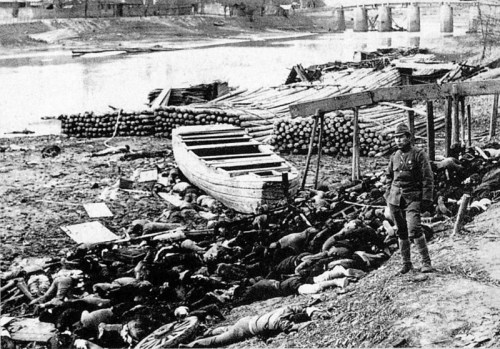
Eighty-one years ago Japanese Army troops under the command of Lieutenant General Asaka Yasuhiko launched an attack on the Nationalist Chinese defenders of the city of Nanking. That attack and the subsequent occupation led to one of the most heinous displays of inhumanity and war crimes in modern history. As a single event it ranks as high or higher than any single event directed at one city during the Nazi Holocaust against the Jews. 

Not long after I started this blog I wrote an article on the Rape of Nanking. The event which occurred in 1937 was one of the most extensively documented war crimes in modern history. But despite that there are many, especially those of Japanese political right who deny that the event ever occurred and if if atrocities happened in Nanking it was the Chinese government which carried them out. It is amazing that I still get comments from such people on that original article. The critics are war crime deniers who are no better than Holocaust deniers. 

Since many of my newer readers might have never seen that article I am re-posting it today. 

Please note, many of the pictures in this article are quite disturbing.

Have a good day,

Peace

Padre Steve+
The historical controversy regarding the Rape of Nanking in 1937 by the Japanese Army is hotly debated.[1] The massacres occurred in the initial occupation of the city and the two months following in mid December 1937.  The initial reaction to the actions of the Japanese was reported by western journalists and even a German Nazi Party member by the name of John Rabe who assisted in protecting Chinese during the massacre and reported it on his return to Germany. The actions of the Japanese Army shocked many in the west and helped cement the image of the Japanese being a brutal race in the west.

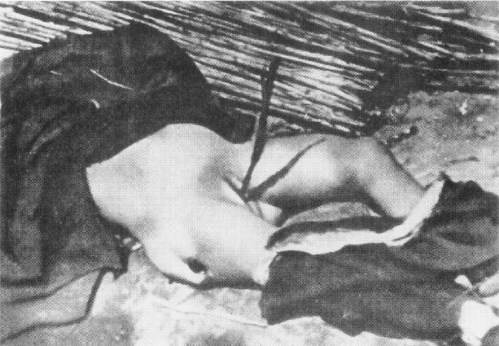
Victims of the Japanese Atrocities

The controversy’s visibility was raised since the 1997 publication of Iris Chang’s The Rape of Nanking. However, with few exceptions the incident had received little attention by Western historians until Chang’s book was published. The reason for this was  that  China was a sideshow for for the United States and Britain throughout much of the war. When Chiang Kai Shek’s Nationalists were overthrown by the Communists in 1948 the incident disappeared from view in the United States. The  United States government  reacted to the overthrow of Chaing by helping to rebuild Japan and rehabilitate the Japanese while opposing the Chinese Communists.  In fact it was only “after the Cold War was the Rape of Nanking Openly discussed.”[2]

Chinese Children Murdered at Nanking

Chang’s book was instrumental as it brought new attention to the actions of the Japanese Army in the slaughter of Prisoners of War and civilians following the occupation of the city.  Even as Chang’s work was published “revisionist” works began to appear in the 1980s which have either denied the atrocities, sought to minimize numbers killed by Japanese Forces or rationalized the them began to appear in Japan. The revisionists were led by Masaaki Tanaka who had served as an aide to General Matsui Iwane the commander of Japanese forces at Nanking.  Tanaka denied the atrocities outright calling them “fabrications” casting doubt upon numbers in the trial as “propaganda.” He eventually joined in a lawsuit against the Japanese Ministry of Education to remove the words “aggression” and “Nanjing massacre” from textbooks, a lawsuit which was dismissed but was influential to other revisionists and Japanese nationalist politicians and publishers.[3]

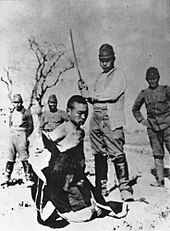
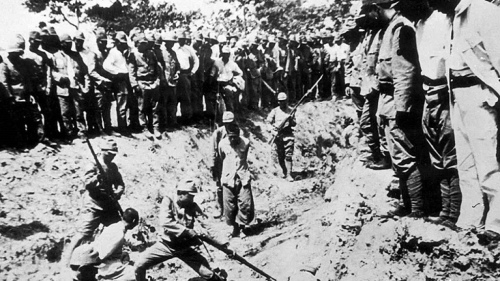
Japanese Troops Engaged in Killing

Most early accounts of the occupation and war crimes have used a number of 200,000 to 300,000 victims based upon the numbers provided during the War Crimes Trials of 1946.[4] Unlike the numbers of victims of the Nazi Holocaust the numbers are less accurate.  Authors who maintain the massacres such as Chang and others such as Japanese military historian Mashario Yamamoto who admits Japanese wrongdoing and excess but challenges the numbers use the same statistical sources to make their arguments.  Chang not only affirms the original numbers but extrapolates that even more may have been killed as a result of the disposal of bodies in the Yangtze River rather than in mass graves away from the city as well as the failure of survivors to report family member deaths to the Chinese authorities.[5] She also notes contemporary Chinese scholars who suggest even higher numbers.

Prince Asaka (above) and General Matsui (below)

Herbert Bix discussed Japanese knowledge of the atrocities in detail up and down the chain of command including Prince Asaka, granduncle of Emperor Hirohito who commanded troops in Nanking, the military and Foreign Office, and likely even Hirohito himself.[6]

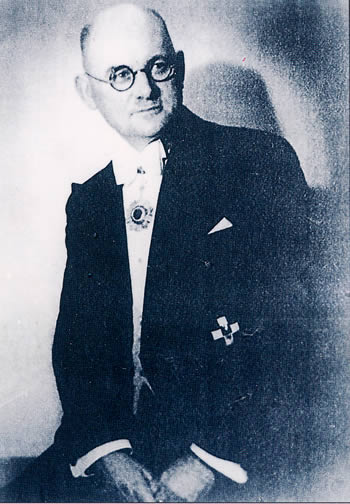
German National and Nazi Party Member John Rabe, protected Chinese at Nanking and reported what he witnessed to the German Government.  He is known as “The Good Man of Nankin.

The publication Rabe’s diaries in 2000, entitled, The Good Man of Nanking, provided an additional first hand account by a westerner who had the unique perspective of being from Japan’s ally Nazi Germany.  His accounts buttress the arguments of those like Chang who seek to inform the world about the size and scope of Japanese atrocities in Nanking. In his diary, Rabe wrote:

Two Japanese soldiers have climbed over the garden wall and are about to break into our house. When I appear they give the excuse that they saw two Chinese soldiers climb over the wall. When I show them my party badge, they return the same way. In one of the houses in the narrow street behind my garden wall, a woman was raped, and then wounded in the neck with a bayonet. I managed to get an ambulance so we can take her to Kulou Hospital … Last night up to 1,000 women and girls are said to have been raped, about 100 girls at Ginling College … alone. You hear nothing but rape. If husbands or brothers intervene, they’re shot. What you hear and see on all sides is the brutality and bestiality of the Japanese soldiers.

Rabe was responsible for the survival of close to 200,000 Chinese.

Dr. Robert O. Wilson, an American physician in Nanking wrote:

The slaughter of civilians is appalling. I could go on for pages telling of cases of rape and brutality almost beyond belief. Two bayoneted corpses are the only survivors of seven street cleaners who were sitting in their headquarters when Japanese soldiers came in without warning or reason and killed five of their number and wounded the two that found their way to the hospital.

Let me recount some instances occurring in the last two days. Last night the house of one of the Chinese staff members of the university was broken into and two of the women, his relatives, were raped. Two girls, about 16, were raped to death in one of the refugee camps. In the University Middle School where there are 8,000 people the Japs came in ten times last night, over the wall, stole food, clothing, and raped until they were satisfied. They bayoneted one little boy of eight who [had] five bayonet wounds including one that penetrated his stomach, a portion of omentum was outside the abdomen. I think he will live.

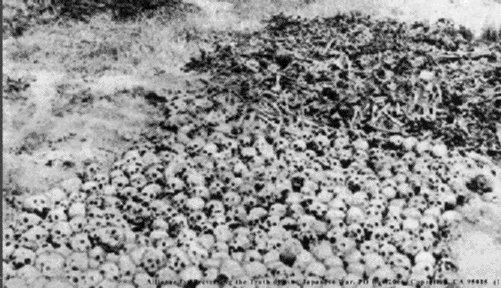
A Field of Skulls at Nanking

The Legation Secretary of the German Embassy wrote to the Foreign Ministry In Berlin:

On December 13, about 30 soldiers came to a Chinese house at No. 5 Hsing Lu Koo in the southeastern part of Nanking, and demanded entrance. The door was open by the landlord, a Mohammedan named Ha. They killed him immediately with a revolver and also Mrs. Ha, who knelt before them after Ha’s death, begging them not to kill anyone else. Mrs. Ha asked them why they killed her husband and they shot her. Mrs. Hsia was dragged out from under a table in the guest hall where she had tried to hide with her 1 year old baby. After being stripped and raped by one or more men, she was bayoneted in the chest, and then had a bottle thrust into her vagina. The baby was killed with a bayonet. Some soldiers then went to the next room, where Mrs. Hsia’s parents, aged 76 and 74, and her two daughters aged 16 and 14 [were]. They were about to rape the girls when the grandmother tried to protect them. The soldiers killed her with a revolver. The grandfather grasped the body of his wife and was killed. The two girls were then stripped, the elder being raped by 2–3 men, and the younger by 3. The older girl was stabbed afterwards and a cane was rammed in her vagina. The younger girl was bayoneted also but was spared the horrible treatment that had been meted out to her sister and mother. The soldiers then bayoneted another sister of between 7–8, who was also in the room. The last murders in the house were of Ha’s two children, aged 4 and 2 respectively. The older was bayoneted and the younger split down through the head with a sword

Yamamoto who is a military historian by trade and is viewed as a “centrist” in the debate, places the massacres in the context of Japanese military operations beginning with the fall of Shanghai up to the capture of Nanking. Yamamoto criticizes those who deny the massacres but settles on a far lower number of deaths, questioning the numbers used at the War Crimes Trials. He blames some on the Chinese Army[7] and explains many others away in the context of operations to eliminate resistance by Chinese soldiers and police who had remained in the city in civilian clothes. He  claims that  “the Japanese military leadership decided to launch the campaign to hunt down Chinese soldiers in the suburban areas because a substantial number of Chinese soldiers were still hiding in such areas and posing a constant threat to the Japanese.”[8] David Barrett in his review of the Yamamoto’s work notes that Yamamoto believes that “there were numerous atrocities, but no massacre….”[9] Yoshihisa Tak Mastusaka notes that while a centrist Yamamoto’s work’s “emphasis on precedents in the history of warfare reflects an underlying apologist tone that informs much of the book.”[10] 

Revisionist work also criticizes the trials surrounding Nanking and other Japanese atrocities.  An example of such a work is Tim Maga’s Judgment at Tokyo: The Japanese War Crimes Trials which is critiqued by historian Richard Minear as “having a weak grasp of legal issues” and “factual errors too numerous to list.”[11]Such is a recurrent theme in revisionist scholarship, the attempt to mitigate or minimize the scale of the atrocities, to cast doubt upon sources and motivations of their proponents or sources, to use questionable sources themselves or to attribute them to out of control soldiers, the fog of war and minimize command knowledge as does Yamamoto. Politics is often a key motivating factor behind revisionist work.

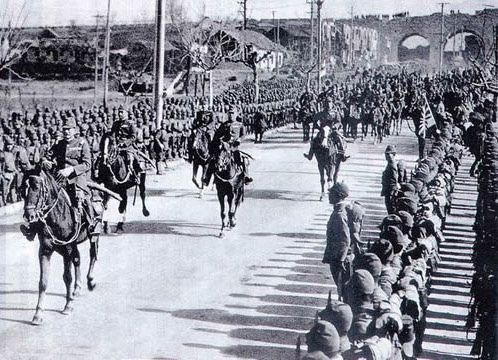
General Matsui Riding into Nanking

But the testimony of General Matsui before and after the war crimes trials in which he was convicted and sentenced to death is illuminating, and exposes the lies of the revisionists for what they are. Matsui confessed to one of his aides:

“I now realize that we have unknowingly wrought a most grievous effect on this city. When I think of the feelings and sentiments of many of my Chinese friends who have fled from Nanjing and of the future of the two countries, I cannot but feel depressed. I am very lonely and can never get in a mood to rejoice about this victory … I personally feel sorry for the tragedies to the people, but the Army must continue unless China repents. Now, in the winter, the season gives time to reflect. I offer my sympathy, with deep emotion, to a million innocent people.”

During his war crimes trial Matsui testified:

The Nanjing Incident was a terrible disgrace … Immediately after the memorial services, I assembled the higher officers and wept tears of anger before them, as Commander-in-Chief … I told them that after all our efforts to enhance the Imperial prestige, everything had been lost in one moment through the brutalities of the soldiers. And can you imagine it, even after that, these officers laughed at me … I am really, therefore, quite happy that I, at least, should have ended this way, in the sense that it may serve to urge self-reflection on many more members of the military of that time.

Iris Chang

Chang would never be the same after researching and writing the Rape of Nanking. Traumatized by what she had learned and burdened by the weight of what she had taken on she killed herself on November 9th 2004.

A Chinese Woman with a Bayonet in her Vagina

“Revisionist” history will almost certainly remain with us, so long as people study the past.  However one has to be careful in labeling a divergent view of a historical subject as necessarily revisionist.  There are occasions when new evidence arises and a “new” or “revisionist” work may actually disprove previous conclusions regarding historic events or persons.  This might occur when what we know about a subject comes from a single or limited number of sources who themselves were limited in what they had available for research and new evidence comes to light. At the same time where numerous sources from diverse points of view attest to the genuineness of an event, the revisionist’s theses should be themselves scrutinized based on evidence presented as well as their political, ideological or racial motivations.  While one does not want to silence voices of opposition to prevailing beliefs one has to be careful in examining their claims, especially when they arise in the context of political or ideological conflicts.

Notes

[1] Bix, Herbert P. Hirohito and the Making of Modern Japan, Harper Collins Publishers, New York, NY 2000. pp.333-334. Bix does a good job explaining the number of victims of the incident drawing on Chinese and Japanese sources.

[2] Kreuter, Gretchen. The Forgotten Holocaust in The Bulletin of Atomic Scientists, March-April 1998 p.66

[3] Fogel, Joshua A. The Nanjing Massacre in History and Historiography, University of California Press, Berkley CA 2000, pp.87-89

[4] Toland, John. The Rising Sun: The Rise and Fall of the Japanese Empire 1936-45. Random House, New York, NY 1970 pp. 50-51. Toland in his brief discussion of the massacres notes both the civilian casualty figures and figures for male citizens of military age who were slaughtered.  Toland also notes the large numbers of women raped by Japanese soldiers.

[5] Chang, Iris. The Rape of Nanking: The Forgotten Holocaust of World War II Penguin Books, New York, NY 1997 pp.102-103. Chang has been criticized by some historians in a number of ways including that she was not a historian, that she compares the atrocities to the Nazi Holocaust and her emotional attachment to the subject which may have been a contributing factor in her 2004 suicide.

[6] Bix. p.336

[7] Yamamoto, Masahiro. The Rape of Nanking: Anatomy of an Atrocity. Praeger Publishers an imprint of the Greenwood Group, Westport, CT 2000. http://site.ebrary.com/lib/apus/docDetail.action?docID=10018001&p00=nanking  p.83

[8] Ibid. p.92.

[9] Barrett, David P.  Review of The Rape of Nanking: Anatomy of an Atrocity by Masashiro Yamamoto Canadian Journal of History/Annales canadiennes d’Histoire XXXVIII, April/Avril 2003 p.170

[10] Mastusaka, Yoshihisa Tak.  Review of The Rape of Nanking: Anatomy of an Atrocity by Masashiro Yamamoto American Historical Review, April 2002 p.525

[11] Minear, Richard. Review of Judgment at Tokyo: The Japanese War Crimes Trials by Tim Mata  American Historical Review. April 2002 p.526

2 Comments

Filed under History, Military, war crimes, world war two in the pacific