Tag Archives: History

Silence in the Face Of Evil is Evil Itself

Friends of Padre Steve’s World,

Dietrich Bonhoeffer wrote the words “silence in the face of evil is evil itself.”

Today I blocked and deleted a former friend from a church I went to decades ago because of his attitude towards me and what I post on Facebook. I get tired of the hypocrisy of people who pretend to be patriotic when in fact they openly support a President who openly denies his oath when he said today that he would accept “dirt” on his political opponents from foreign sources.

This is a very difficult article to write because truthfully I believe that civility and mutual respect should be an ideal that we as Americans should not retreat from, as John F. Kennedy noted:

“So let us begin a new remembering on both sides that civility is not a sign of weakness, and sincerity is always subject to proof. Let us never negotiate out of fear. But let us never fear to negotiate.” 

I have written about that subject a number of times, the last being on November 22nd 2016 shortly after President Trump’s election and on the anniversary of Kennedy’s assassination. However, since that time I have seen the President lead a descent into depravity that I fully comprehended then, although I hoped for a different outcome. Trust me, as an American with a profound respect for the office of the President that is what I wanted, but it didn’t happen.

The fact is that the President has in his words, deeds, and tweets destroyed any hope of our political divide being healed, or of Americans of different viewpoints being able to reconcile their differences anytime in the foreseeable future. He stokes the hatred and division almost on an hourly basis, and of course his opponents having become wise to him are rolling up their sleeves and fighting back.

Too me that is an unfortunate situation that might become a tragedy for the United States and the world, as Abraham Lincoln noted “a house divided against itself cannot stand.” To GOP Congressman Steve King of Iowa the sight and sound of Trump’s opponents is like “Harpers Ferry” and what comes next will be “Fort Sumter.” Since King proudly displays the Confederate Battle Flag in his office I know exactly what side of this fight that he is on.

The fact is that he and many like him want bloodshed, they want Civil War, they want to remake the Union in a way that Jefferson Davis and his band of traitors failed to do. As a historian of the period with a book awaiting publication the fact is that in the end it comes down to the fact that King, many of the President’s supporters and quite probably the President himself are all White Supremacists. They want a full and complete return to White Man’s Rule and the subservience of all non-white races and non-Christian religions to it. They are the Know Nothings of the North and Slave Power Secessionists of the South rolled into one package of ignorance, incivility, and hatred.
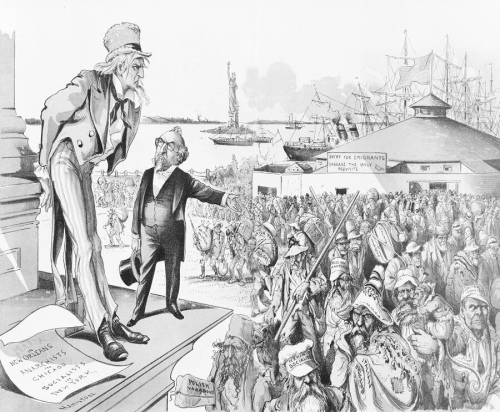
I write often about comparisons of the attitudes and actions administration and its supporters to Nazi Germany, but truth be told there is a lot of dirty laundry in our own history that sheds light on Trump and his supporters.

The fact is that for nearly three decades the vast majority of Northerners were too polite to criticize the egregious actions of the Know Nothings in their midst or the Southern Slave Power Block that dominated the presidency, Congress, and the Supreme Court for the three decades prior to the War of the Rebellion, also known as the American Civil War, or the War Between the States. Honestly, I think that the term ascribed to it by many Union Veterans in the Grand Army of the Republic after the war, the “War of the Rebellion” is the best.
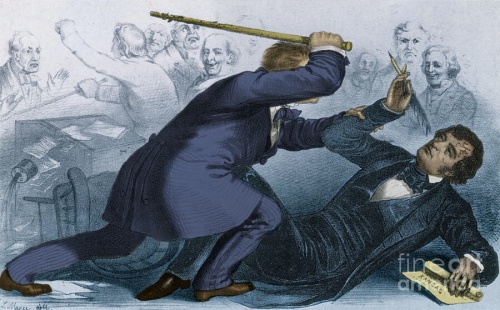
Those opposed to the Know Nothings and Slave Power Block were condemned as being rude, impolite, and worse. Some were physical assaulted. In 1856 Senator Charles Sumner was attacked by Representative Preston Brooks of South Carolina on the floor of the Senate for his speech against the Kansas Nebraska Act. Sumner was beaten until he was unconscious and Brooks’ heavy cane which he used to conduct the attack broke. Brooks continued to beat Sumner aided by Representative Lawrence Keitt also of South Carolina who brandishing a pistol threatened Senators coming to his aid. Sumner has proclaimed no threats of violence but only spoken the truth about the Act and those that supported it. So much for civility and now.

The scurrilous and overtly violent threats against minorities and civil rights advocates by conservatives, especially White Christian conservatives have continued unabated since from the ante-Bellum South and the Know Nothing North, through the War of the Rebellion, Reconstruction, Jim Crow, to the modern day. Whole political campaigns including that of George H.W. Bush run by Lee Atwater turned on the demonization of African Americans. The same is true regarding the Republican revolution led by Newt Gingrich in the 1990s, and again even more so from the time that Candidate Donald Trump descended to the lobby of Trump Tower in 2015 until now. The President proclaims that White Supremacists and Neo-Nazis are “very fine people.” 

The President and many of his followers including administration officials like Stephen Miller set the tone while Presidential spokesperson Sarah Huckabee Sanders lies and denies the President’s words and vilifies anyone that dares to question her. So when she is asked to leave a restaurant, or when Miller or DHS Secretary Nielsen are shamed when trying to enter Mexican restaurants it makes makes my heart bleed. People who have no compassion, no sense of empathy and behave as sociopaths and then act the victim when the tables are turned only deserve scorn.

Their anti-immigrant and often blatantly racist tropes of the President, his administration, and his supporters on the Fox Propaganda Network, the Right Wing media, the Putrid Princes of the Captive Conservative Church, and his assorted sordid supporters should be condemned and opposed around the clock. If they are not then any of us who remain silent knowing the evil of these policies is as guilty as anyone that turned their backs on the Jews in Nazi Germany. The higher the office the greater the guilt and culpability.

That being said if had the chance to see any one of them in a public setting I would not resort to public shaming. I do not own a restaurant or business so I could not ask them to leave. However, that being said if any of them the President himself presented themselves to me at my chapel or any civilian church that I might be celebrating the Eucharist I would deny them communion which from a Christian point of view is “a fate worse than a fate worse than death.”

Bonhoeffer wrote:

“Christianity stands or falls with its revolutionary protest against violence, arbitrariness and pride of power and with its plea for the weak. Christians are doing too little to make these points clear rather than too much. Christendom adjusts itself far too easily to the worship of power. Christians should give more offense, shock the world far more, than they are doing now. Christian should take a stronger stand in favor of the weak rather than considering first the possible right of the strong.” 

As for me I must tell the truth and protest against the violence and the arbitrary pride of power exhibited by the Trump administration and its supporters. I could not live with myself if I didn’t do so. Some might think this political and in some sense it is, but it is entirely based on my understanding of the Christian faith and the very premise of the founders of this country, that phrase in the Declaration of Independence that “all men are created equal and endowed by their creator with certain unalienable rights, among them being life, liberty, and the pursuit of happiness.”

If need be I would die for that faith and that proposition and I will not be silent in the face of evil. I will live and die as a Christian who believes those sacred words of secular scripture found in the Declaration.

So until tomorrow,

Peace,

Padre Steve+

2 Comments

Filed under christian life, ethics, faith, History, News and current events, Political Commentary

A Week Of Momentous Historical Events


D-Day, June 6th 1944

Friends of Padre Steve’s World,

I am posting a small thought to begin the week. For those that do not know, the next several days are full of the anniversaries of many historical events which still reverberate to our time.

The Evacuation Of Dunkirk

On June 3rd 1940, the British finished the evacuation of the British Expeditionary Force and some French forces from Europe at Dunkirk, though defeated, the British action preserved the British Army and kept Britain in the war.


The Battle Of Midway 

From June 4th through June 6th 1942 a small American fleet defeated a much larger, more experienced and better equipped fleet at the Battle of Midway. The battle did not end the war, but it ensured that Japan never could win the war against the United States in the Pacific. It was a turning point. It has rightly been called an “Incredible Victory” as all the elements that make war what it is, the element of chance, the element of friction, and the  element of surprise all broke the American way. The Japanese leaders, and for that matter many if not the vast majority of their soldiers and sailors were full of hubris, believing themselves invincible they were decisively defeated.

Two Years later on June 6th 1944, Allied forces landed on the Normandy Peninsula of France to begin their long awaited attack on Nazi occupied Europe. The invasion, code named Operation Overlord did not end the war, but coupled with the Soviet offensive against the German Army Group Center which began just two weeks later, Operation Bagration, it was the beginning of the end for Hitler’s Germany.

Battle of Belleau Wood, 1918

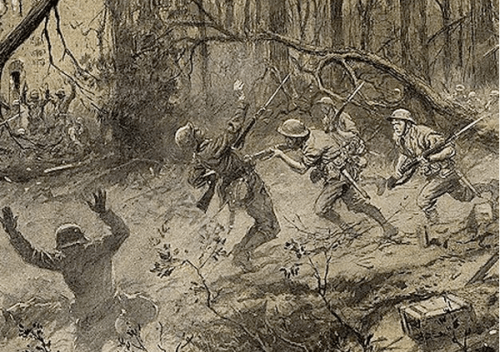
Twenty-six years earlier U.S. Marines and Army soldiers turned back the Germans at the Battle of Belleau Wood near Chateau-Thierry France. The effort blocked a German drive on Paris, giving the Allies the time to begin a counter-offensive that would end the war.


Senator Robert F. Kennedy lays Mortally Wounded after being shot by Sirhan Sirhan 

But in addition to the battles other important events shook the world, in 1919 the Congress passed the 19th Amendment, which when ratified gave women the right to vote. In 1968, Senator Robert F. Kennedy was gunned down by the assassin Sirhan Sirhan in Los Angeles after winning the Democratic Party primary. He would have been the odds on favorite to defeat Republican Richard Nixon in the general election. On June 8th 1789 James Madison introduced twelve amendments to the U. S. Constitution, of which ten were ratified by the states to become known as the Bill of Rights. 

On June 8th 1967, the USS Liberty, a surveillance ship, was attacked by Israeli ships and aircraft during the Six Day Warthe attack resulted in the death of 34 American sailors and the wounding of 171 more.

Of course there are numerous other events that took place at different times on these days, some which were very important, and others which are interesting but less important in terms of their historical impact. I’ll be writing about some of these events in the coming days.

Have a great day,

Peace

Padre Steve+

Leave a comment

Filed under History, Military, Navy Ships, Political Commentary, World War II at Sea, world war two in europe, world war two in the pacific

“To Be Ignorant of What Occurred Before…” The Willful Ignorance Of History

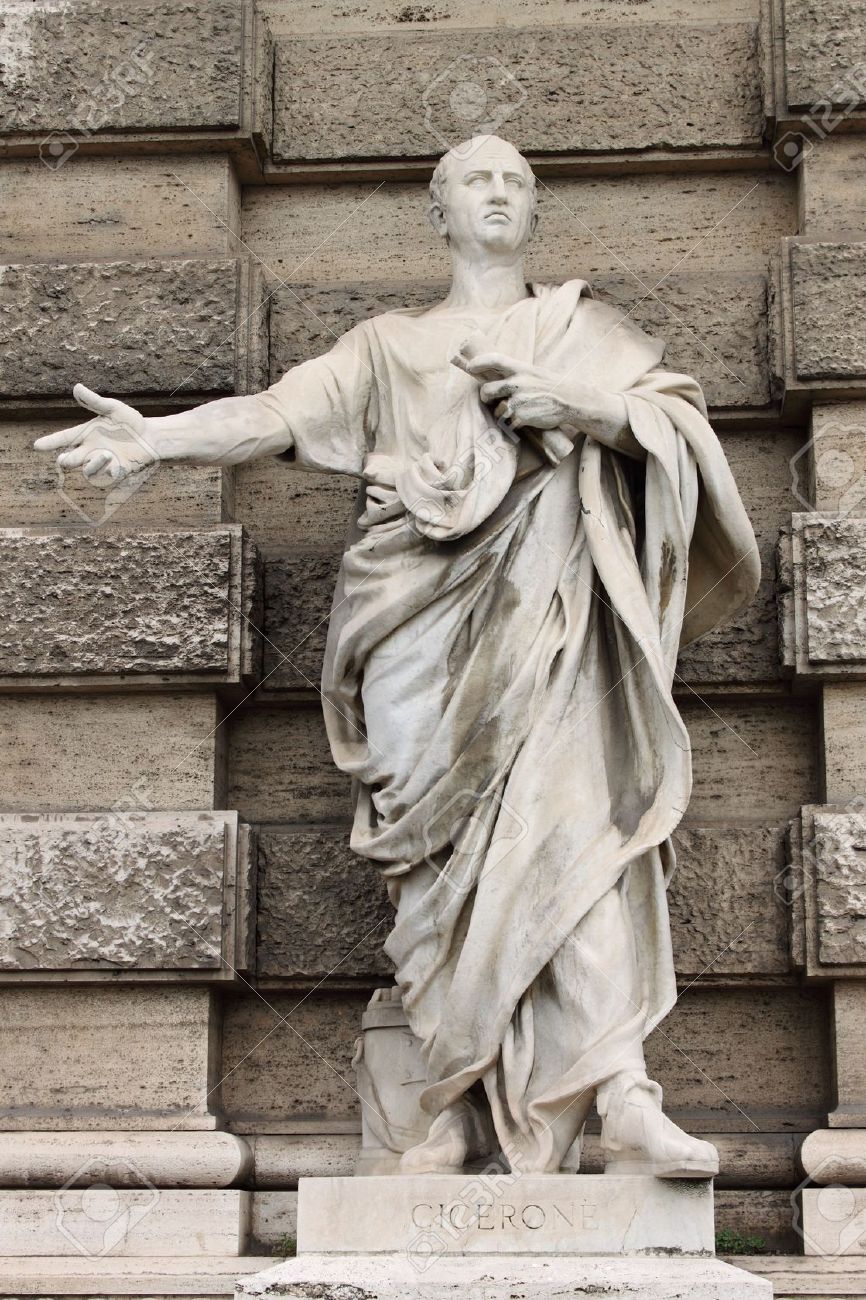
Statue-of-Cicero-Stock-Photo-rome

Friends of Padre Steve’s World,

I have been writing a lot about the Holocaust of late and as I was working on my latest book I came across a quote by British Historian Laurence Rees from his book “Auschwitz, a New History:

“Soon the last survivor and the last perpetrator from Auschwitz will have joined those murdered at the camp. There will be no one on this earth left alive who has a personal experience of the place. When that happens, there is a terrible danger that this history will merge into the distant past and just become one terrible event among many…. But that should not be allowed to happen.

We must judge behavior by the context of the times, and judged by the context of mid-twentieth century, sophisticated European culture, Auschwitz and the Nazis’ “Final Solution” represent the lowest act in all history. Through their crime, the Nazis brought into the world an awareness of what educated, technologically advanced human beings can do – as long as they possess a cold heart. Once allowed into the world, knowledge of what they did must not be unlearned. It lies there – ugly, inert, waiting to be discovered by each new generation. A warning for us, and for those who will come after. (Rees, Auschwitz p.299)

I have been reading about the declining number of students studying history, and the relative ignorance of Americans as a whole as to history, including the gross and willful ignorance of it by the President. As a historian that frightens me.

The great Roman philosopher and political theorist Marcus Tullius Cicero wrote, “History is the witness that testifies to the passing of time; it illumines reality, vitalizes memory, provides guidance in daily life and brings us tidings of antiquities.”

Those who follow my writings here on this site know that I am a historian and that much of what I write, even regarding current events, is framed by history and the stories of those who came before us. That is one of my driving passions, a passion for historical truth, and a passion to ensure that the past is not forgotten.

Cicero is an important figure in history. He resisted the moves toward the dictatorship of the Caesars and would die for his belief in the Republic. As such he inspired the founders of the United States, including Thomas Jefferson and John Adams. Adams wrote of the Roman:

“As all the ages of the world have not produced a greater statesman and philosopher united than Cicero, his authority should have great weight.”

Sadly, it seems that our society, and even our education system is disconnecting itself from history. We have pretty much stopped teaching history in schools, and often what is taught is myth. As such we have become a society that through its ignorance of the past is ever repeating the worst aspects of our history. As a whole we are ignorant of our past, and that ignorance is demonstrated by many of our political, business, journalism, educational, and military leaders on a daily basis.

Cicero wrote “To be ignorant of what occurred before you were born is to remain always a child. For what is the worth of human life, unless it is woven into the life of our ancestors by the records of history?”

Our lives must be woven together with those who came before us, without that sacred connection to the past, we endanger the future, and doom those who follow us. Cicero wrote, “The life of the dead is placed in the memory of the living.” Thus, it is for us the living to remember and never forget those who have gone before. That is why I write.

At some point I will write more on things that Cicero wrote and said, including political and social lessons that are as relevant today as when he wrote them, but as historian George Santayana noted: “Those who do not remember the past are condemned to repeat it.”

I fear that the President and his sycophants in the GOP and his Cult like followers in their ignorance of history and willful disregard for the Constitution and our institutions will end in the kind of political disaster that brought an end to the Roman Republic.

These are perilous times and I am afraid that the lessons of Cicero, Santayana, and Rees have not been learned.

Until tomorrow,

Peace

Padre Steve+

2 Comments

Filed under History, holocaust, News and current events, philosophy, Political Commentary

The Psychology Of Dictatorship: Why Don’t We Learn From History?

Friends of Padre Steve’s World,

Another weekend, another attack on a synagogue, and another crazed rally in which the President again made wild swings directed at his opponents and admitted it was his “sick idea” to try to send detainees from the border to Sanctuary Cities. His words, his sick idea, even as his Attorney General hints that he will not submit to testifying to Congress on the Muller Report.

Normal American Presidents and their officials do not carry on this way. Dictators do, but not American Presidents, however it is part and parcel of everything that the President and his administration says or does. So tonight I am reposting something that I wrote a while back after reading British Military Historian Sir Basil Liddell-Hart’s little, but important book, “Why Don’t We Learn From History.”

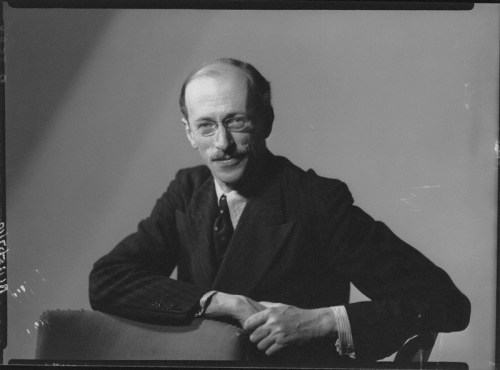
NPG x25404; Sir Basil Henry Liddell Hart by Howard Coster

B.H. Liddell-Hart

Friends of Padre Steve’s World,

I have Read the short but poignant little but by the British military historian B.H. Liddell-Hart entitled Why Don’t We Learn from History, several times. The book was written in not long before his death in 1970 and it is good quite good. It deals with a number of issues, including the conflict between history and propaganda; or when faith, especially religious faith as treated as historic or scientific fact; and when propaganda or faith is preached as if it were history, if it were truth. In doing this he also contrasted democracy and lure of totalitarianism.

Liddell-Hart was a realist, especially about democracy and totalitarianism. He served on the Western Front in the First World War and was wounded in a German gas attack. Between the wars he was one of the theorists of armored warfare and the use of tanks in a combined arms force, and he was also quite observant of the trends toward totalitarianism in the late 1920s and 1930s.

Hart, like many others admitted the inefficiencies of democracy, however, he realized that it was far less dangerous than the “stupidity” of totalitarianism. In fact it was important for him to note just how this inefficient system was for freedom. He wrote:

“What is of value in “England” and “America” and worth defending is its tradition of freedom, the guarantee of its vitality. Our civilization, like the Greek, has, for all its blundering way, taught the value of freedom, of criticism of authority, and of harmonising this with order. Anyone who urges a different system, for efficiency’s sake, is betraying the vital tradition.”

There is much to ponder in his book and I will be posting some more of my thoughts on it, but when I looked at it again I was struck by just how much Liddell-Hart in his description of a despot described President Donald Trump through the his campaign and after his election and inauguration.

“We learn from history that self-made despotic rulers follow a standard pattern. In gaining power: They exploit, consciously or unconsciously, a state of popular dissatisfaction with the existing regime or of hostility between different sections of the people. They attack the existing regime violently and combine their appeal to discontent with unlimited promises (which, if successful, they fulfil only to a limited extent). They claim that they want absolute power for only a short time (but “find” subsequently that the time to relinquish it never comes). They excite popular sympathy by presenting the picture of a conspiracy against them and use this as a lever to gain a firmer hold at some crucial stage.” 

Once authoritarian, despotic, or dictatorial leaders gain power through the democratic process they seldom deviate from how they behave when seeking power. Liddell-Hart wrote:

“We learn from history that time does little to alter the psychology of dictatorship. The effect of power on the mind of the man who possesses it, especially when he has gained it by successful aggression, tends to be remarkably similar in every age and in every country.”

So please, take a breathe for a second and think about this in terms of President Trump and his actions during his first two weeks in office. Liddell-Hart noted that once a despot achieves power that their reign is marked by the following types of events:

“On gaining power:  They soon begin to rid themselves of their chief helpers, “discovering” that those who brought about the new order have suddenly become traitors to it. 

They suppress criticism on one pretext or another and punish anyone who mentions facts which, however true, are unfavourable to their policy. They enlist religion on their side, if possible, or, if its leaders are not compliant, foster a new kind of religion subservient to their ends. 

They spend public money lavishly on material works of a striking kind, in compensation for the freedom of spirit and thought of which they have robbed the public. 

They manipulate the currency to make the economic position of the state appear better than it is in reality. 

They ultimately make war on some other state as a means of diverting attention from internal conditions and allowing discontent to explode outward. 

They use the rallying cry of patriotism as a means of riveting the chains of their personal authority more firmly on the people. 

They expand the superstructure of the state while undermining its foundations by breeding sycophants at the expense of self-respecting collaborators, by appealing to the popular taste for the grandiose and sensational instead of true values, and by fostering a romantic instead of a realistic view, thus ensuring the ultimate collapse, under their successors if not themselves, of what they have created. 

This political confidence trick, itself a familiar string of tricks, has been repeated all down the ages. Yet it rarely fails to take in a fresh generation.”

Now pause for a moment. This is happening all over the world. It began again in Vladimir Putin’s Russia around 2010 and under a veneer of democratic “voting” Putin has become for all intents and purposes the dictator of Russia for as long as he desires. In Turkey Recip Erdogan has done the same thing, and it has also started in Hungary, Poland, and the Czech Republic. In China President Xi managed to abrogate the Chinese Communist Constitution to become ruler for life.

In the United States Donald Trump has been in office for about 27 months. Look at how he is behaving. Read his words, examine his actions, and not just during his presidency but throughout his business career and his campaign for the presidency. Then look at how his followers take it all in.

Then, take the time to let Liddell-Hart’s words sink in.

This is something to think about.

Peace

Padre Steve+

1 Comment

Filed under History, leadership, News and current events, Political Commentary

Bearing Witness: My Mission

Friends of Padre Steve’s World,

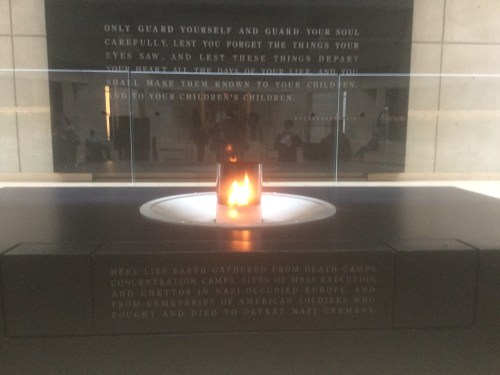
The words on the polished stone in the hall of remembrance at the U.S. Holocaust Museum are as much as a somber warning as a command:

Only Guard Yourself and Guard Your Soul Carefully, Lest You Forget the Things Your Eyes Saw, Lest These Things Depart Your Heart All the Days Of Your Life, and You Shall Make Them Known to Your Children and to Your Children’s Children.

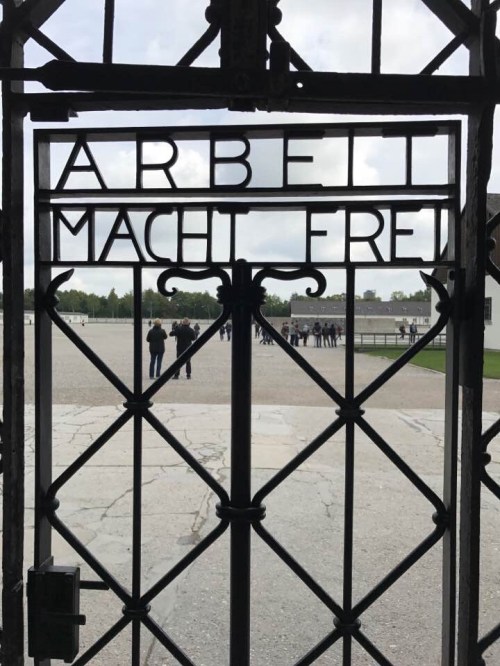
Last May I visited the United States Holocaust Museum. Since I study the Weimar and Nazi period, the Holocaust and the war crimes trials this was important. While in Germany I have been to the Dachau, Buchenwald, Flossenburg, and Bergen-Belsen Concentration Camps, the T4 Euthanasia Program Center at Hadamar, the Palace Of Justice in Nuremberg where the Nuremberg War Crimes Trials (as well as the Nazi era Nuremberg laws) were prosecuted, the Wannsee House where the Final Solution was implemented, the Memorials to the German Resistance in Berlin, the Sophie Scholl White Rose Museum, and the Munich Documentation Center for the History of National Socialism; this visit, in the United States was important. I will be continuing to visit Holocaust sites in Germany when I go there this Fall, but last year I finally was able to stake out the time to visit the U.S. Holocaust Museum.

The museum is important and despite having been to places shown in it and knowing more about the Nazi regime and the Holocaust than the vast majority of Americans, I found myself overwhelmed at times as I walked slowly through the exhibits. Many I recognized, knew about, or had been to, but that did not make them any less emotionally difficult to see. But there were others that drove home why this museum is so important in our day and time.

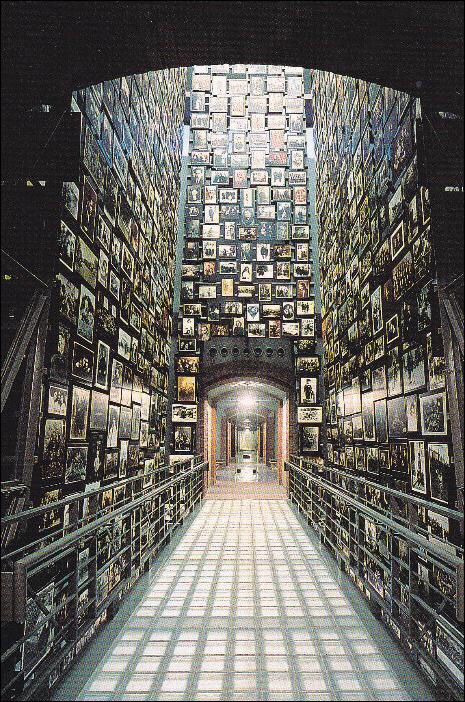
I think that the one that hit me the hardest was the pictorial Tower of Faces from the Polish shtetl of Ejszyszki. That town was home to some 4,000 Jews and the pictures had been taken over the preceding decade by local photographers. They were pictures of everyday family and community life; men, women, children at work, at play, at rest. Worshipping, working, studying, the old and the young, the well off and the poor, the religious and those not as religious at all phase of life captured in photos for eternity. For 3500 of them their lives ended on September 21st 1941 when the Nazis rounded up the Jews at their Synagogues on the eve of Yom Kippur and executed them by firing squad in mass graves at the town’s Christian and Jewish cemeteries. Only 29 of those who survived that day lived through the war. That Jewish community had existed for 900 years and was exterminated in a matter of hours.

I looked at those pictures and I could not get over all of those innocent lives cut short. Each face was the picture of an individual or individuals, families, friends, schoolmates. They were not abstract numbers or statistics but real flesh and blood people like you and me. They had hopes and dreams, but because they were Jews they were exterminated, like nearly six million other Jews who also were real people with hopes and dreams that would be destroyed by the Nazi racial war. Of course the Nazis targeted others, but none with the relentless anti-Semitic racial hatred propagated by Nazi ideology. Thus they condoned and executed by people who would have ordinarily have been considered upstanding and moral citizens. The late Christopher Hitchens wrote:

“We should not at all allow ourselves to forget the millions of non-Jewish citizens of Belarus, Russia, Ukraine, and other Slav territories who were also massacred. But for me the salient fact remains that anti-Semitism was the regnant, essential, organizing principle of all the other National Socialist race theories. It is thus not to be thought of as just one prejudice among many.” 

But then this is not abnormal as the great American theologian and philosopher Reinhold Niebuhr wrote: “Ultimately evil is done not so much by evil people, but by good people who do not know themselves and who do not probe deeply.”

The problem is that what happened during the Holocaust and to the people of the shtetl of Ejszyszki is not just an aberration, it is all too much a part of human nature; even that of people who call themselves Christians like those who exterminated the Jewish people of Ejszyszki. It is not simply an artifact of history that we can ignore. It can happen again and if we are not careful it will happen again. The spirit of the ideology that allowed normal law abiding people to massacre millions of people, either up close and personal like at Ejszyszki or in death factories like Soribor, Treblinka, Belzec, and Auschwitz is still alive today in Russia, Europe, and even in the United States. Of course it exists elsewhere in Asia, Africa, and the Middle East. But I think that it is most frightening when it exists in the nations which claim to be inheritors of Christian civilization or the enlightenment, especially among the people who claim the words of the Declaration of Independence that “all men are created equal, that they are endowed by their Creator with certain unalienable Rights, that among these are Life, Liberty and the Pursuit of Happiness.” 

Honesty when I see the President of the United States and his most devoted followers follow the script of the Nazis and other race supremacists I get concerned and I remember the words of historian Yehuda Bauer:

“The horror of the Holocaust is not that it deviated from human norms; the horror is that it didn’t. What happened may happen again, to others not necessarily Jews, perpetrated by others, not necessarily Germans. We are all possible victims, possible perpetrators, possible bystanders.”

As for people who might be neighbors, coworkers or even friends today who for whatever reason either support, dismiss, or ignore the peril of the racial, ideological, and religious animus of the modern authoritarians and anti-Semites I can only recall the words of Yale historian Dr. Timothy Snyder who wrote:

“The European history of the twentieth century shows us that societies can break, democracies can fall, ethics can collapse, and ordinary men can find themselves standing over death pits with guns in their hands. It would serve us well today to understand why.”

Today, more than at any time in his Presidency, I truly believe that under President Trump that the United States is just a Reichstag Fire moment the usurpation Of the Constitution and the beginning of a dictatorship. I believe that, the Muller Investigation and the Democratic Party House Majority notwithstanding, we entering a phase of history when not only Trump supporters, but even some Trump opponents would do nothing in a crisis and either become willing participants in tyranny, bystanders to it or victims of it. As I walked through the museum and remembered all of my visits to Holocaust and other sites in Germany I realized again that it can happen again.

When I finished with most of my visit I went to the Hall of Remembrance and sat for a long time in silence, a silence facing the words on that stone, and that made me realize again just how easy it would be to happen again, and the choices that all of us must make if it is not to happen again in our time.

I’ll leave you with the warning of Yehuda Bauer:

“Thou shalt not be a victim, thou shalt not be a perpetrator, but, above all, thou shalt not be a bystander.”

I cannot be a bystander. This Saturday I will be speaking on the topic of bearing witness to the Holocaust as the last witnesses pass away and the Holocaust denial industry ramps up and gains supporters in the high reaches of governments around the world. It is entitled, Lest We Forget: Walk, Remember, and Bear Witness at Temple Israel in Norfolk. The premise is that In order to bear witness today the those who want to prevent genocide today need to study it, and then go to the places hallowed by the blood of the victims in order to internalize it and speak for those whose voices cry out from the grave, “never again!”

Until tomorrow,

Peace

Padre Steve+

2 Comments

Filed under History, holocaust, nazi germany, Political Commentary

We Could Use a Man (or Woman) Like Franklin Roosevelt Again

Friends of Padre Steve’s World,

If I had to place myself on the political spectrum it would be in the area occupied by Franklin Delano Roosevelt. I am definitely a liberal, I can no longer claim to be a conservative by any means of the imagination, but as a historian I am very careful in embracing the extremes of left, or right wing populism, the very things which are driving much of the political division in our country. In 1932 Franklin Roosevelt was wise enough to state:

“Say that civilization is a tree which, as it grows, continually produces rot and dead wood. The radical says: “Cut it down.” The conservative says: “Don’t touch it.” The liberal compromises: “Let’s prune, so that we lose neither the old trunk nor the new branches.” This campaign is waged to teach the country to march upon its appointed course, the way of change, in an orderly march, avoiding alike the revolution of radicalism and the revolution of conservatism.”

Of course there were quite a few conservatives and progressives of his time who loathes and attempted to obstruct, hamper, or defeat Roosevelt’s New Deal. But what many didn’t understand was that Roosevelt was willing to risk failure so long as he learned from it and succeeded in the end.

As Historian John Meacham wrote:

“Disappointed liberals lobbied the president to move more quickly on social and economic issues. “You’ll never be a good politician,” FDR once told Eleanor, who frequently presented such pleas to her husband. “You are too impatient.” At a White House meeting, Roosevelt parried a questioner with a lesson in practical politics. Lincoln, Roosevelt said, “was a sad man because he couldn’t get it all at once. And nobody can. Maybe you would make a much better President than I have. Maybe you will, someday. If you ever sit here, you will learn that you cannot, just by shouting from the housetops, get what you want all the time.” He sometimes turned to sports to make his point. “I have no expectation of making a hit every time I come to bat,” Roosevelt remarked. “What I seek is the highest possible batting average.”

Likewise, Meacham noted:

“He argued that leadership, even his own, was imperfect. A wise public, Roosevelt believed, would give a well-meaning, forward-leaning president the benefit of the doubt. “The country needs and, unless I mistake its temper, the country demands bold, persistent experimentation,” Roosevelt said in 1932. “It is common sense to take a method and try it: If it fails, admit it frankly and try another. But above all, try something…. We need enthusiasm, imagination and the ability to face facts, even unpleasant ones, bravely.”

The situation confronting Roosevelt is little different than we face today. There are political forces on the extreme left and right that have little regard for what has been accomplished in the American experiment, and who as Roosevelt noted either want to cut it down completely, or change nothing, as if two and a half-centuries have not passed. As Thomas Jefferson wrote:

“I am not an advocate for frequent changes in laws and Constitutions. But laws and institutions must go hand in hand with the progress of the human mind. As that becomes more developed, more enlightened, as new discoveries are made, new truths discovered and manners and opinions change, with the change of circumstances, institutions must advance also to keep pace with the times. We might as well require a man to wear still the coat which fitted him when a boy as civilized society to remain ever under the regimen of their barbarous ancestors.”

Meacham noted of Roosevelt:

Sustained by this view of progress, Roosevelt urged the nation onward. “We shall strive for perfection,” Roosevelt said. “We shall not achieve it immediately—but we still shall strive. We may make mistakes—but they must never be mistakes which result from faintness of heart or abandonment of moral principle…. Our Constitution of 1787 was not a perfect instrument; it is not perfect yet. But it provided a firm base upon which all manner of men, of all races and colors and creeds, could build our solid structure of democracy.”

Abraham Lincoln understood this when in the Gettysburg Address he noted:

“Fourscore and seven years ago our fathers brought forth, on this continent, a new nation, conceived in liberty, and dedicated to the proposition that all men are created equal. Now we are engaged in a great civil war, testing whether that nation, or any nation so conceived, and so dedicated, can long endure. We are met on a great battle-field of that war. We have come to dedicate a portion of that field, as a final resting-place for those who here gave their lives, that that nation might live. It is altogether fitting and proper that we should do this. But, in a larger sense, we cannot dedicate, we cannot consecrate—we cannot hallow—this ground. The brave men, living and dead, who struggled here, have consecrated it far above our poor power to add or detract. The world will little note, nor long remember what we say here, but it can never forget what they did here. It is for us the living, rather, to be dedicated here to the unfinished work which they who fought here have thus far so nobly advanced. It is rather for us to be here dedicated to the great task remaining before us—that from these honored dead we take increased devotion to that cause for which they here gave the last full measure of devotion—that we here highly resolve that these dead shall not have died in vain—that this nation, under God, shall have a new birth of freedom, and that government of the people, by the people, for the people, shall not perish from the earth.”

Roosevelt understood, just as Lincoln did that our system, form, and institutions were under attack from many sides, thus we all must take increased devotion… that this nation, under, God, shall have a new birth of freedom, and that government of the people, by the people, and for the people, shall not perish from thee earth.”

I am going to stop for now. I am about two-thirds of the way through Meacham’s book and about 1/3 of the way through Doris Kearns Goodwin’s Leadership in Turbulent Times, which looks at the lives, failures, and ultimate successes of the leadership styles of Abraham Lincoln, Theodore Roosevelt, Franklin Roosevelt, and Lyndon Baines Johnson.

It seams that now regardless of what party or ideology we espouse, we want absolute doctrinal purity. Certainly that was not what our founders thought, nor men like Franklin Roosevelt. Our Republic can be destroyed by the radicalism of the Right and Left, but also the complacency of the Center, which by ignoring the the crisis engulfing the country only make the crisis worse. Hannah Arendt noted:

“The ideal subject of totalitarian rule is not the convinced Nazi or the convinced Communist, but people for whom the distinction between fact and fiction (i.e., the reality of experience) and the distinction between true and false (i.e., the standards of thought) no longer exist.”

I am a liberal, a progressive, and a Democrat, but I am as much as of a realist as Franklin Roosevelt. Our Union is imperfect, but just because it is so it should not be cut down and destroyed, nor ignored and uncultivated by progress. The grafting of new branches onto the old stock is not a travesty, or a threat. It is the ideal that motivated the Founders was not that they were achieving perfection in the moment, but that they were planting ideals that would ultimately be universal. “We hold these truths to be self-evident, that all men are created equal and are endowed by their creator with certain unalienable rights, among them being life, liberty, and the pursuit of happiness.”

Such thoughts are now part of the Constitutions of other countries and the United Nations. If we want to look into the imaginary future they are included as part of the Constitution of the United Federation of Planets.

We live in a nation whose past is far from perfect, a nation that has deviated from its foundational principles all too many times, that being said, Franklin Roosevelt, understood this as fact. He did not try to mythologize our past. He sought the best from that ancient trunk and grafted on, as Abraham Lincoln, and Theodore Roosevelt before him, as well as Harry Truman, Dwight Eisenhower, John Kennedy, and Lyndon Johnson did after him, ideas that expanded liberty for all, without which the radicals of the right or left fail to appreciate.

Roosevelt spoke during his nomination speech at the 1932 Democratic Party Convention:

“Wild radicalism has made few converts, and the greatest tribute that I can pay to my countrymen is that in these days of crushing want there persists an orderly and hopeful spirit on the part of the millions of our people who have suffered so much,” Roosevelt said. “To fail to offer them a new chance is not only to betray their hopes but to misunderstand their patience.

The forces of progress, Roosevelt believed, were not to cower or to lash out, but to engage. “To meet by reaction that danger of radicalism is to invite disaster,” he said. “Reaction is no barrier to the radical. It is a challenge, a provocation. The way to meet that danger is to offer a workable program of reconstruction, and the party to offer it is the party with clean hands.

He then introduced a crucial phrase: “I pledge you, I pledge myself,” FDR said, “to a New Deal for the American people.” The crisis was existential. “His impulse,” Winston Churchill wrote of FDR in the mid-1930s, “is one which makes toward the fuller life of the masses of the people in every land, and which, as it glows the brighter, may well eclipse both the lurid flames of German Nordic self-assertion and the baleful unnatural lights which are diffused from Soviet Russia.”

That is how I view the situation today. As far as it goes, those who consider themselves to be Democratic Socialists are little more than Franklin Roosevelt, Harry Truman, John F Kennedy, or Lyndon Baines Johnson Democrats. They believe in the New Deal, Civil Rights, and the Great Society. They also believe in the realities of science and Climate Change and seek answers that work with our economic and scientific realities, like their predecessors they believe in the instruments of the future. In the past it was fossile fuels and nuclear power; now it is wind power, and solar energy, combined with the cleanest and most efficient forms of past energy. None of those ideas are radical, they are progressive, economically sound, job producing, and environmentally friendly policies that could help reverse the scourge of global warming, sea rise, and climate change.

Likewise, Franklin Roosevelt realized the dangers of Stalinist Communism and Hitlerian Fascism, which he saw as a threat to the United States in the 1930s, but in the short term he realized that the Nazi threat was the greatest threat, and allied with Britain, the Soviet Union, Free France, and China to defeat Germany first, Japan next, and then deal with the Soviet Union using the full power of the nation; Diplomatic, Informational, Military, and Economic to achieve the overthrow of the Soviet Union. That did not happen until 1990, but when it did a plethora of Soviet dominated regimes fell in Eastern Europe. Since that time the Bush, Clinton, Bush, Obama, and Trump administrations have surrendered many of those gains and allowed a New expansionist, Soviet Union, albeit without the Soviet Name to be reestablished in Russia under Vladimir Putin.

I won’t go into the other overseas threats, but he would recognize the danger of President Trump’s “America First” policy which is little different from the America Firsters of his era. He looked forward, they looked back. He looked at a world that might overwhelm the United States, the threats of Naziism, Fascism, and Stalinist Communism, and in spite of resistance from his own party and the Republican isolationists who adopted the America First ideology of men like Charles Lindberg which would have surrendered all of Europe, including Great Britain to the Nazis because it was nothing more than an intra-racial struggle and not one against inferior races. Even after Hitler overran Poland and Western Europe Lindberg argued:

“for leaving the Old World to its own devices. “Now that war has broken out again, we in America have a decision to make on which the destiny of our nation depends,” Lindbergh said, adding: “In making our decision, this point should be clear: these wars in Europe are not wars in which our civilization is defending itself against some Asiatic intruder. There is no Genghis Khan or Xerxes marching against our Western nations. This is not a question of banding together to defend the White race against foreign invasion. This is simply one more of those age-old quarrels within our own family of nations.”

Roosevelt knew that was nonsense. He worked patiently with congress on both sides of the aisle, building his case in spite of resistance until Hitler attacked Poland, and overran most of Western Europe, Roosevelt’s policy ideas were ratified into policy. When Japan attacked at Pearl Harbor and Hitler declared war on the United States he was able to act.

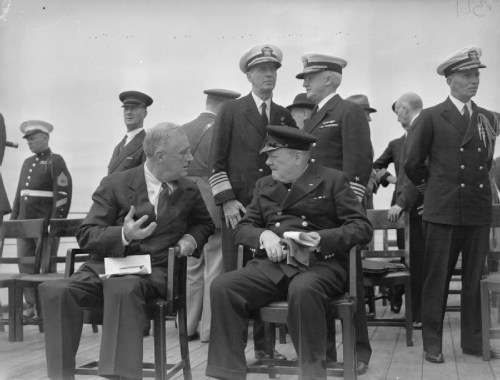
Roosevelt brought the country together. He helped to maintain at disparate alliance between Britain, the United States, and the Soviet Union. It was courageous, as Meacham noted:

” A man of courage, Churchill appreciated it when he detected courage in others, and he had seen it, intimately, in Franklin Roosevelt. “It was a marvel that he bore up against it through all the many years of tumult and storm,” Churchill said of FDR’s paralysis. “Not one man in ten millions, stricken and crippled as he was, would have attempted to plunge into a life of physical and mental exertion and of hard, ceaseless political controversy. Not one in ten millions would have tried, not one in a generation would have succeeded, not only in entering this sphere, not only in acting vehemently in it, but in becoming indisputable master of the scene.”

We need a leader like Franklin Roosevelt now. Personally, I am not sure if any of the challengers to Donald Trump has the gravitas, courage, or determination to go where Roosevelt went. He was willing to risk failure, admit it and try again. I don’t know if our political culture, at least the political culture of the Democratic Party would allow it. The Republicans don’t seem to care as is obvious by their continued support of Donald Trump, and his policies which are nothing short of Lindberg’s America First campaign, Hitler’s racial politics, and American Jim Crow laws.

Roosevelt began the domestic and international policies that Donald Trump fights against on a daily basis. I don’t know what Democratic candidate that will be, but it has to someone has to fully embrace the Roosevelt legacy and push it to the future. As Roosevelt showed this has to me more than about sound bites; it has to be about truth, integrity, and the willingness to engage with and even at times compromise with domestic political rivals in order to preserve the Republic against all enemies, foreign and domestic. But none of the Democratic Party candidates have yet to show me that they have the moral, or physical courage of Roosevelt who battled polio which deprived him of much of his mobility and physical abilities when he was 39 years old. Maybe if Senator Tammy Duckworth would enter the race I might see a candidate with that kind of courage. If she would enter the race, win the nomination, and the presidency, she would be the first female, combat vet and wounded warrior to serve as president.

I would like that very much.

But, until tomorrow we have what we have.

Peace,

Padre Steve+

4 Comments

Filed under History, national security, nazi germany, News and current events, Political Commentary, world war two in europe

A Meditation On Resistance For Today From General Henning Von Tresckow

Friends of Padre Steve’s World,

There are times that resistance seems almost hopeless. I was talking with one of my friends who is very discouraged about the situation. He is an idealist. I spent much of the evening trying to buck him up.

British Historian Laurence Rees wrote:

“human behavior is fragile and unpredictable and often at the mercy of the situation. Every individual still, of course, has a choice as to how to behave, it’s just that for many people the situation is the key determinate in that choice.” 

One of the problems is that throughout history, resisters frequently fail to unify in the face of their primary adversary and instead look for the faults among their own potential leaders. That my friends is the way to failure. So tonight, or as it is early this morning I will leave you with a few thoughts of one of the key German resistance leaders against Hitler during the Second World War. That man was Major General Henning Von Tresckow, a key member of the plot to assassinate Adolf Hitler.

Tresckow said a number of things that I will quote in the way he said or wrote them. But for every time Tresckow writes or says Hitler, substitute Trump, and when he says Germany, substitute the United States.

In reality that is now where we find ourselves. We are on the verge of a dictatorship of a man who can barely be called sane. Yet, he has a core Cult, of committed followers who will through their own willful avoidance of the truth would support him even if he overthrew the Constitution, and proclaimed dictatorial powers, and unleashed violence against every domestic opponent. He routinely makes those kinds of threats, to the cheers of his Cult. In one of his speeches from March 14th of this year Trump declared:

“I can tell you I have the support of the police, the support of the military, the support of the Bikers for Trump – I have the tough people, but they don’t play it tough — until they go to a certain point, and then it would be very bad, very bad,”

That is not a comfortable thought, but it is the new normal, especially among his supposedly Christian supporters, who include some of the most powerful religious leaders in the country.

Tresckow noted:

“I cannot understand how people can still call themselves Christians and not be furious adversaries of Hitler’s regime.”

I feel the same way about Trump, whose most fervent and loyal supporters are conservative or Evangelical Christians. Honestly, when I read their writing, hear the speeches, and listen to their defense of Trump I see little difference in them and the German Christian movement that turned the Churches into a key part Hitler’s political base. Honestly, I cannot understand how any Christian cannot be a furious adversary of the Trump regime. This is not based on politics at all, but the demands of the Gospel itself. As Jesus taught in Matthew 24:24:

“For false messiahs and false prophets will appear and produce great signs and omens, to lead astray, if possible, even the elect.”

Trump is an unbeliever in the greatest sense of the word. Though he presents himself as a defender of Christianity; in thought, word, and deed has made himself a cult-like messiah figure to conservative and Evangelical Christians. He has played on their fears, their racism, their misogyny, their homophobia, and their fear of something that they call socialism. Of course the early church was much more or a practitioner ethics that bordered on socialism, though the term was not yet in use, than the post-Nicea imperial church that has been the face of Christianity in most “Christian” countries since Constantine. This Trump Cult is not Christian: it is an anti-Christian, and anti-humanity personality cult.

Unlike the Third Reich, the situation has not reached the point for any resistier to resort to political violence in response to Trump or his Cult. Instead we must speak the truth and seek to win elections, and not build cult like followings of any of our candidates, and destroy any sense of unity. We have to win with ideas and truth. Even so there is a possibility that we could fail, that is a possibility, and that failure would be the certain end of our Republic, its institutions, and its Constitution as we know it.

Tresckow also said:

“It is almost certain that we will fail. But how will future history judge the German people, if not even a handful of men had the courage to put an end to that criminal?”

We have to put an end to the Trump regime at the ballot box, and even that may not cause him give up without a physical fight. His former attorney, Michael Cohen has said exactly that. Trump is destroying the hard work of Americans and our allies to build a better would, and in almost every country, Trump is destroying the image of the United States, like Tresckow said in his time:

“We have to show the world that not all of us are like him. Otherwise, this will always be Hitler’s Germany.”

Those are import words, but just substitute the name Trump for Hitler. Tresckow was no socialist or liberal, but he believed in freedom. In fact he wrote regarding the Prussian political tradition and how it could be subverted to support evil:

“The idea of freedom can never be disassociated from real Prussia. The real Prussian spirit means a synthesis between restraint and freedom, between voluntary subordination and conscientious leadership, between pride in oneself and consideration for others, between rigor and compassion. Unless a balance is kept between these qualities, the Prussian spirit is in danger of degenerating into soulless routine and narrow-minded dogmatism.”

Truthfully that is a spirit much like the United States that which is engulfing the United States today, soulless routine and narrow minded dogmatism. The tension that exists in the key ideal of the Declaration of Independence and the United States Constitution, and the words of Trump and his supporters men who desire to rule by fiat and by extra-Constitutional means, cannot be more marked than it is today.

In the movie adaptation of the plot to kill Hitler Valkyrie: Tresckow is quoted:

“God promised Abraham that he would not destroy Sodom if he could find ten righteous men… I have a feeling that for Germany it may come down to one.”

To be sure, Trump is no Hitler, though his words sound more and more Hitlerian every day. I will not call the President a Nazi, though he has give tacit support to Neo-Nazi and White Supremacist groups and frequently engages in racist diatribes. He is certainly acting as any authoritarian leader would, and we have to heed the warning of Russian dissident Gary Kasparov:

“dictators & would be autocrats do not ask “Why?” when it comes to using power for their advantage. They ask “why not?”

To go back to the words of Tresckow in Valkyrie, in noting it may come down to the actions of one man or woman, my friends, that “one” may come down to you or me. We cannot sit silently by as more and more actions that would have been considered as criminal are perpetrated by the President and his followers.

So until tomorrow,

Peace,

Padre Steve+

8 Comments

Filed under civil rights, ethics, faith, History, holocaust, Loose thoughts and musings, nazi germany, News and current events, Political Commentary, White nationalism

The American Civil War and the Continuum of History, Humanity, and War

Friends Of Padre Steve’s World,

Barbara Tuchman wrote:

“No one is so sure of his premises as the man who knows too little.”

Finite human beings find themselves bound by time and space, we live in the present, but not the present alone, but rather three worlds: one that is, one that was, and one that will be. The German historian Ernst Breisach wrote, “In theory we know these three worlds as separate concepts but we experience as inextricably linked and influencing each other in many ways. Every new and important discovery about the past changes how we think about the present and what we expect of the future; on the other hand every change in the conditions of the present and in the expectations of the future revises our perception of the past. In this complex context history is born ostensibly as reflection of the past; a reflection which is never isolated from the present and the future. History deals with human life as it “flows” through time.”

Richard Evans wrote something in the preface to his book The Third Reich in History and Memory that those who study military history often forget. He noted: “Military history, as this volume shows, can be illuminating in itself, but also needs to be situated in a larger economic and cultural context. Wherever we look, at decision-making at the top, or at the inventiveness and enterprise of second rank figures, wider contextual factors remained vital.” Thus while this work is an examination of the American Civil War it is important to understand the various issues that were formative for the men who directed and fought the battle, as well as the vast continuum of often distant and seemingly unrelated events that come together at one time in the lives of the participants in any historic event.

This is important and it goes to a broader view of history and education rather that many people are comfortable with. We live in an age where much of education, even higher educations has been transformed into training for a particular skill to gain, or with which to enter the workforce, rather than teaching us to think critically. The social sciences, the liberal arts, philosophy, history are often considered by politicians and business leaders as skills which do not help people get jobs and have been the subjects of cuts in many public university systems.

Andy Chan, Vice President for Personal and Career Development at Wake Forest University wrote: “The prevailing argument is that students should study or major in something “employable,” something that is directly correlated to a job in a high paying career field. This view is espoused by many parents and national leaders, including politicians on both sides of the aisle. Many have called for additional STEM majors as well as eliminating funding for “softer” disciplines.” Like it or not such efforts impact the serious study of history and minimize the exsposure of students in the STEM disciplines to the broader aspects of intellectual study that happen provide them with a moral, ethical, and historic foundation for their disciplines. Giles Lauren in his introduction to B. H. Liddell-Hart’s classic Why Don’t We Learn from History?, wrote:

“Education, no longer liberal, has largely become a question of training in a skill for gain rather than teaching us how to think so as to find our own way. ‘It is strange how people assume that no training is needed in the pursuit of truth.’ We must learn to test and judge the information that comes before us. After all: ‘Whoever habitually suppresses the truth … will produce a deformity from the womb of his thought.’”

Liddell-Hart expressed the importance of a wide view of history as well as the importance of being able to dig deep into particular aspects of it, bit of which are important if we want to come as close to the truth as we can. He wrote:
“The benefit of history depends, however, on a broad view. And that depends on a wide study of it. To dig deep into one patch is a valuable and necessary training. It is the only way to learn the method of historical research. But when digging deep, it is equally important to get one’s bearings by a wide survey. That is essential to appreciate the significance of what one finds, otherwise one is likely “to miss the forest for the trees.””

This can be a particular problem for those who write about specific aspects of the American Civil War, especially about particular battles, technical developments, or individuals. Many writers dig deep into a particular subject, but despite their good work, miss important aspects because they have not done the groundwork of trying to put those subjects into the broader historical, as well as sociological context.

One cannot understand the determination the determination of Robert E. Lee to maintain the offensive without understanding his devotion to Napoleon, or his view of the war and the battles his men fought without understanding and taking into account his view of Divine Providence which was a part of his religious experience. One cannot understand the dogged persistence of Joshua Chamberlain or Strong Vincent to hold Little Round Top, without understanding their patriotic idealism and the nearly spiritual significance of the Union to them. One cannot understand William Tecumseh Sherman without understanding the often cold realism that shaped his world view. The same is true for any of the men, and women, soldier or civilian, slave, or free, who had some part, great or small in the war.

Thus it is important when digging deep, to also attempt to understand the broader perspective of history, and how factors outside their direct military training and experience, such as culture, politics, economics, religion, sociology, ideology, life experience, and all of those factors shaped these men and their actions. By such means we get closer to the truth and by doing so avoid the myths which even after a century and a half, still clutter the works of many people who write about the Civil War.

Likewise, in order to understand the context of the battles of the Civil War, or for that matter the battles in any war, one has to understand the events, ever distant events which play a role in the battle. All too often those that delve into military history, or a particular battle see that as separate event, often disconnected from other historical events. But as historian Edward Steers Jr. correctly notes, history “does not exist in a series of isolated events like so many sound bites in a newscast. It is a continuum of seemingly unrelated and distant events that so often come together in one momentous collision of time.”

To explain this in a different way, let us look at the Battle of Gettysburg as a case in point, but needless to say that no-matter what battle we study there are other factors, that influence it. In the case of the Battle of Gettysburg events like Lincoln’s publication of the Emancipation Proclamation, are important, as it resets the political and diplomatic narrative of the war in a way that influences both domestic politics, and diplomacy.

Diplomacy is another aspect that must be considered, and the incompetence of Confederate diplomats was a major factor. These men were unsuccessful in bringing France or Great Britain into the war, nor could they persuade any European power to recognize the Confederacy. Both of these failures were brought about by their provincialism and by their lack of understanding of the domestic politics of France and England. Both nations had abolished slavery, banned the slave trade, and had populations that were overwhelmingly against slavery.

On the military front, the failures of the Confederate armies in the West to maintain their hold on the Mississippi River, played a crucial role in Robert E. Lee’s ill-advised decision to launch an invasion of Pennsylvania, as did the failing Confederate economy. None of these events can be disconnected from it without doing violence to the historical narrative and thereby misunderstanding why the battle was important.

Another element that must be connected in order to understand the American Civil War is the part that policy, strategy, war aims, as well as operational doctrine, tactics, and technology played in every campaign of the war. When we examine those dimensions of the war and of specific campaigns we go back to the human factor: the people whose ideas, character, and personalities, influenced the conduct of the war and how it was waged.

Finally, events such as the battles of Antietam, Chancellorsville, Gettysburg, Vicksburg, and Atlanta, or the Overland Campaign or Sherman’s March to the Sea cannot be looked at as a stand-alone events for their military value only. The clash at Gettysburg as the armies of the Confederacy battled the Army of the Potomac, and surged and then ebbed back from their “high water mark,” is important. What happened there influences the rest of the war. However, it does not take place in isolation from other battles and events. While the war would go on for nearly two more years, the Union victory at Gettysburg coupled with the victory of Grant at Vicksburg ensured that the Confederacy, no matter how hard it tried would not be able to gain its independence through military means. It was no longer the master of its fate, it needed the Northern “Peace” Democrats to successfully win the election of 1864, and it needed intervention from Europe, neither which was forthcoming.

Maybe even more importantly the story of the Civil War is its continued influence today. The American Civil War was America’s greatest crisis. It was a crisis that “has cast such a shadow over the relations between the North and the South that the nation’s identity and its subsequent history have been considerably influenced by it.” One cannot underestimate its importance, it was the completion of the American Revolution and the birth of a modern nation. The successes and failures, the victories and defeats, and the scars that remain resonate in American cultural, political, and social divide, be it in the minds and hearts of the descendants of freed slaves, Southerners weaned on the myth of the Lost Cause, or the progeny of the Irish and German immigrants who fought for a country where they were despised and discriminated against by the adherents of the anti-immigrant Know Nothing movement. The remains of three-quarters of a million Union and Confederate soldiers interred in cemeteries across the North and South, the monuments devoted to them in town squares, the preserved battlefields with their now silent cannon are a constant reminder of this war that made a nation.

Many people pore over the accounts of the battles of the war, while the legions of devoted Civil War historians, re-enactors, military history buffs, and members of organizations such as the Sons of Confederate Veterans testify to the war’s continued hold on Americans and their fascination with it. The military struggle was important, but we always have to keep it in the context of why the war was fought and why so many of the issues that it was fought over remain issues today, as Ted Widmer noted; “What Lincoln called a “new birth of freedom” felt like a straitjacket to those who opposed it, and their legacy is still felt, in the many forms of opposition to the federal writ that we witness on a daily basis.”
It is important to understand how the war was fought, but it even more important to understand the relationship of how it was fought with why it was fought and in some ways is still being fought, as was evidenced by the vast numbers of Confederate battle flags proudly displayed outside of the historic Confederacy during much of the 2016 Presidential campaign.
Historian David Blight wrote:

“The boundaries of military history are fluid; they connect with a broader social, cultural, and political history in a myriad of ways. In the long run, the meanings embedded in those epic fights are what should command our greatest attention. The “war of ideas” as Douglass aptly called it, has never completely faded from our nation’s social condition or historical memory. Suppress it as we may, it still sits in our midst, an eternal postlude playing for all who deal seriously with America’s past and our enduring predicaments with race, pluralism and equality.”

The battles of the American Civil War are enshrined in American history and myth, and are woven deeply into the story of the nation. In this story the Battle of Gettysburg is often viewed different ways depending on one’s perspective. For many in the North the battle is viewed as a victory that helps brings an end to the institution of slavery, and with it freedom for enslaved African-Americans, and the preservation of the Union. In the South it is often part of the myth of the Noble Confederacy and the Lost Cause where the South was defeated by the Northern superiority in men and war making ability. At Gettysburg there is a certain irony that in the shadow of the cemetery where over 3,500 Union soldiers lay in hallowed repose and where Abraham Lincoln gave the Gettysburg Address that Confederate memorabilia vastly outsells that of the side that won the battle. People wearing t-shirts emblazoned with the image of the Confederate battle flag, and sayings like “I Will Not be Reconstructed” are bought at local gift shops, and their wearers parade past the graves of the Union soldiers who lie just a few hundred yards up the slope of West Cemetery Hill.

Yet in both cases, the truth is not so simple; in fact it is much more complex, and the truth is we are still in the process of learning from and interpreting the historical records of the events that led to the American Civil War, the war itself, and the aftermath. They are all connected and for that matter still influence Americans today more than any other era of our history. In fact James McPherson who is one of the nation’s preeminent scholars on the Civil War and Reconstruction wrote:

“I became convinced that I could not fully understand the issues of my own time unless I learned about their roots in the era of the Civil War: slavery and its abolition; the conflict between North and South; the struggle between state sovereignty and the federal government; the role of the government in social change and resistance to both government and social change. These issues are as salient and controversial today as they were in the 1960s, not to mention the 1860s.”

The prolific American military historian Russell Weigley wrote of how the war, and in particular how the Battle of Gettysburg changed the American Republic.
“The Great Civil War gave birth to a new and different American Republic, whose nature is to be discovered less in the Declaration of Independence than in the Address Delivered at the Dedication of the National Cemetery at Gettysburg. The powerful new Republic shaped by the bayonets of the Union Army of the Civil War wears a badge less benign aspect than the older, original American Republic. But it also carries a larger potential to do good for “the proposition that all men are created equal” both at home and around the world.”

Thus it is important for Americans to learn about the American Civil War, but not solely for its military significance, nor for clear-cut answers or solutions. The lessons go far deeper than that and span the spectrum of the world that we live in today. The fact is that “situations in history may resemble contemporary ones, but they are never exactly alike, and it is a foolish person who tries blindly to approach a purely historical solution to a contemporary problem. Wars resemble each other more than they resemble other human activities, but similarities can be exaggerated.”

British military historian Michael Howard warned, “the differences brought about between one war and another by social or technological changes are immense, and an unintelligent study of military history which does not take into account these changes may quite easily be more dangerous than no study at all. Like the statesman, the soldier has to steer between the dangers of repeating the errors of the past because his is ignorant that they have been made, and of remaining bound by theories deduced from past history although changes in conditions have rendered these theories obsolete.” The ideal that we reach for is to understand the battles of the American Civil War in context, which includes understanding what led to the war as well as the period of Reconstruction, and the post-Reconstruction era and the continued reverberations today.

The American Civil War determined much of the history that followed, not only in the United State, but around the world both in its military advances which transformed war into a mechanized conflict that continues to grow more deadly, and in terms of politics, and social development.

The lessons of this period go far beyond military and leadership lessons gained in studying the battles themselves. They go to our understanding of who we are as a people. They are social, religious, political, economic, diplomatic, and informational. From a strategist’s perspective they certainly help inform the modern policy maker of the DIME, the diplomatic, informational, military, and economic elements of national power, but they are even more than that; the period provides lessons that inform citizens as to the importance of liberty, responsibility, and the importance of both fighting for and defending the rights of the weak and the oppressed.

They also deal with the lives of people, and throughout this volume you will find biographical portraits of some of the key people woven into the story for without them, there really is no story. The one constant in human history are real human beings, some driven by passion, ideology, religion, wealth, or power. There are others who in their quest for knowledge discover things that change the world, invent machinery that alters history, and create weapons which make killing easier. There are men and women who fight for truth, and seek justice for the oppressed. There are the honest and the hucksters, those with character and those that are charlatans. Then to are those who live in fantasy words, cloud-cuckoo lands of unreality that cause them to believe in and pursue causes that can only end in tragedy for them and in many cases others, and finally there are the realists who recognize situations for what they are and are willing to do the hard thing, to speak truth and to act upon it.

All of these types of people can be found in this great war in what was undoubtedly a revolutionary age of change, an age which has influenced the life of this nation, our people, and the world for over a century and a half. Its ghosts haunt our laws and institutions, the sacrifices of soldiers, and the actions of men like Abraham Lincoln have inspired people in this country and around the world.
In writing this volume I attempt to draw lessons from the Civil War era and the people who helped create the world in which we live. Even so I try to do so without making the mistake of assuming that what we learn and know about them is immutable and thus not subject to change; for the past influences the present, even as the present and future will influence how we view and interpret the past.

Until tomorrow,

Peace,

Padre Steve+

Go back

Your message has been sent

Warning
Warning
Warning
Warning

Warning.

Leave a comment

Filed under civil rights, civil war, Gettysburg, History, Military

2019: The Coming Disorder and a Spark that Cannot be Extinguished

Friends of Padre Steve’s World,

Abraham Lincoln noted:

“The best thing about the future is that it comes one day at a time.”

It is good to remember Lincoln’s words in times of turmoils. I do, and they bring me great motivation to work, believe, and fight for justice, truth, and the belief in a spark of goodness in humanity which enables me to believe the words of the Declaration of Independence:

“We hold these truths to be self-evident, that that all men are created equal, that they are endowed by their Creator with certain unalienable Rights, that among these are Life, Liberty and the pursuit of Happiness.”

The fact that those words come from a time of tumult, yet in a time where men were beginning to wrestle with and proclaim principles of the Enlightenment matters much to me, especially in times like we live today, where that principle is being attacked and undermined by the American President.

That being said, I believe that 2019 will be remembered in history as a time great turmoil, upheaval, and probably usher in a new epoch of war, economic, and ecological disaster. We may again be witnesses to genocide that leaders of governments fail to take the necessary actions to stop.

I don’t want to sound like a pessimist, but as a historian I to look at the world through how human beings, governments, and businesses behave in times of crisis. In fact, human beings are the singular constant in history and in crisis human beings don’t always live up to our ideals.

When major powers and international systems of order break down, or collapse for whatever reason, instability, disorder, and primordial hatreds based on nationalism, religion, and racism rise. A vacuum is created, filled by other powers, but not without some element of travail. Edmond Taylor wrote in his classic “The Fall of the Dynasties: The Collapse of the Order, 1905-1922:

“The collapse of the great supranational — or at least supraparochial — authorities and the dissolution of long-accepted Imperial bonds released upon Europe a fearsome flood of conflicting national ambitions, of inflamed minority particularisms, of historic (sometimes almost prehistoric) irredentisms, of irreconcilable social aspirations and of rival political fanaticisms.

The impending collapse of the old order today can be seen in a return to a more isolationist policy by the United States, rising populist, nationalist, and ethnocentric movements in Europe which are threatening the existence of the European Union. Those include Brexit, ethnic nationalism mixed with a bit of Fascism in Hungary, Italy, Poland, and great strains in France and Germany between right and left wing populist movements.

The common thread is the center which was the key to so much social progress, democracy, economic growth and stability, scientific advancement, and international security is giving way. There are many reasons for this, on the American side going back to the imperialist overreach of the George W. Bush administration, the inconsistent and detached method of the Obama administration towards the Middle East, especially Syria and Iraq, following that, and now the decidedly inconsistent, often irresponsible, and irreconcilable policies of isolationism and militarism.

A rejuvenated Russia is rushing to fill the void in the Middle East as well as working to destabilize its neighbors, Europe, and even the United States. The Chinese are attempting to make gains in other areas and to drive the United States out of Asia by using every element of national power: diplomacy, information, military might, and economics, while the United States following the Trump Administration’s withdraw from the Trans Pacific Partnership, and subsequent punishing tariffs that are hurting allies and Americans more than China the United States is now at a decided disadvantage in Asia.

I could go on, and could go into details on the causes of the current situation but they are many. What we are seeing now is the beginning of the collapse of an order that we have known most of our lives. While many people might be uneasy, most don’t view things in terms of history, in many cases because the events that led to the establishment of the current order are too distant and the witnesses to those times are few, and dying off. People today seldom study history, and even worse no longer know people, including family members who remember what happened to remind them of it.

That was quite similar to the situation in 1914. Europe had been at relative peace for a century. With the exception of the French Republic, most of Europe was still ruled by monarchies with rather limited democratic participation, if any. Barbara Tuchman wrote in her book The Proud Tower: A Portrait Of the World Before the War, 1890-1914:

“The proud tower built up through the great age of European civilization was an edifice of grandeur and passion, of riches and beauty and dark cellars. Its inhabitants lived, as compared to a later time, with more self-reliance, more confidence, more hope; greater magnificence, extravagance and elegance; more careless ease, more gaiety, more pleasure in each other’s company and conversation, more injustice and hypocrisy, more misery and want, more sentiment including false sentiment, less sufferance of mediocrity, more dignity in work, more delight in nature, more zest. The Old World had much that has since been lost, whatever may have been gained. Looking back on it from 1915, Emile Verhaeren, the Belgian Socialist poet, dedicated his pages, “With emotion, to the man I used to be.”

I believe that 2019 will the a year of multiple crises and the further erosion, if not collapse of the old order. What will come I do not know, but I expect that at the minimum it will be unsettling and disruptive, if not catastrophic. That doesn’t mean that I am a pessimist, it means that I study history. Provided that humanity does not find a way to destroy itself, we will recover. It may not be pretty and it certainly will not be the same as it was, but we will recover.

Walter Lord wrote about this his book on American in the early Twentieth Century The Good Years: 1900-1914. In the book he wrote about how things changed for Americans as Europe plunged into war. The effects of the war were soon felt in the United States though it would not enter the war until 1917. Lord wrote:

Economics were only part of the story. Almost overnight, Americans lost a happy, easygoing, confident way of looking at things. Gone was the bright lilt of “When You Wore a Tulip”; already it was the sadly nostalgic, “There’s a Long, Long Trail a-Winding,” or the grimly suggestive, “I Didn’t Raise My Boy to Be a Soldier.” A mounting crescendo of screaming headlines… atrocity stories… U-boat sinkings… charges and counter-charges shocked the nation, jarred its faith, left a residue of doubt and dismay.

Nothing seemed simple any more. Nothing was black and white. Nothing was “right” or “wrong,” the way Theodore Roosevelt used to describe things. And as the simple problems vanished, so did the simple solutions. Trust-busting, direct primaries, arbitration treaties and all the rest. They somehow lost their glamour as exciting panaceas, and nothing took their place. But the problems grew and grew —preparedness… taxes… war… Bolshevism… disillusionment… depression… Fascism… Moscow… fallout… space… more taxes.

So the old life slipped away, never to return again, and wise men sensed it almost at once. Men like Henry White, the immensely urbane diplomat who had served the country so well. “He instinctively felt,” according to his biographer Allan Nevins, “that his world —the world of constant travel, cosmopolitan intercourse, secure comfort and culture —would never be the same again.” The Philadelphia North American felt the same way, but in blunter words: “What does this mean but that our boasted civilization has broken down?”

Perhaps it was just as well. There was much that was wrong with this old way of living —its injustices, its naivete, its waste, its smug self-assurance. Men would come along to fix all that. New laws, controls, regulations, forms filled out in triplicate would keep anybody from getting too much or too little. And swarms of consultants, researchers, special assistants, and executive committees would make sure that great men always said and did the right thing.

There would be great gains. But after all the gains had been counted, it would turn out that something was also lost —a touch of optimism, confidence, exuberance, and hope. The spirit of an era can’t be blocked out and measured, but it is there nonetheless. And in these brief, buoyant years it was a spark that somehow gave extra promise to life. By the light of this spark, men and women saw themselves as heroes shaping the world, rather than victims struggling through it.

Actually, this was nothing unique. People had seen the spark before, would surely do so again. For it can never die as long as men breathe. But sometimes it burns low, leaving men uncertain in the shadows; other times it glows bright, catching the eye with breath-taking visions of the future.

The truth is, even in the midst of crises that the spark that enables people to believe, to hope, and to labor for a better future where the possibilities of peace, justice, freedom, and progress can be realized.

2019 will likely be a very difficult year, a year of change and turbulence, and truthfully it will probably be just the beginning; but unless finds a way to destroy itself, it will not be the end.

So, unless I get a hair up my ass to write something else before midnight, I wish you a Happy New Year, and all the best.

Peace,

Padre Steve+

1 Comment

Filed under ethics, faith, History, leadership, life, middle east, Military, national security, News and current events, Political Commentary, Religion

A Watershed Moment, and a Time to Be Afraid: Jim Mattis Resigns in Protest

Friends of Padre Steve’s World,

Secretary of Defense James Mattis resigned his position in protest at the manner in which President Trump is endangering the security of the United States. His resignation letter speaks for itself but it echoes many things that I have written regarding the Trump military and foreign policy since his election campaign. The final straw for Mattis was Trump’s unilateral decision against the advice of Mattis, the Department Of Defense, the State Department, and the National Security Council to withdraw all U.S. Troops from Syria falsely claiming that ISIS had been defeated.

Secretary Mattis’s letter is show below.

It was a watershed moment in American History. Honestly, I never expected Mattis to survive this long in the Trump Swamp. Everything about him stands in complete opposition to everything that Donald Trump embodies. The disgraced convicted felon Michael Flynn much more represents for which Trump stands.

Mattis was and remains a Marine who exemplified the Marine motto Semper Fidelis, and of living the creed of Duty, Honor, Country. Many times during his time in office he resisted the worst impulses and decisions made by the President. He knew that his duty and oath were to the Constitution of the United States and not the President. I think that he has become a tragic figure, he accepted the position thinking that he could serve the country better by taking it rather than not.

In the end Mattis could not abide the constant attacks on what he believed were the foundations of American national security and he resigned in protest. In a way he reminds me of Colonel General Ludwig Beck, Chief of Staff of the German Army, who resigned in protest over Hitler’s planned invasion of Czechoslovakia in 1938. Beck, who died in the attempt to kill Hitler on July 20th, 1944 said:

It is a lack of character and insight, when a soldier in high command sees his duty and mission only in the context of his military orders without realizing that the highest responsibility is to the people of his country.”

Working with former Secretary of State Rex Tillerson, and former National Security Advisor H.R. McMaster he had allies within the administration who could help check the President’s worst instincts. But Tillerson and McMaster were forced out and replaced by men who Trump believes that are more personally loyal to him, leaving Mattis isolated in the administration. Mattis was not able to get his recommendation for the next Chairman of the Joint Chiefs of Staff, Air Force Chief of Staff General David Goldfein approved by Trump. Mattis took this as a personal affront because the Secretary of Defense usually gets his recommendation for the position approved by the President. I wonder if Trump rejected Goldfein because in addition to being a decorated combat veteran who was actually shot down over Serbia in 1999, is also Jewish. Honestly, I don’t think that Trump could stomach having a Jewish war hero as his Chief military advisor. Maybe someone should ask that question, but I digress…

Mattis’s resignation, combined with Trump’s declaration of victory over ISIS and withdraw announcement sent a chill throughout Washington and around the world. Even influential Republican leaders who have carried Trump’s water are seeing the approaching danger of Trump unrestrained. The only question is if they will have the courage to choose principle over personal profit and power. Sadly, to this point they have not backed their words with action. Perhaps with the wheels coming off this presidency they will, but I think they are more afraid of his cult like followers than they are of him, so we will have to see.

Trump promises that he will nominate a replacement for Mattis soon. Make no mistake, whoever Trump chooses will be pliant and nothing more than his lackey. The replacement will be someone in the tradition of Field Marshal Wilhelm Keitel, who was absolutely committed to Adolf Hitler and who not only went along with, but signed criminal orders that obliged the German military to commit war crimes, at home and abroad. Supreme Court Justice Robert Jackson who served as the Chief American Prosecutor at Nuremberg said about Keitel:

“Keitel, the weak and willing tool, delivered the armed forces, the instrument of aggression, over to the party and directed them in executing its felonious designs.”

I am not sure who would want the job, but I am sure that he will be an modern embodiment of Keitel, and I will be glad that I will be retired within a few months of his confirmation. A year ago I thought that Senator Tom Cotton would gladly take it, but since he was one of the leading critics of the Syria withdraw, that he saw as a surrender to Russia I am not so sure. I don’t think that he’s that stupid. Instead, I think that Trump may pick a retired General or Admiral from his partisans for the job, there are plenty of them out there who would take it, I could be wrong, but we’ll have to see.

Regardless of who takes over for Mattis is the fact that with Mattis out of the way, Trump’s worst instincts will win policy debates and he may even lose John Bolton. Today the danger to our country and to to world has increased exponentially. To quote General Colin Powell’s words in his waning days as Secretary of State, “I sleep like a baby … every two hours I wake up screaming.”

I think that may be the case for many of us in the coming days, weeks, and months. Since I already do that due to my PTSD and combat based nightmares and night terrors this will be nothing new. If that hasn’t been the case for you, welcome to my world.

Peace,

Padre Steve+
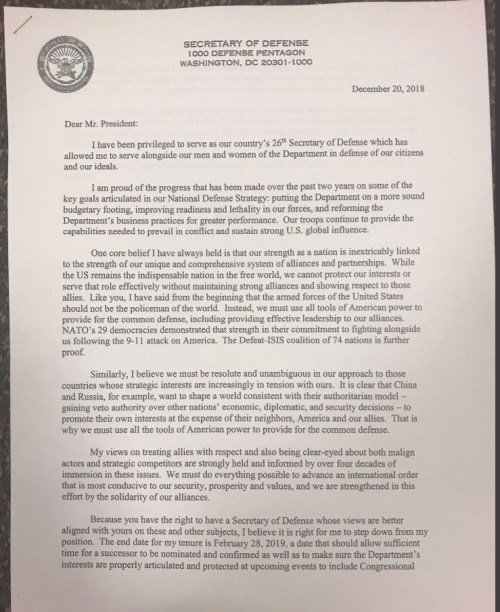
6 Comments

Filed under ethics, Foreign Policy, History, leadership, Military, national security, nazi germany, News and current events, Political Commentary