Tag Archives: joseph davis

Gettysburg: The Opening Engagement

Friends of Padre Steve’s World

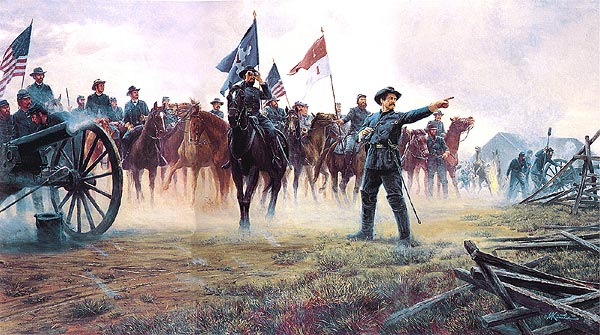
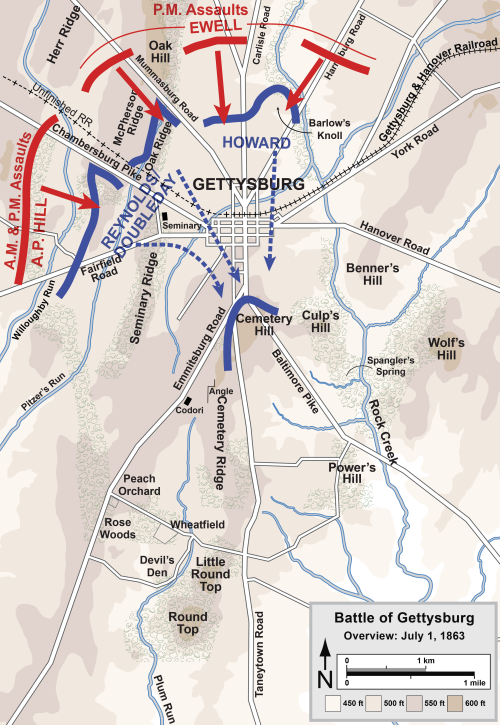
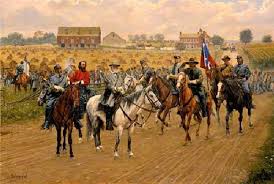
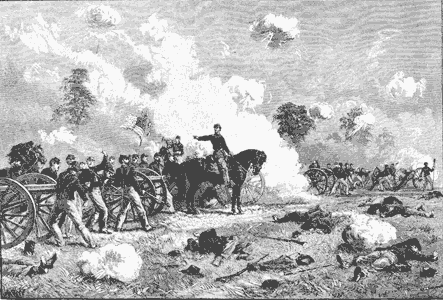
The latest major chapter revision to my Gettysburg text, this one about the opening of the battle and two men, Confederate Major General Harry Heth and Union Major General John Buford whose actions that morning set in motion the greatest battle ever fought on the American Continent.

Peace

Padre Steve+
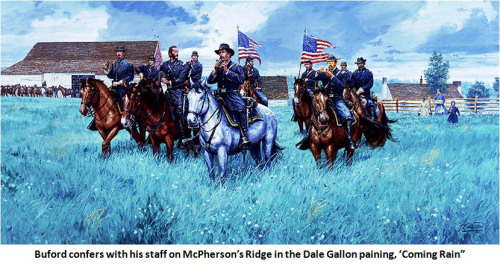
burford june 30th

The principles found in Chairman of the Joint Chief of Staff’s “Desired Leader Attributes” are something that we can learn about from both practical experience and history. The study of commanders and leaders throughout the Gettysburg campaign provide historical examples of commanders and other leaders that the best and the worst examples of some of those concepts. One of these is the ability to “anticipate and adapt to surprise and uncertainty.” The meeting engagement on the morning of July 1st 1863 between Harry Heth’s division of A.P. Hill’s corps and John Buford’s First Cavalry Division shows a very clear example of a commander, Heth, not anticipating or adapting to surprise and uncertainty. Heth was surprised by the presence of experienced Federal cavalry on his front and the uncertainty of not knowing what lay just beyond McPherson and Seminary Ridge.

Despite the warnings of Brigadier General Johnston Pettigrew, Major General Harry Heth and his corps commander Lieutenant General A.P. Hill decided that they would advance into Gettysburg. Hill and Heth dismissed Pettigrew’s warnings out of hand. Pettigrew should have been listened to, he was “was one of those natural leaders of a privileged background who, without military ambitions, had been advanced on the application of native intelligence and contagious courage.” [1] To help state his case Pettigrew brought Captain Louis G. Young of his staff, who had served under Hill and was a professional soldier “with the hope that his testimony as to Union numbers might be more convincing.” [2] Young “insisted that the troops he saw were veterans rather than Home Guards,” [3] but Hill refused to believe telling Young and Pettigrew “I still cannot believe that any portion of the Army of the Potomac is up,” he declared. Then he added: “I hope that it is, for this is the place I want it to be.” [4] Hill told Heth and Pettigrew that “I am just from General Lee, and the information he has from his scouts corroborates what I have received from mine – that is, the enemy is still at Middleburg and have not yet struck their tents.” [5]

How Hill could make such a statement neither knowing the ground nor the location and strength of the Federal troops to his front is stunning. How Hill’s “scouts” could miss the massive force heading their way is beyond belief and indicates that Hill wanted to believe what he wanted to believe and disregarded any evidence to the contrary, especially that which came from a subordinate that he did not know who was not a professional soldier. Hill’s attitude also demonstrates the profound lack of respect given to the Army of the Potomac by Hill and many other Confederate commanders.

Hill sent a message to Lee, as well as Ewell of Second Corps telling them that “I intended to advance the next morning and discover what was in my front.” [6] He also sent word of the discovery of cavalry to Lee’s headquarters, but his warning apparently gave Lee little cause for concern as Lee believed that “Meade’s army was still some distance to the south.” [7] Likewise, Hill sent a courier to Richard Anderson instructing him to bring up his division on July 1st and instructed Heth that “Pender’s division also would be ordered through Cashtown as a reserve to be available if Heth ran into serious trouble.” [8]

During the night the actions of A.P. Hill show a commander who confused and uncertain. The confidence that he and Heth showed in rejecting Pettigrew and Young’s reports of Federal troops in Gettysburg had left “most, if not all the commanding officers in Hill’s corps…unprepared for what happened.” [9] Lieutenant Lewis Young wrote “I doubt if any of the commanders of brigades, except General Pettigrew, believed that we were marching to battle, a weakness on their part which rendered them unprepared for what was about to happen.” [10]

A major part of Hill’s uncertainly can be laid on his and his subordinate commander’s lack of experience at their current level of command. “Pettigrew new to the army, Heth to division command, and Hill to corps command.” [11] One could not ask for such an untested chain-of-command as the army advanced blindly forward not knowing what lay before it. James Longstreet said “The army…moved forward, as a man might walk over strange ground with his eyes shut.” [12]

Lieutenant Colonel Porter Alexander noted that on the night of June 30th that he visited Lee’s headquarters and found conversation to be “unusually careless & jolly. Certainly there was no premonition that the next morning was to open a great battle of the campaign.” [13] The attitude that all exhibited according to Alexander was “when all our corps were together what could successfully attack us? So naturally we were all in good spirits.” [14] The Confederates believed that they were invincible. Walter Taylor of Lee’s staff admitted “An overweening confidence possessed us all.” [15] Clifford Dowdey wrote:

“Considering their unprecedented assignment to act, in the absence of cavalry, as reconnaissance troops in a country they had never seen, the men were unrealistically relaxed – from the privates of the 1st South Carolina, the oldest unit in point of organization, to the corps commander.” [16]

The British observer, Lieutenant Colonel Arthur Fremantle wrote in his diary: “The universal feeling in the army was one of profound contempt for an enemy whom they had beaten so consistently, and under so many disadvantages.” [17] That contempt would cost Lee’s army dearly in the coming battle.

Harry Heth arose on the morning of July 1st 1863 and formed his division for its march to Gettysburg. He had been ordered by Hill to “be ready to march at 5:00 A.M; and by an unusual directive from the corps commander, each man who wanted an issue of whisky at that early hour was to receive one.” [18] Heth should have spent the night making detailed plans for his advance but since neither he, nor any other senior officer in Hill’s corps “anticipated real action in the immediate area, Harry Heth kept uppermost in his mind the quartermaster aspects of the invasion,” [19] thus his overriding concern to get the shoes that supposedly were there in abundance, rather than “all the little details involved in an operation as tricky as a reconnaissance in force.” [20] The lack of attention to detail became evident the first thing that morning and that brought about an inauspicious start to a very bad day for Heth and his division. His troops were up early with the sunrise but somehow orders had not gotten to them to begin the advance at 5 a.m. and as a result “there was haste to the early morning’s preparations that caught some off guard” even regimental commanders. [21]

Several critics have made this point, among them Major John Mosby, the Confederate cavalry leader and guerrilla fighter who wrote: “Hill and Heth in their reports, to save themselves from censure, call the first day’s action a reconnaissance; this is all an afterthought….They wanted to conceal their responsibility for the defeat.” [22] A more contemporary writer, Jennings Wise, noted that Hill’s orders “were specific not to bring on an action, but his thirst for battle was unquenchable, and…he rushed on, and…took the control of the situation out of the hands of his commander-in-chief.” [23]

Years later Heth made an unsubstantiated claim that “A courier came from Gen. Lee, with a dispatch ordering me to get those shoes even if I encountered some resistance.” [24] That appears unlikely as Mosby noted that no one ordered Hill to advance and Lee “would never have sanctioned it.” [25] The ever judicious Porter Alexander who had been in Lee’s headquarters the night of June 30th wrote that: “Hill’s movement to Gettysburg was made on his own accord, and with knowledge that he would find the enemy’s cavalry in possession.” [26]

The advance to contact was marred by Heth’s inexperience compounded by the illness of A.P. Hill which caused Hill to be absent at the critical point where contact was made with the Federal forces. Hill “awakened feeling very ill, too sick to mount his horse…although no diagnosis was made, he was probably suffering from overstrained nerves.” [27] While it is possible that Hill’s “malady could have been upset stomach, diarrhea, simple exhaustion or a flair up of the old prostate problem” [28] his history of illness at critical times throughout the war lends credence to the possibility that whatever he was suffering could have been brought about by his emotional state. The result was that Hill’s “disability made it impossible for him to assume personal responsibility on July 1, 1863.” [29]

Hill gave Heth the responsibility to lead the advance, not based on experience or command ability, but because his division was closest to Gettysburg. However, during the night Hill decided to augment Heth’s division by ordering Dorsey Pender’s division to support Heth, and thus committed two thirds of his corps to what was supposedly a reconnaissance mission to find shoes. Since a reconnaissance is normally conducted by small elements of one’s force, the fact that Hill committed his two divisions present to such a mission demonstrated his “own confusion and uncertainty” [30] regarding the nature of what he might face and to his own understanding of the mission that he was assigning Heth. Whatever Hill’s intentions “he ordered Pender to support Heth while he awaited Anderson in Cashtown.” [31]

Disregarding the only solid intelligence he had, Hill put the majority of his corps into a “reconnaissance” which he would not be able to lead, instead turning over command to Heth. Hill gave Heth strict instructions not to bring on an engagement. The admonition was clear: “Do not bring on an engagement.” [32]

Likewise it is distinctly possible that Heth, despite orders to the contrary “may have had more on his mind than shoes and information when he made his advance towards Gettysburg.” [33] This is the allegation of Confederate cavalryman John Singleton Mosby who: “charged Hill with planning a “foray” and calling it a “reconnaissance.” Both Hill and Heth, Mosby asserted “evidently expected to bag a few thousand Yankees, return to Cashtown, and present them to General Lee that evening. But…”they bit off more than they could chew.” [34] Mosby’s claim does lend some explanation as to why Hill committed such a large force to his “reconnaissance” however, since Hill was killed in the closing days of the war and because Mosby was a partisan of J.E.B. Stuart. Mosby’s claim, even if true cannot be verified. But the fact remains that Hill’s force “was too large for a reconnaissance mission…and too large of force to back away from any Yankee challenge.” [35]The result was that Hill’s large force “if opposed, might well commit Lee’s army to battle on a field that Lee had not seen and before his army was assembled.” [36]

Hill’s absence left Heth, an inexperienced division commander “without any sage counsel” [37] and Heth began to commit a series of costly errors. Hill’s instructions to Heth to aggressively execute the mission but at the same time to avoid a major action put his subordinate in a hard place that even more experienced commanders might have struggled to find the appropriate balance. However, Heth was not at the level of experience or battlefield savvy.

Heth stated after the war that he understood from Hill that his mission was a job that normally would be assigned to cavalry and the restraints that he was employ: “to ascertain what force was at Gettysburg, and if he found infantry opposed to him, to report the fact immediately, without forcing an engagement.” [38] However, when the action began Heth did not heed those instructions.

Heth advanced without the caution of a commander who had been told that enemy forces were likely opposing him. Even though Heth disbelieved the reports made by Pettigrew the previous day, some amount of judicious caution on his part should have been indicated. Instead, for reasons unknown Heth had his men advance as if it was a routine movement. “Rather than placing his strongest brigades in the lead, Heth simply determined order of march based on where the troops had bivouacked along the road the previous night.” [39]

Heth “pushed out his four brigades in routine deployment for contact. In taking elementary precautions, Heth gave no indication of sensing an impending clash of any consequence.” [40] He placed Archer’s veteran but depleted brigade and Davis’s newly organized and inexperienced brigade in the lead of the advance. They were accompanied by the division’s artillery battalion commanded by Major William Pegram. Behind the lead units came the brigades of Pettigrew and Brockenbrough.

It was a curious order of march, for it left Johnston’s Pettigrew’s brigade behind both Archer and Davis’s brigades despite the fact that it was closer to Gettysburg than any other brigade. Likewise it was the only unit in the division that had recent eyes on contact with the enemy and knew the ground and what was ahead of them. It is hard to understand why Heth did this but one can speculate that it might have been because of Pettigrew’s insistence of the type of Federal forces in their front the previous day which caused Heth to do this.

The attitude of the soldiers was good, but most of the soldiers and their leaders “assumed that this morning’s movement was simply one more part in the army’s overall concentration of forces” [41] and the troops many expected to meet were those of Ewell or Stuart, Colonel John Brockenbrough told the commander of the 55th Virginia that “we might meet some of Ewell’s command or Stuart’s. [42] No one, with the possible exception of Johnston Pettigrew seemed to believe that experienced Federal troops lay before them, and Pettigrew had been ignored. This “spirit of unbelief” seemed to cloud the thinking of most, if not all of the commanding officers in Hill’s corps and left them unprepared for what happened.” [43]

Heth’s infantry brigades were deployed alongside the road and were led by several lines of skirmishers while the artillery battalion rumbled down the road between the infantry brigades, few expected any battle. Gunners from Pegram’s four-gun Fredericksburg battery leading his battalion’s advance recalled “We moved forward leisurely smoking and chatting as we rode along, not dreaming of the proximity of the enemy.” [44] Heth should have better anticipated the situation based on Pettigrew’s reports of the previous day and should have prepared his troops to expect combat. He demonstrated why one author called him “an intellectual lightweight.” [45] After the war when Heth told an officer from the Army of the Potomac “I did not know any of your people were north of the Potomac.” [46]

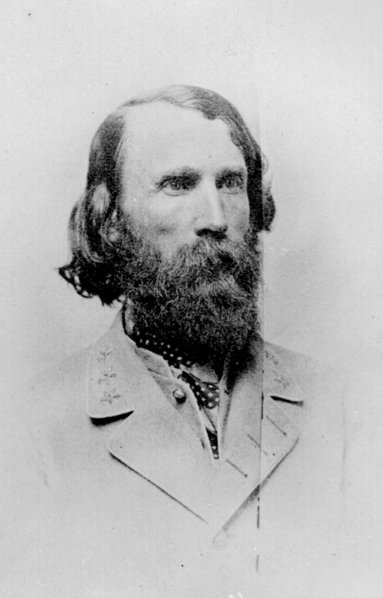
While Archer was highly experienced and had the advantage of commanding experienced veteran troops during this advance he was not well. Though he led his troops into combat “on that morning he was suffering from some debilitating ailment.” [47] The other commander leading the Confederate advance was the inexperienced Joseph Davis. Davis’s inexperience caused him to put the new and untested 42nd Mississippi and 55th North Carolina in the van of his advance and left his veteran regiments the 2nd and 11th Mississippi in the rear guarding army stores. [48] It was an unfortunate choice, the 11th Mississippi was seasoned and had “fought with distinction” [49] as part of the Army of Northern Virginia over the previous year.

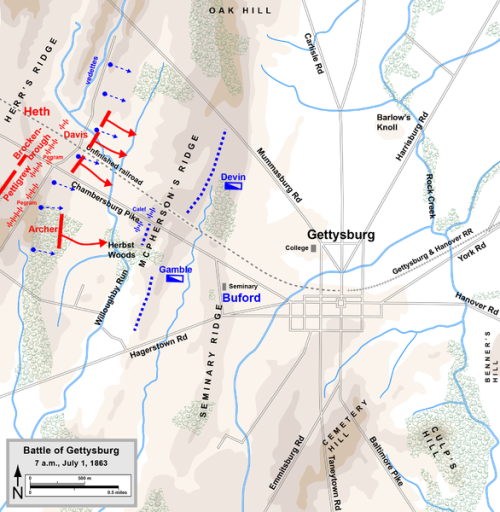
The advance of the brigades of Archer and Davis was uneventful until they reached Marsh Creek they encountered the cavalry vedettes or pickets of the 8th Illinois Cavalry of John Buford’s First Cavalry Division posted on the high ground just east of the creek. [50] Despite the fact that Pettigrew had repeatedly warned Heth and Hill about the presence of Union cavalry, the discovery of these forces was unanticipated by the Confederates leading the column. Early in the morning Pettigrew attempted to warn Archer of the topography of the area and the presence of Union troops. Lieutenant Young recorded that Pettigrew “told General Archer of a ridge some distance west of Gettysburg on which he would probably find the enemy, as this position was favorable for defense.” [51] Pettigrew also warned Archer of “a certain road which the Yankees might use to hit his flank, and the dangers of McPherson’s Ridge. Archer listened, believed not, marched on unprepared…” [52]

Enter John Buford

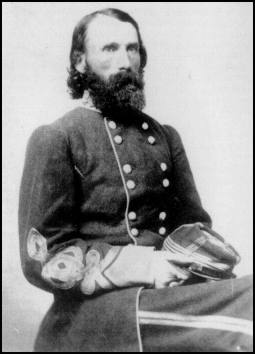
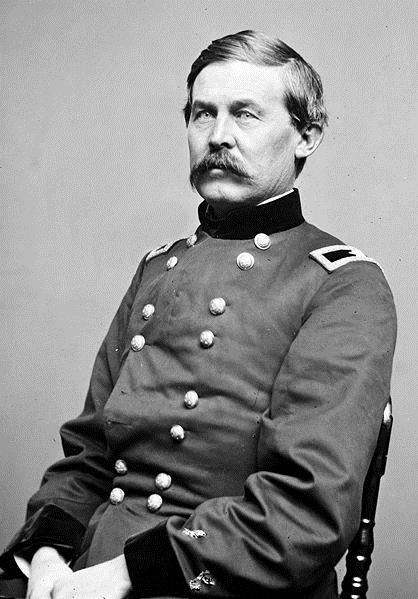
If Heth was inexperienced and knew little of the Federal forces arrayed before him and what forces were moving towards Gettysburg, his opponent Brigadier General John Buford was his opposite in nearly every respect. Buford was born in Kentucky and like Heth, came from a family with a long military history of military service, including family members who had fought in the Revolutionary War and War of 1812. His family was well off with a spacious plantation near Versailles on which labored forty-five slaves, and his father also established a stage line which carried “passengers and freight between Frankfort and Lexington.” His father divested himself of his property, selling his home, business and presumably his slaves and moved to Stephenson Illinois in 1838. [53] The young Buford developed an interest in military life which was enlivened by his half-brother Napoleon Bonaparte Buford who graduated from West Point in 1827, and his brother would be influential in helping John into West Point, which he entered in 1844.

Buford graduated with the class of 1848 which included the distinguished Union artilleryman John Tidball, and the future Confederate brigadier generals William “Grumble” Jones, with whose troops he would do battle during the Gettysburg campaign and George “Maryland” Steuart. Among Buford’s best friends was Ambrose Burnside of the class of 1847. He did well academically but his conduct marks kept him from graduating in the top quarter of his class.

Upon graduation he was commissioned as a Brevet Second Lieutenant of Dragoons, however this came too late to serve in Mexico. Instead he was initially assigned to the First United States Dragoons but less than six months after joining was transferred to the Second Dragoons when he was promoted to full Second Lieutenant.

Instead of going to Mexico Buford “spent most of the 1850s tracking and fighting Indians on the Plains.” [54] During this period, the young dragoon served on the Great Plains against the Sioux, where he distinguished himself at the Battle of Ash Creek and on peacekeeping duty in the bitterly divided State of Kansas and in the Utah War of 1858.

His assignments alternated between field and staff assignments and he gained a great deal of tactical and administrative expertise that would serve him well. This was especially true in the realm of the tactics that he would employ so well at Gettysburg and on other battlefields against Confederate infantry and cavalry during the Civil War. Buford took note of the prevailing tactics of the day which still stressed a rigid adherence to outdated Napoleonic tactics which stressed mounted charges and “little cooperation with units of other arms or in the taking and holding of disputed ground.” [55] While he appreciated the shock value of mounted charges against disorganized troops he had no prejudice against “fighting dismounted when the circumstances of the case called for or seemed to justify it.” [56] Buford’s pre-war experience turned him into a modern soldier who appreciated and employed the rapid advances in weaponry, including the breech loading carbine and repeating rifle with tremendous effect.

Despite moving to Illinois Buford’s family still held Southern sympathies; his father was a Democrat who had opposed Abraham Lincoln. Buford himself was a political moderate and though he had some sympathy for slave owners:

“he despised lawlessness in any form – especially that directed against federal institutions, which he saw as the bulwark of democracy…..He especially abhorred the outspoken belief of some pro-slavery men that the federal government was their sworn enemy.” [57]

After the election of Abraham Lincoln, the officers of Buford’s regiment split on slavery. His regimental commander, Colonel Philip St. George Cooke, a Virginian and the father-in-law of J.E.B. Stuart announced that he would remain loyal to the Union, others like Beverly Robertson who would command a brigade of cavalry during the Gettysburg campaign resigned their commissions.

For many officers, both those who remained loyal to the Union and those who joined the Confederate cause the decision was often difficult, and many anguished over their decisions as they weighed their allegiance to the Union against their loyalty to home and family. Buford was not one of them.

Since Buford’s family had longstanding ties to Kentucky, the pro-secession governor of Kentucky, Beriah Magoffin offered Buford a commission in that states’ militia. At the time Kentucky was still an “undeclared border slave state” and Buford loyal to his oath refused the governor’s offer. He wrote a brief letter to Magoffin and told his comrades that “I sent him word that I was a Captain in the United States Army and I intend to remain one.” [58] Around the same time the new provisional government of the Confederacy “offered Buford a general officer’s commission, which reached him by mail at Fort Crittenden.” [59] According to Buford’s biographer Edward Longacre “a well-known anecdote has him wadding up the letter while angrily announcing that whatever future had in store he would “live and die under the flag of the Union.” [60]

However Buford’s family’s southern ties, and lack of political support from the few remaining loyal Kentucky legislators initially kept him from field command. Instead he received a promotion to Colonel and an assignment to the Inspector General’s Office, although it was not the field assignment that he desired it was of critical importance to the army in those early days of the war as the Union gathered its strength for the war. Buford was assigned to mustering in, and training the new regiments being organized for war. Traveling about the country he evaluated each unit in regard to “unit dress, deportment and discipline, the quality and quantity of weapons, ammunition, equipment, quarters, animals and transportation; the general health of the unit and medical facilities available to it; and the training progress of officers and men.” [61] Buford was a hard and devastatingly honest trainer and evaluator of the new regiments. He was especially so in dealing with commanding officers as well as field and company officers. Additionally he was a stickler regarding supply officers, those he found to be incompetent or less than honest were cashiered.

Buford performed these duties well but desired command. Eventually he got the chance when the politically well-connected but ill-fated Major General John Pope who “could unreservedly vouch for his loyalty wrangled for him command of a brigade of cavalry.” [62] After Pope’s disastrous defeat at Second Bull Run in August 1862 Buford was wounded in the desperate fighting at Second Manassas and returned to staff duties until January 1863 when he was again given a brigade. However, unlike many of the officers who served under Pope, Buford’s reputation as a leader of cavalry and field commander was increased during that campaign.

Buford was given the titular title of “Chief of Cavalry of the Army of the Potomac” by George McClellan, a title which sounded impressive but involved no command during the Antietam campaign. Following that frustrating task he continued in the same position under his old West Point friend Ambrose Burnside during the Fredericksburg campaign. Buford lost confidence in his old friend and was likely “shocked by his friend’s deadly ineptitude, his dogged insistence on turning defeat into nightmare.” [63]

When Burnside was relieved and Fighting Joe Hooker appointed to command the army, Buford’s star began to rise. While he was passed over by Hooker for command of the newly organized First Cavalry division in favor of Alfred Pleasanton who was eleven days his senior, he received command of the elite Reserve Brigade composed of mostly Regular Army cavalry regiments. When Major General George Stoneman was relieved of command following the Chancellorsville campaign, Pleasanton was again promoted over Buford.

In later years Hooker recognized that Buford “would have been a better man for the position of chief” [64] but in retrospect Buford’s pass over was good fortune for the Army of the Potomac on June 30th and July 1st 1863. Despite being passed over for the Cavalry Corps command, Buford, a consummate professional never faltered or became bitter. Despite the Pleasanton’s interference and “lax intelligence-gathering” [65]   During the Gettysburg campaign he led his brigade well at Brandy Station as it battled J.E.B. Stuart’s troopers, after which he was recommended for promotion and given command of the First Cavalry division of the Cavalry Corps. [66]

Following Brandy Station Buford led his troopers aggressively as they battled Stuart’s troopers along the Blue Ridge at the battles of Aldie, Philmont, Middleburg and Upperville. It was at Upperville while fighting a hard action Confederate Brigadier general “Grumble” Jones’s brigade that Buford’s troopers provided Hooker with the first visual evidence that Lee’s infantry was moving north into Maryland and Pennsylvania.

When Hooker was relieved on the night of June 27th and 28th George Meade gave Buford the chance at semi-independent command without Pleasanton looking over his shoulder. Meade appreciated Pleasanton’s administrative and organizational expertise and took him out of direct field command. Meade had his Cavalry Corps commander “pitch his tent next to his own on almost every leg of the trip to Pennsylvania and rarely let him out of sight or earshot.” [67]

The result was that when ordered to screen the army as it moved into Pennsylvania Buford was confident of his troopers and their ability and he and his men performed their duties admirably. On June 29th Buford’s men skirmished with two of Harry Heth’s regiments near the town of Fairfield, which Buford promptly reported to Meade and John Reynolds after ascertaining their size and composition. The following morning Buford and his troopers arrived in Gettysburg and were greeted by the townspeople who “thronged the streets, waving, shouting, and singing patriotic songs as Buford’s advance pushed through.” [68] Marching through the town they took up positions on the ridges west of the town. As they moved west the advance elements of Buford’s brigade discovered the presence of Johnston Pettigrew’s North Carolina brigade which promptly withdrew when it discovered that it was facing regular Federal cavalry.

Despite the welcome of the townsfolk, Buford’s troopers were tired from the weeks of incessant marching and combat. Their horses needed fodder, which was barely adequate, and most needed to be reshod, but because Early’s division had “seized nearly every shoe and nail”…”he had neither materials nor facilities for reshoeing them.” [69] Despite their fatigue Buford’s men had one distinctive advantage over the Confederates that they would face, this was in their weaponry. With few exceptions the Union cavalry at Gettysburg went into battle with “the finest equipment and arms obtainable. The troopers in almost every regiment carried breech-loading carbines (usually Sharp’s singe shot) hitched to their belts; they also carried revolvers (usually Colt army) and cavalry sabers.” [70] Though outnumbered their weapons gave them an edge in maintaining a heavy fire against the Confederate infantry which was armed with a variety of muzzle-loaded rifled muskets.

Based on all the intelligence available to him, that of George Sharpe’s Bureau of Military Information and that of his own scouts Buford “gathered that the whole of Hill’s Corps was “massed back of Cashtown” to the west, but there was also clear indication that Ewell’s Corps was “coming over the mountains from Carlisle,” to the north.” [71] Buford sent that news to Reynolds and to Meade by way of Pleasanton by mounted courier the evening of June 30th. The report caused Reynolds to realize the importance of Gettysburg and he immediately sent orders for Buford “to hold onto it to the last.” If Buford could buy enough time, he might get his infantry into line “before the enemy could seize the point.” [72]

Since Buford suspected that Ewell’s troops might also arrive he posted forces a few miles to the north of Gettysburg to provide warning and to delay them if needed, however since Buford determined that “Hill represented the more immediate threat, Buford resolved to concentrate most of his strength west of the town along MacPherson’s Ridge.” [73]
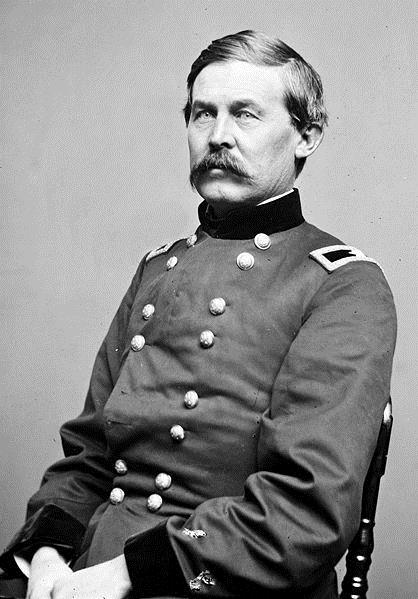
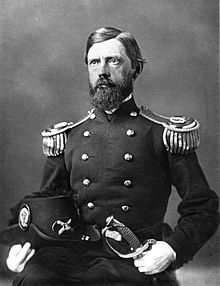
 buford

Brigadier General John Buford U.S.A.

On the night of June 30th Buford prepared for battle. Unlike Hill and Heth he understood exactly what he was facing. He met with “reliable men” most likely from the Bureau of Military Intelligence operated by David McConaughy as to the composition of Lee’s forces. [74] Buford knew his business; he took the time to reconnoiter the ridges west of Gettysburg and posted videttes as far was as Marsh Creek. He deployed one brigade under Colonel Thomas Devin to the north and west of the town, Colonel William Gamble’s brigade was deployed to the west, its main line being on McPherson’s Ridge.

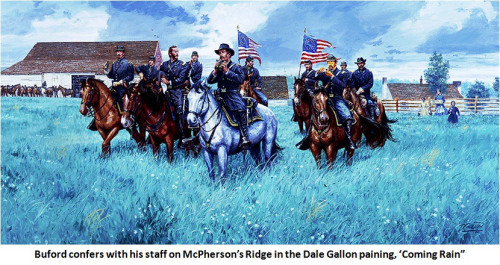
As he deployed his forces Buford formulated his plan. Riding with his brigade commanders and staff “Buford, puffing away on his pipe, peering through field glass, studied the road network and lay of the land. He calculated distance to physical landmarks and tried to determine how long it would take those Confederates massing behind South Mountain to come within carbine range.” [75] Buford’s composure and confidence inspired his troopers as well as local civilians who observed him as he surveyed the ground on which the greatest battle ever waged on American soil would be fought.

Considering that he had fewer than three-thousand troopers available at Gettysburg because the Reserve Brigade was still further south guarding the army’s trains, and that he was facing a foe many times larger, it was a bold plan. Buford seems to have convinced himself that “he could pull off something never achieved in this war: a defense in depth by dismounted cavalry against a force of foot soldiers with full artillery support.” [76] As such the crafty Buford planned “a defense in depth, fighting his men dismounted, using the series of ridgelines west of Gettysburg to hamper and delay the Rebel infantry he was certain would come “booming along” the Chambersburg Pike in the morning.” [77]

Noting that the ground was favorable to defense and giving battle Buford sent messages to Reynolds as to the situation. He warned Reynolds that “A.P. Hill’s corps is massed just back of Cashtown, about 9 miles from this place.” He also noted the location of Confederate pickets “only four miles west of Gettysburg.” [78] Devin’s troops also identified elements of Ewell’s corps north of the town. Buford had accurately informed his superiors of what was before him, information that they needed for the day of battle.

Buford set up his headquarters at the Eagle Hotel in Gettysburg where he spent the night and according to his signals officer was “anxious, more so than I ever saw him” [79] Buford discussed the tactical situation with Colonel Devin, commanding the brigade on Herr’s and McPherson’s Ridge. Devin did not yet believe that the Confederates would move on Gettysburg in the morning. Devin thought if there were any threats that “he could handle anything that could come up in the next 24 hours.” [80] Buford rejected Devin’s argument and told him bluntly “No you won’t…. They will attack you in the morning and they will come booming – skirmishers three deep. You will have to fight like the devil to hold your own.” [81]

In preparation for the Confederate advance Buford deployed about seven hundred of his men in videttes, or pickets several miles in advance of the main force of his division. These videttes stretched from the Blackhorse Tavern south and west of Gettysburg, across the Mummasburg and Carlisle Roads, ending east of town on the York Pike. The center of this line was along the Chambersburg or Cashtown Pike along Marsh Creek about five miles west of Gettysburg. These videttes were critical in ascertaining the direction and composition of any advancing Confederate forces.

Reynolds immediately saw the importance of the position elected to fight. He “ordered Buford to hold onto it to the last” believing that if Buford could “buy enough time, he might get his infantry into line “before the enemy should seize the point.” [82] Buford knew that against the odds he would face that he would only be able to hold for a few hours at best and since by “refusing to flee from Lee’s path, by committing himself to fight in an advanced position however favorable, he risked not only his division’s annihilation but the disarranging of Meade’s plans” [83] to fight a defensive battle along the Pipe Creek line. Buford and Reynold’s bold decisions on that last night of June 1863 committed the Army of the Potomac to battle Lee’s hearty veterans at Gettysburg.
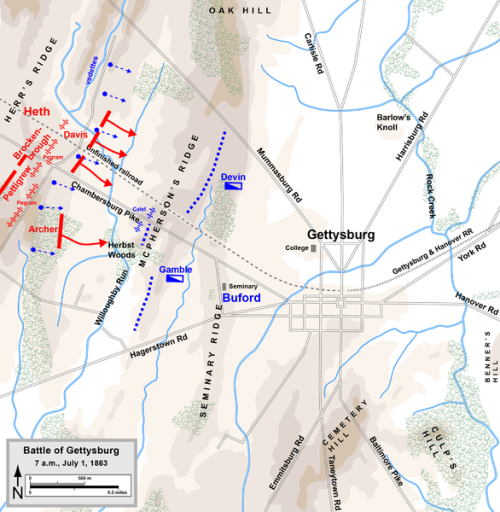
gburg delaying action

Buford’s Delaying Action July 1st

For Buford’s troopers the night and morning of June 30th and July 1st 1863 was spent in grim anticipation that they would meet a good portion of Lee’s army in battle. “It was a jumpy night, and the lowering clouds “poured down a drenching rain” [84] even as Buford’s advanced videttes observed the camp fires of the advanced Confederate outposts left by Pettigrew on the 30th   of June.

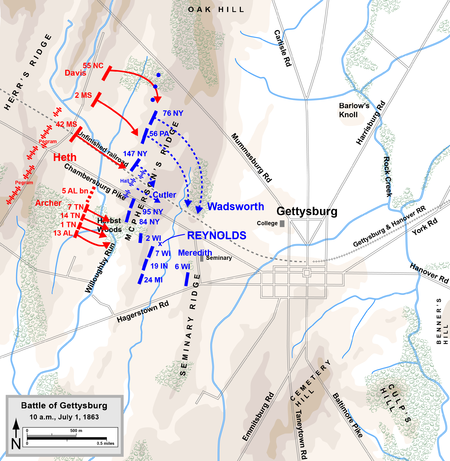
As the over-confident and lackadaisical Confederates advanced in the pre-dawn early morning mist they had a hard time determining what lay ahead of them and they “halted as they got to the swampy land fringing Marsh Creek, beyond which the ground angled up into a single swell to a ridge line.” [85] Pegram’s artillerists surveyed the ground to their front and noted mounted troops, but the limited visibility made it impossible to identify them, some even thought that they might belong to Longstreet’s corps, however Pegram knowing Longstreet’s corps was well the west, stopped his advance and unlimbered is guns. This caused the commander of Archer’s lead brigade, Colonel Birkett D. Fry of the 13th Alabama to ask Pegram what was going on and why he had stopped his advance. Upon seeing the artillery readying for action Fry “rode back to the color bearer and ordered him to uncase the colors.” [86] This was the first indication that the enemy was near and Fry quickly ordered his regiment to establish a skirmish line.

With the sun coming up the Union troops saw the now uncased colors of the Confederate battle flags to their front. Lieutenant Marcellus Jones of the 8th Illinois, commanding one of the detachments along Marsh Creek, expecting such rode to one of his advanced posts. He took a carbine from one of his sergeants and said “Hold on George, give me the honor of opening this ball” and at about 7:30 a.m. Jones fired the first shot of the battle of Gettysburg. [87]

Heth had wanted to advance in column as long as possible “but the Yankee cavalry’s stiff resistance had ended that hope.” [88] Heth rode forward and ordered Archer and Davis’s troops to advance skirmishers with the support of Pegram’s artillery. This slowed the Confederate advance considerable and Heth wrote in his after action report that “it became evident that there were infantry, cavalry and artillery in and around the town.” [89] At this point, Heth should have stopped and sought guidance on what to do next, however, instead of “feeling out the enemy” as directed by Hill, Heth “ordered Archer and Davis “to move forward and occupy the town.” [90] A chaplain in Brockenbrough’s brigade reported that one of Heth’s aide’s came up and reported “General Heth is ordered to move on Gettysburg, and fight or not as he wishes.” The chaplain heard one of the officers near him say “We must fight them; no division general will turn back with such orders.” [91]

Heth obviously expected small detachments of cavalry to give way at the sight of massed infantry, but Buford and his men had other plans. Instead of withdrawing the small cavalry detachments dismounted and used trees, bushes and fence lines for cover and poured forth a rapid fire with their Sharps carbines. This forced Heth’s skirmishers to advance slowly and deliberately, and forced the main body of his advanced brigades to deploy into battle formation supported by Pegram’s artillery.

About 8:00 A.M. Colonel Gamble who commanded the Buford’s First Brigade to which the videttes belonged “received a report that a strong enemy force was driving in his pickets.” [92] Gamble promptly reported this to Buford who in turn directed Gamble to deploy his “1,600 troopers to form a battle line on Herr’s Ridge a mile west of the seminary” [93] from which Buford was now directing his division. Likewise Buford ordered Devin’s Second Brigade to take up positions north of the Pike. He likewise order Lieutenant John Calef who commanded Battery “A” Second United States Horse Artillery to deploy his six three inch rifles along the ridge. However, instead of deploying them in an orthodox manner Buford ordered Calef to “spread his pieces wide apart to deceive the enemy into thinking his battery was actually two artillery units.” [94]

Everything that Buford did served to further confuse Heth, who now because of the heavy volume of fire his troops were receiving and his inability to see the horses of the dismounted cavalry believed that he was facing Federal infantry and artillery for Buford’s troopers “surely acted like infantry.” [95] Captain Amasa Dana of Company E. of the 8th Illinois “ordered his men to “throw up their carbine sights and [we] gave the enemy the benefit of long range practice [;] the firing was rapids from our carbines, and at the distance induced the enemy to the belief of four times our number actually present….” [96]

Instead of driving the cavalry out by force of numbers the Confederates had to advance deliberately to drive out the Union troopers, forcing Archer’s men to “undertake the time-consuming task of fixing the enemy in place, and then working parties around its flanks or any other chinks they could find.” [97] As they did this the veteran Union troopers withdrew and formed again, each time forcing the Confederates to slow their advance on Gettysburg.

Buford’s defense in depth was unlike anything that the Confederates had experienced at the hands of the Army of the Potomac. At each position Gable’s troopers continued to hold and his “carbineers continued to blast away as fast as they could reload, Calef’s shells thundering over their heads to burst in the fields beyond.” [98] That defense gave Buford an extra two hours and at 9:00 he directed his brigades to fall back to the next line of defense that of McPherson’s Ridge, where Buford’s troopers established another line.

Seeing the enemy before him Harry Heth committed yet another error. He was not going to let the Federal force stop him from reaching Gettysburg. On Herr’s Ridge he made a fateful decision. He spend over half an hour, from 9:00 until just past 9:30 deploying Archer’s Brigade in line of battle “and extending its left flank with the next brigade in line, that of Brigadier General Joseph R. Davis.” [99] Once that was accomplished Heth ordered Archer and Davis’s brigades forward toward Buford’s troops. It was a deadly mistake for Heth had no idea that the advance elements of John Reynold’s First Corps were rapidly moving to support Buford and that his troops were about to experience a fight like which they had never seen or expected. Despite this the Confederates pushed on and were threatening to force Buford’s troops from McPherson’s Ridge and “victory seemed to be at hand, but as the 13th Alabama climbed from the Willoughby Run ravine into a field south of McPherson Wood’s its men saw a Union line of battle a hundred yards to the front.” [100] John Reynold’s First Corps led by the famous Iron Brigade of Abner Doubleday’s First Division had arrived on the field.

The fight that Harry Heth and A.P. Hill had been directed not to precipitate was now on. Heth’s inexperience was more than matched by the cunning and brilliant Buford, whose troopers had fought a masterful delaying action, one which prefigured the later use of cavalry and eventually armored cavalry and motorized reconnaissance in later wars. Buford’s masterful defense along Marsh Creek, and Herr’s and McPherson’s Ridge enabled Reynolds’s infantry to come up before the Confederates could seize the key high ground to the west of Gettysburg.

Notes

[1] Dowdy, Clifford. Lee and His Men at Gettysburg: The Death of a Nation Skyhorse Publishing, New York 1986, originally published as Death of a Nation Knopf, New York 1958 p.78

[2] Robertson, James I. Jr. General A.P. Hill: The Story of a Confederate Warrior Random House, New York 1987 p.206

[3] Gallagher, Gary. Confederate Corps Leadership on the First Day at Gettysburg: A.P. Hill and Richard S. Ewell in a Difficult Debut in The First Day at Gettysburg edited by Gallagher, Gary W. Kent State University Press, Kent Ohio 1992 p.44

[4] Ibid Robertson General A.P. Hill p.206

[5] Sears, Stephen W. Gettysburg. Houghton Mifflin Co. Boston and New York 2003 p. 137

[6] Ibid. Gallagher Confederate Corps Leadership on the First Day at Gettysburg p.44

[7] Ibid Robertson General A.P. Hill p.206

[8] Ibid. Dowdy. Lee and His Men at Gettysburg p.92

[9] Coddington, Edwin B. The Gettysburg Campaign, A Study in Command A Touchstone Book, Simon and Shuster New York 1968 p.264

[10] Pfanz Harry W. Gettysburg: The First Day University of North Carolina Press, Chapel Hill and London 2001 p.51

[11] Ibid. Dowdy. Lee and His Men at Gettysburg p.79

[12] Pryor, Elizabeth Brown. Reading the Man: A Portrait of Robert E. Lee Through His Private Letters Penguin Books, New York and London 2007 p.352

[13] Ibid. Coddington The Gettysburg Campaign, A Study in Command p.264

[14] Alexander, Edward Porter. Fighting for the Confederacy: The Personal Recollections of General Edward Porter Alexander edited by Gary Gallagher University of North Carolina Press, Chapel Hill 1989 p.230

[15] Wert, Jeffry D. A Glorious Army: Robert E. Lee’s Triumph 1862-1863 Simon and Schuster, New York and London 2011 p.234

[16] Ibid. Dowdy. Lee and His Men at Gettysburg p.90

[17] Ibid. Wert A Glorious Army p.234

[18] Ibid Robertson General A.P. Hill pp.206-207

[19] Ibid. Dowdy. Lee and His Men at Gettysburg p.91

[20] Trudeau, Noah Andre. Gettysburg: A Testing of Courage, Harper Collins Publishers, New York 2002 p.147

[21] Ibid. Trudeau Gettysburg: A Testing of Courage p.153

[22] Ibid. Gallagher Confederate Corps Leadership on the First Day at Gettysburg p.32

[23] Ibid. Gallagher Confederate Corps Leadership on the First Day at Gettysburg p.32

[24] Ibid. Trudeau Gettysburg: A Testing of Courage, p.153

[25] Ibid. Gallagher Confederate Corps Leadership on the First Day at Gettysburg p.32

[26] Alexander, Edward Porter Military Memoirs of a Confederate: A Critical Narrative 1907 republished 2013 by Pickle Partners Publishing, Amazon Kindle Edition location 7342 of 12968

[27] Dowdy. Lee and His Men at Gettysburg: The Death of a Nation pp.91-92

[28] Ibid Robertson General A.P. Hill p.206

[29] Ibid. Dowdy. Lee and His Men at Gettysburg p.92

[30] Ibid. Trudeau Gettysburg: A Testing of Courage, p.153

[31] Ibid. Gallagher Confederate Corps Leadership on the First Day at Gettysburg p.44

[32] Ibid. Trudeau Gettysburg: A Testing of Courage, p.153

[33] Ibid. Coddington The Gettysburg Campaign, A Study in Command p.274

[34] Ibid. Coddington The Gettysburg Campaign, A Study in Command p.274

[35] Ibid. Sears Gettysburg p. 161

[36] Ibid. Pfanz Gettysburg: The First Day p.52

[37] Ibid. Trudeau Gettysburg: A Testing of Courage, p.153

[38] Guelzo, Allen C. Gettysburg: The Last Invasion Vintage Books a Division of Random House, New York 2013 p.131

[39] Ibid Robertson General A.P. Hill p.207

[40] Ibid. Dowdy. Lee and His Men at Gettysburg p.93

[41] Ibid. Guelzo. Gettysburg: The Last Invasion p.135

[42] Ibid. Guelzo. Gettysburg: The Last Invasion p.134

[43] Ibid. Coddington The Gettysburg Campaign, A Study in Command p.264

[44] Ibid. Sears Gettysburg p. 162

[45] Ibid. Guelzo. Gettysburg: The Last Invasion p.134

[46] Ibid. Sears Gettysburg p. 162

[47] Ibid. Dowdy. Lee and His Men at Gettysburg p.93

[48] Ibid. Trudeau Gettysburg: A Testing of Courage, p.156

[49] Ibid. Dowdy. Lee and His Men at Gettysburg p.93

[50] Pfanz. Gettysburg: The First Day p.53

[51] Ibid. Trudeau Gettysburg: A Testing of Courage, p.158

[52] Ibid. Coddington The Gettysburg Campaign, A Study in Command p.264

[53] Longacre, Edward G. John Buford: A Military Biography Da Capo Press, Perseus Book Group, Cambridge MA p.17

[54] Ibid. Guelzo. Gettysburg: The Last Invasion p.121

[55] Ibid. Longacre John Buford p.36

[56] Ibid. Longacre John Buford p.36

[57] Ibid. Longacre John Buford p.54

[58] Ibid. Guelzo. Gettysburg: The Last Invasion p.121

[59] Ibid. Longacre John Buford p.70

[60] Ibid. Longacre John Buford p.70

[61] Ibid. Longacre John Buford p.78

[62] Ibid. Guelzo. Gettysburg: The Last Invasion p.121

[63] Ibid. Longacre John Buford p.122

[64] Ibid. Coddington The Gettysburg Campaign, A Study in Command p.44

[65] Ibid. Longacre John Buford p.173

[66] Ibid. Coddington The Gettysburg Campaign, A Study in Command p.64

[67] Longacre, Edward G. The Cavalry at Gettysburg: A Tactical Study of Mounted Operations during the Civil War’s Pivotal Campaign, 9 June-14 July 1863 University of Nebraska Press, Lincoln and London 1986 p.168

[68] Ibid. Longacre John Buford p.181

[69] Ibid. Guelzo. Gettysburg: The Last Invasion p.133

[70] Ibid. Coddington The Gettysburg Campaign, A Study in Command p.258

[71] Ibid. Trudeau Gettysburg: A Testing of Courage, p.142

[72] Ibid. Guelzo. Gettysburg: The Last Invasion pp.122-123

[73] Ibid. Trudeau Gettysburg: A Testing of Courage, pp.142-143

[74] Ibid. Trudeau Gettysburg: A Testing of Courage, p.141

[75] Ibid. Longacre John Buford p.184

[76] Ibid. Longacre The Cavalry at Gettysburg p.185

[77] Ibid. Sears Gettysburg p. 157

[78] Ibid. Guelzo. Gettysburg: The Last Invasion p.122

[79] Ibid. Sears Gettysburg p. 157

[80] Catton, Bruce The Army of the Potomac: Glory Road Doubleday and Company, Garden City New York, 1952 p.266

[81] Ibid. Guelzo. Gettysburg: The Last Invasion p.123

[82] Ibid. Guelzo. Gettysburg: The Last Invasion pp.122-123

[83] Ibid. Longacre The Cavalry at Gettysburg p.185

[84] Ibid. Guelzo. Gettysburg: The Last Invasion p.132

[85] Ibid. Trudeau Gettysburg: A Testing of Courage, p.158

[86] Ibid. Trudeau Gettysburg: A Testing of Courage, pp.158-159

[87] Pfanz. Gettysburg: The First Day p.53

[88] Ibid. Sears Gettysburg p. 163

[89] Luvaas, Jay and Nelson Harold W editors. The U.S. Army War College Guide to the Battle of Gettysburg South Mountain Press, Carlisle PA 1986 p.7

[90] Ibid. Sears Gettysburg p. 165

[91] Ibid. Trudeau Gettysburg: A Testing of Courage, p.163

[92] Ibid. Coddington The Gettysburg Campaign, A Study in Command p.266

[93] Ibid. Coddington The Gettysburg Campaign, A Study in Command p.266

[94] Ibid. Longacre John Buford p.191

[95] Ibid. Sears Gettysburg p. 164

[96] Ibid. Trudeau Gettysburg: A Testing of Courage, p.162

[97] Ibid. Trudeau Gettysburg: A Testing of Courage, p.162

[98] Ibid. Longacre The Cavalry at Gettysburg p.187

[99] Ibid. Longacre John Buford p.191

[100] Ibid. Pfanz. Gettysburg: The First Day p.68
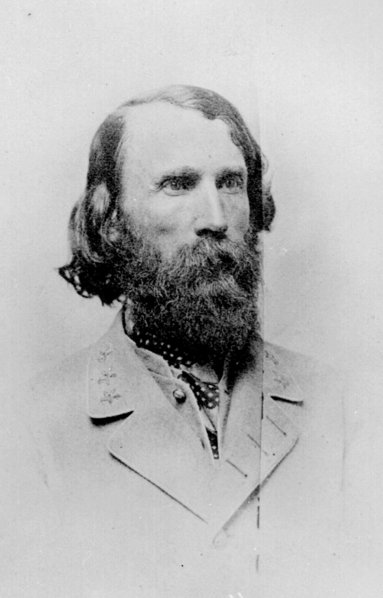
2 Comments

Filed under civil war, Gettysburg, History, leadership, Military

Prelude to Gettysburg: A Spirit of Unbelief

Hill.28135413_std

Lieutenant General A.P. Hill


Friends of Padre Steve’s World 

Here is a revised chapter from my Gettysburg text. I will be taking another group of my students up in two weeks.

Have a great weekend.

Peace

Padre Steve+

When Robert E. Lee learned of the Army of the Potomac’s presence north of the Potomac River he ordered his widely dispersed army concentrate near Cashtown and Gettysburg. It was a complicated movement that involved at least five major operations: the shift of the bulk of Ewell’s Second Corps from its planned attack on Harrisburg, the redirection of Early’s division east from its position on the Susquehanna to the west, the movement of Hill’s Third Corps from the area around Cashtown to a position east of Gettysburg, Longstreet’s First Corps north to Chambersburg and Cashtown and the cavalry brigades of Beverly Robertson, Grumble Jones and John Imboden which were to join the army in Pennsylvania. The movement “would take at least two days – the 29th and the 30th of June – and perhaps more…the complete its concentration, especially since the rains had “made the roads very muddy,” forcing “the infantry” to march off the roads….” [1]

Lieutenant General A.P. Hill’s Third Corps that was nearest of Lee’s major units to Cashtown and Gettysburg. Major General Harry Heth’s division led the corps and arrived at Cashtown on June 29th. His division was followed by that of Major General Dorsey Pender which arrived on the 30th. Hill ordered his last division under the command of Major General Richard Anderson to remain behind at “Fayetteville until July 1, when he would join the rest at Cashtown.” [2]

Cashtown was important as a road junction and because it “was situated at one of the few gaps in the Pennsylvania Mountains” and because one of the roads emanating from it “snaked eight miles to another community called Gettysburg.” [3] However the order to concentrate the army at Cashtown presented its own problems. First was the matter of forage. There was not enough room for all the units ordered to Cashtown to have adequate areas to forage, as:

“each division would (by the standard required of nineteenth-century armies) require a circle twelve and a half miles around its encampments to forage (for water, firewood, and feed for men and horses); one single regiment could denuded an acre of woodland just for firewood every three days.” [4]

Likewise, because of the limited road network, Cashtown was becoming a choke point which as his units closed in slowed their movement and created massive traffic problems and confusion. Hill ordered Heth’s division to take the lead and advance to Cashtown on the 29th. The units of Hill’s corps had to endure heavy rains on the 29th which slowed their march and Heth halted at Cashtown knowing that the army would concentrate there while Pender’s division moved into the area his division had vacated.

Early in the morning of June 30th Harry Heth decided to undertake a foraging expedition to Gettysburg.to “search the town for army supplies (shoes especially), and to return the same day.” [5] It was the first in a series of miscalculations that brought Lee’s army into a general engagement that Lee wished to avoid and it is hard to comprehend in light of Lee’s orders not to precipitate a fight.

However, the expedition had taken a toll on the soldiers, especially in terms of shoes, clothes and equipment. The “long march over the hard macadam roads of the North had played havoc with the scraggly foot coverings of Lee’s men.” [6] After muster on the morning of June 30th Heth ordered Johnston Pettigrew’s “brigade to Gettysburg in search of supplies, especially badly needed shoes, which were badly needed by his the men of his division.” Heth, for a reason he never elaborated on decided that there must be shoes in Gettysburg. Perhaps he did not know that the town had been picked clean by John Gordon’s brigade of Jubal Early’s division just a few days before, but for whatever reason he believed this to be the case.

Hill’s Third Corps had been formed as part of the reorganization of the army following Stonewall Jackson’s death after the Battle of Chancellorsville. Hill had a stellar reputation as a division commander; his “Light Division” had distinguished itself on numerous occasions, especially at Antietam where its timely arrival after a hard forced march from Harper’s Ferry helped save Lee’s army late in the battle. At Chancellorsville Hill briefly succeeded Jackson until he too was wounded.

Hill was recommended for promotion to Lieutenant General and command of the new Third Corps by Lee on May 24th 1863. He was promoted over the heads of both Harvey Hill and Lafayette McLaws. The move displeased Longstreet who considered Lafayette McLaws “better qualified for the job.” Likewise there were others who felt that the command should have gone to Harvey Hill, now commanding the Department of North Carolina who’s “record was as good as that of Stonewall Jackson…but, not being a Virginian, he was not so well advertised.” [7]

Ambrose Powell Hill was slightly built and high strung. “Intense about everything” Hill was “one of the army’s intense disbelievers in slavery.” [8] Hill was an 1847 graduate of West Point and briefly served in Mexico but saw no combat. He spent some time in the Seminole wars but due to frequent bouts of ill-health he spent much of his career in garrison duty along the East Coast. Since he was prone to sickness he was assigned to the office of Coastal Survey, a Navy command from 1855 through 1861. Despite pleas from his superiors and his own opposition to secession and slavery, Hill resigned his commission just before Virginia’s secession.

At the outbreak of the war he “received his commission as colonel, and soon trained one of Johnston’s best regiments in the Valley.” [9] He commanded a brigade under Longstreet on the Peninsula and was promoted to Major General and command of the Light Division in May 1862, leading it with distinction, especially at Antietam where his march from Harper’s Ferry and timely arrival on the afternoon of September 17th saved the army of Northern Virginia from utter and complete destruction. He was plagued by health problems which had even delayed his graduation from West Point, health issues that would arise on the first day at Gettysburg.

Hill’s Third Corps was emblematic of the “makeshift nature of the reorganization of the whole army.” [10] It was composed of three divisions. His best and most experienced division was that of the recently promoted and hard fighting Major General Dorsey Pender. Pender’s division was built around four excellent brigades from Hill’s old “Light Division” one of which Pender had commanded before his promotion. Hill had strongly recommended Pender’s promotion during the reorganization, a proposal which was accepted by Lee. Pender, though a fierce fighter and excellent leader, found command of a division to be a heavy burden. He was “an intelligent, reflective man, deeply religious and guided by a strong sense of duty….” [11]

Hill’s second experienced division was that of Major General Richard Anderson. This division had been transferred from Longstreet’s First Corps during the reorganization. Longstreet resented losing the division to Hill, with who he had previously run afoul and this was yet another issue which failed to endear Hill to Longstreet. [12]

The unassuming Anderson had distinguished himself as a brigade and division commander in Longstreet’s corps, but in “an army of prima donnas, he was a self-effacing man, neither seeking praise for himself nor winning support by bestowing it on others.” [13] At Chancellorsville Anderson fought admirably and Lee wrote that Anderson was “distinguished for the promptness, courage and skill with which he and his division executed every order.” [14] With four seasoned brigades under excellent commanders it was a good addition to the corps, although the transition from Longstreet’s stolid and cautious style of command to Hill’s impetuous style introduced “another incalculable of the reshuffled army.” [15]

Major General Harry Heth’s division was the final infantry division assigned to the corps. The division was new and had was cobbled together from two brigades of Hill’s old Light Division and “the two new brigades that Jefferson Davis had forced on an already disrupted army organization.” [16] The organization of this division as well as its leadership would be problematic in the days to come, especially on June 30th and July 1st 1863. The hasty and makeshift organization under leaders who had not served together, many of who were new to command, as well as units which had not fought together spelled trouble.

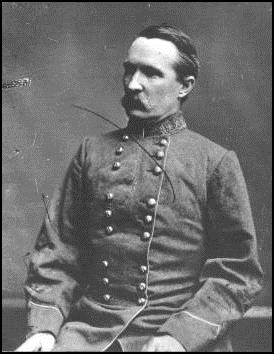
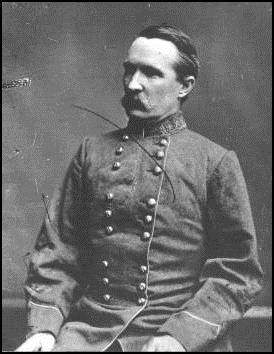
Harry Heth, like Dorsey Pender was also newly promoted to his grade and the action at Gettysburg would be his first test in division command. Heth was a native Virginian. He came from a family that well connected both socially and politically. He had a social charm had “many friends and bound new acquaintances to him” readily. [17] Heth was a cousin of George Pickett. He was a West Point graduate and classmate of Hill. At West Point Heth had an undistinguished academic career and graduated last in the class of 1847. His career in the ante-bellum army was typical of many officers, he served “credibly in an 1855 fight with Sioux Indians” but his real claim to fame was in authoring the army’s marksmanship manual which was published in 1858. [18]

heth

Major General Harry Heth

Heth’s career with the Confederate army serving in western Virginia was undistinguished but he was a protégé of Robert E. Lee who recommended him as a brigade commander to Jackson before Chancellorsville. Tradition states that of all his generals that Heth was the only one “whom Lee called by his first name.” [19] A.P. Hill when writing Lee about the choice of a successor for the Light Division noted that Heth was “a most excellent officer and gallant soldier” but in the coming campaign “my division under him, will not be half as effective as under Pender.” [20] Douglas Southall Freeman noted that Heth was “doomed to be one of those good soldiers…who consistently have bad luck.” [21]

Heth’s division was composed of two depleted brigades from the Light Division which had taken heavy casualties at Chancellorsville. One brigade, commanded by the hard fighting former regular army officer Brigadier General James Archer. Archer was from Maryland and a graduate of Princeton University who had given up a law practice to join the army. Described as a “little gamecock” who “had no sense of fear” [22] Archer had saved the Confederate line at Fredericksburg leading a desperate counterattack at Prospect Hill. The brigade was composed of four veteran regiments, but was now down to barely 1200 soldiers in the ranks by the time it arrived at Cashtown. However, the brigade which was recruited from Alabama and Tennessee was “well led and had a fine combat reputation.”

But the second brigade was more problematic. This was the Virginia brigade under the command of “the plodding, uninspiring Colonel John Brockenbrough.” [23] Brockenbrough was an “1850 of the Virginia Military Institute and a farmer,” who had “entered the Confederate service as Colonel of the 40th (Virginia) in May 1861.” [24] The brigade had once been considered one of the best in the army had deteriorated in quality following the wounding of its first commander Brigadier General Charles Field. Heth took command of it at Chancellorsville where both he and the brigade performed well. The brigade had taken very heavy casualties and now was reduced to under 1000 effectives. When Heth was promoted the lack of qualified officers left it under the command of its senior colonel, John Brockenbrough.[25] Lee did not consider Brockenbrough “suited for promotion” but “could be counted on to keep together a command sadly reduced in numbers.” [26]

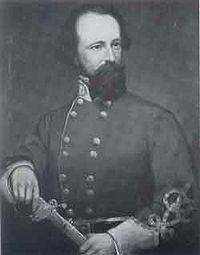
His third brigade came from Mississippi and North Carolina and was commanded by the “stuffy and ambitious” [27] Brigadier General Joe Davis whose uncle was President Jefferson Davis. Davis had served on his uncle’s staff for months and had no combat experience. [28] One author noted that Davis’s promotion to Brigadier General “as unadulterated an instance of nepotism as the record of the Confederacy offers.” [29] His subordinate commanders were no better, one William Magruder was so bad that J.E.B. Stuart suggested that “he have his commission revoked” and only one of the nine field grade officers in his brigade had military training, and that from the Naval Academy. [30] The brigade was also a makeshift operation with two veteran regiments including the 11th Mississippi which had “gone through blood and fire together on the Peninsula through Antietam.” [31] After Antietam, these units were then paired with two new regiments and a new politically connected commander and sent to the backwater of North Carolina where they saw no action. The veteran regiments “mistrusted not only their commander, but the reliability of its yet untested units.” [32]

pettigrew

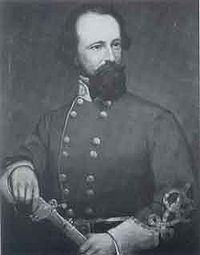
Brigadier General Johnston Pettigrew

Heth’s largest brigade was new to the army. Commanded by the North Carolina academic Brigadier General Johnston Pettigrew it had no combat experience. Pettigrew himself was considered a strong leader. He had been badly wounded at Seven Pines and thinking his wound mortal “he refused to permit his men to leave the ranks to carry him to the rear.” [33] He was captured but later paroled and returned to the army to command a brigade later in the year.

Hill was under the impression that Meade’s army was still miles away, having just come from meeting Lee who assured him that “the enemy are still at Middleburg,” (Maryland) “and have not yet struck their tents.” [34] With that assurance Heth decided to use June 30th to send Pettigrew’s brigade on the foraging expedition to Gettysburg. An officer present noted that Heth instructed Pettigrew “to go to Gettysburg with three of his regiments present…and a number of wagons for the purpose of collecting commissary and quartermaster stores for the use of the army.” [35]

However Heth did instruct Pettigrew in no uncertain terms not to “precipitate a fight” should he encounter “organized troops” of the Army of the Potomac. [36] Heth was specific in his report that “It was told to Pettigrew that he might find in the town in possession of a home guard,…but if, contrary to expectations, he should find any organized troops capable of making resistance., or any part of the Army of the Potomac, he should not attack it.” [37]

That in mind one has to ask the question as to why Heth would employ “so many men on a long, tiring march, especially as without a cavalry escort he took the risk of sending them into a trap” when his “objects hardly justified” using such a large force. [38] Edwin Coddington is particularly critical of Heth in this regard.

Likewise it has to be asked why the next day in light of Lee’s standing orders not to provoke an engagement that Hill would send two divisions, two thirds of his corps on what was supposedly reconnaissance mission. Some have said that Hill would have had to move to Gettysburg on July 1st anyway due to forage needs of the army, [39] but this is not indicated in any of Hill or Heth’s reports.

As his troops neared Gettysburg Pettigrew observed the Federal cavalry of Buford’s 1st Cavalry Division as they neared the town. He received another report “indicating that drumming could be heard in the distance – which might mean infantry nearby, since generally cavalry generally used only bugles.” [40] He then prudently and in accordance with his orders not to precipitate a fight “elected to withdraw rather than risk battle with a foe of unknown size and composition.” [41] His troops began their retrograde at 11 a.m. leaving Buford’s cavalry to occupy the town at ridges. On Confederate wrote “in coming in contact with the enemy, had quite a little brush, but being under orders not to bring a general engagement fell back, followed by the enemy.” [42]

Upon returning Pettigrew told Hill and Heth that “he was sure that the force occupying Gettysburg was a part of the Army of the Potomac” but Hill and Heth discounted Pettigrew’s report. [43] “Heth did not think highly of such wariness” and “Hill agreed with Heth” [44] Hill believed that nothing was in Gettysburg “except possibly a cavalry vedette.” [45] Hill was not persuaded by Pettigrew or Pettigrew’s aide Lieutenant Louis Young who had previously served under Hill and Pender who reported that the “troops that he saw were veterans rather than Home Guards.” [46] Hill reiterated that he did not believe “that any portion of the Army of the Potomac was up” but then according to Young Hill “expressed the hope that it was, as this was the place he wanted it to be.[47]

Part of the issue was related to the fact that Pettigrew, though highly intelligent, and who had been an observer of wars in Europe was not a professional soldier. Likewise, since had was new to the Army of the Northern Virginia he was an unknown to both Hill and Heth. As such they dismissed his report. In their casual dismissal of Pettigrew’s report, the West Point Graduates Hill and Heth may have manifested an often typical “distain for citizen soldiers…a professional questioning a talented amateur’s observations” [48]

Pettigrew was “aghast at Hill’s nonchalant attitude” [49] and Young was dismayed and later recalled that “a spirit of unbelief” seemed to cloud the thinking of Hill and Heth. [50] In later years Young wrote that the “blindness in part seems to have come over our commanders, who slow to believe in the presence of an organized army of the enemy, thought that there must be a mistake in the report taken back by General Pettigrew.” [51]

Since neither man believed Pettigrew’s report, Heth then asked Hill “whether Hill would have any objection to taking his division to Gettysburg again to get those shoes.” Hill replied “none in the world.” [52] It was to be a fateful decision, a decision that brought about a series of events which in turn led to the greatest battle even fought on the American continent.

Douglas Southall Freeman wrote “On those four words fate hung” [53] and in “that incautious spirit, Hill launched Harry Heth’s division down the Chambersburg Pike and into battle at Gettysburg.” [54]

 Notes

[1] Guelzo, Allen C. Gettysburg: The Last Invasion Vintage Books a Division of Random House, New York 2013 p.128

[2] Coddington, Edwin B. The Gettysburg Campaign, A Study in Command A Touchstone Book, Simon and Shuster New York 1968 p.194

[3] Robertson, James I. Jr. General A.P. Hill: The Story of a Confederate Warrior Random House, New York 1987

[4] Ibid. Guelzo, Gettysburg: The Last Invasion p.128

[5] Ibid. Coddington, The Gettysburg Campaign, A Study in Command p. 263

[6] Ibid. Robertson A.P. Hill p.205

[7] Foote, Shelby, The Civil War, A Narrative. Volume Two Fredericksburg to Meridian Random House, New York 1963 p.453

[8] Ibid. Dowdy, Lee and His Men at Gettysburg: The Death of a Nation p.79

[9] Ibid. Freeman Lee’s Lieutenant’s a Study in Command p.109

[10] Ibid. Dowdy, Lee and His Men at Gettysburg: The Death of a Nation p.88

[11] Ibid. Dowdy, Lee and His Men at Gettysburg: The Death of a Nation p.85

[12] Ibid. Dowdy, Lee and His Men at Gettysburg: The Death of a Nation p.86

[13] Ibid. Dowdy, Lee and His Men at Gettysburg: The Death of a Nation p.86

[14] Ibid. Freeman Lee’s Lieutenant’s a Study in Command p.512

[15] Ibid. Dowdy, Lee and His Men at Gettysburg: The Death of a Nation p.86

[16] Ibid. Dowdy, Lee and His Men at Gettysburg: The Death of a Nation p.87

[17] Ibid. Freeman Lee’s Lieutenant’s a Study in Command p.527

[18] Krick, Robert K. Three Confederate Disasters on Oak Ridge: Failures of Brigade Leadership on the First Day of Gettysburg in The First Day at Gettysburg edited by Gallagher, Gary W. Kent State University Press, Kent Ohio 1992 p.96

[19] Ibid. Krick. Three Confederate Disasters on Oak Ridge p.96

[20] Ibid. Freeman Lee’s Lieutenant’s a Study in Command p.527

[21] Ibid. Freeman Lee’s Lieutenant’s a Study in Command p.46

[22] Ibid. Guelzo, Gettysburg: The Last Invasion p.134

[23] Sears, Stephen W. Gettysburg. Houghton Mifflin Co. Boston and New York 2003 p.55

[24] Pfanz Harry W. Gettysburg: The First Day University of North Carolina Press, Chapel Hill and London 2001 p.118

[25] Ibid. Dowdy, Lee and His Men at Gettysburg: The Death of a Nation p.87

[26] Ibid. Freeman Lee’s Lieutenant’s a Study in Command p.529

[27] Ibid. Guelzo, Gettysburg: The Last Invasion p.133

[28] Ibid. Freeman Lee’s Lieutenant’s a Study in Command p.533

[29] Ibid. Krick. Three Confederate Disasters on Oak Ridge p.99

[30] Ibid. Krick. Three Confederate Disasters on Oak Ridge p.101

[31] Ibid. Guelzo, Gettysburg: The Last Invasion p.134

[32] Ibid. Guelzo, Gettysburg: The Last Invasion p.134

[33] Ibid. Freeman Lee’s Lieutenant’s a Study in Command p.136

[34] Ibid. Guelzo, Gettysburg: The Last Invasion p.131

[35] Trudeau, Noah Andre. Gettysburg: A Testing of Courage, Harper Collins Publishers, New York 2002 p.128

[36] Ibid. Sears Gettysburg p.136

[37] Ibid. Trudeau Gettysburg: A Testing of Courage, p.129

[38] Ibid. Coddington, The Gettysburg Campaign, A Study in Command p. 263

[39] Ibid. Guelzo. Gettysburg: The Last Invasion p.131 This argument does have merit based on the considerations Guelzo lists but neither Hill, Heth or Lee make any mention of that need in their post battle reports.

[40] Ibid. Trudeau Gettysburg: A Testing of Courage, p.130

[41] Gallagher, Gary. Confederate Corps Leadership on the First Day at Gettysburg: A.P. Hill and Richard S. Ewell in a Difficult Debut in The First Day at Gettysburg edited by Gallagher, Gary W. Kent State University Press, Kent Ohio 1992 p.42

[42] Ibid. Trudeau Gettysburg: A Testing of Courage, p.135

[43] Ibid. Coddington, The Gettysburg Campaign, A Study in Command pp. 263-264

[44] Foote, Shelby, The Civil War, A Narrative. Volume Two Fredericksburg to Meridian Random House, New York 1963 p.465

[45] Ibid. Pfanz Gettysburg: The First Day p.27

[46] Ibid. Gallagher, Gary. Confederate Corps Leadership on the First Day at Gettysburg p.42

[47] Ibid. Pfanz. Gettysburg: The First Day p.27

[48] Ibid. Gallagher, Gary. Confederate Corps Leadership on the First Day at Gettysburg p.42

[49] Ibid. Guelzo. Gettysburg: The Last Invasion p.131

[50] Ibid. Coddington, The Gettysburg Campaign, A Study in Command p. 264

[51] Ibid Pfanz Gettysburg: The First Day p.27

[52] Ibid. Coddington, The Gettysburg Campaign, A Study in Command p. 264

[53] Ibid. Freeman Lee’s Lieutenant’s a Study in Command p. 563

[54] Ibid. Krick. Three Confederate Disasters on Oak Ridge p.94

Leave a comment

Filed under civil war, Gettysburg, History, leadership, Military

“Our Army Would Be Invincible If…” Pt.4 A.P. Hill’s Third Corps

Friends of Padre Steve’s World

This is the fourth part of my re-written chapter on the leadership of Army of Northern Virginia at Gettysburg. Today is a look at the leaders of Lieutenant General A.P. Hill’s Third Corps. This like the following sections of this chapter of my Gettysburg text is interesting because it shows the complexities of the lives and personalities of the men leading these units. Professional soldiers, volunteers with little military experience, soldiers, lawyers, engineers and politicians they are an interesting collection of personalities; some surrounded in myth and others practically unknown. I think it is important for anyone studying a war, a campaign, or a battle to at least look at the lives of the men who planned and fought it. In doing so, even those that oppose what they did in rebelling against the United States can find in them some measure of humanity, and sometimes even gain a sense of empathy for some of them.   

That is why when we look at the lives of soldiers, we have to take the time to at least try to understand the nuance, the contradictions, their strengths and weaknesses as leaders, as well as a measure of their character.

In the coming week I will be doing Stuart’s Cavalry Division. I will then get to work on a similar chapter for the Army of the Potomac.

Have a great night

Peace

Padre Steve+

general_a_p_hill

Lieutenant General Ambrose Powell “A.P.” Hill, C.S.A.

The newly created Third Corps under Lieutenant General A.P. Hill was thought to be in good hands. Hill had commanded his large; six brigade “Light Division” with distinction, though having serious conflicts with both Longstreet and Jackson. At Antietam Hill’s hard marching from Harpers Ferry which allowed the Light Division to arrive on the battlefield in a nick of time, had saved the Army of Northern Virginia from destruction.

Hill was a graduate of West Point, class of 1847. He would have been part of the illustrious class of 1846, but the young cadet had a certain proclivity for women and a certain amount of debauchery lost a year of study after contracting “a case of gonorrhea, followed by complications, which were followed by lingering prostatitis” [1] afflictions which caused many other ailments that would plague him the rest of his life. At West Point Hill roomed with and became a longtime friend of a refined cadet from Philadelphia, George McClellan. His delayed graduate put him in the class of 1847 where along with his roommate Julian McAllister and friends Harry Heth and Ambrose Burnside were the social leaders of the class, due to their “practical jokes and boisterous conduct.” [2]

Hill graduated fifteenth in his class and was assigned to the artillery. The young Second Lieutenant accompanied Brigadier General Joseph Lane’s brigade to Mexico where he saw limited action at the end of the war and mainly served on occupation duty. In Mexico and in the following years he was stricken with various fevers including typhoid and yellow fever, as well as recurrences of his prostatitis which so limited his ability to serve in the field with the artillery that he requested a transfer to a desk job. This he was granted by Secretary of War Jefferson Davis who detailed him “for special duty in the United States Coast Survey offices in Washington D.C.” [3]

The assignment to the Coast Survey offices was unusual, especially for Hill’s era of service, for they were a part of the Department of the Navy. Despite much political support Hill could not get promoted to captain, likely due to the fact that he was working for the Navy. As war drew near Hill married Kitty Morgan McClung. His friends at the Coastal Survey attempted to convince him to remain with the Union as serving in their office he would have little chance of taking up arms against Virginia.

Hill was torn, he hated slavery and the depreciations visited on blacks; having in 1850 responded to the lynching of a young black man in his home town of Lynchburg: “Shame, shame upon you all, good citizens…Virginia must crawl unless you vindicate good order or discipline and hang every son of a bitch connected with this outrage.” [4] Likewise he was not in favor of secession, but he, like so many other Southern officers felt a stronger connection to family and his Virginia heritage than to the Union, and resigned his commission on February 26th 1861.

Hill was appointed as a Colonel of infantry in May 1861 to organize and command the 13th Virginia Infantry regiment. He commanded the regiment in the Valley and western Virginia as well as at First Manassas. By February 1862 he was a Brigadier General commanding Longstreet’s old Virginia brigade on the Peninsula where he distinguished himself against McClellan at Williamsburg. On May 26th 1862 he was promoted to Major General and given command of the very large so called “Light Division.” He emerged from the fighting on the Peninsula, the battles around Richmond and the Seven Days “with the reputation of being one of the best combat officers that Lee had.” [5] However, his success on the battlefield, like so many commanders came at great cost. In those battles his division suffered nearly 5,500 casualties. “Six colonels and three majors were killed; two brigadiers (Anderson and Pender), eleven colonels and six lieutenant colonels wounded.” [6]

Hill had an earned reputation as a brilliant division commander with the Light Division. Despite his clashes with Longstreet, and especially with Jackson, who had Hill arrested twice and attempted to have him court-martialed, Lee recommended him to take command of Third Corps. Lee sang his praise of Hill and his abilities to Jefferson Davis noting that Hill was “the best soldier of his grade with me.” [7] However, Hill had never commanded more than one division in action, except for the confused hour after Jackson had been struck down. Hill, however, was devoted, prompt, and energetic, and deserved promotion.” [8]

Hill’s reputation as a superb division commander was well earned, at Antietam where when Lee’s army was in danger of destruction, he “drove his men at a killing pace toward the sound of distant gunfire….” [9] Hill’s “Light Division’s remarkable march from Harper’s Ferry- seventeen miles in less than eight hours- rivaled the best marks by Jackson’s famous foot cavalry.” [10] Upon his arrival “instantly recognized the military situation, Kyd Douglas wrote, “and without waiting for the rest of the division and without a breathing spell he threw his columns into line and moved against the enemy, taking no note of their numbers.” [11] Hill’s march saved the Army of Northern Virginia from destruction as he dealt reverses to his old friends McClellan and Burnside. “Lee’s reference to him in his official Sharpsburg report, “And then A.P. Hill came up,” had become a byword in the army.” [12] There were other times, notably at Second Manassas and Fredericksburg where “he was sometimes careless on the battlefield,” and in both instances “his defensive postings were poor and nearly proved very costly.” [13]

Hill was a “nervous wiry man with a persistent chip of underappreciation on his shoulders and a bevy of chronic illnesses when under stress.” [14] He had an “impetuous streak and fiery temperament that matched his red beard, traits that at times had brought him trouble on the battlefield and off…” [15] He Despite that Hill exhibited a fondness and care for the welfare of his men that earned their respect and admiration. One officer called him “the most loveable of all Lee’s generals,” while “his manner so courteous as almost to lack decision.” [16]

Hill detested Jackson, who he referred to as “that old Presbyterian fool.” [17] His poor relations with Jackson’s confidants at Second Corps ensured that Ewell took Second Corps when Lee reorganized the army after Chancellorsville.

Lee appointed Hill to command Third Corps of which “half of the troops had been with him all along” [18] in the Light Division. Lee liked Hill’s aggressiveness and command instincts, which mirrored his own. Lee hoped that Hill’s aggressive instincts as a division commander would translate into success at the corps level. As such Lee, promoted him over the head of D.H. Hill and Lafayette McLaws who were both senior to him. Longstreet was not in favor of Hill’s appointment, most likely due to his altercation with Hill the previous year and lobbied for the promotion of D.H. Hill.

Regarding the promotion of A.P. Hill and Ewell, Lee wrote to Davis:

“I wish to take advantage of every circumstance to inspire and encourage…the officers and men to believe that their labors are appreciated, and that when vacancies occur that they will receive the advantages of promotion….I do not know where to get better men than those I have named.” [19]

But the decision to promote the Ewell and Hill, both Virginians stirred some dissent among those that believed that Lee was “favoring Virginians over officers from other states. The promotion of A.P. Hill, as previous noted was “made over the head of two Major Generals more senior than Hill- North Carolinian D.H. Hill and Georgian Lafayette McLaws.” [20] There is some validity to this perception, as Longstreet’s biographer Jeffry Wert noted:

“While the bulk of the troops hailed from outside the Old Dominion, two of the three corps commanders, six of the ten division commanders – including Jeb Stuart with the cavalry – and sixteen of forty-seven brigade commanders were natives of Virginia, along with the army commander and the chief of artillery.” [21]

Hill’s corps, like those of Longstreet and Ewell was composed of three divisions, and even more so than Ewell his division suffered a want of senior leaders who had served at the grade they were now expected to serve.

Anderson’s Division

Richard_H._Anderson

Major General Richard Anderson, C.S.A.

The most stable division in Third Corps was Richard Anderson’s, transferred from First Corps. Under Longstreet the division and its commander had served well. Anderson was an 1842 graduate of West Point and classmate of Longstreet and Lafayette McLaws. He served as in the Dragoons on the frontier, in Mexico and again on the frontier, throughout the 1840s and 1850s. He was promoted to Captain in 1855 and stationed in Nebraska when his home state of South Carolina seceded from the Union.

“Tall, strong, and of fine background, Anderson never was disposed to quibble over authority or to indulge in any kind of boastfulness.” [22] He began the war commanding the 1st South Carolina Infantry, and was soon a brigadier. He fought well on the Peninsula and was promoted to Major General and given command of Benjamin Huger’s former division in July of 1862. He commanded the division at Second Manassas and at Antietam, where he was wounded in the vicious fighting at the Bloody Lane. The division saw little action at Fredericksburg, but in “the Battle of Chancellorsville, he and his men fought extremely well.” [23] Lee commented that at Chancellorsville that Anderson was “distinguished for the promptness, courage, and skill with which he and his division executed every order.” [24]

Lee considered Anderson a “capable officer”…and had marked him for future higher command.” [25] Anderson was noted for his modesty and unselfishness, “his easy going ways, combined with his competence and professionalism made him one of the most well liked officers in the Army of Northern Virginia.” [26]

However, there was an incalculable thrown into the equation. During the reorganization of the army, Anderson’s division was detached from Longstreet’s First Corps and assigned to Hill’s new Third Corps. Hill had not yet established his methods of operation as a corps commander, and Anderson, used to “Longstreet’s methodical insistence that everything be just so before he would venture into action” contrasted with Hill’s “tendency to leap before he looked.” [27]

Anderson’s division was composed of five brigades commanded by a mixed lot of commanders, none of whom were professionals.

Wilcox

Brigadier General Cadmus Wilcox was a no-nonsense graduate of the illustrious West Point class of 1846. Hailing from Tennessee, Wilcox was outgoing and popular, and before the end of his first year “had made friends of every member of the class. It was said that no cadet of his time had so many friends and was so universally esteemed.” [28] He kept those friends throughout the years, friends who remained his friends, even though they had to fight against him. Harry Heth said of him “I know of no man of rank who participated in our unfortunate struggle on the Southern side, who had more warm and sincere friends, North and South.” [29]

Wilcox graduated near the bottom of the class fifty-fourth of fifty-eight and was commissioned as an infantry officer. Wilcox served in the Mexican War where he was in the thick of the fight at Chapultepec, on the frontier, and taught tactics for five years at West Point. Following that assignment he studied for two years in Europe. Wilcox is an expert rifleman and instructor. He “wrote a manual, Rifle and Infantry Tactics, and translated an Austrian manual on infantry tactics.” [30]

When war came he resigned his commission and became Colonel of the 9th Alabama Infantry, and by October 1861 he was promoted to Brigadier General and given command of a brigade. He had served with distinction as a brigade commander at Williamsburg, Seven Pines and the Seven Days Battles, and was given acting command of small division at Second Manassas. However, after an uneven performance he is passed over for command of a division which instead was given to his classmate, George Pickett. Wilcox was disgruntled and upset at being “passed over for advancement in favor of a junior officer.” [31] “Restless, sore, and disposed to go to another Confederate army where he will have a chance,” [32] Wilcox asked Lee for a transfer to another army, but “Lee could not afford to lose such an experienced brigadier, and refused to transfer” him. [33]

At Chancellorsville the delaying action of his brigade at Salem’s Church had helped save the army. Sedgwick’s Sixth Corps had succeeded in crossing the Rappahannock and was marching on Lee’s rear areas. On May third with the fate of the army in the balance, Wilcox “reasoned intelligently and promptly when he should leave Banks’ Ford. Then, instead of joining Early, he took his chance on being destroyed in order that he might delay the enemy on the Plank Road.” [34] Wilcox and his troops, supported by other units of McLaws’ division which came up in support thrashed the Union troops, inflicting 1523 casualties for the loss of 674 men. [35] In his post-battle report Lee noted that Wilcox was “entitled to especial praise for the judgment and bravery displayed “in impeding Sedgwick “and for the gallant and successful stand at Salem’s Church.” [36] Three months later he will get his promotion to Major General and command of a division.

Mahone

Brigadier General William “Little Billy” Mahone was a diminutive graduate of VMI with no prior military experience.. Barely five foot five inches tall and weighing just 125 pounds the brigadier was described by Moxie Sorrel as “Very small in height and frame, he seemed a mere atom with little flesh.” [37] There was so little substance to his body that when his wife heard that he had “he had taken a flesh wound at Second Manassas…she knew it had to be serious, she said, “for William has no flesh whatsoever.” [38]

Instead Mahone was an engineer who had “established himself as a resourceful construction engineer for railroads.” [39] When Virginia seceded he was “president, chief engineer and superintendent of the new Norfolk and Petersburg Railroad, which he succeeded in constructing across the bottomless Dismal Swamp.” [40] Hard driven, he had dreams of connecting his railroad with others and linking the Virginia Tidewater with the Mississippi and the Pacific.

Mahone was an ardent secessionist and when Virginia seceded he took leave of his railroad and became Colonel of the 6th Virginia Infantry, with which he occupied Norfolk when Federal forces evacuated it. He was soon a brigadier and his skill in engineering was put to good use at Drewry’s Bluff before Richmond.

He commanded his brigade with reasonable effectiveness before Gettysburg. As a brigadier “he is not lacking in diligence, but he is not without special distinction.” [41] As a brigade commander fought competently at Chancellorsville and by Gettysburg had established himself as a “competent and experienced brigade leader.” [42] His actions at Gettysburg would be controversial, but he rose to fame as the war went on and became one of the hardest fighting division commanders in the Army of Northern Virginia during the Wilderness, Petersburg and to the end of the war where he “one of Lee’s most conspicuous – and trusted – subordinates.” [43]. Following the war Mahone expands the Norfolk and Western Railway system, and entered politics, where won election as a Republican to the U.S. Senate in 1880.

Wright

Brigadier General Ransom “Rans” Wright was a Georgia lawyer who had grown up dirt poor and between hard work and study had made a name for himself. He was a “very gifted man, a powerful writer, an effective orator, and a rare lawyer.” [44]

He had strong Unionist sentiments, something that gained him little popularity in a secession minded state, he was the brother in law of Stephen Douglas’s running mate Herschel Johnson and supported the pro-Union ticket of John Bell and Edward Everett.

Despite his sentiments Wright volunteered when Georgia seceded and despite his lack of military experience was named Colonel of the 3rd Georgia Infantry. He took command of his brigade as a Colonel and was promoted to Brigadier General in June 1862. By the time of Gettysburg he “was considered a well-tested combat veteran.” [45] Despite his earned reputation as a solid brigade commander, Wright “did not endear himself to the Virginia elite in the Army of Northern Virginia.” [46] In 1864 the Governor of Georgia requested that he be detached from the Army of Northern Virginia to serve in that state where he was promoted to Major General.

Posey

Brigadier General Carnot Posey was a highly successful plantation planter and lawyer who had served as a “lieutenant under Col. Jefferson Davis, and suffered a slight wound at the Battle of Buena Vista” [47] in the Mexican War. After the war he returned to his legal practice and was appointed as a United States District Attorney by President Buchanan, a position that he held until Mississippi seceded from the Union. At the outset of the war he organized a company named the “Wilkinson Rifles.” That company became part of the 16th Mississippi Infantry and Posey became its first Colonel. He was badly wounded at Cross Keys in the Valley campaign.

He fought well at Second Manassas and took acting command of Featherston’s brigade at Antietam. Despite a poor showing there by the brigade which collapsed in confusion after doomed counter-attack on the Sunken Road, he was promoted to brigade command prior to Chancellorsville where he and his brigade gave a strong performance under fire. He was mortally wounded at Bristoe Station on October 14th 1863.

Lang

Colonel David Lang commanded the Florida Brigade the smallest in the army. Just twenty-five years old, the graduate of the Georgia Military Institute inherited brigade command when Brigadier General Edward Perry came down with typhoid fever after Chancellorsville. He had only fought in three battles, two as a captain “and he had never led a brigade in combat.” [48] After Gettysburg when Perry returned to the brigade Lang returned to command his regiment, finally taking command of a brigade at Petersburg at the end of the war, without a promotion to Brigadier General.

Pender’s Division

William_Dorsey_Pender

Major General Dorsey Pender, C.S.A

Hill’s old Light Division was divided into two divisions. Major General William Dorsey Pender commanded the old Light Division which now consisted of four rather than six brigades.

Pender was a “pious, serious North Carolinian” [49]and a graduate of West Point when he graduated nineteenth of forty-six in that class. Prior to the war he served on the frontier and in California with the artillery and dragoons. During the secession crisis he “offered his services to the Confederacy even before most of the states, including his own, had seceded.” [50]

Pender was “only seven years out of West Point” [51] in 1863 when he was promoted to Major General and given command of his division, he was only twenty-nine years old, and the “youngest of that rank in the army.” [52] The young general was deeply loyal to Powell Hill and a partisan of the Light Division. However, he had risen “on first rate ability, steadfast ambition and a headlong personal leadership in battle which gave a driving force to his brigade” [53] which he considered “the best brigade of the best division” [54] in the army.

Lee praised him as “a most gallant officer” and was deeply sensitive about keeping Pender with the troops that found him so inspiring noting “I fear the effect upon men of passing him over in favour of another not so identified with them.” [55] Pender was an “intelligent, reflective man, deeply religious and guided by a strong sense of duty.” [56]

Pender’s four veteran brigades were commanded by three experienced officers and one new to brigade command, but the young general would not get to lead them into action for long as he was mortally wounded by a shell fragment before the division was to go into action on July 2nd at Gettysburg. His division would be led by Brigadier General James Lane on July 2nd and turned over to Major General Isaac Trimble shortly before Pickett’s Charge.

Perrin

Colonel Abner Perrin from South Carolina was the least experienced of Pender’s brigade commanders. He had prior Regular Army experience. He enlisted in the army at the age of nineteen and served as a lieutenant in Mexico. He resigned his commission in 1848 and became a successful lawyer. When secession came he volunteered and served as a company commander in the 14th South Carolina. Perrin took command of the regiment after Fredericksburg. He led the regiment in action for the first time at Chancellorsville. Lee named him to command the brigade when his brigade commander, Samuel McGowan, was wounded. He was not promoted to Brigadier General, but despite his inexperience he remained in command of the veteran South Carolina brigade, “whose leadership had been decimated” and had “devolved to lieutenant colonels, majors and captains.” [57] His brigade performed well on the first day, and his leadership earned him his promotion. He was killed in action in the “counterattack at the Bloody Angle at the Battle of Spotsylvania on May 12th, 1864. Just before the battle he promised to emerge a live major general or a dead brigadier.” [58]

Lane

Brigadier General James Lane was an academic. He graduated second in his class at VMI in 1854 and received a degree in science from the University of Virginia three years later. He returned to VMI as an assistant professor then became a professor of natural philosophy at the North Carolina Military Institute. [59]

He led many of his cadets to war when he was commissioned as a major in the 1st North Carolina Volunteer Infantry. He took command of it in September 1861 and was promoted to brigade command in October 1862 after Antietam.

Lane proved himself an able commander at Fredericksburg and Chancellorsville. During the Battle of Chancellorsville his brigade led Jackson’s assault against the Union right, suffering 909 casualties. That night he had the misfortune to be part of one of the saddest episodes of the Confederate war when one of his units mortally wounded Stonewall Jackson on the night of May 2nd 1863. Despite this “he and his men could be counted on to do the right thing when the bullets started to fly.” [60] He was badly wounded at Cold Harbor and missed most of the rest of the war. Following the war he returned to academics and was a professor of civil engineering at the Alabama Polytechnic Institute when he died in 1907.

Thomas

Brigadier General Edward Thomas was a plantation owner from Georgia. He was not completely without military experience having served as a lieutenant of Georgia mounted volunteers in the Mexican War. He was offered a commission in the Regular Army after the war, but he turned it down and returned home.

He became colonel of the 35th Georgia Infantry in October 1861 and led it as part of Pettigrew’s brigade. When Pettigrew was wounded at Seven Pines the regiment was shifted to Joseph Anderson’s brigade of the Light Division. Thomas assumed command of that brigade when Anderson was wounded at Frayser’s Farm and returned to Richmond to “resume direction of the important Tredegar Iron Works.” [61] He commanded it in the thick of the fighting at Second Manassas, and at Fredericksburg helped stop Meade’s advance with a fierce counterattack. He continued to command it at Chancellorsville. Thomas could always be counted on to deliver “a solid, if unspectacular performance.” [62] He remained in command of the brigade through the end of the war and surrendered with Lee at Appomattox.

Scales

Brigadier General Alfred Scales was new to brigade command. A “forty-five year old humorless politician…a duty driven public official-turned-warrior.” [63] Scales had served in the U.S. House of Representatives and left politics when the war began. Since he had no military experience he chose, unlike so many other men of stature, to enlist as a private when North Carolina seceded.

His fellow soldiers elected to a captaincy in Pender’s 3rd North Carolina Volunteers. When Pender was transferred, Scales succeeded him in command of the regiment. He commanded that regiment on the Peninsula and during the Seven Days. From that time Scales’ career was “one of consistent stout service in Pender’s hard fighting brigade.” [64] Scales served as acting commander of the brigade when Pender was wounded at Fredericksburg and “met the test.” [65] He distinguished himself with the 13th at Chancellorsville where he was wounded in the thigh. Scales service with Pender’s brigade “had been one of consistent stout service.” [66]

When Pender was promoted to division command “it was a forgone conclusion that his replacement in brigade command would be Scales.” [67] He had served with the brigade, was known to its soldiers and though inexperienced as a brigade commander he “and the brigade were one, for he had shared its fortunes, was proud of it, and was confident of victory as he led it to Gettysburg.” [68]

Heth’s Division

heth

Major General Harry Heth, C.S.A. 

Hill’s remaining division was commanded by the newly minted Major General Harry Heth. It was composed of the two remaining brigades of the Light Division and two brigades that had recently joined to the army for the offensive.

Harry Heth was a graduate of West Point who had a “high reputation personally and professionally.” [69] He was a cousin of George Pickett and joined Pickett as one of the hell raising cadets of the academy. Their reunion at the academy “developed into a three-year effort to see how much illicit merriment they could initiate without getting booted out.” [70] Heth graduated no higher in his class than Pickett did his the previous year, finishing at the bottom in the forty-five member class of 1847. Heth wrote of his West Point years later admitting that his academic record was

“abominable. My thoughts ran in the channel of fun. How to get to Benny Havens occupied more of my time than Legendre on Calculus. The time given to study was measured by the amount of time necessary to be given to prevent failure at the annual examinations.” [71]

Heth spent fourteen years in the old army, rising to the rank of Captain and spending most of his time on the frontier. Heth came from a family with long ties dating back to the American Revolution where his grandfather had, fought and the War of 1812 where his father had served. He was “well liked for his social graces, and Powell Hill held him in great respect.” [72]

Lee had a high regard for Heth who “had a solid record as Lee’s quartermaster general in the early days of Virginia’s mobilization for war.” [73] Lee considered him a friend and somewhat a protégé, however his regard “cannot be based on any substantive achievements by Heth, whose antebellum career and war experience had been similarly unremarkable.” [74] The appointment would prove to be a mistake. “Heth had little experience under fire, and an earlier petition for Heth’s promotion had been turned down by the Confederate Senate.” [75] When he recommended Heth for command of the new division he assured Jefferson Davis that he had “a high estimate of Genl. Heth.” [76] Heth did know his own deficiencies and candidly “admitted his own weaknesses and resisted the temptation to take himself too seriously.” [77]

Clifford Dowdy wrote that Heth was an example of a “soundly trained soldier of perennial promise. Always seemingly on the verge of becoming truly outstanding” but “never lived up to the army’s expectations.” [78] Heth became a brigade commander in Hill’s division prior to Chancellorsville after having served in Western Virginia and in the West.

Heth was new to command of the newly formed division which was a hastily put together force. In a new division where experienced leadership was needed, Heth had the weakest collection of brigade commanders in the Army of Northern Virginia at Gettysburg. Ironically, it would be the division that stumbled into combat against the Buford’s Cavalry and Reynold’s First Corps at Herr, McPherson and Seminary Ridge on July 1st 1863. After Gettysburg he retained command of his division “with steadfastness and some competence until the final surrender.” [79]

Pettigrew

Newest to the division was Brigadier General Johnston Pettigrew whose North Carolina brigade was one of the largest in the army. This was one of the new brigades provided to Lee by Davis, and “it had no appreciable experience.” [80] Pettigrew was a renaissance man, “the most educated of all Confederate generals.[81] He was a graduate of the University of North Carolina. He was “proficient in French, German, Italian and Spanish, with a reading knowledge of Greek, Hebrew and Arabic.” [82]

Pettigrew had spent a good amount of time abroad on diplomatic service before returning to his law practice in Charleston. He had “even spent time as a volunteer aid with the French and Italian forces against the Austrians in 1859.” [83] He was elected to the state legislature in 1856 when he “sensed the oncoming of hostilities and was named colonel of the 1st Regiment of Rifles, a Charleston militia outfit.” [84] Pettigrew was “one of those natural leaders of a privileged background who, without military ambitions, had been advanced on the application of native intelligence and contagious courage.” [85]

Davis

Brigadier General Joseph Davis, the nephew of President Jefferson Davis commanded a newly raised Mississippi brigade. Davis was “a congenial and conscientious officer,” but “he had never led troops in battle.”[86] Davis owed his appointment to his relationship with the President. He was “entirely without combat experience.[87] Robert Krick wrote that Davis’s “promotion to the rank of brigadier general seems to be as unadulterated an instance of nepotism as the record of the Confederacy offers.” [88] Davis survived Gettysburg and after a bout with typhoid fever returned to command his brigade and “served solidly, though unspectacularly, until the end of the war with Lee’s army.” [89]

Most of the war he had been spent on his uncle’s staff in Richmond and in his new appointment he was not with officers of any experience as “No one serving on Joe Davis’s staff showed strong signs of having the background, experience, and ability that might help the brigadier meet his responsibilities.” [90] Likewise the nine field grade officers assigned to the regiments of his brigade were similarly ill-equipped for what they would face in their first test of combat.

Archer

Heth did have the experienced mixed Alabama-Tennessee brigade of Brigadier General James Archer under his command, but despite its experience and “fine reputation” [91] the brigade was seriously understrength after seeing heavy combat at Chancellorsville.

The brigade commander James Archer was a native of Bel Air Maryland, one of two Maryland officers serving in the Army of Northern Virginia. Archer was graduate of the University of Maryland who practiced law before entering the Regular army as a Captain during the Mexican War. During the war he was brevetted for gallantry at the Battle of Chapultepec. He left the army after the war and then returned to it in 1855 as an infantry Captain and was serving in Walla Walla Washington as the secession crisis deepened.

He resigned his commission in March 1861 and was commissioned in the new Confederate army. He received command of the 5th Texas Regiment “who thought him a tyrant.” [92] Though he had no battle experience he was promoted to Brigadier General and took command of a Tennessee brigade at Seven Pines when its commander was killed. Like the Texans the Tennesseans did not take to him and dubbed him “The Little Game Cock.” [93]

Initially, Archer was not well liked in any of his commands, the Texans considered him a tyrant and he was “very non-communicative, the bearing and extreme reserve of the old army officer made him, for a time, one of the most hated of men.” [94] After being joined to the Light Division Archer transformed his reputation among his men and had “won the hearts of his men by his wonderful judgment and conduct on the field.” [95] He distinguished himself at Antietam, and though quite ill led his brigade solidly. At Fredericksburg Archer helped save the Confederate line by leading a counter-attack following the Union breakthrough at Telegraph Hill.

Brockenbrough

The last brigade of Heth’s division was the small Virginia brigade of the “plodding, uninspiring” [96] Colonel John Brockenbrough. Brockenbrough was a “wealthy, but rough- looking Virginia planter.” [97] He was an 1850 graduate of VMI.

He entered “entered service as colonel of the 40th [Virginia Infantry] in May 1861.” [98] The brigade when it had been commanded by Charles Field had been considered one of the best in the army. Brockenbrough took command of it in 1862 when Field was wounded, but he “had never managed the brigade well, especially at Fredericksburg, and Lee returned him to regimental command.” [99]

Brockenbrough again assumed the command of the brigade after Chancellorsville when Heth was promoted. Lee did not deem him suited for promotion, but believed that Brockenbrough “could be counted on to keep together a command sadly reduced in numbers.” [100] Like Archer’s brigade the brigade was “sadly reduced in numbers” and in morale…” [101] His performance at Gettysburg was dreadful and five days after the battle Lee relived him of command of the brigade, returning to his regiment with lower ranking subordinate in command of the brigade. He resigned from the army in 1864.

Hill’s Third Corps was the least prepared command to go into battle at Gettysburg. While some leaders, particularly Richard Anderson, Dorsey Pender and Cadmus Wilcox were excellent commanders, the corps was led by too many untried, inexperienced, or in some cases incompetent leaders to be committed to an offensive campaign so shortly after it was constituted. Likewise, some of its formations were just shells of what they had been before Chancellorsville and had not been reconstituted

[1] Waugh, John C. The Class of 1846: From West Point to Appomattox, Stonewall Jackson, George McClellan and their Brothers Ballantine Books, New York 1994 p.166

[2] Robertson, James I. Jr. General A.P. Hill: The Story of a Confederate Warrior Random House, New York 1987 p.13

[3] Ibid. Robertson General A.P. Hill p.26

[4] Ibid. Robertson General A.P. Hill p.22

[5] Ibid. Robertson General A.P. Hill p.95

[6] Ibid. Robertson General A.P. Hill p.95

[7] Ibid. Freeman Lee’s Lieutenants p.526

[8] Ibid. Freeman Lee p.304

[9] Ibid. Robertson, General A.P. Hillp.143

[10] Sears, Stephen W. Landscape Turned Red: The Battle of Antietam Houghton-Mifflin Company, Boston and New York 1983 p.285

[11] Ibid. Robertson General A.P. Hill p.144

[12] Ibid. Tagg The Generals of Gettysburg p.301

[13] Ibid. Sears Gettysburg p.45

[14] Ibid. Guelzo, Gettysburg: The Last Invasion p.22

[15] Ibid. Sears Landscape Turned Red p.285

[16] Ibid. Tagg The Generals of Gettysburg p.301

[17] Ibid. Guelzo, Gettysburg: The Last Invasion p.22

[18] Foote, Shelby, The Civil War, A Narrative. Volume Two Fredericksburg to Meridian Random House, New York 1963 p.434

[19] Ibid. Freeman Lee’s Lieutenants p.526

[20] Ibid. Taylor, John Duty Faithfully Performed p.290

[21] Ibid. Wert General James Longstreet p.249

[22] Ibid. Freeman Lee’s Lieutenants p.108

[23] Ibid. Glatthaar General Lee’s Army from Victory to Collapse p.343

[24] Ibid. Freeman Lee’s Lieutenants p.512

[25] Ibid. Dowdy. Lee and His Men at Gettysburg p.86

[26] Ibid. Tagg The Generals of Gettysburg p.306

[27] Ibid. Dowdy. Lee and His Men at Gettysburg pp.86-87

[28] Ibid. Waugh The Class of 1846 p.69

[29] Ibid. Waugh The Class of 1846 p.498

[30] Ibid. Tagg The Generals of Gettysburg p.310

[31] Ibid. Tagg The Generals of Gettysburg p.310

[32] Ibid. Freeman Lee’s Lieutenants p.46

[33] Ibid. Tagg The Generals of Gettysburg p.310

[34] Ibid. Freeman Lee’s Lieutenants p.512

[35] Sears, Stephen W. Chancellorsville Houghton Mifflin Co. Boston and New York 1996 p.385

[36] Ibid. Freeman Lee’s Lieutenants p.512

[37] Trudeau, Noah Andre, The Last Citadel: Petersburg, Virginia, June 1864-April 1865 Little Brown and Company, Boston, Toronto, London 1991 p.117

[38] Ibid. Sears Gettysburg p.55

[39] Ibid. Freeman Lee’s Lieutenants p.243

[40] Ibid. Tagg The Generals of Gettysburg p.314

[41] Ibid. Freeman Lee’s Lieutenants p.48

[42] Ibid. Tagg The Generals of Gettysburg p.315

[43] Ibid. Freeman Lee’s Lieutenants p.243

[44] Ibid. Guelzo, Gettysburg: The Last Invasion p.328

[45] Ibid. Tagg The Generals of Gettysburg p.317

[46] Ibid. Guelzo, Gettysburg: The Last Invasion p.328

[47] Ibid. Tagg The Generals of Gettysburg p.319

[48] ibid. Tagg The Generals of Gettysburg p.322

[49] Ibid. Guelzo, Gettysburg: The Last Invasion p.23

[50] ibid. Tagg The Generals of Gettysburg p.325

[51] Ibid. Dowdy. Lee and His Men at Gettysburg p.85

[52] Ibid. Sears Gettysburg p.47

[53] Ibid. Dowdy. Lee and His Men at Gettysburg p.85

[54] Ibid. Freeman Lee’s Lieutenants p.45

[55] Ibid. Sears Gettysburg p.47

[56] Ibid. Dowdy. Lee and His Men at Gettysburg p.85

[57] Ibid. Tagg The Generals of Gettysburg p.331

[58] Ibid. Tagg The Generals of Gettysburg p.332

[59] Ibid. Tagg The Generals of Gettysburg pp.332-333

[60] Ibid. Tagg The Generals of Gettysburg p.334

[61] Ibid. Freeman Lee’s Lieutenants p.282

[62] Ibid. Tagg The Generals of Gettysburg p.337

[63] Ibid. Tagg The Generals of Gettysburg p.338-339

[64] Ibid. Freeman Lee’s Lieutenants p.421

[65] Ibid. Freeman Lee’s Lieutenants p.421

[66] Ibid. Freeman Lee’s Lieutenants p.421

[67] Ibid. Tagg The Generals of Gettysburg p.338

[68] Ibid. Pfanz Gettysburg: The First Day p.306

[69] Ibid. Freeman Lee’s Lieutenants p.46

[70] Ibid. Longacre Pickett p.13

[71] Ibid. Longacre Pickett p.13

[72] Ibid. Dowdy. Lee and His Men at Gettysburg p.88

[73] Ibid. Robertson General A.P. Hill p.178

[74] Ibid. Krick, Three Confederate Disasters on Oak Ridge: p.96

[75] Ibid. Guelzo, Gettysburg: The Last Invasion p.23

[76] Ibid. Sears Gettysburg p.47

[77] Ibid. Robertson General A.P. Hill p.178

[78] Ibid. Dowdy. Lee and His Men at Gettysburg p.87

[79] Ibid. Tagg The Generals of Gettysburg p.342

[80] Ibid. Sears Gettysburg p.50

[81] Ibid. Robertson General A.P. Hill p.196

[82] Ibid. Tagg The Generals of Gettysburg p.343

[83] Ibid. Guelzo, Gettysburg: The Last Invasion p.129

[84] Ibid. Tagg The Generals of Gettysburg p.343

[85] Ibid. Dowdy. Lee and His Men at Gettysburg p.78

[86] Ibid. Robertson General A.P. Hill p.196

[87] Ibid. Freeman Lee’s Lieutenants p.553

[88] Krick, Robert K. Three Confederate Disasters on Oak Ridge: Failures of Brigade Leadership on the First Day of Gettysburg in The First Day at Gettysburg edited by Gallagher, Gary W. Kent State University Press, Kent Ohio 1992

[89] Ibid. Tagg The Generals of Gettysburg p.354

[90] Ibid. Krick Three Confederate Disasters on Oak Ridge p.101

[91] Ibid. Dowdy. Lee and His Men at Gettysburg p.87

[92] Ibid. Tagg The Generals of Gettysburg p.349

[93] Ibid. Tagg The Generals of Gettysburg p.350

[94] Ibid. Tagg The Generals of Gettysburg p.349

[95] Ibid. Tagg The Generals of Gettysburg p.350

[96] Ibid. Sears Gettysburg p.55

[97] Ibid. Guelzo, Gettysburg: The Last Invasion p.134

[98] Ibid. Pfanz Gettysburg: The First Day p.118

[99] Ibid. Guelzo, Gettysburg: The Last Invasion p.134

[100] Ibid. Freeman Lee’s Lieutenants p.529

[101] Ibid. Guelzo, Gettysburg: The Last Invasion p.134

1 Comment

Filed under civil war, Gettysburg, History, leadership, Military

The Price of Immortality – Pickett’s Charge

Friends of Padre Steve’s World

Here is the latest chapter revision of my Gettysburg text. It is long but again a complex subject that does with more than just the battle. It deals with the complexity of people, relationships and motivations that transform history into myth and turn myth into history. I do hope that you enjoy, as I said it is a bit long but I think well worth the read.

Peace,

Padre Steve+

picketts charge

Danger is part of the friction of war. Without an accurate conception of danger we cannot understand war. That is why I have dealt with it here.Carl Von Clausewitz [1]

When commanders send their troops into battle to execute the plans of their staff, they cannot forget that as Clausewitz noted that War is the province of danger and that:

In the dreadful presence of suffering and danger, emotion can easily overwhelm intellectual conviction, and in the psychological fog it is so hard to form clear and complete insights that changes in view become more understandable and excusable.No degree of calm can provide enough protection: new impressions are too powerful, too vivid, and always assault the emotions as well as the intellect.[2]

To re-engage our understanding of this issue is important, especially in the application of Mission Command where as General Martin Dempsey noted that Understanding equips decision makers at all levels with the insight and foresight to make effective decisions, to manage the associated risks, and to consider second and subsequent order effects. [3] The current and recent wars fought by the United States and its NATO and coalition allies have shielded many military professionals from this aspect of war, but it is still present and we should not ignore it. As noted in the 2006 edition of the Armed Forces Officer:

The same technology that yields unparalleled success on the battlefield can also detach the warrior from the traditional ethos of the profession by insulating him or her from many of the human realities of war. [4]

The nature of the warrior leader is driven by the requirements of combat [5]and courage, both courage in the face of the danger, and the courage to accept responsibility [6] are of paramount importance. In an era where the numbers of soldiers that actually experience combat or served in true combat conditions where the element of danger is ever present is shrinking, we can at least gain part of that understanding through the study of history, campaigns and battles and by actually walking the battlefields, and considering the effects of terrain, weather, exhaustion and the imagining danger faced in confronting an enemy on the field of battle. As such the Battle of Gettysburg and the climactic event of Picketts Charge on July 3rd is a good place to reimagine the element of danger from the point of view of the soldiers, but also the commanders involved in the action.

It is also a place that we can look to find the end of dreams, the shattering of legacies, the emergence of myth as history, and the terrible effects ill-conceived of plans gone awry.

Major General George Pickett and his division waited in Spangler’s Woods and in the swale behind Seminary Ridge and looked across the valley the separated them from the Federal positions on Cemetery Ridge. The troops for the most part were eager to fight and had not seen difficult action for about a year while their comrades in the Army of Northern Virginia had marched to glory. The division had been held in reserve and not seen action at Fredericksburg and they had missed the great victory at Chancellorsville entirely having been detached with Longstreet’s corps on the Suffolk excursion. Now these troops waited anxiously for their orders in the sultry summer heat which caused them to perspire and to drink from the canteens that they filled that morning.

The men varied in what they thought of the battle that they knew that was approaching. Some in Richard Garnett’s brigade were in splendid spirits and confident of sweeping everything before them;never was there anything like the same enthusiasm entering battle. [7] Others were not so confident. In Armistead’s brigade Lieutenant James F. Crocker of the 9th Virginia who had been wounded at Malvern Hill surveyed the ridge before them and told a number of officers that the attack was going to be another Malvern Hill, another costly day to Virginia and Virginians, [8] while a Colonel in Pickett’s division noted that when the men were told of the attack that they went being unusually merry and hilarious that they on a sudden had become as still and thoughtful as Quakers at a love feast. [9] Their commander, George Pickett received the plan of attack from James Longstreet who later noted that Pickett seemed to appreciate the severity of the contest he was about to enterbut was quite hopeful of success. [10]

A member of Pickett’s staff noted years later that It is said, that the condemned, in going to execution, the moments fly.To the good soldier, about to go into action, I am sure the moments linger. Let us not dare say, that with him, either individually, or collectively, is that mythical love of fighting, poetical but fabulous; but rather, that it is the nervous anxiety to solve the great issue as speedily as possible, without stopping to count the cost. [11]

Porter Alexander’s artillery began its bombardment at 1:07 p.m. As it did the Union artillery commenced a deliberate counter-fire, in which the Confederate infantry behind Seminary Ridge began to take a beating. Unlike the Confederate barrage which had mainly sailed over the Union troops on Cemetery Ridge causing few causalities, a large proportion” of the Union long shots landed squarely in the ranks of the gray soldiers drawn up to await the order to advance. [12] Estimates vary but the waiting Confederates lost between 300-500 killed and wounded, the most affected was Kemper’s brigade of Pickett’s division which lost about 250 men, or 15% of its strength. [13] Other units lost significant numbers, with those inflicted on Pettigrew’s brigades further depleting their already sparse numbers.

The Union counter fire had an effect on many of the Confederates including Pickett. Alexander found Pickett in a very positive and excited frame of mind. [14] There are conflicting opinions of Pickett’s state of mind, supporters tending to believe the best about him and his conduct on the battlefield, while detractors, both his contemporaries and current historians allege that he was afraid and quite possibly minimizing his exposer to enemy fire due to his obsession with Sallie. Edwin Longacre wrote: While not himself under fire, Pickett appears not to have taken the barrage too calmly. Aware that Longstreet had asked Alexander recommend the most opportune time for our attack based on the enemys response to his cannonade, Pickett at least twice sent couriers to as the colonel if they should go in. [15]

Like in any historical account the truth probably lies in the middle of the extreme viewpoints and while we think that we know much about the greatest charge in the history of the United States, we are hindered by the lack of written accounts by most of the senior Confederate officers who took part in Pickett’s Charge. This complicates the task of attempting to separate the true from the false and the truth from a judgment or verdict rendered by a less than impartial judge. Lee, Hill and Longstreet treated the charge as just one episode in long campaign reports, and modern readers, like some of the participants, can wonder how much of any of the three generals really saw once the firing started. [16]

Since no reports of the Confederate division commanders are available, Pickett’s was suppressed because of how critical it was toward other commanders. Pettigrew and Pender were dead, Trimble was wounded and in a Federal prison and Harry Heth, Pickett’s cousin limited his report to the action of July 1st 1863. Likewise only two of the nine brigade commanders filed reports and none of them were from Pickett’s division, so it is hard to get a complete and accurate view from official sources. Longstreet discussed Pickett’s report and said that it was not so strong against the attack as mine before the attack was made but his was made in writing and of official record. [17] Pickett was reportedly furious at being force to destroy his report and refused to submit an edited report. So what we are left with on the Confederate side are the reports of two corps commanders and an army commander who were far away from the scene of the action, after action reports of regiments, many of which had lost their commander’s and most of their senior officers, and the recollections from men with axes to grind and or reputations to defend; some Longstreet, some Pickett, some Pettigrew.

The assault force was composed of Pickett’s fresh division from First Corps, Harry Heth’s battered division now under Johnston Pettigrew which had already taken close to 40% casualties and two brigades of Pender’s division now commanded by Isaac Trimble. These two brigades, Lane’s which was fresh but Scales brigade, now under command of Colonel William Lowrence had suffered greatly on July 1st; its “casualty rate was 63% and it had lost its commander and no fewer than fifty-five field and company grade officers. [18] And now, these battered the units began to take casualties from well directed Federal fire. George Stewart wrote: In most armies, such a battered unit would have been sent to the rear for reorganization, but here it was being selected for a climactic attack! [19]

The Confederate losses mounted at an alarming rate. The psychological impact of artillery casualties was great, for the big guns not only killed but mangled bodies, tore them apart, or disintegrated them. [20] A survivor wrote his wife days later: If the crash of worlds and all things combustible had been coming in collision with each other, it could not have surpassed it seemingly. To me it was like the Magazine of Vengeanceblown up. [21] A soldier of Kemper’s brigade recalled that The atmosphere was rent and broken by the rust and crash of projectilesThe sun, but a few minutes before so brilliant, was now darkened. Through this smoky darkness came the missiles of deaththe scene beggars descriptionMany a fellow thought his time had comeGreat big, stout hearted men prayed, loudly too. [22] Colonel Joseph Mayo of the 3rd Virginia regiment was heavily hit, one of its survivors wrote when the line rose up to chargeit appeared that as many were left dead and wounded as got up. [23]

On the opposite ridge Union forces were experiencing the same kind of intense artillery fire. But these effects were minimized due to the prevalent overshooting of the Confederate artillery as well as the poor quality of ammunition. This resulted in few infantry casualties with the worst damage being taken by a few batteries of artillery at the angle. Soldiers behind the lines took the worst beating, but the routing of these non-combatants was of no military significance, [24] This did create some problems for the Federals as Meade was forced to abandon their headquarters and the Artillery Reserve was forced to relocate a little over a half mile to the rear.[25] The effects of this on operations were minimal as Brigadier General Robert Tyler commanding the Artillery Reserve posted couriers at the abandoned position, should Hunt want to get in touch with him. [26]

Despite the fusillade Meade maintained his humor and as some members of his staff tried to find cover on the far side of the little farmhouse quipped:

Gentlemen, are you trying to find a safe place?…You remind me of the man who drove the oxen team which took ammunition for the heavy guns to the field at Palo Alto. Finding himself in range, he tipped up his cart and hid behind it. Just then General Taylor came along and shouted You damned fool, dont you know you are no safer there than anywhere else?The driver responded, I dont suppose I am general, but it kind of feels so. [27]

A bombardment of this magnitude had never been seen on the American continent, but despite its apparent awesome power, the Confederate artillery barrage had little actual effect on the charge. The Prussian observer traveling with Lee’s headquarters dismissed the barrage as a Pulververschwindung,”…a waste of powder. [28] The Federal infantry remained in place behind the stone wall on Cemetery Ridge ready to meet the assault. Henry Hunt replaced his damaged artillery batteries on Cemetery Ridge. But even more importantly Lieutenant Colonel Freeman McGilvery’s massive battery was lying undetected where it could deliver devastating enfilade fire as the Confederate infantry neared their objective. Likewise, Rittenhouse’s batteries on Little Round Top and Osborne’s on Cemetery Hill were unaffected by the Confederate bombardment were poised to wreak destruction on the men of the three Confederate divisions.

Unlike the Federal Army which had its large pool of artillery battalions in the Artillery Reserve with which to replace batteries that had taken casualties or were running low on ammunition, Porter Alexander had no fresh batteries or ammunition: soon the drivers of the caissons found that the heavy fire had exhausted their supply of shot and shell, and the had to go even farther to get it from the reserve train. As a result some of the guns remained mute and their gunners stood helpless during the cannonade and charge, for Alexander had no batteries in reserve to replace them. [29]

There were two reasons for this. First was that Lee had reorganized the artillery before Chancellorsville. He eliminated the artillery reserve and assigned all artillery battalions and batteries directly to the three infantry corps. This meant that Alexander could only draw upon the battalions assigned to First Corps and had no operational control over the batteries of Ewell’s Second Corps or Hill’s Third Corps.

The second was due to the meddling of Brigadier General William Pendleton, Lee’s senior artilleryman who as a staff officer had no command authority over any of the guns in the army. Pendleton relocated the artillery trains of First Corps further to the rear without informing Alexander or Longstreet. Likewise, Pendleton also ordered the eight guns of the Richardson’s artillery away without notifying anyone. These were guns that Alexander was counting on to provide direct support to the attack by advancing them to provide close support to the infantry.

At about 2:20 p.m. Alexander, knowing that he was running short of ammunition sent a note to Picket and Pettigrew advising them:

General: If you are to advance at all, you must come at once or we will not be able to support you as we ought. But the enemys fire has not slackened and there are still 18 guns firing from the cemetery.[30]

About twenty minutes later Alexander saw some of the Federal guns along Cemetery Ridge begin to limber up and depart. He also noticed a considerable drop off in Federal fire. He interpreted this to mean that his guns had broken the Federal resistance, and at 2:40 Alexander sent word to Pickett For Gods sake come quick or my ammunition will not let me support you. [31]

However, what Alexander did not realize was that what was happening on Cemetery Ridge had little to do with his bombardment but instead was directed by Henry Hunt. Hunt ordered batteries low on ammunition or that had sustained damage to withdraw and was replacing them with fresh batteries that Alexander could not see, although he assumed that such might be the case, he noted that the withdraw of batteries was new, for the Federals had never done anything of that sort before, & I did not believe that they were doing it now. [32] He had also decided to conserve ammunition by ordering an immediate cessation and preparation for the assault to follow. [33]

Alexander’s message reached Pickett and Pickett immediately rode off to confer with Longstreet. Pickett gave the message to Longstreet who read it “and said nothing. Pickett said, “General, shall I advance!Longstreet, knowing it had to be, but unwilling to give the word, turned his face away. Pickett saluted and said I am going to move forward, sirgalloped off to his division and immediately put it in motion. [34] Sadly Pickett had no inkling that his corps commander was immovably opposed to the charge [35] and Pickett, caught up in the moment with the excitement of leading his Division into battle did not notice his friend’s mood.

A few minutes later Longstreet rode to find Alexander. Meeting him at 2:45 and Alexander informed him of the shortage of ammunition. The news was surprising to Longstreet as neither he nor Lee had checked on the supply of ammunition during the morning. [36] the news took him aback enough that he seemed momentarily stunned [37] by it. Longstreet told Alexander: Stop Pickett immediately and replenish your ammunition. [38] But Alexander now had to give Longstreet even worse news telling him I explained that it would take too long, and the enemy would recover from the effect of our fire was then having, and too that we had, moreover, very little to replenish it with. [39] Longstreet continued to ride with Alexander and again eyed the Federal positions on Cemetery Ridge with his binoculars. As he looked at the Federal position he slowly spoke and said I dont want to make this attack,pausing between sentences as if thinking aloud. I believe it will fail- I do not know how it can succeed- I would not make it even now, but Gen. Lee has ordered it and expects it. [40] Alexander, who as a battalion commander now in charge of First Corps artillery was very uncomfortable, he later wrote:

I had the feeling that he was on the verge of stopping the charge, & that with even slight encouragement he would do it. But that very feeling kept me from saying a word, or either assent I would not willingly take any responsibility in so grave a matter & I had almost a morbid fear of causing any loss of time. So I stood by, & looked on, in silence almost embarrassing. [41]

While Longstreet was still speaking Pickett’s division swept out of the woods to begin the assault, Alexander knew that the battle was lost if we stopped. Ammunition was too low to try anything else, for we had been fighting for three days. There was a chance, and it was not my part to interfere.[42]

Despite this Pickett and many of his soldiers were confident of success, and: “no officer reflected the mens confidence better than George Pickett. There was no fatalism in him. Believing that his hour of destiny had come and expecting to take fortune at its flood, he rode down the slope like a knight in a tournament. [43] Pickett was an unforgettable man at first sight [44] Pickett wore a dark mustache drooping and curled at the ends, a thin goatee, and hair worn long and curled in ringlets. His hair was brown, and in the morning sunlight it reflected auburn hints. George Pickett stood slender and graceful at the middle height, and carried himself with an air. Dandified in dress, he was the most romantic looking of all Confederates, the physical image of that gallantry implicit in the Souths self concept. [45]

George Pickett was born to wealth and privilege in a Neo-feudal society [46] and came from an old and distinguished Virginia family with a long military heritage dating to the Revolution and the War of 1812. He attended the Richmond Academy until he was sixteen and had to withdraw due to the financial losses his parents had suffered during the panic of 1837.

 Pickett

Major General George Pickett C.S.A.

This led to the young Pickett being sent to live with and study law under his mother’s older brother, the future President, Andrew Johnston in Quincy Illinois. The family’s continued financial distress led them to get George to consider the free education provided by West Point. His mother asked Johnston to assist and Johnston set about obtaining an appointment for his nephew. As befit an up-and-coming politician, his quest was short and successful. His Springfield acquaintances included a United States Congressman who happened to be a fellow Southerner and brother Whig, Kentucky native John T. Stuart. [47] There is a long running myth that connects Pickett’s appointment to West Point to Abraham Lincoln, but it is fiction, fabricated by Pickett’s widow Sallie long after her husband and Lincoln’s death. [48]

Pickett entered West Point in 1842 where he was described by a fellow cadet thought a jolly good fellow with fine natural gifts sadly neglected [49] through his tendency to demonstrate in word and deed that henhouse neither to authority nor submit to what’re considered the Academys narrow, arbitrary, unrealistic, harshly punitive, and inconsistently applied code of conduct [50] became a loyal patron of Benny Havens tavern where he was stealing away regularly now to life his glass in good fellowship…” [51]

Pickett’s academic performance, as well as his record of disciplinary infractions at West Point was exceptionally undistinguished. He racked up vast amounts of demerits for everything from being late to class, chapel and drill, uniform violations and pranks on the drill field where he mocked those who observed proper drill and ceremonies. Pickett graduated last in the class of 1846, something that his vast amount of demerits contributed.

His widow Sallie wrote after his death that he accumulated them so long as he could afford the black marks and punishments they entailed. He curbed his harmful behavior, however, when he found himself approaching the magic number of 200 demerits per year that constituted grounds for dismissal. [52] Pickett finally graduated only five behavioral demerits short of expulsion. [53] The graduating class included George McClellan, A.P. Hill, Thomas, later “Stonewall” Jackson as well as a number of other cadets, most of whom who went on to distinguished military and other careers. At West Point Pickett was considered to be the class clown by many of his classmates was the most popular and prominent young man in the class. [54] Among the many friends that he made was an upperclassman named Ulysses S. Grant and their friendship would span decades and would survive the fire of a war that placed them at swords point. [55]

articulocanvas_clip_image085

Lieutenant Pickett at Chapultepec

Pickett was commissioned into the infantry and served alongside James Longstreet in the Mexican War where fought valiantly in a number of battles, including Contreras, Churubusco, El Molino Del Rey [56] during the Mexican War. Pickett distinguished himself at Chapultepec where he had been the first American to scale the ramparts of Chapultepec, where he planted the flag before the admiring gaze of his friend Longstreet. [57] During that assault Longstreet was wounded and Pickett had snatched the colors and planted them on the castle heights for all to see and cheer. [58] For his actions he received a brevet promotion to First Lieutenant.

Following the war Pickett married but was widowed less than two years later when his wife Sally Minge Pickett died during childbirth along with their infant son in 1852 The loss was devastating to the young officer, he went into a deep depression caused by grief and considered leaving the army. He was persuaded by friends, peers and understanding commanding officers to remain.

While on leave following Sally’s death he was at Fort Monroe, laying under an umbrella at Point Comfort when a child approached him and took pity on him. The child was the nine year old La Salle “Sallie” Corbell and she broke through his emotional defenses by persistently, as only a child can do asking what the source of his grief was. Pickett told the child that his heart had been broken by a sorrow almost too great to bear. When the child asked how ones heart could break, he replied that God broke it when he took from him his loved ones and left him so lonely. [59] While Pickett may not had thought much of the meeting, he did give the little girl a ring and a golden hear bearing his wife’s name. He likely expected never to see her again but though she was a child she was a willful and determined one. She knew her own mind and heart, both told her that one day she would marry George Pickett. [60]

Pickett returned to Texas to serve with the 8th Infantry and was promoted to Captain and ordered to take command of the newly raised Company “D” 9th Infantry at Fort Monroe. Transferred to the Pacific Northwest he married Widowed after that war he served in the Pacific Northwest where he took a Native American wife who bore him a son, however she did not survive childbirth and when she died in early 1858 Pickett was again widowed. In 1859 Captain Pickett faced down British troops from the Hudson Bay Company in an incident now known at the Pig War which at its heart was a dispute about whether the British or the Americans own San Juan Island. The dispute, which brought the two nations to the brink of war, was settled without bloodshed, save for the unfortunate pig, and Pickett became a minor celebrity in the United States and anathema to the British.

When Virginia seceded from the Union, Pickett like many other southern officers was conflicted in his feelings and loyalties and hoped to the last that he would have to take up arms against neither state nor country. [61] Pickett resigned his commission on June 25th 1861. He wrote to Sallie with who he now maintained a frequent correspondence about his decision and decidedly mixed feelings as he:

Always strenuously opposed disunion…” But While I love my neighbor, i.e., my country, I love my household, i.e., my state, more, and I could not be an infidel and lift my sword against my own kith and kin, even though I do believethat the measure of American greatness can be achieved only under one flag. [62]

Pickett returned to Virginia by a circuitous route where he was commissioned as a Captain in the new Confederate army on September 14th and two weeks later was promoted to Colonel and assigned to command forces along the Rappahannock. Though he had as yet seen no combat serving in the Confederate army Pickett was promoted to a brigadier General and assigned to command a Virginia brigade belonging to Longstreet’s division.

Pickett led his brigade well on the peninsula and at Williamsburg was instrumental in routing an advancing Federal force, and at Seven Pines had helped repel a dire threat to the Confederate position. At Gaines Mill Pickett was wounded in the shoulder during the assault put out of action and placed on convalescent leave to recover from his wounds. During his convalescence he fell in love with an old acquaintance; La Salle Corbell, who as a young girl had cheered him after the loss of his wife now a beautiful young woman nursed him back to health and started a chain reaction that would nearly engulf the Confederate officer. [63]

Pickett was promoted to Major General in October 1862 and was assigned command of the division formerly commanded by David R. Jones, which was assigned to Longstreet’s First Corps. The division was sent to peripheral areas and took no part in the battles of late 1862 or Chancellorsville serving instead in the Tidewater with Longstreet’s corps. The corps took part in a series of operations against Union forces in the Hampton Roads area and Pickett’s division bested a Federal force at Suffolk on April 24th 1863, though it was hardly a true test of his ability to command the division in combat. During this time Pickett spent much time visiting La Salle, much to the concern of some of his officers and Longstreet’s staff, and by the time the corps left the area the two were engaged to be married.

When the Division returned to the Army of Northern Virginia after Chancellorsville it was among the forces considered by Jefferson Davis to be sent west for the relief of Vicksburg. Since that operation never materialized the division was assigned to accompany First Corps with the army during the upcoming Pennsylvania campaign. However, much to the consternation of Lee, Longstreet and Pickett two of its brigades were detached by the order of Jefferson Davis to protect Richmond from any Federal incursion.

During the advance into Pennsylvania the division, now composed of the brigades of James Kemper, Lewis Armistead and Richard Garnett was the trail division in Longstreet’s corps and often, in the absence of cavalry assigned to guard the corps and army trains. Due to its late release from these duties at Chambersburg, Pickett’s Division did not arrive at Gettysburg until late afternoon on July 2nd. Lee decided that they would not be needed that day and Longstreet placed that the division in bivouac at Marsh Creek for the night, sending word by messenger to tell Pickett I will have work for him tomorrow. [64]

Pickett spent the night with his soldiers and woke them about 3 a.m. After a quick breakfast Pickett moved the division to Seminary Ridge marshaling his troops in Spangler’s Woods where there was a modicum of protection from Federal fires and observation. However, despite these advantages it placed his division about 1000 yards from the extreme right of Pettigrew’s division with which he would have to coordinate his attack that fateful day.

Pickett scribbled a final note to Sallie as his troops prepared to attack. Oh, may God in his mercy help me as He never has helped me beforeremember always that I love you with all my heart and soul That now and forever I am yours. [65]

When Pickett’s division as well as those of Pettigrew and Trimble swept out of the wood to begin the attack the last chance to stop the attack ended. As Pickett’s brigades moved out, Pickett galloped up, as debonair as if he had been riding through the streets of the Richmond under the eye of his affianced [66] and every soldier within hearing was stirred by Picketts appeal [67] as he shouted Remember Old Virginia! or to Garnett’s men Up, men, and to your posts! Dont forget today that you are from Old Virginia! [68] But when Garnett asked if there were any final instructions Pickett was told I advise you to make the best kind of time in crossing the valley; its a hell of an ugly looking place over yonder. [69]

Armistead called out to his soldiers, Men, remember who you are fighting for! Your homes, your firesides, and your sweethearts! Follow Me! [70]Armistead’s example had a major impact on his brigade, men were inspired, as one later wrote They saw his determination, and they were resolved to follow their heroic leader until the enemys bullets stopped them. [71] about 500 yards to Pickett’s left Pettigrew exhorted his men for the honor of the good old North State, forward.[72]

Pickett’s division showed the full length of its long gray ranks and shining bayonets, as grand as a sight as ever a man looked on.[73] The sight was impressive on both sides of the line, a Confederate Captain recalling the glittering forest of bayonetsthe two half mile wide formations bearing down in superb alignment. [74] The sight of the amassed Confederates moving forward even impressed the Federals. Colonel Philippe Regis de Trobriand, a veteran of many battles in Europe and the United States recalled it was a splendid sight, [75] and another recalled that the Confederate line gave their line an appearance of being irresistible. [76]

469px-Picketts-Charge

But the Federals were confident. Having withstood the Confederates for two days and having survived the artillery bombardment the Union men eagerly awaited the advancing Confederates. Directly facing the Confederate advance in the center of the Union line was the division of Pickett’s West Point Classmate and North Carolina native who remained with the Union, John Gibbon. The cry went out Here they come! Here they come! Here comes the infantry! [77] To the left of Gibbon Alexander Hays called to his men Now boys look outnow you will see some fun! [78]

The Confederates faced difficulties as they advanced, and not just from the Union artillery which now was already taking a terrible toll on the advancing Confederates. Stuck by the massed enfilade fire coming from Cemetery Hill and Little Round Top continued their steady grim advance. Carl Schurz from his vantage point on Cemetery Hill recalled:

Through our field-glasses we could distinctly see the gaps torn in their ranks, the grass dotted with dark spots- their dead and wounded.But the brave rebels promptly filled the gaps from behind or by closing up on their colors, and unasked and unhesitatingly they continued with their onward march.[79]

Pettigrew’s division was met by fire which enveloped them obliquely from Osborne’s thirty-nine guns emplaced on Cemetery Hill. On their left flank a small Federal regiment, the 8th Ohio lay in wait unnoticed by the advancing Confederates. Seeing an opportunity the regiment’s commander Lieutenant Colonel Franklin Sawyer deployed his 160 men in a single line, took aim at Brockenbrough’s Virginia brigade some two hundred yards ahead of the Emmitsburg Road, and opened a devastating fire. Above the boiling clouds the Union men could see a ghastly debris of guns, knapsacks, blanket rolls, severed human heads, and arms and legs and parts of bodies tossed into the air by the impact of the shot. [80] So sudden and unexpected was this that the Confederates panicked and fled in confusion… to the rear where they created more chaos in Trimble’s advancing lines as one observed they Came tearing through our ranks, which caused many men to break. [81] The effect on Confederate morale was very important, for the Army of Northern Virginia was not used to seeing a brigade, even a small one, go streaming off to the rear, with all its flags.Even Picketts men sensed that something disastrous had happened on the left. [82]

In one fell swoop Pettigrew was minus four regiments. Brockenbrough was singularly ineffective in leading his men, he was a nonentity who did not know how to control his recalcitrant rank and file; nor did he have the presence to impress his subordinate officers and encourage them to do his bidding. [83] The disaster that had overtaken Brockenbrough’s brigade now threatened another important component of Lee’s plan- protecting the left flank of the assaulting force. As Brockenbrough’s brigade collapse the vital protection of the left flank collapsed with it.

Pettigrew’s division continued its advance after Brockenbrough’s brigade collapsed, but the Confederate left was already beginning to crumble. Sawyer changed front, putting his men behind a fence, and the regiment began firing into the Confederate flank. [84]with Davis’s brigade now taking the brunt of the storm of artillery shells from Osborne’s guns. This brigade had suffered terribly at the railroad cut on July 1st, especially in terms of field and company grade officers was virtually leaderless, and the inexperienced Joe Davis was helpless to control them. [85] To escape the devastating fire Davis ordered his brigade to advance at the double quick which brought them across the Emmitsburg Road ahead of the rest of the division, where they were confronted by enfilade canister fire from Woodruff’s battery to its left, as well as several regiments of Federal infantry and from the 12th New Jersey directly in their front. A New Jersey soldier recalled We opened on them and they fell like grain before the reaper, which nearly annihilated them. [86] Davis noted that the enemy’s fire commanded our front and left with fatal effect. [87] Davis saw that further continuing was hopeless and ordered his decimated brigade to retire to the position originally held. [88]

Pettigrew’s remain two brigades continued grimly on to the Emmitsburg Road, now completely devoid of support on their left flank. Under converging fire from Hay’s Federal troops the remaining troops of Pettigrew’s command were slaughtered. Hay’s recalled As soon as the enemy got within range we poured into them and the cannon opened with grape and canister [, and] we mowed them down in heaps.[89] The combination of shot, shell, canister and massed musket fire simply erased the North Carolinians ranks. [90]Pettigrew was wounded, Colonel Charles Marshall was killed fifty yards from the stone wall and only remnants of companies and regiments remained unscathed. Soon the assault of Pettigrew’s division was broken:

Suddenly Pettigrews men passed the limit of human endurance and the lines broke apart and the hillside covered with men running for cover, and the Federal gunners burned the ground with shell and canister. On the field, among the dead and wounded, prostrate men could be seen holding up handkerchiefs in sign of surrender. [91]

Trimble’s two brigades fared no better. Scales brigade, now under the command of Colonel W. Lee Lowrence never crossed the Emmitsburg Road but instead took position along it to fire at the enemy on the hill. The soldiers from North Carolina who two days before had marched without flinching into the maw of Wainwrights cannon on Seminary Ridge could not repeat the performance. [92] Trimble was severely wounded in the leg and sent a message to Lane to take command of the division. The order written in the third person added a compliment to his troops: He also directs me to say that if the troops he had the honor to command today for the first time couldnt take that position, all hell cant take it. [93] Lane attempted to rally the troops for one last charge when one of his regimental commanders exploded telling him My God, General, do you intend rushing your men into such a place unsupported, when the troops on the right are falling back? [94] Lane looked at the broken remains of Pettigrew’s division retiring from the field and ordered a retreat. Seeing the broken remnants of the command retreating, an aide asked Trimble if the troops should be rallied. Trimble nearly faint from loss of blood replied: No Charley the best these brave fellows can do is to get out of this,so let them get out of this, its all over. [95] The great charge was now over on the Confederate left.

The concentrated Federal fire was just as effective and deadly on the Confederate right. Kemper’s brigade, on the right of Pickett’s advance was mauled by the artillery of Rittenhouse on Little Round Top, which tracked their victims with cruel precision of marksmen in a monstrous shooting galleryand the overs landed their shots on Garnetts ranks with fearful effect.[96]

As the Confederates advanced Pickett was forced to attempt to shift his division to the left to cover the gap between his and Pettigrew’s division. The move involved a forty-five degree oblique and the fences, which had been discounted by Lee as an obstacle which along the Emmitsburg Road virtually stopped all forward movement as men climbed over them or crowed through the few openings. [97] Pickett’s division’s oblique movements to join with Pettigrew’s had presented the flank of his division to McGilvery’s massed battery. The movement itself had been masterful, the execution of it under heavy fire impressive; however it meant the slaughter of his men who were without support on their right flank.

Pickett himself was doing his best to direct the movements of his Division. Placing himself just behind his Division he “kept his staff busy carrying messages to various generals and performing other duties on the field. At different times he sent his aides back to Confederate lines to inform Longstreet of his need for reinforcements, or to direct Wilcox when to advance his troops, or to ask Major James Dearing for artillery support.” [98] While some of Pickett’s detractors attempt to accuse him of cowardice, including inventing fables about him drinking behind the lines, the facts do not substantiate the accusations. Likewise, Pickett’s position about one hundred yards behind his advancing troops was optimal for command and control purposes.

Though he did not have operational control of Pettigrew’s division, “when he saw it beginning to falter, he ordered Captains E.R. Baird and W. Stuart Symington to help rally them. Then Pickett himself galloped to the left in an effort to steady the men.” [99]

As Pickett’s division advanced into the Plum Run Valley they were met by the artillery of Freeman McGilvery, who wrote that the execution of the fire must have been terrible, as it was over a level plain, and the effect was plain to be seen. In a few minutes, instead of a well-ordered line of battle, there were broken and confused masses, and fugitives fleeing in every direction. [100]

Kemper’s brigade which had the furthest to go and the most complicated maneuvering to do under the massed artillery fire suffered more damage. The swale created by Plum Run was a “natural bowling alley for the projectiles fired by Rittenhouse and McGilvery” [101] was now flanked by Federal infantry as it passed the Condori farm. The Federal troops were those of the Vermont brigade commanded by Brigadier General George Stannard. These troops were nine month volunteers recruited in the fall of 1862 and due to muster our in a few days. They were new to combat, but one of the largest brigades in the army and 13th Vermont had performed with veteran like precision the day before [102] leading Hancock to use them to assault the Confederate right. The Vermonters were positioned to pour fire into the Confederate flank, adding to the carnage created by the artillery, and the 13th and 16th Vermont pivoted ninety degrees to the right and fired a succession of volleys at pistol range on the right of Picketts flank. [103]

Kemper had not expected this, assuming that the Brigades of Wilcox and Perry would be providing support on the flank. As he asked a wounded officer of Garnett’s brigade if his wound was serious, the officer replied that he soon expected to be a prisoner and asked Kemper Dont you see those flanking columns the enemy are throwing on our right to sweep the field? [104] Kemper was stunned but ordered his troops to rush federal guns, but they were torn to pieces first by the artillery and then by the successive musketry of three and a half brigades of Yankee infantry. [105] Kemper was fearfully wounded in the groin and no longer capable of command. His brigade was decimated and parts of two regiments had to refuse their line to protect the flank, and those that continued to advance had hardly any strength left with which to succeed, the Confederate left was no for all intents and purposes out of the fight.

Now that fight was left in the hands of Armistead and Garnett’s brigades, and at this moment in the battle, the survivors of those units approached the stone wall and the angle where they outnumbered the Federal defenders, one regiment of which, the 71st Pennsylvania had bolted to the rear.

This left the decimated remains of Lieutenant Alonzo Cushing’s battery of artillery alone to face the advancing Confederates. Cushing who had already received multiple wounds in his should and groin and was desperately wounded. A number of his guns had been disabled and his battery had taken significant numbers of casualties during the Confederate bombardment. Cushing was another of the young West Point graduates who directed batteries at key points during the battle who was not only a skilled artilleryman, but a gifted leader and a warrior who won the respect of his men. One corporal said that Cushing was the best fighting man I ever saw while another recollected He was so cool and calm as I ever saw him, talking to the boys between shots with the glass constantly to his eyes, watching the effect of our shots. [106]

He received permission from the commander of the Philadelphia Brigade, Alexander Webb, among whose regiments his battery was sited to advance his guns to the wall. Though he was already desperately wounded in the shoulder and the groin, Cushing remained with his gunners. When a subordinate suggested that he go to the rear he replied I will stay right here and fight it out or die in the attempt. [107]

When Webb came to his battery and told Cushing that he believed that the Confederate infantry was about to assault their position Cushing replied I had better run my guns right up to the stone fence and bring all my canister alongside each piece. [108] From the stone fence the young officer directed the fire of his remaining guns. His gunners rammed in more loads of double canister when the Confederates were less than seventy yards away. [109] When the Garnett and Armistead’s survivors were just a hundred yards away from the wall, Cushing ordered triple canister. He was hit a third time, this time in his mouth killing him instantly.[110] The surviving gunners, now commanded by a sergeant fought hand to hand against the Confederates as they were overrun.

The survivors of Garnett’s brigade, led by their courageous but injured commander, who rode fully exposed to Federal fire on his horse, crossed the Emmitsburg Road and pushed forward overwhelming the few Federals remaining at the wall. They reached the outer area of the angle which had been abandoned by the 71st Pennsylvaniaand some of his men stood on the stones yelling triumphantly at their foes. [111] Armistead, sword raised with his hat still on it, climbed over the wall shouting to his men Come on boys! Give them the cold steel”…and holding his saber high, still with the black hat balanced on its tip for a guidon, he stepped over the wall yelling as he did so: Follow me! [112]

Armistead and his remaining soldiers, about one hundred in total, waded into the wreckage of Cushing’s battery and some began to attempt to turn the guns on the Federals. For a few moments there was a sense of supreme exultation as the rebels swarmed over the fence, forced back two Federal companies, and swallowed up a third. Armistead was the first to reach Cushings two guns, placing a hand on one of them and yelling, The day is ours men, come turn this artillery upon them. [113]

However, the triumph of Armistead and his band was short lived; the 72nd Pennsylvania was rushed into the gap by the brigade commander Brigadier General Alexander Webb. The climax of the battle was now at hand and the next few minutes would tell the story, and what that story would be would all depend on whether these blue-coated soldiers really meant it. Right here there were more Confederates than Federals, and every man was firing in a wild, feverish haste, with smoke settling down thicker and thicker. [114] The 69th Pennsylvania, an Irish regiment under Colonel Dennis O’Kane stood fast and their fire slaughtered many Confederates. Other Federal regiments poured into the fight, famous veteran regiments the 19th and 20th Massachusetts, the 7th Michigan and the remnants of the 1st Minnesota who had helped stop the final Confederate assault on July 2nd at such fearful cost.

Dick Garnett, still leading his troops muffled in his dark overcoat, cheered his troops, waving a black hat with a silver cord [115] when he was shot down, his frightened horse running alone off the battlefield, a symbol of the disaster which had befallen Pickett’s division. Armistead reached Cushing’s guns where he was hit by several bullets and collapsed mortally wounded. Armistead had been the driving force behind the last effort, there was no one else on hand to take the initiative. Almost as quickly as it had come crashing in, the Rebel tide inside the outer angle ebbed back to the wall. [116]

For a time the Confederate survivors engaged Webb’s men in a battle at the wall itself in a stubborn contest. A Federal regimental commander wrote The opposing lines were standing as if rooted, dealing death into each other. [117] The Federals launched a local counterattack and many Confederates elected to surrender rather than face the prospect of retiring across the battlefield that was still swept by Federal fire.

Webb had performed brilliantly in repulsing the final Confederate charge andgained for himself an undying reputation. Faced with defeat, he accepted the challenge and held his men together through great personal exertion and a willingness to risk his life. [118] For his efforts he was belatedly awarded the Medal of Honor.

Webb, like John Buford on July 1st, Strong Vincent, Freeman McGilvery and George Sears Greene on July 2nd, was instrumental in the Union victory. Hancock said of Webb In every battle and on every important field there is one spot to which every army [officer] would wish to be assigned- the spot upon which centers the fortunes of the field. There was but one such spot at Gettysburg and it fell to the lot of Genl Webb to have it and to hold it and for holding it he must receive the credit due him. [119]

The survivors of Pickett, Pettigrew and Trimble’s shattered divisions began to retreat, Lee did not yet understand that his great assault had been defeated, but Longstreet, who was in a position to observe the horror was. He was approached by Lieutenant Colonel Arthur Fremantle, a British observer from the Coldstream Guards. Fremantle did not realize that the attack had been repulsed, having just seen one of Longstreet’s regiments advancing through the woods in good orderand unwisely bubbled I would not have missed this for anything.[120] Longstreet replied with a sarcastic laugh The devil you wouldntbarked Longstreet. I would have liked to have missed this very much; weve attacked and been repulsed. Look there. [121]

Fremantle looked out and for the first time I then had a view of the open space between the two positions, and saw it covered with Confederates slowly and sulkily returning towards us in small broken parties, under a heavy fire of artillery. [122] Henry Owen of the 18th Virginia wrote that the retreating men without distinction of rank, officers and privates side by side, pushed, poured and rushed in a continuous stream, throwing away guns, blankets, and haversacks as they hurried on in confusion to the rear. [123]

It was a vision of utter defeat. The Pickett, who had seen his division destroyed and had been unable to get it additional support was distraught. An aide noted that Pickett was greatly affected and to some extent unnerved [124] by the defeat. He found Longstreet and poured out his heart in terrible agony: General, I am ruined; my division is gone- it is destroyed. [125] Lee had come up by now and attempted to comfort Pickett grasping his hand and telling him: General, your men have done all that they could do, the fault is entirely my own and instructed him that he should place his division in the rear of this hill, and be ready to repel the advance of the enemy should they follow up their advantage. [126] The anguished Pickett replied, General Lee, I have no division now. Armistead is down, Garnett is down and Kemper is mortally wounded. [127] Lee missed the point of Picketts anguish completely and attempted to console Pickett again and told the distraught General, General Pickettyou and your men have covered themselves in glory. [128]

Pickett, the romantic true believer in the cause refused to be consoled and told Lee not all the glory in the world, General Lee, can atone for the widows and orphans this day has made. [129] While Longstreet and Lee maintained their composure, Pickett felt an overpowering sense of helplessness as he observed the high tide from Emmitsburg Road and the subsequent retreat of his shattered division. It was too much for the mercurial romantic to absorb. [130] But Pickett was not alone, Cadmus Wilcox told Lee as he returned from the assault that he came into Pennsylvania with one of the finest brigades in the Army of Northern Virginia and now all my people are gone. [131]

When others attempted to stop the flight of his men Pickett countermanded them and ordered his survivors to return to the site where they had bivouacked the previous night. A soldier from the 18th Virginia who saw the retreat noted that at Willoughby Run:

The fugitives, without distinction of rank, officers and privates side by side pushed, poured and rushed in a continuous stream, throwing away guns, blankets, and haversacks as they hurried in confusion toward the rear. Before long there was another attempt to restore order, but again Pickett intervened. Don’t stop any of my men! he cried. Tell them to come to the camp we occupied last night. As he said this he was weeping bitterly, and then he rode on alone toward the rear. [132]

When the survivors finally assembled the next morning they numbered less than 1000 out of the approximately 5000 troops who Pickett led into the attack remained. Four out of every five of Picketts men had been either killed, wounded, or captured. Two of his three brigadiers were gone, probably dead, the third perhaps mortally wounded. Every one of his regimental commanders had been killed, wounded or captured. [133]

During the retreat Pickett and his remaining soldiers would be assigned to the task of being the Provost Guard for the army, escorting Federal prisoners back during the long retreat back to Virginia. For them, it was a humiliating experience.

Pickett was never the same after the charge of July 3rd 1863. Pickett’s after action report which complained about the lack of support his division received was suppressed and destroyed by Lee who wrote Pickett You and your men have crowned yourselves in glory But we have an enemy to fight, and must carefully, at this critical moment, guard against dissections which the reflections in your report will create. [134]

general-george-pickett-and-lasalle-corbell-picketss-circa-1865-img542

George and La Salle “Sallie” Pickett circa 1865

Pickett married La Salle “Sallie” Corbell in September of 1863, and the marriage would last until his death in 1875. Sallie, impoverished by the death of “her soldier” took up writing as well as speaking tours in both the South and the North. Sallie was a stalwart defender of her husband, who she said had the keenest sense of justice, most sensitive consciousness of right, and the highest moral courage but also opposing hatred, sectionalism and strife. [135] Though much of her work was panned by historians and shunned by established magazines and periodicals; her writing were published by newer popular magazines. Her book The Heart of a Soldier, as Revealed in the Intimate Letters of General George Pickett, C.S.A. was for the most part fabrications authored by her, but she found a niche in newer popular magazines and journals, including Cosmopolitan for which she authored a ten part serial of the Pickett family story on the fiftieth anniversary of the battle. Sallie Pickett’s:

idealized portrait of her husband made him a Confederate hero. He never reached the status of Robert E. Lee or Stonewall Jackson, but his association with the famed but futile charge at Gettysburg helped. Virginia veterans and newspapers began romanticizing Picketts all-Virginia divisions role soon after the battle; it was almost by association that George too would share in this idolization…” [136]

Pickett retained command of his division which was reconstituted after Gettysburg and shipped off to North Carolina where he and it performed adequately but without marked distinction. It performed well in the defensive battles around Richmond and Petersburg. The end came at the battle at Five Forks where Pickett’s grossly under strength division was deployed on the far right of the Confederate line was overwhelmed by a massive assault by Sheridan’s cavalry and the Fifth Corps which destroyed it as a fighting formation. Pickett, who had successfully repulsed an attack by Sheridan the previous day did not expect an attack and was away from his division at a Shad bake with Rooney Lee when the attack came. No cowardice was involved; Pickett simply misjudged the situation by assuming that no attack was imminent, yet it left a bad taste in everyones mouth. [137] Two days later Pickett and two other generals, including Richard Anderson were relieved of their duties and dismissed by Lee. However Pickett remained with his division until the end and at Appomattox Lee was heard to remark in what some believed was a disparaging manner Is that man still with this army? [138]

George Pickett attempted to rebuild his life after the war and the task was not easy for though he applied for amnesty his case was complicated by an incident where he had ordered the execution of about twenty-two former North Carolina militiamen who had defected to the Union and been captured by the Confederates. Federal authorities thought about charging him with war crimes which resulted in Pickett fleeing to Canada. It took the intervention of Pickett’s faithful friend Ulysses S. Grant to have the charges dismissed and for Pickett to be granted amnesty by President Johnson in 1868. Grant admitted that the punishment was harsh, but wrote in his friend’s defense:

But it was in time of war and when the enemy no doubt it necessary to retain, by some power, the services of every man within their reach. Gen. Pickett I know personally to be an honorable man but in this case his judgement [sic] prompted him to do what can not well be sustained though I do not see how good, either to the friends of the deceased or by fixing an example for the future, can be secured by his trial now. [139]

Even so his life was difficult, health difficulties plagued him and employment was scarce, even for a man of Pickett’s stature in Virginia. He refused employment which would take him away from Sallie and his children and finally took a job as an insurance agent in Richmond. It was a job which he felt demeaning, which required that he attempt to sell insurance policies to destitute and out of work Confederate veterans and their families. Sallie wrote that he could not come to terms with a profession that made its profits through what one colleague called gall, gall, old man, gall and grub. [140] Distinctly unhappy the dejected old soldier told her Id sooner face a canon,than to take out a policy with me. [141]

In 1870 he was convinced by John Singleton Mosby to visit Lee when the latter was visiting Richmond as Lee was making a final tour of battlefields and other sites. For Pickett the visit only reinforced his resentment that he felt for Lee, who he felt blamed him for the defeat at Five Forks and had ostracized him. The meeting occurred in Lees room at the Ballard Hotel was icy and lasted only two or three minutes. [142]

Mosby realized quickly that the meeting was not going well and Sensing the unpleasantness of the meeting, Mosby got up in a few moments and Pickett followed him. Once outside the room, Pickett broke out bitterly against that old man who, he said, had my division massacred at Gettysburg. [143] Mosby attempted to assuage his friend’s feelings but Pickett was not mollified by Mosbys rejoinder that it made you immortal. [144]

George Pickett was a romantic as well as a true believer in the cause of the Confederacy. Pickett was vain, and at times self-serving, he certainly as Porter Alexander noted was a better brigade commander than division commander, a position that he desired but never excelled. His temperament at times got the better of him and he was not the equal of many of his fellow division commanders in the Army of Northern Virginia.

That being said it would be hard to prove the charges of cowardice or incompetence that some leveled at him for allegedly not being forward enough during the great charge. The fact that he retained command after the battle indicates that Lee did not believe that he had acted with cowardice, or that Lee questioned the manner in which he led the assault.

Likewise, it is unlikely that such any such action on Pickett’s part to charge further into the maelstrom would have done little more than add yet another name to the list of Confederate general officers killed or wounded at Gettysburg. The question of how Pickett survived without a scratch, when his three brigadiers and all of his field officers but one went down. This could be done by the brief explanation that his escape was miraculous. [145] Edwin Coddington wrote that it would have been better for his reputation if had been called to give his life or if the attack had been known for what it was, Longstreets Second Assault. [146]

Bitter and discouraged at the end of his life he uttered his last words to Sallie’s uncle who had also served in the Army of Northern Virginia Well, Colonel, the enemy is too strong for me againmy ammunition is all out He closed his eyes, and settled back as if at peace for the first time in his life. Sallie never left his side; two hours after his death they gently pried her hands from his. [147]

Pickett’s charge was over, except for the blame, the stories and the legends, especially in the South. The failure of this disastrous tactical assault that bears Pickett’s name placed the final nail in Lee’s operational plan to take the war to the North and defeat the Federal army on its own territory. Lees plan was almost Burnside-like in its simplicity, and it produced a Fredericksburg with the roles reversed. [148] James McPherson made the very succinct observation that Picketts charge represented the Confederate war effort in microcosm: matchless valor, apparent initial success, and ultimate disaster. [149]

That tactical and operational failure had strategic implications for the Confederacy; it ensured the loss of Vicksburg and forced Lee to assume the defensive in the east. Lee and his men would go on to further laurels. But they never again possessed the power and reputation that they carried into Pennsylvania those palmy midsummer days of 1863. [150] The repulse ended the campaign that Lee had hoped would secure the independence of the Confederacy. The Battle of Gettysburg was and it was much more than a military defeat, but a political one as well, for with it went the slightest hope remaining of foreign intervention. As J.F.C. Fuller wrote It began as a political move and it had ended in a political fiasco.[151]

Notes

[1] Clausewitz, Carl von. On War Indexed edition, edited and translated by Michael Howard and Peter Paret, Princeton University Press, Princeton NJ 1976 p.114

[2] Ibid. Clausewitz On War p.108

[3] Dempsey, Martin Mission Command White Paper 3 April 2012 p.5 retrieved ( July 2014 from http://www.dtic.mil/doctrine/concepts/white_papers/cjcs_wp_missioncommand.pdf

[4] ___________. The Armed forces Officer U.S. Department of Defense Publication, Washington DC. January 2006 p.18

[5] Ibid. The Armed Forces Officer p.18

[6] Ibid. Clausewitz On War p.101

[7] Stewart, George R. Pickett’s Charge: A Micro-History of the Final Attack at Gettysburg, July 3rd 1863 Houghton Mifflin Company Boston 1959 p.94

[8] Hess, Earl J. Pickett’s Charge: The Last Attack at Gettysburg University of North Carolina Press, Chapel Hill and London 2001 p. 55

[9] Ibid. Stewart Pickett’s Charge: A Micro-History p.94

[10] Wert, Jeffery D. Gettysburg Day Three A Touchstone Book, New York 2001 p.110

[11] Foote, Shelby, The Civil War, A Narrative. Volume Two Fredericksburg to Meridian Random House, New York 1963 p.548

[12] Ibid. Foote The Civil War, A Narrative. Volume Two p.548

[13] Gottfried, Bradley The Artillery of Gettysburg Cumberland House Publishing, Nashville TN 2008 p.206

[14] Ibid. Gottfried The Artillery of Gettysburg p.193

[15] Longacre, Edward G. Pickett: Leader of the Charge White Mane Publishing Company, Shippensburg PA 1995 p.121

[16] Reardon, Carol The Convergence of History and Myth in the Southern Past: Pickett’s Charge in The Third Day at Gettysburg and Beyond edited by Gallagher, Gary W. University of North Carolina Press, Chapel Hill and London 1994 p.83

[17] Ibid. Wert Gettysburg Day Three p.297

[18] Sears, Stephen W. Gettysburg. Houghton Mifflin Co. Boston and New York 2003 p.387

[19] Ibid. Stewart Picketts Charge: A Micro-History p.39

[20] Ibid. Hess Picketts Charge p.153

[21] Ibid. Wert Gettysburg Day Three p.181

[22] Dowdy, Clifford. Lee and His Men at Gettysburg: The Death of a Nation Skyhorse Publishing, New York 1986, originally published as Death of a Nation Knopf, New York 1958 p.294

[23] Ibid. Wert Gettysburg Day Three p.179

[24] Ibid. Stewart Picketts Charge p.132

[25] Coddington, Edwin B. The Gettysburg Campaign: A Study in Command, A Touchstone Book, Simon and Schuster New York, 1968 p.496

[26] Ibid. Coddington The Gettysburg Campaign p.496

[27] Huntington, Tom Searching for George Gordon Meade: The Forgotten Victor of Gettysburg Stackpole Books, Mechanicsburg PA 2013 p.171

[28] Ibid. Hess Picketts Charge p.163

[29] Ibid. Coddington The Gettysburg Campaign p.499

[30] Trudeau, Noah Andre. Gettysburg: A Testing of Courage, Harper Collins Publishers, New York 2002 p.459

[31] Ibid. Coddington The Gettysburg Campaign p.500

[32] Alexander, Edward Porter Fighting for the Confederacy: The Personal Recollections of General Edward Porter Alexander edited by Gallagher, Gary The University of North Carolina Press, Chapel Hill and London 1989 p.258

[33] Hunt, Henry The Third Day at Gettysburg in Battles and Leaders of the Civil War edited by Bradford, Neil Meridian Press, New York 1989 p.374

[34] Alexander, Edwin Porter. The Great Charge and the Artillery Fighting at Gettysburg, in Battles and Leaders of the Civil War edited by Bradford, Neil Meridian Press, New York 1989 p.364

[35] Ibid. Dowdy Lee and His Men at Gettysburg p.297

[36] Wert, Jeffry D. General James Longstreet: The Confederacy’s Most Controversial Soldier A Touchstone Book, Simon and Schuster, New York and London 1993 p.291

[37] Ibid. Coddington The Gettysburg Campaign p.501

[38] Ibid. Alexander The Great Charge and the Artillery Fighting at Gettysburg p.365

[39] Ibid. Alexander The Great Charge and the Artillery Fighting at Gettysburg p.365

[40] Ibid. Trudeau. Gettysburg: A Testing of Courage pp.474-475

[41] Ibid. Alexander The Great Charge and the Artillery Fighting at Gettysburg p.365

[42] Ibid. Alexander Fighting for the Confederacy p.261

[43] Ibid. Dowdy Lee and His Men at Gettysburg p.313

[44] Ibid. Wert Gettysburg Day Three p.109

[45] Ibid. Dowdy, Lee and His Men at Gettysburg p.264

[46] Ibid. Longacre Pickett p.4

[47] Ibid. Longacre Pickett p.6

[48] See Longacre Pickett pp.6-7. The myth was quite successful and it endures in some accounts of Pickett’s life and in a number of military histories including Larry Tagg’s The Generals of Gettysburg

[49] Waugh, John C. The Class of 1846 from West Point to Appomattox: Stonewall Jackson, George McClellan and their Brothers A Ballantine Book, New York 1994 pp.38-39

[50] Ibid. Longacre Pickett p.7

[51] Ibid. Waugh The Class of 1846 from West Point to Appomattox p.39

[52] Ibid. Longacre Pickett p.12

[53] Guelzo, Allen C. Gettysburg: The Last Invasion Vintage Books a Division of Random House, New York 2013 p.378

[54] Ibid. Guelzo Gettysburg: The Last Invasion p.378

[55] Ibid. Longacre Pickett p.20

[56] Ibid. Hess Picketts Charge p.37

[57] Ibid. Dowdy Lee and His Men at Gettysburg p.264

[58] Ibid. Waugh The Class of 1846 p.457

[59] Ibid. Longacre Pickett p.32

[60] Ibid. Longacre Pickett p.33

[61] Ibid. Longacre Pickett pp.50-51

[62] Ibid. Longacre Pickett p.51

[63] Ibid. Hess Pickett’s Charge p.38

[64] Ibid. Hess Pickett’s Charge p.47

[65] Ibid. Dowdy Lee and his Men at Gettysburg p.296

[66] Freeman, Douglas Southall, Lee an abridgment by Richard Harwell, Touchstone Books, New York 1997 p.338

[67] Freeman, Douglas Southall Lee’s Lieutenants: A Study in Command abridged in one volume by Stephen Sears, Scribner Books, Simon and Schuster, New York 1998 p.594

[68] Ibid. Guelzo, Gettysburg: The Last Invasion p.408

[69] Ibid. Hess Picketts Charge p.166

[70] Ibid. Hess Picketts Charge p.167

[71] Ibid. Hess Picketts Charge p.167

[72] Ibid. Trudeau. Gettysburg: A Testing of Courage p.483

[73] Ibid. Alexander The Great Charge and the Artillery Fighting at Gettysburg p.365

[74] Ibid. Foote The Civil War, A Narrative. Volume Two p.553

[75] Ibid. Guelzo Gettysburg: The Last Invasion p.407

[76] Ibid. Hess Picketts Charge p.193

[77] Ibid. Hess Picketts Charge p.193

[78] Ibid. Guelzo Gettysburg: The Last Invasion p.411

[79] Ibid. Sears Gettysburg p.422

[80] Catton, Bruce The Army of the Potomac: Glory Road Doubleday and Company, Garden City New York, 1952 p.318

[81] Ibid. Sears Gettysburg p.423

[82] Ibid. Stewart Pickett’s Charge: A Micro-History of the Final Attack at Gettysburg pp.193-194

[83] Ibid. Hess Pickett’s Charge p.187

[84] Ibid. Stewart Pickett’s Charge: A Micro-History of the Final Attack at Gettysburg p.193

[85] Ibid. Dowdy Lee and His Men at Gettysburg p.311

[86] Ibid. Trudeau. Gettysburg: A Testing of Courage p.494

[87] Ibid. Sears Gettysburg p.425

[88] Ibid. Trudeau. Gettysburg: A Testing of Courage p.494

[89] Ibid. Trudeau. Gettysburg: A Testing of Courage p.502

[90] Ibid. Wert Gettysburg Day Three p.216

[91] Ibid. Catton The Army of the Potomac: Glory Road p.318

[92] Ibid. Trudeau. Gettysburg: A Testing of Courage p.504

[93] Ibid. Stewart Pickett’s Charge: A Micro-History of the Final Attack at Gettysburg pp.238-239

[94] Ibid. Trudeau. Gettysburg: A Testing of Courage p.504

[95] Ibid. Guelzo Gettysburg: The Last Invasion p.425

[96] Ibid. Foote The Civil War, A Narrative. Volume Two p.555

[97] Ibid. Coddington The Gettysburg Campaign p.503

[98] Ibid. Coddington The Gettysburg Campaign p.505

[99] Ibid. Coddington The Gettysburg Campaign p.505

[100] Ibid. Gottfried The Artillery of Gettysburg p.217

[101] Ibid. Hess Pickett’s Charge p.220

[102] Ibid. Coddington The Gettysburg Campaign p.515

[103] Ibid. Coddington The Gettysburg Campaign p.515

[104] Ibid. Trudeau. Gettysburg: A Testing of Courage p.502

[105] Ibid. Sears Gettysburg p.448

[106] Ibid. Gottfried The Artillery of Gettysburg p.200

[107] Ibid. Gottfried The Artillery of Gettysburg p.221

[108] Ibid. Gottfried The Artillery of Gettysburg p.208

[109] Ibid. Wert Gettysburg Day Three p.211

[110] Ibid. Gottfried The Artillery of Gettysburg p.221

[111] Ibid. Trudeau. Gettysburg: A Testing of Courage p.505

[112] Ibid. Foote The Civil War, A Narrative. Volume Two p.562

[113] Ibid. Hess Pickett’s Charge p.262

[114] Ibid. Catton The Army of the Potomac: Glory Road p.319

[115] Ibid. Dowdy Lee and His Men at Gettysburg p.317

[116] Ibid. Trudeau Gettysburg p.508

[117] Ibid. Sears Gettysburg p.451

[118] Ibid. Coddington The Gettysburg Campaign p.528

[119] Ibid. Coddington The Gettysburg Campaign p.528

[120] Fremantle, Arthur Three Months in the Southern States, April- June 1863 William Blackwood and Sons, Edinburgh and London 1863 Amazon Kindle edition p.285

[121] Ibid. Wert General James Longstreet The Confederacy’s Most Controversial Soldier p.292

[122] Ibid. Fremantle Three Months in the Southern States p.287

[123] Ibid. Sears Gettysburg p.456

[124] Ibid. Hess Pickett’s Charge p.326

[125] Ibid. Guelzo Gettysburg: The Last Invasion p.428

[126] Ibid. Guelzo Gettysburg: The Last Invasion p.428

[127] Ibid. Hess Pickett’s Charge p.326

[128] Ibid Guelzo Gettysburg: The Last Invasion p.428

[129] ibid. Guelzo Gettysburg: The Last Invasion pp.428-429

[130] Ibid. Hess Pickett’s Charge p.325

[131] Ibid. Guelzo Gettysburg: The Last Invasion p.429

[132] Ibid. Sears Gettysburg p.456

[133] Ibid. Waugh The Class of 1846 p.489

[134] Ibid. Hess Pickett’s Charge p.354

[135] Ibid. Reardon The Convergence of History and Myth in the Southern Past: Pickett’s Charge p.76

[136] Gordon, Lesley J. “Let the People See the Old Life as it Was” La Salle Corbell Pickett and the Myth of the Lost Cause in The Myth of the Lost Cause and Civil War History edited by Gallagher, Gary W. and Nolan, Alan T. Indiana University Press, Bloomington and Indianapolis 2000 p.170

[137] Ibid. Hess Pickett’s Charge p.375

[138] Ibid. Hess Pickett’s Charge p.375

[139] Ibid. Longacre Pickett p.175

[140] Ibid. Longacre Pickett p.178

[141] Ibid. Longacre Pickett p.178

[142] Ibid. Hess Pickett’s Charge p.377

[143] Ibid. Freeman Lee p.569

[144] Ibid. Waugh The Class of 1846 p.529

[145] Ibid. Stewart Pickett’s Charge: A Micro-History p.287

[146] Ibid. Coddington The Gettysburg Campaign p.528

[147] Ibid. Longacre Pickett p.180

[148] Millet, Allan R. and Maslowski, Peter, For the Common Defense: A Military History of the United States The Free Press a Division of Macmillan Inc. New York, 1984 p.206

[149] McPherson, James The Battle Cry of Freedom: The Civil War Era Oxford University Press, Oxford and New York 1988 p.662

[150] Ibid. McPherson The Battle Cry of Freedom p.665

[151] Fuller, J.F.C. Grant and Lee: A Study in Personality and Generalship, Indiana University Press, Bloomington IN 1957 pp.200-201

Leave a comment

Filed under civil war, History, leadership, Military

“Our Army Would be Invincible if…” The Problem of Senior Leadership in the Army of Northern Virginia Part Two, The Third Corps

leeindex1omas

This is the second part of an article that I posted yesterday which is part of my Gettysburg series. This focuses on the Third Corps commanded by Lieutenant General A.P. Hill. The link to the first article is here: https://padresteve.com/2014/07/28/our-army-would-be-invincible-if-the-problem-of-senior-leadership-in-the-army-of-northern-virginia-june-1863-part-one-first-and-second-corps/

The newly created Third Corps under Lieutenant General A.P. Hill was thought to be in good hands. Hill had commanded his large; six brigade “Light Division” with distinction, though having serious conflicts with both Longstreet and Jackson. At Antietam Hill’s hard marching from Harpers Ferry had saved the Army of Northern Virginia from destruction. Hill was a graduate of West Point who had served in the topographic engineers most of his U.S. Army career. He had an earned reputation as a brilliant division commander, and despite his clashes with Longstreet and Hill Lee recommended him to take command of Third Corps who sang his praise to Jefferson Davis “the best soldier of his grade with me.” [1] Hill was a “nervous wiry man with a persistent chip of underappreciation on his shoulders and a bevy of chronic illnesses when under stress.” [2] Hill detested Jackson, who he referred to as “that old Presbyterian fool” [3] and his poor relations with Jackson’s confidants at Second Corps ensured that Ewell took Second Corps. Lee appointed Hill to command Third Corps of which “half of the troops had been with him all along” [4] in the Light Division. Lee liked Hill’s aggressiveness and command instincts, something that he hoped would translate into success at the corps level, and promoted him over the head of D.H. Hill and Lafayette McLaws who were both senior to him. Regarding the promotion of Hill and Ewell Lee wrote to Davis:

“I wish to take advantage of every circumstance to inspire and encourage…the officers and men to believe that their labors are appreciated, and that when vacancies occur that they will receive the advantages of promotion….I do not know where to get better men than those I have named.” [5]

But the decision to promote the Ewell and Hill, both Virginians stirred some dissent among those that believed that Lee was “favoring Virginians over officers from other states. The promotion of A.P. Hill, as previous noted was “made over the head of two Major Generals more senior than Hill- North Carolinian D.H. Hill and Georgian Lafayette McLaws.” [6]

Hill’s corps, like those of Longstreet and Ewell was composed of three divisions, and even more so than Ewell his division suffered a want of senior leaders who had served at the grade they were now expected to serve.

The most stable division in Third Corps was Richard Anderson’s, transferred from First Corps. Under Longstreet the division and its commander had served well. Lee considered Anderson a “capable officer”…and had marked him for future higher command.” [7] Anderson was noted for his modesty and unselfishness, “his easy going ways, combined with his competence and professionalism made him one of the most well liked officers in the Army of Northern Virginia.” [8] However, there was an incalculable thrown into the equation. Hill had not yet established his methods of operation as a corps commander, and Anderson, used to “Longstreet’s methodical insistence that everything be just so before he would venture into action” contrasted with Hill’s “tendency to leap before he looked.” [9]

Anderson’s division was composed of five brigades commanded by a mixed lot of commanders, none of whom were professionals.

Brigadier General Cadmus Wilcox was a no-nonsense graduate of West Point; he served in the Mexican War and taught tactics for five years at West Point. He had served with distinction as a brigade commander, but Wilcox was disgruntled, he “is restless, sore, and disposed to go to another Confederate army where he will have a chance.” [10] Wilcox had been passed over for promotion to Major General in favor of George Pickett and requested transfer from Lee’s army, which was refused for lack of qualified leaders. At Chancellorsville the delaying action of his brigade at Salem’s Church had helped save the army.

Brigadier General William Mahone was a graduate of VMI and was superintendent of the new Norfolk and Petersburg Railroad when the war Virginia seceded from the Union and served with reasonable effectiveness before Gettysburg. As a brigadier “he is not lacking in diligence, but he is not without special distinction.” [11] He fought competently at Chancellorsville and by Gettysburg had established himself as a “competent and experienced brigade leader.” [12]

Brigadier General Ransom Wright had no military training or experience prior to the war, but was a successful lawyer and by Gettysburg he “was considered a well-tested combat veteran.” [13] He had Unionist sentiments, was a no-nonsense individual and though he had no military was named colonel of the 3rd Georgia in 1861 and became a brigade commander during the Seven Days.

Brigadier General Carnot Posey was a highly successful plantation planter and lawyer who had served as a “lieutenant under Col. Jefferson Davis, and suffered a slight wound at the Battle of Buena Vista” [14] in the Mexican War, after which he returned home as was appointed as a United States District Attorney by President Buchanan. Posey commanded the 16th Mississippi and was promoted to brigade command prior to Chancellorsville where he gave a strong performance under fire.

Colonel David Lang commanded the Florida Brigade the smallest in the army. Just twenty-five years old, the graduate of the Georgia Military Institute inherited brigade command when Brigadier General Edward Perry came down with typhoid fever after Chancellorsville. He had only fought in three battles, two as a captain “and he had never led a brigade in combat.” [15]

Hill’s old Light Division was divided into two divisions. Major General William Dorsey Pender commanded the old Light Division which now consisted of four rather than six brigades. Pender was only 29 years old, the “youngest of that rank in the army.” [16] Pender was “only seven years out of West Point” [17] and was deeply loyal to Powell Hill and a partisan of the Light Division. However, he had risen “on first rate ability, steadfast ambition and a headlong personal leadership in battle which gave a driving force to his brigade” [18] which he considered “the best brigade of the best division” [19] in the army. Lee praised him as “a most gallant officer” and was deeply sensitive about keeping Pender with the troops that found him so inspiring noting “I fear the effect upon men of passing him over in favour of another not so identified with them.” [20] Pender was an “intelligent, reflective man, deeply religious and guided by a strong sense of duty.” [21]

Pender’s four veteran brigades were commanded by three experienced officers and one new to brigade command.

Colonel Abner Perrin from South Carolina was the least experienced. He was a successful lawyer who had served as a lieutenant in the Regular army in Mexico, served as a company commander in the 14th South Carolina which he took command of after Fredericksburg. He led the regiment at Chancellorsville and took command of the brigade when the brigade commander was wounded. Despite his inexperience he remained in command of the veteran South Carolina brigade, “whose leadership had been decimated” and had “devolved to lieutenant colonels, majors and captains.” [22]

Brigadier General James Lane was an academic. He graduated second in his class at VMI in 1854 and received a degree in science from the University of Virginia three years later. He returned to VMI as an assistant professor then became a professor of natural philosophy at the North Carolina Military Institute. [23] He was commissioned as a major in the 1st North Carolina and took command of it in September 1861 and promoted to brigade command after Antietam. Lane proved himself an able commander at Fredericksburg and Chancellorsville, at the latter his brigade led Jackson’s assault against the Union right, suffering 909 casualties and had the misfortune of when one of his units mortally wounded Jackson on the night of May 2nd 1863. Despite this “he and his men could be counted on to do the right thing when the bullets started to fly.” [24]

Brigadier General Edward Thomas was a plantation owner from Georgia who had served as a lieutenant in the Mexican War. Offered a commission in the Regular army he turned it down and returned home. He became colonel of the 35th Georgia Infantry in October 1861 and led it as part of Pettigrew’s brigade and after Pettigrew was wounded at Seven Pines the brigade was shifted to Joseph Anderson’s brigade of the Light Division, assuming command of that brigade when Anderson was wounded at Frayser’s Farm. He commanded it in the thick of the fighting at Second Manassas and at Fredericksburg helped stop Meade’s advance with a fierce counterattack, and commanded it again at Chancellorsville. Thomas could always be counted on to deliver “a solid, if unspectacular performance.” [25]

Brigadier General Alfred Scales was new to brigade command. A “forty-five year old humorless politician” [26] who had served in the U.S. House of Representatives with no military experience Scales enlisted as a private when North Carolina seceded. He was elected to a captaincy in Pender’s regiment and when Pender was transferred Scales succeeded him in command of the 13th North Carolina. He commanded that regiment on the Peninsula and during the Seven Days, served as acting commander of the brigade when Pender was wounded at Fredericksburg and distinguished himself with the 13th at Chancellorsville. Scales service with Pender’s brigade “had been one of consistent stout service.” [27] When Pender was promoted to division command “it was a forgone conclusion that his replacement in brigade command would be Scales.” [28] He had served with the brigade, was known to its soldiers and though inexperienced as a brigade commander he “and the brigade were one, for he had shared its fortunes, was proud of it, and was confident of victory as he led it to Gettysburg.” [29]

Hill’s remaining division was commanded by the newly minted Major General Harry Heth. It was composed of the two remaining brigades of the Light Division and two brigades recently joined to the army for the offensive.

Harry Heth was a graduate of West Point who has a “high reputation personally and professionally” [30] in the army, despite finishing 38th in a 45 member class at West Point. Lee had a high regard for Heth and considered him a friend and somewhat a protégé, however his regard “cannot be based on any substantive achievements by Heth, whose antebellum career and war experience had been similarly unremarkable.” [31] Heth was an example of a “soundly trained soldier of perennial promise. Always seemingly on the verge of becoming truly outstanding” but “never lived up to the army’s expectations.” [32] Heth became a brigade commander in Hill’s division prior to Chancellorsville after having served in Western Virginia and in the West. Hill was new to command of a newly formed division and had the weakest collection of brigade commanders in the army at Gettysburg.

Newest to the division was Johnston Pettigrew whose North Carolina brigade was one of the largest in the army. This was one of the new brigades provided to Lee by Davis, Pettigrew was a renaissance man, and was a graduate of the University of North Carolina he was “proficient in French, German, Italian and Spanish, with a reading knowledge of Greek, Hebrew and Arabic.” [33] Pettigrew had spent a good amount of time abroad on diplomatic service before returning to his law practice in Charleston. He had “even spent time as a volunteer aid with the French and Italian forces against the Austrians in 1859.” [34] Elected to the state legislature in 1856 he “sensed the oncoming of hostilities and was named colonel of the 1st Regiment of Rifles, a Charleston militia outfit.” [35] Pettigrew was “one of those natural leaders of a privileged background who, without military ambitions, had been advanced on the application of native intelligence and contagious courage.” [36]

Brigadier General Joseph Davis, the nephew of President Jefferson Davis commanded a newly raised Mississippi brigade. Davis owed his appointment to his relationship with the President. He was “entirely without combat experience.[37] Most of the war he had spent on his uncle’s staff in Richmond and in his new appointment he was not with officers of any experience as “No one serving on Joe Davis’s staff showed strong signs of having the background, experience, and ability that might help the brigadier meet his responsibilities.” [38] Likewise the nine field officers assigned to his regiments were similarly ill-equipped.

Heth did have the experienced mixed Alabama-Tennessee brigade of Brigadier General James Archer. Despite its experience and “fine reputation” [39] the brigade was seriously understrength after seeing heavy combat at Chancellorsville. The brigade commander Archer was a graduate of the University of Maryland who practiced law before entering the Regular army as a Captain during the Mexican War where he was breveted for gallantry at the Battle of Chapultapec. He left the army after the war and then returned to it in 1855. He commanded the 5th Texas Regiment and took command of a Tennessee brigade at Seven Pines. Initially Archer was not well liked by any of his commands, the Texans considered him a tyrant and he was “very non-communicative, the bearing and extreme reserve of the old army officer made him, for a time, one of the most hated of men.” [40]After being joined to the Light Division Archer transformed his reputation among his men and had “won the hearts of his men by his wonderful judgment and conduct on the field.” [41]

The last brigade of Heth’s division was the small Virginia brigade of the “plodding, uninspiring” [42] Colonel John Brockenbrough. Brockenbrough was an 1850 graduate of VMI and “entered service as colonel of the 40th [Virginia Infantry] in May 1861.” [43] The brigade when it had been commanded by Charles Field had been considered one of the best in the army. Brockenbrough took command of it in 1862 when Field was wounded and “had never managed the brigade well, especially at Fredericksburg, and Lee returned him to regimental command.” [44] He reassumed the command of the brigade after Chancellorsville when Heth was promoted. Like Archer’s brigade it was “sadly reduced in numbers” and in morale…” [45]

Lee’s Army of Northern Virginia would go into the Gettysburg Campaign with two new and untried corps commanders. Of nine infantry division commanders three were new to command and another who had never commanded a division in combat. Of the infantry brigade commanders First Corps was in the best shape with ten of eleven assigned commanders having experience in command at that level, and most were of sound reputation. Second Corps was worse off, with six of thirteen assigned brigade commanders new to command, and two of the experienced brigade commanders were not competent to command at that level. Third Corps had nine of its thirteen commanders who had experience as brigade commanders; however, one of them, Brockenbrough was of little value despite being experienced.

Had the army had more time to exercise the new commanders before going into action Lee might have had a better result, but as he told Hood “this army would be invincible if….” As we know, if is the biggest two letter word in the English language, and these men, as Barbara Tuchman noted would be “made bold by the moment, some irresolute, some carefully judicious, some paralyzed and powerless to act.”

Peace,

Padre Steve+

Notes

[1] Ibid. Freeman Lee’s Lieutenants p.526

[2] Ibid. Guelzo, Gettysburg: The Last Invasion p.22

[3] Ibid. Guelzo, Gettysburg: The Last Invasion p.22

[4] Foote, Shelby, The Civil War, A Narrative. Volume Two Fredericksburg to Meridian Random House, New York 1963 p.434


[5] Ibid. Freeman Lee’s Lieutenants p.526

[6] Ibid. Taylor, John Duty Faithfully Performed p.290

[7] Ibid. Dowdy. Lee and His Men at Gettysburg p.86

[8] Ibid. Tagg The Generals of Gettysburg p.306

[9] Ibid. Dowdy. Lee and His Men at Gettysburg pp.86-87

[10] Ibid. Freeman Lee’s Lieutenants p.46

[11] Ibid. Freeman Lee’s Lieutenants p.48

[12] Ibid. Tagg The Generals of Gettysburg p.315

[13] Ibid. Tagg The Generals of Gettysburg p.317

[14] Ibid. Tagg The Generals of Gettysburg p.319

[15] ibid. Tagg The Generals of Gettysburg p.322

[16] Ibid. Sears Gettysburg p.47

[17] Ibid. Dowdy. Lee and His Men at Gettysburg p.85

[18] Ibid. Dowdy. Lee and His Men at Gettysburg p.85

[19] Ibid. Freeman Lee’s Lieutenants p.45

[20] Ibid. Sears Gettysburg p.47

[21] Ibid. Dowdy. Lee and His Men at Gettysburg p.85

[22] Ibid. Tagg The Generals of Gettysburg p.331

[23] Ibid. Tagg The Generals of Gettysburg pp.332-333

[24] Ibid. Tagg The Generals of Gettysburg p.334

[25] Ibid. Tagg The Generals of Gettysburg p.337

[26] Ibid. Tagg The Generals of Gettysburg p.338

[27] Ibid. Freeman Lee’s Lieutenants p.421

[28] Ibid. Tagg The Generals of Gettysburg p.338

[29] Ibid. Pfanz Gettysburg: The First Day p.306

[30] Ibid. Freeman Lee’s Lieutenants p.46

[31] Krick, Robert K. Three Confederate Disasters on Oak Ridge: Failures of Brigade Leadership on the First Day of Gettysburg in The First Day at Gettysburg edited by Gallagher, Gary W. Kent State University Press, Kent Ohio 1992 p.96

[32] Ibid. Dowdy. Lee and His Men at Gettysburg p.87

[33] Ibid. Tagg The Generals of Gettysburg p.343

[34] Ibid. Guelzo, Gettysburg: The Last Invasion p.129

[35] Ibid. Tagg The Generals of Gettysburg p.343

[36] Ibid. Dowdy. Lee and His Men at Gettysburg p.78

[37] Ibid. Freeman Lee’s Lieutenants p.553

[38] Ibid. Krick Three Confederate Disasters on Oak Ridge p.101

[39] Ibid. Dowdy. Lee and His Men at Gettysburg p.87

[40] Ibid. Tagg The Generals of Gettysburg p.349

[41] Ibid. Tagg The Generals of Gettysburg p.350

[42] Ibid. Sears Gettysburg p.55

[43] Ibid. Pfanz Gettysburg: The First Day p.118

[44] Ibid. Guelzo, Gettysburg: The Last Invasion p.134

[45] Ibid. Guelzo, Gettysburg: The Last Invasion p.134

Leave a comment

Filed under civil war, History, leadership, Military

“A Glittering Forrest of Bayonets” Pickett’s Charge

picketss-charge

“Danger is part of the friction of war. Without an accurate conception of danger we cannot understand war. That is why I have dealt with it here.” Carl Von Clausewitz [1]

When commanders send their troops into battle to execute the plans of their staff, they cannot forget that as Clausewitz noted that War is the province of danger and that:

“In the dreadful presence of suffering and danger, emotion can easily overwhelm intellectual conviction, and in the psychological fog it is so hard to form clear and complete insights that changes in view become more understandable and excusable….No degree of calm can provide enough protection: new impressions are too powerful, too vivid, and always assault the emotions as well as the intellect.” [2]

To re-engage our understanding of this issue is important, especially in the application of Mission Command where as General Martin Dempsey noted that “Understanding equips decision makers at all levels with the insight and foresight to make effective decisions, to manage the associated risks, and to consider second and subsequent order effects.” [3] The current and recent wars fought by the United States and its NATO and coalition allies have shielded many military professionals from this aspect of war, but it is still present and we should not ignore it. As noted in the 2006 edition of the Armed Forces Officer:

“The same technology that yields unparalleled success on the battlefield can also detach the warrior from the traditional ethos of the profession by insulating him or her from many of the human realities of war.” [4]

“The nature of the warrior leader is driven by the requirements of combat” [5]and courage, both “courage in the face of the danger, and the courage to accept responsibility” [6] are of paramount importance. In an era where the numbers of soldiers that actually experience combat or served in true combat conditions where the element of danger is ever present is shrinking, we can at least gain part of that understanding through the study of history, campaigns and battles and by actually walking the battlefields, and considering the effects of terrain, weather, exhaustion and the imagining danger faced in confronting an enemy on the field of battle. As such the Battle of Gettysburg and the climactic event of Pickett’s Charge on July 3rd is a good place to reimagine the element of danger.

Porter Alexander’s artillery had begun it’s bombardment at 1:07 p.m. and as it did and the Union artillery commenced a deliberate counter-fire the Confederate infantry behind Seminary Ridge began to take a beating. Unlike the Confederate barrage which had mainly sailed over the Union troops on Cemetery Ridge causing few causalities, “a large proportion” of the Union “long shots landed squarely in the ranks of the gray soldiers drawn up to await the order to advance.” [7] Estimates vary but the waiting Confederates lost between 300-500 killed and wounded, the most affected was Kemper’s brigade of Pickett’s division which lost about 250 men, or 15% of its strength. [8] Other units lost significant numbers, with those inflicted on Pettigrew’s brigades further depleting their already sparse numbers.

Composed of Pickett’s fresh division from First Corps, Heth’s battered division now under Pettigrew which had already taken close to 40% casualties. Of the two brigades of Pender’s division now commanded by Trimble, Lane’s which was fresh but Scales brigade, now under command of Colonel William Lowrence had suffered greatly on July 1st; its “casualty rate was 63% and it had lost its commander and no fewer than fifty-five field and company grade officers.” [9] And now, these battered the units began to take casualties from well directed Federal fire. George Stewart wrote: “In most armies, such a battered unit would have been sent to the rear for reorganization, but here it was being selected for a climactic attack!” [10]

“The Confederate losses mounted at an alarming rate. The psychological impact of artillery casualties was great, for the big guns not only killed but mangled bodies, tore them apart, or disintegrated them.” [11] A survivor wrote his wife days later: “If the crash of worlds and all things combustible had been coming in collision with each other, it could not have surpassed it seemingly. To me it was like the “Magazine of Vengeance” blown up.” [12] A soldier of Kemper’s brigade recalled “The atmosphere was rent and broken by the rust and crash of projectiles…The sun, but a few minutes before so brilliant, was now darkened. Through this smoky darkness came the missiles of death…the scene beggars description…Many a fellow thought his time had come…Great big, stout hearted men prayed, loudly too….” [13] Colonel Joseph Mayo of the 3rd Virginia regiment was heavily hit, one of its survivors wrote “when the line rose up to charge…it appeared that as many were left dead and wounded as got up.” [14]

On the opposite ridge Union forces were experiencing the same kind of intense artillery fire. But these effects were minimized due to the prevalent overshooting of the Confederate artillery as well as the poor quality of ammunition. This resulted in few infantry casualties with the worst damage being taken by a few batteries of artillery at the angle. Soldiers behind the lines took the worst beating, but “the routing of these non-combatants was of no military significance,” [15] This did create some problems for the Federals as Meade was forced to abandon their headquarters and the Artillery Reserve was forced to relocate “a little over a half mile to the rear.” [16] The effects of this on operations were minimal as Brigadier General Robert Tyler commanding the Artillery Reserve “posted couriers at the abandoned position, should Hunt want to get in touch with him.” [17]

Despite the fusillade Meade maintained his humor and as some members of his staff tried to find cover on the far side of the little farmhouse quipped:

“Gentlemen, are you trying to find a safe place?…You remind me of the man who drove the oxen team which took ammunition for the heavy guns to the field at Palo Alto. Finding himself in range, he tipped up his cart and hid behind it. Just then General Taylor came along and shouted “You damned fool, don’t you know you are no safer there than anywhere else?” The driver responded, “I don’t suppose I am general, but it kind of feels so.” [18]

Despite the unparalleled bombardment, the likes which not had been seen on the American continent, the Confederate artillery had little actual effect on the charge. The Prussian observer travelling with Lee’s headquarters “dismissed the barrage as a Pulververschwindung,”…a waste of powder. [19] The Federal infantry remained in place and ready to meet the assault, Hunt replaced his damaged batteries and even more importantly Lieutenant Colonel Freeman McGilvery’s massive battery was lying undetected where it could deliver devastating enfilade fire as were Rittenhouse’s batteries on Little Round Top and Osborne’s on Cemetery Hill. These guns, unaffected by the Confederate bombardment were poised to wreak destruction on the men of the three Confederate divisions.

Unlike the Federal Army which had its large pool of artillery battalions in the Artillery Reserve with which to replace batteries that had taken casualties or were running low on ammunition, and “soon the drivers of the caissons found that the heavy fire had exhausted their supply of shot and shell, and the had to go even farther to get it from the reserve train. As a result some of the guns remained mute and their gunners stood helpless during the cannonade and charge, for Alexander had no batteries in reserve to replace them.” [20] The reason for this was that the Confederates had reorganized their artillery before Chancellorsville with all batteries assigned directly to the three infantry corps leaving the army without a reserve, and because Brigadier General William Pendleton had relocated the artillery trains further to the rear without informing Alexander or Longstreet. He had also ordered the eight guns of the Richardson’s artillery away without notifying anyone, guns which Alexander was counting on to support the attack. At about 2:20 p.m. Alexander, knowing that he was running short of ammunition sent a note to Picket and Pettigrew advising them:

“General: If you are to advance at all, you must come at once or we will not be able to support you as we ought. But the enemy’s fire has not slackened and there are still 18 guns firing from the cemetery.” [21]

469px-Picketts-Charge

About twenty minutes later Alexander saw some of the guns along Cemetery Ridge begin to limber up and depart, and noticed a considerable drop off in Federal fire. Now confident that his guns had broken the Federal resistance, at 2:40 sent word to Pickett “For God’s sake come quick or my ammunition will not let me support you.” [22] However, what Alexander did not realize was that to conserve ammunition for the Confederate infantry charge Henry Hunt had ordered those batteries to withdraw and was replacing them with fresh batteries and had ordered an “immediate cessation and preparation for the assault to follow.” [23]

The message reached Pickett and Pickett immediately rode off to confer with Longstreet. Pickett gave the message to Longstreet who read it “and said nothing. Pickett said, “General, shall I advance!” Longstreet, knowing it had to be, but unwilling to give the word, turned his face away. Pickett saluted and said “I am going to move forward, sir” galloped off to his division and immediately put it in motion.” [24]

A few minutes later Longstreet rode to find Alexander. Meeting him at 2:45 and Alexander informed him of the shortage of ammunition, which upset him enough that he “seemed momentarily stunned” [25] by this news Longstreet told Alexander, “Stop Pickett immediately and replenish your ammunition.” [26] But Alexander now had to give Longstreet even worse news telling him “I explained that it would take too long, and the enemy would recover from the effect of our fire was then having, and too that we had, moreover, very little to replenish it with.” [27] Longstreet continued to ride with Alexander and again eyed the Federal positions on Cemetery Ridge with his binoculars and said I don’t want to make this attack,” pausing between sentences as if thinking aloud. “I believe it will fail- I do not know how it can succeed- I would not make it even now, but Gen. Lee has ordered it and expects it.” [28] Alexander, who as a battalion commander now in charge of First Corps artillery was uncomfortable, he later wrote:

“I had the feeling that he was on the verge of stopping the charge, & that with even slight encouragement he would do it. But that very feeling kept me from saying a word, or either assent I would not willingly take any responsibility in so grave a matter & I had almost a morbid fear of causing any loss of time. So I stood by, & looked on, in silence almost embarrassing.” [29]

While Longstreet was still speaking Pickett’s division swept out of the woods to begin the assault, Alexander knew that “the battle was lost if we stopped. Ammunition was too low to try anything else, for we had been fighting for three days. There was a chance, and it was not my part to interfere.” [30]

Despite this Pickett and many of his soldiers were confident of success, and “no officer reflected the men’s confidence better than George Pickett. There was no fatalism in him. Believing that his hour of destiny had come and expecting to take fortune at its flood, he rode down the slop like a knight in a tournament.” [31] Pickett was “an unforgettable man at first sight” [32] Pickett was exceptionally undistinguished in the West Point class of 1846, graduating last in the class, but “fought valiantly in a number of battles” [33] during the Mexican War alongside James Longstreet. Like many he officers he resigned his commission in 1861 and received a colonelcy in the new Confederate army. During the Seven Days battles he commanded a brigade, which was now commanded by Richard Garnett and was wounded at Gaines Mill. Promoted to Major General in the summer of 1862 Pickett received command of the division formerly commanded by David R. Jones. The division was sent to peripheral areas and took no part in the battles of late 1862 or Chancellorsville. Reduced from its five brigade strength due to the insistence of Jefferson Davis to leave forces to protect Richmond the division was built around the brigades of James Kemper, Lewis Armistead and Richard Garnett.

When Pickett’s division as well as those of Pettigrew and Trimble swept out of the wood to begin the attack the last chance to stop it ended. As Pickett’s brigades moved out he encouraged them shouting “Remember Old Virginia!” or to Garnett’s men “Up, men, and to your posts! Don’t forget today that you are from Old Virginia!” [34] But when Garnett asked if there were any final instructions Pickett was told “I advise you to make the best kind of time in crossing the valley; it’s a hell of an ugly looking place over yonder.” [35] Armistead called out to his soldiers, “Men, remember who you are fighting for! Your homes, your firesides, and your sweethearts! Follow Me!” [36]Armistead’s example had a major impact on his brigade, men were inspired, as one later wrote “They saw his determination, and they were resolved to follow their heroic leader until the enemy’s bullets stopped them.” [37] about 500 yards to Pickett’s left Pettigrew exhorted his men “for the honor of the good old North State, forward.” [38]

Pickett’s division “showed the full length of its long gray ranks and shining bayonets, as grand as a sight as ever a man looked on.” [39] The sight was impressive on both sides of the line, a Confederate Captain recalling the “glittering forest of bayonets” the two half mile wide formations bearing down “in superb alignment.” [40] even impressing the Federals. Colonel Philippe Regis de Trobriand, a veteran of many battles in Europe and the United States recalled “it was a splendid sight,” [41] and another recalled that the Confederate line ‘gave their line an appearance of being irresistible.” [42]

But the Federals were confident. Having withstood the Confederates for two days and having survived the artillery bombardment the Union men eagerly awaited the advancing Confederates. Directly facing the Confederate advance in the center of the Union line was the division of John Gibbon. The cry went out “Here they come! Here they come! Here comes the infantry!” [43] To the left of Gibbon Alexander Hays called to his men “Now boys look out…now you will see some fun!” [44]

The Confederates faced difficulties as they advanced, and not just from the Union artillery which now was already taking a terrible toll on the advancing Confederates. Stuck by the massed enfilade fire coming from Cemetery Hill and Little Round Top continued their steady grim advance. Carl Schurz from his vantage point on Cemetery Hill recalled:

“Through our field-glasses we could distinctly see the gaps torn in their ranks, the grass dotted with dark spots- their dead and wounded….But the brave rebels promptly filled the gaps from behind or by closing up on their colors, and unasked and unhesitatingly they continued with their onward march.” [45]

Pettigrew’s division was met by fire which enveloped them obliquely from Osborne’s 39 guns on Cemetery Hill. On the left flank a small regiment, the 8th Ohio lay in wait. Seeing an opportunity the commander Lieutenant Colonel Franklin Sawyer deployed his 160 men in a single line, took aim at Brockenbrough’s Virginia brigade some two hundred yards ahead of the Emmitsburg Road, and opened a devastating fire. “Above the boiling clouds the Union men could see a ghastly debris of guns, knapsacks, blanket rolls, severed human heads, and arms and legs and parts of bodies tossed into the air by the impact of the shot.” [46] So sudden and unexpected was this that the Confederates panicked and “fled in confusion…” to the rear where they created more chaos in Trimble’s advancing lines as one observed they “Came tearing through our ranks, which caused many men to break.” [47] The effect on Confederate morale was very important, for “the Army of Northern Virginia was not used to seeing a brigade, even a small one, go streaming off to the rear, with all its flags….Even Pickett’s men sensed that something disastrous had happened on the left….” [48]

In one fell swoop Pettigrew was minus four regiments. Brockenbrough was singularly ineffective in leading his men, he “was a nonentity who did not know how to control his recalcitrant rank and file; nor did he have the presence to impress his subordinate officers and encourage them to do his bidding.” [49] The disaster that had overtaken Brockenbrough’s brigade now threated “another important component of Lee’s plan-the protection so necessary for the left flank of the advancing line had collapsed.

Pettigrew’s division continued its advance after Brockenbrough’s brigade collapsed, but the Confederate left was already beginning to crumble. “Sawyer changed front, putting his men behind a fence, and the regiment began firing into the Confederate flank.” [50] with Davis’s brigade now taking the brunt of the storm of artillery shells from Osborne’s guns. This brigade had suffered terribly at the railroad cut on July 1st, especially in terms of field and company grade officers was virtually leaderless, and “the inexperienced Joe Davis was helpless to control them.” [51] To escape the devastating fire Davis ordered his brigade to advance at the double quick which brought them across the Emmitsburg Road ahead of the rest of the division, where they were confronted by enfilade canister fire from Woodruff’s battery to its left, as well as several regiments of Federal infantry and from the 12th New Jersey directly in their front. A New Jersey soldier recalled “We opened on them and they fell like grain before the reaper, which nearly annihilated them.” [52] Davis noted that the enemy’s fire “commanded our front and left with fatal effect.” [53] Davis saw that further continuing was hopeless and ordered his decimated brigade “to retire to the position originally held.” [54]

Pettigrew’s remain two brigades continued grimly on to the Emmitsburg Road, now completely devoid of support on their left flank. Under converging fire from Hay’s Federal troops the remaining troops of Pettigrew’s command were slaughtered. Hay’s recalled “As soon as the enemy got within range we poured into them and the cannon opened with grape and canister [, and] we mowed them down in heaps.” [55] The combination of shot, shell, canister and massed musket fire “simply erased the North Carolinian’s ranks.” [56] Pettigrew was wounded, Colonel Charles Marshall killed 50 yards from the stone wall and “only remnants of companies and regiments remained unscathed.” [57] Soon the assault of Pettigrew’s division was broken:

“Suddenly Pettigrew’s men passed the limit of human endurance and the lines broke apart and the hillside covered with men running for cover, and the Federal gunners burned the ground with shell and canister. On the field, among the dead and wounded, prostrate men could be seen holding up handkerchiefs in sign of surrender.” [58]

Trimble’s two brigades fared no better. Scales brigade, now under the command of Colonel W. Lee Lowrence “never crossed the Emmitsburg Road but instead took position along it to fire at the enemy on the hill. The soldiers from North Carolina who two days before had marched without flinching into the maw of Wainwright’s cannon on Seminary Ridge could not repeat the performance.” [59] Trimble was severely wounded in the leg and sent a message to Lane to take command of the division. The order written in the third person added a compliment to his troops: “He also directs me to say that if the troops he had the honor to command today for the first time couldn’t take that position, all hell can’t take it.” [60] Lane attempted to rally the troops for one last charge when one of his regimental commanders exploded telling him “My God, General, do you intend rushing your men into such a place unsupported, when the troops on the right are falling back?” [61] Lane looked at the broken remains of Pettigrew’s division retiring from the field and ordered a retreat. Seeing the broken remnants of the command retreating, an aide asked Trimble if the troops should be rallied. Trimble nearly faint from loss of blood replied: “No Charley the best these brave fellows can do is to get out of this,” so “let them get out of this, it’s all over.” [62] The charge was over on the Confederate left.

The concentrated Federal fire was just as effective and deadly on the Confederate right. Kemper’s brigade, on the right of Pickett’s advance was mauled by the artillery of Rittenhouse on Little Round Top, which “tracked their victims with cruel precision of marksmen in a monstrous shooting gallery” and the overs “landed their shots on Garnett’s ranks “with fearful effect.” [63]

As the Confederates advanced Pickett was forced to attempt to shift his division to the left to cover the gap between his and Pettigrew’s division. The move involved a forty-five degree oblique and the fences, which had been discounted by Lee as an obstacle which along the Emmitsburg Road “virtually stopped all forward movement as men climbed over them or crowed through the few openings.” [64] Pickett’s division’s oblique movements to join with Pettigrew’s had presented the flank of his division to McGilvery’s massed battery. The movement itself had been masterful, the execution of it under heavy fire impressive; however it meant the slaughter of his men who were without support on their right flank.

As Pickett’s division advanced into the Plum Run Valley they were met by the artillery of Freeman McGilvery, who wrote that the “execution of the fire must have been terrible, as it was over a level plain, and the effect was plain to be seen. In a few minutes, instead of a well-ordered line of battle, there were broken and confused masses, and fugitives fleeing in every direction.” [65]

Kemper’s brigade which had the furthest to go and the most complicated maneuvering to do under the massed artillery fire suffered more damage. The swale created by Plum Run was a “natural bowling alley for the projectiles fired by Rittenhouse and McGilvery.” [66] was now flanked by Federal infantry as it passed the Condori farm. The Federal troops were those of the Vermont brigade commanded by Brigadier General George Stannard. These troops were nine month volunteers recruited in the fall of 1862 and due to muster our in a few days. They were new to combat, but one of the largest brigades in the army and 13th Vermont “had performed with veteran like precision the day before” [67] leading Hancock to use them to assault the Confederate right. The Vermonters were positioned to pour fire into the Confederate flank, adding to the carnage created by the artillery, and the 13th and 16th Vermont “pivoted ninety degrees to the right and fired a succession of volleys at pistol range on the right of Pickett’s flank.” [68]

Kemper had not expected this, assuming that the Brigades of Wilcox and Perry would be providing support on the flank. As he asked a wounded officer of Garnett’s brigade if his wound was serious, the officer replied that he soon expected to be a prisoner and asked Kemper “Don’t you see those flanking columns the enemy are throwing on our right to sweep the field?” [69] Kemper was stunned but ordered his troops to rush federal guns, but “they were torn to pieces first by the artillery and then by the successive musketry of three and a half brigades of Yankee infantry.” [70] Kemper was fearfully wounded in the groin, no longer capable of command. His brigade was decimated and parts of two regiments had to refuse their line to protect the flank, and those that continued to advance had hardly any strength left with which to succeed, the Confederate left was no for all intents and purposes out of the fight.

Now that fight was left in the hands of Armistead and Garnett’s brigades, and at this moment in the battle, the survivors of those units approached the stone wall and the angle where they outnumbered the Federal defenders, one regiment of which, the 71st Pennsylvania had bolted to the rear.

The survivors of Garnett’s brigade, led by their courageous but injured commander, riding fully exposed to Federal fire on his horse crossed the Emmitsburg Road and pushed forward overwhelming the few Federals remaining at the wall. They reached the outer area of the angle “which had been abandoned by the 71st Pennsylvania” and some of his men “stood on the stones yelling triumphantly at their foes.” [71] Armistead, leap over the wall shouting to his men “Come on boys! Give them the cold steel”…and holding his saber high, still with the black hat balanced on its tip for a guidon, he stepped over the wall yelling as he did so: “Follow me!” [72]

However, their triumph was short lived; the 72nd Pennsylvania was rushed into the gap by the brigade commander Brigadier General Alexander Webb. The climax of the battle was now at hand and “the next few minutes would tell the story, and what that story would be would all depend on whether these blue-coated soldiers really meant it…. Right here there were more Confederates than Federals, and every man was firing in a wild, feverish haste, with smoke settling down thicker and thicker.” [73] The 69th Pennsylvania, an Irish regiment under Colonel Dennis O’Kane stood fast and their fire slaughtered many Confederates. Other Federal regiments poured into the fight, famous veteran regiments the 19th and 20th Massachusetts, the 7th Michigan and the remnants of the 1st Minnesota who had helped stop the final Confederate assault on July 2nd at such fearful cost.

Dick Garnett, still leading his troops “muffled in his dark overcoat, cheered his troops, waving a black hat with a silver cord” [74] when he was shot down, his frightened horse running alone off the battlefield, a symbol of the disaster which had befallen Pickett’s division. Armistead reached Cushing’s guns where he was hit by several bullets and collapsed mortally wounded. “Armistead had been the driving force behind the last effort, there was no one else on hand to take the initiative. Almost as quickly as it had come crashing in, the Rebel tide inside the outer angle ebbed back to the wall.” [75]

For a time the Confederate survivors engaged Webb’s men in a battle at the wall itself in a stubborn contest. A Federal regimental commander wrote “The opposing lines were standing as if rooted, dealing death into each other.” [76] The Federals launched a local counterattack and many Confederates elected to surrender rather than face the prospect of retiring across the battlefield that was still swept by Federal fire.

Webb had performed brilliantly in repulsing the final Confederate charge and “gained for himself an undying reputation. Faced with defeat, he accepted the challenge and held his men together through great personal exertion and a willingness to risk his life.” [77] For his efforts he was belatedly awarded the Medal of Honor.

Webb, like John Buford on July 1st, Strong Vincent, Freeman McGilvery and George Sears Greene on July 2nd, was instrumental in the Union victory. Hancock said of Webb “In every battle and on every important field there is one spot to which every army [officer] would wish to be assigned- the spot upon which centers the fortunes of the field. There was but one such spot at Gettysburg and it fell to the lot of Gen’l Webb to have it and to hold it and for holding it he must receive the credit due him.” [78]

The survivors of Pickett, Pettigrew and Trimble’s shattered divisions began to retreat, Lee did not yet understand that his great assault had been defeated, but Longstreet, who was in a position to observe the horror was. He was approached by Lieutenant Colonel Arthur Fremantle, a British observer from the Coldstream Guards. Fremantle did not realize that the attack had been repulsed, having just seen one of Longstreet’s regiments “advancing through the woods in good order” and unwisely bubbled “I would not have missed this for anything.” [79] Longstreet replied with a sarcastic laugh “The devil you wouldn’t” barked Longstreet. “I would have liked to have missed this very much; we’ve attacked and been repulsed. Look there.” [80] Fremantle looked out and “for the first time I then had a view of the open space between the two positions, and saw it covered with Confederates slowly and sulkily returning towards us in small broken parties, under a heavy fire of artillery.” [81] Henry Owen of the 18th Virginia wrote that the retreating men “without distinction of rank, officers and privates side by side, pushed, poured and rushed in a continuous stream, throwing away guns, blankets, and haversacks as they hurried on in confusion to the rear.” [82]

It was a vision of utter defeat. Pickett, who had seen his division destroyed and had been unable to get it additional support was distraught. An aide noted that Pickett was “greatly affected and to some extent unnerved” [83] by the defeat. “He found Longstreet and poured out his heart in “terrible agony”: “General, I am ruined; my division is gone- it is destroyed.” [84] Lee had come up by now and attempted to comfort Pickett grasping his hand and telling him: “General, your men have done all that they could do, the fault is entirely my own” and instructed him that he “should place his division in the rear of this hill, and be ready to repel the advance of the enemy should they follow up their advantage.” [85] The anguished Pickett replied, “General Lee, I have no division now. Armistead is down, Garnett is down and Kemper is mortally wounded.” [86]

picketts charge1

Pickett’s charge was over, and with it the campaign that Lee had hoped would secure the independence of the Confederacy was effectively over, and the Battle of Gettysburg lost. “Lee’s plan was almost Burnside-like in its simplicity, and it produced a Fredericksburg with the roles reversed.” [87]

It was more than a military defeat, but a political one as well for with it went the slightest hope remaining of foreign intervention. As J.F.C. Fuller wrote “It began as a political move and it had ended in a political fiasco.” [88]


[1] Clausewitz, Carl von. On War Indexed edition, edited and translated by Michael Howard and Peter Paret, Princeton University Press, Princeton NJ 1976 p.114

[2] Ibid. Clausewitz On War p.108

[3] Dempsey, Martin Mission Command White Paper 3 April 2012 p.5 retrieved ( July 2014 from http://www.dtic.mil/doctrine/concepts/white_papers/cjcs_wp_missioncommand.pdf

[4] ___________. The Armed forces OfficerU.S. Department of Defense Publication, Washington DC. January 2006 p.18

[5] Ibid. The Armed Forces Officer p.18

[6] Ibid. Clausewitz On War p.101

[7] Foote, Shelby, The Civil War, A Narrative. Volume Two Fredericksburg to Meridian Random House, New York 1963 p.548

[8] Gottfried, Bradley The Artillery of Gettysburg Cumberland House Publishing, Nashville TN 2008 p.

[9] Sears, Stephen W. Gettysburg. Houghton Mifflin Co. Boston and New York 2003 p.387

[10] Stewart, George R. Pickett’s Charge: A Micro-History of the Final Attack at Gettysburg, July 3rd 1863Houghton Mifflin Company Boston 1959

[11] Hess, Earl J. Picketts Charge: The Last Attack at Gettysburg University of North Carolina Press, Chapel Hill and London 2001 p.153

[12]Wert, Jeffery D. Gettysburg Day Three A Touchstone Book, New York 2001 p.181

[13] Dowdy, Clifford. Lee and His Men at Gettysburg: The Death of a Nation Skyhorse Publishing, New York 1986, originally published as Death of a Nation Knopf, New York 1958 p.294

[14] Ibid. Wert Gettysburg Day Three p.179

[15] Ibid. Stewart Pickett’s Charge p.132

[16] Coddington, Edwin B. The Gettysburg Campaign: A Study in Command, A Touchstone Book, Simon and Schuster New York, 1968 p.496

[17] Ibid. Coddington The Gettysburg Campaign p.496

[18] Huntington, Tom Searching for George Gordon Meade: The Forgotten Victor of GettysburgStackpole Books, Mechanicsburg PA 2013 p.171

[19] Ibid. Hess Pickett’s Charge p.163

[20] Ibid. Coddington The Gettysburg Campaign p.499

[21] Trudeau, Noah Andre. Gettysburg: A Testing of Courage, Harper Collins Publishers, New York 2002 p.459

[22] Ibid. Coddington The Gettysburg Campaign p.500

[23] Hunt, Henry The Third Day at Gettysburg in Battles and Leaders of the Civil Waredited by Bradford, Neil Meridian Press, New York 1989 p.374

[24] Alexander, Edwin Porter. The Great Charge and the Artillery Fighting at Gettysburg, in Battles and Leaders of the Civil Waredited by Bradford, Neil Meridian Press, New York 1989 p.364

[25] Ibid. Coddington The Gettysburg Campaign p.501

[26] Ibid. Alexander The Great Charge and the Artillery Fighting at Gettysburg p.365

[27] Ibid. Alexander The Great Charge and the Artillery Fighting at Gettysburg p.365

[28] Ibid. Trudeau. Gettysburg: A Testing of Courage pp.474-475

[29] Ibid. Alexander The Great Charge and the Artillery Fighting at Gettysburg p.365

[30] Alexander, Edward Porter. Fighting for the Confederacy: The Personal Recollections of General Edward Porter Alexander edited by Gary Gallagher University of North Carolina Press, Chapel Hill 1989 p.261

[31] Ibid. Dowdy Lee and His Men at Gettysburg p.313

[32] Ibid. Wert Gettysburg Day Three p.109

[33] Ibid. Hess Pickett’s Charge p.37

[34] Guelzo, Allen C. Gettysburg: The Last InvasionVintage Books a Division of Random House, New York 2013 p.408

[35] Ibid. Hess Pickett’s Charge p.166

[36] Ibid. Hess Pickett’s Charge p.167

[37] Ibid. Hess Pickett’s Charge p.167

[38] Ibid. Trudeau. Gettysburg: A Testing of Courage p.483

[39] Ibid. Alexander The Great Charge and the Artillery Fighting at Gettysburg p.365

[40] Ibid. Foote The Civil War, A Narrative. Volume Two p.553

[41] Ibid. Guelzo Gettysburg: The Last Invasion p.407

[42] Ibid. Hess Pickett’s Charge p.193

[43] Ibid. Hess Pickett’s Charge p.193

[44] Ibid. Guelzo Gettysburg: The Last Invasion p.411

[45] Ibid. Sears Gettysburg p.422

[46] Catton, Bruce The Army of the Potomac: Glory Road Doubleday and Company, Garden City New York, 1952 p.318

[47] Ibid. Sears Gettysburg p.423

[48] Ibid. Stewart Pickett’s Charge: A Micro-History of the Final Attack at Gettysburg pp.193-194

[49] Ibid. Hess Pickett’s Charge p.187

[50] Ibid. Stewart Pickett’s Charge: A Micro-History of the Final Attack at Gettysburg p.193

[51] Ibid. Dowdy Lee and His Men at Gettysburg p.311

[52] Ibid. Trudeau. Gettysburg: A Testing of Courage p.494

[53] Ibid. Sears Gettysburg p.425

[54] Ibid. Trudeau. Gettysburg: A Testing of Courage p.494

[55] Ibid. Trudeau. Gettysburg: A Testing of Courage p.502

[56] Ibid. Wert Gettysburg Day Three p.216

[57] Ibid. Wert Gettysburg Day Three p.218

[58] Ibid. Catton The Army of the Potomac: Glory Road p.318

[59] Ibid. Trudeau. Gettysburg: A Testing of Courage p.504

[60] Ibid. Stewart Pickett’s Charge: A Micro-History of the Final Attack at Gettysburg pp.238-239

[61] Ibid. Trudeau. Gettysburg: A Testing of Courage p.504

[62] Ibid. Guelzo Gettysburg: The Last Invasion p.425

[63] Ibid. Foote The Civil War, A Narrative. Volume Two p.555

[64] Ibid. Coddington The Gettysburg Campaign p.503

[65] Ibid. Gottfried The Artillery of Gettysburg p.217

[66] Ibid. Hess Pickett’s Charge p.220

[67] Ibid. Coddington The Gettysburg Campaign p.515

[68] Ibid. Coddington The Gettysburg Campaign p.515

[69] Ibid. Trudeau. Gettysburg: A Testing of Courage p.502

[70] Ibid. Sears Gettysburg p.448

[71] Ibid. Trudeau. Gettysburg: A Testing of Courage p.505

[72] Ibid. Foote The Civil War, A Narrative. Volume Two p.562

[73] Ibid. Catton The Army of the Potomac: Glory Road p.319

[74] Ibid. Dowdy Lee and His Men at Gettysburg p.317

[75] Ibid. Trudeau Gettysburg p.508

[76] Ibid. Sears Gettysburg p.451

[77] Ibid. Coddington The Gettysburg Campaign p.528

[78] Ibid. Coddington The Gettysburg Campaign p.528

[79] Fremantle, Arthur Three Months in the Southern States, April- June 1863 William Blackwood and Sons, Edinburgh and London 1863 Amazon Kindle edition p.285

[80] Wert, Jeffry D. General James Longstreet The Confederacy’s Most Controversial Soldier, A Touchstone Book, Simon and Schuster, New York and London 1993 p.292

[81] Ibid. Fremantle Three Months in the Southern States p.287

[82] Ibid. Sears Gettysburg p.456

[83] bid. Hess Pickett’s Charge p.326

[84] Ibid. Guelzo Gettysburg: The Last Invasion p.428

[85] Ibid. Guelzo Gettysburg: The Last Invasion p.428

[86] Ibid. Hess Pickett’s Charge p.326

[87] Millet, Allan R. and Maslowski, Peter, For the Common Defense: A Military History of the United States The Free Press a Division of Macmillan Inc. New York, 1984 p.206

[88] Fuller, J.F.C. Grant and Lee: A Study in Personality and Generalship, Indiana University Press, Bloomington IN 1957 pp.200-201


Leave a comment

Filed under civil war, History, leadership, Military

Gettysburg Day One: John Reynolds’ Finest Hour

z_maritato_ironbrigadeforward1

While A.P. Hill and Harry Heth ignored warnings and launched their troops towards Gettysburg, Buford believing an engagement was in the offing sought out good ground to give battle and hold back the enemy until the army could arrive. This he found on the ridges west of Gettysburg. The choice of ground is always important and in this battle was paramount to the success of the Army of the Potomac. Buford alerted Major General John Reynolds and the cavalry corps commander Alfred Pleasanton to the location of the approaching Confederates on the night of June 30th. However, Buford’s warning, and that of the intelligence bureau came too late for Reynolds or Meade to take action on them that evening, nor give Meade “to dictate the choice of giving or accepting battle.” [1]

The Army of the Potomac had the good fortune of having Reynolds in this key position on the morning of July 1st 1863. John Reynolds was one of the finest commanders on either side during the Civil War. He graduated from West Point in 1841 and served in the artillery. He fought during the war with Mexico serving in Braxton Bragg’s battery winning fame and two brevet promotions for bravery, [2] to Captain at Monterrey and Major at Buena Vista. Following the war he remained in the army. He served in field and coastal batteries and like John Buford had “participated in the Utah Expedition.” [3] In 1860 he was appointed as Commandant of the Corps of Cadets at West Point and served there until June of 1861 when he was appointed as Lieutenant Colonel of the 14th U.S. Infantry regiment. [4]

220px-GenJFRenyolds

However, he was soon promoted to Brigadier General and he commanded a brigade of Pennsylvania volunteers during the Peninsula Campaign. He was captured on June 28th as McClellan began his withdraw from the gates of Richmond but was released in a prisoner exchange on August 15th 1862. [5] He returned to command a division at Second Bull Run where his division held firm as much of the army retreated, but missed the battle of Antietam as he was called to “the fruitless and frustrating task of trying to organize Pennsylvania’s militia” [6] by Governor Curtain. He commanded I Corps at Fredericksburg and again at Chancellorsville and was reportedly offered command of the Army of the Potomac by Lincoln, something that he recounted to his artillery chief Colonel Wainwright that he “refused it because he would have been under the same constraints as Burnside and Hooker.” [7]

The Army of the Potomac’s senior leadership had been the source of much political consternation during 1862 and 1863 for Abraham Lincoln. It was split among Lincoln’s supporters and detractors, Radical Republican abolitionists and moderate Democrats some of its leaders including McClellan, Hooker and Sickles had their own aspirations for the presidency. However, Reynolds was of a different character than some of his fellow commanders. He was a moderate Pennsylvania Democrat and no supporter of Lincoln, once comparing him to a “baboon.” But he “was also a serious unbending professional, who unlike McClellan, actually lived by the principle of “obedience to the powers that be.” [8] “Universally respected” in the army “for his high character and sterling generalship” [9] it was noted that unlike others Reynolds had a policy of holding back “stoutly aloof from all personal or partisan quarrels, and keeping guardedly free from any of the heart-burnings and jealousies that did so much to cripple the usefulness and endanger the reputation of many gallant officers.” [10]

On the night of June 30th Reynolds was awash in reports, some of them conflicting and without Meade’s course of action for the next day “concluded that Lee’s army was close by and in force.” [11] He spent the night at his headquarters “studying the military situation with Howard and keeping in touch with army headquarters.” [12] Howard noted Reynolds anxiety and “Howard received the impression that Reynolds was depressed.” [13] After Howard’s departure Reynolds took the opportunity to get a few hours of fitful sleet before arising again at 4 a.m. on July 1st.

When morning came, Reynolds was awakened by his aide Major William Riddle with Meade’s order to “advance the First and Eleventh Corps to Gettysburg.” [14] Reynolds studied the order and though he expected no battle that morning, expecting “only moving up to be in supporting distance to Buford” [15] took the reasonable precautions that Confederate commanders had not done.

Though Reynolds was not expecting a fight he organized his march in a manner that ensured if one did happen that he was fully prepared. They were precautionary measures that any prudent commander knowing that strong enemy forces were nearby would take. Reynolds certainly took to heart the words of Napoleon who said “A General should say to himself many times a day: If the hostile army were to make its appearance in front, on my right, or on my left, what should I do?” [16] It was a question that A.P. Hill and Harry Heth seemed not to consider on that warm and muggy July morning, where Heth was committing Lee’s army to battle on his own authority, Reynolds was about to do the same, but unlike Heth, he “had at least been delegated the authority for making such a decision.” [17]

Reynolds “wanted all the fighting troops to be up front, so he instructed Howard not to intermingle his supply wagons with his infantry. Similar instructions had been given to Abner Doubleday; to ensure that the First Corps wagons would wait until the Eleventh Corps foot soldiers had passed.” [18] Likewise, instead operating in the normal fashion of rotating units on the march, Reynolds opted to save time. Since the First Division under the command of James Wadsworth was further advanced than other I Corps divisions, Reynolds instructed it to move first. In doing so he countermanded the order of the acting corps commander Doubleday telling Wadsworth that Doubleday’s order “was a mistake and that I should move on directly.” [19] He went forward with Wadsworth’s division and ordered Doubleday to “assemble the artillery and the remainder of the corps, and join him as soon as possible.” [20] He ordered Howard’s XI Corps to follow and Sickles’ III Corps to come up through Emmitsburg. [21] Reynolds’ intention according to Doubleday was “to fight the enemy as soon as I could meet him.” [22]

Reynolds rode forward with some of his staff into the town as the infantry of I Corps and XI Corps moved advanced. In the town they were met by “a fleeing, badly frightened civilian, who gasped out the news that the cavalry was in a fight.” [23] When he came to the Lutheran Seminary he came across Buford. It was a defining moment of the Civil War, a moment that shaped the battle to come. It has been recounted many times and immortalized on screen in the movie Gettysburg, a time “when the entire battle would come down to a matter of minutes getting one place to another.” [24]

450px-Gettysburg_Day1_1000

When Buford saw Reynolds infantry advancing he remarked “now we can hold this place.” [25] Reynolds greeted Buford, who was in the cupola of the seminary calling out “What’s the matter John?” to which Buford replied “The devil’s to pay” before coming down to discuss the matter with Reynolds. [26] Buford explained the situation noting that “I have come upon some regiments of infantry…they are in the woods…and I am unable to dislodge them.” [27]

Reynolds needed no other convincing. He asked Buford if he could hold and quickly sent off a number of messages. One officer wrote: “The Genl ordered Genl Buford to hold the enemy in check as long as possible, to keep them from getting into town and at the same time sent orders to Genl Sickles…& Genl Howard to come as fast as possible.” [28] He also sent a message to Meade stating: “The enemy are advancing in strong force. I [Reynolds] fear they will get to the heights beyond the own before I can. I will fight them inch by inch, and if driven into the town, I will barricade the streets and hold them back as long as possible.” [29] He directed Major Weld to take it to Meade with all haste “with the greatest speed I could, no matter if I killed my horse.” [30]

After dictating his instructions Reynolds then did what no senior Confederate commander did, he rode back and took personal charge of the movements of his troops to hurry them forward. Unlike Heth, he had taken note of the ground and recognized from Buford’s reports that “the Confederates were marching only on that single road and thus would not be able to push their forces to the front any faster than Reynolds could reach the battlefield with his First Corps divisions.” [31]

Reynolds, recognizing that time was of the essence if his forces were to hold the ground west of the town selected a shortcut around the town for I Corps. Those forces were directed across the fields near the Condori farm toward the back side of Seminary Ridge, with Reynolds’ staff helping to remove fences to speed the advance. [32] It was not an easy advance as the troops had to move across the farm fields at an oblique and have to “double-quick for a mile and a quarter in the thick humidity just to reach the seminary.” [33]

As troops arrived Reynolds directed them into position. He directed the artillery of Captain James Hall’s 2nd Maine Battery to McPherson’s Ridge instructing Hall “I desire you to damage their artillery to the greatest possible extent, and to keep their fire from our infantry until they are deployed….” [34] The leading infantry of I Corps was James Wadsworth’s understrength division containing just two brigades, its losses from Chancellorsville not being made good and as the result of the loss of regiments discharged because their enlistments had expired.

However these units were “good ones,” composed of hardened combat veterans. Brigadier General Zylander Cutler led his brigade of New Yorkers and Pennsylvanians up first followed by the six foot seven inch tall Quaker, Brigadier General Solomon Meredith’s “Iron Brigade” of westerners following in their distinctive black hats. Reynolds directed Cutler’s brigade north of the Cashtown Pike and “called the Iron Brigade into action on the south side” [35] Reynolds directed Wadsworth to take change on the north side of the road while he looked after the left. [36] It is also believed by some writers that he directed Oliver Howard to prepare Cemetery Hill as a fallback position [37] however; there is more evidence that points to Howard selecting the site himself. [38]

Cutler’s brigade moved north and engaged Davis’ men near the railroad cut, with Davis’ troops initially having the upper hand, inflicting massive casualties Cutler’s regiments. But in a fierce engagement Cutler’s men pushed the unsupported Confederates back into the Railroad Cut where they slaughtered many of those unfortunate soldiers, taking over 200 prisoners and a battle flag. [39]

The Iron Brigade, brought forward by Doubleday hit Archer’s brigade in the front at Herbst Woods on McPherson’s Ridge. As the unit went into action Doubleday “urged the men…to hold it all hazards.” He recalled that the troops, “full of enthusiasm and the memory of their past achievements they said to me proudly, “If we can’t hold it, where will you find men who can?” The effect was dramatic as the Iron Brigade overwhelmed that unit, whose soldiers now realized they were facing “the first team.” Members of the Iron Brigade recalling the voices of Confederate soldiers exclaiming “Here are those damned black-hat fellers again…’Taint no militia-that’s the Army of the Potomac.” [40] As they attempted to withdraw they piled up at a fence near Willoughby Run and were hit in the flank by “a Michigan regiment that had worked its way around through the woods to the south.” [41]

Coddington writes “It was a bad moment for the Army of Northern Virginia, and Archer gained the unenviable distinction of being the first of its general officers to be captured after Lee took command.” [42] As the 2nd Wisconsin advanced into the woods Reynolds urged them forward: “Forward men, for God’s sake and drive those fellows out of those woods….” [43] As he looked around toward the seminary to see the progress of reinforcements Reynolds was struck in the back of the neck by a bullet and fell dead with Doubleday taking command of the First Corps to the west of the town.

death_of_reynolds_gettysburg

Reynolds was dead, but the series of command decisions reached by Reynolds under the pressure of a meeting engagement “where neither side held an immediate advantage” [44] were critical to the army. Though shaken by his loss the Union troops fought on at McPherson and Seminary Ridge until the assault of Ewell on their left and the arrival of Pender’s fresh division forced them from their positions.

The contrast between Reynolds and his opponents was marked. Hill was ten miles away from the action, Heth too far to the rear of his troops to direct their advance when they ran into trouble. However, Reynolds “hurried to the front, where he was able to inspirit the defense and throw troops into the decisive zone.” [45] At every point John Reynolds showed himself superior to his opponents as he directed the battle and reacted to circumstances. He paid with his life but his sacrifice was not in vain. Harry Hunt noted: “…by his promptitude and gallantry he had determined the decisive field of the war, and he opened brilliantly a battle which required three days of hard fighting to close with a victory.” [46]

 Notes

[1] Sears, Stephen W. Gettysburg. Houghton Mifflin Co. Boston and New York 2003 p. 159

[2] Pfanz Harry W. Gettysburg: The First Day University of North Carolina Press, Chapel Hill and London 2001pp.47-48

[3] Ibid. Pfanz Gettysburg: The First Day p.48

[4] Ibid. Pfanz Gettysburg: The First Day p.48

[5] Foote, Shelby, The Civil War, A Narrative. Volume One Fort Sumter to Perryville Random House, New York 1958 p.493

[6] Ibid. Pfanz Gettysburg: The First Day p.48

[7] Ibid. Sears, Gettysburg. p. 40-42


[8] Guelzo, Allen C. Gettysburg: The Last Invasion Vintage Books a Division of Random House, New York 2013 pp.29-30

[9] Ibid. Sears, Gettysburg. p. 34

[10] Ibid. Guelzo, Gettysburg: The Last Invasion p.30

[11] Ibid. Pfanz Gettysburg: The First Day p.48

[12] Coddington, Edwin B. The Gettysburg Campaign: A Study in Command, A Touchstone Book, Simon and Schuster New York, 1968 p.261

[13] Ibid. Pfanz Gettysburg: The First Day p.48

[14] Ibid. Coddington The Gettysburg Campaign: A Study in Command, p.261

[15] Ibid. Sears, Gettysburg. p. 158

[16] Napoleon Bonaparte, Military Maxims of Napoleon in Roots of Strategy: The Five Greatest Military Classics of All Time edited by Phillips, Thomas R Stackpole Books Mechanicsburg PA 1985 p.410

[17] Ibid. Sears, Gettysburg. p. 165

[18] Tredeau, Noah Andre. Gettysburg: A Testing of Courage, Harper Collins Publishers, New York 2002 p.159

[19] Ibid. Tredeau, Gettysburg: A Testing of Courage p.156

[20] Ibid. Guelzo, Gettysburg: The Last Invasion p.142

[21] Ibid. Sears, Gettysburg. p. 158

[22] Ibid. Tredeau, Gettysburg: A Testing of Courage p.156

[23] Ibid. Sears, Gettysburg. p. 165

[24] Ibid. Guelzo, Gettysburg: The Last Invasion p.142

[25] Ibid. Guelzo, Gettysburg: The Last Invasion p.142

[26] Ibid. Sears, Gettysburg. p. 172

[27] Ibid. Guelzo, Gettysburg: The Last Invasion p.143

[28] Ibid. Tredeau, Gettysburg: A Testing of Courage p.172-173

[29] Schultz, Duane The Most Glorious Fourth: Vicksburg and Gettysburg July 4th 1863. W.W. Norton and Company New York and London, 2002 p.202

[30] Ibid. Tredeau, Gettysburg: A Testing of Courage p.173

[31] Ibid. Sears, Gettysburg. p. 166

[32] Ibid. Pfanz Gettysburg: The First Day p.75

[33] Ibid. Guelzo, Gettysburg: The Last Invasion p.145

[34] Gottfried, Bradley The Artillery of Gettysburg Cumberland House Publishing, Nashville TN 2008 pp.28-29

[35] Catton, Bruce The Army of the Potomac: Glory Road Doubleday and Company, Garden City New York, 1952 p.271

[36] Ibid. Pfanz Gettysburg: The First Day pp.75-76

[37] Ibid. Pfanz Gettysburg: The First Day p.76

[38] Green, A. Wilson. From Chancellorsville to Gettysburg: O. O. Howard and Eleventh Corps Leadership in The First Day at Gettysburg edited by Gallagher, Gary W. Kent State University Press, Kent Ohio 1992 p. 70

[39] Ibid. Guelzo, Gettysburg: The Last Invasion p.153

[40] Ibid. Catton The Army of the Potomac: Glory Road p.273

[41] Foote, Shelby, The Civil War, A Narrative. Volume Two Fredericksburg to Meridian Random House, New York 1963 pp.470-471

[42] Ibid. Coddington The Gettysburg Campaign: A Study in Command, p.271

[43] Ibid. Coddington The Gettysburg Campaign: A Study in Command, p.271

[44] Ibid. Sears, Gettysburg. p. 168

[45] Krick, Robert K. Three Confederate Disasters on Oak Ridge: Failures of Brigade Leadership on the First Day of Gettysburg in The First Day at Gettysburg edited by Gallagher, Gary W. Kent State University Press, Kent Ohio 1992 p.113

[46] Hunt, Henry. The First Day at Gettysburg in Battles and Leaders of the Civil War Volume III, The Tide Shifts. Edited by Robert Underwood Johnson and Clarence Clough Buel Castle, Secaucus NJ

1 Comment

Filed under civil war, History, leadership, Military

Gettysburg Day One: Inexperience and Hubris Meets Calculating Experience; Harry Heth Blunders into Battle against John Buford

burford june 30th

Despite the warnings of Johnston Pettigrew, Major General Harry Heth with the approval and blessing of his corps commander Lieutenant General A.P. Hill arose on the morning of July 1st 1863 and formed his division for its march to Gettysburg. But it was an inauspicious start to a very bad day for Heth and his division. Somehow orders had not gotten to his units to begin the advance at 5 a.m. and “there was haste to the early morning’s preparations that caught some off guard” even regimental commanders. [1]

During the night Of June 30th 1863 the actions of A.P. Hill show a commander who confused and uncertain. The confidence that he and Heth showed in rejecting Pettigrew and Young’s reports of Federal troops in Gettysburg left “most, if not all the commanding officers in Hill’s corps…unprepared for what happened.” [2] Lieutenant Lewis Young wrote “I doubt if any of the commanders of brigades, except General Pettigrew, believed that we were marching to battle, a weakness on their part which rendered them unprepared for what was about to happen.” [3]

Hill sent a message to Ewell of Second Corps telling that officer that “I intended to advance the next morning and discover what was in my front” [4] and sent word of Pettigrew’s discovery of Union cavalry to Lee’s headquarters, but his warning apparently gave Lee little cause for concern. Porter Alexander noted that on the night of June 30th that he visited Lee’s headquarters and found conversation to be “unusually careless & jolly. Certainly there was no premonition that the next morning was to open a great battle of the campaign.” [5] Hill also sent a courier to Anderson instructing him to bring up his division on Jul 1st and instructed Heth that “Pender’s division also would be ordered through Cashtown as a reserve to be available if Heth ran into serious trouble.” [6]

Since a reconnaissance is normally conducted by small elements, the fact that Hill committed his two divisions present to such a mission demonstrated his confusion of both the nature of what he might face and to the intentions of Robert E. Lee. One has to remember that Lee, like his corps commanders was operating blind, in part due to Stuart’s absence but also due to the poor employment of the cavalry that should have been available to them. Hill and Heth had no idea what they faced at Gettysburg and disregarded the warnings of his own people. Thus it is hard to believe that Hill did not expect the possibility of action. Likewise it is distinctly possible that Heth, despite his orders “may have had more on his mind than shoes and information when he made his advance towards Gettysburg.” [7]

Several critics have made this point, among them Major John Mosby the Confederate cavalry leader and guerrilla fighter who wrote: “Hill and Heth in their reports, to save themselves from censure, call the first day’s action a reconnaissance; this is all an afterthought….They wanted to conceal their responsibility for the defeat.” [8] A more contemporary writer, Jennings Wise noted that Hill’s orders “were specific not to bring on an action, but his thirst for battle was unquenchable, and…he rushed on, and…took the control of the situation out of the hands of his commander-in-chief.” [9] Heth in later years made an unsubstantiated claim that “A courier came from Gen. Lee, with a dispatch ordering me to get those shoes even if I encountered some resistance.” [10] That appears unlikely as Mosby noted that no one ordered Hill to advance and Lee “would never have sanctioned it.” [11] Neither Lee or any of his staff collaborate Heth’s claim and the judicious Porter Alexander who had been in Lee’s headquarters the night of June 30th wrote that “Hill’s movement to Gettysburg was made on his own accord, and with knowledge that he would find the enemy’s cavalry in possession.” [12]

The advance to contact was marred by Heth’s inexperience compounded by the illness of A.P. Hill who on the morning of July 1st had “awakened feeling very ill, too sick to mount his horse…although no diagnosis was made, he was probably suffering from overstrained nerves.” [13] Hill’s absence left Heth, an inexperienced division commander “without any sage counsel” [14] and Heth began to commit a series of costly errors. Heth understood from Hill that his mission was a job that normally would be assigned to cavalry: “to ascertain what force was at Gettysburg, and if he found infantry opposed to him, to report the fact immediately, without forcing an engagement.” [15]

Heth advanced without the caution of a commander who had been told that enemy forces were likely opposing him. Even though he disbelieved the reports some amount of judicious caution should have been indicated. Instead, for reasons unknown Heth had his men advance as if they were conducting a routine movement. He led his advance with his assigned artillery battalion commanded by Major William Pegram. He followed with Archer’s veteran but depleted brigade and Davis’s inexperienced brigade. To compound Davis’s situation that commander led his movement with his new and untested regiments the 42nd Mississippi and 55th North Carolina leaving his veteran regiments the 2nd and 11th Mississippi in the rear guarding army stores. [16] It was a curious order of march for it left Johnston’s Pettigrew’s brigade behind both Archer and Davis’s brigades despite the fact that it was closer to Gettysburg than any other brigade and had recent eyes on contact with the enemy and knew the ground and what was ahead of them. Pettigrew’s brigade was followed by Colonel John Brockenbrough’s Virginia brigade. It is hard to know why Heth did this but one can speculate that it might have been because of Pettigrew’s insistence of the type of Federal forces in their front the previous day which caused Heth to do this.

buford and staff

Buford and His Staff

As Heth’s troops advanced to Marsh Creek they encountered the cavalry videttes or pickets of the 8th Illinois Cavalry posted on the high ground just east of the creek. [17] The discovery of these forces was unanticipated by the Confederates leading the column. One of Pegram’s gunners recalled: “We moved forward leisurely smoking and chatting as we rode along, not dreaming of the proximity of the enemy.” [18] Most assumed that the movement “was simply one more part of the army’s concentration of forces” and Brockenbrough told the commander of the 55th Virginia that “we might meet some of Ewell’s command or Stuarts.” [19] Pettigrew had attempted to warn Archer prior to the march of the topography of the area and “a certain road which the Yankees might use to hit his flank, and the dangers of McPherson’s Ridge. Archer listened, believed not, marched on unprepared…” [20] Heth, who should have better anticipated the situation based on Pettigrew’s reports of the previous day demonstrated why one author called him “an intellectual lightweight.” [21] Heth told an officer from the Army of the Potomac after the war “I did not know any of your people were north of the Potomac.” [22]

If Heth was inexperienced and knew little of the Federal forces arrayed before him and what forces were moving towards Gettysburg, his opponent, Brigadier General John Buford was his opposite in nearly every respect. Buford was born in Kentucky and came from a long line of family who had fought in both the Revolutionary War and War of 1812. He was an 1848 graduate of West Point who was commissioned in the Dragoons but too late to serve in Mexico. Instead he served on the Great Plains against the Sioux and on peacekeeping duty in the bitterly divided State if Kansas. Later he served in the Utah War in 1858. His family held Southern sympathies; his father was a Democrat who had opposed Abraham Lincoln.

buford

At the beginning of the war, the governor of Kentucky offered Buford a commission in that states’ militia. At the time Kentucky was still an “undeclared border slave state” and Buford loyal to his oath refused and wrote later “I sent him word that I was a Captain in the United States Army and I intend to remain one.” [23] However his southern ties kept him from field command until the politically well connected by ill-fated, Major General John Pope “could unreservedly vouch for his loyalty wrangled for him command of a brigade of cavalry.” [24] After Pope’s defeat at Second Bull Run in August 1862 Buford returned to staff duties until January 1863 when he was again given a brigade.

Buford was passed over by Hooker for command of the new cavalry corps in favor of Alfred Pleasanton who was eleven days his senior when Hooker reorganized the army before Chancellorsville. In later years Hooker agreed that Buford “would have been a better man for the position of chief” [25] for the Cavalry Corps, but in retrospect Buford’s passover for corps command was good fortune for the Army of the Potomac on June 30th and July 1st 1863. Despite being passed over, Buford a consummate professional, fought well at Brandy Station for which he was recommended for promotion and command of his division. [26]

On the night of June 30th Buford prepared for battle. Unlike Hill and Heth he understood exactly what he was facing. He met with “reliable men” most likely from the Bureau of Military Intelligence operated by David McConaughy as to the composition of Lee’s forces. [27] Buford knew his business; he took the time to reconnoiter the ridges west of Gettysburg and posted videttes as far was as Marsh Creek. He deployed one brigade under Colonel Thomas Devin to the north and west of the town, Colonel William Gamble’s brigade was deployed to the west, its main line being on McPherson’s ridge. Buford planned “a defense in depth, fighting his men dismounted, using the series of ridgelines west of Gettysburg to hamper and delay the Rebel infantry he was certain would come “booming along” the Chambersburg Pike in the morning.” [28]

Noting that the ground was favorable to defense and giving battle Buford sent messages to Reynolds as to the situation. He warned Reynolds that “A.P. Hill’s corps is massed just back of Cashtown, about 9 miles from this place.” He also noted the location of Confederate pickets only four miles west of Gettysburg.” [29] Devin’s troops also identified elements of Ewell’s corps north of the town. Buford had accurately informed his superiors of what was before him, information that they needed for the day of battle.

gburg delaying action

According to his signals officer, Buford spent the night “anxious, more so than I ever saw him” [30] He discussed the situation with Devin who did not believe that the Confederates would move on Gettysburg in the morning. Devin thought if there were any threats that “he could handle anything that could come up in the next 24 hours.” [31] Buford rejected Devin’s argument and told him “No you won’t…. They will attack you in the morning and they will come booming – skirmishers three deep. You will have to fight like the devil to hold your own.” [32]

Reynolds, seeing the importance of the position elected to fight. He “ordered Buford to hold onto it to the last” believing that if Buford could “buy enough time, he might get his infantry into line “before the enemy should seize the point.” [33]

As Archer and Davis’s troops advanced in the early hours of July 1st their march was uneventful until they reached Marsh Creek. There they encountered the men of the 8th Illinois, one of whom, Lieutenant Marcellus Jones, took a carbine from one of his sergeants saying “Hold on George, give me the honor of opening this ball” and at about 7:30 a.m. Jones fired the first shot of the battle of Gettysburg. [34]

Heth had wanted to advance in column as long as possible “but the Yankee cavalry’s stiff resistance had ended that hope.” [35] Heth rode forward and ordered Archer and Davis’s troops to advance skirmishers with the support of Pegram’s artillery. This slowed the Confederate advance considerably. Heth wrote in his after action report that “it became evident that there were infantry, cavalry and artillery in and around the town.” [36] But instead of “feeling out the enemy” as directed by Hill, Heth “ordered Archer and Davis “to move forward and occupy the town.” [37] A chaplain in Brockenbrough’s brigade reported that one of Heth’s aide’s came up and reported “General Heth is ordered to move on Gettysburg, and fight or not as he wishes.” The chaplain heard one of the officers near him say “We must fight them; no division general will turn back with such orders.” [38]

The fight that Harry Heth and A.P. Hill had been directed not to precipitate was now on. Heth’s inexperience more than matched by the cunning and brilliant Buford, whose troopers now fought a masterful delaying action which enabled Reynolds to come up.
Notes

[1] Tredeau, Noah Andre. Gettysburg: A Testing of Courage, Harper Collins Publishers, New York 2002 p.153

[2] Coddinton, Edwin B. The Gettysburg Campaign, A Study in Command A Touchstone Book, Simon and Shuster New York 1968 p.264

[3] Pfanz Harry W. Gettysburg: The First Day University of North Carolina Press, Chapel Hill and London 2001 p.51

[4] Gallagher, Gary. Confederate Corps Leadership on the First Day at Gettysburg: A.P. Hill and Richard S. Ewell in a Difficult Debut in The First Day at Gettysburg edited by Gallagher, Gary W. Kent State University Press, Kent Ohio 1992 p.44

[5] Ibid. Coddington The Gettysburg Campaign, A Study in Command p.264

[6] Dowdy, Clifford. Lee and His Men at Gettysburg: The Death of a Nation Skyhorse Publishing, New York 1986, originally published as Death of a Nation Knopf, New York 1958 pp. 92

[7] Ibid. Coddington The Gettysburg Campaign, A Study in Command p.274

[8] Ibid. Gallagher Confederate Corps Leadership on the First Day at Gettysburg p.32

[9] Ibid. Gallagher Confederate Corps Leadership on the First Day at Gettysburg p.32

[10] Ibid. Tredeau Gettysburg: A Testing of Courage, p.153

[11] Ibid. Gallagher Confederate Corps Leadership on the First Day at Gettysburg p.32

[12] Alexander, Edward Porter Military Memoirs of a Confederate: A Critical Narrative 1907 republished 2013 by Pickle Partners Publishing, Amazon Kindle Edition location 7342 of 12968

[13] Dowdy.Lee and His Men at Gettysburg: The Death of a Nation pp.91-92

[14] Ibid. Tredeau Gettysburg: A Testing of Courage, p.153

[15] Guelzo, Allen C. Gettysburg: The Last Invasion Vintage Books a Division of Random House, New York 2013 p.131

[16] Ibid. Tredeau Gettysburg: A Testing of Courage, p.156

[17] Pfanz. Gettysburg: The First Day p.53

[18] Sears, Stephen W. Gettysburg. Houghton Mifflin Co. Boston and New York 2003 p. 162

[19] Ibid. Guelzo. Gettysburg: The Last Invasion p.134

[20] Ibid. Coddington The Gettysburg Campaign, A Study in Command p.264

[21] Ibid. Guelzo. Gettysburg: The Last Invasion p.134

[22] Ibid. Sears Gettysburg p. 162

[23] Ibid. Guelzo. Gettysburg: The Last Invasion p.121

[24] Ibid. Guelzo. Gettysburg: The Last Invasion p.121

[25] Ibid. Coddington The Gettysburg Campaign, A Study in Command p.44

[26] Ibid. Coddington The Gettysburg Campaign, A Study in Command p.64

[27] Ibid. Tredeau Gettysburg: A Testing of Courage, p.141

[28] Ibid. Sears Gettysburg p. 157

[29] Ibid. Guelzo. Gettysburg: The Last Invasion p.122

[30] Ibid. Sears Gettysburg p. 157

[31] Catton, Bruce The Army of the Potomac: Glory Road Doubleday and Company, Garden City New York, 1952 p.266

[32] Ibid. Guelzo. Gettysburg: The Last Invasion p.123

[33] Ibid. Guelzo. Gettysburg: The Last Invasion pp.122-123

[34] Pfanz. Gettysburg: The First Day p.53

[35] Ibid. Sears Gettysburg p. 163

[36] Luvaas, Jay and Nelson Harold W editors. The U.S. Army War College Guide to the Battle of Gettysburg South Mountain Press, Carlisle PA 1986 p.7

[37] Ibid. Sears Gettysburg p. 165

[38] Ibid. Tredeau Gettysburg: A Testing of Courage, p.163

Leave a comment

Filed under civil war, History, leadership, Military

“A Spirit of Unbelief”: A.P. Hill, Harry Heth and the Prelude to the Battle of Gettysburg

Hill.28135413_stdLieutenant General A.P. Hill

Note: One of the most important things to understand about the Battle of Gettysburg or for that matter any battle or campaign is leadership as well as organizational structure and climate of command. The study of A.P. Hill’s Third Corps is important to understanding how the battle unfolds and what happens at Gettysburg particularly on July 1st. In our understanding “Successful mission command demands that subordinate leaders at all echelons exercise disciplined initiative, acting aggressively and independently to accomplish the mission. Essential to mission command is the thorough knowledge and understanding of the commander’s intent at every level of command.”

While the leaders at Gettysburg on both sides would be unaware of our present definition they certainly would have been acquainted with the maxims of Napoleon, who many studied under Dennis Hart Mahan at the West Point. Napoleon noted: “What are the conditions that make for the superiority of an army? Its internal organization, military habits in officers and men, the confidence of each in themselves; that is to say, bravery, patience, and all that is contained in the idea of moral means.”

Likewise in a maxim that has direct application to the Confederate campaign in Pennsylvania Napoleon noted “To operate upon lines remote from each other and without communications between them, is a fault which ordinarily occasions a second. The detached column has orders only for the first day. Its operations for the second day depend on what has happened to the main body. Thus according to circumstances, the column wastes its time in waiting for orders or it acts at random….” [1]

I have spent more time in this chapter developing the issues of organization, leadership, climate of command and relationships between leaders because of their importance to the campaign. From these students should be able to draw lessons that would be applicable to leadership, organization and campaigning at the operational level of war.

As the Army of Northern Virginia began to concentrate near Cashtown after the reports that the Army of the Potomac was in Maryland it was Lieutenant General A.P. Hill’s Third Corps that was nearest to Gettysburg. Major General Harry Heth’s division led the corps and arrived on June 29th followed by Major General Dorsey Pender’s division on the 30th. Hill ordered his last division under the command of Major General Richard Anderson to remain behind and join the corps on July 1st. [2]

On the 30th Harry Heth sent Johnston Pettigrew’s Brigade to Gettysburg to “search the town for army supplies (shoes especially), and to return the same day.” [3] It was the first in a series of miscalculations that brought Lee’s army into a general engagement that he wished to avoid.

The Confederate Third Corps commanded by Lieutenant General Ambrose Powell (A.P.) Hill had been formed as part of the reorganization of the army following Stonewall Jackson’s death after the Battle of Chancellorsville. Hill had a stellar reputation as a division commander; his “Light Division” had distinguished itself on numerous occasions, especially at Antietam where its timely arrival after a hard forced march from Harper’s Ferry helped save Lee’s army late in the battle. At Chancellorsville Hill briefly succeeded Jackson until he too was wounded.

But that being said Hill was no stranger to controversy, beginning with a clash with James Longstreet during the Seven Days battles in which time Longstreet placed Hill under arrest and Hill challenged Longstreet to a duel. Lee quickly reassigned Hill to Jackson’s command as Jackson was operating in a semi-independent assignment. [4] Hill was in an intractable controversy with Stonewall Jackson for nearly a year until Jackson succumbed to his wounds. Jackson at one point during the invasion of Maryland prior to Antietam had Hill placed under arrest for the number of stragglers that he observed in Hill’s hard marching division as well as other errors that Jackson believed Hill had made. The dispute continued and the animosity deepened between the two men and in January 1863 Hill asked Lee for a trial by courts-martial on charges preferred against him by Jackson. Lee refused this and wrote to Hill: “Upon examining the charges in question, I am of the opinion that the interests of the service do not require that they be tried, and therefore, returned them to General Jackson with an indorsement to that effect….” [5] Just before Chancellorsville Jackson wrote to Lee “I respectfully request that Genl. Hill be relieved of duty in my Corps.” This time Lee simply ignored the request and though the two generals remained at loggerheads they also remained at their commands at Chancellorsville. [6]

Hill was recommended for promotion to Lieutenant General and command of the new Third Corps by Lee on May 24th and was promoted over the heads of Harvey Hill and Lafayette McLaws. The move displeased Longstreet who considered McLaws “better qualified for the job” and but who felt that the command should have gone to Harvey Hill whose “record was as good as that of Stonewall Jackson…but, not being a Virginian, he was not so well advertised.” [7]

Hill was slightly built and high strung. “Intense about everything” Hill was “one of the army’s intense disbelievers in slavery.” [8] Hill was an 1847 graduate of West Point and briefly served in Mexico but saw no combat. He spent some time in the Seminole wars and in garrison duty along the East Coast, spending 1855-1860 in the Coastal Survey and resigned his commission before Virginia’s secession. At the outbreak of the war he “received his commission as colonel, and soon trained one of Johnston’s best regiments in the Valley.” [9] He commanded a brigade under Longstreet on the Peninsula and was promoted to Major General and command of a division in May 1862. He was plagued by health problems which had even delayed his graduation from West Point, health issues that would arise on the first day at Gettysburg.

Hill’s Third Corps was emblematic of the “makeshift nature of the reorganization of the whole army.” [10] It was composed of three divisions; the most experienced being that of the recently promoted and hard fighting Major General Dorsey Pender. Pender’s division, was built around four excellent brigades from Hill’s old “Light Division” one of which Pender had commanded before his promotion. Hill strongly recommended Pender’s promotion which was accepted by Lee. Pender found the command to be a heavy burden. He was “an intelligent, reflective man, deeply religious and guided by a strong sense of duty….” [11]

Hill’s second experienced division was that of Major General Richard Anderson, transferred from Longstreet’s First Corps, something else which failed to endear Hill to Longstreet. [12] The unassuming Anderson had distinguished himself as a brigade and division commander in Longstreet’s corps, but in “an army of prima donnas, he was a self-effacing man, neither seeking praise for himself nor winning support by bestowing it on others.” [13] At Chancellorsville he fought admirably and Lee wrote that Anderson was “distinguished for the promptness, courage and skill with which he and his division executed every order.” [14] With four seasoned brigades under excellent commanders it was a good addition to the corps, although the transition from Longstreet’s stolid and cautious style of command to Hill’s impetuous style introduced “another incalculable of the reshuffled army.” [15]

heth

Major General Harry Heth

Major General Harry Heth’s division was the final infantry division assigned to the corps. This division was recently formed from two brigades of Hill’s old Light Division and “the two new brigades that Jefferson Davis had forced on an already disrupted army organization.” [16] The organization of this division as well as its leadership would be problematic in the days to come, especially on June 30th and July 1st 1863.

Heth like Pender was also newly promoted to his grade and the action at Gettysburg would be his first test in division command. Heth was a native Virginian, well connected politically who through his social charm had “many friends and bound new acquaintances to him” readily. [17] Heth was a West Point graduate who had an undistinguished academic career graduating last in the class of 1847. His career in the ante-bellum army was typical of many officers, he served “credibly in an 1855 fight with Sioux Indians” but his real claim to fame was in authoring the army’s marksmanship manual which was published in 1858. [18]

Heth’s career with the Confederate army serving in western Virginia was undistinguished but he was a protégé of Robert E. Lee who recommended him as a brigade commander to Jackson before Chancellorsville. Tradition states that of all his generals that Heth was the only one “whom Lee called by his first name.” [19] A.P. Hill when writing Lee about the choice of a successor for the Light Division noted that Heth was “a most excellent officer and gallant soldier” but in the coming campaign “my division under him, will not be half as effective as under Pender.” [20] Douglas Southall Freeman noted that Heth was “doomed to be one of those good soldiers…who consistently have bad luck.” [21]

Heth’s division was composed of two depleted brigades from the Light Division which had taken heavy casualties at Chancellorsville. The brigade commanded by James Archer from Alabama and Mississippi was “well led and had a fine combat reputation.” But the second brigade was more problematic. A Virginia brigade it had once been considered one of the best in the army had deteriorated in quality following the wounding of its first commander Brigadier General Charles Field. Heth took command of it at Chancellorsville and both he and the brigade performed well, but when Heth was promoted the lack of qualified officers left it under the command of its senior colonel, John Brockenbrough. [22] His third brigade came from Mississippi and North Carolina and was commanded by Brigadier General Joe Davis whose uncle was President Jefferson Davis. Davis had served on his uncle’s staff for months and had no combat experience. [23] One author noted that Davis’s promotion to Brigadier General “as unadulterated an instance of nepotism as the record of the Confederacy offers.” [24] His subordinate commanders were no better, one William Magruder was so bad that J.E.B. Stuart suggested that “he have his commission revoked” and only one of the nine field grade officers in his brigade had military training, and that from the Naval Academy. [25]

pettigrew

Brigadier General Johnston Pettigrew

Heth’s largest brigade was new to the army. Commanded by the North Carolina academic Johnston Pettigrew it had no combat experience though Pettigrew was considered a strong leader, badly wounded at Seven Pines and thinking his wound mortal “he refused to permit his men to leave the ranks to carry him to the rear” [26] and was captured but later paroled and returned to the army later in the year.

Hill was under the impression that Meade’s army was still miles away, having just come from meeting Lee who assured him that “the enemy are still at Middleburg,” (Maryland) “and have not yet struck their tents.” [27] With that assurance Heth decided to use June 30th to send Pettigrew’s brigade on the foraging expedition to Gettysburg. An officer present noted that Heth instructed Pettigrew “to go to Gettysburg with three of his regiments present…and a number of wagons for the purpose of collecting commissary and quartermaster stores for the use of the army.” [28]

However Heth did instruct Pettigrew in no uncertain terms not to “precipitate a fight” should he encounter “organized troops” of the Army of the Potomac. [29] Heth was specific in his report that “It was told to Pettigrew that he might find in the town in possession of a home guard,…but if, contrary to expectations, he should find any organized troops capable of making resistance., or any part of the Army of the Potomac, he should not attack it.” [30]

That in mind one has to ask the question as to why Heth would employ “so many men on a long, tiring march, especially as without a cavalry escort he took the risk of sending them into a trap” when his “objects hardly justified” using such a large force. [31] Likewise it has to be asked why the next day in light of Lee’s standing orders not to provoke an engagement that Hill would send two divisions, two thirds of his corps on a reconnaissance mission. Some have said that Hill would have had to move to Gettysburg on July 1st anyway due to forage needs of the army, [32] but this is not indicated in any of Hill or Heth’s reports.

As his troops neared Gettysburg Pettigrew observed the Federal cavalry of Buford’s 1st Cavalry Division as they neared the town. He received another report “indicating that drumming could be heard in the distance – which might mean infantry nearby, since generally cavalry generally used only bugles.” [33] He then prudently and in accordance with his orders not to precipitate a fight “elected to withdraw rather than risk battle with a foe of unknown size and composition.” [34] His troops began their retrograde at 11 a.m. leaving Buford’s cavalry to occupy the town at ridges. On Confederate wrote “in coming in contact with the enemy, had quite a little brush, but being under orders not to bring a general engagement fell back, followed by the enemy.” [35]

Upon returning Pettigrew told Hill and Heth that “he was sure that the force occupying Gettysburg was a part of the Army of the Potomac” but Hill and Heth discounted Pettigrew’s report. [36] “Heth did not think highly of such wariness” and “Hill agreed with Heth” [37] Hill believed that nothing was in Gettysburg “except possibly a cavalry vidette.” [38] Hill was not persuaded by Pettigrew or Pettigrew’s aide Lieutenant Louis Young who had previously served under Hill and Pender who reported that the “troops that he saw were veterans rather than Home Guards.” [39] Hill reiterated that he did not believe “that any portion of the Army of the Potomac was up” but then according to Young Hill “expressed the hope that it was, as this was the place he wanted it to be.” [40] The West Point Graduates Hill and Heth may have manifested an often typical “distain for citizen soldiers…a professional questioning a talented amateur’s observations” [41] If so it was a distain that would cost the Confederacy dearly in the days to come.

Pettigrew was “aghast at Hill’s nonchalant attitude” [42] and Young was dismayed and later recalled that “a spirit of unbelief” seemed to cloud their thinking. [43] In later years he wrote “blindness in part seems to have come over our commanders, who slow to believe in the presence of an organized army of the enemy, thought that there must be a mistake in the report taken back by General Pettigrew.” [44]

Heth then asked Hill since neither believed Pettigrew’s report “whether Hill would have any objection to taking his division to Gettysburg again to get those shoes. Hill replied “none in the world.” [45] Douglas Southall Freeman wrote “On those four words fate hung” [46] and then, in “that incautious spirit, Hill launched Harry Heth’s division down the Chambersburg Pike and into battle at Gettysburg.” [47]

Notes

[1] Napoleon Bonaparte, Military Maxims of Napoleon in Roots of Strategy: The Five Greatest Military Classics of All Time edited by Phillips, Thomas R Stackpole Books Mechanicsburg PA 1985 p.410

[2] Coddinton, Edwin B. The Gettysburg Campaign, A Study in Command A Touchstone Book, Simon and Shuster New York 1968 p.194

[3] Ibid. Coddinton, The Gettysburg Campaign, A Study in Command p. 263

[4] Dowdy, Clifford. Lee and His Men at Gettysburg: The Death of a Nation Skyhorse Publishing, New York 1986, originally published as Death of a NationKnopf, New York 1958 p.81

[5] Freeman, Douglas Southall, Lee’s Lieutenant’s a Study in Command, One volume abridgement by Stephen W Sears, Scribner, New York 1998 p.460

[6] Sears, Stephen W. Chancellorsville A Mariner Book, Houghton and Mifflin Company, Boston and New York 1996 p.51

[7] Foote, Shelby, The Civil War, A Narrative. Volume Two Fredericksburg to Meridian Random House, New York 1963 p.453

[8] Ibid. Dowdy, Lee and His Men at Gettysburg: The Death of a Nation p.79

[9] Ibid. Freeman Lee’s Lieutenant’s a Study in Command p.109

[10] Ibid. Dowdy, Lee and His Men at Gettysburg: The Death of a Nation p.88

[11] Ibid. Dowdy, Lee and His Men at Gettysburg: The Death of a Nation p.85

[12] Ibid. Dowdy, Lee and His Men at Gettysburg: The Death of a Nation p.86

[13] Ibid. Dowdy, Lee and His Men at Gettysburg: The Death of a Nation p.86

[14] Ibid. Freeman Lee’s Lieutenant’s a Study in Command p.512

[15] Ibid. Dowdy, Lee and His Men at Gettysburg: The Death of a Nation p.86

[16] Ibid. Dowdy, Lee and His Men at Gettysburg: The Death of a Nation p.87

[17] Ibid. Freeman Lee’s Lieutenant’s a Study in Command p.527

[18] Krick, Robert K. Three Confederate Disasters on Oak Ridge: Failures of Brigade Leadership on the First Day of Gettysburg in The First Day at Gettysburg edited by Gallagher, Gary W. Kent State University Press, Kent Ohio 1992 p.96

[19] Ibid. Krick. Three Confederate Disasters on Oak Ridge p.96

[20] Ibid. Freeman Lee’s Lieutenant’s a Study in Command p.527

[21] Ibid. Freeman Lee’s Lieutenant’s a Study in Command p.46

[22] Ibid. Dowdy, Lee and His Men at Gettysburg: The Death of a Nation p.87

[23] Ibid. Freeman Lee’s Lieutenant’s a Study in Command p.533

[24] Ibid. Krick. Three Confederate Disasters on Oak Ridge p.99

[25] Ibid. Krick. Three Confederate Disasters on Oak Ridge p.101

[26] Ibid. Freeman Lee’s Lieutenant’s a Study in Command p.136

[27] Guelzo, Allen C. Gettysburg: The Last Invasion Vintage Books a Division of Random House, New York 2013 p.131

[28] Tredeau, Noah Andre. Gettysburg: A Testing of Courage, Harper Collins Publishers, New York 2002 p.128

[29] Sears, Stephen W. Gettysburg. Houghton Mifflin Co. Boston and New York 2003 p.136

[30] Ibid. Tredeau Gettysburg: A Testing of Courage, p.129

[31] Ibid. Coddinton,. The Gettysburg Campaign, A Study in Command p. 263

[32] Ibid. Guelzo. Gettysburg: The Last Invasion p.131 This argument does have merit based on the considerations Guelzo lists but neither Hill, Heth or Lee make any mention of that need in their post battle reports.

[33] Ibid. Tredeau Gettysburg: A Testing of Courage, p.130

[34] Gallagher, Gary. Confederate Corps Leadership on the First Day at Gettysburg: A.P. Hill and Richard S. Ewell in a Difficult Debut in The First Day at Gettysburg edited by Gallagher, Gary W. Kent State University Press, Kent Ohio 1992 p.42

[35] Ibid. Tredeau Gettysburg: A Testing of Courage, p.135

[36] Ibid. Coddinton, The Gettysburg Campaign, A Study in Command pp. 263-264

[37] Foote, Shelby, The Civil War, A Narrative. Volume Two Fredericksburg to Meridian Random House, New York 1963 p.465

[38] Pfanz Harry W. Gettysburg: The First Day University of North Carolina Press, Chapel Hill and London 2001 p.27

[39] Ibid. Gallagher, Gary. Confederate Corps Leadership on the First Day at Gettysburg p.42

[40] Ibid. Pfanz. Gettysburg: The First Day p.27

[41] Ibid. Gallagher, Gary. Confederate Corps Leadership on the First Day at Gettysburg p.42

[42] Ibid. Guelzo. Gettysburg: The Last Invasion p.131

[43] Ibid. Coddinton, The Gettysburg Campaign, A Study in Command p. 264

[44] Ibid Pfanz Gettysburg: The First Day p.27

[45] Ibid. Coddinton, The Gettysburg Campaign, A Study in Command p. 264

[46] Ibid. Freeman Lee’s Lieutenant’s a Study in Command p. 563

[47] Ibid. Krick. Three Confederate Disasters on Oak Ridge p.94

1 Comment

Filed under civil war, History, leadership, Military

Lee Blunders into Battle: Day One at Gettysburg

Railroad_CutBetween Heth’s Divsion and I Corps at the Railroad Cut-Dale Gallon

The Army of Northern Virginia commanded by Robert E Lee was now deep in Union territory and nearly blind to the location of the Federal Army of the Potomac. On the 30th advanced units of Dick Ewell’s Second Corps had gone nearly as far as Harrisburg while most of the Army was on the road around Chambersburg. J.E.B. Stuart and his cavalry was far away encumbered by a large captured Federal wagon train around Hanover and not in position to report on Union troop movements.

As reports from the spy Harrison came to Longstreet he reported them to Lee. Lee was surprised but quickly began to concentrate the Army around Cashtown. As the rest of the army gathered General A.P. Hill sent Johnston Pettigrew’s Brigade of Harry Heth’s Division to Gettysburg on the 30th. Pettigrew observed the Federal cavalry of Buford’s 1st Cavalry Division as they took up positions on Seminary Ridge. Since it was late he declined to engage and reported the Federal concentration to Hill, believing it to be nothing more than militia and cavalry.

427_2Buford Defending McPherson’s Ridge Mort Kunstler

On the morning of July 1st Hill ordered Harry Heth’s to advance his division to Gettysburg without the benefit of cavalry support or reconnaissance. Hill believed that the troops reported by Pettigrew could be nothing more than local militia. As they advanced the leading brigades under Brigadier General James Archer and Joseph Davis met Federal forces. Heth first became embroiled in a fight with Buford’s cavalry, which forced him to deploy and held up his advance along McPherson’s and Herr’s Ridge. Lee’s “laxness with respect to reconnaissance and his lack of control of Hill’s movements caused him to stumble into battle.” For the master of so many battlefields it was an inauspicious beginning.

Heth had been surprised and then suffered heavy casualties when lead elements of the Federal 1st Corps under the command of Major General John Reynolds arrived. In the ensuing fight both Archer’s and Davis’ brigades were mauled with Archer being captured and Davis wounded. As the fight continued the Federal XI Corps under Oliver Howard arrived, extended the Right of the Federal line and emplaced troops on the hills to the east of the town. Unfortunately Howard’s dispositions were faulty and the choice of his First Division commander Barlow to advance to an exposed area of high ground proved to be nearly disastrous to the Federal position.

gettysburg_battle_map_of day1Gettysburg Day One (Map by Hal Jespersen, http://www.posix.com/Com)

Lee was surprised by the engagement and though he chastised Heth for getting involved but committed his army to the attack the Federals. Reynolds was killed early in the engagement but the fight was bitter, the Iron Brigade exacted a fearful toll on Archer and Davis’s brigades.

The attack by Heth was helped immensely when the lead elements of Ewell’s 2nd Corps in the form of Robert Rodes’ division arrived. Rodes’ division hit the right flank of the I Corps where it joined XI Corps and was joined by part of Jubal Early’s Division to his right. They overwhelmed the division of Francis Barlow who was wounded and captured, as well as other elements of XI Corps which was deployed on bad ground for defense.

The attack was well conceived but poorly executed, in part due to the failures of some of the subordinate brigade commanders. However, the attack threw the Federal line into confusion and the Federals shifted to meet the attack. Heth sought and got permission from Lee to renew his attack and the combination forced the Federal troops to withdraw through Gettysburg and up to Cemetery Ridge, where two brigade’s of Steinwehr’s division and the tough survivors of the Iron Brigade were already in place.

800px-First_day_at_gettysburgPender’s Division Goes into Action

In making the attack Lee acted against his own directions to his commanders. Though he only had a fraction of his army on the field and was unaware of the strength and location of the bulk of the Federal Army, Lee committed himself to a general engagement. In the process he placed his army at a disadvantage. Unless he could break the Federal line and take Cemetery Hill he would leave the Army of the Potomac with the high ground and with the ability to fight on interior lines, while his forces would be spread out over a long arcing line.

leeindexLee with A.P. Hill and Heth Bradley Schmehl

Ewell’s arrival was fortuitous because it temporarily tilted the balance to Lee, but the advantage was short lived, once again due to a vague order from Lee. This time it was an order to Ewell and like many things about Lee’s conduct of the battle this too is shrouded in controversy.

Lee’s report describes the order:

“General Ewell was, therefore, instructed to carry the hill occupied by the enemy, if he found it practicable, but to avoid a general engagement until the arrival of the other divisions of the army…”

But Lee had already committed himself to a general engagement in pursuing the attack during the afternoon. Although it appeared that Federal forces in turmoil as Reynold’s was dead and elements of XI Corps in retreat the situation was serious but the Confederates were not in a perfect or even completely advantageous position. Howard was able to rally his troops on Cemetery Hill taking advantage of his earlier deployment of Steinwehr’s division. Abner Doubleday who had succeeded Reynold’s brought his tropes back to reinforce the line as well as occupy Culp’s Hill to the right.

bogbayardwilkesonwebAbner Doubleday directs his troops on Day One

When Meade learned of Reynold’s death he dispatched Winfield Scott Hancock of II Corps to take command of all Federal Forces. Though he was junior to Howard, Hancock was able to work out a command arrangement with Howard and take command. Howard had to his credit Federal command position was strengthened.

Hancock doncemeteryhilljuly1_zps512a40faHancock Arrives on the Battlefield

Hancock was authorized by Meade to select where the Army would make its stand. Hancock told Howard “But I think this is the strongest position by nature upon which to fight a battle that I have ever saw…and if it meets your approbation I will select this as the battlefield.” Howard agreed and both men set off to rectify their lines.

Despite their success Ewell and his Corps were disorganized and not in a good position to take advantage of their earlier success. Likewise he was limited in the forces that he had available to continue the attack. Both his and A.P. Hill’s Corps only had two of their divisions in the field. Hill reported that his divisions “were exhausted by some six hours of hard fighting (and that) prudence led me to be content with what had been gained, and not push forward troops exhausted and necessarily disordered, probably to encounter fresh troops of the enemy.” Ewell reported that “all the troops with me were jaded by twelve hours’ marching and fighting.” Lee’s report of the battle indicated that the four divisions involved were “already weakened and exhausted by a long and bloody struggle.”

As such a night assault would have been exceptionally risky. Ewell would have only had the tired and disorganized survivors of four brigades at his disposal with no support from A.P. Hill on his right.

Early's_Charge_on_East_Cemetery_Hill

Ewell has often been criticized by the defenders of Lee and the legend of the Lost Cause for his failure to press the attack on Cemetery Ridge or Culp’s Hill. Critics cite that Federal forces were still disorganized and he could have easily attacked and driven the Federal Forces form the hills. Much is made of the protests of Major General Isaac Trimble as well as General John Gordon who were with Ewell. However as Edwin Coddington noted that these men concentrated their efforts on Ewell’s action to determine what went wrong at Gettysburg. In large part this was due to their inability to criticize Lee. Trimble’s account made its way into Michael Shaara’s classic novel of Gettysburg, the Killer Angels and were acted with conviction by Morgan Shepperd in the film adaptation of the book Gettysburg. Coddington correctly observed that “they forgot, however, the exact circumstances that kept the move from being “practicable” at the time.”

Rodes after battle report supported Ewell’s decision. He wrote before “the completion of his defeat before the town the enemy had begun to establish a line of battle on the heights back of the town, and by the time my line was in condition to renew the attack, he displayed quite a formidable line of infantry and artillery immediately in my front, extending smartly to my right, and as far as I could see to my left in front of Early.” Unfortunately for historians Rodes was killed in action at the Third Battle of Winchester in September 1864.

The Army of Northern Virginia came very close to sweeping Federal forces from the field on July 1st in spite of Lee’s lack of planning and clear commanders intent. But close was not enough. His forces which were committed in a piecemeal manner were unable to follow up their initial success. His orders to Ewell, to take the high ground “if practicable” were correctly interpreted by Ewell. Thus Federal corps under the command of Howard and Hancock were able to regroup, dig in and be reinforced by the rest of the Army on good ground of their choosing with interior lines.

Whether Lee intended to engage the Army of the Potomac at Gettysburg so early in the campaign is debated. His multiple and contradictory strategic aims left his commanders acting much on their own. His lack of clear commander’s intent to his subordinate commanders created confusion on the battlefield and paved the way to many controversies in the years following the war as Southerners sought to explain the failure of the Lost Cause, for which Lee could not be blamed.

Much of the controversy comes from Lee’s own correspondence which indicates that he might have not fully understood his own intentions. Some correspondence indicates that Lee desired to avoid a general engagement as long as possible while other accounts indicate that he wanted an early and decisive engagement. The controversy was stoked after the war by Lee’s supporters, particular his aides Taylor and Marshal and generals Gordon and Trimble, men like Longstreet and were castigated by Lee’s defenders for suggesting that Lee made mistakes on the battlefield.

Lee’s actual misunderstanding of his situation can be seen in the account of Isaac Trimble, traveling with Lee at the beginning of the invasion of Pennsylvania. He wrote:

“We have again outmaneuvered the enemy, who even now does not know where we are or what our designs are. Our whole army will be in Pennsylvania day after tomorrow, leaving the enemy far behind and obliged to follow by forced marches. I hope with these advantages to accomplish some single result and to end the war, if Providence favors us.”

The vagueness of Lee’s instructions to his commanders led to many mistakes and much confusion during the battle. Many of these men were occupying command positions under him for the first time and were unfamiliar with his command style. Where Stonewall Jackson might have understood Lee’s intent, even where Lee issued vague or contradictory orders, many others including Hill and Ewell did not. Lee did not change his command style to accommodate his new commanders.

That lack of flexibility and inability to clearly communicate Lee’s intent to his commanders and failure to exercise control over them proved fatal to his aims in the campaign. Stephen Sears scathing analysis of Lee’s command at Gettysburg perhaps says it the best. “In the final analysis, it was Robert E. Lee’s inability to manage his generals that went to the heart of the failed campaign.”

The vagueness of Lee’s intent was demonstrated throughout the campaign and was made worse by the fog of war. Day one ended with a significant tactical victory for Lee’s army but without a decisive result which would be compounded into a strategic defeat by Lee’s subsequent decisions on the 2nd and 3rd of July.

Peace,

Padre Steve+

2 Comments

Filed under civil war, History, leadership, Military